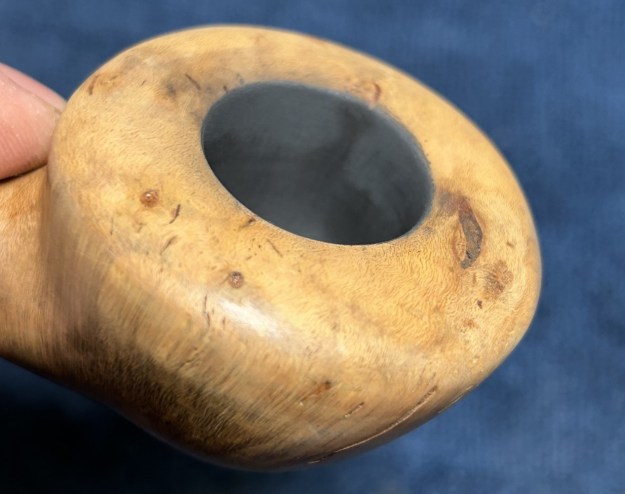
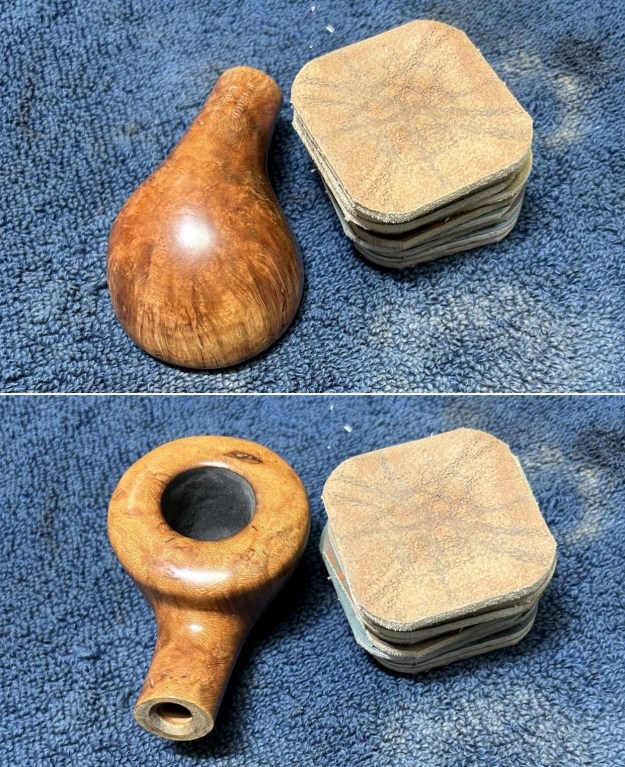
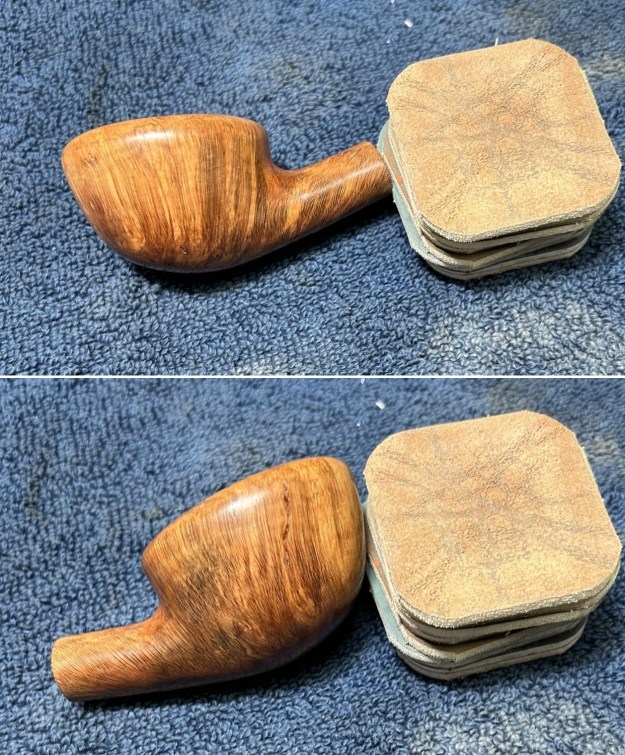
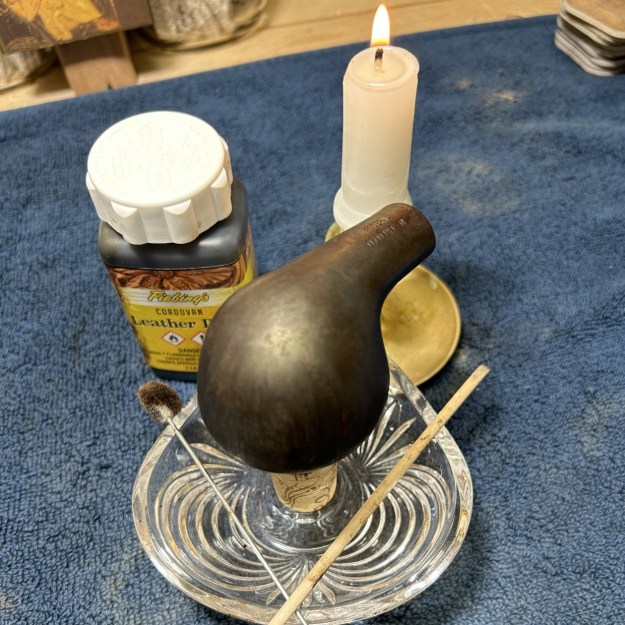
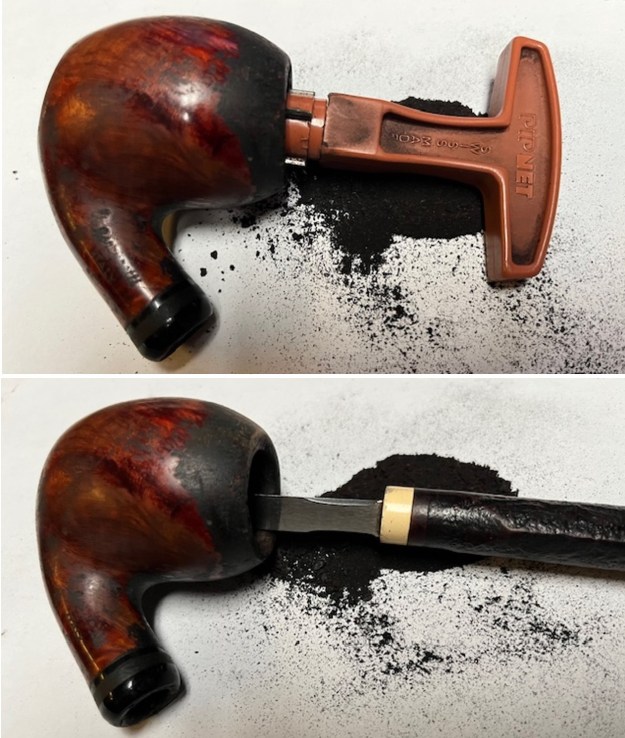
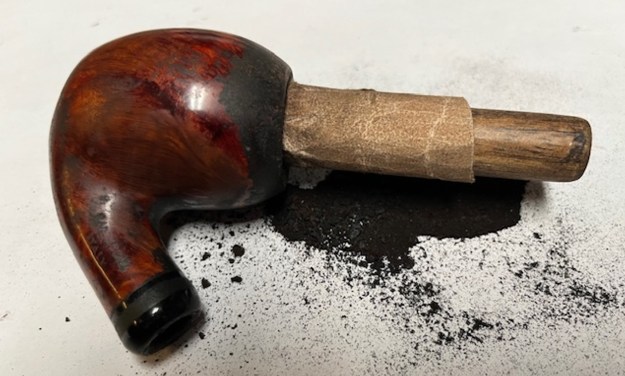
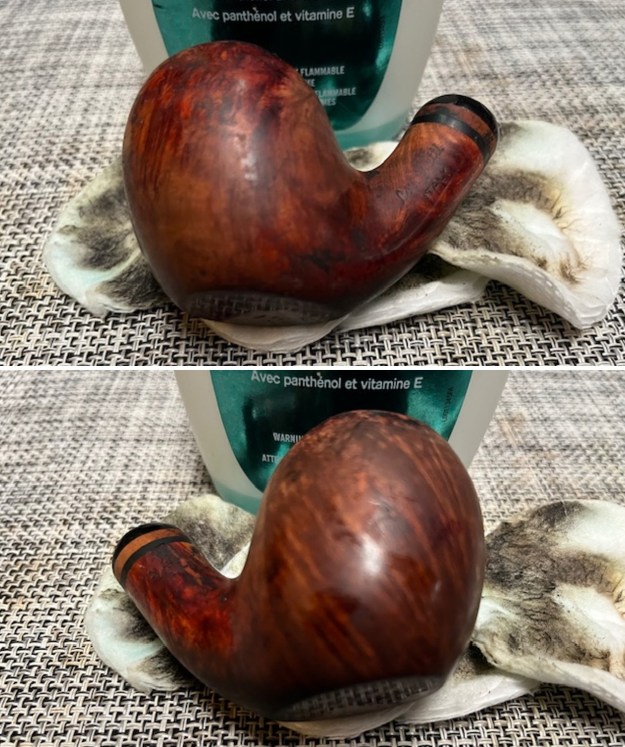
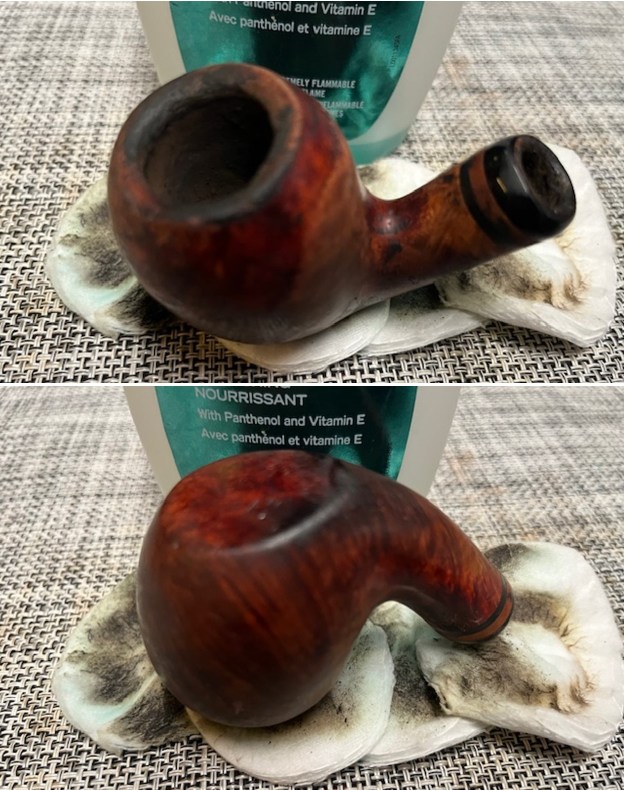
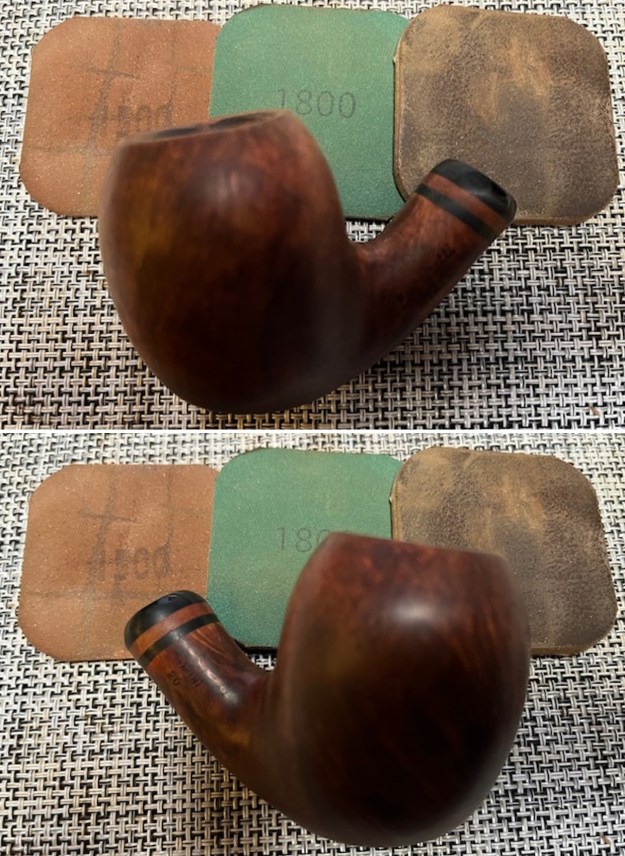
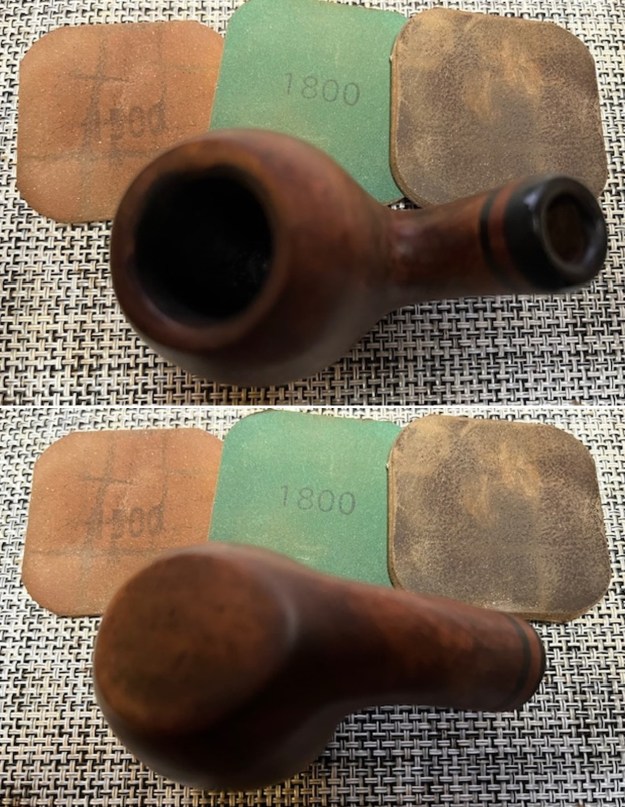
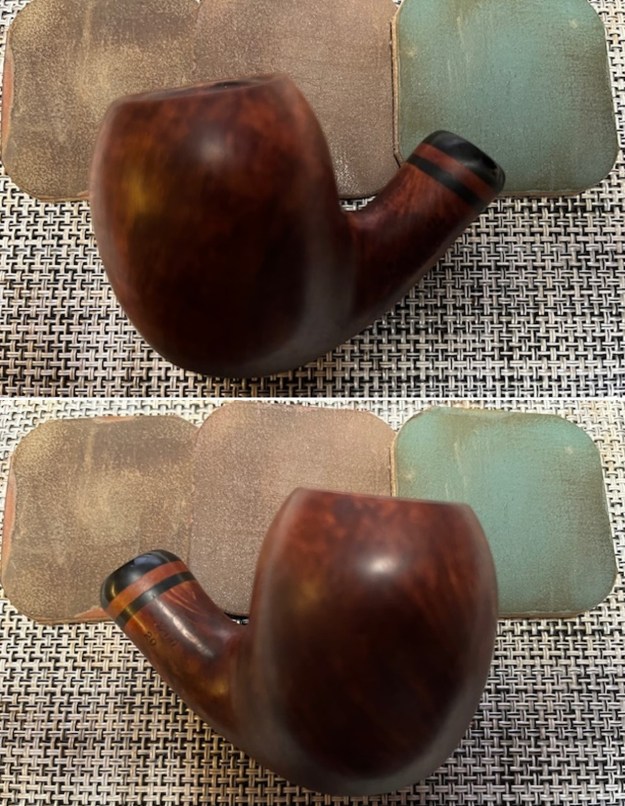
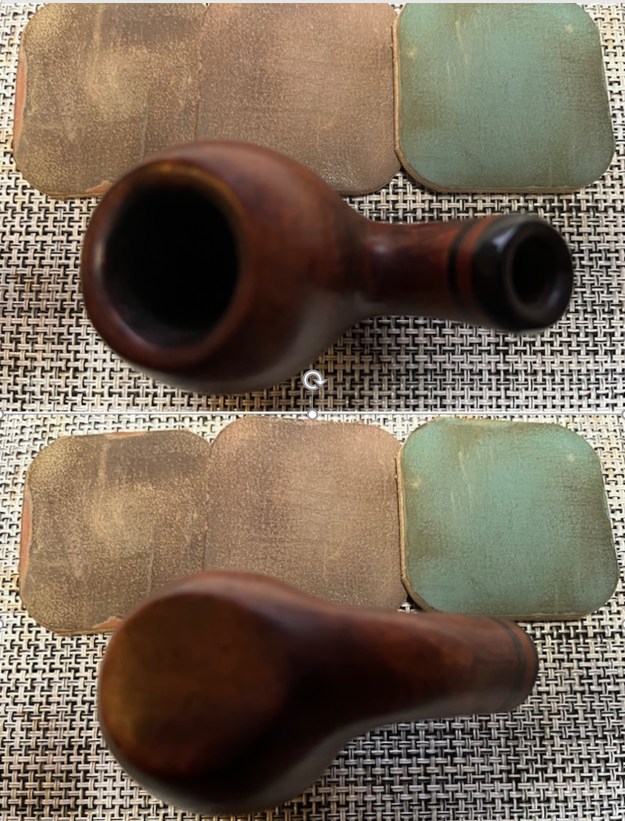
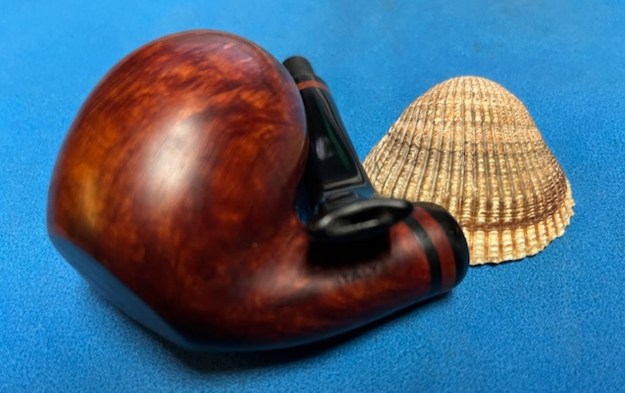
Tag Archives: staining

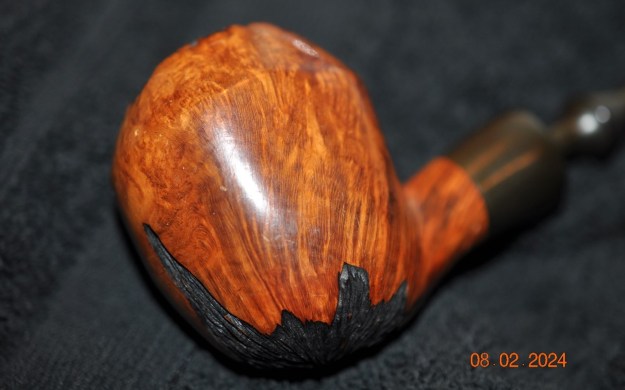
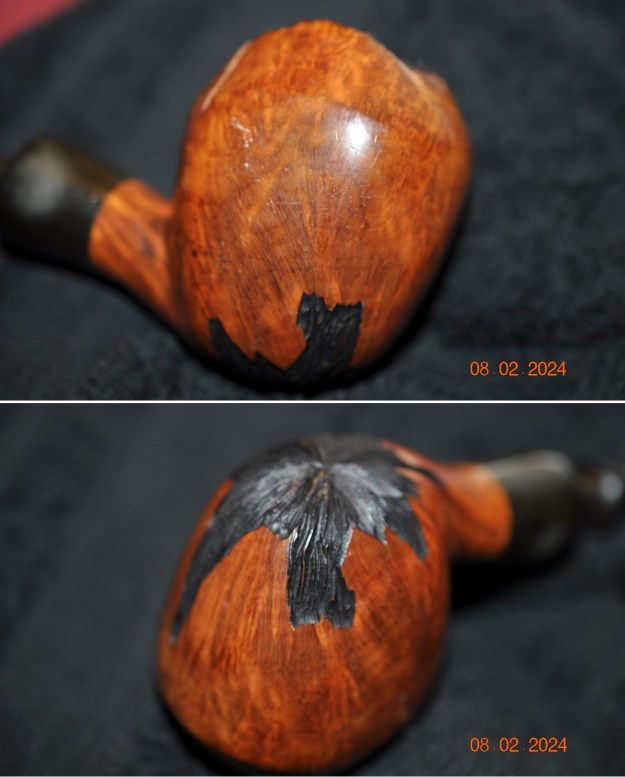
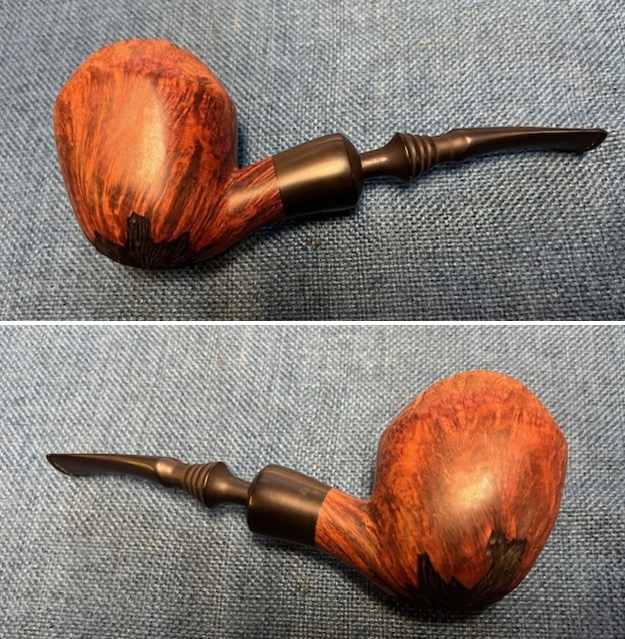
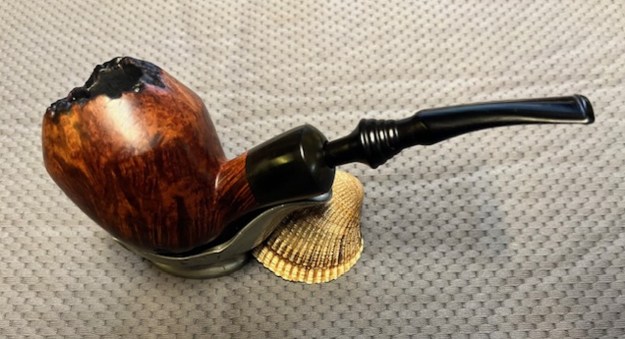
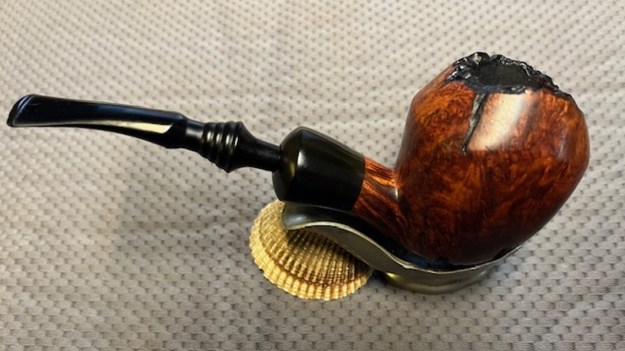
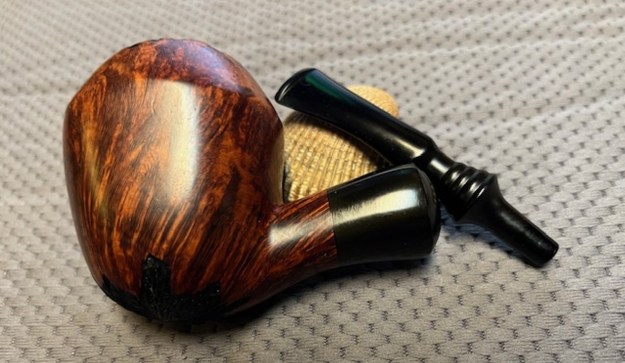
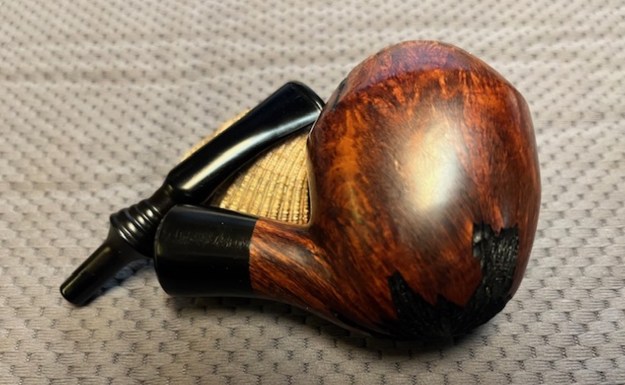
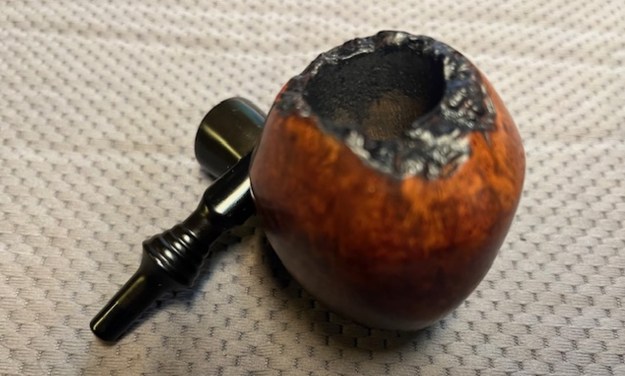
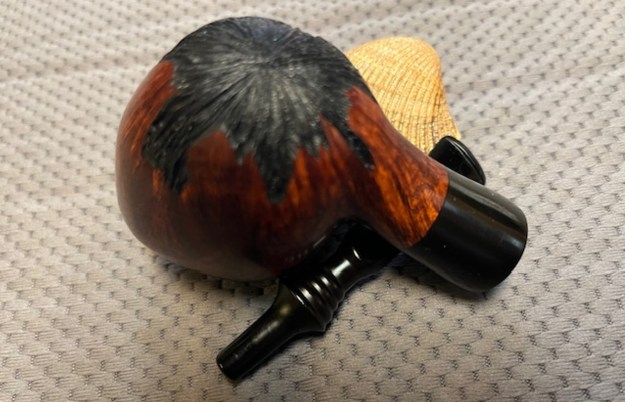
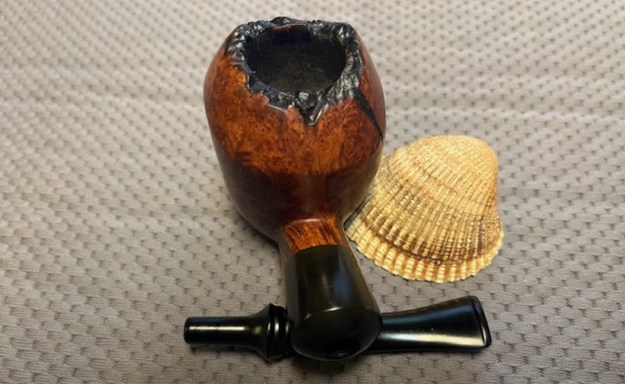
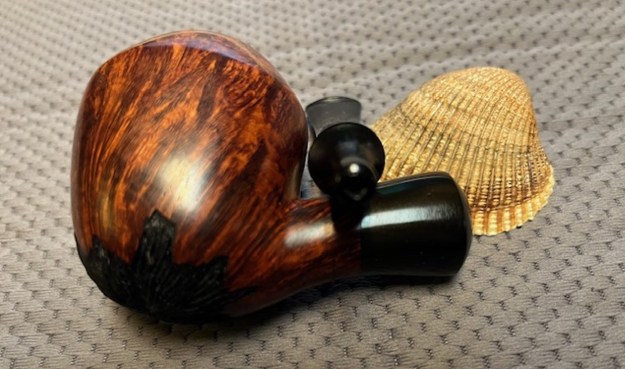
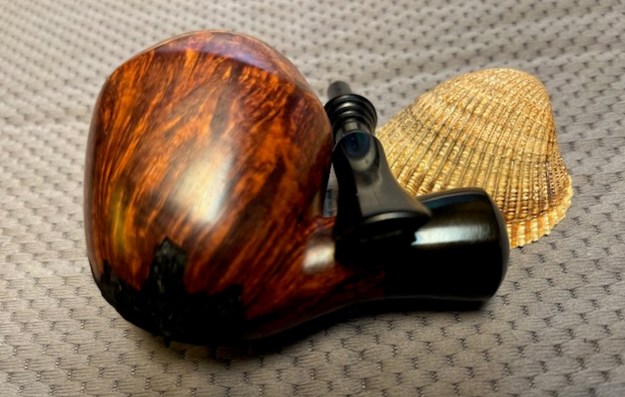
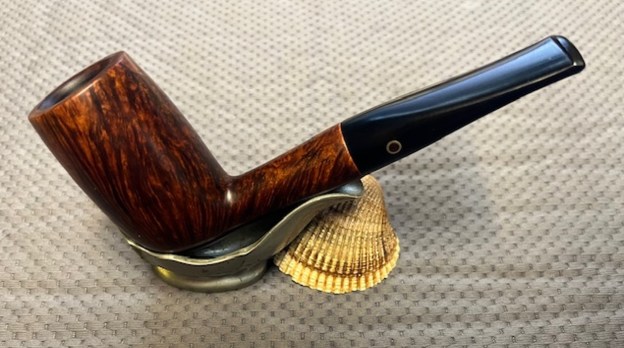
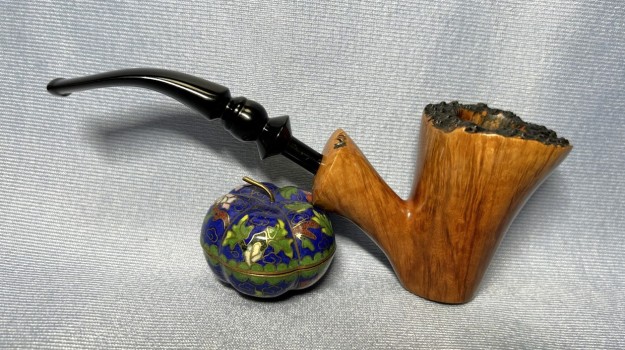
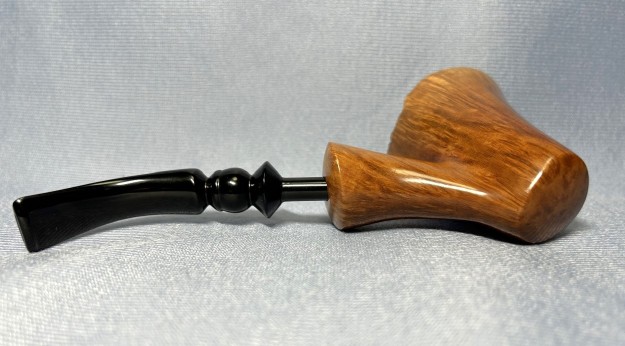
Nording “N” Handcrafted Made in Denmark Freehand with fancy turned vulcanite stem


by Steve Laug

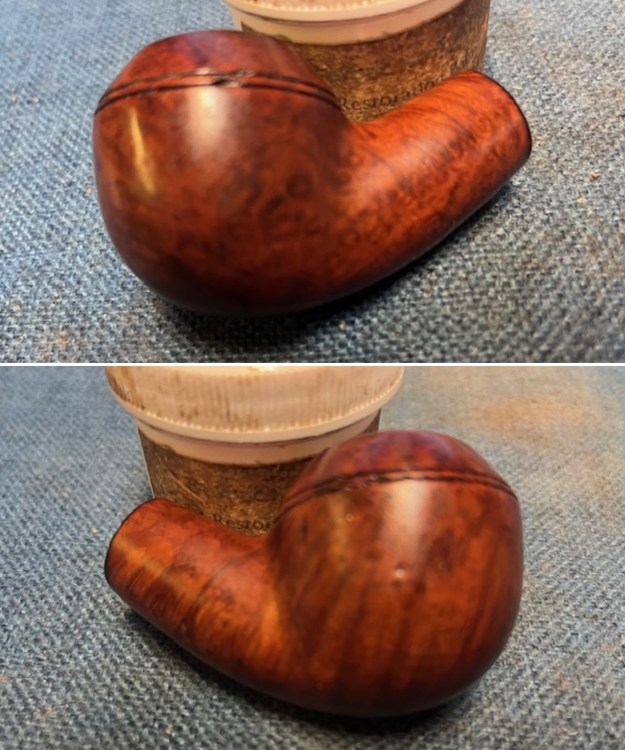
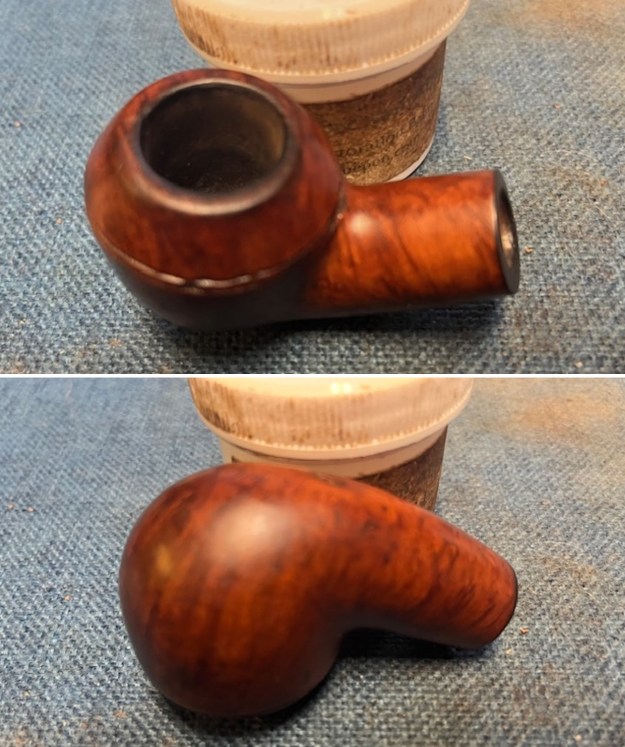
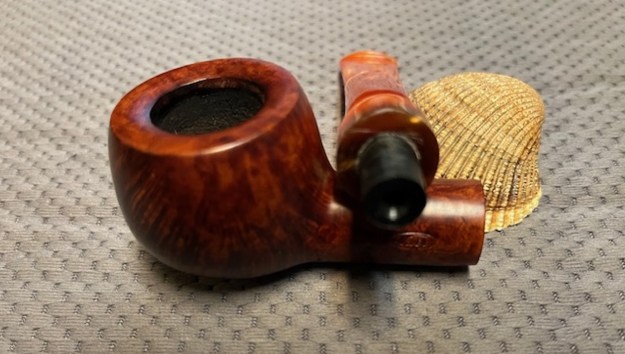
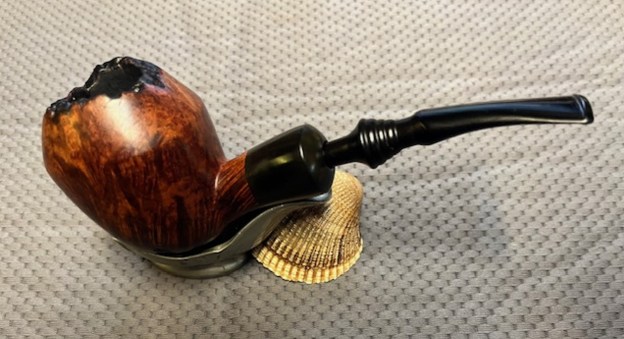
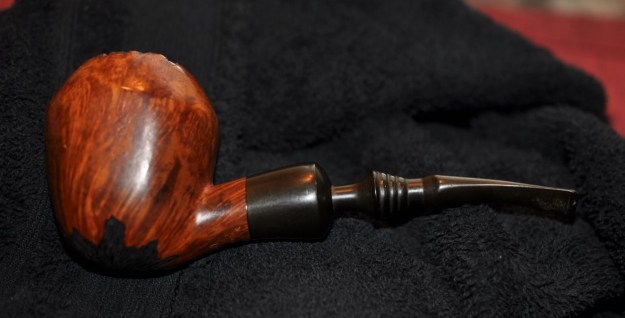
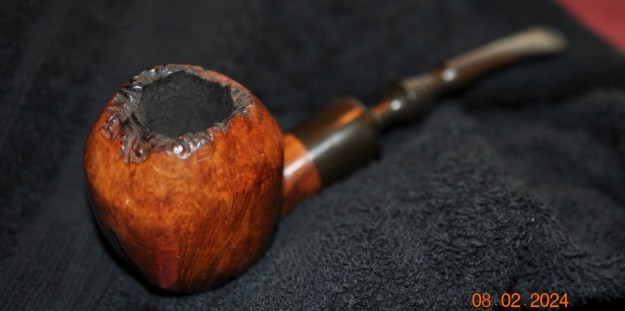
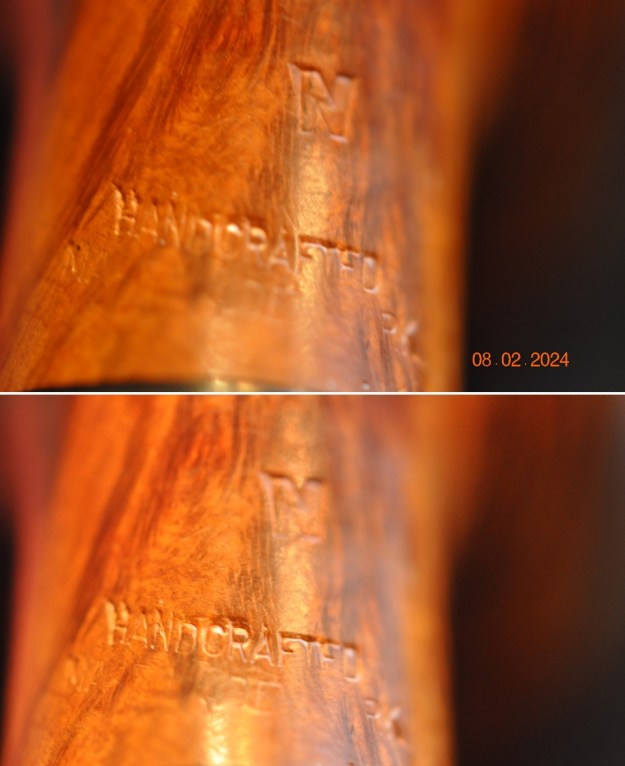
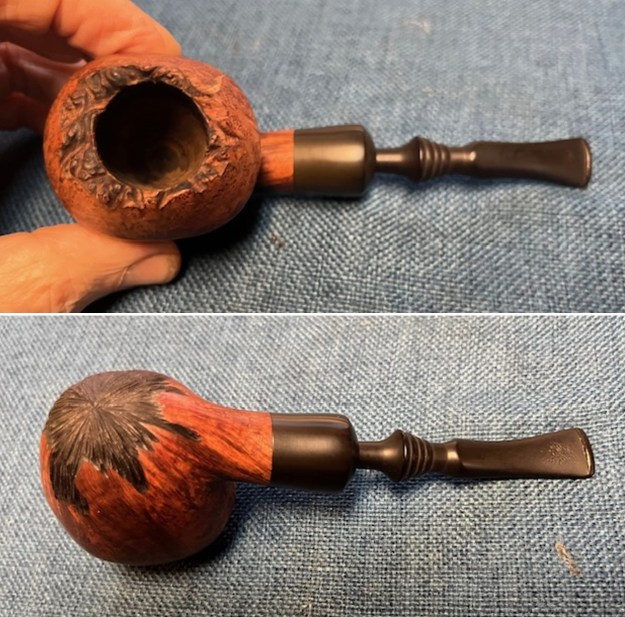
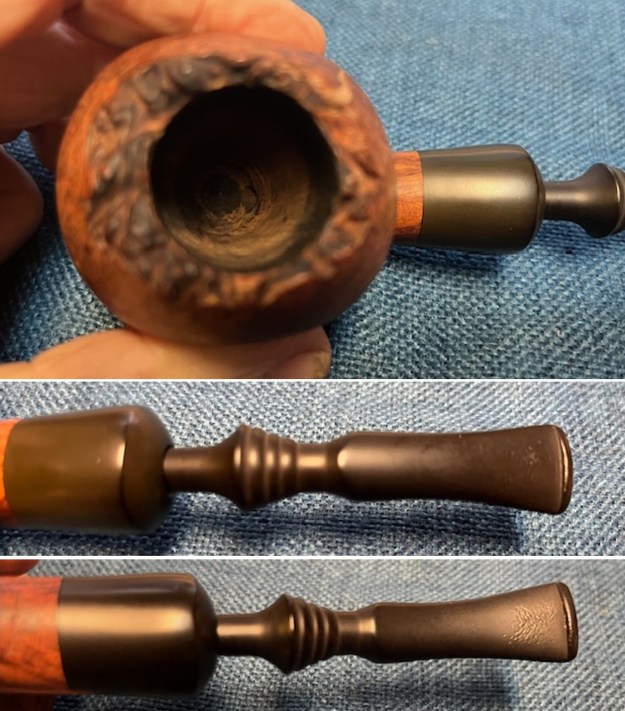
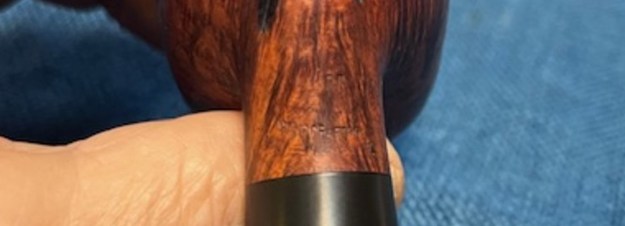
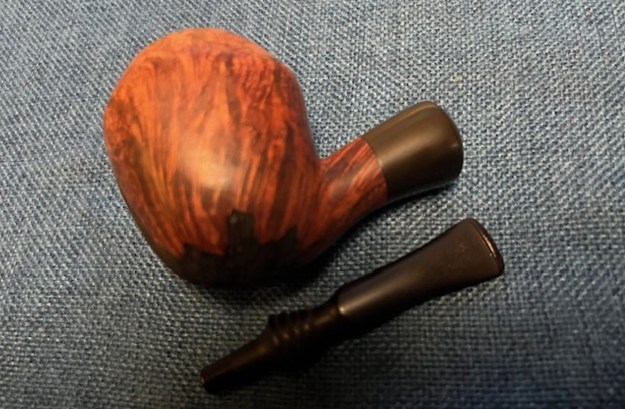
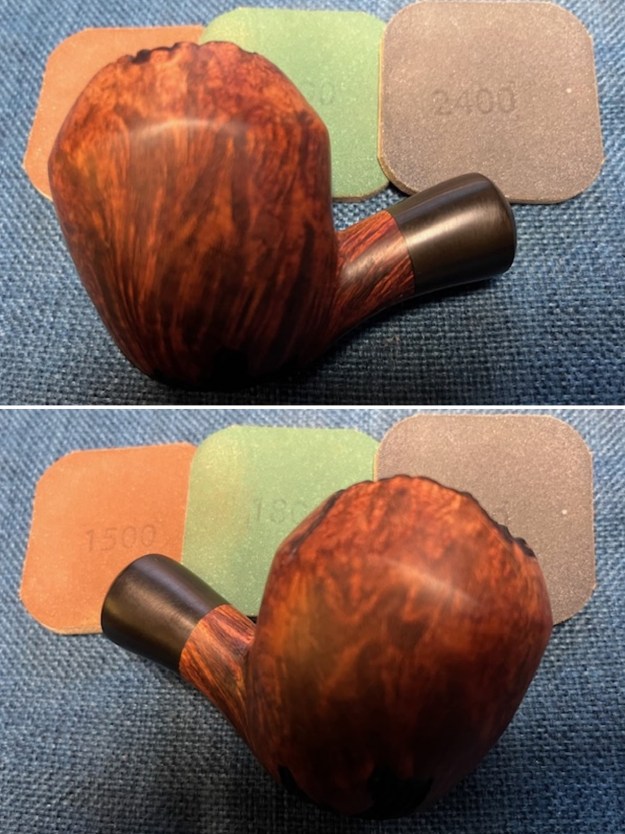
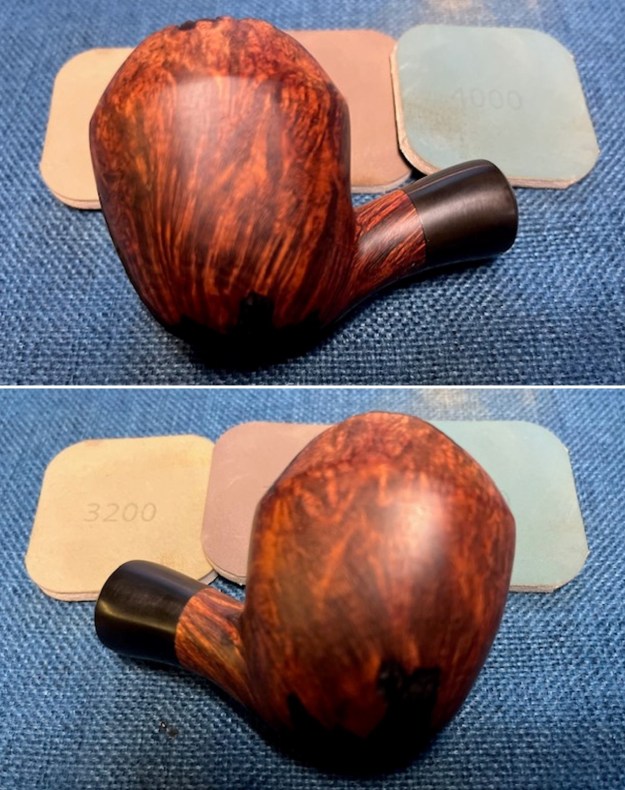
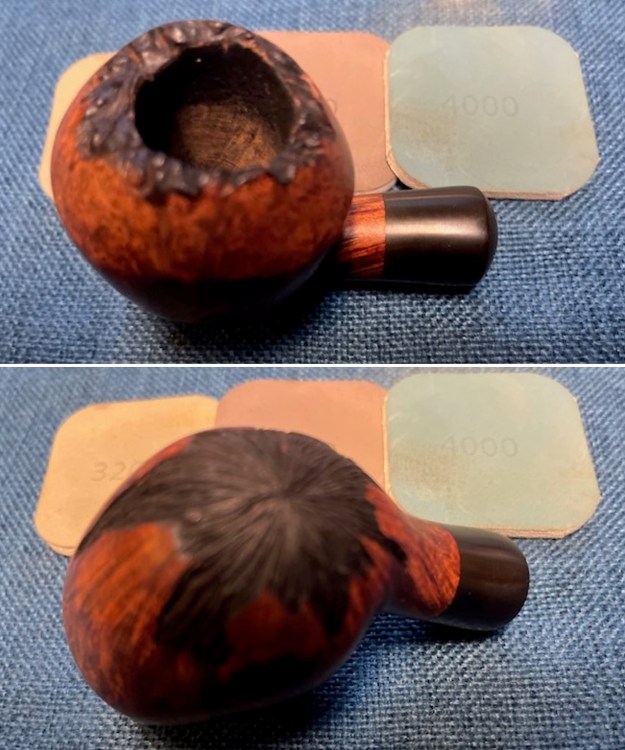
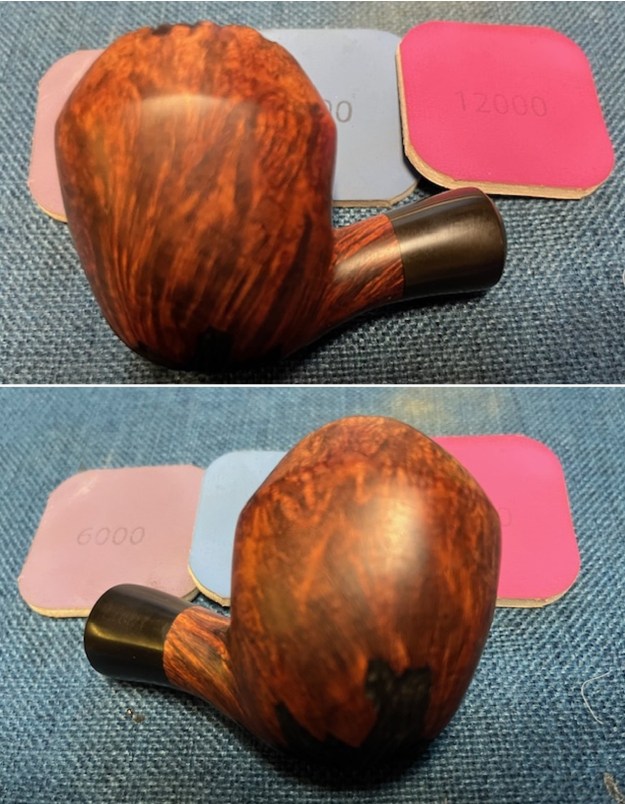
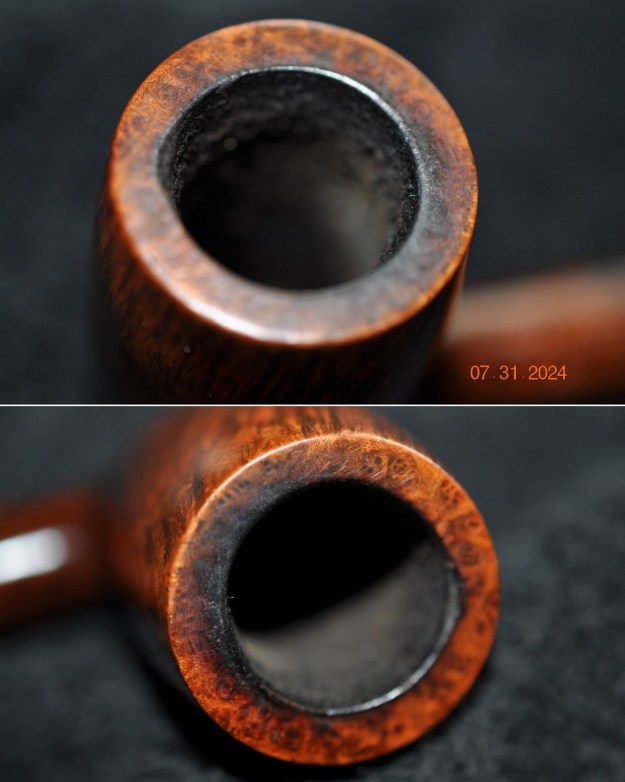
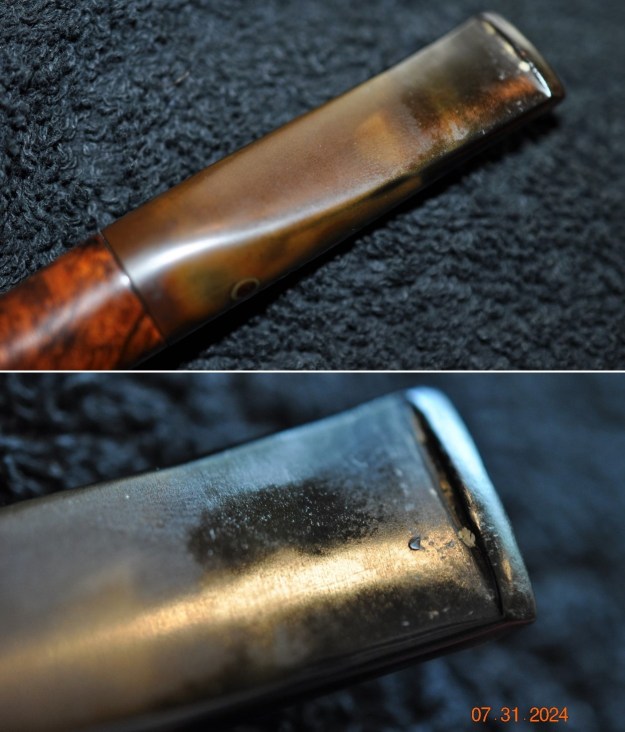
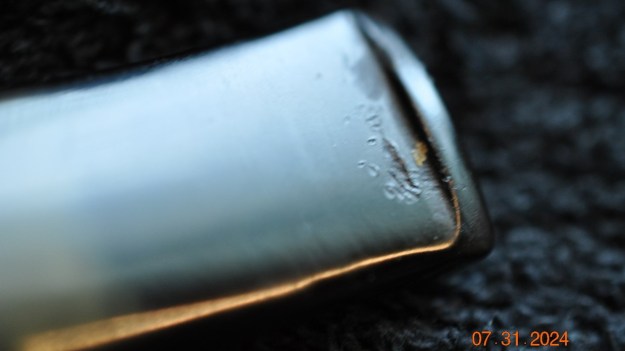
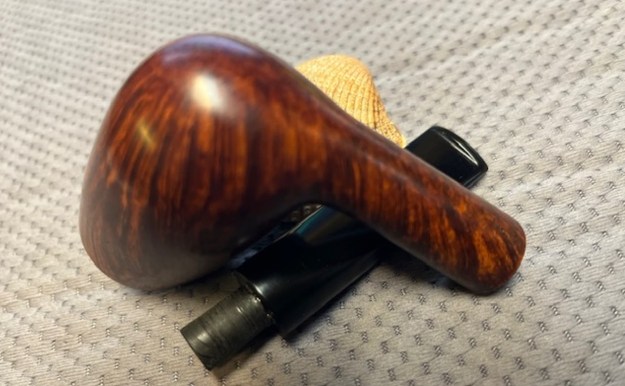
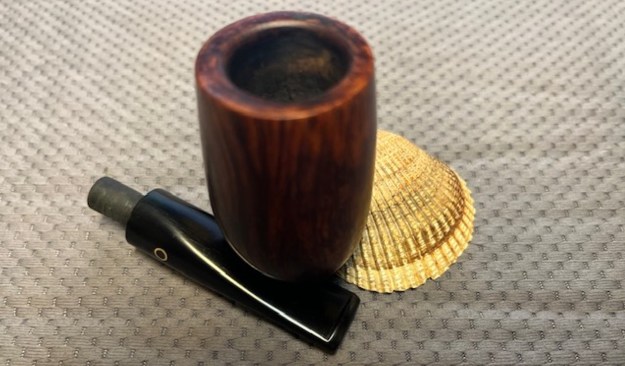
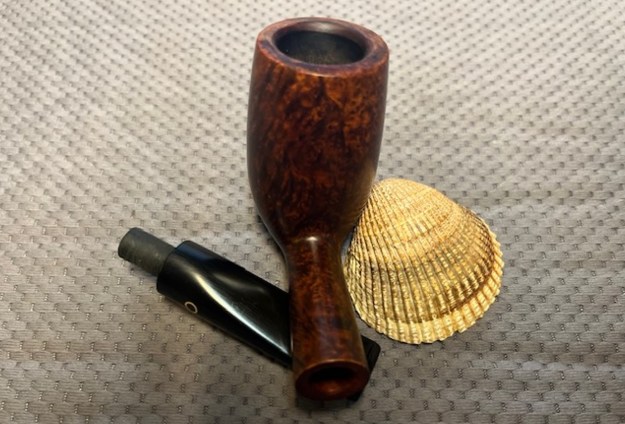
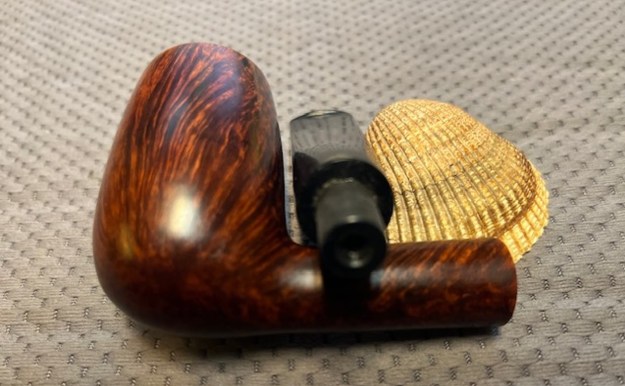
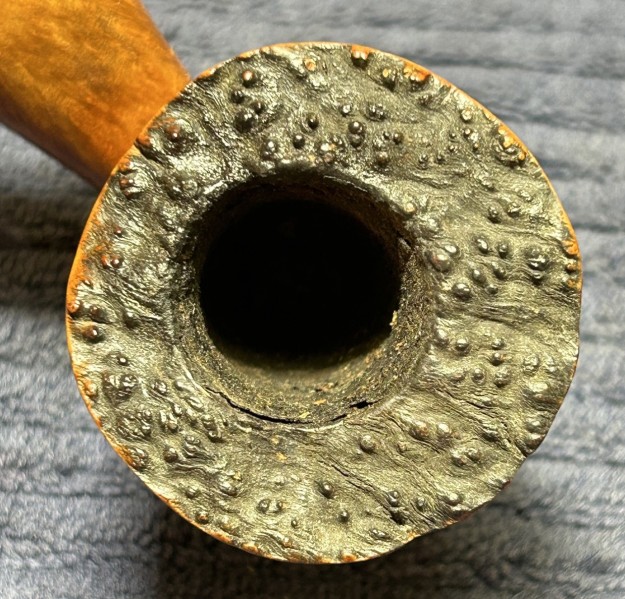
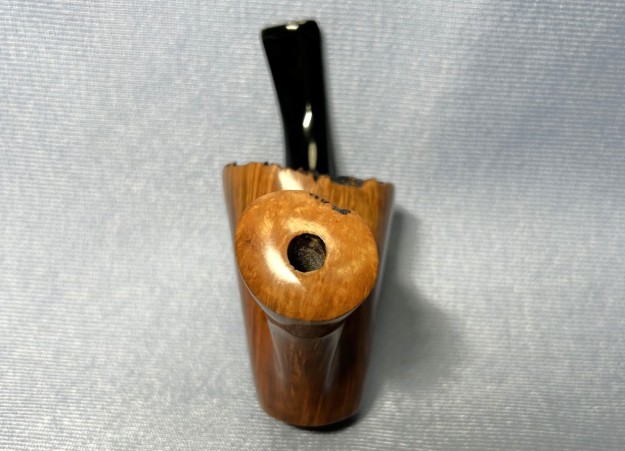
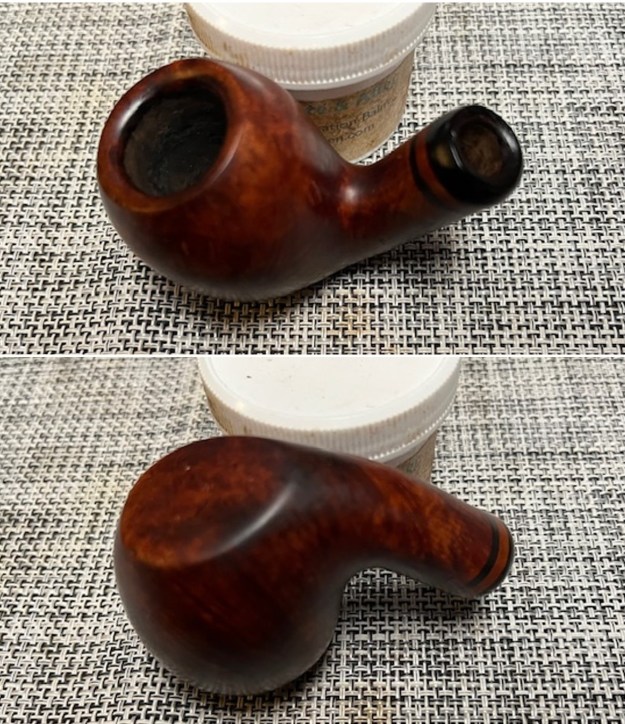
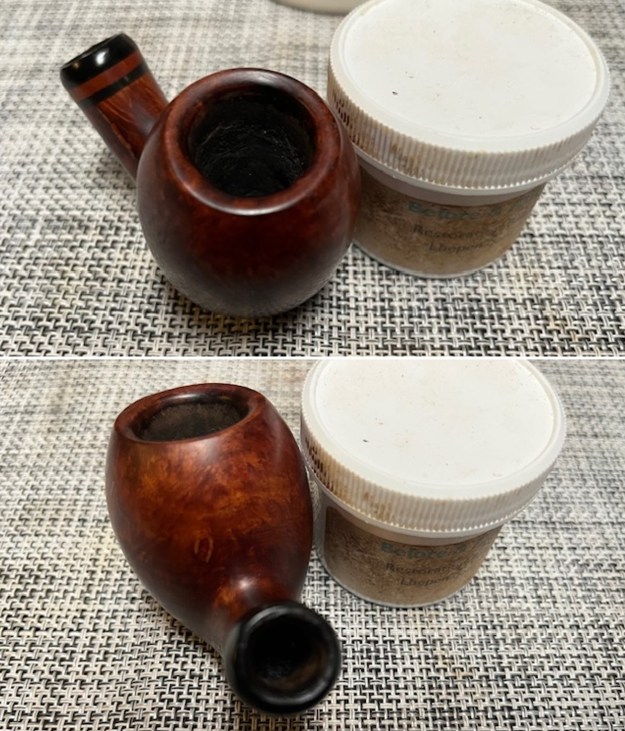
It was time to turn back to one of the pipes that Jeff and I picked up. This pipe was purchased from an auction on 10/03/21 in Lacon, Illinois, USA. The pipe is Freehand take on a Rhodesian. The grain around the bowl sides, the plateau on the rim top and the rusticated almost leaf pattern on the underside of the bowl. The shank end has a vulcanite shank extension. You can see the flow of straight and flame grain around the bowl and shank. It is stamped on the underside of the shank with a hollow letter N [over] Handcrafted [over] Made in Denmark. There is no other stamping on the pipe. The stem does not have the expected Nording N anywhere on the sides or top. The pipe was very dirty with a thick cake in the bowl and some lava overflowing on to the plateau rim top. It was hard to know what the inner edge of the rim looked like because of the lava and cake. Other than being dirty the finish appeared to be in good condition. The fancy, turned stem was lightly oxidized and had come calcification ahead of the button. There was some tooth chatter and marks on both sides of the stem ahead of the button and on the button surface. Jeff took the following photos of the pipe before he started his clean up work on it. He took a photo of the rim top to show the thick cake in the bowl and the overflow of lava. The cake is thick and hard and the lava overflow is in the plateau. The bowl is dirty but it must have been a great smoking pipe. The stem looked dirty and oxidized with the calcification. The bite marks and tooth chatter on the stem were not too bad and the edge of the button was worn down. The mark on the back side of the bowl is actually more of the plateau running down the side rather than a flaw in the briar. The next photos show the sides and heel of the bowl to give a clear picture of the beauty of the grain around the bowl of the pipe. Under the grime there is some great grain peeking through. Jeff took photos of the stamping to capture the clarity of it even under the grime. The stamping is faint in spots but still readable. It reads as noted above.Before I started my work on the pipe I wanted to learn more about where this pipe fit into the Nording lines so I turned to the first of two sites that I always check to gather information on a brand. I turned first to Pipedia (https://pipedia.org/wiki/N%C3%B8rding). Nording’s were exclusively freehand shapes, graded from A, B, C, D, up to its highest grade, extra. Later an “F” grade was added—less expensive than the “A.” I could find no other information on the rest of the stamping on the pipe.

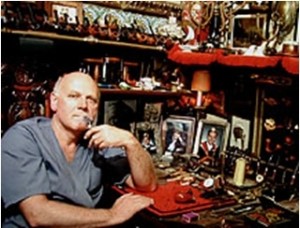
I did find a great collage of photos of Erik Nording that I have included below.I turned to the second information site – Pipephil’s (http://www.pipephil.eu/logos/en/logo-n2.html) did not find any more helpful information on the Nording N stamp.

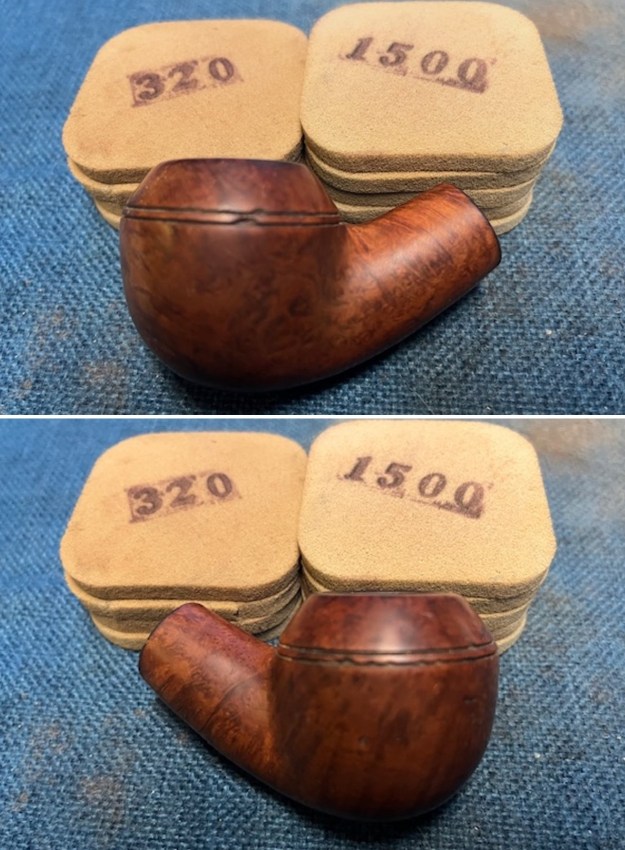
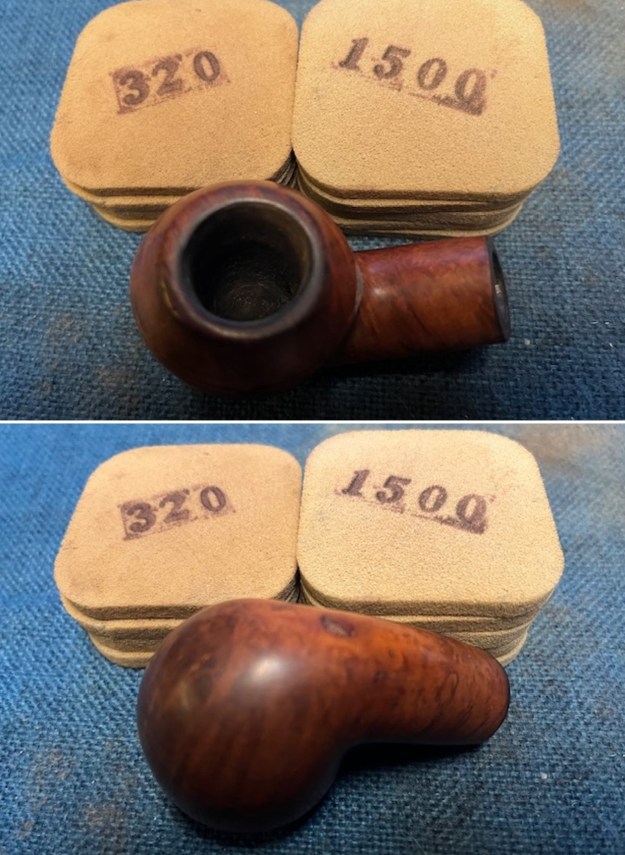
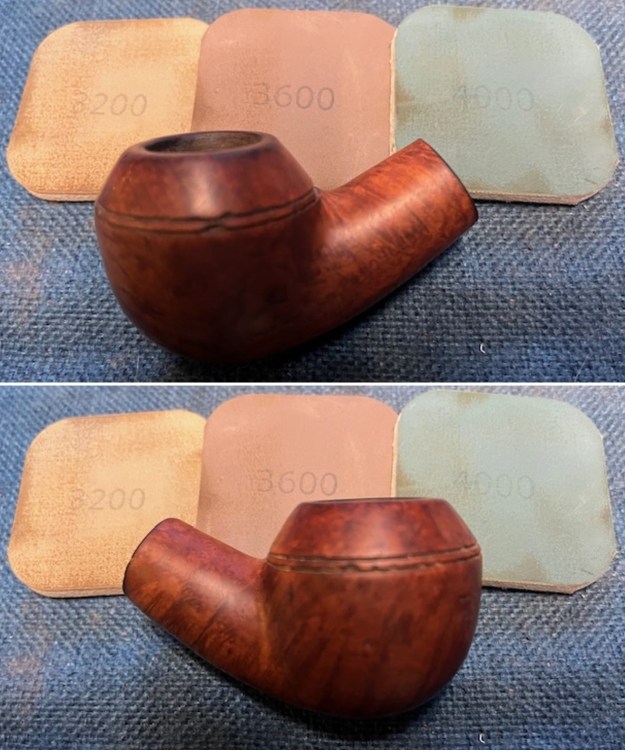
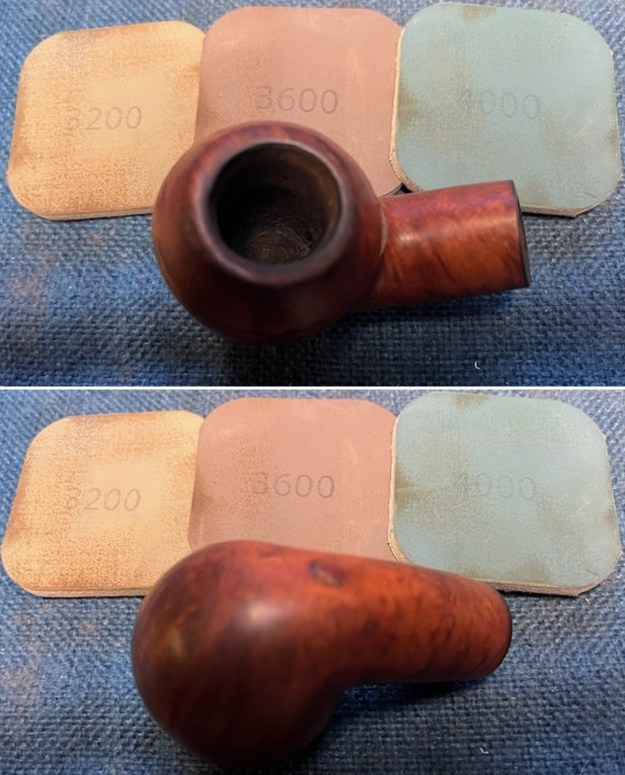
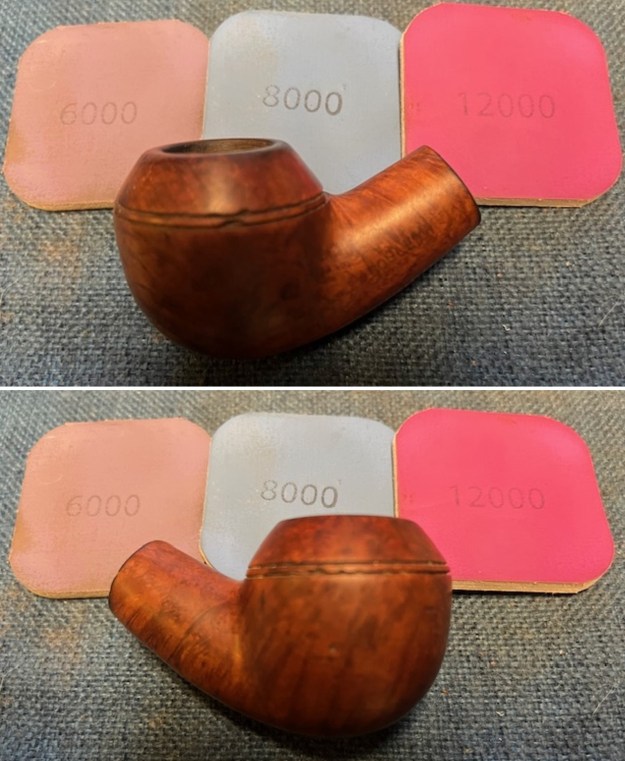
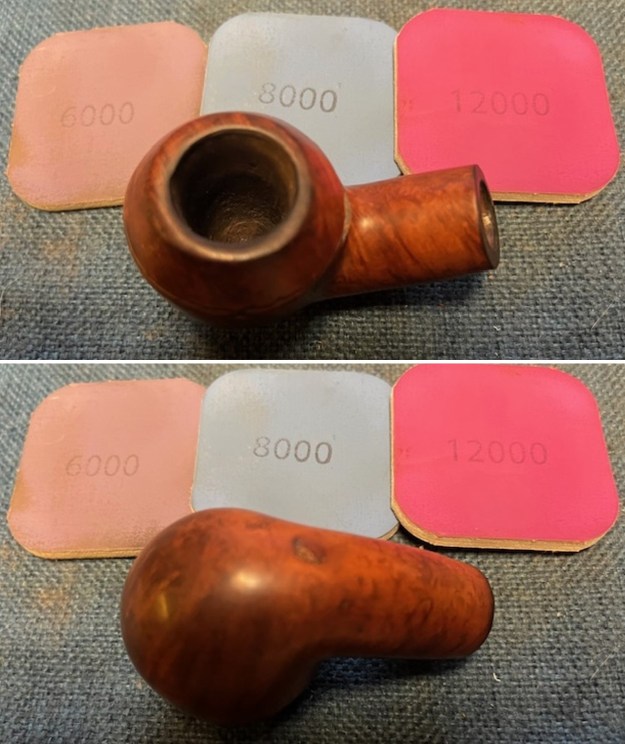
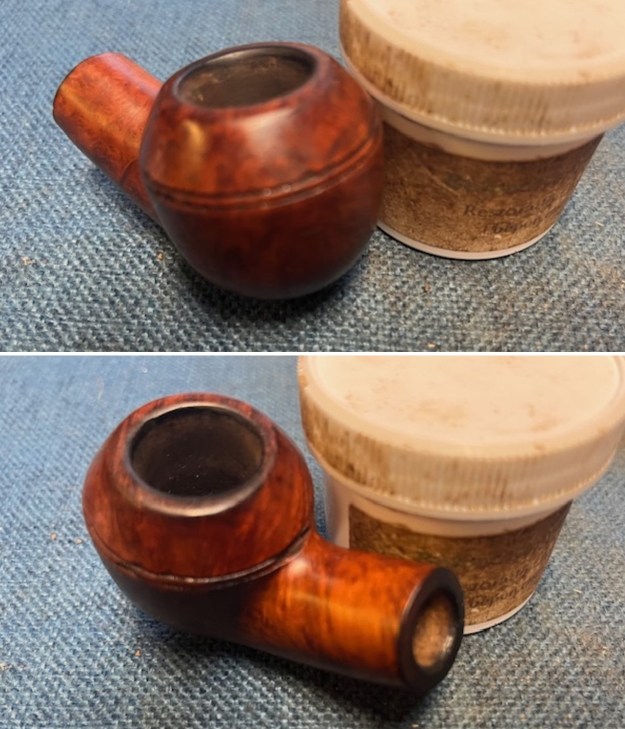
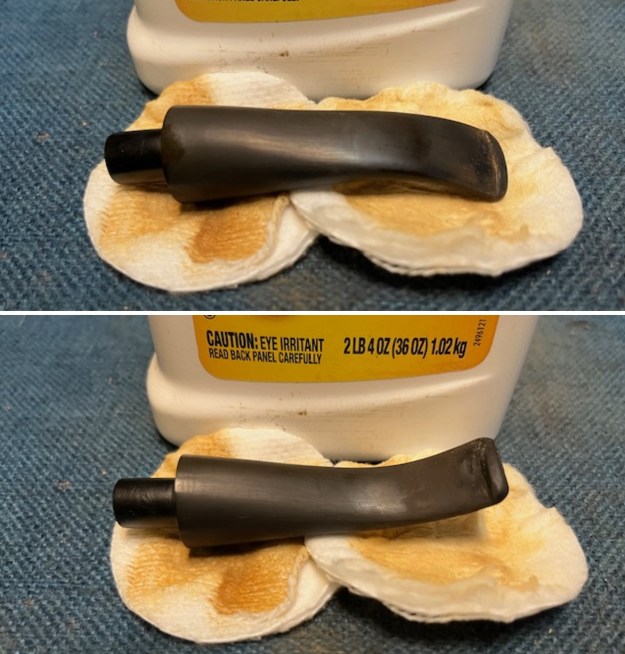
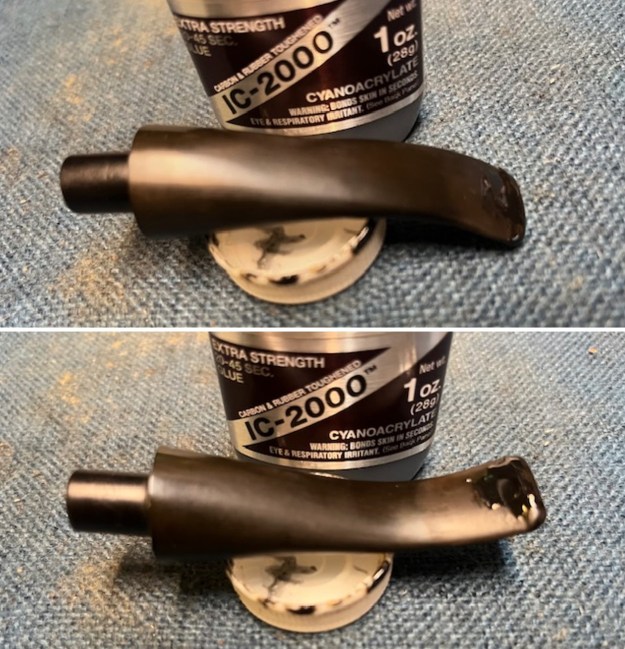
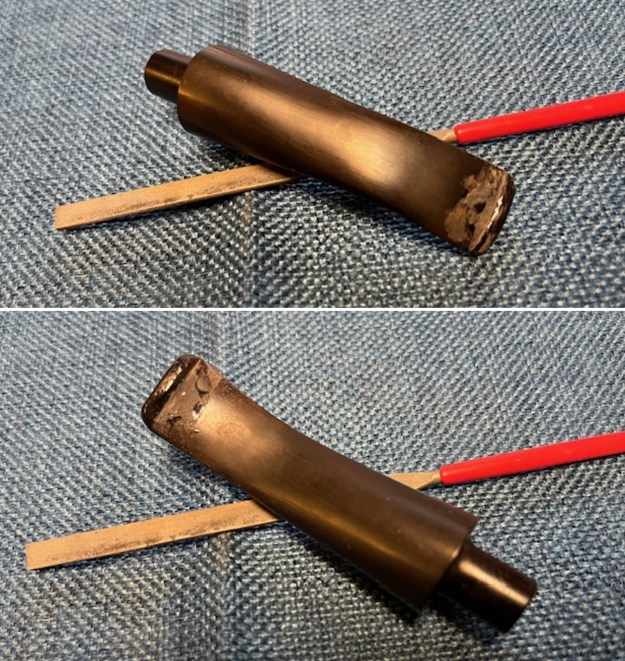
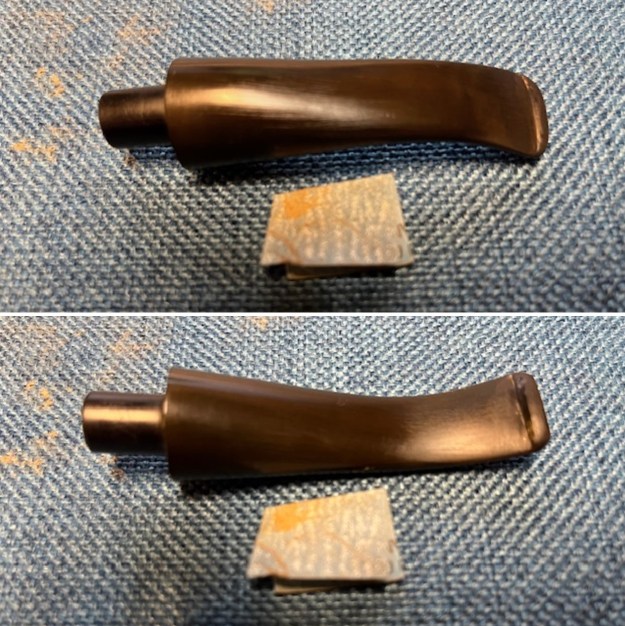
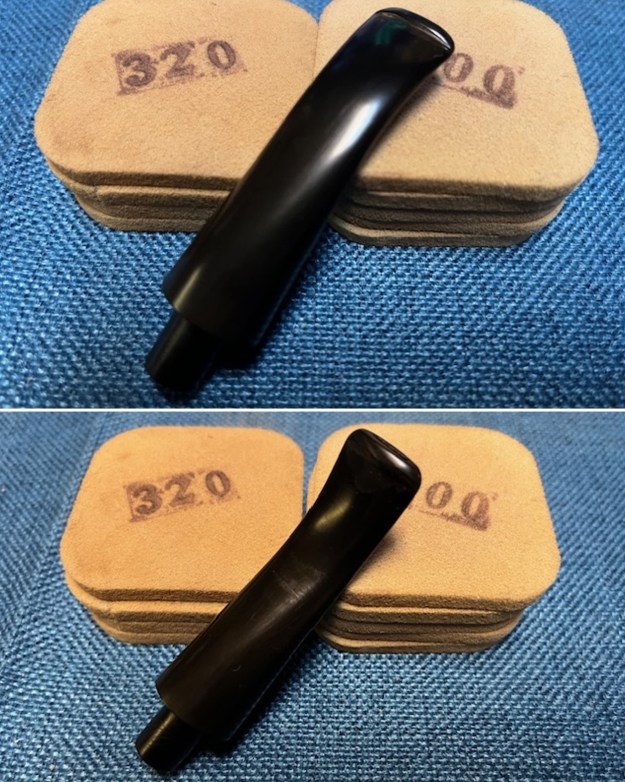
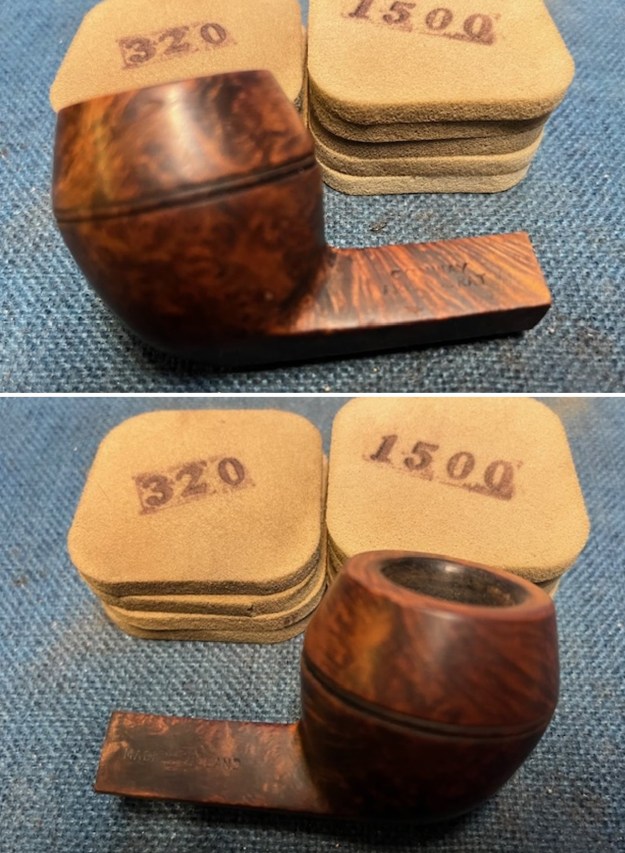
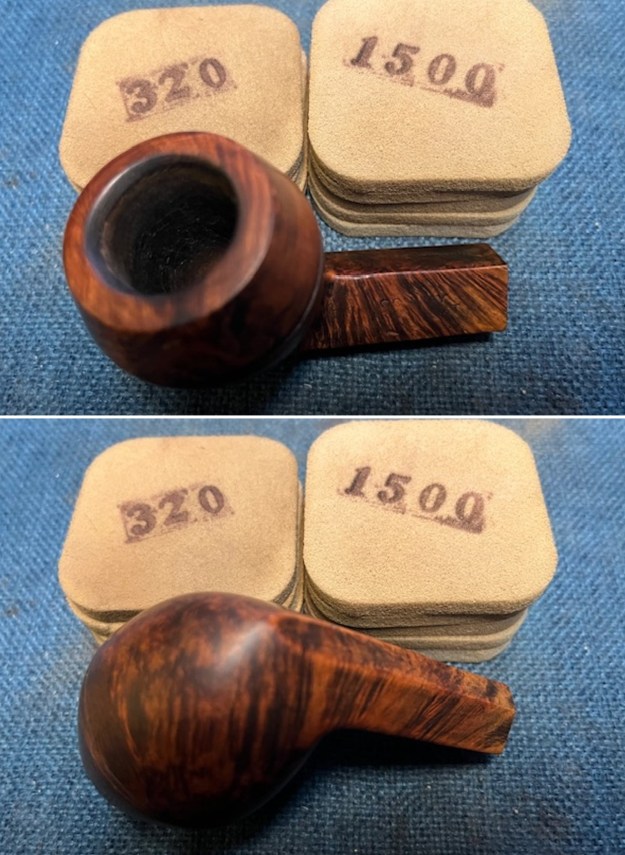
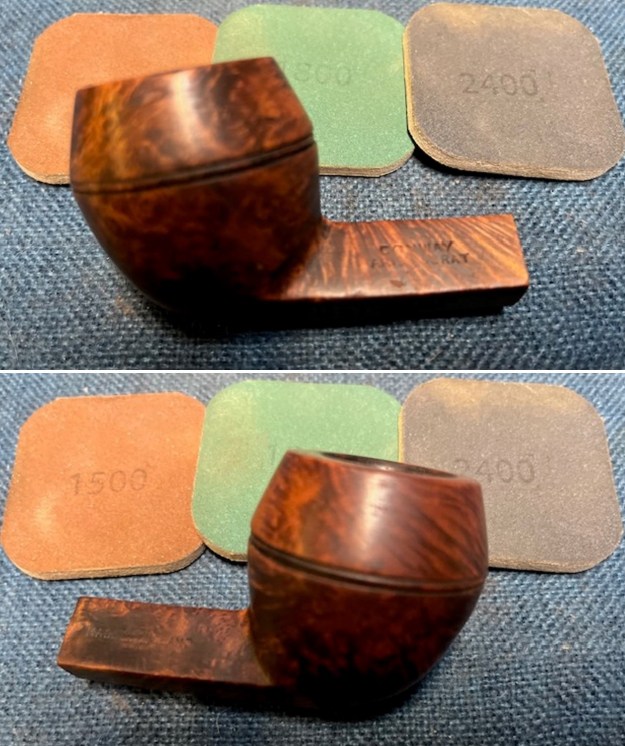
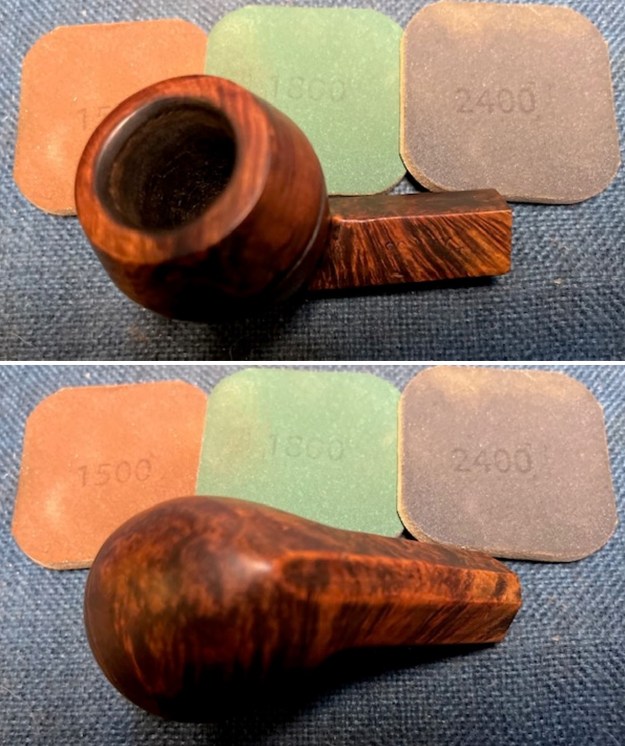
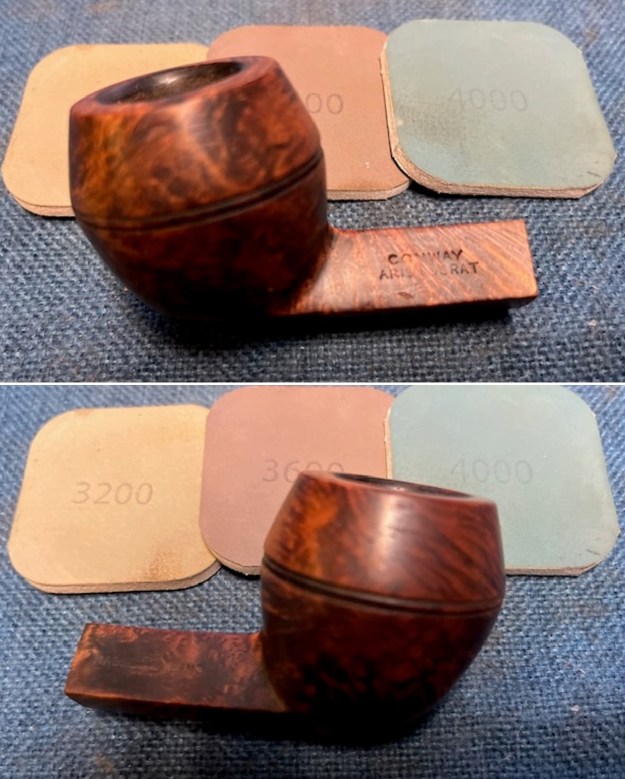
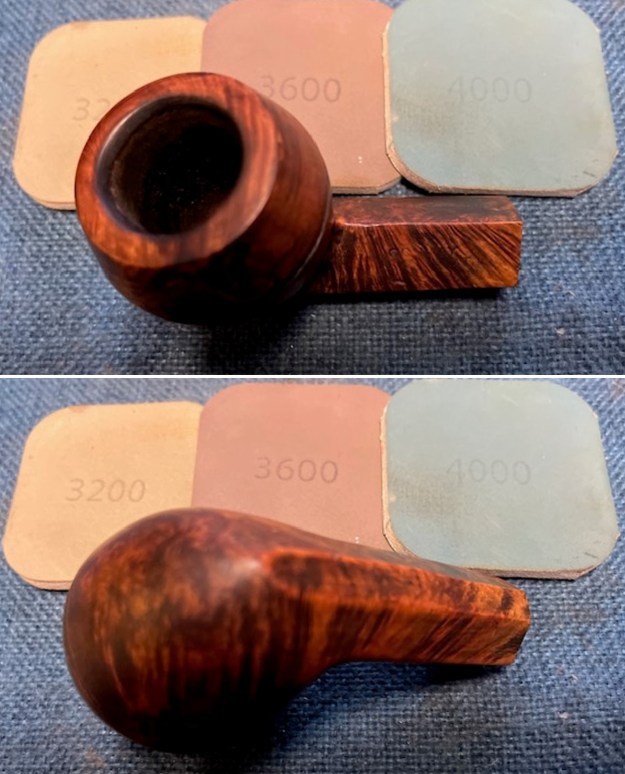
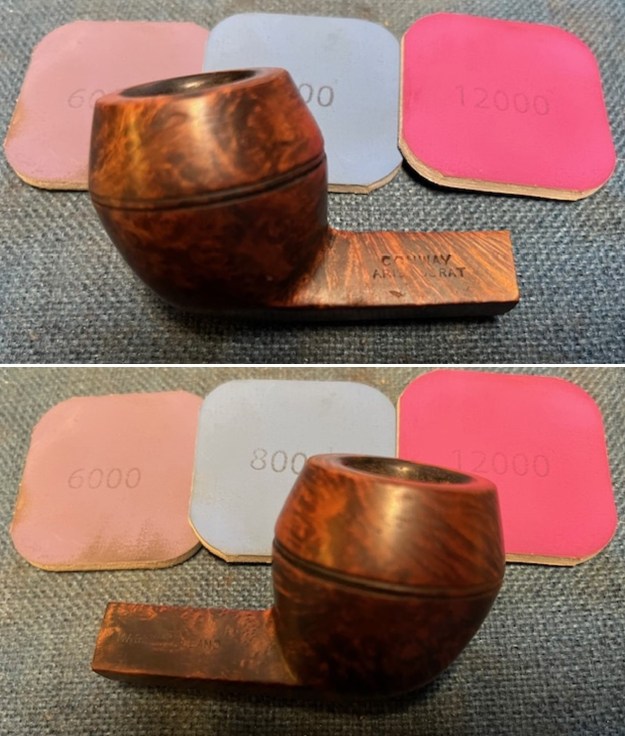
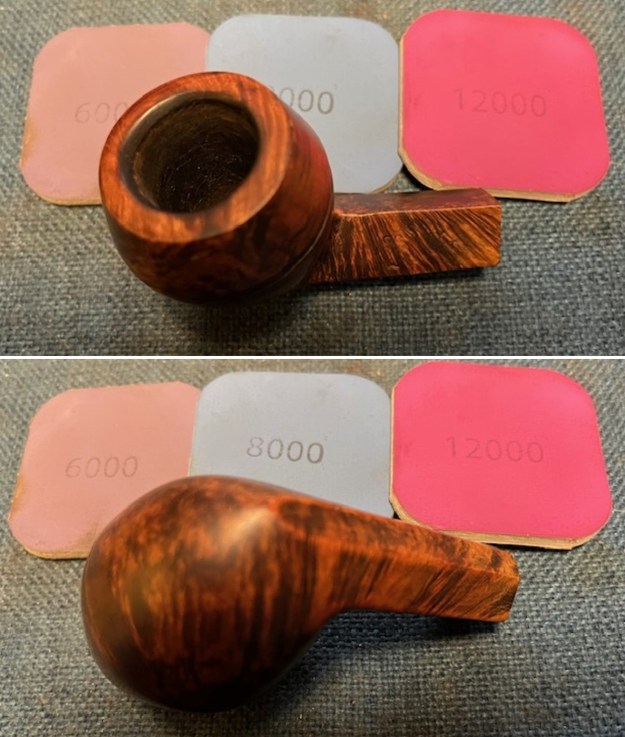
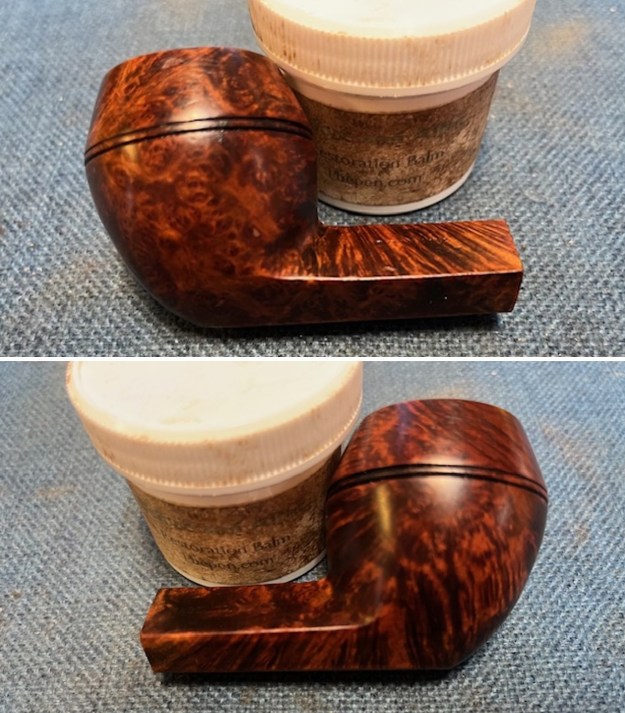
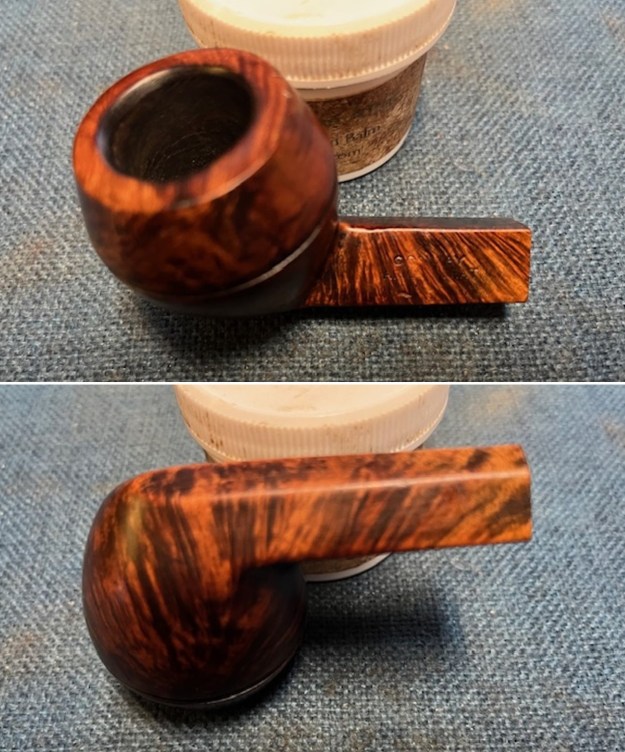
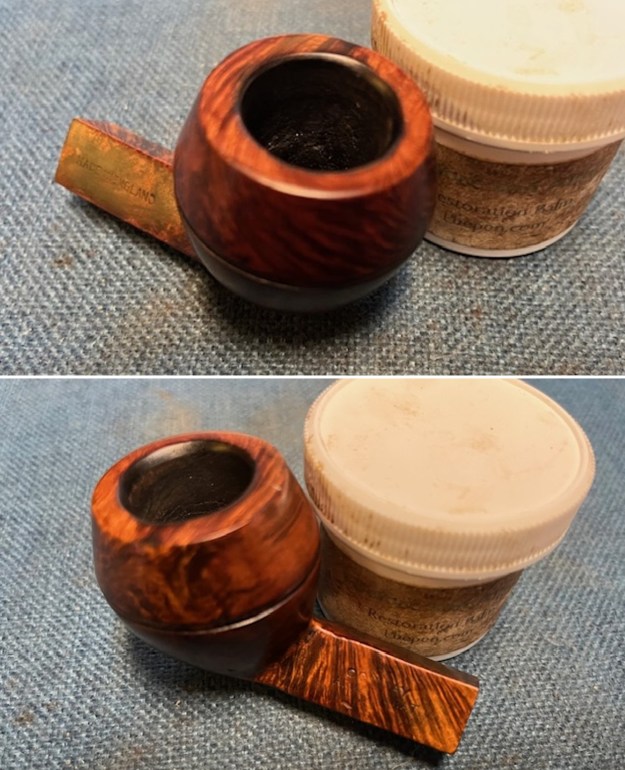
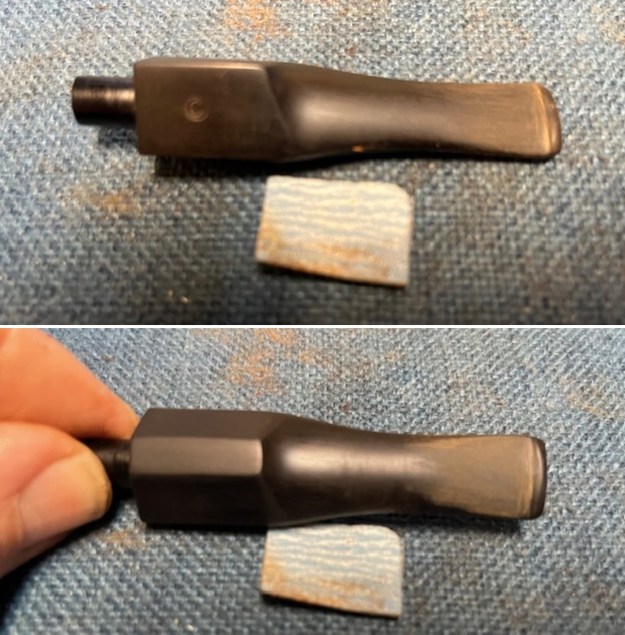
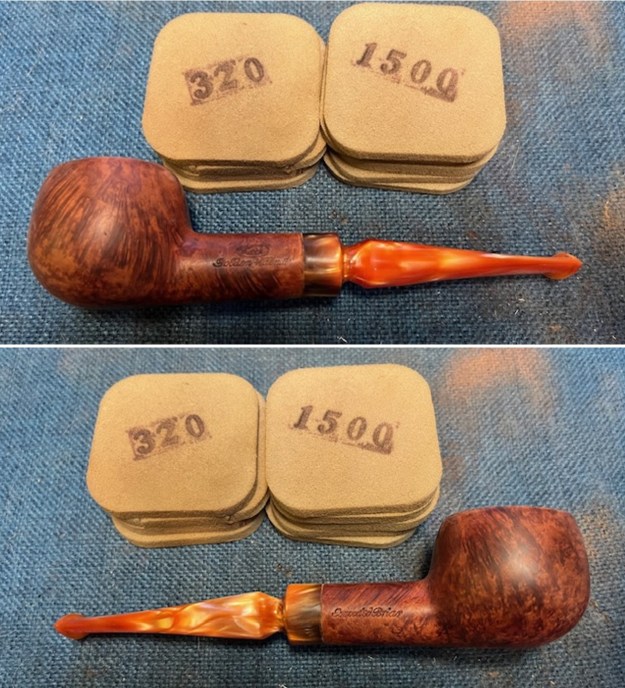
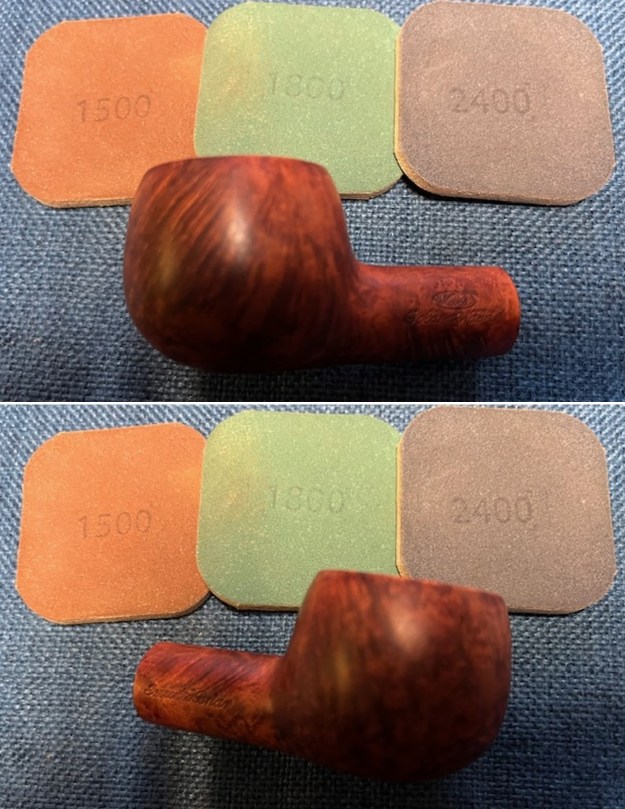
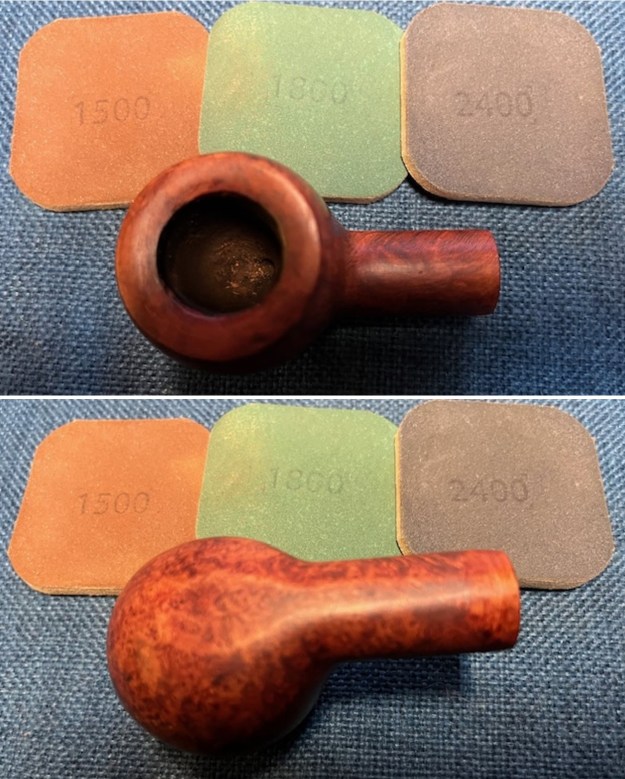
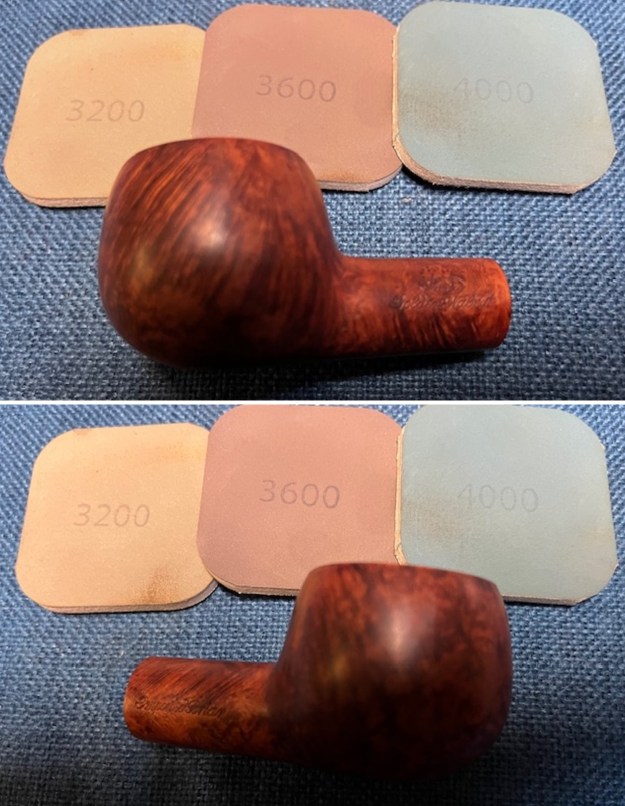
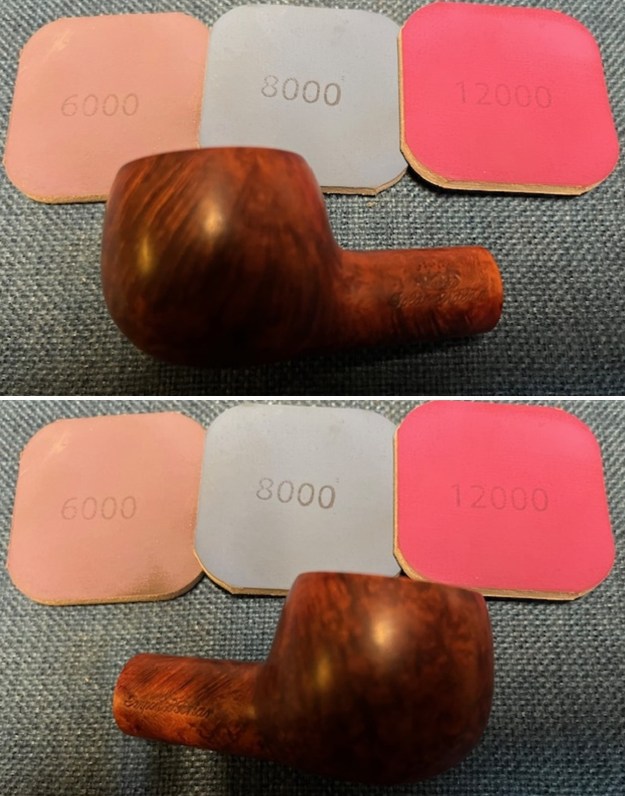
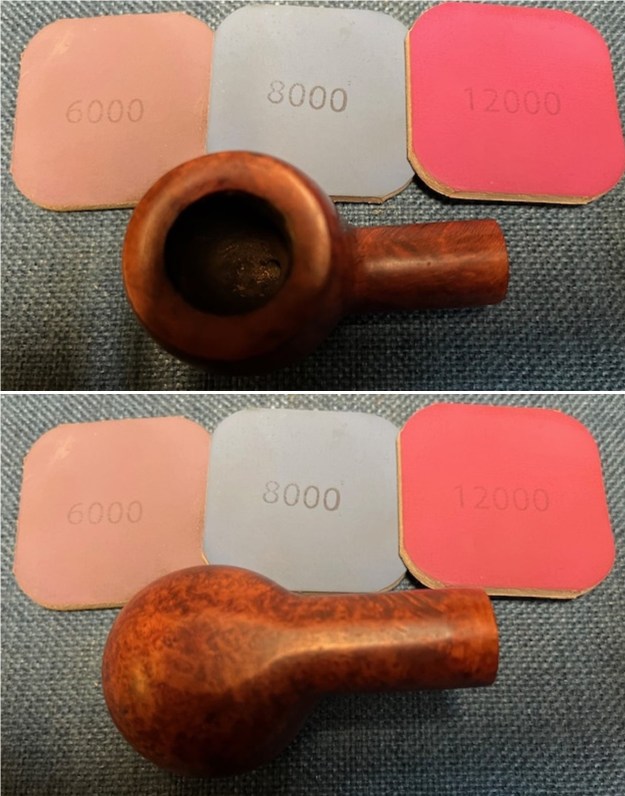
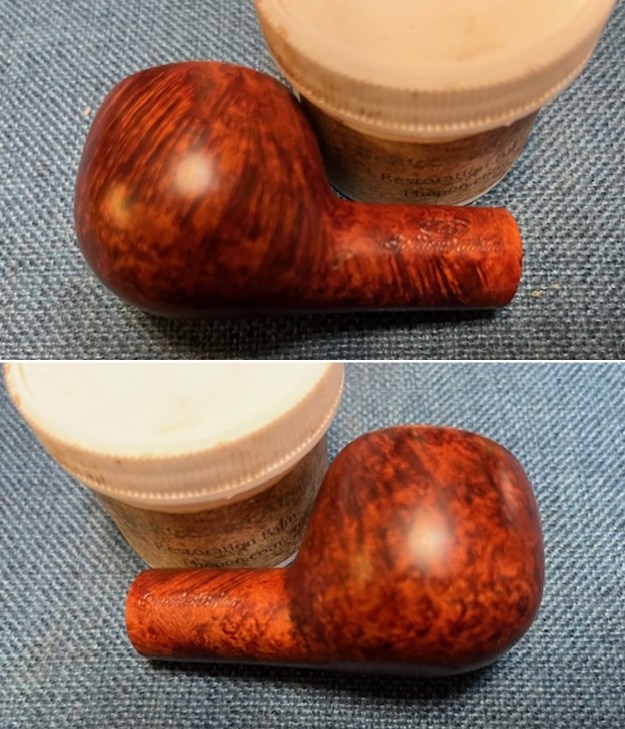
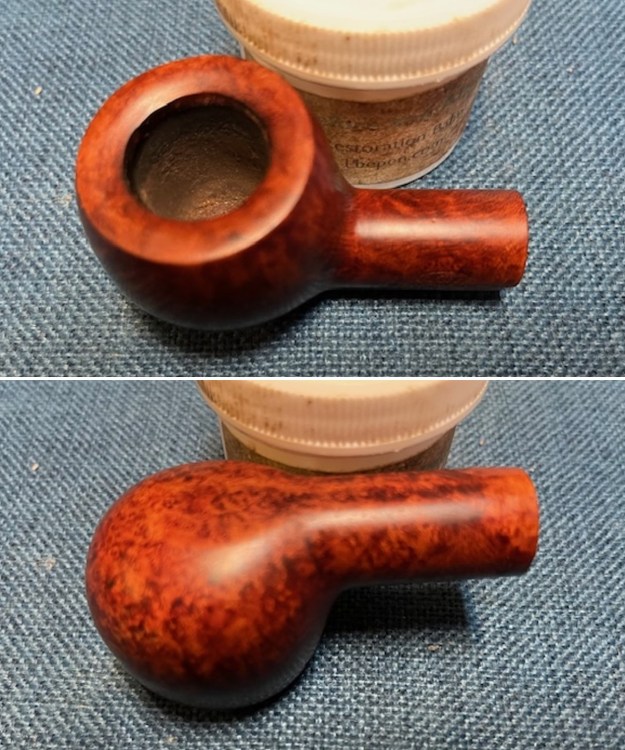
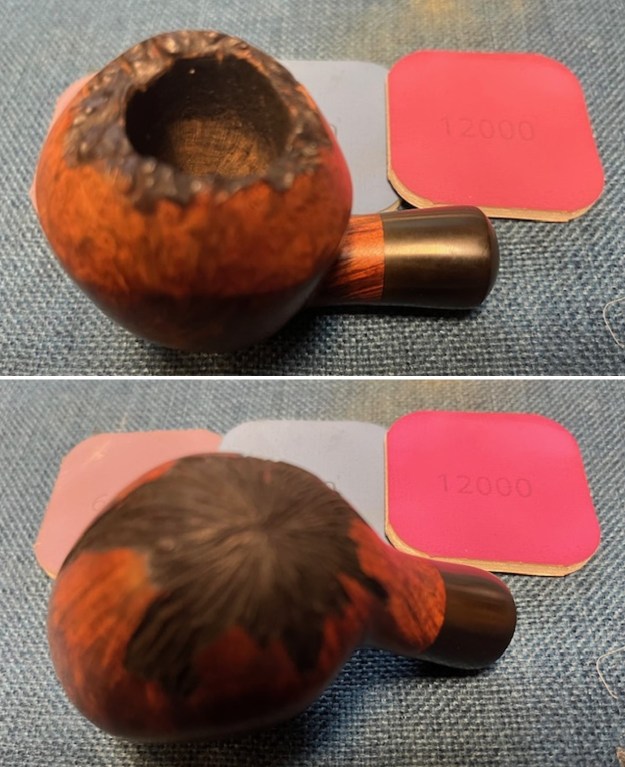
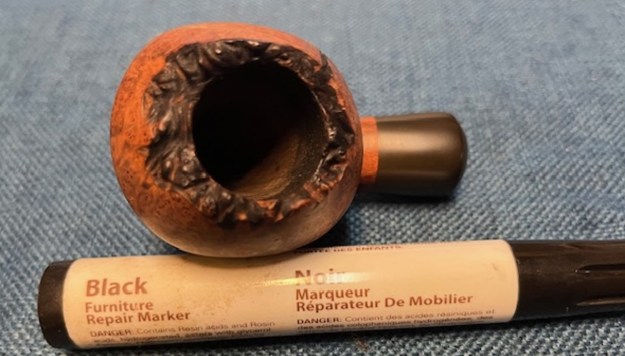
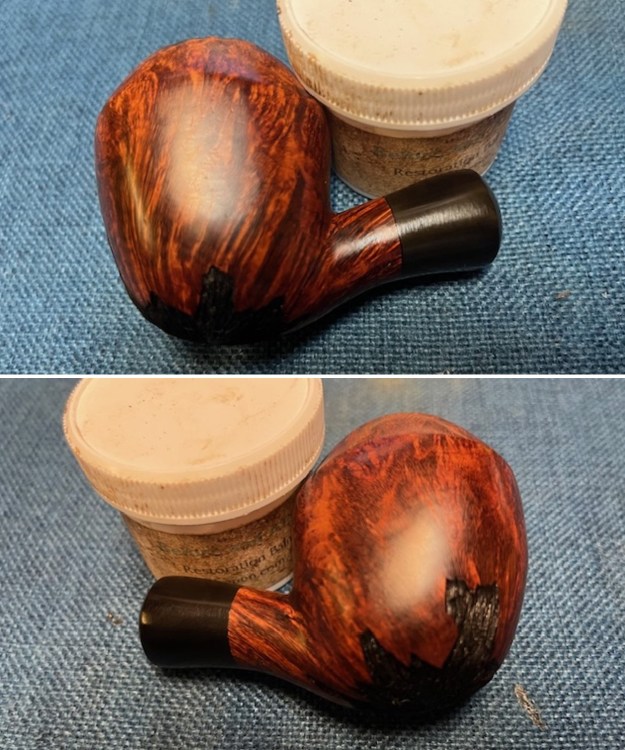
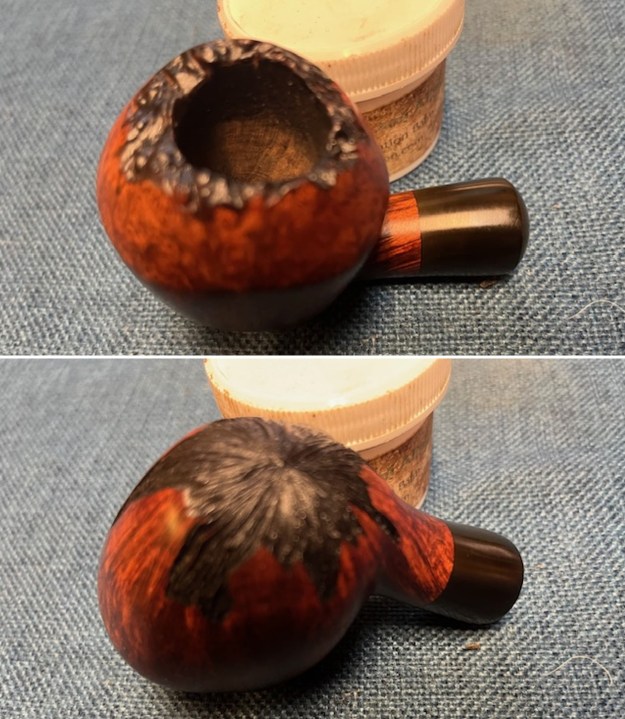
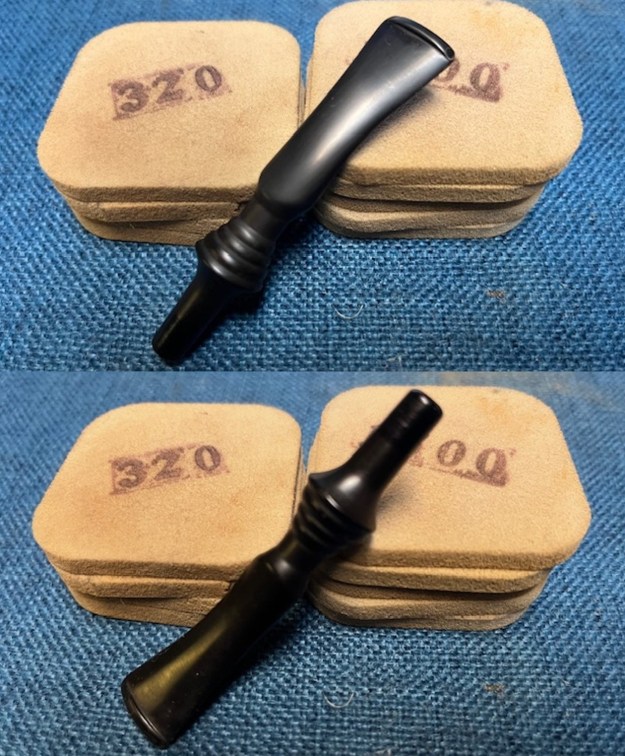
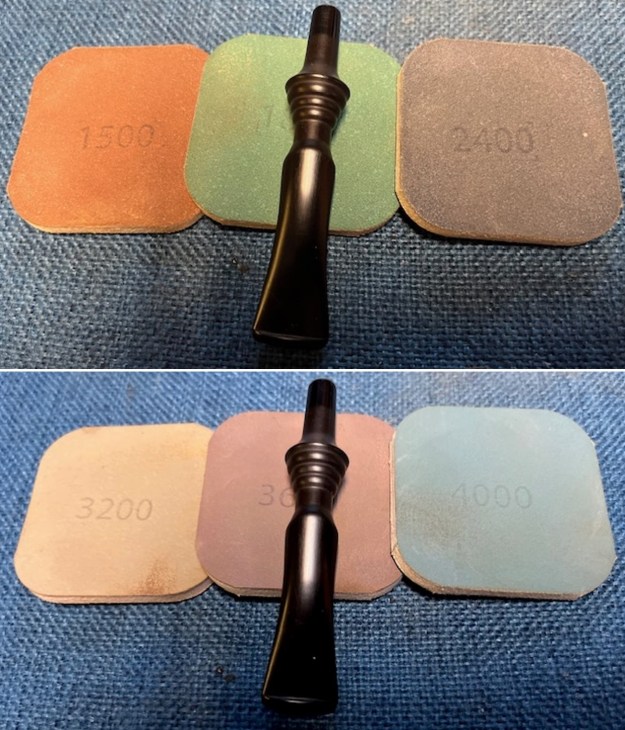
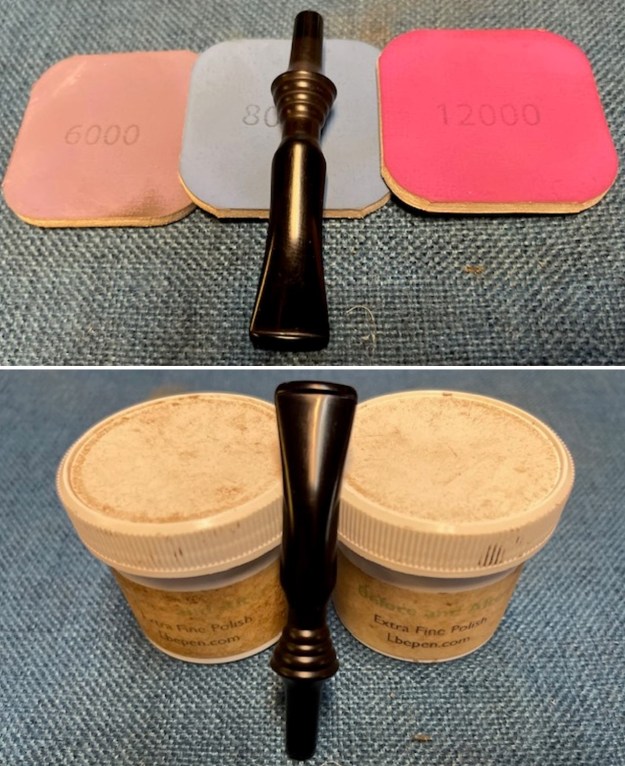
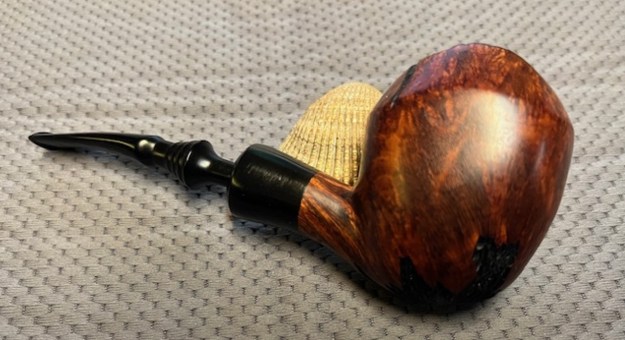
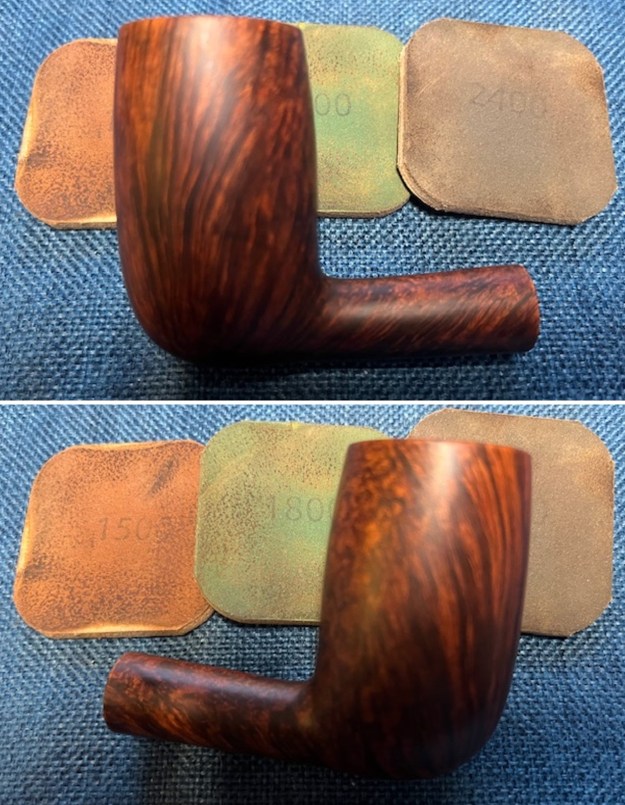
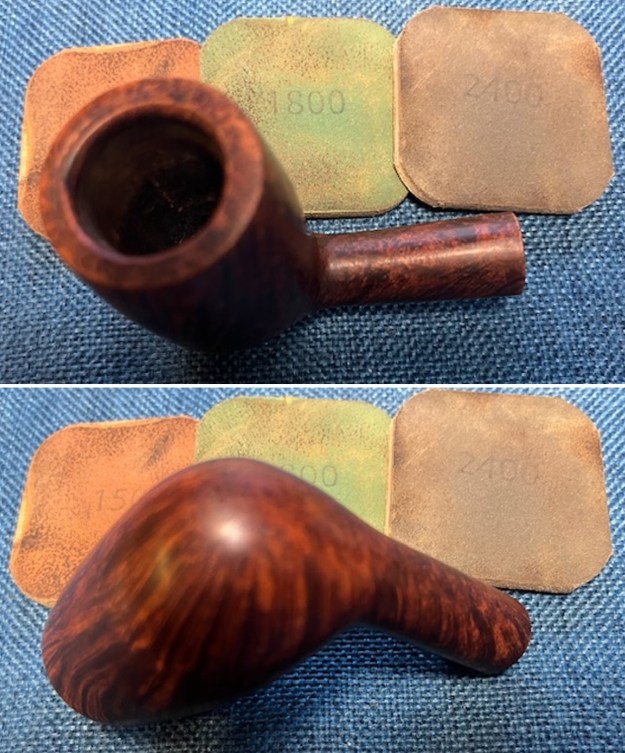
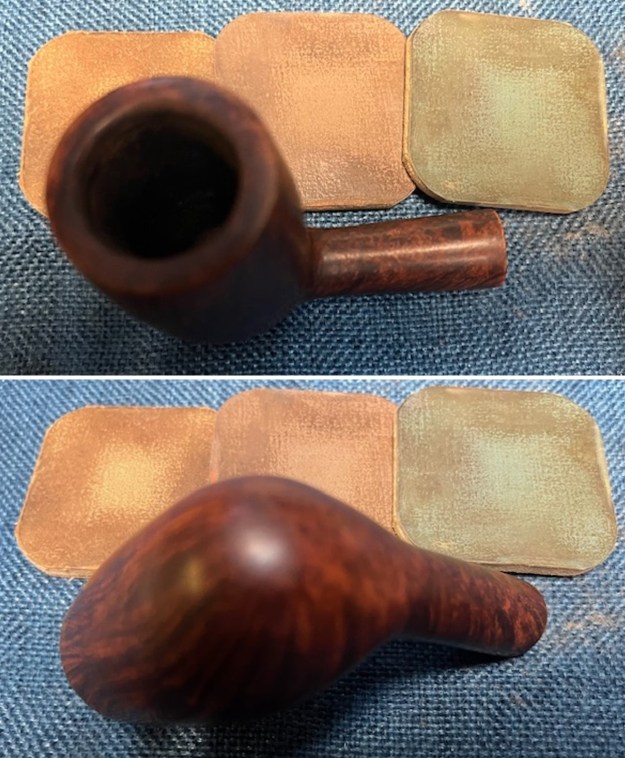
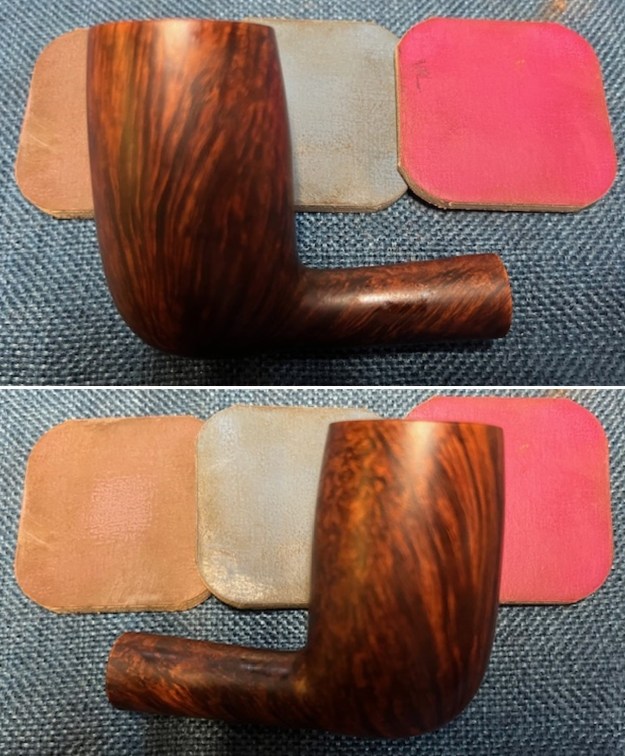
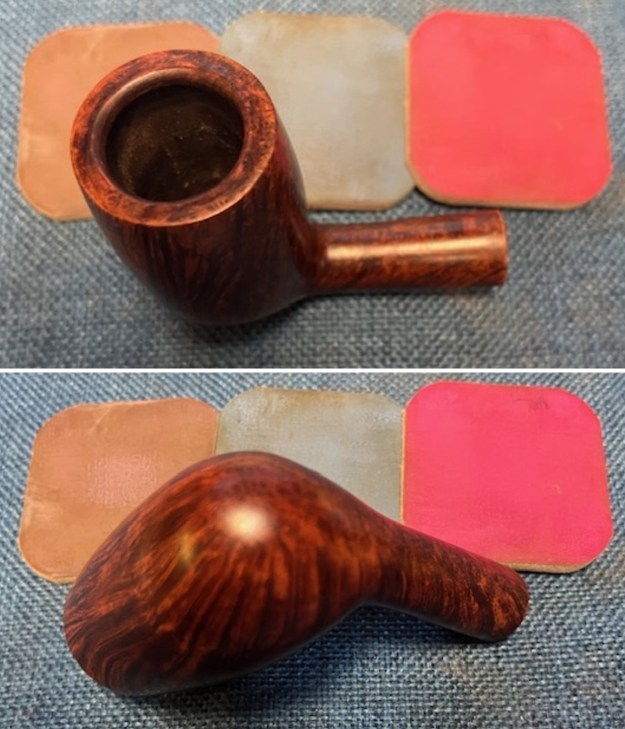
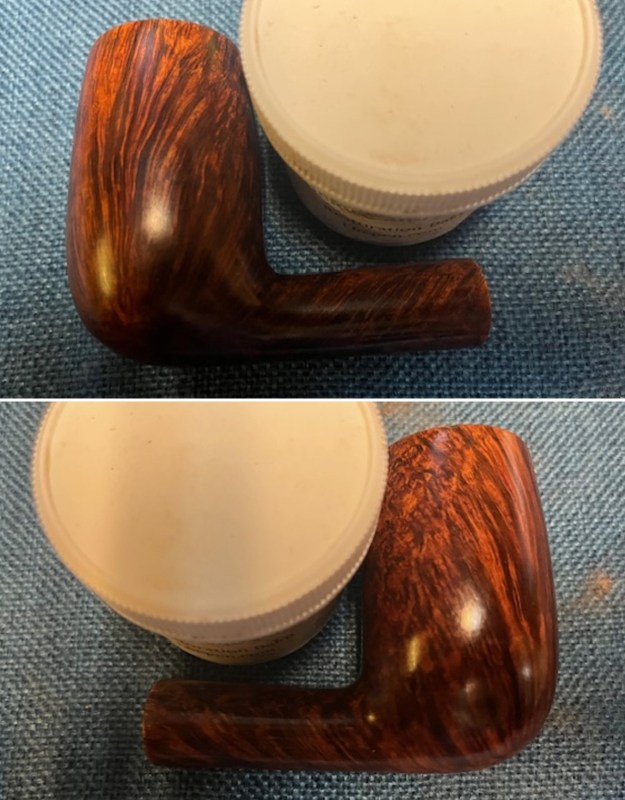
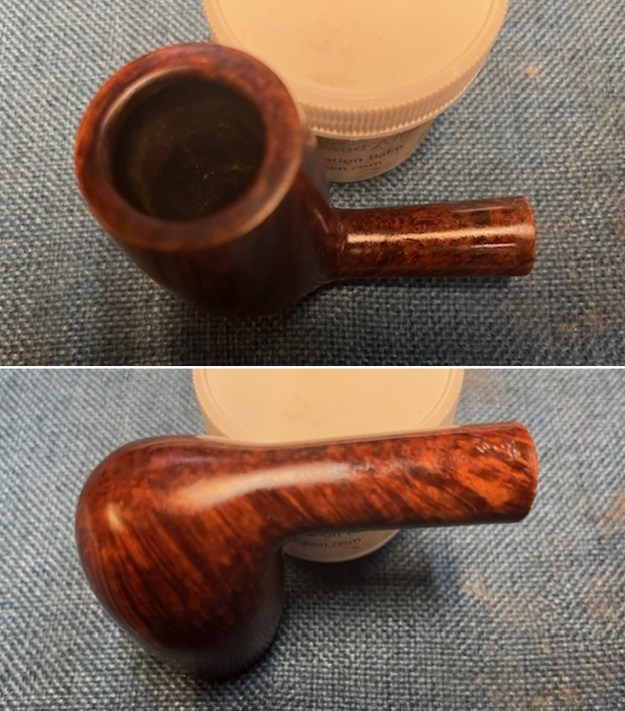
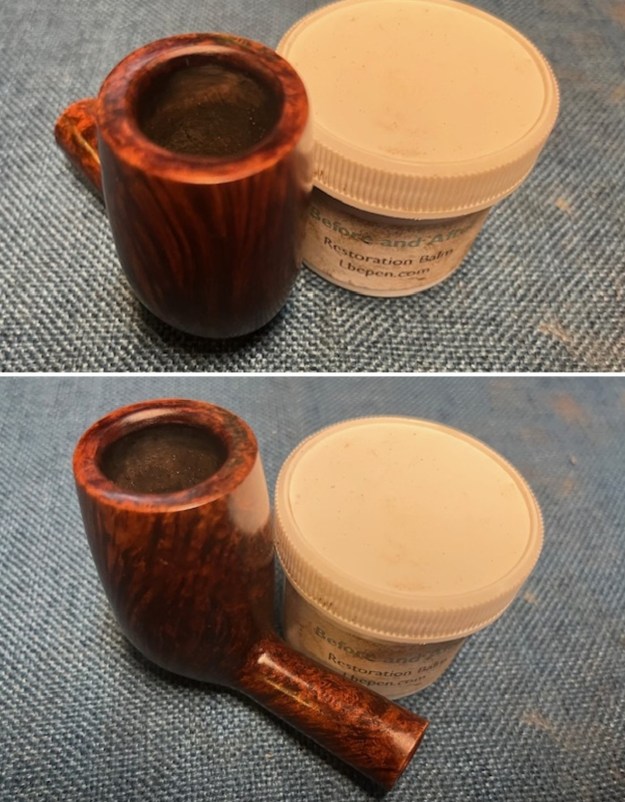
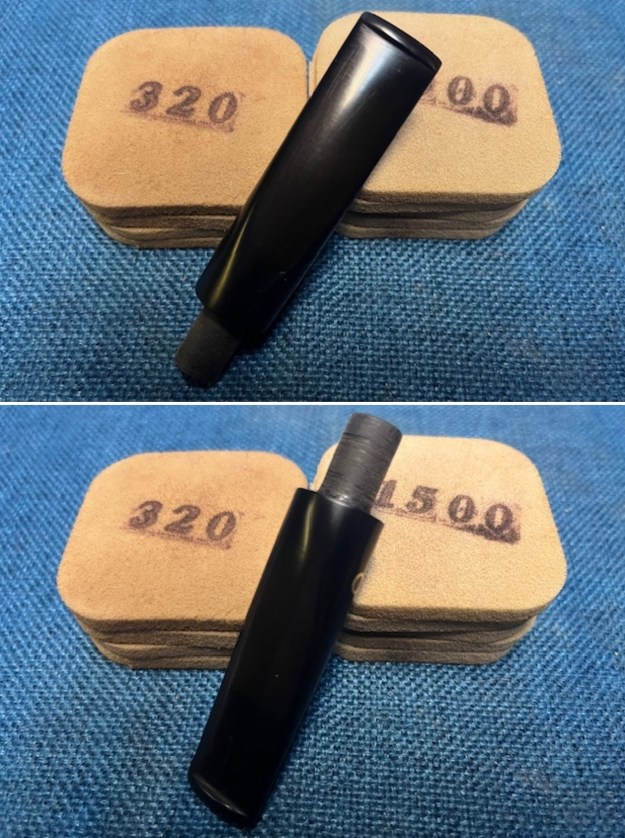
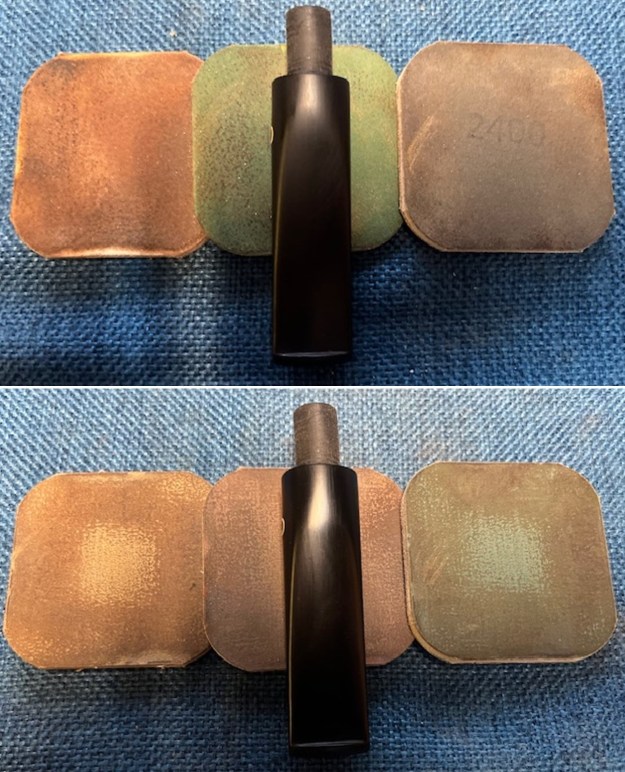
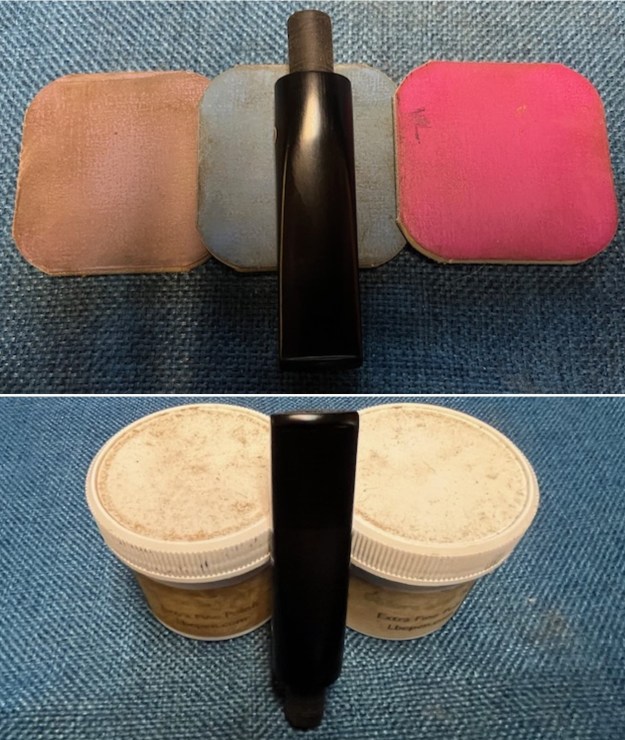
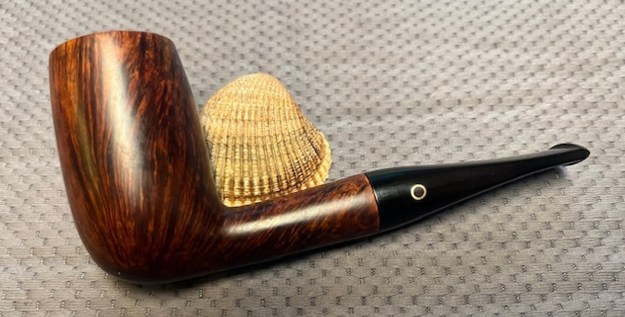
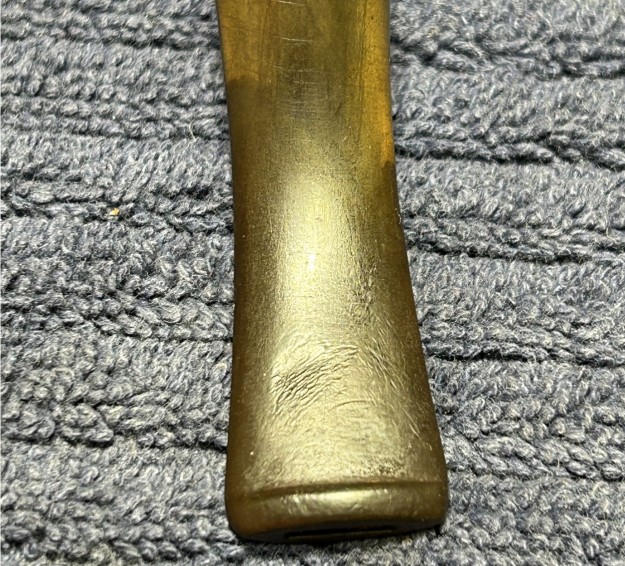
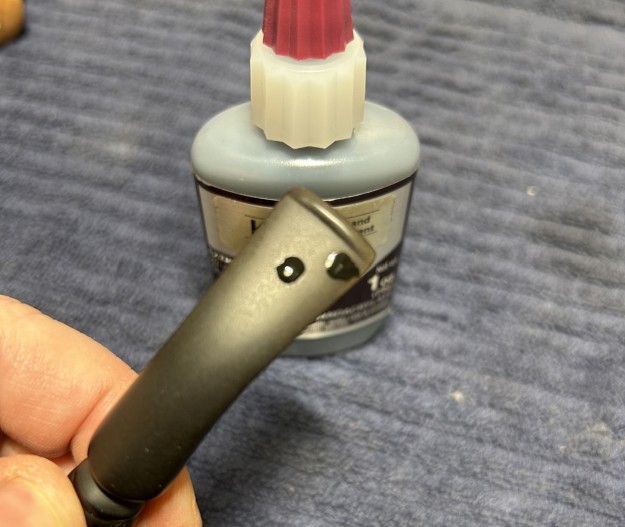
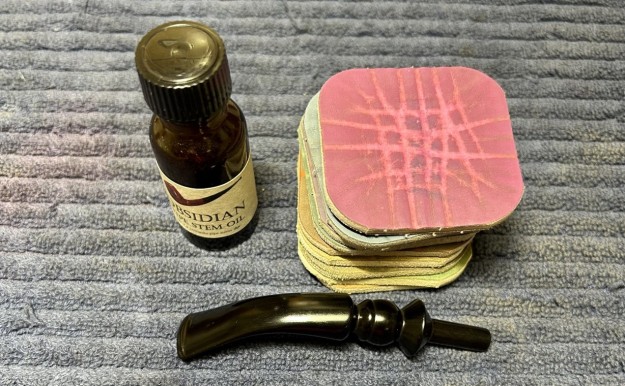
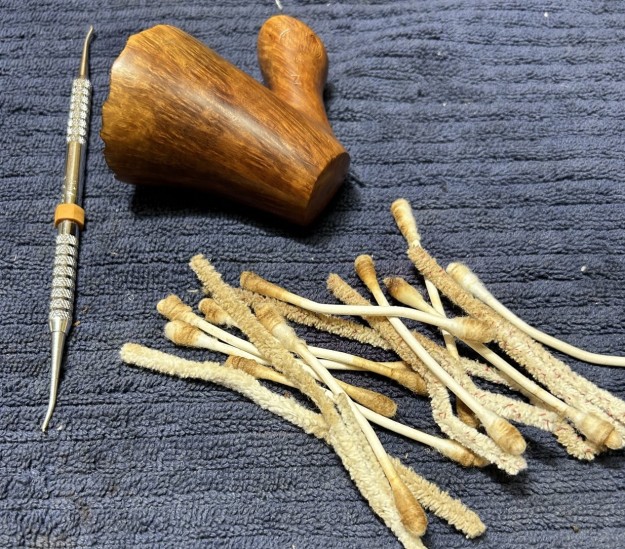
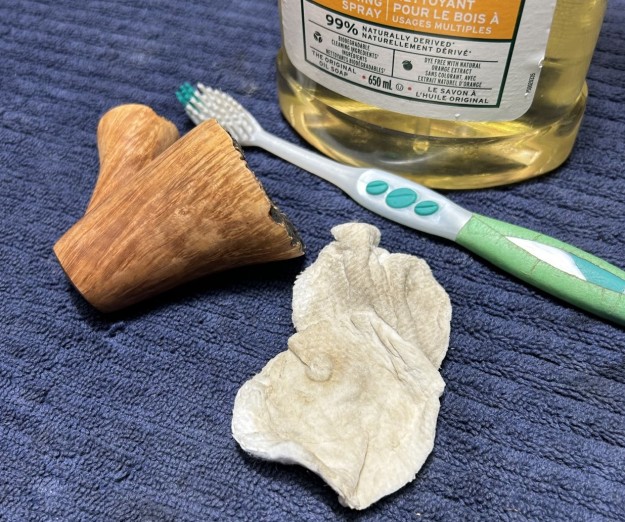
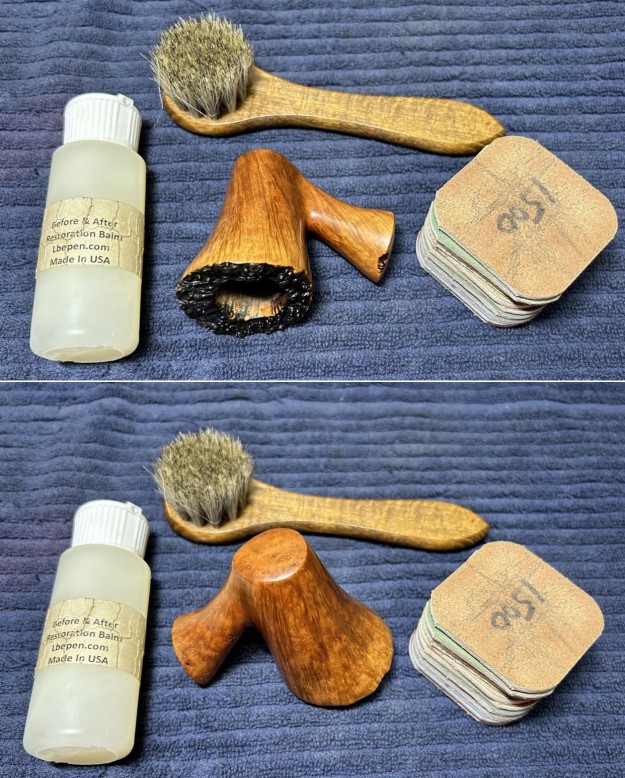
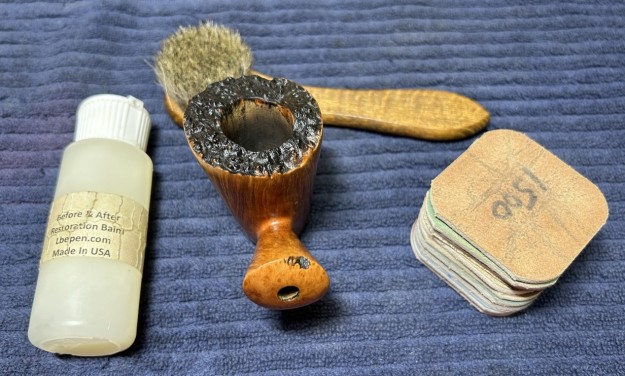
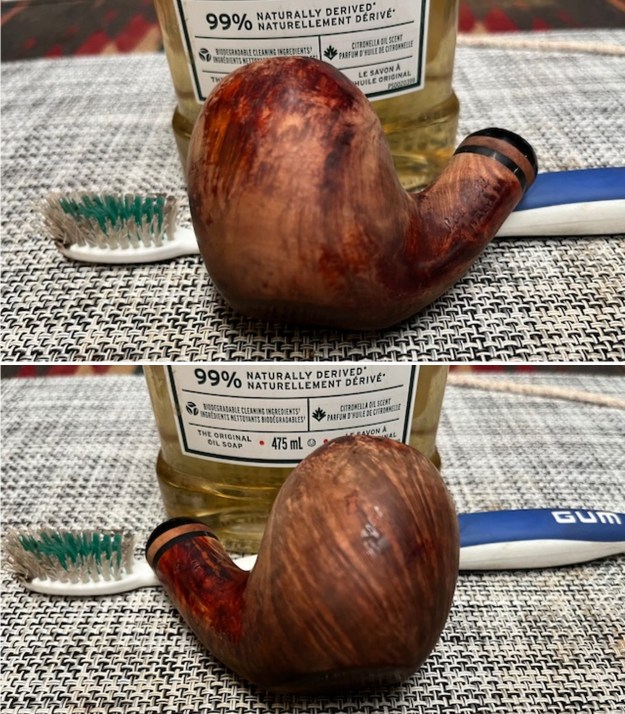
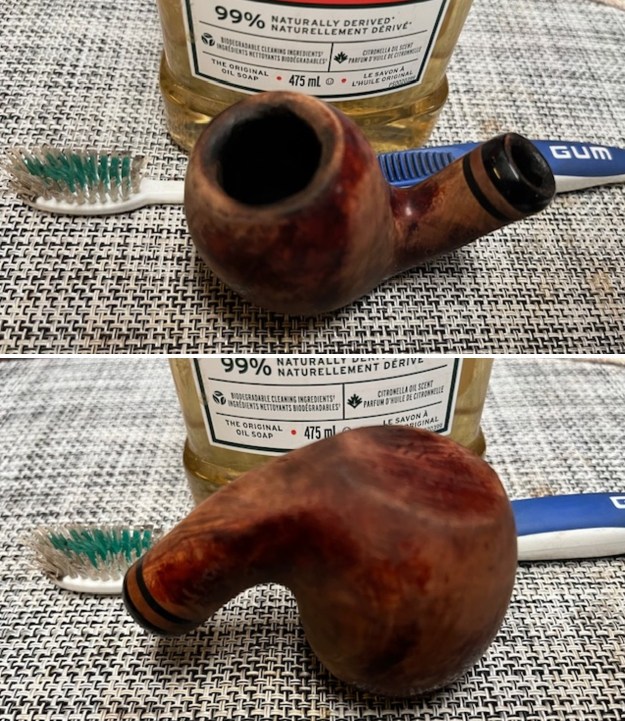
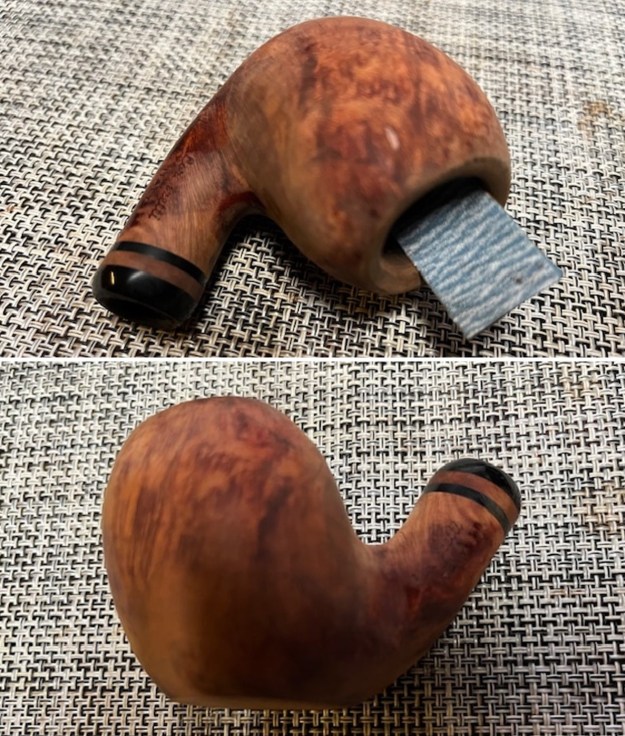
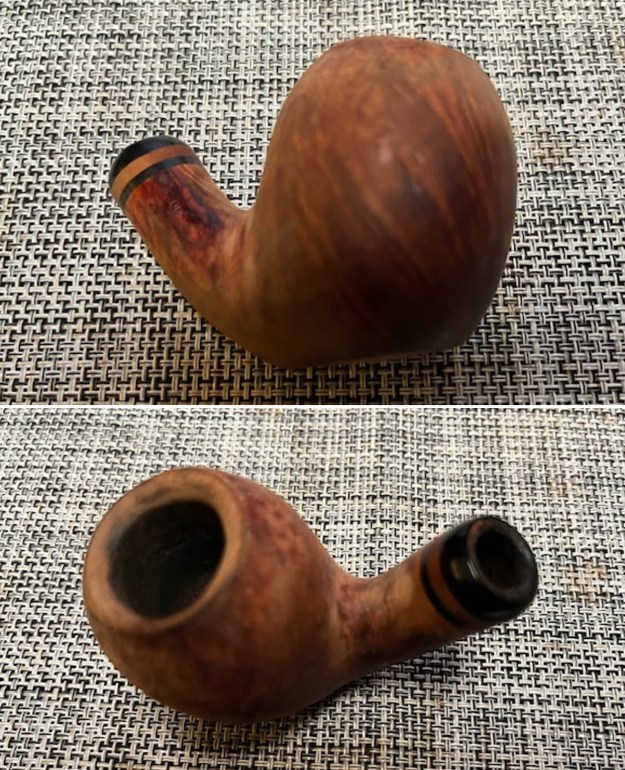
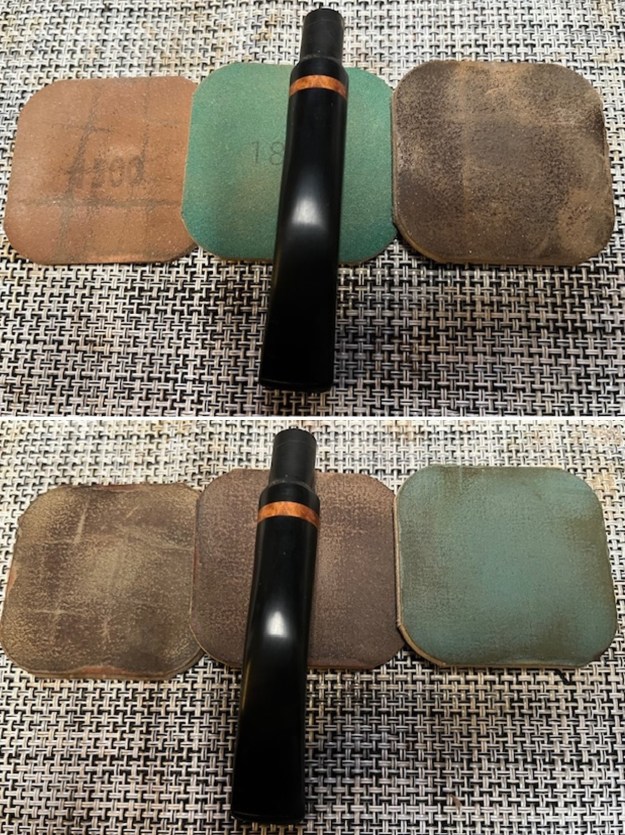
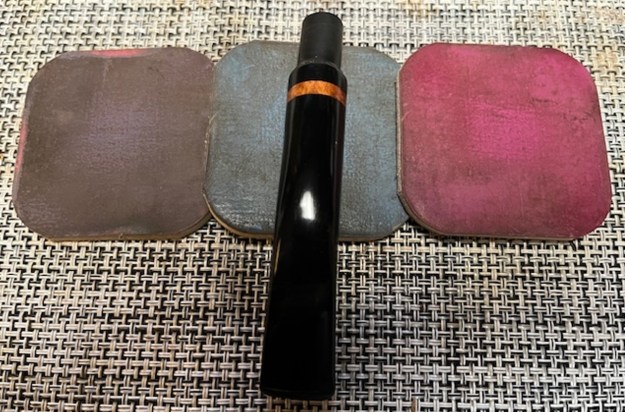
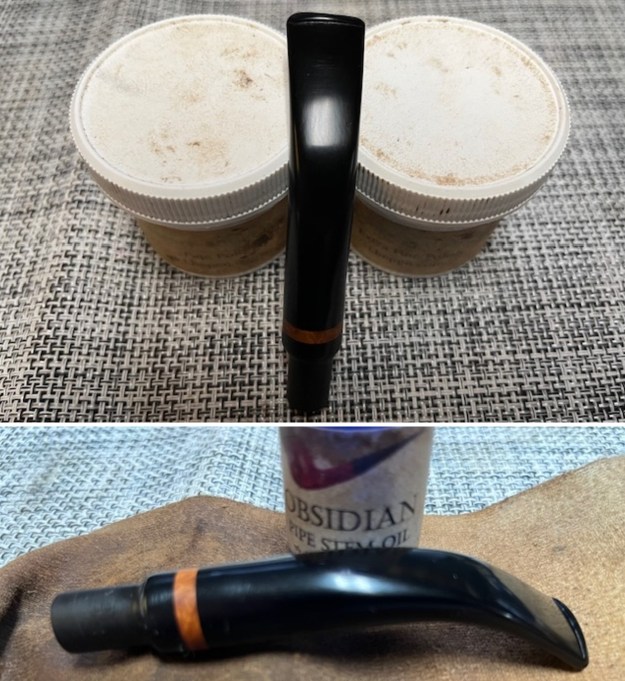
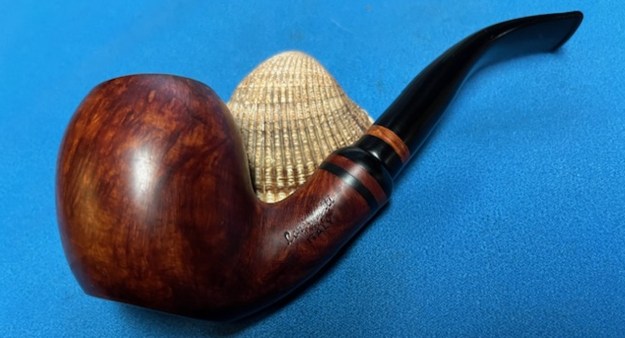
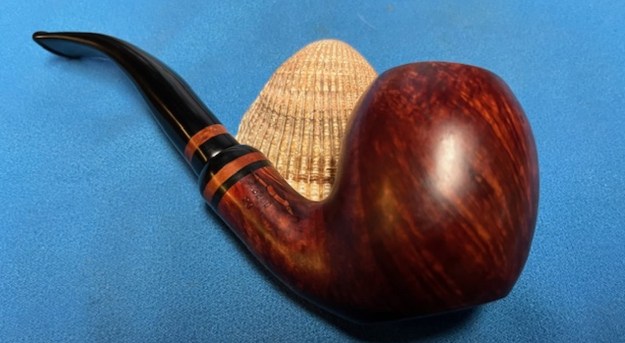
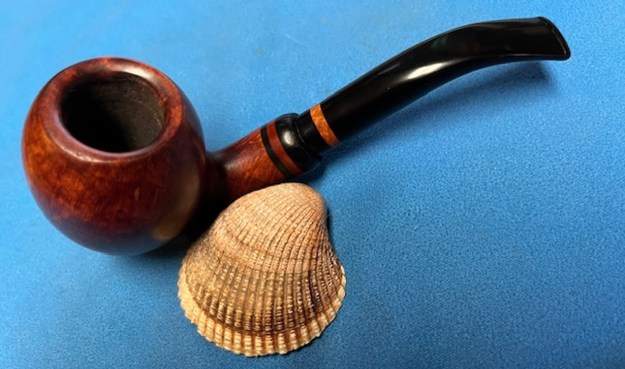
Armed with that information I actually knew no more about this Freehand. I turned to address the pipe itself. Jeff cleaned up the pipe for me. He reamed the bowl with a PipNet pipe reamer and cleaned it up with a Savinelli Fitsall Pipe Knife. He scrubbed the exterior with Murphy’s Oil Soap and a tooth brush to clean off the grime off the finish and the heavy overflow of lava on the rim top. The cleaning had removed some of the black stain on the rim top. He cleaned up the internals of the shank, mortise and stem with pipe cleaners, cotton swabs and alcohol to remove all of the oils and tars in the pipe. He soaked the stem in Before & After Deoxidizer and was able to remove much of the oxidation. When it arrived here in Vancouver it was a clean pipe and I knew what I had to work with. I took photos of it before I started my part of the restoration. I took photos of the rim top and the stem to show their condition once it arrived in Canada. Jeff was able to clean up the incredibly thick cake and lava overflow that was shown in the rim and bowl photos above. You can see the spots where the black stain had been removed from parts of the plateau top. He was also able to get rid of the grime and grit in the surface of the briar. The inner edge of the bowl was in very good condition and was smooth to the touch. The rim top and edges looked very good. The stem looked much cleaner. There was tooth marks and chatter on both sides on and near the button.I took a photo of the stamping on the underside of the shank. It was clear and readable as noted above.I removed the stem from the shank and took a photo of the appearance of the parts. You can see how large the pipe is in the photos.I decided to start with polishing the briar and the vulcanite shank extension with micromesh sanding pads. I wet sanded it with 1500-12000 grit pads. I wiped the bowl down after each pad with a damp cloth. The bowl began to take on a rich shine and grain was beginning to stand out.  I paused the polishing to touch up the stain on the plateau rim top and shank end. I used a black stain pen and was able to match the black perfectly. It looks much better.I rubbed the bowl and shank down with Before & After Restoration Balm to deep clean the finish on the bowl and shank. The product works to clean, enliven and protect the briar. I worked it in with my fingers to get it into the briar. I used a horsehair shoe brush to work it into the plateau top.  After it sat for a little while I wiped it off and buffed it with a soft cloth. The briar really began to have a rich shine. I took some photos of the bowl at this point to mark the progress in the restoration. It is a beautiful bowl. I set the bowl aside and worked on the stem at this point in the process. I “painted” the tooth marks in the stem with the flame of a Bic lighter to lift them. I filled in the remaining tooth marks on the stem surface and button edge with black CA glue (forgot to take photos). I set the stem aside to let the repairs cure. I used a small file to flatten the repairs and recut the button edge. I sanded the repairs with 220 grit sandpaper to blend them into the stem surface. I sanded out the scratches in the vulcanite with 320-3500 grit sanding pads. I wiped the stem down after each sanding pad with a cloth impregnated with Obsidian Oil. It started to take on a deep shine.I polished the stem with micromesh sanding pads – wet sanding with 1500-2400 grit pads and dry sanding with 3200-12000 grit pads. I wiped the stem down after each pad with a damp cloth to remove the sanding dust. I used the Before & After Pipe Polish to remove the small minute scratches left in the vulcanite even after the micromesh regimen. I finished by wiping the stem down with a final coat of Obsidian Oil and set it aside to dry. I put the stem back on the Nording Made N Handcrafted Made in Denmark Large Freehand and took the pipe to the buffer. I buffed the bowl and stem with Blue Diamond to polish the briar and the vulcanite. Blue Diamond does a great job on the smaller scratches that remain in both. I gave the bowl and the stem several coats of carnauba wax and buffed the pipe with a clean buffing pad to raise the shine. I hand buffed it with a microfiber cloth to deepen the shine. The pipe polished up really nicely with a great contrasting stain look to the briar. The finished pipe is shown in the photos below. This is another unique Nording for me – the combination of plateau, rustication and smooth finish along with a vulcanite shank extension. The polished black vulcanite extension and stem looks really good with the reds and blacks standing out in the grain. The dimensions of the pipe are Length: 6 inches, Height: 2 ½ inches, Outside diameter of the bowl: 1 ½ inches wide x 2 long, Chamber diameter: 7/8 of an inch. The weight of the pipe is 77 grams/2.79 ounces. This is another pipe that I will be putting it on the rebornpipes online store shortly, if you are interested in adding it to your collection. Thanks for walking through the restoration with me on this beauty!

Restoring and Replacing a Tenon on a Hand Cut B Olive Stack


by Steve Laug

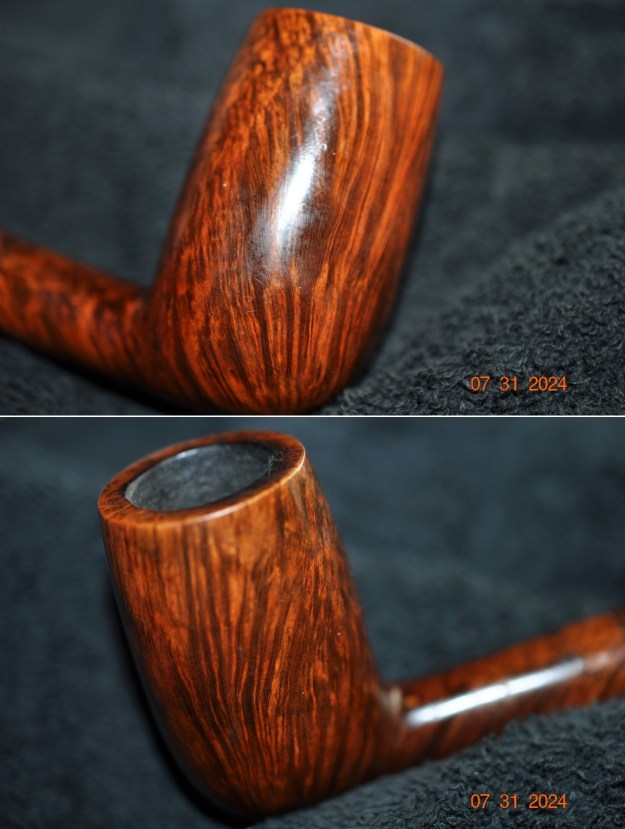
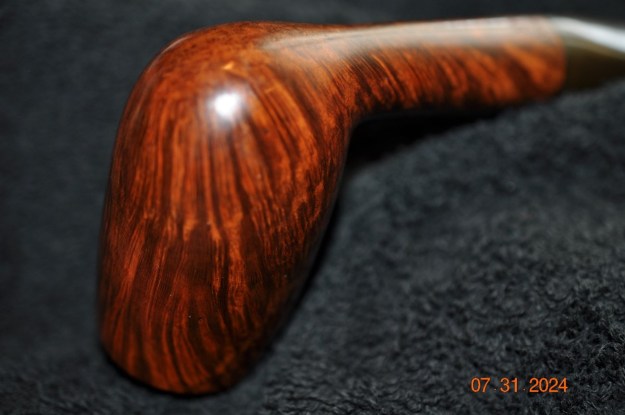
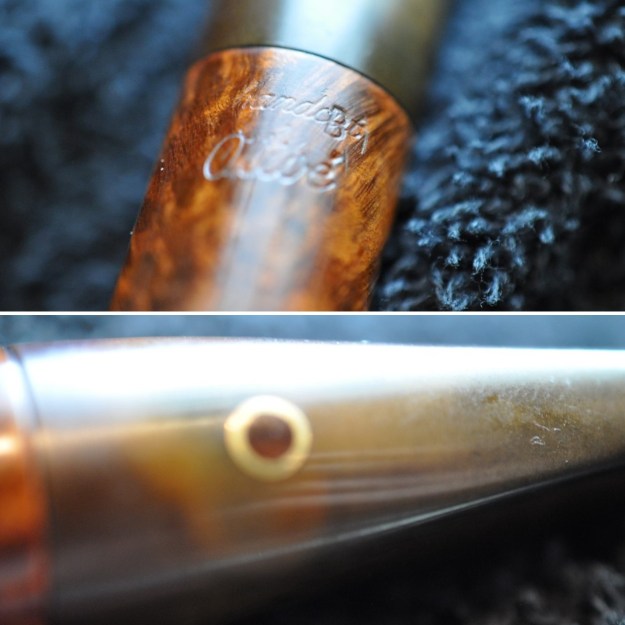
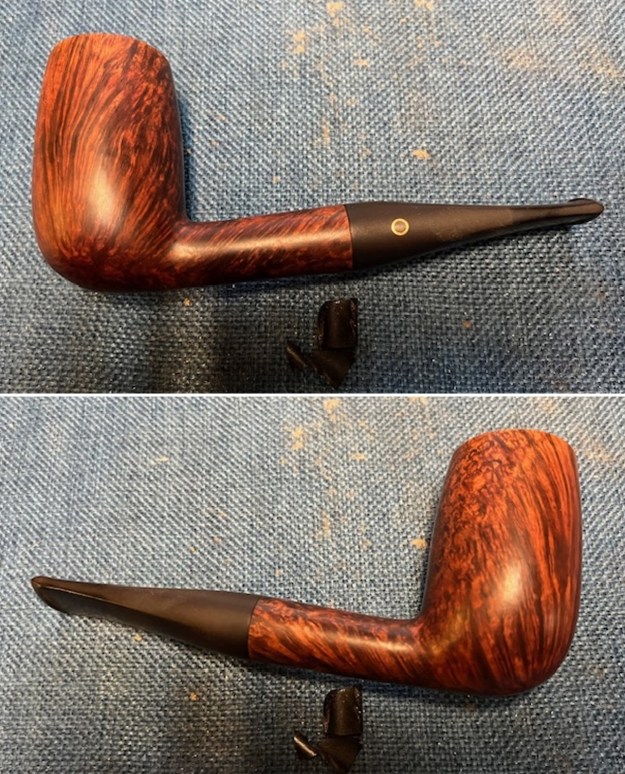
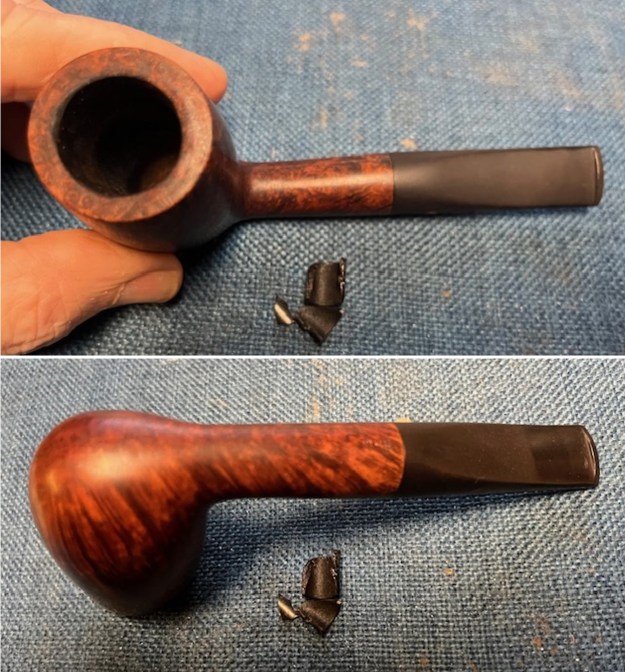
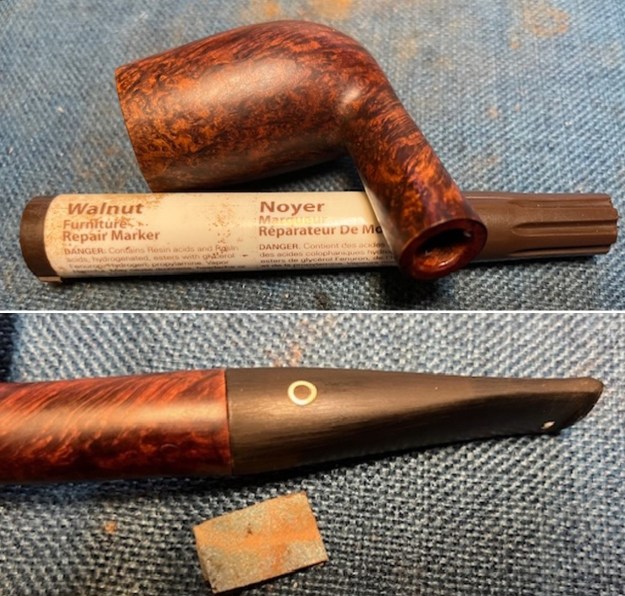
The next pipe on the table was one that we purchased from our contact in Denmark who has provided us with some great pipes. We bought it on 02/16/2023. It caught my eye because of the brass “O” on the stem which I have come to associate with Julius Vesz Hand Made pipes. The stamping on the shank is a bit odd, but uses some of the words that I have come to associate with Vesz pipes.  On the underside of the shank it reads hand cut (lower case script) with B on top of the “cut” portion of the stamp making it unclear. Below that the stamp reads Olive and I don’t think it refers to the wood but perhaps the finish on the pipe. I have never seen a Vesz stamped with that nomenclature. The wood is definitely briar and not Olive wood. I really like the fact that the pipe is the top of the line of Vesz Hand Cut pipes. The bowl had a thick cake with an overflow of lava on the top and the inner edge of the bowl. There were also some burn marks and darkening on the inner edge of the rim. These would need to be dealt with in the clean up and restoration. The finish was dirty with grime and grit ground into the briar. The Ebionite stem was oxidized and had some tooth marks on both sides ahead of the button. Jeff took some photos of the pipe before he started his clean up work. Jeff took some great photos of the rim top that show the thick cake in the bowl and the lava on the rim top. There was also some burn damage on the front inner edge of the bowl and some darkening around the edges. He also captured the condition of the stem showing the oxidation and the tooth damage on both sides. Jeff took a photo of the damage to the filter tenon. It had a major crack on the top half. I expected it to break free during the cleanup process.He captured the grain around the sides and heel of the bowl well in these photos. It was amazing grain and the stain was a rich walnut that made the grain really pop around the bowl and shank. Jeff took a photo of the stamping on the underside of the shank. It was clear and readable as noted above. You can see the “B” stamped on top of the Hand Cut stamp. The second photo shows the brass “O” on the left side of the taper stem and the oxidation around it on the side of the taper stem.Before I started working my part of the restoration I spent some time trying to place the hand cut line in the Vesz hierarchy. I turned to rebornpipes to have a look at some of the pieces I had written previously on the brand. The first was a catalogue I had picked up on Vesz pipes from a friend. It was an older catalogue from the time period that the brand was called Craft Pipes (https://rebornpipes.com/2016/09/13/an-older-julius-vesz-catalogue/). In going through the catalogue there was nothing that referred to the newer lines of the Vesz pipes that showed up in other places.

A piece I wrote on a Vesz Zulu gave a lot of historical backgroundon the brand so I reread that (https://rebornpipes.com/2014/10/04/a-review-a-julius-vesz-shape-76-zulu/). I quoted from Pipedia in the piece and have included that and the link below.

Pipedia gives good background information on Vesz. The picture and the material is taken from this link http://pipedia.org/wiki/Vesz_Pipes

“Born and raised in Hungary, Julius Vesz was first exposed to pipe making through his grandfather. Although his grandfather died when Julius was only 9 years old, he can still picture his grandfather making pipes. It made a lasting impression that matured years later.

After immigrating to Canada at age 23, Vesz worked as a mechanical draftsman, but ever since a child had wanted to do something on his own. Remembering his grandfather’s pipe making and repairing, he thought perhaps he should try his hand at that also. He sought out Charlie Dollack, who had a repair shop in downtown Toronto, but while Charlie encouraged the young Vesz, he did not offer any help or instruction.

Julius continued on his own, setting up a modest shop in his own home, and was soon fixing and making pipes for several department stores, as well as United Cigar, which later turned into his main source of work. He discovered he had a unique skill, which he practiced and nurtured on his own. Like his grandfather, Vesz is motivated by a desire to create pipes that approach perfection.”

Over the years I have followed Julius Vesz’ pipes and kept an eye out for one that caught my eye. Julius Vesz is a Canadian pipe maker who has been controversial in his claim to use dead root briar. Many have argued about his choice of terms regarding the briar that he uses. But regardless of your take on that issue he makes beautiful pipes that smoke exceptionally well. His unique raindrop shaped pipes may be how many people know him. He has a shop in the Royal York Hotel, 100 Front Street West in Toronto.

His Hand Cut pipes are crafted from his oldest and finest blocks of aged briar. They come in a variety of shapes and styles and no two are the same. The grading of the Hand Cut is ascending from 3 – 9, then switches to A – D. The pipe I am working on is a B grade so it is getting close to the top of the grading scale which I would expect from the grain on the briar. The Hand Cut pipes were often personalized with bone, silver and gold ornamentation.

His early pipes bore the Craft Briar stamp, and though his company still is registered as Craft Briar his pipes are now stamped Julius Vesz. He carved every pipe that bears his name and though they may bear similarities to others that he has carved each one is one of a kind. His site says that “Every pipe is meticulously crafted from his personal supply of aged briar that he has been accumulating since the 1960s. The extremely old briar gives each pipe the exceptional smoking characteristics found only in a world famous Julius Vesz pipe.”

Now I knew that the Hand Cut pipe I had was the top line of Vesz Pipes and that it was Graded a B which is close to the top of the line which tops out at Grade D. It is a beauty and it is now time to work on it!

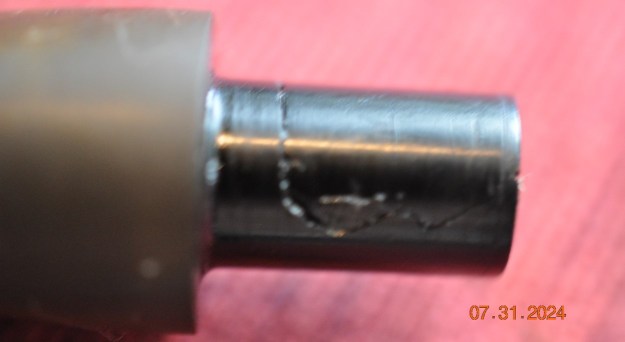
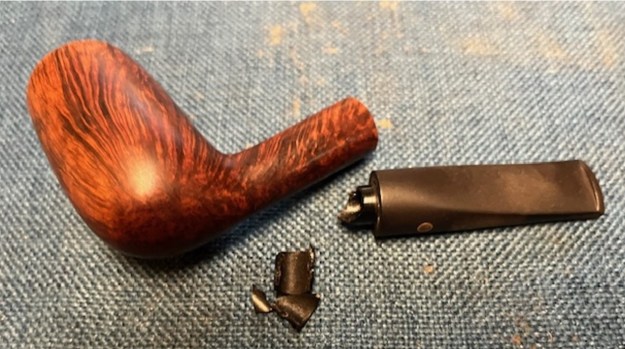
Jeff had thoroughly cleaned up the pipe. He had reamed the pipe with a PipNet pipe reamer back to bare briar and removed the remnants of the cake with a Savinelli Fitsall Pipe Knife. He scrubbed the bowl with undiluted Murphy’s Oil Soap and a tooth brush. He rinsed it under running warm water to remove the soap and grime. He cleaned out the inside of the shank and the airway in the stem with alcohol, cotton swabs, pipe cleaners and shank brushes. He soaked the stem in Briarville’s Pipe Stem Deoxidizer and rinsed it off with warm water. The filter tenon, shown cracked above, fell apart in the clean up. You can see pieces of the broken tenon below. I took photos of the pipe before I started my part of the restoration work.

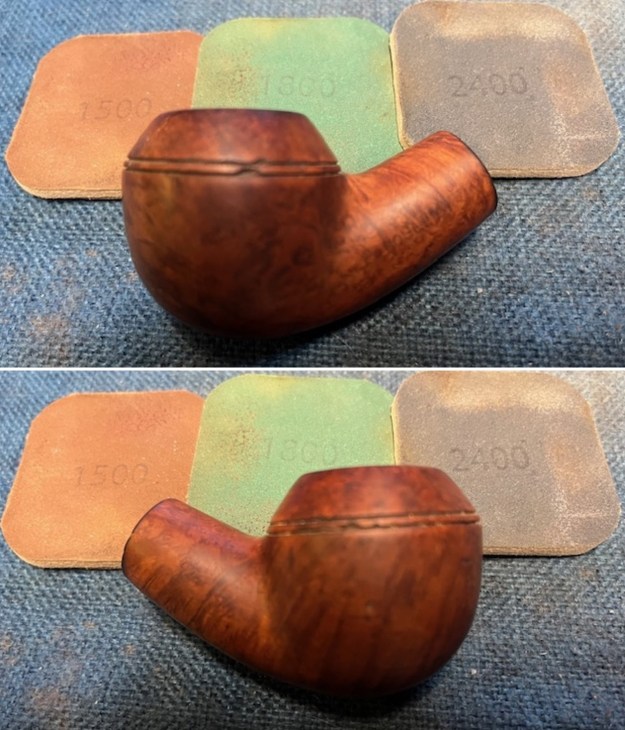
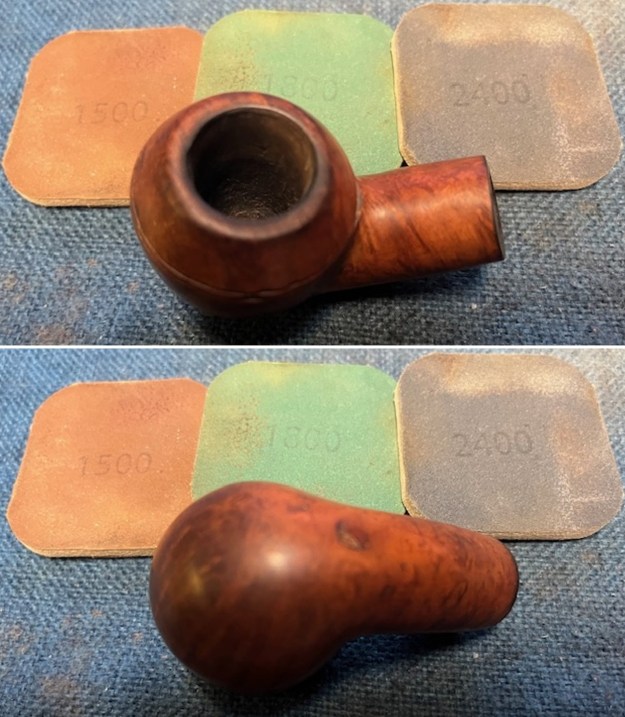
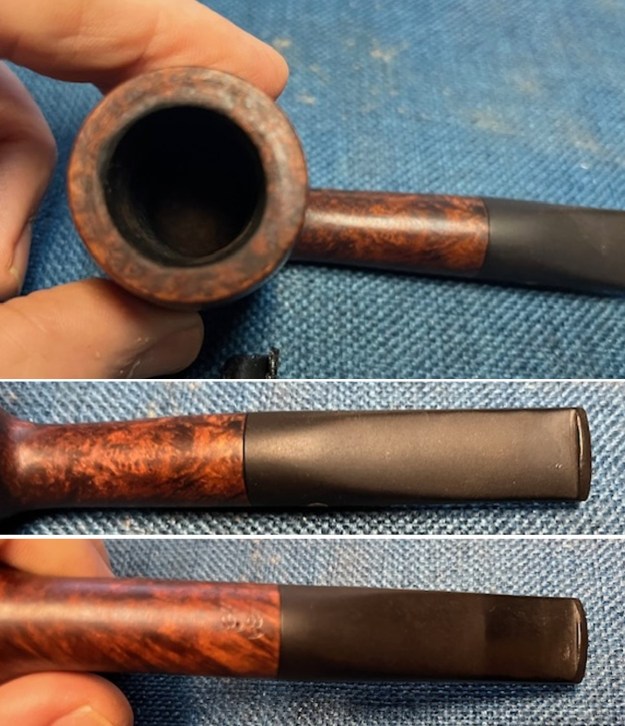
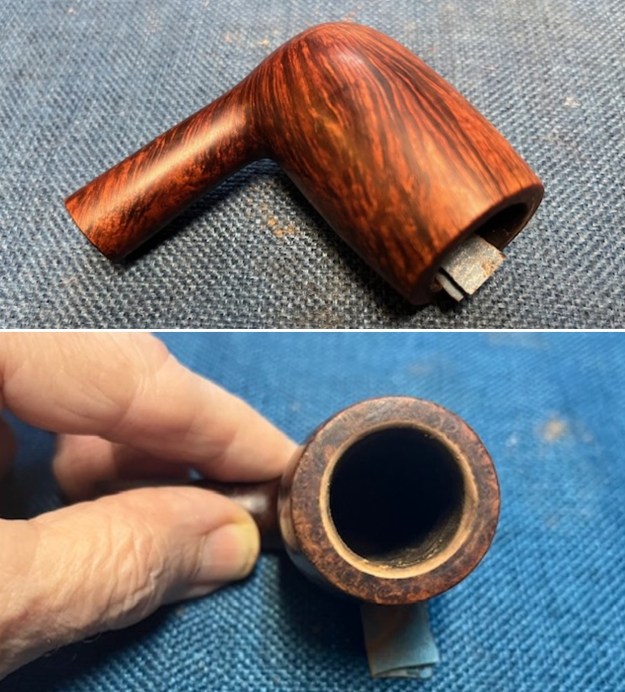
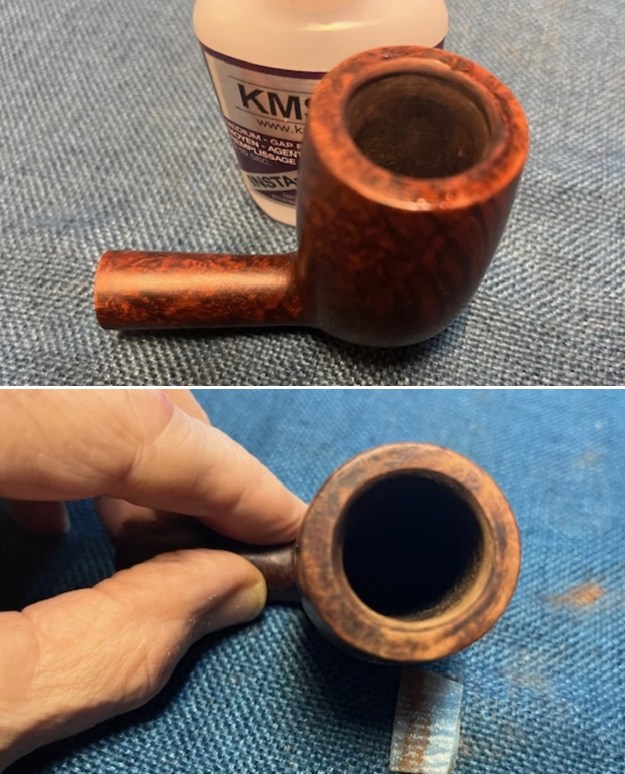
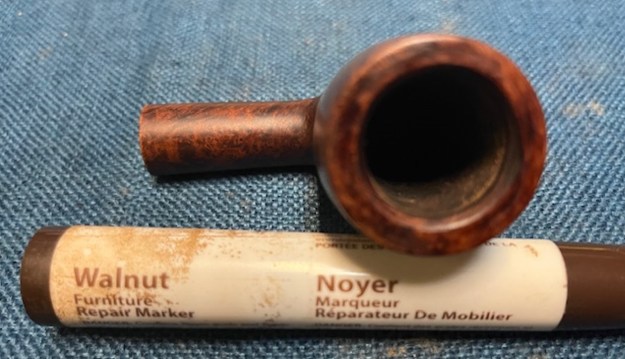
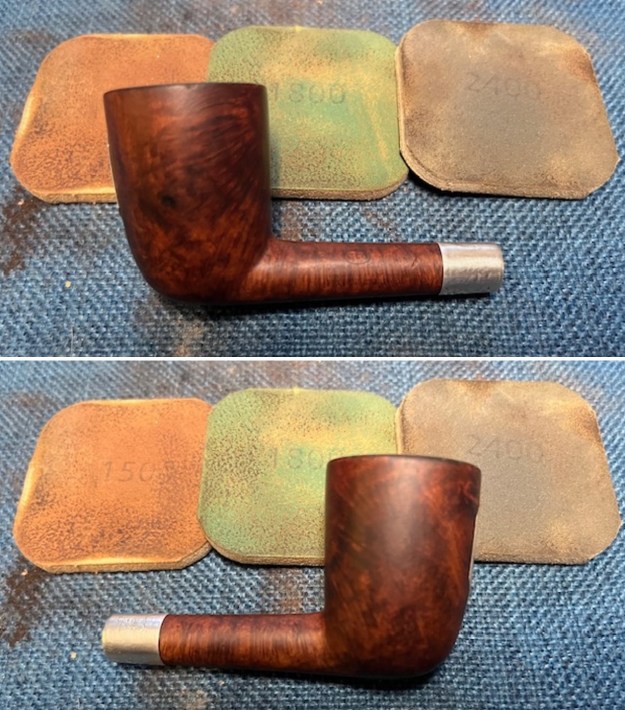
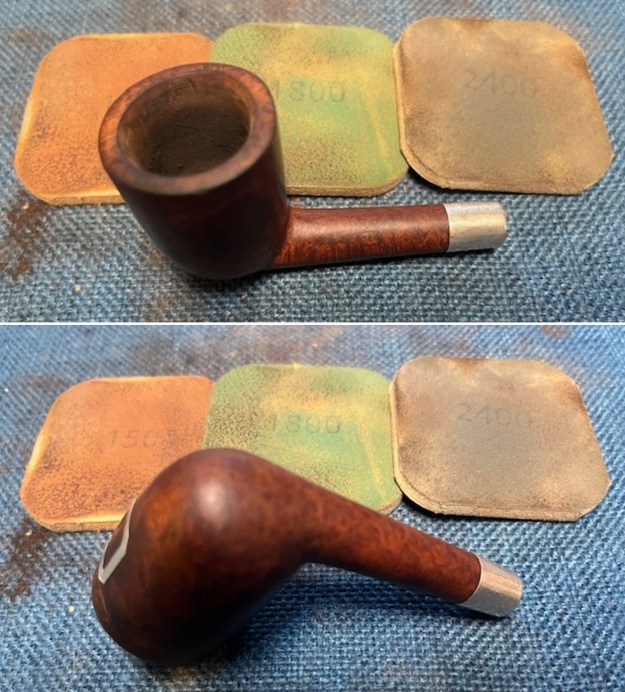
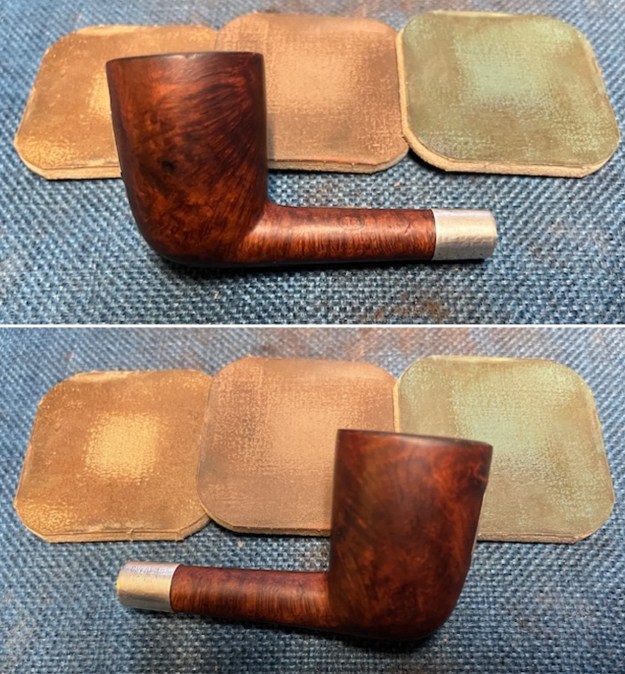
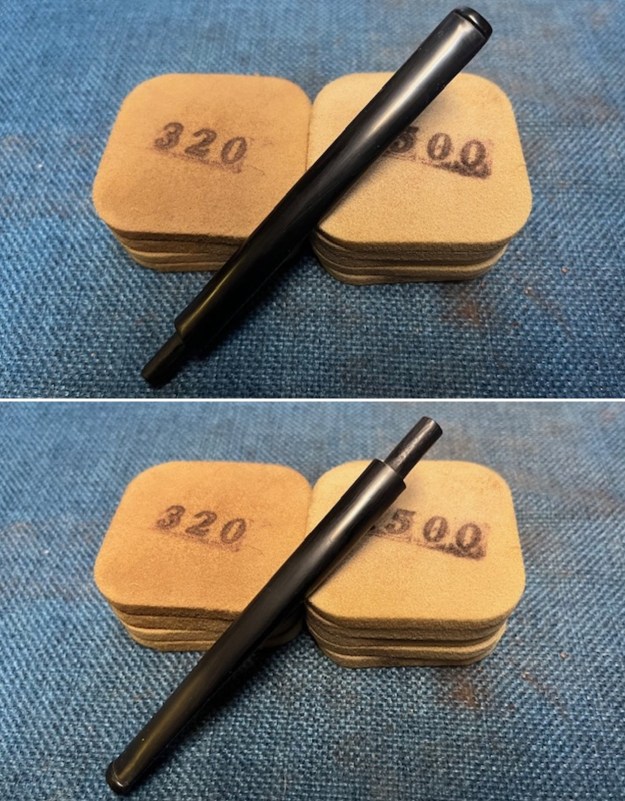
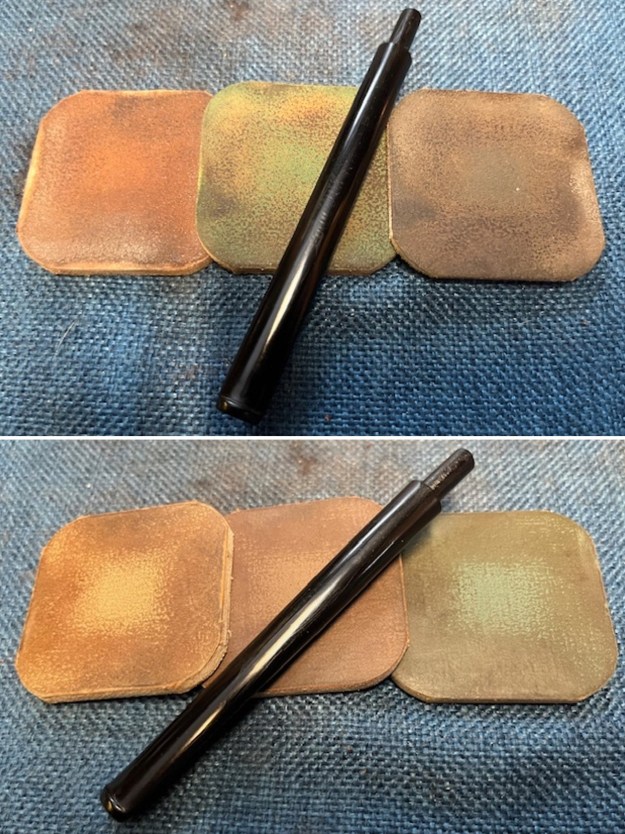
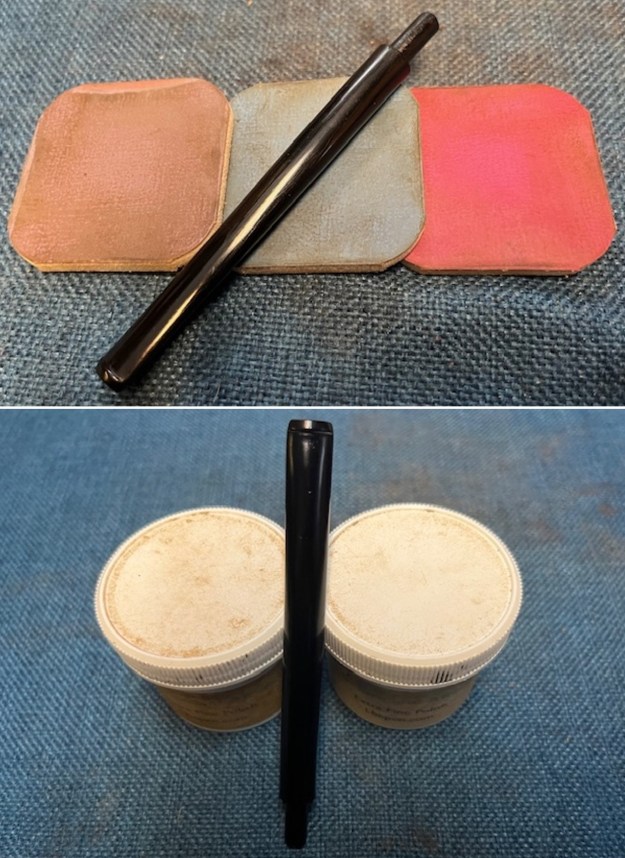
I took photos of the bowl and rim top to show the clean condition. The burn damage on the inner edge of the bowl is clear on the front of the bowl. The rim top has some scratches and marks as well. The bowl walls look very good. The thick vulcanite stem looks very clean and the tooth marks are evident next to the button on both sides.I took the stem off the bowl and took photos of the broken tenon and parts. It will definitely need to be replaced. The beauty of this is that I can replace it with a regular tenon instead of the filter tenon. To me that is good news.I decided to replace the tenon first. I knew that fitting it would require adjustments to the stem and shank so I wanted to do that before I put a lot of work into polishing the bowl. I used a Dremel to flatten out the broken tenon end. The photo below shows it in process to the flattening out. Once it is flat and the face of the stem is smooth then it will be time to put a new tenon in place. With flattened I used a Delrin tenon – the largest that I had to fit into the airway in the stem. I coated the threaded end of the tenon with clear CA glue and inserted it in the end of the stem.I set the stem aside to let the glue cure on the new tenon. Once it had hardened it was time to reduce the diameter of the new tenon to properly fit in shank. I used a file and a Dremel with a sanding drum to bring it to the right diameter.When I had the tenon shaped correctly, diameter and fit correct I put the stem in the shank and took the following photos. You can see that the fit is very good. It is snug and looks good against the shank end. The alignment to the shank end is quite good but I will need to sand the right side of the stem a little to make the transition smooth. I will need to do the same on the right, top and bottom sides – adjusting either the stem or the shank for smooth transition between the stem and shank. I have to say it is a really beautiful pipe! I sanded the transition smooth all the way around the shank and stem joint. I was careful on the underside to not damage the stamping. Once it was smooth I polished the sanded areas with 1200-3200 grit micromesh pads. I used a Walnut stain pen to blend in the adjusted areas to the rest of the briar. That transition looked and felt very good.I set the stem aside for now and turned to the bowl. I used a folded piece of 220 grit sandpaper to smooth out the damage on the front inner edge and to give it a slight bevel to bring it back to round and deal with the darkening in that area of the rim edge. It definitely looks better. I smoothed it out with micromesh sanding pads. There were some gouges in the rim top on the front and I did not want to top the bowl. I used a tooth pick and clear CA glue to fill in the gouges. Once it cured I smoothed them out with 220 grit sandpaper and smoothed it with some 1500 grit micromesh. I restained the top and the inner edge with a Walnut stain pen. I polished the briar with micromesh sanding pads – dry sanding with 1500-12000 grit sanding pads. I wiped the bowl down with a damp cloth after each pad. I take photos of the three groups of pads for my own viewing primarily as I am looking for progress in polishing. Once again, by the end of the process it looked quite good. I rubbed the bowl and shank down with Before & After Restoration Balm. I worked it into the surface of the bowl sides and shank with my fingertips. It works to clean, enliven and protect the briar. I let the balm sit for 15 minutes and buffed with a cotton cloth to raise the shine. The grain came alive. I set the bowl aside and turned my attention to the stem. The scratches, tooth chatter and marks easily were addressed by dry sanding the stem with 320-3500 grit sanding pads. I wiped it down after each pad with Obsidian Oil. It looked very good at this point in the process.I polished the vulcanite stem with micromesh sanding pads – 1500-12000 grit pads to further remove the remaining scratches. I wiped the stem down with Obsidian Oil after each sanding pad. I used Before & After Pipe Polish – both Fine and Extra Fine to further polish the stem. I rubbed it down with a final coat of Obsidian Oil and let it dry. This Julius Vesz Hand Cut Grade B Olive Stack is a great looking pipe with great grain around the sides of the bowl. The replaced broken filter tenon with a Delrin one worked very well and now it is a nonfilter pipe. I put the stem back on the bowl and carefully buffed the pipe with Blue Diamond on the buffing wheel using a light touch on the briar. I gave the bowl and the stem multiple coats of carnauba wax on the wheel and followed by buffing the pipe with a clean buffing pad. I hand buffed the pipe with a microfiber cloth to deepen the shine. The finished Vesz Hand Cut B Grade Olive fits nicely in the hand and feels great. Give the finished pipe a look in the photos below. The dimensions of the pipe are Length: 5 ½ inches, Height: 2 ½ inches, Outside diameter of the bowl: 1 ¼ inches, Chamber diameter: 7/8 of an inch. The weight of the pipe is 52 grams/1.80 ounces. This one will be with me for awhile so I can enjoy the beauty of this high grade Julius Vesz Hand Cut Stack. I think I will enjoy it for a while before I make up my mind once and for all… at least for now. Thanks for reading this blog and my reflections on the pipe while I worked on it. As always, I appreciate your comments and questions. Thanks for your support and time!

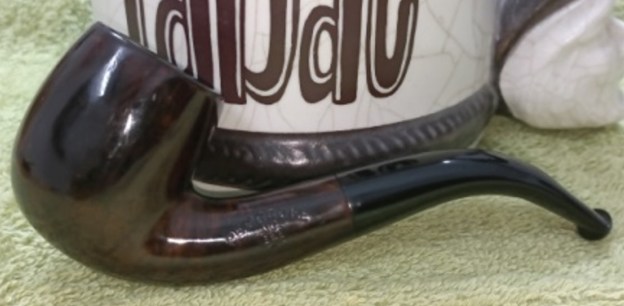
Restoring an older MLC Redmanol French Briar Crosby Style Pipe with a Redmanol Stem


by Steve Laug

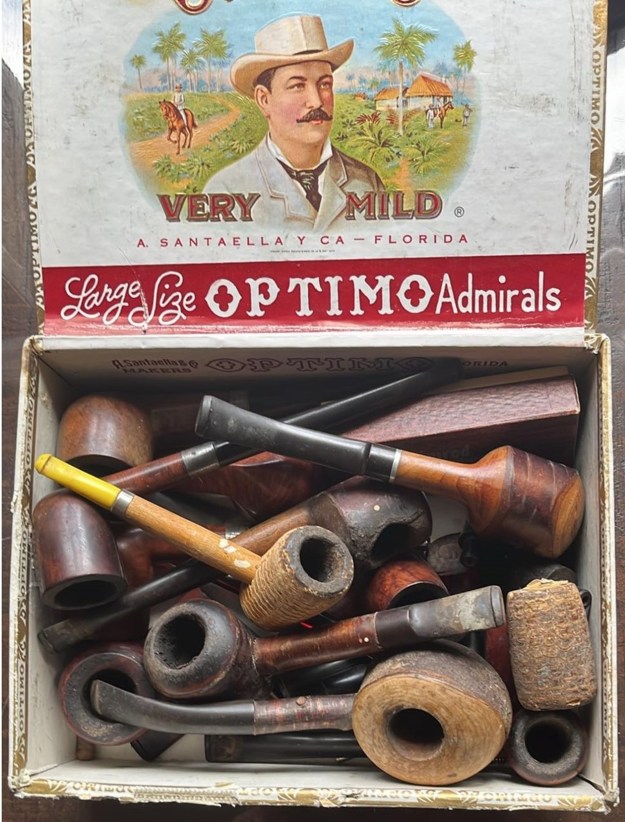
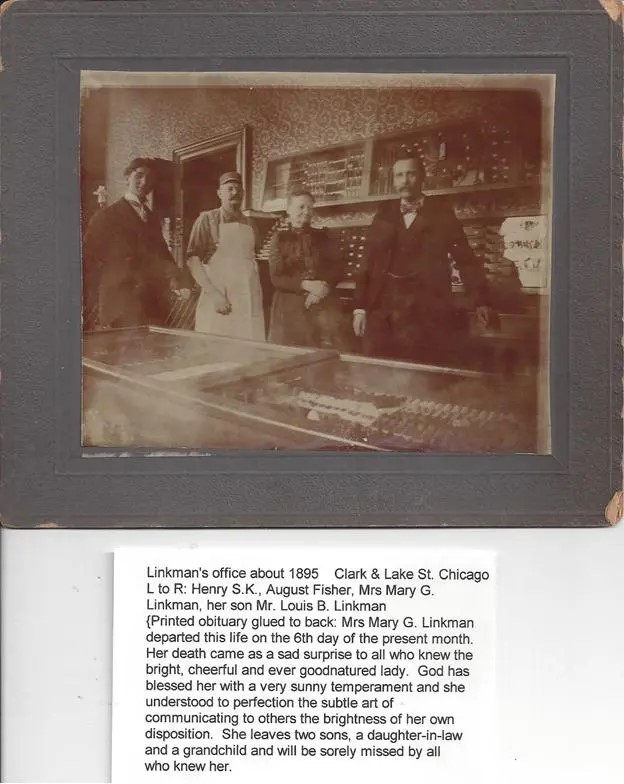
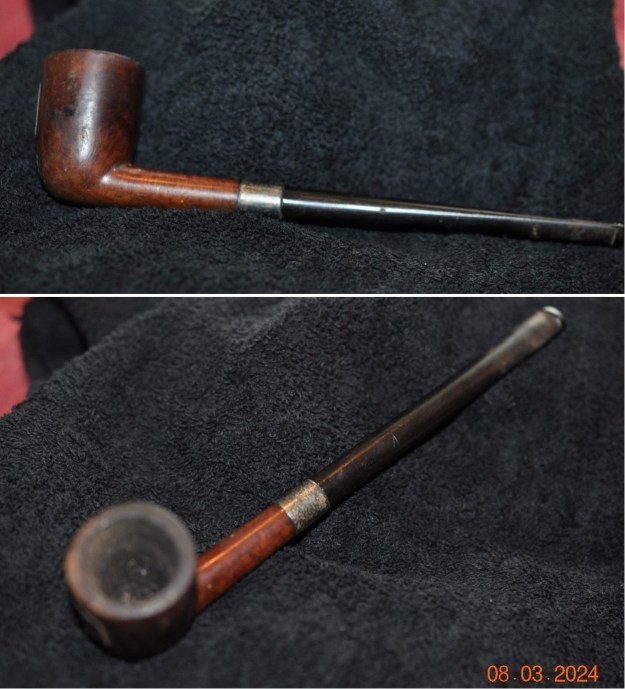
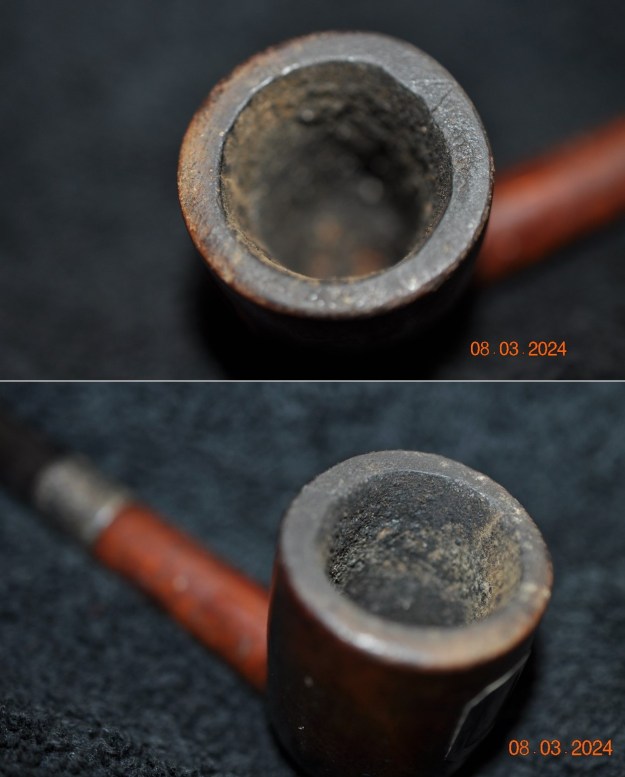
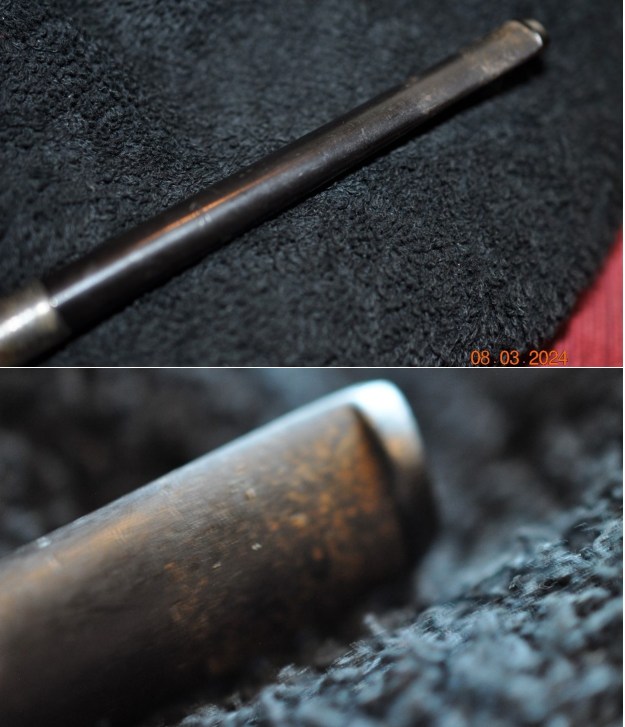
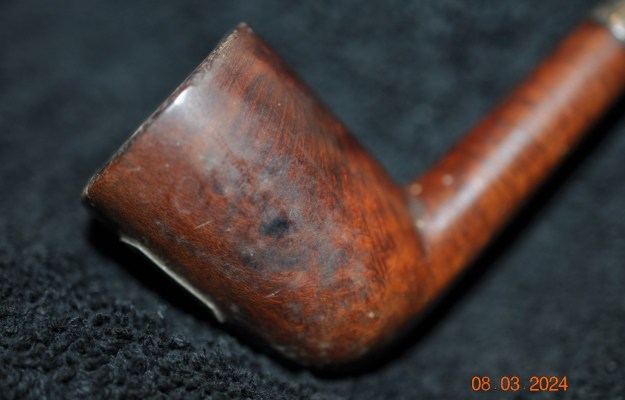
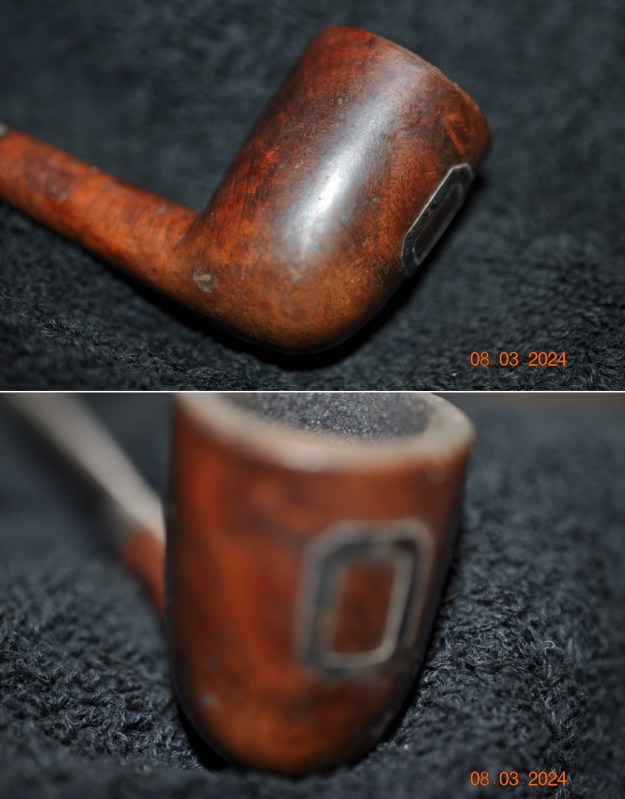
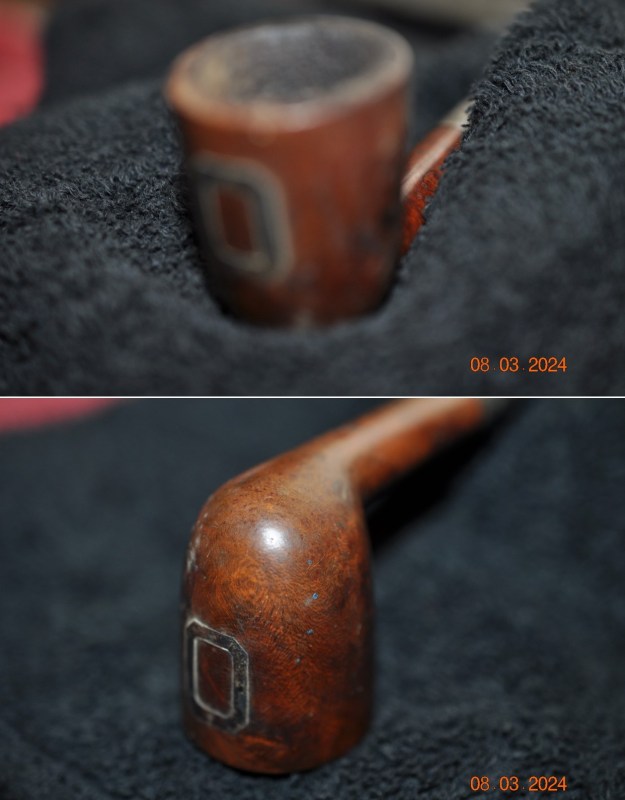
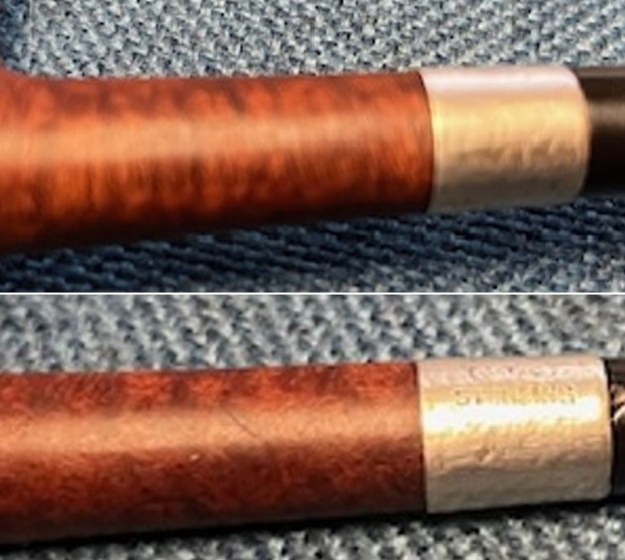
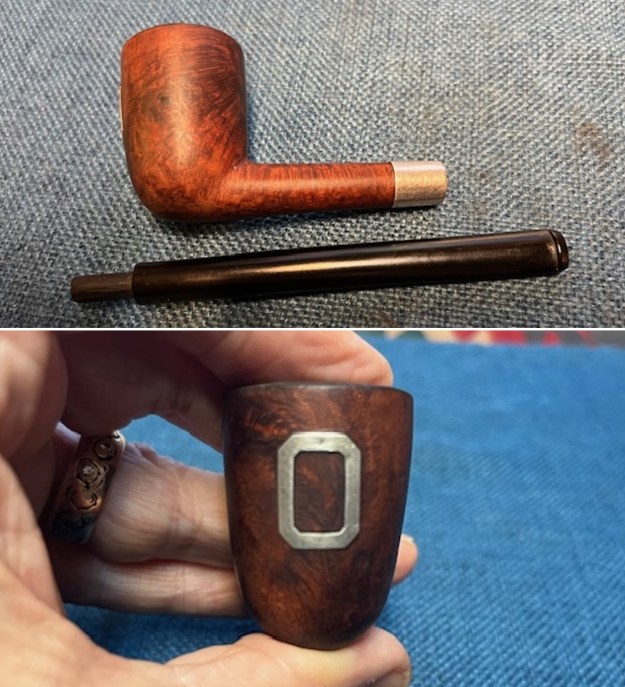
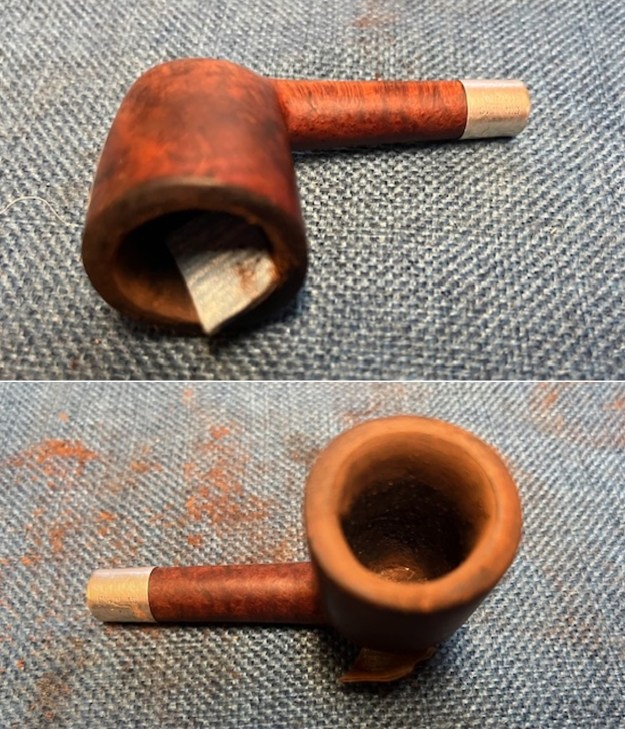
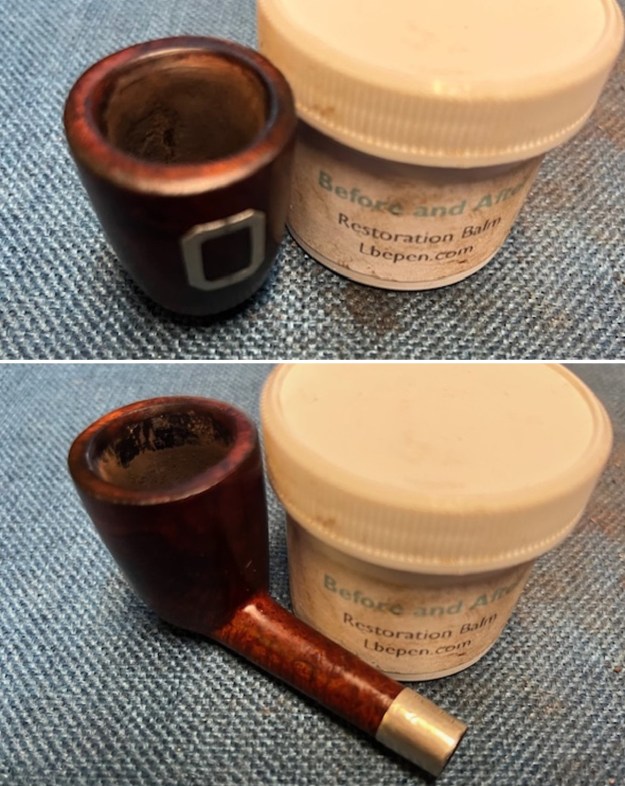
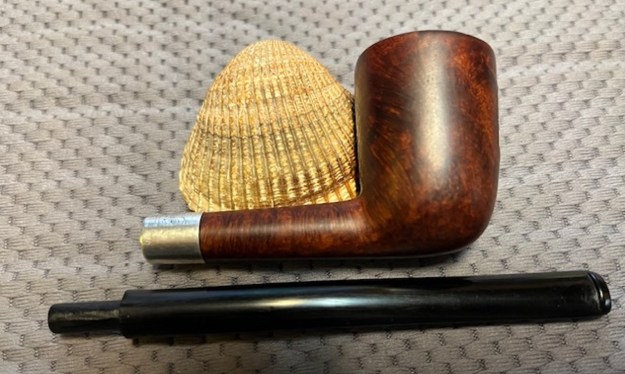
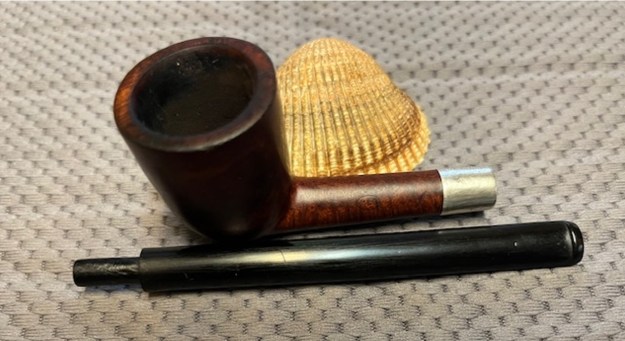
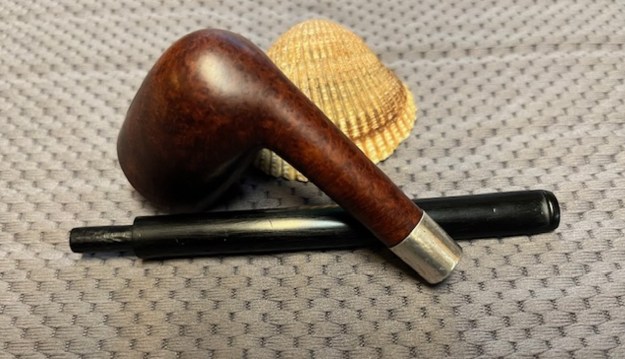
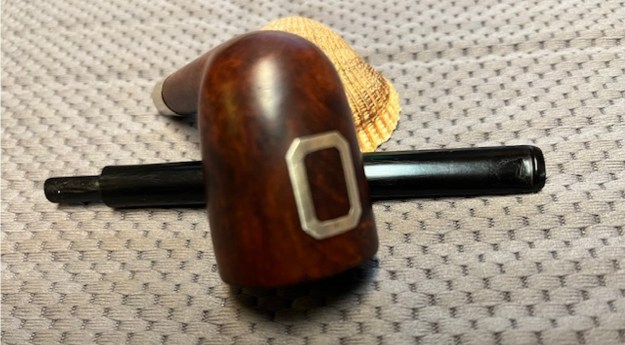
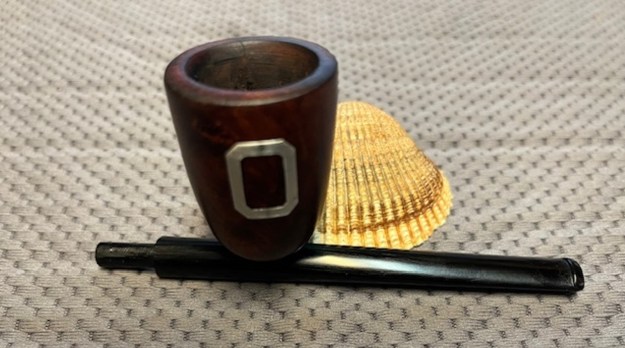
This older MLC billiard (almost a Bing Crosby shape though certainly a predecessor) is early 20th century pipe. It came to us from Mark in Missoula, Montana, USA and was a pipe from his Grandfather’s collection. He sent us a cigar box of pipes from that collection that included a lot of interesting pipes for us to work through. Mark also included a biographical sketch on his Grandfather, W.B. Bollen (written by Mark’s Father). His Grandfather, WB Bollen was quite involved in the state of Oregon and the Pacific Northwest of the USA in the field of agriculture through Oregon State University in Corvallis, Oregon. The sketch is called Recollections of W.B. Bollen and I am in the midst of reading it while I work on the first of these pipes – the MLC Billiard. According to Pipedia, (https://pipedia.org/wiki/M._Linkman_%26_Co) the initials MLC stand for M. Linkman Company which was thought to mean Mary Linkman Company. They were a Chicago based company that produced both briars and meerschaums. The company was named for the mother of the same Linkman who branded pipes under that same name and then eventually became the Dr. Grabow pipe manufacturer with which we are familiar. Pipephil’s site gave a little more information at this link (http://www.pipephil.eu/logos/en/logo-l4.html). M. Linkman and Co. was established by Louis B. Linkman and August Fisher in 1898. The company closed down in the 1950s and the Dr Grabow branch was sold to Henry Leonard and Thomas Inc.(HLT), There was also a note that early Linkman’s pipes were stamped MLC in an oval.

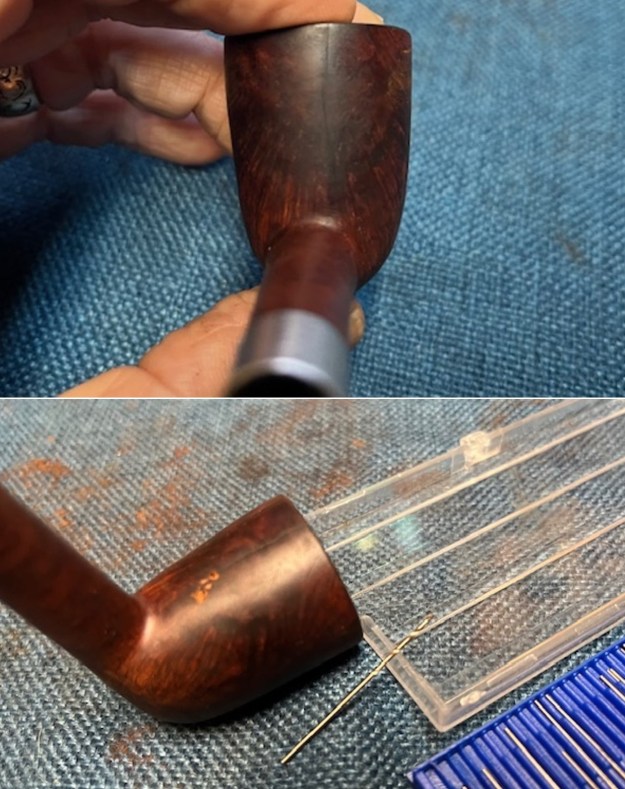
I have written a bit more about the MLC brand on several early blogs (https://rebornpipes.com/2016/11/12/an-interesting-the-nuvo-mlc-italian-briar-hidden-in-a-wdc-case/ https://rebornpipes.com/2017/08/17/restoring-a-sad-old-mlc-bent-billiard/). The second link included this older photo of the Linkmans that is really fascinating. I am including it below.If you have followed this blog for a while you have come to know that I love really old pipes and this one fits into that category of pipes. It is stamped MLC in an oval over Redmanol over French Briar on the left side of the shank. The stamping is faint but readable with a light and lens. There are no other stampings on the briar. The band is Sterling Silver and is dented and worn but also bears the MLC oval logo stamped on the topside. It is a pencil shank billiard with a thin “unbreakable” tube lined Redmanol stem. The bowl exterior was absolutely filthy. There was darkening and oils ground into the briar. The thick cake in the bowl and the lava coat on the edges and rim top made it hard to know what the condition of the rim edges. There also appeared to be a thin hairline crack on the backside of the bowl from the rim edge about 2/3 of the way down to the shank. There was also a large silver “O” on the front of the bowl which I believe refers to Oregon Agricultural College (which later became Oregon State University). As with other schools in the 1920s pipes were made honouring the institution and were available to graduates and students. This fits the time frame for this pipe. W.B. Bollen received his BS in Horticulture in 1921 and an MS in Soil Bacteriology in 1922, both from Oregon Agricultural Colledge. I am fairly certain that this dates the pipe that I am working on. The Redmanol Stem was in good condition with the usual chips, nicks and tooth marks of a pipe that is over 100 years old. Jeff took the photos that follow before started the cleanup. You can see from the photos the condition of the pipe.He took photos of the rim top and bowl to show the condition of the pipe. You can see the thick cake, the lava on the rim top, an out of round inner edge and a potential crack on the rim top at the back of the bowl. He also took photos of the Redmanol stem to show its condition as noted above. He took photos of the sides of the bowl to show the grain underneath the dirt and grime ground into the finish. You can also see the nicks in the briar and the oxidized silver O that is on the front of the bowl. There is a lot of beauty underneath the grime. While he was unable to capture the stamping on the shank side he was able to capture the stamping on the silver band. Underneath the oxidation and scratches, it is still clear and reads MLC in an oval over Sterling.Now that I knew a bit of the history of the pipe both in terms of the maker and the pipeman who enjoyed it, I turned to work on the pipe itself. Jeff had thoroughly cleaned up the pipe. He had reamed the pipe with a PipNet pipe reamer back to bare briar and removed the remnants of the cake with a Savinelli Fitsall Pipe Knife. He scrubbed the bowl with undiluted Murphy’s Oil Soap and a tooth brush. He rinsed it under running warm water to remove the soap and grime. He cleaned out the inside of the shank and the airway in the stem with alcohol, cotton swabs, pipe cleaners and shank brushes. He soaked the stem in Briarville’s Pipe Stem Deoxidizer and rinsed it off with warm water. I took photos of the pipe before I started my part of the restoration work.  I took photos of the bowl and rim top to show the clean condition. The damage on the inner edge of the bowl is evident as is the crack on the rim top above the crack on the back of the bowl. The crack extends across the rim top and just slightly into the bowl. That is to be expected. The bowl walls look very good. The Redmanol Stem looks very clean and the chips and nicks are visible the length of the stem. The silver band looks far better.I tried to capture the stamping on the shank side and band in the photos below. They are faint and very hard to capture. It is there but hard to see with out a lens. I removed the stem from the shank and took a photo of the parts of the pipe. It is a beautiful pencil shank pipe. I also took a photo of the Silver “O” on the bowl front. It is nicely done and the tarnish is gone. I decided to address the out of round inner edge of the bowl first. I used a folded piece of 220 grit sandpaper to smooth out the damage on the edge and to give it a slight bevel to bring it back to round. I sanded out the damage on the rim top to smooth it as well. It definitely looks better.I turned to deal with the crack in the back of the bowl that I mentioned above. The first photo sows the crack. It is hairline and starts on the rim top as shown above and extends down the bowl about 2/3 of the distance to the shank. It is a single crack so I used a small micro Drill bit on my Dremel and put a small hole at the bottom of the crack to stop it from going further. You will notice some small nicks in the surface of the briar where the drill hit as I guided it to the crack end.I wiped the back of the bowl down with alcohol on a cotton pad to clean up any debris from the drilling and any that might be in the fine crack. I ran a thin bead of clear CA glue down the crack and in the drill hole and nicks. I used a dental spatula to press fine briar dust into the crack through the glue. Once it cured I sanded the repaired area with a folded piece of 220 grit sandpaper to smooth out the repair. I polished it with a 400 grit sanding pad and then stained the area with a Cherry stain pen to match the rest of the surrounding briar. I polished the briar with micromesh sanding pads – dry sanding with 1500-12000 grit sanding pads. I wiped the bowl down with a damp cloth after each pad. I take photos of the three groups of pads for my own viewing primarily as I am looking for progress in polishing. Once again, by the end of the process it looked quite good. I rubbed the bowl and shank down with Before & After Restoration Balm. I worked it into the surface of the bowl sides and shank with my fingertips. It works to clean, enliven and protect the briar. I let the balm sit for 15 minutes and buffed with a cotton cloth to raise the shine. The grain came alive. I set the bowl aside and turned my attention to the stem. The scratches, tooth chatter and marks easily were addressed by dry sanding the stem with 320-3500 grit sanding pads. I wiped it down after each pad with Obsidian Oil. It looked very good at this point in the process.I polished the Redmanol stem with micromesh sanding pads – 1500-12000 grit pads to further remove the remaining scratches. I wiped the stem down with Obsidian Oil after each sanding pad. I used Before & After Pipe Polish – both Fine and Extra Fine to further polish the stem. I rubbed it down with a final coat of Obsidian Oil and let it dry. This 1920s MLC Redmanol French Briar Pencil Shank Billiard with a Redmanol stem is a great looking pipe with some interesting scalloping around the sides of the bowl. An added bonus if you are an Oregon Agricultural College Fan there is a silver “O” on the front of the bowl. The beautiful grain around the bowl is quite stunning and works well with both the shape and the polished silver band and “O” and the Redmanol taper stem. I put the stem back on the bowl and carefully buffed the pipe with Blue Diamond on the buffing wheel using a light touch on the briar. I gave the bowl and the stem multiple coats of carnauba wax on the wheel and followed by buffing the pipe with a clean buffing pad. I hand buffed the pipe with a microfiber cloth to deepen the shine. The finished MLC Redmanol French Briar Billiard fits nicely in the hand and feels great. Give the finished pipe a look in the photos below. The dimensions of the pipe are Length: 6 ¾ inches, Height: 1 ½ inches, Outside diameter of the bowl: 1 ¼ inches, Chamber diameter: 7/8 of an inch. The weight of the pipe is 24 grams/.85 ounces. I will be putting it on the rebornpipes store in the American Pipemakers Section shortly. If you are an avid Oregon fan or know one then this is the piece of history for you. Send me a message or an email. Thanks for reading this blog and my reflections on the pipe while I worked on it. I appreciate your support and time!


Restoring a Beautiful Danish Freehand


Blog by Kenneth Lieblich

From time to time, I come across a pipe that seems to embody everything one wants a pipe to be: aesthetically pleasing, well proportioned, skilfully carved, forcefully present. This is one of those pipes. It is a Granhill Select Freehand. The grain on this pipe is absolutely beautiful. There is precious little information on the Granhill name. Yonks ago, Steve did a blog post on a Granhill pipe and it contained all the available information at the time. The maker was either a carver named Michael Kabik or a tobacconist named Lonnie Fay. Now, Fay may well have produced pipes under this name, but I think we can say with certainty that this pipe is by Kabik, based on the similarity of design and logo. I will reproduce here some of what is written is Pipedia:

Michael Victor Kabik or Michael J. Kabik, now retired artisan and pipe repairman, was born in Annapolis, Maryland in 1950. As a student he was fascinated by science, but finally turned to the arts. In the early 1970s he started working as an artisan and designer for Hollyday Pipes Ltd., and when the company closed he set up in his own right.

Kabik writes as follows:

…In the 1960s, I had helped Jay build Jay’s Smoke Shop and was his first employee. Since that time, he had set up one of the very first freehand pipe-making operations in the U.S. along with his partner, Chuck Holiday, called CHP-X Pipes. The staff consisted of four full-timers actually making the pipes and perhaps another four in sales and office work. Chuck, who did the actual design and carving, had long since had serious disagreements with Jay and split. Chuck’s replacement from the staff was quitting, and Jay was in a bind. Jay offered me the job, and I gladly accepted. The fellow quitting was supposed to train me for two months but left after two weeks, leaving me with an awesome responsibility. I felt as though the future employment of all these people depended on me as the designer and cutter…and it did.

 …Sadly, CHP-X closed its doors two years after my arrival, due primarily to distribution, sales force problems, and other issues to which I was not privy…In love with a medium that satisfied my creative impulses while, pretty much, paying the bills, I bought up the essential equipment and produced pipes on my own. I did this from a farm house my wife and I rented in Phoenix, Maryland. I produced pipes under the name KANE, Gran Hill and others I can’t remember as well as a private label line for a store in, I believe, South Dakota.

 …In 1973, I was approached by Mel Baker, the owner of a chain in Virginia Beach called Tobak Ltd. Mel was interested in producing a freehand pipe line and was alerted to my product by Al Saxon, one of his managers and a former CHP-X employee. Mel wanted to relocate me to Virginia Beach, give me carte blanche, and recreate the CHP-X studio with, of course, a new name for the product. I’m sure my answer came very quickly.

 …We decided on the name Sven-Lar. Why? Well, when I bought out CHP-X, I also got a small drawer full of metal stamps that were created for private-label work. The Sven-Lar name was conceived but never realized. Aside from having the stamp already made, there were other reasons we chose Sven-Lar. First, we were making a line of pipes in the Danish freehand tradition and also, sadly, we knew the difficulty American pipe makers had breaking the foreign market mystique barrier. The latter certainly played a big part in the demise of CHP-X.

You can read the entire Pipedia article on Kabik here. Just to close the loop on this, I also found Kabik on Facebook. I haven’t contacted him yet, but I may to see if we can get some more historical information. Here is a relatively recent photo of him:

The markings on the pipe are as follows. On the shank, there is a large letter Z [over] Danmark [over] Granhill [over] Select. Mysteries abound! I don’t know what the “Z” refers to, I don’t know why he uses the Danish spelling of Denmark rather than the English (given that he’s American), I don’t know if Granhill is the same as Gran-Hill, etc., and, finally, I don’t know where “Select” ranks in the pantheon of Kabik pipes. Frustrating.

Let’s have a closer look at the pipe itself. It really is an attractive piece. Overall, it is in good condition – no major issues to resolve. Just a few minor ones – particularly on the stem. It had some significant tooth marks in the button and, as the photo shows, debris clogging the bore. I started with the BIC lighter and “painted” the stem with its flame, in the hopes of raising some of the dents in the vulcanite. Although they did not disappear altogether, they were substantially improved and I was pleased with the results.I wiped down the stem with some Murphy’s on some cotton rounds. Then, I cleaned out the insides of the stem with pipe cleaners and lemon-infused isopropyl alcohol. Once that was done, the stem went for an overnight soak in the Before & After Hard Rubber Deoxidizer. After soaking, I cleaned off the de-oxidizing fluid with alcohol, pipe cleaners, et cetera. The oxidation had migrated to the surface and I used SoftScrub to work it off. I built up the tooth damage on the stem with black cyanoacrylate adhesive and let it fully cure. I used my miniature files to take down the majority of the dried glue. I then used all nine Micromesh pads (1,500 through 12,000 grit) to bring out the lovely black lustre on the stem. I also used Obsidian Pipe Stem Oil in between each pad scrubbing. I used the PipNet Reamer (and some sandpaper taped to a wooden dowel) to take the bowl down to bare briar, as I wanted to ensure there were no hidden flaws in the walls of the bowl. Fortunately, there were none. I then proceeded to clean out the insides of the shank with Q-tips, pipe cleaners, and isopropyl alcohol. It took a fair amount of cotton to get this thing clean!A de-ghosting session seemed like a good idea. This de-ghosting consisted of thrusting cotton balls in the bowl and the shank, and saturating them with 99% isopropyl alcohol. I let the stummel sit overnight. This caused the oils, tars and smells to leech out into the cotton. Finally, a relatively clean and fresh-smelling bowl emerged. I then moved on to cleaning the outside of the stummel with Murphy’s Oil Soap and some cotton pads. I also scrubbed the plateau with a toothbrush. What a difference that made! I then cleaned the insides with some Castile soap and tube brushes. After this, I used all nine Micromesh pads (1,500 through 12,000 grit) to smooth out everything in the briar. Then a light application of Before & After Restoration Balm brought out the best in the stummel’s grain. The grain on this pipe is pretty fantastic! Off to the bench polisher to put the final touches on this pipe. A dose of White Diamond and a few coats of carnauba wax were just what this pipe needed. The lovely shine made the wood look absolutely beautiful.

All done! This Granhill Select Freehand looks fantastic and is ready to be enjoyed again by the next owner. I am pleased to announce that this pipe is for sale! If you are interested in acquiring it for your collection, please have a look in the “American” section of the store here on Steve’s website. You can also email me directly at kenneth@knightsofthepipe.com. The approximate dimensions of the pipe are as follows: length 6 in. (155 mm); height 2½ in. (64 mm); bowl diameter 1⅞ in. (47 mm); chamber diameter 1 in. (24 mm). The weight of the pipe is 1¾ oz. (52 g). I hope you enjoyed reading the story of this pipe’s restoration as much as I did restoring it. If you are interested in more of my work, please follow me here on Steve’s website or send me an email. Thank you very much for reading and, as always, I welcome and encourage your comments.

An Interesting Project : Resurrection Of a Pre-1920 KB&B Pembroke


Blog by Paresh Deshpande

The next pipe is stamped as “PEMBROKE” over KB & B” on the left shank surface and came to me as part of inherited pipes that predominantly constituted pipes from various English brands, most notably LOEWE, BBB, COMOY’S, PETERSON’S, BARLING’S etcetera. However, this lot did also contain many pipes from American pipe makers like WDC, KB & B/ KAYWOODIE and others. I have researched and worked on a few of the KAYWOODIE pipes from this collection and recollect that KB & B changed their name to KAYWOODIE in 1920s to promote their Kaywoodie line of pipes or was it for some other reason? For clarification and recollection of history of this renowned brand from USA, I re-read the history from https://pipedia.org/wiki/Kaufmann_Bros._%26_Bondy#Brands and have only reproduced that information that helps to date the pipe:-

Early History

Kaufmann Bros. & Bondy (KB&B), Kaywoodie has been making pipes since well before the Civil War – around 1851. They peaked in the late 1950’s along with most American Briar works. In the early 20th century, their pipes were the standard others were measured by, along with SasieniCharatan and Comoy’s. There were few other world-class American pipe-crafters (William Demuth Company, early L & H Stern). Their pipes were as good as any of the renowned British firms. Kaywoodie just did not merely produce quantity, they provided quality: in the 1920’s they bought the exclusive rights to some of the choicest briar fields in history, hauling out 250 year-old roots the size of 27″ TVs and fashioning masterpieces out of this spectacular-grained ancient briar.

Early KB&B (non Kaywoodie)

Kaywoodie was the name a pipe offered by Kaufmann Bros. & Bondy Company (KB&B), first appearing in February of 1919.

The origin of the name Kaywoodie is a combination of the K from Kaufmann and wood, as in briar. Not much is known of the original KB&B company other than it was started in 1851 by the German born Kaufmann brothers when they opened a small pipe shop in the Bowery section of New York City.

When one of the men from the New York office got “gold fever” he carried a large supply of pipes with him to California that he sold along the way. This early “national distribution” did much to build the reputation of KB&B. By the late 1800’s, branches of KB&B were opened in Chicago, Atlanta, San Francisco and St. Louis with family and friends acting as agents. The trademarks, for the inlaid cloverleaf and the cloverleaf with the KB&B initials inside, were issued in 1881.

Pre-Kaywoodie KB&B

According to Hackert, the firm of Kaufmann Bros. & Bondy (KB&B) began producing the Kaywoodie Pipe in 1915.

Business thrived and in 1854 the Kaufmanns took in a partner named Bondy. … The three partners retired in 1898, but their relatives continued on with the firm, which had begun to manufacture their own briar pipes under the KB&B trademark. In 1915 the Kaywoodie brand was created as a marketing umbrella for a new briar pipe which the KB&B Company introduced. …”

Hacker concludes his history of Kaywoodie Pipes by noting that: “The KB&B briar pipe brand existed from 1900 until just after World War I (with some overlapping with the Kaywoodie from 1915 — 1917), and collectors refer to the KB&B as a Kaywoodie transition pipe.

The pre-Kaywoodie KB&B pipes were marked on the shank with a cloverleaf around KB&B. 

In March of 1955, when S.M. Frank & Co. Inc. bought Kaufmann Bros. & Bondy, The Kaywoodie Company, Reiss-Premier Corp., The New England Briar Pipe Co. and – of course – Yello-Bole.

Thus, comparing literature notes with the stampings as seen on the pipe that I am working on, I am certain that it dates as to being pre- 1920. Another pointer is the orific slot which was gradually replaced by more elliptical slot from 1920 and progressed further to the horizontal slot that we see on pipes today.

Here are the pictures of the stampings as seen on the PEMBROKE: Initial Visual Inspection
The PEMBROKE, currently on my worktable, is a medium sized classic bent billiards with a decent sized bowl in dark reddish brown color. The well seasoned briar is covered in dirt, dust and grime from decades of use. There are a couple of deep scratches on the stummel surface. There is a thick cake in the chamber with heavy overflow of cake, oils and tars over the rim top surface. The inner rim edge is uneven and charred. The outer rim edge, likewise, is peppered with dents and dings. The high quality hard rubber stem is oxidized with flattened bite zone on either surfaces of the stem. The tenon has a narrow extension at the end and is covered in dried oils and tars. The round orifice slot is similarly clogged with dried gunk. The stem does sit flush with the shank face and the seating is too damn tight within the mortise. Following pictures will give the readers a general idea of the condition of the pipe before I start to work on the pipe. Detailed Inspection
The chamber has a thick hard cake that has spilled over the rim top surface. The cake is thicker around the upper half of the chamber. The outer rim edge has dents and dings all around but is most severely damaged along the front half portion (encircled in yellow), a damage that can result only due to repeated strikes against a hard edged surface. The inner rim edge, prime facie, is sans any damage. The condition of the inner walls of the chamber can be commented upon after the cake has been taken down to the bare briar. There is a strong ghost smell in the chamber which is all pervading. There are remnants of un-burnt tobacco at the bottom of the chamber.The stummel surface is covered in dust, dirt and grime giving a dull, lifeless and lackluster appearance to the pipe. However, the briar has taken on a nice dark patina which has been a result of more than 100 years of usage and would be worth preserving. However, eliminating/ addressing the deep scratches (encircled in green) on both side of the stummel and the few dents and dings would entail sacrificing the patina. This is a call that I would need to take at some stage in the restoration process. The mortise is chock-a-block with old oils, tars, ashes and grime making for a laboured draw. The thick cake and blocked mortise hides the draught hole from the view. These issues need to be addressed. The high quality hard rubber stem is deeply oxidized. The unique feature of the stem is that the stem surface is flattened in the bite zone on either surface with defined cut edges. Now, the question that came to my mind was if these flattened surfaces were original to the stem or carved out by the piper who owned it, probably for ease of clenching? Well, to me it appears that this unique carving of the bite zone is machined and not handmade since the edges are too well defined and sharp to be handmade using home tools. But that the flattening of the bite zone makes it comfortable for clenching is unquestionable. There are no significant bite marks or chatter in the bite zone or over the button edges. The orifice slot shows dried accumulated oils and tars that would need to be cleaned. The tenon has a stepped hard rubber (?) extension similar in shape to the ones seen on Peterson’s Deluxe line of pipes. The tenon and extension too is covered in a thick layer of dried crud. The stem does not seat flush in the mortise and is fit is very tight. I think the seating issues would address itself once the tenon and mortise is cleaned.The Process
I began the repair and refurbishing process with reaming of the chamber. I reamed the chamber with head sizes 1 and 2 of the PipNet pipe reamer. I removed the carbon from the areas where the reamer head could not reach with my fabricated knife. To completely remove the residual carbon from the walls of the chamber and smooth out the walls, I sanded the chamber walls with a folded piece of 220 grit sandpaper followed by cleaning the chamber with a cotton swab wetted with isopropyl alcohol. The chamber walls are in pristine condition. I gently scrapped off the lava build up over the rim top using a sharp knife to avoid damage to the surface. I cleaned the mortise and shank walls of the pipe using dental tool. I scraped out the dried oils and tars from the walls of mortise and shank walls. The pile of crud that was scraped out is indicative to the amount of gunk that was lodged in the mortise and shank internal. At the end of this step, I still was not able to pass a pipe cleaner through the mortise. Out came one of the many modified tools in my arsenal and after some deft use of this poker, I was able to dislodge the blockage from within the mortise. I ran a bristled pipe cleaner and q-tip dipped in alcohol through the mortise and out through the draught hole further clearing the passage. I will continue this further cleaning during the course of refurbishing of this pipe.Next, I decided to subject the chamber and mortise to cotton and alcohol bath. I packed the chamber with cotton and drew out a wick from the cotton and along with a folded regular pipe cleaner, inserted it into the mortise and through the draught hole into the chamber. I tightly packed cotton balls into the remaining portion of the mortise. Thereafter, I soaked the cotton balls with isopropyl alcohol up to the brim. About half an hour later, the level of alcohol had gone down, having being absorbed by the cotton. I topped it up once again and set it aside overnight. By next afternoon, the cotton and alcohol had drawn out all the remaining oils and tars from the chamber and mortise. I removed the cotton balls and the dirt can be gauged by the appearance and coloration of the cotton balls and the pipe cleaner. I ran pipe cleaners through the mortise and draught hole to clean out all the loosened tars and gunk that was lodged in the draught hole and mortise. The chamber and mortise now smelled clean, fresh and looked it too. I set the stummel to dry out naturally.Once the internals of the chamber and shank were cleaned, I cleaned the external surface of the stummel with Murphy’s Oil soap and cotton swabs followed by scrubbing the surface with a toothbrush and dish washing soap. This rid the stummel surface of all the accumulated dust, dirt and grime. Using a piece of Scotch Brite scrub, I deliberately cleaned the rim top and removed the crud from the surface. The damage to the rim edges is now amply evident.Simultaneously, I also cleaned the shank internals with dish washing soap and a shank brush. I set the stummel aside to dry out naturally while I worked the stem.I began the process of refurbishing the stem by first scraping off the dried gunk from the tenon and tenon end extension using a sharp thin knife. I was careful not to damage or break the extension or the stem face. I cleaned the tenon extension with a cotton swab moistened with alcohol and ran a pipe cleaner through the airway to check if the airway was clear of any blockage. Fortunately, it was.Using thin shank brushes and anti-oil dish washing soap, I cleaned the stem airway. I have modified this process of cleaning the stem airway by doing away with pipe cleaners and alcohol as it saves me a ton of pipe cleaners, which is a precious commodity for me here in India. I continued this cleaning till only white clean foam came out of the stem airway, indicating that the airway was nice and clean. I ran a couple of pipe cleaners dipped in alcohol through the airway to dry it out and make sure that there are no traces of soap and gunk hidden in the airway. I also scrubbed the stem surface to remove surface oxidation and rubbed a small quantity of EVO in to the stem surface. Since there were no damages to the stem, I set it aside and shall return to polishing the stem after I am done with the stummel repairs.Next, I got around to addressing the rim top damage. The extent of the damage to the outer edge, caused due to banging against a hard surface, would necessitate heavy topping off of the rim surface, and I for one, absolutely wish to avoid any loss of briar. Also topping to the extent that was required to eliminate the dents/ dings and chipped areas would completely alter the original shape and symmetry of this pipe.  So, I planned on first filling up these dents and dings on the rim edge using briar dust and superglue to roughly match the surrounding intact rim surface and some more and then topping it to achieve a smooth even surface. Theoretically, this sounds logical.

I resorted to the layering method again; first I layered superglue along the damaged surfaces of the rim followed by sprinkling of briar dust, another layer of superglue followed by a final layer of briar dust. This final layer of briar dust reduces the probability of air pockets (or so I thought). In the second picture, you can see that the layering has not been done to the level of the rim surface but above the surrounding intact rim surface as I would be sanding the rim subsequently. I set the stummel aside to cure. I revisit the stummel the next evening after the repairs are completely cured and hard. Using flat needle files, I sand the repairs to achieve a rough match with the surrounding briar surface. Once I had achieved a rough match, I top the rim surface over a 220 grit sandpaper to even out the surface and achieve a perfectly even rim top surface. The inner and outer rim edges are still slightly uneven and shall be addressed next.To get the inner and out rim edges back to round, I created a bevel over the edges with a folded piece of 220 grit sand paper. I am pretty pleased with the progress being made thus far. It was now that I decided to address the numerous scratches over the stummel surface and the process of steaming these out is the best way forward. I assembled the items that are essential to this process; a wet Turkish towel, a knife and a candle. I heated my fabricated knife over the flame of the candle till it was really hot. I covered the scratched surface with the wet towel and placed the hot knife over it. The steam that is generated expands the briar raising the scratches to the surface. I repeated the process over the areas till the issue of scratches was addressed over the entire stummel surface. Though these scratches were pulled to the surface, I would still need to sand the stummel to eliminate them.Using a folded piece of 220 grit sandpaper, I sand the scratched surfaces till these were completely eliminated. I followed the 220 grit sandpaper by sanding the surface with a piece of 800 grit sandpaper. However, here I also realized that this also resulted in losing the patina that I so dearly wanted to preserve. You win some and lose some, that’s how it always is!To further clean and highlight the grains, I sand the stummel with micromesh pads, wet sanding with 1500 to 12000 grit pads. I wiped the stummel after each wet pad with a moist cloth to remove the resulting dust and note the progress being made. I rub a small quantity of “Before and After Restoration Balm” in to briar and let it rest for a few minutes. The balm almost immediately works its magic and the briar now has a nice vibrant appearance. I further buff it with a horse hair shoe brush. I set the bowl aside and took to working on the stem. I once again cleaned the stem surface using the Scotch Brite sponge and followed it up by a scrub with 0000 grade steel wool. This helps in further removing the oxidation from the surface. I also ran a thin shank brush through the stem airway to ensure that it was clean and clear of all the soap deposits. I rubbed the stem with some EVO to hydrate the surface.To impart a deep black shine to the stem while getting rid of the oxidation from the stem surface, I wet sand the stem surface with 400, 600, 800, 1000, 1500 and 2000 grit sand papers. I again rub the surface with some EVO to hydrate the stem and prevent oxidation from again creeping over the surface due to exposure to natural elements and set the stem aside.To bring a deep shine to the hard rubber stem, I polished the stem, wet sanding with 1500 to 12000 grit micromesh pads. I rubbed it down with Extra Virgin Olive oil to rejuvenate the hard rubber. The finished stem is shown below.With the stem refurbishing nearly completed, I took a long hard look at the stummel now bereft of the patina and the original dark reddish brown stain. I discussed with Abha about the difference in the appearance of the stummel at this stage in restoration from the way it appeared at the start. The unanimous decision was to stain the stummel to its original color or as close to it as possible and with the decision made; I decided to stain wash the stummel using Feibing’s Cordovan leather dye.

Using a heat gun, I warm the stummel to open the pores in the surface to accept the stain. I mix a small amount of alcohol with the dye to dilute it and apply it over the heated surface with a folded pipe cleaner. I set the stain by flaming it with the flame of a lighter as I went ahead to different self designated zones of the surface. This helps in the setting of the stain into the grain of the briar and set the stummel aside. The next evening, approximately 18 hours later, as Dal describes, I began to unwrap the stain in the hope to see beautiful grains. I mount a felt cloth buffing wheel on my hand held rotary tool and setting the tool at its slowest speed, I began to peel off the stain from the stummel surface first using Red compound. The stain was peeled out gradually revealing a nice shining surface and grains underneath the stain.Next, I mount a fresh felt cloth buffing wheel and polish the stummel with White Diamond compound. This further lightens the stain, highlighting the grains while imparting a nice shine to the stummel surface. The similar coloration achieved at this stage to the original color, uplifted my spirits sky high. I shall continue the polishing regime further using Blue diamond and finish off with carnauba wax polish.I have now reached the homestretch in this restoration project. To complete the restoration, I mount a cotton cloth buffing wheel on to my hand held rotary tool and polished the stummel and stem with Blue Diamond compound. This compound helps to remove the minor scratch marks that remain from the sanding while further highlighting the grain and lightening the stain. I mount another cotton buffing wheel that I have earmarked for carnauba wax and applied several coats of the wax. I finished the restoration by giving the entire pipe a rigorous hand buffing using a microfiber cloth to raise the shine further. The finished pipe looks amazingly beautiful and with the Cordovan stain, as good as original. In fact, the pipe looks much more endearing and beautiful in person than it does in the pictures below. It shall find a place of pride in my “American pipe makers” section of my personal collection. P.S. – This then is one project which has given me greatest of satisfaction that I have experienced after it’s completion.

I am not too concerned with successes or failures of any project. What matters to me is the journey.

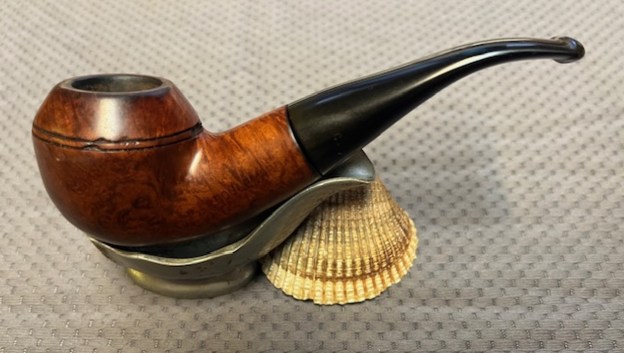
Beautifying a Bountiful Bullmoose


Blog by Kenneth Lieblich

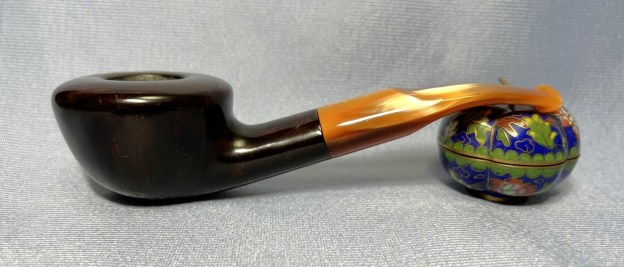
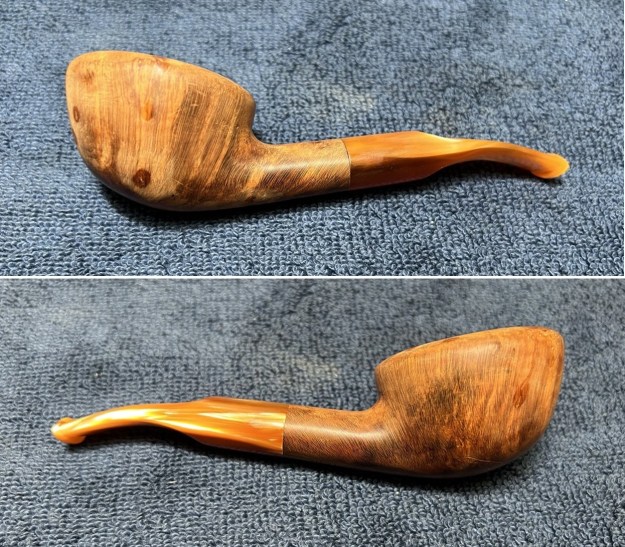
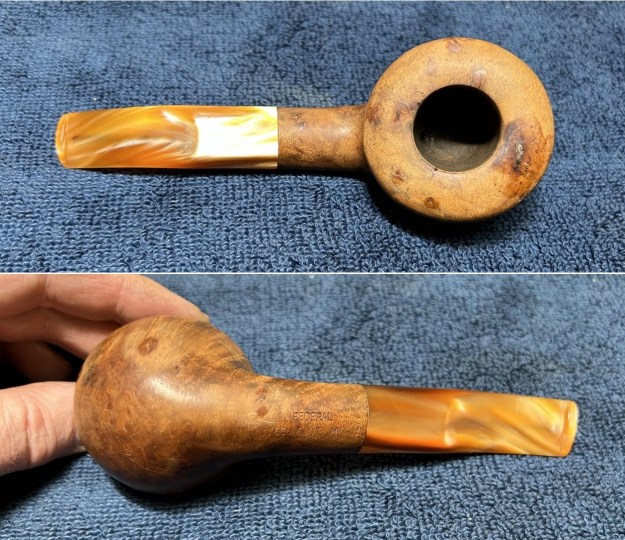
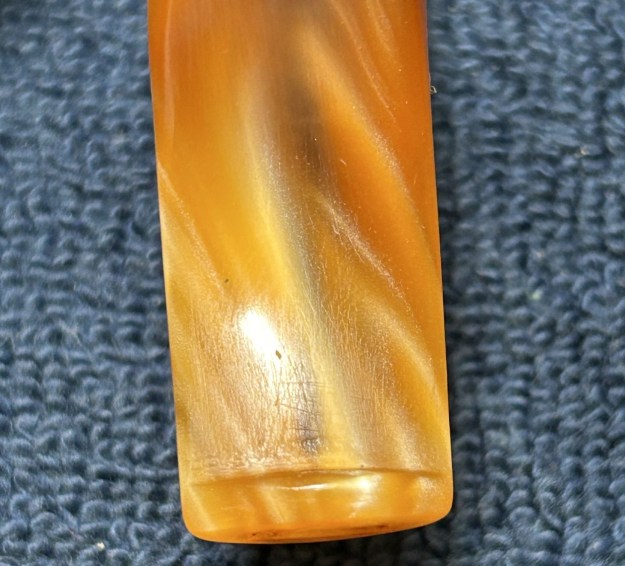
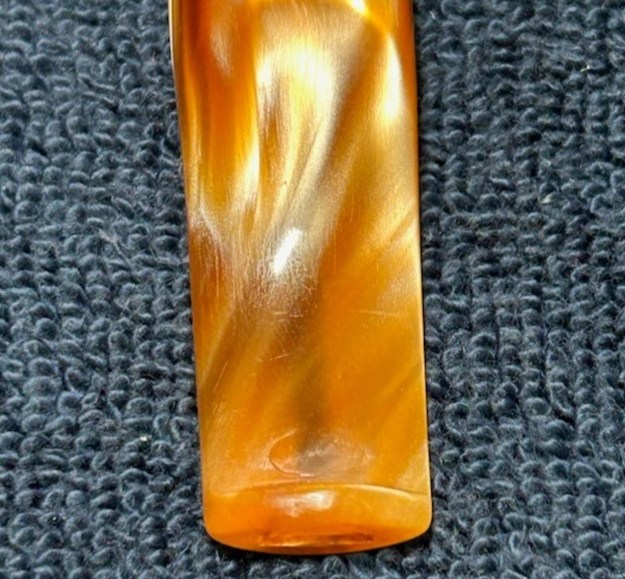
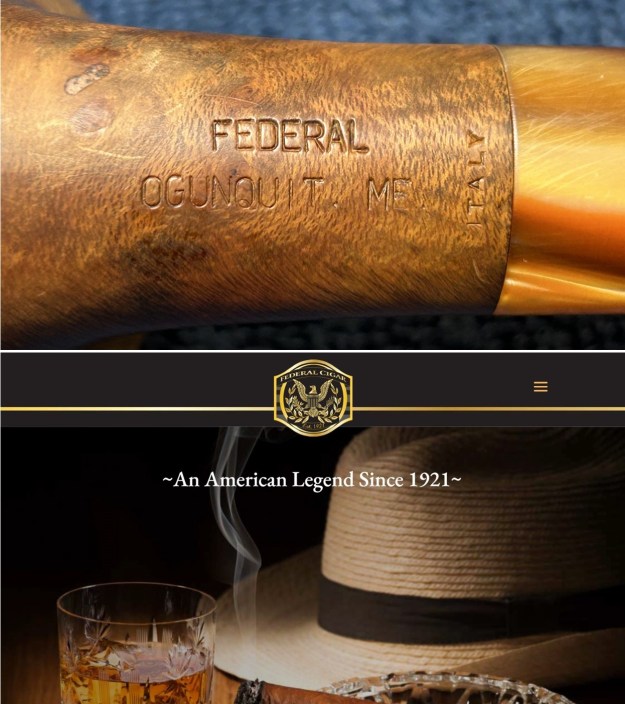
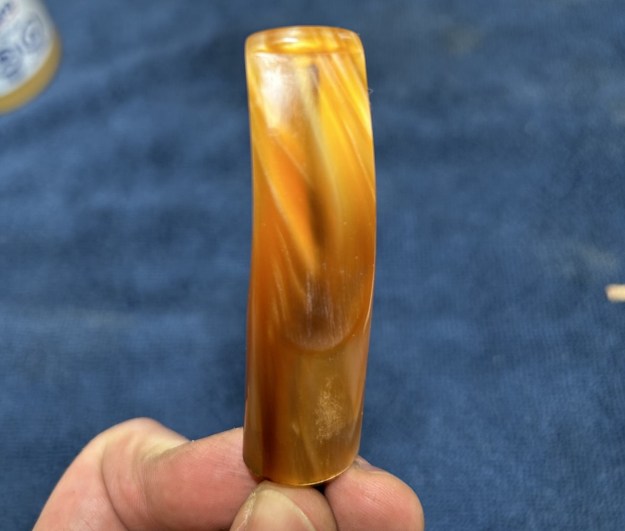
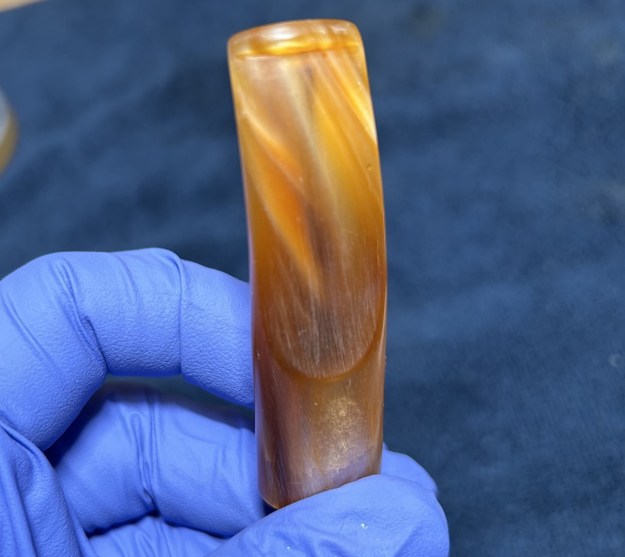
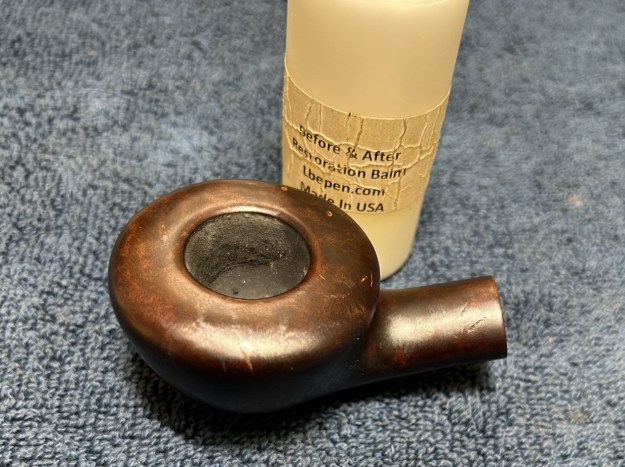
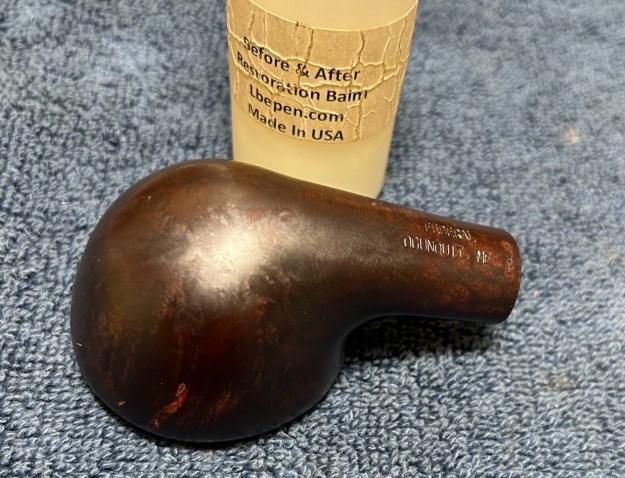
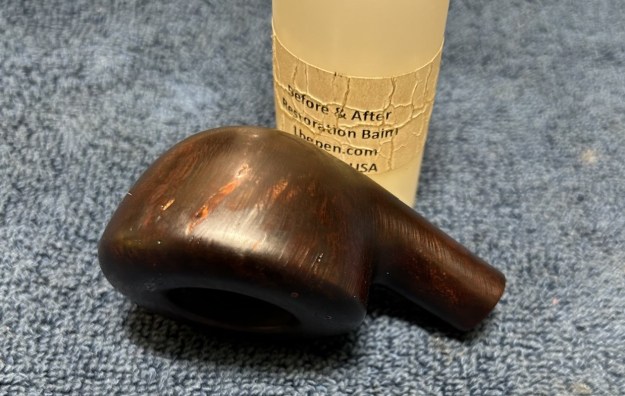
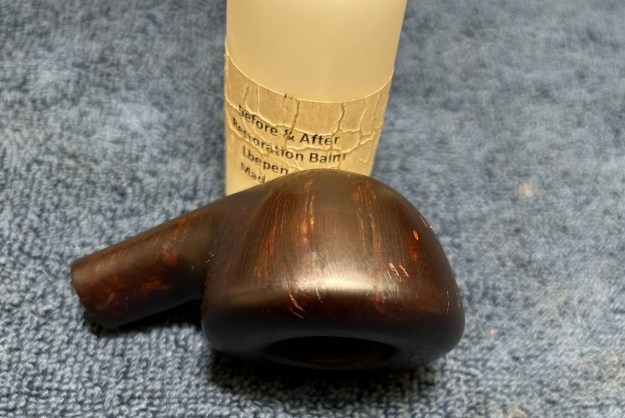
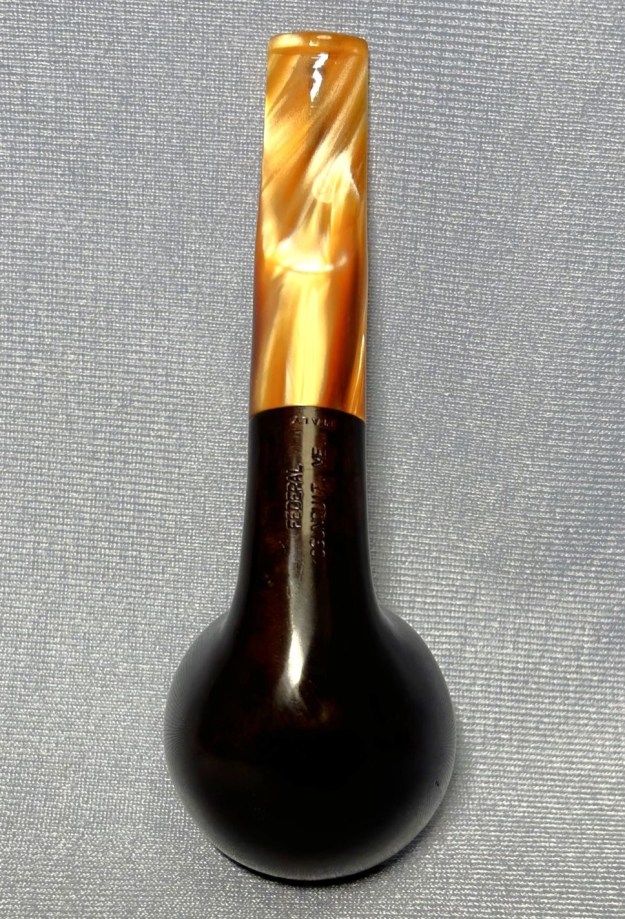
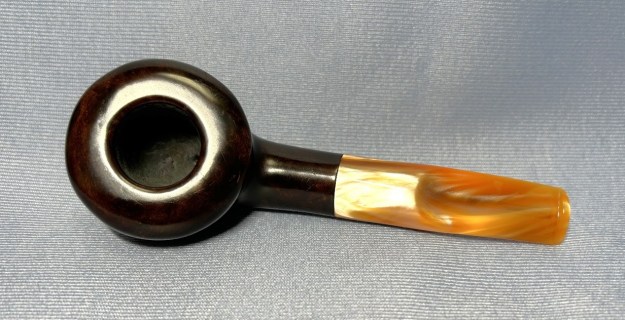
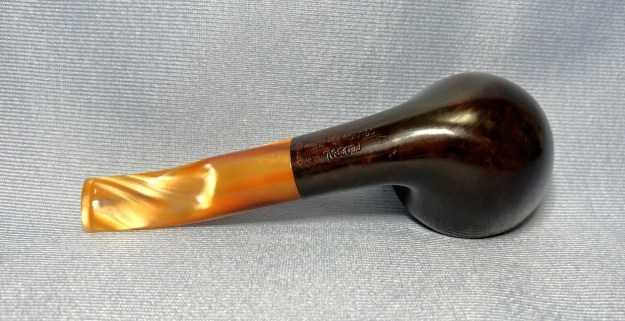
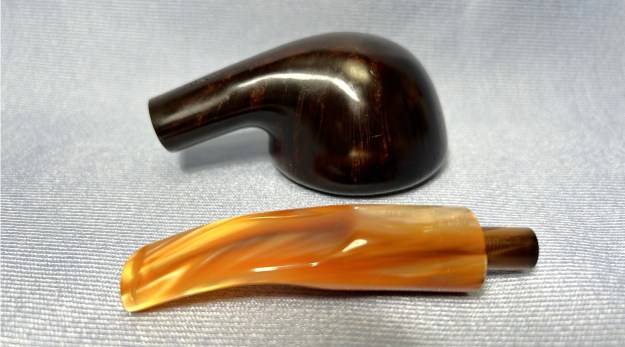
This is the third pipe I’m restoring for my cousin – and in many ways, this is the most interesting. Allow me to introduce the Federal Bullmoose. It is a big, chunky pipe with a thousand fills in it, but looks like I could be a great smoker. It has a charming acrylic stem and feels terrific. The markings on the pipe come from the underside of the shank. There, it reads Federal [over] Ogunquit, ME. Further to the right is the word Italy, indicating where the briar is from. These markings lead me to believe that the pipe comes from the Federal Cigar company, formerly of Ogunquit, Maine. The company has been around for more than 100 years, and their three current locations are in New Hampshire: Epping, Dover, and Portsmouth – which is just a stone’s throw from Ogunquit. It seems reasonable to assume that this pipe is from that establishment.The stem was first on my list. Acrylic stems are always a bugbear of mine. No matter how much one scrubs, they never lose the tobacco colour inside. Ah well, it is what it is. I cleaned out the inside with pipe cleaners and isopropyl alcohol. It was pretty dirty, and I went through a good number of pipe cleaners. I also tried using some cleanser on the inside and that did help. I gave it a thorough rinse and moved on. There were a few tooth marks in the stem, so I filled them in with some clear cyanoacrylate adhesive. After allowing that to cure, I sanded the glue down with some sandpaper, then the whole stem with my Micromesh pads. For the last few pads, I also added some pipe stem oil. On to the stummel, and there was some work to be done here! Look at all those fills! But before that, I needed to get the darn thing clean. I used a dental tool to mine some chunks of gunk out of the mortise – yuck! Just like the stem, I also used pipe cleaners, cotton swabs and alcohol to scrub the insides. It was quite dirty – much cotton was expended.

I decided to de-ghost the pipe in order to remove any lingering smells of the past. I thrust cotton balls into the bowl and the shank and saturated them with 99% isopropyl alcohol. I let the stummel sit for a while. This caused any remaining oils, tars and smells to leach out into the cotton. The bowl was nice and clean after this.I used cotton rounds and some Murphy’s Oil Soap to scrub the outside of the stummel. You’ll notice in the photos that my cousin added some superglue to many of the fills before I got my hands on it. I actually removed some of the glue and redid some of the repairs. As usual, I used a mix of super glue and briar dust. I filled in everything that needed it and then it looked like a pipe with measles. The bowl had already been reamed, but I gave it a quick sanding anyway, as I needed to inspect the integrity of the briar walls. There were quite a few heat fissures and I would need to address them. At this point, I decided to mix up some pipe mortar, as I did with the last pipe. I wanted a good, solid coating on the inside of the bowl to prevent any further damage. I sanded down the fill repairs with some sandpaper and then the whole stummel with all nine Micromesh pads. It really looks improved. We’re on the home stretch! It’s time for the most obvious step to make this pipe look good: staining. My cousin and I agreed from the start that this pipe was going to need some make-up to make it pretty. I opted for Fiebing’s Cordovan. I thoroughly coated the stummel with a dauber, then flamed it with a candle to set the color. I repeated this process to ensure a good colour. This was never going to be a cure-all, but I am very pleased with the results. The contrast between the dark stummel and the light stem is terrific. I then coated the pipe with restoration balm and let it sit for 20 minutes or so, before polishing with a microfibre cloth. The balm does wonderful things to the wood and makes the whole thing sing. Then it was off for a trip to the buffer. A dose of White Diamond and a few coats of carnauba wax were just what this pipe needed. The lovely shine made the wood very attractive. This is a very handsome pipe and will provide many years of smoking pleasure.This Federal Bullmoose looks beautiful once again. I’m sure my cousin will love it. I hope you enjoyed reading the story of this pipe as much I as I did restoring it. If you are interested in more of my work, please follow me here on Steve’s website or email me directly at kenneth@knightsofthepipe.com. Thank you very much for reading and, as always, I welcome and encourage your comments.

Restoring a Filthy Lorenzetti 3200 – 20 Bent Egg Filter Pipe


Blog by Steve Laug

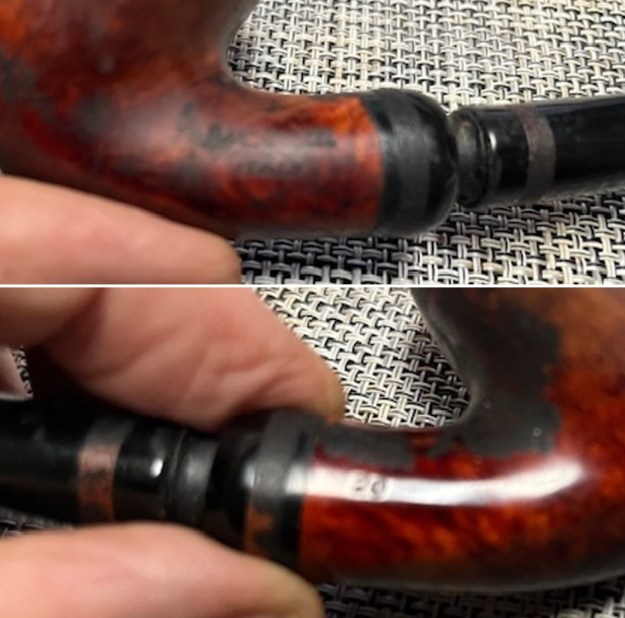
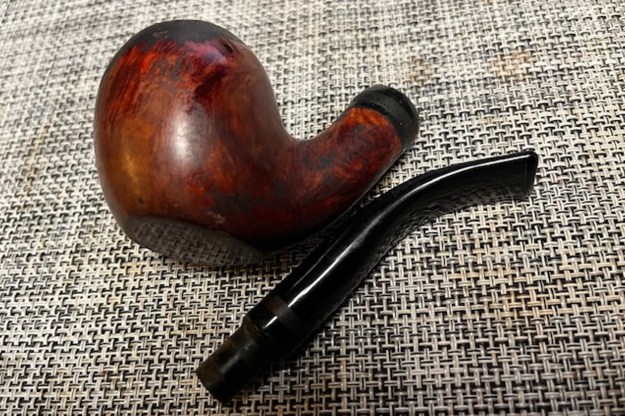
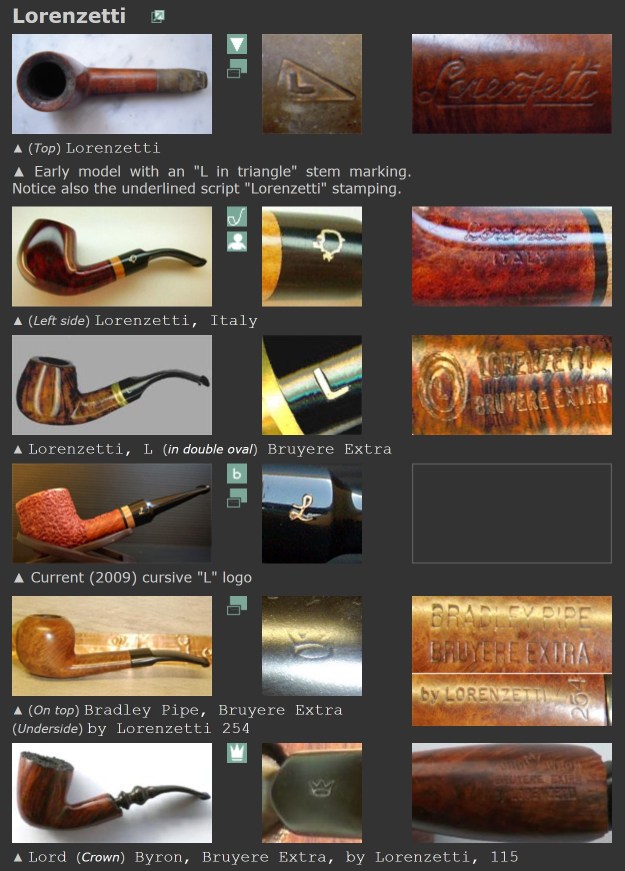
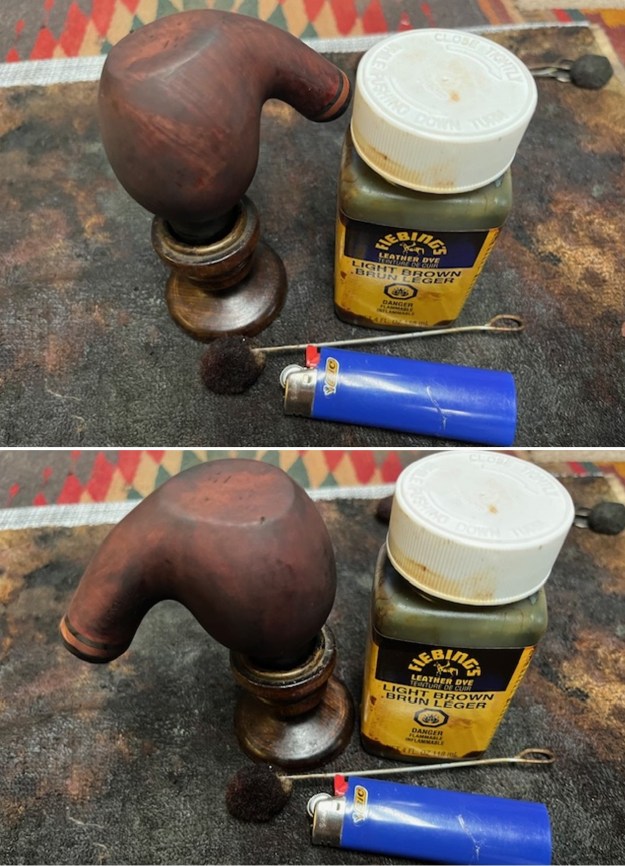
The next pipe I chose to work on came is another one from the lot of 11 pipes I purchased from a lady in Regina, Saskatchewan. She had found them in a house she bought and wanted to know if I wanted them. We struck a deal, I paid for the pipes and shipping and the box arrived while I was traveling in Europe. In the box were 4 Stanwells, 1 Danmore Bowl, 1 Soren Freehand, 1 Calabash with a Briar Bowl, 1 Nording Freehand, 1 Italian Made Bertenetti, 1 Rhodesian with a banded cracked shank, and 1 Brigham. I have restored the Nording, the snapped Stanwell, the Brigham, the Gourd Calabash with the briar bowl, restemmed and restored the Danmore bowl, a Stanwell Ivarsson design 11 Pot and Soren Hand Carved Freehand. There are blogs on each restoration available. The next pipe on the table is an extremely dirty pipes in a box full of very dirty pipes. It is stamped on the left side of the shank and reads Lorenzetti [over] Italy. On the right side it reads 3200 [over] 20 which could be the shape number of the pipe. There was a thick cake in the bowl, debris in the bottom and on the bowl walls and some remnants of tobacco. The airway was plugged and there was no draught on the pipe. There was a heavy lava overflow on the rim top flowing down the sides of the bowl and covering much of the shank. There appears to be some varnish or topcoat that is damaged and the grime is both on top of and underneath. It was hard to know the condition of the inner or the outer edge of the bowl for sure because of the cake. There was an acrylic shank extension sandwiching a briar ring. The shank end is also covered in a thick tar and oil residue flowing out of the mortise on to the stem and shank end. The acrylic stem had a briar ring next to the tenon and looked to be in decent condition underneath the thick oils and tars. There were minimal tooth marks and chatter on the shank. I took photos of the pipe before I started my cleanup work on it. I took a close-up photo of the bowl and the inwardly bevelled rim top to show the cake in the bowl. The rim top shows the thick lava on the inner edge of the bowl. The outer edges of the bowl also showed the lava flowing down the bowl sides. The shank end had an acrylic extension sandwiching a briar ring. I took photos of the stem surface and button to show its general condition. There was a briar ring around the stem surface near the tenon. The stem was a 9mm filter stem. The inside was filthy. It looked very good under the tars and oils that coated the surface.The stamping on the sides of the shank are covered with tars and oils but are readable as noted above. I took the stem off the shank and took a photo to give a sense of the proportion of the pipe. I have worked on a few Lorenzetti pipes over the years but have little memory of the background of the brand. I turned to Pipephil to get a quick overview (http://pipephil.eu/logos/en/logo-l6.html). I have included a screen capture of the information on that site for quick reference. I learned that the brand was created in 1934 by Otello Lorenzetti. As of (2009) the company was managed by Alessandro Lorenzetti.I then turned to Pipedia and found a great historical survey of the founder Otello Lorenzetti. It is a great read regarding the history of the brand and its development from small beginnings with Otello selling pipes from his bicycle around his community to a brand that is available around the world today (https://pipedia.org/wiki/Lorenzetti).

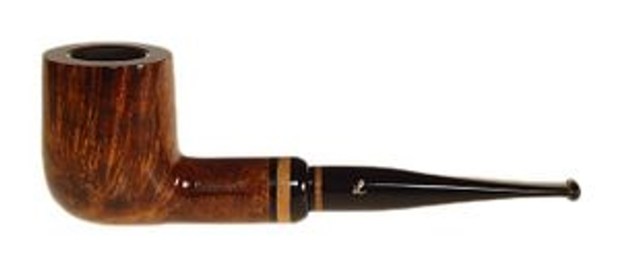
The site also had a photo of a pipe that has the same finish as the one that I am working on. You can see from the photo what the one I am working on must have looked like when it sold. Here is the photo courtesy SmokersHaven.com.From that I knew that the pipe in my hands looked like when it came out. It was a real beauty that gave me the impetus to work on it. Armed with that information I turned my attention to restoring the pipe.

I decided to start my work on the pipe by reaming the bowl with a PipNet pipe reamer using the first and second cutting head to take the cake back to bare briar. I cleaned up the reaming with a Savinelli Fitsall Pipe Knife. I sanded the walls with a piece of 180 grit sandpaper wrapped around a dowel to smooth them out. I wiped the bowl down with acetone to remove the tarry build up and the varnish on the briar. There was a lot of grime that came off with the varnish. It still needed a lot of work but it was looking better. I scrubbed the exterior of the briar with a tooth brush and undiluted Murphy’s Oil Soap. I rinsed it off with warm water to remove the grime and soap. It looked much better and the dust and debris was gone. I dried it with a cotton towel. Next, I worked on the rim top of the bowl to clean up the bevel and the inner edge. I also worked on the marks around the bowl that needed work. It took some work but it cleaned up well. I used a folded piece of sandpaper to clean up the inner edge of the rim and to sand the darkening off around the bowl sides. I scrubbed out the internals of the pipe with 99% isopropyl alcohol, pipe cleaners and cotton swabs. I cleaned out the airway in the stem as well. The airway into the bowl was a little different. It was in the bottom of the bowl toward the back. It has some wear on the top edge of the airway entrance. I worked on these areas repeatedly until the shank and the airway in all the parts was clean.I stained the bowl and shank with a light brown stain wash. I applied it to the surface of the briar with a wool dauber. I flamed it with a lighter flame to set it in the grain. I repeated the process until I was satisfied with the coverage. I polished the  shank extension and the briar with micromesh sanding pads – dry sanding it with 1500-12000 git sanding pads. I wanted to make the new stain coat a bit more transparent. I wiped it down with a cloth and some Obsidian Oil. The bowl had a very fowl tobacco ghost that hung over the pipe and the desk top where I was working on it. I stuffed the bowl with three cotton bolls and twisted one into the shank end. I used an ear syringe to fill the bowl with alcohol. I let the bowl sit for several hours to work on the stem. Once I came back to it the cotton boll was filthy. Once it was removed I ran pipe cleaners through and the pipe smelled much better. I worked some Before & After Restoration Balm into the surface of the briar with my fingertips to clean, enliven and protect the briar. I let the balm sit for 15 minutes and then buffed with a cotton cloth to raise the shine. The photos show the bowl at this point in the restoration process. With that done, the bowl was finished other than the final buffing. I set it aside and turned my attention to the stem. I polished the oxidation and tooth chatter on the stem with micromesh sanding pads – wet sanding with 1500-12000 grit sanding pads. I wiped it down after each sanding pad with Obsidian Oil. I finished polishing the stem with Before & After Pipe Stem polish (both Fine and Extra Fine) then wiped the stem down with another coat of Obsidian Oil.I polished finished Lorenzetti Italy 3200-20 Bent Egg Sitter with Blue Diamond to polish out the remaining small scratches. I gave the bowl and the stem multiple coats of carnauba wax and buffed the pipe with a clean buffing pad to raise the shine. I hand buffed it with a microfiber cloth to deepen the shine. The pipe polished up pretty nicely. The smooth briar shows the effect of the brown stain wash and works very well with the black acrylic stem. The finished pipe is shown in the photos below. I have worked on several Lorenzetti’s over the years and I have always been impressed by his ability to a craft a comfortable and functional smoking pipe. The Length: 5 ½ inches, Height: 2 inches, Outside diameter of the bowl: 1 ¼ inches, Chamber diameter: 7/8 inches. The weight of the pipe is 64 grams/ 2.26 ounces. I will be putting it on the rebornpipes store in the Italian Pipemakers Section if you would like to add it to your rack and carry on the previous pipeman’s legacy. This is an interesting estate to bring back to life.

As always, I encourage your questions and comments as you read the blog. Thanks to each of you who are reading this blog. Remember we are not pipe owners; we are pipe men and women who hold our pipes in trust until they pass on into the trust of those who follow us.

New Life for a Comoy’s Sandblast Squat Straight Bulldog


Blog by Steve Laug

This Comoy’s Sandblast on my work table has a rugged, swirling sandblast finish with lots of nooks and crannies in the briar. It is a beauty! The straight Bulldog is clearly stamped on a smooth panel on the left underside of the diamond shank and reads Comoy’s [over] Sandblast. Underneath that it is stamped Made in London [over] England in two lines. There is no shape number stamped visibly though it could possibly be underneath the gold band. I received an email a few weeks ago from Alec,  a reader of the blog about the pipe. Here is what he wrote…

I have an old Comoy’s straight, sandblasted, squat bulldog pipe which I got from an antique store. From what I can tell, it is from the 60s or 70s, pre-Cadogan. The stem is vulcanite and has some deoxidization [sp]. I was wondering if you would be able to do some restoration work for me? I am not looking to sell it, but don’t have the time to go about doing it myself.

We wrote back and forth and he sent the pipe to me. It came yesterday and when I looked at it this morning this is what I saw. The valleys and ridges of the sandblasted grain showing through the grime and dirt are a mixture that leaves a rich texture. It had a rich dark and medium contrasting brown stain that does not look too bad. There was a moderate cake in the bowl with remnants of tobacco stuck on the walls. There was a light lava overflow in the blast on the rim. The edges of the rim and top are dirty but look pretty pristine under the grime. There was a scratched gold band on the shank end that upon examination showed a crack on the lower right underside. It was a beautiful pipe that was dirty and tired looking. The stem was oxidized and calcified with what appeared to be marks from a rubber Softee Bit toward the end. It had some tooth marks on the top and underside of the button. I took photos of the pipe before I started my cleanup work on it. I took photos of the bowl and rim top to show the cake in the bowl and the lava build up on the edges of the bowl. It was thick and hard but hopefully it had protected the rim and edges from damage. The edges look pretty good.I took a photo of the stamping on the smooth panel on the underside of the shank. The stamping was readable as you can see from the photo below. It read Comoy’s [over] Sandblast and underneath Made in London [over] England.  The second photo shows the C logo on the left side of the saddle stem is formed by three circles working to make the C.  I removed the stem from the shank and took a photo of the pipe to give a sense of proportion. Before my work on the pipe began, I wanted to see where it fit in the Comoy’s timeline. I looked on Pipedia to pin down a date for the pipe. Since the pipe is stamped Made in London England I decided to use that to see what I could find. Pipedia has a great article on dating these pipes (https://pipedia.org/index.php?title=Comoy%27s_Dating_Guide#Made_in_London_England). I found the information below. I have highlighted the pertinent portion in red in the paragraph below. The stamping matches the pipe I am working on.

Appears in two versions. This is again stamped in two straight lines “MADE IN LONDON” on the top and “ENGLAND” beneath. It can be assumed that this stamp was first used in the export drive in the early 1950s. On a Bulldog Sandblast from the early 50s the Comoy name has slightly more fancy block letters with serifs and the apostrophe. (It seems that some grades carried different stamps, or at least that the stamping changed in different years for some grades.)] was used together with “MADE IN LONDON” over “ENGLAND”. There are no known examples of pre-WW II Comoy’s stamped in this way. The second version is the same as above but in a “rugby ball” shape. This shape is verified on Comoy´s “Extraordinaire” pipes.

From that I knew that I was working a Comoy’s Sandblast Bulldog Made in London England from the early 1950’s.

I have also included two catalogue pages from Pipedia as well to show the line for sale at several time periods in Comoy’s history (https://pipedia.org/wiki/Comoy%27s). The first page is from the 1922 Catalogue and the second one is from a later date. Read the description that highlights how they did their sandblasting combining heat and sand to bring out the grain. I started my work on the pipe by reaming the bowl. I reamed it back with a PipNet pipe reamer using the first two cutting heads to take off all of the cake back to bare briar. I cleaned up the reaming with a Savinelli Fitsall Pipe Knife and then sanded the bowl walls with 220 grit sandpaper wrapped around a piece of dowel. I cleaned out the interior of the pipe with pipe cleaners, cotton swabs and alcohol. It was not as dirty as I expected. I was able to remove all of the grime and tars that were in the mortise, shank and airway in the stem.I scrubbed the exterior of the bowl and shank with a tooth brush and undiluted Murphy’s Oil Soap. It looked surprisingly better and the dust and lava filling in the sandblast was gone. The pipe had a strong aromatic smell remaining in the bowl and shank even after cleaning thoroughly so I filled the bowl with cotton bolls and a cotton plug in the shank. I used an ear syringe to fill the bowl with 99% isopropyl alcohol to deghost it and remove the smell of the aromatic. I let it sit overnight. In the morning the cotton was dark with tars and oils. I removed it from the bowl and ran pipe cleaners and alcohol through it. I used some alcohol thinned light brown aniline stain as a wash on the briar. I applied it to the briar with a wood dauber and flamed it with a Bic lighter to set the stain in the wood. I set it aside to let the wash dry. I rubbed Before & After Restoration Balm on the pipe, working it into the grooves and deeper areas of the sandblast. The balm enlivens, cleans and protects the briar was it is worked into the finish. I let it sit for a short time and then buffed it off with a soft cloth. I took photos of the bowl to show the condition at this point. I set the bowl aside and turned my attention to the stem. I scrubbed the surface with Soft Scrub and cotton pads to remove some of the oxidation on the surface. While it worked it left behind some very deep oxidation. I “painted” the stem surface with a lighter flame and was able to raise them quite a bit. I cleaned up the stem end with 220 grit sandpaper and then filled in the remaining marks on the button edge and the surface with black CA glue. Once it cured, I used a file to shape the button edge and also smooth out the fill. I sanded the remaining marks with 220 grit sandpaper to blend them into the surface of the surrounding vulcanite. I started polishing the stem surface with 600 grit wet dry sandpaper. I polished the stem surface with micromesh sanding pads – wet sanding with 1500-2400 grit pads and dry sanding with 3200-12000 grit pads. I wiped it down with Obsidian Oil after each sanding pad. I finished polishing it with Before & After Pipe Stem Polish – both Fine and Extra Fine and buffed it off with a cotton cloth. I gave it a coat of Obsidian Oil to preserve and protect the stem.  I put the stem back on the bowl and worked the pipe over on the buffing wheel using Blue Diamond to lightly polish both the bowl and the stem. I buffed the bowl and stem to raise the gloss on the briar and the vulcanite. I gave the bowl a lighter buff than I did on the stem to keep the polishing material from clogging the deep grooves of the blast. There is a little remaining oxidation around the C logo which I am leaving as I do not want to damage it. There was also some water damage (lightening) just ahead of the button on both sides that remains after much work! I gave the bowl multiple coats of Conservator’s Wax and gave the stem multiple coats of carnauba wax. I buffed the entire pipe with a clean buffing pad to raise the shine. I hand buffed it with a microfiber cloth to deepen the shine. The finished pipe is shown in the photos below. The contrasting brown stain – both medium and dark brown goes well with the rich black of the vulcanite stem. The dimensions of the pipe are: Length: 5 1/2 inches, Height: 1 3/4 inches, Outside Diameter: 1 1/4 inches, Diameter of the chamber: 3/4 inches. Now that the pipe is finished I will soon pack it up and mail it back to Alec. I know he is looking forward to loading it up and smoking it. Thanks for walking with me through the restoration.
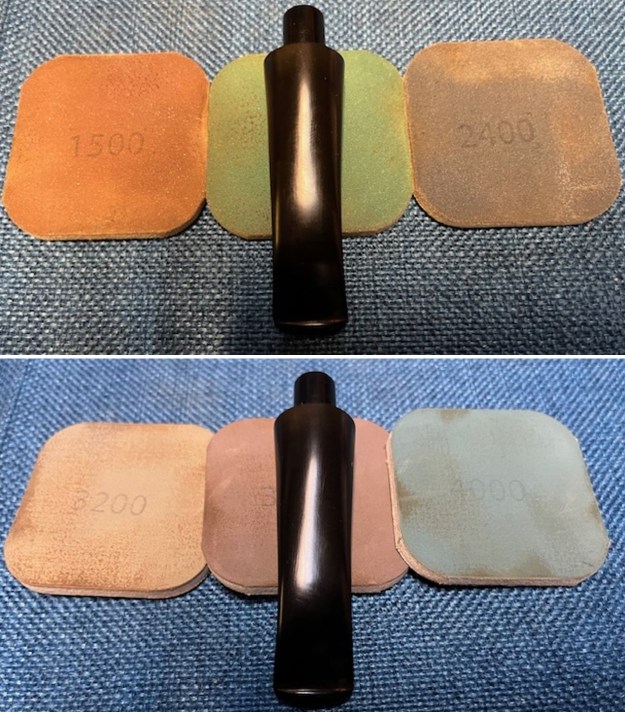
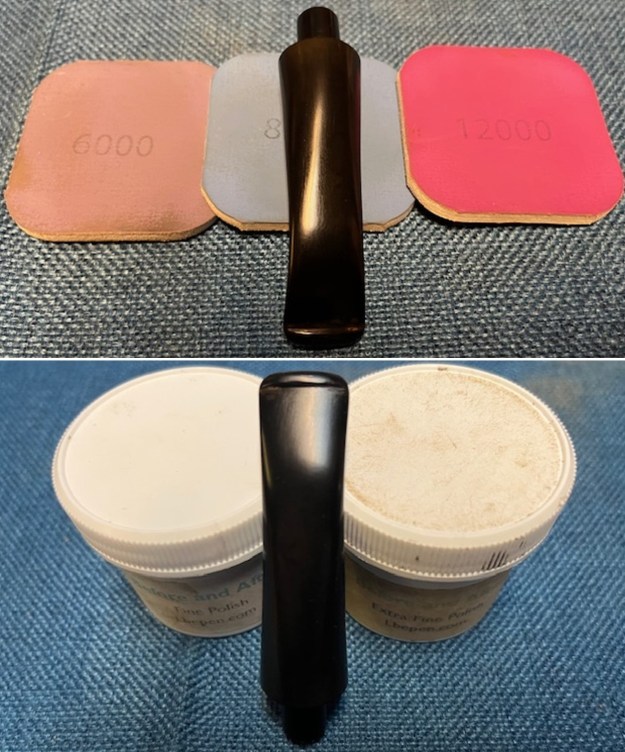
As always, I encourage your questions and comments as you read the blog. Thanks to each of you who are reading this blog. Remember we are not pipe owners; we are pipe men and women who hold our pipes in trust until they pass on into the trust of those who follow us.

Putting Humpty Dumpty Back together again – Stanwell Antique 15


Blog by Steve Laug

The next pipe I chose to work on came from a lot of 11 pipes I purchased from a lady in Regina, Saskatchewan. She had found them in a house she bought and wanted to know if I wanted them. We struck a deal, I paid for the pipes and shipping and the box arrived while I was traveling in Europe. In the box were 5 Stanwells, 1 Soren Freehand, 1 Calabash with a Briar Bowl, 1 Nording Freehand, 1 Italian Made Bertenetti, 1 Rhodesian with a banded cracked shank, and 1 Brigham.The pipe on the table is a mixed finish (sandblast and smooth) Bent Apple with a diamond shank and acrylic amber shank extension from the lot above. It is the pipe in the lot that is in the worst condition with a snapped shank at the bowl. The pipe is faintly stamped on the underside of the shank and reads Stanwell [followed by] the shape number 15 [over] Antique. Underneath it is stamped Made in Denmark. There was a thick cake in the bowl, cobwebs in the bottom and on the bowl walls and some remnants of tobacco. There was a heavy lava overflow on the rim top and down on the sides of the bowl and shank. The edges of the bowl were so thickly coated with lava that it was hard to know the condition. The finish is oily, dirty and dusty around the bowl and shank sides. The sandblast was almost filled in with lava. The smooth panel on the front was also heavily tarred and covered in lava. The amber coloured shank extension was so coated with tars that it was hard to see its true colour. The stem was oxidized, calcified and had tooth marks and chatter on the top and underside. The snapped shank is a clean break and there is darkening around the airway on both parts. I took photos of the pipe before I started my cleanup work on it. I checked my usual sources for information on the Antique line but there was nothing specific on either Pipedia or Pipephil’s site. I also checked on Pipedia in the article on shape number and shape designers (https://pipedia.org/wiki/Stanwell_Shape_Numbers_and_Designers).
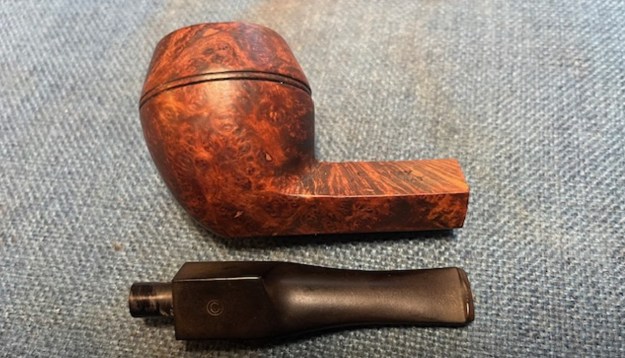
15. Two versions of this shape number:

a) Quarter-bent footless cutty with a round shank and tapered churchwarden stem.
b) Bent apple with a triangular shank and saddle, or half-saddle, stem.

 The data was all coming together finally – I was working on a Stanwell Antique in shape 15 which is a Bent Apple with a triangular shank and amber coloured extension with a saddle stem. Now it was time to work on the repair of this tired and worn looking old timer.

I reamed the bowl portion of the broken pipe with a PipNet pipe reamer using the third cutting head to take the cake back to bare briar. I cleaned up the reaming with a Savinelli Fitsall Pipe Knife. I sanded the walls with a piece of 220 grit sandpaper wrapped around a dowel to smooth them out. I scrubbed the exterior of the bowl and the broken shank with a tooth brush and undiluted Murphy’s Oil Soap. It looked surprisingly better and the tars and lava filling in the sandblast was gone. I scrubbed the broken face of the shank and bowl with the tooth brush to remove the lava around the airway. I used a short piece of aluminum inner tube to bind the two parts together. I measured what it would take to have some of the tube in each side of the break. I cut it to fit with a hacksaw blade. I inserted it in the parts and took a look at the fit. I glued it in the airway in the bowl end with clear CA glue and painted the tube and the two briar faces with the clear CA glue. I pressed the two pieces together and held them together until the glue cured. I filled in the areas in the crack repair that were visible with another coat of clear CA glue and briar dust. I worked the area over with a brass bristle wire brush to knock off the high spots on the repair and wiped off the excess CA glue with a cotton pad and acetone (fingernail polish remover). The photos below show the repair at this point. I wiped off the bowl with a damp cloth to remove the sanding debris and dust from the clean up at this point. I took photos of the repaired bowl at this point. I used a Dremel and a burr to clean up the worn sandblast patterns around the bowl and shank. I used it to also carry the blast across the repaired area. It looked much better. At this point in the process it was time to stain the pipe. I used a Cordovan to approximate the reddish brown stain that was on the original Antique pipe. I applied it with a wool dauber and then flamed the grain to set the stain. I repeated the process until I was happy with the coverage. I wiped the bowl down alcohol to make the finish more transparent and give some depth to the grain. I used cotton pads and isopropyl to remove it. I repeated the process until I was happy with the new coverage. I remembered at this point that I had not cleaned the internals. I scrubbed out the internals with 99% isopropyl alcohol, pipe cleaners and cotton swabs until the shank and the airway into the bowl and the stem were clean. You will notice that there was some red stain that came out of the inside of the shank with the cleaning. I polished the briar with 1500-12000 grit micromesh sanding pads to remove the darkening on the high spots on the blast. The sanding would give depth and contrast to the finish. I wiped it down with a damp cloth after each pad. The rim top took on a deep shine that highlighted the grain. I worked some Before & After Restoration Balm into the surface of the briar with my fingertips and a horsehair shoe brush to clean, enliven and protect the briar. I let the balm sit for 15 minutes and then buffed with a cotton cloth to raise the shine. The photos show the bowl at this point in the restoration process. I set the bowl aside and “painted” the stem surface with the flame of a “Bic” lighter to lift the tooth marks. I was able to raise them some but not completely. I filled in the remaining marks on the button edge and the surface with black CA glue. Once it cured, I used a file to shape the button edge and also smooth out the fill. I sanded the remaining marks with 220 grit sandpaper to blend them into the surface of the surrounding vulcanite. I started polishing the stem surface with 600 grit wet dry sandpaper. I polished the stem with micromesh sanding pads – wet sanding with 1500-12000 grit sanding pads. I wiped it down after each sanding pad with Obsidian Oil. I finished polishing it with Before & After Pipe Stem Polish – both Fine and Extra Fine and buffed it off with a cotton cloth. I gave it a coat of Obsidian Oil to preserve and protect the stem. This Stanwell Antique 15 Bent Apple with a Triangle Shank and a saddle vulcanite stem turned out very nice. The mix of Cordovan and black stains highlights the sandblasted grain around the bowl sides and bottom. The rim top and edges look very good. The finish on the pipe turned out great even in the repaired area. I put the stem back on the bowl and carefully buffed the pipe with Blue Diamond on the buffing wheel. I gave the bowl and stem multiple coats of carnauba wax on the buffing wheel and followed that by buffing the entire pipe with a clean buffing pad. I hand buffed the pipe with a microfiber cloth to deepen the shine. The finished Stanwell Antique 15 Bent Apple is very nice and feels great in the hand. Give the finished pipe a look in the photos below. It is a nice pipe whose dimensions are Length: 5 inches, Height: 1 ½ inches, Outside diameter of the bowl: 1 ½ inches, Chamber diameter: 7/8 of an inch. The weight of the pipe is 62 grams/2.19 ounces. Thanks for walking through the restoration with me as I worked over what appeared to be a hopelessly damaged pipe. This Stanwell Antique 15 Bent Apple turned out fairly well. It will make someone a great pipe at a great price. It will be going on the rebornpipes store shortly. If you are interested in adding it to your collection let me know! Thanks for your time.
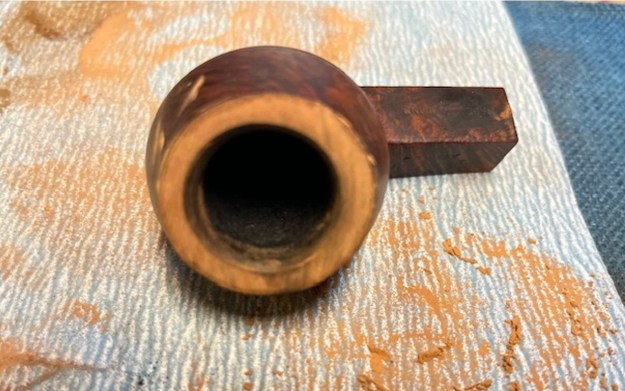
As always, I encourage your questions and comments as you read the blog. Thanks to each of you who are reading this blog. Remember we are not pipe owners; we are pipe men and women who hold our pipes in trust until they pass on into the trust of those who follow us.

My Grandfather’s Apple


Blog by Kenneth Lieblich

Next on the chopping block is a personal pipe – and one that is staying in my collection. This pipe is a charming apple shape with a straight stem of what I assume is amberoid – and not real amber. I do not know where my grandfather acquired it (or under what circumstances), but I suppose it does not ultimately matter. My grandfather was an enthusiastic pipe smoker and he clearly enjoyed this one. I am definitely looking forward to cleaning this one up. It has a value well beyond dollars. As the photos show, this pipe has a stem that tapers towards the button. In addition to this, it also has an orific button. These two facts suggest a pipe from the pre-WW2 era. For more information on the orific button, take the time to read Steve’s interesting article on the subject. This type of button is a feature that apparently disappeared by the 1930s, but the metal tenon suggests a date that is more likely in the 1940s. The pipe’s markings read Racine de [over] Bruyere [over] Garantie (on the left side of the shank). Alas, there are no other markings to be found. As you may know, Racine de Bruyere Garantie means “Guaranteed Briar Root”. This indicates that the pipe almost certainly comes from St Claude, France, but gives no indication of who made it. As previously mentioned, I do not know the exact date of the pipe, but it is likely from the 1940s.Anyway, on to the pipe – and it’s a pipe that just makes you smile. There is something wholesome and comforting about the look of the pipe. I must admit, however, that I may be thinking of my grandfather more than the pipe!

This poor pipe was not without its issues. The stummel had the following problems: lava on the rim, charring to the rim, a bashed rim, plenty of cake in the bowl, a few substantial and ugly fills, and a tired, worn-out colour of wood. By the way, some of the strange “marks” on the bowl are, in fact, old bits of newspaper. After my grandfather died, the pipes were wrapped in newspaper and stuck in a box. The newspaper got wet at some point in the intervening years. Meanwhile, the stem had its own set of problems: major tooth marks and dents, a bite-through, and a filthy stinger. The stem was first on my list. The stinger actually screwed into the tenon – and it was being quite stubborn about coming out! I opted to warm the stinger with a heat gun and this provided just enough softening of the internal goo to allow me to pull it out. The stinger then went for a soak in some lemon-infused isopropyl alcohol. I let it set for several hours and then cleaned it off and it looked much improved. I then finished it with some 0000-grit steel wool, greased the threads with some petroleum jelly and moved on. I wiped down the outside of the stem with Murphy’s Oil Soap on some cotton pads. Then, I cleaned out the insides with pipe cleaners and isopropyl alcohol. As I mentioned earlier, I think this stem is made from amberoid. This is a synthetic of small pieces of amber, pressed together under great pressure and high heat.Now it was time to make a fix the damage. I tried desperately hard to clean the discoloration inside and outside the stem, but this met with limited success. I ended up filing the dents etc. with clean cyanoacrylate adhesive. I first plugged up the stem’s draught hole with a pipe cleaner coated in petroleum jelly. This ensured that any of the cyanoacrylate would not accidentally plug up the air passage in the stem. I then used a miniature file to shape the button and make it suitable for sanding. I then sanded the stem down with 220- and 400-grit sandpapers to meld seamlessly into the stem. This ensures that it keeps its shape and looks like it should. I then used all nine Micromesh pads (1,500 through 12,000 grit) on the stem to make look as much like amber as possible. I also used Obsidian Pipe Stem Oil in between each pad scrubbing. It is worth noting that a repair this big on a stem will never be invisible, but I was pleased with how the stem finished up. On to the stummel, and the usual cleaning procedures were in order for this pipe. I used the KleenReem to remove the built-up cake, and followed that with 220-grit sandpaper to remove as much as I could. I wanted to take the bowl down to bare briar to ensure there were no hidden flaws in the walls of the bowl. Fortunately, there were none. I then proceeded to clean out the insides of the shank with cotton swabs, pipe cleaners, and isopropyl alcohol. There was quite a bit of filth inside this stummel – it took many pipe cleaners et cetera to clean it out. Have a look at the photos – disgusting! I decided that a de-ghosting session would be a good idea. I thrust cotton balls into the bowl and the shank and saturated them with 99% isopropyl alcohol. I let the stummel sit overnight. This caused the oils, tars and smells to leach out into the cotton. The bowl was nice and clean after this. One interesting point of note is that the mortise on this pipe is lined with cork (another sign of the pipe’s age). This complicated the cleaning process, as I needed to ensure that the alcohol etc. didn’t degrade the cork. I worked carefully and it turned out alright.I followed that up by cleaning the insides with some Castile soap and tube brushes. I then moved on to cleaning the outside of the stummel with Murphy’s Oil Soap and some cotton pads. That removed the bits of aforementioned newspaper and any remaining dirt. I also soaked the rim in Murphy’s for a while, then used a toothbrush to loosen up the lava.There were several notable dents and nicks on the rim. Normally, I would top the pipe on a piece of 220-grit sandpaper. I didn’t do that this time because I wanted to maintain the rounded profile of the rim. I still used 220-grit sandpaper, but made sure to keep the look of the pipe.Having completed that, I was able to address the fills on the stummel. I used a dental tool to dig out the old, crumbly putty. I filled the divots with a mixture of cyanoacrylate adhesive and briar dust – then let it cure. Now, with the nicks filled, it was time to sand down the stummel. I used all nine Micromesh pads (1,500 through 12,000 grit) to sand everything smooth.After that, a light application of Before & After Restoration Balm brought out the best in the stummel’s grain. What a difference that made! I felt that this pipe really needed some colour for two reasons: some dark colour would contrast nicely with the orange of the stem and it would help obscure some of the dreadful fills. I applied Fiebing’s Cordovan Leather Dye with a cotton dauber. I flamed it with my Bic lighter, let it set, then coated it again with dye, flamed it again, and let that set too. I decided to let the pipe sit overnight. Upon the morrow, I used isopropyl alcohol to wipe down the pipe and remove excess stain. I am very happy with the results.Then it was off for a trip to the buffer. A dose of White Diamond and a few coats of carnauba wax were just what this pipe needed. The lovely shine made the wood look absolutely beautiful.This is a wonderfully crafted pipe and has a very elegant feel to it. It took a lot of work, but I am proud of it and the final product is (hopefully) worthy of my beloved grandfather’s memory. Obviously, this is one pipe that I am keeping for myself and adding to my collection. I am sure that I will be enjoying this one for many years to come. I hope you enjoyed reading the story of this pipe as much I as I did restoring it. The approximate dimensions of the pipe are as follows: length 5⅜ in. (136 mm); height 1⅝ in. (43 mm); bowl diameter 1⅜ in. (37 mm); chamber diameter ¾ in. (19 mm). The weight of the pipe is 1¼ oz. (40 g). If you are interested in more of my work, please follow me here on Steve’s website or email me directly at kenneth@knightsofthepipe.com. Thank you very much for reading and, as always, I welcome and encourage your comments.