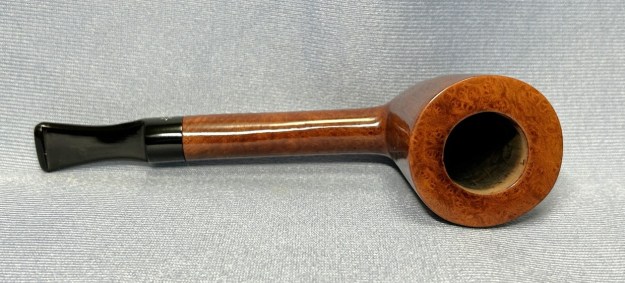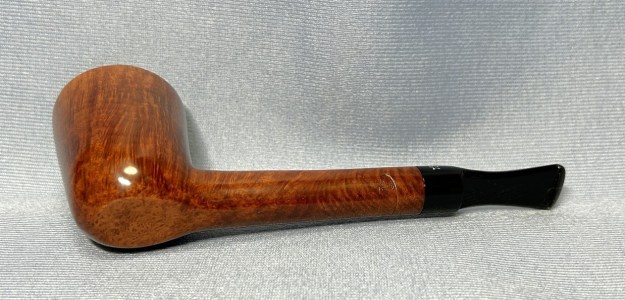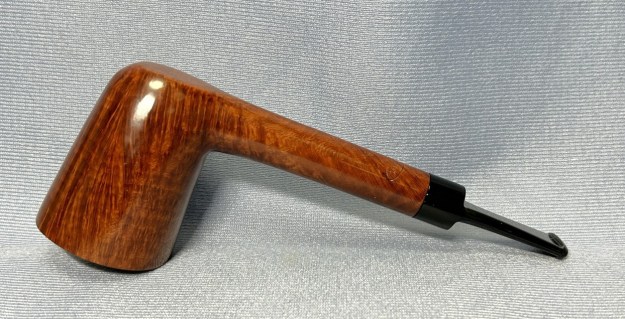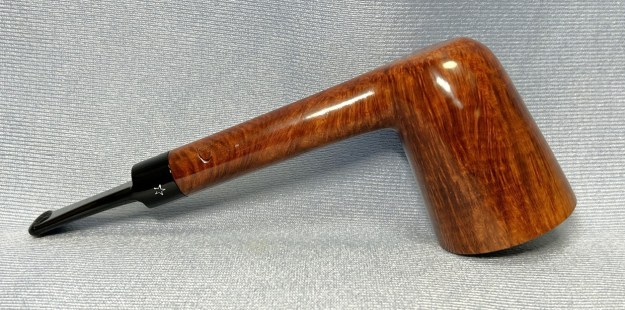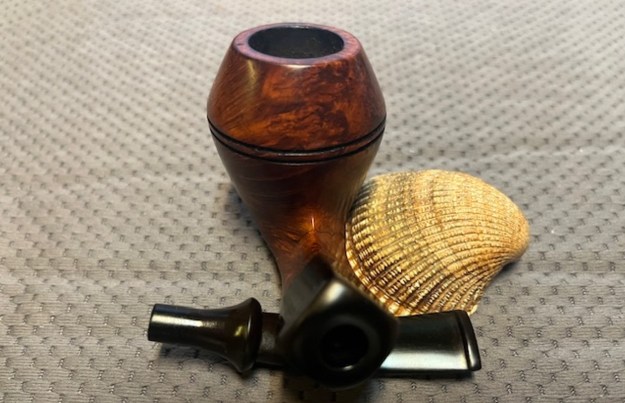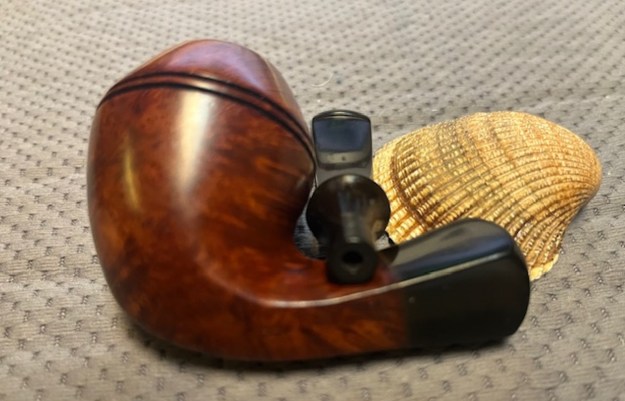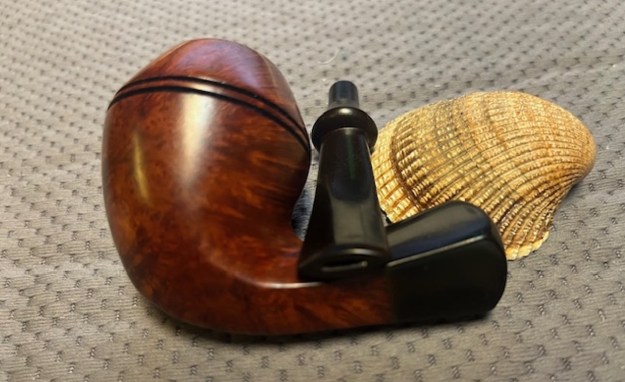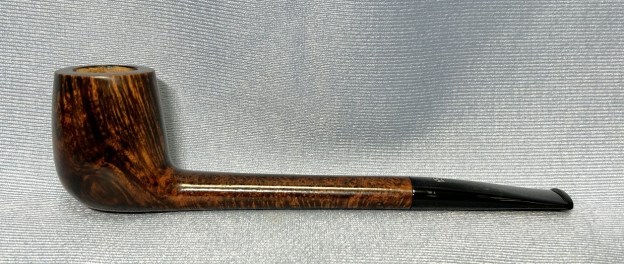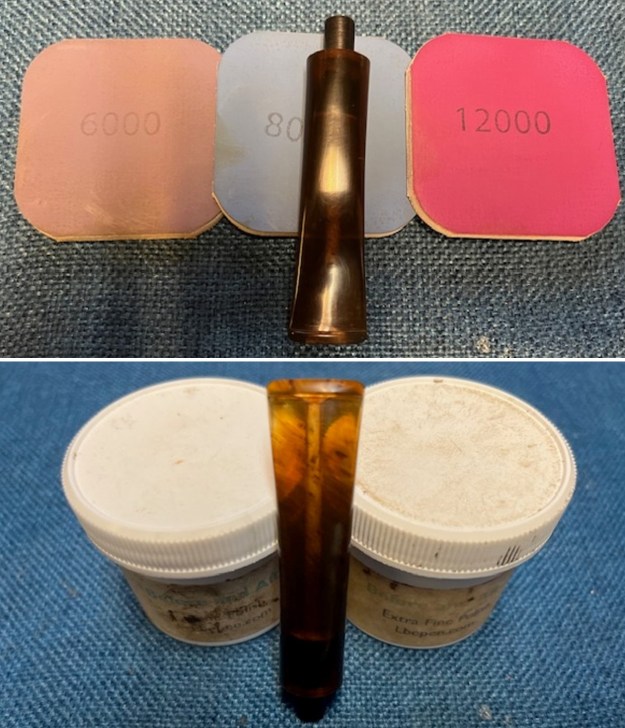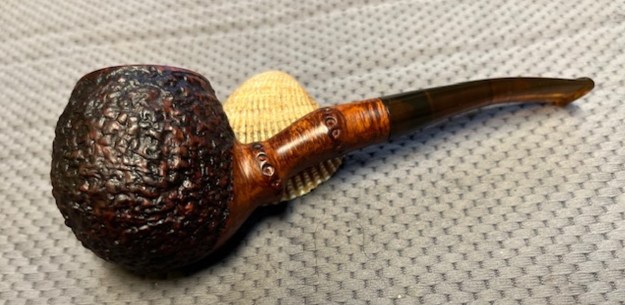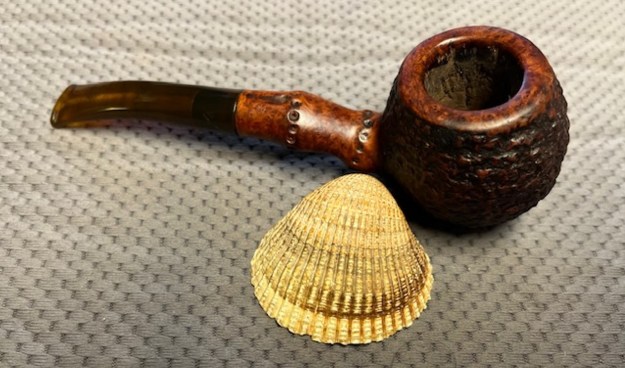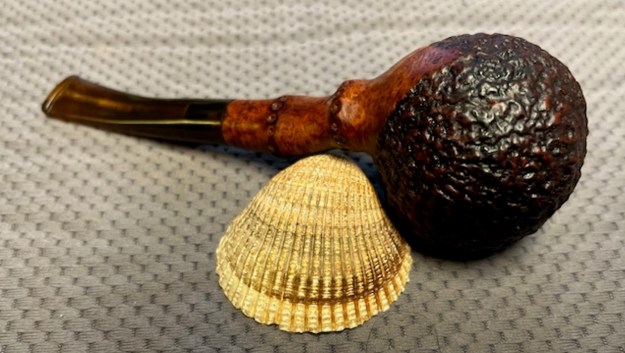
Tag Archives: shaping a stem

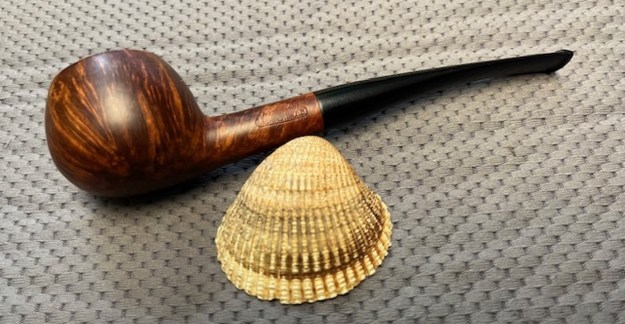
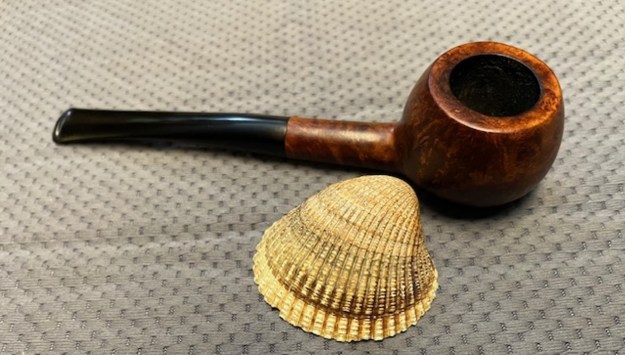
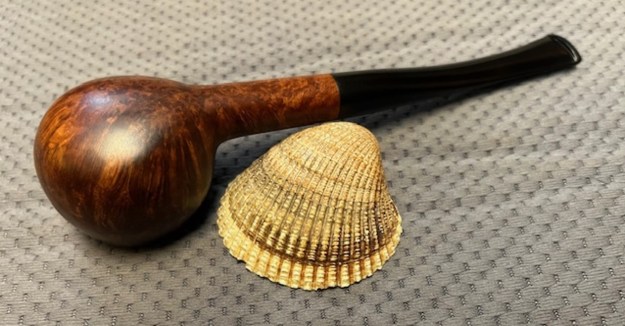
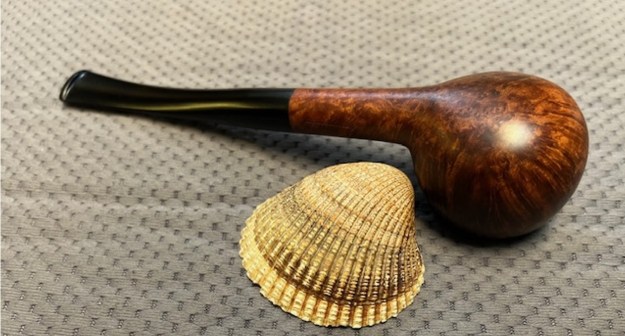
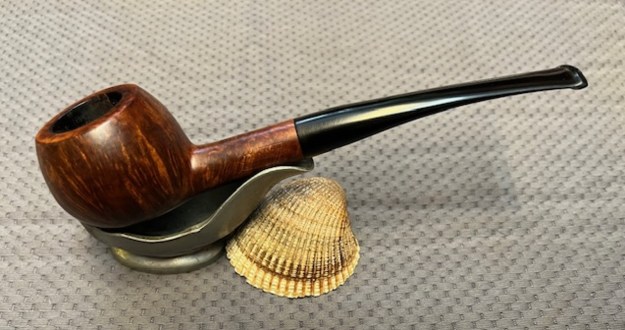
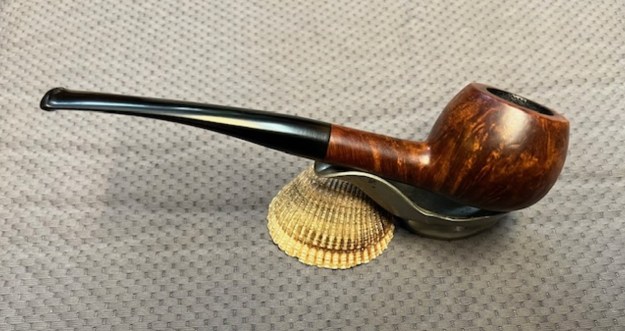
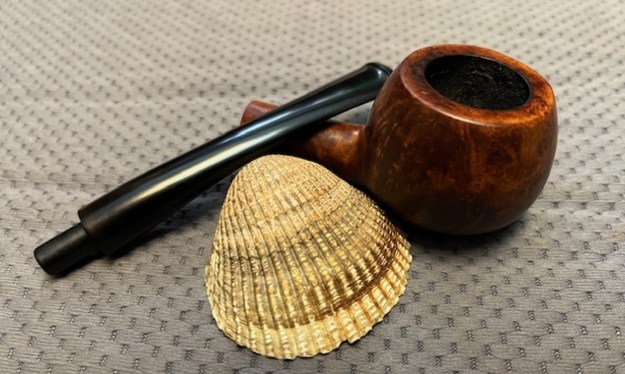
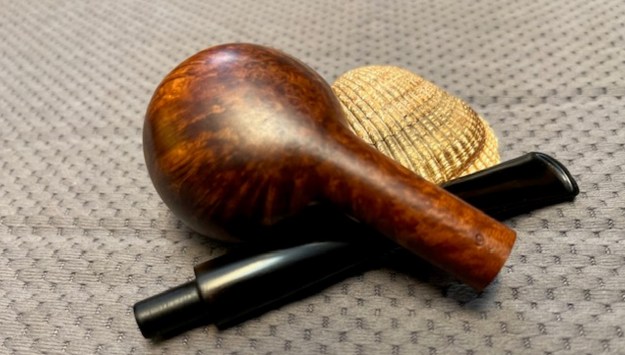
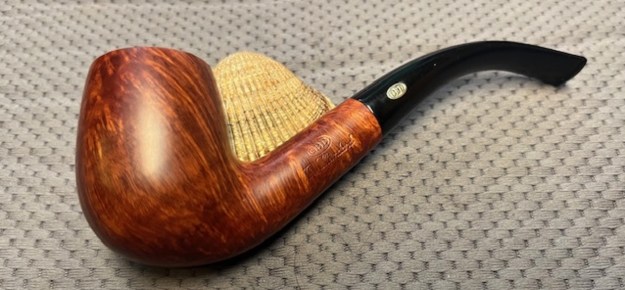
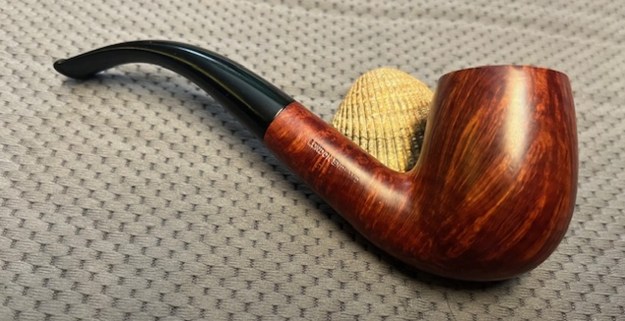
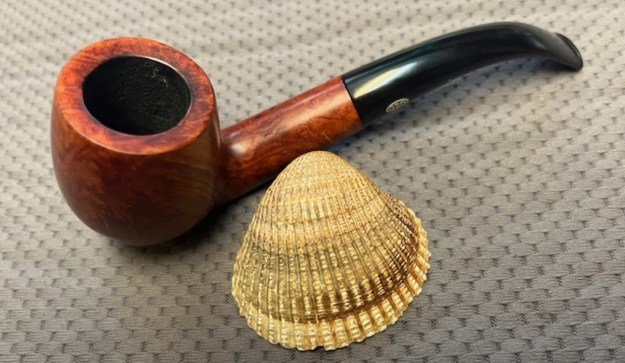
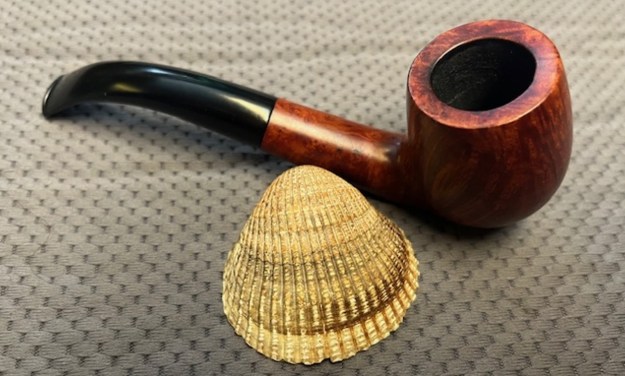
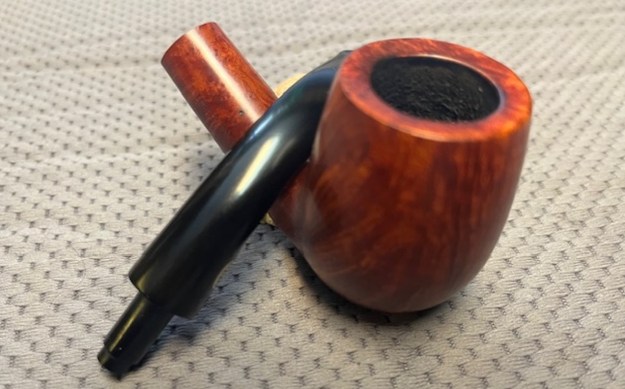
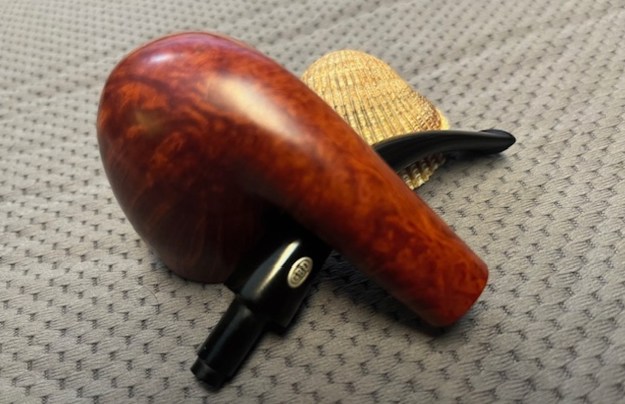
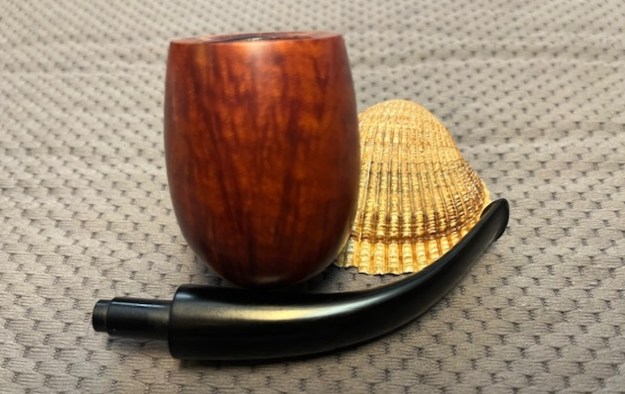
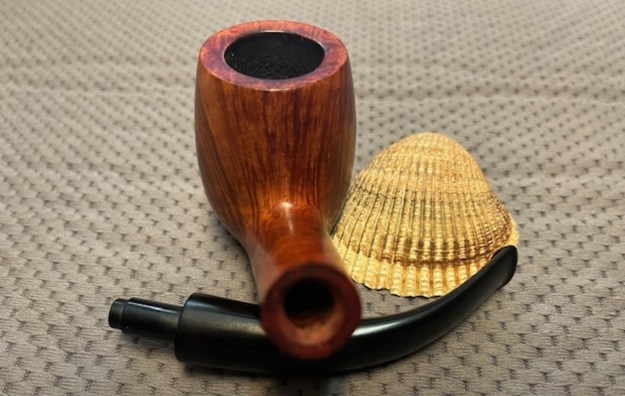
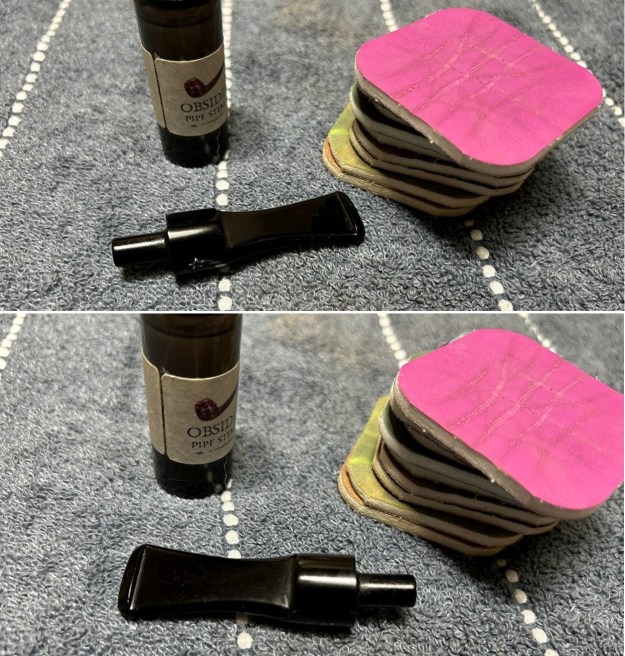
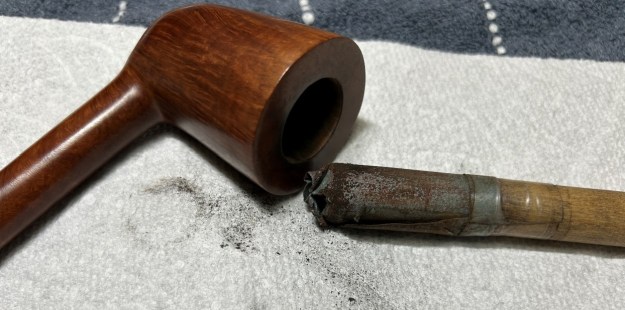
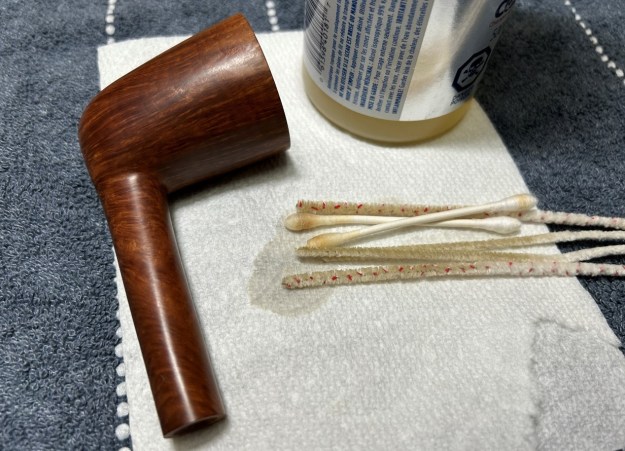
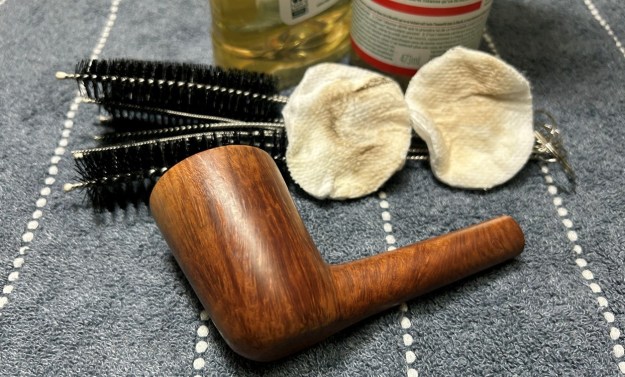
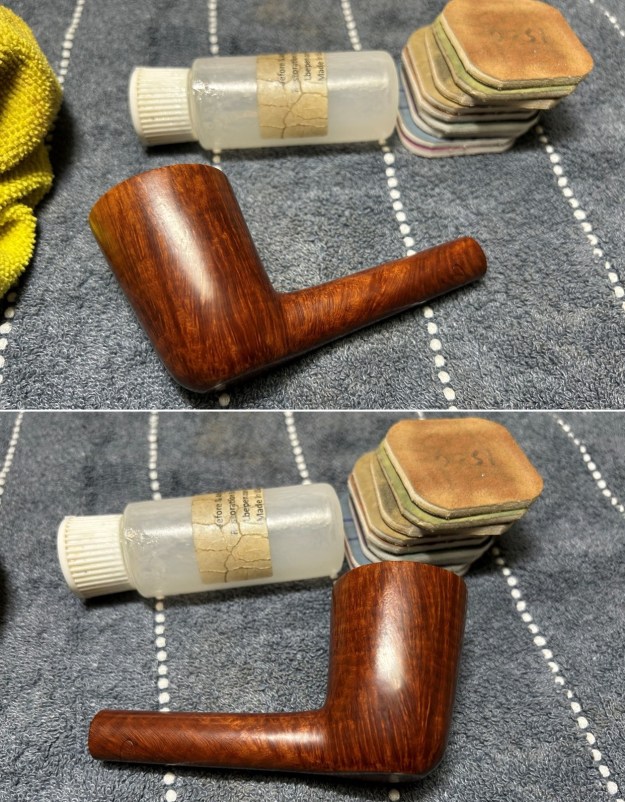
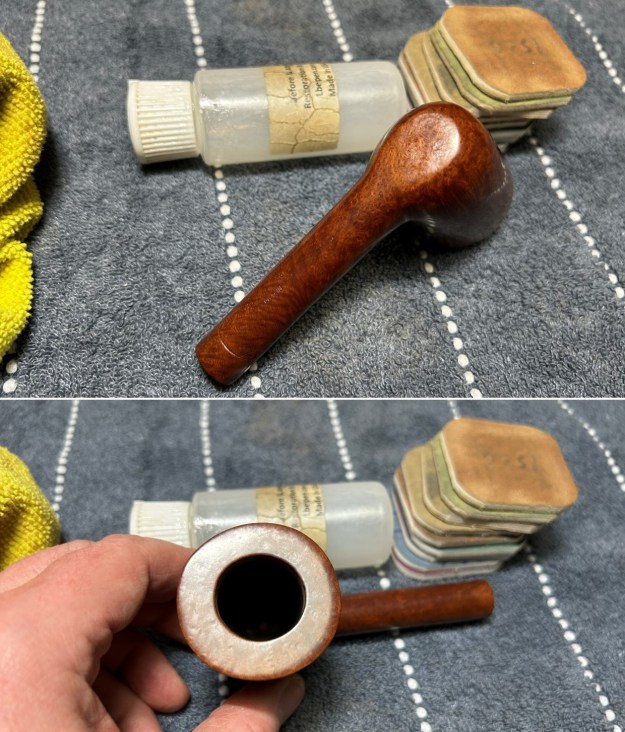
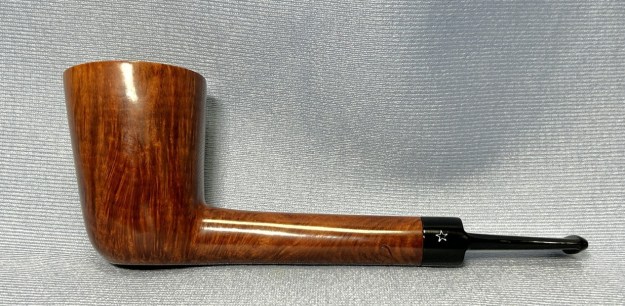
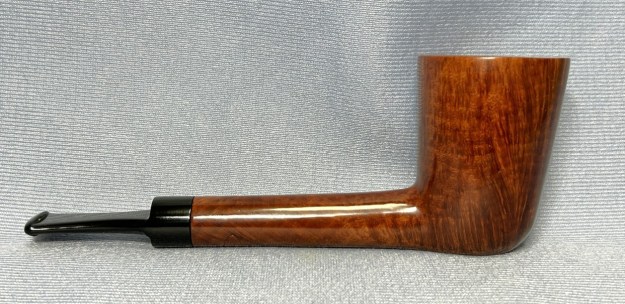
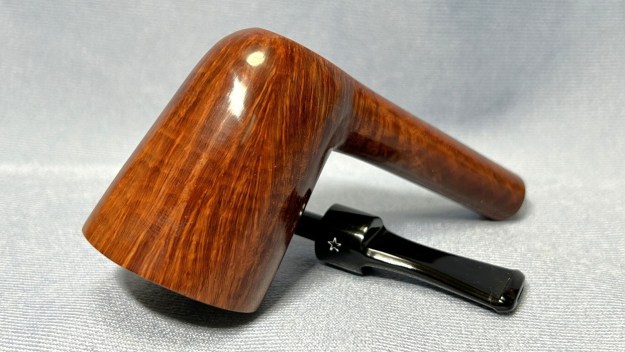
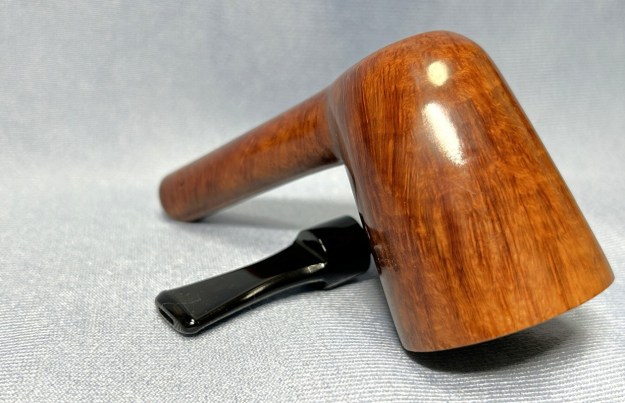
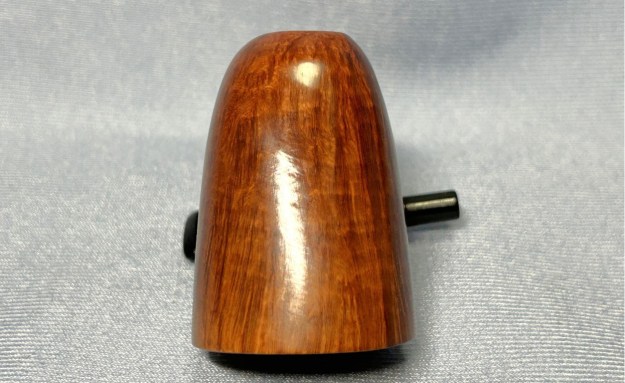
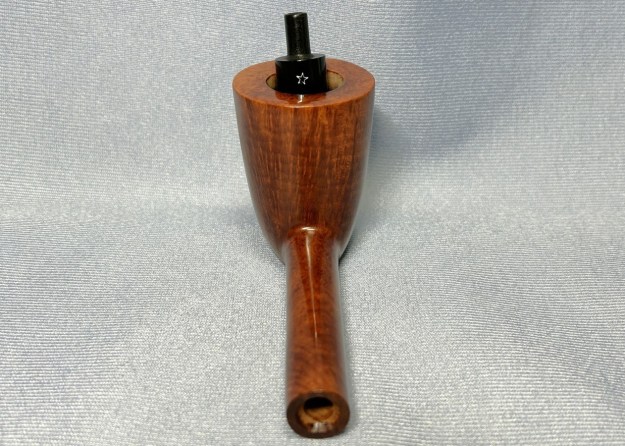
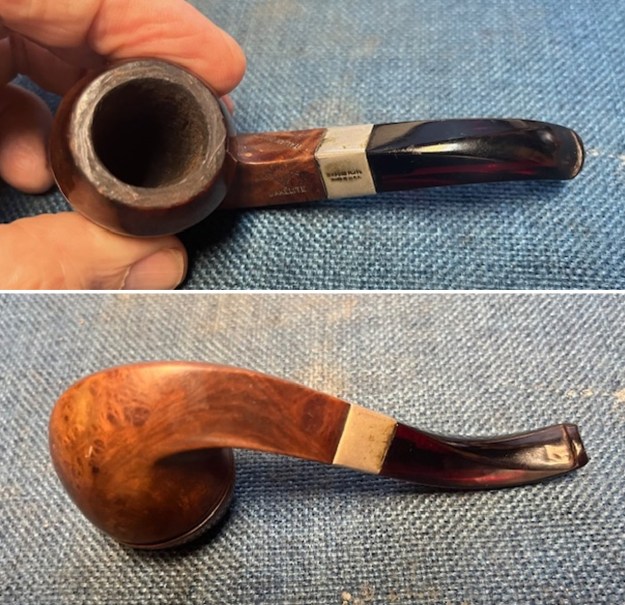
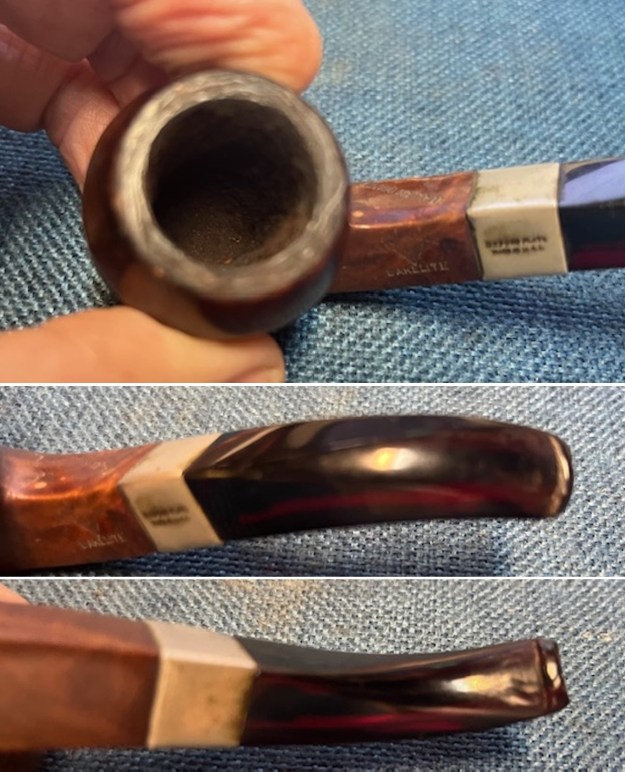
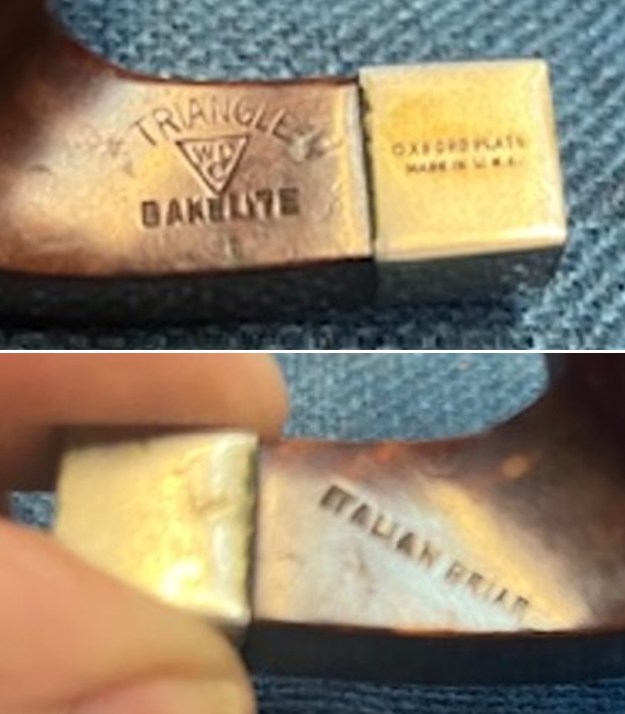
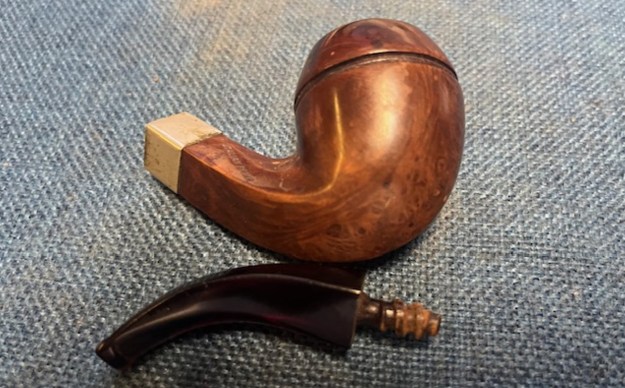
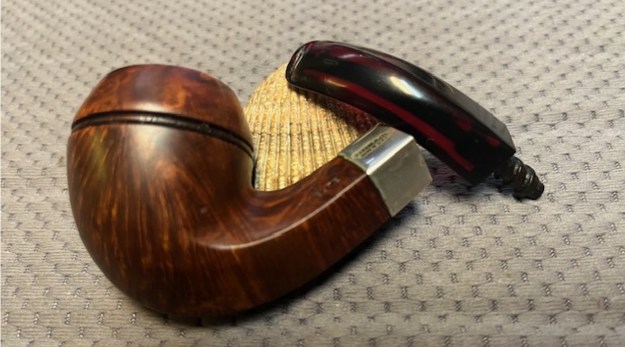
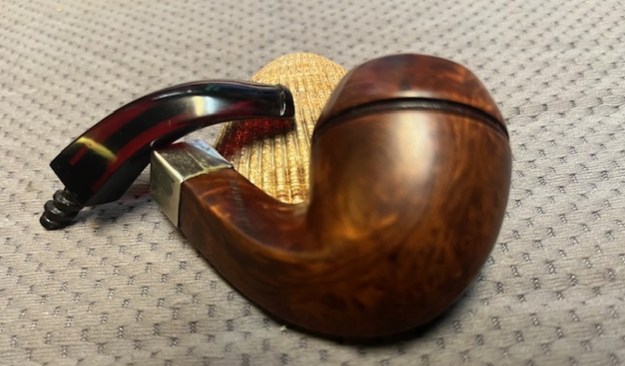
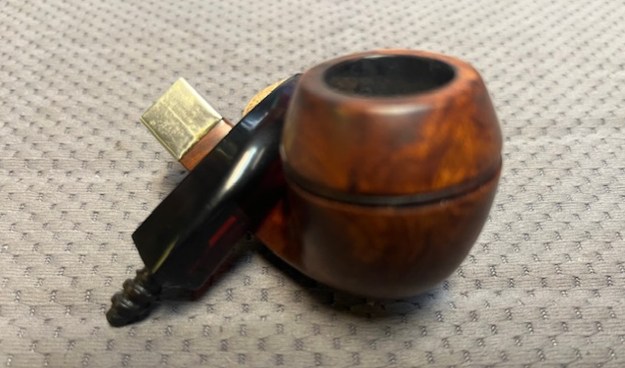
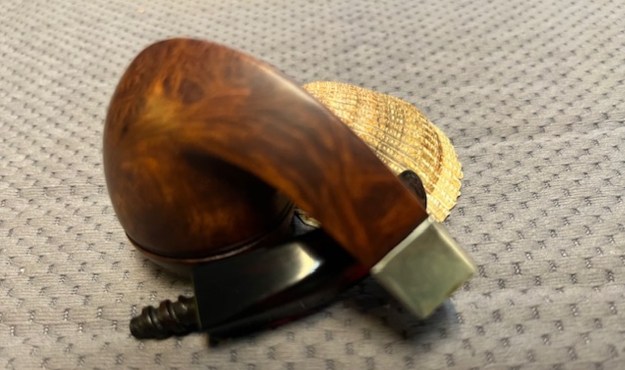
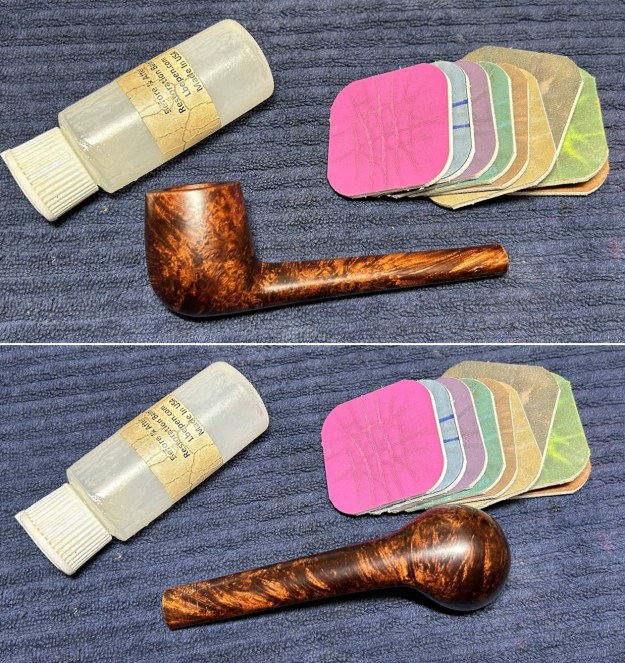
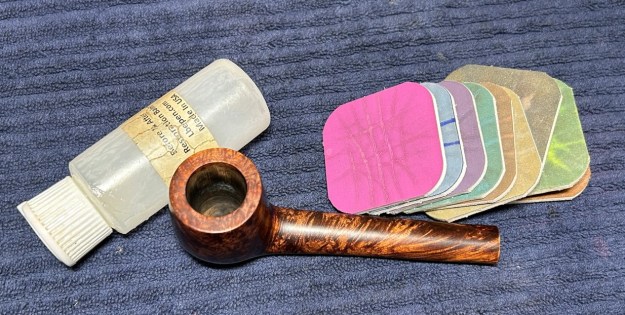
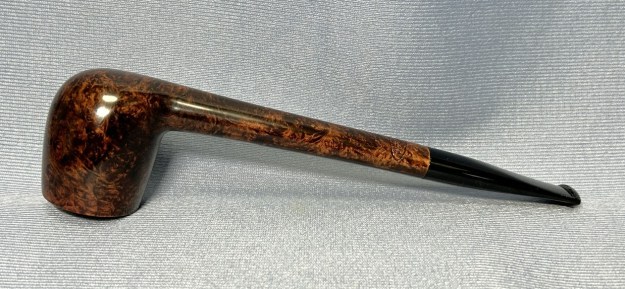
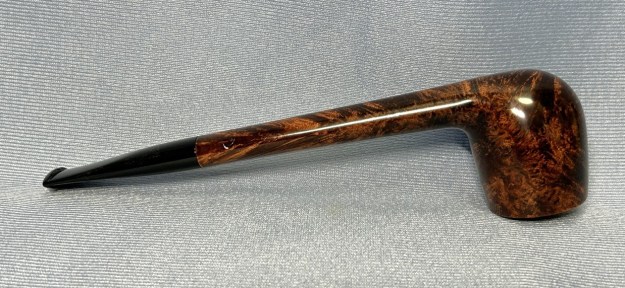
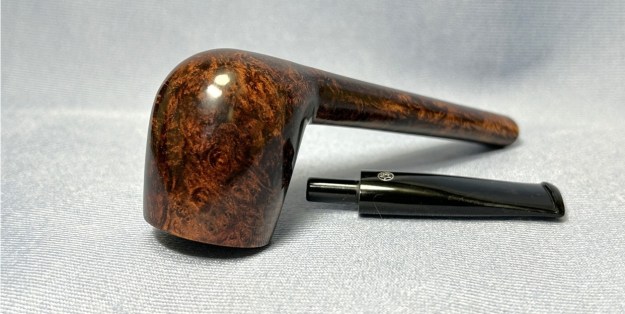
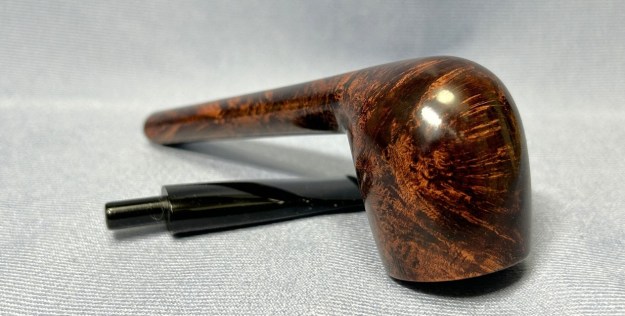
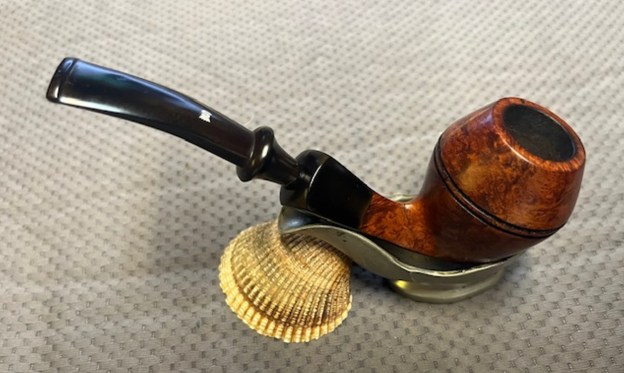
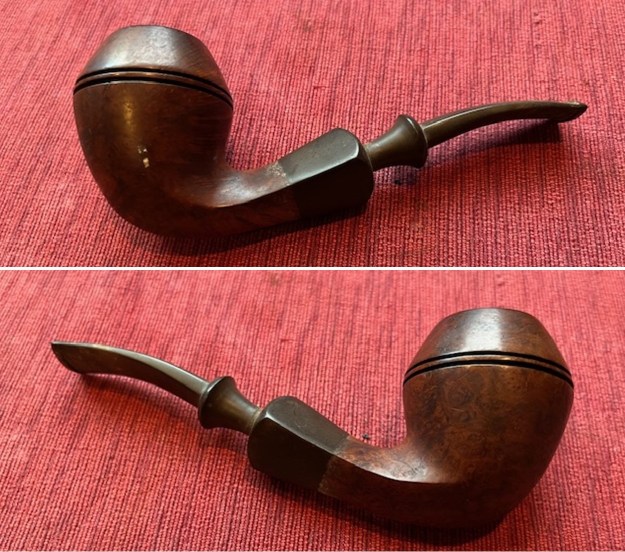
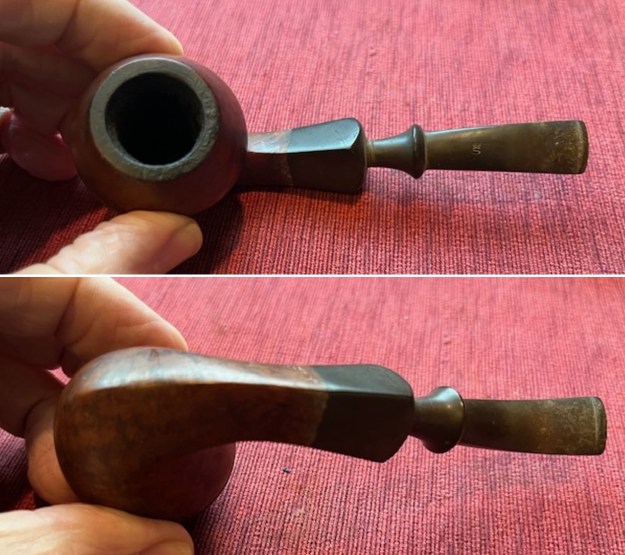
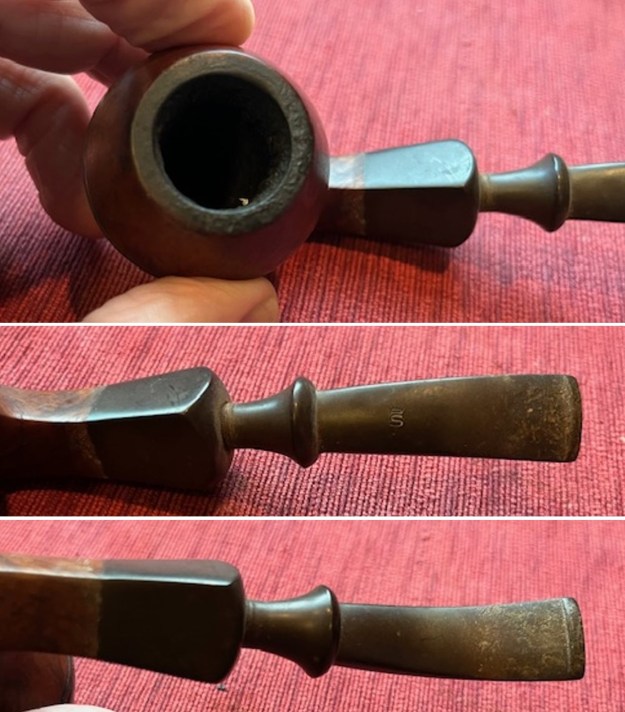
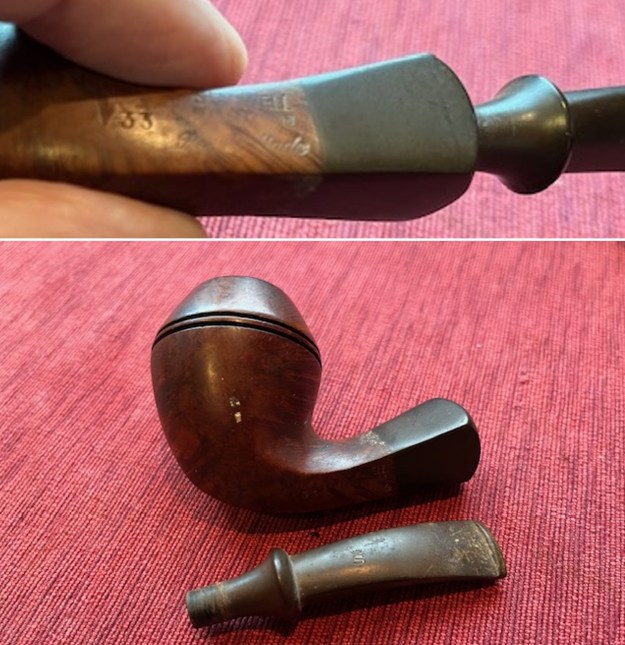
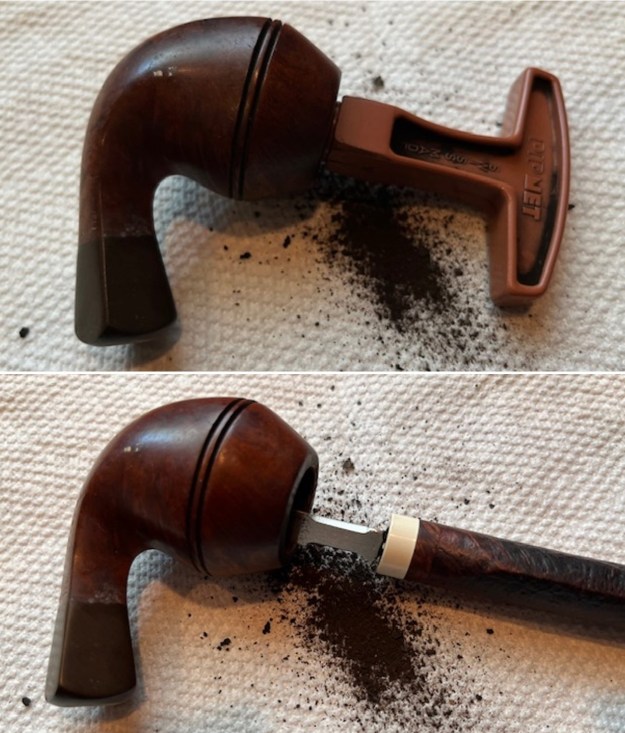
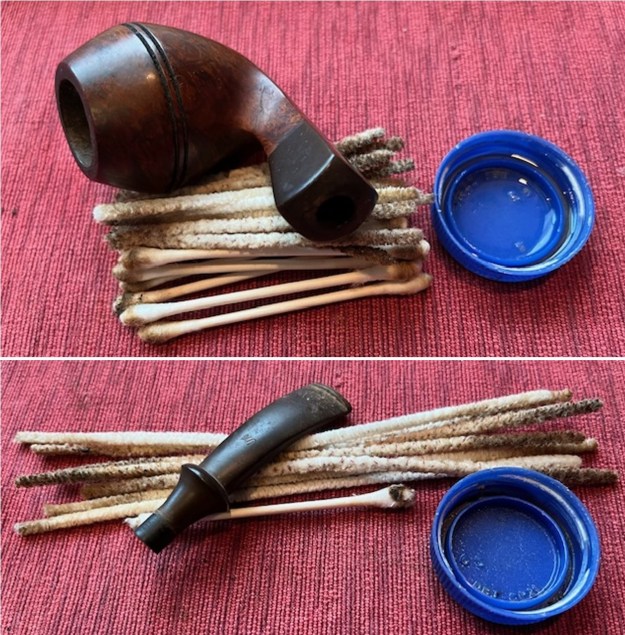
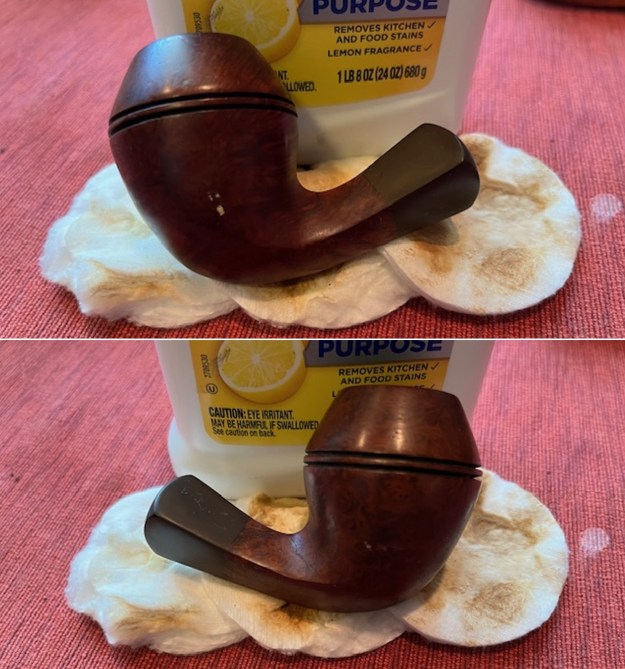
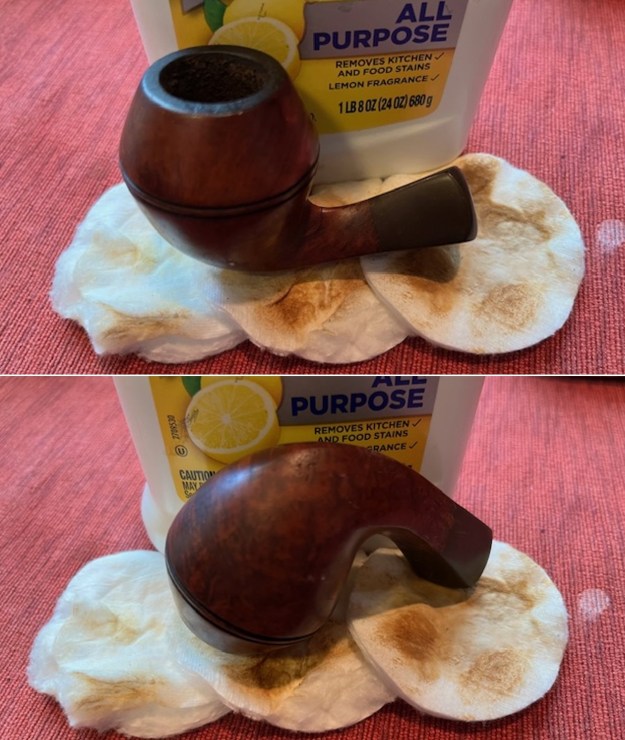
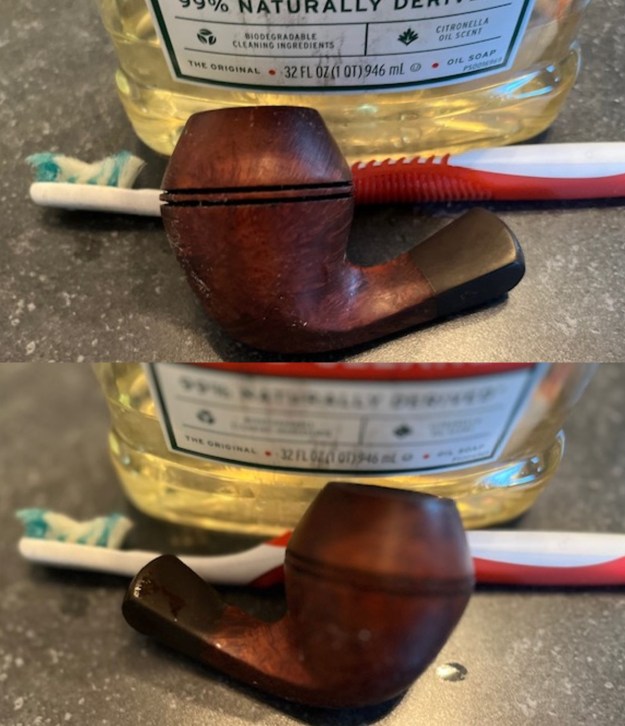
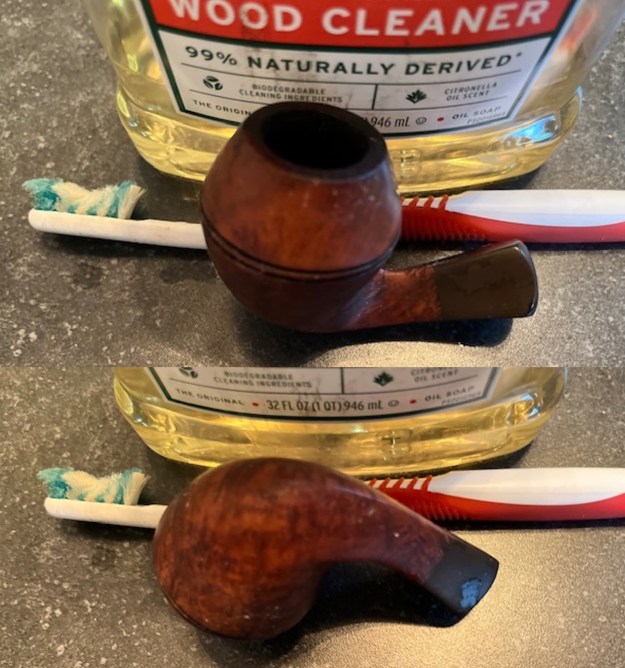
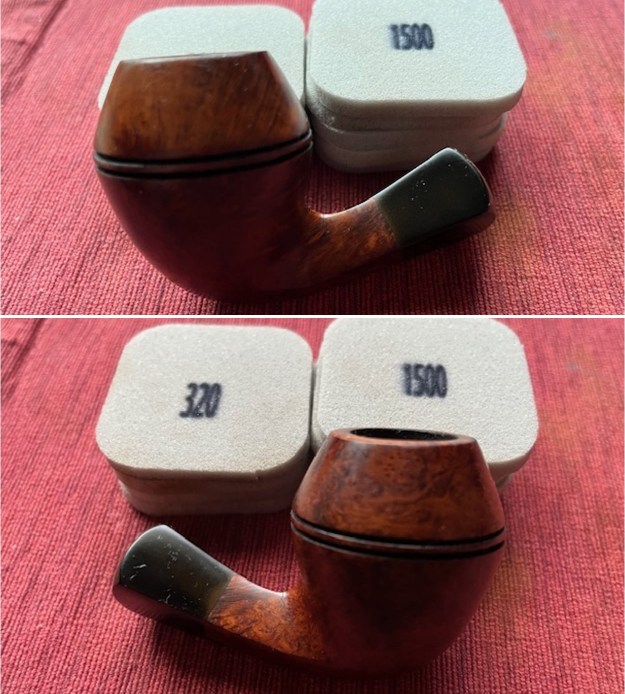
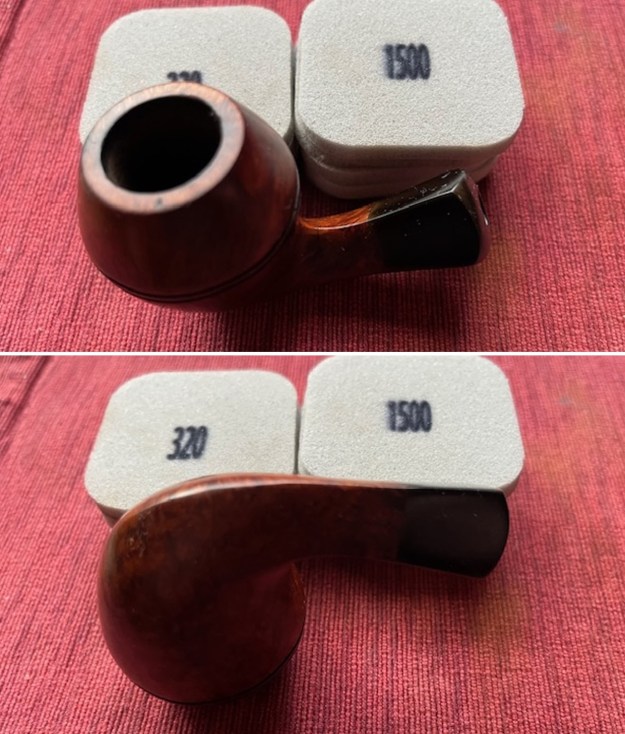
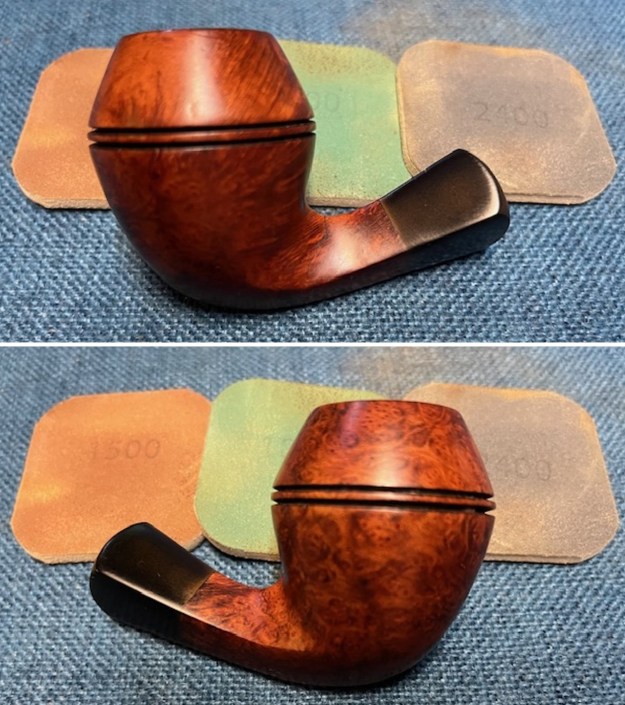
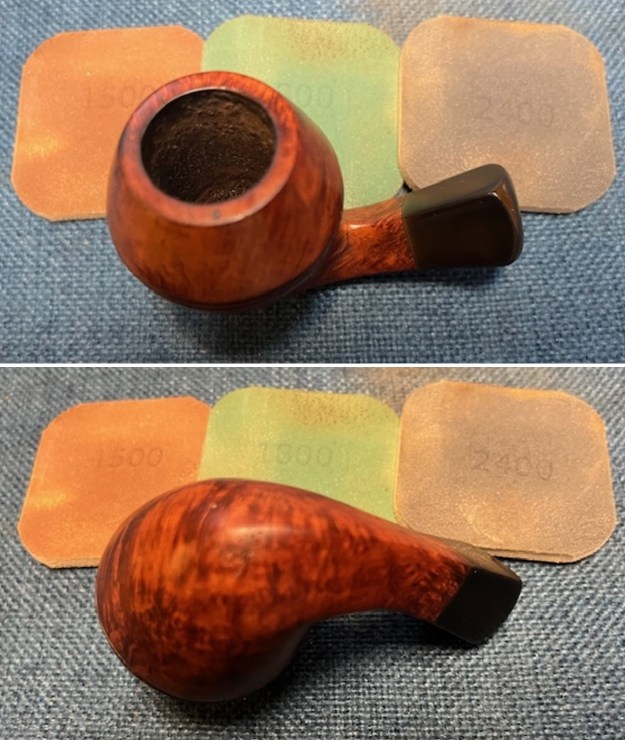
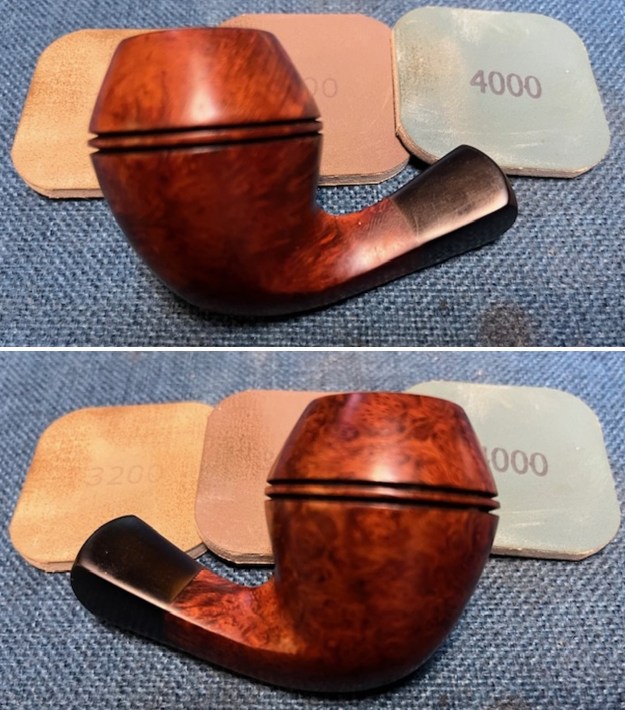
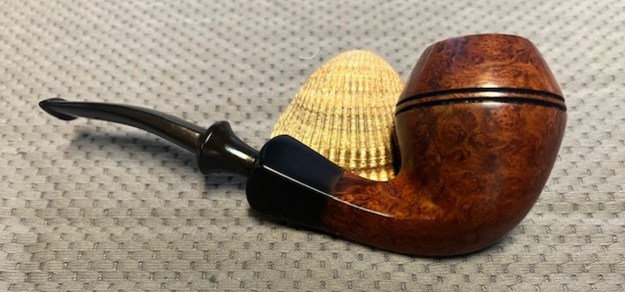
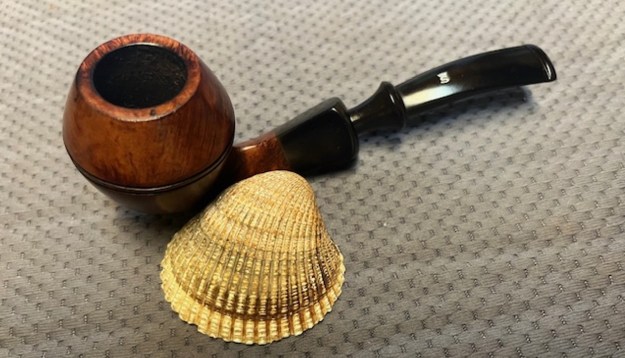
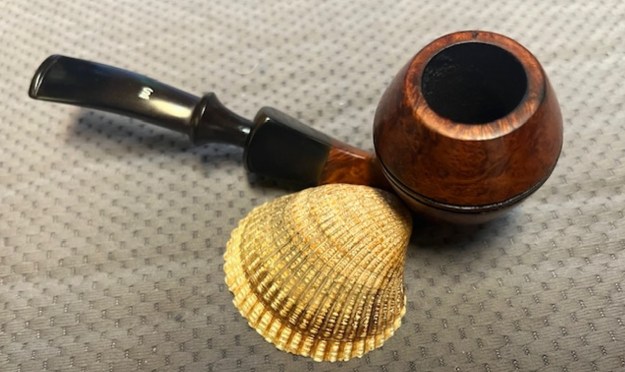
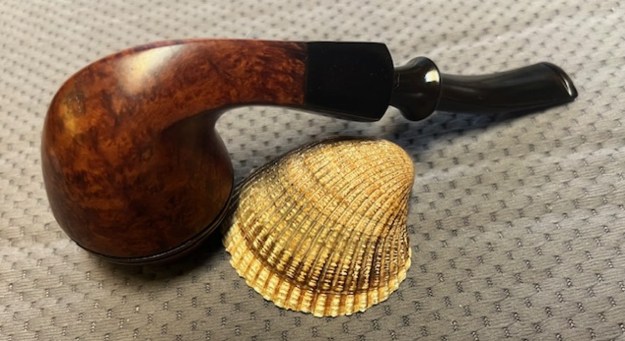
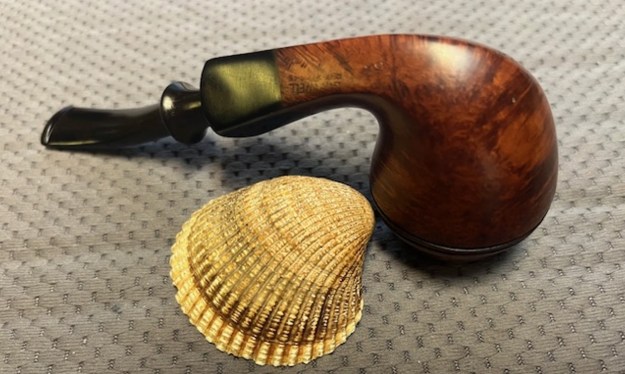
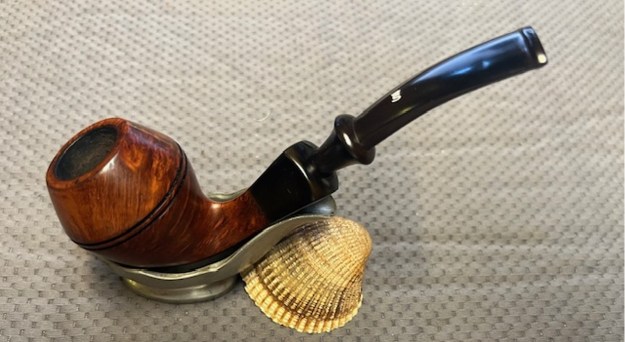
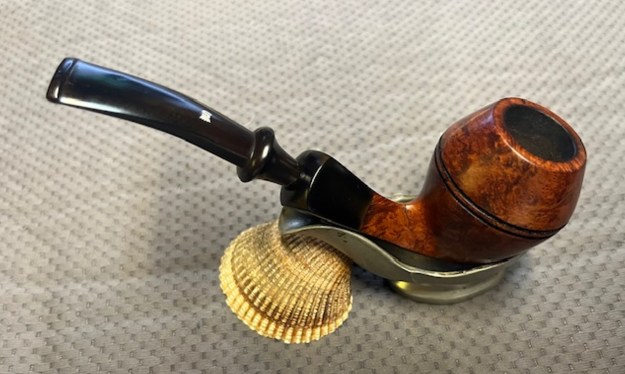
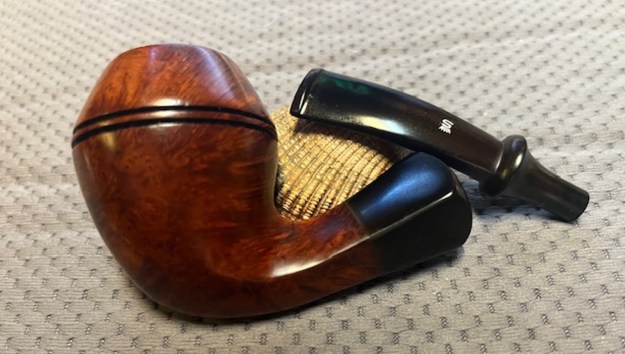
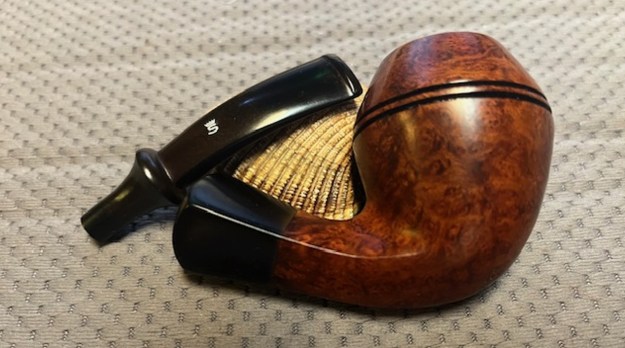
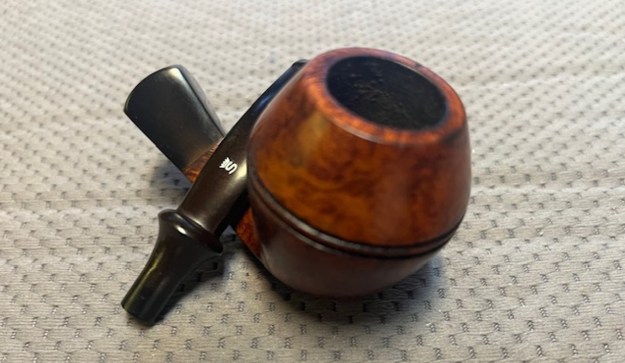
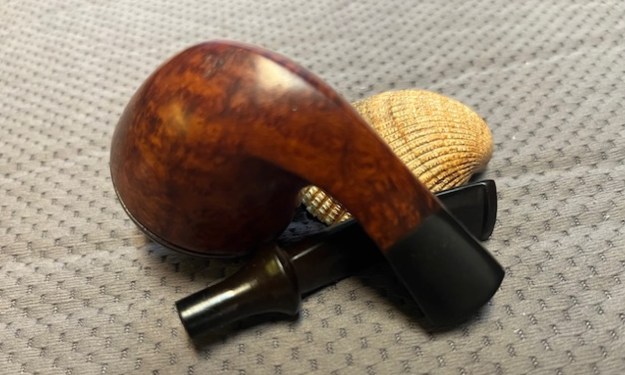
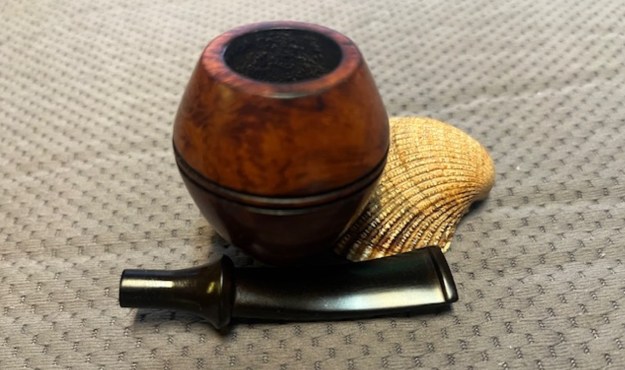
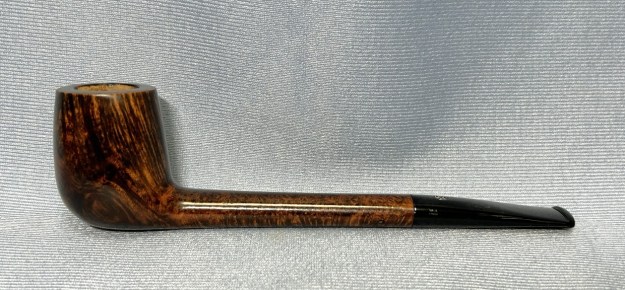
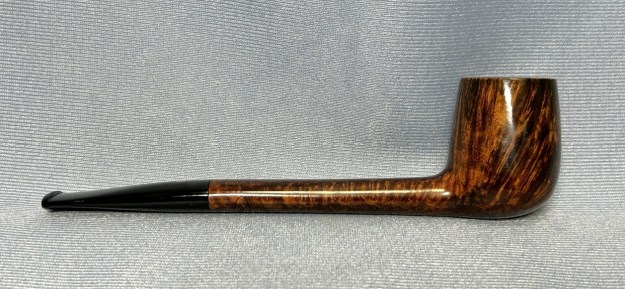
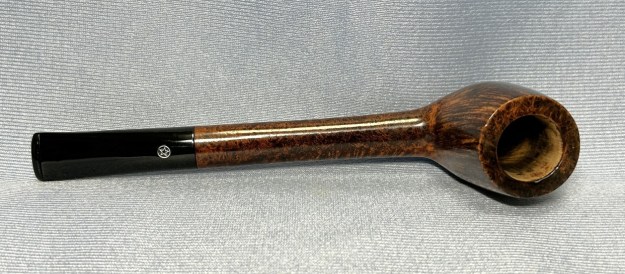
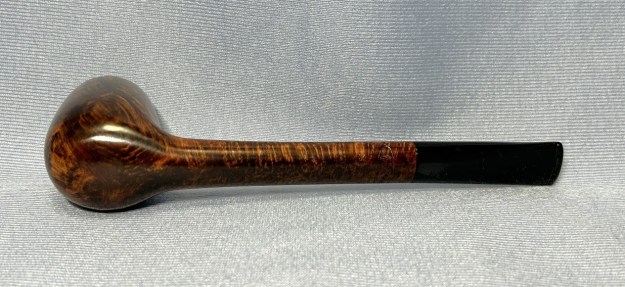
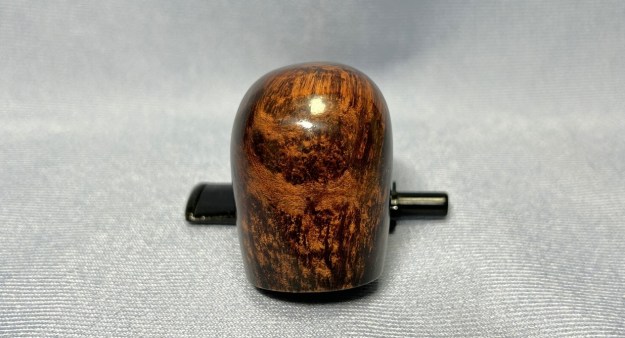
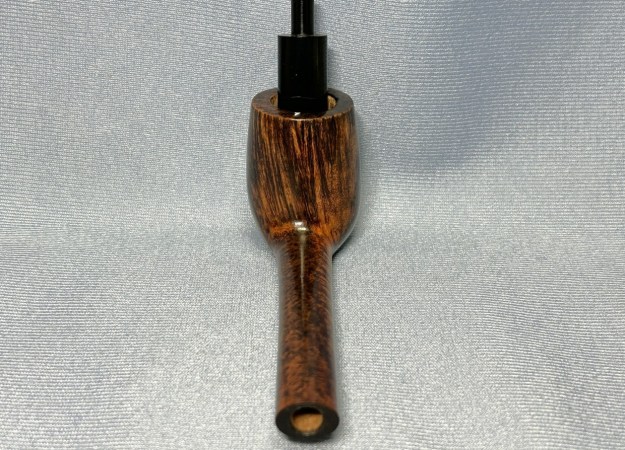
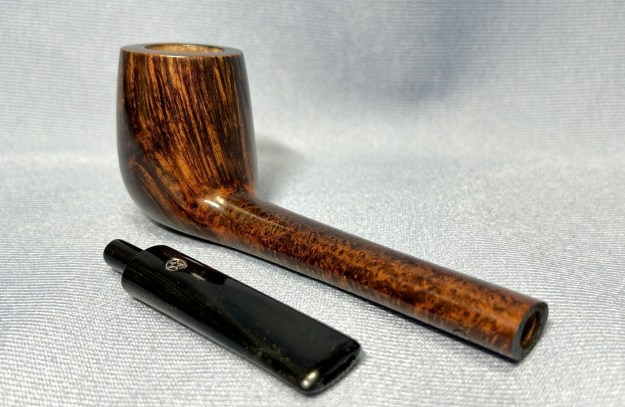
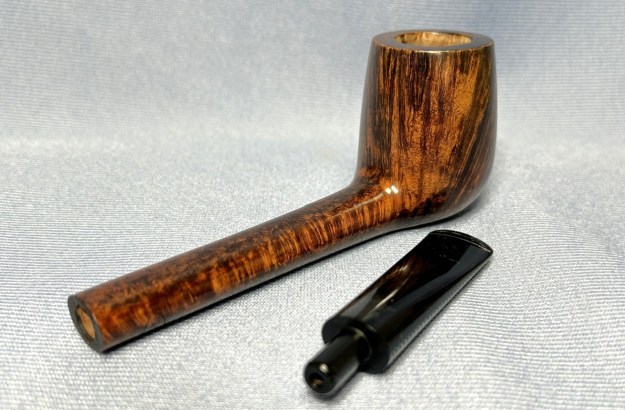
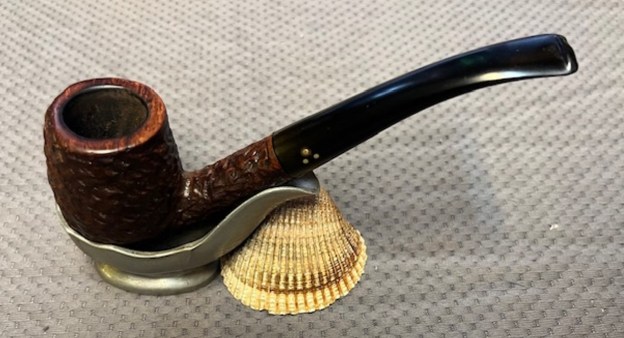
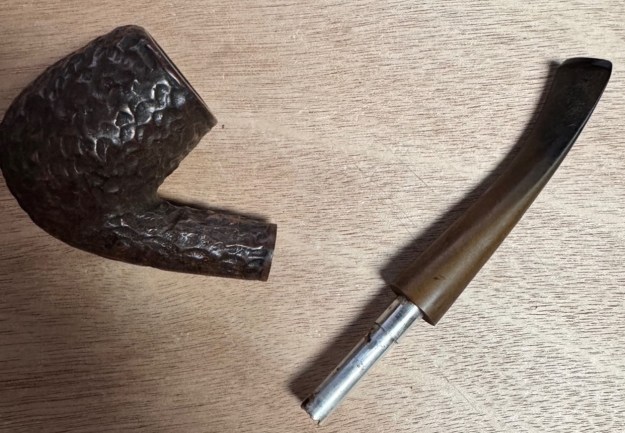
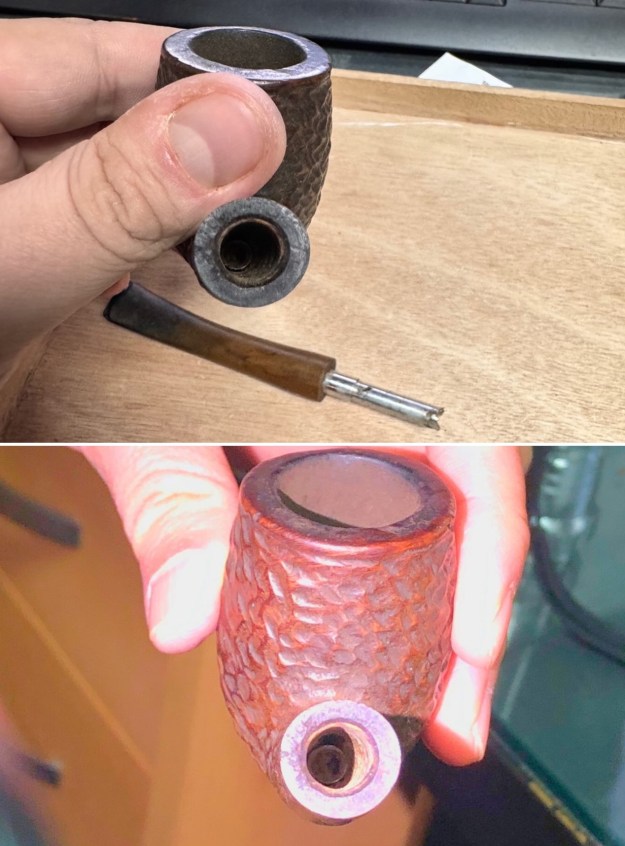
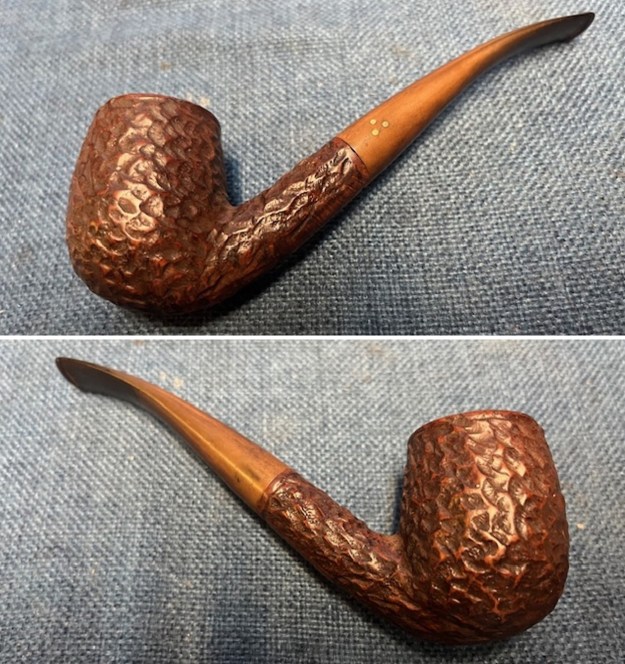
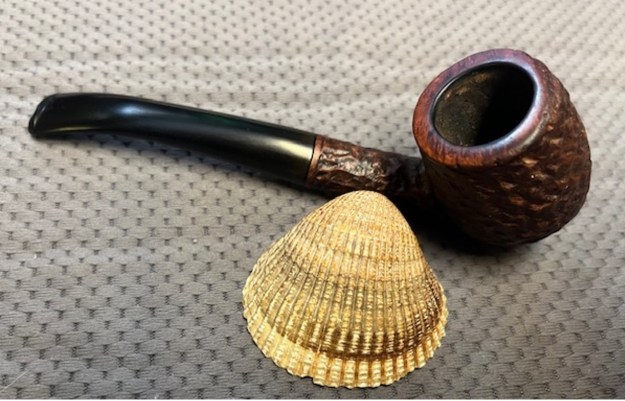
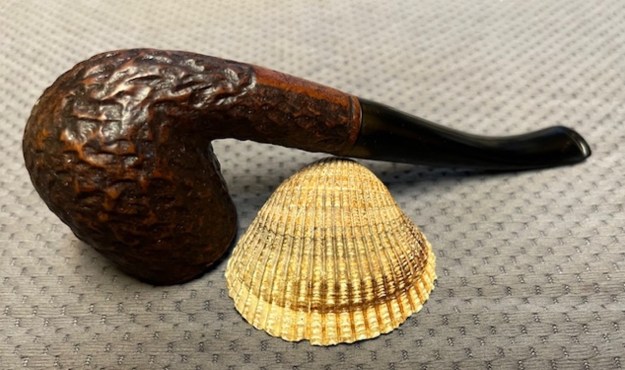
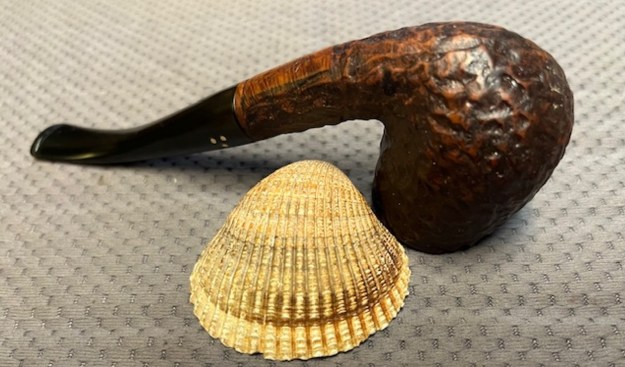
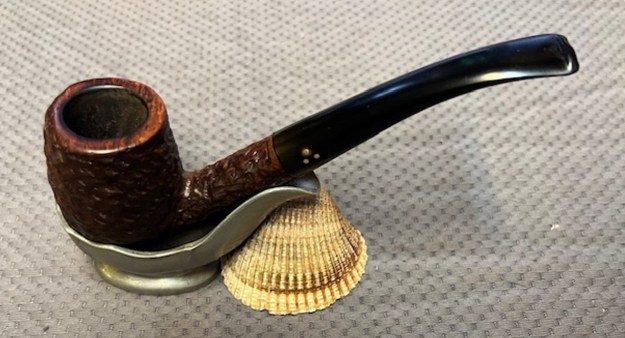
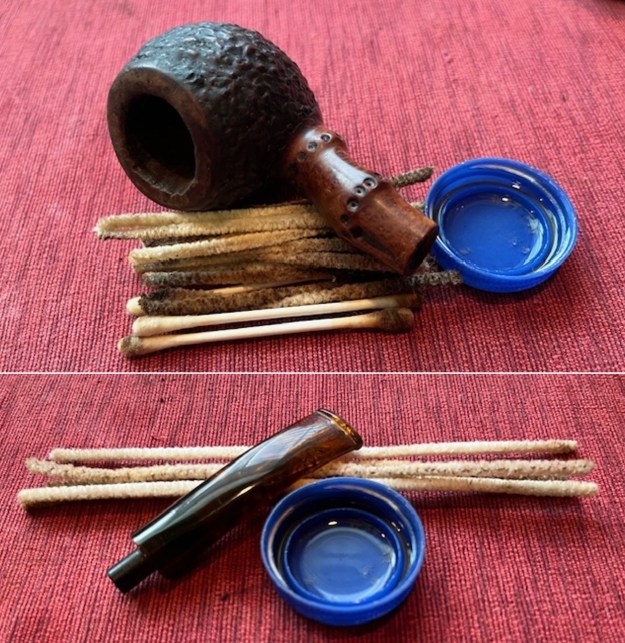
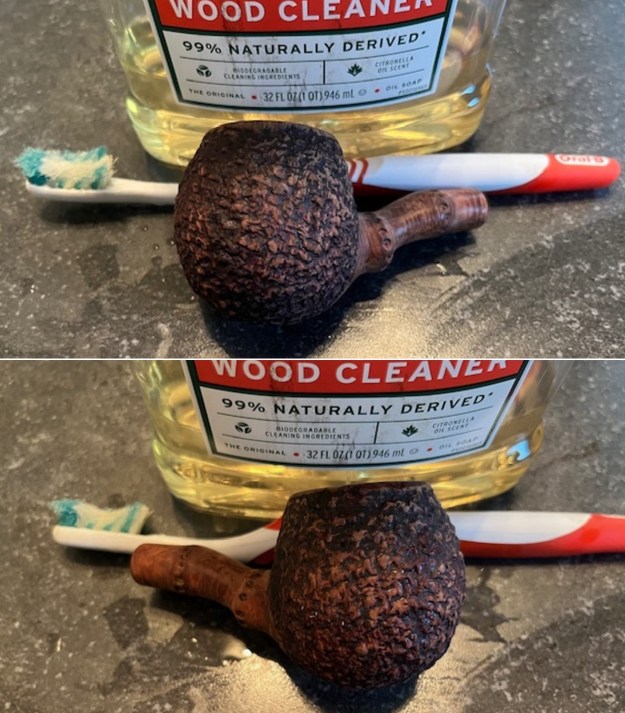
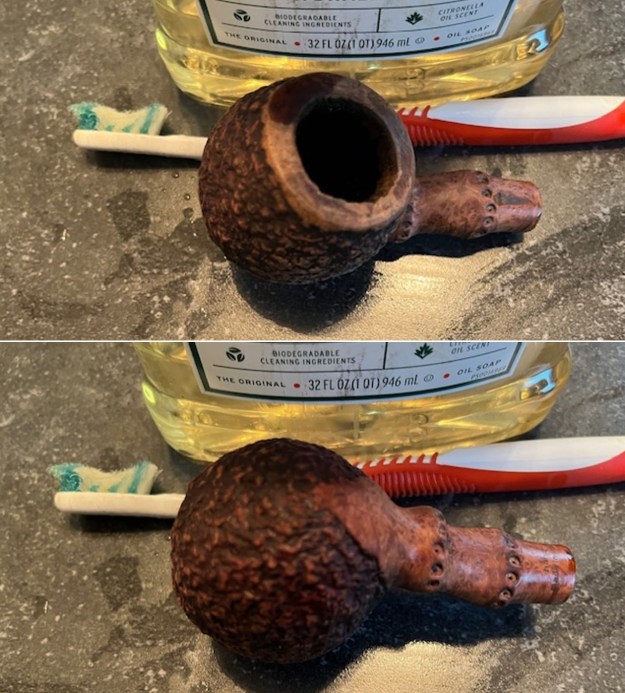
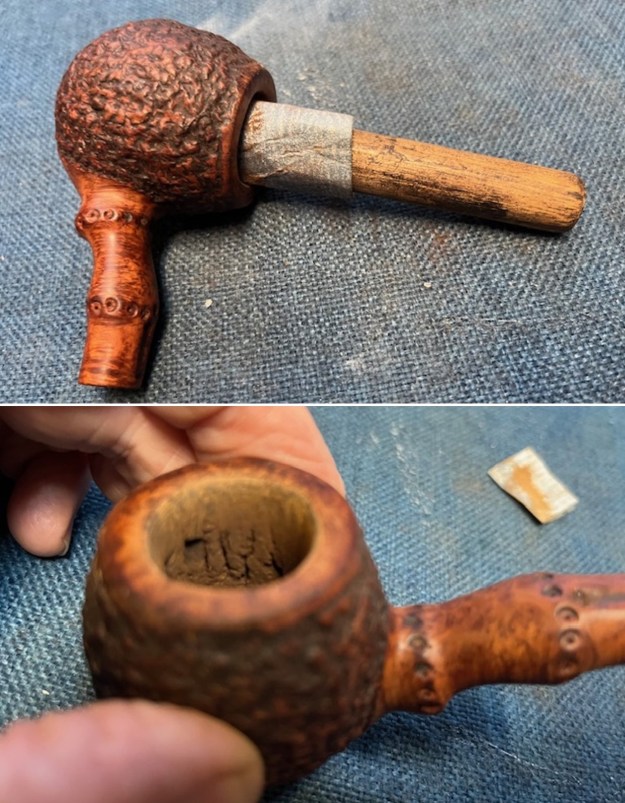
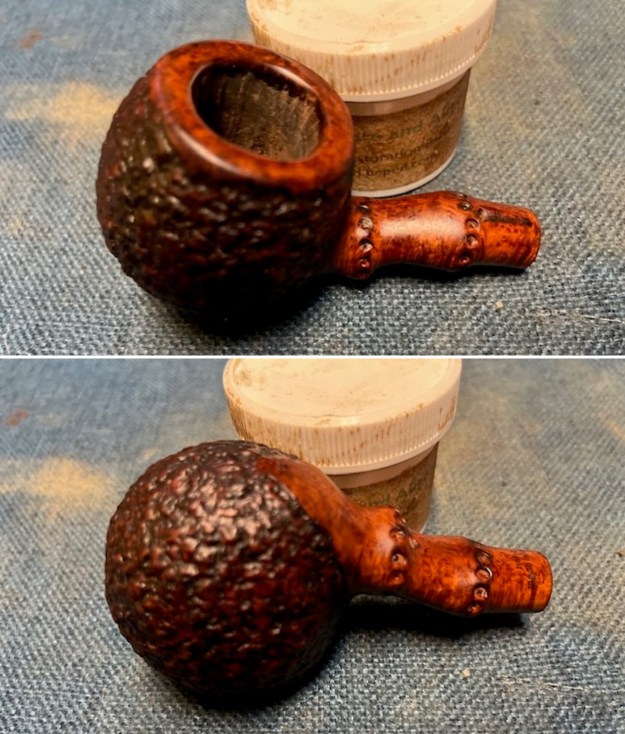
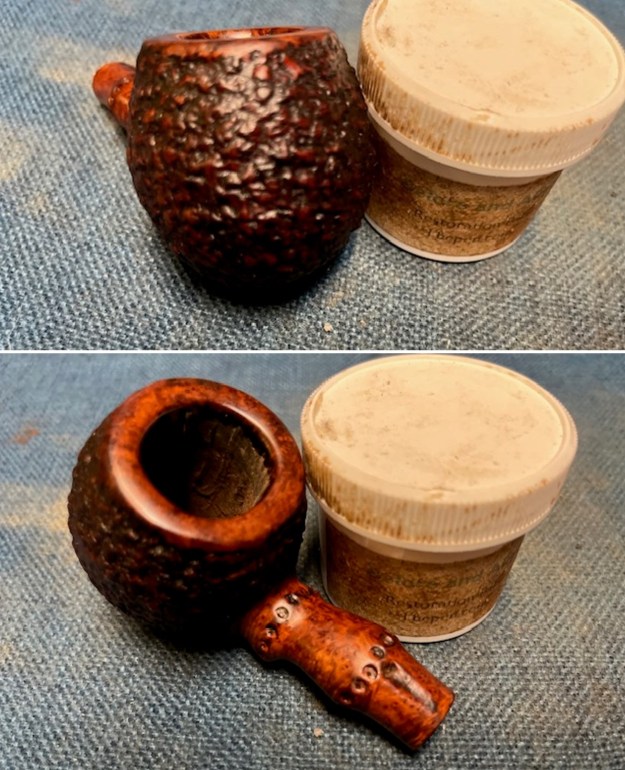
New Life for a Damaged Julius Vesz Hand Made circle 6 Calabash 97


by Steve Laug

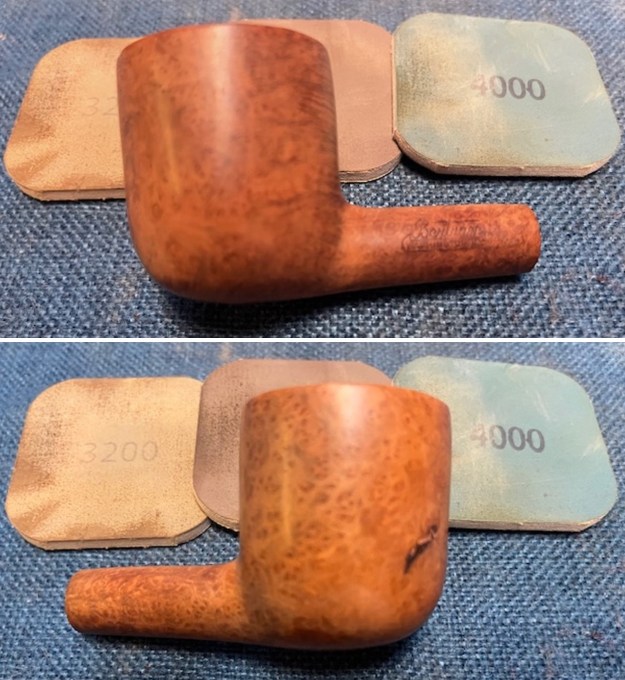
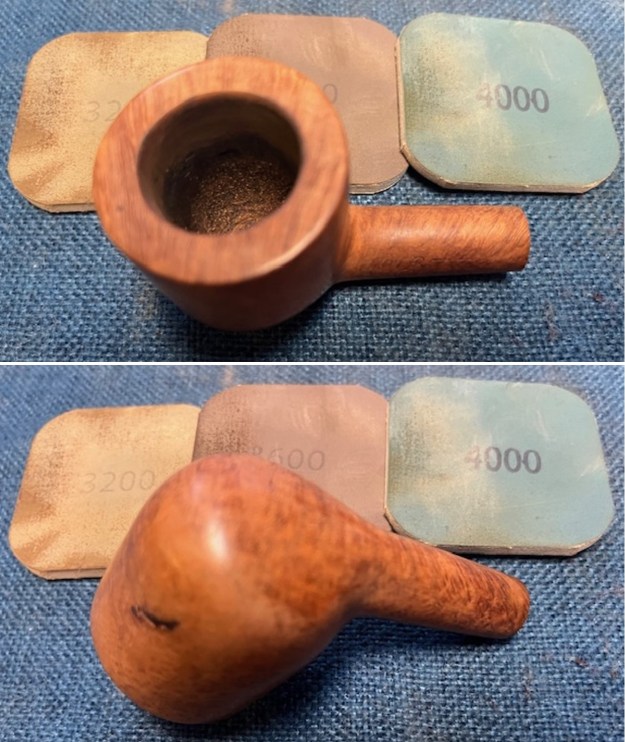
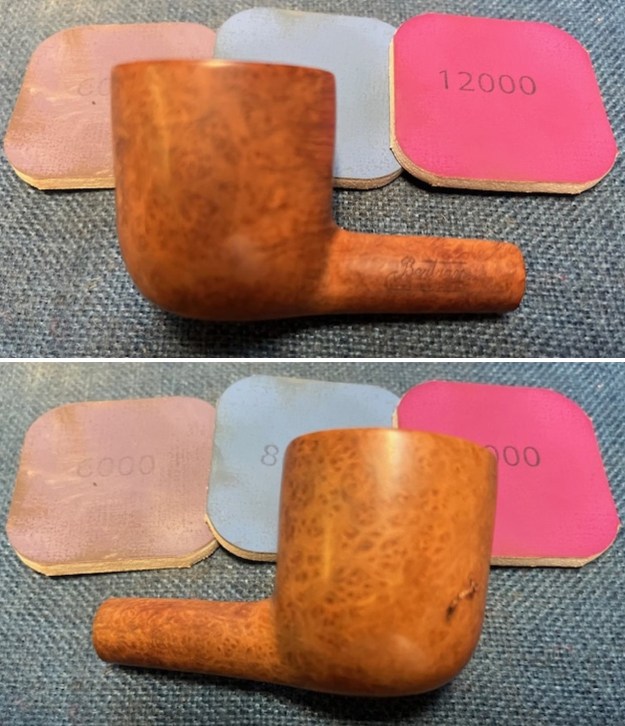
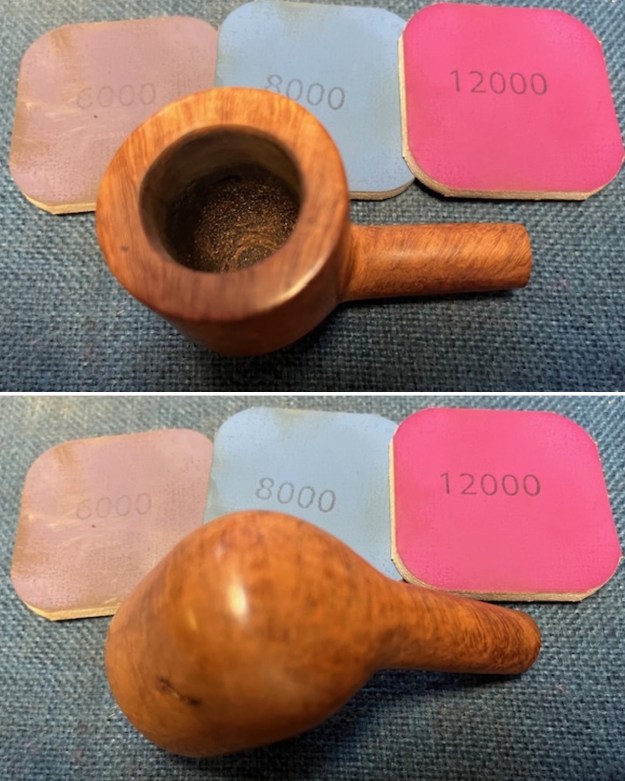
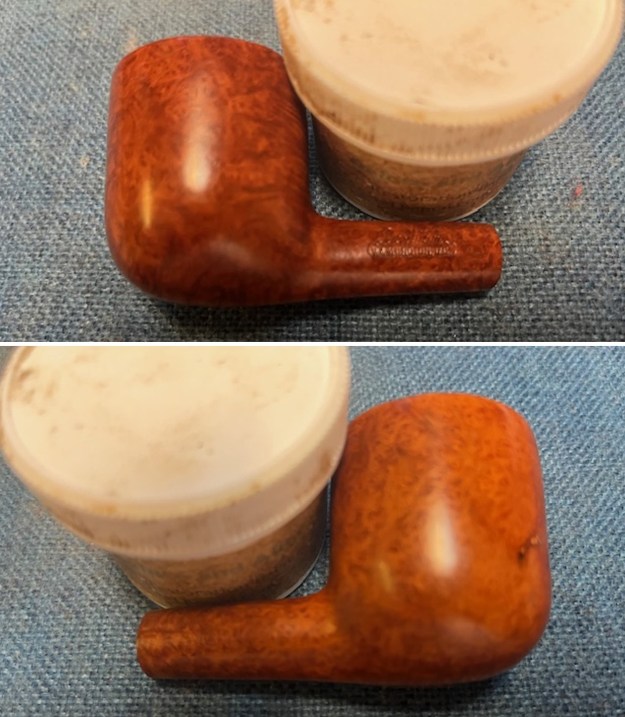
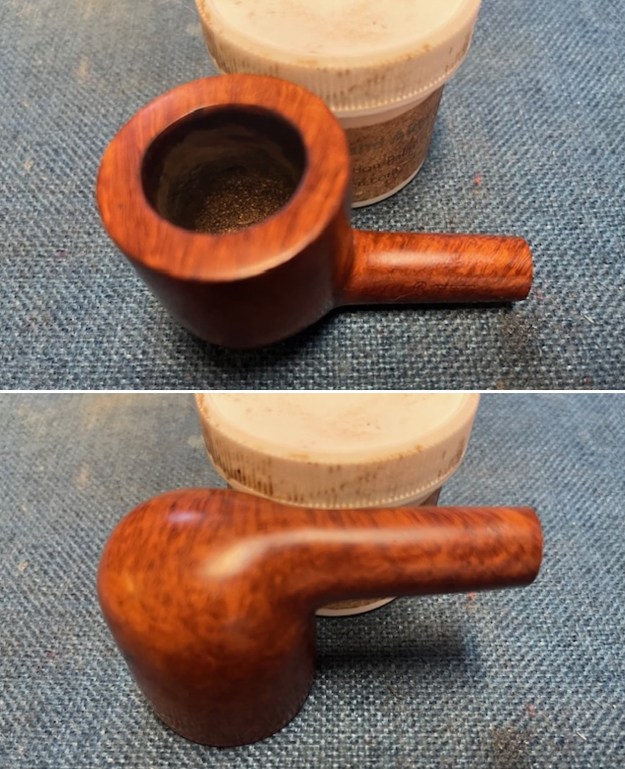
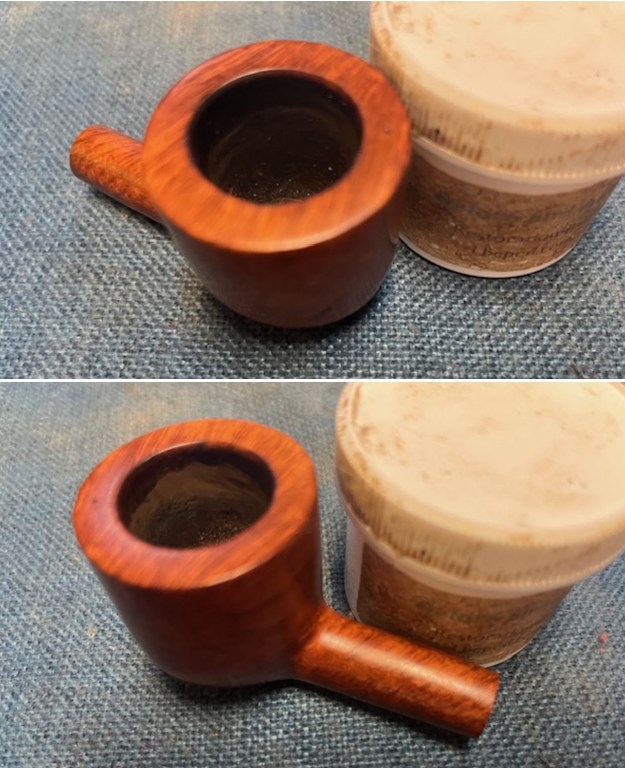
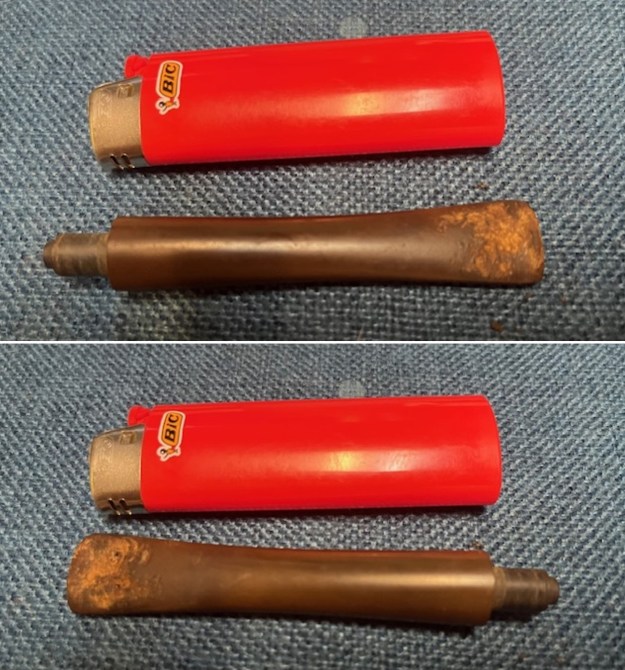
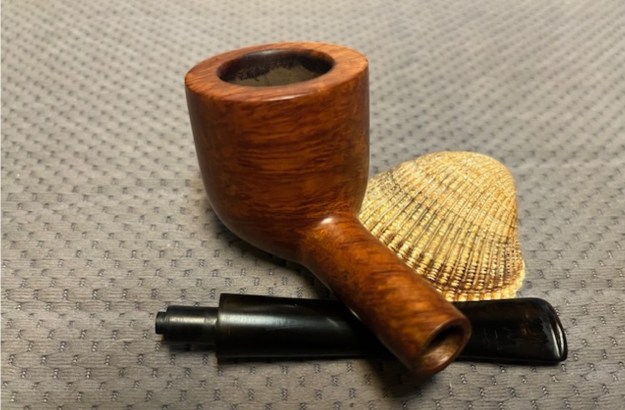
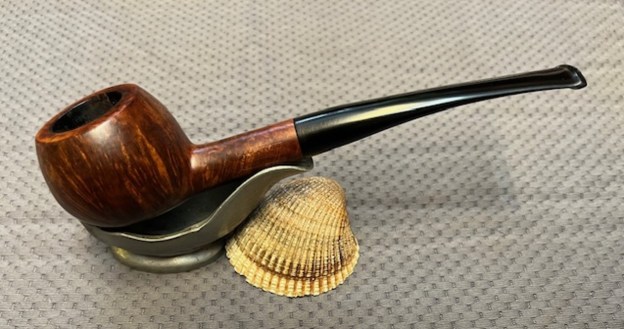
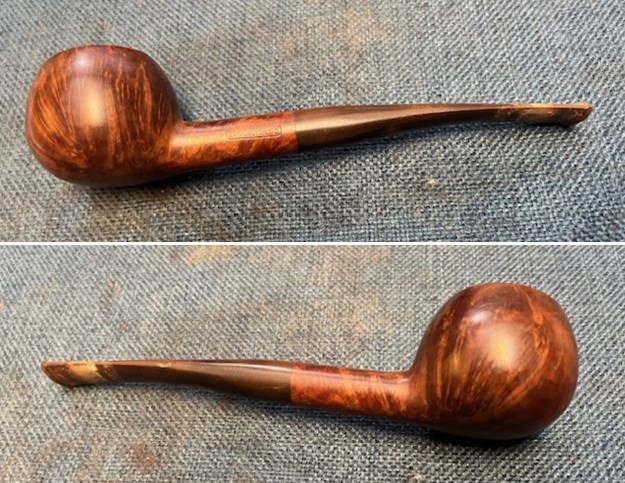
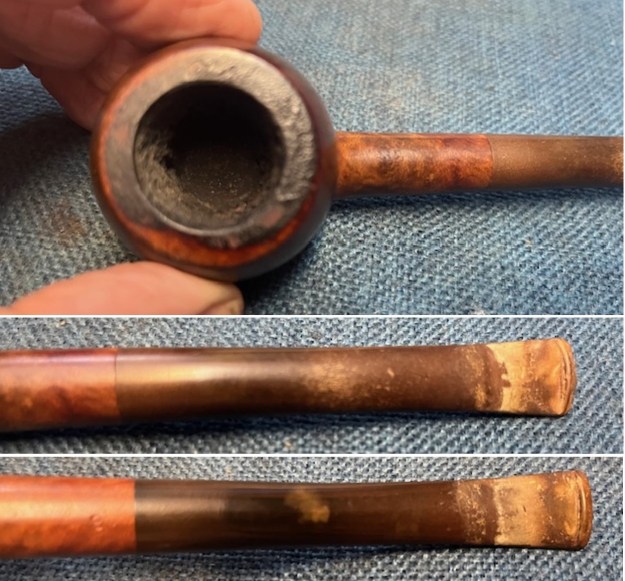
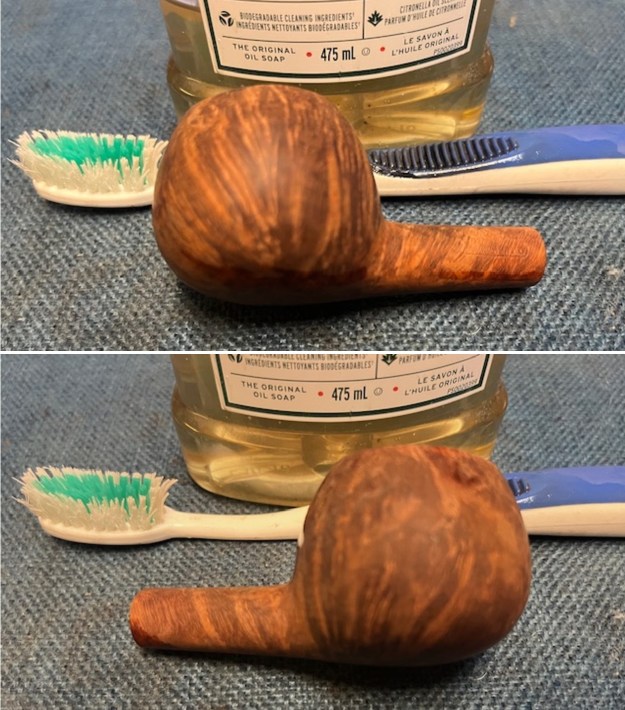
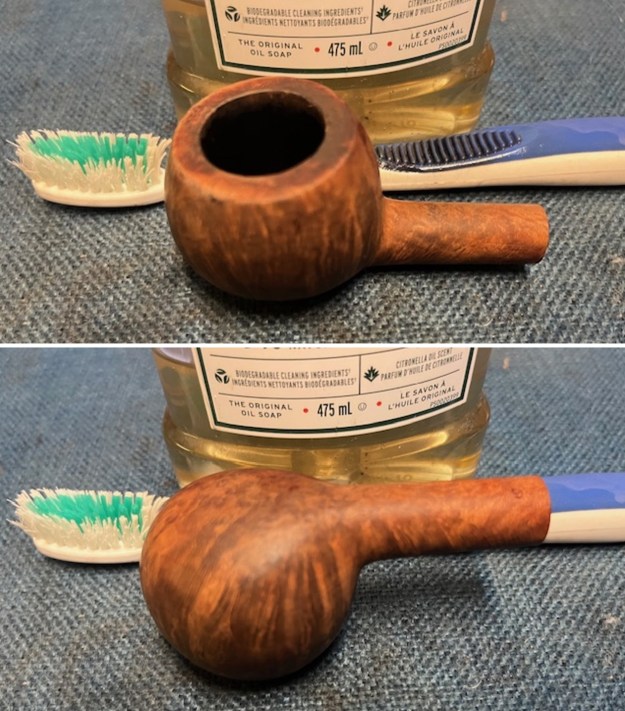
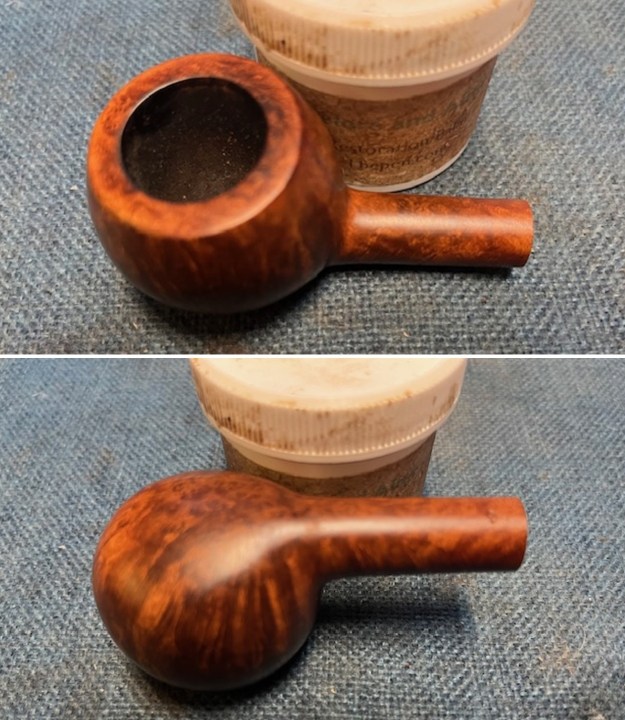
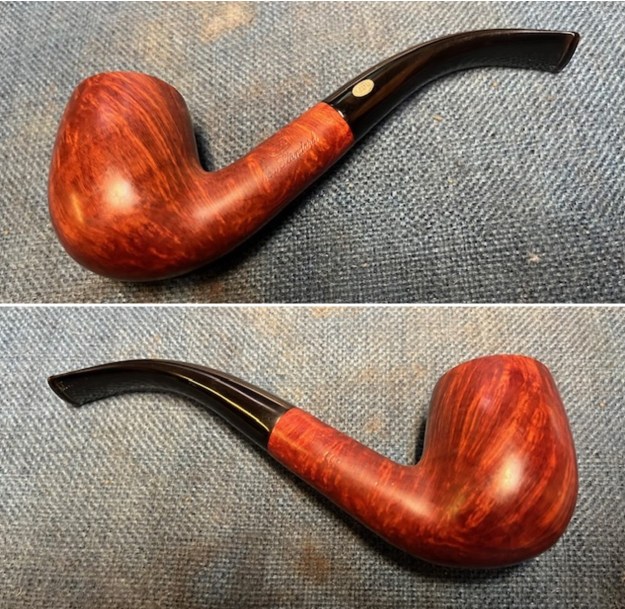
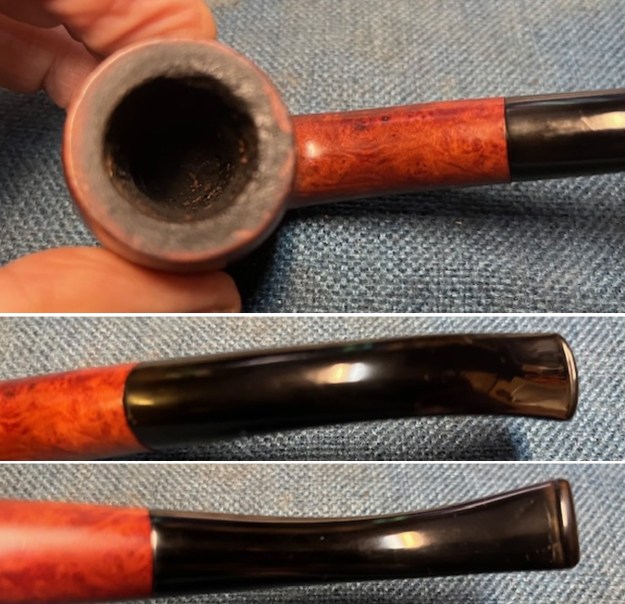
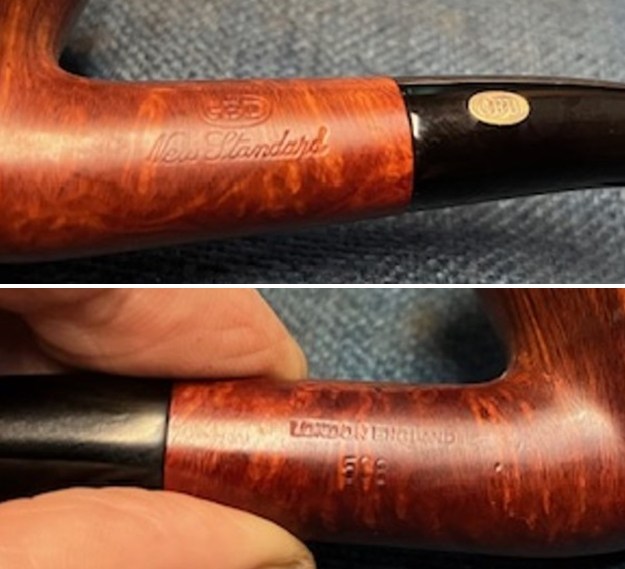
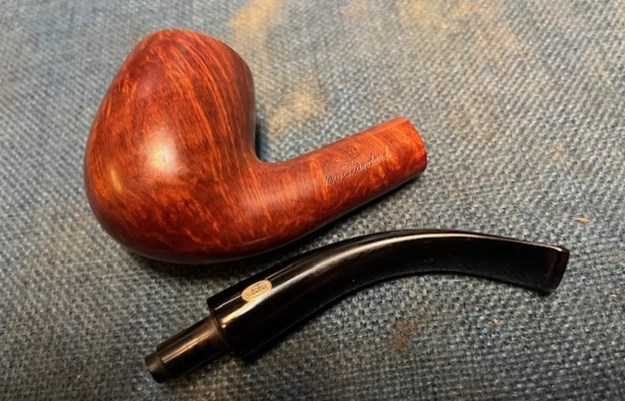
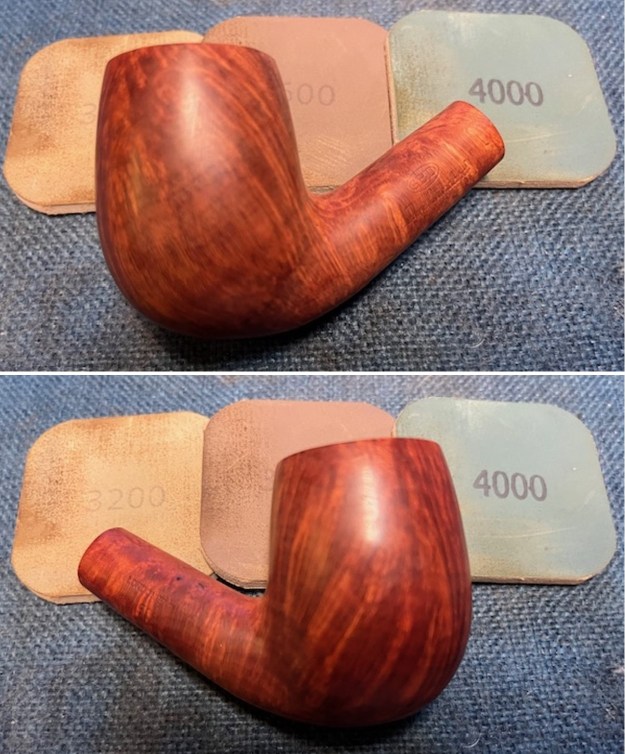
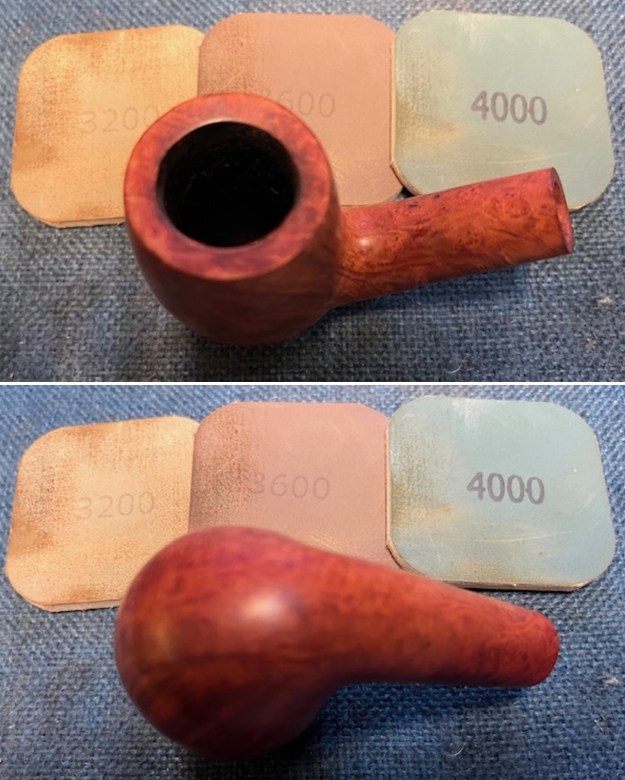
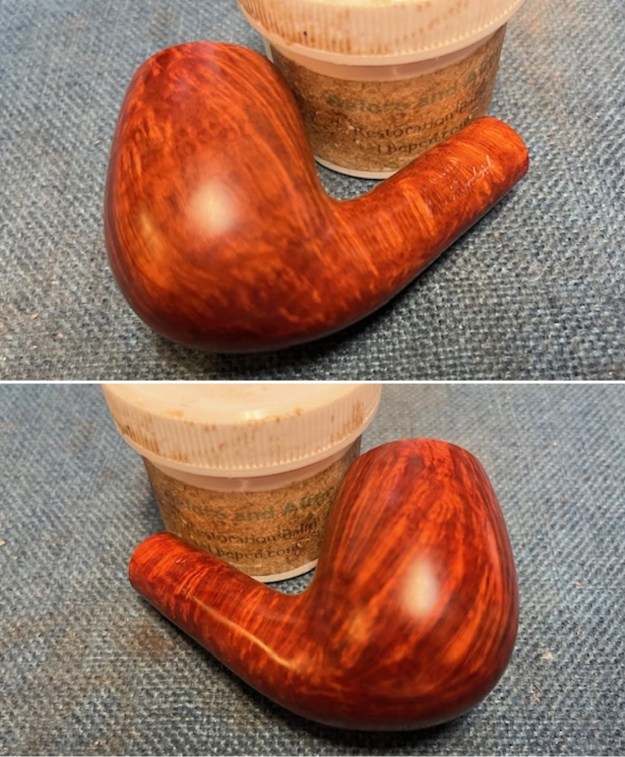
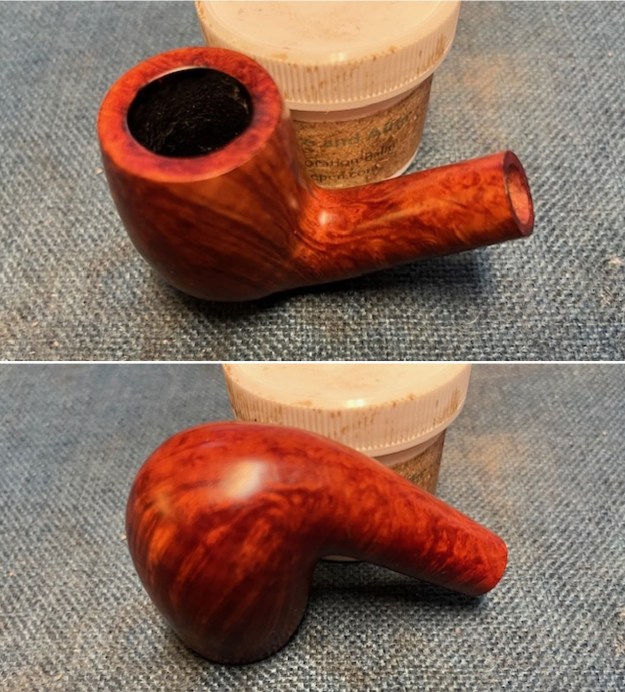
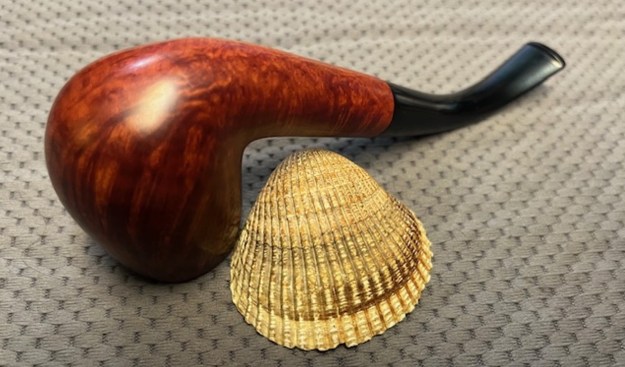
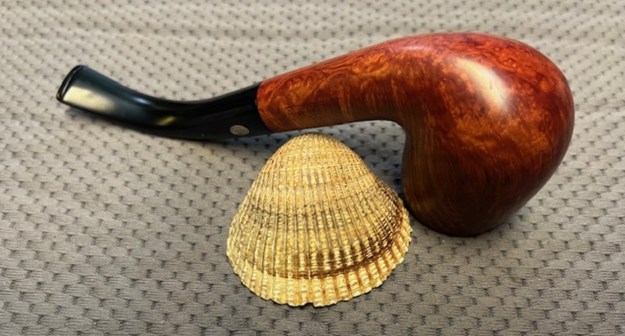
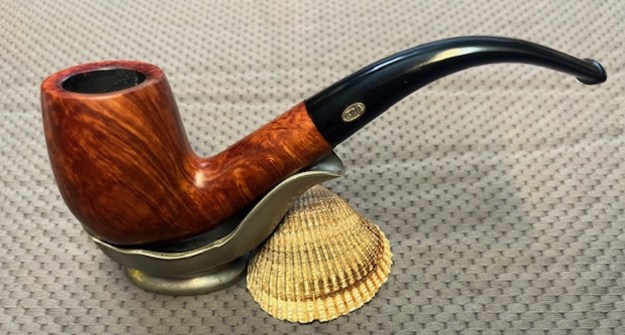
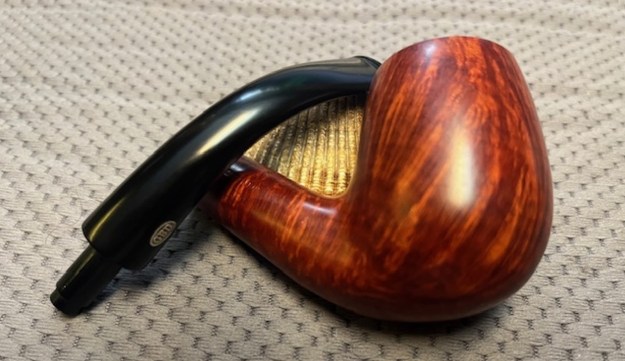
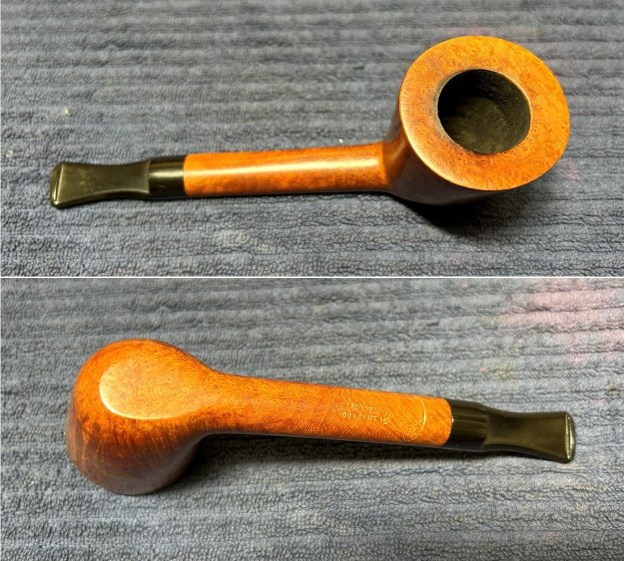
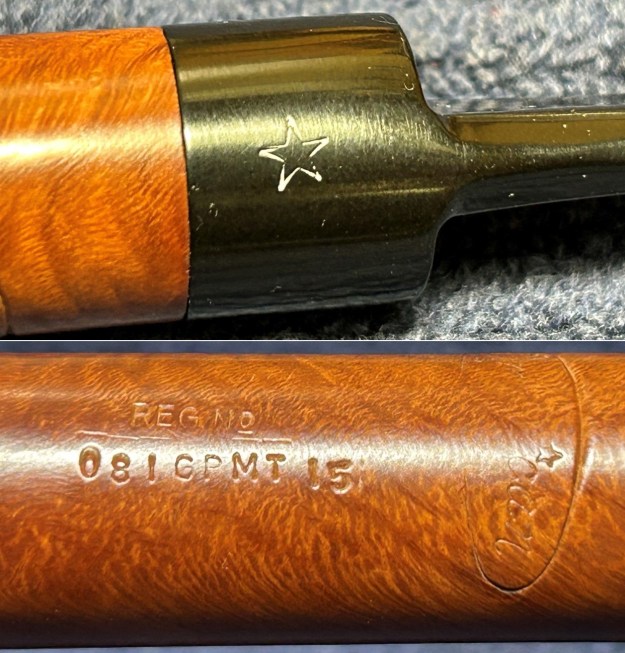
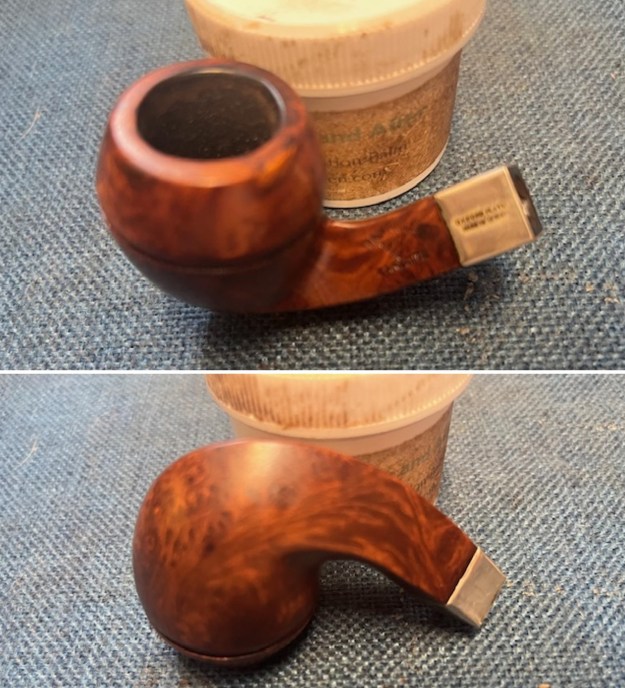
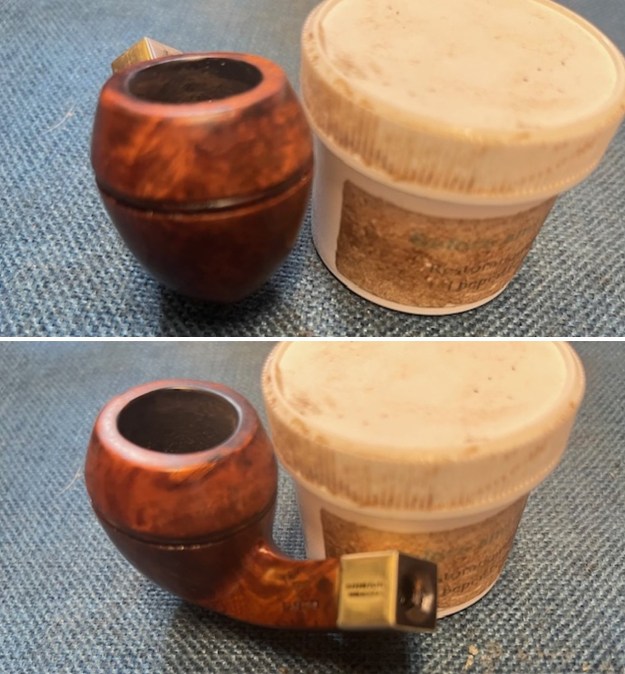
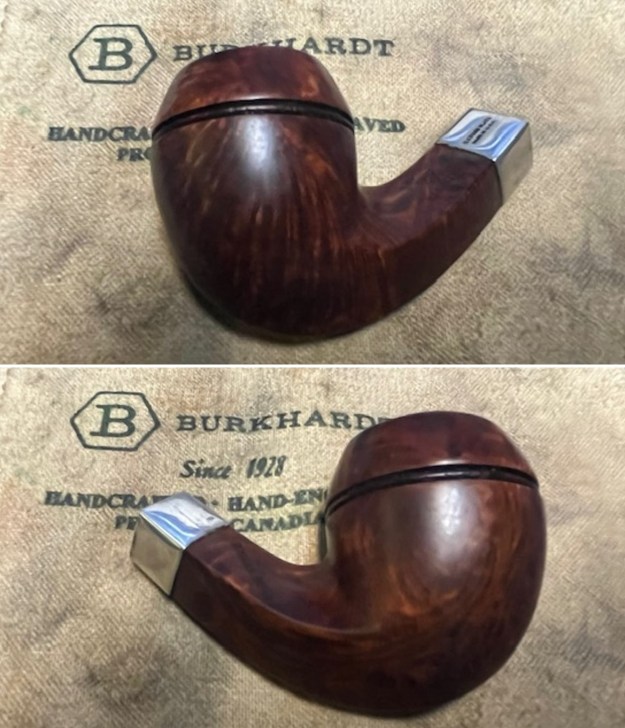
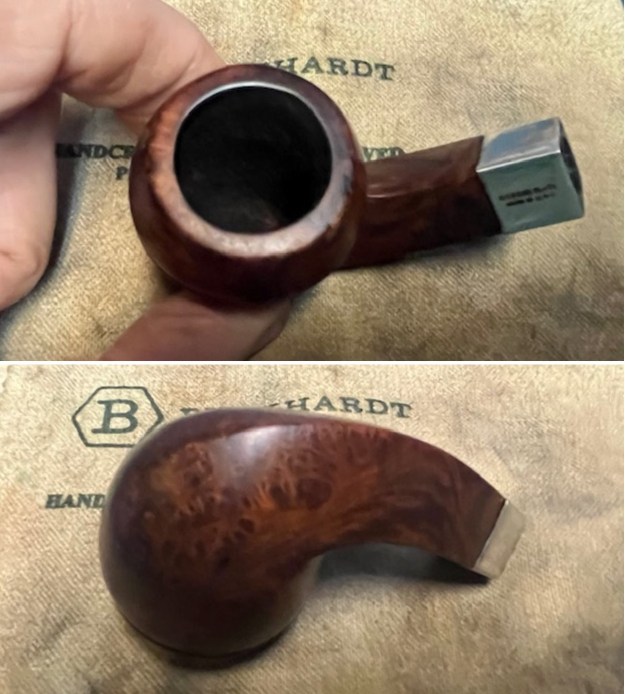
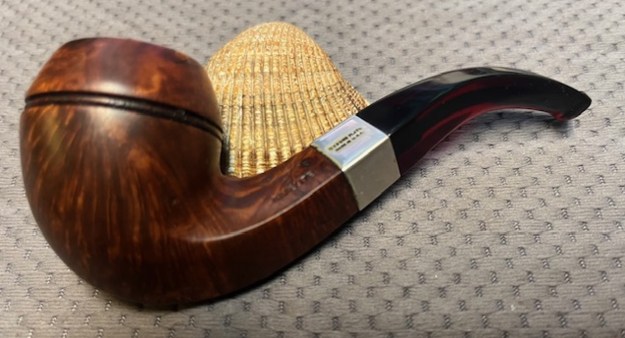
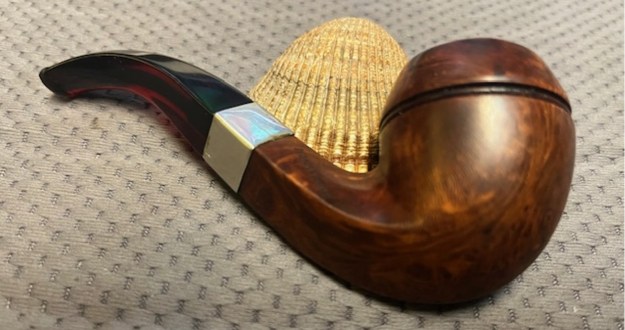
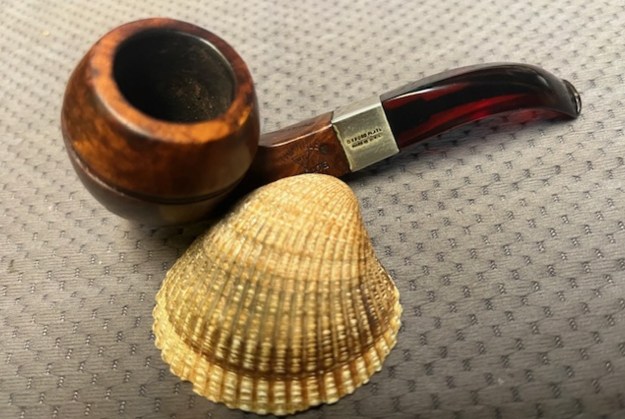
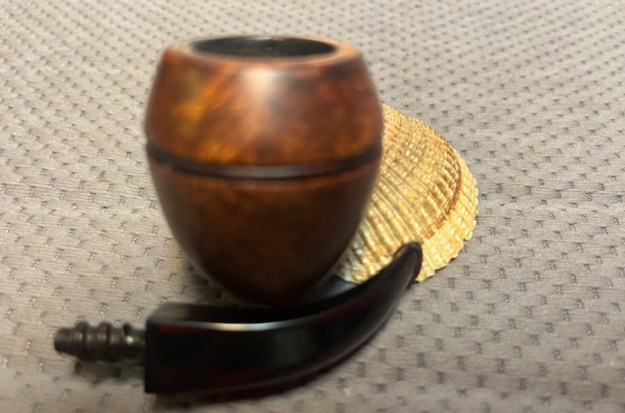
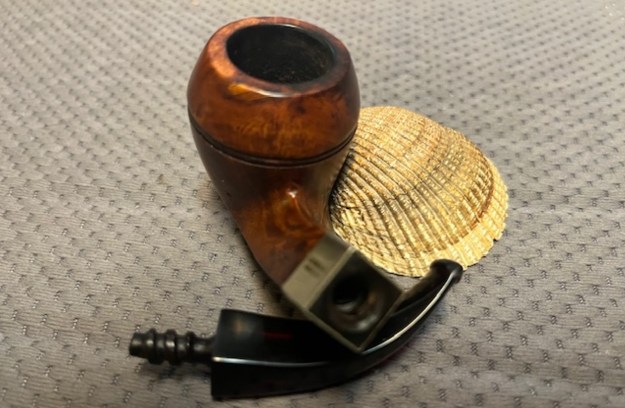
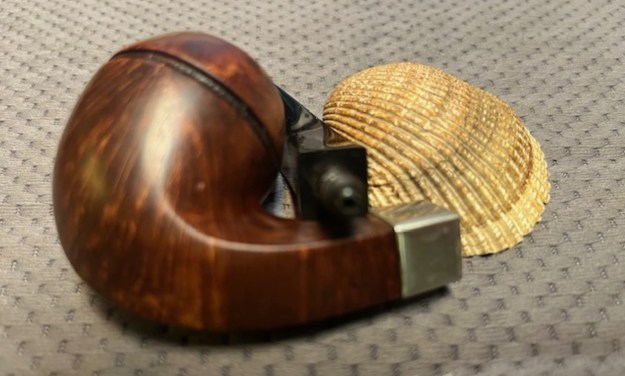
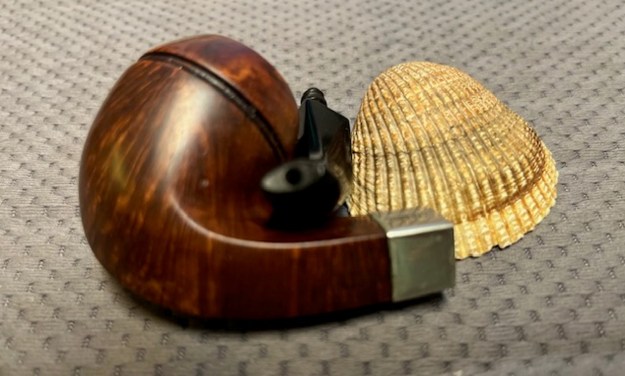
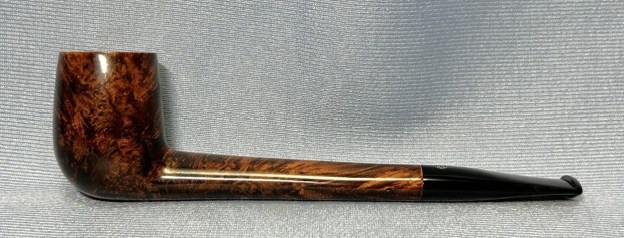
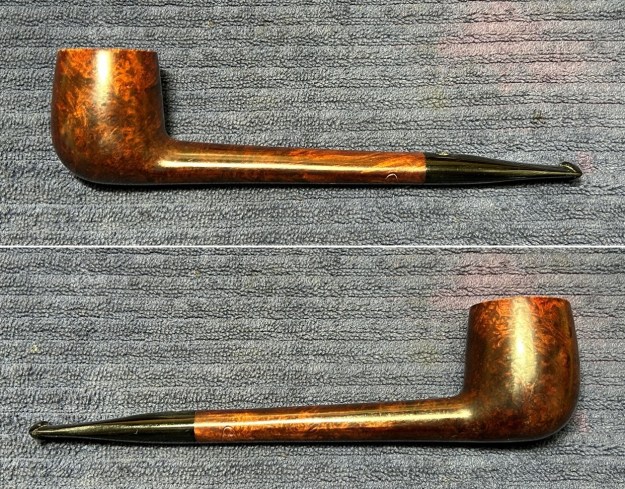
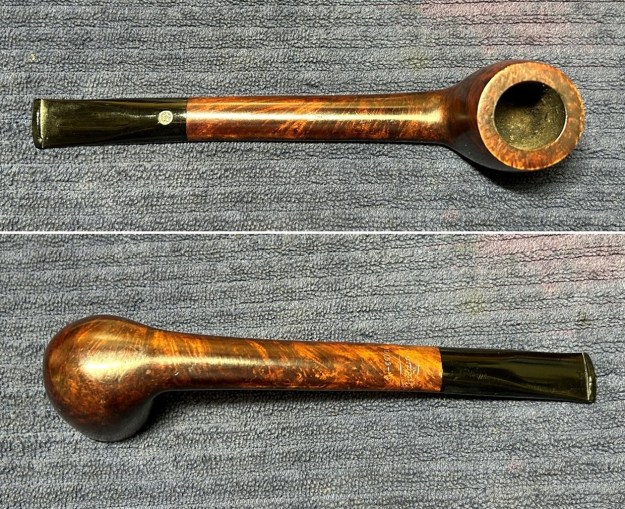
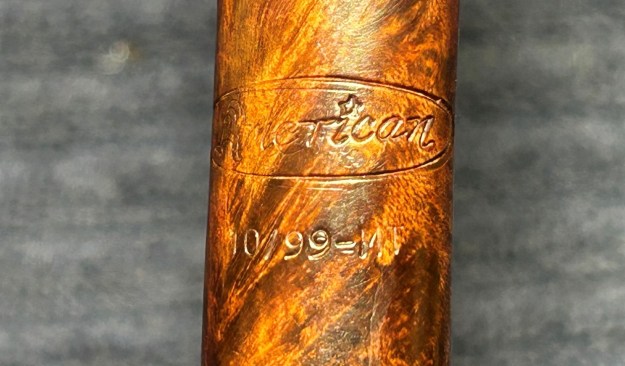
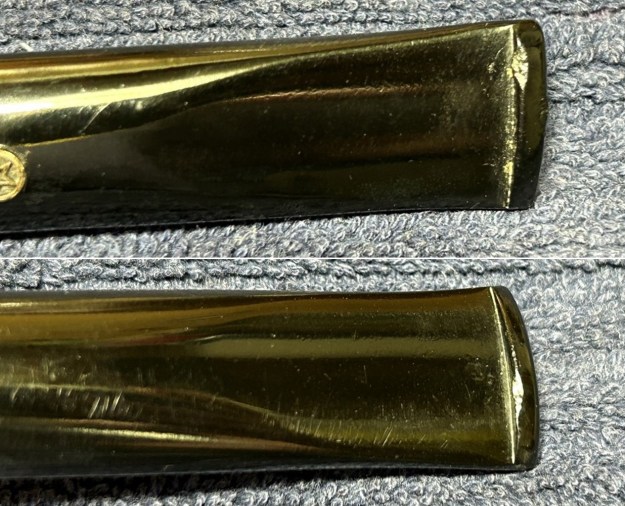
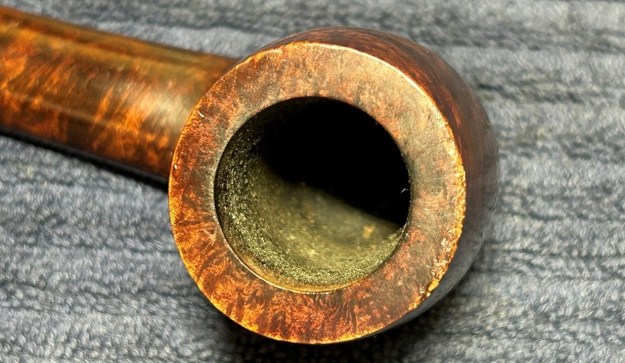
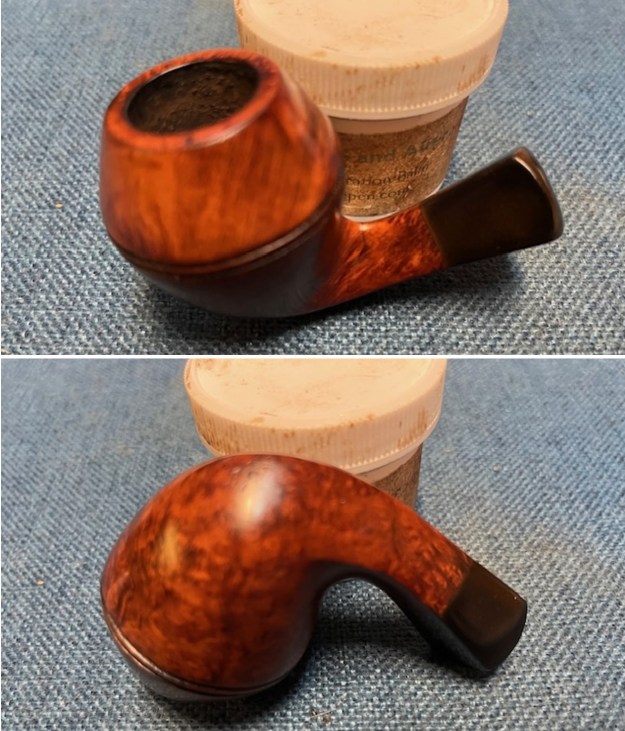
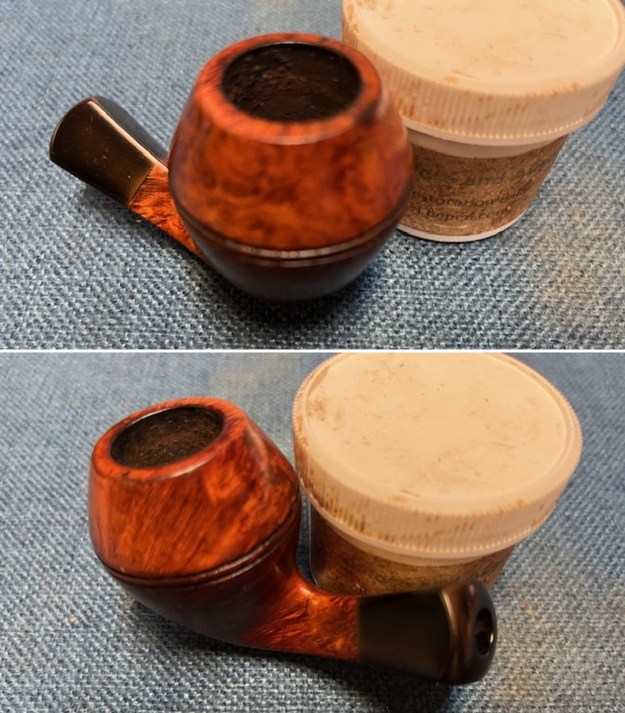
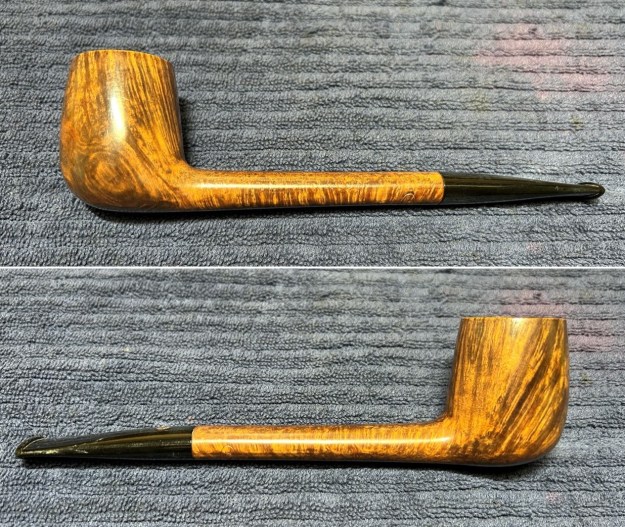
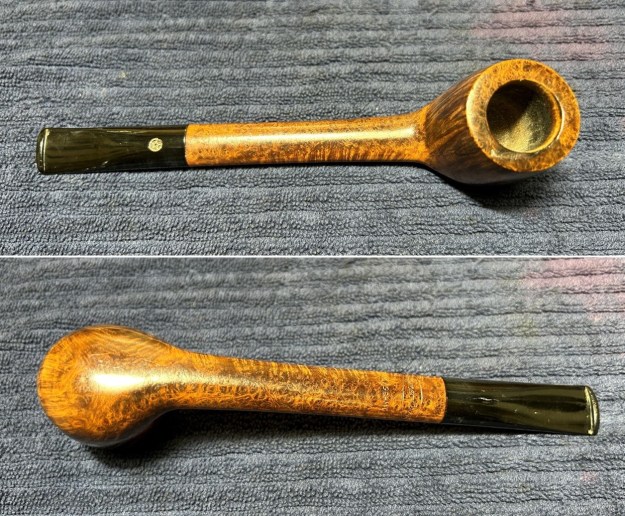
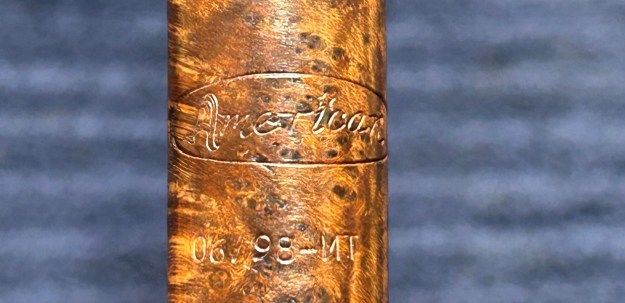
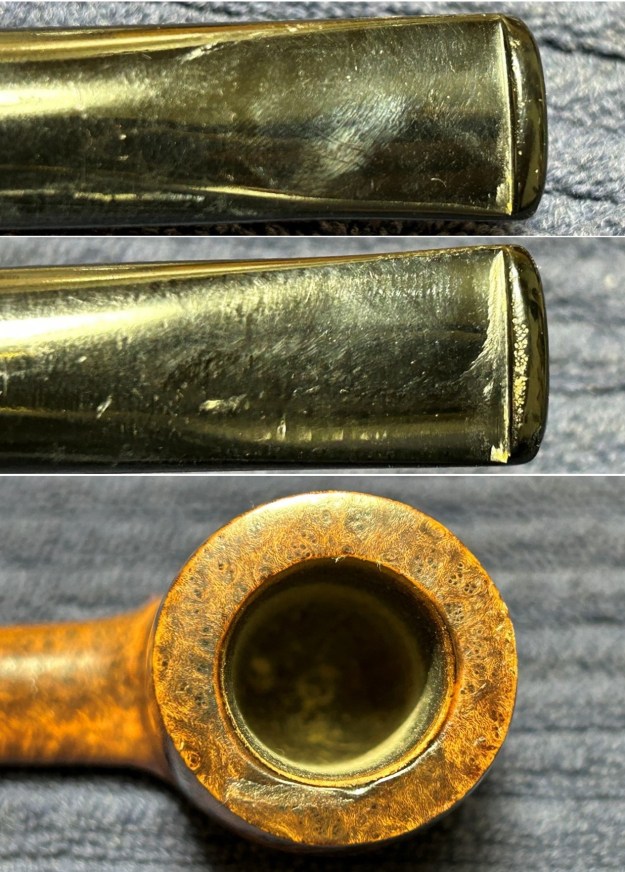
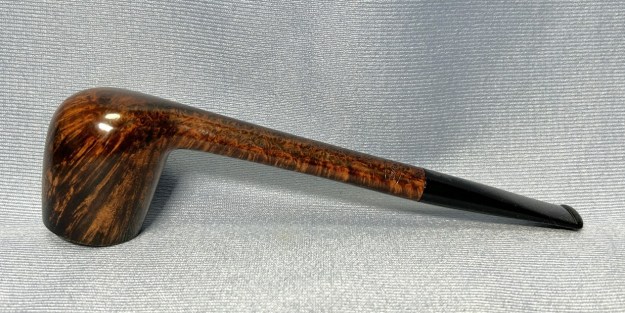
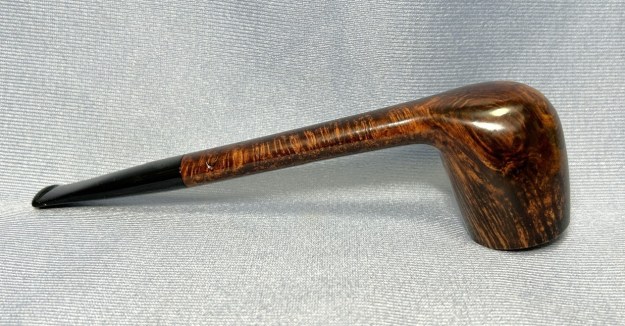
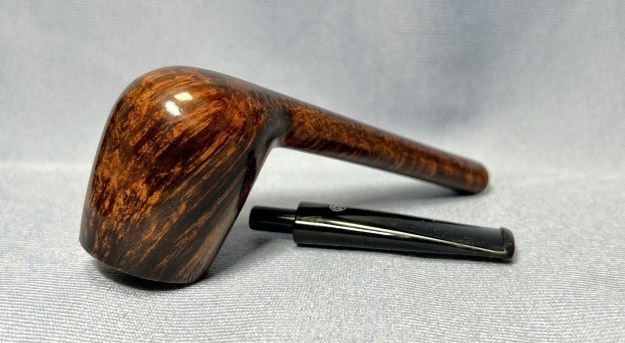
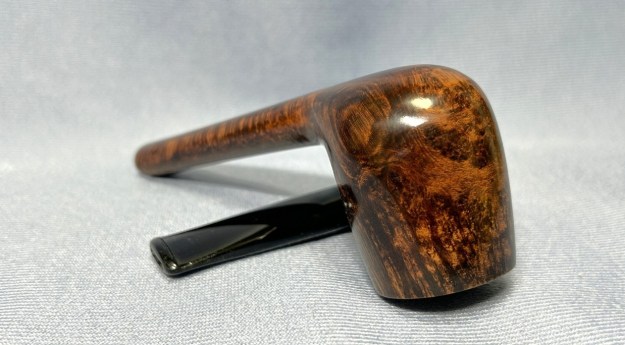
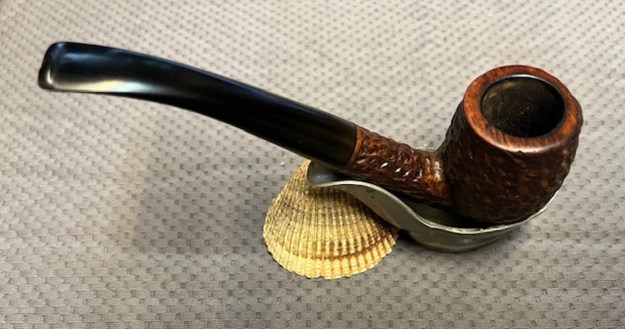
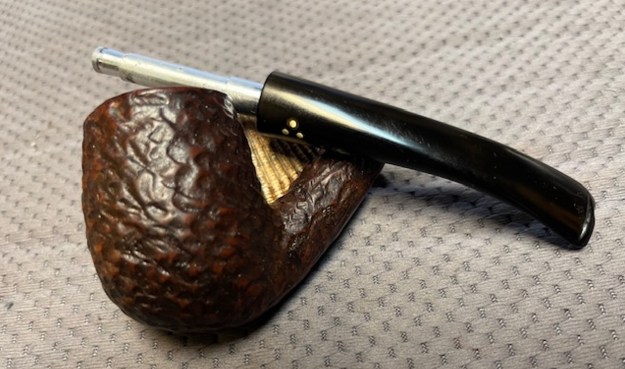
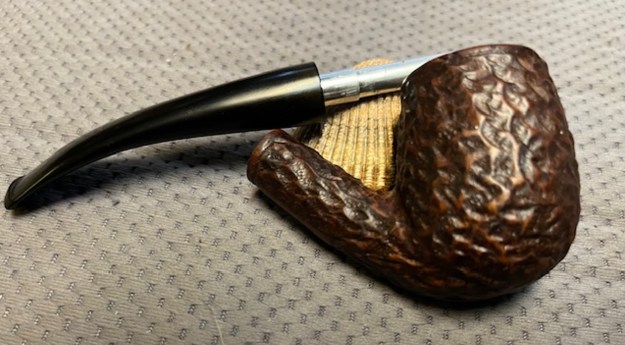
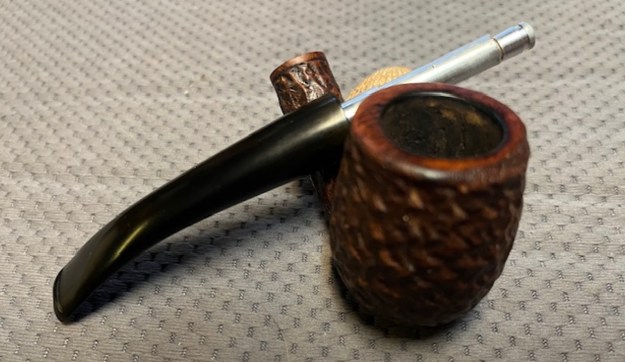
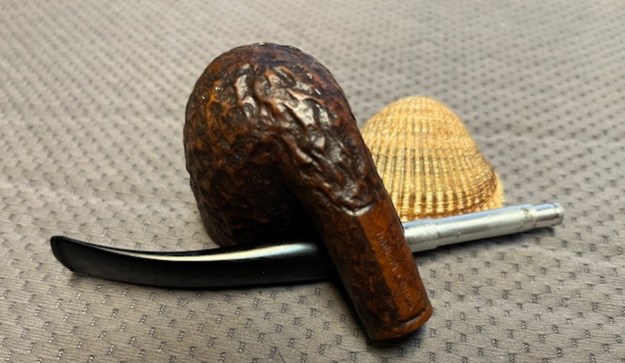
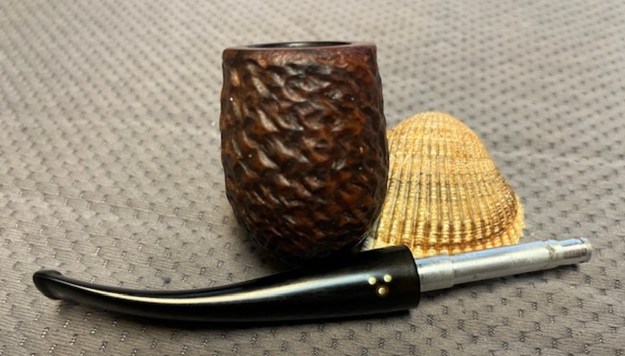
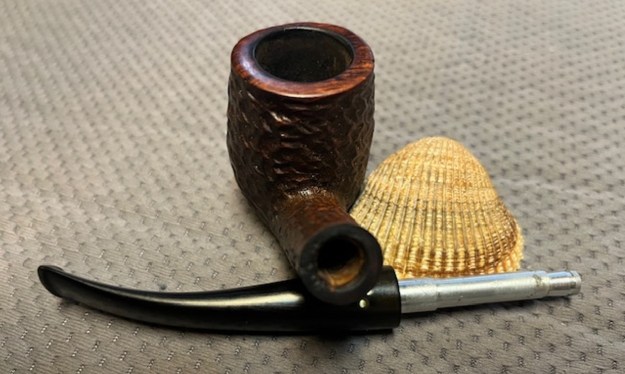
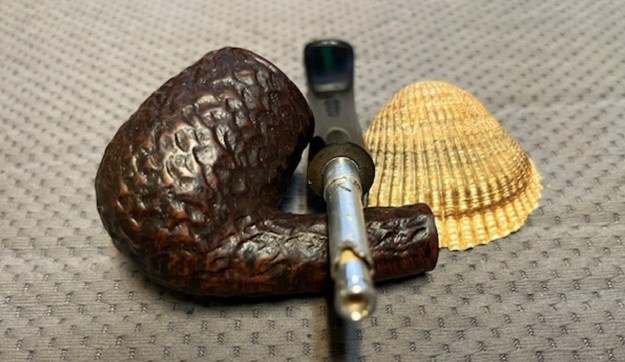
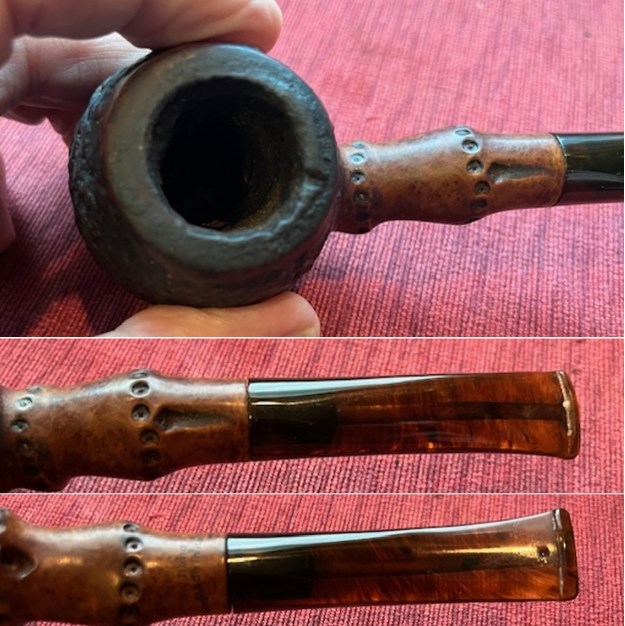
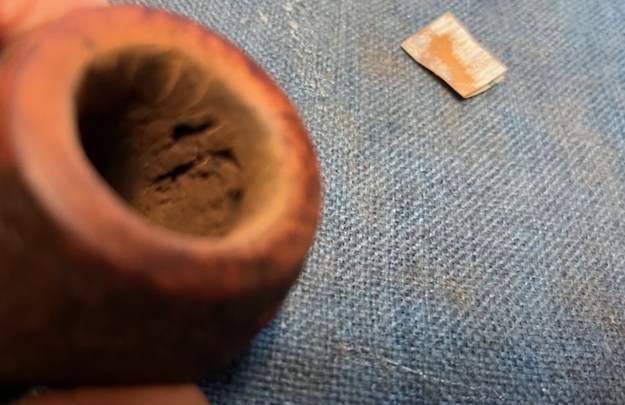
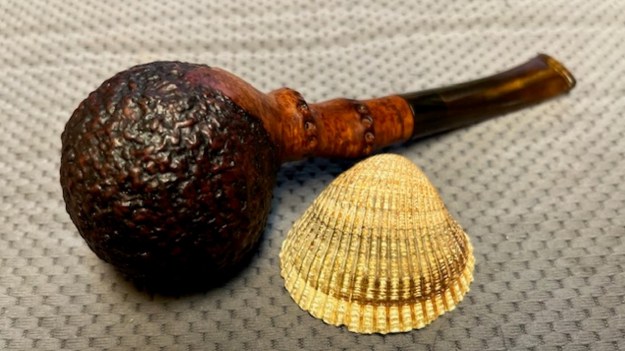
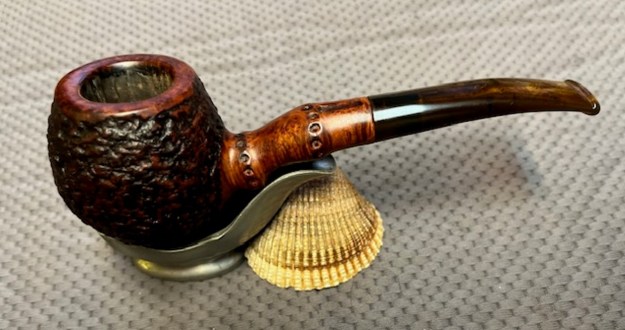
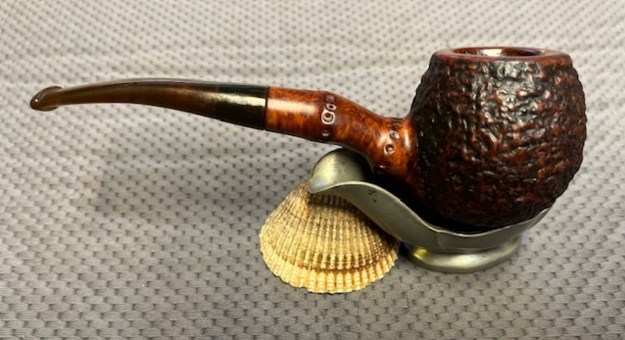
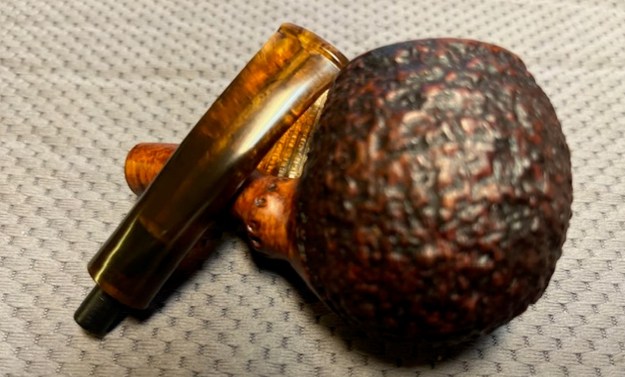
The next pipe on the table is one that we picked up in the lot from a good friend in Barrington, Rhode Island, USA on 08/22/2024. The smooth finish on this Canadian made pipe and the Julius Vesz stamping are what caught our eye. It is stamped on the left side of the shank and reads Circle 6 [over] 97 followed by Julius Vesz [over] Hand Made. It has a rich reddish, brown stain on the smooth finish that is a stark contrast to the well shaped Bent Vulcanite Stem. It is a great looking Bent Calabash shape. The bowl was clean and appears to have been recently reamed. It was a lightly smoked and well cared for pipe. The inner edge and the top look good and were clean. The stem is another issue. The shank appears to have been reshaped a bit and was rough in its fit to the shank. The left side was particularly rough. The stem itself has a poorly finished repair on a bite through on the underside ahead of the button. The white circle logo of Vesz pipes was on the left side of the stem and looks to be in good condition. Jeff took some photos of the pipe to show the general condition of the pipe before he started his clean up. He took a photo of the rim top and bowl to give me a clear picture of the condition of the rim top and bowl. It is quite clean and the inside of the bowl is very clean and shows that the pipe has been lightly smoked. He included photos that show the top and underside of the stem. It is as described above. The final photo below shows the repaired bite through in the underside of the stem ahead of the button. Jeff took some photos of the sides and heel of the bowl to show the condition of the finish on the pipe. The photos showed some great grain around the bowl and shank even with the grime in the finish. It is a great looking piece of briar. He took photos of the stamping on the sides of the shank. It was clear and readable as noted above. He also captured the white circle logo on the left side of the bent taper stem. Before I started working my part of the restoration I spent some time trying to place the hand cut line in the Vesz hierarchy. I turned to rebornpipes to have a look at some of the pieces I had written previously on the brand. The first was a catalogue I had picked up on Vesz pipes from a friend. It was an older catalogue from the time period that the brand was called Craft Pipes (https://rebornpipes.com/2016/09/13/an-older-julius-vesz-catalogue/). In going through the catalogue there was nothing that referred to the newer lines of the Vesz pipes that showed up in other places.

A piece I wrote on a Vesz Zulu gave a lot of historical background on the brand so I reread that (https://rebornpipes.com/2014/10/04/a-review-a-julius-vesz-shape-76-zulu/). I quoted a part of the article that applied to the pipe I was working on now.

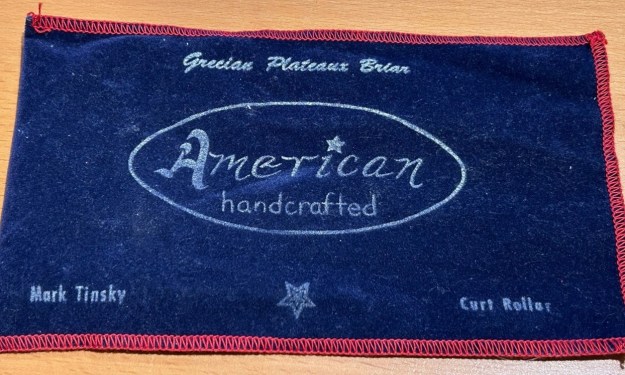
My first Vesz is stamped on the left side of the shank Julius Vesz Hand Made Canada with a circle 4 stamp. I learned from correspondence with Julius’ son Rob that his dad’s Hand Made pipes were graded (in ascending order): 2 – 4 and this one is a grade 4 stamped pipe. It also bears a shape number of 76 which is the Zulu shape. The stem bears a white circle inlay that is common on his pipes.

The pipe I was working on was stamped Julius Vesz [over] Hand Made and had a circle 6 stamp. That appears to be the grade stamp though it is higher than the 2-4 listed above. It also bears the shape number of 97 which is a Calabash. The stem also has a white inlay circle on the stem.

In the previous blog about I quoted from Pipedia in the piece and have included that and the link below and the information on Vesz. The picture and the material is taken from this link http://pipedia.org/wiki/Vesz_Pipes

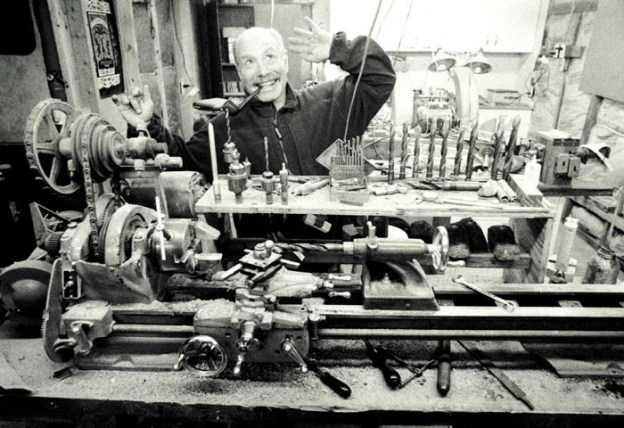
 “Born and raised in Hungary, Julius Vesz was first exposed to pipe making through his grandfather. Although his grandfather died when Julius was only 9 years old, he can still picture his grandfather making pipes. It made a lasting impression that matured years later.

After immigrating to Canada at age 23, Vesz worked as a mechanical draftsman, but ever since a child had wanted to do something on his own. Remembering his grandfather’s pipe making and repairing, he thought perhaps he should try his hand at that also. He sought out Charlie Dollack, who had a repair shop in downtown Toronto, but while Charlie encouraged the young Vesz, he did not offer any help or instruction.

Julius continued on his own, setting up a modest shop in his own home, and was soon fixing and making pipes for several department stores, as well as United Cigar, which later turned into his main source of work. He discovered he had a unique skill, which he practiced and nurtured on his own. Like his grandfather, Vesz is motivated by a desire to create pipes that approach perfection.”

Over the years I have followed Julius Vesz’ pipes and kept an eye out for one that caught my eye. Julius Vesz is a Canadian pipe maker who has been controversial in his claim to use dead root briar. Many have argued about his choice of terms regarding the briar that he uses. But regardless of your take on that issue he makes beautiful pipes that smoke exceptionally well. His unique raindrop shaped pipes may be how many people know him. He had a shop in the Royal York Hotel, 100 Front Street West in Toronto. He now has moved out of the shop and into his home…”

Now I knew that the Hand Made pipe I had was the top of the lower line of Vesz Pipes below the Hand Cut line. It was graded 6 which is close to the top of the line. It is a beauty and it is now time to work on it!

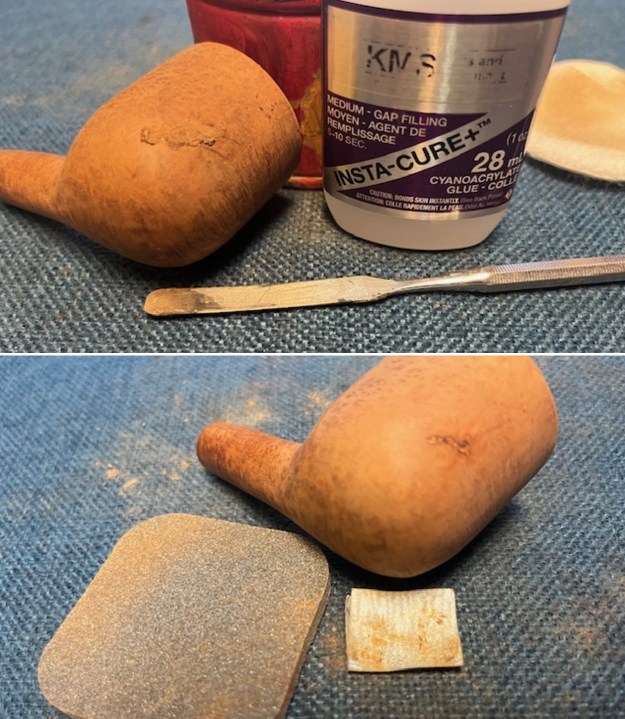
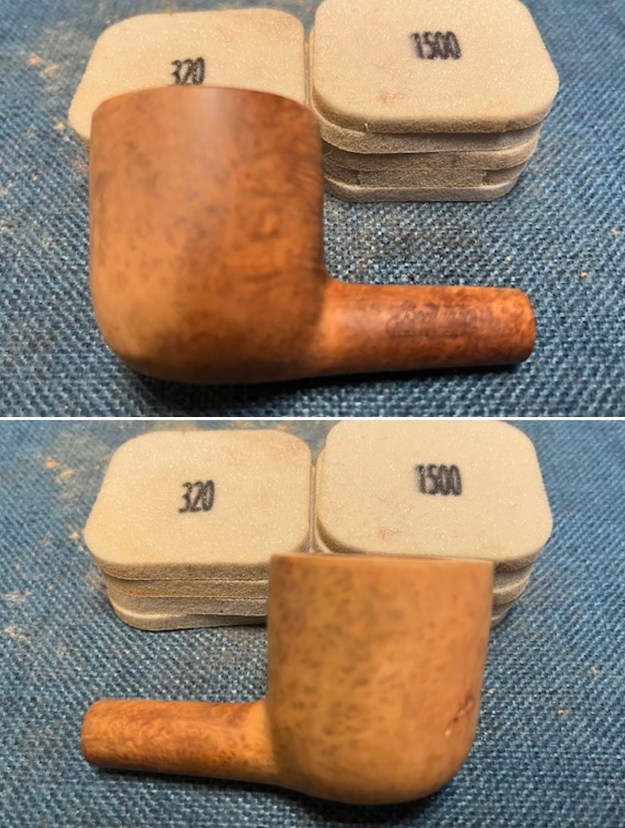
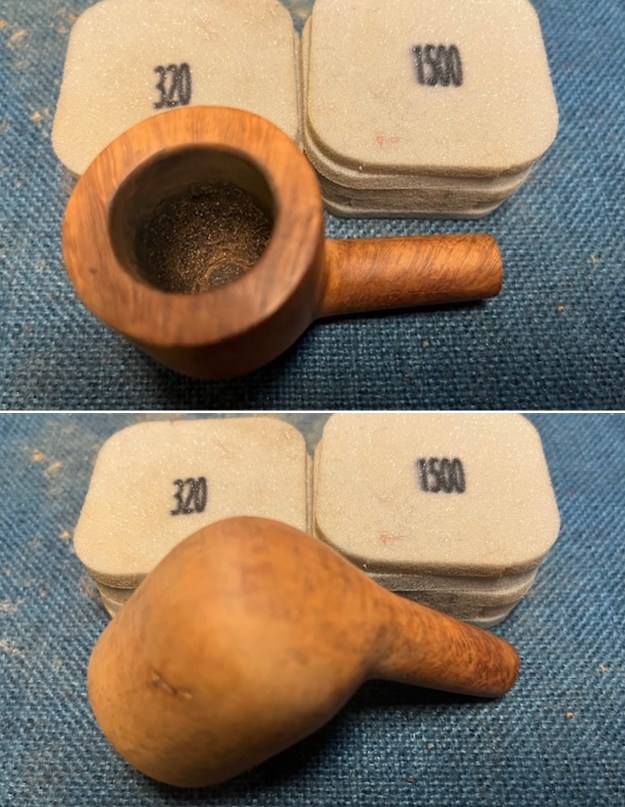
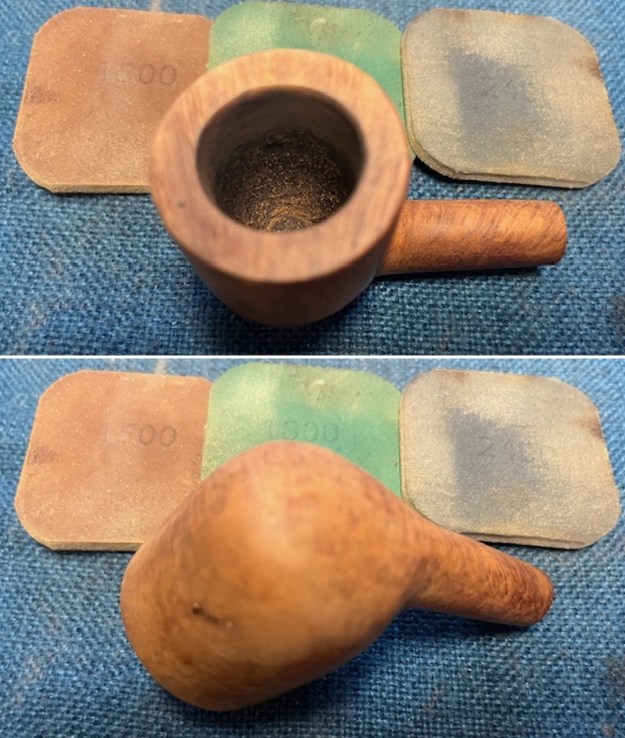
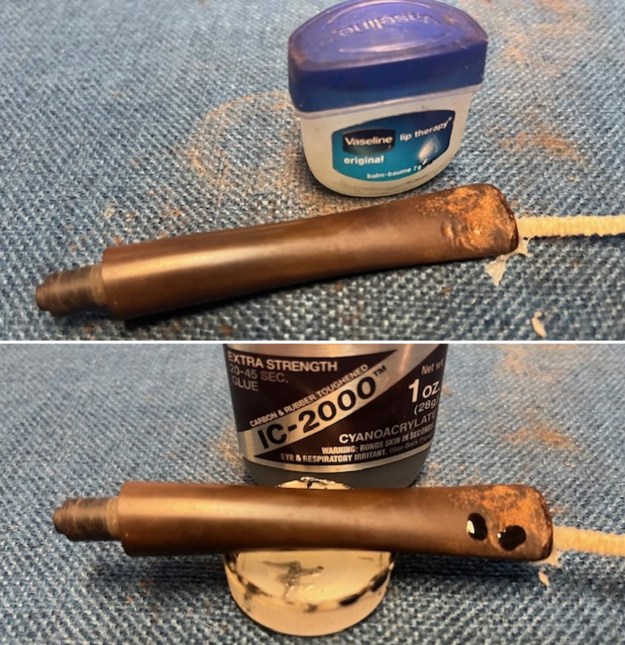
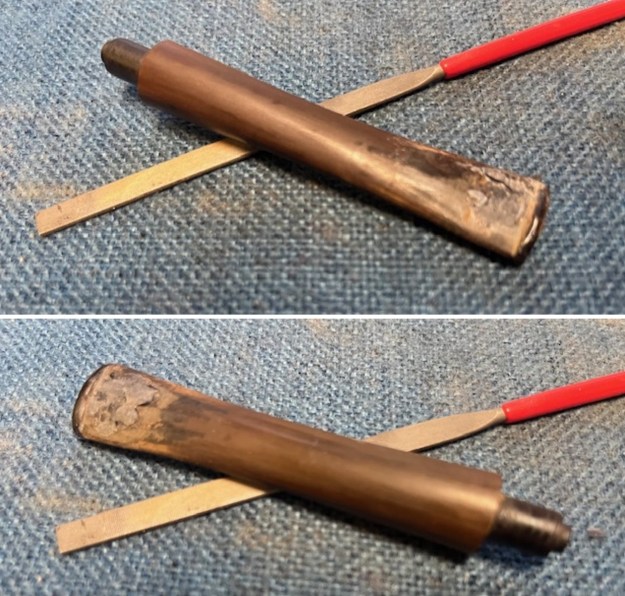
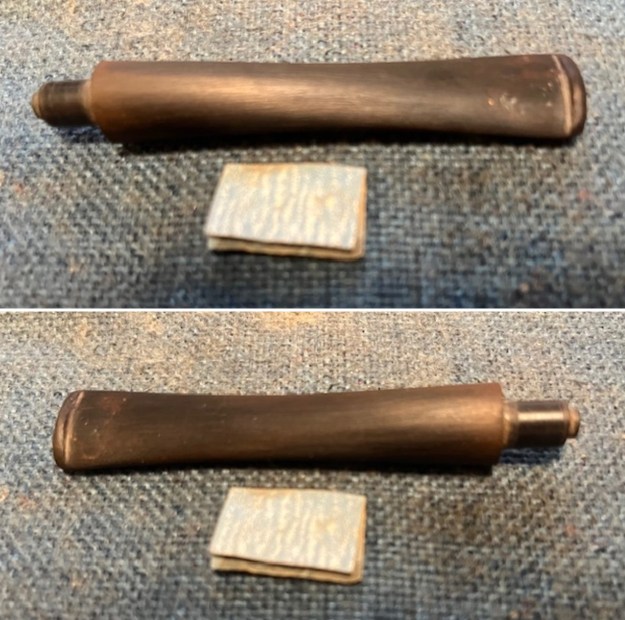
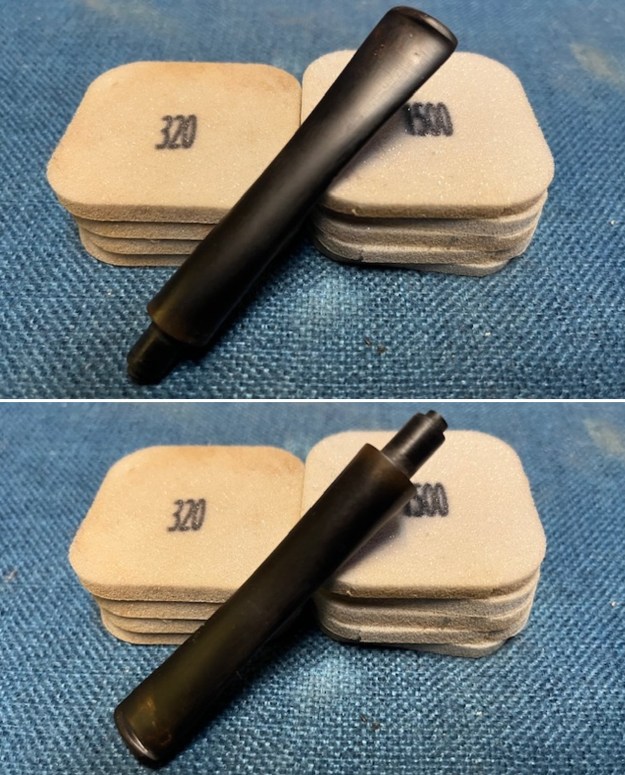
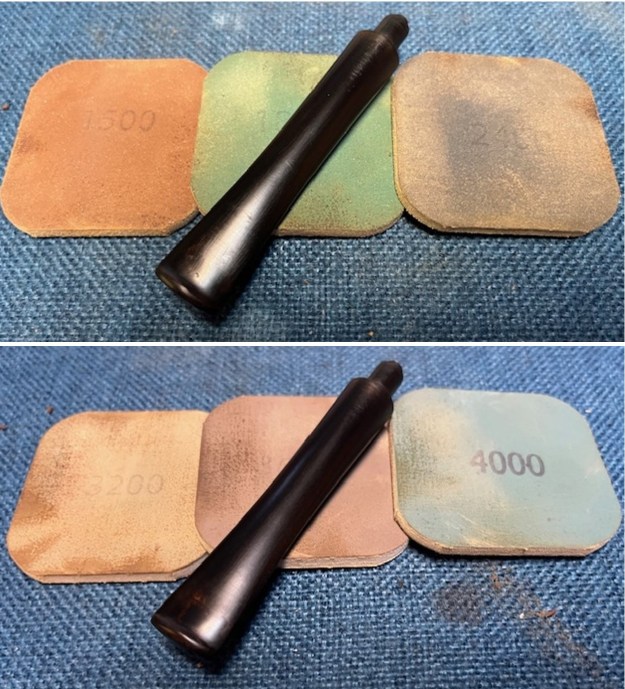
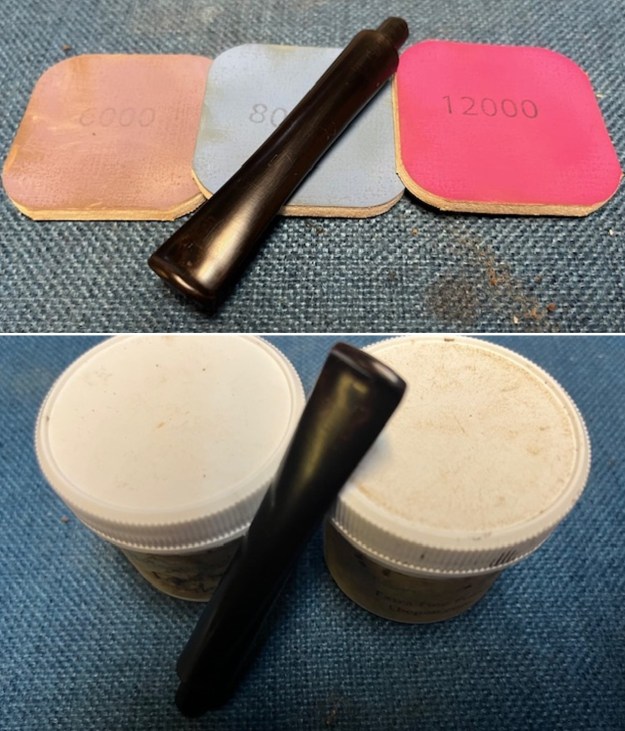
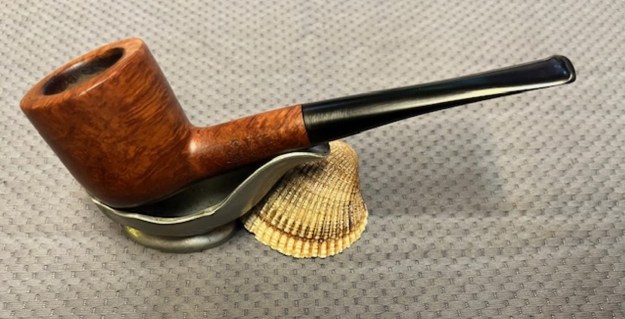
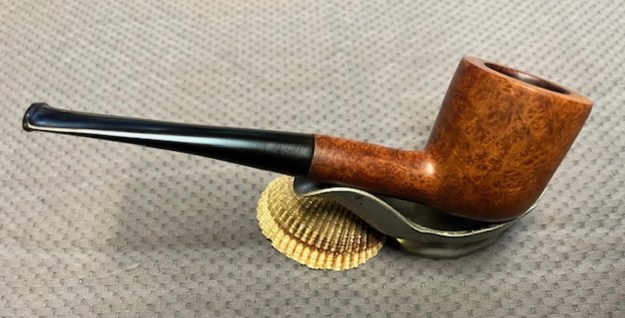
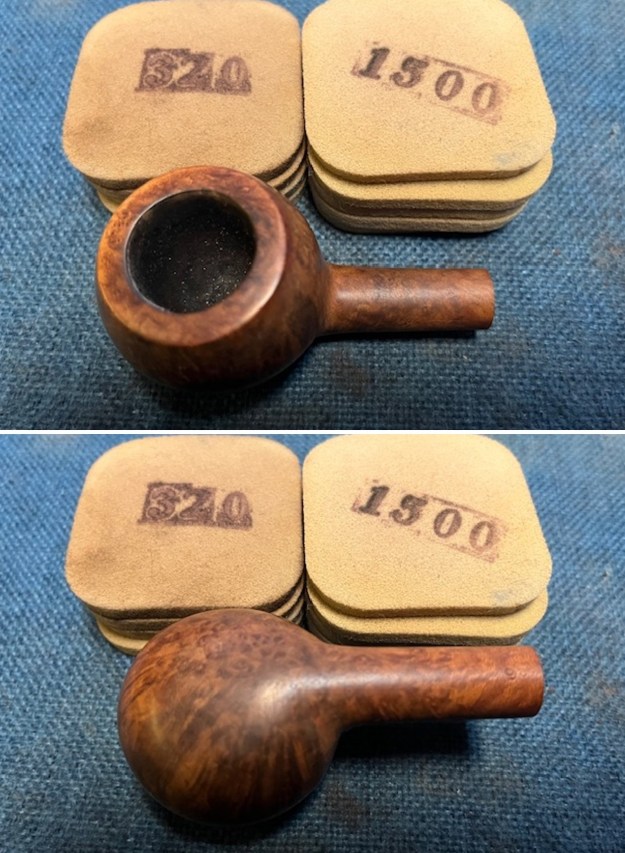
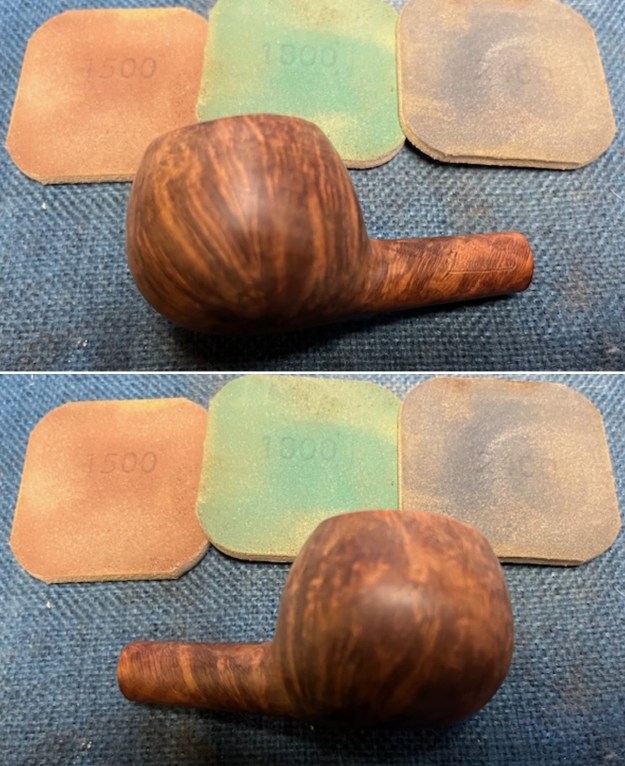
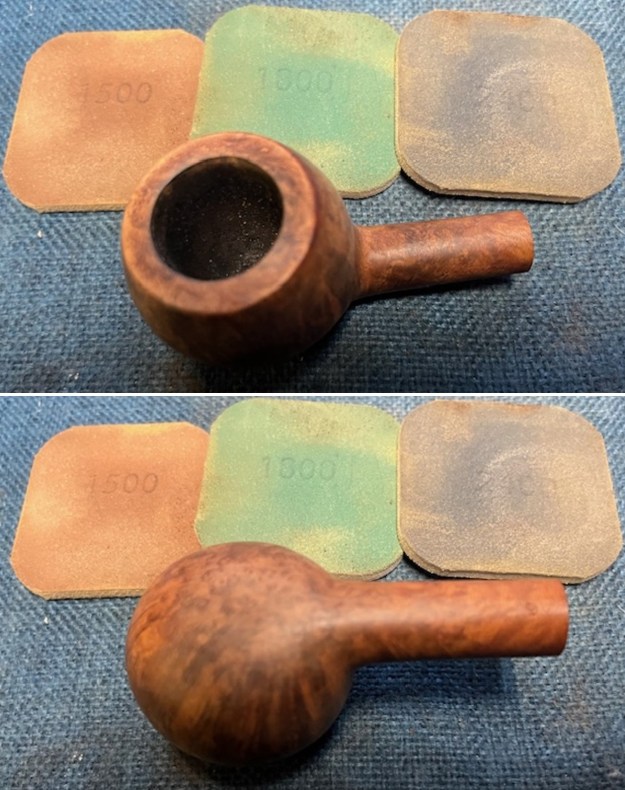
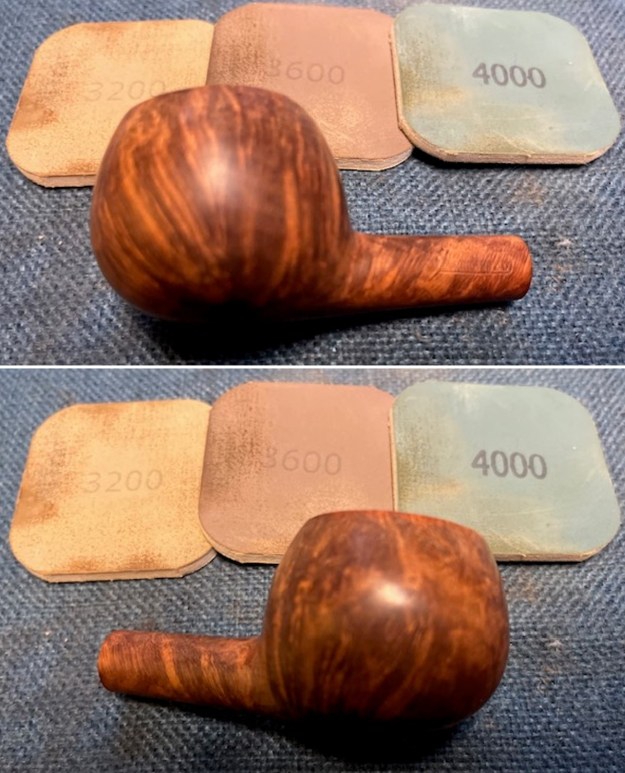
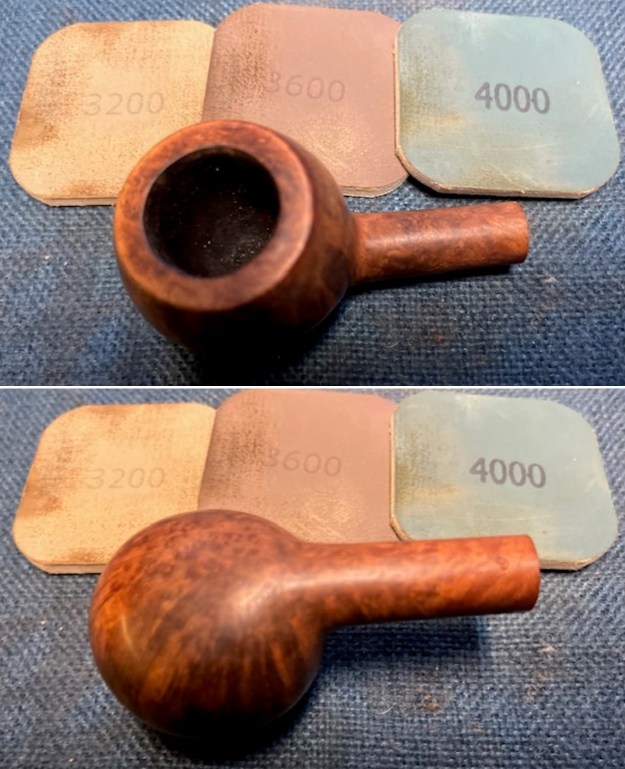
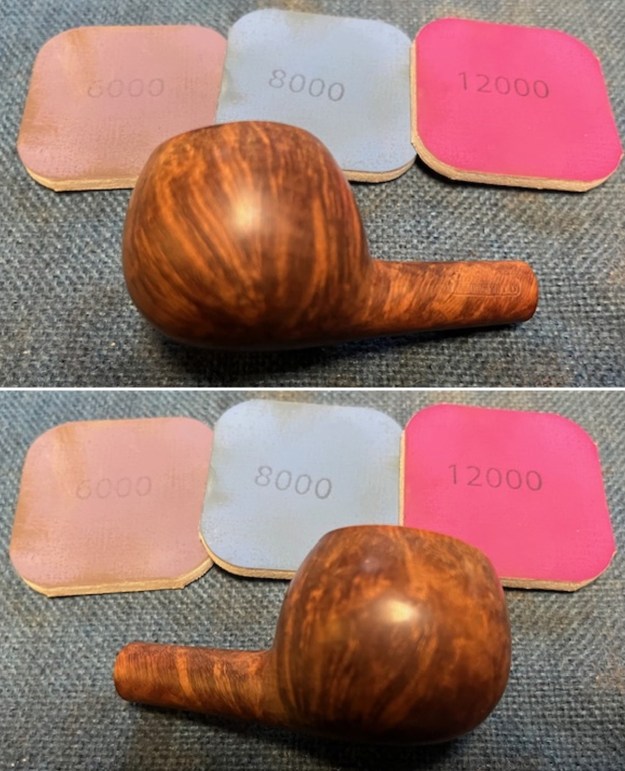
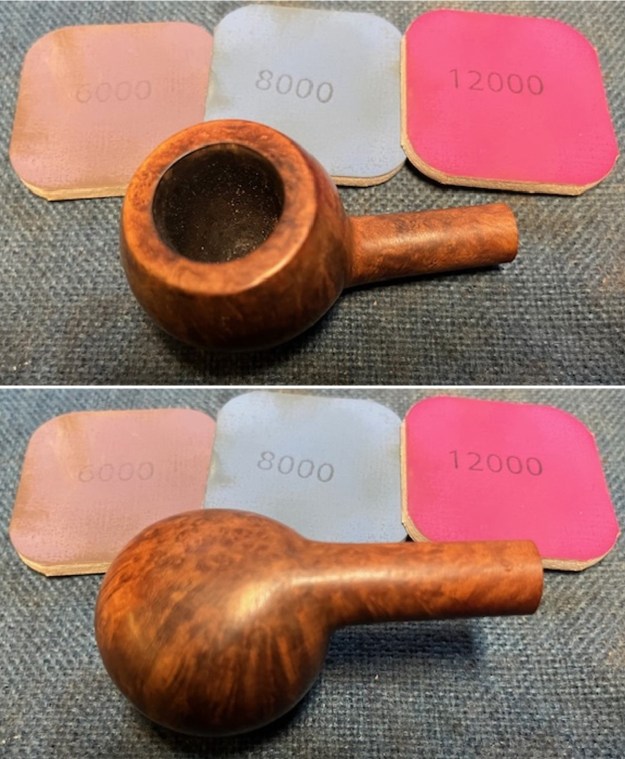
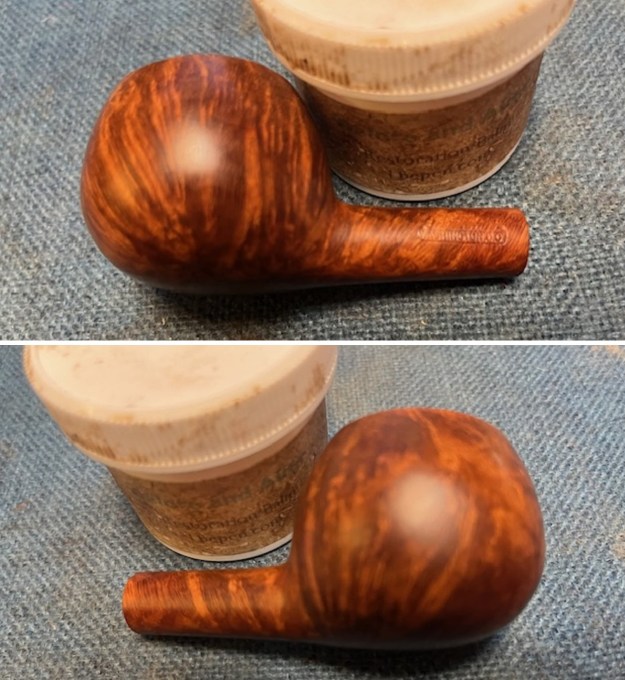
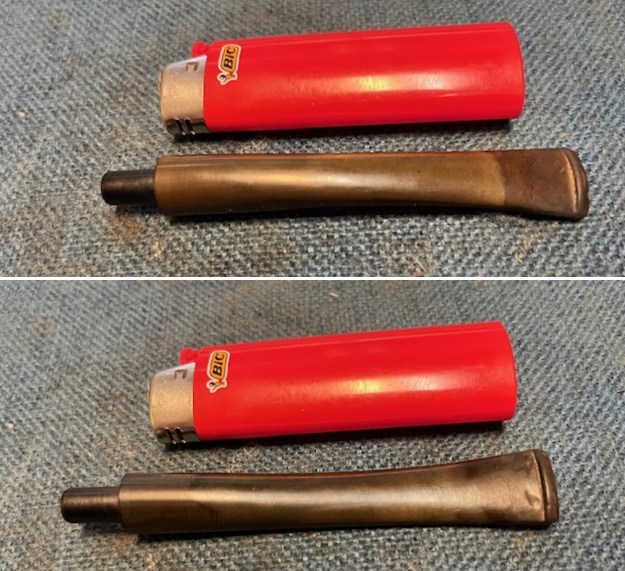
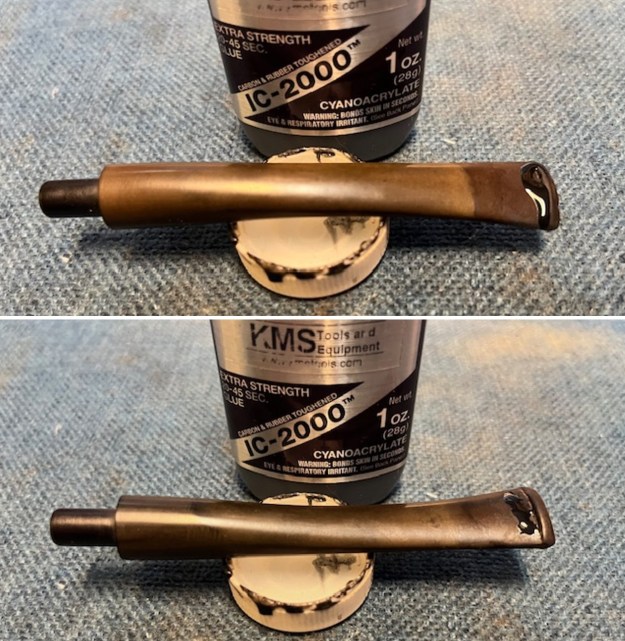
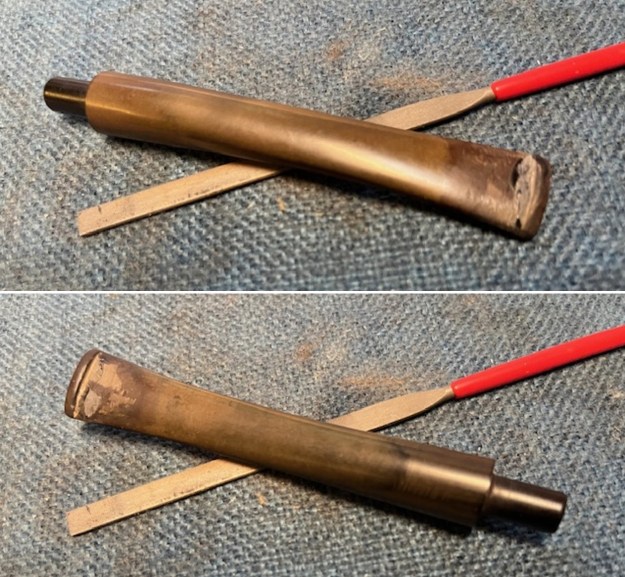
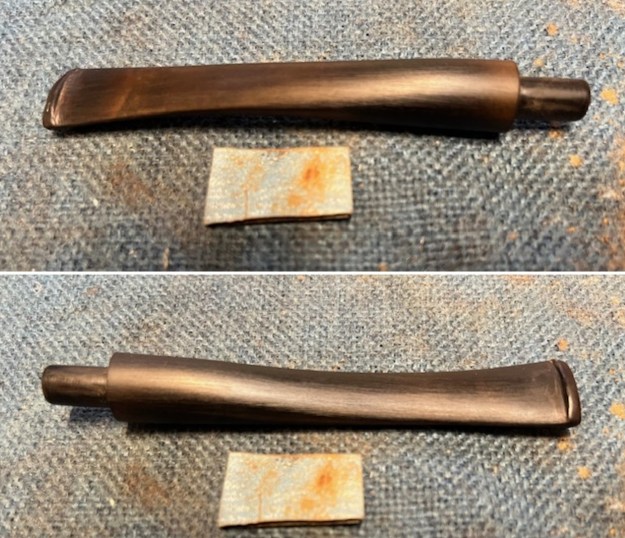
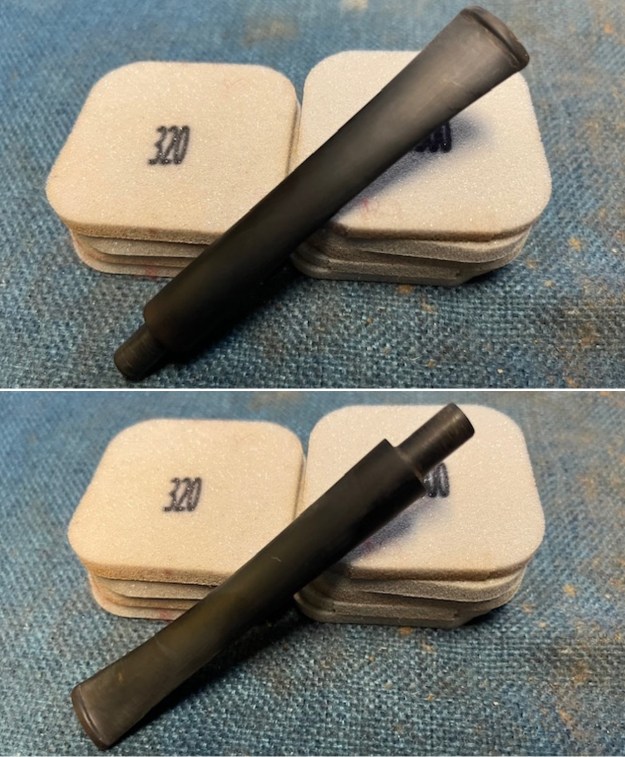
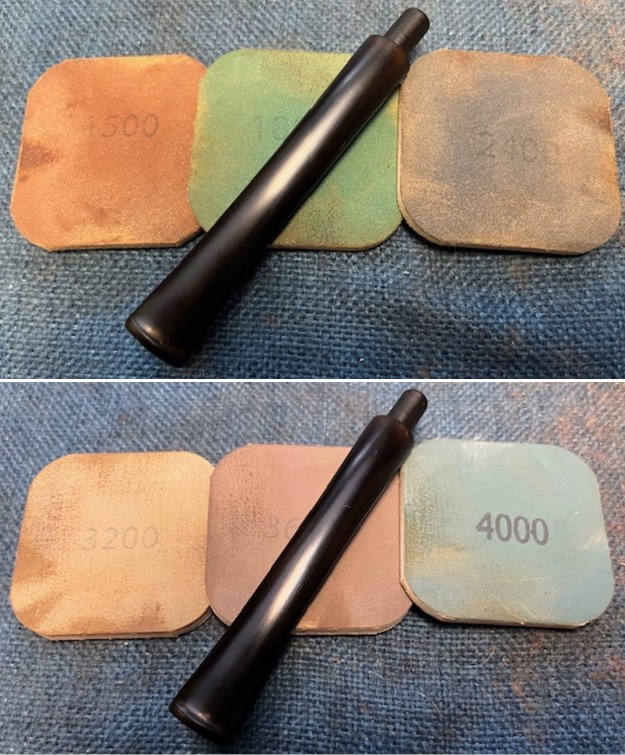
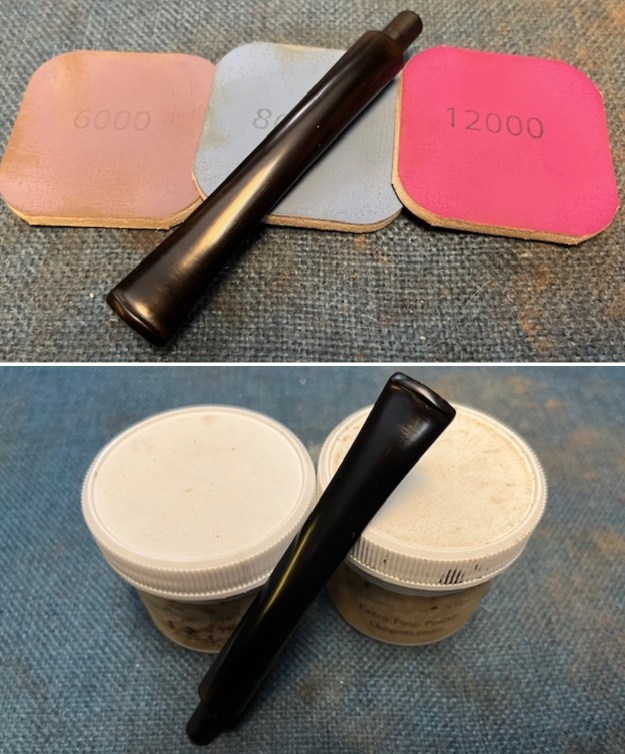
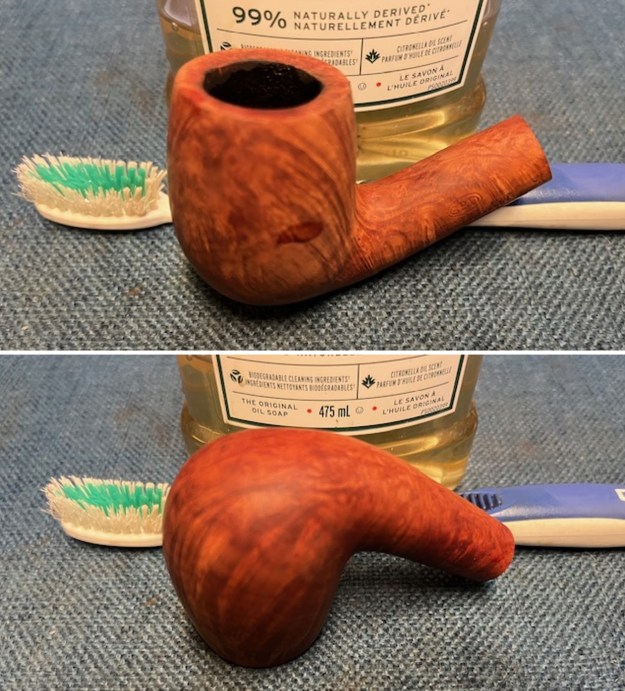
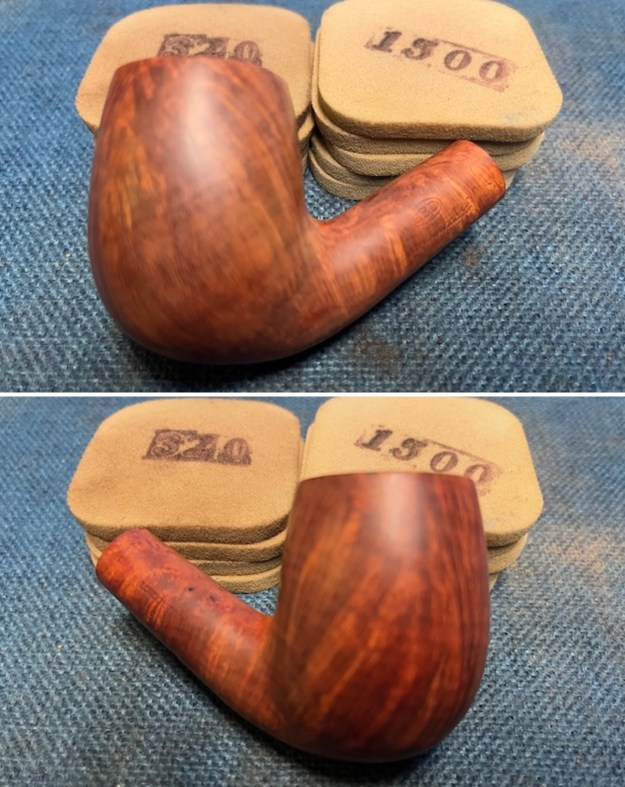
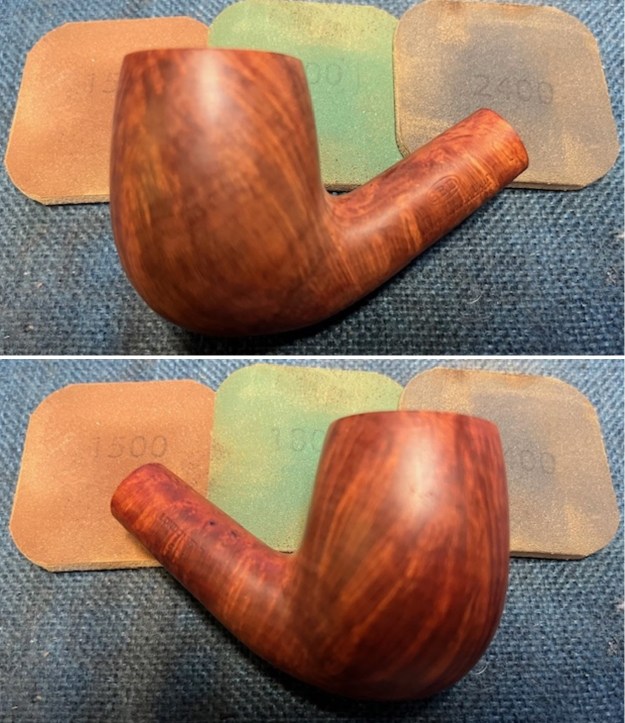
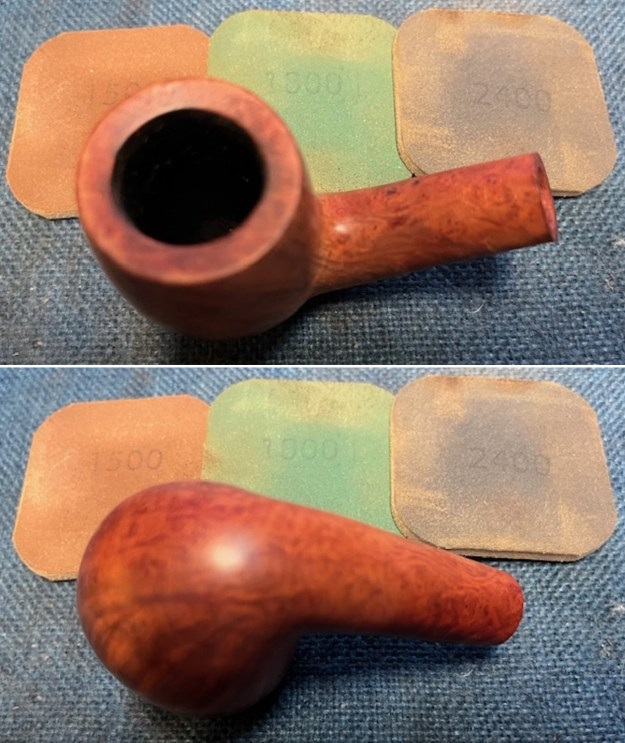
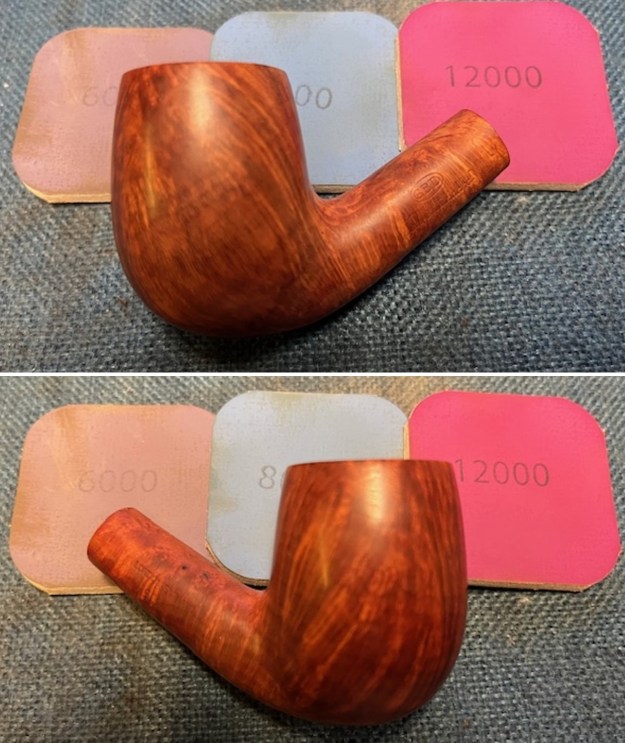
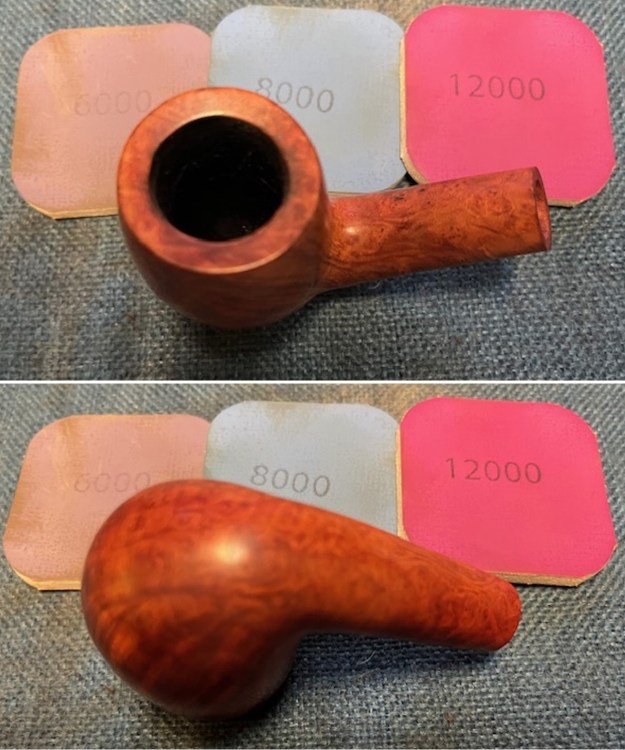
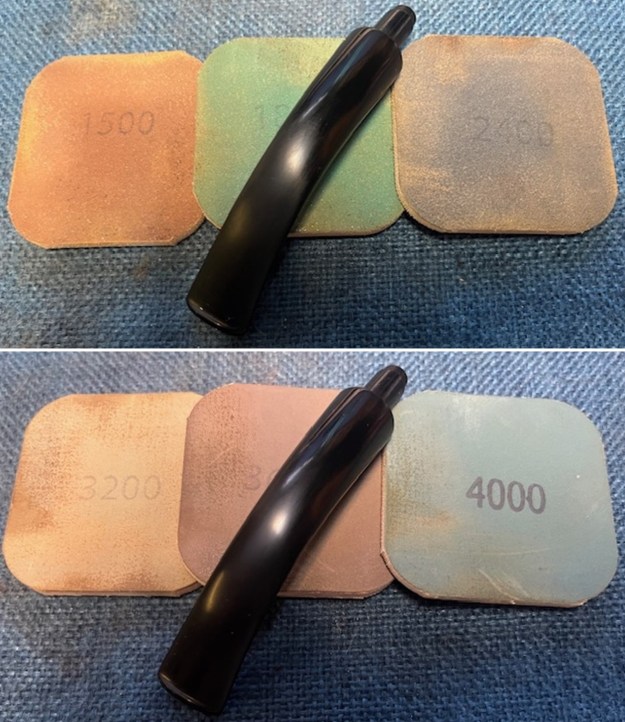
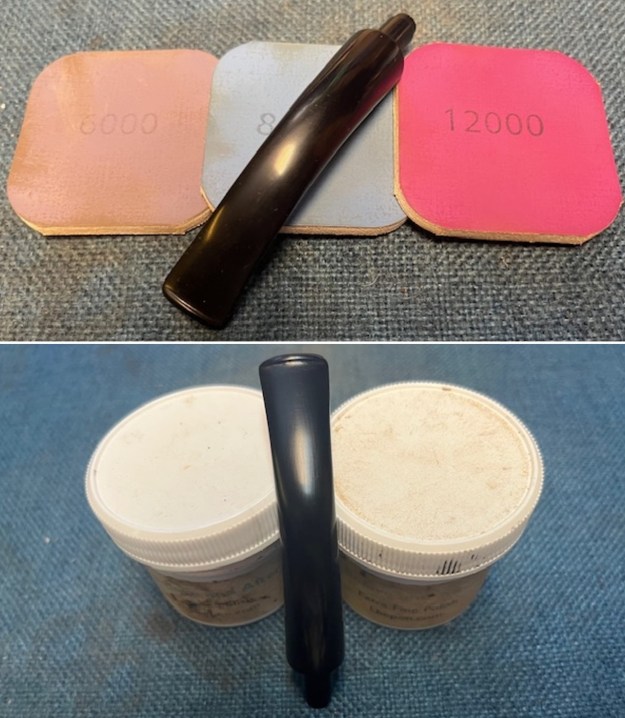
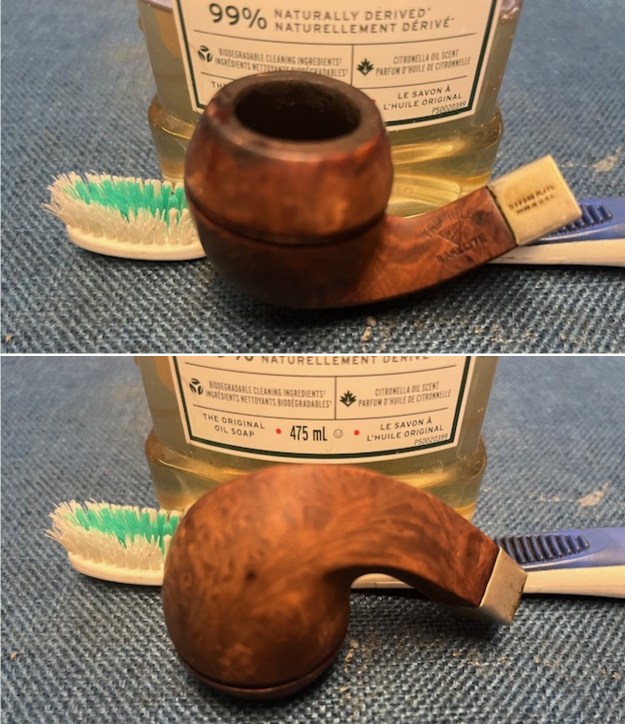
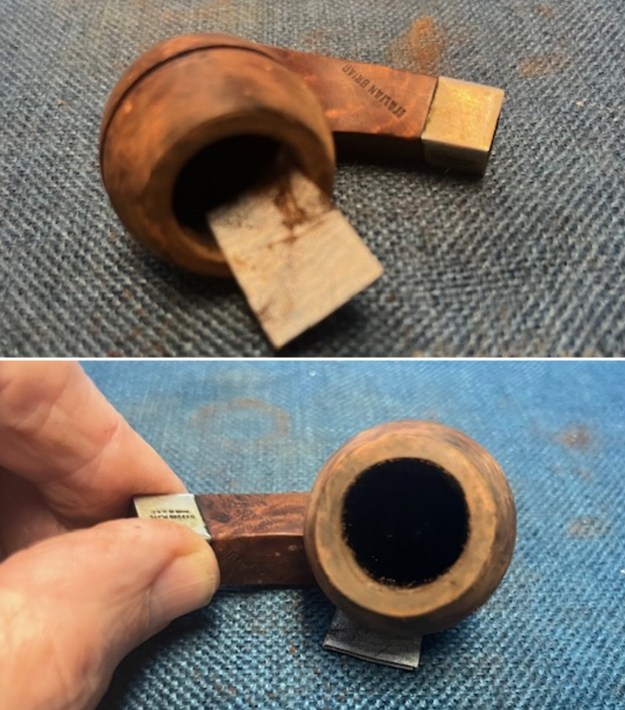
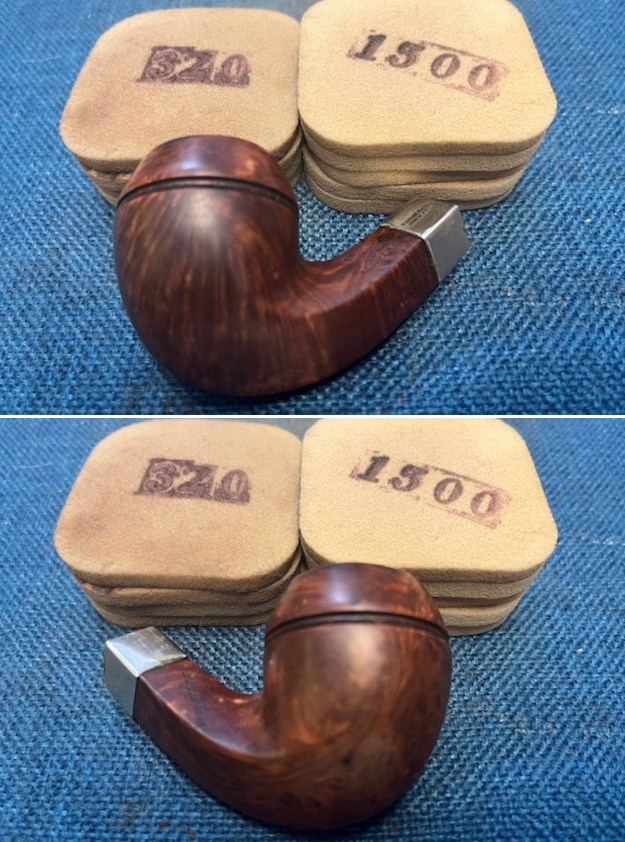
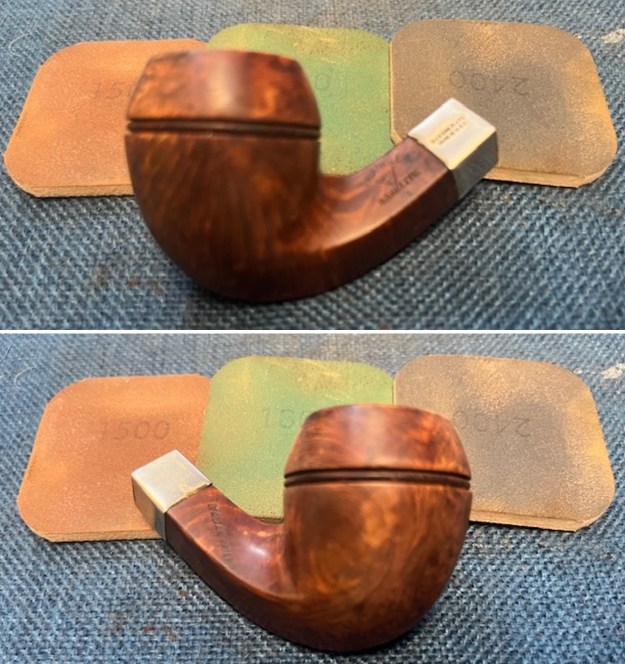
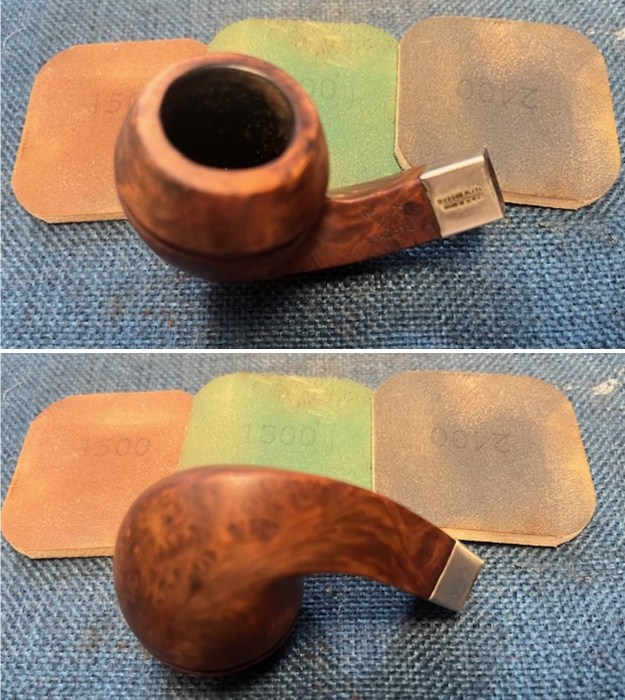
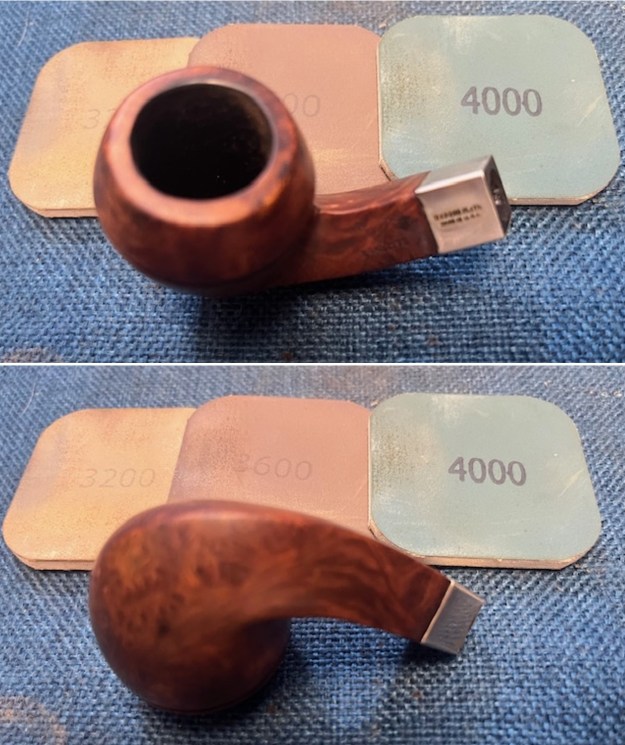
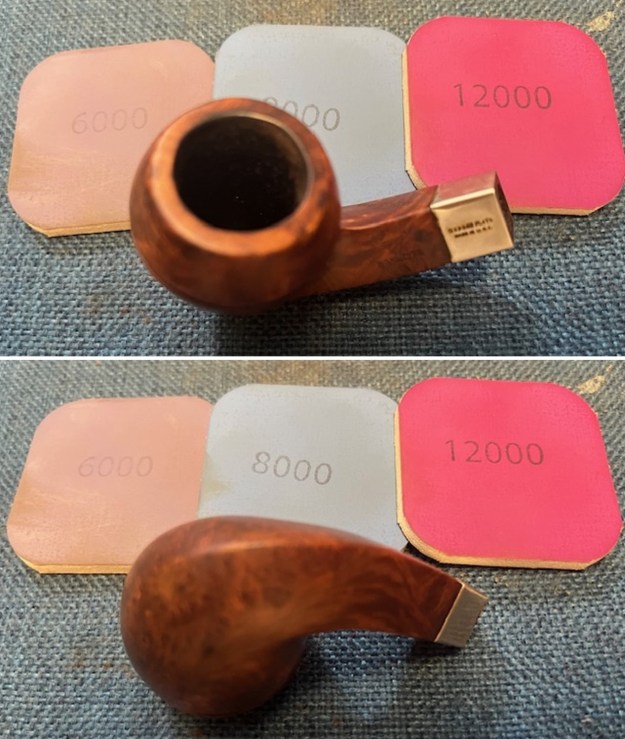
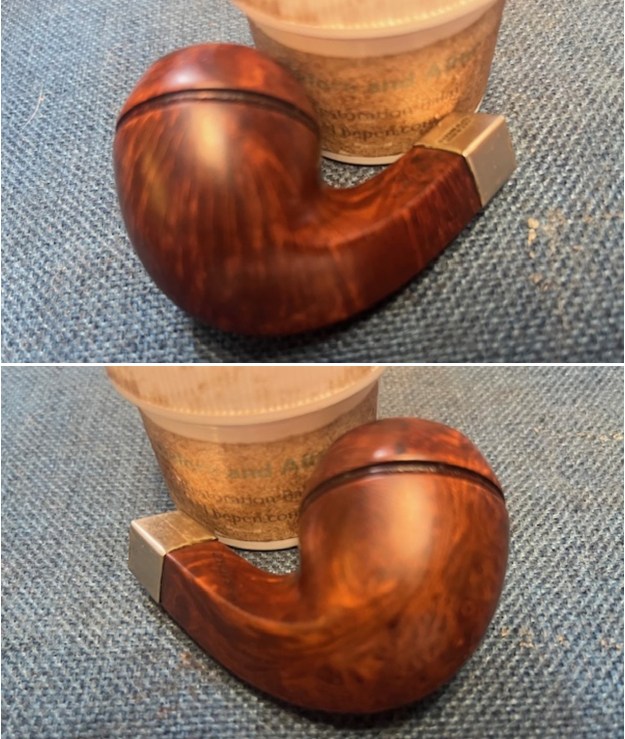
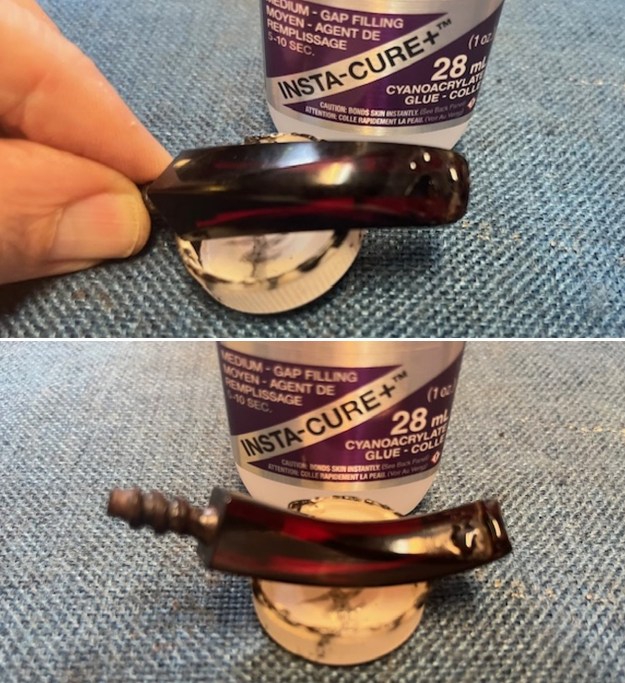
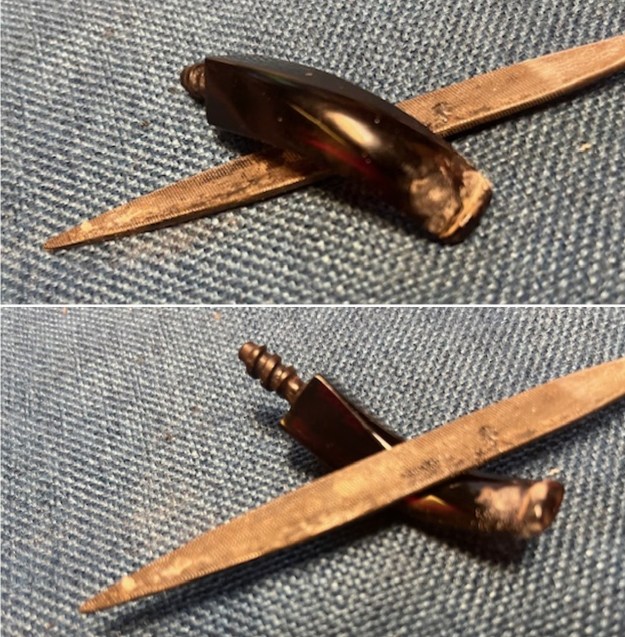
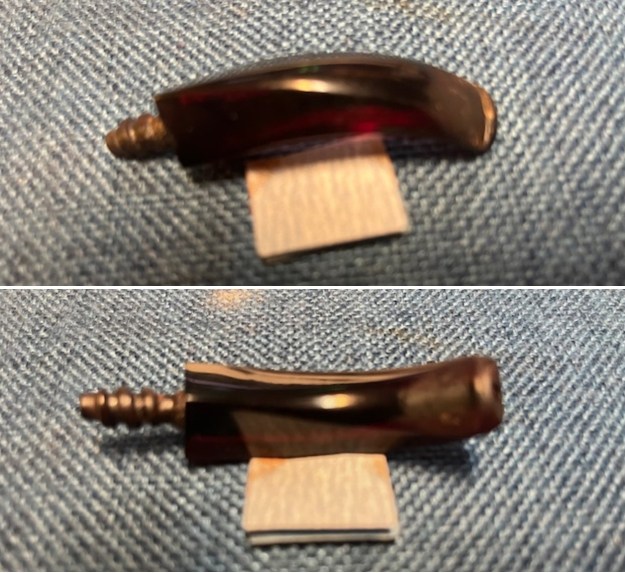
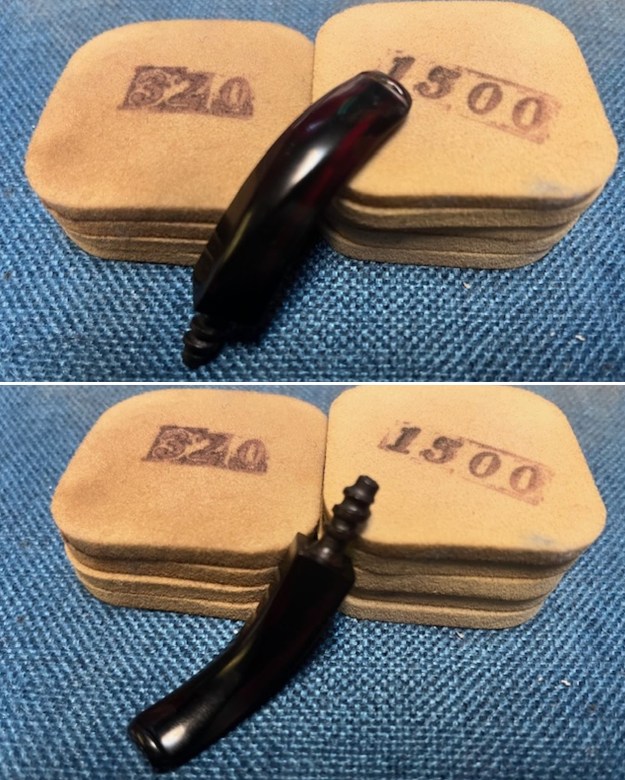
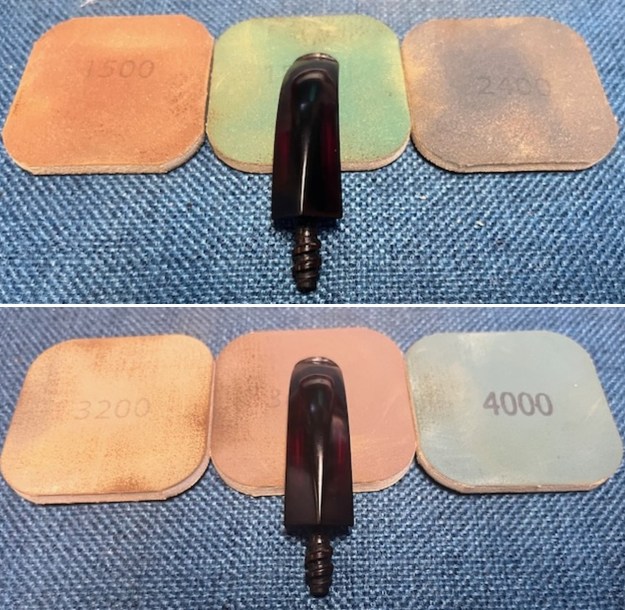
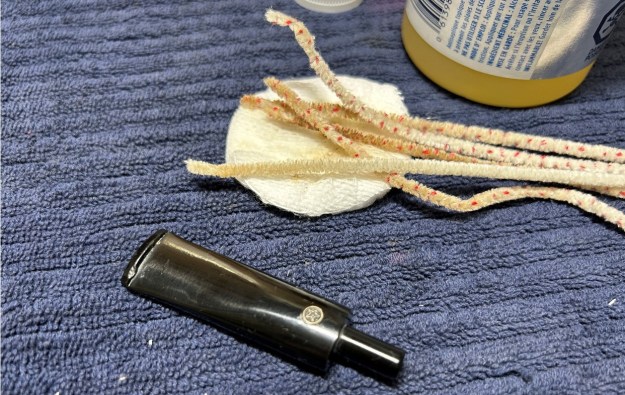
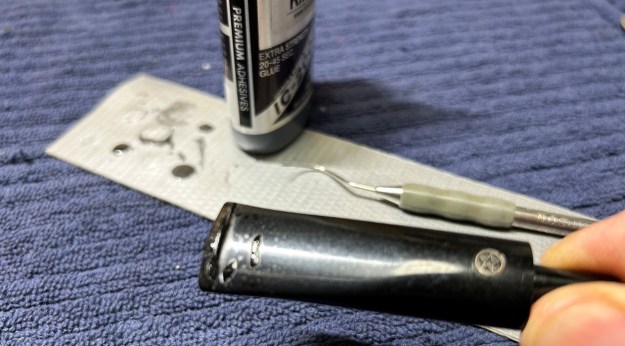
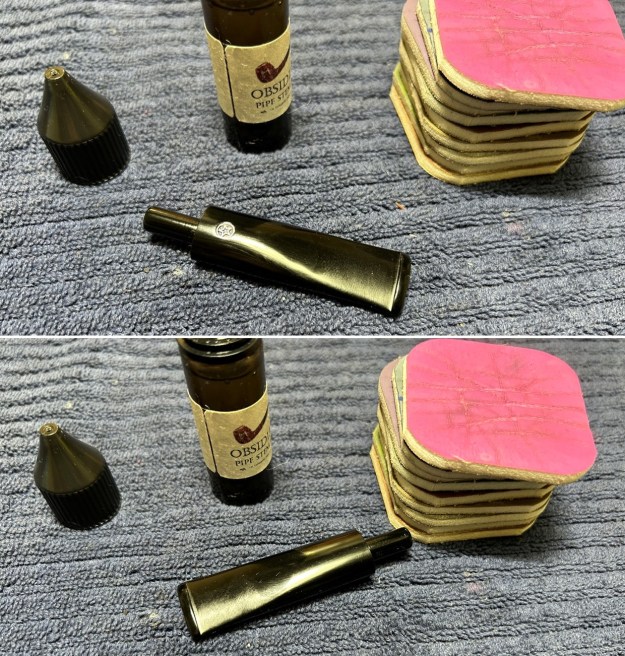
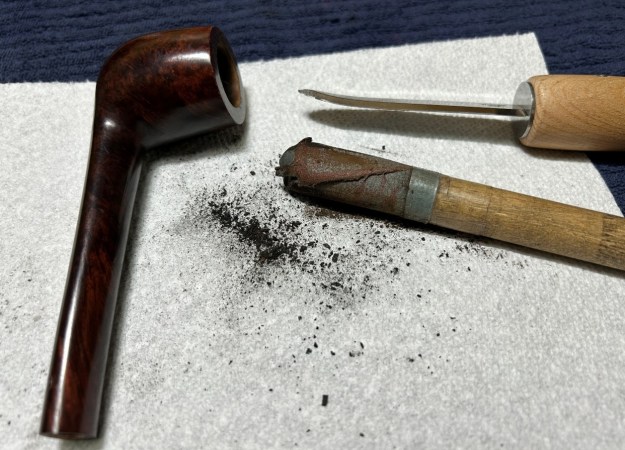
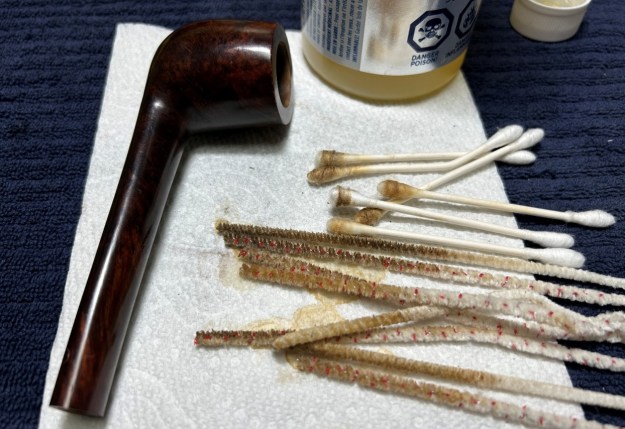
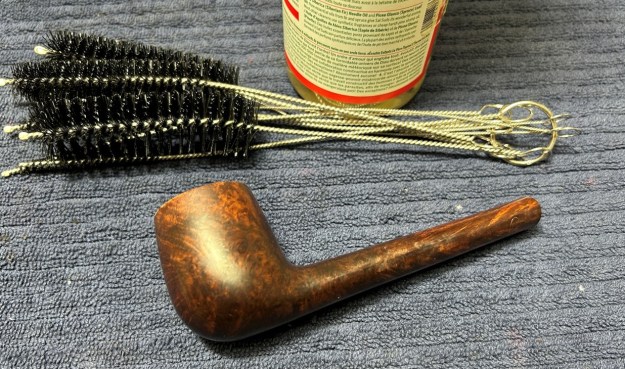
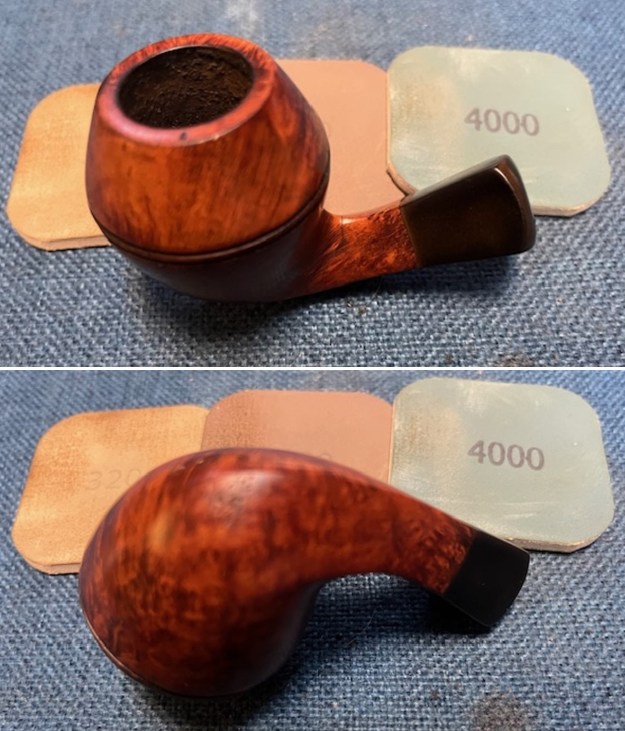
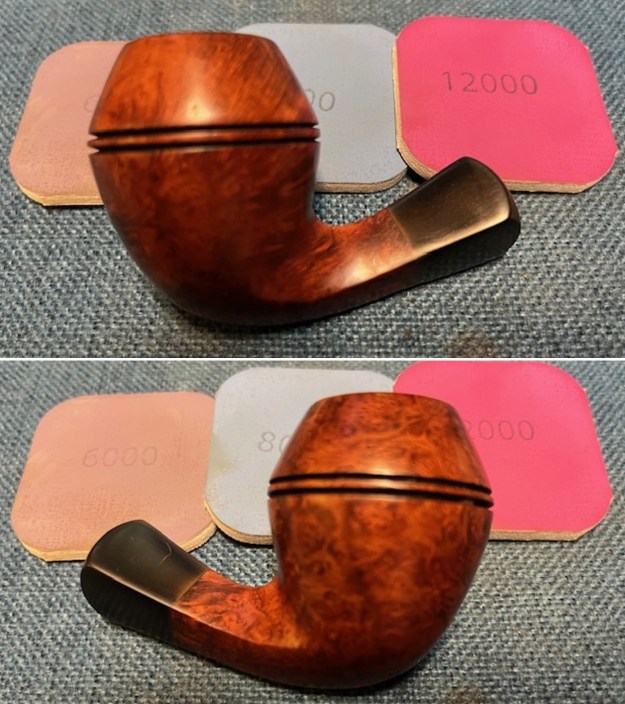
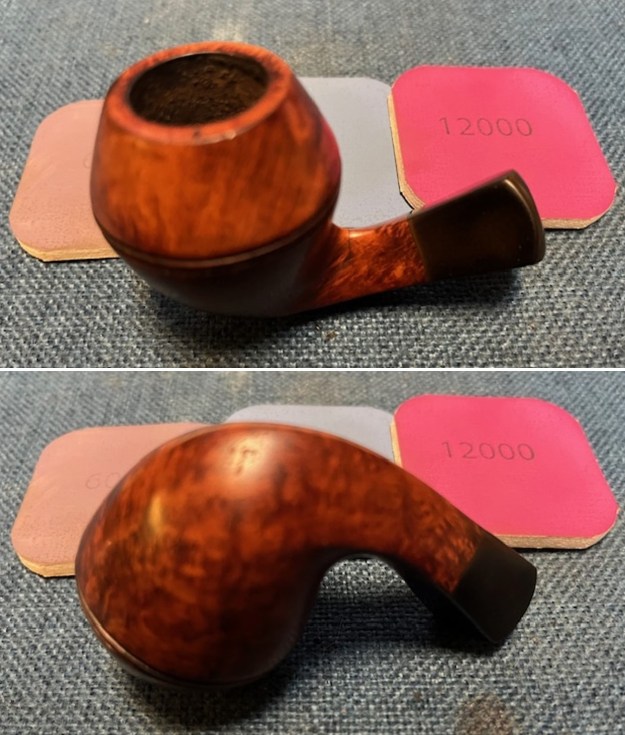
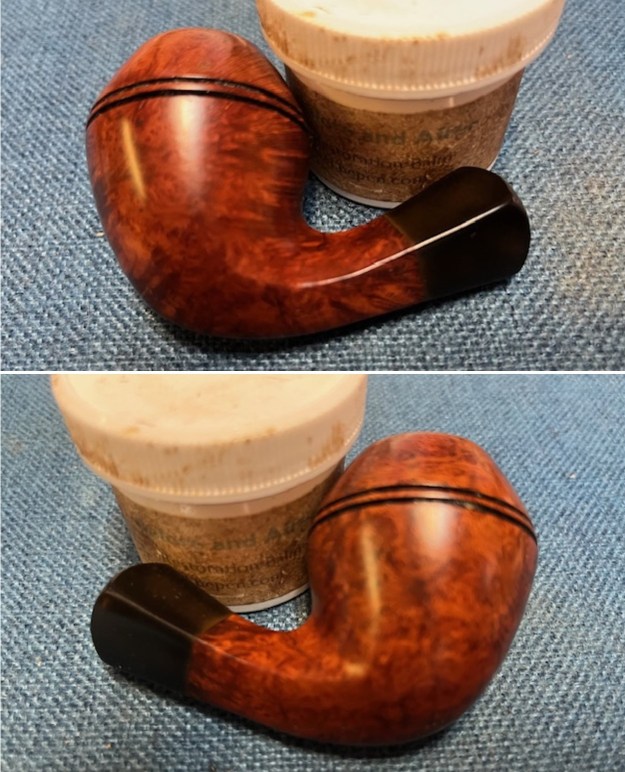
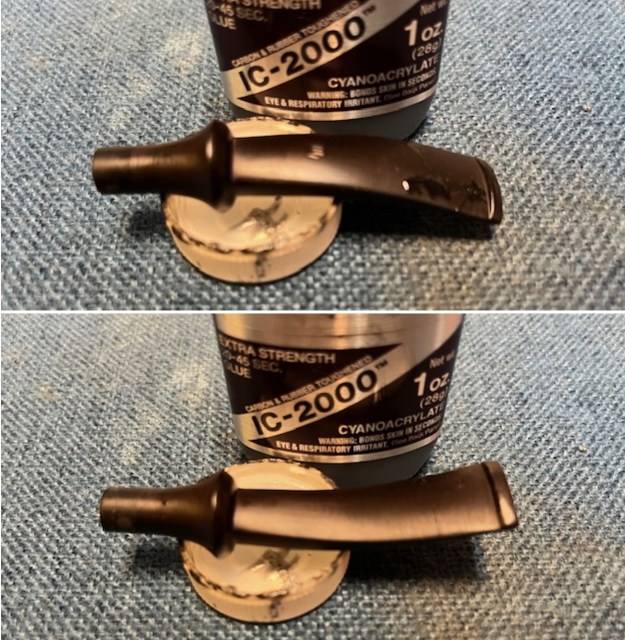
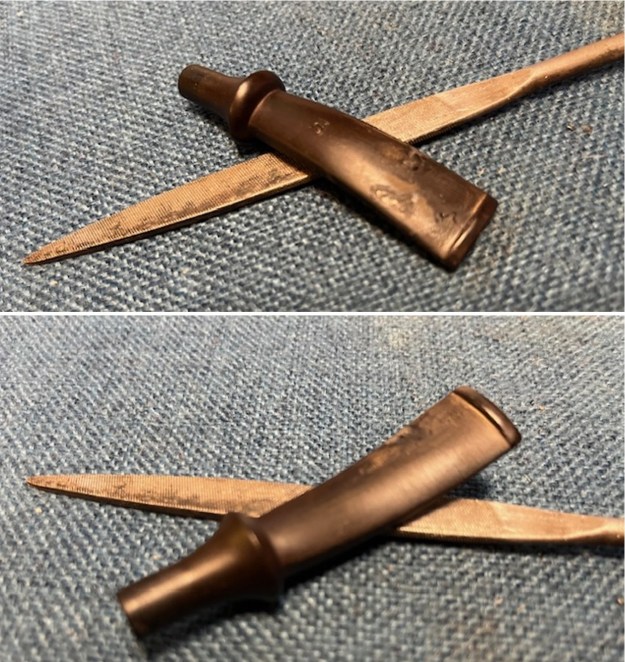
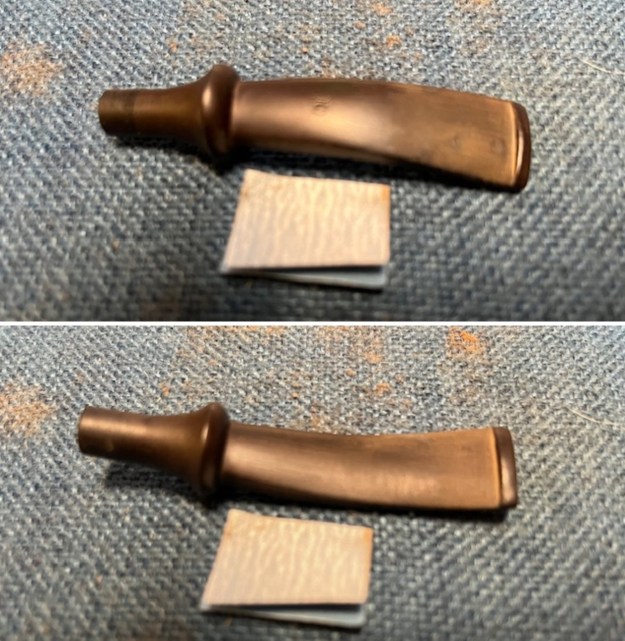
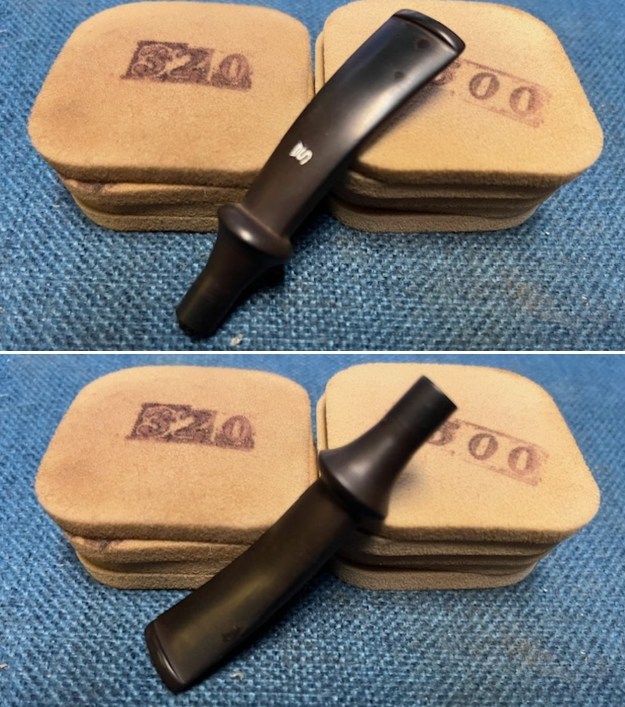
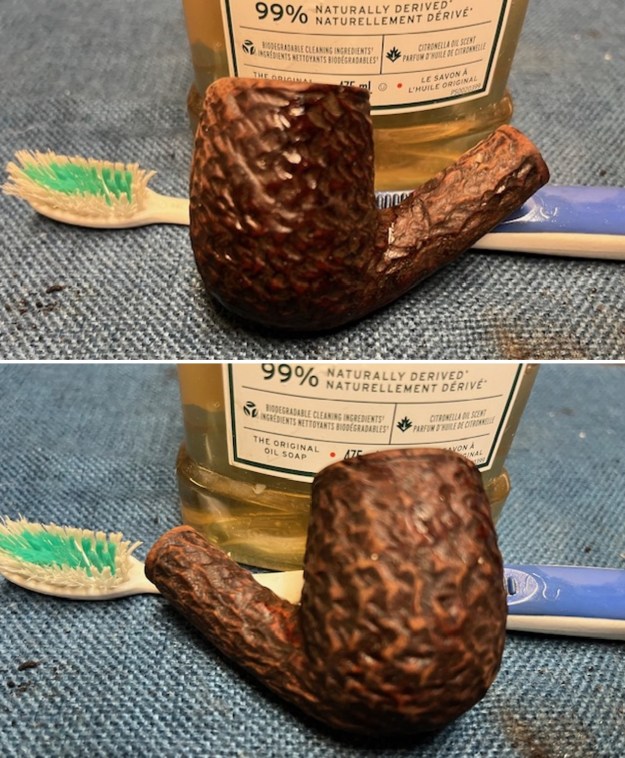
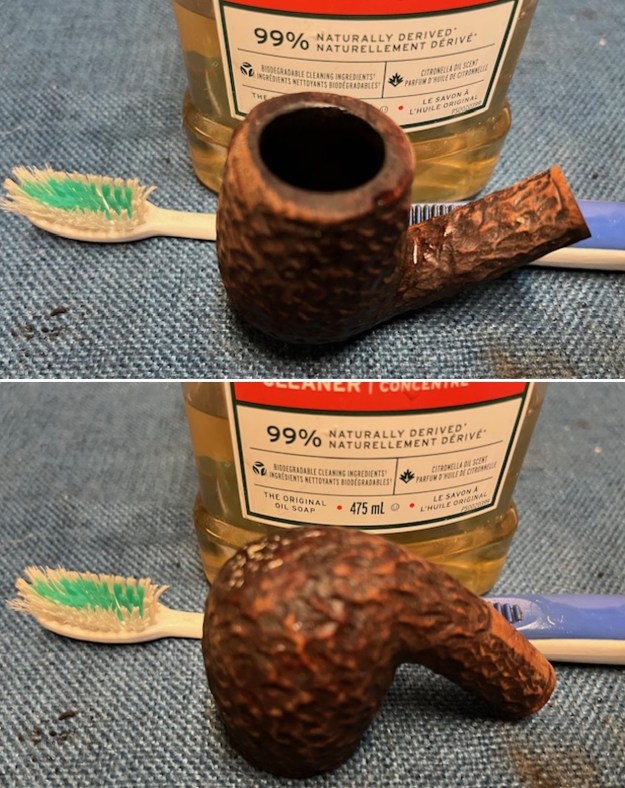
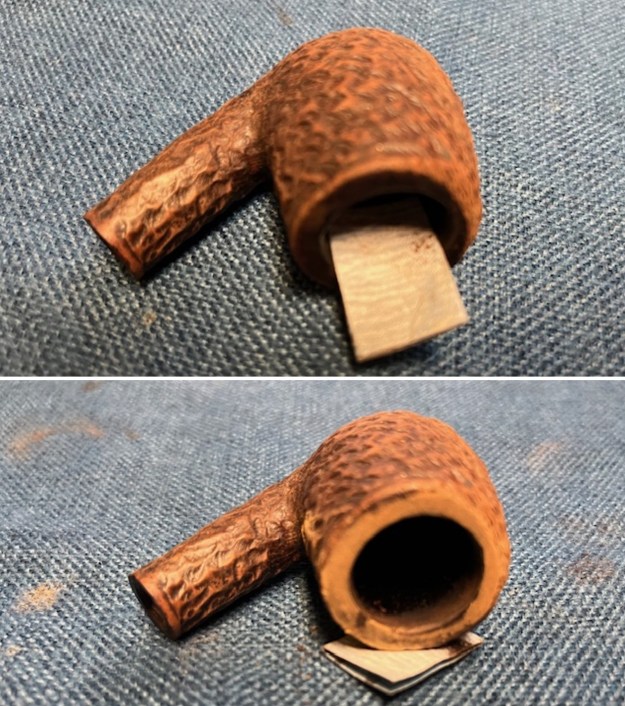
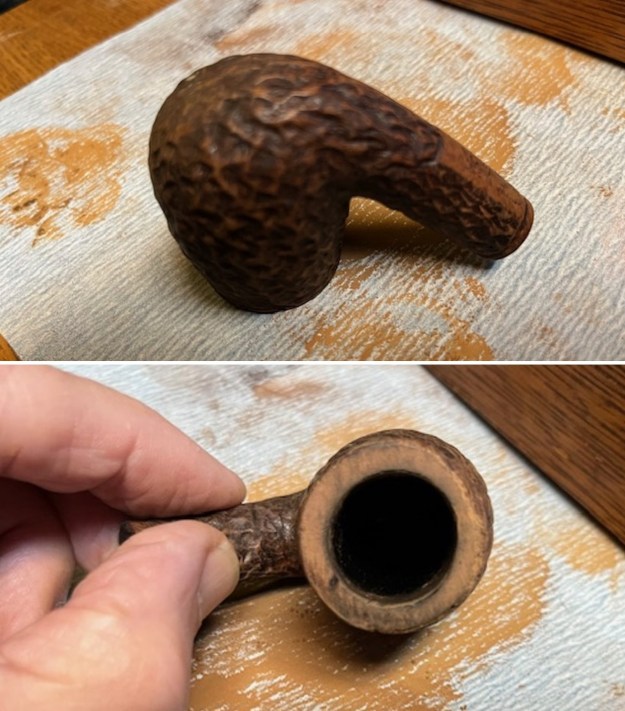
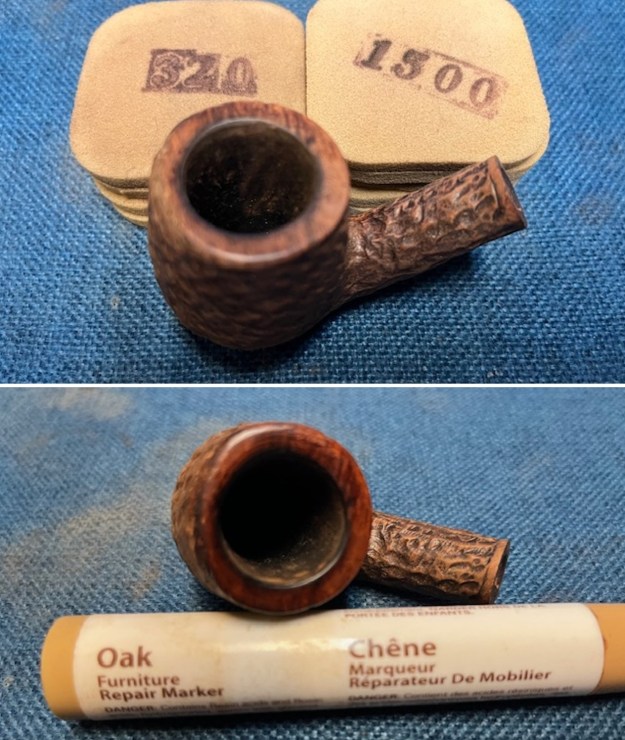
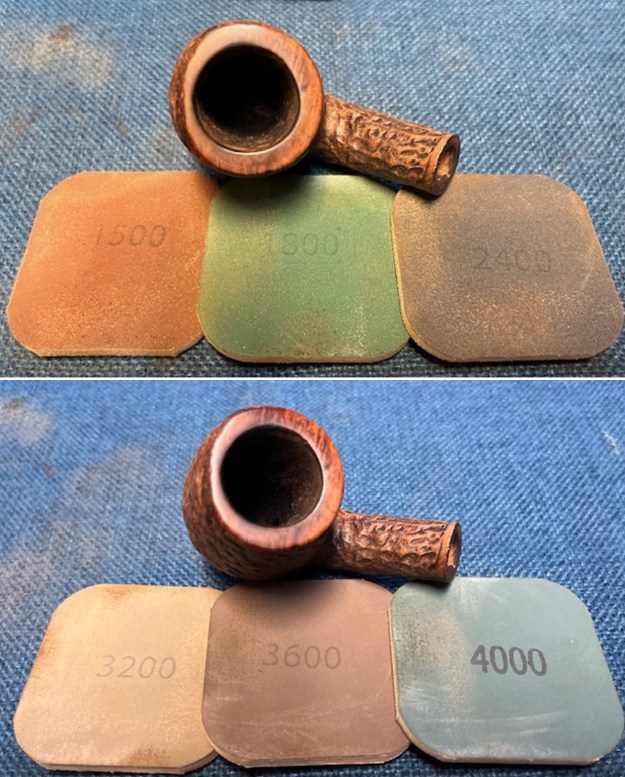
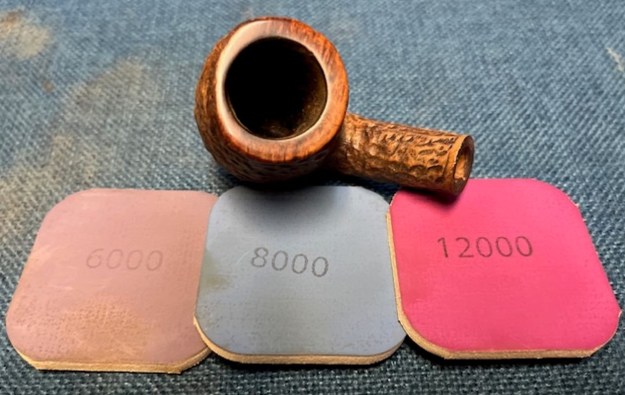
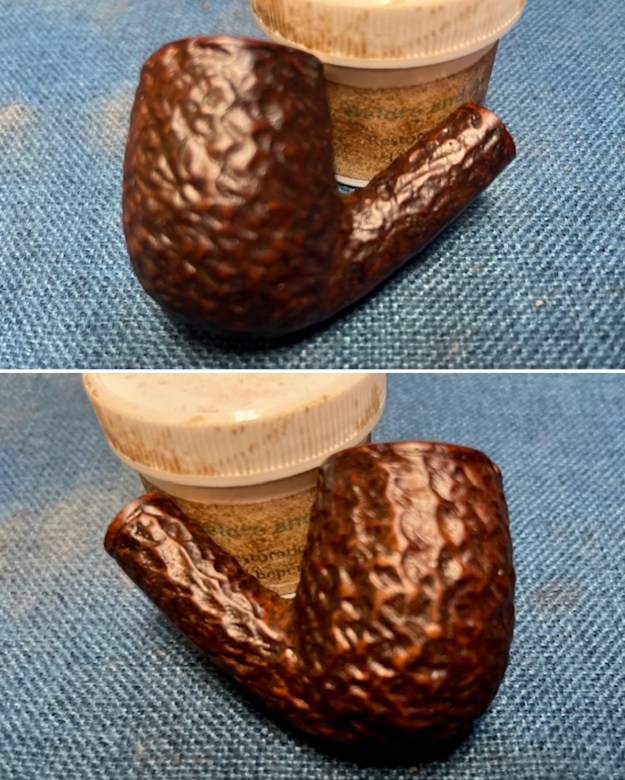
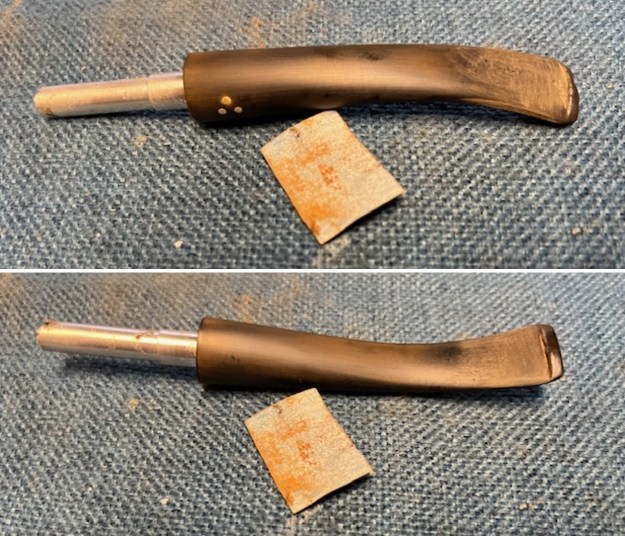
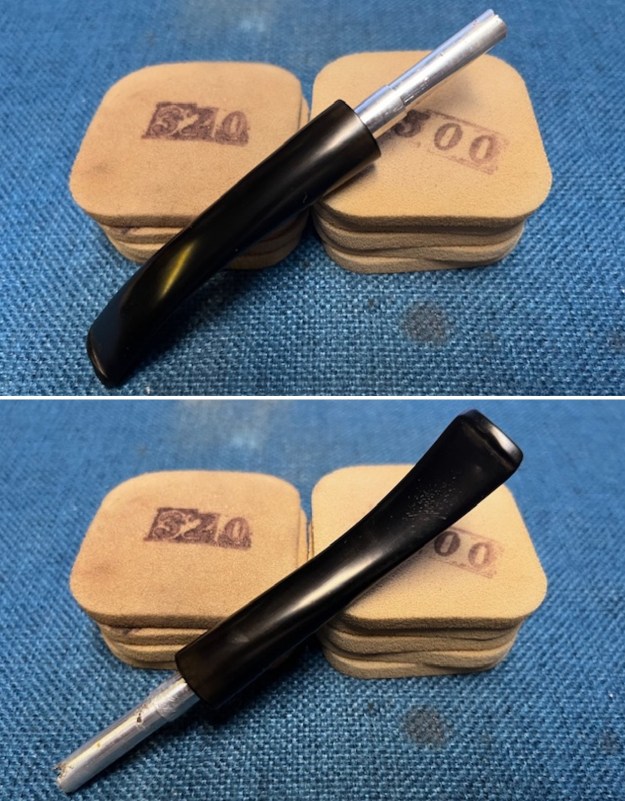
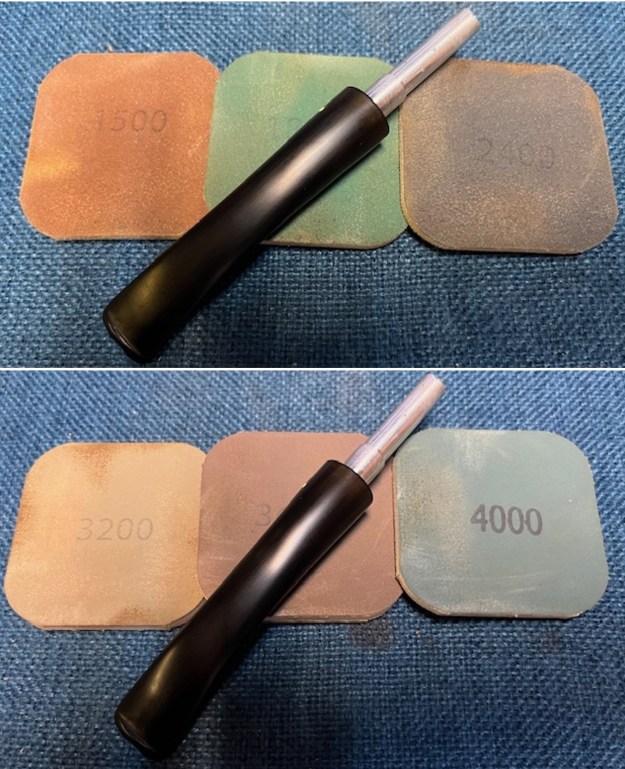
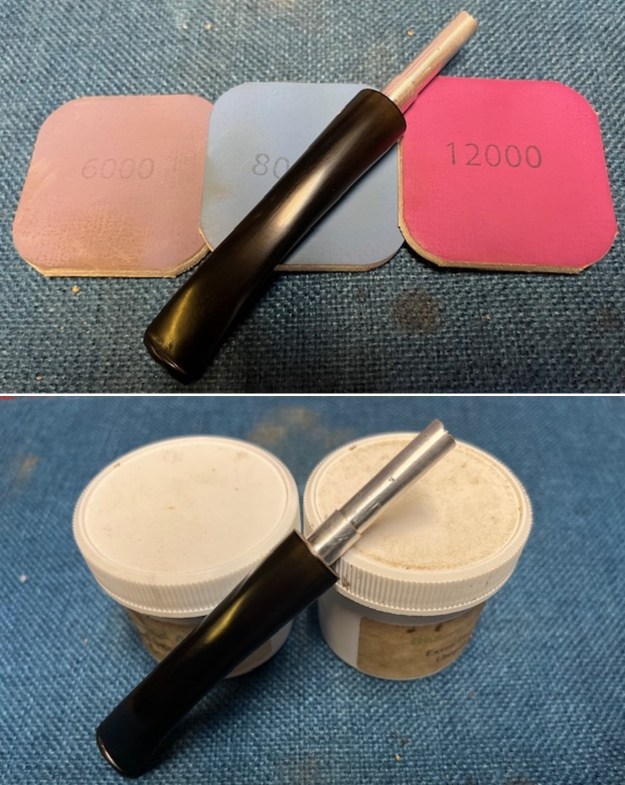
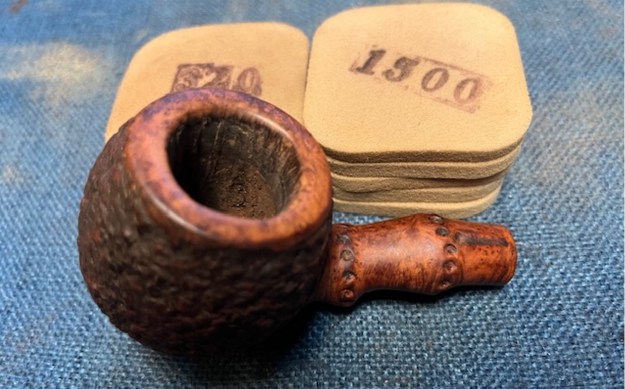
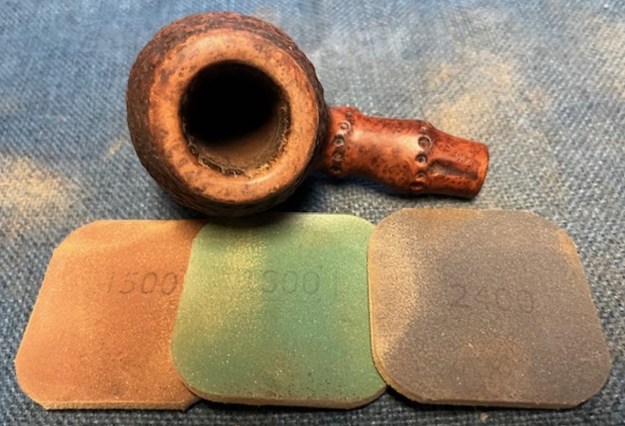
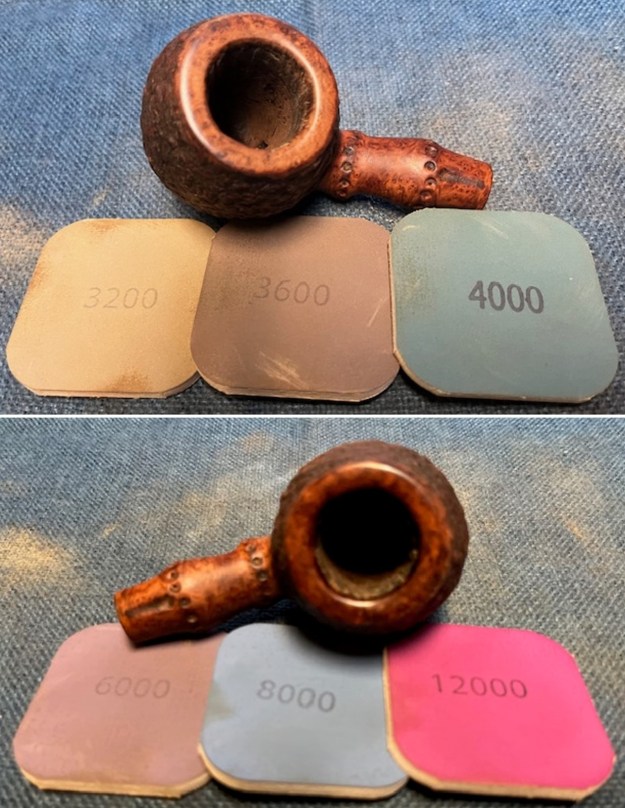
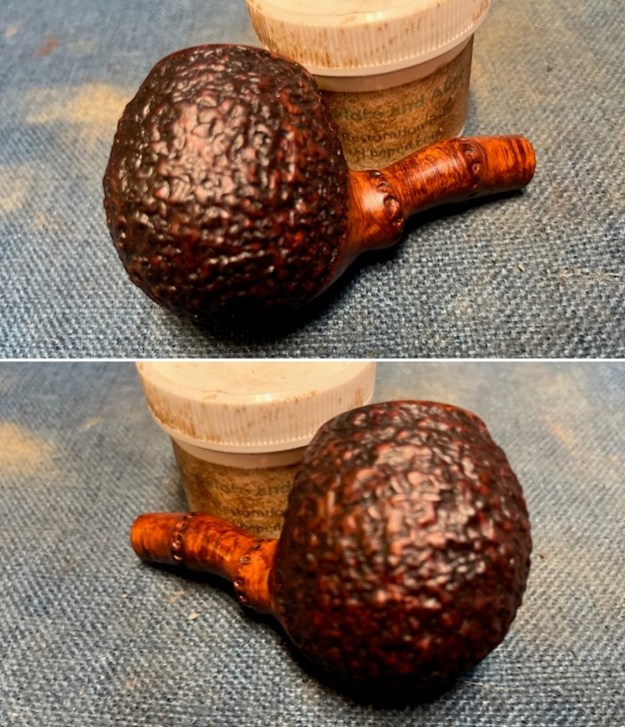
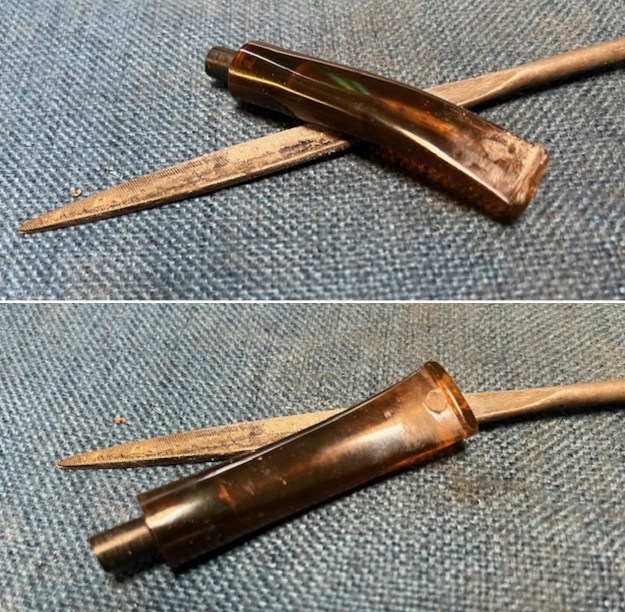
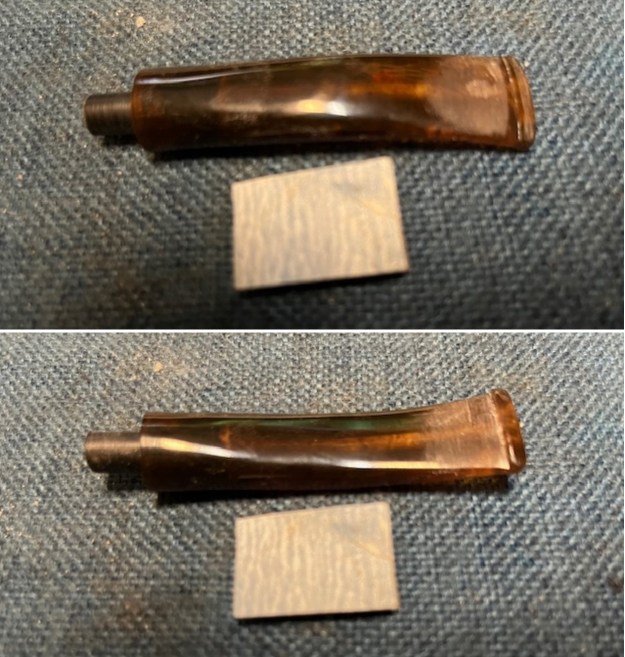
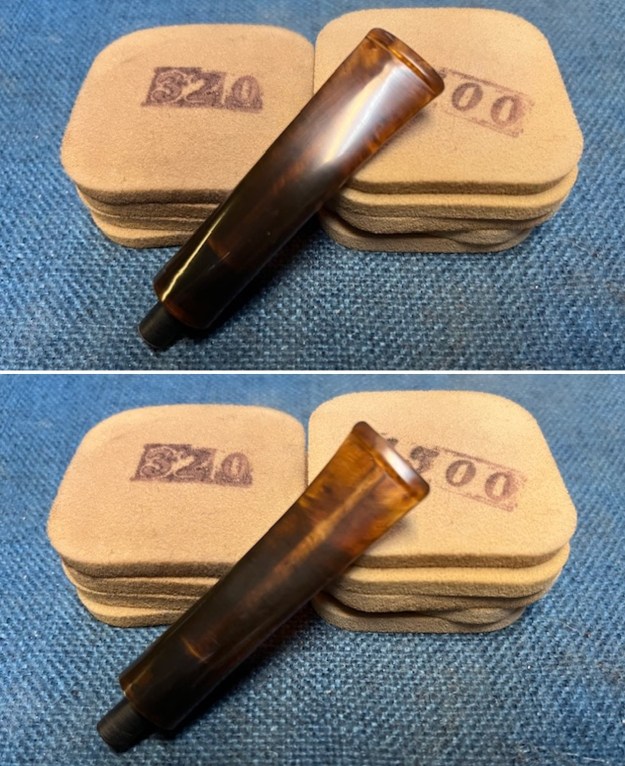
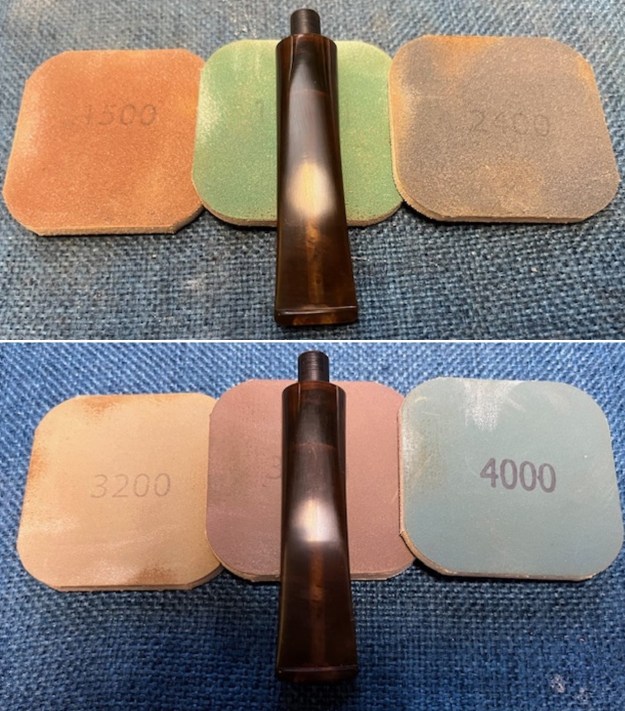
Armed with that information I turned to work on the pipe itself. Jeff had done a great job cleaning up the pipe as usual. He cleaned up the inside of the bowl with a Savinelli Fitsall Pipe Knife. The rim top and the inner edge of the bowl are in excellent condition. The bowl walls looked very good. He scrubbed the interior of the bowl and shank with shank brushes, pipe cleaners, cotton swabs and alcohol to remove the tars and oils. He scrubbed the exterior of the pipe with Murphy’s Oil Soap and a tooth brush to remove the grime from the finish. He scrubbed the inside of the stem with alcohol and pipe cleaners. He scrubbed the exterior with Soft Scrub and then soaked it in Briarville’s Pipe Stem Deoxidizer. He washed it off with warm water to remove the deoxidizer. The stem looked very good. I took photos of the pipe before I started working on it. I took close up photos of the bowl, rim top and stem to show how clean the pipe was. The bowl was clean and the rim top and the inner edge look beautiful. The stem was clean and had light tooth marks and chatter on both sides. You can also see the poor repair on the underside of the stem.I took a photo of the stamping on the left side of the shank. It is very clear and readable and read as noted above. I also removed the stem from the shank and took photos of the pipe to show the look of the parts. I started my work on the pipe by dealing with the roughness at the shank stem junction. I sanded it with 320-3500 grit sanding pads to smooth out the transition. It looked and felt much better. I touched up the sanded areas on the shank with a Walnut Stain Pen. The colour matched the bowl stain very well. I polished the bowl and shank with 1500-12000 grit micromesh sanding pad – dry sanding it with the pads. I wiped the bowl down with a damp cloth after each pad. It began to take on a deep shine. The shank reshape and reworking blended in very well and the colour is more and more rich with the polishing. The exterior of the bowl looks better after sanding. I worked some Before & After Restoration Balm into the briar with my finger tips. I let it sit on the bowl for 10 minutes and then buffed it off with a paper towel and soft cloth. The product is a great addition to the restoration work. It enlivens, enriches and protects the briar while giving it a deep glow. It is a product I use on every pipe I restore. It was ready for the next step. I used a folded piece of 220 grit sandpaper to sand out the poorly done repair on the underside of the stem. I flattened it out and cleaned off the surface of the stem. I filled in the area with black CA glue put in place with a tooth pick. I set it aside to cure.Once the repair cured I used a file to flatten out the repair and clean up the edge of the button. I sanded it further with a folded piece of 220 grit sandpaper to blend it into the surrounding vulcanite.I polished the sanding repairs on the shank end of the stem and the repair of the bite through by sanding it with micromesh sanding pads. I dry sanded them with 1500-12000 grit pads. I wiped the stem down after each sanding pad with Obsidian Oil to further protect the vulcanite surface. I finished the polishing with Before & After Pipe Stem Polish – Fine and Extra Fine. I wiped the stem down a final time with Obsidian Oil and a cloth. It really looks very good. It was great to finish the repairs and reshaping on this Julius Vesz Hand Made Circle 6 Calabash 97. I put the pipe back together and buffed it with Blue Diamond on the buffing wheel. I gave the bowl multiple coats of carnauba wax. I buffed the pipe with a clean buffing pad to raise the shine. I hand buffed the pipe with a microfiber cloth to deepen the shine. It is fun to see what the polished bowl looks like with deep sandblast all around it. Added to that the polished black, vulcanite, taper stem was beautiful. This Julius Vesz Hand Made 97 is great looking and the pipe feels great in my hand. It is light and well balanced. Have a look at it with the photos below. The dimensions are Length: 5 ½ inches, Height: 1 ¾ inches, Outside diameter of the bowl: 1 3/8 inches, Chamber diameter: ¾ of an inch. The weight of the pipe is 43 grams/1.48 ounces. It is a beautiful pipe and one that I will hold onto for awhile. I always have enjoyed Julius’ pipes and this one is a great shape.

As always, I encourage your questions and comments as you read the blog. Thanks to each of you who are reading this blog and following this restoration. Remember we are not pipe owners; we are pipe men and women who hold our pipes in trust until they pass on into the trust of those who follow us.

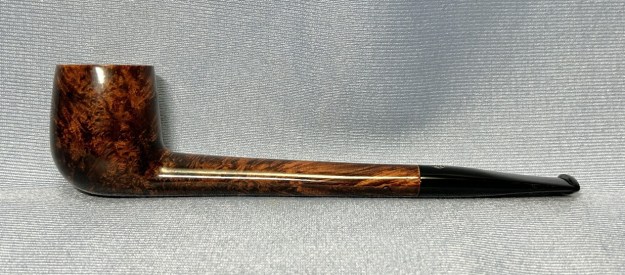
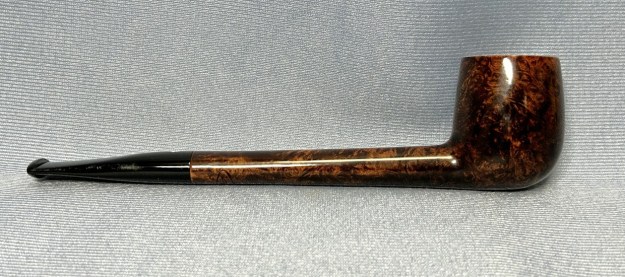
Restoring a Radice Pencil Shank Stack/Liverpool 31


by Steve Laug

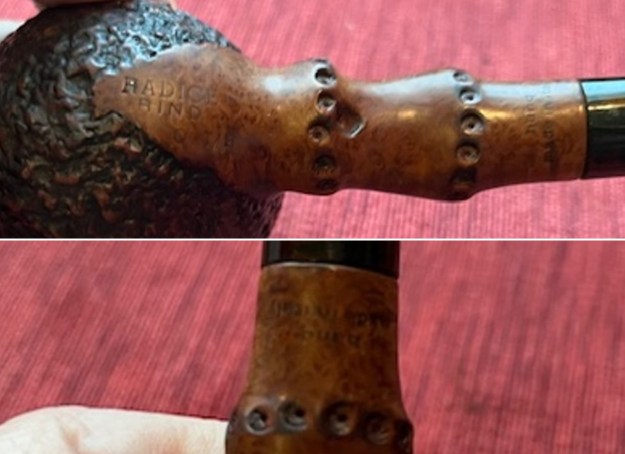
The next pipe on the table is one that we picked up in the lot from a good friend in Barrington, Rhode Island, USA on 08/22/2024. The smooth finish on this Italian made pipe and the Radice stamping are what caught our eye. It is stamped on the left side of the shank and reads Radice. On the right side it is stamped Hand Made [over] In Italy with the shape number 31 next to it. It has a classic Walnut Brown stain on the smooth finish that is a stark contrast to the short, stubby acrylic stem. It combines a tall stack shape bowl with a long, round Liverpool style shank and a taper stem. The bowl was clean and appears to have been recently reamed. It was a lightly smoked and well cared for pipe. The inner edge and the top look good though there is some darkening and some light lava on the top. The stem looks very good and has two small tooth marks and light chatter on the top and underside ahead of the button. The Radice inset Briar two spot logo is on the topside of the stem and looks to be in good condition. Jeff took some photos of the pipe to show the general condition of the pipe before he started his clean up. He took some photos of the rim top and bowl from various angles to give me a clear picture of the condition of the rim top and bowl. It is quite clean and the inside of the bowl is very clean and shows that the pipe has been lightly smoked. He included photos that show the top and underside of the stem. It is as described above. Jeff took some photos of the sides and heel of the bowl to show the condition of the finish on the pipe. The photos showed some great grain around the bowl and shank even with the grime in the finish. It is a great looking piece of briar. He took photos of the stamping on the sides of the shank. It was clear and readable as noted above.I started my search on the brand by looking on Pipephil’s site to see if there was any information on the Radice Handmade brand (http://www.pipephil.eu/logos/en/logo-r1.html). The line was not included there but there was some information in the side bar on the dot position on the stem and how to interpret them. It also gives some helpful information on the number stamp on the right side of the shank. I have included that portion below.From the information above I learned that the dot position is the usual position for the brand. That matched the stem well. The number on the shank side – 31 – actually turns out to not be a shape number at all. Rather it is a date number. Using the formula above – 1980+31 = 2011. The pipe in hand was made in 2011.

I turned to Pipedia to the article on Radice pipes and the birth and development of the brand (https://pipedia.org/wiki/Radice). I have included the information that I found there below.

Luigi Radice, born 1939, took a piece of briar in his hands for the first time in 1961, when he was employed at Carlo Scotti’s Castello in nearby Cantu.

After lengthy experience, he founded, together with Peppino Ascorti, the famous “Pipa del Baffo”, the “Caminetto” which through 1974 and 1975 made wealth with the precious cooperation of Gianni Davoli, Milanese distributor.

In 1980 Luigi undertook a new adventure, founding his own brand: the Pipa Radice. From the beginning his son, Gianluca, joined the workshop, together with Luigi’s father, Paolo Radice, who helped in some basic steps of production.

Only later my brother and I started working together with our father, trying to learn the secrets and the mastery to be able to create a pipe which could join artisanal estrus(?) to functionality.

We have always trusted the professionalism of Italian briar cutters to obtain the raw material. We season the briar in our workshop for at least three years. We believe that it is enough to produce a perfect pipe.

Our shaping is pretty diversified. A distinguishing feature is the use of various options, like the faux-bamboo shank or silver band or save-rim, hand engraved by Luigi.

About pipes for completely dedicated collectors, we would like to mention the several variations of pieces made using buffalo, moufflon, deer or roe horn.

The creative idea and the study of the technical side, lead us to invent pipes with a twin bore mouthpiece, coupled with a special production of oil cured pipes, taking inspiration from old English skills.

We have recently introduced the use of ebonite(vulcanite) mouthpieces, to satisfy the requests of our fellow pipesmokers.

Radice is a pipe which is continually evolving, keeping alive the treasured experience of 50 years of pipemaking of our father Luigi.

Now it was time to work on the pipe.

Armed with that information I turned to work on the pipe itself. Jeff had done a great job cleaning up the pipe as usual. He cleaned up the inside of the bowl with a Savinelli Fitsall Pipe Knife. The rim top and the inner edge of the bowl are in excellent condition. The bowl walls looked very good. He scrubbed the interior of the bowl and shank with shank brushes, pipe cleaners, cotton swabs and alcohol to remove the tars and oils. He scrubbed the exterior of the pipe with Murphy’s Oil Soap and a tooth brush to remove the grime from the finish. He scrubbed the inside of the stem with alcohol and pipe cleaners. He scrubbed the exterior with Soft Scrub and then soaked it in Briarville’s Pipe Stem Deoxidizer. He washed it off with warm water to remove the deoxidizer. The stem looked very good. I took photos of the pipe before I started working on it. I took close up photos of the bowl, rim top and stem to show how clean the pipe was. The bowl was clean and the rim top and the inner edge look beautiful. The stem was clean and the tooth marks on the topside are visible. The chatter is light and hardly visible.I took photos of the stamping on the sides of the shank. It is very clear and readable and read as noted above. I also removed the stem from the shank and took photos of the pipe to show the look of the parts. I polished the bowl and shank with 1500-12000 grit micromesh sanding pad – dry sanding it with the pads. I wiped the bowl down with a damp cloth after each pad. It began to take on a deep shine. The exterior of the bowl look better after sanding. I worked some Before & After Restoration Balm into the briar with my finger tips. I let it sit on the bowl for 10 minutes and then buffed it off with a paper towel and soft cloth. The product is a great addition to the restoration work. It enlivens, enriches and protects the briar while giving it a deep glow. It is a product I use on every pipe I restore. It was ready for the next step. I used a folded piece of 220 grit sandpaper to sand out the tooth marks and chatter on both sides of the stem. It did not take too much sanding and they were gone.I sanded the stem further with 320-3500 grit sanding pads and wiped the stem down after each pad with some Obsidian Oil on a cloth. The shine is coming back beautifully.I polished it with micromesh sanding pads – dry sanding with 1500-12000 grit pads and wiping the surface down with Obsidian Oil after each sanding pad. It is really shining. I polished it further with Before & After Stem Polish – both Fine and Extra Fine. I gave it another coat of Obsidian Oil to finish this step. This Radice Hand Made in Italy Stack/Liverpool with an acrylic taper stem is a great looking pipe now that it has been restored. The beautifully grained finish really works well with the shape and the polished finish is stunning. I put the stem back on the bowl and carefully buffed the bowl and the stem with Blue Diamond on the buffing wheel. I gave the bowl and the stem multiple coats of carnauba wax on the buffing wheel and followed that by buffing the entire pipe with a clean buffing pad. I hand buffed the pipe with a microfiber cloth to deepen the shine. The finished 2011 Radice Stack/Liverpool fits nicely in the hand and feels great. Give the finished pipe a look in the photos below. The dimensions of the pipe are Length: 5 ½ inches, Height: 2 inches, Outside diameter of the bowl: 1 3/8 inches, Chamber diameter: ¾ of an inch. The weight of the pipe is 41 grams /1.45 ounces. I will be putting it on the rebornpipes store in the Italian Pipe Makers Section shortly. Let me know via email or a message if you are interested in adding this pipe to your collection.

As always, I encourage your questions and comments as you read the blog. Thanks to each of you who are reading this blog. Remember we are not pipe owners; we are pipe men and women who hold our pipes in trust until they pass on into the trust of those who follow us.

A Pair of Pretty Petes for your Perspicacious Perusal


by Kenneth Lieblich

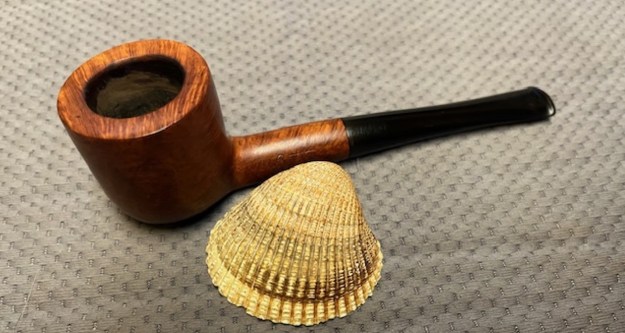
I have a couple of Peterson pipes that came my way recently and I decided to clean them up and get them ready. Not much of a restoration story on these – just some beautiful pipes. I gave them a quick (and thorough) once over and now it’s time to turn them over to you. Both have been hardly used (once, maybe twice) and they are very handsome. If you’re interested in adding one or both to your collection, be sure to drop me a line.

First is a Peterson K&P Irishmade 106 billiard with nickel military mount. Gorgeous pipe. If you are interested in acquiring it for your collection, please have a look in the “Irish” pipe section of the store here on Steve’s website. You can also email me directly at kenneth@knightsofthepipe.com. The approximate dimensions of the Peterson Irishmade 106 are as follows: length 6 in. (152 mm); height 2 in. (51 mm); bowl diameter 1½ in. (40 mm); chamber diameter ¾ in. (20 mm). The weight of the pipe is 1⅝ oz. (48 g). Have a look below. Thanks. Next is a Peterson System Standard 1307 (same as 307) bent billiard. Another lovely pipe. If you are interested in acquiring it for your collection, please have a look in the “Irish” pipe section of the store here on Steve’s website. You can also email me directly at kenneth@knightsofthepipe.com. The approximate dimensions of the Peterson System Standard 1307 are as follows: length 6½ in. (165 mm); height 2⅛ in. (54 mm); bowl diameter 1½ in. (40 mm); chamber diameter ⅞ in. (21 mm). The weight of the pipe is 2⅜ oz. (67 g). Have a look below. Thanks.

Restoring a Large Talamona 1A Bulldog


by Steve Laug

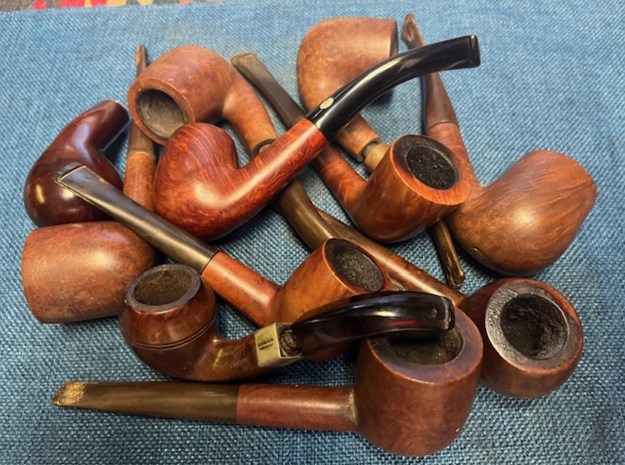
Last fall I received an email from a woman in Sacramento, California regarding the sale of her late husband’s pipes. There were 10 pipes from various and assorted makers and all were well smoked and well cared for by her husband. They needed some work to address the cake, tooth marks and chatter and off course oxidation on the vulcanite. They were interesting to us so Jeff and I made an offer and purchased the lot on 09/03/2024 and soon they were in Idaho awaiting the initial clean up work. I have included a photo below of the lot. The first one I chose to work on today was the large bent Bulldog, second down in the left column in the above photo. I really enjoy working on pipes that come with a bit of a story attached like this one. It adds another dimension to the work. The pipe was stamped on the left underside of the diamond shank and read Made in Italy [over] Talamona. To the right it was stamped with a circle 1A and next to the shank stem junction it bore the year 1983. The stamping was clear and readable as noted. The finish on the pipe was dirty and dull from hand oils and grime. The bowl had a moderate cake and an overflow of lava on the inner edge and rim top. There was some potential burn damage on the back inner edge but cleaning the pipe would tell the full story. The acrylic stem was dirty and had some tooth marks and chatter on both sides ahead of the button but should clean up well. It is a great looking pipe that should be a real beauty when cleaned up. Jeff took the photos below to show what the pipe looked like before he started his work on the pipe.Jeff took close up photos of the rim top from various angles to show the general condition of the bowl and rim. The photos show the thickness of the cake in the bowl and the lava build up on the inner edge – heavier toward the back of the bowl. The edge looks like it might have some damage on the back of the bowl but will probably be fine once the bowl is reamed and cleaned. The acrylic stem was dirty and had tooth marks and chatter on both sides ahead of the button. Jeff took a photo of the sides and heel of the bowl to give an idea of the beauty of the grain on the heel and sides of the bowl. The stamping on the left underside of the diamond shank is clear and readable as noted above. He also took a photo of the logo on the left topside of the stem.Before I started my work on the pipe I did a bit of reading on the brand. I have worked on one other Talamona back in 2020 and don’t have a clear memory of the details of the brand. I turned first to Pipephils site (http://www.pipephil.eu/logos/en/logo-t2.html) to see what I could learn. I have included a screen capture below as well as the sidebar information. I now knew that the pipe I was working on was made prior to his closing the shop in 2000 after his wife’s death which works well with the 1983 stamp.Artisan: Cesare Talamona is the son of Cornelio Talamona who founded the brand in 1929 in Oltrona di Gavirate (Varese). Most of Talamona pipes have a 9mm filter. The business closed down in December 2000 after Cesare’s wife had passed away. See also (second): Caesar

I turned to Pipedia to gather more details about the brand (https://pipedia.org/wiki/Talamona). I quote a section of the article below.

…Gradually Italy recovered from the consequences of the war – above all thanks to enormous aid by the United States. Cesare Talamona remained in the workshop and became a pipe maker. And Talamona Pipes made their way first to some important pipe shops in northern Italy where they gained a considerable good reputation for the small brand. This helped a lot to sell pipes in Germany since the later 1960’s as well, where the circle of customers admittedly remained manageable but affectionate due to a very good quality at moderate prices. Almost all of these pipes were made for 9mm filter.

In fact, Cesare Talamona never became one of the real great names of Italian pipe making. Though during the best years, in the 1980’s, there were even some auxiliary crafts, and also Cesare’s son and his two daughters earned their livelihood for a while in the family business. On the 31st of December 2000, the firm was closed officially. The main reason was that Cesare’s wife had passed away. But even though Cesare Talamona came back to the old workshop often, where he gladly made pipes for good friends and casual visitors. “As long as heart and hands still tag along” as he used to say.

Now I knew that not only was the pipe made before 2000 and according to the stamp was made in 1983. In all likelihood but it was also unique in that the stem was not a filter stem. Now it was time to work on the pipe.

Jeff had done his usual thorough clean up of the pipe. He had reamed it with a PipNet reamer and finished with a Savinelli Fitsall Pipe Knife. He scrubbed the exterior with Murphy’s Oil Soap and the interior with isopropyl alcohol, shank brushes, cotton swabs and pipe cleaners. He worked on the acrylic stem with Soft Scrub then let it soak in Before & After Pipe Stem Deoxidizer. It has a few tooth marks and chatter on both sides. I took photos of the pipe before I started my work. I took some close up photos of the bowl/rim top and the stem to show the condition they were in at this point. The rim top and edges looked good and the bowl was clean. There was some darkening on the top toward the back of the rim and some minor damage to the inner edges. The stem had tooth marks and chatter on both sides near the button.I took a photo of the stamping on the left underside of the diamond shank. It is clear and readable as noted above. I removed the stem from the shank to give a sense of the pipe. I worked on the darkened spots toward the back of rim top and the inner edge of the rim first. I used a folded piece of 220 grit sandpaper. After working on it the rim top and bowl edge looked much better.I polished the briar with micromesh sanding pads – dry sanding it with 1500-12000 grit pads. I wiped the bowl down after each pad with a damp cloth. The finished bowl and shank look very good. I worked some Before & After Restoration Balm into the surface of the briar with my finger tips. The product is amazing and works to clean, enliven and protect the briar. I let it sit on the briar for 10 or more minutes and then buff it off with a soft cloth. It really makes the briar come alive and look quite rich. I set the bowl aside and turned my attention to the stem. There were some tooth dents on the topside and underside of the stem surface. They were on the surface so I sanded out the marks on the surface and on the button surface with a folded piece of 220 grit sandpaper.I sanded the stem with 320-3500 grit sanding pads. I wiped the surface down after each pad with some Obsidian Oil and it was beginning to look very good.I polished it with micromesh sanding pads – dry sanding with 1500-12000 grit pads. I wiped the stem down after each pad with a cloth and Obsidian Oil. I finished the polishing with Before & After Pipe Stem Polish – both Fine and Extra Fine. I gave it a final coat of Obsidian Oil. This classic 1983 Italian Made Talamona 1A Bent Bulldog with a black acrylic stem is a great looking pipe now that it has been restored. I was able to remove and minimize the scratches around the bowl and rim. The rich natural browns of the finish came alive with the polishing and waxing. The grain really popped. I put the stem back on the bowl and carefully buffed the pipe with Blue Diamond on the buffing wheel. I gave the bowl and the stem multiple coats of carnauba wax on the buffing wheel and followed that by buffing the entire pipe with a clean buffing pad. I hand buffed the pipe with a microfiber cloth to deepen the shine. The finished Talamona 1A Bent Bulldog is a beauty and fits nicely in the hand and looks very good. Give the finished pipe a look in the photos below. The dimensions of the pipe are Length: 6 inches, Height: 2 inches, Outside diameter of the bowl: 2 ¼ inches, Chamber diameter: ¾ of an inch. The weight of the pipe is 2.40 ounces/68 grams. I will be adding it to the rebornpipes store in the Italian Pipe Makers Section. If you are interested in adding this pipe to your collection send me a message or an email. Thanks for reading this blog and my reflections on the pipe while I worked on it. There are many more to come!

Restoring a beautifully grained Dunhill Bruyere 41041 Taper Stem Bulldog


by Steve Laug

The next pipe on the table is one that we picked up in the lot from our contact in Copenhagen, Denmark on 08/09/2024. The Bruyere finish and the Dunhill stamping is what caught our eye. It is stamped on the left side of the shank and reads 41041 next to the bowl/shank union followed by Dunhill [over] Bruyere. On the right side it is stamped Made in [over] England21. It has a classic Bruyere smooth finish that is a stark contrast to vulcanite, diamond taper stem. The finish has some scars that are a part of the pipe’s story particularly on the rim cap. The bowl appears to be moderately caked. The inner edge and the top show some lava overflow and what looks like knife damage from reaming on the inner edge. The stem is very oxidized and tooth marks and chatter on the top and underside ahead of the button and on the button surface itself. The classic white spot is on the left top side of the taper, diamond stem and looks to be in good condition. Jeff took some photos of the pipe to show the general condition of the pipe before he started his clean up. He took some photos of the rim top and bowl from various angles to give me a clear picture of the condition of the rim top and bowl. You can see the lava on the rim top and edges as well as part of the cake in the bowl. He included photos that show the top and underside of the stem. It is as described above. Jeff took some photos of the sides and heel of the bowl to show the condition of the finish on the pipe. The photos showed some great grain around the bowl and shank. It is a great looking piece of briar. He took some photos of the stamping on the sides of the bowl and shank. The stamping was clear and readable as noted above. As is my regular practice, before I started my work on the pipe, I turned to Pipedia’s section on Dunhill Bruyere Pipes to get a refresh the information I know regarding the Dunhill finishes (https://pipedia.org/wiki/Dunhill_Bruyere). I quote:

Initially, made from over century-old briar burls, classified by a “B” (denoted highest quality pipe); “DR” (denoted straight-grained) and an “A” (denoted first quality), until early 1915. After that, they became a high-end subset to the Dunhill ‘Bruyere’. The DR and B pipes, a limited production, they should be distinguished as hand-cut in London from burls as opposed to the Bruyere line which was generally finished from French turned bowls until 1917, when the Calabrian briar started to be used, but not completely. Only in 1920 Dunhill took the final step in its pipe making operation and began sourcing and cutting all of its own bowls, proudly announcing thereafter that “no French briar was employed”.

Bruyere pipes were usually made using Calabrian briar, a very dense and hardy briar that has a modest grain but does very well with the deep red stain.

“Before the 1950s, there were three possible finishes for Dunhill pipes. The Bruyere was a smooth finish with a deep red stain, obtained through two coats, a brown understain followed by a deep red. The Shell finish was the original sandblast with a near-black stain (though the degree to which it is truly black has varied over the years). Lastly, the Root finish was smooth also but with a light brown finish. Early Dunhill used different briars with different stains, resulting in more distinct and identifiable creations… Over the years, to these traditional styles were added four new finishes: Cumberland, Dress, Chestnut and Amber Root, plus some now-defunct finishes, such as County, Russet and Red Bark.”[1]I turned to Pipephil’s dating guide to show how I arrived at the date of manufacture for this pipe (http://www.pipephil.eu/logos/en/dunhill/cledat-en1a.html). I am including the chart that is provided there for the dating a pipe. I have drawn a red box around the section. Since the pipe I am working on has a superscript suffix 21 after the D in England it points to the 1960 line on the chart below. To date it just add 1960 +21 for a date of 1981. I have drawn a red box around the pertinent section in the chart.I now knew that I was working on a Bruyere that came out in 1981. The shape of the pipe is called a smooth straight Bulldog with a 41041 Shape number on the left side of the shank/ bowl.

I turned to Pipephil’s shape list (http://www.pipephil.eu/logos/en/dunhill/shapes.html). At the bottom of the list of shapes (with the 04 being a Billiard) is a key for interpreting the digits in the stamp I have included that below.

Dunhill pipes are stamped with a four digit code.
Digit 1: (from 1 to 6) denotes the size of the pipe (the group).
Digit 2: denotes the style of the mouthpiece (0,1=tapered, 2=saddle)
Digit 3 and 4: denote the generic pipe shape (in yellow in the chart on top) 

Example: 5102
(5 = size | 1 = tappered stem | 02 = Bent)

When 5 digits occur, the meaning of the 4 first remain the same

The 41041 was thus a Group 4 size, with a taper mouthpiece, and in an 04 or straight Bulldog shape.

Armed with that information I turned to work on the pipe itself. Jeff had done a great job cleaning up the pipe as usual. He cleaned up the inside of the bowl with a PipNet reamer and a Savinelli Fitsall Pipe Knife. The rim top shows some damage on the top and the inner edge of the bowl. The bowl walls looked very good. He scrubbed the interior of the bowl and shank with pipe cleaners, cotton swabs and alcohol to remove the tars and oils. He scrubbed the exterior of the pipe with Murphy’s Oil Soap and a tooth brush to remove the grime from the finish. He worked on the rim top lava and darkening with the soap and tooth brush. He scrubbed the inside of the stem with alcohol and pipe cleaners. He scrubbed the exterior with Soft Scrub and then soaked it in Briarville’s Pipe Stem Deoxidizer. He washed it off with warm water to remove the deoxidizer. Now the damage to the stem was very clear. Overall, the pipe looked far better. I took photos of the pipe when I received it before I started working on it. I took close up photos of the bowl, rim top and stem to show how clean the pipe was. The bowl was clean and the damage to the rim top and the inner edge is very visible in the photo below. The stem was clean and the light tooth marks and chatter can be seen in the photos.I took a photo of the stamping on the sides of the shank. It is very clear and readable and read as noted above. I also removed the stem from the shank and took photos of the pipe to show the look of the parts. I started my work on the pipe by addressing the damage to the rim top. I used some 220 grit sandpaper and a round wooden sphere to clean up the bevel on the inner edge of the bowl. It looked much better once finished. I touched up the sanded inner edge and top with a cherry stain pen to match the surrounding briar. It is looking very good.I polished the Bruyere bowl and shank with 1500-12000 grit micromesh sanding pad – dry sanding it with the pads. I wiped the bowl down with a damp cloth after each pad. It began to take on a deep shine. The exterior of the bowl look better after sanding. I worked some Before & After Restoration Balm into the briar with my finger tips. I let it sit on the bowl for 10 minutes and then buffed it off with a paper towel and soft cloth. The product is a great addition to the restoration work. It enlivens, enriches and protects the briar while giving it a deep glow. It is a product I use on every pipe I restore. The stem surface looked good other than some deeper oxidation. It showed up in the bright lights of the photos. There were some deep tooth marks in the middle of the button surface on both sides of the stem. I filled them in with black CA glue and set it aside to cure. Once it had cured I recut the button edge and flattened it with a small file. I sanded it with a folded piece of 220 grit sandpaper. I continued the sanding process with 320-3500 grit sanding pads. The repairs began to disappear into the surface of the vulcanite and the stem began to take on a smooth new look. Progress for sure.It was ready for the next step. I polished it with micromesh sanding pads – dry sanding with 1500-12000 grit pads and wiping the surface down with Obsidian Oil after each sanding pad. It is really shining. I polished it further with Before & After Stem Polish – both Fine and Extra Fine. I gave it another coat of Obsidian Oil to finish this step. I am excited to be on the homestretch and look forward to seeing the 1981 Dunhill Bruyere 41041 Bulldog put back together, polished and waxed. I put the bowl and stem back together and lightly polished the bowl and stem with Blue Diamond to polish them. I gave the bowl and the stem multiple coats of carnauba wax. I buffed the pipe on the wheel with a clean buffing pad to raise the shine. I hand buffed it with a microfiber cloth to deepen the shine. The depths of the grain really pop with the wax and polish. The repaired and polished vulcanite stem is a beautiful contrast to the combination of stains on the bowl and shank. This Dunhill Bruyere 41041 Bulldog was a lot of work to bring back to life. The pipe is light weight, comfortable in the hand and should feel great as it is warmed up when smoking. The finished pipe is shown in the photos below. The dimensions of the pipe are Length: 5 ½ inches, Height: 1 ¾ inches, Outside diameter of the bowl: 1 ¼ inches, Chamber diameter: ¾ of an inch. The weight of the pipe is 1.34 ounces/38 grams. I will be putting this one on the rebornpipes store in the British Pipemakers Section soon. Let me know if you wish to add it to your collection.

As always, I encourage your questions and comments as you read the blog. Thanks to each of you who are reading this blog. Remember we are not pipe owners; we are pipe men and women who hold our pipes in trust until they pass on into the trust of those who follow us.
Resurrection of a Well-Loved, Tired Old Dunhill Shell 4106 Billiard


by Steve Laug

Sometimes when we get around to working on a pipe I am struck with asking why we picked this one up. That is the case with the next poor old Dunhill. It has been either well loved or abused depending on your perspective. We picked the pipe up from a seller in Ogden, Utah, USA on 12/12/2024. Probably the Shell finish and the Dunhill stamp is what caught our eye. It is stamped on the underside of the shank and reads 4106F on the heel of the bowl. That is followed by Dunhill Shell [over] Made in England25. It has a classic Shell briar dark brown/cordovan/black finish sandblast that is a stark contrast to the two silver coloured inlaid rings in the stem. From the side view it is a great looking sandblast pot. However, when you turn it over and examine it from the top down that can begin to see the abuse or love. The bowl appears to be moderately caked at first glance but it is actually quite thick at the bottom half of the bowl and hard as aged concrete. The inner edge and the top show lava overflow and it is hard to know if there is rim damage at this point because of the lava. And let’s talk about that stem. It is oxidized and calcified which is quite normal for what I see. However, the deep tooth marks and chomp marks on the stem surface and button edges are deeper than they first appear. You can picture the old pipe man (or maybe a young one though I doubt it) chomping down on the stem while concentrating on whatever his hands were doing in the shop. Cleaning it up will truly reveal the depth of the mess but first impressions are not good! There were two inlaid metal rings in the taper stem – sandwiching a piece of vulcanite. This is something I have not seen before on a Dunhill stem. The classic white spot is on the top of the stem and looks to be in good condition. Jeff took some photos of the pipe to show the general condition of the pipe before he started his clean up. What are your impressions? Would you have bought it or left it? He took some photos of the rim top and bowl from various angles to give me a clear picture of the condition of the rim top and bowl. You can see the lava on the rim top and edges as well as part of the cake in the bowl. It is thicker starting about half way down the bowl. The next photos show the top and underside of the stem. It is actually far worse than even the photos show. Jeff took some photos of the sides and heel of the bowl to show the condition of the finish on the pipe. The photos showed a great sandblast. It is a great looking piece of briar at least on the outside at this point! He took some photos of the stamping on the underside of the bowl and shank. The stamping was clear and readable as noted above. There was some faintness to the stamping of the shape number on the heel of the bowl but it was still readable.As is my regular practice, before I started my work on the pipe, I turned to Pipedia’s section on Dunhill Shell Pipes to get a refresh the information I know regarding the Dunhill finishes (https://pipedia.org/wiki/Dunhill#Root_Briar). I quote:

Shell

A deep craggy sandblast with a black stain finish (usually made using Algerian briar) – the color of the stain used has varied over the years. Although there is some doubt as to them being the first to sandblast pipes, Dunhill’s Shell pipes, and the sandblasting techniques developed to create them are considered one of Dunhill’s greatest and most lasting contributions to the art of pipe making.

The documented history of Dunhill’s inception of the Shell is largely limited to patent applications — there are no catalog pages or advertisements promoting blasted pipes at the time. The preliminary work on the English patent (No. 1484/17) was submitted on October 13, 1917. The patent submission was completed half a year later, on April 12, 1918, followed by the granting of the English patent on October 14, 1918. This was less than a month before the end of The Great War on November 11th.

In 1986 Dunhill released a line of premium Shell finish pipes – “RING GRAIN”. These are high-quality straight grain pipes which are sandblasted. Initially only Ring Grain, but now in two different finishes. In 1995 the “Shilling” was introduced with Cumberland finish – it is an extremely rare series. These pipes exhibit a deeper blast characteristic of that of the 1930’s – mid-1960’s (and the limited ‘deep blast’ pipes of the early 1980s) and show a fine graining pattern. These are considered the best new Dunhills by many enthusiasts today and are very rare. The finish is sometimes described as tasting like vanilla at first, with the taste becoming more normal or good as the pipe breaks in.

There was also a link to a catalogue page that gave examples and dates that the various finishes were introduced (https://pipedia.org/wiki/File:Dunnypipescatalog-1.png).I turned to Pipephil’s dating guide to show how I arrived at the date of manufacture for this pipe (http://www.pipephil.eu/logos/en/dunhill/cledat-en1a.html). I am including the chart that is provided there for the dating a pipe. I have drawn a red box around the section. Since the pipe I am working on has a superscript suffix 25 after the D in England it points to the 1960 line on the chart below. To date it just add 1960 +25 for a date of 1985. I have drawn a red box around the pertinent section in the chart.I now knew that I was working on a Shell that came out in 1985. The shape of the pipe is called a Pot with a 4106 Shape number on the heel of the bowl.

I turned to Pipephil’s shape list (http://www.pipephil.eu/logos/en/dunhill/shapes.html). At the bottom of the list of shapes (with the 06 being a pot) is a key for interpreting the digits in the stamp I have included that below.

Dunhill pipes are stamped with a four digit code.
Digit 1: (from 1 to 6) denotes the size of the pipe (the group).
Digit 2: denotes the style of the mouthpiece (0,1=tapered, 2=saddle)
Digit 3 and 4: denote the generic pipe shape (in yellow in the chart on top) 

Example: 5102
(5 = size | 1 = tappered stem | 02 = Bent)

When 5 digits occur, the meaning of the 4 first remain the same

The 4106 was thus a Group 4 size, with a taper mouthpiece, and in an 06 or Pot shape.

Armed with that information I turned to work on the pipe itself. Jeff had done a great job cleaning up the pipe as usual. He cleaned up the inside of the bowl with a PipNet reamer and a Savinelli Fitsall Pipe Knife. The bowl walls looked very good but there was a thick ring at the bottom of the bowl. The question was whether it was more cake or damage to the bowl bottom. The airway appears to be drilled at the bottom. This will take some more work. He scrubbed the interior of the bowl and shank with pipe cleaners, cotton swabs and alcohol to remove the tars and oils. He scrubbed the exterior of the pipe with Murphy’s Oil Soap and a tooth brush to remove the grime from the finish. He worked on the rim top lava and darkening with the soap and tooth brush. He scrubbed the inside of the stem with alcohol and pipe cleaners. He scrubbed the exterior with Soft Scrub and then soaked it in Briarville’s Pipe Stem Deoxidizer. He washed it off with warm water to remove the deoxidizer. Now the damage to the stem was very clear. Overall, the pipe looked far better. I took photos of the pipe when I received it before I started working on it. I took close up photos of the bowl, rim top and stem to show how clean the pipe was. The bowl was clean but if you look closely you can see the thick ring toward the bottom of the bowl. The stem was clean but the tooth damage is very visible on both sides of the stem and button. The pipe has potential but it will be a lot more work to bring it back.I took a photo of the stamping on the underside of the shank. It read as noted above. It is very clear and readable even though it is faint in spots. I also removed the stem from the shank and took photos of the pipe to show the look of the parts.It did not take long to decide where I would start with this pipe. I tried to raise the tooth marks as much as possible by “painting” the surface with a lighter flame. It did very little to lift the marks in the stem. I forgot a photo of this but you have seen them before. I filled in the deep marks by layering in the rubberized black CA glue. Once it had cured I flattened the repairs and recut the button with a small file. I reshaped the button top and edges and further flattened and blended in the repairs with a folded piece of 220 grit sandpaper. It was a big improvement but still more work to go! I continued the sanding process with 320-3500 grit sanding pads. The repairs began to disappear into the surface of the vulcanite and the stem began to take on a smooth new look. Progress for sure.It was ready for the next step. I polished it with micromesh sanding pads – dry sanding with 1500-12000 grit pads and wiping the surface down with Obsidian Oil after each sanding pad. It is really shining. I polished it further with Before & After Stem Polish – both Fine and Extra Fine. I gave it another coat of Obsidian Oil to finish this step. I fit the polished stem with a Vauen Dr. Perl Junior 6mm filter in the tenon. It fit perfectly and as normal the filter reduced the draught on the pipe. The pipe can easily be smoked without the filter.I set the stem aside and worked on the bowl. I worked on the thick “concrete” like build up at the bottom of the bowl. It was very hard and thick. I used a PipNet Reamer to work on it a bit and a lot came out of the bowl. I chipped away at it with a Savinelli Fitsall Pipe Knife to remove the build up until the bottom and walls were clean.I cleaned the shank and the bowl again with alcohol and pipe cleaners to remove the dust and debris from the work on the bowl bottom. The exterior of the bowl was in excellent condition. I did not need to sand or do anything in preparation on the pipe. I set the stem aside and worked some Before & After Restoration Balm into the briar with my finger tips and a horsehair shoe brush. I let it sit on the bowl for 10 minutes and then buffed it off with a paper towel and soft cloth. The product is a great addition to the restoration work. It enlivens, enriches and protects the briar while giving it a deep glow. It is a product I use on every pipe I restore. I am excited to be on the homestretch and look forward to finally seeing the 1985 Dunhill Shell 4106 Billiard put back together, polished and waxed. I put the bowl and stem back together and lightly polished the bowl and stem with Blue Diamond to polish them. I gave the bowl multiple coats of Conservator’s Wax and the stem multiple coats of carnauba wax. I buffed the pipe on the wheel with a clean buffing pad to raise the shine. I hand buffed it with a microfiber cloth to deepen the shine. The depths of the sandblast really pop with the wax and polish. The repaired and polished vulcanite stem is a beautiful contrast to the combination of Shell stains on the bowl and shank. This Dunhill Shell 4106 Billiard was a lot of work to bring back to life. The pipe is tactile in the hand and should feel great as it is warmed up when smoking. The finished pipe is shown in the photos below. The dimensions of the pipe are Length: 5 inches, Height: 1 ½ inches, Outside diameter of the bowl: 1 ½ inches, Chamber diameter: 7/8 of an inch. The weight of the pipe is 1.31 ounces/ 38 grams. I will be putting this one on the rebornpipes store in the British Pipemakers Section soon. Let me know if you wish to add it to your collection.

As always, I encourage your questions and comments as you read the blog. Thanks to each of you who are reading this blog. Remember we are not pipe owners; we are pipe men and women who hold our pipes in trust until they pass on into the trust of those who follow us.
Breathing new life into a BBB Own Make Made in London England 636 Billiard


by Steve Laug

The next pipe on the work table is a BBB pipe with a silver shank band and a vulcanite taper stem. We picked the pipe up from a seller in Ogden, Utah, USA on 12/12/2024. It is stamped on the left side of the shank and reads BBB in a Diamond with Own on the left side of the Diamond and Make on the right side. On the right side of the shank it is stamped Made in London [over] England [over] 636. The silver band is stamped Sterling Silver under BBB in a Dimaond on the left side of the band. It is oxidized and scratched. The finish is a reddish-brown colour that really highlights the grain around the bowl and shank. The bowl colour is a stark contrast to the silver band and the black taper stem. There is a BBB Diamond brass logo inlaid on the top of the stem. The bowl was moderately caked and there was some lava on the inner bevelled edge of the rim and the top. The vulcanite stem had some oxidation and some chatter and light tooth marks on the top and underside of the stem near the button. It also looks like it had a softee bit on the stem at one time as it left a defined line. Jeff took some photos of the pipe to show the general condition of the pipe before he started his clean up. He took some photos of the rim top and bowl from various angles to give me a clear picture of the condition of the rim top and bowl. You can see the moderate cake in the bowl and the lava on the rim edge and top. The next photos show the top and underside of the stem. It is oxidized and appears to have had a Softee bit on it at one time. Jeff took photos of the sides of the bowl to show the condition of the finish on the pipe. The photos showed some great grain. It is a pretty piece of briar. He took some photos of the stamping on the underside of the shank and the Sterling Silver band. The stamping was clear and readable on both shank sides and the band as noted above. He also took a photo of the BBB logo on the topside of the taper stem. Jeff did his usual thorough job cleaning the pipe which I really appreciate because of the freedom it gives me in dealing with pipes. He reamed it with a PipNet pipe reamer and got rid of the cake. He cleaned up the reaming with a Savinelli Fitsall Pipe Knife so that we could see the walls of the bowl and assess for damage. He cleaned the internals of the shank and stem with alcohol, pipe cleaners and alcohol. He scrubbed the exterior with undiluted Murphy’s Oil Soap and a tooth brush. He rinsed the pipe under warm water. He dried it off with a cloth and then let it air dry. The stem was scrubbed with Soft Scrub and had a soak in Before & After Deoxidizer to remove the oxidation. One it was rinsed off, it came out looking very good. The finish on the bowl and the rim top cleaned up nicely. I took pictures of the pipe to show how it looked when I unpacked it. I took a close up photo of the bowl and rim top to show how clean the pipe was. The bowl was very clean and showed that the inner tube sitting in the bottom of the bowl. The stem looked good with very light tooth marks and chatter. Overall the pipe is a beautiful looking piece.I took photos of the stamping on the sides of the shank. It read as noted above. It is very clear and readable. I also removed the stem from the shank and took photos of the pipe to show the look of the parts. I decided to start my work on the bowl by polishing the rim top and the briar with micromesh sanding pads – dry sanding with 1500-12000 grit pads. I wiped the bowl down with a damp cloth after each sanding pad to remove the dust and debris. I gave the bowl and shank a coating of Before & After Restoration Balm. I worked it into the surface of the briar with my fingertips to clean, enliven and protect the briar. I let the balm sit for 15 minutes and then buffed with a cotton cloth to raise the shine. The photos show the bowl at this point in the restoration process. I polished the silver band with a jeweller’s cloth to remove the tarnish and oxidation. It took some elbow grease but the cloth works to clean and protect the silver from further tarnishing. It looks significantly better than when I started. I set the bowl aside and turned my attention to the stem. I polished it with micromesh sanding pads – 1500-12000 grit sanding pads and water to wet sand the stem. I wiped it down after each sanding pad with Obsidian Oil on a cotton rag after each sanding pads. After finishing with the micromesh pads I rub the stem down with Before & After Fine and Extra Fine stem polish as it seems to really remove the fine scratches in the vulcanite. I finished polishing the stem with a final coat of Obsidian Oil and set the stem aside to let the oil absorb. This process gives the stem a shine and also a bit of protection. This BBB Own Make 636 Made in London England Billiard turned out to be a great looking pipe. With polishing, the grain shines through clearly. The black vulcanite stem is in excellent condition and works great with the polished briar. The polished silver is a touch of class. I put the stem back on the bowl and carefully buffed the pipe with Blue Diamond on the buffing wheel using a light touch on the briar. I gave the bowl and stem multiple coats of carnauba wax on the buffing wheel and followed that by buffing the entire pipe with a clean buffing pad. I hand buffed the pipe with a microfiber cloth to deepen the shine. The finished BBB Own Make 636 Billiard fits nicely in the hand and feels great. Give the finished pipe a look in the photos below. The dimensions of the pipe are Length: 6 inches, Height: 1 ¾ inches, Outside diameter of the bowl: 1 ¼ inches, Chamber diameter: ¾ of an inch. The weight of the pipe is 43 grams/1.52 ounces. It is a great looking pipe that I will soon be adding it to the rebornpipes store in the British Pipemakers Section. If you are interested in adding it to your collection let me know Thanks for reading this blog and my reflections on the pipe while I worked on it.

Restoring a Beautiful and Bountiful Ropp Altesse 284 Billiard


by Kenneth Lieblich

Here is another pipe I’ve restored for a local family – and I’ve been drip feeding the restoration stories over a stupidly long time. However, after that bit of self-deprecation, let’s have a look. This is a really handsome, solid Ropp Altesse 284 billiard. It’s a lovely shape and a big bowl. Gosh, when my friend selected this pipe, I thought to myself, ‘Good choice’. This is an older Ropp and the markings are definitely worth examining. On the left side of the shank, we see (inside an oval) the word Ropp [over] Altesse. The French word ‘altesse’ means ‘highness’ in English. The right side of the shank reads 284, which is the shape number. Finally, the stem has the Ropp logo, which is very familiar – however, this time the logo is in brass, rather than the normal nickel. This is significant because the brass version of the logo was reserved for higher quality pipes. From Pipedia, here is a very brief history of the Ropp company:

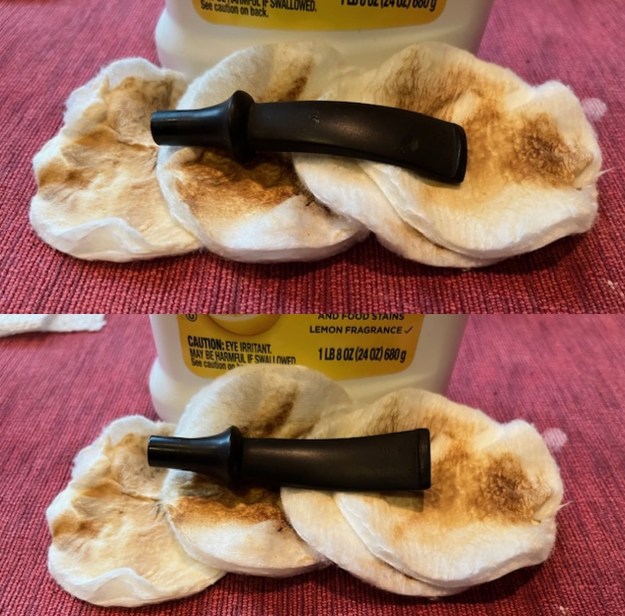
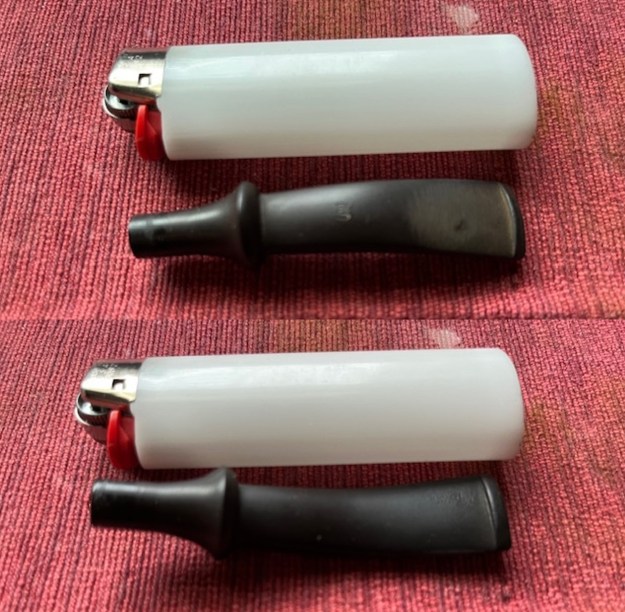
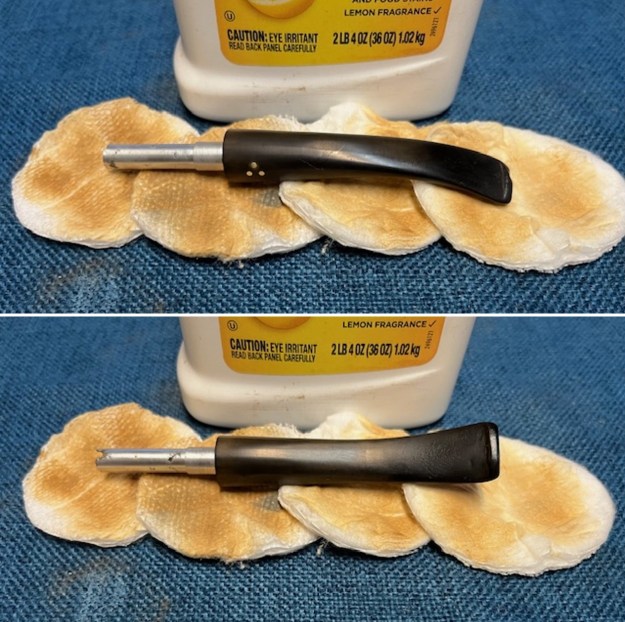
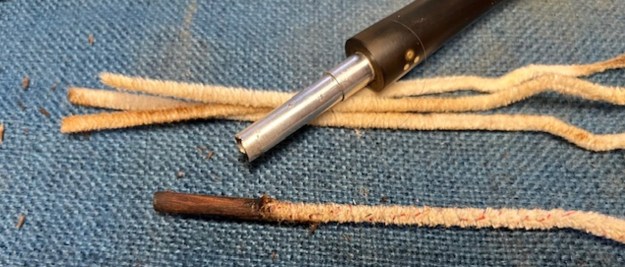
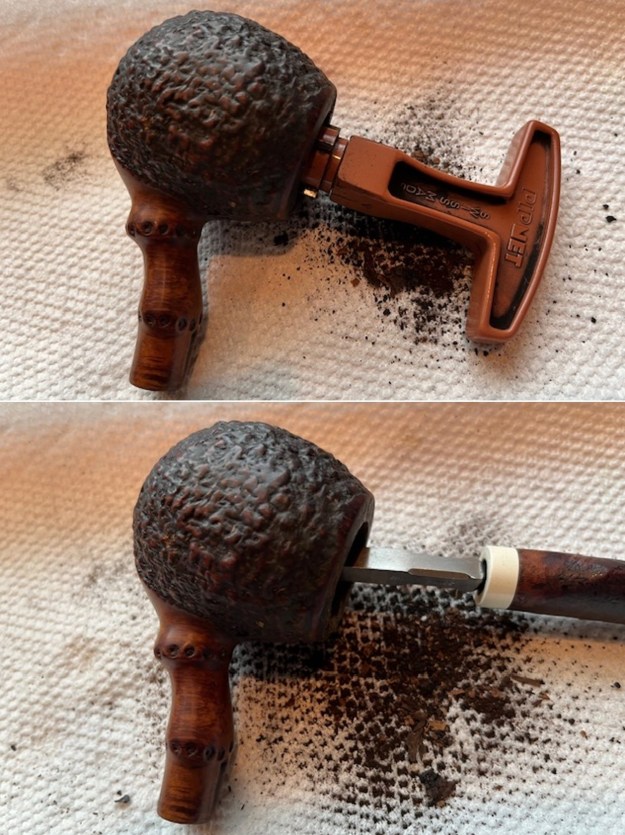
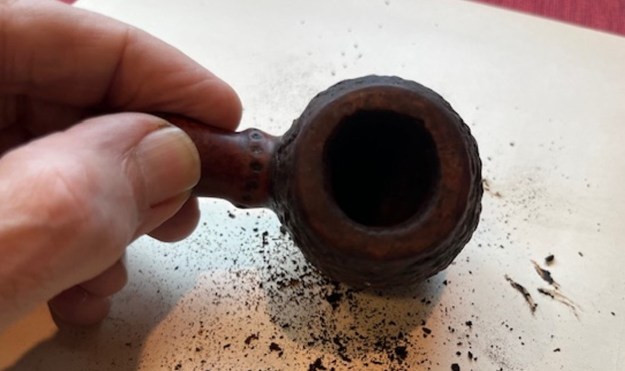
Eugène-Léon Ropp (1830–1907) acquired a patent for the cherrywood pipe in 1869. In 1870, he established a workshop to manufacture such pipes in Bussang, in the Vosges mountains. Around 1893, his business moved into the former mill of Sicard (part of the community of Baume-les-Dames in Upper Burgundy. The pipes were a big success in export as well. Shortly before 1914, Ropp designated A. Frankau & Co. (BBB) to be the exclusive distributor in the UK and its colonies. Probably in 1917, a workshop in Saint-Claude in the rue du Plan du Moulin was acquired to start the fabrication of briar pipes. In 1923, another small building in Saint-Claude, serving as a workshop for polishing, was added. Cherrywood pipes were the mainstay of Ropp until the company finally closed down in September 1991. The company was taken over by Cuty-Fort Entreprises in 1994. What sort of condition is this pipe in? Quite frankly, it looks as though someone in the past has made some elementary steps to cleaning or restoring this pipe. The stem has been thoroughly chewed and someone has clearly tried to scape off something in the path – you can the see scratch marks. The stummel has lovely feel to it. Not too dirty, but the rim has – like the stem – been scraped or cleaned in some way. The photos show how different the rim looks from the rest of the pipe.I used a disposable lighter and ‘painted’ the stem with its flame. The gentle heat of the flame can cause the dents in the vulcanite of the stem to expand back into shape. In this case, not much happened. Alas. This pipe also had an unusual metal and acrylic innertube. As the photos of this restoration show, I initially started cleaning it, but discovered that it was badly cracked – and so I elected to remove it altogether.I used oil soap on a few cotton rounds and wiped the stem down to provide an initial cleaning of filth before moving on to the next steps. The primary cleaning comes next. I cleaned the inside of the stem with both pipe cleaners and cotton swabs dipped in 99% lemon-infused isopropyl alcohol. I scrubbed thoroughly to make sure the interior was clean. I used a lot of pipe cleaners and cotton swabs, as it was pretty dirty.The goal of the next step is the removal (or minimization) of oxidation. Going to my sink, I used cream cleanser, cotton rounds, and a toothbrush, and scoured the stem to remove as much surface oxidation as possible. As the photos show, the result is a hideous brownish mess – but better off the stem than on it.Once the stem was reasonably clean, I soaked it overnight in some Briarville Stem Oxidation Remover. This solution works to draw oxidation in the stem to the surface. This is a major aid and an important step in ensuring a clean stem. The following day, I drew the stem out from its bath and scrubbed the lingering fluid with a toothbrush.Now that the stem is clean and dry, I set about fixing the marks and dents in the vulcanite. This is done by filling those divots with black cyanoacrylate adhesive, impregnated with carbon and rubber. I left this to cure and moved on.The penultimate step for the stem is sanding. First, with my set of needle files, I reduce the bulk of the cyanoacrylate repairs. I want to remove the excess adhesive as near to the surface as possible, without cutting into the vulcanite. Following that, I use all nine of the micromesh sanding pads (1,500 through 12,000 grit) to sand out flaws, even out the vulcanite, and provide gentle polishing of the finished surface. I also apply pipe-stem oil while using the last five micromesh pads. There was a wonderful, deep black shine to the stem when I was done.Now that the stem is (nearly) complete, I can move on to the stummel. The first step for me is to ream out the bowl – that is to say, remove all the cake inside the bowl. This accomplishes a couple of things. First (and most obviously), it cleans the bowl and provides a refurbished chamber for future smoking. Second, when the old cake is removed, I can inspect the interior walls of the bowl and determine if there is damage or not. I used a reamer, a pipe knife, and a piece of sandpaper taped to a wooden dowel. Collectively, these ensure that all the debris is removed.Similar to the stem, I then cleaned the stummel with both pipe cleaners and cotton swabs dipped in 99% lemon-infused isopropyl alcohol. With a pipe this dirty, it took quite a while and much cotton to get clean.I then decided to ‘de-ghost’ the pipe – that is to say, exorcize the remaining filth from the briar. I filled the bowl and the shank with cotton balls, then saturated them with 99% isopropyl alcohol. I let the stummel sit overnight. This caused any remaining oils, tars and smells to leach out into the cotton.To tidy up the briar, I also wiped down the outside with some oil soap on cotton rounds (and a toothbrush). This does a good job of cleaning any latent dirt on the surface of the briar. The last step of the cleaning process is to scour the inside of the stummel with some soap and tube brushes. This is the culmination of a lot of hard work in getting the pipe clean.The rim is a bit more rugged than I would like. In order to lessen the nicks etc. on the rim, I ‘topped’ the pipe – that is to say, I gently and evenly sanded the rim on a piece of 220-grit sandpaper. This effectively minimizes the damage, without altering the look of the pipe.I used all nine micromesh pads (1,500 through 12,000 grit) on the outside of the stummel to finish it off. This sanding minimizes flaws in the briar and provides a beautiful smoothness to the wood. After that, the bare wood on the rim needed to be tinted in the same colour as the rest of the stummel. I used some of my furniture pens (which is simply dye in pen form) to match the colours. I rubbed some Before & After Restoration Balm into the briar and let it sit for 20 minutes or so. The balm moisturizes the wood and gives a beautiful depth to the briar. I then buffed it with a microfibre cloth. For the final step, I took the pipe to my bench buffer and carefully polished it – first with a white diamond compound, then with three coats of carnauba wax. This procedure makes the pipe look its best – the stummel sings and the stem glows.All done! This Ropp Altesse 284 billiard looks fantastic again and is ready to be enjoyed by its new owner. It was a pleasure to work on. The approximate dimensions of the pipe are as follows: length 5¾ in. (146 mm); height 1⅞ in. (48 mm); bowl diameter 1½ in. (39 mm); chamber diameter ¾ in. (19 mm). The weight of the pipe is 1¾ oz. (52 g). I hope you enjoyed reading the story of this pipe’s restoration as much as I enjoyed restoring it. If you are interested in more of my work, please follow me here on Steve’s website or send me an email at kenneth@knightsofthepipe.com. Thank you very much for reading and, as always, I welcome and encourage your comments.

Restoring a Made in Ireland Peterson’s of Dublin Irish Harp 150 Straight Bulldog


by Steve Laug

The next pipe on the work table is another Peterson’s pipe with a red and black swirled acrylic stem. We picked the pipe up from a seller in Ogden, Utah, USA on 12/12/2024. It is stamped on a smooth panel on the left underside of the diamond shank and reads Peterson’s [arched over] of Dublin [over] Irish Harp. To the left of that it is stamped Made in Ireland and to the right the shape number 150. The Sterling Silver band is stamped on the left topside of the diamond shank and reads Peterson [arched over] a Harp with Sterling Silver arched underneath. On the right underside it bears the Peterson silver Hallmarks. It reads Peterson [over] the first hallmark, Hibernia seated arm on a harp for the country of manufacture. That is followed by .925 which help to date the pipe as after 2003 and designates the sterling quality. The final Hallmark is the date stamp and in this case is an italic upper-case I which dates it as made in 2019. The finish is a rich reddish-brown sandblast that is a stark contrast to the silver band the red and black streaked fishtail stem. The bowl had been recently reamed and there was tobacco debris in the bottom of the bowl. It was also lightly smoked. The fish tail stem was red acrylic with black swirls and was a tapered. The stem was lightly soiled and had light chatter on both sides There was an inlaid silver Peterson’s “P” logo on the left topside of the diamond taper. Jeff took some photos of the pipe to show the general condition of the pipe before he started his clean up.He took some photos of the rim top and bowl from various angles to give me a clear picture of the condition of the rim top and bowl. You can see the tobacco debris in the bowl and the light cake. The next photos show the top and underside of the stem. It is looks very good. Jeff took photos of the sides and heel of the bowl to show the condition of the finish on the pipe. The photos showed a great sandblast. It is a pretty piece of briar. He took some photos of the stamping on the underside of the shank and the silver band and its hallmarks. The stamping was clear and readable as noted above. He also took a photo of the “P” logo on the left side of the taper stem. Before doing my part of the work on the pipe I turned to see what I could find out about the line. I turned first to the Peterson’s website to see what they had listed. I quote below from that site (https://www.peterson.ie/pipes/premium/irish-harp/moreinfo.cfm?pd_product_Id=950).

One of the warmest finishes in our portfolio, the Irish Harp debuted in 2002 and combines an array of our Classic range shapes with deep, ruby-tinged walnut stains, cumberland-patterned acrylic fishtail stems, and bright bands of sterling silver, applied by the hands of our most experienced silversmiths.

I then turned to La Pipe Rit – St. Claude for their description of this particular Peterson’s line of pipes (https://www.smokingpipes.com/pipes/new/peterson/moreinfo.cfm?product_id=608936). I quote from the description by Truett Smith l below.

Peterson’s “150” straight Bulldog is a pert, upright rendition that fits in perfectly with the Irish firm’s characteristically muscular shaping style. It’s quite the forthright take on the classic English shape, but in keeping with the marque’s tradition, it features an incredibly robust, crisp diamond shank… Marked by a concise sandblast, dark walnut stain, and acrylic stem to match, the Irish Harp line from Peterson poses an elegant aesthetic, the bowl and mouthpiece separated by a generous band of sterling silver. Peterson’s craftsmen spend years training under the factory’s senior smiths, and the Irish marque is esteemed for its use of sterling silver. In the Irish Harp series, Peterson pays tribute to one of Ireland’s most iconic symbols: the Celtic harp or cláirseach in Irish. The traditional instrument is here emblazoned on the silver accent, celebrating Peterson’s Irish origins while simultaneously showcasing their superlative silverwork.

Jeff did his usual thorough job cleaning the pipe which I really appreciate because of the freedom it gives me in dealing with pipes. He reamed it with a PipNet pipe reamer and got rid of the cake. He cleaned up the reaming with a Savinelli Fitsall Pipe Knife so that we could see the walls of the bowl and assess for damage. He cleaned the internals of the shank and stem with alcohol, pipe cleaners and alcohol. He scrubbed the exterior with undiluted Murphy’s Oil Soap and a tooth brush. He rinsed the pipe under warm water. He dried it off with a cloth and then let it air dry. The stem was scrubbed with Soft Scrub and had a soak in Before & After Deoxidizer to remove the oxidation. One it was rinsed off, it came out looking very good. The finish on the bowl and the rim top cleaned up nicely. I took pictures of the pipe to show how it looked when I unpacked it. I took a close up photo of the bowl and rim top to show how clean the pipe was. The bowl was very clean and showed that the pipe was very lightly smoked. The stem looked good with no tooth marks or chatter. Overall the pipe is a beautiful looking piece.I took a photo of the stamping on the underside of the shank. It read as noted above. It is very clear and readable. I also took a photo of the stamping on the shiny nickel band. It was readable and clear. I also removed the stem from the shank and took photos of the pipe to show the look of the parts. The bowl was in excellent condition. I did not need to sand or do anything in preparation on the pipe. I set the stem aside and worked some Before & After Restoration Balm into the briar with my finger tips and a horsehair shoe brush. I let it sit on the bowl for 10 minutes and then buffed it off with a paper towel and soft cloth. The product is a great addition to the restoration work. It enlivens, enriches and protects the briar while giving it a deep glow. It is a product I use on every pipe I restore. I polished the silver with a jeweller’s cloth to protect and polish the silver and keep the tarnish at bay. It looks very good at this point. I set the bowl aside and turned to the stem. There were no deep tooth marks and very little chatter on the stem surface so I polished it with micromesh sanding pads – dry sanding with 1500-12000 grit pads and wiping the surface down after each sanding pad. It is really shining. I am excited to finish this one and look forward to seeing the 2019 Made in Ireland Peterson’s of Dublin Irish Harp 150 Bulldog put back together, polished and waxed. I put the bowl and stem back together and lightly polished the bowl and stem with Blue Diamond to polish them. I gave the bowl multiple coats of Conservator’s Wax and the stem multiple coats of carnauba wax. I buffed the pipe on the wheel with a clean buffing pad to raise the shine. I hand buffed it with a microfiber cloth to deepen the shine. The depths of the sandblast really pop with the wax and polish. The shiny red and black swirled acrylic stem is a beautiful contrast to the rich brown/red stain on the bowl, thick shank and Sterling Silver Band. This Peterson’s Dublin 03 Dracula Apple was a fun pipe to work on. The pipe is tactile in the hand and should feel great as it is warmed up when smoking. The finished pipe is shown in the photos below. The dimensions of the pipe are Length: 5 ½ inches, Height: 2 inches, Outside diameter of the bowl: 1 ¼ inches, Chamber diameter: ¾ of an inch. The weight of the pipe is 1.69 ounces/48 grams. I will be putting this one on the store in the Irish Pipemakers Section soon. Let me know if you wish to add it to your collection.

As always, I encourage your questions and comments as you read the blog. Thanks to each of you who are reading this blog. Remember we are not pipe owners; we are pipe men and women who hold our pipes in trust until they pass on into the trust of those who follow us.

A Refresh of a Peterson’s Dublin 03 Dracula Bent Apple


by Steve Laug

The next pipe on the work table is a Peterson’s pipe with a red and black swirled acrylic stem. We picked the pipe up from a seller in Ogden, Utah, USA on 12/12/2024. It is stamped on the underside of the shank and reads Peterson’s [arched over] Dublin [over] 03. The bright nickel band is stamped Dracula in a banner on top with a Bat before and after the name as well as underneath it. The finish is a dark coloured, almost black sandblast that is a stark contrast to the silver band the red and black streaked fishtail stem. The bowl was lightly caked and there was a tobacco debris in the bottom of the bowl. The fish tail stem was red acrylic with black swirls and was a tapered. The stem was very clean with no tooth damage. There was a white or silver Peterson’s “P” logo on the left side of the taper. Jeff took some photos of the pipe to show the general condition of the pipe before he started his clean up.He took some photos of the rim top and bowl from various angles to give me a clear picture of the condition of the rim top and bowl. You can see the tobacco debris in the bowl and the light cake. The next photos show the top and underside of the stem. It is looks very good. Jeff took a photo of the side of the bowl to show the condition of the finish on the pipe. The photos showed a great sandblast. It is a pretty piece of briar.He took some photos of the stamping on the underside of the shank and the nickel band. The stamping was clear and readable as noted above. He also took a photo of the “P” logo on the left side of the taper stem. Before doing my part of the work on the pipe I turned to see what I could find out about the line. I turned first to the Peterson’s website to see what they had listed. I quote below from that site (https://www.peterson.ie/pipes/classic/dracula-sandblasted/moreinfo.cfm?pd_product_Id=303).

The Dracula line started as a special commemorative line of pipes, first released in 2012, celebrating the death centennial of fellow Irishman and esteemed author Abraham “Bram” Stoker. Characterised by jet-black sandblasted finishes, bright nickel bands, and black-and-red-swirled acrylic fishtail stems, the Dracula Sandblasted appeals not only to fans of gothic horror, but of quality classic pipes in bold presentations.
I then turned to La Pipe Rit – St. Claude for their description of this particular Peterson’s line of pipes (https://www.pipe.fr/en/peterson-dracula-pipes-417). I quote in full below.
Peterson must be the most famous pipe brand in the world. Since the late 19th century, the company began to hire and train Irish men and women (whereas some other manufacturers used to hire French craftspeople from Saint-Claude). Nowadays, Peterson pipes are made with a real know-how thanks to a team of passionate craftspeople that share their expertise. The company “Kapp & Peterson” creates traditional pipes of great quality. On this webpage, we present you the incredible “Dracula” collection. First released in 2012, this series was designed to pay tribute to the Irish writer Abraham “Bram” Stoker to mark the centenary of his death. With the red and black stem, this must be one of the favorite pipes of horror stories readers, and more generally Peterson pipe enthusiasts. To stick to the spirit of the novel, the pipe is designed with a black finish (lacquered or sandblasted), a “bloody” acrylic stem, and is decorated with a nickel band (on which is stamped “Dracula”)
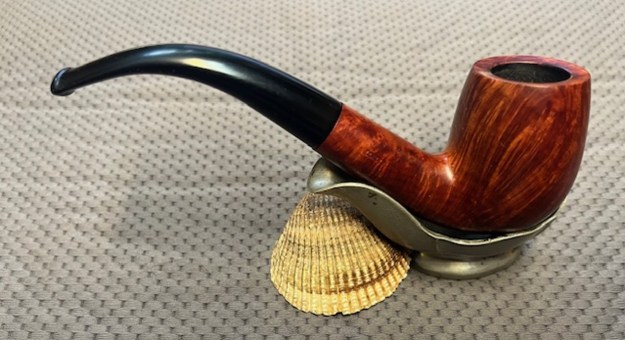
Jeff did his usual thorough job cleaning the pipe which I really appreciate because of the freedom it gives me in dealing with pipes. He reamed it with a PipNet pipe reamer and got rid of the cake. He cleaned up the reaming with a Savinelli Fitsall Pipe Knife so that we could see the walls of the bowl and assess for damage. He cleaned the internals of the shank and stem with alcohol, pipe cleaners and alcohol. He scrubbed the exterior with undiluted Murphy’s Oil Soap and a tooth brush. He rinsed the pipe under warm water. He dried it off with a cloth and then let it air dry. The stem was scrubbed with Soft Scrub and had a soak in Before & After Deoxidizer to remove the oxidation. One it was rinsed off, it came out looking very good. The finish on the bowl and the rim top cleaned up nicely. I took pictures of the pipe to show how it looked when I unpacked it. I took a close up photo of the bowl and rim top to show how clean the pipe was. The bowl was very clean and showed that the pipe was very lightly smoked. The stem looked good with no tooth marks or chatter. Overall the pipe is a beautiful looking piece.I took a photo of the stamping on the underside of the shank. It read as noted above. It is very clear and readable. I also took a photo of the stamping on the shiny nickel band. It was readable and clear. I also removed the stem from the shank and took photos of the pipe to show the look of the parts. The bowl was in excellent condition. I did not need to sand or do anything in preparation on the pipe. I set the stem aside and worked some Before & After Restoration Balm into the briar with my finger tips and a horsehair shoe brush. I let it sit on the bowl for 10 minutes and then buffed it off with a paper towel and soft cloth. The product is a great addition to the restoration work. It enlivens, enriches and protects the briar while giving it a deep glow. It is a product I use on every pipe I restore. I set the bowl aside and turned my attention to the stem. I touched up the “P” logo with some white acrylic nail polish. I applied it with the brush and once it cured sanded off the excess with a 1500 grit micromesh sanding pad.There were no deep tooth marks and very little chatter on the stem surface so I polished it with micromesh sanding pads – dry sanding with 1500-12000 grit pads and wiping the surface down after each sanding pad. It is really shining. I am excited to be on the homestretch and look forward to seeing the Peterson’s Dublin 03 Dracula Bent Apple put back together, polished and waxed. I put the bowl and stem back together and lightly polished the bowl and stem with Blue Diamond to polish them. I gave the bowl multiple coats of Conservator’s Wax and the stem multiple coats of carnauba wax. I buffed the pipe on the wheel with a clean buffing pad to raise the shine. I hand buffed it with a microfiber cloth to deepen the shine. The depths of the sandblast really pop with the wax and polish. The shiny red and black swirled acrylic stem is a beautiful contrast to the black stain on the bowl, thick shank and Polished Nickel Band. This Peterson’s Dublin 03 Dracula Apple was a fun pipe to work on. The pipe is tactile in the hand and should feel great as it is warmed up when smoking. The finished pipe is shown in the photos below. The dimensions of the pipe are Length: 5 inches, Height: 1 ½ inches, Outside diameter of the bowl: 1 ¼ inches, Chamber diameter: ¾ of an inch. The weight of the pipe is 1.80 ounces/ 50 grams. I will be putting this one on the store in the Irish Pipemakers Section soon. I remember reading Dracula in High School so I had to pause and think about letting this one go, before putting on the store. Let me know if you wish to add it to your collection.
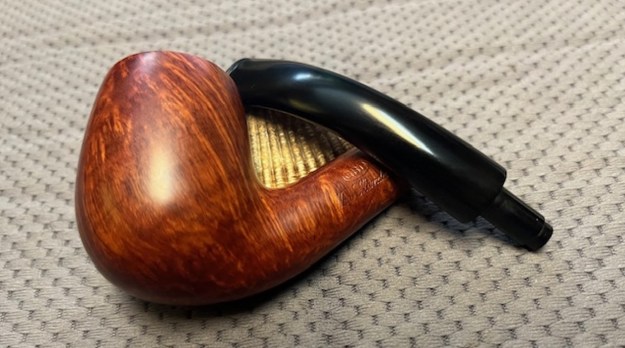
As always, I encourage your questions and comments as you read the blog. Thanks to each of you who are reading this blog. Remember we are not pipe owners; we are pipe men and women who hold our pipes in trust until they pass on into the trust of those who follow us.