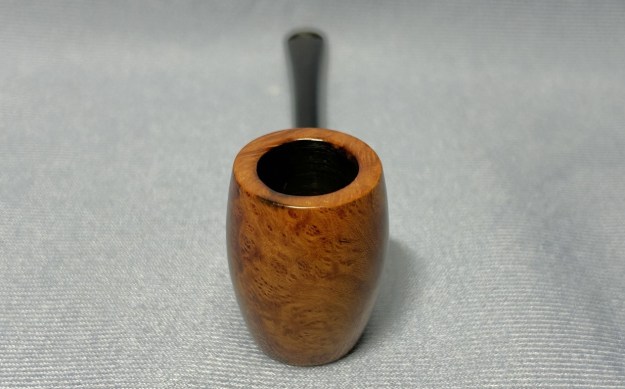
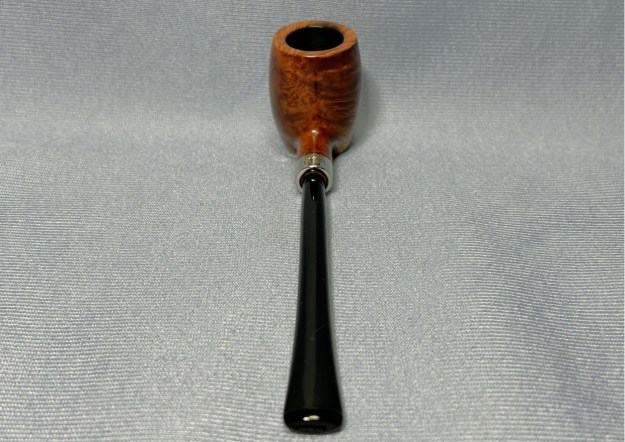
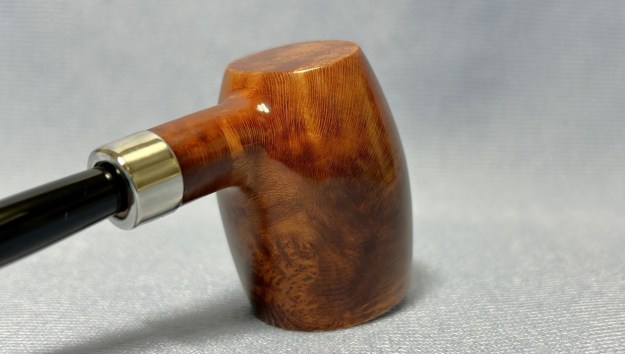
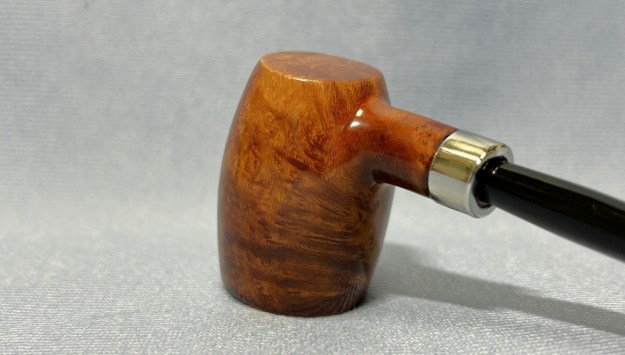
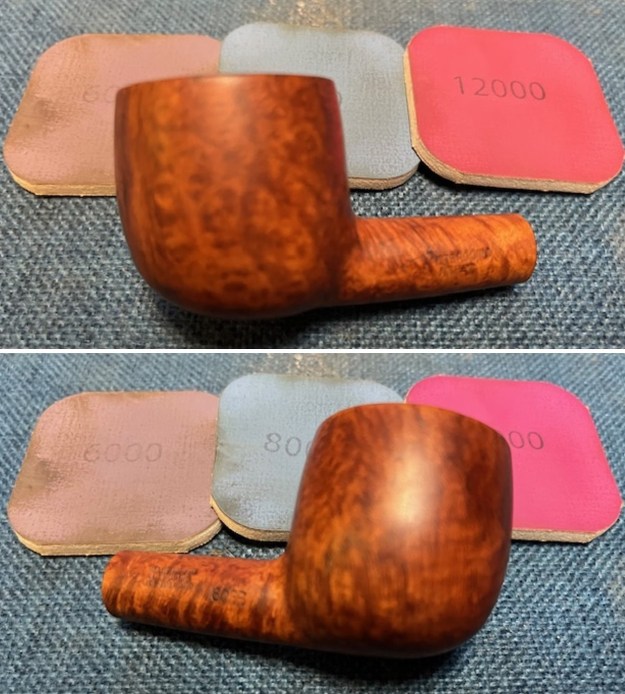
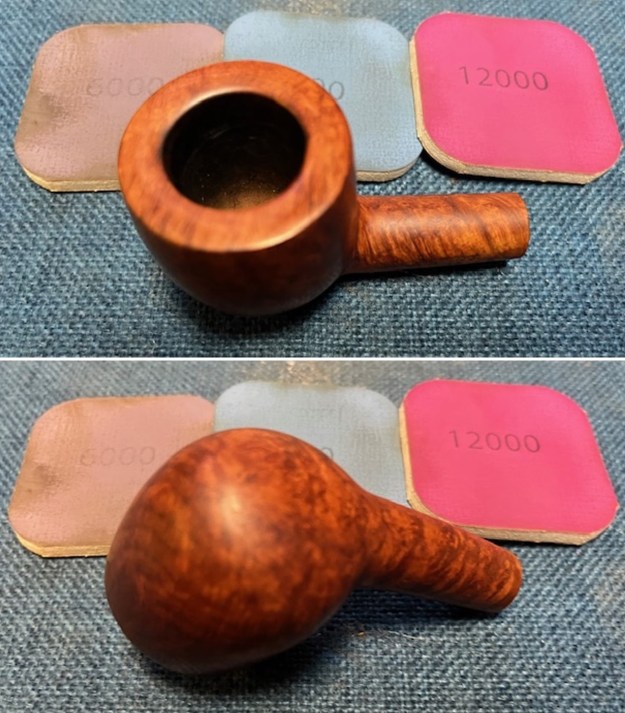
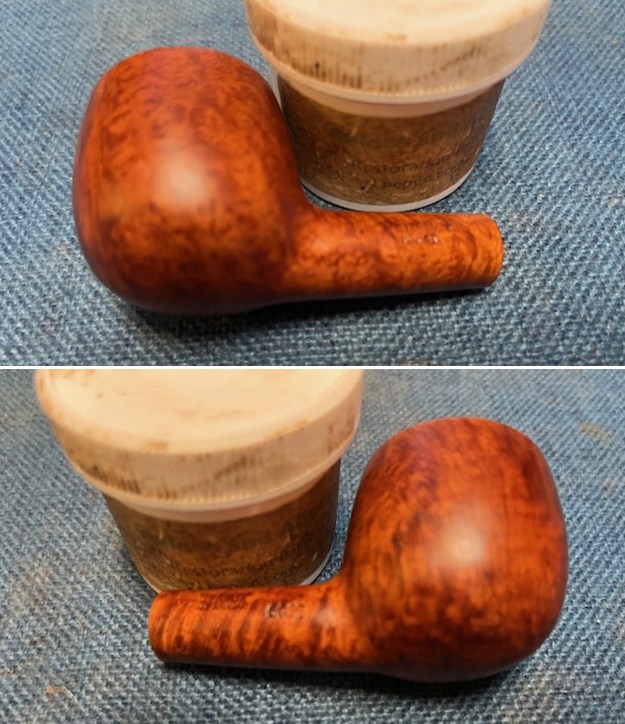
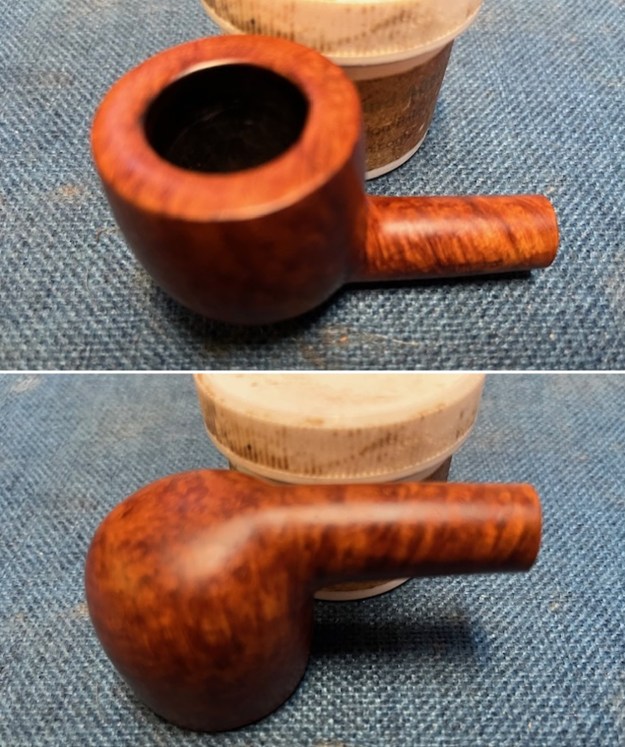
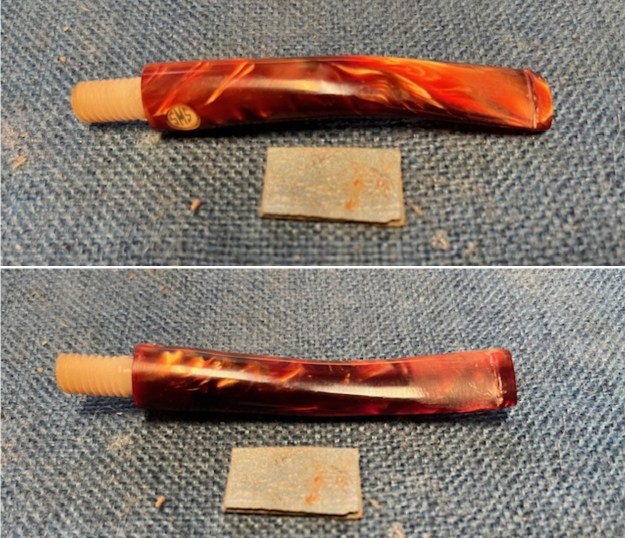
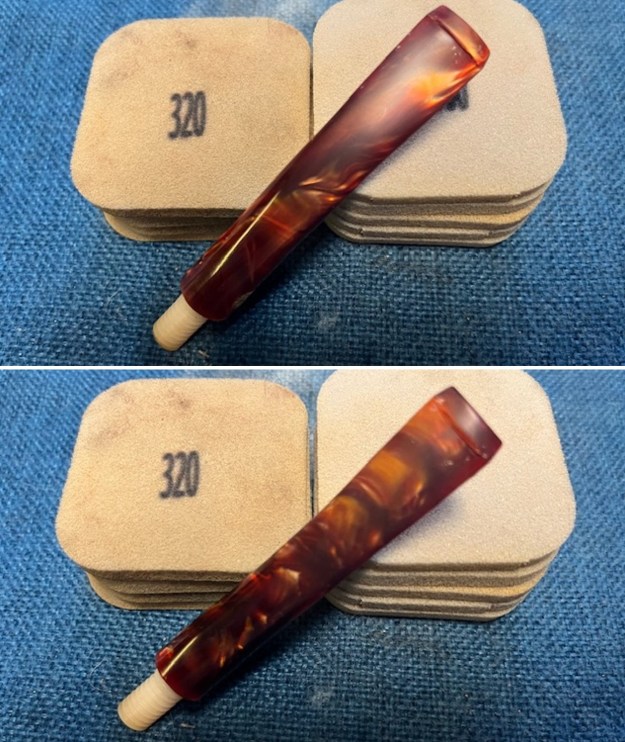
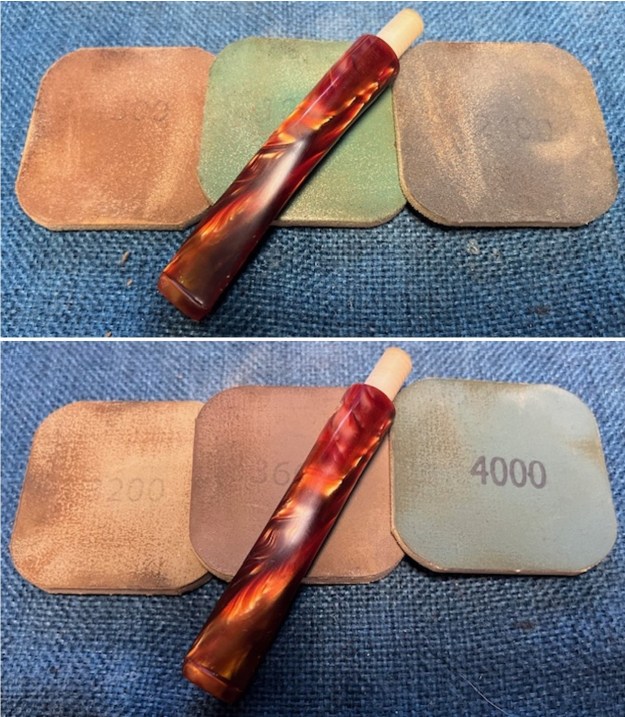
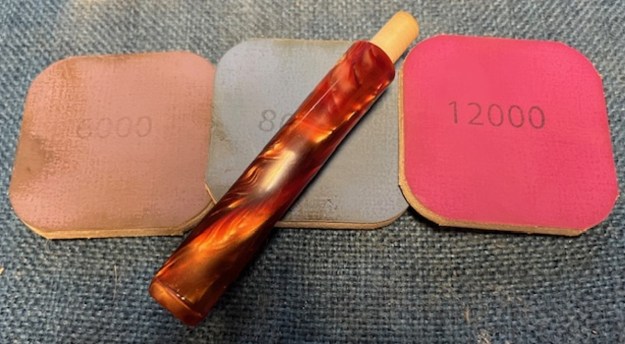
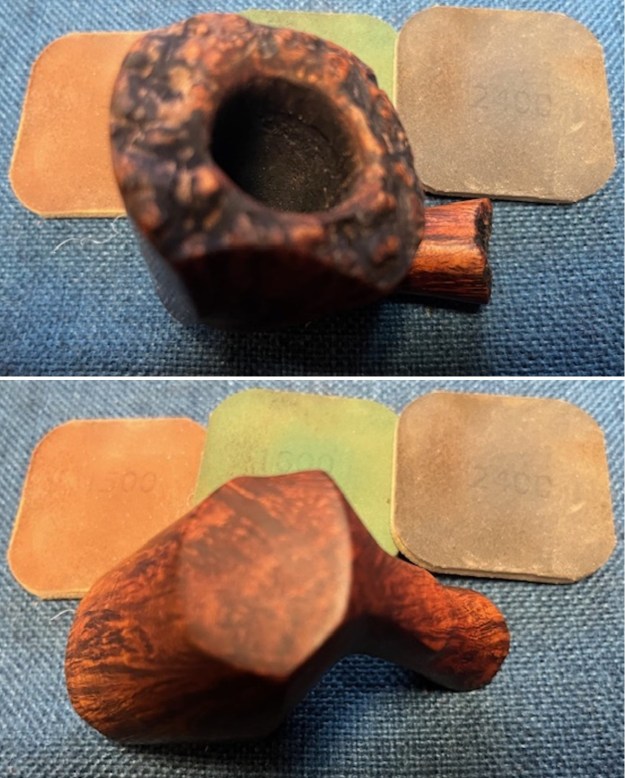
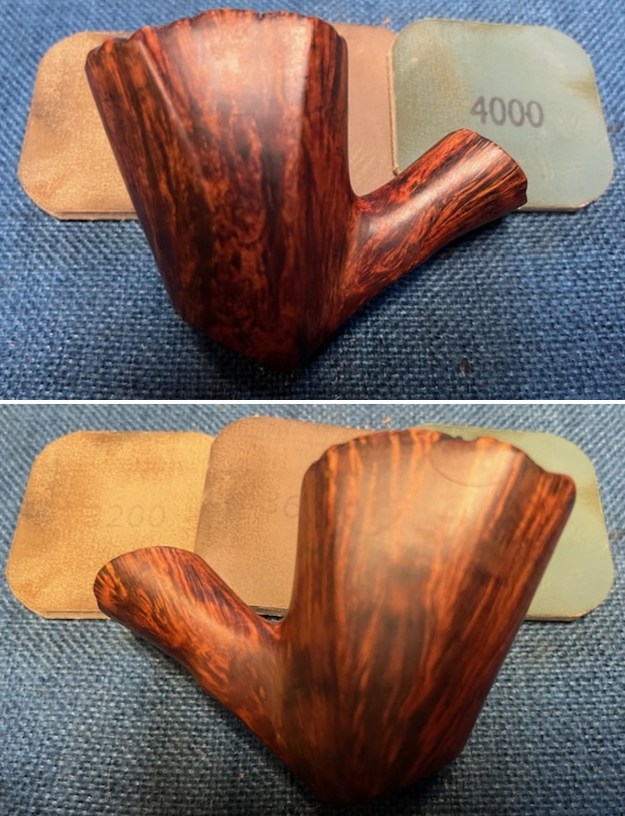
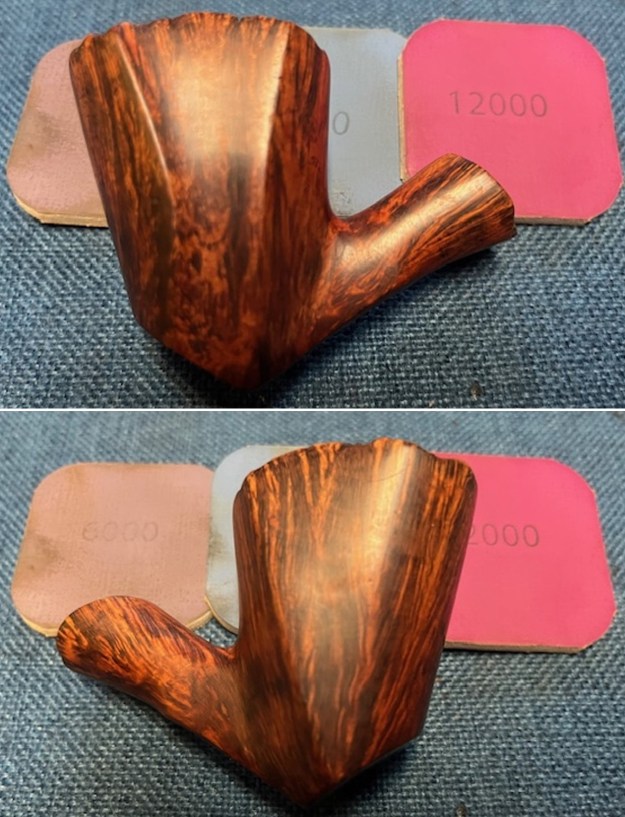
Tag Archives: shaping a stem

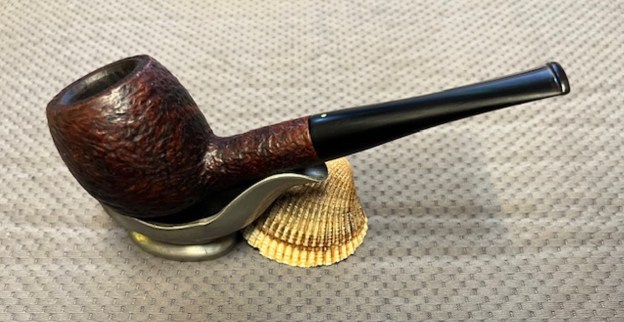
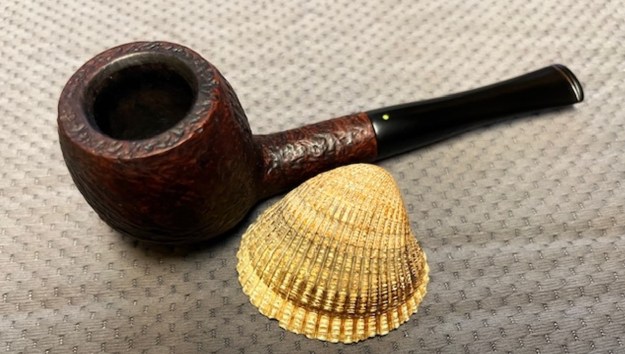
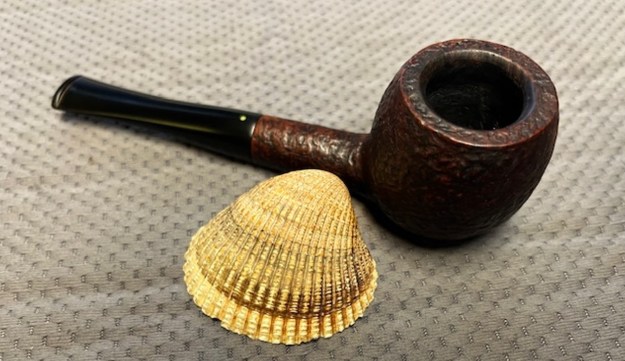
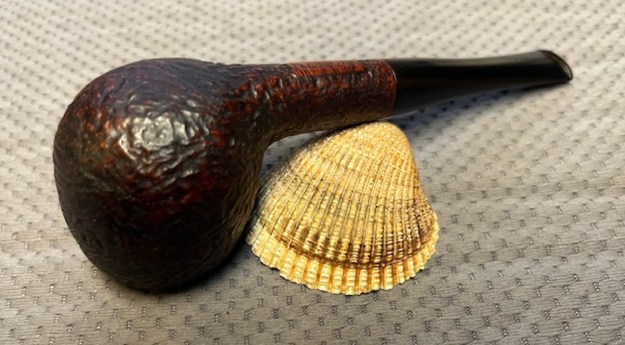
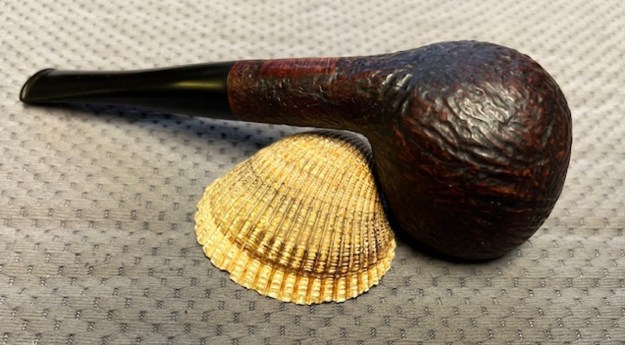
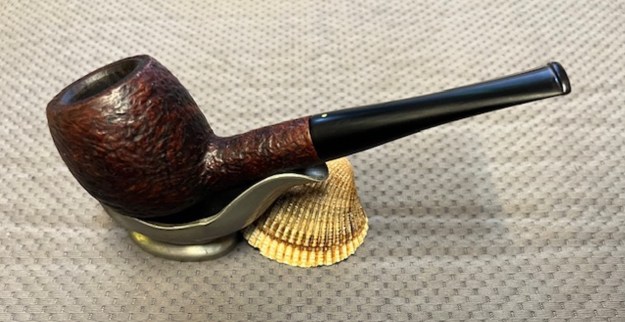
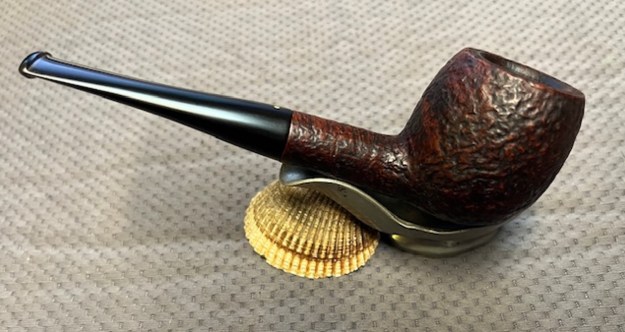
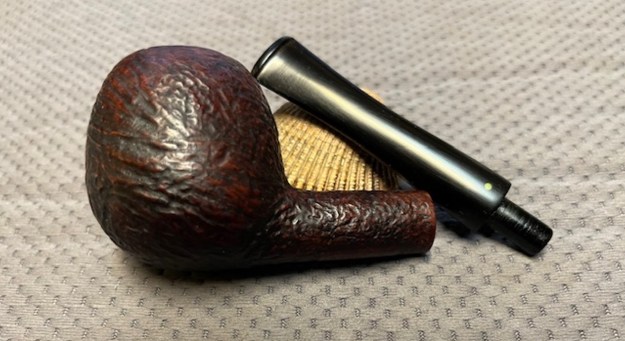
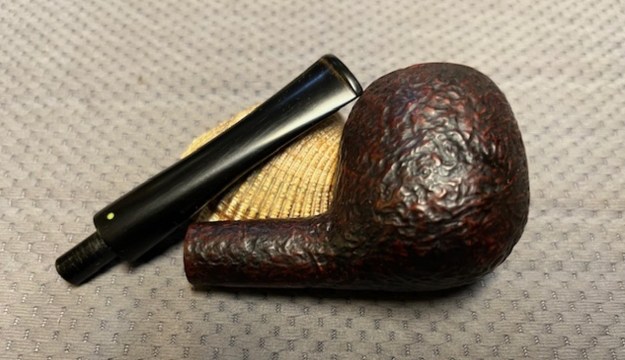
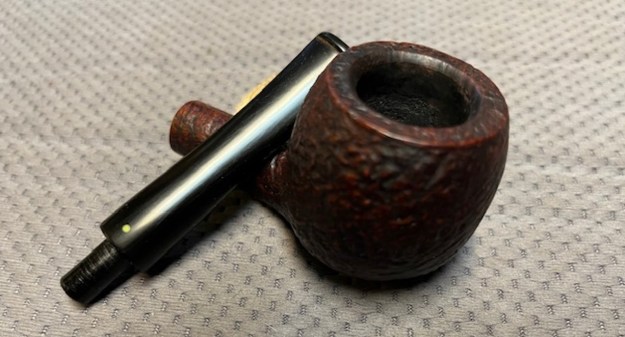
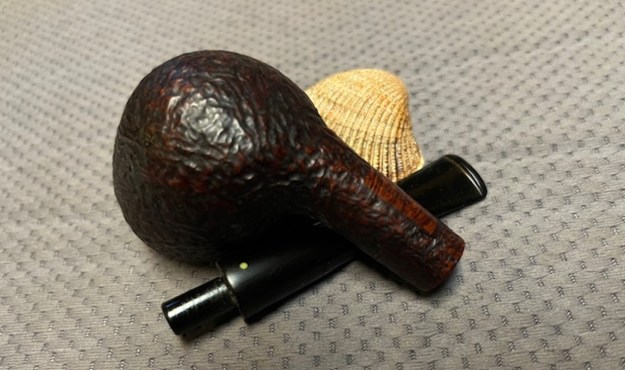
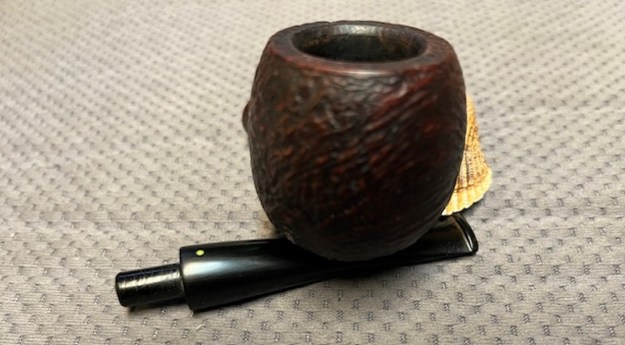
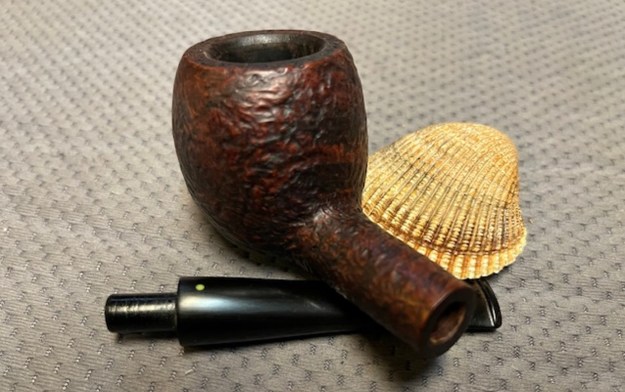
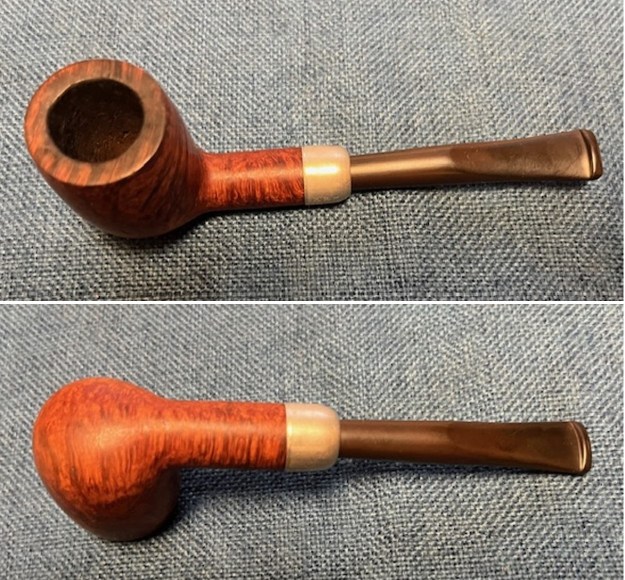
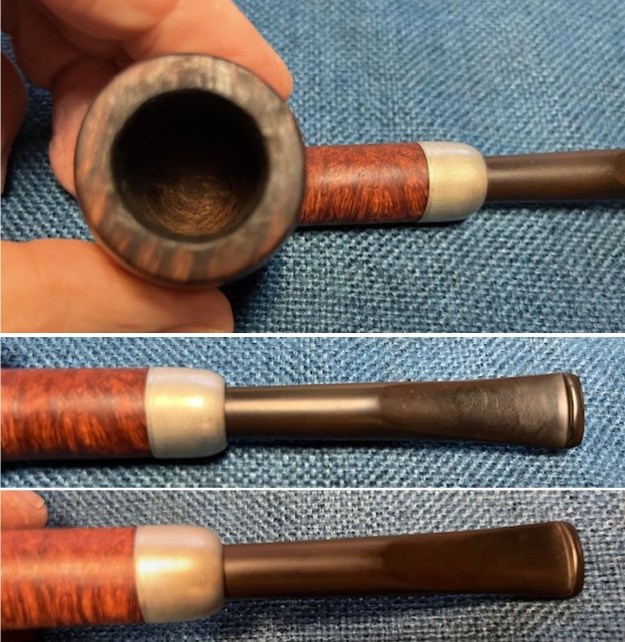
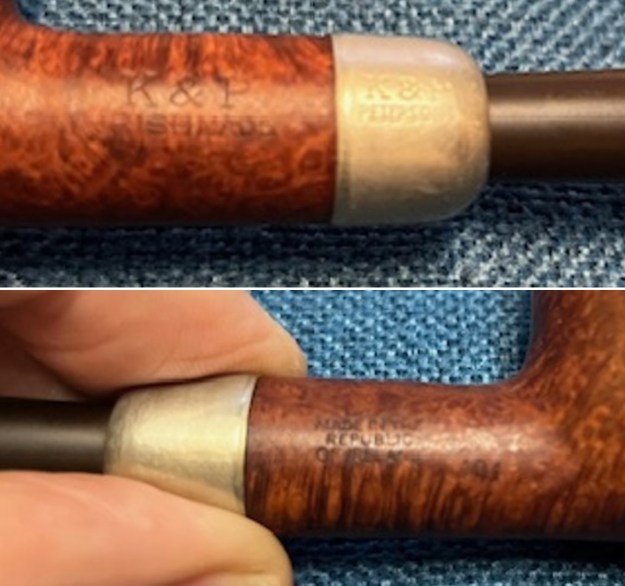
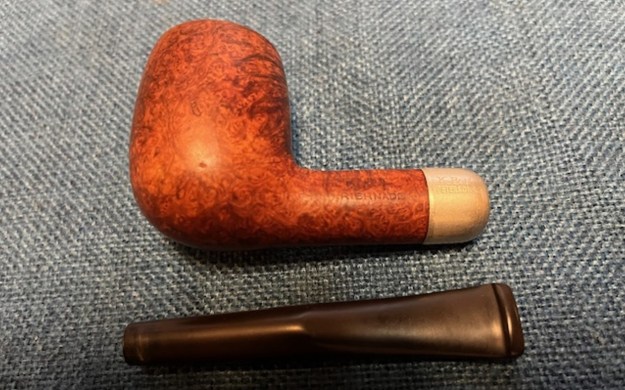
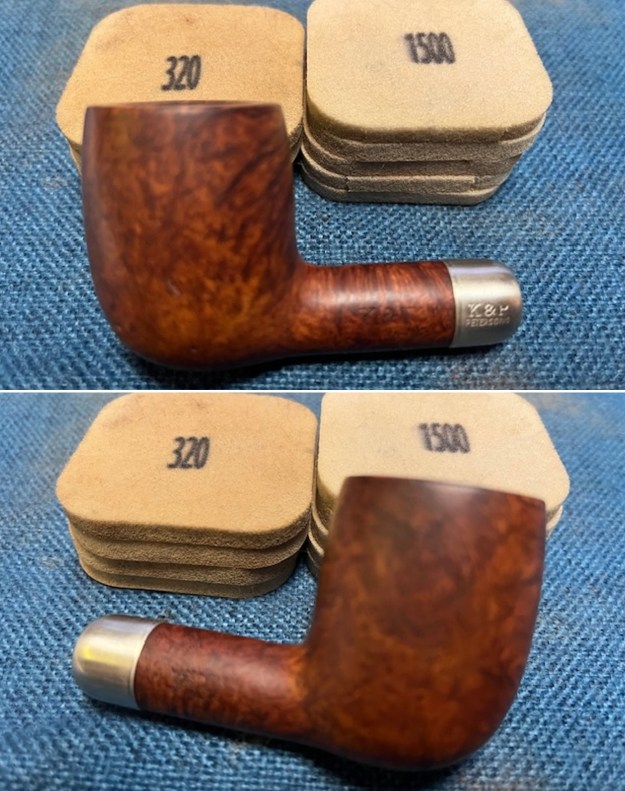
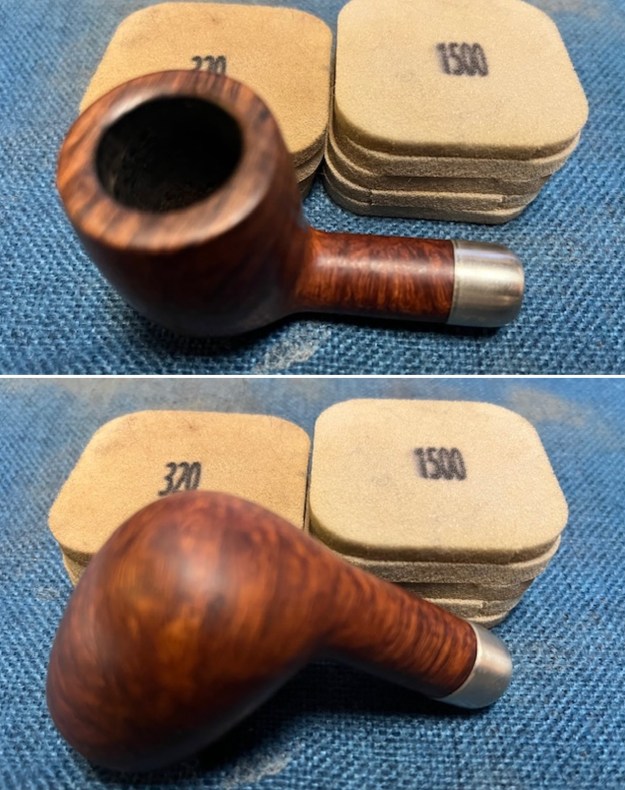
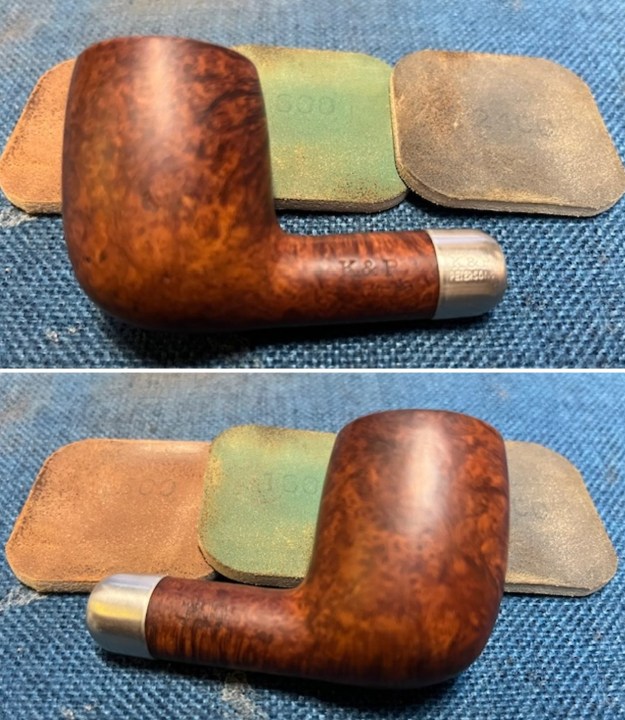
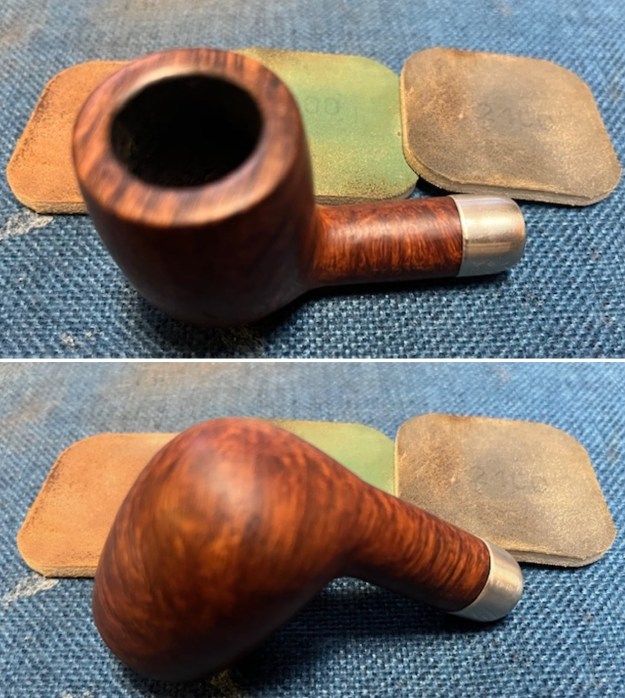
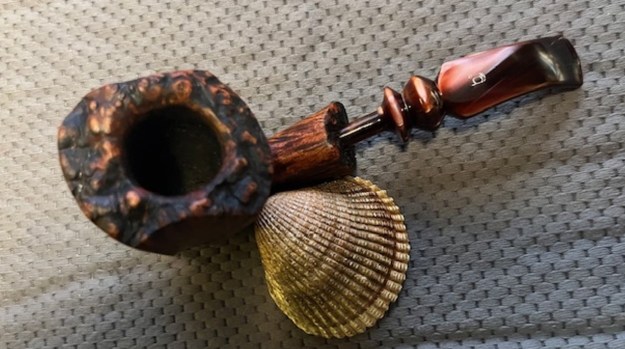
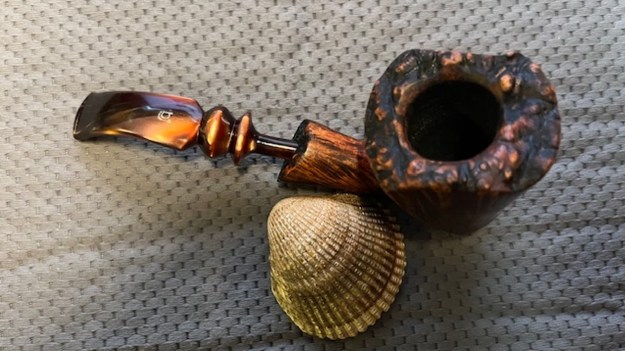
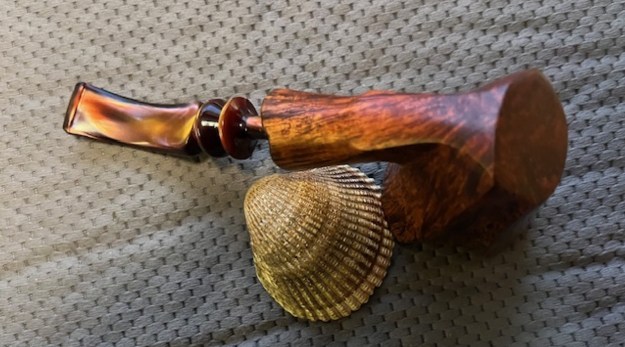
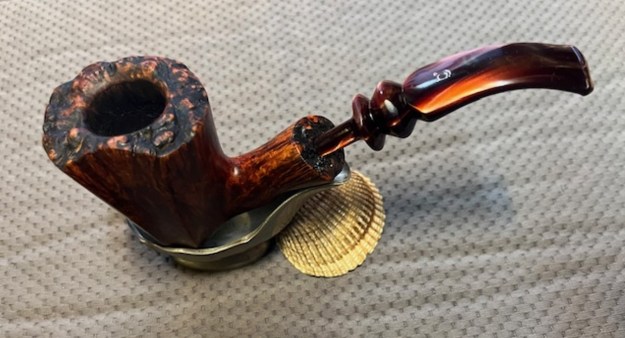
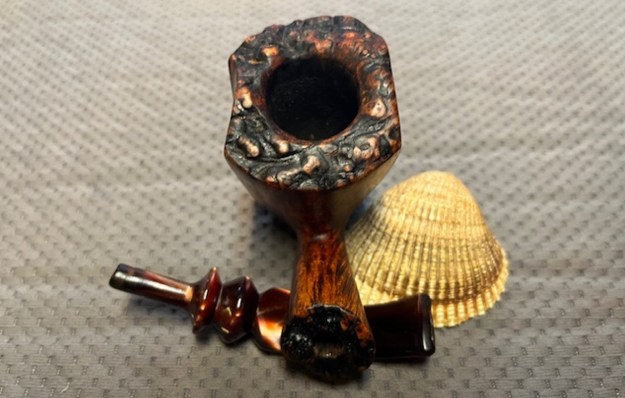
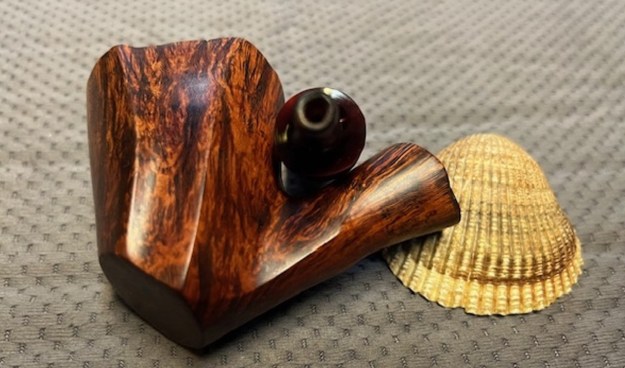
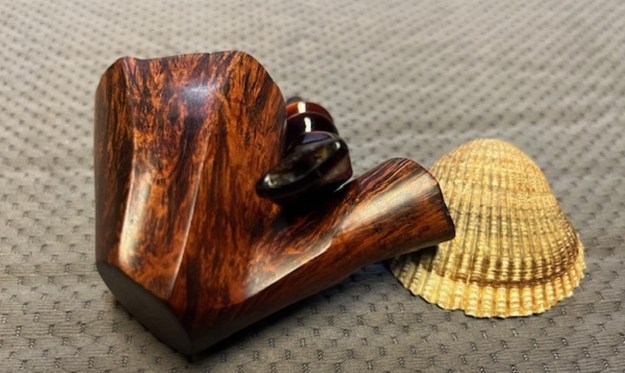
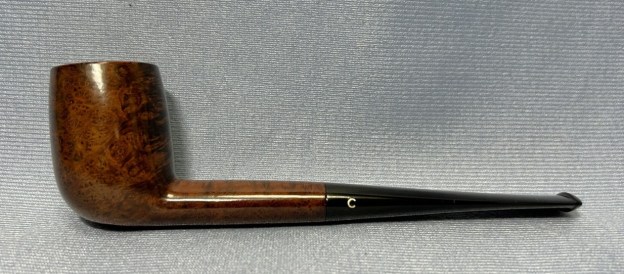
Karl Erik Handmade in Denmark 225 Rusticated Poker


by Steve Laug

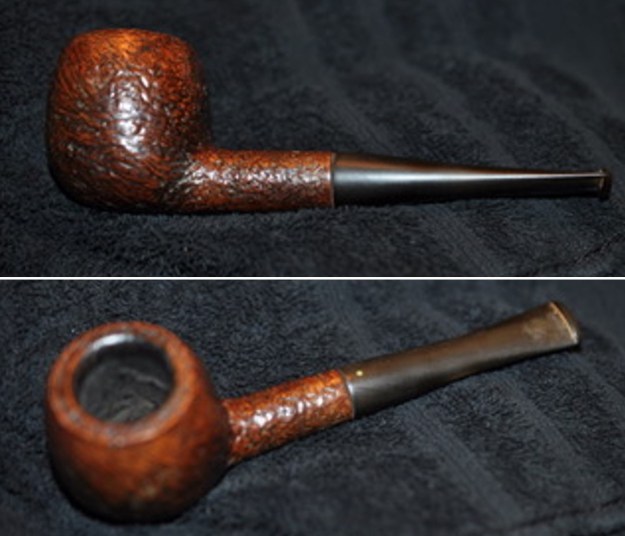
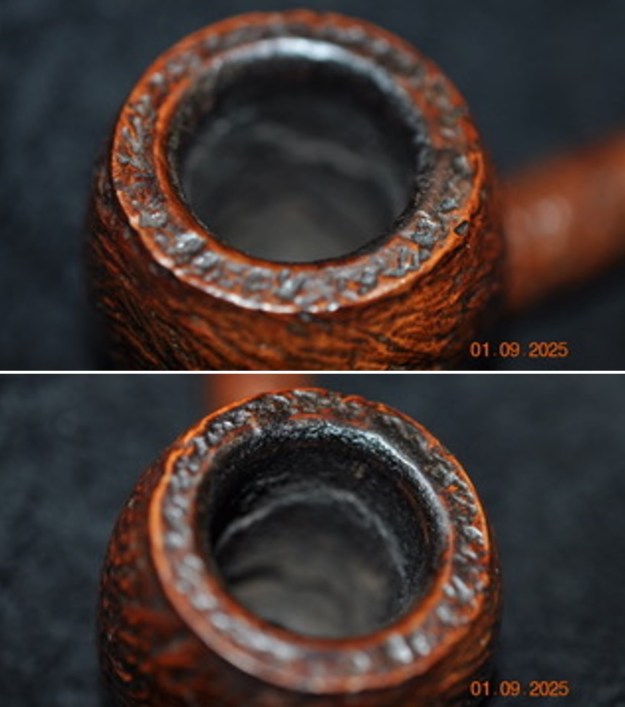
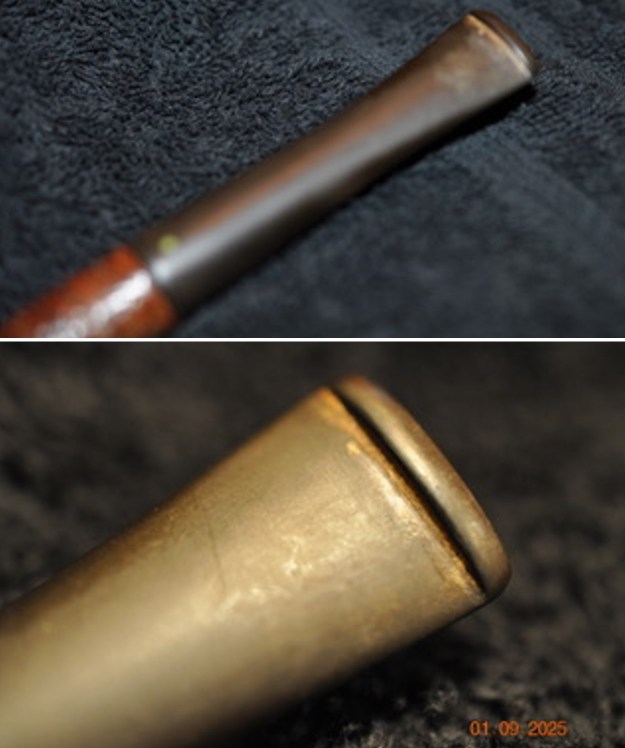
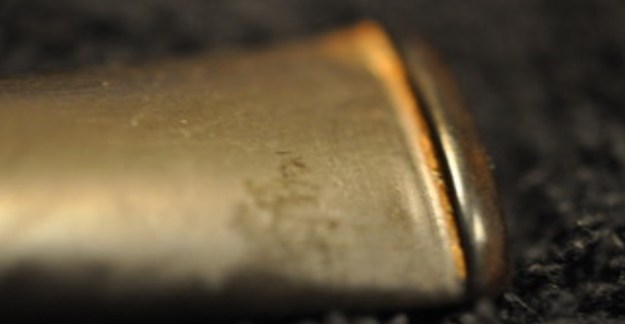
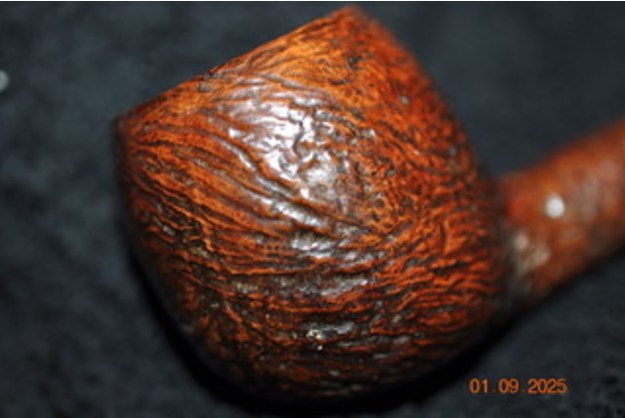
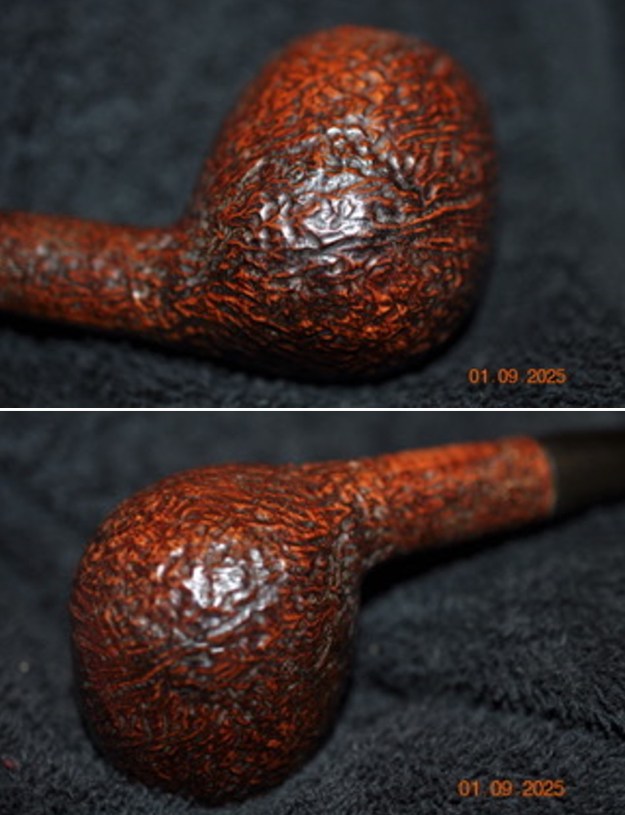
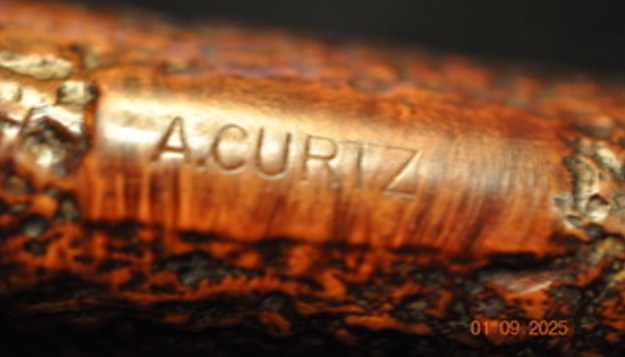
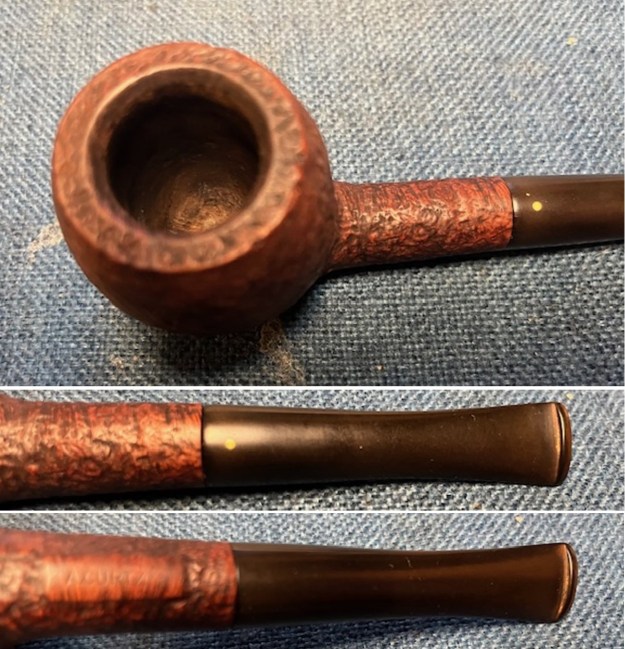
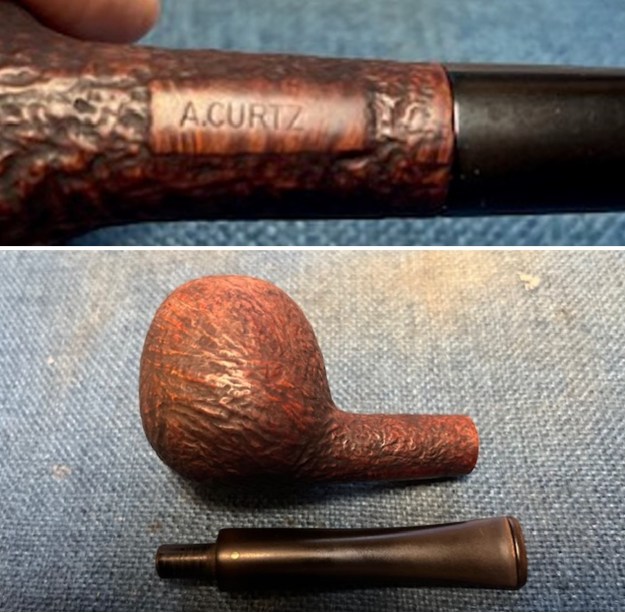
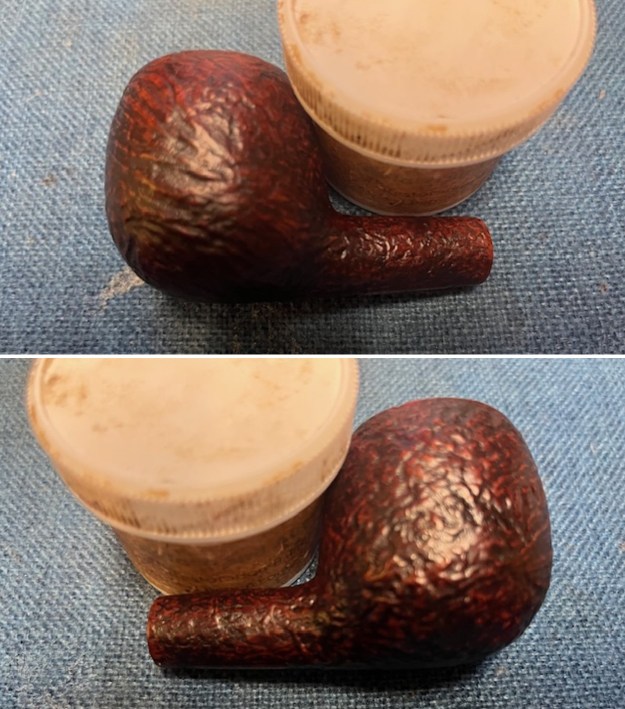
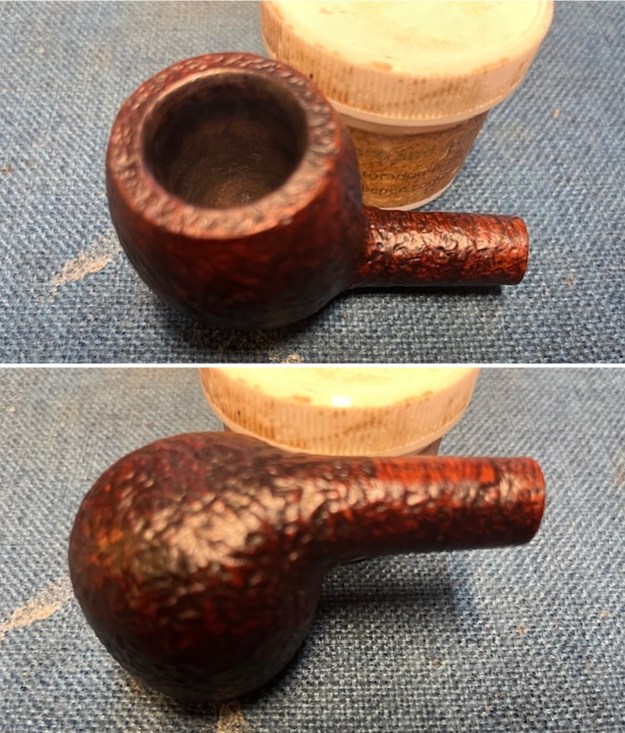
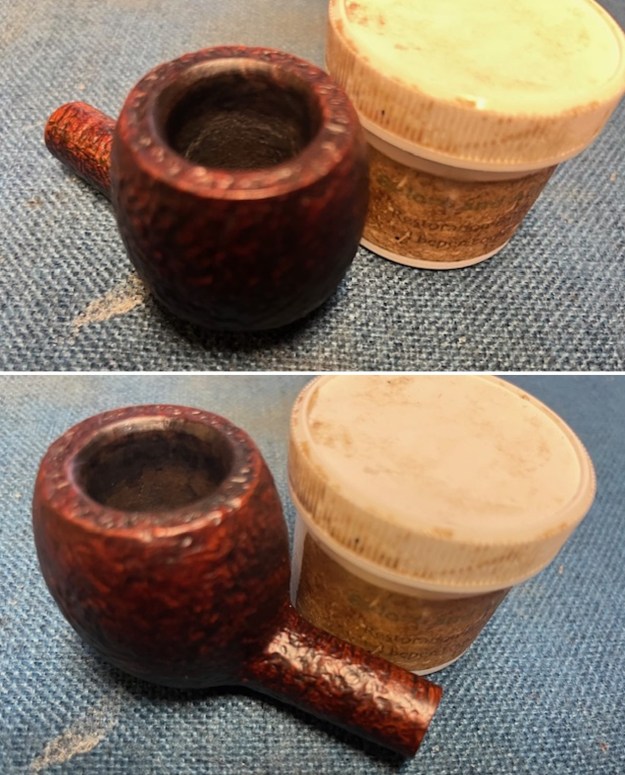
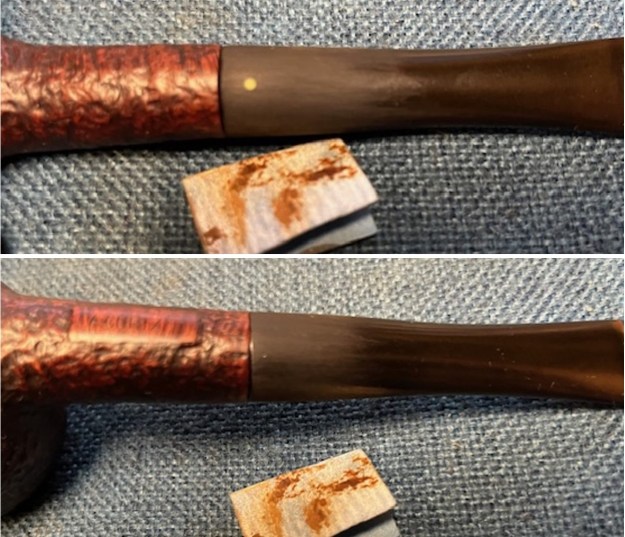
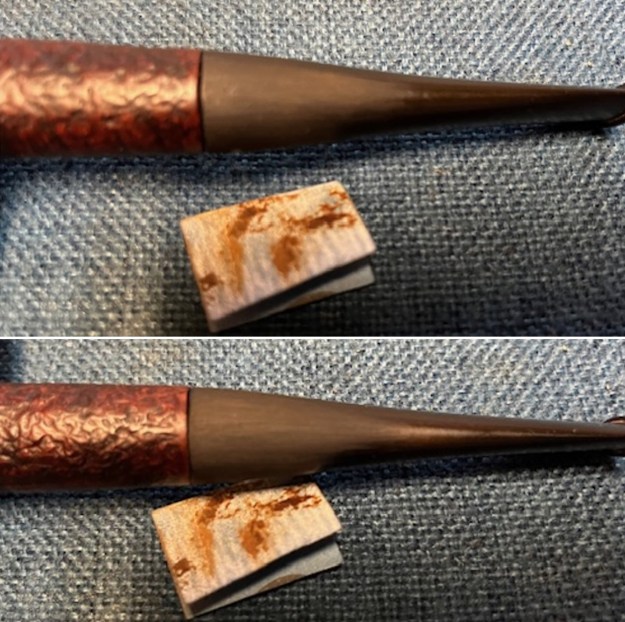
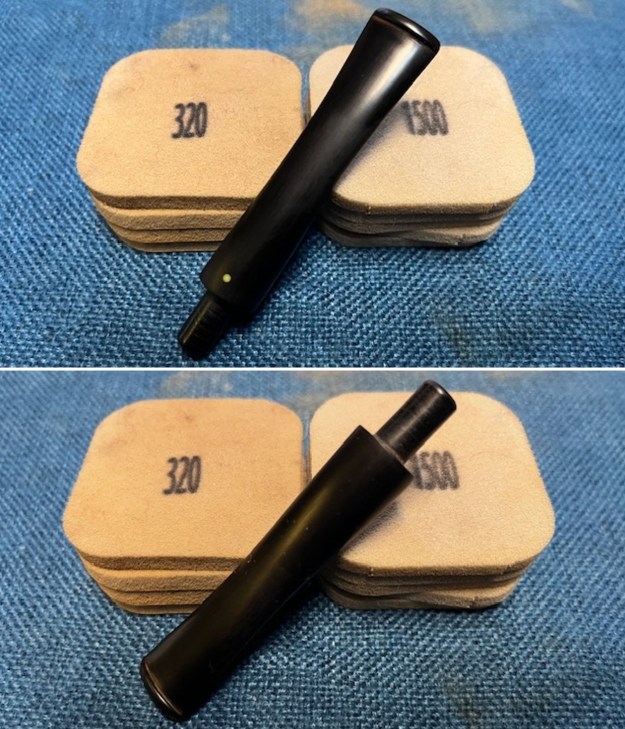
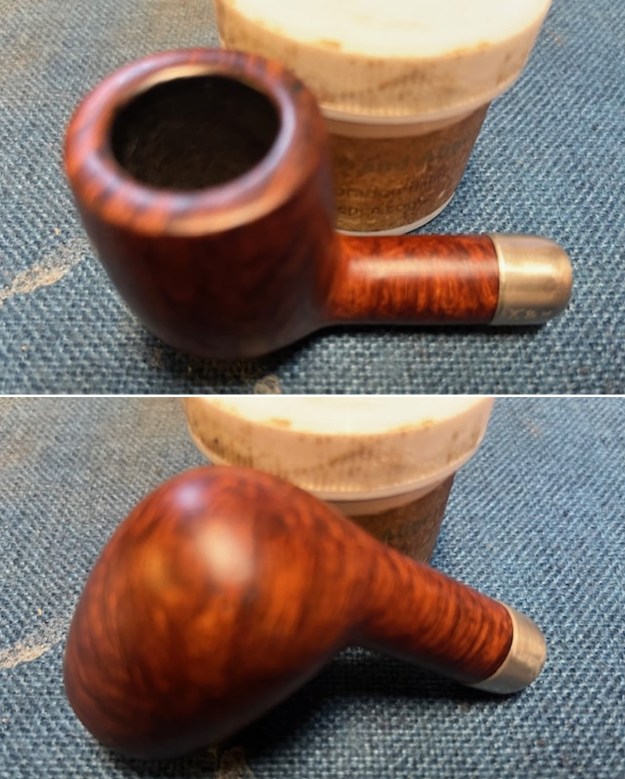
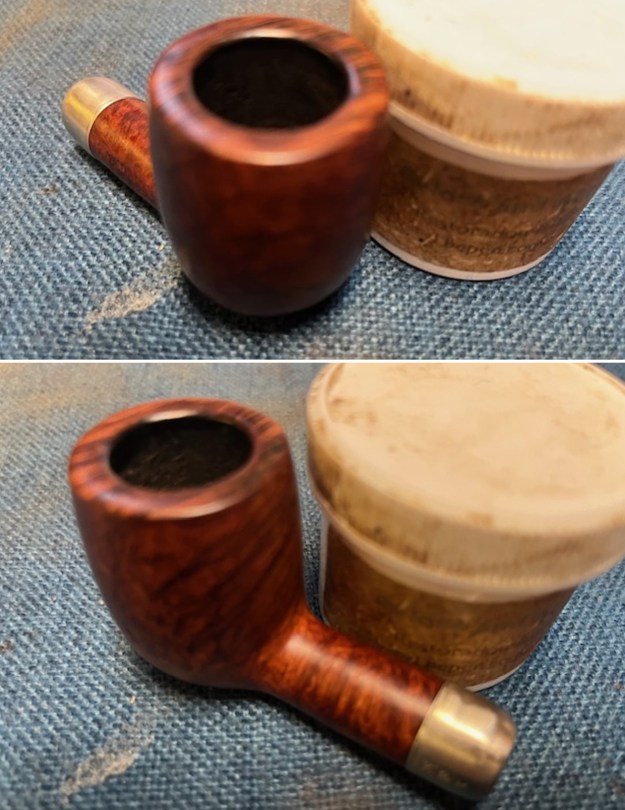
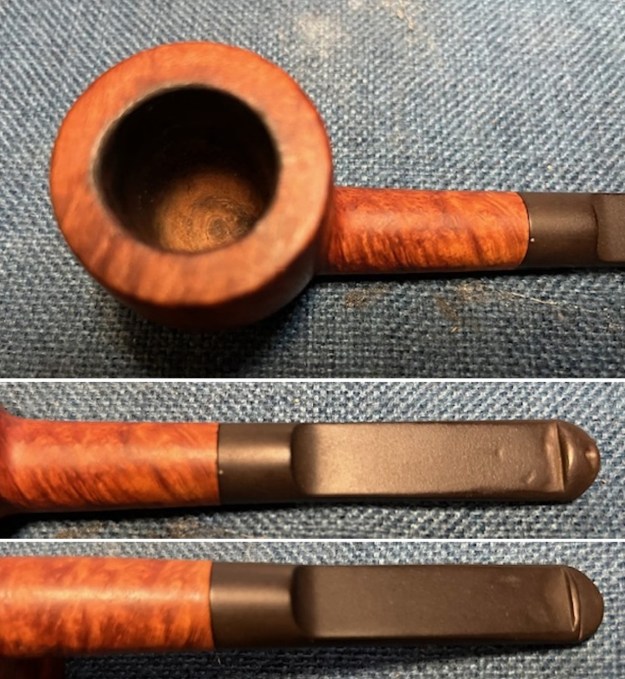
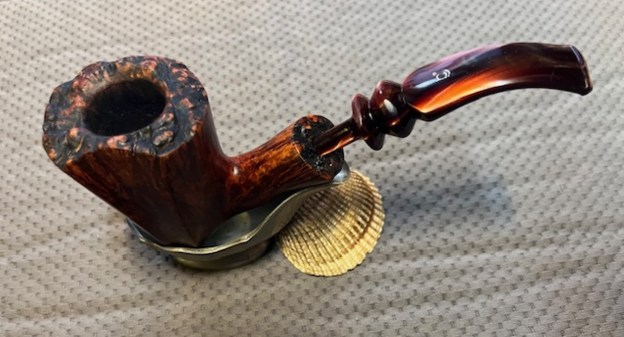
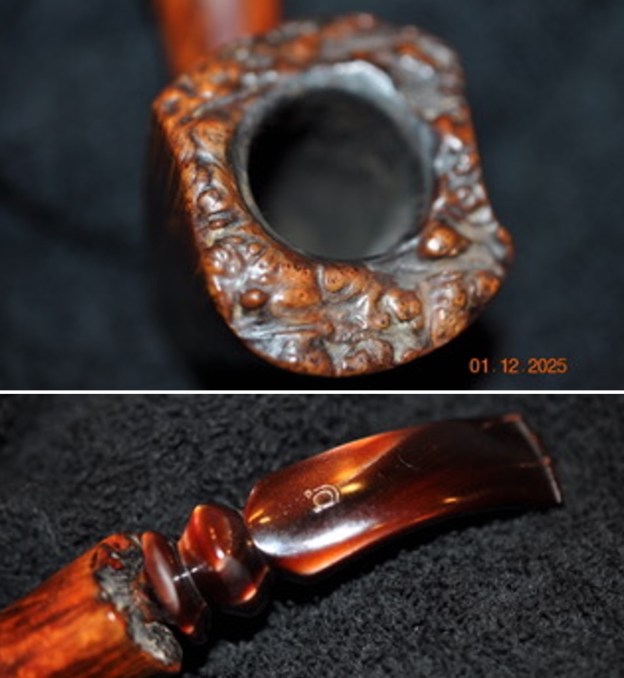
The next pipe on the table is one that we picked up from a seller in Ogden, Utah, USA on 12/21/2024. It is deep and uniquely rusticated Pot with a saddle stem. It is stamped on the underside of the shank and reads Karl Erik [over] Handmade in Denmark [over] the shape number 225. The stamping is clear and readable as noted above. The pipe has some grime and oils ground into the rustication around the bowl and shank. The bowl had a thick cake and there was thick lava in the deep rustication on the rim top and edges. The inner and outer edges appeared to be undamaged. Cleaning would make that clear. The vulcanite saddle stem was oxidized and dirty with deep tooth marks and chatter ahead of the button. Jeff took photos of the pipe to show what it looked like before he started working on it. Jeff took a photo of the bowl and rim top to show the cake in the bowl, lava overflow and the general condition of the pipe. The photos of the stem to show the condition of both sides of the stem as noted above. He took photos of the sides of the bowl and the heel to show the interestingly textured rustication around the bowl and shank. It really is a beautifully rusticated piece of briar. The finish is nice but it also dirty with dust ground into the deeper portions of the finish. Jeff took a photo of the stamping on the underside of the shank. It is clear and readable as noted above. If you have been following the blog for any length of time you have come to know that when I am working on interesting old pipes (even sometimes those not so interesting) I like to know a bit about the background of the brand. I like to “meet” the carver to get a feel for their work and style.

I turned to Pipephil’s site (http://pipephil.eu/logos/en/logo-k1.html) to see what I could find. I did a screen capture of the entry there and have included the side bar information below the photo. Brand created in 1965-66 by Karl Erik Ottendahl (1942 – 2004 †). In the best years he employed up to 15 craftsmen among which Bent Nielsen (see Benner) and Peder Christian Jeppesen. Former grading (ascending): from 4 to 1, and “Ekstravagant” (entirely hand made)

I turned to Pipedia (https://pipedia.org/wiki/Karl_Erik) and reread the history of the brand. Give the article a read.

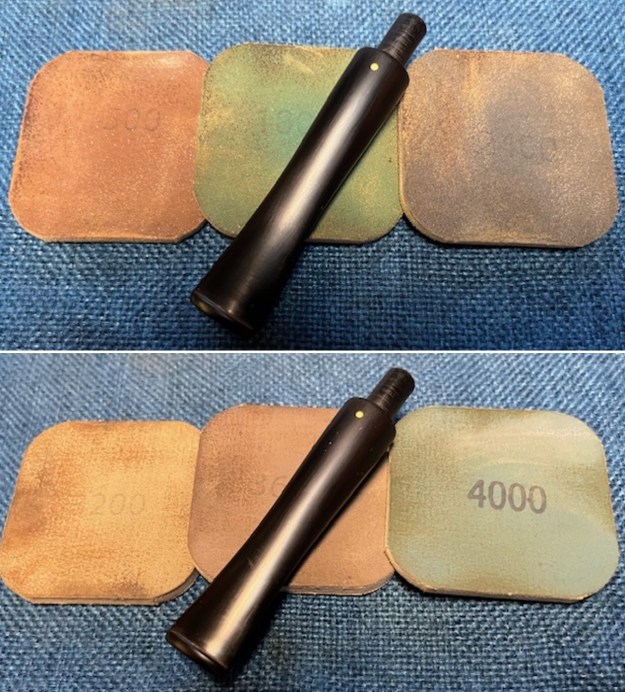
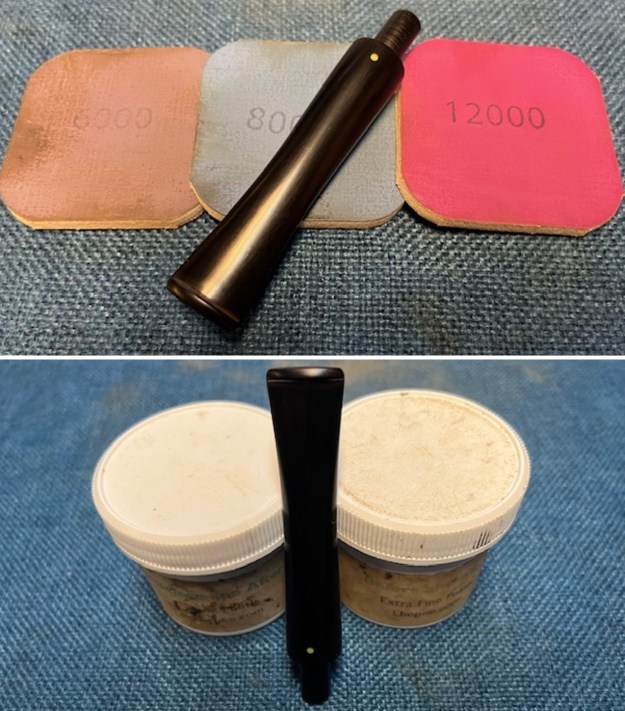
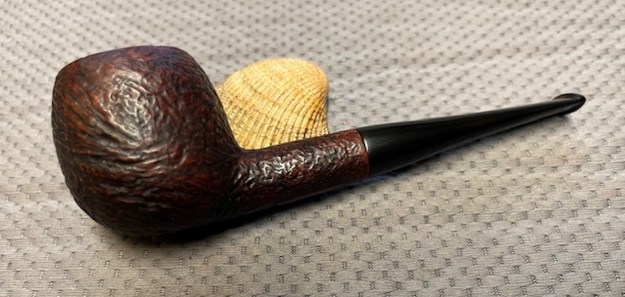
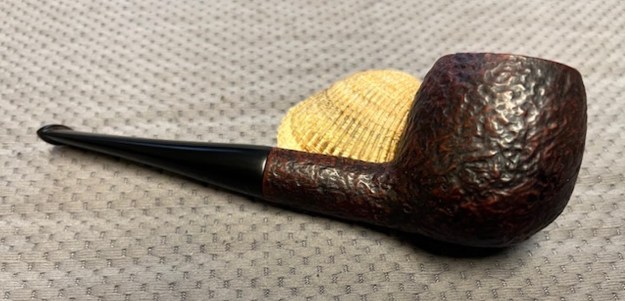
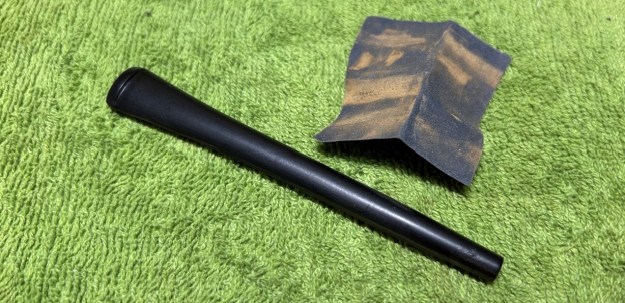
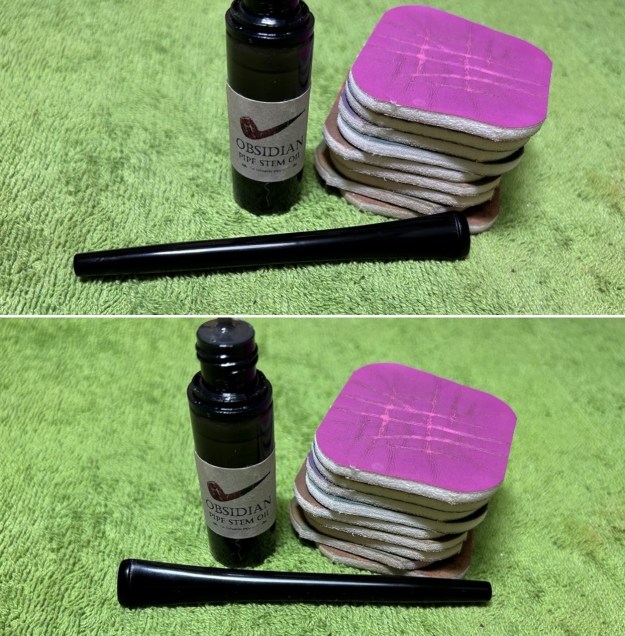
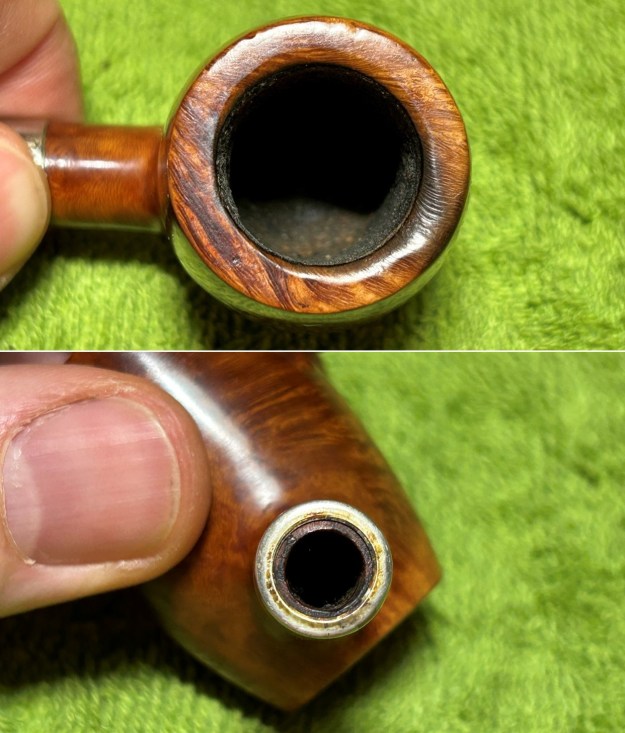
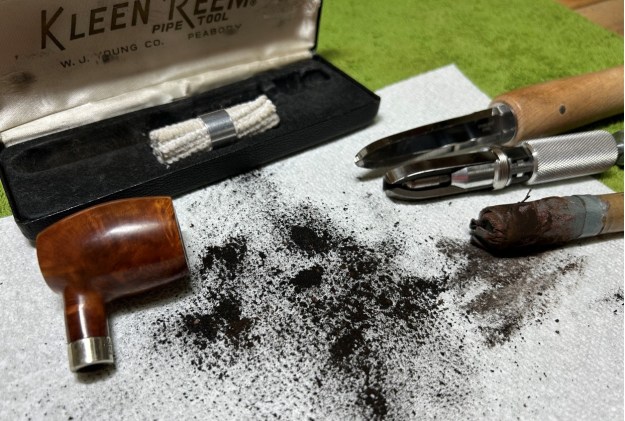
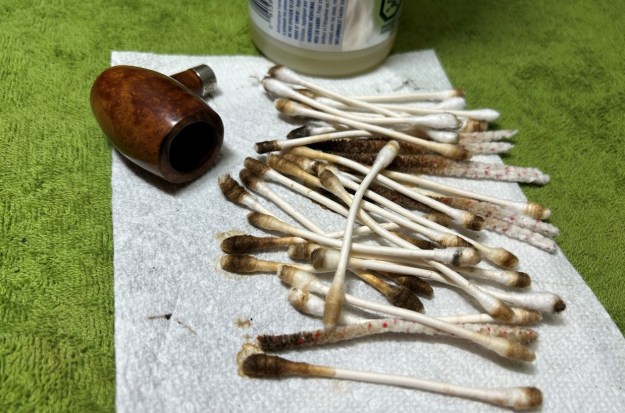
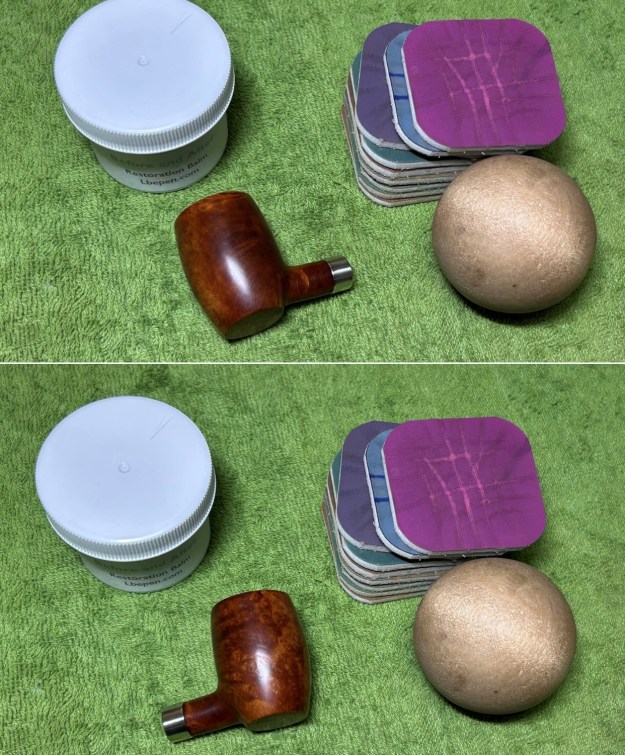
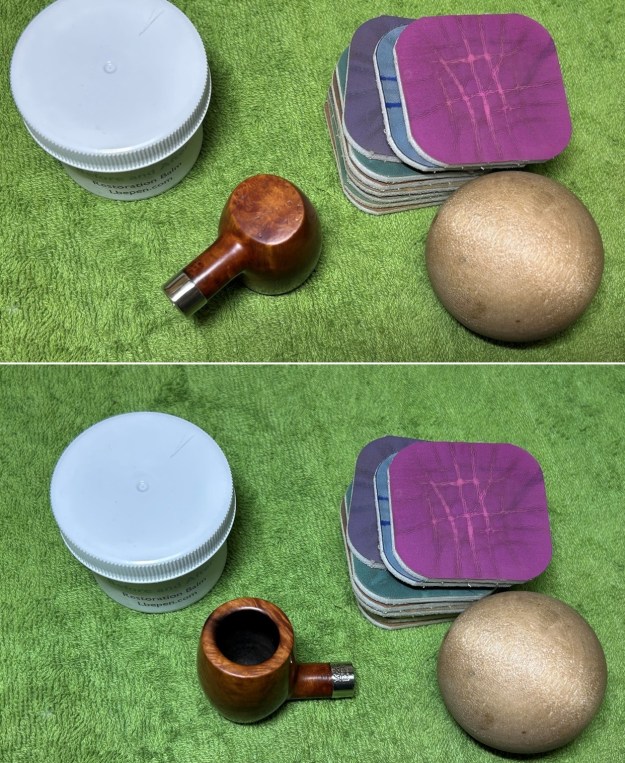
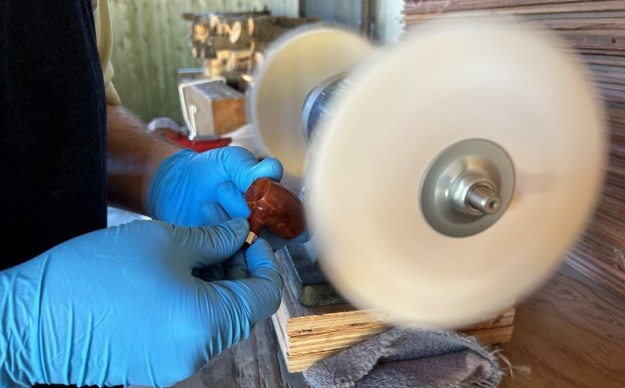
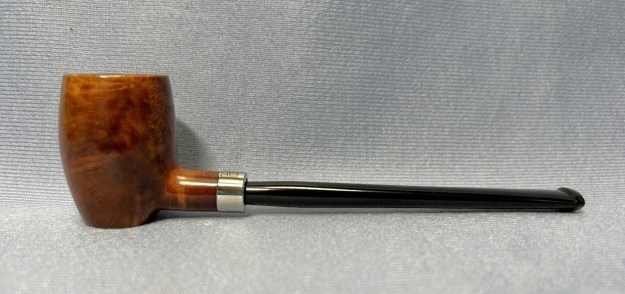
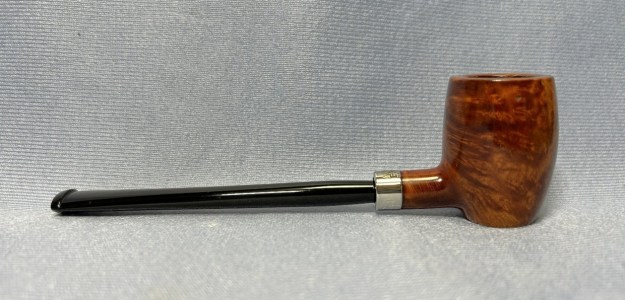
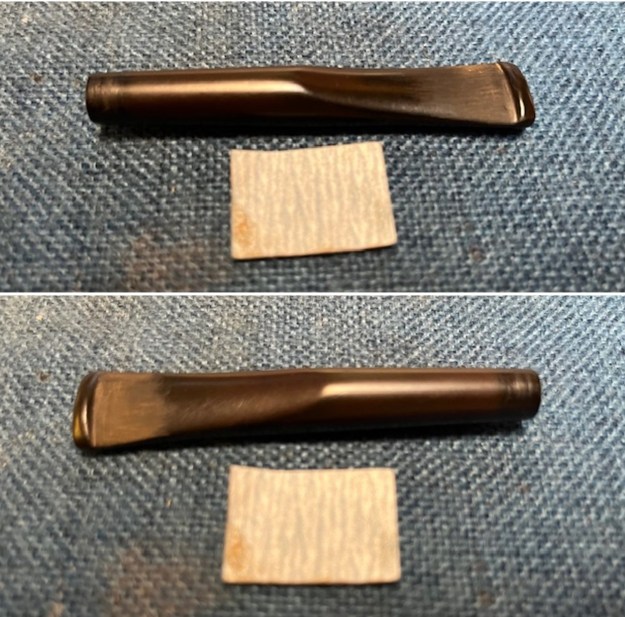
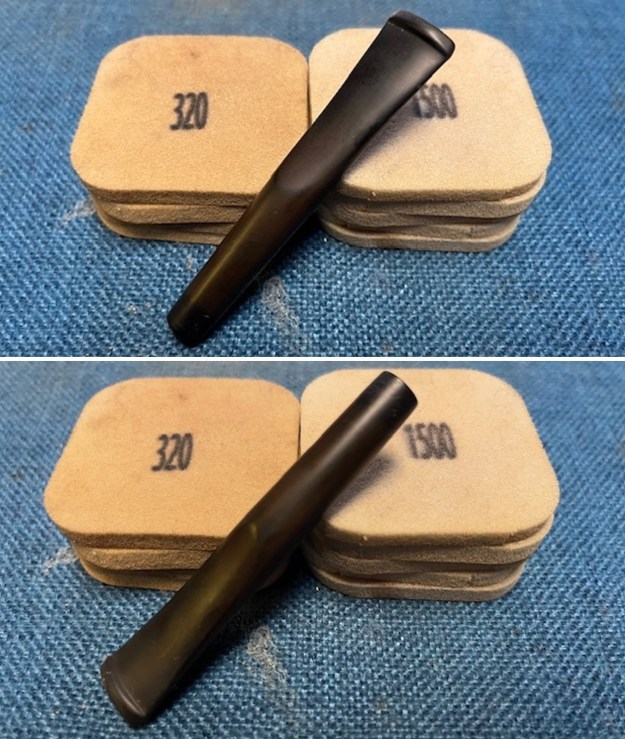
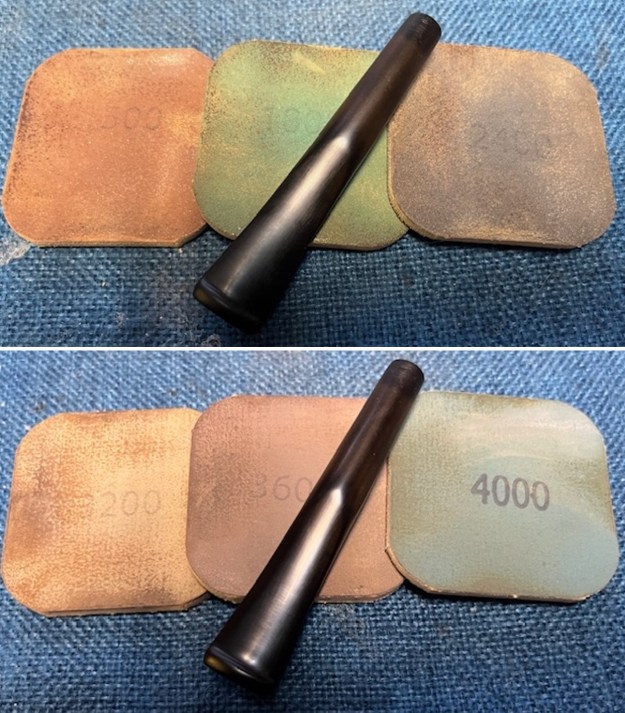
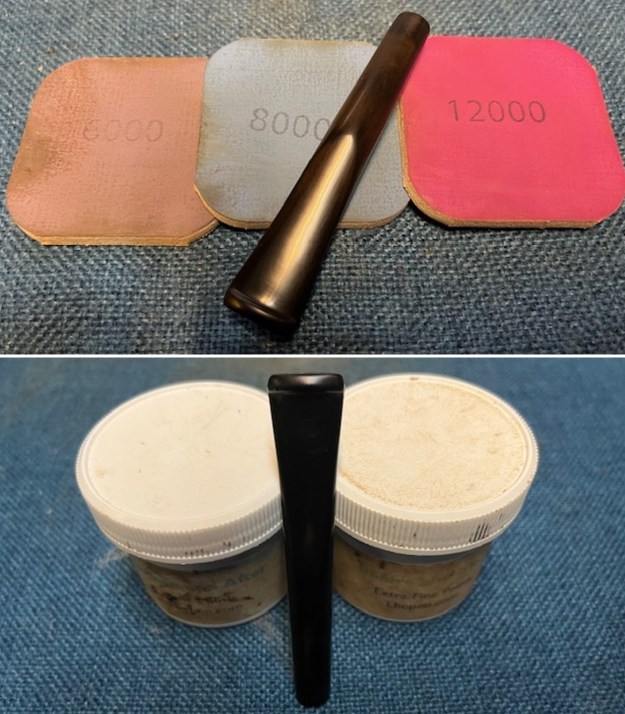
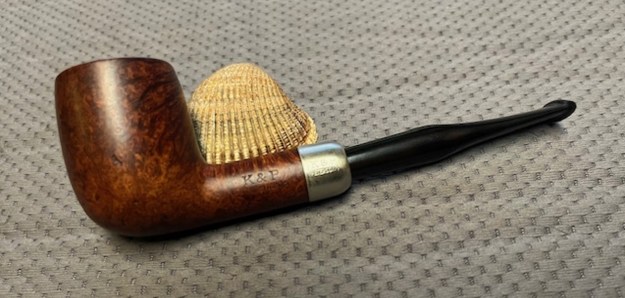
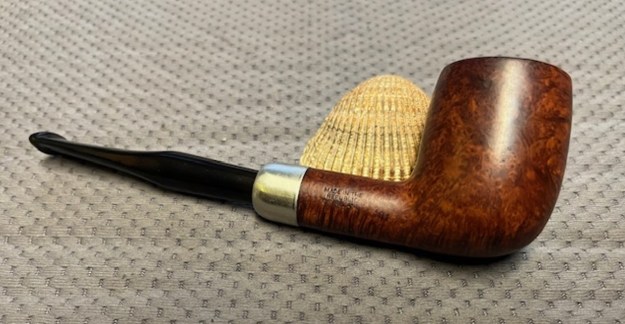
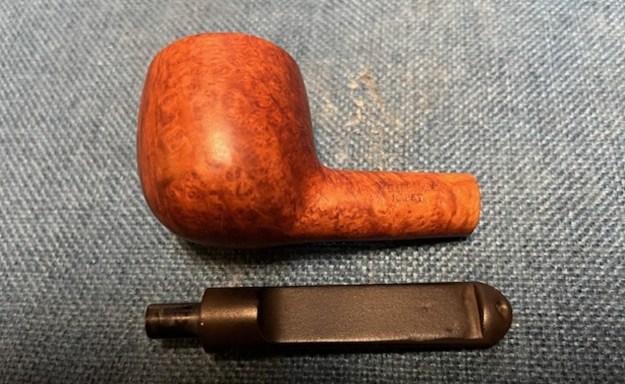
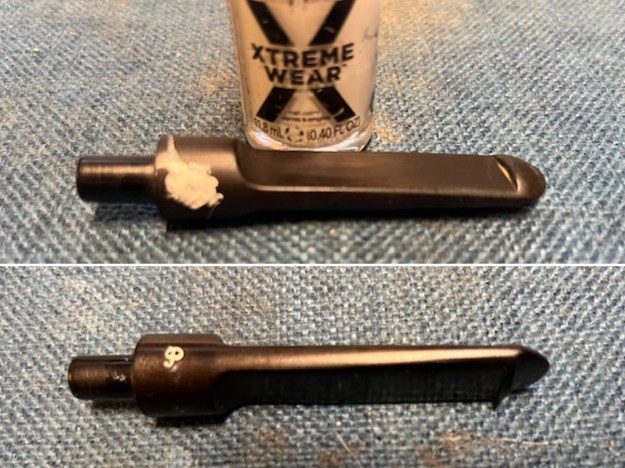
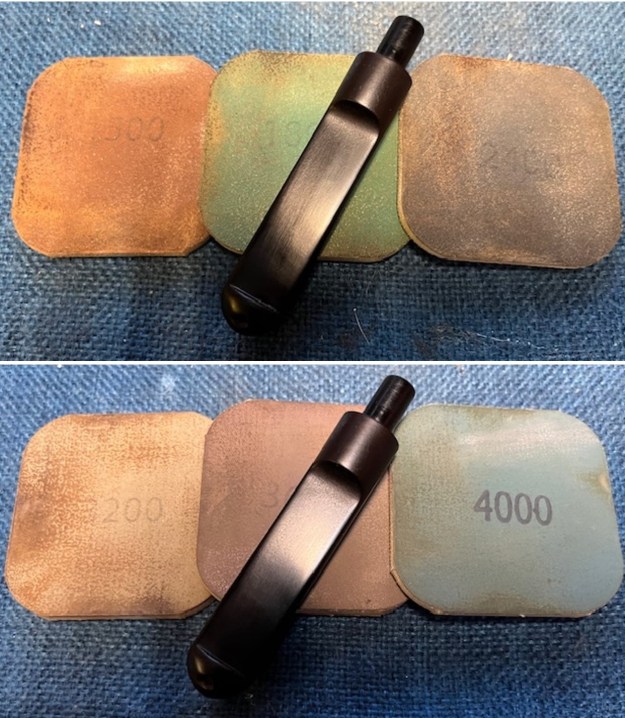
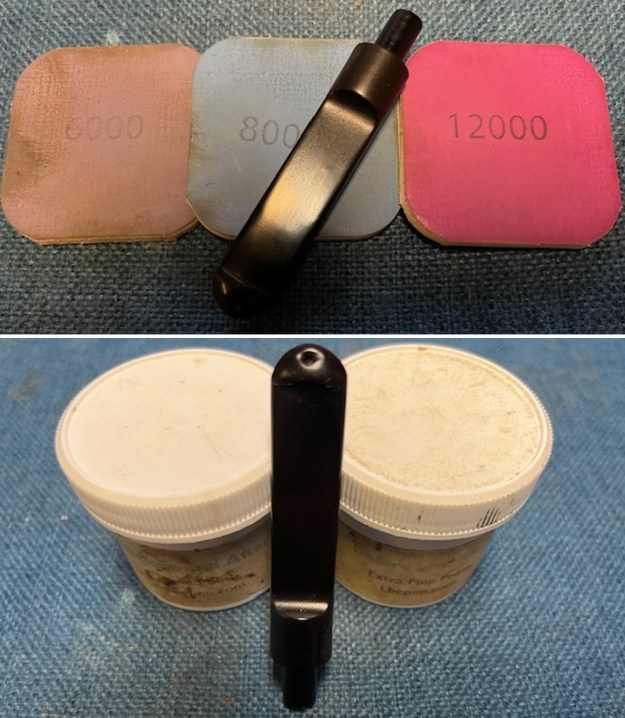
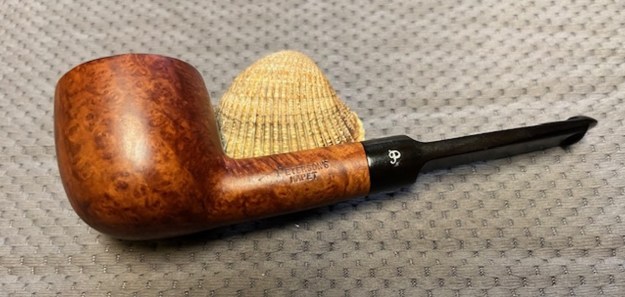
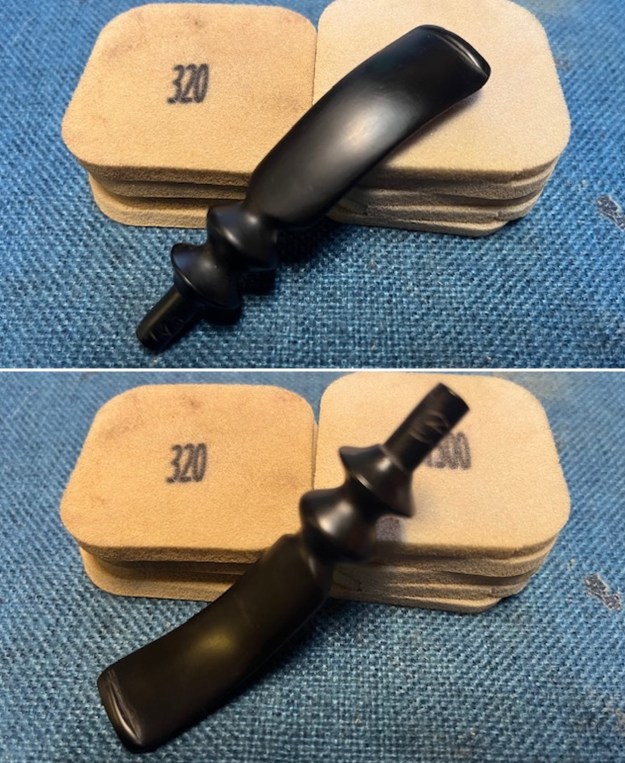
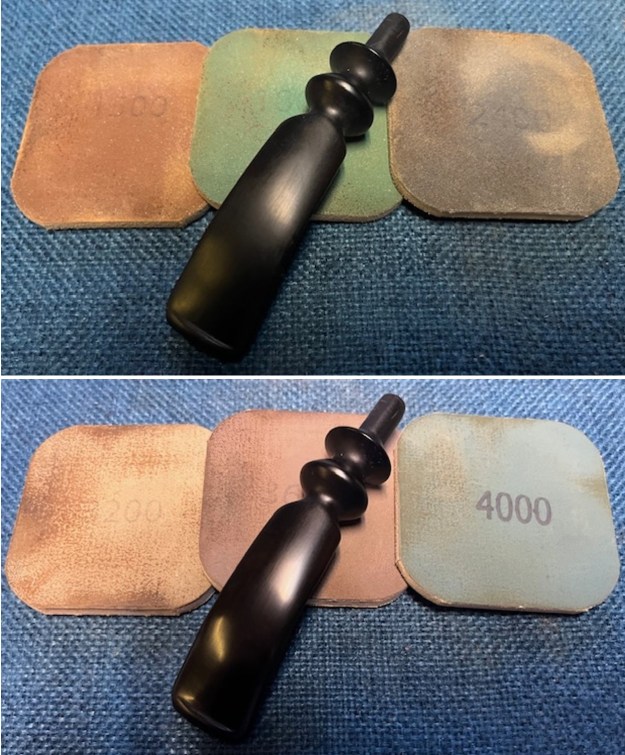
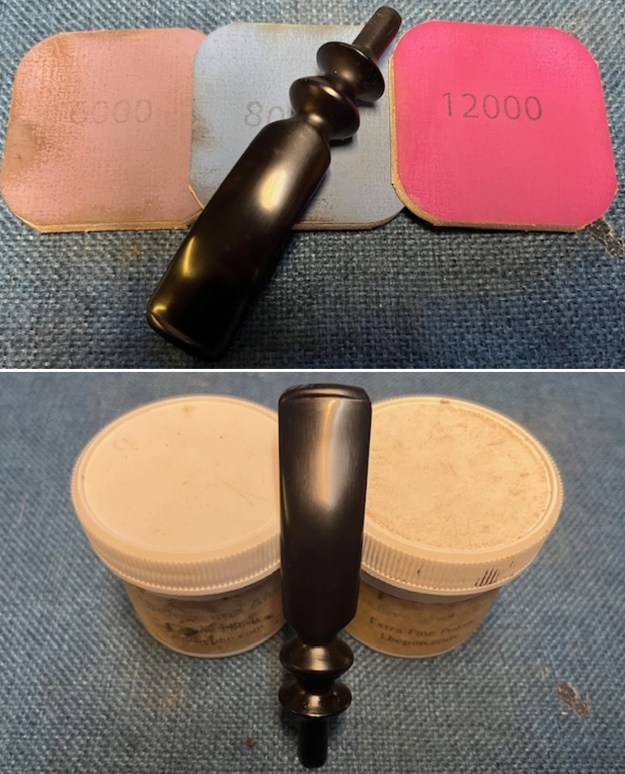
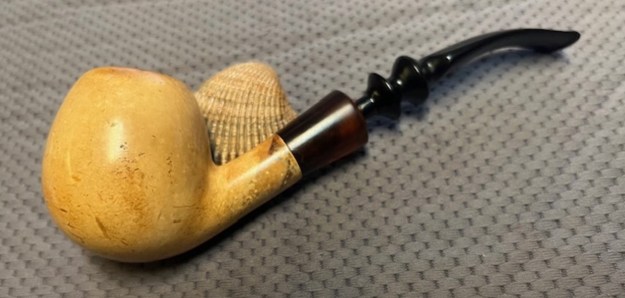
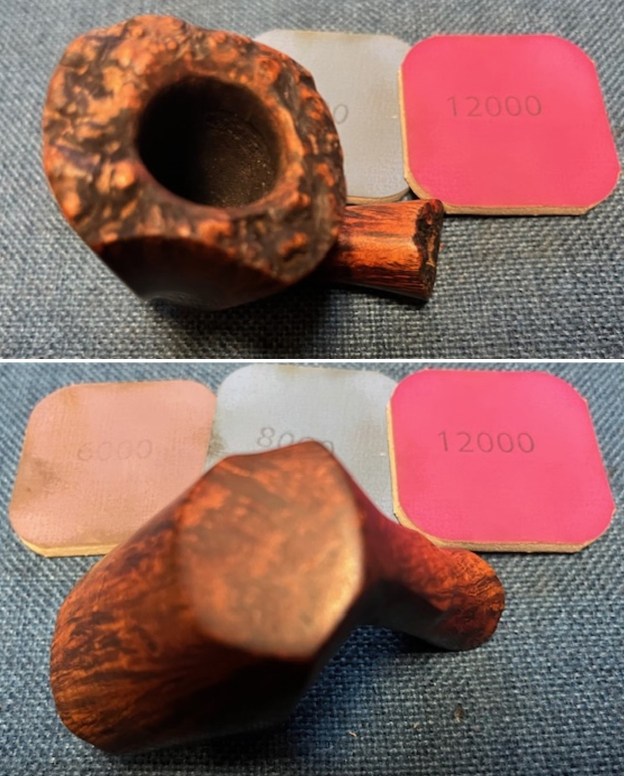
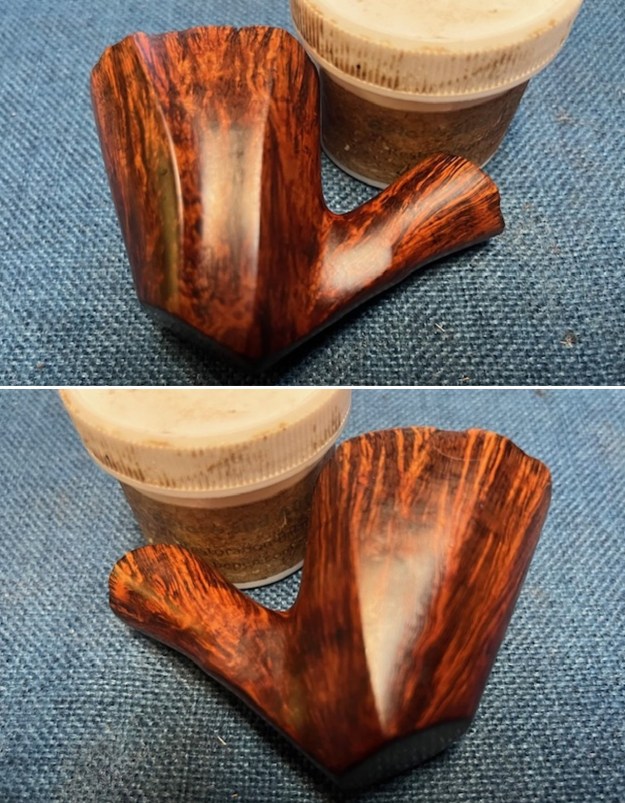
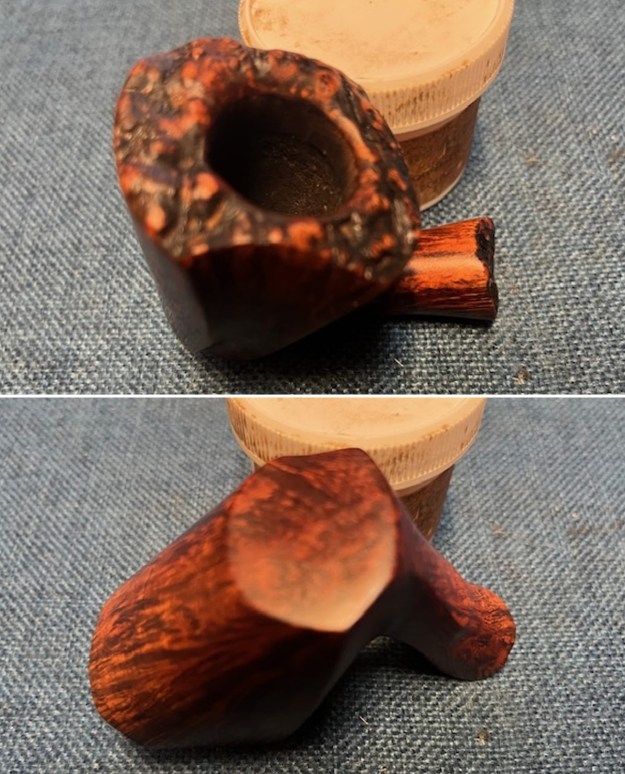
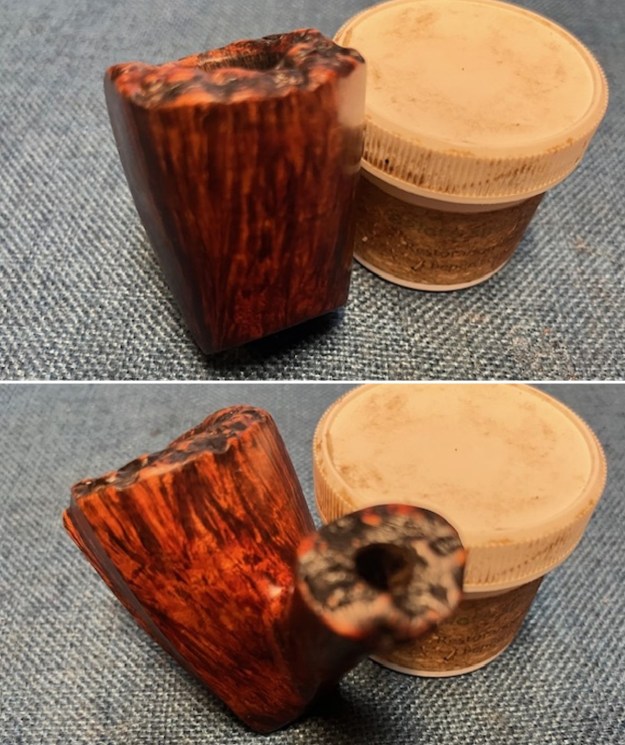
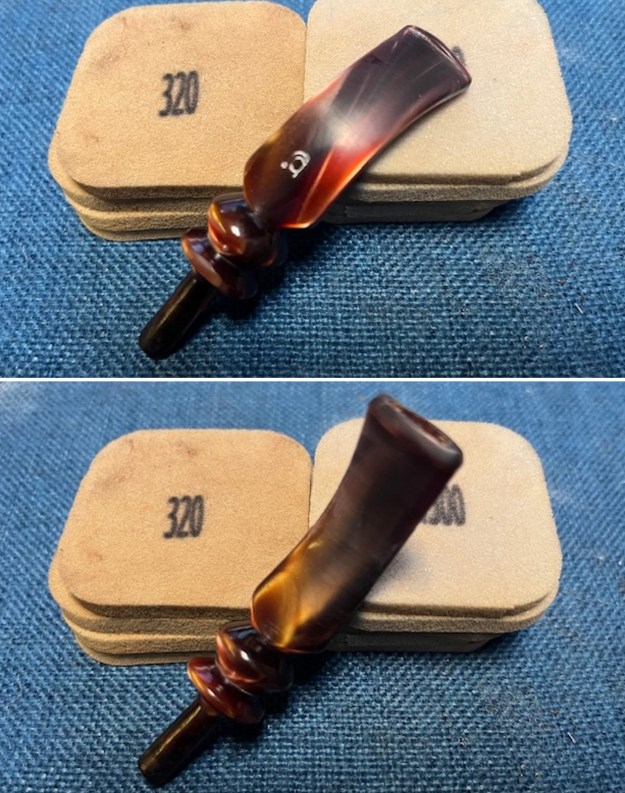
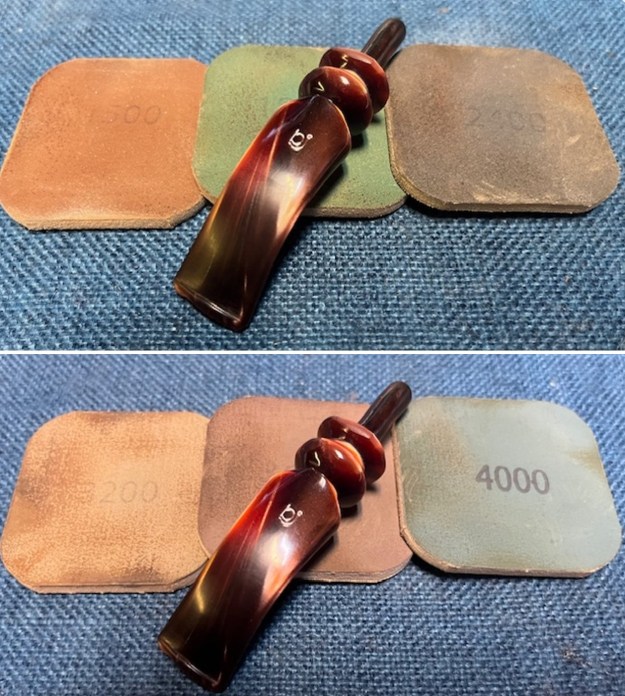
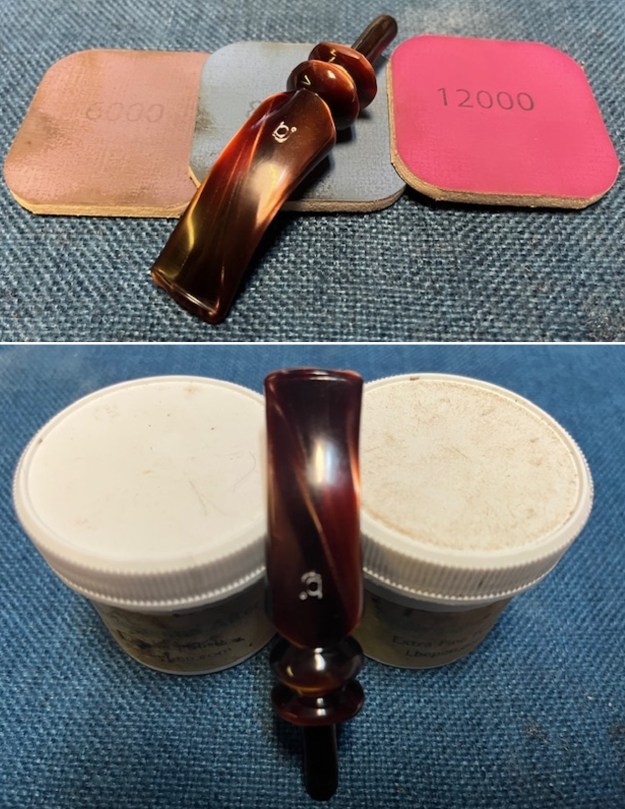
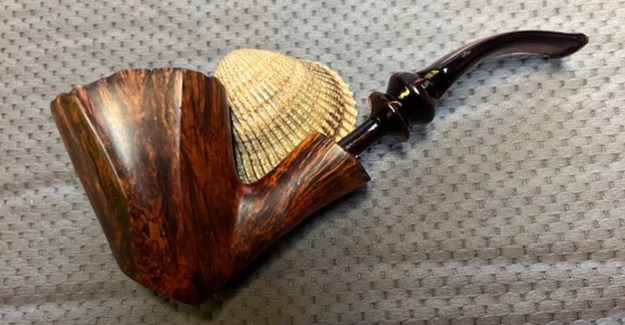
Armed with that information I turned to work on the pipe itself. Jeff had done a great job cleaning up the pipe as usual. He cleaned up the inside of the bowl with a PipNet reamer and a Savinelli Fitsall Pipe Knife. The bowl walls looked very good. He scrubbed the interior of the bowl and shank with pipe cleaners, shank brushes, cotton swabs and alcohol to remove the tars and oils. He scrubbed the exterior of the pipe with undiluted Murphy’s Oil Soap and a tooth brush to remove the grime from the finish. He worked on the rim top lava and darkening with the soap and tooth brush. He scrubbed the inside of the stem with alcohol and pipe cleaners. He scrubbed the exterior with Soft Scrub and then soaked it in Briarville’s Pipe Stem Deoxidizer. He washed it off with warm water to remove the deoxidizer. The pipe looked far better. I took photos of the pipe when I received it before I started working on it.    I took photos of the bowl and rim top to show how clean it was. The top and the inner edge of the rim look very good. There is a little darkening on the top that I will address and see if I can lessen. The stem looks clean of debris and grime. There is tooth chatter on the stem surface on both sides but otherwise it looks good.I took a photo of the stamping on the underside of the shank of the pipe. The stamping is clear and readable. I took a photo of the pipe with the stem removed to show the overall look of stem, tenon and profile of the pipe.I worked over the rusticated rim top with a brass bristle wire brush to clean out the remnants of the debris. It looked much better. The bowl was very clean so I worked some Before & After Restoration Balm into the briar with my finger tips and into the deep rustication with a shoe brush. I let it sit on the bowl for 10 minutes and then buffed it off with a paper towel and soft cloth. The product is a great addition to the restoration work. It enlivens, enriches and protects the briar while giving it a deep glow. It is a product I use on every pipe I restore. I set the bowl aside and turned my attention to the stem. I “painted” the surface of the stem with the flame of a lighter to lift the tooth marks and had mixed success. All of the marks on the topside were lifted. The one remaining on the back I filled in with some rubberized black CA glue. Once the repairs cured I used a flat file to blend them into the surface and followed that with some 220 grit sandpaper. It looked better. Polishing would finish the work. I continued the sanding process with 320-3500 grit sanding pads. After each pad I wiped the stem down with some Obsidian Oil to clearly show me the scratches and areas that still needed work. It was really looking good.I polished the stem with micromesh sanding pads – dry sanding with 1500-12000 grit pads. Once again, I wiped it down between each pad with Obsidian Oil. I further polished it with Before and After Stem Polish – both Fine and Extra Fine. I gave it another rub down with Obsidian Oil. It looked very good. I am really happy with the way that this Heavily Rusticated Karl Erik Bent Poker/ Cherrywood with a saddle stem turned out. It really is a beautiful looking pipe with a unique shape and deep rustication completed by a vulcanite saddle stem. The briar really came alive with the buffing. The rich brown stains of the finish gave the pipe a sense of depth with the polishing and waxing. I carefully buffed the pipe with Blue Diamond on the buffing wheel using a light touch on the briar. I gave the bowl multiple coats of Conservator’s Wax and the stem multiple coats of carnauba wax on the buffing wheel. I buffed the pipe with a clean buffing pad to raise the shine. I hand buffed the pipe with a microfiber cloth to deepen the shine. The finished Karl Erik Rusticated Cherrywood really is a beauty and feels great in the hand and looks very good. Give the finished pipe a look in the photos below. The dimensions of the pipe are Length: 6 inches, Height: 2 inches, Outside diameter of the bowl: 1 ½ inches, Chamber diameter: ¾ of an inch. The weight of the pipe is 52 grams/1.83 ounces. I will be putting the pipe on the rebornpipes store in the Danish Pipe Makers Section. If you would like to add it to your collection let me know. It should be a great smoking pipe.

As always, I encourage your questions and comments as you read the blog. Thanks to each of you who are reading this blog. Remember we are not pipe owners; we are pipe men and women who hold our pipes in trust until they pass on into the trust of those who come after us.

Restoring a Camillo Rusticated 112 Italy oval shank Billiard


by Steve Laug

The next pipe on the table is one that we picked up from a seller on eBay from Harrison Township, Michigan, USA. It is rusticated oval shank Billiard with a saddle stem. It is stamped on the underside of the shank. The stamp reads Camillo [over] 112. It is stamped Italy at the shank/stem junction. The stamping is clear and readable as noted above. The pipe has some grime and oils ground into the rustication on the bowl and shank. The bowl had a thick cake and there was lava on the rusticated rim top or edges. The edges looked to be undamaged and possibly protected by the lava. Cleaning would make that clear. The oval saddle stem was lightly oxidized, calcified, dirty with tooth marks and chatter ahead of the button. Jeff took photos of the pipe to show what it looked like before he started working on it. Jeff took a photo of the bowl and rim top to show the cake in the bowl, lava overflow and the general condition of the pipe. The photos of the stem to show the condition of both sides of the stem as noted above. He took photos of the sides of the bowl and the heel to show the interestingly textured rustication around the bowl and shank. It really is a beautifully rusticated piece of briar. The finish is nice but it also dirty with dust ground into the finish.  Jeff took a photo of the stamping on the underside of the shank. It is clear and readable as noted above. I could not find any information on the Camillo Brand of pipes. I knew it was made in Italy but had no other information on Pipephil’s site of Pipedia. I googled the brand and found nothing listed. So with no info it was time to work on the pipe.

Armed with that information I turned to work on the pipe itself. Jeff had done a great job cleaning up the pipe as usual. He cleaned up the inside of the bowl with a PipNet reamer and a Savinelli Fitsall Pipe Knife. The bowl walls looked very good. He scrubbed the interior of the bowl and shank with pipe cleaners, shank brushes, cotton swabs and alcohol to remove the tars and oils. He scrubbed the exterior of the pipe with undiluted Murphy’s Oil Soap and a tooth brush to remove the grime from the finish. He worked on the rim top lava and darkening with the soap and tooth brush. He scrubbed the inside of the stem with alcohol and pipe cleaners. He scrubbed the exterior with Soft Scrub and then soaked it in Briarville’s Pipe Stem Deoxidizer. He washed it off with warm water to remove the deoxidizer. The pipe looked far better. I took photos of the pipe when I received it before I started working on it.   I took photos of the bowl and rim top to show how clean it was. The top and the inner edge of the rim look very good. There is a little darkening on the top that I will address and see if I can lessen. The stem looks clean of debris and grime. There is light tooth chatter on the stem surface on both sides but otherwise it looks good.I took a photo of the stamping on the underside of the shank of the pipe. The stamping is clear and readable. I took a photo of the pipe with the stem removed to show the overall look of stem, tenon and profile of the pipe.The bowl was very clean so I worked some Before & After Restoration Balm into the briar with my finger tips. I let it sit on the bowl for 10 minutes and then buffed it off with a paper towel and soft cloth. The product is a great addition to the restoration work. It enlivens, enriches and protects the briar while giving it a deep glow. It is a product I use on every pipe I restore. I set the bowl aside and turned my attention to the stem. I “painted” the surface of the stem with the flame of a lighter to lift the tooth marks and had mixed success. All of the marks on the topside were lifted. The one remaining on the back I filled in with some rubberized black CA glue. Once the repairs cured I used a flat file to blend them into the surface and followed that with some 220 grit sandpaper. It looked better. Polishing would finish the work. I continued the sanding process with 320-3500 grit sanding pads. After each pad I wiped the stem down with some Obsidian Oil to clearly show me the scratches and areas that still needed work. It was really looking good.I polished the stem with micromesh sanding pads – dry sanding with 1500-12000 grit pads. Once again, I wiped it down between each pad with Obsidian Oil. I further polished it with Before and After Pipe Stem Polish – both Fine and Extra Fine. I gave it another rub down with Obsidian Oil. It looked very good. I am really happy with the way that this Rusticated Camillo 112 Oval Shank Billiard with a saddle stem turned out. It really is a beautiful looking pipe with a unique shape and combining a smooth bowl and a vulcanite saddle stem. The briar really came alive with the buffing. The rich brown stains of the finish gave the pipe a sense of depth with the polishing and waxing. I carefully buffed the pipe with Blue Diamond on the buffing wheel using a light touch on the briar. I gave the bowl and the stem multiple coats of carnauba wax on the buffing wheel. I buffed the pipe with a clean buffing pad to raise the shine. I hand buffed the pipe with a microfiber cloth to deepen the shine. The finished Camillo Rusticated 112 Billiard really is a beauty and feels great in the hand and looks very good. Give the finished pipe a look in the photos below. The dimensions of the pipe are Length: 6 inches, Height: 2 inches, Outside diameter of the bowl: 1 ½ inches, Chamber diameter: ¾ of an inch. The weight of the pipe is 47 grams/1.59 ounces. I will be putting the pipe on the rebornpipes store in the Italian Pipe Makers Section. If you would like to add it to your collection let me know. It should be a great smoking pipe.

As always, I encourage your questions and comments as you read the blog. Thanks to each of you who are reading this blog. Remember we are not pipe owners; we are pipe men and women who hold our pipes in trust until they pass on into the trust of those who come after us.      

Restoring a Father’s Legacy of 10 Brigham Pipes Gathered throughout his life #4


by Steve Laug

Last month I was contacted by Donna to see if I knew anyone interested in purchasing her father’s pipes. She wrote as follows: “I am wondering if you would be interested in my father’s collection of Brighams.” She further spelled out what he had in the collection. He had 1 – 2 dot pipe, 3 – 3 dot pipes, 2 – 4 dot pipes and 4 – 5 dot pipes. There was a total of 10 pipes. I asked for a photo of the pipes and she sent the photo below. I was very interested.We emailed back and forth and the short story is that I paid for the collection and she shipped the pipes to me. On Tuesday after Easter the box arrived and I was happy to be able to see them up close. They were obviously well-loved pipes and in varying degrees of needing work. I wrote her and told I received them and that I was pleased with the lot. I was looking forward to working on them. She aske me to send her photos along the way as I finished the pipes. I will be sending her the links to the blog so she can see the work and the process of bringing them back to a semblance of their original beauty. Thanks Donna for the opportunity to work on your Dad’s pipes.

The fourth of the pipes I have chosen to work on from the lot was the one sitting at the bottom of the left column in the photo above. I would call the pipe a Bent Cherrywood or Poker Sitter shaped pipe with a vulcanite saddle stem. It is stamped on the left side of the shank and reads Brigham in script. On the underside it has the shape number 363. The stamping will help me date the pipe. From the cake in the bowl and the other pipes I could tell her Dad love aromatic tobaccos. This pipe was heavily caked with an overflow of lava on the rim top and on the inner and outer edges of the bowl. There was burn damage on the rimtop and inner edge.The shank end even that had a coating of tar build up. The finish was smooth with two rusticated panels on the right and left side. There were some nicks on the edge of the heel on the right underside. The stem did not sit all the way in the shank so I assumed it was very dirty in the shank. I removed the stem and the Hard Rock Maple Distillator was missing in the tenon. The shank was black, tarry and oily. The stem was dirty and oxidized with thick oil and tar in the airway from the tenon to the button. There were light tooth marks and chatter on both sides ahead of the button. The left side of the taper stem bore three brass pins in a triangle or pyramid format. That would also help with identifying the pipe. I took some photos of the pipe before I started my work on it. I took a photo of the bowl and rim top to show the cake in the bowl. The rim top looked to have a coat of lava overflowing down the crown with some possible damage around the inner edge. I took photos of the top and underside of the stem showing the light tooth chatter on the vulcanite stem surface. It is heavily oxidized and calcified and is quite dirty on the surface of the vulcanite.The stamping is very clear and it reads as noted above. I removed the stem from the shank and took a photo of the parts to show the look of the pipe. I have captured the pattern of the three brass dots on the stem. For the needed background I am including the information from Pipedia on Brigham pipes. It is a great read in terms of the history of the brand (https://pipedia.org/wiki/Brigham_Pipes). Charles Lemon (Dadspipes) has written book on the history of the brand. This article is a good summary. I have included it below.

Roy Brigham, after serving an apprenticeship under an Austrian pipesmith, started his own pipe repair shop in Toronto, in 1906. By 1918 the business had grown to include five other craftsmen and had developed a reputation across Canada for the high quality of workmanship. After repairing many different brands of pipes over the years, Roy noted certain recurring complaints by pipe smokers, the most common referred to as “tongue bite”. Tongue bite is a burning sensation on the smoker’s tongue, previously thought to be due to the heat of the smoke (i.e. a “hot smoking pipe”).

He soon began manufacturing his own pipes, which were lightweight, yet featured a more rugged construction, strengthening the weak points observed in other pipes. The problem of tongue bite intrigued him, and he decided to make overcoming it a future goal.

About 1938, Roy’s son Herb joined him to assist in the business. The business barely survived the great depression because pipes were considered to be a luxury, not a necessity, and selling pipes was difficult indeed. In approximately 1937 [1], after some experimentation, Roy and Herb discovered that tongue bite was in fact a form of mild chemical burn to the tongue, caused by tars and acids in the smoke. They found that by filtering the smoke, it was possible to retain the flavour of the tobacco and yet remove these impurities and thereby stop the tongue bite.

Just as Thomas Edison had searched far and wide for the perfect material from which to make the first electric light bulb filaments, Roy & Herb began experimenting with many materials, both common and exotic, in the quest for the perfect pipe filter. Results varied wildly. Most of the materials didn’t work at all and some actually imparted their own flavour into the smoke. They eventually found just two materials that were satisfactory in pipes: bamboo and rock maple. As bamboo was obviously not as readily available, rock maple then became the logical choice.

They were able to manufacture a replaceable hollow wooden tube made from rock maple dowelling, which when inserted into a specially made pipe, caused absolutely no restriction to the draw of the pipe, yet extracted many of the impurities which had caused tongue bite. The result was indeed a truly better smoking pipe…

I then turned to a second article by Charles Lemon called, “A Closer Look at the Dots, Dates, and Markings of Brigham Pipes” to be able to pin down the time frame that the pipe was made in and to help interpret the stampings and shape number on the pipe. Here is the link to his article (https://pipedia.org/wiki/Brigham_Pipes_%E2%80%93_A_Closer_Look_at_Dots,_Dates_and_Markings).

I have dubbed the decades between 1980 and 2000 the Late Canadian Era, a period that saw several changes at Brigham that are of note to the collector. First, the traditional 8-grade pinning system (the famous Brigham “Dots” which denoted the quality of the pipe) was changed to a 7-grade system to simplify pinning (more on this below), and the Norsemen and Valhalla series were merged to form the President Series, which represented the very finest pipes coming out of the Toronto factory. Early pipes from this era (left, below) are stamped with a shape number and “Brigham” over “Canada”; later pipes (late 1980s+, on right below) are stamped simply with a shape number and the Brigham logo.

I read further in the article to the section entitled Revised Dot System 1980. I quote from that below.

Brigham changed the Dot system in 1980, adding a 7 Dot at the top of the line, dropping the names of each series and eliminating the confusing vertical and horizontal 3 Dot configurations. The Norsemen and Valhalla series were combined to form the President series of freehand pipes, which adopted a 3 Dot pattern with a larger dot on the right as shown below. The 7- grade pinning system stayed in place from 1980 to 2001.

With the information from article and the chart above I knew what I was dealing with in terms of the stamping and the age of this pipe. I learned that this Late Canadian Era was made between 1980-2000. The pipe is a Brigham (3-Dot) 363, a Poker Sitter to my mind. The Canada stamping pins it down to the period between 1990-2001 when the aluminum tenon was replaced.

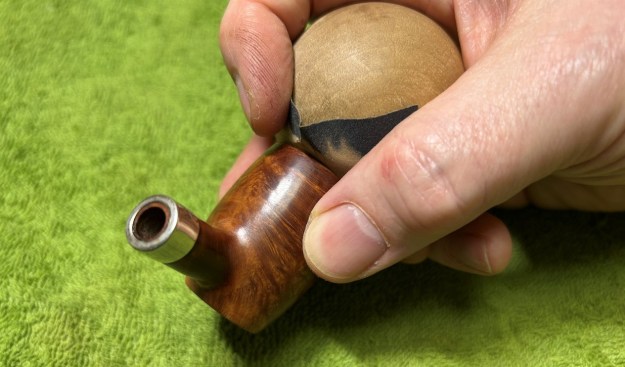
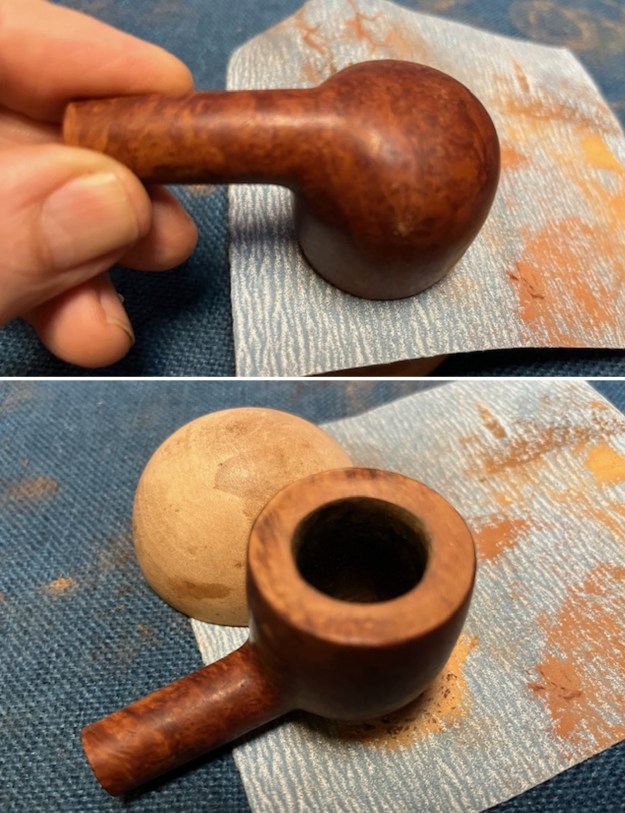
I started my work on the pipe by reaming the bowl with a PipNet reamer. I used the first and second cutting heads and took the cake back to bare briar. I cleaned up the reaming with a Savinelli Fitsall Pipe Knife and removed all the remnants of the cake. I scraped the rim top with the flat edge of the blade at the same time and removed most of the thick lava build up. I sanded the walls of the bowl with a piece of dowel wrapped in 220 grit sandpaper. The walls look very good at this point in the process. I cleaned out the shank, the airway and the deep mortise with alcohol, cotton swabs, hard bristle and soft bristle pipe cleaners. It was a very dirty pipe which just meant that Donna’s Dad had really enjoyed and used this pipe. I cleaned the inside of the aluminum tenon and the airway in the stem with alcohol, cotton swabs and pipe cleaners in the same way as I did the shank. It also was very dirty.I scrubbed the exterior of the bowl and shank with a tooth brush and undiluted Murphy’s Oil Soap. I scrubbed the lava on the rim top and overflow on the outside of the bowl with the soap. I rinsed  the briar with warm water to remove the grime and debris of the scrubbing. It looked significantly better after the scrubbing. The damage on the bowl front and rim top is very clear. The rim top and inner bevelled edge were going to take a lot of shaping work. I topped the flat portion of the rim top on a topping board with a piece of 220 grit sandpaper. I used a wooden sphere and a piece of 220 grit sandpaper to smooth out the bevel on the rim top and remove the darkening. I also cleaned up the front of the bowl to remove the darkening and reshape the top edge with a piece of 220 grit sandpaper.I sanded the smooth parts of the bowl and rim to remove the damage from the burns and to minimize the darkening on the front of the bowl. I sanded it with 320-3500 grit sanding pads to remove the sanding and shaping marks as well as the darkening on the rim top. I polished it with micromesh sanding pads – dry sanding it with 1200-15000 grit pads. I wiped the bowl down with a damp cloth after each sanding pad. The grain really started to rise to the surface as I polished it. I rubbed the bowl and shank down with Before & After Restoration Balm to deep clean the finish on the bowl and shank. The product works to clean, enliven and protect the briar. I worked it in with my fingers to get it into the briar. I used a horsehair shoe brush to work it into the sand blast. I let it sit for 10 minutes then I wiped it off and buffed it with a soft cloth. The briar really began to have a rich shine. I took some photos of the bowl at this point to mark the progress in the restoration. It is a beautiful bowl. I scrubbed the oxidation on the stem with Soft Scrub cleanser and was able to remove a large amount of it. I sanded the area around the button edge and the remaining oxidation with a folded piece of 220 grit sandpaper. Progress was happening! I sanded the surface of the vulcanite with the 2 inch sanding pads – 320-3500 grit pads to remove the remaining oxidation. I dry sanded the surface until I have removed all of the oxidation and the stem started to really shine.I refit the aluminum tenon with the new Brigham Rock Maple Distillator. It is a unique and cool smoking experience. I polished the stem with micromesh sanding pads – dry sanding with 1500-12000 grit pads. I wiped the stem down after each sanding pad with Obsidian Oil. I polished the stem with Before & After Pipe Stem Polish – both Fine and Extra Fine. I gave it a coat of Obsidian Pipe Stem Oil. It works to protect the stem from oxidizing. I set it aside to dry. The final steps in my process involve using the buffer. I buffed the bowl and stem with Blue Diamond to polish out the light scratches in the briar and the vulcanite. I gave the bowl and the stem multiple coats of carnauba wax. I have found that I can get a deeper shine if I follow up the wax buff with a buff with a clean buffing pad. It works to raise the shine and then I hand buff with a microfiber cloth to deepen the shine. It is always fun for me to see what the polished bowl looks like with the polished stem. It really is a nice pipe. The smooth tall bowl sides and the rusticated blaze on the left shank side looks great with the yellow acrylic stem. The Brigham 363 Bent Poker Sitter with a vulcanite saddle stem feels great in my hand. It is a well balanced pipe. Have a look at it with the photos below. The dimensions are Length: 6 inches, Height: 2 ½ inches, Outside diameter of the bowl: 1 ½ inches, Chamber diameter: 7/8 of an inch. The weight of the pipe is 2.29 ounces/65 grams. It is a beautiful pipe that I will soon be adding to the rebornpipes store in the Canadian Pipemakers Section. If you would like to add it to your collection let me know. It should be a great smoking pipe.

As always, I encourage your questions and comments as you read the blog. Thanks to each of you who are reading this blog. Remember we are not pipe owners; we are pipe men and women who hold our pipes in trust until they pass on into the trust of those who follow us.

Breathing new life into a 1965 Dunhill Tanshell 250 F/T Group 2 size Billiard


by Steve Laug

The next pipe on the table is one that came to us from a seller on eBay from Harrison Township, Michigan, USA on 08/22/2024. It is another Dunhill sandblast that is in decent. It is stamped on a smooth panel on the underside of the shank with the shape number 250F/T followed by Dunhill [over] Tanshell. Next to that it is stamped Made in [over] England with the date number 5 after the D in England. After that it is stamped with a 2 in a circle [followed by] T for Tanshell. The stamping is clear and readable as noted above. The pipe has some darkening on the deep sandblast finish and some amazing grain that the shape follows well. The finish was dusty and oily around the nooks and crannies of the sandblast but otherwise looked good. The bowl had a thick cake and there was lava on the sandblasted rim top or edges. The edges looked to be undamaged and possibly protected by the lava. Cleaning would make that clear. The taper stem was lightly oxidized, calcified, dirty and had scratches, tooth marks and chatter ahead of the button. Jeff took photos of the pipe to show what it looked like before he started working on it. Jeff took photos of the bowl and rim top to show the cake in the bowl, lava overflow and the general condition of the pipe. The photos of the stem to show the condition of both sides of the stem as noted above. He took photos of the sides of the bowl and the heel to show the beautiful grain in the sandblast around the bowl. It really is a beautiful piece of briar that has a shape that follows the grain. The finish is nice but it also dirty with dust ground into the finish.  Jeff took photos of the stamping on the heel of the bowl and underside of the shank. It is clear and readable as noted above. One of the first things I like to do is to unpack the stamping and understand each element in it. I turned to Pipephil helpful site (http://pipephil.eu/logos/en/dunhill/tanshell1.html). The stamping is interpreted as follows: The number 250 is the shape number for a Billiard. The F/T signifies a Fish Tail stem. The Tanshell stamp refers to the finish which is corroborated the T at the end of the stamping. The size of the pipe 2 in a circle is a Group 2. The 5 following the D of England gives the date the pipe. Pipephil also has some helpful dating keys on the site that are basically flow charts that you can walk through to date your pipe (http://pipephil.eu/logos/en/dunhill/cledat-en1.html). I turned to Part 1 of the Dating Key and followed the chart. This pipe has a 5 following the D in England. It is the same size as the D so that took me to the section on the chart below (column one) which instructed me that the pipe could be dated as being made posterior to 1954. I followed the link following the “Your pipe is posterior to 1954. Narrow down your dating”. That took me to Page 2 of the dating key (http://pipephil.eu/logos/en/dunhill/cledat-en1a.html).   The third column (suffix 5…9) led me to the section with a 5 after the D in England that is the same size as the D. There was a directive for dating the pipe spelled out as follows: 1960 + suffix which gives the pipe a date of 1965. I then turned to Pipedia’s section on Dunhill Root Briar to get a bit of background on the Dunhill finishes (https://pipedia.org/wiki/Dunhill#Root_Briar). I quote:

Tanshell

The first lot was distributed in 1952 (usually made using Sardinian briar). The prototype was called “Root Shell “, produced in 1951. The Tanshell is a light tan sandblast. Sardinian briar was used for this sandblast. There is a distinct contrast in the sandblasts using Sardinian as opposed to Algerian briar. The Sardinian is much denser and much harder. The resulting pattern, when blasted, is far more even and regular both in terms of the surface texture and the finish.

The Tanshell was Dunhill’s fourth finish and its first major post-war line addition. Introduced in 1951/1952 the Tanshell was a naturally stained sandblasted pipe made exclusively from Sardinian briar through the 1960s. The Tanshell apparently was not simply a light stained Shell but rather was also the product of “certain processes [unrevealed] not previously employed.” Initially, it appears that the pipe was to be named the Root Shell and a stamp to that effect was ordered and received by Dunhill in May 1951. Ultimately, however, the name Tanshell was settled upon but the stamp for the Tanshell name was not received by Dunhill until the beginning of December. Thus, while the Tanshell was in production in 1951 it appears that most if not all Tanshells made in that year did not enter into retail distribution until 1952 and were given a 1952 date code. Loring, J. C., The Dunhill Briar Pipe, The Patent Years and After (self-published, Chicago, 1998).

I have also included a chart from the site from Dunhill spelling out the Standard Pipe Finishes and giving short information and a timeline.Armed with that information I turned to work on the pipe itself. Jeff had done a great job cleaning up the pipe as usual. He cleaned up the inside of the bowl with a PipNet reamer and a Savinelli Fitsall Pipe Knife. The bowl walls looked very good. He scrubbed the interior of the bowl and shank with pipe cleaners, shank brushes, cotton swabs and alcohol to remove the tars and oils. He scrubbed the exterior of the pipe with undiluted Murphy’s Oil Soap and a tooth brush to remove the grime from the finish. He worked on the rim top lava and darkening with the soap and tooth brush. He scrubbed the inside of the stem with alcohol and pipe cleaners. He scrubbed the exterior with Soft Scrub and then soaked it in Briarville’s Pipe Stem Deoxidizer. He washed it off with warm water to remove the deoxidizer. The pipe looked far better. I took photos of the pipe when I received it before I started working on it. I took photos of the bowl and rim top to show how clean it was. The top and the inner edge of the rim look very good. There is a little darkening on the top that I will address and see if I can lessen. The stem looks clean of debris and grime. There is light tooth chatter on the stem surface on both sides but otherwise it looks good.I took a photo of the stamping on the heel of the bowl. The stamping is clear and readable. I took a photo of the pipe with the stem removed to show the overall look of stem, tenon and profile of the pipe. I also took a photo of the tenon end as the inner tube had snapped off in the tenon and seemed to cause no issues. The pipe was in excellent condition with a deep blast around the bowl. It was clean and free of debris. I decided to see if I could lighten the darkening on the rim top before using the Balm. I used a brass bristle wire brush and a tooth brush and Before & After Briar cleaner to see if I could reduce the darkening. I rinsed it with warm water. It looked better and the blast was very clear.I rubbed the bowl down with Before & After Restoration Balm. It is a paste/balm that works to deep clean the finish, enliven and protect the briar. I worked it into the briar with my finger tips and a horsehair shoebrush to make sure that it covered every square inch of the pipe. I set it aside for 10 minutes to let it do its work. I buffed it with a cotton cloth. The briar really began to have a deep shine. The photos I took of the bowl at this point mark the progress in the restoration. I sanded the stem with 320-3500 grit sanding pads to break up the remaining oxidation. I wiped it down after each sanding pad with an Obsidian Oil impregnated cloth. It began to look good.I polished the stem with micromesh sanding pads – dry sanding with 1500-12000 grit pads. I wiped the stem down after each sanding pad with Obsidian Oil. I polished it with Before & After Pipe Stem Polish – both Fine and Extra Fine. Once I had finished the polishing I gave it final coat of Obsidian Oil and set it aside to dry. This 1965 Dunhill Tanshell 250 F/T Group 2 Billiard with a Taper Stem has a beautiful, unique Dunhill Sandblast finish that was deep and craggy and crisp. The Tanshell finish highlights a classic Dunhill rugged sandblast around the bowl and shank. The polished black vulcanite fish tail taper stem adds to the mix. I put the stem back on the bowl and buffed the pipe with Blue Diamond on the buffing wheel being careful to not buff the stamping. I gave the bowl multiple coats of Conservator’s Wax and the stem multiple coats of carnauba wax on the buffing wheel and followed that by buffing it with a clean buffing pad. I hand buffed the pipe with a microfiber cloth to deepen the shine. The finished lightweight Dunhill Tanshell 250 F/T Billiard is quite nice and feels great in the hand. Give the finished pipe a look in the photos below. The dimensions of the pipe are Length: 5 ½ inches, Height: 1 ¾ inches, Outside diameter of the bowl: 1 ¼ inches, Chamber diameter: ¾ of an inch. The weight of the pipe is .85 ounces/24 grams. Thanks for walking through the restoration with me as I worked over another beautiful pipe. I appreciate you taking time to read the writeup.

As always, I encourage your questions and comments as you read the blog. Remember we are not pipe owners; we are pipe men and women who hold our pipes in trust until they pass on into the trust of those who follow us.

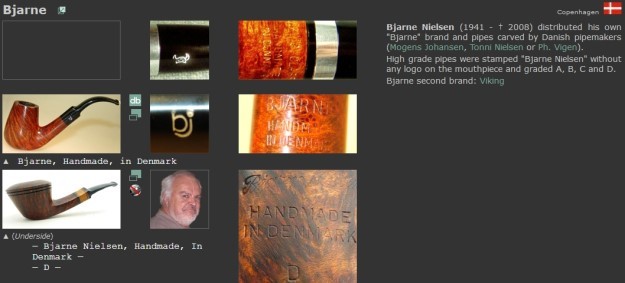
Restoring a Bjarne Handmade in Denmark War Club Billiard


by Steve Laug

This large rusticated bowl, smooth rimtop briar pipe was purchased from an eBay seller on 08/27/2-24 from Memphis, Tennesse, USA. It is stamped on the underside of the shank and clearly reads Bjarne [over] Handmade [over] In Denmark. The bowl had a thick cake on the walls and a heavy overflow of lava onto the rim top and edges. The smooth rim top and inner edges also had burn damage leaving the bowl out of round. It obviously had been lit repeatedly with a torch lighter and the damage told the story. The rusticated finish is very tactile but dirty with debris and oils. The previous pipeman had cut a piece of wine cork to make a cork spacer on the stem. It still had the makers marks on the cork. His drilling to fit the tenon was off and not centred. It was not the same thickness from the outside to the center drilling. With it in place the tenon was quite short. The vulcanite taper stem has a bj stamped on the left side of the taper. The stem was lightly oxidized, calcified and had light tooth marks and chatter on both sides ahead of the button. I really like the rustication on the bowl and shank even through the grime in the finish. Jeff took photos of the pipe before he started cleaning it up. Have a look. Jeff took close up photos of the bowl and rim top to show the condition of the bowl and the rim top. You can also see the lava on the rim top, inner edge and the cake in the bowl. The burn damage on the top is very visible and has left the bowl is out of round. He also took close up photos of the stem to show its condition as mentioned above. He also took photos of the tooth marks and chatter on both sides of the stem. He took photos of the bowl sides and heel to show the details of the rustication around the bowl. The rustication is deep and has interesting characteristics that show up in the photos around the bowl and shank. He took a photo of the stamping on the underside of the shank. It is clear and readable as noted above. There is a bj logo on the left side of the stem that looks deeper enough to touch up. You can also see the wine cork and some of the writing on it in the second photo. It is also poorly cut. The next two photos show the look of the cork spacer on the stem. It is an obvious home made addition and one that I plan on removing. I have had many Bjarne pipes cross my work table over the years but all had been stamped only Bjarne or Bjarne Handmade. None of them had his full name stamped on it and none had a letter stamp which I assumed indicated the grade of the pipe. I did some research on Pipedia.com and found some helpful information on both the stamping of my pipe and the history of Bjarne Nielsen himself. I am including the link to the full article on Pipedia and also some pertinent sections of the article that I have edited for quick reference. https://pipedia.org/wiki/Bjarne

From the early 1990s Bjarne had seven pipemakers employed and the pipes were sold in no fewer than 32 countries. For more than six months each year, Bjarne traveled around the world to promote his pipes by meeting with dealers and customers. But sadly, it all ended in February 2008 when Bjarne, then 66 years old suffered a fatal heart attack. An unexpected blow first of all to his family, but also to the pipemakers who had been working for him, and to all lovers of his pipes from around the world. And as no one was willing to take over, the Bjarne pipe died together with its creator.

Among the pipemakers that worked for Bjarne were Johs (for the lower priced high volume pieces), and makers like Ph. Vigen, Ole Bandholm and Tonni Nielsen for high grade pieces. The cheaper line was stamped “Bjarne” while the highest grades were stamped “Bjarne Nielsen” (never with the pipemakers’ name) and graded, from highest to lowest, by the letters: AX, A, B, C, D, E, F, G, H, I, and J.

Now I knew that the pipe I had was made before 2008 and was one of his cheaper line stamped Bjarne.

Armed with the information above, I turned my attention to the pipe itself. Jeff had cleaned the pipe with his usual penchant for thoroughness that I really appreciate. He reamed it with a PipNet pipe reamer and cleaned up the reaming with a Savinelli Fitsall Pipe Knife. He scrubbed out the internals with alcohol, pipe cleaners, shank brushes and cotton swabs until the pipe was clean. He scrubbed the exterior of the bowl with Murphy’s Oil Soap and a tooth brush to remove the grime and grit on the briar and the lava on the rim top. The finish looks very good with good looking grain around the bowl and shank. Jeff soaked the stem in Before & After Deoxidizer to remove the oxidation on the rubber. When the pipe arrived here in Vancouver for the second stop of its restoration tour it looked very good. I took photos before I started my part of the work. While I appreciated and understood the idea behind the cork spacer it bothered me. I looked at the tenon and could see that the length was the same as the depth of the mortise in the shank. I also noticed that there was hard glue on the stem that formed a ridge that held the cork in place. I used a flat file and a folded piece of 220 grit sandpaper to get rid of the glue and smooth out the surface of the tenon. It still needed to be polished but I wanted to see if it would fit. I turned it into the mortise and took photos of the look of the pipe without the cork. It was back to what it must have looked like when it left the factory. I like it and would proceed sans cork space. Have a look at the pipe without the cork spacer. What do you think? I took close up photos of the bowl, rim top and stem to show how clean the pipe was. The bowl was clean and the rim top and the inner edge had significant burn damage and was slightly out of round. The stem was clean and showed light tooth marks and chatter.I took a photo of the stamping on the underside of the shank. It is readable and read as noted above. I also removed the stem from the shank and took photos of the pipe to show the look of the parts.The rim top and inner edge of the bowl was in rough condition. I flattened out the damaged rim top by lightly topping it on a topping board with a new piece of 220 grit sandpaper. Once it was flat again I used a wooded sphere and half sphere to work over the inner edge of the bowl and give it a slight bevel to try and bring the bowl back to round. (NOTE: the second photo is staged as I had already put a coat of stain on the polished rim top before realizing I forgot this photo.) The third photo shows the rim top and edges after the sanding process. The burn marks are gone and it looks well. I sanded the rim top with 320-3500 grit sanding pads. I wiped the top down with a damp cloth after each sanding pad and by the end the rim top had a shine and definitely looked better.I polished the rim top with micromesh sanding pads – dry sanding with 1500-12000 grit sanding pads. I wiped it down after each pad with the cloth. The bowl continued to develop a deeper shine. I restained the rim top with a Cherry and Mahogany stain pen to match the shank end and panel on the underside of the shank. It would matched well once waxed and buffed.I worked some Before & After Restoration Balm into the briar with my finger tips and a shoe brush to get into the nooks and crannies. I let it sit on the bowl for 10 minutes and then buffed it off with a paper towel and soft cloth. The product is a great addition to the restoration work. It enlivens, enriches and protects the briar while giving it a deep glow. It is a product I use on every pipe I restore. I set the bowl aside and turned my attention to the stem. I “painted” the surface of the stem with the flame of a lighter to lift the tooth marks and had success. I sanded the light marks that remained with 220 grit sandpaper. It looked better. Polishing would finish the work. I continued the sanding process with 320-3500 grit sanding pads. After each pad I wiped the stem down with some Obsidian Oil to clearly show me the scratches and areas that still needed work. It was really looking good.I touched up the bj logo on the left side of the taper stem with white acrylic nail polish. Once it cured I scraped off the excess and used a 1500 grit micromesh pad to clean it up further.I polished the stem with micromesh sanding pads – dry sanding with 1500-12000 grit pads. Once again, I wiped it down between each pad with Obsidian Oil. I further polished it with Before and After Stem Polish – both Fine and Extra Fine. I gave it a final coat of Obsidian Oil. It looked very good. I am really happy with the way that rim top and edge reworking turned out on this Bjarne Hand Made Large Rusticated Billiard turned out. It really is a beautiful looking pipe with a unique shape and combining a sandblast bowl with a smooth rim and shank end. The vulcanite taper stem is really nice. The briar really came alive with the buffing. The rich brown and black stains of the finish gave the pipe a sense of depth with the polishing and waxing. I carefully buffed the pipe with Blue Diamond on the buffing wheel using a light touch on the briar. I gave the bowl and the stem multiple coats of carnauba wax on the buffing wheel. I buffed the pipe with a clean buffing pad to raise the shine. I hand buffed the pipe with a microfiber cloth to deepen the shine. The finished Bjarne Rusticated War Club Billiard really is a beauty and feels great in the hand and looks very good. Give the finished pipe a look in the photos below. The dimensions of the pipe are Length: 7 inches, Height: 2 ½ inches, Outside diameter of the bowl: 2 inches, Chamber diameter: 1 inch. The weight of the pipe is 102 grams/3.63 ounces. The pipe will be going on the rebornpipes store in the Danish Pipe Makers Section if you would like to add it to your collection. Thanks for reading this blog and my reflections on the pipe while I worked on it. It was a fun one to work on!

Restoring a Weary, Worn Bjarne Hand Made in Denmark Sandblast Brandy


by Steve Laug

This well-proportioned, well used and worn sandblast briar pipe was purchased on 05/21/2021 from an antique shop in Astoria, Oregon, USA. It was obviously the previous pipeman’s favourite. It is stamped on the underside of the shank and clearly reads Bjarne [over] Hand Made [over] In Denmark. The bowl had a thick cake on the walls and a heavy overflow of lava onto the rim top and edges. The top of the bowl seems to be smooth matching the shank end and smooth band for the stamping. It is hard to know for sure because of the thick lava but it seems highly likely. The rim edge appears to be possibly worn and slightly out of round. The sandblast finish is dirty with debris and oils. The vulcanite taper stem has a faint Bj stamped on the left side of the taper. It looks like it had a Softee Bit on the stem and it was oxidized, calcified and has light tooth marks and chatter on both sides ahead of the button. It was a beautiful sandblast pipe even through the grime in the finish. Jeff took photos of the pipe before he started cleaning it up. Have a look. Jeff took close up photos of the bowl and rim top to show the condition of the bowl and the rim top. You can also see the lava on the rim top, inner edge and the cake in the bowl. It appears that there is some burn damage and the bowl is out of round. He also took close up photos of the stem to show its condition as mentioned above. He also took photos of the tooth marks and chatter on both sides of the stem. He took photos of the bowl sides and heel to show the sandblast grain around the bowl. The blast has some deep grooves around the bowl and shank. He took photos of the stamping. It is faint but still readable as noted above. The stamp on the looks better than it is. The stamping is almost smooth so I doubt it will survive the clean up.
I have had many Bjarne pipes cross my work table over the years but all had been stamped only Bjarne or Bjarne Handmade. None of them had his full name stamped on it and none had a letter stamp which I assumed indicated the grade of the pipe. I did some research on Pipedia.com and found some helpful information on both the stamping of my pipe and the history of Bjarne Nielsen himself. I am including the link to the full article on Pipedia and also some pertinent sections of the article that I have edited for quick reference. https://pipedia.org/wiki/Bjarne

From the early 1990s Bjarne had seven pipemakers employed and the pipes were sold in no fewer than 32 countries. For more than six months each year, Bjarne traveled around the world to promote his pipes by meeting with dealers and customers. But sadly, it all ended in February 2008 when Bjarne, then 66 years old suffered a fatal heart attack. An unexpected blow first of all to his family, but also to the pipemakers who had been working for him, and to all lovers of his pipes from around the world. And as no one was willing to take over, the Bjarne pipe died together with its creator.

Among the pipemakers that worked for Bjarne were Johs (for the lower priced high volume pieces), and makers like Ph. Vigen, Ole Bandholm and Tonni Nielsen for high grade pieces. The cheaper line was stamped “Bjarne” while the highest grades were stamped “Bjarne Nielsen” (never with the pipemakers’ name) and graded, from highest to lowest, by the letters: AX, A, B, C, D, E, F, G, H, I, and J.

Now I knew that the pipe I had was made before 2008 and was one of his cheaper line stamped Bjarne.

Armed with the information above, I turned my attention to the pipe itself. Jeff had cleaned the pipe with his usual penchant for thoroughness that I really appreciate. He reamed it with a PipNet pipe reamer and cleaned up the reaming with a Savinelli Fitsall Pipe Knife. He scrubbed out the internals with alcohol, pipe cleaners, shank brushes and cotton swabs until the pipe was clean. He scrubbed the exterior of the bowl with Murphy’s Oil Soap and a tooth brush to remove the grime and grit on the briar and the lava on the rim top. The finish looks very good with good looking grain around the bowl and shank. Jeff soaked the stem in Before & After Deoxidizer to remove the oxidation on the rubber. When the pipe arrived here in Vancouver for the second stop of its restoration tour it looked very good. I took photos before I started my part of the work. I took close up photos of the bowl, rim top and stem to show how clean the pipe was. The bowl was clean and the rim top and the inner edge were worn and slightly out of round. It does indeed appear to be a smooth rim top. The stem was clean and showed light tooth marks and chatter.I took a phots of the stamping on the underside of the shank. It is faint but readable and read as noted above. I also removed the stem from the shank and took photos of the pipe to show the look of the parts.The rim top and inner edge of the bowl was in rough condition. There were spots that seemed like the rim top was smooth matching the shank end and other spots looked rough and made me wonder if it had not been sandblast. Because of the condition I went with the smooth top as I have worked on several like that. I used a wooded sphere and half sphere to work over the inner edge of the bowl and give it a slight bevel to try and bring the bowl back to round. By the end the inner edge looked much better and also reveal that outside of the bowl was also not made round. Ah well, I work with what I have and it is definite improvement. I sanded the rim top with 320-3500 grit sanding pads. I wiped the top down with a damp cloth after each sanding pad and by the end the rim top had a shine and definitely looked better.I polished the rim top with micromesh sanding pads – dry sanding with 1500-12000 grit sanding pads. I wiped it down after each pad with the cloth. The bowl continued to develop a deeper shine. I restained the rim top with a Cherry stain pen to match the shank end and panel on the underside of the shank. It matched very well.I worked some Before & After Restoration Balm into the briar with my finger tips and a shoe brush to get into the nooks and crannies. I let it sit on the bowl for 10 minutes and then buffed it off with a paper towel and soft cloth. The product is a great addition to the restoration work. It enlivens, enriches and protects the briar while giving it a deep glow. It is a product I use on every pipe I restore. I set the bowl aside and turned my attention to the stem. I “painted” the surface of the stem with the flame of a lighter to lift the tooth marks and had mixed success. Many lifted and the remaining ones I filled with some rubberized black CA glue. Once the repairs cured I used a flat file to blend them into the surface and followed that with some 220 grit sandpaper. It looked better. Polishing would finish the work. I continued the sanding process with 320-3500 grit sanding pads. After each pad I wiped the stem down with some Obsidian Oil to clearly show me the scratches and areas that still needed work. It was really looking good.I polished the stem with micromesh sanding pads – dry sanding with 1500-12000 grit pads. Once again, I wiped it down between each pad with Obsidian Oil. I further polished it with Before and After Stem Polish – both Fine and Extra Fine. It looked very good. I am really happy with the way that this Bjarne Hand Made Sandblast Brandy turned out. It really is a beautiful looking pipe with a unique shape and combining a sandblast bowl with a smooth rim and shank end. The vulcanite taper stem is really nice. The briar really came alive with the buffing. The rich brown and black stains of the finish gave the pipe a sense of depth with the polishing and waxing. I carefully buffed the pipe with Blue Diamond on the buffing wheel using a light touch on the briar. I gave the bowl and the stem multiple coats of carnauba wax on the buffing wheel. I buffed the pipe with a clean buffing pad to raise the shine. I hand buffed the pipe with a microfiber cloth to deepen the shine. The finished Bjarne Brandy Sandblast really is a beauty and feels great in the hand and looks very good. Give the finished pipe a look in the photos below. The dimensions of the pipe are Length: 5 ½ inches, Height: 1 ¾ inches, Outside diameter of the bowl: 1 ¼ inches, Chamber diameter: ¾ of an inch. The weight of the pipe is 36 grams/1.27 ounces. The pipe will be going on the rebornpipes store in the Danish Pipe Makers Section if you would like to add it to your collection. Thanks for reading this blog and my reflections on the pipe while I worked on it. It was a fun one to work on!

Restoring a Peterson’s Kapet Made in the Republic of Ireland 502


by Steve Laug

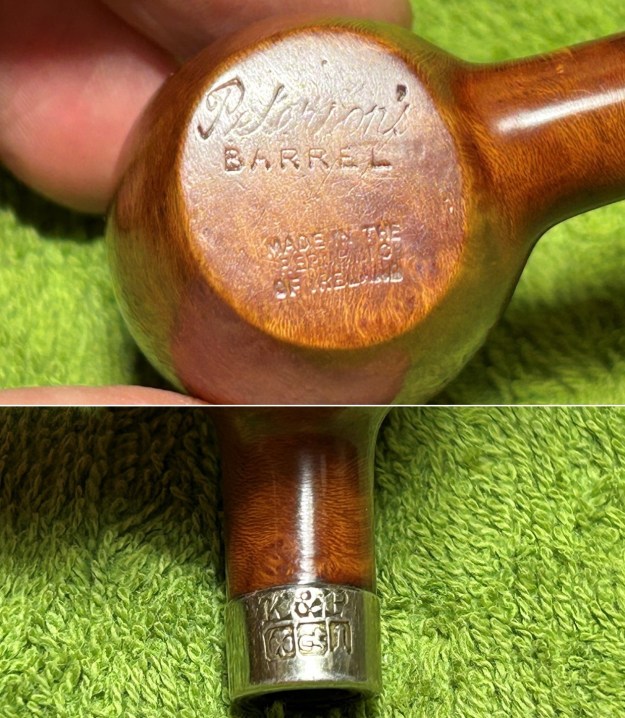
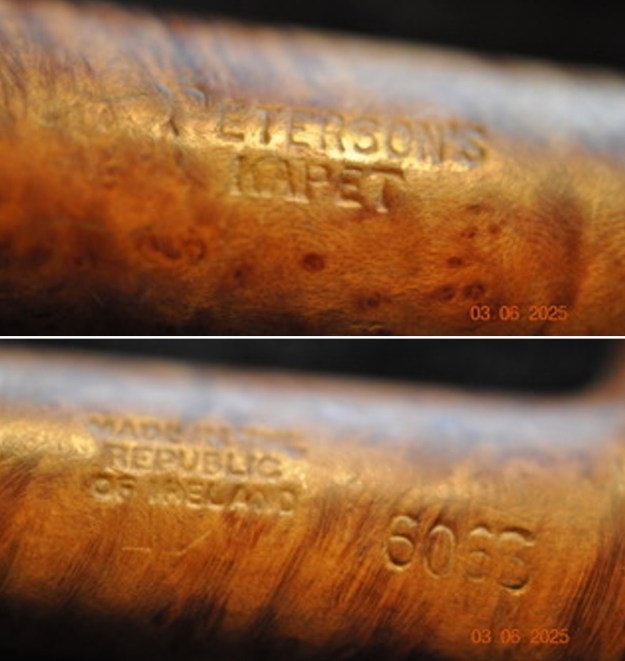
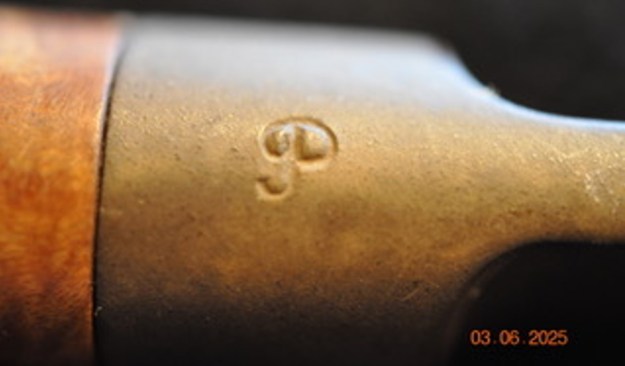
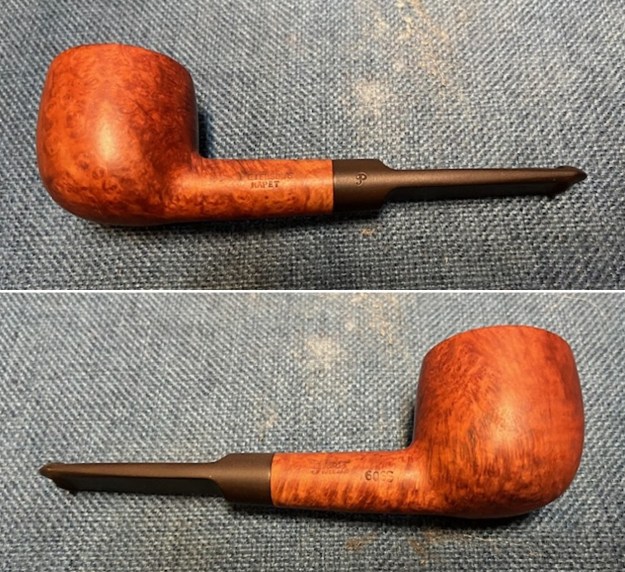
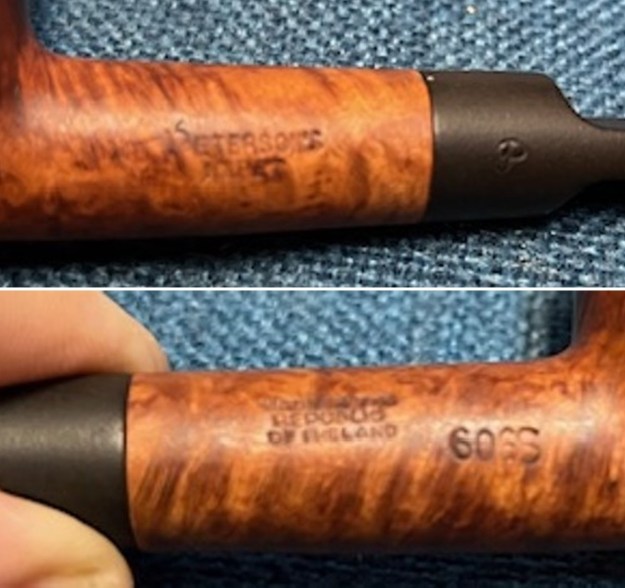
This beautifully grained briar pipe was purchased on 08/27/2024 from an auction on eBay from a seller in Memphis, Tennessee, USA. It is stamped on the left side of the shank and clearly reads Peterson’s [over] Kapet. On the right side it is stamped Made in the Republic of Ireland [three lines]. The shape number 502 is stamped to the right of that next to the bowl/shank junction. The bowl had a thick cake on the walls and an overflow of lava onto the rim top and edges. The smooth finish is dirty with debris and oils. The vulcanite saddle stem has a “P” stamped on the left side of the saddle. It was oxidized, calcified and has light tooth marks and chatter on both sides near the button. It was a beautiful looking pipe even through the grime in the finish. Jeff took photos of the pipe before he started cleaning it up. Have a look. Jeff took close up photos of the bowl and rim top to show the condition of the bowl and the rim top. You can also see the lava on the rim top, inner edge and the cake in the bowl. He also took close up photos of the stem to show its condition as mentioned above. He also took photos of the tooth marks and chatter on both sides of the stem. He took photos of the bowl sides and heel to show the grain around the bowl. There are small fills on the left side mid bowl. The grain is beautiful straight or flame grain. Jeff also took photos of the stamping on the sides of the shank. It is clear and readable as noted above.I am including the link to the Pipedia’s article on Peterson pipes. It is a great read in terms of the history of the brand (https://pipedia.org/wiki/Peterson). There was a short note toward the bottom of the page about the series. It is definitely referring to the newer line that came out later. I quote:

I turned to Pipedia (https://pipedia.org/wiki/Peterson) to first pin down a date that the pipe was made. I knew that the Made in Ireland stamp would give me that. I quote:

As usual when trying to get accurate facts in regard to Peterson history, something will jump up and get in the way. They are missing many of their records. The following is the best that we can do for a guide to the myriad markings during the period 1922 – 1949. Prior to 1920 it was rare for a country of origin to be stamped on the pipe, just Peterson’s Dublin on the band. After 1921/22, if it is stamped “MADE IN IRELAND” and the “Made in” is stacked over “Ireland” or “MADE IN EIRE” or several other forms, it was made between 1922 and 1938. A considerable number of Peterson pipes were stamped “Irish Free State”. From about 1930 to 1949, most of the pipes (those which were stamped) were stamped “Made in Ireland”.” If the stamp reads “MADE IN IRELAND” in a circle, the pipe was made between 1939 and 1948. These are all “Pre-Republic” pipes. I can tell you that the mark “Irish Free State” was adopted in 1922; and replaced by “Eire” in 1937 and then by “Republic of Ireland” in 1949.

That gave me a date for the pipe – it was made after 1949 as can be proved by the Made in the Republic of Ireland stamp on the right side of the shank.

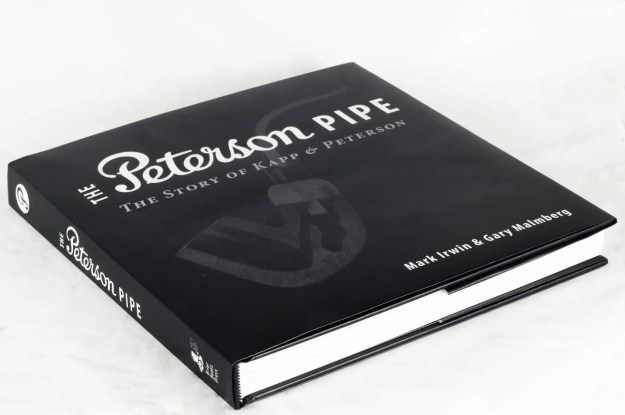
I turned to “The Peterson Pipe” by Mark Irwin and Gary Malmberg to get some background on the Peterson’s Kapet Line. On page 305 it had the following information.

Kapet (1925-87) Line first described in 1925 brochure and featured in occasional catalogs through 1987. Early specimens will be stamped IRISH over FREE STATE. Described in 1937 catalog as available in dark plum or natural finish. Featured an aluminum “inner tube” or stinger until 1945.  Mid-century specimens may be stamped Made In over Ireland. Specimens from 1970 on may have mounts with hallmarks.

Judging from the Made in the Republic of Ireland stamp, the pipe I am working on is probably made after 1945 when the stinger or inner tube was removed. Those dates work also for the Kapet information above. The stem has the original P stamp on the saddle side and no stinger.

To help clarify the stamping on the shank more, I did some digging and found a blog on Mark Irwin’s Site that had information on the 500 shapes and specifically the 502 shape and it did indeed have a saddle stem (https://petersonpipenotes.org/tag/peterson-502/). That also move the date forward to post 1980.

The 500 shapes aren’t documented in the Peterson ephemera, which is an important reason to stop and let everyone know they’re available just now. They’re big, XL shapes, mostly bulldogs and Rhodesians, and appeared around 1980 in a red stain in the Spigot, Sterling Silver and  Kapet lines (from high to low), but also in standard brown stain in the lower Kildare and K Briar entry-grade lines. I’ve also seen a Supreme on the internet.

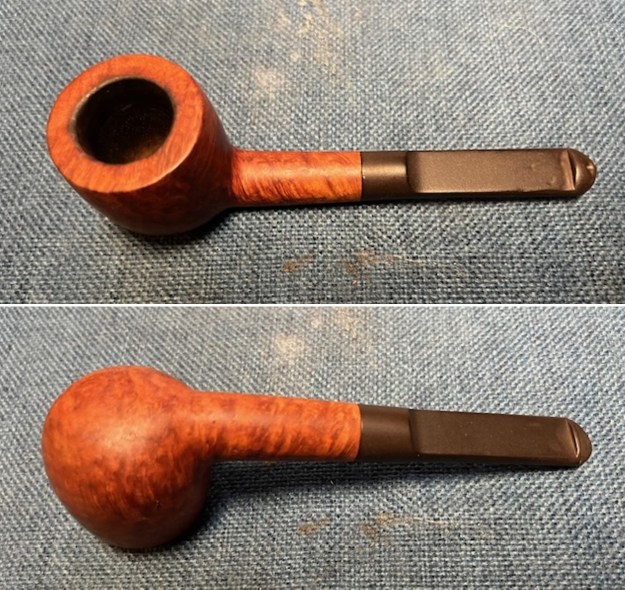
The 1980s were a difficult period in the company’s history, as we recount in The Peterson Pipe: The Story of Kapp & Peterson. Global pipe sales had plummeted to an all-time low and Peterson, like many other companies, was retrenching.  While we have a good record of the company’s offerings in the 1970s and 80s, the 500 shapes are nowhere to be seen. They’re big pipes, which made me think they might have been made designed for the U.S. market, were it not for the fact that some of them accommodate a 6mm filter, which is usually a sign that they were destined for the German market.Armed with the information above, I turned my attention to the pipe itself. Jeff had cleaned the pipe with his usual penchant for thoroughness that I really appreciate. He reamed it with a PipNet pipe reamer and cleaned up the reaming with a Savinelli Fitsall Pipe Knife. He scrubbed out the internals with alcohol, pipe cleaners, shank brushes and cotton swabs until the pipe was clean. He scrubbed the exterior of the bowl with Murphy’s Oil Soap and a tooth brush to remove the grime and grit on the briar and the lava on the rim top. The finish looks very good with good looking grain around the bowl and shank. Jeff soaked the stem in Before & After Deoxidizer to remove the oxidation on the rubber. When the pipe arrived here in Vancouver for the second stop of its restoration tour it looked very good. I took photos before I started my part of the work. I took close up photos of the bowl, rim top and stem to show how clean the pipe was. The bowl was clean and the rim top and the inner edge look beautiful. The stem was clean and did not show either tooth marks or chatter.I took photos of the stamping on the sides of the shank. It is very clear and readable and read as noted above. I also removed the stem from the shank and took photos of the pipe to show the look of the parts. I started by sanding the exterior of the bowl with 1500-12000 grit micromesh sanding pads. I dry sanded it with each pad and wiped the briar down with a damp cloth to remove the sanding- debris. I worked some Before & After Restoration Balm into the briar with my finger tips. I let it sit on the bowl and shank for 10 minutes and then buffed it off with a paper towel and soft cloth. The product is a great addition to the restoration work. It enlivens, enriches and protects the briar while giving it a deep glow. It is a product I use on every pipe I restore. I set the bowl aside and touched up the “P” stamp on the left side of the saddle with some white acrylic nail polish. I let it cure then scraped off the excess and sanded the remnant off with a 1500 grit sanding pad.I polished the stem with micromesh sanding pads – dry sanding with 1500-12000 grit pads. Once again, I wiped it down between each pad with Obsidian Oil. I further polished it with Before and After Stem Polish – both Fine and Extra Fine. It looked very good.I am excited to finish this beautifully grained, Peterson’s Kapet 502 Saddle Stem Apple. I put the pipe back together and buffed it with Blue Diamond on the buffing wheel. I gave the bowl and the stem multiple coats of carnauba wax. I hand buffed the pipe with a clean buffing pad to raise the shine. It is fun to see what the polished bowl looks like with beautiful mixed grain all around it. The straight apple looks great with the black vulcanite saddle stem. This smooth Classic Peterson’s Kapet 502 Apple is great looking and the pipe feels great in my hand. It is light and well balanced. Have a look at it with the photos below. The dimensions are Length: 5 ½ inches, Height: 1 ¾ inches, Outside diameter of the bowl: 1 ¼ inches, Chamber diameter: ¾ of an inch. The weight of the pipe is 45 grams/1.62 ounces. It turned out to be a beautiful pipe. I will be putting on the rebornpipes store in the Irish Pipe Makers Section. If you would like to add it to your collection let me know. It is a real beauty. Thanks for walking through the restoration as I brought the pipe back to life.

Refreshing a Rusticated Imported Briar Rhodesian could it be a Weber Made Pipe?


by Steve Laug

This mysterious pipe was purchased on 11/16/2024 from an auction in Mastic Beach, New York, USA. It is mysterious in terms of the maker. The only stamping on the pipe is on the right side of the shank and reads Imported Briar. The carving, or rustication is very similar to that of a recent Weber The Scoop that recently restored (https://rebornpipes.com/2025/04/16/restoring-a-unique-old-weber-the-scoop-squat-bulldog/). Like that one this pipe has three smooth spots on the sides and front of the bowl. The rustication leaves them as islands in a heavily rusticated bowl. The Weber Scoop I restored was the same. The rim cap was different from this one but there are many similarities that make we wonder if this mystery pipe is also a Weber made pipe. The bowl had a thick cake on the walls and an overflow of lava onto the rim top and edges. The rustication had a lot of dust and debris in the grooves and valleys. The vulcanite saddle stem was oxidized, calcified and has light tooth marks and chatter on both sides near the button. It was a unique and beautiful looking pipe in its own way. Jeff took photos of the pipe before he started cleaning it up. Have a look. Jeff took close up photos of the bowl and rim top to show the condition of the bowl and the rim top. You can also see the lava on the rim top, inner edge and the cake in the bowl. He also took close up photos of the stem to show its condition as mentioned above. I also took photos of the tooth marks and chatter on both sides of the stem. He took photos of the bowl sides and heel to show the rustication style around the bowl. The deep patterns around the smooth patches on the bowl front and sides. The rustication is swirled around the smooth patches and is doubly rusticated. Jeff also took a photo of the stamping on the right side of the shank. It is clear and readable as noted above.Since I had a hunch about a connection to Weber pipes I decided to do a bit of reading on Weber pipes in general and also see if I could pick up specific information on this particular pipe. I turned to Pipedia and found the some interesting historical information (https://pipedia.org/wiki/Weber_Pipe_Co.).

Carl B. Weber was a German from Bavaria. Aged 21 he immigrated to the USA in 1911. In 1938 he established Weber Briars Inc. in Jersey City, New Jersey – later renamed the Weber Pipe Co. The firm grew to be one of the giants of American pipe industry focusing itself in the middle price and quality zone. Trademark: “Weber” in an oval. Beside that Weber – especially in the years after 1950 – was a most important supplier for private label pipes that went to an immense number of pipe shops. In New York alone for example, exactly the same pipes were found at Wilke’s, Barclay Rex, Trinity East, Joe Strano’s Northampton Tobacconist in Ridgewood, Queens, Don-Lou in Bensonhurst, Brooklyn. Nearly all pipes for Wilke were unstained and many models, for example the “Wilke Danish Bent”, could hardly deny originating of Weber. Among others well reputed pipemaker Anthony Passante worked for Weber.

Weber Pipe Co. owned and manufactured Jobey pipes – when mainly sold in the USA by The Tinderbox from 1970’s – 80’s. In addition Jobey / Weber bought Danish freehands from Karl Erik (Ottendahl). These pipes were offered as Jobey Dansk. Ottendahl discontinued exports to the United States in 1987 and in the very same year – obviously only as a ghost brand – Jobey was transferred to Saint-Claude, France to be manufactured by Butz-Choquin. Carl B. Weber is the author of the famous book “Weber’s Guide to Pipes and Pipe Smoking”.     

Armed with just my suspicion I turned my attention to the pipe itself. Jeff had cleaned the pipe with his usual penchant for thoroughness that I really appreciate. He reamed it with a PipNet pipe reamer and cleaned up the reaming with a Savinelli Fitsall Pipe Knife. He scrubbed out the internals with alcohol, pipe cleaners, shank brushes and cotton swabs until the pipe was clean. He scrubbed the exterior of the bowl with Murphy’s Oil Soap and a tooth brush to remove the grime and grit on the briar and the lava on the rim top. The finish looks very good with good looking grain around the bowl and shank. Jeff soaked the stem in Before & After Deoxidizer to remove the oxidation on the rubber. When the pipe arrived here in Vancouver for the second stop of its restoration tour it looked very good. I took photos before I started my part of the work. I took close up photos of the bowl, rim top and stem to show how clean the pipe was. The bowl was clean and the rim top and the inner edge look beautiful. The cap on this pipe was smooth with a ring around the inner and out edge and a rim top that is slightly inset. It is unique among the Weber Pipes that I have worked on. The stem was clean and did not show either tooth marks or chatter.I took photos of the stamping on the sides of the shank. It is very clear and readable and read as noted above. I also removed the stem from the shank and took photos of the pipe to show the look of the parts.The exterior of the bowl was in excellent condition. I did not need to do any sanding or work on the rim or bowl edges. I started by working some Before & After Restoration Balm into the briar with my finger tips and a shoe brush to get into the nooks and crannies. I let it sit on the bowl for 10 minutes and then buffed it off with a paper towel and soft cloth. The product is a great addition to the restoration work. It enlivens, enriches and protects the briar while giving it a deep glow. It is a product I use on every pipe I restore. I set the bowl aside and sanded the stem with 320-3500 grit sanding pads. I wiped it down after each pad with Obsidian Oil and it began to look very good.I polished the stem with micromesh sanding pads – dry sanding with 1500-12000 grit pads. Once again, I wiped it down between each pad with Obsidian Oil. I further polished it with Before and After Stem Polish – both Fine and Extra Fine. It looked very good. I am excited to be on the homestretch with beautiful Imported Briar Rhodesian. The mystery of the connection to Weber intrigues me. I look forward to when a pipe all comes back together, polished and waxed. I put the bowl and stem back together. I polished the bowl and stem with Blue Diamond on the buffer to remove any scratches. I gave the bowl multiple coats of Conservator’s Wax and the stem multiple coats of carnauba wax. I buffed the pipe with a clean buffing pad to raise the shine. I hand buffed it with a microfiber cloth to deepen the shine. The unique rusticated finish looks really good with the interesting patterns standing out on the shape. The richly stained briar and the polished black vulcanite went really well together. This Weber Scoop has a recognizable shape and look that catches the eye. The brown stain really makes the rustication depths pop. It is another comfortable pipe to hold in the hand. The finished pipe is shown in the photos below. The dimensions of the pipe are Length: 5 ½ inches, Height: 1 ½ inches, Outside diameter of the bowl: 2 inches, Chamber diameter: 1 inch. The weight of the pipe is 39 grams/1.38 ounces. This one will soon be on the American Pipe Makers Section of the rebornpipes store. Let me know if you are interested in adding it to your rack. Thanks for reading this blog and my reflections on the pipe while I worked on it.

A New Lease on Life for an Old S.M. Frank Bakelite


by Kenneth Lieblich

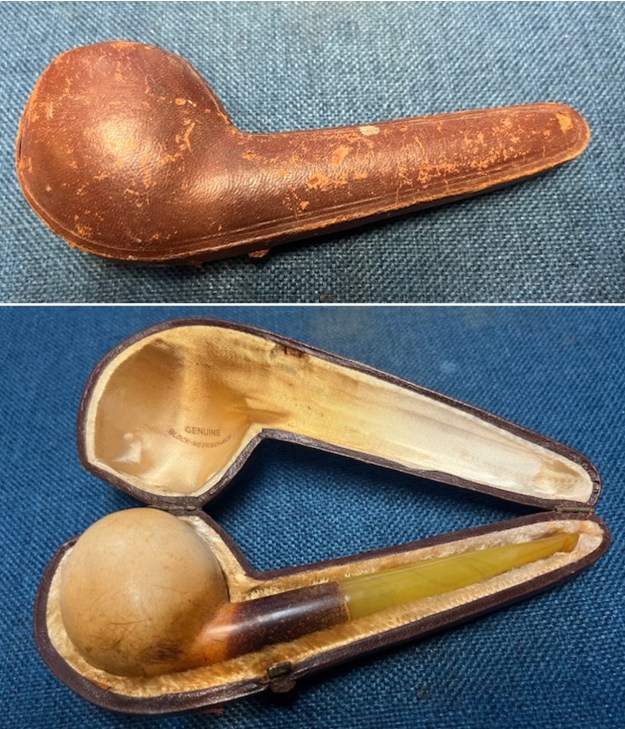
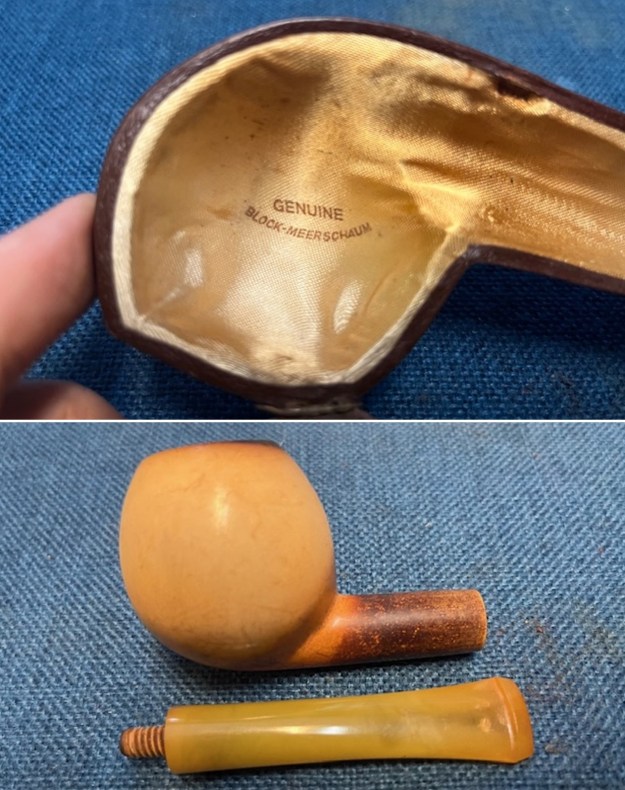
A couple of weeks ago, I restored a Redmanol pipe for a customer and, as good fortune would have it, its Bakelite cousin appeared on my workbench. However, this time the Bakelite pipe is for sale! It’s a real beauty – and quite old. It’s an S.M. Frank Bakelite bent bulldog. It has a lovely old-world feel about it, with a handsome band – and it even has its matching leather case! This pipe has an orific stem and that marks it as being around a century old. To learn more about that particular bit of pipe history, please have a look at Steve’s article on the subject here. Given my recent experience with Redmanol and given its similarity to Bakelite, I thought I’d give it a go. It’s an old timer and it will always carry a few signs of its use and age, but that is definitely part of this pipe’s charm. The marks on the pipe are simple and straightforward. On the left side of the shank, it reads Frank [over] Bakelite. Inside the pipe case, there is a logo which reads Frank [over] Trade Mark.I suspected that the name Frank was referring to the S.M. Frank company, but I went to Pipedia to check. It turns out that the S.M. Frank history is a tangled mess of brambles and twigs. It involves Kaywoodie, KB&B, Reiss, Demuth, and many others. It’s messier than a dog’s breakfast, as one of my schoolteachers liked to say. I don’t have the patience to do it justice here, but I will provide a few tidbits. Here’s a quotation from Pipedia:

In the year 1900 Sam Frank Sr. started his own business, selling pipes and other tobacco items. His original office was located at 20 W. 17th Street, NYC. He was also closely associated with the sales staff of Wm. DeMuth & Co., selling their line of pipes. It was at this time that Mr. Frank first met Ferdinand Feuerbach and formed what would be a lifelong friendship. Mr. Feuerbach started working for the DeMuth company in 1897 and by 1903 had become the production manager. In 1919, when Mr. Frank needed an experienced pipe man to run his pipe factory, located at 168 Southern Blvd., in the Bronx, he persuaded his old friend Ferdinand to join him. Mr. Feuerbach is credited with developing DeMuth’s popular Royal DeMuth and Hesson Guard Milano pipelines. In 1922, when S. M. Frank purchased the Manhattan Briar Pipe Co. the company incorporated. In 1933, the paper Medico filter was introduced along with the Medico brand line of pipes. The Medico filter is the “original” and most absorbent paper filter on the market that is recognized by pipe smokers world-wide. Filtered pipe smoking, a debatable issue among pipe smokers, reduces tars and nicotine in the smoke stream to make a “safer” smoke.

Meanwhile, over in the PipesMagazine forums, there’s a lengthy discussion on the subject from user, jguss. I won’t try to do the article justice in this blog post, but I recommend you read it here. One of the useful things that came out of it, however, is the following org chart.I cannot date this pipe beyond saying that it is about 100 years old. It’s not possible for me to be more precise than that – other than to say that the pipe cannot precede 1907, as that was the year that Bakelite was invented by Leo Hendrik Baekeland. Anecdotally, this pipe looks like similar KB&B (Kaufmann Bros. & Bondy) pipes of the era, so it may come from that genealogical line (so to speak). Let’s move on.

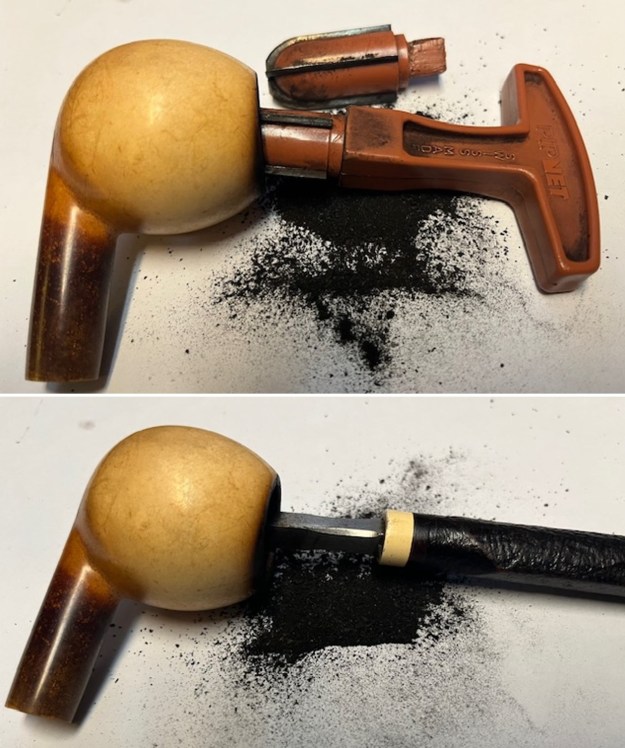
A closer look at the pipe shows a few problems. The stem has some scratches and wear – I will have to handle the Bakelite carefully. The stummel is pretty worn and dirty. It has a few scratches and nicks. Around the top of the bowl, there is some odd ‘stuff’ stuck to the wood. More on that later. Both of the mortises in the shank and stem had matching broken-off halves of a bone tenon. They’re stuck in there. There’s a lot of work ahead! I decided that my first job would be to extract the tenon halves. This was nerve-wracking stuff because I was not at all sure that I could get them out without cracking either the shank or stem (or both). The photos here don’t really tell the whole story. I tried extracting with pliers; I tried extracting with a screw – both unsuccessful. I fiddled for while and decided that I needed to drill the tenon out. It was clearly risky, but the pipe wasn’t useable in its current state anyway. So, I took the stem and stummel and threw them in the freezer for 30 minutes or so. I wanted to (hopefully) make the bone tenon more brittle by freezing it. I also wrapped the end of the stem very tightly with hockey tape in a quixotic hope that that might prevent the Bakelite from cracking. I then took the thinnest drill bit that fit inside the draught hole of the tenon and drilled carefully and slowly. I then increased the size of the drill bit one by one – oh so carefully – until the tenon began to crack. As more and more of it cracked, I was able to pull the debris out. This took a while, as I worked on both halves, but it was a complete success. Deo gratias! I then went searching in my boxes for a replacement bone tenon – I have hundreds! Eventually, I found just the right one. I was finally able to get on with cleaning. I used oil soap on a few cotton rounds and wiped down the stem to provide an initial cleaning before moving on to the next steps. The primary cleaning came next. I disinfected the inside of the stem with pipe cleaners and cotton swabs dipped in 99% lemon-infused isopropyl alcohol. I scrubbed thoroughly to make sure the interior was very clean.Next, I set about fixing the marks in the Bakelite. This was done by filling those marks with clear cyanoacrylate adhesive. I left this to cure and moved on.The next step was sanding. First, I reduced the bulk of the cyanoacrylate repairs. I removed the excess adhesive as near to the surface as possible, without cutting into the Bakelite. Following that, I used all nine of the micromesh sanding pads (1,500 through 12,000 grit) to sand out flaws, even out the Bakelite, and provide gentle polishing of the finished surface. I also applied pipe-stem oil while using the last five micromesh pads. There was a wonderful, clear, ruby-like glow to the stem when I was done.As the stem was (nearly) complete, I moved on to the stummel. The first step was to ream out the bowl – that is to say, remove all the cake inside the bowl. This accomplished a couple of things. First (and most obviously), it cleaned the bowl and provided a refurbished chamber for future smoking. Second, when the old cake was removed, I could inspect the interior walls of the bowl and determine if there was damage or not. I used a reamer, a pipe knife, and a piece of sandpaper taped to a wooden dowel. Collectively, these ensured that all the debris was removed.My next step was to remove the lava on the rim. For this, I took a piece of machine steel and gently scraped the lava away. The metal’s edge is sharp enough to remove what I need, but not so sharp that it damages the rim.Similar to the stem, I then cleaned the stummel with both pipe cleaners and cotton swabs dipped in lemon-infused 99% isopropyl alcohol. With a pipe this dirty, it took quite a while and much cotton to get clean.I then decided to ‘de-ghost’ the pipe – that is to say, exorcize the remaining filth from the briar. I filled the bowl and the shank with cotton balls, then saturated them with 99% isopropyl alcohol. I let the stummel sit overnight. This caused the remaining oils, tars and smells to leach out into the cotton.To tidy up the briar, I also wiped down the outside with some oil soap on cotton rounds and used a toothbrush in the crevices. This did a good job of cleaning any latent dirt on the surface of the briar. The last step of the cleaning process was to scour the inside of the stummel with some soap and tube brushes. This was the culmination of a lot of hard work in getting the pipe clean.However, what it did not do was remove the weird stuff stuck around the rim. Then I realized that this pipe must have had cap once upon a time. That cap is long lost to the mists of history. I looked in my stores and found several caps, but not that fit this pipe. No problem – this pipe doesn’t need it and would look great (I daresay better) without one. It took some mighty strong sanding with 220-, 400-, and 600-grit sandpapers to remove all the gunk. I then used all nine micromesh pads (1,500 through 12,000 grit) to sand the outside of the stummel and finish it off. This sanding minimizes flaws in the briar and provides a beautiful smoothness to the wood. I did add some stain to the briar in order to replace what had been lost in the sanding – but forgot the photos. Anyway, I rubbed some LBE Before & After Restoration Balm into the briar and let it sit for 30 minutes or so. The balm moisturizes the wood and gives a beautiful depth to the briar. I then buffed the stummel with a microfibre cloth. For the final step, I took the pipe to my bench polisher and carefully buffed it – first with a blue diamond compound, then with three coats of carnauba wax. This procedure makes the pipe look its best – the stummel sings and the stem glows.
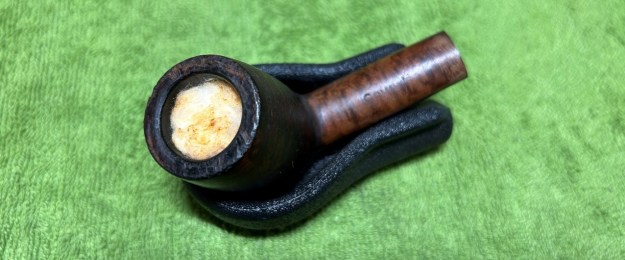
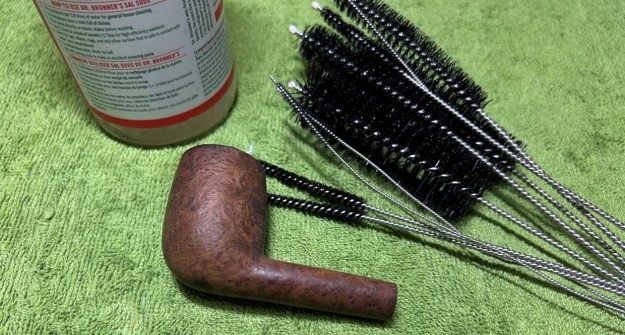
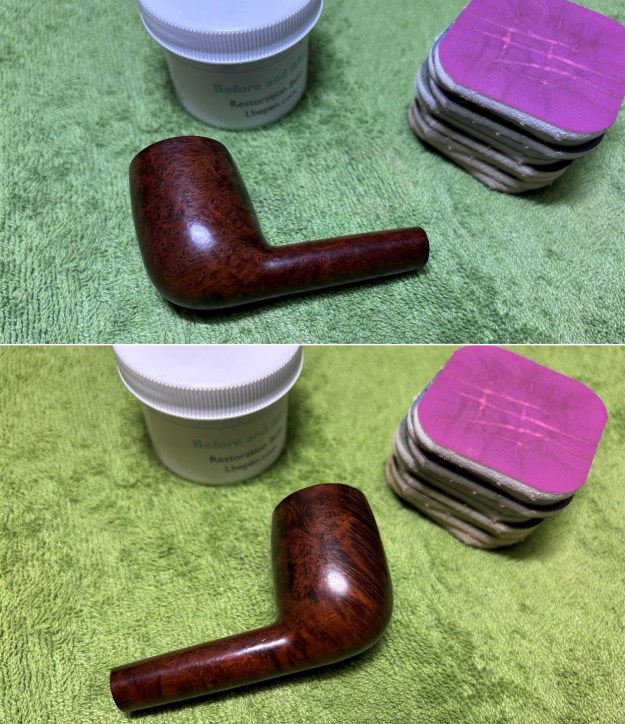
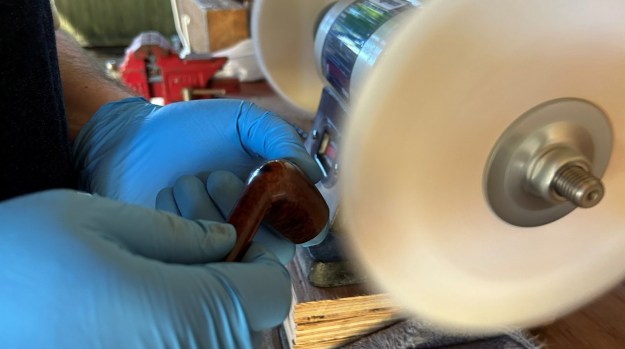
All done! This S.M. Frank Bakelite bent bulldog looks fantastic again and is ready to be enjoyed by its next owner. I am pleased to announce that this pipe is for sale! If you are interested in acquiring it for your collection, please have a look in the ‘American’ section of the store here on Steve’s website. You can also email me directly at kenneth@knightsofthepipe.com. The approximate dimensions of the pipe are as follows: length 5 in. (128 mm); height 1⅞ in. (46 mm); bowl diameter 1⅜ in. (36 mm); chamber diameter ⅞ in. (20 mm). The weight of the pipe is 1¼ oz. (39 g). I hope you enjoyed reading the story of this pipe’s restoration as much as I enjoyed restoring it. If you are interested in more of my work, please follow me here on Steve’s website or send me an email. Thank you very much for reading and, as always, I welcome and encourage your comments.
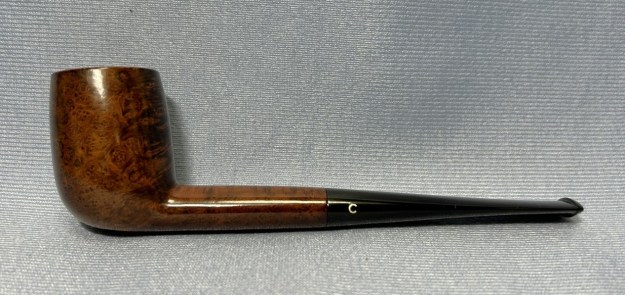
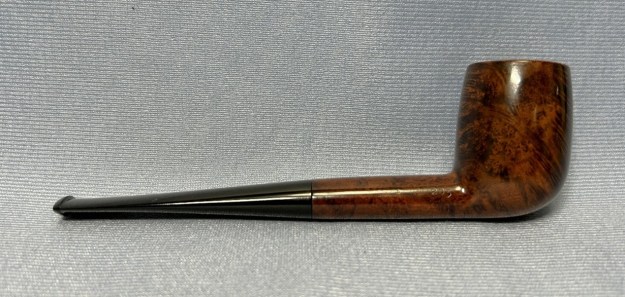
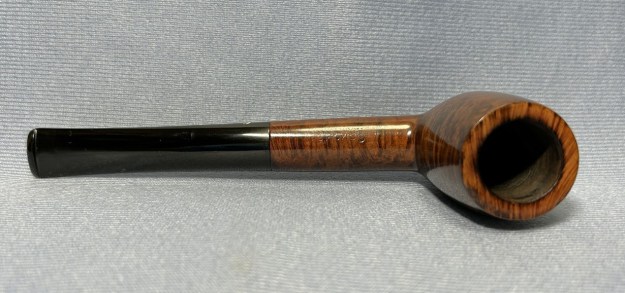
Restoring a Badly Burned Out Peterson’s Kapmeer 407 Prince


by Steve Laug

Several months ago, now I received an email from Jake about a Peterson’s Prince that he had that had a burnout in the bottom of the bowl. I asked him to send me photos of the pipe so that I could see what the issues were with the pipe. The photos showed the large hole in the bottom of the bowl. The hole is the same diameter as the inner walls of the bowl by the looks of the photo. I did not know what the brand mark on the pipe was as we never spoke about it. My guess about it was that the stem made me think of a Dunsmore or perhaps a Kapmeer pipe. We talked about it and what it would cost to restore it. Jake said he would send it up for work. Time passed and I really forgot about the pipe then on the weekend Jake wrote that he was mailing it. I told him I would keep an eye out for it and early this week the pipe arrived. Here are the photos that Jake sent me to show me the damage. When I unpacked the box I took the pipe out and had a look at it. The hole was quite large and the edges of the hole were thin and chipping. The stem was very oxidized and had some tooth marks on the top and the underside ahead of the button.
I took a photo of the bowl to show the size of what I was dealing with. The liner on the walls of the bowl were meerschaum. I believe that originally the Kapmeer had a Meerschaum tube on the walls that did not have a meerschaum bottom. I took photos of the stem to show its condition. The stem was oxidized and had tooth chatter and marks on the top and underside of the stem ahead of the button. The pipe is stamped around the sides of the shank. I took photos of the stamping and have included them below. They are clear and readable. The stamping on the left side read Peterson’s [over] KAPMEER. On the left side of the stem there was a stamped “P” that was clear and readable. The stamping on the right side read Made In [over] Great Britain. On the underside of the shank it was stamped with the shape number 407. I took the stem off the shank and took a photo of the pipe parts to give a sense of what it looked like. I started my repair on the burnout by cleaning up the pipe. I carefully reamed the thick cake out of the bowl with a Savinelli Fitsall Pipe Knife. I scraped the cake off the walls of the bowl. I sanded the bowl out with sandpaper wrapped around a piece of dowel to remove any residual cake and smooth out the meerschaum.I used a pen knife to clean of the edge of the hole in the bottom of the bowl. I cut out all of the burned and thin areas on the hole. I cut a piece of briar out of the heel of a sacrificial old pipe. I cut a bit bigger than the hold as I would need to shape and fit it in the hole. I used the shape of the inner edge of the bowl and rim to set the shape of the plug that I was going to use on the repair. I used a Dremel to reduce the edges and make the plug round. I scored the back edge with the Dremel where the airway entered the bowl. I would reduce the edges of the plug to fit in the hole from the outside. I used a Dremel and sanding drum as well as several files to shape of the bottom of the plug to the same size as the hole in the bottom. Once it was shaped I fit it to the hold in the bottom. I glued it in place with clear CA glue. I filled in the gaps around the plug with briar dust and super glue. When the glue cured I sanded the repair smooth with a folded piece of 220 grit sandpaper. I took a photo of the inside of the bowl. It shows some of the glue from the plug around the edges. I mixed a batch of JB Weld and pressed it into the bottom of the bowl. I used a folded pipe cleaner and pipe nail to press it into the bottom. I raised the bottom of the bowl to the bottom of the entrance of the airway.I sanded the outside of the bowl and the rim top with 320-3500 grit sanding pads. I wiped the bowl down with a damp cloth after each sanding pad. The repair blended into the surrounding briar. There was some darkening around the outer edge of the patch. I stained the repaired burnout with a Walnut stain pen. It is a different piece of briar but the colour is a close match.I polished the briar with 1500-12000 grit micromesh sanding pads. I dry sanded it and then wiped it down after each sanding pad to remove the sanding dust. It began to take on a shine. The exterior of the bowl looks better after polishing. I worked some Before & After Restoration Balm into the briar with my finger tips. I let it sit on the bowl for 10 minutes and then buffed it off with a paper towel and soft cloth. The product is a great addition to the restoration work. It enlivens, enriches and protects the briar while giving it a deep glow. It is a product I use on every pipe I restore. I set the bowl aside and turned my attention to the stem. I scrubbed the stem with Soft Scrub to remove the oxidation on the surface of the stem. It took some work but I was able to remove a lot of the oxidation.I “painted” the surface of the stem with the flame of a lighter to lift the tooth marks. I was able to lift some of them. I filled in the few that remained with a rubberized black CA glue. Once it cured I use a small flat file to smooth out the repairs on the stem surface. I followed that up by sanding it with a folded 220 grit sandpaper. I sanded the stem surface with 220 grit sand paper to smooth out the repairs. I forgot to take photos of this part of the process. I sanded the stem with 320-3500 grit sanding pads to remove the scratching, oxidation and further polishing the stem surface.I touched up the “P” logo stamp on the left side of the stem with white acrylic fingernail polish. Once it cured I scraped of the excess and sanded the surrounding area with 1500 grit sanding pads. It looked very good. I polished the stem with micromesh sanding pads – dry sanding with 1500-12000 grits pads. I wiped the stem down with an Obsidian Oil Cloth after each pad. There still seems to be some oxidation around the stem. But it looks much better. I mixed a batch of sour cream and charcoal powder and painted the bottom of the bowl with a folded pipe cleaner. The mixture cures hard and flavourless and protects the repaired bottom of the bowl. With the burned out bowl repaired, the bowl cleaned and restored I put the polished stem back on the shank. The Peterson’s Kapmeer 407 Prince looked beautiful. Even the repaired burnout on the bottom of the bowl looked interesting with the dark ring around it on the bowl bottom. I buffed the pipe Blue Diamond on the buffing wheel and worked over the briar and the vulcanite with it. The buffer brought out a rich shine on the bowl and stem. I gave it multiple coats of Carnauba wax and then buffed it with a clean buffing pad. I had buffed the pipe with a soft cloth to deepen the shine. It is fun to see what the polished bowl looks like with beautiful mixed grain all around it. The pipe looks great with the black vulcanite stem. This smooth Peterson’s Kapmeer 407 Meerlined Prince is great looking and the pipe feels great in my hand. It is light and well balanced. Have a look at it with the photos below. The dimensions are Length: 6 inches, Height: 1 ¼ inches, Outside diameter of the bowl: 1 ¼ inches, Chamber diameter: ¾ of an inch. The weight of the pipe is 29 grams/0.99 ounces. It turned out to be a beautiful pipe. I will be sending it back to Jake soon. He is looking forward to enjoying it once again. Thanks for walking through the restoration with me as I worked over this pipe. Thanks to each of you who are reading this blog.