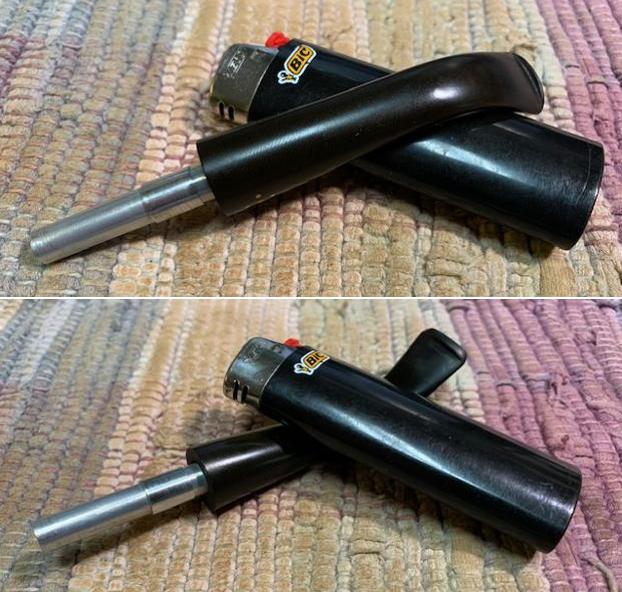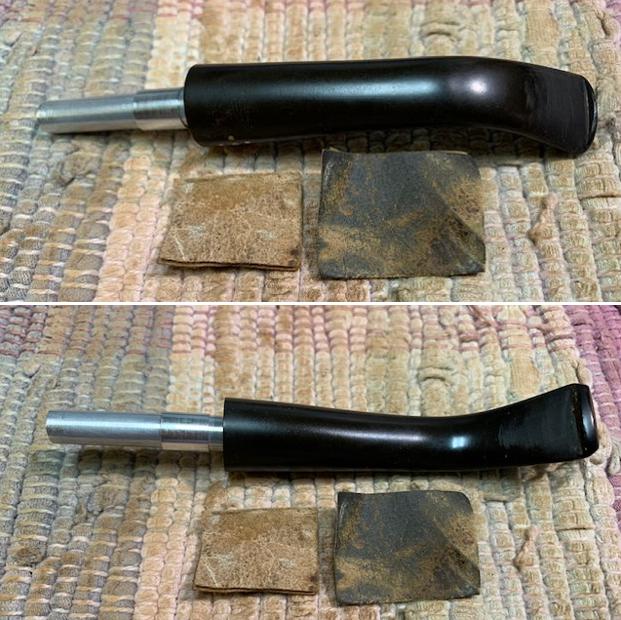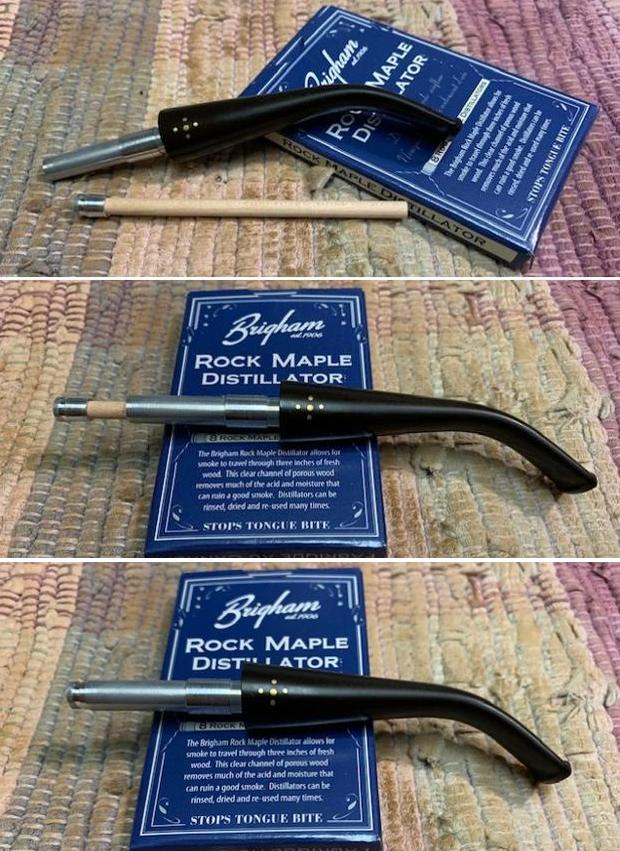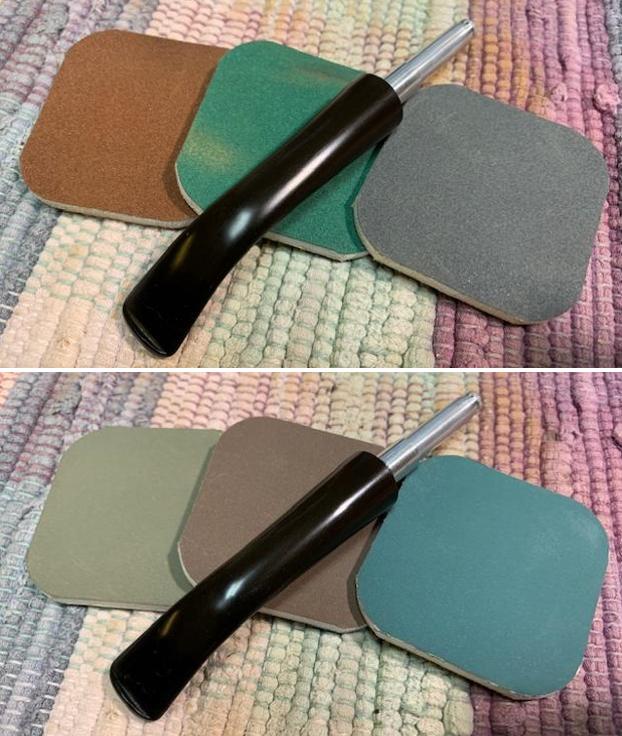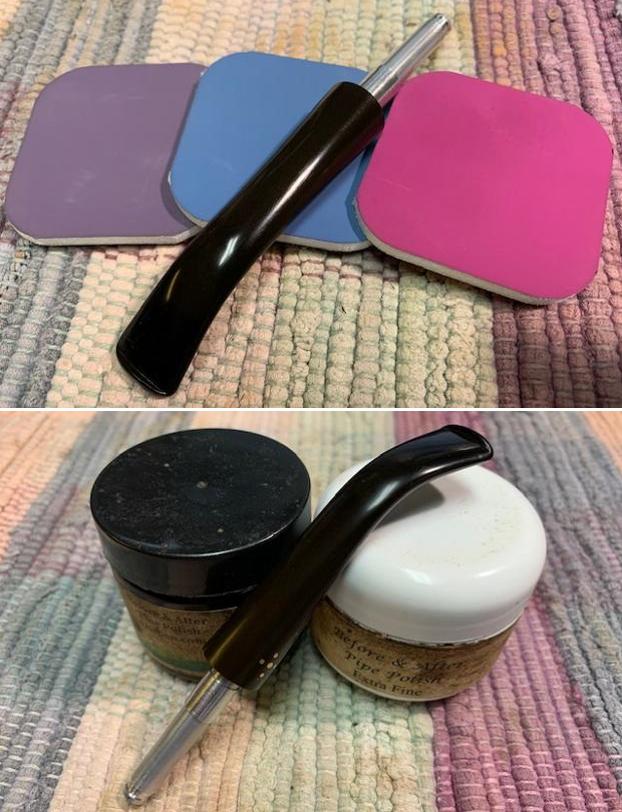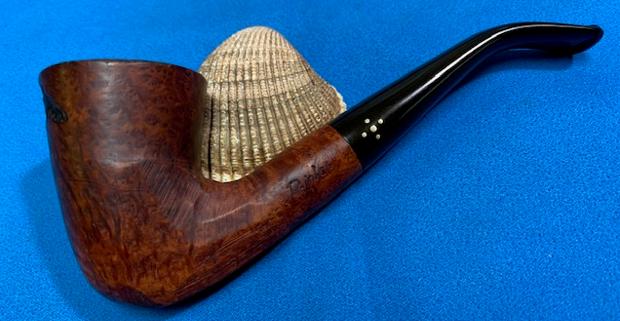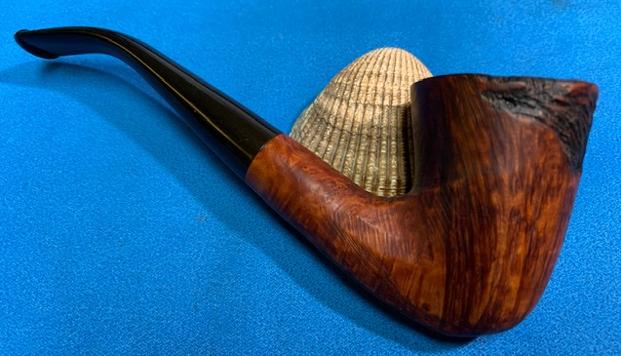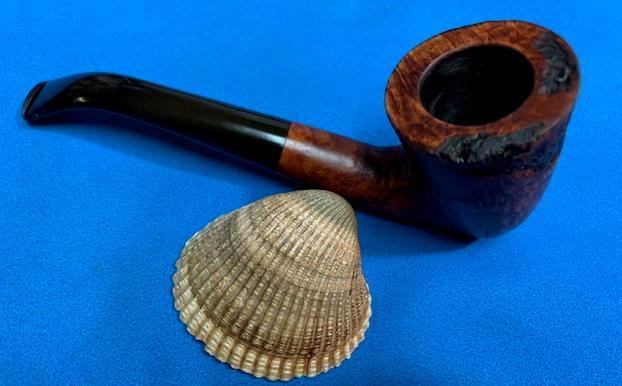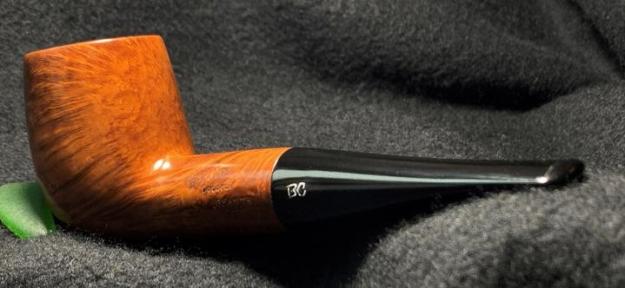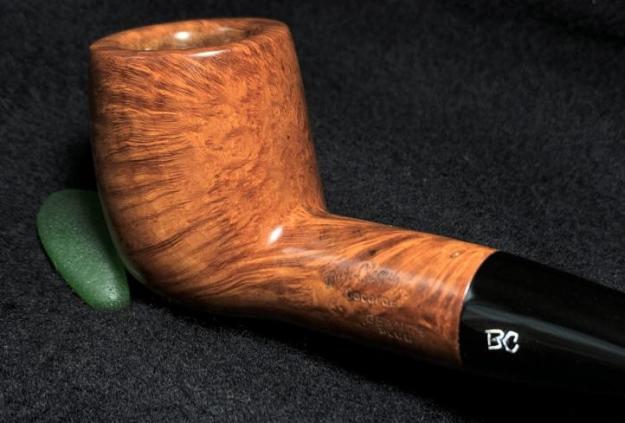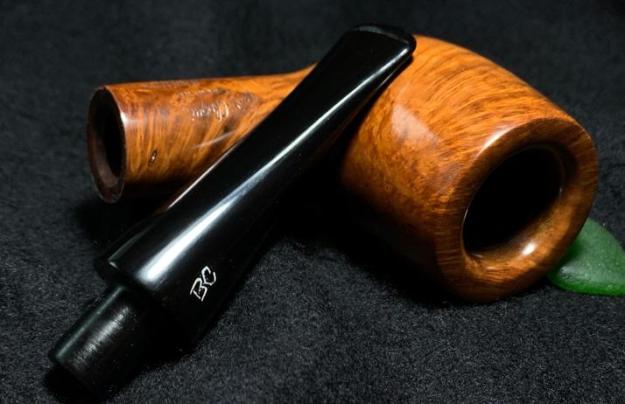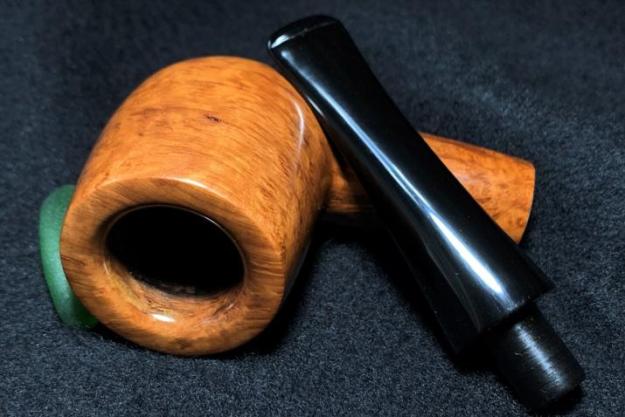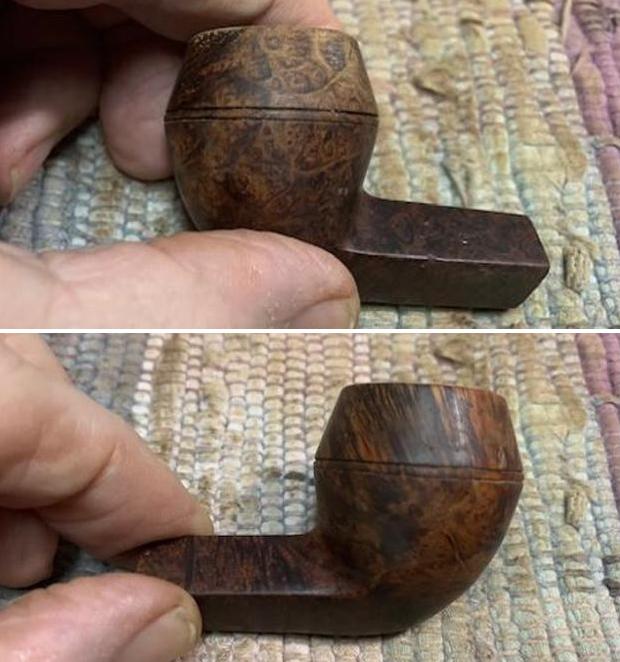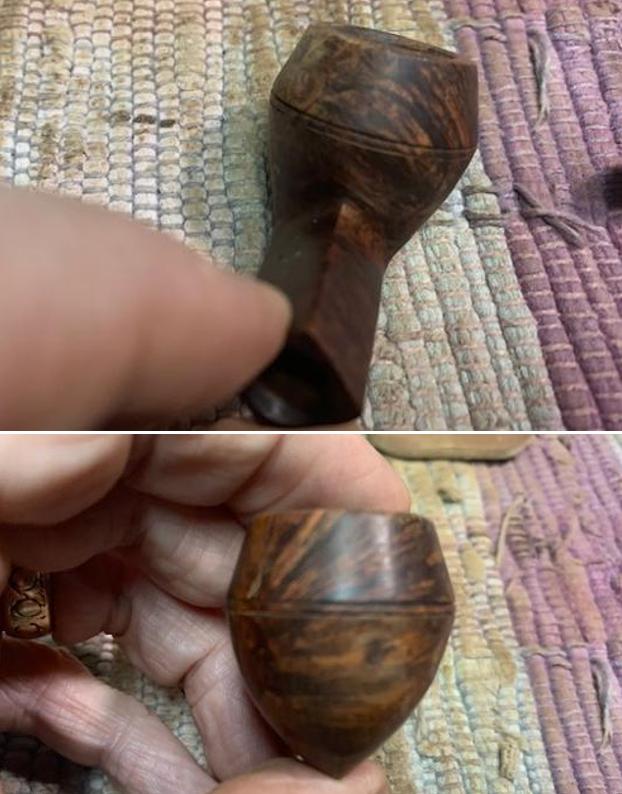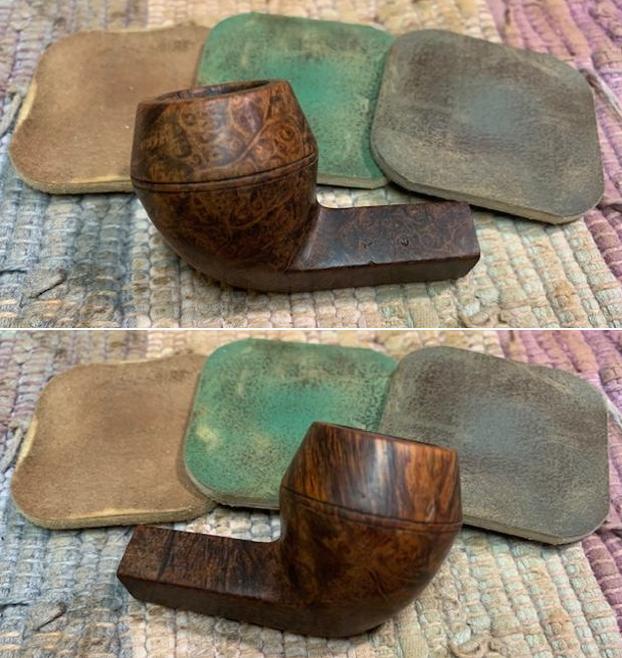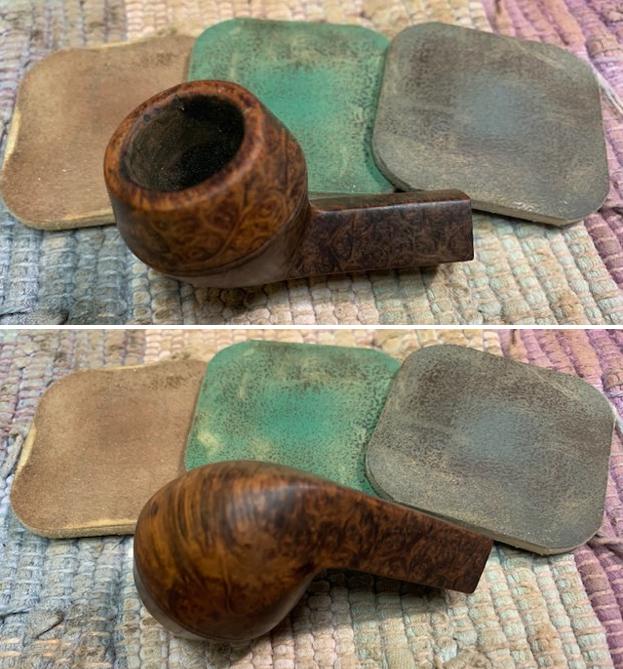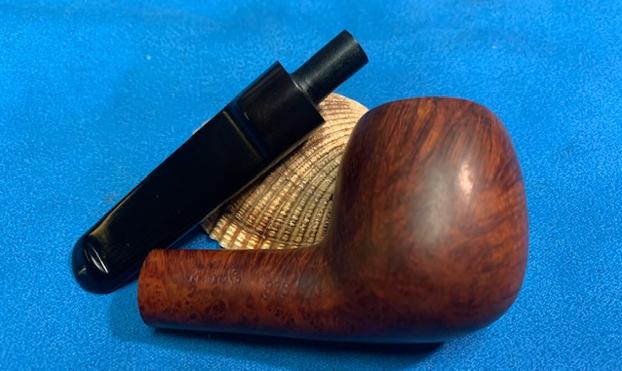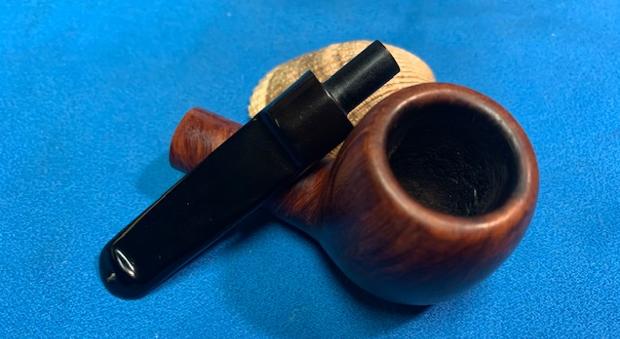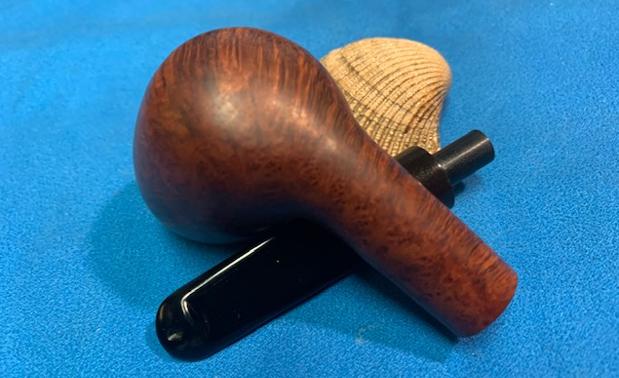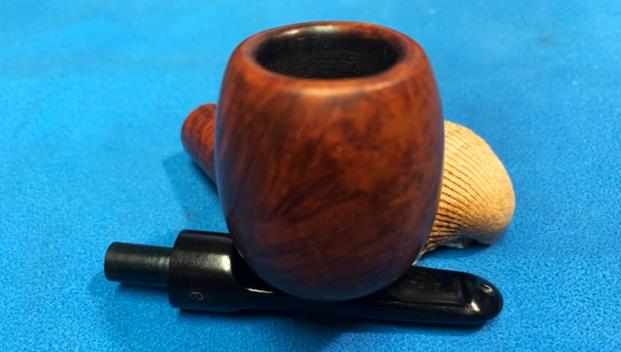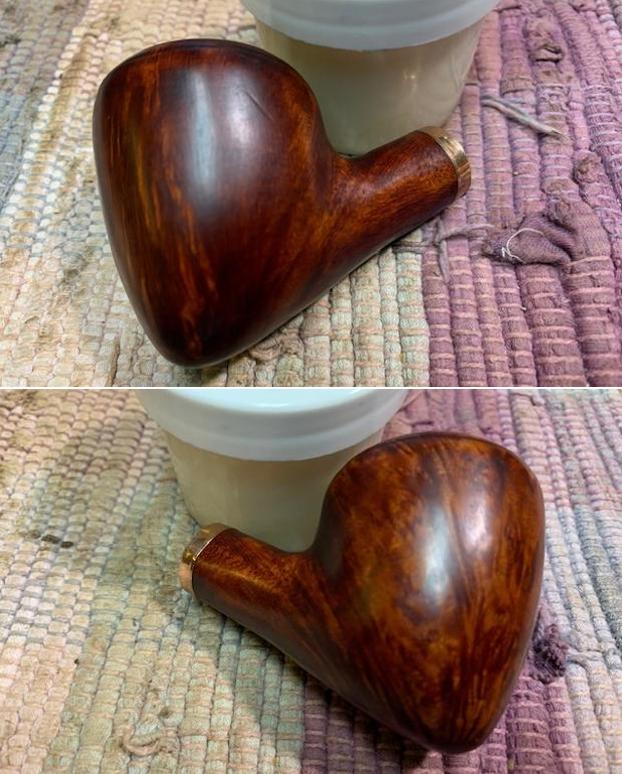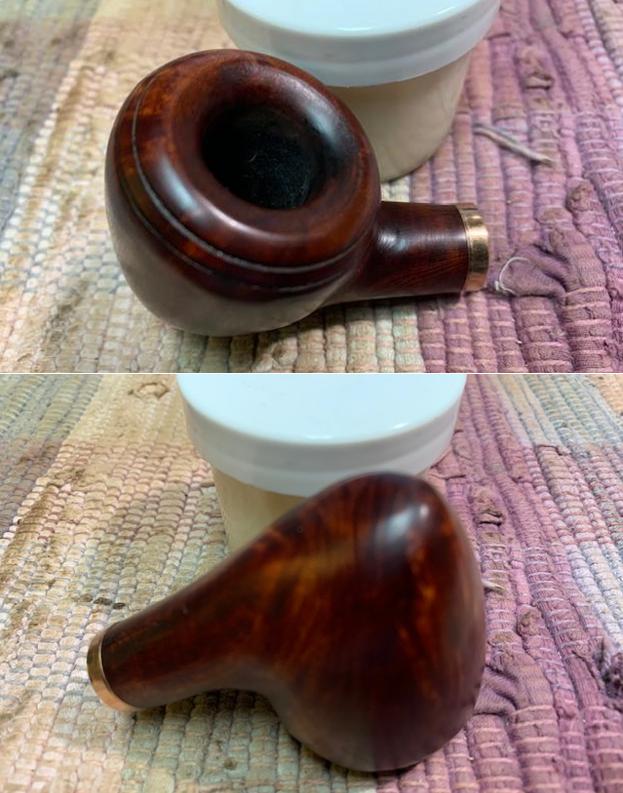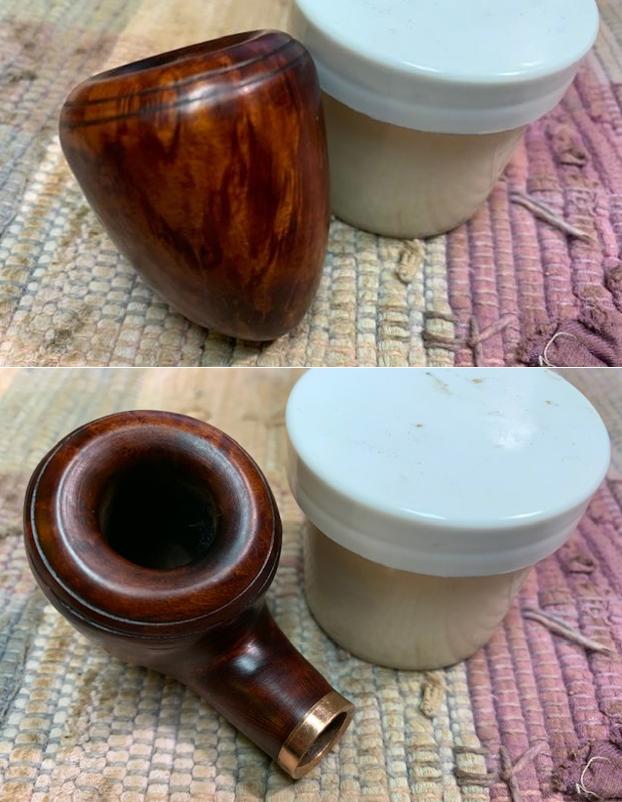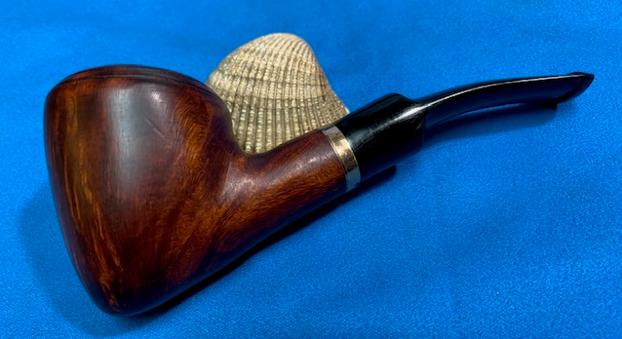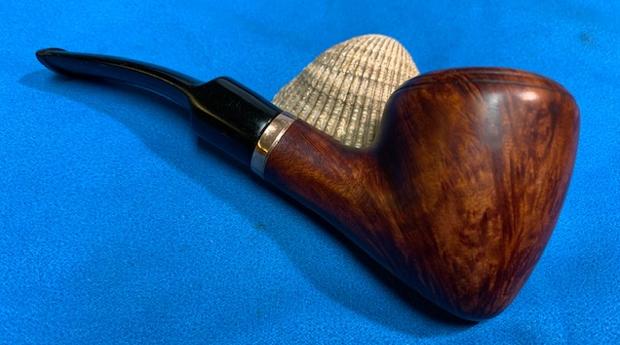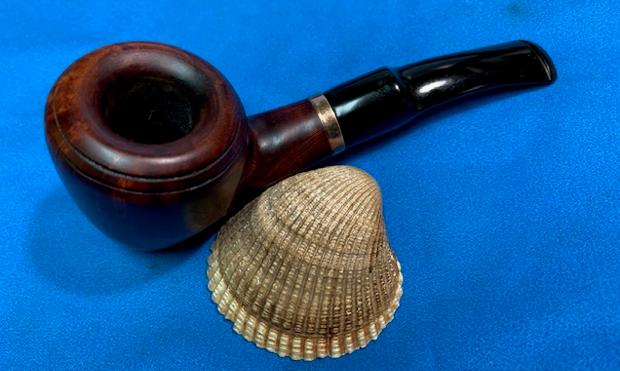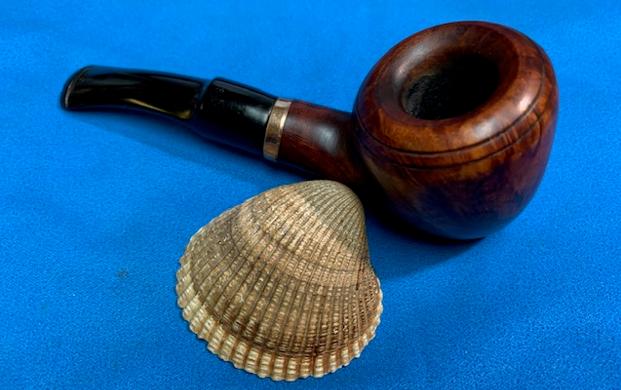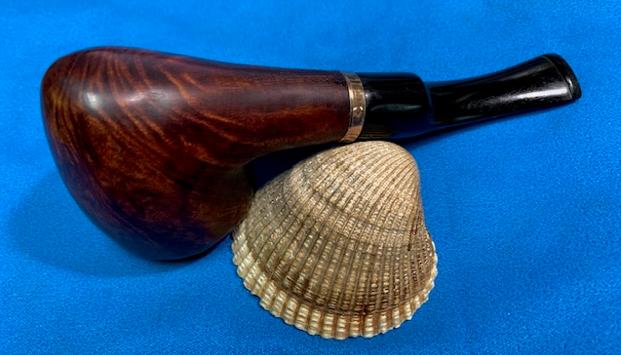
Tag Archives: shaping a stem

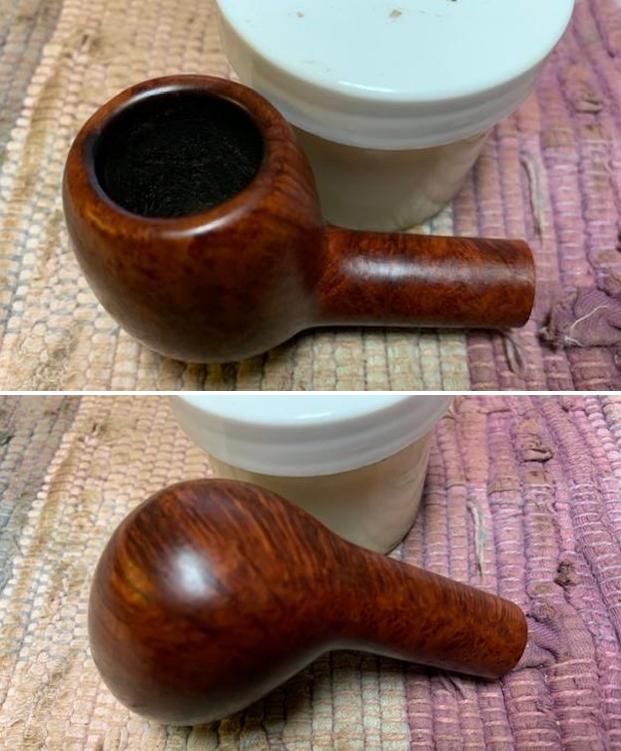
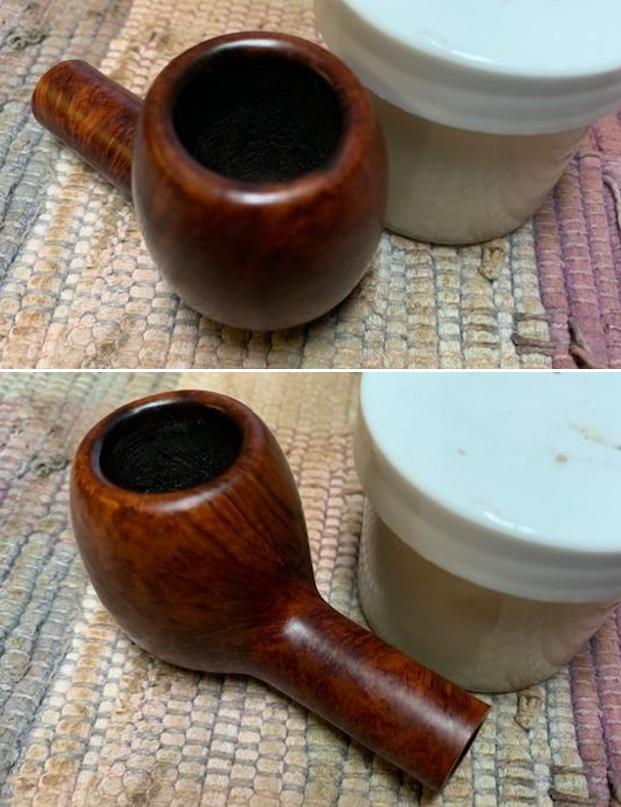
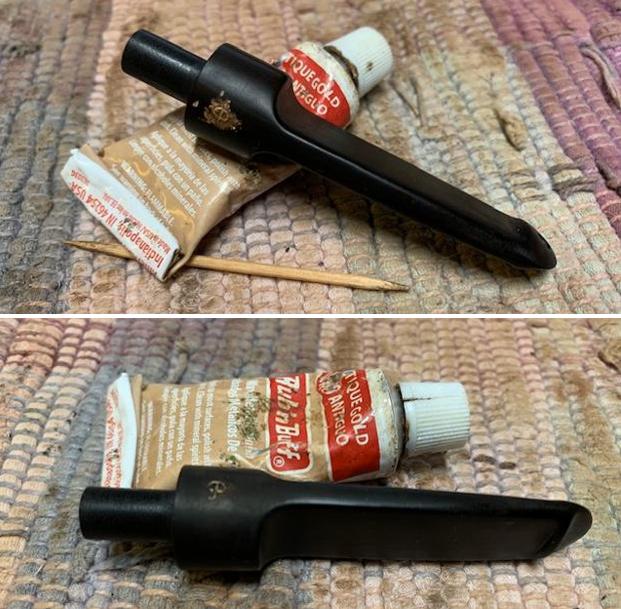
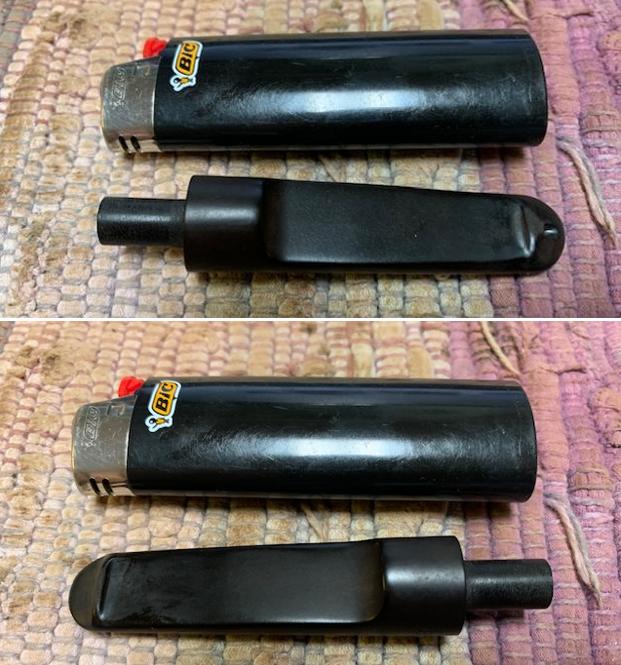
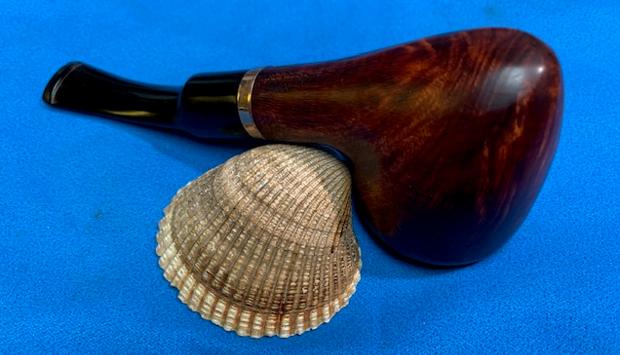
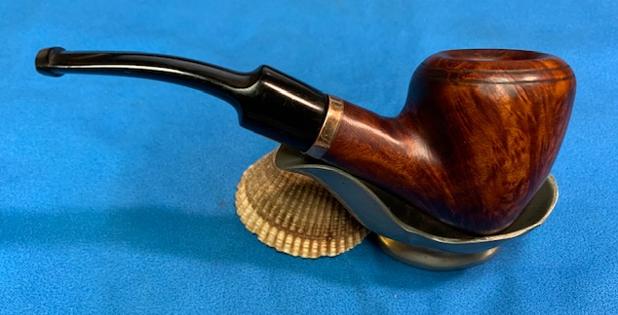
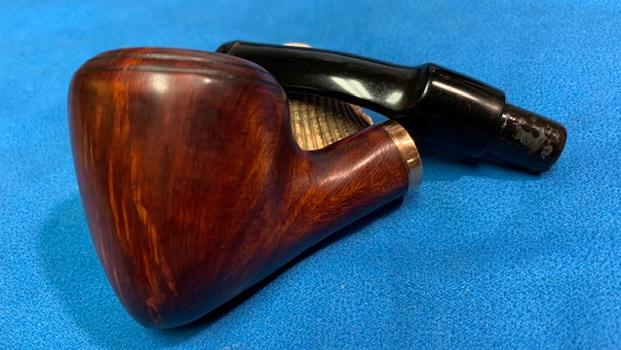
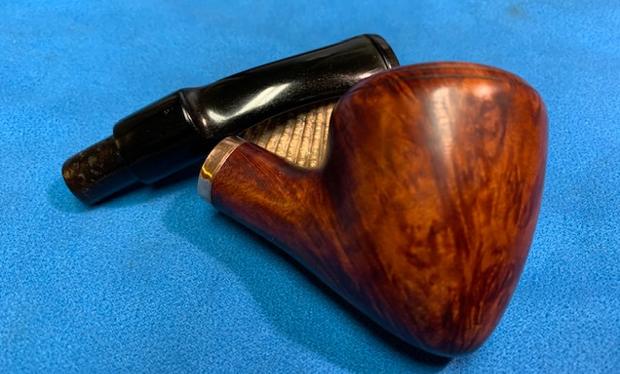
Recommissioning Another Barontini Aldo Velani Trio of Italy – A Classic Billiard


Blog by Dal Stanton

The Aldo Velani Trio Classic Billiard now on the worktable represents the 6th of 7 pipes Daniel commissioned from the For “Pipe Dreamers” Only! collection.  It also represents the second Aldo Velani Trio Daniel included in his trove of 7.  I acquired 4 Aldo Velani Trios in 2018 in what I have called the St. Louis Lot of 26 that my son, Josiah, found in an antique shop. The original 4 Velanis are pictured below.The  Bent Apple and Rusticated Volcano have already found homes with new stewards. The Pot on the bottom is waiting for the Billiard to be completed to join Daniel’s commissioned pipes all which benefit the Daughters of Bulgaria – women and girls who have been trafficked and sexually exploited.   This is a classy line up of pipes!  Looking at their current restored states:   With the Classic Billiard next, some pictures provide a closer look.  The nomenclature on the left shank side is cursive script, ‘Aldo Velani’ [over] ‘TRIO’.  On the shank underside, the COM, ‘ITALY’ is followed by the shape number ‘52’.  As I noted with the Pot, when I first looked at the logo it was difficult to figure out but found in Pipedia’s Aldo Velani article, an example and details of the stamping on an original Aldo Velani box (courtesy of Doug Valitchka).  The stamp depicts a pipe as the front leg of the ‘A’ for Aldo and the back leg of the ‘A’ forms the front riser of the ‘V’ of Velani.  Again, I repeat the previous research here:  The article cited from Pipedia provides helpful information understanding the provenance of the Aldo Velani Trio line:

Most Aldo Velani pipes are made in Livorno, Italy, for the USA market by Cesare Barontini. They were previously imported by Lane Limited. Lane spokesman Frank Blews once described Velani’s stylish, intrinsically Italian designs as “Billiards with more ball, bulldogs with more jaw.” The name “Aldo Velani” is actually fictional.

Another Barontini 2nd is named “Cesare”.

I learn two interesting things from this information.  First, Aldo Velani is a faux name that does not describe an Italian pipe house but a specific line of pipes.  Secondly, the Aldo Velani is made by the Casare Barontini name based in Livorno, Italy.   Further information is available cross referencing to Casare Barontini in Pipedia:

In 1890 Turildo Barontini opened a factory for the production of briar. In 1925 his son Bruno began to produce the first pipes. Cesare Barontini, son of Bruno, started direction of the factory in 1955, and still runs it together with his daughters Barbara and Silvia.

Sub-brands & Seconds: Aldo Velani. Cesare, L’artigiana, Stuart, Cortina

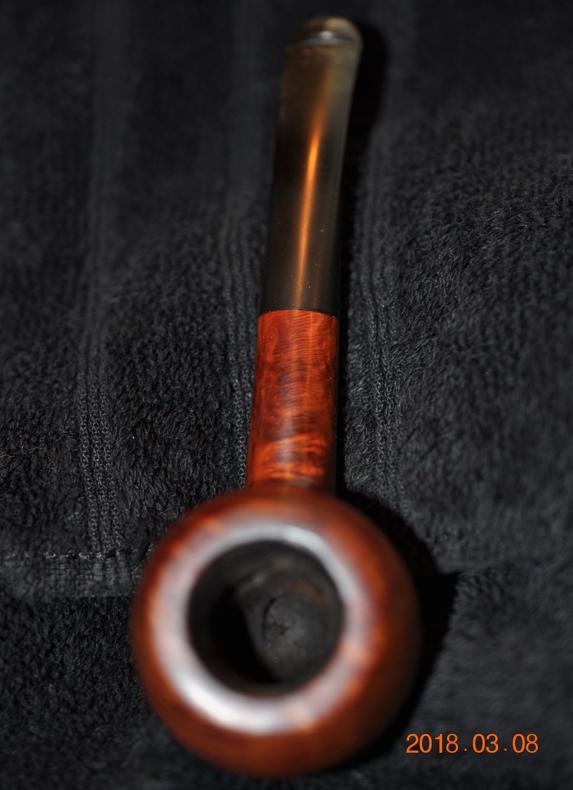
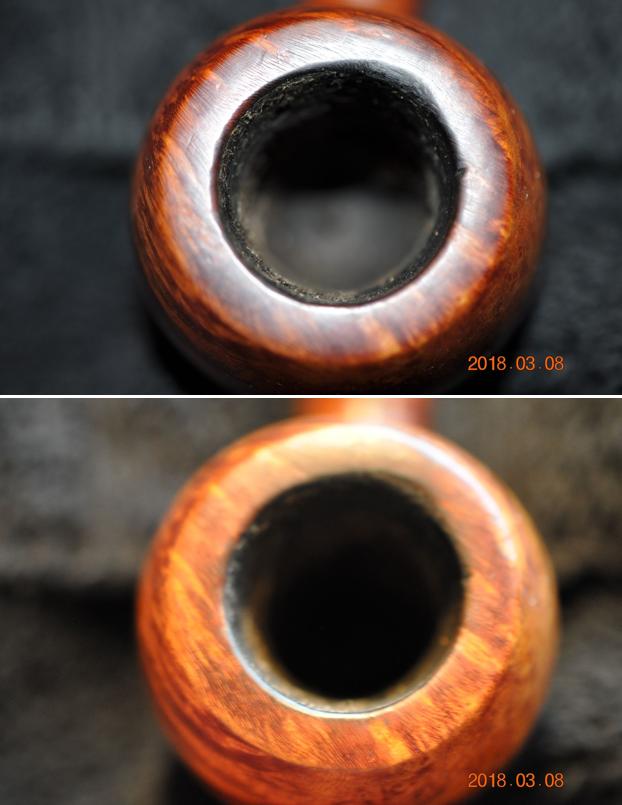
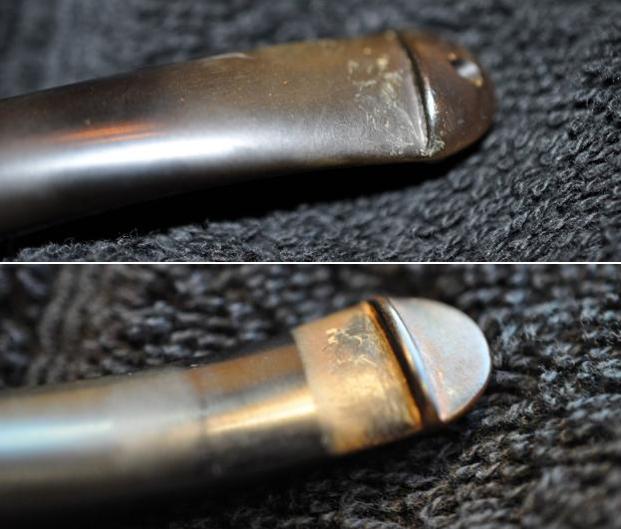
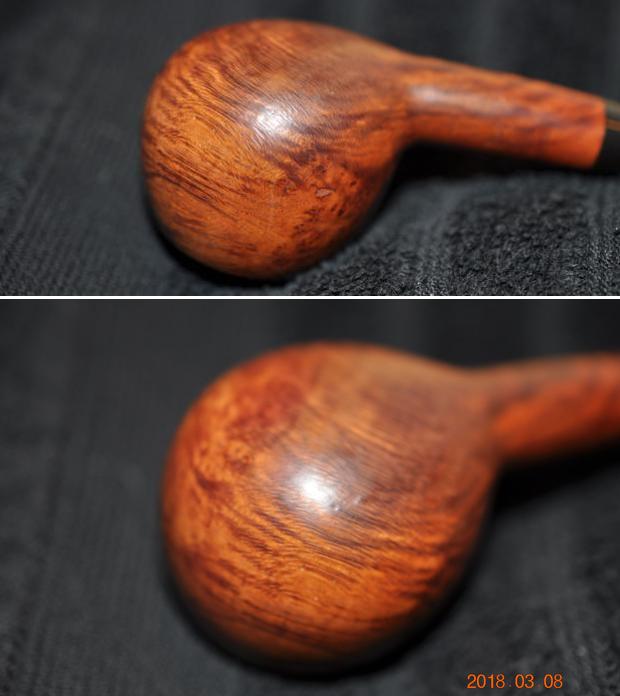
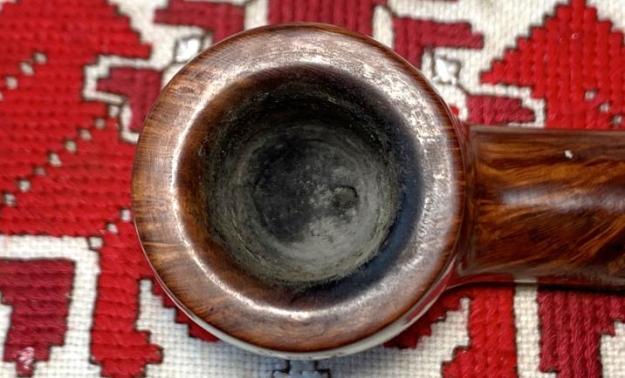
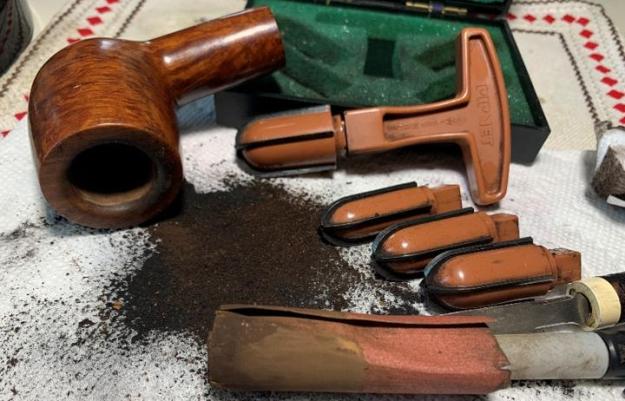
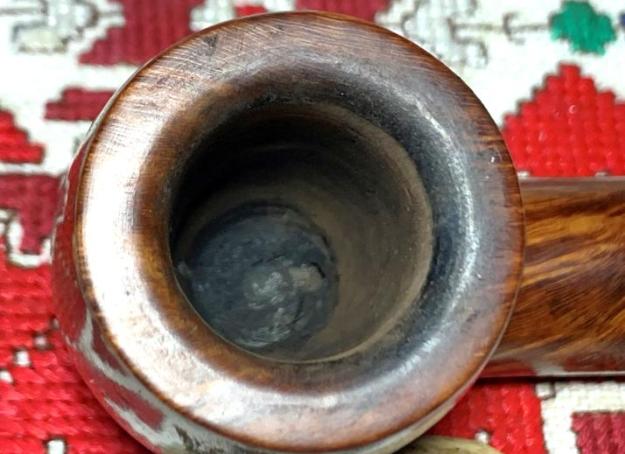
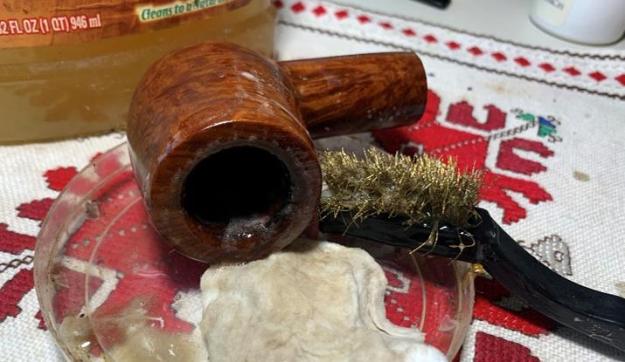
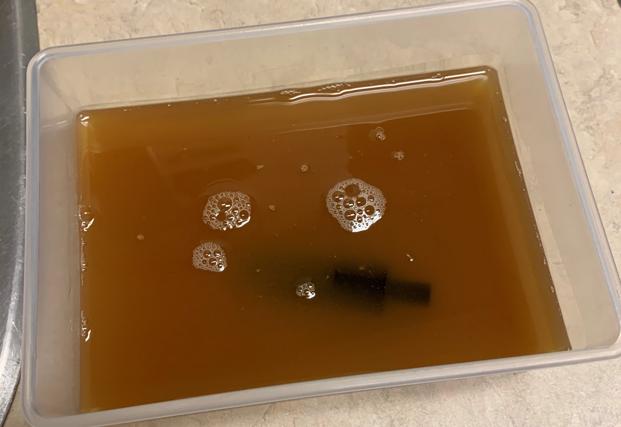
Additional information is found in Pipephil’s site.  Aldo Velani line was produced primarily for export.  The stem stamping on the Aldo Velani line had different variations provided by Pipephil:Looking now to the condition of the Aldo Velani Trio Billiard, much like his Apple and Pot brothers, the chamber has a thick cake which needs cleaning.  The lava crusted on the rim too, is thick.  This will need cleaning.  The stummel with the ruby/burgundy is soiled and generally in good shape.  I’m hopeful of keeping the hues consistent between the Pot and Billiard now on the table.  The clear acrylic stem, like the Aldo Velani Trio Apple, is soiled and has some tooth chatter.  There is one tooth compression on the lower bit which was the same on the other Aldo Velani Trio pipes – forensics pointing to a sole steward passing these pipes on.  The clear acrylic always gives a pause to ask the question about whether it is the earlier acrylic known as Perspex, on older GBD pipes.  This stem is not Perspex and therefore alcohol may be used to clean without concerns of the material crazing.  The airway does have a burgundy coloring, so after cleaning, it should still be burgundy but more translucent. I take a picture of the starting point of the clear acrylic stem. To start the airway’s cleaning process, I put the entire stem into a soak of lemon juice to help soften the oils in the airway.  As a natural acidic cleaning agent, I use lemon juice when working on Perspex stems.  I decide to experiment to see how it works on the Aldo Velani stem.  I assure you; the stem is in the lemon juice!While the stem is soaking in the juice, I begin the cleaning process of the chamber and rim.  I’m hopeful that there will be no heating issues with this Aldo Velani Billiard as was the case with his brother, the Pot.  The rim is capped with a thick lava flow crust.  The cake in the chamber is thick and I take a picture to show the starting point.To begin the reaming of the chamber, starting with the smallest of 4 blade heads provided by the Pipnet Reaming Kit, I use 2 blade heads.  Next, I transition to scraping the chamber wall using the Savinelli Fitsall tool and finish by sanding the chamber with 240 grade sanding paper wrapped around a Sharpie Pen.   After wiping the chamber with a cotton pad to remove carbon dust residue, an inspection of the chamber reveals healthy briar ready to go again. Looking to the rim, using the edge of my Winchester pocketknife, I carefully scrape the crusted carbon.  I avoid gouging the briar by pulling the edge over the surface rather than pushing the blade.  Next, using undiluted Murphy’s Oil Soap and starting with a cotton pad, the ruby/burgundy external surface is scrubbed.  I also employ a brass wire brush to work on the rim.  After scrubbing the bowl and rim, I take the stummel to the sink and continue the cleaning using warm water to rinse the Murphy’s Soap.  Using shank brushes, I then work on the internal mortise chamber with anti-oil liquid dishwashing soap.  This helps to break down the tars and oils which have built up through use.  After a thorough rinsing, the stummel is transitioned back to the worktable.  After the cleaning, the rim shows some bald spots where raw briar is exposed.  I’ll need to address these, but the challenge will be to match and blend the stummel ruby/burgundy and the rim contour so that it doesn’t draw attention.I also find a small fill needing attention in the crook of the bowl and shank.  It is not too noticeable.The cleaning continues with the internals using cotton buds and pipe cleaners dipped in isopropyl 99%.  After some effort, the cleaners and buds emerge lighter.  The job is done, and I move on.I continue with the stummel and take another look at the rim.  I had to do some work on rim of the Aldo Velani Trio Pot that I just completed.  I saved the dye mixture I used to color the rim and I’ll use that dye mixture on the Billiard’s rim.  The hue will be consistent between the two restorations of the same colored pipes.  I take another picture of the Billiard’s rim, which is not in bad of shape as was the Pot’s, but the finish on the rim is thin at places and uneven. First, I apply the 1500 grade micromesh pad to clean the rim.This is followed by applying the full battery of micromesh pads to smooth the rim surface.As I mentioned above, I saved the dye mixture that I used to restore the Aldo Velani Pot, in my last restoration project.  After testing and some experimentation, I used a mixture with the base of Fiebing’s Oxblood Leather Dye with a few drops of Fiebing’s Black Leather Dye to deepen the hue.  It worked well on the Pot so I’m hopeful the Billiard will be just as happy! I apply several applications of the dye mixture with a cotton bud until the rim seems to be fully colored.I take another look at the fill I found earlier at the crook of the shank/bowl union.  While I have the dye on the worktable, I apply some of the mixture on the fill to see if it would help camouflage the area. Unfortunately, it didn’t.  Next, a red Sharpie Pen is used to attempt to blend the fill in.  After touching up the fill, the Sharpie has helped somewhat but the fill is still somewhat visible.  The reality of the challenge of this seemingly small repair is that to remove fully it would require refinishing the entire stummel.  Yet, desiring to preserve the original ruby/burgundy finish so that it matches the Aldo Velani Pot also in Daniel’s Trove of 7 commissioned pipes, creates the necessity of leaving small imperfections in the original finish.  If I attempt a spot repair by sanding and then refinishing, I’m afraid the result would be to draw even more attention to it!  I’ll be satisfied at this point with the Sharpie repair.Putting the stummel aside and turning now to the clear acrylic stem, the stem has been waiting in a lemon juice soak.  Using lemon juice allowed the natural acidic hopefully to help clean the airway of staining.  The original stem airway has a burgundy coloring.  I fish the stem out of the lemon juice.  The airway continues to be darkened.  We’ll see if the lemon soak had any benefit.Using bristled and smooth pipe cleaners, I use isopropyl 99% to clean the airway.  Using smaller diameter shank brushes also helped to clear the staining from the airway.  As I work, I can see the cloudiness dissipate and more of a translucent airway emerges.  It looks much better now, and I move on!Looking now more closely at the upper and lower bit, there is tooth chatter on both and the lower also has a small tooth compression.  Using 240 sanding paper, the tooth chatter and tooth compression are easily sanded and dispatched.    After inspecting the entire stem, I can find no scratching in the acrylic stem other than the bit sanding to repair the tooth chatter. With most of the stem in pristine condition, there is no need to sand the entire stem.  I will focus the sanding with 600 grade paper on the bit and then apply 0000 grade steel wool to the entire stem.  Therefore, using 600 grade paper the bit area is wet sanded.  Following this I apply 0000 steel wool to entire stem.Transitioning now to micromesh pads, the stem is wet sanded with pads 1500 to 2400 followed by dry sanding with pads 3200 to 4000 and 6000 to 12000.  Even though it really doesn’t protect the acrylic stem from oxidation, I like applying Obsidian Oil to condition it.  The stem looks great. To shine the gold nickel shank ring, I use Tarn-X Tarnish Remover which gives the metal a new spark of life. I apply some of the Tarn-X to a cotton pad and rub it into the ring, making sure I get it into the crevasse between the two ring risers.  I also am careful to keep the cleaner off the briar which would probably leech the dye.  After applying the Tarnish Remover, I wipe/rinse the fluid off with a cotton pad wet with water.  I then buff up the ring with a cotton cloth.  It looks great – the bling factor is increased with the ring!Next, after reuniting stem and stummel, a cotton buffing wheel is mounted on the Dremel and the speed is set to about 40% full power.  I then apply Blue Diamond to the pipe avoiding the ring – this would create a black gunk that could stain the briar surface.  After applying the Blue Diamond over the entire pipe, the pipe is given a buffing with a felt cloth to remove the residual compound dust before applying the wax.The unique Aldo Velani stem stamping needs refreshing to augment the classy look of this Billiard.Using European Gold Rub ‘n Buff metallic paint, I use a pointed cotton bud to paint over the stem stamping. Once thoroughly covered, I wait only a few moments because the paint sets up very quickly.  I then use the side of the pointed cotton bud to scrape excess paint.  I then flip the bud to the clean end and wipe/buff up the remaining excess to sharpen the stamping.  The results are nice – it looks great!Next, another cotton cloth buffing wheel is mounted onto the Dremel.  Remaining at the same speed, carnauba wax is applied to the stem and stummel.  After applying the carnauba, the pipe is given a rigorous hand buffing to remove excess wax and to raise the shine.I’m pleased with the results of this second of the Aldo Velani Trio pipes that Daniel commissioned.  The ruby-burgundy finish initially draws one’s attention and then the clear, glass-like acrylic stem.  Finishing the ensemble is the golden double-bumped shank ring joining stem and stummel to present this classic Billiard after-dinner pipe.  Both Aldo Velani brothers that Daniel commissioned, this Billiard and the Pot, will provide great fellowship with one’s favorite blend and adult beverage.  Daniel has the first opportunity to claim the Aldo Velani Trio Billiard in The Pipe Steward Store which benefits the Daughters of Bulgaria.  Thank you for joining me!

Unleashing the Bling of an Aldo Velani Trio 51 Pot of Italy


Blog by Dal Stanton

With 4 of 7 of Daniel’s commissioned pipes completed, the pipes remaining are the last 2 Aldo Velani Trios that remained in the For “Pipe Dreamers” Only! collection and what I have called a, ‘Spotted Bent Billiard’ or perhaps, dragon skin!  This pipe is a ‘specialty pipe’ where the stummel was wrapped with a carbon resin material.  The ‘skin’ almost looks like dragon hide to me. The 2 Aldo Velani Trios remaining were acquired in 2018 in what I have called the St. Louis Lot of 26 that my son, Josiah, found in an antique shop. He was impressed by the quality of pipes in the Lot and emailed me in Bulgaria with a proposition of going in together for the Lot of 26.  His part in the purchase would be his Christmas present to me – that I would choose a pipe for my own from the Lot.  My part of the purchase would be to restore the pipes to benefit the Daughters of Bulgaria.  It was a proposal hard to refuse and some weeks later I unwrapped the St. Louis Lot of 26 in Denver where our family had gathered for Christmas.  The original 4 Aldo Velani ‘brothers’ stand out among the St. Louis Lot of 26 below.  The upper Bent Apple and the lower Rusticated Volcano have already found homes with new stewards. The Pot and Billiard are next on the worktable.All the Aldo Velani pipes have in common the bling of nickel gold-plated shank rings and acrylic stems.  The Billiard’s stem is a clear acrylic, but the Pot shows off an eye-catching ruby/burgundy stem complementing the characteristic red burgundy Aldo Velani stummel.  With the Pot first in line, some pictures provide a closer look.  The nomenclature on the left shank side is cursive script, ‘Aldo Velani’ [over] ‘TRIO’.  On the shank underside, the COM, ‘ITALY’ is followed by the shape number ‘51’.   The Aldo Velani stem stamp is interesting and in the previous research discovered what it was.  I found in Pipedia’s Aldo Velani article, an example and details of the stamping on an original Aldo Velani box (courtesy of Doug Valitchka).  The stamp depicts a pipe as the front leg of the ‘A’ for Aldo and the back leg of the ‘A’ forms the front riser of the ‘V’ of Velani. As a good refresher, I repeat the previous research here:  The article cited from Pipedia provides helpful information understanding the provenance of the Aldo Velani name:

Most Aldo Velani pipes are made in Livorno, Italy, for the USA market by Cesare Barontini. They were previously imported by Lane Limited. Lane spokesman Frank Blews once described Velani’s stylish, intrinsically Italian designs as “Billiards with more ball, bulldogs with more jaw.” The name “Aldo Velani” is actually fictional.

Another Barontini 2nd is named “Cesare”.

I learn two interesting things from this information.  First, Aldo Velani is a faux name that does not describe an Italian pipe house but a specific line of pipes.  Secondly, the Aldo Velani is made by the Casare Barontini name based in Livorno, Italy.   Further information is available cross referencing to Casare Barontini in Pipedia:

In 1890 Turildo Barontini opened a factory for the production of briar. In 1925 his son Bruno began to produce the first pipes. Cesare Barontini, son of Bruno, started direction of the factory in 1955, and still runs it together with his daughters Barbara and Silvia.

Sub-brands & Seconds: Aldo Velani. Cesare, L’artigiana, Stuart, Cortina

 Pipephil’s site has several examples of the Aldo Velani line depicted which tend to be very stylish and nice-looking pipes which confirms the Pipedia assertion that Casare Brontini produced the Aldo Velani lines primarily for export.  It is evident that there was not a consistency in the stem stamping or name style for Aldo Velani as different examples are given.  Here are the stem stamping variations provided by Pipephil:Looking now to the condition of the Aldo Velani Trio Pot, the chamber has some cake build up as well as a crusted layer of lava flow over the broad Pot rim.  Taking a close look, I can see fissures on the back side of the chamber wall.  This could be an indication of burning problems with the Pot.  He’s been well used and when I ream the chamber, I’ll be able to see if the fissures are only the cake or if it goes deeper into the chamber wall briar – not something I’m hoping for!The ruby/burgundy stummel is sharp but covered with grunge.  The challenge in restoring these two Aldo Velani Trio brothers together, first the Pot then the Billiard, is to maintain the consistency of hue.  The ruby/burgundy is a unique, eye catching hue that sets the entire line apart in a classy way.  They strike me as ‘after dinner pipes’ when the pipe is packed with one’s favorite blend and the glass is poured with one’s favorite adult beverage!  It is possible that during cleaning and possible repairs to the stummel that the hue can change a bit or a lot.  With the previous Aldo Velani Apple, all the stummel needed was a cleaning.  I’m hopeful of the same for the most part with the Pot and Billiard.  A few pictures show some closer looks at the surface’s need of cleaning. The ruby red acrylic stem has amazing ‘fire’ and presents a spectrum of colors which will be beautiful when the stem is cleaned.  The chatter on the bit is more severe on the lower side with a characteristic, singular tooth compression which is consistent with all the Aldo Velani pipes I’ve worked on.  This indicates a common steward of all. To begin with the cleanup of this Aldo Velani Trio Pot, the Pipnet Reaming Kit is employed to begin the process of clearing the chamber of the cake build up which hopefully reveals a healthy chamber. I take a few more pictures to mark the starting point. Working on a piece of paper towel to help cleanup, starting first with the smallest blade head and moving toward the larger from the Pipnet Reaming Kit, I use 3 of the 4 blade heads available.  Next, the Savinelli Fitsall Tool is employed to scrape the walls.  This is followed by sanding the chamber with 240 sanding paper wrapped around a Sharpie Pen.  Finally, a cotton pad wetted with alcohol is used to wipe the chamber to clean the carbon dust residue.   An inspection of the chamber shows some chamber damage from heating where fissures have developed.  The thickness of the carbon cake buildup was deeper toward the backside of the chamber where the damage is located.  It’s important to remove all the charred wood and in doing this, the contour of the chamber is wider or ‘bowed out’ where more char was removed toward the shank-side.Another result of this damage is shown in the next picture.  The shank-side of the rim is thinner just a bit and this has created a flatness on the back of the rim lip.  The result is that the chamber mouth is out of round.  This can be seen in the next picture with a downward perspective.  As I continue to clean the rim and stummel, it will give me time to consider how to approach the chamber repair.Next, I work on scraping the lava caked on the rim.  Both a Winchester pocketknife and the Savinelli Fitsall tool are used to gently scrape the buildup off the rim. I don’t scrape too much to risk scratching or gouging the briar.  Next, I transition to cleaning the rim and stummel using undiluted Murphy’s Oil.  A cotton pad is used to scrub the stummel and a brass wire brush is used to help break up the remaining lava clinging to the rim.Transitioning from the worktable, the next stop is to the sink to continue the cleaning.  Using shank brushes and anti-oil dish washing soap, the mortise is scrubbed with warm water.  The stummel is then rinsed thoroughly with warm tap water.  Back on the worktable, I take another picture.The stummel cleaned up well.  The rim reveals places where the finish has thinned and is absent.  This picture also continues to show the issue of the ‘out-of-round’ chamber.  The challenge in restoring the rim will be to continue to clean the rim and to match the burgundy color of the rim after the repairs are done.While I think about this approach, I continue to fine tune the internal cleaning by using pipe cleaners and cotton buds dipped in isopropyl 99%.  After several buds and pipe cleaners they start emerging lighter.  I move on!With the stummel cleaned, I decide to address the rim issues before going on to the stem work.  I take a fresh picture of the rim to shape out the issues.  First, the reaming of the chamber revealed some heating problems resulting in some smaller fissures on the shank-side of the chamber.  The picture below is facing toward the back or shank-side of the chamber.  You can see the heating cracks.  They are not serious enough to take extraordinary measures to repair – using a product like J-B Weld, a heat resistant epoxy which I’ve used with success with past projects.  To address these heating veins, later I will apply ‘pipe mud’ to the chamber which is made of water and cigar ash.  This mixture will provide a protective layer to help enhance the natural development of a protective carbon cake of about a dime’s width.   The following picture also shows, though not easy to see, the chamber bowing toward the shank because of the charred briar removed.  The rim is also out of shape above this – flattened, throwing the entire rim out of round.  The second picture shows this as well.My plan is to sand the upper chamber on the shank-side (right side below) and transition the sanding up toward the rim.  My goal is to ease the chamber bowing and ‘re-round’ the chamber mouth.  I’m considering after the sanding, creating a sharp, internal rim bevel which should help the rounding and appearance.The next issue is the rim itself – the finish is shot and needs help.  I’ll start by lightly sanding the rim with micromesh pads to see if this cleans things while retaining a measure of the hue. I’ll seek to match the hue with bottle dyes or dye sticks.Starting on the chamber sanding, I use 240 paper wrapped around a Sharpie Pen.  This not only gives me some leverage but helps with the rounded shaping needed on the flattened portion of the rim. After sanding with the 240 Sharpie, trying to regain as much rounding as possible, I use a round hard backing behind 240 paper to cut a bevel.  I hope to gain more rounding doing this.  The picture below shows the result of this approach.  There is a sacrifice of the narrowing of the shank-side rim surface as the sanding and rounding is achieved to some degree.  There is no perfection, but I like the progress made.Next, I sand the rim top, or almost a plateau, to clean and smooth the surface instead of a full topping of the stummel.I follow by applying the full regimen of micromesh pads to smooth the rim – pads 1500 to 12000.The next challenge is to color the rim to match, as closely as possible, the ruby/burgundy stummel finish. The closest color that I have to matching the stummel, after testing several candidates on a cotton pad, is Oxblood.  Yet, I’m concerned that Oxblood hue by itself might not be dark or deep enough.  I decide to use Fiebing’s Oxblood Leather Dye as the base, but I add a drop of Black Leather Dye to deepen the hue a few degrees.  I use a shot glass to mix the dyes.  I use a large eye dropper to draw out a small portion of the Oxblood and place it in the shot glass.  After cleaning the dropper with alcohol, I then draw some Black Dye and allow one drop to join the Oxblood. I use a cotton bud to place some of the mixture on a cotton pad and compare.  Well, this isn’t rocket science and it looks good to me.I then use a cotton bud to apply the dye mixture carefully to the rim.  The next picture shows the result.  It looks good, but I decide to add another drop of Fiebing’s Black Leather Dye to the mixture and give the rim another application.This mixture was hitting the bull’s eye a bit more it seemed to me.  As I apply the dye with the cotton bud, I’m careful to apply dye to the small inner rim lip bevel but not to drift into the chamber.  After applying a few coats of dye, I put the stummel aside to allow the dye to settle.  I also save the mixture in case it’s needed for the next pipe on my table, the Aldo Velani Trio Billiard.  In this way I’ll have consistency of color between the brothers!With the stummel now in the wings, I turn to the acrylic stem and use pipe cleaners dipped in isopropyl 99% to clean the airway.  It does not take a lot of effort and I move on.The stem is dirty, but the main issues are the tooth chatter and a singular tooth depression that has been consistent with all the Aldo Velani Pipes that came from the St. Louis Lot.  The steward who had these pipes was consistent in his clenching habits!    The button has also experienced some clenching and will need to be addressed. I begin with the lower bit looking at the lone tooth compression, most likely from the steward’s eyetooth.  Before sanding, I use regular clear CA glue to fill the compression. I first clean the bit with alcohol and then, using a toothpick, I spot-drop CA glue in the compression.  I also apply some CA on a compression on the button lip.  I set the stem aside for the CA patches to cure.After a time, the patches are cured and using a flat needle file, the patches are filed down to the acrylic surface.  I also refresh the button lips with the file. Next, I continue to sand with 240 paper on first, the lower side then the upper bit.  The patch looks good.On the upper side, along with sanding out the tooth chatter with 240, the button lip is refreshed with the flat needle file.Next, using 600 grade paper, the entire stem is wet sanded.  This is followed by applying 0000 grade steel wool. Moving next to applying the full regimen of micromesh pads, the stem first is wet sanded with pads 1500 to 2400.  After this, the stem is dry sanded with pads 3200 to 4000 then 6000 to 12000.  Between each set of thee pads, Obsidian Oil is applied to the acrylic stem.  The stem’s swirls emerged nicely during the process.  Before rejoining the stem and Pot stummel, I refresh the nickel gold shank ring.  This ring is one of the aspects of the Aldo Velani Trio line that augments the ‘bling factor’.  I use a product called Tarn-X Tarnish Remover that works well with several metals to remove the tarnish and increase the shine.I take a closeup to provide a comparison of before and after application.  Using a cotton pad, I carefully apply some of the Tarn-X to the ring and rub in it in well avoiding the briar.  Per the directions, I then immediately use another cotton pad wetted with water to rinse off the remover.I buff up the ring with a cotton cloth and the bling factor has increased!After reuniting the acrylic stem and Pot stummel, a cotton cloth buffing wheel is mounted onto the extender arm of the rotary tool.  With speed set at about 40% full power, Blue Diamond compound is applied to the stem and stummel.  In the picture below you can see that the rim is still dull from the dye that was applied earlier after having plenty of time to settle.  I start with the rim and remove the excess and continue with the rest of the stummel and stem with the mildly abrasive Blue Diamond.After applying the Blue Diamond, I use a felt cloth to wipe and buff the stummel and stem to remove compound dust.  I do this before applying wax.  The compound is an abrasive and is the final sanding phase in a restoration to sand out fine blemishes and scratches.  It leaves abrasive particles behind which would not be good to mix with a carnauba wax application – which is not an abrasive.

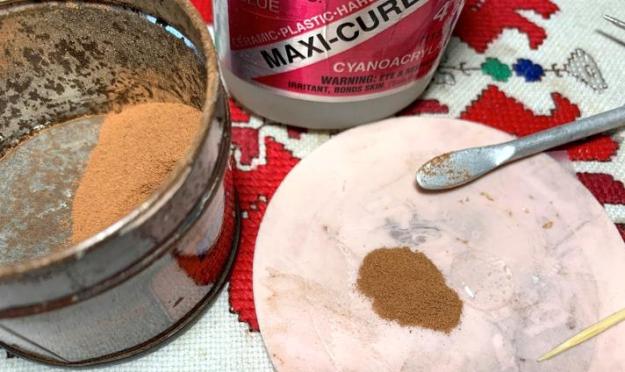
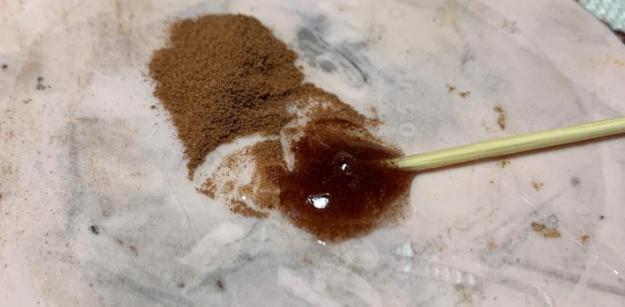
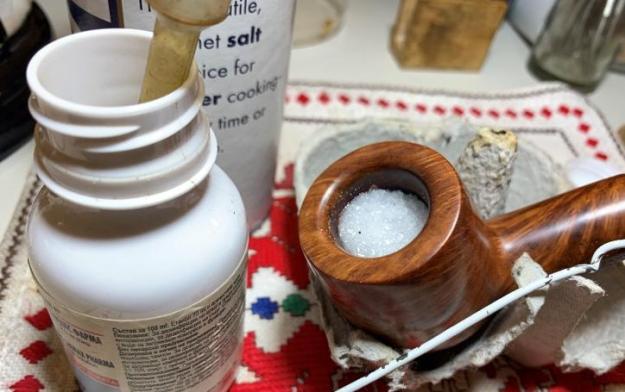
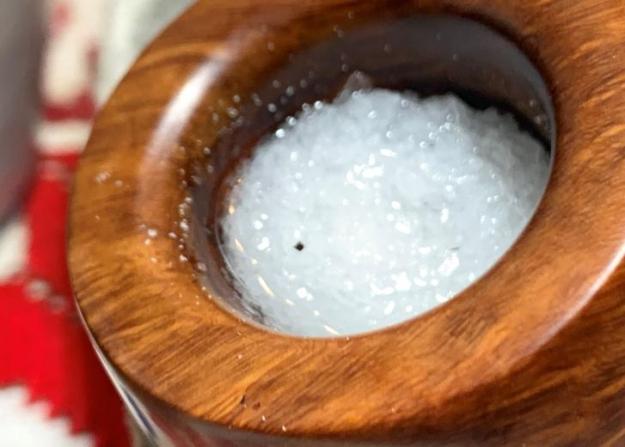
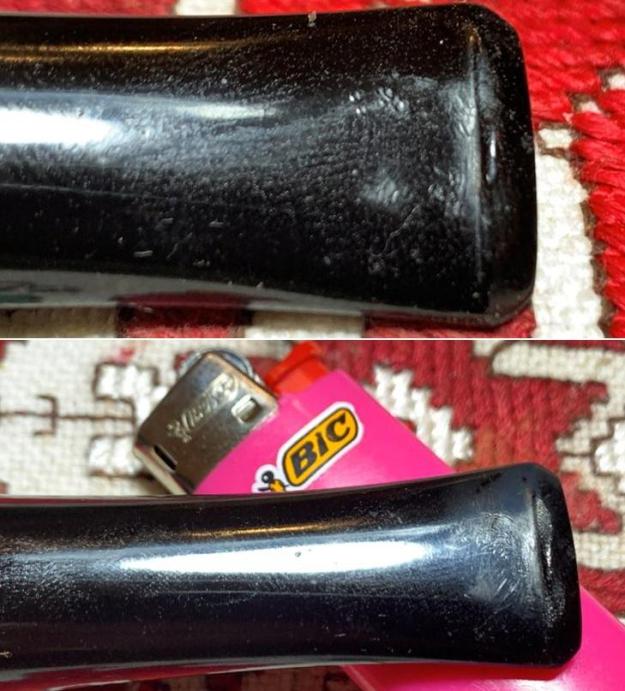
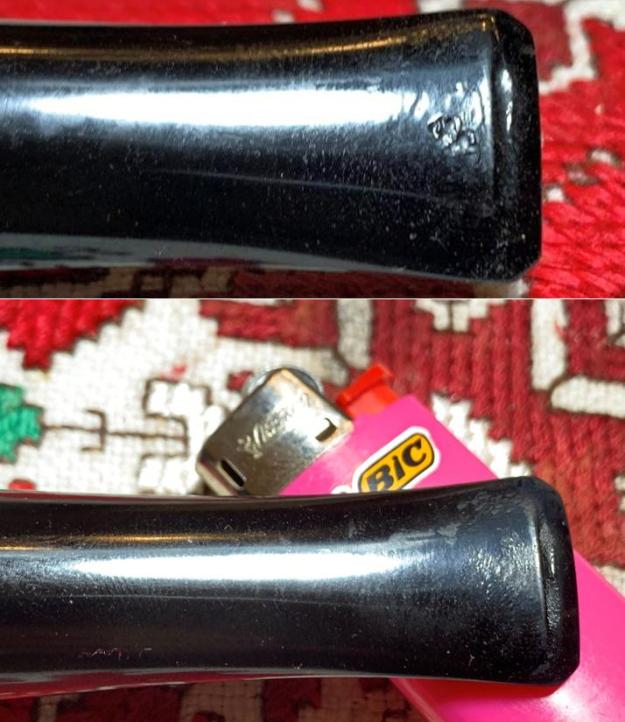
There is still one more cosmetic project before applying wax.  I use European Gold Run ‘n Buff to refresh the Aldo Velani stem stamp.  The gold of the metallic paint will match nicely the gold shank ring.I place a small amount of the Rub ‘n Buff on the end of a toothpick and rub it over the stamp imprint.  After making sure that the paint has found all the crevasses of the lettering, I first lightly scrape the excess paint over the stamping with the flat edge of the toothpick then rub the area with a cotton pad.  The results are great!Next, after mounting another cotton cloth buffing wheel onto the Dremel, set at 40% full power, I apply carnauba wax to the stem and stummel.  Little wax is needed on the highly glossed surface of both the bowl and the acrylic stem.  After applying the wax over the entire pipe, I give the pipe a rigorous hand buffing with a microfiber cloth.  This not only raises the shine but removes excess wax from the surface.After completing the application of wax, one mini project remains.  Earlier during the chamber repair of the heating issues, I decided I would apply ‘pipe mud’ to the chamber walls to provide a starter for a protective cake.  In the picture below, not only am I giving a close up of the now beautiful rim, but also visible are remnants of cracks in the chamber wall.  Earlier sanding almost erased the cracking.  I decide to do a mini tutorial on making pipe mud to conclude the restoration of this Aldo Velani Trio Pot.Pipe mud consists of cigar ash and water.  If you have cigar smoking friends, ask them to save the ash of the cigars they enjoy!  Often, cigars will come in heavy duty plastic tubes or flutes, with caps.  They can use these tubes to store the ash.  When I collect cigar ash, seldom is it ‘clean’.  Often it as chunks of debris left that isn’t great for making pipe mud.  I have my ash in a ‘throw-away’ salt grinder that you can buy at the supermarket with salt in it.  When the salt is used, the grinder works well with grinding up cigar ash!I also have a strainer that I use to catch big stuff that comes through the grinder.  Placing the grinder on a paper plate I grind the ash into the strainer.  When I have enough ash ground, I then sift the ash onto the paper plate.  The picture below shows the ‘big stuff’ caught in the strainer and the finer ‘gold’ on the paper plate.The paper plate is helpful because it then becomes a funnel by bending the plate.  Then with the plate folded and functioning as a funnel or a chute, I transfer the ash to the mixing glass.Using a large eye dropper, I then add a small amount of water into the ash and stir it with a pipe nail tool.  CAUTION!  Go slowly on the water.  If too much water is added, then the resulting concoction will be more like an ash slurry rather than a mud that will hold its shape and adhere to the chamber wall.  If too much water is added, then more ash must be added to again thicken the consistency.The mud below is looking good.  It’s holding its shape as I press it against the glass.I place a pipe cleaner through the draft hole to guard against blockage.  Then, using the pipe nail, mud is troweled into the chamber and spread over the wall.  I start at the floor of the chamber and work my way up to the rim.  The flat side of the nail is good to use as a trowel and the round side is good to spread.  The picture below shows the finished job. When the mud dries, it hardens.  During the curing time, I place the pipe with the bowl down so that leaching water won’t settle in the bottom of the chamber but spread out toward the mouth of the chamber.  It seems to dry better this way.  The hour is late, so I’ll let the pipe mud cure through the night.  The next morning in Golden, Colorado, I’m up with coffee in hand.  The pipe mud has cured, the protective layer is in place and this pipe is ready to go.  I give it one more hand buffing with a microfiber cloth for good measure.This is the 5th of the pipes that Daniel has commissioned – the first of the Aldo Velani Trio brothers.  This Aldo Velani Trio Pot had some chamber and rim issues that had to be addressed and I think the results are great.  The style of this Pot stummel brings attention to the broad Pot rim – could almost be described as a plateau.  The characteristic that predominates on the Trio line though, is the ruby red/burgundy finish.  It catches the eye very quickly.  The gold shank ring dials up the bling factor as it transitions from the bowl to the kaleidoscopic acrylic stem alive with all shades of reds, ruby, burgundy and colors that I don’t have a name for!  This pipe, packed with one’s favorite blend, is an after-dinner player which looks good next to a glass of one’s favorite adult beverage – for me, a single malt.  Daniel will have the first opportunity to claim this pipe in The Pipe Steward Store benefiting the Daughters of Bulgaria.  Thanks for joining me!


New Life for a Barling’s Garnet Grain Oval Shank 9001 Bent Billiard


Blog by Steve Laug

The next pipe on the work table was purchased on Ebay in 2017 and came to us from Latgale, Latvia. The pipe is smooth, nicely grained Bent Billiard pipe with an oval shank and an acrylic, saddle stem. The pipe is stamped on left side of the shank and reads Garnet Grain. On the right side of the shank it is stamped England. On the underside of the shank it is stamped with the shape number 9001. The stem has the Barling Cross logo on the top of the saddle. There was a lot of grime and dust ground into the smooth finish. The bowl had been reamed before we bought and to be honest if had been smoked at all it had maybe had a half a bowl run through it. The inside and outside edges of the crowned rim top looked to be in excellent condition other than the grit and grime of the years. The acrylic stem was in excellent condition with minor scratches but no tooth marks. Jeff took some photos of the pipe before he started his cleanup work.   He took a photo of the rim top, bowl and stem to give a clear picture of the condition of the pipe. The condition of the rim top and edges is very visible. The photos of the stem show that other than the light scratches in the acrylic it was in excellent condition. He took a photo of the heel of the bowl to give a clear picture of the condition of the pipe and the grain that was shining through. He took photos of the stamping on the sides of the shank. It is clear and readable as noted above.  He removed the stem from the shank and revealed several issues. The first is that the stem and tenon is drilled for a filter. The second issues is that there is a large piece of acrylic missing on the top side of the tenon.  I turned to Pipephil’s site (http://www.pipephil.eu/logos/en/logo-barling.html) to see if I could find a listing that had the same or similar stamping on the pipe. The stamping is similar to the one I am working on other than the shape number. The pipe that I am working on has the shape number 9001 on the underside shank. Garnet Grain and on the right side England. I am pretty sure that the one I have is significantly newer and does not have the Barling stamp on the shank and merely reads England. It does have the Barling cross on the stem top.Pipedia gives a great history of the brand (https://pipedia.org/wiki/Barling) that is well worth reading. I am pretty sure that it is newer but I have no way of proving that for certain but that is my guess. Now it was time to work on the pipe itself.

This one has a back story that is a bit embarrassing. This morning on Facetime, Jeff and I sorted through some bowls that we had in Idaho and here in Vancouver. Between us we had around 50-70 stemless bowls. The majority of them were here in Vancouver. My box had 50+ bowls that I have accumulated over the years. Going through them with Jeff, I was not sure why I had kept most of them. They really were worthless and in varying degrees of disrepair. Some of them had broken shanks and others had cracked bowls and shanks. We pitched the majority of them (which is very hard for us to do if you have known us for very long!). Here is where the story gets dicey for us! We had pitched this bowl into the garbage. It had a large shank and was without a stem. Later in the morning I was going through my assortment of stems trying to find stems for the bowls that we had kept. In the bottom of one of the bags I came across an oval Barling stem that was made for a filter and had a chip out of the tenon. I wrote Jeff and asked if he had any photos of a Barling Garnet Grain with a stem. He immediately sent me the above photos that linked the stem I had found with the bowl. I took the bowl out of the trash and tried the stem on it. They fit together perfectly. I  was a bit embarrassed and was totally unclear how the parts had been separated. With that background I decided to work on it.

Jeff had cleaned up the pipe with his usual penchant for thoroughness. He reamed the pipe with a PipNet pipe reamer and removed the rest of it with a Savinelli Fitsall Pipe Knife.  He scrubbed the bowl with undiluted Murphy’s Oil Soap with a tooth brush. He rinsed it under running warm water to remove the soap and grime. He cleaned out the inside of the shank and the airway in the stem with alcohol, cotton swabs and pipe cleaners. He soaked the stem in Before & After Deoxidizer and rinsed it off with warm water. I took photos of the pipe once I received it. The stamping on the right and left topside of the shank is clear and readable and reads as noted above.  I polished the briar with micromesh sanding pads – wet sanding with 1500-12000 grit pads and wiped down the bowl after each sanding pad.  I rubbed the bowl and shank down with Before & After Restoration Balm. I worked it into the surface of the bowl sides and shank with my fingertips to clean, enliven and protect the briar. I let the balm sit for 15 minutes and then buffed with a cotton cloth to raise the shine. The Balm did its magic and the grain stood out.   I set the bowl aside and turned my attention to the stem. I started by rebuilding the chipped and damaged tenon. I greased a pencil with Vaseline and inserted it in the tenon. I mixed a batch of charcoal powder and black super glue to great a paste.  I applied the paste to the chipped tenon using a dental spatula to fill in the damaged area. I sprayed the repair with an accelerator and once it was cured I used a rasp to remove the excess repair. I reshaped the tenon on the outside with a Dremel and sanding drum and on the inside with a small round needle file. I also created an adapter to convert the stem from a filter stem to a regular stem. It was removable so that it could still be smoked with a filter.Once the reshaping was complete on the tenon I inserted the adapter in place and smooth out the tenon repair to make the tenon round once more.  The acrylic stem was in great condition so I did not need to polish it with micromesh pads. I did a quick buff on the Blue Diamond wheel and the shine came alive. I touched up the Barling Cross logo on the stem with Liquid Paper and worked it into the stamping. I buffed it off with a cotton pad. The product brought the stamping that remained to clear readability. This beautifully grained Barling’s Garnet Grain 9001 Bent Oval Shank Bent Billiard is a great looking pipe now that it has been restored. The briar is clean and really came alive. The rich reddish brown coloured stain gave the grain a sense of depth with the polishing and waxing. The grain really popped. I put the acrylic stem back on the bowl and carefully buffed the pipe with Blue Diamond on the buffing wheel using a light touch on the briar. I gave the bowl and the stem multiple coats of carnauba wax on the buffing wheel. I buffed the pipe with a clean buffing pad to raise the shine. I hand buffed the pipe with a microfiber cloth to deepen the shine. The finished Barling’s Bent Oval Shank Bent Billiard is a beauty and feels great in the hand and looks very good. Give the finished pipe a look in the photos below. The dimensions of the pipe are Length: 5 inches, Height: 2 inches, Outside diameter of the bowl: 1 ¼ inches, Chamber diameter: ¾ of an inch. The weight of the pipe is 53grams/1.90oz.Thanks for reading this blog and my reflections on the pipe while I worked on it. There are many more to come!


This Long Pencil Shank Viborg French Made Lovat is a real Beauty


Blog by Steve Laug

I woke up to the sound of something large jumping on the roof next to our bedroom window around 4:30am this morning. That gave me an early start at the work bench. I have to tell you that on days like today I miss my old supervisor Spencer who would greet me no matter what time and beg for a treat… strange to not have him here. Ah well time to work. The next pipe, the second one on the table today, came to us in a group of pipes that we picked up through an online auction in 2017 in Wilder, Idaho, USA so it has been sitting here for a while. Even though the finish was a dirty and worn it had some charm showing through the grit and grime of the years. On the left side of the shank it was stamped Viborg [over] Made in France. The pipe is a long pencil shanked pipe with an elliptical shaped bowl. The saddle stem would make it a long Lovat but the stem is also long! The finish is filthy with grime and oil ground into the briar of the bowl and shank sides. The bowl had a thick cake and there was an overflow of lava on the rim edges. There was some damage to the inner edge of the bowl as well. The stem was a vulcanite saddle stem that was oxidized, calcified and had tooth marks and chatter on both sides ahead of the button. Jeff took some photos of the pipe to show its overall condition before he started his cleanup work. He took a photo of the rim top and bowl to give a clear picture of the thickness of the cake and the lava and dust ground into the rim top. You can also see the damage to the inner edge of the bowl and the burn marks on the top back. He also took photos of the top and underside of the stem to show the chatter and tooth marks. Otherwise the stem is quite clean. Jeff took photos of the sides and heel of the bowl to give a picture of what the briar around the pipe looked like. There are a lot of white putty fills on the right side of the bowl and on the right and underside of the shank. He took a photo of the stamping on the shank. It reads as noted above and is clear and readable. The pipe is a bit of a mystery to me. The Viborg name sounds like it should be Danish but the pipe is stamped Made in France. I looked on Pipedia and Pipephil’s site and nothing was listed for the brand on either one. Perhaps one of you know the brand and could shed some light on it for us all. Thank you!
Jeff had cleaned up the pipe with his usual penchant for thoroughness. He reamed the pipe with a PipNet Pipe Reamer and cleaned up the remnants with a Savinelli Fitsall Pipe Knife.  He scrubbed the bowl with undiluted Murphy’s Oil Soap with a tooth brush. He worked over the debris on the rim top and was able to remove it. He rinsed it under running warm water to remove the soap and grime. He cleaned out the inside of the shank and the airway in the stem with alcohol, cotton swabs and pipe cleaners. He soaked the stem in Before & After Pipe Stem Deoxidizer and rinsed it off with warm water. He scrubbed the stem with Soft Scrub and cotton pads to remove remaining oxidation on the ferrule and the stem. He rinsed it with warm water and dried it off. I took photos of the pipe once I received it. It really looked good.  The rim top and the inner edge of the rim were clean but the damage was very evident. The stem had remaining oxidation and a few small tooth marks and chatter on both sides near the button. I took a photo of the stamping on the underside of the shank. It was clear and read as noted above. I removed the stem and took a photo of the pipe to give a sense of the whole. The pipe has a vulcanite saddle stem. I decided to address the damaged white putty fills first. I cleaned up the area in the fills and then replaced them with briar dust and super glue. It tends to turn the repair dark but anything would look better to me than the white spots on the bowl and shank.   When the repairs had cured I flattened them with a small file and then smoothed them out with a folded piece of 220 grit sandpaper. I wanted to start the process of blending them into the surrounding briar so I wanted them smooth to touch.   With that finished I wanted to address the damage to the rim top and inner edges of the bowl. I topped the bowl on a topping board with 220 grit sandpaper. I worked over the inner edge with a folded piece of 220 grit paper. The rim top and edges looked considerably better once I was finished.   To help mask the fills on the bowl and shank and to make the grain stand out better I stained the pipe with a black aniline stain. I flamed it to set the stain and repeated the process to ensure good coverage. Once it had cured I wiped down the bowl with isopropyl alcohol to begin the process of removing the black from bowl while leaving it in the grain.   I polished the bowl and the rim top with 1500-2400 grit micromesh sanding to remove more of the stain and make the grain stand out more.   Once I had finished the sanding I buffed the pipe with red Tripoli and then brought to the worktable for the top coat of light brown stain. I applied the stain and flamed it. I repeated the process until I had proper coverage. I buffed the bowl with Blue Diamond on the buffing wheel and then brought it back to take it through the entire range of micromesh sanding pads – 1500-12000 grit pads. I wiped the bowl down after each pad to remove the sanding dust. I rubbed the bowl and shank down with Before & After Restoration Balm. I worked it into the surface of the bowl sides and shank with my fingertips. I used a horsehair shoe brush to work it into the plateau on the rim top and shank end. The product works to clean, enliven and protect the briar. I let the balm sit for 15 minutes and then buffed with a cotton cloth to raise the shine. I polished the vulcanite stem with micromesh sanding pads – 1500-12000 grit pads. I wiped it down with a damp cloth after each sanding pad. I used Before & After Pipe Polish – both Fine and Extra Fine to further polish the stem.    This interesting French Made Long Pencil Shank Viborg Lovat with a vulcanite saddle stem is a great looking pipe now that it has been restored. I put the stem back on the bowl and buffed the pipe with Blue Diamond on the buffing wheel using a light touch on the briar. I gave the bowl and the stem multiple coats of carnauba wax on the buffing wheel and followed that by buffing the entire pipe with a clean buffing pad. I hand buffed the pipe with a microfiber cloth to deepen the shine. The finished French Made Viborg Lovat fits nicely in the hand and feels great. Give the finished pipe a look in the photos below. The dimensions of the pipe are Length: 6 ¾ inches, Height: 1 ½ inches, Outside diameter of the bowl: 1 ¼ x 1 3/8 inches, Chamber diameter: ¾ of an inch. The weight of the pipe is 23grams/.78oz. I will be adding it to the rebornpipes store shortly in the French Pipe Makers Section. Thanks for reading this blog and my reflections on the pipe while I worked on it. There are many more to come!


Restoring a Mixed Finish Soren Hand Carved Pedestal Freehand


Blog by Steve Laug

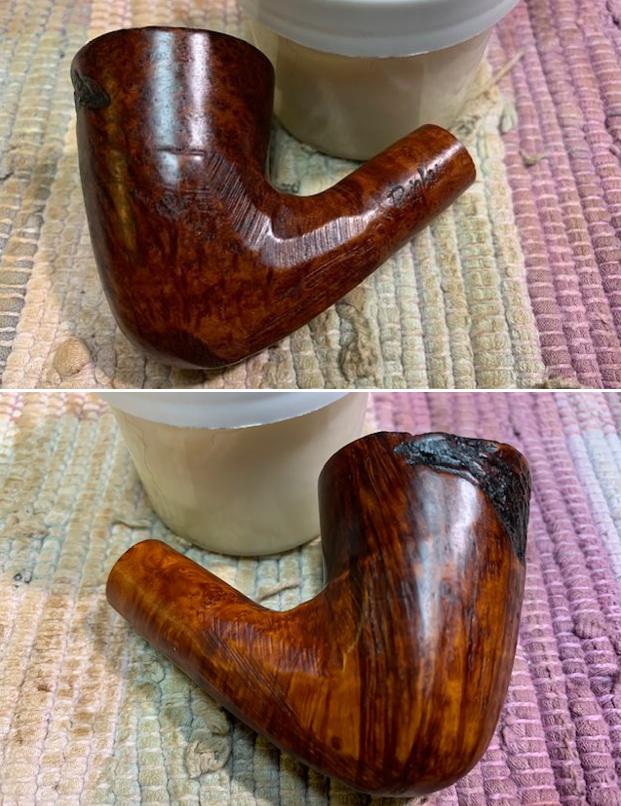
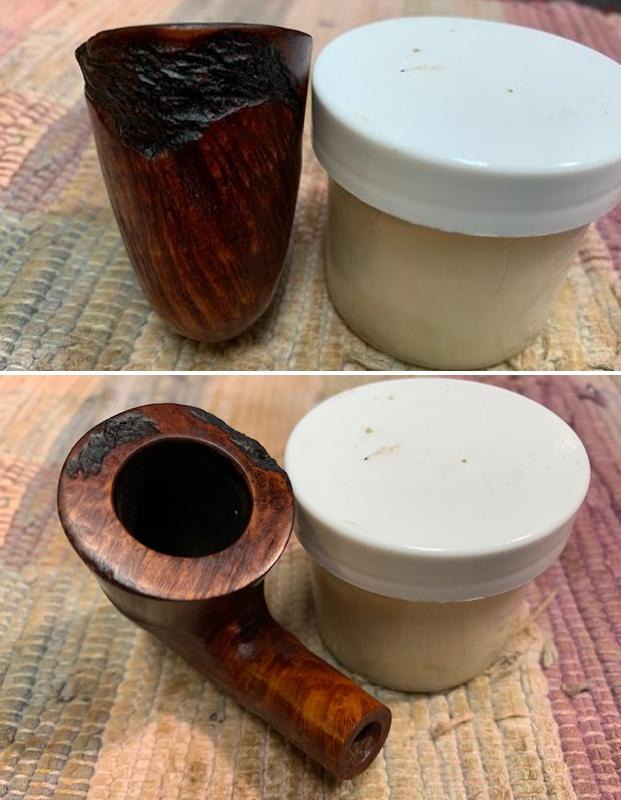
The next pipe on the table came to us in a group of pipes that we picked up from an auction in 2018 in Wilkes Barre, Pennsylvania, USA. It has a mixed sandblast and smooth finish that was a bit dull and lifeless. It showed promise under the grit and grime of the years. On the underside of the shank it was clearly stamped Soren [over] Hand Carved [over] Made in Denmark. When I received it from Jeff somehow the bowl and stem had separated and I had the bowl in hand but no idea what stem fit the shank. I tried a variety of stems that I had but not one of them fit well.

Jeff had cleaned up the pipe with his usual penchant for thoroughness. He reamed the pipe with a PipNet Pipe Reamer and cleaned up the remnants with a Savinelli Fitsall Pipe Knife.  He scrubbed the bowl with undiluted Murphy’s Oil Soap with a tooth brush. He worked over the debris in the plateau on the rim top and shank end and was able to remove it. He rinsed it under running warm water to remove the soap and grime. He cleaned out the inside of the shank and the airway in the stem with alcohol, cotton swabs and pipe cleaners. When I took it out of the box it did not have a stem in the shank. I wrote Jeff and sent him photos of the bowl and asked him if he had photos that showed what the stem looked like. Jeff did a bit of hunting on his hard drive and found the pictures of the pipe with the stem that it had when he started his work. He sent me the following photos of the pipe. The pipe was very dirty with grime and grit ground into the sides of the sandblast and the rim top. The bowl had a thick cake and an overflow of lava on the rim top that obscured the edges of the rim and the plateau finish. To me the stem just did not look like the right one for this kind of freehand pipe. It looked like a replacement stem that was just stuck in the shank. Now I had to see if I could find it in the boxes that he sent. That would be a bit of a treasure hunt. He took photos of the rim top and bowl to give a clear picture of the thickness of the cake and the lava on the plateau finish of the rim top. There is dust and debris stuck to the walls of the bowl clearly visible in the photos. He also took photos of the top and underside of the stem that came with it to show the chatter and tooth marks. Jeff took a photo of the sides and heel of the bowl to give a picture of what the sandblast on the briar looked like. The pedestal on the heel of the bowl is a unique feature of this pipe.He took photos of the stamping on the shank. It reads as noted above and is clear and readable. I found the stem that was pictured above in the photos in one of the bags of stems that I had put together in the bottom of one of the boxes. I took photos of the stem to give an idea of the appearance. Jeff had done a great job cleaning it. The tenon was very short and stubby and there were casting marks on the side of the stem blade. I put the stem on the bowl and took a photo of the stem that Jeff had sent with the pipe. I have worked on quite a few Soren pipes over the years and turned to one of the blogs that I wrote  on another interesting Soren Freehand Sitter (https://rebornpipes.com/2020/02/26/this-interesting-soren-hand-carved-freehand-turned-out-to-be-more-work-than-expected/). I quote from that blog below.

I looked up the brand on Pipephil (http://www.pipephil.eu/logos/en/logo-s10.html) and found that the brand was carved by Søren Refbjerg Rasmussen. Pipes that he made for the European market were mostly stamped “Refbjerg” while those made for the US market were stamped “Soren”. Thus I knew that one I was working on was imported into the US market.

I decided to set the stem aside and see what I could find in my cans of stems here. I found an interesting turned stem that had a lot of potential. It had some oxidation, calcification and deep tooth marks on the surface. The tenon was a perfect fit in the shank so I would just need to clean it up and repair the tooth marks. Here are some photos of the stem as it looked before I worked on it.   I put the stem on the pipe and took some photos of the look of the “new” stem on the bowl. I think that with some work this was the right stem for the pipe.  I took a close up photo of the bowl and the stem to give an idea of what I had to work with. The bowl was very clean and it would polish up nicely. There was still some darkening in the plateau on the back side of the bowl that would need to be dealt with. The stem photos show the oxidation, calcification and deep tooth marks on both sides near the damaged button surface. It was badly damaged but showed a lot of promise. I removed the stem from the shank and dropped in a bath of Briarville’s Pipe Stem Deoxidizer to soak while I worked on the bowl. I figured the soak would bring the oxidation to the surface and clean the surface so that I could do the repairs to the stem surface once it was clean.While the stem soaked in the deoxidizer I worked on the bowl. I scrubbed the rim top with a brass bristle brush to remove the darkening and deep grime. Once it was finished it looked much better. I stained it black with a black stain pen. I used the wire brush again to clean up some of the high spots leaving the stain in the grooves. I also lightly sanded the rim top with a 1500 grit micromesh sanding pad to further highlight the high spots. I like the look of the rim at this point though with more polishing and Balm it would come alive. I polished the smooth portions of the bowl sides with micromesh sanding pads – dry sanding with 1500-12000 grit sanding pads. I wiped the bowl down with a damp cloth after each pad. With the smooth portion of the briar polished I rubbed the bowl and shank down with Before & After Restoration Balm. I worked it into the surface of the bowl sides and shank with my fingertips and into the plateau rim top and sandblast with a horsehair shoe brush. The product works to clean, enliven and protect the briar. I let the Balm sit for 15 minutes and then buffed with a cotton cloth to raise the shine. While the Balm did its work I worked on the “new stem”. I set the bowl aside and turned my attention to the stem. I removed it from the Deoxidizer bath and rubbed it down with a coarse cloth to dry it out. It had brought oxidation to the surface and made it easier to deal with but it had not removed it. The good news for me was that it had done a great job removing it from the tooth marks. I “painted” the surface of the vulcanite with the flame of a lighter to lift the dents as much as possible. I was able to lift them significantly. I filled in the remaining divots with black super glue. I chose to use black glue this time just in case there were some remaining spots of oxidation in the tooth marks. The black would take care of that. Once the repairs had hardened I scrubbed the remaining oxidation in all of the grooves of the fancy stem with Soft Scrub all purpose cleaner. I was able to get into the grooves with the product and the cotton pads that I used to scrub it. It was beginning to look better.   I cleaned out the stem with alcohol and pipe cleaners to remove the tars and the debris that was loosened by the deoxidizer bath.I smoothed out the repairs and recut the button edges with a rasp and a file. The stem was taking shape.  I smoothed out the remaining repair marks and the file marks with 220 grit sandpaper. I started the polishing with 400 grit wet dry sandpaper. I polished the vulcanite stem with micromesh sanding pads – 1500-12000 grit pads. I wiped it down with a damp cloth after each sanding pad. I used Before & After Pipe Polish – both Fine and Extra Fine to further polish the stem.  This beautiful Soren Hand Carved Pedestal Freehand with a fancy, turned vulcanite replacement stem is a great looking pipe now that it has been restored. I put the stem back on the bowl and carefully buffed the pipe with Blue Diamond on the buffing wheel using a light touch on the briar. I gave the bowl and the stem multiple coats of carnauba wax on the buffing wheel and followed that by buffing the entire pipe with a clean buffing pad. I hand buffed the pipe with a microfiber cloth to deepen the shine. The finished Soren Hand Carved fits nicely in the hand and feels great. Give the finished pipe a look in the photos below. The dimensions of the pipe are Length: 6 ½ inches, Height: 2 ½ inches, Outside diameter of the bowl: 1 ¾ inches, Chamber diameter: 7/8 of an inch. The weight of the pipe is 72grams/2.54oz. I will be adding it to the rebornpipes online store in the Danish Pipemakers section. If you are interested in adding this pipe to your collection send me a message or an email. Thanks for reading this blog and my reflections on the pipe while I worked on it. There are many more to come!

New Birth for a Paul Fischer Meerschaum Bent Billiard


Blog by Steve Laug

The next pipe on the work table came to us from a group of pipes that we purchased from a fellow in Los Angeles, California, USA. Between us we pick up quite a few pipes for restoration. I try to work them into the restoration queue so that I can keep them moving. This next one is a cased Meerschaum. The case is stamped on the inside and reads Paul Fischer Genuine Block Meerschaum. The stamping on the satin lining was readable and clear. The exterior of the cardboard case was covered in a marbled brown vinyl and in worn condition with just a few nicks around the edges. The meerschaum was dirty but underneath the grime was a nicely developing patina on the smooth bowl. The bowl was caked and filled with tobacco as if it was laid down mid smoke. There was a light overflowing lava coat on the back side of the rimtop. The edges looked to be in good condition. The amber coloured acrylic stem was dirty and had light tooth chatter and marks on the top and underside near the button. There were also scratches in the surface of the stem. It did not have any identifying stamps. The alignment and fit to the shank is very good. It had promise but it was very dirty. Jeff took some photos of the pipe before he started the cleanup work. He took a photo of the rim top and bowl to give a clear picture of the condition of the bowl and rim top. You can see the half smoked bowl of tobacco that is left in chamber. You can also see the lava on the rim top. He also took photos of the top and underside of the stem to show the nicks, scratching, chatter and tooth marks.  Jeff took photos of the sides and heel of the bowl to give a picture of what the meerschaum looked like around the pipe. The finish is showing some patina developing around the bowl. He unscrewed the stem from the shank to show the inset threaded metal tenon in the shank end.I turned to Pipedia and looked up the information on the site (https://pipedia.org/wiki/Fisher). I quote from there.

From Pipes, Artisans and Trademarks, by José Manuel Lopes’ – Paul Fischer was a well-known Austrian meerschaum pipe artisan who settled in downtown Manhattan, New York, and took American citizenship. Symbol: F. See Ed Burak who worked with Paul for 6 years in the 1960s.

On Smokingpipes.com there was a Paul Fischer meerschaum for sale and Bear Graves did the write up (https://www.smokingpipes.com/pipes/estate/italy/moreinfo.cfm?product_id=52153). I have included it below for the information it gives.

I know that it’s not all that often that we see a carved meerschaum in the American estate section, but there was a time when Turkey had little issue with exporting the material, nor carvers from other countries working with the same. Paul Fischer made meerschaums for Kaywoodie and (if memory serves) Ed Burak did some work for Mr. Fisher, early in his career.

Paresh Deshpande did some work on a Kaywoodie Meerschaum and included some helpful information on dating this pipe (https://rebornpipes.com/tag/kaywoodie-meerschaum-pipes/). I include the pertinent section below.

Kaywoodie Block Meerschaums were made from 1938 to the mid 1960’s. The meerschaum pipe business by Kaywoodie was revitalized when Paul Fischer was hired and emigrated from Austria to run the meerschaum pipe department. Kaywoodie meerschaums were available in earlier years but not as prominently as when Paul Fischer came on board. He left in 1960 to make meerschaums under his own name. We continued to make them for several years after he left until we could no longer import meerschaum from Turkey”. (http://www.brothersofbriar.com/t21079-kaywoodie-block-meerschaum)

Given that information I knew that the pipe was made by Paul Fischer and Austrian immigrant to the US. When he first came he worked for Kaywoodie and then in 1960 left to make pipes under his own name. So I know that the pipe I am working on is at least made after 1960.

Jeff had cleaned up the pipe with his usual penchant for thoroughness. He carefully cleaned out the unsmoked and smoked tobacco and reamed the pipe with a PipNet Pipe Reamer and cleaned up the remnants with a Savinelli Fitsall Pipe Knife.  He scrubbed the bowl with undiluted Murphy’s Oil Soap with a tooth brush. He rinsed it under running warm water to remove the soap and grime. He cleaned out the inside of the shank and the airway in the stem with alcohol, cotton swabs and pipe cleaners. He scrubbed the stem with the Murphy’s Oil Soap and rinsed it under running water. I took photos of the pipe once I received it. It looked pretty good.  The bowl and rim top cleaned up really well with the lava coat removed from the back rim top. The edges looked very good and there was slight darkening on the back top side. The stem surface had some light tooth marks and chatter on both sides near the button.      I took the stem off the pipe and took a photo of the pipe as a whole. You can get a clear picture of the pipe from the photo below.  I polished the bowl and shank with 1500-12000 grit micromesh sanding pads and wiping it down after each sanding pad with a damp cloth to remove the sanding dust and debris.   Even though this was a meerschaum pipe I have learned that Before & After Restoration Balm works really well on it as well. I worked it into the surface of the bowl sides and shank with my fingertips. The product works to clean, enliven and protect the meerschaum. I let the balm sit for 10 minutes and then buffed with a cotton cloth to raise the shine.     It was time to wax the meerschaum now. I rubbed the bowl and shank down with a coat of Clapham’s Beeswax Polish. I heated the meerschaum and worked it into the surface of the bowl, shank and rim. I let the wax sit for a little while and then buffed with a clean buffing wheel to raise the shine and bring a shine to meerschaum. It is a nice looking pipe.  I polished the amber acrylic stem with micromesh sanding pads – 1500-12000 grit pads. I wiped it down with a damp cloth after each sanding pad. I used Before & After Pipe Polish – both Fine and Extra Fine to further polish the stem. This smooth Block Meerschaum Bent Billiard, carved by Paul Fischer with an amber coloured acrylic taper stem is a great looking pipe. I gave the stem multiple coats of carnauba wax on the buffing wheel and followed that by buffing the entire pipe with a clean buffing pad. I hand buffed the pipe with a microfiber cloth to deepen the shine. The finished Paul Fischer Meerschaum Bent Billiard fits nicely in the hand and feels great. Give the finished pipe a look in the photos below. The dimensions of the pipe are Length: 5 ½ inches, Height: 2 inches, Outside diameter of the bowl: 1 ¼ inches, Chamber diameter: ¾ of an inch. The weight of the pipe is 48gr/1.66oz. If you are interested in adding this pipe to your collection send me a message or an email. I will be adding it to the rebornpipes store shortly in the Meerschaum Pipes – CALABASHES, SMOOTH & FIGURALS. Thanks for reading this blog and my reflections on the pipe while I worked on it. There are many more to come!

New Life for a Don Style Billiard with Vulcanite Military Bit Stem


Blog by Steve Laug

The next pipe on the work table is another mystery pipe for Jeff and me. It does not have any stamping on the bowl heel or on the shank. Jeff thinks he may have picked it up in Montana but it not certain. The pipe is a classic billiard shaped pipe with a bit of a cant forward. It could well be someone’s repair on a broken shank but there is something about it that makes me think it was originally made this way. There was a lot of grime ground into the finish on the briar. The bowl was moderately caked and the rim top had a light overflow of lava on the top and edges of the bowl. The rim top and the inside edge showed some damage. The stem was a straight military stem with a metal fitment on the bowl end. It was dirty and lightly oxidized. It had tooth chatter and marks on the top and underside near the button and on the button edge. It was small billiard shaped bowl with a pencil style military stem and it had promise but it was very dirty. Jeff took some photos of the pipe before he started his cleanup work. He took photos of the rim top and bowl to give a clear picture of the condition of the bowl. You can see the cake in the bowl as well as the lava and the damage on the rim top and edges. He also took photos of the top and underside of the stem to show the light oxidation and the chatter and tooth marks.   Jeff took photos of the sides and heel of the bowl to give a picture of what the briar looked like. There is some great grain under the grime coat on the bowl sides. I turned to work on the pipe itself.  Jeff had cleaned up the pipe with his usual penchant for thoroughness. He reamed the pipe with a PipNet pipe reamer and removed the rest of it with a Savinelli Fitsall Pipe Knife.  He scrubbed the bowl with undiluted Murphy’s Oil Soap with a tooth brush. He rinsed it under running warm water to remove the soap and grime and all of the peeling varnish coat. He cleaned out the inside of the shank and the airway in the stem with alcohol, cotton swabs and pipe cleaners. He soaked the stem in Before & After Deoxidizer and rinsed it off with warm water. I took photos of the pipe before I started my part of the restoration work.   The rim top cleaned up really well. The rim top and outer edge of the bowl show some darkening and damage. There was damage to the inner edge and it was rough. The stem surface looked very good with a few small tooth marks and chatter on both sides near the button. I forgot to take pictures of the areas on the stem that were damaged before I filled them in with super glue but you can see the general condition even with the repairs.  I started my work on the pipe by addressing some of the damage to the rim top edges. I topped the rim on a topping board with a piece of 220 grit sandpaper. I also flattened the area where the stem inserted into the bowl as it was damaged.I polished the bowl with micromesh sanding pads – dry sanding with 1500-12000 grit pads. I wiped the bowl down with a damp cloth after each sanding pad.   I rubbed the bowl down with Before & After Restoration Balm. I worked it into the surface of the bowl sides and shank with my fingertips to clean, enliven and protect the briar. I let the balm sit for 15 minutes and buffed with a cotton cloth to raise the shine. The grain came alive. I set the bowl aside and turned my attention to the stem. I filled the deep tooth marks next to the button with clear super glue. Once the glue cured I flattened it out with a file to blend it into the stem surface.  I sanded the repairs with 220 grit sandpaper to further blend them into the stem surface. I started polishing the stem with 400 grit wet dry sandpaper. I polished the vulcanite stem with micromesh sanding pads – 1500-12000 grit pads. I wiped it down with Obsidian Oil after each sanding pad. I used Before & After Pipe Polish – both Fine and Extra Fine to further polish the stem.   This Billiard Shaped Bowl on a Don Style Pipe is a great looking pipe now that it has been restored and the stem reshaped. The grain around the bowl is quite beautiful and works well with both the shape and the polished vulcanite taper stem. I put the stem back on the bowl and carefully buffed the pipe with Blue Diamond on the buffing wheel using a light touch on the briar. I gave the bowl and the stem multiple coats of carnauba wax on the buffing wheel and followed that by buffing the entire pipe with a clean buffing pad. I hand buffed the pipe with a microfiber cloth to deepen the shine. The finished Don Style Billiard is another pipe that fits nicely in the hand and feels great. Give the finished pipe a look in the photos below. The dimensions of the pipe are Length: 5 ¼ inches, Height: 1 ½ inches, Outside diameter of the bowl: 1 1/8 inches, Chamber diameter: ¾ of an inch. The weight of the pipe is 16g/.60oz. I will be putting it on the rebornpipes store in the Metal and Other Types of Pipe Section shortly. If you are interested in adding this pipe to your collection send me a message or an email. Thanks for reading this blog and my reflections on the pipe while I worked on it. There are many more to come!

New Life for a Don Style Brandy with Vulcanite Military Bit Stem


Blog by Steve Laug

The next pipe on the work table is a bit of a mystery pipe for Jeff and me. It does not have any stamping on the bowl heel or on the shank. The stem was seriously over bent to the point of being impossible to smoke. The pipe is a classic Brandy shaped pipe with peeling varnish around the bowl sides and rim top. There was a lot of grime ground into the finish on the briar. The bowl was moderately caked with tobacco debris in the bowl. The rim top had a light overflow of lava on the top and edges of the bowl. The inside edges looked to be in good condition. The stem was dirty and lightly oxidized. It had casting marks on both sides of the stem. It had tooth chatter and marks on the top and underside near the button and on the button edge. There was some light oxidation on the stem surface. It was a large apple shaped bowl with a pencil style military stem and it had promise but it was very dirty. Jeff took some photos of the pipe before he started his cleanup work. He took photos of the rim top and bowl to give a clear picture of the thickness of the cake and tobacco debris as well as the lava and the peeling varnish on the rim top. He also took photos of the top and underside of the stem to show the casting marks on the side of the stem, the light oxidation and the chatter and tooth marks.    Jeff took photos of the sides and heel of the bowl to give a picture of what the briar looked like. There is some great grain under the peeling varnish coat on the bowl sides. I turned to work on the pipe itself.  Jeff had cleaned up the pipe with his usual penchant for thoroughness. He reamed the pipe with a PipNet pipe reamer and removed the rest of it with a Savinelli Fitsall Pipe Knife.  He scrubbed the bowl with undiluted Murphy’s Oil Soap with a tooth brush. He rinsed it under running warm water to remove the soap and grime and all of the peeling varnish coat. He cleaned out the inside of the shank and the airway in the stem with alcohol, cotton swabs and pipe cleaners. He soaked the stem in Before & After Deoxidizer and rinsed it off with warm water. I took photos of the pipe before I started my part of the restoration work.   The rim top cleaned up really well. The rim top and outer edge of the bowl look very good. There were still bits of varnish on the rim top. The stem surface looked very good with a few small tooth marks and chatter on both sides near the button.    I cleaned up the rim top with a folded piece of 220 grit sandpaper. I scrubbed the bowl with alcohol and a cotton pad to remove the remaining finish on the bowl.   The bowl had been over reamed and there was a dip/pit in the bottom of the bowl that made the bottom seem quite thin. I mixed a batch of JB Weld and applied it to the dip in the bowl bottom with a folded pipe cleaner. I set it aside to allow the repair to cure.   I polished the bowl with micromesh sanding pads – dry sanding with 1500-12000 grit pads. I wiped the bowl down with a damp cloth after each sanding pad.    I rubbed the bowl down with Before & After Restoration Balm. I worked it into the surface of the bowl sides and shank with my fingertips to clean, enliven and protect the briar. I let the balm sit for 15 minutes and buffed with a cotton cloth to raise the shine. The grain came alive.     I set the bowl aside and turned my attention to the stem. The over bent stem needed to be addressed. I took photos of the stem as it looked when I received it. I painted the vulcanite with a lighter flame to soften it. Once it was pliable I straightened it out leaving a slight bend in the to match the flow of the bowl.One the stem was straightened out I sanded out the casting marks on the sides and the tooth marks and chatter on the top and underside near the button.  I polished the vulcanite stem with micromesh sanding pads – 1500-12000 grit pads. I wiped it down with Obsidian Oil after each sanding pad. I used Before & After Pipe Polish – both Fine and Extra Fine to further polish the stem.   This Don Style pipe with a Brandy Shaped Bowl is a great looking pipe now that it has been restored and the stem reshaped. The grain around the bowl is quite beautiful and works well with both the shape and the polished vulcanite taper stem. I put the stem back on the bowl and carefully buffed the pipe with Blue Diamond on the buffing wheel using a light touch on the briar. I gave the bowl and the stem multiple coats of carnauba wax on the buffing wheel and followed that by buffing the entire pipe with a clean buffing pad. I hand buffed the pipe with a microfiber cloth to deepen the shine. The finished Don Style Brandy is another pipe that fits nicely in the hand and feels great. Give the finished pipe a look in the photos below. The dimensions of the pipe are Length: 5 ½ inches, Height: 1 ½ inches, Outside diameter of the bowl: 1 ¼ inches, Chamber diameter: ¾ of an inch. The weight of the pipe is 25g/.88oz. I will be putting it on the rebornpipes store in the Metal and Other Types of Pipe Section shortly. If you are interested in adding this pipe to your collection send me a message or an email. Thanks for reading this blog and my reflections on the pipe while I worked on it. There are many more to come!

New Life for a Sandblast Savinelli de Luxe Milano 506 Panel Billiard


Blog by Steve Laug

When my brother Jeff saw this pipe he went for it. He picked it up from a fellow in Pocatello, Idaho, USA. This pipe appeared to be in rough shape. The bowl was full and the sandblast was filthy. It had definitely seen better days. However, there was something about the shape that caught Jeff’s eye. The stamping on the underside of the shank reads de Luxe [over] Milano. That is followed by the Savinelli S shield logo and the shape number 506 over Italy. It is faint but readable with a loupe and light. The bowl and shank are sandblasted with a rugged blast and the panel sides all have indents where the blast went deep into the grain. It is an interesting pipe. The stain on the bowl is a medium brown that highlights the sandblast finish. It is a panel billiard with a square shank and a saddle vulcanite stem. The pipe was dirty with a thick cake and tobacco debris in the bowl. There was a heavy overflow of lava on the rim top that made it hard to know if the rim edges were damaged. There were dark areas on each side of the bowl. The grime and dirt had been ground deeply into the sandblast finish. The stem was calcified and heavily oxidized and was a brownish green colour. There was tooth chatter and tooth marks on both sides of the stem near the button and on the button surface itself on both sides. Jeff took some photos of the pipe before he did his cleanup.The next photos show the bowl and rim top. You can see the cake in the bowl and the overflow of lava and grime on the top. You can also see the likelihood of damage to the rim edges but also that it is impossible to know what it would look like once it was clean. The photos of the stem show a lot of tooth chatter on both sides of the stems. There are also some tooth marks on the button top and bottom.   The sandblast finish on the bowl, though dirty, showed interesting patterns – straight grains and birdseye. There were also some swirls in the grain. The photos also show some darkening on each side of the bowl and some dark spots. The stamping on the underside of the shank is faint but readable. It reads as noted above. I had a vague memory that there was a great photo of the same pipe in a smooth finish on the Pipephil site (http://www.pipephil.eu/logos/en/logo-savinelli1.html). I turned there and sure enough it was not only a De Luxe it was also a 506 Panel Billiard with a smooth finish. I have included a screen capture of the section from that site below. There was also a link to a series of shape charts for Savinelli Pipes that I have found helpful in the past (http://www.pipephil.eu/logos/en/infos/savinelli-chart.html). I did a screen capture of the section of the chart that included the 506 shape. Now it was time to work on the pipe. Jeff worked his magic in cleaning up this pipe. He reamed it with a PipNet reamer and smoothed the walls of the bowl with a Savinelli Fitsall pipe knife. He scrubbed out the mortise and the airway in the shank and the stem with alcohol, cotton swabs and pipe cleaners. He scrubbed the exterior of the bowl, rim and shank with a tooth brush and Murphy’s Oil Soap to the oils and tars on the bowl, rim and shank. He rinsed it under running water. He dried it off with a soft cloth. The cleaning of the stem raised more oxidation in the vulcanite. The tooth marks and chatter was clean but visible. I took the stem off and put it in a bath of Before & After Stem Deoxidizer and totally forgot to take pictures of the pipe before I started. I took photos of the condition of the rim top and stem before I started working. The rim top looks very good and the bowl is spotless. The rim top is heavily darkened and stained. The stem has light oxidation remaining and some tooth chatter and marks on both sides near and on the button.   I took a photo of the stamping on the underside of the shank. The stamping was faint but still readable. It reads as noted above.  The stem has a brass bar on the left side of the saddle.  I started my work on the bowl by dealing with darkening around the bowl sides. I took photos of the darkening. I poked and probed them with a dental pick to check on the integrity of the briar and it was solid. I also worked the areas over with a brass bristle brush and was able to remove some of the darkening. There was no cracking or checking on the inside of the bowl in each of those areas so I was fairly certain I was dealing with darkening caused by the oils of the pipeman or woman’s hands who had previously smoked the pipe. I would need to stain the pipe to deal with the dark areas. I stained the bowl with an aniline Light Brown stain. I was surprised at how dark it came out on the bowl itself. I applied the stain and flamed it with a lighter to set it in the grain. I set it aside while I had dinner to let the stain cure.   After dinner I took the pipe off the cork rest and took photos of the newly stained bowl. You can see the depth of the blast in the photos below.   I worked some Before & After Restoration Balm into the finish of the bowl, rim top and shank with my fingertips to clean, enliven and protect it. I find that the balm really makes the briar come alive again. The contrasts in the layers of stain really made the grain stand out. I let the balm sit for 15 minutes and then buffed with a cotton cloth to raise the shine. The bowl really looks good at this point. I set aside the bowl and turned my attention to the stem. I “painted” the tooth marks on the surface of the stem and was able to lift them significantly. I filled in the remaining tooth marks on the button surface with clear super glue. I used a file to smooth out and shape the button. I smoothed out the remaining repairs with 220 sandpaper to blend them and started polishing with 400 grit wet dry sandpaper.     I scrubbed the stem with Soft Scrub All Purpose cleaner to remove the residual oxidation on the stem surface. The product works very well to cut through residual oxidation on vulcanite.  I polished the stem with micromesh sanding pads – wet sanding it with 1500-12000 grit pads. I polished it further with Before & After Pipe Stem Polish – both fine and extra fine.     I really enjoy finishing the work on a pipe because I love bringing it back to life and then administering the final touches that make it sing. I put the Savinelli De Luxe Milano 506 Panel Billiard back together and lightly buffed the bowl with Blue Diamond. I buffed the stem with a heavier touch with Blue Diamond on the buffing wheel. I gave the bowl multiple coats of Conservator’s Wax and worked it into the deep sandblast with a horsehair shoe brush. I gave the stem multiple coats of carnauba wax. I buffed the pipe with a clean buffing pad to raise the shine. I hand buffed it with a microfiber cloth to deepen the shine. It is fun to see what the polished bowl looks like with the smooth finish and the black vulcanite saddle stem. This richly finished De Luxe Milano Panel Billiard is light weight and ready for you to load up a tobacco of preference and enjoy smoking it. Have a look at it in the photos below. The dimensions are Length: 5 ¼ inches, Height: 1 ¾ inches, Outside diameter of the bowl: 1 ¼ inches, Chamber diameter: ¾ of an inch. The weight of the pipe is 33grams/1.16oz. This is one that will go on the Italian Pipemakers section of the rebornpipes online store shortly. Thanks to each of you who are reading this blog. Remember we are not pipe owners; we are pipemen and women who hold our pipes in trust until they pass on into the trust of the next generation.           

Breathing new life into a sandblast SON Brandy Stack – an early pipe by Eric Nording


Blog by Steve Laug

When my brother Jeff saw this pipe he went for it. He picked it up from an online auction in 2018 out of Champaign, Illinois, USA. The stamping on the underside of the shank reads 5 [over] Hand Made [over] Made in Denmark [over] SON. It is clear and readable with a loupe and light. The bowl and shank are sandblasted with a light blast and the rim top is smooth. The stain on the bowl is a medium brown that highlights the sandblast finish. It is a tall Brandy shaped stack pipe with a tall billiard style bowl. The shank is quite long and the stem is short for a pipe this sized. It works well together. The pipe was dirty with a thick cake and tobacco debris in the bowl. There was a light overflow of lava on the rim top and some damage on the inner edge of the bowl on the front. The stem was calcified and heavily oxidized and was a brownish green colour. There was tooth chatter and tooth marks on both sides of the stem near the button. Jeff took some photos of the pipe before he did his cleanup. The next photo shows the bowl and rim top. You can see the cake in the bowl and the overflow of lava and grime on the top. You can also see the damage to the front inner edge of the bowl. The photos of the stem show a lot of tooth chatter on both sides of the stems. There are also some tooth marks on the button top and bottom.   The sandblast finish on the bowl, though dirty, showed interesting patterns – straight grains and birdseye. There were also some swirls in the grain. The photo below shows what the finish looked like and under the grime it looked good. The stamping on the underside of the shank is very readable. It reads as noted above. The two photos below show the vertical stamping on the underside of the shank.  I turned to a blog I had written in 2017 on a SON pipe to get a quick confirmation of the identity of the pipemaker. I was pretty certain it was Erik Nording but I wanted to check my memory by a quick reread (https://rebornpipes.com/2017/12/06/breathing-new-life-into-a-son-freehand-an-early-nording-pipe/). I quote below:

I decided to do a bit of research on the brand to see who made the SON brand. I looked first on Pipephil’s site http://www.pipephil.eu/logos/en/logo-s10.html. I quote from a note on the site next to photos of the stamping on the pipes of that brand.

“The brand’s name stems from a partnership between Soren Skovbo and Erik Nording. It lasted for two years in the mid-1960s before the partnership ended and the brand ceased. That dates this pipe to the 1960s.”

I looked on Pipedia for further information: https://pipedia.org/wiki/N%C3%B8rding. In the listing of pipemakers by country the entry for SON linked back to Nording pipes. I went to that page and read the following information. I have included a portion of that article below that gives the pertinent connections.

Long before he graduated from engineering school at age 25 he was a more experienced pipe smoker than most men his age. He frequented a pipe shop in Copenhagen and often had his pipes repaired there. “The guy who did the repairs in that shop” says Nording. “could see that it was a good business, and he wanted to start his own pipe making shop.” That repairman’s name was Skovbo. One day he approached the young Erik Nording with a proposition. “You are a blacksmith and an engineer,” Skovbo said to Nording. “You must know a lot about machinery. Can you make me some pipe making machinery?”

“I told him I could make anything he wanted,” says Nording. “But I didn’t have any money. So I borrowed S200 to buy some bearings, and I scoured junkyards for old broken machinery. I bought inexpensive housings and put in new bearings and new shafts.” It was Nording’s first contract and he wanted to get a good start, so he took great care in making the best possible tools for the pipe maker. “I made him a little polishing machine, and a lathe, and a sander for shaping pipes.” When he had everything put together and running perfectly, he called Skovbo and told him his machinery was finished.

“He came out and looked it over,” says Nording. “He turned on the electricity and watched everything run. He had some blocks of wood with him, and he tried everything out. Finally he looked at me and said, ‘It’s exactly as I wanted. Perfect. How much do I owe you?’ I told him the price—I don’t remember how much it was, but it was very inexpensive.”

Skovbo thought the price was very good. “That’s fantastic,” he said. “The price is right. Now I’ll start out for myself, make some pipes and when I earn some money I’ll pay you.”

It must have been a terrifically discouraging moment for a young man who had just completed what he thought was his first paying job in a new career. As Erik Nording now remembers that moment, sitting in a beautiful home that contains a pipe making shop large enough for 20 workers making tens of thousands of world-famous pipes, his face exhibits amusement at that memory. But back then, as a youngster trying to get a foothold in the world, his expression must have been more akin to horror.

“I told him that was not good enough,” says Nording. “I told him I was a poor man, I didn’t have any money, I needed to be paid for my work.” But Skovbo told Nording that he couldn’t pay him.

“Then I will keep the machinery,” said Nording. “I’ll make pipes myself.”

“You don’t know how to use this machinery,” said Skovbo. “You know nothing of pipe making.”

“Well, you’re not getting it. You should have told me before I did all this work that you didn’t have the money to pay for it.”

Skovbo thought it over. “Why don’t we start together?” he said.

That’s how Erik Nording became a pipe maker.

There are still a few of those early pipes around. “I saw some at a shop I visited a while back,” says Nording. “The shop owner offered to give them to me as mementos but I refused. They may be worth quite a bit of money to collectors. You never know”…

Those first pipes carried the name SON”, which was an acronym for the combination of the names Skovbo and Nording. Each of the partners borrowed $5,500 to get the business going, to rent a space and get the electricity turned on and to buy two bags of briar. Skovbo taught Nording how to make pipes, “but I didn’t have much time because I was still studying,” says Nording. “And I never got the chance to learn much from him, because shortly after we started he said that I would never be a pipe maker, he said that my hands had no skill for the craft, that I could never learn. I never understood how he could make such a judgment, but he did.”

To his credit, Nording shows no sign of triumph in the fact that he has proved Skovbo wrong by becoming one of the best-known pipe makers in the world. “He said that he would continue with SON pipes alone, that he no longer needed me,” says Nording. However, the partners had a legal agreement that whoever wished to dissolve the partnership first would leave the company to the remaining partner and be paid off without interest over five years. So Nording became the one to keep the company…

…Nording continued with SON pipes for only a year or two before changing the company name to Nording in the mid-’60s. “I figured nobody could ever take that name away from me,” he says. Nording’s were exclusively freehand shapes, graded from A, B, C, D, up to its highest grade, extra. Later an “F” grade was added—less expensive than the “A.”

Jeff worked his magic in cleaning up this pipe. He reamed it with a PipNet reamer and smoothed the walls of the bowl with a Savinelli Fitsall pipe knife. He scrubbed out the mortise and the airway in the shank and the stem with alcohol, cotton swabs and pipe cleaners. He scrubbed the exterior of the bowl, rim and shank with a tooth brush and Murphy’s Oil Soap to the oils and tars on the bowl, rim and shank. He rinsed it under running water. He dried it off with a soft cloth. The cleaning of the stem raised more oxidation in the vulcanite. The tooth marks and chatter was clean but visible. I took the stem off and put it in a bath of Before & After Stem Deoxidizer and totally forgot to take pictures of the pipe before I started.  I took photos of the condition of the rim top and stem before I started working. The rim top looks very good and the bowl is spotless. The damages on the front inner edge and rim top are very clear in the photo below. The stem has light oxidation remaining and some tooth chatter and marks on both sides near the button.   I took a photo of the stamping on the underside of the shank. The stamping was clear and readable. It reads as noted above. I took the bowl and stem apart and took a photo of the pipe to show the look of the pipe.I started my work on the bowl by dealing with the damaged rim top and inner edge. I used a folded piece of 220 grit sandpaper to smooth out the edge and bring the bowl back into round. I worked out the damage on the rim top at the same time.  I polished the smooth rim top with micromesh sanding pads – dry sanding with 1500-12000 grit pads. I wiped the bowl down after each pad with a damp cloth to remove the sanding dust.   I worked some Before & After Restoration Balm into the finish of the bowl, rim top and shank with my fingertips to clean, enliven and protect it. I find that the balm really makes the briar come alive again. The contrasts in the layers of stain really made the grain stand out. I let the balm sit for 15 minutes and then buffed with a cotton cloth to raise the shine. The bowl really looks good at this point.   I set aside the bowl and turned my attention to the stem. I “painted” the tooth marks on the surface of the stem and was able to lift them significantly. I smoothed out the remaining tooth marks with 220 sandpaper to blend and started polishing with 400 grit wet dry sandpaper.    I polished the stem with micromesh sanding pads – wet sanding it with 1500-12000 grit pads. I polished it further with Before & After Pipe Stem Polish – both fine and extra fine.   I really enjoy finishing the work on a pipe because I love the final touches that make it sing. I put the Nording Made SON Tall Brandy back together and lightly buffed the bowl with Blue Diamond. I buffed the stem with a heavier touch with Blue Diamond on the buffing wheel. I gave the bowl and the stem multiple coats of carnauba wax. I buffed the pipe with a clean buffing pad to raise the shine. I hand buffed it with a microfiber cloth to deepen the shine. It is fun to see what the polished bowl looks like with the smooth finish and the black vulcanite stem. This richly finished SON Brandy by Erik Nording is light weight and ready for you to load up a tobacco of preference and enjoy smoking it. Have a look at it in the photos below. The dimensions are Length: 5 inches, Height: 2 ¼ inches, Outside diameter of the bowl: 1 ¼ inches, Chamber diameter: ¾ of an inch. The weight of the pipe is 42grams/1.48oz. This is one that will go on the Danish Pipemakers section of the rebornpipes online store shortly. Thanks to each of you who are reading this blog. Remember we are not pipe owners; we are pipemen and women who hold our pipes in trust until they pass on into the trust of the next generation.