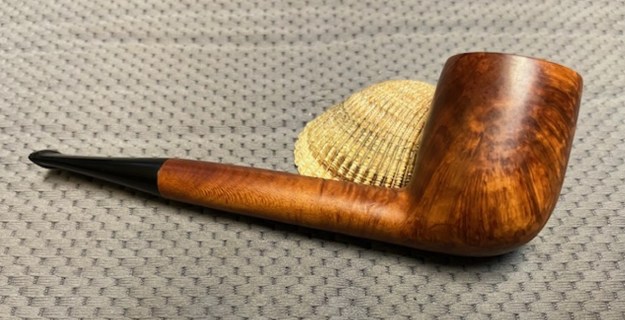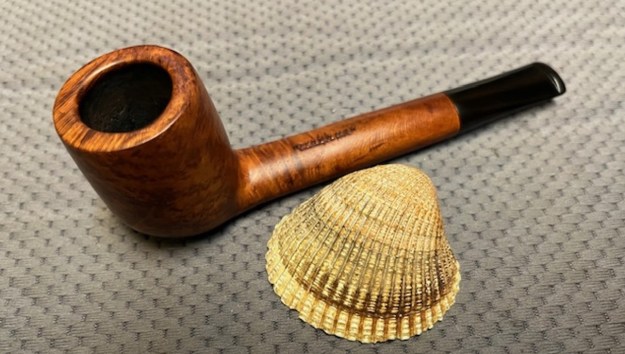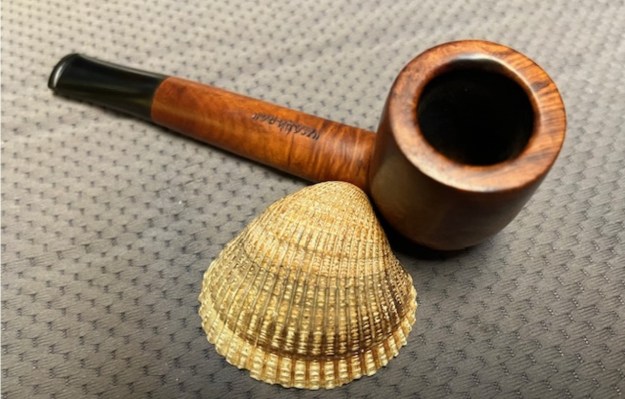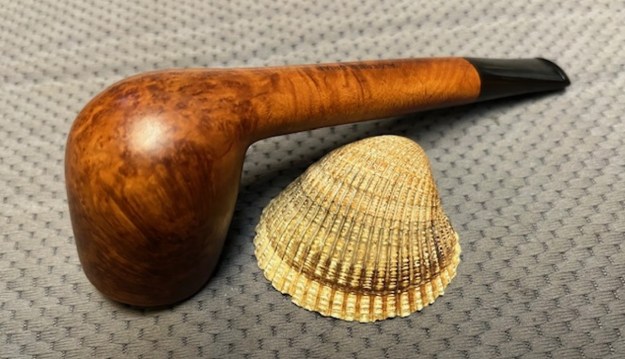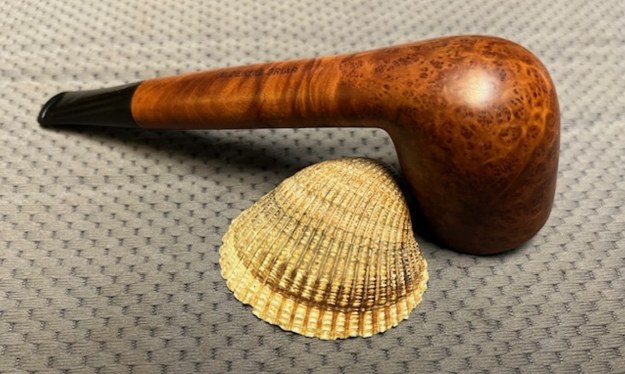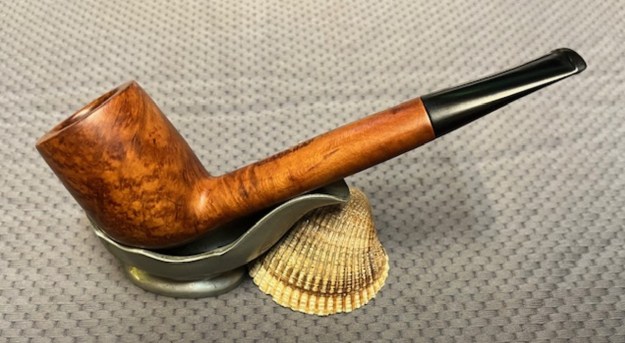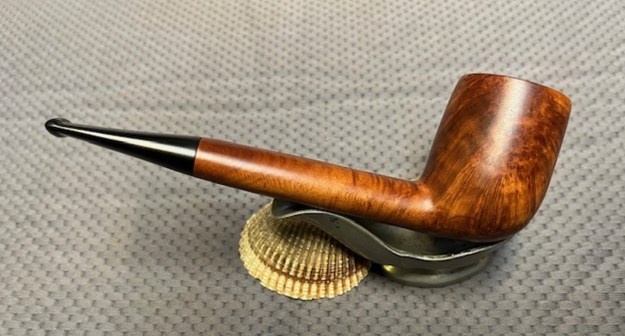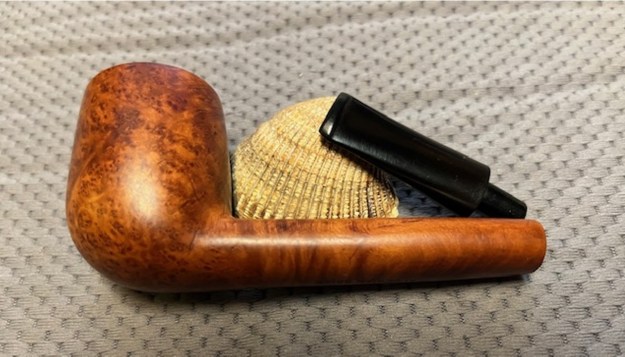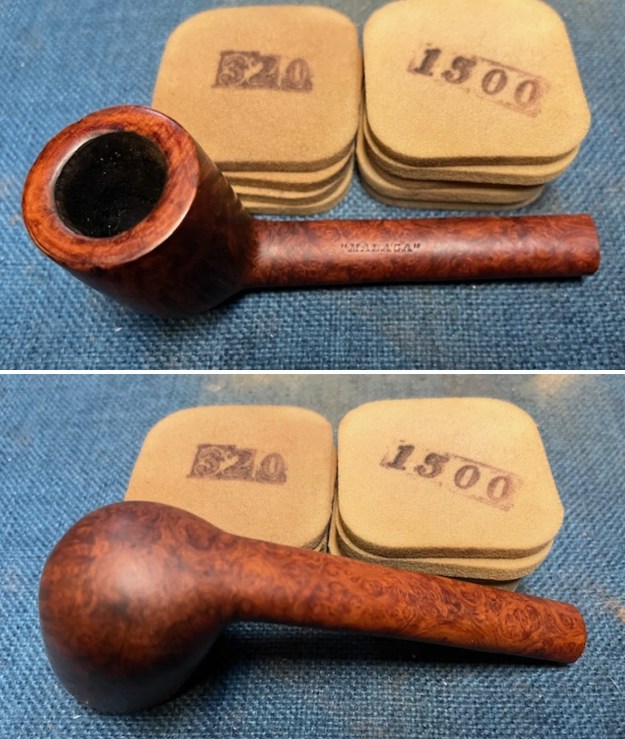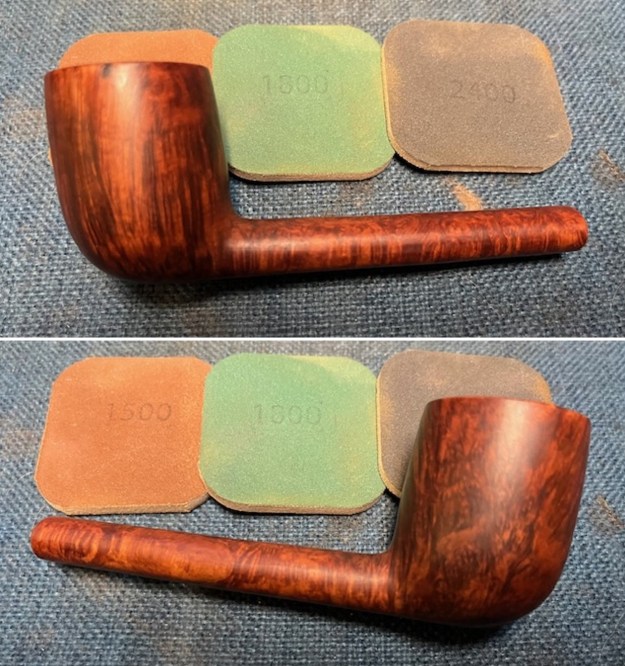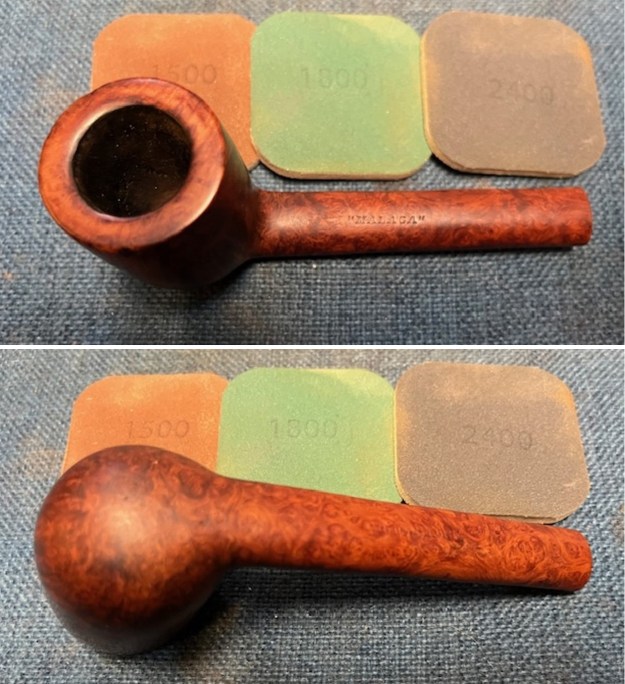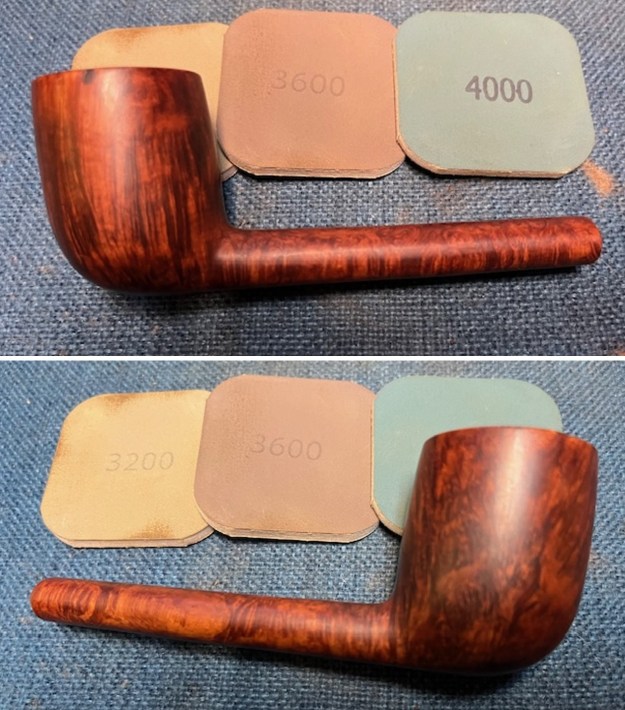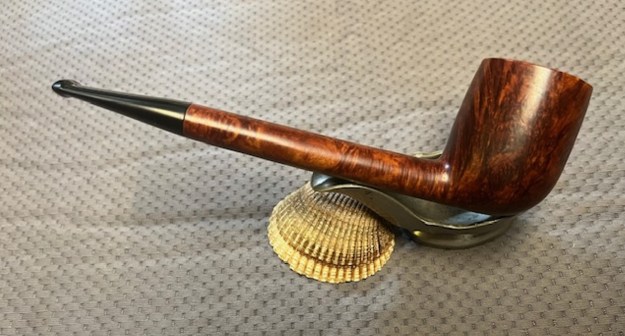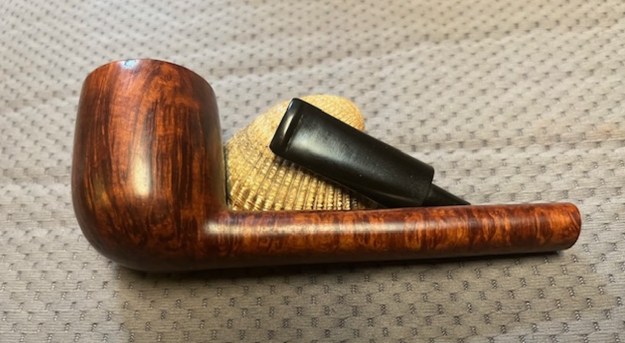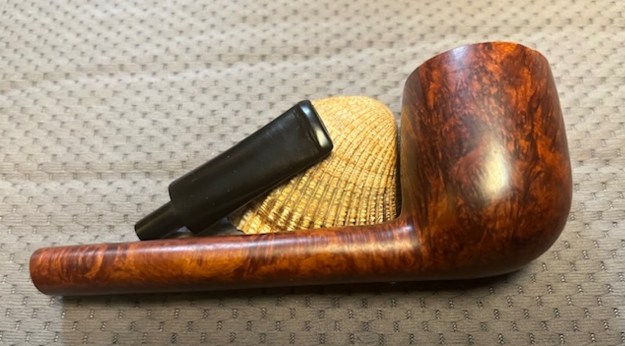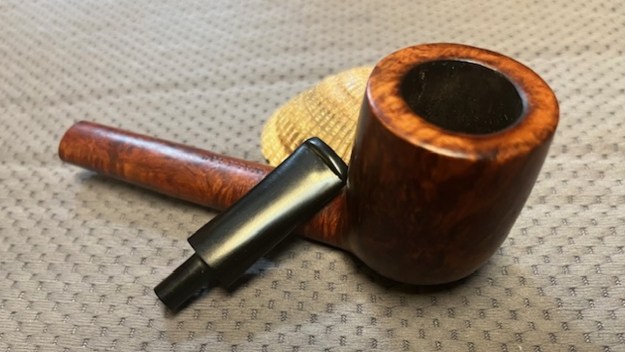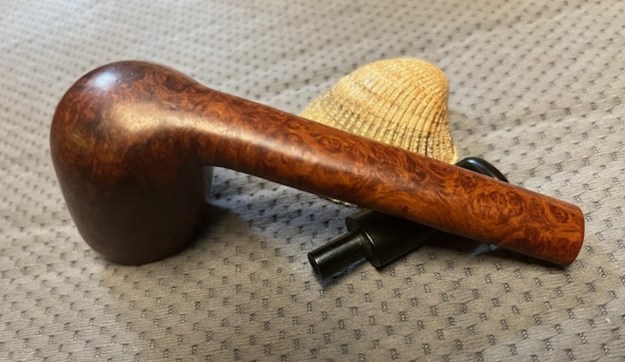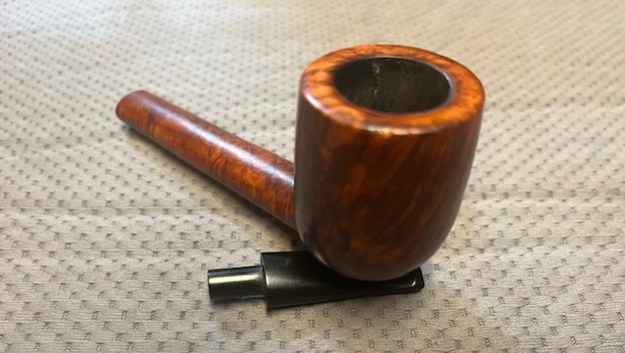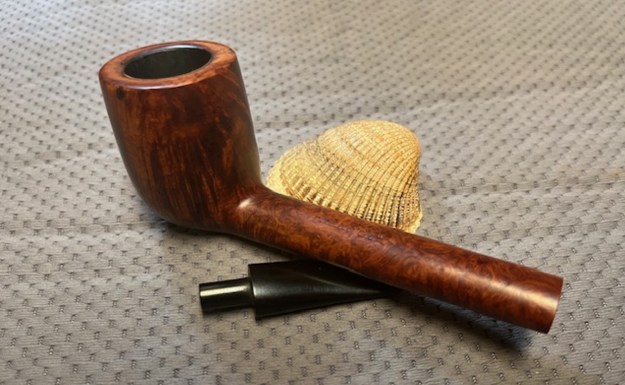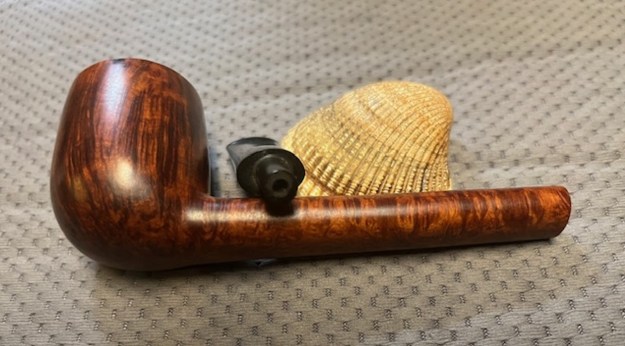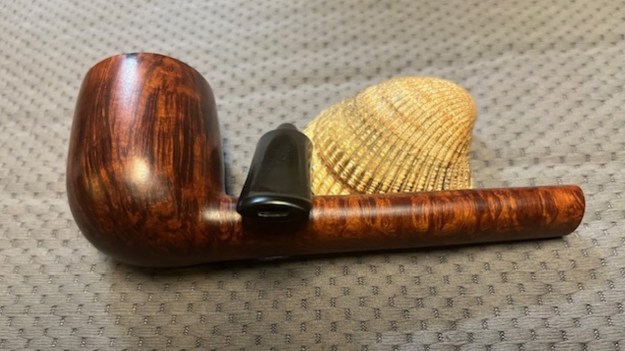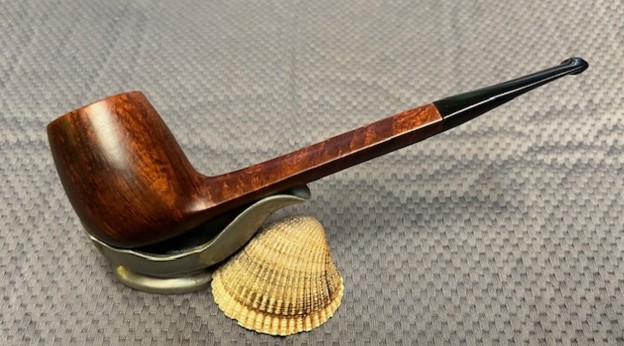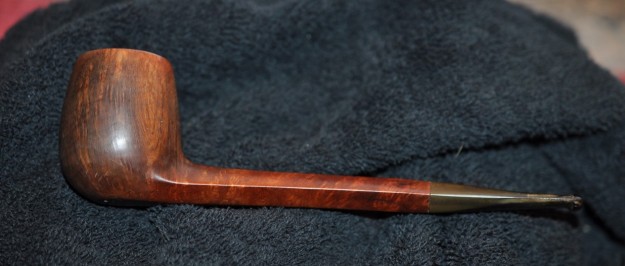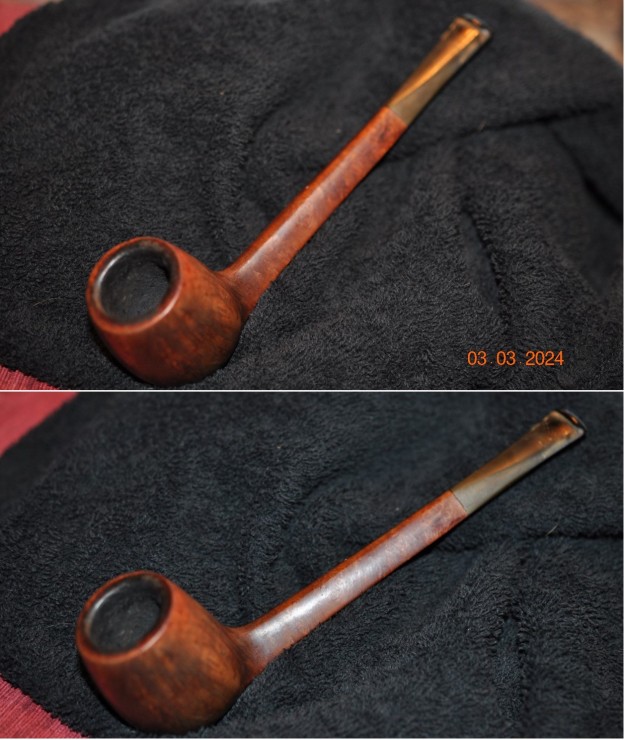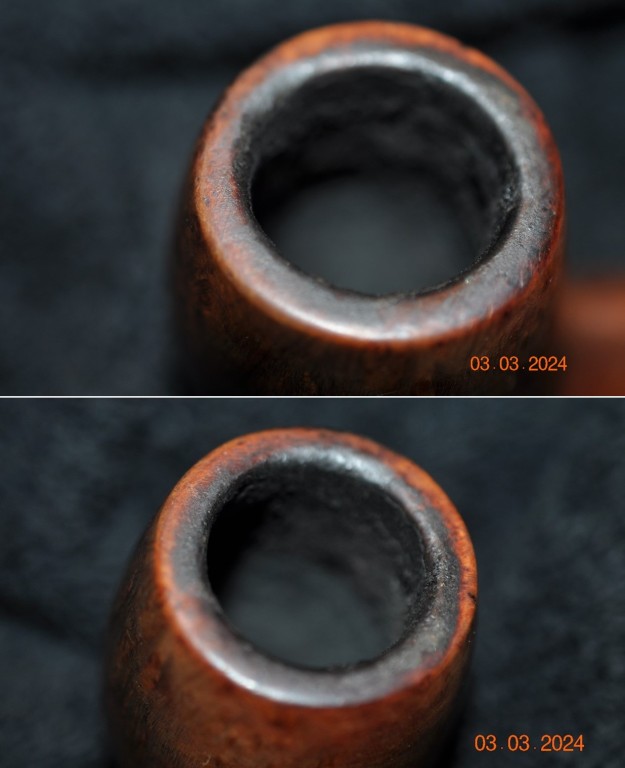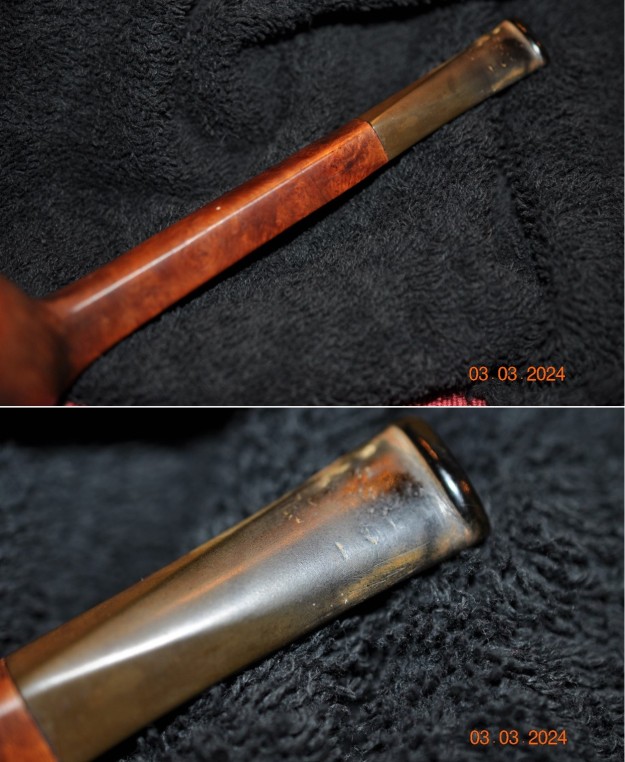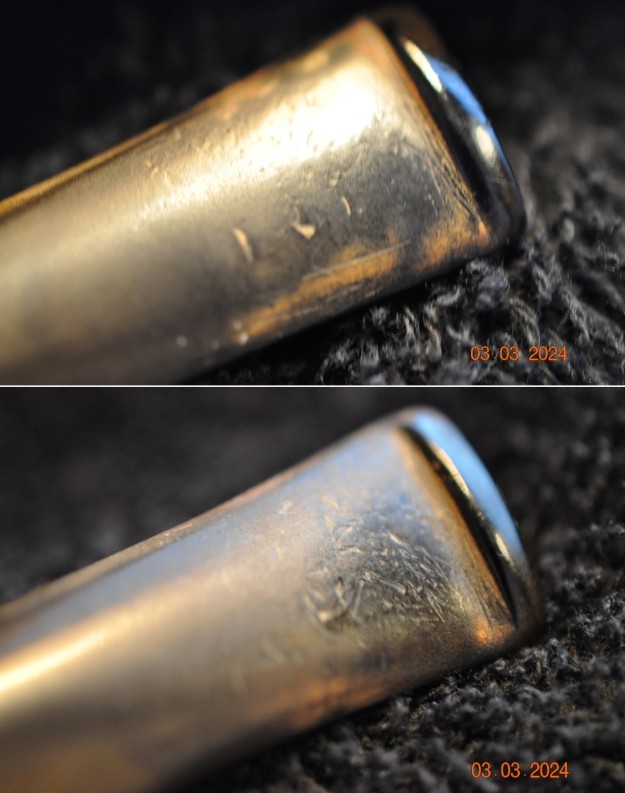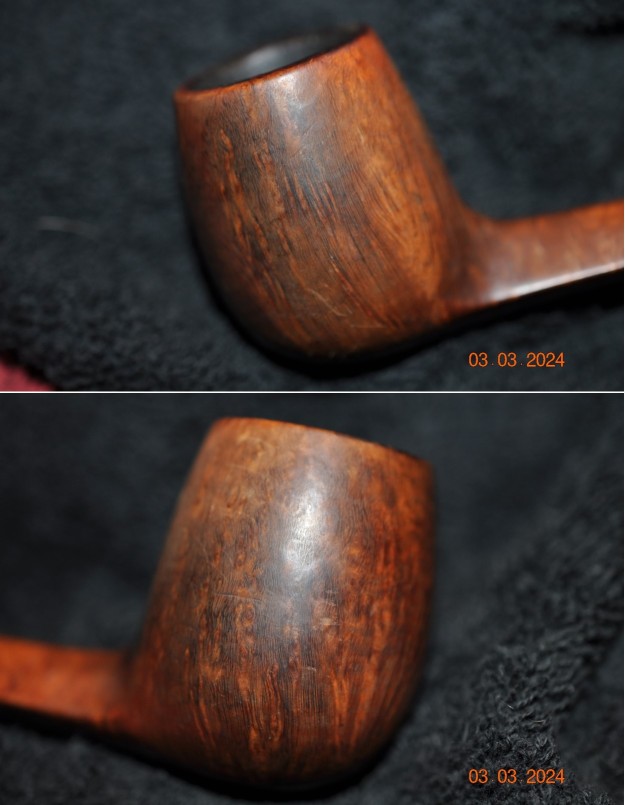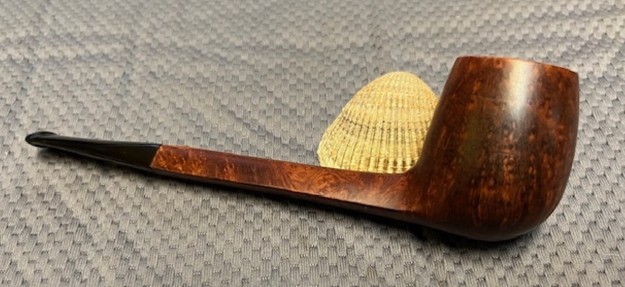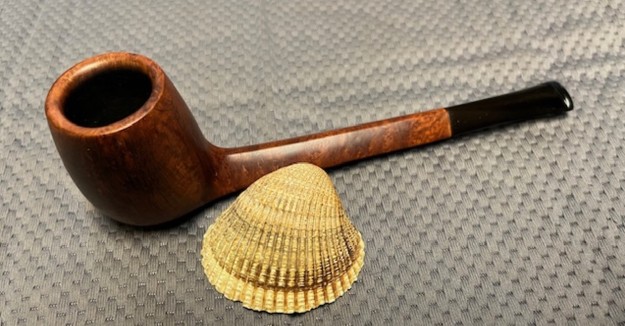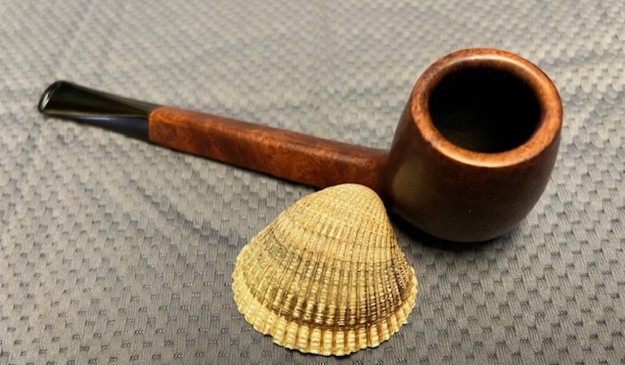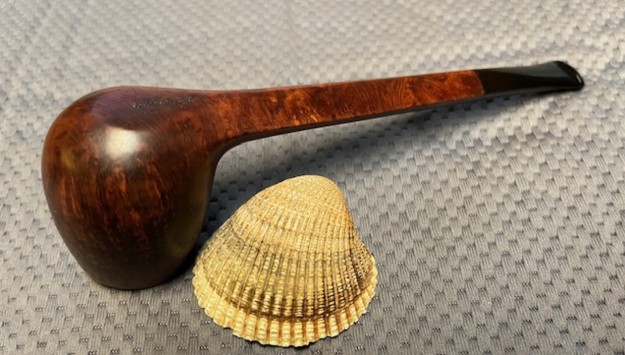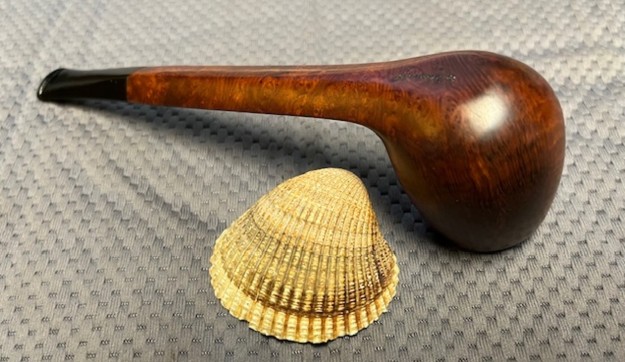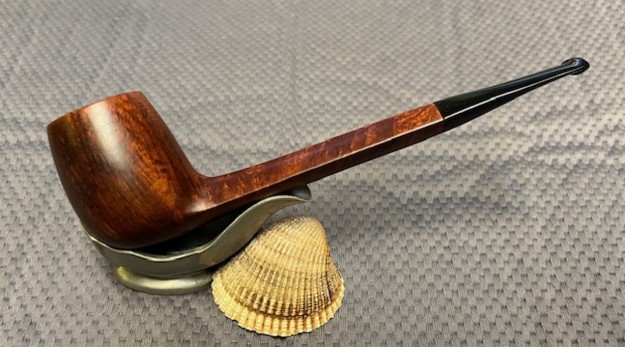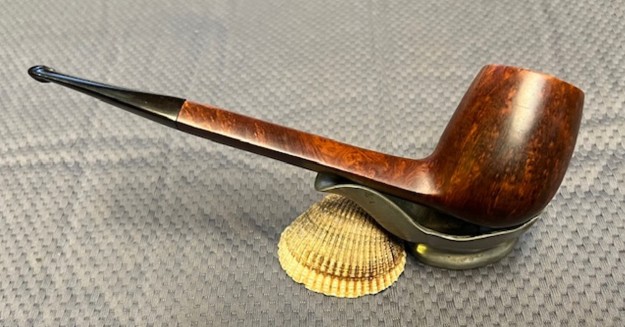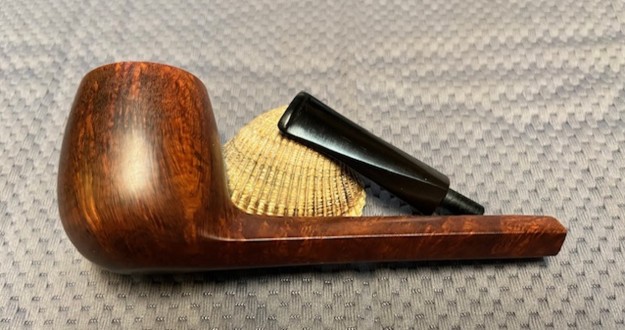
Tag Archives: reworking a damaged rim top

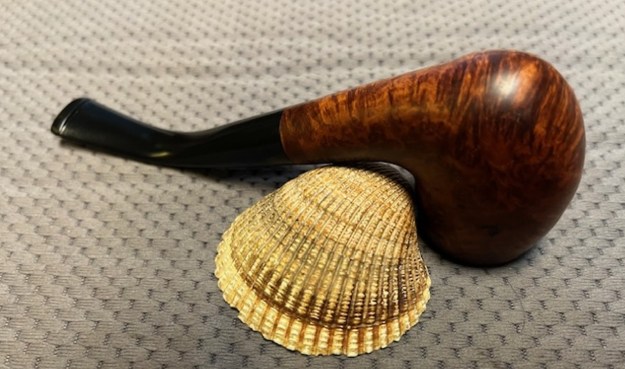
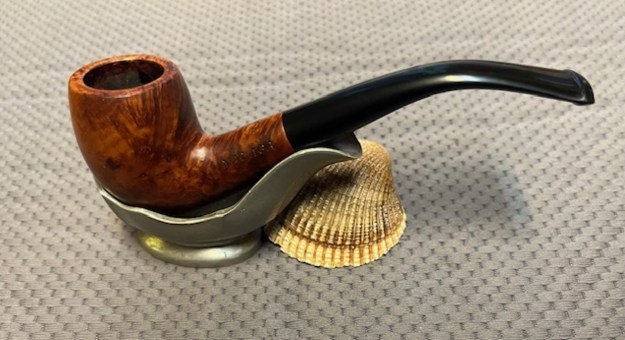
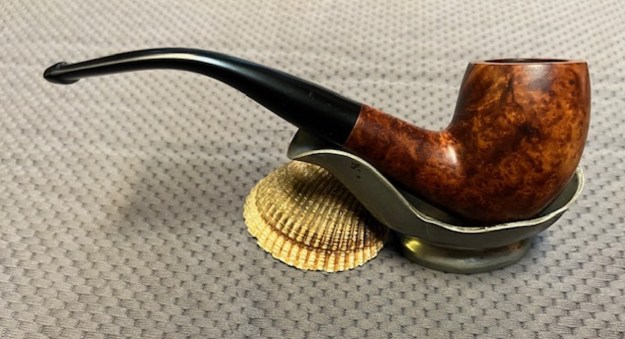
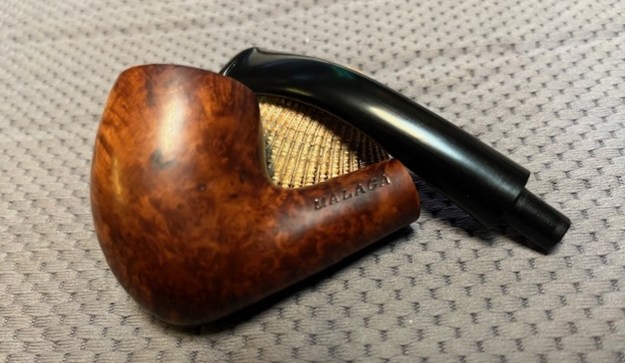
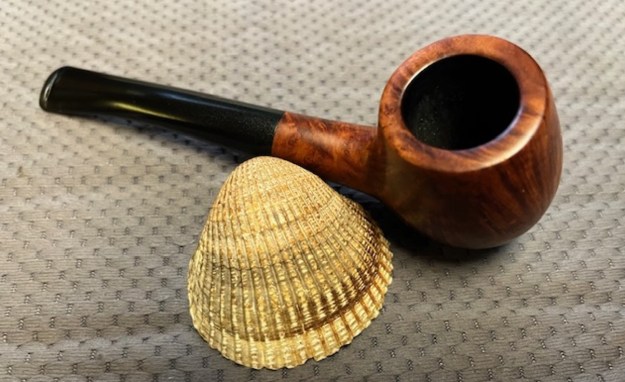
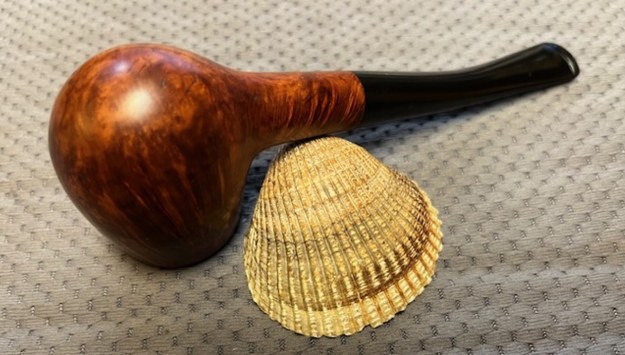
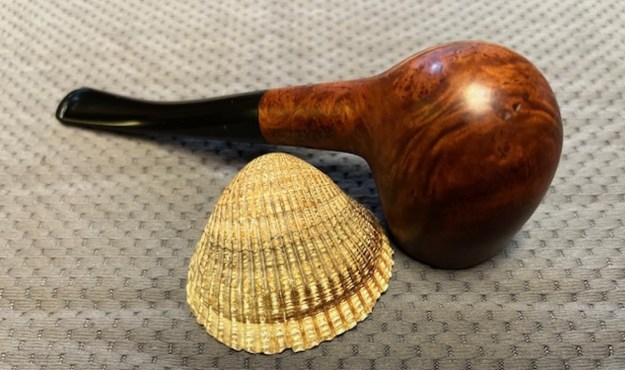
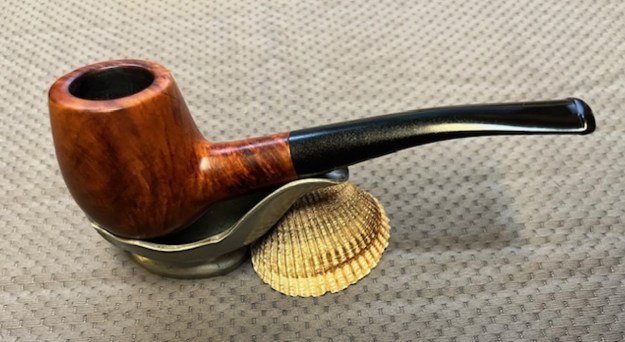
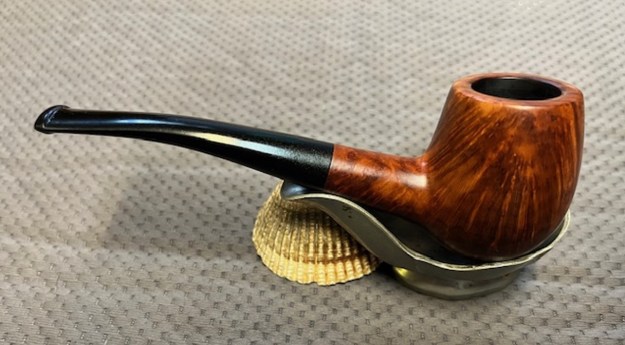
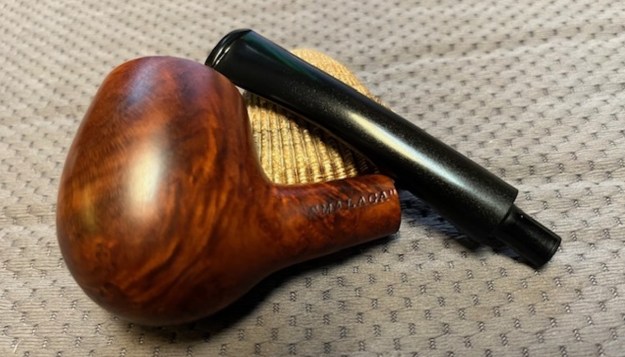
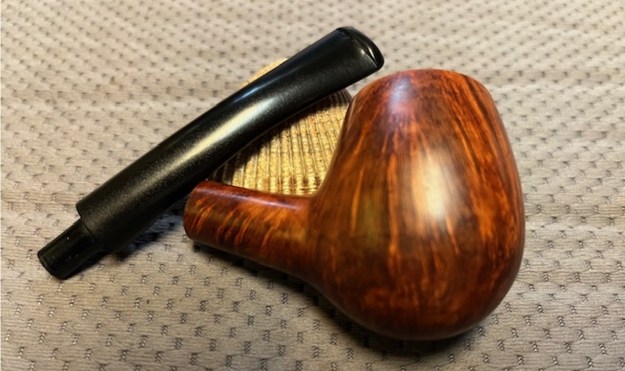
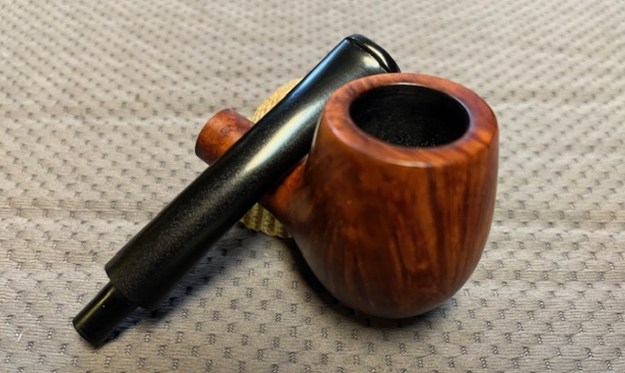
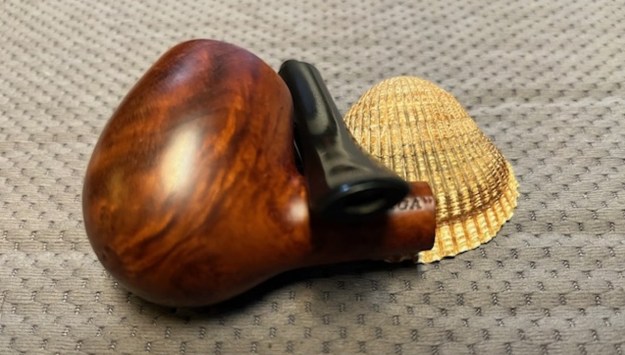
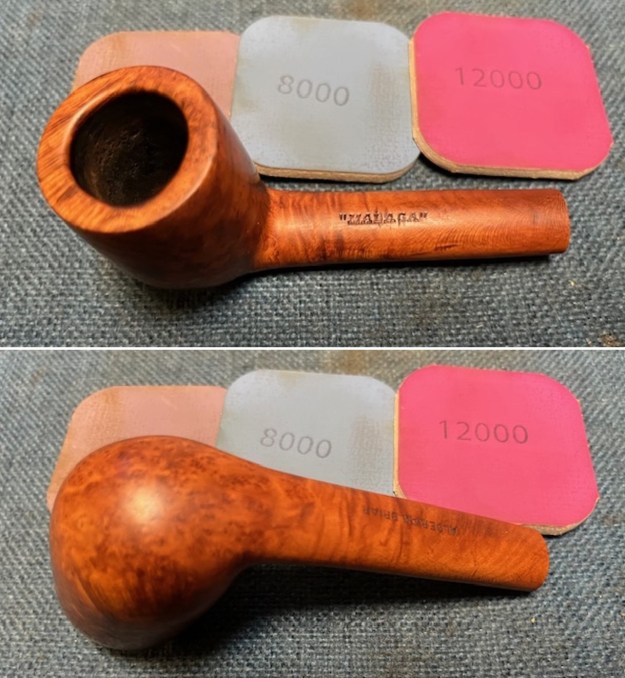
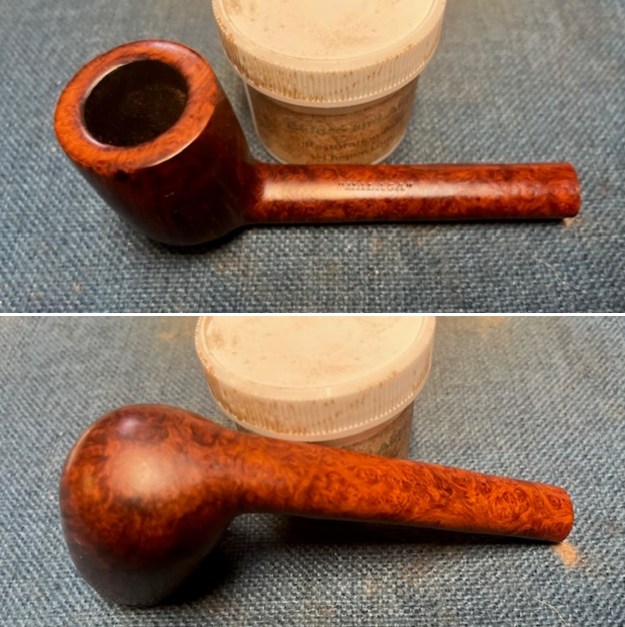
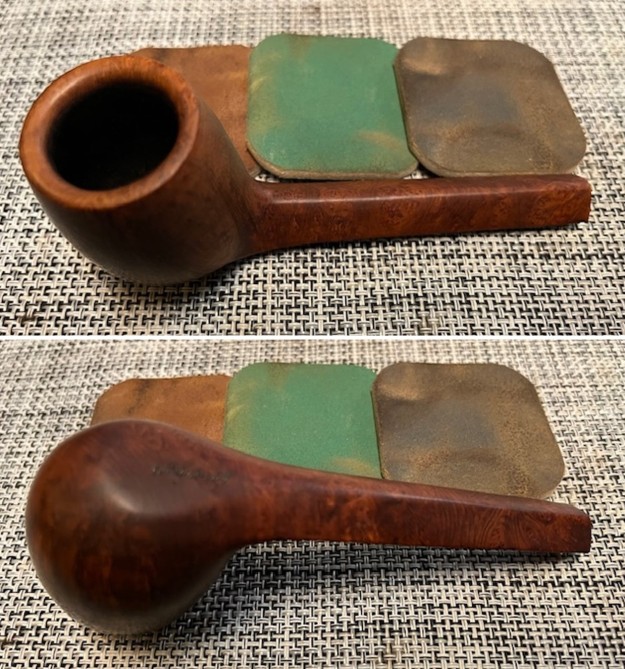
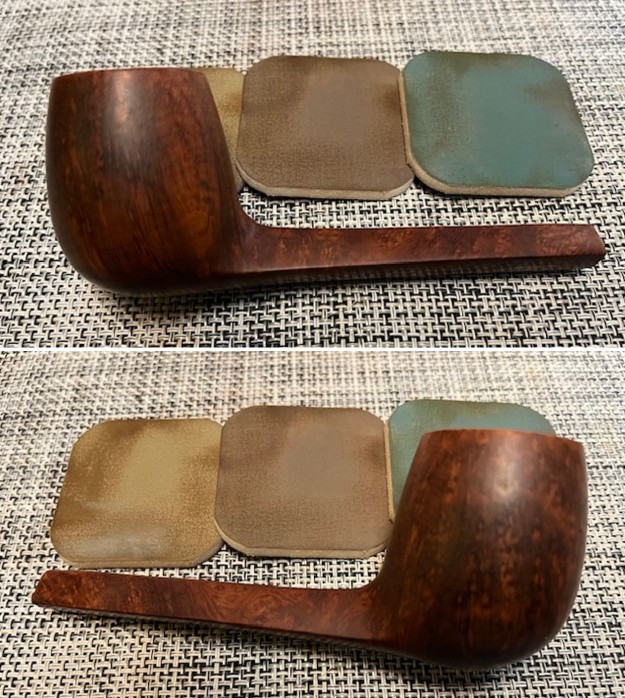
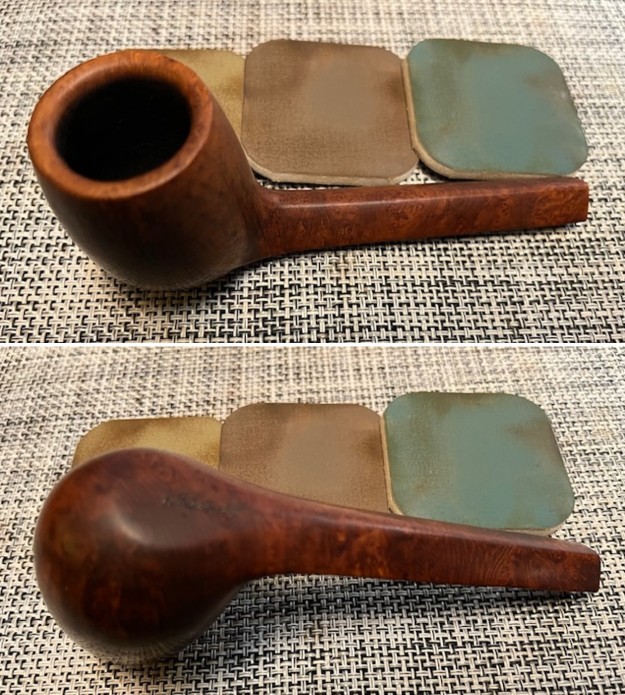
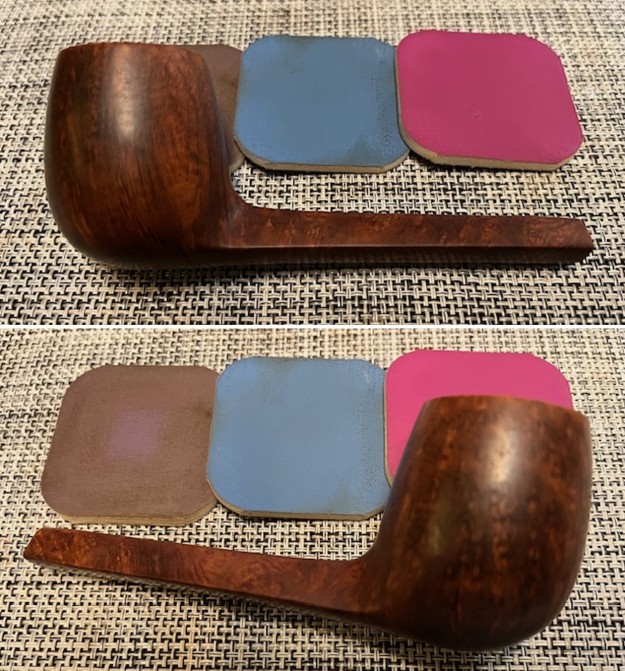
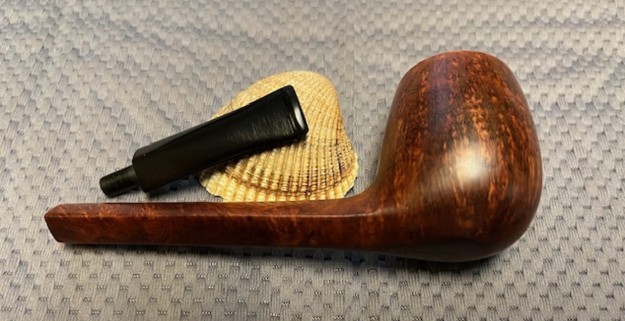
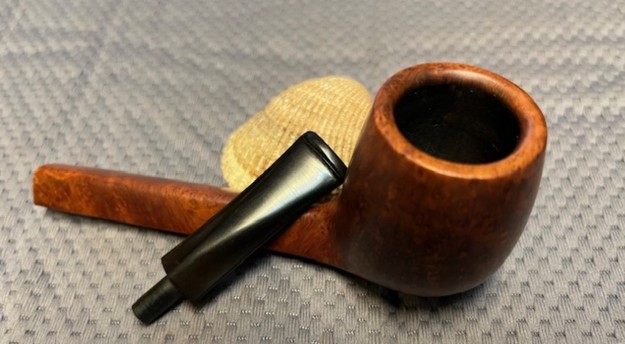
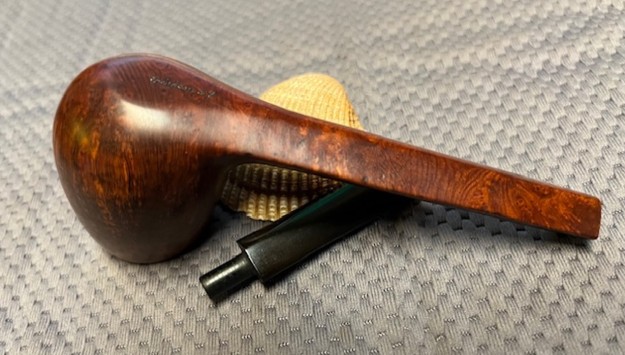
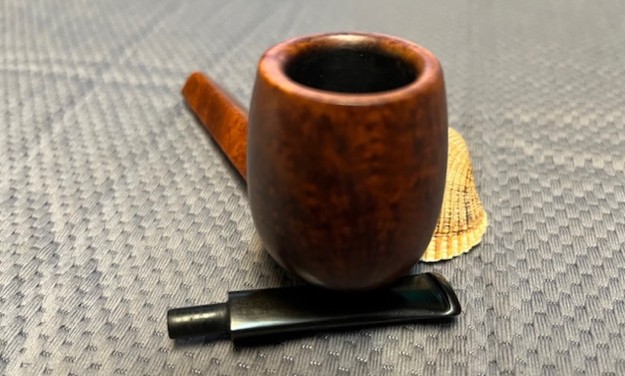
Breathing new life into another Beautiful “Malaga” M-2 Acorn


by Steve Laug

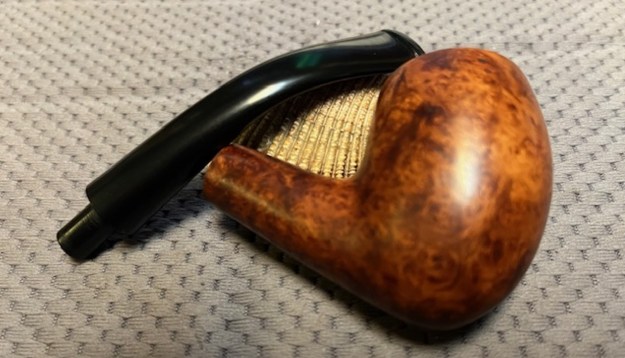
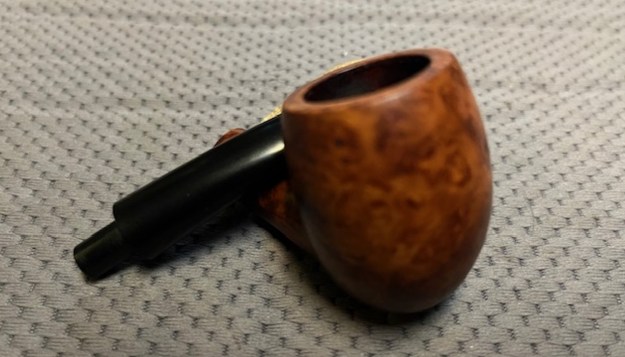
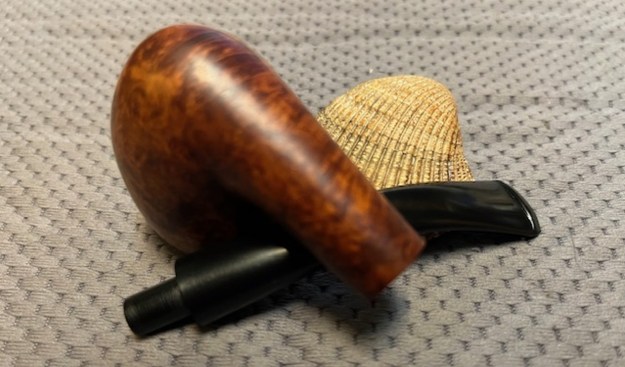
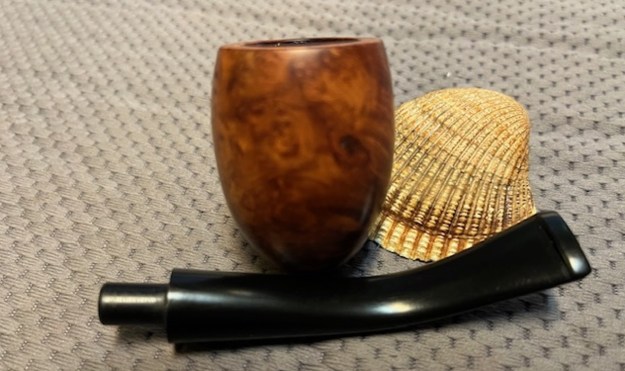
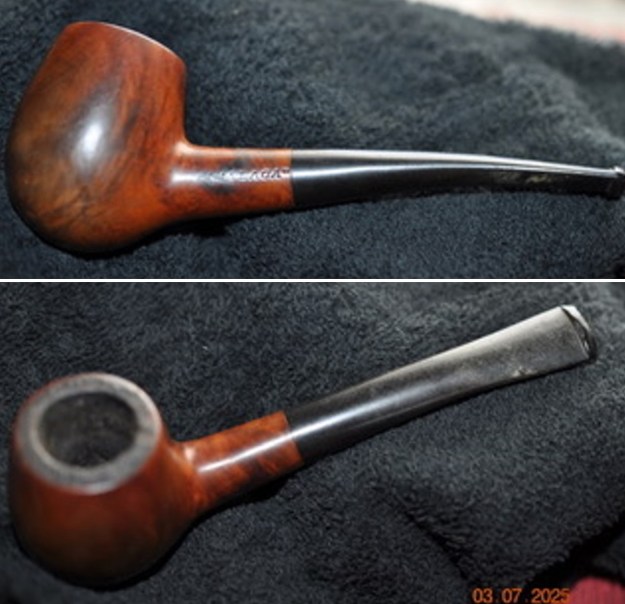
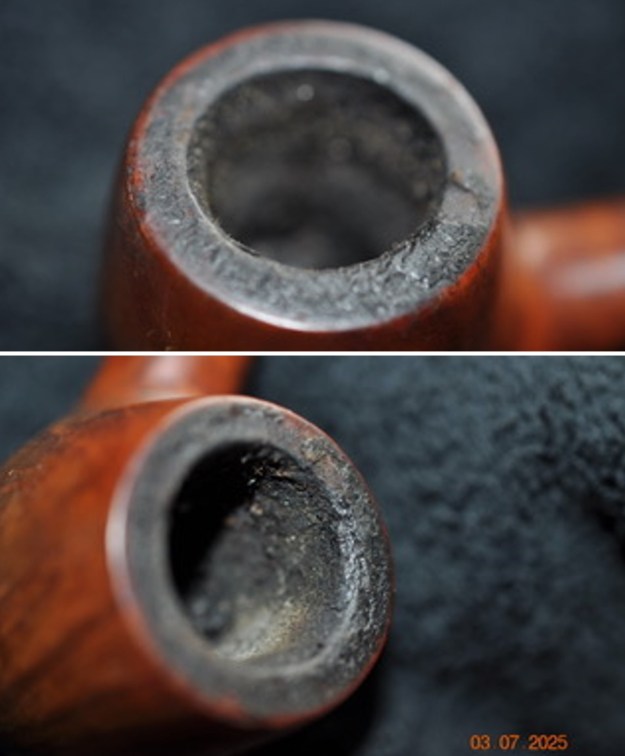
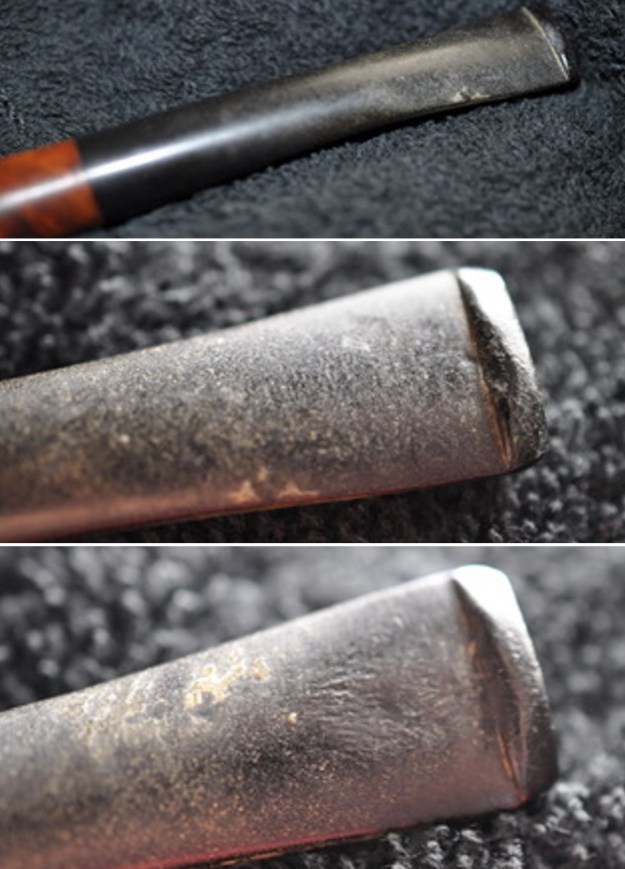
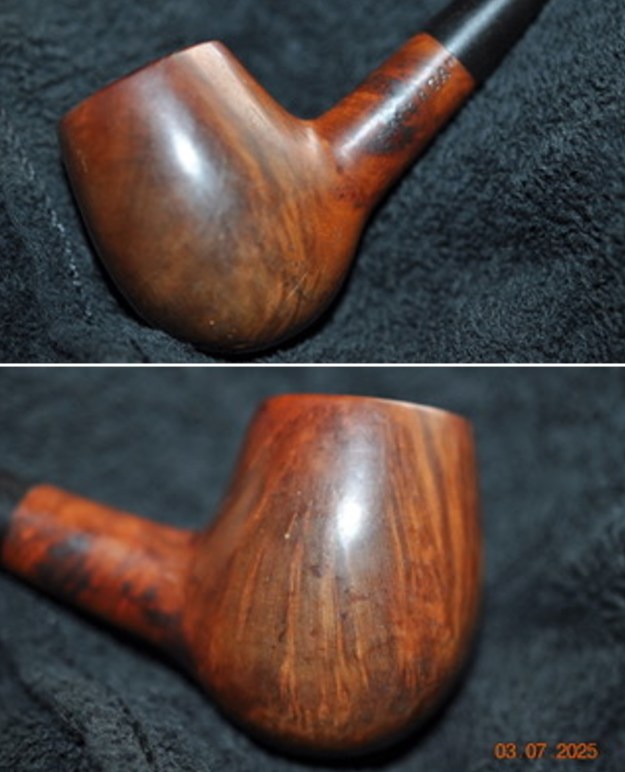
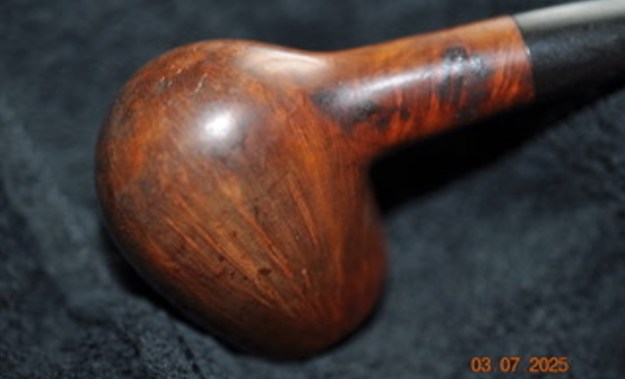
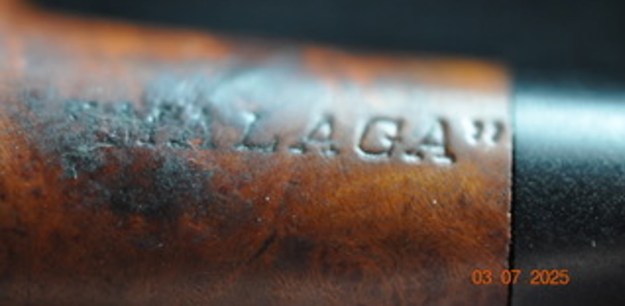
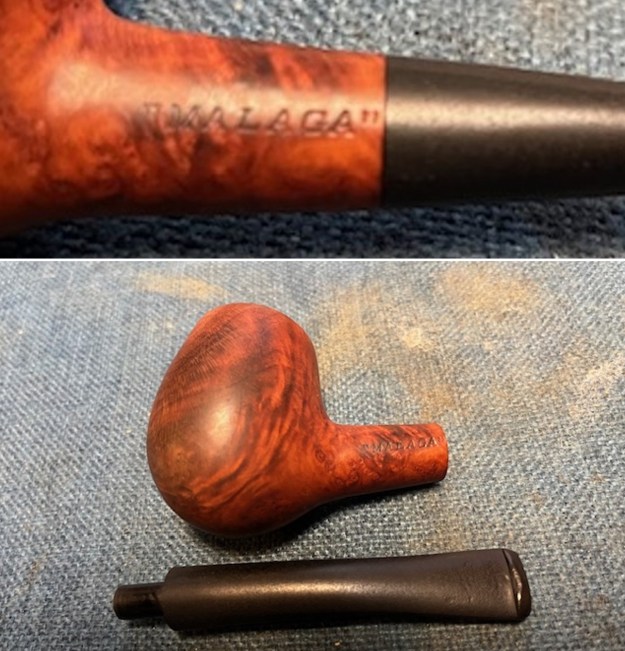
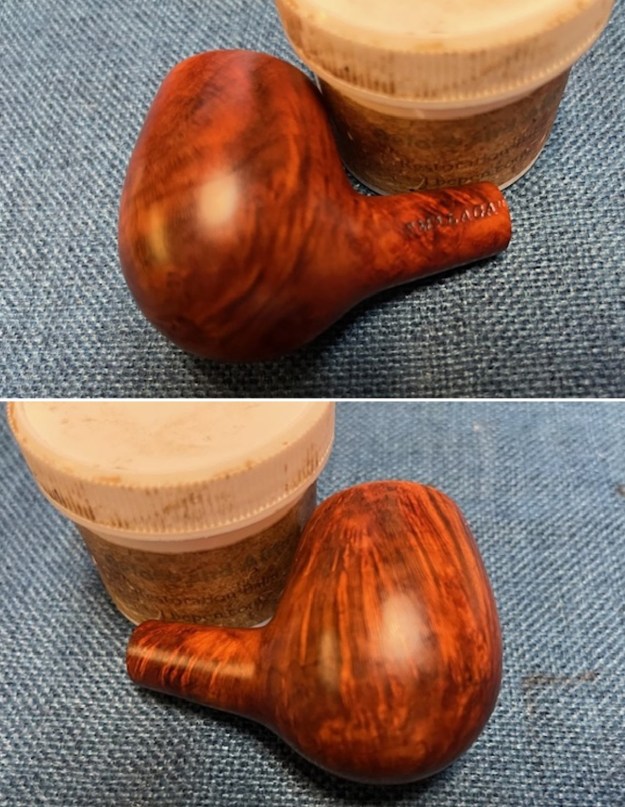
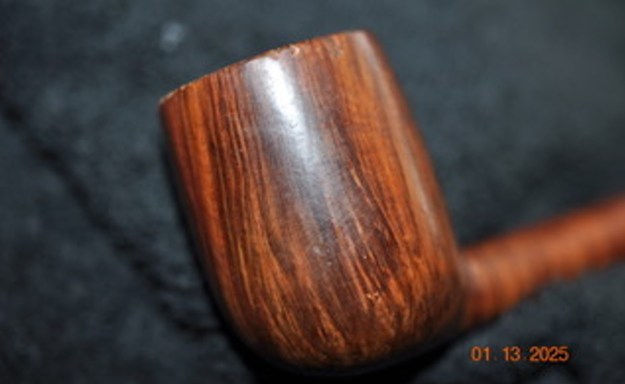
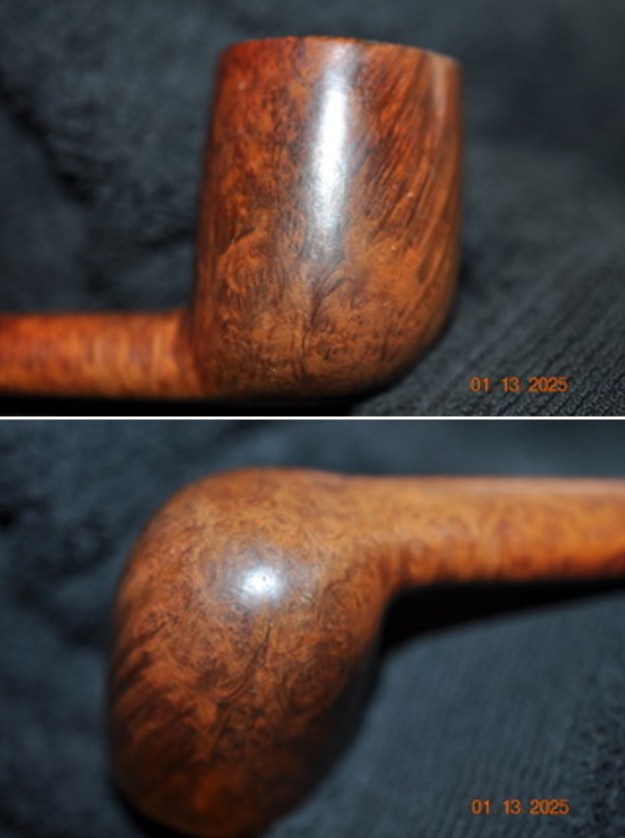
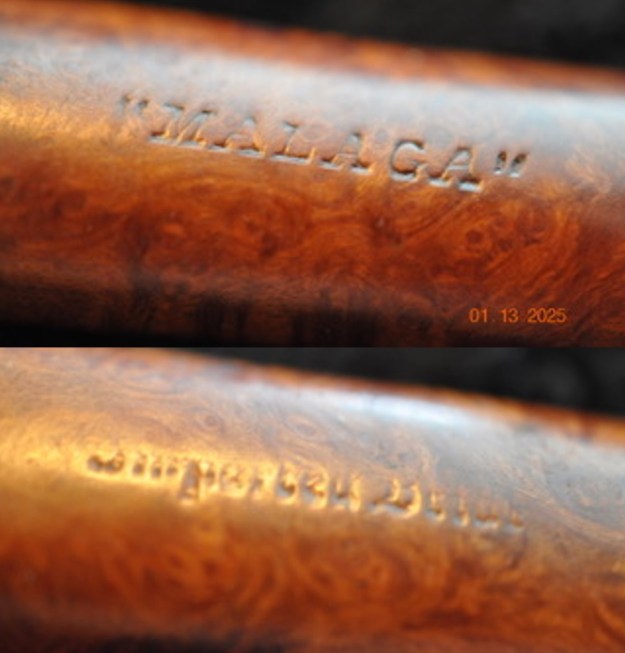
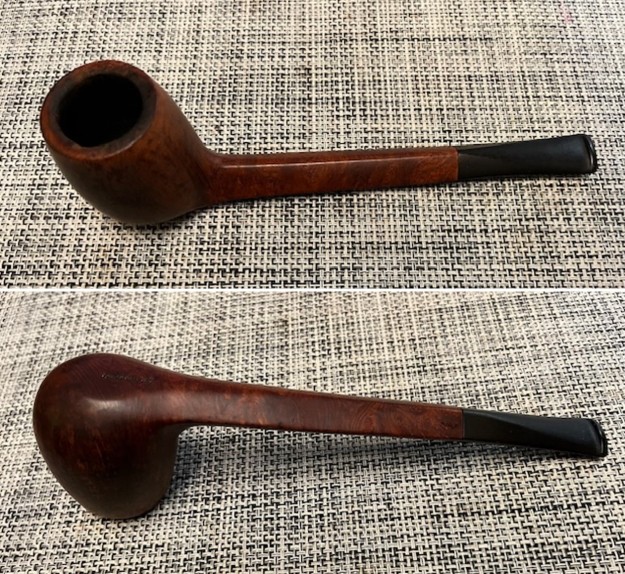
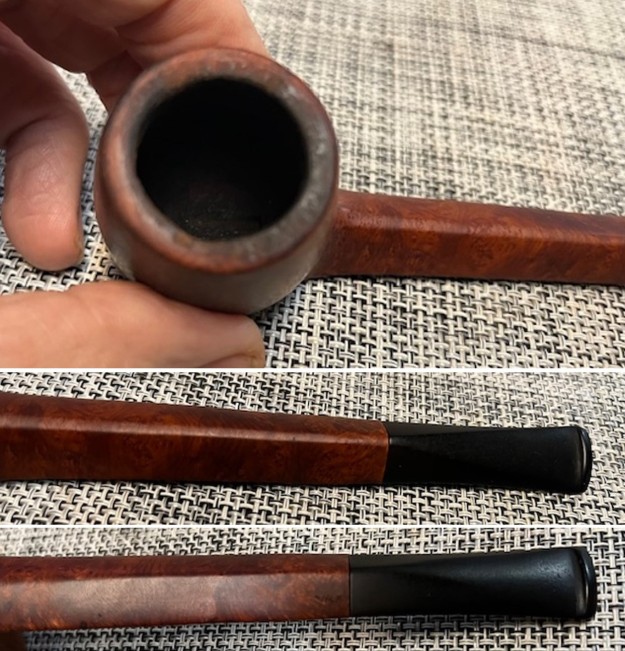
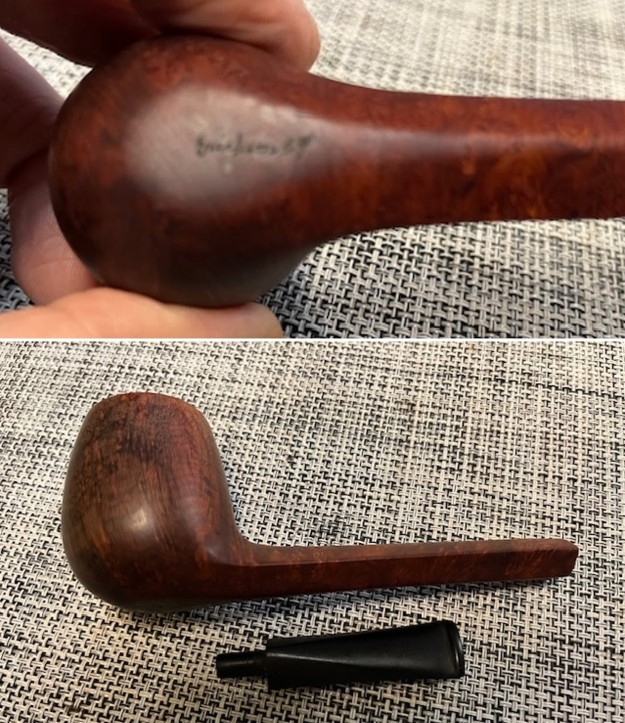
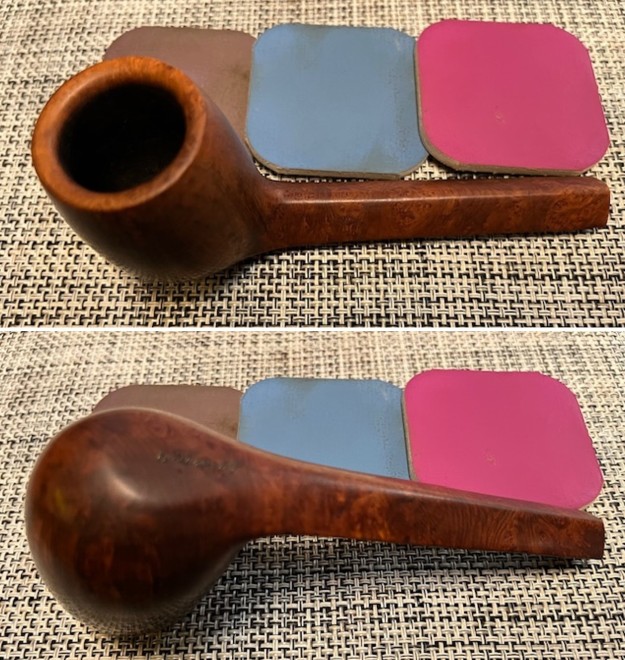
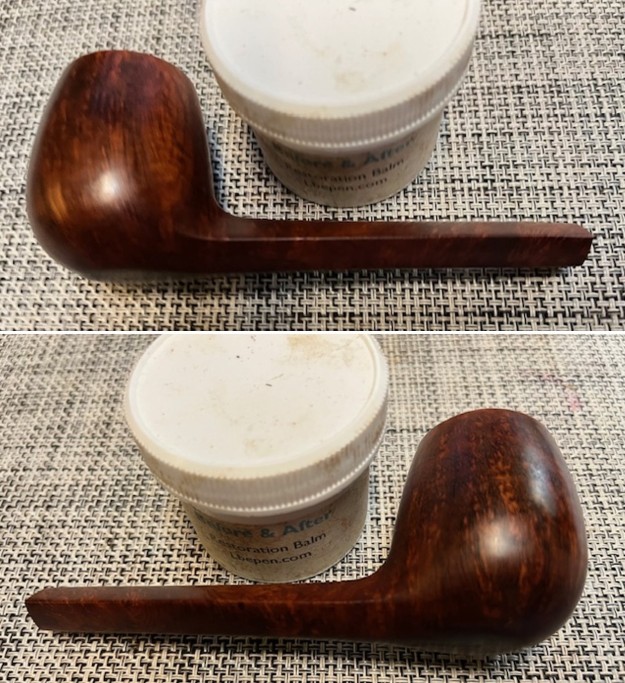
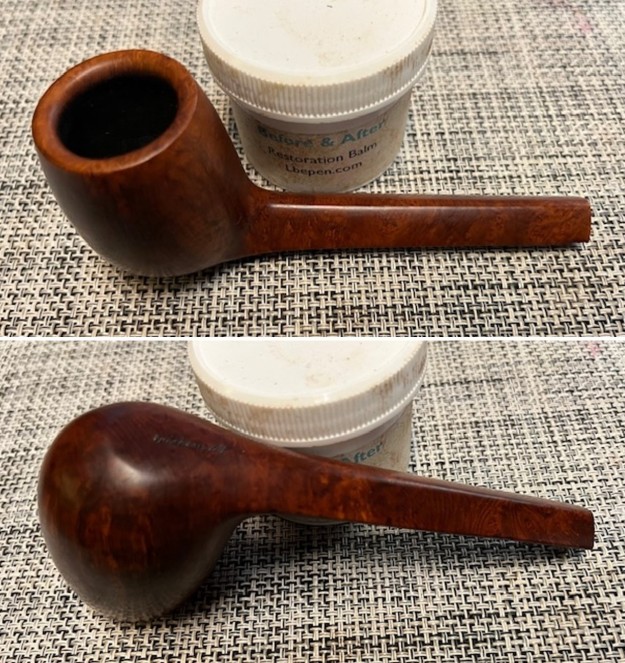
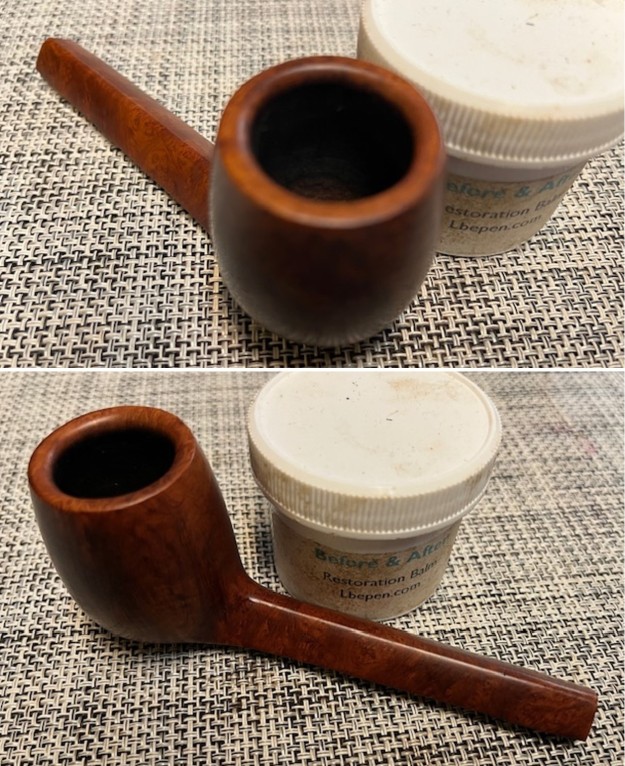
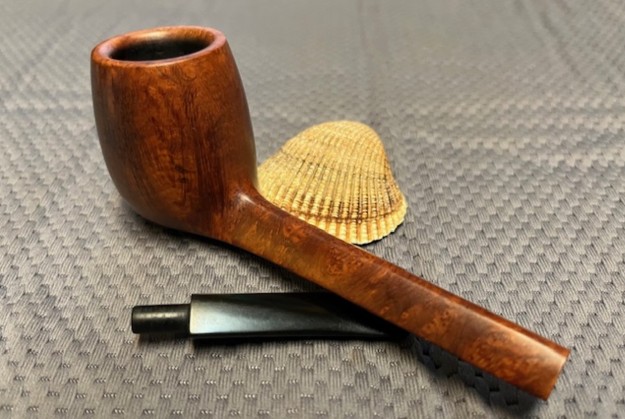
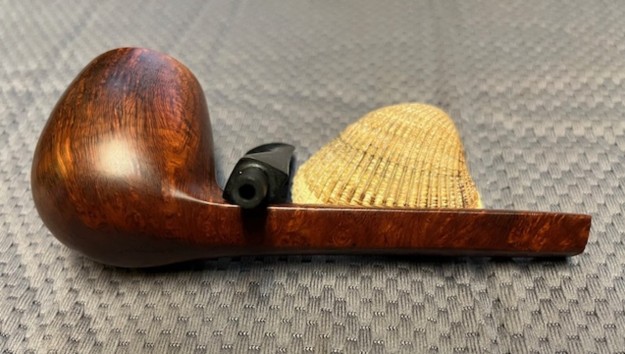
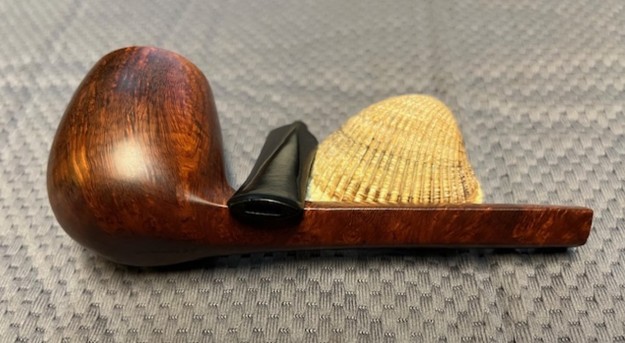
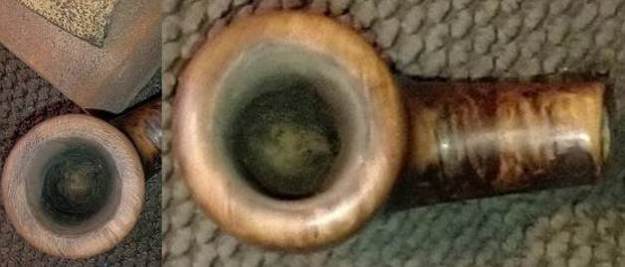
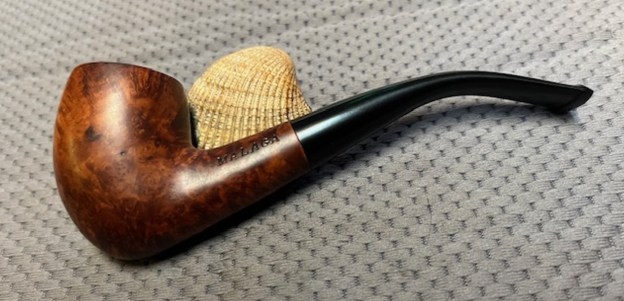
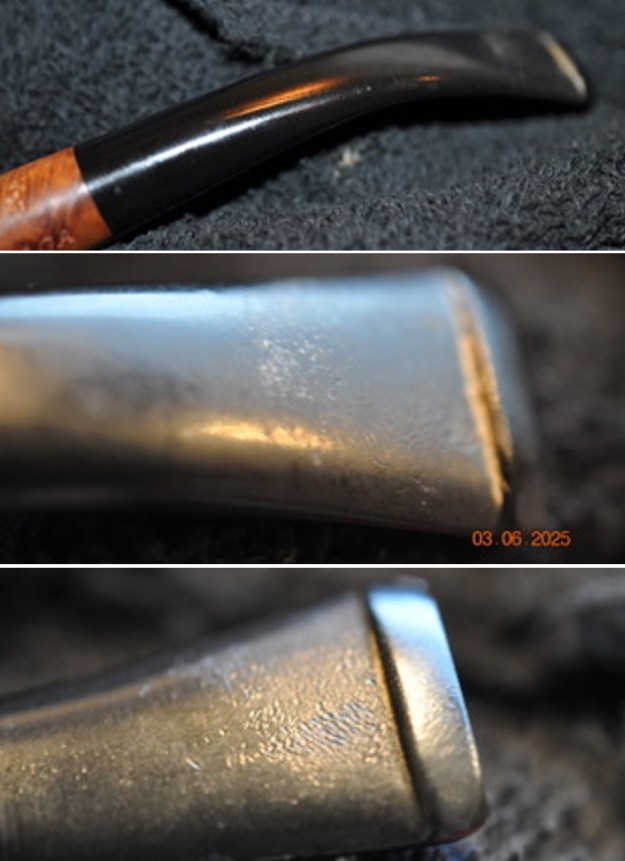
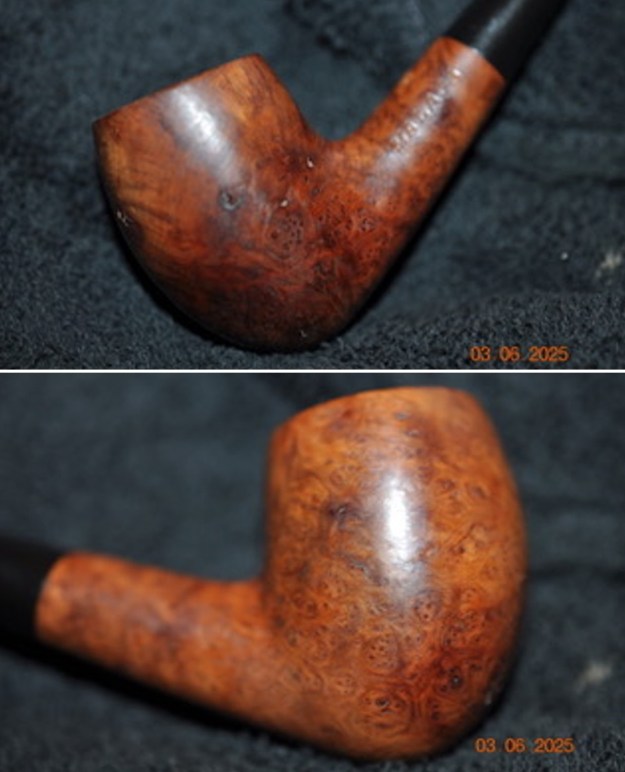
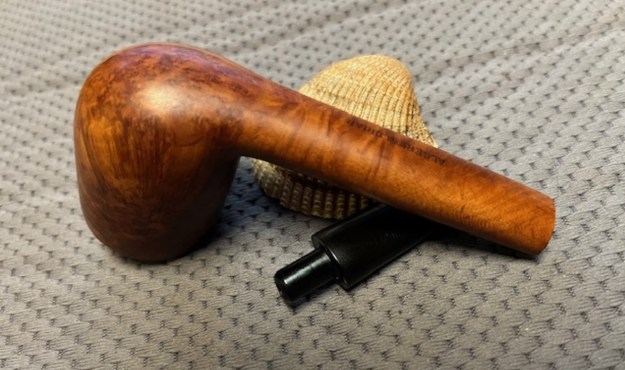
The “Malaga” Bent Acorn is next pipe on the table. We purchased it off eBay on 09/16/24 from a seller in Center Line, Michigan, USA. The carver did a great job of shaping the pipe to follow the grain on the briar. The acorn shaped bowl, round shank and quarter Bent tapered stem look very good. The bowl had a moderate cake that overflowed with a spotty lava coat on the rim and edges look good. The sides of the bowl and shank are very dirty with grime and oils from prolonged use. The grain around the bowl and shank appeared to be very nice mixed grain under the grime on the briar. The stamping on the left side of the shank read “MALAGA”. On the top of the shank just ahead of the stem junction it is stamped M-2. The stem had light tooth marks and chatter on the top and the underside of the stem ahead of the button. There was some light oxidation on the stem surface. Jeff took these photos before he started the cleanup work on the pipe.Jeff took close up photos of the bowl and rim to capture the condition of the pipe before he started his cleanup work. The rim top had thick lava overflow. The outer edge looked to be in decent condition. The stem is oxidized, calcified and has tooth marks and chatter on both sides. He also took a photo of the side and bottom of the bowl and shank to show the beautiful grain around the bowl. The photos show the general condition of the bowl and dirt and wear on the rich oil finish. You can also see the flaws in the briar which explains the M-2, or second designation. It is very dirty but this is another beautiful pipe. Jeff took a photo to capture the stamping on the left and top side of the shank. The photo shows the stamping “MALAGA” on the left side and M-2 on the top side of the shank. The stamping is very readable under the heavy grime.Before I started working on the pipe itself I went back and reread what I had found when I had worked on many of the Malaga pipes that had come across my work table. I am including a few pieces of information that I have gathered in the process.
For those of you reading this blog who are unfamiliar with the brand, I am including the link to a previous blog that I wrote. It gives some of the history of the Malaga brand and the Malaga Pipe Shop in Royal Oak, Michigan in the USA. Here is the link – https://rebornpipes.com/tag/malaga-pipes/.

I have also included a link to a catalogue and the history of the pipemaker George Khoubesser. If you are interested to learn more, then I invite you to follow the link to get a feel for the brand and the pipemaker.

George Khoubesser (picture to the left) started Malaga Briar Pipe Company and located it in Royal Oak, Michigan in the USA in 1939. It closed its doors for the last time in 1999 after 60 years in business. I have an old Malaga Catalogue that I scanned and put on the blog (https://rebornpipes.com/2013/02/09/george-khoubesser-and-malaga-pipes/). The catalogue describes the manufacture of the pipes as follows:

Painstaking caution is exercised in selecting flawless, perfect briar wood for the purpose of making and Curing of the “Malaga.” You can be certain of this fact, because none other than the choicest and finest select briarwood will withstand the “Malaga” Curing process. Other than the choicest quality and grain, will split wide open in the Curing vats… The Curing method renders all “Malaga” pipes, light in weight… Most all “Malaga” Senior pipes are left in their natural state; except for a skillful waxing which brings out the rich beauty of the virgin grain. No artificial polishing stain, shellac or varnishes are added. Malaga closed in 1999 after 60 years in business.

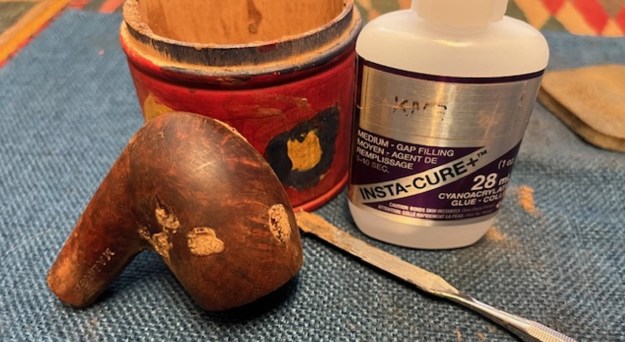
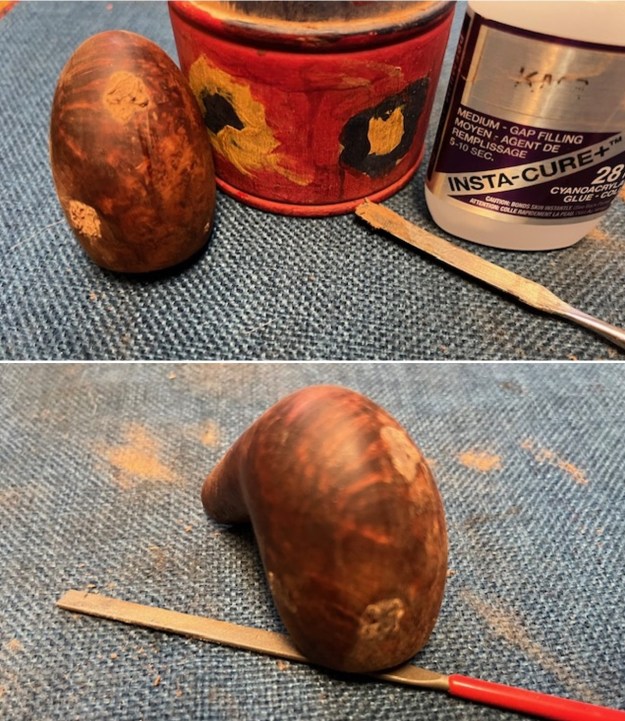
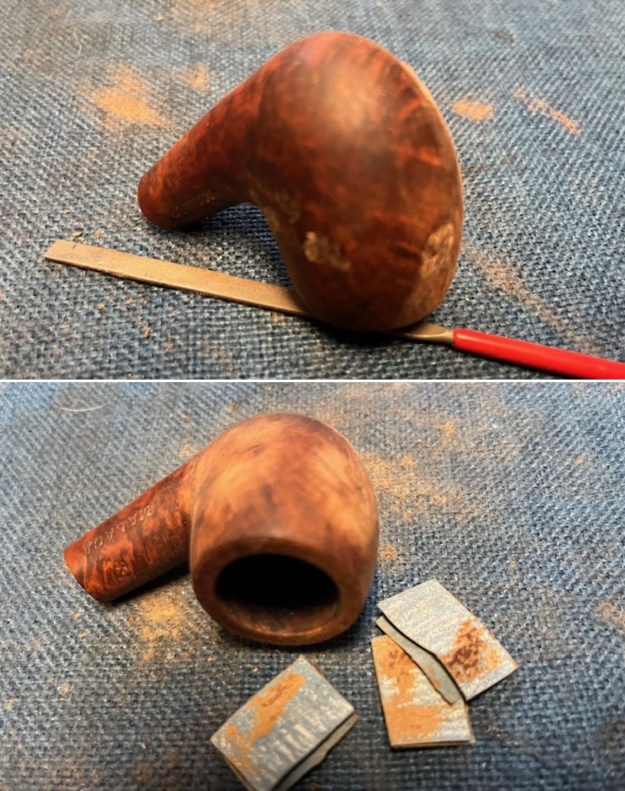
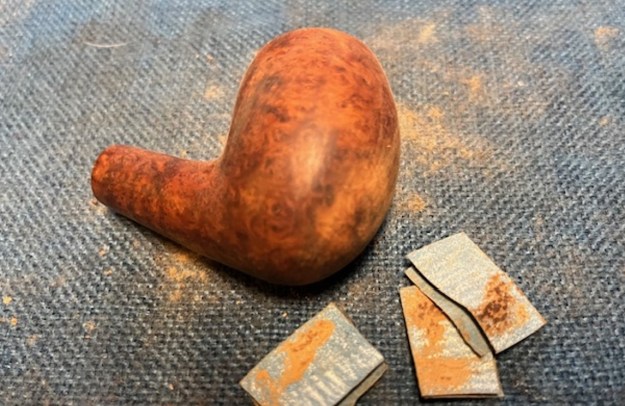
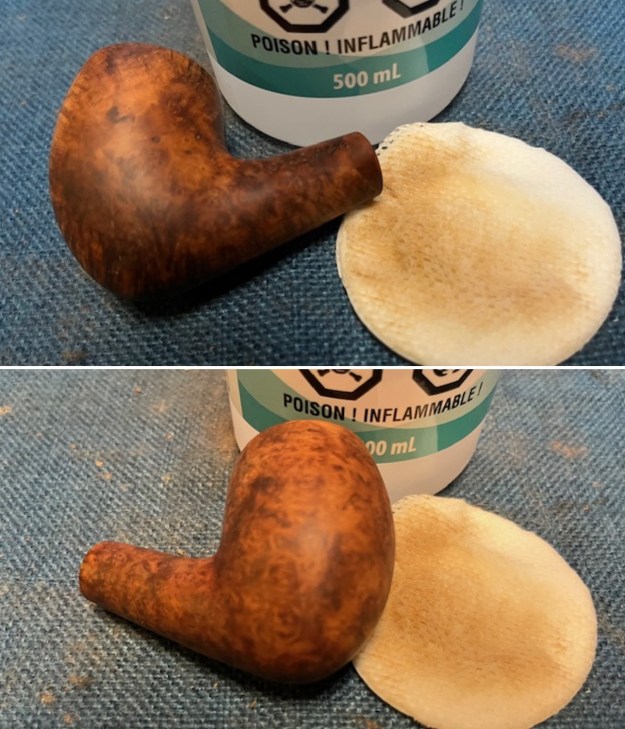
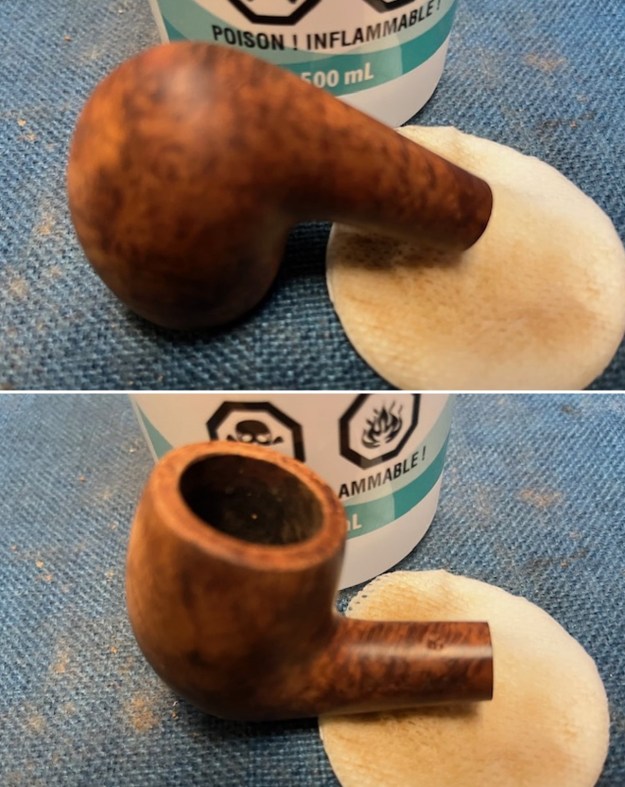
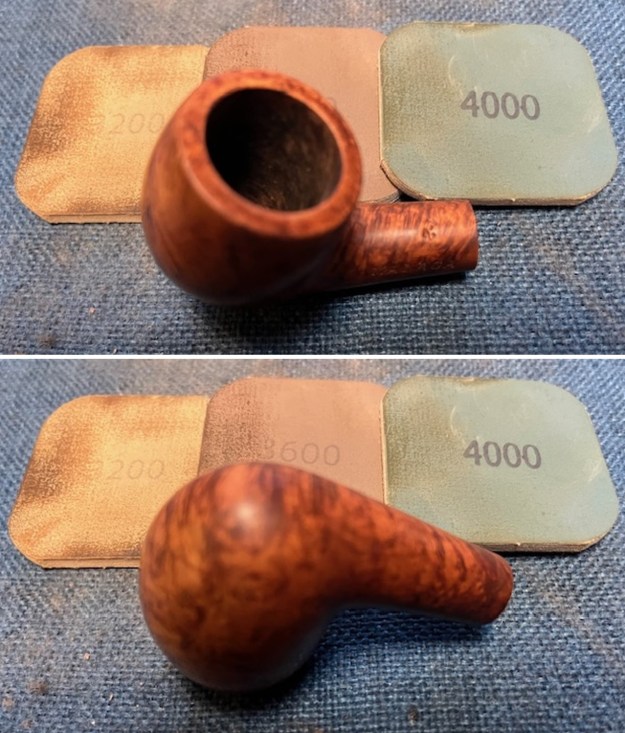
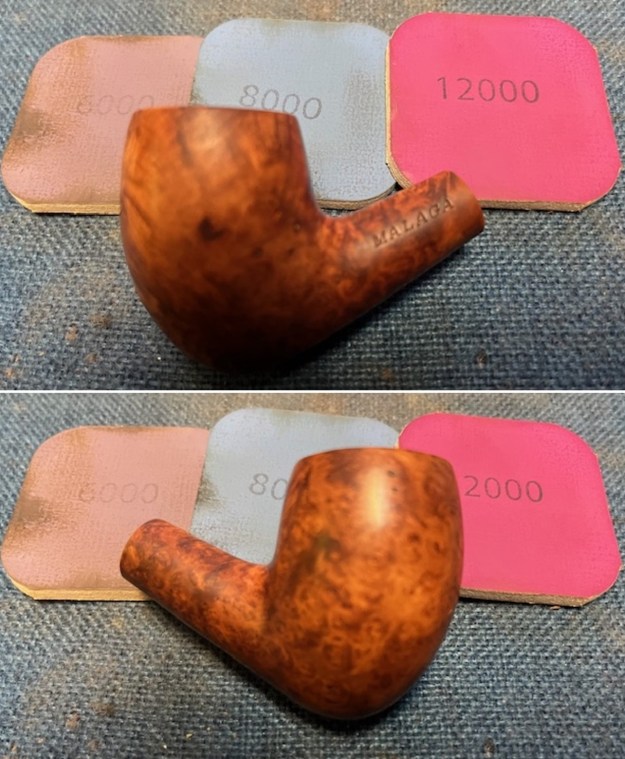
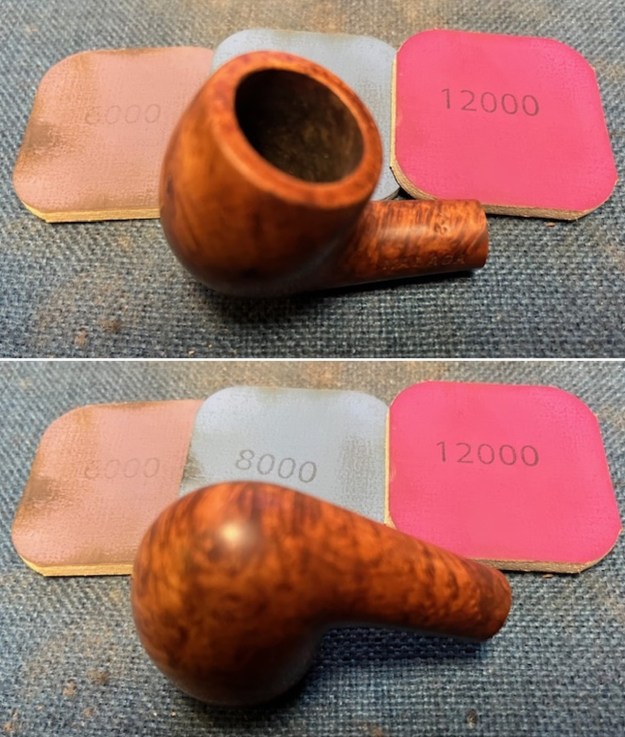
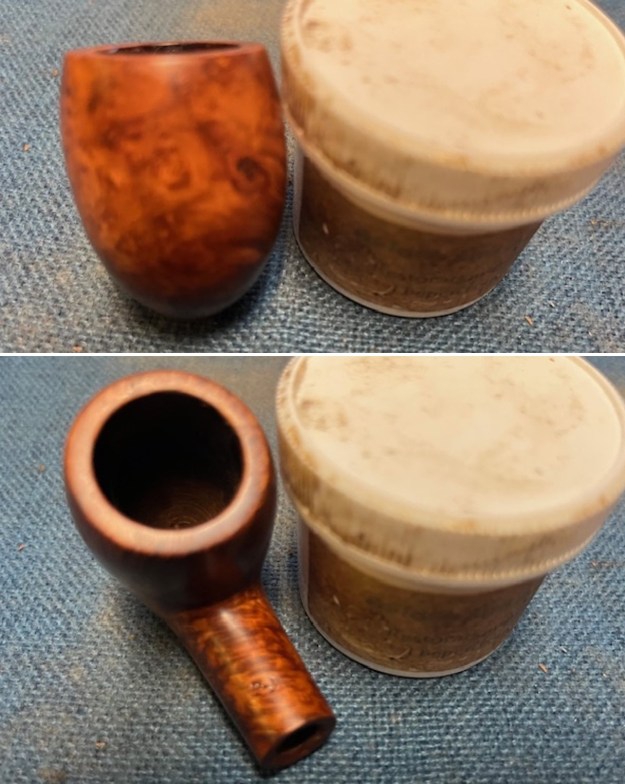
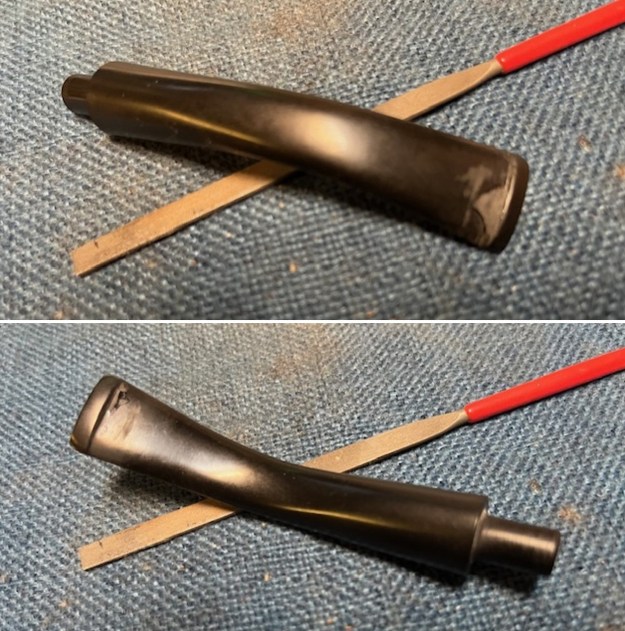
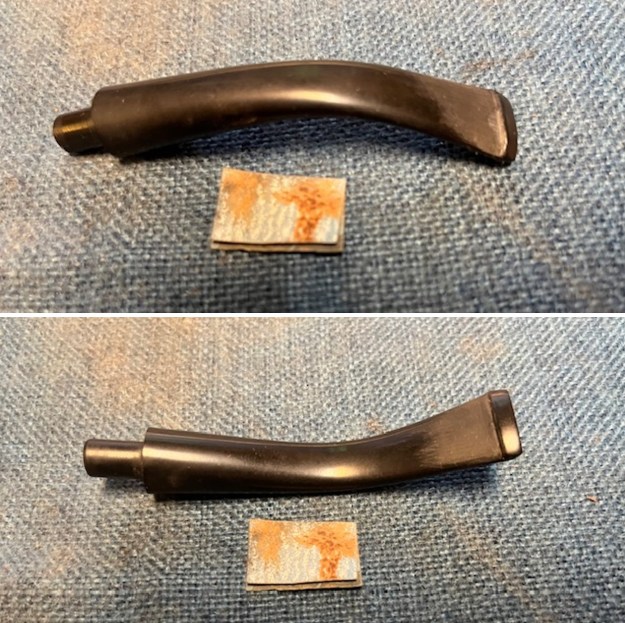
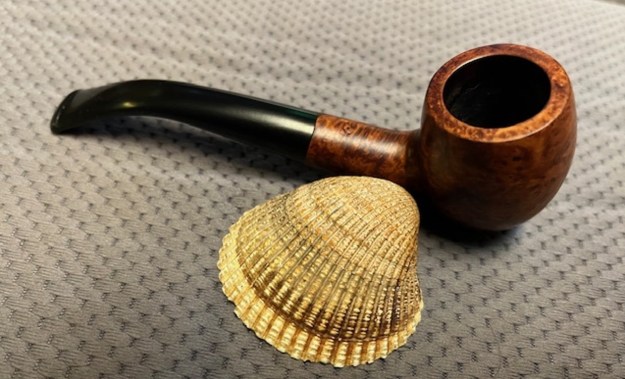
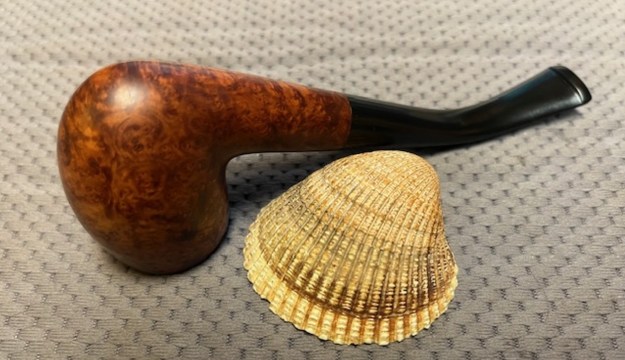
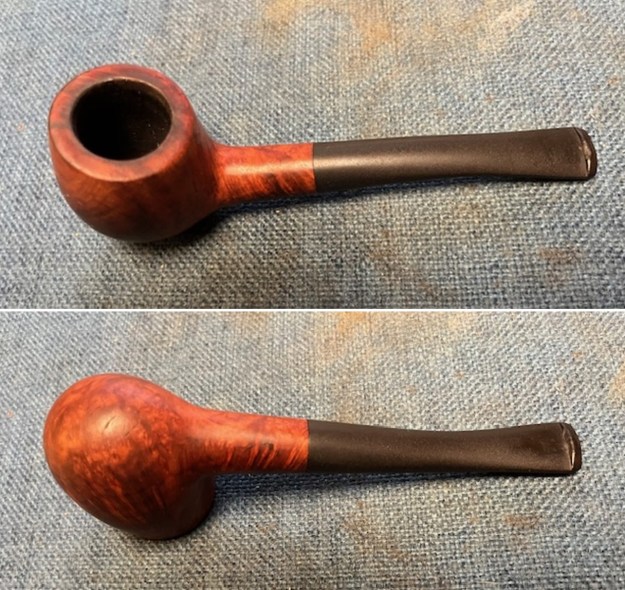
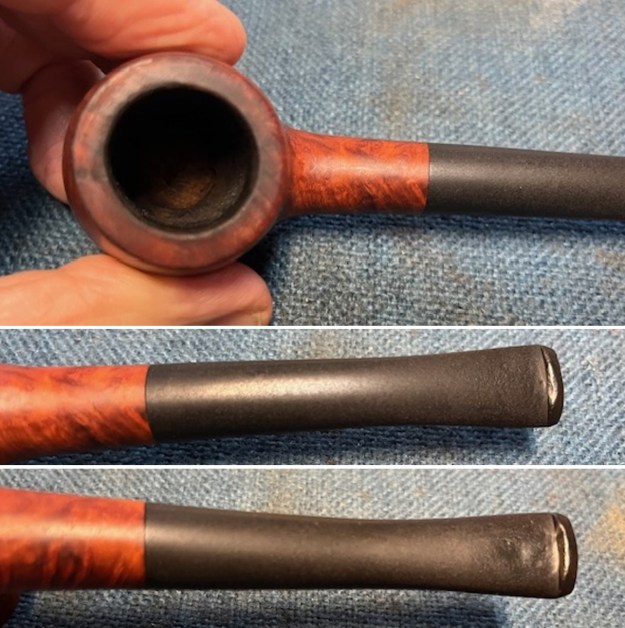
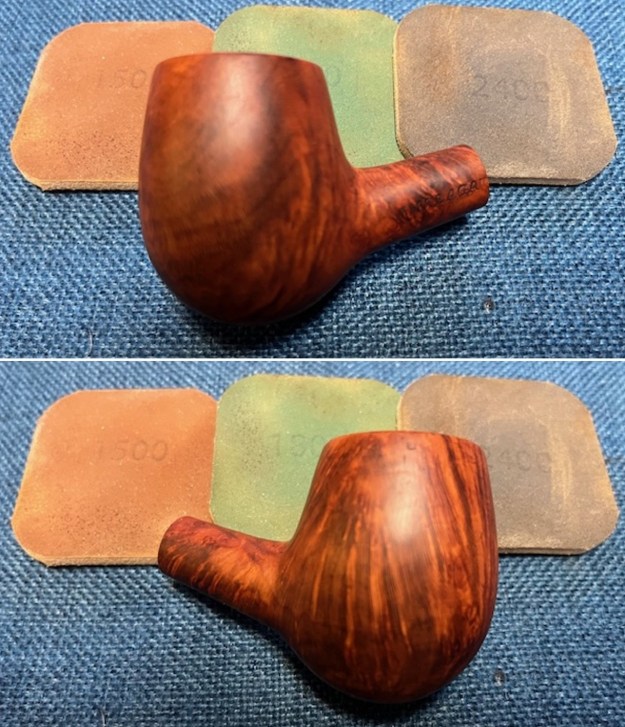
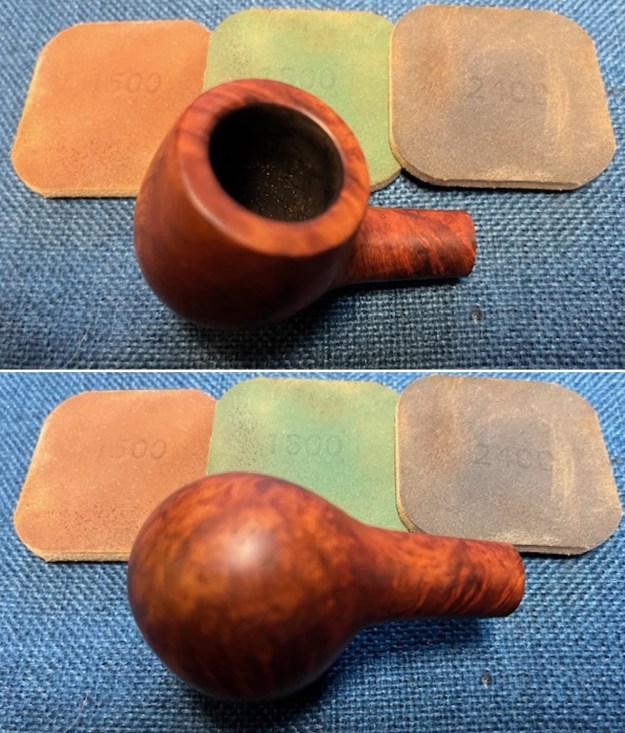
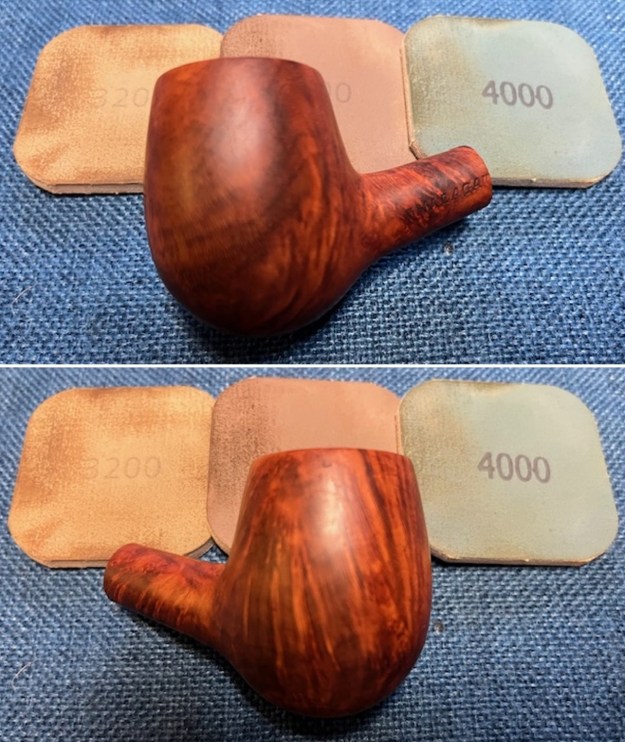
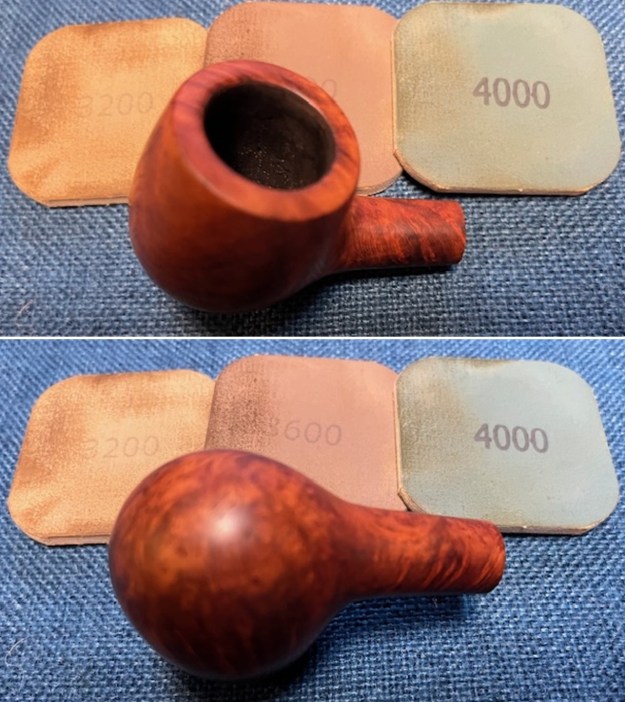
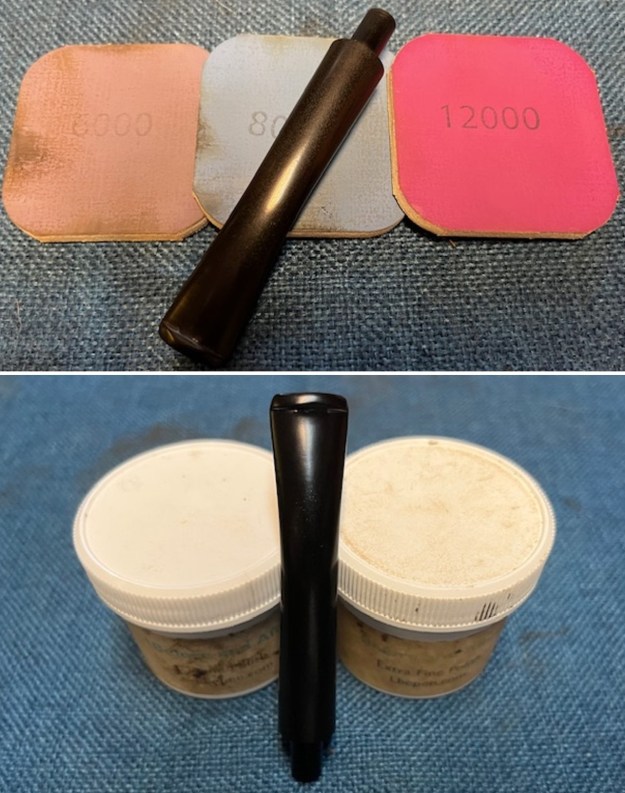
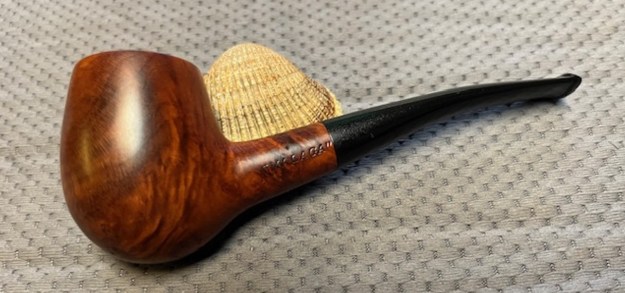
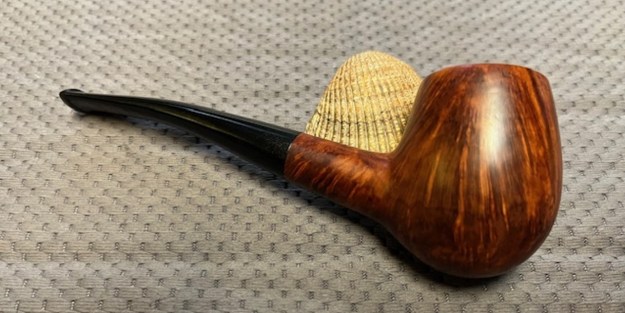
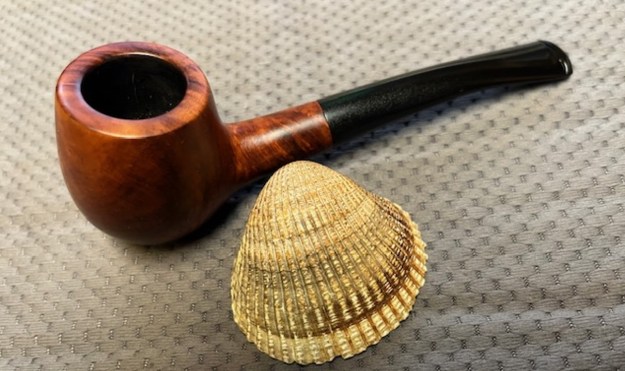
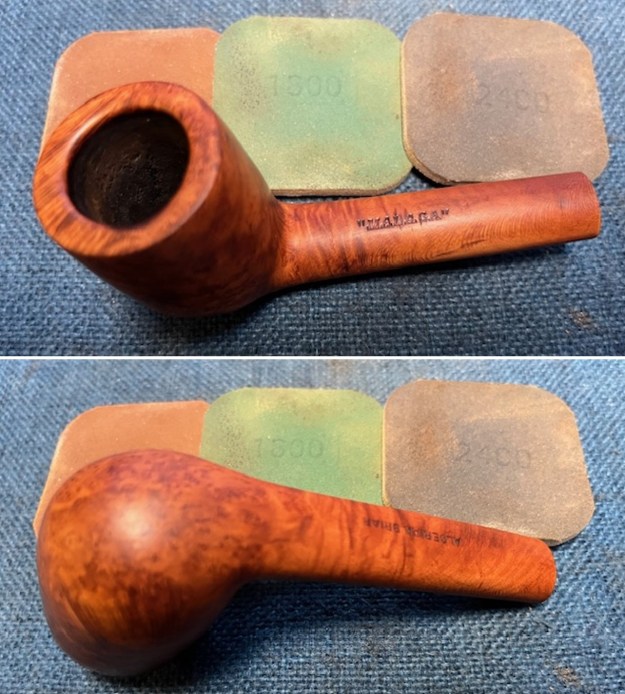
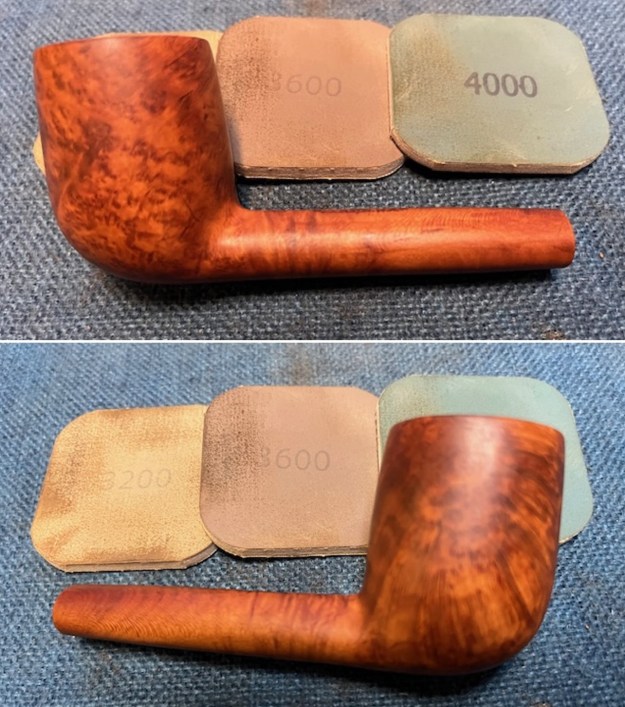
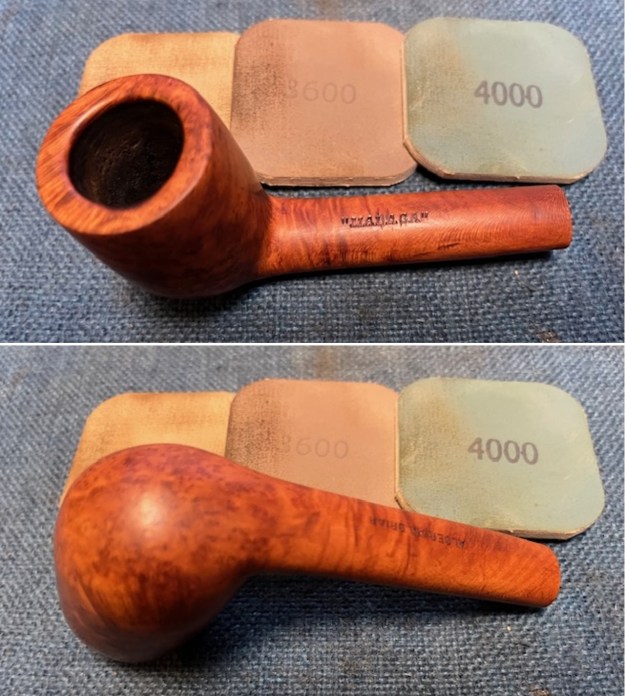
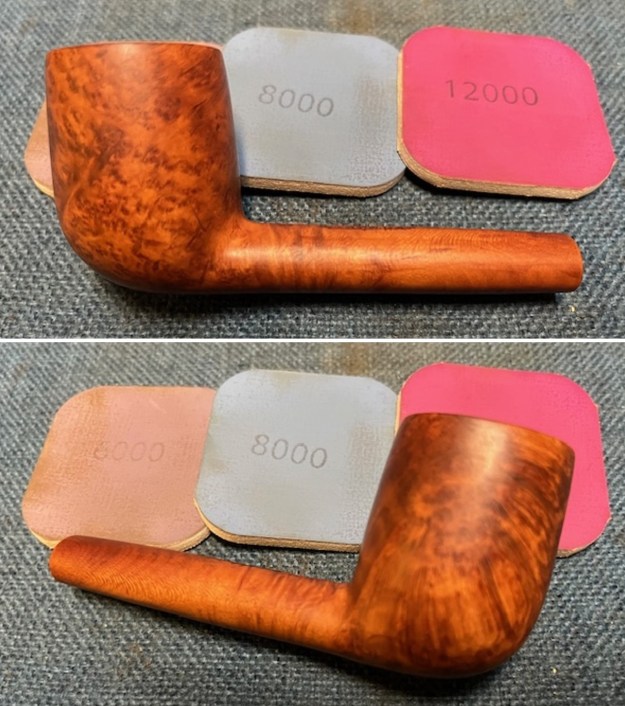
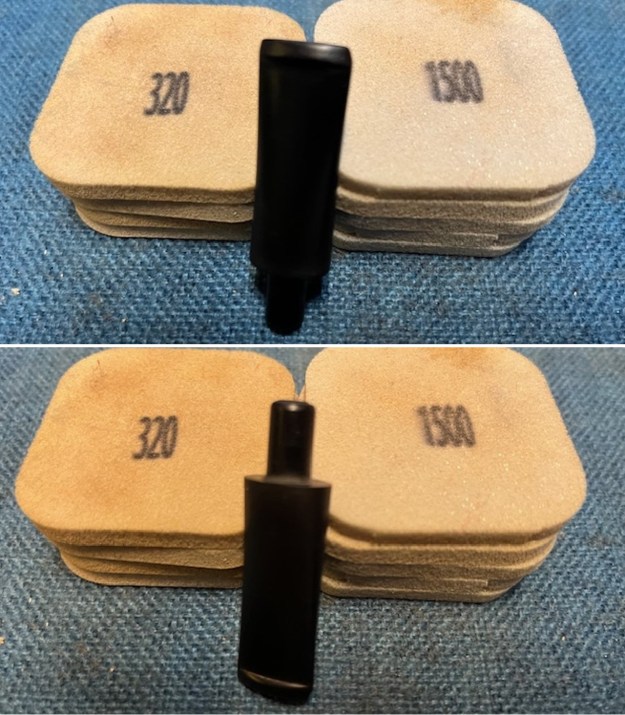
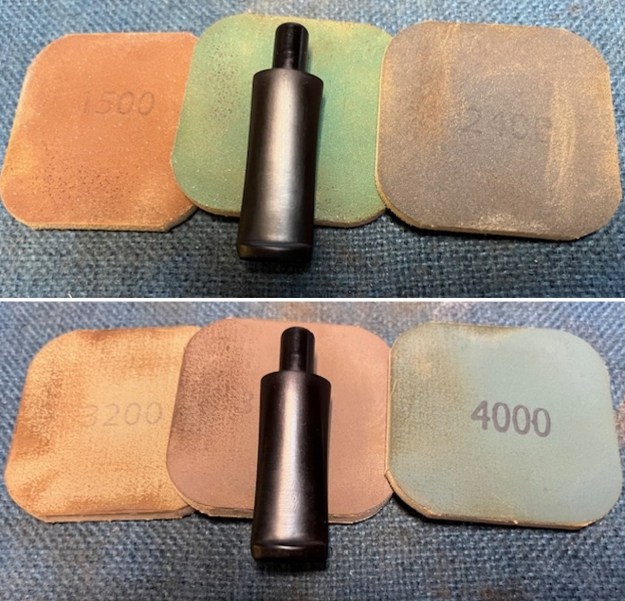
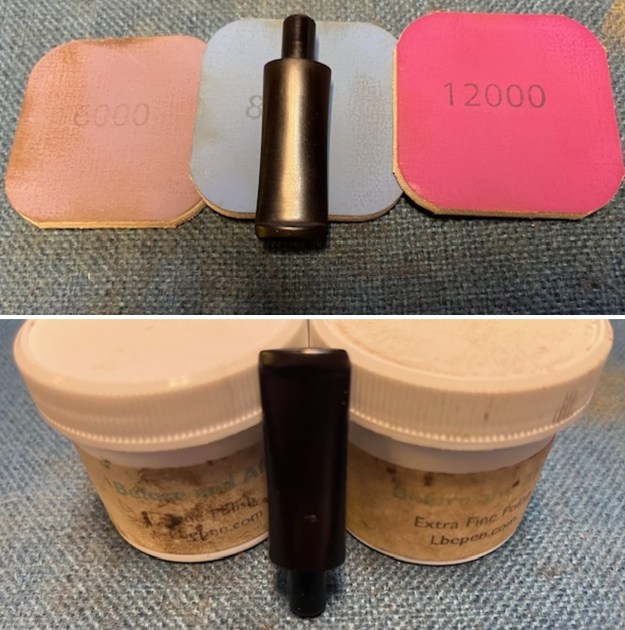
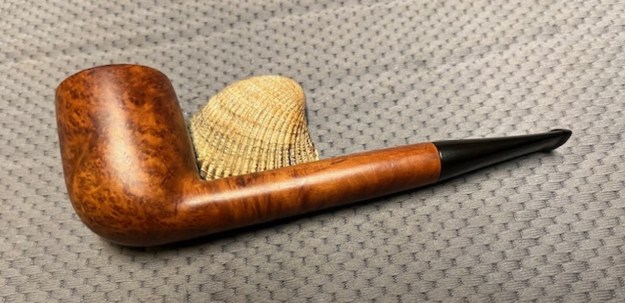
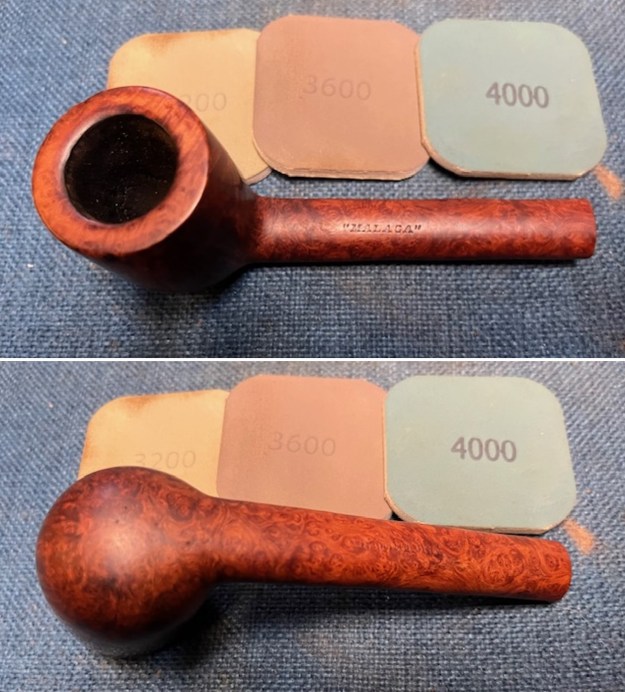
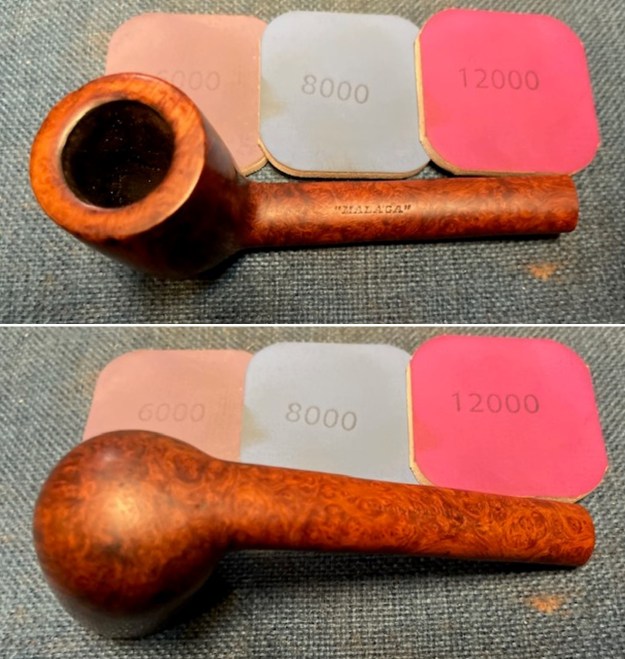
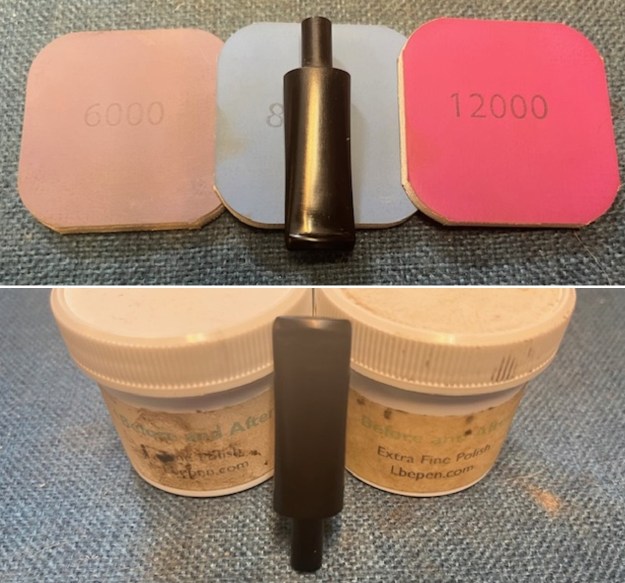
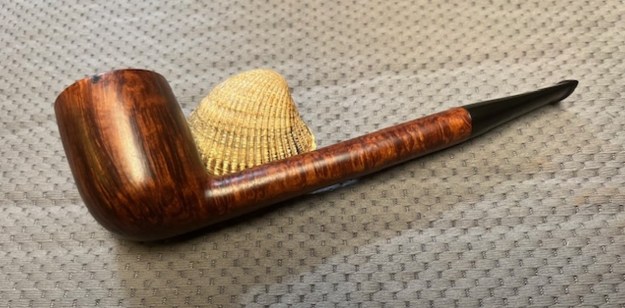
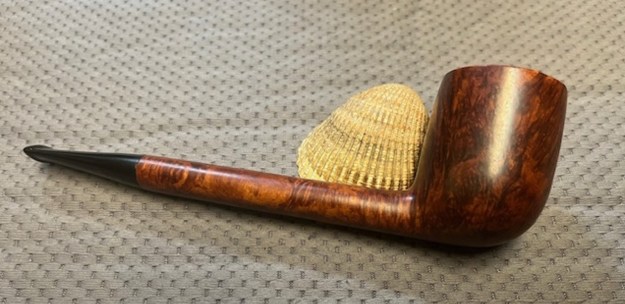
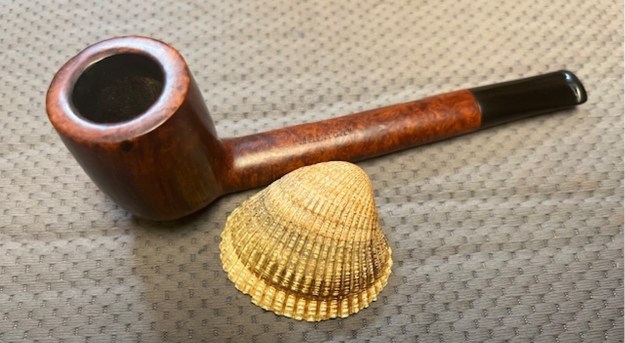
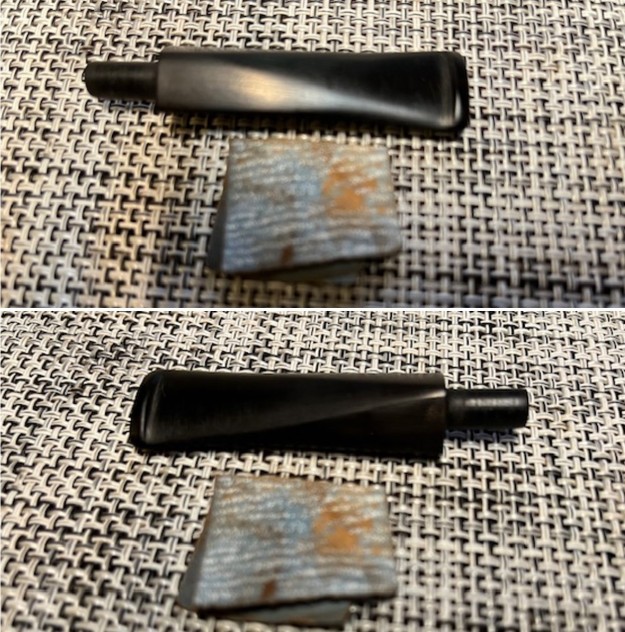
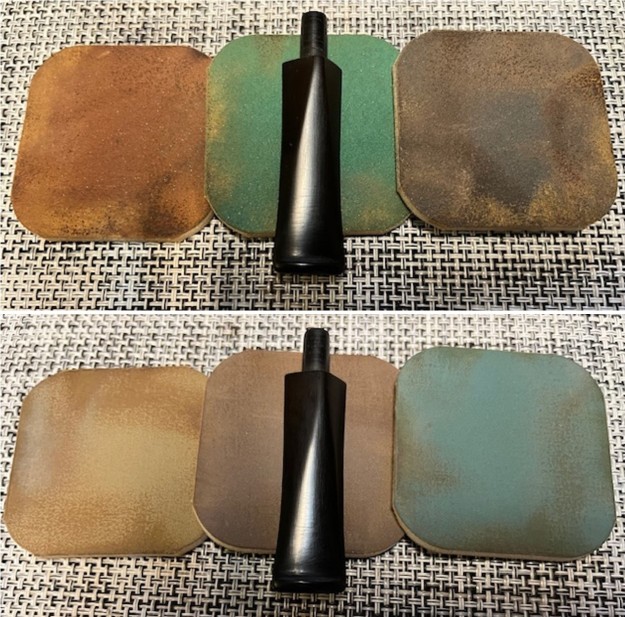
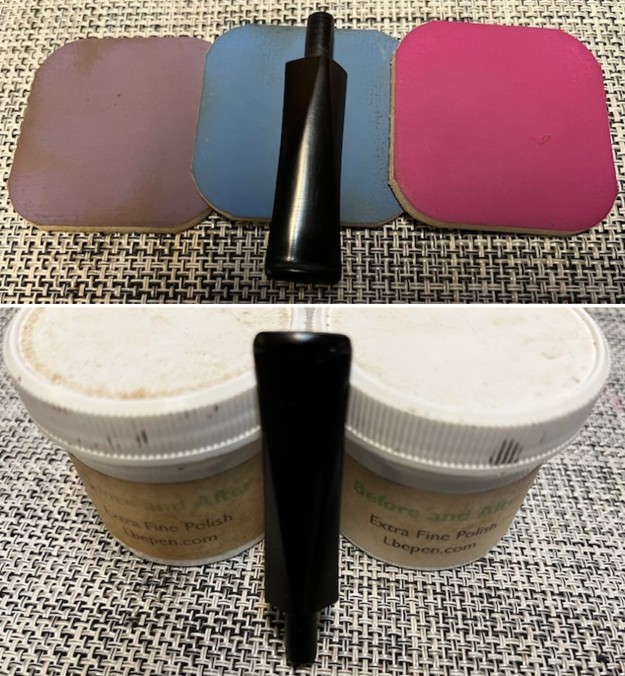
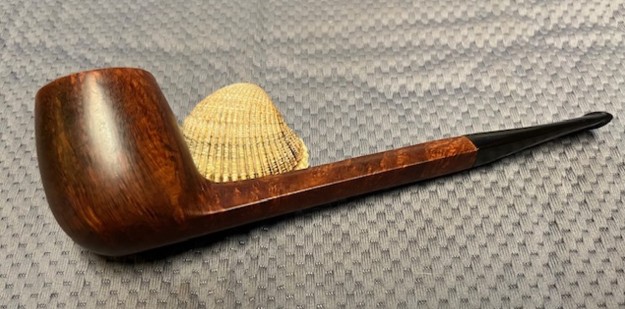
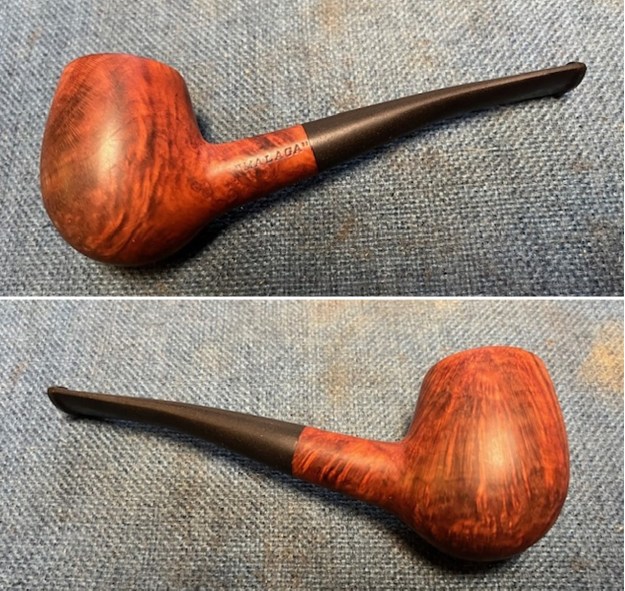
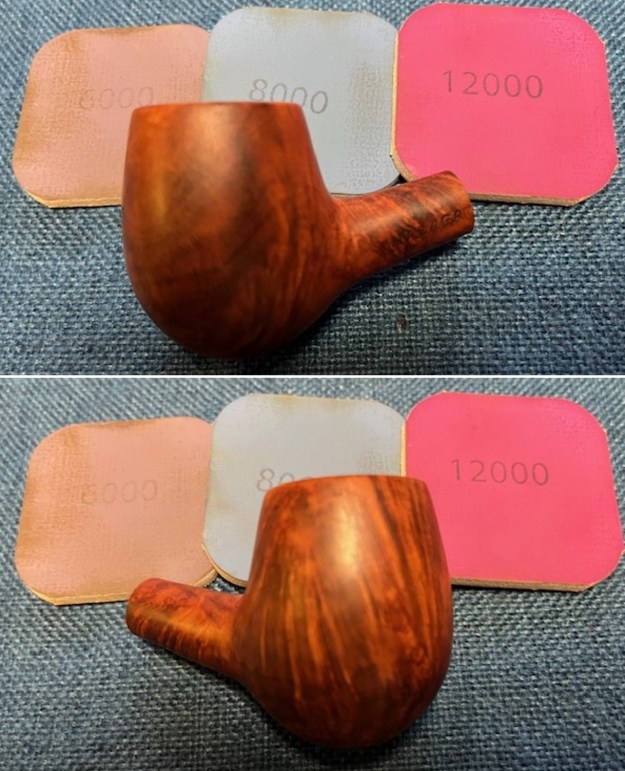
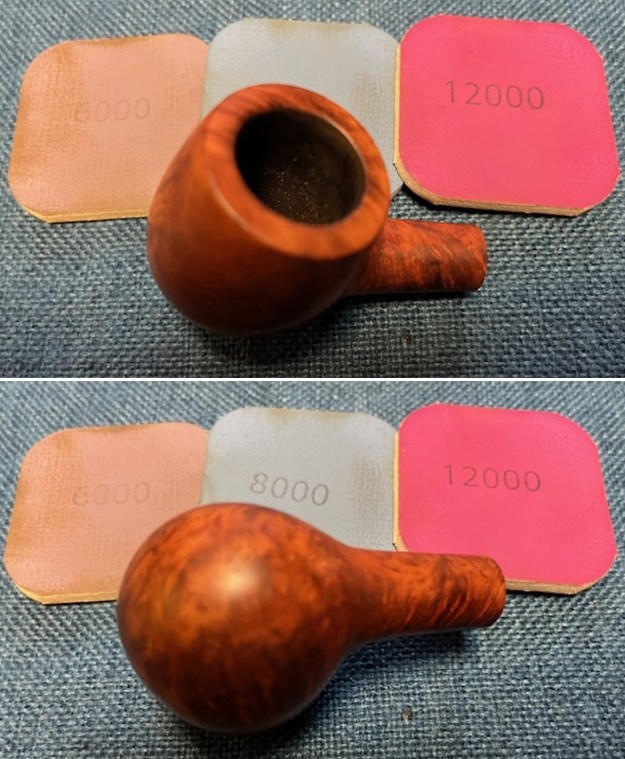
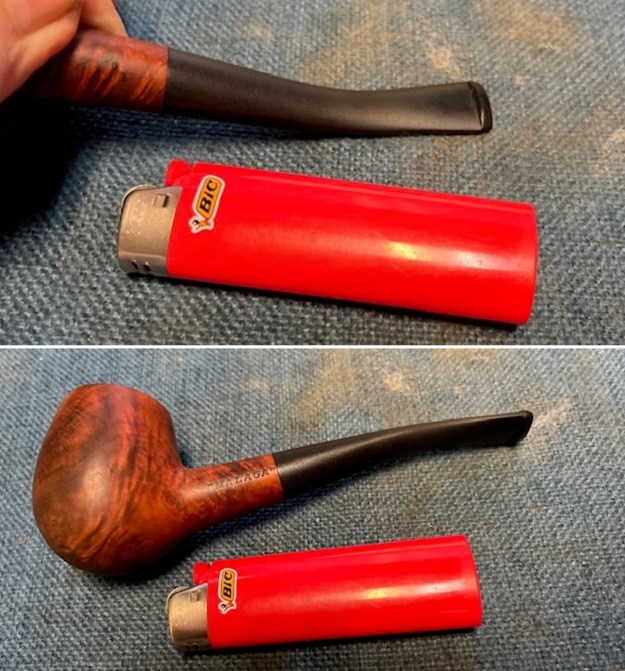
Jeff reamed the bowl with a PipNet pipe reamer and followed up with a Savinelli Fitsall pipe knife to remove the cake. He scrubbed out the mortise and the airway in the shank and the stem with alcohol, cotton swabs, shank brushes and pipe cleaners. He scrubbed the exterior of the bowl, rim, shank and stem with a tooth brush and Murphy’s Oil Soap to remove the oils and tars on the rim and the grime on the finish of the bowl. He rinsed it under running water. He dried it off with a soft cloth. He was able to remove the lava build up on the rim top and the flat surface of the rim top and the inner edge had some burn damage on the front and back side. The outer edge was rough and nicked. I took photos of the pipe to show its condition before I started my work on it. The stem also looked better. I took close up photos of the bowl and rim top as well as the stem. You can see the condition of the rim top and bowl in the first photo. Jeff was able to remove all of the tar and oils and you can that the top and the edges of the bowl look very good. The stem had light tooth marks and chatter on both sides near the button on both sides.I took a photo of the stamping on the shank to show the condition. The “MALAGA” stamp is far more clear and and readable than my blurry photos show. The M-2 stamp on the top of the shank is also more clear than the photos. I removed the stem from the shank and took a photo to give a sense of how the pipe looked. I decided to address the many poxy looking flaws in the briar first. There were no fills at all just sandpits that were all different sizes all around the bowl. The worst were on the right side followed by the front of the bowl. The right side and rim top were in excellent condition. I filled them all in with briar dust and clear CA glue. Once they cured I flattened them with a small flat file and then sanded them smooth with 220 grit sandpaper to blend them into the briar. I wiped the bowl down to remove the sanding dust with isopropyl alcohol and cotton pads. Once the repairs looked significantly better than the flaws in the briar that existed before. I sanded the bowl and rim with 320-3500 grit sanding pads to begin the process of removing the scratches and blending the restored rim top into the rest of the bowl. I wiped the bowl down after each pad with a damp cloth to remove the dust and debris. The photos tell the story. I polished the rim top and the briar with micromesh sanding pads. I dry sanded the bowl with 1500-12000 grit sanding pads. I wiped the bowl down after each pad with a damp cloth to remove the sanding dust. I worked some Before & After Restoration Balm into the surface of the briar with my fingertips to clean, enliven and protect it. I let the balm sit for a little while and then buffed with a cotton cloth to raise the shine. The following photos show the bowl at this point in the restoration process. I am very happy with the results. I set the bowl aside and “painted” the stem surface with the flame and was able to lift the tooth marks significantly. I filled in the ones that remained with black extra strength CA glue. I set it aside to cure. Once it cured I flattened the repair with a small file and then sanded it smooth with 220 grit sandpaper. It began to look much better. I turned to the stem to address the issues on the surface of both sides at the button. I sanded the stem with 320-3500 grit sanding pads. I wiped the stem down with an Obsidian Oil cloth after each sanding pad. I think I finally beat the oxidation.I polished the stem with micromesh sanding pads – wet sanding with 1500-12000 grit sanding pads. I wiped it down after each sanding pad Obsidian Oil. I finished by polishing it with Before & After Pipe Stem Polish both fine and extra Fine and then wiped it down with a final coat of Obsidian Oil. This is a beautiful Malaga M-2 Bent Acorn with a vulcanite tapered stem. It has a great look and feel. The shape of the bowl, the rim top and the cut of the briar work well to highlight the grain around the bowl sides. I polished stem and the bowl with Blue Diamond polish on the buffing wheel. I gave the bowl and the stem multiple coats of carnauba wax. I buffed the pipe with a clean buffing pad to raise the shine. I hand buffed it with a microfiber cloth to deepen the shine. The pipe polished up pretty nicely. The grain took on life with the buffing. The rich oil cured colour works well with the polished vulcanite stem. The finished Malaga M-2 Acorn has a rich look that is quite catching. The repaired flaws look better and are smooth. Have a look at it with the photos below. The shape, finish and flow of the pipe and stem are very well done. The dimensions are Length: 5 ½ inches, Height: 1 ¾ inches, Outside diameter of the bowl: 1 1/8 inches, Chamber diameter: ¾ of an inch. The weight of the pipe is 1.23 ounces/35 grams. It is a beautiful pipe. I will be putting it on the rebornpipes store shortly in the American Pipemakers Section if you are interested in adding it to your collection. Thanks for walking with me through the restoration.

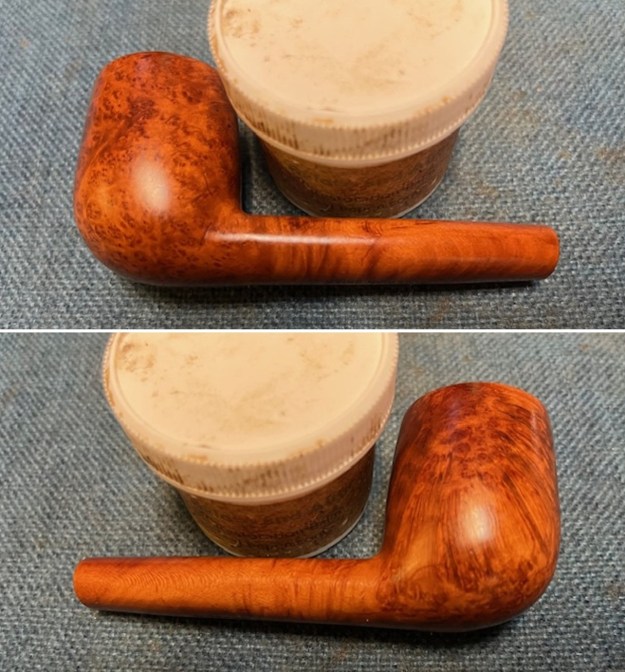
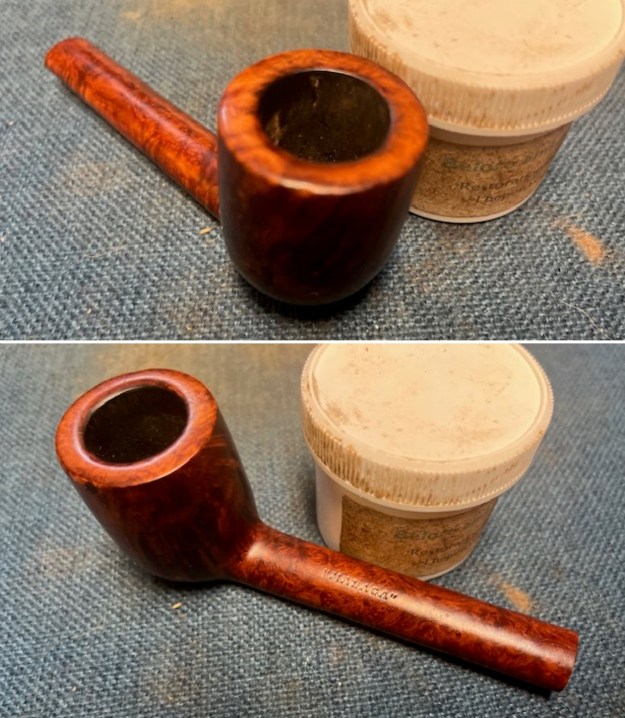
Breathing new life into another Beautiful “Malaga” Quarter Bent Egg


by Steve Laug

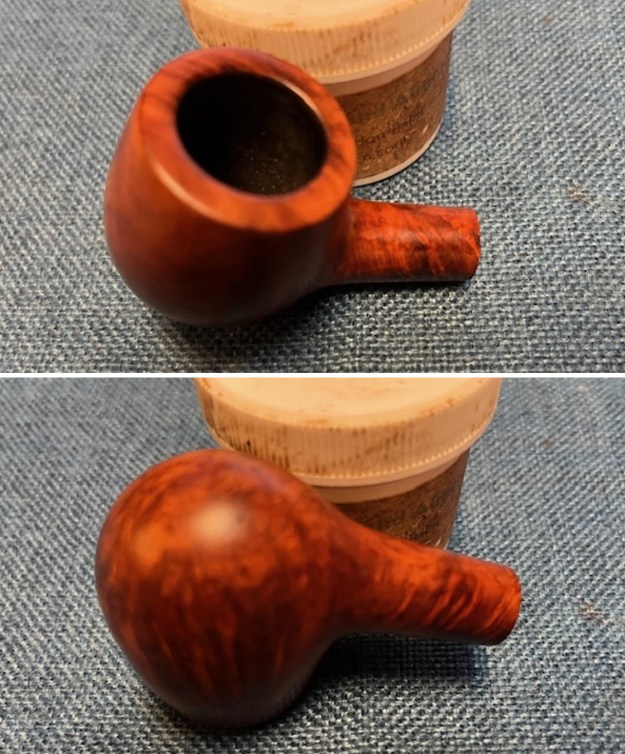
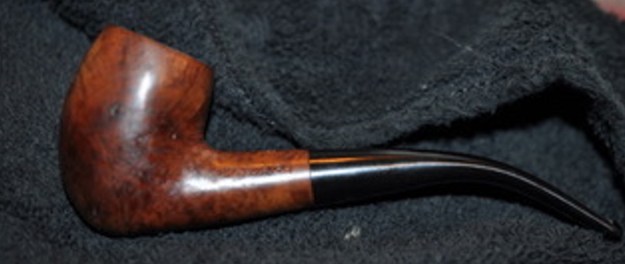
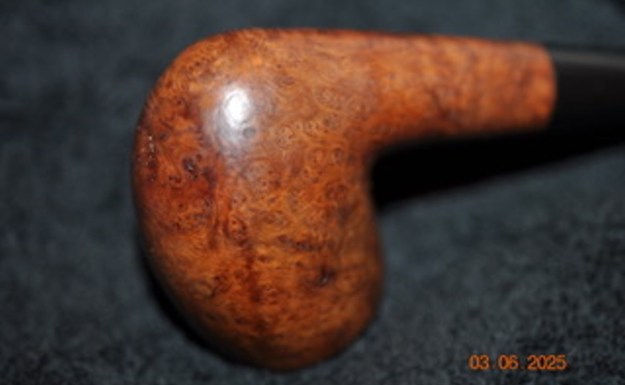
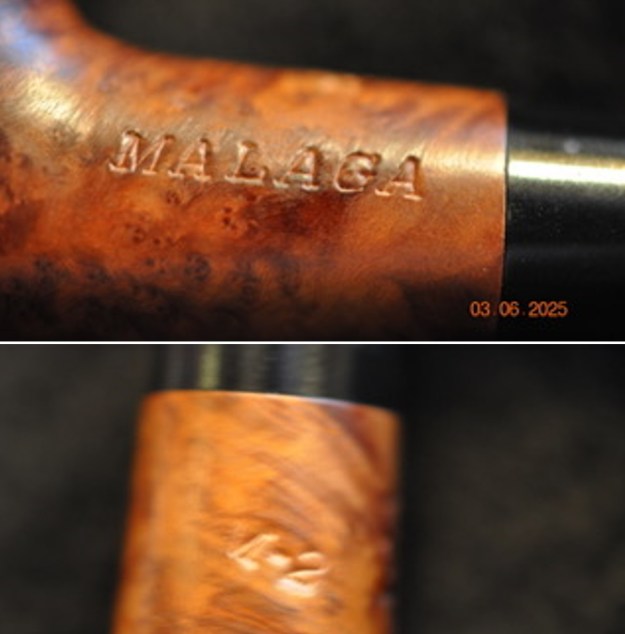
The “Malaga” Bent Egg is next pipe on the table. We purchased it off eBay on 08/22/24 from a seller in Harrison Township, Michigan, USA. The carver did a great job of shaping the pipe to follow the grain on the briar. The egg-shaped bowl, round shank and quarter Bent tapered stem look very good. The bowl had a thick cake that overflowed with thick lava onto the rim so that it was impossible to see if there was damage on the inner edges. The sides of the bowl and shank are very dirty with grime and oils from prolonged use. The grain around the bowl and shank appeared to be very nice mixed grain under the grime on the briar. The stamping on the left side of the shank read “MALAGA”. There was no other stamping on it. The stem had light tooth marks and chatter on the top and the underside of the stem ahead of the button. There was some oxidation deep in the vulcanite of the stem surface. Jeff took these photos before he started the cleanup work on the pipe.Jeff took close up photos of the bowl and rim to capture the condition of the pipe before he started his cleanup work. The rim top had thick lava overflow. The outer edge looked to be in decent condition. The stem is oxidized, calcified and has tooth marks and chatter on both sides. He also took a photo of the side and bottom of the bowl and shank to show the beautiful grain around the bowl. The photos show the general condition of the bowl and dirt and wear on the rich oil finish. It is very dirty but this is another beautiful pipe. Jeff took a photo to capture the stamping on the left side of the shank. The photo shows the stamping “MALAGA”. The stamping is very readable under the heavy grime.Before I started working on the pipe itself I went back and reread what I had found when I had worked on many of the Malaga pipes that had come across my work table. I am including a few pieces of information that I have gathered in the process.
For those of you reading this blog who are unfamiliar with the brand, I am including the link to a previous blog that I wrote. It gives some of the history of the Malaga brand and the Malaga Pipe Shop in Royal Oak, Michigan in the USA. Here is the link – https://rebornpipes.com/tag/malaga-pipes/.

I have also included a link to a catalogue and the history of the pipemaker George Khoubesser. If you are interested to learn more, then I invite you to follow the link to get a feel for the brand and the pipemaker.
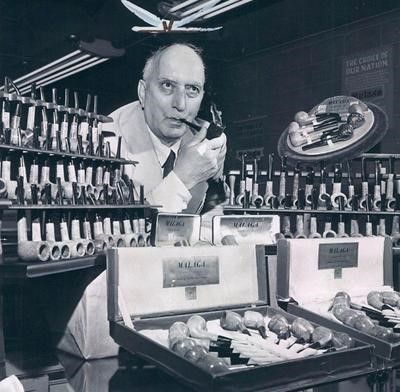
George Khoubesser (picture to the left) started Malaga Briar Pipe Company and located it in Royal Oak, Michigan in the USA in 1939. It closed its doors for the last time in 1999 after 60 years in business. I have an old Malaga Catalogue that I scanned and put on the blog (https://rebornpipes.com/2013/02/09/george-khoubesser-and-malaga-pipes/). The catalogue describes the manufacture of the pipes as follows:

Painstaking caution is exercised in selecting flawless, perfect briar wood for the purpose of making and Curing of the “Malaga.” You can be certain of this fact, because none other than the choicest and finest select briarwood will withstand the “Malaga” Curing process. Other than the choicest quality and grain, will split wide open in the Curing vats… The Curing method renders all “Malaga” pipes, light in weight… Most all “Malaga” Senior pipes are left in their natural state; except for a skillful waxing which brings out the rich beauty of the virgin grain. No artificial polishing stain, shellac or varnishes are added. Malaga closed in 1999 after 60 years in business.

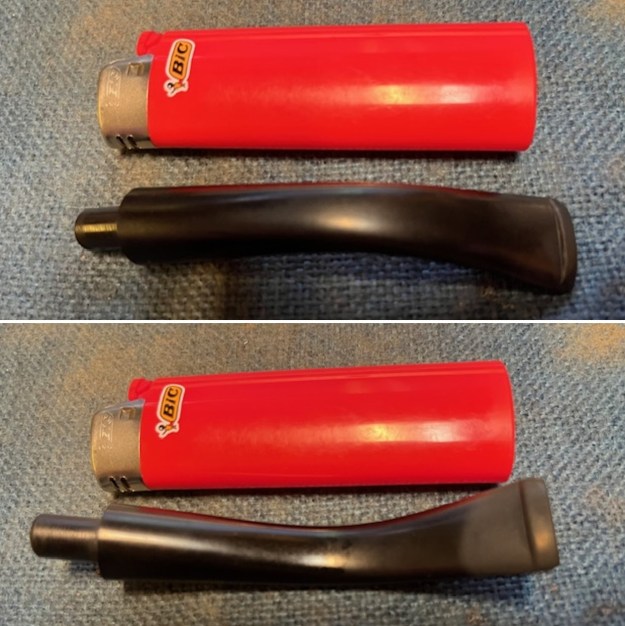
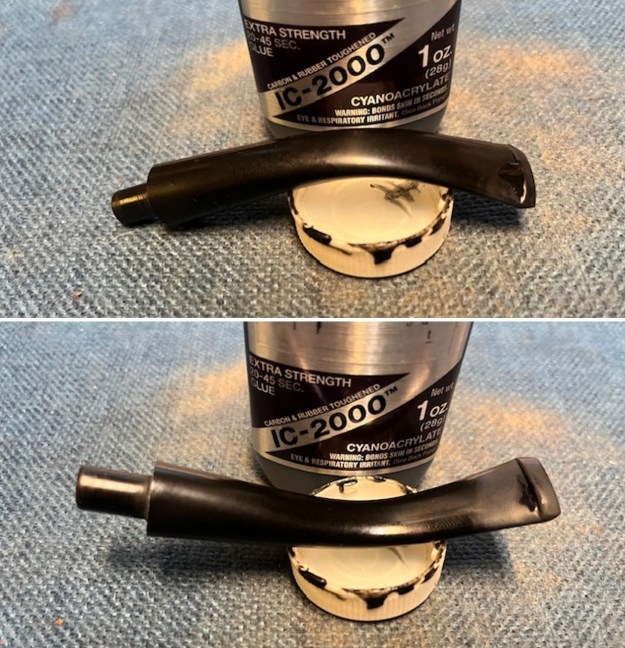
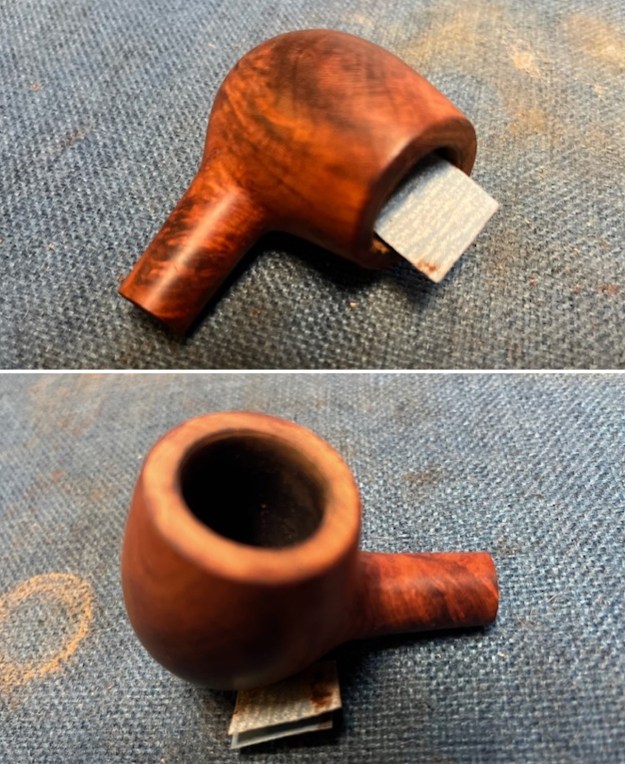
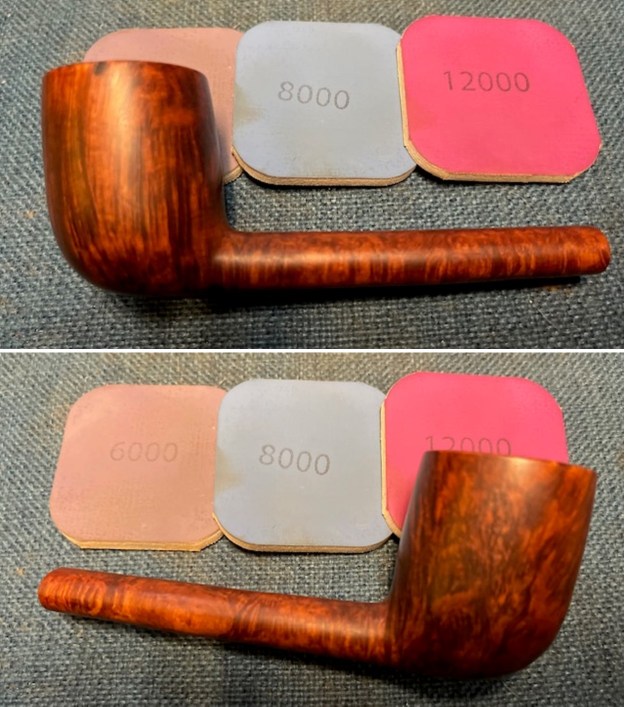
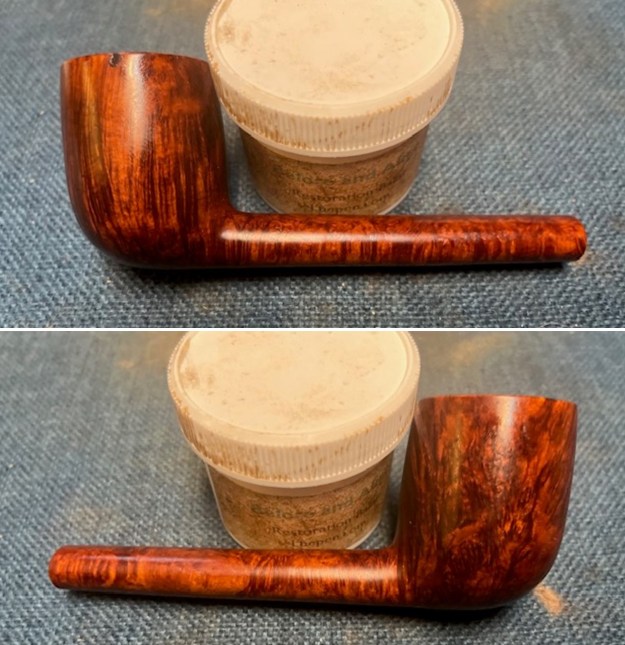
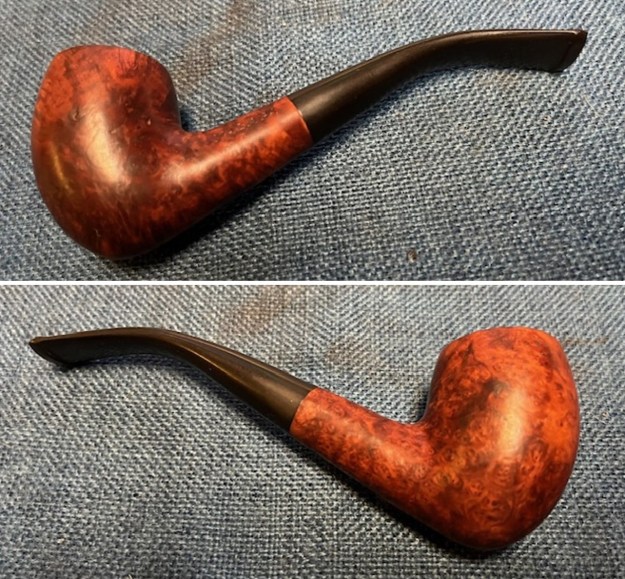
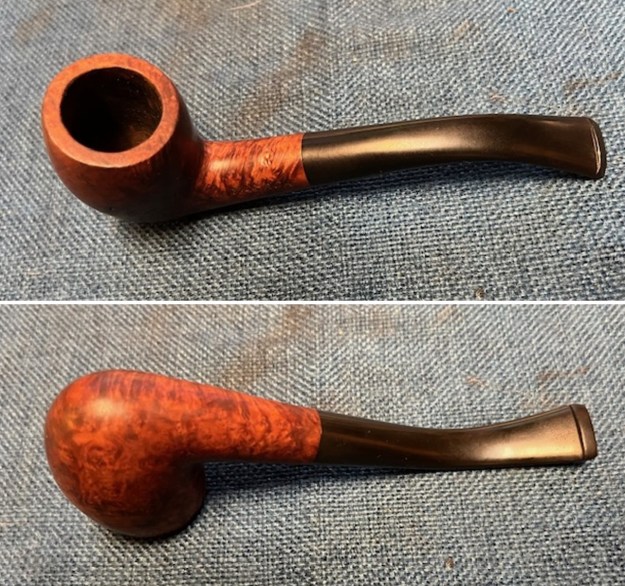
Jeff reamed the bowl with a PipNet pipe reamer and followed up with a Savinelli Fitsall pipe knife to remove the cake. He scrubbed out the mortise and the airway in the shank and the stem with alcohol, cotton swabs, shank brushes and pipe cleaners. He scrubbed the exterior of the bowl, rim, shank and stem with a tooth brush and Murphy’s Oil Soap to remove the oils and tars on the rim and the grime on the finish of the bowl. He rinsed it under running water. He dried it off with a soft cloth. He was able to remove the lava build up on the rim top and the flat surface of the rim top and the inner edge had some burn damage on the front and back side. The outer edge was rough and nicked. I took photos of the pipe to show its condition before I started my work on it. The stem also looked better. I took close up photos of the bowl and rim top as well as the stem. You can see the condition of the rim top and bowl in the first photo. Jeff was able to remove all of the tar and oils but you can now see the damage on the top and the edges of the bowl. The top of the rim is rough and there is some burn damage and darkening on the inner edge on the front. The stem had light tooth marks and chatter on both sides near the button on both sides.I took a photo of the stamping on the shank to show the condition. The “MALAGA” stamp is clear and readable. I removed the stem from the shank and took a photo to give a sense of how the pipe looked. I decided to address the rim top and damaged inner edge of the bowl first. To remove the damage on the rim top and edges of the bowl sanded the top with 220 grit sandpaper. That removed a lot of the damage on the rim top and outer edge. I used a piece of 220 grit sandpaper to work on the inner edge of the rim and remove the darkening and clean up the damage.I sanded the bowl and rim with 320-3500 grit sanding pads to begin the process of removing the scratches and blending the restored rim top into the rest of the bowl. I wiped the bowl down after each pad with a damp cloth to remove the dust and debris. The photos tell the story. I polished the rim top and the briar with micromesh sanding pads. I dry sanded the bowl with 1500-12000 grit sanding pads. I wiped the bowl down after each pad with a damp cloth to remove the sanding dust. I worked some Before & After Restoration Balm into the surface of the briar with my fingertips to clean, enliven and protect it. I let the balm sit for a little while and then buffed with a cotton cloth to raise the shine. The following photos show the bowl at this point in the restoration process. I am very happy with the results. Before turning to work on the stem I decided to bend the stem to match the angels of the bowl. I “painted” it with a lighter to soften the vulcanite enough to bend it. I pressed the rim top flat against the desk top and bent the stem to the same angle. I “painted” the stem surface with the flame and was able to lift the tooth marks significantly. I filled in the ones that remained with black extra strength CA glue. I set it aside to cure. Once it cured I flattened the repair with a small file and then sanded it smooth with 220 grit sandpaper. It began to look much better. I turned to the stem to address the issues on the surface of both sides at the button. I sanded the stem with 320-3500 grit sanding pads. I wiped the stem down with an Obsidian Oil cloth after each sanding pad. I think I finally beat the oxidation.I polished the stem with micromesh sanding pads – wet sanding with 1500-12000 grit sanding pads. I wiped it down after each sanding pad Obsidian Oil. I finished by polishing it with Before & After Pipe Stem Polish both fine and extra Fine and then wiped it down with a final coat of Obsidian Oil. This is a beautiful “Malaga” Quarter Bent Egg with a vulcanite tapered stem. It has a great look and feel. The shape of the bowl, the rim top and the cut of the briar work well to highlight the grain around the bowl sides. I polished stem and the bowl with Blue Diamond polish on the buffing wheel. I gave the bowl and the stem multiple coats of carnauba wax. I buffed the pipe with a clean buffing pad to raise the shine. I hand buffed it with a microfiber cloth to deepen the shine. The pipe polished up pretty nicely. The grain took on life with the buffing. The rich oil cured colour works well with the polished vulcanite stem. The finished Malaga Quarter Bent Egg has a rich look that is quite catching. Have a look at it with the photos below. The shape, finish and flow of the pipe and stem are very well done. The dimensions are Length: 5 ½ inches, Height: 2 inches, Outside diameter of the bowl: 1 ¼ inches, Chamber diameter: ¾ of an inch. The weight of the pipe is 1.41 ounces/40 grams. It is a beautiful pipe. I will be putting it on the rebornpipes store shortly in the American Pipemakers Section if you are interested in adding it to your collection. Thanks for walking with me through the restoration.
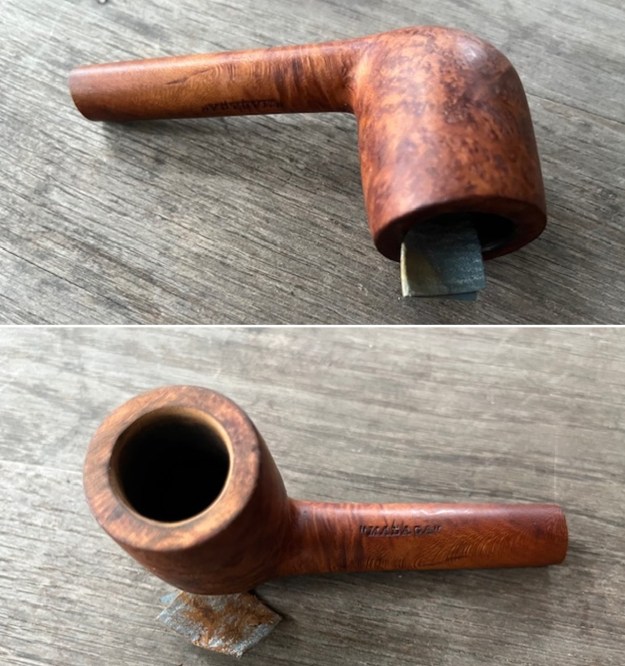
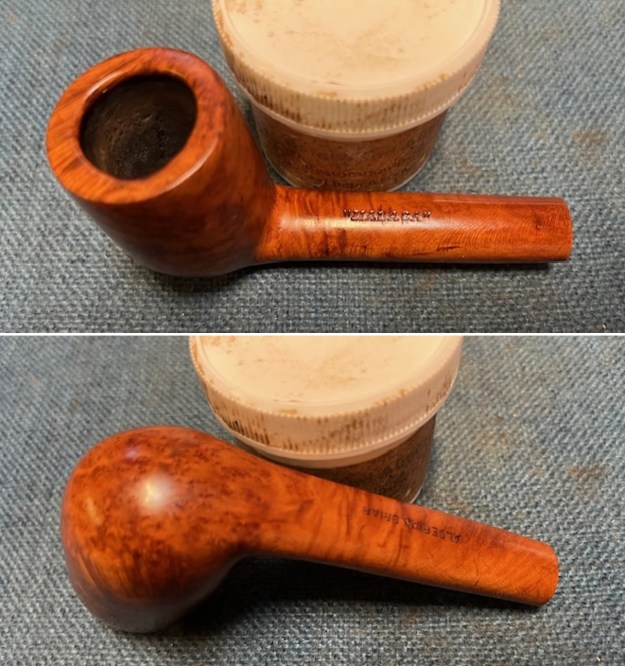
Breathing new life in to a Beautiful “Malaga” Algerian Briar Canadian


by Steve Laug

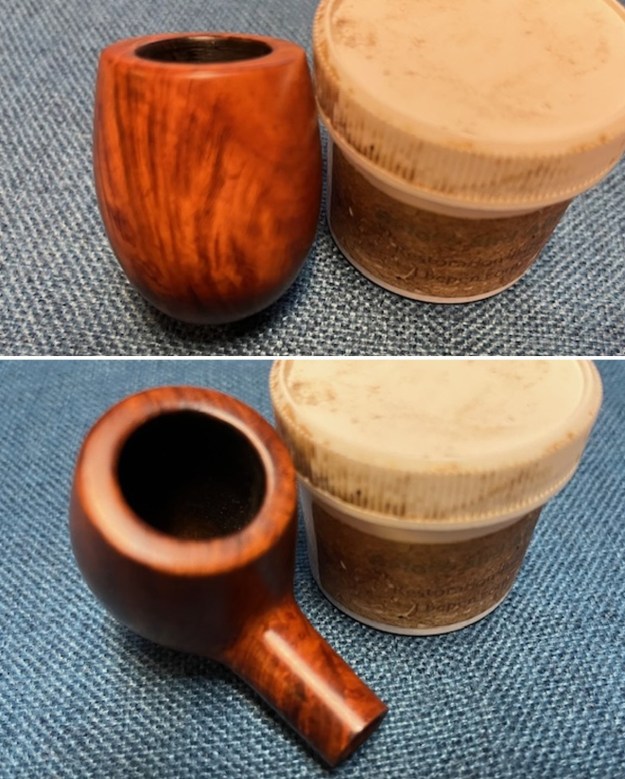
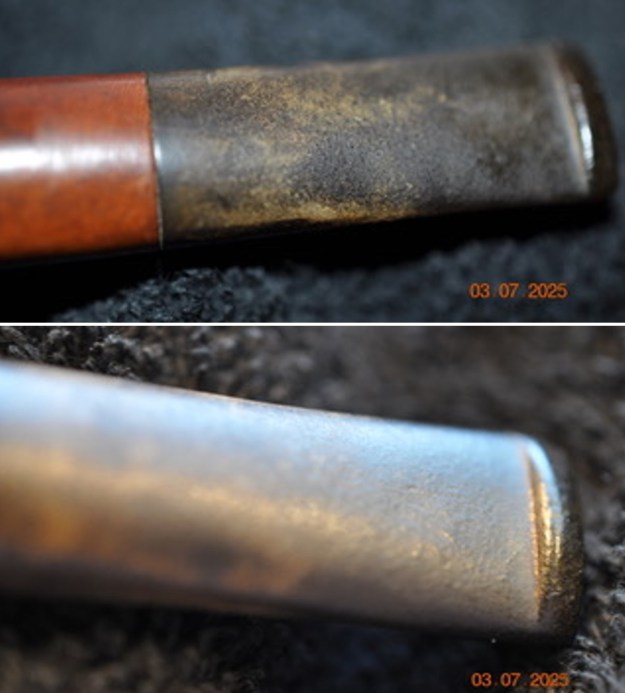
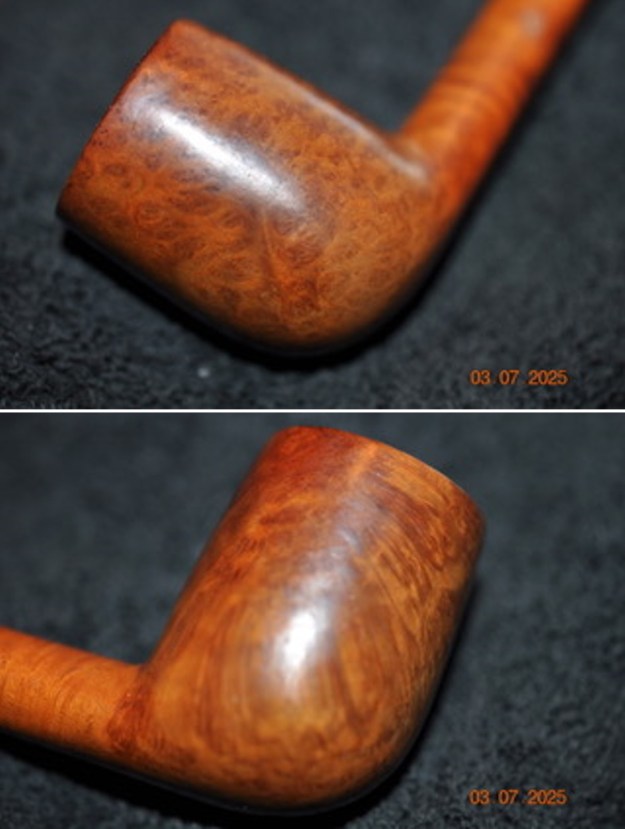
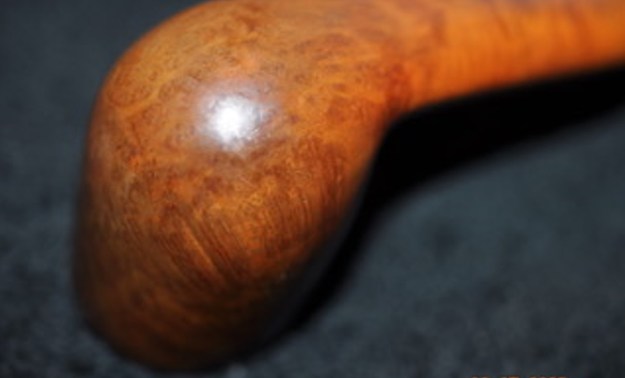
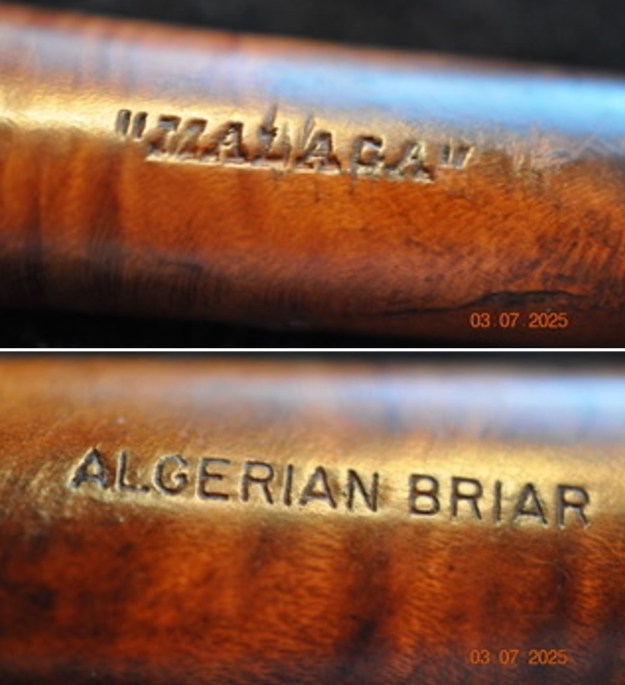
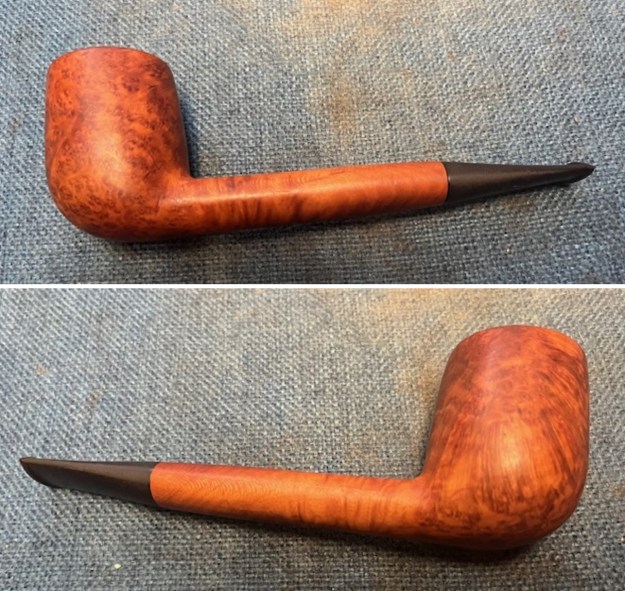
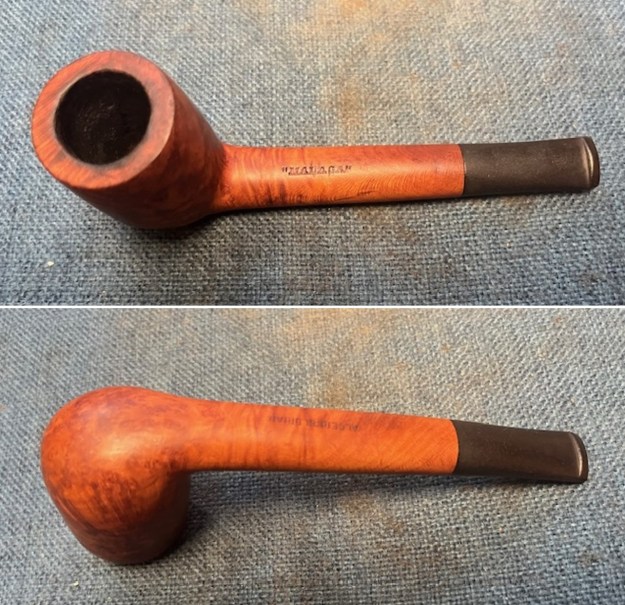
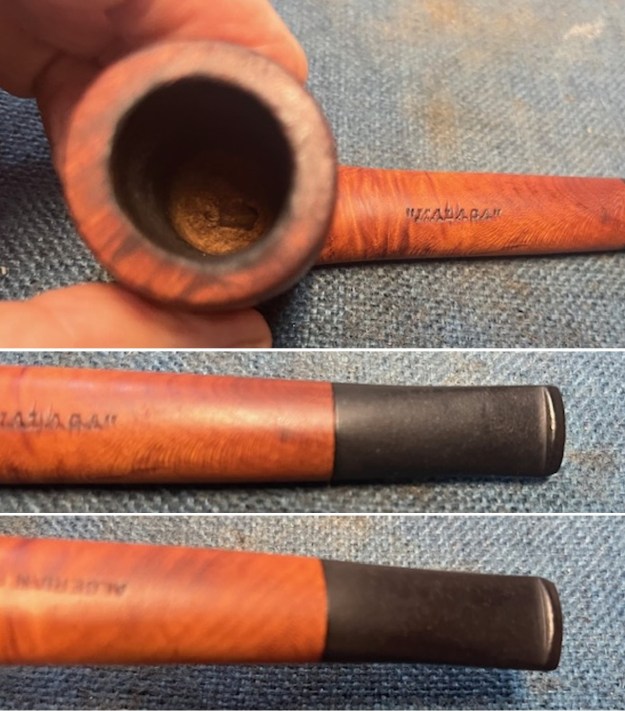
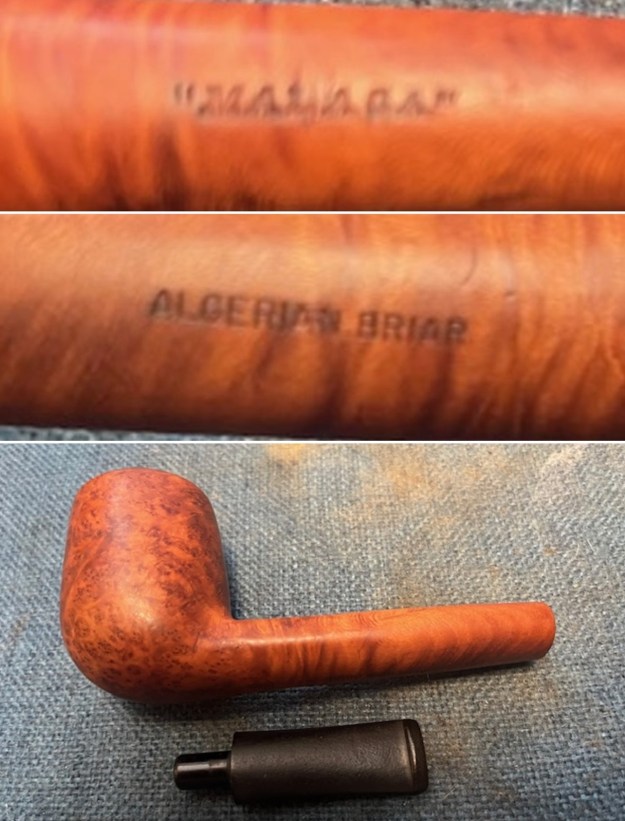
The “Malaga” Canadian is next pipe on the table. We purchased it off eBay on 08/22/24 from a seller in Harrison Township, Michigan, USA. The carver did a great job of shaping the pipe to follow the grain on the briar. The bowl, oval shank and straight tapered stem look very good. The bowl had a thick cake that overflowed with thick lava onto the rim so that it was impossible to see if there was damage on the inner edges. The sides of the bowl and shank are very dirty with grime and oils from prolonged use. The grain around the bowl and shank is very nice mixed grain. The stamping on the top of the shank read “MALAGA”. On the underside it is stamped ALGERIAN BRIAR. The stem had light tooth marks and chatter on the top and the underside of the stem ahead of the button. There was some thick calcification and also some oxidation deep in the vulcanite of the stem surface. Jeff took these photos before he started the cleanup work on the pipe.Jeff took close up photos of the bowl and rim to capture the condition of the pipe before he started his cleanup work. The rim top had thick lava overflow. The outer edge looked to be in decent condition. The stem is oxidized, calcified and has light tooth marks and chatter on both sides. He also took a photo of the side and bottom of the bowl and shank to show the beautiful grain around the bowl. The photos show the general condition of the bowl and dirt and wear on the rich oil finish. It is very dirty but this is another beautiful pipe. Jeff took a photo to capture the stamping on the top and underside of the shank. The photos show the stamping “MALAGA” on the top and ALGERIAN BRIAR on the underside. The stamping is very readable both sides of the shank.Before I started working on the pipe itself I went back and reread what I had found when I had worked on many of the Malaga pipes that had come across my work table. I am including a few pieces of information that I have gathered in the process.

For those of you reading this blog who are unfamiliar with the brand, I am including the link to a previous blog that I wrote. It gives some of the history of the Malaga brand and the Malaga Pipe Shop in Royal Oak, Michigan in the USA. Here is the link – https://rebornpipes.com/tag/malaga-pipes/.

I have also included a link to a catalogue and the history of the pipemaker George Khoubesser. If you are interested to learn more, then I invite you to follow the link to get a feel for the brand and the pipemaker.

George Khoubesser (picture to the left) started Malaga Briar Pipe Company and located it in Royal Oak, Michigan in the USA in 1939. It closed its doors for the last time in 1999 after 60 years in business. I have an old Malaga Catalogue that I scanned and put on the blog (https://rebornpipes.com/2013/02/09/george-khoubesser-and-malaga-pipes/). The catalogue describes the manufacture of the pipes as follows:

Painstaking caution is exercised in selecting flawless, perfect briar wood for the purpose of making and Curing of the “Malaga.” You can be certain of this fact, because none other than the choicest and finest select briarwood will withstand the “Malaga” Curing process. Other than the choicest quality and grain, will split wide open in the Curing vats… The Curing method renders all “Malaga” pipes, light in weight… Most all “Malaga” Senior pipes are left in their natural state; except for a skillful waxing which brings out the rich beauty of the virgin grain. No artificial polishing stain, shellac or varnishes are added. Malaga closed in 1999 after 60 years in business.

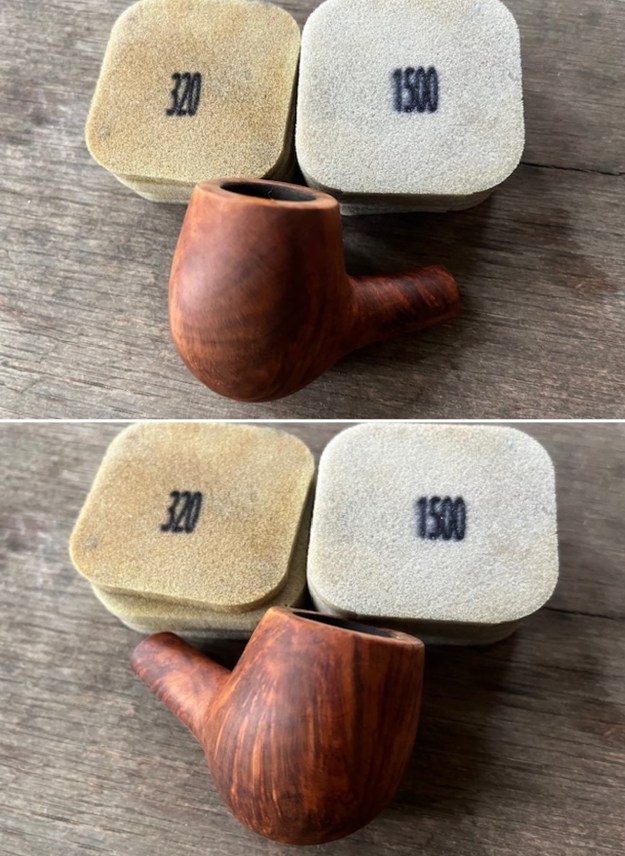
Jeff reamed the bowl with a PipNet pipe reamer and followed up with a Savinelli Fitsall pipe knife to remove the cake. He scrubbed out the mortise and the airway in the shank and the stem with alcohol, cotton swabs, shank brushes and pipe cleaners. He scrubbed the exterior of the bowl, rim, shank and stem with a tooth brush and Murphy’s Oil Soap to remove the oils and tars on the rim and the grime on the finish of the bowl. He rinsed it under running water. He dried it off with a soft cloth. He was able to remove the lava build up on the rim top and the flat surface of the rim top and the inner edge had some burn damage on the front and back side. The outer edge was rough and nicked. I took photos of the pipe to show its condition before I started my work on it. The stem also looked better.I took close up photos of the bowl and rim top as well as the stem. You can see the condition of the rim top and bowl in the first photo. Jeff was able to remove all of the tar and oils but you can now see the damage on the top and the edges of the bowl. The top of the rim is rough and the outer edges are chipped and rough. There is some burn damage and darkening on the inner edge on the left side. The stem had light tooth marks and chatter on both sides near the button on both sides.I took a photo of the stamping on the shank to show the condition. The “MALAGA” stamp is and the ALGERIAN BRIAR stamp are clear and readable. I removed the stem from the shank and took a photo to give a sense of what the pipe looked like.I decided to address the rim top and damaged inner edge of the bowl first. To remove the damage on the rim top and edges of the bowl sanded the top with 220 grit sandpaper. That removed a lot of the damage on the rim top and outer edge. I used a piece of 220 grit sandpaper to work on the inner edge of the rim and remove the darkening and clean up the damage.I sanded the bowl and rim with 320-3500 grit sanding pads to begin the process of removing the scratches and blending the restored rim top into the rest of the bowl. I wiped the bowl down after each pad with a damp cloth to remove the dust and debris. The photos tell the story. With the sanding I found a fill on the left side of the shank that is solid. There also appears to be one on the lower right side of the bowl that is also solid. I polished the rim top and the briar with micromesh sanding pads. I wet sanded the bowl with 1500-12000 grit sanding pads. I wiped the bowl down after each pad with a damp cloth to remove the sanding dust. I worked some Before & After Restoration Balm into the surface of the briar with my fingertips to clean, enliven and protect it. I let the balm sit for a little while and then buffed with a cotton cloth to raise the shine. The following photos show the bowl at this point in the restoration process. I am very happy with the results. I turned to the stem to address the issues on the surface of both sides at the button. I sanded the stem with 320-3500 grit sanding pads. I wiped the stem down with an Obsidian Oil cloth after each sanding pad. I think I finally beat the oxidation.I polished the stem with micromesh sanding pads – wet sanding with 1500-12000 grit sanding pads. I wiped it down after each sanding pad Obsidian Oil. I finished by polishing it with Before & After Pipe Stem Polish both fine and extra Fine and then wiped it down with a final coat of Obsidian Oil. This is a beautiful Malaga Algerian Briar Canadian with a vulcanite tapered stem. It has a great look and feel. The shape of the bowl, the rim top and the cut of the briar work well to highlight the grain around the bowl sides. I polished stem and the bowl with Blue Diamond polish on the buffing wheel. I gave the bowl and the stem multiple coats of carnauba wax. I buffed the pipe with a clean buffing pad to raise the shine. I hand buffed it with a microfiber cloth to deepen the shine. The pipe polished up pretty nicely. The grain took on life with the buffing. The rich oil cured colour works well with the polished vulcanite stem. The finished Malaga Algerian Briar Canadian has a rich look that is quite catching. Have a look at it with the photos below. The shape, finish and flow of the pipe and stem are very well done. The dimensions are Length: 5 ½ inches, Height: 1 ¾ inches, Outside diameter of the bowl: 1 ¼ inches, Chamber diameter: ¾ of an inch. The weight of the pipe is 1.23 ounces/35 grams. It is a beautiful pipe. I will be putting it on the rebornpipes store shortly in the American Pipemakers Section if you are interested in adding it to your collection. Send me a message or an email to slaug@uniserve.com  Thanks for walking with me through the restoration.
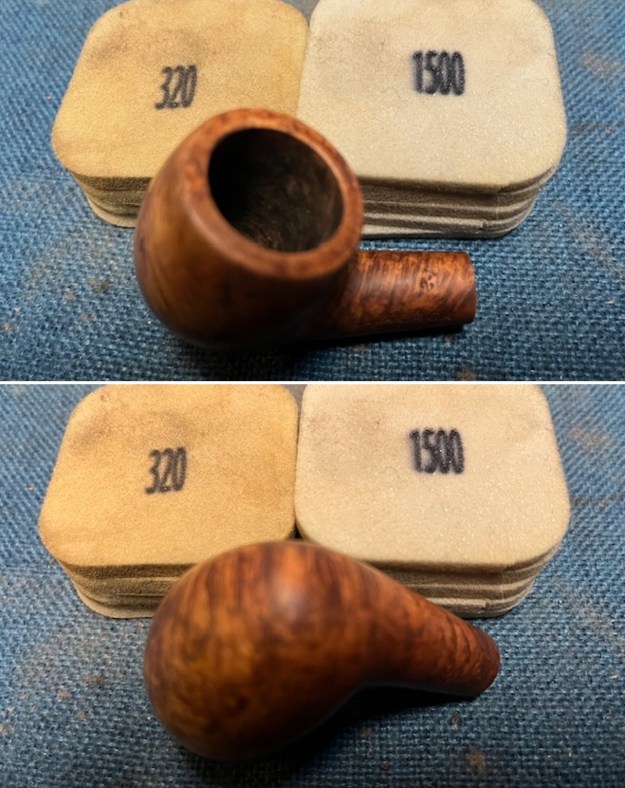
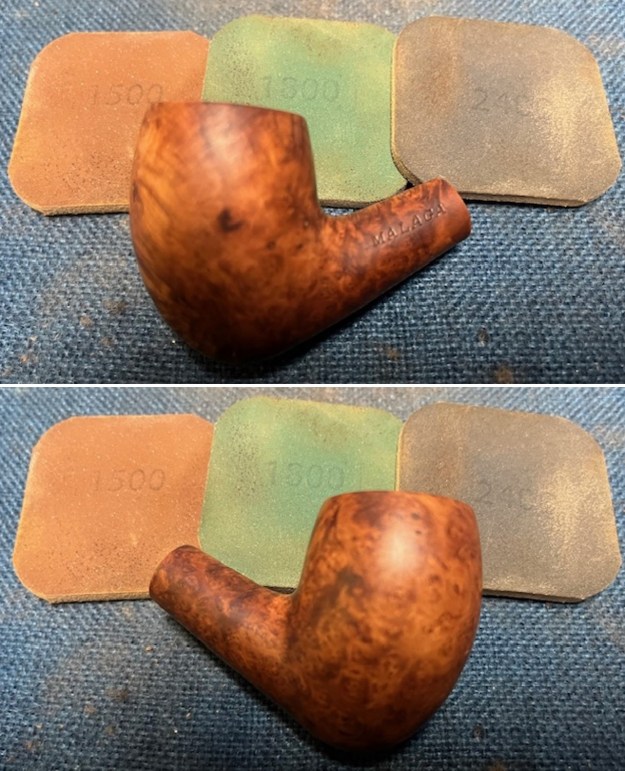
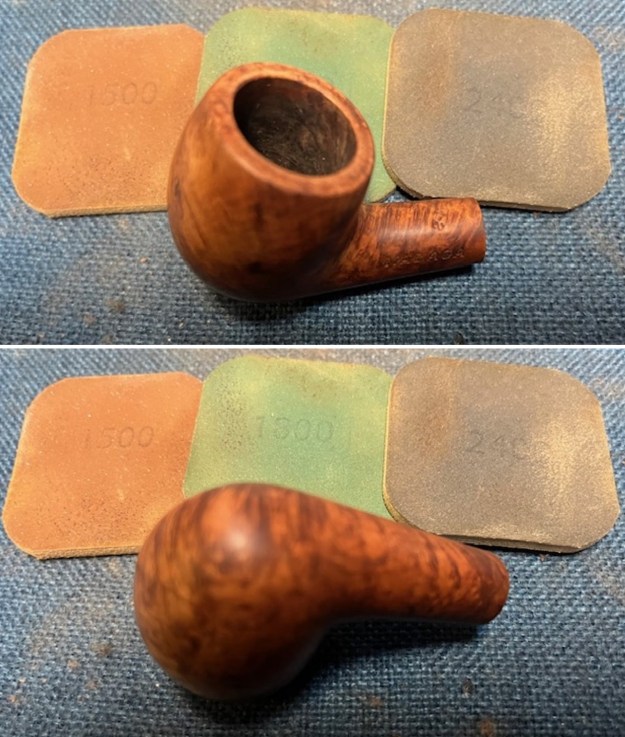
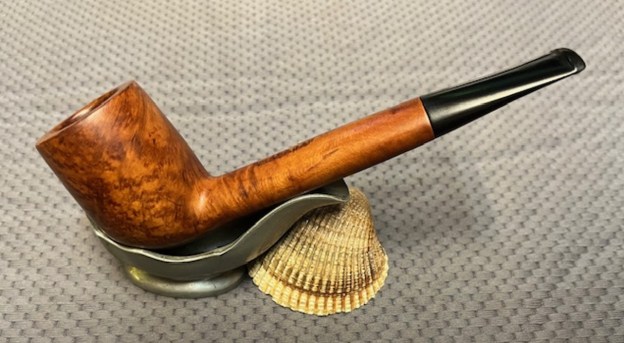
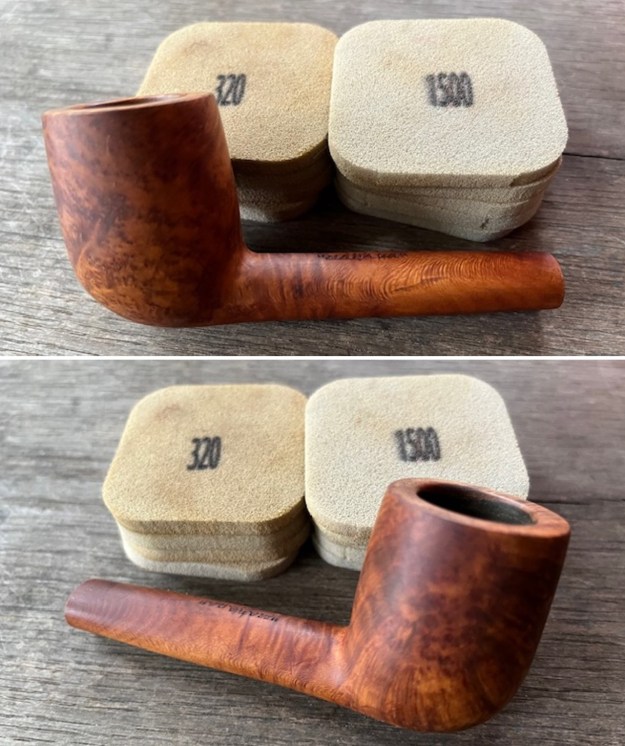
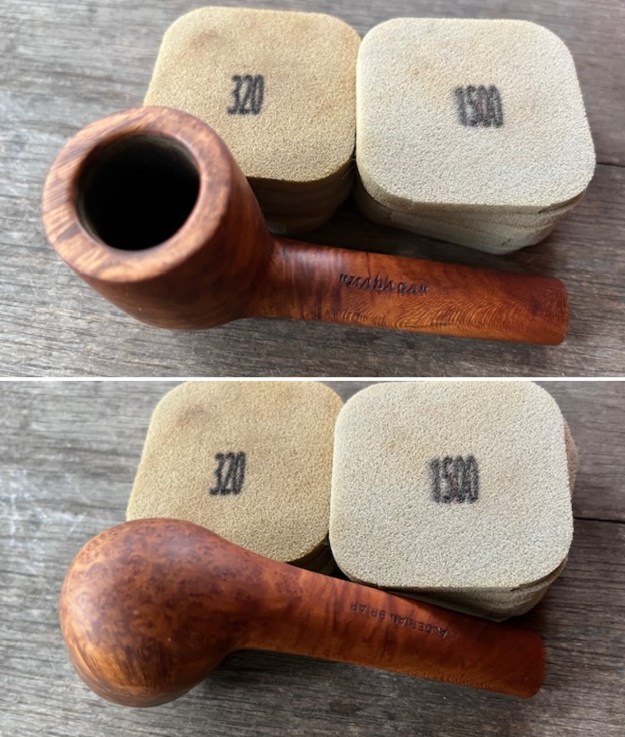
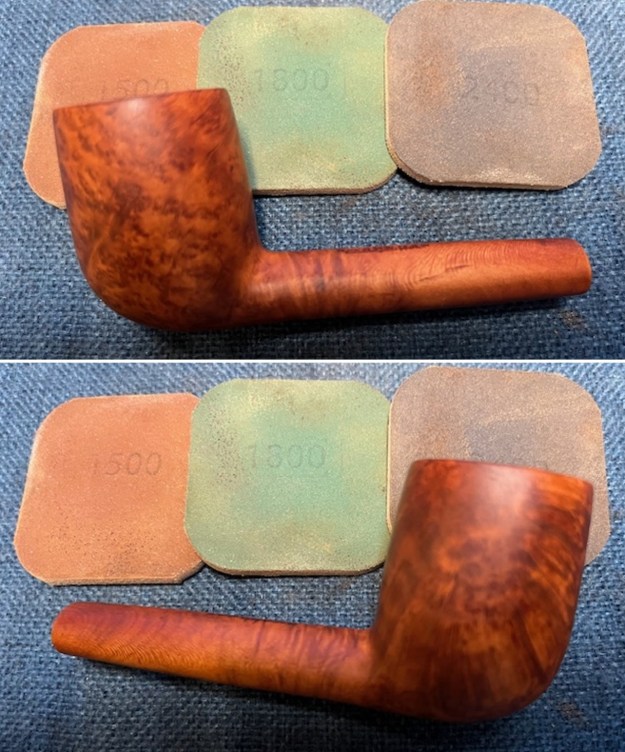
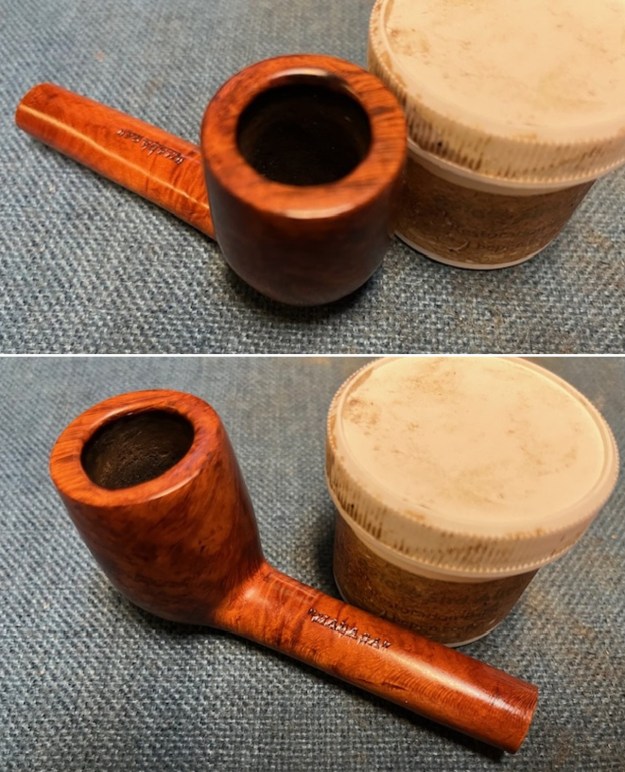
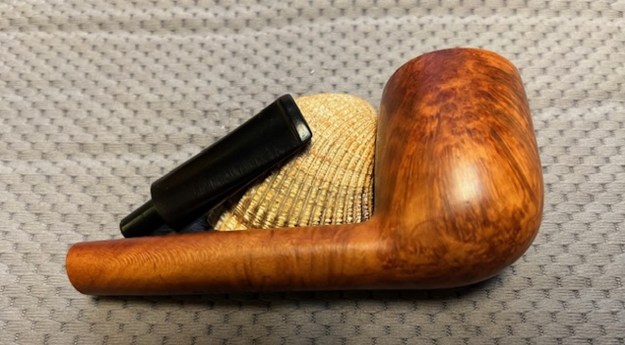
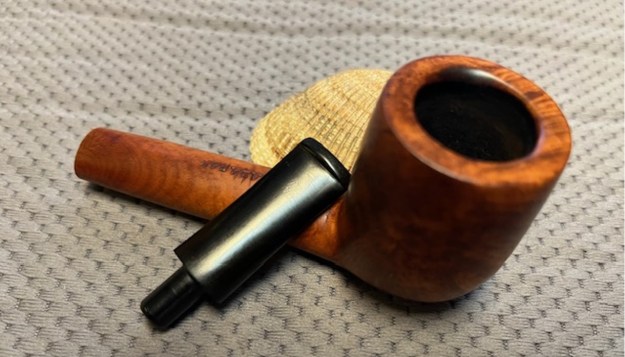
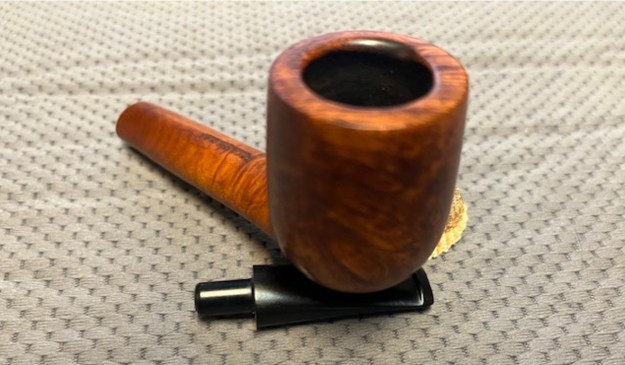
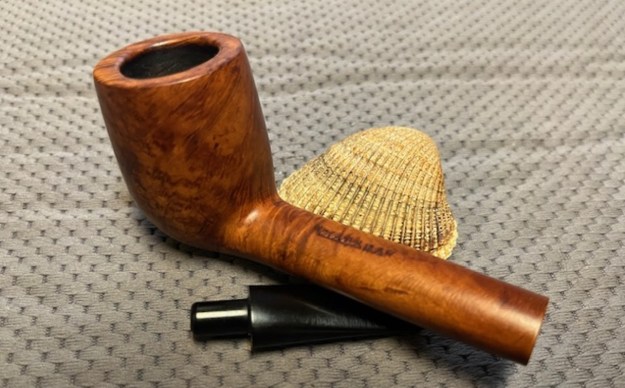
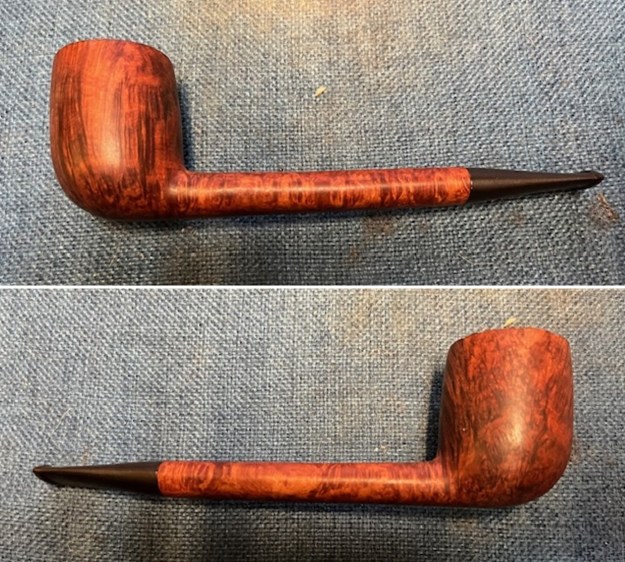
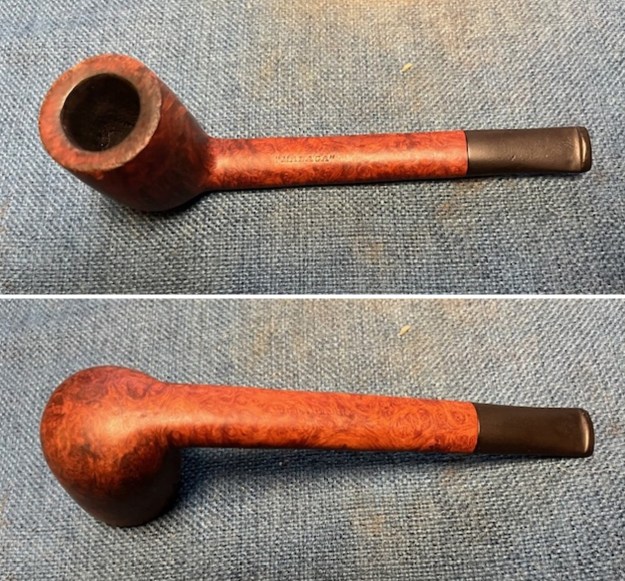
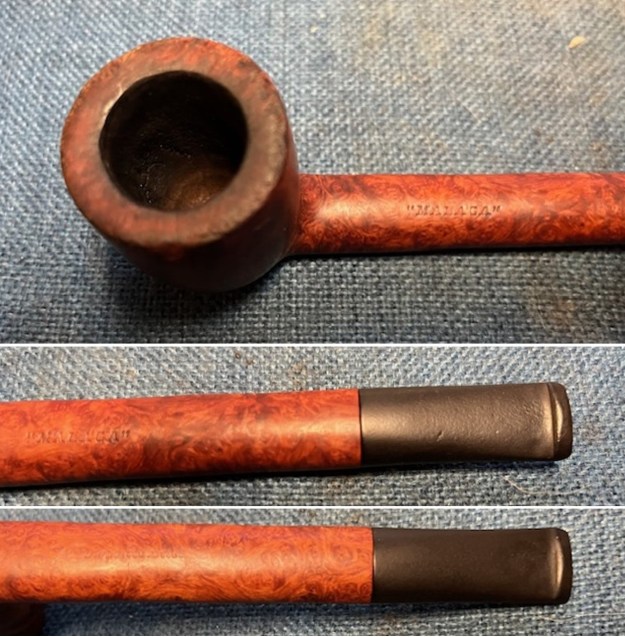
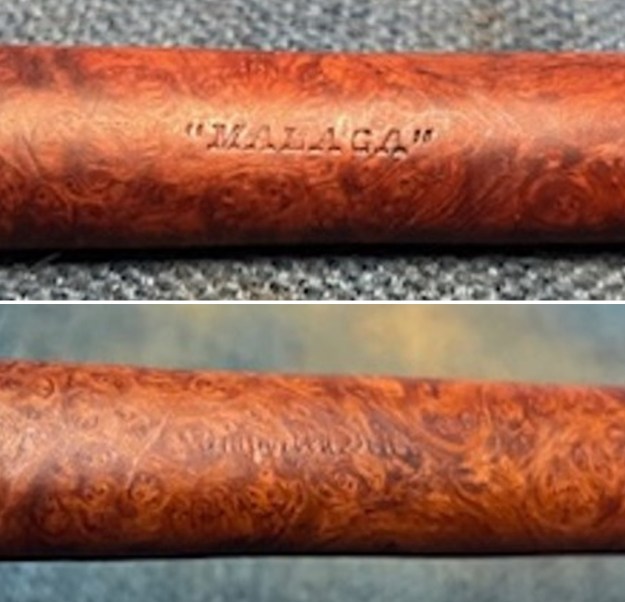
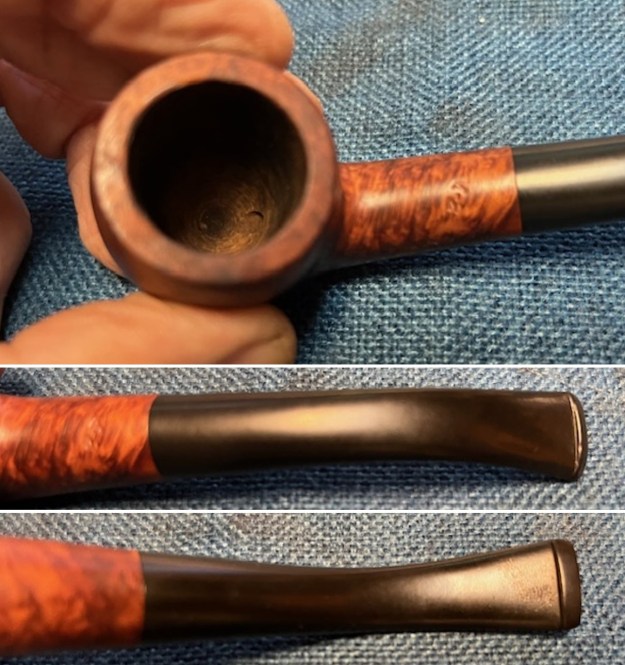
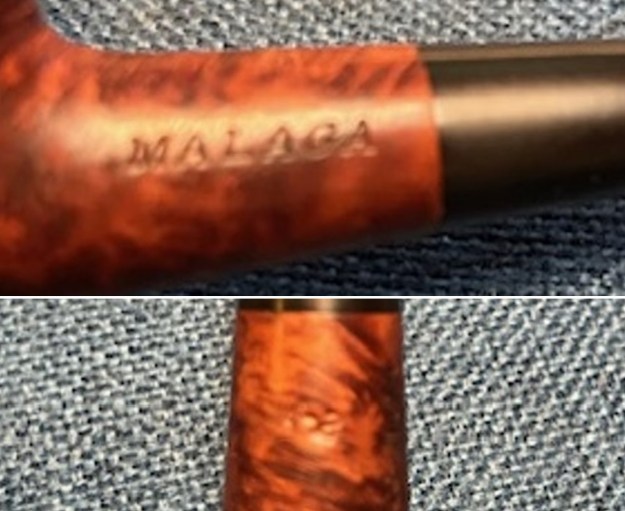
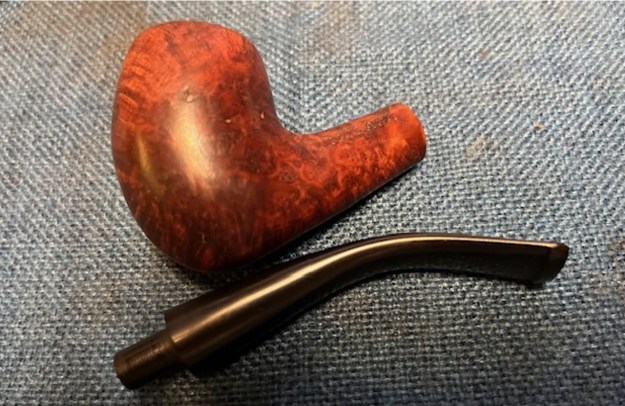
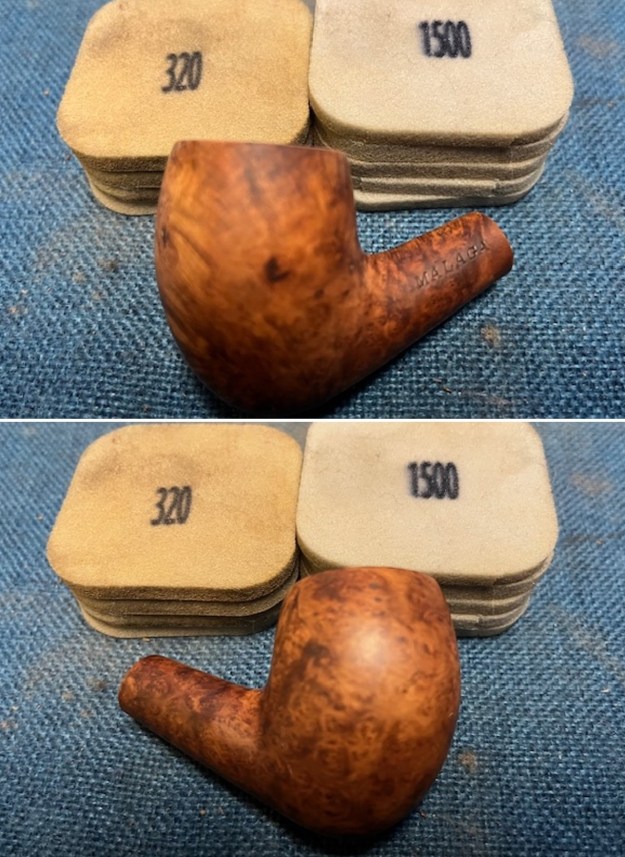
Breathing new life in to a Beautiful “Malaga” Imported Briar Canadian


by Steve Laug

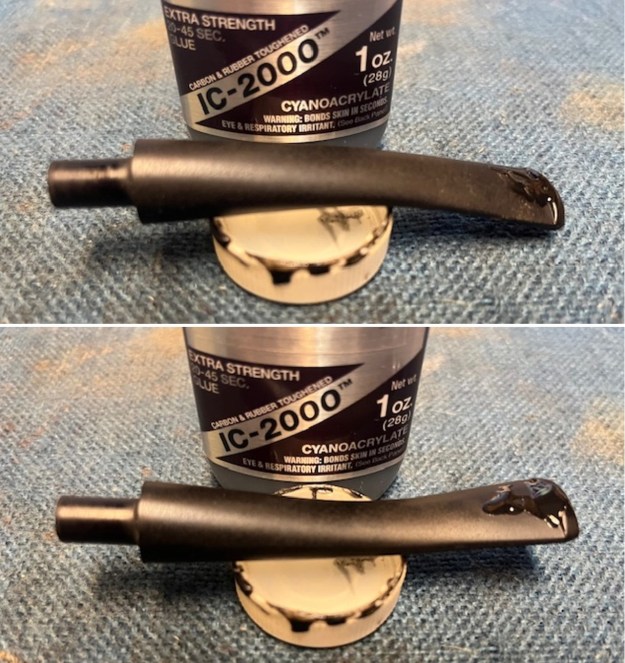
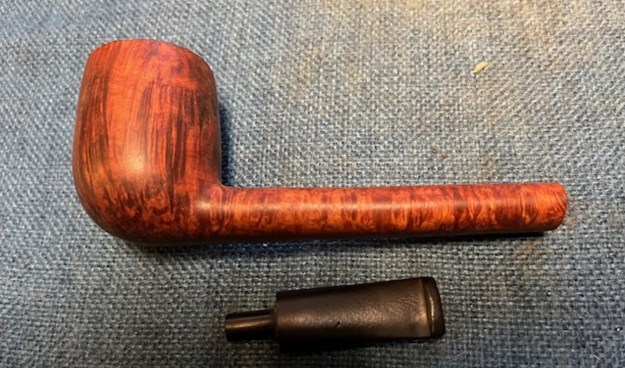
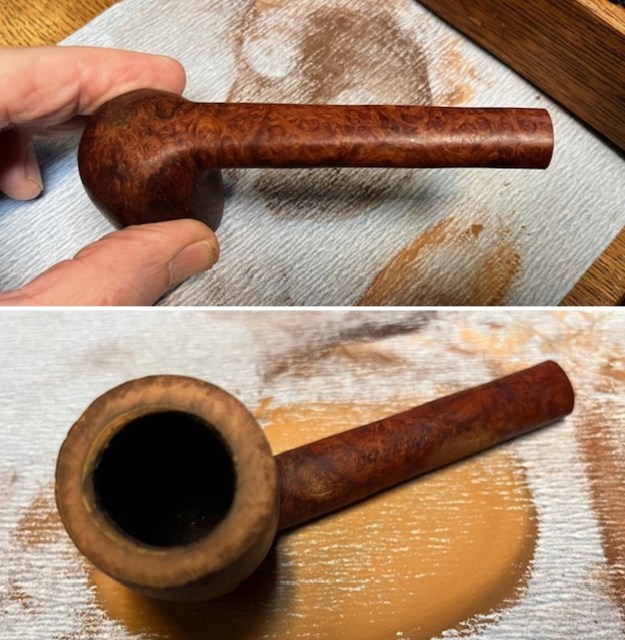
The “Malaga” Canadian is next pipe on the table. The carver did a great job of shaping the pipe to follow the grain on the briar. The bowl, oval shank and straight tapered stem look very good. The bowl had a thick cake that overflowed with thick lava onto the rim so that it was impossible to see if there was damage on the inner edges. The sides of the bowl and shank are very dirty with grime and oils from prolonged use. The grain around the bowl and shank is very nice straight grain. The stamping on the top of the shank read “MALAGA”. On the underside it is stamped IMPORTED BRIAR. The stem had tooth dents and chatter on the top and the underside of the stem. There was some thick calcification and also some oxidation deep in the vulcanite of the stem surface. Jeff took these photos before he started the cleanup work on the pipe. Jeff took close up photos of the bowl and rim to capture the condition of the pipe before he started his cleanup work. The rim top had thick lava overflow and darkening. The outer edge looked to be in decent condition. He also took a photo of the side and bottom of the bowl and shank to show the beautiful grain around the bowl. The photos show the general condition of the bowl and dirt and wear on the rich oil finish. It is very dirty but this is another beautiful pipe. Jeff took a photo to capture the stamping on the top and underside of the shank. The photos show the stamping “MALAGA” on the top and IMPORTED BRIAR on the underside. The stamping is very readable on the topside and fainter on the underside.I am also including the link to a blog that I wrote that gives some of the history of the Malaga brand and the Malaga Pipe Shop in Royal Oak, Michigan in the USA. I have written an earlier blog to give a little history of the Malaga Brand and the pipemaker, George Khoubesser. Here is the link – https://rebornpipes.com/tag/malaga-pipes/.That blog also includes links to a catalogue and the history of the pipemaker George Khoubesser. Follow the link to get a feel for the brand and the pipemaker.

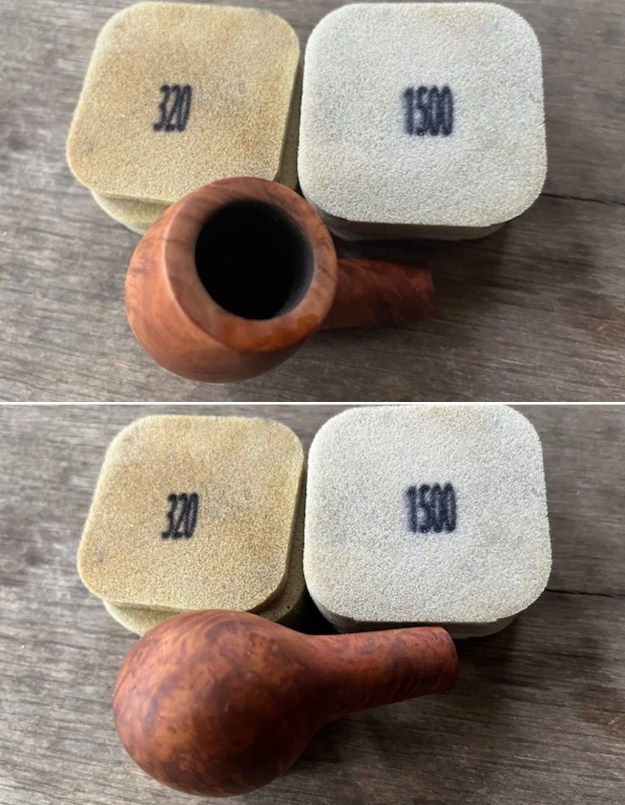
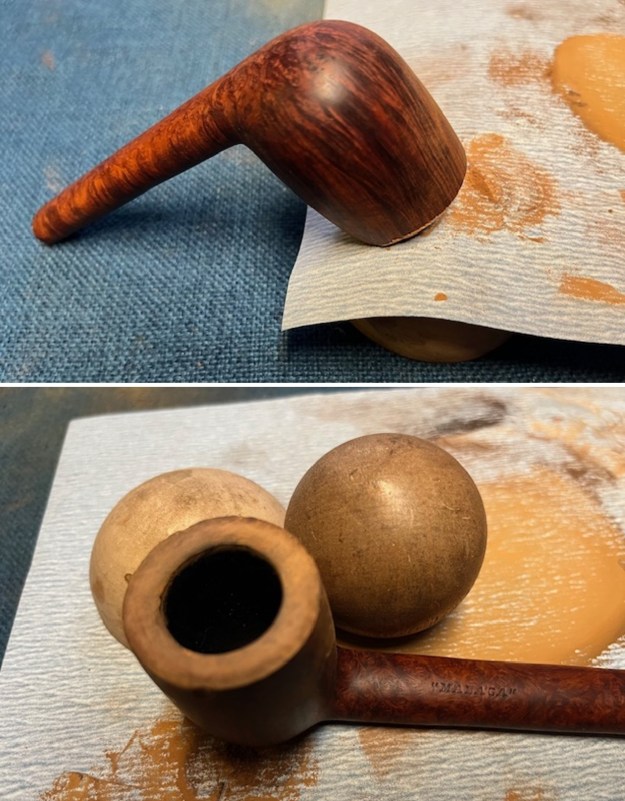
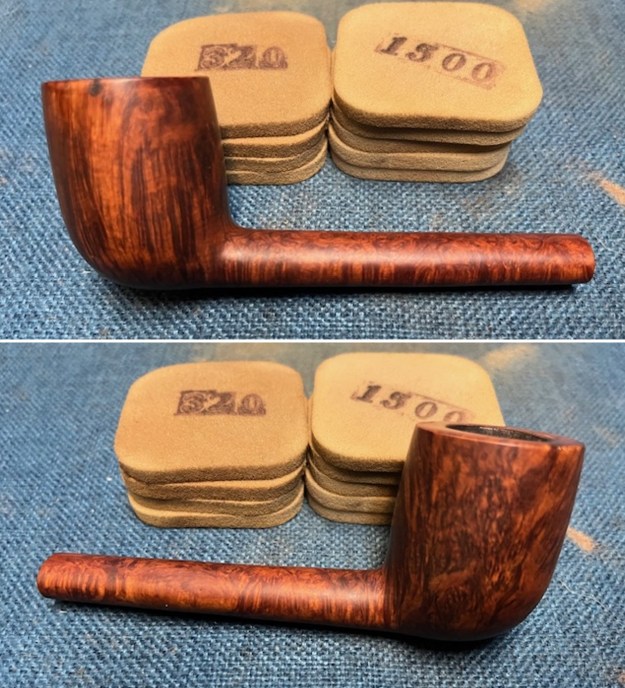
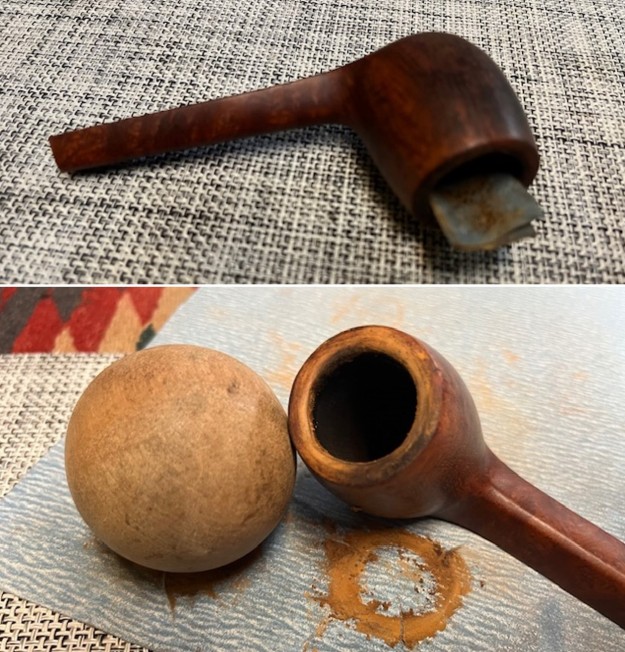
Jeff reamed the bowl with a PipNet pipe reamer and followed up with a Savinelli Fitsall pipe knife to remove the cake. He scrubbed out the mortise and the airway in the shank and the stem with alcohol, cotton swabs, shank brushes and pipe cleaners. He scrubbed the exterior of the bowl, rim, shank and stem with a tooth brush and Murphy’s Oil Soap to remove the oils and tars on the rim and the grime on the finish of the bowl. He rinsed it under running water. He dried it off with a soft cloth. He was able to remove the lava build up on the rim top and the flat surface of the rim top and the inner edge had some burn damage on the front and back side. The outer edge was rough and nicked. I took photos of the pipe to show its condition before I started my work on it. The stem also looked better. I took close up photos of the bowl and rim top as well as the stem. You can see the condition of the rim top and bowl in the first photo. Jeff was able to remove all of the tar and oils but you can now see the damage on the top and the edges of the bowl. The top of the rim is rough and the outer edges are chipped and rough. There is some darkening on the inner edge but the bowl is still round. The stem had tooth marks and chatter on both sides near and on the button surface on both sides.I took a photo of the stamping on the shank to show the condition. The “MALAGA” stamp is clear and readable but the IMPORTED BRIAR stamp is faint but still readable.I decided to address the rim top first. To remove the damage on the rim top and edges of the bowl I topped it on a topping board with 220 grit sandpaper. That removed a lot of the damage on the rim top and outer edge. I used a wooden sphere and 220 grit sandpaper to work on the inner bevel of the rim and remove the darkening and clean up the damage. I sanded the bowl and rim with 320-3500 grit sanding pads to begin the process of removing the scratches and blending the restored rim top into the rest of the bowl. I wiped the bowl down after each pad with a damp cloth to remove the dust and debris. The photos tell the story. I polished the rim top and the briar with micromesh sanding pads. I wet sanded the bowl with 1500-12000 grit sanding pads. I wiped the bowl down after each pad with a damp cloth to remove the sanding dust. I worked some Before & After Restoration Balm into the surface of the briar with my fingertips to clean, enliven and protect it. I let the balm sit for a little while and then buffed with a cotton cloth to raise the shine. The following photos show the bowl at this point in the restoration process. I am very happy with the results. I turned to the stem to address the issues on the surface of both sides at the button. I “painted” the surface of the stem with the flame of a lighter to lift the indentations. Since vulcanite has “memory” it often will return to its original condition when heated. It worked pretty well leaving behind light chatter and some tooth mark that will need to be repaired. Once the repairs cured I flattened them with a small file. I cleaned up the repairs and blended them into the surface of the vulcanite with 220 grit sandpaper. I sanded the stem with 320-3500 grit sanding pads. I wiped the stem down with an Obsidian Oil cloth after each sanding pad. I think I finally beat the oxidation.I polished the stem with micromesh sanding pads – wet sanding with 1500-12000 grit sanding pads. I wiped it down after each sanding pad Obsidian Oil. I finished by polishing it with Before & After Pipe Stem Polish both fine and extra Fine and then wiped it down with a final coat of Obsidian Oil. This is a beautiful Malaga Canadian with a vulcanite tapered stem. It has a great look and feel. The shape of the bowl, the beveled rim top and the cut of the briar work well to highlight the grain around the bowl sides. I polished stem and the bowl with Blue Diamond polish on the buffing wheel. I gave the bowl and the stem multiple coats of carnauba wax. I buffed the pipe with a clean buffing pad to raise the shine. I hand buffed it with a microfiber cloth to deepen the shine. The pipe polished up pretty nicely. The grain took on life with the buffing. The rich oil cured colour works well with the polished vulcanite stem. The finished pipe has a rich look that is quite catching. Have a look at it with the photos below. The shape, finish and flow of the pipe and stem are very well done. The dimensions are Length: 6 ½ inches, Height: 1 ¾ inches, Outside diameter of the bowl: 1 ¼ inches, Chamber diameter: ¾ of an inch. The weight of the pipe is 1.62 ounces/46 grams. It is a beautiful pipe. I will be putting it on the rebornpipes store shortly in the American Pipemakers Section if you are interested in adding it to your collection. Thanks for walking with me through the restoration.
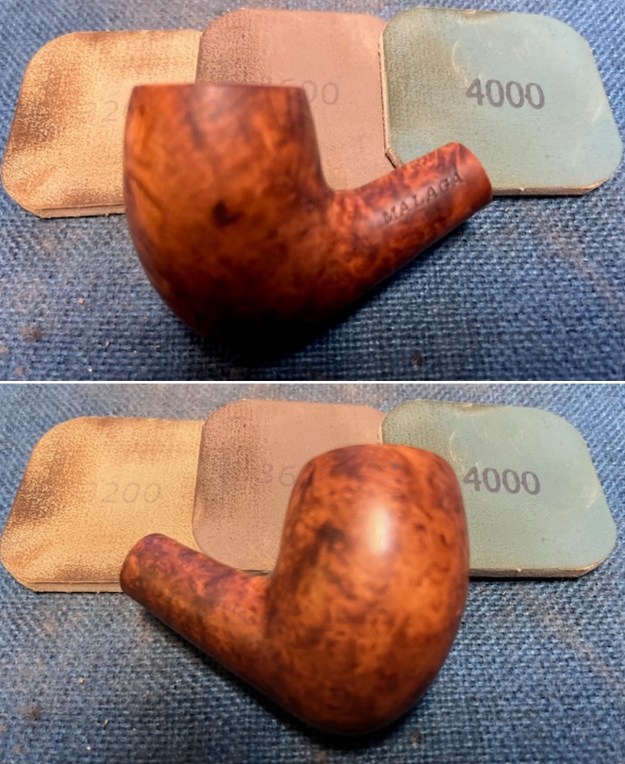
Restoring an Erickson 69 Diamond Shank Canadian


Blog by Steve Laug

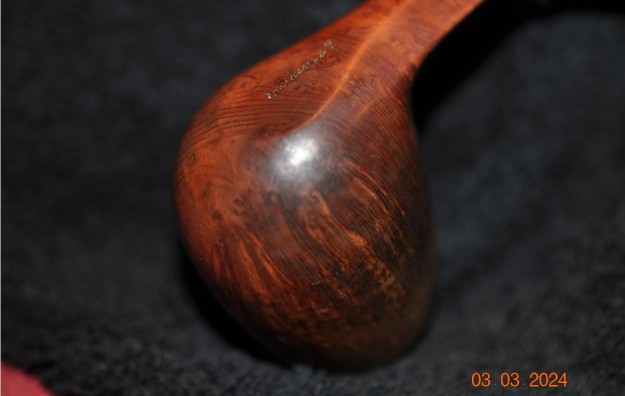
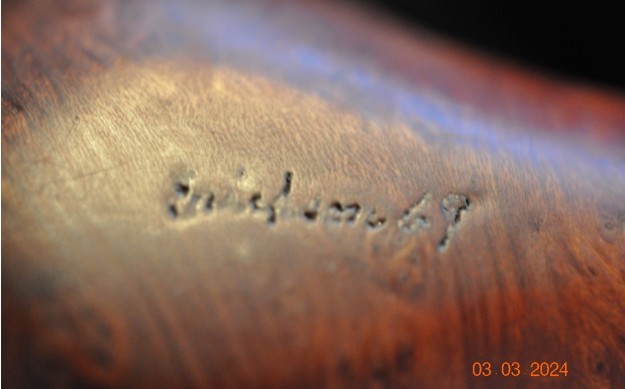
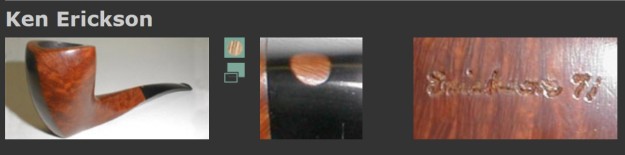
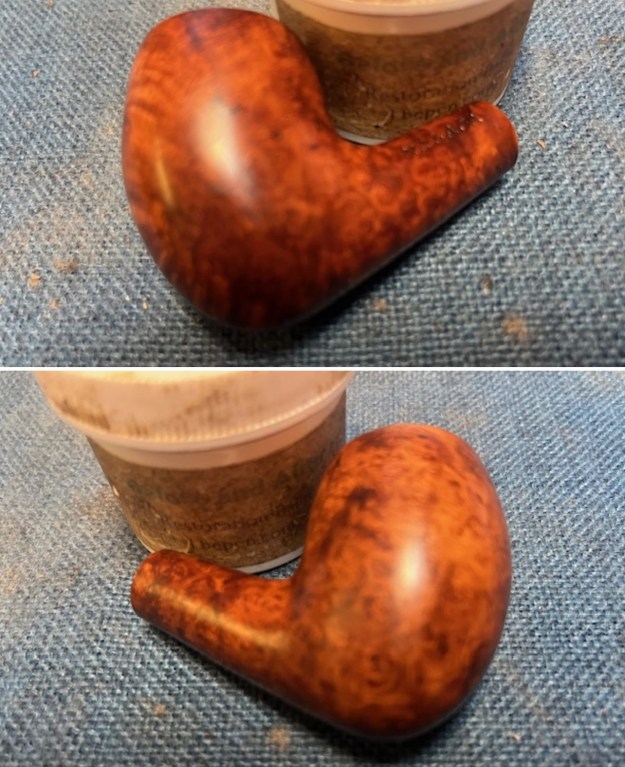
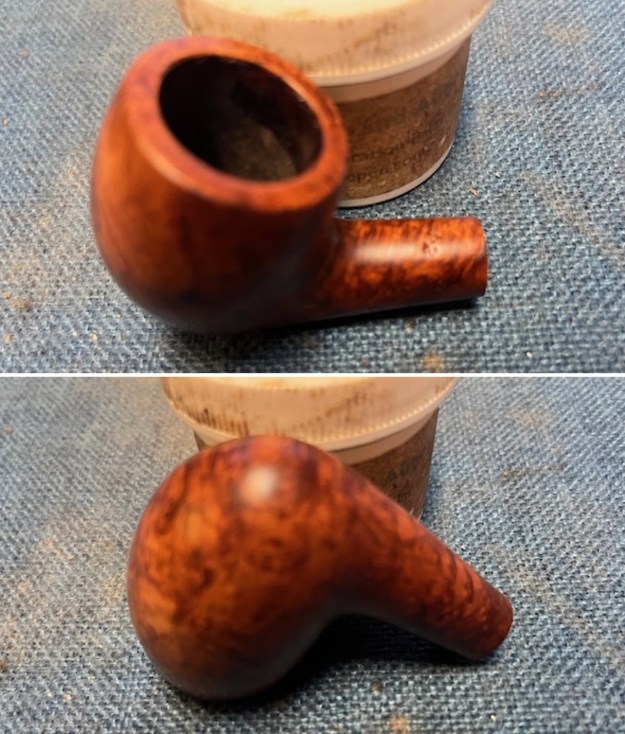
The next pipe on the table is a smooth finished diamond shank Canadian with a vulcanite diamond taper stem. We purchased it from a seller on eBay from Jordan, Minnesota, USA on 01/22/2024. The pipe is etched in script on the heel of the bowl Erickson 69. There is no other stamping on the bowl or shank. There was a lot of lava overflowing from the thick cake in the bowl onto the smooth rim top. It was hard to know for certain the condition of the inner edge though it appeared that there was some burn damage on the front edge of the bowl and some darkening on the back rim top. There were oils and grime ground into the bowl sides gives the finish a flat look though there is some great grain. The shank is a diamond shaped. The shape of the taper stem also matches the diamond shank shape. It is a dirty stem with calcification, oxidation, grime and grit on the surface. There were also light tooth marks on both the top and underside of the stem just ahead of the button. Jeff took photos of the pipe before he started his clean up work. I have included them below. He took photos of the pipe’s bowl and rim top to show the cake in the bowl and the lava coat overflowing onto the top. There is also potential burn damage visible on the front inner edge in the photos below. It is another dirty pipe. He also took photos to capture the light tooth marks on the top and underside of the stem near the button. He took photos of the sides and heel of the bowl to show the grain around the bowl and the amount of grime ground into the surface of the briar.   He took a photo of the stamping on the heel of the bowl. It is clear and quite readable. There is no other stamping on the pipe.  I turned to Pipephil’s site (http://www.pipephil.eu/logos/en/logo-k1.html#kenerickson) to see what I could learn about the brand. There was a listing there and I did a screen capture of it. The etching on the heel of the bowl on the Canadian I am working on looks like this one though the two digit stamp is 67. I have included a screen capture of the section below.Knowing that I was dealing with a Ken Erickson made pipe I wanted to know more so I turned to Pipedia (https://pipedia.org/wiki/Erickson). There I found out a lot about the maker and the brand. It is a brief article so I am quoting it in full below. The last paragraph had some helpful information on the two digit stamp.

Ken Erickson, freehand pipemaker from Sunland, California remained almost unknown outside the United States and even there his name is familiar to a small number of insiders only. Quite astonishing, because knowledgeable connoisseurs agree that Erickson was an absolute whiz, whose elegant pipes belong to the best, which were ever made in America.

Ken Erickson began to create pipes by the end of the 1960’s and died in January of 2003. Posthumously he was honored as “Outstanding American Pipe Maker” at the West Coast Pipe and Cigar Expo in March of 2003.

He started his career in Minnesota, but soon transferred his workshop to Sunland in California. It is reported, that back in the times of the “pipe mailers”, when notable pipe dealers in the USA used to instruct their customers by hectographed circulars about new available pipes – among other things – Erickson’s pipes sold even faster and at higher prices than those of such icons like Mike Butera or Rick Lewis. Unfortunately, on the climax of demand for his pipes Erickson, yet at a relatively young age, suffered a heavy heart attack. He abandoned pipemaking instantly. Many years later, appr. since 2000, he returned to his craft and finished some few more pipes from old supplies until his death.

Erickson used no grading. The pipes are engraved with his name (in script) and two digits indicating the year of production.

This particular pipe is engraved with his name and the two digits 67 making it a pipe made in 1967.

Armed with that information I turned to work on the pipe itself. Jeff had done a great job cleaning up the pipe as usual. He cleaned up the inside of the bowl with a PipNet reamer and a Savinelli Fitsall Pipe Knife. The bowl walls looked very good. He scrubbed the interior of the bowl and shank with pipe cleaners, cotton swabs and alcohol to remove the tars and oils. He scrubbed the exterior of the pipe with Murphy’s Oil Soap and a tooth brush to remove the grime from the finish. He worked on the rim top lava and darkening with the soap and tooth brush. He scrubbed the inside of the stem with alcohol and pipe cleaners. He scrubbed the exterior with Soft Scrub and then soaked it in Briarville’s Pipe Stem Deoxidizer. He washed it off with warm water to remove the deoxidizer. The pipe looked far better. I took photos of the pipe when I received it before I started working on it. I took photos of the bowl and rim top to show how clean it was. The top and the inner edge of the rim show darkening and some nicks and scratches. The stem looks clean of debris and grime. There are light tooth marks and chatter on both sides.I took photos of the stamping on the left and right sides of the shank. The stamping is clear and readable. I took a photo of the pipe with the stem removed to show the overall look of stem, tenon and profile of the pipe.I started my work on the pipe by addressing the damage on the inner edge of the rim. I used a folded piece of 220 grit sandpaper to smooth out the roughness. I then used 220 grit sandpaper and a wooden ball to give the inner edge of the bowl a slight bevel. It looked much better at this point in the process. I polished the briar with the 320-3500 grit sanding pads. I worked over the rim top and bowl with each pad and then wiped it down with a damp cloth. The pipe really began to take on a shine and the rim top began to match the rest of the briar. I polished the briar bowl with micromesh sanding pads – dry sanding with 1500-12000 grit sanding pads. I wiped it down with a damp cloth after each pad to remove the debris. The bowl took on a rich glow. I rubbed the bowl down with Before & After Restoration Balm. I worked it into the surface of the briar with my fingertips to clean, enliven and protect it. I let the balm sit for 10 minutes and then buffed with a cotton cloth to raise the shine. Mark Hoover’s Balm is a product that I have come to appreciate and one I use on every pipe I have been working on. I set the bowl aside and turned my attention to the stem. I sanded out the small tooth marks with 220 grit sandpaper and was able to remove them.I polished the vulcanite with micromesh sanding pads – 1500-12000 grit pads. I wiped it down with a damp cloth after each sanding pad. I used Before & After Pipe Polish – both Fine and Extra Fine to further polish the stem. I put the stem back on the Ken Erickson 1969 Long Diamond Shank Canadian and took it to the buffer. I worked it over with Blue Diamond to polish out the remaining small scratches. I gave the bowl and the stem several coats of carnauba wax and buffed the pipe with a clean buffing pad to raise the shine. I hand buffed it with a microfiber cloth to deepen the shine. The pipe polished up really well and the bevelled rim top looked good. I was happy with the look of the finished pipe. The photos below show what the pipe looks like after the restoration. The long diamond shank Canadian is a beautiful and unique take on a classic shape. The polished Black vulcanite stem looks really good with the browns of the briar. The dimensions of the pipe are Length: 7 inches, Height: 1 ¾ inches, Outside diameter of the bowl: 1 ¼ inches, Chamber diameter: 7/8 of an inch. The weight of the pipe is 1.27 ounces/36 grams. This is another pipe that I will be putting it on the rebornpipes store in the American Pipe Makers Section shortly, if you are interested in adding it to your collection. The long shank and tall bowl look and feel great in the hand. This one should be a great smoker. Thanks for walking through the restoration with me on this beauty!
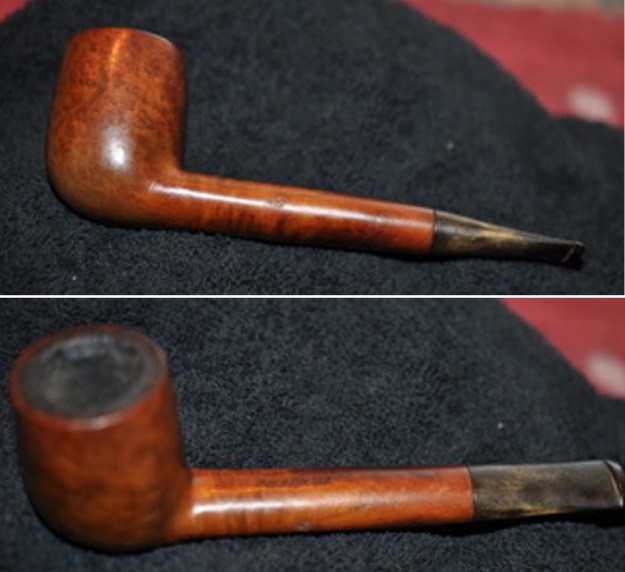
A Hardcastle Filter Pipe Well-Smoked


Blog by Robert M. Boughton
https://www.facebook.com/roadrunnerpipes

After some time he felt for his pipe.  It was not broken, and that was something.  Then he felt for his pouch, and there was some tobacco in it, and that was something more.  Then he felt for matches and he could not find any at all, and that shattered his hopes completely..

— J.R.R. Tolkien, The Hobbit, or There and Back Again

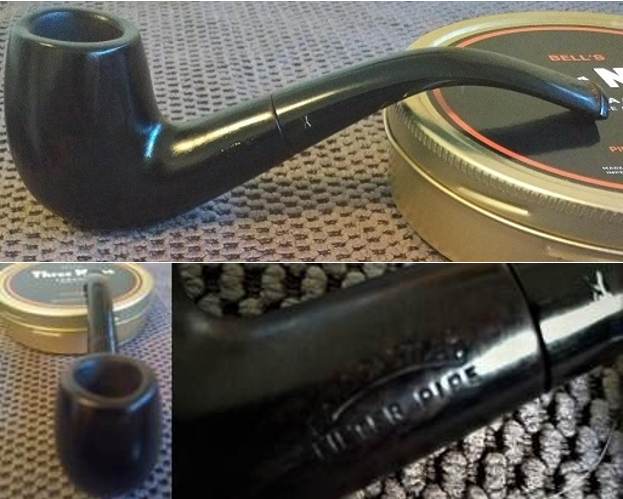
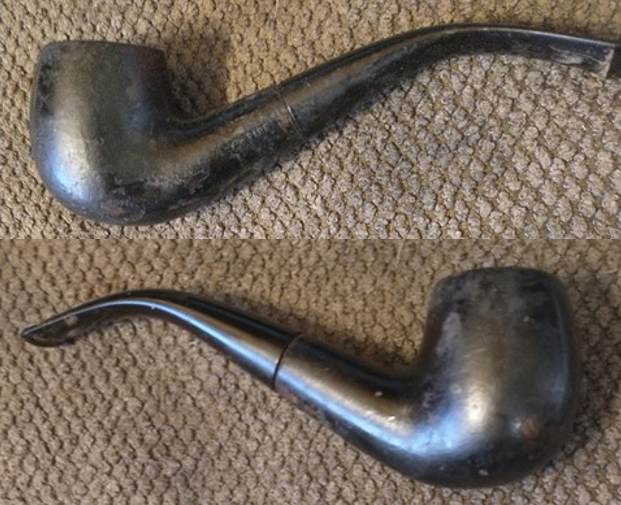
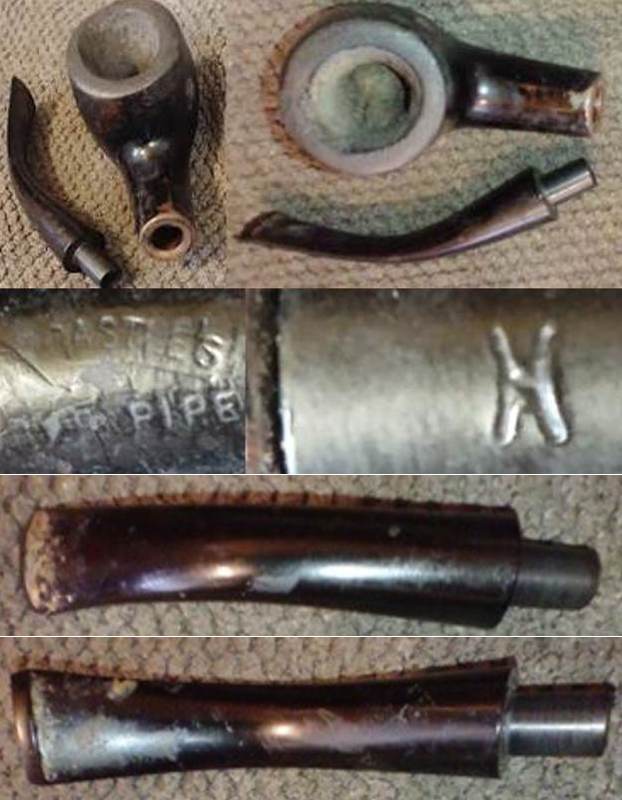
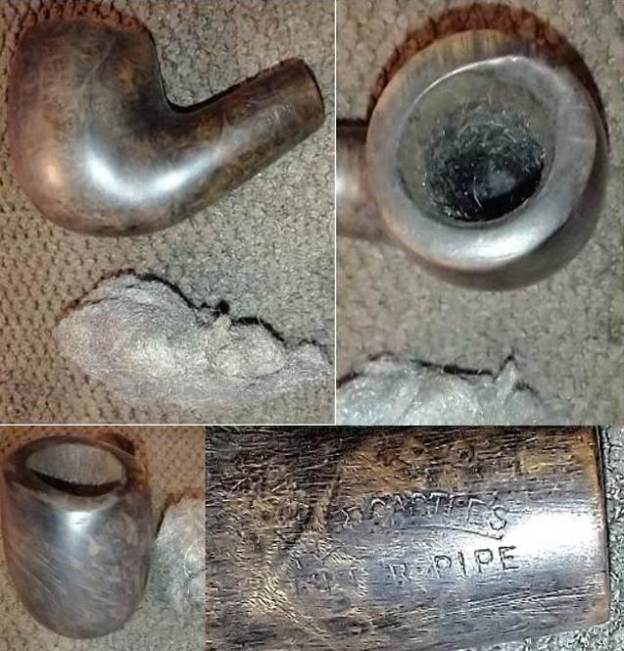
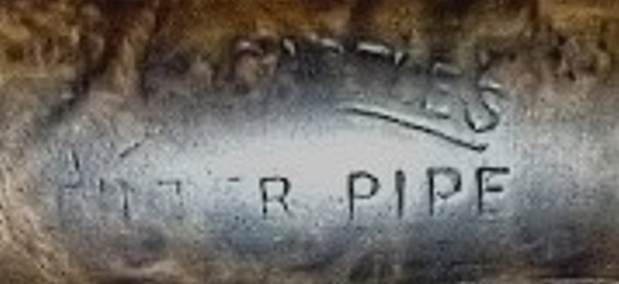
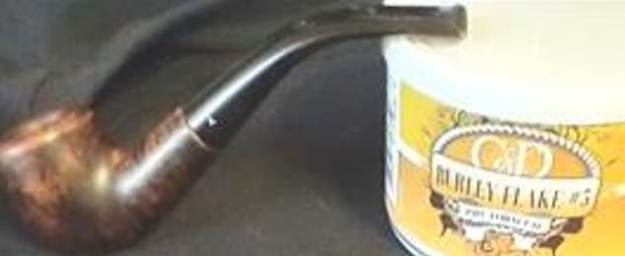
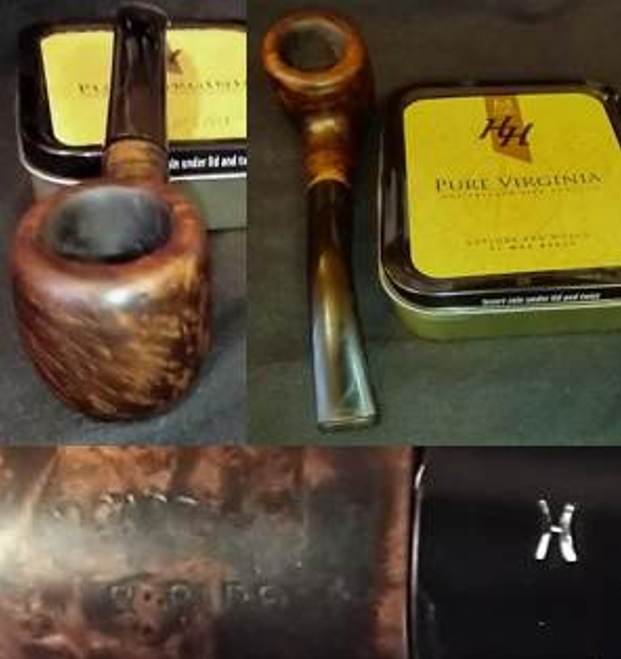
I had no idea where this pipe came from.  It seemed to appear out of thin air on the little stand that serves as a sort of waiting room for my next six appointments needing various degrees of rejuvenation.  The diminutive bent billiard – once a black dress pipe, I could tell – bore such wear and accumulated gunk that it looked more like something washed up on shore after a catastrophic oil spill.  The thought occurred to me that perhaps I should wear latex gloves for the initial inspection, which suggested the pipe was not broken, and that was something, and there were no apparent cracks or burnouts, and that was something more.  The rim of the bowl was wrecked, and that would not have been encouraging were it not for the apparition of the last five letters of an old friend’s name on the left shank.  The classy H on the stem confirmed a Hardcastle shrouded by the grime.  For a chronology of Hardcastle’s transition from its beginning in 1903 to the final stage of its evolution as a Dunhill second, follow the Pipephil link in Sources.
Only after the first two steps of the restoration did I discern that the billiard was a Filter Pipe model.  I was creating a new sub-folder in my restored Hardcastles when a warning appeared on the monitor asking if I wanted to replace the existing Filter Pipe folder with the new one.  This very pipe came to me a few years back with clear nomenclature but a rim that was more abused than most.  At the time, it was the perfect candidate for my experiments in giving pipes a dress finish.  My roommate, a Hardcastle devotee, bought it.  That explained the poor thing’s further decline.

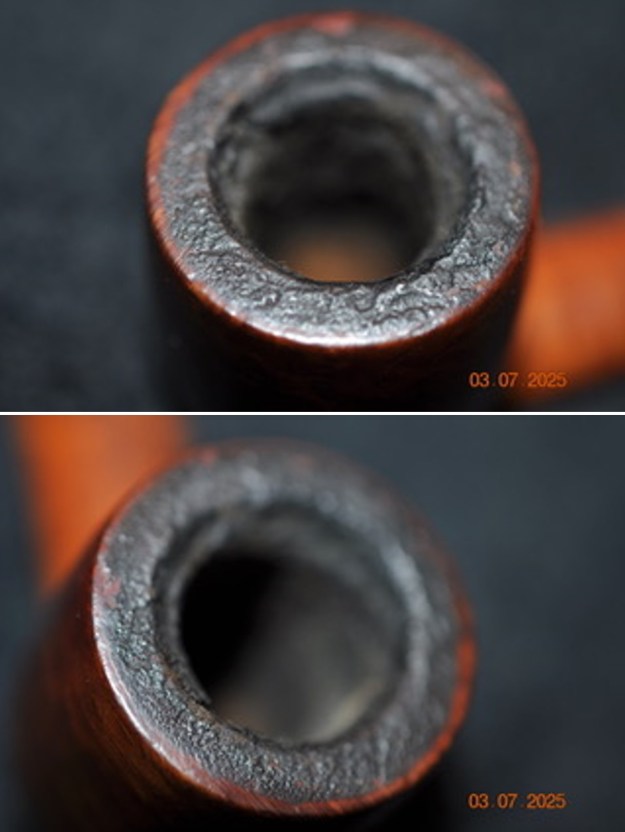
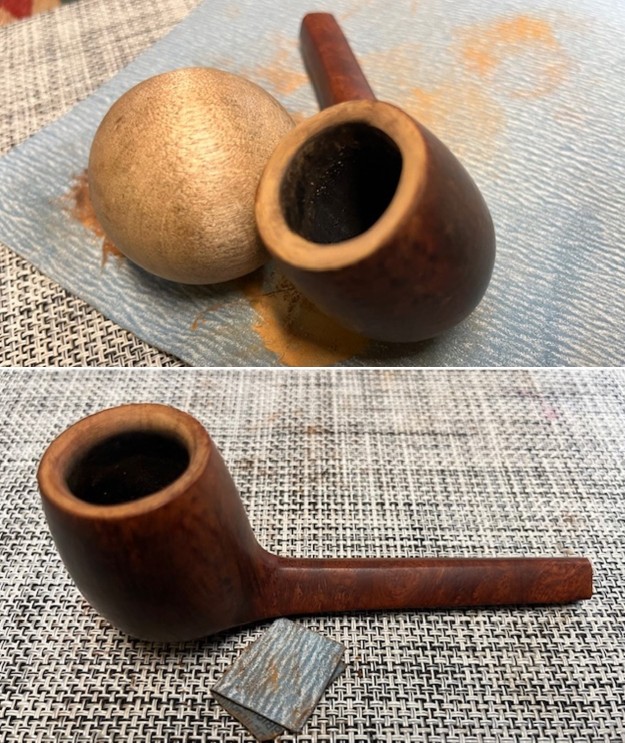
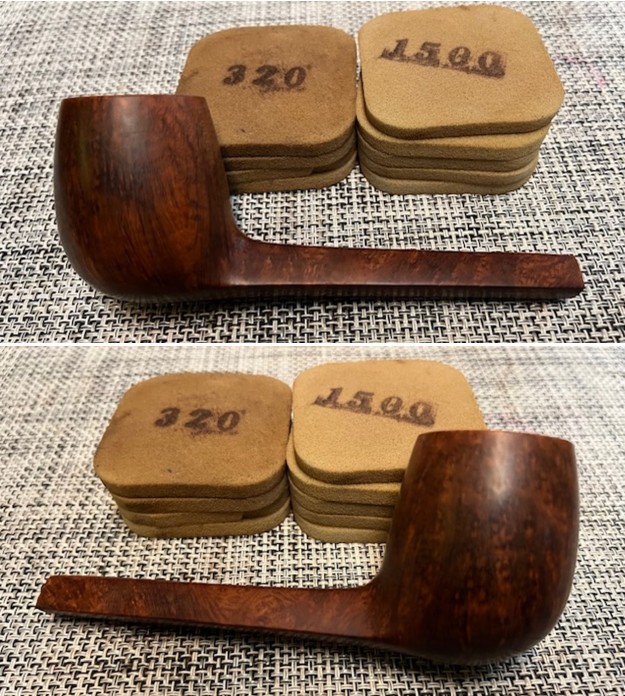
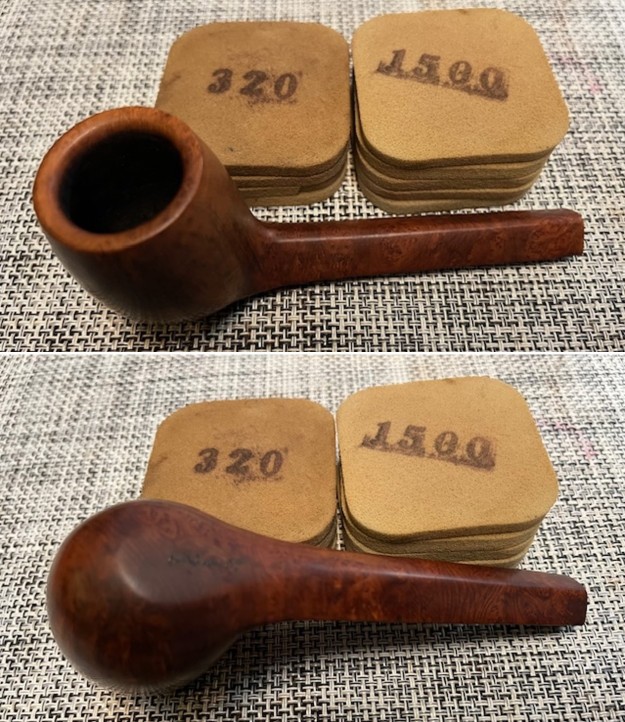
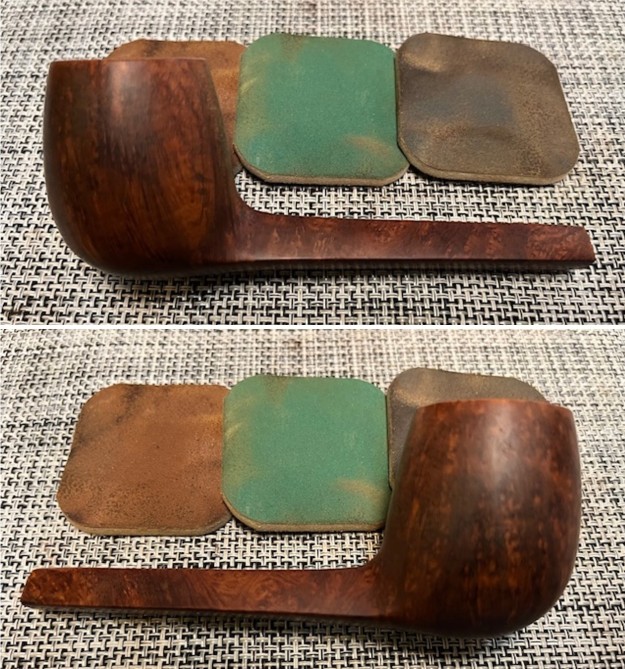
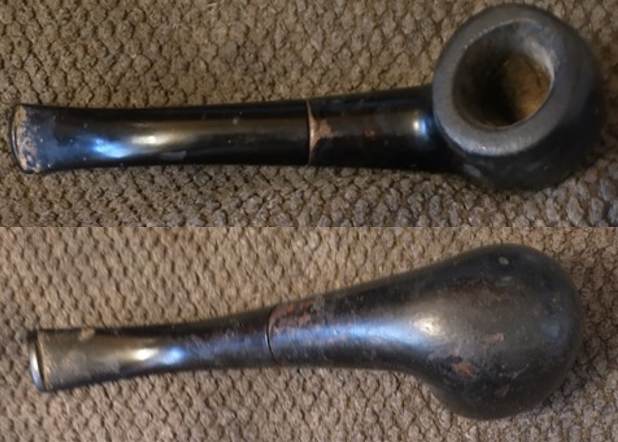
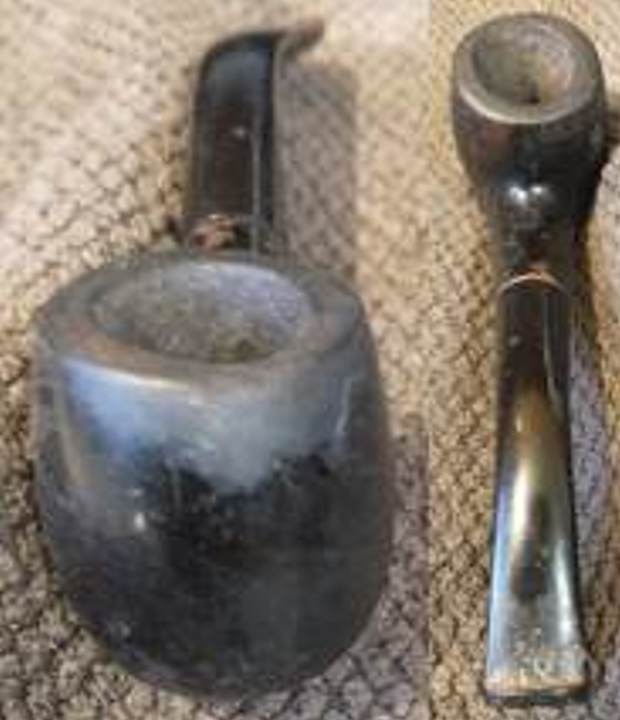
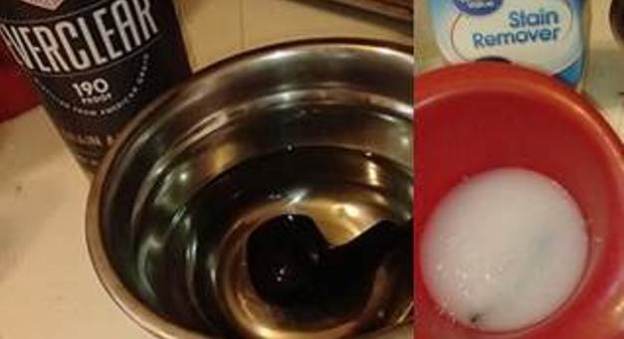
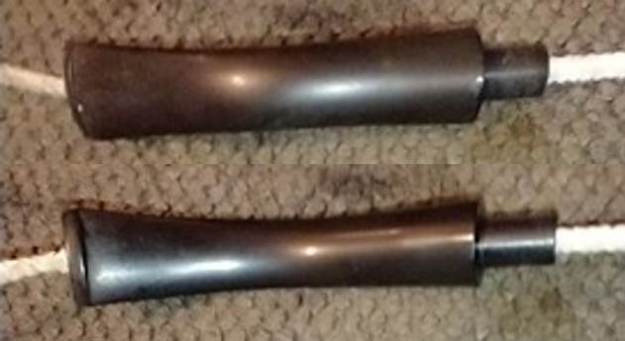
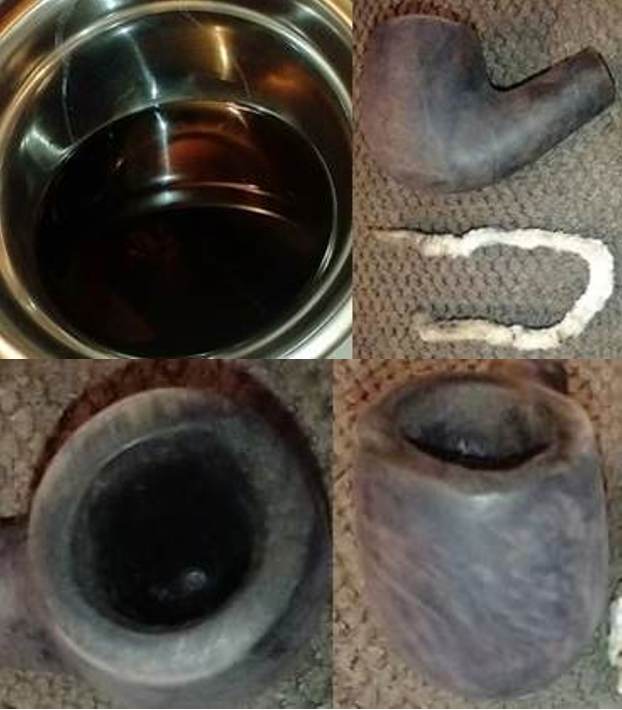
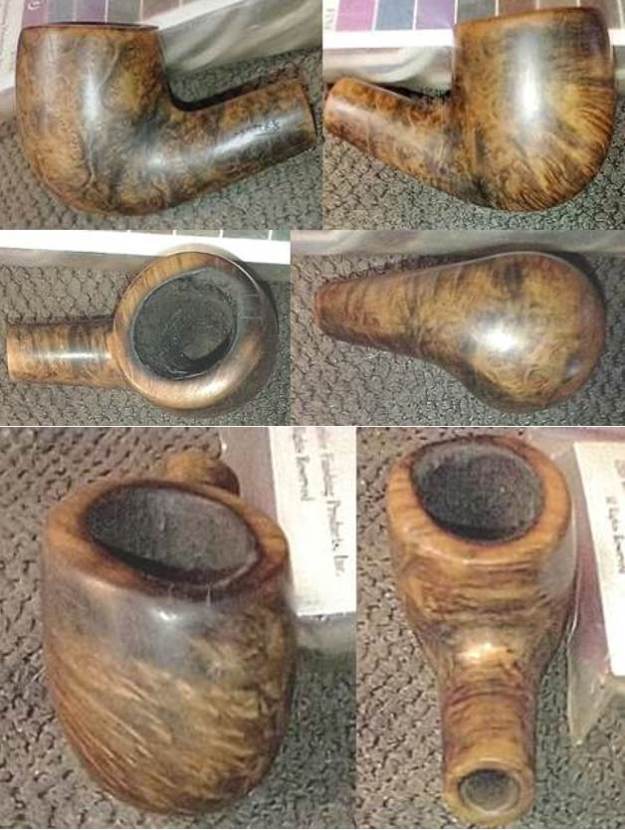
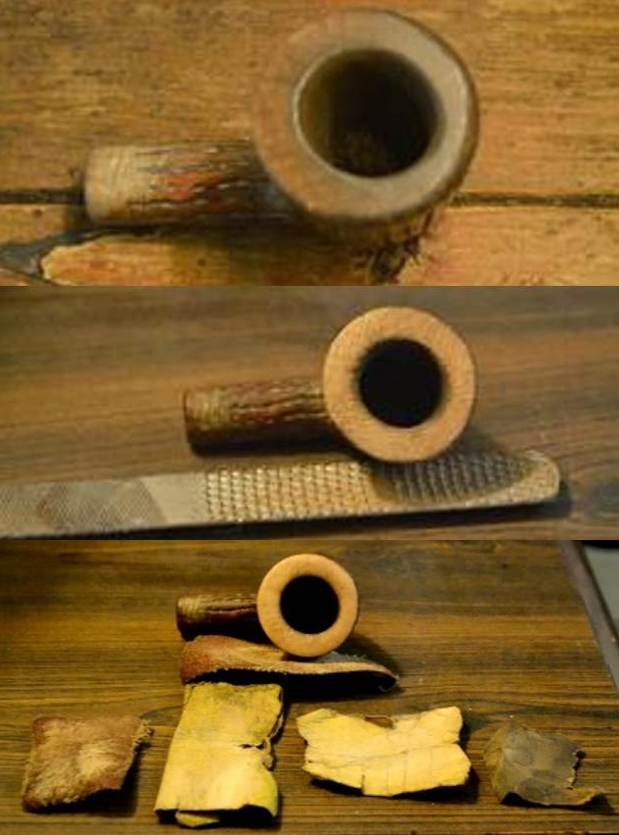
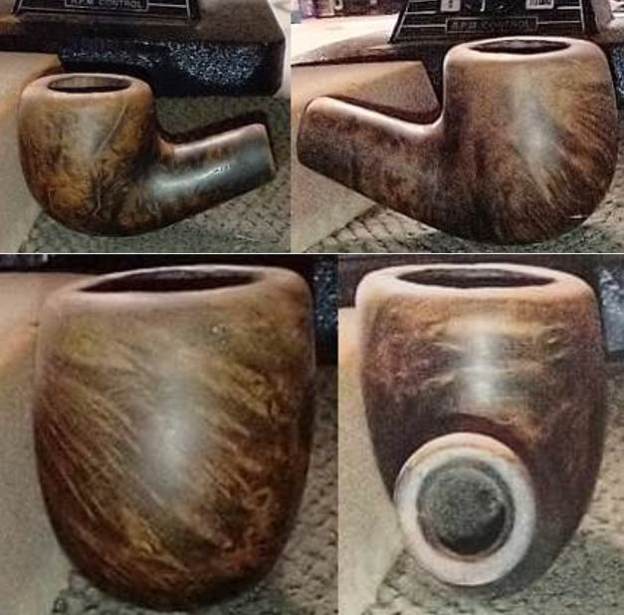
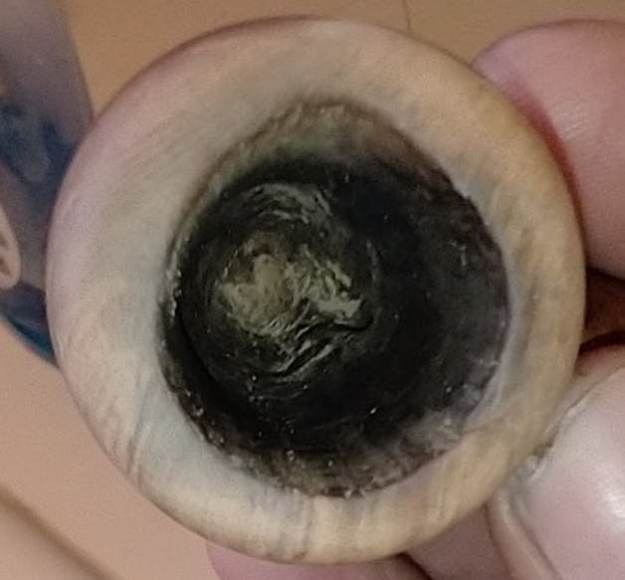
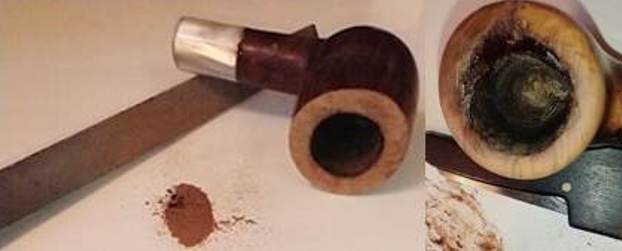
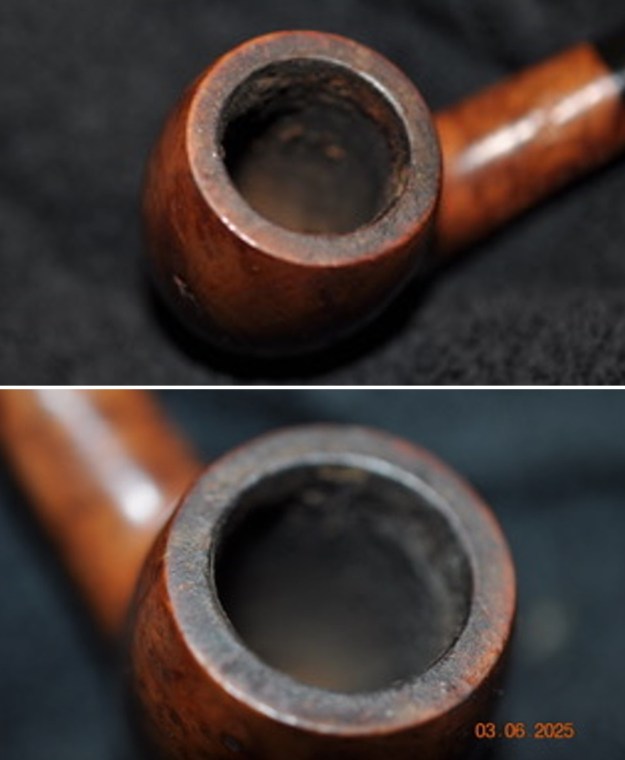
First, the before pics of the dress version.  I never blogged it because I was not happy with the rim work.  I’ve blogged one or two of my failures as cautionary tales, but not this one.Now for the carnage my roommate dumped on me.  This may be the most tortured pipe I have ever encountered.  CAUTION: The following images may be unsuitable for children or squeamish pipe smokers.In most cases, I soak the stummel in Isopropyl alcohol, but this time I chose Everclear to strip the homemade shellac I made for the dress process and the black leather dye beneath it – although not much of either appeared to remain.  I gave the stem a bath in generic stain remover. The stem came out in great shape, but the stummel less so. I used super fine 0000 steel wool to take off the residue from the Everclear soak.  This is when I could discern Filter Pipe.A full micro meshing sharpened the nomenclature and revealed the wood’s rich brown, if erratic, grain. I would like to know just how someone would go about inflicting such damage on a rim, but I couldn’t very well ask my roommate.  In the past, I have been somewhat successful with reversing mangled rims.  In one of the prior cases, for example, I resorted to a rasp.  Here are the before, during and after shots of that pipe, a P&K Everyman.I learned the importance of sanding, filing or grinding in the right direction. To narrow a rim, I move whatever tool I use with, or in the same general direction as the rim’s wall; to widen the rim, I move the tool against the rim, from the chamber outward. Try as I did to avoid resorting to extreme measures to make the Hardcastle rim right again, the time came to use my electric grinder. My main concern with making the misshapen rim at least more even and round again by putting it to an electric sanding wheel was the potential for irreversible damage in a heartbeat. Not being one to avoid a challenge, I went for it. I dare anyone reading this not to laugh at the last photo below. Believe it or not, the wheel sander did what I needed: it made the rim almost level.  I knew I could fix that problem a little later.
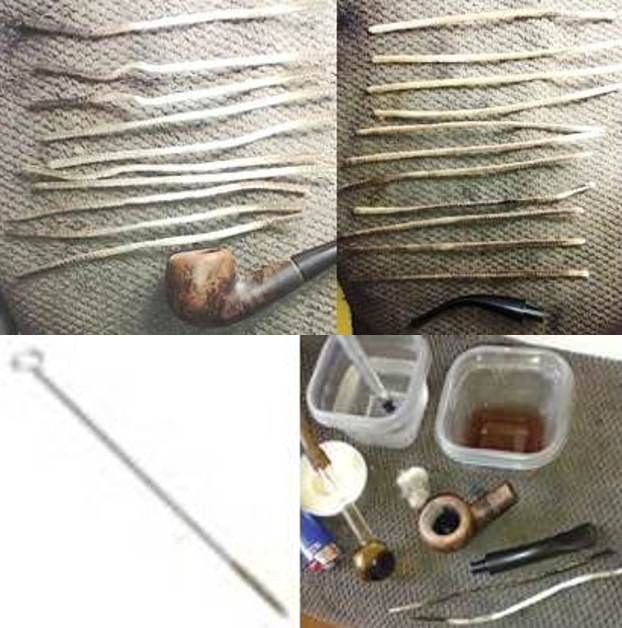
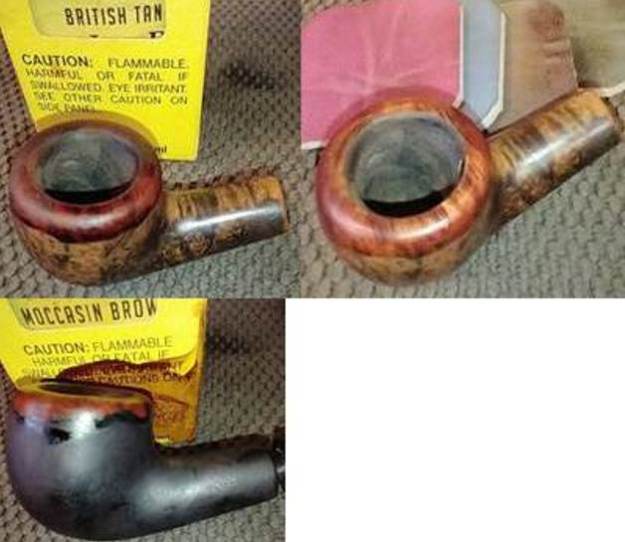
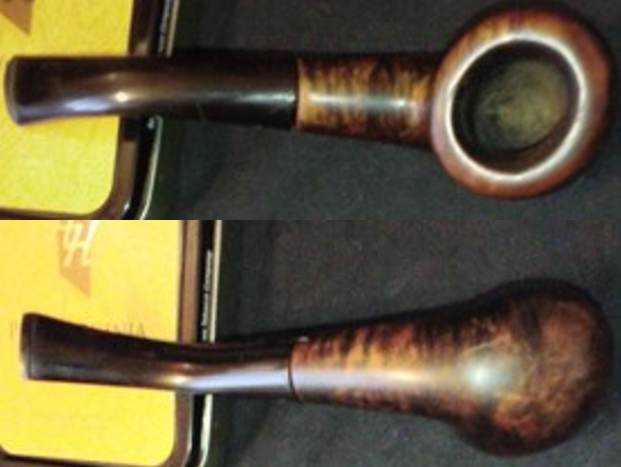
The pre-retort cleaning of the stummel and stem required more regular cleaners and a brass-handled brush with wire bristles, similar to the one below, both dipped in Everclear.  At least my roommate enjoyed the pipe while beating it.  The retort needed three test tubes of alcohol to come out clear.Notwithstanding the relative roundness of the rim, I knew I had to fill the preexisting indentation in the upper corner of the inner wall as shown in the post-electric sander pic.  I did something similar once, but again, I found the solution in one of Steve’s blogs on correcting an off-round rim. I filed off briar shavings from a hopeless pipe and mixed them with Super Glue, then applied the goop to the problem area inside the chamber.  It isn’t pretty, but it worked. Several hours later, I sanded down the remaining hard mess with 60-grit paper followed by a 120/180 pad. Several more hours later, I had reached the point where I knew I could not do better and sanded and micro meshed the stummel in preparation for staining.  I used British tan on the rim and moccasin brown on the rest, then micro meshed off the char with 1500, 8000 and 12000 pads.  That’s a good combination for a subtle contrast.I buffed the stummel with Red Tripoli and carnauba and was finished. SOURCES
https://www.worthpoint.com/worthopedia/hardcastle-filter-pipe-164105369
http://www.pipephil.eu/logos/en/logo-hardcastle.html
https://rebornpipes.com/2017/07/20/another-piece-pipe-history-a-lovely-cpf-french-briar-bent-billiard/