Tag Archives: restaining

Redeeming an English Made Flumed Meerschaum Author


Blog by Steve Laug

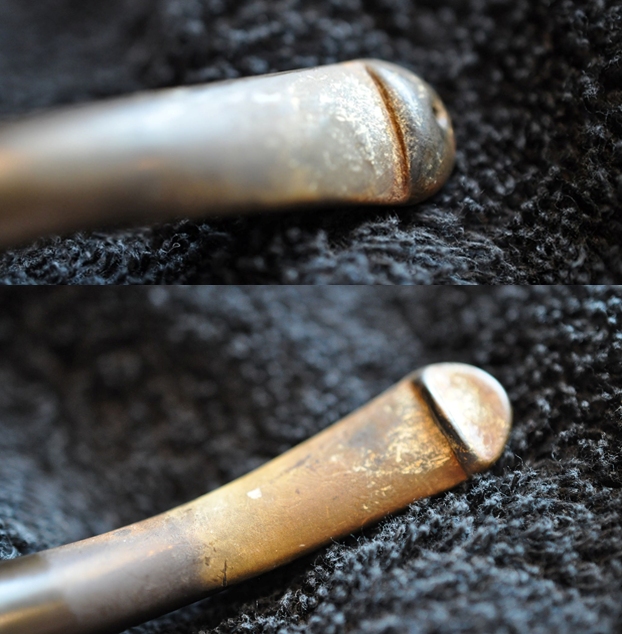
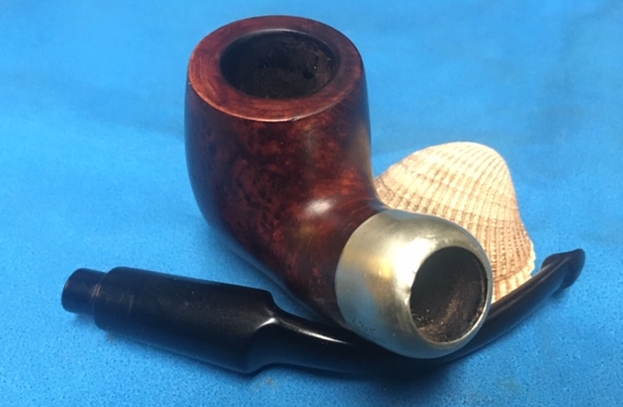
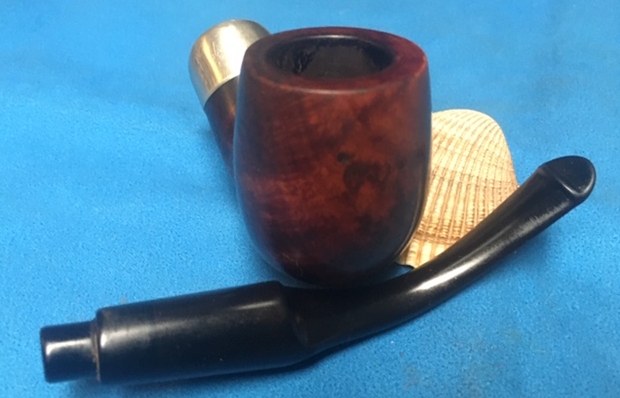
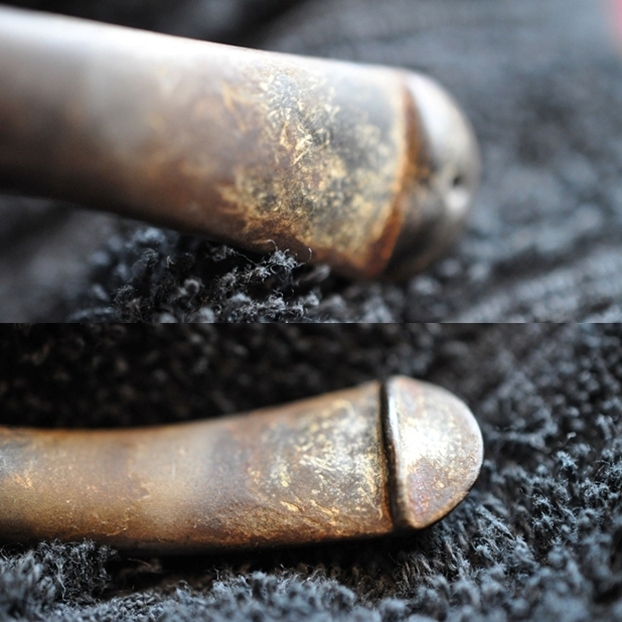
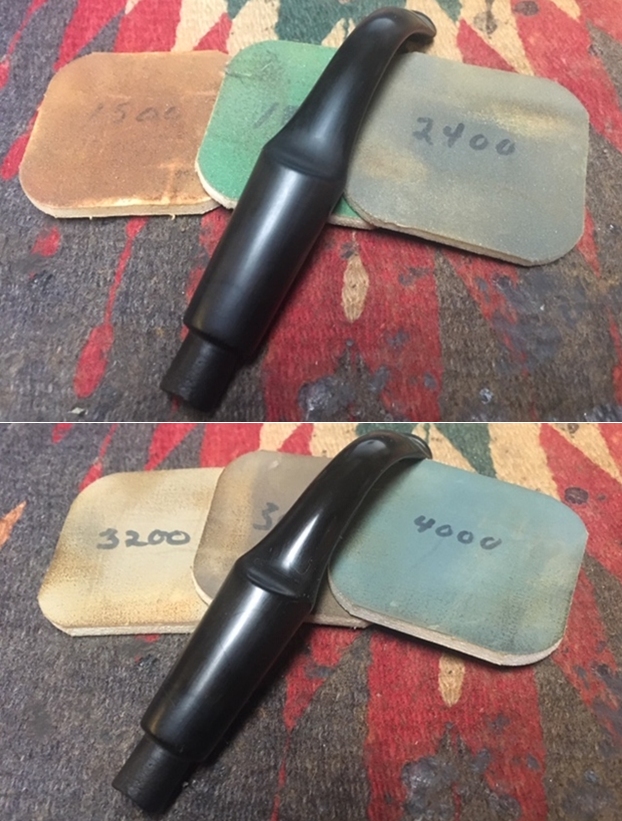
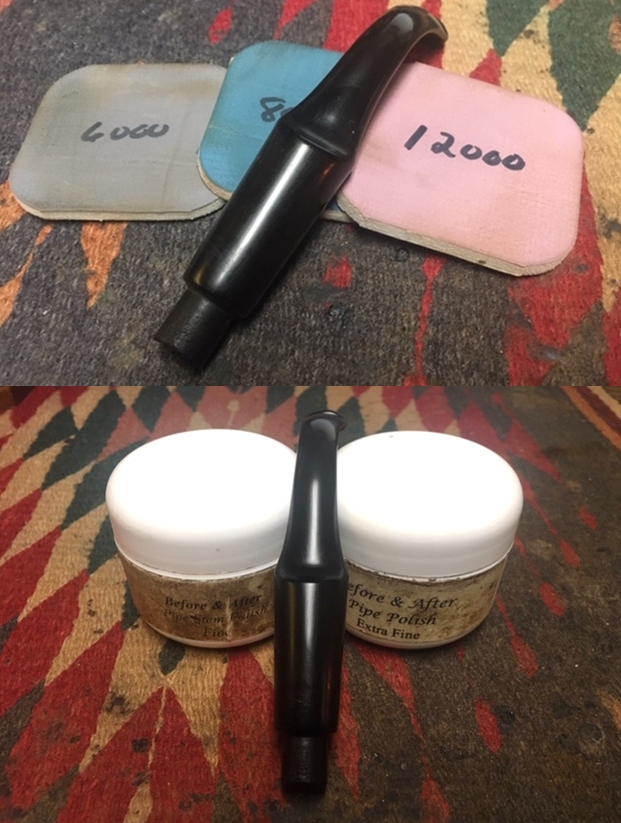
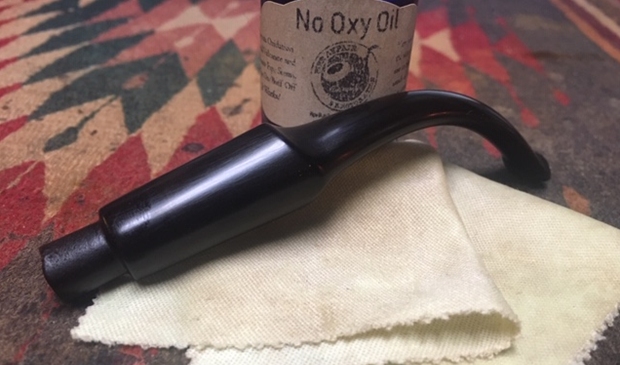
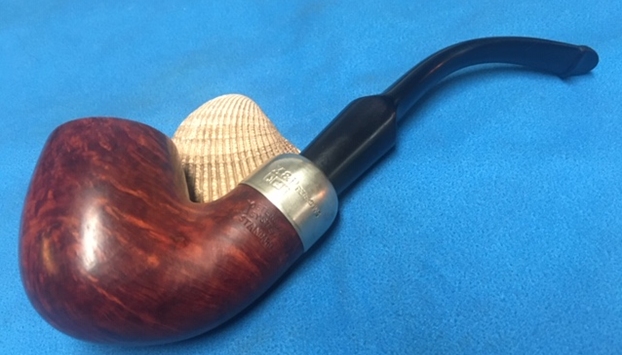
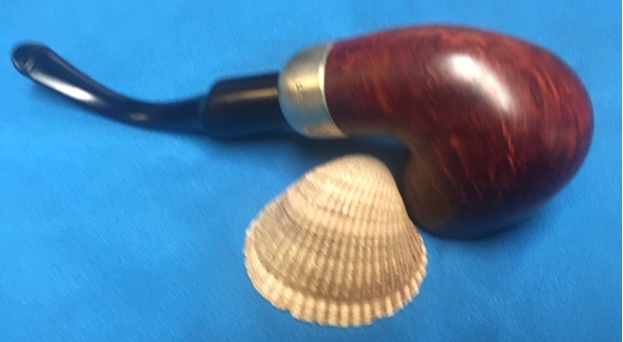
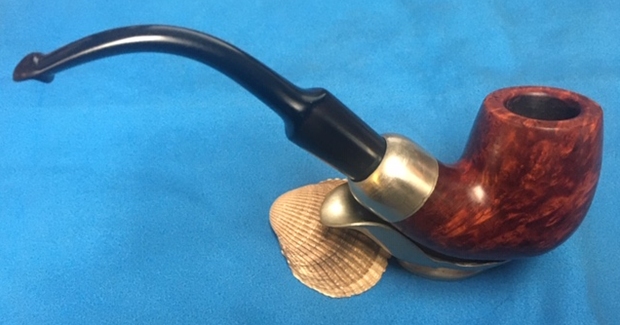
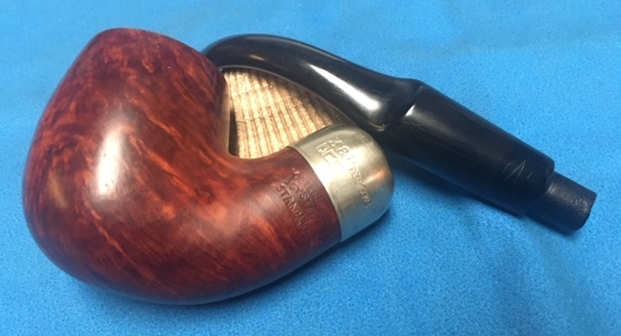
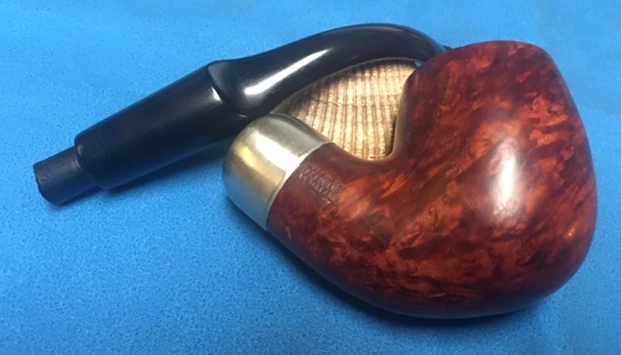
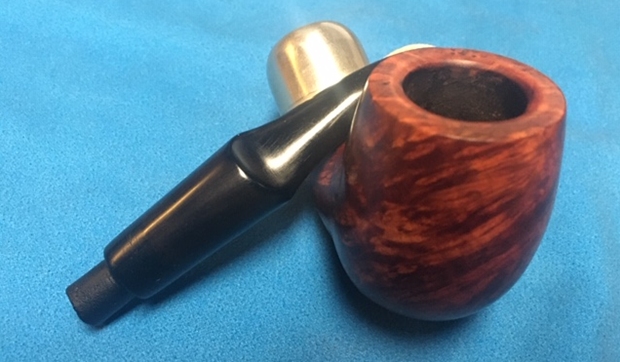
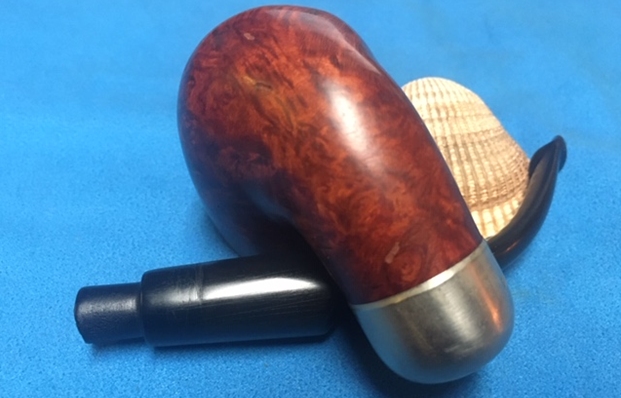
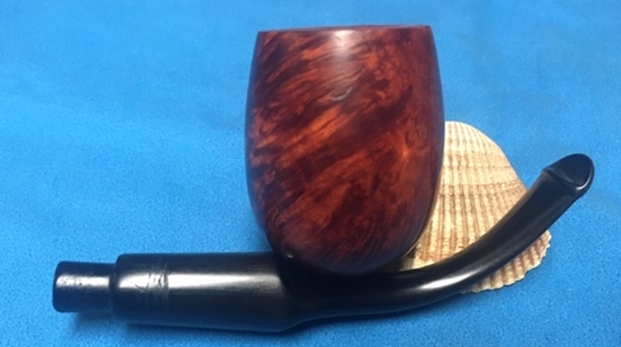
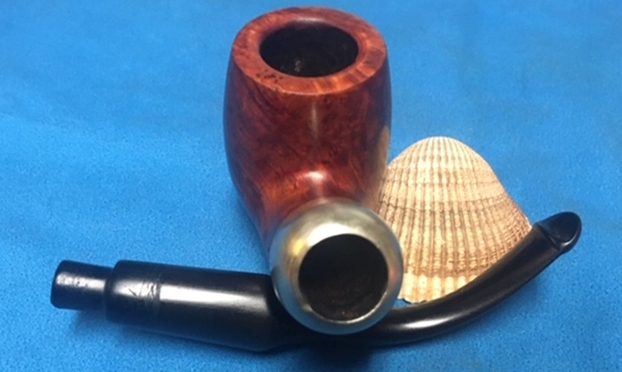
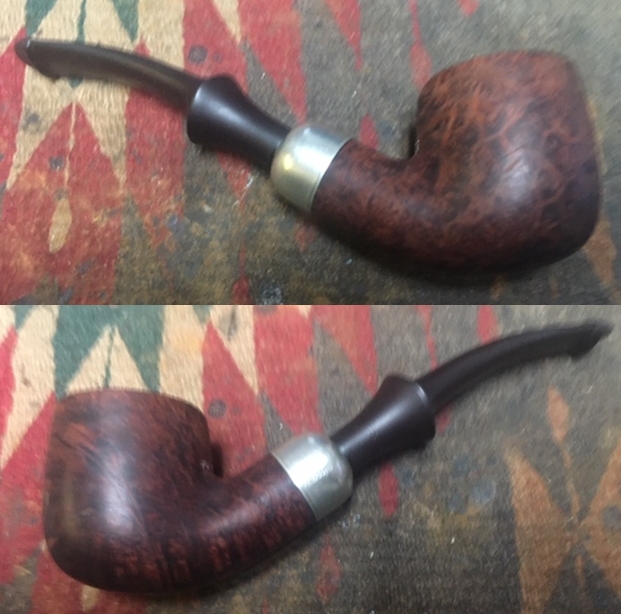
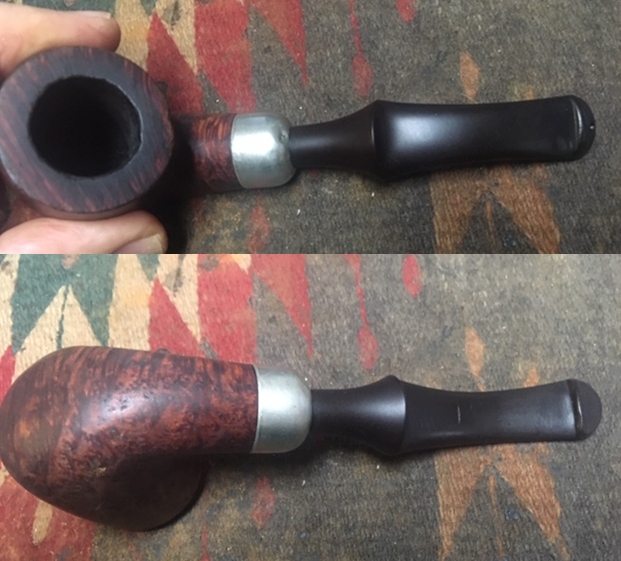
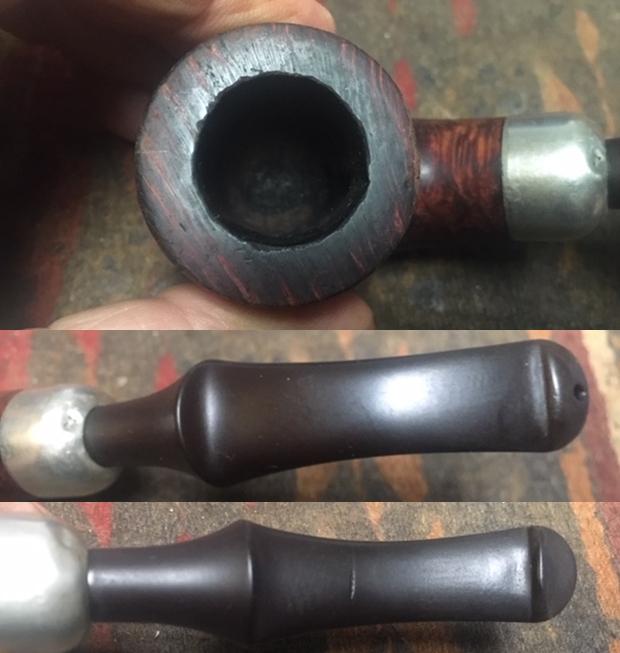
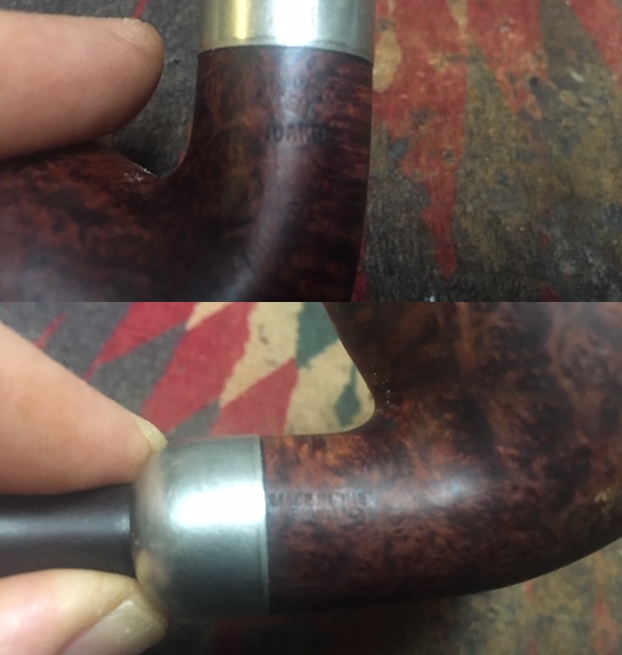
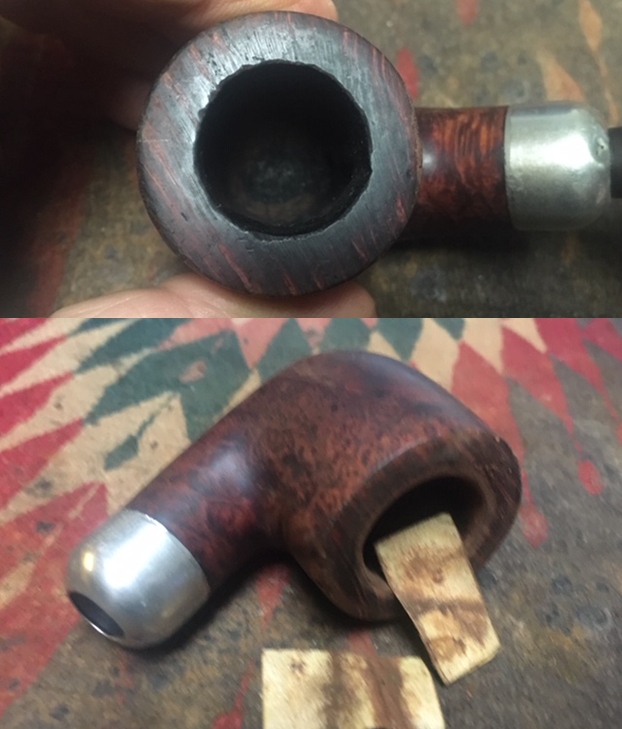
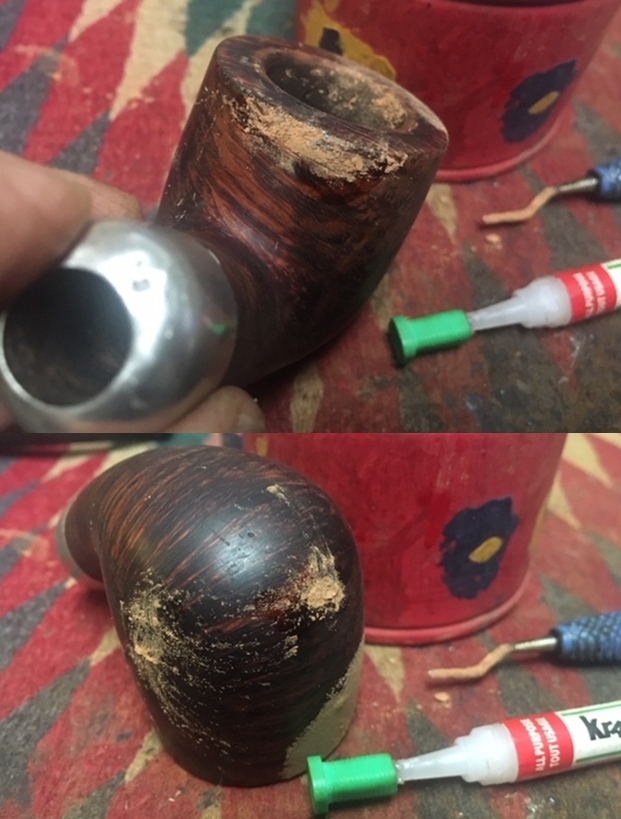
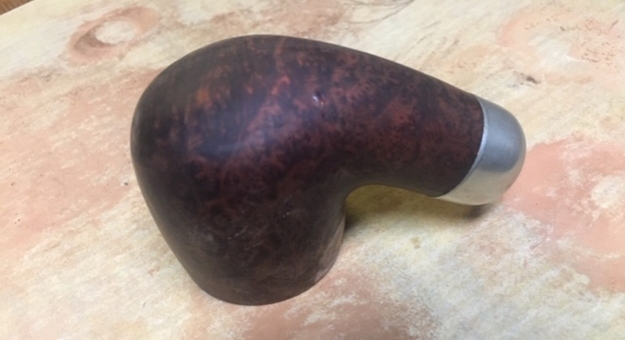
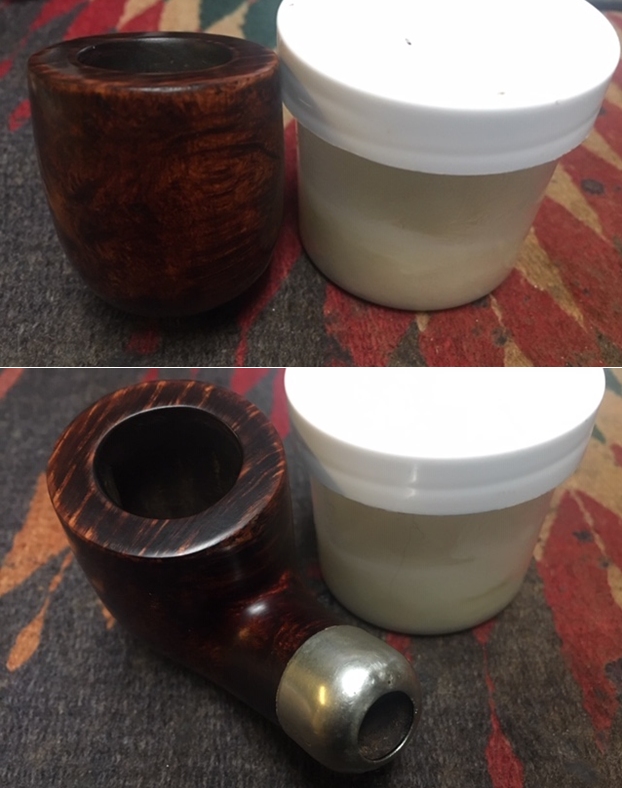
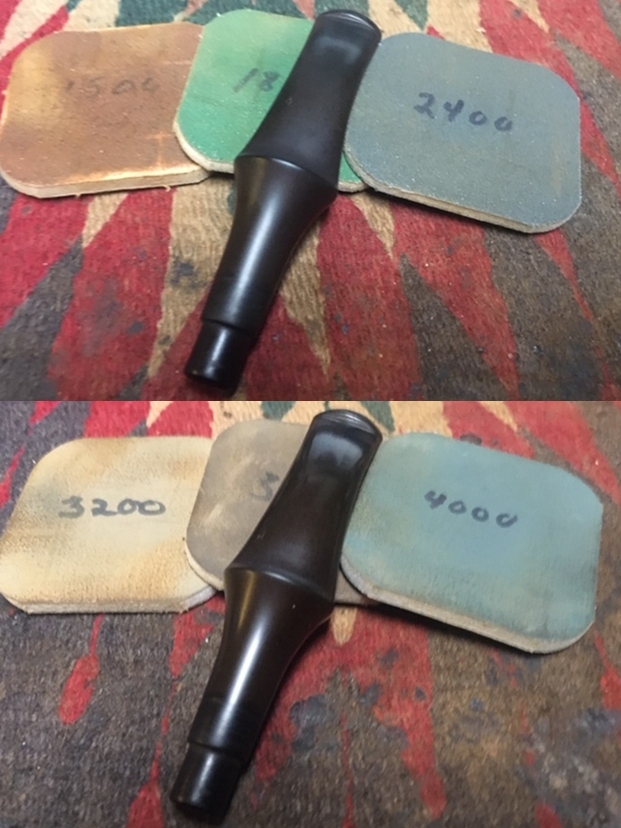
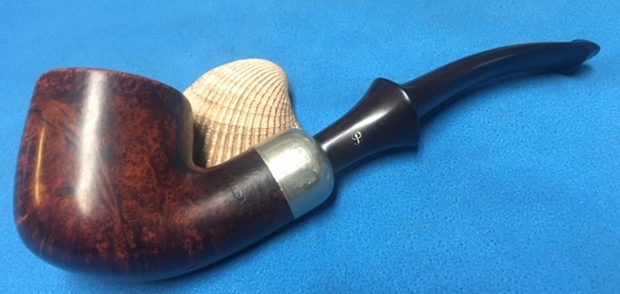
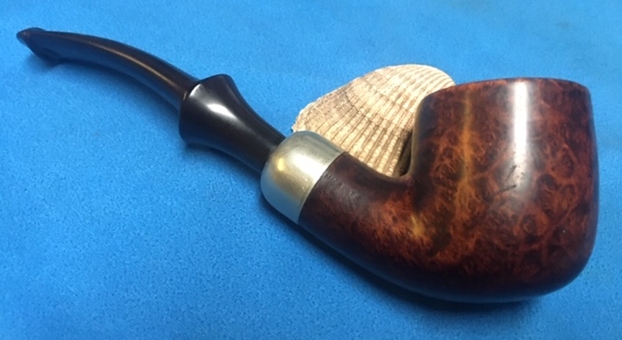
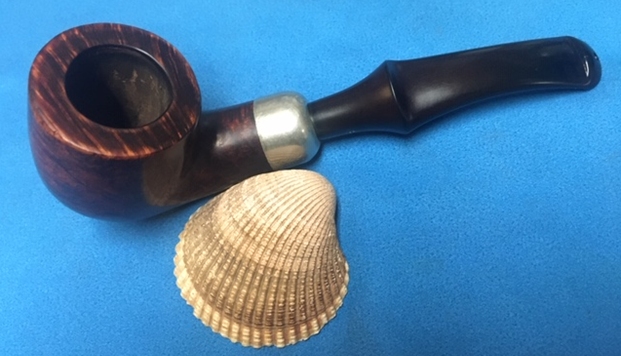
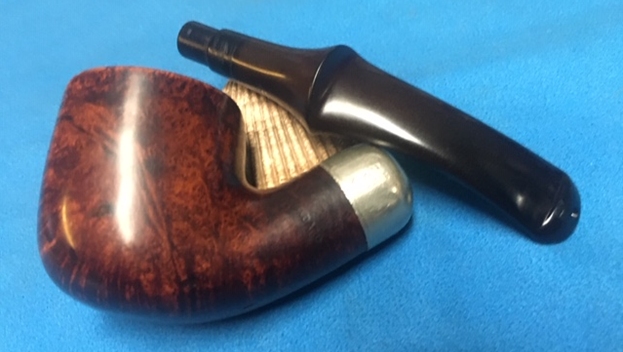
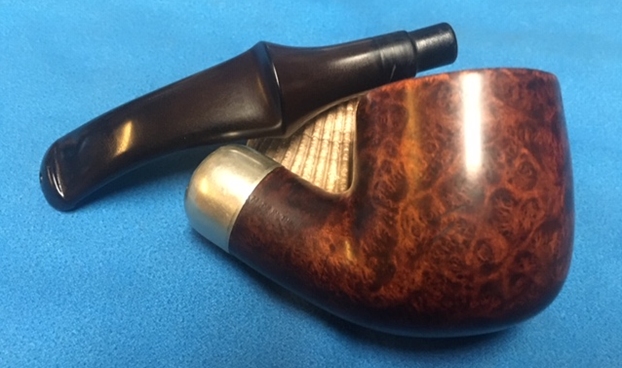
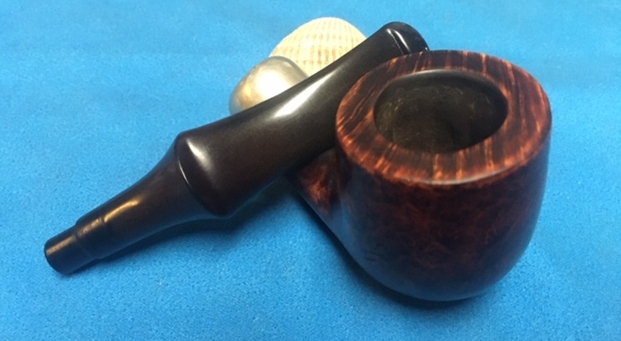
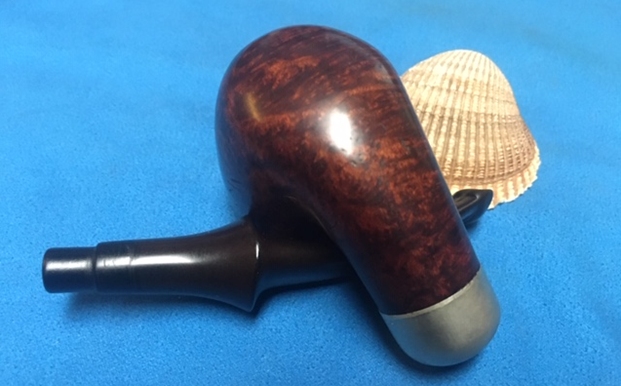
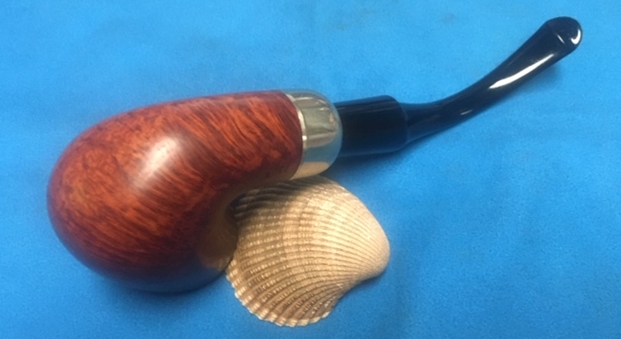
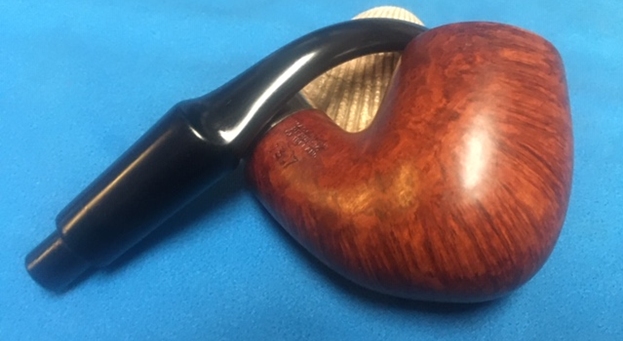
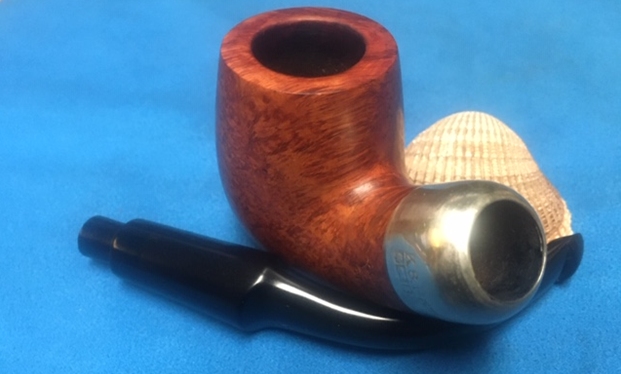
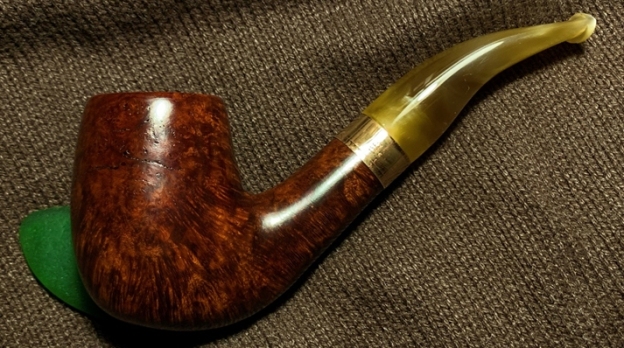
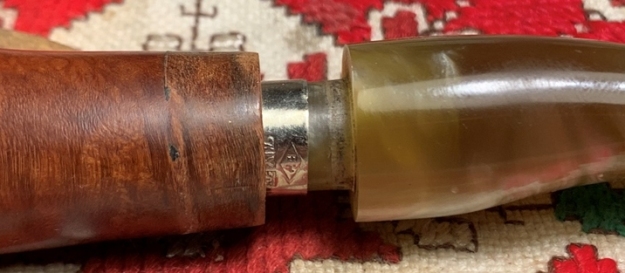
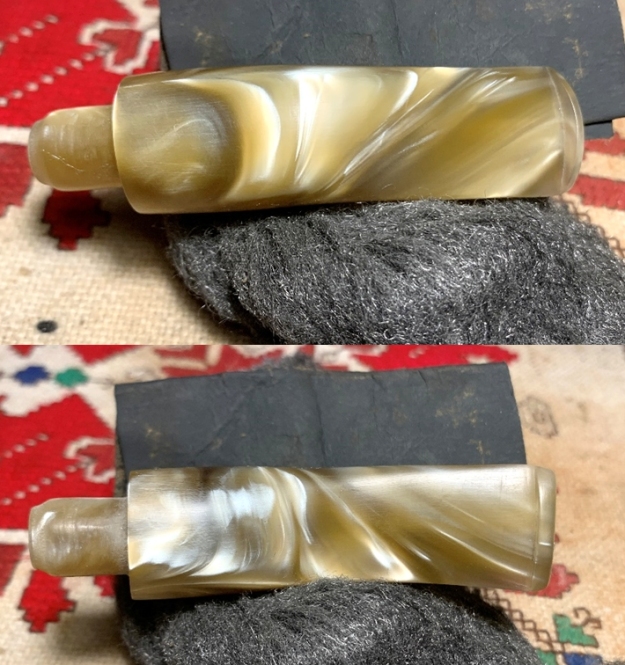
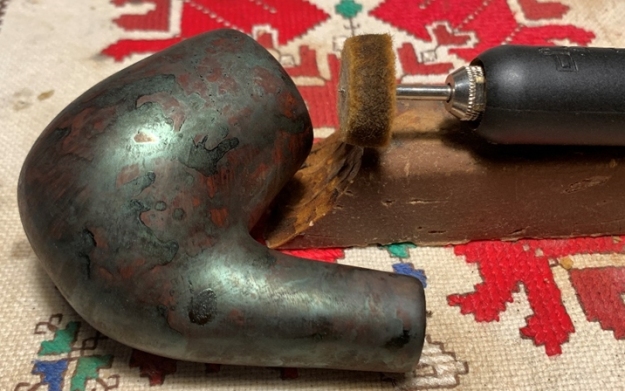
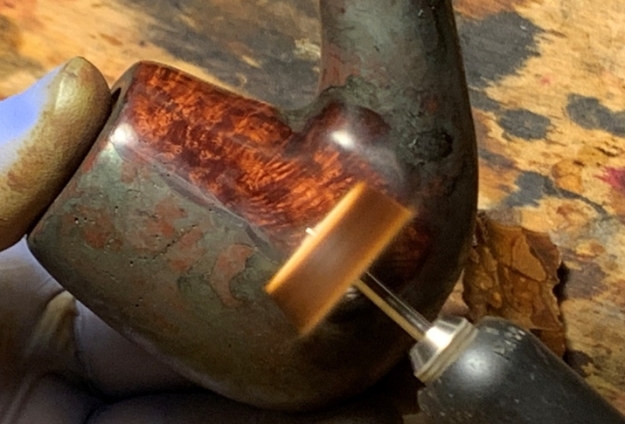
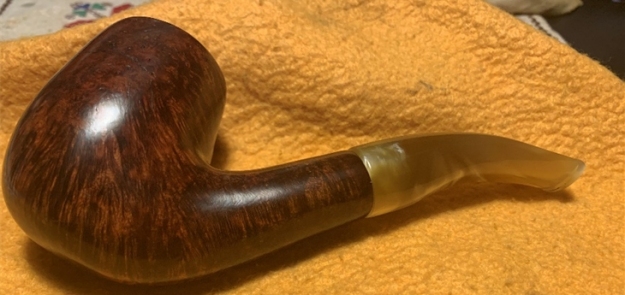
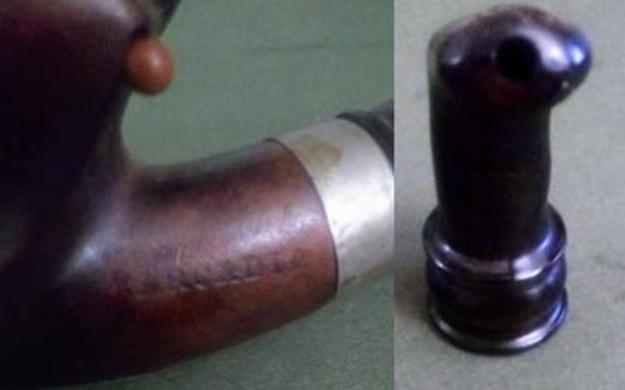
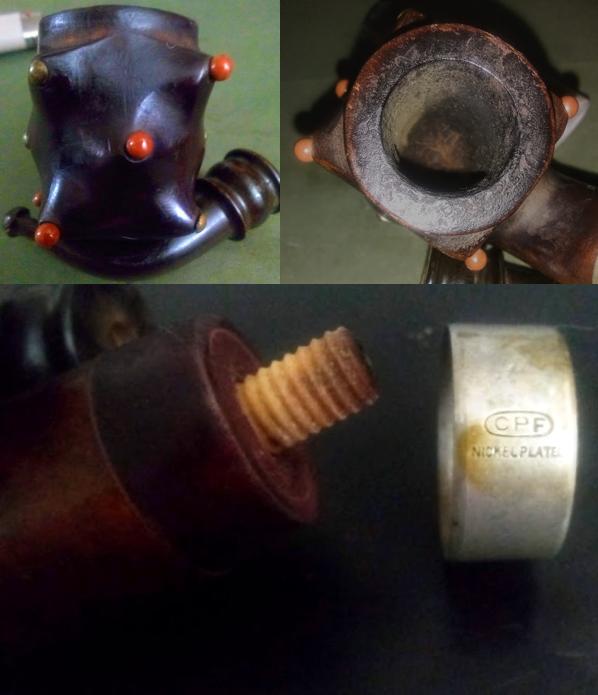
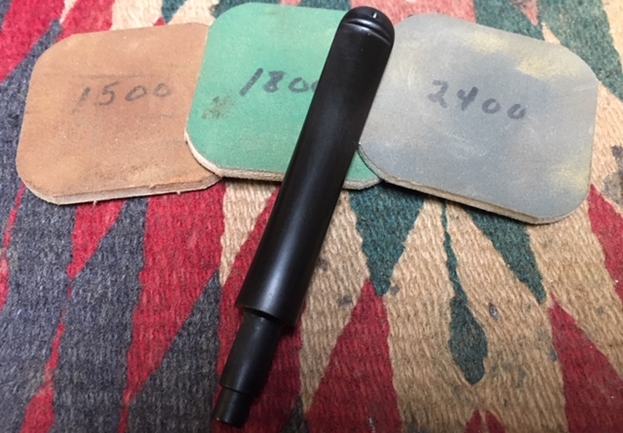
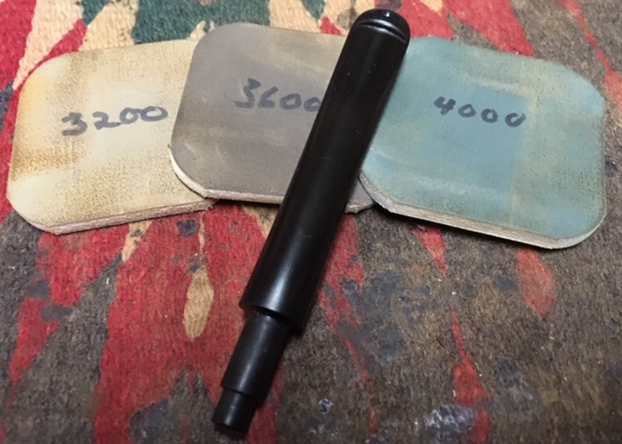
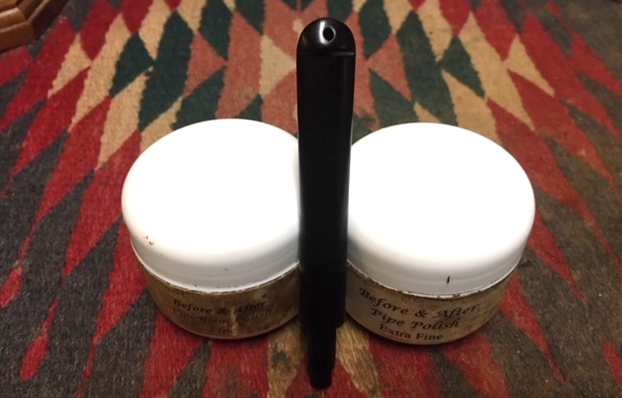
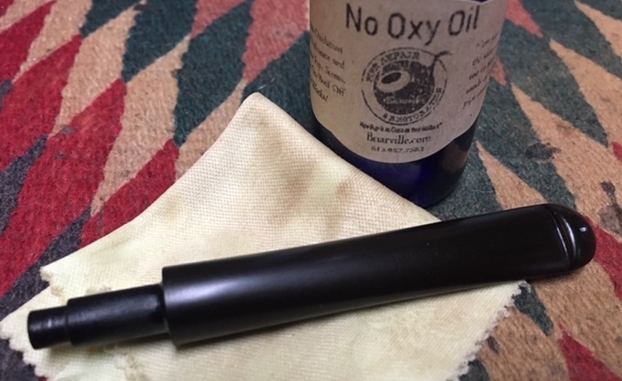
Over the past two weeks I was traveling in Alberta with my brother Jeff and his wife, Sherry. In between work appointments and presentations we took some time to visit local antique shops and malls. We found quite a few pipes. In a small Antique Shop in Lethbridge we found a few interesting pipes. The first of the ones that I am working from that find is an oval shank meerschaum Author. It has a flumed top and some colouring happening around the bowl and the shank. The saddle stem has a ribbon shaped/bookmark stamped logo on the top of the saddle. The pipe was dirty and caked when we picked it up. The rim top had a little lava and some small scratches in the edges of the bowl. The bowl had a thin cake in it that was hard and dense. The exterior of the bowl and shank are very dirty with grime and oils from prolonged use. The stamping on the underside of the shank below the shank/stem junction was faint but readable and read Genuine Block Meerschaum with an arched Gt. Britain at the stem shank joint. The vulcanite stem was had tooth chatter on the top and the underside of the stem. There were tooth marks on both sides and on the button. I took photos of the pipe before I started the cleanup. I took close up photos of the bowl and rim to capture the condition of the pipe before I started my cleanup work. The rim top had some lava and a few nicks on the inner edge. Other than being so dirty it appeared to be in great condition. The stem was dirty and there was tooth chatter on the top and underside near the button and on the button surface itself. The stem was lightly oxidized.I took a photo to capture the stamping on the underside of the shank near the stem/shank joint. The photo shows the stamping Genuine Block over Meerschaum. Next to that there was an arched stamp that read GT BRITAIN. There was a small nick in the underside of the meerschaum next to the vulcanite stem.While we were traveling I decided to do a bit of work on some of the pipes that we had found. I scraped the inside of the bowl with a sharp knife. I scraped the tars and lava off the top of the rim with the same knife. I took the stem off and you can see the metal tenon set in the shank of the pipe. It is anchored firmly and the stem pressure fit over the top of the tenon.I scrubbed the exterior of the bowl with warm water and some Dawn Dish Soap to remove the buildup of grime around the bowl and on the rim top. I rinsed it well and wiped the bowl down with a clean paper towel to polish the finish on the bowl. I decided to follow up on my initial cleaning of the bowl and shank. I reamed the bowl with a Savinelli Fitsall pipe knife to remove the remnants of the cake in the bowl. I sanded the bowl with 220 grit sandpaper wrapped around a piece of dowel to smooth out the inside walls of the bowl.I scrubbed out the mortise and the airway in the shank, the metal mortise and the stem with alcohol, cotton swabs and pipe cleaners.I polished the meerschaum with micromesh sanding pads – wet sanding the bowl walls and rim top with 1500-12000 grit pads. I wiped the bowl down after each sanding pad with a damp cloth to wipe of the dust. I worked some Before & After Restoration Balm into the surface of the meerschaum with my fingertips to clean, enliven and protect it. I let the balm sit for a little while and then buffed with a cotton cloth to raise the shine. The photos show the bowl at this point in the restoration process. I set the bowl aside and turned my attention to the stem. I sanded out the tooth chatter with 220 grit sand paper and started to polish it with a folded piece of 400 wet dry sandpaper. Once it was finished it began to shine.I polished the stem with micromesh sanding pads – wet sanding with 1500-12000 grit sanding pads. I wiped it down after each sanding pad with a damp cloth. I polished it with Before & After Pipe Stem Polish – both Fine and Extra Fine and buffed it off with a cotton cloth. This is a beautiful Flumed top Block Meerschaum Oval Shank Author with a black saddle vulcanite stem. It has a great look and feel. The shape is very tactile and is a beauty. I polished stem and the bowl with Blue Diamond polish on the buffing wheel. I gave the bowl and the stem multiple coats of carnauba wax. I buffed the pipe with a clean buffing pad to raise the shine. I hand buffed it with a microfiber cloth to deepen the shine. The pipe polished up pretty nicely. The meerschaum had already begun to take on a patina and it came alive with the buffing. The rich mottled browns of the meerschaum colour works well with the polished vulcanite stem. The finished pipe has a rich look that is quite catching. Have a look at it with the photos below. The shape, finish and flow of the pipe and stem are very well done. The dimensions are Length: 5 ¼ inches, Height: 1 ½ inches, Outside diameter of the bowl: 1 ½ inches, Chamber diameter: ¾ of an inch. I will be adding the pipe to the rebornpipes store shortly. If you are interested in adding this block meerschaum, English made Author to your collection let me know. Thanks for walking through the restoration with me as I worked over the first of the finds of Jeff and my Alberta pipe hunt.

Refurbishing a Tired Looking Oom Paul from Steve’s Grab Box


Blog by Paresh Deshpande

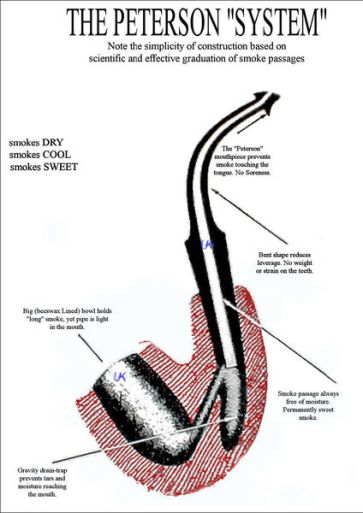
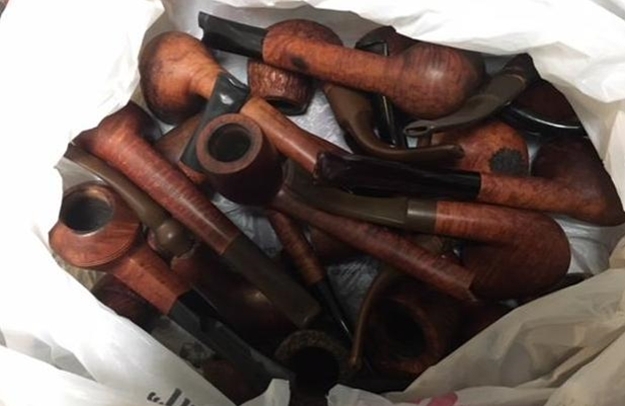
Steve, my friend and mentor, had sent me a pipe lot of 15 pipes for restoration. These assorted pipes were sent to me with an intent that these would provide me with an opportunity to further hone my skills and gain experience in tackling varied issues that one may come across during restoration. Each of these pipes has its own set of issues to address and I look forward to work on each one of this pipe lot. Here is the picture of the pipes as I received it, less the one marked with a cross in red which is a Dunhill Root and restored by Steve for my personal collection.I had worked on a no name straight billiard (marked number 1) from this lot and it turned out to be a beautiful pipe. The next pipe from this lot that I selected to work on is an Oom Paul and is marked with a yellow arrow and numeral 2.This pipe has a nice heft to it and the classic Oom Paul shape lends itself to be clenched comfortably while having your hands free. The stummel is combination of islands of smooth surface formed due to stitches-like rustications crisscrossing the length and breadth of the stummel. It is stamped on the left side of the shank as “Oom Paul” in block capital, increasing in letter size towards the shank end. On the bottom of the shank and very close to the shank end it is stamped as “Israel” in sentence case. There is no stamping on the vulcanite full bent stem.This is the first pipe that I am working on coming from Israel and so to learn more about it, I visited pipedia.org. I searched the link for Israel in Pipe Brands/ Makers and found that Israel has only one pipe factory, The Shalom Pipe factory. Thus it is highly probable that this pipe too came from this factory. No other information was available on the internet that I could research. It does appear to be an ol’ timer though.

INITIAL VISUAL INSPECTION
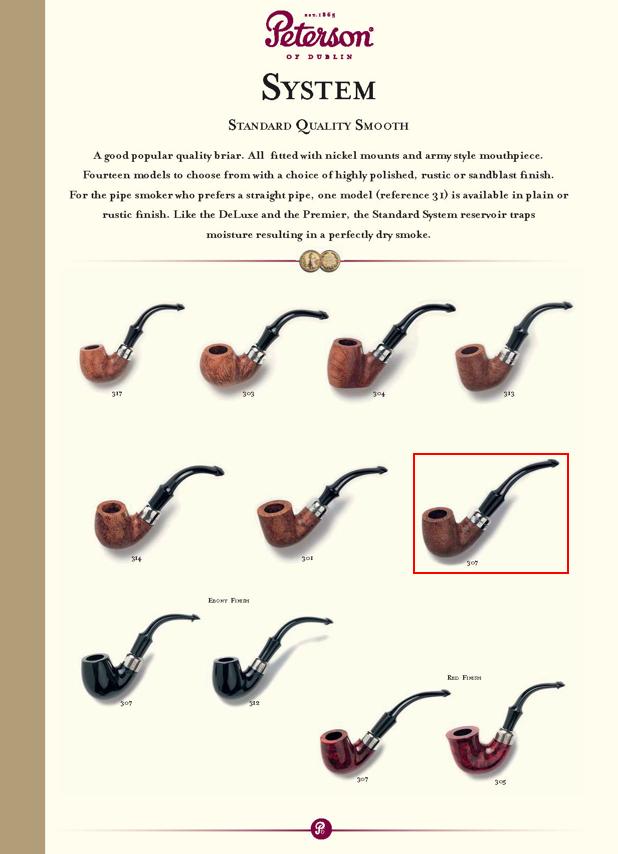
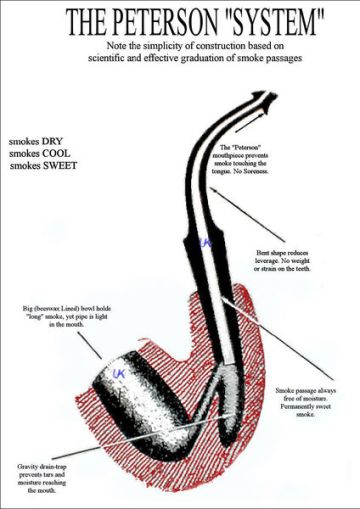
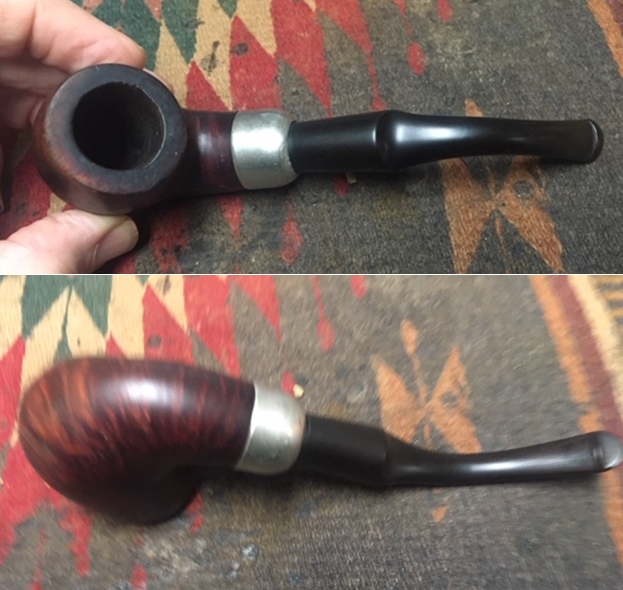
There is a thick layer of cake in the huge chamber pointing to the fact that this was the previous owner’s favorite pipe. The stitch-like rustications on the rim top surface are filled with dust and dirt and yes, surprisingly without overflowing lava accumulation. The inner and outer rim edges are in decent shape. The condition of the inner walls of the chamber can be only ascertained once the cake has been taken down to bare briar. Thankfully, the chamber has very mild odor which should be eliminated once the chamber and shank internals have been cleaned.The stummel is covered in dirt and grime that gives it a dull and tired appearance. The large smooth paneled surface on the right side of the stummel is considerably darker in appearance as compared to the right side. However, the entire stummel has a solid feel to it. The stitch-like rustications that crisscross the entire stummel are filled with dust and dirt and appear lighter than the smooth surfaces. There are patches of dried oils and grime which has attracted a lot of dust. Through all this dirt and grime, beautiful Bird’s eye and cross grains peek out from the smooth surface. Once the stummel is cleaned and polished, these grains will pop out in all their refined glory. All in all as it stands now, this is one dull and tired looking stummel that requires a lot of TLC!! The mortise has a sump at the bottom that is similar to the Peterson’s System pipes, with the opening for the draught hole well above this sump. The mortise and the sump are clogged with oils and tars. This will need to be thoroughly cleaned.The stem, to put it mildly, is a mess!! Apart from being heavily oxidized, it has deep bite marks on both upper and lower stem surface. Heavy tooth chatter is seen all over the bite zone on both sides of the stem surface. The button has been badly chewed with deep tooth indentations on both sides of the stem. The aluminum stinger is surrounded by a thick layer of accumulated dried oils and tars and could not be dislodged from the tenon end. The tenon end and slot shows heavy accumulation of gunk, making air flow very laborious. All these issues need to be addressed. INITIAL CLEANING BY ABHA……….
Ever since we had an on-the-job learning on initial cleaning and restoration when Jeff and Steve visited us, Abha is enjoying her part of work in restoring pipes (read that as initial cleaning) and is getting better and faster in her chosen field. She reamed out the complete cake and further smoothed out the chamber walls with a folded piece of 220 grit sand paper. She scrubbed out the dried oils, tars and gunk from the mortise with a fabricated dental spatula and further cleaned out the internals of the shank with pipe cleaners and alcohol and cotton buds. She followed the internal cleaning of the shank with external cleaning of the stummel using Murphy’s Oil soap and hard bristled tooth brush and dried it with paper napkins and cotton cloth.

Next she lightly heated the stinger, carefully pulled it out with nose pliers and cleaned out the internals of the stem air way and immersed it in “Before and After Deoxidizer” solution along with the stem of other pipes in line for restoration. Once the stem had soaked overnight, she cleaned the stem under running warm water and scrubbed the raised oxidation from the stem surface using Scotch Brite pad. She further removed the oxidation by scrubbing the stem with 0000 grade steel wool and applied a little olive oil to rehydrate the stem.

ONCE THE PIPE IS ON MY WORK TABLE……
The cleaned up pipes presents a very clear picture of what needs to be done to restore this pipe to a pristine and smokable condition. I really cannot thank Abha, my wife, enough for all the help and support that she extends me in my pursuance of this hobby. A clean pipe also helps in clearly identifying the work that would be required to restore a pipe. The pictures shows the condition of the pipe when it reached me after being cleaned. The stummel is nice and clean with the stitch-like rustications now appearing considerably lighter than the rest of the stummel surface. With the dirt and dust that covered the surface cleaned out, the smooth surfaces on the stummel presents an array of beautiful cross and Bird’s eye grains. The smooth surface on right side of the stummel is considerably darker (circled in red) than the left and will need to be examined closely. However, the stummel is solid to the touch, thereby ruling out a total burn out. I am sanguine that after a nice polish with micromesh pads followed by further wax polish, the stummel would look beautiful and stately. The large deep chamber is nice clean and odorless with minor heat fissures all around the walls. These fissures on the right side (marked in red circle) are likely to be more severe as the outer surface is considerably darkened than the left side of the stummel. I need to explore these heat fissures further to determine the extent of the depth of these fissures. However, I am certain that these are not an all out burn through, but mostly like the beginnings of one. The mortise and sump is spotlessly clean, thanks to a stupendous job done by Abha. As spelled out in my initial appreciation, prima facie it is the stem that has suffered the most damage at the hands of the previous owner. I say prima facie since at this stage, I am not sure about the hidden gremlins in the form of heat fissures which necessitates detailed exploration. The bite zone is peppered with tooth chatter and deep tooth indentations on both sides of the stem. The buttons on both the sides are badly deformed with deep bite marks and signs of presence of deep seated oxidation. I would need to sharpen the edges of the buttons also. I intend to first raise these indentations to the surface by heating and sanding followed by filling it with a mix of activated charcoal and superglue. By sanding to even out the stem fill and remove the deeper oxidation followed by micromesh polishing cycle should add a nice shine to the stem. The aluminum stinger, tenon and slot are nice and clean. THE PROCESS
Firstly, I heat the surface of the stem with the flame of a lighter to raise the tooth indentations to the surface and follow it up with a sanding with a folded piece of 220 grit sand paper. This helped to even out the raised surface, address the tooth chatter and also remove the deep seated oxidation to some extent. I wiped the stem with a cotton swab and alcohol to remove the raised oxidation and the resulting sanding dust. However, the tooth indentations are still prominent. A bite through on the top stem surface is reveled which extends in to the stem airway. I need to address this issue. After this abrasive sanding and alcohol wipe, the stem appears dried out and so I apply a small quantity of Extra Virgin Olive oil to hydrate it.To address the deep tooth marks in the bite zone, button surface and the bite through on the top stem surface, I decided to use a mix of activated charcoal and CA superglue and apply it over the damaged areas. But before that, I insert a regular pipe cleaner smeared in petroleum jelly in to the stem air way. This prevents the mix from seeping in to the air way and blocking it when hardened. I apply a generous coat of the above mix over the damaged surface, including the buttons on either sides of the stem and set it aside overnight to cure. Next, while the stem fills are curing, I sand the entire stummel surface with a piece of 220 grit sand paper. I also work the inner rim edge with the sandpaper to even out the rim edge. This sanding helps in addressing all the minor dents, if any, from the surface while providing a smooth surface for the next stage which is polishing cycle using complete set of micromesh pads. I was especially very careful while sanding the side and bottom of the shank around the stampings, as it is very easy to miss out the stamp and one swipe of the sand paper is enough to ruin/ damage the stampings and it is the stampings on any pipe that I always strive to preserve. The next afternoon, I work the stem as the fills had hardened nicely. With a flat head needle file, I sand these fills to achieve a rough match. I further fine tuned the match by sanding the filled area with a folded piece of 220 grit sand paper pinched between my thumb and forefinger. I followed it up by sanding the entire stem surface using 400, 600 and 800 grit sand papers. This serves to remove the deep seated oxidation and also reduces the sanding marks of the more abrasive sand papers. I also sharpened the button edges with a flat head needle file and the sand papers. I wiped the stem with a cotton swab and alcohol to remove all the oxidation and sanding dust from the surface. I applied a little Extra Virgin Olive oil over the stem and set it aside to be absorbed by the vulcanite.I followed up the sanding regime with micromesh polishing to bring a shine on the stem surface. Since my hand held rotary tool is out for repairs, I could not continue with my experimentation on use of Red Tripoli and White Diamond during the polishing regime. I wet sand the stem with 1500 to 12000 girt micromesh pads. I rub a small quantity of olive oil in to the stem surface to hydrate it and set it aside. The stem looks nice and shinning black.Now that the stem repairs are nearly complete save for final polish with Blue diamond and wax, I could now move ahead with polishing the stummel. To remove the sanding marks and bring a deeper shine, I polished the stummel with micromesh pads, wet sanding with 1500 to 12000 pads. I wiped the surface with a soft cloth at the end of the micromesh cycle. The stummel looks amazing with a deep dark maroon coloration and shine with beautiful grains popping over the stummel surface. The only aspect that stood out like a sore thumb was the light brown surfaces within the stitch-like rustications and the sand dust of micromesh pad has not helped, rather worsened the look. I carefully wipe the rustications with a moistened q-tip. Next, I rub a small quantity of “Before and After Restoration Balm” in to the briar with my finger tips and let it rest for a few minutes. I was diligent while applying the balm in to the stitch-like rustication as this may darken the inside of the rustications. The balm almost immediately works its magic and the briar now has a nice vibrant appearance with the beautiful darkened grain patterns on full display. I further buff it with a horse hair shoe brush. However, my attempt at darkening the insides of the rustications was met with limited success and a few sore spots still stand out. I decided to darken the insides of the stitch-like rustications by using a mahogany stain pen. I diligently ran the stain pen through each and every stitch-like rustication. It was a painstaking work but I am very happy with the results. Now, on to the home stretch!! I very excited to see the result of the final polishing cycle with Blue Diamond and carnauba wax.

To apply the finishing touches, I mount a cotton cloth buffing wheel on to my hand held rotary tool and apply a coat of Blue Diamond to the stummel and the stem to polish out the minor scratches. With a cotton buffing wheel that I use for carnauba wax, I apply a coat of carnauba wax and continue to work on it till the complete coat of wax had been polished out. I mount a clean cotton cloth buffing wheel and give the entire pipe a once over buff. I finished the restoration by giving the entire pipe a rigorous hand buffing using a microfiber cloth to raise the shine further. The finished pipe looks fantastic, the beauty of which is accentuated by its classic shape, size and feel in the mouth. This pipe is all set for a new home and will definitely provide the new owner pipe man/ lady hours of blissful smoke. P.S. At this point, I always share pictures of the completed pipe with Abha, my wife just so she can appreciate the end results of all her hard work put in during her initial cleaning. She loved the natural deep dark brown coloration taken by the stummel. However, she reminded me that I had not addressed the issue of heat fissures in the walls of the chamber which she had brought to my notice.

Hell!!! How did I miss out on this vital functional aspect of a pipe, but miss out, I did!! Thus, I set about addressing this issue.

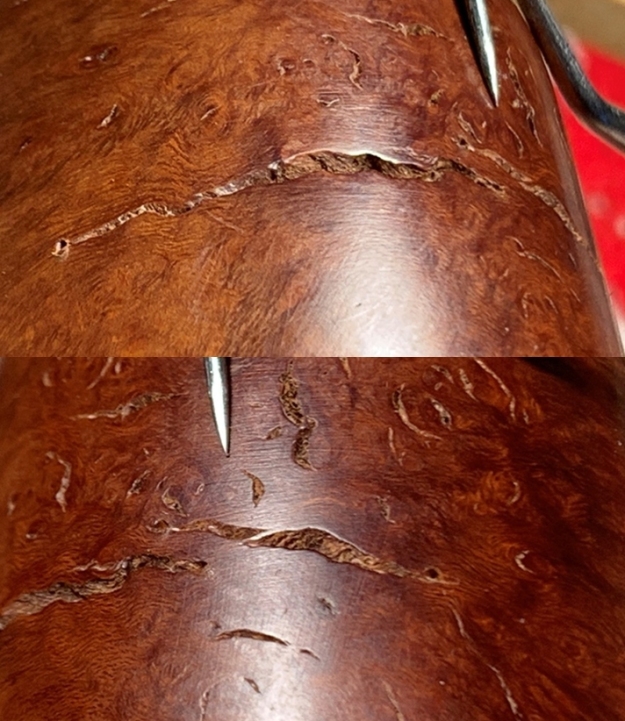
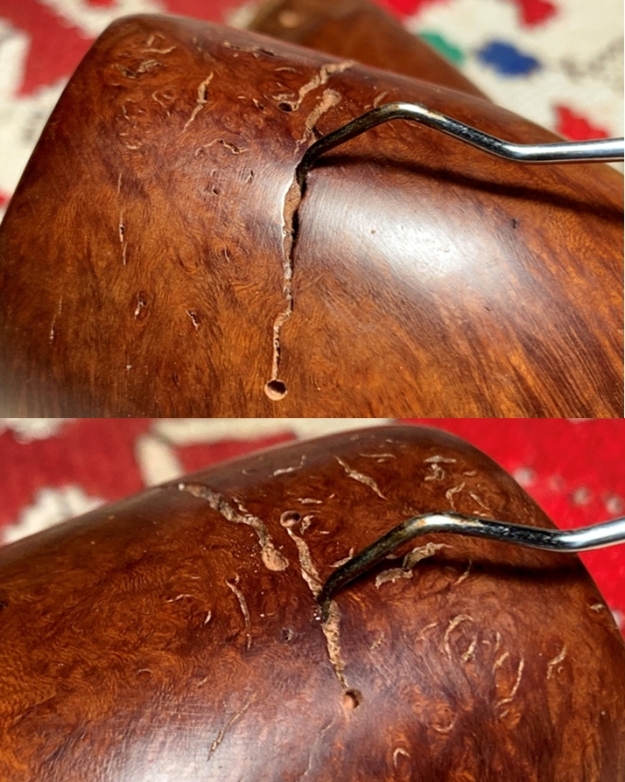
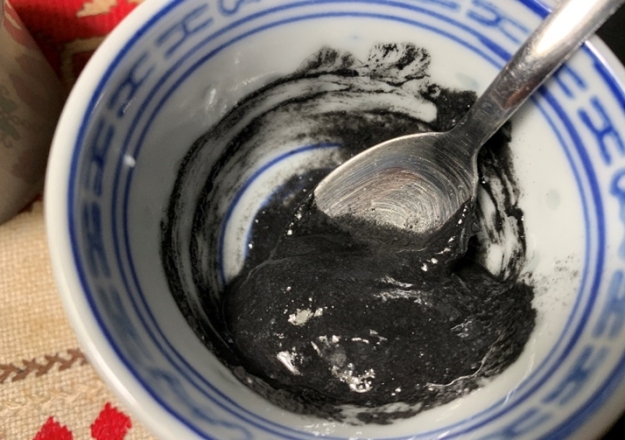
First and foremost, I took some real close ups of the heat fissures on the right side of the walls. I could definitely see dried and burnt briar in these fissures even though they appeared insignificant. But the darkened stummel surface on the right side pointed to otherwise. To further determine the extent of depth and width of these heat fissures, with a sharp dental probe I scraped out the dead and burnt briar from within these fissures. As anticipated, these fissures were not very deep but deep enough to lead to a burn out sooner than later. Furthermore, my probing the left side fissures also revealed deeper than appearing fissures. This important functional aspect needs to be addressed. I decided to use a coat of JB Weld first followed by a bowl coat of activated charcoal and yogurt. The coat of JB Weld would protect the briar from coming in to direct contact with the burning tobacco while the charcoal and yogurt would insulate the JB Weld from direct contact with the lit tobacco while accelerating the formation of cake which subsequently adds a further protective layer. This was essential for furthering the briar life while providing a lifetime of contentment to the new pipe man/ lady. Now, JB Weld comes in two parts – the ‘Steel’ and the ‘Hardener’ in separate tubes.  As per the directions both are to be mixed in 1:1 ratio and that one has about 4 minutes before the mixture sets.  Before applying the mixture, I insert a petroleum jelly coated pipe cleaner through draught hole to prevent the draught from being smeared with the mix and blocking it when the mix is hardened. I mix JB Weld at 50/50 (eyeballing the quantities, of course) on an index card, mix it well, and apply it as evenly as possible over the complete chamber wall with a sliver of a bamboo frond – it was a bit messy, but mission accomplished successfully.  I set the stummel aside and let it cure overnight.The next afternoon, the mix had hardened and I realized how unevenly the mix was applied!! I did not want the layer of the mix to be too thick, but only as a thin layer. I mounted a 180 grit sanding drum on to my hand held rotary tool and carefully sand down the hardened mix to an acceptable thickness. To be honest, I do not know of any scientific method to determine the thickness and neither do I know of any instrument that would help me in doing so, it was just by touch and feel. Once satisfied, I cleaned the chamber of all the sanding dust and readied it for the next coat of activated charcoal and yogurt.Next, I mixed activated charcoal and yogurt to a thick consistency, neither too runny that it would run down the surface nor too thick that it would not spread out evenly. Again, this was all by feel!! Once I was satisfied with the consistency, I applied it evenly over the layer of JB Weld mixture and set it aside to dry out naturally. Once the bowl coat had dried out and hardened, I cleaned the rim top off all the dust and charcoal yogurt mix with a q-tip. I wiped the stummel with a clean soft cotton cloth and rubbed a small quantity of balm to enliven the briar and hand buffed the stummel with a microfiber cloth to deepen the shine.

The pipe is now truly ready for a long hiatus with a new piper, providing years of service in future. I cannot thank Abha enough for reminding me to address this most important functional aspect.

Thank you all for reading through this longish write up and for the valuable time you have invested in doing so. If any reader is interested in enjoying this pipe as his/ her rotation pipe, feel free to let us know.

Restoring a Barling & Sons # 4899, Made in Denmark


Blog by Paresh Deshpande

I had finished refurbishing a Barling Brandy bowl in a smooth finish and it has found a new piper to carry forward the legacy. The next pipe that I decided to work on is a lovely Brandy bowl shaped Barling pipe in a sandblast finish which was purchased together with the smooth finish that I have mentioned above. The pipe boasts of shallow blasts on the stummel with beautiful patterns. The pipe is stamped on the surface at the bottom of the shank as “B.BARLINGS & SONS” in block capitals over “MADE IN DENMARK” over shape code numeral “4899”. The top of the saddle stem has the trademark BARLING in a cross stem logo. The stampings are all deep and crisp.Having just recently worked on a Barling pipe that bore the COM stamp of Denmark, I was aware of the provenance of this pipe. I reproduce the relevant part of the information gleaned from pipedia.org.

In the late 1970’s production of Barling pipes was shifted to Denmark where Eric Nording manufactured Barling pipes for Imperial. There may have been other factories, but as of this writing, none has been identified. Nording stated that he made approximately 100.000 pipes for Imperial.

Despite these attempts to diversify the line, Barling lost its market. These pipes just weren’t equivalent to the family era pipes.
Finally, Imperial decided to close down the Barling operations entirely by 1980.

Thus from the above, it is safely concluded that the pipe currently on my work table is from the period between late 1970’s to 1980 and given the quality of sandblast, most likely manufactured by other factories in Denmark!!

INITIAL VISUAL INSPECTION
The pipe came to us in a very nice condition having being smoked maybe only a few times. It was lightly smoked and with a thin layer of cake build up in the chamber. The rim top is covered in a minimal overflow of lava with inner and outer rim edges in pristine condition. The chamber has minimum odor and should be addressed once the chamber and shank internals are cleaned up. A simple scrub with a brass bristled brush should suffice to clean the rim top surface.The sandblasted stummel surface has a shallow sandblast with beautiful patterns of mix of Bird’s eye, cross grains and nice swirls to the sides, front and bottom of the bowl respectively. The front of the stummel has a deep pit, likely caused during the sandblasting process where the soft briar was chipped off by the sand particles. The stummel surface is stained black and has a dark lacquer coat that has dulled a bit. The mortise is relatively clean with an easy draw. Running a few pipe cleaners dipped in alcohol should clean up the shank internals. The straight vulcanite saddle stem gradually flares out towards the slot end and is deeply oxidized. Thankfully the stem surface is free of any bite marks or tooth chatter on either surface in the bite zone. The insides of the slot and tenon have very little signs of accumulated gunk. The crossed Barling logo on the saddle top of the stem is crisp and deep.INITIAL CLEANING BY ABHA…
The initial cleaning on this pipe was done by Abha, my wife (she has cleaned up around 40-50 pipes and these have now reached me for further restoration). She reamed out the complete cake and further smoothed out the chamber walls with a folded piece of 220 grit sand paper. She further cleaned out the internals of the shank with pipe cleaners and alcohol and cotton buds. She followed the internal cleaning of the shank with external cleaning of the stummel using Murphy’s Oil soap and hard bristled tooth brush and dried it with paper napkins and cotton cloth.

Next she cleaned out the internals of the stem air way and immersed it in “Before and After Deoxidizer” solution along with the stem of other pipes in line for restoration. Once the stem had soaked overnight, she cleaned the stem under running warm water and scrubbed the raised oxidation from the stem surface using Scotch Brite pad. She further removed the oxidation by scrubbing the stem with 0000 grade steel wool and applied a little olive oil to rehydrate the stem.

ONCE THE PIPE IS ON MY WORK TABLE…
I cannot thank my wife, Abha, enough for all the help and support that she extends me in my pursuance of this hobby. With the initial pipe cleaning at her hands, allows me to move at a nice click with my restoration and repair work on the pipes.

The chamber is odorless and the walls are solid without any signs of damage. The sandblasted rim top surface is intact with an equally undamaged inner and outer rim edge. The chamber and rim top has been nicely cleaned up by Abha. With a draught hole right at the bottom and dead center, this should be a fantastic smoker!! Even though most of the lacquer coat was removed when the stummel was cleaned up by Abha, I could still see remnants of the peeling lacquer coat over some parts of the stummel and the stain has been washed away at a two places. I shall have to remove this coat and thereafter decide on my further course of action. The mortise and shank internals are clean and fresh. This should turn out to be an easy project requiring just a rub down with restoration balm followed by wax polish to bring life back in to the stummel. The oxidation on the vulcanite stem has been greatly reduced thanks to all the efforts put in by Abha. A bit of sanding to remove the deeper oxidation followed by micromesh polishing cycle should add a nice shine to the stem. The stem internals are nice and clean with a free airflow. I would need to refresh the stem logo to make it pop out on the shining black stem once done.THE PROCESS
The first thing I addressed was the lacquer coating that remained on the stummel surface. I wiped the stummel surface with cotton swabs and alcohol. However, the coating persisted. Next I decided to use a stronger solvent. With cotton swabs and acetone, I cleaned the stummel surface. I was able to remove the lacquer coating completely from the surface.Next, I rub a small quantity of “Before and After Restoration Balm” in to the briar with my finger tips and let it rest for a few minutes. The balm almost immediately works its magic and the briar now has a nice vibrant appearance. However, I noticed that my finger tips had blackened with stain which was coming off. I thought that I would let it rest and dry out and thereafter check again. A couple of hours later, I wiped the stummel with a soft cotton cloth and to my chagrin, I noticed that the cloth had blackened at the spots which had come in contact with the stummel surface and the stain had come off from the surface too. I decided to heat the stummel surface with a heat gun and reset the stain. Should this trick fail, I had made up my mind to go the “full Monty” way. I would completely remove the old stain and apply a fresh coat of stain and the works!! And this was supposed to be a simple restoration!!I heat the stummel surface with my heat gun and set it aside to cool down naturally. Half an hour later, the stummel had cooled and I reapplied the “Before and After Restoration Balm”. This time there were no blackened finger tips. What a relief this revelation was!! Now that the stummel was nearly complete, I turned my attention to the stem refurbishing. With a folded piece of a 220 grit sand paper, I sand down the stem surface. I followed it up by sanding it with 400, 600, 800 grit sand papers and finally with a piece of 0000 grade steel wool. This serves to remove the deep seated oxidation and also reduces the sanding marks of the more abrasive sand papers. I wiped the stem with a cotton swab and alcohol to remove all the oxidation and sanding dust from the surface. I applied a little Extra Virgin Olive oil over the stem and set it aside to be absorbed by the vulcanite.I followed up the sanding regime with micromesh polishing to bring a shine on the stem surface. I wet sand the stem with 1500 to 12000 girt micromesh pads. This time around I could not continue with my experimentation that I had spelled out in my previous posts, as due to voltage fluctuations, my hand held rotary tool stabilizer had a burn out and had to be sent for repairs. I rub a small quantity of olive oil in to the stem surface to hydrate it and set it aside.The stem looks nice and shinning black, however, the stem logo is yet to be refreshed and highlighted. With a white fine tipped correction pen, I filled the crossed Barling stamping and once it had dried a bit, with a toothpick, I scrapped off excess of the correction ink. The stamping is now completely refreshed and sits proudly on the top of the saddle.With three pipes on the home stretch and a week long wait later, my rotary tool came back from repairs. I was held up just for this piece of equipment!! To apply the finishing touches, I mount a cotton cloth buffing wheel on to my hand held rotary tool and apply a coat of Blue Diamond to the stummel and the stem to polish out the minor scratches. With a cotton buffing wheel that I use for carnauba wax, I apply a coat of carnauba wax and continue to work on it till the complete coat of wax had been polished out. I mount a clean cotton cloth buffing wheel and give the entire pipe a once over buff. I finished the restoration by giving the entire pipe a rigorous hand buffing using a microfiber cloth to raise the shine further. The finished pipe looks beautiful and is waiting for a new home!!

Restoring a Meerschaum Bent Billiard from Bob Kerr’s Estate


 Blog by Steve Laug

The next pipe I have chosen to work on from Bob Kerr’s estate is one of his unique meerschaum pipes. The family notes identified this as Peterson Meerschaum and the crater finish on the meer certainly is very similar to some of the Peterson’s Meers that I have worked on. However, there is no stamping or marking on the meerschaum and no nickel ferrule on the shank end. The shank is lined with a vulcanite or acrylic tube that strengthens the shank and that is not something I have seen on Petersons. The vulcanite stem is a fishtail rather than a Peterson’s  P-lip stem. There is an identifying stamp on the left side of the saddle. It is a logo stamp that looks like a walking pipe with a wisp of smoke curling out of the top of the bowl. The top of the bowl has a flumed black rim top that extends down the side of the bowl for about a ¼ inch. It is part of the estate that I am cleaning up for the family and moving them out into the hands of pipemen and women who will carry on the trust that began with their father, Bob. In the collection there were 19 Peterson’s pipes along with a bevy of Dunhills, some Comoy’s and Barlings as well as a lot of other pipes – a total of 125 pipes along with a box of parts. This is the largest estate that I have had the opportunity to work on. I put together a spread sheet of the pipes and stampings to create an invoice. I was taking on what would take me a fair amount of time to clean up. I could not pass up the opportunity to work on these pipes though. They were just too tempting.

I really am enjoying working on the Peterson’s in the estate. This meerschaum was interesting to me in that it is a bit of a mystery and has some patina and wear that tell a story. Even if it is not a Peterson, it is a nice meerschaum bent billiard. When I took it out of the box of cleaned up pipes that Jeff sent back I could see that it had of the typical crater finishes that some Peterson’s Meers had in the past.. It has some patina developing around the bowl and shank under the thick grime, chips and tarry spots. The shank is quite thick and the finish is dirty. There was a thick cake in the bowl with remnants of tobacco stuck on the walls. There was a lava overflow on the rim. The top and edges of the rim are dirty. The stem was oxidized and calcified toward the button end. Surprisingly it did not have the deep tooth marks that I have come to expect from Bob’s pipes and even the button edges were in decent condition. Jeff took photos of the pipe before he started his cleanup work on it.     Jeff took photos of the bowl and rim top to show the thick, hard cake in the bowl and the lava build up on the top of the rim and the edges of the bowl. There were some nicks on the outer edge of the bowl but it was hard to tell if there was any damage to the inner edge of the rim as it had a thick cake lining it. Hopefully it protected it.Jeff took photos of the sides and heel of the bowl to show the condition of the finish. You can see the scratches and pitting in the meerschaum finish in the craters and on the smooth surfaces of the bowl underneath the dirt and debris of the years. Jeff took photos of the shank showing the chips on the top edge and the stamping on the left side of the stem. The chips are around vulcanite or acrylic insert in the shank. The stamping on the stem was readable as you can see from the photos. Jeff took photos of the top and underside of the stem showing the tooth chatter, scratching and oxidation on the stem surface and wear on the edges of the button. I am pretty sure the pipe was made by the Laxey Pipe Ltd. on the Isle of Man for either another export company or for Peterson’s in Ireland (https://pipedia.org/wiki/Laxey_Pipes_Ltd). I quote from the Pipedia article in full:
Laxey Pipe Ltd. resided in a historical 19th century four-storey Man stone building at The Quay, Old Laxey, Isle of Man, which thankfully has been preserved. The company specialised in the production of Meerschaum Pipes using the Meerschaum mined by the Tanganyika Meerschaum Corporation in the Amboseli basin in Tanganyika (since 1964 part of the United Republic of Tanzania). Please note: you may often find names like “Manx Pipes Ltd.”, “Man Pipe Co.” and others more, but there is no indication of another Isle of Man pipe producer other than Laxey Pipe Ltd. at any time!

Laxey Pipe Ltd. marketed own brands like “Manxpipe”, “Manxman”, “Manxland” e.c. Names like “John Bull”, “White Knight” (unwaxed), “Domino” (black, or lined) indicated some shapes / colours of Laxey’s own series. The stems either showed the astronomical sign for “male” or “man” (circle + arrow), or the crest of the Isle of Man, the 3-legged X in a circle. Manxpipes and Laxey’s other brands were available through pipe retailers in general, but also were sold (mainly) to tourists through their own shop in Laxey.

Furthermore Laxey Pipe Ltd. manufactured the meer bowls for Peterson, Barling, Nørding and others from the later 1960’s until 2001. Man Pipe e.g. was a brand distributed by Comoy’s. The bowls usually showed no nomenclature indicating the orderer. “Genuine Block Meerschaum” was engraved frequently. Often, just the stems were different, while bowls were the same.

Supply of meer from East Africa run out (Kenya / Tanzania exhausted, Somalia inaccessible), and thus the last Laxey meers were supplied to trade in May, 2001. Laxey Pipe Ltd. tried to survive continuing with briar pipes – mainly in the Danish style -, but to no success. It closed down business in July, 2002.

I looked for the stem logo on Pipephil and online and was not able to find any verification for who made the pipe. I suppose that I will never know for sure but it appears that the pipe was made on the Isle of Man for export for another European pipe company. I am guessing that like Bob’s other pipes, this one came from the time period of the late 60s or early 70s. That was as much as I could figure out.

With over 125 pipes to clean from Bob’s estate I am very glad for Jeff’s help cleaning them. He cleaned this filthy pipe with his usual penchant for thoroughness that I really appreciate. This one was a real mess and I did not know what to expect when I unwrapped it from his box. He reamed it with a PipNet pipe reamer and cleaned up the reaming with a Savinelli Fitsall Pipe Knife. He scrubbed out the internals with alcohol, pipe cleaners and cotton swabs until the pipe was clean. He scrubbed the exterior of the bowl with Murphy’s Oil Soap and a tooth brush to remove the grime and grit on the briar and the lava on the rim top. The finish looks very good with great looking grain around the bowl and shank. Jeff soaked the stem in Before & After Deoxidizer to remove the oxidation on the rubber. When the pipe arrived here in Vancouver for the second stop of its restoration tour I was amazed it looked so good. I took photos before I started my part of the work.     I took some close up photos of the rim top and also of the stem surface. I wanted to show what an amazing job Jeff did in the cleanup of the rim top. I also wanted to show that the damage to the rim top was more extensive than I had originally thought. The rim top was worn and the flumed finish was rubbed off There were some small nicks and scratches around the top and outer edge. I also took close up photos of the stem to show the lack of tooth marks and the light oxidation on the stem surface. You can also see the wear to the button. I took some photos of the shank end to highlight some of the issues with this pipe and to show the stamping on the left side of the saddle stem. Where the vulcanite or acrylic insert was in the shank there were some chipped areas. There was one on the top right and two on the top left side. These chipped areas would need to be repaired. I circled the areas of concern with red on the first photo. The second photo shows the logo of the pipe with smoke curling out of the top on the left side of the stem.Since this is another pipe Bob’s estate I am sure that some of you have read at least some of the other restoration work that has been done on the previous pipes. You have also read what I have included about Bob Kerr, the pipeman who held these pipes in trust before I came to work on them (see photo to the left). Also, if you have followed the blog for long you will already know that I like to include background information on the pipeman whose pipes I am restoring. For me, when I am working on an estate I really like to have a sense of the person who held the pipes in trust before I worked on them. It gives me another dimension of the restoration work. I asked Brian if he or his wife would like to write a brief biographical tribute to her father, Bob. His daughter worked on it and I received the following short write up on him and some pictures to go along with the words including one of Bob’s carvings. Once again I thank you Brian and tell your wife thank you as well.
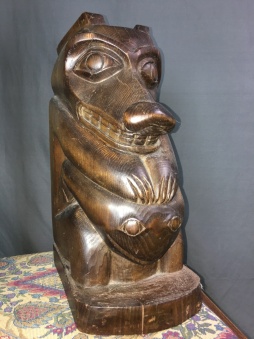
I am delighted to pass on these beloved pipes of my father’s. I hope each user gets many hours of contemplative pleasure as he did. I remember the aroma of tobacco in the rec room, as he put up his feet on his lazy boy. He’d be first at the paper then, no one could touch it before him. Maybe there would be a movie on with an actor smoking a pipe. He would have very definite opinions on whether the performer was a ‘real’ smoker or not, a distinction which I could never see but it would be very clear to him. He worked by day as a sales manager of a paper products company, a job he hated. What he longed for was the life of an artist, so on the weekends and sometimes mid-week evenings he would journey to his workshop and come out with wood sculptures, all of which he declared as crap but every one of them treasured by my sister and myself. Enjoy the pipes, and maybe a little of his creative spirit will enter you!
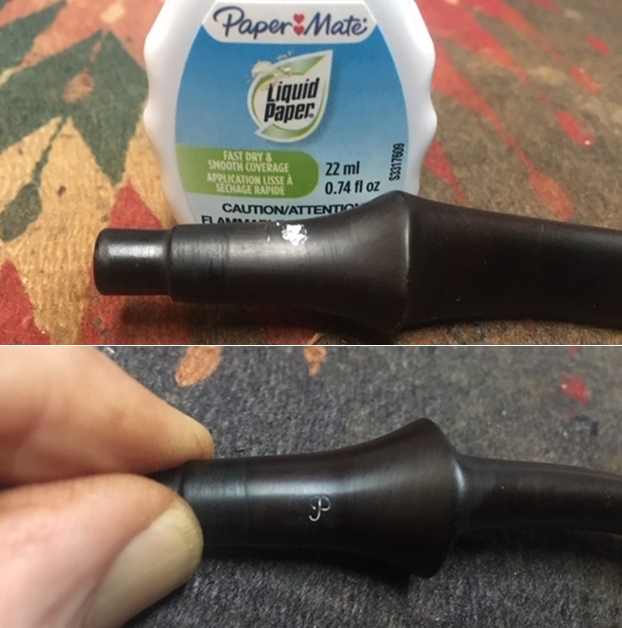
Now, on to the rest of the restoration of this Crater Finished Bent Billiard. It was great that I did not need to clean the pipe. I decided to start the process by addressing the damage area surrounding the insert in the shank. I filled in the areas around the shank insert with clear super glue until they were even with the top of the rounded shank end. I spread the glue around the edges of the shank insert. I let them cure and then refilled them until the surface was even. The photos show the process and the shank end after I had filled in to an acceptable point where the condition of the shank end was good.    I sanded the repair with 220 and 400 grit sandpaper until the end of the shank was smooth and the repairs were blended into the shank surface. I used the sandpaper to clean up the scratching and nicks in the rim top surface. I cleaned the meerschaum bowl with Mark Hoover’s Before & After Briar Cleaner to remove the debris left behind by the sanding of the rim top and to blend the repairs into the briar. I rubbed it into the surface of the briar and let it sit for 10 minutes. I rinsed the bowl off with warm running water to remove the product and the grime. The mottled finish really stood out. Once the bowl dried the finish looked really good. I polished the meerschaum rim top and shank end as well as the smooth high spots on the bowl sides with micromesh sanding pads. I wet sanded it with 1500-12000 grit pads and wiped it down with a damp cloth after each pad. I touched up the rim top and edges with a Black Stain pen to match the colour of the top and the flume down the sides of the bowl. Once it was polished with the Before & After Balm and buffed with a microfiber cloth the stain would blend perfectly. I rubbed the meerschaum down with Before & After Restoration Balm. I worked it into the surface of the meerschaum with my fingertips to clean, enliven and protect it. I let the balm sit for a little while and then buffed with a cotton cloth to raise the shine. Mark Hoover’s Balm is a product that I have come to appreciate and one I use on every pipe I have been working on. I decided to touch up the logo stamp on the left side of the shank. I use PaperMate liquid paper for doing this. I worked it into the stamp with a tooth pick. Once the material had hardened I used the tooth pick to scrape off the excess material.     I sanded the stem with 220 grit sandpaper to break up the remaining oxidation and smooth out the file marks. I started the polishing with 400 grit wet dry sandpaper to remove the scratching. It is starting to look good.   I polished the stem with micromesh sanding pads – wet sanding with 1500-12000 grit pads. I wiped the stem down after each sanding pad with Obsidian Oil. I polished it with Before & After Pipe Stem Polish – both Fine and Extra Fine. Once I had finished the polishing I gave it final coat of oil and set it aside to dry.   As usual at this point in the restoration process I am excited to be on the homestretch. I look forward to the final look when it is put back together, polished and waxed. I put the bowl and stem back together. I polished the bowl and stem with Blue Diamond to polish out the scratches in the meerschaum and the vulcanite. I gave the bowl multiple coats of Conservator’s Wax and the stem multiple coats of carnauba wax. I buffed the pipe with a clean buffing pad to raise the shine. I hand buffed it with a microfiber cloth to deepen the shine. The pipe polished up pretty nicely. The meerschaum has a rich glow with the wax and polish. The shiny black vulcanite stem is a beautiful contrast to the rich developing patina of the bowl. This Peterson’s style meerschaum is probably made by the Manx Pipe factory on the Isle of Mann. The crater style finish on this pipe made it another fun pipe to work. The repair on the inserted liner in the shank gives the shank a smooth finish. It really is a quite stunning pipe whose shape and finish make it stand out. The thick/chubby shank makes it a very comfortable pipe to hold in the hand. The finished pipe is shown in the photos below. The dimensions of the pipe are Length: 5 ½ inches, Height: 2 inches, Outside diameter of the bowl: 1 ¼ inches, Chamber diameter: ¾ of an inch. This beautiful pipe will be going on the rebornpipes store if you would like to add it to your collection and carry on Bob’s legacy. If not, I have a lot more of Bob’s estate to work on of various brands. Perhaps one of those will catch your attention. Thanks for reading this blog and my reflections on the pipe while I worked on it. This is an interesting estate to bring back to life.
A Fresh Lease on Life for a Barling T.V.F # 911, Made in Denmark


Blog by Paresh Deshpande

My pipe cleaning factory back home is churning out pipes galore and these cleaned pipes once they reach me are being liked by people who see them and sales are also improving, though restricted only to local customer, yes, you read it right, without an ‘s’, as only one colleague has been motivated to take up enjoying a pipe!! I am sure more will follow. Those readers who have been following my work on rebornpipes.com are well aware that here in India, pipe smoking culture died its natural death in 1970’s when old pipe shops and tobacconists were pushed out of business by cigarette manufacturers and people got used to the convenience of a ready-to-smoke cigarette. And to add to our woes, there is a ban on importing tobacco!! Well, wish me luck that I am able to revive this culture back here again…

The next pipe that I decided to work on, well not exactly by choice but out of economic considerations, is a lovely Brandy bowl shaped Barling’s Make pipe in a smooth finish. Through all the dark hues of Oxblood (not sure its Oxblood or Cordovan, as I have used neither in person) and darkened lacquer coat, beautiful mixed grains can be seen all around the stummel. The pipe is stamped on the left of the shank as Barlingin cursive hand over “MAKE” over “INTERNATIONAL” in block letters. On the right of the shank, close to the shank end it is stamped as “T.V.F.” followed by the shape code (???) “# 911” over “MADE IN DENMARK”. The stampings are all crisp and prominent.I had previously worked on a couple of Barling pipes from my inherited pipe collection; here are the links to both the write up,  https://rebornpipes.com/2019/03/26/a-simple-restoration-of-an-early-transition-era-barling-2639/, https://rebornpipes.com/2018/12/10/decking-out-my-grandfathers-battered-pre-transition-barling-1354/   and had researched this brand then. To refresh my memory, I revisited the write ups and also pipedia.org. Here is an interesting excerpt from pipedia.org……

https://pipedia.org/wiki/Barling

In the late 1970’s production of Barling pipes was shifted to Denmark where Eric Nording manufactured Barling pipes for Imperial. There may have been other factories, but as of this writing, none has been identified. Nording stated that he made approximately 100.000 pipes for Imperial.

Despite these attempts to diversify the line, Barling lost its market. These pipes just weren’t equivalent to the family era pipes. Finally, Imperial decided to close down the Barling operations entirely by 1980.

Thus from the above snippets of information, it is safely concluded that the pipe currently on my work table is from the period between late 1970’s to 1980 and most likely carved by master craftsman Eric Nording!!

INITIAL VISUAL INSPECTION
The pipe came to us in a very sorry state, to say the least. It was heavily smoked and a thick layer of cake build up is observed in the chamber. The thin rim top is covered in the thick overflow of lava and is severely damaged due to the repeated hammering it must have received at the hands of the previous owner to remove the dottle. This will need to be worked on.The smooth stummel surface has beautiful grain patterns with a mix of Bird’s eye, cross grains and nice swirls. The stummel surface has a dark lacquer coat that has dulled a bit and appears lifeless due to accumulation of dust and dirt and peeling of the lacquer coating in patches. The mortise is clogged with accumulation of oils and tars making the draw laborious. The straight, broad vulcanite saddle stem is deeply oxidized with bite marks and tooth chatter on either surface in the bite zone. The insides of the slot and tenon have signs of accumulated gunk. The crossed Barling logo on the saddle top of the stem is crisp and deep.INITIAL CLEANING BY ABHA…

The initial cleaning on this pipe was done by Abha, my wife (she has cleaned up around 40-50 pipes and these have now reached me for further restoration). She reamed out the complete cake and further smoothed out the chamber walls with a folded piece of 220 grit sand paper. She further cleaned out the internals of the shank with pipe cleaners and alcohol and cotton buds. She followed the internal cleaning of the shank with external cleaning of the stummel using Murphy’s Oil soap and hard bristled tooth brush and dried it with paper napkins and cotton cloth.

Next she cleaned out the internals of the stem air way and immersed it in “Before and After Deoxidizer” solution along with the stem of other pipes in line for restoration. Once the stem had soaked overnight, she cleaned the stem under running warm water and scrubbed the raised oxidation from the stem surface using Scotch Brite pad. She further removed the oxidation by scrubbing the stem with 0000 grade steel wool and applied a little olive oil to rehydrate the stem.

ONCE THE PIPE IS ON MY WORK TABLE…
The cleaned up pipes presents a very clear picture of what needs to be done to restore this pipe to a pristine and smokable condition. I really cannot thank Abha, my wife, enough for all the help and support that she extends me in my pursuance of this hobby. I proceed to carry out my appreciation of the work that needs to be done on this pipe to restore it.

The chamber is odorless and the walls are solid without any signs of damage. The smooth and thin rim top surface is where all the action is on this pipe with an equally damaged inner and outer rim edge. The front and back of the outer rim edges and top surface has signs of charring. This should be addressed to some extent when I top the rim surface. The mortise and shank internals are nice and clean. Even though most of the lacquer coat was removed when the stummel was cleaned up by Abha, I could still see remnants of the peeling lacquer coat over some parts of the stummel. I shall have to remove this coat and thereafter decide on staining the stummel or otherwise. The stummel surface is sans any fills; however, the left side surface has some damage in the form of dents and dings, probably caused due rough handling of the pipe by the previous owner. The oxidation on the vulcanite stem has been greatly reduced thanks to all the efforts put in by Abha, clearly defining the deeper bite marks and the damage to the button edges on both surfaces of the stem. These tooth marks would be required to be filled with a mix of activated charcoal and superglue. A bit of sanding to match the fill and remove the deeper oxidation followed by micromesh polishing cycle should add a nice shine to the stem.THE PROCESS
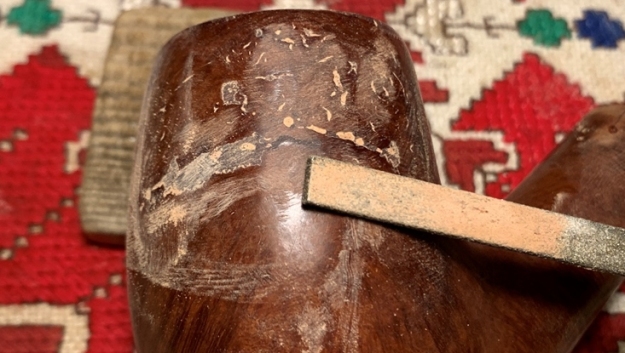
The first issue I addressed was that of the stem repairs as this would take the maximum of my time to clean, repair and spruce up the stem. I flamed the damaged button edge and the tooth indentations with the flame of a lighter. This helps the vulcanite to rise to the surface as it has an inherent property to regain its original shape when heated. I sand the stem with a folded piece of 220 grit sandpaper to even out the raised stem surface and address the minor tooth chatter. I mixed superglue and activated charcoal powder and diligently applied it over the deeper tooth indentations in the bite zone on lower stem surface and over the button edge on the upper stem surface and set it aside to cure. With the stem fill set aside to cure, I decided to address the issues on the stummel surface. I start by steaming out the dents and dings from the left side of the stummel. I heated my fabricated knife over a candle flame till hot. I spread a wet Turkish hand towel over the dents and dings on the stummel and placed the heated knife over the hand towel. The resulting sizzle produces steam which in turn expands the briar and evens out the dents. The results are exactly as I wanted them to be.The next stummel issue to be addressed was that of the rim top surface damage. I topped the rim on a piece of 220 grit sand paper, checking frequently till I was satisfied that the charred surface was addressed to a great extent and the rim top surface is nice, smooth and even. The inner edge is still uneven, though much better than before topping, and shall be addressed subsequently.Close observation of the rim top surface revealed remnants of charred inner rim edge on the right side and below it on the same side, a briar flaw (all encircled in red). This flaw, when polished would stand out like a sore thumb and hence I decided to address this by topping the rim top further. A few careful rotations of the rim top on a piece of 220 grit sandpaper and the issue of briar flaw was completely addressed and the charred inner rim edge was further reduced. The rim top looks significantly better at this stage. With a folded piece of a 220 grit sand paper pinched between my thumb and forefinger, I created a slight bevel on the inner edge of the rim top surface. This helped to mask and address the minor charred marks that had remained on the inner rim edge. Continuing with my work on the stummel, I sand the entire stummel surface with a piece of 220 grit sand paper. This helped to address all the minor dents from the surface and removed what little lacquer coating that had remained, while providing a smooth surface for the next stage of micromesh polishing cycle. To remove the sanding marks and bring a deeper shine, I polished the stummel with micromesh pads, wet sanding with 1500 to 12000 pads. I wiped the surface with a soft cloth at the end of the micromesh cycle. The stummel looks amazing with a deep dark shine and beautiful grains all around. I showed the stummel to the new owner and discussed if he wanted me to stain the stummel or preferred it the way it appeared at this stage. I took this opportunity to explain him that the stummel would darken further as I finished with the polishing regime. He liked the pipe without stain and that’s how it shall remain. As a result of all the topping and subsequent polishing, the rim top surface had a lighter hue as compared to the rest of the stummel surface. I matched the rim top surface with the rest of the stummel by staining the surface with a dark brown stain pen. I set it aside for the stain to cure and once I was satisfied, I wiped it with a microfiber cloth. The rim top is now perfectly matched with the rest of the stummel dark coloration. I am very pleased with the blend.Next, I rub a small quantity of “Before and After Restoration Balm” in to the briar with my finger tips and let it rest for a few minutes. The balm almost immediately works its magic and the briar now has a nice vibrant appearance with the beautiful darkened grain patterns on full display. I further buff it with a horse hair shoe brush. Now that the stummel was nearly complete, I turned my attention to the stem repairs. The stem fills had cured completely by this time. With a folded piece of a 220 grit sand paper, I sand down the fills to achieve a rough match with the rest of the stem surface. I followed it up by sanding it with 400, 600, 800 grit sand papers and finally with a piece of 0000 grade steel wool. This serves to achieve a perfect blend of the fills with the rest of the stem surface, remove the deep seated oxidation and also reduces the sanding marks of the more abrasive sand papers. I wiped the stem with a cotton swab and alcohol to remove all the oxidation and sanding dust from the surface. I applied a little Extra Virgin Olive oil over the stem and set it aside to be absorbed by the vulcanite.I followed up the sanding regime with micromesh polishing to bring a shine on the stem surface. I wet sand the stem with 1500 to 2400 girt micromesh pads. Continuing with my experimentation that I had spelled out in my previous posts, I mount a cotton buffing wheel on my hand held rotary tool and polish the stem with Red Rouge polish as I had read that this polish has grit between 2400 to 3200 grit pads of the micromesh pads. Further, I mount a fresh buffing wheel on the rotary tool and polish the stem with White Diamond polish as it has grit equivalent to 3800- 4000 of micromesh pads. I finish the stem polish by wet sanding with 6000 to 12000 grit pads of the micromesh. I rub a small quantity of olive oil in to the stem surface to hydrate it and set it aside. I am really happy with this process of stem polishing as the results are excellent while saving me huge amounts of time and effort. The stem looks nice and shinning black, but there was something that I felt I had missed out. I realized that the stem logo is yet to be refreshed and highlighted. With a white fine tipped correction pen, I filled the crossed Barlings stamping and once it had dried a bit, with a toothpick, I scrapped off excess of the correction ink. The stamping is now completely refreshed and sits proudly on the top of the saddle.To apply the finishing touches, I mount a cotton cloth buffing wheel on to my hand held rotary tool and apply a coat of Blue Diamond to the stummel and the stem to polish out the minor scratches. With a cotton buffing wheel that I use for carnauba wax, I apply a coat of carnauba wax and continue to work on it till the complete coat of wax had been polished out. I mount a clean cotton cloth buffing wheel and give the entire pipe a once over buff. I finished the restoration by giving the entire pipe a rigorous hand buffing using a microfiber cloth to raise the shine further. The finished pipe looks beautiful and is ready to be handed over to the new piper. Hope he enjoys his leisure time with this beautiful and gorgeous looking pipe, smoking his favorite tobacco!! P.S. This is the third pipe that was selected by this gentleman to carry forward the trust posed in the pipe by the previous piper and I am sure that this pipe will provide the new piper many years of happy smokes and will remind him of our association. There is one more pipe which he has selected that I need to work on before I can get back to my choice of pipes to work on!!

I can never thank Abha, my wife, enough who not only supports my hobby of pipe restoration, but actively helps in this work by doing all the dirty work of initial cleaning and providing me a clean platform to work further. It is her work that helps potential buyers to select a pipe for themselves.

Thanks to all readers of Reborn pipes who have spared a moment of their invaluable time in reading through this write up and as is always, your suggestions and advice on my experimentation is always welcome as this would also help the new pursuers of this art.


Emergency Repair for a Friend – Repairing a Broken Shank on a Thompson Dublin


Blog by Steve Laug

Probably some time early in the past year Al purchased this pipe from Jeff and me. It quickly became his favourite pipe and he enjoyed smoking it. He wrote me a quick email a few weeks ago which I include here

Steve, I purchased a Thompson Freehand in red stain some time ago. It has become my most favorite pipe. However, the pipe suffered catastrophic damage as the stem broke cleanly at the base of the bowl, the result of a slip of the grip while at the buffing wheel despite my vise like grip.

I’ve included a photo of my favorite pipe in hopes that you can perform a miracle of craftsmanship.

Help me Steve, you’re my only hope!

Sincerely, Al — newly retired and heartbroken…He had cleaned it and was buffing it and the pipe got away from him (pipe restorer’s and repairman’s nightmare). It hit the floor or wall or something hard anyway and the shank snapped off at the bowl. It was a clean break and looked repairable. It arrived on Tuesday this week. I opened the box and I found the stem and shank carefully wrapped in bubble wrap and tissue and the bowl separately wrapped the same way. Both had been packed in a pipe box and carefully cushioned with paper and bubble wrap in a larger box. I always wonder what the Customs Inspectors must think when they open these carefully wrapped packages and find a broken, used tobacco pipe. They must shake their heads in disbelief that such care would go into packing such “debris”. I took the pipe from the boxes, unwrapped it and took the following photo. The shank was indeed snapped at the bowl and the stem was still in the shank!I took the stem off the shank and checked the fit. It was a pretty clean break – just a few small piece of briar chipped and missing. I went through my collection of tubes and found one that was close to the length I needed and was a perfect fit in the airway in the two sections. I roughed up the tubing with a file to give the glue a good surface to bind with. I coated the end of the tube that fit in the shank portion with a two part epoxy and put it in place in the shank. Once the glue had hardened I could adjust the length of the tube however much I needed on a topping board of with the Dremel and sanding drum.Once the glue cured and I had adjusted the length of the tube I spread the epoxy on the tube and on the surfaces of the snapped briar and pressed them together. I used an epoxy that hardened fairly quickly so I adjusted the fit and pressed the two parts together and held them until the glue had hardened. Once the repair had cured I took pictures of the repaired pipe. You can still see the cracked area on the right and underside of the bowl but the fit is quite tight. I needed to do a bit more work on those areas to get a good blend to the repair. I used my Dremel and a steel burr to replicate the rustication pattern around the bowl. I set the Dremel as the lowest speed and worked the burr to connect both vertical and horizontal patterns. It blended well. The first set of 3 photos shows the cut patterns and the second set of 3 shows the finished carving. I used a Black Sharpie and a Red Sharpie pen to stain the freshly carved rustication. The black went into the carving while the red was applied to the high spots. I covered the whole repaired area with some Mahogany stain to blend the colours into the rest of the finish. I gave the repaired area a coat of Danish Oil and Cherry stain to give it a shine that would match the shine on the rest of the bowl. I set it aside to dry.Once the Danish Oil coat had dried I lightly buffed the pipe with microfibre cloth to polish the repaired area. I gave the bowl multiple coats of Conservator’s Wax and buffed it with a clean buffing pad to raise the shine. I am happy with the repair and the finishing on the shank. The repair blends in very well. It is ready to send it back to Al. I will get it packed up and get it in the mail. I hope that he continues to enjoy this beauty. Thanks for following the blog and reading about the repair. Cheers.

Restoring & Repairing a Chipped Stem on a BBB Own Make 607 Liverpool


Blog by Steve Laug

Those who have been following the blog know that I really like old BBB pipes and have a pretty nice collection of different shapes. I love working on them as the briar is very good and the vulcanite is quite nice as well. You also know that I am not currently adding any work to the queue that is not local so that I can catch up on the large estate from Bob Kerr that I have been working on. But sometimes it is hard to say no. When the brand I like and a pipe I like come along together it is a hard one to decline. So long story short, not too long ago I received the following email with photos of the damaged stem attached:

Dear Steve,

Greetings from Wisconsin! Thank you for the good work you do, and for bringing new life to so many fallen pipes.

I bought a BBB Own Make Liverpool (shape # 607) despite its severely damaged stem. I love the shape and weight of it, and if its stem were restored this would probably be my favorite pipe.

The damage to the stem (please see attached photographs) is bad enough that the pipe is unsmokable: a piece of the vulcanite about one-fifth the size of a dime is missing altogether. In addition, the stem has been very roughly sanded, which left it marked with a kind of rude crosshatching.

I’m writing to ask whether you yourself would be open to doing a repair job, or could recommend someone who could.

Many thanks and congratulations again on the good work you do.

Stephen Looking at the photos he sent I had to take his word for it that it was a Liverpool shaped pipe. The round shank and the short tapered stem pointed to that. The metal BBB logo on the stem top, the fact that it was a BBB Own Make and the challenge of restoring a BBB all made it impossible for me to decline! After I said yes and the deal was struck for the repair and restoration I thought I should have had him send it to Paresh who loves working on this kind of stem rebuild. But I just shook my head and waited for it to arrive.

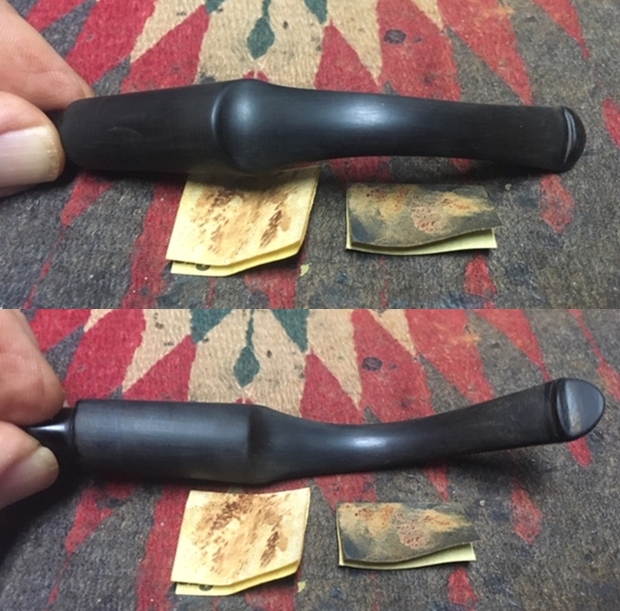
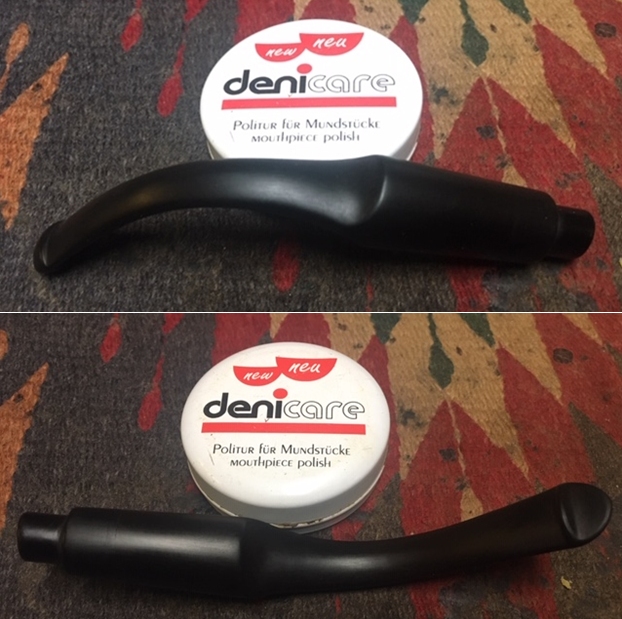
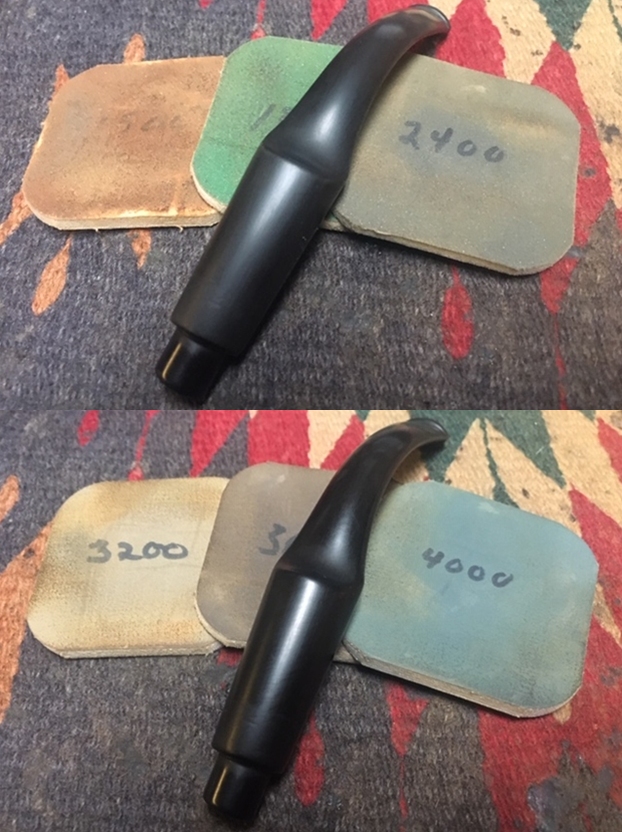
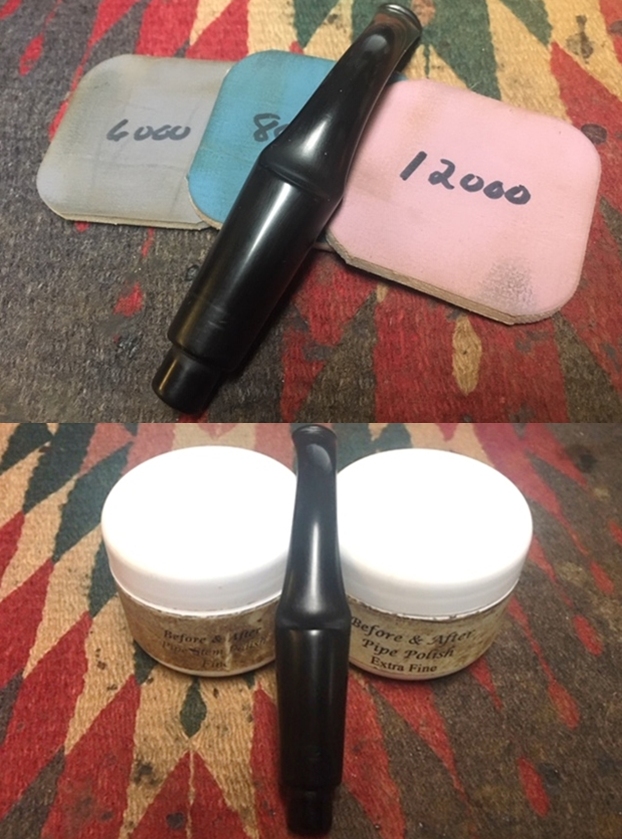
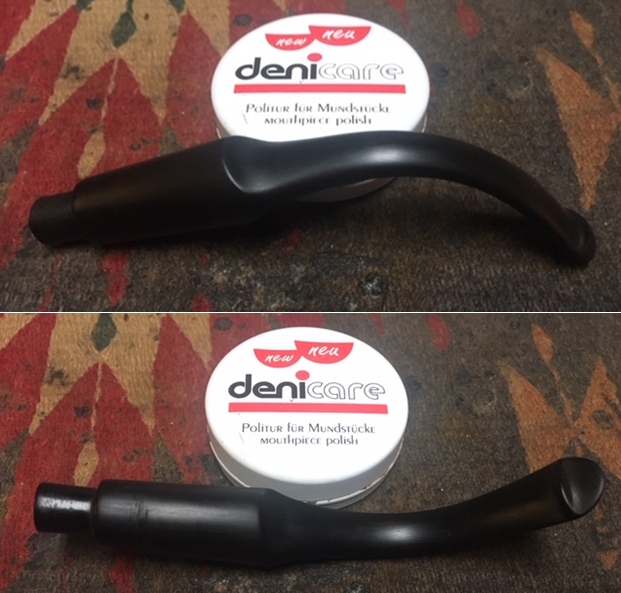
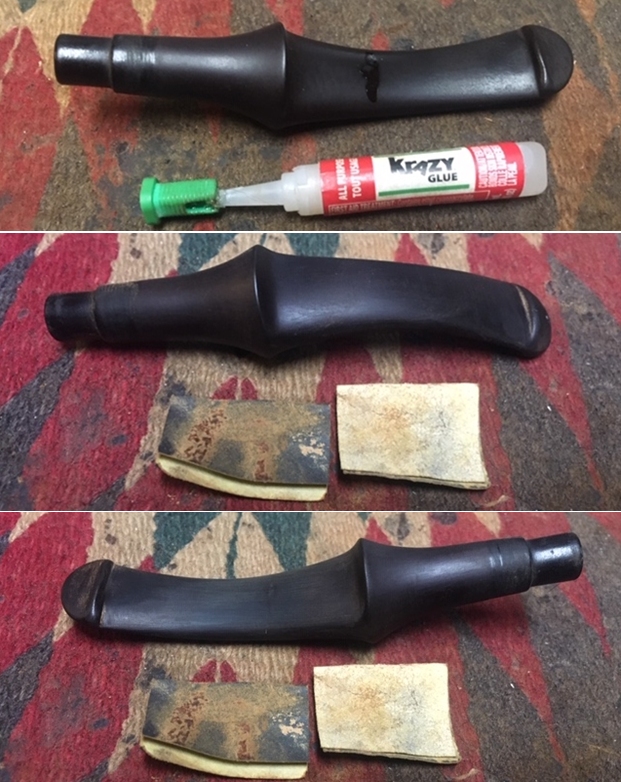
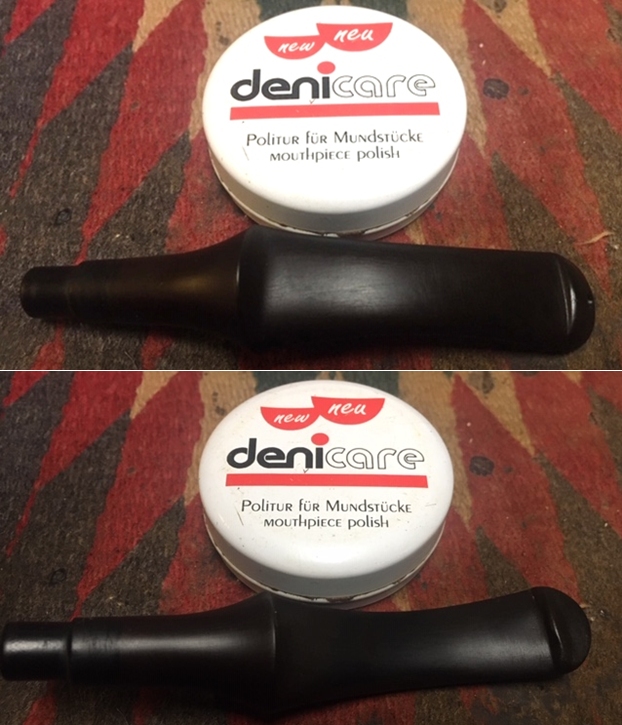
When it arrived I took time to assess the damage. The stem was just as Stephen described it so I quote his description here: The damage to the stem (please see attached photographs) is bad enough that the pipe is unsmokable: a piece of the vulcanite about one-fifth the size of a dime is missing altogether. In addition, the stem has been very roughly sanded, which left it marked with a kind of rude crosshatching. On top of that it was dirty and smelled bad. The bowl was another story. There were some dark stains on the heel of the bowl and on the right side of the shank that at first glance looked like burn marks but on examination seemed to be a dark, sticky substance on the surface of the briar. The rim top was darkened and there was some lava overflow on the top. There was a burn mark on the front of the bowl on the bevel but it did not appear too deep. There was also a burn mark on the out edge of the rim at the front. The bowl had a thin cake in it and the pipe smelled old and musty. My first thoughts on the band were that it was a repair band, but when I removed the stem there were no cracks in the shank. I examined the band with a lens and bright light and on the underside it bears the BBB Diamond and the stamping “Sterling Silver”. It is original! The pipe was a mess but it showed some promise and bespoke of a lot of work! I took photos of the pipe when I received it. I took a close up photo of the rim top and the stem to give a better picture of the issues that I needed to deal with in the restoration. You can see the damage on the front beveled edge and top of the rim as well as the darkening and nicks in the surface toward the back of the bowl. There was definitely damage that would need to be addressed (possibly a light topping). What was interesting to me is that the cake did not go all the way to the bottom of the bowl. The bowl bottom was still raw unsmoked briar… that too was promising. The stem was another story. The topside had a lot of sanding scratches and hash marks all around the brass BBB Diamond. The button was very thin on the top side both in terms of width and height. The chip out of the underside of the button went quite a ways into the stem material so that the rebuilt button would need to be a little thicker than the original but it was fixable in my estimation.  I took photos of the stamping on the shank. I took a photo of the left side and you can see the BBB Diamond with Own Make flanking it on each side. I cleaned off the black grime on the right side before I took the photo of the stamping there. It read Made In London over England followed by the shape number – 607. You can see the nice birdseye grain on the shank sides. It is going to be a beautiful pipe once it is cleaned and restored.I took the stem off the pipe and was a bit surprised by the aluminum inner tube in the tenon. It extended the length of the shank and the pointed end extended into the bottom of the bowl. I just could not see it due to the cake and grime in the pipe.I decided to start my clean up on the bowl to see if I could remove the black marks on the heel and the shank side. I scrubbed the bowl down with Mark Hoover’s Before & After Briar Cleaner. I rubbed it into the surface of the briar, and as Mark wrote me it lifted the grime and dirt out of the briar. It removed the majority of the dark spots on the shank and heel. I would need to do a little more work on those areas but it looked very good. I rinsed the cleaner off the bowl with warm running water and dried it with a soft cloth. The photos below show the cleaned briar…. Look at the grain on that pipe! With the externals clean it was time to clean the internals. I cleaned out the thin cake in the bowl with a Savinelli Fitsall Pipe Knife and promptly forgot to take the photos. I cleaned out the mortise and the airway in the shank and stem with alcohol, pipe cleaners, and cotton swabs. For the way the pipe smelled the shank was amazingly clean. I am not used to that when an inner tube is used as usually the tars build up around the outside… This time the tube actually worked very well.While the rim top definitely looked better there was still some burn damage to the outer edge of the front rim and nicks in the back edge. I lightly topped the bowl with 220 grit sandpaper on a topping board. I was able to remove the damage for the most part without removing too much of the rim top.I did the initial polishing of the briar with micromesh sanding pads – wet sanding with 1500-2400 grit pads. I wiped the briar down after each pad with a damp cloth. I worked on the dark spots that had been on the heel and on the right side of the shank while being careful to not damage the stamping that was underneath the marks. I also polished the rim top and the inner bevel in preparation for staining. I smoothed out the bevel on the inner edge of the rim and was happy with the look. I used an Oak stain pen to stain the rim to match the rest of the pipe. The match is very good and it did a great job of blending in the damage to the bevel. Once I had finished the stain I continued to polish the bowl and rim top with micromesh sanding pads – wet sanding with 3200-12000 grit pads. I wiped the bowl down after each pad with a damp cloth to remove the sanding dust. I rubbed the bowl down with Before & After Restoration Balm. I worked it into the surface of the briar with my fingertips to clean, enliven and protect it. I let the balm sit for a little while and then buffed with a cotton cloth to raise the shine. I continue to use Mark Hoover’s Balm on every pipe I have been working on. The grain on the Own Make is quite stunning and it just pops now with the cleanup! It is a beauty. I polished the Sterling Silver Band with Hagerty’s Silver Polish to remove the tarnish and bring the shine back. It is a beautiful band. The BBB Diamond logo and Sterling Silver is on the underside of the shank.With the cleaning and restoration of the bowl finished for now I set it aside and turned my attention to the stem. The stem was the real challenge on this old timer. I was hoping to be able to rebuild the button and stem on the underside and widen the button on the topside to help protect the repair. I mixed up a batch of black super glue and activated charcoal powder to make putty. I inserted a folded card covered with packing tape to keep the glue from filling in the airway in the slot. I used a dental spatula to fill in the chipped area. I also filled in the area on the topside to build up the button. This kind of repair is really ugly at this point in the process. There is nothing pretty or redeeming about the way it looks.I let the stem repair cure overnight and in the morning used a needle file and a rasp to smooth out the repair and shape the edge of the button on both sides of the stem. The first photo shows the repaired and rebuilt button on the underside. The second one is the widened and beefed up topside of the button. Lots of work to go still but it is starting to show some promise. I sanded the repairs and the reshaped button with 220 grit sand paper and 400 grit wet dry sand paper to smooth out the ridges and high spots and give definition to the shape. I have one more tin of Denicare Mouthpiece Polish left from a few that I have picked up over the years. It is a coarse red pasted that serves to help remove oxidation. I polished the stem with that to further smooth out the surface of the vulcanite (and to be honest – to use it up).   I polished the stem with micromesh sanding pads – wet sanding with 1500-12000 grit pads. I wiped the stem down after each sanding pad with Obsidian Oil. I polished it with Before & After Pipe Stem Polish – both Fine and Extra Fine. Once I had finished the polishing I gave it final coat of oil and set it aside to dry.    When this pipe arrived I truly dreaded rebuilding the stem. I know how to do the process. That is never the problem but it is very labour intensive and time consuming. However, yesterday afternoon I felt like doing something a bit different in the restoration process. I pulled this pipe out of the box and finished the repair yesterday. Today I shaped and polished it. With every pipe I work on, I look forward to when it all comes back together, polished and waxed. I put the bowl and stem back together. I polished the bowl and stem with Blue Diamond to polish out the scratches in the briar and the vulcanite. I gave the bowl multiple coats of Conservator’s Wax and the stem multiple coats of carnauba wax. I buffed the pipe with a clean buffing pad to raise the shine. I hand buffed it with a microfiber cloth to deepen the shine. The pipe polished up pretty nicely. The sandblast finish looked really good with the polished black vulcanite. This BBB Own Make 607 Liverpool was another fun pipe to work on. It really has a look that I have come to expect from BBB pipes. It is really eye catching. The combination of various brown stains really makes the pipe look attractive. It is another comfortable pipe to hold in the hand. The finished pipe is shown in the photos below. The dimensions of the pipe are Length: 5 ¾ inches, Height: 1 7/8 inches, Outside diameter of the bowl: 1 ¼ inches, Chamber diameter: ¾ of an inch. I look forward to mailing it back to Stephen and seeing what he thinks of the finished pipe. I have sent him progress reports but that is not the same as holding it in your hand. Thanks for reading this blog and my reflections on the pipe while I worked on it. This is an interesting estate to bring back to life.
Restoring a Patent Era Brigham 1 Dot Dublin Ken Bennett’s Estate


Blog by Steve Laug

Early in August I received an email from an interesting woman on Vancouver Island regarding some pipes that she had for sale. She was looking to sell the pipes from her late husband Ken and one from her Great Grandfather. Here is her email:

I have 5 John Calich pipes that date from 1979 to 1981. One is graded 11 and the other four are graded 12. I had bought them as Christmas and birthday gifts for my late husband. He was a very light smoker for a 3 year period.

I am a wood sculptor and always admired the grain and shapes of John’s best pipes. John was a friend as well. We exhibited at many exhibitions together for over 25 years.

I am wondering if you can provide any information on how I might be able to sell them.

Thanks you for any help you might be able to provide

I wrote her back and told I was very interested in the pipes that she had for sale and asked her to send me some photos of the lot. She quickly did just that and we struck a deal. I paid her through an e-transfer and the pipes were on their way to me. They arrived quite quickly and when they did I opened the box and found she had added three more pipes – a Brigham, a Dr. Plumb and a WDC Milano.

I finished the restoration of all the pipes in the box of Calich pipes and the BBB Calabash that Pat had sent. She had included a Brigham as noted above. This Brigham Dublin one dot pipe was a classic Brigham shape and rusticated finish. The rim top was dirty and pretty beat up. There were nicks out of the outer edge of the rim around the bowl. The front outer edge was rough from knocking the pipe out again hard surfaces. The rusticated finish was in decent condition. The bowl had a cake in it and there was a lava overflow onto the rim top and darkening the finish. The inner edge of the bowl looked to be in excellent condition under the lava. The stamping on the underside of the shank was very clear and read Shape 107 on the heel of the bowl followed by Can. Pat. 372982 on the smooth panel on the shank. That was followed by Brigham. There is a long tail coming from the “m” curving under the Brigham stamp. The stem was lightly oxidized as was the single metal dot on the side of the taper. There was oxidation and light tooth chatter on both sides of the stem on both sides near the button. The shank and stem were dirty inside. The tenon was the Brigham metal system that held the hard rock maple filter. It did not look like it had ever been changed. I took a photo of the bowl and rim top to show the damage on the front left outer edge of the bowl, the cake in the bowl and the lava build up on the rim top and inner edge of the rim top. It is quite thick and darkens the natural finish of the rim top. The cake was thick and hard but hopefully it had protected the rim and edges from damage. Otherwise it looks pretty good. I also took photos of the stem to show the oxidation on both sides, damage to the button and the light tooth chatter on both sides near the button. I took a photo of the underside of the shank to show the condition of the stamping. You can see the clear stamping reading as noted above.I wrote to Pat and asked her if she would be willing to write short remembrance of her late husband and her Great Grandfather. She wrote that she would be happy to write about them both. Here are Pat’s words:

I’d like you know that Ken was an incredibly talented and creative man with a smile and blue eyes that could light up a room. His laugh was pure magic. He could think outside the box and come up with an elegant solution to any problem…

Pat sent me this reflection on her husband Ken’s life. Thanks Pat for taking time to do this. I find that it gives another dimension to the pipes that I restore to know a bit about the previous pipeman. Pat and Ken were artists (Pat still is a Sculptural Weaver) and it was this that connected them to each other and to John Calich. Here are Pat’s words.

Here is the write up for Ken. We meet in University and it was love at first sight. I consider myself blessed to have shared a life together for 37 years.

Ken graduated from Ryerson University with Bachelor of Applied Arts in Design in 1975.

Ken lived his life with joy.  Each day was a leap of faith in the creative process. His smile would light up the room and the hearts of the people he loved.

He combined the skilled hands of a master craftsman, with the problem solving mind of an engineer, and the heart and soul of an artist. He used his talents to create unique and innovative wood sculptures. Using precious hardwoods, he incorporated the techniques of multiple lamination and three dimensional contouring to create sculptural pieces that captivate the eye and entice the hand to explore.

His career was highlighted by numerous corporate commissions, awards and public recognition in Canada and abroad.

A quote from Frank Lloyd Wright sums up Ken’s approach to design.  “Form follows function – that has been misunderstood. Form and function should be joined as one in a spiritual union.” 

A friendship with John Calich developed over years of exhibiting their work at exhibitions. How could a wood sculptor resist some of John’s finest creations…

I wrote Charles Lemon to get some background information on the pipe. Charles knows Brigham pipes like no one else I know besides he is a great guy. Here is his response

Nice find! The stamps are really nice & clear on that one.

Date-wise, this pipe was made between 1938 and 1955 while the patent for the Brigham System was in force, thus the CAN PAT #. The underlined script logo is another indication of age – that logo was phased out sometime in the early 60s.

Shapes 05, 06 & 07 are classic Straight Dublin shapes from the earliest Brigham lineup, with Shape 05 being the smallest and 07 the largest. There are also Bent Dublin shapes but they are much higher shape numbers and presumably were added to the lineup perhaps decades later.

Hope that helps! Ironically, I was looking at the shape chart just today with an eye to doing an update, so most of this was top of mind! — Charles

I summarize the dating information from Charles now: The pipe is an older one with a Canadian Patent Number. That and the underlined script logo date it between 1938 and 1955. The shape 107 refers to the largest of the classic Straight Dublin pipes in the Brigham line up.

Armed with Pat’s stories of John and her husband Ken and the information from Charles on the background of the pipe it was time to work on the pipe. I reamed the bowl with a PipNet Pipe reamer using the third cutting head. I took the cake back to bare briar so that I could check out the inside walls. I used a Savinelli Fitsall Pipe Knife to scrape back the remaining cake. I finished my cleanup of the walls by sanding it with 220 grit sandpaper wrapped around a piece of dowel.       I scraped the rim top lava with the edge of the Savinelli Fitsall Pipe Knife. I was able to remove much of the lava. It also helped me to see the damage to the front edge better. It really was a mess.I scrubbed the briar with Before & After Briar Cleaner and rinsed it off with warm running water. I scrubbed the rim top with a tooth brush and warm running water at the same time. I dried the bowl off with a soft microfiber cloth and gave it a light buffing. The photos show the cleaned briar and the damaged areas are very clear.   Once the rim top was clean I could see the extent of the damage to the surface of the rim. The damage was quite extensive and gave the rim the appearance of being out of round. There was also a downward slant to the front edge of the bowl. I topped it on a topping board with 220 grit sandpaper. I worked to flatten out the profile of the rim. I polished the rim surface with 1500-2400 grit micromesh sanding pads. I wiped the top down with alcohol on a cotton pad. I restained it to match the rest of the bowl with three different stain pens – Walnut, Maple and Mahogany. I polished the rim top with micromesh sanding pads – wet sanding with 1500-12000 grit sanding pads. I wiped it down with a damp cloth after each pad. I rubbed the bowl and rim top down with Before & After Restoration Balm. I worked it into the surface of the briar with my fingertips and a horsehair shoe brush to clean, enliven and protect it. I let the balm sit for a little while and then buffed with a cotton cloth to raise the shine. Mark Hoover’s Balm is a product that I have come to appreciate and one I use on every pipe I have been working on.     I rubbed the bowl and rim down with Conservator’s Wax and buffed the bowl with a shoe brush. I worked on the internals. I scraped the inside of the mortise with a dental spatula to remove the hardened tars and oils that lined the walls of the metal shank. Once I had that done I cleaned out the airway to the bowl, the mortise and the airway in the stem with pipe cleaners, cotton swabs and alcohol. When I finished the pipe smelled very clean.Before I cleaned the shank I removed the hard rock maple filter. I took a new filter out of the box and set it aside for use once I finished the clean up.I wiped down the surface of the vulcanite stem with alcohol. I filled in the deep tooth marks with clear super glue.Once the repairs had cured I used a needle file to reshape and recut the edge of the button and flatten the repaired area.   I sanded the stem with 220 grit sandpaper to break up the oxidation. I started the polishing with 400 grit wet dry sandpaper to remove the scratching. It is starting to look good.I have one more tin of Denicare Mouthpiece Polish left from a few that I have picked up over the years. It is a coarse red pasted that serves to help remove oxidation. I polished the stem with that to further smooth out the surface of the vulcanite (and to be honest – to use it up).  I polished the stem with micromesh sanding pads – wet sanding with 1500-12000 grit pads. I wiped the stem down after each sanding pad with Obsidian Oil. I polished it with Before & After Pipe Stem Polish – both Fine and Extra Fine. Once I had finished the polishing I gave it final coat of oil and set it aside to dry.     This is the sixth and final pipe that I am restoring from Ken’s Estate. It is another a classic Brigham Patent era Large Dublin shaped 107. With the completion of this Brigham I am on the homestretch with Ken’s estate. This is the part I look forward to when each pipe comes back together, polished and waxed. I put the bowl and stem back together. I polished the bowl and stem with Blue Diamond to polish out the scratches in the briar and the vulcanite. I gave the bowl and the stem multiple coats of carnauba wax. I buffed the pipe with a clean buffing pad to raise the shine. I hand buffed it with a microfiber cloth to deepen the shine. The pipe polished up pretty nicely. The classic Brigham rustication and smooth rim top is very nice. The smooth, refinished the rim top, polished and waxed rustication on the bowl look really good with the black vulcanite. This Brigham Patent Era Dublin was a fun and challenging pipe to bring back to life because of the damaged rim top. It is another comfortable pipe to hold in the hand. The finished pipe is shown in the photos below. The dimensions of the pipe are Length: 6 inches, Height: 1 ¾ inches, Outside diameter of the bowl: 1 3/8 inch, Chamber diameter: ¾ of an inch. Thanks for reading this blog and my reflections on the pipe while I worked on it. This entire estate was interesting to bring back to life.
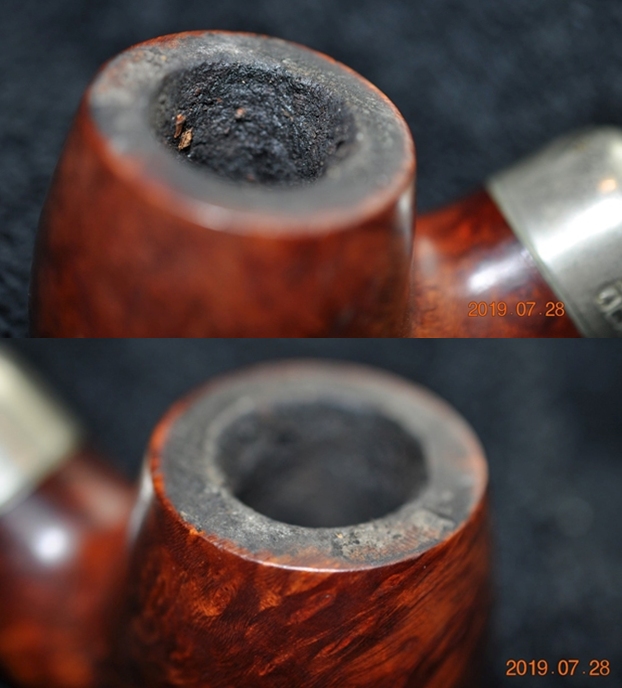
Refreshing another unsmoked 1910-1915 C.P.F. Chesterfield – a Military Mount Billiard


Blog by Steve Laug

This afternoon I was going through my boxes of pipes hunting for a specific stem and came across this old, unsmoked C.P.F. Chesterfield Military Mount Billiard. What made it interesting to me was the fact that though it was unsmoked the brass ferrule was oxidized to the point of disintegration. If you have followed my blog for long you know that I love older C.P.F. pipes and I really am a sucker for them as I have a small collection of them. This one rang all the bells for me with the unsmoked bowl, the gold stamp on the shank, even the disintegrating brass band and the P-lip style stem. I am pretty sure from working on other C.P.F. pipes that the pipe was from the time period of the 1910s and before 1920, which also made it attractive to me. When I brought it to my work table this is what I saw (it did not disappoint). It was a bit shop worn from sitting – nicks and grime on the finish. The brass ferrule was loose and in rough condition. The stamping on the left side of the shank read Chesterfield in an arch over the C.P.F. in an oval logo. On the right side of the shank it read French Briar. The stem read Chesterfield over the C.P.F. oval logo on the topside of the taper. On the underside it read Solid Rubber. The bowl was raw briar and totally looked new and unused. You have to admit this is a beauty – I guess that is subjective but it is to me! I took photos of the pipe as it looked on the table. I took close up photos of the bowl, rim top and stem to show the overall condition of the pipe. The bowl was pristine as noted above. The rim top was very clean and undamaged. There were a few small nicks on the inner edge.  The shank ahead of the band was discoloured from the brass ferrule and the ferrule itself had a lot of cracks in surface all around. The stem was in excellent condition – no oxidation. There were a lot of minute scratches in the surface on both sides. The stamping on the stem top and underside was very readable.     The next photos show the stamping on the shank. You can see that they are all quite clear.   I wrote a piece on the background to the C.P.F. brand earlier on the blog and include the link to that here (https://rebornpipes.com/2013/04/14/some-reflection-on-the-historical-background-on-cpf-pipes/). I quote a pertinent part of the blog below:
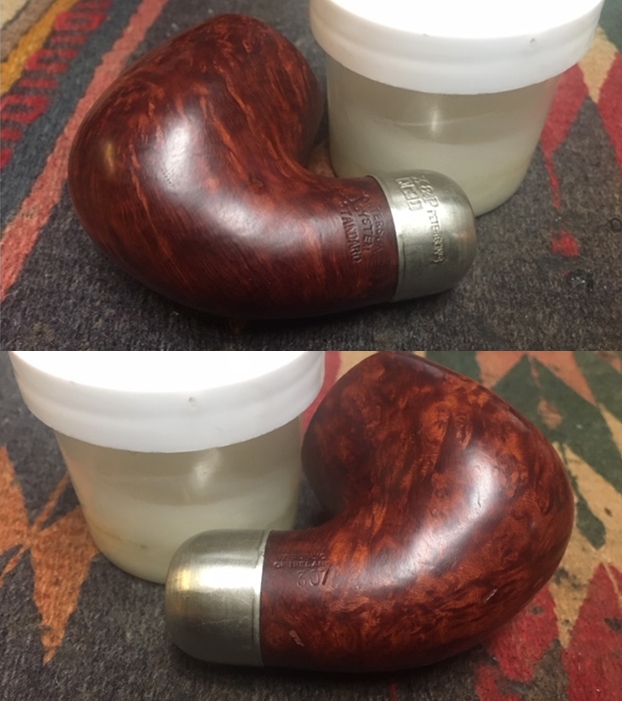
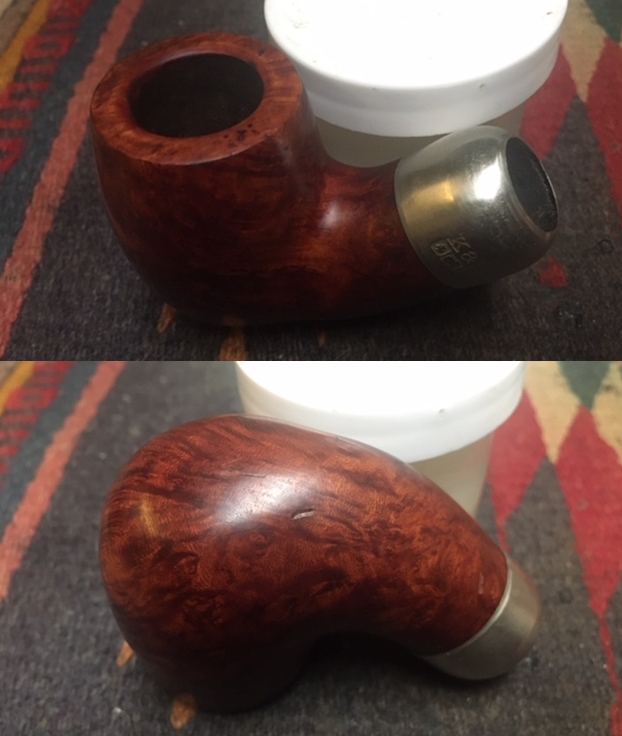
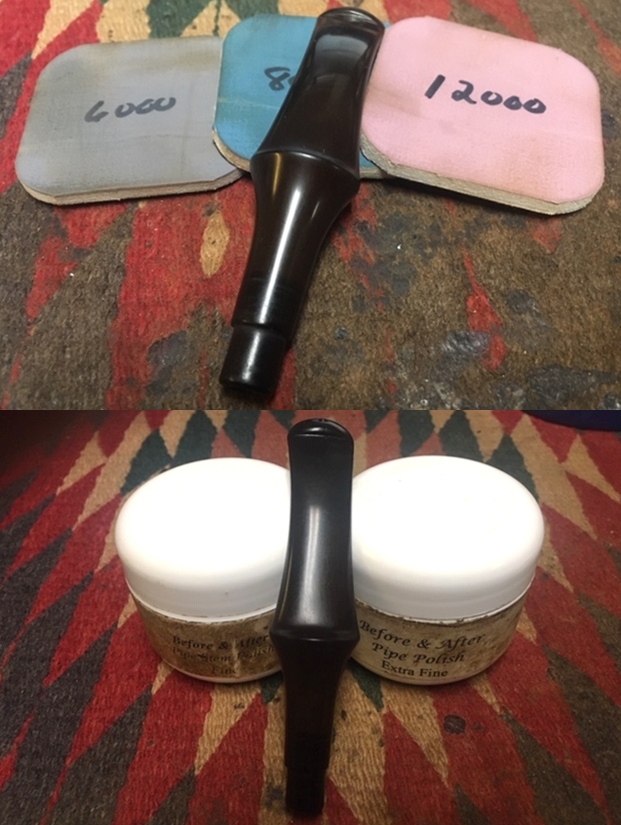
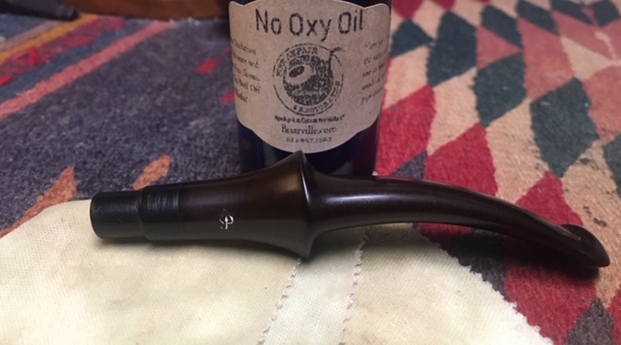
From my reading and research it seems to me that C.P.F. brand was discontinued sometime in the 1910-1920 range. Again, turning to Bill Feuerbach I found that he notes the following, which pins down the time frame of the discontinuation of the brand more specifically, “I have a C.P.F. Chesterfield in our office display that has a nametag from way before my time that says 1900 C.P.F. Chesterfield. It looks like most other Chesterfields you’ve seen, including the military type push stem, except this stem is horn and not vulcanite. As far as I have gathered the C.P.F. brand was phased out sometime around 1915.” Interestingly, he noted that the Chesterfield name and style was later introduced in the KB&B, Kaywoodie and Yello-Bole lines. He says that the 1924 KB&B catalog shows KB&B Chesterfields…

… From my research I believe that we can definitively assert that the C.P.F. logo stands for Colossus Pipe Factory. The brand was purchased by KB&B sometime between 1884 and 1898 and that it continued until 1915. That time frame gives help in dating some of the older C.P.F. pipes you or I might find. It can be said that prior to the dual stamping it is fairly certain that the pipe is pre-1884 to 1898. After the dual stamping it can be placed post 1898 until the closure of the brand line in 1915. C.P.F. made beautiful pipes.

From that information I dated this pipe to the peroid metnioned above. I would further refine the 1910s period to a time between 1910-1915. At any rate it is an old pipe to remain unsmoked for this long. How this old timer has been around this long and is still unsmoked is a bit of a mystery to me.

I tried to remove the ferrule and as I touched it the metal disintegrated into a pipe of very fragile pieces of metal. The metal was whitened on the outside and inside. The oxidation had made the metal very brittle.I wiped the bowl down with acetone on a cotton pad to remove the spotty varnish coat and break down the remnants of glue left behind by the crumbled ferrule. I sanded the shank end with 220 grit sandpaper to remove the heavy spots. I polished it with 1500-2400 grit micromesh sanding pads.    I went through my box of bands and ferrules and found a nickel ferrule that was a good fit on the shank end. I put some Weldbond white glue around the shank end and pressed the band onto the shank. I aligned the “hallmarks” with the gold stamping on the left side of the shank.I scrubbed the briar with Before & After Briar Cleaner. I rubbed it into the surface of the briar ahead of the ferrule and around the shank and bowl. I let the cleaner sit on the briar for 10-15 minutes and then rinsed it off to remove the cleaner and the grime that it had picked up. I took photos of the pipe after I had dried it off.  I rubbed the bowl down with Before & After Restoration Balm. I worked it into the surface of the briar with my fingertips to clean, enliven and protect it. I let the balm sit for a little while and then buffed with a cotton cloth to raise the shine. Mark Hoover’s Balm is a product that I have come to appreciate and one I use on every pipe I have been working on.  I polished the stem with micromesh sanding pads – wet sanding with 1500-12000 grit pads. I wiped the stem down after each sanding pad with Obsidian Oil. I polished it with Before & After Pipe Stem Polish – both Fine and Extra Fine. Once I had finished the polishing I gave it final coat of oil and set it aside to dry. I love these old C.P.F. pipes. There is some serious thought that they were carved by European trained craftsman who were skilled pipemakers. They were brought to the US by the C.P.F. Company to make pipes. Many of the shapes, bands and stems have the kind of workmanship involved that I really think there is truth to this story. This is little chubby billiard with a classic shape that reminds me of some of the older Peterson’s Sraight billiards that I have restored. The stem is a Peterson style P-lip with the airway on the top of the stem. I polished stem and the bowl with Blue Diamond polish on the buffing wheel carefully avoiding the stamping on the shank. I gave the bowl and the stem multiple coats of carnauba wax. I buffed the pipe with a clean buffing pad to raise the shine. I hand buffed it with a microfiber cloth to deepen the shine. The pipe polished up pretty nicely. The contrasting grain really began to stand out; it seemed to take on life with the buffing. The rich contrasting brown colour works well with the silver ferrule and the polished black vulcanite stem. The finished pipe has a rich look that is quite catching. Have a look at it with the photos below. The shape, finish and flow of the pipe and stem are very well done. The dimensions are Length: 5 ½ inches, Height: 1 ¾ inches, Outside diameter of the bowl: 1 1/4 inches, Chamber diameter: ¾ of an inch. This one will be joining my collection as it fits in the C.P.F. niche group that I have been building. The shape and feel in the hand is perfect. Now I have to make a hard decision – do I leave it unsmoked or do I load it up with some aged Virginia and break it in. Thanks for walking through the restoration with me as I restored and reworked this old billiard from 1910-1915. It is always a treat for me to work on a piece of pipe history especially when I have learned a bit of the story behind it.

New Life for a Barling’s Make Ye Olde Wood “Fossil” EL 437 Canadian


Blog by Steve Laug

Not too long ago I received an email from a fellow in California who I have repaired a few pipes for over the years. He said he was sending me a couple of pipes to work on. The box arrived a few weeks ago and when I opened it I found this message in the box.

Hi Steve — Here are the two pipes as promised. The Dunhill Shell should be an easy resto, but the Barling’s Fossil is another story. This pipe appears to have been someone’s favorite and smoked pretty hard. Might involve a little reconstructive surgery as the inside of the rim has been chipped due to knocking on a hard surface. Looks like the cake has held it together. The stem is upside down and seized into the shank as well. Would like to keep the original finish on the stummels and shanks of both if possible… thanks — Scott

I decided to take a break from Bob Kerr’s Estate for a bit and work on Scott’s pipes. I took the Dunhill out first and did the restoration on it. It was pretty straight forward and cleaned up nicely. Give that blog a read if you are interested (https://rebornpipes.com/2019/08/28/new-life-for-a-1964-dunhill-shell-briar-250f-t-2s-billiard/). But now it was time to work on the second pipe – the Barling’s Make Fossil Canadian. I looked it over to check out its condition and what needed to be done with it. The finish was dirty but underneath all of the grime it appeared to be in decent condition. The edges of the rim top were virtually ruined on the front right side of the bowl. There were chips on the inner edge and damage on the outer edge. The rim top itself was scratched and nicked as if it had been knocked about.  The bowl had a thick hard cake inside and remnants of tobacco stuck to the walls. I could not even put my little finger in the bowl it was so clogged. The stem was stuck in the shank and was upside down. It was unmovable. I could still see the Barlings Cross on the top of the stem and Regd number on the underside. There was some calcification on the first inch of the stem on both sides. The stem was also oxidized and dirty. The stamping on the stem is very faint. The slot in the button was almost clogged up with tars and debris. There were tooth marks and chatter on both sides and the button. There was a worn notch on the top right side of the stem just ahead of the button. I took photos of the pipe before I started my cleanup work. I took some close up photos of the rim top and also of the stem surface. I wanted to show the condition of the bowl and rim before I started working on it. The rim top was a disaster – it looked as if it was ruined and destroyed. There is some thick lava filling in the sandblast of the rim. The inner edges were very rough with large chips out of the right front. The outer edge was worn from being beaten against something hard knocking out dottle. The cake in the bowl is quite thick and hard so the bowl walls should be in good condition. I also took close up photos of the stem surface before I did the cleanup. You can see the faint stamping on the topside – a Barling Cross. On the underside it was also stamped and was faint – Regd over 98046 . The stamping on the underside of the shank is in great shape. It reads Barling’s arced over Make and underneath that it reads Ye Olde Wood with the shape number 437 on the heel of the bowl. That is followed by EL “Fossil” in script. That is followed Made in England and T.V.F. When I received the pipe the stem was stuck in the shank and was upside down. I put the pipe in the freezer for 30 minutes and when I removed it the stem turned easily in the shank. I removed it so that I could work on the bowl and soak the stem.I put the stem in a bath of Before & After Deoxidizer and left it to soak while I turned my attention to the bowl.I turned to Pipedia’s article on Barling pipes (https://pipedia.org/wiki/Barling) and specifically read the section on the “Ye Olde Wood Stamp”. I quote as follows:

Sometime around 1913, the “Ye Olde Wood” stamp made its appearance on selected pipes. An example exists stamped on a 1913 date hallmarked pipe.

This logo will continue to be used in the decades to come. Initially it was used to designate a higher grade than the average, much as the “Special” grade would after the Second World War. Price lists show the “Ye Olde Wood” pipes as a separate grade from the basic BARLING’S MAKE pipe. Eventually, “Ye Olde Wood” came to represent the company to the world. The use of “YE OLD WOOD” as a stamp prior to 1940 was haphazard, at best, although the company used the slogan in advertising materials from the early teens onward. (Gage)

I also did further reading to understand the 3 digit model numbers which were designated on the site as Nichols Numbers. The article had this information:

Pipes intended for the US Market have a 3 digit model number. However, Family Era Barlings may have two numbers, not just three, and they may also have a letter following the model numbers. For example, the letter “M” following a model number would indicate that the bowl is meerschaum lined.

To further define the time period of the pipe I looked further in the article to the COM stamping on the pipes. This pipe is stamped MADE IN ENGLAND with a period at the end. Here is what the article said.

The “MADE IN ENGLAND.” stamp was in use in the 1930’s thru 1962. As with all things related to Barling nomenclature there are variations. Sometimes there is no “MADE IN ENGLAND.” stamp. Examples exist with a “MADE IN LONDON” over “ENGLAND” stamp. And, there are examples with “MADE IN ENGLAND” with no period after the word “ENGLAND”.

I also read the section on the size stampings and quote the pertinent part.

…In 1941 the published range of sizes expanded. Going from the smallest to the largest, they are SS, S, S-M, L, EL, EXEL, and EXEXEL. There is no “G” for giant. Giant pipes, or magnums, which are oversized standard billiards, were not stamped “G” but are commonly identified by collectors as such because they are obviously large relative to even EXEXEL pipes, and carried no size stampings (Gage).

There was a further section on Family Era Grades and Lines. This pipe was stamped Ye Olde Wood – sometimes referred to by collectors as YOW, which the article says may have a dark or plum stain. It is also stamped “Fossil” which denoted a sandblast finish. Most likely this stamping came into existence after WW2. The 1943 product line lists “sandblast” not “Fossil”.

This pipe was definitely made in the Family Era which ran from 1912 – 1962 and included pipes made by the Barling family while it either owned or managed B. Barling & Sons. I know that it was made after WW2 because of the “Fossil” stamp and before the close of the era in 1962. That appears to be as close as I can get to a date on this old timer.

Armed with that information I turned to work on this pipe. The cake was very hard and took a lot of elbow grease to ream it. I started by reaming the bowl to remove as much of the cake on the walls and the debris of tobacco shards as possible. I switched back and forth between that PipNet reamer with the first two cutting heads and the Savinelli Fitsall Pipe Knife to break away more of the rock hard cake. Once I finally got the thick cake removed I sanded the bowl with 220 grit sandpaper wrapped around a piece of dowel and also a Sharpie Pen to smooth out the walls and clean up some of the  damage to the inner edge of the bowl. I used a brass bristle wire brush to clean off the debris on the damaged rim top in preparation for rebuilding the damaged edge on the front right side. There were chips on the inner and outer edge of the rim as well as burn damage on the top at that point. Once I had it cleaned up I wiped the rim down with a cotton pad and alcohol to remove the remaining debris. I layered on a bit of clear super glue and used a dental spatula to add briar dust to the top of the glued areas. I pushed the dust deep in the chipped areas with a dental pick. I repeated the process until the damage rim top matched the height of the remaining rim top. The photos look far more intrusive than they really were. Once the repair had cured I wiped the excess dust off with a cloth (the dust in the bowl is just that dust and was cleaned out upon completion of the repair). I used a little more of the clear super glue to even out the top inner edge of the bowl. Once it had cured it was time to clean up the surface of the bowl. I continued my ongoing experiment with Mark Hoover’s Before & After Briar Cleaner to remove the dust and debris in the grooves of the blast on the bowl and the rim top. I rubbed it into the surface of the briar and let it sit for 10 minutes. I rinsed the bowl off with warm running water to remove the product and the grime. The grain really began to stand out clearly. It was a beautiful piece of briar. I used a Dremel with some sharp and round burrs to match the repaired rimtop to the rest of the rim. The key was to not do too much but just enough to blend it into the sandblast that remained on the rest of the rim top. Once I had finished I used a brass bristle wire brush to clean off the debris left behind by the Dremel.I used a Walnut and a Mahogany stain pen to touch up the stain on the worn outer edges of the bowl and the rim top. I mixed in some black Sharpie pen to blend it to match the bowl colour. I worked some Before & After Restoration Balm into the finish of the bowl and the rim top. I worked it into the surface with my fingertips and a horsehair shoe brush to clean, enliven and protect the wood. I let the balm sit for about 10 minutes and buffed it off with a soft cotton cloth. I took photos of the pipe at this point in the process to show what the bowl looked like at this point. I am happy with the blend of the stain on the right side and the overall look of the bowl at this point. Now the bowl was finished except for the final polishing. I took the stem out of the Before & After Deoxidizer and rinsed it under warm water. I ran a pipe cleaner through the airway to remove the deoxidizer from the airway in the stem. The deoxidizer had done a good job removing the oxidized stem surface. You can see that the stamping is quite weak on the top and underside of the saddle. There is were on the edge of the button on the top side and few tooth dents. On the underside the edge of the stem there was a notch on the side of the stem near the button. There was also wear on the button surface.Once the externals of the stem were cleaned I turned my attention to the internals. I cleaned out the mortise and airway to the bowl and in the stem with 99% isopropyl alcohol, cotton swabs and pipe cleaners. I cleaned both until the cleaners came out white. It was a dirty pipe.I set the bowl aside and turned my attention back to the stem. I built up the deep dents and gouges in the button and the edge of the stem with clear super glue. I set it aside to cure.Once the repairs had cured I used a needle file to recut the edge of the button and smooth out the button edges.I also sanded out the tooth marks and chatter on the surface of the vulcanite and removed the rest of the oxidation on the vulcanite with a folded piece of 220 grit sandpaper. I followed the 220 grit sandpaper with 400 grit wet dry sandpaper to minimize the scratching. I polished the stem with Denicare Mouthpiece Polish to take out the oxidation at the button edge and on the end of the mouthpiece. I buffed the stem with a microfiber cloth.I polished out the scratches with micromesh sanding pads – wet sanding with 1500-12000 grit pads. I wiped the stem down after each sanding pad with Obsidian Oil. I polished it with Before & After Pipe Stem Polish – both Fine and Extra Fine. Once I had finished the polishing I gave it final coat of oil and set it aside to dry. Scott was correct in his note that this was a more difficult restoration. Even so, I am finally on the homestretch with this pipe as well and I really look forward to the final look when it is put back together and polished and waxed. I put the bowl and stem back together. I polished the bowl and stem with Blue Diamond to polish to begin the shine. I gave the bowl multiple coats of Conservator’s Wax and the stem multiple coats of carnauba wax. I buffed the pipe with a clean buffing pad to raise the shine. I hand buffed it with a microfiber cloth to deepen the shine. The pipe polished up pretty nicely. The deeply blasted grain on this old Barling’s Make Ye Olde Wood “Fossil” Canadian looked good with the polished black vulcanite. This Family Era “Fossil”sandblast Canadian shape 437 was a challenging pipe to work on. I really like the look of the Barling Sandblast finish on this one and will need to keep an eye out for one for me. The combination of red and black stains really makes the pipe look attractive. It is a comfortable pipe to hold in the hand and I think that as it heats with smoking that over time the finish will develop even a darker patina as Scott smokes it and it will look even better. The finished pipe is shown in the photos below. The dimensions of the pipe are Length: 6 ¼ inches, Height: 1 7/8 inches, Outside diameter of the bowl: 1 1/8 inches, Chamber diameter: ¾ of an inch. I look forward to hearing what Scott thinks of it once he receives it. I now will need to pack up the two pipes and get them in the mail to him. Thanks for reading this blog and my reflections on the pipe while I worked on it. This is an interesting estate to bring back to life.