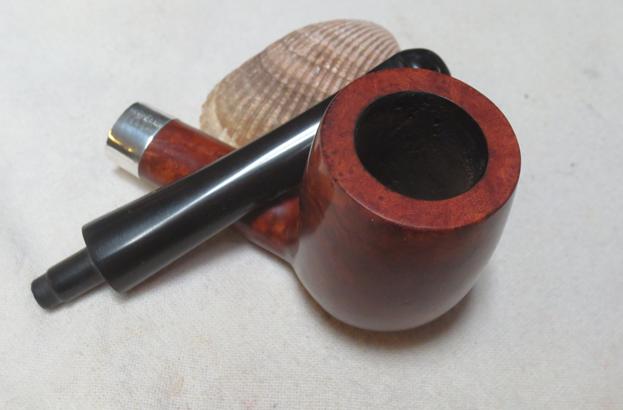
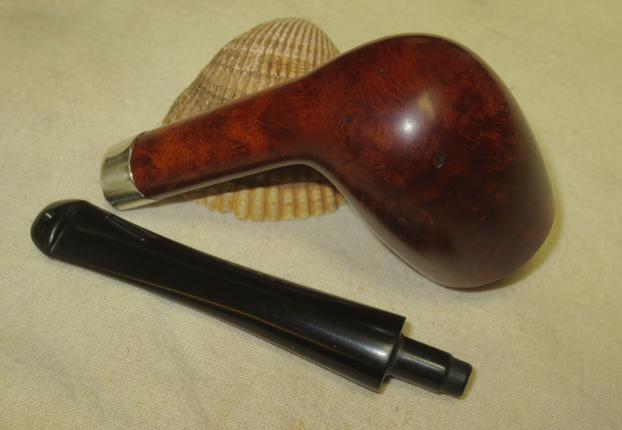
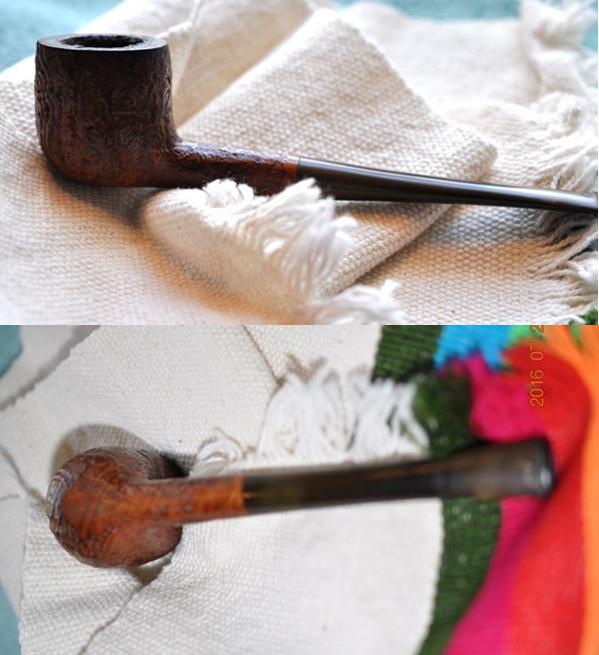
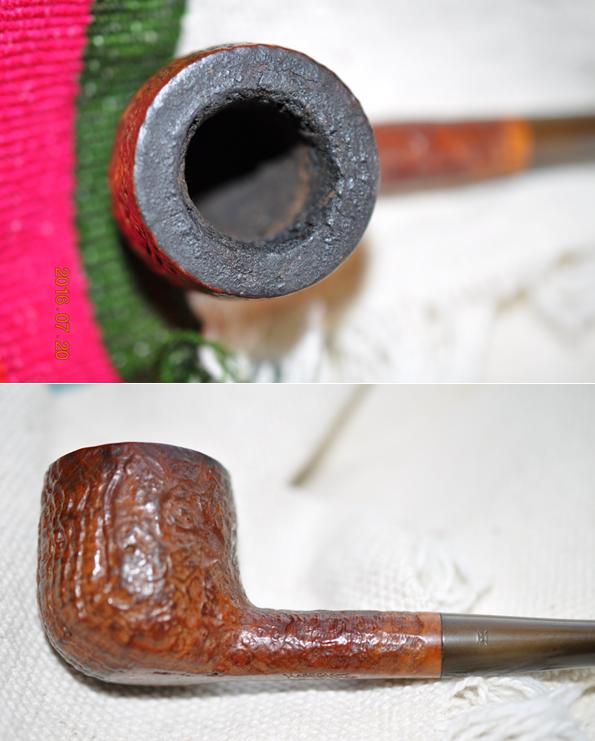
Tag Archives: restaining a bowl and rim

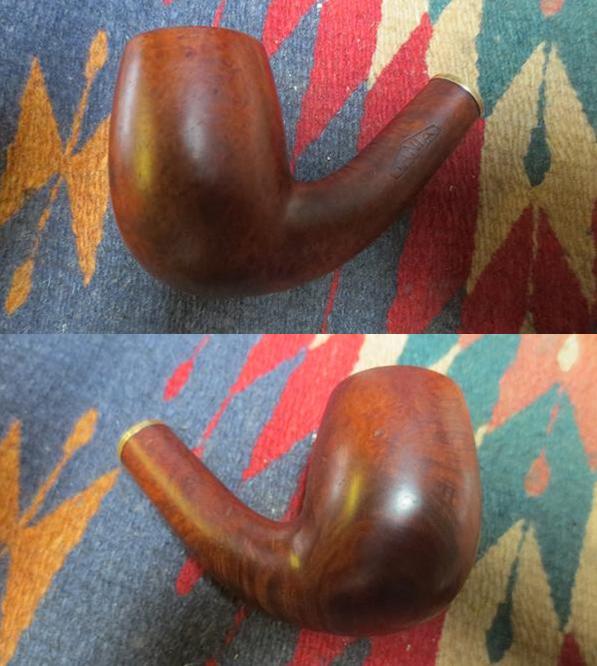
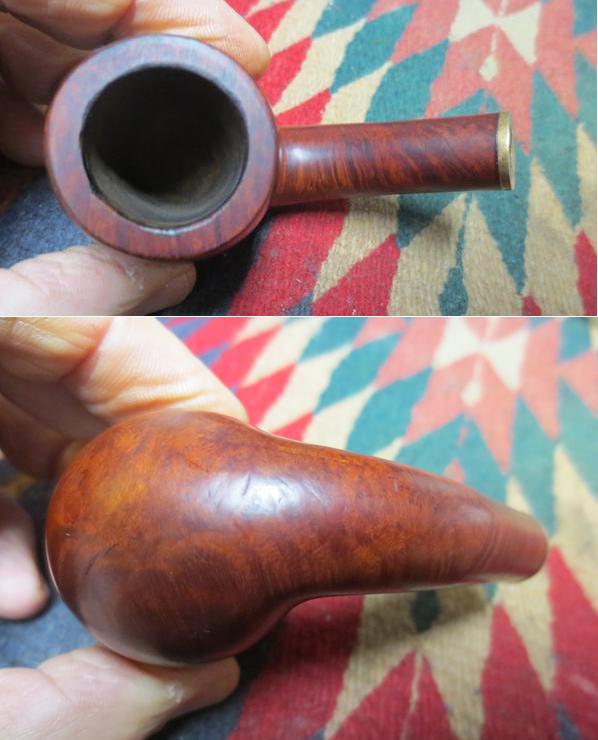
An interesting “The Nuvo” MLC Italian Briar hidden in a WDC Case


Blog by Steve Laug

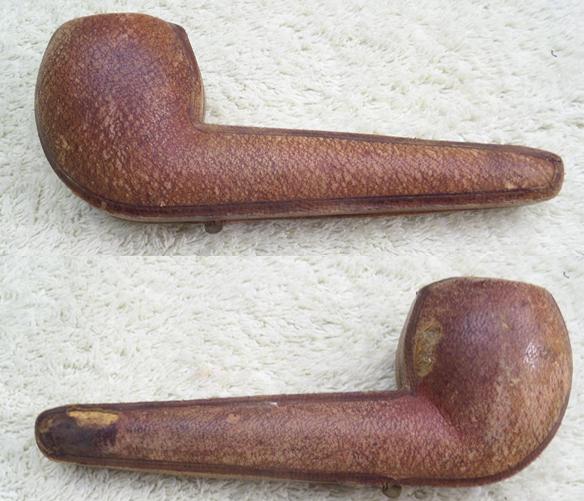
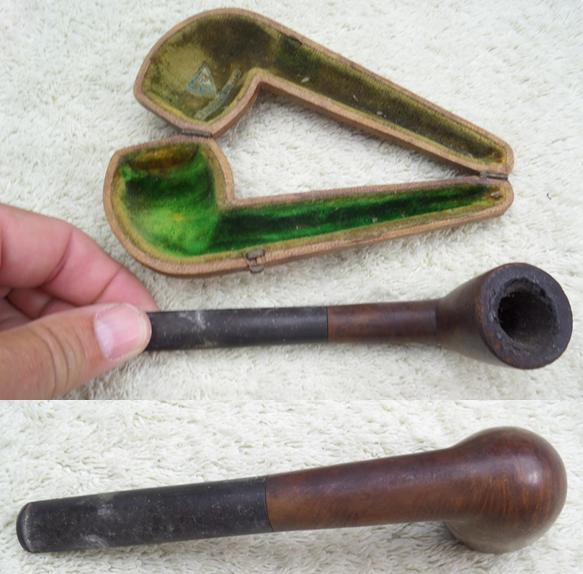
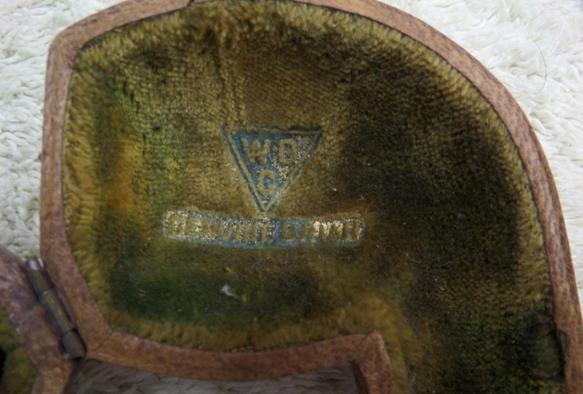
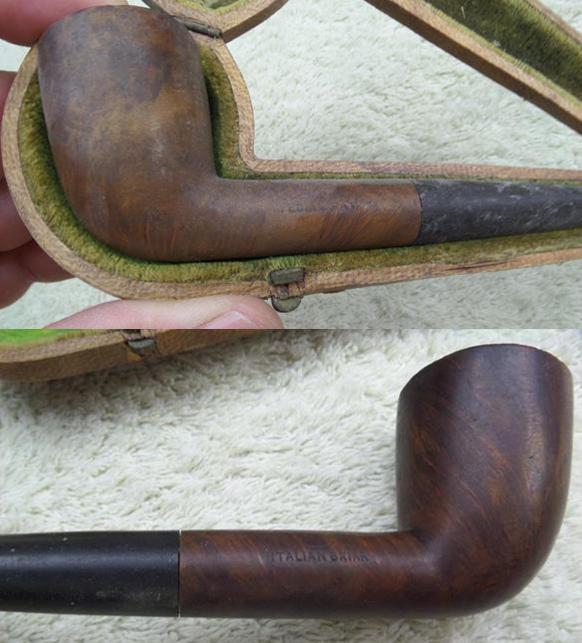
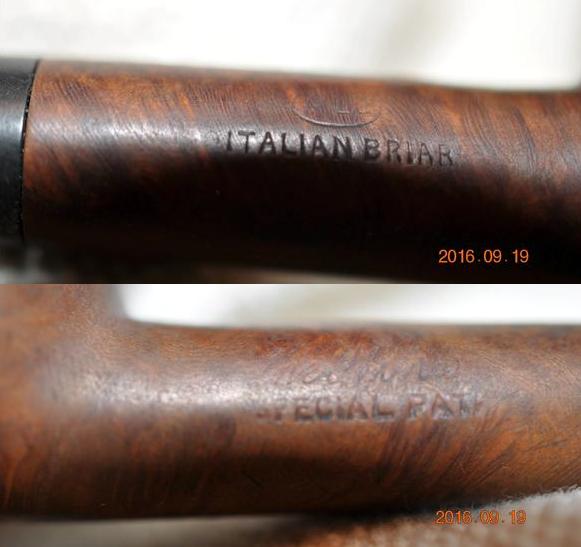
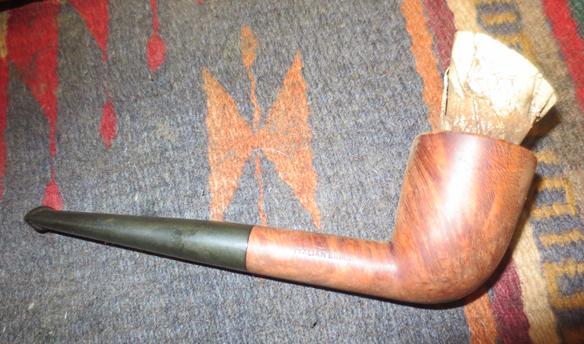
When we saw this older case and pipe for sale on eBay we were under the assumption that the pipe in the case was an older WDC pipe. The age of the case and the pipe appeared to match in the photos posted by the eBay seller. The case was in decent shape on the left side and the right side had a ripped part missing near the stem end. The covering on the case was leather. The hinge and clasp mechanism were in good condition. The green velvet lining looked worn. The stamp on the inside the top of the case was readable but worn. It read WDC in the triangle and over Genuine Briar. mlc1The finish on the briar was worn looking and the stem looked like it was covered with white calcification over the length of the stem all the way around.mlc2 mlc3The bowl was thickly caked with a thick coat of lava overflowing onto the rim. It was so thick that it was hard to tell if the outer and the inner edges of the rim were in good condition. Underneath it may well have a lot of nicks and the bowl could easily be out of round.mlc4The seller included some close up photos of the stamp on the inside cover of the case. You can see the WDC triangle logo over Genuine Briar. They also included close up photos of the stamping on the left and right sides of the shank. It is very hard to read the lettering in the photos. It looks like the left side is stamped with something over Special Pat. On the right side what is readable is Italian Briar. The rest of the stamping was not readable in the photos.

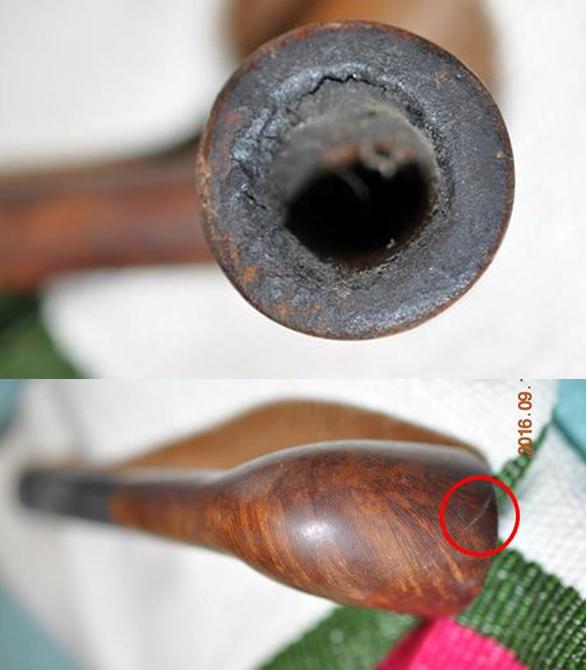
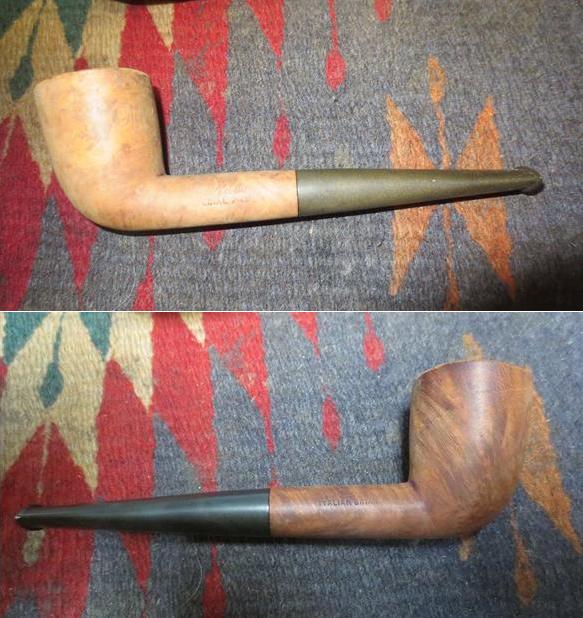
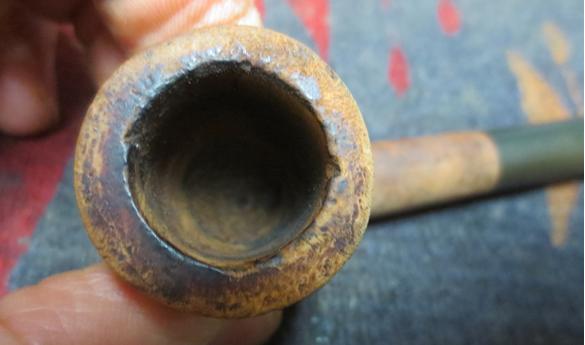
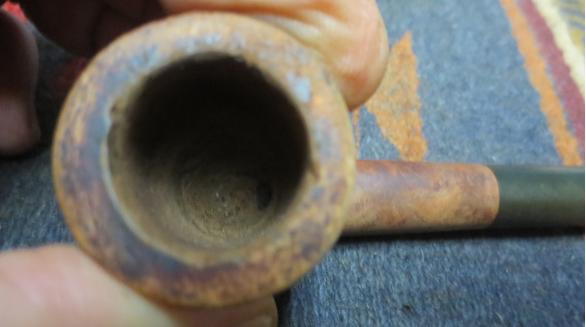
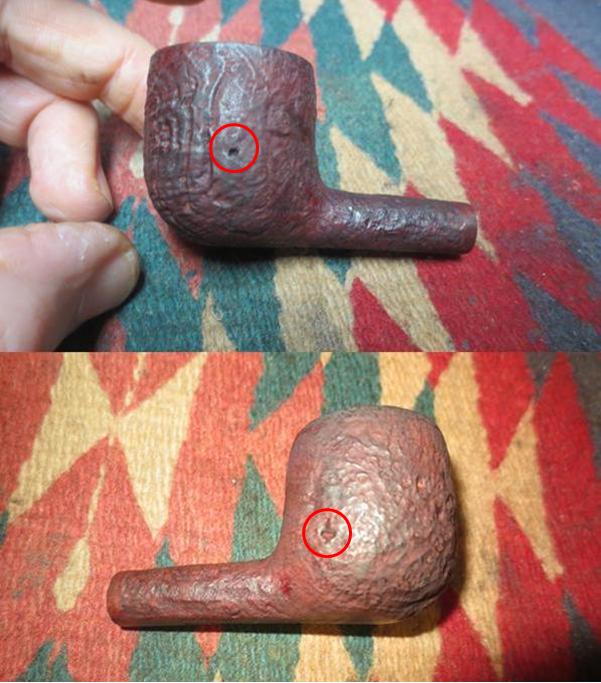
mlc5 mlc6When the pipe arrived in Idaho my brother took photos of the pipe before he cleaned it up. The finish was certainly a mess and there was a lot of grime and build up on the bowl and the shank. There also appeared to be some nice grain peering through the grime.mlc7He took some close up photos of the rim and the front of the pipe. The overflow of lava and the cake in the bowl was very thick. The outer edge of the rim was rounded and showed some damage. The frontal photo shows a dent at the front top of the bowl that goes diagonally across the bowl. I have circled it in red to show the location of the dent.mlc8He also took photos of the stamping for me. On the right side of the shank there appeared to be an oval with the letters stamped MLC in the centre. On the left side it seems to read “The Nuvo” over Special Pat.mlc9The closes up photos of the white substance on the stem surface show the condition of the stem and looks almost crystalline.mlc10I took some photos of the pipe when it arrived in Vancouver and I brought it to the work table to begin the restoration. My brother had done an amazing job cleaning up the dirty finish and the white on the stem. He had reamed the bowl clean of the thick cake. He also removed the thick lava on the rim top.mlc11 mlc12 mlc13I took a close up photo of the bowl and rim to show the condition. My brother had been able to remove all of the cake and the tar. The outer edge of the rim was rounded and had dents. The inner edge was missing chunks and the bowl was out of round. The top of the rim had nicks and dents and was also in rough shape.mlc14The stem looked to be in decent condition. The high quality rubber of the stem was pitted and lightly oxidized. The style of the button added to my idea that I was dealing with an older pipe.mlc15I was able to clearly read the stamping on the pipe once I had it in hand. It read “The Nuvo” over Special Pat. on the left side of the shank. On the right side it was stamped with an MLC in an oval over Italian Briar. I was not familiar with th name on the pipe or the Oval MLC stamp. I looked my copy of “Who Made that Pipe” and found that The Nuvo was made by M. Linkman Company in 1914. The MLC logo in the oval stood for M. Linkman Company.

I looked the brand up on Pipedia (https://pipedia.org/wiki/M._Linkman_%26_Co) and found that M. Linkman Company name was said to stand for Mary Linkman & Company. Mary Linkman was the mother of Louis B. Linkman, originator of the Dr. Grabow pipe. This Chicago company produced both meerschaums and briars. I also looked on the PipePhil Logos and Stampings site (http://www.pipephil.eu/logos/en/logo-l4.html) and found that the M. Linkman and Co. was established by Louis B. Linkman and August Fisher in 1898. The company closed down in the 1950s and the Dr Grabow branch was sold to Henry Leonard and Thomas Inc. There was also a note that early Linkman’s pipes were stamped MLC in an oval.

I now knew that the pipe I had in hand was an early Linkman’s pipe rather than one made by WDC. That meant that the case and the pipe did not match.

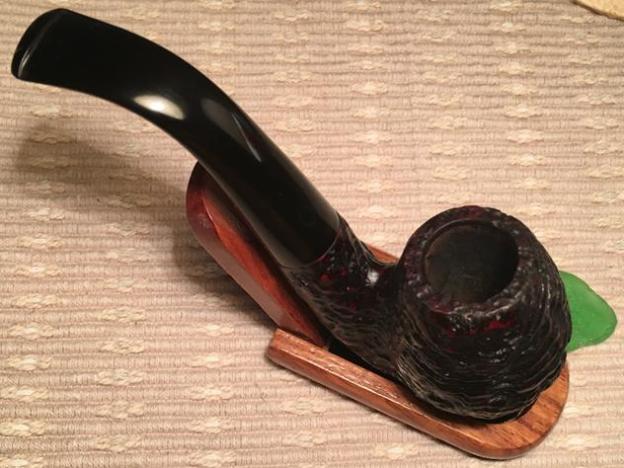
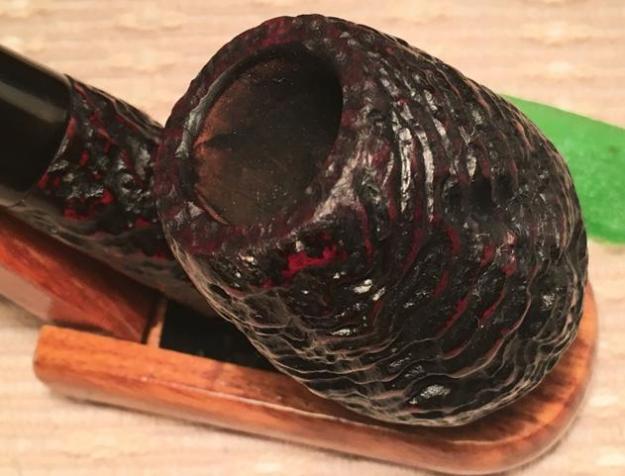
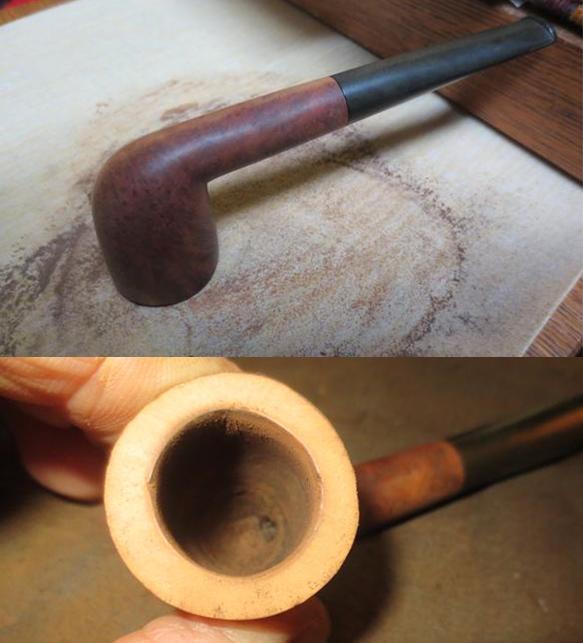
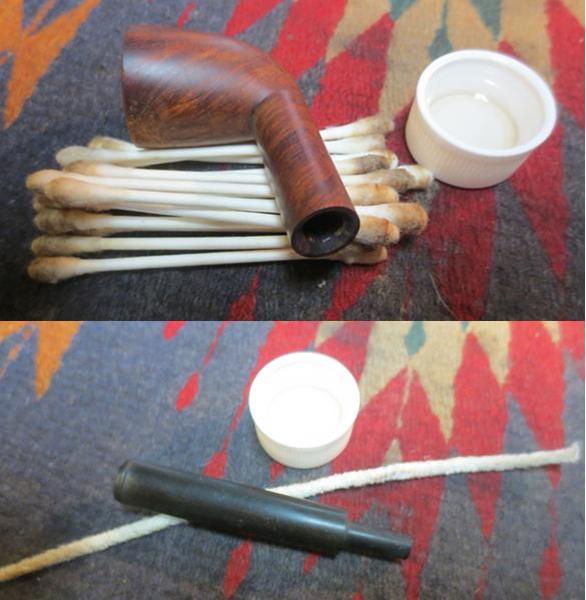
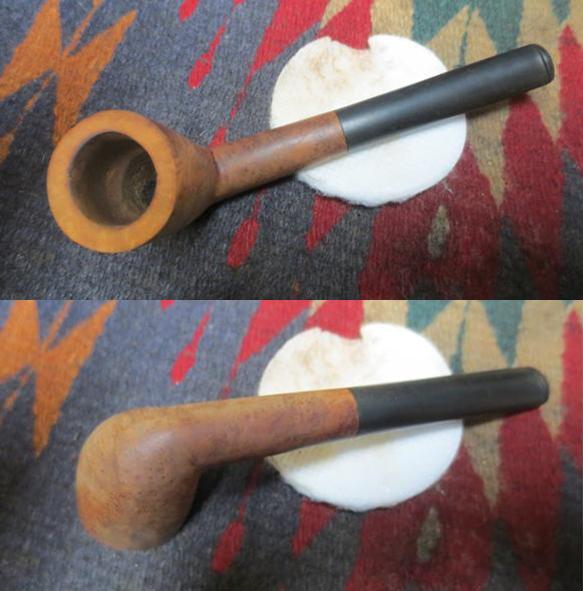
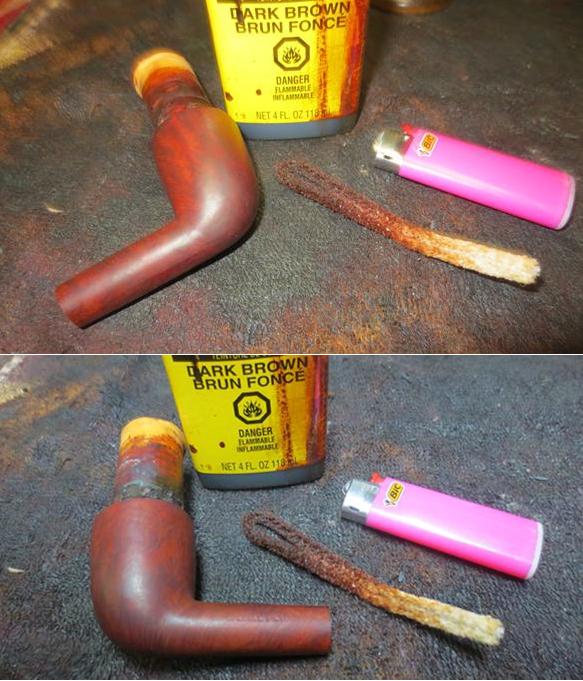
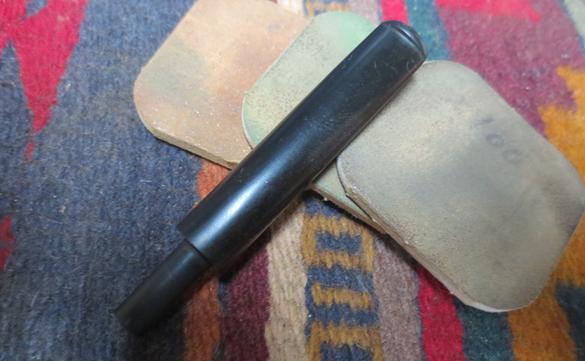
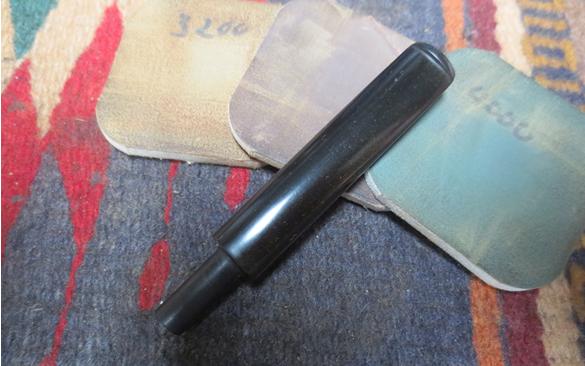
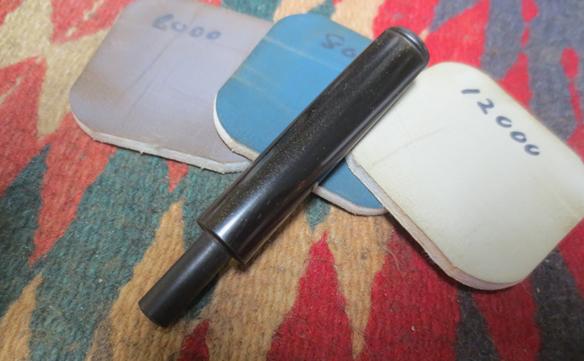
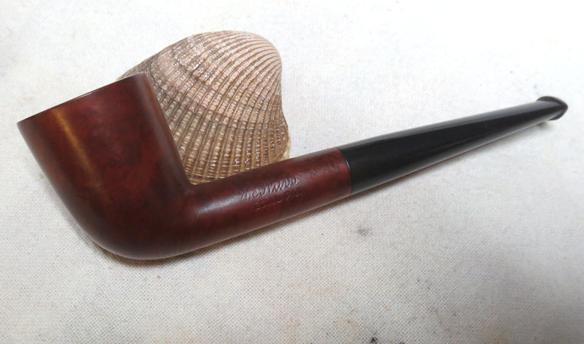
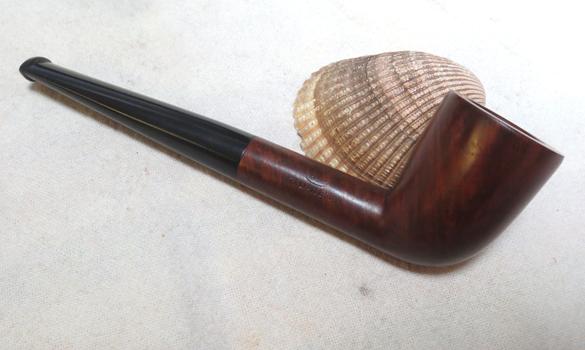
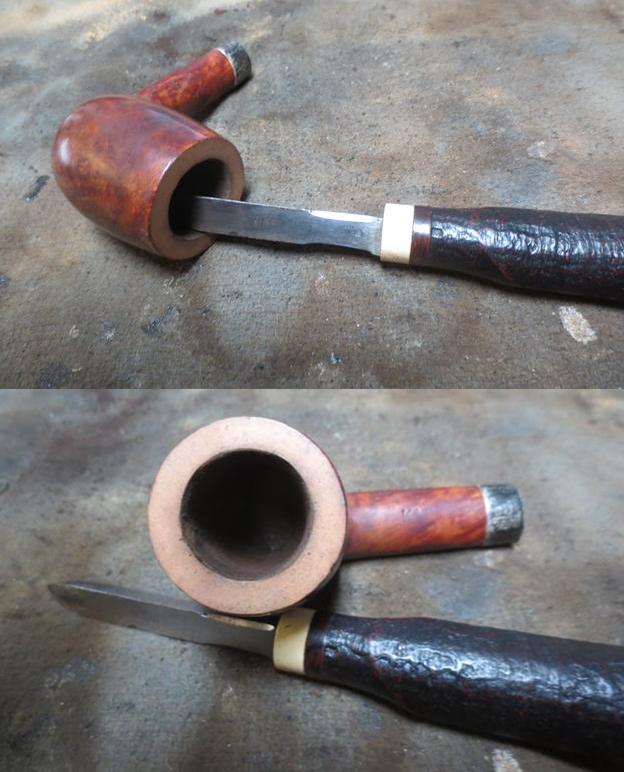
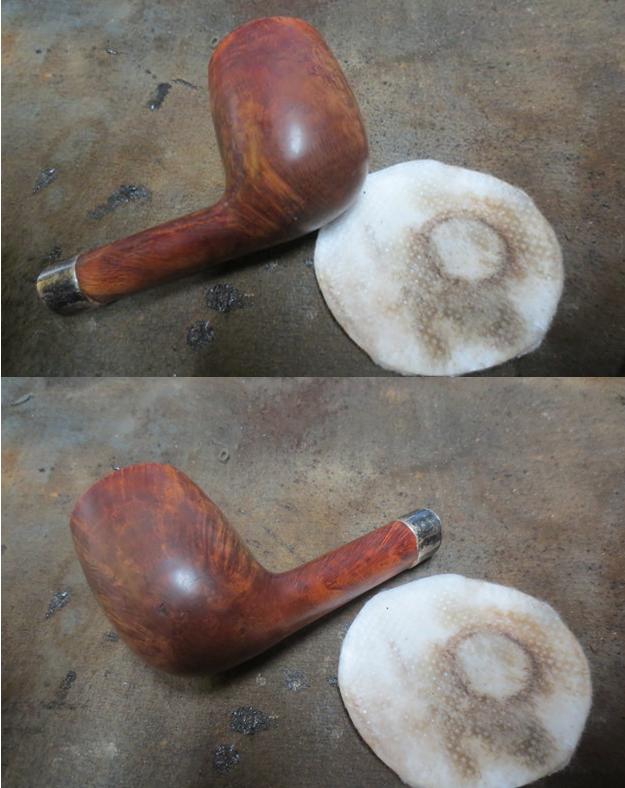
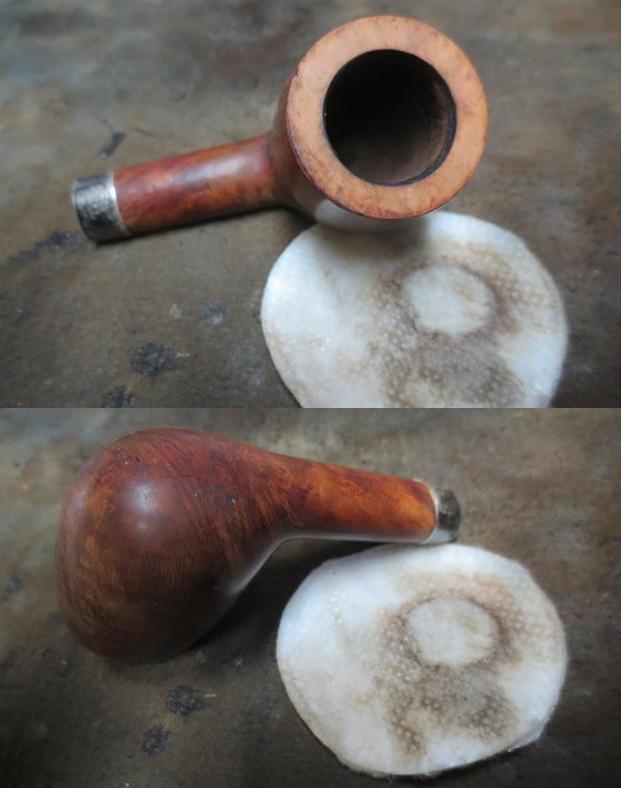
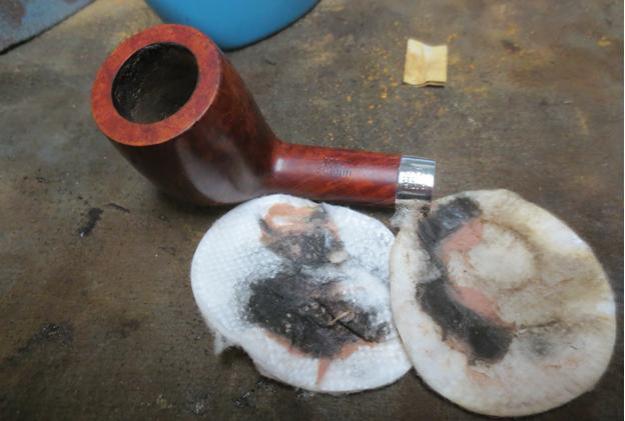
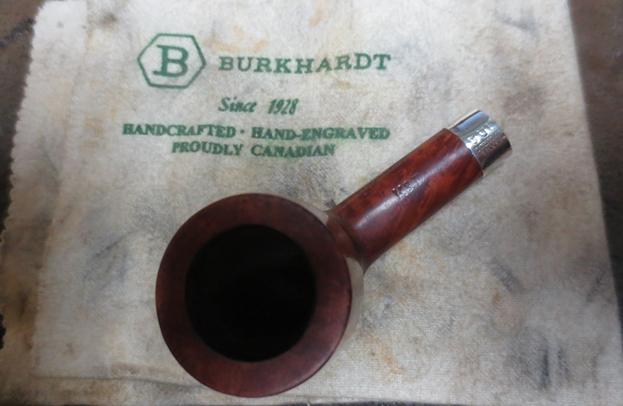
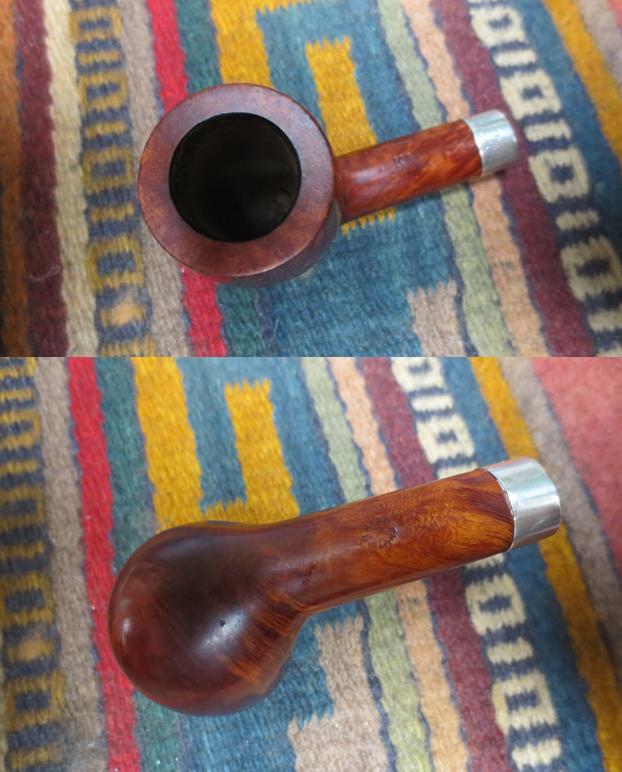
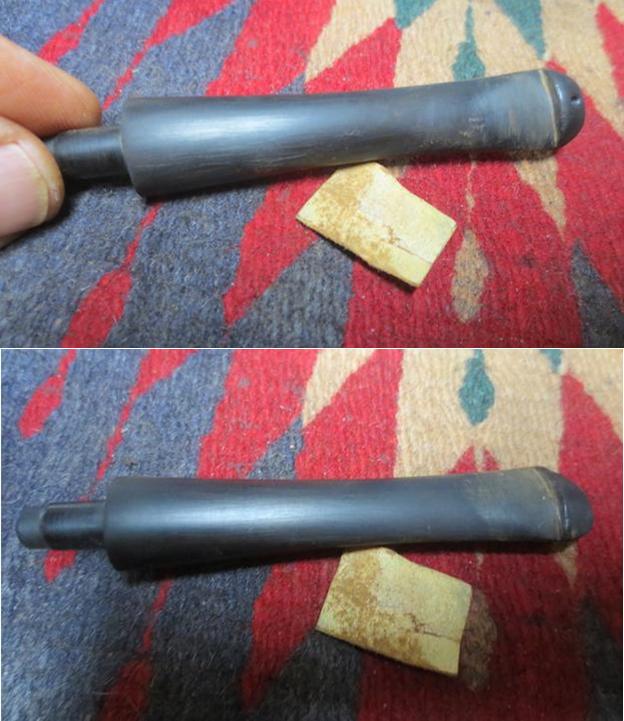
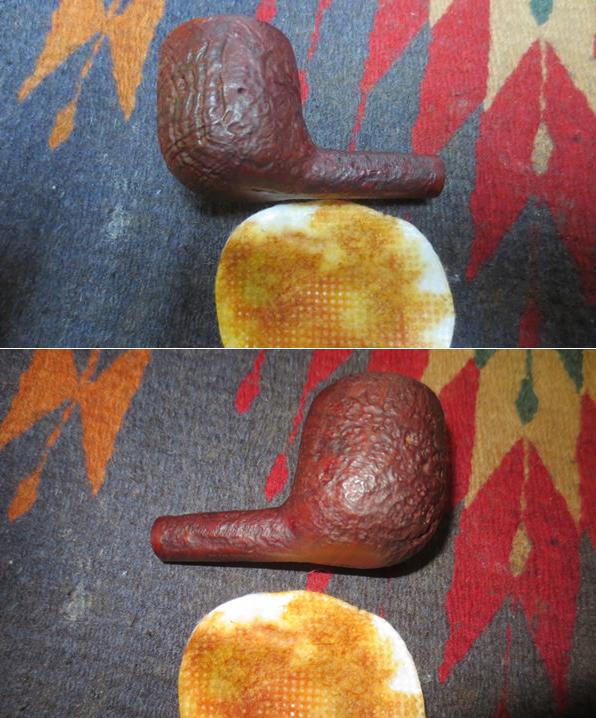
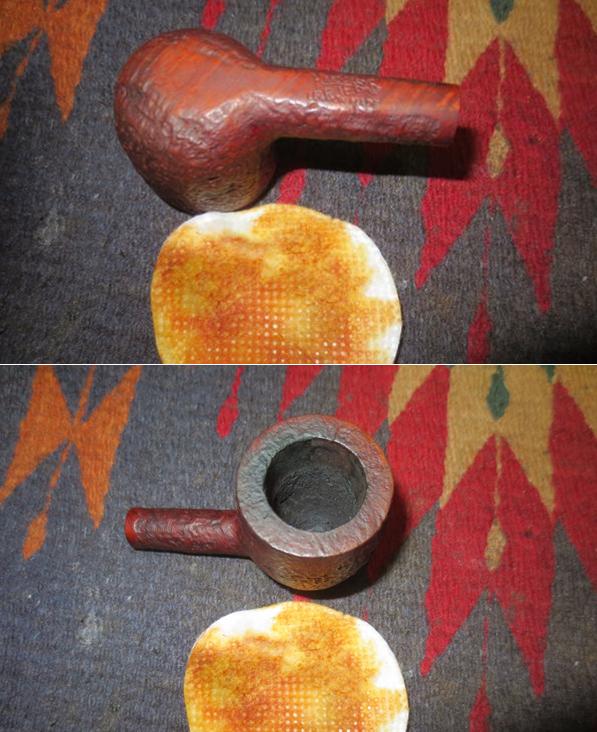
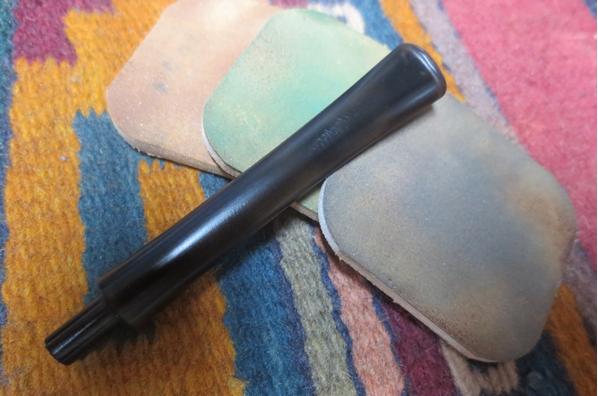
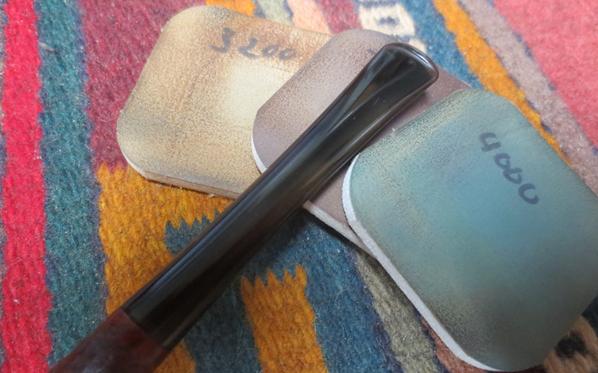
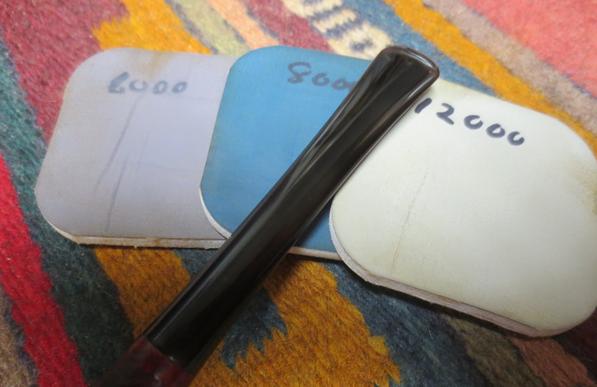
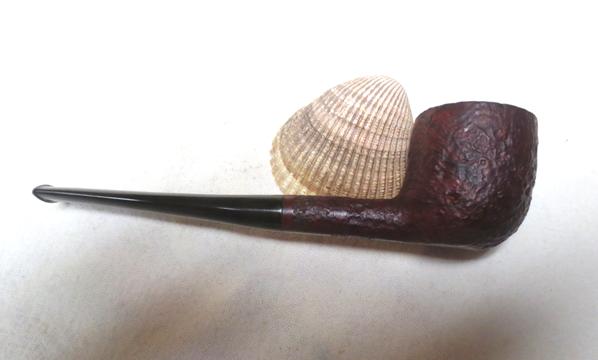
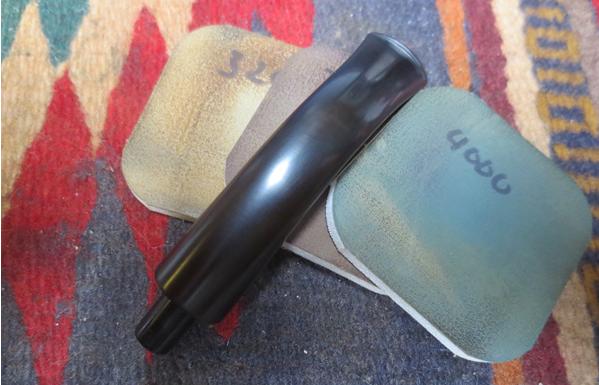
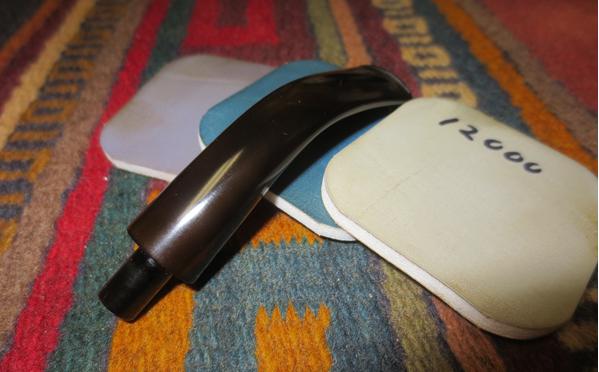
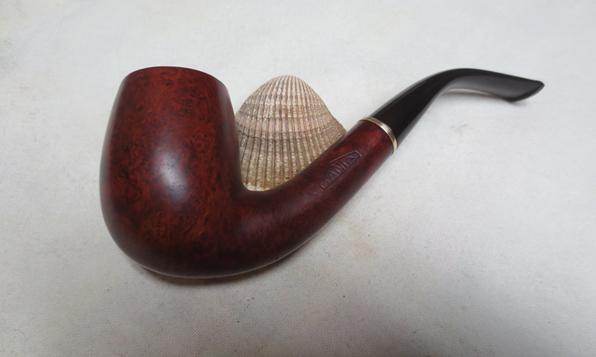
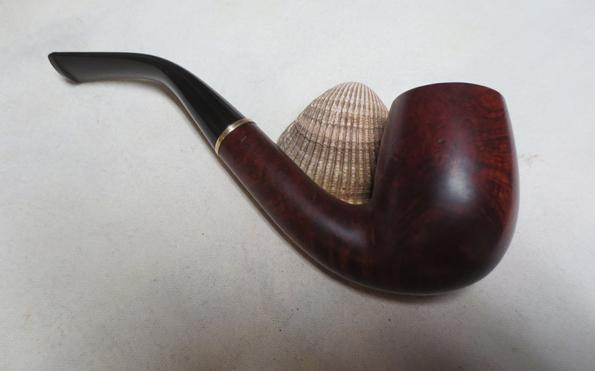
I decided to try to clean up the inside edge of the bowl before I topped it. I wanted to remove as much of the damage to the inner rim as I could to better see how much of the rim top I would need to remove with the topping action. I used a rolled piece of 220 grit sandpaper wrapped around my finger to sand the inner edge of the bowl.mlc16When I finished sanding the edge there were still some deep gouges in the edge of the rim at the back and the front of the bowl. The bowl was also out of round and seemed to be thinner on the right side than the rest of the bowl.mlc17I topped the bowl rim on a topping board with 220 grit sandpaper. I worked on it until I had removed all of the damage to the rim top and also removed the damage to the outer edge of the rim and also what was on the inner edge. In the second photo you can see that much of the damage to the inner edge of the rim was removed. I still needed to bevel that edge to smooth out the damage.mlc18I used a folded piece of 220 grit sandpaper to sand the edge of the bowl. I worked it over until I had removed the damaged areas on the front and the back side of the rim edge. I also worked to make the bowl round once again.mlc19I sanded the rim edges and the top of the rim with 1500-4000 grit micromesh sanding pads once i had the bowl in round. I scraped the inside of the mortise with a dental pick to remove the hard chunks of tar that were collected on the inside walls of shank. Once I had removed all of the hardened buildup I scrubbed out the mortise and the airways in the shank and the stem with pipe cleaners, cotton swabs and alcohol until the oils and tars were gone.mlc20I wiped down the exterior of the briar with acetone on a cotton pad to remove all of the residual dirt and grime from the topping and cleaning. I wanted the surface to be clean and oil free in preparation for the new stain coat that I would give it.mlc21 mlc22I thinned some dark brown aniline stain by 50% with isopropyl alcohol (need to put in an order for more stain). I applied it to the bowl with a folded pipe cleaner. I flamed the stain to set it and repeated the process until the coverage on the bowl and shank were an even medium brown colour.mlc23 mlc24I set the bowl aside to let the stain cure and turned my attention to working on the stem. I sanded it with 220 grit sandpaper to remove the light oxidation and smooth out the pitted surface of the stem. I polished it with micromesh sanding pads – wet sanding it with 1500-2400 grit pads and dry sanding it with 3200-12000 grit pads. I rubbed the stem down with Obsidian Oil after each set of three sanding pads. I gave it a final coat of oil after the third set of pads and set it aside to dry.mlc25 mlc26 mlc27I put the stem back on the pipe and buffed it with Blue Diamond on the buffing wheel. I took precaution to not buff the stamping on the shank sides. I gave the bowl and stem multiple coats of carnauba wax to protect it. I buffed it with a clean buffing pad to raise a shine. I hand buffed it with a microfibre cloth to deepen the shine. The finished pipe is shown in the photos below. I am happy with the way it turned out. The look and finish of the pipe turned out very well. Thanks for walking with me through the process.mlc28 mlc29 mlc30 mlc31 mlc32 mlc33 mlc34 mlc35


Restoring the third Classic Find – a Charatan’s Make 0120 Canadian


Blog by Steve Laug

My brother and I recently purchased some pipes from an estate sale from an old pipeman named Gene in Pocatello, Idaho. There were a lot of great pipes in the lot. I have written about the pipes on a previous blog: (https://rebornpipes.com/2016/10/07/a-good-day-hunting-orchestrated-between-british-columbia-and-idaho/). I wrote of how he had stopped at an antique shop and four found prestigious finds. These included a Four Dot Sasieni Pembroke with a patent number, Pat.No. 150221/20, a Dunhill Root Briar Canadian EC 4R, a Charatan’s Make Canadian Sandblast 0121 and a Jost’s Supreme Diamond Shank bent billiard. I wrote about the restoration of the Sasieni and the Dunhill earlier in two other blogs: (https://rebornpipes.com/2016/11/05/restoring-a-classic-find-a-sasieni-four-dot-london-made-pembroke/) (https://rebornpipes.com/2016/11/06/restoring-another-classic-find-a-dunhill-4r-root-briar-canadian-ec/). The third pipe that I have chosen to restore is the sandblast Charatan’s Make 0120 Canadian.

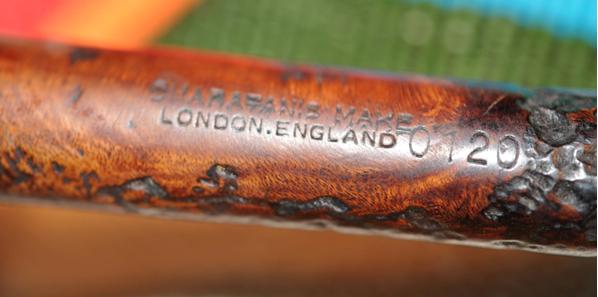
The Charatan pipe also had a replacement stem as there was no sign of a CP logo stamp on the top side. The stamping was on the smooth underside of the shank and it read Charatan’s Make and underneath it read London, England. At the end of the brand stamping was the number 0120 which is the shape number of a Canadian. I did some searching online and read the Charatan’s entry in Pipedia (https://pipedia.org/wiki/Dating_of_Charatans). I quote from there: “Pipes that belong to eras till the 1960 have the engraving ‘CHARATAN’S MAKE LONDON, ENGLAND’ in two lines, the shape code is composed by numbers only. The X and the DC appear only on pipes after 1960.

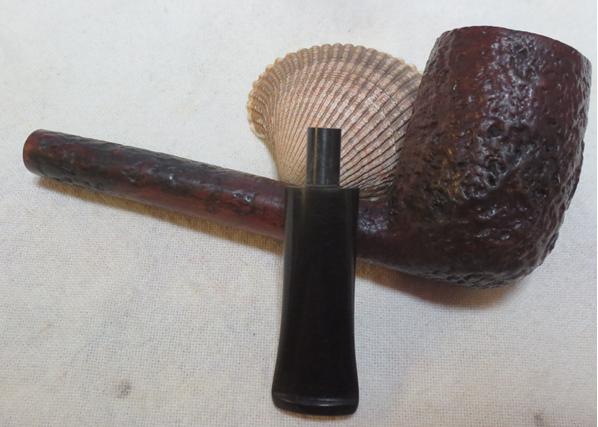
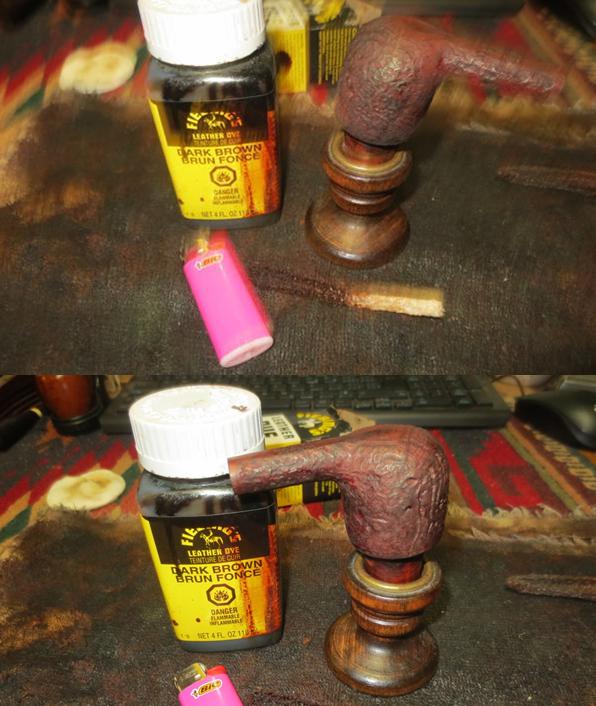
My brother had found another good one. The stamping gave me information about the time frame it was made. I knew that it was made prior to 1960 by the style of the stamping. It came from what the article identified as the Reuben era of Charatans that went from 1910-1960.  Like the Dunhill the only thing that would have been better was if it had come with the original stem. My brother took the photos that follow. They show the pipe before he cleaned it up and sent it to me. It had a nice sandblast that deep and craggy on the bowl and shank. From mid shank back to the stem it appeared that the pipe had been rusticated to match the blast pattern. He took some photos of the pipe to give a feel for the overall look of it when he received it. These photos show the pipe before he cleaned and reamed it.char1He took some close up photos of the bowl and sandblast on the bottom of the bowl. The bowl had a thick cake that had flowed over the top of the rim in hard tarry lava. It was thick but it appeared that the outer rim was undamaged and with any luck the inner one would be as well. The blast is interesting in that it also has a rustication pattern on the bowl bottom and also on the shank. It follows the pattern of the grain on the bowl.char2The next photo shows the clear and sharp stamping on smooth underside of the shank. It reads as noted above – Charatan’s Make over London England with the shape number 0120 on the stem end of the shank.char3The stem had a lot of tooth chatter and some shallow tooth dents. There was oxidation and also calcification.char4My brother did his normal thorough job of cleaning the pipe. He scrubbed it with a tooth brush and Murphy’s Oil Soap. He cleaned out all of the dust and debris in the grooves and crevices of the “blastication”. The stem does not fit tightly against the shank at this point. The next photos below show the pipe as it looked when I brought it to my work table.char5 char6I took some close up photos of the rim to show how well it cleaned up. My brother was able to get the lava out of the grooves on the rim and also on the underside of the shank. The stamping was still very clear.char7He cleaned out a lot of the gunk in the shank but the stem still did fit tightly against the shank end. He did get the calcification and some of the oxidation off the stem. You can clearly see the tooth chatter and the tooth dents now that the stem was clean.char8I scraped out the inside of the mortise with a dental pick with a flattened blade end. I scraped the stepped down area of the mortise as it entered the airway in the shank. I took a lot of tar and gunk out the shank area.char9I scrubbed the mortise, the airway in the shank and the stem with cotton swabs, pipe cleaners and alcohol. Once it was clean the stem fit more closely against the end of the shank.char10I scrubbed down the bowl and shank with acetone on cotton pads to remove the finish that remained on the pipe.char11 char12I restained the pipe with a dark brown aniline stain thinned 50/50 with isopropyl alcohol. I flamed the stain and repeated the process until the coverage was even.char13I put the stem in the shank and took the pipe to the buffer. I buffed it to polish the stain. When I was just about finished I could not believe what happened. It is that moment when you are buffing a pipe where you get a sick feeling. The wheel grabbed the pipe out of my hand, off my finger and threw it against the table top under the buffer. It was not far – a mere 2 inches but I heard the snap as the tenon broke. I was sick to my stomach. I was almost finished with the pipe and then this had to happen. I took a photo of the broken tenon once I had pulled it from the shank. It was almost a clean break at the end of the stem. Oh the frustration.

I used a Dremel to flatten the broken edge of the tenon against the face of the shank. It took a few moments to smooth out the broken part. I used the topping board with 220 grit sandpaper to face the end of the stem. I went through my box of threaded tenons and actually had one left in the box that was not a Jobey Link system tenon. It was the same diameter as the broken tenon.char14I chucked a drill bit in the cordless drill that was just a little larger than the air way in the stem. I turned the stem onto the drill bit the length of the threaded portion of the replacement tenon. I put two more drill bits in the drill and turned the stem onto the bits. Once it was the same diameter as the threaded portion I shortened the threaded end slightly so that it would fit tight against the stem. I roughed up the threads with the Dremel and a sanding drum. I left the threads in place so that I could turn it into the stem.char15I screwed it into the stem as far as it would go by hand and then used a pair of pliers to finish turning it tight against the stem face.char16I put the stem in place in the shank and the fit was tight against the shank. I polished the stem with micromesh sanding pads – wet sanding with 1500-2400 grit pads and dry sanding with 3200-12000 grit pads. I rubbed it down with Obsidian Oil after each set of three pads. After the final set I rubbed it down with a last coat of oil. I set the stem aside to dry. (In the photos below of the shank and stem I did not push the stem in against the shank so it shows a small gap at that point. You will notice in the final photos that I pushed it back in place.)char17 char18 char19With fear and trepidation I took the pipe back to the buffer. I did not want to repeat the broken tenon so I was very careful. I worked the pipe against the buffing wheel that had been charged with Blue Diamond polish. I buffed it until the stem shone. I lightly buffed the bowl with the polish as well – being careful to not let it build up in the grooves. I polished the stem with carnauba wax and put Conservator’s Wax on the sandblast finish of the bowl and shank. I buffed the pipe with a clean buffing pad to raise the shine. I hand buffed it with a microfibre cloth to deepen the shine. The finished pipe is shown in the photos below. The fit of the stem against the shank was better than when I started. Thanks for walking through the restoration with me and also through the frustrating need to replace the tenon.char20 char21 char22 char23 char24 char25 char26 char27
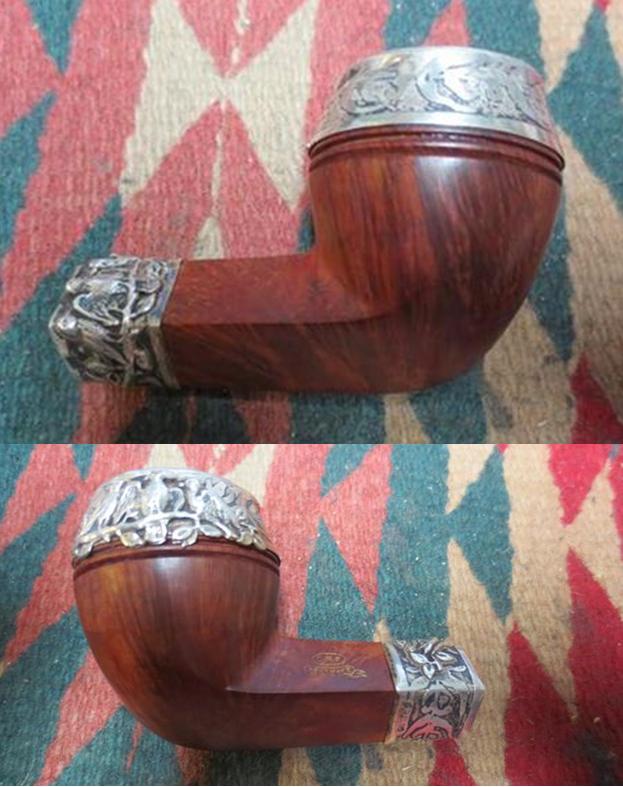
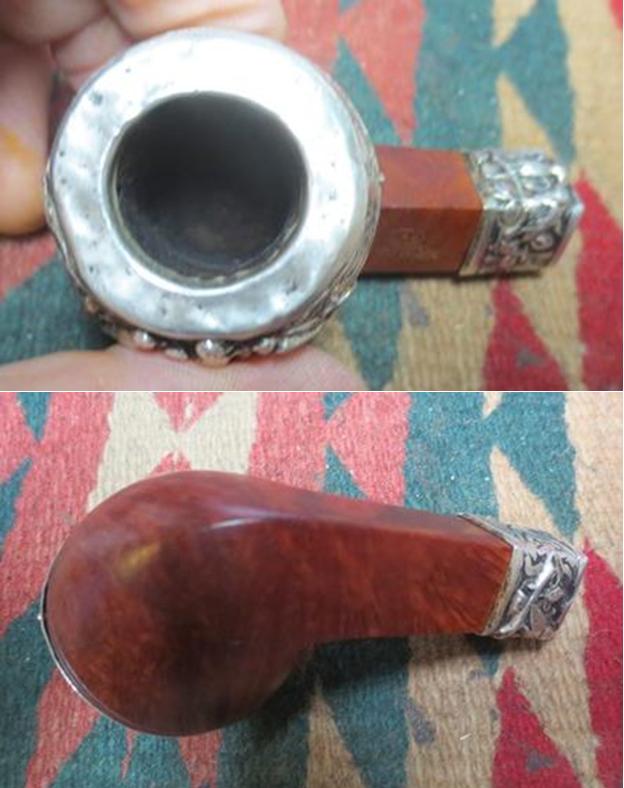
A Pair of Rainy Day Pipes – More Adventures in Oddities


Blog by Steve Laug

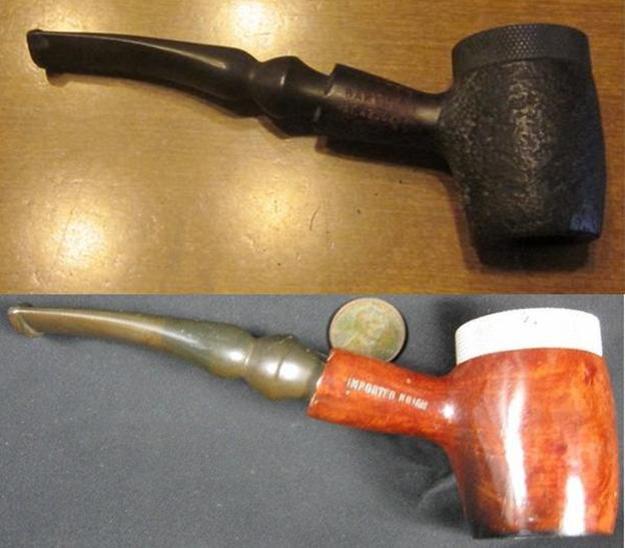
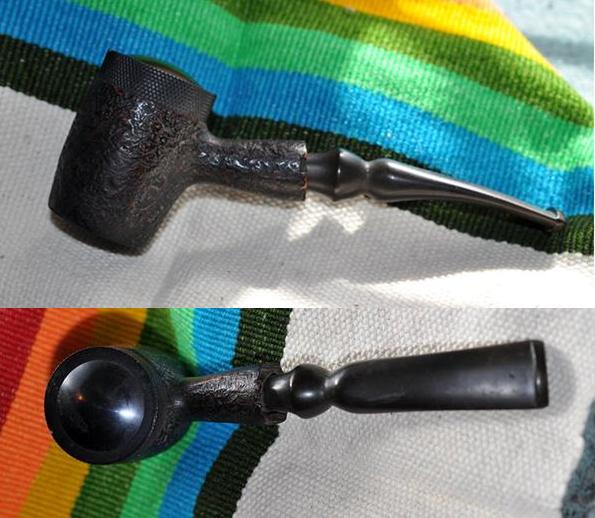
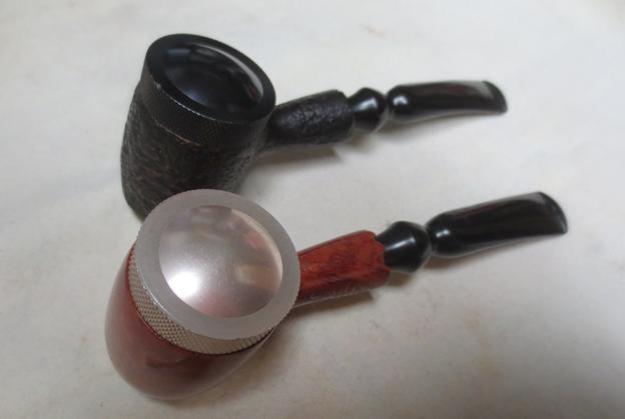
Have you ever heard of Bartlett Pipes? They are rather strange upside down looking pipes in my opinion. My brother sent me this link to a youtube video on the Bartlett pipes. We were both searching for information on the brand as neither of us had heard of them or seen them close up before.   https://www.youtube.com/watch?v=dyFfLidMmws&feature=youtu.be

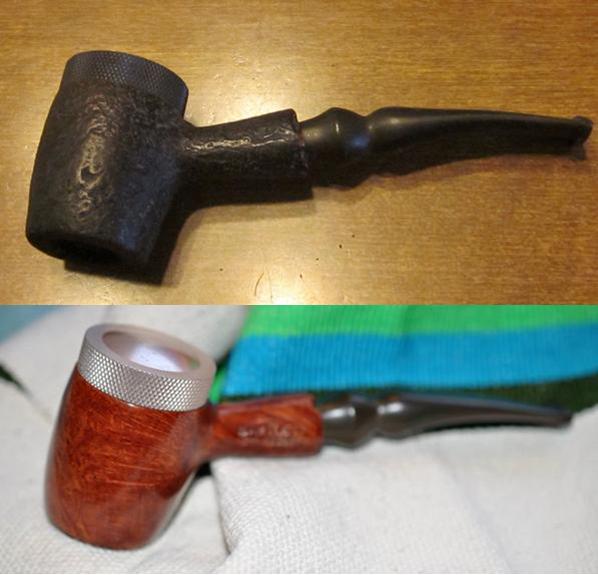
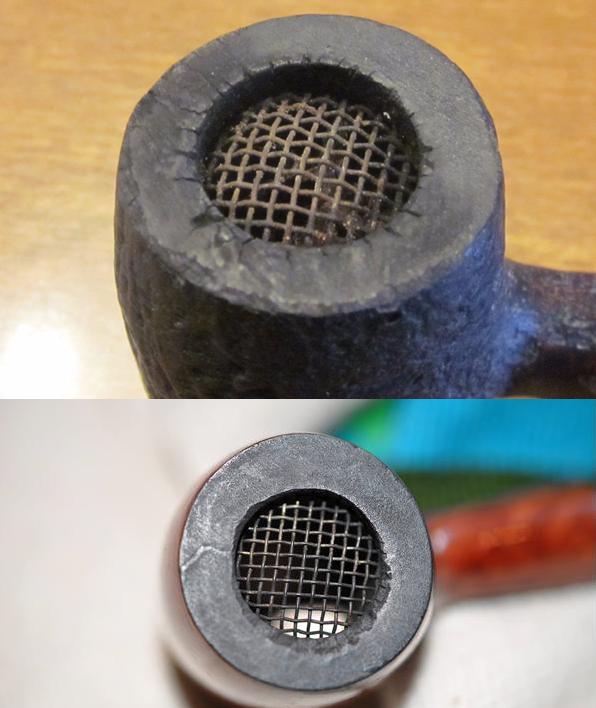
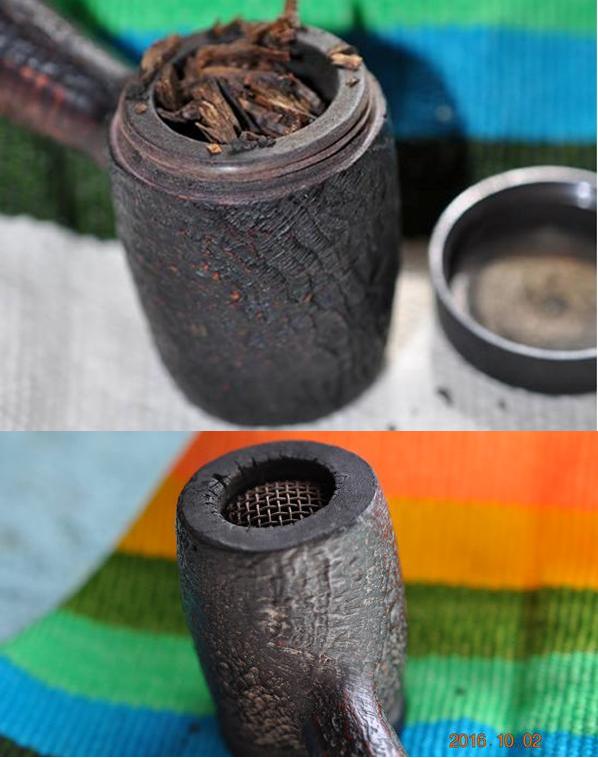
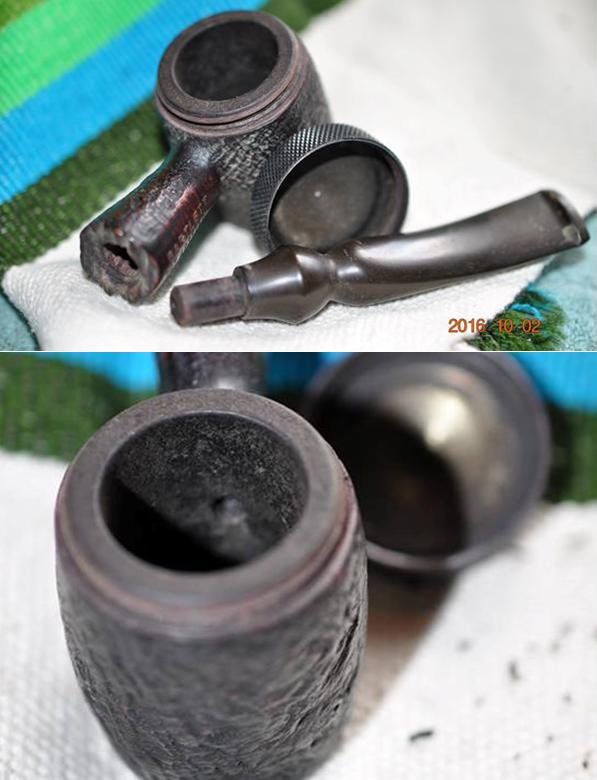
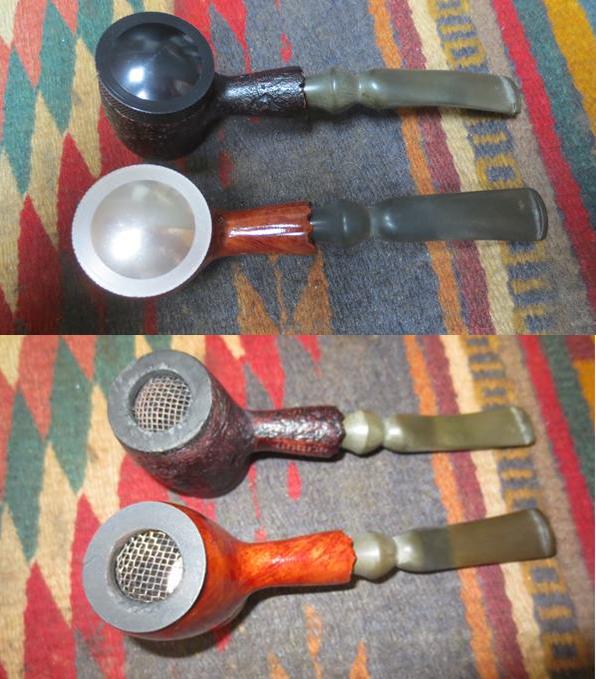
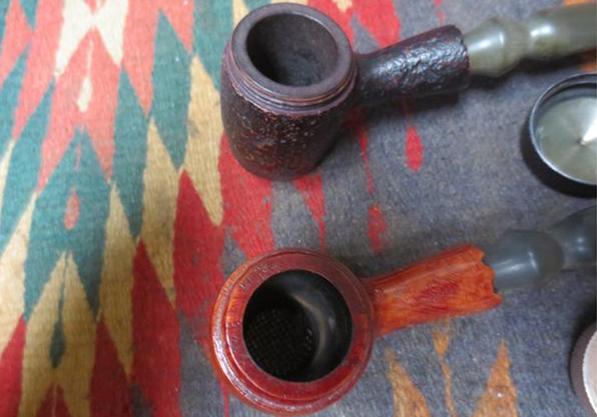
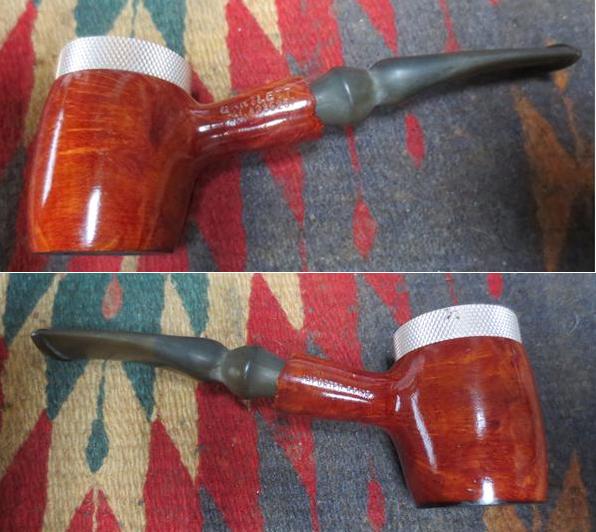
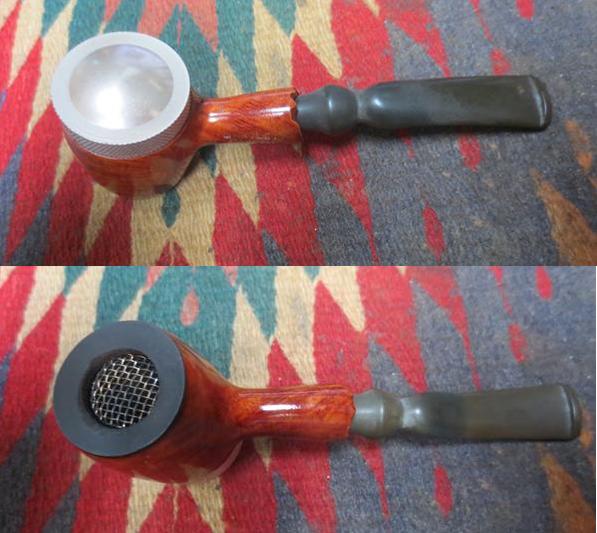
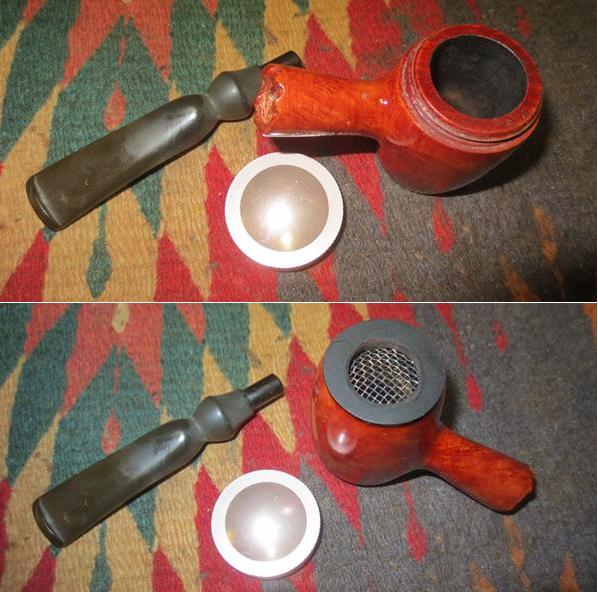
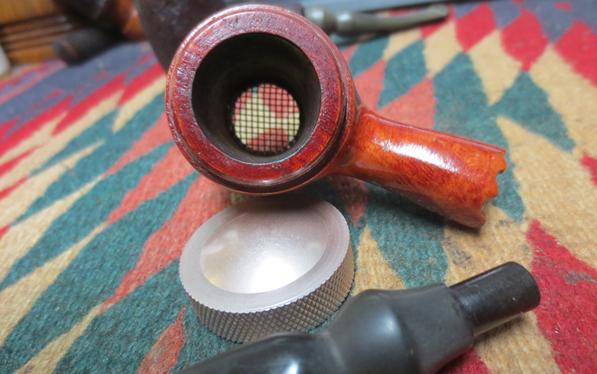
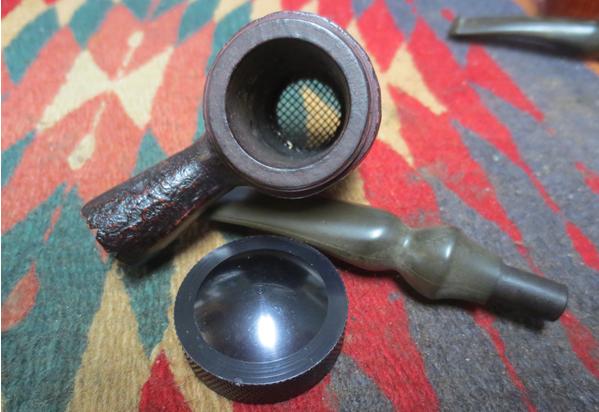
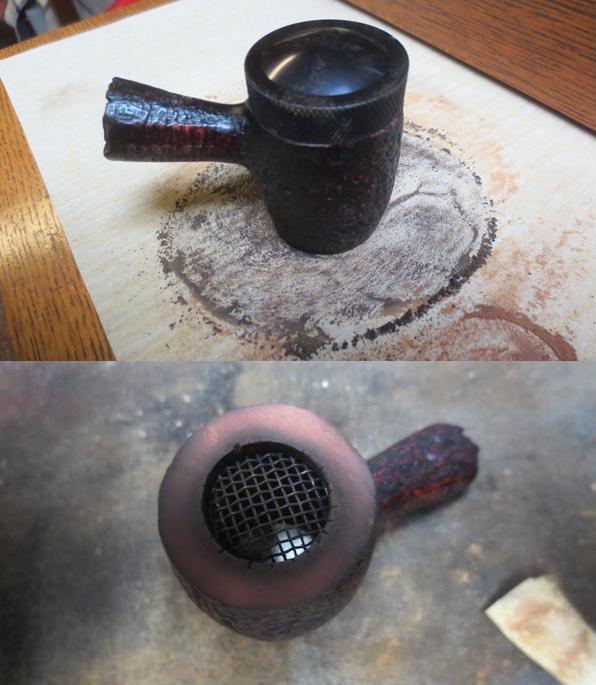
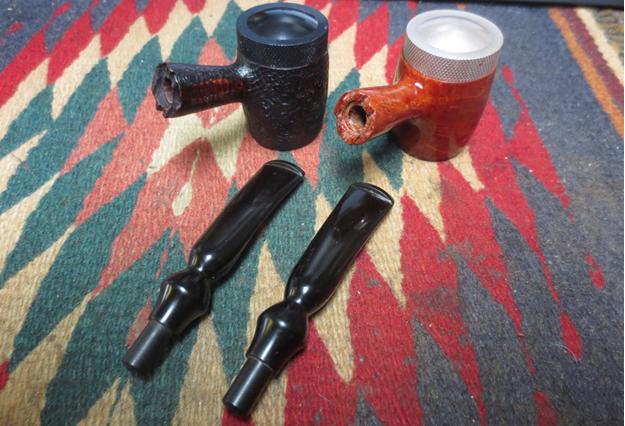
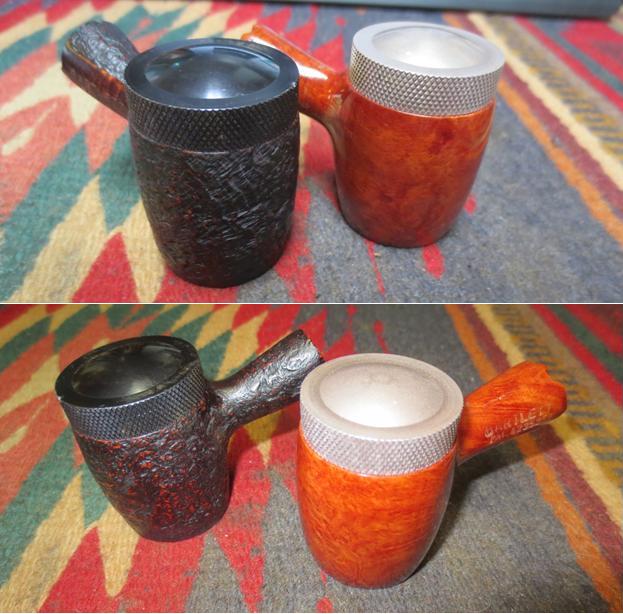
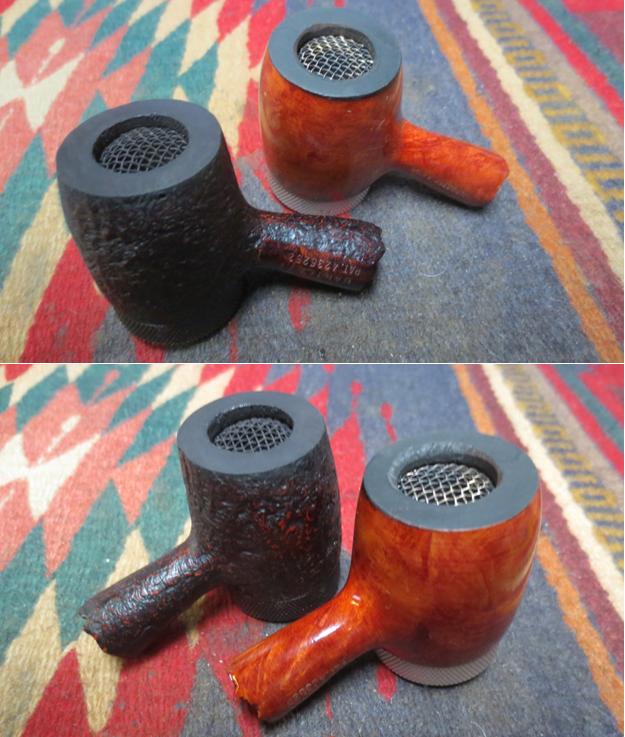
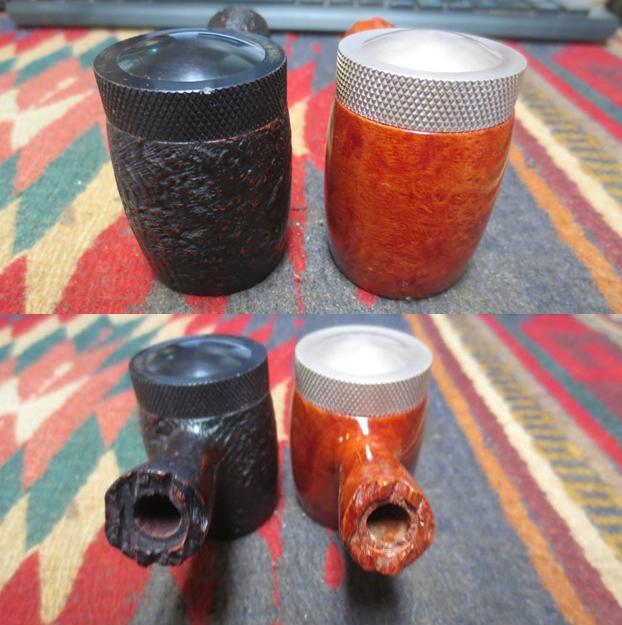
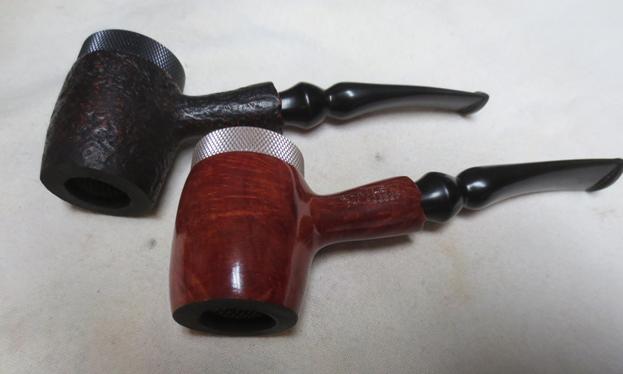
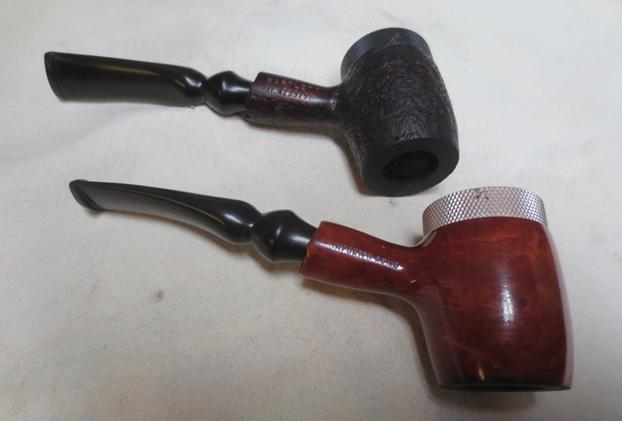
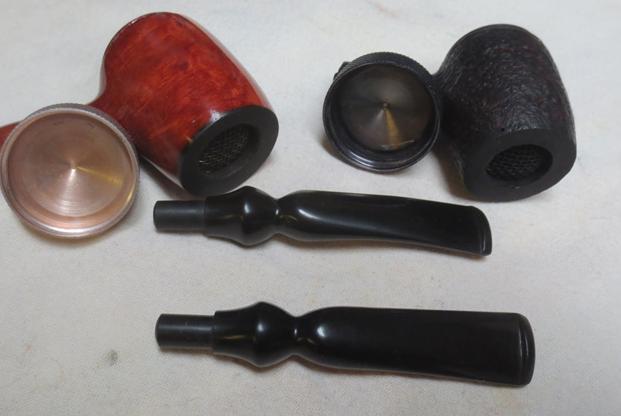
What made the hunt for information regarding this oddity necessary was that my brother had bid on two of these and won both of them on eBay. One of them was NOS (new old stock) and one of them was smoked and well used. In the past I had seen photos and read on the online forums about these pipes but had never really done any research to figure out what they were. They were always a bit of an oddity to me. Either way the stem sat they did not look right and when you removed the cap at the top the airway was almost at the top of the bowl (if the screw on lid was to be considered the top). The angles of the shank and the curve of the stem leads me to think that the capped surface was the top of the bowl. The bottom side of the bowl was a screen that allowed for airflow through the bowl. I am still trying to figure out if you light the pipe from the bottom or the top of the bowl.bart1 bart2From what I read on the various online forums and in the articles that I could find I was able to piece together how the pipe functioned. The pipe bowl was open at the top and the bottom. The airway into the shank was near the top opening and led directly to the pipe stem. A polished aluminum cover is screwed onto the threaded briar bowl top and is left in place when the pipe is smoked. At the other end of the bowl there is a screen that covers the bottom opening that keeps the tobacco in the bowl while permitting access to the tobacco to light it. The screen is supposedly fine enough that the ash does not fall out of the bowl into the lap of the smoker. With the cover in place on the top opening, the tobacco is ignited via the screen on the bottom, causing  the tobacco to burn from the bottom up. New tobacco may be added at any time by removing the cap from the top of the pipe. It is said that the burning the tobacco from the bottom reduces the moisture that usually collects and thus makes it unnecessary to dry out the bowl between pipes. The bottom lighting also makes lighting the pipe in the wind or rain much simpler.

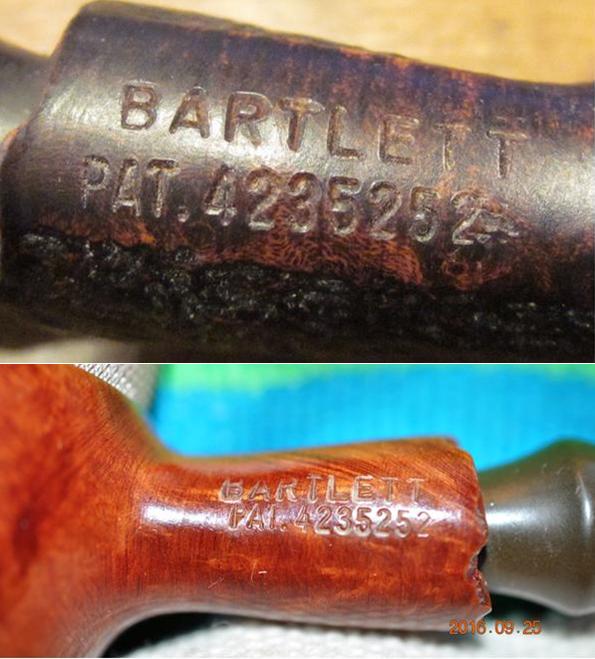
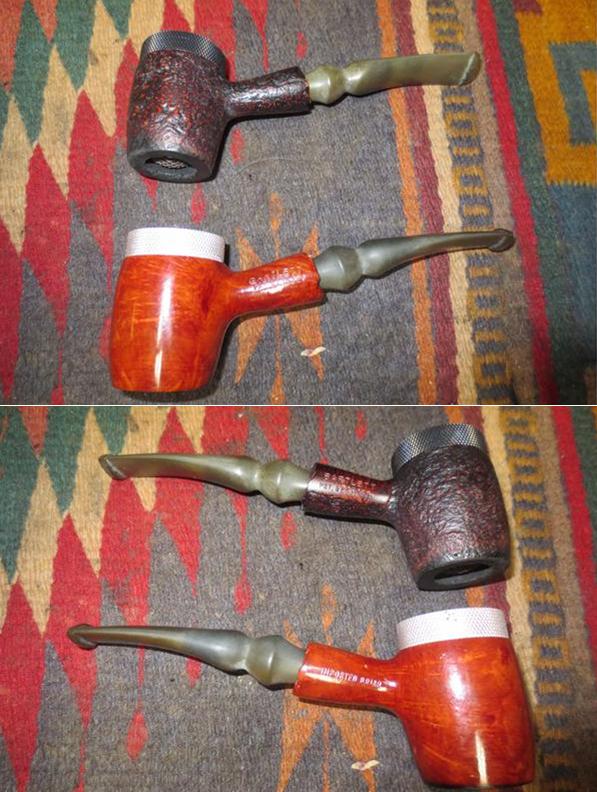
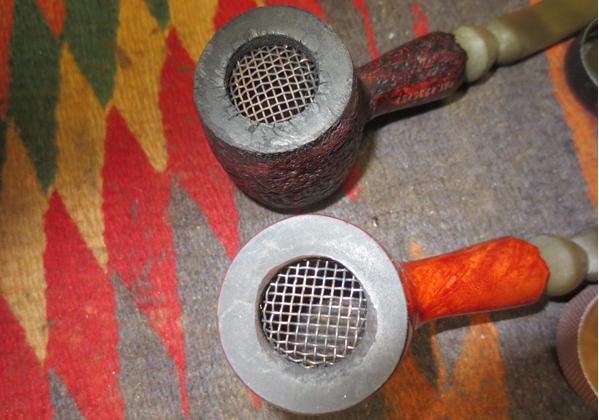
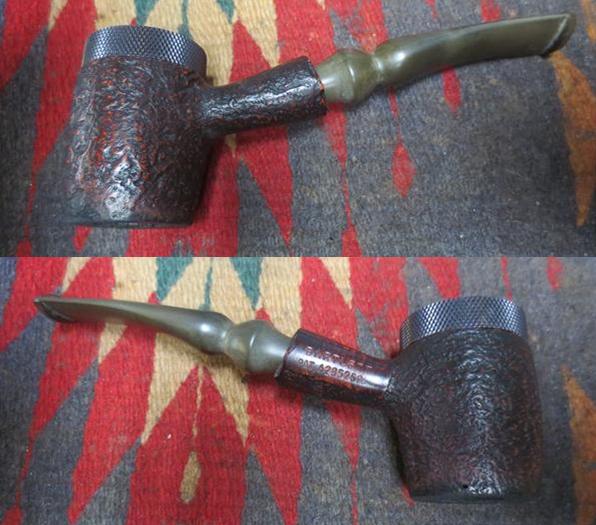
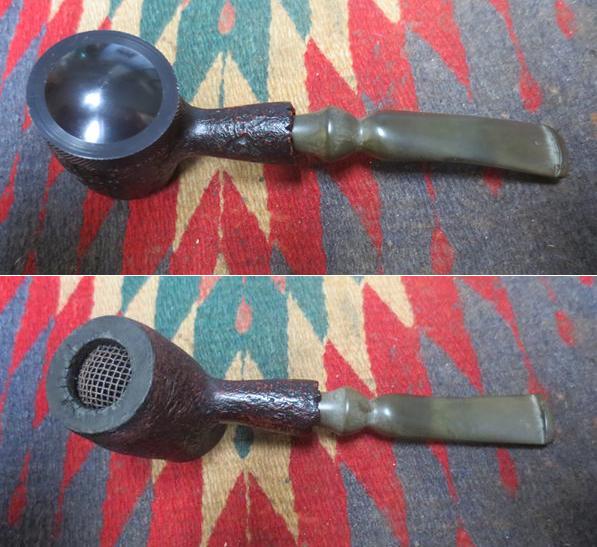
The next photos show the screened bottom of the two pipes that I was going to work on. The smooth pipe is new and unsmoked the sandblasted pipe is used and you can see some charring around the inner edges on the bottom of the bowl. The bowl bottom on the unsmoked pipe was stained black to minimize the darkening that occurs when the pipe is lit.bart3Both pipes were stamped with the name Bartlett over a Patent Number – 4235252. The stamping on the sandblast version was on the right side of the shank and the one on the smooth was on the left side of the shank. Both stampings were very sharp and legible. The smooth briar pipe was also stamped on the right side of the shank with the work Imported Briar.bart4At this point I wanted to know more about the pipe. It was a brand that I was unfamiliar with. In usual unhelpful fashion I found that the Bartlett Pipe was made by the Bartlett Pipe Company Inc. of Bartlett, NH (which I assume is New Hampshire).

On the Pipesmokers Forum I found some interesting information from a friend of the inventor of the pipe. Here is the link to the conversation on that website. http://pipesmokersforum.com/community/threads/an-interesting-surprise.46690/

Adam Hirshan comments: “A friend of mine invented and patented a revolutionary smoking pipe that lights from the bottom. A major manufacturer saw the promise and bought the idea 15 years ago, but it never took off. My friend got the patent back a few years ago and we’ve developed a new rock maple version that we call The Freedom Smoking Pipe.”

“It smokes cool and easy. A stainless steel screen holds the tobacco and ash in place – nothing falls out. No moisture or resin accumulate in the bowl. A cork and leather top makes it wind and rain proof.”

“We had initial success wholesaling through a well-known distributor. We were in about 100 tobacco shops nationwide, and appeared in the Levin catalog. Response from our early customers was strong – most loved it, some hated it. Then interest dropped off and left us wondering what happened.”

I did some more digging and found some information on the Dr. Grabow Collectors Forum. Here is the link: http://drgrabows.myfreeforum.org/viewcardtopic.php?t=1236

I quote: “I was asked what I thought about my Bartlett pipe and figured I’d start a new topic. If you don’t know what it is, it’s the ‘Upside down pipe’. The history as I know it is there have been 3 variations. It was invented in the 70’s. Sparta picked up the rights and produced them in the 80’s for 8-10yrs. Didn’t take off. Rights were returned to the inventor. Seems they are no longer produced. (ed. This seems to go along with the information from Adam Hirshan in the above comment).”

The quote goes on with an interesting reference to the Sparta example of the pipe: “Mine has a red stain, and the chain to hold the cap. My stem is from a junk pipe I had. The weirdest thing is not seeing the baccy burn. First smoke required a tamp halfway through and the bowl got dang hot! Second time out, the pack was perfect. One light, no tamp. Just weird not tending the bowl like normal…….Guess this is why the never went anywhere.”

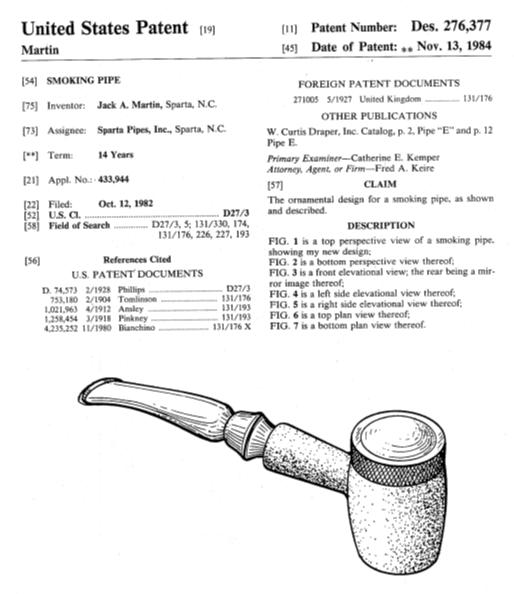
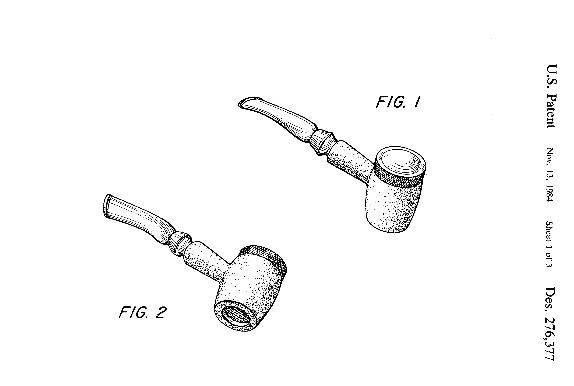
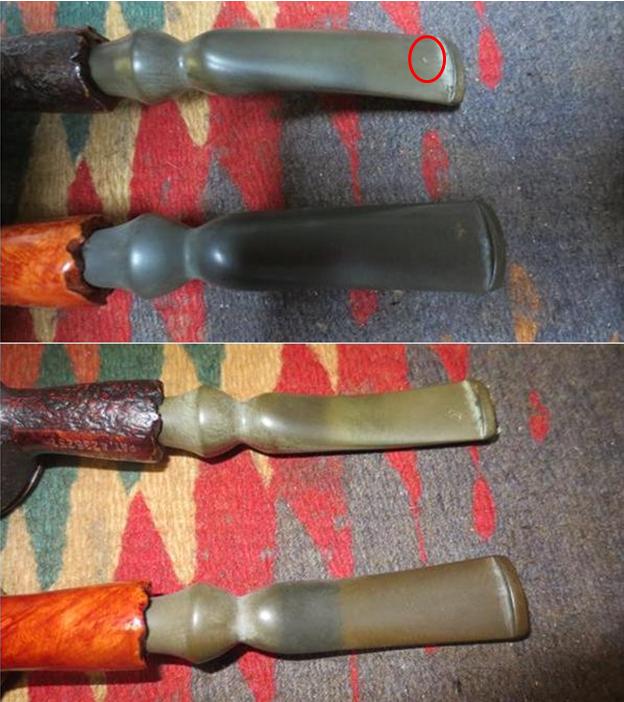
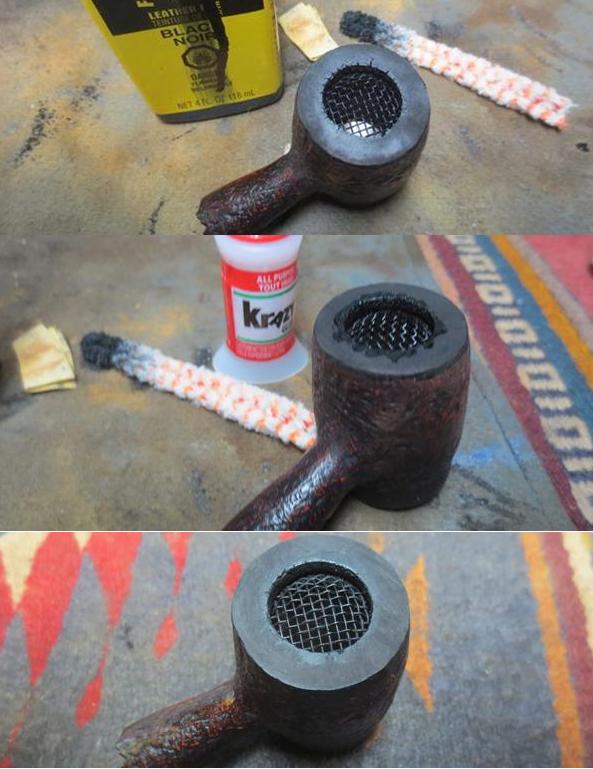
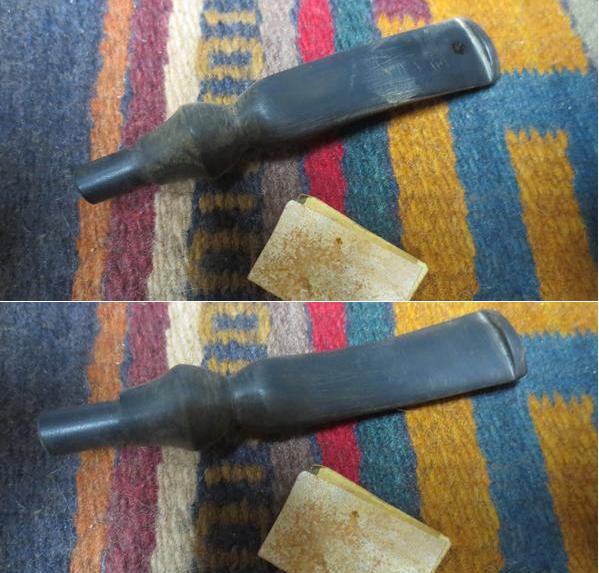
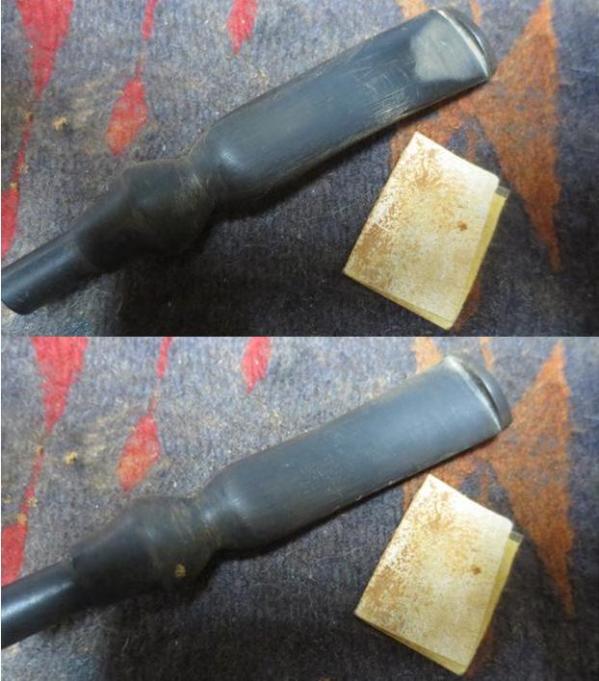
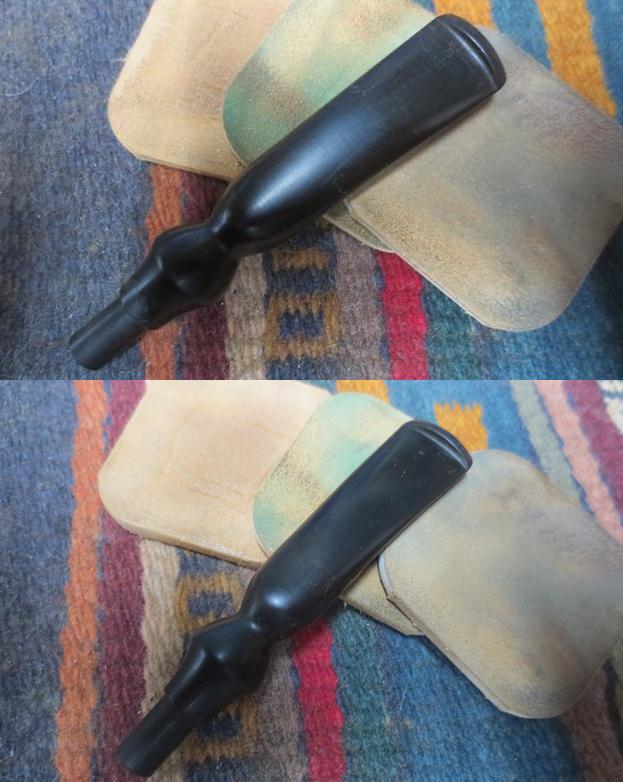
I was also able to find the patent information for US Pat.4235252. Interestingly it read much like an earlier paragraph that I pieced together regarding the pipe. Here is the document in full. First the written description and then the drawings of the pipe. It read that “the patent was for a smoking pipe having improved smoking characteristics. The smoking pipe includes a bowl having top and bottom openings and a breather hole near the top opening and in communication with a pipe stem. A cover assembly is attached to the bowl adjacent to the top opening and covers the top opening when the pipe is to be smoked. A retainer having a screen cooperates with the bottom opening for retaining smoking tobacco within the bowl while permitting access to the tobacco for the ignition thereof. The retainer may also be removed from its position relative to the bottom opening for the removal of ashes. Tobacco is inserted into the bowl via either opening, but preferably via the top opening and to a level just below the breather hole. With the cover assembly covering the top opening, the tobacco is ignited via the screen of the retainer, causing combustion of the tobacco in a bottom-to-top fashion. New tobacco may be added to existing tobacco via the top opening and ashes may be removed via the bottom opening, even as the smoking process takes place. The bottom-to-top combustion minimizes puddling of tobacco juices or the requirement of drying out periods and facilitates lighting the pipe in the presence of wind, rain, etc. The lack of obstruction of the breather hole by the presence of tobacco results in a smooth draw with the generation of a substantial, satisfying volume of smoke.” (ed. On the two pipes I have the screen on the bottom is not removable and the top is a threaded aluminum cap.)bart5 bart6My brother took some photos of the sandblast version of the pipe that shows the shape but also interestingly shows a hidden benefit. When he removed the cap from the top of the bowl the bowl was already filled with a broken flake tobacco. Unfortunately it was dry and crumbled to dust when he cleaned out the bowl.bart7 bart8 bart9My brother cleaned and reamed the smoked sandblast pipe and cleaned out the dust from the unsmoked smooth one. He scrubbed the briar with Murphy’s Oil Soap and cleaned out the mortise and the airway in the shank and the stem. The stems on both pipes were lightly oxidized and on the smoked pipe there was a small tooth dent on the top of the stem near the button. I took the following photos to show what the pair looked like when I brought them to my work table.bart10 bart11He did a great job cleaning up the aluminum caps on both the inside and the outside. He also cleaned up the thread on the top of both bowls allowing the caps to screw on easily.bart12He cleaned the screen on the smoked pipe with cotton swabs and alcohol until it looked as good as the unsmoked pipe. The inner edge of the rim on the bottom of the bowl was charred and showed some wear and tear from lighting the pipe from the bottom. I think one of the draw backs on this pipe is not being able to see the flame hitting the tobacco. The rim on this bowl shows significant rim damage.bart13I took close up photos of the stems to show the light oxidation – it is not deep in the vulcanite and the overall condition of the stems. The stem on the sandblast pipe had a small pinprick tooth mark on the top of the stem. I have circled it in red on the first photo below.bart14I took some photos of each of the pipes before I cleaned them up. They really were in pretty decent shape. There were some rough spots on the bottom of the bowl around the inner edge of the rim but it looked to be original. The smooth briar is new and has a shiny varnish coat that I decided to leave as the pipe is NOS. It was interesting to me to note that the bottom of the bowl was stained with a flat black stain on the new pipe so when I restored the smoked version I would match them. The sandblast is also in really good shape other than the inner edge of the bottom rim on the bowl.bart15 bart16 bart17 bart18On both pipes the aluminum cap was in perfect condition on both the inside and the polished outside of the cap. I took photos of the pipes with the covers removed and the bowl tilted to give some idea of what the inside of the bowl looked like. It really is no more than a tube with a cap on one end and a screen on the other end.bart19 bart20 bart21 bart22I used the topping board on the damaged bottom of the bowl. I topped it (or maybe bottomed it is more appropriate) until the damage was removed.bart23The small crevices that had opened around the inner edge of the bowl were not really cracks but rather areas that had burned with the heat of the flame. I filled them with briar dust and super glue to make them smooth and then retopped the bowl to smooth them out. I stained it with a black aniline stain and touched it up after sanding the repairs.bart24I sanded the two stems with 220 grit sandpaper to remove the oxidation on the surface of both stems. I used a spot of clear super glue to fill in the tooth mark and sanded the repaired area smooth to match the surface of the stem.bart25 bart26I polished both stems with micromesh sanding pads – wet sanding with 1500-2400 grit pads and dry sanding with 3200-12000 grit pads. I rubbed the stem down with Obsidian Oil after each set of three pads. After the last pad I gave it a final rubdown with the oil and set it aside to dry.bart27 bart28 bart29I took a photo of the pipes and stems before I took them to the buffer to show what they looked like at this point in my restoration.bart30Here are some photos of the bowls from a variety of angles. There is a nice blasé and some pretty grain – they are a nice pair of pipes.bart31 bart32 bart33I buffed the pipes with Blue Diamond on the buffing wheel and then gave the stems several coats of carnauba wax. I gave the sandblast bowl several coats of Conservator’s Wax and left the varnish coat alone on the smooth briar bowl. I buffed both pipe with a clean buffing wheel to raise a shine. I hand buffed them both with a microfibre cloth to deepen the shine. The finished pipe is shown in the photos below. It is a unique piece of pipe and tobacco history. It certainly speaks of the inventiveness of pipesmokers who are perpetually looking for the better and drier smoke. Thanks for taking this journey through the restoration and the history of the Bartlett pipe.bart34 bart35 bart36 bart37 bart38 bart39 bart40 bart41


Rescuing a Peterson’s English Made 203 Billiard


Blog by Steve Laug

I wrote about the estate lot that I was tasked to clean up and sell on a previous blog at https://rebornpipes.com/2016/10/25/this-favourite-gbd-marquis-752-was-a-mess-not-any-more/. About a month ago a friend of mine, Richard who has a tobacco shop here in Vancouver gave me a call and asked me to stop by for a visit. I went on a Sunday afternoon and we visited for a while. At the end of the visit he took me to another counter in his shop and brought out some display cases of pipes – four of them and a small bag. He told the story to me. An elderly gentleman who was a customer of his had died and his wife had stopped by and gave him the fellow’s pipes. She wanted nothing for them she just wanted him to get them cleaned up and sold to folks who would appreciate them. Richard is a reader of the blog and he thought that I would have fun cleaning these up and selling them. As we went through the display cases and bag I was pretty pumped about the collection. There were some really nice GBD pipes, Comoy’s, Stanwells, Peterson’s as well as some brands I was not familiar with.

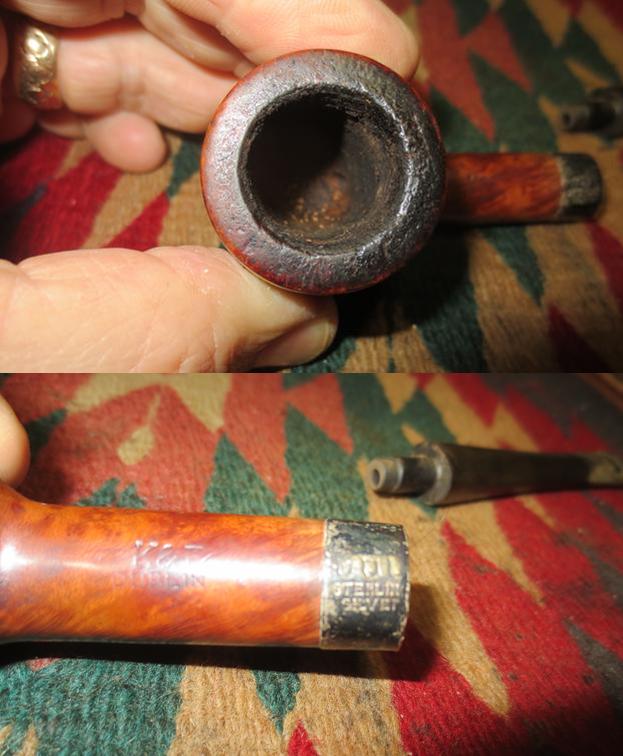
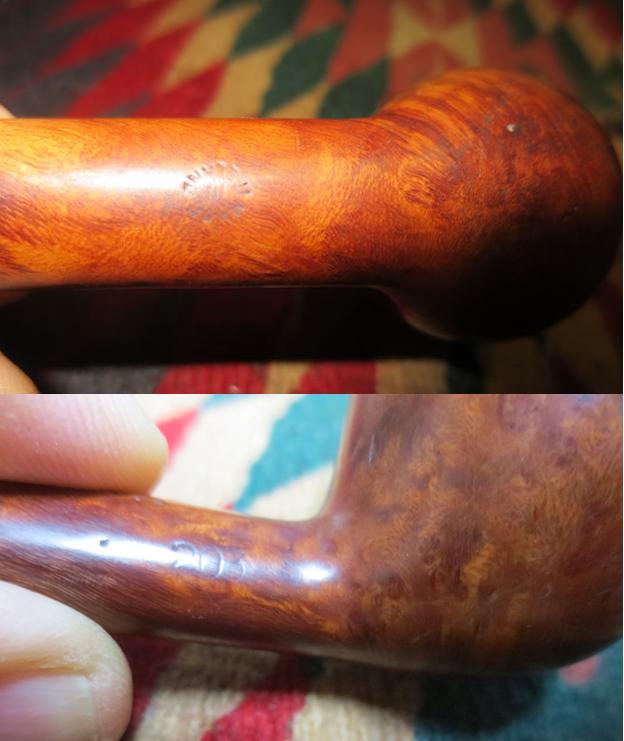
The second pipe I chose to work on was a Peterson’s Dublin oval shank billiard shaped pipe.The old gentleman seemed to favour Peterson’s as there were quite a few in the estate lot. It was very dirty. It was stamped on the topside of the shank with K&P over DUBLIN. There is also a silver band on the shank that bears three hallmarks over Sterling Silver. On the right side of the shank is the shape number 203. On the underside of the shank it is stamped with a COM (Country of Manufacture) circle that reads Made in England with the “in” stamped in the centre of the circle. The stamping is clear and sharp. The finish is in decent shape with a medium brown stain over mixed grain. There is an uneven cake in the bowl that spilled thickly over the beveled rim. It is hard to tell if there is rim damage as it is so dirty. There were sandpits on the left side of the bowl and on the back side above the shank. There is no P stamping on the P-lip stem but it appears to be an original not a replacement. There is calcification from a softee bit on the stem and button. There are light tooth marks and chatter on the top and bottom side of the stem ahead of the P-lip. The button itself was in good shape.

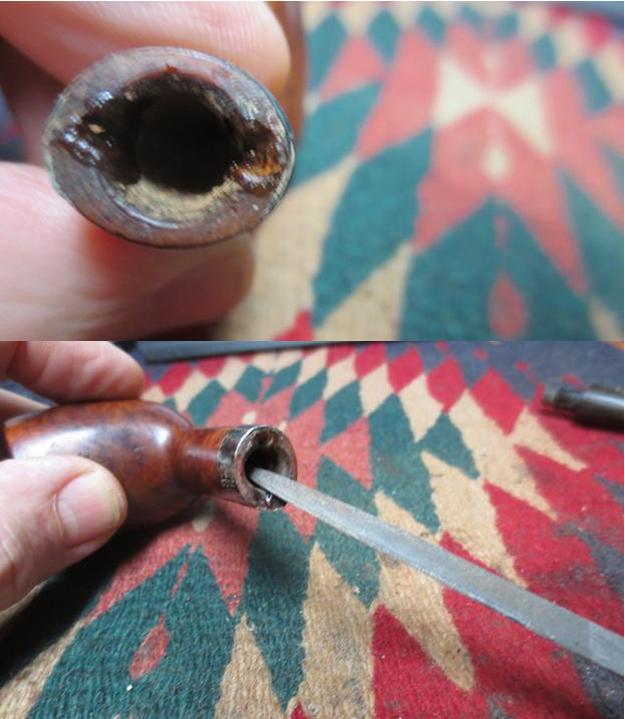
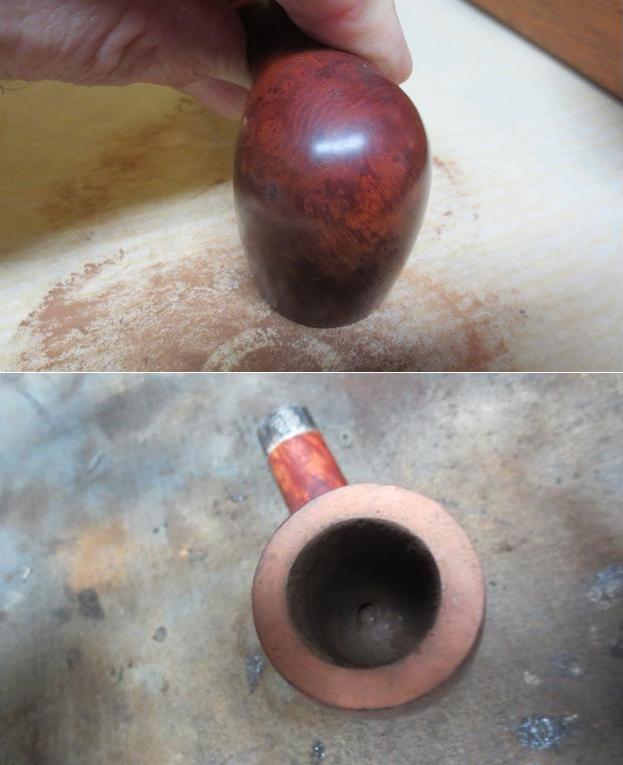
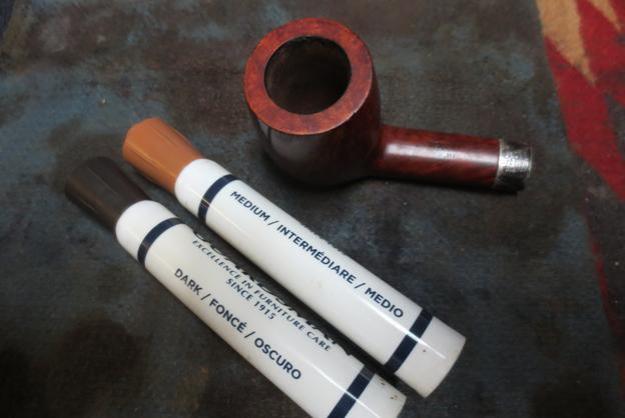
Here are some photos of the pipe when I started cleaning it. The pipe has good lines and some interesting grain underneath the grime.pete1 pete2I took some close up photos of the bowl, stamping, band and stem to give a good picture of what I needed to work on. The first photo shows the cake in the bowl and the overflow of hard carbon buildup on the rim. The photo of the silver band shows the Sterling Silver stamp and three hallmark symbols. It is hard to read them but with a magnifying lens they read K&P. I was hoping to be able to date the pipe by the hallmarks but no such luck. The photos of the stamping show that they are faint but still readable. The stem photos show the tooth chatter and wear on the button itself.pete3 pete4 pete5When I removed the stem I could see some divots in the end of the shank. There were cutouts that as far as I could see served no purpose. Someone had tried to repair them but left a bit of a mess so the stem did not fit snugly. I cleaned out the divots and smoothed them out with needle files until they matched the inside of the mortise. I filled in the end with some super glue and briar dust to even out the shank end.pete6The lava buildup on the rim top was rock hard. I scrubbed at it but it would not come off. The outer edges of the rim were also damaged from knocking out the pipe on hard surfaces. I lightly topped the bowl to remove the hard tars and clean up the outer edges.pete7I reamed the bowl with the Savinelli Pipe Knife and took the cake back to bare briar.pete8There were some drops of a clear hard substance on the back of the bowl and on the right side that I could not take off without damaging the bowl. I scrubbed them down with some alcohol on a cotton pad and was able to soften them enough to remove them.pete9 pete10I restained the rim to match the bowl using a combination of a medium and a dark stain pen. I also touched up the light areas around the silver band on the shank end.pete11I polished the silver with some tarnish remover applied with cotton pads. I finished polishing it with a jeweler’s cloth. Once I had finished I could see the hallmarks more clearly and they read K&P – each letter in its own cartouche.pete12 pete13 pete16I gave the bowl a quick coat of Conservators Wax and hand buffed it to see where I stood. I chose to leave the sandpits on the left side and back of the bowl as they add character.pete14 pete15I sanded the tooth chatter, reshaped the button and removed the calcification and oxidation on the stem with 220 grit sandpaper.pete17I wet sanded the stem with 1500-2400 grit micromesh sanding pads and dry sanded it with 3200-12000 grit pads. I rubbed it down with a coat of Obsidian Oil after each set of three pads. I gave it a final coat of oil and set it aside to dry.pete18 pete19 pete20With all the parts finished individually I put the pipe back together and buffed it with Blue Diamond on the buffing wheel. The Blue Diamond is a plastic polish and gives the finish a glass like polish. I really like the way it works. I gave the bowl and stem multiple coats of carnauba wax and buffed it with a clean buffing pad. I hand buffed the pipe with a microfiber cloth to finish the polishing process. The finished pipe is shown in the photos below. This second pipe from the older gentleman’s estate is a beauty. The fit and finish give it a look of elegance. This pipe is also available for sale. If you are interested in the pipe let me know via email at slaug@uniserve.com or through a message on Facebook. Thanks for walking through the process of restoration with me.pete21 pete22 pete23 pete24 pete25 pete26 pete27 pete28

New Life for a Hardcastle’s London Made Reject Pot


Blog by Steve Laug

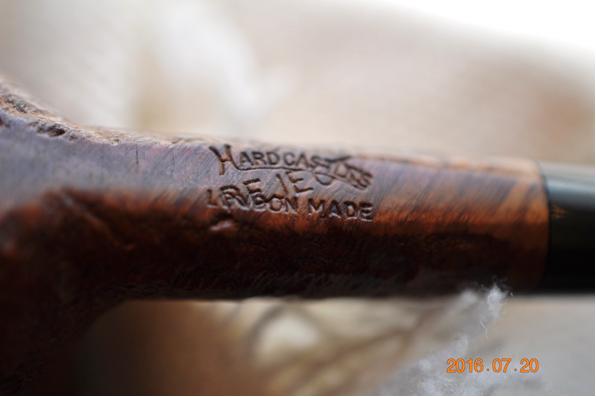
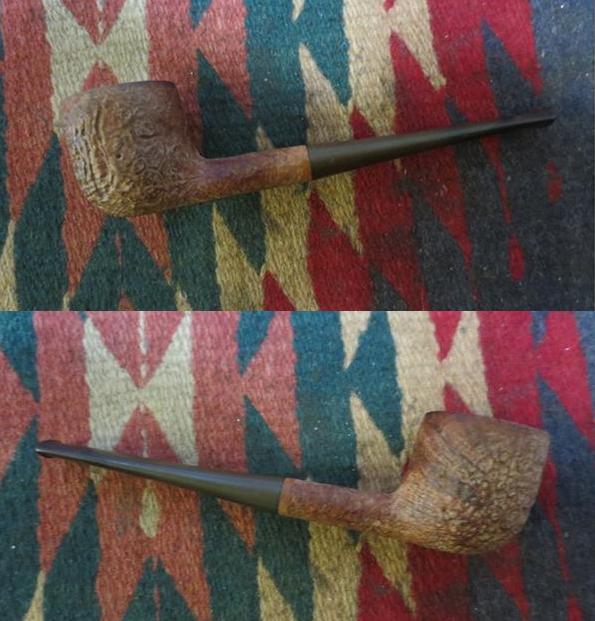
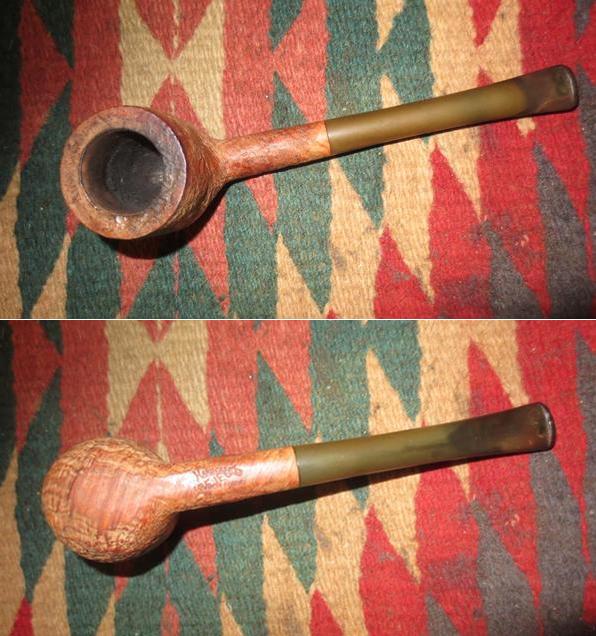
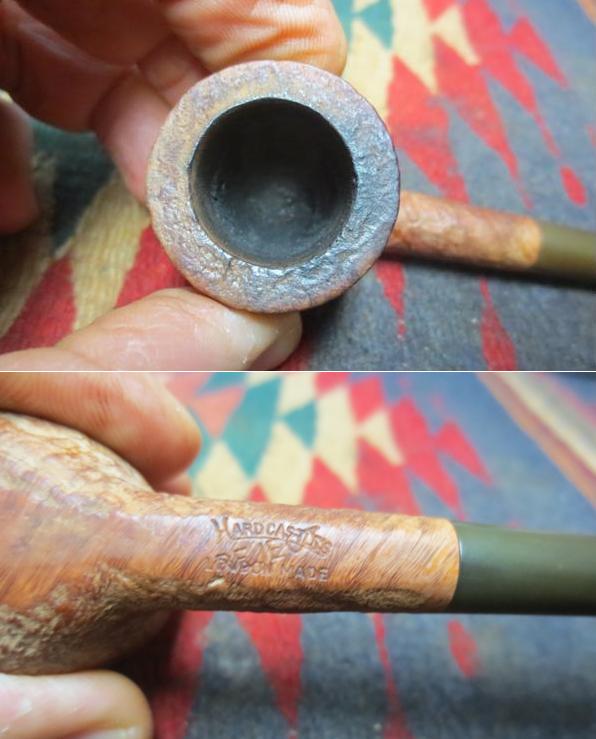
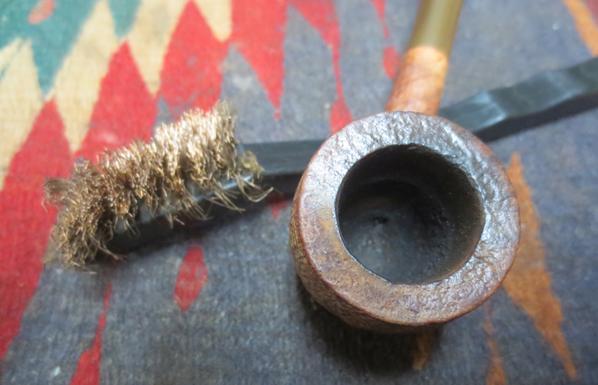
This perfectly shaped little Hardcastle’s sandblast pot was the next pipe to my worktable. It is a small almost pencil shank pot. It is stamped Hardcastle’s London Made and across that it is stamped Reject. It has a rich blast on the sides of the bowl and shank. There is a smooth portion on the bottom of the bowl and shank for the stamping and allowing it to be a sitter. My brother took the next photos to show the condition of the pipe before he cleaned it up.hard1He took some close up photos of the bowl and stamping. The bowl had a thick cake and a large overflow of lava on the rim. The lava covered the light blast finish on the rim completely and it was hard to tell the condition of the bowl at this point. The finish was worn and dirty but there were no chips or dents marring the finish. The stem is oxidized and you can see the Hardcastle’s H stamp on the left side near the shank. You can see the stamping on the shank and clearly see the REJECT stamp across the initial stamping. I am not sure why this pipe was rejected. It appears to be a decent piece of briar. There were two small sandpits on the sides of the bowl that I suppose may have caused it to be a reject but that is not clear to me.hard2 hard3My brother did his usual great clean up on the exterior of the pipe. He scrubbed it with Murphy’s Oil Soap and a tooth brush and was able to remove the finish. He reamed the bowl and removed the lava build up on the rim and left a slightly darkened rim with no burns or damage to the edges. I took the next set of photos to show what the pipe looked like when it arrived in Vancouver.hard4 hard5I took a close up photo of the rim to show the darkening on the back side of the top. It was clean but darkened. There were no burn marks or damaged briar on the edges of the bowl. The stamping is also shown and it remains sharp and distinct.hard6The stem was lightly oxidized and there were tooth dents and chatter on the top and underside near the button. The button had some flattening and wear as well.hard7I used a brass bristle tire brush to scrub the top of the rim and try to clean out some of the darkening on the rim. I was able to remove some of it and make it less pronounced.hard8I wiped the bowl down with acetone on cotton pads to clean of any remnants of the old finish and to remove the debris from the brass brush work on the rim.hard9 hard10 hard11With the bowl cleaned I stained it with a dark brown aniline stain mixed 50/50 with isopropyl alcohol. I flamed the stain and repeated the process until the coverage was even on the bowl and in the deep pits of the sandblast finish.hard12I took some photos of the pipe at this point in the process. The stain had covered well. The colour was a little dark for my liking and would need to be lightened a bit before I was finished. You can see the sand pits on both sides of the bowl that may have made this pipe a reject. I have circled them in red.hard13 hard14I cleaned the mortise with a dental spatula and then cotton swabs, pipe cleaners and alcohol. I also cleaned out the airway into the bowl and in the stem.hard15To lighten the colour of the stain I washed it down with some alcohol on cotton pads until the colour was more to my liking. The finished colour is shown in the photos below.hard17 hard18I painted the dents in the stem with the flame of a Bic lighter and was able to raise them almost smooth. I sanded the stem with 220 grit sandpaper to smooth out the slight dimples that remained in the surface. I wet sanded the stem with 1500-2400 grit micromesh sanding pads and rubbed it down with Obsidian Oil. I dry sanded it with 3200-12000 grit pads and rubbed it down with the oil after each set of three pads. After the final 12000 grit sanding I gave it a final coat of Obsidian Oil and set it aside to dry.hard19 hard20 hard21I buffed the pipe with Blue Diamond on the buffer and gave the stem multiple coats of carnauba wax. I hand waxed the bowl with Conservator’s Wax. I buffed the bowl and stem with a clean buffing pad and again by hand with a microfibre cloth to raise and deepen the shine on the briar. The finished pipe is shown in the photos below. I am pretty happy with the finished pipe. Thanks for looking.hard22 hard23 hard24 hard25 hard26 hard27 hard28 hard29
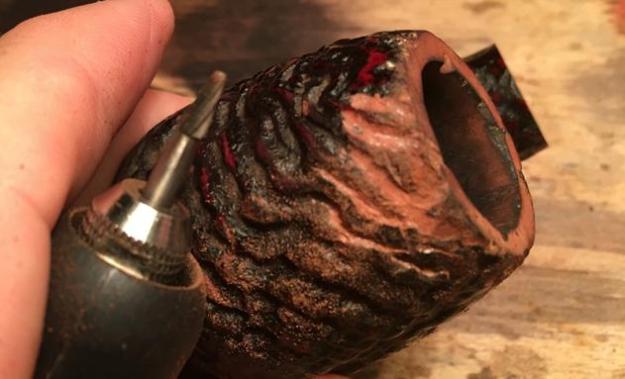
A Graceful Swan-Necked Tania Billiard


Blog by Steve Laug

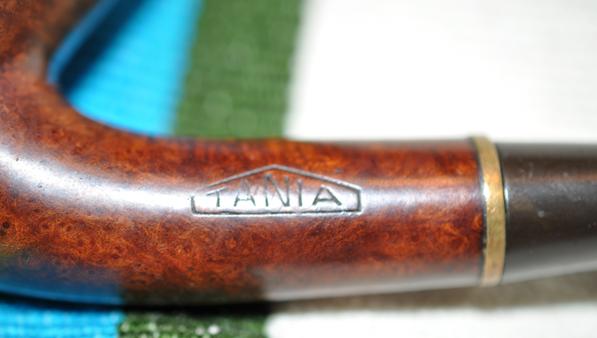
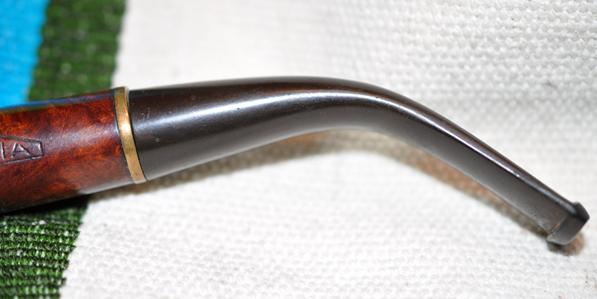
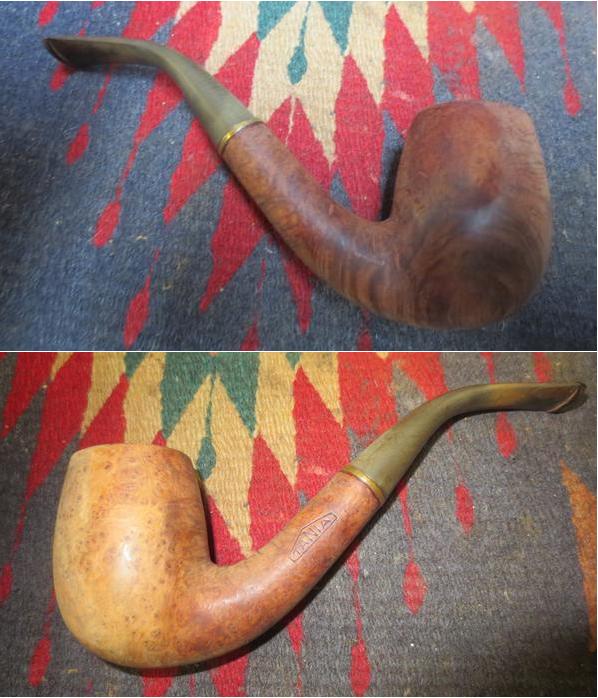
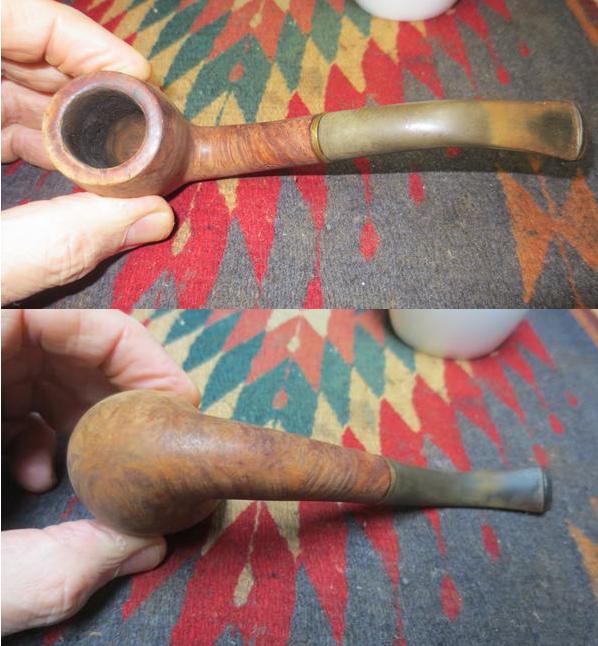
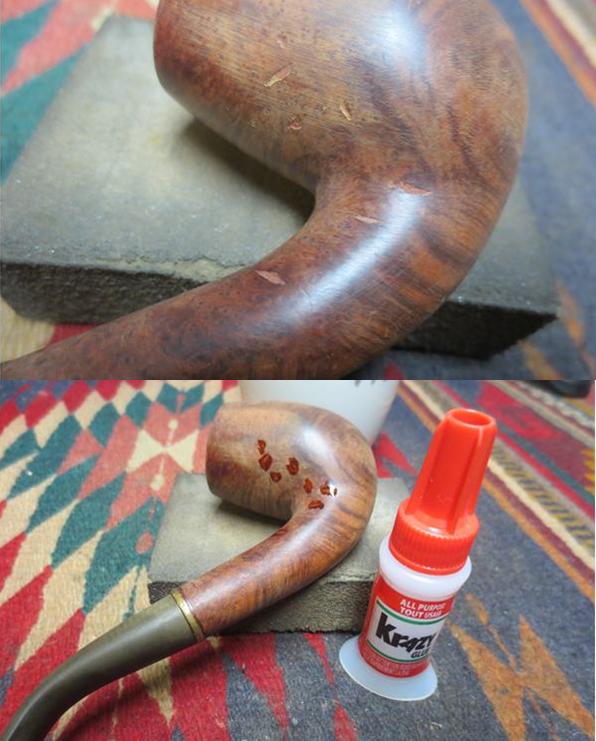
The graceful swan neck like bends and curves of this pipe are one of its attractions for me. It is what drew me to work on it as my next restoration project. It is quite a large pipe – 7 inches long, 2 ¼ inches tall, 1 ¼ inches outer diameter of the bowl and 7/8 inch chamber diameter. The briar is quite nice – lots of birdseye around the bowl. The finish was dirty and worn but other than a few dents and dings it was in decent shape. The brand – Tania – is one that I cannot find any information about online. It is a mystery pipe to me.tania1 tania2My brother took some close up photos of the bowl. The first photo shows the large of fills on the right side of the bowl. There are at least 6 or 7 fills on that side and none on the other sides of the bowl. The outer edge of the rim was chipped and worn. There was some wear from knocking it out on something hard. The inner edge of the bowl also was also out of round. The rim top was dented and worn and there were some flecks of tars and oils on it as well.tania3 tania4The next two photos show the stamping on the side of the shank. You can see the name TANIA wrapped with a house shaped frame which peaks at the N. The brass band separating the stem and the shank is actually a ferrule that is bent over the end of the shank. It is dented and tarnished. The final photo shows the oxidation and wear on the stem. Both sides of the stem show the wear and tear on the surface just ahead of the button.tania5 tania6 tania7My brother scrubbed the exterior of the pipe with Murphy’s Oil Soap and removed the finished and left behind some clean briar. He scrubbed the inside of the shank and stem with pipe cleaners, cotton swabs and alcohol. The stem oxidized in the cleanup process. He was able to get much of the tars and oils off the rim of the bowl. I took the next photos when I brought it to the work table.tania8 tania9The rim looked better but it was worn. The outer edge of the rim was in rough shape from knocking it out. The inner edge was damaged with a knife or a sharp object used to scrape the bowl. There were some dents and nicks in the rim top. I took some photos of the stem. It was in very good shape other than oxidation. There were no tooth marks or tooth chatter on the stem.tania10 tania11The fills on the right side of the bowl were not smooth. They were pitted and dented. I sanded the surface of the bowl around the fills and wiped it down with some acetone. I refilled them with clear super glue.tania12I sanded the bowl repairs with 220 grit sandpaper and then with 1500-4000 grit micromesh sanding pads. I sanded it with a medium and a fine grit sanding sponge. I wiped the bowl down with alcohol on cotton pads. I checked the inside of the mortise and airway with pipe cleaners, cotton swabs and alcohol. It was very clean.tania13 tania14I stained the bowl with a dark brown aniline stain cut 50/50 with isopropyl alcohol. I applied it, flamed it and repeated the process until the coverage on the briar was even.tania15The inner edge of the bowl still showed some damage so I sanded it with a tube of 220 grit sandpaper wrapped around my finger. I sanded until the inside was clean and the edge was more round. I sanded the inner edge to bevel it slightly and take care of the knife damage. I sanded it with 1500-2400 grit micromesh sanding pads. I stained the inside edge with stain on a pipe cleaner.tania18 tania19I buffed the bowl with Blue Diamond on the buffing wheel and gave it a light coat of carnauba wax. I buffed it with a clean buffing pad to raise the shine.tania16tania17I sanded the stem with 220 grit sandpaper to remove the oxidation on the stem. I cleaned up the sharp edge of the button with the sand paper and sharpened and reshaped the button.tania22I wet sanded the stem with 1500-2400 grit sanding pads and rubbed it down with Obsidian Oil. I dry sanded it with 3200-12000 grit sanding pads. I rubbed it down with Obsidian Oil after each set of three sanding pads. After the final pad I rubbed it down a final time with oil and set it aside to dry.tania23 tania24 tania25I buffed the pipe with Blue Diamond on the buffing wheel to polish out the scratches. I gave the pipe multiple coats of carnauba wax and buffed it with a clean buffing pad. I took it back to the work table and hand buffed it with a microfibre cloth. The finished pipe is shown in the photos below. If anyone can tell me about the brand – Tania, please leave a response below. I can find nothing regarding the brand online or in my normal reference tools. If you would like to add the pipe to your rack let me know via email at slaug@uniserve.com or in the response area below. Thanks for looking.tania26 tania27 tania28 tania29 tania30 tania31 tania32 tania33

Getting Lazy – A Simple Restore on a Loewe Cutlass 10


Blog by Steve Laug

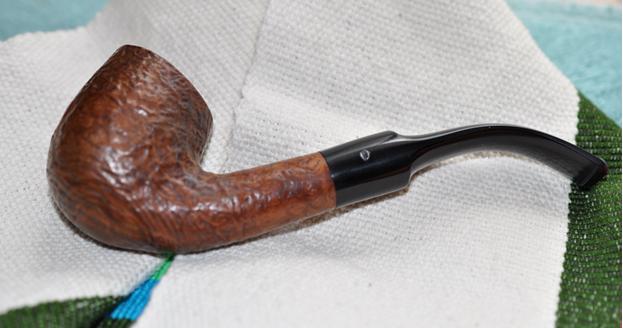
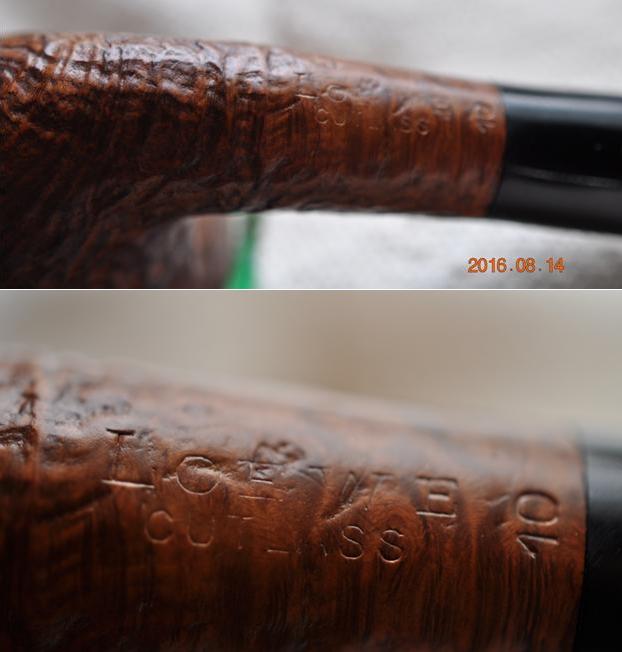
The last three or four pipes I have taken out of the refurbishing box have been very simple restorations. My brother sent me this Loewe’s pipe that is stamped Loewe over Cutlass on the underside of the shank with the shape number 10 at the shank stem union. In the photos he sent me it appeared to be in pretty decent shape. The finish looked dirty and murky but otherwise good. The rim had some tars and overflow from the cake in the bowl but not too bad. There were some nicks and dings in the rim but none too deep. The stem was virtually flawless with no tooth chatter or tooth marks. The boxed L logo on the stem was worn and almost illegible but with a lens it is clear.loewe1While I have heard of and enjoyed quite a few older Loewe’s pipes the shape of this one and the name were not familiar to me. Even the shape number was not recognizable. I looked on the pipephil site to see if I could find any information on this particular iteration of the brand and found what I was looking for. There on his site (http://www.pipephil.eu/logos/en/logo-l5.html) I found a pipe with the same stamping but a different number. The one in my hands does not have a COM stamploewe2 so I do not know where it was made. I have included the photo of the stamping and the stem logo to the left from that site as it is parallel to the one I have. I have also included some information from the listing there.

The brand was founded 1856 by Emil Loewe and was first bought out by Civic. Eventually the brand became part of Cadogan Group along with BBB, Civic, Comoy, GBD, Loewe and Orlik in about 1979. Judging from the age and the stamping on this pipe I would surmise that it was made after that merger and is a Cadogan pipe.

I also did some reading on the history of the brand on Pipedia and include a short excerpt here that is pertinent to the age and stamping on this pipe: https://pipedia.org/wiki/Loewe_%26_Co.#Bottom_of_shank: “By studying the website of one UK dealer I was able to deduce that the present shape numbers (early 2003) mostly (probably all) differ from those used from 1967. For example, a Billiard is now a 28, a Lovat an 834, a Canadian a 296. Some shape numbers now have 4 digits. But even today, Cadogan will occasionally still stamp a pipe with a shape name instead of a number, though only on request.”

It looks to me that I am dealing with a pipe made around 2003 jusding from the change in shape numbers to a two digit numbering system at some level. Though there is a lot of uncertainty regarding the dating of Loewe pipes after the Cadogan buy out.

My brother took the first and the following photos of the pipe before he did the cleanup. What follows are a series of close up photos of the stamping, the rim and bowl and the sandblast look on the bottom of the bowl. In the bowl bottom photo you can see the dust and debris in the grooves of the blast.loewe3 loewe4 loewe5My brother cleaned out the internals – the mortise and the airways in the shank and stem with pipe cleaners and alcohol. He scrubbed the externals with a tooth brush and Murphy’s Oil Soap and was able to not only remove the grime from the finish but most of the finish also. When it arrived in Vancouver the pipe looked like virgin briar. The stem is acrylic so there was no oxidation on it. The next photos show the pipe when I brought it to my work table. The blast on the briar is quite shallow and shows mixed grain.loewe6 loewe7I took some close up photos of the rim and the stem to show their condition. My brother was able to remove the tars on the rim. There was some slight rim darkening on the inner edge but other than that it was clean. The scratches and dings were also raised. The photos of the stem show how clean it was as well when it arrived.loewe8 loewe9I sanded the inner edge of the rim with 220 grit sandpaper to smooth it out and remove the darkening and light burn marks. I also sanded it with 1500-2400 grit micromesh sanding pads to remove the scratch marks left behind from my sanding.loewe10I wiped the bowl down with acetone on a cotton pad to remove any remnants of the previous finish and the dust from sanding. I stained the bowl with a dark brown aniline stain cut 50/50 with isopropyl alcohol. I flamed it and repeated the process until the coverage on the bowl was even.loewe11I hand buffed the bowl and took the photos below to show what it looked like at this point in the process.loewe12 loewe13I gave the bowl and stem several coats of Conservator’s Wax and buffed it with a clean buffing pad to raise the shine. I hand buffed it with a microfibre cloth to deepen the shine. The finished pipe is shown in the photos below. This one will also soon be on the rebornpipes store. If you are interested in adding it to your rack let me know through email at slaug@uniserve.com or by message on Facebook or a comment here. Thanks for looking.loewe14 loewe15 loewe16 loewe17 loewe18 loewe19

A Worn Royal Danish 936 Wide Oval Shank Pipe given new life


Blog by Steve Laug

When I saw the pictures of the way this pipe looked – at least the first picture I thought it was in pretty decent shape. The finish was a little worn; particularly some of the high spots on the sand blast had worn off. The smooth patches were also worn and lifeless. The back edge of the rim looked really rough – as if the pipe had been knocked about on concrete or another hard surface to remove the dottle from the bowl. It was ragged. The inner edge of the rim also looked worn and the cake in the bowl was a bit odd looking – as if it was partially removed. It seemed heavier on one side than the other. The stem looked okay in the first picture but the second hinted that all was not well with it either.danish1The close up photos reveal the issues that I hinted at above. The first shows the strangely caked bowl – heavily built up toward the left side and rear of the bowl as well as the rough back rim top and edge of the bowl. The inner edge of the rim also looks like it has taken some damage. The second photo shows the slight cap at the stem junction that to my mind spoke of a tarry and caked mortise that kept the stem from seating properly. The finish also shows some wear in the photos. The pipe is stamped Royal Danish and Made in Denmark. The shape number is 936 which is a Stanwell shape.danish2The next two photos show the issues with the stem. There were tooth marks on the top and underside of the stem that went from quite deep to very shallow. The button top and bottom were worn down and had deep tooth marks. There was also a heavy build up of oxidation on the stem. The stem logo on the top is very faint. It made me wonder if I would be able to feel it with my finger once it arrived in Canada.danish3I am so glad my brother does the heavy work on cleaning out these pipes. I have reamed and cleaned out the shanks of a lot of pipes and I can’t say that I miss it. I still get to do my share of cleanups on pipes that I find but these that he sends me come ready for the restoration process. He scrubbed the exterior of the bowl with Murphy’s Oil Soap and was able to remove the wax and tars on bowl and rim. He reamed the bowl back to bare briar and scrubbed out the mortise and the airway in the shank and stem. When it arrived the stain was quite washed out and the stem was really oxidized. The damaged rim top was very visible and it was in rough shape.danish4 danish5I took some close up photos of the rim and the stem when it arrived here. The roughness of the rim top and inner edge are seen in the first photo. The tooth marks and wear on the stem top and underside in the second and third photos. My brother had cleaned out the mortise so the stem fit tightly against the shank so my guess mentioned above about a dirty mortise appears to have been correct. The crown logo on the top of the stem could hardly be felt by touch.danish6 danish7I started sanding the stem then decided to run a few pipe cleaners and alcohol through the airway in the stem and shank as well as in the mortise. They were quite clean and did not take too much work to remove the little bit of debris that was still left.danish8I sanded the rim lightly to take away the roughness but still leave the finish looking like the sand blasted portion of the rim that had not been damaged. I stained the bowl with a dark brown stain mixed 50/50 with isopropyl alcohol. I applied the stain and flamed it and repeated the process until the coverage was what I was looking for. I wanted the dark stain in the deep grain of blast to show through the brown top stain.danish9I hand buffed the bowl with a microfibre cloth to raise a shine and to give an even look to the finish. The photos below show the pipe at this point in the process.danish10In the second photo below the rim surface is visible. There will need to be some contrast applied to the finish to make it blend in and not look merely “less damaged”.danish11To address the contrast issue on the rim mentioned above I used a black Sharpie Pen to provide some darkening in the crevices of the pitted surface. I used a dark brown stain pen to give the top coat over the black stain.danish12I sanded the inner edge of the rim with a folded piece of 220 grit sandpaper to smooth out the roughened inner edge. In retrospect I probably should have done this before staining the bowl but I did not so I put it in the order I did the work. In the second photo below you can see how the contrast stain worked on the rim top.danish13When I finished sanding I stained the inner edge of the rim with the dark brown stain pen and added some streaks of black Sharpie pen to give it some contrast. I buffed the rim lightly Blue Diamond on the buffing wheel and with a microfibre cloth. The photos below show the pipe bowl after buffing. Notice the change to the rim after the sanding, staining and buffing.danish14 danish15I set the bowl aside and worked on the issues with the stem. I sanded the area around the button on both sides of the stem with 220 grit sandpaper and scrubbed the deeper tooth marks with cotton swabs and alcohol. Once they were clean I filled the deeper marks and built up the button surface with black super glue.danish16I sanded the repairs once they had cured with 220 grit sandpaper to smooth them into the surface of the stem. I reshaped the top of the button on both sides of the stem with the sandpaper.danish17The edge of the button on the underside of the stem was still rough so I used a needle file to shape and sharpen the straight edge.danish18I wet sanded the stem with 1500-2400 micromesh sanding pads. I rubbed the stem down with Before & After Pipe Stem Deoxidizer and a paper towel to further remove the oxidation on the stem. I polished the stem with Before & After Pipe Polish both Fine and Extra Fine with paper towels. The stem was beginning to shine.danish19 danish20I sanded the stem once again with the micromesh sanding pads using 1500-12000 grit pads. Each successive grit of sanding pad added more shine and depth to the shine. The more I polished the stem the more the crown logo disappeared.danish21I buffed the pipe with Blue Diamond on the buffing wheel and then gave the stem multiple coats of carnauba wax. I rubbed the bowl down with Conservator’s Wax by hand. I buffed the pipe with a clean buffing pad to raise the shine. I hand buffed the pipe with a microfibre cloth to deepen the shine. The finished pipe is shown in the photos below. The pipe is clean and looks new. The restoration brought it back to life. Thanks for looking.danish22 danish23 danish24 danish25
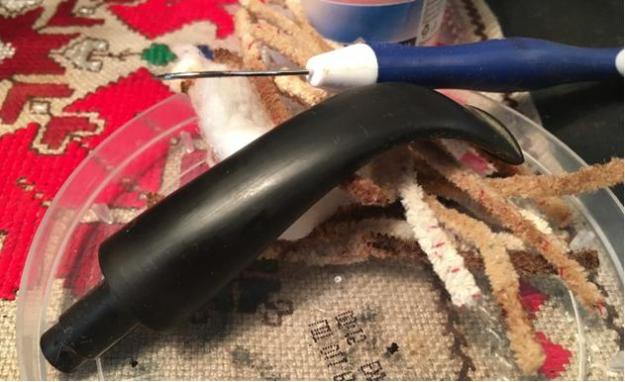
A Great Looking Wimbledon 810 Author showing promise


Blog by Steve Laug

The pipe pictured below is a Wimbledon Author. It is stamped on the underside of the shank on a smooth patch, WIMBLEDON over the shape number 810. The sandblast finish is craggy and the contrast of dark brown and reddish-brown give it even more depth. My brother took the following photos when he received it from the EBay seller. The finish looked to be in excellent shape. There were no worn spots on the bowl. The rim had some tars in the grooves but it was quite clean. The bowl had a thin cake but nothing too thick. The stem did not seat in the mortise properly and there was a gap between the end of the shank and the stem. The stem was oxidized though it had no tooth marks or chatter.briar1I had seen the brand before but could not remember what I had read about it. I turned to pipephil’s site and found a picture of the same pipe – the same finish, the same stem logo and the same stamping on the underside. The site said that the pipe was crafted by Briarcraft as established by the stem logo. I have included a photo of the listing on the pipephil site.wim1That led me to look on pipedia.org to do some digging on Briarcraft pipes. Here is the link: https://pipedia.org/wiki/Briarcraft. There I found the following information. I have included the part of it here that includes a reference to the Wimbledon line.

Briarcraft Pipe Company was very prosperous between 1920 and 1940 and their pipes usually feature a diamond shield logo. They also produced a line of seconds under the following names: Airo, Arcadian, Briarmeer, Smokemaster, Cavalcade, Hallmark, Sterling Hall, and Wimbledon (emphasis mine). They closed their doors in 1950. Briarcraft was started by Richard Kliethermes Sr. and located on Pipetown Hill Rd, Spring Valley, NY. It received its power from a dam on Hyenga Lake, later it moved to 66 Central Ave., Spring Valley, NY. At first it was housed in a 2 story frame building and later a 2 story stone building was added. Upon the death of RK Sr., business was run by Richard Jr, between 1920 and 1940 it was second in size to Frank Medico pipes. All the briar root was imported from Africa, with the start of WWII, imports stopped and a briar like root was imported from S. Carolina. Richard Kliethermes Jr. was the inventor of a pipe known as Smokemaster, which used a doubled up pipe cleaner in the bit to absorb tobacco juice. With the decline in business during WWII and the following 5 years it closed its doors 1950.

Jeff took the following close up photos to show the bowl and rim condition and the stamping on the underside of the shank. The third photo below shows the oxidation on the otherwise clean stem.briar2 briar3Jeff did his usual great clean up on the mortise and airways in the shank and stem. He reamed the bowl back to briar and scrubbed the externals with a tooth brush and Murphy’s Oil Soap. He rinsed it under running water. When the pipe arrived in Vancouver in the last box I received it looked like the photos below.briar4 briar5There was some rim darkening around the inner edge of the bowl but the briar was solid with no crumbling or burning. The finish had lightened with the scrubbing but would be easy to bring back to the original colour.briar6The oxidation on the button end of the stem was pretty light but on the tenon end was quite heavy. For some reason it rose to the surface and was almost white in colour.briar7I wiped down the rim with some alcohol on a cotton pad to clean it up and prepare it for restaining to match the bowl. I stained it with a dark brown stain pen.The colour of the stain pen was a perfect match to the bowl.briar8I wetsanded the stem with 1500-2400 grit micromesh sanding pads to cut through the surface oxidation. I dry sanded with 3200-12000 grit pads to further polish it. I rubbed it down with Obsidian Oil after each set of three pads and with the final pad set the stem aside to dry. I took the following photos of the stem and in them you can still see the residual oxidation under the flash of the camera.briar9 briar10 briar11I decided to use some more of the Before & After Pipe Stem Deoxidizer and Fine and Extra Fine Pipe Polish and see if I could draw out further oxidation. I am still experimenting with the product to check out its effectiveness so this seemed like another good test. I rubbed it down with the deoxidizer and a paper towel and was able to remove even more oxidation from the stem. I was impressed by what it brought out of the vulcanite.briar12I rubbed the stem down with the Fine and Extra Fine Pipe Polish and saw the shine on the stem increase and the oxidation disappear. So far so good.briar13I buffed the stem with Blue Diamond on the buffing wheel to futher polish it. The oxidation was gone. I gave the bowl several coats of Conservator’s Wax and the stem several coats of carnauba on the buffing wheel. I buffed the pipe with a clean buffing pad to raise the shine. I hand buffed the pipe with a microfibre cloth to deepen the shine on the pipe. The finished pipe is shown in the photos below. It is a great looking pipe and one that has great feel in the hand. This one will also make its way to the rebornpipes store soon. If you are interested let me know – send me an email at slaug@uniserve.com or a message on Facebook. Thanks for looking.briar14 briar15 briar16 briar17 briar18 briar19 briar20 briar21

The Rim on this De Jarnett Handmade Needed Attention


Blog by Steve Laug

My brother sent me photos of this interestingly shaped De Jarnett pipe and wondered about it. I agreed there was something about it that grabbed me too. The grain on the darkly stained bowl, the Cumberland style Lucite stem, the curves of the pipe following the grain, the mushroom cap on the top of the bowl all were a part of the mystique of the pipe. He bid on it and the pipe was his. I received it in the mail in the last box of pipes he sent me. Last night I took it out to have a closer look at the pipe. I always have my brother take photos of the pipe before he does any work on it so he sent the following photos along with the pipe.de1It looks really nice but I had no idea how large the pipe was until I had it in hand. It is 6 ½ inches long, 2 ¾ inches tall, 2 ¼ inches in diameter with a chamber size of 7/8 inch. It is a handful. The stamping on the underside of the shank has a cactus which was Horace’s logo and the name De Jarnett with the J stylized into a pipe. Underneath it says Handmade in Arizona over 58-04. My guess is that the number stamping tells me that the pipe is the 58th pipe he made in 2004.de2The photo he sent me of the rim shows the cake in the bowl and the damage to the inner edge of the rim. It looks like it is burned but once I see it and examine it I will know how bad the burn mark is. There is also a sizable dent on the bowl top and some overall darkening of the rim cap.de3I had heard of De Jarnett pipes in the past and talked to others about them. I have also done repairs on one of them in the past but I had never taken the time to read about the maker. I assumed he was still living which turns out to be false. I turned to my two go to sites Pipephil and Pipedia for information and found little other than the dates of the maker which showed he had died and the location of the shop which is on the pipe anyway. However, Pipedia was more fruitful. Here is the link: https://pipedia.org/wiki/DeJarnett_Pipes

When I read the write up on Pipedia I found that Horace DeJarnett had died on July 24, 2013. He had been battling with terminal cancer, but his wife reported that he ultimately died of a stroke. Since I had also suffered a stroke this gave me a sense of connection with the carver. I only wish that I had been able to have a chat with him before he died. I find that those conversations I have had with pipe makers have been highlights of my pipe collecting and repair/restoration hobby.

Pipedia also included a photo of Horace that was taken by Pipes& Tobacco Magazine and used by courtesy. I have included much of the Pipedia article here for ease of reference. For the details and the remainder of the article use the link above.

Horace wrote of his pipes: “All of my pipes are carved from the finest quality Algerian briar I can find. I coat each bowl with a special pre-carb treatment which speeds up the break-in process. After the third bowl, it will smoke as if it had been in your collection for years. I get a lot of positive feed-back on this feature.
Standard draft holes are 5/32″. I think that’s too small and many pipe smokers agree with me. So I drill mine to 3/16″ for a better draw. You won’t have to send my pipes out to a pipe repairman to have them opened up, as many do.

For over 40 years I worked in the grocery industry. In 1984 I founded my own food brokerage business. It prospered and grew into a multi-state corporation. In 1999 I sold my portion of the business and retired.
Due to health concerns and public scrutiny, I quit smoking cigarettes in 1993 and took up the pipe.

(I believed then – and still do – that health risks are greatly reduced by not inhaling and just puffing.) Serious pipe-smoking is conducive to day-dreaming, and thus the idea of making my own pipes became a quest.

I was fortunate to study under Andrew Kovacs, a well-known carver in Northern Arizona (trade name “Jandrew”) for about a year, off and on. I learned a lot of the basics from Andy, but some of my best counsel came via long telephone conversations with Mark Tinsky.

Over the years I have made and sold approximately 1,000 pipes, most of them here in the United States, but I do have customers in Indonesia, Germany, Japan, England, Israel, Canada, and Thailand.

What began as a hobby has become my passion. I lost my leg in 2001 due to a blood clot, so fortunately for me, I have an occupation that is “handicap friendly”.

That glimpse of Horace from his own words gives a clear picture of what he brought to the making of each pipe that he sent out. I have no idea where the pipe that arrived in Vancouver has been before coming here nor do I know where it will go afterward. But I know that it will certainly outlive me. The quality of briar and craftsmanship give it a great chance at longevity.

My brother Jeff did his normal thorough cleanup of the exterior and the interior of the pipe. When it arrived it had been reamed, cleaned and sent to me for the final touches. It is really nice to have him doing the grunt work on these pipes. This was no exception. I took a few photos of the cleaned up pipe when I brought it to my work table. de4The next photo shows the darkening and burn mark on the rim. A close up of that area is shown in the photos that follow.de5The burn mark and darkening at the front of the bowl was more extensive than I had originally guessed from the photos sent. The front inner edge is burned and beveled inward with the darkening extending quite a way into the rim top. The back edge also shows some burning that will need to be address. The second photo gives another view of the stamping.de6The stem had some tooth chatter on the top and the underside and the edge of the button was worn and flattened. de7To remove the burn damage on the inner edge of the rim I used a folded piece of 220 grit sandpaper to bevel the rim edge inward to accommodate the damage on the bowl front. I carried that bevel around the entire rim edge to clean up the damage at the rear as well. The next two photos show the newly beveled rim. The angle on the second photo makes the bevel appear to be thicker at the front of the bowl than the back. However, in hand the bevel is the same size around the bowl.de8I wet sanded the rim with 1500-2400 grit micromesh sanding pads and dry sanded it with 3200-12000 grit pads to polish the scratches and the new bevel. I used a dark brown stain pen to touch up the inner edge of the rim to match the colour of the bowl. All that remains of the burn mark is a small dark spot on the front top of the bowl and some darkening in the inner edge. It is far better than when I began. de9I sanded out the tooth chatter and reshaped the button with 220 grit sandpaper. I wet sanded the stem with 1500-2400 grit micromesh sanding pads, wiped it down with a damp cloth and dry sanded it with 3200-12000 grit pads. I wiped it down with a damp cloth a final time. de10 de11 de12I buffed the pipe and stem with Blue Diamond on the buffing wheel. I gave the bowl and stem multiple coats of carnauba wax. I buffed the pipe with a clean buffing pad to raise and shine and hand buffed it with a microfibre cloth. The finished pipe is shown in the photos below. It is a big pipe so it will eventually be listed on the store for sale. If you are interested in it before that time just send me an email at slaug@uniserve.com or send me a message or a comment here or on Facebook. Thanks for looking.de13 de14 de15 de16