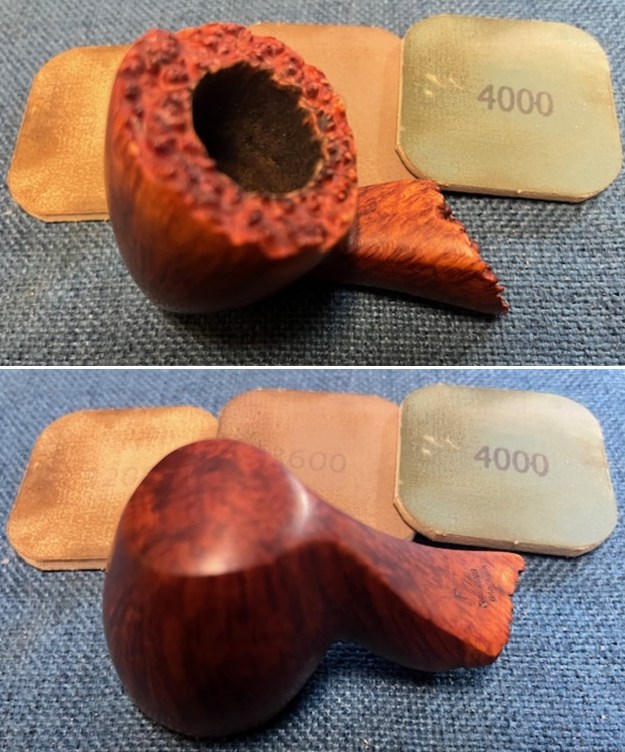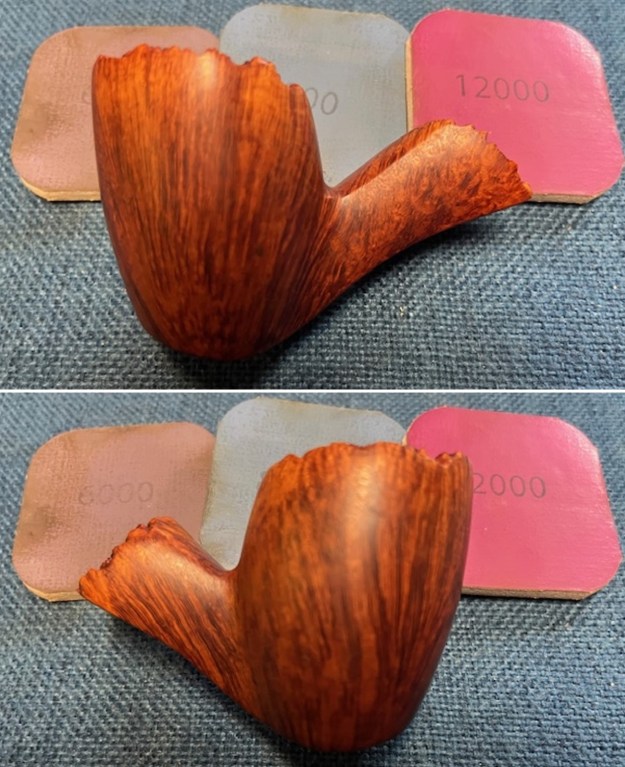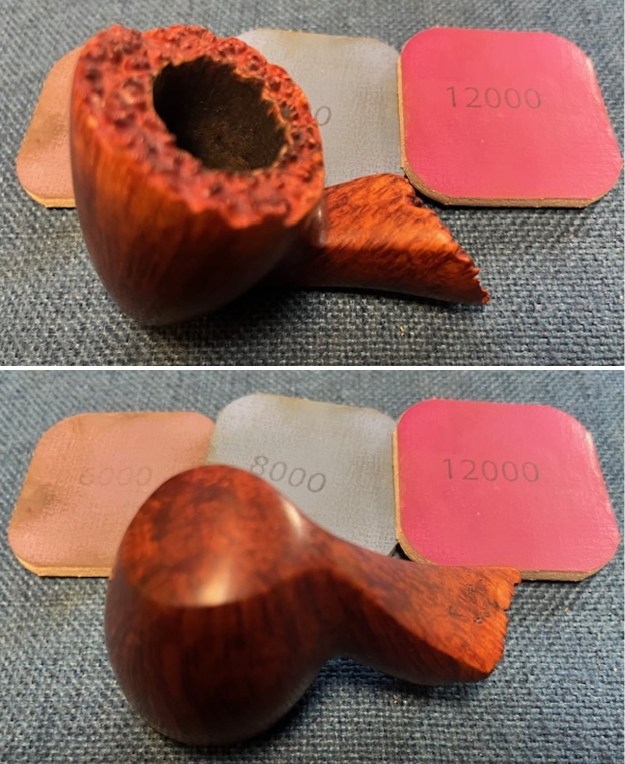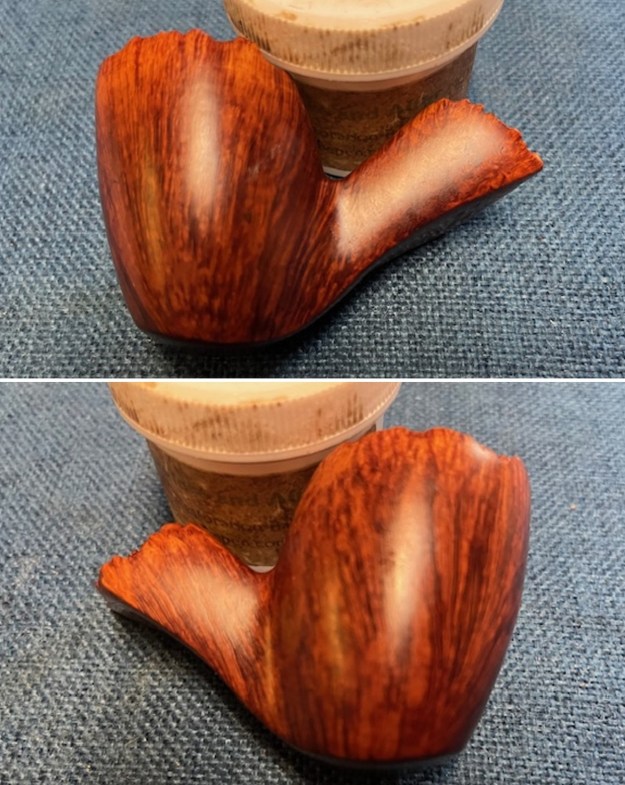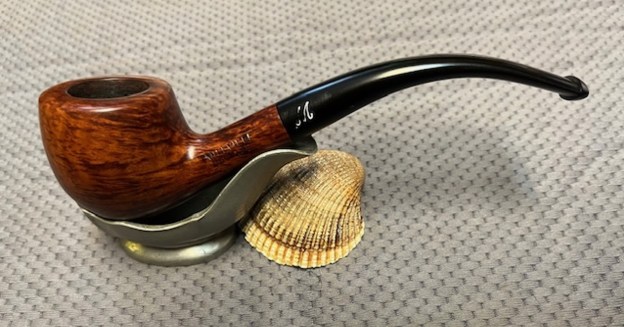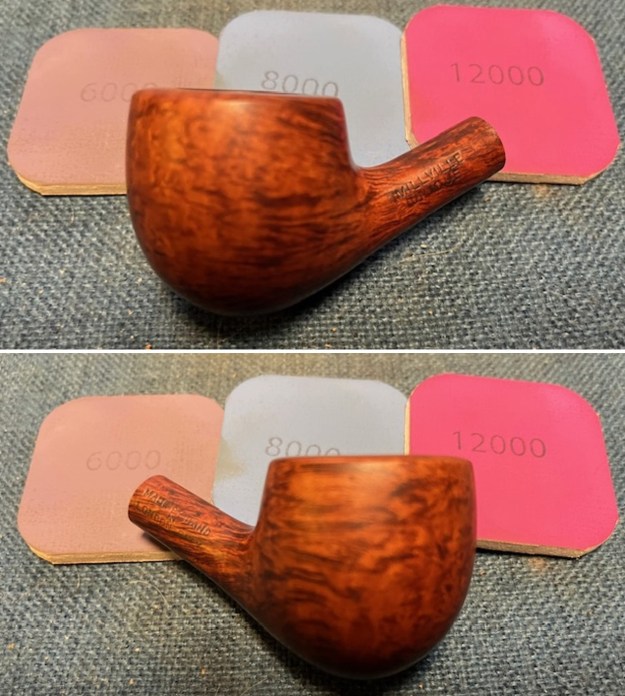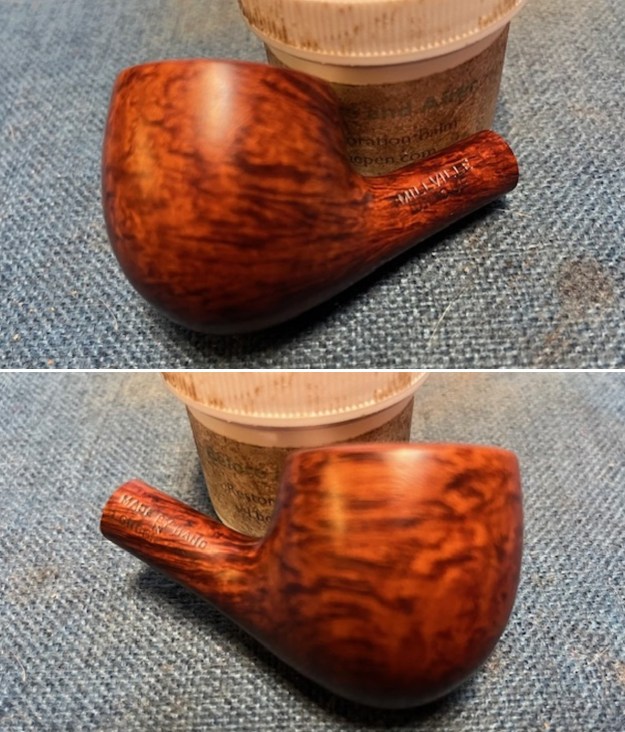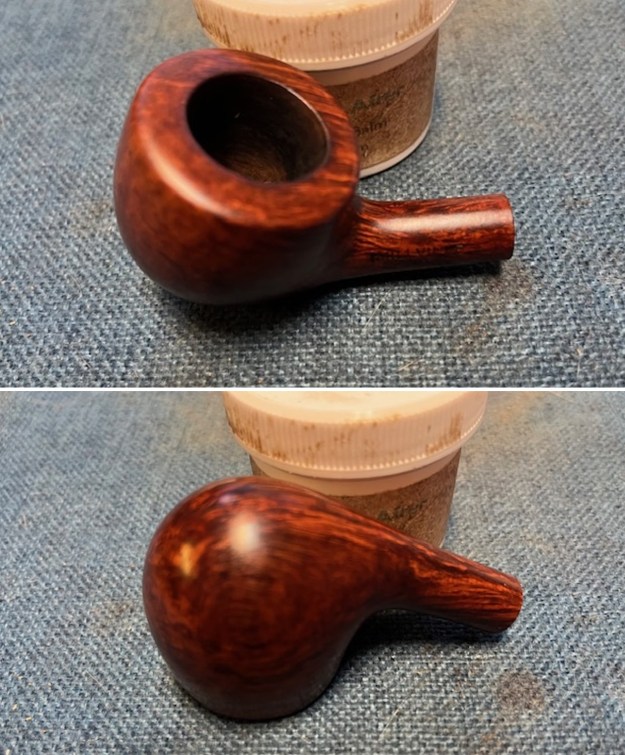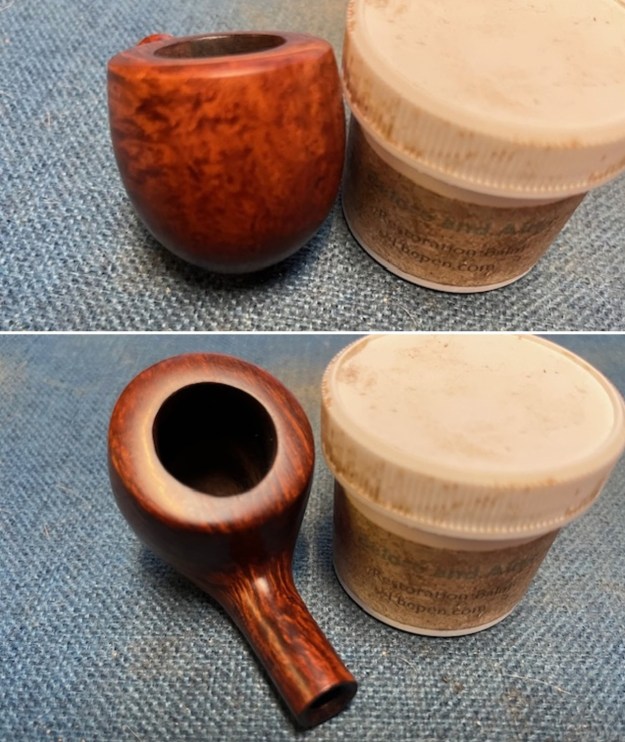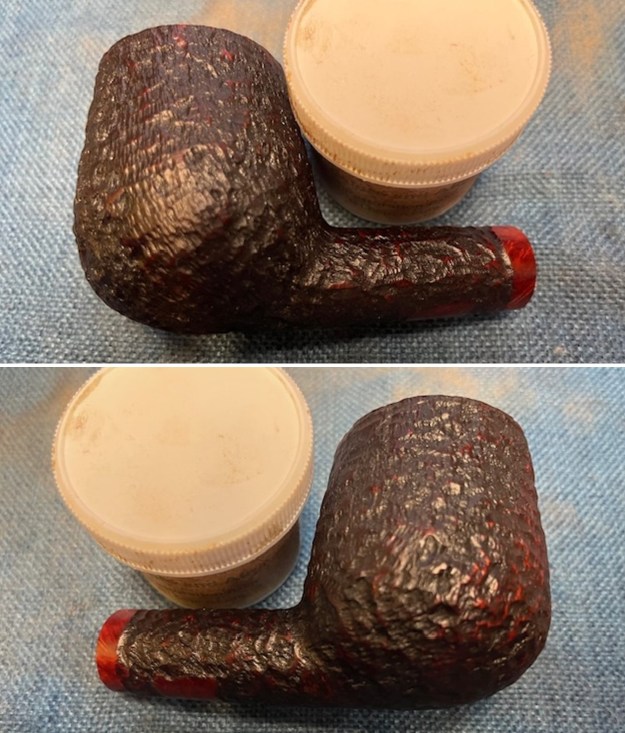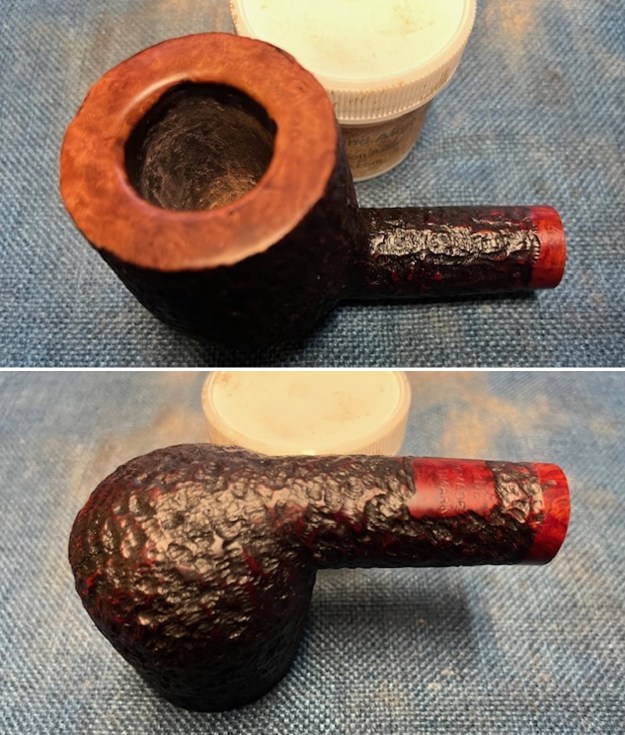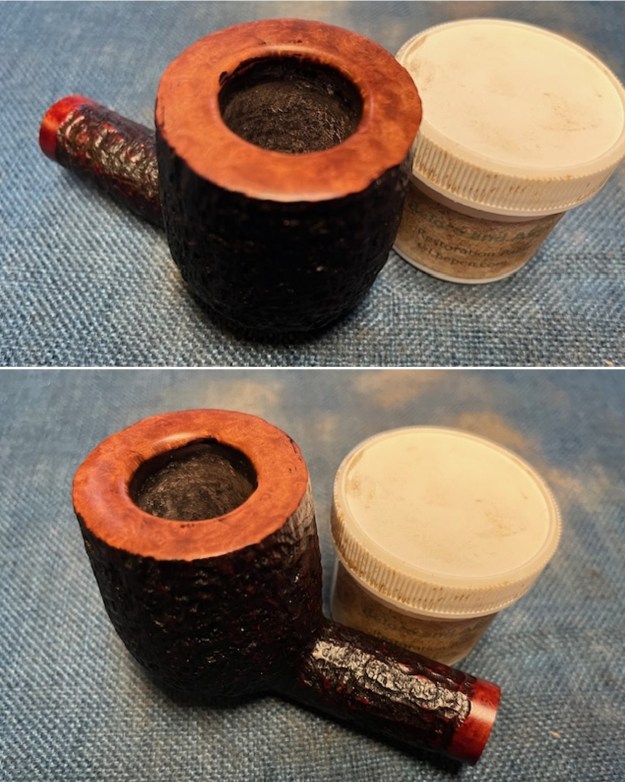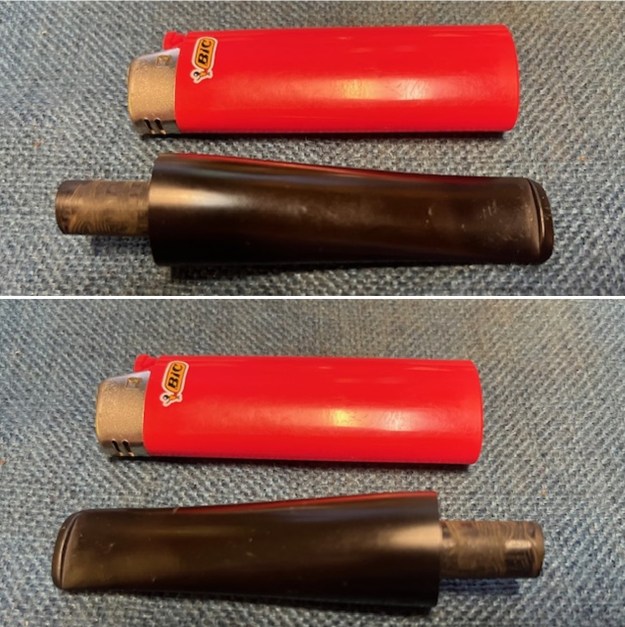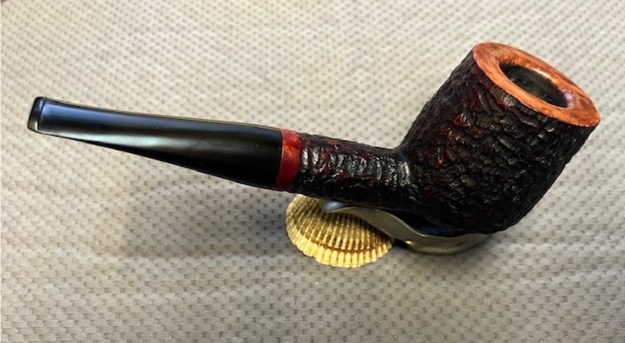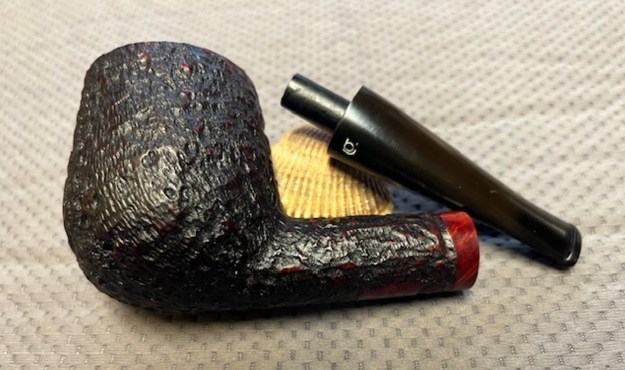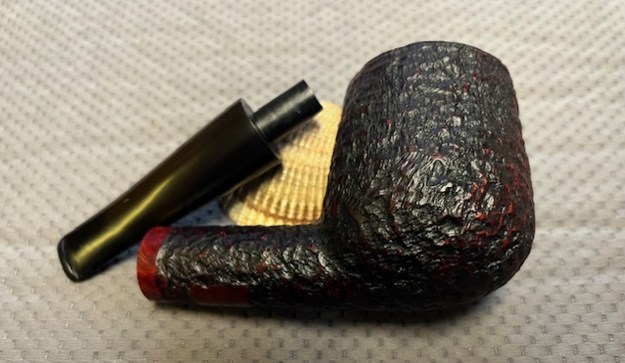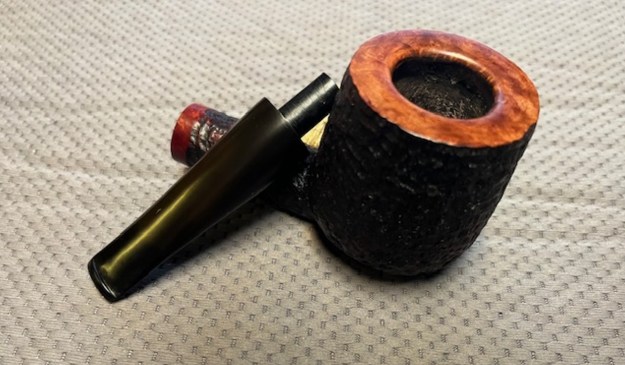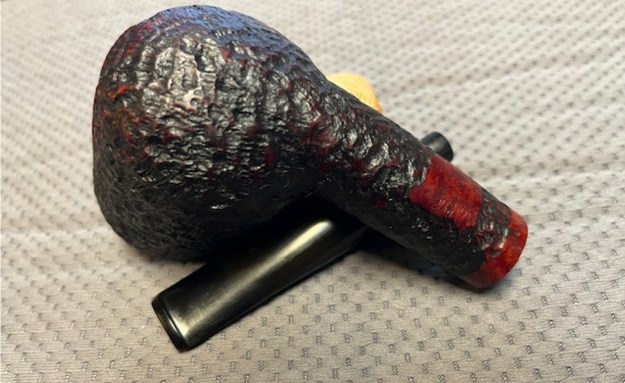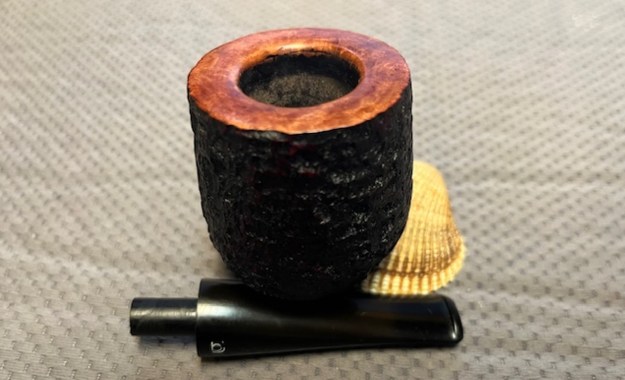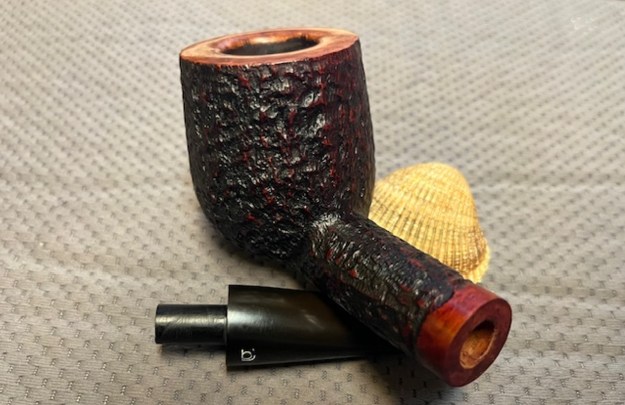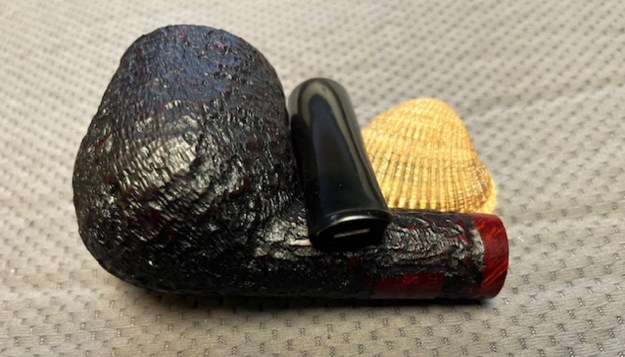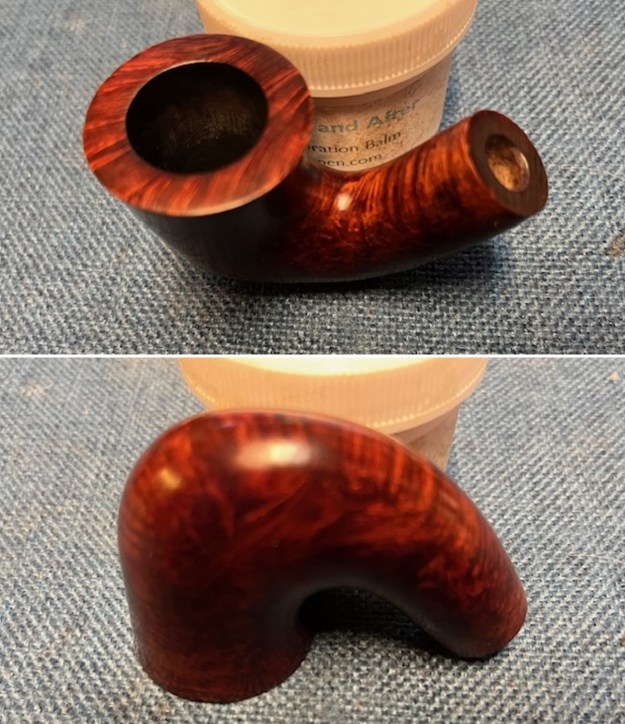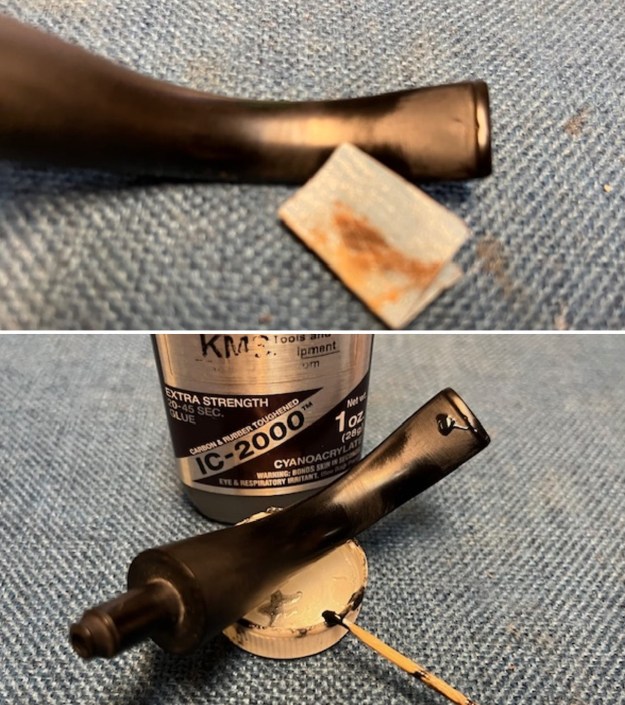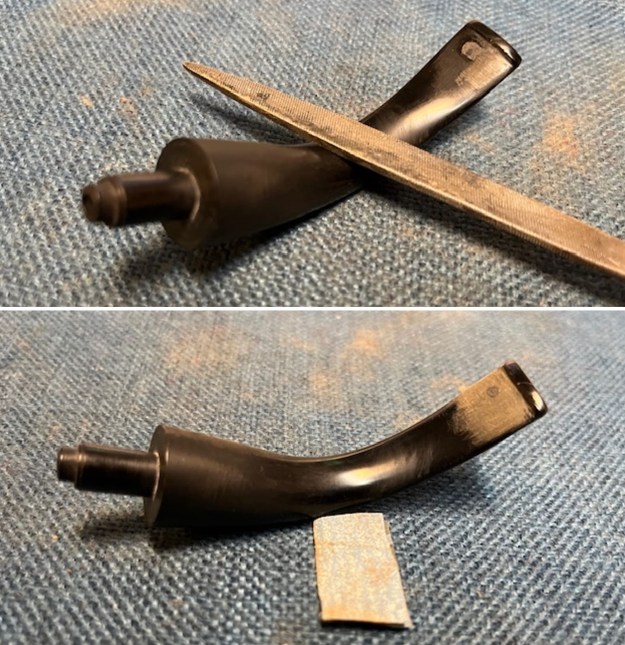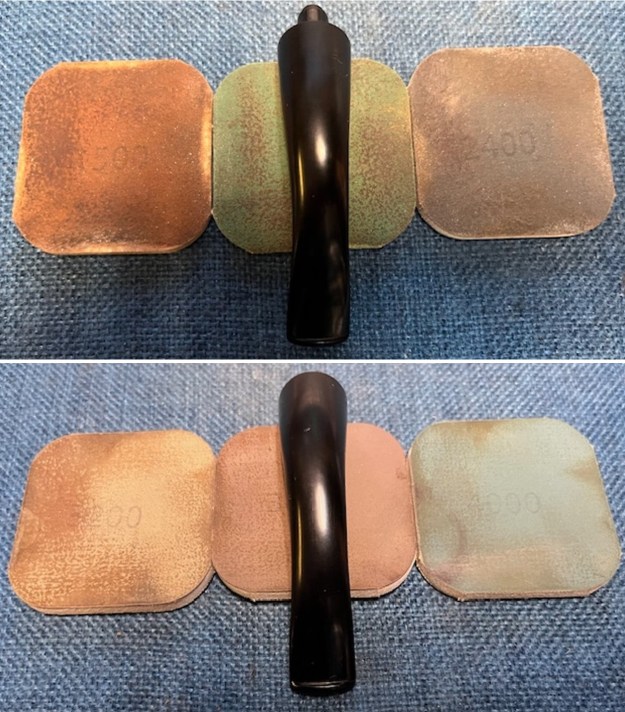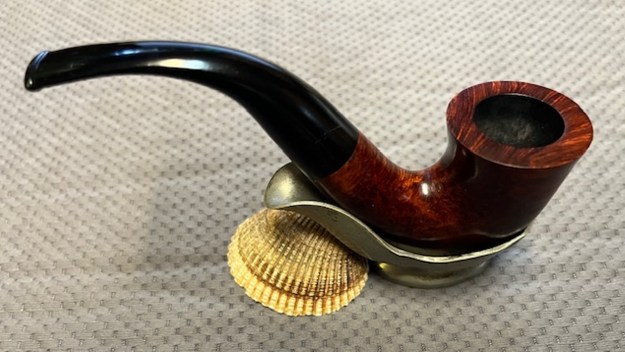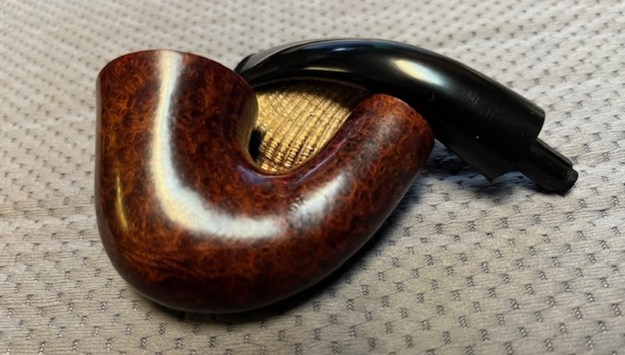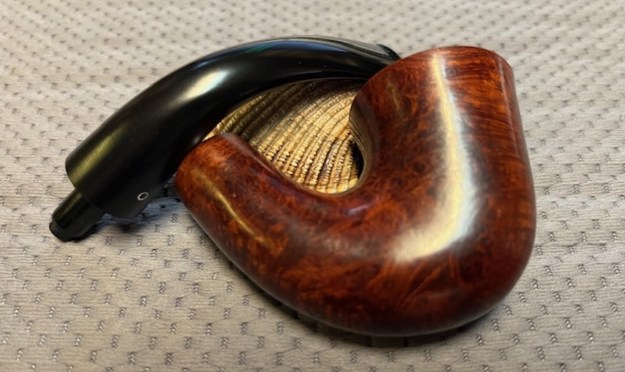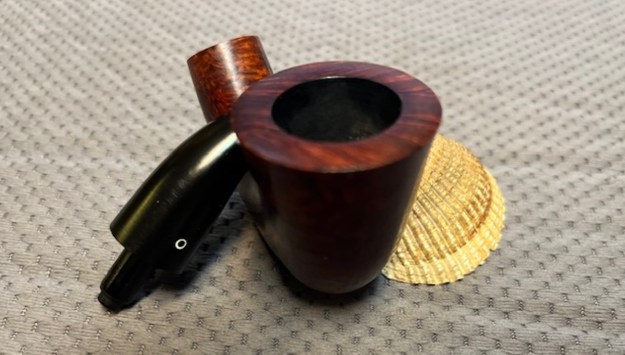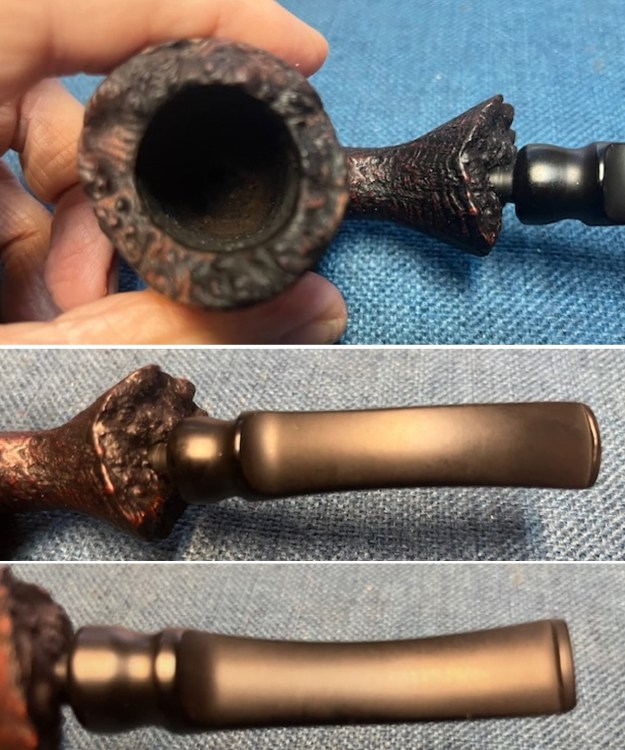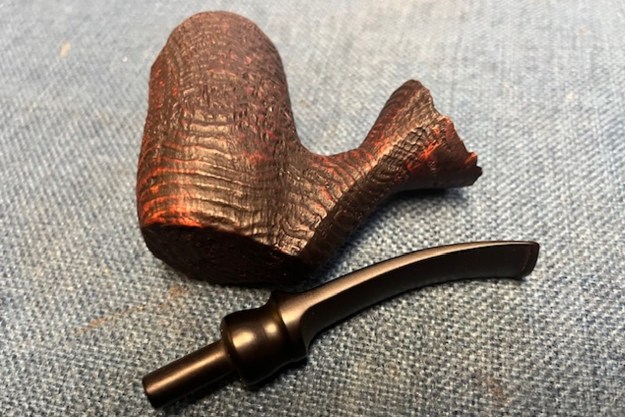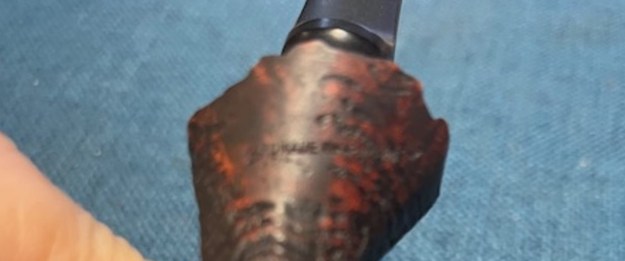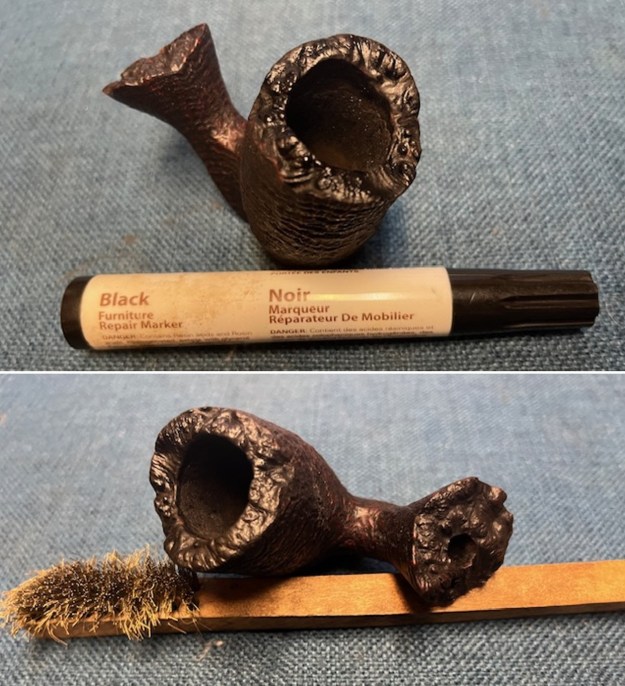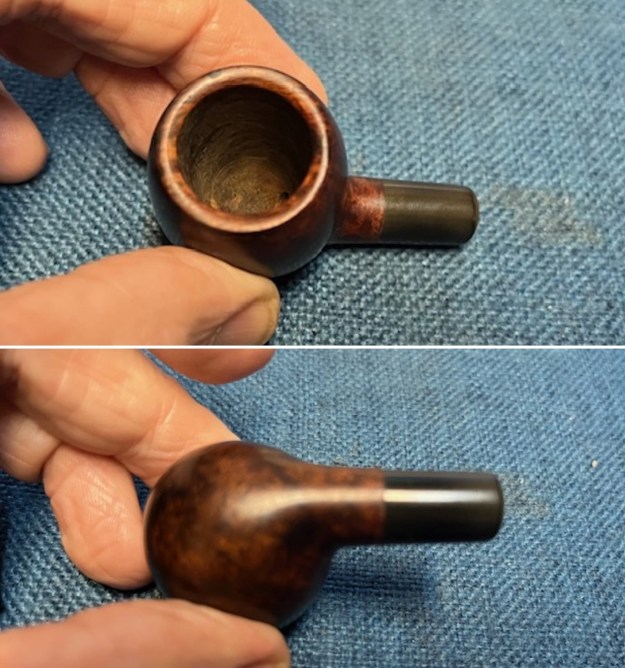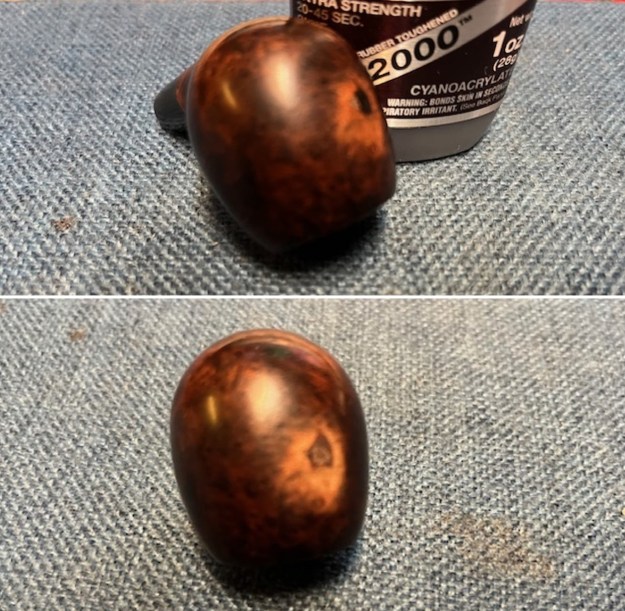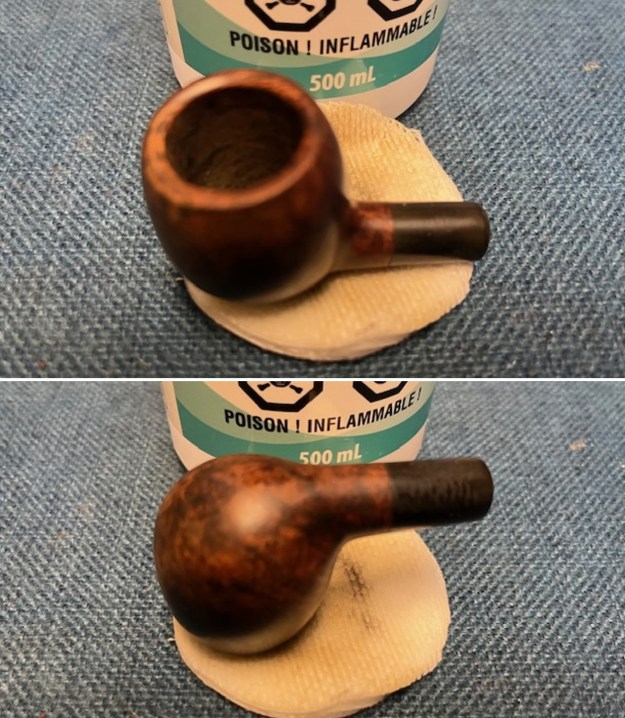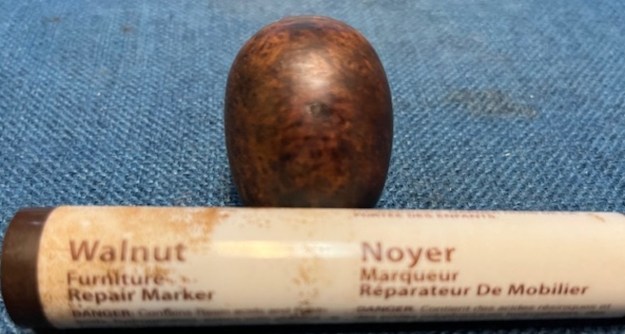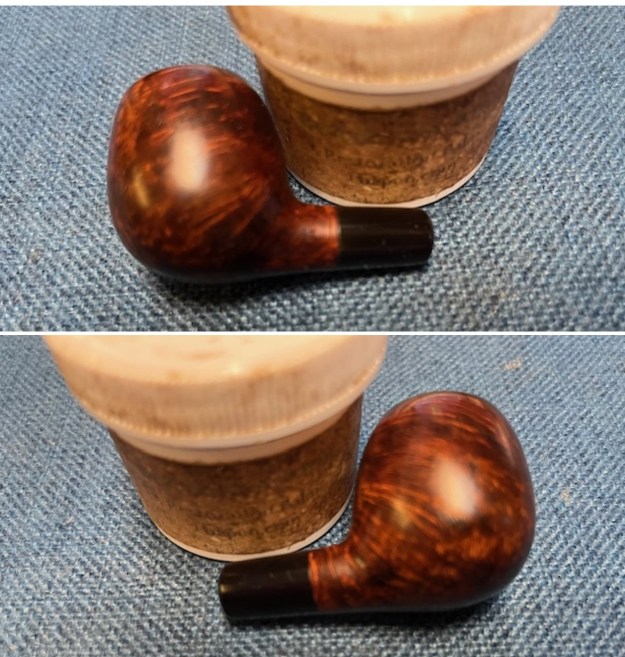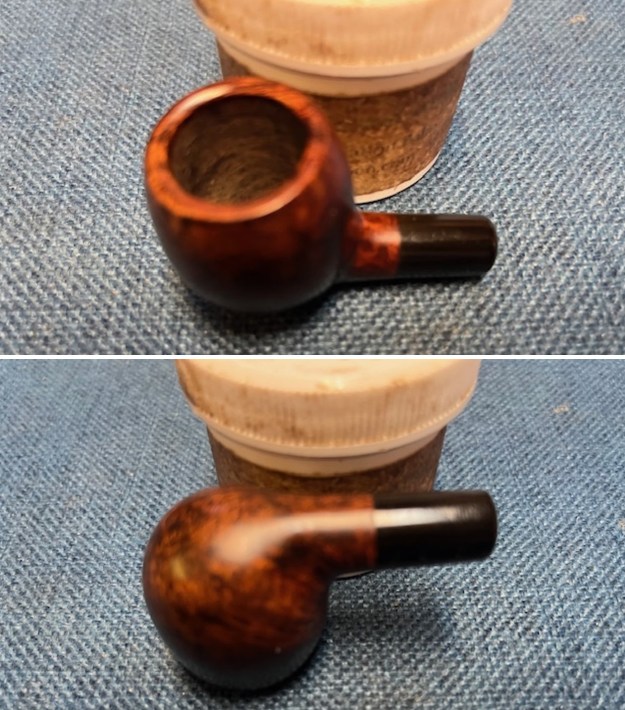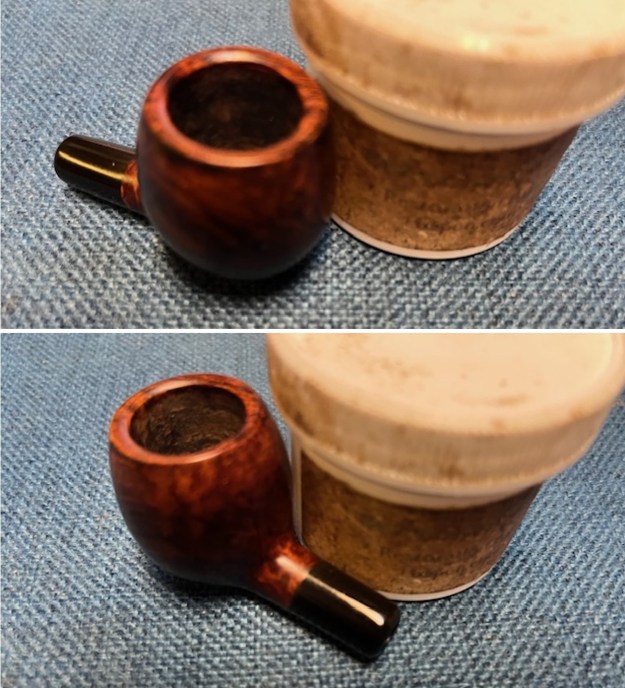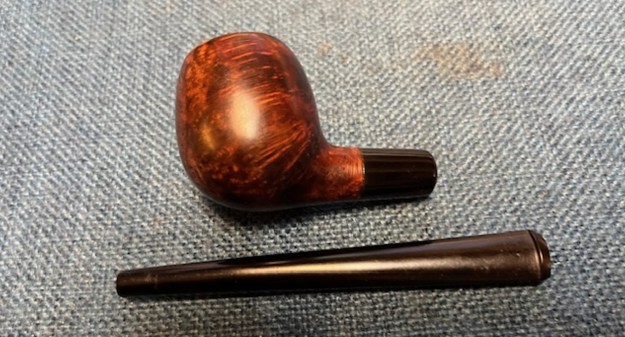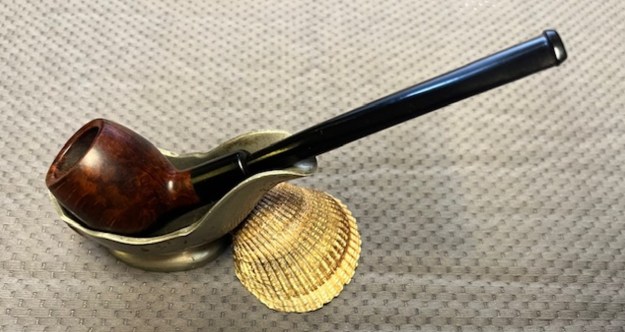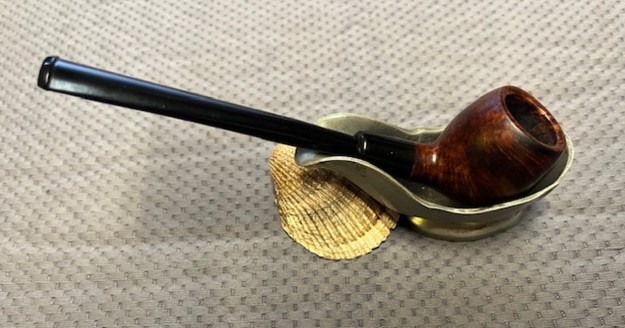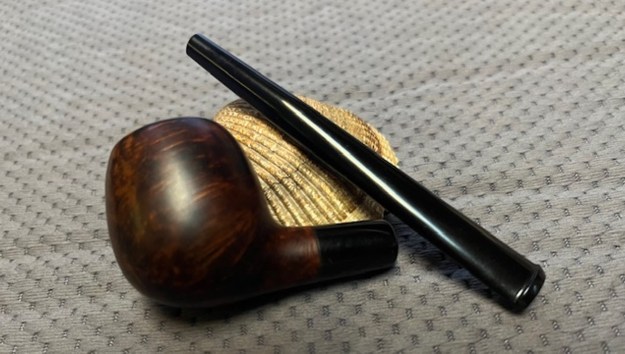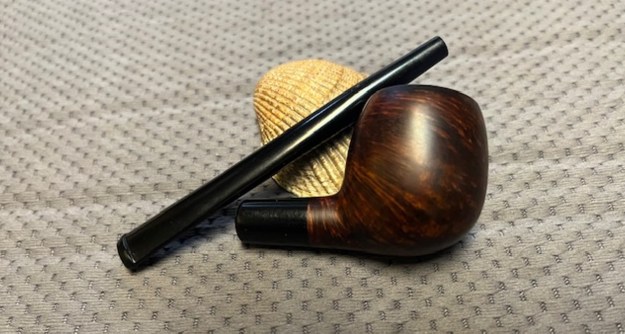
Tag Archives: restaining a bowl and rim

Restoring a Fine Peterson Kildare 405S


by Kenneth Lieblich

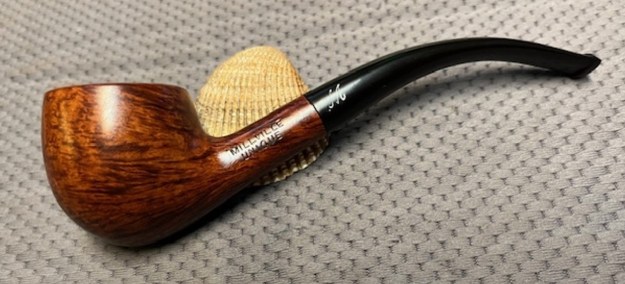
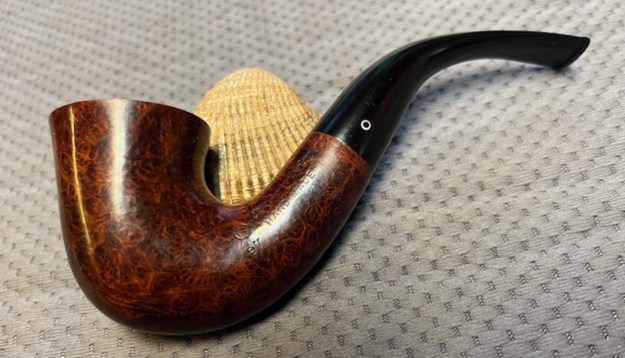
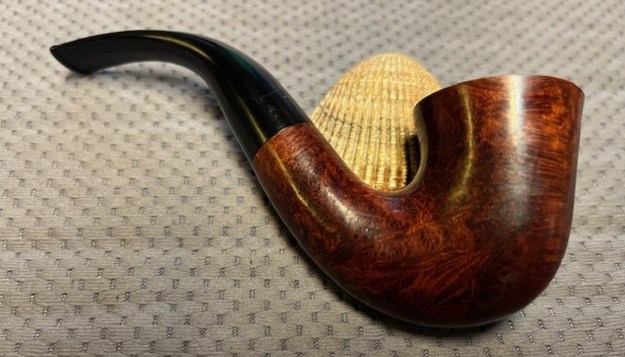
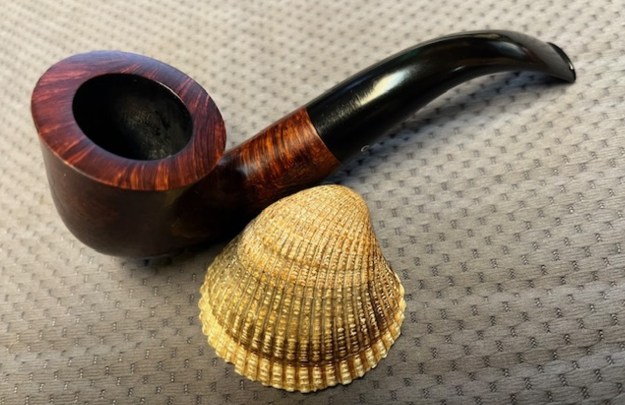
This is another in a series of pipes I cleaned up for a local family. Today, it’s a handsome Peterson Kildare 405S Prince with a P-lip saddle stem. It was a pleasure to work on this pipe, as it didn’t require too much elbow grease. In my research, I was interested to learn that this shape is apparently uncommon. The markings are as follows: on the left shank, we read Peterson’s [over] “Kildare”; on the right shank, we read Made in the [over] Republic [over] of Ireland. Immediately to the right of that is the shape number, 405S. Finally, on the stem, we see the stylized P of the Peterson Pipe Company.In looking up this pipe shape, I came upon a page from Mark Irwin’s blog, Peterson Pipe Notes. It had some useful information on the 400 series in general and this very pipe in particular:

The 400-shape group has come to the forefront with Peterson’s recent reboot of the 406 “Large Prince”. It’s an interesting and usually overlooked group, comprised of straight shapes influenced by the classic English chart. Insofar as the catalogs are concerned (which are never, of course, identical with actual production dates), the shape group begins quite understandably shortly after Peterson opened its London factory in the Bradley Buildings in 1937—England at the time being one of Peterson’s “Big Three” markets (the other two being the US and Germany). As a group, the shapes reflect the smoking styles of the mid-twentieth century—the 1940s, 50s and 60s—the decades that produced most of them. That is, they are smaller pipes than most pipemen (and women) use today and they’re lighter, designed for the comfort of constant clenching in an office or factory environment where both hands were needed, and for the shorter, probably more frequent smokes that the interruptions of the workday entails. While I’ve been able to document 21 shapes, probably no more than 8 to 10 were ever offered at one time, and for most decades considerably less. Once in a while Peterson, being the counter-cultural wags they are, will subvert the English aesthetic by giving a shape a “bit of the Irish,” adding what they call an “S/B” or “Semi-Bent” mouthpiece—a piece of Peterson lore that even Peterson has forgotten!

The 405s was first announced in the 1979 update to the 1975 catalog and released in the various Classic Range lines, documented in the Kildare, Kildare Patch and Sterling. It was extremely short-lived, however, and is not found in any subsequent Peterson catalogs. Whether it was slightly larger or smaller than the 406 and 407 is hard to say, especially when the 406 and 407 almost seem to be interchangeable.

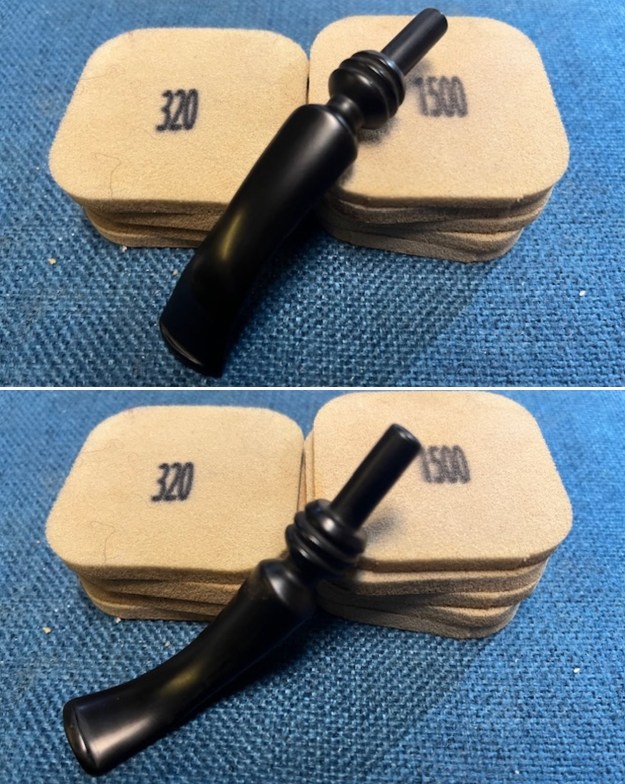
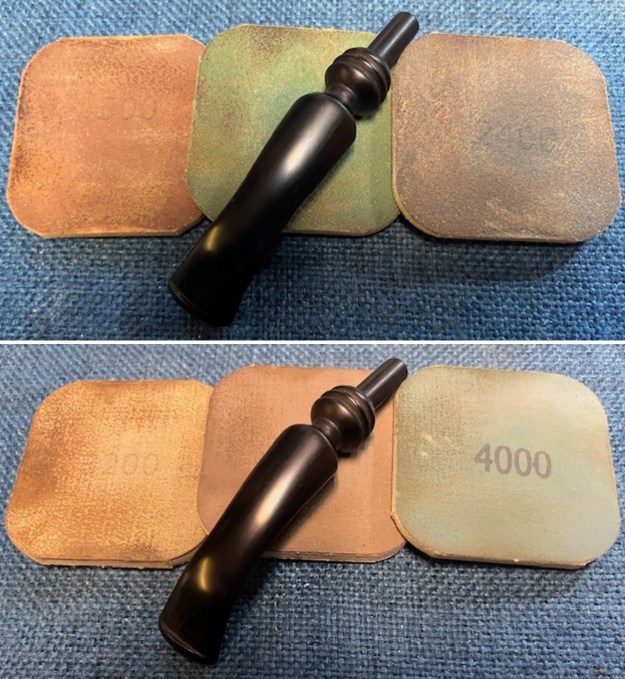
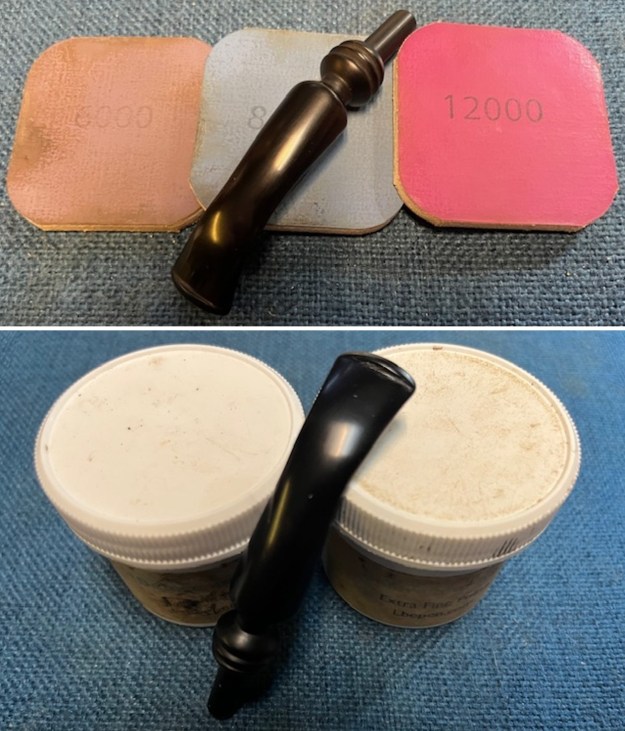
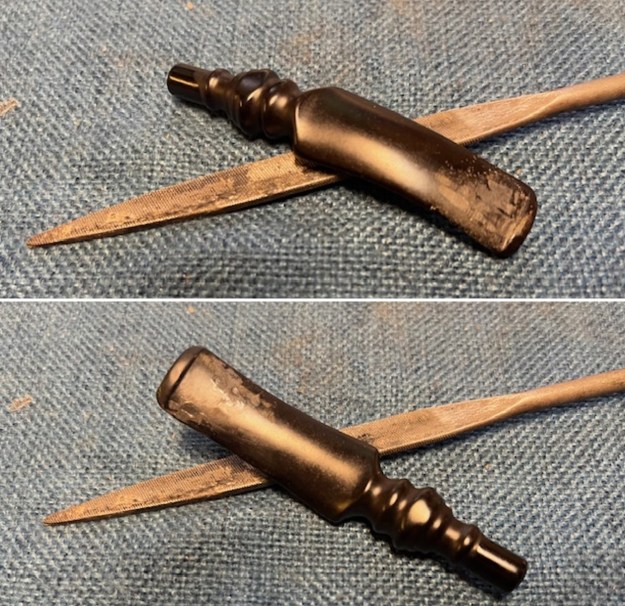
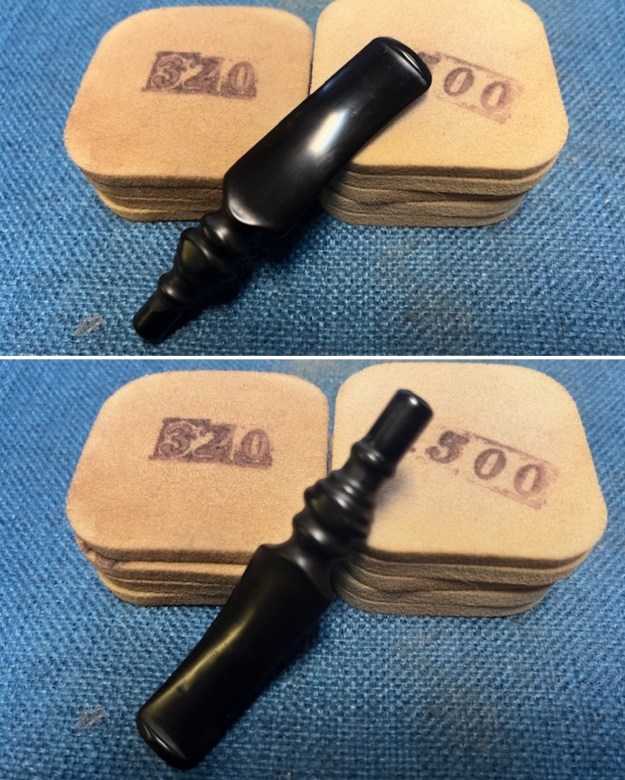
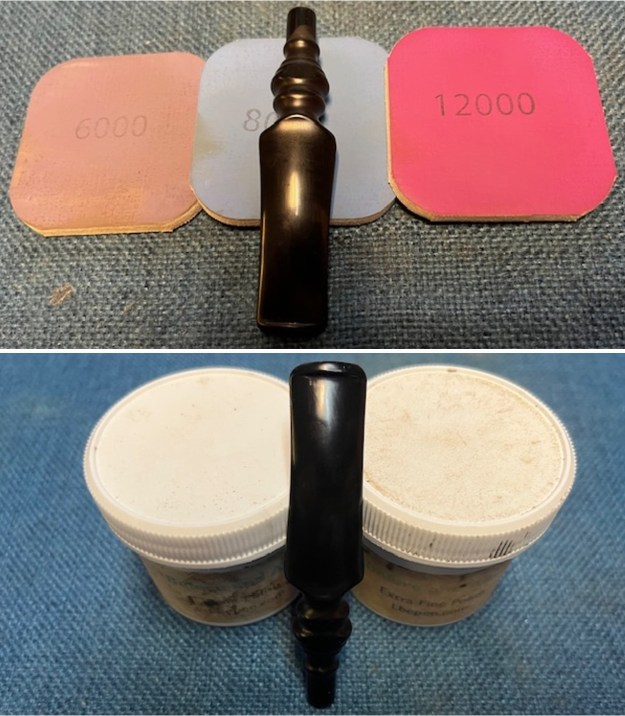
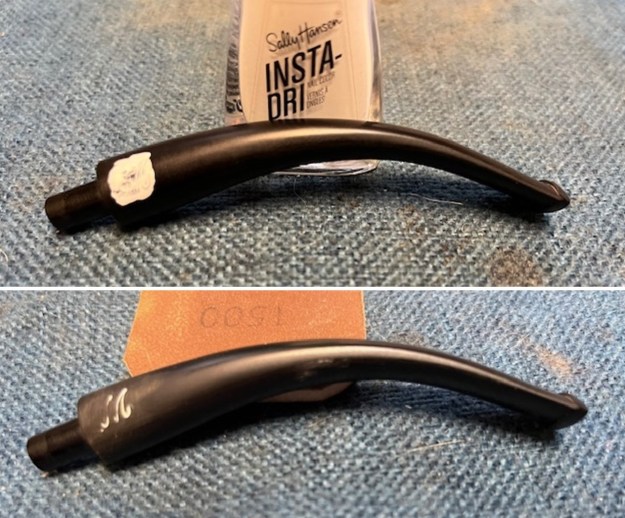
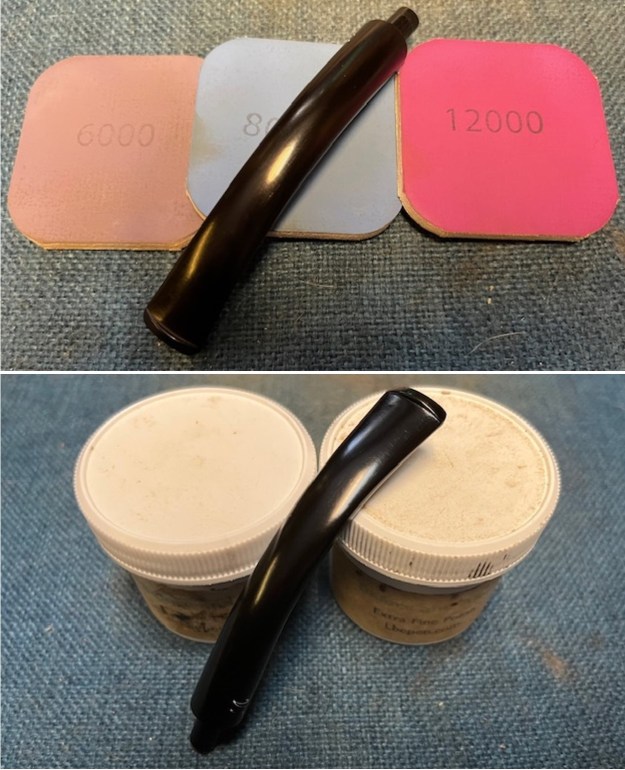
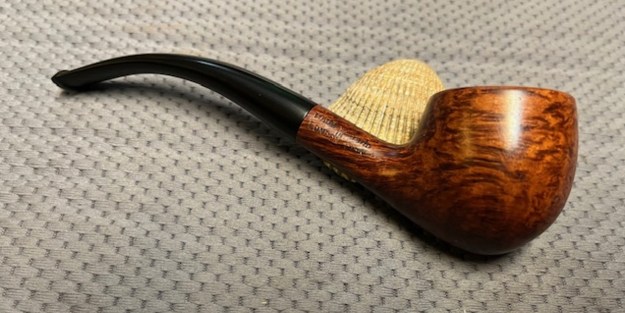
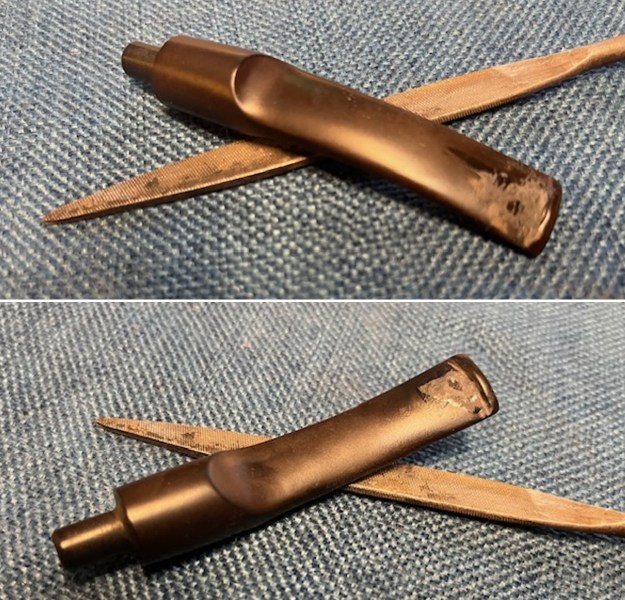
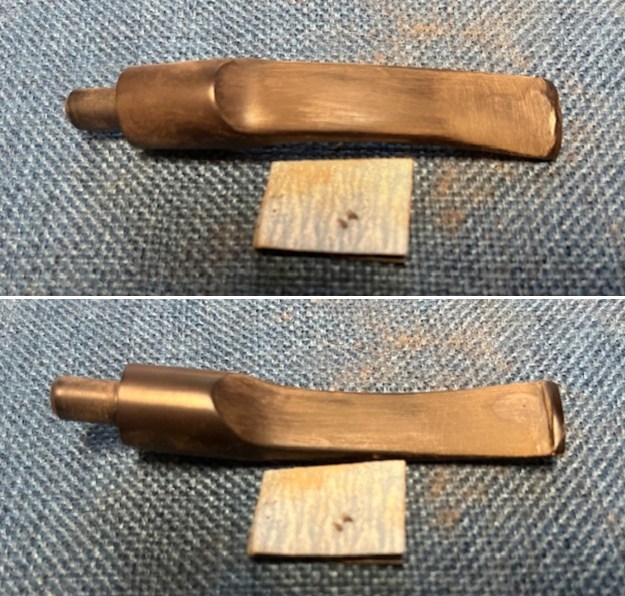
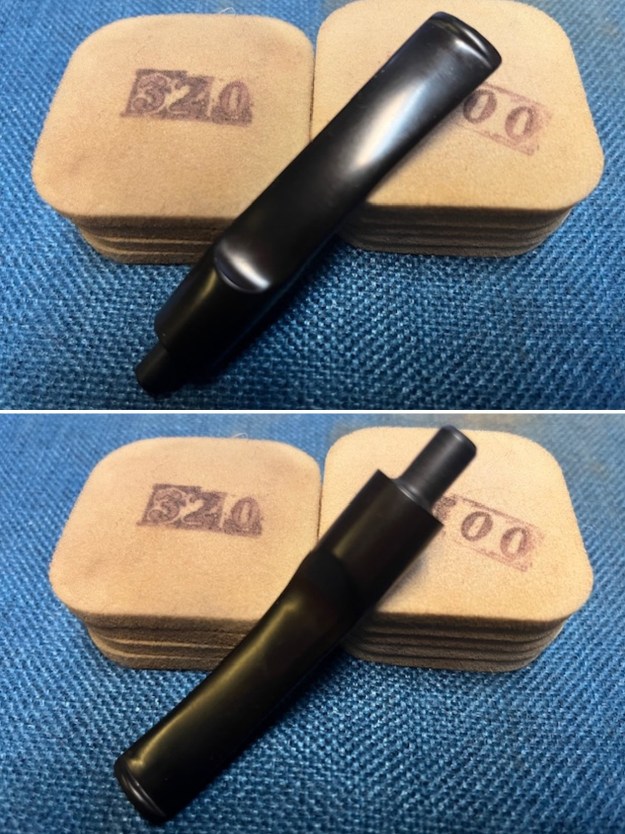
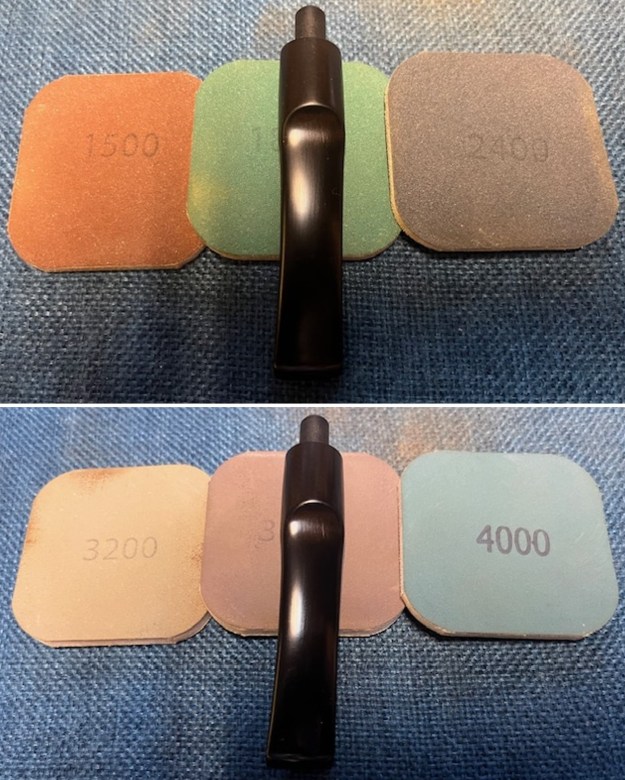
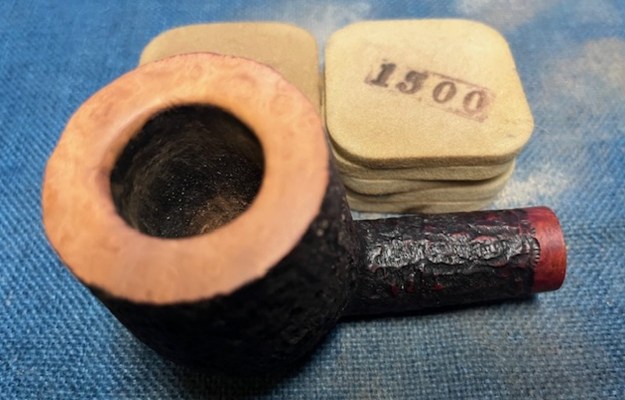
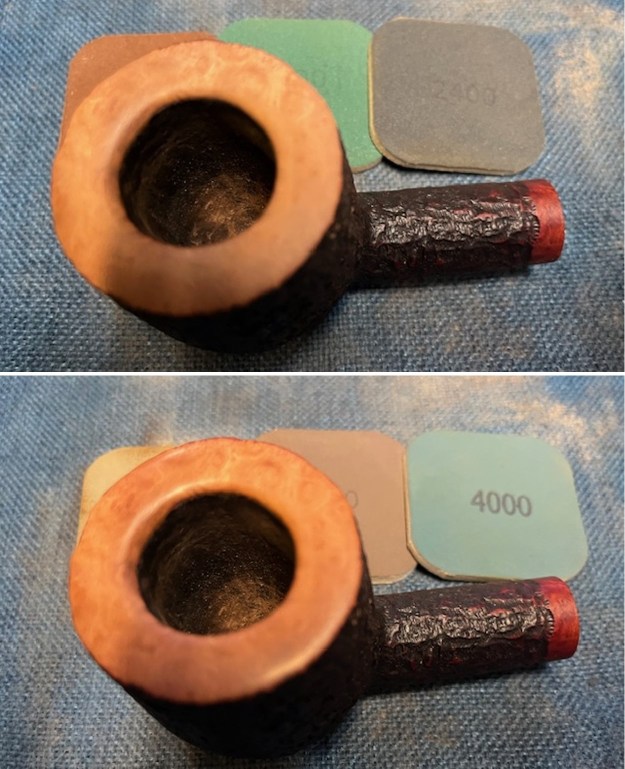
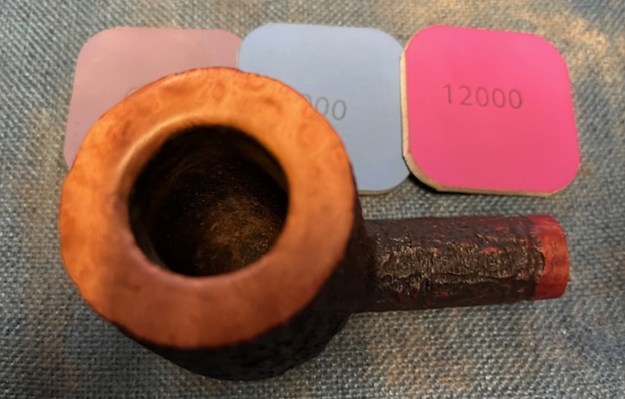
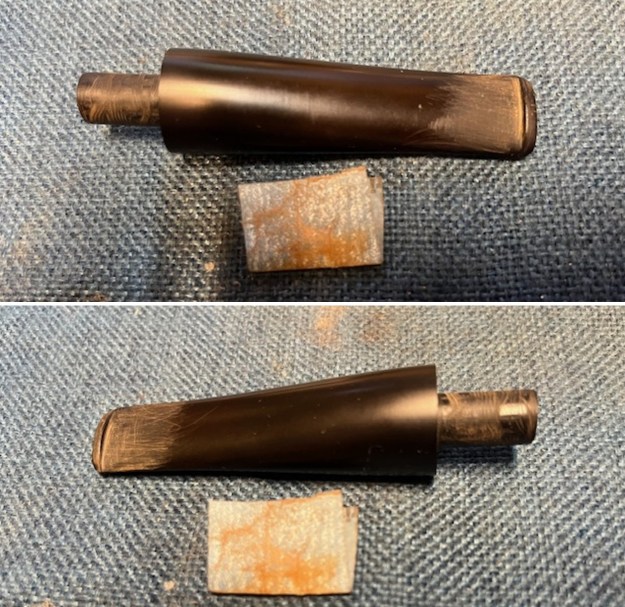
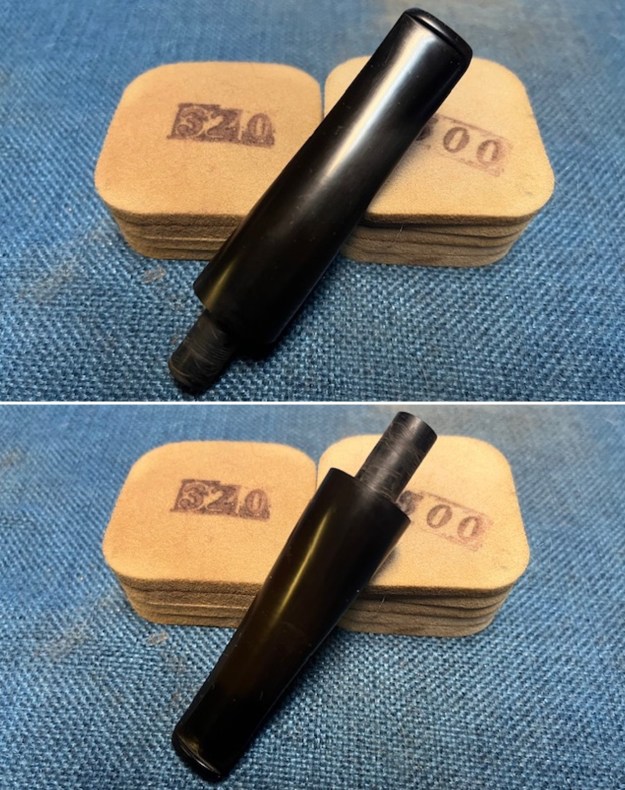
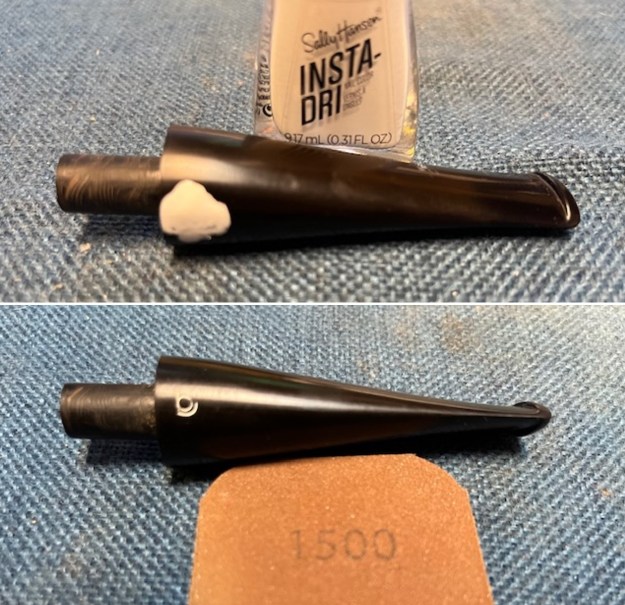
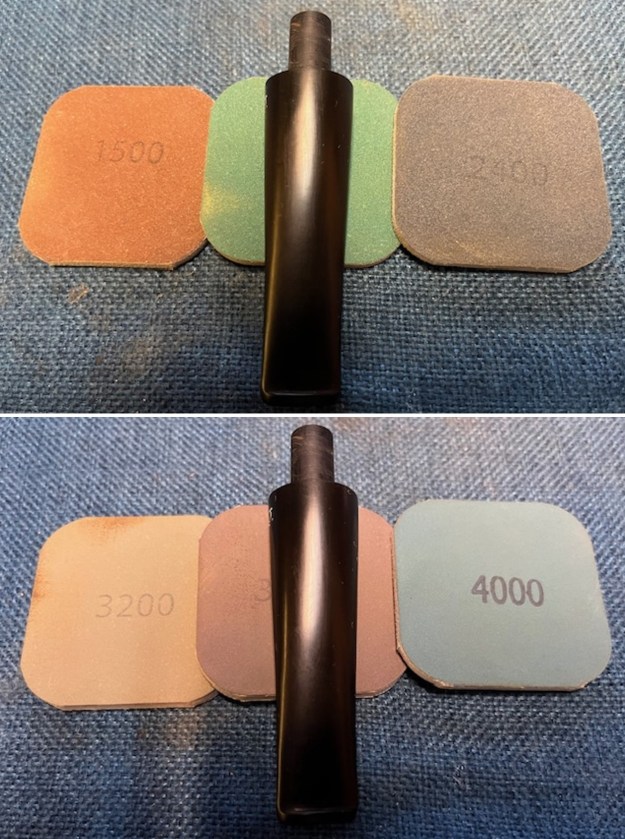
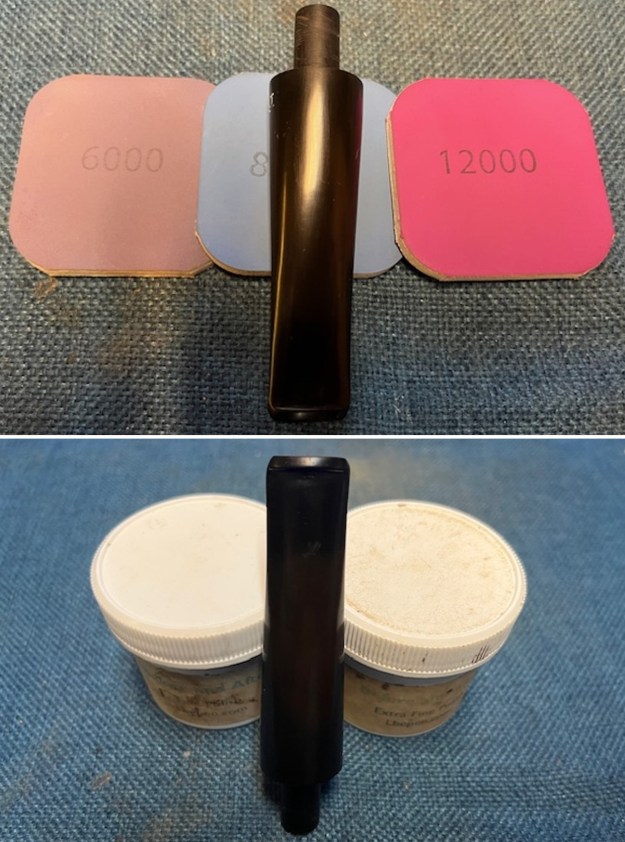
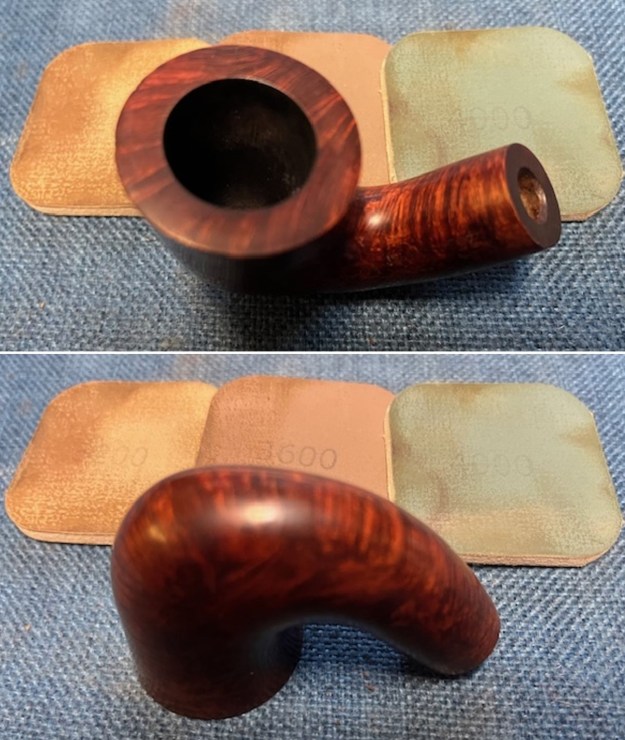
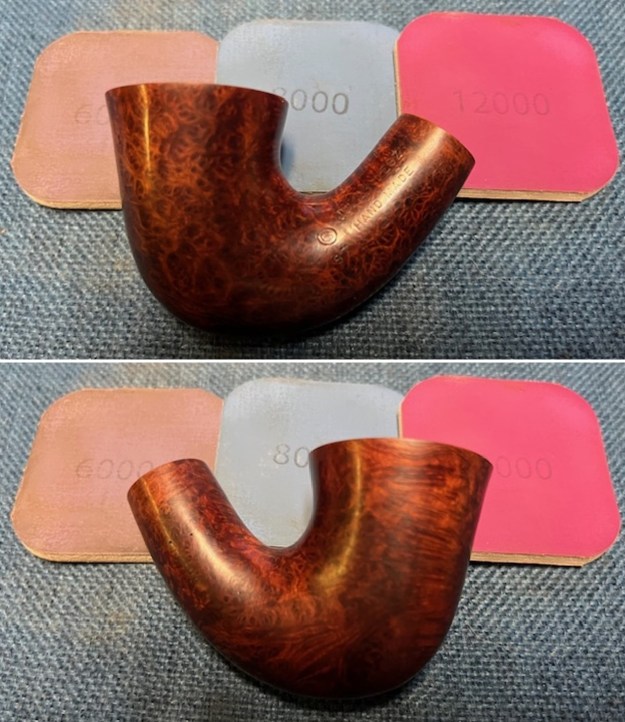
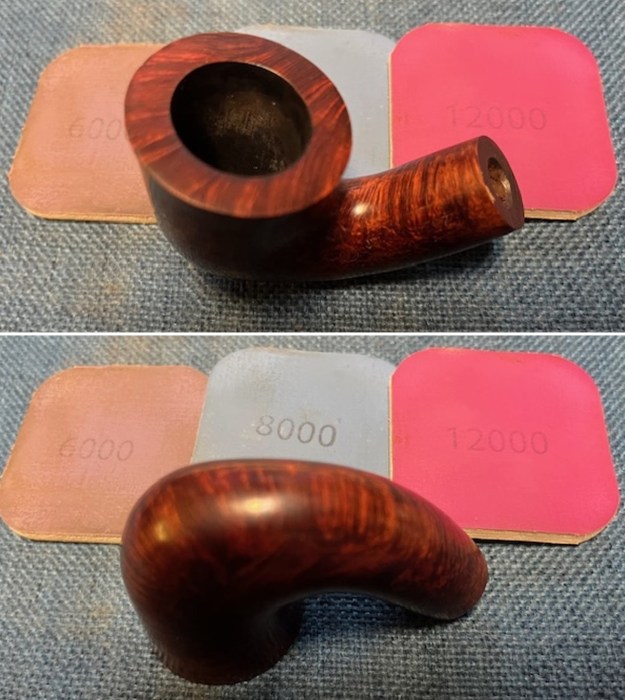
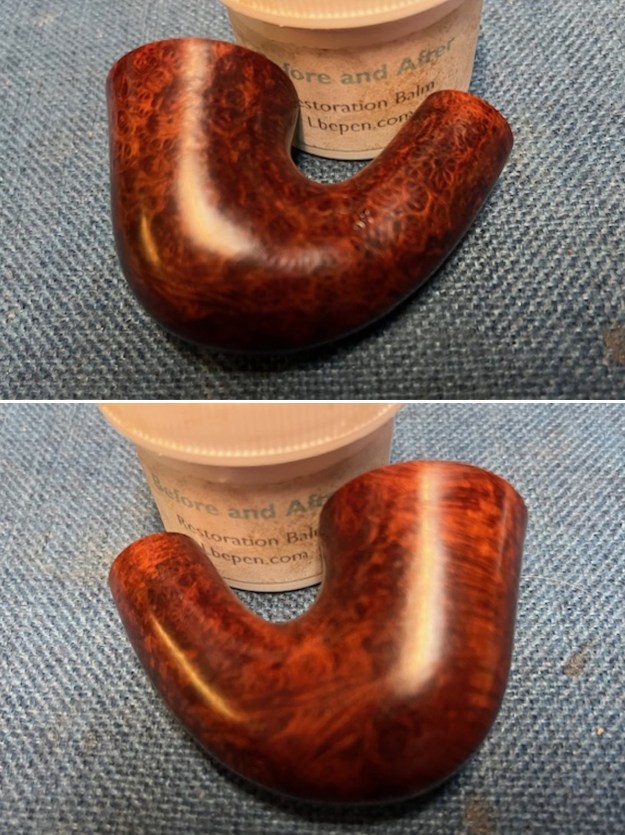
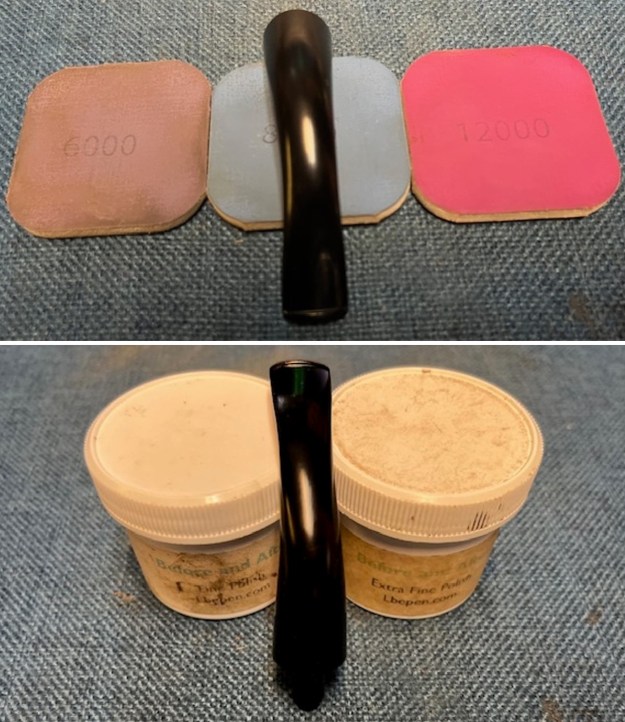
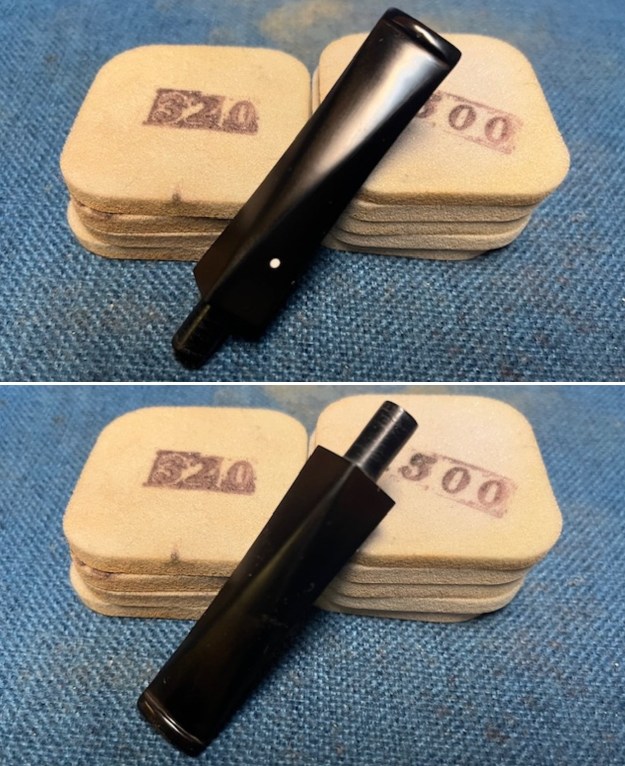
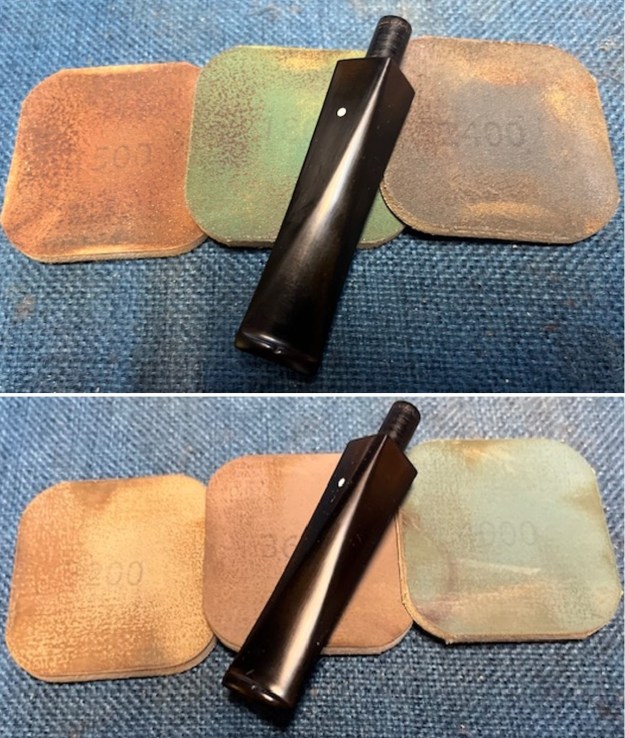
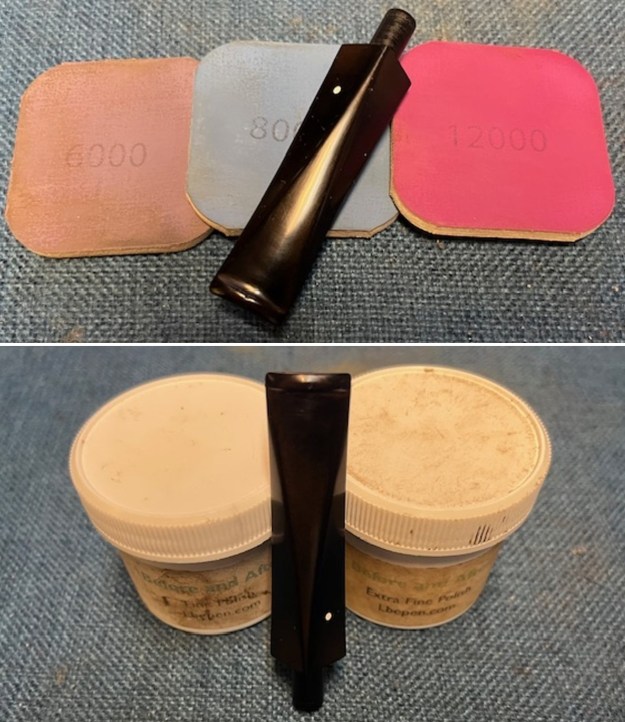
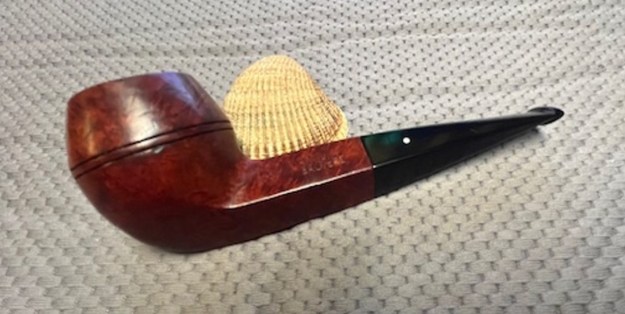
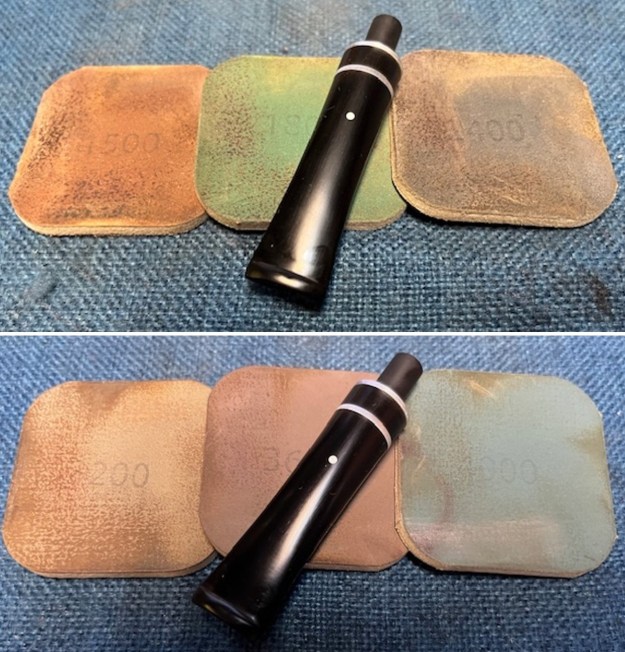
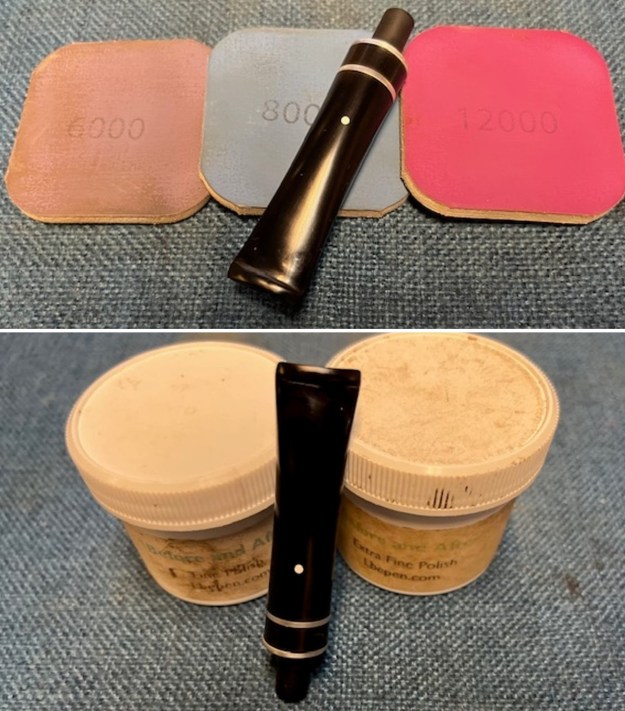
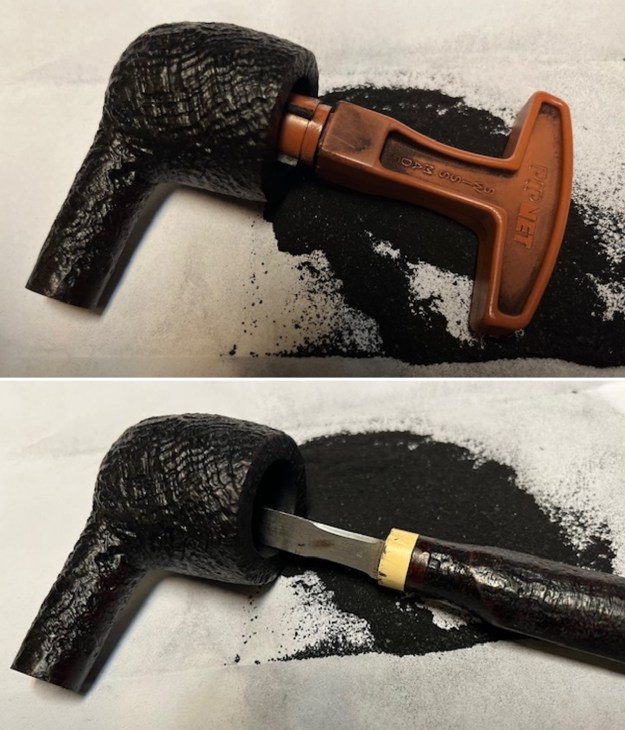
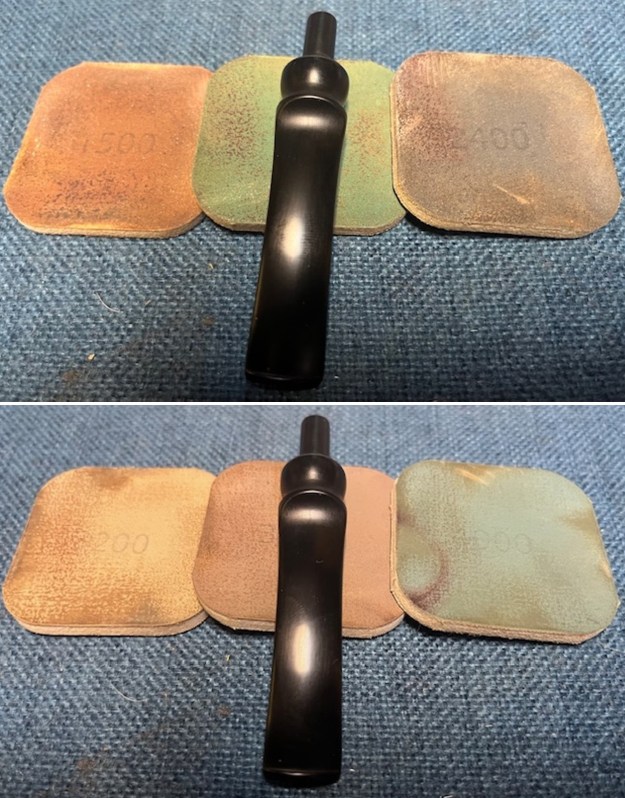
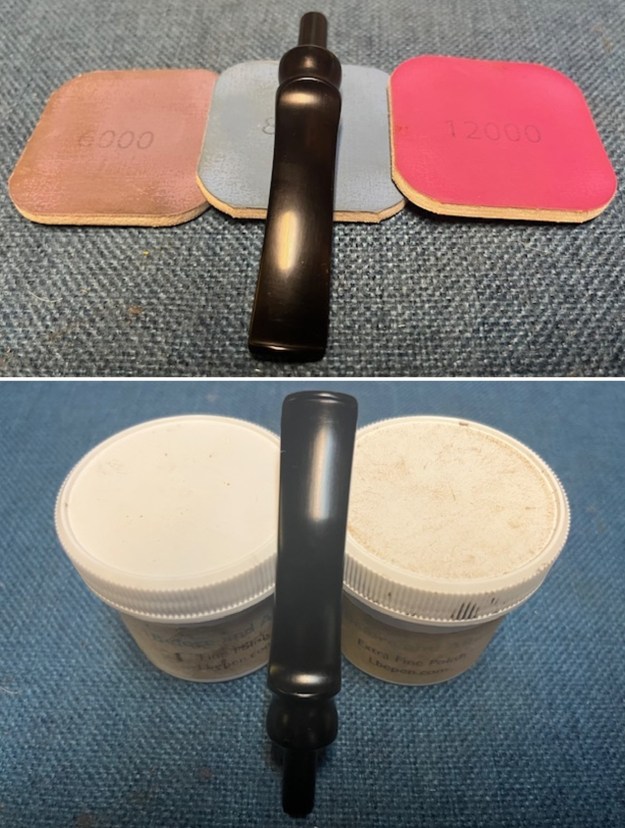
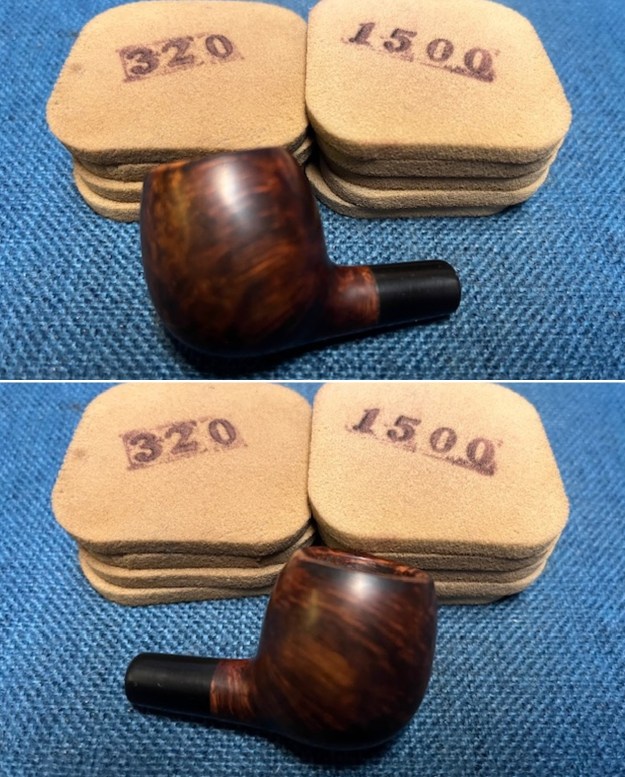
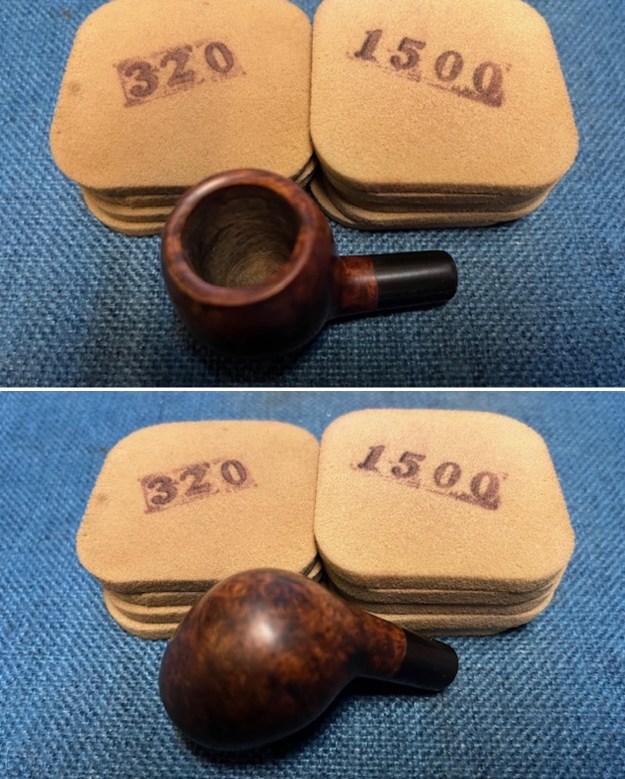
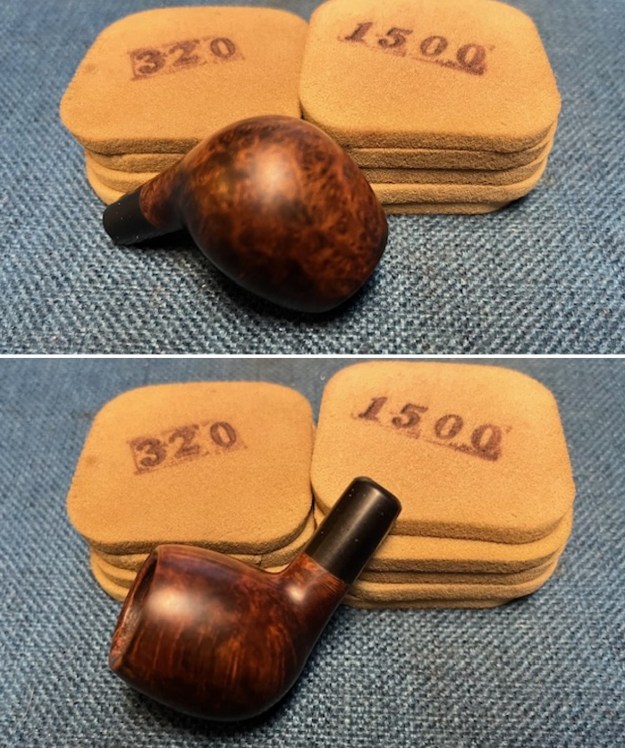
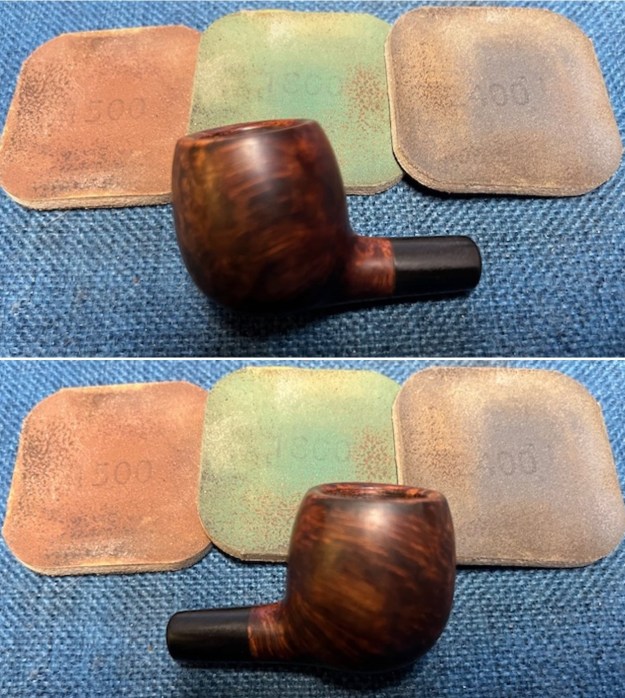
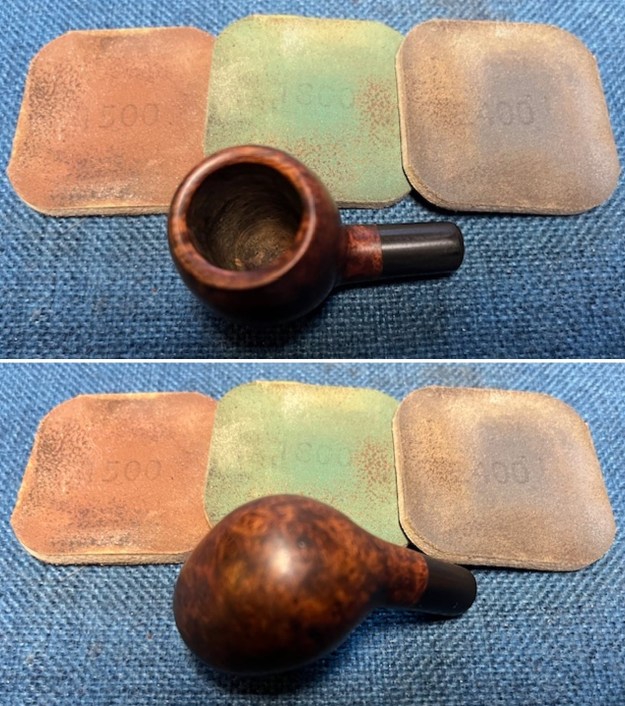
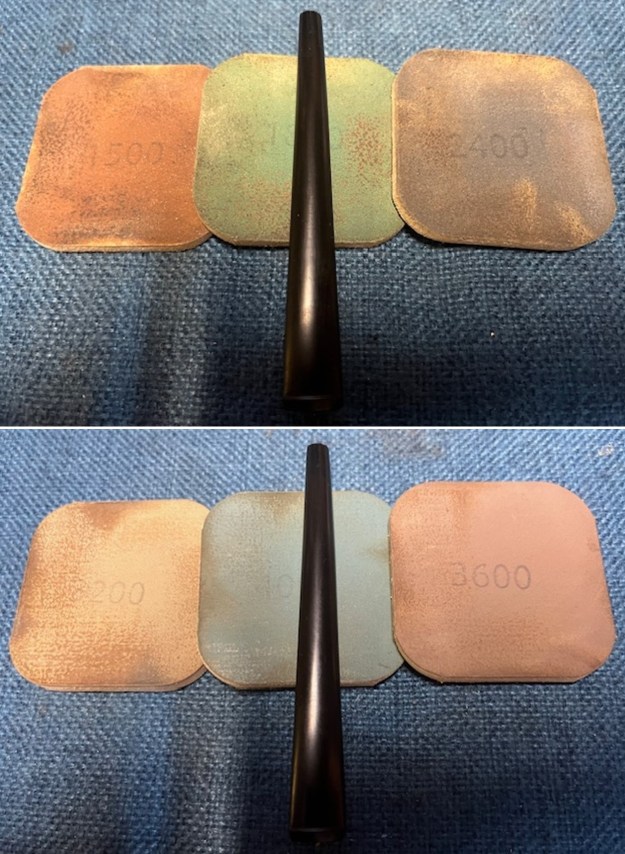
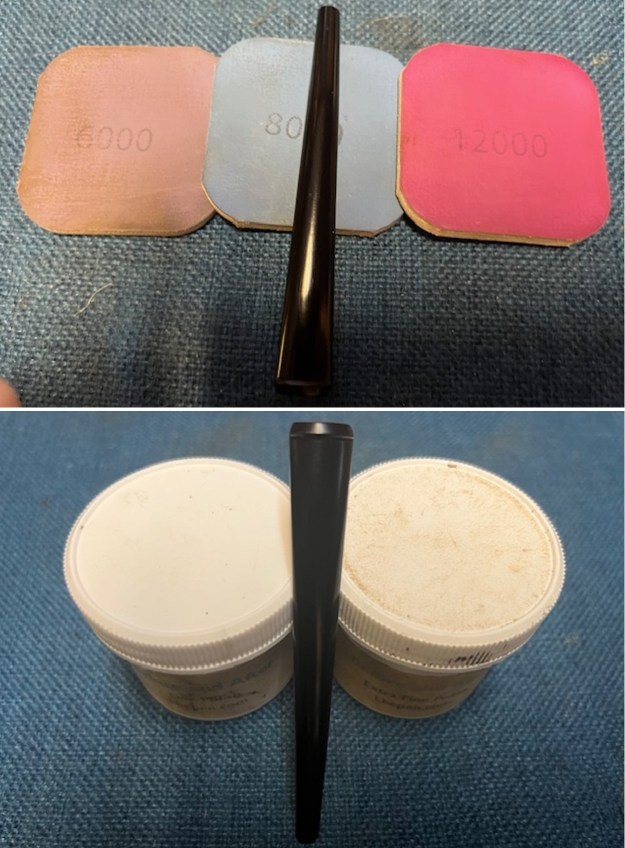
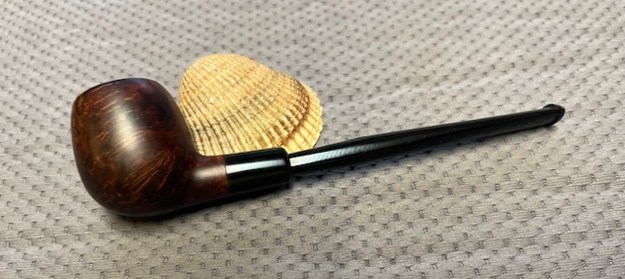
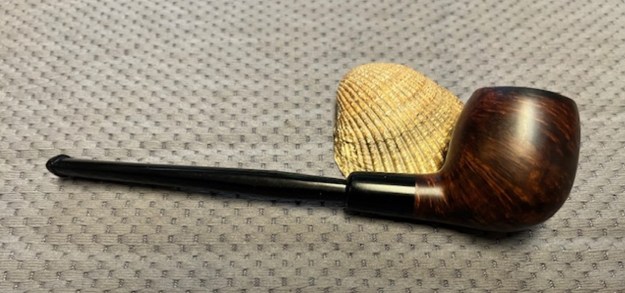
I also understand that the 405S most closely resembles the modern-day 408. The two are not identical, but pretty close. Let’s look at the condition of the pipe. As mentioned, the condition is really quite good. There’s a bit of wear and tear on the rim of the bowl, but nothing serious – and it looks like the inside of the bowl was cleaned out at some point. The stem also has a few tooth marks, but no significant calcification and only a bit of oxidation.To begin, I used oil soap on a few cotton rounds and wiped the stem down to provide an initial cleaning of filth before moving on to the next steps. The primary cleaning comes next. I cleaned the inside of the stem with both pipe cleaners and cotton swabs dipped in 99% lemon-infused isopropyl alcohol. I scrubbed thoroughly to make sure the interior was clean.The goal of the next step is the removal (or minimization) of oxidation. Going to my sink, I used cream cleanser, cotton rounds, and a toothbrush, and scoured the stem to remove as much surface oxidation as possible. As the photos show, the result is a hideous brownish mess – but better off the stem than on it.Once the stem was reasonably clean, I soaked it overnight in some de-oxidation fluid. This solution works to draw oxidation in the stem to the surface. This is a major aid and an important step in ensuring a clean stem. The following day, I drew the stem out from its bath and scrubbed the lingering fluid with a toothbrush.Now that the stem is clean and dry, I set about fixing the very minor dents in the vulcanite. This is done by filling those divots with black cyanoacrylate adhesive, impregnated with carbon and rubber. I left this to cure and moved on.After this, I painted the logo on the stem with some nail polish. I restored the logo carefully and let it fully set before proceeding.The penultimate step for the stem is sanding. First, with my set of needle files, I reduce the bulk of the cyanoacrylate repairs. I want to remove the excess adhesive as near to the surface as possible, without cutting into the vulcanite. Following that, I use all nine of the micromesh sanding pads (1,500 through 12,000 grit) to sand out flaws, even out the vulcanite, and provide gentle polishing of the finished surface. I also apply pipe-stem oil while using the last five micromesh pads. There was a wonderful, deep black shine to the stem when I was done.Now that the stem is (nearly) complete, I can move on to the stummel. The first step for me is to ream out the bowl – that is to say, remove all the cake inside the bowl. This accomplishes a couple of things. First (and most obviously), it cleans the bowl and provides a refurbished chamber for future smoking. Second, when the old cake is removed, I can inspect the interior walls of the bowl and determine if there is damage or not. In this case, the bowl was clean enough that I only used a a piece of sandpaper taped to a wooden dowel to remove the little debris.Similar to the stem, I then cleaned the stummel with both pipe cleaners and cotton swabs dipped in 99% lemon-infused isopropyl alcohol.I then decided to ‘de-ghost’ the pipe – that is to say, exorcize the remaining filth from the briar. I filled the bowl and the shank with cotton balls, then saturated them with 99% isopropyl alcohol. I let the stummel sit overnight. This caused any remaining oils, tars and smells to leach out into the cotton.To tidy up the briar, I also wiped down the outside with some oil soap on cotton rounds (and a toothbrush). This does a good job of cleaning any latent dirt on the surface of the briar. The last step of the cleaning process is to scour the inside of the stummel with some soap and tube brushes. This is the culmination of the work of getting the pipe clean.I then used all nine micromesh pads (1,500 through 12,000 grit) on the outside of the stummel to finish it off. This sanding minimizes flaws in the briar and provides a beautiful smoothness to the wood. I rubbed some Before & After Restoration Balm into the briar and let it sit for 20 minutes or so. The balm moisturizes the wood and gives a beautiful depth to the briar. I then buffed it with a microfibre cloth. For the final step, I took the pipe to my bench buffer and carefully polished it – first with a white diamond compound, then with three coats of carnauba wax. This procedure makes the pipe look its best – the stummel sings and the stem glows.All done! This Peterson Kildare 405S looks fantastic again and is ready to be enjoyed by its new owner. The approximate dimensions of the pipe are as follows: length 5½ in. (139 mm); height 1½ in. (37 mm); bowl diameter 1⅝ in. (40 mm); chamber diameter ¾ in. (19 mm). The weight of the pipe is 1¼ oz. (36 g). I hope you enjoyed reading the story of this pipe’s restoration as much as I enjoyed restoring it. If you are interested in more of my work, please follow me here on Steve’s website or send me an email at kenneth@knightsofthepipe.com. Thank you very much for reading and, as always, I welcome and encourage your comments.

Restoring a Butz-Choquin Vendôme Extra 1688 Apple


by Kenneth Lieblich

Here’s a charming pipe! I’ve been restoring a good number of pipes for a local family and this is the latest of the bunch: a Butz-Choquin Vendôme Extra 1688. This is an apple shape (in French, the shape is called boule – meaning ball), with a round shank and a tapered stem. It’s an attractive pipe, but it has seen better days. Time to spiff it up for its new owner. Let’s have a look at the markings on this pipe. As the photos show, the left side of the shank reads, Butz-Choquin [over] Vendôme [over] Extra. The right side of the stem reads, St Claude [over] France [over] 1688. Additionally, the stem shows the BC logo of Butz-Choquin in a clear, acrylic circle. Both Pipedia and Pipephil have good write-ups on the history of Butz-Choquin and I encourage you to read both. Also, Steve has restored quite a few and it’s worth having a look at his writings too. For the moment, here is some information from Pipedia:

The pipe, from Metz to Saint-Claude.

 Jean-Baptiste Choquin of Metz started out as a tobacconist. This enterprise was prosperous; he had several employees. Among those, there was a certain Gustave Butz who was its first workman and who became his son-in-law by marrying Choquin’s daughter Marie in 1858.

In 1858 Jean-Baptiste Choquin created, in collaboration with Gustave Butz, the Choquin pipe. This bent pipe with a flat-bottomed bowl was finished with an albatross-bone mouthpiece, fixed with silver rings.

In 1858, still in Metz, Gustave Butz built an establishment for the manufacture of the Choquin pipe which took the name of. In 1951, the Berrod-Regad company bought the trademark, continuing manufacture until 2002. Departing from Metz, the workshop was relocated to Saint-Claude, then also called “the world capital of the briar pipe”, under the Berrod-Regad group. The Berrod-Regad group would go on to completely rebuild the network of representatives until finally entering the export market in 1960 and has since won several prizes, as well as the Gold Cup of French good taste.

In a few years, the brand’s collection increased from ten to seventy series. 135 years after it was founded, the pipe is still well-known not only in France but throughout the world. In 2002, the Berrod family, wishing to preserve manufacture of pipes in Saint-Claude, handed over the company to Fabien Guichon, a native of the area, who will continue to develop the brand during the 21st century.Meanwhile, Pipephil says this:

The origin of the brand reaches back to 1858 when Jean-Baptiste Choquin in collaboration with his son-in-law Gustave Butz created their first pipe in Metz (France). Since 1951 Butz-Choquin Site officiel Butz Choquin, pipes de Saint-Claude jura. BC pipe de bruyere luxe is a brand of the Berrod-Regad group (Saint-Claude, France).

Jean Paul Berrod managed the company from 1969 to 2002 when he retired and sold the corporate to Mr Fabien Gichon. Denis Blanc, allready owner of EWA, took over the S.A. Berrod-Regad in 2006.

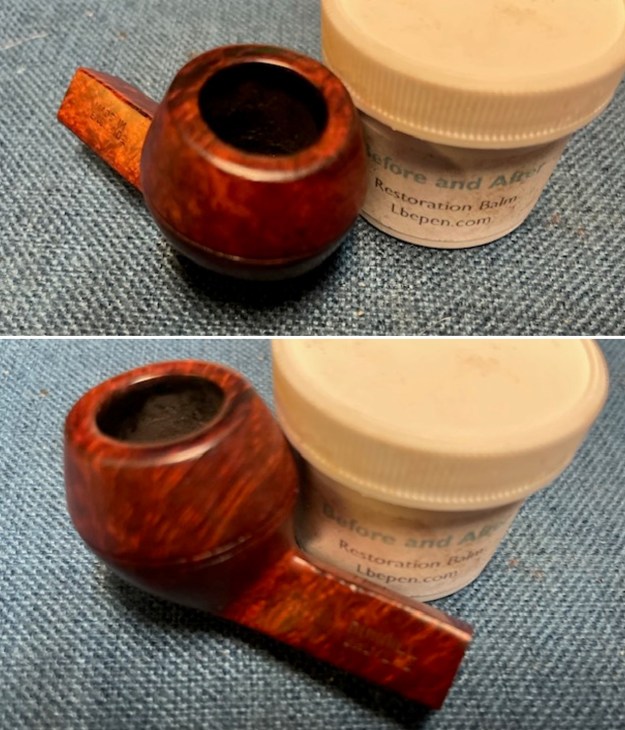
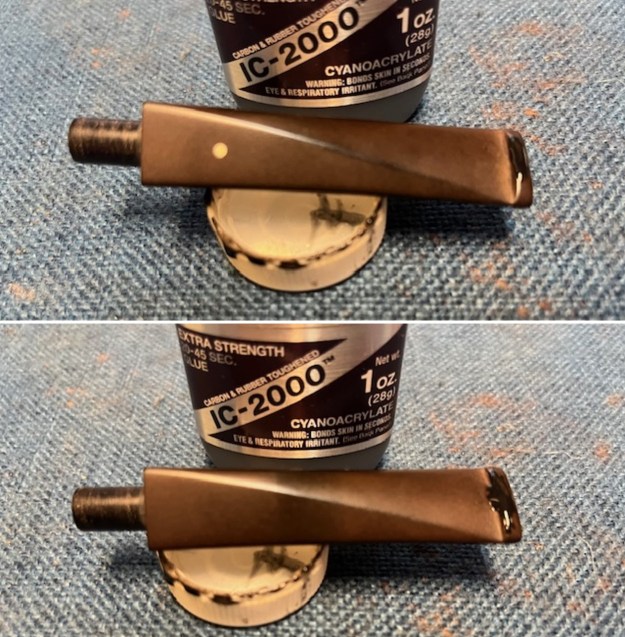
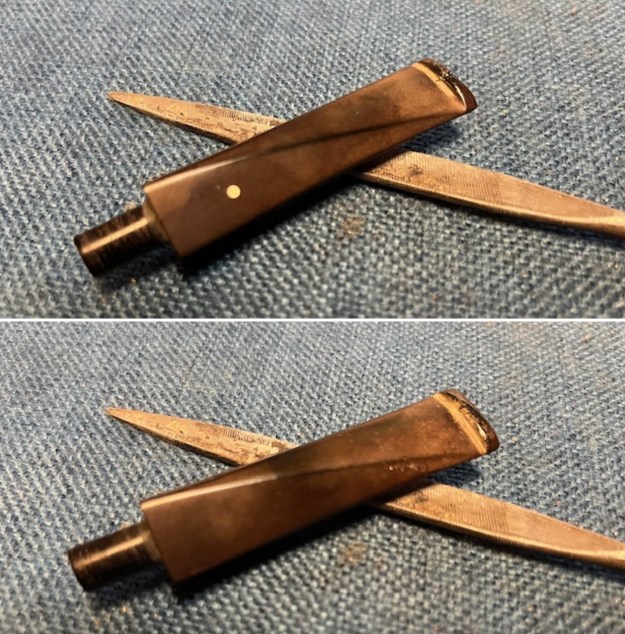
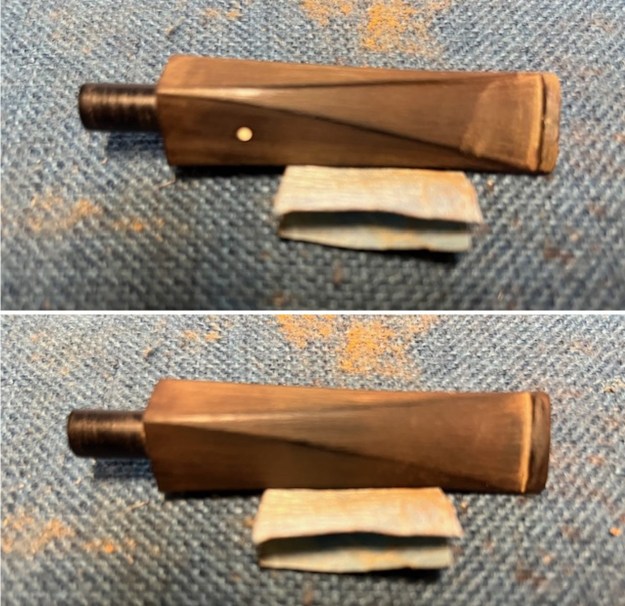
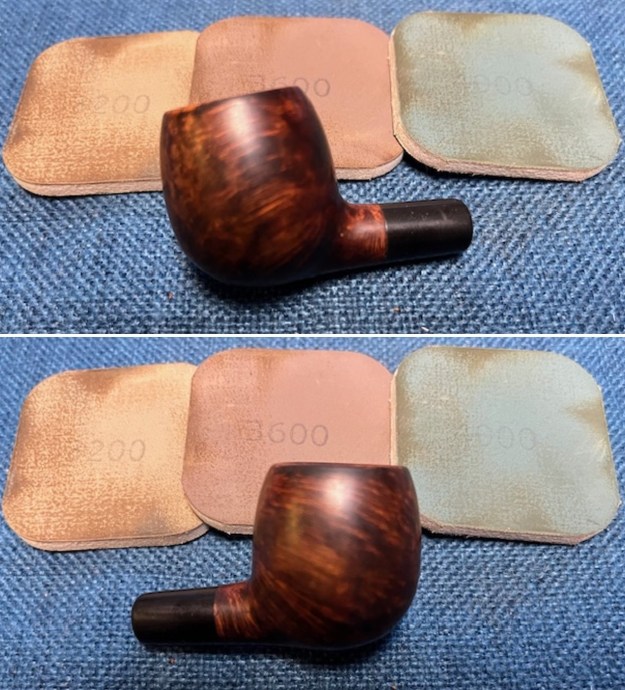
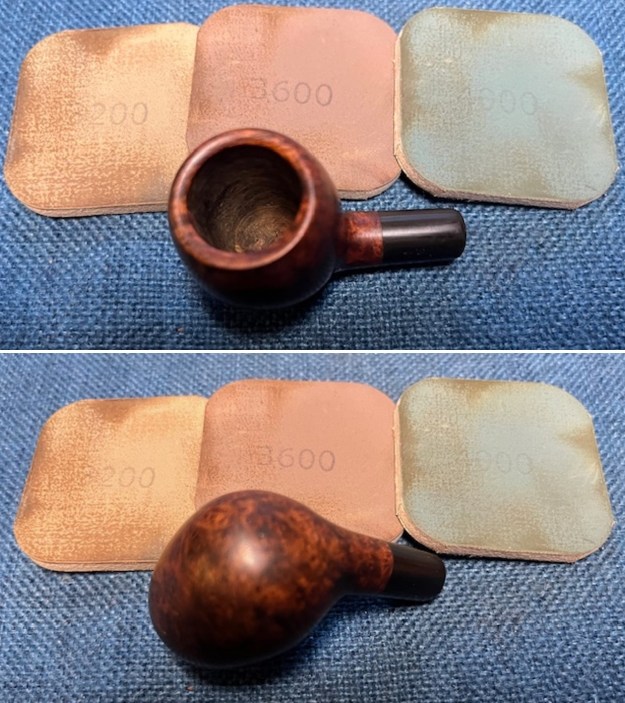
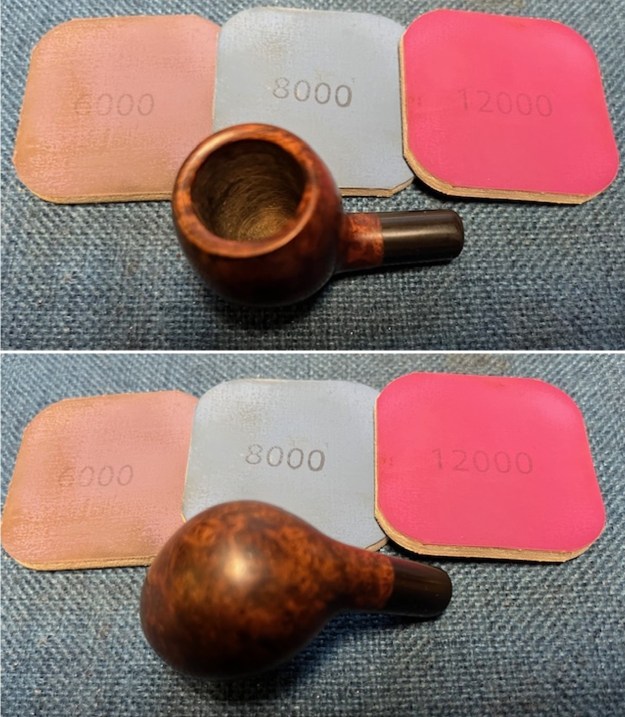
In an old Butz-Choquin catalogue, I found the pipe shape in question, listed with its requisite number:An inspection of the pipe showed a few flaws to be addressed. The bowl was dirty and stained. It also had some burn marks on the rim top. Furthermore, it had an unattractive lacquer-like finish to it. Meanwhile, the stem was dirty and scratched. There were minor bite marks and there was some oxidation.To begin, I used oil soap on a few cotton rounds and wiped the stem down to provide an initial cleaning of filth before moving on. The primary cleaning comes next. I cleaned the inside of the stem with both pipe cleaners and cotton swabs dipped in 99% lemon-infused isopropyl alcohol. I scrubbed thoroughly to make sure the interior was clean.The goal of the next step is the removal (or minimization) of oxidation. Going to my sink, I used cream cleanser, cotton rounds, and a toothbrush, and scoured the stem to remove as much surface oxidation as possible. As the photos show, the result is a hideous brownish mess – but better off the stem than on it.Once the stem was reasonably clean, I soaked it overnight in some de-oxidation fluid. This solution works to draw oxidation in the stem to the surface. This is a major aid and an important step in ensuring a clean stem. The following day, I drew the stem out from its bath and scrubbed the lingering fluid with a toothbrush.Now that the stem is clean and dry, I set about fixing the marks and dents in the vulcanite. This is done by filling those divots with black cyanoacrylate adhesive, impregnated with carbon and rubber. I left this to cure and moved on.The penultimate step for the stem is sanding. First, with my set of needle files, I reduce the bulk of the cyanoacrylate repairs. I want to remove the excess adhesive as near to the surface as possible, without cutting into the vulcanite. Following that, I use all nine of the micromesh sanding pads (1,500 through 12,000 grit) to sand out flaws, even out the vulcanite, and provide gentle polishing of the finished surface. I also apply pipe-stem oil while using the last five micromesh pads. There was a wonderful, deep black shine to the stem when I was done.Now that the stem is (nearly) complete, I can move on to the stummel. The first step for me is to ream out the bowl – that is to say, remove all the cake inside the bowl. This accomplishes a couple of things. First (and most obviously), it cleans the bowl and provides a refurbished chamber for future smoking. Second, when the old cake is removed, I can inspect the interior walls of the bowl and determine if there is damage or not. I used a reamer, a pipe knife, and a piece of sandpaper taped to a wooden dowel. Collectively, these ensure that all the debris is removed. Plenty of cake in there…The inside of the stummel needs to be cleaned thoroughly. Similar to the stem, I then cleaned it with both pipe cleaners and cotton swabs dipped in 99% lemon-infused isopropyl alcohol. With a pipe this dirty, it took quite a while and much cotton to get clean (as the photos will attest).I then decided to ‘de-ghost’ the pipe – that is to say, exorcize the remaining filth from the briar. I filled the bowl and the shank with cotton balls, then saturated them with 99% isopropyl alcohol. I let the stummel sit overnight. This caused any remaining oils, tars and smells to leach out into the cotton.To tidy up the briar, I also wiped down the outside with some oil soap on cotton rounds (and a toothbrush). This does a good job of cleaning any latent dirt on the surface of the briar. The last step of the cleaning process is to scour the inside of the stummel with some soap and tube brushes. This is normally the culmination of a lot of hard work in getting the pipe clean.However, I noticed that the lacquer was flaking and looking terrible. As a result, I chose to remove it all with acetone on some cotton rounds. Of course, acetone is a volatile chemical, and I only use it rarely and judiciously in my pipe work. In this case, it acted perfectly to remove what I needed and left beautiful wood underneath. In fact, it looked so much better after having wiped it down. The damage to the rim is not terrible, but it is notable. In order to lessen the burns on the rim, I ‘topped’ the pipe – that is to say, I gently and evenly sanded the rim on a piece of 220-grit sandpaper. This effectively minimizes the damage, without altering the look of the pipe. A little of the burn remains, but that is part of this pipe’s life story.I used all nine micromesh pads (1,500 through 12,000 grit) on the outside of the stummel to finish it off. This sanding minimizes flaws in the briar and provides a beautiful smoothness to the wood.The removal of the lacquer was a positive, necessary step, but it made the stummel a bit pale. I decided to stain the wood with an alcohol-based, aniline dye. I use this type of dye because it is easy to work with, uniform in colour, quite penetrating, and is easily thinned with isopropyl alcohol. For this pipe, I chose a light brown colour, as it most closely resembled what the pipe would have looked like when new. I spread the dye all over the outside of the stummel with a small dauber and then applied a gentle flame to it. This flame assists in setting the stain by quickly evaporating the isopropyl alcohol. If necessary, the stain can be lightened by wiping the briar with pure alcohol – and, in this case, that’s precisely what I did. I rubbed some Before & After Restoration Balm into the briar and let it sit for 20 minutes or so. The balm moisturizes the wood and gives a beautiful depth to the briar. I then buffed it with a microfibre cloth. For the final step, I took the pipe to my bench buffer and carefully polished it – first with a white diamond compound, then with three coats of carnauba wax. This procedure makes the pipe look its best – the stummel sings and the stem glows.This Butz-Choquin Vendôme Extra 1688 apple is a very handsome pipe and will provide many years of smoking pleasure for its new owner. The approximate dimensions of the pipe are as follows: length 5¼ in. (134 mm); height 1⅝ in. (40 mm); bowl diameter 1⅓ in. (34 mm); chamber diameter ¾ in. (19 mm). The weight of the pipe is 1⅛ oz. (34 g). I hope you enjoyed reading the story of this pipe’s restoration as much as I enjoyed restoring it. If you are interested in more of my work, please follow me here on Steve’s website or email me directly at kenneth@knightsofthepipe.com. Thank you very much for reading and, as always, I welcome and encourage your comments.

Restoring the first of six pipes for a Vancouver Pipeman – An Amorelli ** Hand Made Bent Egg


by Steve Laug

Earlier this week I received an email from Stephen regarding a few more pipe projects that he had for me to work on. He dropped them off here yesterday for me to work on. There were six pipes in the lot. Two were his that I had worked on a few years ago – a Mayfair 1005 rusticated tree stump and a Jost Supreme. Both were favourite pipes of his. One was a Amorelli Bent Billiard that he purchased on a trip to Italy. The final three were pipes that belonged to his father who would soon be visiting him in Vancouver – a Brigham full bent four dot 4244, a Savinelli Portofino Bent Pot and a Bent Rhodesian with no name stamped on the shank sides. Stephen texted me this photo of the pipes before he sent them.This morning I decided to work on the pipe that Stephen brought home with him from Italy. It is a unique looking Bent Egg or Billiard. It is a beautiful grained piece of briar that I can appreciate why he chose it. There is a white acrylic disc on the end of the stem that provides a separation between the bowl and the horn stem. The pipe is stamped on the underside of the and reads Amorelli ** [followed by] Hand Made [over] what looks like a clock stamp [over] Italy. The clock appears to read 7:05 or 20 minutes to 2. I have no idea what that means at this point in the process. The briar is dirty from use with a moderate cake in the bowl and an overflow of lava on the rim top. The top of the shank had developed a series of small cracks that ran from just behind the bowl junction to almost the shank end. The horn stem appeared to be older and had some tooth marks and chatter on the top and underside of the stem ahead of the button. It is beautiful striated with dark and lighter strips running the length of the stem. It is narrowly tapered backward to the button. There an inset brass (gold??) bar logo in the top of the stem. It reminds me of horn stems from the past in terms of the shape of the stem and button and the slot. I took photos of the pipe before I started my work on it. I have included them below. I took a photo of the stem surfaces and the bowl and rim to give a sense of condition of the pipe. You can see the cake in bowl and the lava overflow on the edges and rim top of the bowl. The horn stem surface is very dirty and you can see the tooth marks and chatter on both sides ahead of the button.I took a photo of the stamping on the sides of the shank. It is clear and readable as noted above. I also took a photo of the bowl with the stem removed. It is a great looking pipe.I could not find any information on the Savinelli ** Hand Carved online so I wrote an email to Savinelli to see if I could gather any information. They responded and pointed me in the right direction. The pipe is actually an Amorelli ** Hand Carved Italy pipe. I have edited the blog to reflect that new information.

I turned first to Pipephil’s site for a short introduction to the brand and was not disappointed by what a I found (http://www.pipephil.eu/logos/en/logo-a5.html). I have included the screen capture below as well as the side bar information on the grading of the pipes.
Artisan: Salvatore Amorelli
Grading (ascending): 1 to 5 stars. 5 stars pipes may be differentiated by some golden stars:
(* * * * * or * * * * *)

I turned to Pipedia to see what I could learn about the Amorelli brand (https://pipedia.org/wiki/Amorelli). There was a short article full of information. I quote from it below.

An Amorelli pipe is recognized by an unmistakable logo: an 18k Gold bar, placed in the centre of the junction of the shank and mouthpiece, and which allows a perfect positioning. Projecting and making with a scrupulous rigour, Amorelli refers to the most exigent pipe connoisseur who will be able to recognize a very high smoking quality and prize a processing of the highest level, rich in refined details. It climaxes in a delicate process of finishing, where esteemed Brazilian bee waxes are used to feed and exalt the fibre of the wood, allowing the pipe to breathe.

25 years have passed since Totò Amorelli entered the scene with his creations, inimitable still today: busbee, frac, lyra, fish-tail, nayl, unicum, interpretaions of a new point of view and to realize a pipe. The 18k Gold logo, only sicilian and selected briar, 5 years seasoned and interpreted piece by piece…

What will the near future hold? A new line of pipes for everyone: “La Siciliana”, together with Amorelli pipes, made from the best briar collected from Sicilian Mountains overlooking Taormina, cut, boiled and seasoned directly in the new workshop of Caltanissetta, everything overseen by Totò. 

The pipe I was working on was an Amorelli made of Sicilian Briar! It was a 2 star grade pipe which fits the great grain on this particular pipe. Now what Stephen had told me about his visit to Sicily came together.

Now it was time to start working on the pipe itself. The bowl was moderately caked and I wanted to clean it up before I repaired the crack in the shank. I reamed it with a PipNet pipe reamer using the second and third cutting head to trim the cake back. I used a Savinelli Fitsall Pipe knife to clean up the remnants leaving bare briar. I sanded the bowl walls with 220 grit sandpaper wrapped around a piece of dowel. The bowl was significantly cleaner. I scraped the heavy lava coat on the rim top with the edge of the Fitsall knife. I cleaned out the airway in the shank and mortise as well as the stem with cotton swabs, pipe cleaners and isopropyl alcohol. It was dirty but it cleaned up very well. Now it was time to tackle the crack in the shank. I took a photo of it to capture the issue in the pipe before I cleaned it up. I used a Dremel and a microdrill bit to drill a pilot hole at each end of the crack in the shank. I used a tooth pick and CA glue to fill in the crack and the pilot holes in the shank. I pressed some briar dust into the glue to build them up. I flattened the repair with a small half round file and a folded piece of 220 grit sandpaper to blend them in. It is starting to look better. I sanded the repair area with 320-3500 grit sanding pads to smooth out the area. I used a Maple stain pen to blend it into the surrounding briar.With the cracks repaired I moved on to pressure fit a thin brass band on the shank end. I used a tooth pick to spread glue around the inside of the band. Once it was ready I pressed the band onto the shank end. I wiped down the excess glue with a damp cloth. I took photos of the newly banded shank and it looked very good. I polished the briar with 1500-12000 grit micromesh sanding pads – dry sanding with each pad and wiping it down with a damp cloth between pads. It took on a rich shine. I rubbed the bowl down with Before & After Restoration Balm. I worked it into the surface of the briar with my fingertips. It works to clean, restore and preserve the briar. I let it do its magic for 15 minutes then buffed it off with a cotton cloth. The pipe looks incredibly good at this point in the process. I set the bowl aside and turned my attention to the horn stem. I sanded out the tooth marks and chatter with 220 grit sandpaper.I sanded the stem with 320-3500 grit sanding pads. I wiped the stem down after each sanding pad to remove the sanding debris and dust. The stem looked very good. I polished the stem with micromesh sanding pads – 1500-12000 grit pads. I wiped it down with a damp cloth after each sanding pad. I finished polishing it with Before & After Pipe Stem Polish – both Fine and Extra Fine and buffed it off with a cotton cloth. I gave it a coat of Obsidian Oil to preserve and protect the stem. This Amorelli ** Hand Made Italy Bent Egg is a great looking pipe now that it has been repaired and restored. The brown stains really highlight the grain and the polished finish is stunning. I put the horn stem back on the bowl and carefully buffed the pipe with Blue Diamond on the buffing wheel. I gave the bowl and the stem multiple coats of carnauba wax on the buffing wheel and followed that by buffing the entire pipe with a clean buffing pad. I hand buffed the pipe with a microfiber cloth to deepen the shine. The finished Amorelli ** Hand Made Bent Egg fits nicely in the hand and feels great. Give the finished pipe a look in the photos below. The dimensions of the pipe are Length: 5 inches, Height: 1 ¾ inches, Outside diameter of the bowl: 1 ¼ inches, Chamber diameter: ¾ of an inch. The weight of the pipe is 50 grams /1.76 ounces. I have five more of Stephen’s pipes to work on. Once I have finished I will get them back to him to enjoy with his father. Thanks for reading this blog and my reflections on the pipe while I worked on it.

As always, I encourage your questions and comments as you read the blog. Thanks to each of you who are reading this blog. Remember we are not pipe owners; we are pipe men and women who hold our pipes in trust until they pass on into the trust of those who follow us.

Recovery and Discovery with a Brigham-made Old Port Bulldog


by Kenneth Lieblich

This pipe is for you. Yes, YOU. No doubt, when you’ve read my blog post about it, you’ll be charmed enough to want it for yourself. I received it in an auction lot and something about its look seemed vaguely familiar to me. I thought it was quite handsome, despite its tired appearance, so I figured I’d get it restored for whoever its next owner might be. There was beauty to be uncovered! The pipe’s markings were straightforward enough. On the side of the shank read the words, OLD PORT [over] MADE IN CANADA. The Made in Canada words did seem reminiscent of the markings on old Brigham pipes, so that suggested a clue to the pipe’s origin. Before I pursued that lead, however, I needed to dig into the Old Port name first.I remembered Old Port, not as a pipe maker, but as a brand of drug-store tobacco, as one might call it. In fact, I think my father used to smoke Old Port once upon a time – I’ll have to ask him. First, it’s time to go down the rabbit hole of Old Port.

It’s worth mentioning that Steve also restored a pipe with name of Old Port nearly ten years ago and I encourage you to read that article here – it will help flesh out the story. The markings of Steve’s pipe and my pipe were different, and I was not convinced that they were from the same company (spoiler: I was wrong). In any event, I did some digging through my usual sources for information on this brand – and I came up with nothing. So, I went searching through the weeds of various online pipe forums and I came up with a few tidbits. The following is a summation of what I found.

Old Port is, indeed, an over-the-counter pipe tobacco, produced for the Canadian market. There was also an Old Port line of cigarillos. It has been manufactured in Montréal since 1927 and was subsequently bought out by the Scandinavian Tobacco Group (STG) in 2000. A quotation from the STG website (which no longer appears) confirms this information:

The Canadian company offers a portfolio of cigar brands comprising Colts, Old Port, CAO, Café Crème and White Owl, as well as the Old Port, Sail and Erinmore pipe tobacco brands. STG Canada was previously called Old Port & Colts Cigar Company. Scandinavian Tobacco Group acquired the Canadian business in 2000 when Imperial Tobacco Canada sold off its cigar activities.

It turns out that Old Port pipes were voucher pipes. In other words, when you bought a tin of Old Port pipe tobacco, you received a coupon and when you collected enough, you could redeem them for a pipe. Many companies did this sort of thing, and I suppose this was one Canadian example. Through my searching, I found some images of a completed auction for an old 1970s tin of Old Port tobacco (as seen above). Two of these photos showed some detail of the brochure that came with the tin. In fact, the brochure shows an image of Steve’s very pipe. This demonstrated that Steve’s pipe and mine are from the same source.In turns out that my pipe was, in fact, made by Brigham, as part of a contract they took on with Old Port. Quite frankly, the pipe looks like a Brigham. One fellow on the pipe forums said that Brigham only made these for two years in the late 1960s, “so as a collectible pipe it might be worth having in your collection.”From the brochure I found above, I assumed that these pipes were also from the 1970s. However, the MADE IN CANADA logo on the shank corresponds to the Brigham logo of the 1956-69 period — so the late 1960s seems right. I learned this logo information thanks to Brigham expert, Charles Lemon’s book on Brigham pipes. Brigham produced these as a non-filtered pipe which was stamped “Old Port”. They featured an experimental aluminum tube which was small enough in diameter to regulate air flow. Supposedly, the concept didn’t work out and Brigham went back to doing their own thing. It then makes sense that Old Port went looking for other manufacturers to make their pipes into the 1970s. And the brochure mentions pipes from Lorenzo, Oppenheimer, among other companies. According to one of the forum posters, some or all of the above information was confirmed by Charles Lemon. So, Charles, if you’re reading this, please let us know in the comments below if this is accurate and if you have any further information!

On to the pipe itself. Fortunately, this would be a relatively easy restoration, as the pipe was in good condition. It must have been very seldom smoked, as the stem showed next-to-no tooth marks. The one thing I did notice, however, is that the stem was heavily oxidized. It probably sat in the sun for a long time. The stummel, too, was in great shape. A bit dusty and shabby perhaps, but nothing that I couldn’t resolve. First, I used oil soap on a few cotton rounds and wiped the stem down to provide an initial cleaning before moving on to the next steps. The primary cleaning comes next. I cleaned the inside of the stem with both pipe cleaners and cotton swabs dipped in 99% lemon-infused isopropyl alcohol. I scrubbed thoroughly to make sure the interior was clean. As the pipe was seldom smoked, this was a quick procedure.The goal of the next step is the removal (or minimization) of oxidation. Going to my sink, I used cream cleanser, cotton rounds, and a toothbrush, and scoured the stem to remove as much surface oxidation as possible. As the photos show, the result is a hideous brownish mess – but better off the stem than on it.Once the stem was reasonably clean, I soaked it overnight in some de-oxidation fluid. This solution works to draw oxidation in the stem to the surface. This is a major aid and important step in ensuring a clean stem. The following day, I drew the stem out from its bath and scrubbed the lingering fluid with a toothbrush. However, due to the severity of the oxidation, I then repeated the scrubbing with the cream cleanser for maximum effect. Unfortunately, some remnants of the oxidation will always live in this stem – but it is part of the pipe’s long story.The penultimate step for the stem is sanding. I used all nine of the micromesh sanding pads (1,500 through 12,000 grit) to sand out flaws, even out the vulcanite, and provide gentle polishing of the finished surface. I also apply pipe-stem oil while using the last five micromesh pads. There was a wonderful, deep black shine to the stem when I was done.Now that the stem is (nearly) complete, I can move on to the stummel. The first step for me is to ream out the bowl – that is to say, remove all the cake inside the bowl. This accomplishes a couple of things. First (and most obviously), it cleans the bowl and provides a refurbished chamber for future smoking. Second, when the old cake is removed, I can inspect the interior walls of the bowl and determine if there is damage or not. I used a pipe knife, and a piece of sandpaper taped to a wooden dowel. These ensured that all the debris is removed – and I am pleased to report that there wasn’t much.Similar to the stem, I then cleaned the stummel with both pipe cleaners and cotton swabs dipped in 99% lemon-infused isopropyl alcohol. This time, it wasn’t too bad.I then decided to ‘de-ghost’ the pipe – that is to say, exorcize the remaining filth from the briar. I filled the bowl and the shank with cotton balls, then saturated them with 99% isopropyl alcohol. I let the stummel sit overnight. This caused any remaining oils, tars and smells to leach out into the cotton.To tidy up the briar, I also wiped down the outside with some oil soap on cotton rounds (and a toothbrush). This does a good job of cleaning any latent dirt on the surface of the briar. The toothbrush especially helps to get into the nooks and crannies of the rustication. The last step of the cleaning process is to scour the inside of the stummel with some soap and tube brushes. This is the culmination of my work in getting the pipe clean.After that, I used some of my furniture pens (which is simply dye in pen form) to touch up and enliven the colours on the wood. Then, I rubbed some Before & After Restoration Balm into the briar and let it sit for 20 minutes or so. The balm moisturizes the wood and gives a beautiful depth to the briar. I then buffed it with a microfibre cloth. For the final step, I took the pipe to my bench buffer and carefully polished it – first with a white diamond compound, then with three coats of conservator’s wax. This procedure makes the pipe look its best – the stummel sings and stem glows.All done! This Old Port bulldog looks fantastic again and is ready to be enjoyed by its next owner. I am pleased to announce that this pipe is for sale! If you are interested in acquiring it for your collection, please have a look in the ‘Canadian section of the store here on Steve’s website. You can also email me directly at kenneth@knightsofthepipe.com. The approximate dimensions of the pipe are as follows: length 5¾ in. (146 mm); height 1⅜ in. (36 mm); bowl diameter 1¾ in. (45 mm); chamber diameter ⅝ in. (21 mm). The weight of the pipe is 1¼ oz. (37 g). I hope you enjoyed reading the story of this pipe’s restoration as much as I did restoring it. If you are interested in more of my work, please follow me here on Steve’s website or send me an email. Thank you very much for reading and, as always, I welcome and encourage your comments.

Restoring a Charatan’s Make London England Special 12 Smooth Billiard


by Steve Laug

The next pipe I have chosen to work on was purchased on 03/21/2024 during a pipe hunt from a shop in Oregon City, Oregon USA. I have worked on a lot of Charatan pipes through the years and many of them have been smooth finished pipes. This nicely shaped Billiard is very nice with grain around the bowl. It is stamped on the left side of the shank and reads Charatan’s Make [over] London, England [over] Special. Low on the left side of the shank near the bow shank junction it is stamped with a cursive L in a circle identifying it as a Lane Era Pipe. On the right side near the shank/bowl junction is the shape number 12. The stamping is faint in spots but still readable. The taper stem also bears the CP logo on the left side. The bowl had a thick cake and there was a light spotty lava overflow on the inner edge of the bowl and top. The outer edge looked very good. The stem is lightly oxidized and has tooth marks and chatter on both sides at the button. Jeff took photos of the pipe before he started his clean up. Jeff took photos of the bowl, rim top to show the thickness of the cake in the bowl and the lava on the rim top. The bowl had a thick cake that overflowed in lava on the inner edge of the bowl. I am hoping that the thick lava coat protected things underneath it from damage to the edges and top. He took photos of the top and underside of the stem showing the tooth chatter and marks and oxidation on the stem surface and wear on the edges of the button. Jeff took photos of the sides and heel of the bowl to show the condition of the briar. You can see the interesting grain around the bowl even through the dirt and debris of many years. Jeff took photos of the stamping on the sides of the shank. You can see that it is faint in spots but still is readable as noted above. An added part of pipe restoration for me is to try to gather as much background on a brand and maker as I can find. With Charatan that is an enjoyable web to try to untangle. There is a lot of information and it can lead to understanding what era a pipe was made in. To try to figure out the era of the Charatan’s pipe I was working on I turned to the Pipephil website, Logos and Stampings (http://www.pipephil.eu/logos/en/logo-charatan.html). There is some really helpful information on each of the lines of Charatan’s Make pipes that entered the market. There was a smooth Special with stamping like the one in hand. The photo however was not present. The site did give a short history of the brand. I quote the portion that is most pertinent. The brand was founded in 1863 by Frederik Charatan. When his father retired in 1910, Reuben Charatan took over the family business. All the pipes were handmade until 1973. The brand name has been overtaken by Dunhill in 1978 and sold in 1988 to James B. Russell Inc. (NJ, USA). During the period 1988-2002 Charatans were crafted by Butz Choquin in St Claude (France). Dunhill re-purchased Charatan brand name in 2002 and Colin Fromm (Invicta Briars, Castleford) followed up on freehand production. L in circle denotes a pipe imported into USA by Lane Ltd between 1955 and 1988.

Next, I turned to Pipedia to see if I could find more information on the brand and possibly a link to a sandblast finished Dublin (https://pipedia.org/wiki/Charatan) but once again in the general article it was not listed. It did give a little more historical information. I quote the pertinent parts that give information on this particular pipe.

In 1950 Herman G. Lane, striving to expand his business in Great Britain, made contacts with the Charatan family. Apparently, Lane got a certain influence soon, but it was not until 1955 that Lane Ltd. became the sole distributor for Charatan’s in the United States superseding Wally Frank. This can be documented in a “biography” written for Herman G. Lane titled “Leaves from a Tobaccoman’s Log”.

Thanks to Herman G. Lane’s dedicated labor Charatan became hugely popular in the States. As reported by Ken Barnes in an interview with Rick Newcombe, Reuben Charatan passed away in 1962, and his widow sold the firm to Herman Lane 1 or 2 years after his death.[1] In the early 1960s Charatan pipes were the first to overstep the $100 Dollar line in US pipe sales. In 1978 Lane’s heirs sold the Charatan company to Dunhill. The Prescot Street factory was closed in March 1982. Thereafter the fame and quality of the make declined.

The pre-Lane period (prior to 1955) and the Lane era pipes (1955 to until sometime between 1979 – 1984) are of primary interest the collector. The Lane era is often quoted as beginning about 1950.

Charatan records are almost non-existent before Lane due to a factory fire, making it difficult to date pre-Lane pipes. Charatan used 4 basic grades prior to 1950: Supreme, Selected, Executive, and Belvedere. After 1950 Herman Lane’s influence began, and the grades started to expand. In 1955 Lane took over sole distributorship of Charatan in the US. In 1957 he introduced the Supreme S. Most of his other introductions were from the 1960s and early 1970s.

From this I am fairly certain I am dealing with a Lane pipe made after 1955. There is also a circle L script mark that is a Lane stampings on the pipe which also supports this.

I continued digging further into the dating of the pipe, but what I had found above was a good start for me. If some of you would like to try your hand at dating it more accurately as to the time period it came out you might want to check out the article on Pipedia on Dating Charatans (https://pipedia.org/wiki/Dating_of_Charatans).

I also reread the article on Pipedia by the Italian fellow who contributed some really helpful information on the brand (https://pipedia.org/wiki/Charatan_-_Milan_2014). I quote the section on the Second period: Reuben Charatan 1910 – c. 1962. I have highlighted a portion of the section on the shank in red to point out some more helpful dating information.

– In 1962 Herman Lane took over the business from the Charatan family, although he had already influenced production from the 1950s.

– The pipes were mostly larger than the previous ones and corresponded in size to Dunhill group 5. These are slightly less rare, but still difficult to find.

– Stem: Usually in ebonite, saddle shaped or tapered, bearing a fine “CP” stamp, underbore system (see below) used when necessary.

– Shank: The shape code is stamped on it together with the nomenclature “CHARATAN’S MAKE LONDON ENGLAND” arranged in two lines. From 1955 onward on the models marketed for the USA there is also a serif and circled capital “L” (but not all models bear this) which resembles the pound sterling symbol. The “L” is for Lane, the importer.

From 1958, Lane changed the nomenclature for models marketed for the US to clarify the message: “MADE BY HAND”.  In this period the underbore was introduced. Its manufacturing period ranged between 1920 and c.1930. This model was equipped with a duralumin plunger trap fitted in the stem, which served to clean the residue more easily. This particular model bore a special stamp on the stem, and also had its own catalogue…

QUALITY GRADES…The stem did not only display the stamps mentioned above. Another stamp that can help dating is the one referring to the quality of the pipe. Until Herman Lane arrived on the scene there were four quality grades. Starting with the lowest: Belvedere, Executive, Selected, and Supreme. Lane went on to add higher grades from time to time: Supreme S, Supreme S100, S150, S200, S250, S300, Coronation, Royal Achievement, Crown Achievement, and Summa Cum Laude; these last three are extremely rare and almost impossible to find. He also invented other, different grades, even changing the previous pipe classification standards. We will not go into detail here, but it means that if we find an S100 or Coronation the pipe was manufactured following Herman Lane’s acquisition. In particular, the FH mark, or Freehand pipe was commissioned to the famous Danish craftsman, Preben Holm.

Nomenclature

The Lane Trademark serif and circled L indicates the pipe is from the “Lane Era” (approx. 1955 to 1979 -1984?), however it appears that both the English factory or Lane themselves sometimes, or perhaps even often forget to stamp the L on a pipe. The Charatan factory was known for inconsistencies, especially in stampings. Therefore, although an L on the pipe definitely defines it as a Lane Era pipe, the lack of it could simply mean the pipe missed receiving the stamp from the factory. The lack of the trademark could also mean the pipe was destined for the European market.

Charatan pipes were not well distributed prior to the Lane Era, so very few pre-Lane pipes exist today. Herman Lane greatly grew the brand in the U.S., which caused corresponding growth in Europe…

This confirmed that I was working on Lane Era pipe which actually means it was between 1955 and 1988 as shown by the stamping. Now it was time to work on the pipe.

Jeff had cleaned it thoroughly. He had reamed it with a PipNet reamer and cleaned that up with a Savinelli Fitsall Pipe Knife. He had scrubbed the exterior of the briar with undiluted Murphy’s Oil Soap. He removed the shiny coat on the briar with acetone on cotton pads. He cleaned out the interior of the shank, sump and airway in the shank and stem with alcohol, pipe cleaners and cotton swabs. He scrubbed the stem with Soft Scrub to remove the oxidation and calcification on the surface. He soaked it in Briarvilles Pipe Stem Deoxidizer to remove the oxidation. He removed it from the Deoxidizer and rinsed it off with warm water. I took some photos of the pipe before I started my part of the work. I took close up photos of the rim top and also of the stem surface. I wanted to show what an amazing job Jeff did in the cleanup of the rim top. The rim top was and inner edge were in good condition. I also took close up photos of the stem to show the condition of the vulcanite. It was clean but there were tooth marks and chatter on the stem ahead of the button on both sides.One of the things I appreciate about Jeff’s cleanup is that he works to protect and preserve the nomenclature on the shank of the pipes that he works on. The stamping on this one had faint spots on the edges so I was worried that it would worsen with the cleanup. I took some photos to show the clarity of the stamping. The photo is a little blurry but the stamping remains the same. I have noticed that many restorers are not careful to protect the stamping in their cleaning process and often by the end of the restoration the nomenclature is almost destroyed. I would like to encourage all of us to be careful in our work to preserve this as it is a critical piece of pipe restoration! I took the stem off the shank and took a photo of the pipe to capture the look of the pipe as a whole. I sanded the bowl with 320-3500 sanding pads tom smooth out the small nicks and scratches in the rim top and bowl sides. I wiped it down with a damp cloth after each sanding pad. The bowl really began to look good. I polished it with micromesh sanding pads – dry sanding with 1500-12000 grit pads. After each sanding pad I wiped the bowl down with paper towel and a drop of olive oil to remove the debris from the sanding process. It really took on a shine. I rubbed the bowl and rim down with Before & After Restoration Balm. I worked it into the surface of the briar with my fingertips to clean, enliven and protect it. I let the balm sit for 10 minutes and then buffed with a cotton cloth to raise the shine. I really like watching the Balm do its magic and bring the briar alive. I touched up the faint white CP stamp with white acrylic nail polish. I worked it into the stamp with a flat blade. Once it hardened I scraped off the excess and sanded it. It is faint toward the ends of the letters but is still recognizable as the CP stamp. I sanded the stem with 320-3500 grit sanding pads. I wiped the stem down after each sanding pad with a damp cloth. The stem began to take on a shine by the final pads.I polished the stem with micromesh sanding pads – wet sanding with 1500-12000 grit pads. I wiped the stem down after each sanding pad with Obsidian Oil to give the sanding pads some bite. I polished it with Before & After Pipe Stem Polish – both Fine and Extra Fine. I gave it a coat of Obsidian Pipe Stem Oil. I set it aside to dry. Once again at this point in the restoration process I am excited to be on the homestretch. I look forward to the final look when the Lane Era Charatan’s Make London England Special Billiard is put back together, polished and waxed. I put the bowl and stem back together. I lightly polished the bowl and the replacement stem with Blue Diamond. I gave the bowl and the stem multiple coats of carnauba wax. I buffed the pipe with a clean buffing pad to raise the shine. I hand buffed it with a microfiber cloth to deepen the shine. The pipe polished up pretty nicely. The grain really pops with the wax and polish. The shiny black vulcanite stem is a beautiful contrast to the browns of the bowl. This Charatan’s Make London England Special Billiard was another fun pipe to work on. It really is a quite stunning piece of briar whose shape follows the flow of the briar. The pipe feels great in the hand will be better when warmed up while smoking. The finished pipe is shown in the photos below. The dimensions of the pipe are Length: 5 ½ inches, Height: 1 ¾ inches, Outside diameter of the bowl: 1 ¼ inches, Chamber diameter: ¾ of an inch. The weight of the pipe is 1.62 ounces/46 grams. I will be putting it on the rebornpipes store in the British Pipemakers Section if you would like to add it to your rack and carry on the previous pipeman’s legacy. This is an interesting estate to bring back to life.

As always, I encourage your questions and comments as you read the blog. Thanks to each of you who are reading this blog. Remember we are not pipe owners; we are pipe men and women who hold our pipes in trust until they pass on into the trust of those who follow us.

Restoring a Charatan’s Make London England Sandblast Billiard


by Steve Laug

The next pipe I have chosen to work on was purchased on 03/21/2024 during a pipe hunt from a shop in Oregon City, Oregon USA. I have worked on a lot of Charatan pipes through the years and some have been sandblast pipe. This nicely shaped sandblast Billiard is very nice with deep sandblast around the bowl. It is stamped on the underside of the shank and reads Charatan’s Make [over] London, England. On the heel of the bowl it is stamped with a cursive L in a circle identifying it as a Lane Era Pipe. There is no shape number on the bowl or shank. The stamping is faint in spots but still readable. The taper stem does not bear the CP logo on the left side. The bowl had a thick cake and there was a lava overflow on the sandblast rim top. The inner edge of the rim thickly covered with lava so it was hard to know the damage at this point. The outer edge looked very good. The stem is lightly oxidized and has tooth marks and chatter on both sides at the button. Jeff took photos of the pipe before he started his clean up. Jeff took photos of the bowl, rim top to show the thickness of the cake in the bowl and the lava on the rim top. The bowl had a thick cake that overflowed in lava on the inner edge and rim top of the bowl. I am hoping that the thick lava coat protected things underneath it from damage to the edges and top. He took photos of the top and underside of the stem showing the tooth chatter and marks and oxidation on the stem surface and wear on the edges of the button. Jeff took photos of the sides and heel of the bowl to show the condition of the briar. You can see the beautiful shape of the bowl even through the dirt and debris of many years. You can also see the depth of the blast around the bowl and shank. Jeff took photos of the stamping on the underside of the shank. You can see that it is clear and readable as noted above. An added part of pipe restoration for me is to try to gather as much background on a brand and maker as I can find. With Charatan that is an enjoyable web to try to untangle. There is a lot of information and it can lead to understanding what era a pipe was made in. To try to figure out the era of the Charatan’s pipe I was working on I turned to the Pipephil website, Logos and Stampings (http://www.pipephil.eu/logos/en/logo-charatan.html). There is some really helpful information on each of the lines of Charatan’s Make pipes that entered the market. There was not a sandblast stamped like the one in hand. The site did give a short history of the brand. I quote the portion that is most pertinent.The brand was founded in 1863 by Frederik Charatan. When his father retired in 1910, Reuben Charatan took over the family business. All the pipes were handmade until 1973. The brand name has been overtaken by Dunhill in 1978 and sold in 1988 to James B. Russell Inc.(NJ, USA). During the period 1988-2002 Charatans were crafted by Butz Choquin in St Claude (France). Dunhill re-purchased Charatan brand name in 2002 and Colin Fromm (Invicta Briars, Castleford) followed up on freehand production.

Next, I turned to Pipedia to see if I could find more information on the brand and possibly a link to a sandblast finished Dublin (https://pipedia.org/wiki/Charatan) but once again in the general article it was not listed. It did give a little more historical information. I quote the pertinent parts that give information on this particular pipe.

In 1950 Herman G. Lane, striving to expand his business in Great Britain, made contacts with the Charatan family. Apparently, Lane got a certain influence soon, but it was not until 1955 that Lane Ltd. became the sole distributor for Charatan’s in the United States superseding Wally Frank. This can be documented in a “biography” written for Herman G. Lane titled “Leaves from a Tobaccoman’s Log”.

Thanks to Herman G. Lane’s dedicated labor Charatan became hugely popular in the States. As reported by Ken Barnes in an interview with Rick Newcombe, Reuben Charatan passed away in 1962, and his widow sold the firm to Herman Lane 1 or 2 years after his death.[1] In the early 1960s Charatan pipes were the first to overstep the $100 Dollar line in US pipe sales. In 1978 Lane’s heirs sold the Charatan company to Dunhill. The Prescot Street factory was closed in March 1982. Thereafter the fame and quality of the make declined.

The pre-Lane period (prior to 1955) and the Lane era pipes (1955 to until sometime between 1979 – 1984) are of primary interest the collector. The Lane era is often quoted as beginning about 1950.

Charatan records are almost non-existent before Lane due to a factory fire, making it difficult to date pre-Lane pipes. Charatan used 4 basic grades prior to 1950: Supreme, Selected, Executive, and Belvedere. After 1950 Herman Lane’s influence began, and the grades started to expand. In 1955 Lane took over sole distributorship of Charatan in the US. In 1957 he introduced the Supreme S. Most of his other introductions were from the 1960s and early 1970s.

From this I am fairly certain I am dealing with a Lane pipe made after 1955. There is also a circle L script mark that is a Lane stampings on the pipe which also supports this.

I continued digging further into the dating of the pipe, but what I had found above was a good start for me. If some of you would like to try your hand at dating it more accurately as to the time period it came out you might want to check out the article on Pipedia on Dating Charatans (https://pipedia.org/wiki/Dating_of_Charatans).

I also reread the article on Pipedia by the Italian fellow who contributed some really helpful information on the brand (https://pipedia.org/wiki/Charatan_-_Milan_2014). I quote the section on the Second period: Reuben Charatan 1910 – c. 1962. I have highlighted a portion of the section on the shank in red to point out some more helpful dating information.

– In 1962 Herman Lane took over the business from the Charatan family, although he had already influenced production from the 1950s.

– The pipes were mostly larger than the previous ones and corresponded in size to Dunhill group 5. These are slightly less rare, but still difficult to find.

– Stem: Usually in ebonite, saddle shaped or tapered, bearing a fine “CP” stamp, underbore system (see below) used when necessary.

– Shank: The shape code is stamped on it together with the nomenclature “CHARATAN’S MAKE LONDON ENGLAND” arranged in two lines. From 1955 onward on the models marketed for the USA there is also a serif and circled capital “L” (but not all models bear this) which resembles the pound sterling symbol. The “L” is for Lane, the importer.

From 1958, Lane changed the nomenclature for models marketed for the US to clarify the message: “MADE BY HAND”.  In this period the underbore was introduced. Its manufacturing period ranged between 1920 and c.1930. This model was equipped with a duralumin plunger trap fitted in the stem, which served to clean the residue more easily. This particular model bore a special stamp on the stem, and also had its own catalogue…

QUALITY GRADES…The stem did not only display the stamps mentioned above. Another stamp that can help dating is the one referring to the quality of the pipe. Until Herman Lane arrived on the scene there were four quality grades. Starting with the lowest: Belvedere, Executive, Selected, and Supreme. Lane went on to add higher grades from time to time: Supreme S, Supreme S100, S150, S200, S250, S300, Coronation, Royal Achievement, Crown Achievement, and Summa Cum Laude; these last three are extremely rare and almost impossible to find. He also invented other, different grades, even changing the previous pipe classification standards. We will not go into detail here, but it means that if we find an S100 or Coronation the pipe was manufactured following Herman Lane’s acquisition. In particular, the FH mark, or Freehand pipe was commissioned to the famous Danish craftsman, Preben Holm.

Nomenclature

The Lane Trademark serif and circled L indicates the pipe is from the “Lane Era” (approx. 1955 to 1979 -1984?), however it appears that both the English factory or Lane themselves sometimes, or perhaps even often forget to stamp the L on a pipe. The Charatan factory was known for inconsistencies, especially in stampings. Therefore, although an L on the pipe definitely defines it as a Lane Era pipe, the lack of it could simply mean the pipe missed receiving the stamp from the factory. The lack of the trademark could also mean the pipe was destined for the European market.

Charatan pipes were not well distributed prior to the Lane Era, so very few pre-Lane pipes exist today. Herman Lane greatly grew the brand in the U.S., which caused corresponding growth in Europe.

Generally, when the pipe is stamped with the BLOCK letters “MADE BY HAND” it means the pipe was probably made between 1958 and 1965”

Generally, block letters “MADE BY HAND” and some of the other nomenclature in script (i.e. City of London or Extra Large next to the MADE BY HAND) means the pipe was made sometime between 1965 and the mid 1970s. The total script nomenclature “Made by Hand in City of London” evolved over this period of time, so many pipes had variants, such as Made By Hand in block letters and City of London in script, or some other variation of the terms or stampings.

It is believed the FH was used on Charatan pipes between 1957 and 1967-68. Three different sizes were used. The Charatan Logo (CP) on the pipe bit was changed over the year

Now I knew I was working on Lane Era pipe which actually means it was between 1955 and 1988 as shown by the stamping. Now it was time to work on the pipe.

Jeff had cleaned it thoroughly. He had reamed it with a PipNet reamer and cleaned that up with a Savinelli Fitsall Pipe Knife. He had scrubbed the exterior of the briar with undiluted Murphy’s Oil Soap. He removed the shiny coat on the briar with acetone on cotton pads. He cleaned out the interior of the shank, sump and airway in the shank and stem with alcohol, pipe cleaners and cotton swabs. He scrubbed the stem with Soft Scrub to remove the oxidation and calcification on the surface. He soaked it in Briarvilles Pipe Stem Deoxidizer to remove the oxidation. He removed it from the Deoxidizer and rinsed it off with warm water. I took some photos of the pipe before I started my part of the work. I took some close up photos of the rim top and also of the stem surface. I wanted to show what an amazing job Jeff did in the cleanup of the rim top. The rim top was and inner edge were in good condition. There were spots on the rim top and edges where there were some spots of debris in the finish. I also took close up photos of the stem to show the condition of the vulcanite. It was in clean but there were tooth marks and chatter on the stem ahead of the button on both sides.One of the things I appreciate about Jeff’s cleanup is that he works to protect and preserve the nomenclature on the shank of the pipes that he works on. The stamping on this one had faint spots on the edges so I was worried that it would worsen with the cleanup. I took some photos to show the clarity of the stamping. The photo is a little blurry but the stamping remains the same. I have noticed that many restorers are not careful to protect the stamping in their cleaning process and often by the end of the restoration the nomenclature is almost destroyed. I would like to encourage all of us to be careful in our work to preserve this as it is a critical piece of pipe restoration! I took the stem off the shank and took a photo of the pipe to capture the look of the pipe as a whole.With that finished the bowl was very clean and the sandblast looked great. I used a brass bristle wire brush to work over the debris on the rim top and clean it up. It looked much better after the work on it was finished.I rubbed the bowl and rim down with Before & After Restoration Balm. I worked it into the sandblast surface of the briar with my fingertips and a horse hair shoe brush to clean, enliven and protect it. I let the balm sit for 10 minutes and then buffed with a cotton cloth to raise the shine. I really like watching the Balm do its magic and bring the briar alive. I set the bowl aside and turned my attention to the stem. I “painted” the tooth marks on the stem with the flame of a Bic lighter. I was able to lift the tooth marks considerably but some still remained. I filled them in with black, rubberized CA glue. Once it had cured I used a small file to flatten out the repairs. I sanded them smooth with 220 grit sandpaper to blend them into the surface of the vulcanite. I sanded the stem with 320-3500 grit sanding pads. I wiped the stem down after each sanding pad with a damp cloth. The stem began to take on a shine by the final pads.I polished the stem with micromesh sanding pads – wet sanding with 1500-12000 grit pads. I wiped the stem down after each sanding pad with Obsidian Oil to give the sanding pads some bite. I polished it with Before & After Pipe Stem Polish – both Fine and Extra Fine. I gave it a coat of Obsidian Pipe Stem Oil. I know that most think it does nothing for acrylic stems but I use it anyway as I find it works very well to deepen the shine. I set it aside to dry. Once again at this point in the restoration process I am excited to be on the homestretch. I look forward to the final look when the Lane Era Charatan’s Make London England Sandblast Billiard is put back together, polished and waxed. I put the bowl and stem back together. I lightly polished the bowl and the replacement stem with Blue Diamond. I gave the bowl and the stem multiple coats of carnauba wax. I buffed the pipe with a clean buffing pad to raise the shine. I hand buffed it with a microfiber cloth to deepen the shine. The pipe polished up pretty nicely. The depths of the sandblast really pop with the wax and polish. The shiny black vulcanite stem is a beautiful contrast to the browns of the bowl. This Charatan’s Make London England Sandblast Billiard was another fun pipe to work on. It really is a quite stunning piece of briar whose shape follows the flow of the briar. The pipe feels great in the hand will be better when warmed up while smoking. The finished pipe is shown in the photos below. The dimensions of the pipe are Length: 5 ¼ inches, Height: 1 ¾ inches, Outside diameter of the bowl: 1 ¼ inches, Chamber diameter: ¾ of an inch. The weight of the pipe is 1.31 ounces/38 grams. I will be putting it on the rebornpipes store in the British Pipemakers Section if you would like to add it to your rack and carry on the previous pipeman’s legacy. This is an interesting estate to bring back to life.

As always, I encourage your questions and comments as you read the blog. Thanks to each of you who are reading this blog. Remember we are not pipe owners; we are pipe men and women who hold our pipes in trust until they pass on into the trust of those who follow us.

Restemming and Restoring a Citation 614 Rusticated Meerschaum Lined Oom Paul


by Steve Laug

In November I received an email from Mario about working on some of his Dad’s pipes. Here is what he wrote to me.

I am desperately seeking help restoring and repairing some of my dad’s smoking pipes. I have tried reaching out to the only two known pipe repair establishments I could find in the entire country but one is not currently taking repair orders and the other said she didn’t want to try to repair these pipes without having even seen them. Would you be willing to take on the repairs or can you recommend anyone? Thank you much!!!—Mario

I wrote him back and asked him to send me photos of the pipes. He sent some single photos of the meerschaum bowl and stem, several of the leather clad Canadian and the photo of the rack and six pipes shown below. I looked through the photos and this is what I saw. There were two leather clad pipes a Canadian and a Pot. Both of them were cracked on the shanks and had been self-repaired with wire to hold the cracked shank together. The leather cladding was torn and the stitching was rotten and broken around the bowl. To me they were both irreparable. There was a lovely older Meerschaum with a horn stem that needed a good cleaning and repairs to the horn stem. There were two Knute Freehand pipes with original stems that were dirty but fixable. The plateau on the smooth one had a large chunk of briar missing. There was a Wilshire Dublin with a chewed and misfit stem. Finally, there was a billiard that had been restemmed with a fancy GBD saddle stem on it. They were a messy lot but I told him to send them on to me. They arrived yesterday and the condition of the pipes in the photos was confirmed. They were a mess and needed much work. I have included Mario’s group photo below to show the lot.This afternoon I decided to start working on the Oom Paul next. It was the one on the left centre on the bottom of the rack in the photo above. It was an Oom Paul shape with a bent round shank and the saddle stem had a huge bite through on the topside of it. The bowl had a thick cake on the walls and a heavy lava coat in the rustication on the rim top. It was internally a mess. The finish was dirty and had grime ground into the sides of the bowl. There seemed to be line around the bowl top that hinted at the bowl being lined with meerschaum. The shank was in good shape with no nicks or cracks. The pipe was stamped on the underside of the shank and read Citation in script (followed by) the shape number 614 [over] Italy. The shape number and Italy stamp tell me the pipe was made by Savinelli. There was no other stamping on the shank sides. The stem was correct but chewed beyond repair and would need to be replaced. I took photos of the pipe when I unpacked it to examine it. I have included those below. I took a photo of the rim top to show the condition and the interesting ring on the rim top. I also took photos of the heavily damaged stem. I took a photo of the stamping on the underside of the shank. It is clear and readable as noted above. I took a photo of the bowl with the stem removed to give a sense of the proportion and appearance of the pipe without the stem. You can see the damage on the stem top so it is no question that it needs to be removed.I remember having worked on a Citation before but could not put my finger on what I knew about it. I did a quick search on rebornpipes and found a blog I had restored and restemmed a Citation that had been meerschaum lined (https://rebornpipes.com/2015/12/24/a-surprise-when-working-on-the-citation-812-canadian/). Fortunately, I could see what looks like a smooth ring around the inside of the bowl. As I examined it I found that ring around the inside edge of the bowl was a meerschaum lining. I knew that I was working on a Meerschaum lined Oom Paul.

I carefully reamed the bowl with a PipNet Pipe Reamer remove from the bowl leaving bare meerschaum. I cleaned up the remnants of cake with a Savinelli Fitsall Pipe Knife and removed the remaining debris. I sanded the bowl walls smooth with a piece of 220 grit sandpaper wrapped around a piece of dowel. I scraped the lava coat off the rim top – both the rusticated portion and the smooth ring of the meerschaum bowl top with the Savinelli Pipe Knife and removed all of it. I cleaned out the internals of the bowl and shank with pipe cleaners, cotton swabs, shank brushes and 99% isopropyl alcohol. It was very clean and it looked and smelled far better.I scrubbed the externals of the bowl and shank with undiluted Murphy’s Oil Soap and a tooth brush. I worked over the bowl, shank and rim top with the soap and then rinsed it off warm water. The bowl looked extremely good. There were some significant burn marks on the rim top and inner edge but the bowl itself was very clean. Once the bowl had dried I touched up the stain on the rim top to match bowl colour. I used a Walnut Stain Pen to colour the briar and leave the meerschaum rim clear for polishing.I rubbed the bowl and shank down with Before & After Restoration Balm. I worked it into the surface of the bowl sides and shank with my fingertips and a shoe brush to clean, enliven and protect the briar. I let the balm sit for a little while and then buffed with a cotton cloth to raise the shine. The Balm did its magic and the grain stood out. I went through my can of stems and found one that was the right taper for the pipe bowl I was working on. It had the right look and would need shaping. The stem is very similar to the original that came on the pipe and should look very good.I cleaned out the internals of the stem with alcohol and pipe cleaners. There was some tars and oils in the airway and it took some work but it was clean. One of the odd things on this pipe was that the inside of the shank had a piece of black electrical tape stuck in it that had come off the tenon sometime along the way.I sanded the stem with 220 grit sandpaper to reduce the overage in diameter on the top and the left side of the saddle (forgot to take photos). I smoothed out the sanded portions and the sanded tooth marks with 320-3500 grit sanding pads. I wiped the stem down after each pad with an Obsidian Oil cloth. It was beginning to look very good.I polished the stem with micromesh sanding pads – 1500-12000 grit pads. I wiped it down with a damp cloth after each sanding pad. I used Before & After Pipe Polish – both Fine and Extra Fine to further polish the stem. This restored and restemmed Savinelli Made Citation 614 Rusticated Oom Paul with a new vulcanite saddle stem is a great looking pipe now that it has been restored. The beautiful rusticated finish stands out and gives depth to the bowl and shank sides. I put the stem back on the bowl and carefully buffed the pipe with Blue Diamond on the buffing wheel. I gave the bowl and the stem multiple coats of carnauba wax on the buffing wheel and followed that by buffing the entire pipe with a clean buffing pad. I hand buffed the pipe with a microfiber cloth to deepen the shine. The rim top shows Meerschaum Lining and other than darkening it was in great shape. The finished Savinelli Citation 614 Meerlined Oom Paul is a beautiful pipe, but it fits nicely in the hand and feels great. Give the finished pipe a look in the photos below. The dimensions of the pipe are Length: 5 ½ inches, Height: 2 inches, Outside diameter of the bowl: 1 ¼ inches, Chamber diameter: ¾ of an inch. The weight of the pipe is 58 grams /2.01 ounces. This is the third of six pipes that I am restemming and restoring for Mario from his Dad’s collection. I look forward to hearing what he thinks of this newly restemmed pipe. Thanks for reading this blog and my reflections on the pipe while I worked on it.

Restoring an interesting Nameless Silver Spigot Bent Acorn


by Steve Laug

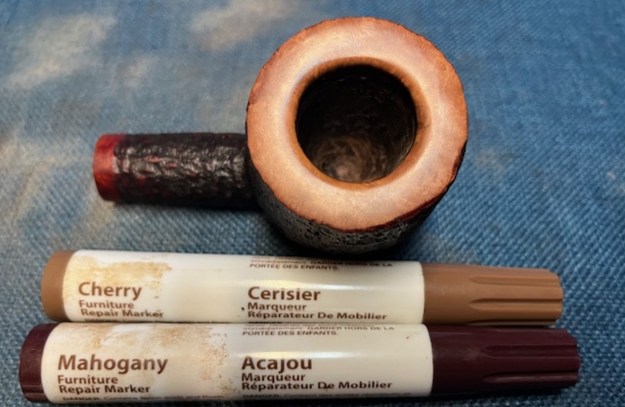
The next pipe on the work table came to us from a group of pipes we purchased on 02/29/2024 from a seller from Spring Branch, Texas, USA. It is a nice looking richly stained acorn shaped pipe with a stick bit silver tipped stem. The bowl has a dark reddish brown colour stain that highlights grain. There are also a lot of lighter coloured fills around the bowl and shank. I am hoping to mask these a bit in the clean up. This pipe has no stamping on the shank or the stem. There is a stamped Silver [over] 925 on both the band/ferrule and the silver tip on the stem. There is no other stamping. The bowl had been reamed and but then smoked so there was a light cake in the bowl and some lava on the top and edges of the rim top. The Sterling Silver ferrule and stem tip is oxidized and dark. The stem is black acrylic and there were some light tooth marks and chatter on both sides near the button. The pipe looks to be in good condition under the grime. This is a nice looking pipe and in a well-loved shape. Jeff took photos of the pipe before he started his cleanup. He took a photo of the bowl and rim top to show their general condition. You can see the lava, scratches and nick marks on the rim top and the light cake in the bowl. The bevelled inner edge of the bowl looks to be okay. The stem is acrylic and dirty and there are tooth marks and chatter on both sides near the button. The silver ferrule and stem tip is also oxidized and almost black. Jeff took some photos of the sides and heel of the bowl to give an idea of the grain around the bowl as well as the number of putty fills. I cannot wait to see what it looks like once it is cleaned and polished. Should be interesting to minimize the visual prevalence of the fills. He captured the stamping on the silver ferrule and stem tip in the next photos. Even through the oxidation they are clear and readable. It really amazes me that a pipe with silver shank and stem adornments has no name stamped on it and that a pipe with these many fills would even bother with the silver. Ah well….Jeff carefully cleaned the pipe. He reamed it with a PipNet pipe reamer and then cleaned up the reaming with a Savinelli Fitsall Pipe Knife. He scrubbed out the internals of the shank, stem and shank extension with alcohol, pipe cleaners and cotton swabs until the pipe was clean. He scrubbed the exterior of the bowl with Murphy’s Oil Soap and a tooth brush to remove the grime and grit on the briar and lava on the rim top. The finish looks much better and has a deep richness in the colour that highlights grain of the briar. The rim top had some damage to the around the entire top of the bowl. The silver ferrule and stem tip were oxidized but clean. Jeff worked the acrylic stem over with Soft Scrub All Purpose Cleaner to remove any grime or debris in the bite marks and on the surface. When the pipe arrived here in Vancouver and I finally started my work on it I was amazed it looked so good. Here are some photos of what I saw. I took some photos of the rim top and stem. The rim top and inner edge of the bowl shows damage and nicked spots. The close up photos of the stem shows that the surface of the stem is pitted. There are tooth marks and chatter on the top and underside of the stem near the button. I removed the stem from the shank and took a photo of the pipe at this point. You can clearly see the condition, size and shape of the pipe.To start my work on the pipe I decided to wipe it down with acetone to remove some of the darker portions of the stain and try to blend in the fills to the lighter colour once it was finished. I wiped the bowl down with acetone on cotton pads. I really like the way it came out. Have a look. I sanded out the scratches in the briar around the bowl sides and rim top with 320-3500 grit sanding pads. I wiped it down after each pad with a damp cloth to remove the sanding debris. The sanding really brought the grain to the front and blended in the marks of the fills. This is a great piece of briar. And once it is waxed and polished it should really be a beauty. I polished the briar with micromesh sanding pads – dry sanding with 1500-12000 grit pads and wiping down the bowl after each sanding pad.  I touch up some of the lighter spots on the shank/bowl junction and rim top with a Mahogany stain pen to match the rest of the bowl. Once it dried I hand buffed it and the restained areas looked very good. I rubbed the bowl and shank down with Before & After Restoration Balm. I worked it into the surface of the bowl sides and shank with my fingertips to clean, enliven and protect the briar. I let the balm sit for a little while and then buffed with a cotton cloth to raise the shine. The Balm did its magic and the grain stood out. I sanded out the tooth marks on the stem surface with a folded piece of 220 grit sandpaper to remove and smooth out the marks.I sanded out the scratch marks on the stem surface with 320-3500 grit sanding pads. I wiped the stem down after each pad with an Obsidian Oil cloth. The stem began to shine.I polished the vulcanite stem with micromesh sanding pads – 1500-12000 grit pads. I wiped it down with Obsidian Oil after each sanding pad. I used Before & After Pipe Polish – both Fine and Extra Fine to further polish the stem. The photo below shows the polished stem. This No Name Bent Acorn with the Silver Spigot with an acrylic stem is a nice looking pipe. The finish looks very good and the grain stands out. I put the stem back on the bowl and buffed the pipe with Blue Diamond on the buffing wheel. I carefully avoided the stamping on the shank sides during the process. I gave the bowl and the stem multiple coats of carnauba wax on the buffing wheel and followed that by buffing it with a clean buffing pad on the buffer. I hand buffed the pipe with a microfiber cloth to deepen the shine. The flow of the grain and the way the shape follows it is very well done. Give the finished pipe a look in the photos below. I can only tell you that it is much prettier in person than the photos capture. The dimensions of the pipe are Length: 5 ½ inches, Height: 2 inches, Outside diameter of the bowl: 1 ¼, Chamber diameter: 7/8 of an inch. The weight of the pipe is 1.52 ounces/42 grams. This interesting No Name Bent Acorn Silver Spigot is a great looking pipe in excellent condition. Thanks for walking through the restoration with me as I worked over another beautiful pipe. I will be adding it to the rebornpipes store in the American Pipe Makers Section soon. If you want to add it to your collection send me an email or a message! Thanks for your time.
Finding a Stem for a Bjørn Thurmann Hand Made


by Kenneth Lieblich

Steve’s recent foray into re-stemming pipes inspired me to try the same. In my box of various-and-sundry pipes, I was drawn to a nifty Danish freehand – but it was missing its stem. The beautifully rugged and chunky stummel has a real charm to it. The grooves and trenches are quite remarkable. This is a pipe that deserves a new stem. Let’s take a deeper dive into Thurmann’s pipes. The pipe was made by the esteemed pipemaker, Bjørn Thurmann. Unfortunately, I am not able to date the pipe, as the photo below shows all of the markings to be seen. On the underside of the stummel were some identifying markings. They read Thumann [over] Hand Made [over] Denmark [over] 3.Thurmann passed away a few years ago, but his company, Thurmann Piber, is still well known in Copenhagen for the fine quality of his work. The reference book, Scandinavian Pipemakers by Jan Andersson, provides us with a nice overview of his background and work. I will quote a bit of it here:

Bjørn Thurmann was born in 1946 – some would say, born into the tobacco trade. In 1953, his parents opened a pipe shop in central Copenhagen and Bjørn helped them there from the beginning, mainly by sorting pipes. Initially, the pipes were bought from a firm called Larsen & Stigart, but eventually they decided to start their own production.

Bjørn’s parents thought that their son ought to widen his views and get some international experience, so, in 1968, he was sent to London to work in different tobacconists shops, a period of learning that ended at Dunhill’s famous shop on Duke Street. After returning home, he almost immediately received an offer to work for Iwan Ries & Co. in Chicago, an offer that was hard to resist, so off he went.

 In 1976, Bjørn established himself as an independent pipemaker, and since then he has had shops in several places in Copenhagen. Bjørn has also written a book called Pibemagerens Handbog (The Pipemakers Handbook), which tells how to make pipes using simple tools most people have at home.Clearly, Thurmann was a vastly experienced and talented pipe man. One can not only see, but also feel, the quality of the briar. Here is a screenshot from Pipephil:Let’s get working! The first step for me is to ream out the bowl – that is to say, remove all the cake inside the bowl. This accomplishes a couple of things. First (and most obviously), it cleans the bowl and provides a refurbished chamber for future smoking. Second, when the old cake is removed, it allows me to inspect the interior walls of the bowl and determine if there is damage or not. I used a reamer, a pipe knife, and a piece of sandpaper taped to a wooden dowel. Collectively, these ensure that all the debris is removed. I’m pleased to report that the inside of the bowl looks good.My next step was to remove the lava on the rim. For this, I took an old butter knife and gently scraped the lava away. This provides an edge that is sharp enough to remove what I need, but not so sharp that it damages the rim.The inside of the stummel needs to be cleaned thoroughly. So I then cleaned it with both pipe cleaners and cotton swabs dipped in 99% lemon-infused isopropyl alcohol. It took some work to get clean!I then decided to ‘de-ghost’ the pipe – that is to say, exorcize the remaining filth from the briar. I filled the bowl and the shank with cotton balls, then saturated them with 99% isopropyl alcohol. I let the stummel sit overnight. This caused any remaining oils, tars and smells to leach out into the cotton.To tidy up the briar, I also wiped down the outside with some oil soap on cotton rounds (and a toothbrush). This does a good job of cleaning any latent dirt on the surface of the briar. The last step of the cleaning process is to scour the inside of the stummel with some all-purpose cleanser and tube brushes. This is the culmination to a lot of hard work in getting the pipe clean.Before picking a stem and slapping it on, there is quite a bit of prep work required. First, the flat face of the shank obviously once had a shank extension. A few years ago, I worked on another Thurmann pipe that also had a shank extension, so this didn’t surprise me. However, there was no shank extension anymore, so I had to improvise.After pondering the situation, I decided to carve the shank face in a style similar to the rest of the pipe. I took my Dremel and a couple of different burrs, and carved a trench that matched those on the bowl. I think it came out really well.The edge of the shank face was quite sharp. This makes sense when one considers that the extension would have butt up against it. However, it didn’t look right anymore. Instead, I very carefully sanded this sharp edge to match the rim’s edge. After that, I used some of my furniture pens (which is just dye in pen form) and matched the colours. Looks great.I rubbed some Before & After Restoration Balm into the briar and left it to sit for 20 minutes or so. I also had to use my horsehair brush and a cotton swap to get into the nooks and crannies. The balm moisturizes the wood and gives a beautiful depth to the briar. I then buffed it with a microfibre cloth. Now, I had to find a suitable stem and make it work with the stummel. I quickly found a stem in my stores that worked perfectly. It matched the style and shape of the pipe, and I felt that it was a great choice. First, I reduced the thickness of the tenon until it fit snuggly in the stummel’s mortise. I used all nine of the micromesh sanding pads (1,500 through 12,000 grit) to sand out flaws, even everything out, and provide gentle polishing of the finished surface. I also applied pipe-stem oil while using the last five micromesh pads. There was a wonderful, deep black shine to the stem when I was done. The final step is buffing. I took the pipe to my bench buffer and carefully polished it – first with a white diamond compound for the stem, then with three coats of conservator’s wax for the stummel. Naturally, this procedure makes the pipe look its best – the stummel sings and the stem glows.All done! This Bjørn Thurmann Hand Made was a pleasure to work on. It looks fantastic and is ready to be enjoyed again by its next owner. I am pleased to announce that this pipe is for sale! If you are interested in acquiring it for your collection, please have a look in the ‘Danish’ section of the store here on Steve’s website. You can also email me directly at kenneth@knightsofthepipe.com. The approximate dimensions of the pipe are as follows: length 5⅝ in. (12 mm); height 1¾ in. (44 mm); bowl diameter 1⅔ in. (43 mm); chamber diameter ¾ in. (19 mm). The weight of the pipe is 1⅞ oz. (54 g). I hope you enjoyed reading the story of this pipe’s restoration as much as I did restoring it. If you are interested in more of my work, please follow me here on Steve’s website or send me an email. Thank you very much for reading and, as always, I welcome and encourage your comments.
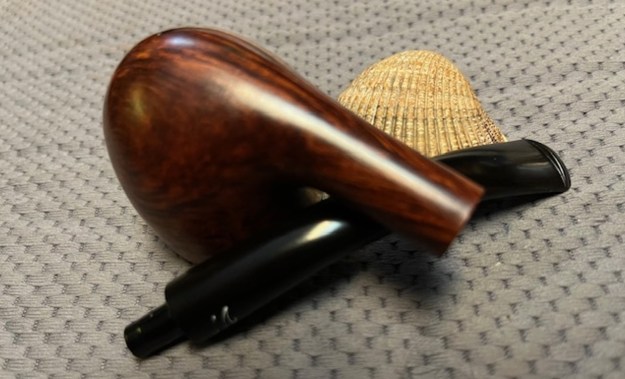
Restemming and Restoring a Well Used Republic Era Peterson’s Kildare 408 Apple


by Steve Laug

In January Jeff found out about an estate sale in Pocatello, Idaho, USA. It turned out that the sale was for a fellow Jeff and I had purchased pipes from in the past, Gene. He had been the owner of Outwest Tobacco in Pocatello (long closed now) and I bought tobacco and other smoking items from him in the past. As I think about it now, it seems that I had known Gene for over 30 years Jeff and I had been to his home and enjoyed coffee and a few pipes together. I have no idea how many pipes we bought on those visits as well as to the antique shop of his daughter. I know that there were many pipes. When we heard that it was Gene’s personal collection that was for sale and that he had passed away we decided for Jeff to go to the house and have a look. He went on January 25, 2024 to scope it out as we had seen his personal collection of pipes and there were definitely some among those well smoked old warriors that would be great to pick up. Perhaps there would even be one that could join my own collection in memory of Gene.

Jeff went to the house and looked through the racks, pipe bags, tobacco both bulk and tinned as well as a variety of pipes. All the pipes were well smoked and needed serious cleaning. One the pipes he picked up was this Peterson’s Kildare 408 Apple with a black vulcanite replacement fishtail stem. It was very dirty and was a natural coloured pipe when it started. The smooth finish around the bowl was dirty and had hand oils ground into the grooves. The bowl had a thick cake that overflowed in lava onto the rim edge and top of the bowl. The stem was a replacement vulcanite one that was very dirty and had the marks of a rubber Softee Bit on the end. It had become discoloured and there was a line where the debris from smoking had accumulated along the edge and under the bit protector. The good news was that there were no tooth marks or chatter. The rest of the stem was dirty and had lost the characteristic shine. I really did not matter as I would be replacing it with a P-lip stem. The pipe was stamped on the left side of the shank and read Peterson’s [over] Kildare and on the right side it read Made in the [over] Republic [over] of Ireland (in three lines) and next to that was the shape number 408 next to the shank/bowl joint. Jeff took photos of the pipe so I could have a sense of what it looked like before he started his work on it.Jeff took photos of the stem surfaces and the bowl and rim to give a sense of condition of the pipe. You can see the thick cake in bowl and the lava overflow on the edges and rim top of the bowl. It is had to know if there is any damage as the cake and lava is quite thick. The stem surface is very dirty and you can see the area on the end of the stem where the Softee Bit had protected it from chewing but had left it dirty and discoloured. He also took photos of the sides of the bowl and the heel to show the interesting grain that went around the bowl. The grain is beautiful. You can see the oils and debris ground into the finish of the bowl. He took photos of the stamping on the sides of the shank. It is faint but still is readable as noted above. I reread Pipedia’s article on Peterson pipes. It is a great read in terms of the history of the brand (https://pipedia.org/wiki/Peterson). I am quoting nothing specifically from that article but recommend you take time to read it.

I turned to “The Peterson Pipe” by Mark Irwin and Gary Malmberg to get some background on the Peterson’s Kildare Line. It has become my go to any time I want information on the brand. On page 314 it had the following information on the Kildare Line.

Kildare (1965-) First issue of line with matte-finish in Classic Range shapes, P-Lip and fishtail mouthpiece. Second issue C.1979 as Kildare Patch, with rusticated patches on pipe surface. Third issue 2010, matte-brown, P-Lip or fishtail mouthpiece, no band. Fourth issue 2011-, burgundy sandblast finish, nickel army mount, fishtail mouthpiece, exclusive to smokingpipes.com.

The information given above identifies the pipe as a First Issue of the line with a matte-finish. It would have been issued between 1965 and 1979. This line was issued is a brown finish with either a P-lip or a fishtail mouthpiece. This means that the pipe is an older issue Kildare. The 408 shape number is attached to a ¼ bent Apple.

Now it was my turn to work on the pipe. Jeff had done an amazing cleanup of the pipe. It was a real mess and I wondered what it would look like after his work. He reamed the heavy cake with a PipNet reamer and cleaned up that with a Savinelli Fitsall Pipe Knife. He scrubbed the internals of the bowl and stem with alcohol, cotton swabs, shank brushes and pipe cleaners. He scrubbed the externals with undiluted Murphy’s Oil Soap and rinsed the bowl off with running water. He soaked the stem in Briarville’s Pipe stem Deoxidizer and once it had soaked rinsed it off with warm water to remove the residual solution. He dried it off and rubbed it down to remove any oxidation that was still on the stem. The scratches in the briar stood out once clean. There were some on the left side toward the top of the bowl that appear in the first photo below. Overall the pipe looked good when I received it. I took a photo of the rim top to show the condition. You can see the clean bowl. The bowl is in excellent condition and the rim top shows some darkening and some damage on the inner edge of the bowl and the outer edge as well. The misfit stem came out looking quite good, but since I would replace it in the restoration process I will add it to my cans of stems once I fit a new one to this pipe. I took photos of the sides of the shank to show the stamping. The photo clearly shows the faint stamping though it is actually more readable in person. I removed the stem from the shank and took a photo of the pipe parts to show what I was working with. The very short tenon is visible in the photo and was only one of the issues with this replacement stem. I set aside the bowl and turned my attention to the stem. I had decided to replace the stem so I went through my stems for fine one. I wanted a straight P-lip style stem for the Peterson’s Apple. I went through my many stems and did not find one that would work with the diameter of the shank. I contacted Kenneth with the dimensions of the shank and he found several that were close. He graciously dropped them by on Sunday afternoon. In the bag he brought were several new Peterson replacement P-lip stems. I chose the taper stem below as my first choice. It had the right diameter and after the tenon was turned should work well. You can see the casting marks on the button area and tenon showing it as new stock.I have a tenon turning tool here that I often use to do this job. But for this one I decided to use the Dremel and a sanding drum to reduce the diameter of the tenon. It actually worked very well and I cleaned up the tenon with a file to remove the ridges of the sanding drum. The diameter was correct and the fit to the shank was perfect. Once the fit in the shank was right I used a lighter to heat the stem to give it the proper bend for the angle of the shank on this apple.I fit the stem on the shank and took photos of the new stem to give a sense of the new look. Personally, I like doing this as it gives me a chance to see it apart from a lens or on my desk top and assess the bend and the fit. I was happy with what I say. Now I needed to sand and shape the stem. I worked on the stem to remove the casting marks from the sides and the P-lip end with 220 grit sandpaper. I also removed some of the excess diameter on the top and underside of the stem to make the transition smooth. It definitely looked better at this point. Still lots to do.I started the polishing process on the pipe by sanding the stem and tenon with 320-3500 grit sanding pads. Each successive pad brought smoother shape and definition to the stem and tenon surface. It was starting to look very good.I polished the stem with micromesh sanding pads – 1500-12000 grit pads. I wiped them down with Obsidian Oil after each sanding pad. I used Before & After Pipe Polish – both Fine and Extra Fine to further polish the stem. I gave it another coat of Obsidian Oil and set aside for the product to absorb into the vulcanite. I set the stem aside finished with all but the buffing and turned my attention to the bowl. I cleaned up the inner edge bevel with a folded piece of 220 grit sandpaper. I lightly topped the bowl on a topping board with 220 grit sandpaper to minimize the damage on the top and outer edge of the bowl. Once finished it definitely looked better. I wiped the bowl down with cotton pads and acetone to remove the darkening on the bowl sides and begin the process of cleaning the surface in my check for damage and cracks to the bowl. It actually looked very good. I used a Cherry stain pen to restain the inner edge and rim top to match the rest of the briar before I started sanding it. Once it had been sanded the match should be perfect.I sanded the bowl with 320-3500 grit sanding pads to remove the scratching and marks on the bowl surface and top and underside of the shank. I wiped it down after each pad with a damp cloth and by the end the bowl really began to show some promise. I carefully avoided the stamping on the shank sides. I polished the briar with micromesh sanding pads. I dry sanded it with 1500-12000 grit sanding pads and wiped the bowl down after each pad with a damp cloth. By the final pads the briar really had a shine. I rubbed the briar down with Before & After Restoration Balm. I worked it into the briar with my fingertips to work it into the finish. The product works to clean, enliven and preserve the briar. I let it sit for 10 minutes then I buffed it with a cotton cloth to deepen the shine. The briar really comes alive with the balm. I decided at the last minute to add a cosmetic thin brass band to the shank end. There was no need to do this in terms of damage to the stem or shank end. I just thought it would add a touch of bling to the pipe and give it a good interruption between the briar and the vulcanite. I heated the band and pressed it in place on the shank.It was great to finish this older (1965-79) Republic Era Peterson’s 408 Apple. I put the bowl and the newly fit stem together and buffed it with Blue Diamond on the buffing wheel. I gave the bowl and the stem multiple coats of carnauba wax. I buffed the pipe with a clean buffing pad to raise the shine. I hand buffed the pipe with a microfiber cloth to deepen the shine. It is fun to see what the polished bowl looks like with deep sandblast all around it. Added to that the polished black vulcanite stem was beautiful. This Peterson’s Kildare 408 Apple is great looking and the pipe feels great in my hand. It is light and well balanced. Have a look at it with the photos below. The dimensions are Length: 5 ¾ inches, Height: 1 ¾ inches, Outside diameter of the bowl: 1 ¼ inches, Chamber diameter: 7/8 of an inch. The weight of the pipe is 56 grams/1.98 ounces. It is a beautiful pipe and one that will soon be on the rebornpipes store in the Irish Pipe Makers Section of the store. If you want to add it to your collection let me know. Thanks for walking through the restoration with me as I worked over this pipe. Thanks to each of you who are reading this blog.