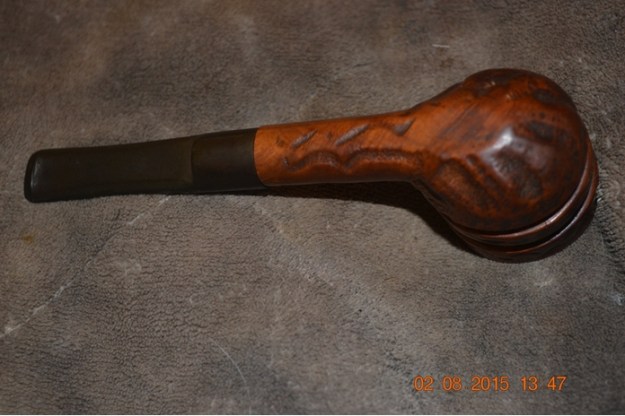
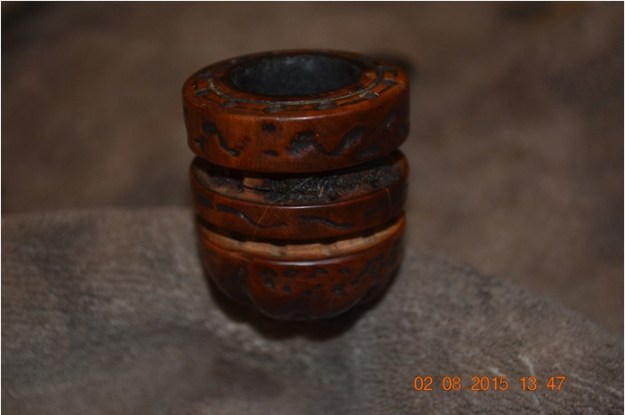
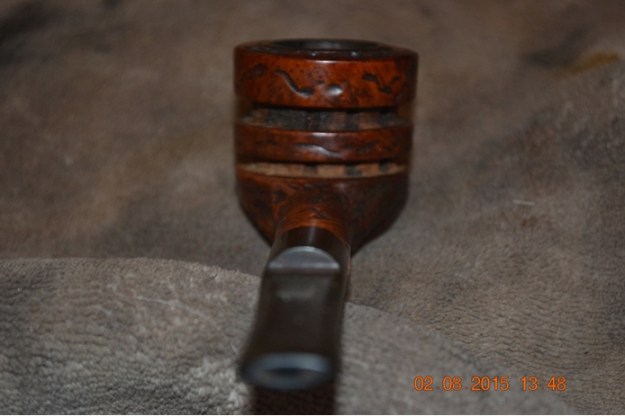
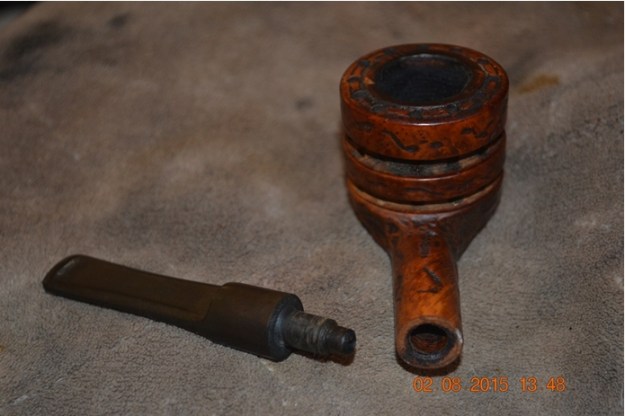
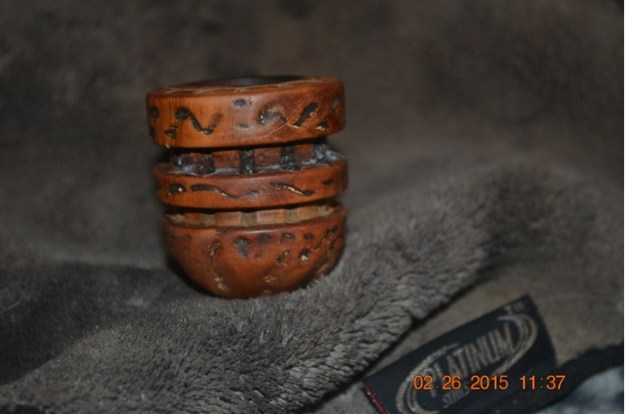
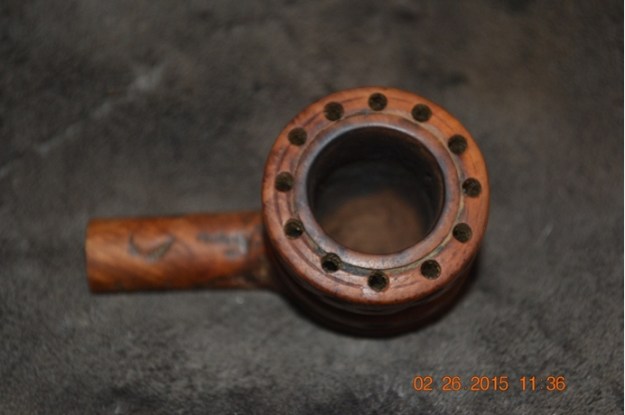
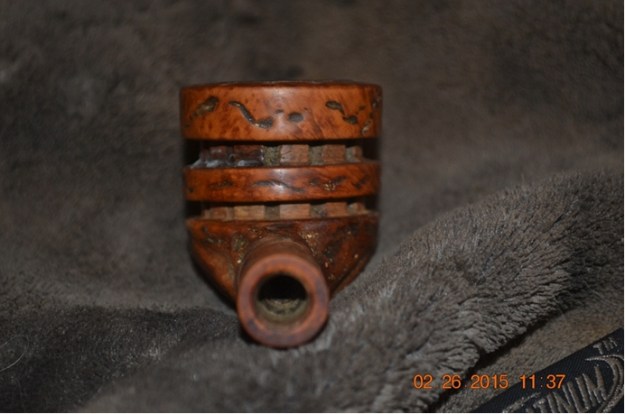
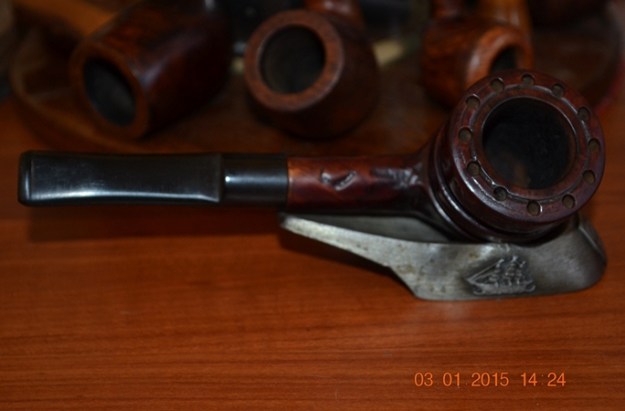
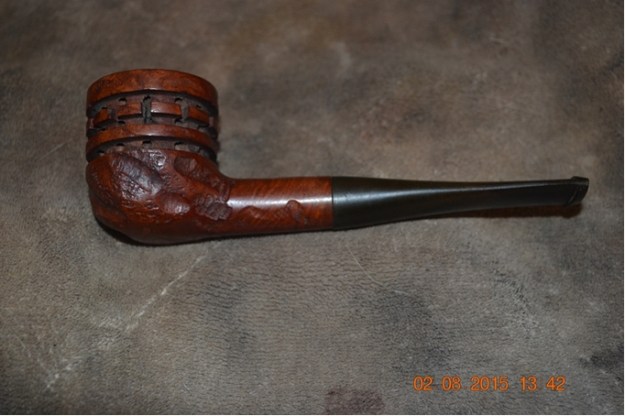
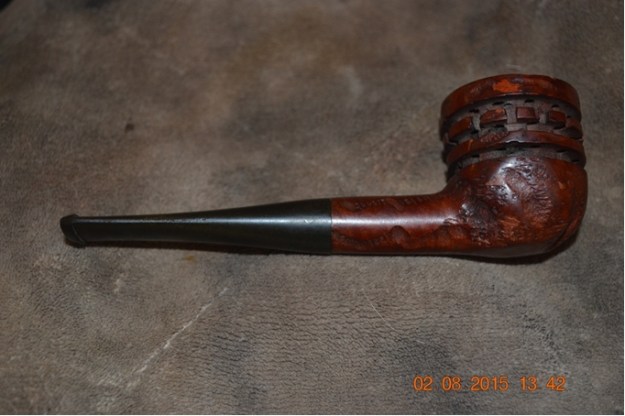
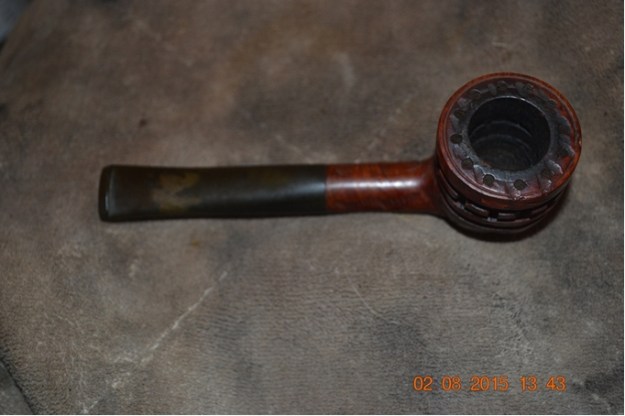
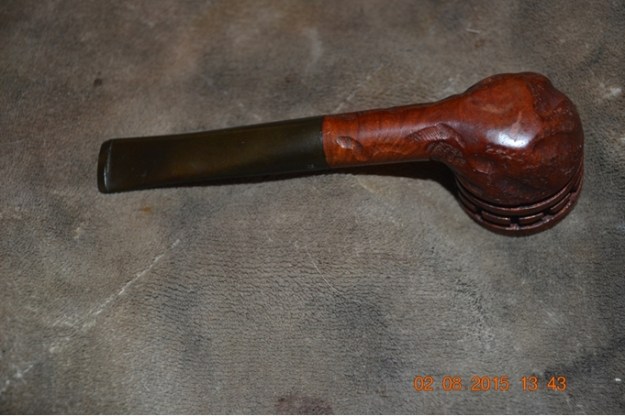
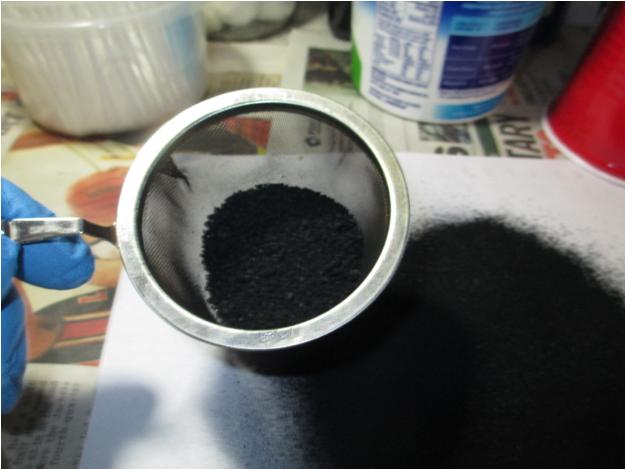
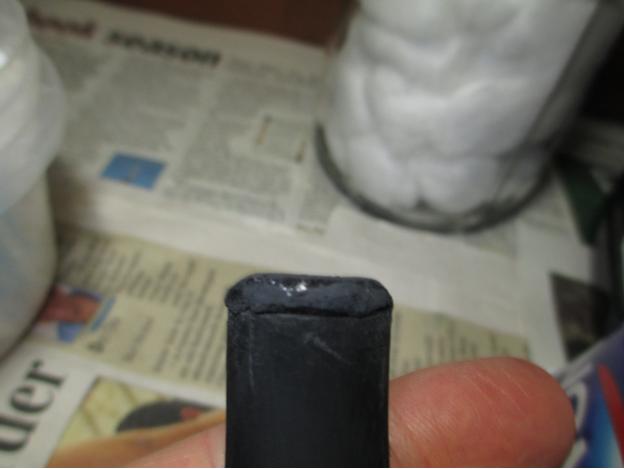
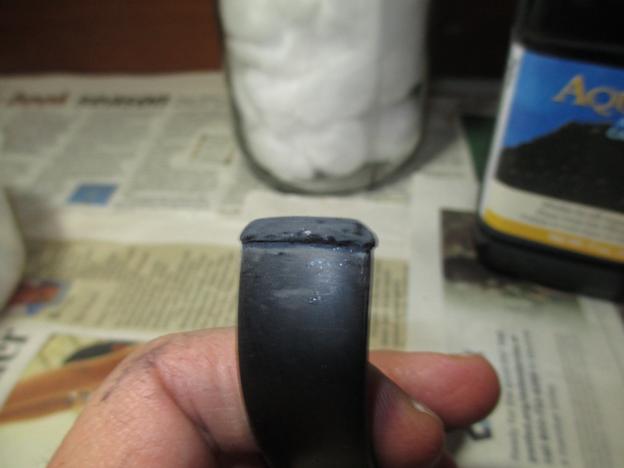
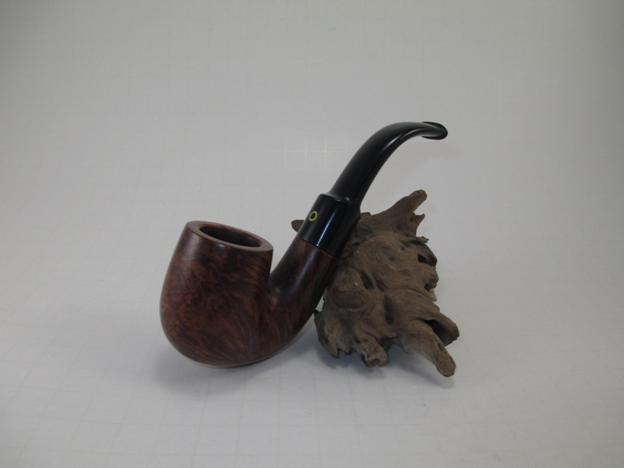
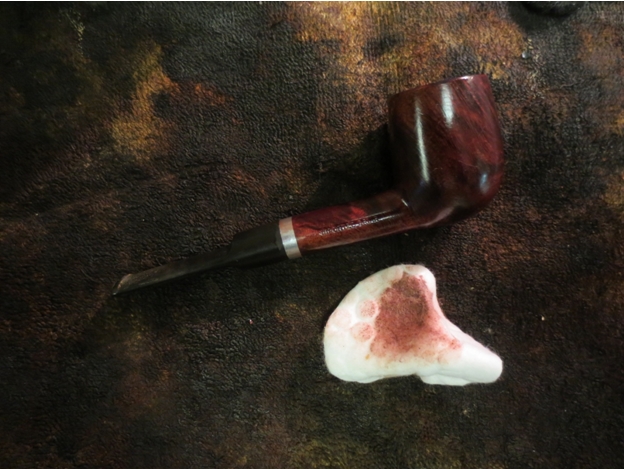
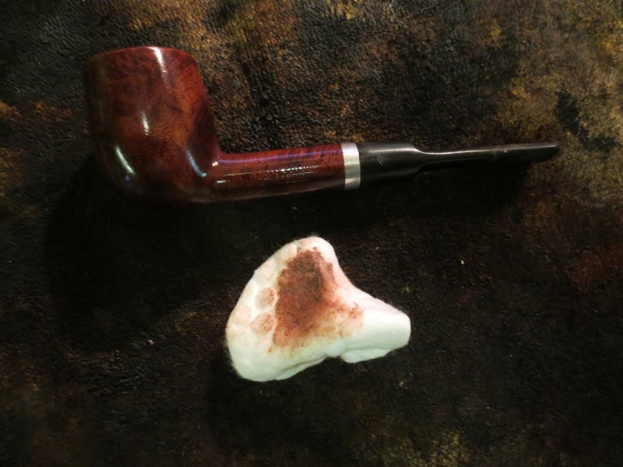
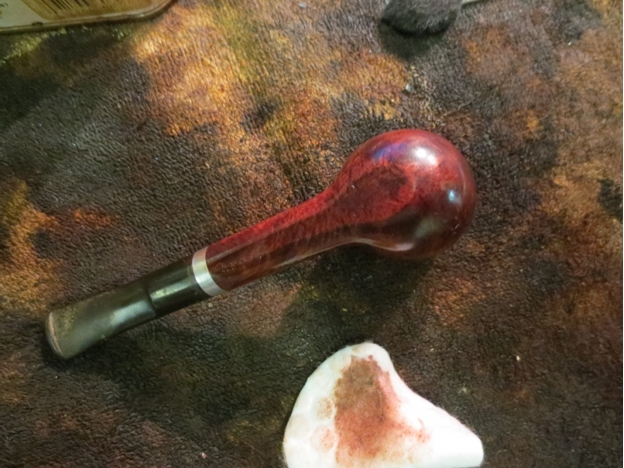
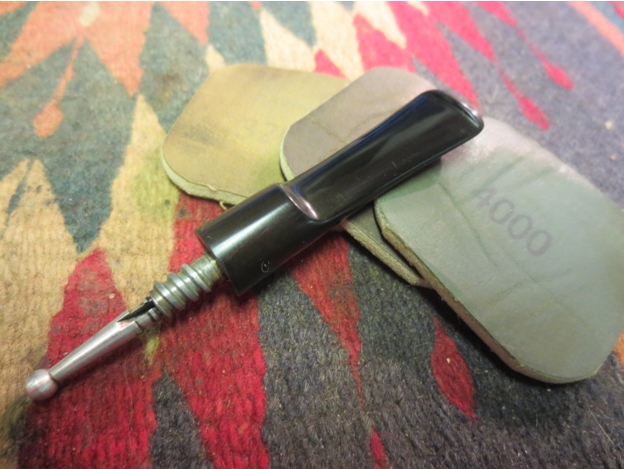
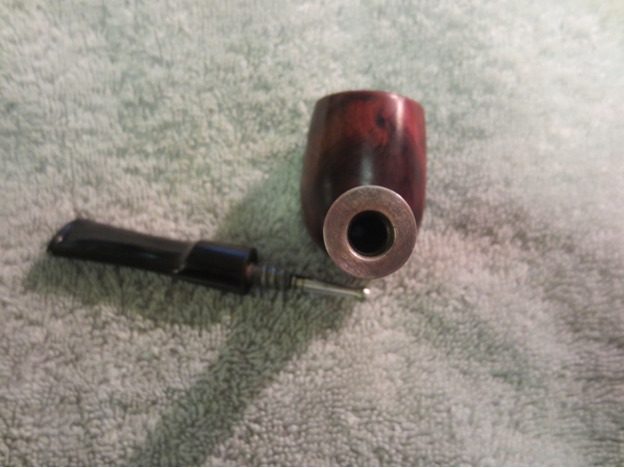
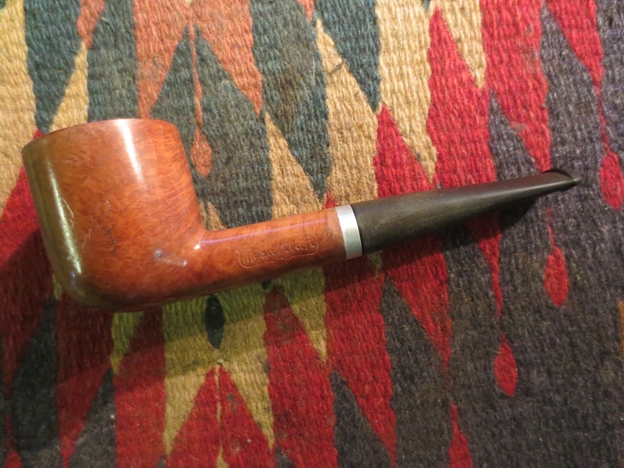
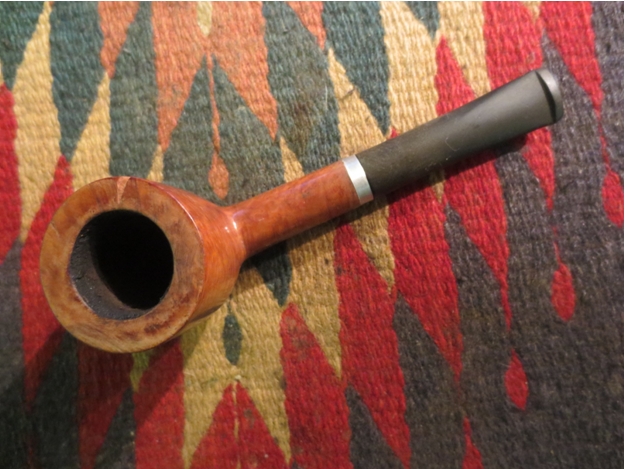
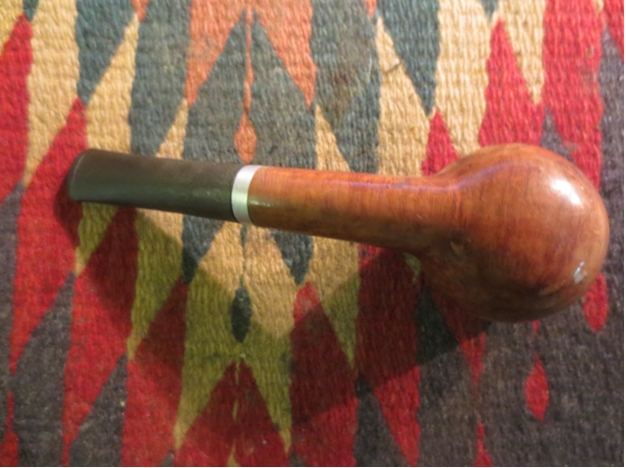
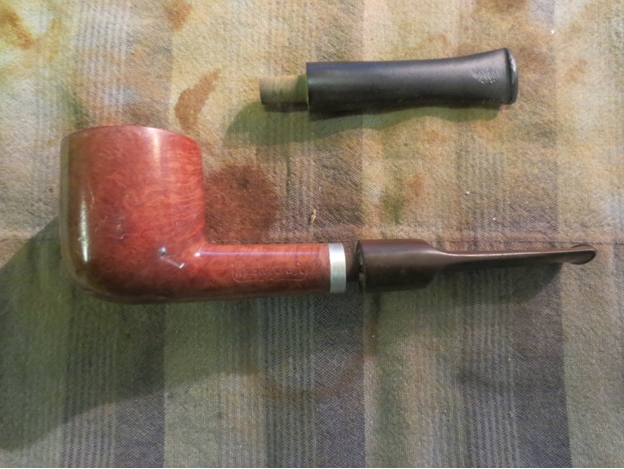
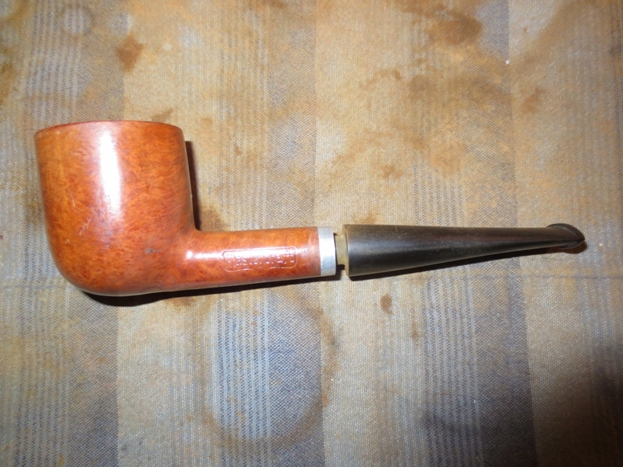
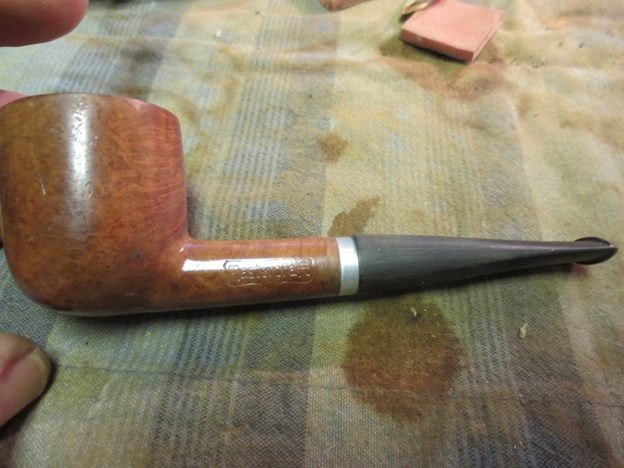
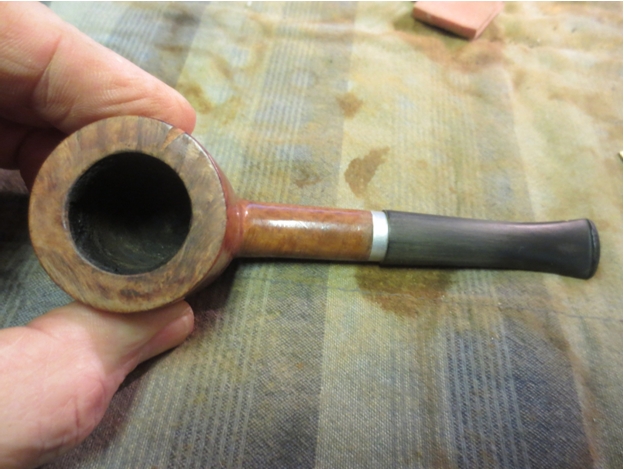
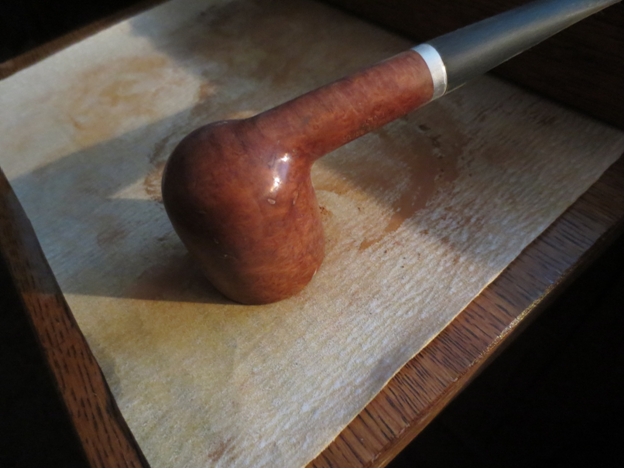
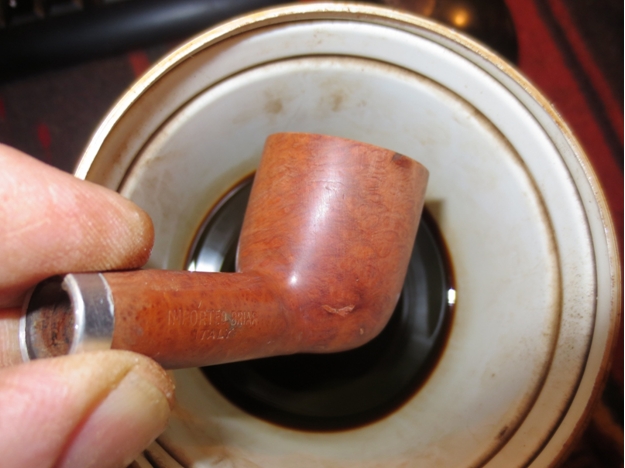
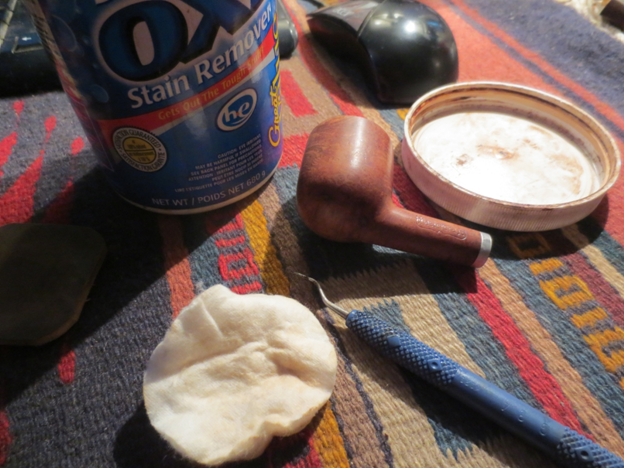
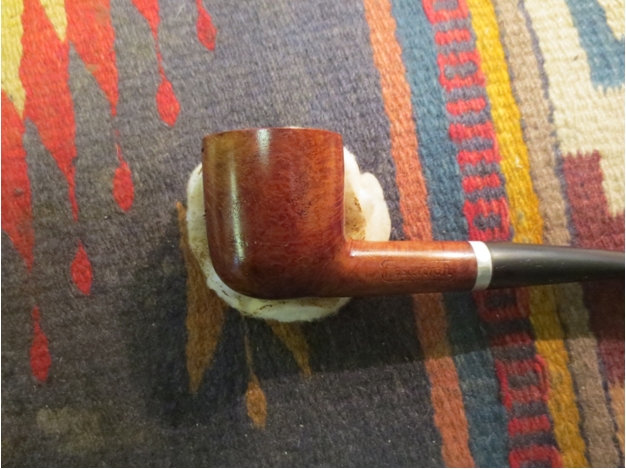
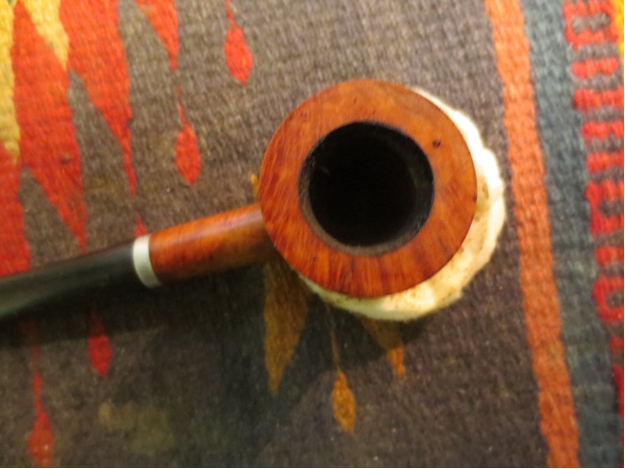
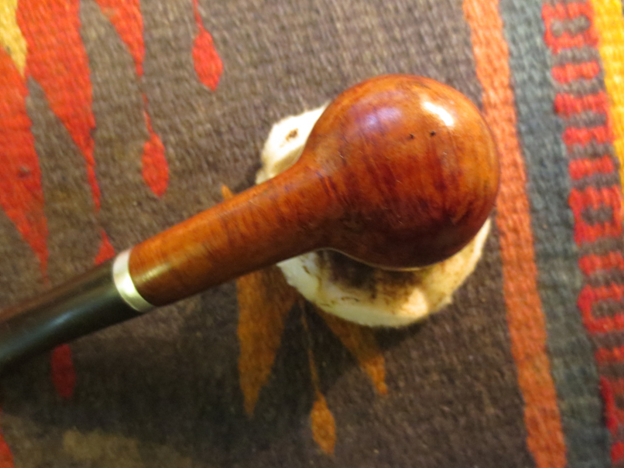
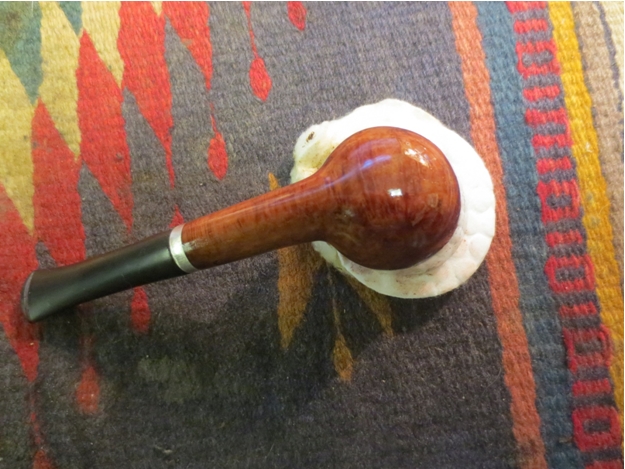
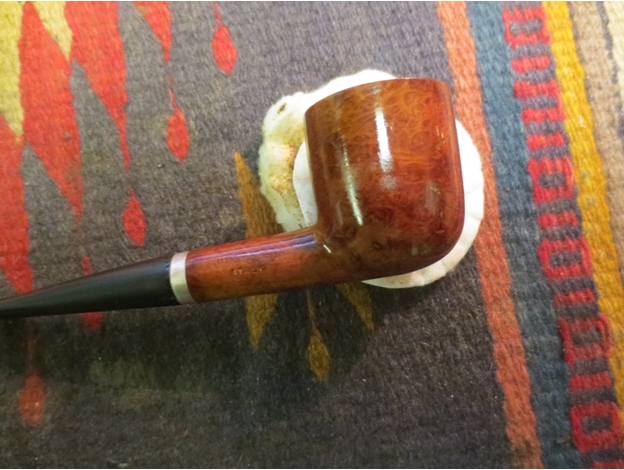
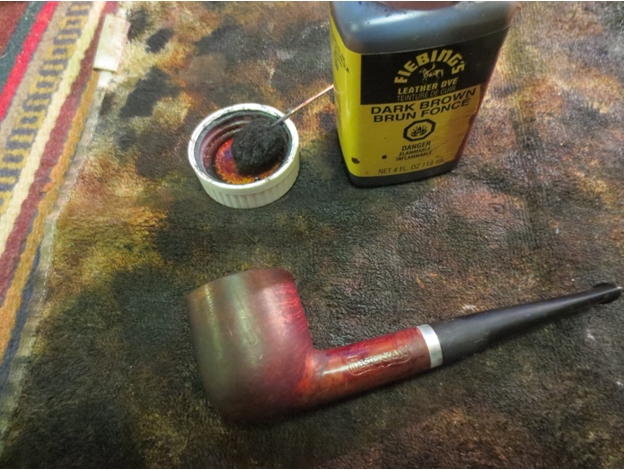
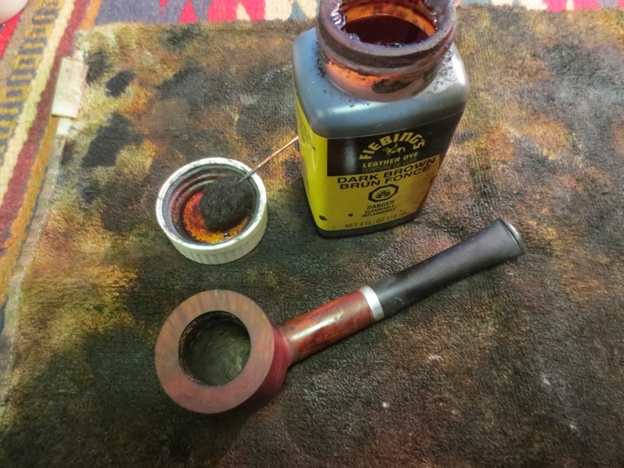
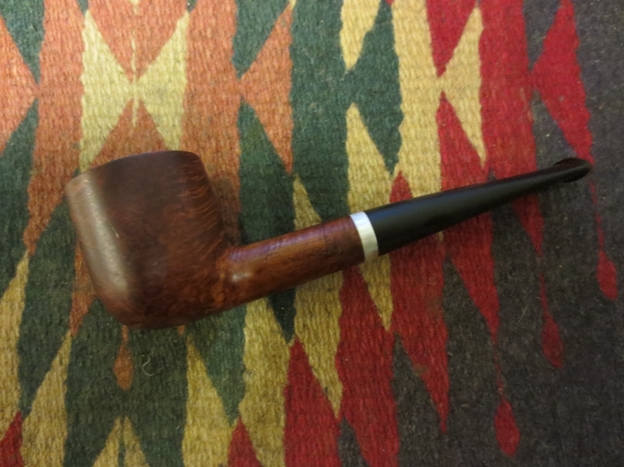
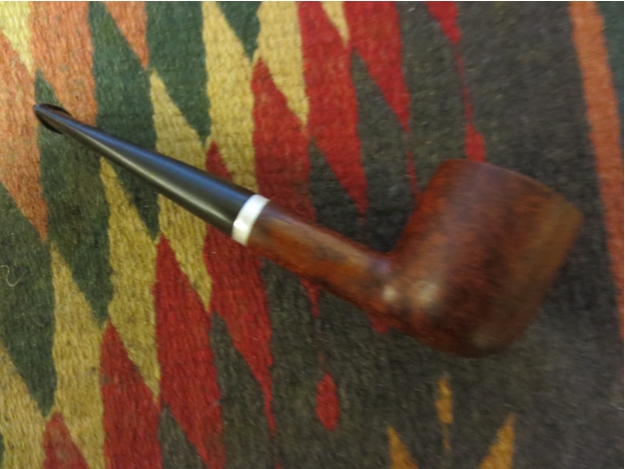
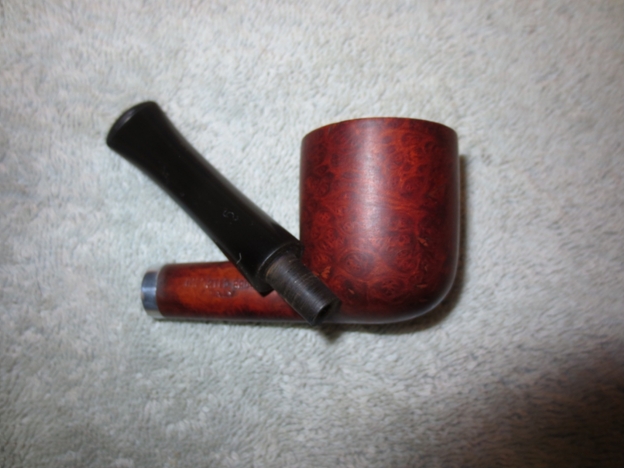
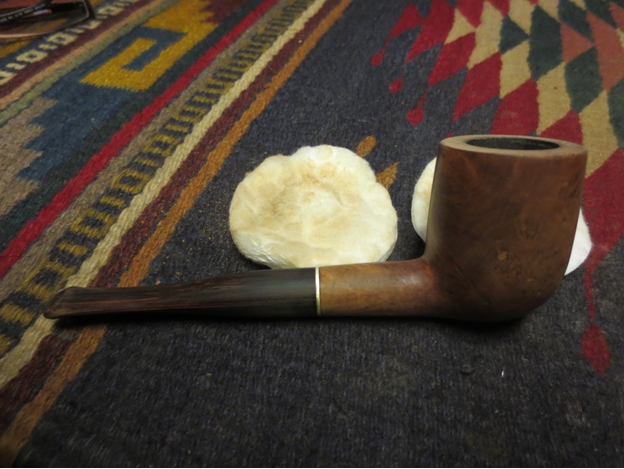
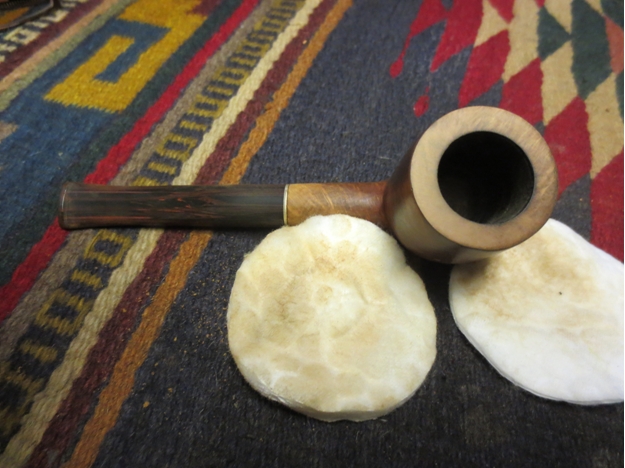
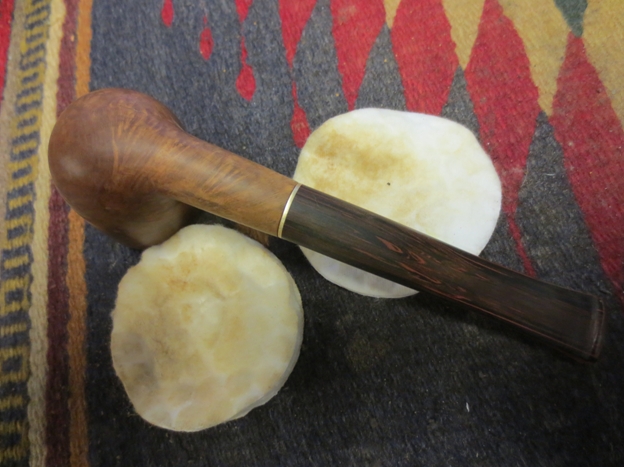
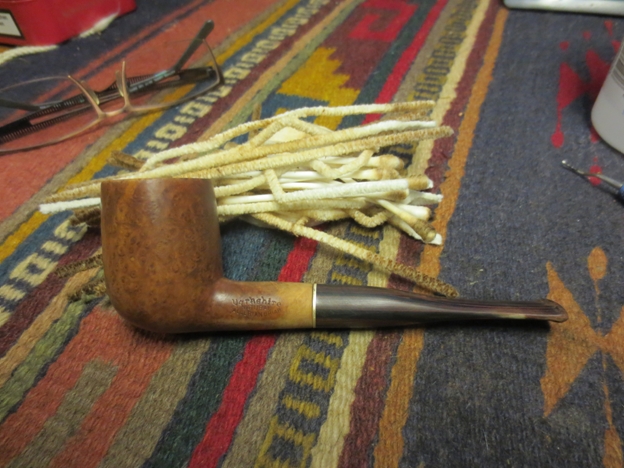
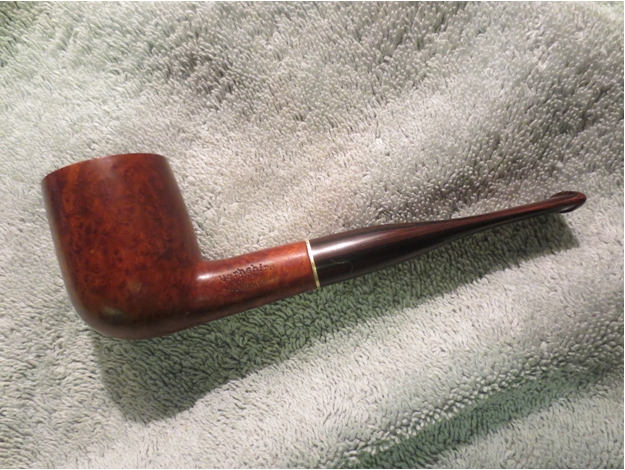
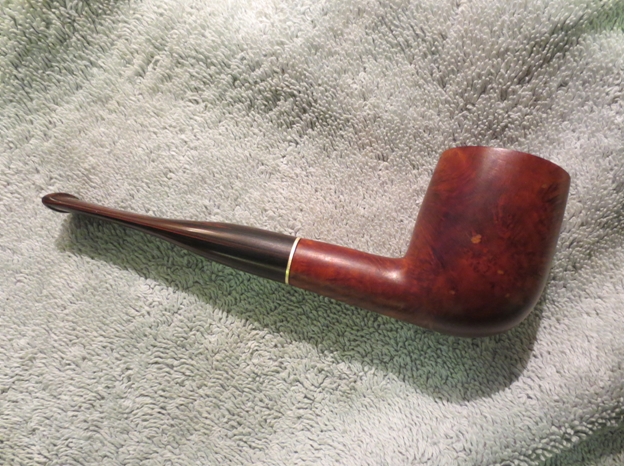
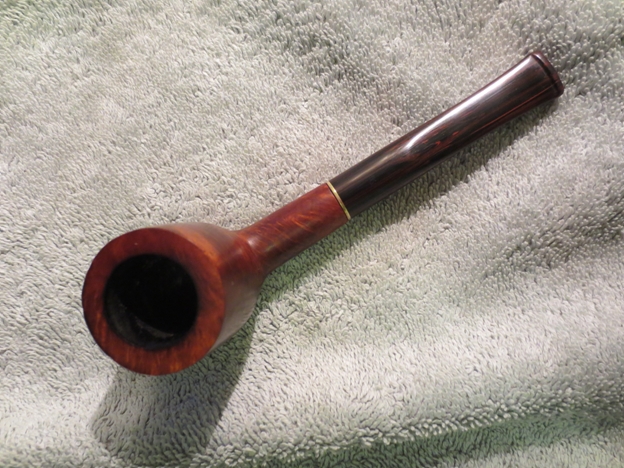
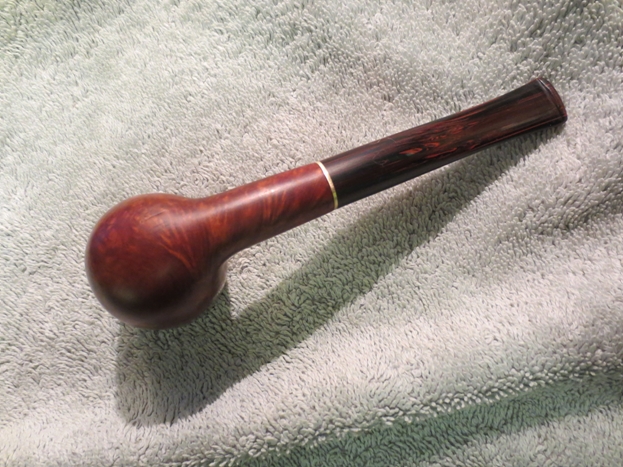
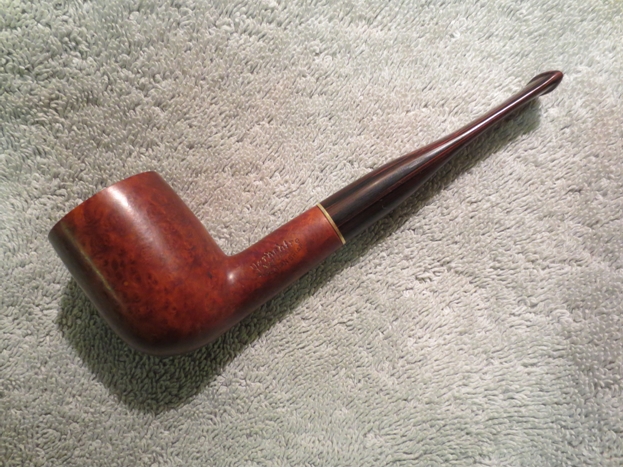
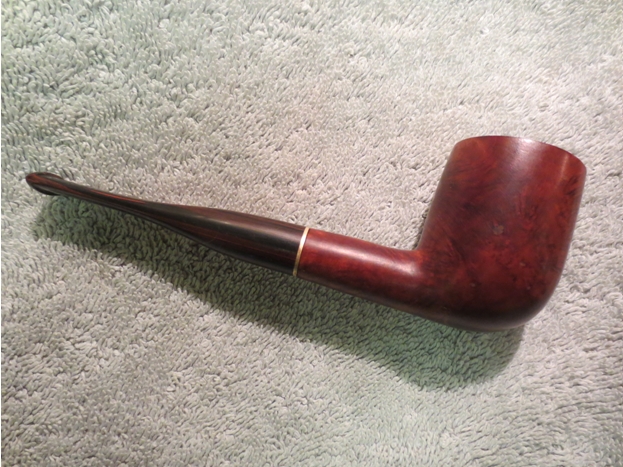
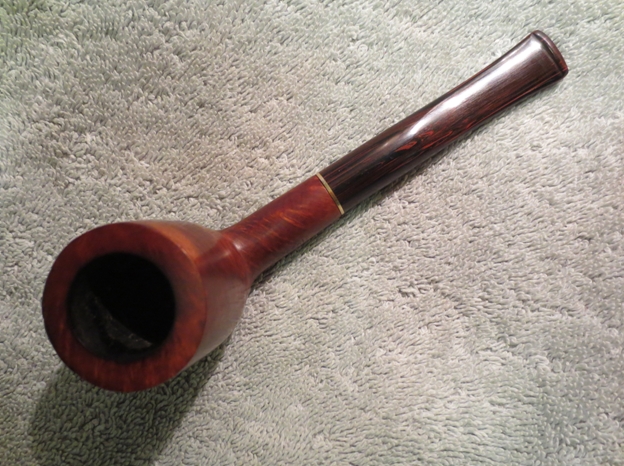
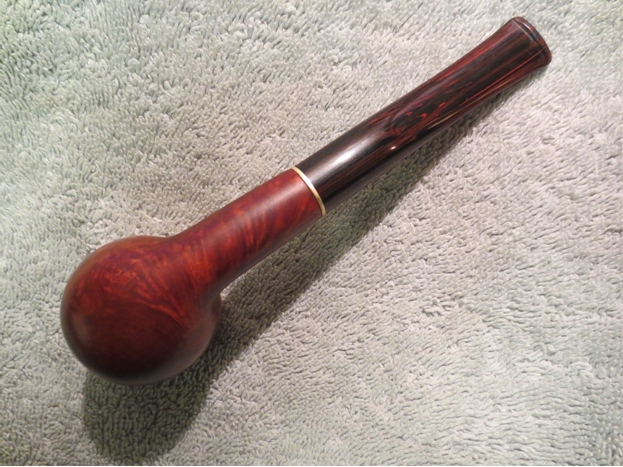
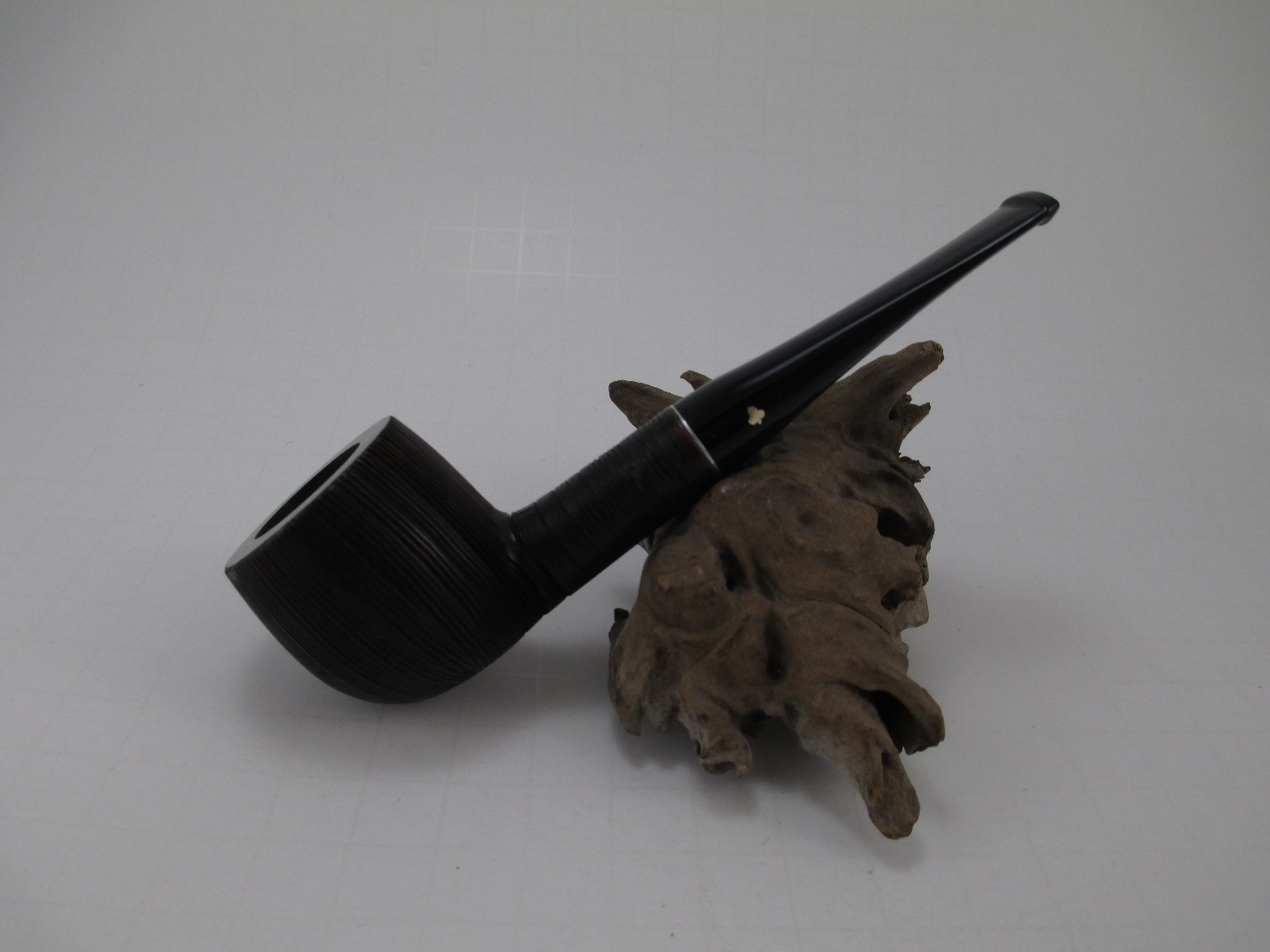
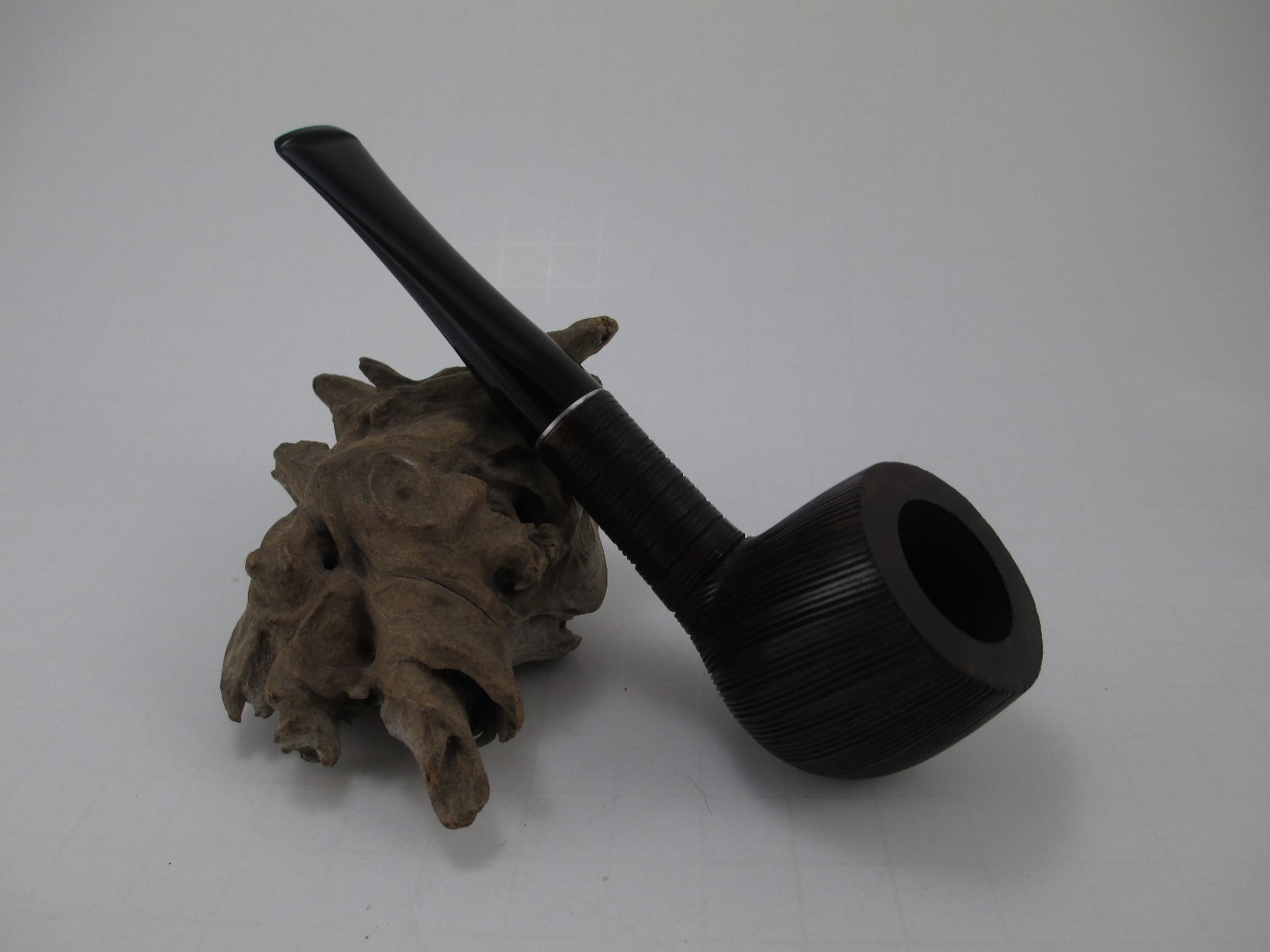
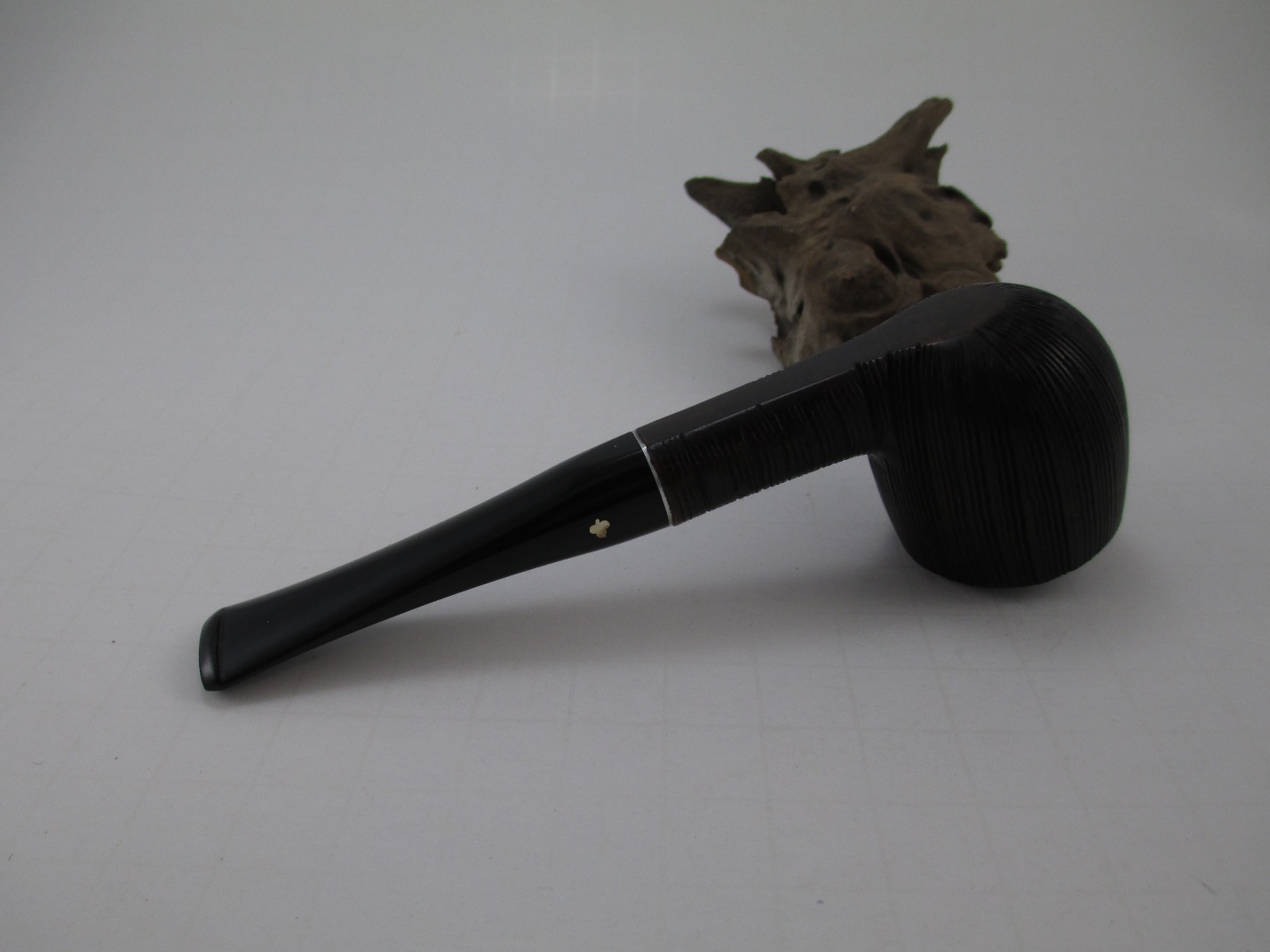
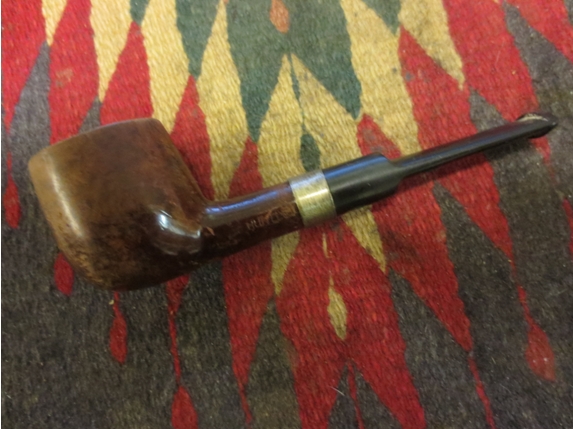
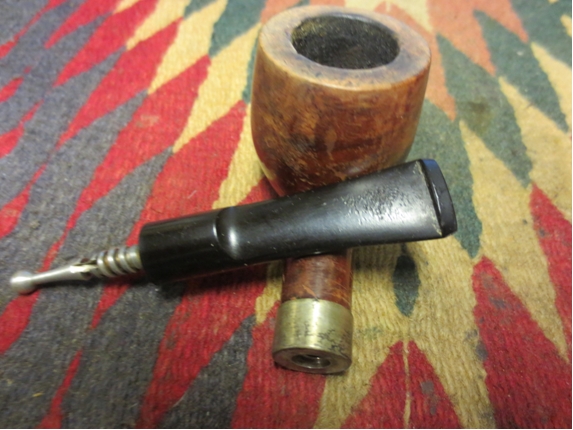
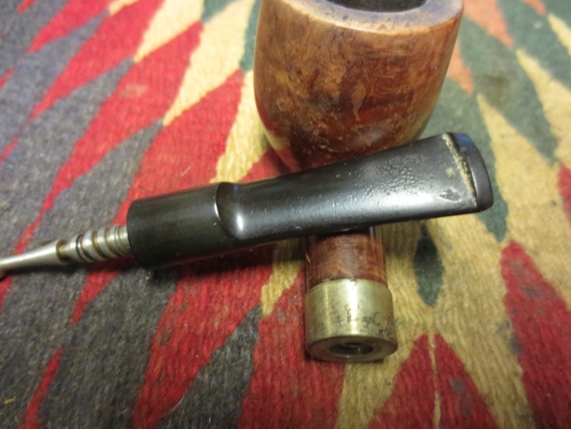
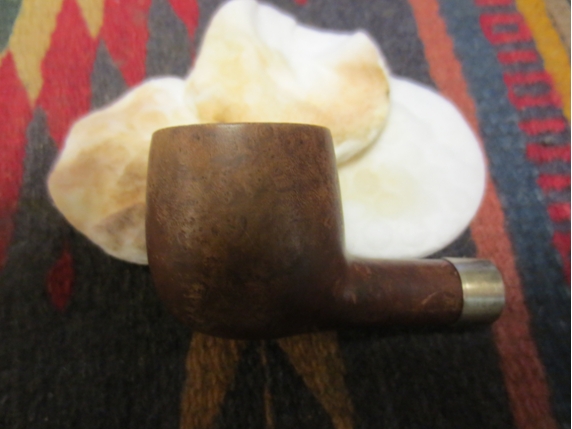
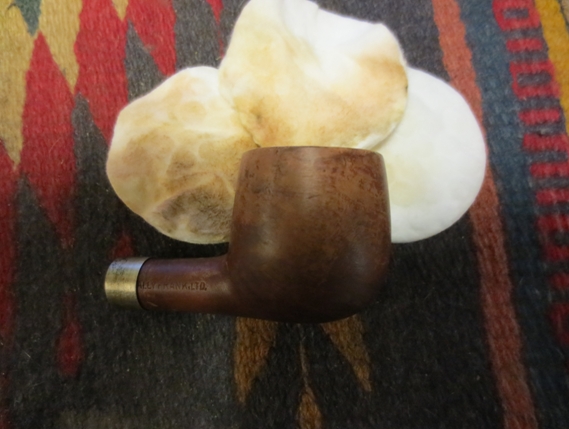
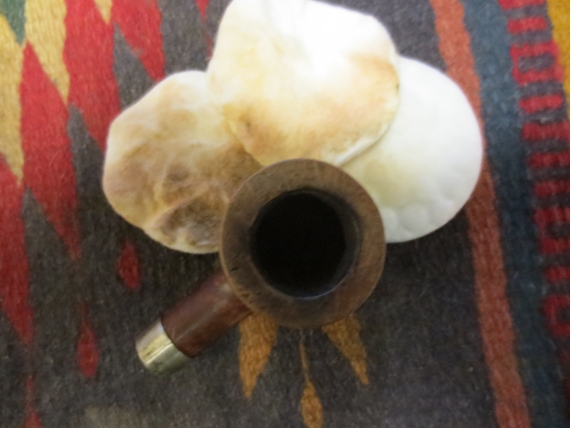
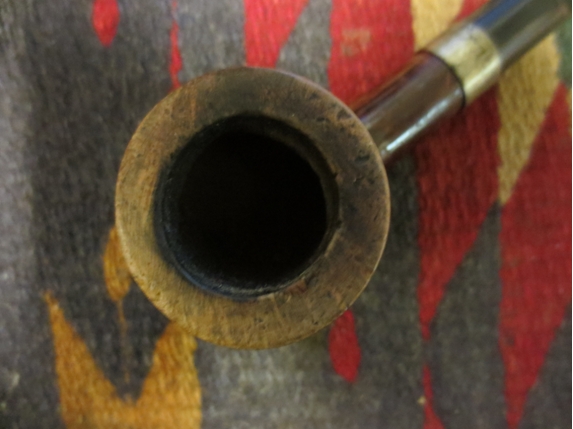
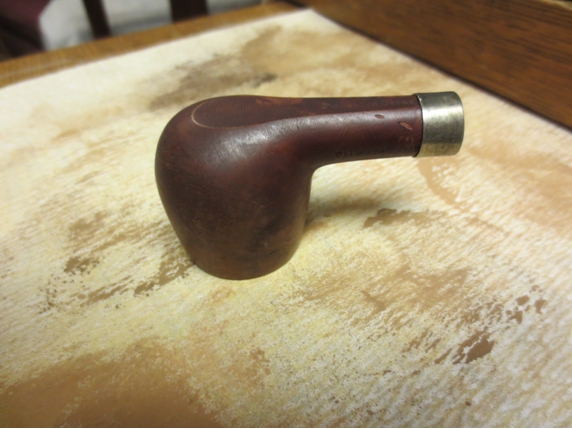
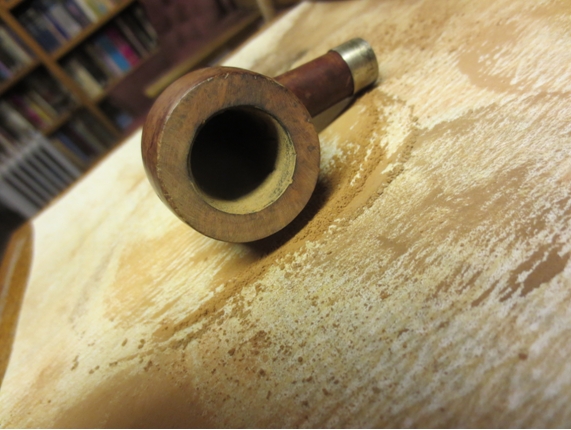
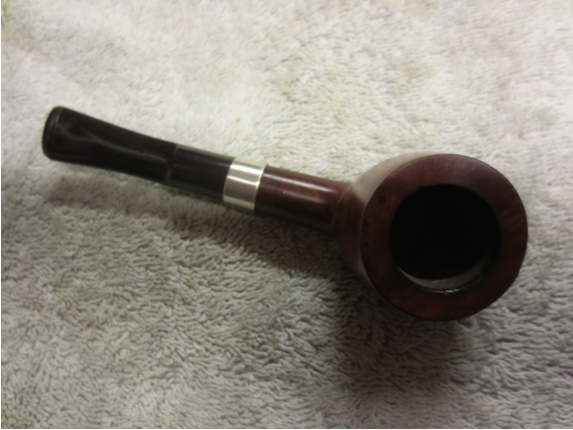
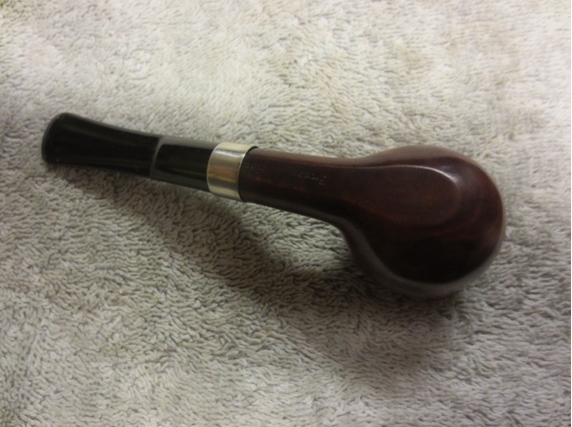
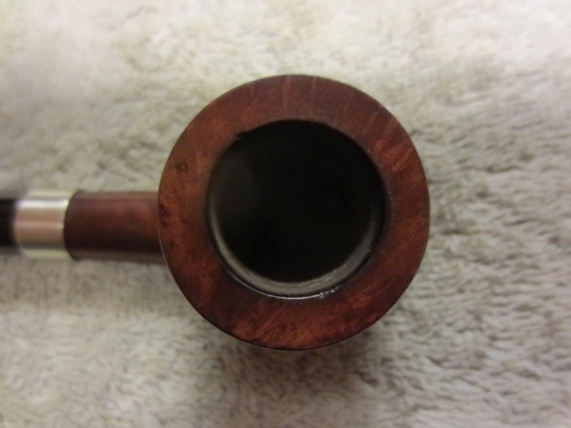
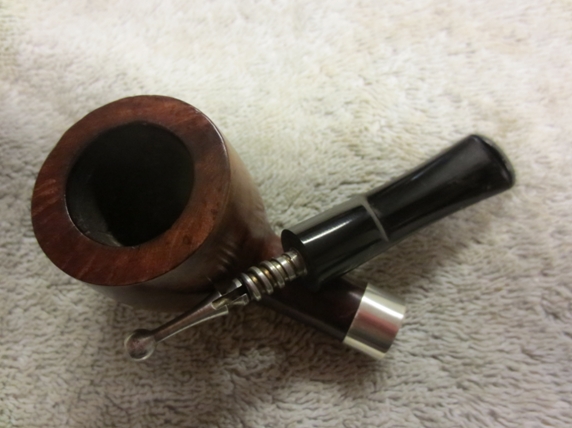
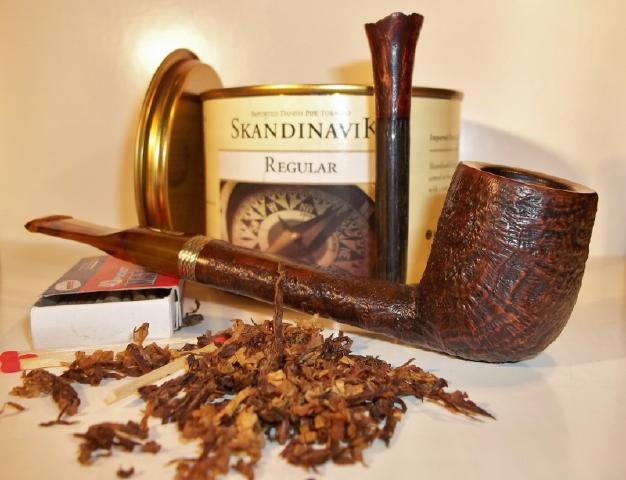
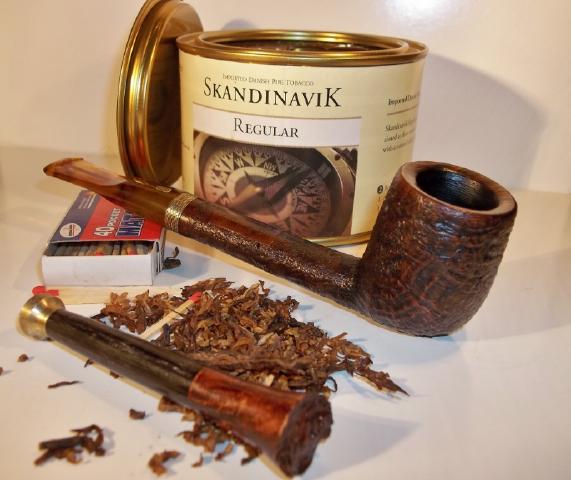
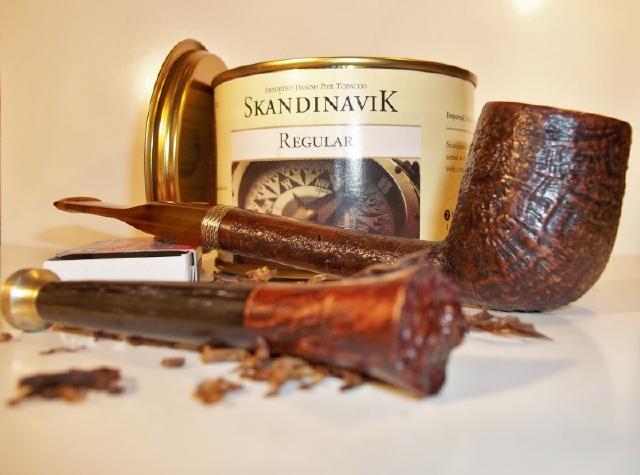
Tag Archives: restaining a bowl and rim

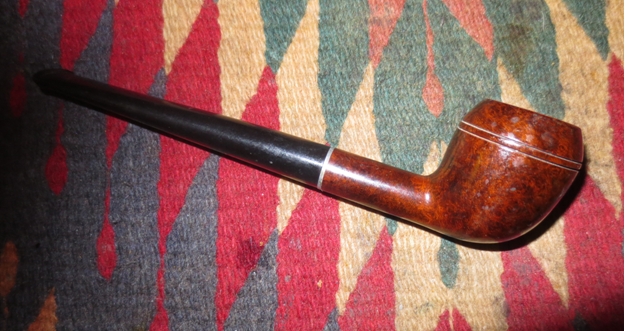
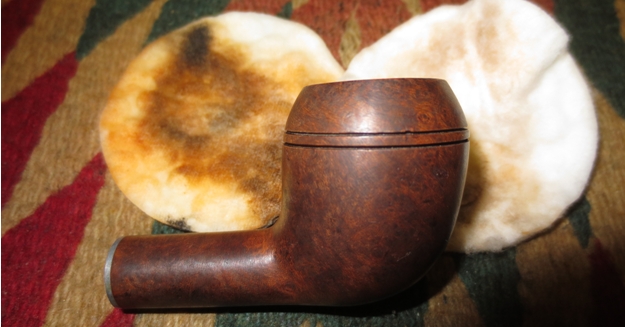
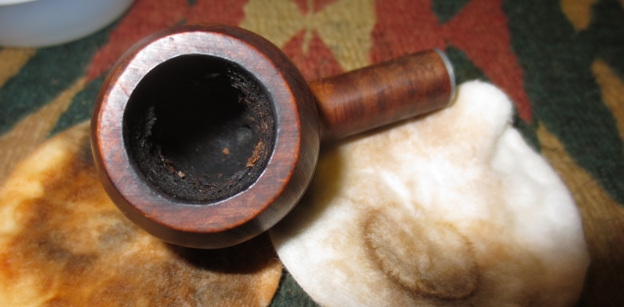
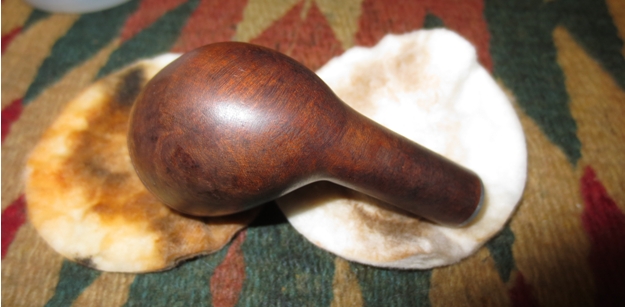
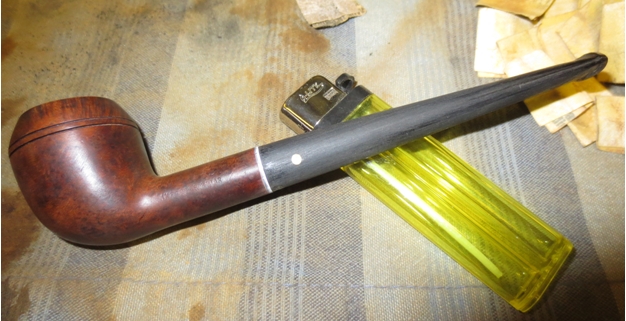
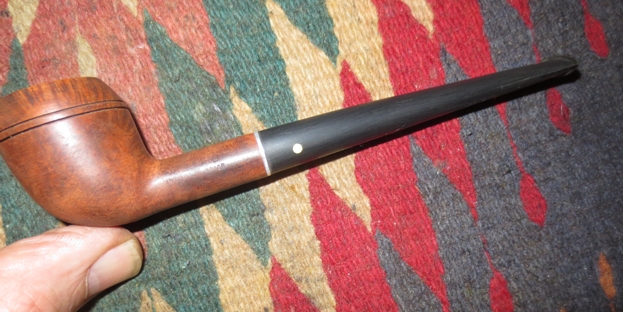
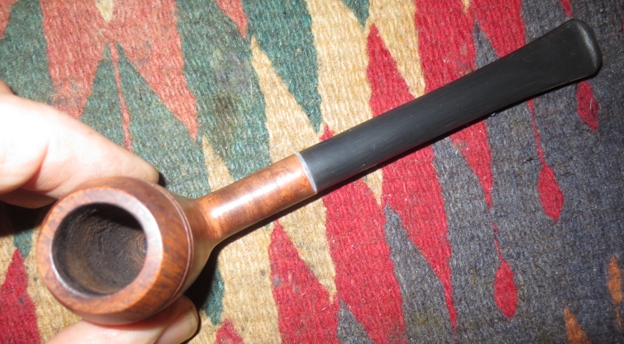
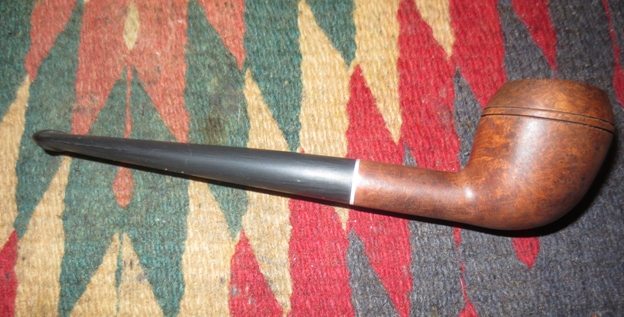
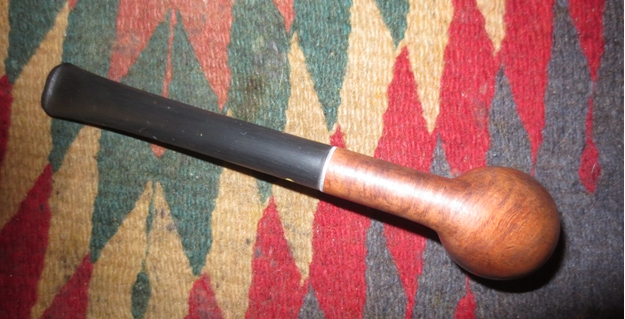
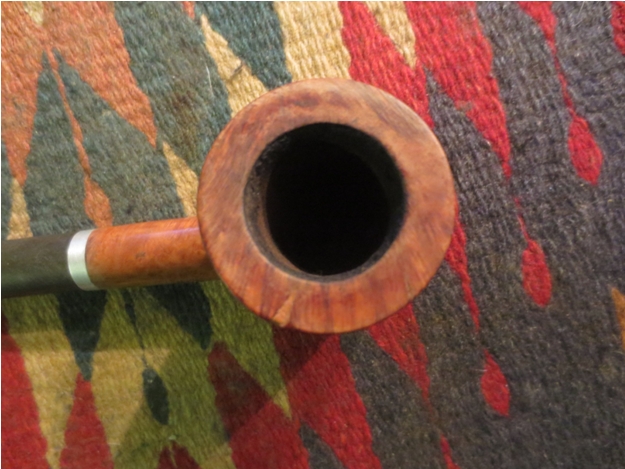
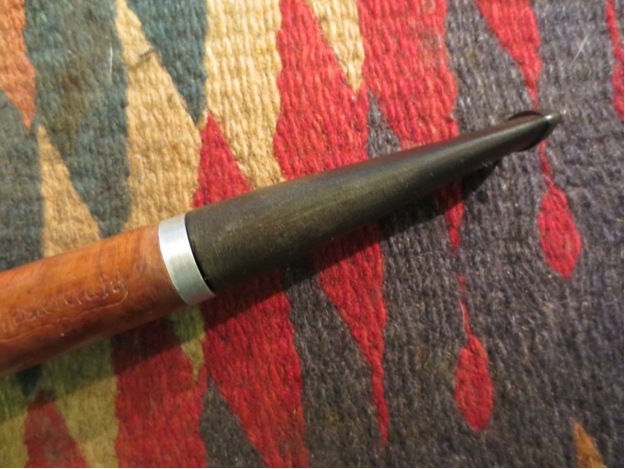
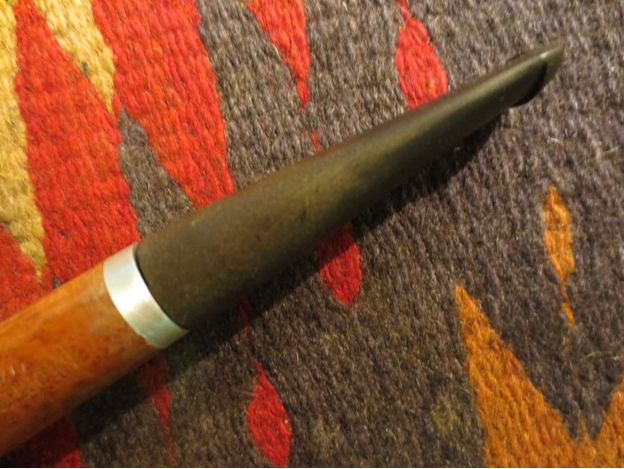
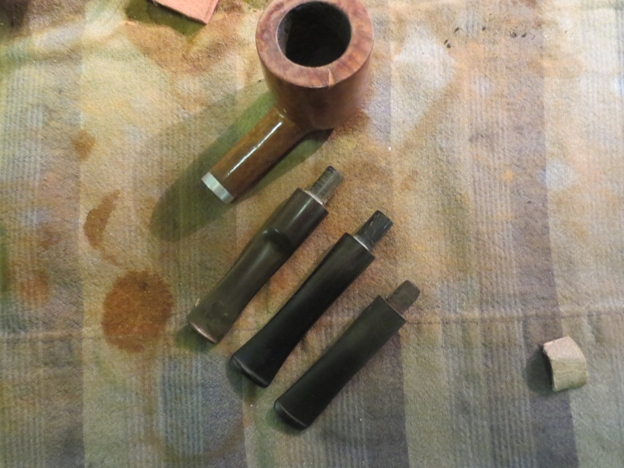
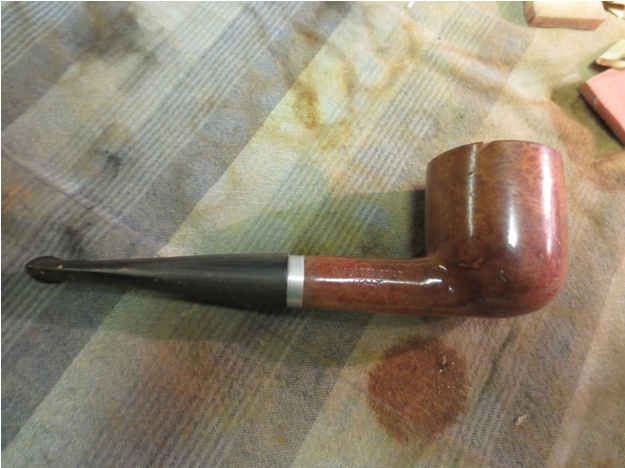
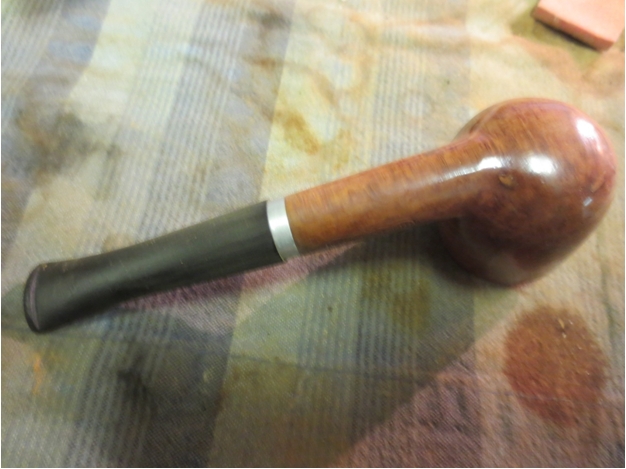
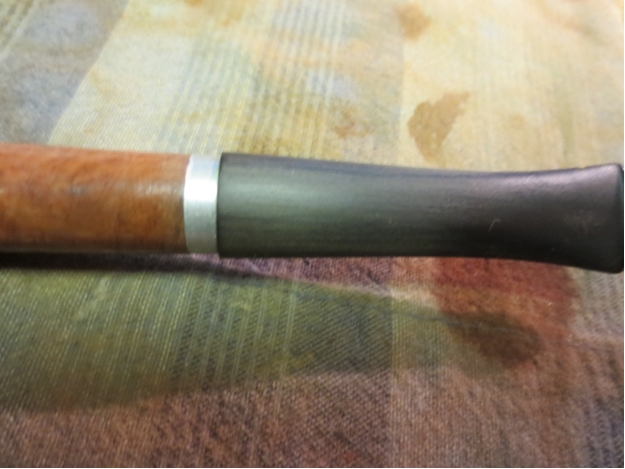
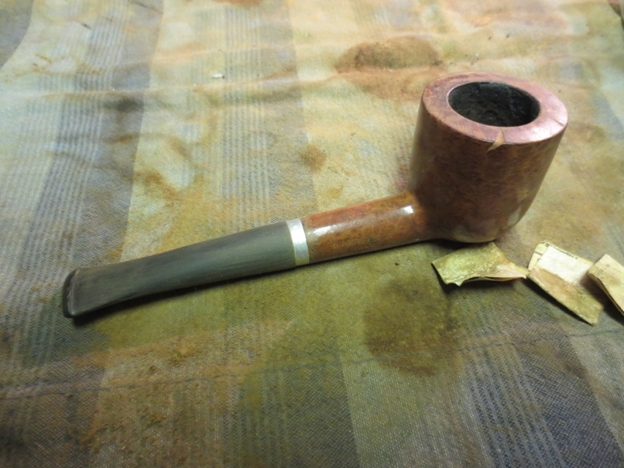
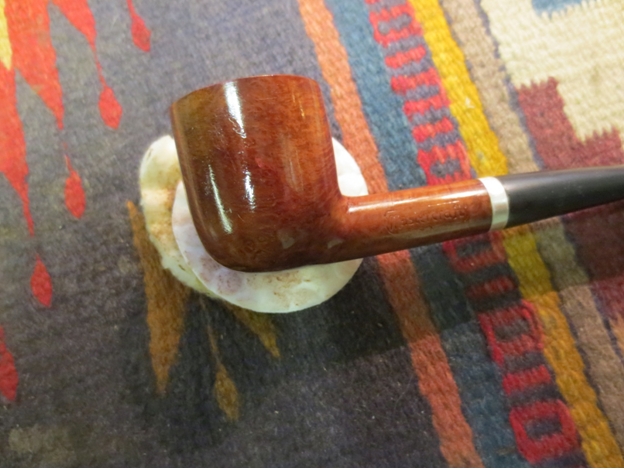
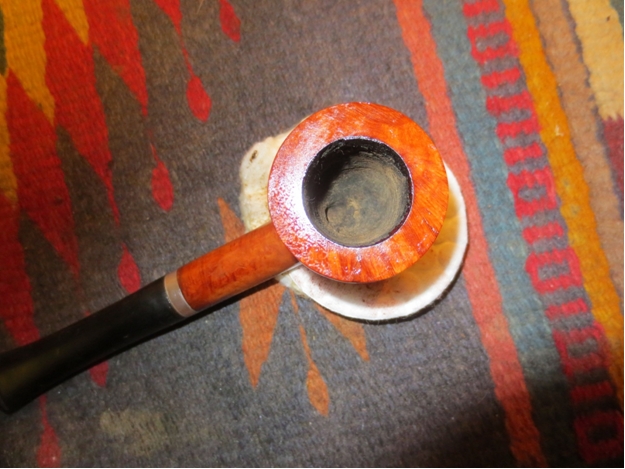
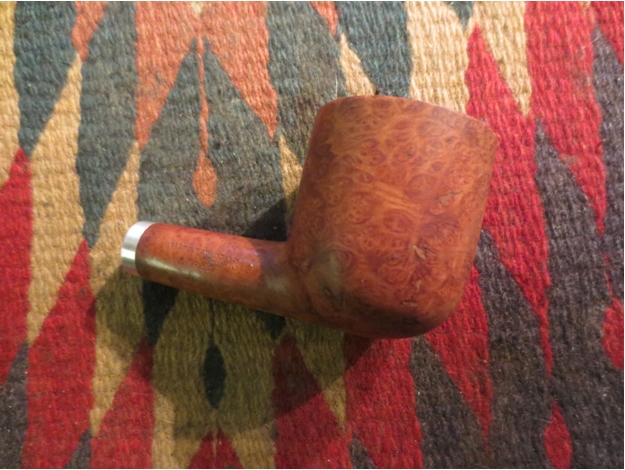
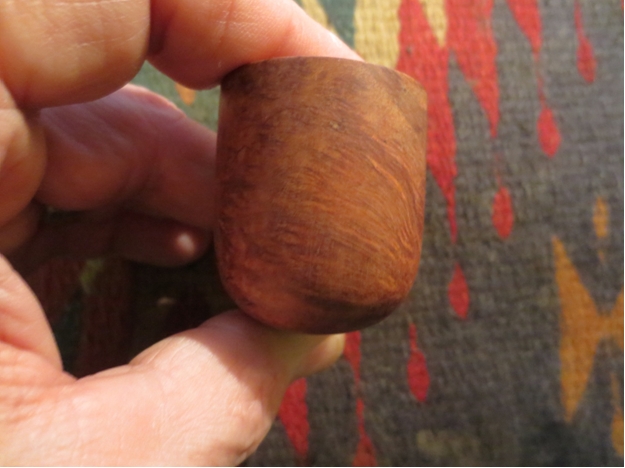
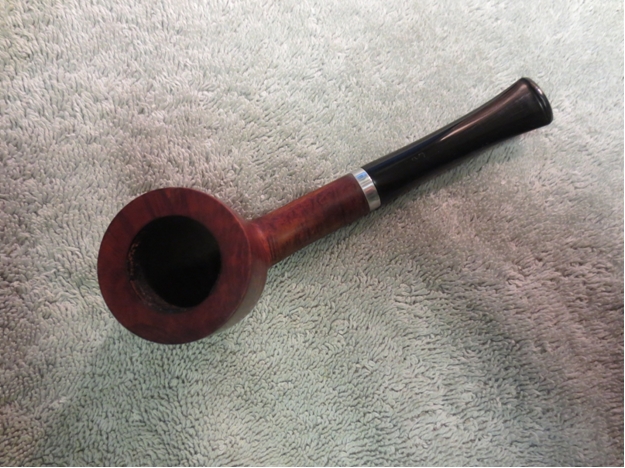
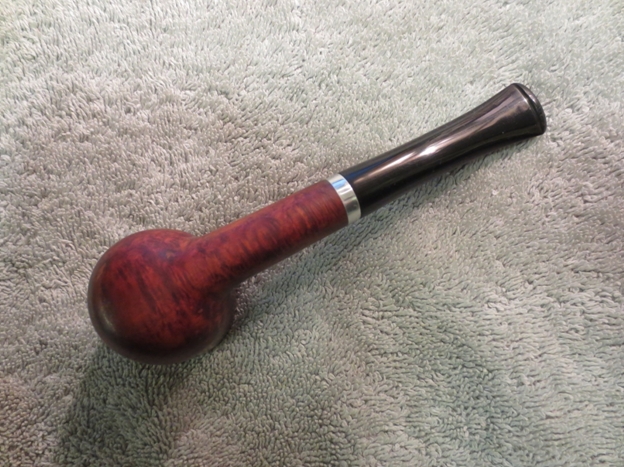
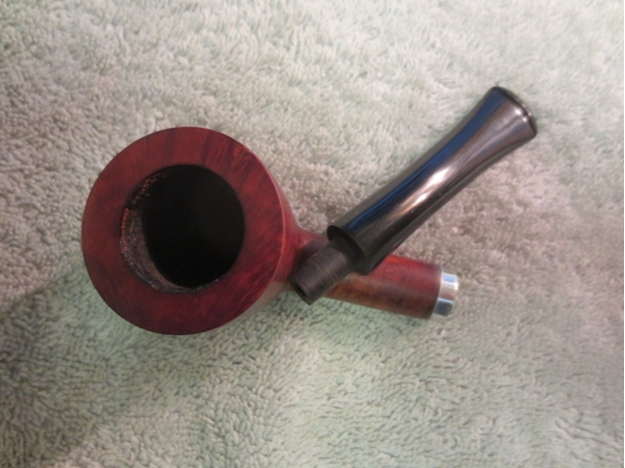
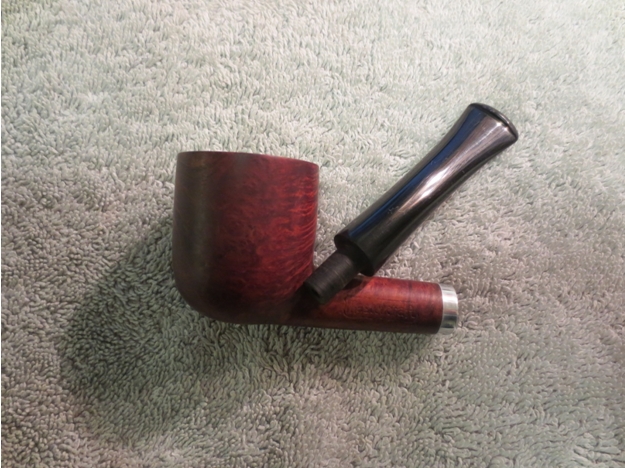
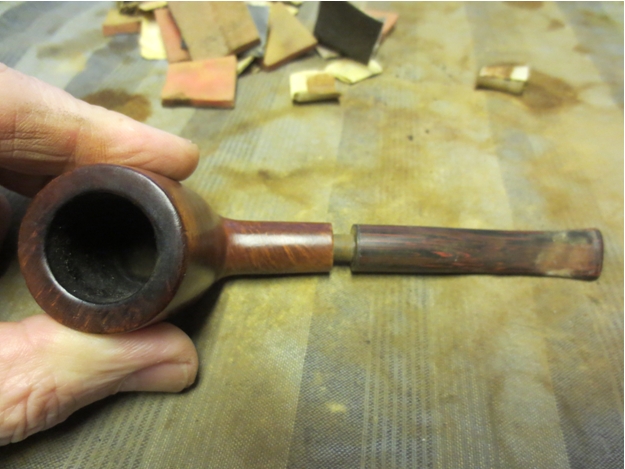
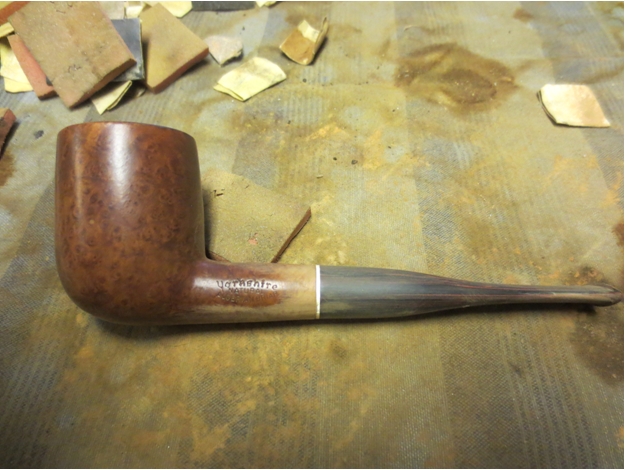
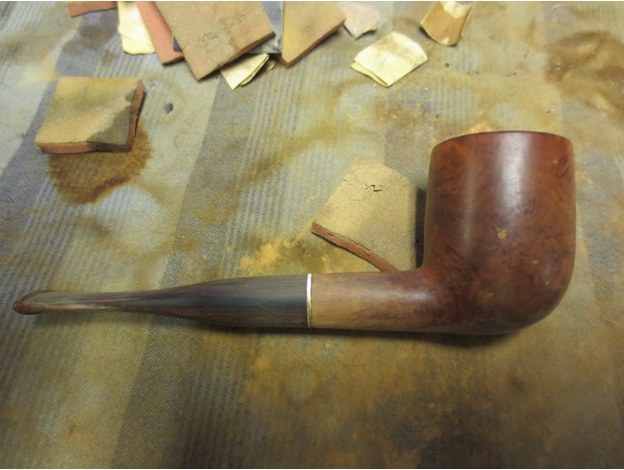
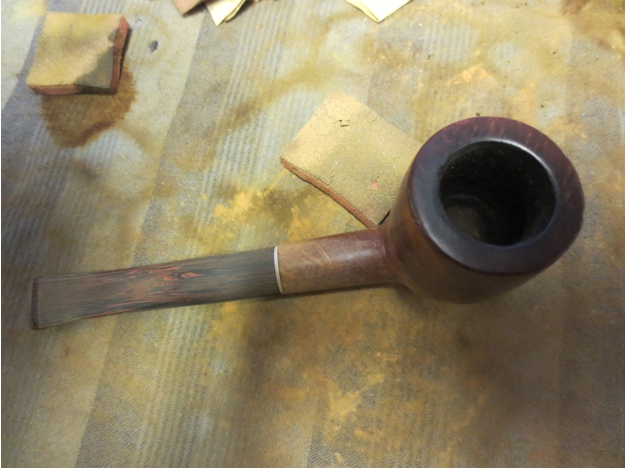
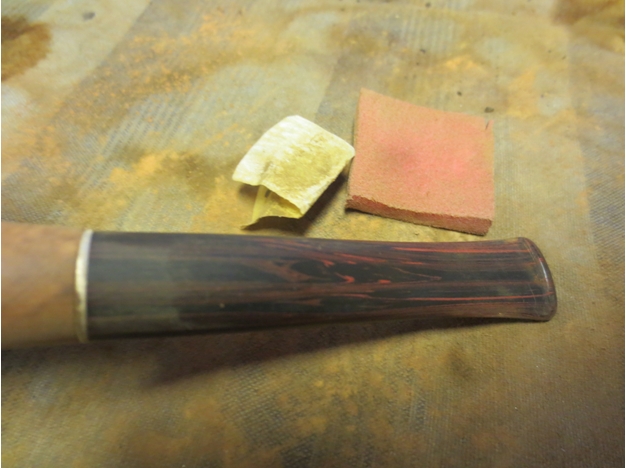
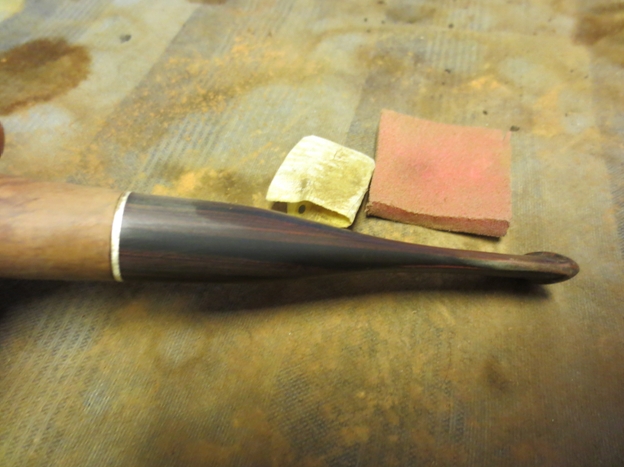
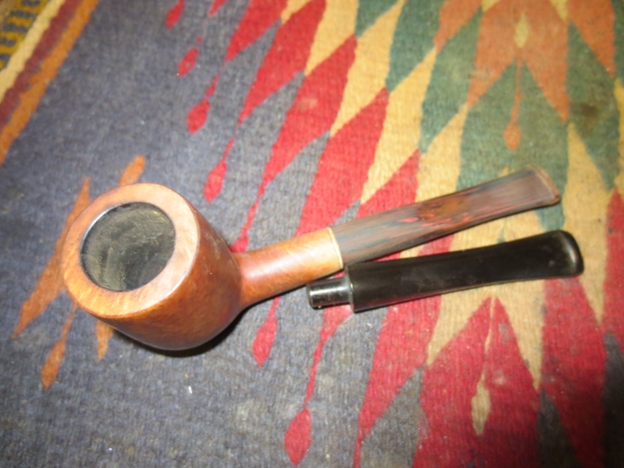
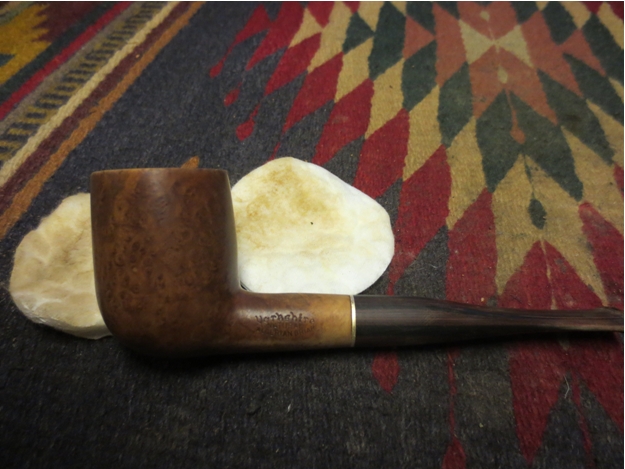
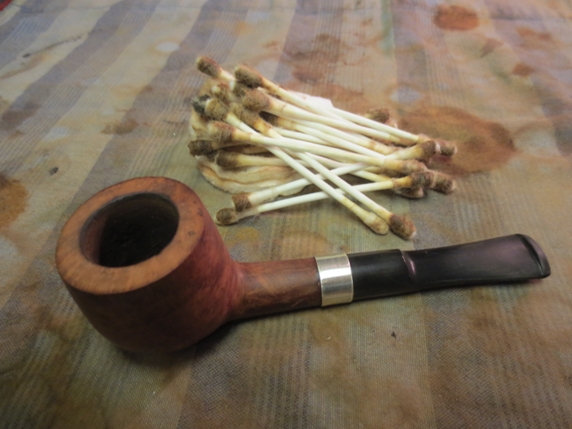
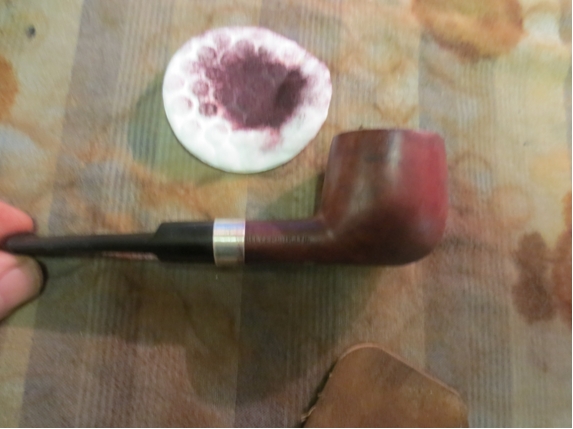
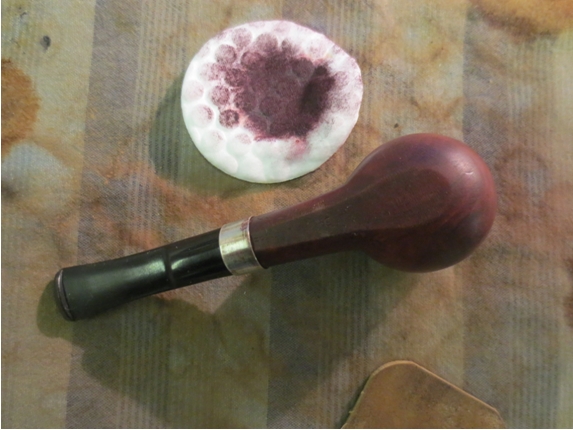
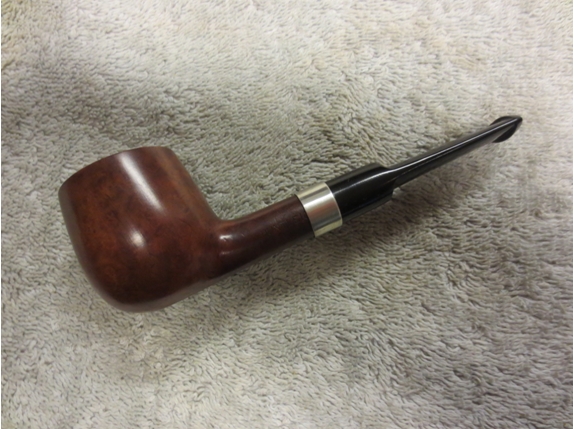
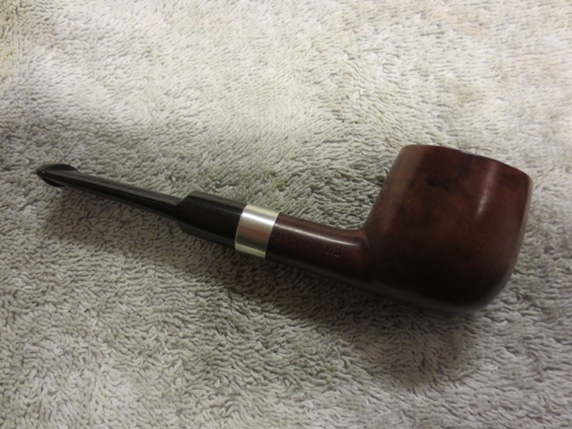
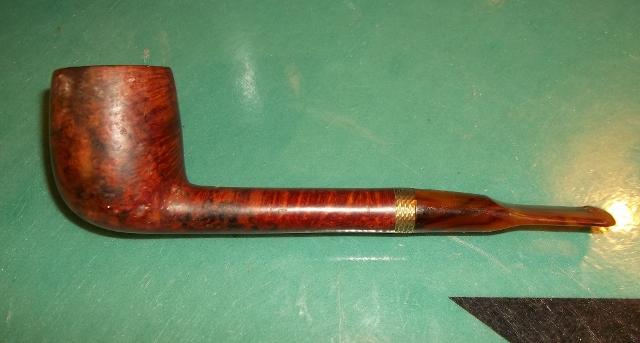
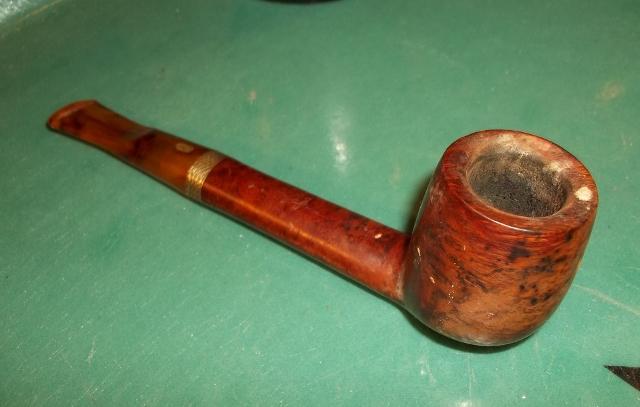
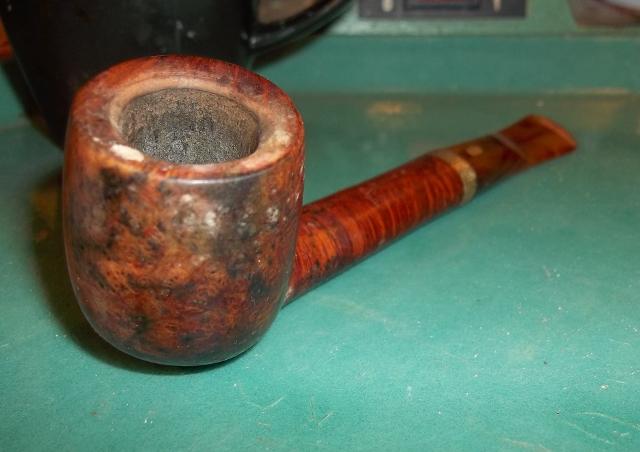
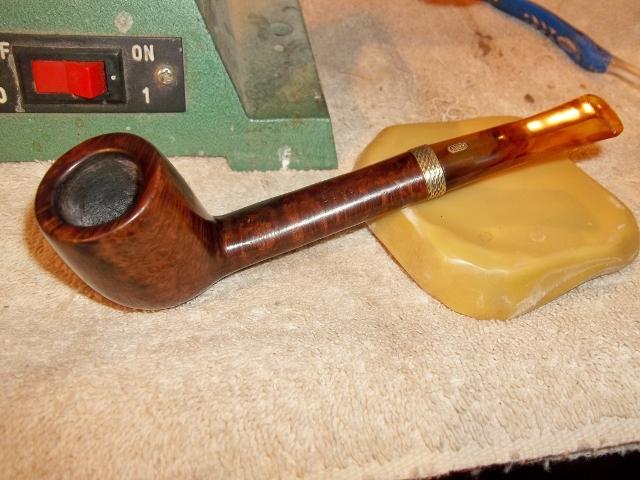
Breathing New Life into a Wally Frank De Luxe Saddle Billiard


Blog by Steve Laug

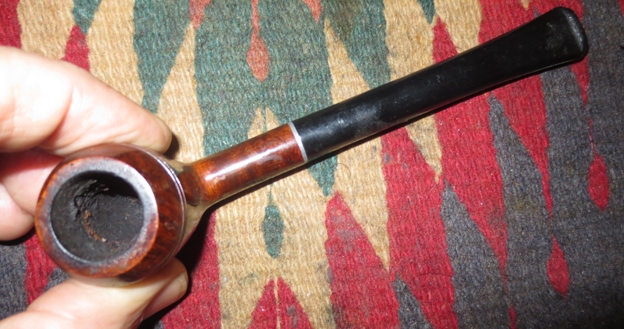
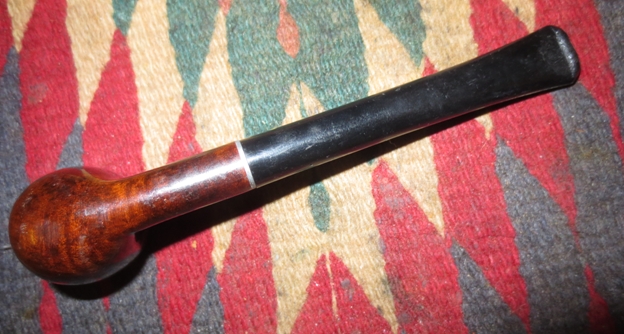
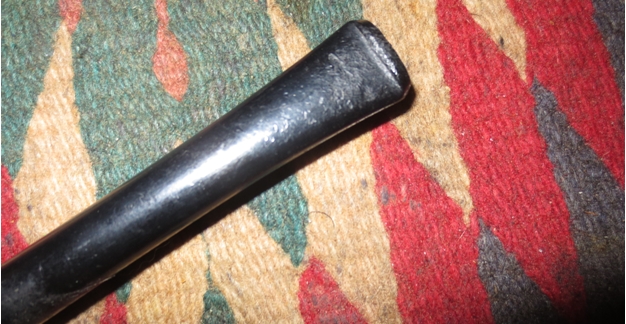
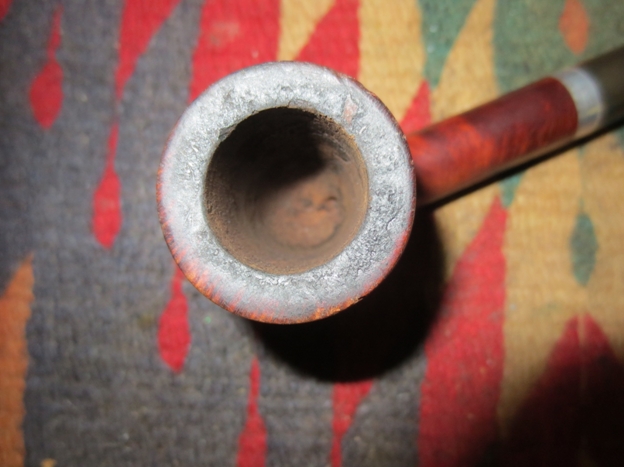
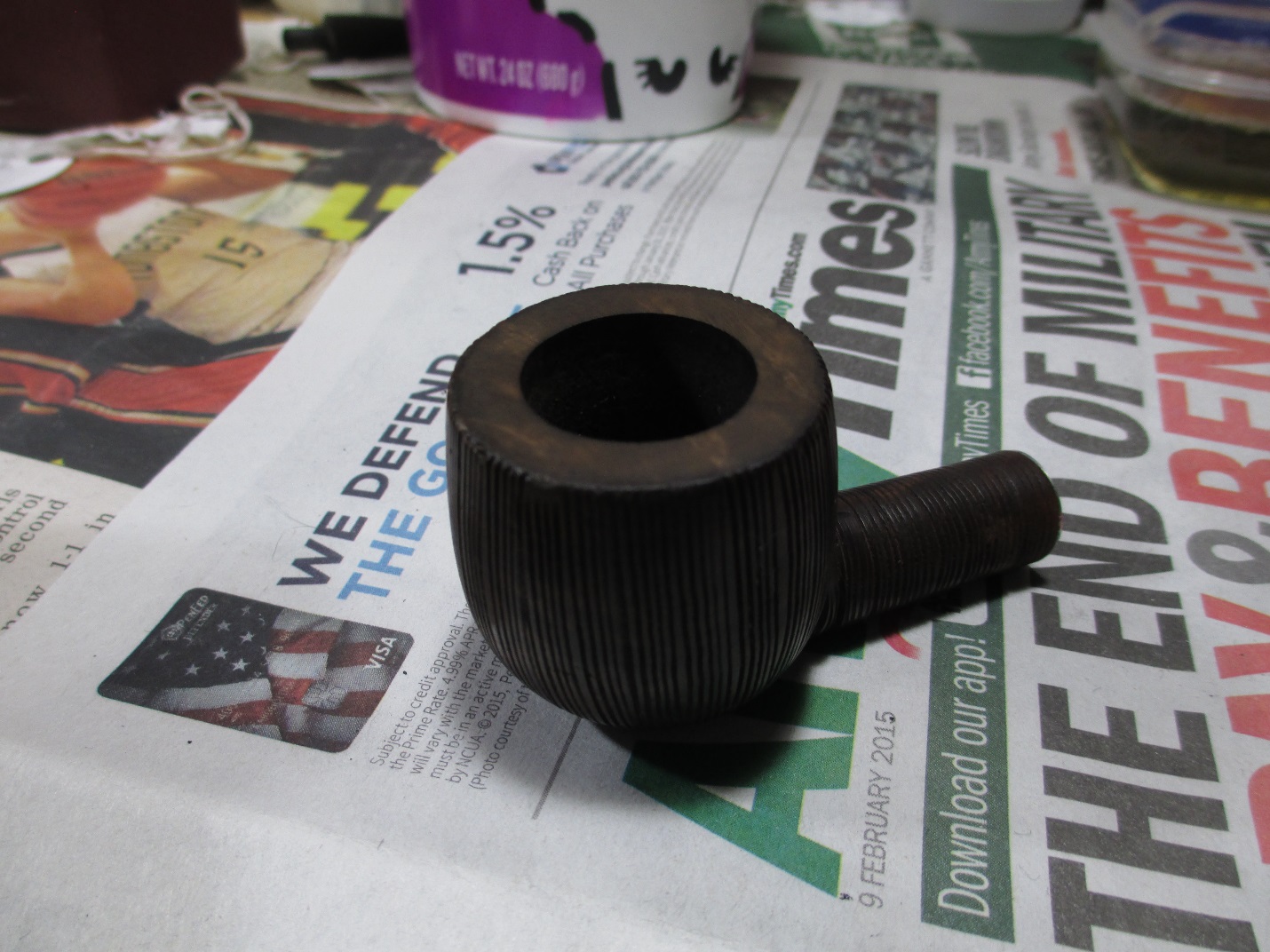
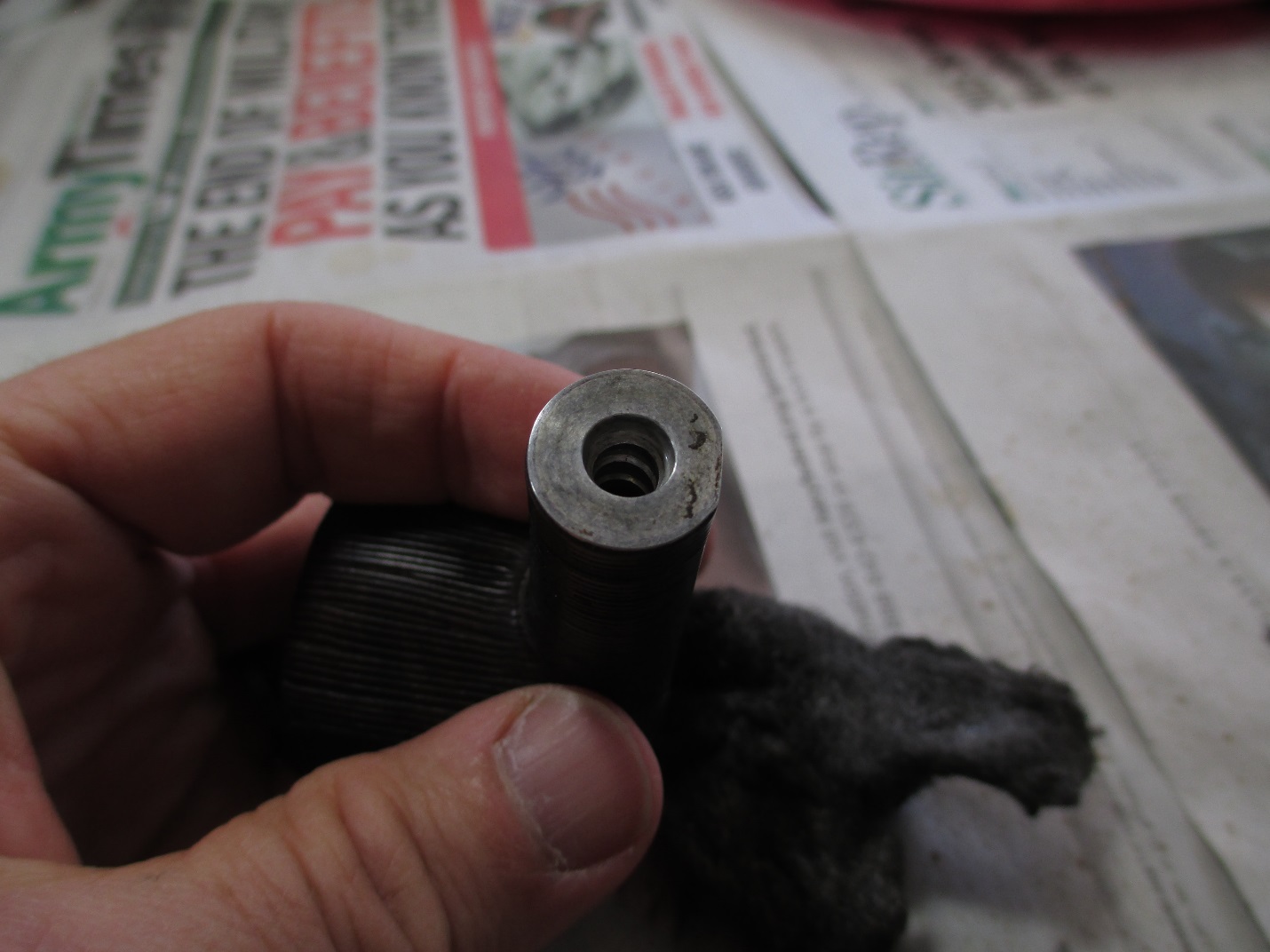
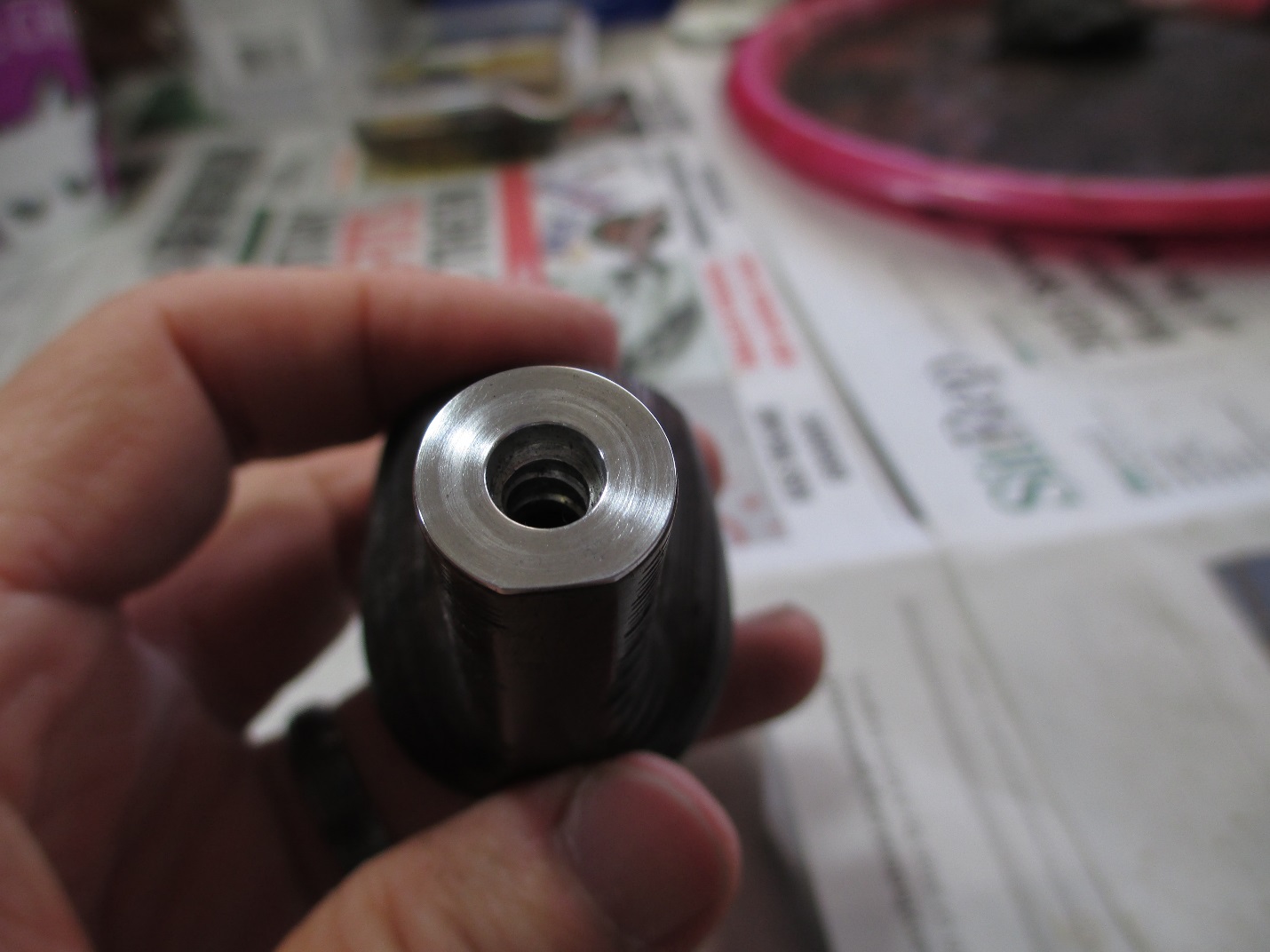
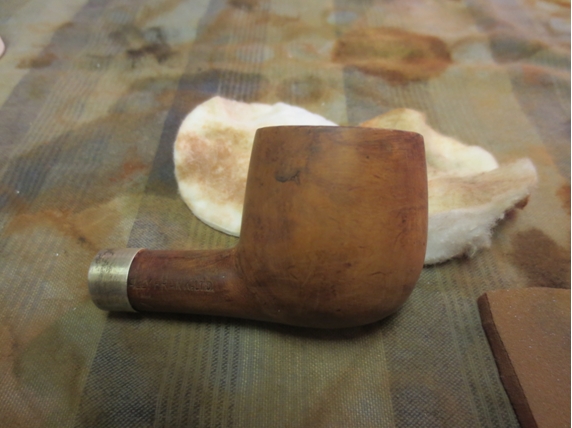
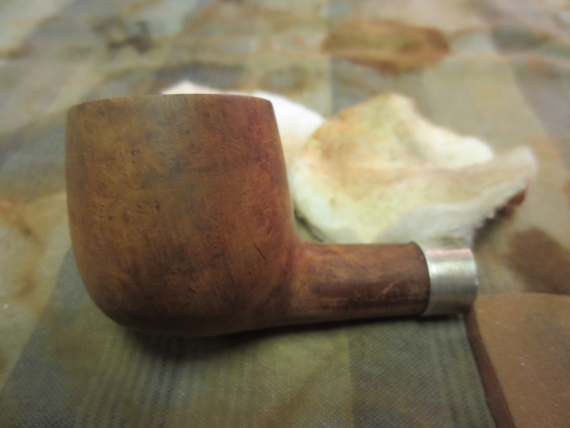
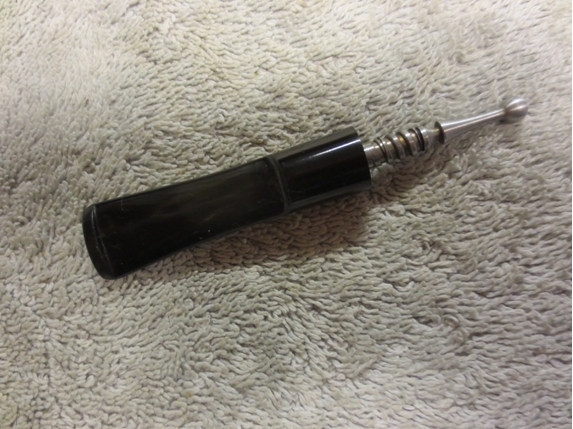
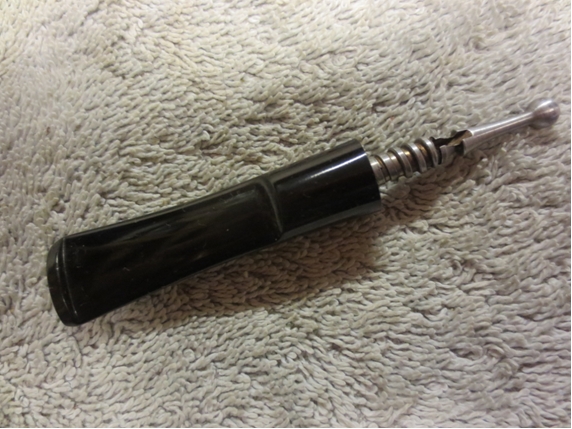
I am slowly working my way through the gift box of pipes I received. The one that caught my eye next was a small Wally Frank De Luxe saddle billiard. The stem was not in too bad shape – just a bit of tooth chatter on the top and bottom of the stem along with a deep tooth mark on the underside near the button. It was lightly oxidized. The metal threaded tenon had a pressure fit metal stinger in place that was stuck. The stem was slightly overturned. The bowl was dirty – the finish spotty and damaged. There were scratches but they did not go deep in the briar. The rim had a thick build up of “lava” (tars and oils) that came out of the bowl and over the rim. The bowl was thickly caked. The left side of the shank was stamped WALLY FRANK over DE LUXE. On the saddle of the stem was worn and light stamping of what appears to be WF in a circle but the right side of the stamping is missing. On the right side of the shank it is stamped Imported Briar. The bottom of the bowl and the shank are flattened making the pipe a sitter.Wally1

Wally2

Wally3

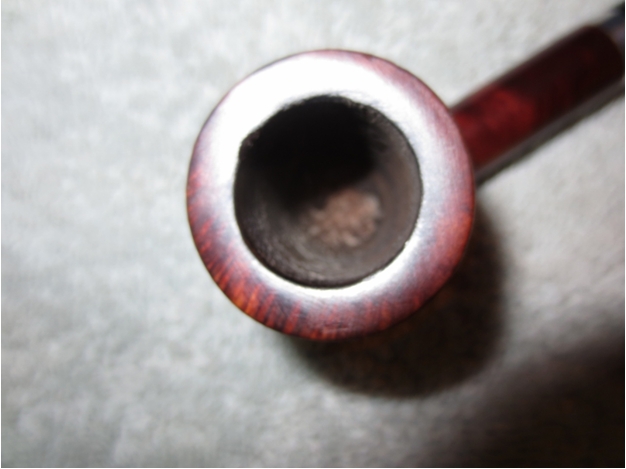
Wally4 I took two close-up photos of the rim and the stamping on the left side of the shank to show the state of the pipe when I brought it to the work table.Wally5

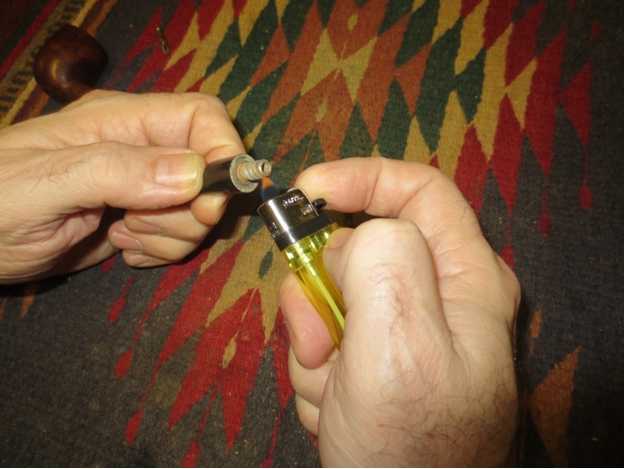
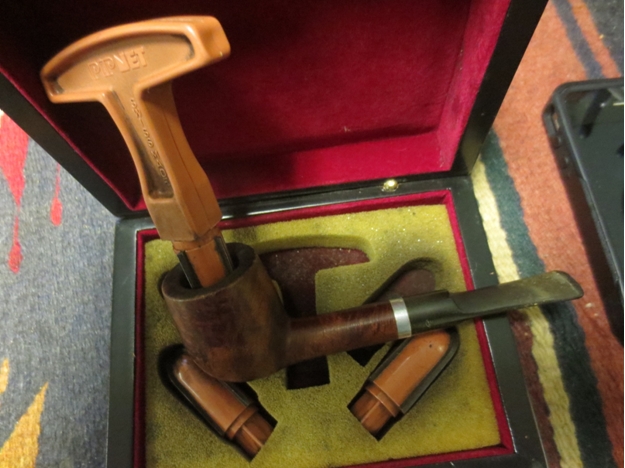
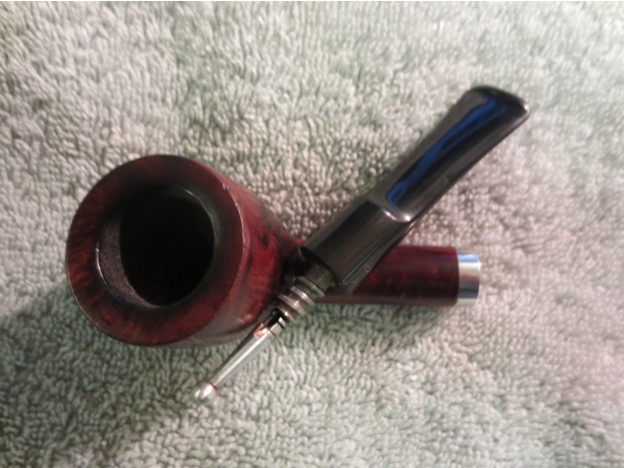
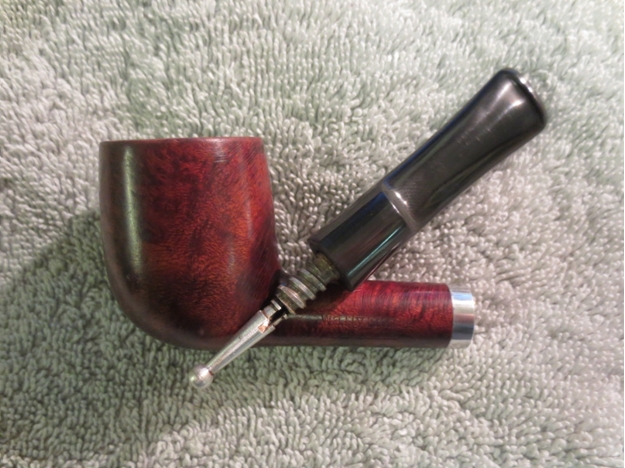
Wally6 I unscrewed the stem from the shank and dripped alcohol on the stinger to loosen it from the tenon. Once it soaked a few moments I was able to carefully pull it out of the tenon. One side of the stinger insert was missing but it still fit in the tenon tightly.Wally7 With the stinger removed I heated the tenon with a lighter to soften the glue and correct the over turned stem. It did not take long to heat it enough to screw it into the shank and turn the stem on the tenon until it lined up correctly.Wally8 I reamed the bowl with a PipNet pipe reamer starting with the smallest cutting head and working up to the head that would take the cake back to bare wood.Wally9

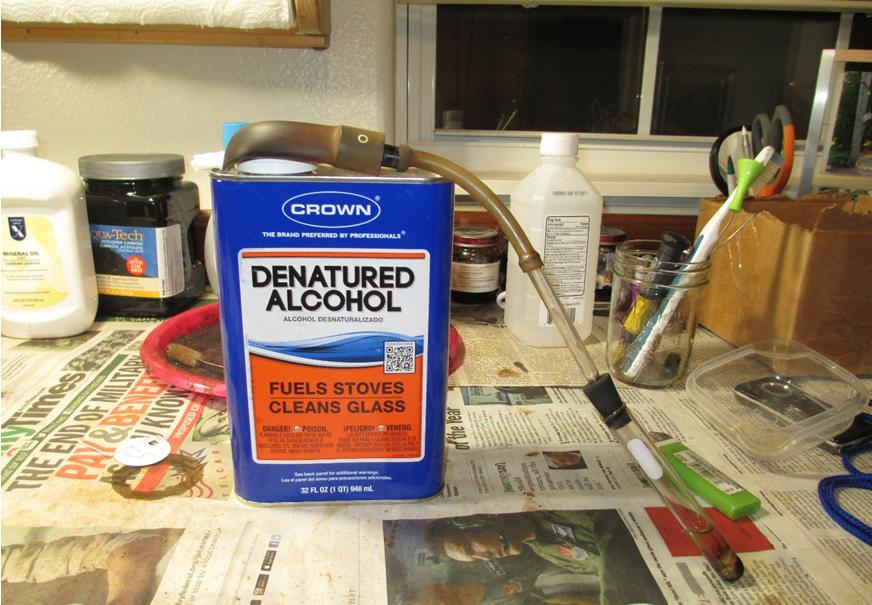
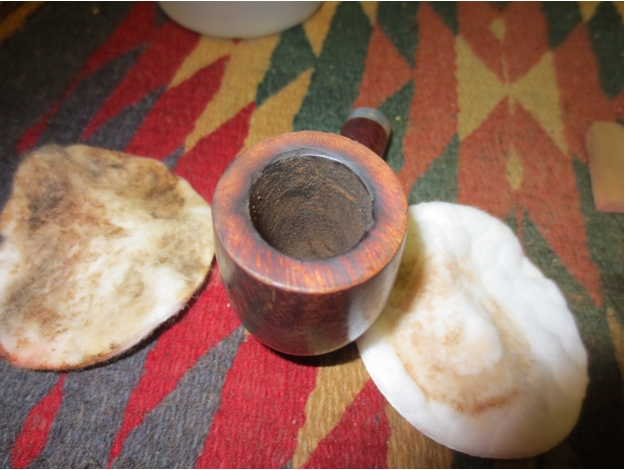
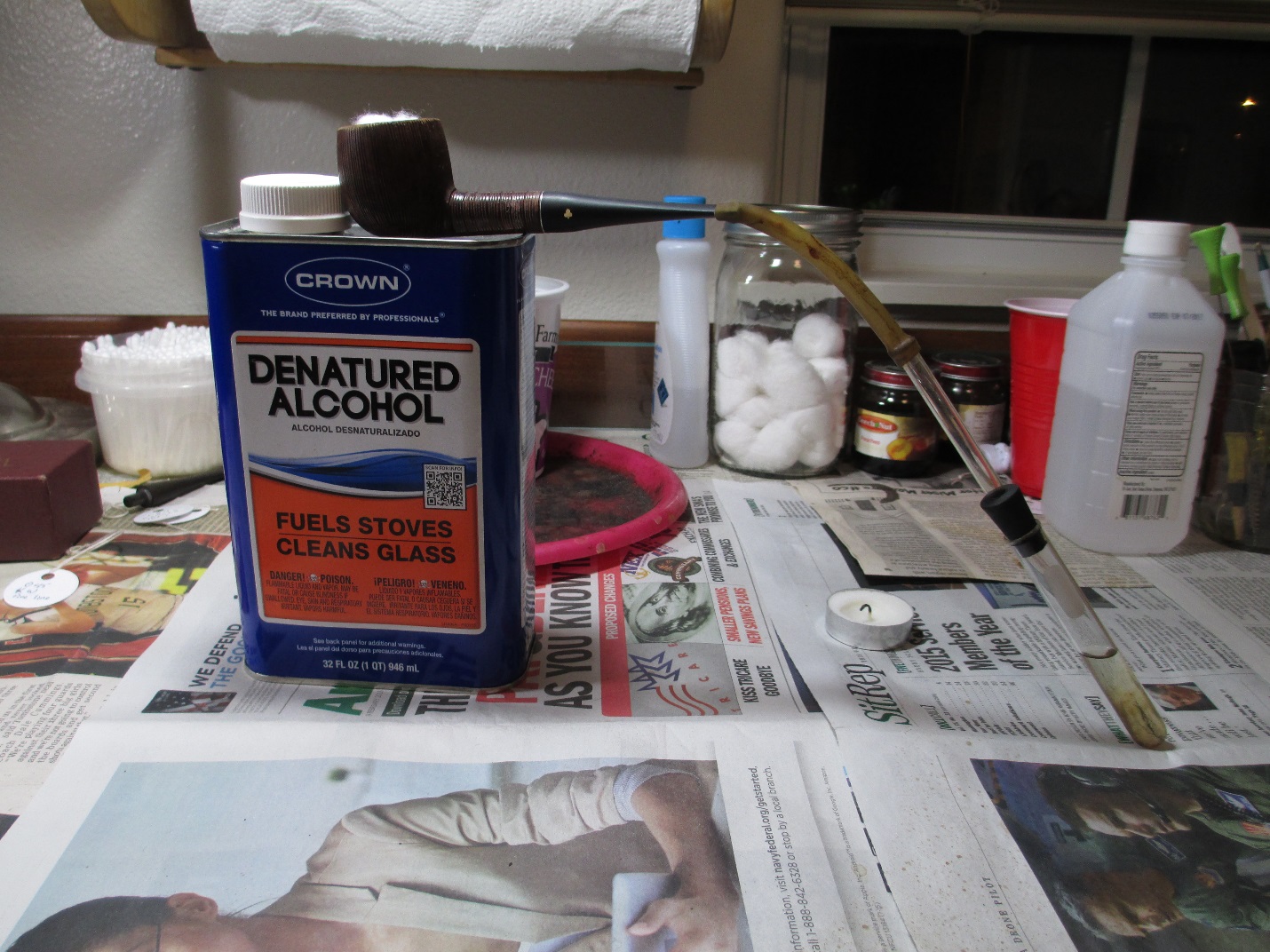
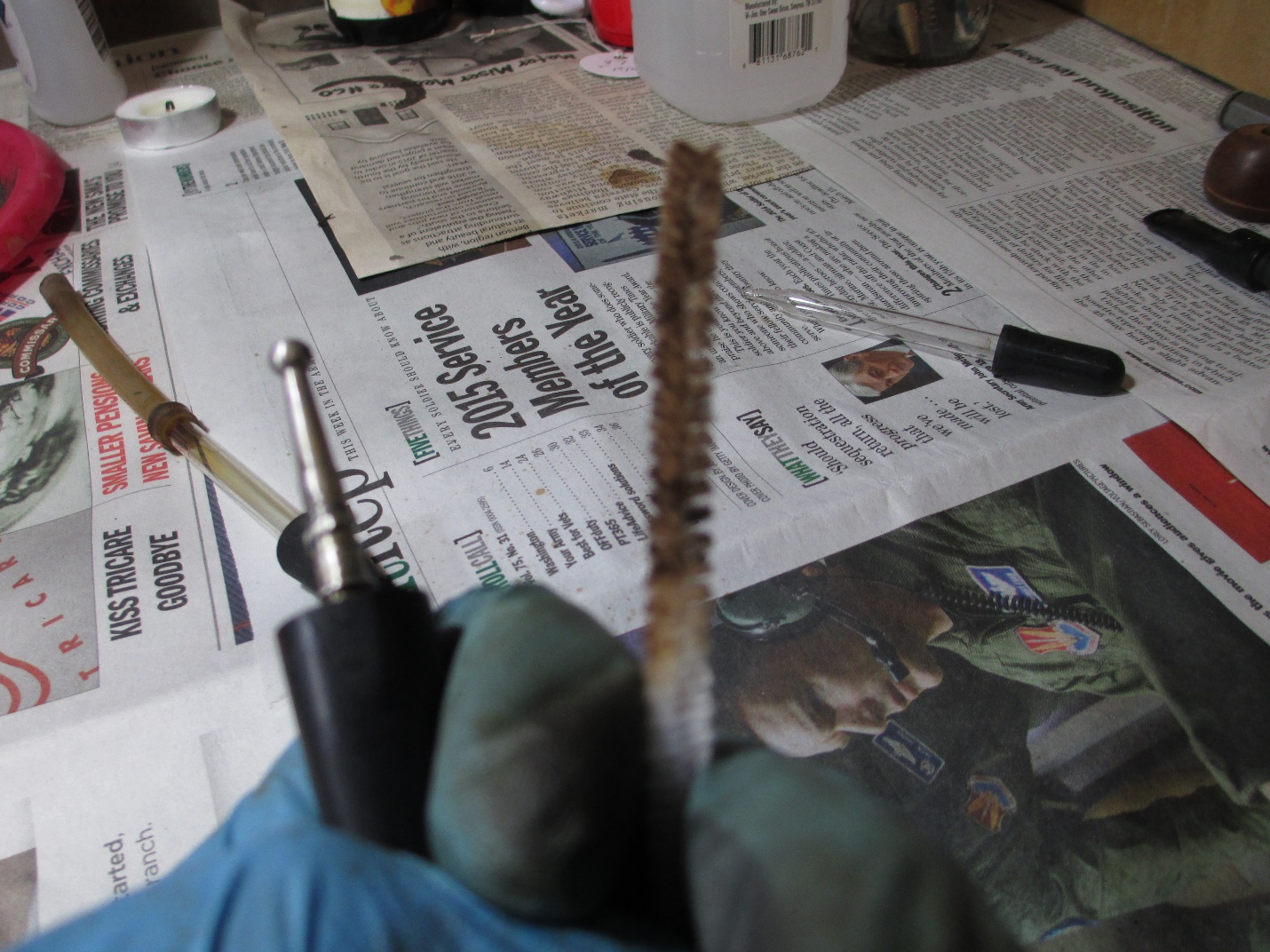
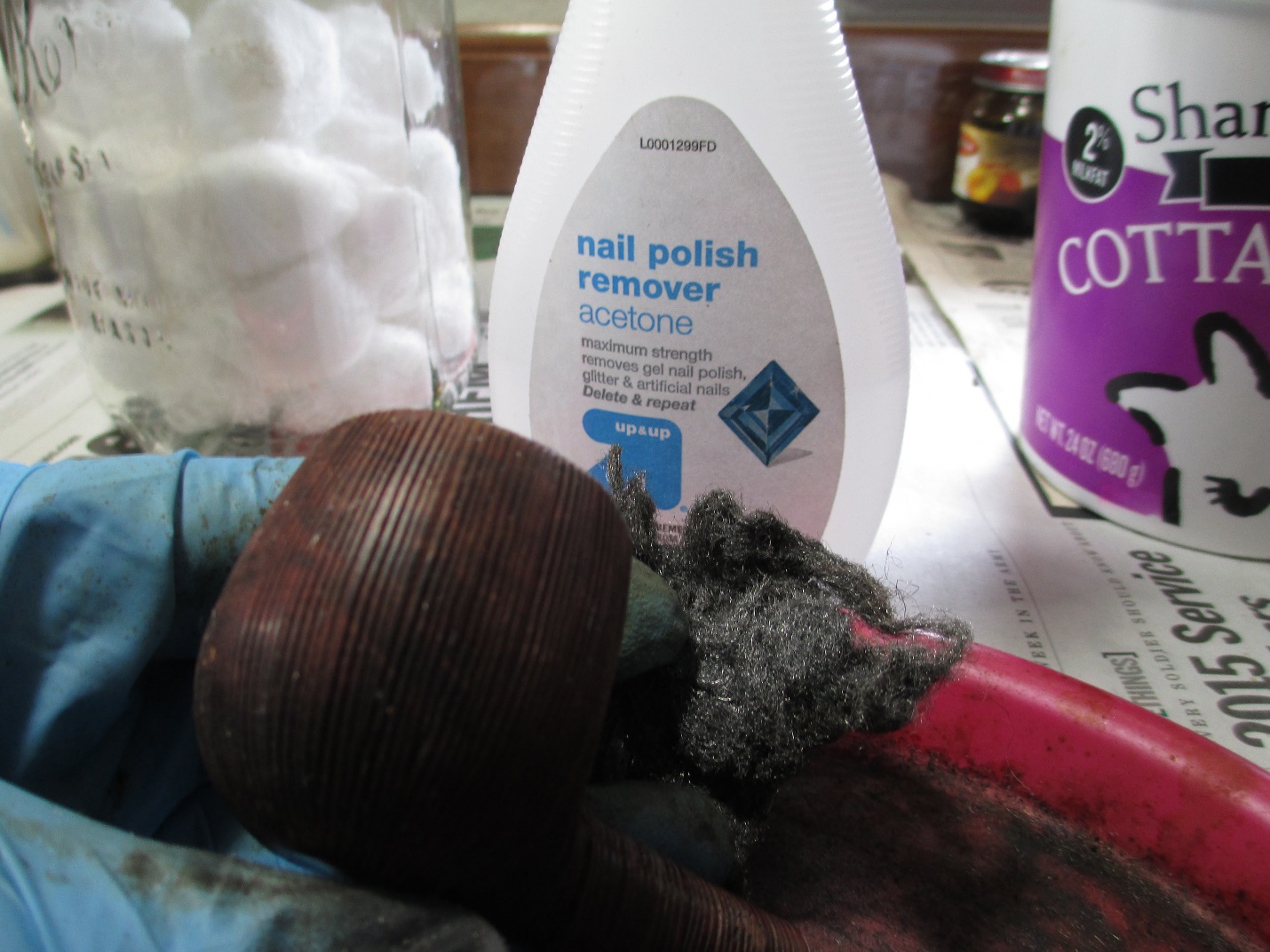
Wally10 With cake cleaned I scrubbed the rim with alcohol on a cotton pad to remove the buildup of tars and oils. I was able to remove the majority of the overflow on the rim with elbow grease and persistence. There was some slight inner rim damage that would be easy to clean up with a light sanding. I also scrubbed the bowl with acetone on cotton pads and then with alcohol. It took off the grime and some of the mess but left the stain intact.Wally11 The shank was very dirty and the aluminum on the tenon, stinger and end of the mortise insert was oxidized. I scrubbed those with 0000 steel wool and then put the pipe back together in order to use the retort on it.Wally12 I set up the retort using a jar to lift the pipe up above the flame of the candle I used to heat the alcohol. I filled the test tube 2/3 of the way full with isopropyl alcohol and inserted the rubber stopper in it. I pulled the surgical tubing over the end of the stem and put a cotton ball loosely in the bowl. I heated the alcohol over the candle flame until it boiled through the shank and bowl. I changed the alcohol four times before I was able to get the shank clean and the alcohol coming out clean.Wally13

Wally14

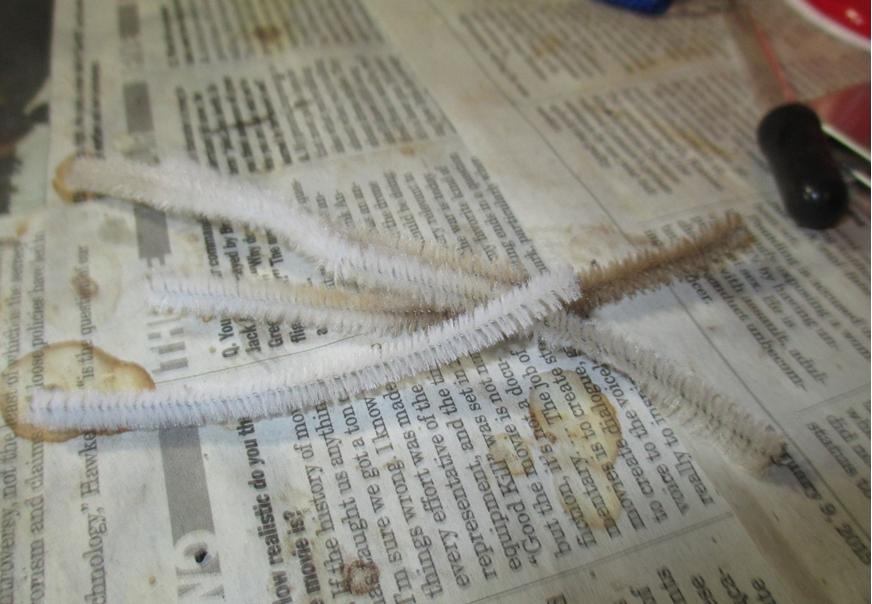
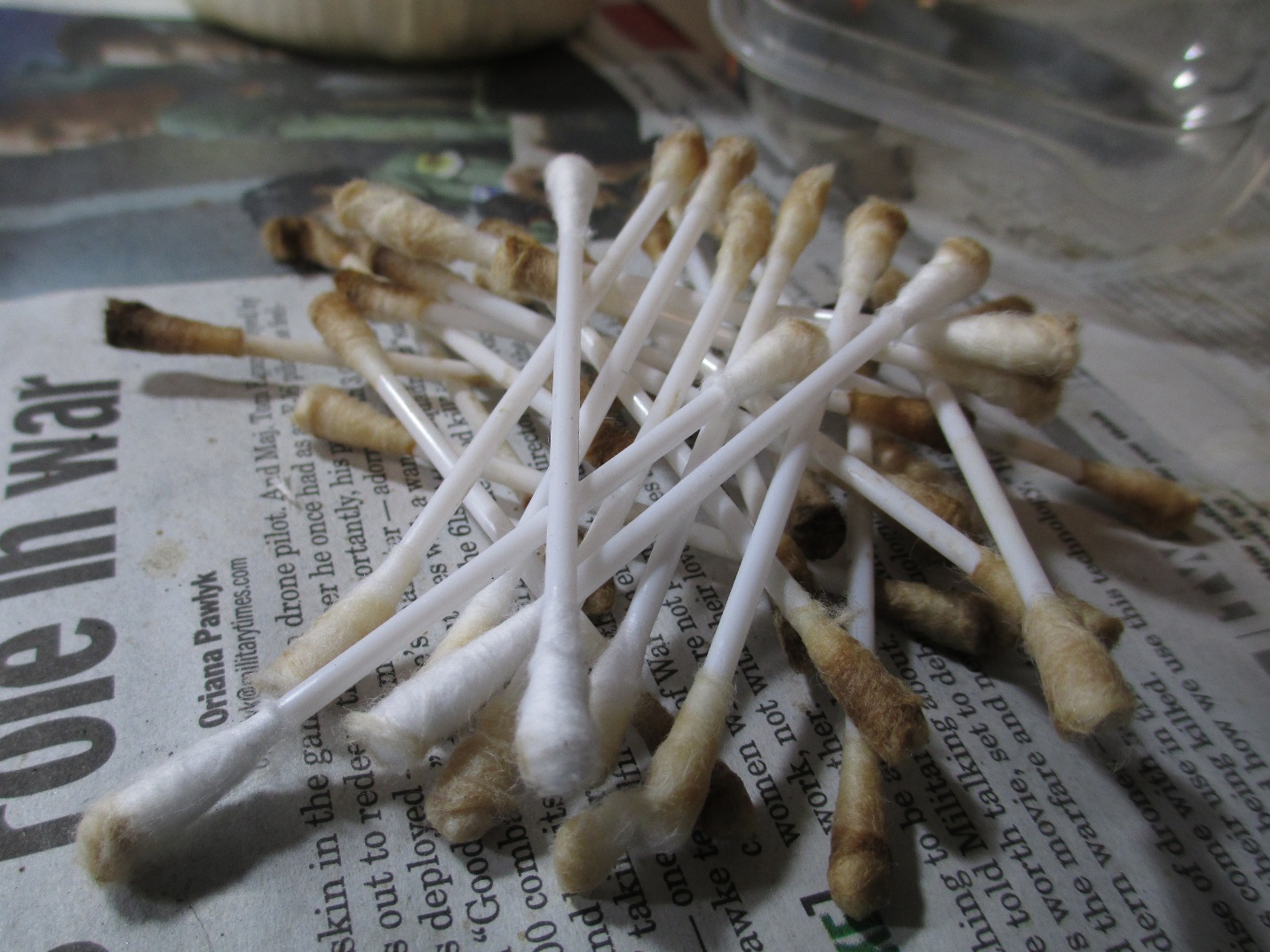
Wally15 Finally the shank and stem was clean. I removed the retort and ran pipe cleaners through the stem and shank. I used pipe cleaners, cotton swabs and alcohol to remove the leftover tar and oil from both. Finally they were clean and came out as white as they were when I put them into the shank and stem.
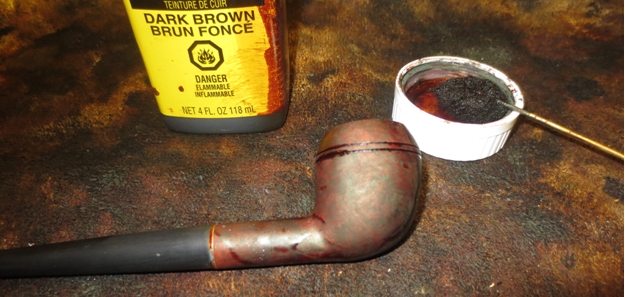
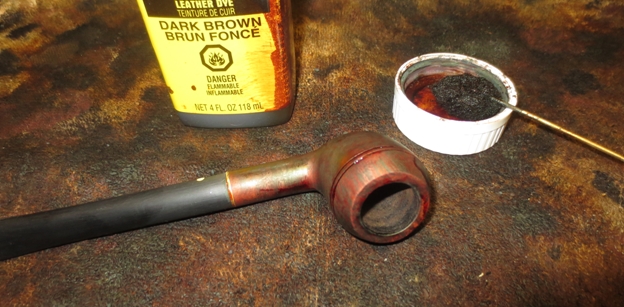
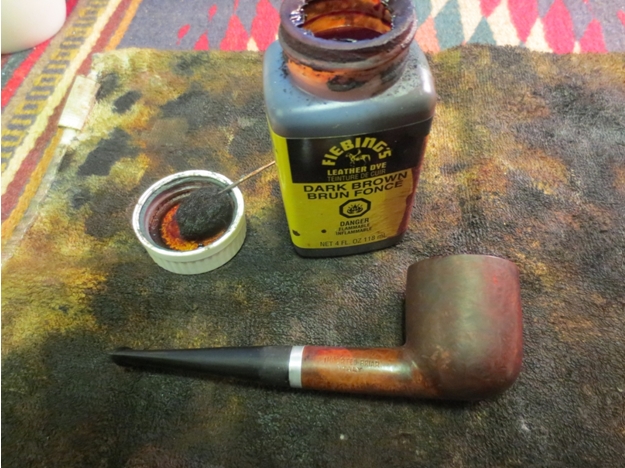
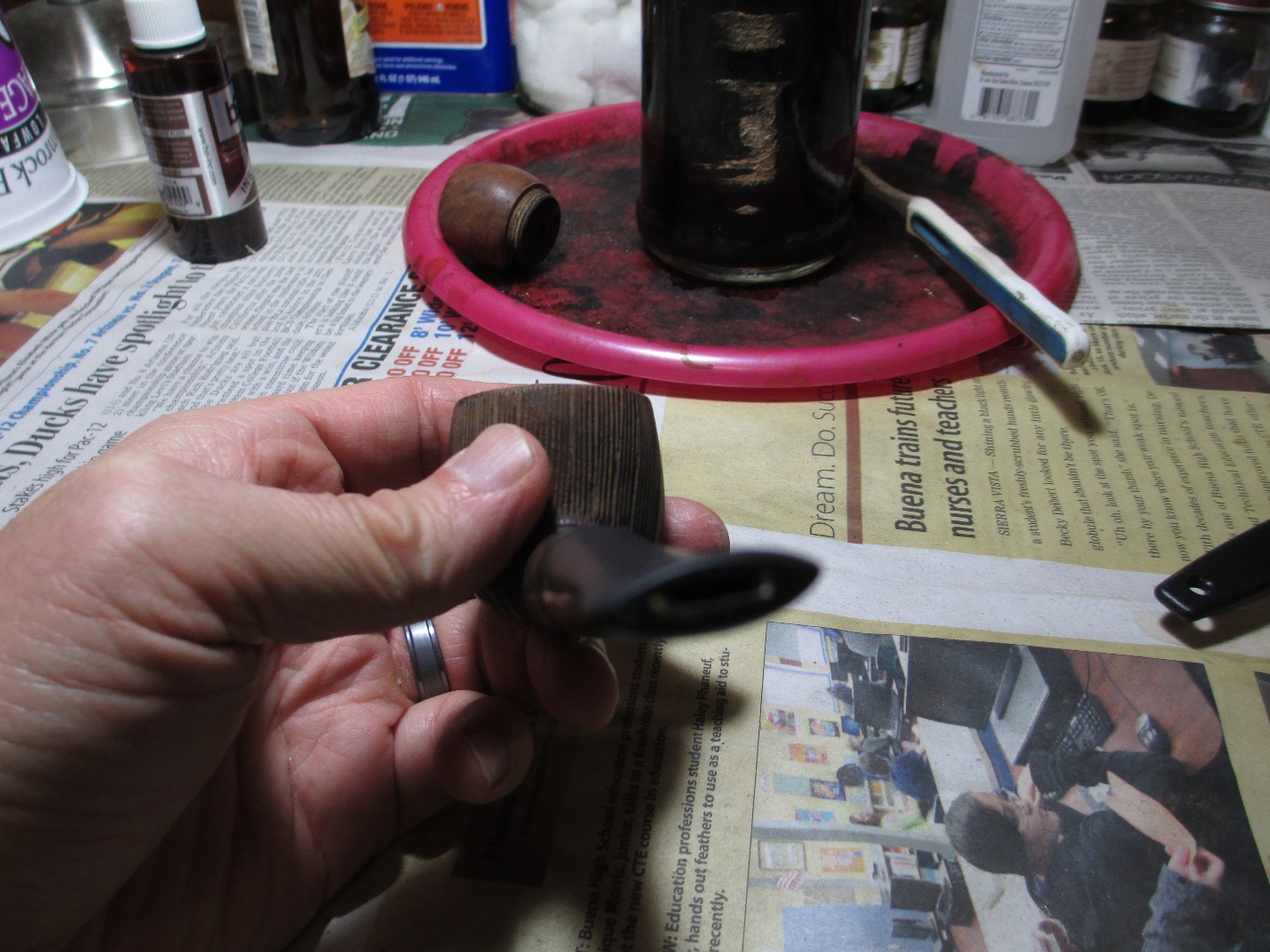
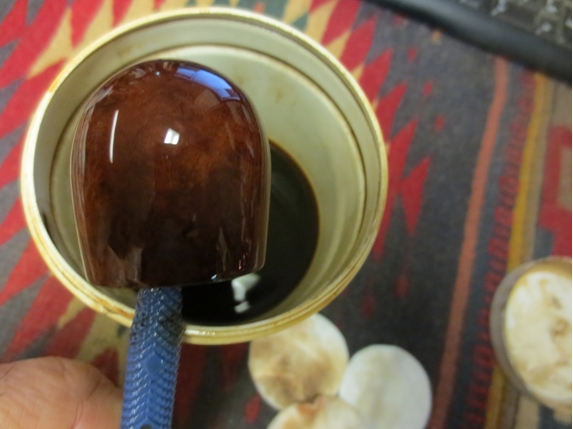
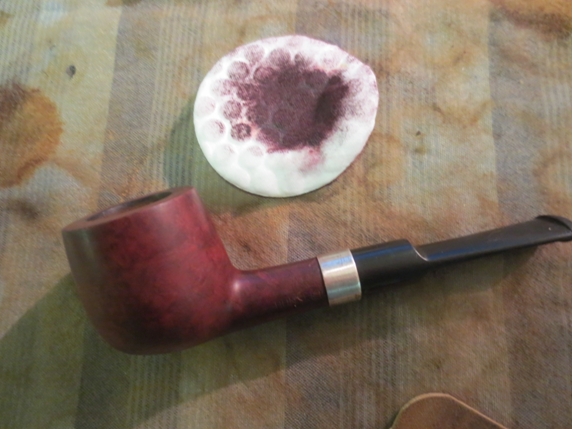
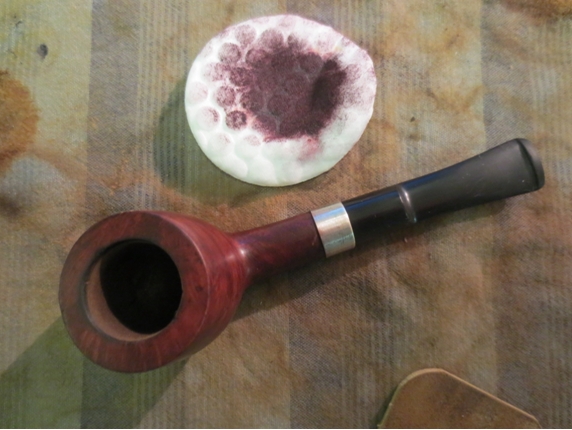
I decided to stain the bowl and rim with a oxblood stain. I applied it to the pipe with a cotton pad and then flamed it to set it in the grain. I reapplied it until I had the coverage I wanted with the colour.Wally16

Wally17

Wally18

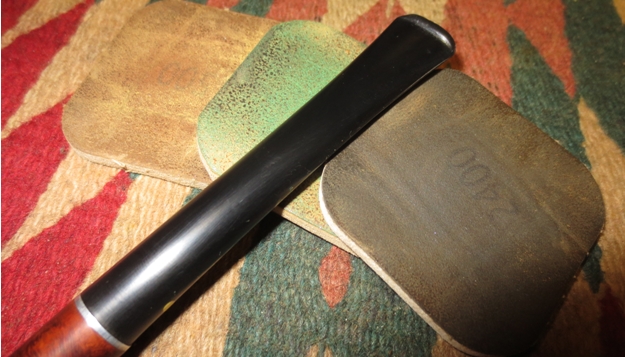
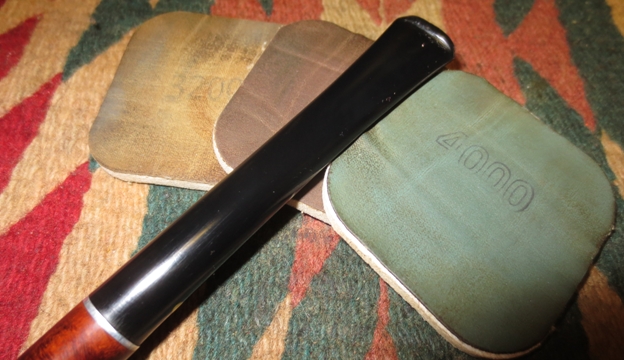
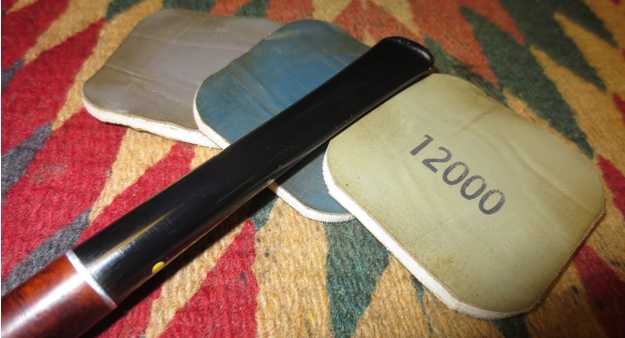
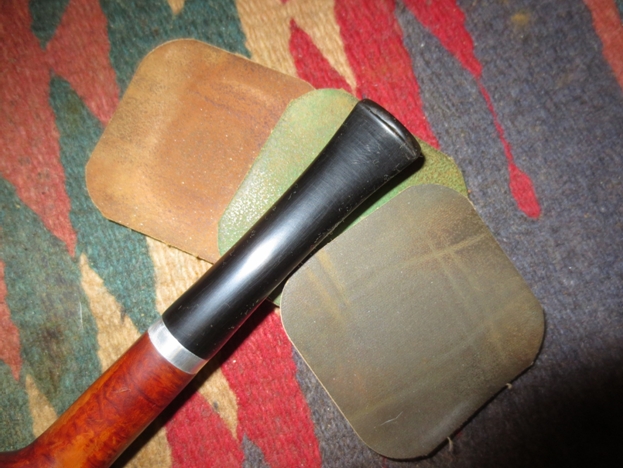
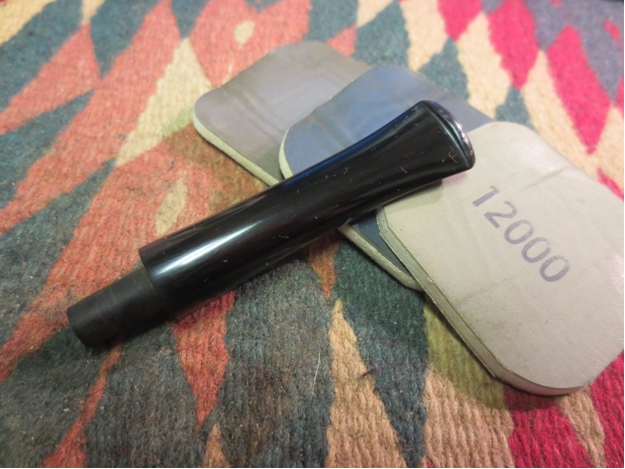
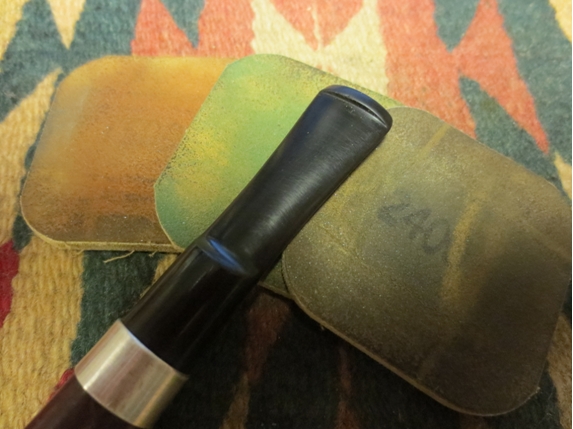
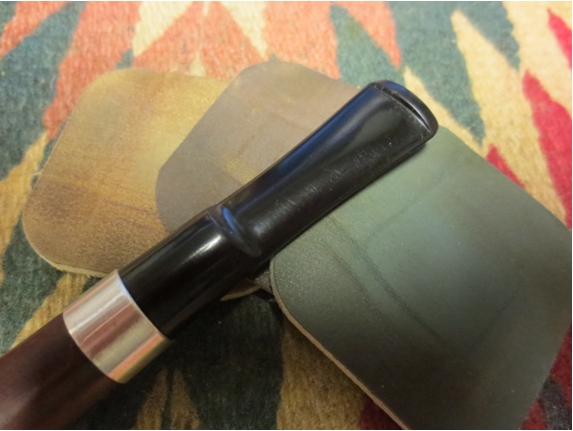
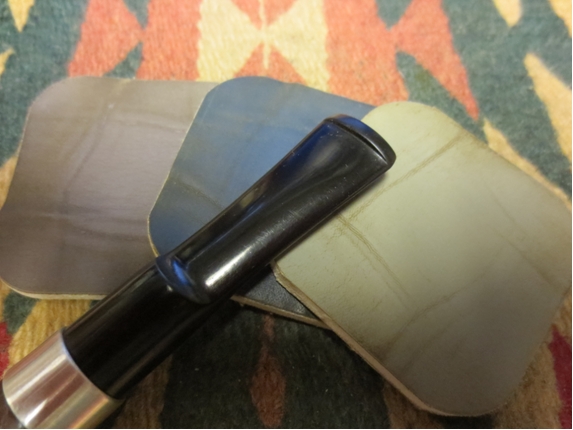
Wally19 I set the bowl aside to dry for a while and worked on the stem. I sanded the tooth chatter and oxidation with a medium and fine grit sanding sponge. They were hard to remove so I used a folded piece of 220 grit sandpaper to work on the tooth chatter and tooth mark on the underside of the stem. I had to use a small drop of clear super glue to fill the tooth mark. Once it dried I sanded it smooth with 220 grit sandpaper and then began the work of polishing the stem with micromesh sanding pads. I wet sanded with 1500-2400 grit pads and dry sanded with 3200-12,000 grit pads. I rubbed it down between each set of three pads with Obsidian Oil before sanding with the next set of three pads.Wally20

Wally21

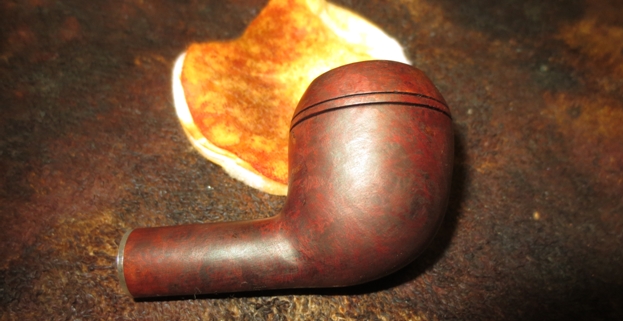
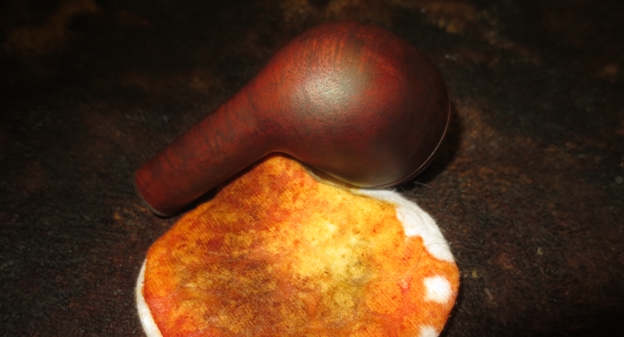
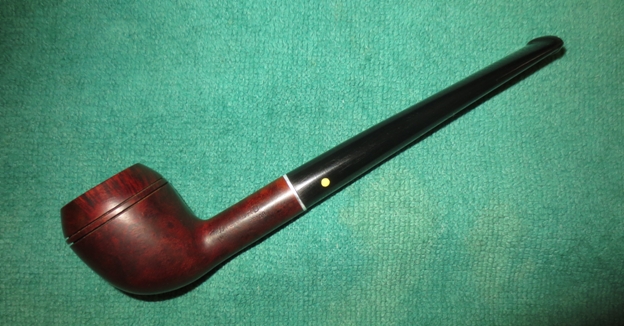
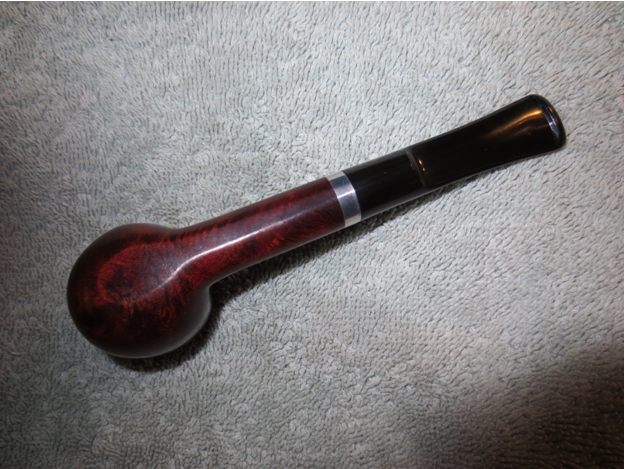
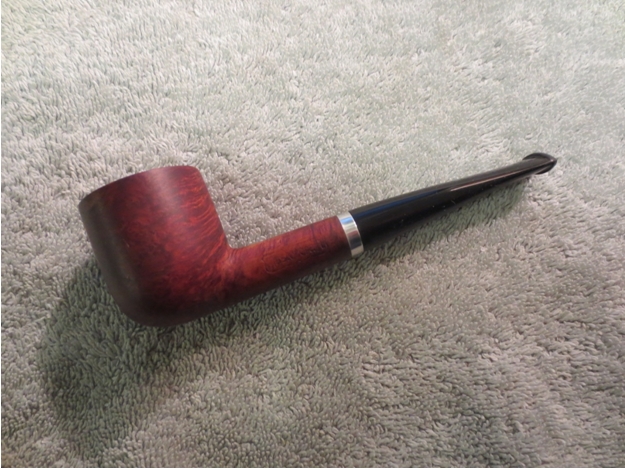
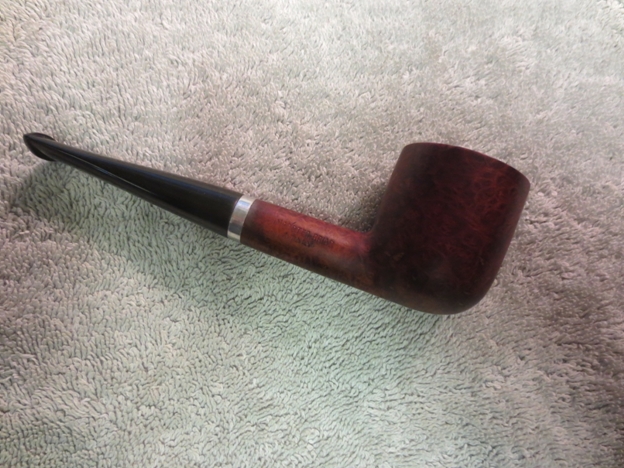
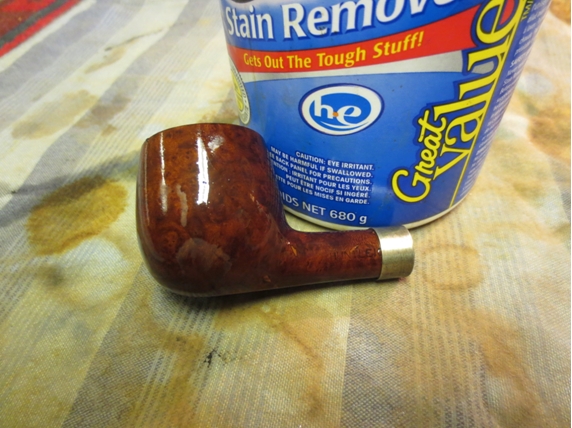
Wally22 I put the stem back in the shank after sanding with the 12,000 grit pad and then buffed the pipe with White Diamond and Blue Diamond before giving the bowl and stem multiple coats of carnauba wax. I finished by buffing it with a soft flannel buff to raise a shine. The finished pipe is shown below. The new stain coat, the wax and the polished stem give it a new look and the cleaned interior a new life. This one should be a great smoker if the amount of cake and gunk I removed from the bowl and shank are any indication.Wally23

Wally24

Wally25

Wally26

Wally27

Wally28

Wally29

Wally30

Wally31

Restemming & Working on New Staining Techniques on a Mastercraft Pot


Blog by Steve Laug

The next pipe from the gift box is a Mastercraft Pot. It is stamped Mastercraft in a shield on the left side of the shank and Imported Briar over Italy on the right side. There are no shape numbers. There are a lot of fills on the bottom of the bowl and the right side of the bowl. The finish is a thick coat of what appears to be urethane – almost plastic looking. Someone had previous started refurbishing it – to bowl had been carefully reamed and the bowl topped. There was a large fill on the rim that was loose that ran from the middle of the right side of the bowl almost all the way across the rim. This pipe would be a great one to experiment with using different stains to blend the fills and highlight the grain. The urethane coat would prove a challenge to remove completely but once gone it would prove a perfect candidate for the new staining techniques I wanted to learn. The band on the shank is aluminum and is oxidized and dull. The stem is a replacement that is poorly fit. It is loose in the shank and does not fit against the shank well. The tenon is very short and almost conical in shape. I will break the work on this pipe into two parts: Part 1: Fitting a Stem and Part 2: The Staining Experiment and a Conclusion called Finishing Touches.Mas1

Mas2

Mas3

Mas4 I took a few close-up photos of the rim and the stem. These will help to give an idea of the state of affairs when I brought the pipe to the work table.Mas5

Mas6

Mas7

Mas8
Part 1: Fitting a Stem

I removed the stem and found two possible replacements in my stem can. The original replace in the one at the bottom of the photo below. The two options were a longer taper and a saddle stem. Both of them worked well with the length of the shank. They looked better than the one the pipe arrived with.Mas9 I tried the bowl with each of the stems to get an idea of the look of the pipe. I made a decision for the taper once I had seen them both in place in the shank.Mas10

Mas11 The taper stem was slightly larger in diameter than the shank so I would need to adjust the diameter. I cleaned out the shank and the stem with pipe cleaners, cotton swabs and isopropyl alcohol to remove the tars and oils from the shank. Because someone had already started the process on this pipe it was not a long clean. It took very few cleaners before the shank was clean.Mas12

Mas13

Mas14

Mas15 I sanded the stem with 220 grit sandpaper to start and then decided it was taking too much time. I used the Dremel with a sanding drum and quickly removed the excess material.Mas16

Mas17 I brought it back to the work table and sanded it with 180 and 220 grit sandpaper to smooth out the marks left by the sanding drum. I needed to fine tune the fit but it was working with the bowl.Mas18

Mas19
Part 2: The Staining Experiment

To prepare the bowl for staining I needed to do the repairs and remove the old finish. I decided to re-top the bowl to remove some of the damage and smooth out the area around the fill on the right side top and edge. I wanted to bring the top down to lessen the area that the fill intruded on.Mas20 I wiped the bowl down with acetone to remove the finish only to find that it did not work to cut through the finish. Before I intruded on the finish with my next measure I decided to repair the fill on the outer edge of the rim on the right side. I used briar dust and super glue to repair the fill on the side and top of the rim. Most of the fill had been smoothed out on the top but there was some of the fill missing on the edge of the rim. I cleaned and sanded the repair to blend it into the finish. When that was smoothed out I sanded the bowl with a medium grit sanding sponge to break the gloss of the finish and then dropped it into the alcohol bath.Mas21 When I took it out of the bath the finish was dulled but still not broken. This top coat was a real bear to remove. I needed to do quite a bit more sanding on the coating to remove the finish.Mas22 Once the finish was gone and I was at bare wood I decided I would use a three part staining process to try to hide the fills and blend them into the briar. I wanted to try something new as well with the staining of this pipe. I wiped it down a final time with acetone to clean off the dust and any remnants of finish, scrubbing hard around the stamping on the shank. I stained it with a medium walnut stain, flamed it and buffed it.Mas23

Mas24

Mas25

Mas26 When the stain dried I gave it a light buff with a cloth and a shoe brush and then gave it the second coat of stain. This time I gave it a coat of oxblood coloured stain. I wanted to bring out the grain on the sides and front and back of the bowl and try to blend the fills more. I stained it and flamed the stain.Mas27

Mas28

Mas29

Mas30 When that stain dried I buffed the bowl with White Diamond and wiped it down with isopropyl to even out the stain coat. I hand buffed it afterwards with a soft cloth. The bowl was beginning to take on the colour I wanted from these first two coats of stain.Mas31

Mas32

Mas33

Mas34

Mas35

Mas36 Then it was time for the third coat of stain. I stained the pipe with a dark brown aniline stain. I applied it and flamed it and repeated the process until I had good coverage on the pipe. The dark brown looked opaque when first applied.Mas37

Mas38

Mas39 I buffed the pipe with White Diamond on the wheel and gradually the grain began to show through the finish. The combination of stains gave the pipe precisely the colour I was wanting – a warm reddish brown with dark highlights in the grain patterns. The fills though still present, did not stick out as badly and seemed to blend into the finish.Mas40

Mas41

Mas42

Mas43
Conclusion: Finishing Touches

With the finish on the pipe completed I worked on the stem. I sanded it with a fine grit sanding sponge and then with micromesh sanding pads. I also sanded the band on the shank with the micromesh pads at the same time. I wet sanded with 1500-2400 grit pads and sanded the band without the stem present. You have to be careful with the pads when polishing metal as they will leave a dark stain on the briar and the vulcanite.Mas44 I rubbed the stem down with Obsidian Oil and dry sanded the stem with 3200-12,000 grit pads. I polished the band with the same and also with a silver polishing cloth. After each set of three pads I rubbed the stem down with the oil. When I had finished the stem I gave it a final coat of the oil and then let it dry.Mas45
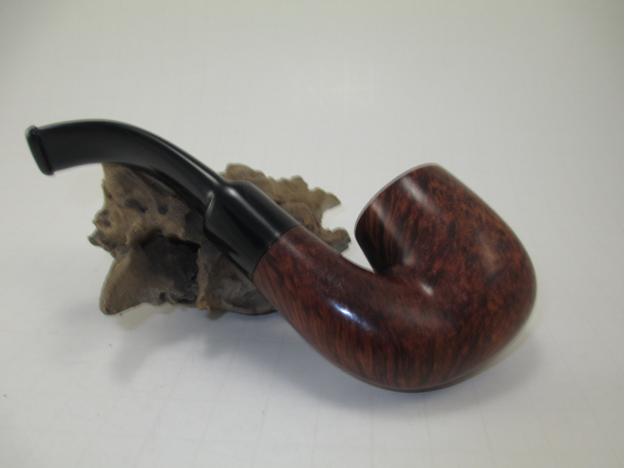
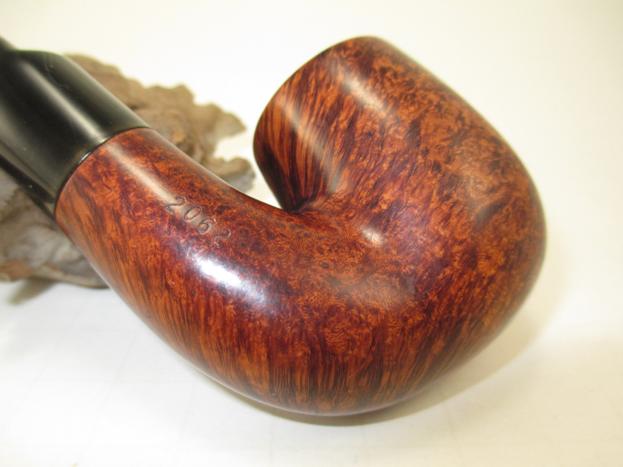
Mas46 The next photos show the finished pipe. It is a rich brown/red colour that has warmth and depth to it. The silver band and the new stem make the pipe look quite rich. I figure it is at least as nice or nicer than when it left the Mastercraft warehouse.Mas47

Mas48

Mas49

Mas50

Mas51

Mas52

Mas53

Giving a Yorkshire Natural Billiard a new look – Restain & Cumberland Stem


Blog by Steve Laug

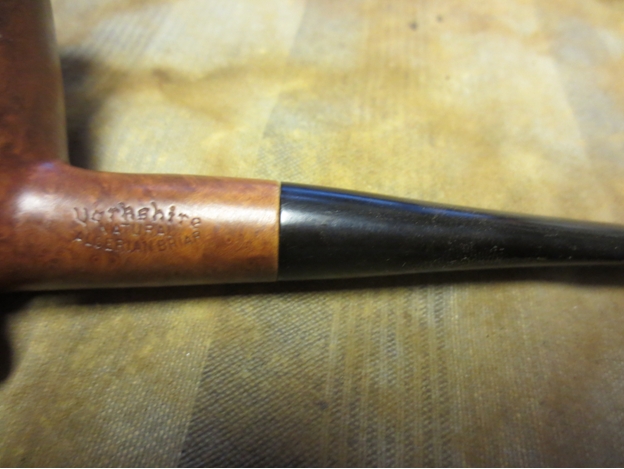
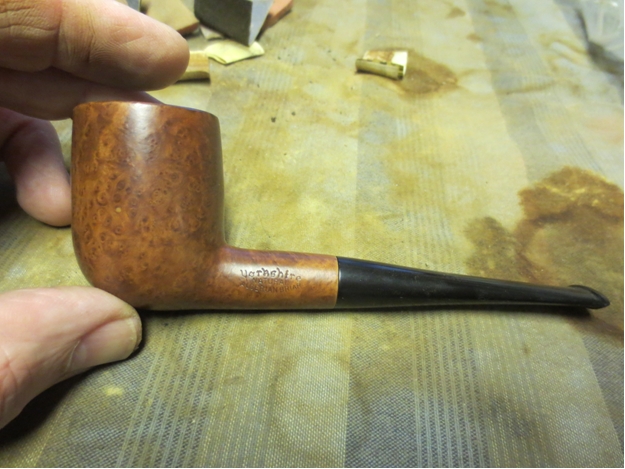
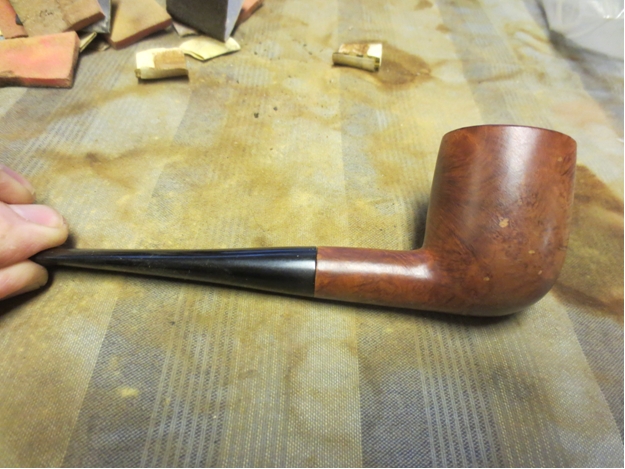
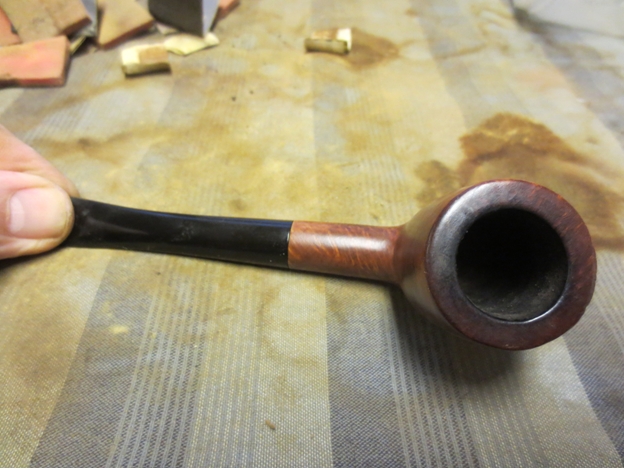
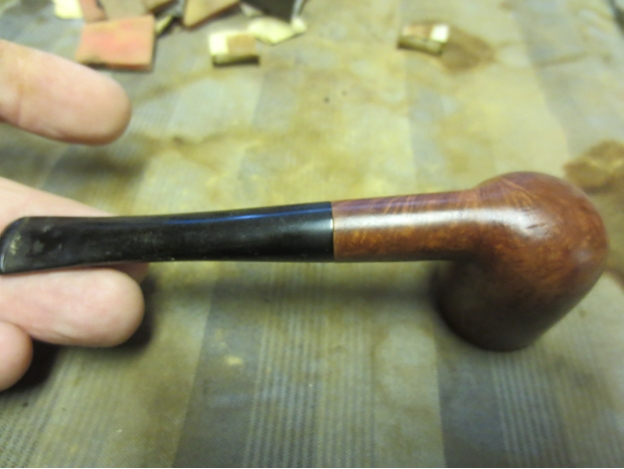
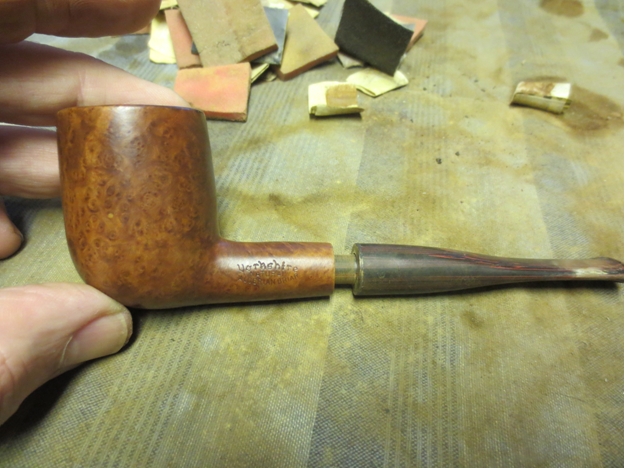
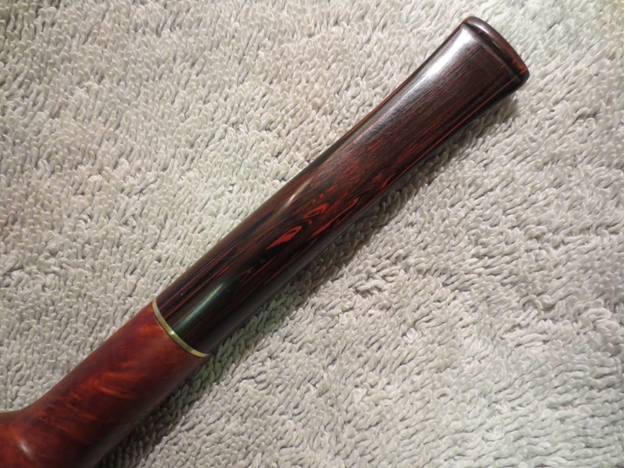
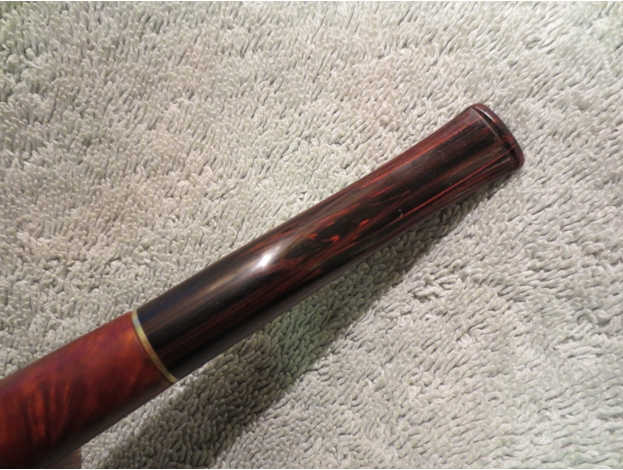
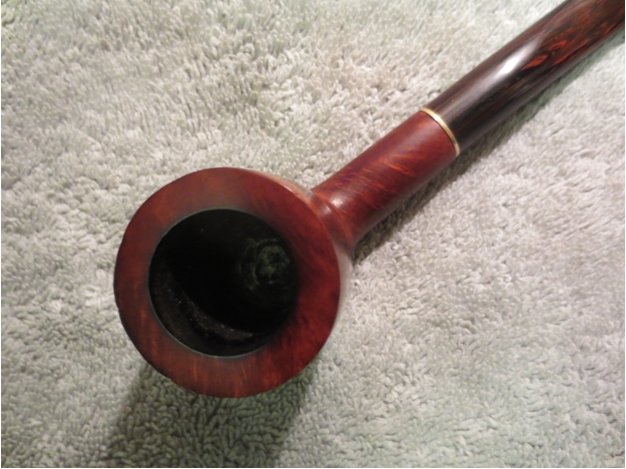
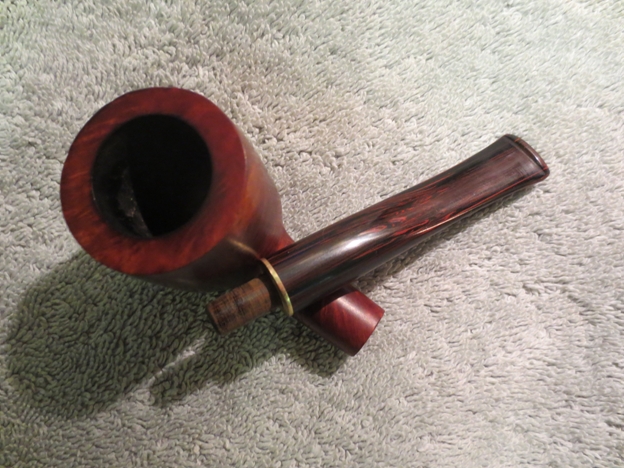
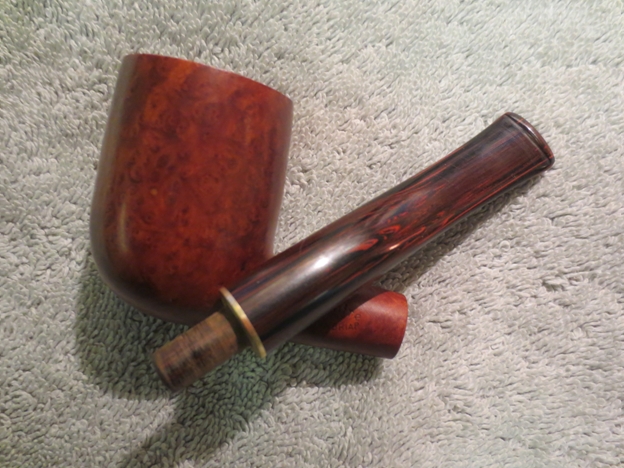
I am slowly but surely working my way through the gift box of pipes I received. The next one that I chose to work on was a billiard. It is stamped Yorkshire in an arch over Natural and another reverse arch with the words Algerian Briar.York1 The stem on it was a replacement and did not fit well on the shank. It was slightly smaller in diameter and also had rounded shoulders. The angles and flow of the stem did not work well with the pipe in my opinion as the taper on the top of the stem was different from the one on the bottom side. The bowl itself was clean but and the finish dirty. The rim had been damaged around the outer edge on the front of the bowl rounding it slightly. The stamping was clear and distinct. From what I can find on the internet the Yorkshire brand is a US Made pipe that came from Barnaby Briars (smoking pipe retailer) that was located at 28 Powell St. in Brooklyn (NY). They also made pipes stamped Barnaby. The Germanic Script differentiates it from the other Yorkshire Brand that was made in Italy by Gasparini for Sears and Roebuck.York2 The right side of the bowl had the only fills present on the pipe – and there were about five of them visible. The largest is almost in the middle toward the back. These fills were hard, smooth and tan in colour.York3

York4

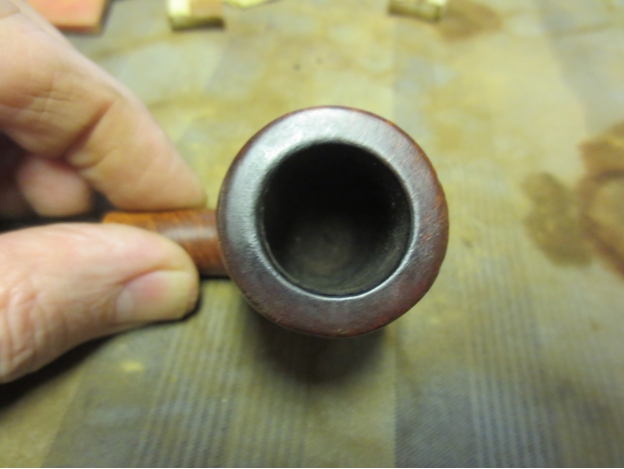
York5 The close-up photo of the rim below shows the rounding of the edges on both the front and the back sides of the rim.York6 I absolutely hated the look of the stem on this pipe so I went through my can of stems until I found one that would work well. It was a well broken in stem that had a lot of oxidation and calcification on the top and bottom of the stem. There were no tooth marks which were a bonus and the stem was Cumberland! Once I had cleaned up the bowl and the stem the combination would look really good.

The tenon was slightly larger than the mortise so I used a Dremel with a sanding drum and took some of the Cumberland material off the tenon. I worked on it until it was close to fitting. Then I took it back to the work table and use a folded piece of sandpaper to get a good snug fit in the mortise. I had no idea that there was a brass band that was a part of the stem until I began to clean it up.York7

York8 When the stem was in place I sanded the stem and the junction of the shank and stem to make sure that the fit was smooth and the transition was as seamless as I could make it. I sanded with 220 grit sandpaper to even things out. As I did it I found that there was a brass coloured band that was a part of the stem. I removed the stem and cleaned off the face of the stem and found the band extended across the face of the stem like a washer around the tenon. I really liked the way the stem tapered quickly to from the shank to the button.York9

York10

York11

York12 I topped the bowl on a topping board to remove the damage on the rim and clean up the outer edges. I wanted to remove the damaged, rounded edges. I also sanded the scratches on the underside of the bowl.York13 I sanded the stem and shank with a medium and a fine grit sanding sponge. I also sanded the brass shank adornment to remove the scratches and polish it. I wiped it down with a wet cloth to remove the sanding dust. The Cumberland is coming to life the more I sand it and remove the oxidation and buildup. The lines of red and burgundy flow through the stem horizontally along the taper and the sides.York14

York15

York16

York17 I took a picture of the pipe and stem with the old stem beside it for comparison sake. The stem is about ¼ inch longer than the old one and the taper more radical. The Cumberland looked better with the briar than the old as well.York18 I wiped down the bowl and shank with acetone on cotton pads to remove the oils and grime that was on the surface of the briar. I wanted to bring the rest of the briar as close to the colour of the sanded rim and shank.York19

York20

York21

York22 I cleaned out the shank and the stem with cotton swabs, pipe cleaners and isopropyl alcohol to remove the tars and oils.York23

York24 I sanded the stem and shank with micromesh sanding pads – wet sanding with 1500-2400 grit pads and dry sanding with 3200-12,000 grit pads. I rubbed the stem down with Obsidian Oil between each set of three pads. I did not let the oil dry between rub downs as I find that the oil gives the micromesh some cut on the surface of the stem. The translucence of the Cumberland really shows through the shine.York25

York26

York27 I rubbed the bowl and down with olive oil and let it soak into the briar. The oil brought out the reddish brown tones of the briar and made the grain stand out. Sadly it also made the fills on the right side of the bowl stand out as well.York28

York29

York30

York31 While the brown tones stood out well I wanted to bring out some of the red tones in the briar. To highlight the reds I stained the bowl with a coat of oxblood stain. Before I stained the briar I used a permanent black marker to darken the fills on the side of the bowl. When it had dried so that it would not rub off when I put the stain coat on the bowl. I applied the stain with a cotton pad and then flamed it. Once it dried I polished the bowl with White Diamond on the buffing wheel. The finished pipe is shown below.York32

York33

York34

York35 The rich colours of the briar work really well with the reds of the Cumberland stem. The light brass band that separates the stem and the shank adds a light brass coloured horizontal line that breaks up the vertical Cumberland and the horizontal grain of the briar.York36

York37 The sharp edges of the rim and the grain on the surface look far better than the round outer edge of the bowl.York38

York39

York40

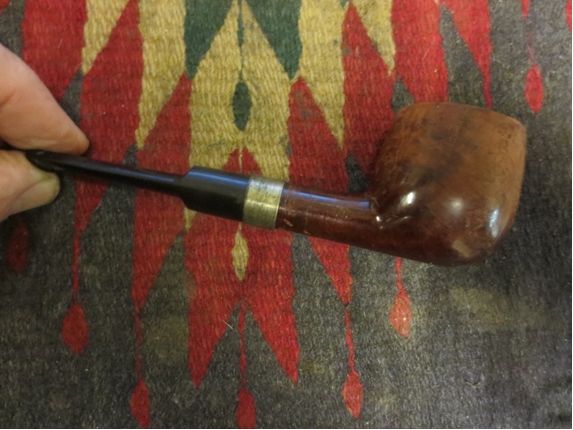
Put Up Your Ducs: Restoring a Meer-Lined Le Duc


Blog by Anthony Cook

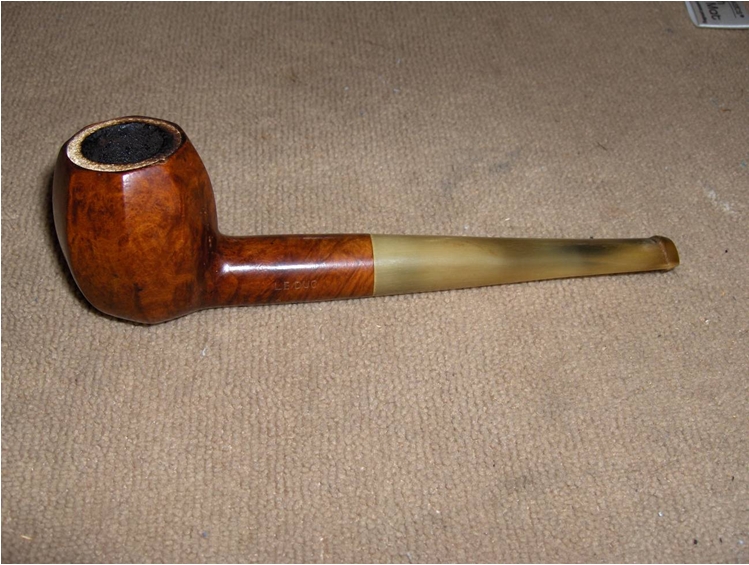
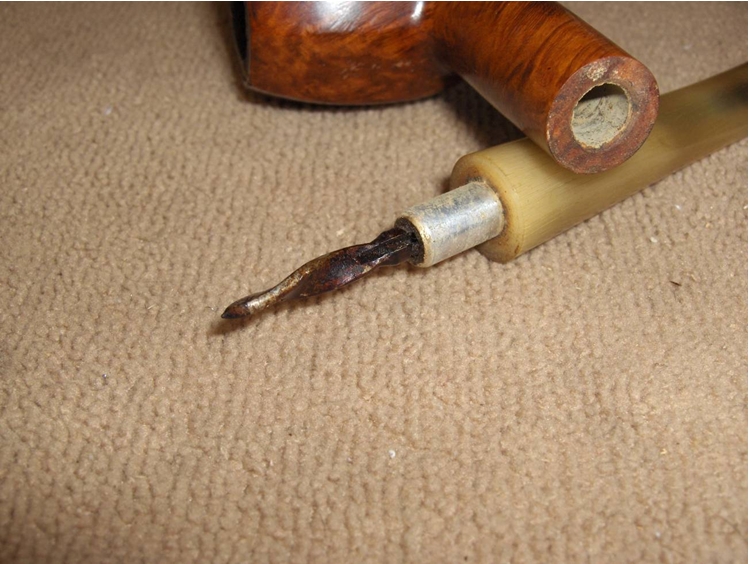
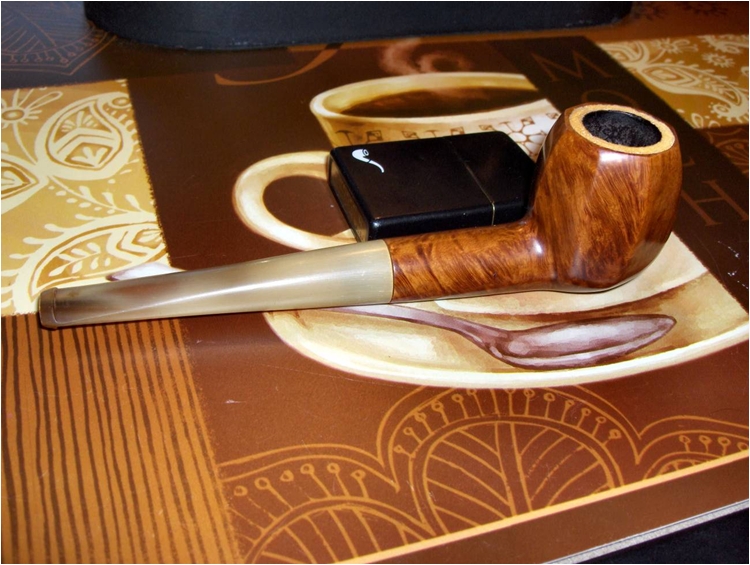
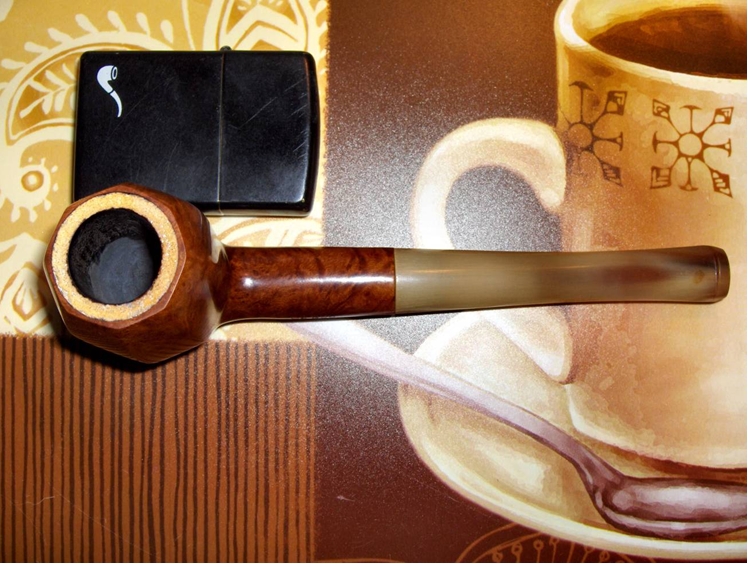
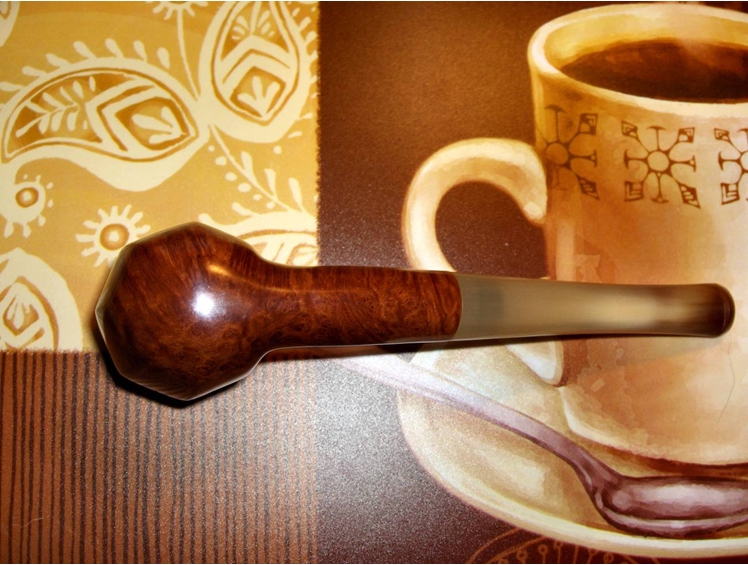
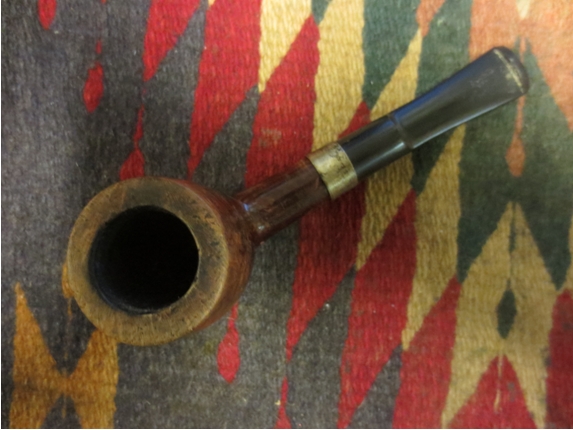
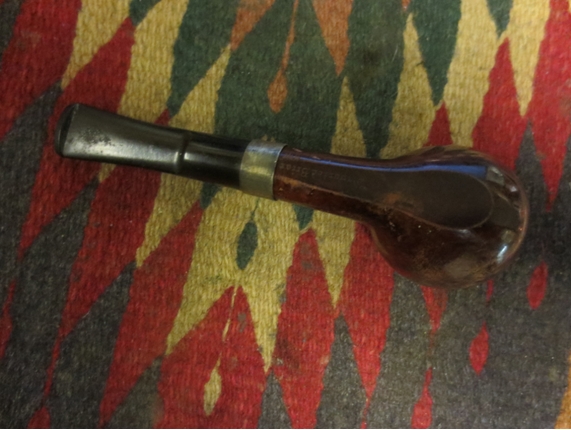
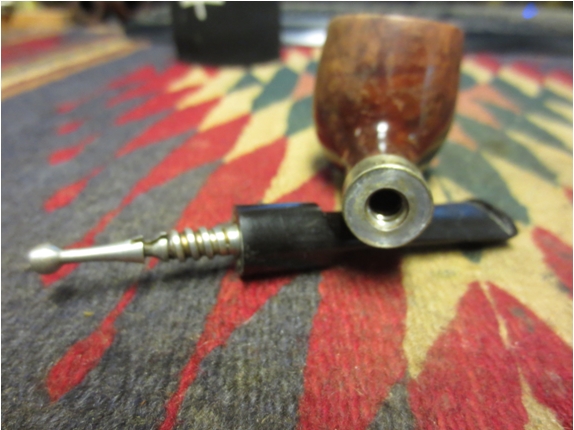
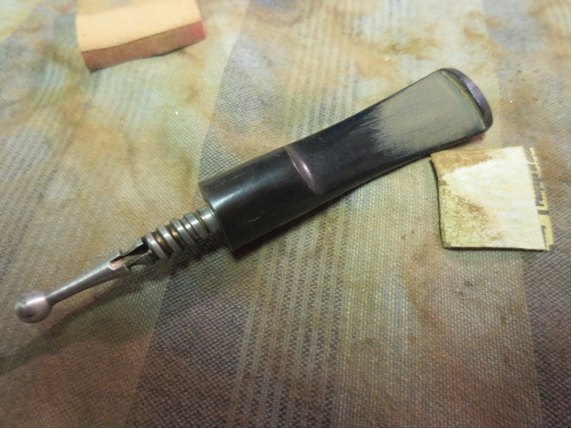
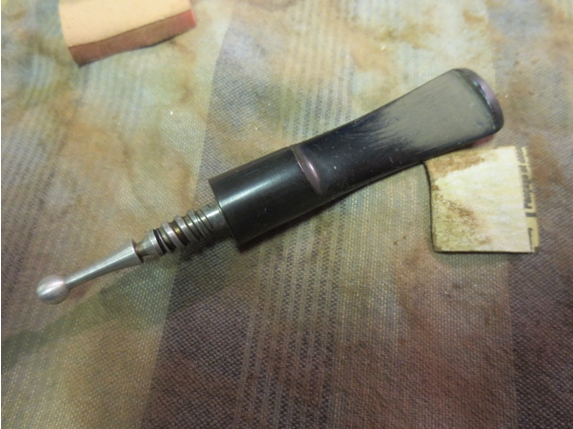
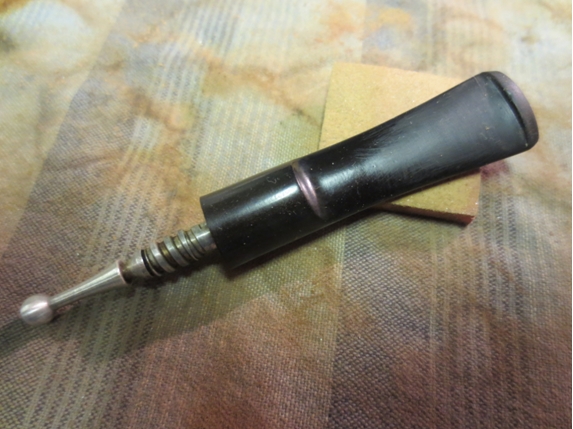
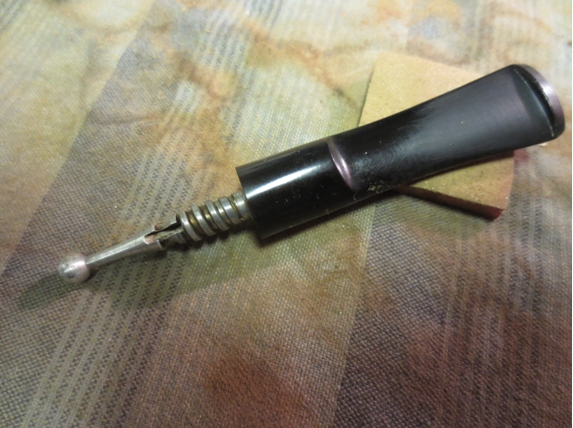
I recently completed work on this meerschaum-lined Le Duc pipe. It has a paneled bowl and a shape that sits somewhere between a squat egg and an elongated apple. It’s stamped simply, “LE DUC” on the left side of the shank and “1” on the right side, which I assume is the shape code. The stem is horn with an aluminum tenon and a twisting, screw-in stinger. This pipe presented me with a number of firsts. I had never worked with panels, meer-linings, or horn stems. So, I knew this one would be fun.Duc1 It’s been difficult to dig up anything conclusive on the history of the Le Duc brand. Both Pipephil and Pipedia come up empty, and a Google search reveals very little more other than a couple of links to an estate pipe that was once available for purchase from Amazon and eBay (the same pipe at both sites). That pipe is the only other example of a Le Duc that I have been able to find. The previous owner of this one did mention that it was from the Netherlands. So, it’s possible that it’s somehow associated with Gubbels.

I posted pictures of the pipe on Pipe Smoker Unlimited and asked if anyone had any more information. General consensus was that it is a French-made pipe, but that’s about as far as it went. Due to some slight shaping errors that I found in both the stummel and stem, I’m willing to bet that it’s somebody’s seconds brand. Though, I’m not quite willing to bet all of my marbles on a particular country of origin yet. So, if anyone out there has any insight into the brand, please don’t hesitate to let me know in the comments section.

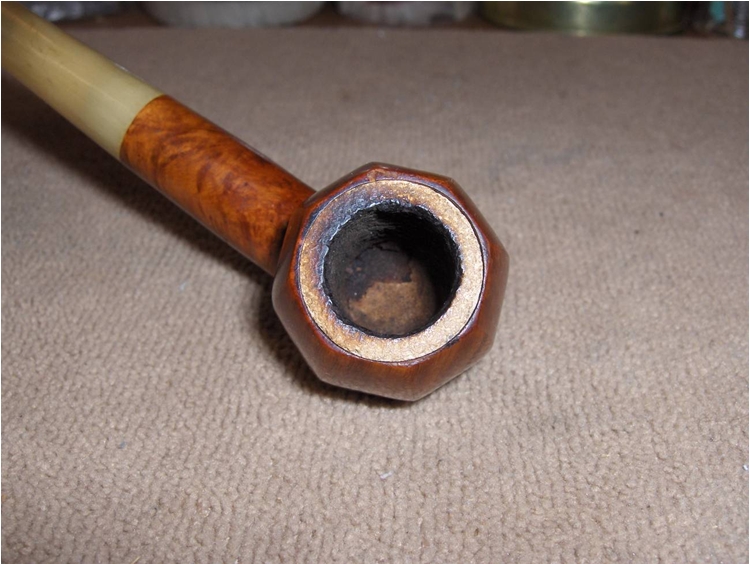
There were a few small scratches and dents on the surface of the lacquer-coated stummel. The worst of which was a series of more than a dozen nicks on one back panel. The narrow surface of briar around the rim was lightly scratched, but didn’t appear to be charred. A thin layer of old tar covered both the meer and the briar on the back of the rim.

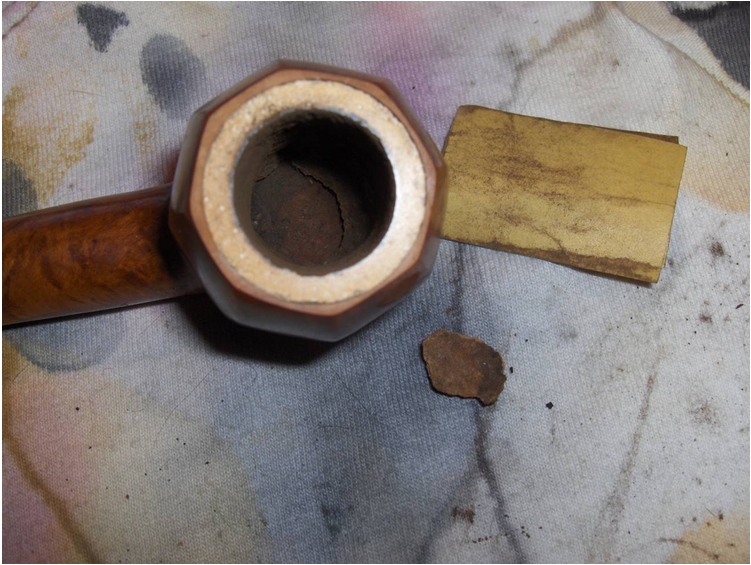
The chamber was lightly caked, mostly in the top two-thirds. The meerschaum lining was by and large intact, but roughly a third of it had been broken out of the heel of the bowl around the draft hole. A crack in the remaining meer ran around the circumference of the heel and I could not for life of me figure out what was holding the rest in. I planned to eye this area with suspicion while I worked.

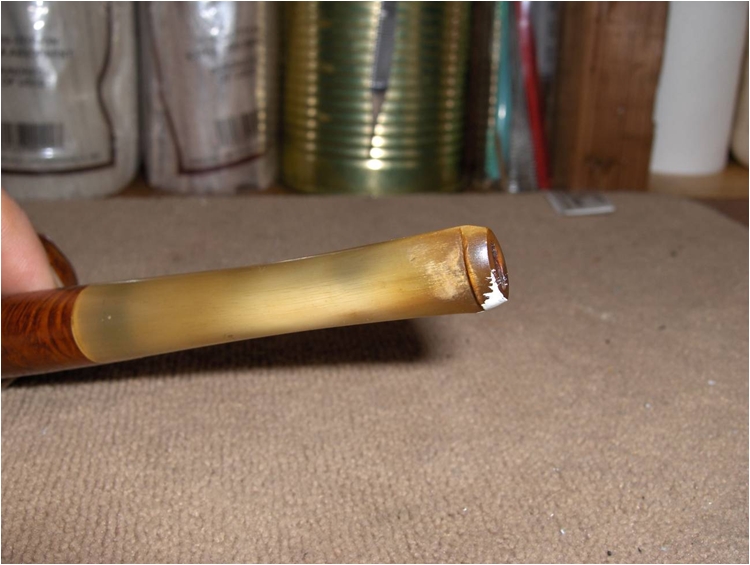
Some light chatter was present on both sides of the stem and there were a couple of shallow tooth impressions on the top. Someone had also chosen to add a dash of white paint to the bottom of the button, apparently for contrast and flair.

Overall, things could have been better, but I’ve seen much, much worse. The photos below should give you a better idea of the condition of the pipe when I started work.Duc2

Duc3

Duc4 (By the way, that dark spot in the photo above is not a natural coloration. It’s tar build-up showing through the translucency of the horn. More on that later.)Duc5

Duc6 The first thing I did was remove the nasty, tar-caked stinger, which wasn’t easy. The build-up had pretty much glued it into place. I dripped alcohol around the joint until the tar had softened enough that I could unscrew it. Then, I dropped the stinger into a small container of alcohol to soften the remainder of the gunk.

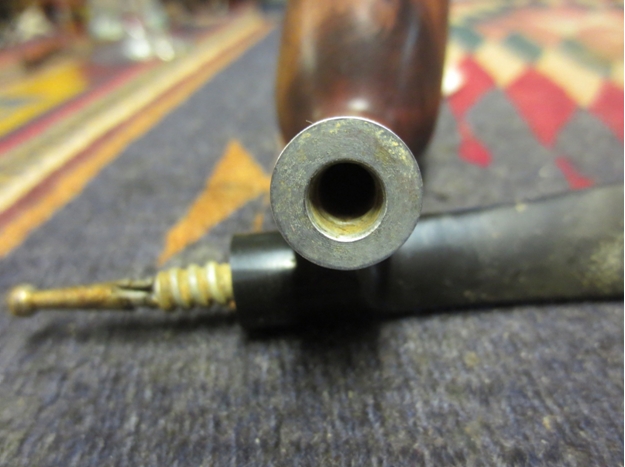
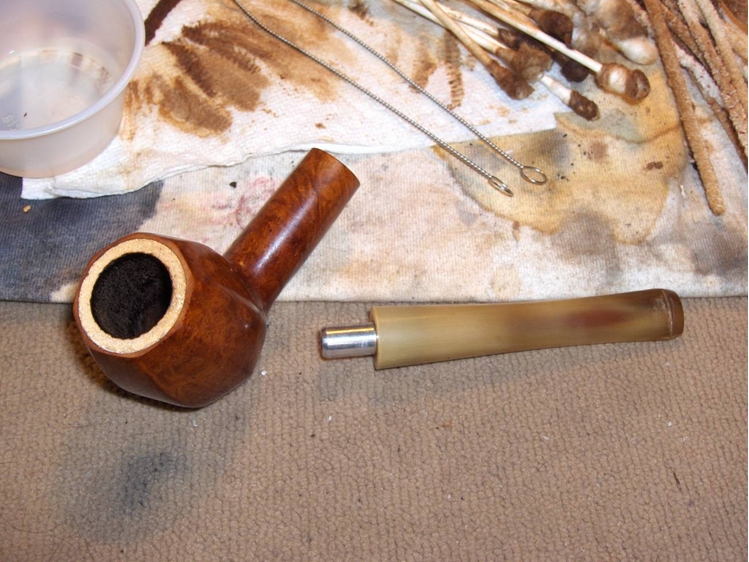
While the stinger detoxed, I attempted to remove the schmutz along the rim with good ol’ cotton pads, saliva, and elbow grease, but I found it to be too stubborn. Since I needed to address the scratched in the briar along the rim anyway, I lightly topped the bowl with 320 and 400-grit sandpaper until both the tar and scratches were gone.Duc7 The cake in the chamber was light but very hard. I started removing it by sanding out with 320-grit paper. Once most of it had been removed, I switched to 400-grit to finish it off. Unfortunately, like William Butler Yeats wrote, “Things fall apart; the centre cannot hold;” and as careful as I was, the remaining bottom of the meer liner was sacrificed during the cake removal process. Of course, I wasn’t at all surprised. I think the cake was the only thing holding it in to begin with.Duc8 After removing most of the cake, I checked back in with the gummy stinger. The alcohol had softened the tar enough that the majority of it could be removed with cotton swabs and a pipe cleaner. The crud in the air slot was still pretty firm, however, and I had to use a pick to scrape it out before I could scrub it clean with a pipe cleaner. I followed with some #0000 steel wool along most of its length. The aluminum is very soft. So, I maintained a very light pressure and avoided the threaded end.Duc9 Then, I started scrubbing out the inside of the shank with isopropyl alcohol and a few shank brushes, cotton swabs, and pipe cleaners. Let me tell you, this was one dirty Duc. The tar was built up into peaks and ridges that seemed to rival the Himalayas. Removing the crud in the shank was less like cleaning and more like heavy landscaping.

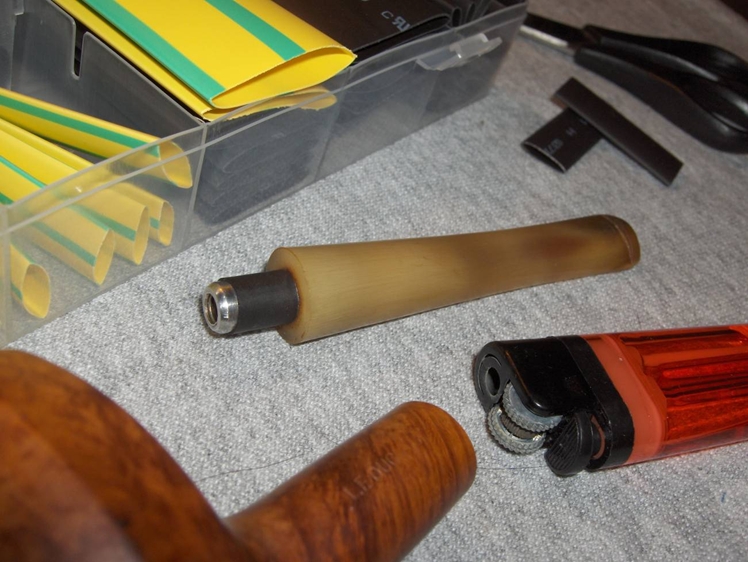
Eventually, it did start to come clean and I was surprised to discover a cork gasket in the mortise that I hadn’t noticed before. It was quite worn and seemed to be deteriorating with age. I found a similarly colored, dry dust around the tenon and also clogging the airway of the stem that I assumed to be detritus from the crumbling cork. There still remained enough of the gasket to give the stem a fairly snug fit, though, and I didn’t have anything at hand for a proper replacement. So, I decided to leave it for the time being to give it some thought.Duc10 Cleaning the stem internals was no more fun than the shank had been. It was completely clogged and would by no means pass a cleaner. To open it up, I had to drip alcohol into the tenon, wait for it to soak in, and then gouge the softened tar with a straight pick. Rinse and repeat all the way down. The process was a bit like mining, except there was no prospect of gold or precious jewels. When I finally broke through the button end, the sludge that came pouring out looked for all in the world like black squid ink. It actually cleaned up pretty quickly after that and you can see it for yourself in the photo below. Notice that the dark spot on the stem that I referenced earlier has lightened considerably after cleaning.Duc11 The more I thought about the mortise gasket, the more I knew that I couldn’t leave it be. It was clearly on its last legs and I started to worry about the taste that might be imparted to the smoke by the years of tar soaking into the cork. I still didn’t have a solid solution, but I learned years ago with my first car that anything can be easily disassembled. If you want to continue using it though, you’ll have no choice but to figure out a way to put it back. With that in mind, I decided to remove the gasket.

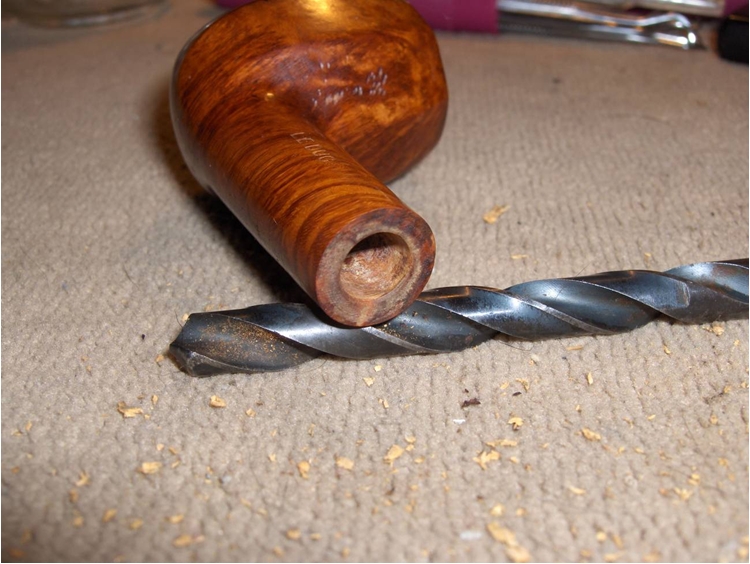
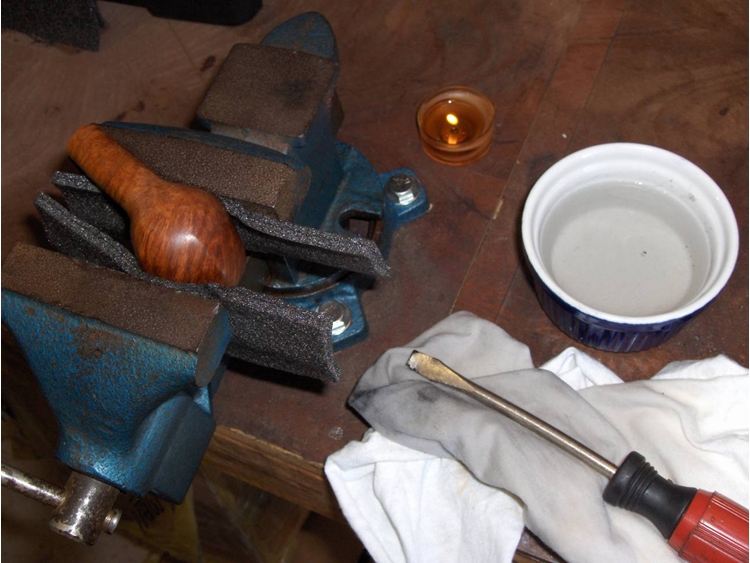
I picked through my selection of drill bits until I found one that was a perfect match for the job. It was almost exactly the diameter of the mortise. So, I could insert it and rotate it by hand to remove the gasket without any fear of it scraping the briar. Afterward, I very carefully sanded the mortise with 400-grit paper wrapped around a pencil end to remove the remaining cork and glue. The photo below shows the mortise just after using the bit.Duc12 I gave a lot of thought to how best to replace the gasket and experimented with a couple of different materials. Surgical tubing used as a sleeve fitted over the tenon had the longest legs at this stage. I found that tubing with a 1/32” wall would kind of work, but was much too tight of a fit and put far too much stress on the mortise. My ideas were just about exhausted. I began to consider drilling out the mortise to accommodate the tubing sleeve, but that was something that I really didn’t want to do. Then, I remembered that I had some marine heat shrink tubing that I’ve barely ever used. I gave it a try out of desperation. Perfect fit! Since it’s the marine quality stuff, it has adhesive on the inside to keep it from slipping. I made sure to use a piece without any printing because that would just be ugly.Duc13 With that problem out of the way, I turned my attention back to the stummel. I stripped the lacquer coat off the bowl by wiping it down with acetone and cotton pads. It was quite stubborn in areas. So, I had to use #0000 steel wool to remove it in a few spots. When the bare wood was exposed it was much easier to tell which of the surface blemishes would require special attention.Duc14 I then clamped the stummel in my bench vice to prepare it for the first step in removing the blemishes. I used some soft foam between the stummel and the vice jaws to protect the wood. Then, I set up my steaming kit, which includes a tea candle, a flat-blade screwdriver, a cotton cloth, and a container of water. I wet the cloth and placed it over the surface dents. Then, I heated the blade of the screwdriver and applied it to the cloth. A hiss and a tiny puff of steam later and the dents were on their way to being level with the rest of the surface. It took multiple applications of steam to raise the nicks along the back of the bowl. The edges were sharp. So, they weren’t removed completely, but they were raised enough to make them much easier to deal with when sanding. All in all, the steam treatment did a great job and would save a lot of time and material later.Duc15 I addressed the remaining nicks and scratches by sanding them out. I used 220-grit paper on the deepest ones to knock them down until they were barely visible. Then, I used 320-grit to completely remove them along with some of the minor scratches. I followed that with 400-grit to blend those areas into the rest of the surface.Duc16 The next order of business was to repair the damage in the chamber. The meer liner sits like a cup inside the bowl and there had been a slight gap between the bottom of the liner and the heel of the bowl. So, with a section of the liner completely missing at this point, there was a significant gap between the draft hole and the bottom of the chamber. I decided to use a two-stage mud application to build up the bottom and replace the missing lining.

In stage one; I ran a pipe cleaner through the shank and slightly into the bowl to protect the airway. Then, I mixed up a batch of what I like to call “pipe tar” and applied a small amount to the bottom of the chamber with my pipe tool. Pipe tar is equal amounts of activated charcoal and FFFF-grade (very fine) powdered pumice mixed with just enough sodium silicate (waterglass) to give it a tar-like consistency. It’s very sticky and sets up quickly. So, it can be difficult to work with when fresh. It clings like ivy, though, and it can be applied in fairly thick layers without developing cracks while it dries. This makes it an excellent choice for building up the bottom of a chamber. It takes about three days to fully cure, but once it has, it is as hard as concrete and just as porous. However, due to its hardness it’s extremely difficult to sand. So, I’ve learned that it’s best to use it sparingly.

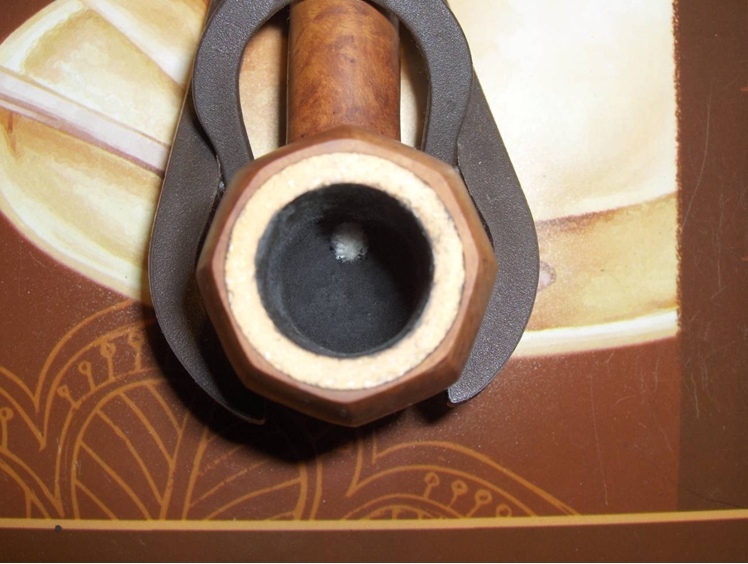
In stage two; I again secured the airway with a pipe cleaner, and then mixed up a batch of more traditional pipe mud. The recipe is largely the same, except that I used water instead of sodium silicate for the mix. Although, I did add a drop or two of sodium silicate to act as a binder and to give it a little more “stick”. The mud has a more paste-like consistency than the tar and is slightly gritty. I used my pipe tool to apply the mud around the edges of the heel, and then shaped it to round out the bottom. It takes a full day to dry. Once it has, it’s a bit softer and easier to sand smooth than the tar. The photo below was taken shortly after applying the mud.Duc17 I wasn’t idle during all of that drying. I took the opportunity to get some work done on the horn stem while I was waiting. As I’ve said, this was my first time working with horn and it was quite different from any other stem material that I have encountered.

I started by leveling out the chatter with 220-grit paper. The horn turned out to be much softer than I expected. So, I used a very light touch to avoid removing too much material.Duc18 Next, I applied a thin patch of clear CA glue to the tooth impressions at the top. The dents were small and very shallow. So, instead of dripping glue directly on the stem, I put a couple of drops on a cardboard surface. Then, I used a flat toothpick to pick up small amounts of glue and applied it to the stem.Duc19 When the glue had dried, I sanded the patches down with 220-grit paper. I began blending them in with 320-grit followed by 400-grit. I rubbed the stem down with a drop of mineral oil between each grit to keep the fine fibers from splintering.Duc20 Once the patches were blended, I again rubbed the stem down with mineral oil and lightly sanded the entire surface with 600-grit and 1200-grit to remove a few faint scratches and smooth it out.Duc21 Finally, I polished with 1500-12000 micromesh pads with an application of mineral oil between each progression of three grits.

I had no idea when I began working with it that this stem would turn out like it has. When the light hits the stem, the translucency gives it a soft glow. I am completely in love with it and ready to replace all of my stems with horn. The polished stem can be seen in the two photos below (although they don’t do it justice).Duc22

Duc23 With the stem work completed, it was time to get back to the chamber. The tar and mud repair had cured. So, I used a finger to sand the patch smooth with 400-grit paper. Unfortunately, I seem to have forgotten to take any photos at this stage. I get caught up in the work sometimes. No worries. You can see the final patch in the photos of the completed pipe.

There was nothing left to do then but to work on the finish. I was very nervous about staining around the meer liner. The briar around the rim was so narrow that it seemed impossible to stain it without touching the meerschaum. So, I made an attempt to protect it by smearing a little petroleum jelly over the surface of the meer with a toothpick.Duc24 I began staining by applying a rather sloppy coat of Fiebing’s medium brown dye thinned 3:1 with isopropyl alcohol. I used a size 10/0 filbert brush to paint over the grain. I made sure to leave several open and unstained areas to provide some contrast. Normally, I would heat the briar before doing this, but I didn’t want to melt the petroleum jelly into the meer. So, I made do.

After application and flaming, I wiped the rim clean and realized that the petroleum jelly had been a mistake. It had given the meer a slight yellow stain. I scrubbed it out as best I could with a couple of cotton swabs lightly dampened with alcohol, but some of it still remains. Oh, well. Lesson learned. I won’t be doing that again.

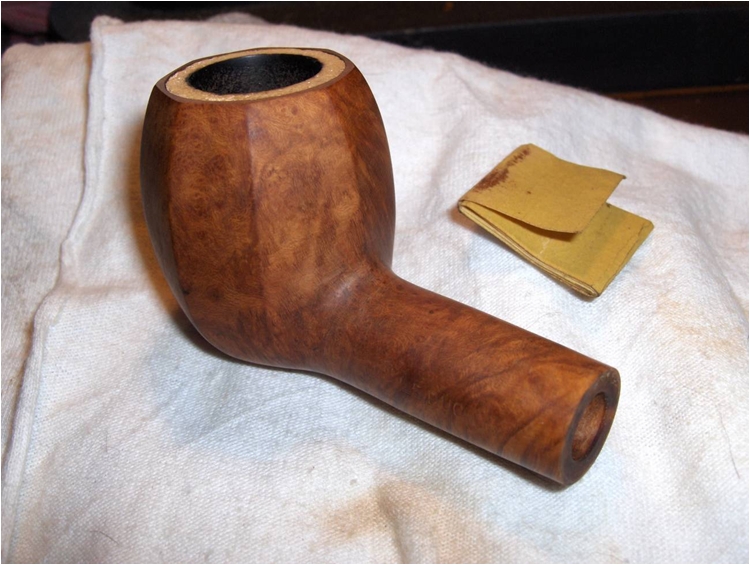
I finished this step by hand-buffing the stummel with a cotton cloth to remove the excess stain. You can see the results in the photo below.Duc25 Next, I lightly sanded the entire surface with 600-grit paper before using a size 20/0 liner brush to make a more specific application of dark brown dye thinned 3:1 with alcohol. I used this sparingly, since I just wanted to add some depth to a few areas in the grain. After flaming the stain to set it, I hand-buffed the stummel with a cotton cloth again. Obviously, I skipped the petroleum jelly this time. It turns out that it was unnecessary anyway. The liner brush did a great job of precisely applying the stain to the rim.Duc26 The stummel was sanded with 1200-grit paper, which I followed with 1500, 1800, and 2400-grit micromesh pads. Then, I gave it one, final coat of stain. This time I used light brown thinned to the same ratio as the previous applications. I used a cotton swab to apply it to the entire stummel, except for around the rim where I used the liner brush. I gave it a final hand-buff to achieve the results in the photo below.Duc27 To finish up the work on this pipe, I polished the stummel with the remaining pads in the micromesh series. I then gave it a light buff and a few coats of wax to seal the deal.

I think this one turned out quite nice. There is a “warmth” to the pipe that is difficult to describe. It was also a pleasure to work on a pipe that did not require any major modifications to facilitate repairs for a change (repairs to the bowl lining notwithstanding). You can see the final pipe for yourself in the photos below.Duc28

Duc29

Duc30

Duc31

Duc32

Duc33

Resuscitating a Kaywoodie Fine Line


Blog by Andrew Selking

I remember back in basic training my Drill Sergeant always used to say, “Men, ugly women need love too”. That was my initial thought when I first saw this Kaywoodie Fine Line pot. The stem was under-clocked, the varnished finish was uneven, the rim had some damage, and it just looked kind of dull. On the plus side, the stem was in decent shape and my fondness for Kaywoodies provided the motivation to help it live up to its potential.KWA1 As you can see, the stem was noticeably under-clocked.KWA2 Fortunately I have a tool for that.KWA3 After directly heating the stinger with my heat gun, I gently turned it back to its original position and set it by running the end of the stem under cold water. This was the result.KWA4

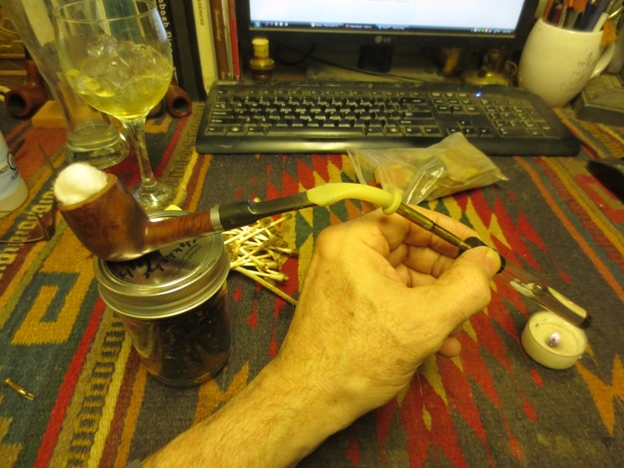
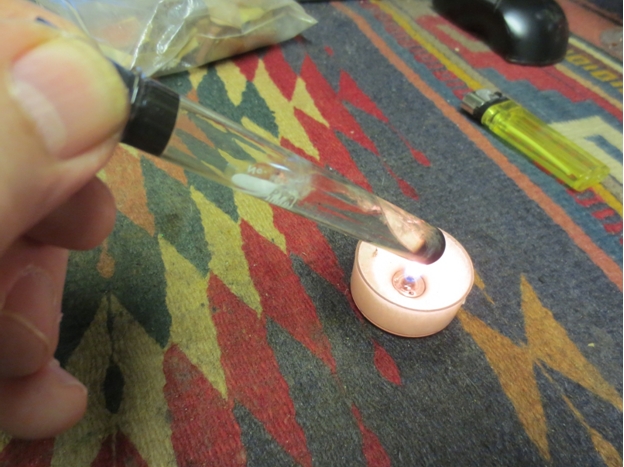
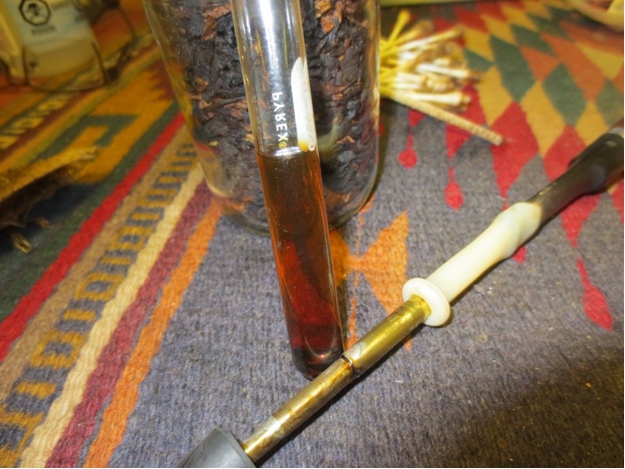
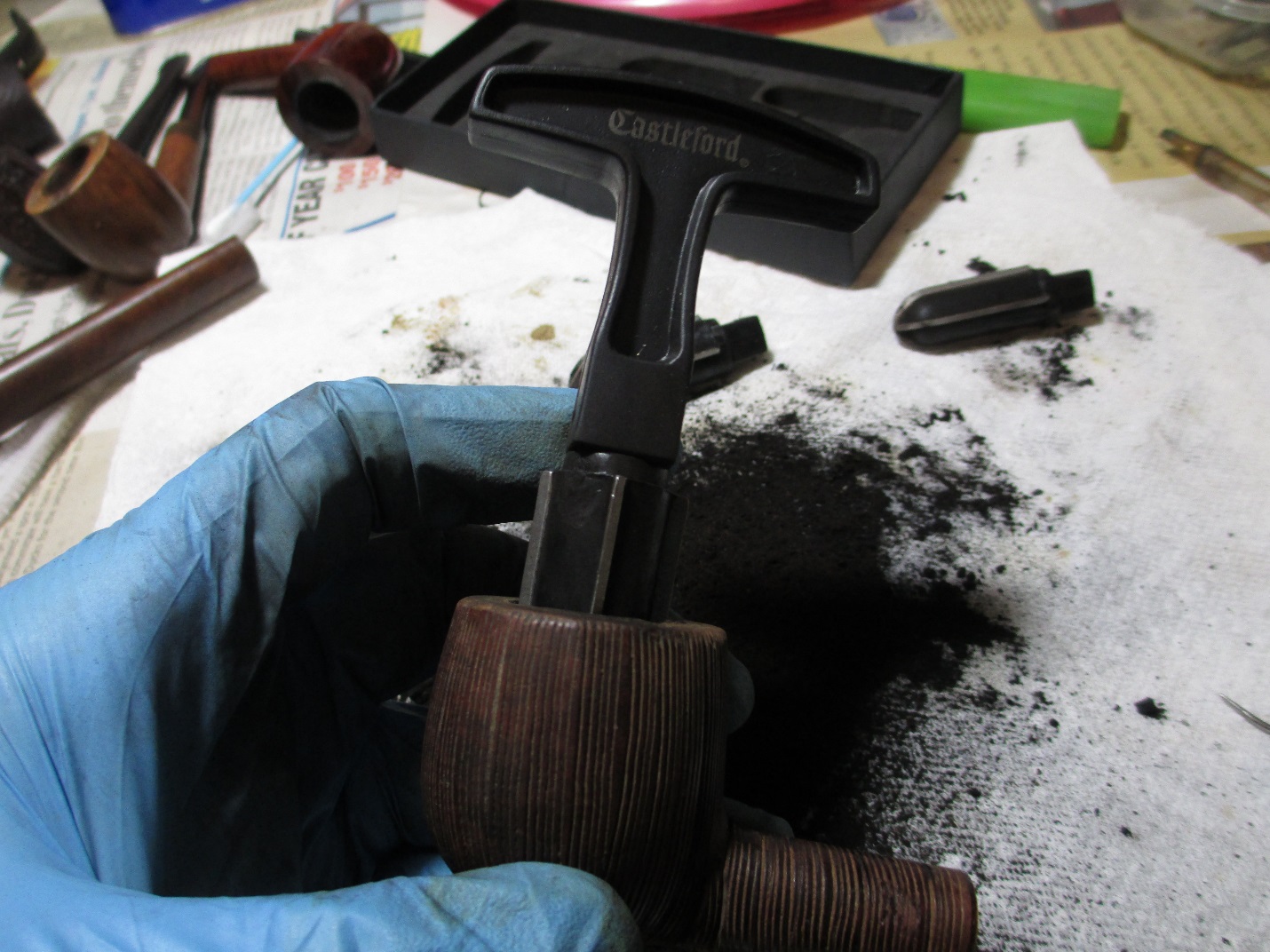
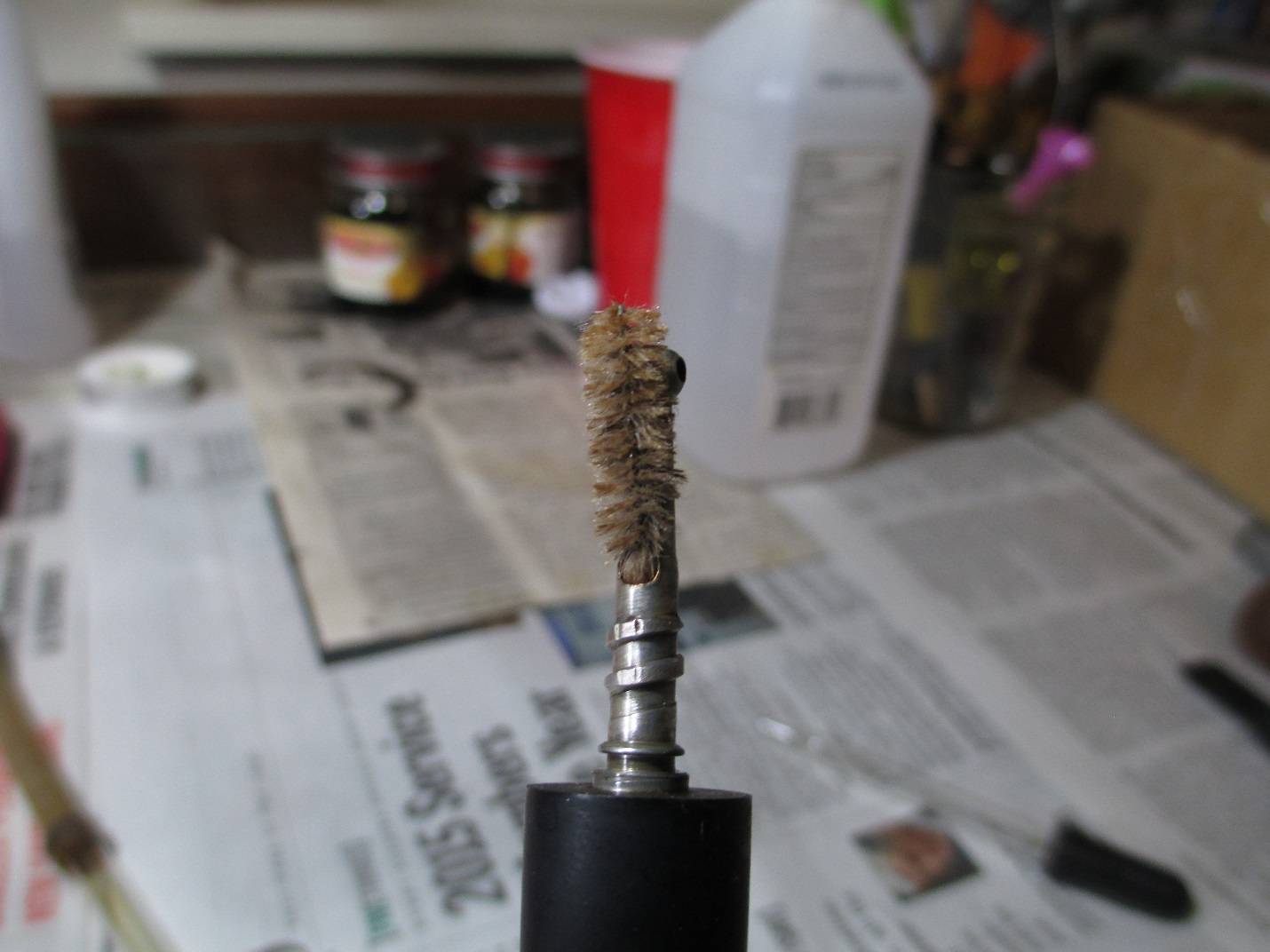
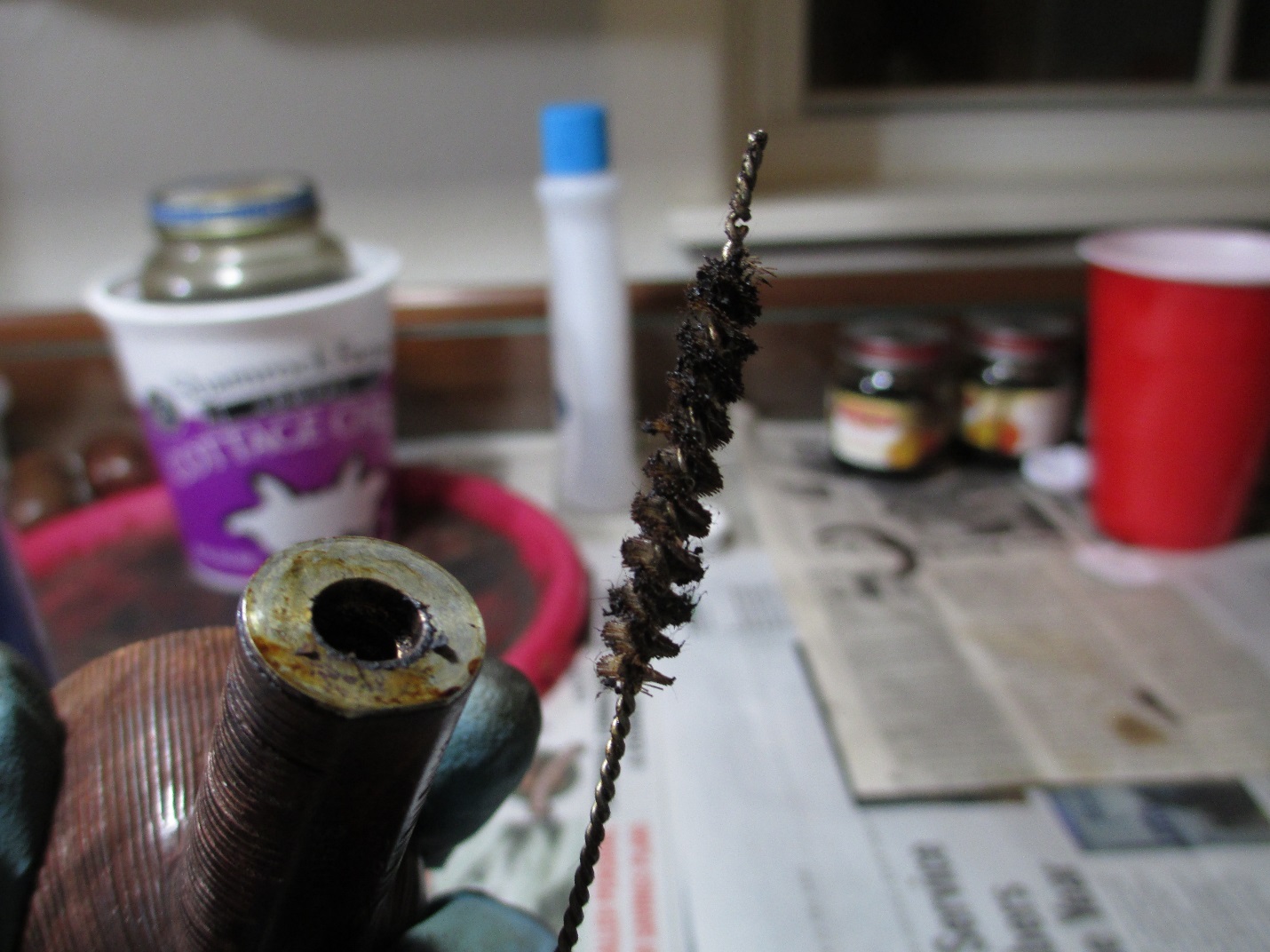
KWA5 I soaked the bowl overnight in the alcohol bath then reamed it with my Castleford reamer.KWA6 While the bowl soaked, I gave the stem a bath in Oxyclean. I make it a practice to use the Oxyclean and a fuzzy stick (that’s the politically correct term for a pipe cleaner intended for crafts rather than cleaning pipes) to get as much gunk out while it’s still soft. This is what the fuzzy stick looked like after the first pass.KWA7 Normally a fuzzy stick without a lot of tar and tobacco is cause for celebration, but I suspected the stinger merely kept the gunk in the shank. When cleaning Kaywoodies I have to deviate from my normal process of retorting the stem and bowl separately, since the rubber tube doesn’t fit inside the shank very well. Here is the pipe ready for retort.KWA8 After the first retort.KWA9I did the retort two more times. This is what was hiding inside the shank.KWA10 After scrubbing the solids out with a brush dipped in alcohol, I switched to q-tips dipped in alcohol. As you can see, it took a good amount to get it clean.KWA11 The boiling alcohol loosened up the tar in the stem. It turned out my original guess was correct, the stinger kept the stem relatively clean.KWA12

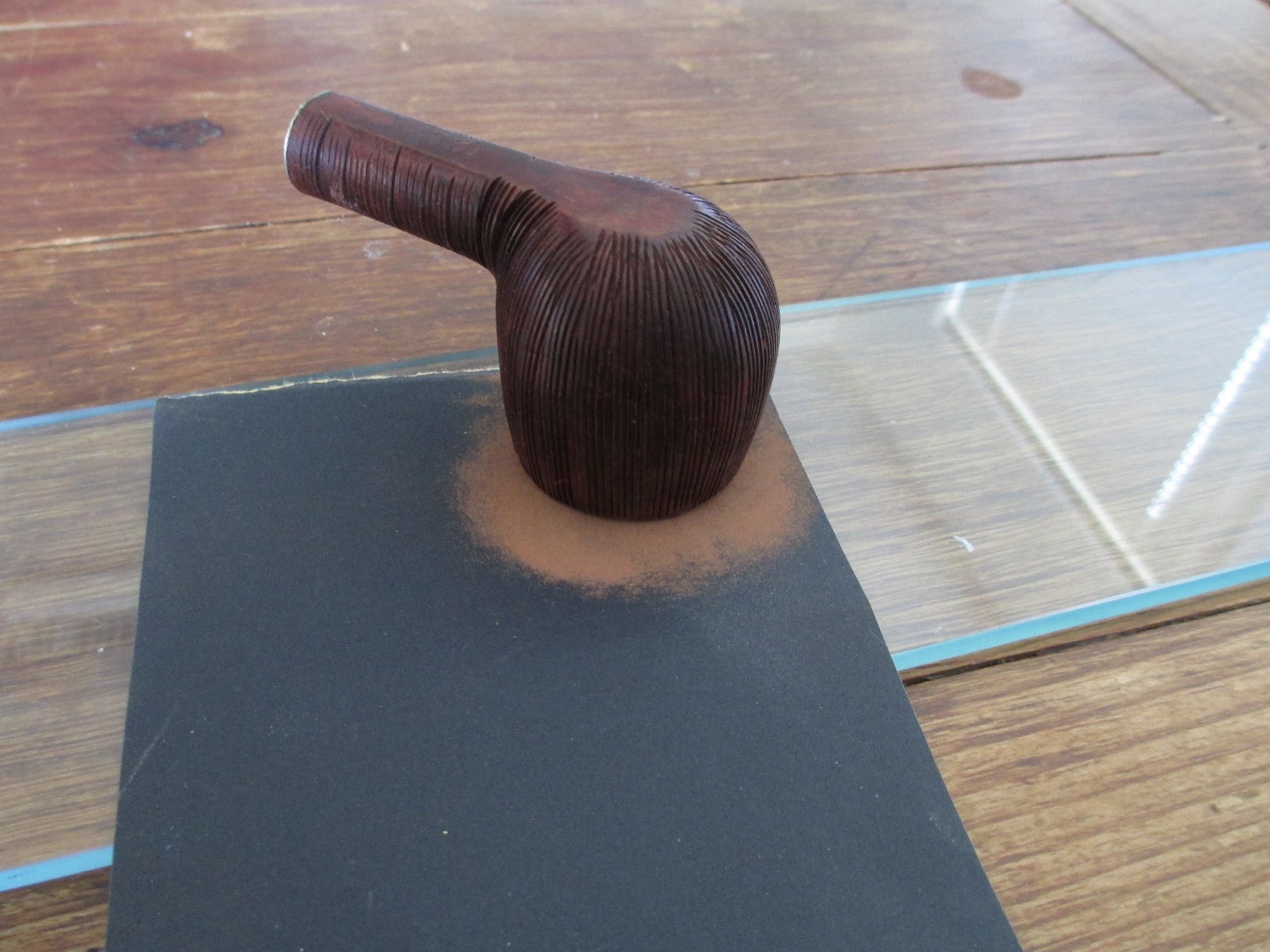
KWA13 With the inside of the pipe clean, I turned my attention to the outside of the pipe. The first thing I wanted to do was get rid of the remaining varnish. I used acetone and 0000 steel wool.KWA14 Next I topped the bowl to eliminate the rim damage. I used a piece of glass with 400 grit sand paper.KWA15 After topping the bowl I used Pimo Pipe Supply medium walnut stain to cover up the couple of fills.KWA16 While I was at it, I polished the aluminum insert in the shank with 0000 steel wool.KWA17

KWA18 With the bowl in good shape, I started work on the stem. I used 400 grit wet/dry sand paper with water to remove the minor tooth marks and oxidation. I then used 1500-2400 grit micro mesh pads with water. Next I re-assembled the pipe with a rubber washer between the stem and shank to prevent rounding the end of the stem. I finished the stem with micro mesh pads, 3200-12,000 grit, followed by white diamond and carnauba wax using the rotary tool on low speed. KWA19 A light coat of Halcyon II on the bowl and here’s the result.KWA20

KWA21

KWA22

KWA23

KWA24 I think the old girl cleaned up nicely. She may not be a shiny pipe, but she is a sturdy pipe. Thanks for looking.

Restoring an old Wally Frank Ltd. Huntleigh Pot


Blog by Steve Laug

I gravitated toward restoring this old Pot shaped pipe next because it looked rough with a worn finish and what I thought was an oversized band on the shank. When I took it out of the box and looked at it more closely my first impression was that someone had banded it post manufacture. It covered the stamping on both sides of the shank so that on the left the HUNTLEIGH stamping only read HUNTLEI and the Wally Frank Ltd. on the right only read ally Frank Ltd. On the flat bottom of the shank it is stamped Imported Briar in a Germanic Script. You can imagine my surprise when I found that what had appeared as a band was not. It was metal mortise and cap fitting that held a threaded screw mount stem and tenon. The tenon had a stinger apparatus that extended into the shank. Now the mystery – I don’t know if this was how the pipe was shipped from Wally Frank or if it was a later addition to a favourite pipe. The saddle stem appears to be original and fits against the cap perfectly. It is the same diameter as the shank of the pipe.Wally1

Wally2 The finish on this old boy was very tired. The finish on the top half of the bowl was worn off while on the lower half it had an old varnish coat that was peeling away. The outer edge of the rim was not beat up or worn at all. The inner edge was slightly damaged and had nicks in that made the bowl out of round. The top of the rim was damaged with small pin prick holes that look like they came from knocking out the pipe on a rough surface. The end cap/mortise insert was polished aluminum and it was oxidized. The stem had a lot of tooth chatter on both sides from the button up the stem about an inch. The button itself had nicks in it and there was a small tooth mark on the top and bottom of the stem next to the button in virtually the same spot. The stinger was quite clean. The bowl had been reamed out recently.Wally3

Wally4

Wally5

Wally6

Wally7 I decided to start with cleaning up the finish on the bowl. The peeling varnish and overall worn and tired appearance bugged me so I started there. I wiped the bowl down with acetone on cotton pads to remove as much of the finish as possible.Wally8

Wally9

Wally10 I mentioned above the damage to the rim surface so I have included the first photo below to show a close up view of the damage. I topped the bowl with 220 grit sandpaper on a topping board and removed the damaged surface. I sanded until the rim was smooth and the pinpricks were gone.Wally11

Wally12

Wally13 With the rim clean and the finish partially removed I decided to drop the bowl in my alcohol bath and let it soak awhile. I figured the alcohol would loosen what remained of the finish and also lend a patina to the sanded rim and the bowl. When I removed it from the bath after an hour of soaking it looked pretty good – as long as it remained wet!Wally14

Wally15 Once I dried it off I could still see the line around the bowl where the finish had been and where it had worn off. This was a stubborn bowl. I sanded it with a medium and a fine grit sanding sponge. I also repaired some of the fills that were pitted with super glue and briar dust. The next two photos show the bowl after I had sanded the finish off. It was finally getting to the point where I could start again with the finish. There were many imperfections and fills in the bowl and shank. This one was going to be a challenge. I knew I could not remove all of them but I wanted to give the old pipe a bit of dignity and take away the tired looking finish.Wally16

Wally17 While I reflected on what to do with the bowl I worked on the stem. I sanded the tooth chatter and tooth marks with a folded piece of 220 grit sandpaper. I was able to remove all of the tooth marks and chatter. The stem would clean up nicely.Wally18

Wally19 I sanded the stem with a medium and a fine grit sanding sponge to remove the scratches left behind by the sandpaper. The stem surface was free of marks now but still needed to be polished to bring back the shine to the vulcanite.Wally20

Wally21 I cleaned out the shank and stem with pipe cleaners, cotton swabs and isopropyl alcohol. The dirty portion of the shank was the grime in the threads of the mortise. The airway ahead of the metal mortise was clean. It took a bit of scrubbing but I was able to clean out the grime. The internals of the shank were clean. I ran pipe cleaners through the stem and stinger. I was surprised that I could easily run a pipe cleaner from the slot to the bowl without major issues with the stinger. Once it was clean I threaded the stem on the shank to see what the pipe looked like so far. It had come a long way and had the potential to turn out to be a good looking pipe.Wally22 I wiped the stem down with a damp cloth and then worked it over with the micromesh sanding pads. I wet sanded with 1500-3200 grit pads this time and then dry sanded with 3600-12,000 grit pads. I rubbed the stem down with Obsidian Oil between each set of three pads. I also used the later grit pads to polish the aluminum of the mortise insert. After sanding the stem with the 12,000 grit pad I rubbed it down a final time and let it soak in before taking it to the buffer.Wally23

Wally24

Wally25 I buffed the stem with White Diamond and a blue plastic polish bar that I picked up. It really gives the stem a deep shine.Wally26

Wally27 I stained the bowl with several coats of a cherry aniline stain and flamed it. In the photos below the pipe is shown after a light buffing with a soft cloth. (These photos were taken before I polished the stem.)Wally28

Wally29

Wally30

Wally31 I sanded the bowl with the 6000-12,000 grit micromesh sanding pads and then buffed it with White Diamond. I gave the bowl and the stem multiple coats of carnauba wax and buffed it with a soft flannel buff. The finished pipe is shown below. I have also included a photo of the reworked rim and the tenon and aluminum mortise just to show the finished pipe in all of its parts. It should make someone a good smoking pipe if the original condition was any sign of the smoke-ability of this pipe.Wally32

Wally33

Wally34

Wally35

Wally36

Wally37

Giving a Face Lift to a Jobey Canadian


Blog by Troy Wilburn

This pipe has been an off and on project of mine since early to mid-November. I acquired this pipe from a friend of mine on the Dr. Grabow Collectors Forum (http://drgrabows.myfreeforum.org/forum3.php). I needed a Jobey stem emblem for a restoration. He sent me this pipe for a donor and it was nicer that the one I was restoring. The pipe was in excellent shape except for some mold stains. I saw a nice pipe hiding there behind it all. This is how it looked when I got it.Troy1

Troy2

Troy3 Well I sanded and refurbished it and even gave it a contrast stain. But the mold stains were still visible. It smoked fine and looked ok but I thought it was too nice a pipe to leave like it was.Troy4

Troy5 I put it on the back burner until after the first of the year then I contacted another from a Dr. Grabow Collectors Forum about doing some blasting for me on a couple of pipes including this one. He does some very nice blast work. I figured that the blast would get rid of or obscure the mold stains. This is what the pipe looked like when I got it back. He did some fine blasting on it. He even threw in one of his custom-made tampers that is shown in the picture with the pipe.Troy6

Troy7 I mixed up some brown Rit dye and added about 25% orange along with about 5% red as well. I wanted to match the colour of the amber stem in some way. I then coated it in mineral oil and took a scotch brite pad and went over the surface to lighten the high spots of the blast. I wanted the color of the pipe to match the dark brown of the stem at the shank so that it would look like the whole pipe fades from Brown to the amber yellow. After many coats of wax this is what I got.Troy8

Troy9

Troy10

Troy11

Troy12

Troy13

Troy14

Troy15

Troy16

Troy17

Troy18

Troy19

Troy20 I think it turned out real nice and it smokes wonderful. A gift from a friend and the blast work from another friend make this one of my prized pipes.

Cutting off a broken stem and reshaping the stem on an Yves Saint-Claude #75 Bulldog


Blog by Steve Laug

yvessaintclaude2aIn the gift box of pipes I received (shown below) there was one pipe that kept calling out to me to have a look and see what I could do with it. It is shown in the photo below – it is the bulldog in the bottom right corner. It is stamped Yves St.Claude GOLD TOUCH on the left side of the shank and on the right side it has the shape stamp 75 and Made in France in a circle similar to the Comoy’s Made in England Stamp. “Made” and “France” make up the outside of the circle and “in” is in the centre. On the stem it bore a script stamp of YSC and also a light golden coloured wooden stem adornment. I think this is the “Gold Touch”. I have done a bit of research on the net and have found several other examples of the Gold Touch and all have had this wooden stem adornment. The stem was broken off at an angle from the button forward about one inch.boxadditions In searching the web I found several references to Yves Grenard, trained in Comoy’s England purchasing the Chacom plant in St. Claude. He managed the factory and it passed on to his son afterward. I am pretty certain that this Yves St. Claude pipes was made by Chacom in France with the stamping bearing Yves name.

I took the pipe to my worktable and took the following photos. They are a little dark but give a pretty clear picture of the condition of the pipe. The finish was clean but had a lot of damage. There were dings and scratches that cut deeply into the sides of bowl on both sides. On the right side there were vertical scratches on the bowl. The centre of the two rings had several places where it was chipped and damaged. The outer edge of the rim had dents on it from tapping the pipe out on hard surfaces. The top of the beveled rim had a build up of tars and oils. The inner edge was clean and undamaged. The bowl was quite clean and did not need reaming. The stem had light oxidation but the major problem with the stem was that it was broken. The bottom edge of the diamond stem had several cuts and dents in the vulcanite that would be a challenge. I would need to decide what to do with it – should I cut it back and reshape it or replace it with another saddle stem. The problem with replacing it would be that I would lose the stamping on the saddle and the nice wood stem adornment. Shortening it would not be hard to do but I was not sure what it would look like. So I was faced with a decision.YSG1

YSG2

YSG3

YSG4 The next two photos are close up shots of the stem to show the damage. The first photo is the underside of the broken stem and the second is the top side.YSG5

YSG6 I scrubbed the bowl with acetone on cotton pads to remove the finish and grime from the surface of the bowl. I wanted to have a clean surface to work with when I repaired the deep scratches on the sides of the bowl and also the damaged ring around the bowl.YSG7

YSG8

YSG9 I scrubbed it until the bowl and rim were clean. I filled the deep scratches and sharp edged dents with clear super glue and then sanded them until they blended into the surface of the bowl. Once I had sanded them down they virtually disappeared into the grain. This was one of those times that the patches literally disappeared into the briar. The next photos show the bowl stripped of its finish and cleaned and repaired.YSG10

YSG11

YSG12

YSG13 I decided to cut back the stem and reshape it. I figured that if it did not look right I could make a new stem. I used my Dremel with a sanding drum to cut away the damaged portion of the stem. I took it back until the remaining stem was solid and the damage was gone. Fortunately the airway was absolutely centered in the stem. Once I had it cut off I kind of liked the look of the shorter stem and I thought that I could reshape it so that it would look natural. It reminded me of some of my older WDC bulldogs that had an elongated shank with a short stem. I think that it works because of the wooden stem adornment which gives the shank a longer look.YSG14

YSG15

YSG16

YSG17 Below I have included a photo of the entire pipe with the shorter stem to show the new look. I like it!YSG18 I decided to stain the pipe bowl and set it aside to dry while I worked on the stem. I use an old candle stand with a wine cork that fits into the bowl of the pipe as a drying stand for the bowl. It works very well to keep all surfaces exposed to the air. I used a walnut aniline based stain to bring out the grain on the bowl.YSG19

YSG20

YSG21

YSG22 While the bowl was drying I turned my attention to cutting a new button on the stem. I use several needle files in the process followed by a folded piece of 220 grit sandpaper to work the new sharp edge. I start with a knife blade needle file and use the straight edge to define the line of the button. Once that is done I use the curved edge to carve away the surface of the stem ahead of the new button line. I continually refine the sharp edge in the process with a flat rectangular blade needle file that has a straight edge. It does not have the teeth to cut the edge at the beginning like the first file.YSG23

YSG24

YSG25 Once I have the general button cut I sand the stem surface with the 220 grit sandpaper folded. I use the folded edge to get right up against the new button. I work the sandpaper to get rid of the file marks. The next two photos show the newly shaped button and the smoothed out stem surface.YSG26

YSG27 I then worked on the slot in the button. For this I use three different needle files – a flat oval, an oval and a round file. I work them interchangeably as I open and flair the airway. I start with the flat oval to spread out the opening and the other two to widen the gap.YSG28

YSG29

YSG30 Once the slot was opened I used a folded piece of 220 grit sandpaper to shape the edges and to smooth out the opening of the oval slot.YSG31 Once the slot is opened and smooth I sand the stem with a medium and a fine grit sanding sponge to further shape the stem and also to remove the scratches.YSG32

YSG33 I then used my usual array of micromesh to sand and polish the stem. I wet sanded with 1500-2400 grit sanding pads and dry sanded with 3200-12,000 grit pads. I rubbed the stem down with Obsidian Oil between each set of three pads. After the 12,000 grit pad I rubbed it down a final time and let the oil soak into the vulcanite.YSG34

YSG35

YSg36 I buffed the stem with White Diamond and then gave the bowl and stem multiple coats of carnauba wax. I buffed it with a soft flannel buff to raise the shine. YSG37

YSG38 The finished pipe is shown in the photos below. I like the shortened stem and how it looks on the pipe. The overall look of the pipe with the newly shaped stem has both a Danish flair and a look of days gone by. I think I will be enjoying some good smokes in this one.YSG39

YSG40

YSG41

YSg42 I have also included a few close up photos of the rim and the stampings on the shank and stem. It is truly a beautiful pipe.YSG43

YSG44

YSG45

Restoring an Old Yello Bole 2033 Apple


Blog by Troy Wilburn

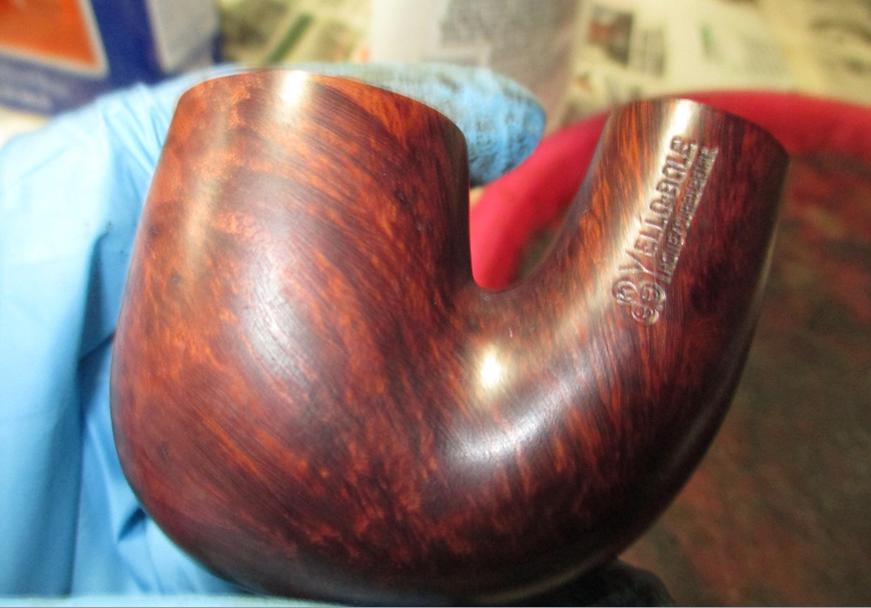
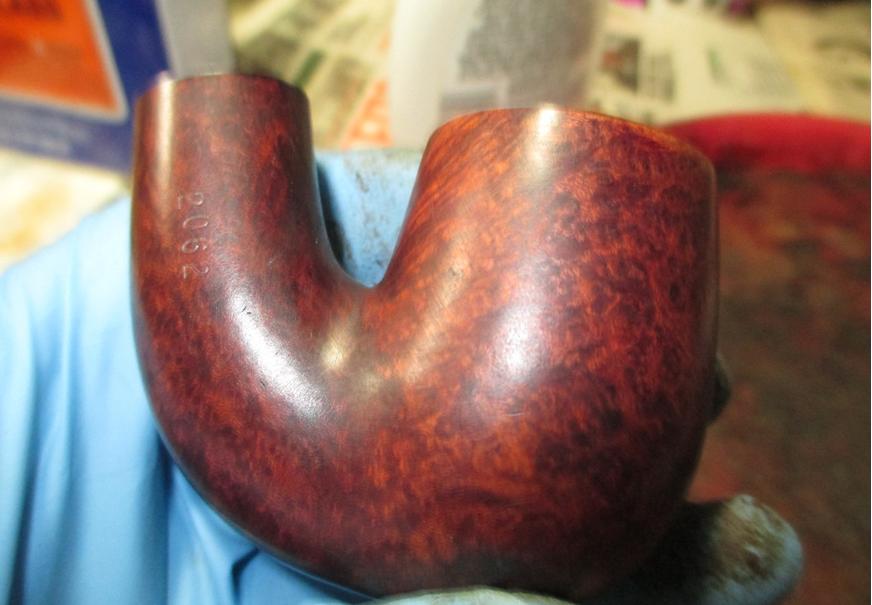
This is the other pipe I got with the Doc Watson. Both came from the same owner estate sale – an old gentleman that had them has since passed on to glory. The two pipes have been together longer than I have been alive. It’s an early Yello Bole in that it has the Imported Bruyere stamp but no “Honey Cured Briar” along with the 2033 four digit shape stamp. I’m guessing 1930 – 1933 roughly.

The pipe as it was when I got it.YB1

YB2

YB3

YB4 I started out by removing most of the cake, then sanding inner bowl with some rough grit paper leaving a thin coat of cake.YB5 Next I cleaned out inner shank and stem with 91% alcohol. On these large airway YBs I like to twist 2-3 shank brushes together for better scrubbing. I also scrubbed outer stem with 91% alcohol and a Scotch Brite pad to remove grease, oil, wax etc.YB6 This is easiest way I’ve found to remove rim cake. I mix up some Oxy Clean and warm water. Dip a piece of Scotch Brite pad in it leaving it not quite dripping wet. Lay it flat on surface and move rim along lightly. It takes it off pretty fast and will not harm under finish if you are trying to save it. It will leave it discolored but a little mineral oil will bring the color back to original.YB7

YB8Next I went ahead and scrubbed bowl and stem with same pad and Oxy Clean solution. It will remove contaminants and not hurt the finish just dull it. It will remove any light oxidation from stem that might be present. I scrub the stem harder than the bowl.YB9 Next I went ahead and scrubbed bowl and stem with same pad and Oxy Clean solution. It will remove contaminants and not hurt the finish just dull it. It will remove any light oxidation from stem that might be present. I scrub the stem harder than the bowl. After getting a good look at the bowl after old dirt and such was removed the finish looks toasted. Sadly it cannot be saved.

So I went ahead and sanded bowl with 400-2000 grit sandpaper. Never touching the stampings with any grit sandpaper less than 1200 grit. I will leave a defect or mark near a stamping just so it won’t be harmed.YB10 Luckily the stain I had left over from the Doc Watson was a good match so I was able to use it. I applied three coats letting in dry in between.YB11 After third coat of stain I like to apply mineral oil to help the grain stand out and condition the briar. The mineral oil lets you see any defects in the finish and what the bowl will look like when waxed. I set it to the side and let it air dry.YB12 I had to do some filing on the stem and button to remove some tooth marks.YB13 If you noticed in before pic the stem did not fit tight to the shank, so I filed down tenon a little at a time until it fit tight.YB14

YB15 I wet sanded the stem again using 400-2000 grit sandpaper.YB16 I put the bowl and stem back together and it is ready for some buffing and wax.YB17 On bowls I’ve stained I put about 3 coats of base wax then go back over with white Tripoli then go back to wax .

On the stems I use brown Tripoli, white Tripoli and then wax.YB18 Here are pics of the finished pipe.YB19

YB20

YB21

YB22

YB23

YB24

YB25 It was missing a stinger so I dug out an extra I had and cleaned it up.YB26

YB27

YB28

YB29

YB30 It should make a fine daily smoker and better than most any pipe I could buy today for under a 100 dollars. I have less than 12 dollars in it.YB31

Restoring a Kaywoodie Prime Grain 40 Saddle Stem Billiard??


Blog by Steve Laug

In my gift box of pipes to refurbish there was a small Kaywoodie pipe that I would have called a Lovat but as I learned in looking up the line and shape number I would find that Kaywoodie called it something different. The red arrow points to the KW shape 40. KW

It is stamped on the left side of the shank Kaywoodie over Prime Grain over Imported Briar. On the right side of the shank it is stamped with the shape number. The stem was a short saddle stem. The pipe is in decent shape – certainly restorable. The finish was gone but there was some great grain on the back, front and sides of the bowl. The rim was a mess – out of round, scratches and knocked about enough to lose its sharp profile and edges. The bowl looked as if it had been reamed with a pocket knife. There was an oddly formed cake due to the scraping with the knife. The stem was clean but the button was misshapen with a large part of the top edge missing. The inside of the shank was dirty and the threaded tenon was black with a tarry build-up.KW1

KW2

KW3

KW4 Holding the pipe in hand I would call it a Lovat. Look at the pictures above and see if you would not agree to the shape designation. The problem is I turned to the Kaywoodie shape and line chart below and found that pipe shape #40 is designated as a saddle stem billiard. The first red arrow in the first shape chart below highlights the description on the catalogue picture. The second red arrow points out the line – Prime Grain – a mid-priced pipe in the KW line. So it looks like the pipe is a saddle stem billiard – even though personally I would still call it a Lovat.KW5 The next photo is a close of the state of the rim. You can see the knife damage on the inner edge of the rim and the scratches, dents, rounding that has been done to the top and outer edge of the bowl. The rim really was the part of this pipe that was in the worst condition.KW6 The next photo shows the rounded outer edges of the rim and the state of the KW thread stinger apparatus. It is a three hole stinger even though the inlaid black cloverleaf in white seems to point to an early era KW pipe.KW7 To begin work on repairing the rim edges I needed to ream the bowl. I used a PipNet reamer to take the bowl back to bare wood. I find that doing that gives me a clean surface to work on with the inner rim edge. The second photo below shows the freshly reamed bowl.KW8

KW9 With the bowl reamed it was time to top the bowl. This would be a fairly serious topping job – not a light one. There was a lot of damage to remove and it would take a fair bit of sanding to bring the top back to flat with sharp outer edges. I used my normal topping board and 220 grit sandpaper to top the bowl. I sand it in a clockwise circular motion.KW10 I checked my progress quite often as I topped the bowl. I sanded until the damage to the top of the rim and outer edge were gone. The process also cleaned up much of the damage to the inner edge of the rim as well.KW11 I wiped the stinger and the bowl down with acetone on cotton pads to clean up the aluminum stinger and to remove the remaining finish on the bowl and shank.KW12 The stem was overclocked about a ¼ turn. I used a lighter to heat the stinger until the glue was warm in the stem and then turned it back into the mortise and realigned the stem.KW13

KW14 The bowl had some deep, sharply edged dents in the briar. I cleaned them out and then used clear super glue and briar dust collected from topping the bowl to fill the dents.KW15

KW16

KW17 I sanded the patches with 220 grit sandpaper and then with medium and fine grit sanding sponges to remove the excess and blend them into the surface of the briar.KW18

KW19

KW20 I built up the top of the button with black super glue until it was close to the original thickness. I would sand and reshape it once it had cured.KW21 I stained the bowl with a dark brown aniline stain thinned 3 parts to 1 part alcohol. I flamed it and restained until the finish had an even coverage.KW22

KW23 I hand buffed the bowl and shank with a cotton cloth that served to give it a light polish and also smoothed out the stain on the surface of the bowl, rim and shank.KW24

KW25

KW26

KW27 The stain was still too opaque to my liking and hid the grain on the pipe so I wiped it down with isopropyl alcohol on cotton pads to remove some of it and allow the grain to show through the finish.KW28

KW29

KW30

KW31 The photo below shows the pipe when I had finished wiping it down with alcohol. The finish is exactly what I was aiming for. I wanted it to be a warm brown that hid the repairs to the dings in the finish. It worked well.KW32 I sharpened the edge of the button with a needle file and then sanded the stem with 220 grit sandpaper and a medium and fine grit sanding sponge.KW33

KW34

KW35 I continued to sand with micromesh sanding pads – wet sanding with 1500-2400 grit pads and dry sanding with 3200-12,000 grit pads. Between each set of three pads I rubbed the stem down with Obsidian Oil and then continued with the next set. When I had finished sanding with the 12,000 grit pad I rubbed it down a final time and then buffed it with White Diamond on the buffing wheel.KW36
KW37

KW38

KW39

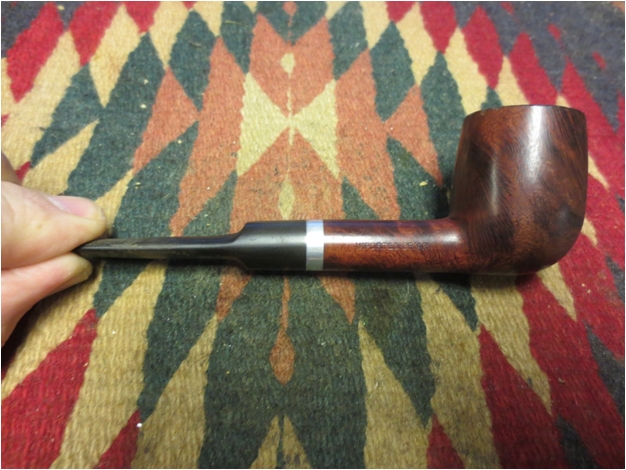
KW40 I buffed the bowl and stem with White Diamond, cautiously around the stamping on the shank. I gave it multiple coats of carnauba wax and lightly buffed the pipe with a soft flannel buff. The finished pipe is shown below.KW41
KW42

KW43

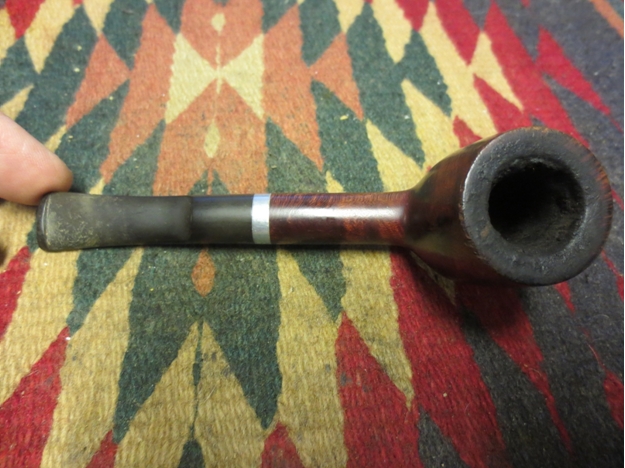
KW44 In the process of repairing the inner edge of the rim I used a folded piece of sandpaper to bevel the inner edge to bring it back to round and to deal with the divot out of the left side of the edge. The finished rim is shown in the close up photo below. The inner edge is better than it was when I started and looks close to round. I have included a variety of photos of the rim and the stem for your viewing. This should be a great smoking old Kaywoodie.KW45

KW46

KW47