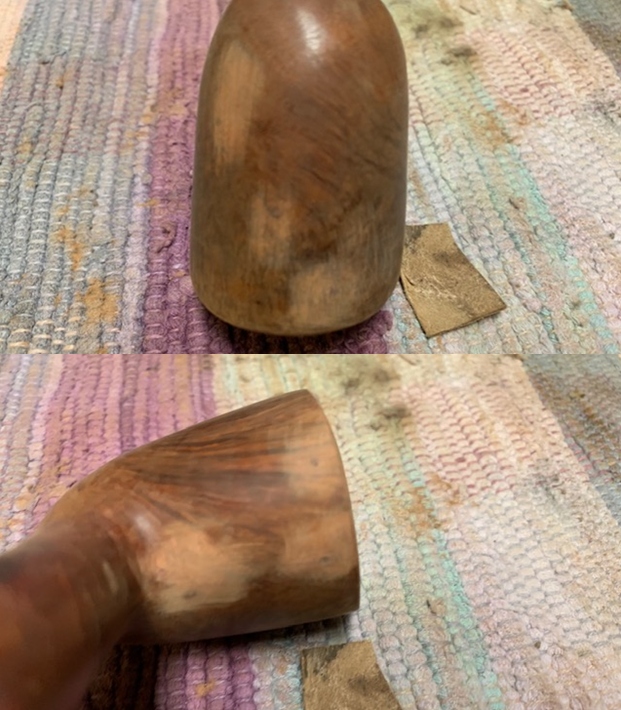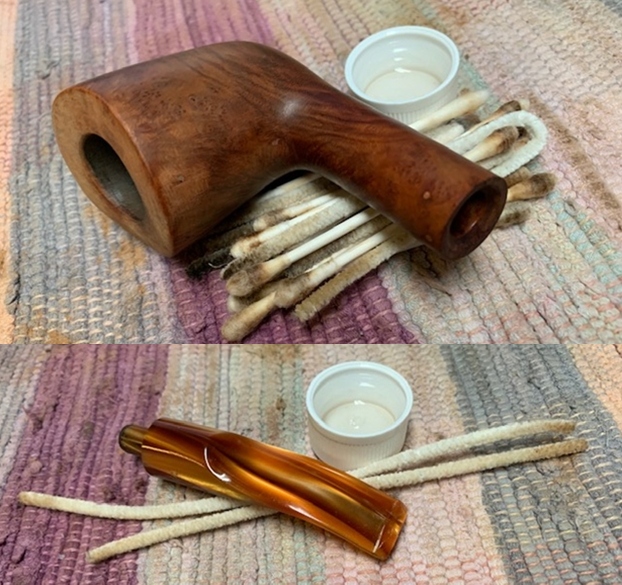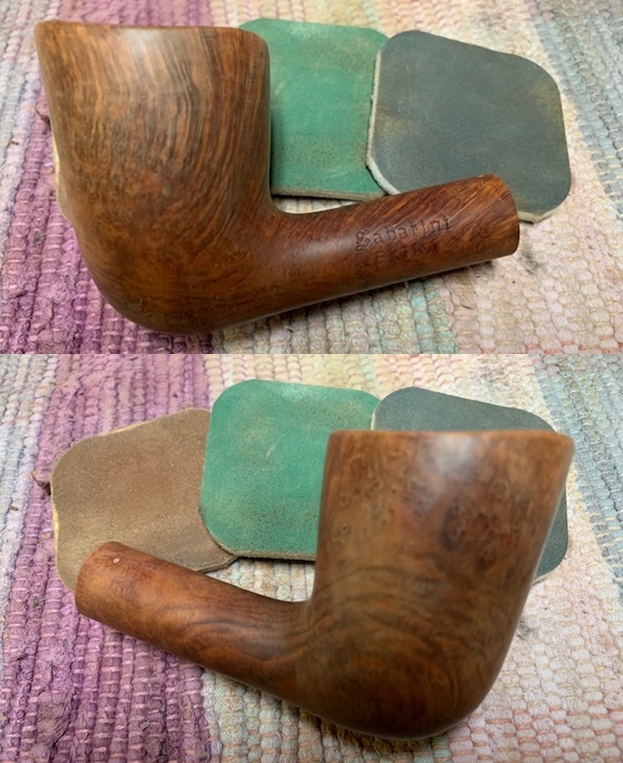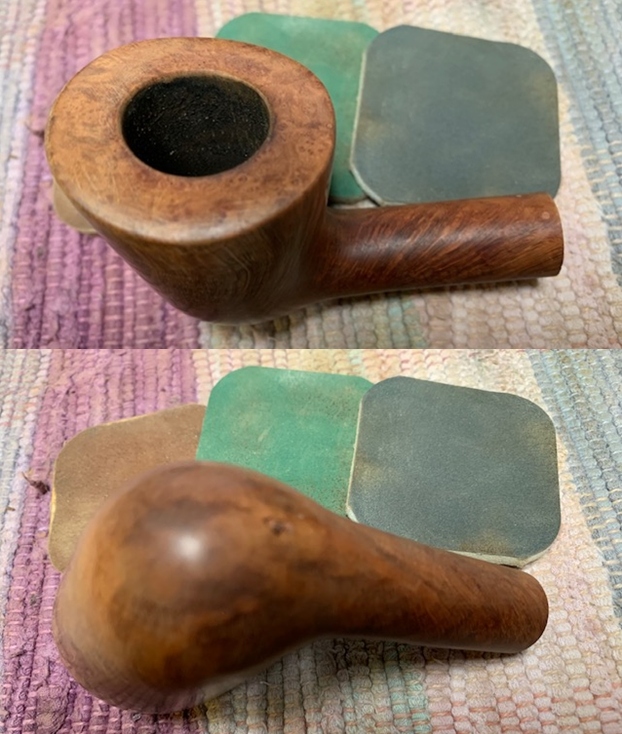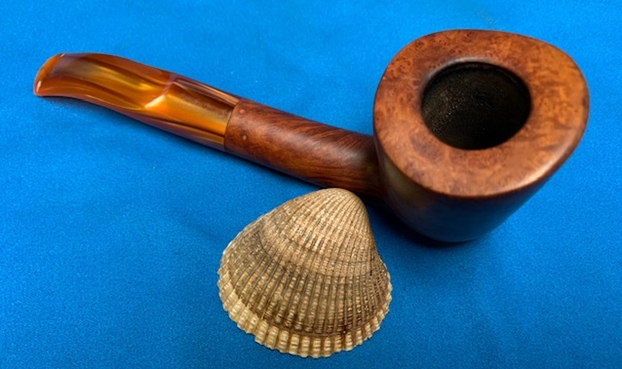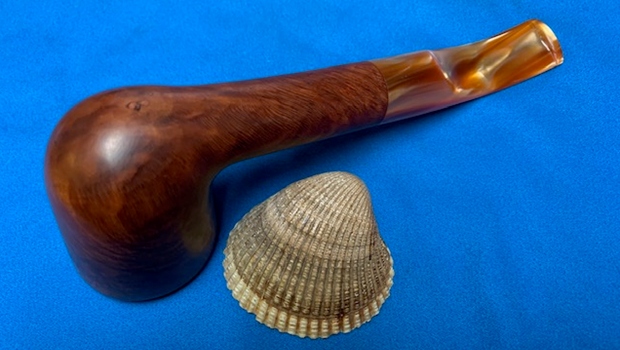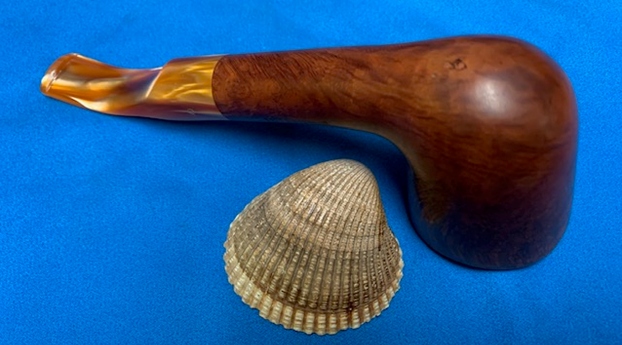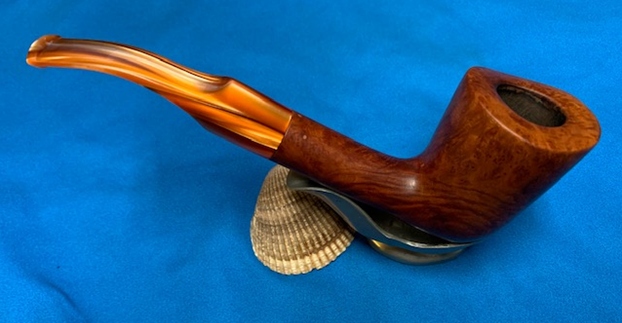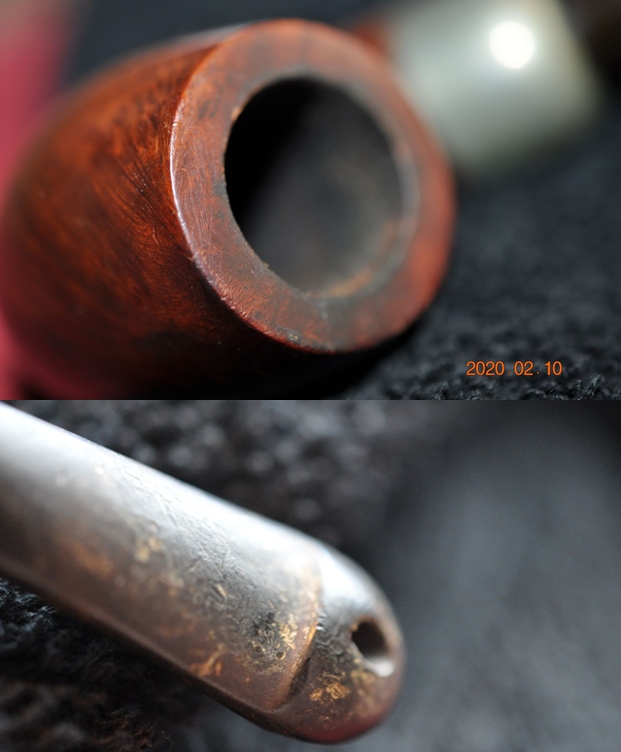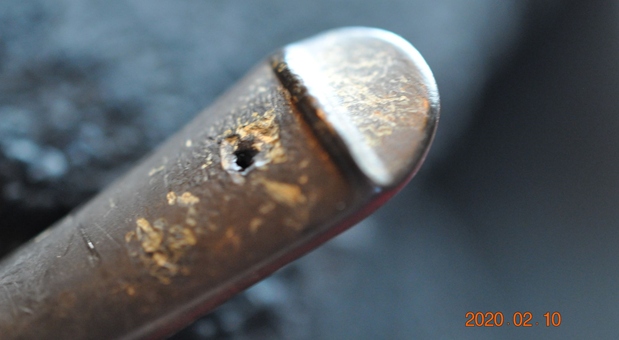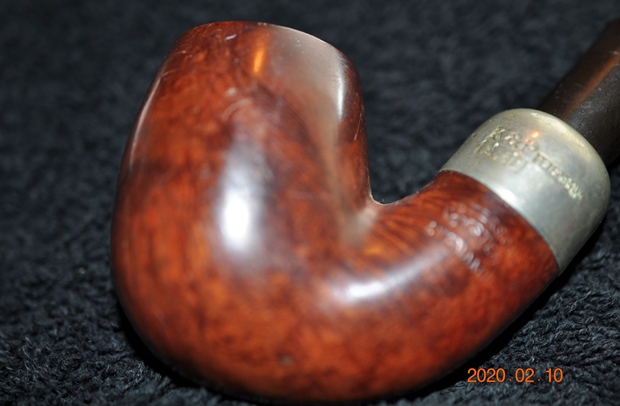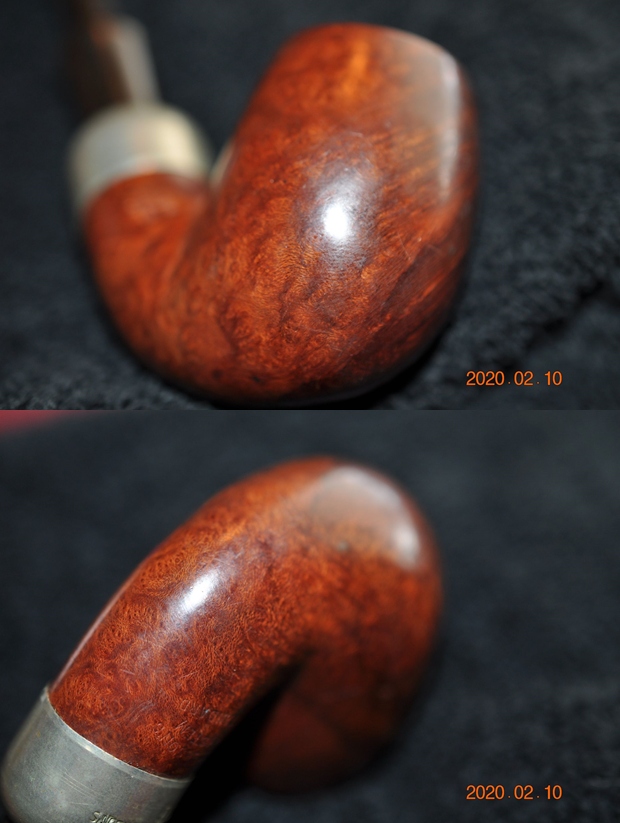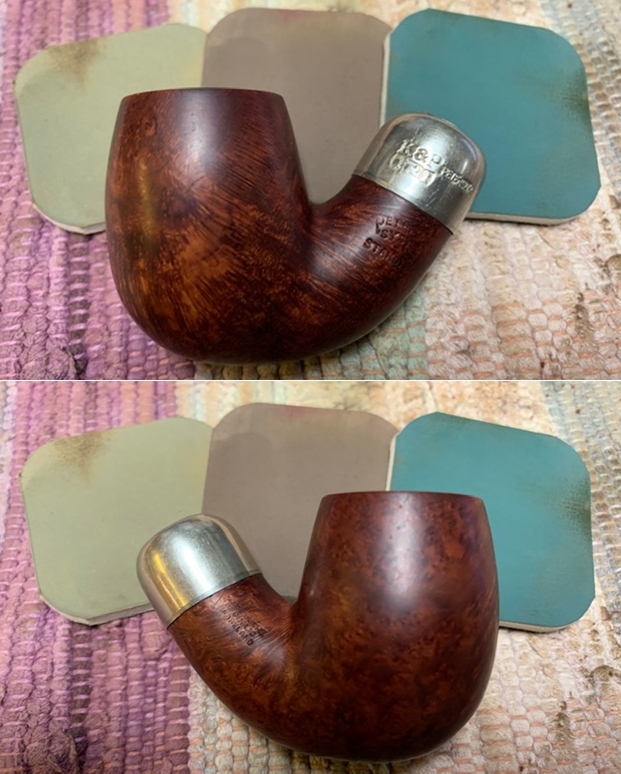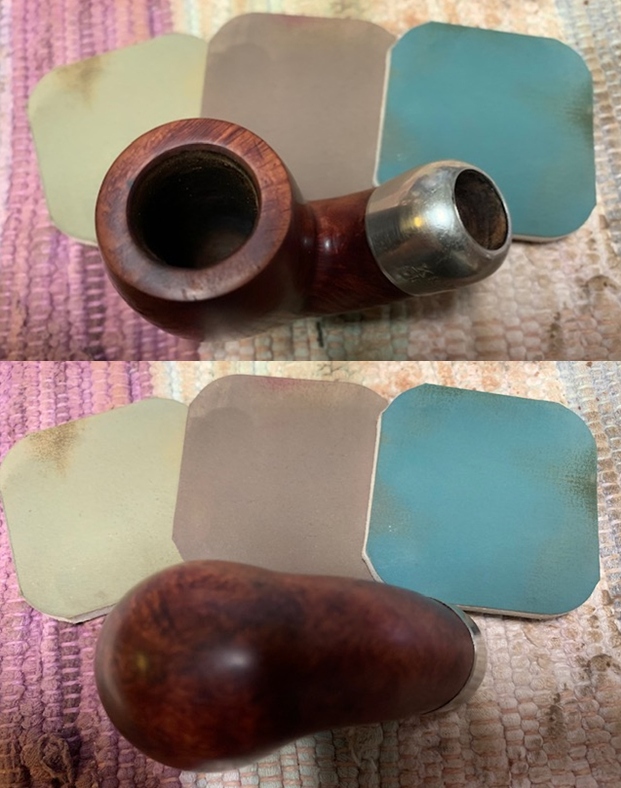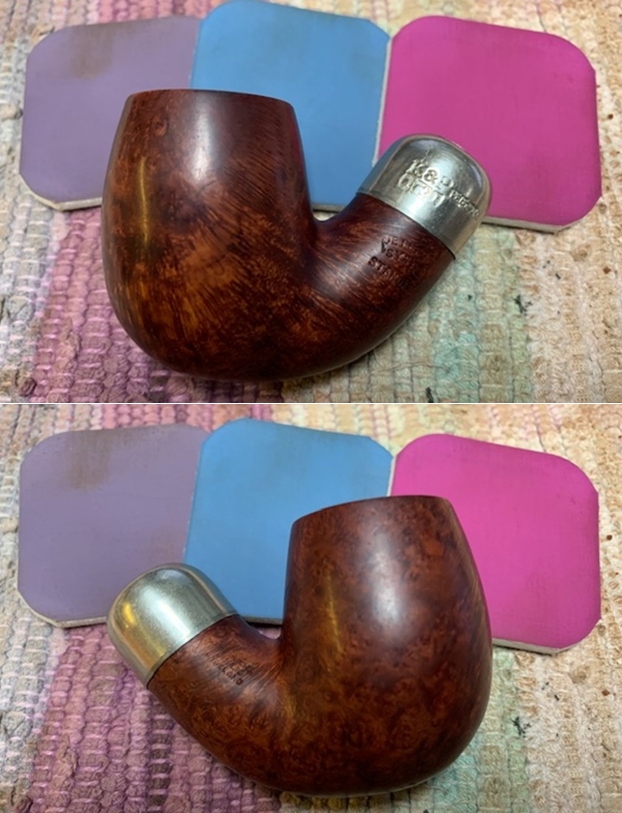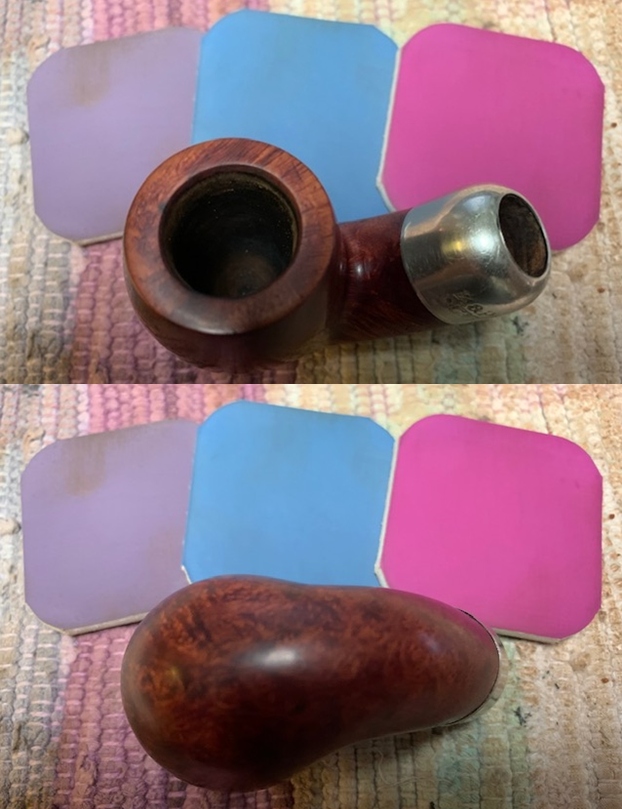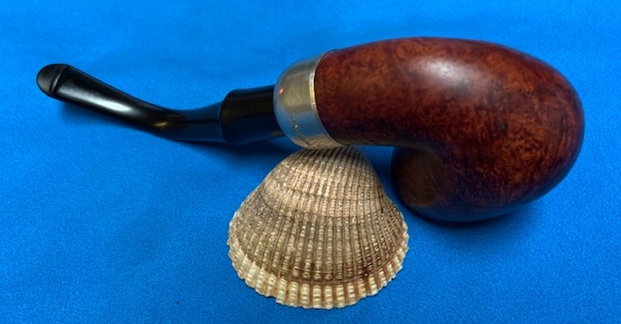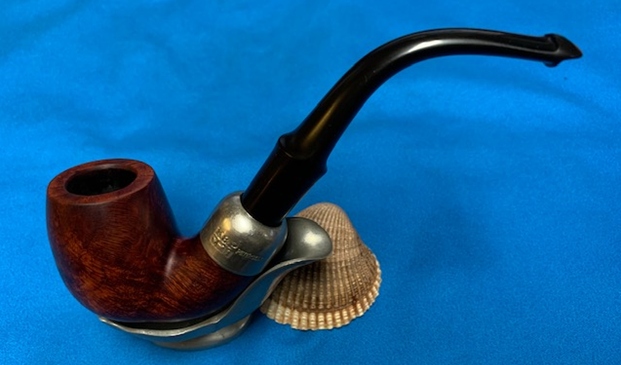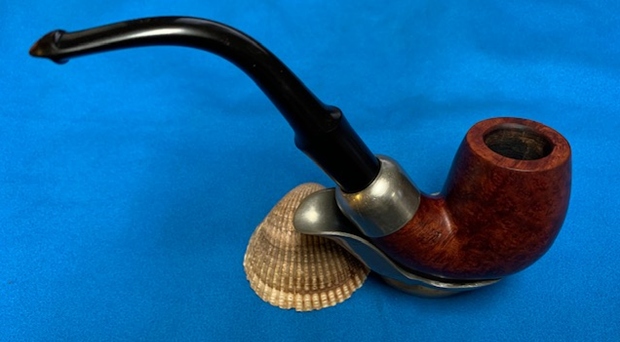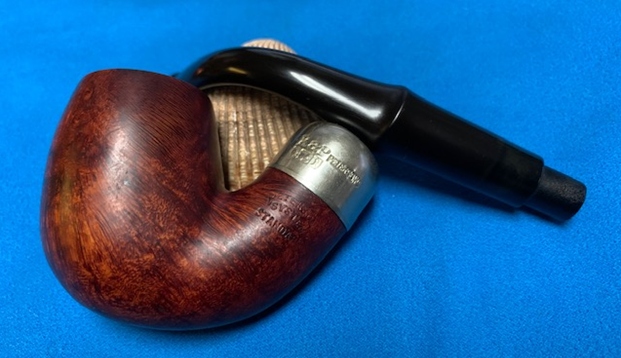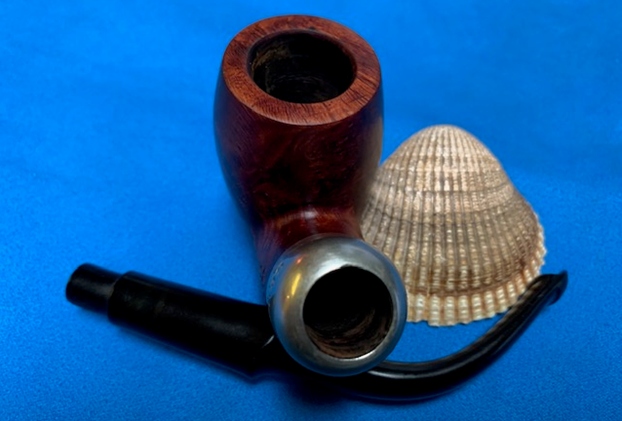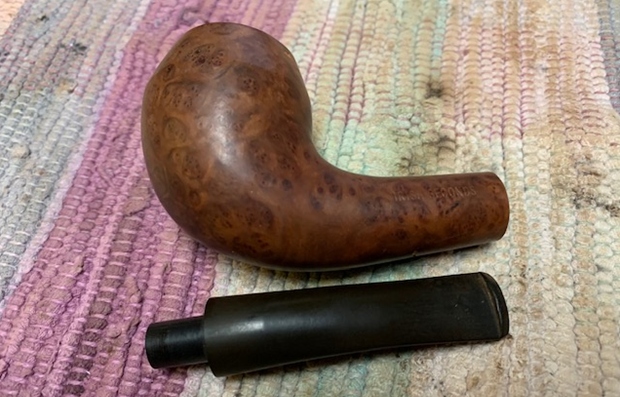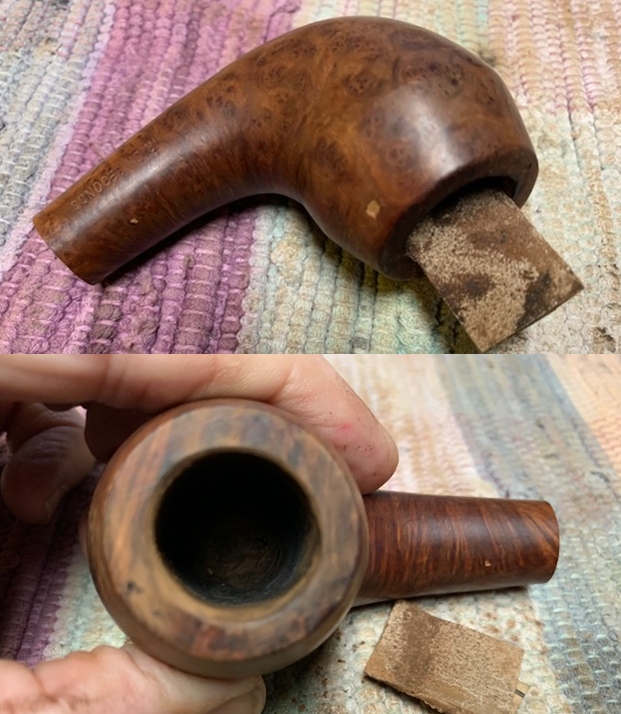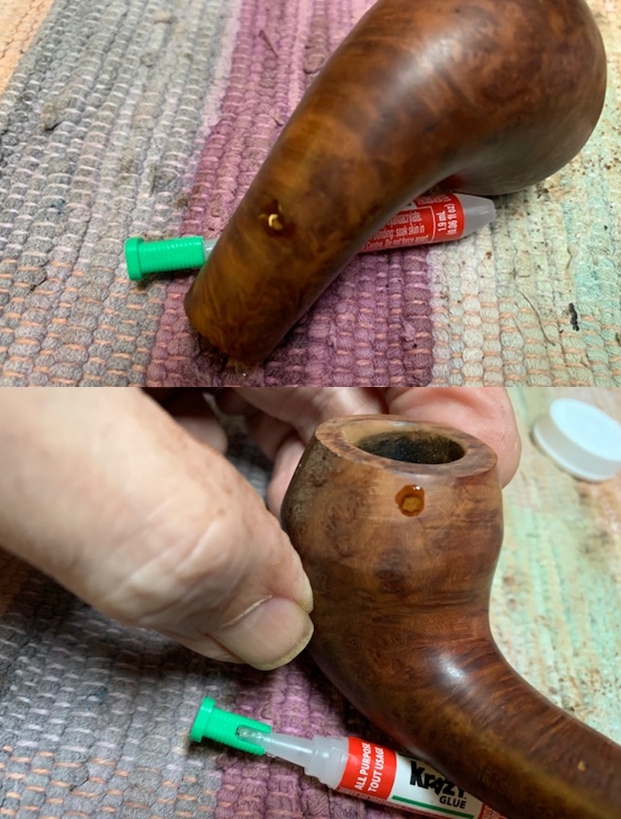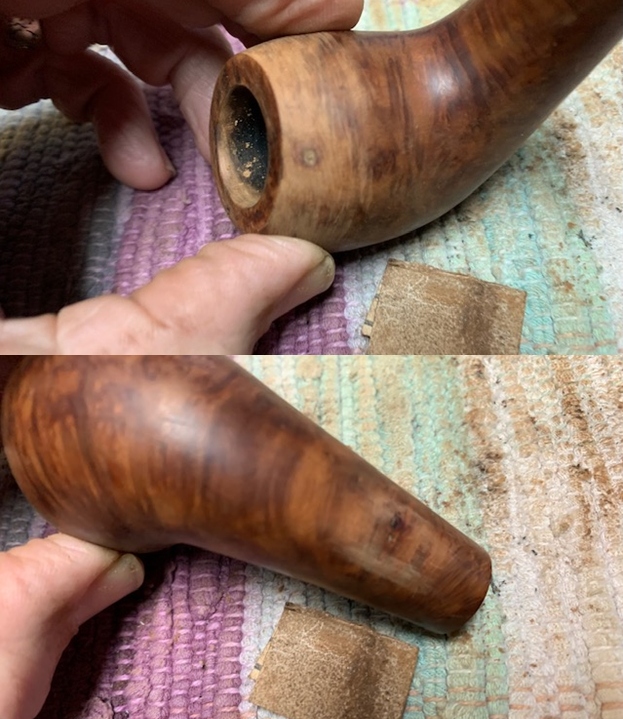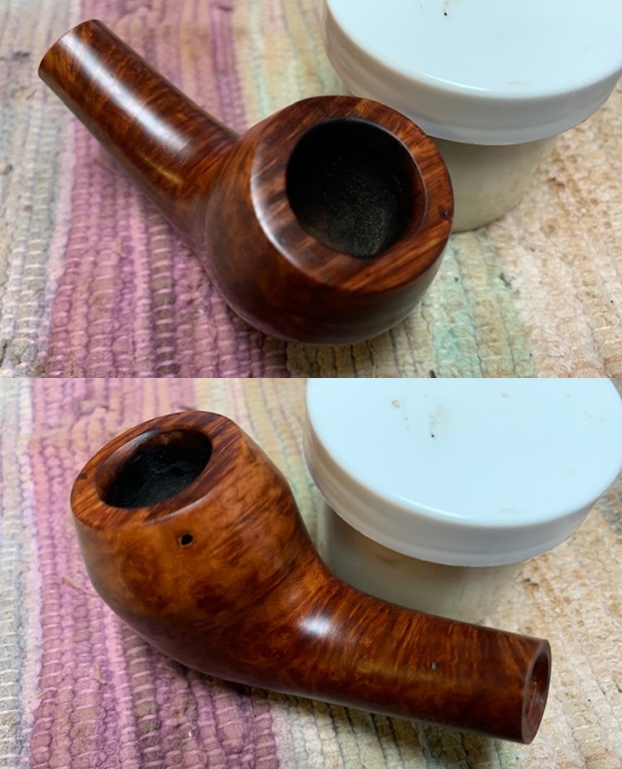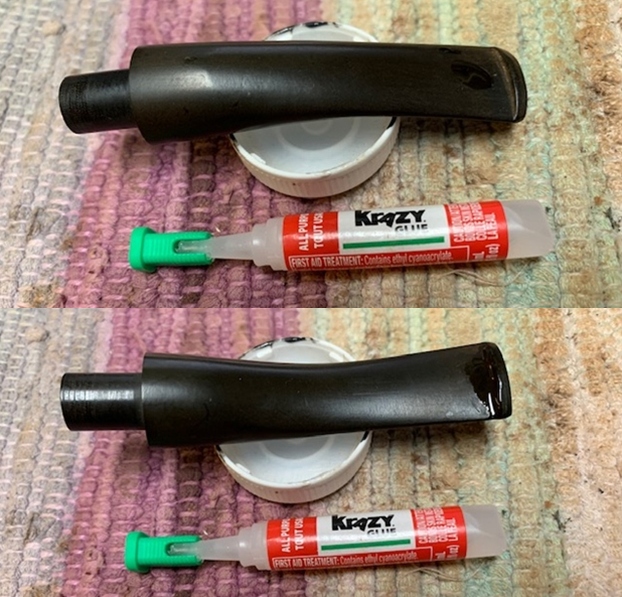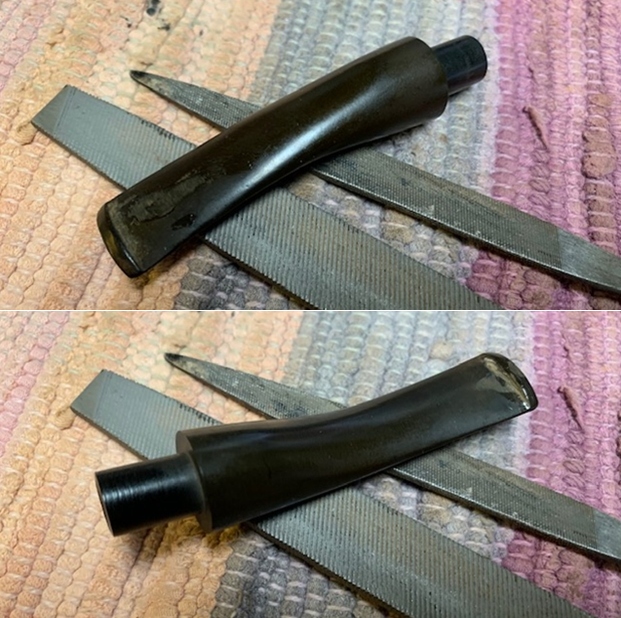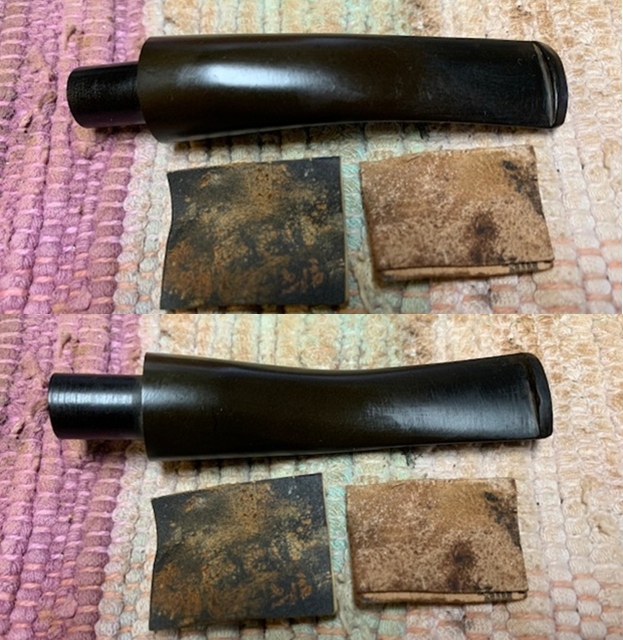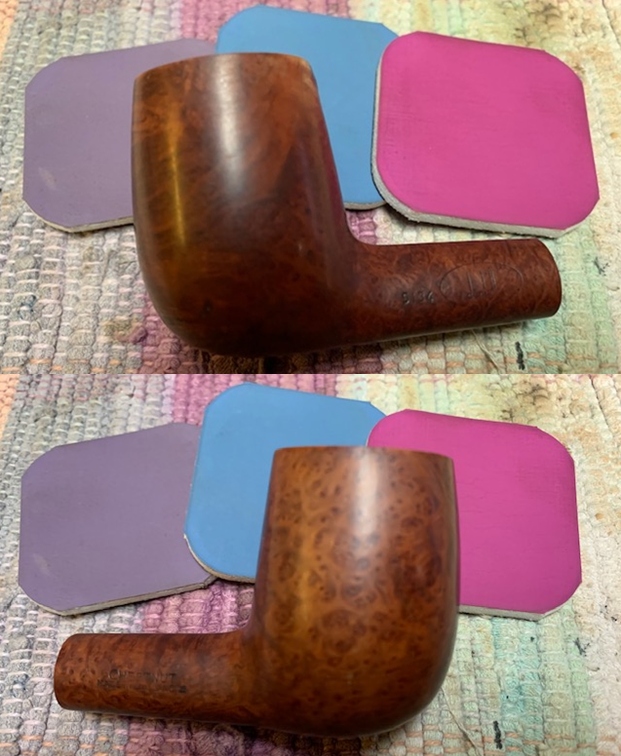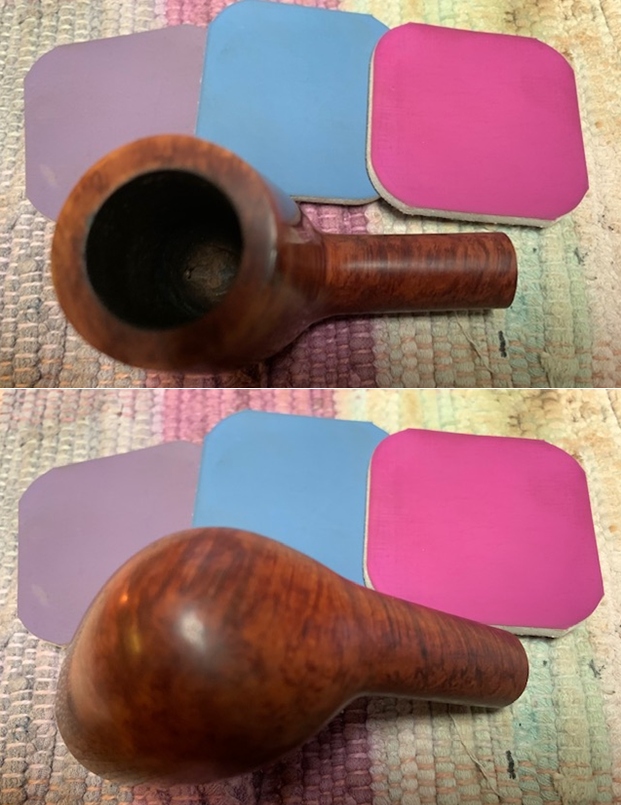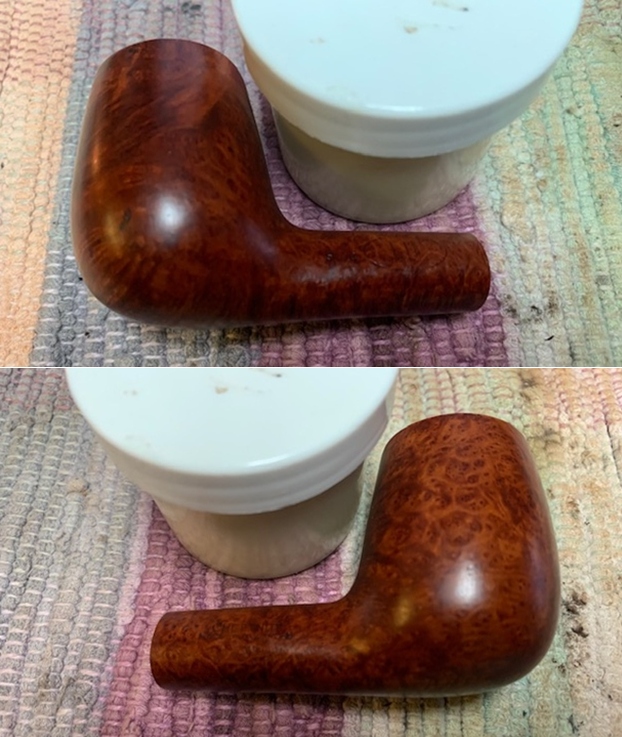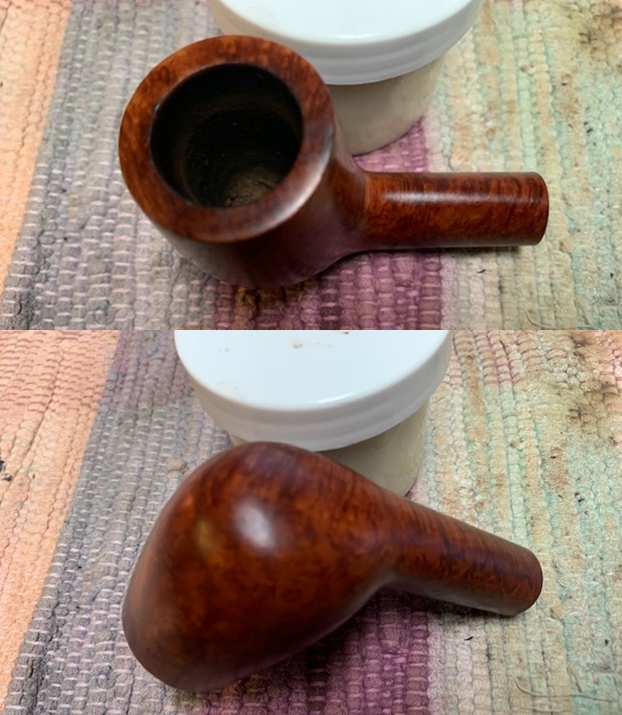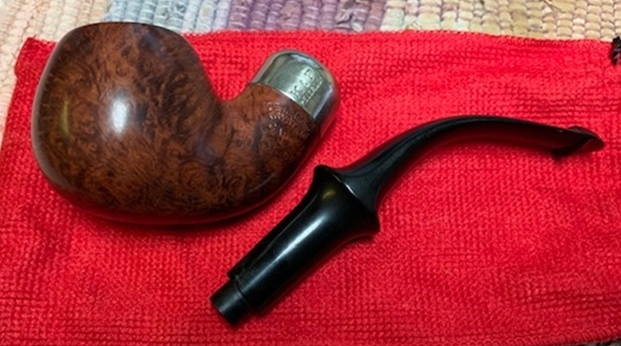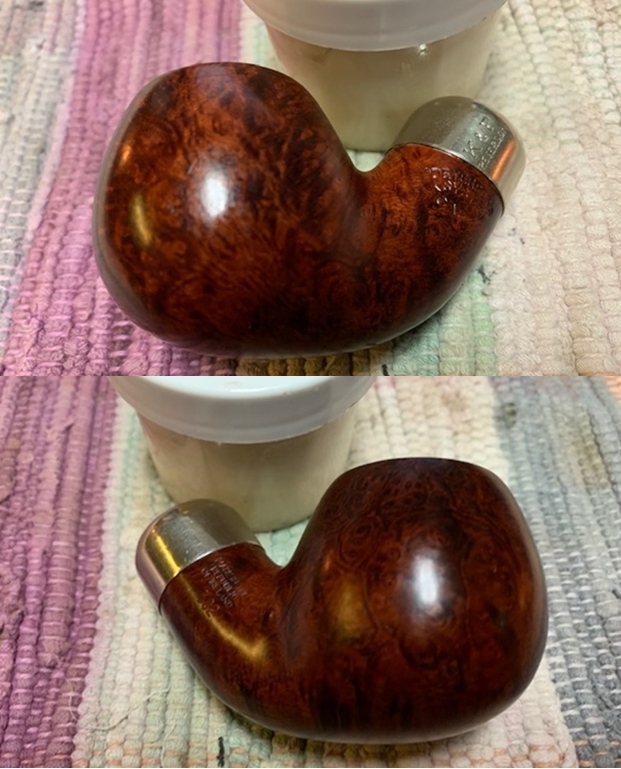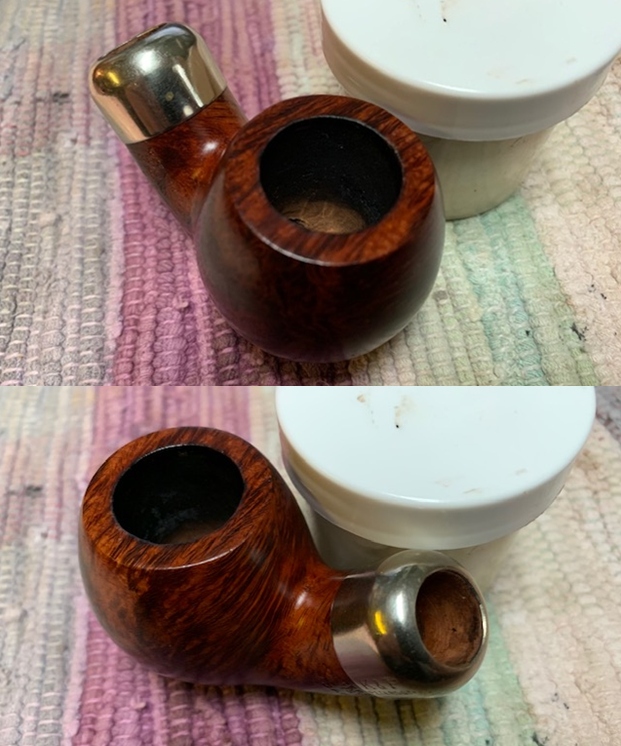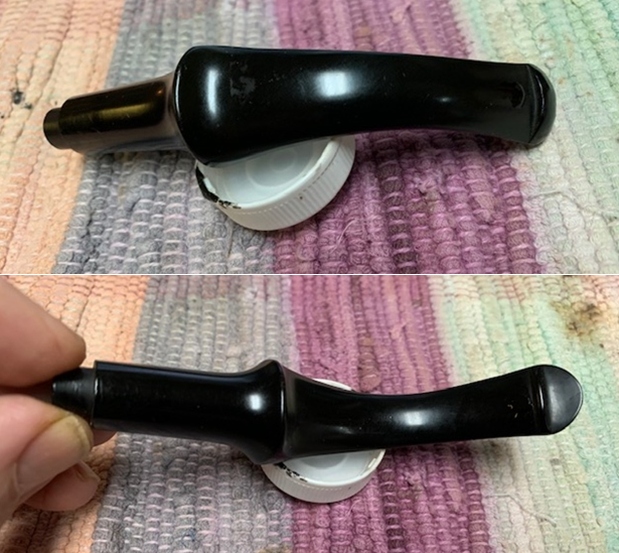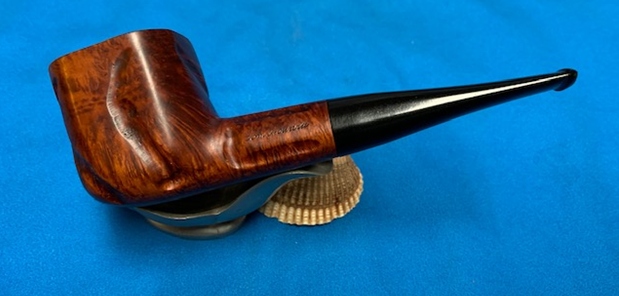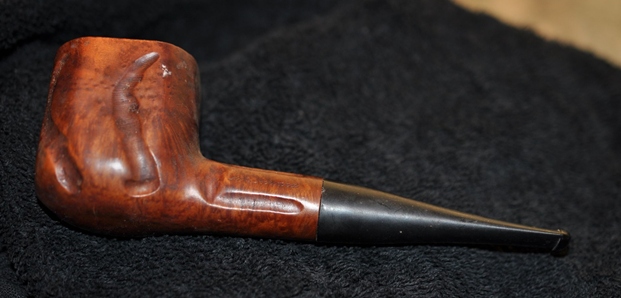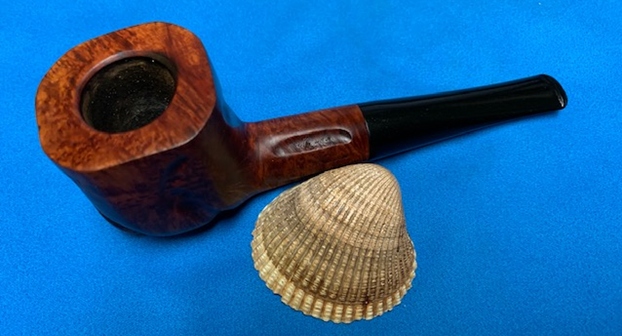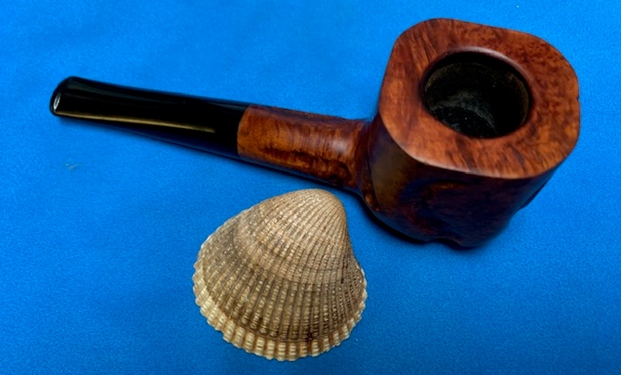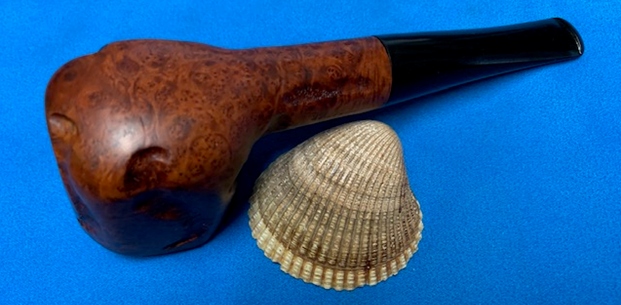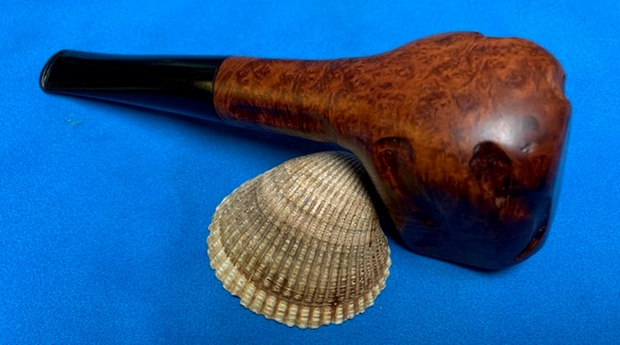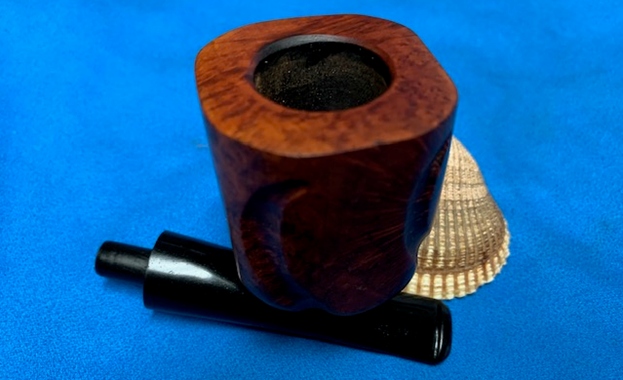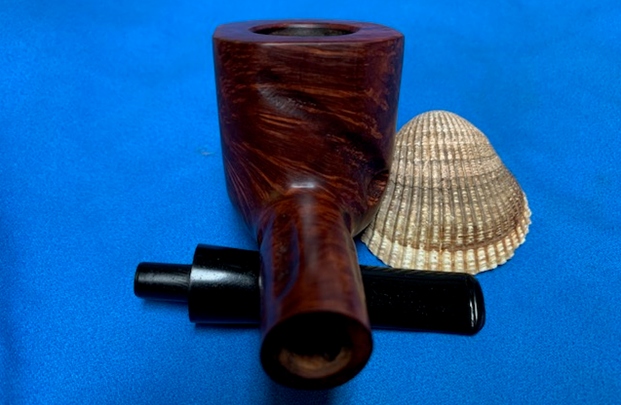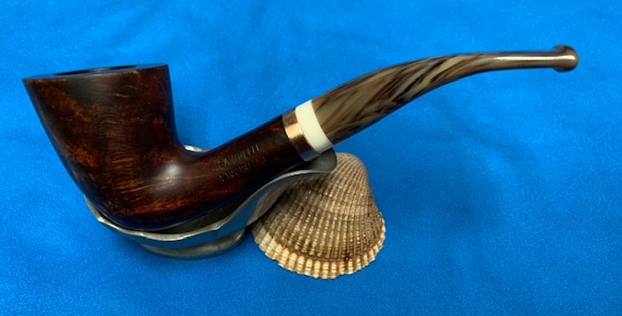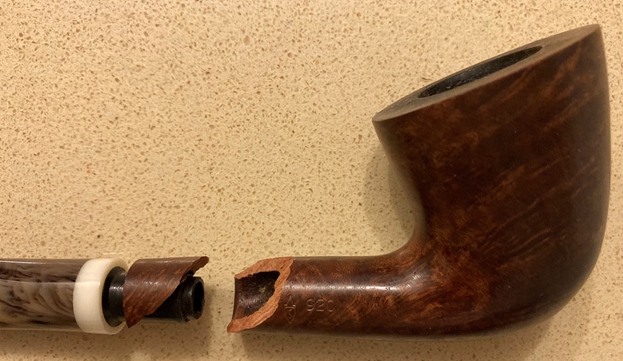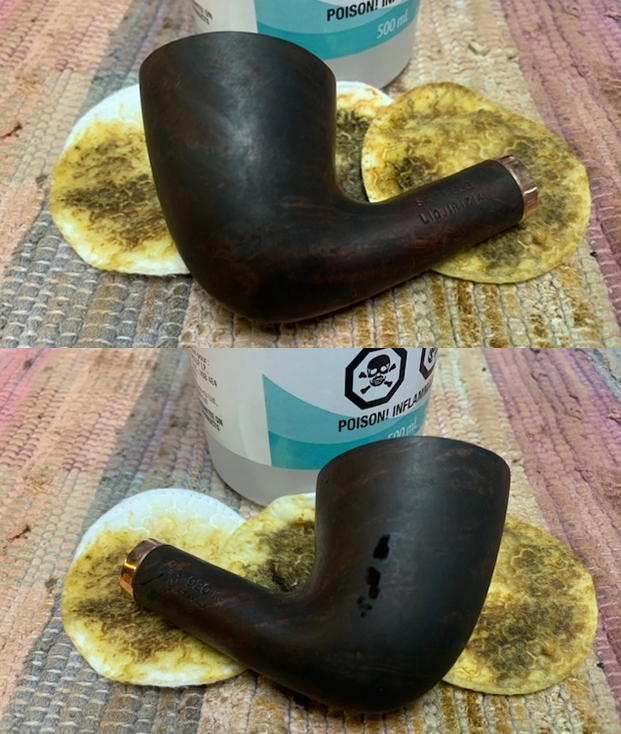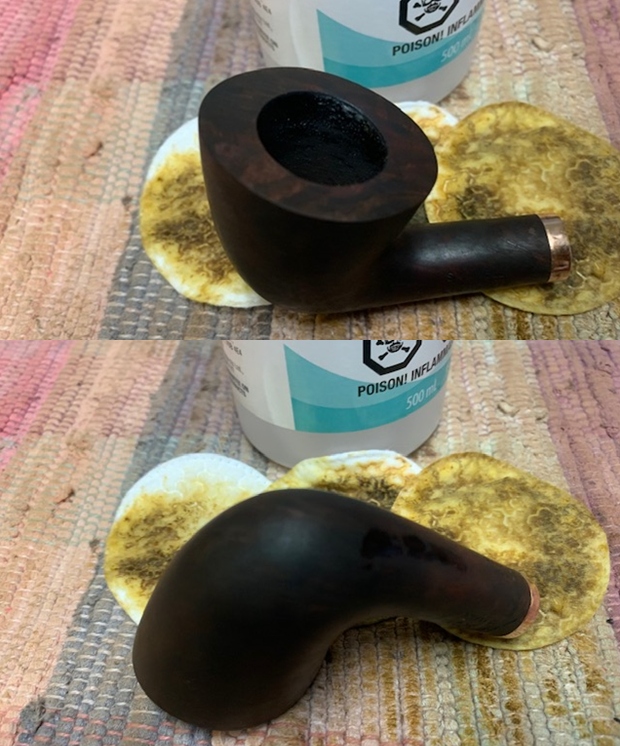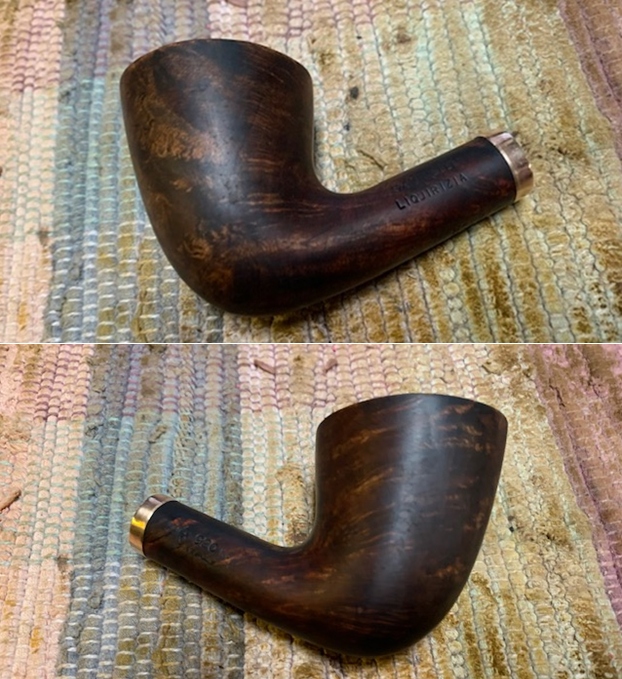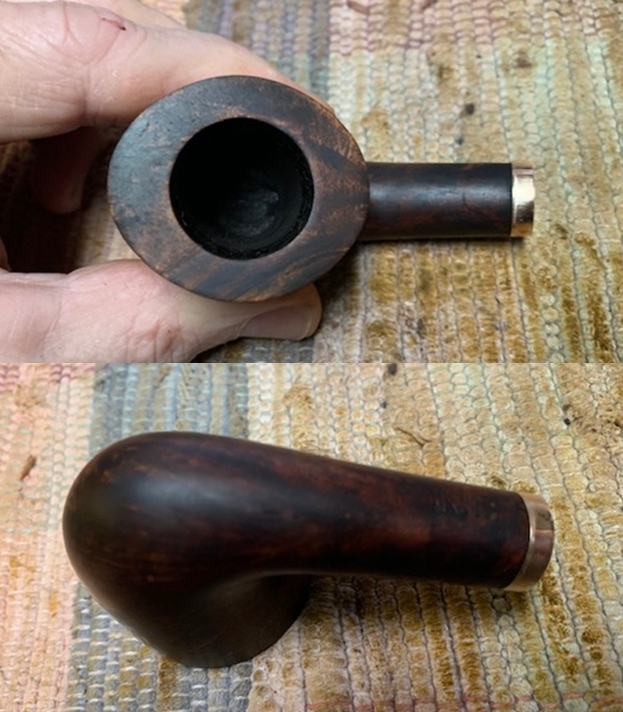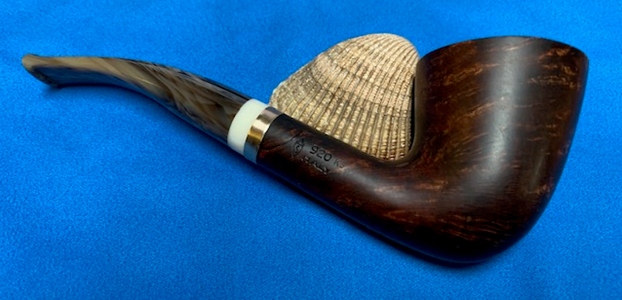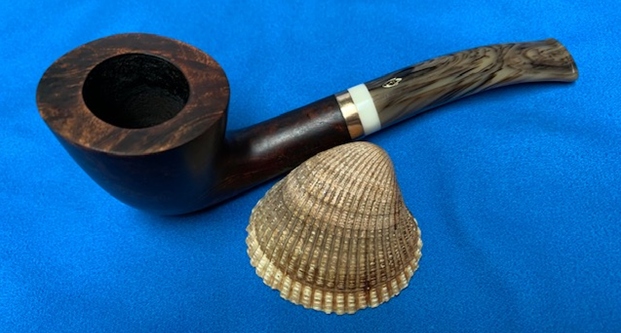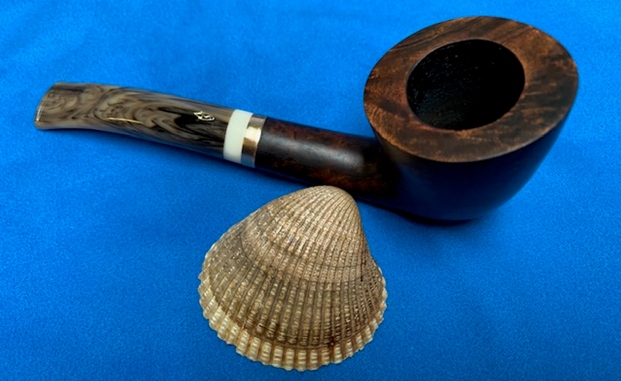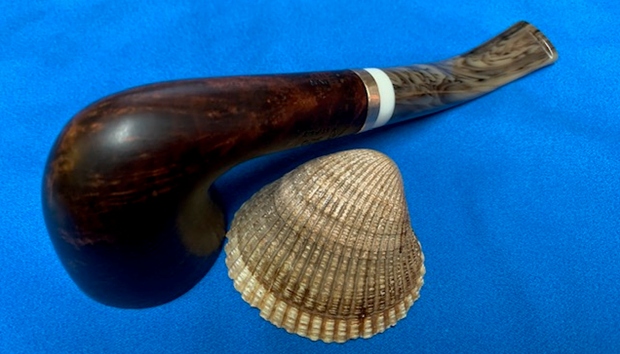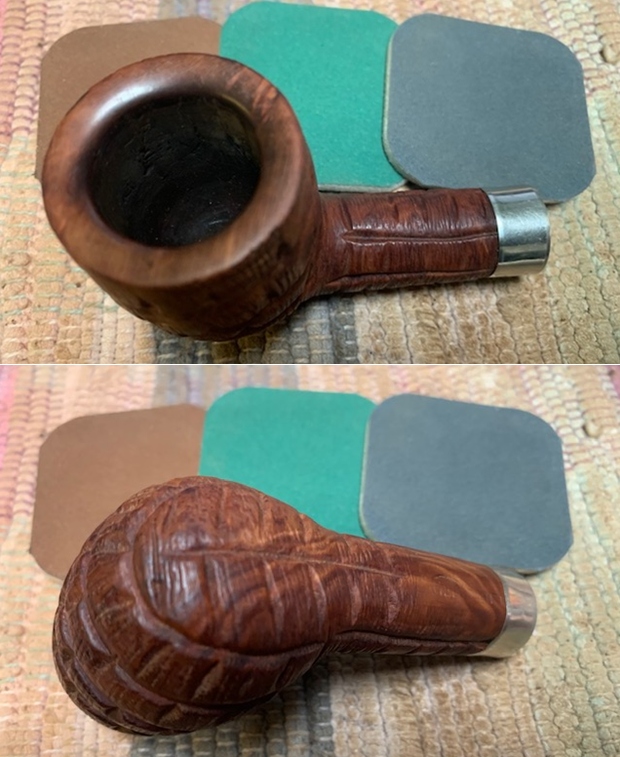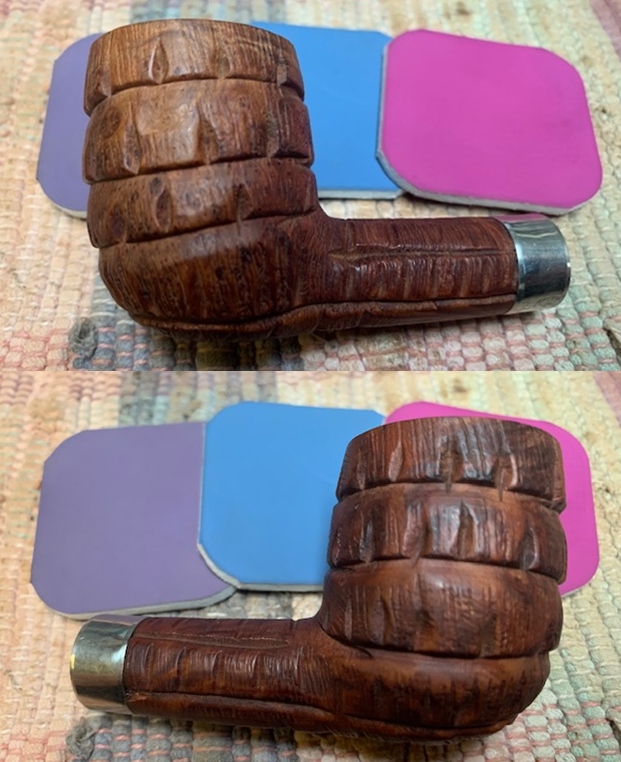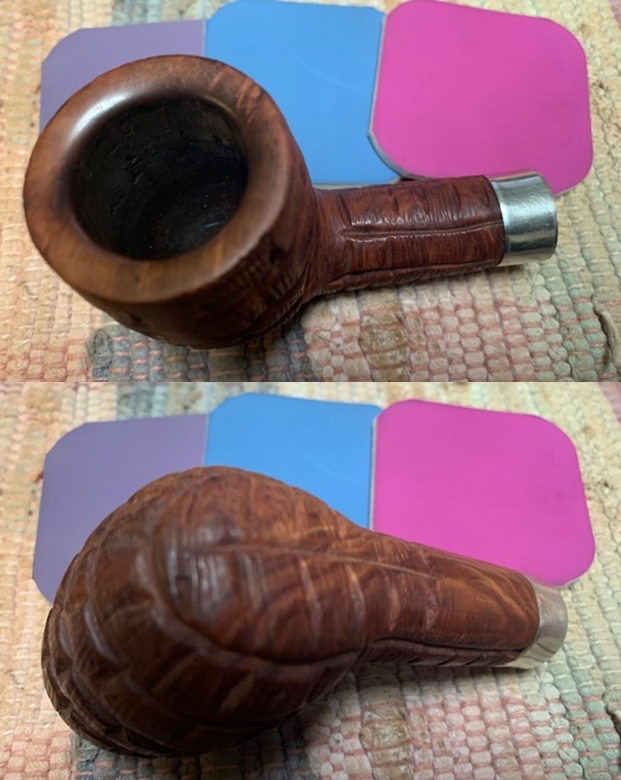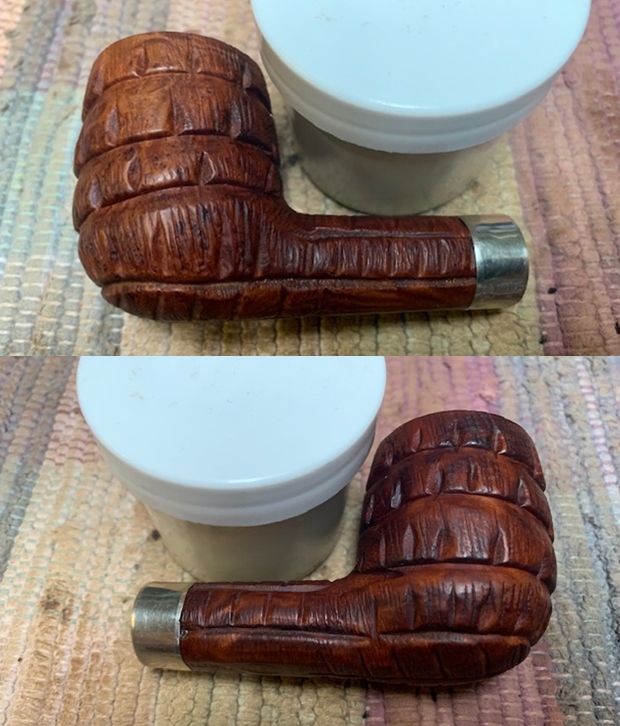
Tag Archives: repairing tooth marks

Discovering the Vintage of a Paul Viou ‘Feather’ with the Help of Sebastien Beaud of Genod Pipes of St. Claude


Blog by Dal Stanton

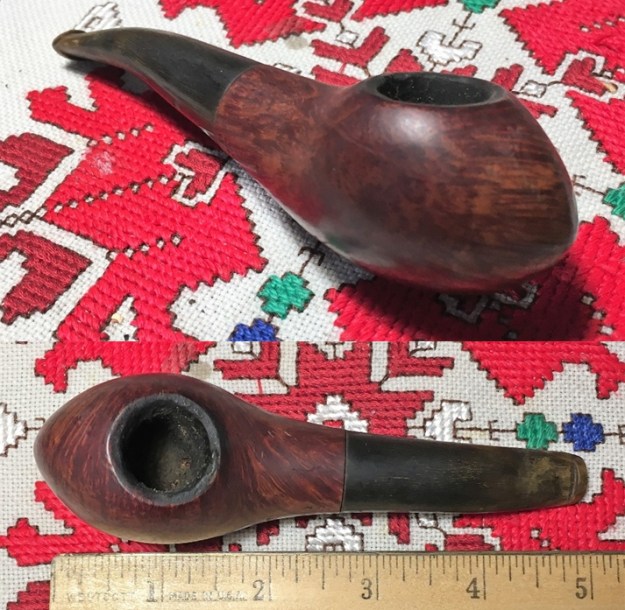
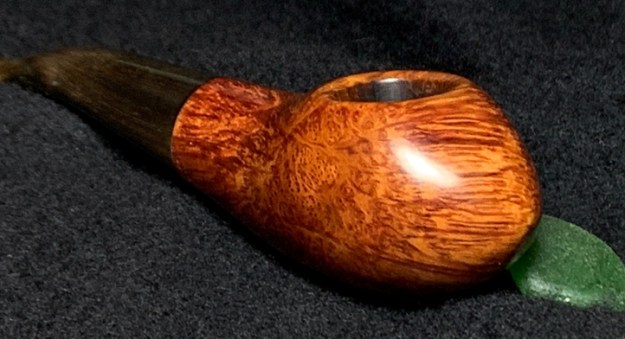
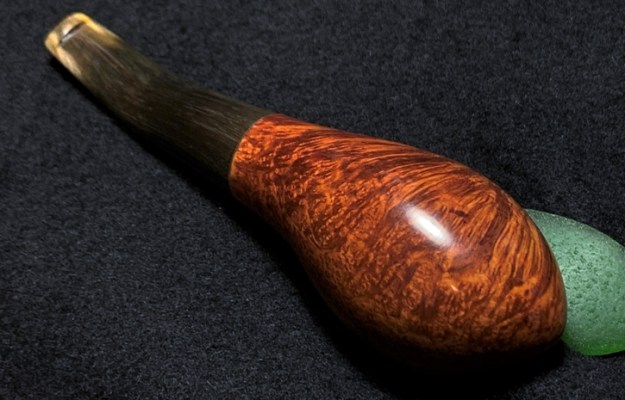
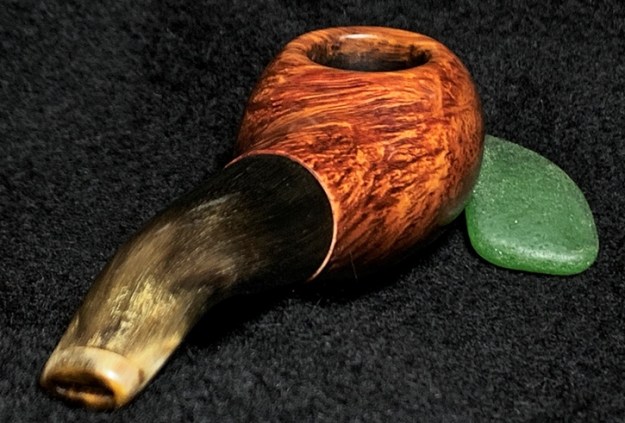
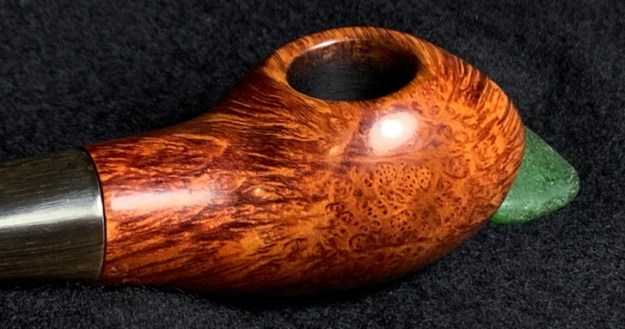
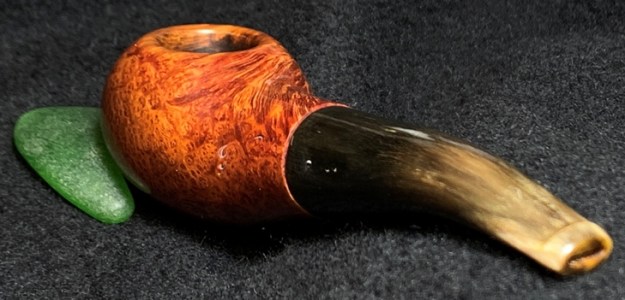
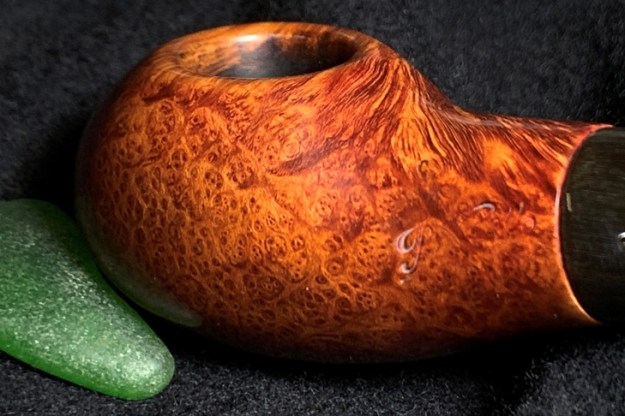
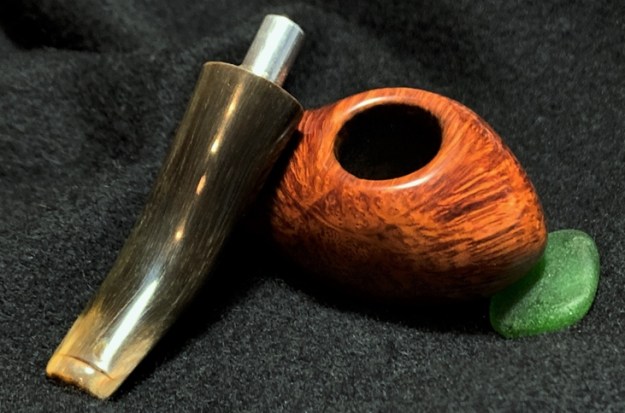
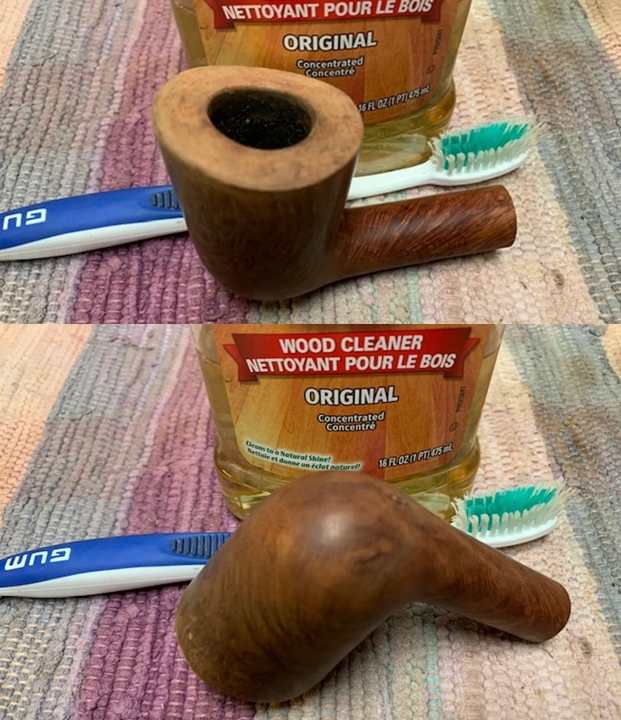
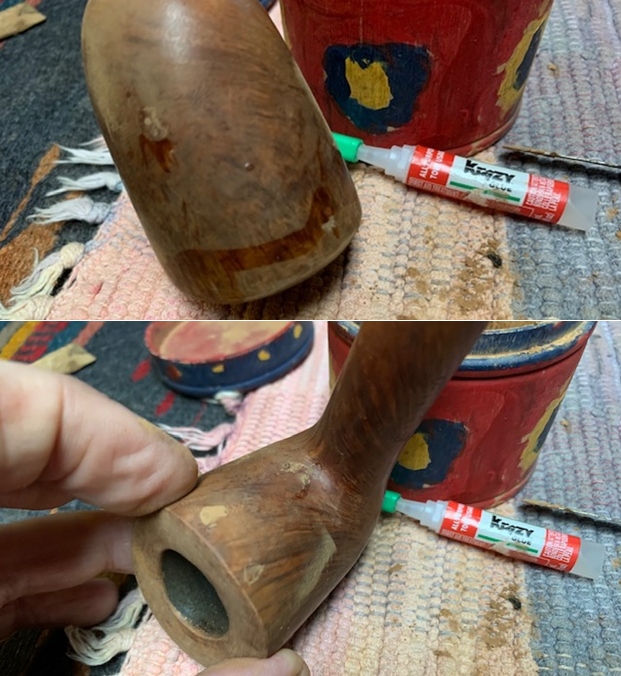
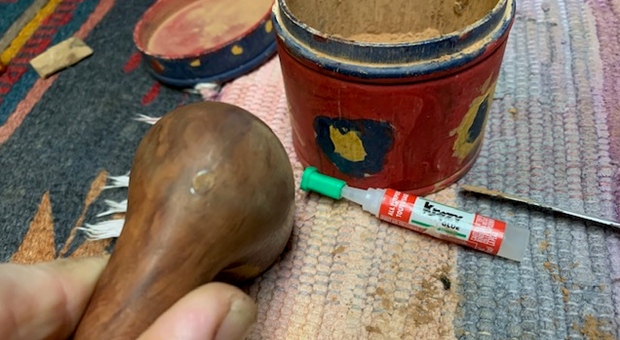
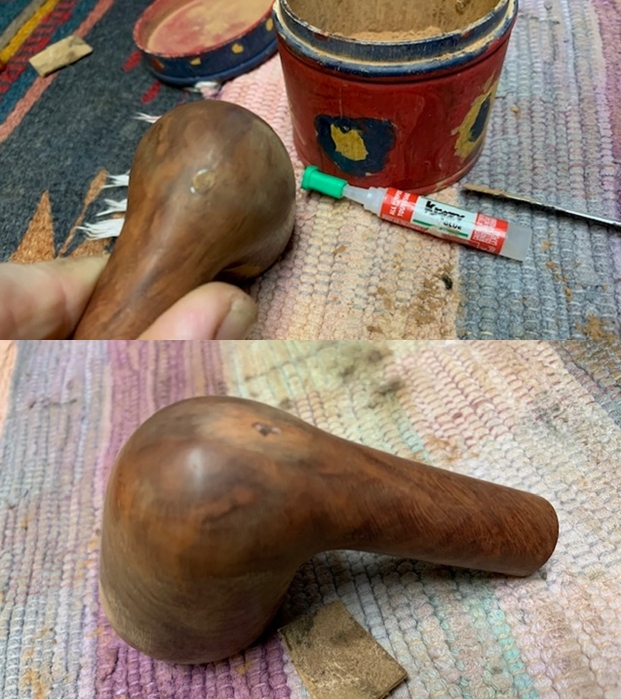
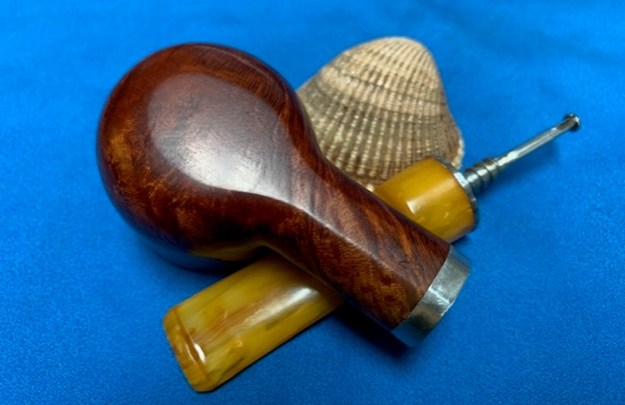
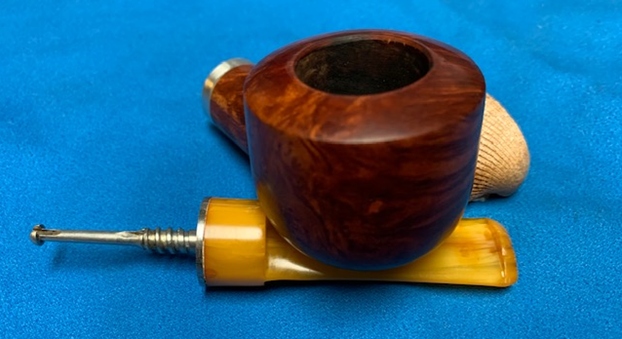
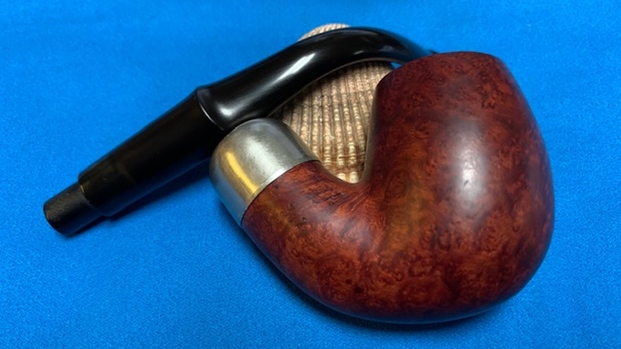
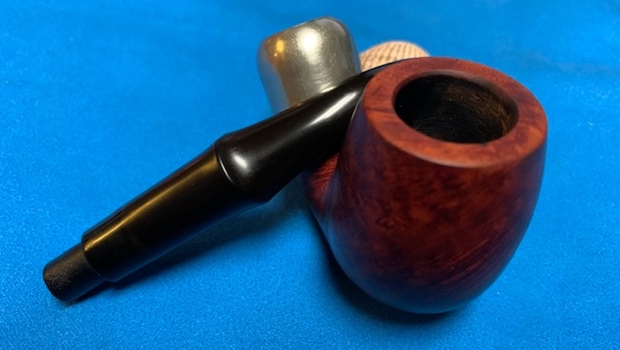
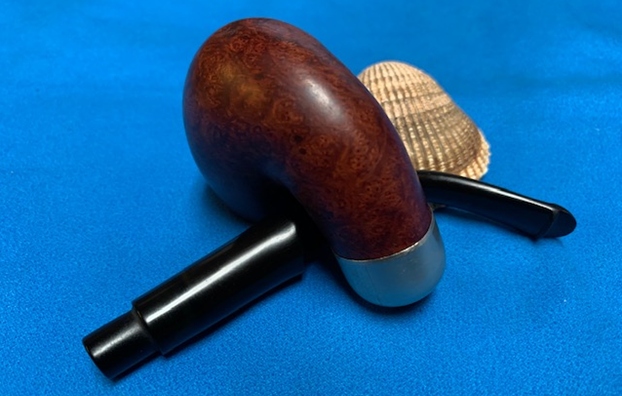
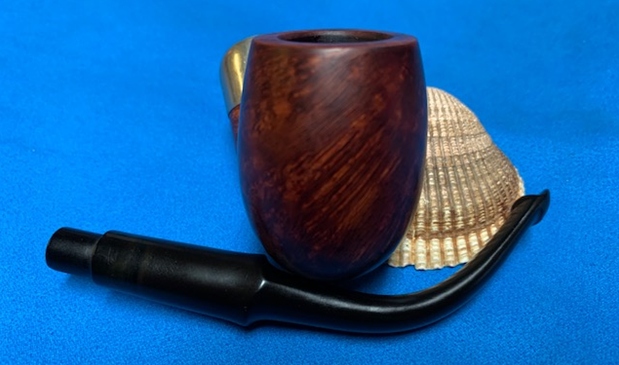
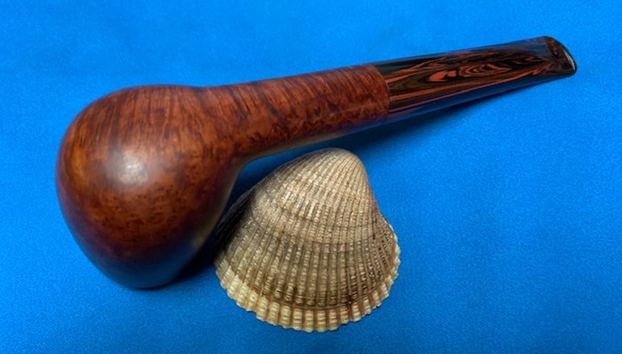
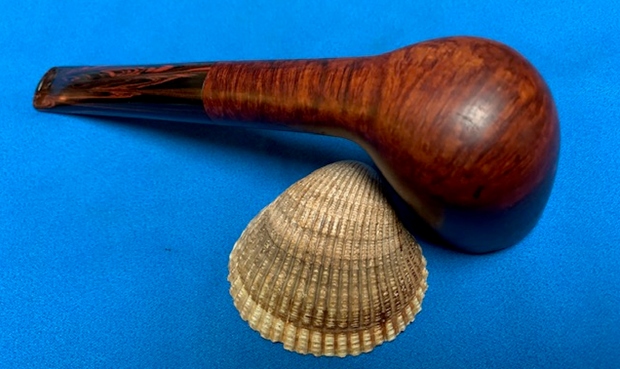
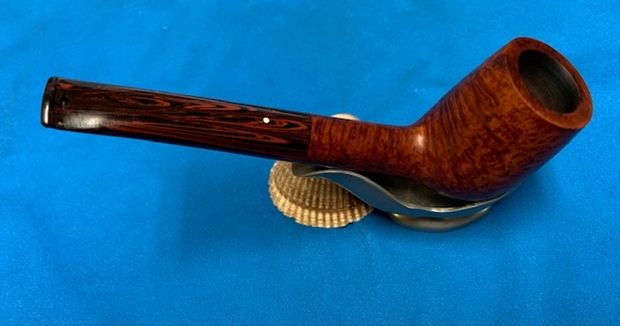
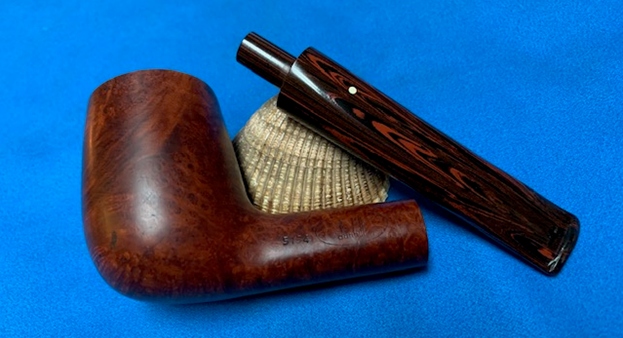
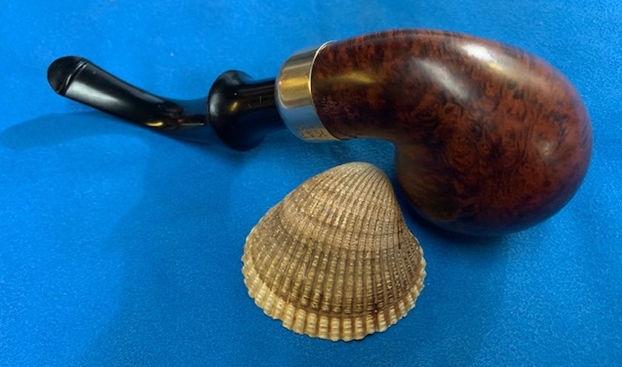
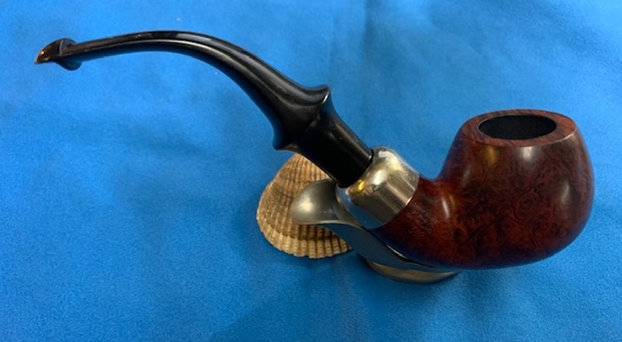
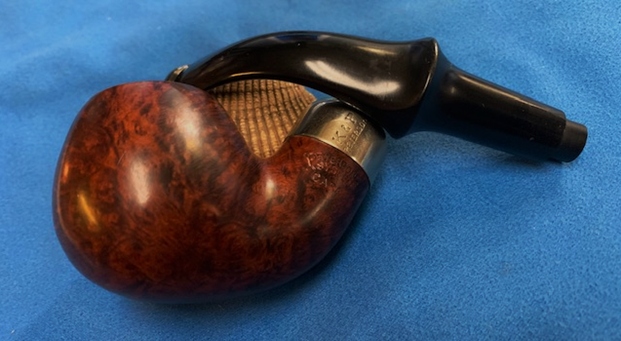
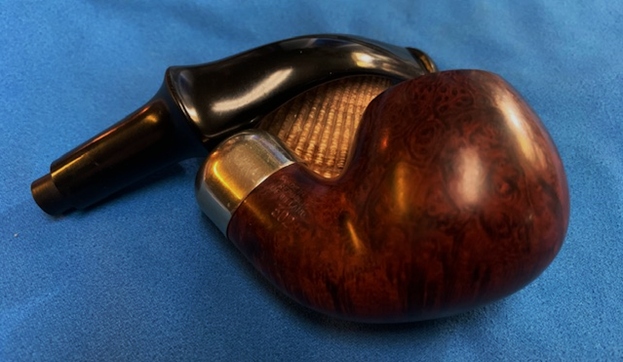
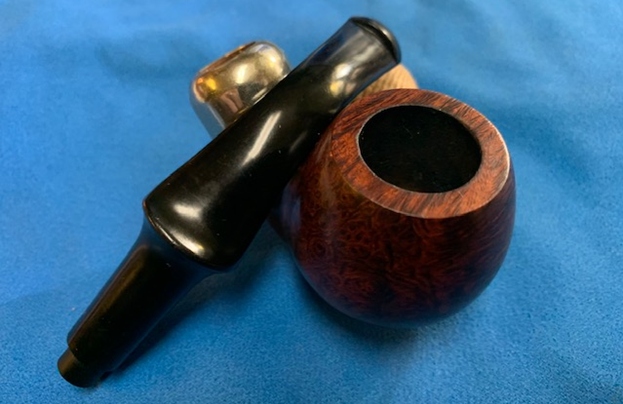
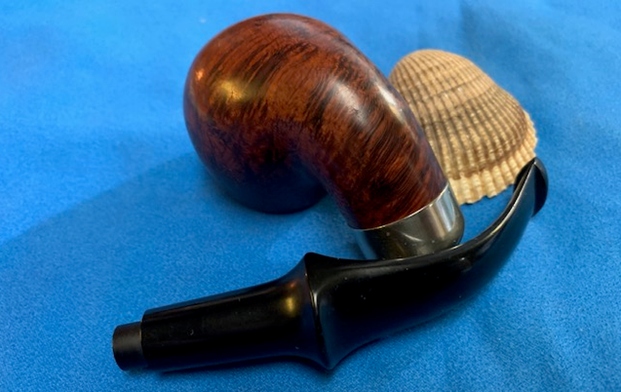
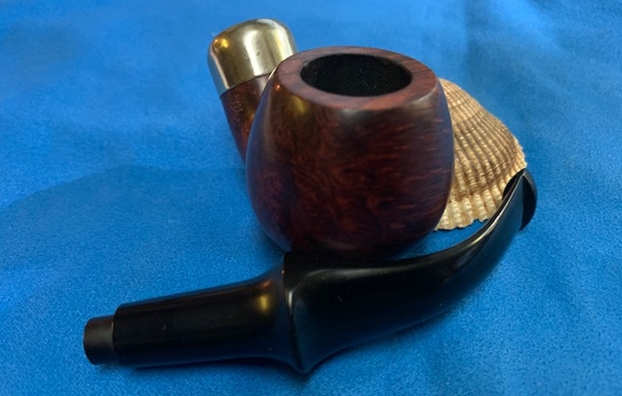
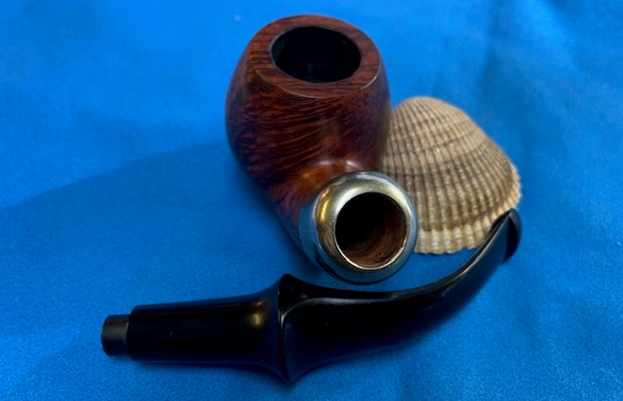
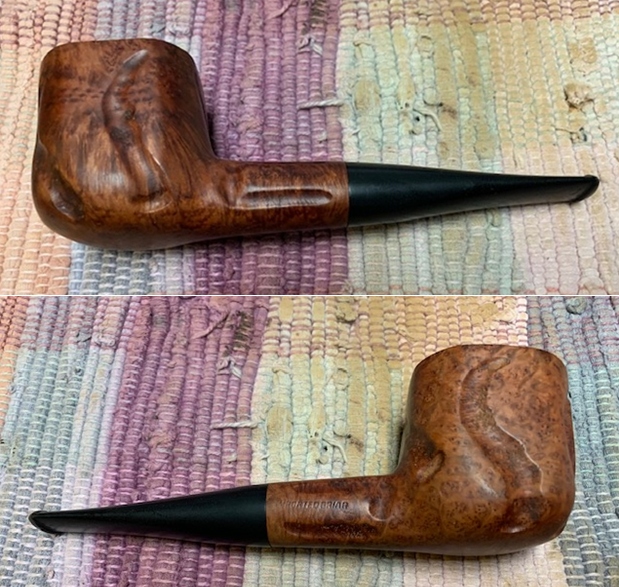
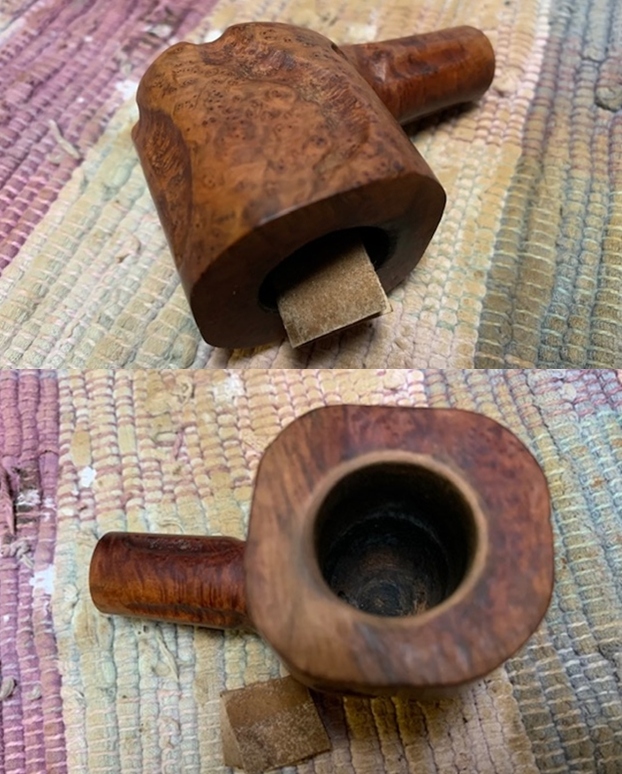
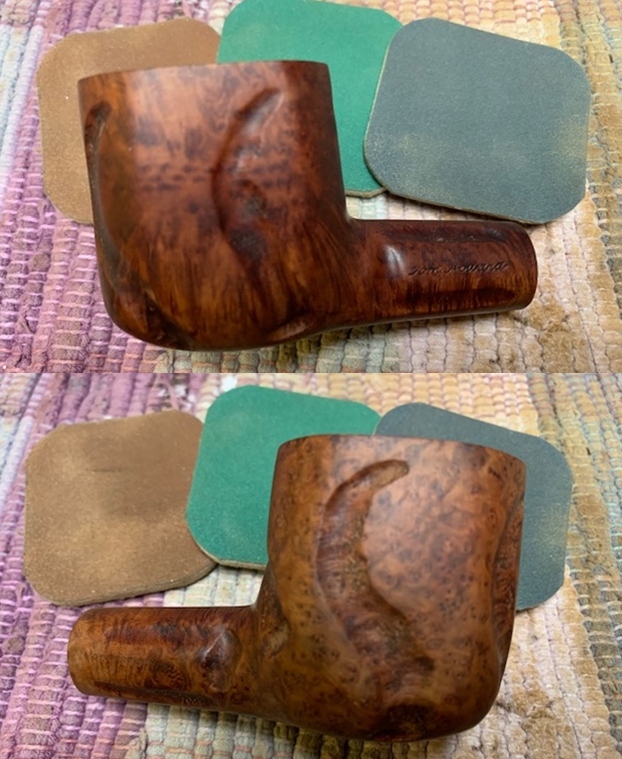
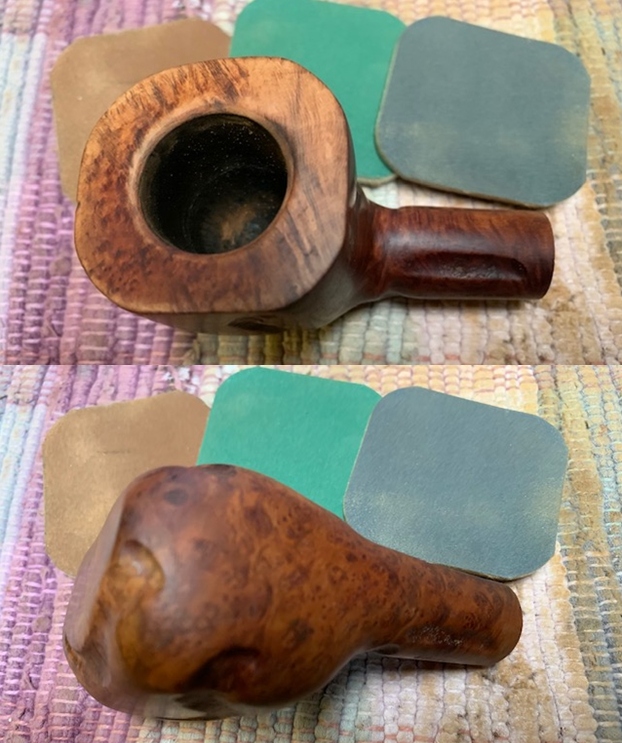
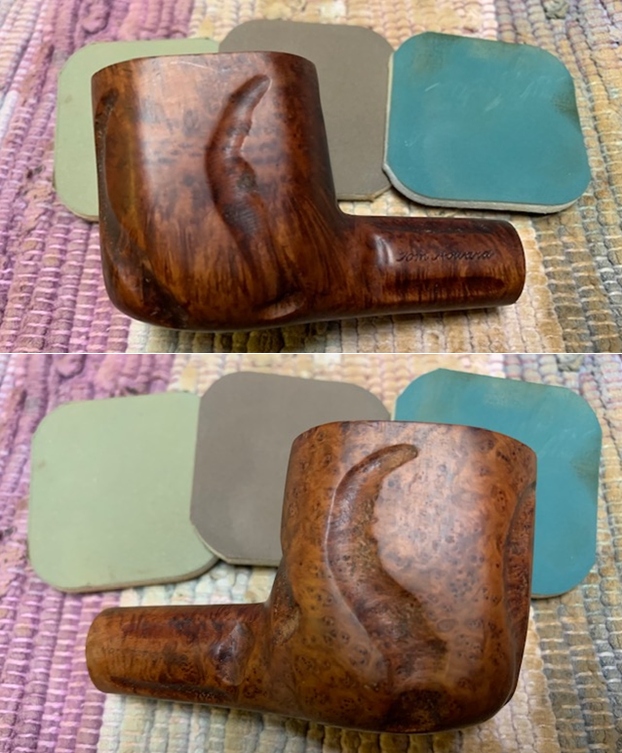
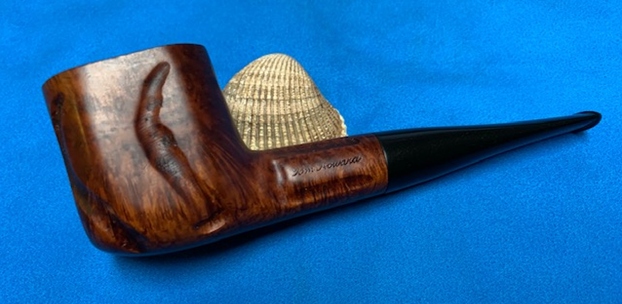
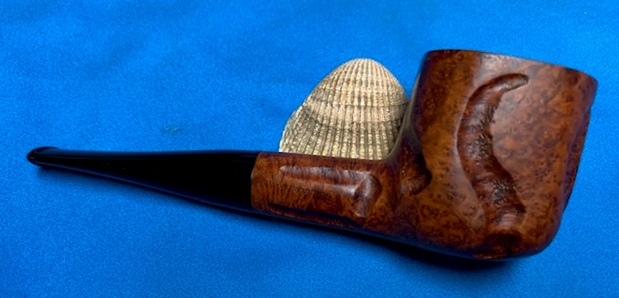
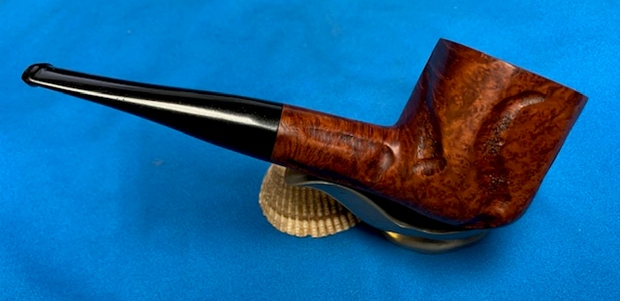
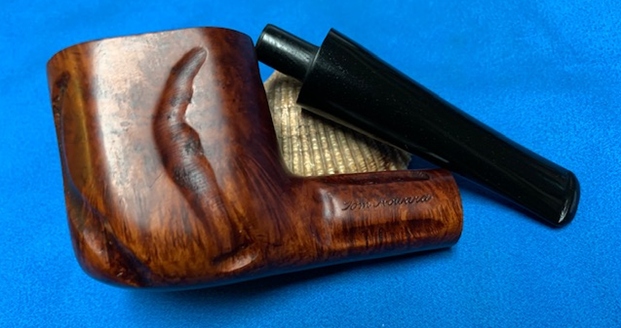
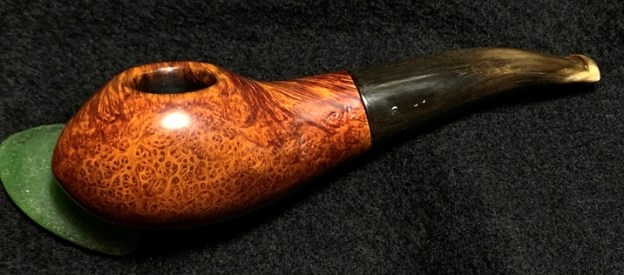
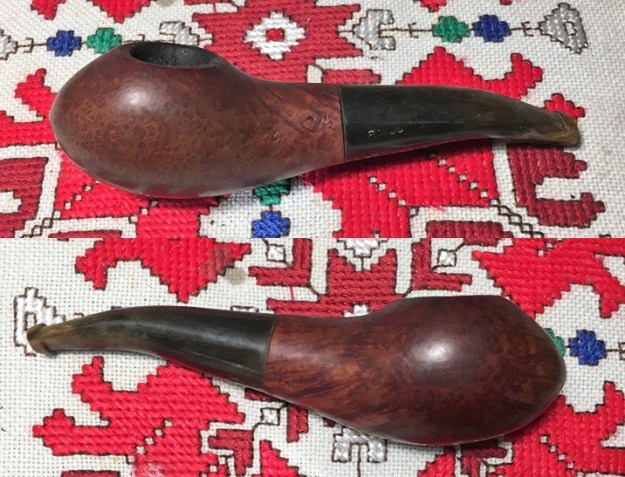
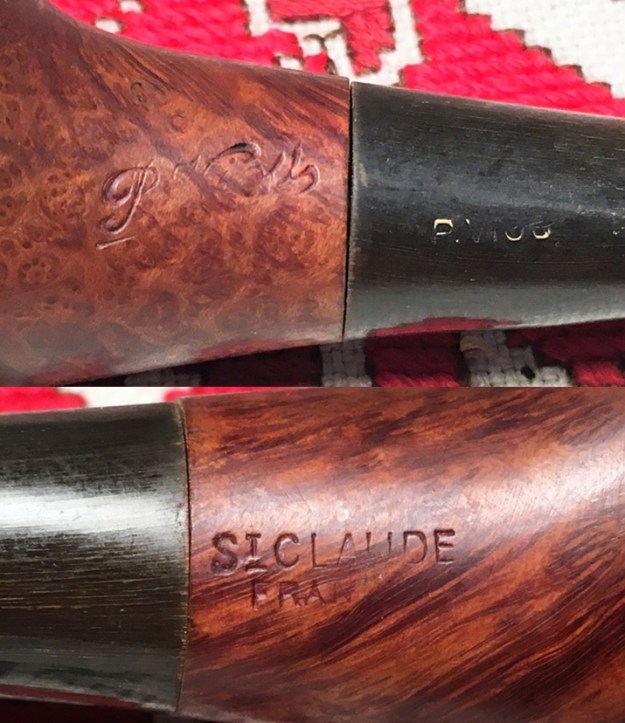
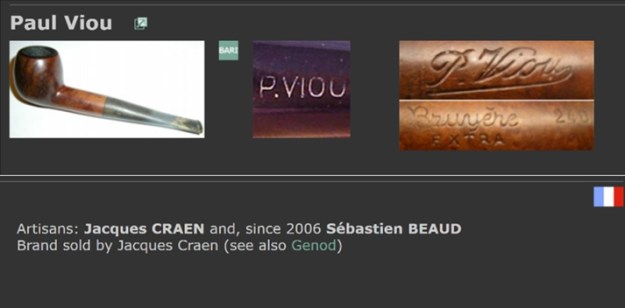
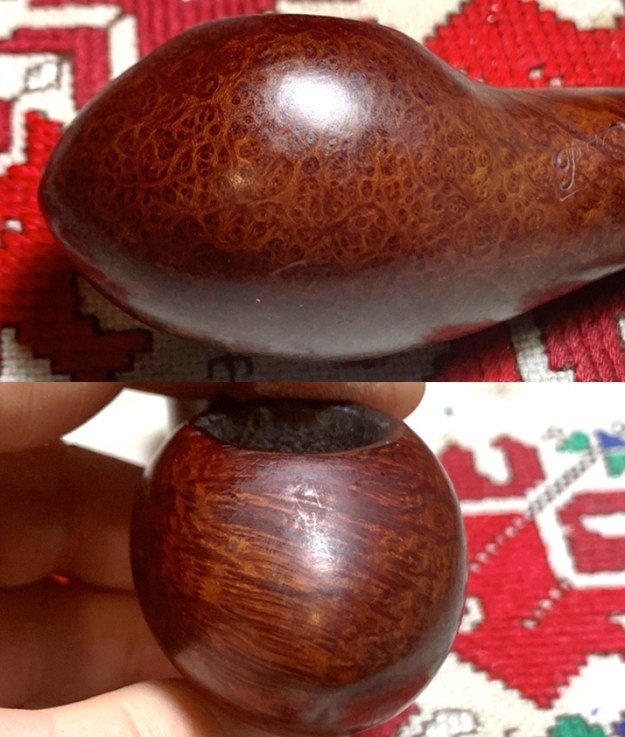
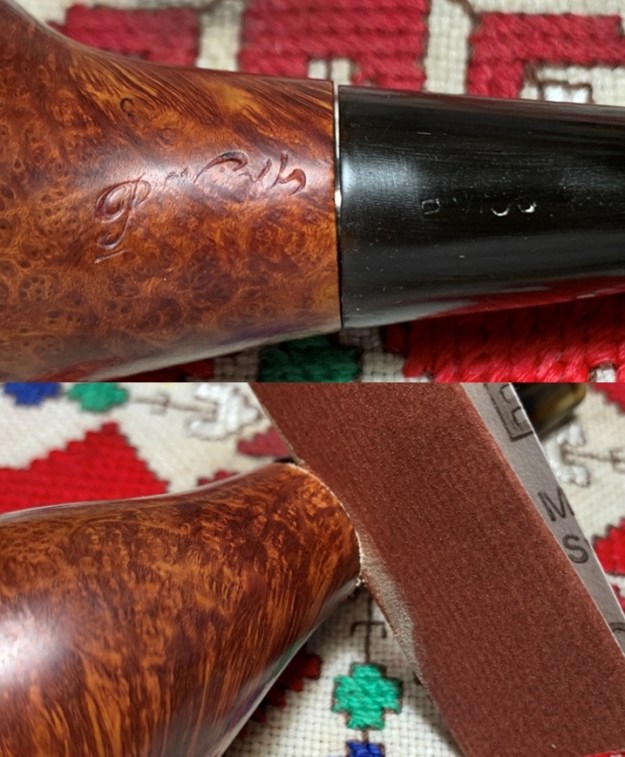
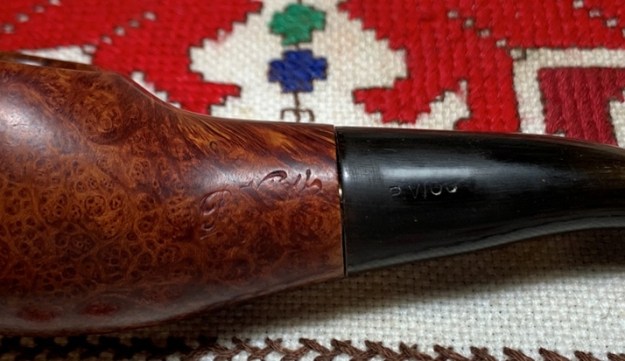
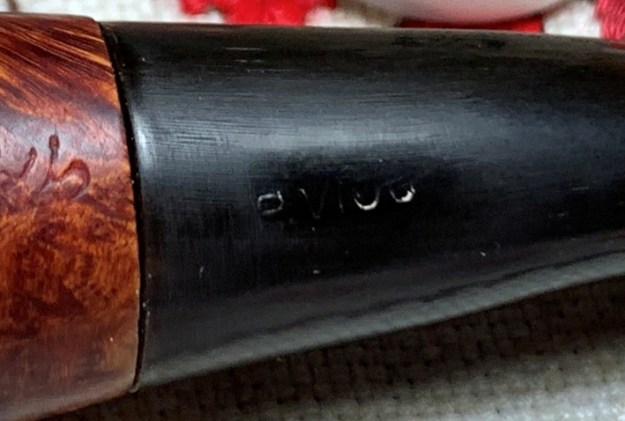
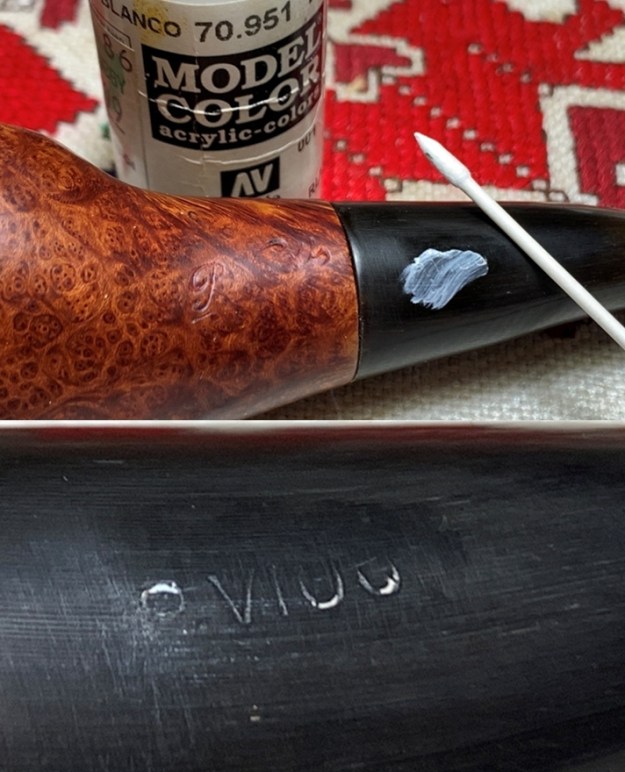
When I first laid eyes on this unique ‘Feather’ or ‘Plume’ shaped pipe, I debated adding it to my own personal collection and not posting it in the For “Pipe Dreamers” Only! collection, making it available for pipe men and women to commission.  Well, the Feather did find a place in the ‘Dreamers’ collection and Daniel eventually added the P. Viou Feather to his trove of commissioned pipes totaling 7(!) benefiting the Daughters of Bulgaria.  I acquired the P. Viou Feather from the French eBay auction block in 2018.  This ‘French Lot of 50’, which is what I have affectionately called it, has offered up several treasures – one restoration that became my first publication adding to Pipedia’s wealth of information (See: Discovering the History with the Reclamation of this Petite EPC Majestic Bent Horn Stem Billiard and for Pipedia contribution see: A. Pandevant & Roy Co.).  The picture of the Lot provided by the Parisian seller only created the urge to know what was hidden within the tangle of stems and stummels.  That I could see so many interesting shapes and horn stems supplied the impetus to acquire the Lot.  The P. Viou Feather is mostly hidden in the picture (arrow below left) and it wasn’t until later after the package arrived in Sofia and I gleefully sorted and grouped the pipes that I came to realize the treasure trove of pipes in this Lot.  The Feather grouping is pictured below.Looking more closely at the P. Viou Feather, I take some additional pictures. The nomenclature is worn and thin at points but generally recognizable.  On the left flank is stamped in fancy cursive ‘P’ [underscored] followed by ‘Viou’ which is punctuated with a flared underline.  The COM stamped on the right flank of the Feather stummel reads: St CLAUDE [over] FRANCE.  St. Claude is the pipe center of France and the birthplace of the production of briar pipes.  The horn stem is also stamped, P. VIOU.  This stamp is also thin, but I’m hopeful to refresh it later.     I had the opportunity of restoring another Paul Viou from the French Lot of 50 – a Churchwarden (See: Recommissioning a Vintage French Paul Viou Churchwarden of St. Claude).   There is scant information about the Paul Viou name on the internet that I could find.  Pipedia’s article of Paul Viou is brief:
From Pipes, Artisans and Trademarks, by José Manuel Lopes’

Paul Viou was the brand and name of a French artisan who sold his pipes by correspondence and then he was a pipe supplier for military institutions. He also made sculpted pipes and sometime used horn stems.

The brand is currently sold by Jacques Craen and made by Genod in Saint-Claude, after having also belonged to Paul Guilland and Vuillard. They are stamped P. Viou and made primarily for export.

This information is confirmed by Pipephil.eu with the addition of the date of 2006 when the Paul Viou name transferred to Sebastien Beaud of Genod.As I broaden my online research, I discover that Sebastien Beaud is an interesting story.  He currently is the owner of the Genod house of pipes in St. Claude and is a younger entrepreneur.  In trying to find out further information about Paul Viou, Genod information is prevalent in the research.  The Pipedia article dedicated to Genod of St. Claude is also interesting (See: Genod).  The Genod story began in 1865 when Comoy founded pipe production in St. Claude.  In 1923 the production is taken over by Georges Vincent and in 1939, son in law John Craen joined Vincent.  John Craen’s son, Jacques, joined the business in 1959 and took over the business in 1977 where he expanded the Genod name and opened the shop in St. Claude to visitors to observe the pipe production.
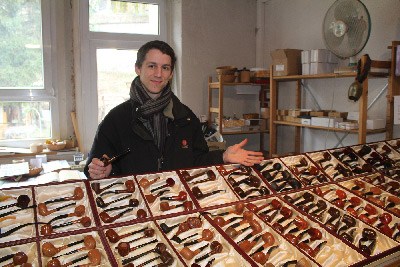
From the same Pipedia article: In 2006 the young pipemaker Sebastien Beaud started his work in Jacky’s factory. As Craen himself he took over the brand Viou to start with. In future he will take over the business in its entire and continue this sympathetic workshop in its traditional way.

In the excerpt above, the Paul Viou line is mentioned as continuing under Genod during the Craen period, then Sebastien Beaud took over the Viou line.  Unfortunately, this article nor the article in Pipedia dedicated to Paul Viou, provide much in the way of specific dating of the Paul Viou branding.

I’ve searched several forums for answers to questions regarding when the historical Paul Viou began production using this name?  The Paul Viou Feather, or Plume (French translation) appears to have some age.  The horn stem would suggest a dating in the 1940s during the rubber shortages of WW2.  Horn became a ‘go to’ material in place of rubber compound stems.  Yet, a question arises regarding this older dating when I discovered in Genod’s current offerings of pipes on its website an almost identical ‘Plume’ yet, not with a horn stem but an ebonite or vulcanite stem (See: Link). Also missing is the P. Viou nomenclature. Furthermore, more than many pipe manufacturers today, Genod’s quality offerings include many horn stemmed options.  I like this(!) but it brings into question the necessity of an older dating for the P. Viou on my worktable.With the foundational question being, when did the P. Viou name begin?  Was it before or during the Craen era of Genod?  Was the P. Viou stamp on this Feather an indicator of a pre-Genod production?  My experience with tracking down and nailing down French pipe production details has never been easy but always interesting!
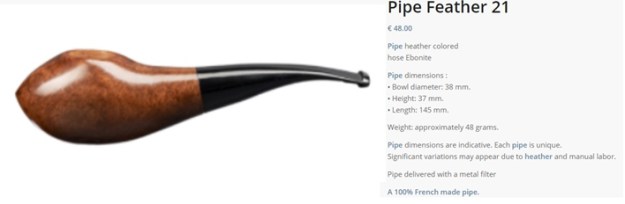
Potentially to find answers about the dating of the Paul Viou name, I sent an email via the ‘Contact’ form provided on the Genod website.  I have been surprised in the past to receive responses from ‘Hail Mary’ requests to pipe houses in Europe and America.  We’ll see what happens.
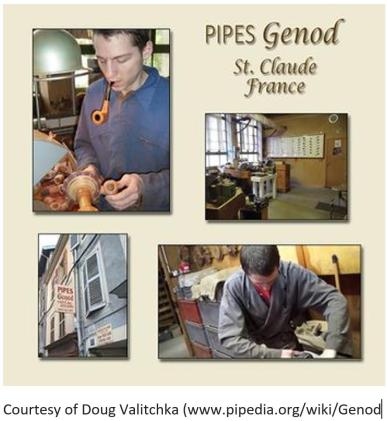
Well, I am continually amazed at ‘names’ in the pipe world being accessible to folks like me!  The next day I received a reply from Sebastien Beaud, currently at the helm of Genod.  I include my original message with the replies that followed:

DAL:   Greetings,  Thank you in advance for your time! I restore vintage pipes and publish the restoration process and research online at www.ThePipeSteward.com. I have restored some Paul Viou pipes and have researched a lot and enjoy the connection of Paul Viou and Genod. However, there is very little information that I can find on the internet regarding Paul Viou, historically. Can you please provide any information about Paul Viou’s origins, when he lived, when the P. Viou name started being placed on pipes? My current restoration is a P. Viou Plume with a horn stem. I see that you still produce these shapes on your website but with Ebionite stems. I’m trying to determine the potential dating of this pipe but cannot find much information about when Paul Viou came onto the pipe scene. Thanks so much for your help in advance if you are able!

———–

Dear Dal,

Congratulations for your work and your website! All I know about Paul Viou is that as a former officer in the French army, he used to advertise his pipes in the army magazines.  So he used to sell a lot to the soldiers during the Algerian war, back in the 50’s / 60’s. He ran the business together with his wife Odette.  Their workshop was located right next to ours, and when they got old, Jacques Craen, started making pipes for them.  At the same time, Jacques Craen created the “Genod” brand to start selling directly to the smokers instead of selling to whole sellers. Genod is a tribute to his grandfather Georges Vincent-Genod (on his mother’s side) with whom he had learned and from whom he inherited the workshop. In the early 90’s, Jacques bought the Paul Viou brand and customers’ addresses file. I myself took over when Jacques retired, and kept Paul Viou’s name for a while, but it is the exact same product as a Genod pipe, so now I stamp all the pipes “Genod”.  I hope this helps.

Best regards,
Sebastien BEAUD
www.maitrepipier.fr
SARL GENOD VIOU
13 Faubourg Marcel – BP 145
39205 SAINT CLAUDE Cedex FRANCE
Tél. (+33) (0)3 84 45 00 47

———

DAL: Sebastien,  Thank you so much for responding to my inquiries! This information needs to be added to Pipedia. If I could ask one follow up question regarding the pipe on my worktable. The nomenclature is the cursive ‘P. Viou’ and COM: St. Claude, France. The horn stem is stamped, ‘P. Viou’. Can you venture a guess as to what period this ‘Plume’ was manufactured with this nomenclature and horn stem?   Before the Jacques Craen period (50/60s?) or when Jacques Craen was making them for Paul Viou (60/70s) or during the Genod period starting in the 70s but still using the ‘P. Viou’ stamp? I hope you can understand this! I’m simply trying to place this pipe in a time period. I’ve attached a few pictures if this is a help.  Again, much thanks.

———

Dear Dal,

I think this pipe has been made by Jacques Craen back in the 80’s (even though it could also be the 90’s or late 70’s).

Best regards,

Sebastien BEAUD

With deep appreciation to Sebastien Beaud for his time and for the information he supplied, I have a much better understanding of the Paul Viou name and a small piece of the man himself.  Valuable information added was regarding Paul Viou, the man.  He was formerly an officer in the French army – a military man but also a pipe man/entrepreneur.  Apparently after his time with the military and residing in St. Claude, he was undoubtedly very much a part of the ‘pipe world’ milieu and at one point added his hand to the pipe making industry.  With his connections in the military, he advertised his pipes in the military magazines of the time and in military institutions.

It is noteworthy that Sebastien pinpoints this activity during the Algerian War.  A quick search on the internet renders a Wikipedia article describing the war that was from 1954 to 1962 that found France engaged in a ‘decolonization’ war with the Algerian National Liberation Front and facing turbulent times at home with a war that garnered international attention.  The war gradually resulted in an independent Algeria – much resembling the turmoil of the Viet Nam conflict of the United States.  Paul Viou had developed his business selling pipes and during this difficult time, with French servicemen abroad, Paul Viou, along with the support of his wife, Odette, provided pipes for the troops via army magazine adds.  The personal relationship between Jacques Craen and Viou family is interesting – their shops were next door to each other and the aging of the senior Viou created a transition from Paul Viou’s actively working in the shop to his work being done by Jacques.  During this transition period, undoubtedly steps were taken to sign over the Viou name to Craen and the Vincent-Genod legacy.  Another transition alluded to by Sebastien’s words – the brand created by Jacques, “Genod”, was a tribute to his grandfather.  The Viou brand joined the Genod brand and again, this legacy was passed on to Sebastien Beaud.  The Viou name is no longer used to mark pipes, but the quality of the Viou pipe was brought under Genod craftsmanship.

One last question I brought to Sebastien was the dating of the P. Viou Feather on my worktable.  His qualified answer is somehow in sync with French pipe dating in general!  Most likely the P. Viou Feather is from the hands of Jacques in the 80s, but the late 70s or the 90s could be possibilities as well!  Much thanks to Sebastien Beaud for his help in this project!

One very interesting piece of information related to horn stems I discovered on the Genod site written by Sebastien Beaud in March of 2020 regarding Genod’s current use of horn stems (See tab: All About Pipes).  More than most pipe houses, Genod continues to fit their pipes with horn stems which I find interesting.  His article was excellent and apropos since a horn stem from the Genod house is now on the worktable!  I include his article which taught me a good bit!

Close up on the horn!

March 16, 2020in All about the pipe by Sébastien Beaud

Most of the pipes fitted to briar pipes are made of ebonite because this material combines flexibility and resistance to wear by the teeth. But other materials are interesting for the production of pipes. There is one that is dear to us, because it is comfortable, beautiful, and presents various shades of colors, it is the horn.

 Which horn for pipe stems?

The horn is made of hairs bonded with keratin, the material from which our nails are made. This hair-armed keratin protects and strengthens the bone that grows on each side of the head of cattle. The horn we use to make the pipe stems is that of the zebu. It can reach 1 meter in length. As we have seen, a horn is hollow because it contains a bone. Therefore, only the end (the tip) is suitable for turning work. A cow’s horn is therefore not long enough to be used in turning.

Zebus also have a brown, white or marbled coat, their horn presents a magnificent variety of shades, ranging from sometimes very dark brown to blond, the association of the two colors being called “marbled”.

 Filming on horn.

The zebu is bred for its meat in Brazil, Argentina and Madagascar. The horns, instead of being lost like the other inedible parts, are exported for use in the manufacture of combs, knife handles, beads, and of course, for turning pipe stems.

Once arrived in the workshops of the Jura, the horns are possibly softened by heating in a bath or steam, in order to straighten them by pressing.  Then comes cutting, turning, shaping, then drilling. Now here is a straight pipe stem.
If necessary, it can be bent in a “form” press dipped in a hot oil bath, and there it is, ready to be adjusted to the heather.

 How to maintain the horn?

An organic material, the horn offers a soft contact, and quickly takes the mark of the teeth. And what a pleasure to combine plants and animals in a beautiful object!  The maintenance of horn pipes is very simple: just avoid exposure to heat sources, and if you want to prevent the shine of the pipe fading over time, you can rub it regularly with a simple cloth, as a polish.  Choose now the pipe with horn stem that suits you, fill it with your favorite mixture, natural or aromatic, and… good tasting!

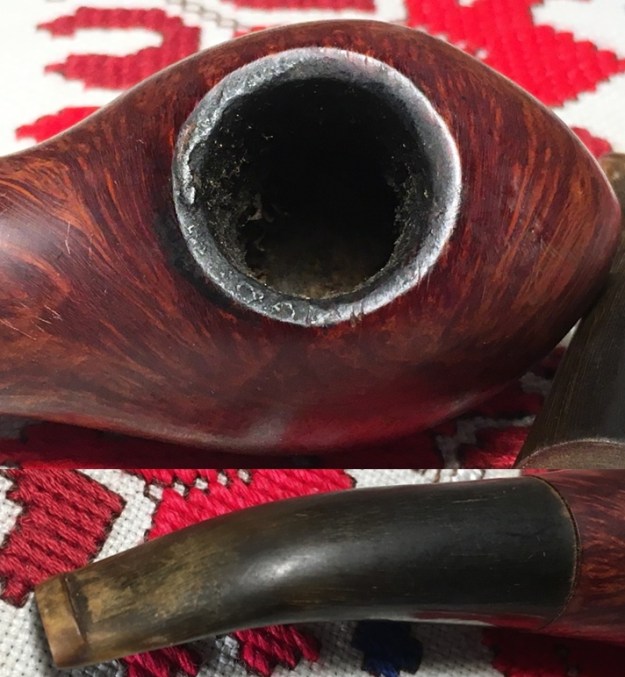
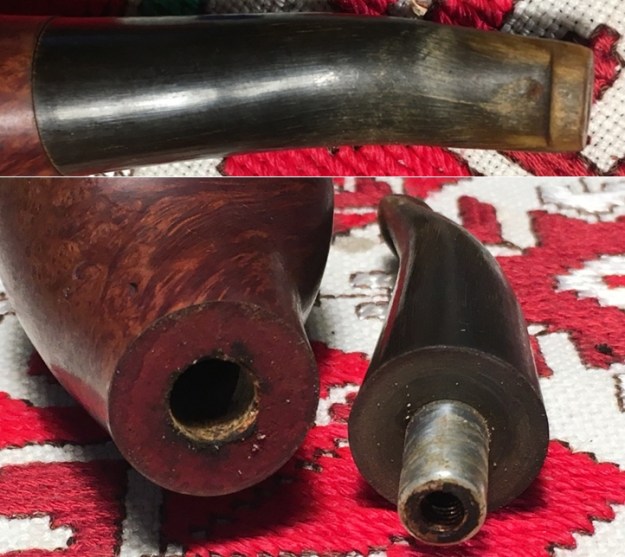
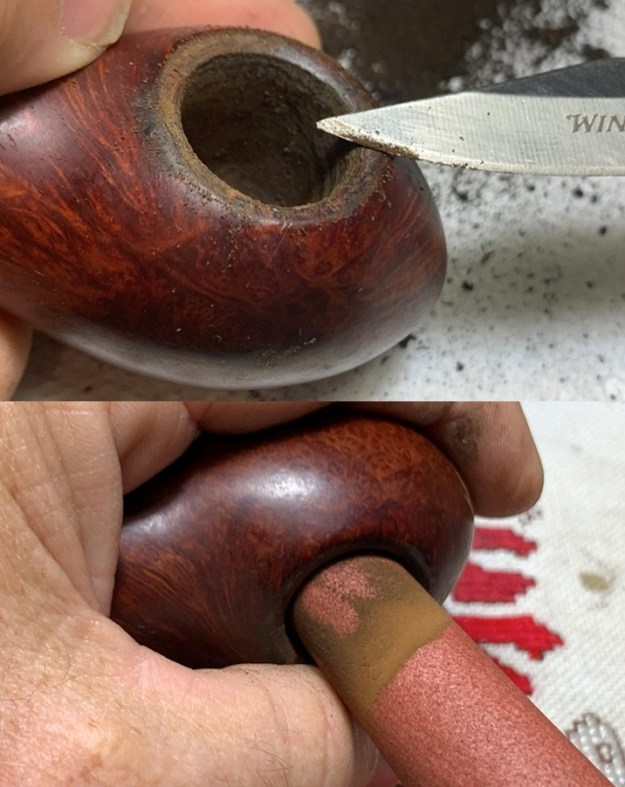
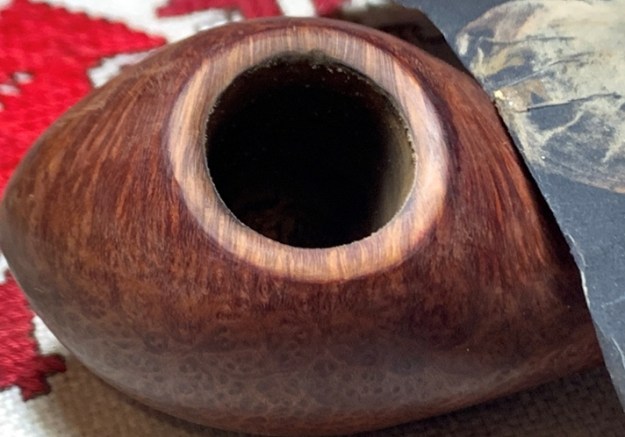
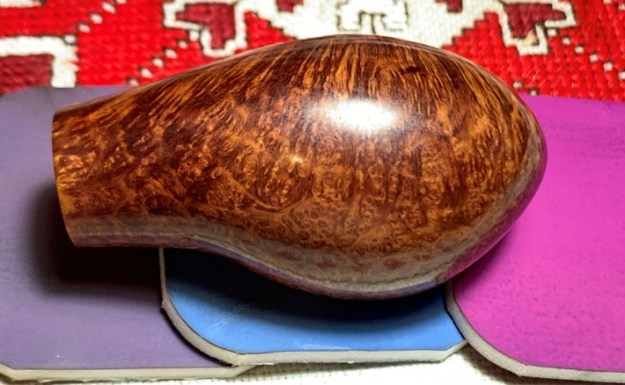
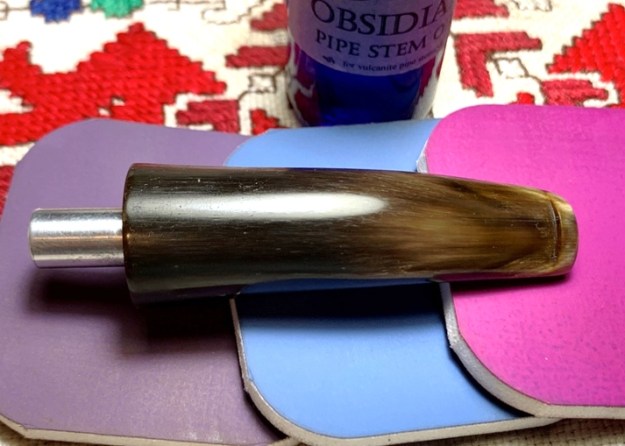
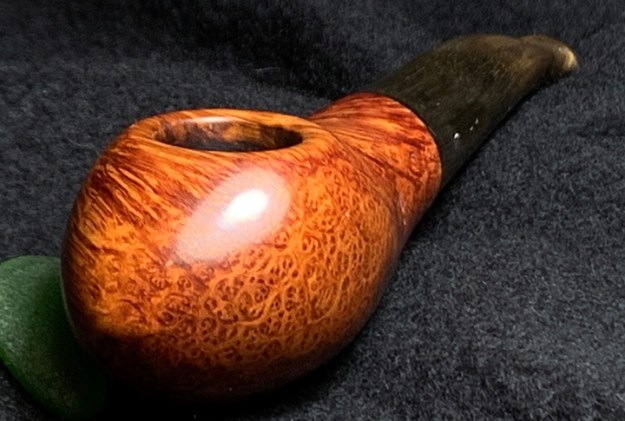
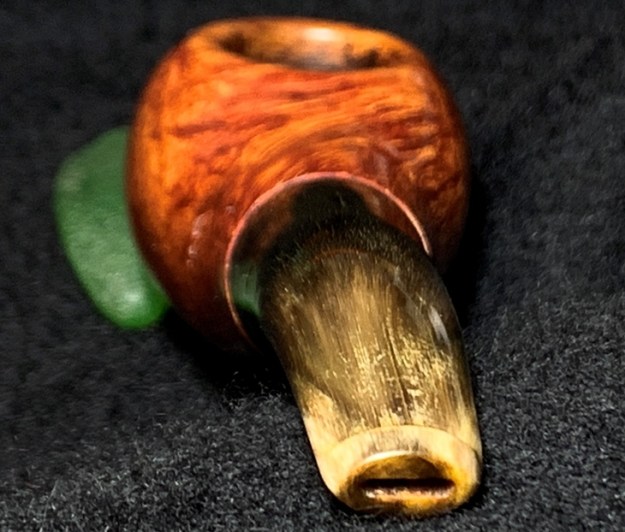
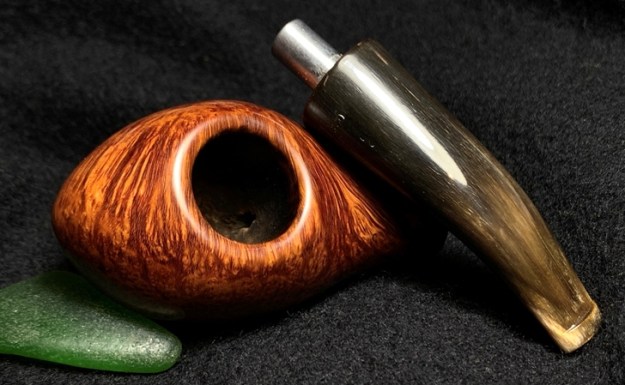
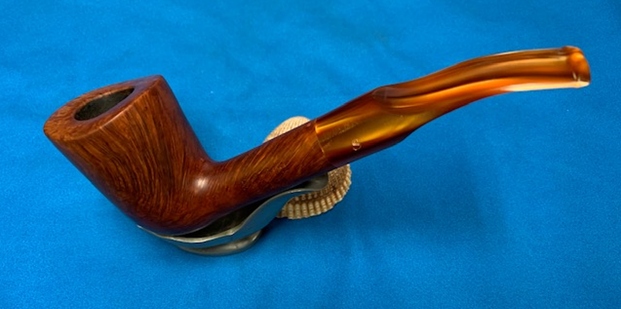
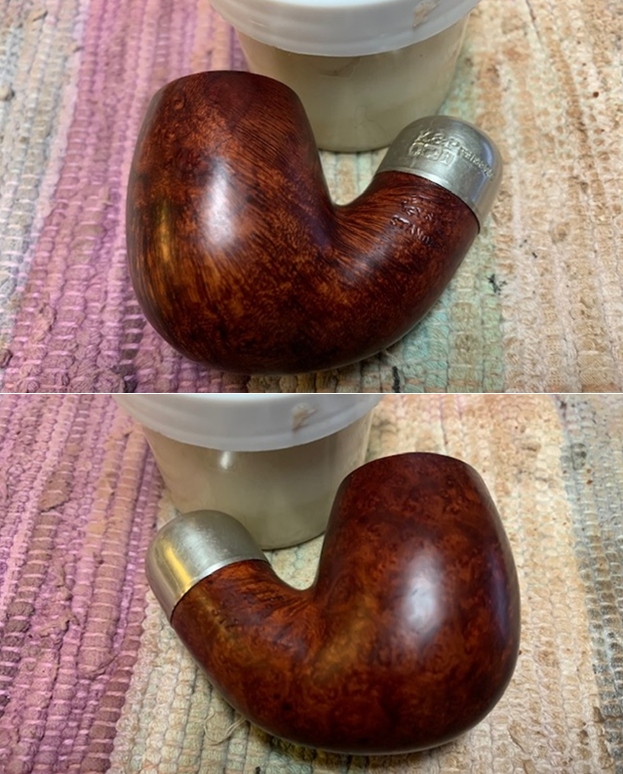
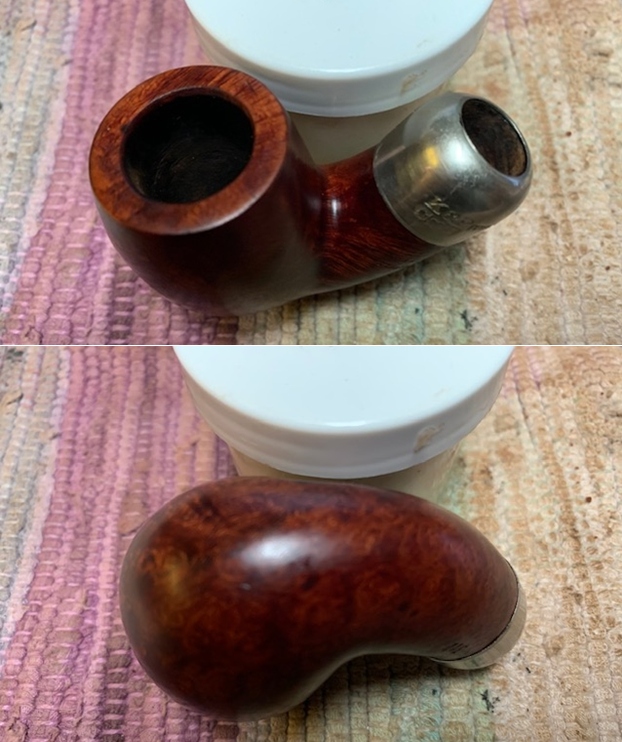
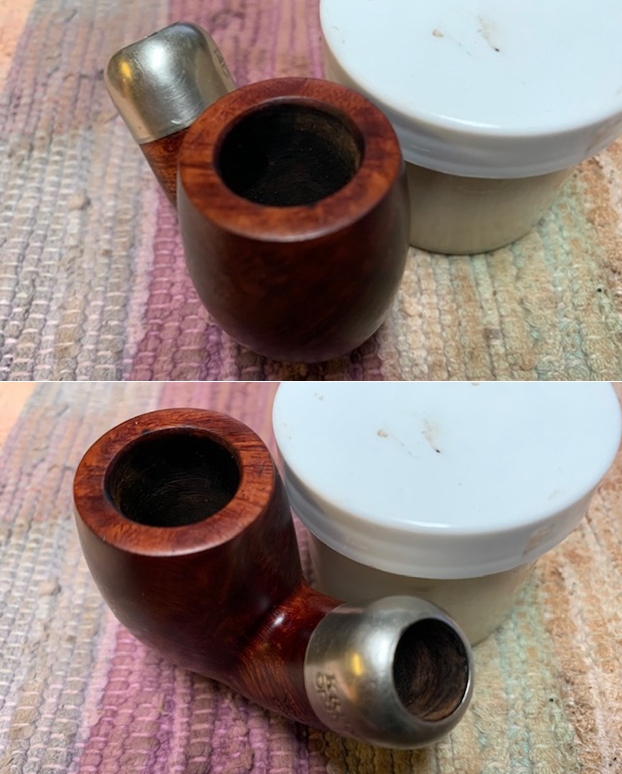
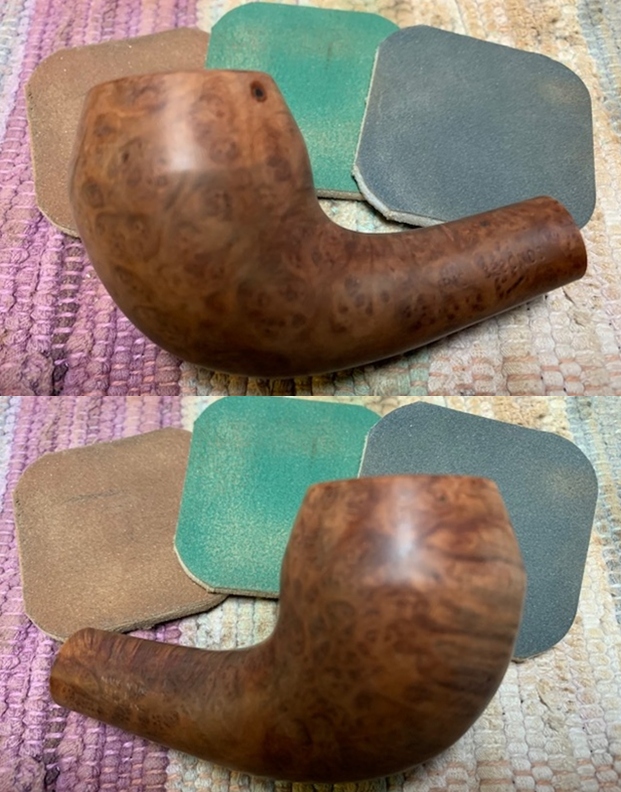
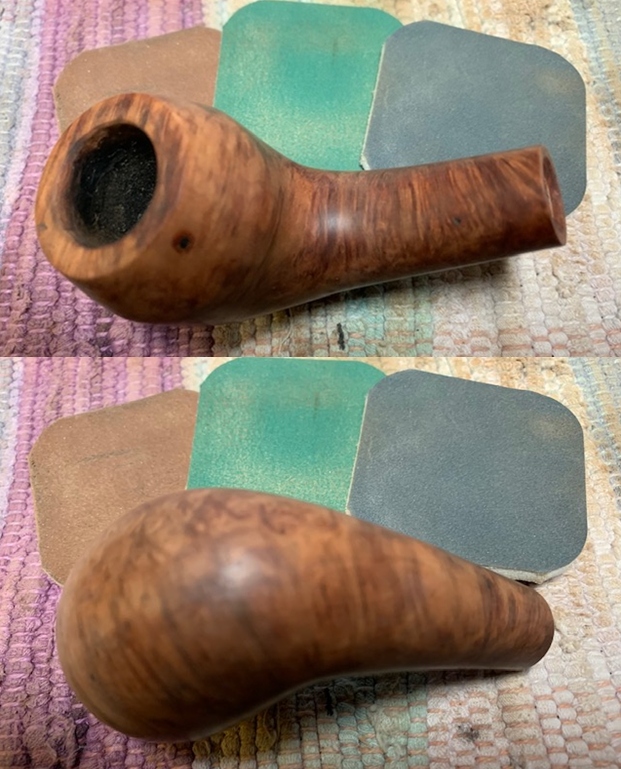
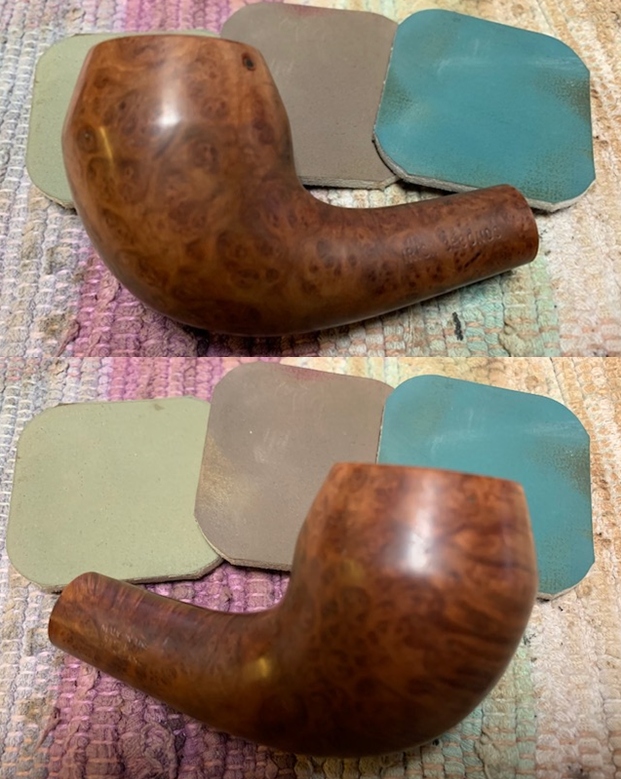
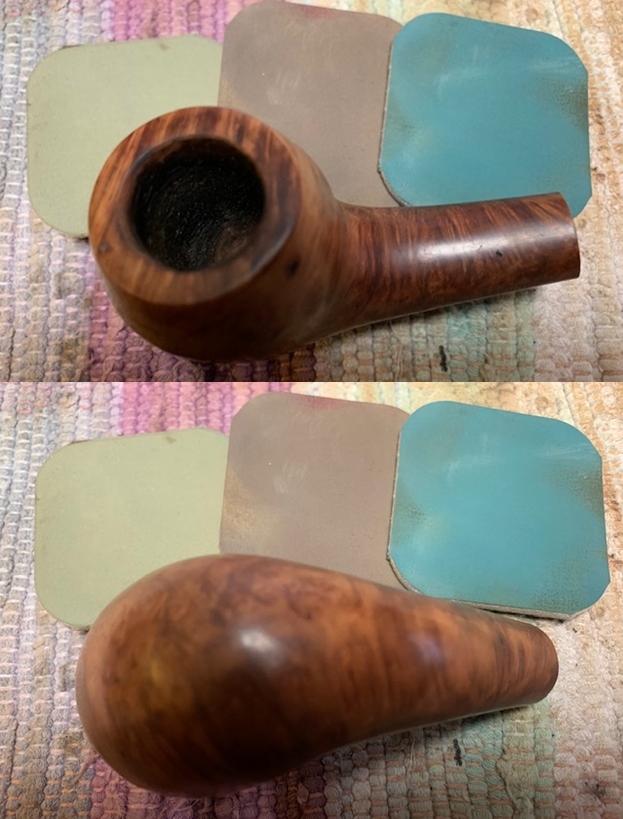
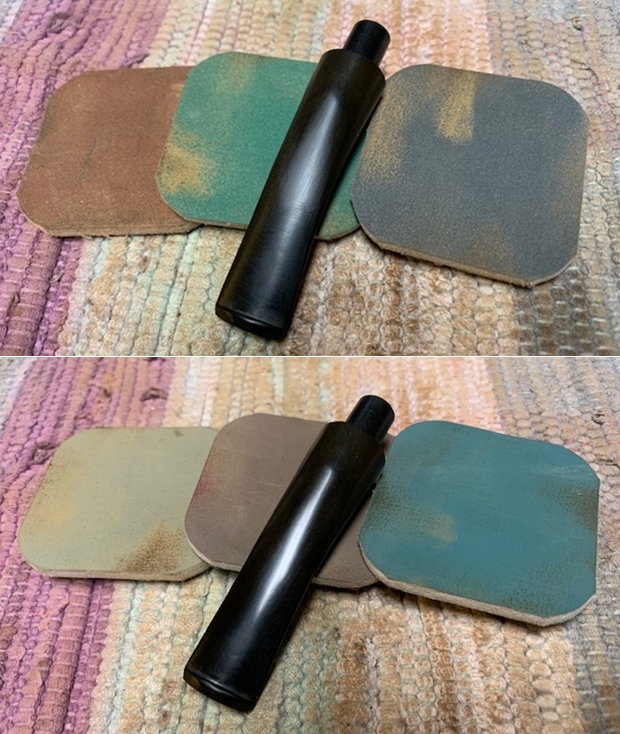
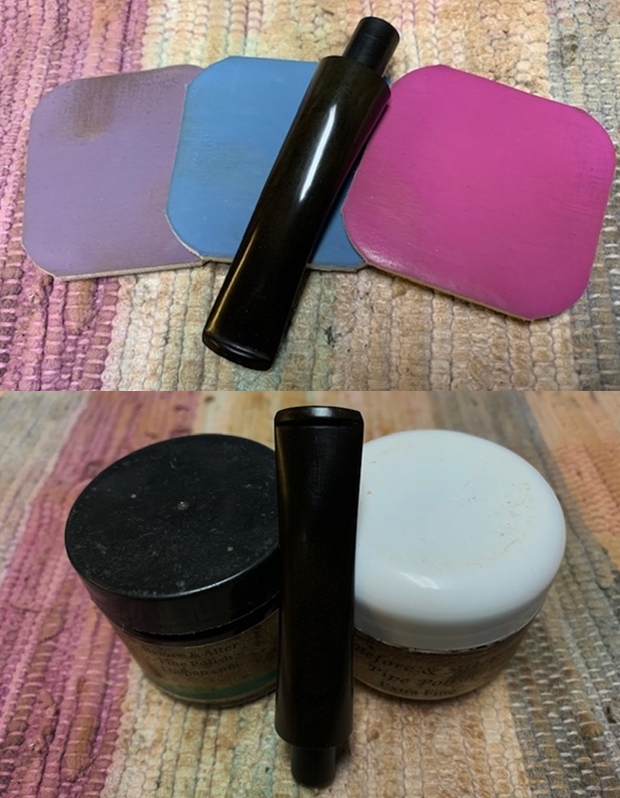
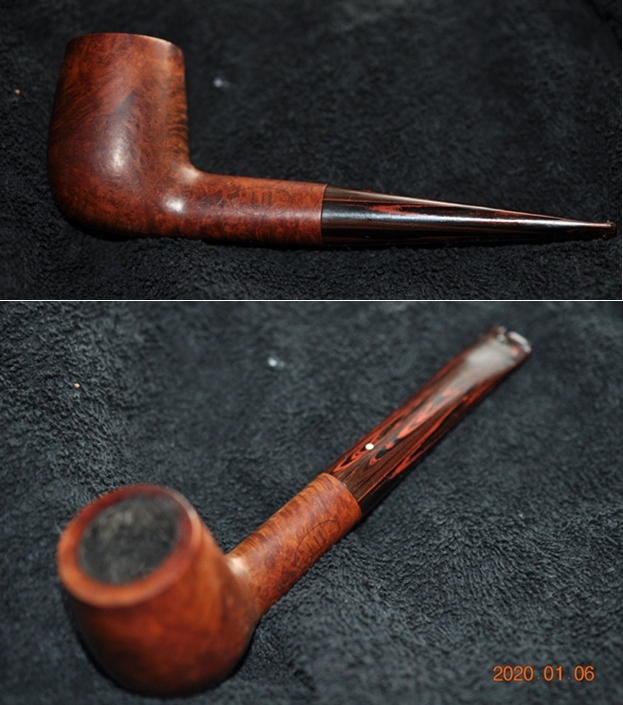
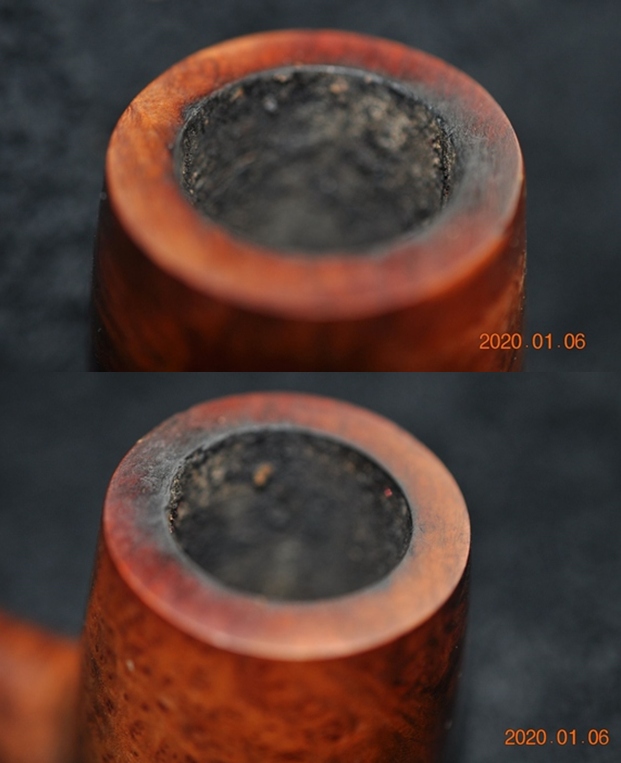
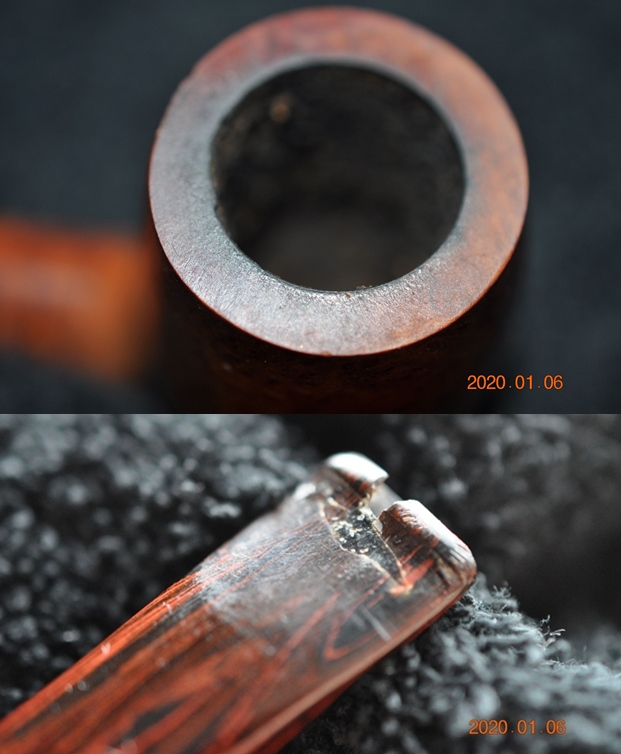
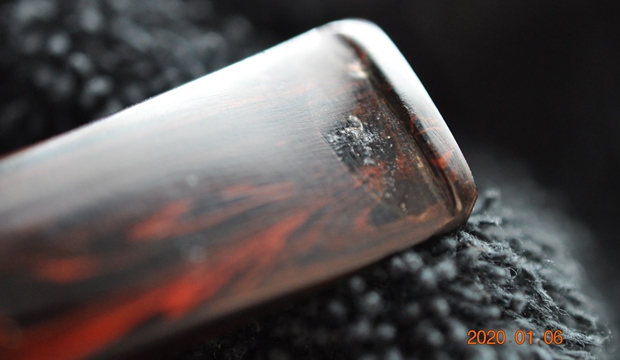
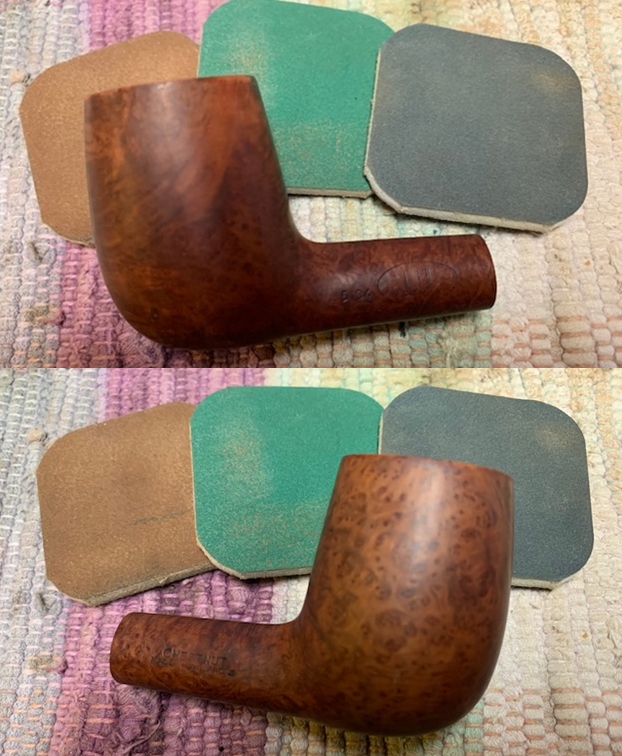
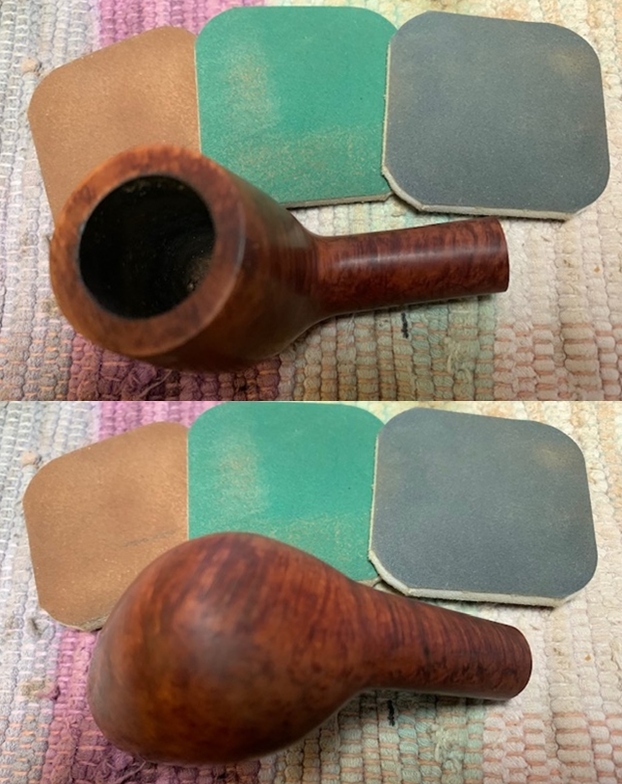
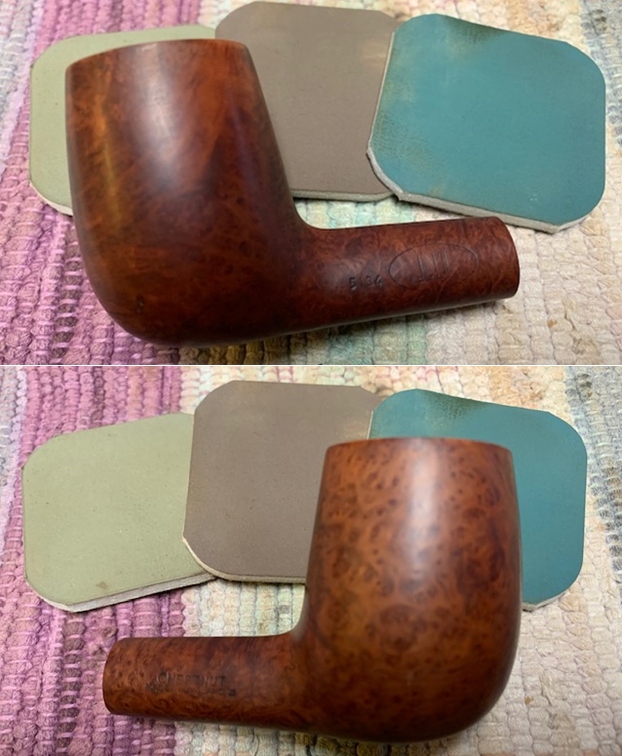
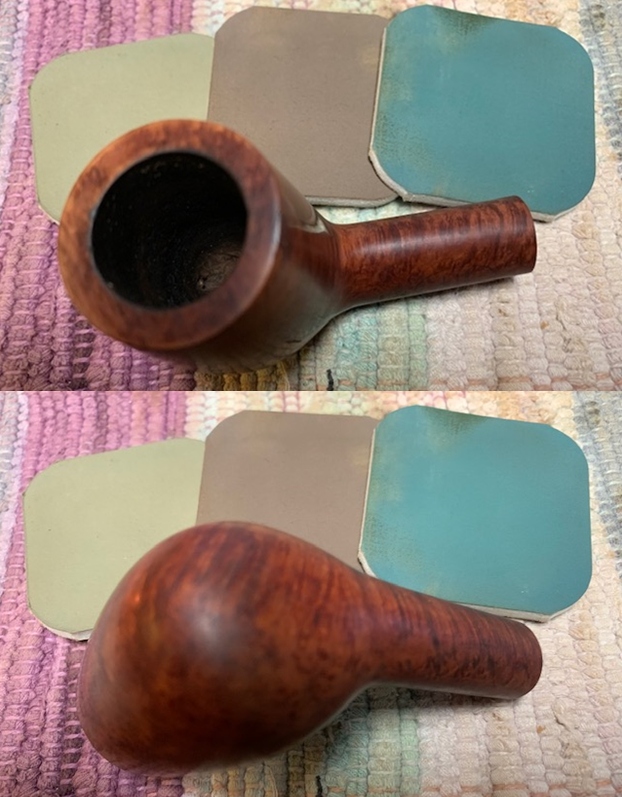
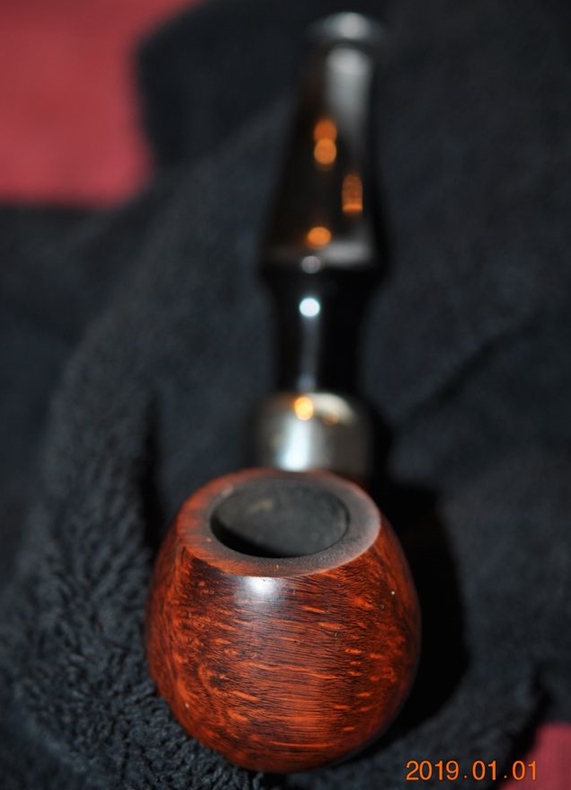
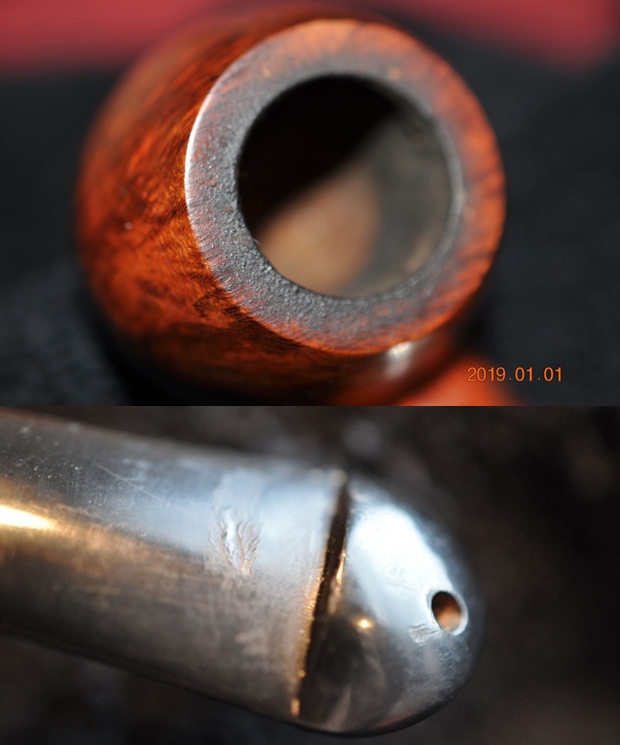
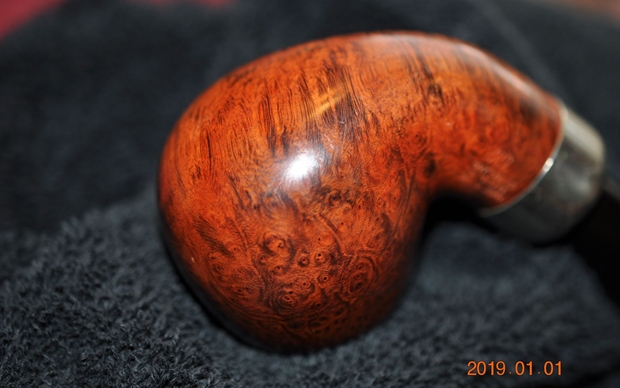
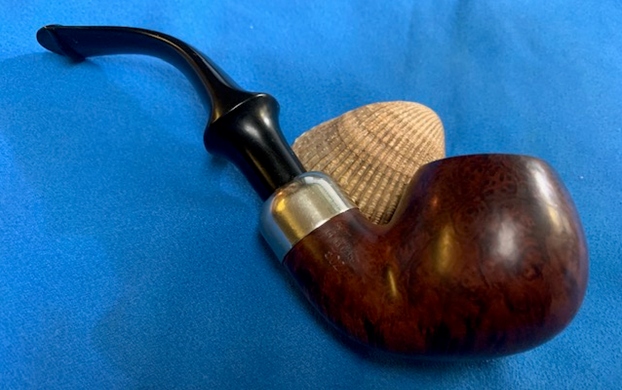
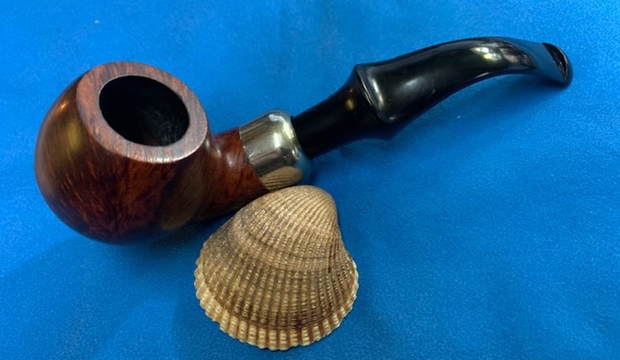
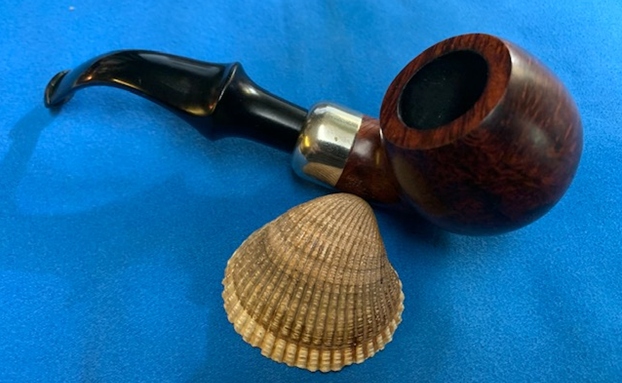
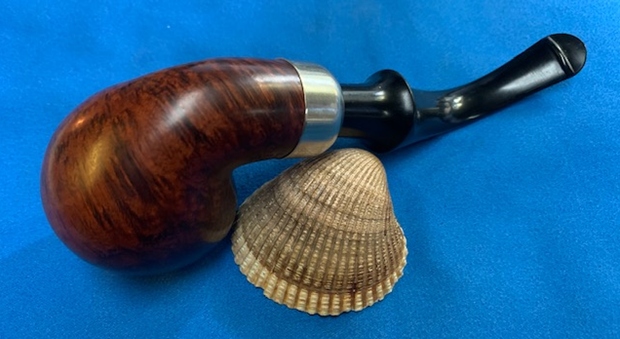
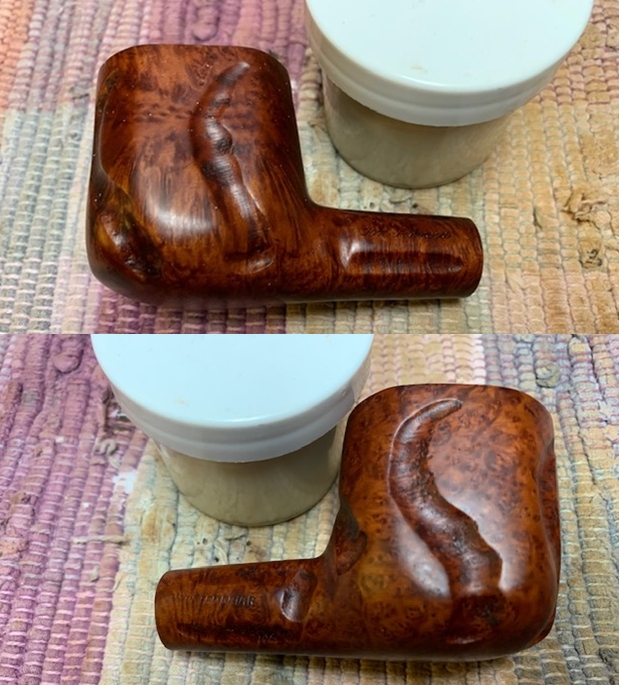
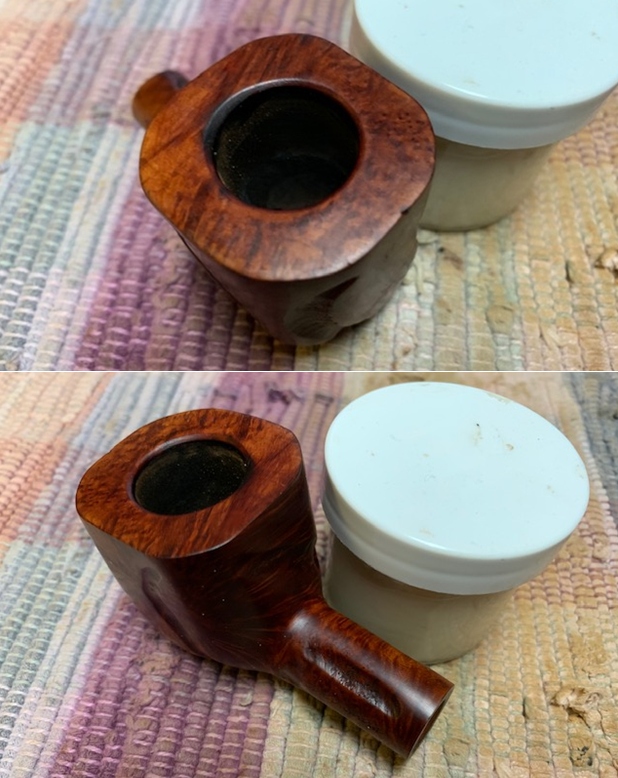
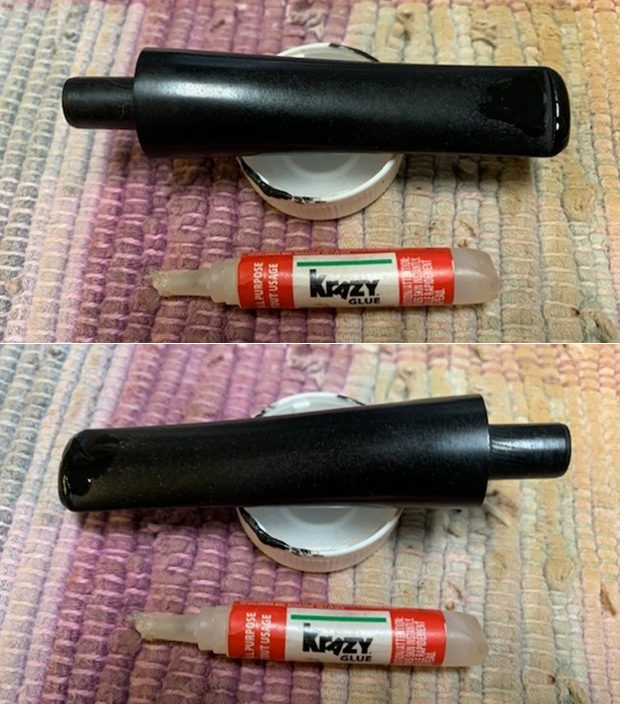
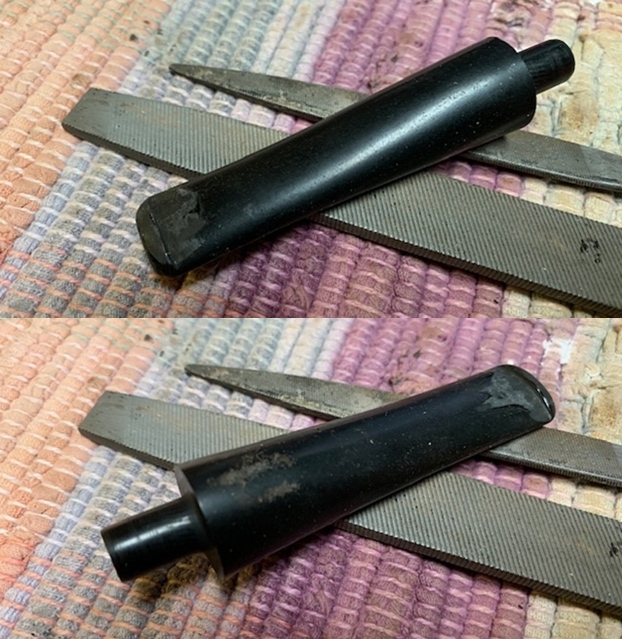
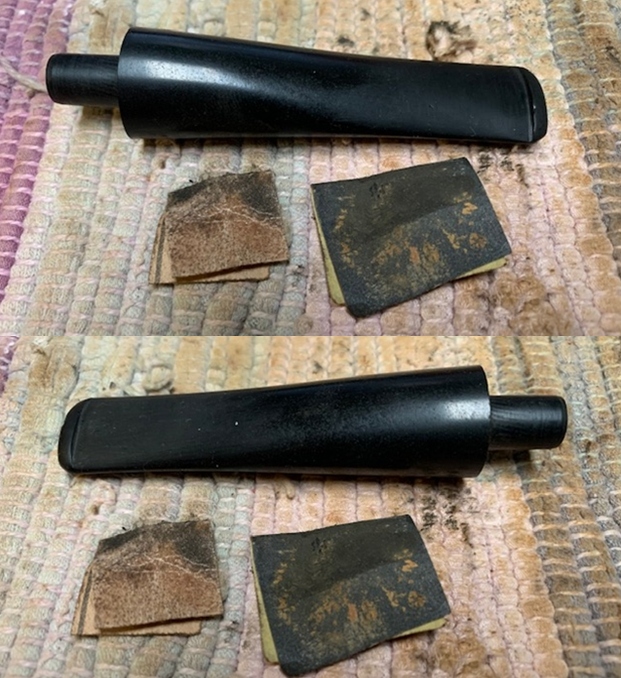
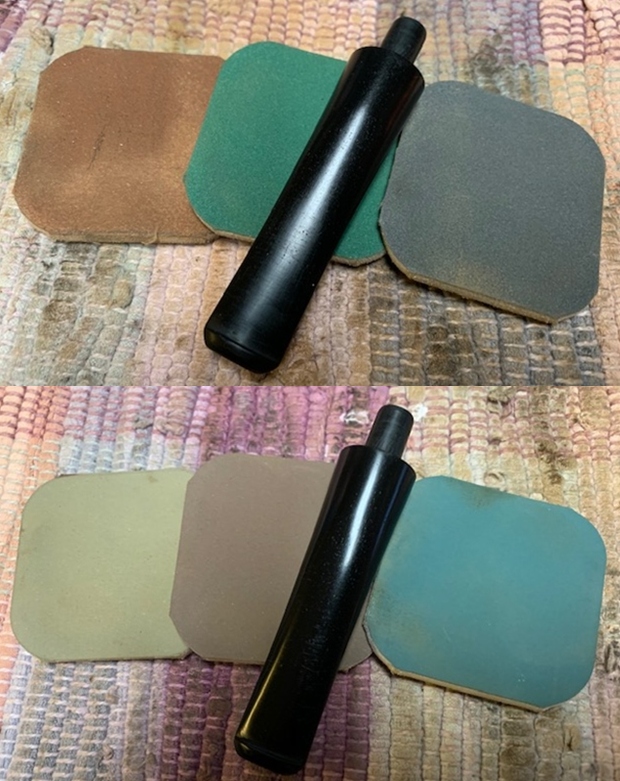
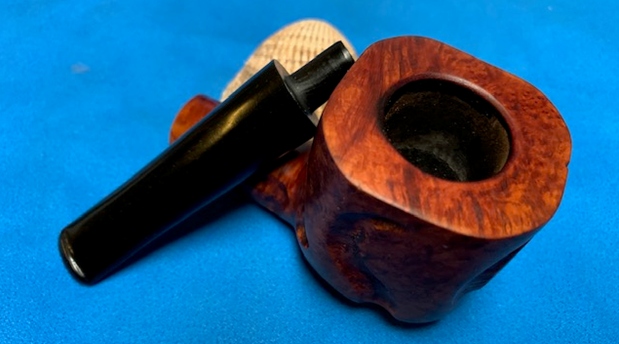
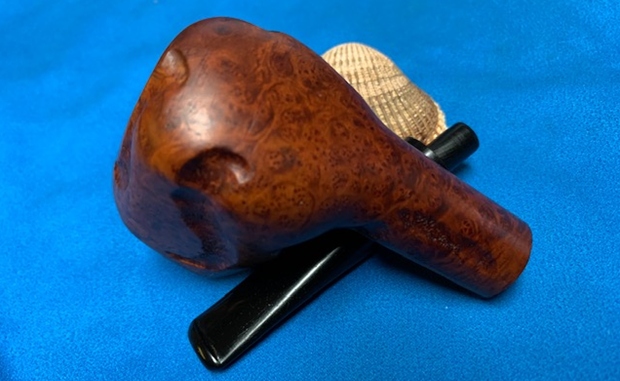
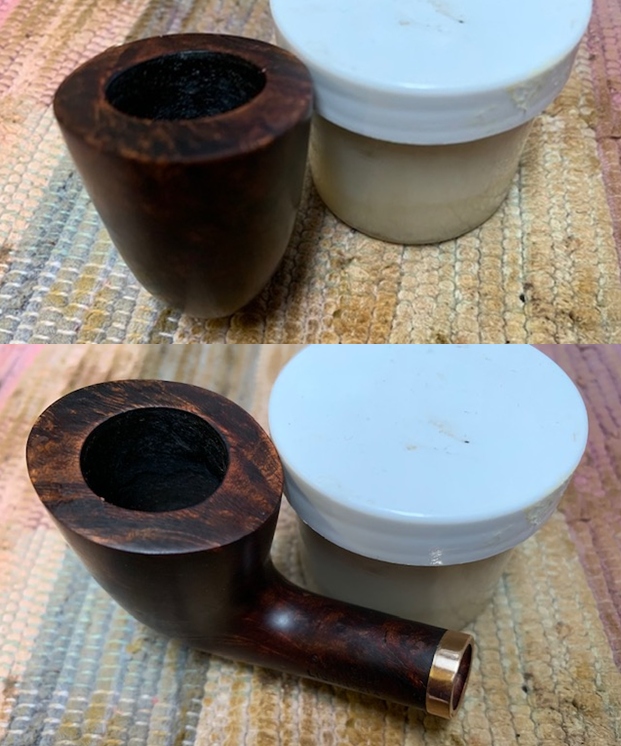
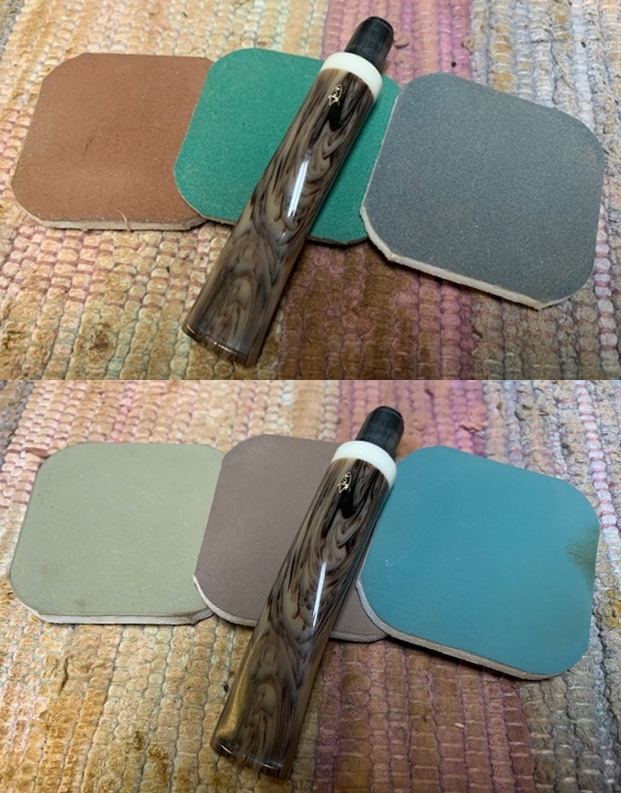
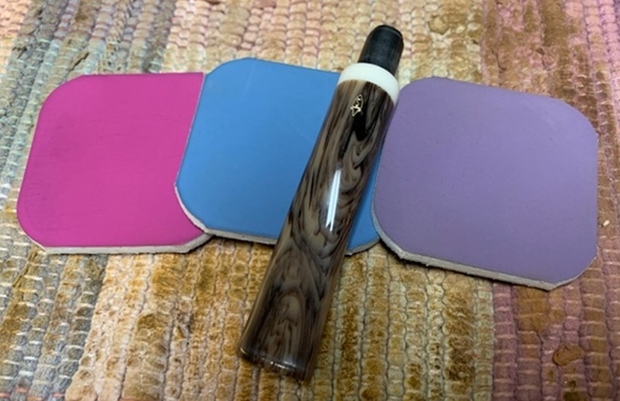
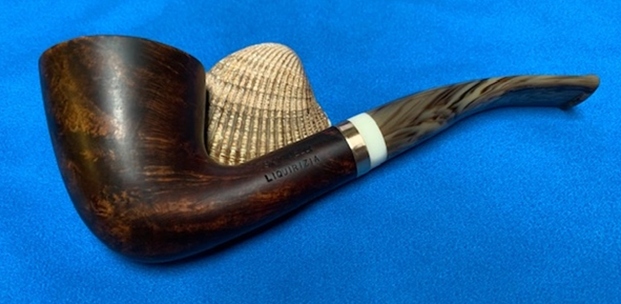
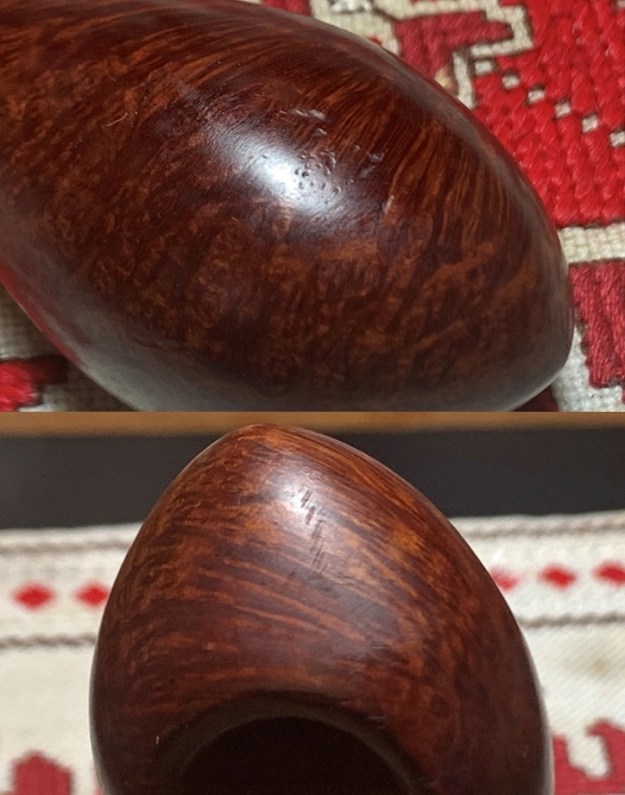
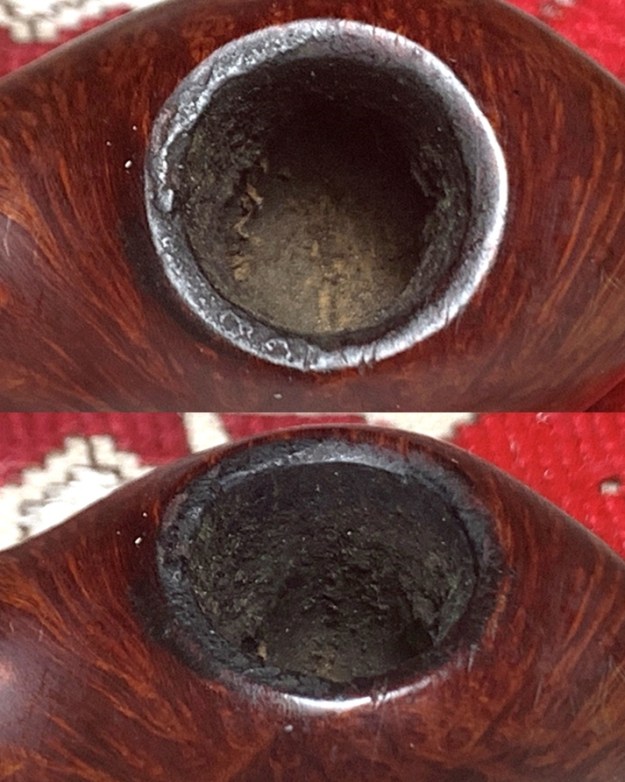
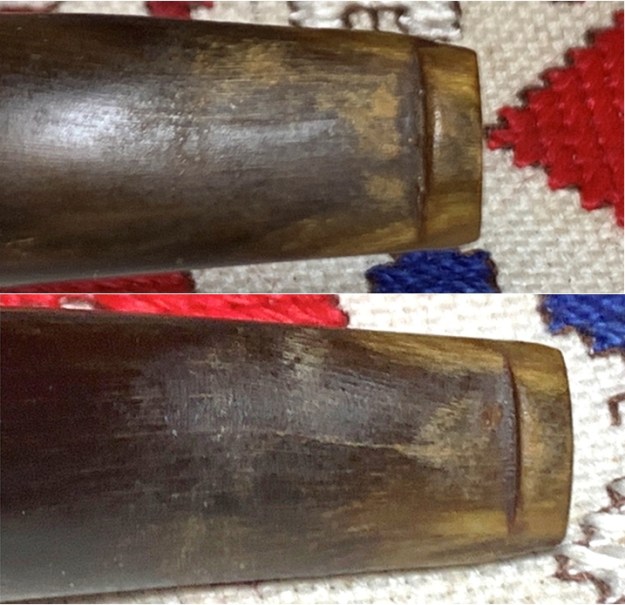
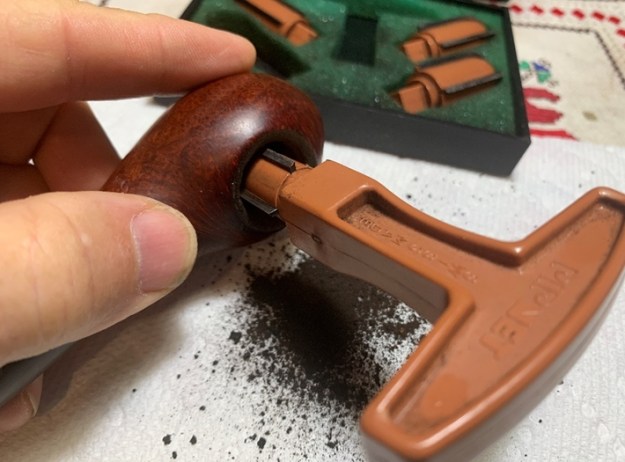
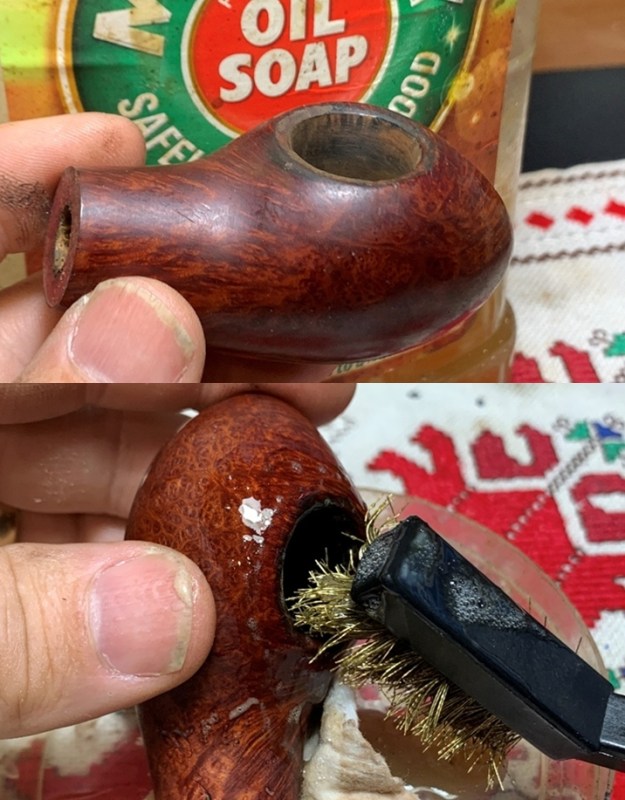
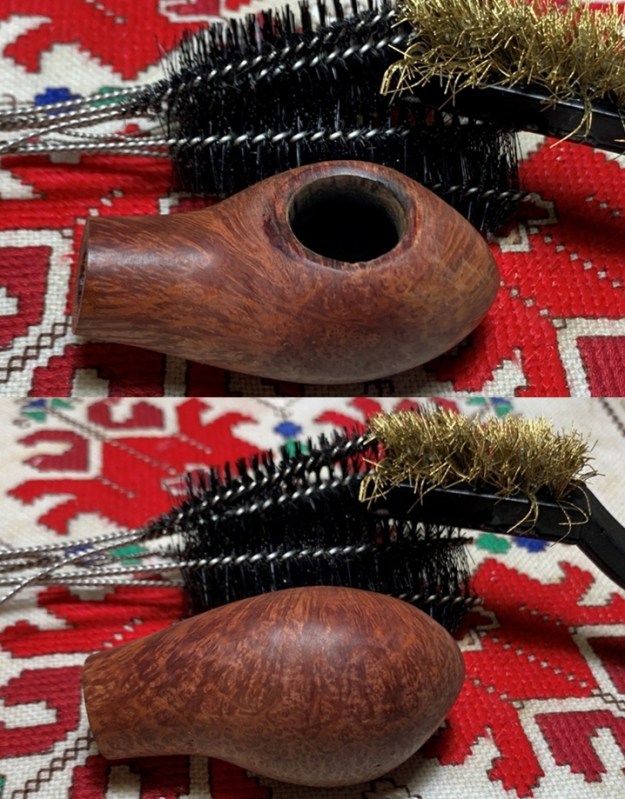
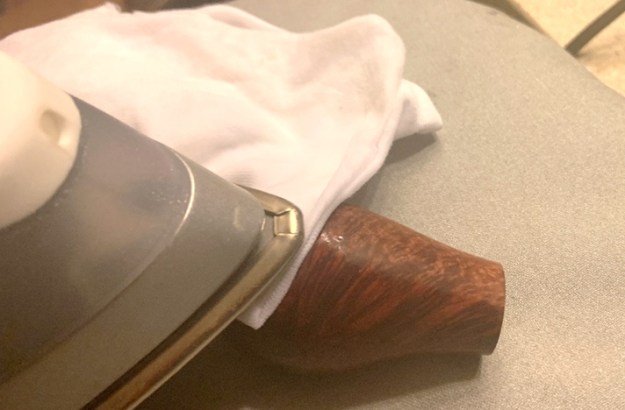
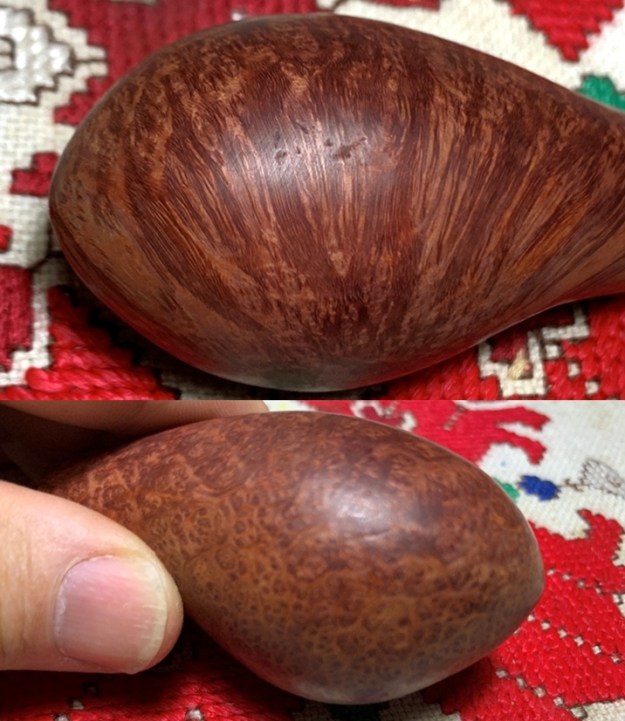
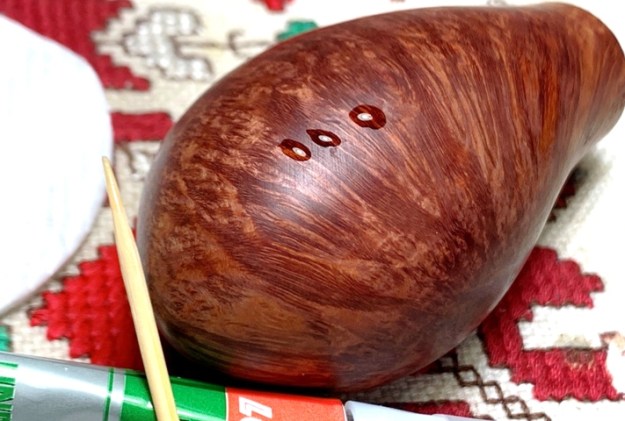
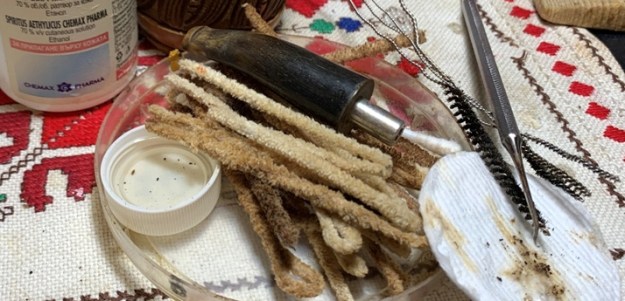
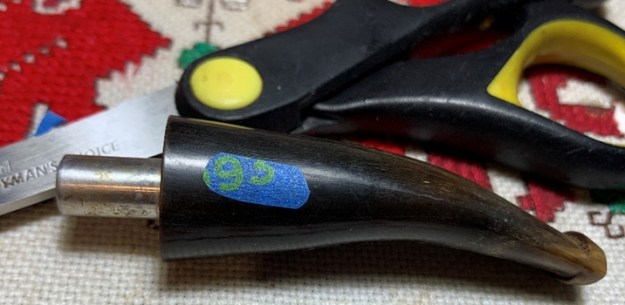
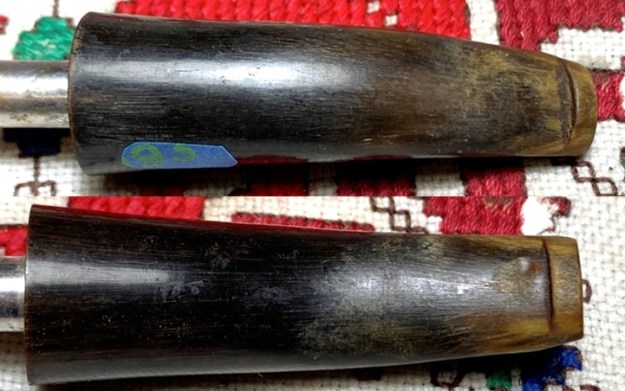
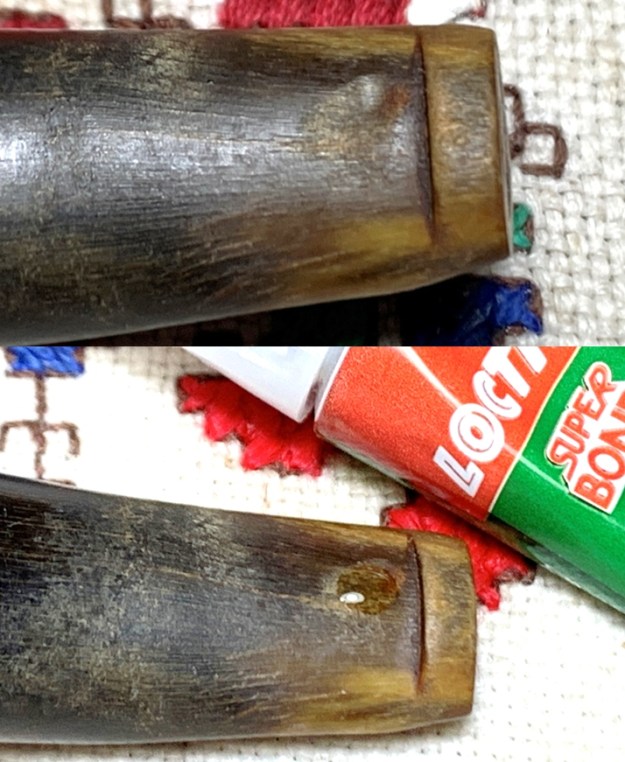
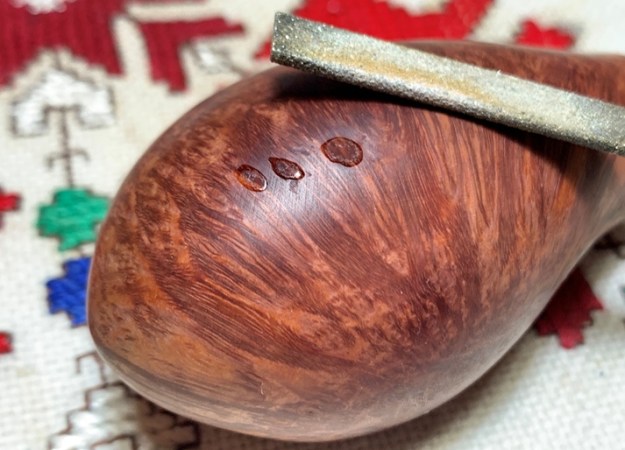
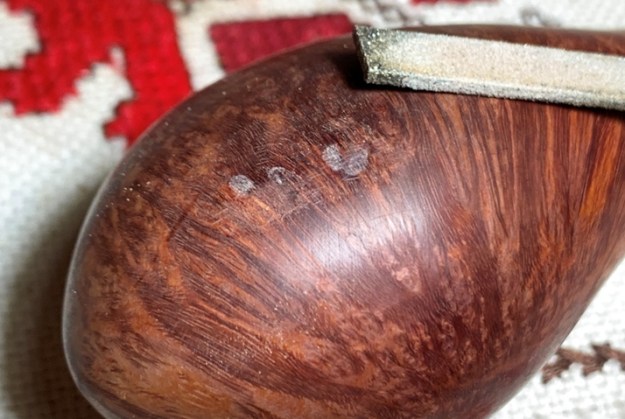
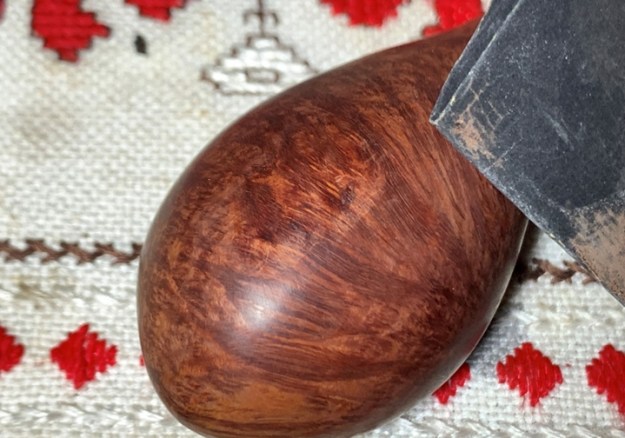
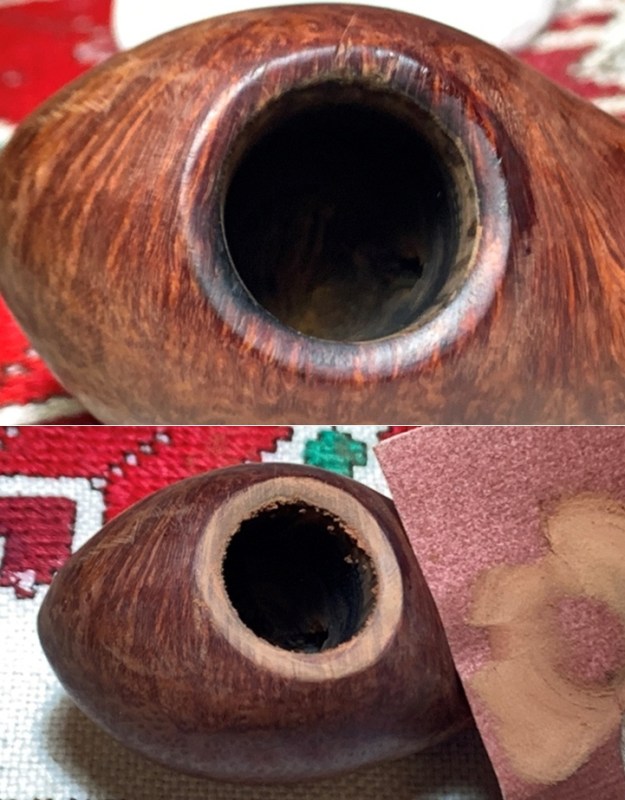
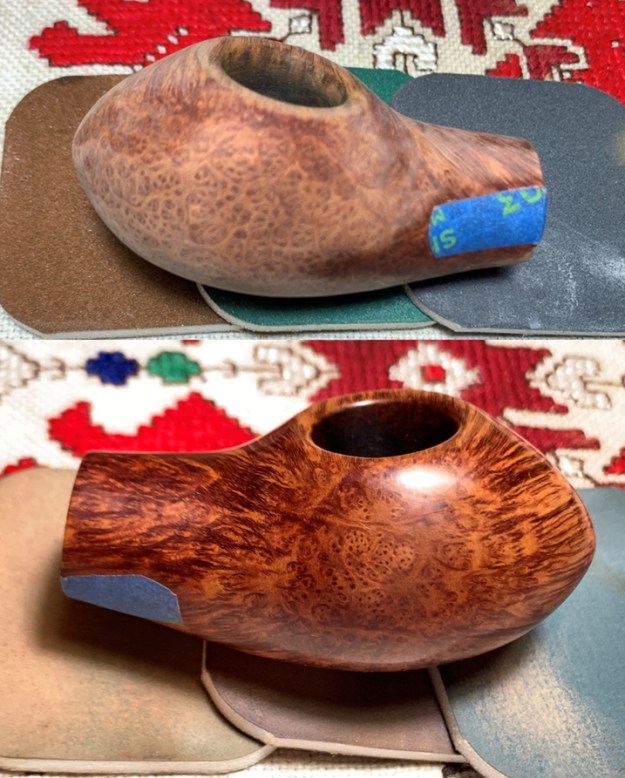
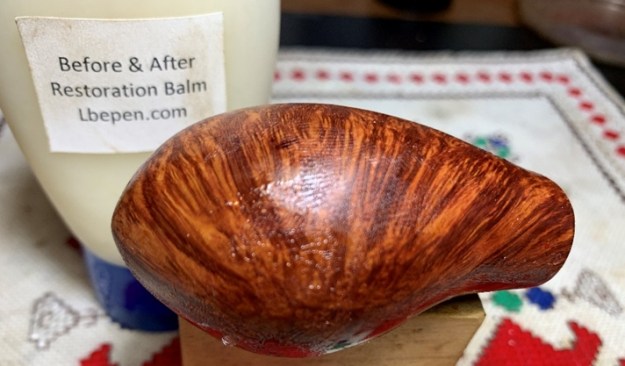
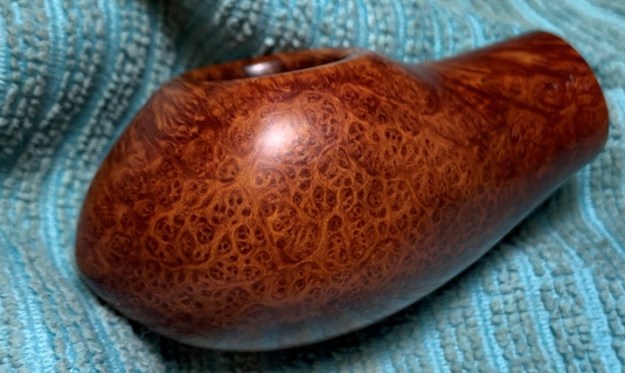
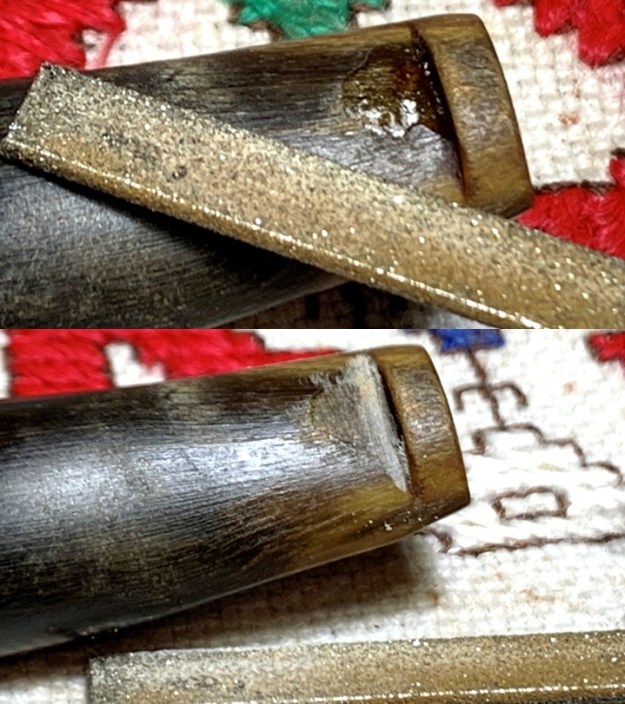
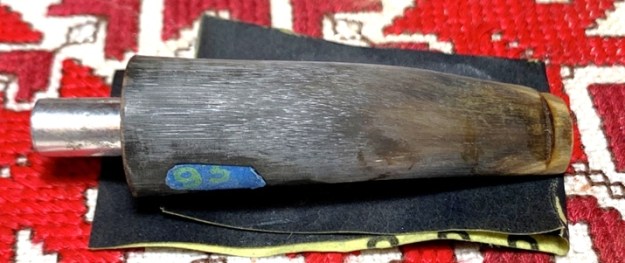
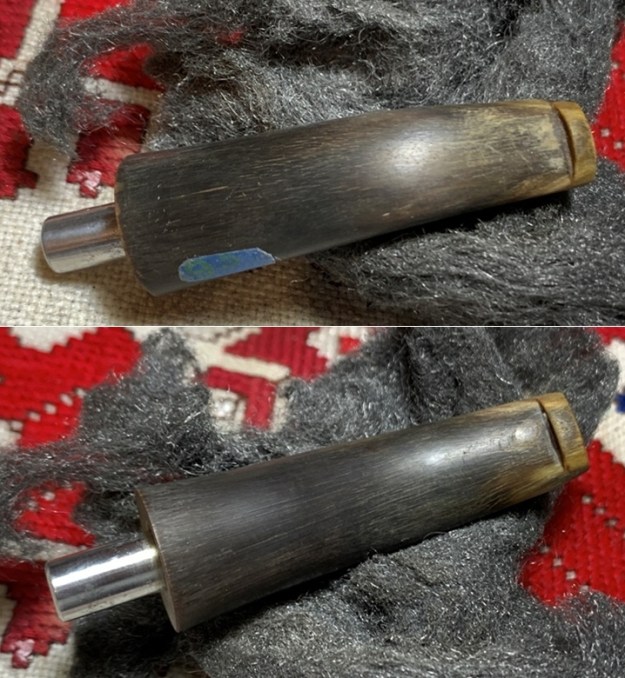
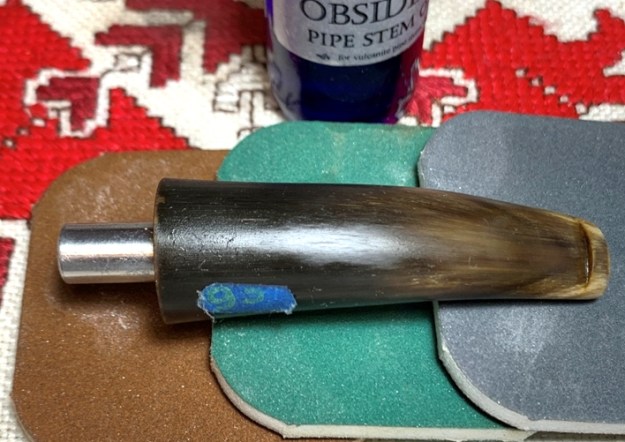
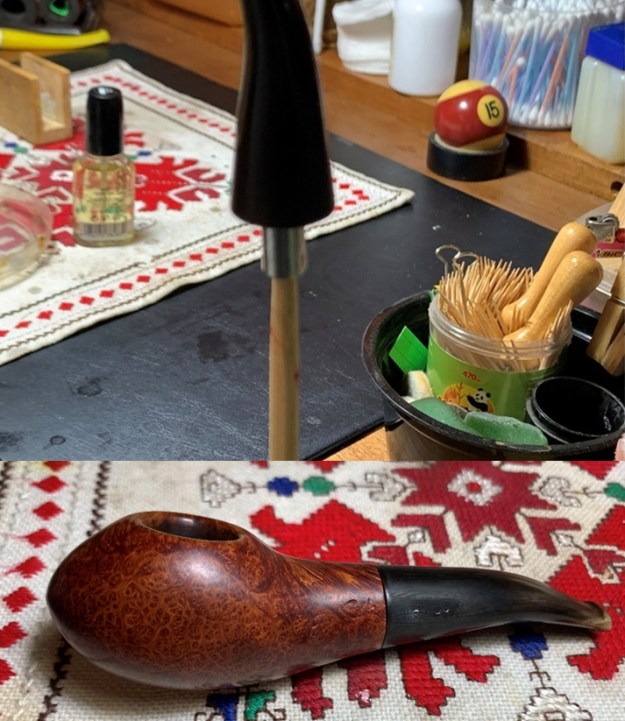
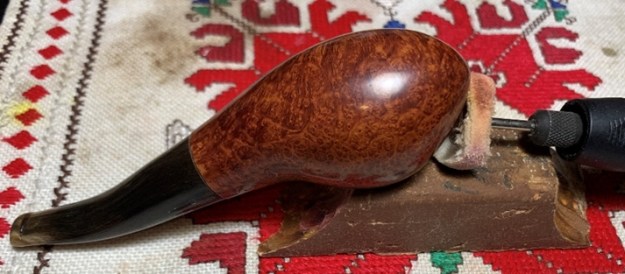
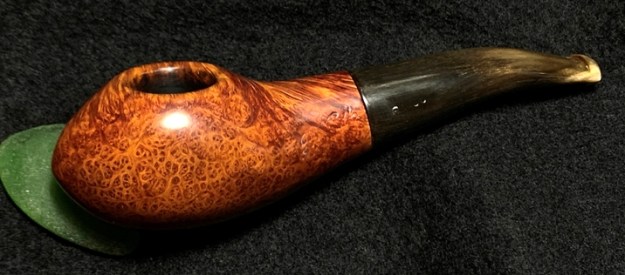
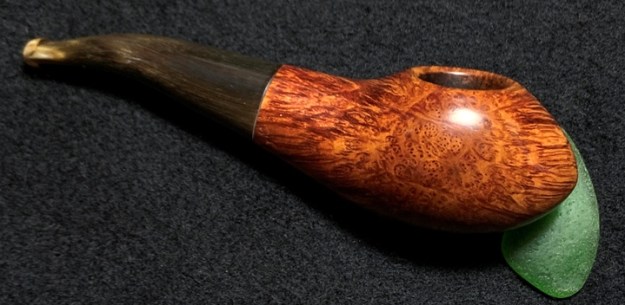
With a better understanding of the Paul Viou name and man who originally have his name to the pipes, I take a critical look at the Feather or Plume shape now on the worktable.  The grain on the stocky Feather stummel is attractive.  The briar block was cut allowing very intricate Bird’s Eye grain to emerge on both sides.  Looking at the stummel straight on – at the nose of the ‘torpedo’, the cross grain is visible connecting the sides creating the cross grain perspective.The finish on the briar is dark and in need of cleaning.  The surface shows dents and scrapes on the heel of the stummel as well as on the upper side.  The diminutive size of the Feather allows it to be the perfect ‘pocket pipe’ but in the pocket are keys and change to compete with!  The chamber has light cake buildup and will be removed to allow a fresh start for the briar.  The rim also shows caking which needs removing so that the condition of the rim can be seen more clearly and to rediscover the rim’s grain.  There are nicks and dents around the rise to the rim.  The horn stem is predominantly a dark hue except for near the bit area where it lightens.  The horn is rough but should clean up very nicely.I start the restoration of the P. Viou Feather by addressing the cake in the chamber. Only the smallest blade head is accommodated by the 3/4-inch diameter chamber.  The process of clearing the carbon cake transitions quickly to employing the Savinelli Fitsall Tool to scrape the chamber walls.  The rim is carefully scraped as well with my Winchester pocketknife then the chamber is sanded with 240 grade sanding paper wrapped around a Sharpie Pen.  The progress looks good.  With the chamber cleared of the cake buildup, After taking a starting picture, I clean the external briar surface using undiluted Murphy’s Oil Soap.  The stummel is scrubbed with a cotton pad as well as utilizing a brass bristled brush to work on the darkened rim. The brass brush will not negatively impact the briar as it scrubs the rim.To further the cleaning the stummel is transitioned to the sink.  Using warm water, shank brushes are employed with anti-oil liquid dish washing soap to clean the internal mortise chamber.  The brass bristled brush is used a bit more on the rim.  Back at the worktable I take another picture to show the cleaning progress.  The cleaning did a great job revealing very nice looking briar. The rim is much improved as well.  With a clean stummel before me, I take a closer look at the dents and pits primarily on the underside of the stummel I observed earlier.  The rough surface is from normal wear placing the Feather stummel down on the table or other harder surfaces.  The pictures show the comparison of ‘before and after’ to see how much progress is made with the repair.The approach I take capitalizes on the fact that wood is a very porous substance – spongelike in its composition.  Using a hot iron (with my wife’s permission!), I place a wetted cloth between a hot iron and the dents and press.  The heat generated by the iron heats the water in the cloth turning it into steam which permeates the briar surface with water.  The hot steamed water is absorbed and softens the wood allowing it to regain all or some of its pre-damaged condition. A comparison after several steaming sessions shows that the main heel damaged has lessened in its severity as the briar has expanded.  The side dent is now almost invisible.  To repair the residual pitting, using a toothpick as a guide, clear CA glue is spot dropped to fill the pits.  I put the stummel aside to allow the CA to cure.Turning now to the horn stem, pipe cleaners wetted with isopropyl 99% are used to clean the airway.  Along with smooth and bristled pipe cleaners wetted with isopropyl 99%, shank brushes are used to clean the airway.  A dental probe is used to scrape inside the slot as well as inside the nickel tenon.  Eventually, the pipe cleaners begin to emerge lighter and I move on.Before continuing working on restoring the horn stem surface, I place a piece of painter’s tape over the thin P. Viou stem stamping to protect it. In no way do I desire to contribute to its demise!I approach working on horn stem much like on vulcanite stems.  I take a few more pictures looking at the current condition of the horn material – upper and lower.  I like the solid blackish hue of the horn’s midsection contrasting with the gradual lightening of the bit.The condition of the stem is good except for one small tooth compression on the lower bit.  I fill it with a drop of CA glue and allow it to cure before sanding. The CA patches on the stummel heel have cured.  A flat needle file is used to file the glue mounds down to the briar surface. Transitioning to 240 grade paper, the patches are sanded further followed by 600 grade paper. I’m pleased with the results.  There is almost no visible reminder remaining of the rough area.  The repair blends nicely. The rim continues with darkened, scorched areas.  There are nicks as well on the right side of the rim (top of the picture below).  Using a hard backing behind a piece of 240 sanding paper, the slightly canted bevel is sanded and refreshed.  Following the 240 paper, the same is done with 600 grade paper.  I’m pleased with the refreshed rim.   Next, utilizing the full regimen of micromesh pads, the stummel is sanded.  Before sanding, painters’ tape is used to cover the P. Viou and COM on the sides of the stummel.  Using pads 1500 to 2400 the stummel is wet sanded.  Following this, the stummel is dry sanded with pads 3200 to 4000 and 6000 to 12000.  The protective tape was removed for the last 3 pads to even out the briar tone.  The beauty of the briar grain emerges through the micromesh process – I’m liking what I see!   Before returning to the stem, I’m looking forward to applying Mark Hoover’s ‘Before and After Restoration Balm’ to the stummel.  I apply some of the Balm to my fingers and rub it into the briar surface.  At first it has a cream-like consistency but as it works into the briar it transforms into a waxy consistency.  After applying the Balm, the stummel is set aside for 20 minutes or so for the Balm to enrich the briar.  After 20 minutes I use a microfiber cloth to wipe off excess Balm and then hand buff the stummel to raise the shine.  I like the way the Restoration Balm enhances the natural hues of the briar.Returning now to the horn stem, the sanding process is much like that of vulcanite stems.  After the CA patch has cured filling a tooth compression, using the flat needle file, the lower bit patch is filed until level with the stem surface.  The file also helps to refresh the lower button lip. Next, I transition to 240 sanding paper and smooth further the lower bit blending the patch more.  Flipping the stem over, the upper bit is sanded to smooth and tighten the horn surface from normal wear.   Next, the entire stem is wet sanded using 600 grade paper.As with vulcanite stems, next I apply 0000 steel wool to the entire stem to smooth and shine further. While using steel wool, I also apply it to the nickel tenon which shines it up very nicely.  Next, with the P. Viou stem stamping still covered with painters’ tape, the stem is the recipient of the full regimen of micromesh pads.  Starting with pads 1500 to 2400, the horn is wet sanded.  Following the wet sanding, I dry sand with pads 3200 to 4000 and 6000 to 12000.  I remove the tape for the last two pads to sand more closely to blend the area.  Obsidian Oil is applied and worked into the horn between each set of 3 pads.  The horn almost ‘drinks up’ the oil. To get a look at the progress, the stummel and horn stem are reunited.  Two issues surface after I do this. The seating of the stem into the mortise is off.  The next picture shows this with a gap of sunlight on the upper side of the connection point.  To remedy this, I fold a piece of 240 sanding paper and insert it between the lower halves of the stem and stummel and sand in a sawing motion.  This hopefully will even out the high point to bring the two faces back together flush – or as close as possible.   The result is good. There is still some daylight, but I’m satisfied at this point.  Sanding to remedy an unseated stem can be a bit finicky and sometimes ‘less’ is ‘more’ – I don’t want to complicate things!The other issue that emerged was that through the cleaning process the internal mortise cavity expanded somewhat so that the nickel tenon is not as snug as it should be.  The ways to fix this are limited.  If this were a vulcanite stem and tenon, the approach would be to expand the width of the tenon by heating it and forcing expansion by wedging the end of a drill bit in the softened tenon airway.  A nickel tenon, however, does not expand.  The remedy is to paint the external surface of the metal tenon with an acrylic nail polish or with CA glue.  The results are the same.  The hardening of the acrylic creates a hardened layer around the metal tenon, thus expanding its diameter and creating a snugger fit seated into the mortise.  I use a small bottle of acrylic nail polish and apply the acrylic polish with the small brush that comes along with the bottle. After each coating, I wait until the acrylic is cured before applying another layer.  After each cycle, the tenon is carefully fitted into the mortise to determine if another layer is needed.  To help it to dry evenly after each application, I ‘post’ the stem vertically on the end of a chop stick.  After several coats of clear acrylic nail polish, the fit of the stem was much snugger.  Mission accomplished.   Next, I attempt to refresh the P. Viou stem stamping, but am not successful.  The vestiges of the stamping were not deep enough to allow the white acrylic paint to grab the stamp channels.  After several attempts, I settle for what is. Now on the homestretch.  After mounting a cotton cloth buffing wheel to the Dremel, speed set at about 40% full power, I apply Blue Diamond compound to horn stem and stummel.  After completing this, a felt cloth is used to buff the pipe to clear the compound dust before applying the wax.To apply carnauba wax, the cotton cloth wheel is changed to a wheel dedicated to carnauba.  With the speed on the Dremel maintaining 40% power, wax is applied to the entire pipe.  The first coat applies the wax thoroughly over the surfaces.  Following this, the pipe is buffed up using the Dremel to make sure all the wax is dispersed and absorbed.  Finally, the pipe is given a rigorous hand buffing with a microfiber cloth to raise the shine further.I’m pleased with how this product of Jacques Craen in St. Claude has turned out.  With Sebastien Beaud’s generous assistance, we can date this pipe after Jacques received the P. Viou name from the aging Paul Viou and his wife, Odette, who provided pipes to French military servicemen.  This ‘Plume’ is a beautiful example of French pipe making with its subtle intricacies, flow, and lines.  The grain, especially the exceptionally tight Bird’s Eye, is pleasing to behold! The horn stem with its gentle natural bend, has unique coloring.  The glassy shine of finely polished horn is pleasing to the eye and its rustic character will make it a pleasure to enjoy tobacco fellowship.  Last but not least, the unique Plume or Feather diminutive shape allows it to cradle very nicely in the palm.  This is the second of Daniel’s commissioned pipes and he will have the first opportunity to claim the P. Viou Feather from The Pipe Steward Store benefiting the Daughters of Bulgaria – women and girls who have been trafficked and sexually exploited.  Thanks for joining me!
Restoring a Sabatini Extra Quarter Bent Dublin


Blog by Steve Laug

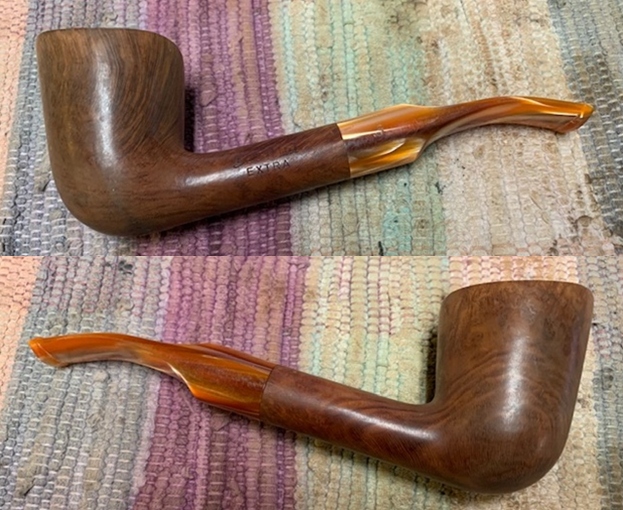
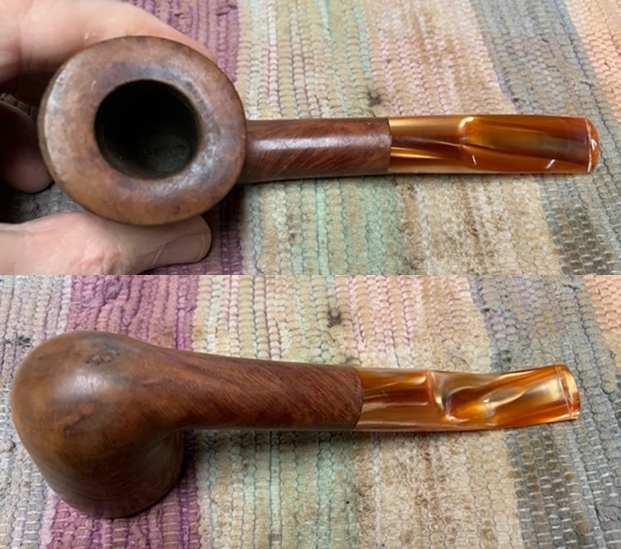
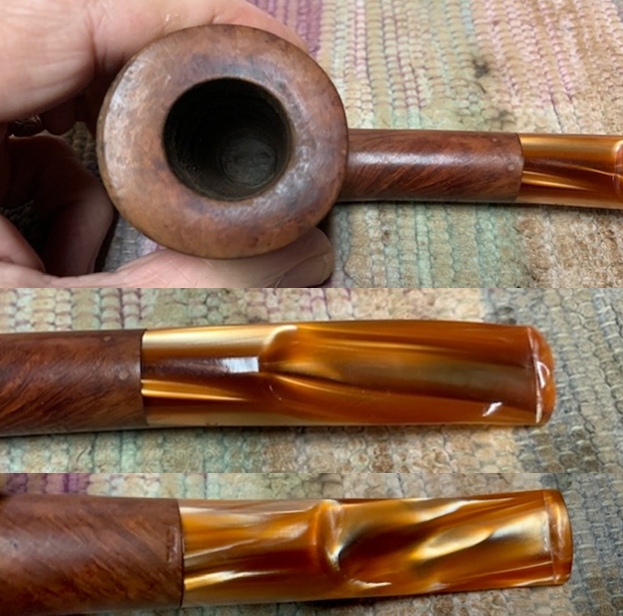
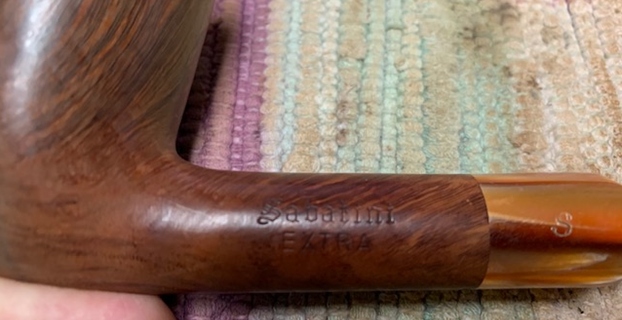
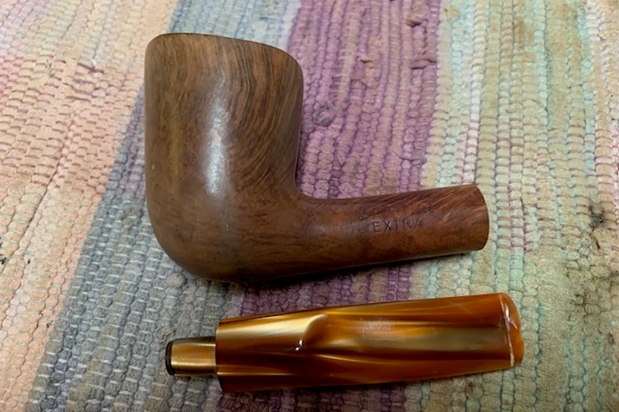
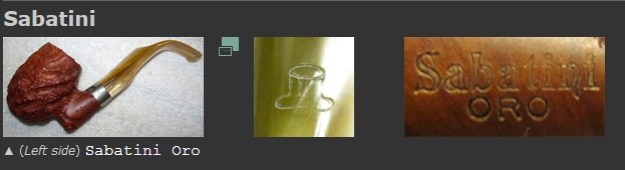
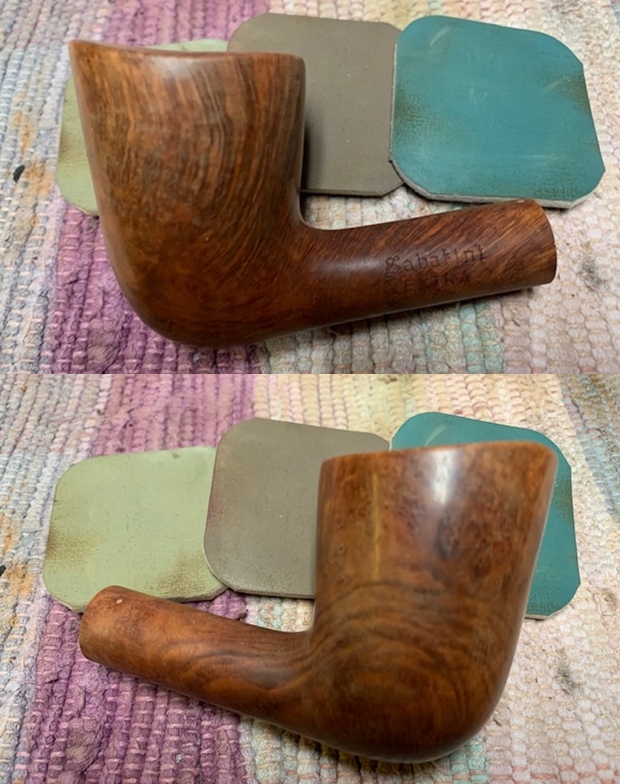
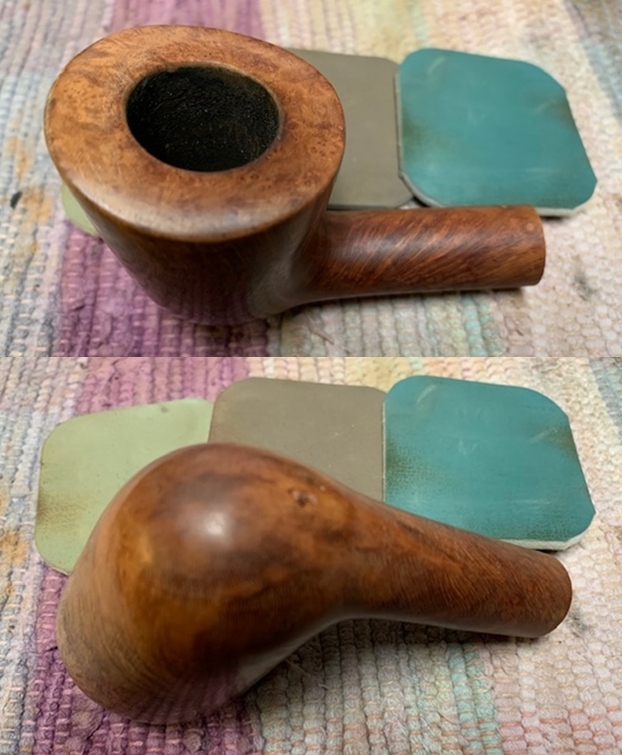
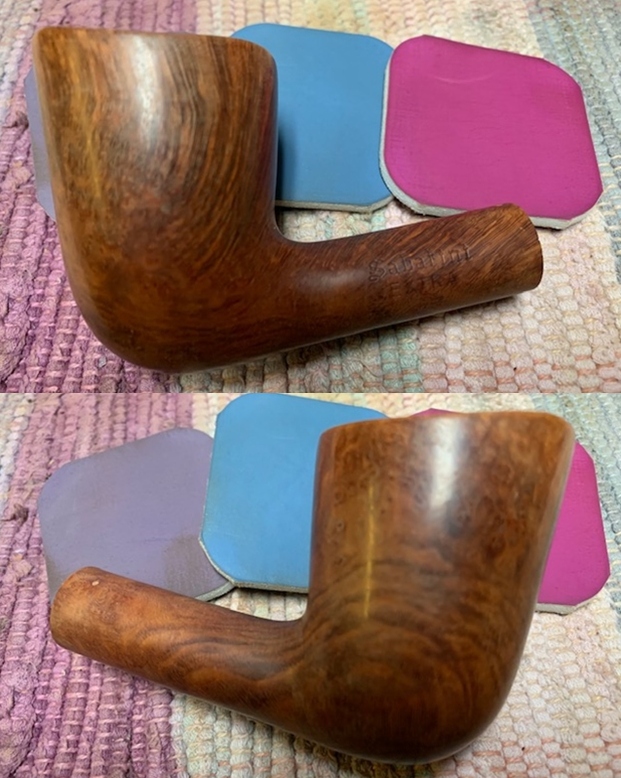
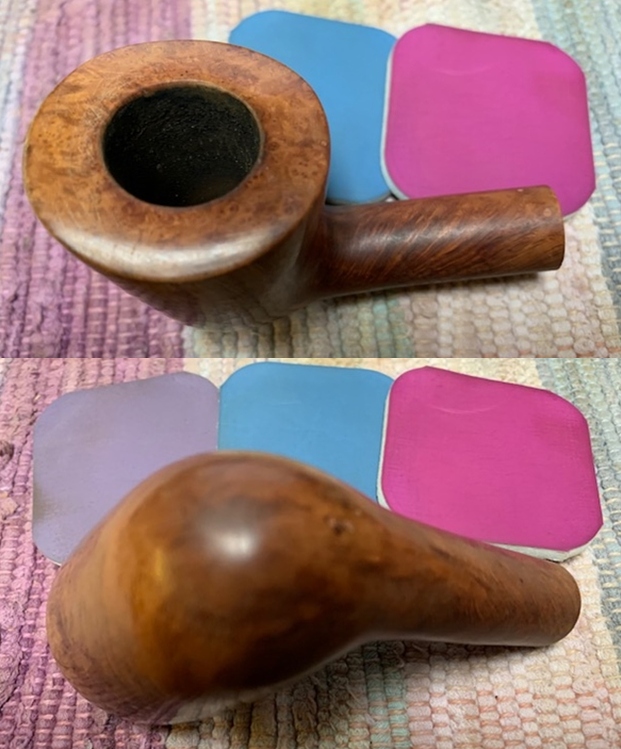
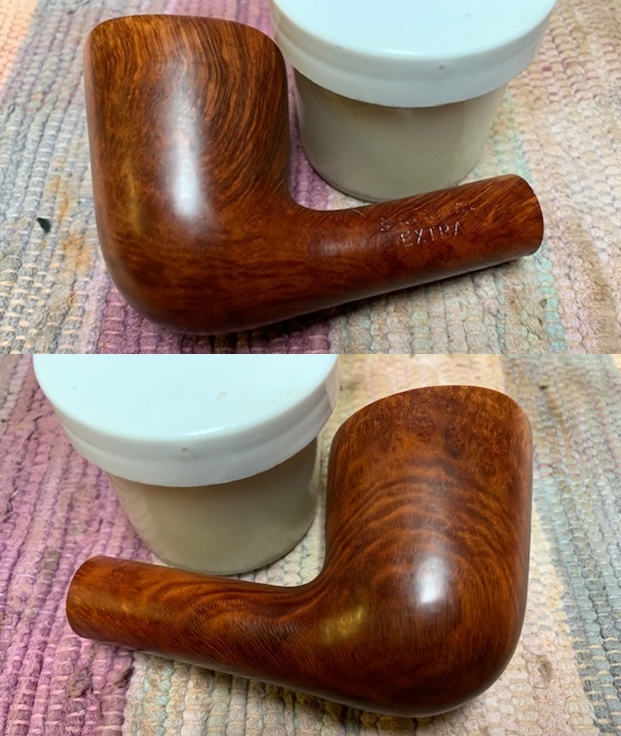
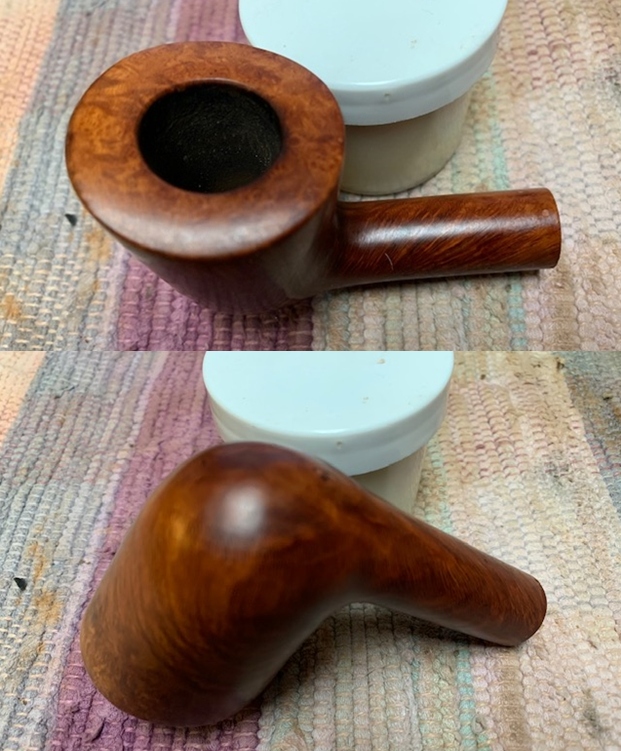
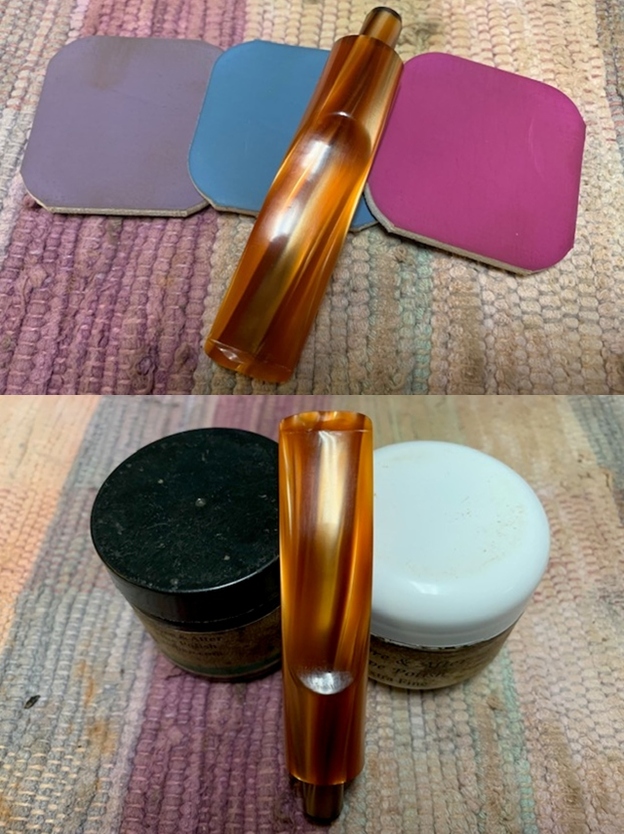
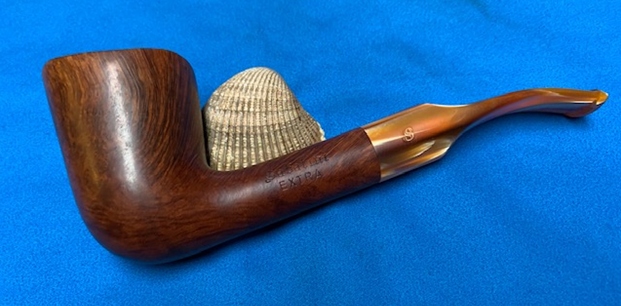
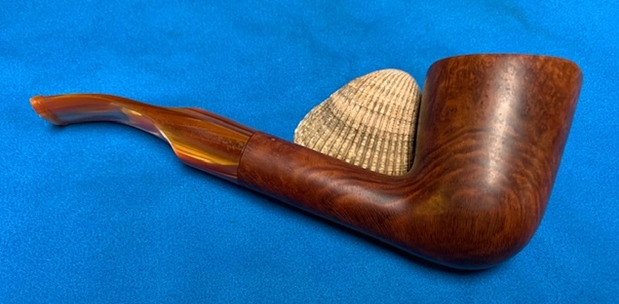
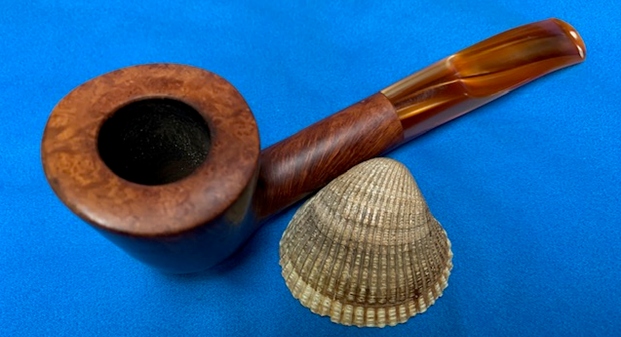
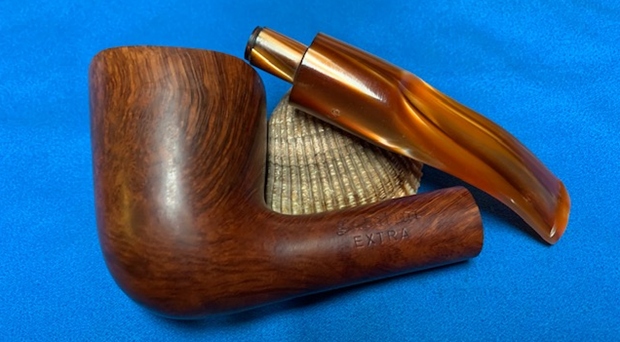
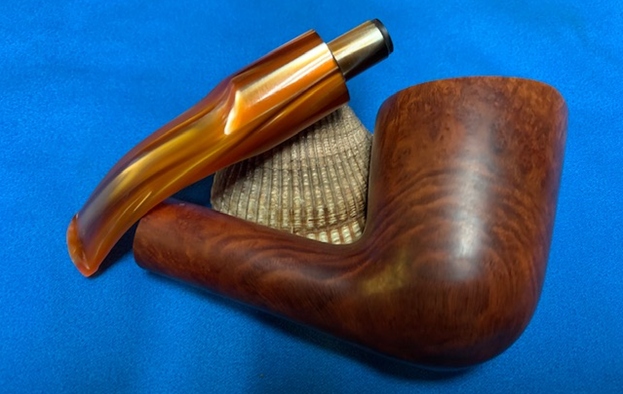
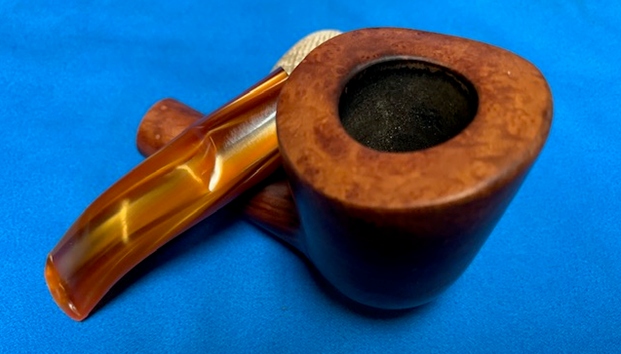
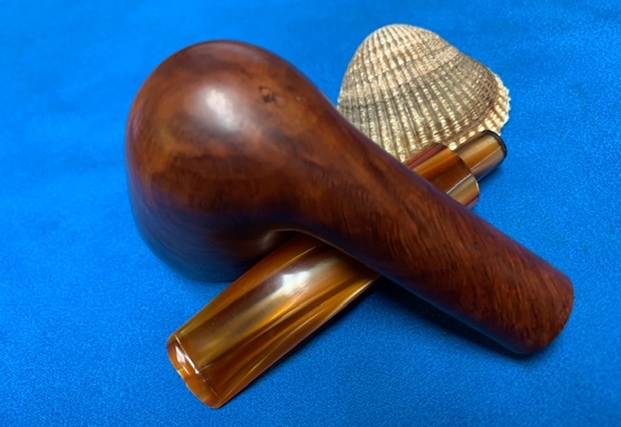
The next pipe I have chosen is one that neither Jeff nor I remember picking up. It could have come to us through a trade for work on a pipe or it could have come from one of an earlier pipe hunts that either Jeff or I did. Either way, the long and short of it is that we have no idea how this one came into our hands. It is a Sabatini in a shape I would call a ¼ bent Dublin. It had a smooth finish on the bowl and a slightly scooped rim top with a variegated Lucite stem. Under grime on the finish it appears that pipe may have had a light brown or tan stain to highlight the grain around the bowl. There were small sand pit fills around the bowl on the front, back and underside. It was stamped on the left side of the shank. The stamping was readable. It read Sabatini [over] Extra. Next to the shank/stem junction on the underside it was stamped Italy. There was also a stylized upper case S on the left side of the saddle stem. It was in decent condition when I brought it to the table. The finish was dirty with grime ground into the briar sides and rim. There was a moderate cake in the bowl and light damage to the rim top and the inner edge of the bowl. The stem was dirty but otherwise in good condition. There were tooth marks and chatter on the top and underside on and near the button and on the button surface itself. I took photos of the pipe before my cleanup work. They tell the story and give a glimpse of the promise that I see in this pipe.  I took a photo of the rim top to show the interior the bowl and the rim top and inner edge. It is moderately caked with some damage to the rim top and edges and some darkening on the back top of the rim. The Lucite stem is in decent condition with tooth marks on the top and underside near the button.   I took a photo of the left side of the shank to show the stamping. The stamping is readable in the photos below and is as noted above. The stem has a stylize upper case S on the left side. I took the stem off the bowl and took a picture of the parts of the pipe to give a sense of size.I turned to Pipephil’s site to see if I could find out any information on the brand (http://www.pipephil.eu/logos/en/logo-s2.html). There was little there to go on however it appears that the Italian crafted pipes were distributed by the US distributor Wenhall Pipes LTD. I did a screen capture of the information that was there.I checked on Pipedia and came up empty handed on the Sabatini brand but then turned to the article on Wenhall Pipes Ltd (https://pipedia.org/wiki/Wenhall). I found that Wenhall Pipes Ltd. was a distribution company out of New York City and distributed some well-known pipes. I quote the article below

Wenhall (USA)

By the end of the 1970’s Wenhall approached Michael Kabik and Glen Hedelson, at that time operating from a farm house in Glen Rock, Maryland to create a line of freehands called Wenhall. The situation was favorable, because Kabik & Hedelson had ended their cooperation with Mel Baker of Tobak Ltd. to produce the famed Sven-Lar freehands shortly before.

Upon Wenhall’s offer the partners got a bank loan and set up a studio of 2000 square feet in a fairly new industrial park in Bel Air, Maryland and took on the name Vajra Briar Works. Wenhall initially wanted 500 pipes a week! But Kabik & Hedelson doubted that they could move that much product and told them they would produce 250 pipes per week. Happily, some of the old crew from Sven-Lar joined them at Vajra Briar Works, and thus they rather quickly met the production demands.

Furthermore during this time, Wenhall requested to create a line of pipes consisting of 12 different shapes. The line was called The Presidential and, while they repeated the same 12 shapes for this series, each one was freehand cut. Although they came up with interesting designs, mainly developed by Hedelson, especially Kabik was never really happy with the line or the concept, but, by this time, they had nine people on full-time payroll.

The stint with Wenhall lasted a couple of years, at which time they asked them to join Wenhall in a move to Miami, Florida. But by this time Kabik and Hedelson felt very uncomfortable with the owners of Wenhall and decided that they’d rather close the shop than make the move. Time proved that decision very wise, as Wenhall folded shortly after the move. All the same they had to close Vajra, but scaled down to the two of them and moved the operation to the farm house Glen was currently living in…

The next lines of the article are the ones that got my attention. When I first saw the pipe in the repair box I immediately thought it reminded me of a Barontini and sure enough there is a possible link noted below.

Wenhall also distributed pipes from Italy. By unconfirmed information Gigi and Cesare Barontini were mentioned as suppliers.

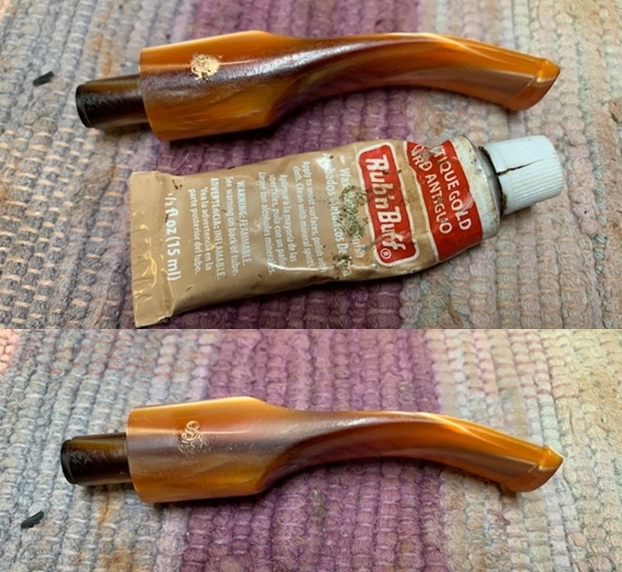
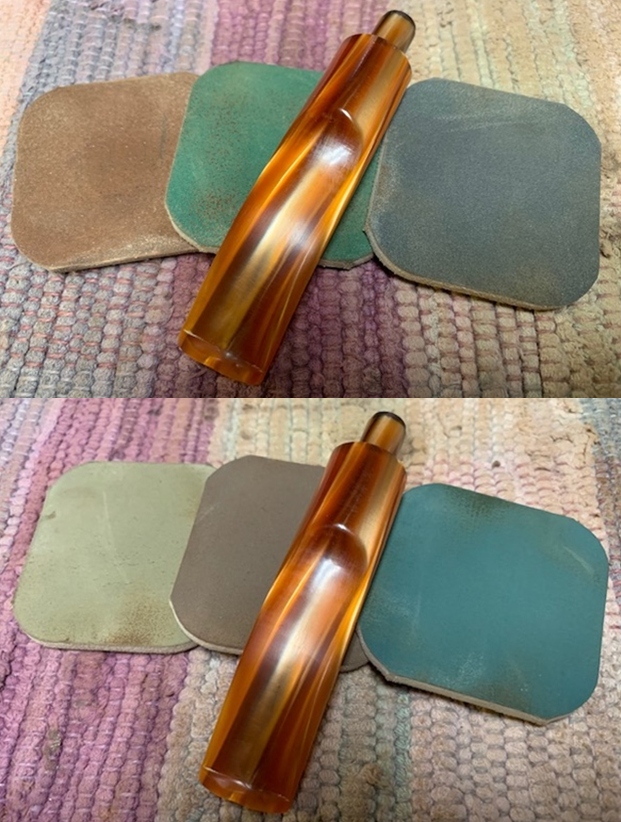
Armed with that information I decided to begin my work on the pipe by addressing the damage to the rim top and edges. I used a folded piece of 220 grit sandpaper to clean off the rim top and the inner edge of bowl. It took some time but I was able to bring it back to a pretty clean condition.  I reamed the pipe with a PipNet reamer and cut back the cake back to the bare briar. I cleaned up the walls with a Savinelli Fitsall Pipe Knife. I sanded the walls as a final touch with 220 grit sandpaper wrapped around a dowel. The interior walls of the pipe looked free of burn or heat damage. To me that is always a relief.  I scrubbed the exterior of the bowl with a tooth brush and undiluted Murphy’s Oil Soap. I find that the soap cuts the grime and grease on the briar and leaves the surface clean and easier to work with. I rinsed it off with warm water and dried it with a cotton towel.  I filled in all of the putty filled flaws around the bowl with briar dust and clear super glue. Once it cured I sanded them smooth with 220 grit sandpaper.  I cleaned out the shank and airway in the shank and stem with pipe cleaners, cotton swabs and alcohol. I was surprised that I also was removing some brown stain from the end of the shank.I polished the bowl and rim top with micromesh sanding pads – dry sanding it with 1500-12000 grit pads. After each pad I wiped the briar down with a damp cloth. This served a dual purpose of both removing the sanding debris and the dust that had accumulated in the rustication patterns around the bowl and shank.   I worked some Before & After Restoration Balm into the surface of the briar with my fingertips and a horsehair shoe brush to clean, enliven and protect the briar. I let the balm sit for 15 minutes and then buffed with a cotton cloth to raise the shine. The photos show the bowl at this point in the restoration process. It looks quite nice at this point.   With that done the bowl was finished other than the final buffing. I set it aside and turned my attention to the stem. I filled in the tooth marks and rebuilt the button with clear super glue and set it aside to cure. Once the repairs cured I used a piece of 220 grit sandpaper to clean them up and blend them into the surface of the acrylic. I started the polishing with 400 grit wet dry sandpaper. I used some Rub’n Buff Antique Gold to touch up the S logo on the stem. I rubbed it on and pressed the product into the stamp. I rubbed it off with a cotton pad.I polished the stem with micromesh sanding pads – wet sanding with 1500-12000 grit sanding pads. I wiped it down after each sanding pad with Obsidian Oil. I polished it with Before & After Pipe Stem Polish – both Fine and Extra Fine.   I am excited to finish this Sabatini Extra Bent Dublin. I put the pipe back together and buffed it with Blue Diamond on the buffing wheel. I gave the bowl and the stem multiple coats of carnauba wax. I hand buffed the pipe with a clean buffing pad to raise the shine. It is fun to see what the polished bowl looks like with the grain popping through on the bowls sides and rim top. Added to that the polished variegated orange Lucite stem was beautiful. This smooth finished Dublin turned out to be a nice looking pipe that feels great in my hand. It is light and well balanced. Have a look at it with the photos below. The dimensions are Length: 6 ½ inches, Height: 2 ¼ inches, Outside diameter of the bowl: 1 ¾ inches, Chamber diameter: ¾ of an inch. The weight of the pipe is 67grams/2.36oz. It is a beautiful pipe and one that will be on the rebornpipes store in the Italian Pipe Makers section soon. If you are interested in adding it to your collection let me know. Thanks for walking through the restoration with me as I worked over this pipe. Thanks to each of you who are reading this blog. Remember we are not pipe owners; we are pipemen and women who hold our pipes in trust until they pass on into the trust of the next pipeman or woman. 


Restoring an LHS Purex Preferred 28 Chunky Pot


Blog by Steve Laug

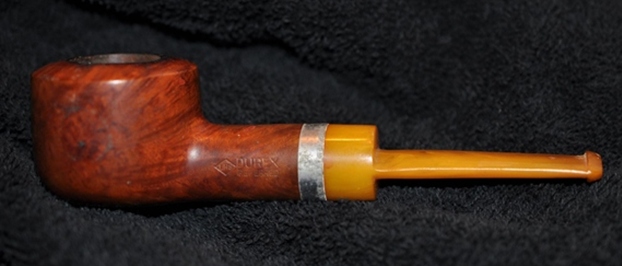
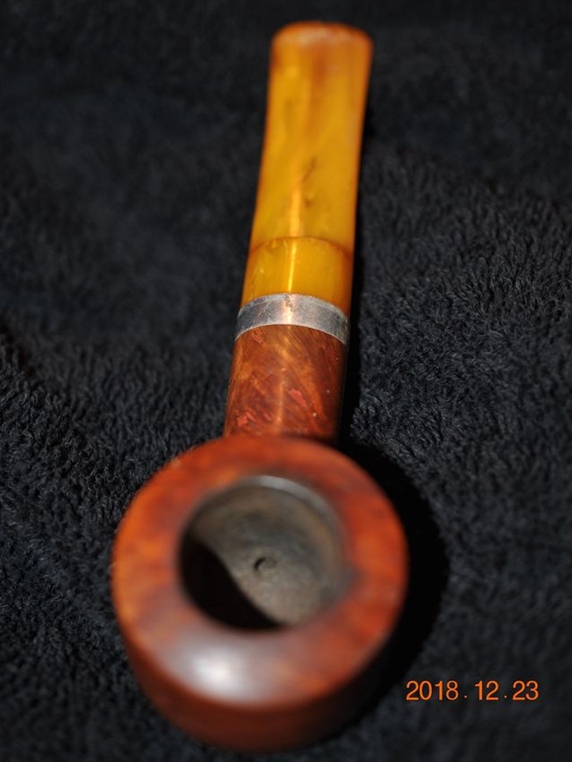
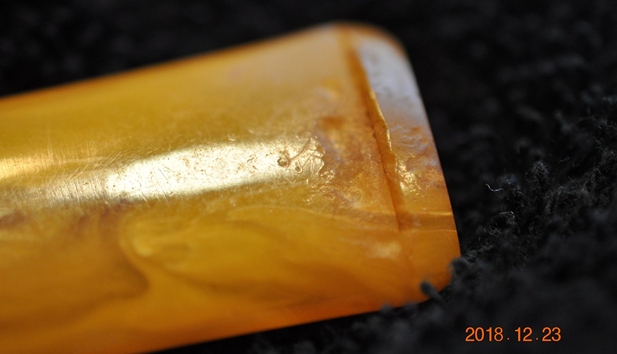
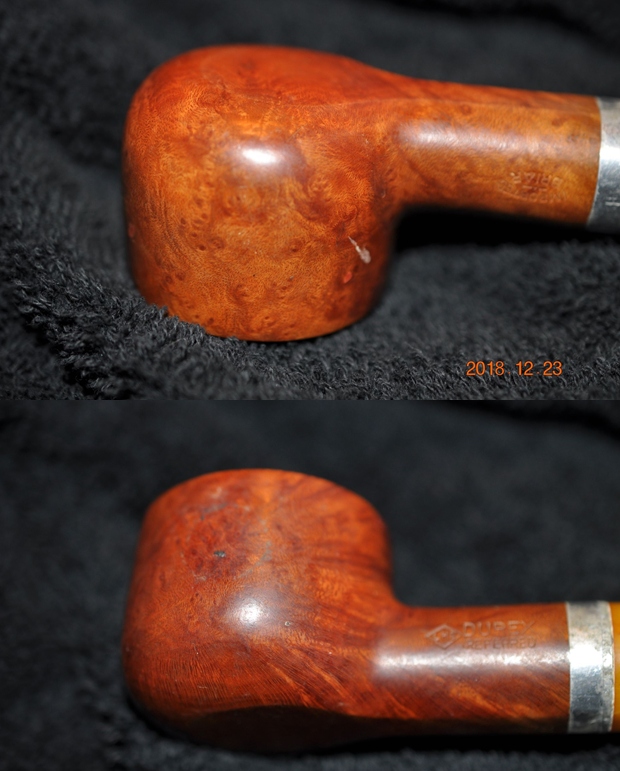
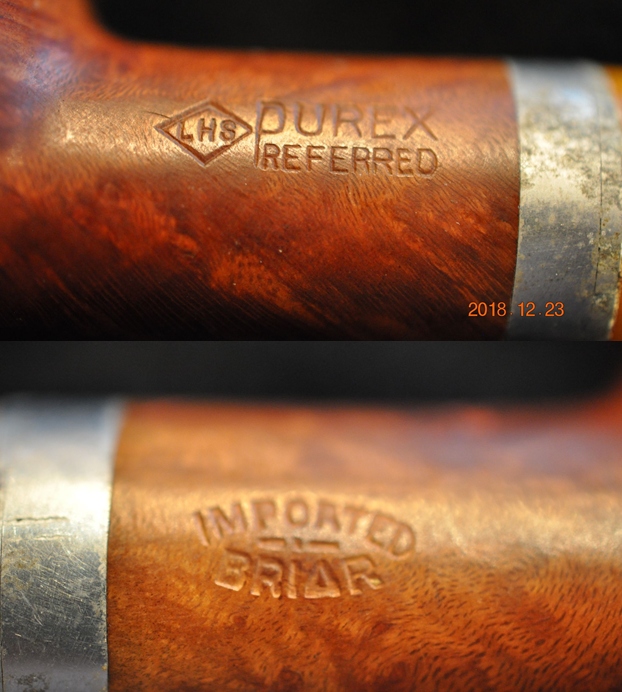
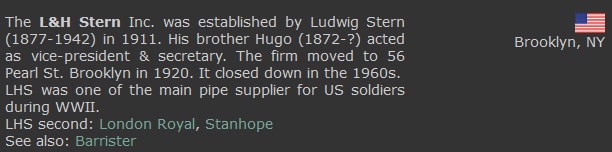
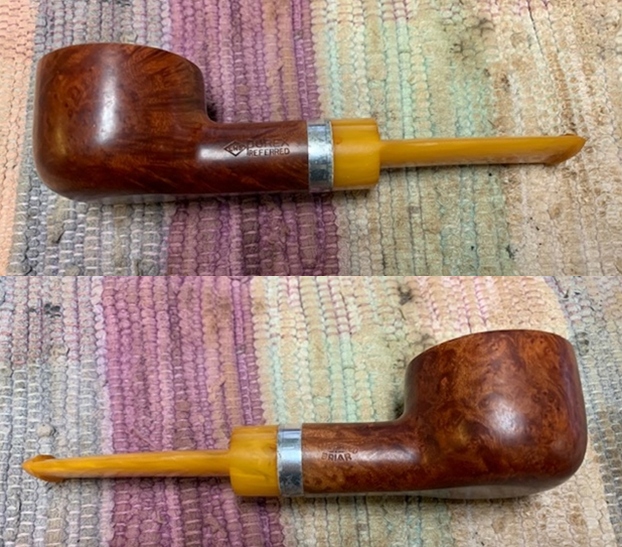
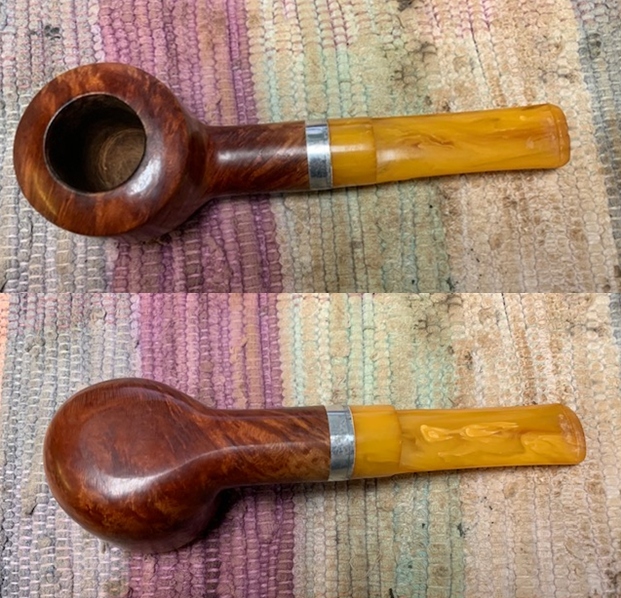
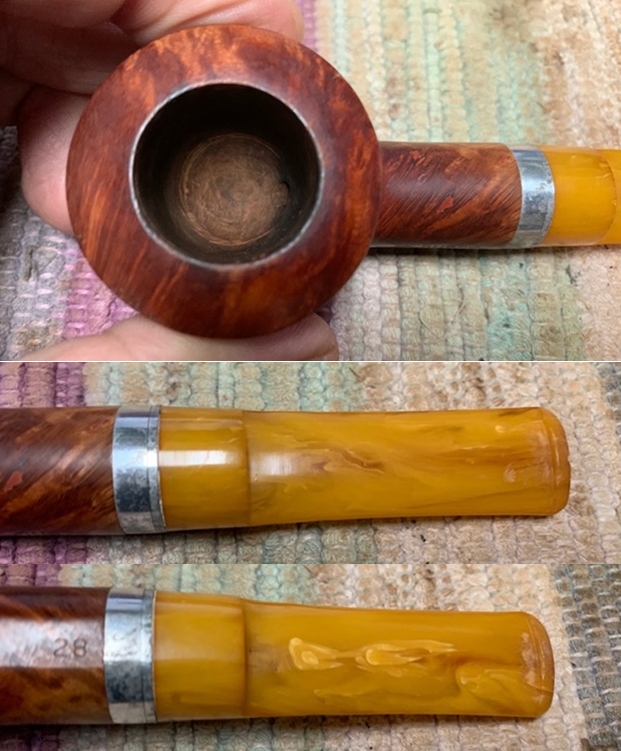
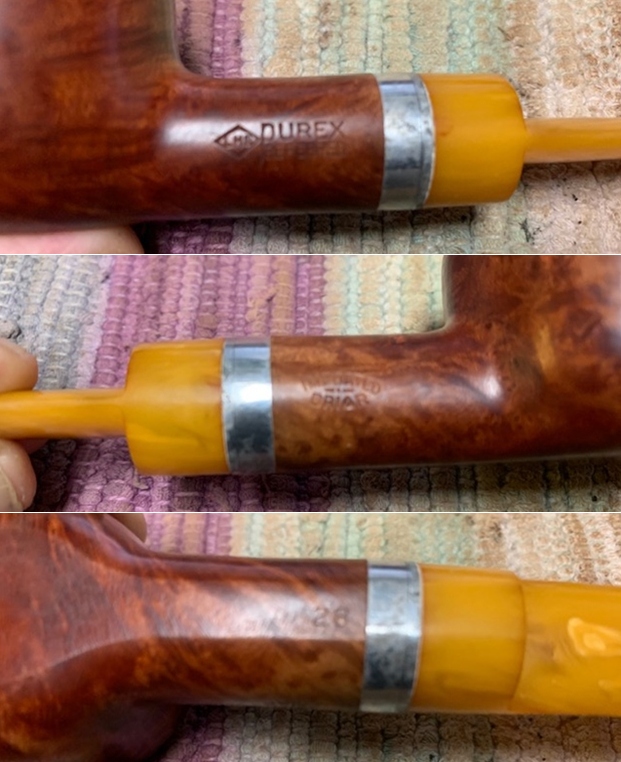
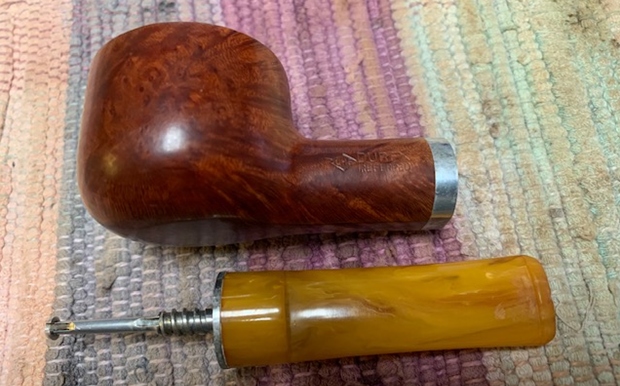
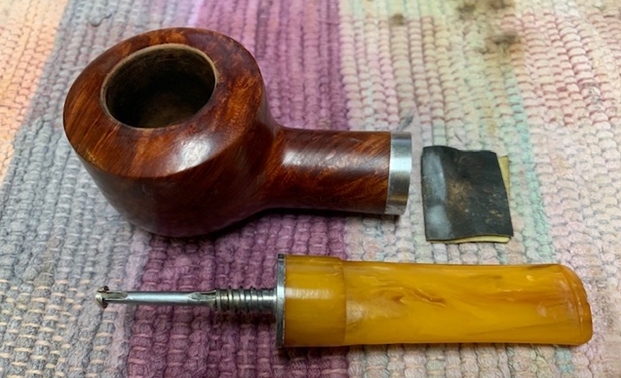
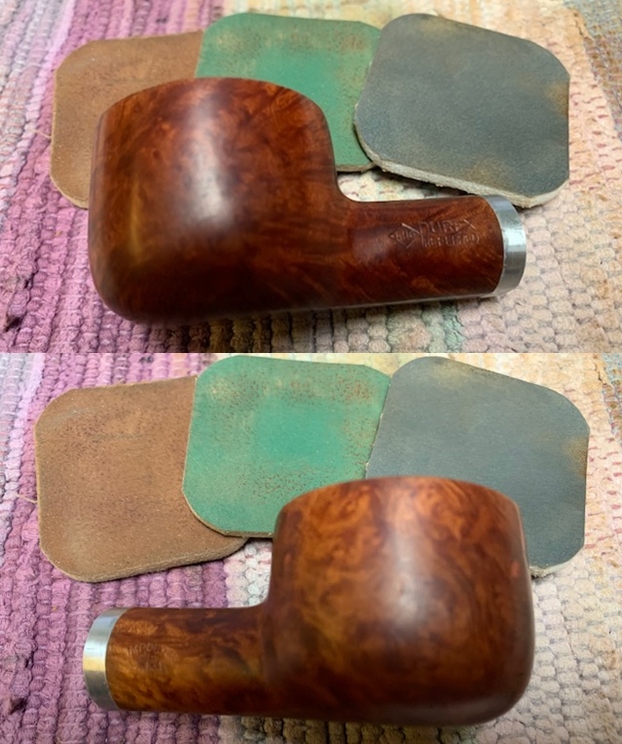
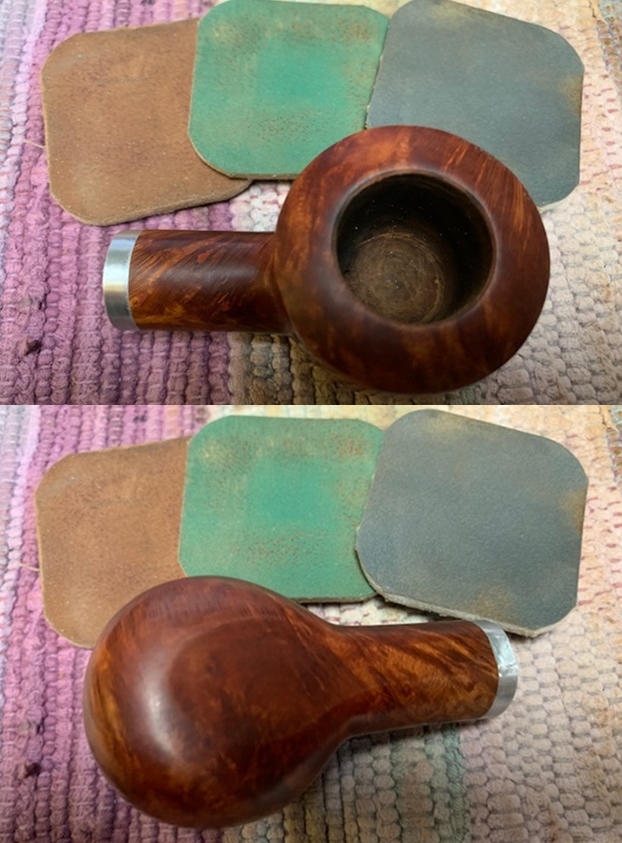
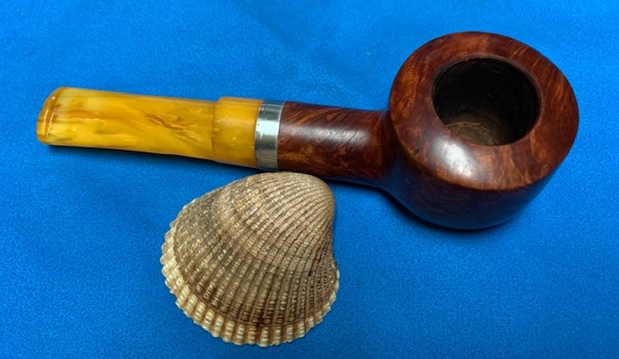
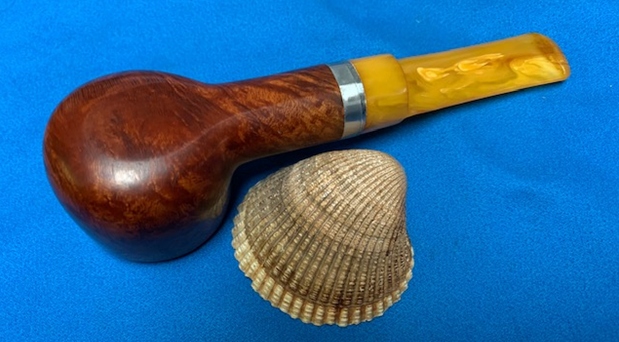
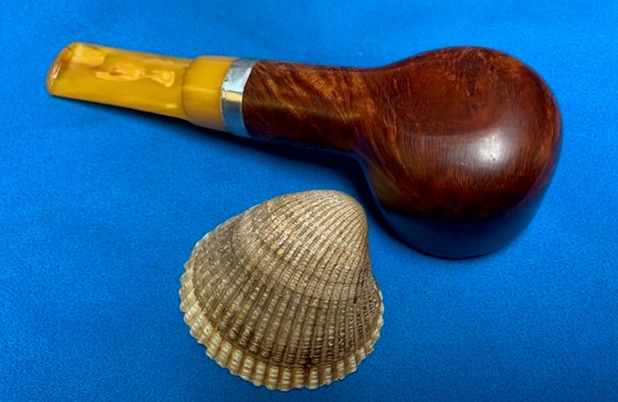
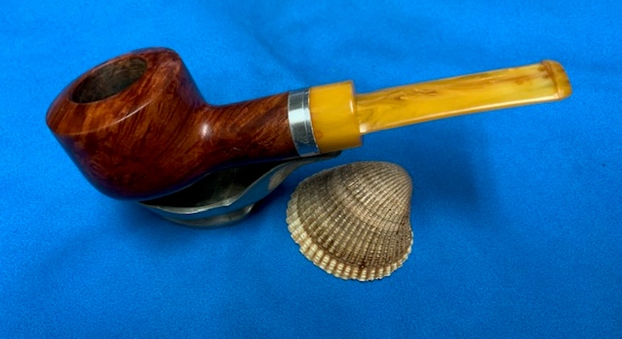
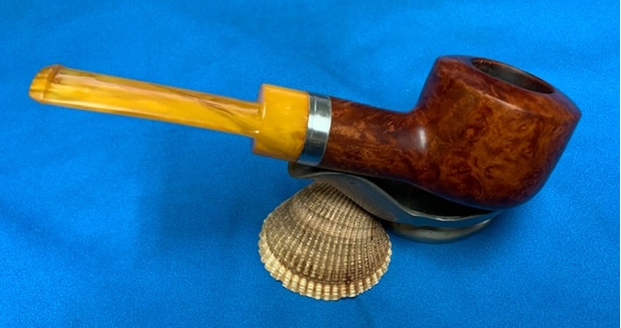
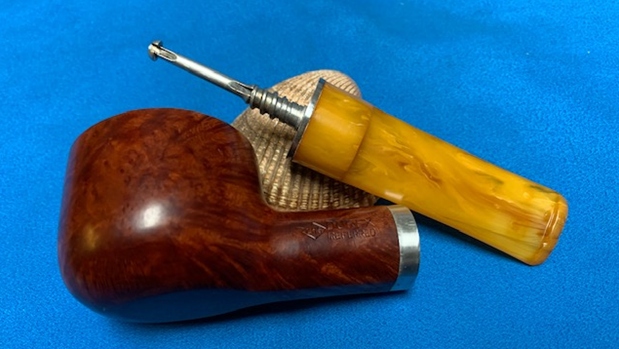
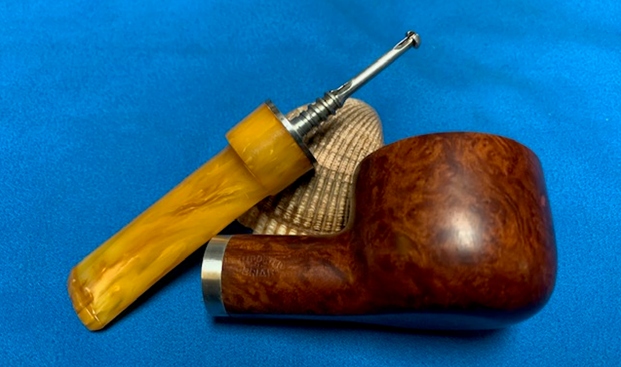
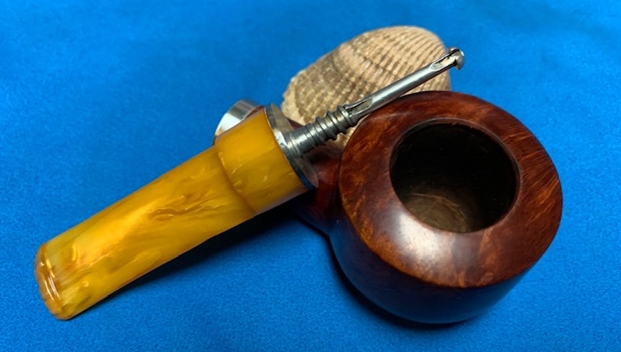
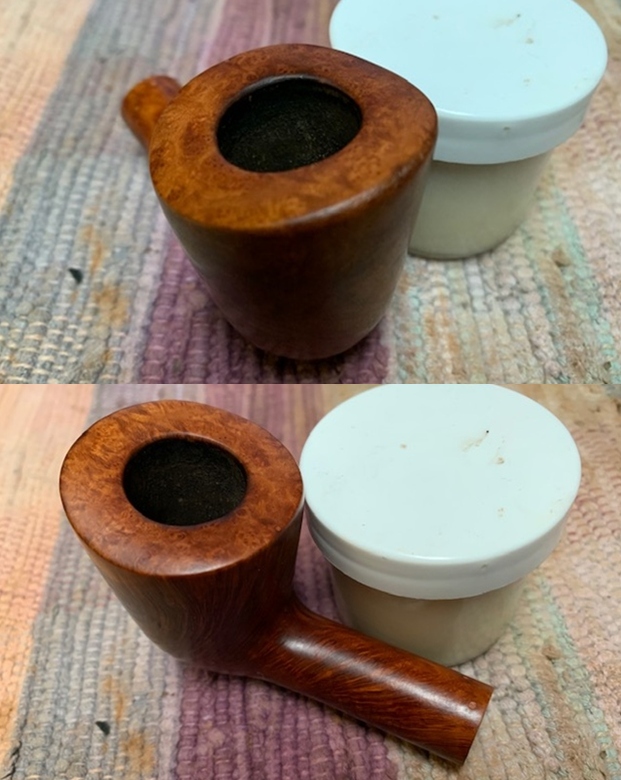
The next pipe on the work table came to us from an antique store on the Oregon Coast, USA. This morning as I was going through my box of what I have to work on this is the second one that caught my eye. Not surprising it is another amber/butterscotch coloured Redmanol stem. It is a nicely grained small Chunky Pot. Once again the stem reminds me of butterscotch candies that I used to have as a kid. The pipe is stamped on the left side of the shank and has the LHS Diamond followed by a large P that is the lead letter for Purex and for Preferred. On the right side it is stamped Imported arched over Briar. There is also a shape number 28 on the underside of the shank next to the aluminum fitment.The finish had a lot of grime ground into the bowl and some darkening around the sides. The bowl was lightly caked and there was a light lava coat on the rim top and inner edge. The edges looked okay but we would know more after the cleanup. The silver coloured band on the shank and matching one on the stem were both oxidized. They were the fitments for the screw in stinger/tenon. The stem was dirty and had tooth chatter and marks on the top and underside near the button. There were not markings or a logo on the saddle stem. The pipe showed promise but it was very dirty. Jeff took photos of the pipe before he started his cleanup work.      He took a photo of the rim top and bowl to give a clear picture of the thickness of the cake and the condition of the rim top and edges. He also took photos of the top and underside of the stem to show the chatter and tooth marks.   Jeff took photos of the sides and heel of the bowl to give a picture of what the briar around the pipe looked like. There is some great grain under the grime.      He took photos of the stamping on the shank. It reads as noted above and is clear and readable.   I turned to Pipephil’s site to see if the Purex Preferred line was shown there. It was not listed though there were other Purex pipes listed. I have included a screen capture of the summary of the history of the brand from the site below (http://www.pipephil.eu/logos/en/logo-lhs.html).I turned to Pipedia (https://pipedia.org/wiki/LHS). There was no listing for the Purex Preferred that I was working on but the article is very well done. Thanks to Dave Gossett for the information and the pictures of his collection. Give the article a read.

Now it was time to work on this interesting old pipe with the Redmanol man made amber stem.

Jeff had cleaned up the pipe with his usual penchant for thoroughness. He reamed the pipe with a PipNet Pipe Reamer and cleaned up the remnants with a Savinelli Fitsall Pipe Knife.  He scrubbed the bowl with undiluted Murphy’s Oil Soap with a tooth brush. He rinsed it under running warm water to remove the soap and grime. He cleaned out the inside of the shank and the airway in the stem with alcohol, cotton swabs and pipe cleaners. He scrubbed the stem with Soft Scrub liquid cleanser to remove the grime on the surface and rinsed it off with warm water. I took photos of the pipe once I received it.   The rim top looked very good  and inner edge of the rim showed some light damage. The stem surface looked good with some remaining oxidation on the aluminum parts and tooth marks and chatter on both sides near the button.     I took a photo of the stamping on the shank. It is clear and readable as noted above.     I removed the stem and took a photo of the pipe to give a sense of the whole. The stem is a compact Redmanol saddle. I decided to start my work on the pipe by cleaning up the damaged inner edge of the bowl. I reworked the edge with a folded piece of 220 grit sand paper. Once I finished the rim and edge looked much better. I moved next to polishing the aluminum fitments on the shank and on the stem. I polished both with 400 grit wet dry sandpaper to remove the scratches and marks on both. They took on a nice silver glow. I polished it with micromesh sanding pads – wet sanding with 1500-12000 grit pads and wiping it down after each pad with a damp cloth. I rubbed the bowl and shank down with Before & After Restoration Balm. I worked it into the surface of the bowl sides and shank with my fingertips to clean, enliven and protect the briar. I let the balm sit for 15 minutes and then buffed with a cotton cloth to raise the shine.  I set the bowl aside and turned to work on the stem. I filled in the deep tooth marks on the surface of the Redmanol with clear super glue. I let the repairs cure.        I polished the repairs on the Redmanol stem with micromesh sanding pads – 1500-12000 grit pads. I wiped it down with a damp cloth after each sanding pad. I used Before & After Pipe Polish – both Fine and Extra Fine to further polish the stem.     This LHS (LH Stern) Purex Preferred Chunky Pot with an amber coloured Redmanol stem is a great looking pipe now that it has been restored. There is some great grain around the bowl and shank. I put the stem back on the bowl and carefully buffed the pipe with Blue Diamond on the buffing wheel using a light touch on the briar. I gave the bowl and the stem multiple coats of carnauba wax on the buffing wheel and followed that by buffing the entire pipe with a clean buffing pad. I hand buffed the pipe with a microfiber cloth to deepen the shine. The finished LHS Purex Pot is chunky and fits nicely in the hand and feels great. Give the finished pipe a look in the photos below. The dimensions of the pipe are Length: 5 ½ inches, Height: 1 ½ inches, Outside diameter of the bowl: 1 ¾ inches, Chamber diameter: 7/8 of an inch. The weight of the pipe is 61gr/2.19oz. If you are interested in adding this pipe to your collection send me a message or an email. Thanks for reading this blog and my reflections on the pipe while I worked on it. There are many more to come!
Restoring a Peterson’s Republic Era System Standard 312 Bent Billiard


Blog by Steve Laug

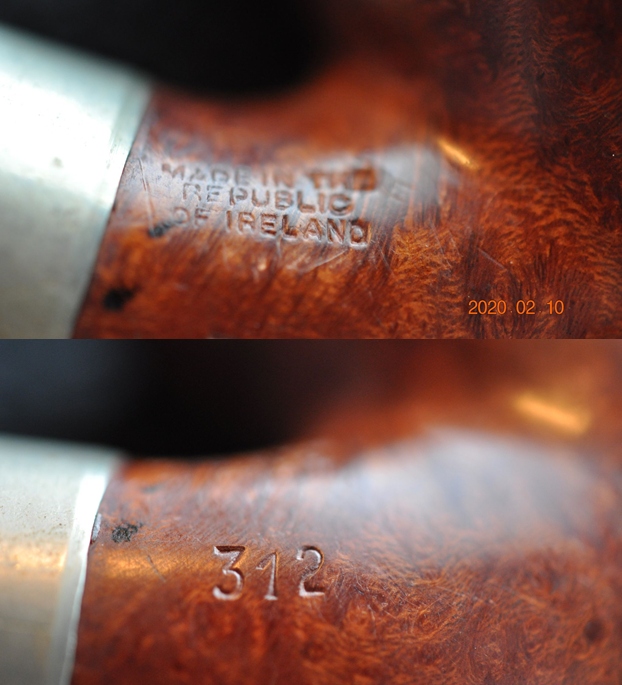
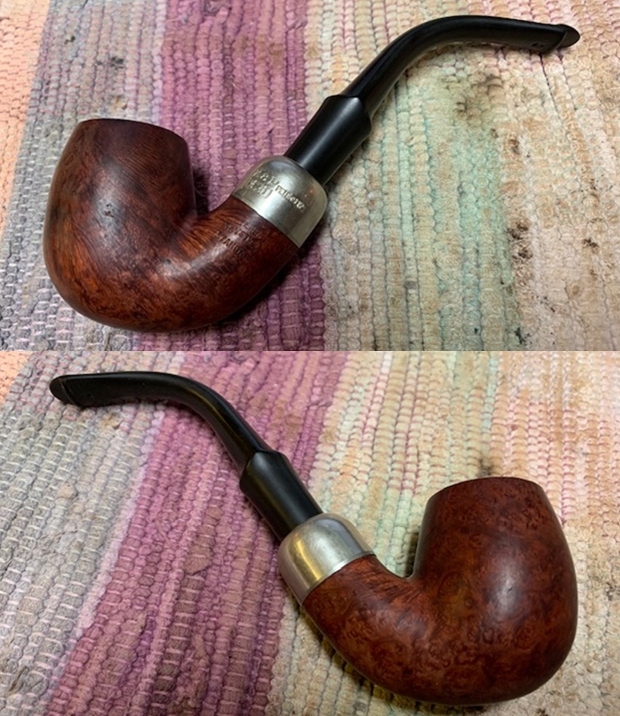
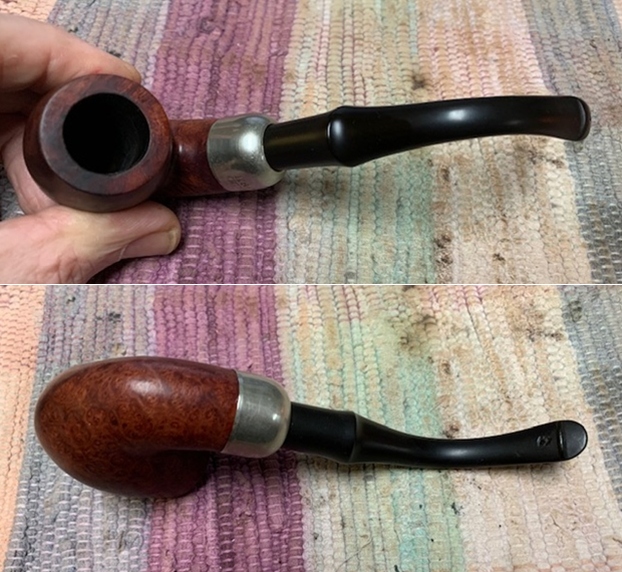
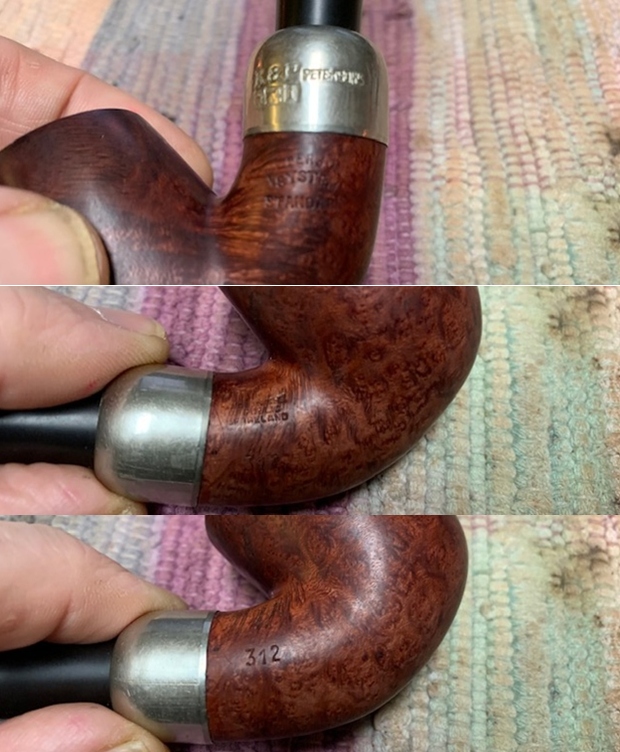
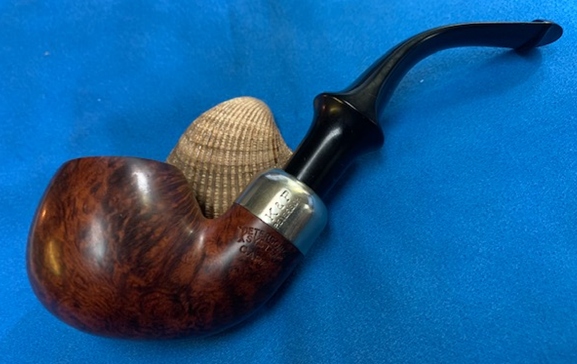
The next pipe on the work table came to us from an online auction from Front Royal, Virginia, USA. It is a smooth Peterson’s System pipe with a saddle vulcanite stem. The pipe is stamped on the left side of the shank and reads Peterson’s [over] System [over] Standard. On the right side it is stamped Made in the Republic of Ireland and underneath that is the shape number 312. The nickel ferrule is stamped K & P Peterson with three hallmarks underneath. The finish had a lot of grime ground into it and it was very dirty. The bowl was moderately caked and there was a light lava coat on the flat rim top and the inner edge of the rim. The inner edge had some nicks and damage and the rim top had a lot of scratches that looked like the rim top had been scraped with a knife. The stem was oxidized, calcified and had tooth chatter and marks on the top and underside near the P-lip style button. It also had a bite through on the underside of the stem just ahead of the button. The pipe showed promise but it was very dirty. Jeff took photos of the pipe before he started his cleanup work.   He took photos of the rim top and bowl to give a clear picture of the thickness of the cake and the condition of the rim top and edges. He also took photos of the top and underside of the stem to show the oxidation, calcification and chatter and tooth marks. The photo of the underside of the stem you can see the bite through that is present.  Jeff took a photo of the side and heel of the bowl to give a picture of what the briar around the pipe looked like.     He took photos of the stamping on the shank and the nickel ferrule. It reads as noted above and is clear and readable.   I am including the information from Pipedia’s article on Peterson pipes. It is a great read in terms of the history of the brand (https://pipedia.org/wiki/Peterson). I have included a bit of the pertinent history here.

1950 – 1989 The Republic Era – From 1950 to the present time, the stamp for this era is “Made in the Republic of Ireland” in a block format generally in three lines but two lines have been used with or without Republic being abbreviated.

I knew that I was dealing with a Republic Era pipe made between 1950-1989. It was a smooth Peterson’s System Standard 312 Billiard with nice grain. The finish was stained with a combination of brown stains. Now it was time to work on the pipe.

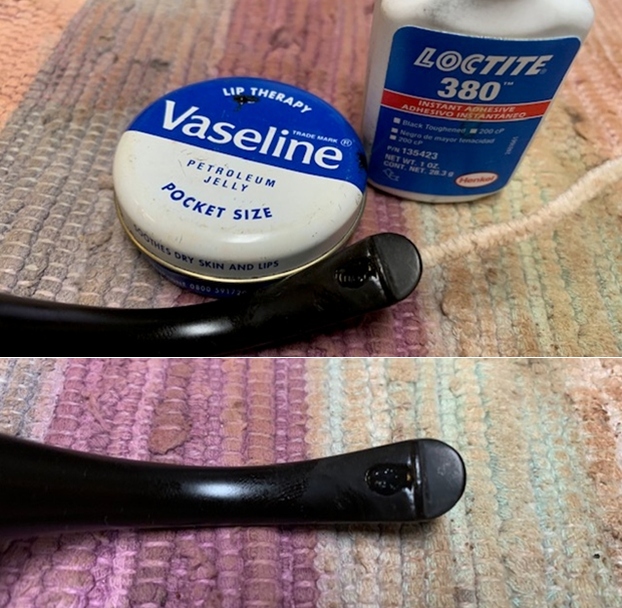
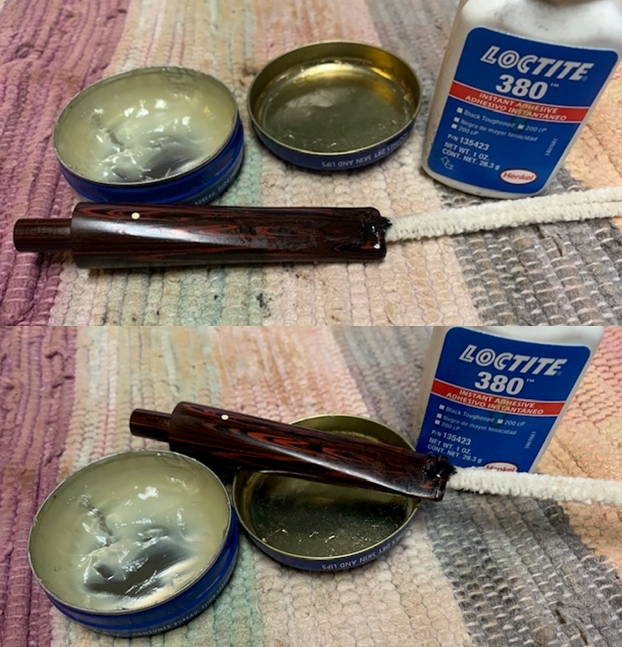
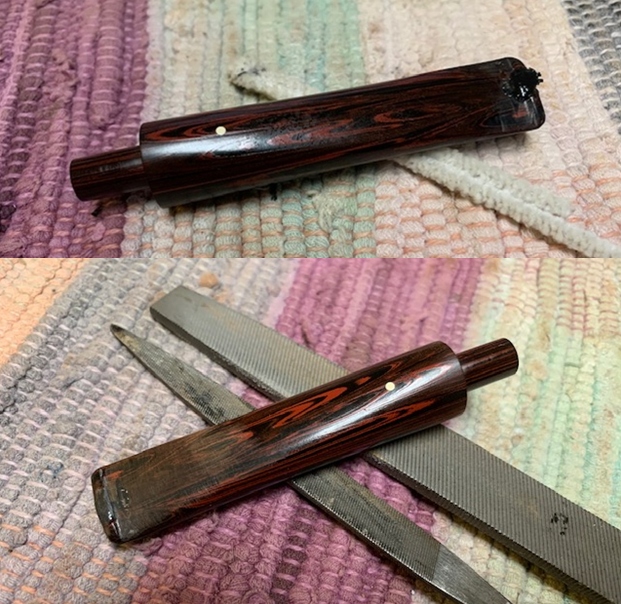
Jeff had cleaned up the pipe with his usual penchant for thoroughness. He reamed the pipe with a PipNet Pipe Reamer and cleaned up the remnants with a Savinelli Fitsall Pipe Knife.  He scrubbed the bowl with undiluted Murphy’s Oil Soap with a tooth brush. He rinsed it under running warm water to remove the soap and grime. He cleaned out the inside of the shank and the airway in the stem with alcohol, cotton swabs and pipe cleaners. He soaked the stem in Before & After Deoxidizer and rinsed it off with warm water. I took photos of the pipe once I received it. The rim top and inner edge of the rim looked very good with a bit of damage on the inner edge and on the rim surface. The stem surface looked very good with some tooth marks and chatter on both sides near the button.  The bite through on the underside of the stem is not huge but it is very present.  I took a photo of the stamping on the shank. It is clear and readable as noted above.    I removed the stem and took a photo of the pipe to give a sense of the whole. The stem is a typical Peterson’s System stem.I started my work on the pipe by working over the rim top and the inner edge of the bowl to clean up the damage. Once finished the rim top and edge looked much better.  I repaired the deep gouges on the left side of the bowl by filling them in with clear super glue. Once it cured I sanded it smooth to blend it into the surrounding briar.I polished the briar with micomesh sanding pads – wet sanding with 1500-12000 grit pads. I wiped the bowl down after each pad with a damp cloth. I rubbed the bowl down with Before & After Restoration Balm. I worked it into the surface of the bowl sides and shank with my fingertips. The product works to clean, enliven and protect the briar. I let the balm sit for a little while and then buffed with a cotton cloth to raise the shine. I set the bowl aside and turned to work on the stem. I coated a pipe cleaner with Vaseline and inserted it in the airway in the stem. I filled in the bite through with black Loctite 380 CA Glue. I set it aside to let the repair cure then smooth it out with a file and rasp. I smoothed out the file marks with 220 grit sandpaper and started polishing it with 400 grit wet dry sandpaper.   I polished the vulcanite stem with micromesh sanding pads – 1500-12000 grit pads. I wiped it down with a damp cloth after each sanding pad. I used Before & After Pipe Polish – both Fine and Extra Fine to further polish the stem.    This Peterson’s System Standard 312 Bent Billiard with a vulcanite stem is a great looking pipe now that it has been restored. The beautiful grain that shines through the polished finish is stunning. As the pipe is smoked the patina should develop and look even better. I put the stem back on the bowl and carefully buffed the pipe with Blue Diamond on the buffing wheel. I gave the bowl and the stem multiple coats of carnauba wax on the buffing wheel and followed that by buffing the entire pipe with a clean buffing pad. I hand buffed the pipe with a microfiber cloth to deepen the shine. The finished Peterson’s System Standard 312 fits nicely in the hand and feels great. Give the finished pipe a look in the photos below. The dimensions of the pipe are Length: 6 inches, Height: 2 inches, Outside diameter of the bowl: 1 ¼ inches, Chamber diameter: ¾ of an inch. The weight of the pipe is 50gr/1.76oz. If you are interested in adding this pipe to your collection send me a message or an email. Thanks for reading this blog and my reflections on the pipe while I worked on it. There are many more to come!
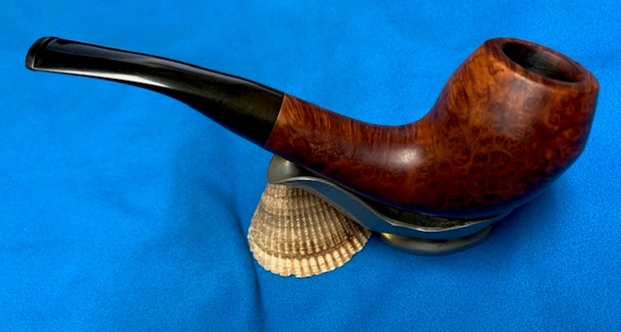
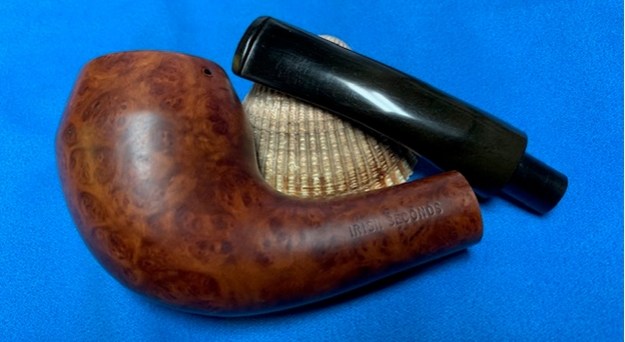
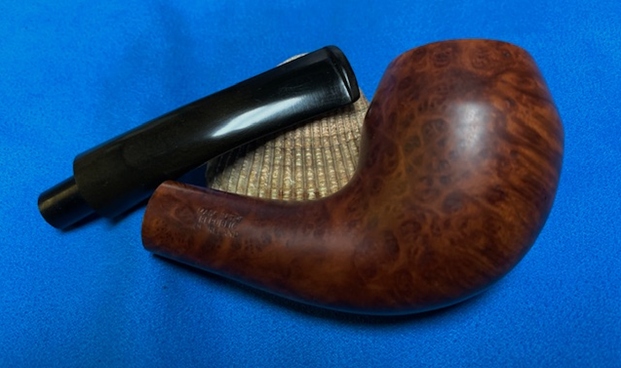
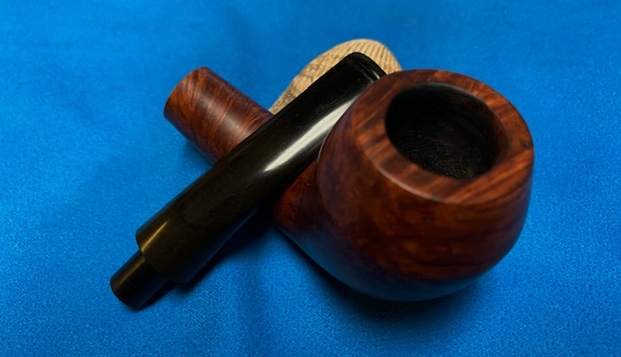
Cleaning up a Peterson’s Made Republic Era Irish Second Rhodesian


Blog by Steve Laug

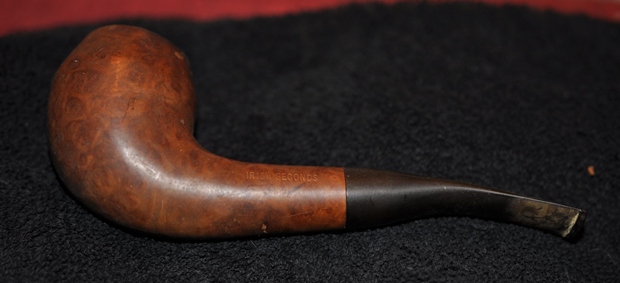
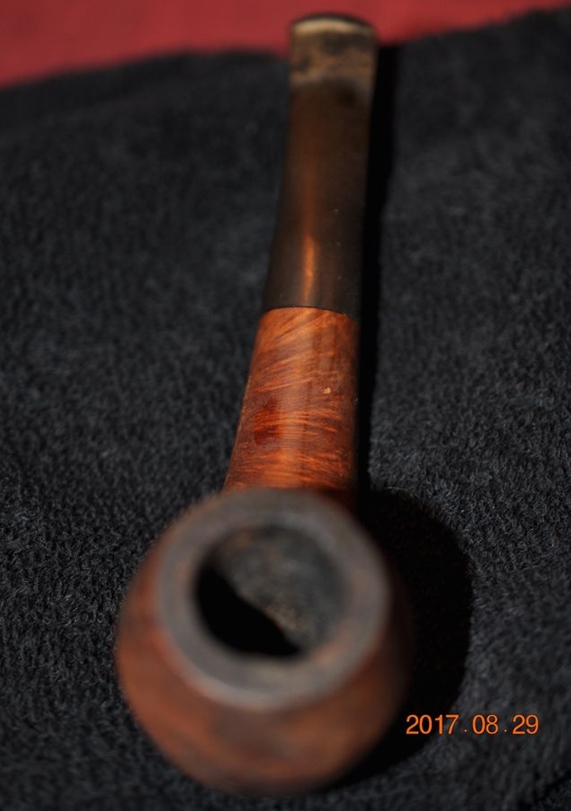
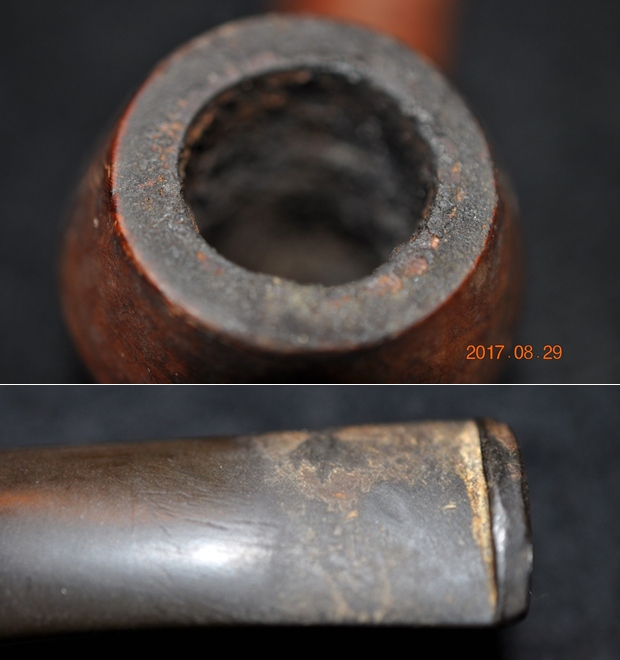
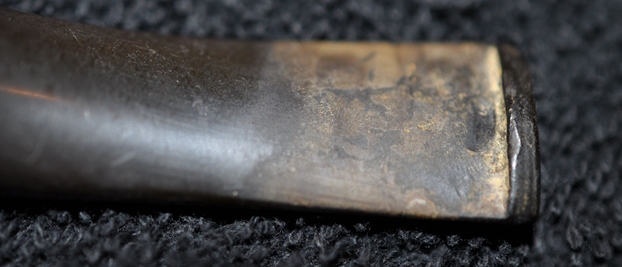
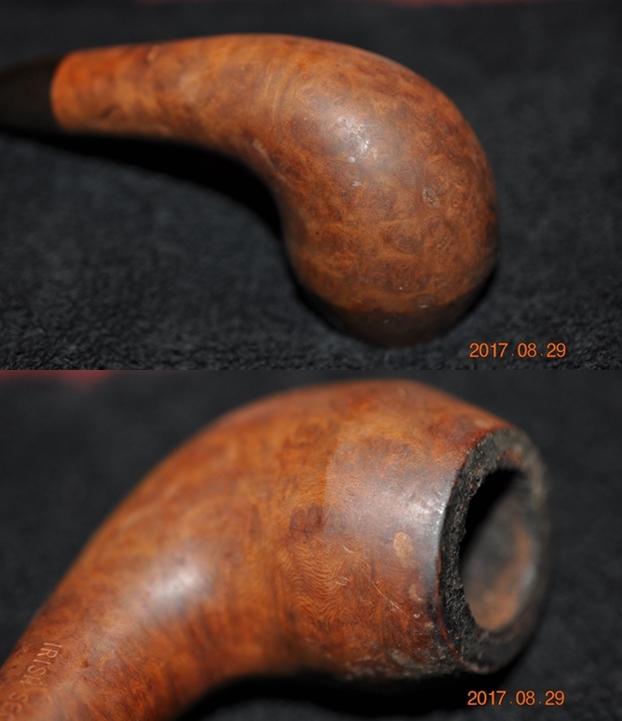
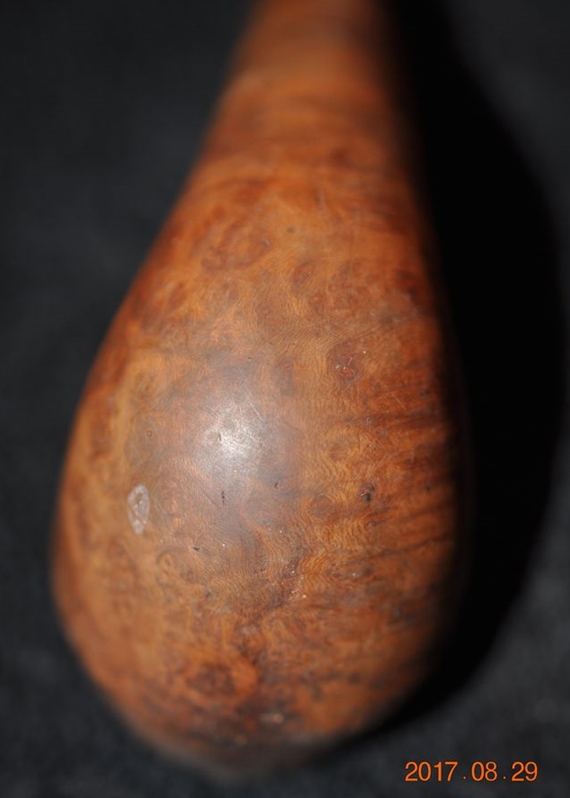
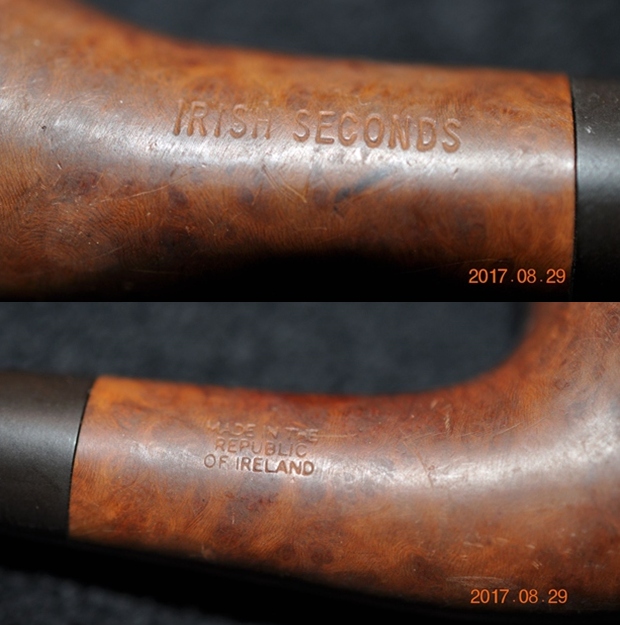
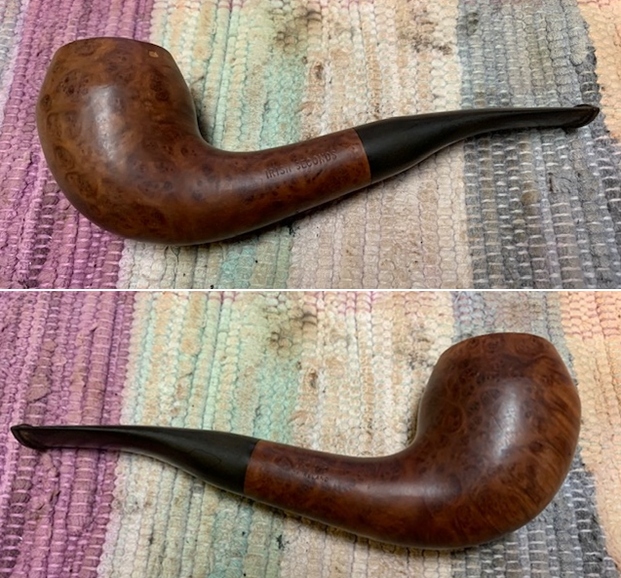
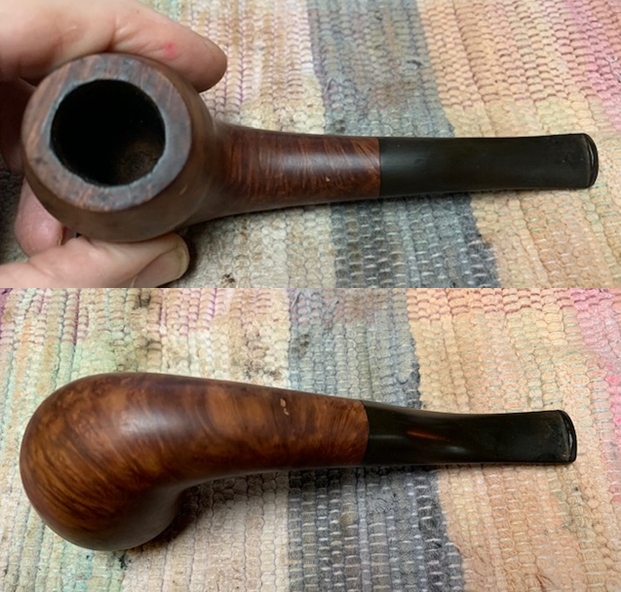
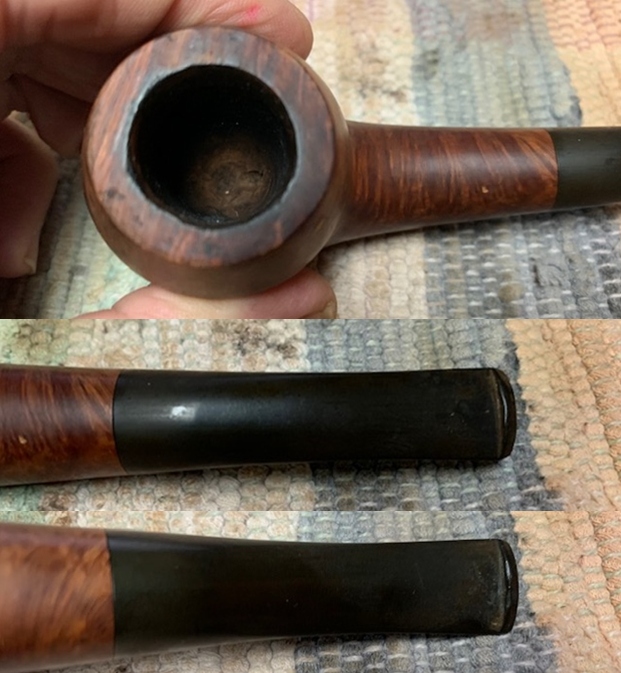
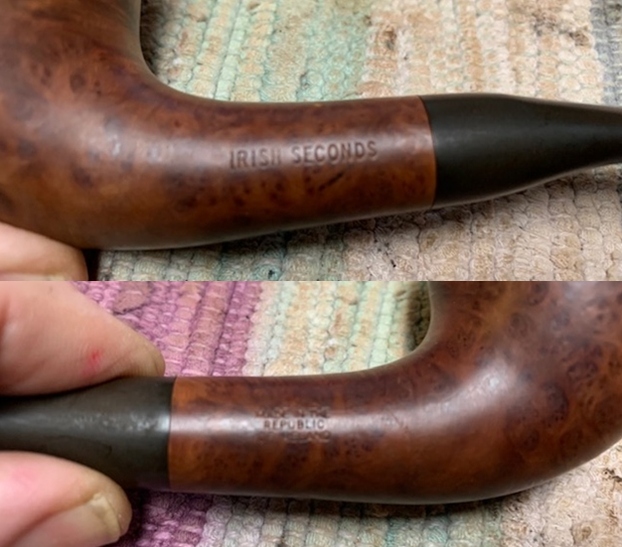
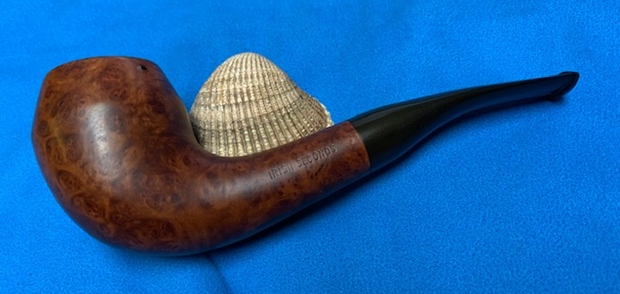
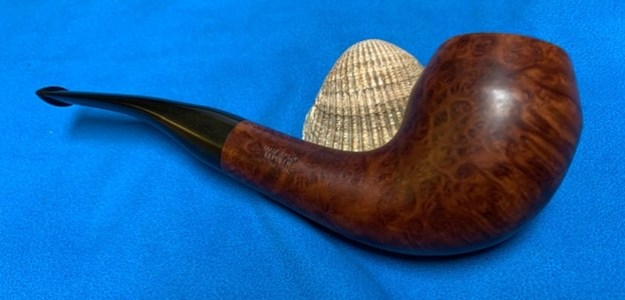
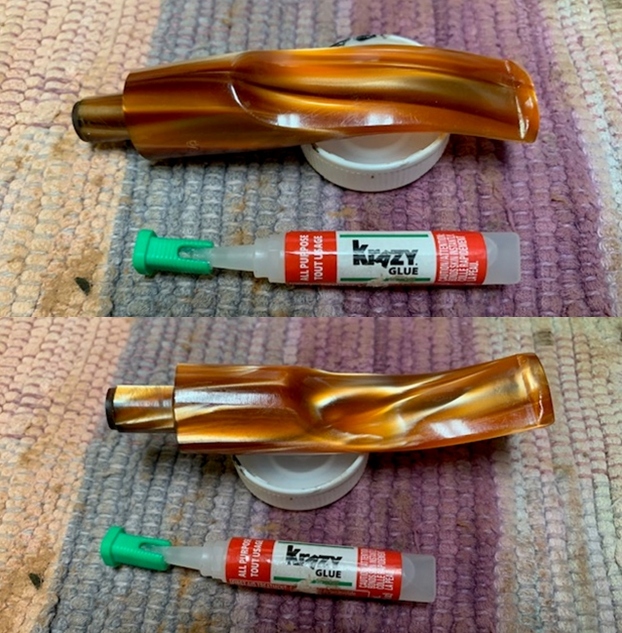
The next pipe on the work table came to us from Ebay 2017 and it has been sitting here for a long time. It is a nicely grained Irish Second Rhodesian with a tapered vulcanite stem. The pipe is stamped on the left side of the shank and reads IRISH SECONDS. On the right side it is stamped Made in the Republic of Ireland. Irish Seconds were a Peterson’s second line that usually did not make the grade because of flaws in the briar or sandpits. This is another nicer piece of briar than I have seen on some of the firsts I have worked on. The finish had a lot of grime ground into the smooth finish on the bowl and some darkening around the sides of the bowl. The bowl was heavily caked in the lower half of the bowl and thinner toward the top. There was a light lava coat and darkening on the inner edge of the rim. The edges looked okay but we would know more after the cleanup. There were a few sandpits and nicks around the sides of the bowl. The stem was oxidized, calcified and had tooth chatter and marks on the top and underside near the button. There were not markings or a logo on the taper stem. The pipe showed promise but it was very dirty. Jeff took photos of the pipe before he started his cleanup work. He took photos of the rim top and bowl to give a clear picture of the thickness of the cake and the condition of the rim top and edges. He also took photos of the top and underside of the stem to show the oxidation, calcification and chatter and tooth marks. Jeff took photos of the sides and heel of the bowl to give a picture of what the briar around the pipe looked like. There is some great grain under the grime. He took photos of the stamping on the shank. It reads as noted above and is clear and readable. I am including the information from Pipedia’s article on Peterson pipes. It is a great read in terms of the history of the brand (https://pipedia.org/wiki/Peterson). I have included a bit of the pertinent history here.

1950 – 1989 The Republic Era – From 1950 to the present time, the stamp for this era is “Made in the Republic of Ireland” in a block format generally in three lines but two lines have been used with or without Republic being abbreviated.

I knew that I was dealing with a Republic Era pipe made between 1950-1989. It was a smooth bent Rhodesian with nice grain. The finish was stained with a combination of brown stains. Now it was time to work on the pipe.

Jeff had cleaned up the pipe with his usual penchant for thoroughness. He reamed the pipe with a PipNet Pipe Reamer and cleaned up the remnants with a Savinelli Fitsall Pipe Knife.  He scrubbed the bowl with undiluted Murphy’s Oil Soap with a tooth brush. He rinsed it under running warm water to remove the soap and grime. He cleaned out the inside of the shank and the airway in the stem with alcohol, cotton swabs and pipe cleaners. He soaked the stem in Before & After Deoxidizer and rinsed it off with warm water. I took photos of the pipe once I received it. The rim top and inner edge of the rim showed some damage. The inner edge of the bowl was roughened and showed some darkening. The rim top also showed some damage. The stem surface looked good with some remaining oxidation and tooth marks and chatter on both sides near the button.     I took a photo of the stamping on the shank. It is clear and readable as noted above.    I removed the stem and took a photo of the pipe to give a sense of the whole. The stem is short and tapered. I decided to start my work on the pipe by cleaning up the damaged rim top and inner edge. I reworked the edge and top with a folded piece of 220 grit sand paper. Once I finished the rim and edges looked much better.I moved next to repairing the damaged fills on the underside of the shank and the back side of the rim cap. I filled them in with clear super glue and briar dust. Once it cured I sanded them smooth and blended them into the surrounding briar.    I polished the bowl and the rim top, sides and shank with micromesh sanding pads – wet sanding with 1500-12000 grit pads and wiping it down after each pad with a damp cloth.  I rubbed the bowl and shank down with Before & After Restoration Balm. I worked it into the surface of the bowl sides and shank with my fingertips to clean, enliven and protect the briar. I let the balm sit for a little while and then buffed with a cotton cloth to raise the shine.    I set the bowl aside and turned to work on the stem. I filled in tooth marks in the stem surface with clear super glue. Once the repairs cured I used a rasp and a file to recut the button edge and flatten out the repairs. I sanded out the file marks and smoothed out the rest of the repair with 220 grit sandpaper and started polishing the stem with 400 grit wet dry sandpaper.     I polished the vulcanite stem with micromesh sanding pads – 1500-12000 grit pads. I wiped it down with a damp cloth after each sanding pad. I used Before & After Pipe Polish – both Fine and Extra Fine to further polish the stem.  This Peterson’s made Irish Second Rhodesian with a vulcanite taper stem is a great looking pipe now that it has been restored. There is some great grain around the bowl and shank. I put the stem back on the bowl and carefully buffed the pipe with Blue Diamond on the buffing wheel using a light touch on the briar. I gave the bowl and the stem multiple coats of carnauba wax on the buffing wheel and followed that by buffing the entire pipe with a clean buffing pad. I hand buffed the pipe with a microfiber cloth to deepen the shine. The finished Irish Second Rhodesian fits nicely in the hand and feels great. Give the finished pipe a look in the photos below. The dimensions of the pipe are Length: 5 ¾ inches, Height: 2 inches, Outside diameter of the bowl: 1 ¾ inches, Chamber diameter: ¾ of an inch. The weight of the pipe is 56gr/1.94oz. If you are interested in adding this pipe to your collection send me a message or an email. Thanks for reading this blog and my reflections on the pipe while I worked on it. There are many more to come!
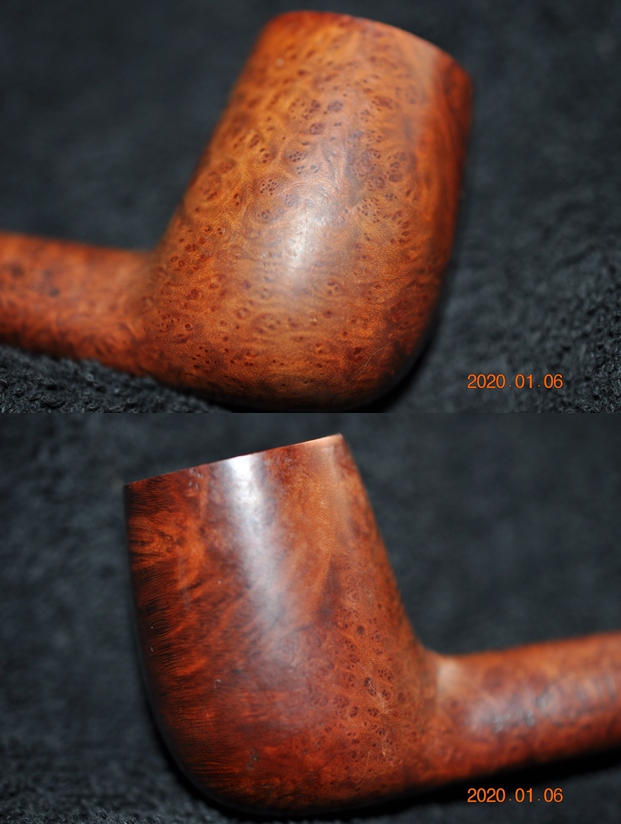
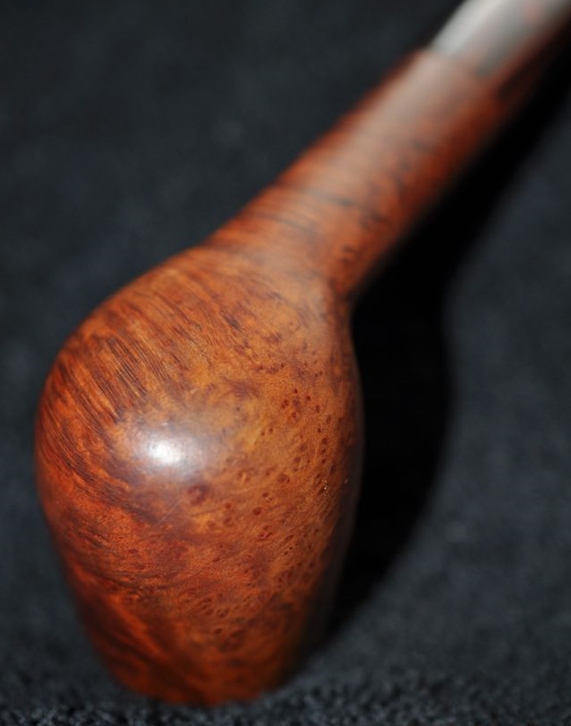
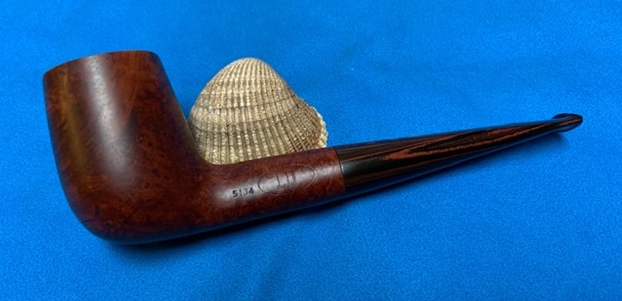
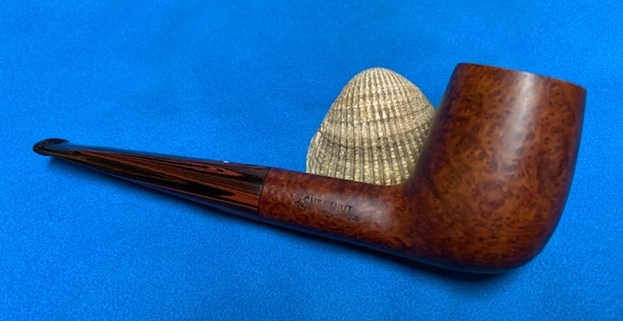
New Life for a 1999 Dunhill Chestnut 5134 Group 5 Brandy


Blog by Steve Laug

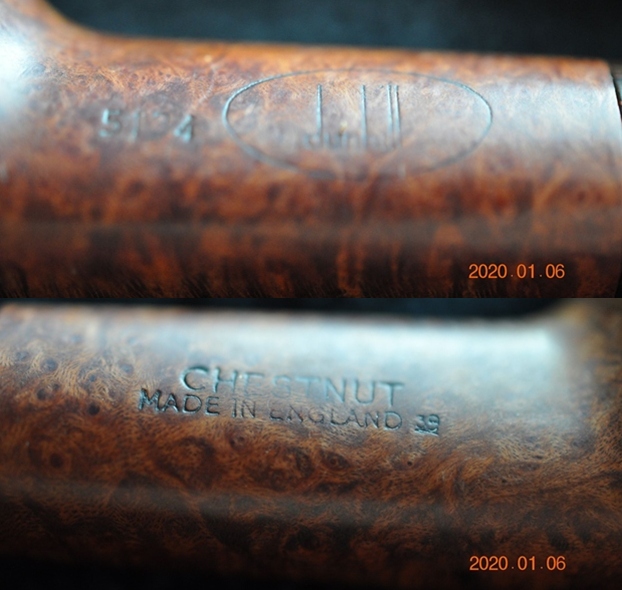
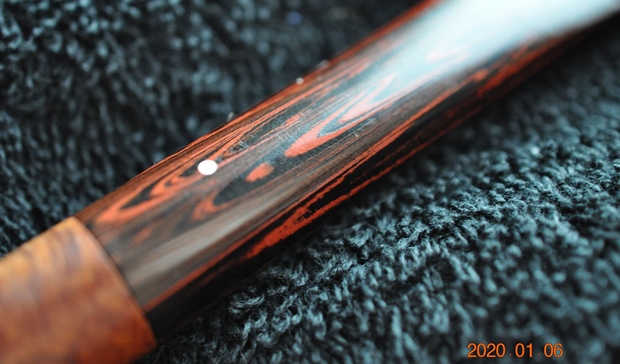
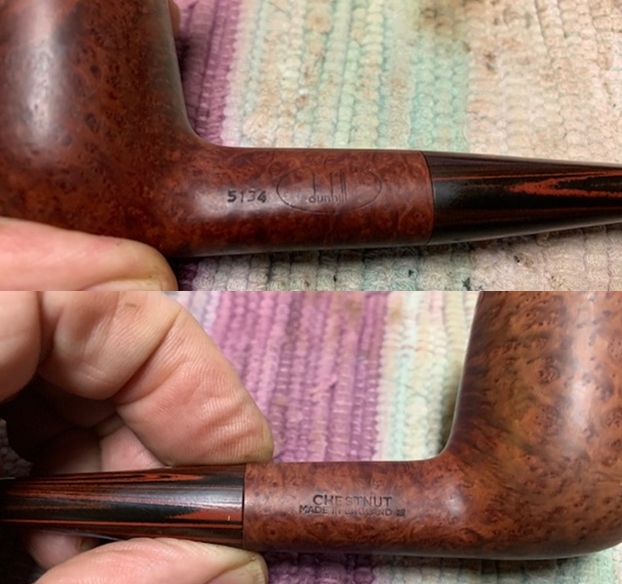
The next pipe on the table came to us in a group of pipes that we purchased from a fellow in Los Angeles, California, USA. It is a Dunhill Chestnut Straight Brandy that was very dirty. It is stamped both sides of the shank. On the left side it is stamped with the shape number 5134 followed by Dunhill in an oval. On the right side it is stamped Chestnut [over] Made in England followed by the number 39. Interpreting that stamp it is as follows: The 5134 is the shape for a straight Brandy with a triangular shaped shank. The Dunhill Chestnut is the finish noted on the shank. The 39 following the D of England gives the date the pipe was made and identifies it as 1999. The stamping is clear and readable. The age of the pipe and the oils in the finish has given the pipe a rich reddish brown finish. There is also some amazing grain that the shape follows well. The finish was dirty with dust ground into the surface of the bowl and shank. There also appeared to a repair on top outer edge at the back of the bowl. There was a thick cake in the bowl and tobacco debris stuck to the walls of the bowl. The rim top showed darkening and some lava in on the surface and inner edge of the bowl. The Cumberland taper stem was oxidized and calcified. It had damage to the button surface on the top side where it was missing a chunk. There were also some repair marks ahead of the button on both sides where the repair person had used black CA to patch the tooth marks.  Jeff took photos of the pipe to show what it looked like before he started working on it.He took photos of the bowl and rim top to show the thickness of the cake and the darkening and lava overflow on the rim top. The photos of the stem show the oxidation, calcification and the repairs to both sides of the stem. You can also see the large chunk missing from the topside of the button edge. The stem had been previously repaired rather poorly using large rough black super glue patches.  The photos of the sides and heel of the bowl show the great grain on the pipe. It is a beauty under the grime and dust.   The stamping on the sides of the shank is shown in the photos below. It looks very good and readable. It reads as noted and explained above. The third photo shows the white spot on the stem.     I turned to Pipedia’s section on Dunhill Root Briar Pipes to get a bit of background on the Dunhill finishes (https://pipedia.org/wiki/Dunhill#Root_Briar). I quote:

Chestnut – A rich, deep walnut colour complemented by the Cumberland mouthpiece – it was introduced in 1983 to commemorate the closing of the Cumberland Road warehouse. The same stain and stem material as used on the Cumberland, but on a smooth bowl. Like the Bruyere, the finish is smooth to the feel and will lighten in time to show off the grain, which is usually cross-grain top and bottom with birds-eye on the sides of the bowl. Irrespective of shape, size or finish, all Dunhill pipes are of one quality only – the finest.

Note: Always had the Cumberland mouthpieces fitted. Sometimes, a black mouthpiece it is possible, however, that this was a special request or that it was a replacement mouthpiece…

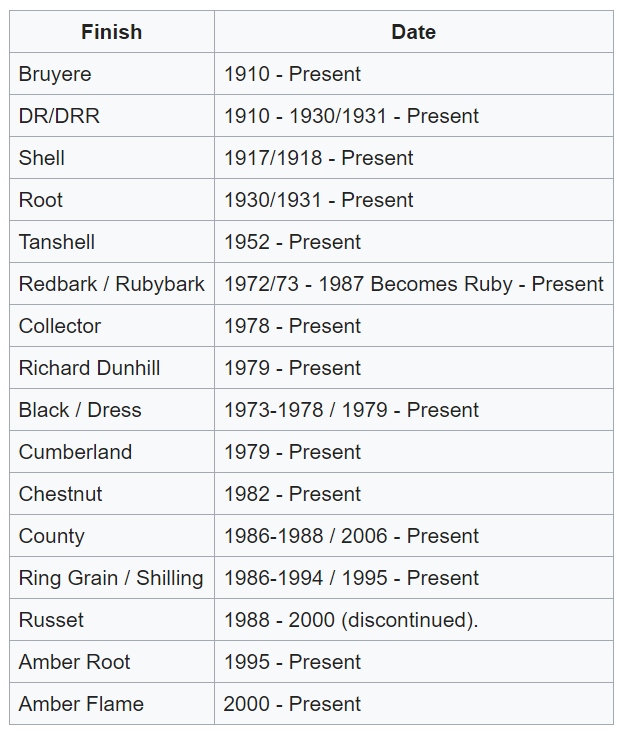
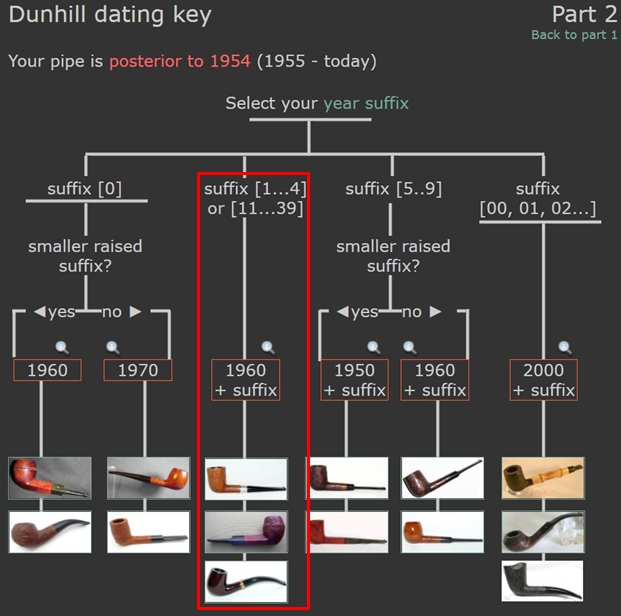
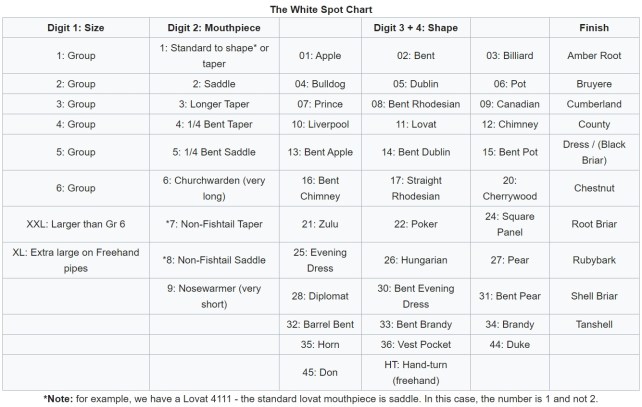
The shape chart below delineates the finish and the date that it was introduced on the market and how long it was made. The Chestnut came out in 1982 and continues to be made until the present.I turned to Pipephil’s dating guide to show how I arrived at the date of manufacture for this pipe (http://www.pipephil.eu/logos/en/dunhill/cledat-en1a.html). I am including the chart that is provided there for the dating a pipe. I have drawn a red box around the section. Since the pipe I am working on has a 2 it points to the 1960+ suffix line on the chart below.I turned to Pipedia where there was a shape chart that could be used to interpret the 4 digit shape numbers like the one on this particular pipe. https://pipedia.org/wiki/Dunhill_Shape_Chart#:~:text=The%20White%20Spot%20Chart%20%20%20Digit%201%3A,%2012%3A%20Chimney%20%208%20more%20rows%20). I have included the chart below.I now knew that I was working on a Chestnut that came out in 1999. The shape number is 5134. The first number (5) was the size of the pipe which in this case is a Group 5. The second digit (1) is the mouthpiece shape which in this case was a Standard or taper shaped stem. The third (3) and fourth (4) number identify the shape of the pipe. This is 34 which is the number for a Brandy shaped pipe.

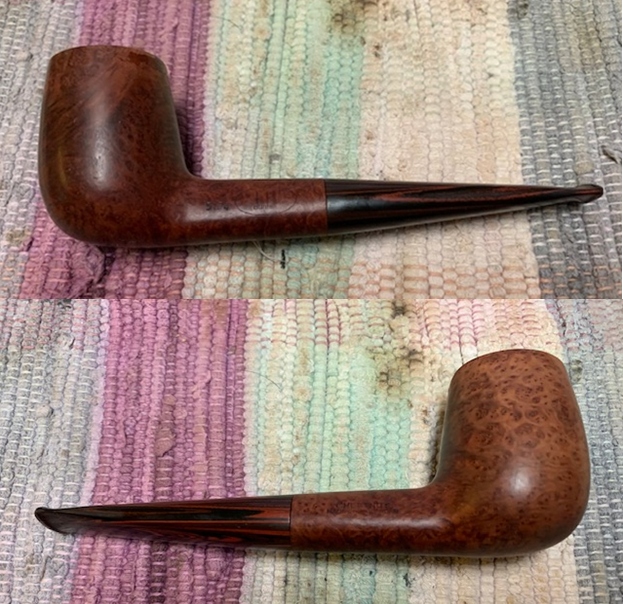
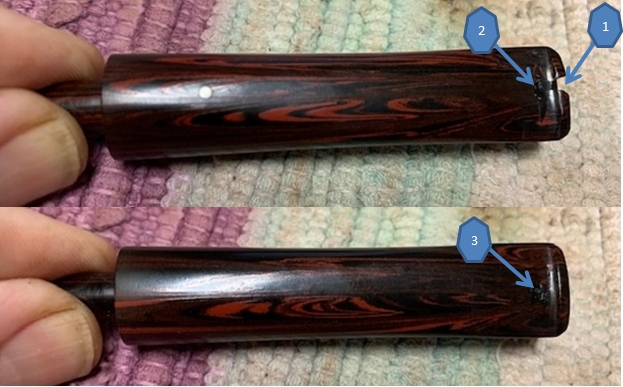
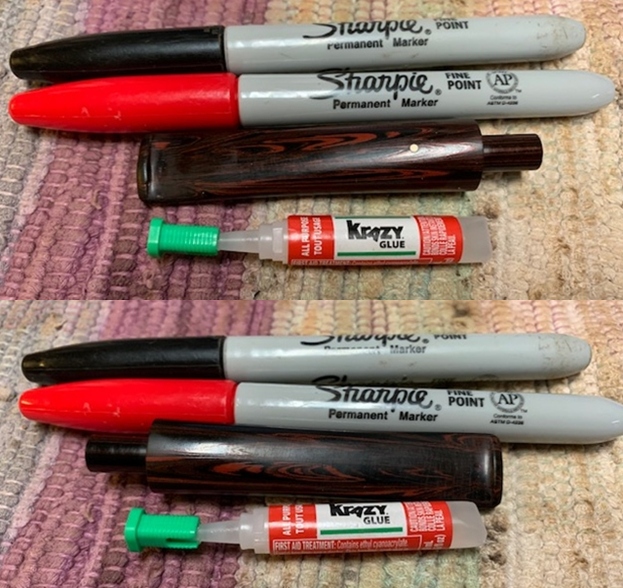
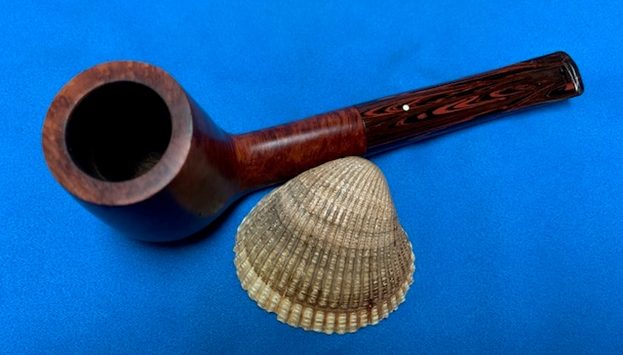
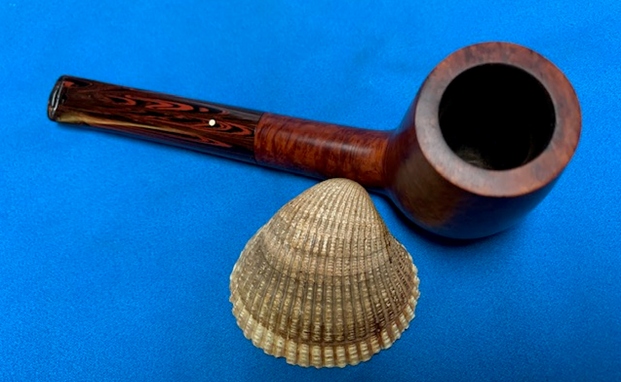
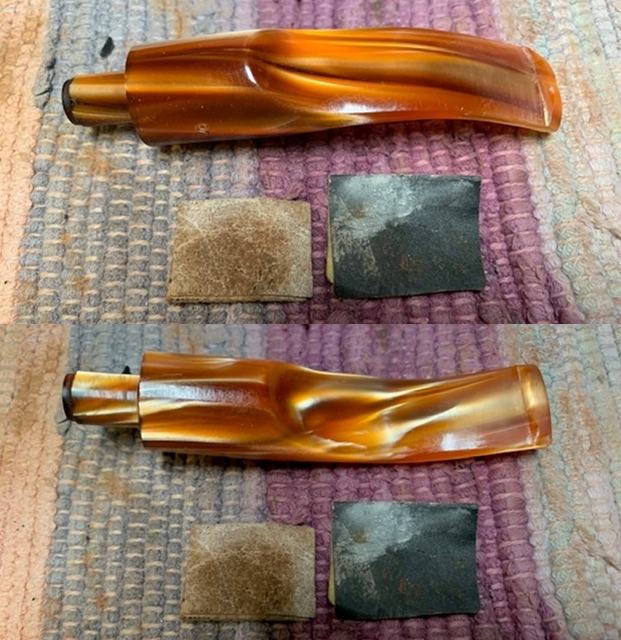
I turned to work on the pipe itself. Jeff had carried out his usual thorough cleanup of the pipe. He had reamed it with a PipNet reamer to remove the cake and cleaned the reaming up with a Savinelli Fitsall Pipe Knife. He scrubbed the internals of the bowl and stem with alcohol, cotton swabs and pipe cleaners. He scrubbed the externals with undiluted Murphy’s Oil Soap and rinsed the bowl off with running water. He soaked the stem in Before & After Deoxidizer and once it had soaked rinsed it off with warm water to remove the residual solution. He dried it off and rubbed it down to remove any oxidation that was still on the stem. The pipe looked very clean when I received it. I took a photo of the rim top to show the condition. You can see the darkening on the rim top on the back of the bowl. It is roughened and chipped on the front and back side of the rim. The taper stem came out looking quite good other than the damage on the button and the black CA repairs on the top and underside of the stem.   I took photos of the sides of the shank to show the stamping. It is clear and readable as noted above.    I removed the stem from the shank and took a photo of the pipe parts to show what I was working with. It is a nice looking pipe.I decided to start the restoration on this one by working on the damage on the inner edge of the bowl. It had darkening and some damage to the edge. There were burn and knife marks on the edge from a previous pipeman. I worked it over with a folded piece of 220 grit sandpaper to give the edge a light bevel and remove and minimize the damage on the edge. When I finished with it, the bowl and the rim top looked much better.   I polished the rim top and bowl with micromesh sanding pads – dry sanding with 1500-12000 grit sanding pads. I sanded and smoothed out the repair that had been done to the top outer edge of the rim on the back of the bowl at the same time. I wiped the bowl down with a damp cloth after each sanding pad. The briar began to take on a shine.  I rubbed the briar down with Before & After Restoration Balm. I worked it into the briar with my fingertips. The product works to clean, enliven and preserve the briar. I let it sit for 15 minutes while I worked on the stem. After the time passed I buffed it with a cotton cloth to deepen the shine. The briar really comes alive with the balm.   With the bowl finished and cleaned up it was time to tackle the stem mess. I want to see if I could minimize the repair marks from the previous repair and also rebuild the button. Since it was Cumberland this was going to be a bit tricky.  I took photos of the stem before I started and marked the issues on it with blue arrows. The #1 is the chip out of the top edge of the button. The #2 and #3 are the tooth marks fills that were done with a large amount of black super glue. I would have used a clear CA glue to repair these and let the underlying Cumberland colours show through. However now I had to figure out a way to minimize them.  I greased a pipe cleaner with Vaseline and inserted it in the airway. I rebuilt the button area with black Loctite 380. It is black but it is a small spot so I am hoping to be able to blend it in well with the rest of the Cumberland.  I removed the pipe cleaner once the repair had set and took a photo of the stem at this point. I used a rasp and small file to shape the button and cut the inner edge. I also flattened out the area of the previous repair to reduce it. There was also a dip in the mouthpiece on that side near that button that was a shallow trough so I cleaned up the taper to smooth out the transition with the files. I smoothed out the file marks and repairs and reshaped the button edge with 220 grit sandpaper. I started the polishing with 400 grit wet dry sandpaper. Still lots of work to do but the shape is correct and the repair is not too bad. I still need to rework the tooth mark repairs on the top and underside some more.   I cleaned up the repair areas and used a black and a red Sharpie Pen to match the striations of the Cumberland. I let that cure and then put a light coat of clean CA glue on top of the areas to keep the blend in place. Once that cured I lightly sanded it with a 1500 grit micromesh pad. The result can be seen in the photos below.   Now it was time to polish the repairs. I polished the Cumberland with micromesh sanding pads – 1500-12000 grit pads. I wiped it down with Obsidian Oil after each sanding pad. I used Before & After Pipe Polish – both Fine and Extra Fine to further polish the stem.     This Dunhill Chestnut 5134 Brandy from 1999 is a beautiful looking piece of briar that has a shape that follows grain. It is a great looking pipe that came out looking even better after the cleanup. The Chestnut is a Dunhill that utilized a Walnut stain and a Cumberland taper stem. The finish on the pipe is in excellent condition following the restoration. The brown stain on the bowl works well to highlight the grain. The polished Cumberland taper stem adds to the mix. With the dust gone from the finish and the bowl it was a beauty and is eye-catching. I put the repaired stem back on the bowl and buffed the pipe with Blue Diamond on the buffing wheel being careful to not buff the stamping. I gave the bowl and the stem multiple coats of carnauba wax on the buffing wheel and followed that by buffing it with a clean buffing pad. I hand buffed the pipe with a microfiber cloth to deepen the shine. The finished Chestnut 5134 Brandy is quite nice and feels great in the hand. Give the finished pipe a look in the photos below. I can only tell you that like the other pipes I am working that it is much prettier in person than the photos capture. The dimensions of the pipe are Length: 5 ¾ inches, Height: 2 inches, Outside diameter of the bowl: 1 ¼ inches, Chamber diameter: ¾ of an inch. The weight of the pipe is 47grams/1.66oz. Thanks for walking through the restoration with me as I worked over another beautiful pipe. Remember we are not pipe owners; we are pipemen and women who hold our pipes in trust until they pass on into the trust of the next generation.

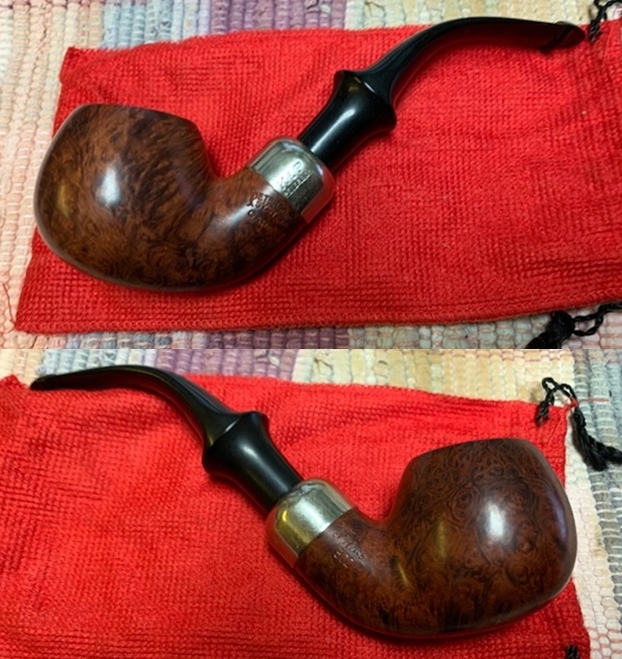
Restoring a Late Republic Era Peterson’s System Cara 302


Blog by Steve Laug

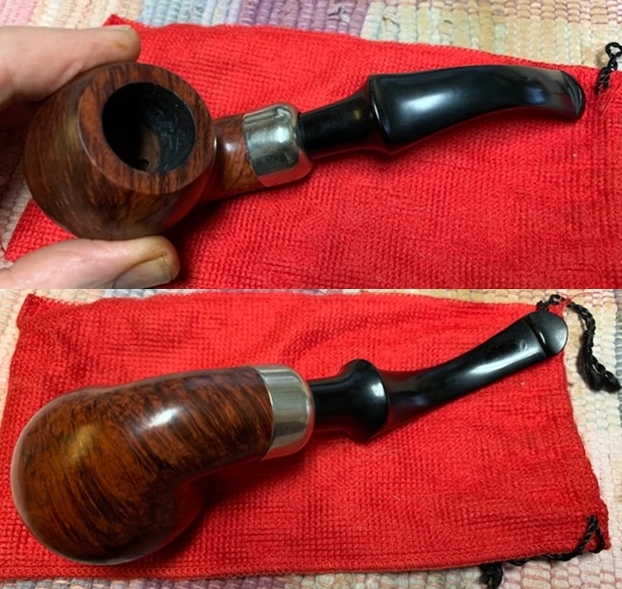
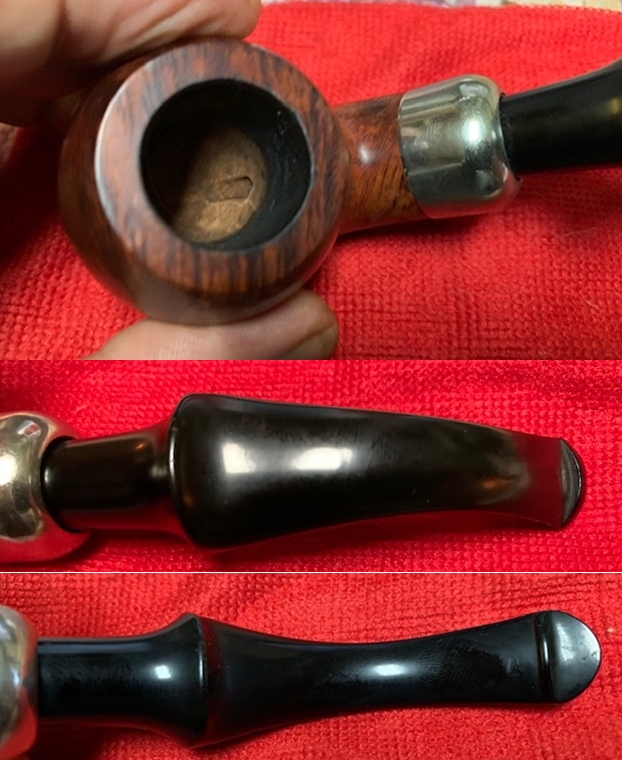
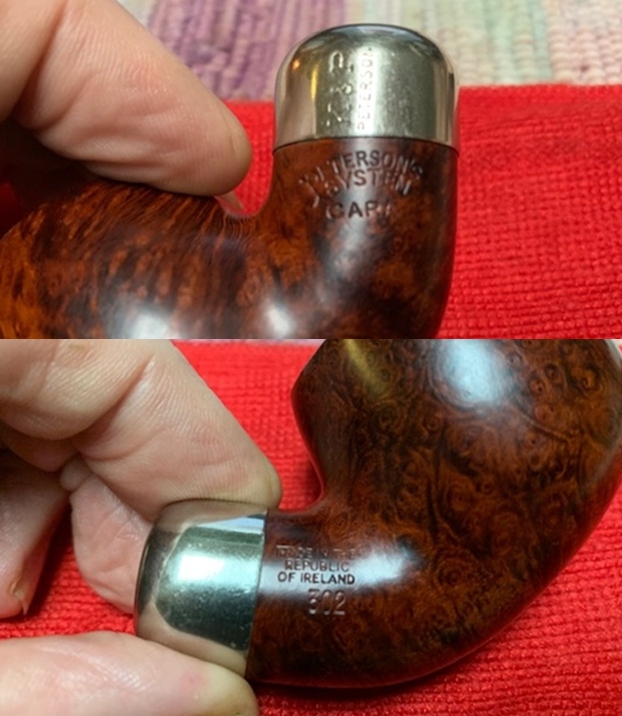
The next pipe on the work table came to us from an online auction from auction in 2018 from Wilkes Barre, Pennsylvania, USA. It is a smooth Peterson’s Apple shaped System pipe with a tapered vulcanite stem. The pipe is stamped on the left side of the shank and reads Peterson’s [over] System [over] Cara. On the right side of the shank it is stamped Made in the Republic of Ireland [over] the shape number 302. This is a nice piece of briar with interesting grain all the way around the bowl. The finish had a lot of grime ground into it. The bowl was moderately caked and there was a lava coat on the top and the inner edge of the rim. The edges looked okay but we would know more after the cleanup. The stem was oxidized, calcified and had tooth chatter and marks on the top and underside near the button. The nickel ferrule is stamped K&P [over] Peterson. The pipe showed promise but it was very dirty. Jeff took photos of the pipe before he started his cleanup work.   He took photos of the rim top and bowl to give a clear picture of the thickness of the cake and the condition of the rim top and edges. He also took photos of the top and underside of the stem to show the oxidation, calcification and chatter and tooth marks.   Jeff took a photo of the side and heel of the bowl to give a picture of what the briar around the pipe looked like.    He took photos of the stamping on the shank and the nickel ferrule. It reads as noted above and is clear and readable.   I am including the information from Pipedia’s article on Peterson pipes. It is a great read in terms of the history of the brand (https://pipedia.org/wiki/Peterson). I have included a bit of the pertinent history here.

1950 – 1989 The Republic Era – From 1950 to the present time, the stamp for this era is “Made in the Republic of Ireland” in a block format generally in three lines but two lines have been used with or without Republic being abbreviated.

I turned to Pipedia to see if I could find some specific information on the Cara line of System pipes (https://pipedia.org/wiki/Peterson#Peterson_Pipe_Collections). There was nothing specific on the Cara so I was left with little information on the line.

I knew that I was dealing with a Republic Era pipe made between 1950-and the present – a Late Republic pipe. It was a classic line 302 shaped apple with the System style drilling. Now it was time to work on the pipe.

Jeff had cleaned up the pipe with his usual penchant for thoroughness. He reamed the pipe with a PipNet Pipe Reamer and cleaned up the remnants with a Savinelli Fitsall Pipe Knife.  He scrubbed the bowl with undiluted Murphy’s Oil Soap with a tooth brush. He rinsed it under running warm water to remove the soap and grime. He cleaned out the inside of the shank and the airway in the stem with alcohol, cotton swabs and pipe cleaners. He soaked the stem in Before & After Deoxidizer and rinsed it off with warm water. I took photos of the pipe once I received it. The rim top and inner edge of the rim looked very good with a bit of damage on the inner bevel of the rim surface. The stem surface looked very good with some tooth marks and chatter on both sides near the button.    I took a photo of the stamping on the shank. It is clear and readable as noted above.     I removed the stem and took a photo of the pipe to give a sense of the whole. The stem is a fancy saddle version. The pipe was in such good condition that started by rubbing it down with Before & After Restoration Balm. I worked it into the surface of the bowl sides and shank with my fingertips. The product works to clean, enliven and protect the briar. I let the balm sit for a little while and then buffed with a cotton cloth to raise the shine.     I set the bowl aside and turned to work on the stem. I filled in the tooth marks on both sides of the stem just ahead of the button with clear super glue. Once the repairs had cured I sanded them smooth with 220 grit sandpaper to smooth them out and blend them into the surface. I started polishing the stem with 400 grit wet dry sandpaper.   I polished the vulcanite stem with micromesh sanding pads – 1500-12000 grit pads. I wiped it down with a damp cloth after each sanding pad. I used Before & After Pipe Polish – both Fine and Extra Fine to further polish the stem.    This Peterson’s Republic Era Cara System 302 Bent Apple with a vulcanite saddle stem is a great looking pipe now that it has been restored. The beautiful grain that shines through the polished finish is stunning. As the pipe is smoked the patina should develop and look even better. I put the stem back on the bowl and carefully buffed the pipe with Blue Diamond on the buffing wheel. I gave the bowl and the stem multiple coats of carnauba wax on the buffing wheel and followed that by buffing the entire pipe with a clean buffing pad. I hand buffed the pipe with a microfiber cloth to deepen the shine. The finished Peterson’s Cara System 302 fits nicely in the hand and feels great. Give the finished pipe a look in the photos below. The dimensions of the pipe are Length: 6 inches, Height: 1 ¾ inches, Outside diameter of the bowl: 1 ½ inches, Chamber diameter: ¾ of an inch. The weight of the pipe is 70gr/2.47oz. If you are interested in adding this pipe to your collection send me a message or an email. Thanks for reading this blog and my reflections on the pipe while I worked on it. There are many more to come!
Restoring a Chunky, Rusticated Tom Howard Panel Billiard


Blog by Steve Laug

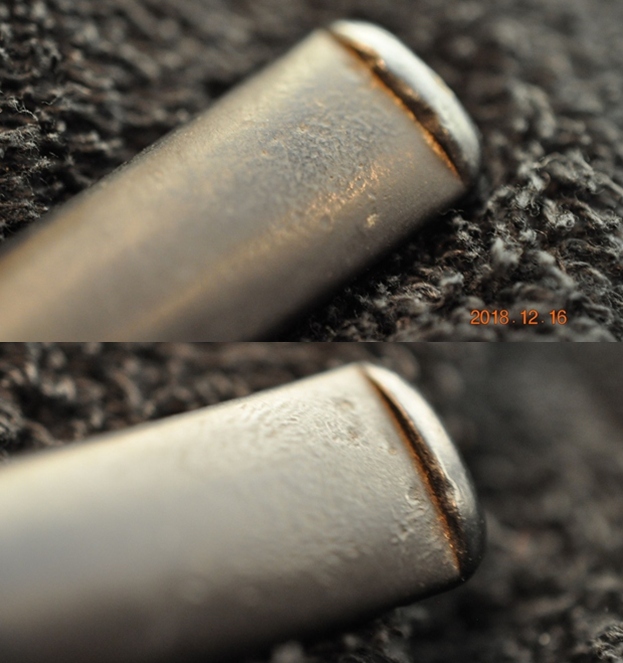
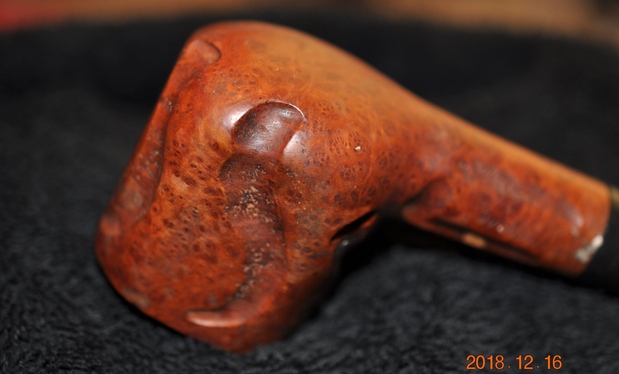
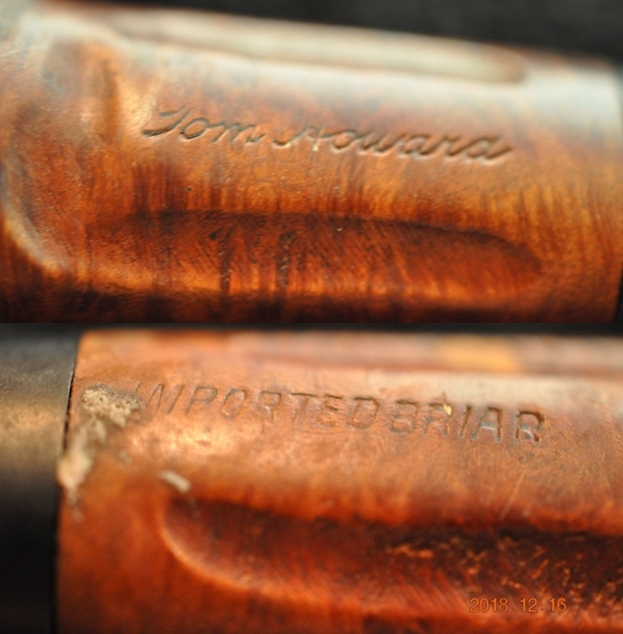
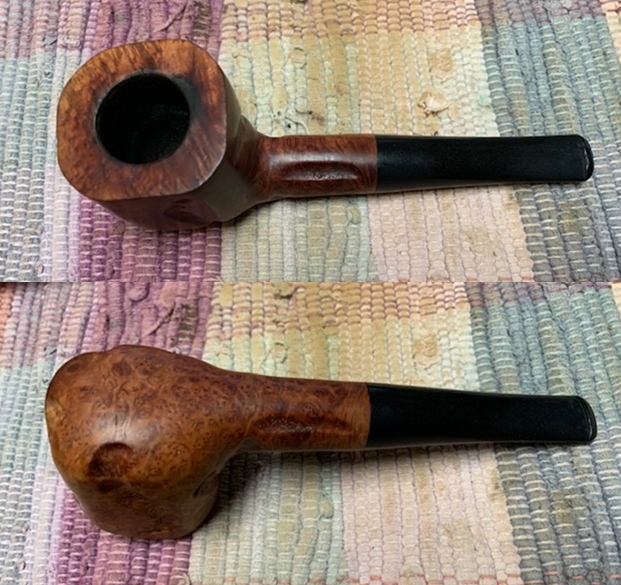
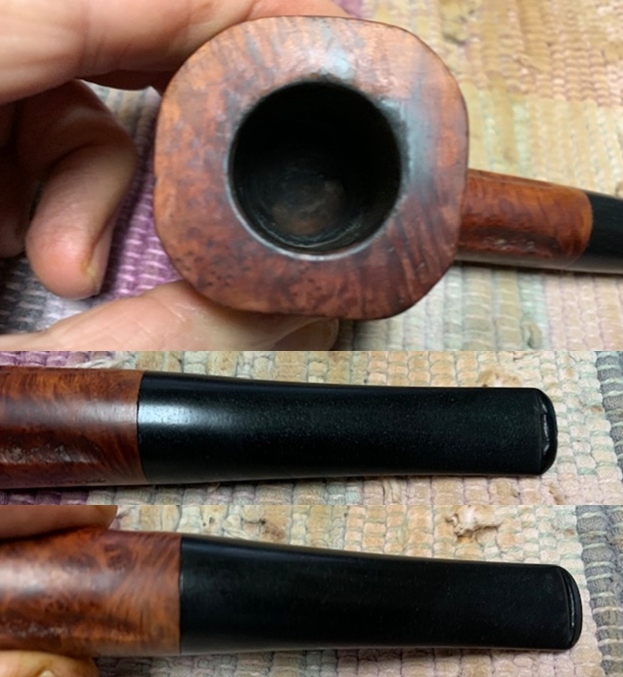
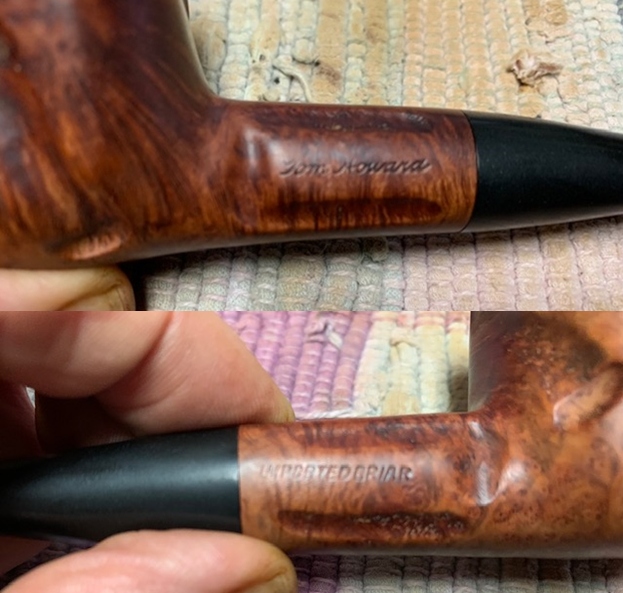
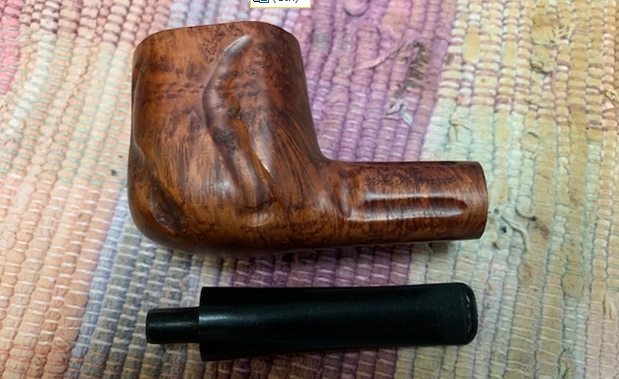
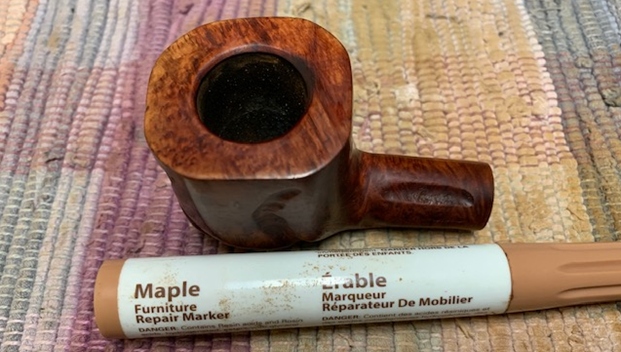
The next pipe on the table came to us in a group of pipes that we purchased from online auction on in 2018 from Dearborn Heights, Michigan, USA. It is a rusticated Panel Billiard that is in good condition. It is stamped on the sides of the shank. On the left side it is stamped Tom Howard. On the right side it is stamped Imported Briar. The stamping is clear and readable. I have worked on at least one Tom Howard pipe in the past and later in the blog will give a bit of the history. At this point I have to say that the pipe is well made but it is clunky looking and feeling. It does not have the rugged beauty or finesse of a Tracy Mincer Custom-Bilt in my opinion. It has its own charm, to be sure but it is not the same. The age of the pipe and the oils in the finish has given the pipe a rich reddish brown finish. There is also some nice grain that the shape follows well. The finish was dirty with dust around the nooks and crannies of the worm trail rustication. There was a thick cake in the bowl and the rim top showed darkening and some lava. The inner edge showed some potential damage that would only become clear once the pipe was cleaned. The vulcanite taper stem was oxidized, calcified and had tooth marks and chatter ahead of the button on both sides.  Jeff took photos of the pipe to show what it looked like before he started working on it. He took photos of the bowl and rim top to show the thickness of the cake and the darkening and lava overflow on the rim top. The photos of the stem show the oxidation, calcification and tooth marks and chatter on the surface on both sides.  The photo of the side and heel of the bowl shows the carved worm trail rustication and the grain on the pipe. It looks quite nice under the grime and dust.    The stamping on the sides of the shank is shown in the photos below. It looks very good and readable. It reads as noted and explained above. Before I started my work on the pipe I wanted to refresh my memory of the brand. I remembered that Tom Howard was a notable figure beyond pipe making. I also remembered that Dal Stanton had worked on one and done a great job ferreting out the history of the brand and the maker. I turned to his blog on the brand and read what he had written during his restoration of one of the Howard pipes (https://rebornpipes.com/2018/09/16/the-vintage-notoriety-of-tom-howard-and-his-jumbo-squat-rustified-tomato/). I have included the portion of the blog on the history below for ease of reference. (Thanks Dal!)

I had never heard of a Tom Howard stamp on a pipe and after I put the name in search tool on Pipedia I was surprised to find what I found.  Tom Howard was a vintage celebrity in America during the 1940s and 50s.  Here’s what Pipedia said about Tom Howard the man:

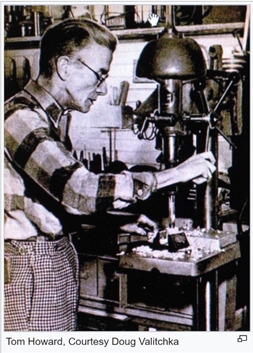
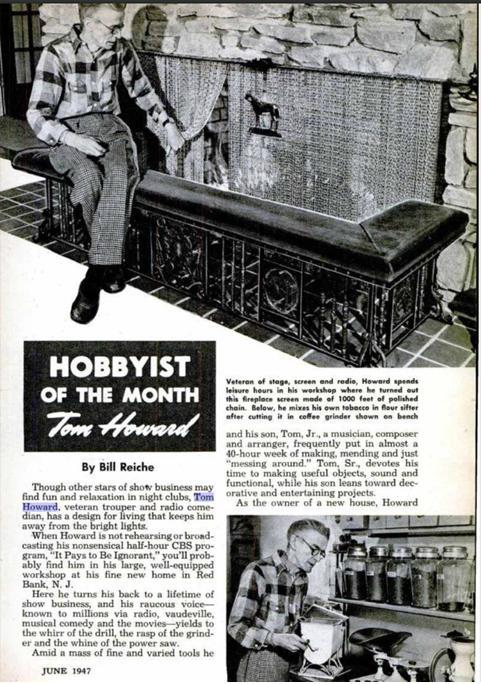
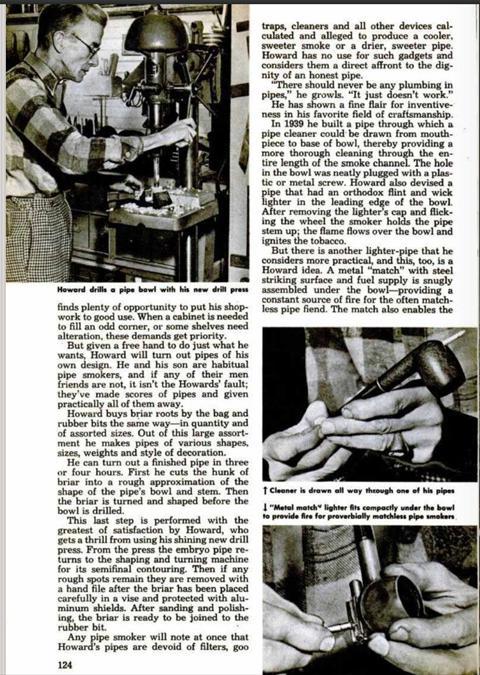
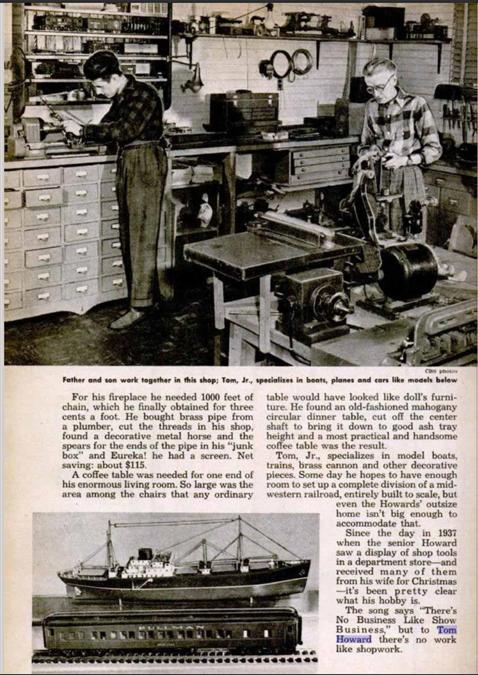
Tom Howard was a popular comedian and personality in the 1940s/50s, known for vaudeville stage and radio work. But he also was a skilled pipe maker. In a Popular Mechanic article from 1947 he is written up as the “Hobbyist of the Month, Tom Howard.” He made pipes in his workshop outside his home in Red Bank, NJ. Starting about 1939 and looks like into the late 1940’s or later. He purchased briar blocks by the bag as well as stem blanks, and in his well-equipped shop he handcrafted his pipes, in about three hours on average. He was a true craftsman, also specializing is intricate model boats, trains and brass canons, all built to scale.

I was intrigued – this vaudeville and stage comedian made pipes and this pipe came from his workshop made by his hands.  How cool is that?  Desiring to find out more about Tom Howard the man, I searched Wikipedia and found a fun and informative article about his professional life and how he hosted a I was intrigued – this vaudeville and stage comedian made pipes and this pipe came from his workshop made by his hands.  How cool is that?  Desiring to find out more about Tom Howard the man, I searched Wikipedia and found a fun and informative article about his professional life and how he hosted a zany Q&A game show that was spoofing the ‘serious’ Q&A game shows.  It was called “It Pays to Be Ignorant”.   Here is what the Wikipedia article said:

It Pays to Be Ignorant was a radio comedy show which maintained its popularity during a nine-year run on three networks for such sponsors as Philip Morris, Chrysler, and  DeSoto. The series was a spoof on the authoritative, academic discourse evident on such authoritative panel series as Quiz Kids and Information Please, while the beginning of the program parodied the popular quiz show, Doctor I.Q. With announcers Ken Roberts and Dick Stark, the program was broadcast on Mutual from June 25, 1942 to February 28, 1944, on CBS from February 25, 1944 to September 27, 1950 and finally on NBC from July 4, 1951 to September 26, 1951. The series typically aired as a summer replacement.

Snooping a bit more, I found an online site that had the July 5, 1951 episode of ‘It pays to Be Ignorant’ available for viewing.  I watched it and it was like I was in a time machine!  The video also included period advertising for cars and tobacco and Tom Howard in form, dawning a professorial gown and a gravelly 1950s vaudeville tin can voice.  It’s great! I clipped a picture of the episode.  If you want to see it yourself, here’s the link:  The Internet Archive.
The Pipedia article I included above, referenced one more source to learn a bit more about Tom Howard.  In a 1947 Popular Mechanics edition he was named ‘Hobbyist of the Month’ – but it didn’t say which month!  With a little bit of help from Google, I found Archive.org that housed old editions of many periodicals including Popular Mechanics.  I started in January and started searching – thankfully they had a search tool I utilized for each month.  Finally, I found the article in the Popular Mechanic 1947 June’s edition.   For the absolute nostalgia of it, and for the interesting information it adds about Tom Howard and especially his pipe production, I’m including the pages here for you to read – including the cover page!  I couldn’t pass it up!  Armed with the great information Dal had provided I turned to work on the pipe itself. Jeff had carried out his usual thorough cleanup of the pipe. He had reamed it with a PipNet reamer to remove the cake and cleaned the reaming up with a Savinelli Fitsall Pipe Knife. He scrubbed the internals of the bowl and stem with alcohol, cotton swabs and pipe cleaners. He scrubbed the externals with undiluted Murphy’s Oil Soap and rinsed the bowl off with running water. He soaked the stem in Before & After Deoxidizer and once it had soaked rinsed it off with warm water to remove the residual solution. He dried it off and rubbed it down to remove any oxidation that was still on the stem. The pipe looked much better when I received it.  I took a photo of the rim top to show the condition. You can see the darkening and the damage to the inner edge of the rim on the back right. It is roughened and chipped and out of round. The taper stem came out looking quite good. There are tooth marks and chatter on both sides near the button and some damage to the button surface itself.     I took photos of the sides of the shank to show the stamping. It is clear and readable as noted above.  I removed the stem from the shank and took a photo of the pipe parts to show what I was working with. It is a nice looking pipe.I decided to start the restoration on this one by working on the damage and darkening on the right rear of the rim top. I sanded the rim top with 220 grit sandpaper and gave the inner edge of the bowl a slight bevel to remove the damage and blend it into the rest of the rim edge. I polished the briar with micromesh sanding pads – wet sanding with 1500-12000 grit pads. I wiped the bowl down with a damp cloth after each sanding pad.  I touched up the sanded rim top and edge with a Maple stain pen to blend it into the surrounding briar. The match is perfect and once the bowl is buffed it will disappear.With the repair completed I rubbed the briar down with Before & After Restoration Balm. I worked it into the briar with my fingertips and a horsehair shoe brush to work it into the nooks and crannies of the rusticated finish. The product works to clean, enliven and preserve the briar. I let it sit for 15 minutes while I worked on the stem. After the time passed I buffed it with a cotton cloth to deepen the shine. The briar really comes alive with the balm. I set the bowl aside and turned my attention to the stem. I filled in the bite marks on both sides of the stem and button with clear super glue and set it aside for the repairs to cure. I reshaped the button with a file and then sanded it with 220 grit sandpaper to smooth it out. I started the polishing with a piece of 400 grit wet dry sandpaper. I polished the vulcanite with micromesh sanding pads – 1500-12000 grit pads. I wiped it down with Obsidian Oil after each sanding pad. I used Before & After Pipe Polish – both Fine and Extra Fine to further polish the stem.   This Tom Howard Panel Billiard turned out to be a nice looking pipe. The rusticated finish looks quite good while not obscuring the grain around the bowl. The stain used on the bowl served to highlight the grain on the bowl. The polished black vulcanite taper stem adds to the mix. With the dust gone from the finish and the bowl it was a beauty and is eye-catching. I put the stem back on the bowl and buffed the pipe with Blue Diamond on the buffing wheel being careful to not buff the stamping. I gave the bowl and the stem multiple coats of carnauba wax on the buffing wheel and followed that by buffing it with a clean buffing pad. I hand buffed the pipe with a microfiber cloth to deepen the shine. The finished Tom Howard Panel Billiard is a large pipe and feels great in the hand. Give the finished pipe a look in the photos below. I can only tell you that like the other pipes I am working that it is much prettier in person than the photos capture. The dimensions of the pipe are Length: 6 inches, Height: 2 inches, Outside diameter of the bowl: 1 ¾ inches, Chamber diameter: 7/8 of an inch. The weight of the pipe is 71grams/2.50oz. Thanks for walking through the restoration with me as I worked over another beautiful pipe. Remember we are not pipe owners; we are pipemen and women who hold our pipes in trust until they pass on into the trust of the next generation.

Repairing a broken shank on a Savinelli Liquirizia 920KS Dublin


Blog by Steve Laug

On Tuesday this week I received the following email from a fellow here in Vancouver regarding repairing a couple of pipes for him. He wrote as follows:

Hi Steve… You were recommended to me by our good friends at City Cigar (Vancouver).  I have 2 pipes I’d love to have rescued – if possible!  Please let me know if you could be of service.  I’ve attached a few photos.

One is a Peterson 2018 Pipe of the Year, Smooth Fishtail.  Pipe is great – except there is an unsolvable (for myself) blockage in the stem.  I think the filter is damaged.

The other is an unfortunate Savinelli; the actual wood is broken, right at the connection between pipe body and stem.

Let me know your thoughts!  I’d love to regain these to a workable state if possible; they are lovely pipes.

Thanks kindly and best regards, Zak

He included pictures of both pipe for me. I decided to tackle the Savinelli first. Here are the photos that Zak included with his email. As you can see the shank is snapped with a clean break about ½ inch up the shank. Zak fortunately had the pieces of the broken pipe and delivered them to me. The break had not damaged the stamping on the pipe. It read on the left side Savinelli [over] Liquirizia. On the right side it had the Savinelli Shield S logo followed by the shape number 920KS [over] Italy. On the underside of the shank it is stamped Hand Made. The pipe had a beautiful acrylic stem with a white band on the end. The tenon was Delrin and had been drilled out for a Savinelli 6mm filter or a Balsa filter. The bowl had a moderate cake and some lava on the rim top. The stem and shank had tar and oils. I cleaned out the shank and the areas of the break and glued the broken piece back in place on the shank using clear CA (super glue). The photos below show the glued shank piece.  When I repair this kind of break in a shank gluing and clamping it is not sufficient to hold. As the stem is put back in place the break will happen again due to the pressure from the tenon on the walls. I have learned that a simple band will bind it together and add strength. I have some brass bands that I picked up online that are quite thin but have and end cap that works really well to bind it all together and strengthen the joint. I went through the bag of bands I have and found the one that fit the best.I sanded the repaired area smooth with 220 grit sandpaper to blend the repair into the surface of the briar. Once the repair was smooth heated the band with a lighter and pressed it onto the shank end against my topping board to press it in place. The band added stability to the repair.I filled in a few spots with clear CA glue and resanded them with 220 grit sandpaper. Once the repairs cured I wiped the bowl down with acetone to remove the spotty varnish coat that was on the rest of the bowl. I touched up the repaired areas with a Cherry stain pen to blend it in and prepare it for a further stain coat a little later.I reamed out the uneven cake in the bowl with a PipNet reamer and cut it back to bare briar so I could inspect the interior walls. I cleaned up the remnants of the cake with a Savinelli Fitsall Pipe Knife. The walls of the bowl looked very good with no heat damage or fissures.I put a cork in the bowl and stained it with a dark brown stain. I flamed the stain to set in the briar and then repeated the process until I was happy with the coverage on the bowl. It did a great job blending the repaired area into the briar.   I set the bowl aside so the stain coat would cure overnight. Here is what it looked like in the morning when I brought it to the table.   I wiped the bowl down with isopropyl alcohol to make the finish more transparent. I began to see the grain stand out.  I continued to wipe it down until I had the variation in colour I was looking for. The grain really stood out now and the brass band was a great contrast.   I polished the briar with micromesh sanding pads – wet sanding with 1500-12000 grit pads and wiping the bowl down between each pad with a damp cloth. The contrasting colours really came alive.  I rubbed the bowl and shank down with Before & After Restoration Balm. I worked it into the surface of the bowl sides and shank with my fingertips to clean, enliven and protect the briar. I let the balm sit for a little while and then buffed with a cotton cloth to raise the shine. The Balm did its magic and the grain stood out.    I polished the acrylic stem with micromesh sanding pads – 1500-12000 grit pads. I wiped it down with a damp cloth after each sanding pad. The photo below shows the polished stem.  This nicely grained Savinelli Liquirizia 920KS Bent Dublin with a thin brass repair band and a swirled acrylic stem is a great looking pipe. The briar around the bowl is clean and really came alive. The rich brown stains gave the grain a sense of depth with the polishing and waxing. The grain really popped. The brass band binds the cracked shank repair and gives it a bit of bling. I put the acrylic stem back on the bowl and carefully buffed the pipe with Blue Diamond on the buffing wheel using a light touch on the briar. I gave the bowl and the stem multiple coats of carnauba wax on the buffing wheel. I buffed the pipe with a clean buffing pad to raise the shine. I hand buffed the pipe with a microfiber cloth to deepen the shine. The finished Savinelli Liquirizia Bent Dublin is a beauty and feels great in the hand and looks very good. Give the finished pipe a look in the photos below. The dimensions of the pipe are Length: 5 ½ inches, Height: 2 inches, Outside diameter of the bowl: 1 ½ inch, Chamber diameter: ¾ of an inch. The weight of the pipe is 44grams/1.55oz. The pipe will be going back to Zak as soon as finish the second one. He will soon, so he can enjoy it again. Thanks for reading this blog and my reflections on the pipe while I worked on it.

Breathing Life into a GBD Tahiti Billiard


Blog by Steve Laug

The next interesting looking large Billiard was picked up 2018 from a fellow in Pocatello, Idaho, USA. It was a bit of an oddity for me in that it is a GBD pipe with a very different rustication on the bowl and shank than even the alligator finish I have seen. The finish was dirty but otherwise in good condition on the bowl and shank. There was a repair band on the shank that generally signals a repair on a cracked shank. The pipe is stamped on a smooth panel on the underside of the shank and reads GBD in the oval logo [over] TAHITI. I wonder if the shape number is not under the repair band. The line does not show up on any of the GBD materials that I have accessed. There was a thick cake in the shank and thick overflow of lava on the rim top that obscured potential damage on either. The stem was an original tapered vulcanite with the GBD Brass roundel on the left side. It was oxidized, calcified and had light tooth marks and chatter on both sides. There was also a gouge on both the top and underside of the stem mid-stem. It had a lot of potential. Jeff took photos of the pipe before he started his cleanup work. He took a photo of the rim top to show condition of the bowl. It is hard to tell what the inner edge of the bowl looks like under the lava coat. It is a very dirty pipe. He also captured the condition of the stem. It is oxidized, calcified and has tooth marks and chatter on the top and underside of the stem near the button. He took a photo of the sides and heel of the bowl to show the rustication pattern around the bowl and the condition of the pipe. You can see the repair in the photo below next to the shank. I have used a red arrow to highlight the repaired area under the band.The pipe is stamped GBD in an oval followed by TAHITI on the underside of the shank there is no London England stamp and no shape number. I looked on Pipedia and Pipephil’s site for information on the Tahiti line and came up empty handed. There was no information on the line. I did a Google search on the brand and came upon a link on smokingpipes.com to a very similar looking pipe and a description (https://www.smokingpipes.com/pipes/estate/england/moreinfo.cfm?product_id=35108). On the site Bear Graves writes this description of the pipe:

One thing I love about the older GBD pipes is that they were never timid when it came to staying within shape charts, and they would often play with different carved finishes. “Tahiti” is a wonderfully appropriate name for this pipe. I can almost hear the ocean now.–Bear Graves

It was time to work on the pipe. As usual Jeff had done a thorough cleanup on the pipe. He reamed the bowl with a PipNet pipe reamer and followed up with a Savinelli Fitsall pipe knife to remove the cake. He scrubbed out the mortise and the airway in the shank and the stem with alcohol, cotton swabs and pipe cleaners. He scrubbed the exterior of the bowl, rim, shank and stem with a tooth brush and Murphy’s Oil Soap to remove the oils and tars on the rim and the grime on the finish of the bowl. He rinsed it under running water. One of the benefits of this scrub is that it also tends to lift some of the scratches and nicks in the surface of the briar. He dried it off with a soft cloth. He cleaned the internals and externals of the stem with alcohol, pipe cleaners and cotton swabs. He soaked the stem in Before & After Deoxidizer and rinsed it off with warm water and cleaned out the airway in the stem with alcohol. I took photos of the rim top and bowl to give a clear picture of the darkening and damage to the rim top and edges of the bowl. There appeared to be some burn damage on the surface and inner edge of the rim. I took photos of the top and underside of the stem to show cut marks on the top and underside of the stem.The stamping on the underside of the shank was readable. It read as noted above.I removed the stem from the shank and took a photo of the pipe.I started my work on the rim top by cleaning the top and edges with 220 grit sandpaper to remove the damage on the top of the rim. The rim had a very nice inward bevel that when cleaned up was attractive. The grain on the top of the rim was very nice. I started the polishing process with 400 grit wet dry sandpaper.I polished the briar with micromesh sanding pads – dry sanding with 1500-12000. I wiped the bowl down with a damp cloth after each pad. Note the rim top and you can see the change to the look of the bevel that I worked on above.   I rubbed the bowl and shank down with Before & After Restoration Balm. I worked it into the surface of the bowl sides and shank with my fingertips to clean, enliven and protect the briar. I let the balm sit for ten minutes and then buffed it with a cotton cloth to raise the shine. The grain came alive and the finish looked rich. I set the bowl aside and turned my attention to the stem. I filled in the damaged areas with clear super glue. Once the repairs cured I sanded them smooth with 220 grit sandpaper to blend them into the surface. I started polishing them with 400 grit wet dry sandpaper.  I polished the vulcanite stem with micromesh sanding pads – 1500-12000 grit pads. I wiped it down with Obsidian Oil after each sanding pad. I used Before & After Pipe Polish – both Fine and Extra Fine to further the stem. The photos below show the polished stem.  I am pretty happy with the restoration of this GBD New Tahiti Billiard. The rim top looks far better and the finish is now and reveals the grain really well. There is a matte finish to the bowl that is rugged and rich looking. The stem is clean and smooth with no remaining damages. I put the stem back on the bowl and carefully buffed the pipe with Blue Diamond on the buffing wheel using a light touch on the briar. I gave the bowl multiple coats of Conservator’s Wax and the stem multiple coats of carnauba wax on the buffing wheel and followed that by buffing the entire pipe with a clean buffing pad. I hand buffed the pipe with a microfiber cloth to deepen the shine. The finished large GBD Billiard fits nicely in the hand and feels great. Give the finished pipe a look in the photos below. The dimensions of the pipe are Length: 6 inches, Height: 2 inches, Outside diameter of the bowl: 1 ½ inches, Chamber diameter: 7/8 of an inch. The weight of the pipe was 49g/1.73oz. I will be putting it on the rebornpipes store shortly. Thanks for reading this blog and my reflections on the pipe while I worked on it. There are many more to come!