Tag Archives: repairing tooth marks

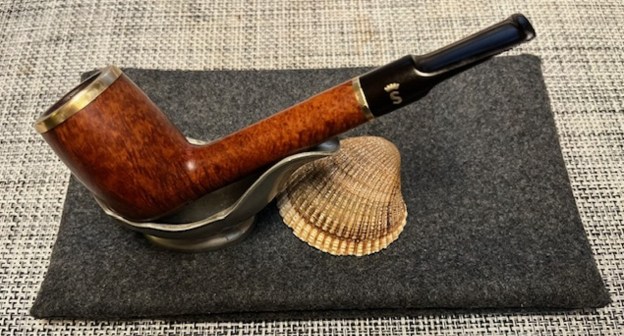
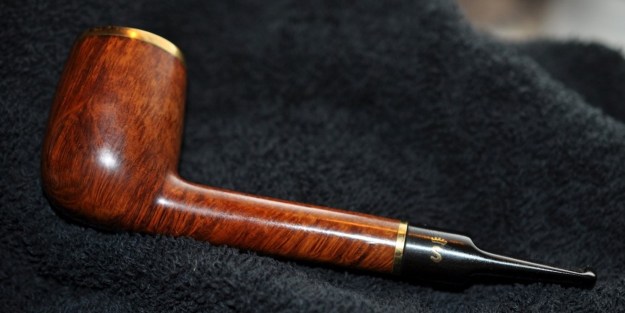
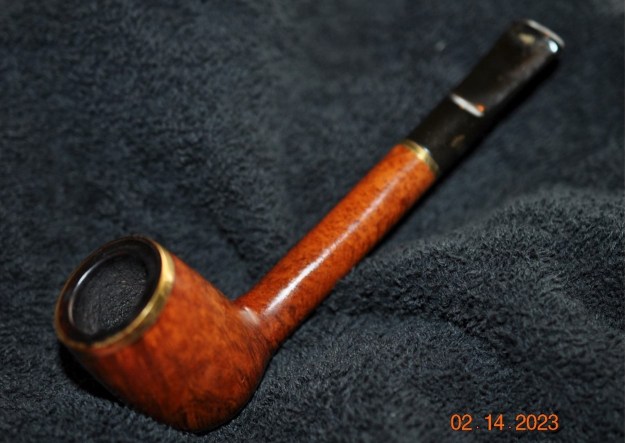
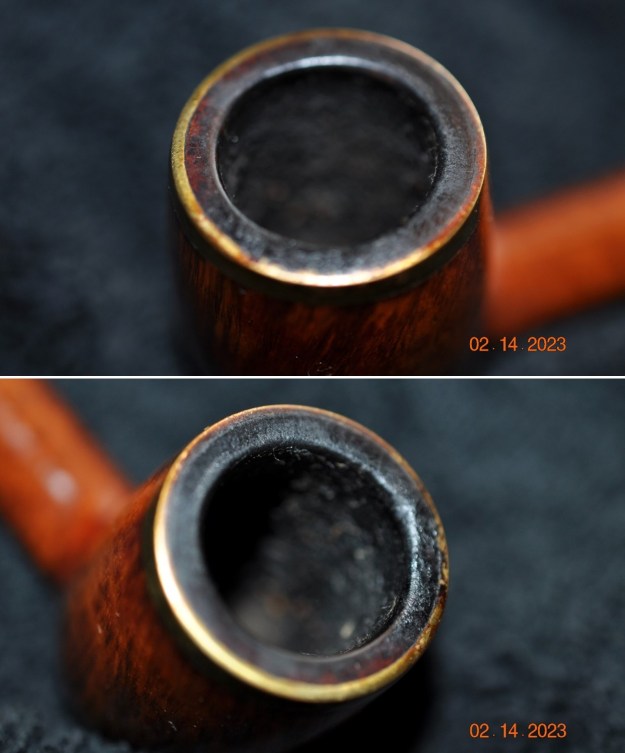
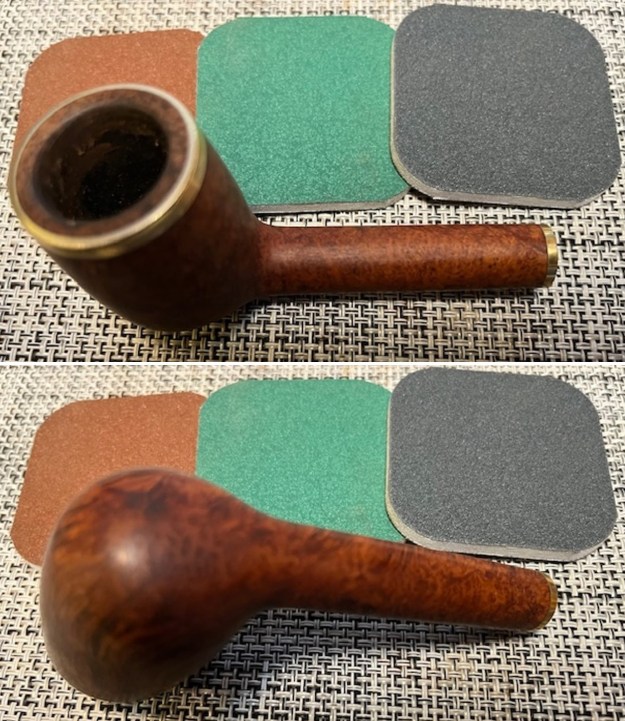
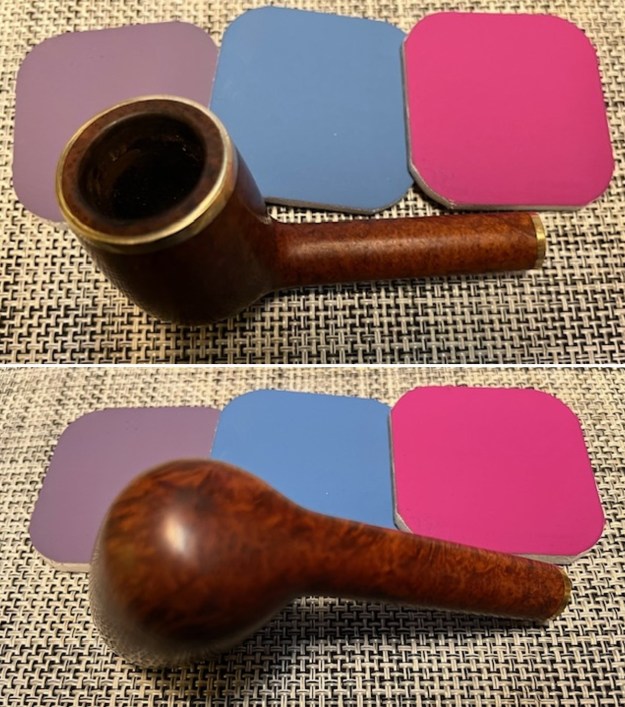
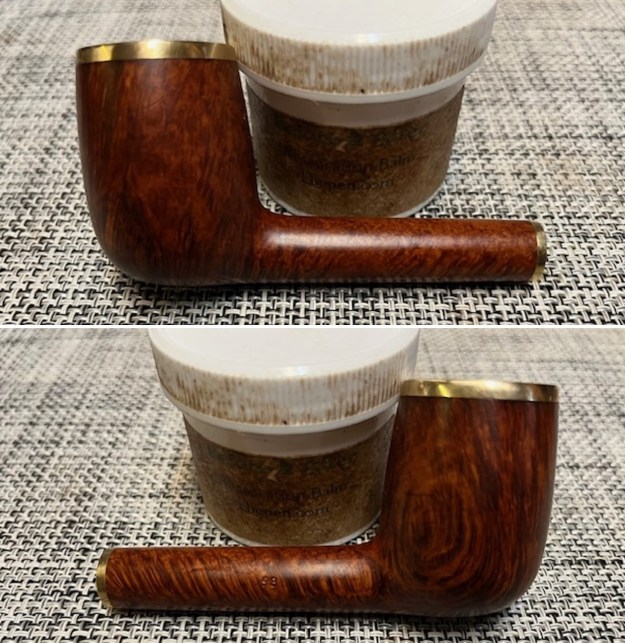
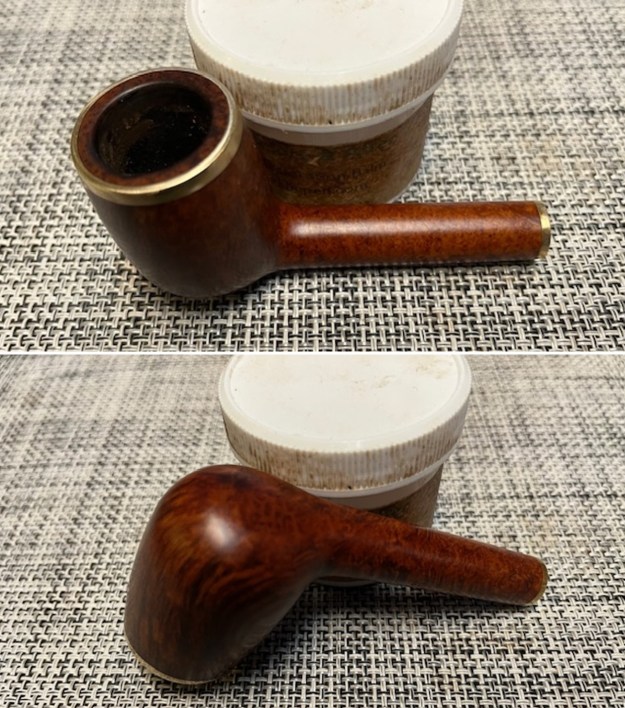
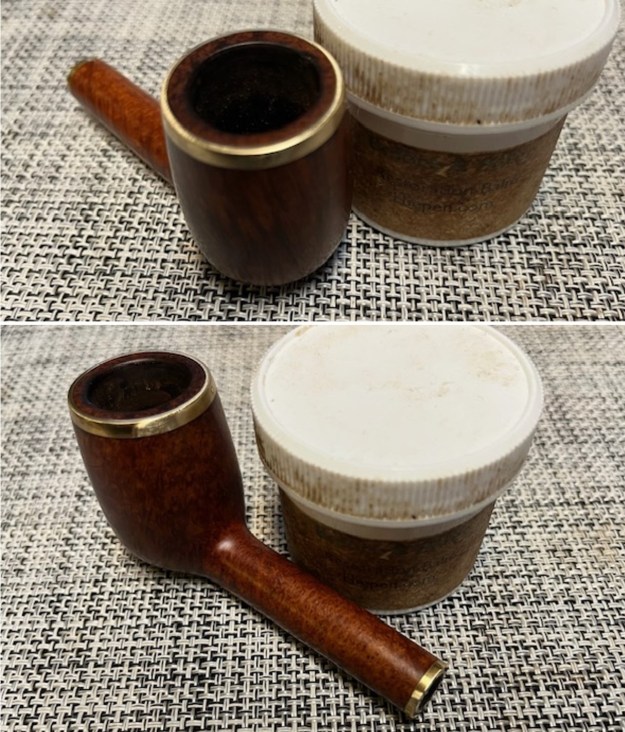
Giving new life to a lovely Danish Made Gilt Edge Stanwell 98 Lovat


Blog by Steve Laug

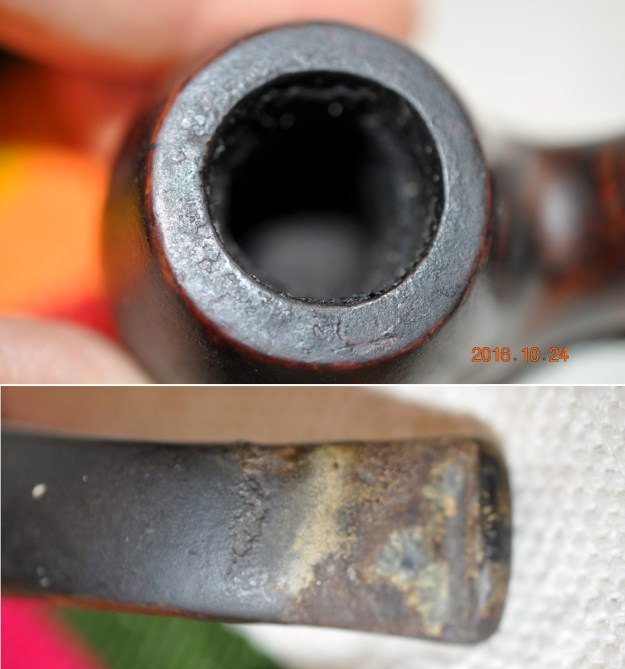
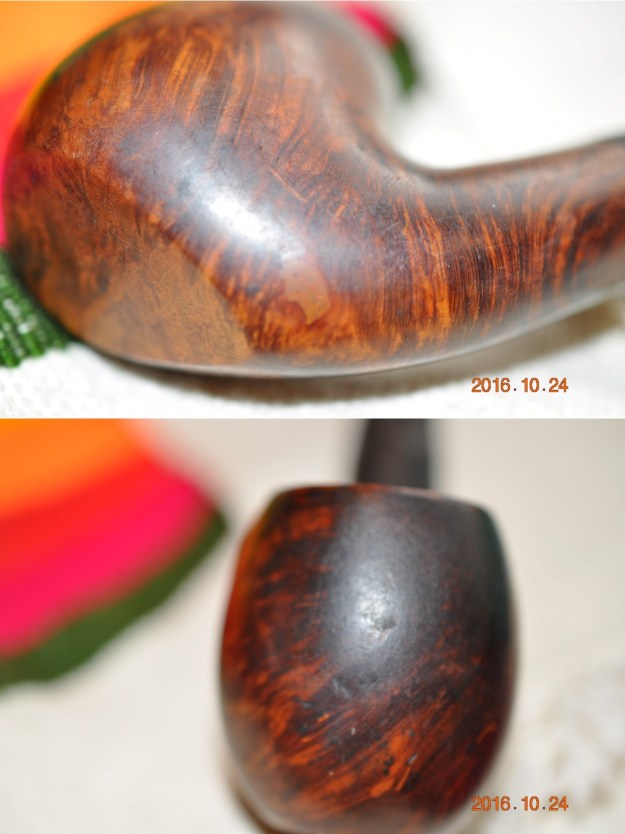
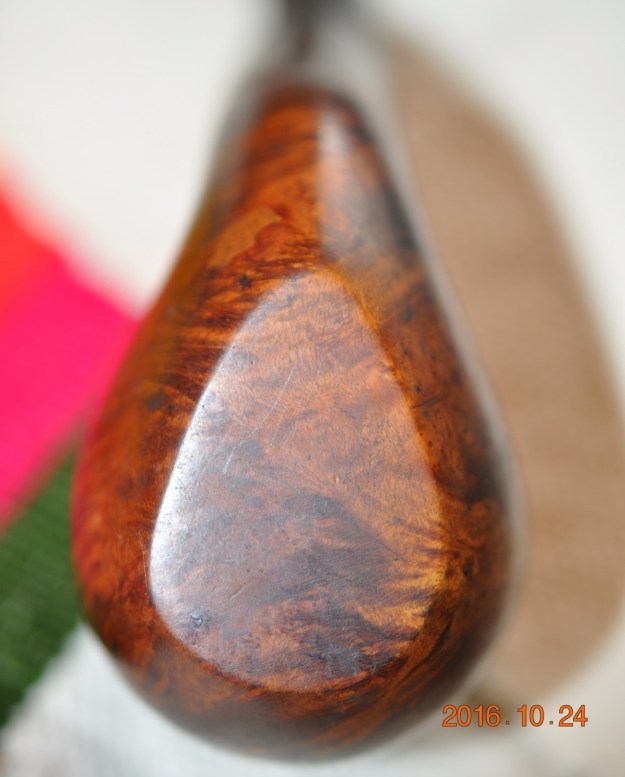
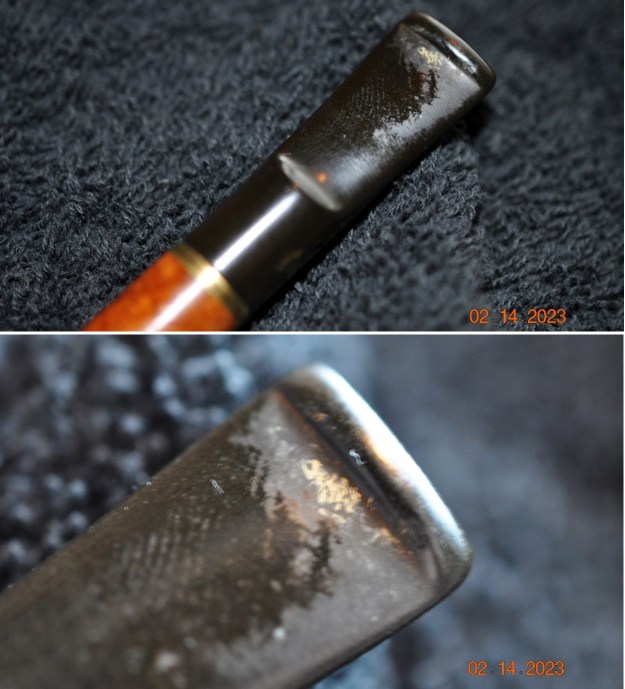
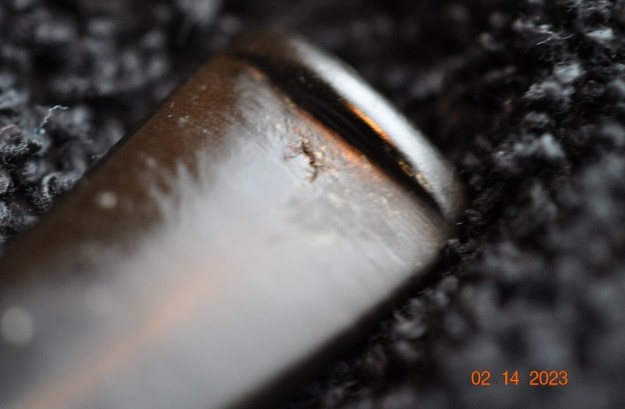
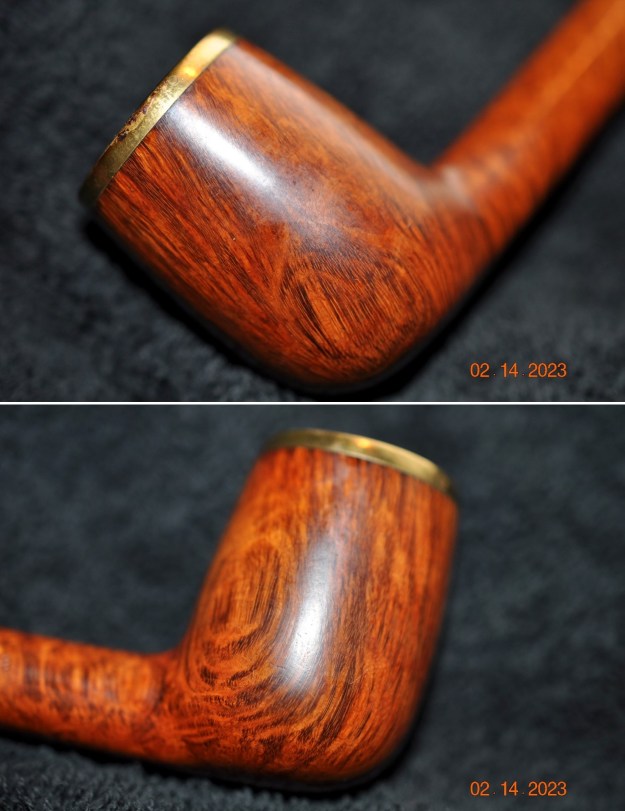
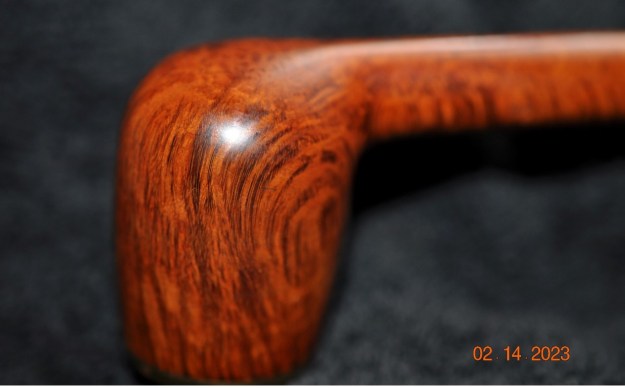
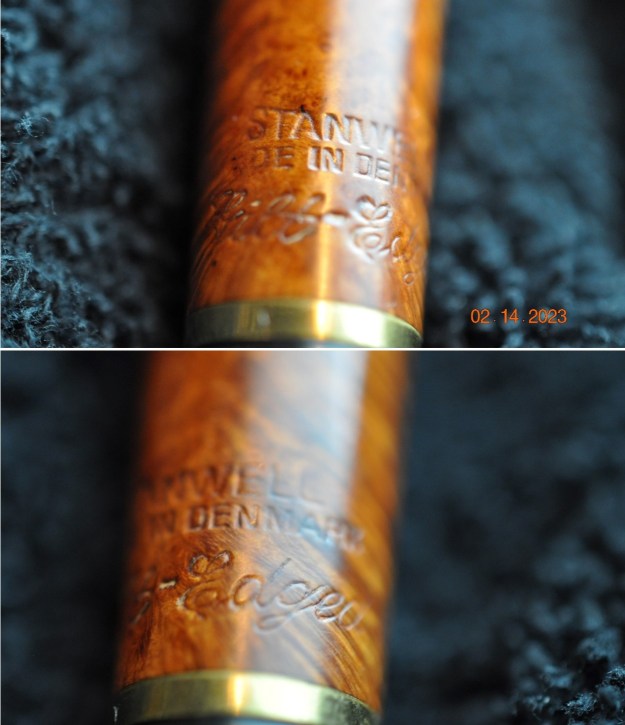
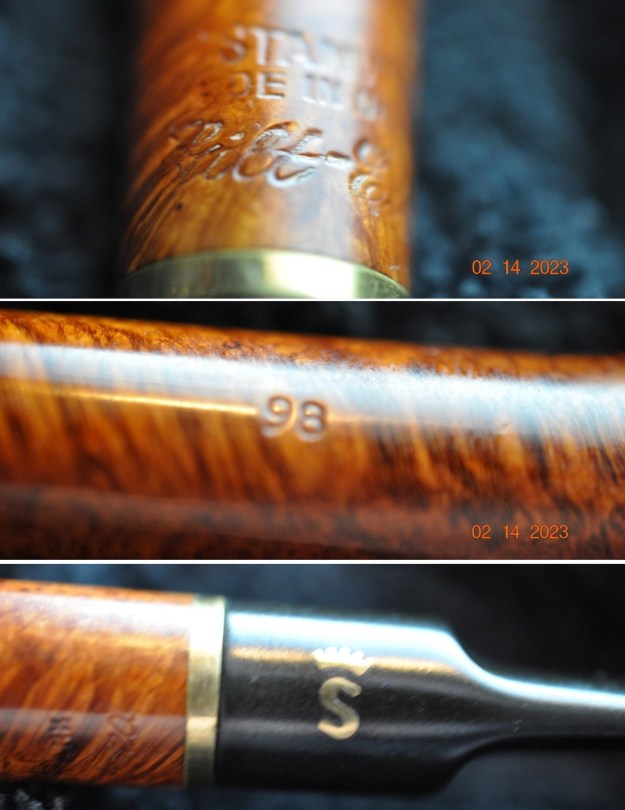
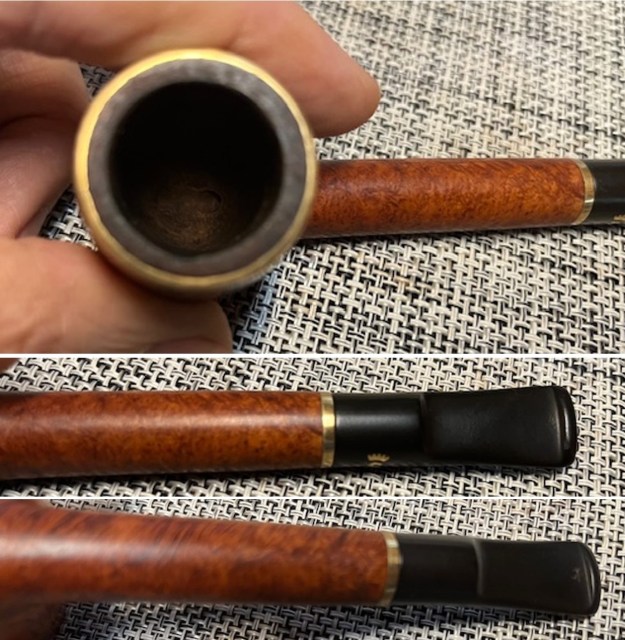
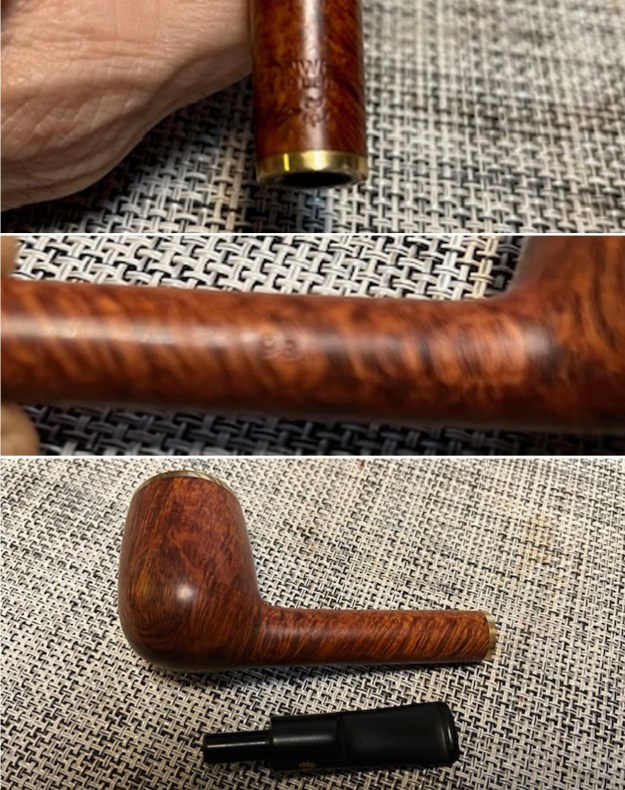
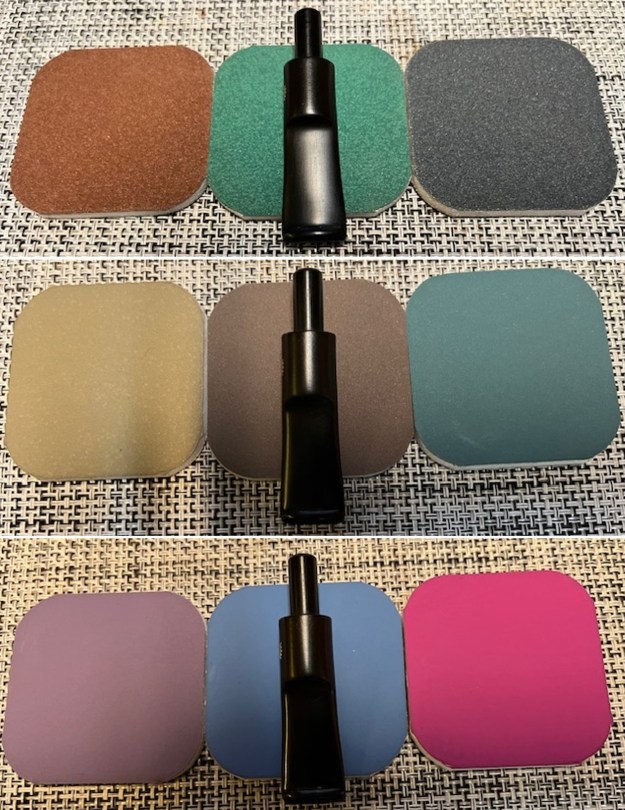
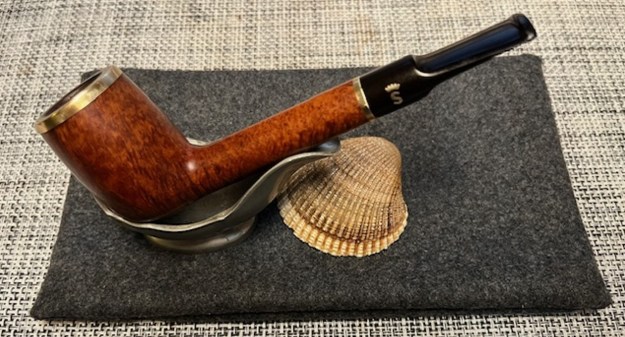
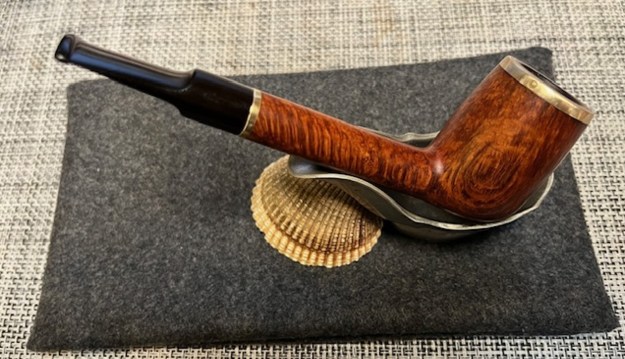
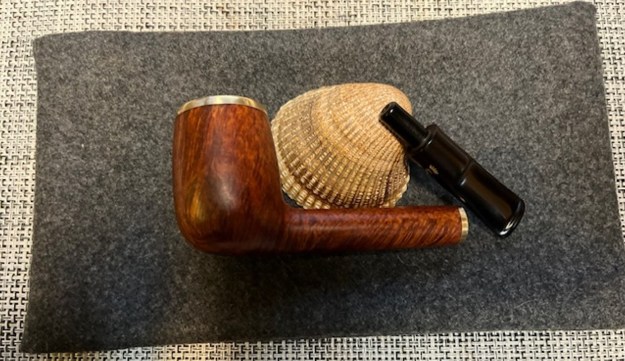
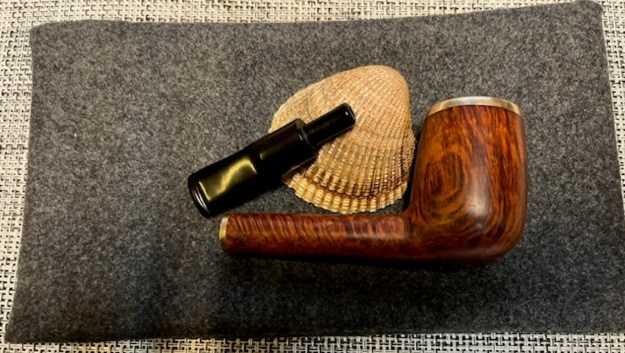
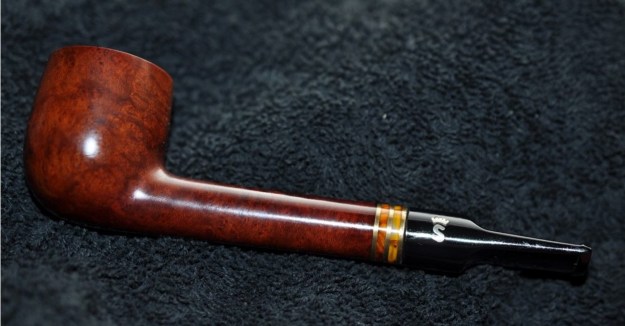
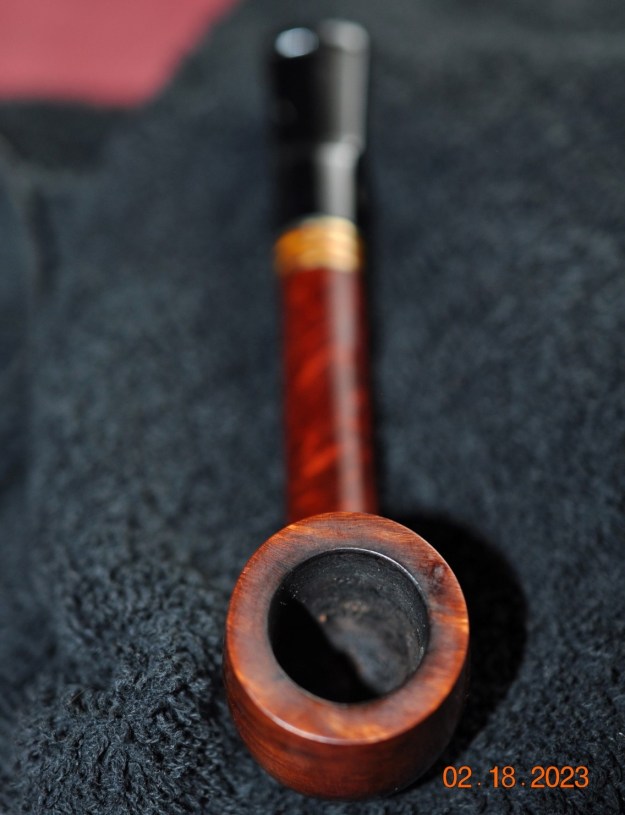
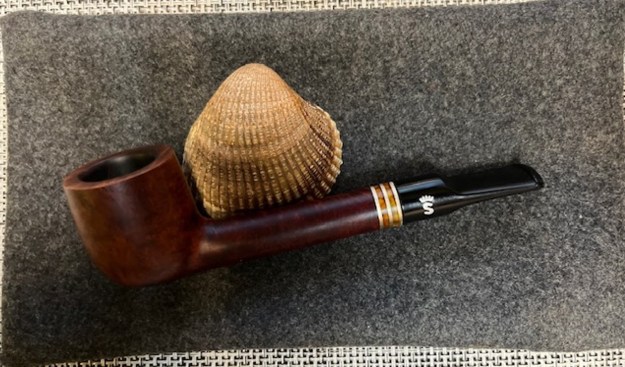
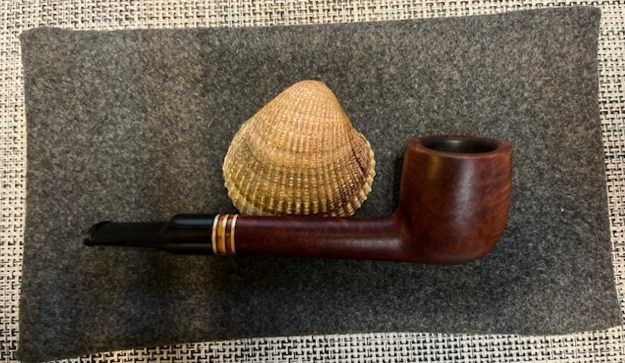
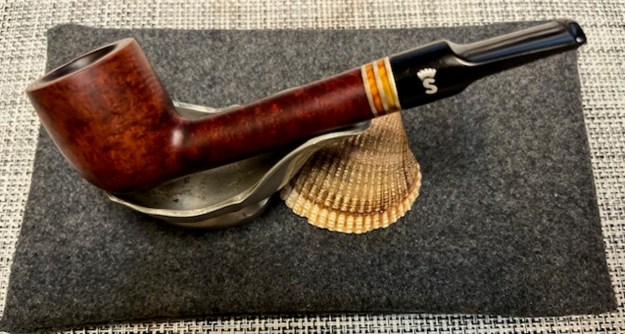
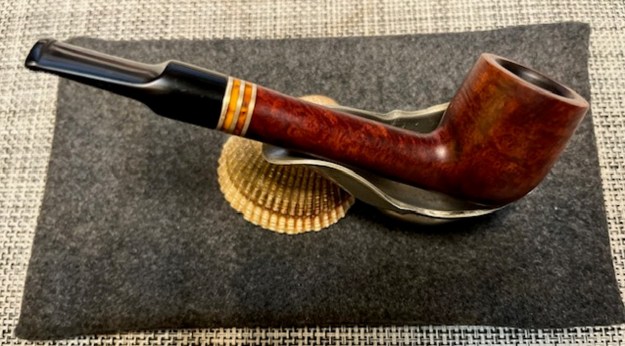
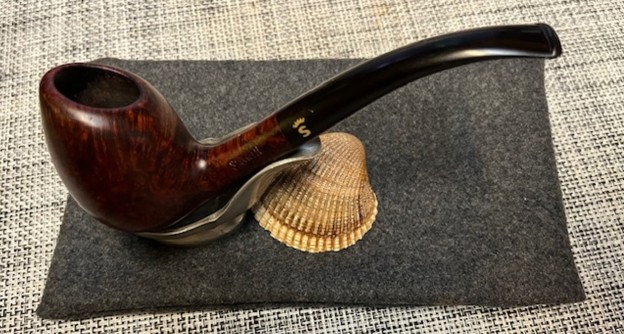
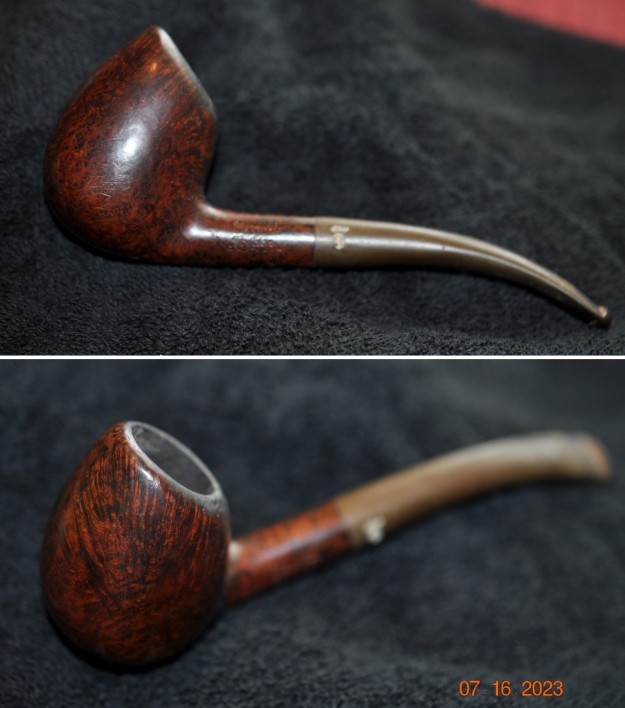
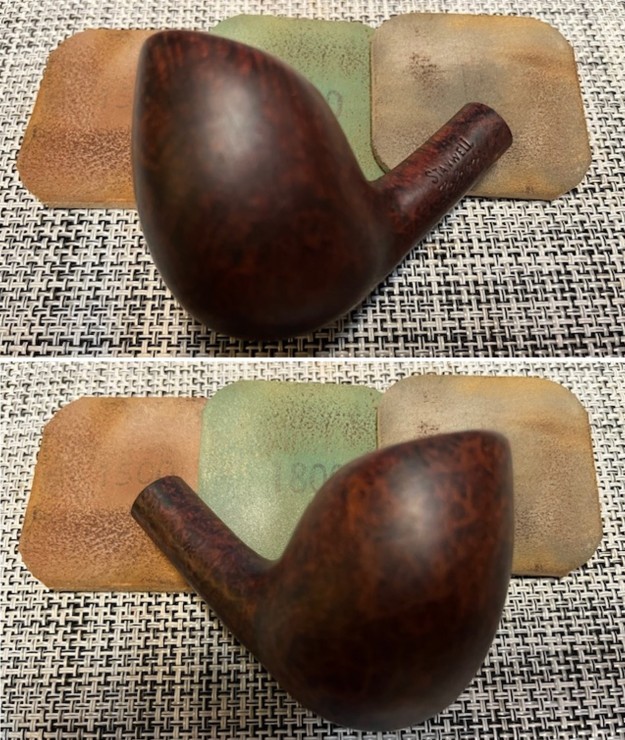
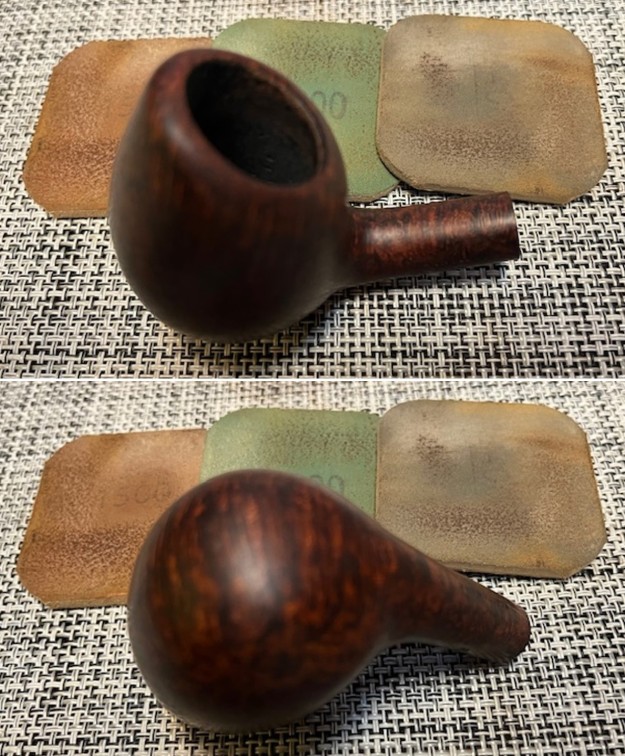
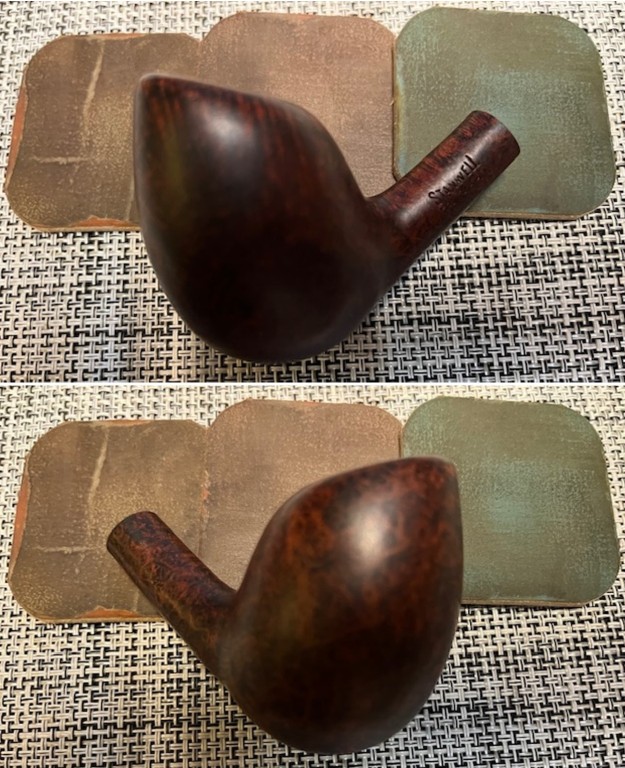
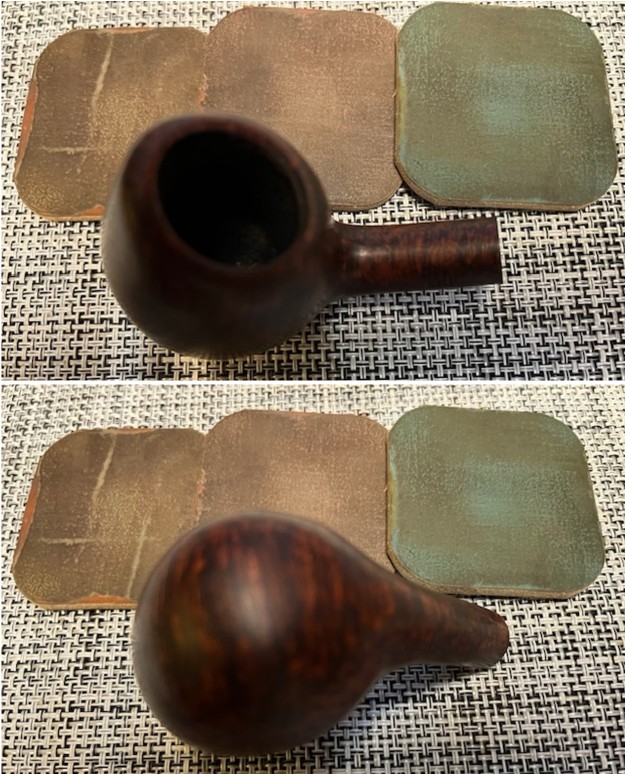
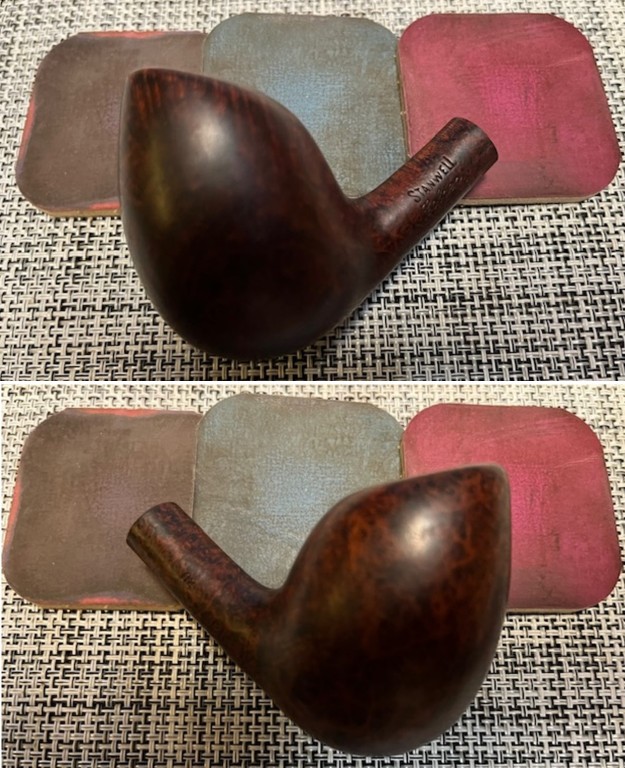
The next pipe I am working on was purchased a year ago on 01/26/2023 as part of a group of pipes from a fellow in Copenhagen, Denmark. This was another dirty pipe but underneath it had some nice grain. It was obviously it had been someone’s favourite smoker. The pipe was stamped on the underside of the shank that reads Stanwell [over] Made in Denmark [over] Gilt Edge. On the right side of the shank it is stamped with a 98 which is the shape for a Lovat. There was a gold band around the shank end and at the rim top and edge that were a very nice touch and what gave it the name Gilt Edge. The dirty finish was not able to hide the beauty in the grime. There were tars and oils ground into the surface of the briar. The bowl had a thick cake that flowed over the top of the rim in a heavy lava coat. The condition of the inner edge was hard to assess under the cake and the lava coat. The stem was a black vulcanite saddle stem with an inlaid brass crown S on the left side. There were light tooth marks and chatter on both sides ahead of the button. The bite mark on the underside was deep and almost through the vulcanite. Jeff took photos of the pipes before he started his clean up work. Jeff took photos of the rim and bowl to show the heavy cake and heavy lava coat covering the rim top. The inner edge of the rim is caked and hard to assess in terms of its condition. It really was a dirty pipe but still a beauty. He also took photos of the stem surfaces to show its overall condition when it arrived. You can see the small deep tooth mark on the underside. The photos of the sides and heel of the bowls show some beautiful grain around the bowl and shank sides. The brown stain on the briar adds depth to the finish on the pipe and makes the grain really stand out. The gold rim cap and shank band are a beautiful addition. It shows a lot of promise. He also took photos of the stamping on the shank sides. It is faint but reads as noted above. He also took a photo of the Crown S stamp on the left side of the stem. From what I can find on the web the Rondo line was an older line of Stanwell pipes that is similar to the Brass Band line but has yellow acrylic between the bands. It is a nice looking pipe but one about which I could find little information.

I turned to the article on Pipedia that gave background information the shape numbers and the designers of the shapes (https://pipedia.org/wiki/Stanwell_Shape_Numbers_and_Designers). From what I can see there the shape number 98 was made in two versions. The first is a Pot shaped pipe with a saddle stem. The second shape is a Lovat. The pipe on the table is clearly the second shape listed – a Lovat.

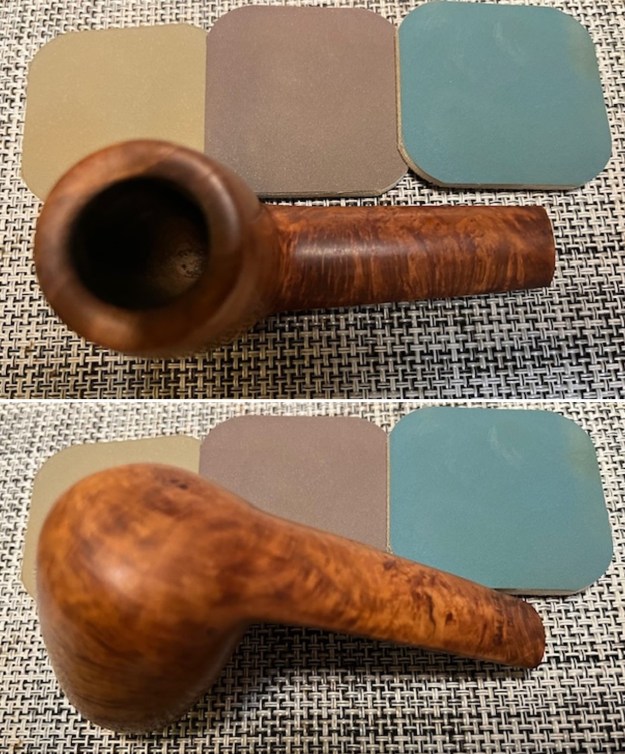
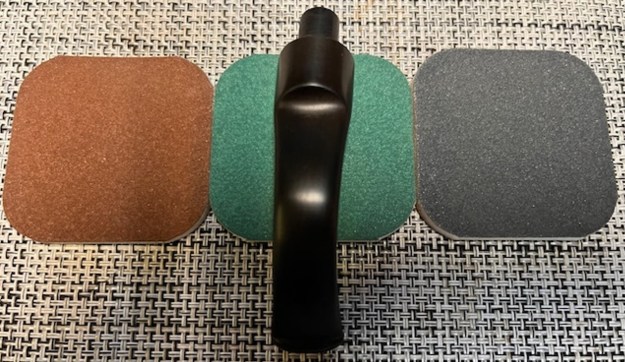
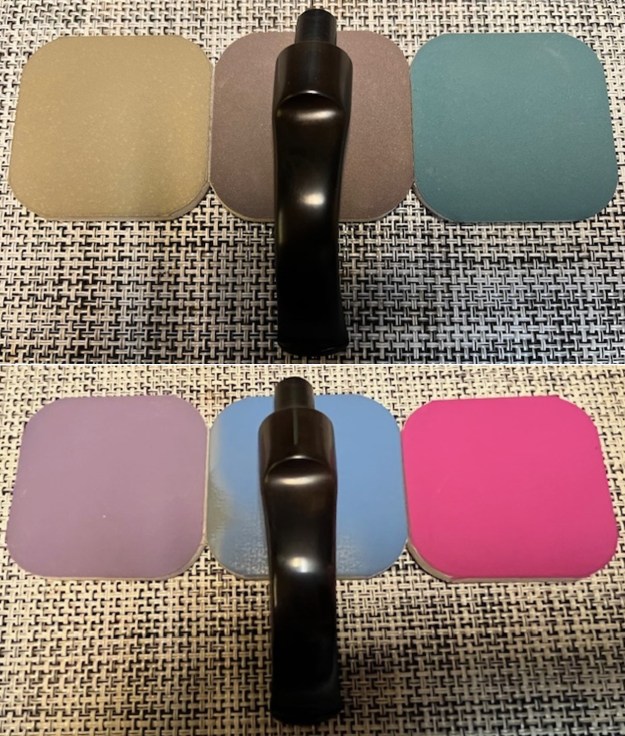
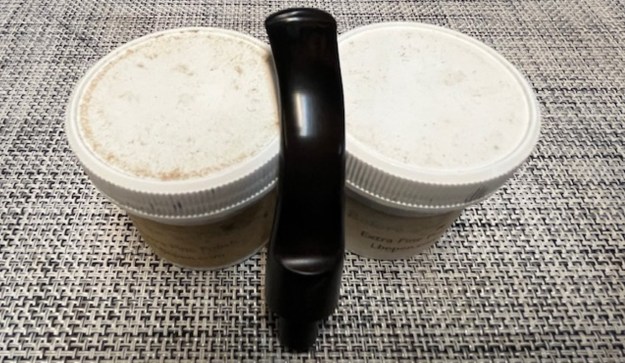
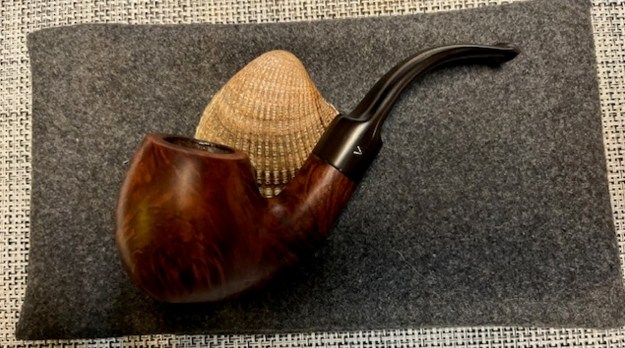
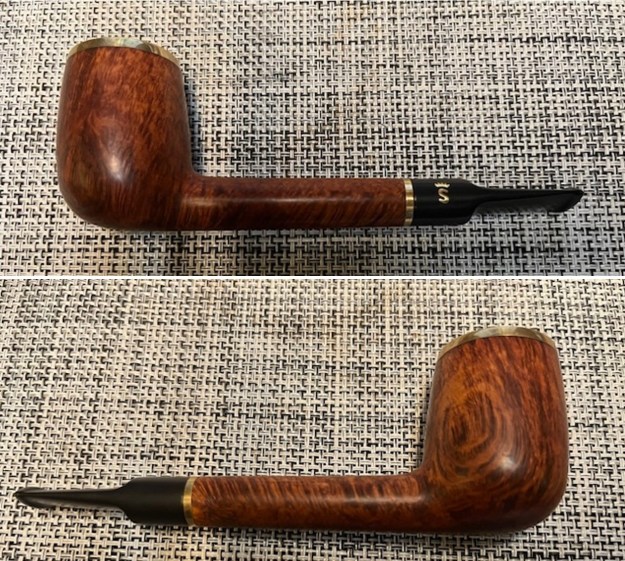
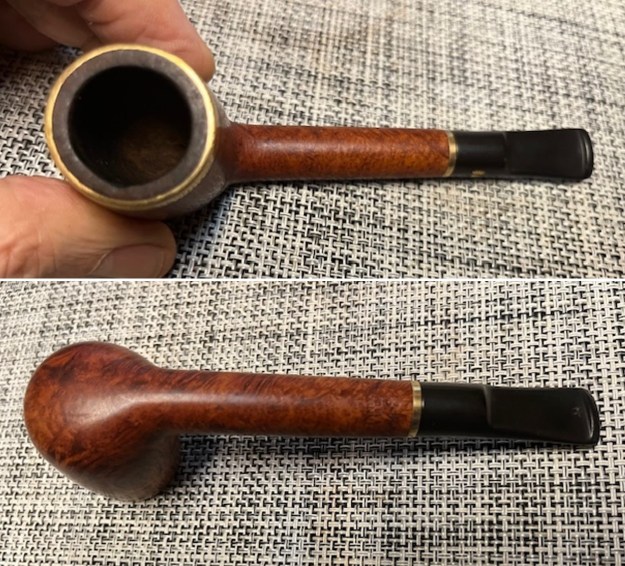
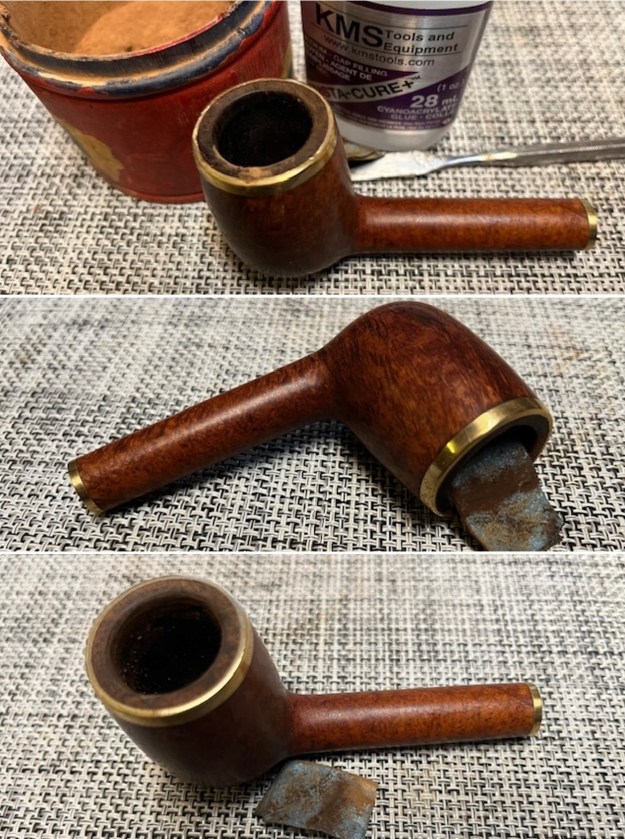
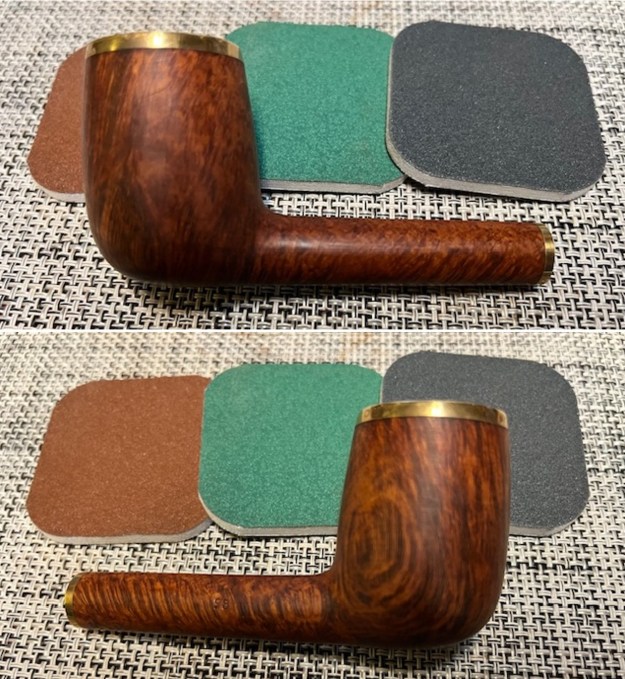
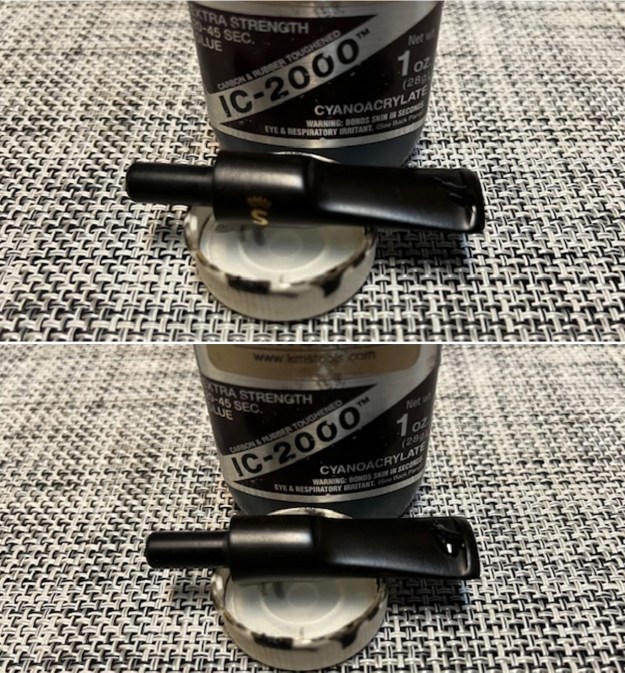
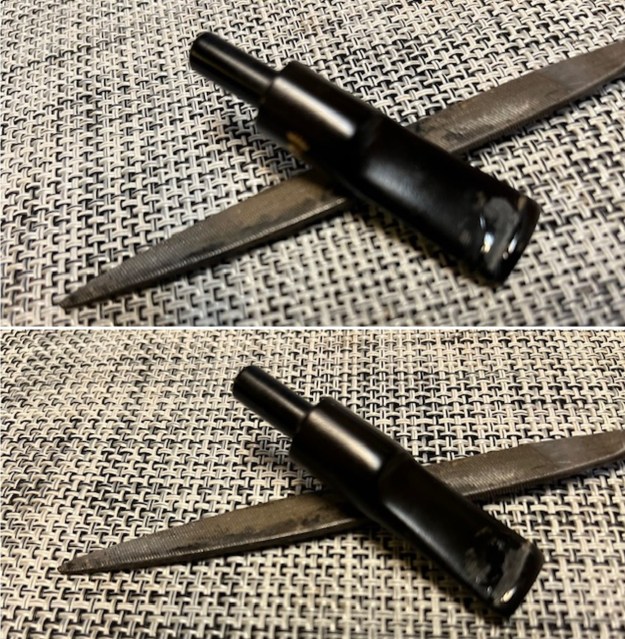
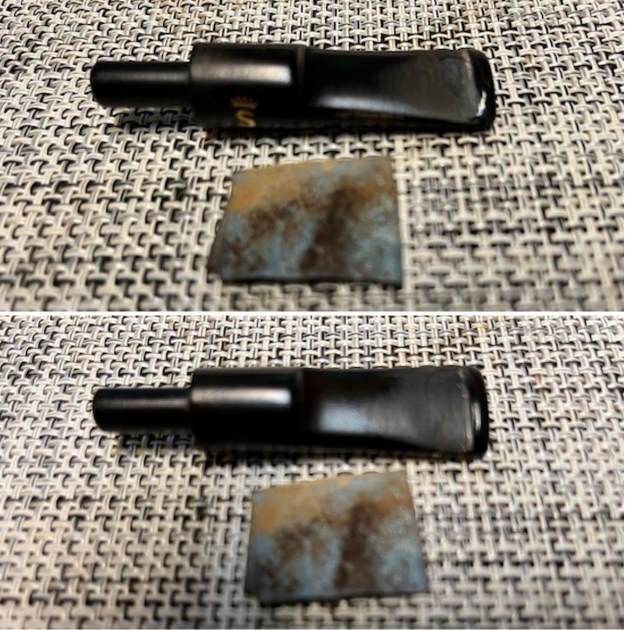
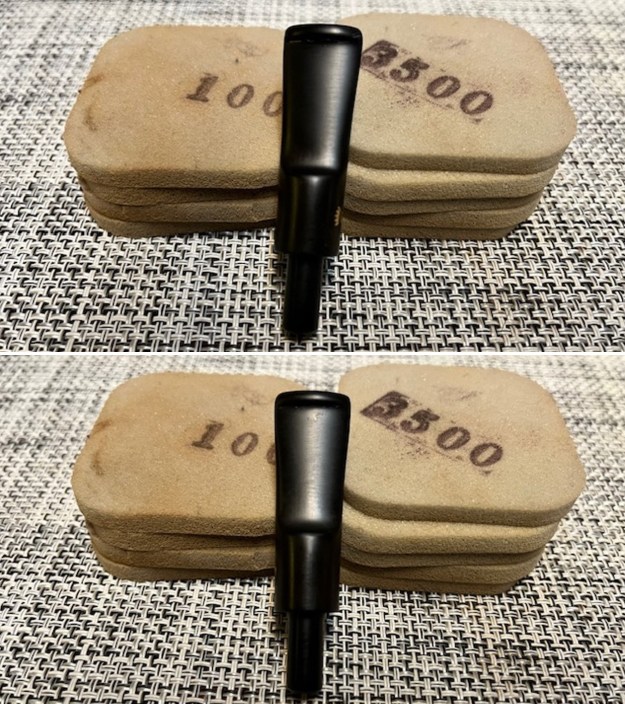
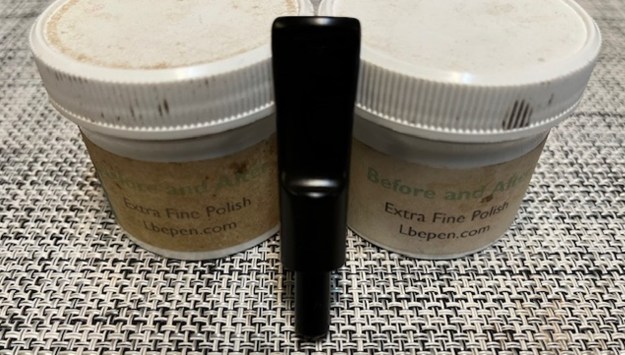
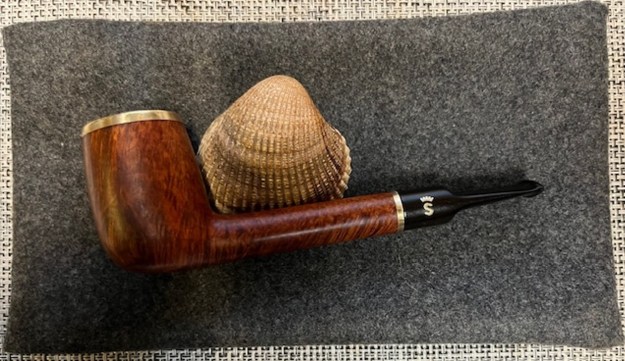
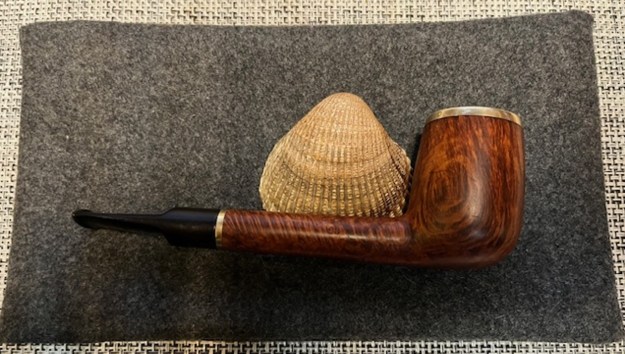
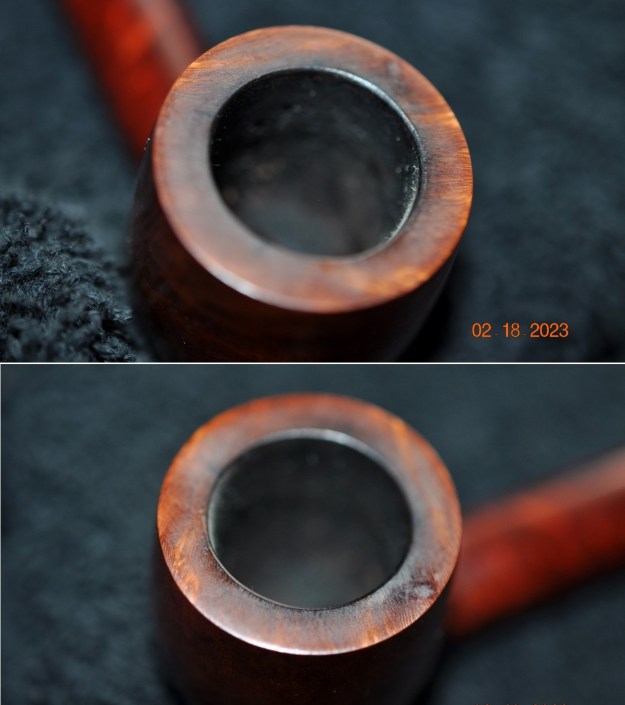
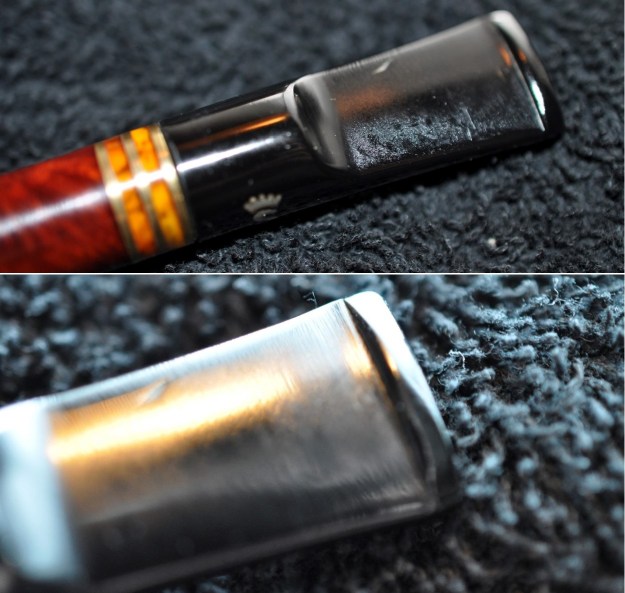
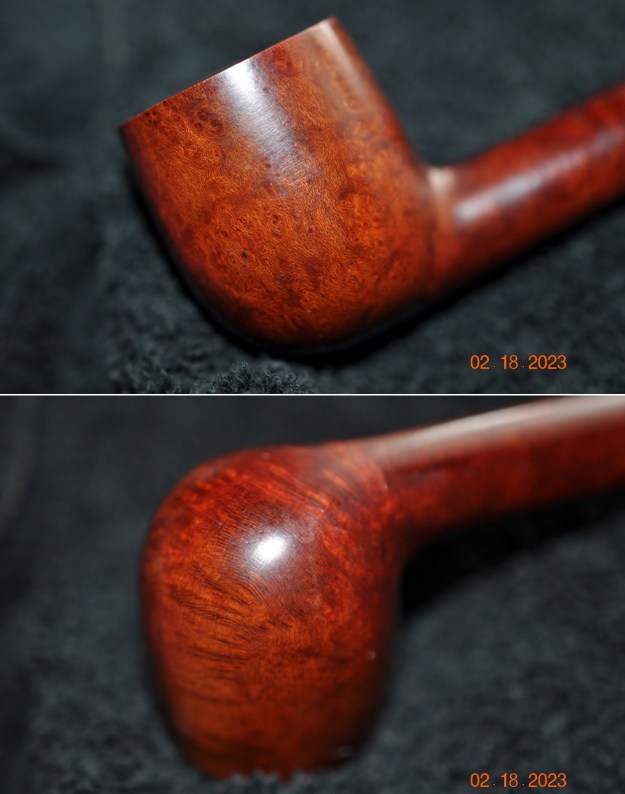
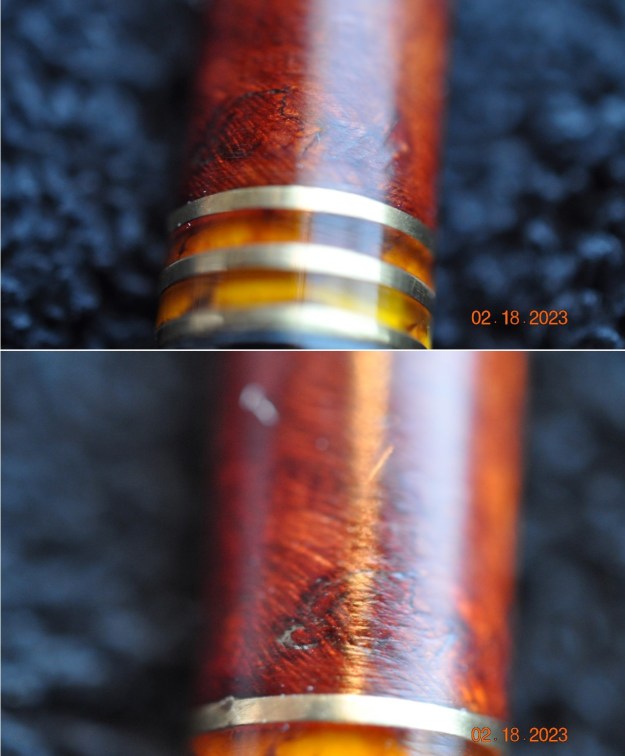
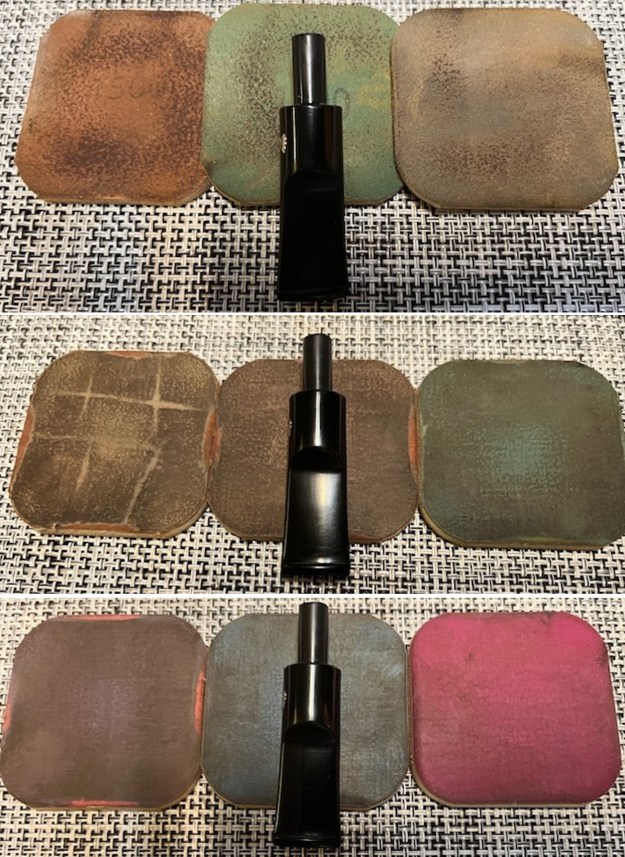
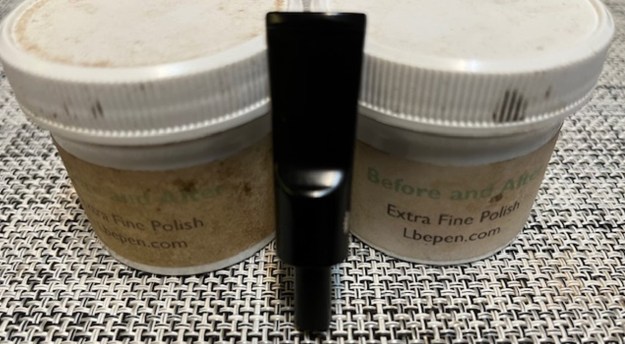
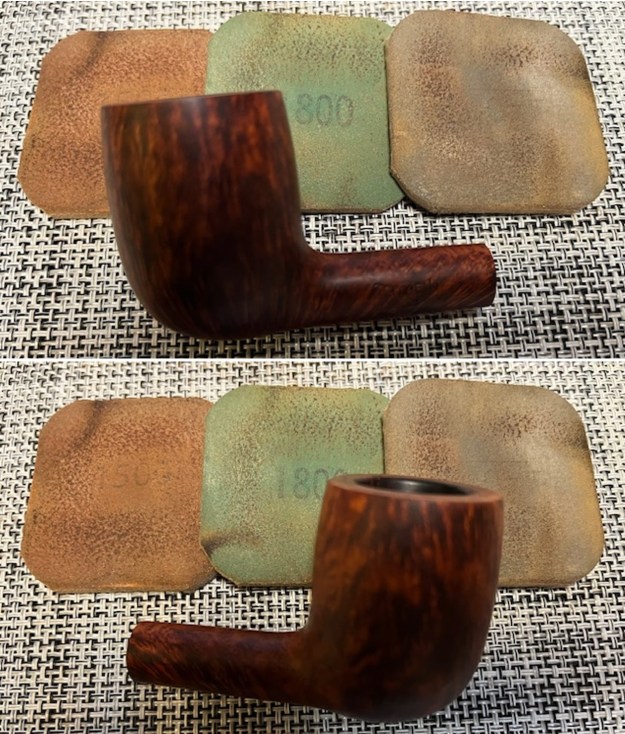
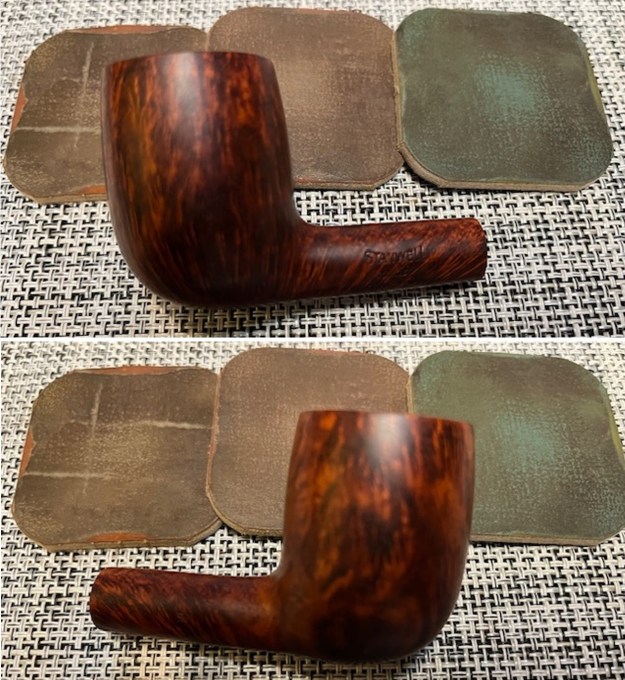
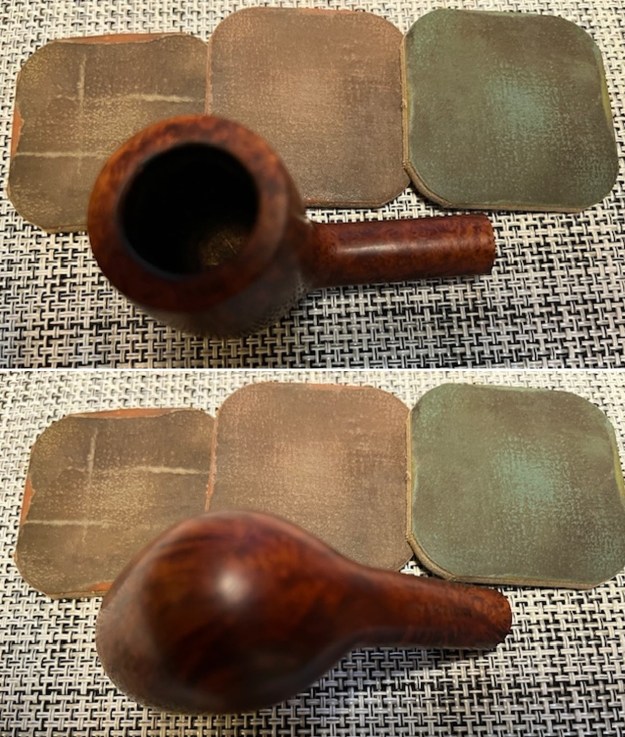
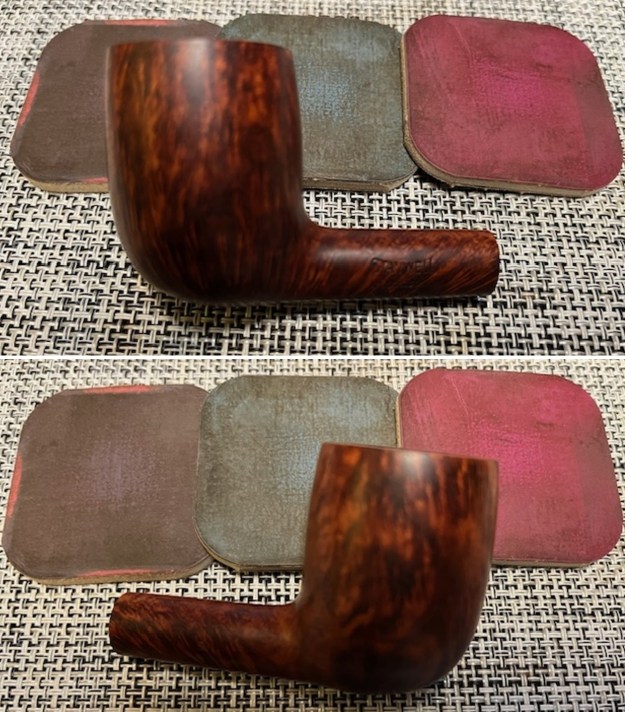
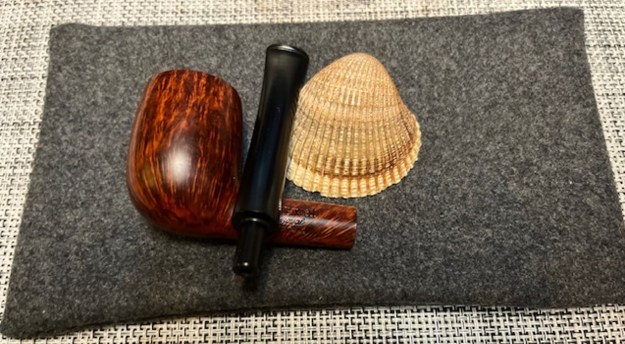
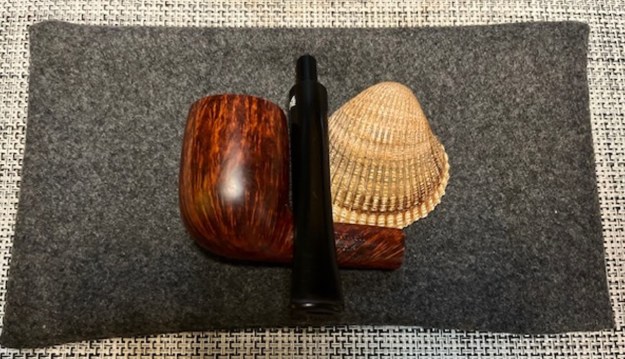
Jeff cleaned up the pipe for me. He reamed the bowl with a PipNet pipe reamer and cleaned it up with a Savinelli Fitsall Pipe Knife. He scrubbed the exterior with Murphy’s Oil Soap and a tooth brush to clean off the grime off the finish and the overflow of lava on the rim top. The cleaning had removed the grime on the rim top. He cleaned up the internals of the shank, mortise and stem with pipe cleaners, cotton swabs and alcohol to remove all of the oils and tars in the pipe. He soaked the stem in Briarvilles Pipe Stem Deoxidizer and was able to remove much of the oxidation, calcification. When it arrived here in Vancouver it was a clean pipe and I knew what I had to work with. I took photos of it before I started my part of the restoration. I took a photo of the rim top and the stem to show their condition once it arrived in Canada. Jeff was able to clean up the cake and the lava overflow that was shown in the rim and bowl photos above. The rim top and the inner edge of the bowl showed some darkening on the top and some damage on the left inner edge with a burn mark. The stem looked better and the tooth marks and chatter on both sides near the button. It is hard to see the pinhole in the stem surface on the underside but it is present and small.The stamping was hard to capture it with the camera but it is readable on the underside of the shank near the shank/stem junction. The stamping on the right side of the shank shows the shape number 98 mid shank. I removed the stem from the shank and took a photo to give a sense of the proportions of this Lovat.I started my work on the pipe by cleaning up the darkening around the inner edge of the rim and the top. I started by addressing the chip out of the top inner edge and top of the bowl. I worked on the inner edge with a folded piece of 220 grit sandpaper and smoothed out the rim top at the same time. It began to look very good at this point. The grain and colour began to shine through.I polished the briar with micromesh because it was in such good condition. I polished it with 1500-12000 grit micromesh sanding pads. I wiped the bowl down after each sanding pad with a damp cloth. I rubbed the briar down with Before & After Restoration Balm. I worked it into the briar with my fingertips. The product works to clean, enliven and preserve the briar. I let it sit for 10 minutes while I worked on the stem. After the time passed I buffed it with a cotton cloth to deepen the shine. The briar really comes alive with the balm. I set the bowl aside and turned my attention to the stem. I started by addressing the deep tooth marks on the surface of the stem on both sides. The marks on the underside were significantly deeper and had created a pin hole in the surface. I used a rubberized black super glue to fill in the deep marks and repair the pin hole. I set the stem aside to let the repairs cure. Once it cured I used a small file to flatten the repair. I used a folded piece of 220 grit sandpaper to smooth out the repairs. I started working on polishing the stem with my 320-3500 grit sanding pads. I was able to remove the tooth marks and chatter on both sides ahead of the button. It looked much better at this point in the process.I polished the stem with micromesh sanding pads – dry sanding with 1500-12000 grit pads. I wiped the stem down after each sanding pad with Obsidian Oil.I polished it with Before & After Pipe Stem Polish – both Fine and Extra Fine. I gave it a coat of Obsidian Pipe Stem Oil. It works to protect the stem from oxidizing. I set it aside to dry.This beautifully grained Danish Made Stanwell Gilt Edge 98 Lovat with a saddle vulcanite stem turned out very nice. The mix of brown stains highlights the great grain around the bowl sides and bottom. The brass banded top edge and rim top and brass band give the pipe a touch of class. The finish on the pipe is in excellent condition. I put the stem back on the bowl and carefully buffed the pipe with Blue Diamond on the buffing wheel. I gave the bowl and stem multiple coats of carnauba wax on the buffing wheel and followed that by buffing the entire pipe with a clean buffing pad. I hand buffed the pipe with a microfiber cloth to deepen the shine. The finished Stanwell Gilt Edge Lovat is very nice and feels great in the hand. Give the finished pipe a look in the photos below. It is a nice pipe whose dimensions are Length: 5 inches, Height: 1 ¾ inches, Outside diameter of the bowl: 1 1/8 inches, Chamber diameter: ¾ of an inch. The weight of the pipe is 37 grams/1.31 ounces. Thanks for walking through the restoration with me as I worked over another beautiful pipe. This one will be going on the rebornpipes store, in the Danish Pipe Makers Section shortly. If you are interested in adding it to your collection let me know by message or by email to slaug@uniserve.com. Thanks for your time.

As always, I encourage your questions and comments as you read the blog. Thanks to each of you who are reading this blog. Remember we are not pipe owners; we are pipe men and women who hold our pipes in trust until they pass on into the trust of those who follow us.

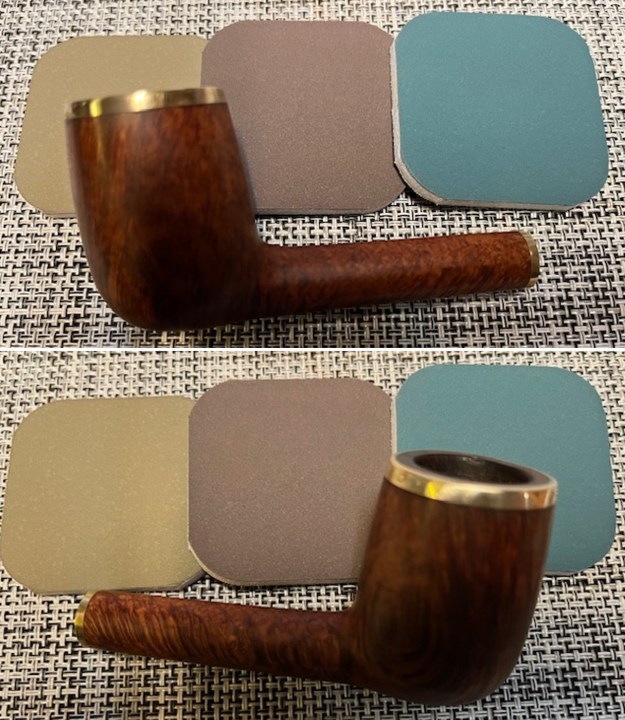
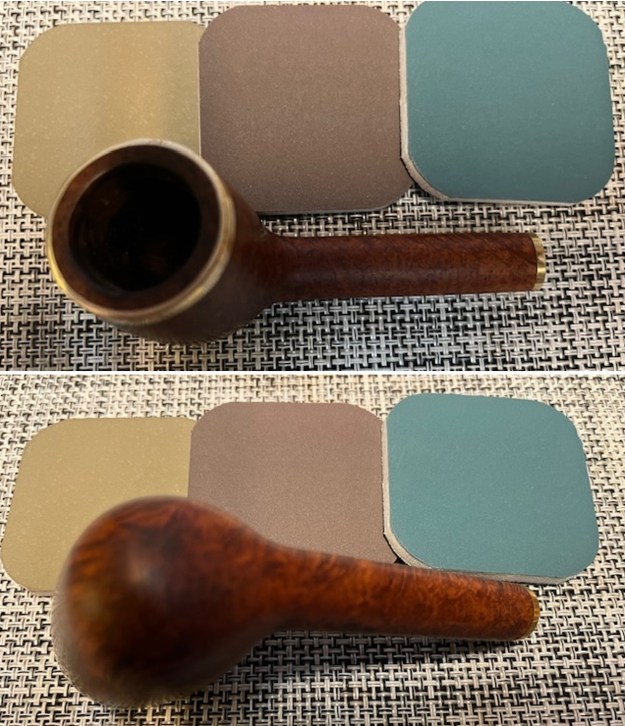
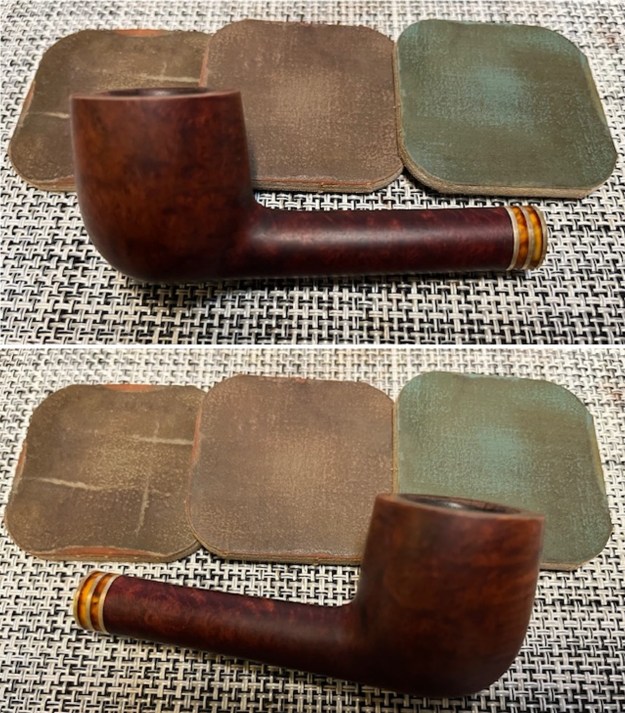
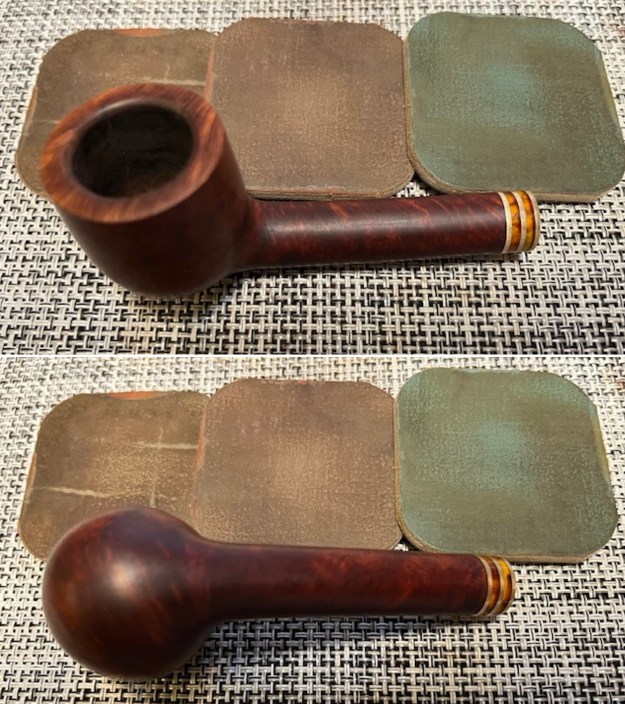
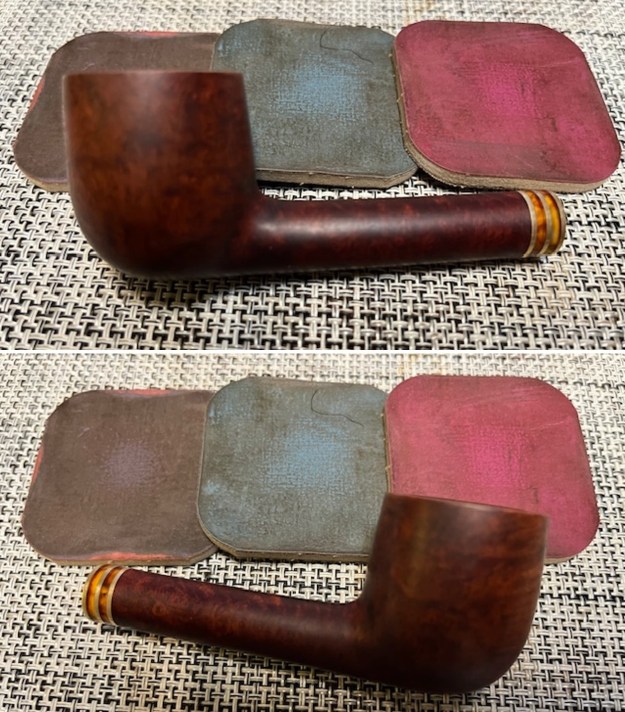
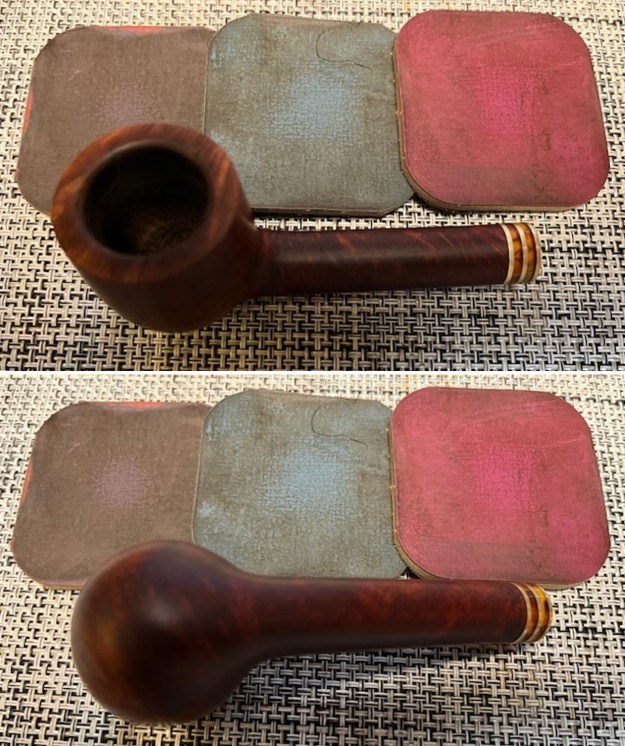
Restoring a Danish Made Stanwell Rondo Lovat


Blog by Steve Laug

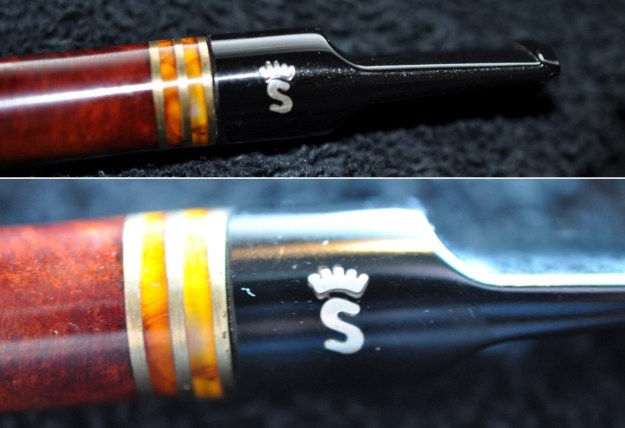
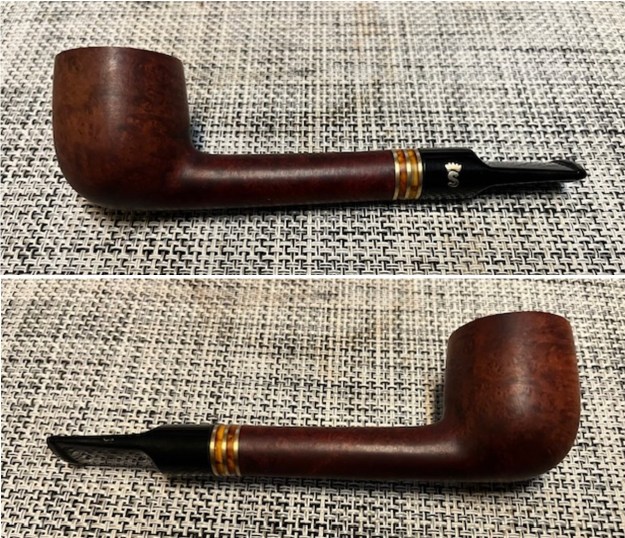
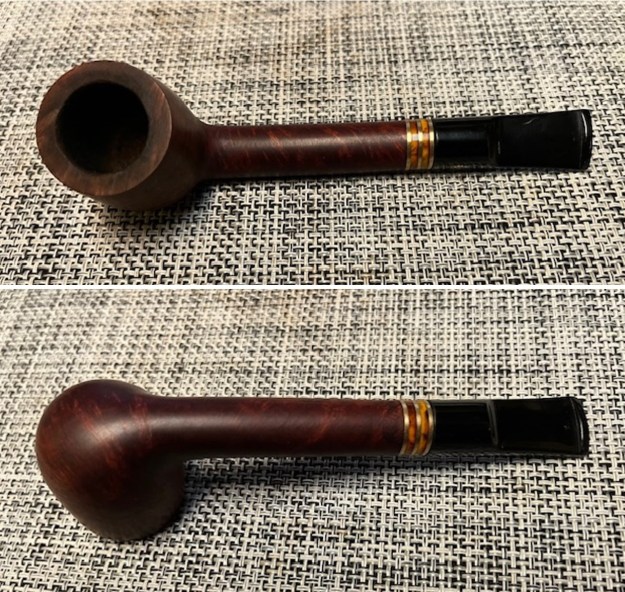
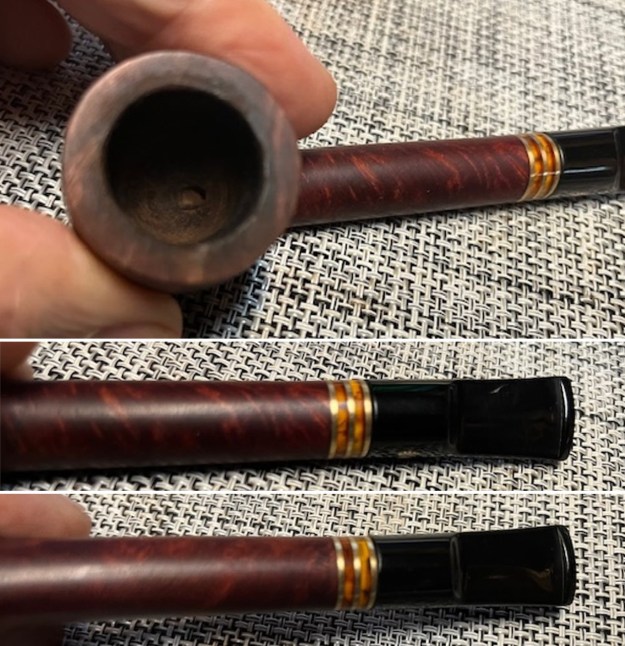
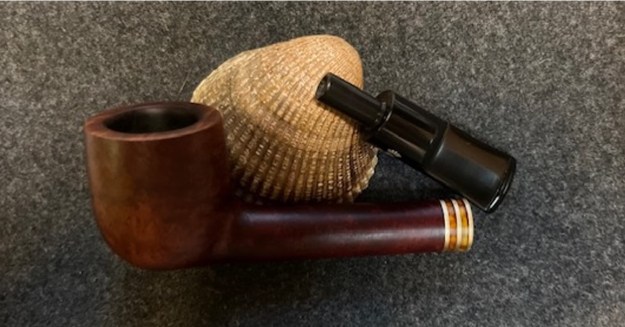
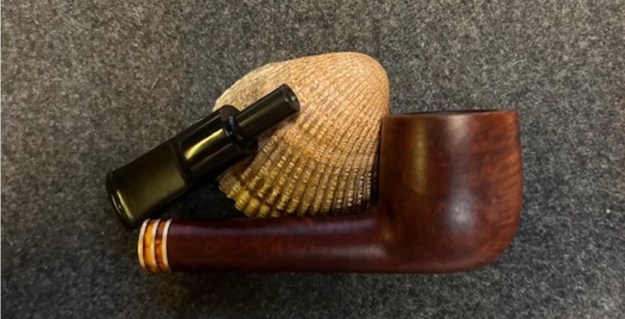
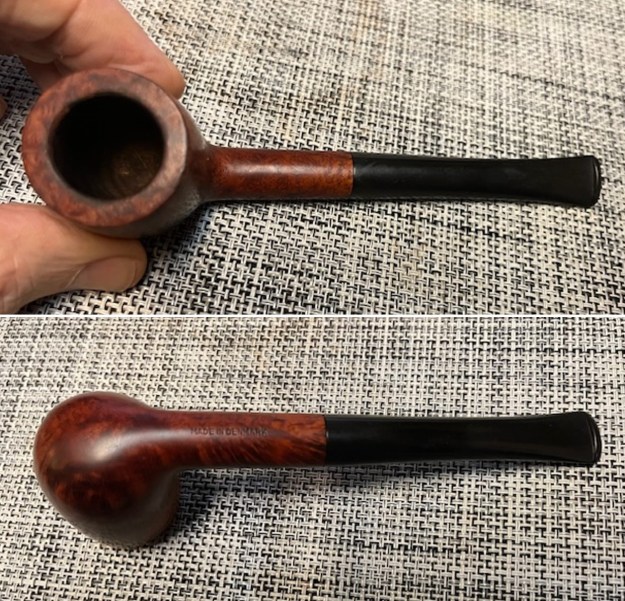
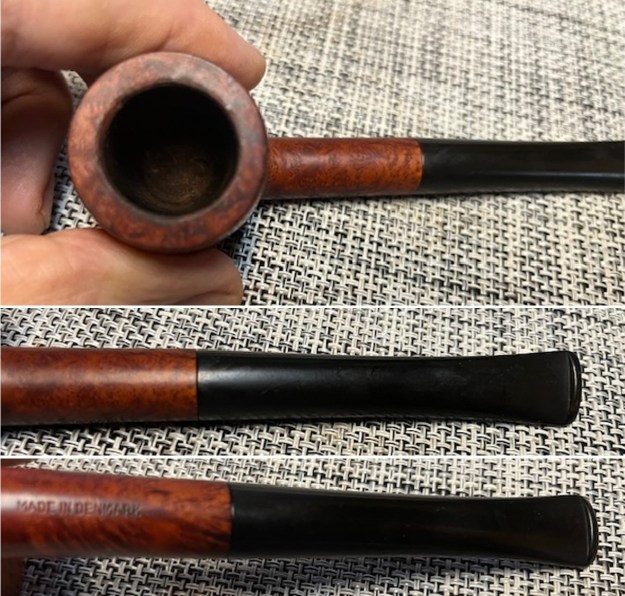
The next pipe I am working on was purchased a year ago on 01/26/2023 as part of a group of pipes from a fellow in Copenhagen, Denmark. This was another dirty pipe but underneath it had some nice grain. It was obviously it had been someone’s favourite smoker. The pipe was stamped on the underside of the shank that reads Stanwell [over] Made in Denmark [over] Rondo. The stamping is faint but possibly the shape number is 98 which is the shape for a lovat. The dirty finish was not able to hide the beauty in the grime. There were tars and oils ground into the surface of the briar. The bowl had a moderate cake that flowed over the top of the rim in a spotty lava coat. The inner edge looked to be in good condition under the light lava coat. The stem was a black acrylic saddle stem with an inlaid silver crown S on the left side. There were light tooth marks and chatter on both sides ahead of the button. Jeff took photos of the pipes before he started his clean up work. Jeff took photos of the rim and bowl to show the heavy cake and heavy lava coat covering the rim top. The inner edge of the rim is caked but appears to be in good condition. It really was a dirty pipe but still a beauty. He also took photos of the stem surfaces to show its overall condition when it arrived. The photos of the sides and heel of the bowls show some beautiful grain around the bowl and shank sides. The brown stain on the briar adds depth to the finish on the pipe and makes the grain really stand out. It shows some promise.He also took photos of the stamping on the shank sides. It is faint but reads as noted above. He also took a photo of the Crown S stamp on the left side of the stem. From what I can find on the web the Rondo line was an older line of Stanwell pipes that is similar to the Brass Band line but has yellow acrylic between the bands. It is a nice looking pipe but one about which I could find little information.

I turned to the article on Pipedia that gave background information the shape numbers and the designers of the shapes (https://pipedia.org/wiki/Stanwell_Shape_Numbers_and_Designers). From what I can see there the shape number 98 was made in two versions. The first is a Pot shaped pipe with a saddle stem. The second shape is a Lovat. It seems to me that the pipe I am working on kind of combines these two shapes – it is a Lovat shaped Pot. Long shank with a Pot shaped bowl.

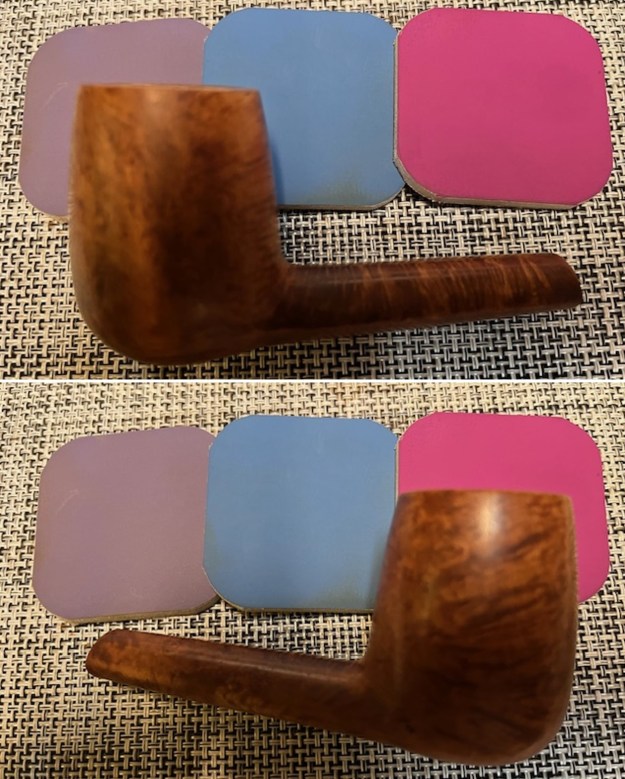
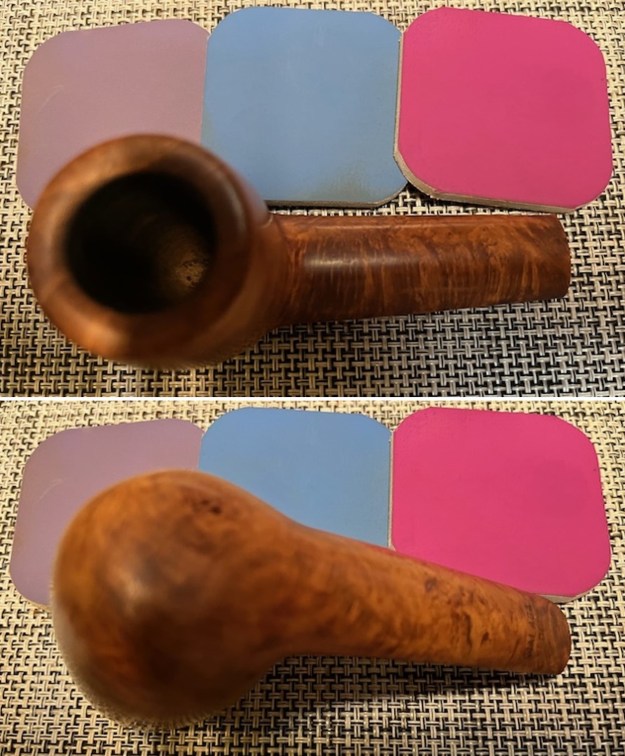
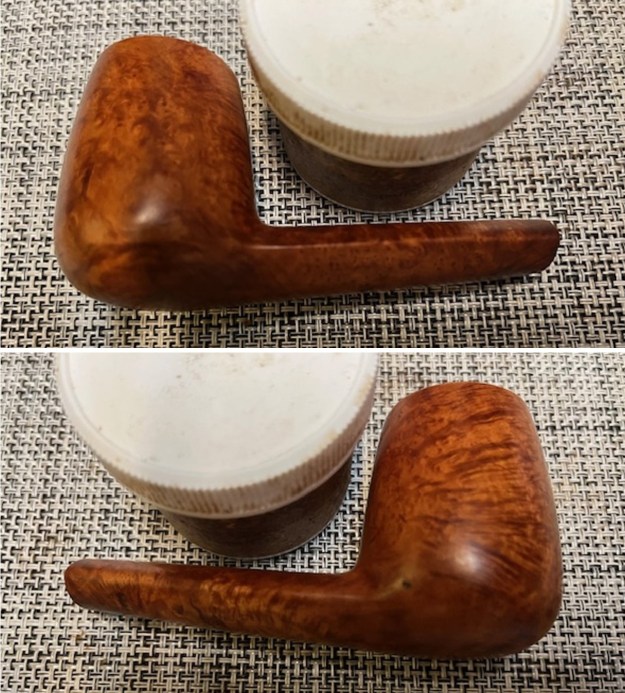
Jeff cleaned up the pipe for me. He reamed the bowl with a PipNet pipe reamer and cleaned it up with a Savinelli Fitsall Pipe Knife. He scrubbed the exterior with Murphy’s Oil Soap and a tooth brush to clean off the grime off the finish and the overflow of lava on the rim top. The cleaning had removed the grime on the rim top. He cleaned up the internals of the shank, mortise and stem with pipe cleaners, cotton swabs and alcohol to remove all of the oils and tars in the pipe. He soaked the stem in Briarvilles Pipe Stem Deoxidizer and was able to remove much of the oxidation, calcification. When it arrived here in Vancouver it was a clean pipe and I knew what I had to work with. I took photos of it before I started my part of the restoration. I took a photo of the rim top and the stem to show their condition once it arrived in Canada. Jeff was able to clean up the cake and the lava overflow that was shown in the rim and bowl photos above. The rim top and the inner edge of the bowl looked very good. The stem looked better, though there were light tooth marks and chatter on both sides near the button.The stamping was faint enough that I could not capture it with the camera. I removed the stem from the shank and took a photo to give a sense of the proportions of this Lovat and Pot bowl.I started my work on the pipe by cleaning up the darkening around the inner edge of the rim and the top with a folded piece of 220 grit sandpaper.I polished the briar with micromesh because it was in such good condition. I polished it with 1500-12000 grit micromesh sanding pads. I wiped the bowl down after each sanding pad with a damp cloth. I rubbed the briar down with Before & After Restoration Balm. I worked it into the briar with my fingertips. The product works to clean, enliven and preserve the briar. I let it sit for 10 minutes while I worked on the stem. After the time passed I buffed it with a cotton cloth to deepen the shine. The briar really comes alive with the balm. I started working on polishing the stem with my 320-3500 grit sanding pads. I was able to remove the tooth marks and chatter on both sides ahead of the button. It looked much better at this point in the processI polished the stem with micromesh sanding pads – dry sanding with 1500-12000 grit pads. I wiped the stem down after each sanding pad with Obsidian Oil.I polished it with Before & After Pipe Stem Polish – both Fine and Extra Fine. I gave it a coat of Obsidian Pipe Stem Oil. It works to protect the stem from oxidizing. I set it aside to dry.This beautifully grained Danish Made Stanwell Rondo 98 Lovat with a saddle vulcanite stem turned out very nice. The mix of brown stains highlights the great grain around the bowl sides and bottom. The rim top and edges look very good. The finish on the pipe is in excellent condition. I put the stem back on the bowl and carefully buffed the pipe with Blue Diamond on the buffing wheel. I gave the bowl and stem multiple coats of carnauba wax on the buffing wheel and followed that by buffing the entire pipe with a clean buffing pad. I hand buffed the pipe with a microfiber cloth to deepen the shine. The finished Stanwell Rondo Lovat is very nice and feels great in the hand. Give the finished pipe a look in the photos below. It is a nice pipe whose dimensions are Length: 5 inches, Height: 1 ½ inches, Outside diameter of the bowl: 1 ¼ inches, Chamber diameter: ¾ of an inch. The weight of the pipe is 28 grams/0.99 ounces. Thanks for walking through the restoration with me as I worked over another beautiful pipe. This one will be going on the rebornpipes store, in the Danish Pipe Makers Section shortly. If you are interested in adding it to your collection let me know by message or by email to slaug@uniserve.com. Thanks for your time.

As always, I encourage your questions and comments as you read the blog. Thanks to each of you who are reading this blog. Remember we are not pipe owners; we are pipe men and women who hold our pipes in trust until they pass on into the trust of those who follow us.

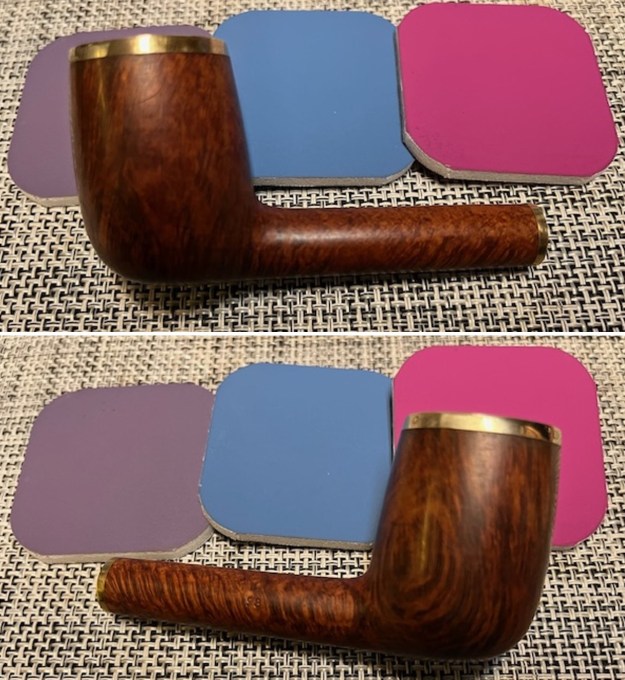
Such Stunning Grain on this Danish Made Stanwell Royal Prince 51 Billiard


Blog by Steve Laug

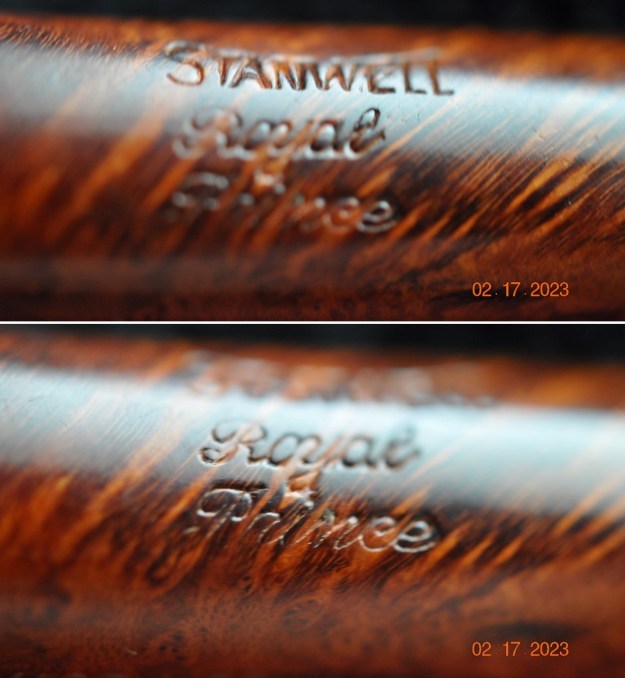
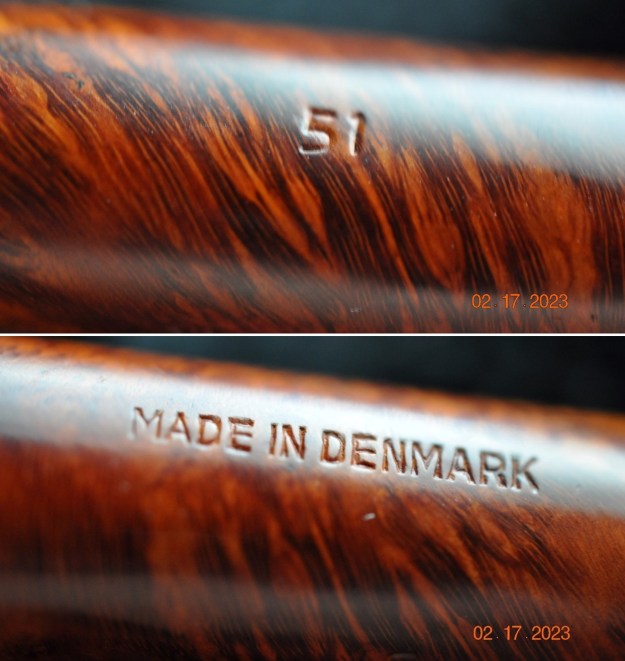
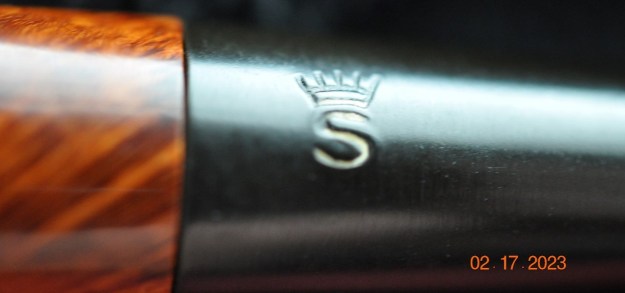
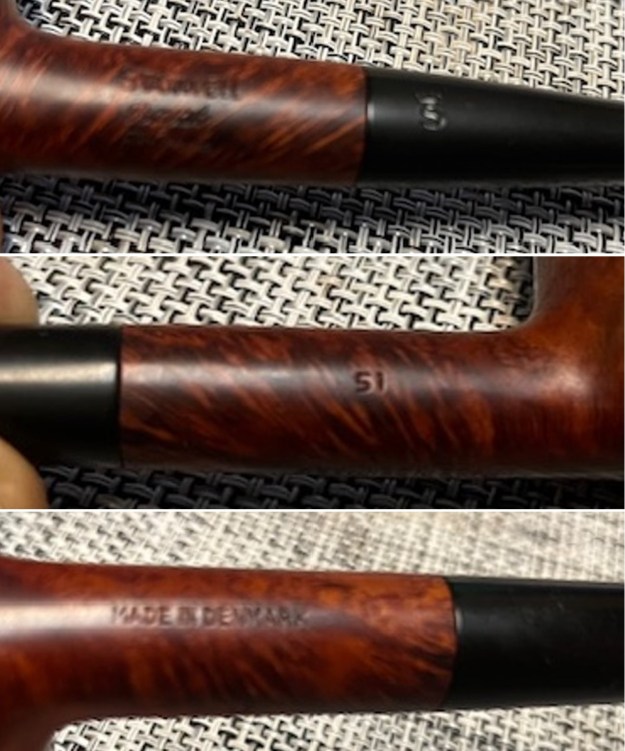
The next pipe I am working on was purchased a year ago on 01/26/2023 as part of a group of pipes from a fellow in Copenhagen, Denmark. This was another dirty pipe but underneath it had some astonishingly beautiful grain. It was obviously it had been someone’s favourite smoker. The pipe was stamped on the left side of the shank that reads Stanwell [over] Royal [over] Prince. On the right side of the shank it was stamped with the shape number 51. The dirty finish was not able to hide the beauty in the grime. There were tars and oils ground into the surface of the briar. The bowl had a very thick cake that flowed over the top of the rim in a heavy lava coat. The inner edge looked to be in good condition and showed lava and darkening. The stem was a black vulcanite taper stem stamped with a faded white crown S on the left side. It had some light tooth marks and chatter on both sides ahead of the button. There was some oxidation and calcification on both sides but it had a lot of potential. Jeff took photos of the pipes before he started his clean up work. Jeff took photos of the rim and bowl to show the heavy cake and heavy lava coat covering the rim top. The inner edge of the rim is caked but appears to be in good condition. It really was a dirty pipe but still a beauty. He also took photos of the stem surfaces to show its overall condition when it arrived. The photos of the sides and heel of the bowls show some beautiful grain around the bowl and shank sides. The brown stain on the briar adds depth to the finish on the pipe and makes the grain really stand out. It shows some promise. He also took photos of the stamping on the shank sides. It reads as noted above. He also took a photo of the Crown S stamp on the left side of the stem. I did some searching on Google and found a pipe very much like the pipe that I am working on  Pinterest (https://www.pinterest.ca/pin/danish-estates-stanwell-royal-prince-51-pre2010-unsmoked–6544361942508713/). It gives a great description of the 51 Billiard in the Royal Prince line. I quote it below.

A beautiful little classic Billiard from Stanwell, this “51” shape features a lot of iconic Danish cues — like the lower-set waistline of the bowl, the slight sweeping motion of the transition, and the clean, minimalist lines of the shank and stem. The chamber proportions are perfect for a bit of folded flake or some pure Virginias, and the flame grain on this Royal Prince edition is stunning.

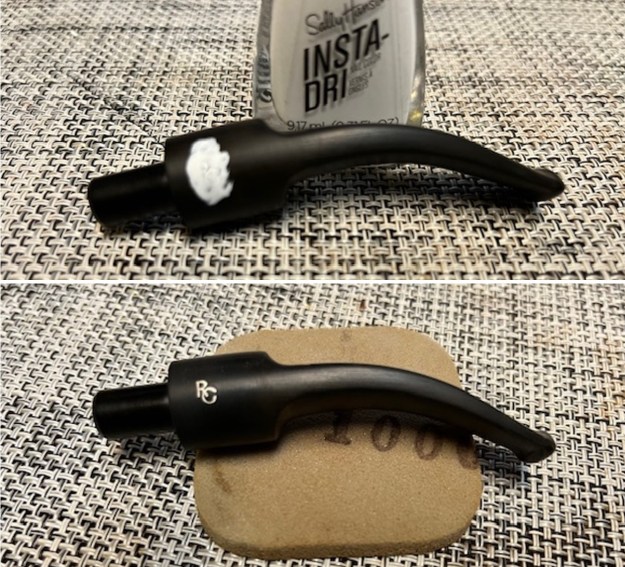
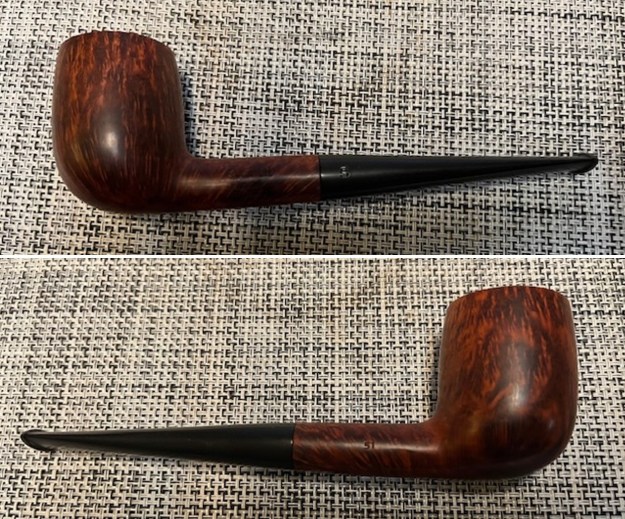
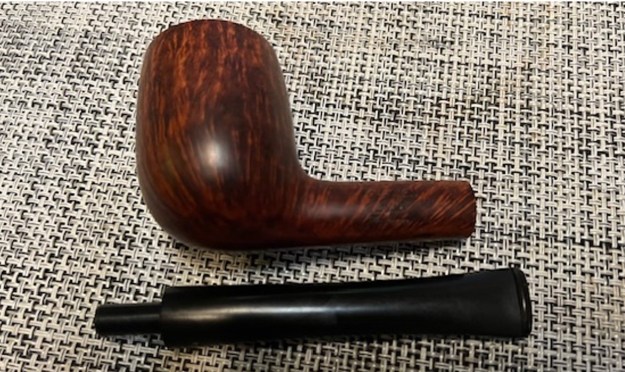
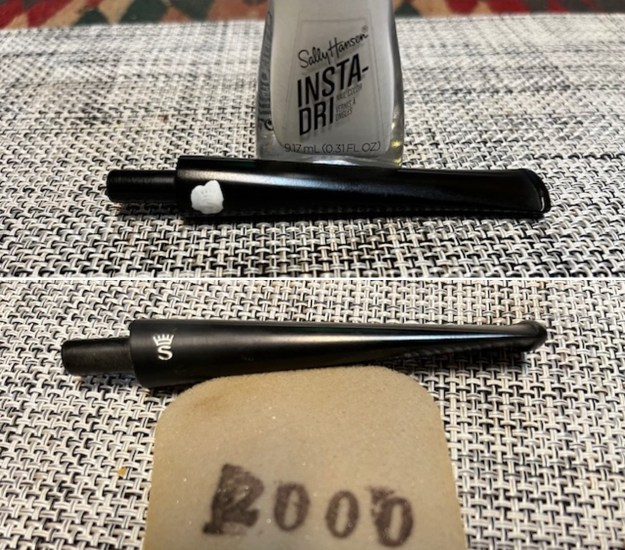
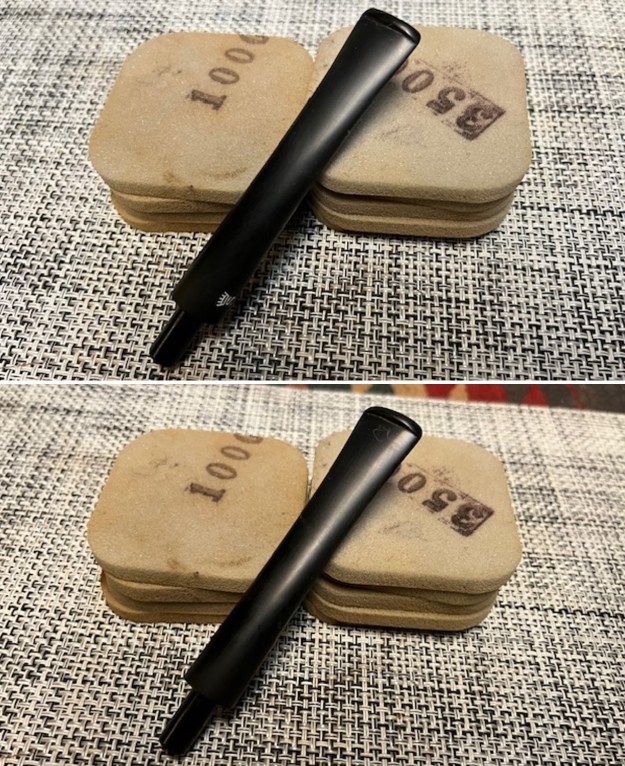
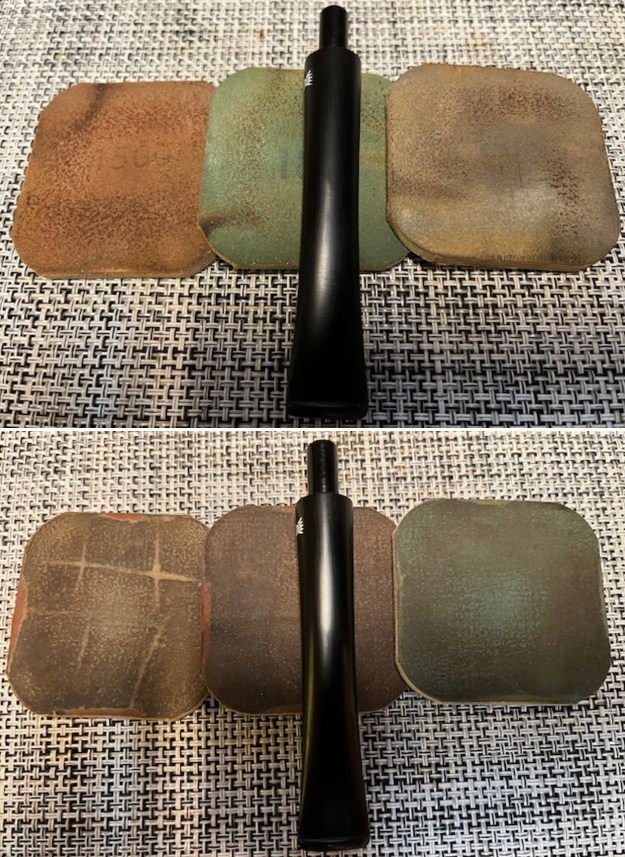
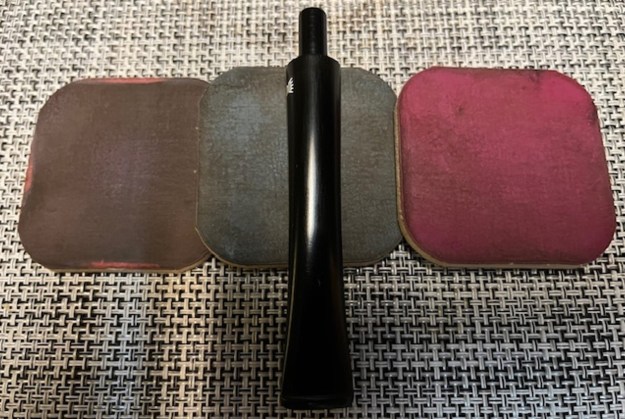
Jeff cleaned up the pipe for me. He reamed the bowl with a PipNet pipe reamer and cleaned it up with a Savinelli Fitsall Pipe Knife. He scrubbed the exterior with Murphy’s Oil Soap and a tooth brush to clean off the grime off the finish and the overflow of lava on the rim top. The cleaning had removed the grime on the rim top. He cleaned up the internals of the shank, mortise and stem with pipe cleaners, cotton swabs and alcohol to remove all of the oils and tars in the pipe. He soaked the stem in Briarvilles Pipe Stem Deoxidizer and was able to remove much of the oxidation, calcification. When it arrived here in Vancouver it was a clean pipe and I knew what I had to work with. I took photos of it before I started my part of the restoration. I took a photo of the rim top and the stem to show their condition once it arrived in Canada. Jeff was able to clean up the cake and the lava overflow that was shown in the rim and bowl photos above. The rim top and the inner edge of the bowl looked very good. The stem looked better, though there were light tooth marks and chatter on both sides near the button. I took photos of the stamping on the shank sides to show that it was readable and undamaged by the cleanup work. I removed the stem from the shank and took a photo of the parts to give a sense of what the pipe looks like. I started my work on the pipe by polishing the briar with micromesh because it was in such good condition. I polished it with 1500-12000 grit micromesh sanding pads. I wiped the bowl down after each sanding pad with a damp cloth. I rubbed the briar down with Before & After Restoration Balm. I worked it into the briar with my fingertips. The product works to clean, enliven and preserve the briar. I let it sit for 10 minutes while I worked on the stem. After the time passed I buffed it with a cotton cloth to deepen the shine. The briar really comes alive with the balm. I set the bowl aside and turned my attention to the stem. The upper portion of the stem was in good condition so I started with touching up the white crown S stamp on the left side of the stem. I used white acrylic fingernail polish to rework the stamping. I applied it with the brush that came with it and when it dried scraped off the excess and polished it off with a 2000 grit sanding pad. I started working on polishing the stem with my 320-2500 grit sanding pads. I was able to remove the scratches and light tooth marks and chatter on both sides ahead of the button. It looked much better at this point in the process.I polished the stem with micromesh sanding pads – dry sanding with 1500-12000 grit pads. I wiped the stem down after each sanding pad with Obsidian Oil. I polished it with Before & After Pipe Stem Polish – both Fine and Extra Fine. I gave it a coat of Obsidian Pipe Stem Oil. It works to protect the stem from oxidizing. I set it aside to dry. This beautifully grained Danish Made Stanwell Royal Prince 51 Billiard with a taper vulcanite stem turned out very nice. The mix of brown stains highlights the great grain around the bowl sides and bottom. The rim top and edges look very good. The finish on the pipe is in excellent condition. I put the stem back on the bowl and carefully buffed the pipe with Blue Diamond on the buffing wheel. I gave the bowl and stem multiple coats of carnauba wax on the buffing wheel and followed that by buffing the entire pipe with a clean buffing pad. I hand buffed the pipe with a microfiber cloth to deepen the shine. The finished Stanwell Royal Prince 51 Billiard is very nice and feels great in the hand. Give the finished pipe a look in the photos below. It is a nice pipe whose dimensions are Length: 5 ¾ inches, Height: 1 ¾ inches, Outside diameter of the bowl: 1 ¼ inches, Chamber diameter: ¾ of an inch. The weight of the pipe is 34 grams/1.20 ounces. Thanks for walking through the restoration with me as I worked over another beautiful pipe. This one will be going on the rebornpipes store, in the Danish Pipe Makers Section shortly. If you are interested in adding it to your collection let me know by message or by email to slaug@uniserve.com. Thanks for your time.

As always, I encourage your questions and comments as you read the blog. Thanks to each of you who are reading this blog. Remember we are not pipe owners; we are pipe men and women who hold our pipes in trust until they pass on into the trust of those who follow us.

A Fun Restoration of a Danish Made Golden Contrast 02 Scoop


Blog by Steve Laug

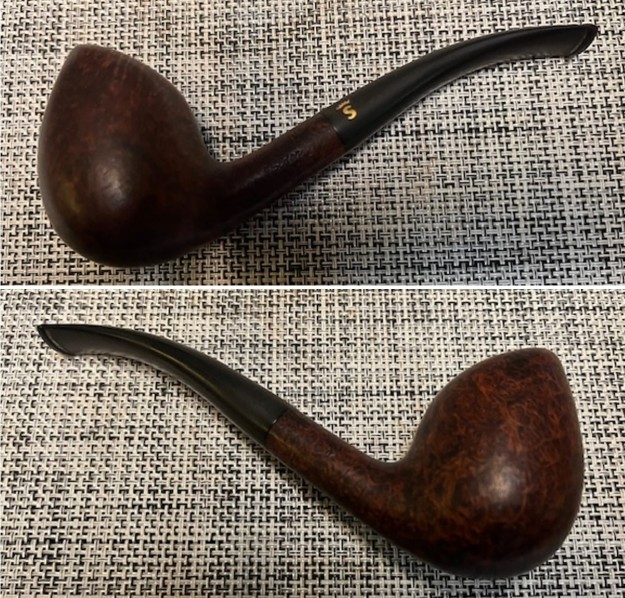
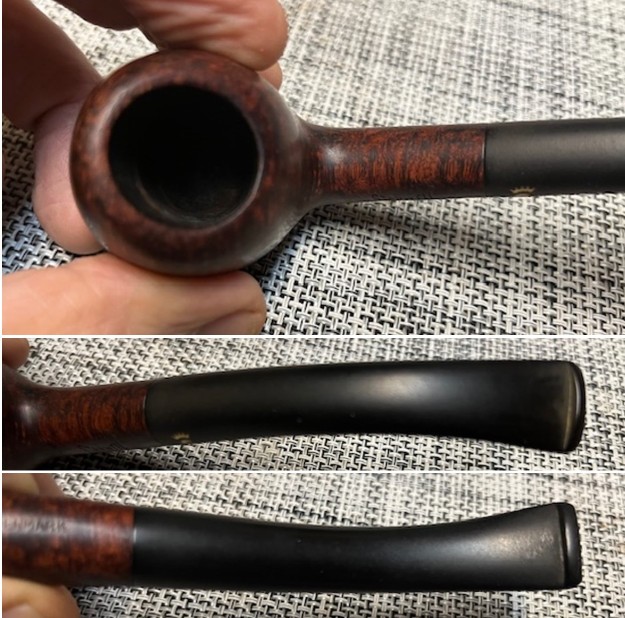
I have always been intrigued by the Stanwell Golden Contrast finish regardless of the pipes it has been applied to. The contrast of dark and light playing across the grain is beautiful. To me the lines and the elegance of the pipe are stunning and the contrast stain makes the lay of pipe with the grain gorgeous. The stain highlights the birdseye and the flame grain and makes them pop from the surface of the bowl and shank. I did a little digging because I wanted to confirm my guess/my suspicions about the designer. What I found out confirmed what I was thinking. There are two versions listed of the shape number 02. The first is a Freehand, oval bowl and stem, by Sixten Ivarsson. The second is a bent, egg-shaped bowl, sloping top, full mouthpiece. The second one is a clear description of the pipe in hand. Still uncertain of the designer but it is distinctively Danish. For a list of various Stanwell Shape numbers and who they are attributed to you can read this list compiled by leading Stanwell Collector, the late Bas Stevens on rebornpipes at: https://rebornpipes.com/2013/09/03/stanwell-shapes-compiled-by-bas-stevens/

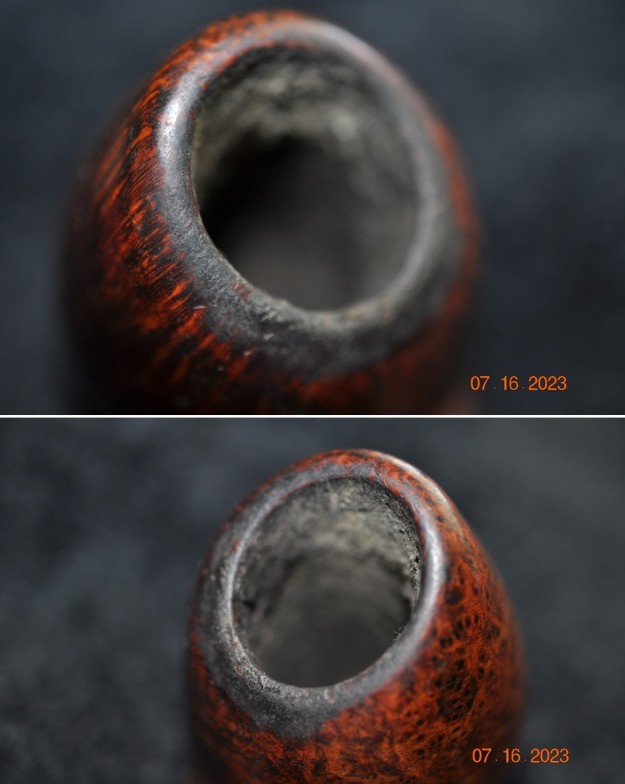
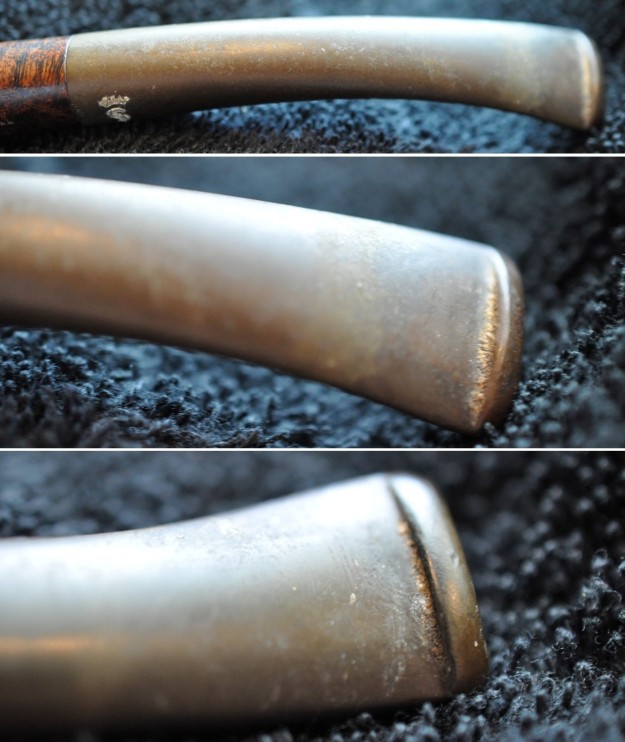
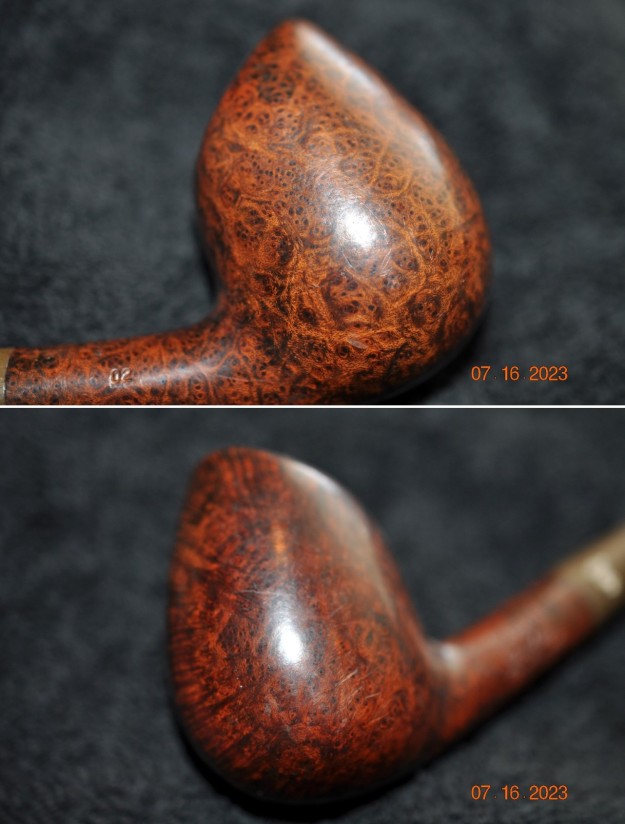
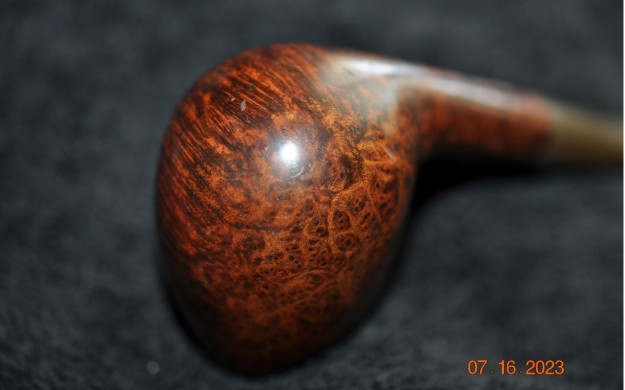
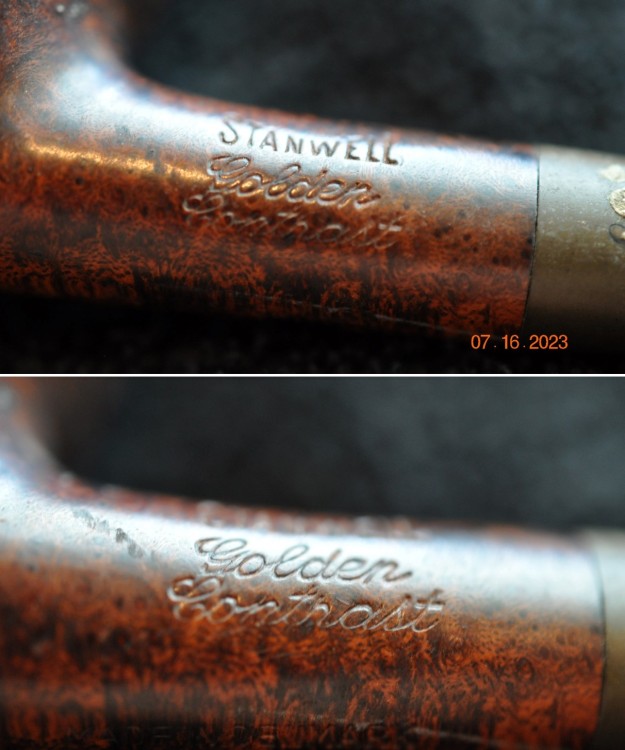
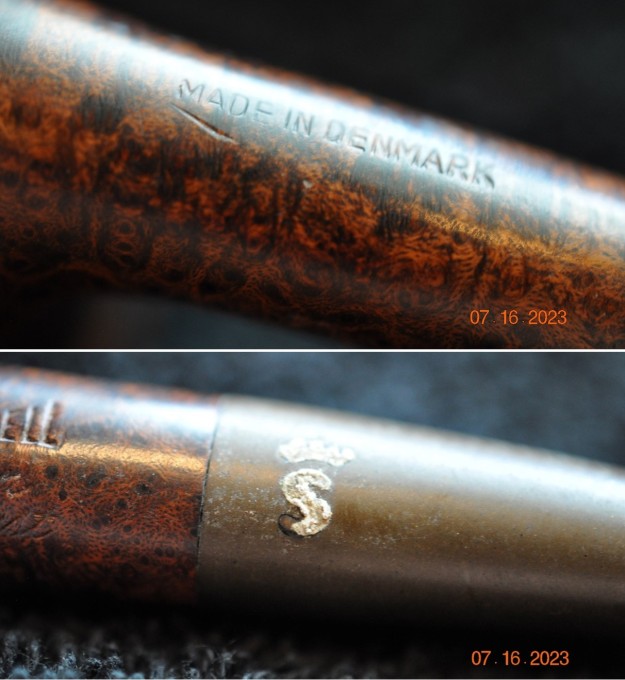
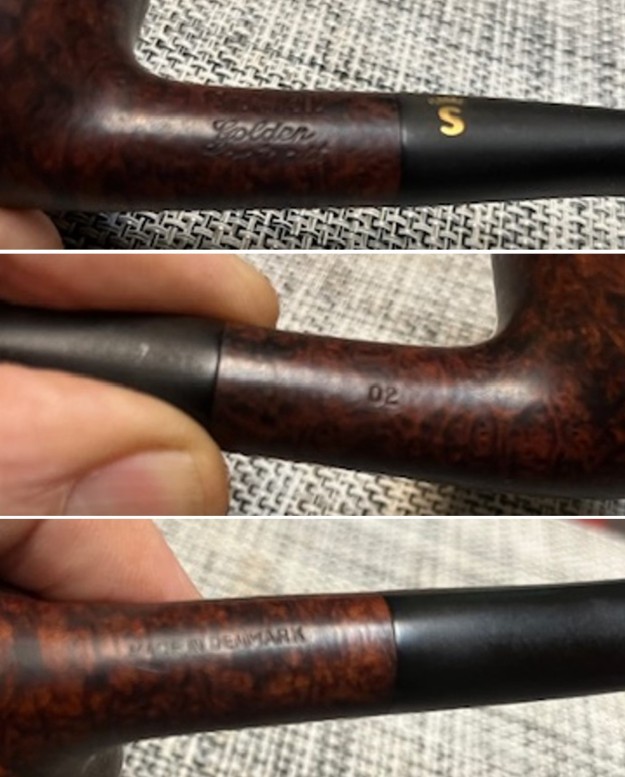
This particular pipe was purchased from an auction in Garland, Texas, USA on 06/24/2023. We always keep an eye out for Stanwell pipes and particularly Golden Contrast pipes. This one was in pretty decent shape. The finish was filthy but appeared to be in great shape. The rim showed an overflow of thick lava coming from the thick cake in the bowl. It is always hard to tell the condition of the inner edge with this kind of lava and cake but it can go one of two ways – protected and fine or damaged and burned. Cleaning would reveal which is true here. The internals were dirty with tars and oils. The stem was oxidized and calcified on the top and underside of the stem from the button forward. There was some tooth chatter as well but no deep tooth marks. The brass crown S on the left side of the taper stem was heavily oxidized with white dusty build up around the entire inlay. The various photos that follow are ones that my brother took before he cleaned the pipe. They show the amazing grain on this beauty.The next photos of the rim and the shank show the condition of the pipe at arrival in Idaho. The grain around the rim top is quite stunning to me. You can see the cake in the bowl and the thick lava on the top. It was a mess but the contrast stain makes the grain even show through the lava on the rim top. Jeff took photos of the grain on the sides and heel of the bowl. It really is a stunning piece of briar. The contrast stain really makes it stand out clearly. The next photos show the various stamping on the sides of the shank. On the left side of the shank it reads Stanwell [over] Golden [over] Contrast in script on the right side it is stamped with the 02 Shape number and on the underside it reads Made in Denmark. All the stamping is sharp and clear. He also captured the heavily oxidized golden Crown “S” Stanwell logo on the left side of the taper stem. I turned to Pipedia to see if I could find specific information on the Golden Contrast line of pipes (https://pipedia.org/wiki/Stanwell). There was a short note there that I have included in full below.

Golden Contrast:  An old series. The blocks are cut on the cross grain. The pipes from this series exhibit Birds Eye grain only. Brass band and brass S in the stem. The pipes have a two-tone staining which really shows the beautiful bird’s eye grain. However, this staining simply takes too much work so the series is discontinued.

With that information I now knew about the discontinued Golden Contrast line. The pipe I was working on did not have a brass band but it did have the kind of staining and colour on the grain on the pipe. It was definitely a two-tone stain on the pipe. Now it was time to work on the pipe.

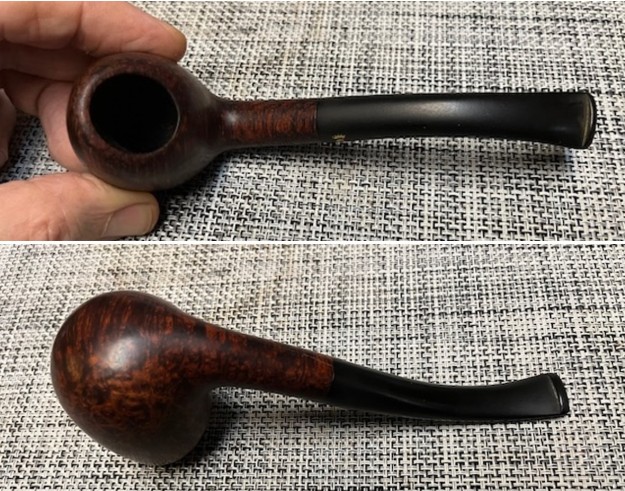
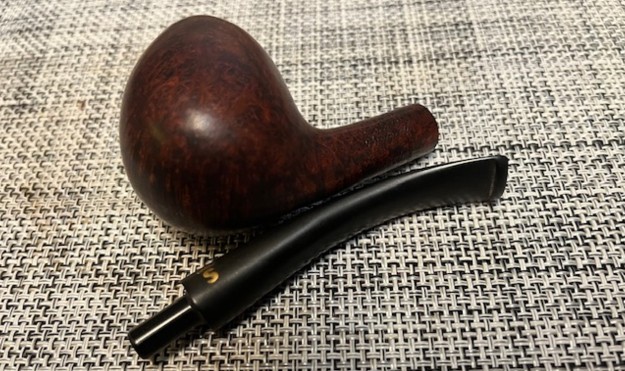
Jeff had done a great job cleaning up the pipe as usual. He reamed the pipe with a PipNet reamer and cut back the cake back to the bare briar. He cleaned up the walls with a Savinelli Fitsall Pipe Knife. He scrubbed the interior of the bowl and shank with pipe cleaners, cotton swabs and alcohol to remove the tars and oils. He scrubbed the exterior of the pipe with Murphy’s Oil Soap and a tooth brush to remove the grime from the finish. He worked on the rim top lava and darkening with the soap and tooth brush. He scrubbed the inside of the stem with alcohol and pipe cleaners. He scrubbed the exterior with Soft Scrub and then soaked it in Briarville’s Pipe Stem Deoxidizer. He washed it off with warm water to remove the Deoxidizer. The pipe looked far better when it arrived. I took photos of the bowl and rim top as well as the stem to show how clean they were. You can see that rim top and edges look very good. The stem is clean and the tooth and chatter on both sides ahead of the button is very light.I took photos of the stamping on the sides of the shank. The stamping is readable as noted above. I took the stem off the shank and took a photo to give a sense of the flow and proportion of the pipe. It is a beautiful looking pipe. I started my work on the pipe by polishing the briar with micromesh because it was in such good condition. I polished it with 1500-12000 grit micromesh sanding pads. I wiped the bowl down after each sanding pad with a damp cloth. I rubbed the briar down with Before & After Restoration Balm. I worked it into the briar with my fingertips. The product works to clean, enliven and preserve the briar. I let it sit for 10 minutes while I worked on the stem. After the time passed I buffed it with a cotton cloth to deepen the shine. The briar really comes alive with the balm. I set the bowl aside and turned my attention to the stem. I started working on polishing the stem with my 320-2500 grit sanding pads. I was able to remove the scratches and light tooth marks and chatter on both sides ahead of the button. It looked much better at this point in the process.I polished the stem with micromesh sanding pads – dry sanding with 1500-12000 grit pads. I wiped the stem down after each sanding pad with Obsidian Oil. I polished it with Before & After Pipe Stem Polish – both Fine and Extra Fine. I gave it a coat of Obsidian Pipe Stem Oil. It works to protect the stem from oxidizing. I set it aside to dry.This beautiful Stanwell Golden Contrast 02 Freehand Scoop with a taper vulcanite stem turned out very nice. The mix of brown stains highlights the birdseye and cross grain around the bowl sides and bottom. The rim top and edges look very good. The finish on the pipe is in excellent condition. I put the stem back on the bowl and carefully buffed the pipe with Blue Diamond on the buffing wheel. I gave the bowl and stem multiple coats of carnauba wax on the buffing wheel and followed that by buffing the entire pipe with a clean buffing pad. I hand buffed the pipe with a microfiber cloth to deepen the shine. The finished Stanwell Golden Contrast 02 is very nice and feels great in the hand. Give the finished pipe a look in the photos below. It is a nice pipe whose dimensions are Length: 5 ½ inches, Height: 2 inches, Outside diameter of the bowl: 1 ½ inches, Chamber diameter: ¾ of an inch. The weight of the pipe is 48 grams/1.69 ounces. Thanks for walking through the restoration with me as I worked over another beautiful pipe. This one will be going on the rebornpipes store, in the Danish Pipe Makers Section shortly. If you are interested in adding it to your collection let me know by message or by email to slaug@uniserve.com. Thanks for your time.

As always, I encourage your questions and comments as you read the blog. Thanks to each of you who are reading this blog. Remember we are not pipe owners; we are pipe men and women who hold our pipes in trust until they pass on into the trust of those who follow us.

New Life for a Stanwell Pipe of the Year 1988 Apple


Blog by Steve Laug

The next pipe I am working on was purchased on 12/13/2022 as part of a group of pipes from a fellow in Copenhagen, Denmark. This was a dirty pipe with a lot of wear and tear and obviously it had been someone’s favourite smoker. The pipe has an identifying plate on the topside of the shank that reads Stanwell [over] 1988. There was no other stamping on the shank and the silver plate confirmed for me that it was a Stanwell Pipe of the Year. The dirty sandblast finish was not able to hide the beauty in the grime. There were tars and oils ground into the surface of the briar. The bowl had a thick cake that flowed over the top of the smooth rim in a thick coat of a lava and it was hard to assess the condition of the inner edge. The stem was a black vulcanite saddle stem with a silver Crown S on the topside of the saddle. It had some tooth marks and chatter on both sides ahead of the button. I had a lot of oxidation and calcification on both sides of the stem. It had a lot of potential. Jeff took photos of the pipes before he started his clean up work. Jeff took photos of the rim and bowl to show the moderate cake and spotty lava coat covering the rim top. It really was a dirty pipe but still a beauty. He also took photos of the stem surfaces to show its overall condition when it arrived. The photos of the sides and heel of the bowls show beautiful grain around the bowl and shank sides. The sandblast is nicely done and highlights the grain. The brown stain on the briar adds depth finish on the pipe and makes the grain really stand out on the smooth parts. It shows some promise. He also took a photo of the stamped silver plate on the topside of the shank. It reads as noted above. I turned to the internet to find out information about the Stanwell Pipe of the Year. I came across this interesting article and shape chart on the Blue Room Briars site where they listed a collection of the POYs (https://www.blueroombriars.com/blogs/news/the-stanwell-pipe-of-the-year-collection). I have included the shape chart and part of the article below for the information that it contains.…Recently, Blue Room Briars acquired a complete Stanwell Pipe of the Year (POY) collection spanning from 1980 – 2017. Looking at these pipes in detail reveals some interesting insights into Stanwell’s production, although it should be noted that these findings are not the final say on when a particular pipe was made, but we hope you can use it as a guide when trying to determine the era of manufacture for Stanwell pipes made after 1980. 

The first pipe of note is the 1980 POY. This pipe does not come with the engraved silver plaquette. The pipe also sports a traditional vulcanite mouthpiece.

Between 1981 and 1998, the Stanwell pipes from the POY collection have the addition of silver plaquettes denoting the year, a traditional vulcanite mouthpiece, and also have a Teflon lined mortise. This is an interesting feature that creates a very stable connection between the mortise and tenon, as well as allowing the mortise to be swabbed out easily for maintenance. It wouldn’t be unwarranted to believe that other Stanwell pipes with a Teflon sleeved mortise were probably made between the 1980s to late 1990s. This additional, and costly, feature demonstrates Stanwell’s commitment to quality manufacturing even into the last portion of the 20th century.

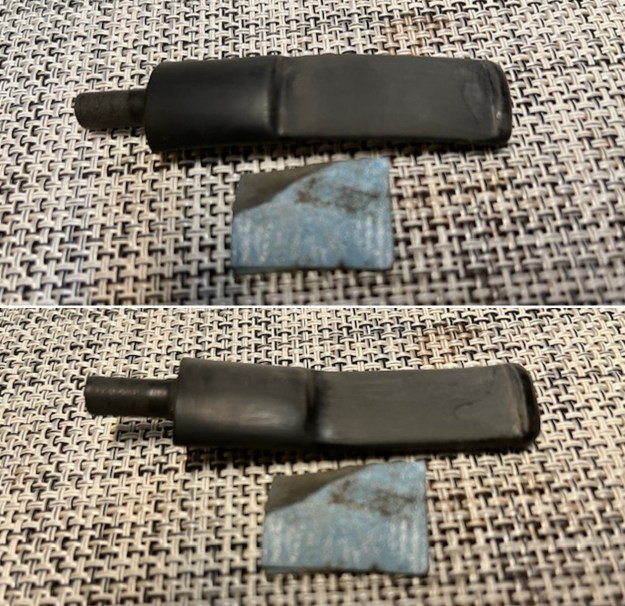
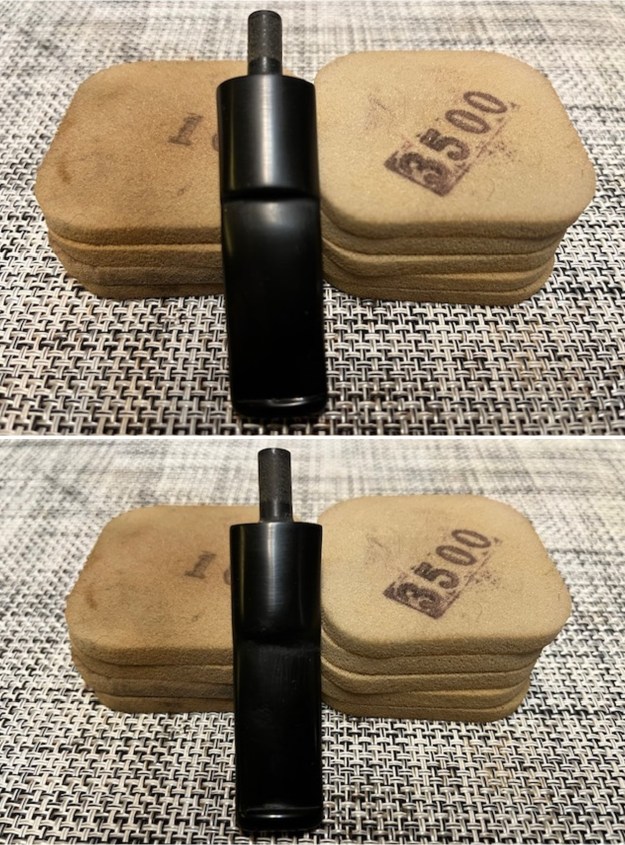
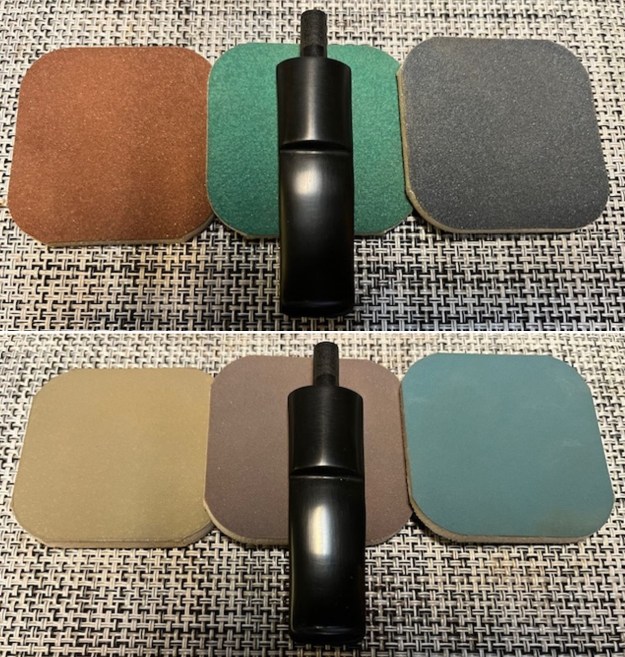
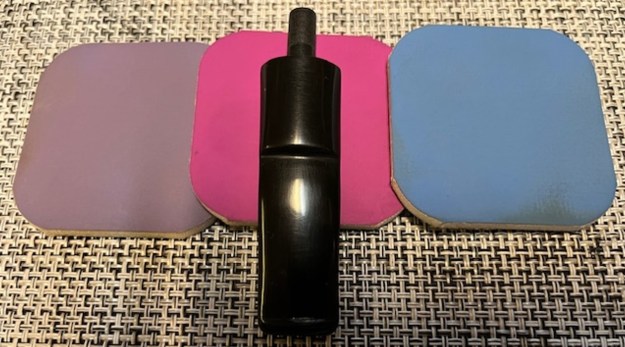
Jeff cleaned up the pipe for me. He reamed the bowl with a PipNet pipe reamer and cleaned it up with a Savinelli Fitsall Pipe Knife. He scrubbed the exterior with Murphy’s Oil Soap and a tooth brush to clean off the grime off the finish and the overflow of lava on the rim top. The cleaning had removed the grime on the rim top. He cleaned up the internals of the shank, mortise and stem with pipe cleaners, cotton swabs and alcohol to remove all of the oils and tars in the pipe. He soaked the stem in Briarvilles Pipe Stem Deoxidizer and was able to remove much of the oxidation, calcification. When it arrived here in Vancouver it was a clean pipe and I knew what I had to work with. I took photos of it before I started my part of the restoration. I took a photo of the rim top and the stem to show their condition once it arrived in Canada. Jeff was able to clean up the cake and the lava overflow that was shown in the rim and bowl photos above. The rim top looked very good but there seemed to be light damage and darkening to the top and inner edge of the bowl. The stem looked better, though there were light tooth marks and chatter on both sides near the button. I took a photo of the stamping on the silver plate on the left side of the shank to show that it was readable and undamaged by the cleanup work. I removed the stem from the shank and took a photo of the parts to give a sense of what the pipe looks like. I started my work on the inner edge and rim top with a folded piece of 220 grit sandpaper. I was able to remove the damage and the darkening. It looked much better.I started polishing the smooth rim top with micromesh sanding pads. I dry sanded it with 1500-12000 grit pads. I wiped the bowl down after each pad with a damp cloth. The smooth rim top began to take on a rich shine and grain was beginning to stand out. I sanded with all of the pads and wiped the bowl down after each pad with a soft cloth. I rubbed the bowl and shank down with Before & After Restoration Balm to deep clean the finish on the bowl and shank. The product works to clean, enliven and protect the briar. I worked it in with my fingers to get it into the briar. I used a horsehair shoe brush to work it into the sand blast. I let it sit for 10 minutes then I wiped it off and buffed it with a soft cloth. The briar really began to have a rich shine. I took some photos of the bowl at this point to mark the progress in the restoration. It is a beautiful bowl. I polished the silver plaque on the topside of the shank with a jewellers cloth to remove the slight remaining oxidation and to protect and preserve it. I set the bowl aside and worked on the stem at this point in the process. I “painted” the stem surface with the flame of a Bic Lighter to lift the tooth marks on both sides. I was able to lift the majority of them. I filled in one mark on each side of the stem ahead of the button. I used a small file to flatten out the repairs. I sanded the stem surface with a folded piece of 220 grit sandpaper. I polished the vulcanite stem surface and repairs near the button with a new product I am using. I ordered a set of 2 inch sanding pads for 320-3500 grit sanding pads from Amazon. They work amazingly well and are easy to manage and sand close to the sharp edge of the button. I polished light tooth marks and chatter out of the stem with micromesh sanding pads – dry sanding with 1500-12000 grit pads. I wiped the stem down after each sanding pad with Obsidian Oil.I polished the stem with Before & After Pipe Stem Polish – both Fine and Extra Fine. I gave it a coat of Obsidian Pipe Stem Oil. It works to protect the stem from oxidizing. I set it aside to dry.I put the stem back on the Stanwell Pipe of the Year 19888 Apple pipe and took it to the buffer. I buffed the bowl and stem with Blue Diamond to polish the briar and the vulcanite. Blue Diamond does a great job on the smaller scratches that remain in both. I gave the bowl multiple coats of Conservator’s Wax and the stem several coats of carnauba wax and buffed the pipe with a clean buffing pad to raise the shine. I hand buffed it with a microfiber cloth to deepen the shine. I am amazed at how well it turned out. The finished pipe is shown in the photos below. This is a beautiful Stanwell POY 1988 – the vulcanite saddle stem and smooth rim top and sandblast finish combine to give the pipe a great look. The polished black, vulcanite stem looks really good with the rich browns standing out in the sandblast. The dimensions of the pipe are Length: 5 inches, Height: 1 ½ inches, Outside diameter of the bowl: 1 inch, Chamber diameter: ¾ of an inch. The weight of the pipe is 1.31 ounces/37 grams. This is another pipe that I will be putting on the rebornpipes online store in the Danish Pipe Pipemaking Companies Section shortly, if you are interested in adding it to your collection. Thanks for walking through the restoration with me on this beauty!

As always, I encourage your questions and comments as you read the blog. Thanks to each of you who are reading this blog. Remember we are not pipe owners; we are pipe men and women who hold our pipes in trust until they pass on into the trust of those who follow us. 

Restoring a Chonowitch Designed Stanwell Bordeaux 148 Canadian


Blog by Steve Laug

The next pipe on the table to work on is one that was purchased on 01/26/2023 in a lot of pipes that came to us from Copenhagen, Denmark. This is a oval shank Canadian with a smooth finish and a thin brass band on the shank. It is another Made in Denmark Stanwell. The smooth finish on this pipe, around the bowl and shank has a mix of grain highlighted by the reddish brown stain. The pipe is stamped on the topside of the shank and reads STANWELL [over] Bordeaux. On the underside of the shank the shape number 148 is stamped [over] Made In Denmark. The pipe was a well used pipe when Jeff received it. There was dust and grime ground into the finish on the sides of the bowl. The mixture of brown stains highlights some mixed grain under the dirt. The bowl was moderately caked and there was an overflow of lava on the smooth rim top. The condition of the inner edge was hard to know due to the lava coat. The saddle stem is vulcanite and was dirty, oxidized and had light tooth marks, chatter and scratches on both sides ahead of the button and on the button itself. There is a brass Crown S logo inlaid on the topside of the saddle stem. Jeff took photos of the pipe before he started his clean up work on it. He took photos of the bowl and rim top to show what they looked like before his clean up. You can see the cake in the bowl and the lava on the rim top and inner edges. It is hard to know what the condition of the inner edge looks like. He also took some of the stem to show the condition of both sides. There are tooth marks on the surface of the stem ahead of the button and on the button surface itself. The photos of the sides and heel of the bowl show the grain around the bowl and shank. The mixture of brown stains adds depth finish on the pipe. Even under the grime it is a real beauty. The stamping on this one was around the bamboo horizontally and is shown in the photo below. It is clear and readable as noted above. The second photo shows the white stamped crown S on the stem side. Before I started my work on the pipe I wanted to see if I could find any information that would help me get a sense of the line. I turned to Pipephil to see if there was any listing on the Bordeaux Line (http://pipephil.eu/logos/en/logo-stanwell.html). There was nothing listed.

I then turned to Pipedia (https://pipedia.org/wiki/Stanwell) for more information. The article is great and gives a lot of history on the brand. There were also links to a shape article by Bas Stevens that I originally published on rebornpipes. I looked up the 148 shape number to see who had designed that shape (https://pipedia.org/wiki/Stanwell_Shape_Numbers_and_Designers). I quote the information below.

  1. Canadian, short saddle mouthpiece by Jess Chonowitsch.

Now it was time to work on the pipe.

Jeff had thoroughly cleaned up the pipe. He reamed the pipe with a PipNet Pipe Reamer and cleaned up the remnants with a Savinelli Fitsall Pipe Knife. He scrubbed the bowl with undiluted Murphy’s Oil Soap with a tooth brush. He rinsed it under running warm water to remove the soap and grime. He cleaned out the inside of the shank and the airway in the stem with alcohol, cotton swabs and pipe cleaners. He scrubbed the exterior of the stem with Soft Scrub to remove the grime and calcification. He soaked the stem in Before & After Deoxidizer and rinsed it off with warm water. The pipe looked very good when it arrived here in Vancouver. I took close up photos of the bowl, rim and the stem. You can see the damage and the darkening on rim top and inner edge. The vulcanite saddle stem is in good condition with light tooth marks and some chatter as noted above. There are some deep tooth marks on the button surface as well.I took photo of the stamping on the underside of the shank. It is readable as noted above. I removed the stem from the shank and took a photo to give a sense of the proportions of the pipe. The briar is quite beautiful and the dark and medium stains really make it stand out. I worked on the damage to the inner edge and the rim top with a folded piece of 220 grit sandpaper to bring the edge back into round and smooth out the scratches on the top. By the end it looked much better.I polished the bowl and shank with micromesh sanding pads – dry sanding with 1500-12000 grit pads. I wiped the bowl down after each pad to remove the grit. The bowl began to take on a rich shine. It is a beauty. I rubbed the bowl down with Before & After Restoration Balm. I worked it into the briar with my finger tips. I let it sit for 10 minutes and the Balm did its magic. It enlivens, cleans and preserves the briar. It certainly brought this bowl back to life. I buffed it off with a clean cloth and took the following photos. I set the bowl aside and turned my attention to the stem. I filled in the tooth marks on the surface and in the button edges. I used black CA glue and rebuilt the deep tooth marks on both side and on both top and underside button. I set the stem aside to cure. I used a small file to flatten the repair and to also cut the sharp edge of the button. I started sanding it smooth with a folded piece of 220 grit sandpaper. I polished the vulcanite stem surface and repairs near the button with a new product I am using. I ordered a set of 2 inch sanding pads for 320-3500 grit sanding pads from Amazon. They work amazingly well and are easy to manage and sand close to the sharp edge of the button. I polished the stem with micromesh sanding pads – 1500-12000 grit pads. I wiped it down with a damp cloth after each sanding pad. I used Before & After Pipe Polish – both Fine and Extra Fine to further polish the stem. This Stanwell Bordeaux 148 Canadian with a vulcanite saddle stem is a great looking pipe now that it has been restored. The mix of stains once cleaned up really highlights the grain and the polished sandblast finish is stunning. I put the stem back on the bowl and carefully buffed the pipe with Blue Diamond on the buffing wheel. I gave the bowl and the stem multiple coats of carnauba wax on the buffing wheel and followed that by buffing the entire pipe with a clean buffing pad. I hand buffed the pipe with a microfiber cloth to deepen the shine. The finished Stanwell Bordeaux 148 Canadian fits nicely in the hand and feels great. Give the finished pipe a look in the photos below. The dimensions of the pipe are Length: 5 ½ inches, Height: 1 ¾ inches, Outside diameter of the bowl: 1 1/8 inches, Chamber diameter: ¾ of an inch. The weight of the pipe is 31 grams / 1.09 ounces. I will be adding the pipe to the Danish Pipe Makers Section of the rebornpipes store. If you are interested in purchasing this pipe send me a message or an email.

As always, I encourage your questions and comments as you read the blog. Thanks to each of you who are reading this blog. Remember we are not pipe owners; we are pipe men and women who hold our pipes in trust until they pass on into the trust of those who follow us. 

Cleaning up a Television Imported Briar Italian Made Churchwarden


Blog by Steve Laug

The next pipe on the table was purchased from a fellow in St. Leonard, Maryland, USA on 03/24/2018. It is a nice looking Smooth Rhodesian Churchwarden with twin rings around the cap on the bowl and a long straight stem. It is stamped on the left side of the shank and reads TELEVISION. On the right side it is stamped Imported Briar [over] Italy. The stamping is very clear and readable. The finish had a spotty coat of varnish around the rim, sides and shank and several small fills on the left side of the shank and underside. The bowl had a thin cake and dust and debris. The rim top had spots of lava on it and was dirty. The rest of the bowl and shank. The stem was acrylic and in decent condition with some ripples in the underside from when it had been heated to bend it. It had some tooth chatter and marks on both sides near the button was also dirty and covered with bubbly varnish and debris. Jeff took photos of the pipe when he unpacked it and before he started his clean up work. It is a great looking piece of briar.Jeff took photos of the bowl and rim top to show the cake in the light cake bowl and the debris in the finish. He also took photos of the stem to show the nicks and dents stem surface s well as the light tooth marks and chatter on the vulcanite stem. He took photos of the bowl and heel to show the condition of the finish. Though the photos show the spotty varnish coat the grain underneath actually looks very good underneath. Jeff took photos of the stamping on the sides of the shank. It read as noted above and was readable. You can also see the spots and crackle in the varnish coat on the shank. There is also a gold disc on the left side of the taper shank with an R stamped in the disc. I have worked on quite a few Television Pipes over the years – old timers, billiards and several Churchwarden pipes. I checked all the usual sites for information and I could find nothing about the brand. I decided to leave the hunt behind and just work on the pipe.

I took some photos of the pipe as I took it out of the box. Here is what I saw. I slid it out of the wrapper around it. I could see that Jeff had cleaned it well. The bowl had been reamed with a PipNet reamer and Savinelli Fitsall Pipe Knife. He had scrubbed the exterior with undiluted Murphy’s Oil Soap. He rinsed it with warm water. He cleaned out the internals with alcohol, cotton swabs and pipe cleaners. He cleaned out the airway in the stem with pipe cleaners and alcohol. The grain on the bowl is quite nice with just a few small fills that are solid and well blended in with the surrounding briar. I took photos of the pipe before I started my work on it. The rim top had cleaned up very well and the rim top and edges looked very good. There were still shiny spots on the rim and in the rings. The stem was in decent condition other than light tooth chatter on both sides at the button. The stem also has some nicks on the sides midstem. The stem was vulcanite and has some light oxidation remaining. I took a photo of the stamping on the smooth panel on the left side of the shank. It is clear and readable as noted above. I removed the stem and took a photo of the pipe to show the proportion of the stem to the bowl. It is a nice looking pipe.I took some photos of the fills in the underside and up the side of the shank next to the bowl junction. They both were damaged and shrunken.I repaired the two fills with clear CA glue and some briar dust. Once the repairs hardened I sanded them with 220 grit sandpaper to smooth them out and start blending them into the surface.I wiped down the bowl with acetone to remove the s potty varnish on the briar. I avoided wiping down the two repaired areas so the acetone would not dissolve the repairs. I sanded the bowl with a Medium and a Fine sanding sponge to remove the varnish coat that remained. I also worked over the repaired areas and they began to look very good against the rest of the briar. I polished the bowl with micromesh sanding pads – dry sanding with 1500-12000 grit sanding pads. I wiped the bowl down with a damp cloth after each sanding pad. It began to look much better. I worked some Before & After Restoration Balm into the surface of the briar and into the twin rings around the bowl cap. I rubbed it on with my fingertips and let it sit doing it is job for 10 minutes. The product works to clean, rejuvenate and preserve the briar. I buffed it off with a soft cloth after the ten minutes. It looked much better at this point. I set the bowl aside and turned my attention to the stem. I removed the stinger and then filled in the deep gouge marks on the stem surface with black CA glue. Once the repairs cured I sanded the stem with the new 320-3500 grit sanding pads to blend the repairs into the stem surface and also to remove the slight oxidation. I polished the stem with micromesh sanding pads – 1500-12000 grit pads. I wiped it down with Obsidian Oil after each sanding pad. I used Before & After Pipe Polish – both Fine and Extra Fine to further polish the stem. I gave it a final coat of Obsidian Oil and set it aside to dry. Once I finished working on the stem and put it back together you can see that this Television Imported Briar Italy Churchwarden is another beautiful pipe. The rusticated briar around the bowl is clean and really tactile. The rim top and edges are in great condition. The rich brown stains gave the grain a sense of depth with the polishing and waxing. The depth of the rustication really stood out. I put the acrylic stem back on the bowl and carefully buffed the pipe with a clean buffing pad to raise the shine. I hand buffed the pipe with a microfiber cloth to deepen the shine. The finished Television Italian Churchwarden is a beauty and feels great in the hand and looks very good. Give the finished pipe a look in the photos below. The dimensions of the pipe are Length: 11 inches, Height: 1 ½ inches, Outside diameter of the bowl: 1 ¼ inches, Chamber diameter: ¾ of an inch. The weight of pipe is 1.66 ounces /47 grams. It is another one that is much more beautiful in person than these photos can capture. I will be putting it on the rebornpipes store soon. Look for it in the Italian Pipe Makers section. If you would like to add it to your collection let me know. Thanks for walking through the restoration with me.

Resuscitating Prince Charming


by Kenneth Lieblich

Next on the chopping block is this charming Ropp Grand Luxe 49. It is another pipe in my ongoing “French Collection” and it comes from a group of pipes I purchased recently. I have a particular interest in French pipes and pipeworks, and I grabbed this one to restore since I thought it was quite handsome. This is an old timer with a few wounds and needs just a little help to come back to life. This pipe was made by the venerable French pipe company, Ropp. Ropp has been around for a long time and their early pipes are really quite wonderful. The markings on the left-hand side of the shank read Ropp [over] Grand Luxe. The right-hand side of the shank reads 49, the shape number. There are no other markings. This pipe shape is a prince – a shape I love. This is a really pretty pipe and feels very comfortable in the hand. The stummel is a very nice piece of briar and the stem is made of buffalo horn – which tends to suggest an older piece. The stem has a tenon made of metal – not bone – and a cork-lined mortise. I remember Steve telling me that the fact the tenon is in metal (instead of bone) suggests a date around World War II. The stem has a normal, wide button – not an orific button. This all fits the date quite well.From Pipedia, here is a very brief history of the Ropp company:

Eugène-Léon Ropp (1830–1907) acquired a patent for the cherrywood pipe in 1869. In 1870, he established a workshop to manufacture such pipes in Bussang, in the Vosges mountains. Around 1893, his business moved into the former mill of Sicard (part of the community of Baume-les-Dames in Upper Burgundy. The pipes were a big success in export as well. Shortly before 1914, Ropp designated A. Frankau & Co. (BBB) to be the exclusive distributor in the UK and its colonies. Probably in 1917, a workshop in Saint-Claude in the rue du Plan du Moulin was acquired to start the fabrication of briar pipes. In 1923, another small building in Saint-Claude, serving as a workshop for polishing, was added. Cherrywood pipes were the mainstay of Ropp until the company finally closed down in September 1991. The company was taken over by Cuty-Fort Entreprises in 1994.I have been working on figuring out the dates of Ropp pipes, based on their logos. This is an ongoing project and I am far from done. However, the logo on this pipe suggests a date that in the interwar period.

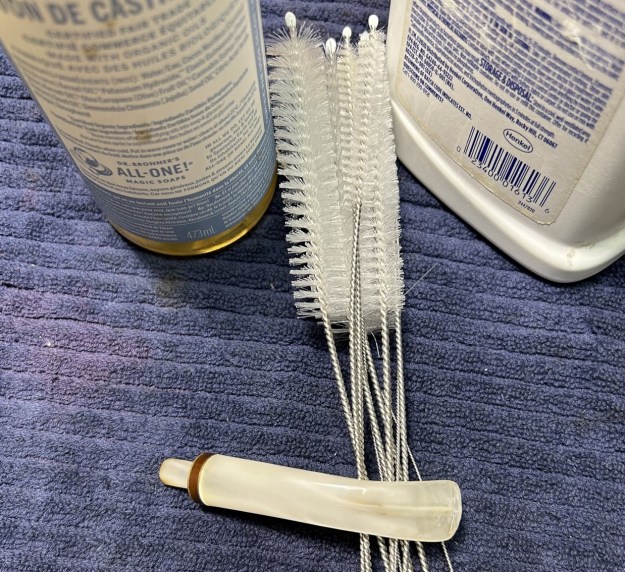
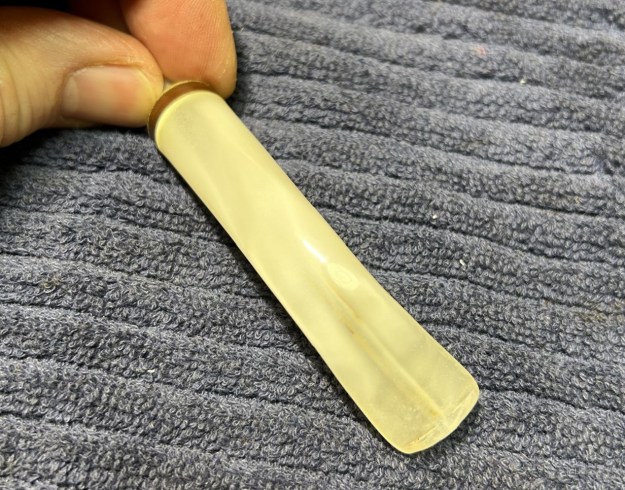
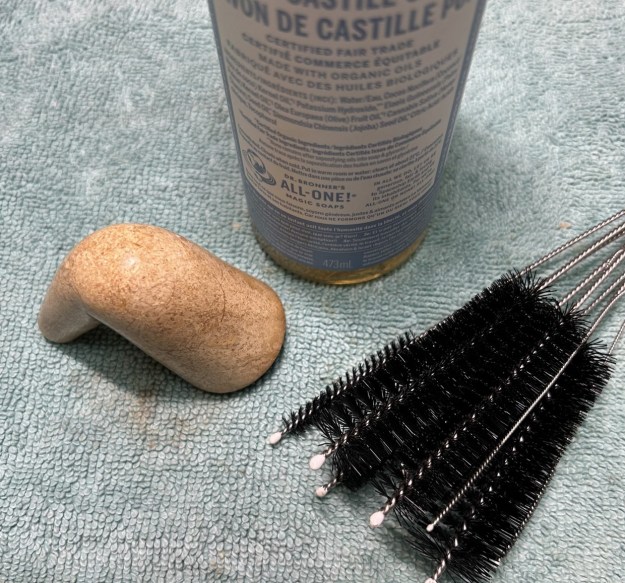
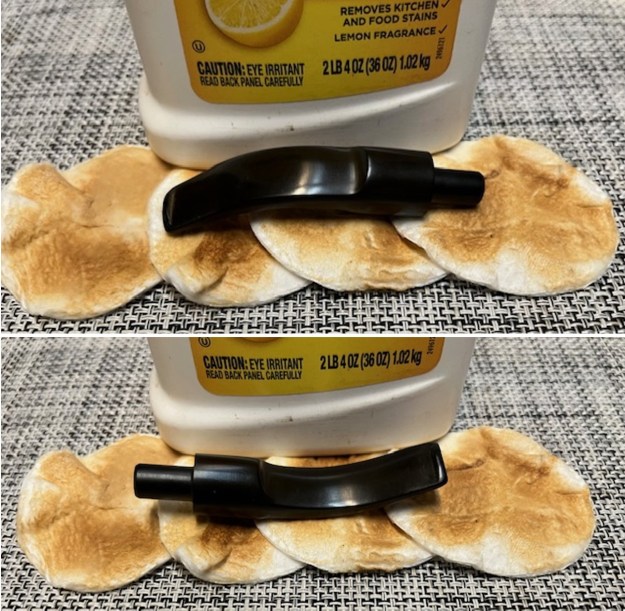
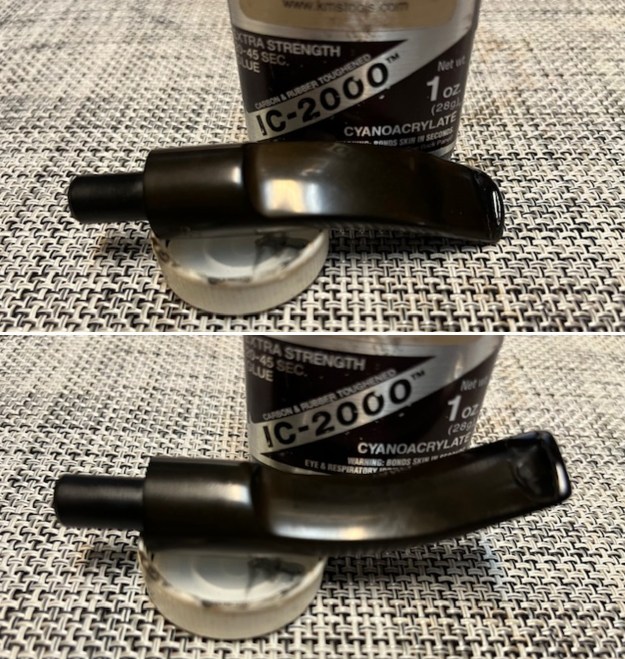
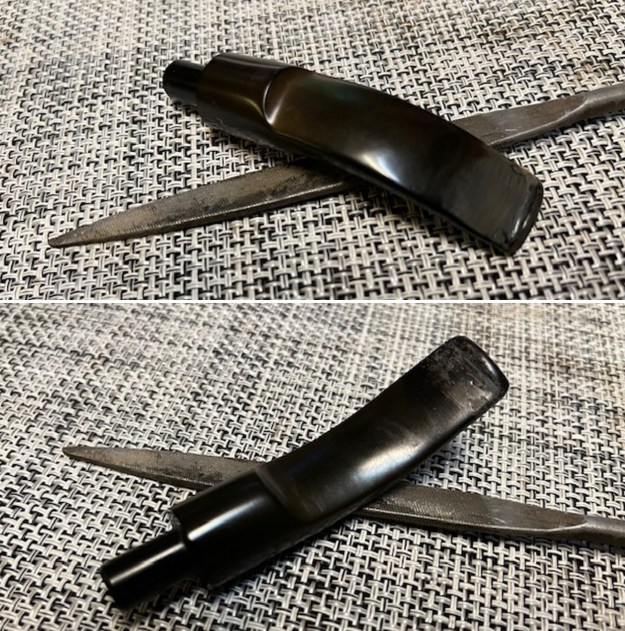
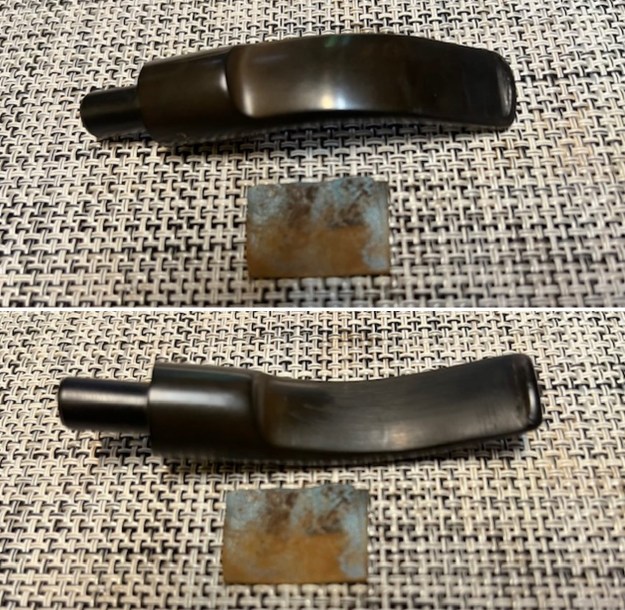
On to the pipe: it was in decent shape, but it had a few issues. The stem had a few bite marks, top and bottom. It also has a natural hole in the horn. The stummel also had a few issues. The rim and the outside of the bowl had some serious scratches. There was lava on the rim and some minor scorching. The inside was pretty dirty too – it would need a thorough cleaning. The stem was first on my list. This stem has a stinger in it – and it was being quite stubborn about coming out of the tenon! I opted to warm the stem and stinger with my heat gun and this didn’t work, surprisingly. I stuck it in the freezer for 20 minutes or so and that didn’t work either. I went back to the heat gun and tried again. Ugh. I successfully managed to break the stinger. Obviously, this wasn’t great, but it’s hardly the end of the world. I took a miniature file, shaped like a cylinder and sanded the hole in the tenon. I wanted to open the aperture a bit and remove the rough metal. Came out perfectly. I wiped down the outside of the stem with Murphy’s Oil Soap on some cotton pads. Then, I cleaned out the insides with pipe cleaners and isopropyl alcohol. It took an awful lot of work to get this clean! In fact, I also used some Castille soap and tube brushes on the inside of the stem. Not something I usually do. I built up the worm hole and tooth marks on the stem with some clear cyanoacrylate adhesive and let them fully cure. I then sanded the adhesive down with 220- and 400-grit sandpapers to meld seamlessly into the stem. I then used all nine Micromesh pads (1,500 through 12,000 grit) to bring out the lovely grain of the buffalo horn on the stem. I also used Obsidian Pipe Stem Oil in between each pad scrubbing. On to the stummel, and the usual cleaning procedures were in order for this pipe. This stummel was a bit of a mess inside, so I first decided to ream out the bowl. I used the KleenReem to remove the built-up cake and followed that with 220-grit sandpaper to eliminate as much as I could. I took the bowl down to bare briar, as I wanted to ensure there were no hidden flaws in the walls of the bowl. Fortunately, there none.I then proceeded to clean out the insides of the shank with Q-tips, pipe cleaners, and isopropyl alcohol. There was considerable filth inside this stummel and it took a lot of cotton to get it clean. I followed that up by cleaning the insides with some Castile soap and tube brushes. One of difficulties I encountered here was that this pipe had a cork-lined mortise and it was in very rough shape. Despite my best efforts, the cork was disintegrating and could not be saved. I took a wire drill bit and, but hand, scraped out the remaining bit of cork with it. I used some Murphy’s Oil Soap and some cotton pads on the outside of the stummel. That removed any latent dirt that blighted the wood. I moved on to de-ghost the bowl. I thrust some cotton balls into the bowl and the shank and saturated them with 99% isopropyl alcohol. I let the stummel sit overnight. This caused any remaining oils, tars and smells to leach out into the cotton. As the photos show, there were some rough scratches on the rim of this pipe. In order to remove them, I “topped” the pipe – that is to say, I gently and evenly sanded down the rim on a piece of 220-grit sandpaper. This effectively removed the damage, without altering the look of the pipe.There were a couple of very tiny pinholes in the wood. I dabbed a bit of cyanoacrylate adhesive and let them cure. I sanded the repairs down with 400-grit sandpaper. I also sanded out the scratches with the same. I felt that this pipe’s wood needed some revivification. In order to accentuate the external beauty of this pipe, I opted for aniline dye. I applied some of Fiebing’s Black Leather Dye. I applied flame from a BIC lighter in order to set the colour. I didn’t want to make the pipe black – I wanted the dye to accentuate the grain of the wood. So I used all nine Micromesh pads (1,500 through 12,000 grit) on the stummel to sand off the majority of the dye and then smooth the wood.I then added a coat Fiebing’s Light Brown Leather Dye to act as a beautiful contrast. I wiped it down with isopropyl alcohol to lighten it a bit. What a difference that made! It looked so much better with a fresh coat of stain. After that, I applied some Before & After Restoration Balm and let it sit for 15 minutes before polishing with a microfibre cloth. There is some beautiful wood after all. It is a lovely pipe! Before finishing up, I needed to address the mortise. Having removed the disintegrated cork, the tenon no longer fit in the mortise. Thanks to Steve’s advice, I fashioned a new cork lining from an old wine-bottle cork. I drilled out a hole through the middle of the cork and then used my Dremel to whittle down the cork until it fit – very tightly – in the mortise. I tested the tenon and it fit perfectly. I was delighted! Then it was off for a trip to the buffer. A dose of White Diamond and a few coats of carnauba wax were just what this pipe needed. The lovely shine made the wood very attractive. This is a very handsome pipe and will provide many years of smoking pleasure. This is a wonderfully crafted pipe and has a very elegant feel to it. It took some work, but I am proud of it. I am pleased to announce that this pipe is for sale! If you are interested in acquiring it for your collection, please have a look in the “France” pipe section of the store here on Steve’s website. You can also email me directly at kenneth@knightsofthepipe.com. The approximate dimensions of the Ropp Grand Luxe 49 Prince are as follows: length 6 in. (153 mm); height 1½ in. (36 mm); bowl diameter 1⅝ in. (40 mm); chamber diameter ¾ in. (20 mm). The weight of the pipe is 1⅛ oz. (36 g). I hope you enjoyed reading the story of this restoration as much as I enjoyed restoring it. If you are interested in more of my work, please follow me here on Steve’s website or send me an email. Thank you very much for reading and, as always, I welcome and encourage your comments.
Restoring a Very Recognizable Stanwell Golden Contrast Made in Denmark 125 Scoop


Blog by Steve Laug

I have always been intrigued by the Stanwell Golden Contrast finish regardless of the pipes it has been applied to. The contrast of dark and light playing across the grain is beautiful. To me the lines and the elegance of the pipe are stunning and the contrast stain makes the lay of pipe with the grain gorgeous. The stain highlights the birdseye and the flame grain and makes them pop from the surface of the bowl and shank. The slight flare of the shank and the saddle on the stem to the pinch of the blade behind the saddle all pointed to a hand that I had seen before. I did a little digging because I wanted to confirm my guess/my suspicions about the designer. What I found out confirmed what I was thinking. This Freehand with an oval shank and saddle stem was designed by Tom Eltang. For a list of various Stanwell Shape numbers and who they are attributed to you can read this list compiled by leading Stanwell Collector, the late Bas Stevens on rebornpipes at: https://rebornpipes.com/2013/09/03/stanwell-shapes-compiled-by-bas-stevens/

This particular pipe was another of the interesting pipes in the recent shipment of estate pipes we purchased from a fellow in Copenhagen, Denmark on 01/26/2023. We have gotten some amazing Stanwell pipes from him. This Golden Contrast was in pretty decent shape. The finish was dirty but in great shape. The rim showed some darkening and a build-up of tars and oils. There was a thick cake in the bowl with tobacco debris on the walls. The internals were dirty with tars and oils. The stem had some light oxidation and calcification on the top and bottom of the stem from the button forward. There was some tooth chatter as well but no deep tooth marks. The brass crown S on the left side of the saddle appeared to be lightly oxidized as well but would take little to make it shine. The various photos that follow are ones that my brother took before he cleaned the pipe. They show the amazing grain on this beauty. The next photos of the rim and the shank show the condition of the pipe at arrival in Idaho. The grain around the rim top is quite stunning to me. You can see the cake in the bowl and the thick lava on the top. It was a mess but the contrast stain makes the grain even show through the lava on the rim top. Jeff took photos of the grain on the sides and heel of the bowl. It really is a stunning piece of briar. The contrast stain really makes it stand out clearly. The next photos show the various stamping on the underside of the shank. It reads shape number 125 [over] Stanwell [over] Golden [over] Contrast in script [over] Made in Denmark. All the stamping is sharp and clear. He also captured the golden Crown “S” Stanwell logo on the left side of the saddle stem. I turned to Pipedia to see if I could find specific information on the Golden Contrast line of pipes (https://pipedia.org/wiki/Stanwell). There was a short note there that I have included in full below.

Golden Contrast:  An old series. The blocks are cut on the cross grain. The pipes from this series exhibit Birds Eye grain only. Brass band and brass S in the stem. The pipes have a two-tone staining which really shows the beautiful bird’s eye grain. However, this staining simply takes too much work so the series is discontinued.

With that information I now knew about the discontinued Golden Contrast line. The pipe I was working on did not have a brass band but it did have the kind of staining and colour on the grain on the pipe. It was definitely a two tone stain on the pipe. Now it was time to work on the pipe.

Jeff had done a great job cleaning up the pipe as usual. He reamed the pipe with a PipNet reamer and cut back the cake back to the bare briar. He cleaned up the walls with a Savinelli Fitsall Pipe Knife. He scrubbed the interior of the bowl and shank with pipe cleaners, cotton swabs and alcohol to remove the tars and oils. He scrubbed the exterior of the pipe with Murphy’s Oil Soap and a tooth brush to remove the grime from the finish. He worked on the rim top lava and darkening with the soap and tooth brush. He scrubbed the inside of the stem with alcohol and pipe cleaners. He scrubbed the exterior with Soft Scrub and then soaked it in Briarville’s Pipe Stem Deoxidizer. He washed it off with warm water to remove the Deoxidizer. The pipe looked far better when it arrived. I took photos of the bowl and rim top as well as the stem to show how clean they were. You can see that rim top and edges look very good. The stem is clean and the tooth and chatter on both sides ahead of the button is very light.I took photos of the stamping on the sides of the shank. The stamping is readable as noted above. I took the stem off the shank and took a photo to give a sense of the flow and proportion of the pipe. It is a beautiful looking pipe.  I started my work on the pipe by polishing the briar with micromesh because it was in such good condition. I polished it with 1500-12000 grit micromesh sanding pads. I wiped the bowl down after each sanding pad with a damp cloth. I rubbed the briar down with Before & After Restoration Balm. I worked it into the briar with my fingertips. The product works to clean, enliven and preserve the briar. I let it sit for 10 minutes while I worked on the stem. After the time passed I buffed it with a cotton cloth to deepen the shine. The briar really comes alive with the balm. I set the bowl aside and turned my attention to the stem. I sanded out the tooth marks against the button edge with 220 grit sandpaper and started the polishing with 600 grit wet dry sandpaper.I polished the stem with micromesh sanding pads – dry sanding with 1500-12000 grit pads. I wiped the stem down after each sanding pad with Obsidian Oil. I polished it with Before & After Pipe Stem Polish – both Fine and Extra Fine. I gave it a coat of Obsidian Pipe Stem Oil. It works to protect the stem from oxidizing. I set it aside to dry. This Tom Eltang designed Stanwell Golden Contrast 125 Freehand Scoop with a saddle vulcanite stem turned out very nice. The mix of brown stains highlights the grain around the bowl sides and bottom. The rim top and edges look very good. The finish on the pipe is in excellent condition. I put the stem back on the bowl and carefully buffed the pipe with Blue Diamond on the buffing wheel. I gave the bowl and stem multiple coats of carnauba wax on the buffing wheel and followed that by buffing the entire pipe with a clean buffing pad. I hand buffed the pipe with a microfiber cloth to deepen the shine. The finished Stanwell Golden Contrast 124 is very nice and feels great in the hand. Give the finished pipe a look in the photos below. It is a nice pipe whose dimensions are Length: 5 ½ inches, Height: 2 inches, Outside diameter of the bowl: 1 ½ inches, Chamber diameter: ¾ of an inch. The weight of the pipe is 50 grams/1.76 ounces. Thanks for walking through the restoration with me as I worked over another beautiful pipe. This one will be going on the rebornpipes store, in the Danish Pipe Makers Section shortly. If you are interested in adding it to your collection let me know by message or by email to slaug@uniserve.com. Thanks for your time.

As always, I encourage your questions and comments as you read the blog. Thanks to each of you who are reading this blog. Remember we are not pipe owners; we are pipe men and women who hold our pipes in trust until they pass on into the trust of those who follow us.

Do you ever regret walking away from a pipe deal?


Blog by Steve Laug

This story starts like many of my blogs when I am travelling. On my last visit to Budapest I was able to visit Gallwitz shop and visit with Viktor Zollner. I enjoyed looking through the estate pipes that he had there – both those he had finished restoring and those yet to be restored. I purchased the interesting Japanese Tatu pipe which I restored and wrote about on the blog (https://rebornpipes.com/2023/11/06/restoring-a-budapest-purchase-a-tatu-pipe-1126-freehand/). Here is the regret that the title hints at. When I returned to Canada I was haunted with the regret that I had walked away from a beautiful and unique LASSE SKOVGAARD Tadpole sandblast pipe shown to the below. I loved the unique look of the pipe and was intrigued by it. I turned it over in my hands looking at the blast, the carving, the construction and the well-made stem in the shank end. I looked it over many times before I set it aside and chose the Tatu. I regretfully set it aside and left the shop and Budapest. Inside I was hoping that perhaps I could sell a few of my own pipes to fund the purchase of the Skovgaard but that was a gamble. I took a few “horrible photos” of the pipe so that I could remember it! I really had no idea if it would be available when I had the funds ready to buy it. Here was hoping and regretting! I remember meeting Lasse Skovgaard in Chicago in 2004 when he was introduced to the pipe world and missed the opportunity then and again when he was there in 2005. I had wanted to add one of his pipes to my collection at that time but he sold out and I went home empty handed. Since them I have looked for one of his pipes that called my name on eBay and other sales sites to add to my collection. I have looked at online sellers as well and have not found the pipe that spoke to me. I don’t know how to explain it other than this description. Then in Gallwitz shop in Budapest I saw this one and it spoke to me. It was one I wanted to add to my rack.

Sadly, I walked away and left it there while I tried to sell a few pipes to finance this purchase. A month went by after my return from Budapest, finally I had sold enough pipes to help with the purchase of this one. I figured it would be a great present for my early December Birthday. In the middle of November, I was ready to see if the pipe was still available and to put it on order. I sent Viktor an email about the pipe and sent him the above photos so he would know which pipe I was speaking of… I think the funniest part of the transaction for me was the fact that in the month since I had returned home my old brain had totally dropped Lasse’s name but I knew it was one that I was looking for. I am sure Viktor must have laughed when he received my email about the above pipe without a name attached and asked him to remind me of the maker’s name.

It is one of those moments when it is almost embarrassing to admit that you have forgotten the name of a maker that you have been saving for! But I did forget and Viktor was kind of enough to not only send me the information I had asked for as well as four far better photos of the pipe than the ones that included in my email to him. I have included is photos along side of these paragraphs.

Viktor replied that the pipe was stamped Lasse Skovgaard on the underside of the shank and had a small symbol stamped on it as well. I believe that the shank is boxwood but I am not certain. The photos capture what I saw when I had held the pipe in my hands when in his shop in Budapest.

The sandblast briar bowl and the curved tail wrapped around the shank make a unique and memorable pipe even for my old brain and “shaky memory”. (Keep in mind I did not forget the pipe just the name of the maker!)

It was very tactile and I think that as it heats up during a smoke it would be warm and even more so.

The blast on the bowl and around the tadpole twisting tail is stained dark and the contrast with the smooth wooden shank and black stem is quite stunning. The smooth shank has the look of a piece of bamboo in terms of colour but not in terms the finish on the wood. It does not have the knuckles or the striations that I expect in a piece of bamboo but the colour is very similar. The fit of the shank to the bowl is quite unique. When Dunhill fit bamboo to a briar bowl there is generally a bit of briar shank to attach it too. Other pipemakers use a piece of stainless steel or Delrin to attach the shank and bowl together. My guess is that this one is attached with either of those.

I really like the way that the briar tail curves around the boxwood shank. The sandblast on the briar continues down the bowl sides and all around the tail. The grain that shows through the blast is quite nice and mix of different patterns. The contrast between the sandblast and the smooth wooden shank is quite nice.

It appears to me that the stem is Ebionite or high-quality vulcanite. There was no oxidation on the stem which speaks to either it having been recently buffed and cleaned or to the quality of the material. There were light tooth marks and chatter on the stem surface on both sides ahead of the button. The slot in the stem is well done with rounded ends on each side. It should easily pass a pipe cleaner.

I wrote back to Viktor and asked him tell me the details of the stamping on the underside of the smooth shank. He said that there was a hard to read symbol above the stamp that read LASSE [arched over] SKOVGAARD. He also included a photo of the stamping to show me. The issue for me was that the stamp curved around the underside of the shank. You can see portions of the stamping in the photo to the left. You can also see remnants of the small symbol above the stamp. My guess is the symbol will give me the information I will need to grade the pipe when it arrives.

I wanted to refresh my memory about the background of the pipemaker himself. I turned to the two sites that I always turn to for background information offered by Pipephil and Pipedia as generally one of them gives me a short synopsis of the brand and the other gives me detail and history of the brand.

I turned first to Pipephil’s site (http://www.pipephil.eu/logos/en/logo-s9.html) and found the information in the screen capture and the sidebar info as well below.Artisan: Lasse Skovgaard Jørgensen (born 1983) is the son of Bennie Jørgensen. Production (2006): ~ 400 pipes/year. Grading (ascending): 1, 2, 3 and lion.

I think that I just figured out the symbol stamped on the pipe I have coming in. It is a lion stamp symbolizing the highest grade of Lasse’s pipes.

From there I turned to Pipedia to gather more information (https://pipedia.org/wiki/Skovgaard). I was happy to learn that the article there was written by Lasse himself and included an email address that I could send him some questions about this pipe. Here is what I found including a photo of the carver.

By Lasse Skovgaard My name is Lasse Skovgaard Jørgensen, I am 22 years old (2006). I live in Denmark on the southern part of Zealand, where I enjoy my life as a Danish pipe maker.

Since I was a little boy, I’ve been interested in what my father (Benni Jørgensen) was doing in his workshop. At the age of sixteen I started to make buffalo horn tampers for W.O. Larsen, and I also tried to make a couple of “pipes”, (my father did not think they looked like pipes) but they were not good enough.

After making like a hundred pipes, they started to look better and better and of course with just a little help from my father. I realized that it definitely was not easy to even make a pipe functional, and it also has to look beautiful and elegant. With lots and lots of practice it got easier, and when I was about eighteen I started to make “two tone” and “select” pipes for W.Ø. Larsen.

Along with my education in high school, I was practicing making pipes in my father’s workshop. I was nineteen years old when I started to make the W.O. Larsen straight grains.

Teddy Knudsen is a friend of my father; I spoke to him about the big pipe show in Chicago. Teddy told me to try and come to the show in Chicago and bring pipes stamped with my own name.

I went to the 2004 Chicagoland International Pipe & Tobacciana Show with a batch of 12 smooth pipes.

I could not have wished for a better welcome; everyone treated me very friendly and it was a lot of fun to meet many of the other pipe makers in the world. I sold out all 12 pipes at the show.

The next year in Chicago 2005 I brought 75 pipes and a lot of them were sandblasted pipes. My sandblasted pipes seemed to be extremely popular and I sold out all my pipes again.

After attending the show in Chicago, I am now selling my pipes in many countries around the world.

The pipe arrived in Vancouver yesterday. It was a quick delivery by DHL from Budapest to Vancouver. The familiar yellow and red plastic package held a box inside. It came with no damage or tears in the package. I took it to the worktable and cut the yellow envelope open and removed the box inside. It was a good-sized box marked Passatore on the top. Passatore is the maker of fine accessories for cigar and pipe smokers. That was an appropriate box for what was inside.I opened the box and inside was a leather pipe pouch stamped with the Gallwitz logo over 1880 (the year that the shop opened). It was a nice-looking suede pipe sock with a draw string. To me it was another layer of fine packaging. It also was another layer that kept me from seeing the pipe that was on the inside! Sweet impatience!I removed the leather pipe sock from the box and then slid the second pipe sock that was on the inside of the first pouch. It was printed and read Lasse Skovgarrd Handmade Made in Denmark (three lines). It was a black felt draw string pouch with scalloped edges.I loosened the draw strings on the pouch and removed pipe from inside. I really is everything that I remembered. Amazing sandblast on the bowl, the tail of the tadpole wrapped around the Boxwood shank and the vulcanite stem look very good together. it was one of those moments when you know you made the right decision.Now it was time to examine the pipe itself more thoroughly. It was obvious that the pipe had not been cleaned at all other than a cursory polishing. That is what I actually like as I have my own methods and standards for the clean up of a pipe. Knowing that I examined the bowl and found that I was correct in that it had not been reamed or cleaned. The shank and airway in the stem were both dirty. The joint of the bowl to the boxwood shank is a glued joint but I think there is a tube inside joining the two parts together. It appears to have been repaired or at least the glue repaired around the joint. It was a little sloppy in that there were glue spots on the boxwood shank. They were under the first twist of the tadpole tail. The finish on the bowl looked very good and the blast was deep and rugged. The joint of the stem to the shank was well fit. The stem showed no oxidation though there were tooth marks on the top and underside just ahead of the button. There was no chatter on either side to speak of. I was pleased with what I saw and the clean up would be very straight forward. I took pictures of the pipe to show its condition. You can hopefully see why I am taken with it. It is different from every other pipe I have in my collection. I took a close up photo of the bowl and the rim top. You can see the cake in the bowl and it is a moderate cake. The rim top was in very good shape with no grime in the grooves of the sandblast surface. The inner and outer edges looked very good. The stem also looked quite good. There were tooth marks on the top and underside next to the button. They were not too deep but would need work to lift and then repair.I took a photo of the stamping. It is hard to capture the whole stamp as it is wrapped around the shank ahead of the stem shank joint. It does read as noted above. The figure stamped over Lasse is hard to see in total but I am pretty sure it is a lion which makes the pipe a Lion grade pipe. I took the stem off the shank and took a photo of the parts together to get a sense of the flow of the pipe.Now it was time to work on the pipe. I used a sanding stick with a pointed end to work on the glue around the shank/bowl joint. I also used it to sand the dark spots on the shank side under the first wrap of the tail.Now I turned to work on the inside of the bowl and shank. I reamed the pipe with a PipNet pipe reamer using the second reaming head. I took the cake back to bare briar. I cleaned up the reaming with a Savinelli Fitsall Pipe Knife and sanded the bowl walls smooth with 220 grit sandpaper wrapped around a piece of dowel. I checked the bowl walls and they were smooth and showed no heat damage or checking. I let out a sigh of relief as this is one of the invisible risks that you take when purchasing an estate pipe. I cleaned out the shank – mortise and airway and the airway in the stem. I used pipe cleaners, cotton swabs and isopropyl alcohol to clean out tars and oils in both. There was a lot of that in both.I rubbed the briar down with Before & After Restoration Balm. I worked it into the briar with my fingertips and a horsehair shoe brush. I carefully worked it into the twisted tail around the shank and the boxwood shank as well. I used qtips to get into the tight spots. The product works to clean, enliven and preserve the briar. I let it sit for fifteen minutes then buffed it with a cotton cloth to deepen the shine. The briar really comes alive with the balm. I set the bowl aside and turned my attention to the stem. I “painted” the surface of the stem with the flame of a lighter to try and lift the tooth marks. They did not come up much at all. I filled them in with black CA glue and set it aside to cure. I used a small file to flatten the repairs and blend them into the surface. I sanded out the repairs to blend them into the surface with a folded piece of 220 grit sandpaper. I started polishing the stem with 600 grit wet dry sandpaper. I polished the stem with micromesh sanding pads – dry sanding with 1500-12000 grit pads. I wiped the stem down after each sanding pad with Obsidian Oil. I polished it with Before & After Pipe Stem Polish – both Fine and Extra Fine. I gave it a coat of Obsidian Pipe Stem Oil. I set it aside to dry. I really like the both the craftsmanship and the artistry of this beautiful Lasse Skovgaard Hand Made Sandblast Lion Grade Tadpole. It is a real stunning example of the skill of the pipe maker. I carefully worked some Conservator’s Wax into the briar and the boxwood to polish and protect it. I did it by had so I would not potentially damage the twisted tail of the pipe. I buffed it with a shoe brush and a microfibre cloth to raise the shine. I buffed the stem with Blue Diamond on the wheel and gave it multiple coats of carnauba wax. I buffed the stem with a clean buffing pad to raise the shine. I put the pipe back together and hand buffed it again with microfibre cloth to deepen the shine. It is fun to see what the polished bowl looks like with the polished boxwood shank and the vulcanite stem. The rugged sandblast on the bowl, rim top and twisted tail of this Lasse Skovgaard Tadpole make it a beautiful pipe that feels great in my hand. It is light and well balanced. Have a look at it with the photos below. The dimensions are Length: 5 ¾ inches, Height: 2 ¼ inches, Outside diameter of the bowl: 1 ¼ inches, Chamber diameter: ¾ of an inch. The weight of the pipe is 1.45 ounces/41 grams. It is a beautiful pipe and one that I am looking forward to enjoying soon. I have some aged Seattle Pipe Club Deception Pass that should smoke well in this bowl. It will be a great afternoon smoke and one I will savour along with the memory of the trip and circuitous purchase of the pipe. Thanks for walking through the cleanup with me as I worked over this pipe.
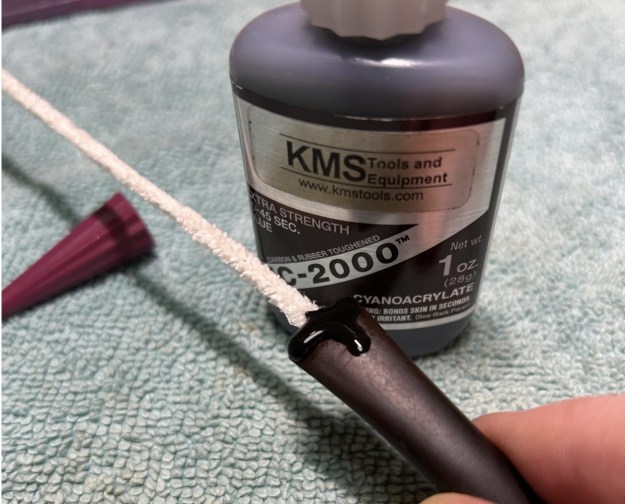
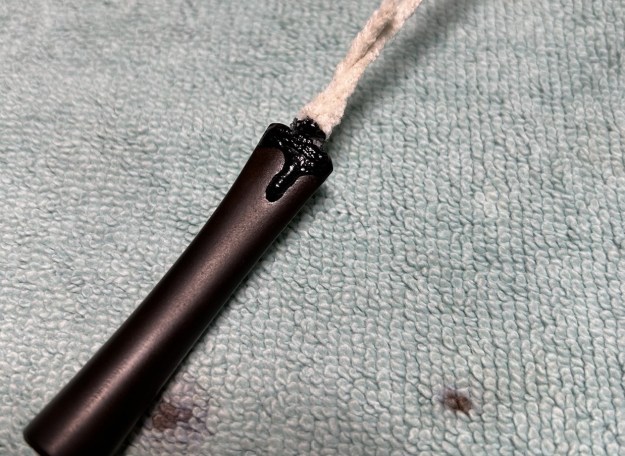
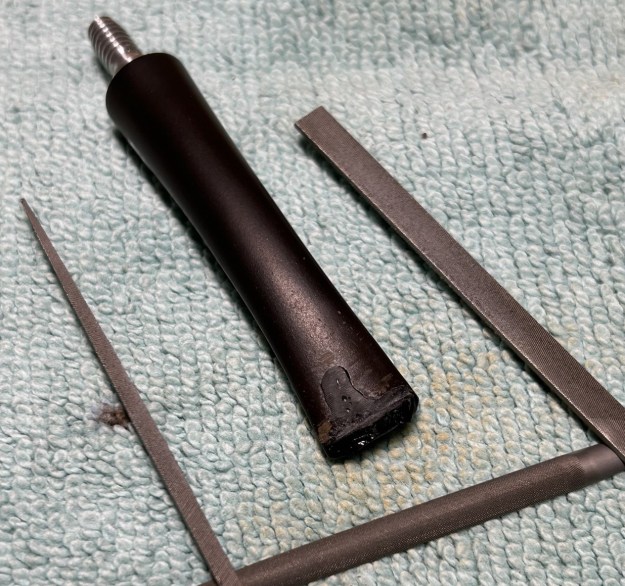
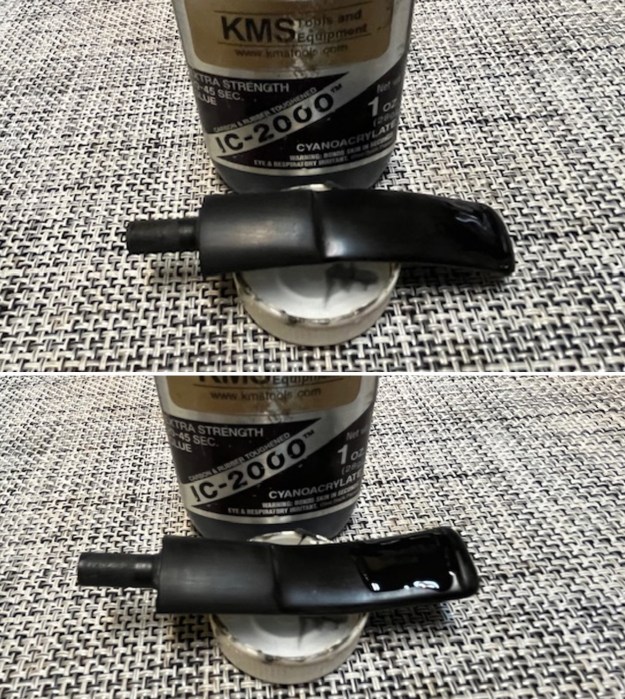
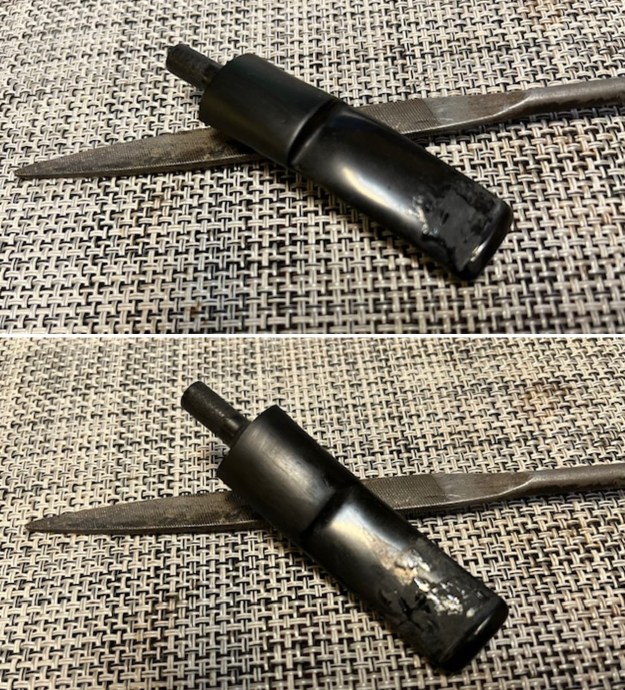
As always, I encourage your questions and comments as you read the blog. Thanks to each of you who are reading this blog. Remember we are not pipe owners; we are pipe men and women who hold our pipes in trust until they pass on into the trust of those who follow us.