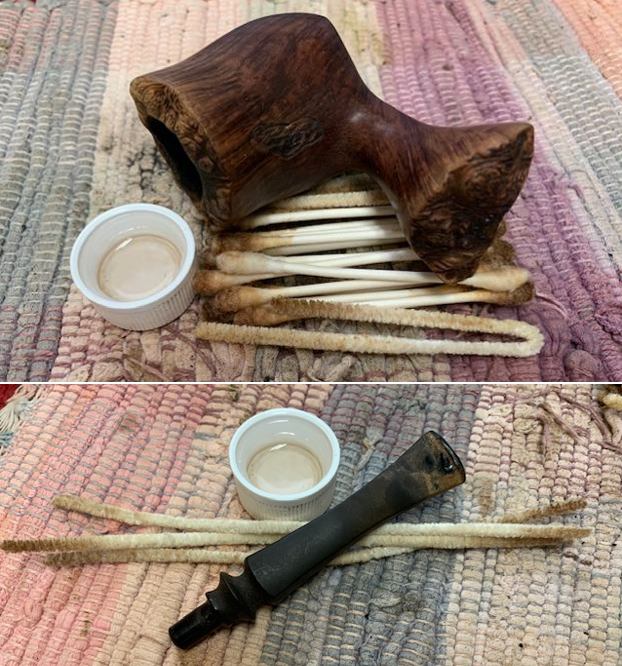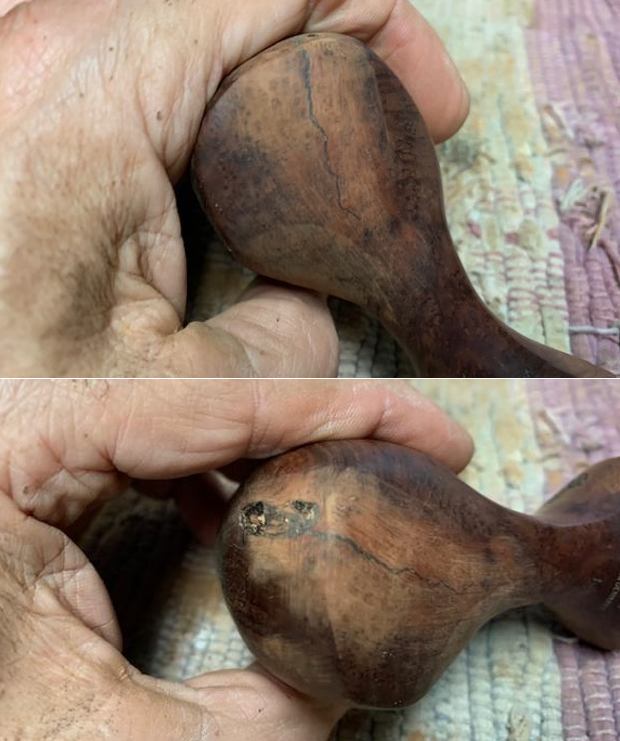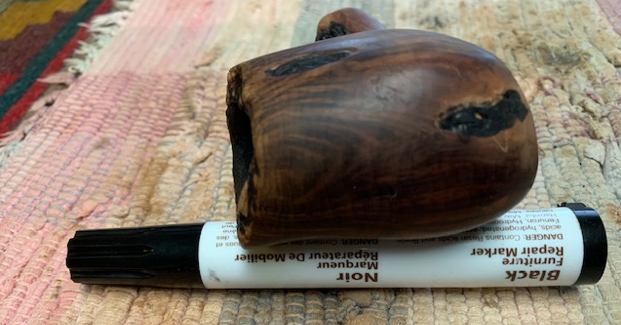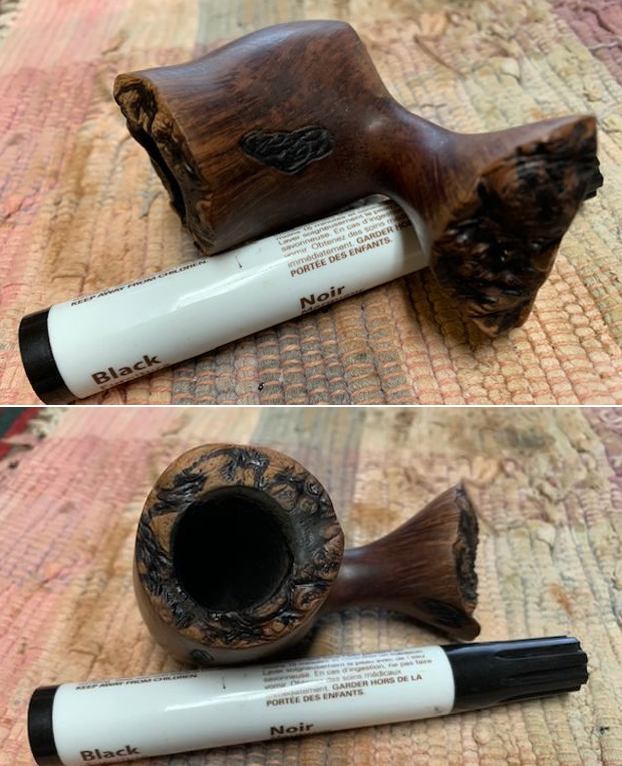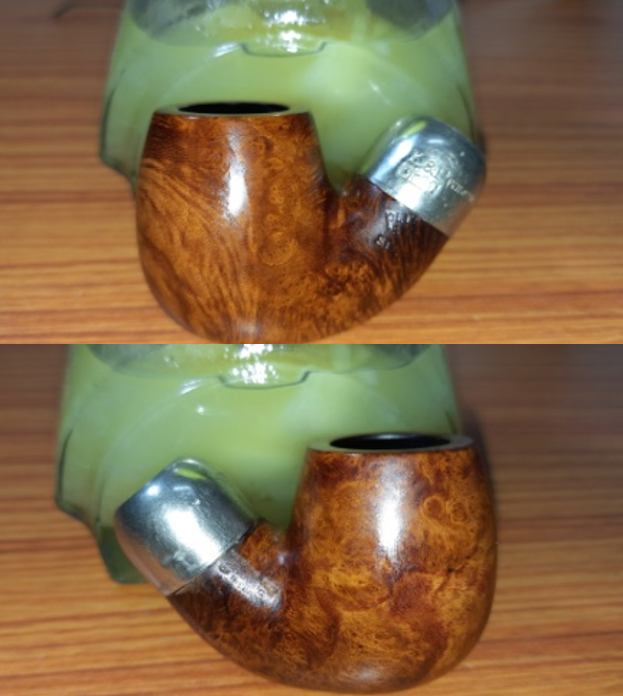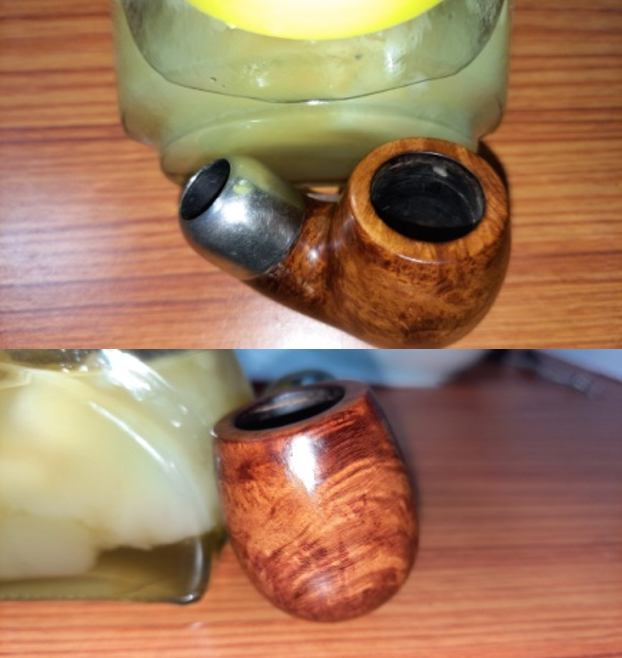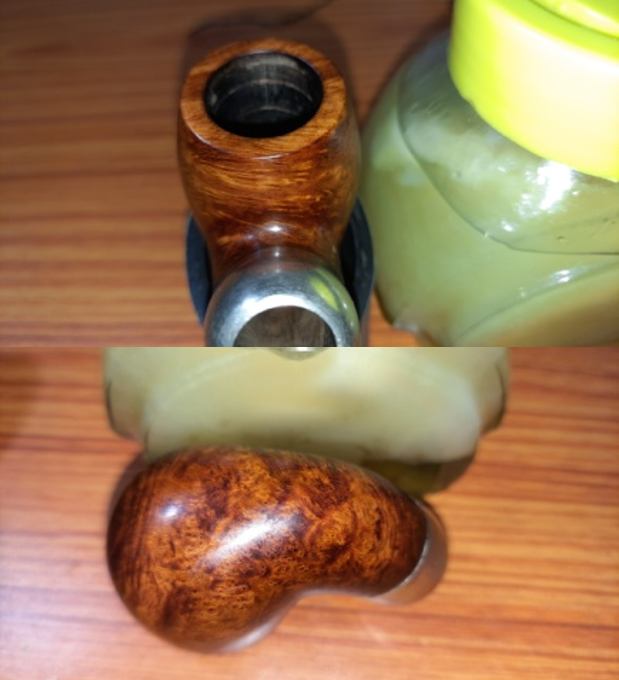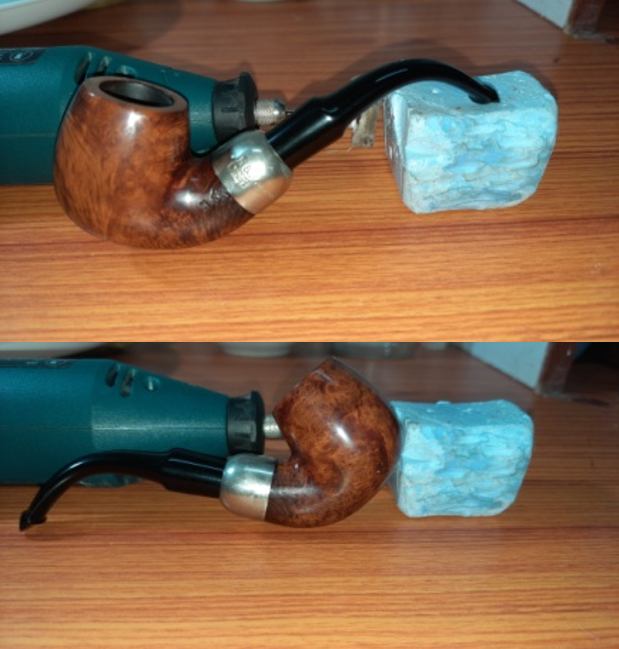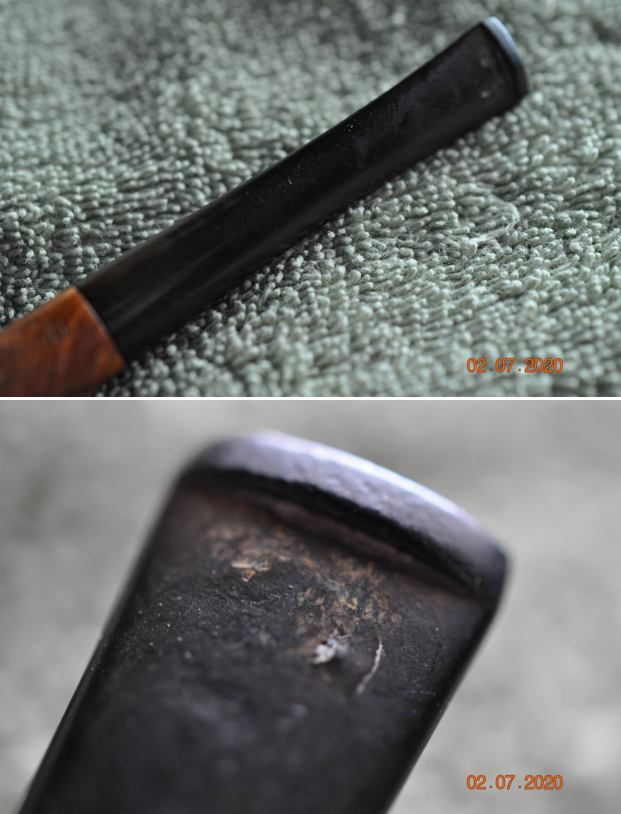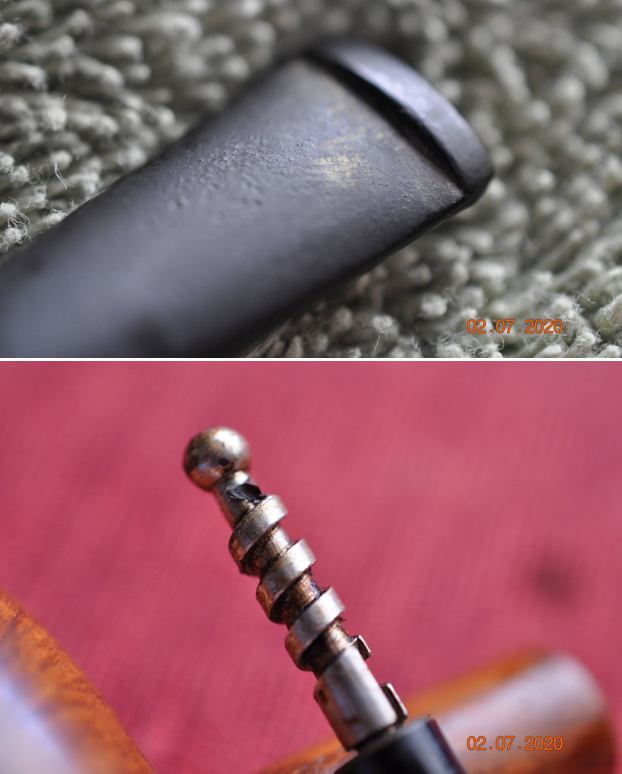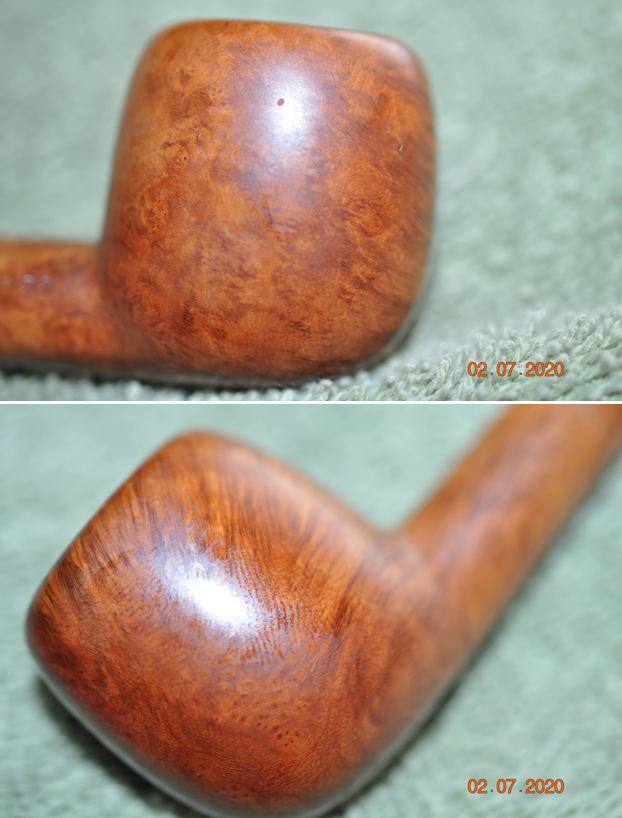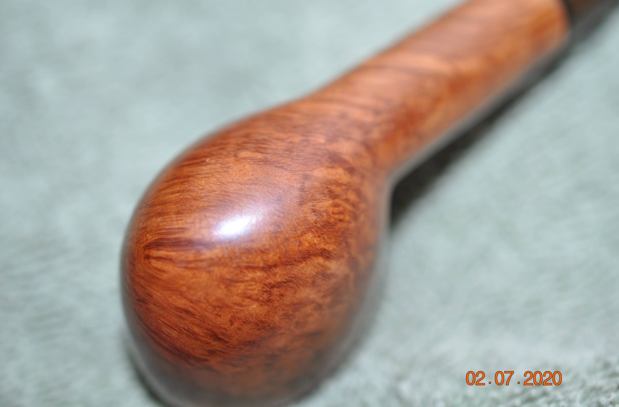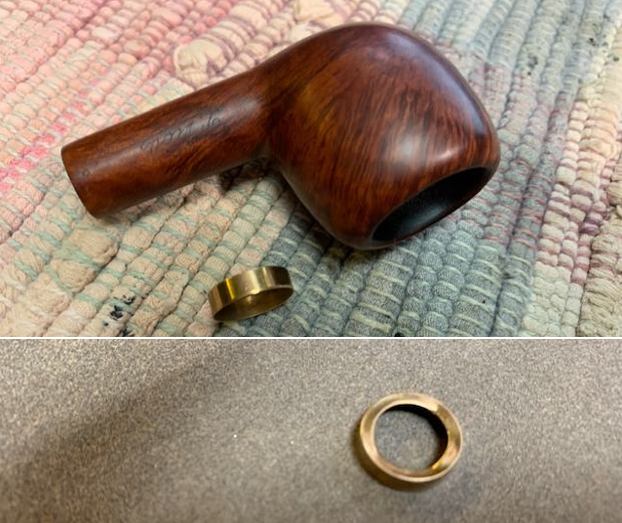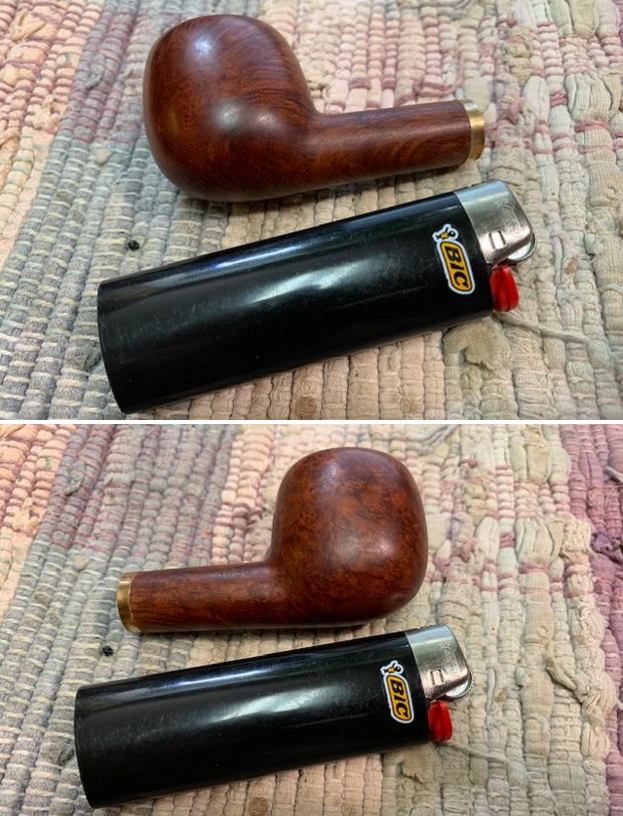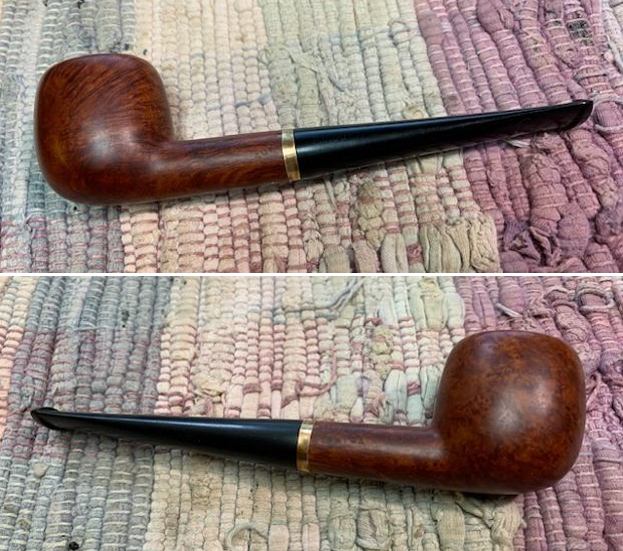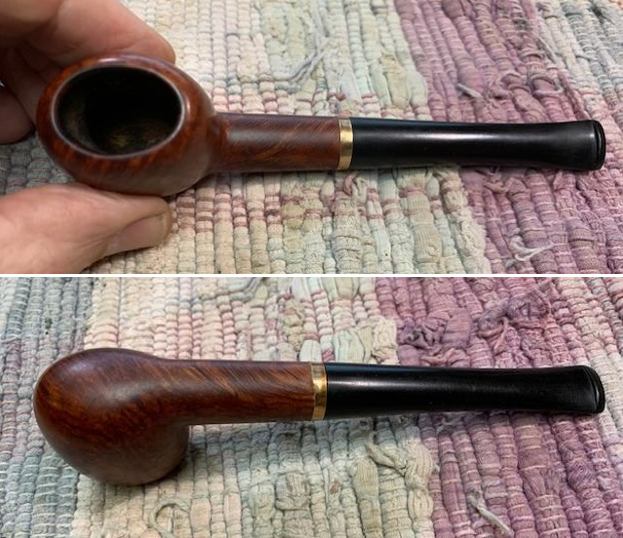
Tag Archives: repairing bite marks

A New Solution to an Old Problem


Blog by Kenneth Lieblich

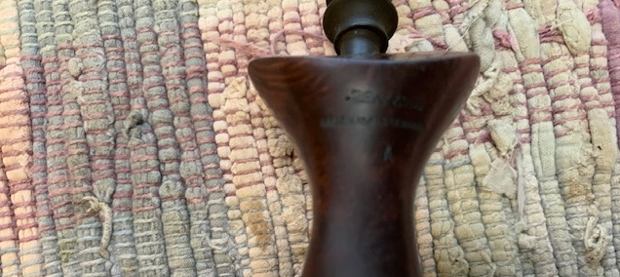
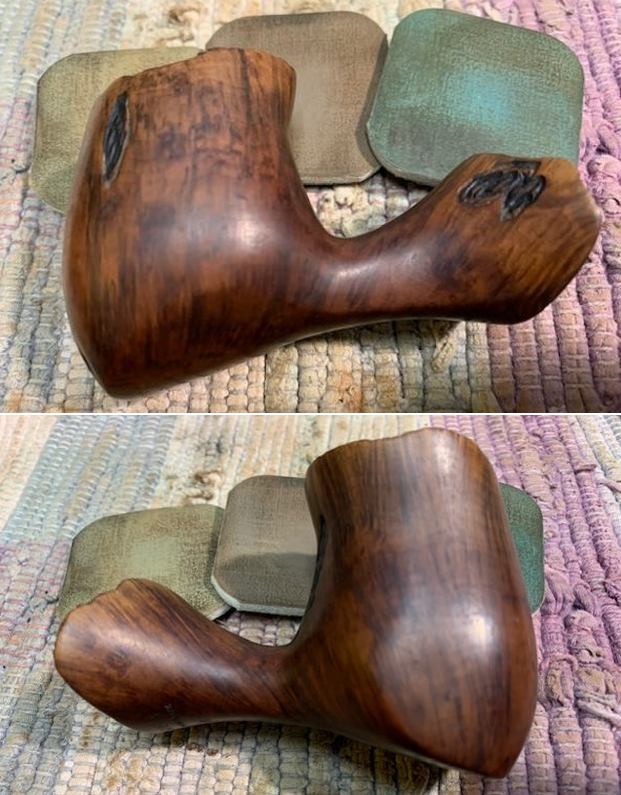
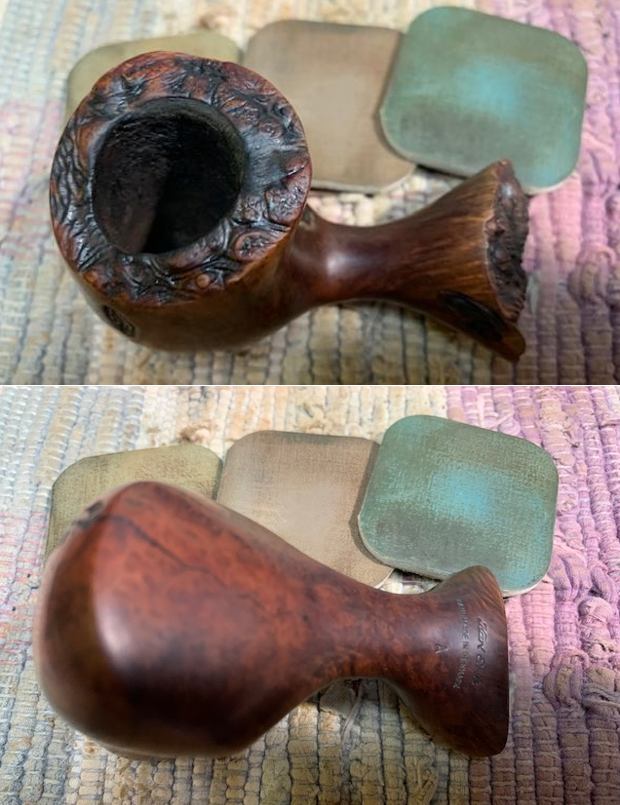
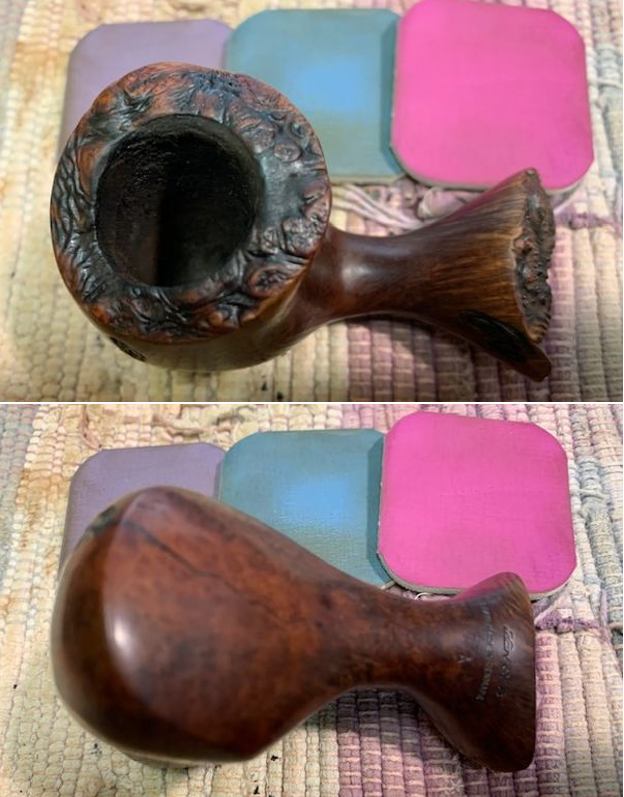
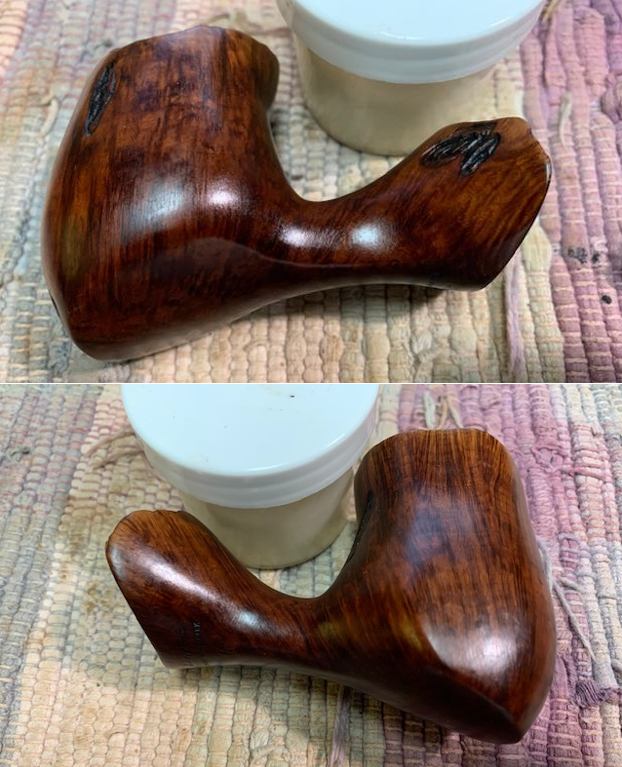
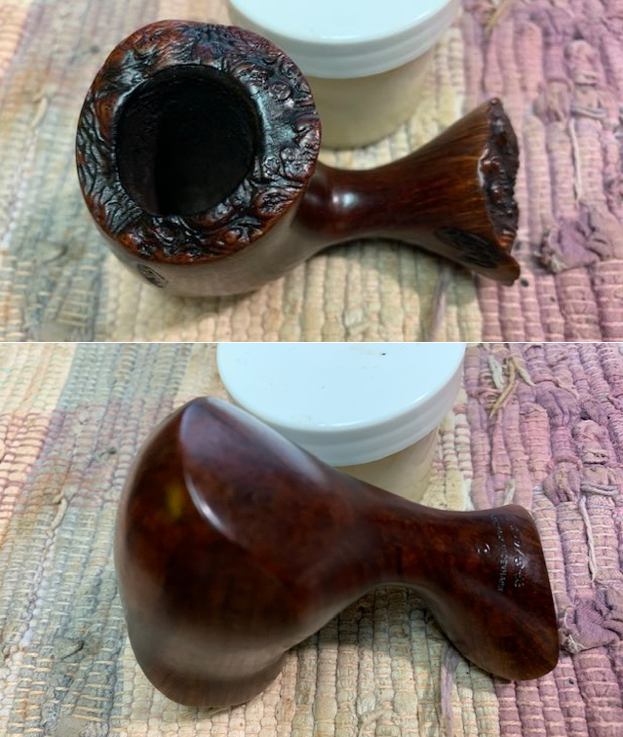
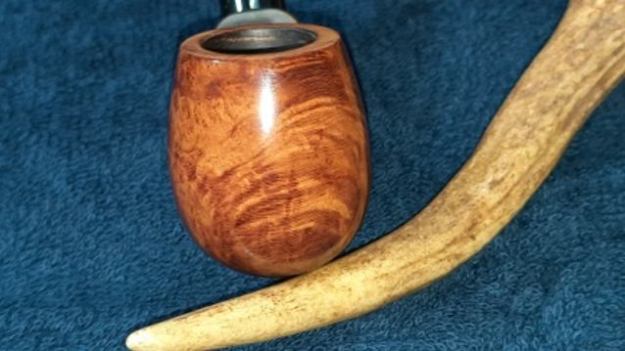
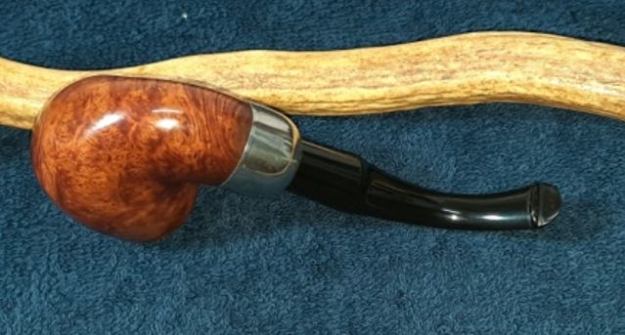
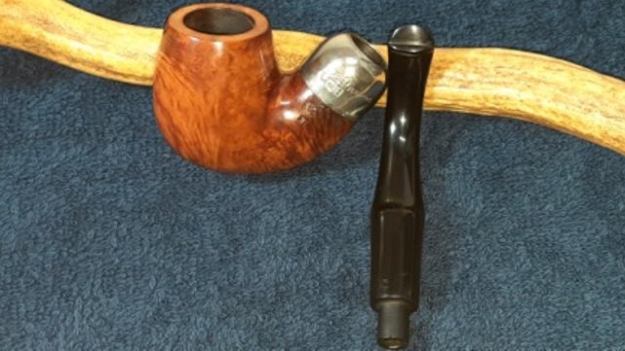
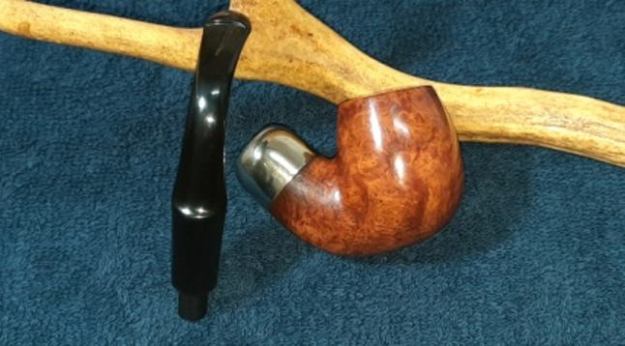
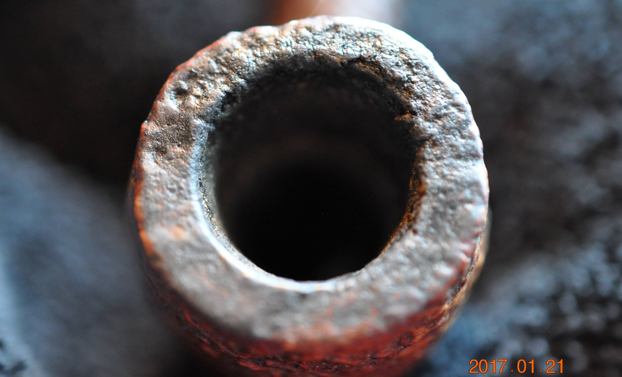
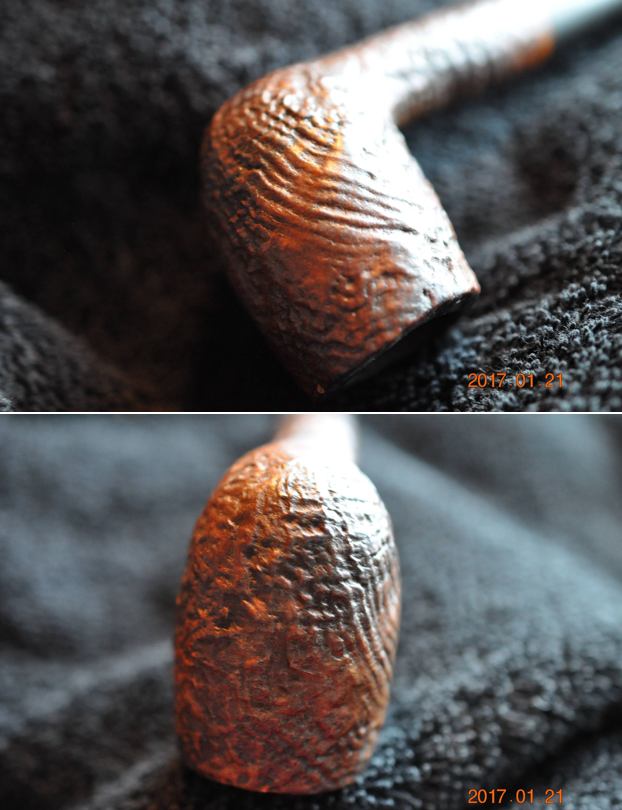
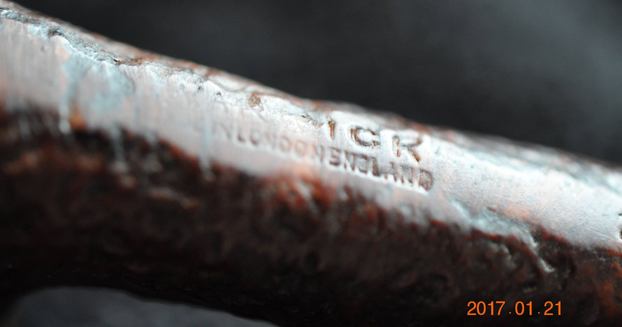
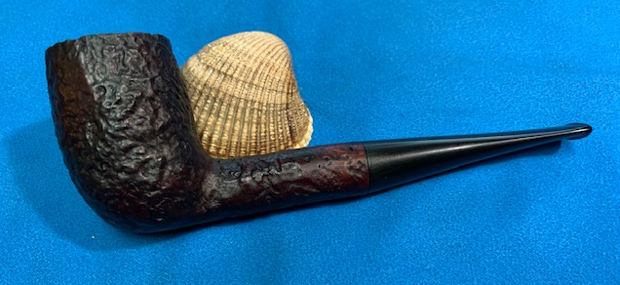
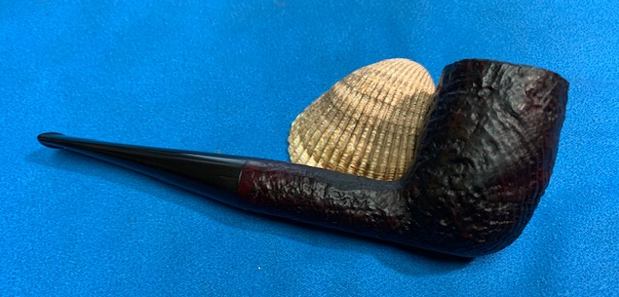
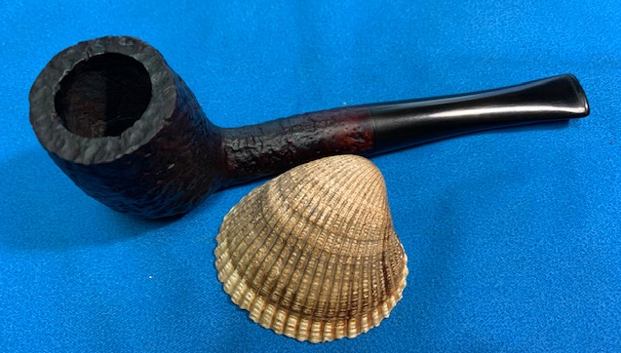
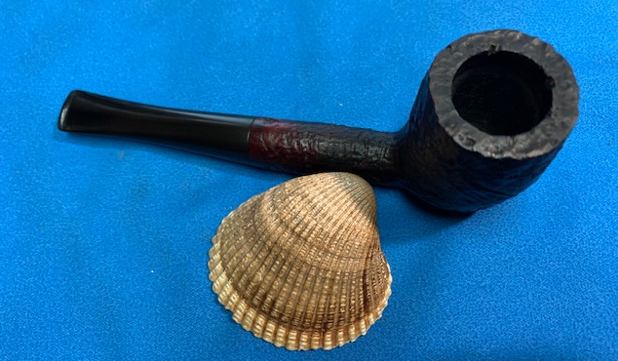
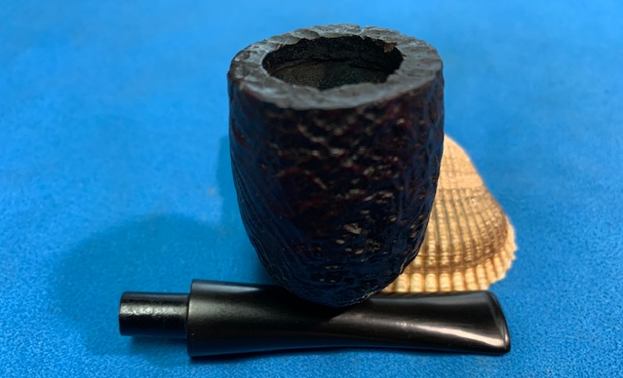
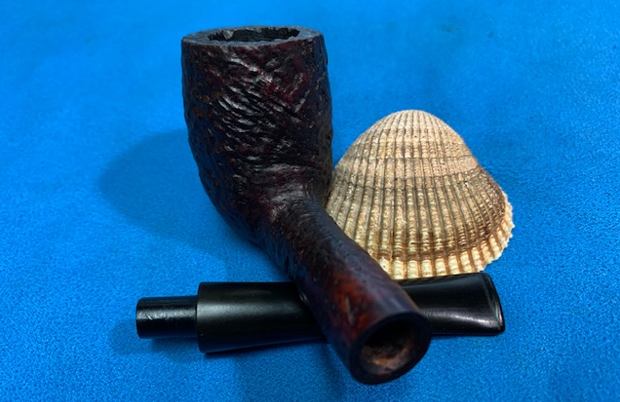
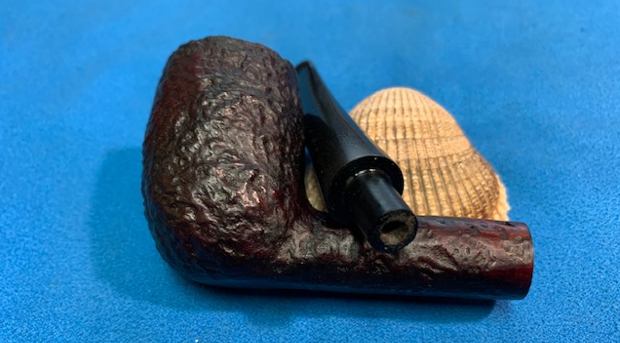
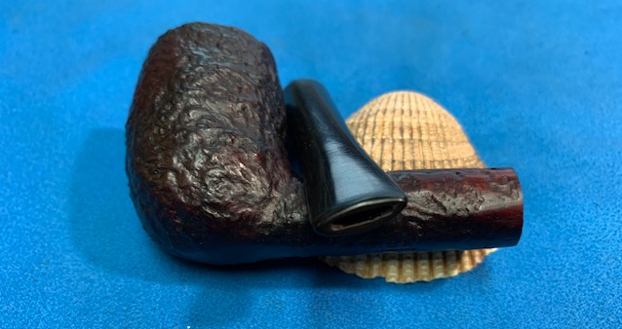
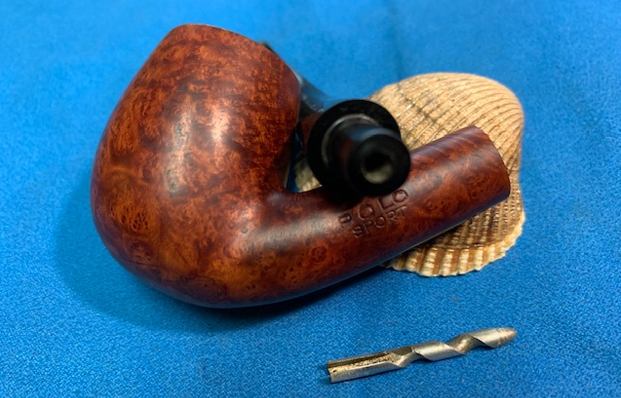
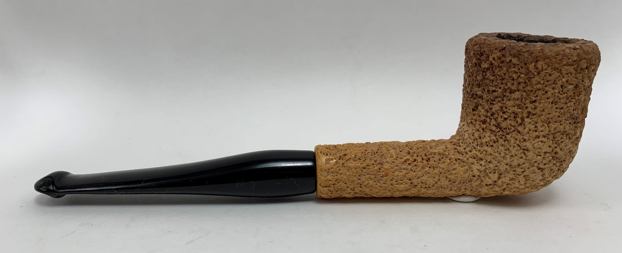
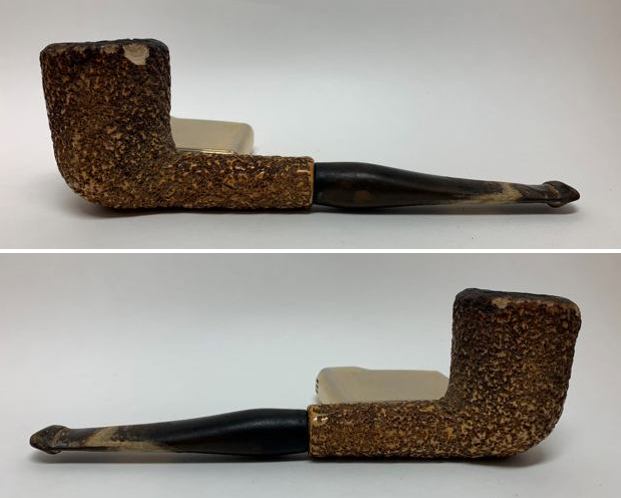
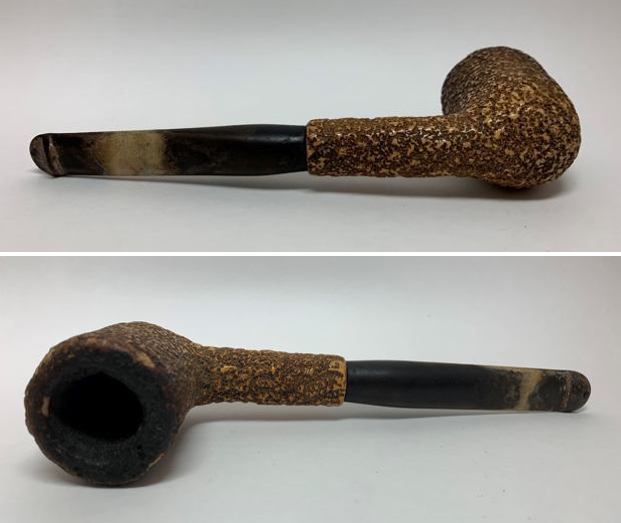
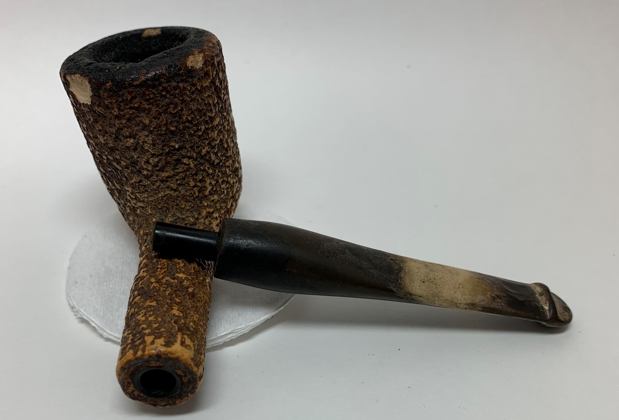
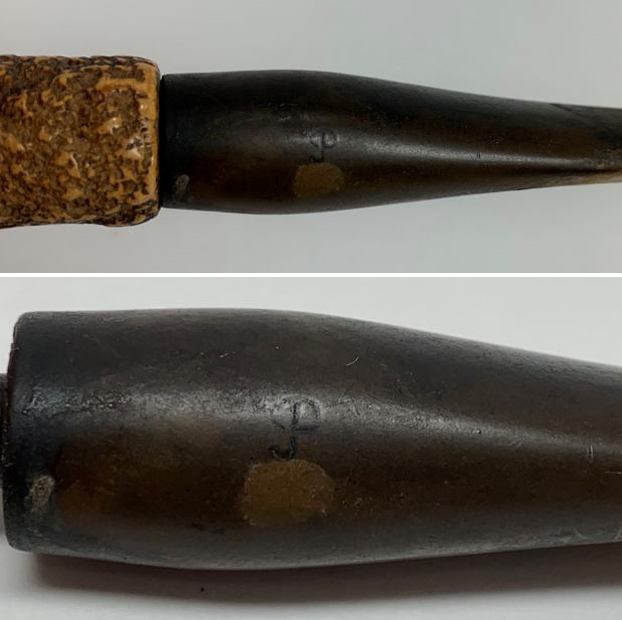
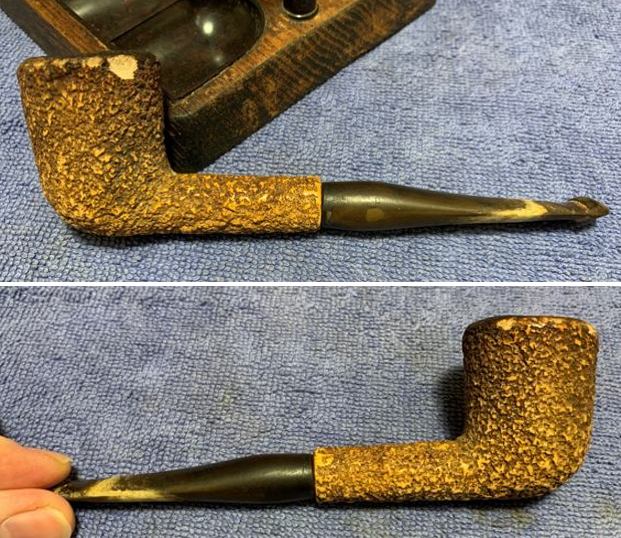
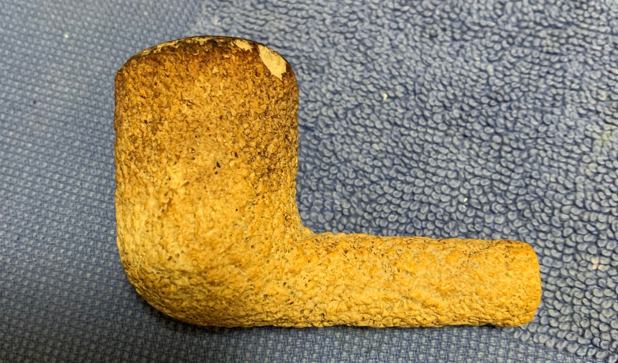
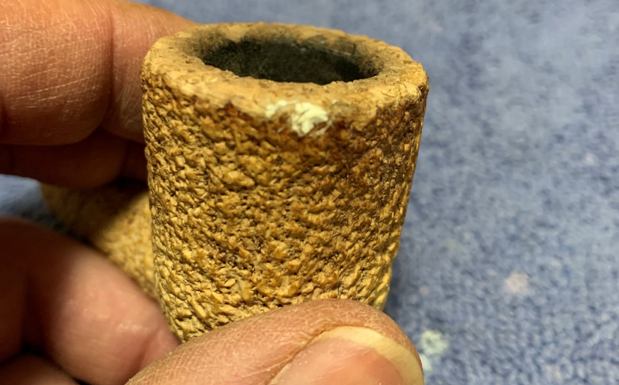
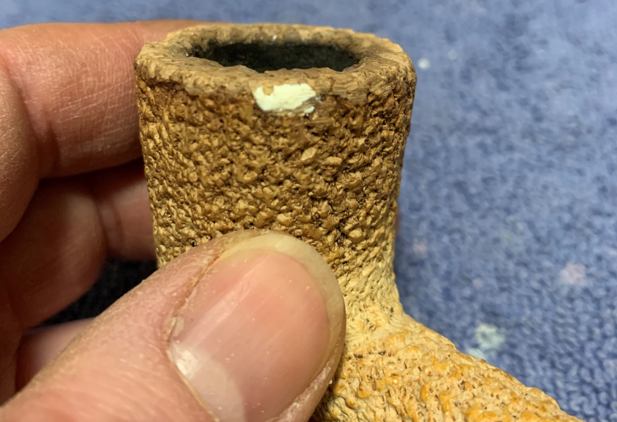
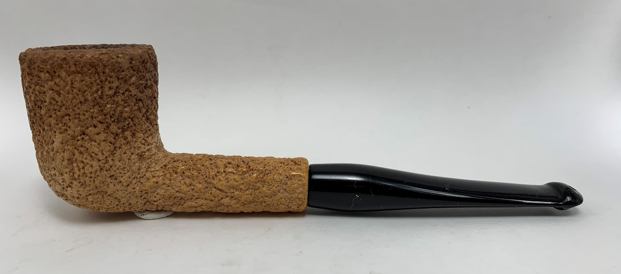
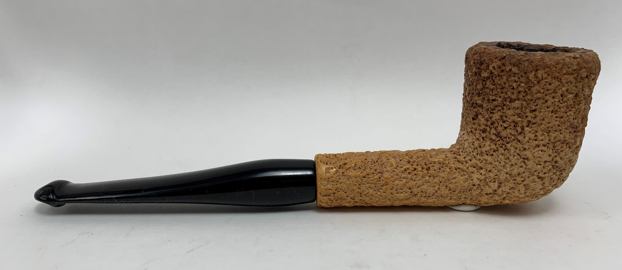
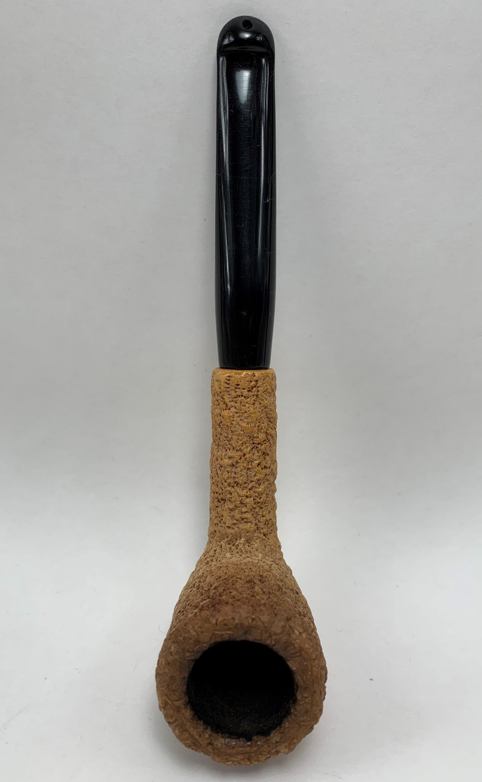
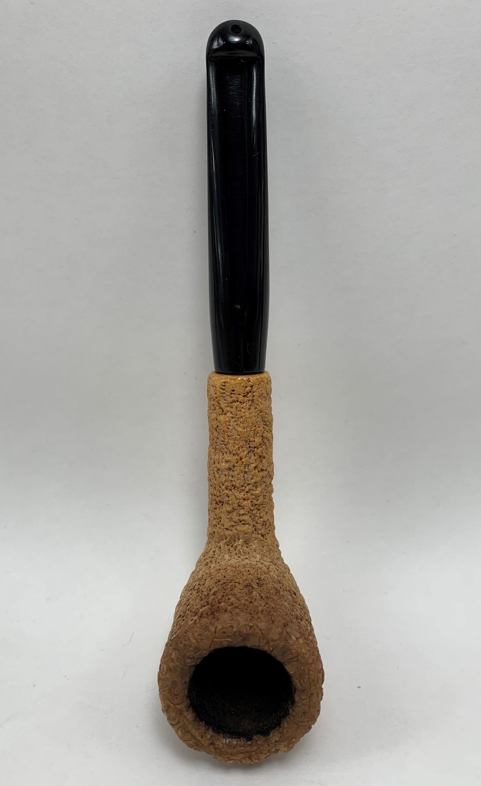
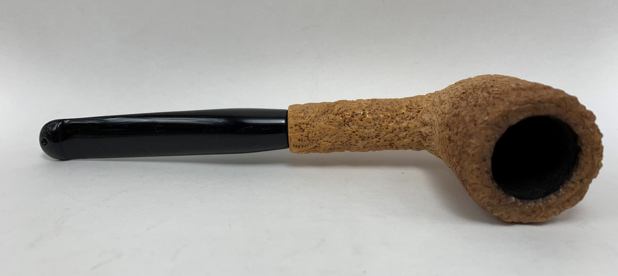
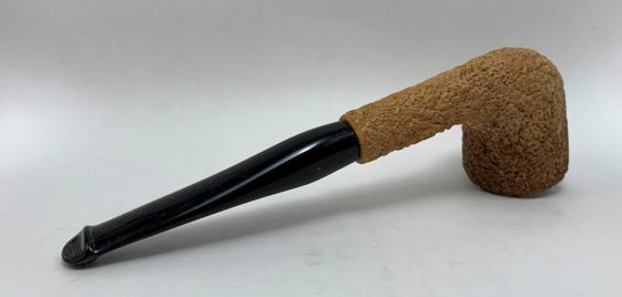
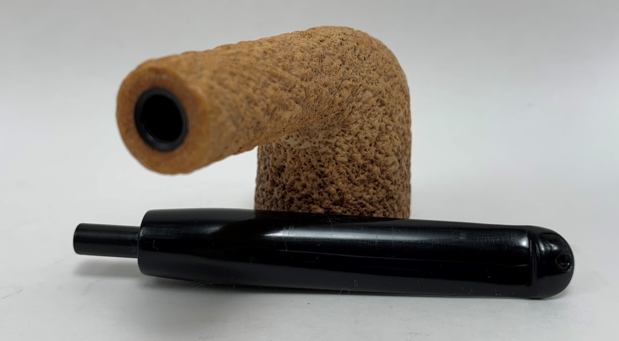
Welcome to my first meerschaum restoration! In fact, it is not just a meerschaum pipe, but it is also a Peterson pipe. This came out of lot of pipes from eBay some months ago, but it took me a while to get to it – I was a bit daunted. Even though it looked rough to start, it ended up as a very handsome pipe. Please read on… This is a rusticated, African block meerschaum, made on the Isle of Man. The stem has a push-style tenon. Like many of the meerschaum pipes of this era, this one has a factory-stained rim – to give it that sort of ‘broken in’ look. How do I know it is a Peterson? Because it has the distinctive, stylized ‘P’ on the left side of the stem, near the shank. Similar to other pipes that Steve has restored, this one seems likely to have been produced by Laxey Pipes Ltd. on the Isle of Man for Peterson Pipes. Here is the Pipedia article about them (I hasten to add that the various errors below are in the original text and are not mine):

Laxey Pipes Ltd. resided in a historical 19th century four-storey Man stone building at The Quay, Old Laxey, Isle of Man, which thankfully has been preserved.

The company specialised in the production of meerschaum pipes using the Meerschaum mined by the Tanganyika Meerschaum Corporation in the Amboseli basin in Tanganyika (since 1964 part of the United Republic of Tanzania). 

Please note: you may often find names like “Manx Pipes Ltd.”, “Man Pipe Co.” and others more, but there is no indication of another Isle of Man pipe producer other than Laxey Pipe Ltd. at any time! 

Laxey Pipes Ltd. marketed own brands like “Manxpipe”, “Manxman”, “Manxland” e.c. Names like “John Bull”, “White Knight” (unwaxed), “Domino” (black, or lined) indicated some shapes / colours of Laxey’s own series. The stems either showed the astronomical sign for “male” or “man” (circle + arrow), or the crest of the Isle of Man, the 3-legged X in a circle. Manxpipes and Laxey’s other brands were available through pipe retailers in general, but also were sold (mainly) to tourists through their own shop in Laxey. 

Furthermore Laxey Pipes Ltd. manufactured the meer bowls for Peterson, Barling, Nørding and others from the later 1960’s until 2001. Man Pipe e.g. was a brand distibuted by Comoy’s. The bowls usually showed no nomenclature indicating the orderer. “Genuine Block Meerschaum” was engraved frequently. Often, just the stems were different, while bowls were the same.

Supply of meerschaum from East Africa run out (Kenya / Tanzania exhausted, Somalia inaccessible), and thus the last Laxey meers were supplied to trade in May, 2001. Laxey Pipes Ltd. tried to survive continuing with briar pipes – mainly in the Danish style -, but to no success. It closed down business in July, 2002.

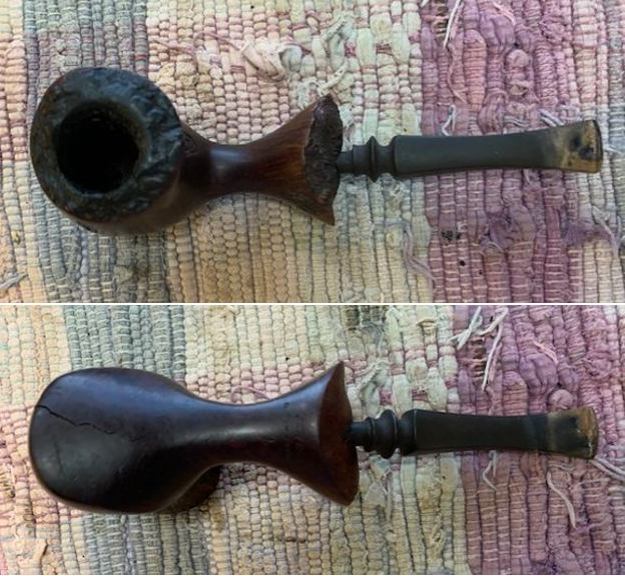
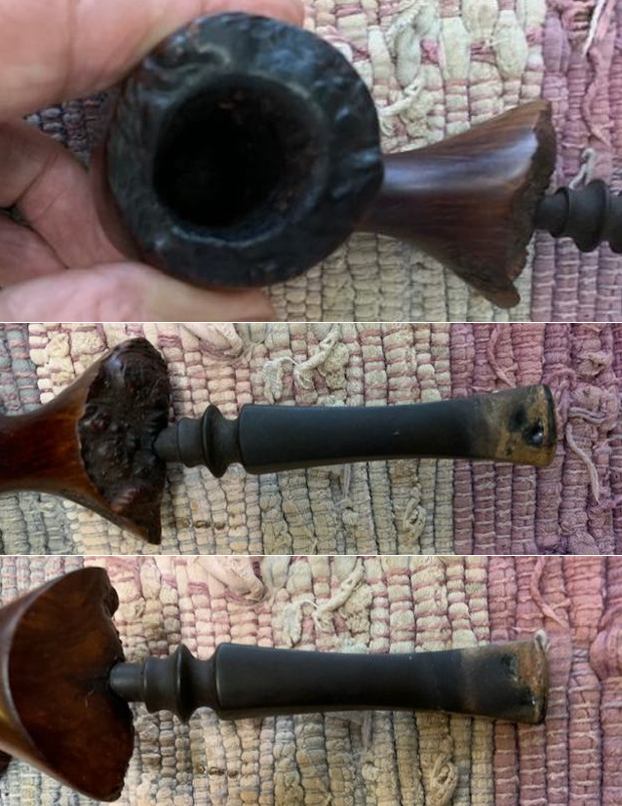
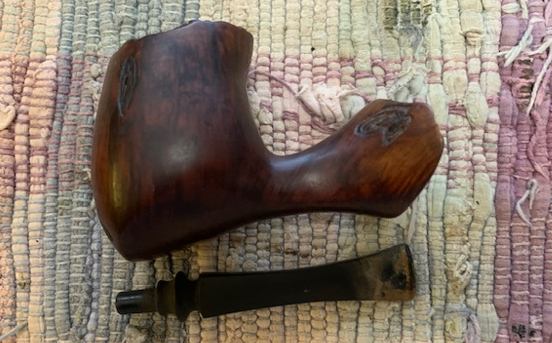
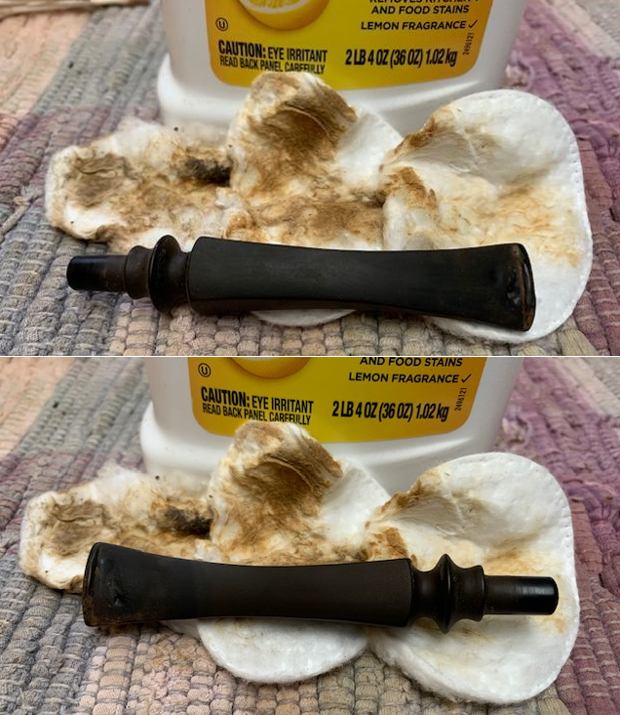
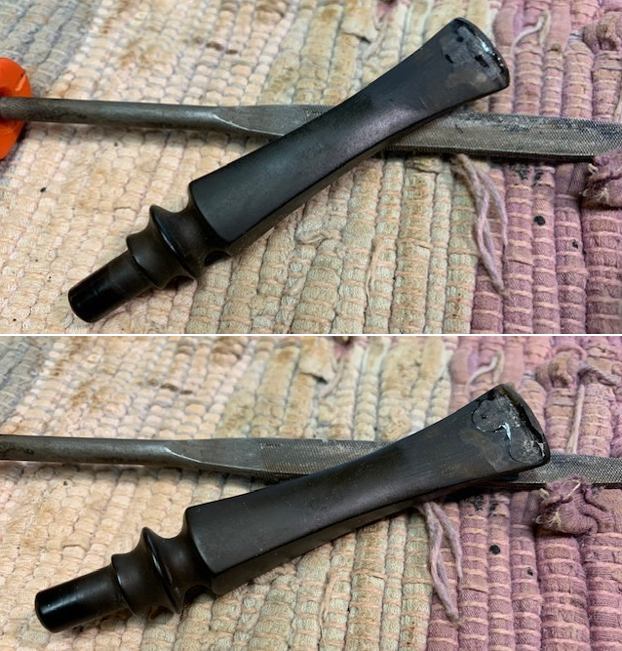
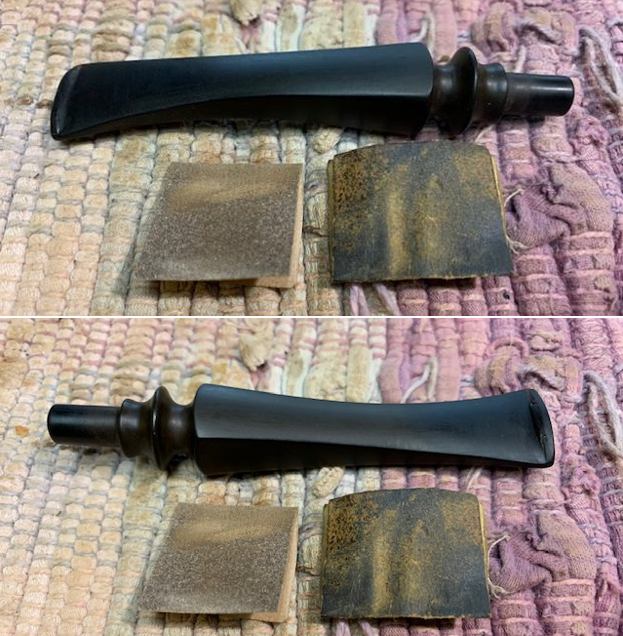
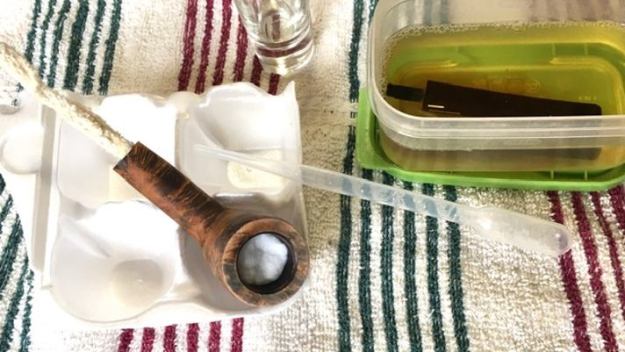
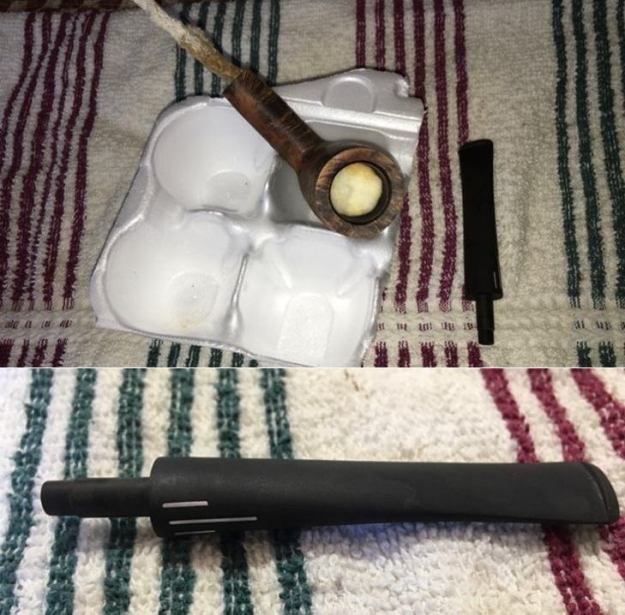
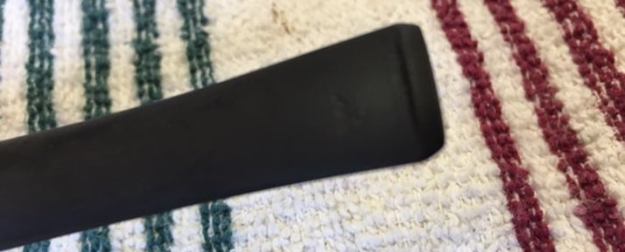
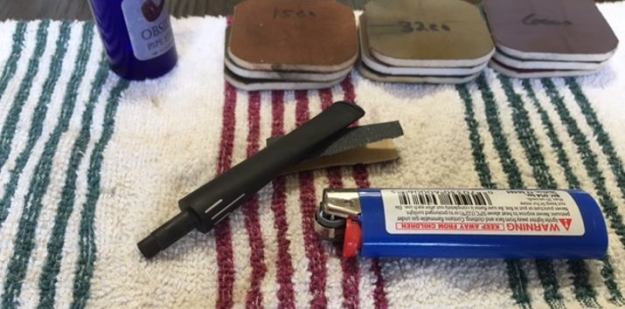
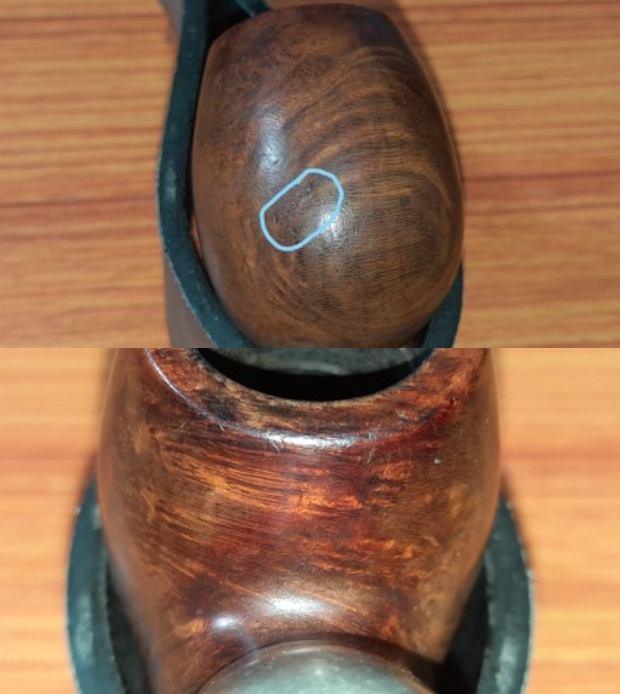
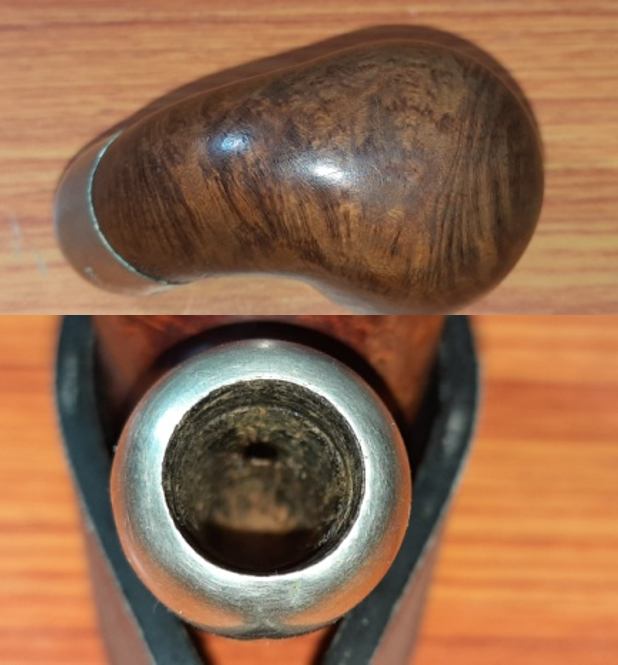
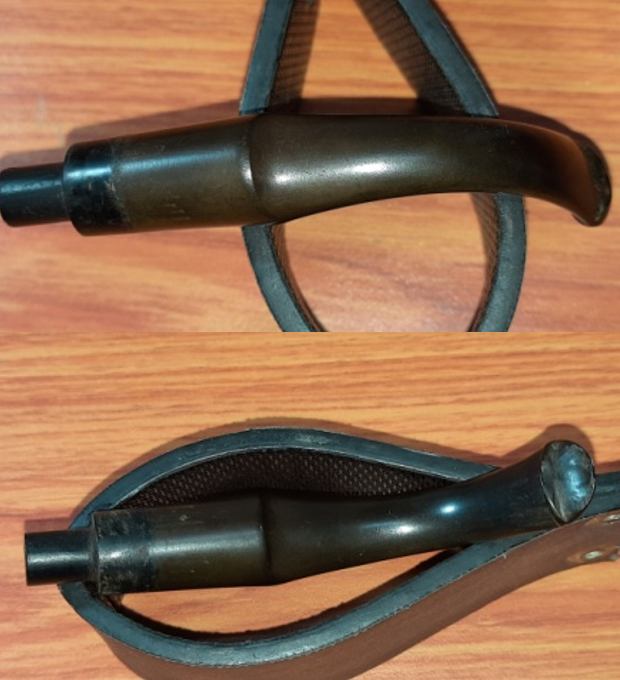
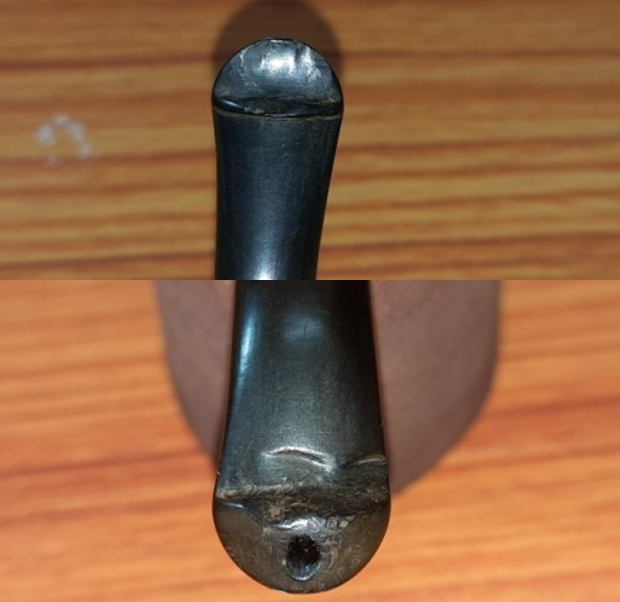
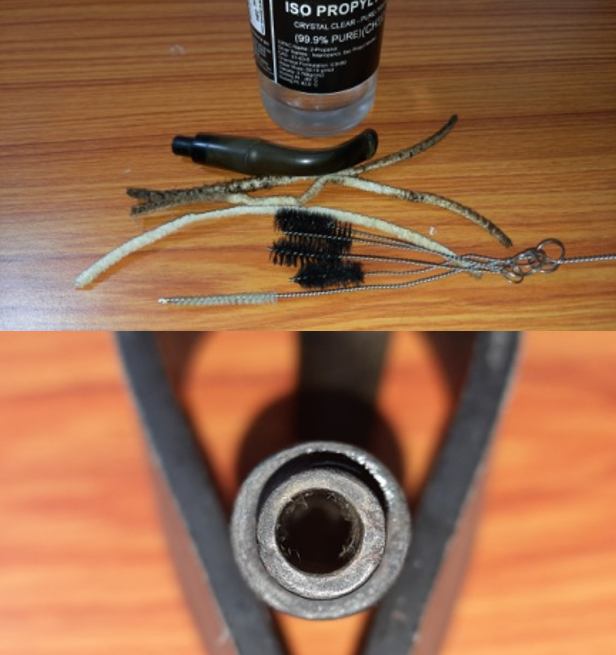
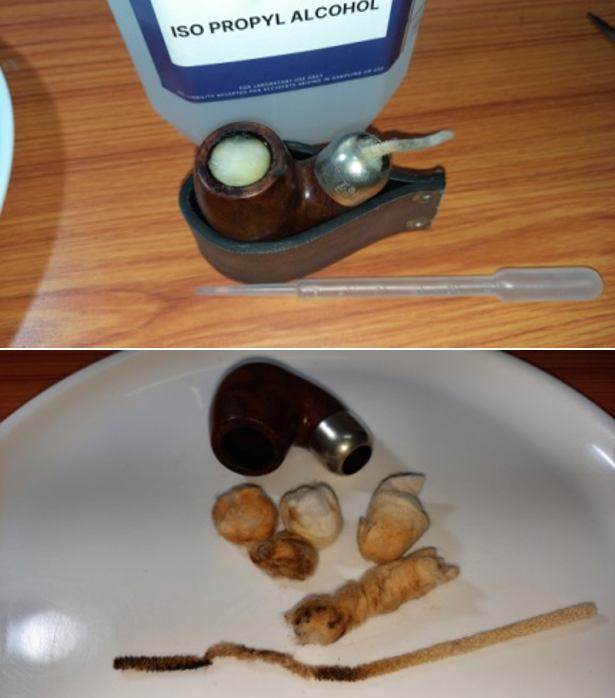
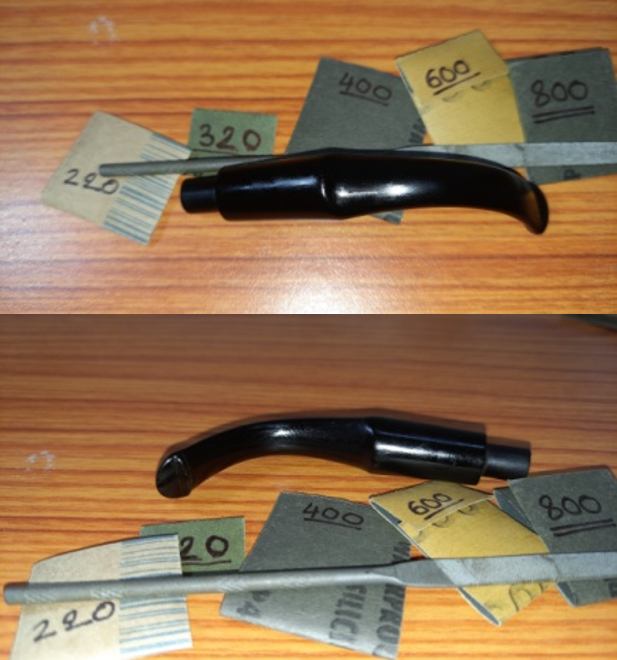
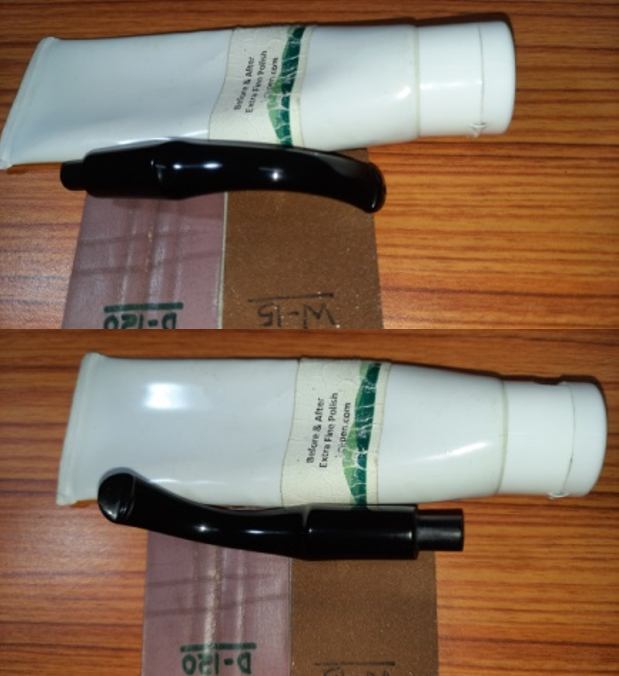
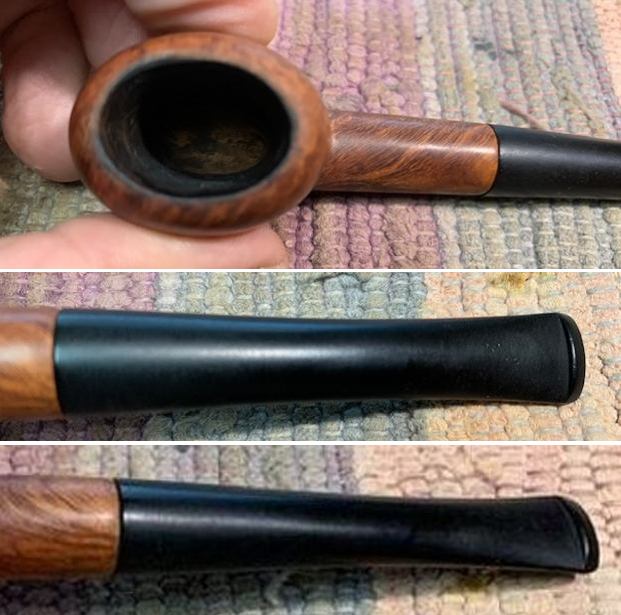
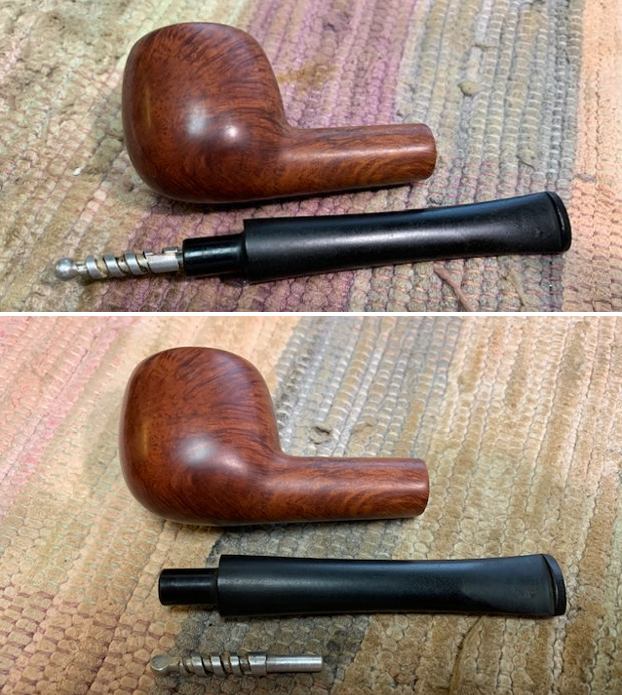
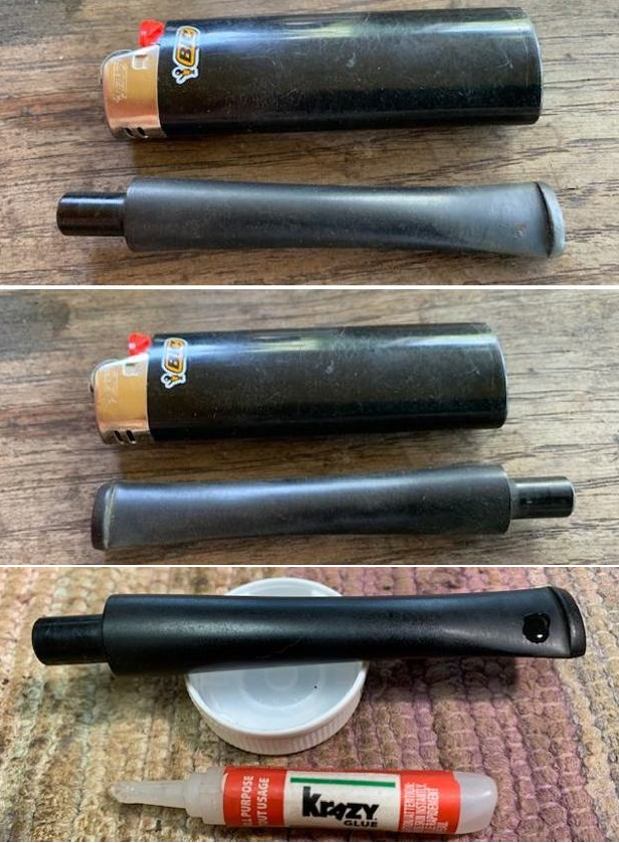
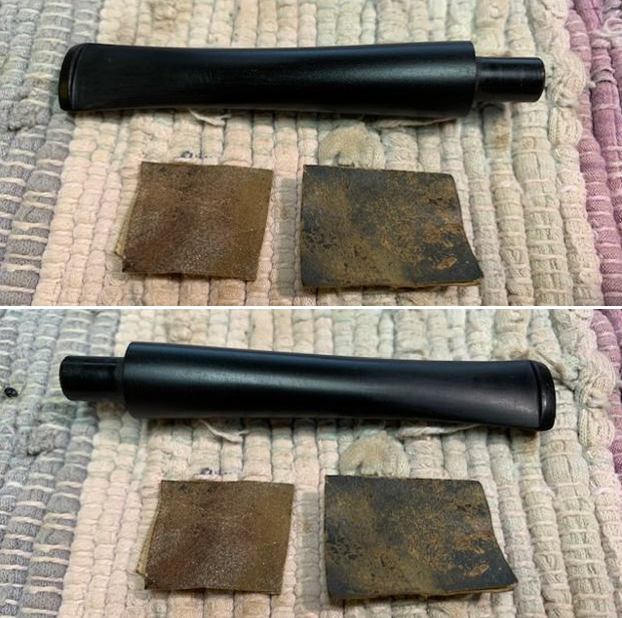
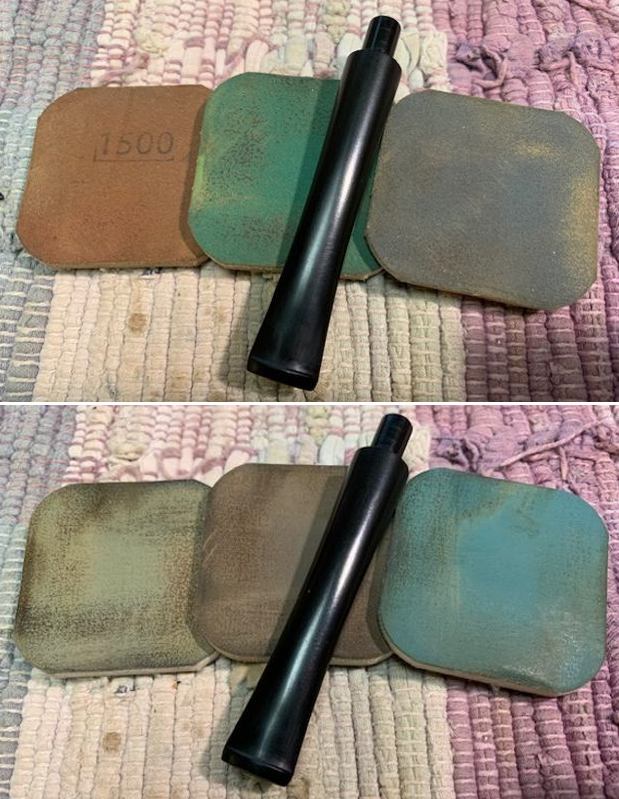
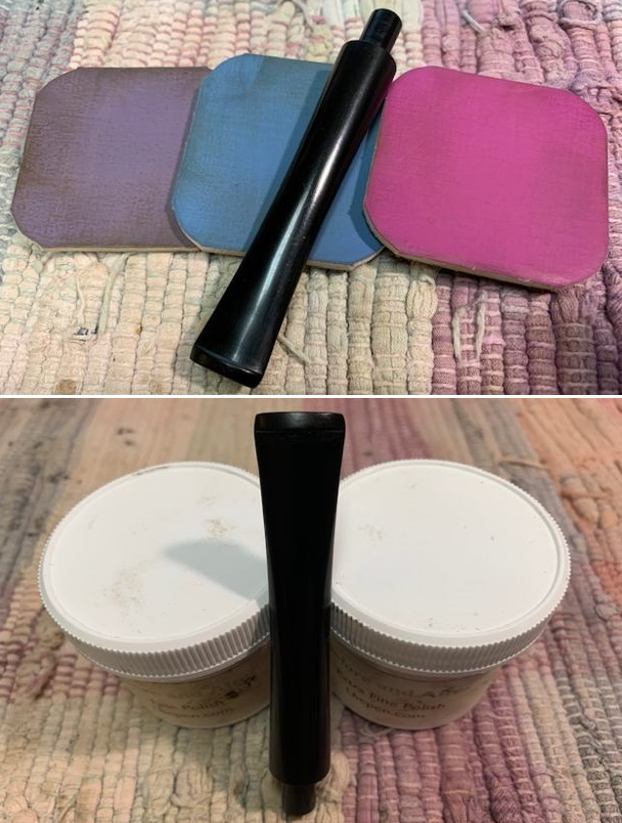
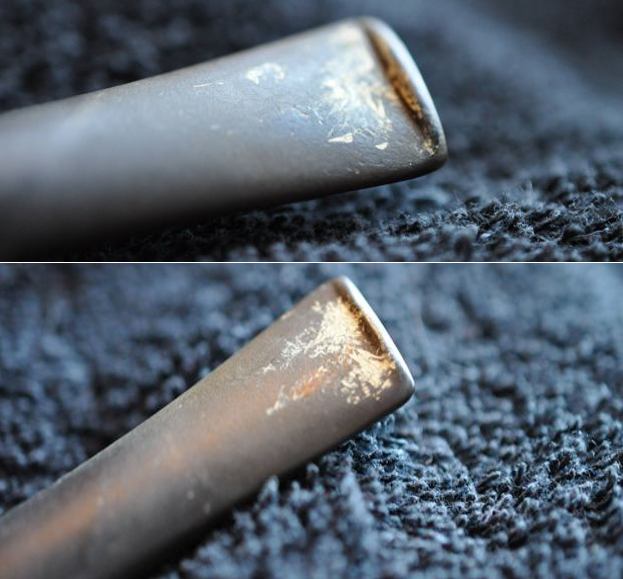
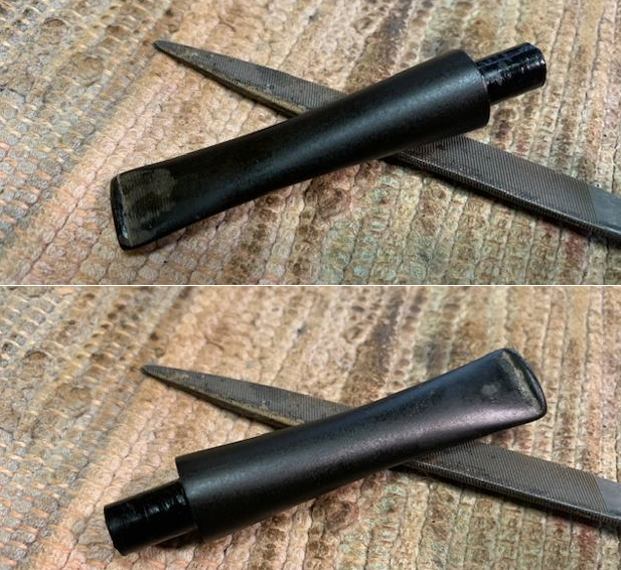
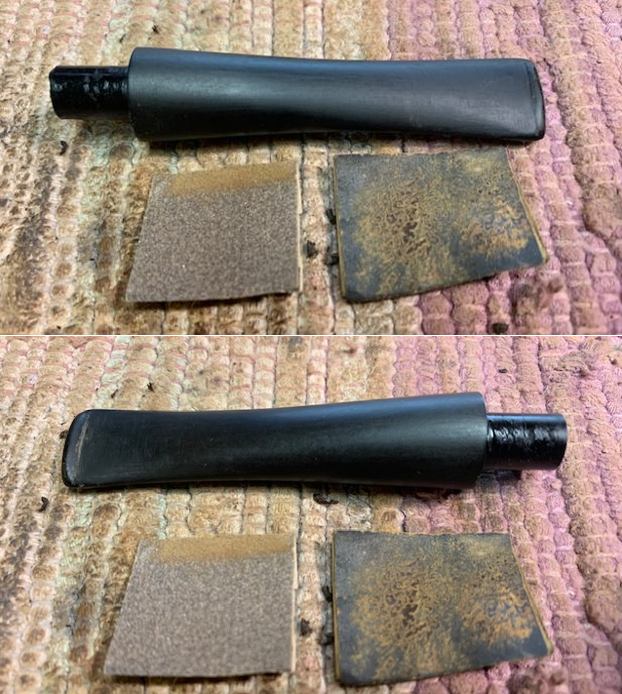
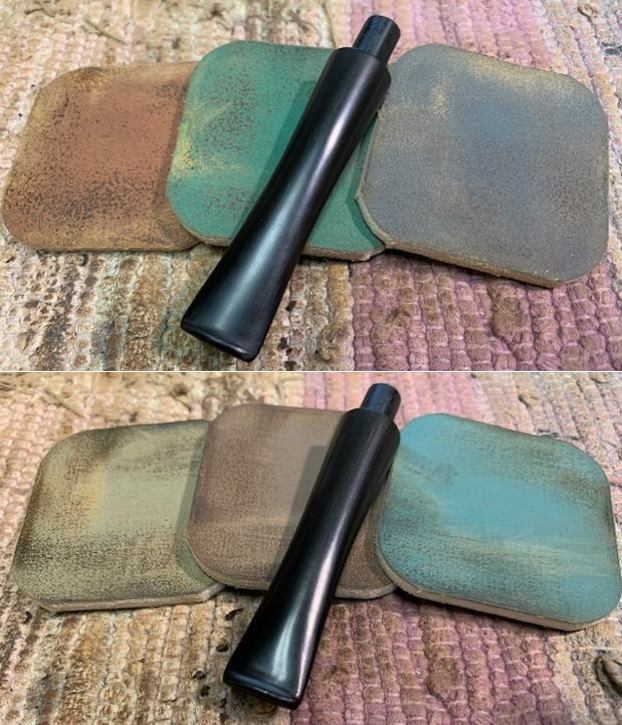
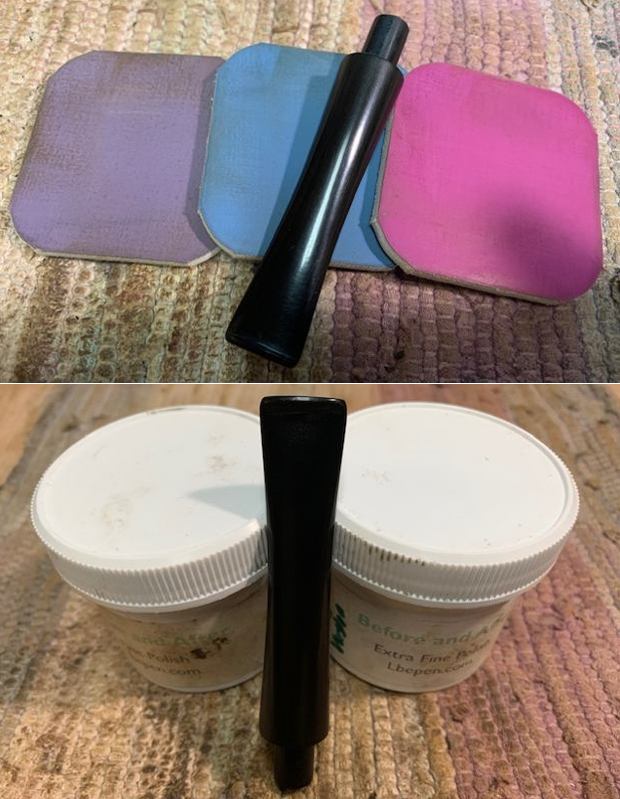
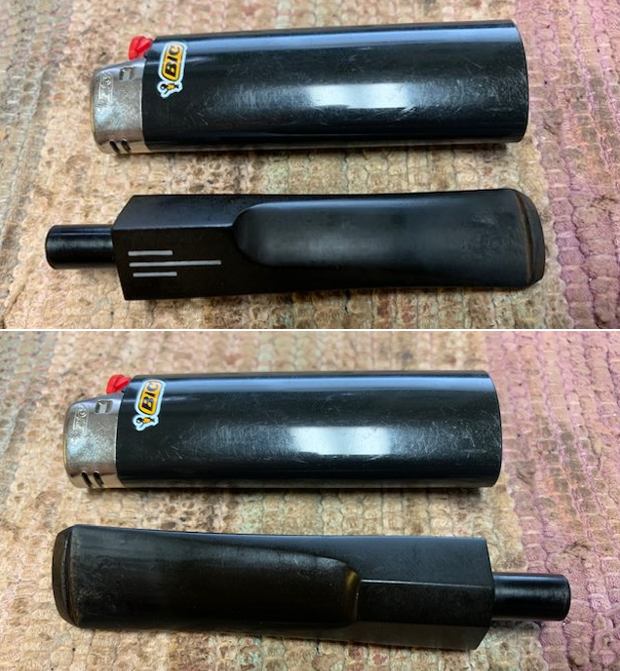
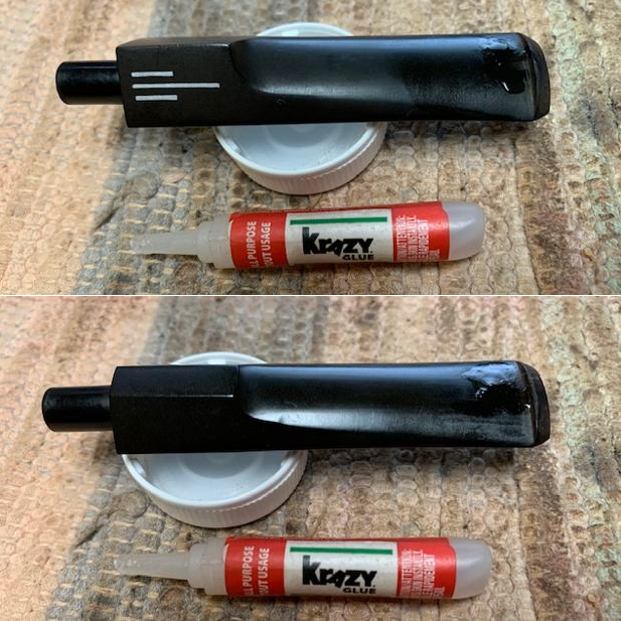
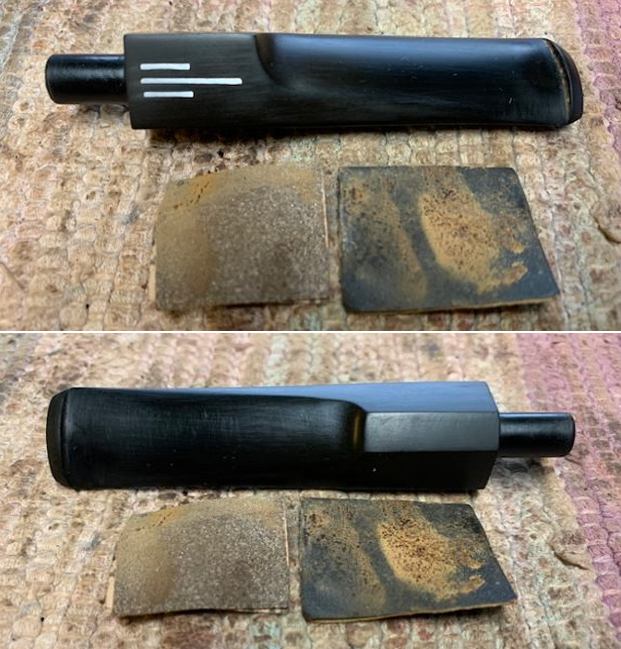
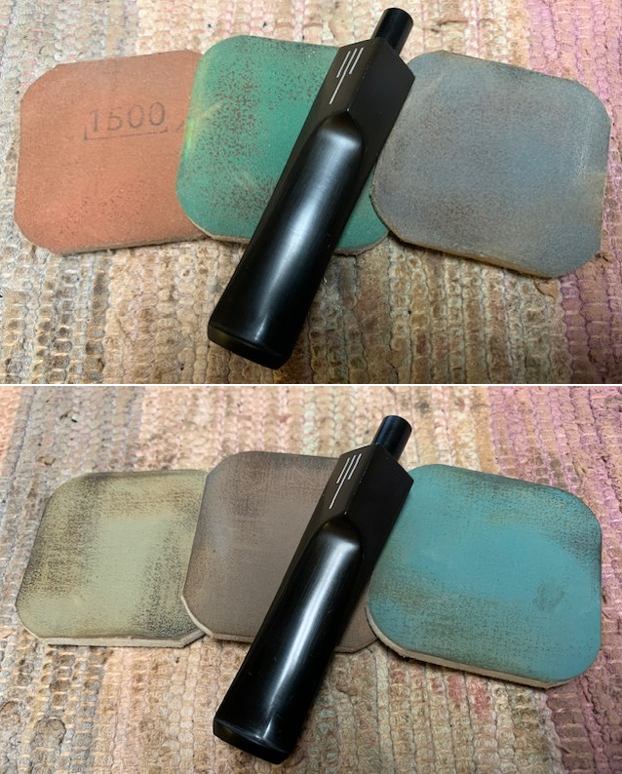
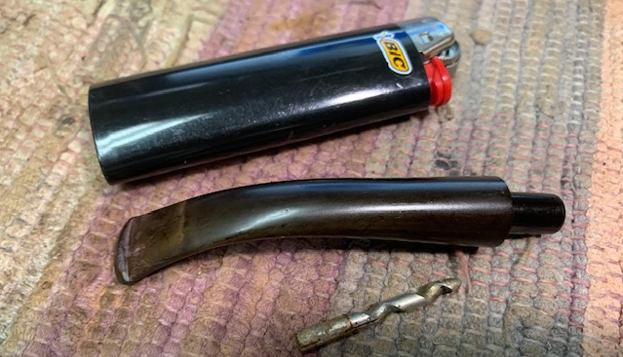
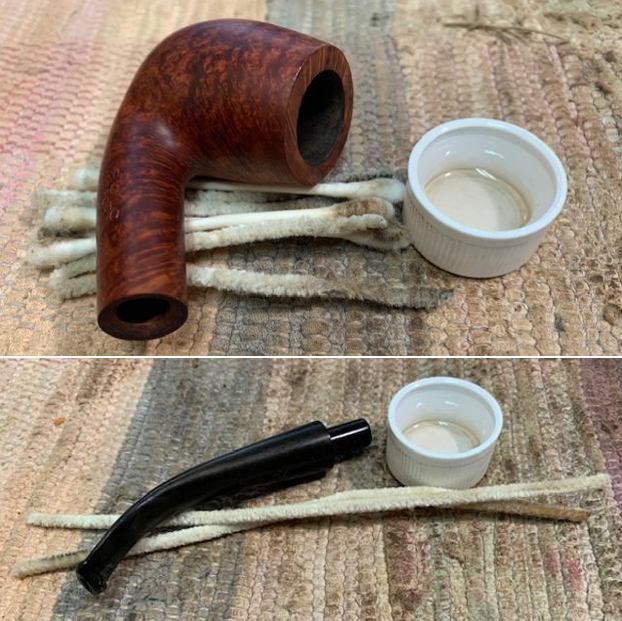
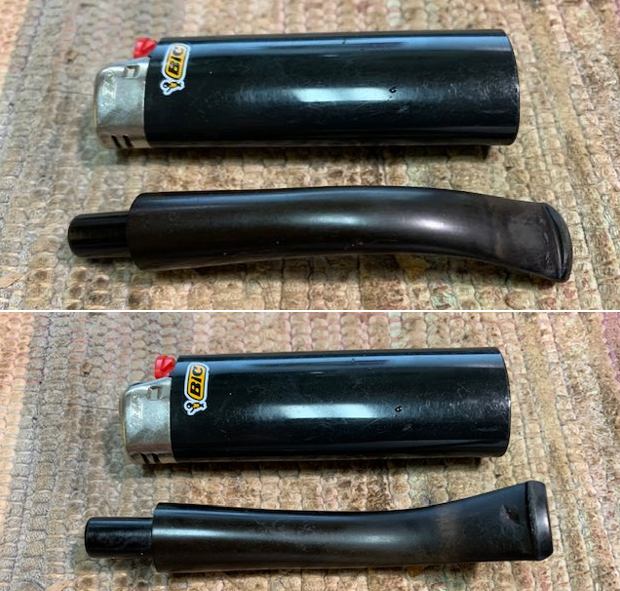
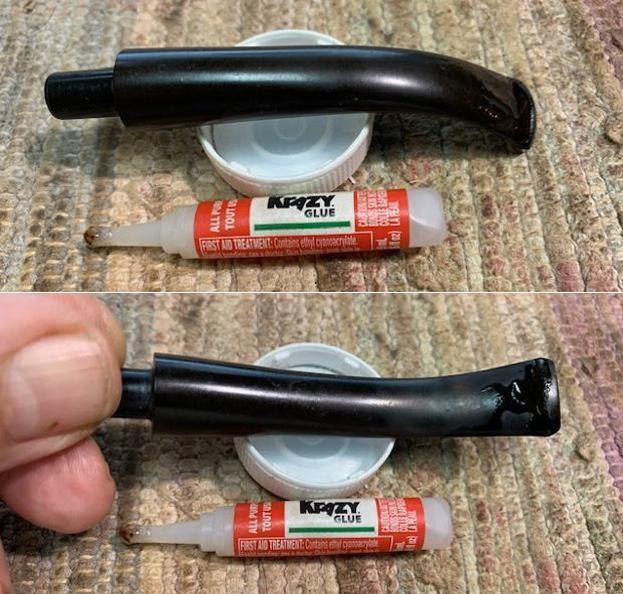
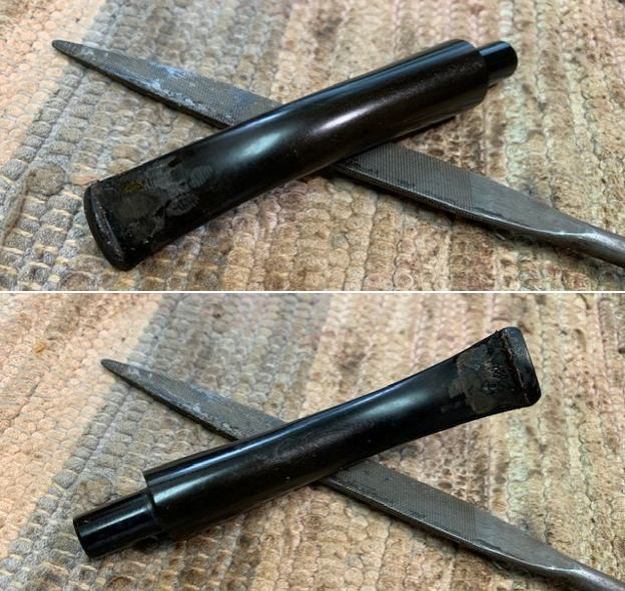
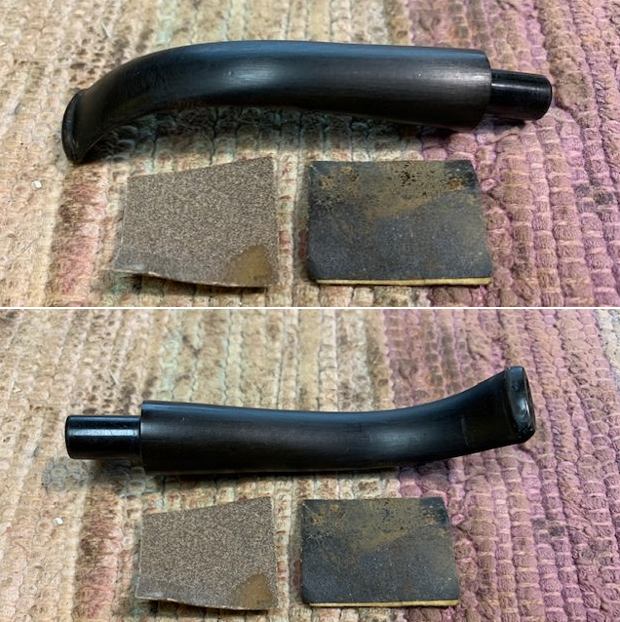
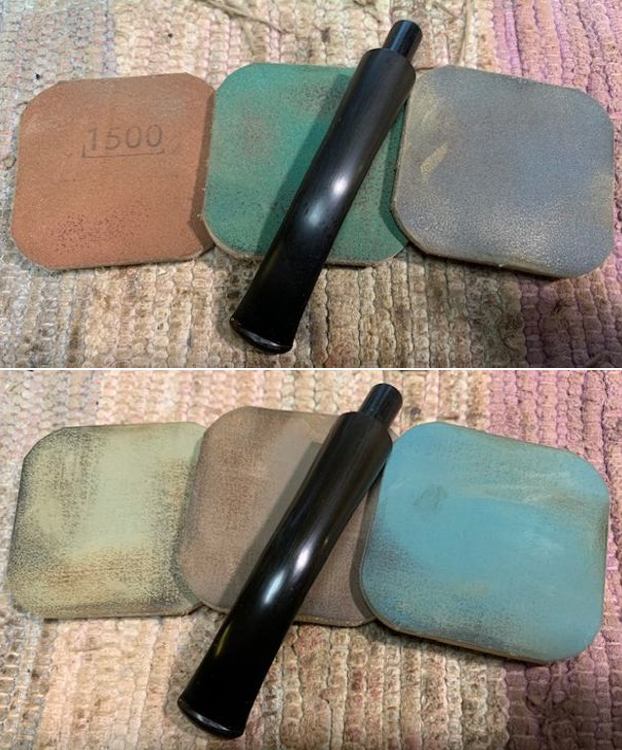
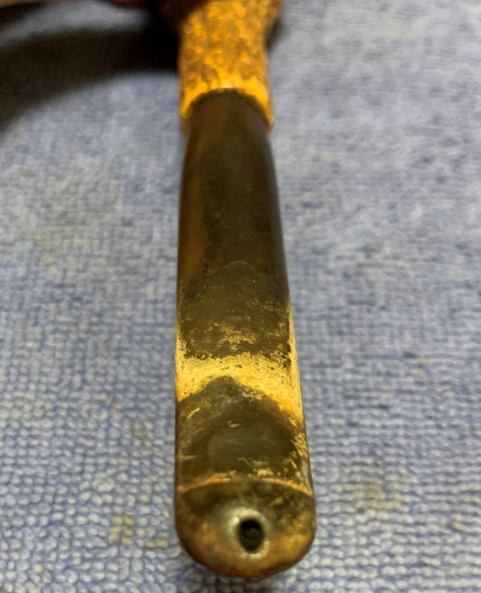
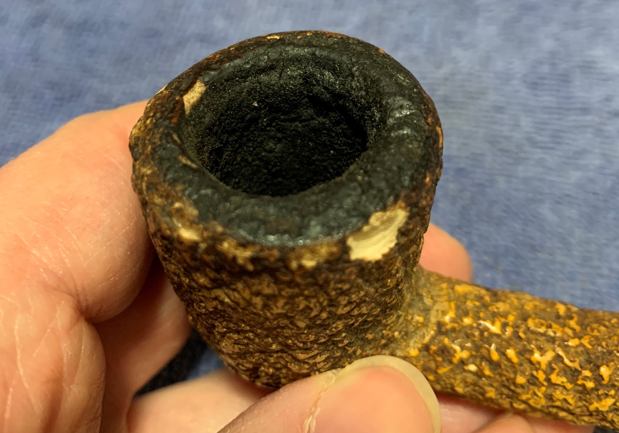
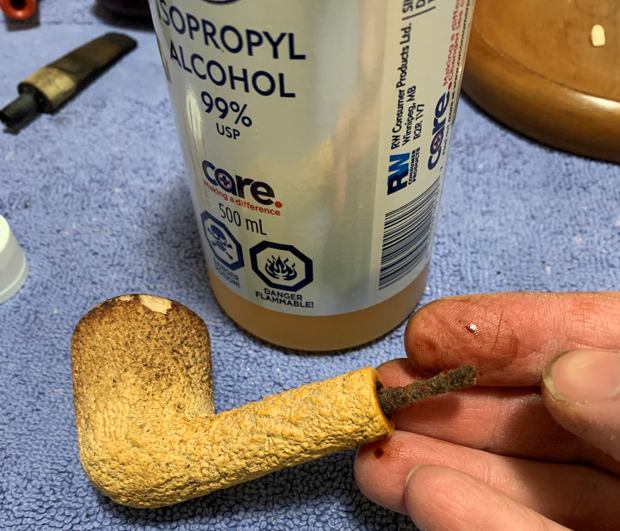
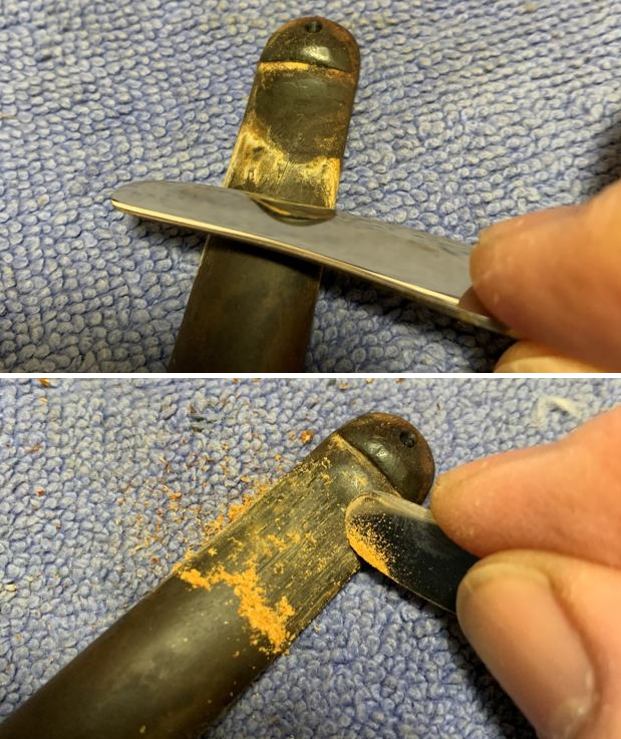
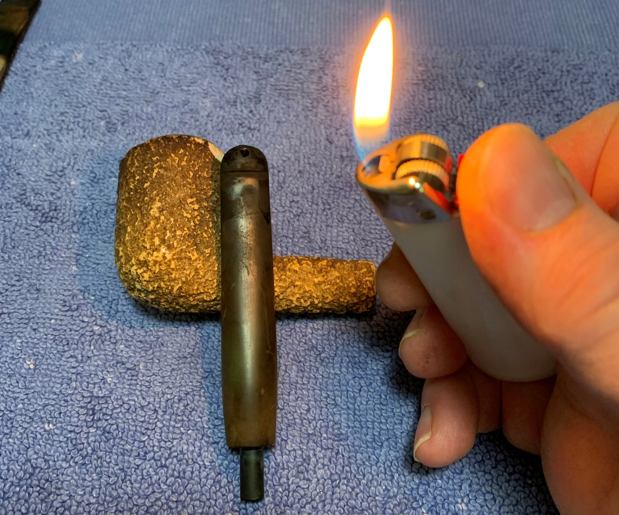
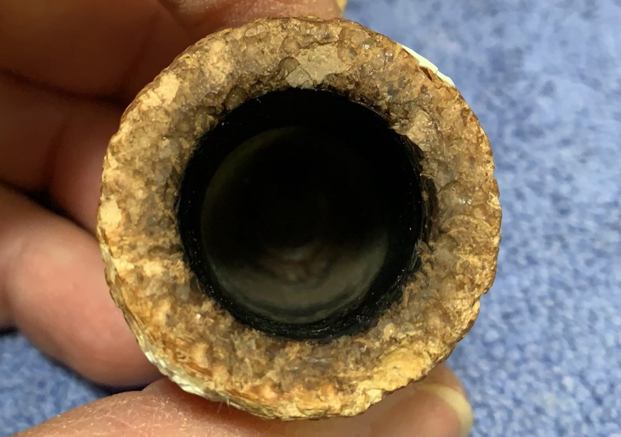
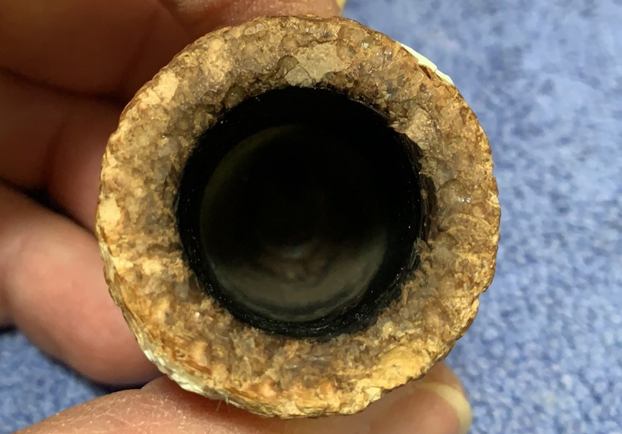
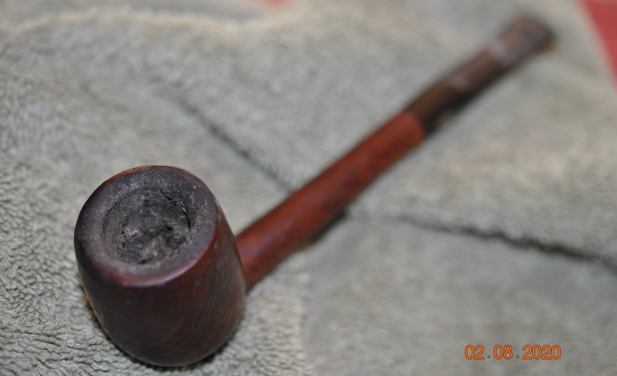
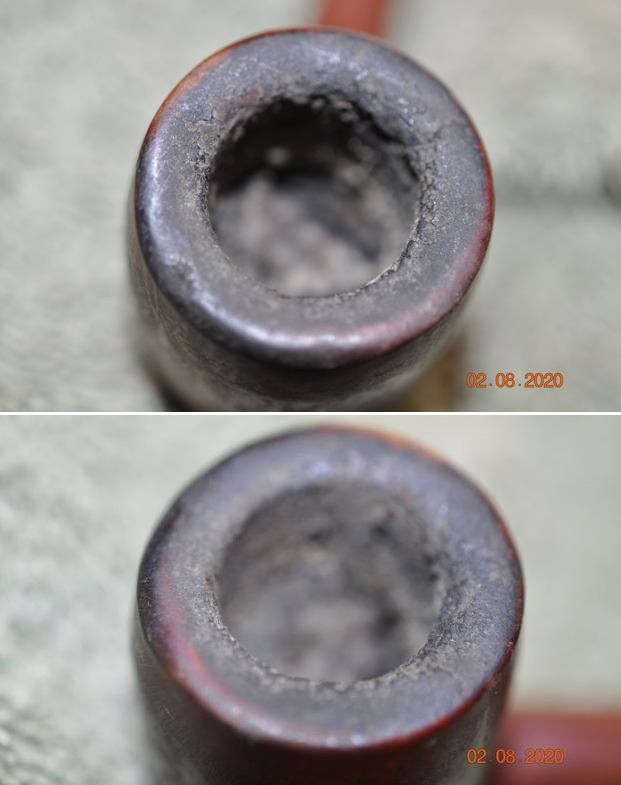
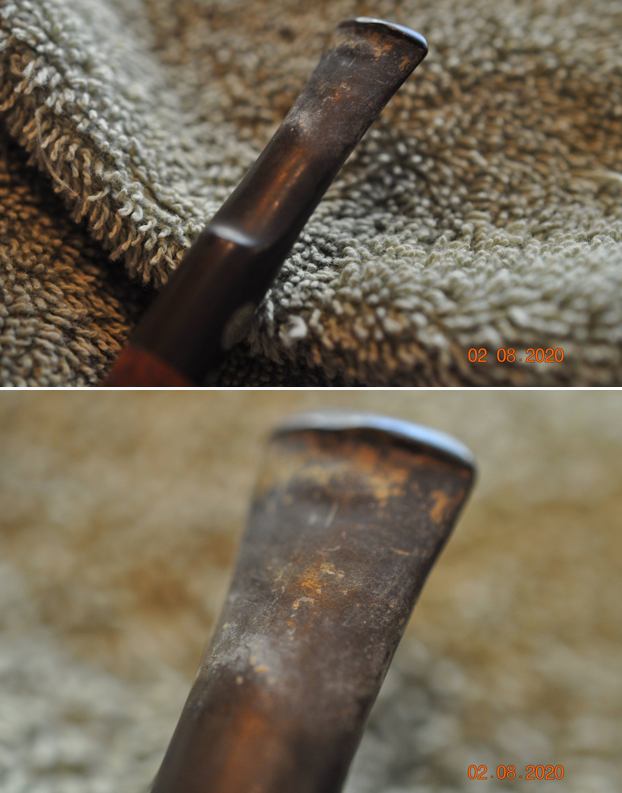
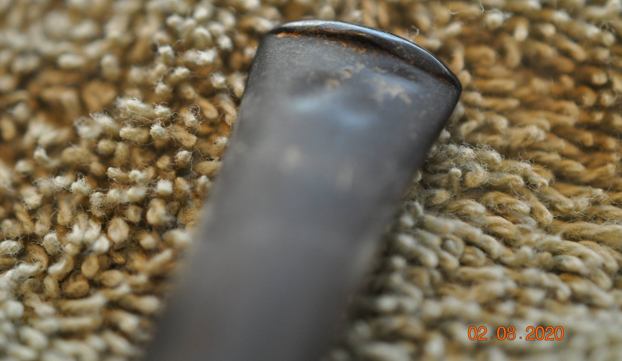
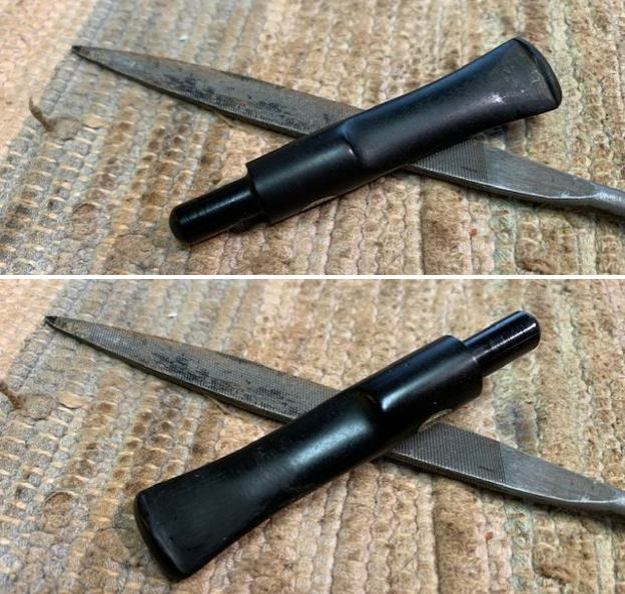
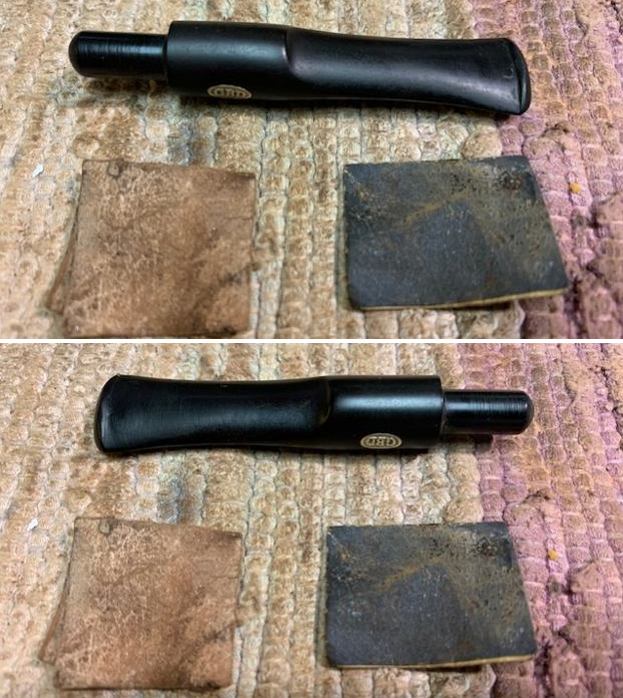
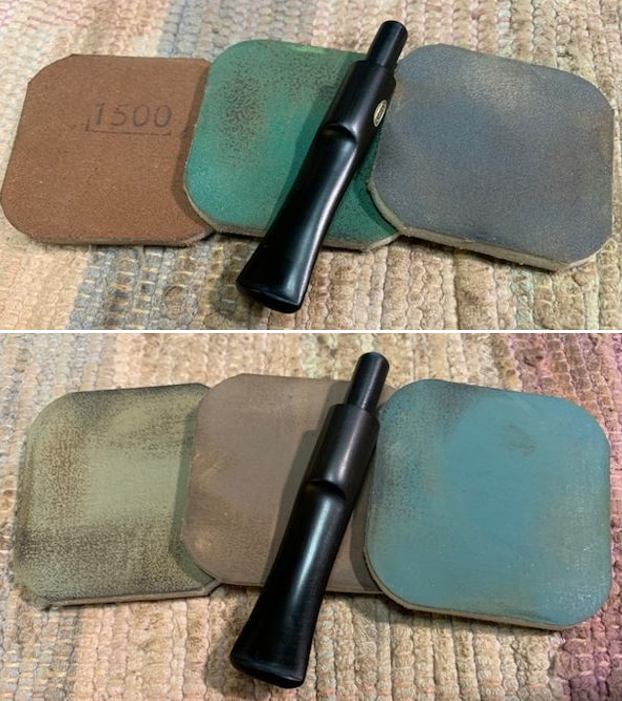
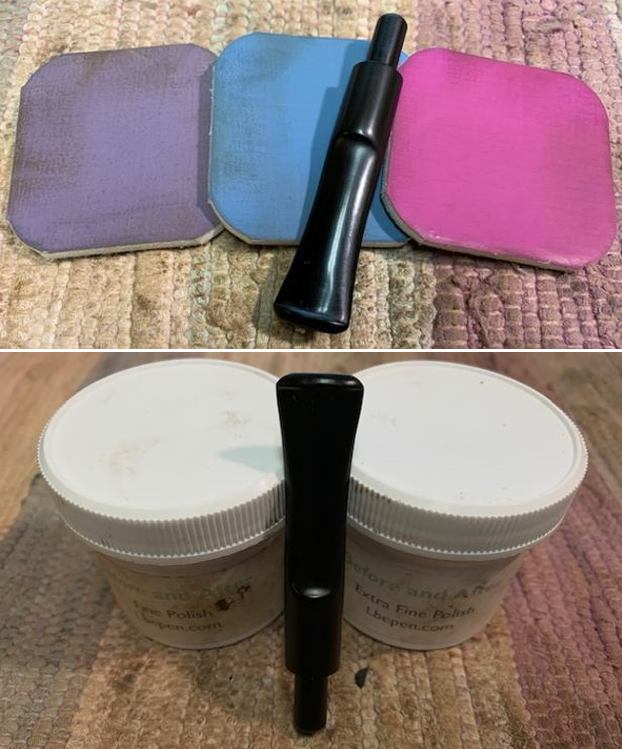
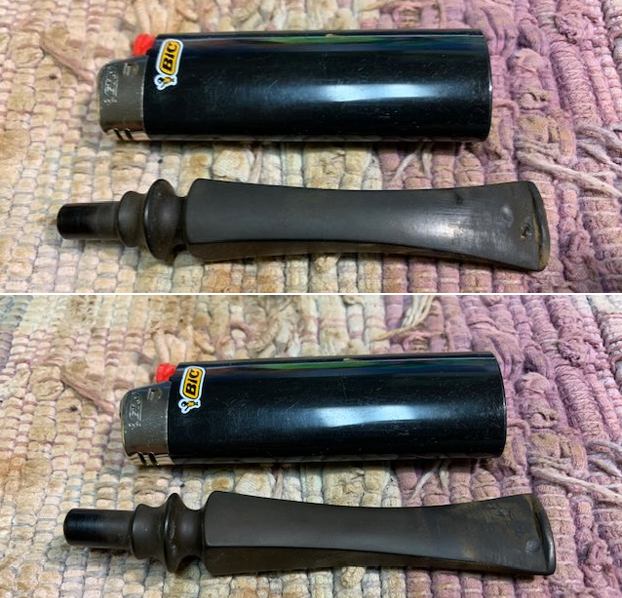
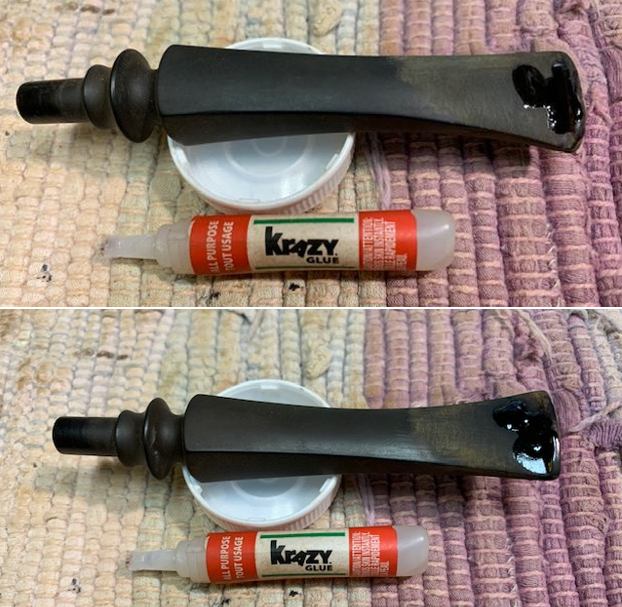
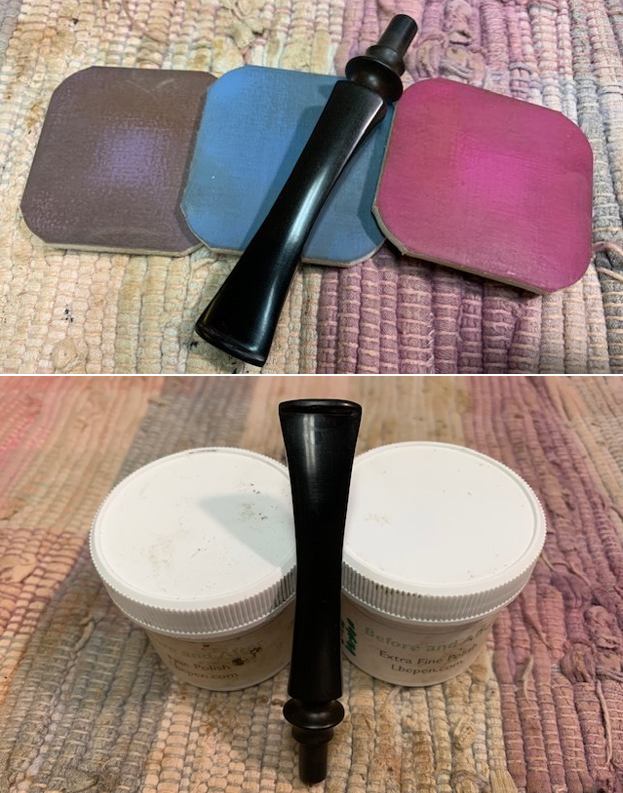
Anyway, on to the pipe – and what a mess it was. The stummel had the following problems: a nasty ghost, filth embedded in the rustication, a creepy and unnatural yellow tinge to the meerschaum, lots of lava on the rim, lots of cake in the bowl, and – worst of all – chunks missing from the rim. Meanwhile, the stem had its own set of problems: the ‘P’ logo was nearly obliterated, heavy oxidation and calcification, and tooth marks and dents. In fact, even my wife commented that this pipe might be the proverbial ‘bridge too far’ – but, like the stereotypical, stubborn husband, I was not to be deterred! I decided to start on them stem, as I still was not sure how to resolve the chunks missing from the rim. I broke out the isopropyl alcohol and pipe cleaners, and got to work on the inside of the stem. Predictably, it was pretty dirty and I went through a good number of pipe cleaners in order to clean it up. Then I had to tackle the overwhelming oxidation and calcification – yuck. I took a blade (an old butter knife, actually) and began gently scraping at all that build-up. Obviously, I took it easy, as I did not want to damage the stem’s vulcanite any further. The butter knife worked quite well and I got a good amount loose. I followed that up with some lemon-infused isopropyl alcohol on some cotton rounds to try and scrub the rest away. This worked quite well and I noted some improvement. There were quite a few dents in the stem. Some were obviously tooth marks, but other dents looked like blunt force trauma! Time to break out the BIC lighter to see if it could raise some of these dents. Quite frankly, it did not do much – this repair was going to require some considerable sanding etc. Before that, however, the stem went for an overnight soak in the Before & After Hard Rubber Deoxidizer. The following day, I cleaned all of the de-oxidizing sludge off with alcohol, pipe cleaners, et cetera. The oxidation had migrated to the surface and would be fairly straightforward to remove. I scrubbed vigorously with SoftScrub to remove the leftover oxidation.Before I moved on to the Micromesh pads, I built up the dent damage on the stem with cyanoacrylate adhesive and let it fully cure. It turned out that this was not as straightforward as I had hoped. It took more than one application of adhesive to sort this problem out. I then sanded it down with 220-, 400-, and 600-grit sandpapers to make the stem look normal. I then used all nine Micromesh pads (1,500 through 12,000 grit) to bring out the lovely black lustre on the stem. I also used Obsidian Pipe Stem Oil in between each pad scrubbing.

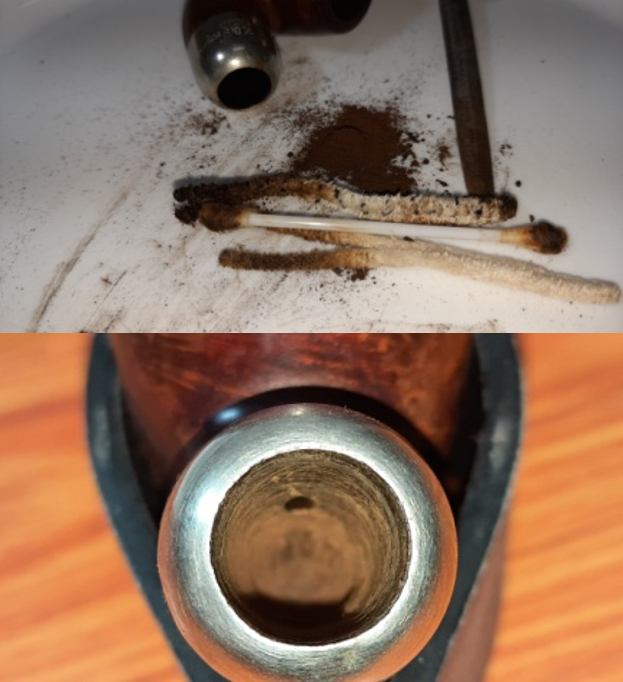
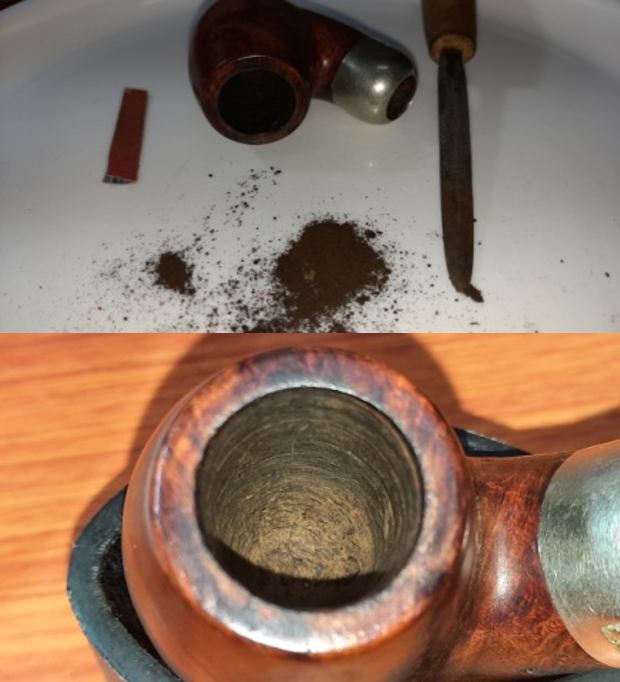
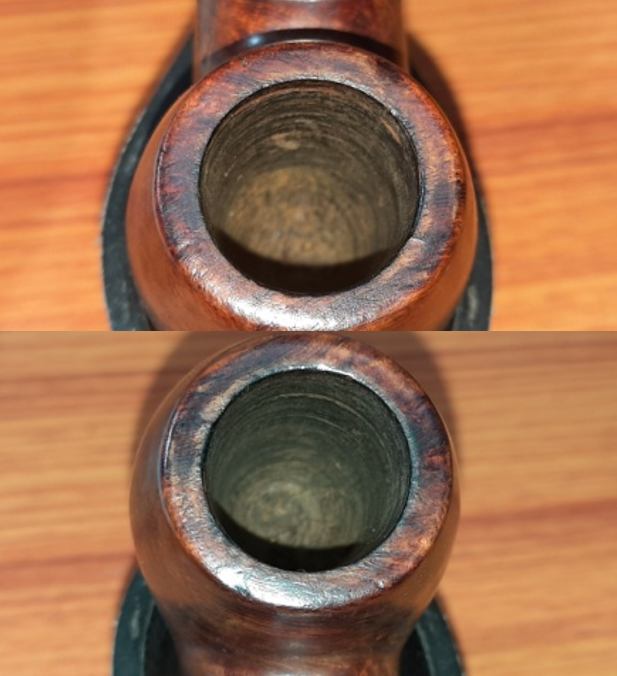
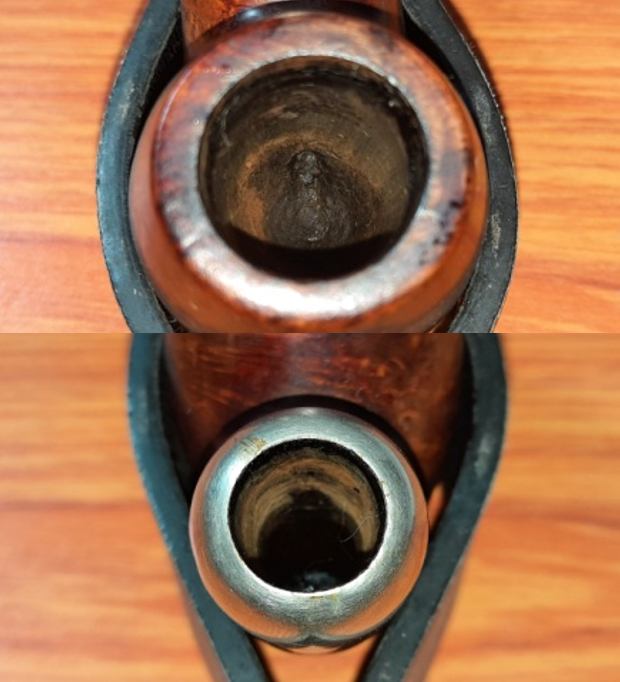
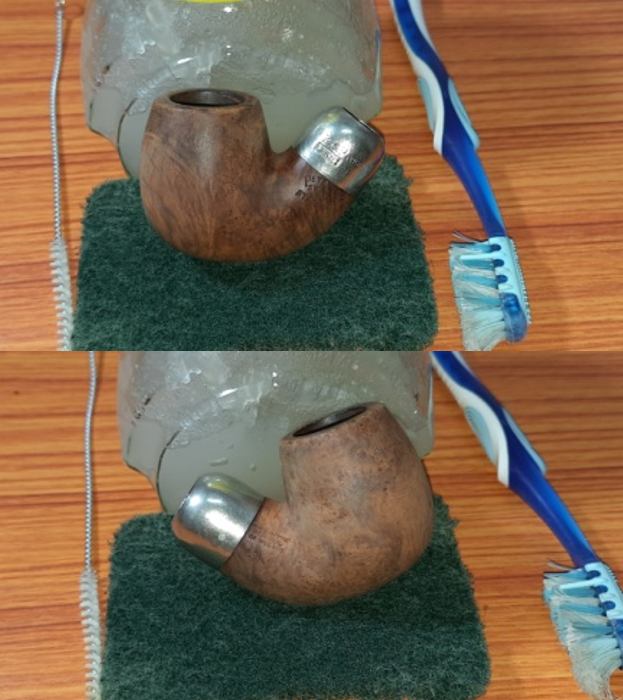
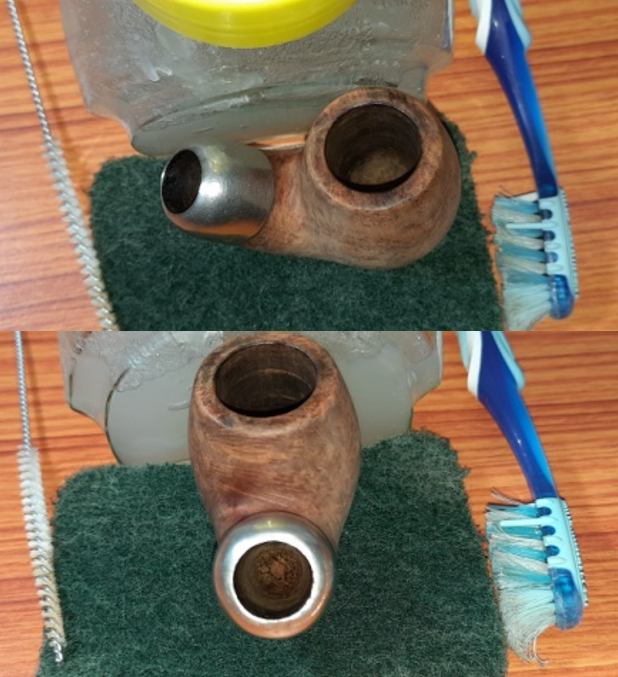
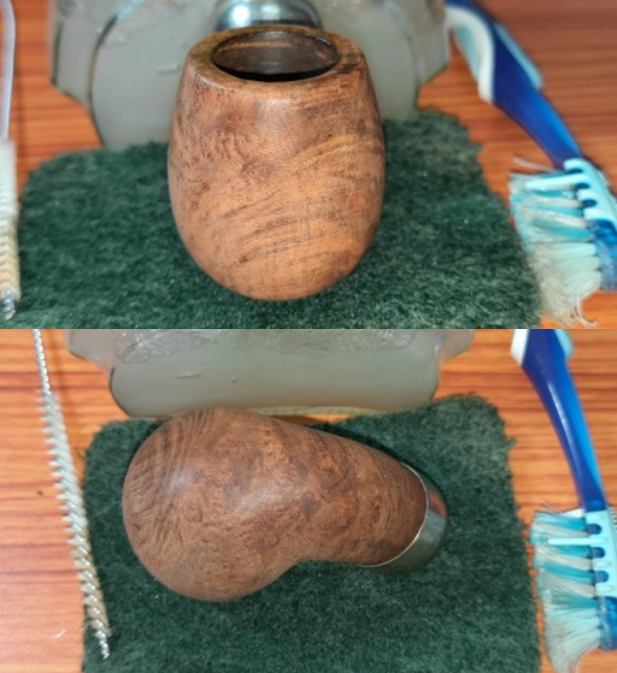
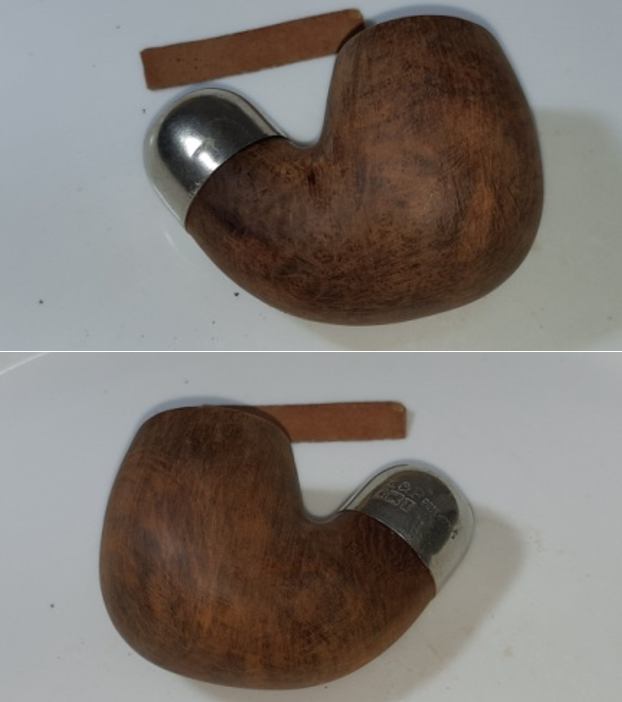
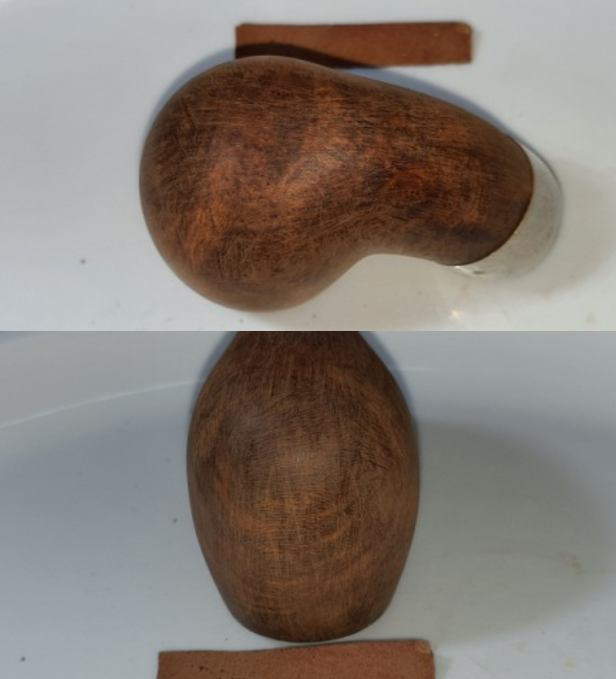
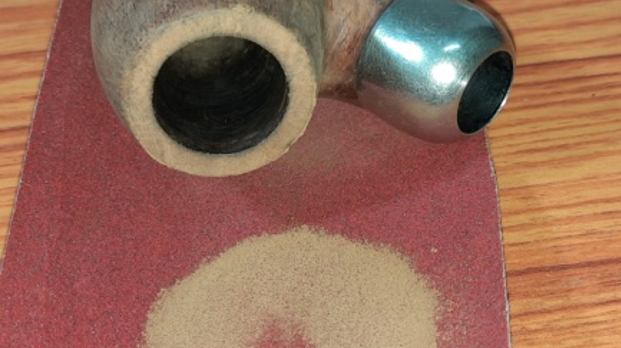
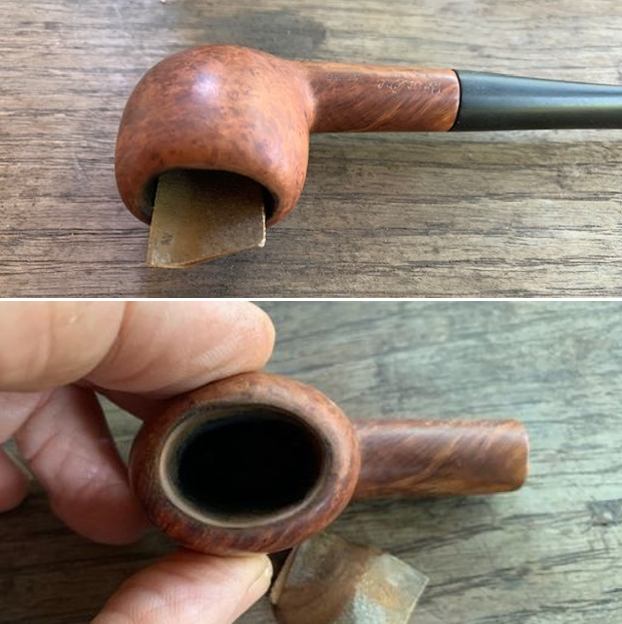
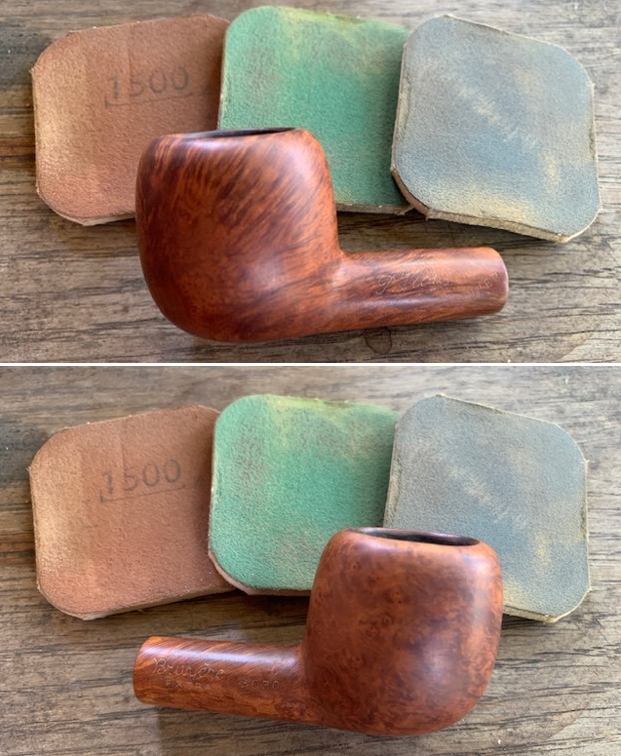
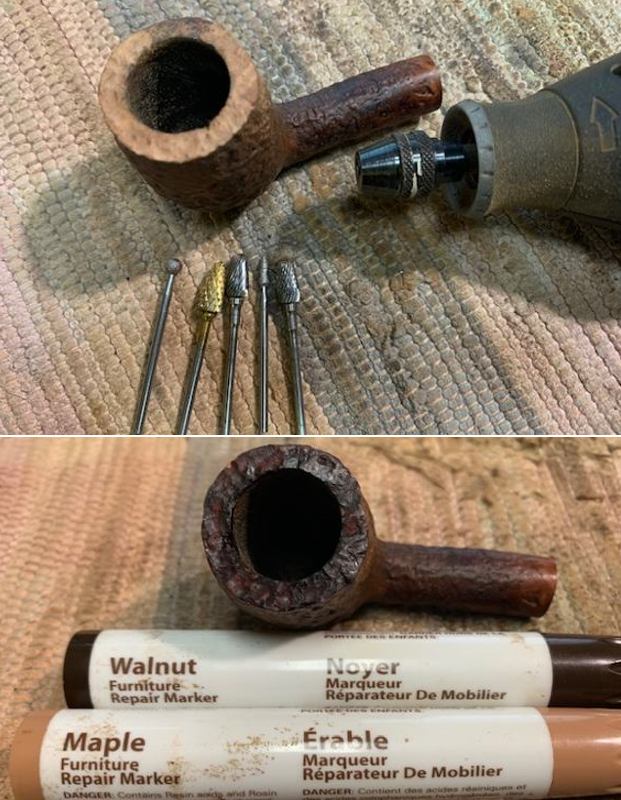
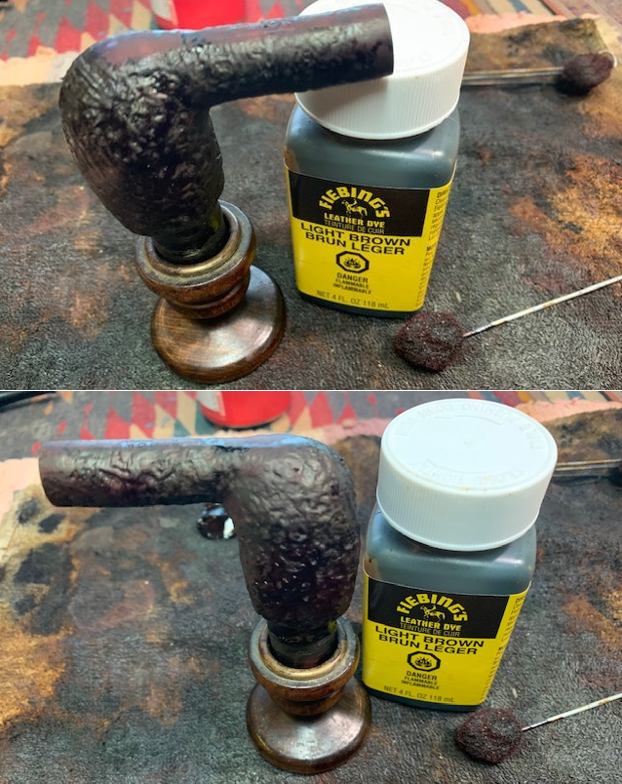
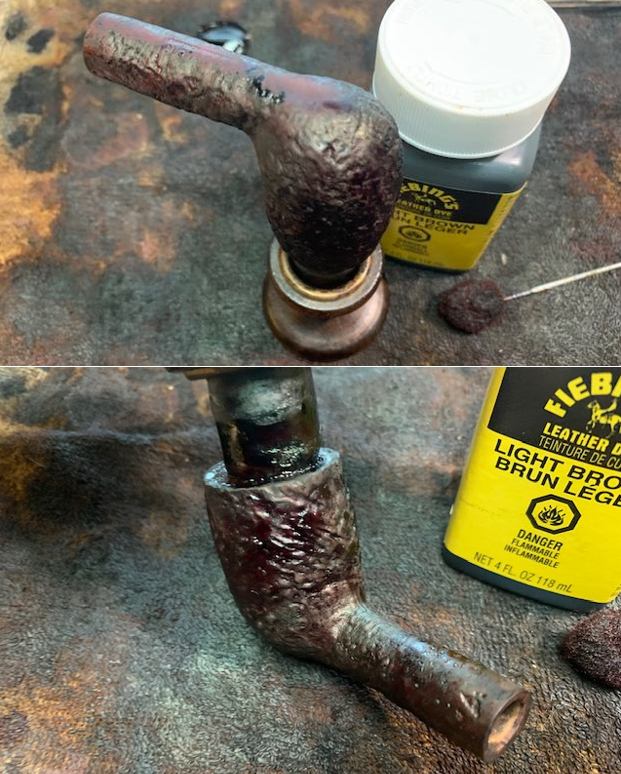
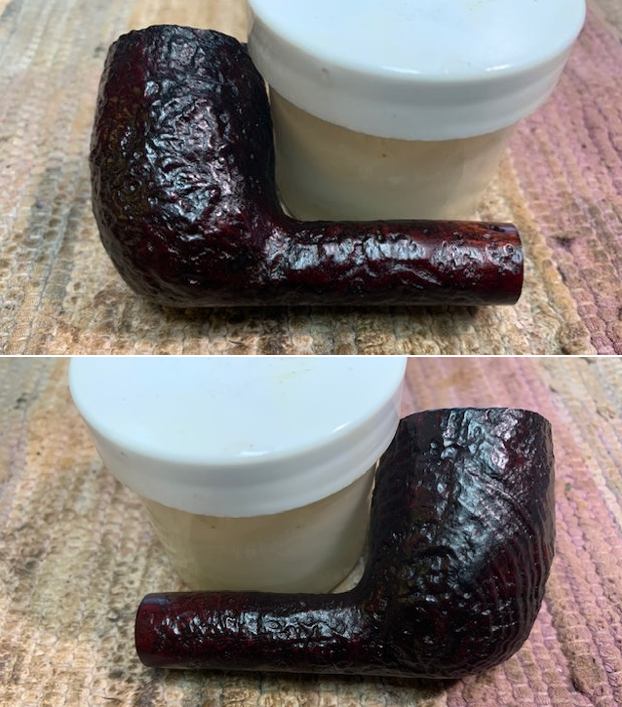
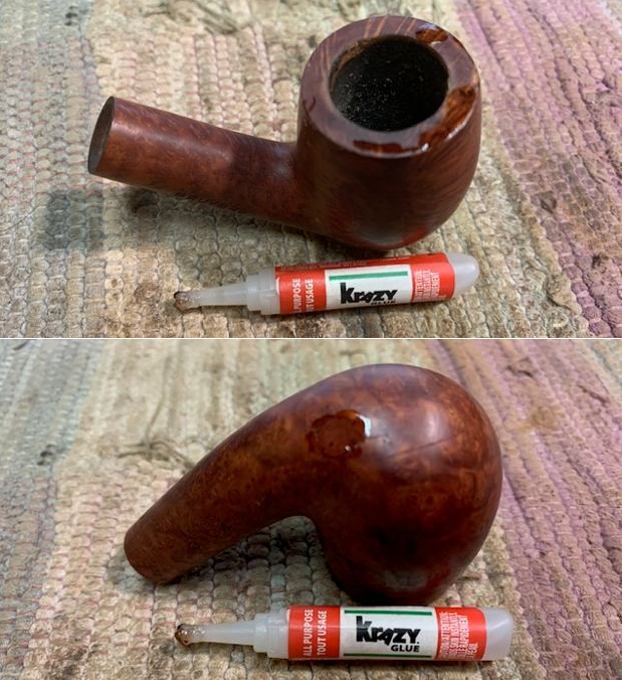
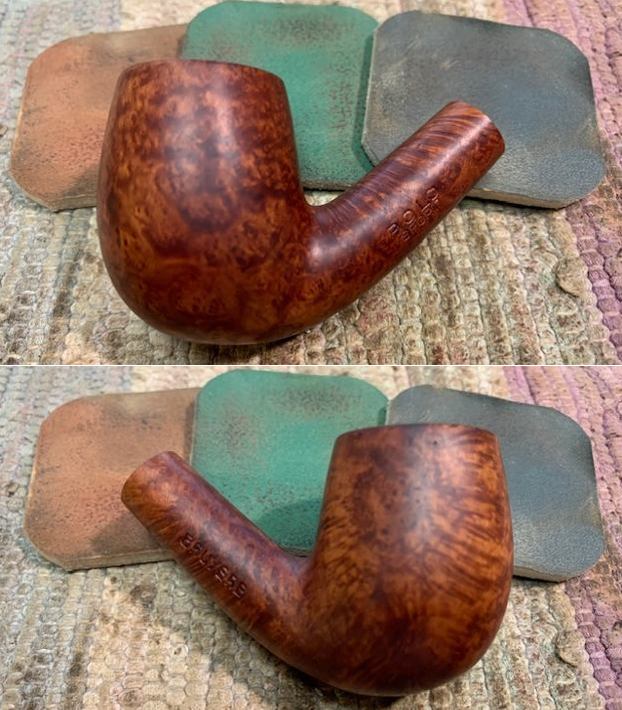
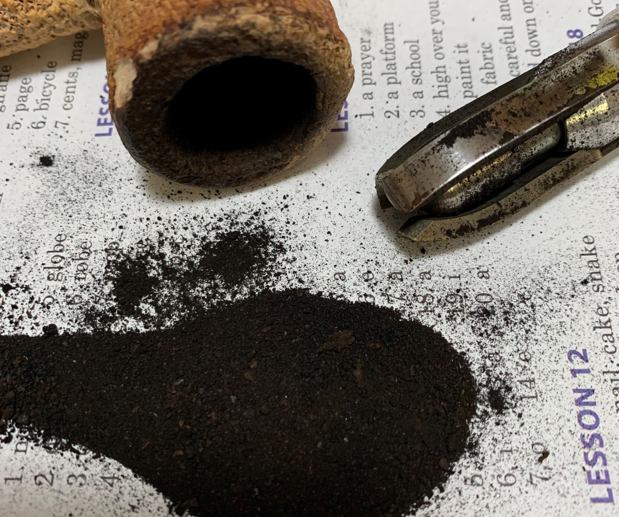
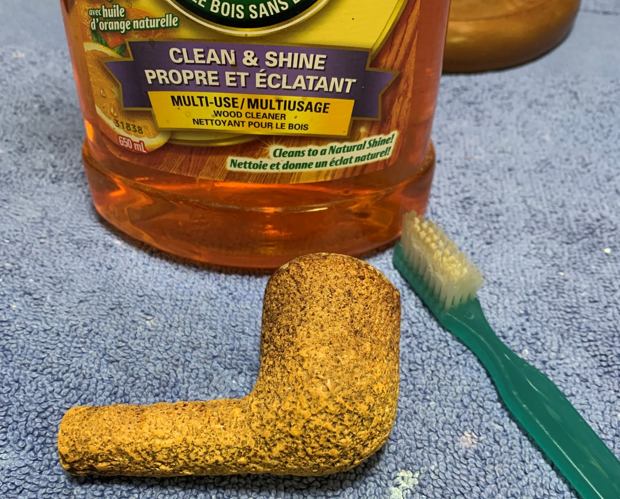
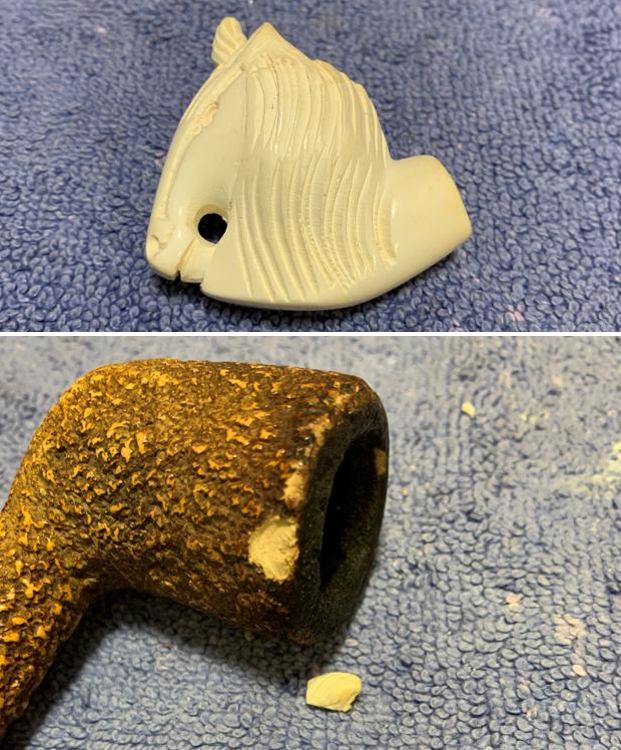
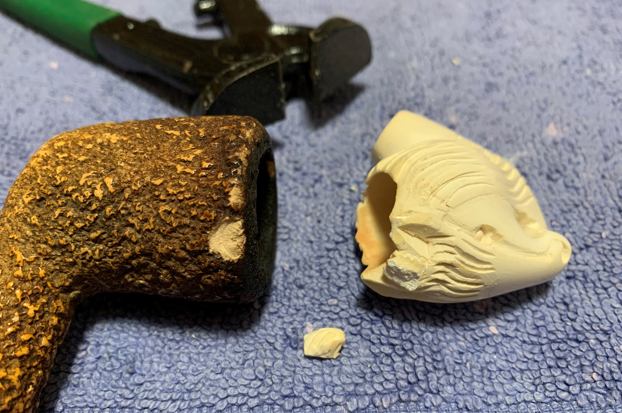
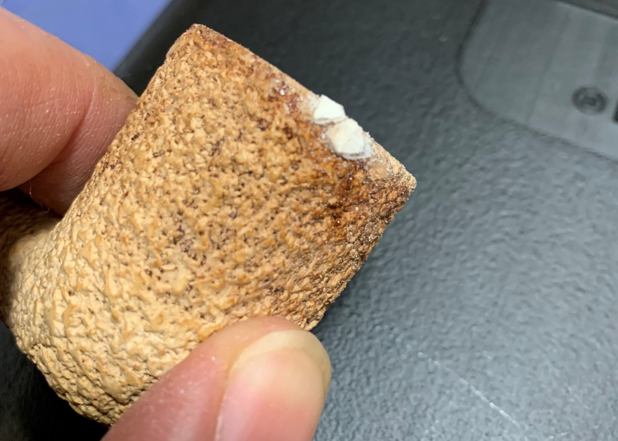
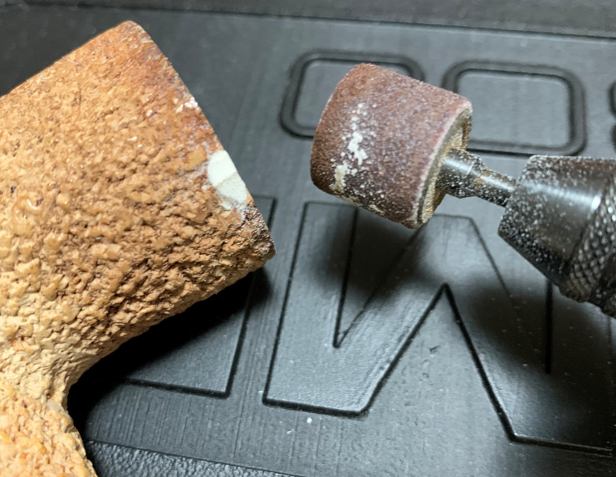
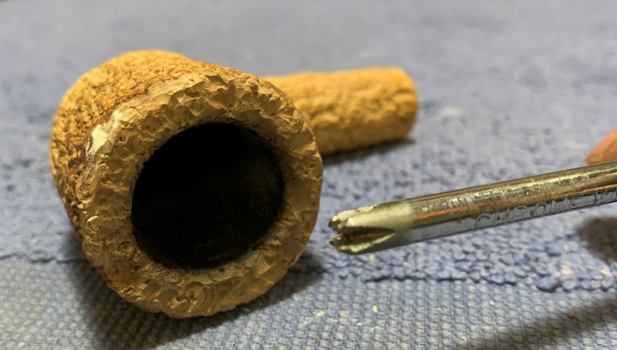
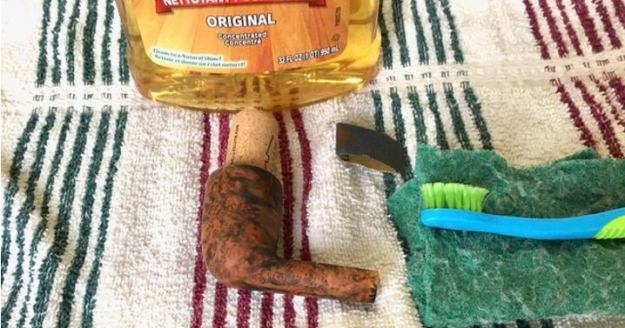
The stummel was next, and the usual cleaning procedures were in order for this pipe. I used both the PipNet Reamer and the KleenReem to remove the built-up cake and followed that with 220-grit sandpaper to remove as much as I could. The meerschaum cannot take the usual de-ghosting process of soaking cotton balls in isopropyl alcohol, so sanding was a way to reduce the old ghost in the pipe. I also wanted to ensure there were no hidden flaws in the interior walls of the meerschaum. Fortunately, there were none. Truth be told, I actually also tried to use a bit of ground coffee in the bowl to remove the ghost, but that was not very successful.I then proceeded to clean out the insides of the shank with Q-tips, pipe cleaners, and isopropyl alcohol. There was quite a bit of nastiness inside this stummel – it took a lot of pipe cleaners etc. to sort that out. I then moved on to cleaning the outside of the stummel with Murphy’s Oil Soap and some cotton pads. That worked very well at removing any latent dirt and that weird yellow tinge that I mentioned earlier. I followed that up by quickly cleaning the insides with some dish soap and tube brushes. The meerschaum cannot be left wet for long – it will turn to mush otherwise. Before & After Restoration Balm does not make the same kind of difference on meerschaum as it does on briar, but it still works – so light coating was applied, followed by my horsehair shoe-brush. On to the inevitable repairs: this is where the nightmares begin. Honestly, it was not immediately clear to me how I was going to make the stummel look decent. Sure, I had cleaned it, etc., but what about the obvious chunks missing from the side? I considered sanding it all down, but I feared this would alter the shape of the pipe beyond reason and repair. I figured that, at very least, this pipe needed to be topped. That is to say, the rim had to be inverted and sanded down on a piece of 220-grit sandpaper. By doing this, it would remove some of the lighter damage altogether and would improve the state of the heavier damage. But the old problem remained: how was I going to repair the chunks of missing meerschaum on this pipe?I then realized that the solution was as obvious as the nose on my face: I would take a piece of meerschaum from another pipe and fashion a repair. I grabbed one of my sacrificial meerschaum pipes (a dreadfully ugly horse’s head) and used a pair of end-cutting nippers to break off a couple of pieces. Having done that, I used cyanoacrylate adhesive to fix them in place on the stummel. I was feeling pretty good about this solution, but knew that there was still a long row to hoe. Obviously, I needed to sand down and shape the new pieces of meerschaum, but I also needed to make the rim as rusticated as the rest of the stummel. Enter the Dremel (with accompanying angelic voices). Yes, I first used a sanding drum on the Dremel to remove excess material from the repair (but not too much), then I used a high-speed engraving cutter to rough up the surface of both the rim and the repair. So far, so good. The engraving cutter had worked – to a point – but it had not really resulted in the sort of rustication I was looking for. My solution came from the Dremel again, but only indirectly. Steve reminded me of his trick of using an old Philips-head screwdriver as a rustication device (you can read about that here). Whereas Steve used Dremel grinding stones to make his rustication device, I used a metal cutting disc on the Dremel. As you can see, my screwdriver came out looking quite good and the stummel came out looking even better. I was definitely pleased with the roughened surface of the stummel, but I next needed to address the lack of colour. This, of course, was a direct result of my topping of the rim – it removed the patina. The solution must have come to me in the mid-afternoon: tea. Yes, I used black tea to provide a beautiful stain to the meerschaum that gave it a really good look. I went and added some more Before & After Restoration Balm and, once again, used my horsehair shoe-brush to work it in.Meerschaum does not really do well on a high-speed buffer, so I used a microfibre cloth to achieve the same effect. I did, however, take the stem to the buffer, where I applied White Diamond and some wax to give it that lovely shine.

In the end, what a beauty this pipe is! It is back to its old glory and ready to be enjoyed again by the next owner. I am pleased to announce that this pipe is for sale! If you are interested in acquiring it for your collection, please have a look in the ‘Irish’ pipe section of the store here on Steve’s website. You can also email me directly at kenneth@knightsofthepipe.com. The approximate dimensions of the pipe are as follows: length 154 mm; height 47 mm; bowl diameter 34 mm; chamber diameter 20 mm. The mass of the pipe is 40 grams. Thank you very much for reading and, as always, I welcome and encourage your comments.

Reworking a Damaged French Made GBD Speciale Standard 9465 Liverpool


Blog by Steve Laug

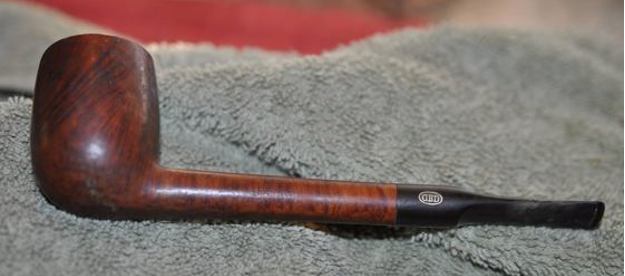
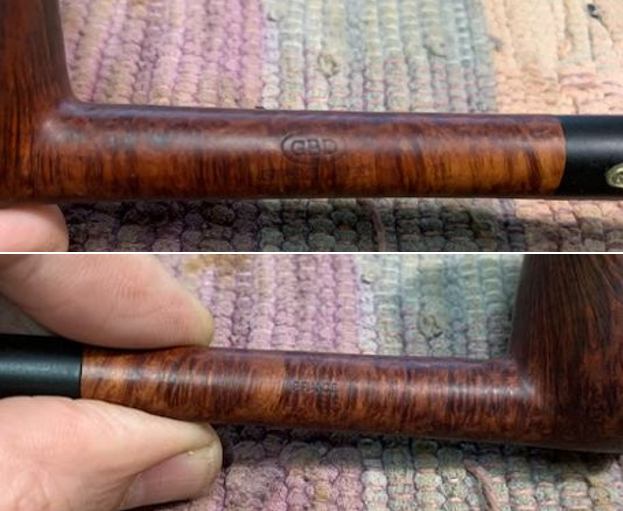
Jeff and I purchased the lovely long shank GBD Liverpool from a fellow in Brazil, Indiana, USA. The grain on the pipe is a nice mix of flame, swirled and birdseye that works well with the brown stains of the briar and the black of the saddle stem. The rim top is crowned with a bevel inward and has some significant damage on the front right outer edge and top. The repeated burning of that area with a lighter flame has left behind a deep dip and burn that will need to be dealt with. It was hard to see with the thick cake in the bowl and the veritable eruption of lava over the top of the rim but it was very present. The finish was quite dirty with grit, grime and oils ground into the surface of the bowl and shank. The shank is stamped on both sides and on the left it reads GBD in an oval [over] Speciale [over] Standard. On the right side it reads France [over] the shape number 9465. The vulcanite stem was lightly oxidized and well dented with tooth marks and chatter on both sides near the button. The button area was worn as well. There is a GBD brass oval roundel on the left side of the saddle stem. Jeff took photos of the pipe to capture its condition when it arrived at his place. It was going to take some work to bring this one back to life. But both of us thought that it would be worth it. Jeff took photos of the rim top and bowl that show the cake and overflowing lava on the top and edges of the bowl. It is really hard to know what it looks like under all of that. We have learned that it with either be badly damaged or it will have been well protected. Only cleaning it off would reveal which result was on this pipe. You can also see the burn damage on the right front outer edge. The stem had a lot of tooth chatter and marks that are clear in the photos that follow. There is some oxidation and the calcification on the stem surface. He took photos of the sides and heel of the bowl to show condition of the briar. You can see the dust and debris ground into the bowl. The burn damage on the outer rim edge of the right front is more apparent from the side view in the first photo. The grain is still quite nice. He took photos of the stamping on the sides of the shank. It was faint but was still was clear and readable as noted above. The brass GBD roundel looked good as well. I always like to be able to set the pipe I am working on in its historical setting so I turn to Pipedia (https://pipedia.org/wiki/GBD) and read through the brand history. Toward the middle of the article I found what I was looking for. I quote below:

The Paris factory moved to Saint-Claude in 1952. Since 1981 the majority of GBD pipes come from the English factory.

The premium lines of GBD offered very good values, and are considered amongst the most affordable high end pipe of the 1960’s and earlier and a rival in quality, design, and price to Dunhill. Smokers’ Haven was the main retail supplier for GBD’s in the US until the early 1980’s.

GBD produced consistently well made pipes, almost entirely of Algerian or Grecian briar. In the late 1960’s to late 1970’s, they introduced the “Collector” and “Unique” lines, made primarily by Horry Jamieson, who had carved for Barling for many years, and was skilled in freehand design. Older GBD pieces are excellent smokers and unique in design. They did an excellent executions of classic pipe shapes, as well as some beautiful freehands in the “Unique” line. [2]

The following list comprises the better grades in descending order:

Pedigree, Pedigree I, Pedigree II, Straight Grain, Prodigy, Bronze Velvet, Virgin, Varichrome, Prestige, Jubilee, New Era, Prehistoric, International, Universe, Speciale Standard, Ebony, Tapestry, New Standard, Granitan, Sauvage, Sierra, Penthouse, Legacy, Concorde.

Since the pipe I was working on was made in France I knew that it was made either in Paris before 1952 or in St. Claude after that date and before 1981 when production moved to England. I also new that I was dealing with one of the better grade pipes with the Speciale Standard stamp.

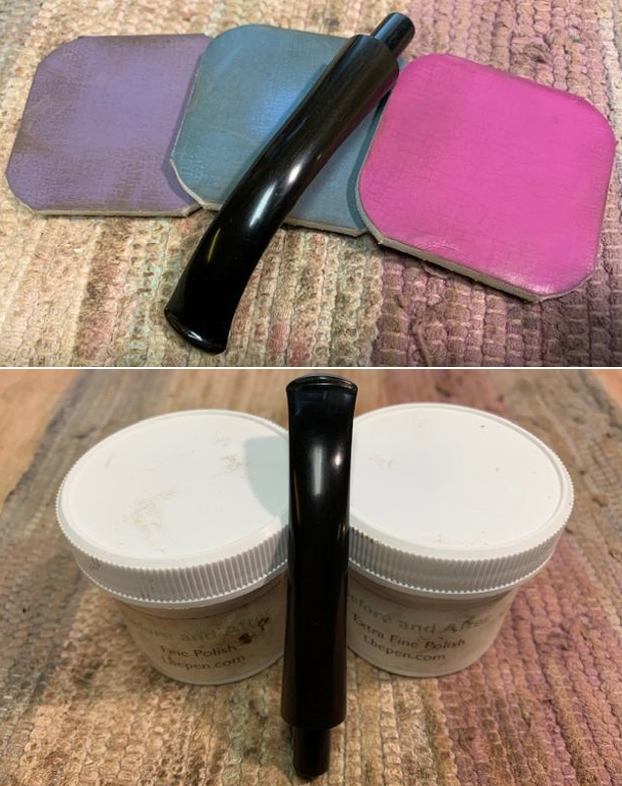
I then followed the links included to a listing of the shapes and numbers on the GBD pipes (https://pipedia.org/wiki/GBD_Shapes/Numbers). The pipe I was working on was labeled by GBD as a 9465 which is a Liverpool with a round shank. Now it was time to work on the pipe itself. Jeff had cleaned up the pipe with his usual focus on detail. He reamed the pipe with a PipNet pipe reamer and removed the rest of the cake with a Savinelli Fitsall Pipe Knife. He scrubbed the exterior of the bowl with undiluted Murphy’s Oil Soap with a tooth brush and was able to remove the thick lava build up on the rim top. He rinsed it under running warm water to remove the soap and grime. He cleaned out the inside of the shank and the airway in the stem with alcohol, cotton swabs and pipe cleaners. He soaked the stem in Briarville’s Stem Deoxidizer and rinsed it off with warm water. I took photos of the pipe once I received it. The rim top cleaned up really well. The rim top, inner and outer edges of the bowl other than the burn damage on the front right were in good condition. The crowned inner edge also has some rim darkening and burn damage on the front right as well. The stem surface looked good with some large and deep tooth marks and chatter on both sides near the button.  He took photos of the stamping on the sides of the shank. It was faint but readable as noted above.I removed the stem and took a photo of the pipe to give a sense of the whole.  Now it was time to do my work on the pipe. I decided to begin by dealing with the damage on the front of the rim top and bowl. I sanded it slightly to give a clear picture of the damage in the photo below. I have marked it in red to help identify the damaged area.Now I had a decision to make on this repair. I could top the bowl and shorten the height of the entire bowl to accommodate the damage on the front of the rim. To me this would look awkward as the dip is quite deep. The other option to me was to build up the dip in the rim top and edge with briar dust and clear CA glue (super glue) to the same height as the rest of the bowl. I decided to build up the bowl top. To begin the process I topped the bowl to give me a flat surface and to remove the other damage to the rim top.I wiped off the burned area with alcohol on a cotton pad to clean off any debris. I layered on the first batch of CA glue and then used a dental spatula to put briar dust on top of the glue. I repeated the process until I had the rim top level. Once the repair cured I topped it once again to make sure that the repaired area matched the rest of the rim top. I used a topping board and 220 grit sandpaper.I took photos of the rim top and bowl front to show the repair. It is dark and still needs a lot of work but it is at least the right height and is smooth. You can also see the slight bevel that was on the inner edge of the rim on the rest of the bowl. I would need to continue that on the repaired area to match.I worked on the inner beveled edge with a folded piece of 220 grit sandpaper to give it a deep bevel. I also sanded the rim top repair to further smooth it out. The repair is starting to look good at this point.  I polished the briar with micromesh sanding pads – dry sanding with 1500-12000 grit sanding pads. I wiped it down after each pad with a damp cloth to remove the sanding debris and dust.   I restained the rim edge and top with a combination of Maple and Walnut stain pens to blend the colour to the rest of the bowl. The rim top looked darker but it looked much better than when I started the repair.I rubbed the bowl and shank down with Before & After Restoration Balm. I worked it into the surface of the bowl sides and shank with my fingertips to clean, enliven and protect the briar. I let the balm sit for a little while and then buffed with a cotton cloth to raise the shine.    I set the bowl aside and turned my attention to the stem. I “painted” the surface of the stem with the flame of a lighter to lift the tooth marks. It worked very well and many of the marks lifted. I filled in the remaining marks with clear CA glue and let the repairs cure. I used a small file to flatten out the repairs. I sanded the stem with 220 grit sandpaper to blend the repairs into the stem surface. I started the polishing with 400 grit sandpaper.     I polished the vulcanite stem with micromesh sanding pads – 1500-12000 grit pads. I wiped it down with Obsidian Oil after each sanding pad. I used Before & After Pipe Polish – both Fine and Extra Fine to further polish the stem.  This French Made GBD Speciale Standard 9465 Liverpool is a great looking pipe now that it has been restored. The rich contrasting brown stained finish around the bowl is quite beautiful and highlights the a finish that works well with the polished vulcanite stem. I put the stem back on the bowl and carefully buffed the pipe with Blue Diamond on the buffing wheel using a light touch on the briar. I gave the bowl and the stem multiple coats of Conservator’s Wax and buffed the entire pipe with a clean buffing pad. I hand buffed the pipe with a microfiber cloth to deepen the shine. The finished GBD Speciale Standard Liverpool sits nicely on the desk top and in the hand. Give the finished pipe a look in the photos below. The dimensions of the pipe are Length: 6 inches, Height: 1 ¾ of an inch, Outside diameter of the bowl: 1 ¼ inch, Chamber diameter: ¾ of an inch. The weight of the pipe is 35 grams/1.23 ounces. I will be putting it on the French Pipe Maker section of the rebornpipes store shortly. If you are interested in adding this pipe to your collection send me a message or an email. Thanks for reading this blog and my reflections on the pipe while I worked on it. There are many more to come!

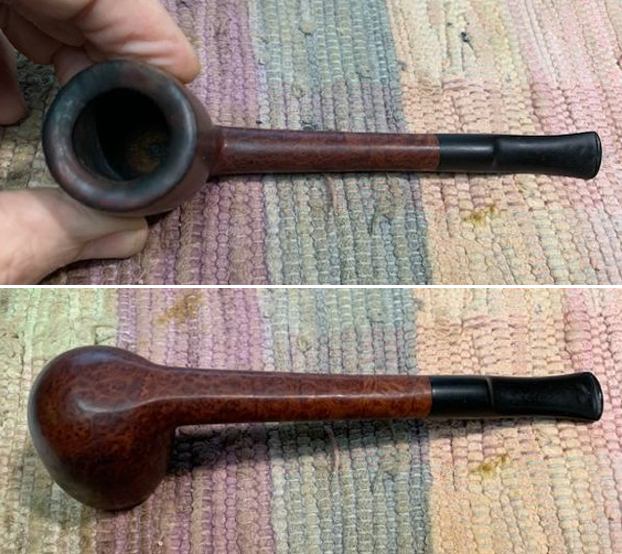
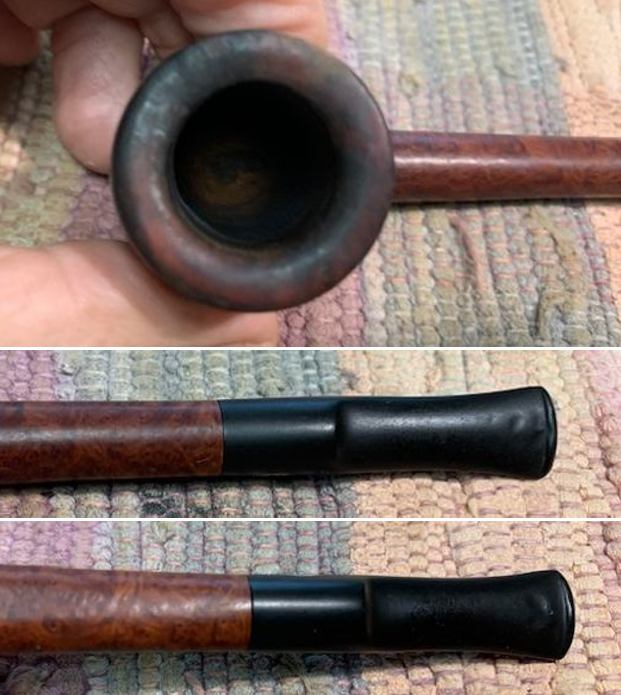
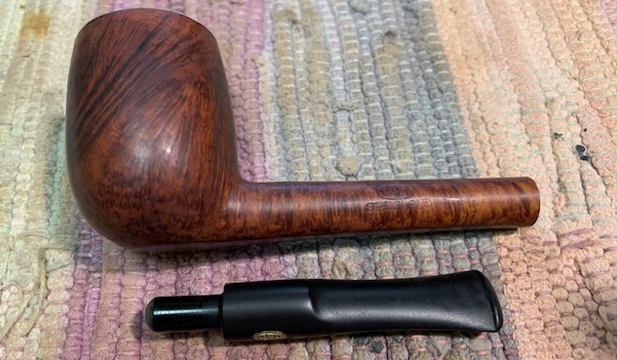
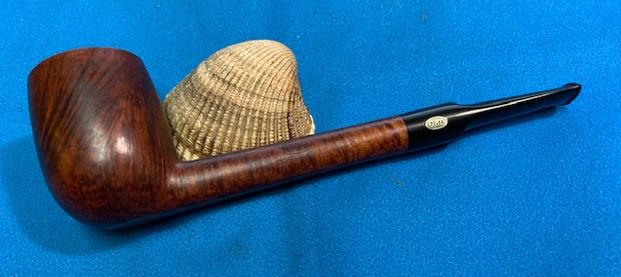
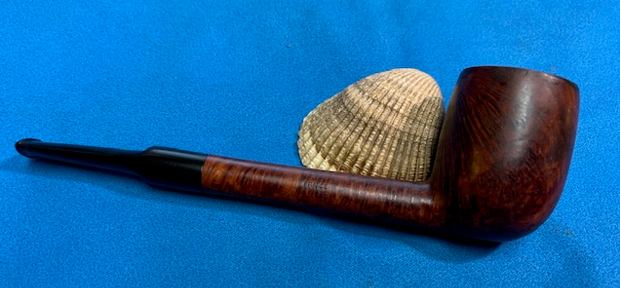
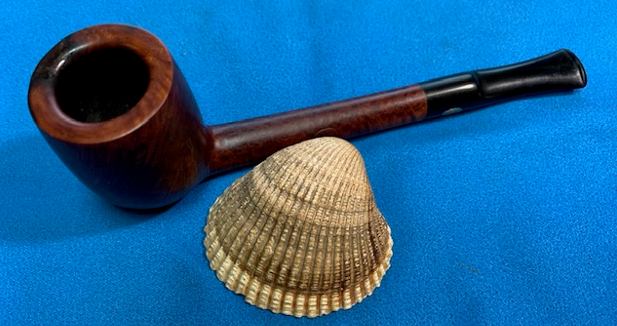
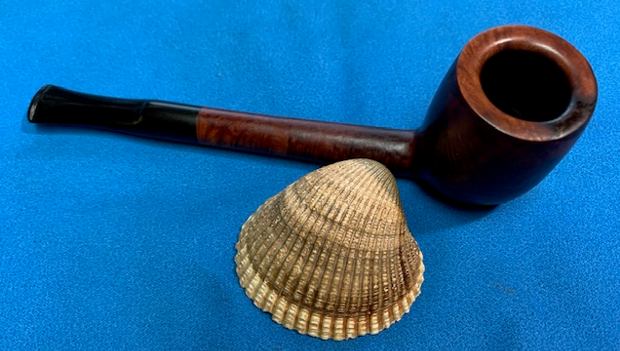
Reworking a French Made Bruyere Garantie Mini-Churchwarden


Blog by Steve Laug

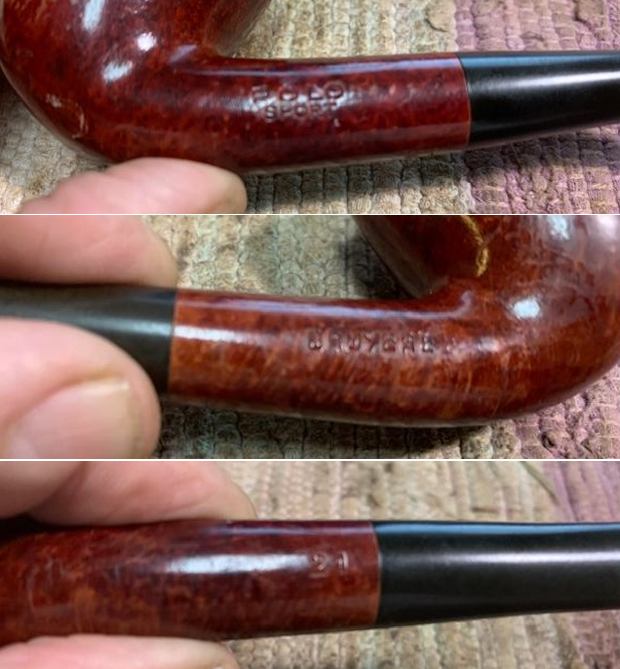
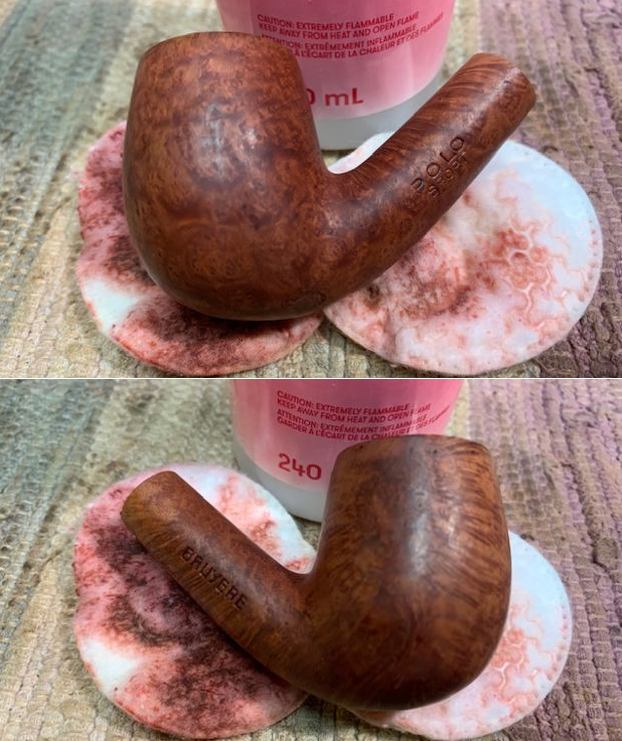
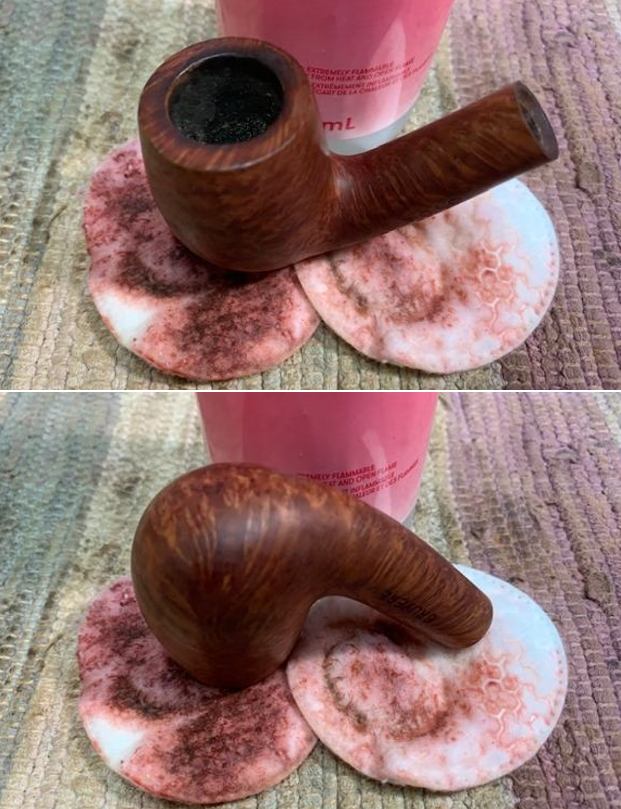
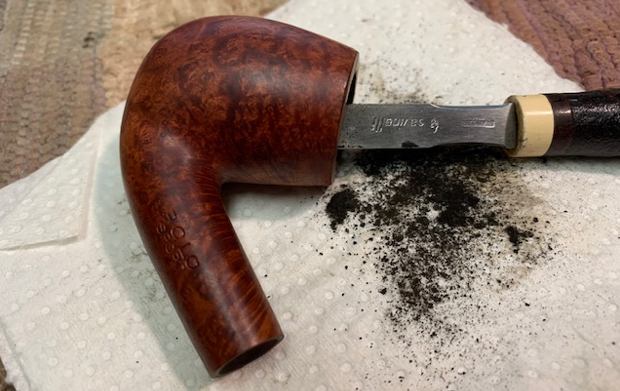
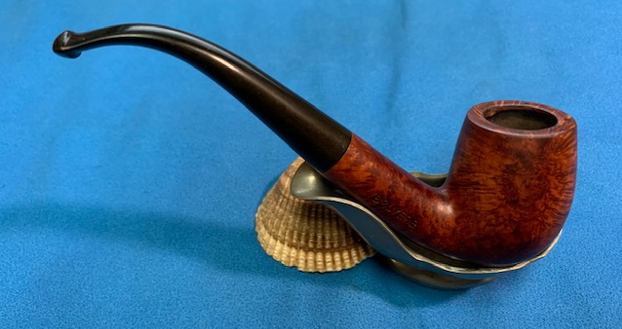
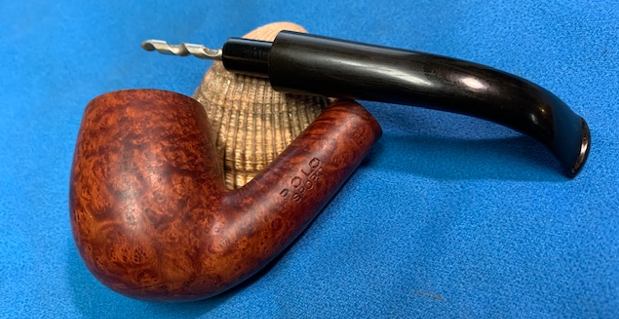
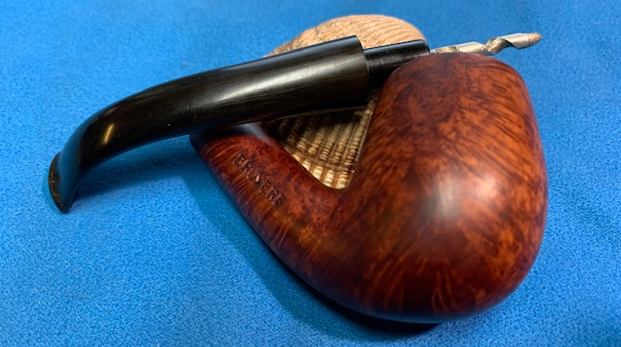
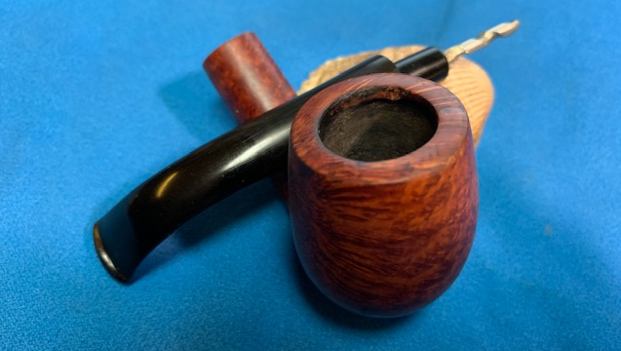
The next pipe on the worktable has been here awhile. Jeff picked up the pipe from an online auction in 2019 in Harrisburg, Pennsylvania, USA. Jeff cleaned it in 2020 and I am starting work on it now in 2021. It is a mini-churchwarden that had a low profile and a fairly long stem. The finish was rusticated with deep rustication around the bowl and shank. There was a flaw in the briar on the right side toward the top of the bowl. The bowl is stamped on the left side and reads Bruyere [over] Garantie [over] Made in France. The bowl had a thick cake with an overflow of lava on the inwardly beveled thin rim top. The finish was worn and dirty with grime in the grooves of the rustication. It appeared that the shank had originally had a band that had long since disappeared before it came to us. The stem has a lot of damage toward the shank end. There were grooves and scratches all the way around the stem. The button end had some deep tooth marks and grooves from the edge of the button forward about 1 inch. The stem was calcified and oxidized along the length. Jeff took photos of the pipe before he did his work on it. Jeff took photos of the rim top to show the cake in the bowl and the lava overflow on the rim top. You can also see the nicks in the outer edge of the bowl toward the front side. The stem had a lot of tooth chatter and marks that are clear in the photos that follow. There is some oxidation and the calcification on the stem surface. He took photos of the sides of the bowl to show condition of the briar. You can see the dust and debris ground into the bowl. The flaw on the right of the bowl is also visible in the second photo. He also took a photo of the shank end and tenon on the stem to show the condition. In the photo of the shank end you can see where the missing band was. I appeared to be a narrow band that was missing. By the time we had it the band was missing. I would need to replace the band on the shank.He took a photo of the stamping on the left side of the shank. It was clogged with debris that filled in some of the letters. Underneath it was clear and readable as noted above.Jeff had cleaned up the pipe with his usual focus on detail. He reamed the pipe with a PipNet pipe reamer and removed the rest of it with a Savinelli Fitsall Pipe Knife. He scrubbed the exterior of the bowl with undiluted Murphy’s Oil Soap with a tooth brush. He rinsed it under running warm water to remove the soap and grime. He cleaned out the inside of the shank and the airway in the stem with alcohol, cotton swabs and pipe cleaners. He soaked the stem in Briarville’s Stem Deoxidizer and rinsed it off with warm water. I took photos of the pipe once I received it. The rim top cleaned up really well. The rim top, inner and outer edges of the bowl were in good condition. The beveled inner edge also has some rim darkening and burn damage. The stem surface looked good with some large and deep tooth marks and chatter on both sides near the button.  The stamping on the left side of the shank is clear and readable and reads as noted above. I removed the stem and took a photo of the pipe to give a sense of the whole.Now it was time to do my work on the pipe. I decided to replace the band on the shank end first. I chose a band from my collection of bands to fit the shank. I reduced the depth of the band on a topping board and glued it in place on the shank end with all purpose glue. I repaired the deep flaw on the right side of the bowl with clear CA glue and briar dust. I rusticated the repair with a wire brush. I restained the spot on the bowl with a Walnut stain pen and set it aside to dry.I used a folded piece of 220 grit sandpaper to clean up the darkened inner edge bevel on the bowl. I polished the briar with micromesh sanding pads – dry sanding with 1500-12000 grit sanding pads. I wiped it down after each pad with a damp cloth to remove the sanding debris and dust.   I rubbed the bowl and shank down with Before & After Restoration Balm. I worked it into the surface of the bowl sides and shank with my fingertips to clean, enliven and protect the briar. I let the balm sit for a little while and then buffed with a cotton cloth to raise the shine. I set the bowl aside and turned my attention to the stem. I “painted” the surface of the stem with the flame of a lighter to lift the tooth marks. It worked very well and many of the marks lifted. I filled in the remaining marks with clear CA glue and let the repairs cure. I used a small file to flatten out the repairs. I sanded the stem with 220 grit sandpaper to blend the repairs into the stem surface. I started the polishing with 400 grit sandpaper.    I polished the vulcanite stem with micromesh sanding pads – 1500-12000 grit pads. I wiped it down with Obsidian Oil after each sanding pad. I used Before & After Pipe Polish – both Fine and Extra Fine to further polish the stem. This French Made Bruyere Garantie Churchwarden is a great looking pipe now that it has been restored. The sandblasted brown stained finish around the bowl is quite beautiful and highlights the a finish that works well with the brass band and the polished vulcanite stem. I put the stem back on the bowl and carefully buffed the pipe with Blue Diamond on the buffing wheel using a light touch on the briar. I gave the bowl and the stem multiple coats of Conservator’s Wax and buffed the entire pipe with a clean buffing pad. I hand buffed the pipe with a microfiber cloth to deepen the shine. The finished Bruyere Garantie Churchwarden sits nicely on the desk top and in the hand. Give the finished pipe a look in the photos below. The dimensions of the pipe are Length: 7 inches, Height: 7/8 of an inch, Outside diameter of the bowl: 1 inch, Chamber diameter: ¾ of an inch. The weight of the pipe is 15 grams/.53 ounces. I will be putting it on the French Pipe Maker section of the rebornpipes store shortly. If you are interested in adding this pipe to your collection send me a message or an email. Thanks for reading this blog and my reflections on the pipe while I worked on it. There are many more to come!

New Life for another Bari – A Mahogni Bent Sitter 8233


Blog by Steve Laug

The next pipe on the work table is a bit of another mystery to both Jeff and me. We really have no memory about where we picked this pipe up or where we bought it. It is not in the spread sheet and there seemingly is no way to check where we got it. It is another Bent Sitter like the Bari Senior 489 I just completed. It has a deep and rich smooth finish with a mix of brown stains that highlight the grain. The pipe is stamped on the left side of the shank and reads BARI [over] Mahogni. On the right side it is stamped Made in Denmark [over] the shape number 8233. The left side of the saddle stem it is stamped and reads BARI. The briar is exceptionally filthy with grime ground into the surface of the bowl and shank. There is a thick cake in the bowl and an overflow of lava on the rim top. There are some nicks in the outer edges of the bowl. The stem is lightly oxidized and the there were a lot of tooth marks and chatter on both sides ahead of the button. While we had no details about the pipe Jeff did find these photos of the pipe before he did his clean up work on it.Jeff took photos of the rim top to show the cake in the bowl and the lava overflow on the rim top. You can also see the nicks in the outer edge of the bowl toward the front side. The stem had a lot of tooth chatter and marks that are clear in the photos that follow. There is some oxidation and the calcification on the stem surface. He took photos of the sides of the bowl to show condition of the briar. You can see the grain through the grime ground into the bowl.He captured the stamping on the shank sides. It reads as noted above. The stamping is clear and readable. The stamping on the right side of the shank is double stamped and a bit blurry from the stamping.Jeff had cleaned up the pipe with his usual focus on detail. He reamed the pipe with a PipNet pipe reamer and removed the rest of it with a Savinelli Fitsall Pipe Knife.  He scrubbed the exterior of the bowl with undiluted Murphy’s Oil Soap with a tooth brush. He rinsed it under running warm water to remove the soap and grime. He cleaned out the inside of the shank and the airway in the stem with alcohol, cotton swabs and pipe cleaners. He soaked the stem in Briarville’s Stem Deoxidizer and rinsed it off with warm water. I took photos of the pipe once I received it.  The rim top cleaned up really well. The rim top, inner and outer edges of the bowl were in excellent condition. The stem surface looked good with a few small tooth marks and chatter on both sides near the button. The stamping on the sides of the shank is clear and readable and reads as noted above. I removed the stem and took a photo of the pipe to give a sense of the whole. I turned to Pipephil’s site (http://www.pipephil.eu/logos/en/logo-b1.html) to see if I could find a listing for the Bari Mahogni. There was nothing specifically listed for this line of Bari pipes. There was also good info on the brand as a whole and that it was founded by Viggo Nielsen in 1950 and he ran it until 1978 when Age Bogelund managed the production for them. In 1993 it was sold to Helmer Thomsen.Pipedia gives a great history of the brand (https://pipedia.org/wiki/Bari) that is well worth reading. There were also examples of the Bari Selected Nature Old Briar pipes showing their stamping.

Now it was time to do my work on the pipe. I polished the briar with micromesh sanding pads – dry sanding with 1500-12000 grit sanding pads. I wiped it down after each pad with a damp cloth to remove the sanding debris and dust.     I rubbed the bowl and shank down with Before & After Restoration Balm. I worked it into the surface of the bowl sides and shank with my fingertips to clean, enliven and protect the briar. I let the balm sit for a little while and then buffed with a cotton cloth to raise the shine. I set the bowl aside and turned my attention to the stem. I “painted” the surface of the stem with the flame of a lighter to lift the tooth marks. It worked very well and many of the marks lifted. I filled in the remaining marks with clear CA glue and let the repairs cure. I sanded out the remnants of tooth marks with 220 grit sandpaper. I started the polishing with 400 grit sandpaper. I touched up the BARI stamp on the left side of the saddle with white acrylic nail polish. Once it dried I scraped off the excess and left the white in the stamping. While not perfect it looked better.    I set the bowl aside and turned to work on the stem. It was in good condition and the tooth marks were light so I figured they would polish out fairly easily. I polished the vulcanite stem with micromesh sanding pads – 1500-12000 grit pads. I wiped it down with Obsidian Oil after each sanding pad. I used Before & After Pipe Polish – both Fine and Extra Fine to further polish the stem.   This Bari Mahogni 8233 Bent Sitter is a great looking pipe now that it has been restored. The sandblasted oxblood and brown stained finish around the bowl is quite beautiful and highlights the a finish that works well with the polished vulcanite saddle stem. I put the stem back on the bowl and carefully buffed the pipe with Blue Diamond on the buffing wheel using a light touch on the briar. I gave the bowl and the stem multiple coats of Conservator’s Wax and buffed the entire pipe with a clean buffing pad. I hand buffed the pipe with a microfiber cloth to deepen the shine. The finished Bari Mahogni Sitter sits nicely on the desk top and in the hand. Give the finished pipe a look in the photos below. The dimensions of the pipe are Length: 5 inches, Height: 2 inches, Outside diameter of the bowl: 1 ¼ inches, Chamber diameter: ¾ of an inch. The weight of the pipe is 58 grams/2.01 ounces. I will be putting it on the Danish Pipe Maker section of the rebornpipes store shortly. If you are interested in adding this pipe to your collection send me a message or an email. Thanks for reading this blog and my reflections on the pipe while I worked on it. There are many more to come!

New Life for a Bari Senior Bent Sitter 489


Blog by Steve Laug

The next pipe on the work table is a bit of a mystery to both Jeff and me. We really have no memory about where we picked this pipe up or where we bought it. It is not in the spread sheet and there seemingly is no way to check where we got it. It has a deep and rich sandblast finish with a mix of black and brown stains. The pipe is stamped on the underside of the shank and reads BARI [over] Senior[over] Made in Denmark. Next to the shank/stem junction it is stamped with the shape number 489. The left side of the saddle stem it is stamped and reads BARI. Jeff had cleaned up the pipe with his usual focus on detail. He reamed the pipe with a PipNet pipe reamer and removed the rest of it with a Savinelli Fitsall Pipe Knife.  He scrubbed the exterior of the bowl with undiluted Murphy’s Oil Soap with a tooth brush. He rinsed it under running warm water to remove the soap and grime. He cleaned out the inside of the shank and the airway in the stem with alcohol, cotton swabs and pipe cleaners. He soaked the stem in Briarville’s Stem Deoxidizer and rinsed it off with warm water. I took photos of the pipe once I received it.   The rim top cleaned up really well. The rim top, inner and outer edges of the bowl were in excellent condition. The stem surface looked good with a few small tooth marks and chatter on both sides near the button.The stamping on the underside of the shank is clear and readable and reads as noted above. I removed the stem and took a photo of the pipe to give a sense of the whole. I turned to Pipephil’s site (http://www.pipephil.eu/logos/en/logo-b1.html) to see if I could find a listing for the Bari Senior. There was one picture specifically listed for this line of Bari pipes. There was also good info on the brand as a whole and that it was founded by Viggo Nielsen in 1950 and he ran it until 1978 when Age Bogelund managed the production for them. In 1993 it was sold to Helmer Thomsen.Pipedia gives a great history of the brand (https://pipedia.org/wiki/Bari) that is well worth reading. There were also examples of the Bari Selected Nature Old Briar pipes showing their stamping.

Now it was time to do my work on the pipe. The bowl was in such good condition that I rubbed the bowl and shank down with Before & After Restoration Balm. I worked it into the surface of the bowl sides and shank with my fingertips to clean, enliven and protect the briar. I let the balm sit for a little while and then buffed with a cotton cloth to raise the shine.     I set the bowl aside and turned my attention to the stem. I “painted” the surface of the stem with the flame of a lighter to lift the tooth marks. It worked very well and many of the marks lifted. I filled in the remaining marks with clear CA glue and let the repairs cure. I sanded out the remnants of tooth marks with 220 grit sandpaper. I started the polishing with 400 grit sandpaper.   I touched up the BARI stamp on the left side of the saddle with white acrylic nail polish. Once it dried I scraped off the excess and left the white in the stamping. While not perfect it looked better.I set the bowl aside and turned to work on the stem. It was in good condition and the tooth marks were light so I figured they would polish out fairly easily. I polished the vulcanite stem with micromesh sanding pads – 1500-12000 grit pads. I wiped it down with Obsidian Oil after each sanding pad. I used Before & After Pipe Polish – both Fine and Extra Fine to further polish the stem. This Bari Senior 489 Bent Sitter is a great looking pipe now that it has been restored. The sandblasted oxblood and brown stained finish around the bowl is quite beautiful and highlights the a finish that works well with the polished vulcanite saddle stem. I put the stem back on the bowl and carefully buffed the pipe with Blue Diamond on the buffing wheel using a light touch on the briar. I gave the bowl and the stem multiple coats of Conservator’s Wax and buffed the entire pipe with a clean buffing pad. I hand buffed the pipe with a microfiber cloth to deepen the shine. The finished Bari Senior Sitter sits nicely on the desk top and in the hand. Give the finished pipe a look in the photos below. The dimensions of the pipe are Length: 5 ¼ inches, Height: 2 ½ inches, Outside diameter of the bowl: 1 ¼ inches, Chamber diameter: ¾ of an inch. The weight of the pipe is 62 grams/2.19 ounces. I will be putting it on the Danish Pipe Maker section of the rebornpipes store shortly. If you are interested in adding this pipe to your collection send me a message or an email. Thanks for reading this blog and my reflections on the pipe while I worked on it. There are many more to come!

Restoring a Cracked 1911 MRC (Marechal, Ruchon & Cie) Military Bit Billiard


Blog by Steve Laug

Every so often Jeff and I make an effort to meet somewhere and do a bit of pipe hunting. Back in October of 2019 we met in Southern Alberta and drove along the Queen Elizabeth Highway up to Edmonton. We stopped a lot of different antique shops and malls along the way to see what kind of luck we would have finding estate pipes. We picked up this pipe along with a few others at several Antique Malls in Edmonton. This one was a real mess with a very thick cake and heavy lava pouring from the bowl over the rim top. The was a crack in the right side of the bowl from the rim top down about 1/3 of the depth of the bowl. It was a hairline crack but it was visible even in the filthy condition we found the pipe in. However even with the grime ground in to the briar and the tarnished silver I knew that we were dealing with an old timer. I knew that MRC was related to GBD pipes so I was hooked. The stem was heavily oxidized and had tooth grooves on both side of the stem ahead of the button. There was wear on the button edges as well. The button itself also spoke of the pipe being an old timer because it was an orific button with a hole instead of a slot. Jeff took photos early in 2020 when he got to cleaning it up for us. The photos of what he saw are included below. There was a lot of damage to the outer edge of the rim and it was not clear what the rim top or inner edge truly looked like because of the thick cake and lava overflow. There was also a crack on the right side of the bowl about 1/3 of the depth of the bowl. It was hard to know at this point if it went through the bowl and on the rim top. Cleaning would reveal all! The stem was oxidized, calcified and had some deep tooth grooves on both sides from the button forward. There was also some damage on the top and under edge of the button itself. Jeff took photos of the sides and heel of the bowl to show the overall look of the grain and the condition of the bowl. In the first photo below I have encircled the crack in red on the right side so you can see it clearly. He took photos of the stamping on the shank and on the sterling silver ferrule. It is clear and readable. The MRC logo in the shield is on the left side of the shank and it is also on the ferrule. There is also an AO stamp followed by three hallmarks on the ferrule – an anchor, a rampant lion and an “m”. These help to date the pipe and identify the maker and city.I turned to Pipedia to help date the MRC (Marechal Ruchon & Cie) and connect the dots with GBD pipes (https://pipedia.org/wiki/Marechal_Ruchon_%26_Cie). I quote the section below that is pertinent form the site.

Marechal Ruchon & Cie. was a company owned by Auguste Marechal and Ferdinand Ruchon (“& Cie” is the French equivalent of “& Co”) which owned the GBD brand from the end of the 19th century until 1902 when they sold Marechal, Ruchon & Cie. to Oppenheimer Pipe, which in turn changed the name of the company to Marechal, Ruchon & Co., Ltd.. Upon the creation of Cadogan, however, the brand was no more, remembered only in the name of the GBD Marcee pipes made until just after the Second World War.

I then turned to the Pipedia article on GBD history to further the connection information I had above (https://pipedia.org/wiki/GBD). I quote:

…August Marechal and Ferdinand Ruchon led the firm into the 20th century. They were in charge of the company for more than 50 years…

…There is a very simple explanation for GBD’s program to turn more “British”: GBD became a British company soon after the turn of the century! In 1902 Marechal and Ruchon sold GBD to A. Oppenheimer & Co. in London. Charles Oppenheimer had founded this successful trade business in 1860 as an import-/export house. His brothers David and Adolphe and brother-in-law Louis Adler soon joined him. Adolphe took over when Charles went to Germany as British ambassador. Briar pipes were among the first products traded. The business relation to GBD in Paris began as early as 1870. Being the most important customer in the English speaking world, Oppenheimer & Co. were designated as sole distributor for Great Britain, the USA and Canada in 1897. Especially Adolphe Oppenheimer had a burning interest in the pipe business, and Louis’ son James Adler shared that. He should play the most important role in the amicable merger of GBD. A. Marechal, Ruchon and Cie. in Paris was now Marechal, Ruchon & Co. Ltd. (see Marechal Ruchon & Cie. page) – a British firm with four directors: Adolphe Oppenheimer and James Adler had their seat in the head office in London while Auguste Marechal and Ferdinand Ruchon went on leading the GBD factory in the Rue des Balkan in Paris, which was considerably extended and modernised. Ruchon acted as CEO.

I knew that the pipe I was working on came out after the sale MRC to Oppenheimer and it became a British Company. It ceased to be Marechal, Ruchon & Cie and became Marechal, Ruchon & Co. Ltd. The principals (Marechal & Ruchon) continued to lead the GBD factory. I would need to do a bit of work on the Silver Hallmarks to pin down the date but I know the rough time frame.

The hallmarks on the silver ferrule were as follows:

  1. An anchor – a symbol for the city of Birmingham, England
  2. A rampant lion – a symbol for .925 Sterling Silver
  3. A lower case “m” in a squarish cartouche which was the year of manufacture.
  4. An AO which was the maker’s mark. I link that to Aldophe Oppenheimer as noted above. He played an important role in the merged GBD British Company.

I turned to the British Silver Hallmark page to try and pin down the date for this silverwork (https://www.925-1000.com/british_marks.html). I have marked it with a red box on the chart that is below. The lower case “m” in the cartouche on the silver matches the one for 1911. So now I knew that I was working on a 1911 MRC pipe that was made for sale in England and bore the Birmingham silver. It really is a crossover pipe – French made by Marechal, Ruchon and Company Ltd. in Paris with British silver work made in Birmingham!Armed with the information that I had gleaned from my research, I turned my attention to the pipe itself. Jeff had done a great cleanup on the pipe. He reamed the bowl with a PipNet pipe reamer and followed up with a Savinelli Fitsall pipe knife to remove the cake. He scrubbed out the mortise and the airway in the shank and the stem with alcohol, cotton swabs and pipe cleaners. He scrubbed the bowl exterior with a tooth brush and Murphy’s Oil Soap to remove the grime on the finish of the bowl and the lava from the rim top. He rinsed it under running water. One of the benefits of this scrub is that it also tends to lift some of the scratches and nicks in the surface of the briar. He dried it off with a soft cloth. The damage on the rim top and inner and outer edges is very visible in the photos below. He cleaned the internals and externals of the stem with alcohol, pipe cleaners and cotton swabs. He soaked the stem in Briarville’s Pipe Stem Deoxidizer and rinsed it off with warm water and cleaned out the airway in the stem with alcohol. When I received it the pipe looked very good. I took a photo of the rim top and stem to show the condition. The rim top and the inner edge of the bowl were in rough condition. The top of the rim was beat up pretty badly with nicks and chips. The inner and outer edges were rough and the bowl was out of round. It was also clear that the crack on the right side of the bowl went onto the top. The stem was vulcanite and there were deep tooth marks and chatter on both sides ahead of the button.The stamping on the pipe and the silver ferrule is clear and readable as noted above. I removed the stem from the shank and took a photo of the pipe to give a sense of the whole.I started my work on this pipe by dealing with the damaged rim top and inner edge of the bowl. I used a folded piece of 220 grit sandpaper to smooth out the inner edge and bring it back to round. I topped the bowl to smooth out the damage on the rim top. I did not remove much of the briar but conservatively dealt with the damage. The cleaned up rim top looked very good.         Now it was time to deal with the crack in the bowl on the right side. I marked the end of the crack on the briar with a Sharpie pen as I viewed it through a lens. I used the mark to guide me when I drilled the end of the crack with a microdrill bit on the Dremel. I filled in the drilled hole with briar dust and clear CA glue. I spread it over the entirety of the crack on the side and the rim top. Once the repair had cured I used a small flat file to flatten out the repair and bring it down to the surface of the briar. I blended it into the surface of the briar with a folded piece of 220 grit sandpaper. I was happy with the look of the repair.I polished the briar with 1200-1500 micromesh sanding pads and wiping it down with damp cloth after each sanding pad. As I worked through the cycle of pads the shine developed with each change of pad. The pipe looks very good.      I polished the silver ferrule with a jewelers cloth to give it a sheen and protect it from further tarnishing. I rubbed the bowl and shank down with Before & After Restoration Balm. I worked it into the surface of the bowl sides and shank with my fingertips to clean, enliven and protect the briar. I let the balm sit for 10 minutes, then buffed with a cotton cloth to raise the shine. The Balm did its magic and the grain stood out on the briar. I set the bowl aside and turned my attention to the stem. I “painted” the tooth marks/grooves with the flame of a lighter. I was able to lift them considerably. I filled in the remaining marks with clear CA glue. Once the repair cured I used a small file to flatten it out and begin the blending process to make it disappear into the surrounding vulcanite. I followed that by sanding the stem with 220 grit sandpaper and started the polishing with 400 grit wet dry sandpaper. I polished it with micromesh sanding pads – 1500-12000 grit pads. I wiped it down with Obsidian Oil after each sanding pad. I used Before & After Pipe Polish – both Fine and Extra Fine to further polish the stem. The photos below show the polished stem. This 1911 MRC (Marechal, Ruchon & Cie) Military Bit Billiard with a vulcanite stem is a great looking pipe now that it has been restored. The rich browns of the stain made the grain come alive with the polishing and waxing. I put the stem back on the bowl and carefully buffed the pipe with Blue Diamond on the buffing wheel using a light touch on the briar. I gave the bowl and the stem multiple coats of carnauba wax on the buffing wheel and followed that by buffing the entire pipe with a clean buffing pad. I hand buffed the pipe with a microfiber cloth to deepen the shine. The finished 1911 MRC Billiard really is a beauty and fits nicely in the hand and looks very good. Give the finished pipe a look in the photos below. The dimensions of the pipe are Length: 5 ¼ inches, Height: 2 inches, Outside diameter of the bowl: 1 ¼ inches, Chamber diameter: ¾ of an inch. The weight of the pipe is 1.34oz./38grams. I am still debating on whether to keep this one or sell it… It fits nicely in my collection of older pipes. Thanks for reading this blog and my reflections on the pipe while I worked on it. There are many more to come!

New Life for an Yves St. Claude Domino 10 Canadian


Blog by Steve Laug

The next pipe on the work table came to us from an online auction in 2020 from Meridian, Idaho, USA. It is a unique looking smooth Canadian unlike any pipe that I have seen or worked on in the past. The left side of the pipe was a dress black and the right side being medium brown stained briar. The stem is also tan on the left side and black on the right side. It had a mix of nice grain around the right side of the bowl and shank. The finish was a bit rough in that the bowl had nicks in the left side and there was a large crack on the top left of the shank that had spread open. There was grime on the surface of the briar. This pipe is stamped on the left side of the shank and reads Yves St. Claude [over] Domino in gold stamping. On the underside of shank it has the shape number 10 and just ahead of the stem/shank union it was stamped with a Made in France circular COM stamp. The bowl had a thick cake and a thick coat of lava had overflowed onto the rim top. It was a dirty pipe. There was a stylized YSC stamped on the top left side of the stem. There were some tooth marks and chatter on both sides of the stem near the button. There was a bite through next to the button on the underside of the stem. The button surface itself was misshapen. Jeff took photos of the pipe before his cleanup. He took photos of the rim top to show the condition of the top and edges of the bowl. It is a beautiful lightly smoked pipe with a carbonized bowl coating. The stem had light tooth marks and chatter on both sides ahead of the button. He took photos of the sides and heel of the bowl to show the grain around the bowl and the condition of the pipe. It is a very unique looking pipe. He took photos of the stamping on the sides of the shank. It is clear and readable as noted above. He also took photos of the YSC stamp on the left top side of the taper stem. The next photos show that large wide open crack in the shank on the top side (primarily in the black half of the shank). There was a lot of tar and oil seepage in that area as can be seen in the next two photos. I turned first to a blog I had written on the restoration of previous YSC pipe that I received (https://rebornpipes.com/2020/04/23/next-on-the-table-an-yves-st-claude-marbre-75-bulldog/). I quote what I learned about the brand in that blog below.

In the previous blog that I cited above I had found several references to Yves Grenard, trained in Comoy’s England factory, purchasing the Chacom plant in St. Claude. He managed the factory and it passed on to his son afterward. I am pretty certain that this Yves St. Claude pipes was made by Chacom in France with the stamping bearing Yves name.

I turned back to Pipephil’s site to have a look at what was listed there and did a screen capture of the section (http://www.pipephil.eu/logos/en/logo-y.html).I turned to Pipedia and in the listing of French Brands and Maker I found a connection of the brand to Chapuis-Comoy and that the YSC brand was made primarily for Tinder Box (https://pipedia.org/wiki/French_Pipe_Brands_%26_Makers_U_-_Z). I followed that up by turning to the Chapuis-Comoy article from Pipedia (https://pipedia.org/wiki/Chapuis-Comoy).

French factory, in St. Claude. It began with Francois Comoy who, in 1825, was making pipes in boxwood and other types, as well as in clay, for the armies of Napoleon. In 1856, the Comoy factory was the first to produce briar bowls at St. Claude. In 1870, Francois’s grandson, Henri Comoy (1850-1924) was taken prisoner in Switzerland whilst serving in the French army during the Franco-Prussian war, where he found his cousins, the Chapuis. This meeting produced the idea of an association, which only became a reality in 1922, with the creation of Chapuis-Comoy. After Henri’s death, his sons Paul and Adrien, took over the company with the support of their cousins, Emile and Louis Chapuis Sr., and in 1928 they created the Chacom brand.

In 1932, due to the economic crisis at Saint-Claude, the factory merged with La Bruyère, adopting that name, and becoming one of the biggest pipe companies in the world, with 450 workers. Louis Chapuis Jr., joined the company in 1938 and Pierre Comoy in 1947. The name Chapuis-Comoy returned in 1957 (125 workers), due to the success of the Chacom brand in France. In 1971, the London factory (see Comoy’s) became independent, and Yves Grenard, second cousin to Pierre, took over Saint-Claude, and is still running it. Between 1987 and 2001, the factory, which employed over 40 people, joined the Cuty-Fort Enterprises SA holding and, in 1994, included the Ropp brand it its catalog.

Reminded about the Chacom connection for the YSC brand it was now time to turn to the pipe itself and do my part of the work. As usual Jeff had done a thorough cleanup on the pipe. He reamed the bowl with a PipNet pipe reamer and followed up with a Savinelli Fitsall pipe knife to remove the cake. He scrubbed out the mortise and the airway in the shank and the stem with alcohol, cotton swabs and pipe cleaners. He scrubbed the exterior of the bowl, rim, shank and stem with a tooth brush and Murphy’s Oil Soap to remove the oils and tars on the rim and the grime on the finish of the bowl. He was also able to get rid of the tarry build up on the outside and inside of the cracked shank. He rinsed it under running water. One of the benefits of this scrub is that it also tends to lift some of the scratches and nicks in the surface of the briar. He dried it off with a soft cloth. He cleaned the internals and externals of the stem with alcohol, pipe cleaners and cotton swabs. He soaked the stem in Briarville’s Pipe Stem Deoxidizer and rinsed it off with warm water and cleaned out the airway in the stem with alcohol. Other than the small nicks and the cracked shank the pipe looked good.   I took a photo of the rim top and stem to show the condition. The rim top and the inner edge of the bowl were in good condition. The divided colour on it made it a difficult rim to top or change so I would have to look at other options. The stem could be acrylic but I am uncertain. The heavy tooth chatter and marks on both sides ahead of the button and on the button edges as well as the bite through will make the cleanup and repair of the stem problematic and complicated. The stamping on the left side and underside of the shank is clear and readable as noted above. The COM stamp is damaged from the poorly done repairs to the cracked shank.     I removed the stem from the shank and took a photo of the pipe to give a sense of the whole. It is a unique looking Canadian and I am looking forward to seeing what I can do with it.I started working on the pipe by addressing the cracked shank. Unfortunately the tars and oils had stained the natural briar shank with dark spots on the top and underside where the colours came together. I squeezed the crack together and heated a thin brass band with the flame of a lighter and pressed in place on the shank end. The fit was very tight and it pulled the crack together tightly. I filled in the crack with clear CA glue and briar dust to build it up and make it even with the rest of the shank.    I put the stem on the shank to see what the pipe would look like with the addition of the band. I have to say that I really like the dressy look of the pipe with the band!  I used a black stain pen to touch up the damaged areas on both top and underside of the shank to help blend in the repair. It looks much better in the photos below even though there is still along ways to go.   To remove the shiny varnish coat on the smooth briar side of the bowl and shank I sanded it with micromesh sanding pads, dry sanding with 1500-12000 grit sanding pads and wiping it down with damp cloth after each sanding pad. I decided to leave the dress black side alone preferring to leave the small nicks on the bowl surface rather than trying to match them to the black of the bowl finish.   I touched up the gold stamping with Rub’n Buff Antique Gold. I rubbed it on to the stamp on the briar with my finger tip and worked it in to the stamp with a tooth pick. I buffed it off with a soft cloth. The stamp is readable and clear.    I rubbed the bowl and shank down with Before & After Restoration Balm. I worked it into the surface of the bowl sides and shank with my fingertips to clean, enliven and protect the briar. I let the balm sit for a little while and then buffed with a cotton cloth to raise the shine. The Balm did its magic and the grain stood out on the natural finished part and the dress black portion look shiny and nice.  I set the bowl aside and worked on the stem. I greased a pipe cleaner with Vaseline and inserted it in the stem below the bit through. Once I had it situated I had a decision to make. The bite through was centered on the underside of the stem surface evenly split between tan and black. I decided to do the repair with clear CA glue hoping that it would pick up the colour of the underlying material. In the best case scenarios it works very well. In this case it went a bit crazy. The repairs cured over both areas in a milky white colour! Fortunately I overfilled the repairs so I was hoping that once I filled them and sanded them the repair would at least be less noticeable.   While the repair hardened I used a black Sharpie Pen to restain the YSC stamp on the top of the taper stem. It was in the tan area so I was hesitant but did it anyway. Once I had it in place I sanded the stem surface with 1500 grit micromesh to remove the excess stain and it cam out really well.I used a small file to reshape the button, cut the sharp edge and flatten out the repairs. It worked amazingly well. The topside was perfect and the bit through was far better than I expected. I sanded the repaired areas with 220 grit sandpaper blend them into the surrounding surface of the stem and started polishing the stem with 400 grit wet dry sandpaper.  I polished the stem with micromesh sanding pads – 1500-12000 grit pads. I wiped it down with Obsidian Oil after each sanding pad. I used Before & After Pipe Polish – both Fine and Extra Fine to further polish the stem. The photo below shows the polished stem. You can see that the top repair came out very well. The repair on the underside is better than it was when I started but you can clearly see the repair.     This nice smooth finished Yves St. Claude Domino 10 Canadian with a black and tan taper stem even with the visible repairs and banded shank still is a great looking pipe. The rich medium brown finish on the right half of the pipe and the dress black finish on the left half works well with the split black and tan stem. The briar is clean and really came alive. The rich natural finish gave the grain on the right side a sense of depth with the polishing and waxing. The painted dress black left side also looks good. The repairs on the stem are solid yet visible on the underside due to the dual colour of the stem (I have yet to figure out a tan colour fill). I put the stem back on the bowl and carefully buffed the pipe with Blue Diamond on the buffing wheel using a light touch on the briar. I gave the bowl and the stem multiple coats of carnauba wax on the buffing wheel. I buffed the pipe with a clean buffing pad to raise the shine. I hand buffed the pipe with a microfiber cloth to deepen the shine. The finished YSC Domino Canadian is a beauty and feels great in the hand and looks very good. Give the finished pipe a look in the photos below. The dimensions of the pipe are Length: 6 ½ inches, Height: 2 inches, Outside diameter of the bowl: 1 ¼ inches, Chamber diameter: ¾ of an inch.The weight of the pipe is 1.69 ounces/48 grams. This pipe will soon be on the French Pipe Makers section of the rebornpipes store if you are interested in adding it to your rack. Thanks for reading this blog and my reflections on the pipe while I worked on it. There are many more to come!
Restoring a Butz-Choquin C’est bon 1689 Apple with an amber acrylic stem


Blog by Steve Laug

The next pipe on the table – a Butz-Choquin Apple with a smooth finish purchased from Mandy Valsinger about a year ago when she was closing her husband’s estate. It came to us from Australia. The shape of the bowl is an apple with an acrylic stem. The pipe was in overall good condition but was very tired and dirty. It is stamped on the left side of the shank and reads Butz-Choquin at an angle [over] C’est bon. On the right side of the shank it is stamped St. Claude France [over] the number 1689. The finish was dull and lifeless and a little dirty from sitting around. There was a thick cake in the bowl and an overflow of lava on the rim top toward the back. There were scratches around the sides of the bowl where it appeared that the pipe had been dropped. The amber acrylic stem had a deep tooth marks on both sides with a bit through on the underside ahead of the button. The BC logo inset in black acrylic and set on the left side of the taper stem. Jeff took the following photos before he started his cleanup work on the pipe. Jeff took close-up photos of the bowl and rim top from various angles to capture the condition of the bowl and rim top edges. You can see the cake in the bowl and the lava on the inner of the rim and the top at the back of the bowl. The photos of the stem show the general condition of the stem. He took the stem out of the shank and revealed a Delrin tenon with a lot of tars and oils on on the end of the tenon.He took photos of the sides and heel of the bowl to show condition of the briar. You can see the swirls of grain in the smooth bowl – both birdseye and cross grain around the sides and shank. There are scratches on the right side of the bowl. The stamping is very clear on both sides of the pipe. The third photo shows the BC inlay on the left side of the taper stem.I turned to Pipedia (https://pipedia.org/wiki/Butz-Choquin) and found a great read of the history of the brand. I did find a shape chart however, that had the 1689 shape. I have included that below.Now it was time to look at it up close and personal. Jeff had great job in cleaning up this BC C’est bon Apple. He had reamed the bowl with a PipNet Pipe Reamer and cleaned up the remnants with a Savinelli Fitsall Pipe Knife. He took the cake back to bare briar so we could check the walls for damage and also see the condition of the inner edge of the rim. He scrubbed the exterior of the bowl with Murphy’s Oil Soap and a tooth brush to remove the grime on the bowl and rim and was able to remove much of the grime and dirt. He cleaned out the interior of the bowl and shank with pipe cleaners, cotton swabs and alcohol until they came out clean. The rim top looked much better. The bowl looked very good. He cleaned the stem with Soft Scrub to remove the grime on the interior and the exterior and rinsed it off with warm water to remove the product. He cleaned out the airway with alcohol, cotton swabs and pipe cleaners. I took some photos of the pipe as I saw it. To show how clean the rim top and stem really was I took a close-up photo of the rim and stem. The bowl was clean and cake free. The rim top is quite clean the inner and outer edges were darkened. The surface and the button edge of the stem had tooth marks and chatter on the top near the button on both sides. What I thought was a hole all the way through the stem on the underside turned out not to be that deep.I took some photos of the stamping on the sides of the shank. It is clear and readable as noted above.I removed the stem from the shank and took a photo of the pipe from the left side to give a clear picture of the beauty of this particular pipe.I turned to Pipephil (http://pipephil.eu/logos/en/logo-butzchoquin.html) and found the C’est bon pipe shown below. I did a screen capture of the of the listing and have included it below.I started working on the pipe by dealing with the damage and darkening to the rim top and inner edge of the bowl. I sanded it with 220 grit sandpaper to remove the damage.I used to some clear CA glue to fill in the deep scratches on the right side of the bowl. Once the repairs cured I sanded them smooth with a folded piece of 220 grit sandpaper. I started polishing the areas of the repair with 400 grit wet dry sandpaper. I stained the sanded area with a Maple Stain pen. I polished the briar with micromesh sanding pads – dry sanding with 1500-12000 grit pads. I wiped the bowl down after each sanding pad with a damp cloth to remove the dust and debris. The began to take on a deep shine. I worked some Before & After Restoration Balm into the surface of the bowl with my finger tips. The product is incredible and the way it brings the grain to the fore is unique. It works to clean, protect and invigorate the wood. I greased a pipe cleaner with Vaseline and inserted it in the button. I did not see the hole going through the stem but I put a pipe cleaner in just in case there was. I then built up the tooth marks and chatter on both sides with clear CA glue. I used a small file to reshape the button edge on both side and smooth out the repairs. I then sanded the repaired areas with 220 grit sandpaper until they were smooth and blended it into the surrounding acrylic. I started the polishing with a 400 grit wet dry sandpaper. I polished the stem with micromesh sanding pads – wet sanding it 1500-12000 pads. I wiped it down with a damp cloth to remove the dust and polishing debris. I polished it with Before  After Pipe Polish – both Fine and Extra Fine. I gave it a final coat of Obsidian Oil and set it aside to dry. I am really happy with the way that this Butz-Choquin C’est bon Apple with an Amber Acrylic Stem turned out. It really is a great looking pipe with character. The rich brown stains gave the grain a sense of depth with the polishing and waxing. The grain really popped. I put the stem back on the bowl and carefully buffed the pipe with Blue Diamond on the buffing wheel using a light touch. I gave the bowl and the acrylic stem multiple coats of carnauba wax on the buffing wheel. I buffed the pipe with a clean buffing pad to raise the shine. I hand buffed the pipe with a microfiber cloth to deepen the shine. The finished Butz-Choquin C’est bon Apple really is a beauty and feels great in the hand and looks very good. Give the finished pipe a look in the photos below. The dimensions of the pipe are Length: 5 ¾ inches, Height: 1 ¾ inches, Outside diameter of the bowl: 1 inches, Chamber diameter: ¾ of an inch. The weight of the pipe is 44 grams/1.55 oz. The pipe will be going on the rebornpipes store soon. It will be in the section on French Pipe Makers if you would like to add it to your collection.Thanks for reading this blog and my reflections on the pipe while I worked on it. It was a fun one to work on!
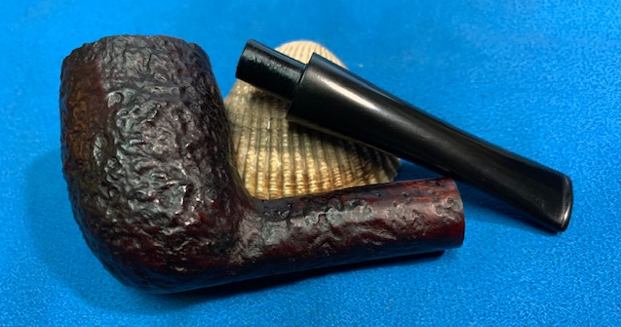
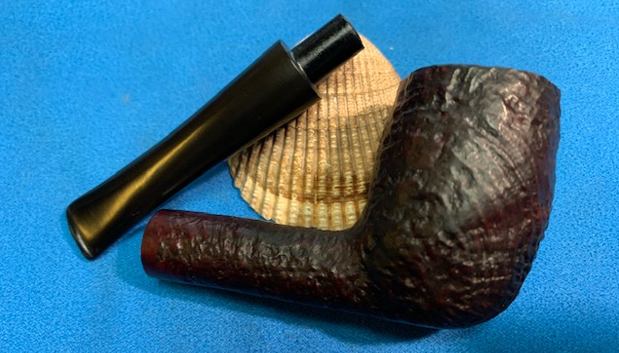
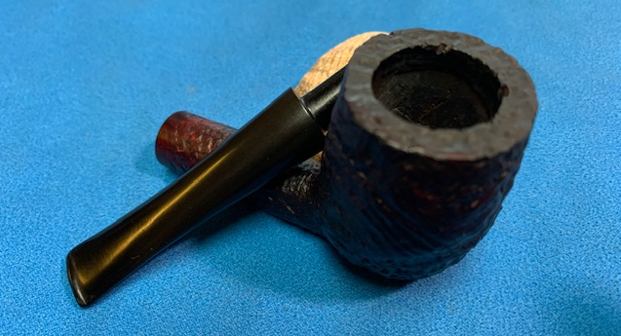
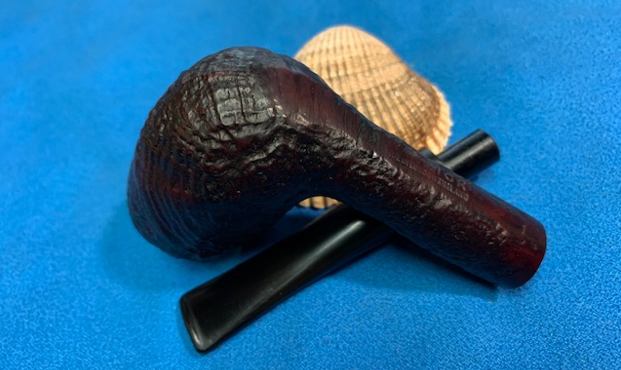
This Castello Sea Rock Briar KKKK 65 Ticks All of My Boxes


Blog by Steve Laug

It is another hot day in Vancouver with just some afternoon meetings. After a long week I decided to take bit of time this morning for myself. It is hot enough that I went to the cool of the basement to work on pipes. The next pipe on the table is another one that came to us from the auction in Gonzales, Louisiana, USA. The first one, a Castello Sea Rock Briar KKK16 Billiard, I cleaned up and wrote a blog about yesterday (https://rebornpipes.com/2021/06/24/i-really-love-these-castello-sea-rock-briar-pipes-a-sea-rock-briar-kkk16/). This next one is a Castello Sea Rock Briar and it is what Castello calls a Bent Billiard shape though to me it is like a bent egg. It is a pipe that I like so well that I am cleaning it up for myself. It is stamped on the smooth shank bottom and reads Castello [over] Sea Rock Briar followed by KKKK65. That is followed by Made in Cantu [over] Italy followed by an oval containing the name Carlo Scotti next to the stem shank union. The Castello “diamond” inset is on the left side of the saddle stem letting me know this was a pipe made for US import. On the underside of the stem it is stamped Hand Made [over] Castello with no number. The bowl had a heavy cake and there was thick lava overflow on back top side and inner edge. It was hard to know if there was burn damage on the smooth rim top because of the lava but after cleaning it we would know for sure. The rusticated finish was pretty dirty with dust and grime when we got it but still showed promise. The acrylic stem had deep tooth marks and chatter on both sides near the button. The edges of the button were also marked. Jeff took the following photos of the pipe before he worked his magic on them. The pipe must have been a terrific smoker because the bowl was so heavily caked with the thick lava flowing over the rim top. In its condition it was going to take some work to clean out that bowl and be able to see what the rim looked like underneath the layer of lava. The acrylic/Lucite stem was in good condition other than the deep tooth marks and chatter on both sides of the stem just ahead of the button and on the button surface itself. The rest of the bowl looked dirty but the photos give an idea of what Jeff saw before his cleanup revealed the condition of the pipe. The next photos try to capture the stamping on the flat panel on the underside of the shank. It read as I have noted above. The stem also bears a Hand Made Castello stamp on the underside. Jeff cleaned the pipe with his usual regime that many who read this probably have memorized. He reamed the bowl with a PipNet pipe reamer and cleaned up the remnants with a Savinelli Fitsall Pipe Knife. He scrubbed the internals of the bowl, shank and stem with alcohol, cotton swabs and pipe cleaners. He scrubbed the exterior with Murphy’s Oil Soap to clean off the dust and grime on the rusticated Sea Rock finish. The smooth rim top looked very good under the thick lava coat. The inside of the bowl itself looked great. He scrubbed the stem with Soft Scrub cleanser to remove the grime and grit. The stem was in great shape other than the tooth marks on both sides. It really is a beautiful looking rusticated pipe. I took photos of the pipe when it arrived here. I took some close up photos of the rim top, bowl and stem to show what they looked like after Jeff’s cleanup. It is a startling difference. The rim top looks very good. The stem also looks very good.I took a photo of the stamping on the underside of the shank and the stem. It is clear and readable as noted above.I removed the stem from the shank and took a photo of the pipe to show the proportions of the bowl/shank and the stem length. I cannot seem to retain the details on Castello pipes in my head for long for some reason. The stamping on them – Castello and the Carlo Scotti stamp were things that I wanted to makes sure I understand before I began to work on the pipe. I turned to Pipephil’s site to get a quick summary (http://www.pipephil.eu/logos/en/logo-castello.html). I quote:

Castello PIPA CASTELLO di Carlo Scotti & C. was founded in 1947 by Carlo Scotti (†1988). Franco Coppo (AKA “Kino”) who married Carlo Scotti’s daughter Savina, manages (2012) the corporate since 1985.

The site also gave a good summary of the grading and sizes of the pipes. I quote that in full.

Sizes (ascending):

1K to 4K, G (Giant) and GG (Extra large)

Rusticated grading: SEA ROCK, OLD SEA ROCK, NATURAL VIRGIN,

Sandblasted grading: ANTIQUARI, OLD ANTIQUARI

Smooth grading (ascending): TRADEMARK, CASTELLO, COLLECTION

Other stampings: Great Line (Non-standard or freestyle) Fiammata (Straight grain)

Production (2012): ~4000 pipes / year

I also found a note on the page that the Rhinestone logo was originally on pipes for the US market. It is occasionally used now.

I turned then to Pipedia for more information on the brand (https://pipedia.org/wiki/Castello). The majority of the information was what was already quoted above in abbreviated form. However there was a link to an article by Bob Hamlin that gave some interesting bits of information that I found helpful (http://www.pipes.org/BURST/FORMATTED/196.016.html). I quote in part from that article.

SEA ROCK [Carved Black or dark brown]:  This is the lowest grade of the Castello line and is the most common in the USA.  Sea Rocks are produced by taking a smooth bowl that has not been “final finished” and surface carving the finish with tools. This “carved” finish is then evened out using a steel wire brush, stained and then waxed. The Natural Vergin carved finish is left unstained and unwaxed as a rule, although we have seen waxed and partially waxed “Vergins”.

All carved Castello pipes are graded by the number of K’s that are stamped on each piece and are K-graded by SIZE.  1K is the smallest and fairly rare, 2K is small to medium, with 3K or 4K being the most common and ranges from medium to medium large. Large pieces are stamped “G” for giant and extra large pieces are stamped “GG” for double giant.  In addition to the number of K’s on a carved Sea Rock piece the shape number is almost always added.  As a rule a Sea Rock Castello is stained Black, although recently there have been quite a few coming in stained deep brown and still stamped “Sea Rock”.  American Logo’d Sea Rocks are all priced the same to the consumer, although most are 2 or 3 K’ed models.  G/GG models are charged at a higher price on American pieces and are basically the same as their European counterparts.

The Castello Sea Rock briar I was working on had the 4Ks of a Medium Large sized pipe. It definitely was made for the American Market with the Rhinestone in the stem. It had the black/dark brown finish. The 4K stamp told me that it came out in the late 1960s onward and was a mid-large sized pipe from that time period. The number 65 makes it a Bent Billiard.

I decided to work on the stem first and try to remove and repair the tooth marks on both sides of the acrylic stem. Since acrylic does not have “memory” like vulcanite I did not try painting the stem surface. I sanded down the chatter in preparation for repairing the tooth marks. I filled in the tooth marks with clear CA glue. Once the repairs cured I used a small file to flatten them out and recut the sharp edge of the button. To blend in the repairs I sanded the stem with 220 grit sandpaper and started the polishing with 400 grit wet dry sandpaper. I polished the stem with 1500-12000 grit pads. I dry sanded it with the pads and wiped it down with a damp cloth after each sanding pad. I finished polishing the stem with Before & After Pipe Polish – both Fine and Extra Fine polishes. I wiped the stem down with a damp cotton pad afterwards and buffed it with a soft microfiber cloth. I set the stem aside and turned my attention to the bowl. I polished the smooth rim top with micromesh sanding pads -1500-12000 grit pads. I wiped the rim top down with a damp cloth between each sanding pad. The rim top began to really shine. I worked some Before & After Restoration Balm into the rusticated Sea Rock finish on the bowl and the rim top. I worked it into the surface of the briar with my fingertips and a horsehair shoe brush to clean, enliven and protect the wood. Once the bowl was covered with the balm I let it sit for about 20 minutes and buffed it off with a soft cotton cloth and the shoe brush. I polished it with a microfiber cloth. I took photos of the pipe at this point in the process to show what the bowl looked like at this point. I put the bowl and stem back together on this beautiful Castello Sea Rock Briar KKKK 65 Bent Billiard. I polished the stem with Blue Diamond to polish out the scratches in the Lucite. I gave the bowl multiple coats of Conservator’s Wax and the stem multiple coats of carnauba wax. I buffed the pipe with a clean buffing pad to raise the shine. I hand buffed it with a microfiber cloth to deepen the shine. The pipe polished up pretty nicely. The contrast of the blacks and dark browns of the briar with the polished black acrylic/Lucite is quite stunning. The dark, coral like rustication around the bowl and shank is quite remarkable and gives the pipe an incredible tactile presence that only improves as it heated from a smoke. The finished pipe is shown in the photos below. The dimensions of the pipe are Length: 5 inches, Height: 2 ¼ inches, Outside diameter of the bowl: 1 ½ inches, Chamber diameter: ¾ of an inch. The pipe weighs 67grams/2.36oz. This is a beauty that will be staying with me as it ticks off all the boxes of a Castello that I have been watching out for. Thanks for walking through the restoration with me. I always enjoy working on Castello pipes. Cheers.
I really love these Castello Sea Rock Briar pipes – a Sea Rock Briar KKK16


Blog by Steve Laug

It has been a long hot day in Vancouver with lots of meetings and work all day. It is hot enough that once I quit for the day I decided to go to the cool of the basement and work on pipes. The next pipe on the table came to us from an auction in Gonzales, Louisiana, USA.  It is a Castello Sea Rock Briar and it is a Billiard shape to – both pluses in my book. It is stamped on the smooth heel of the bowl and the shank bottom and reads Castello [over] Sea Rock Briar followed by KKK16. That is followed by Made in Cantu [over] Italy followed by an oval containing the name Carlo Scotti next to the stem shank union. The Castello “diamond” inset is on the left side of the tapered stem letting me know this was a pipe made for US import. On the underside of the stem it is stamped Hand Made [over] Castello [over] 5. The bowl had a moderated cake in it and there was lava overflow back top side and inner edge. It was hard to know if there was burn damage on the smooth rim top because of the lava but after cleaning it we would know for sure. The rusticated finish was pretty dirty with dust and grime when we got it but still showed promise. The acrylic stem had deep tooth marks, scratching and chatter on both sides near the button. The edges of the button were also marked. Jeff took the following photos of the pipe before he worked his magic on them. The pipe must have been a terrific smoker because the bowl was moderately caked with lava flowing over the rim top. In its condition it was going to take some work to clean out that bowl and be able to see what the rim looked like underneath the layer of lava. The acrylic/Lucite stem was in good condition other than the tooth chatter and marks in the top and underside of the stem just ahead of the button. The rest of the bowl looked dirty but the photos give an idea of what Jeff saw before his cleanup revealed the condition of the pipe. The next photos try to capture the stamping on the flat panel on the underside of the shank. It read as I have noted above. The stem also bears a Hand Made Castello 5 stamp on the underside.   Jeff cleaned the pipe with his usual regime that many who read this probably have memorized. He reamed the bowl with a PipNet pipe reamer and cleaned up the remnants with a Savinelli Fitsall Pipe Knife. He scrubbed the internals of the bowl, shank and stem with alcohol, cotton swabs and pipe cleaners. He scrubbed the exterior with Murphy’s Oil Soap to clean off the dust and grime on the rusticated Sea Rock finish. The smooth rim top looked very good under the thick lava coat. The inside of the bowl itself looked great. The stem was in great shape other than the tooth marks on both sides. It really is a beautiful looking rusticated pipe. I took photos of the pipe when it arrived here. I took some close up photos of the rim top, bowl and stem to show what they looked like after Jeff’s cleanup. It is a startling difference. The rim top looks very good. The stem also looks very good.I took a photo of the stamping on the underside of the shank and the stem. It is clear and readable as noted above. I removed the stem from the shank and took a photo of the pipe to show the proportions of the bowl/shank and the stem length.I cannot seem to retain the details on Castello pipes in my head for long for some reason. The stamping on them – Castello and the Carlo Scotti stamp were things that I wanted to makes sure I understand before I began to work on the pipe. I turned to Pipephil’s site to get a quick summary (http://www.pipephil.eu/logos/en/logo-castello.html). I quote:

Castello PIPA CASTELLO di Carlo Scotti & C. was founded in 1947 by Carlo Scotti (†1988). Franco Coppo (AKA “Kino”) who married Carlo Scotti’s daughter Savina, manages (2012) the corporate since 1985.

The site also gave a good summary of the grading and sizes of the pipes. I quote that in full.

Sizes (ascending):

1K to 4K, G (Giant) and GG (Extra large)

Rusticated grading: SEA ROCK, OLD SEA ROCK, NATURAL VIRGIN,

Sandblasted grading: ANTIQUARI, OLD ANTIQUARI

Smooth grading (ascending): TRADEMARK, CASTELLO, COLLECTION

Other stampings: Great Line (Non-standard or freestyle) Fiammata (Straight grain)

Production (2012): ~4000 pipes / year

I also found a note on the page that the Rhinestone logo was originally on pipes for the US market. It is occasionally used now.

I turned then to Pipedia for more information on the brand (https://pipedia.org/wiki/Castello). The majority of the information was what was already quoted above in abbreviated form. However there was a link to an article by Bob Hamlin that gave some interesting bits of information that I found helpful (http://www.pipes.org/BURST/FORMATTED/196.016.html). I quote in part from that article.

SEA ROCK [Carved Black or dark brown]:  This is the lowest grade of the Castello line and is the most common in the USA.  Sea Rocks are produced by taking a smooth bowl that has not been “final finished” and surface carving the finish with tools. This “carved” finish is then evened out using a steel wire brush, stained and then waxed. The Natural Vergin carved finish is left unstained and unwaxed as a rule, although we have seen waxed and partially waxed “Vergins”.

All carved Castello pipes are graded by the number of K’s that are stamped on each piece and are K-graded by SIZE.  1K is the smallest and fairly rare, 2K is small to medium, with 3K or 4K being the most common and ranges from medium to medium large. Large pieces are stamped “G” for giant and extra large pieces are stamped “GG” for double giant.  In addition to the number of K’s on a carved Sea Rock piece the shape number is almost always added.  As a rule a Sea Rock Castello is stained Black, although recently there have been quite a few coming in stained deep brown and still stamped “Sea Rock”.  American Logo’d Sea Rocks are all priced the same to the consumer, although most are 2 or 3 K’ed models.  G/GG models are charged at a higher price on American pieces and are basically the same as their European counterparts.

The Castello Sea Rock briar I was working on had the 3K’s of a Medium sized pipe. It definitely was made for the American Market with the Rhinestone in the stem. It had the dark brown finish. The shape number still needed to be determined.

Pipedia also gave a link to Mike’s Briar Blues site for help in dating and determining shapes (http://www.briarblues.com/castello.htm). I quote a section on the shape numbers.

Shape numbers. Shape numbers are all 2 digits. A 2 in front indicates a “fancy” interpretation, a 3 in front means that the carving is somehow unique. I don’t know when the change was made, but currently, a π symbol is used instead of the 3xx. I’ve only seen this on Sea Rocks, but that doesn’t mean anything…

Now I had more information to work with. The Castello Sea Rock in my hands 3K graded. That told me that it came out in the late 1960s onward. The 3K stamp makes it a mid-sized pipe from that time period. The number 16 makes it a straight shank billiard.

I decided to work on the stem first and try to remove and repair the tooth marks on both sides of the acrylic stem. Since acrylic does not have “memory” like vulcanite I did not try painting the stem surface. I sanded down the chatter in preparation for repairing the tooth marks. I filled in the tooth marks with clear CA glue. Once the repairs cured I used a small file to flatten them out and recut the sharp edge of the button. To blend in the repairs I sanded the stem with 220 grit sandpaper and started the polishing with 400 grit wet dry sandpaper.   I polished the stem with 1500-12000 grit pads. I dry sanded it with the pads and wiped it down with a damp cloth after each sanding pad. I finished polishing the stem with Before & After Pipe Polish – both Fine and Extra Fine polishes. I wiped the stem down with a damp cotton pad afterwards and buffed it with a soft microfiber cloth. I set the stem aside and turned my attention to the bowl. I polished the smooth rim top with micromesh sanding pads -1500-12000 grit pads. I wiped the rim top down with a damp cloth between each sanding pad. The rim top began to really shine. I worked some Before & After Restoration Balm into the rusticated Sea Rock finish on the bowl and the rim top. I worked it into the surface of the briar with my fingertips and a horsehair shoe brush to clean, enliven and protect the wood. Once the bowl was covered with the balm I let it sit for about 20 minutes and buffed it off with a soft cotton cloth and the shoe brush. I polished it with a microfiber cloth. I took photos of the pipe at this point in the process to show what the bowl looked like at this point. I put the bowl and stem back together on this beautiful Castello Sea Rock Briar KKK16 Billiard. I polished the stem with Blue Diamond to polish out the scratches in the Lucite. I gave the bowl multiple coats of Conservator’s Wax and the stem multiple coats of carnauba wax. I buffed the pipe with a clean buffing pad to raise the shine. I hand buffed it with a microfiber cloth to deepen the shine. The pipe polished up pretty nicely. The contrast of the blacks and dark browns of the briar with the polished black acrylic/Lucite is quite stunning. The dark and coral like rustication around the bowl and shank is quite remarkable and gives the pipe an incredible tactile presence that only improve as it heated from a smoke. The finished pipe is shown in the photos below. The dimensions of the pipe are Length: 5 ¾ inches, Height: 2 inches, Outside diameter of the bowl: 1 ½ inches, Chamber diameter: ¾ of an inch. The pipe weighs 53grams/1.87oz. This is a beauty that will be going on the Italian Pipe Makers section of the rebornpipes online store. Let me know if you want it. Thanks for walking through the restoration with me. I always enjoy working on Castello pipes. Cheers.