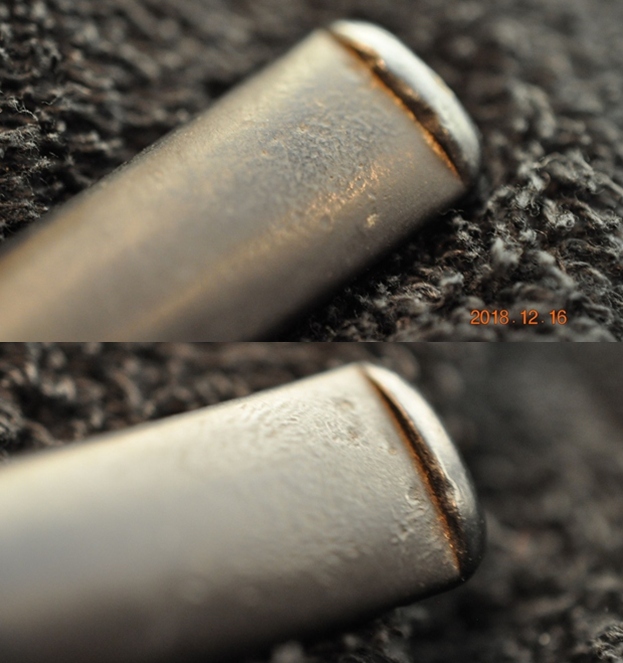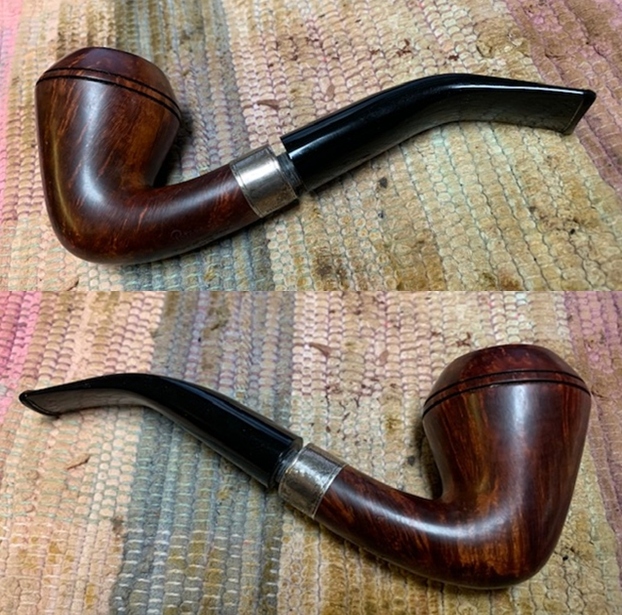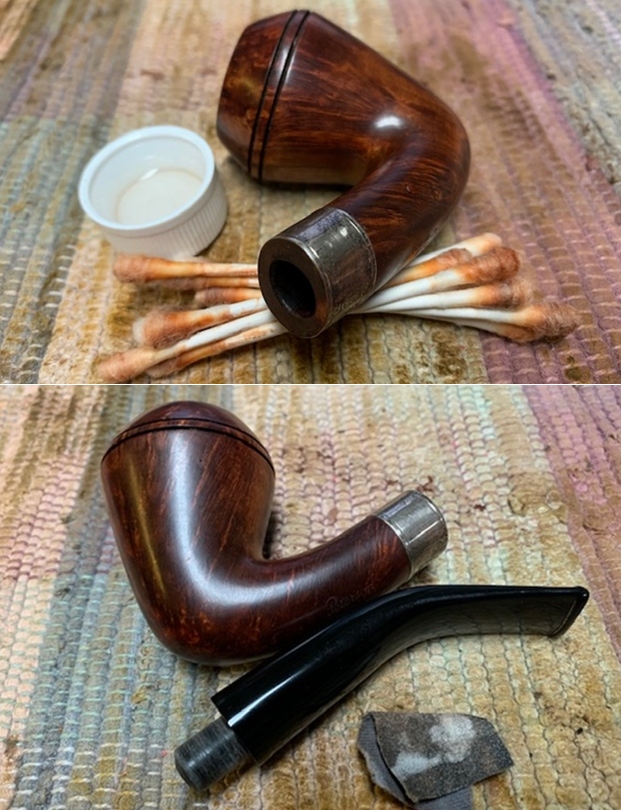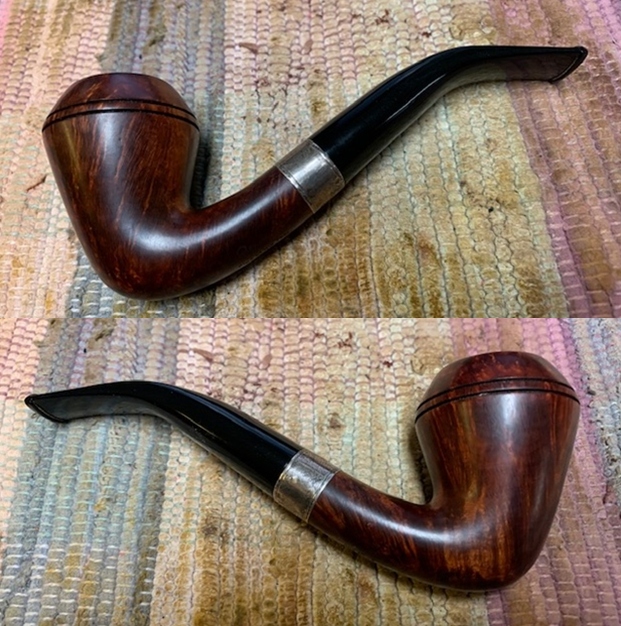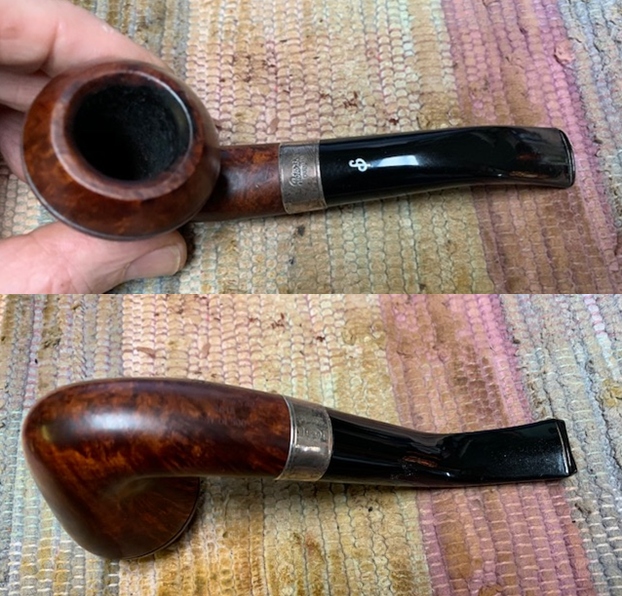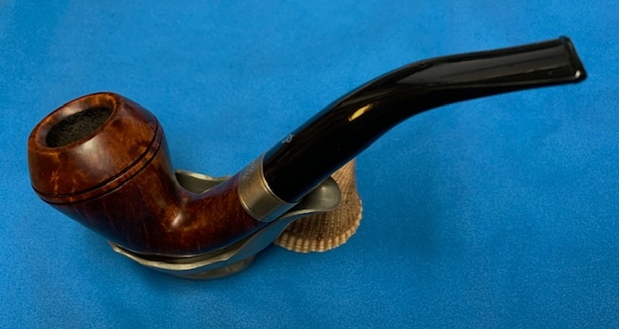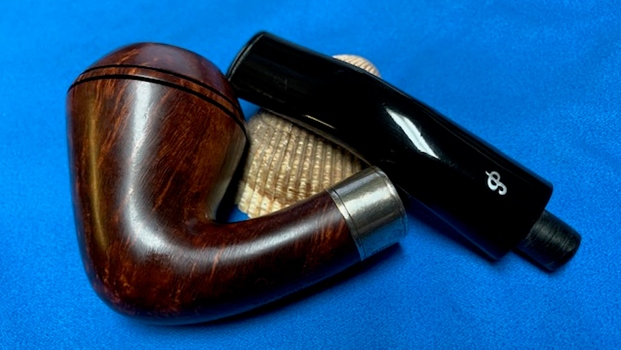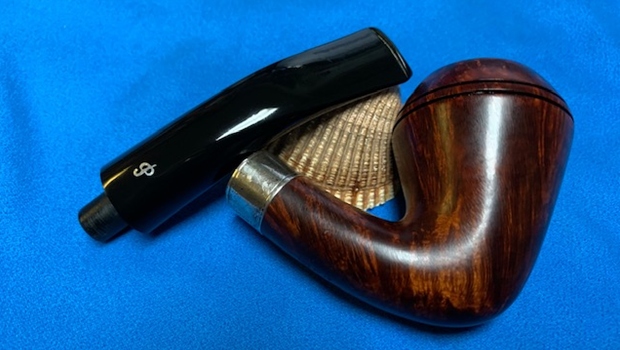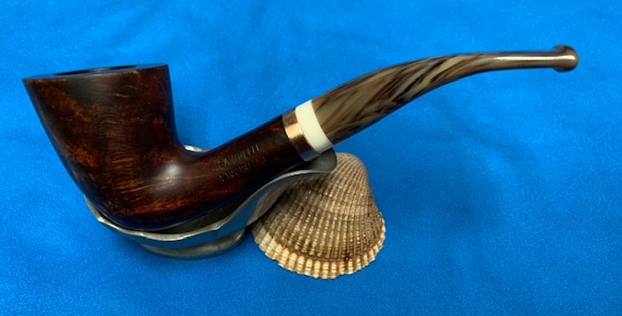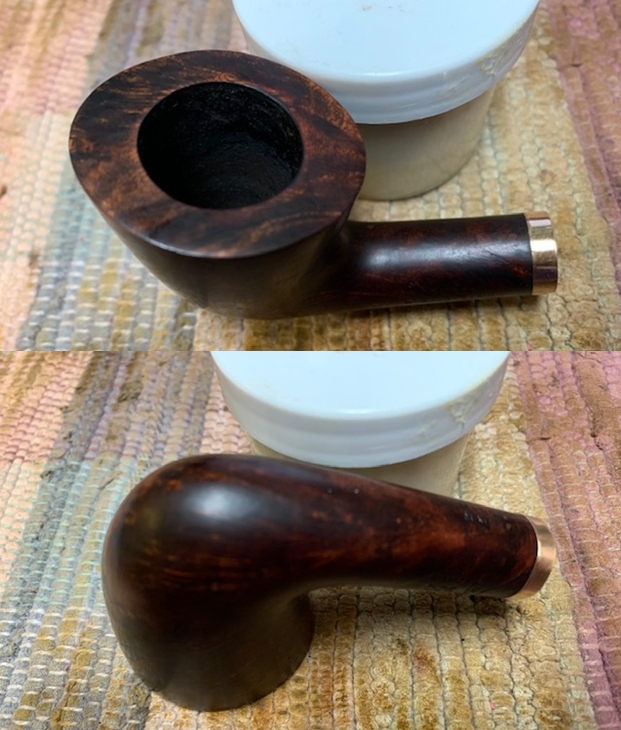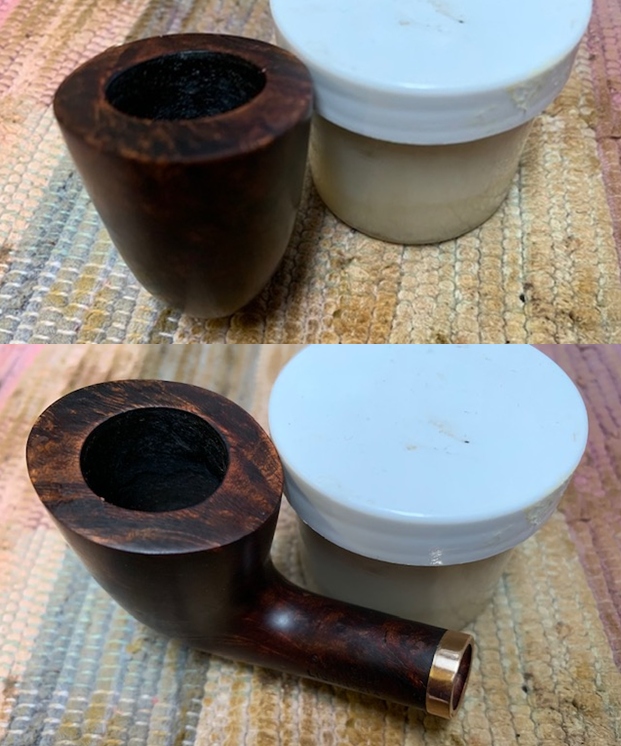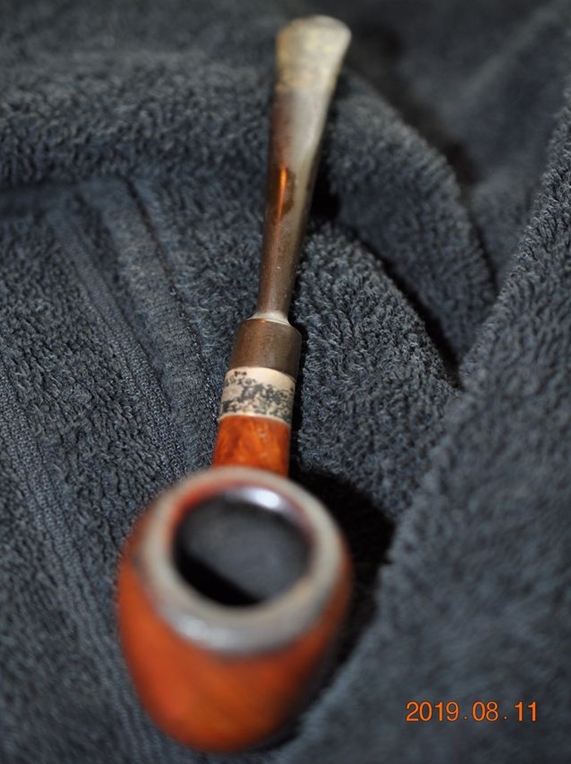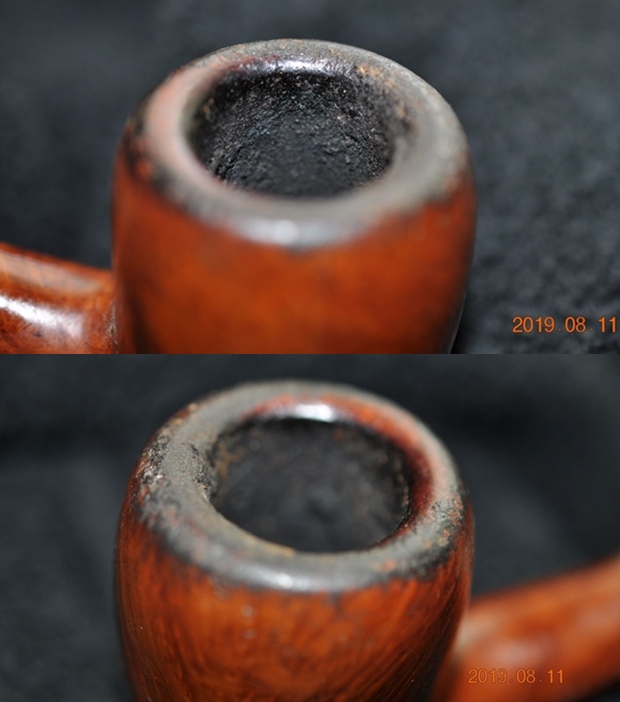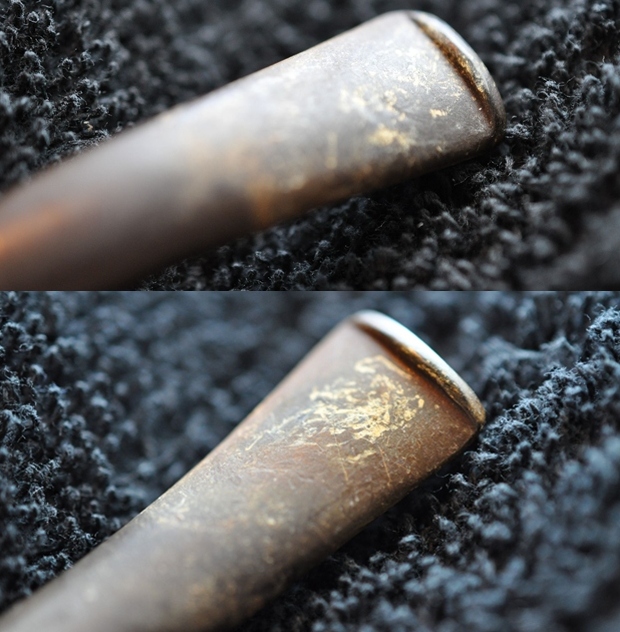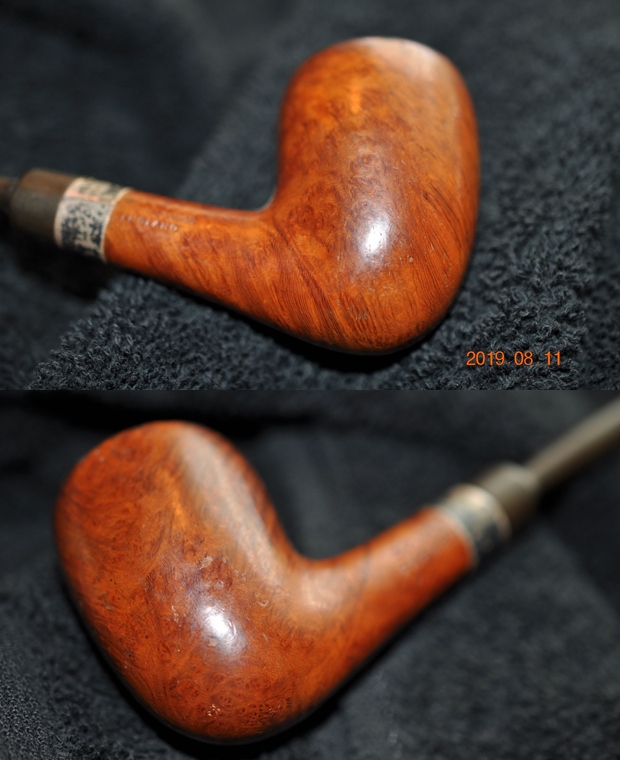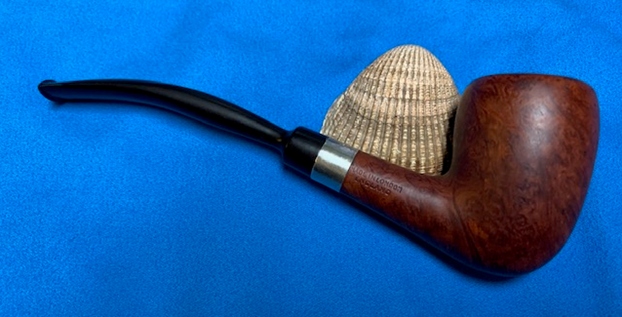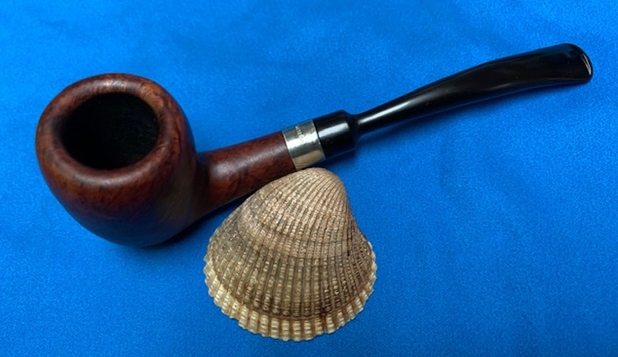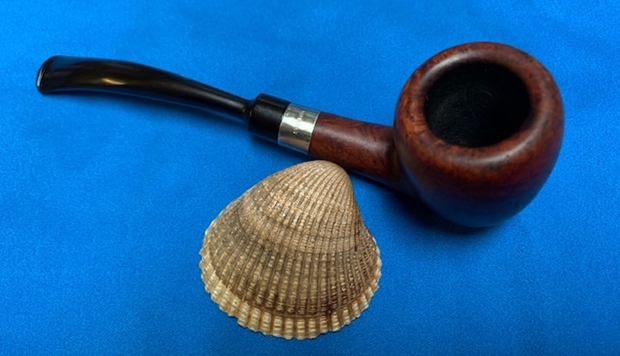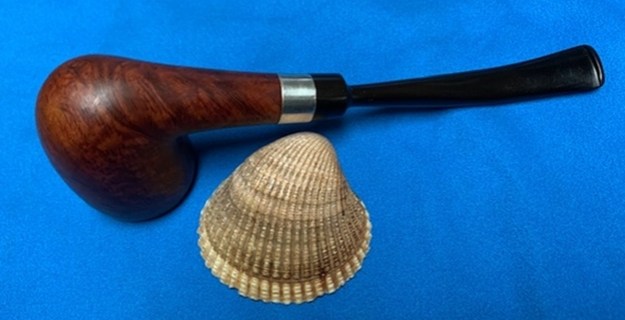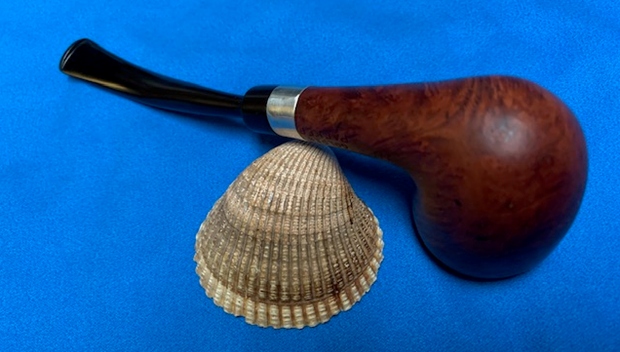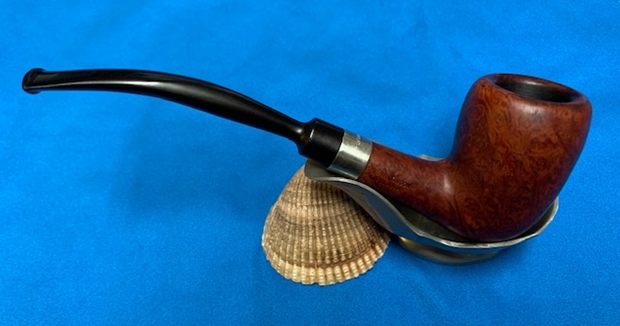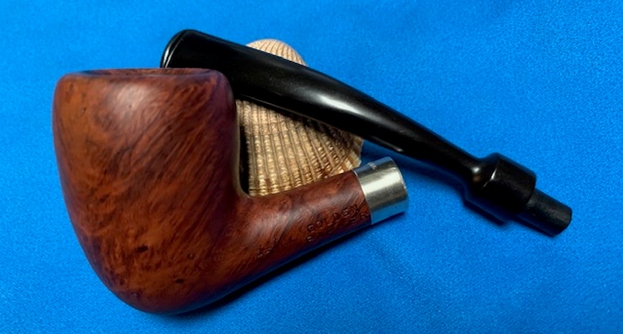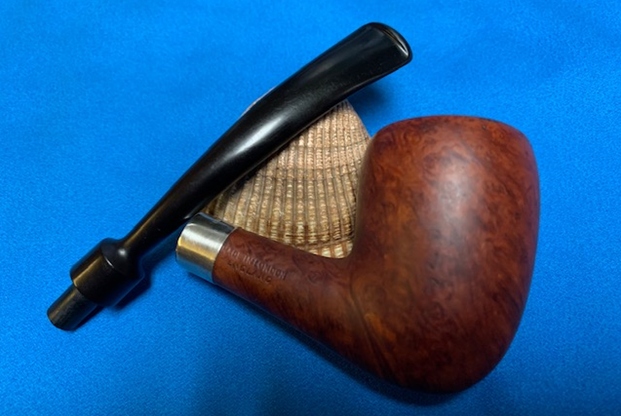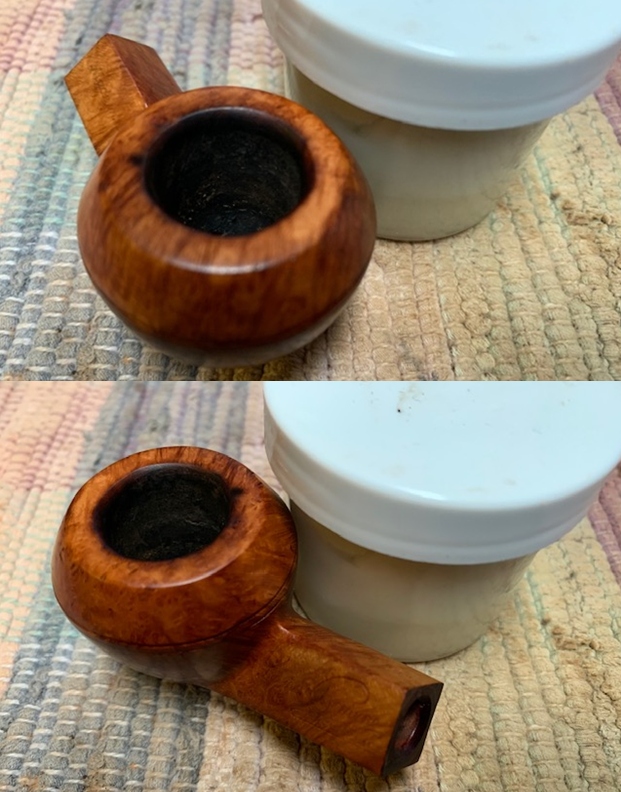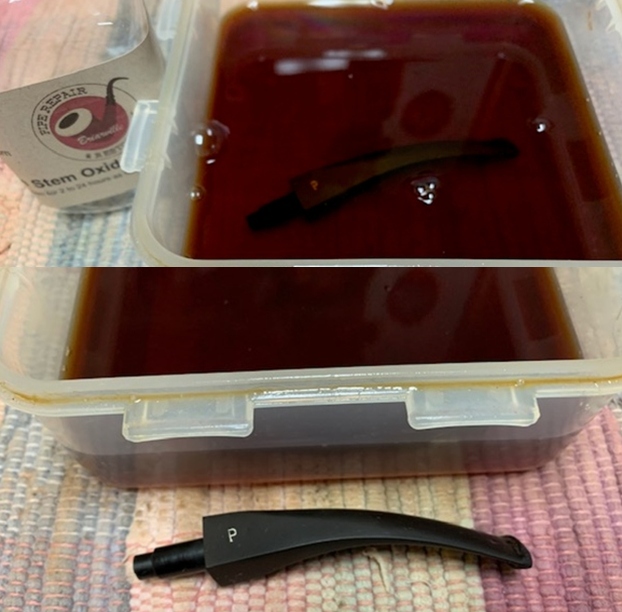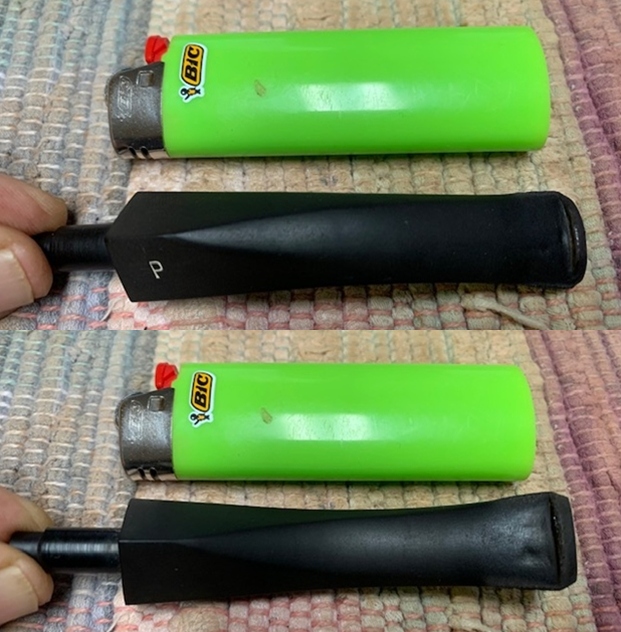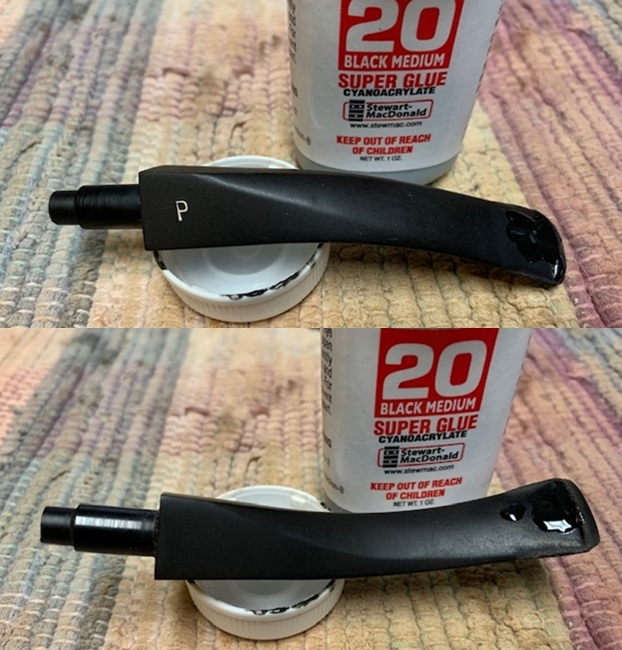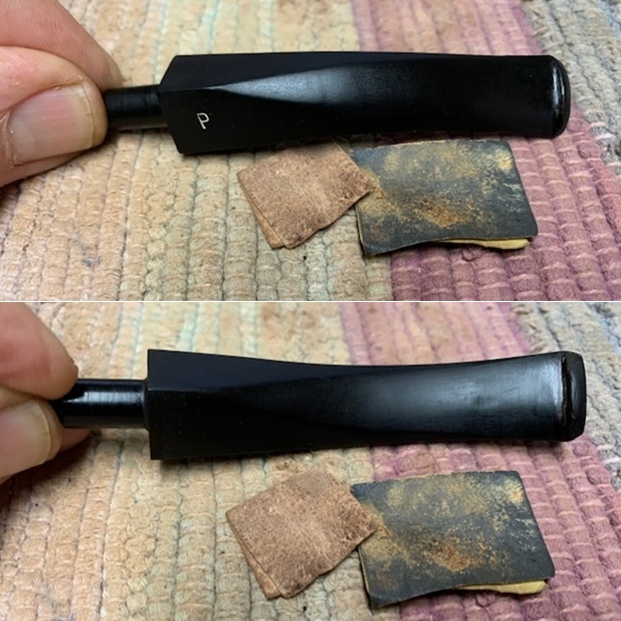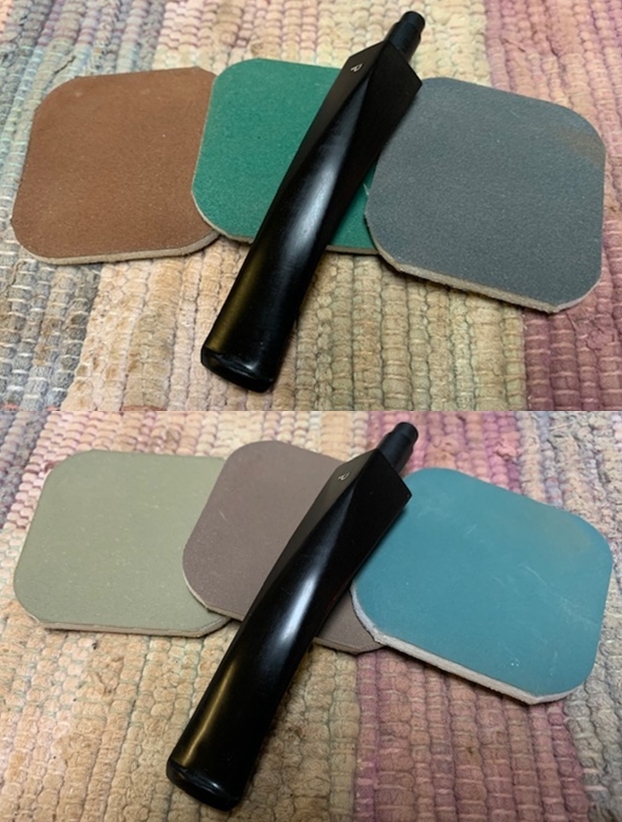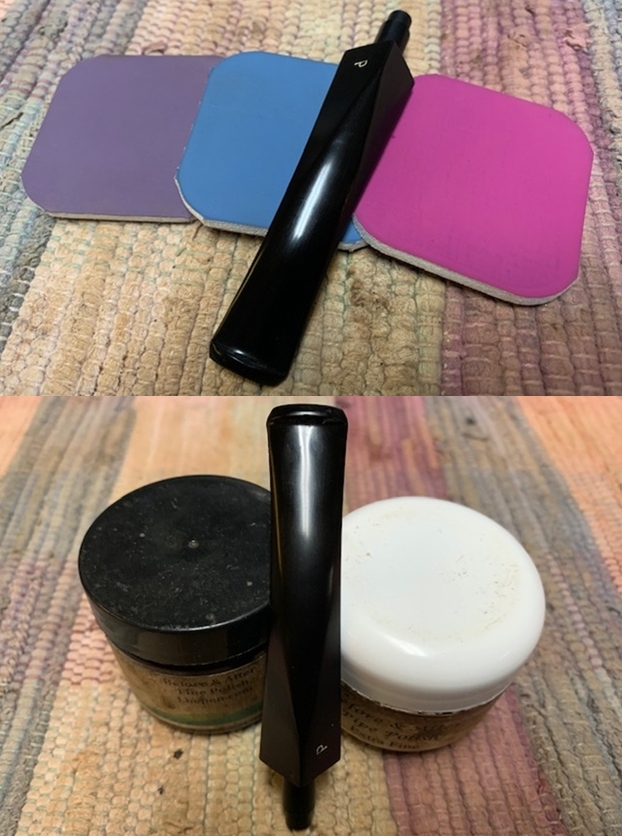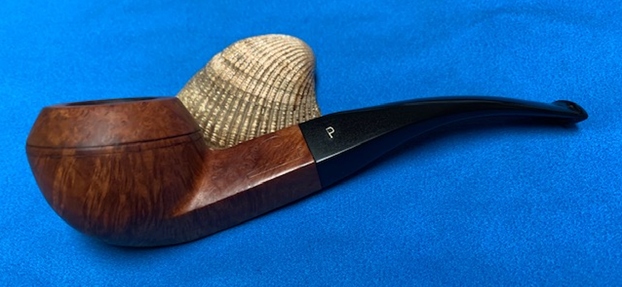
Tag Archives: removing tooth marks

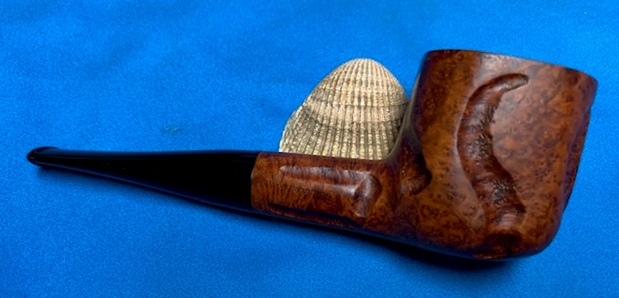
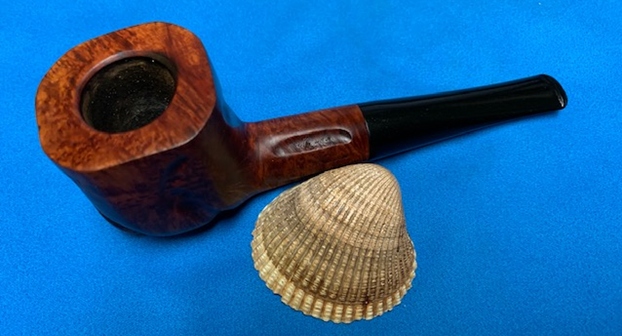
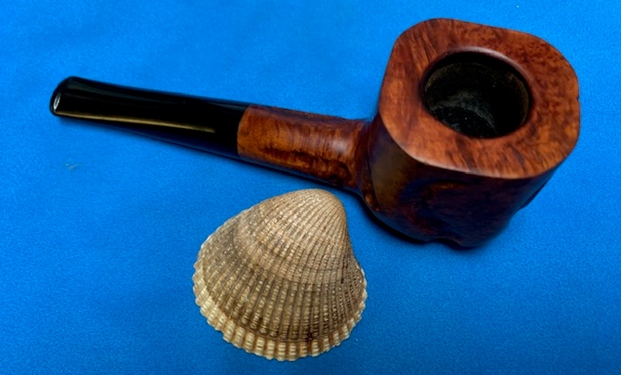
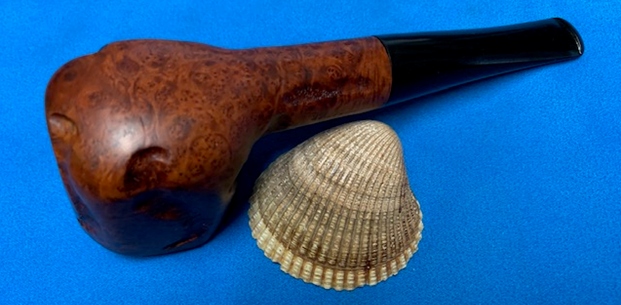
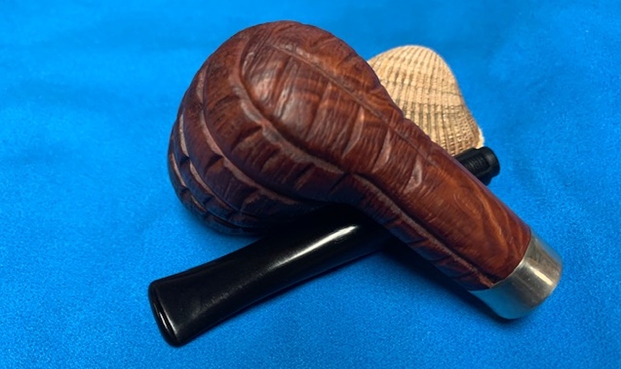
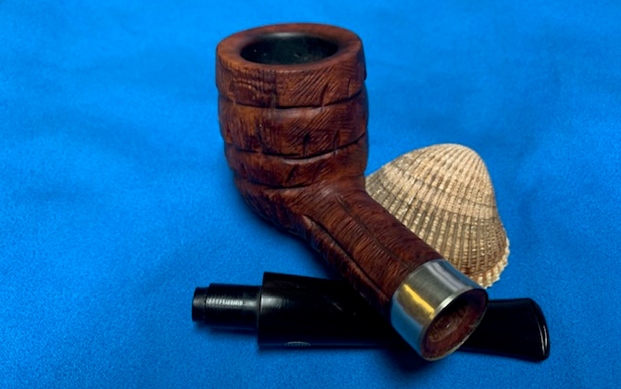
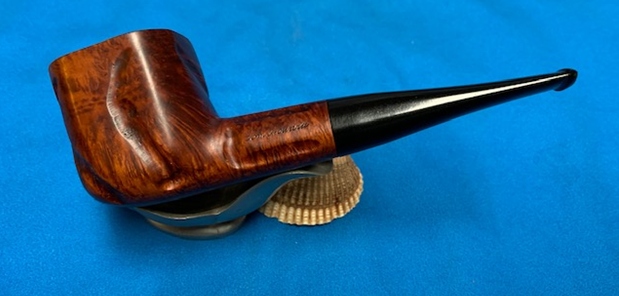
Restoring a Chunky, Rusticated Tom Howard Panel Billiard


Blog by Steve Laug

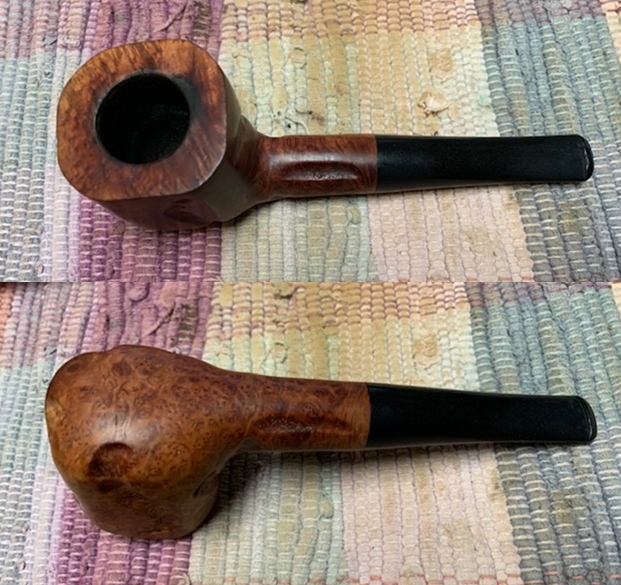
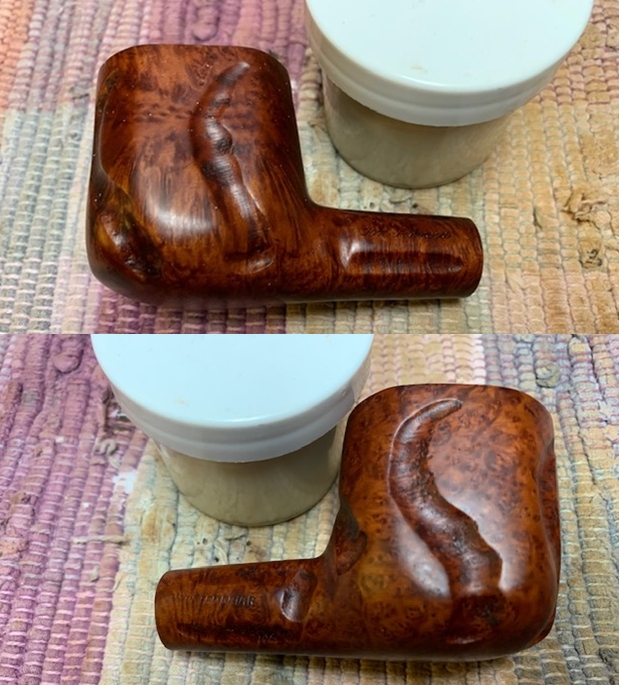
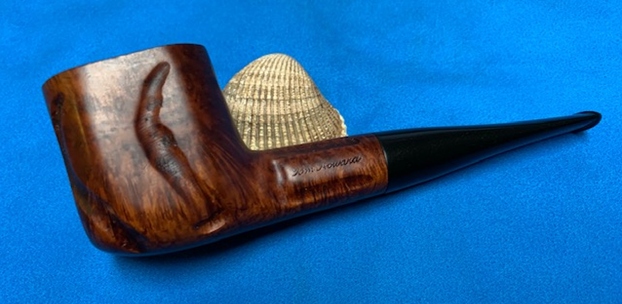
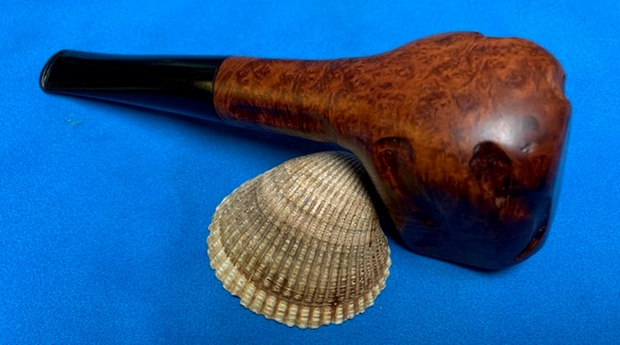
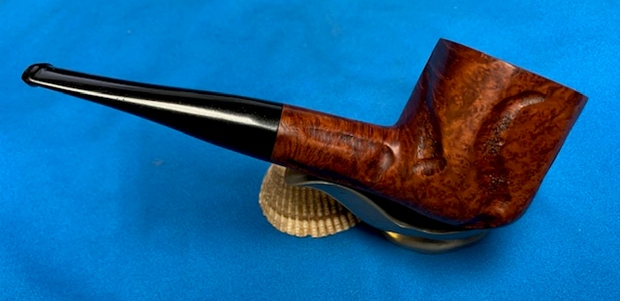
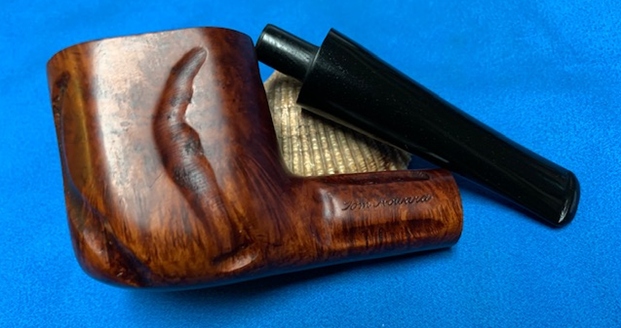
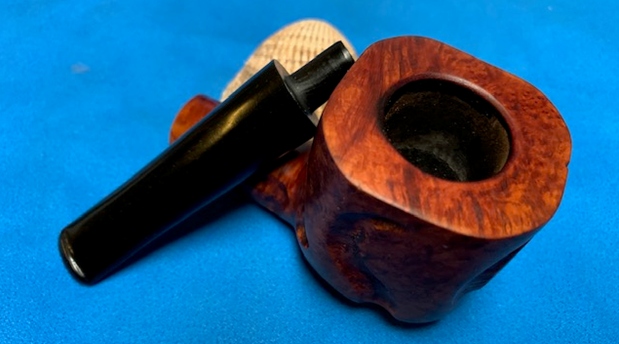
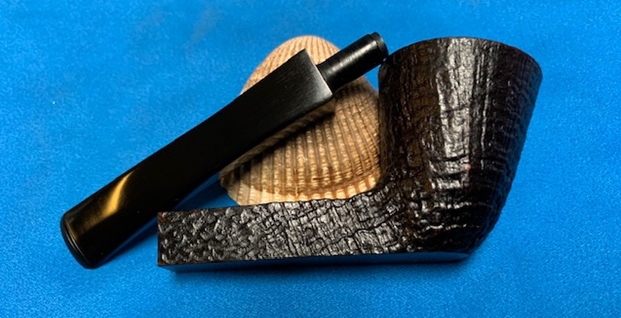
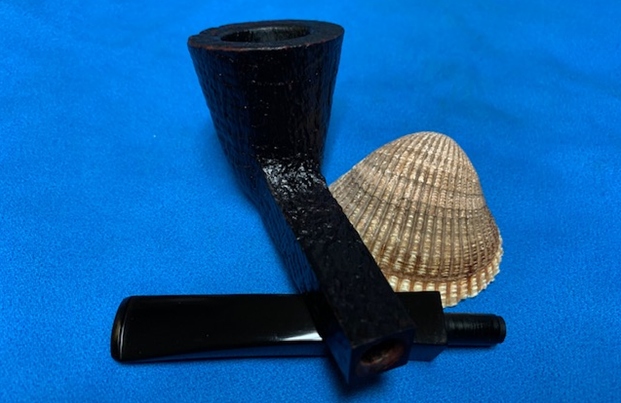
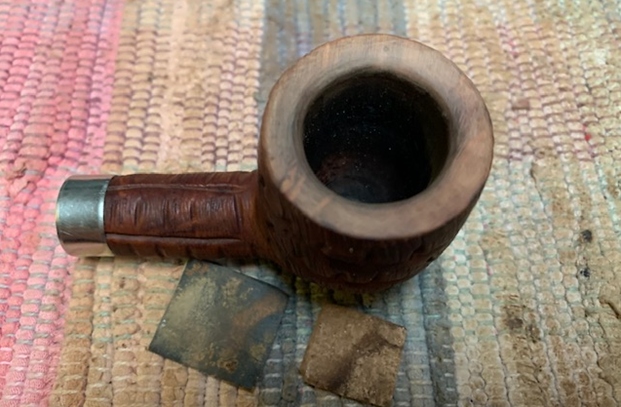
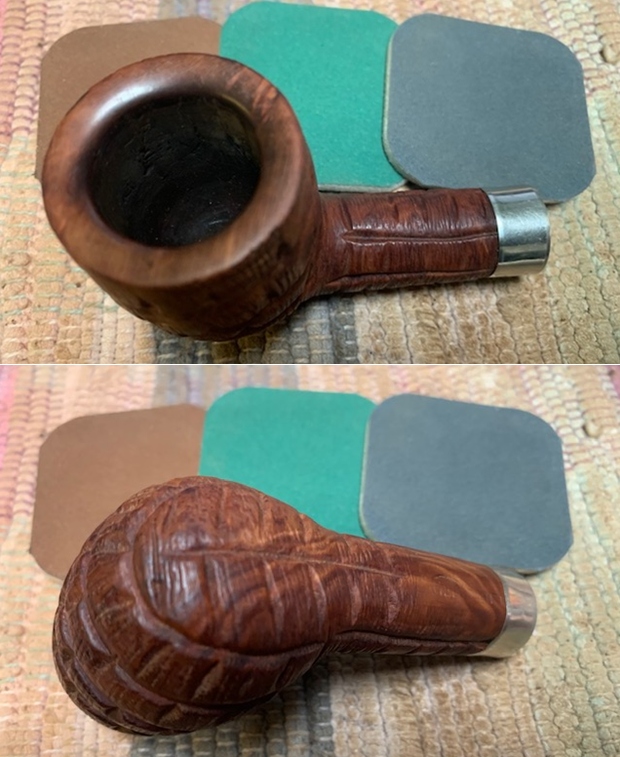
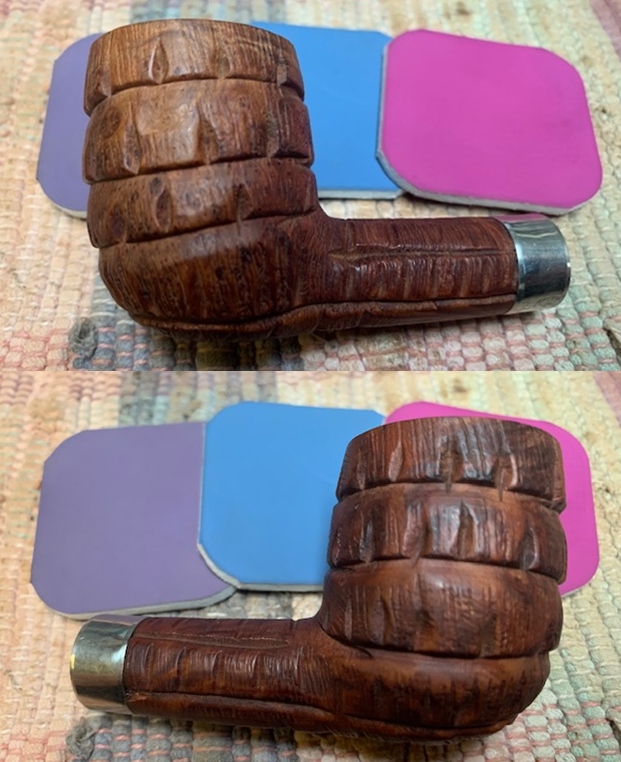
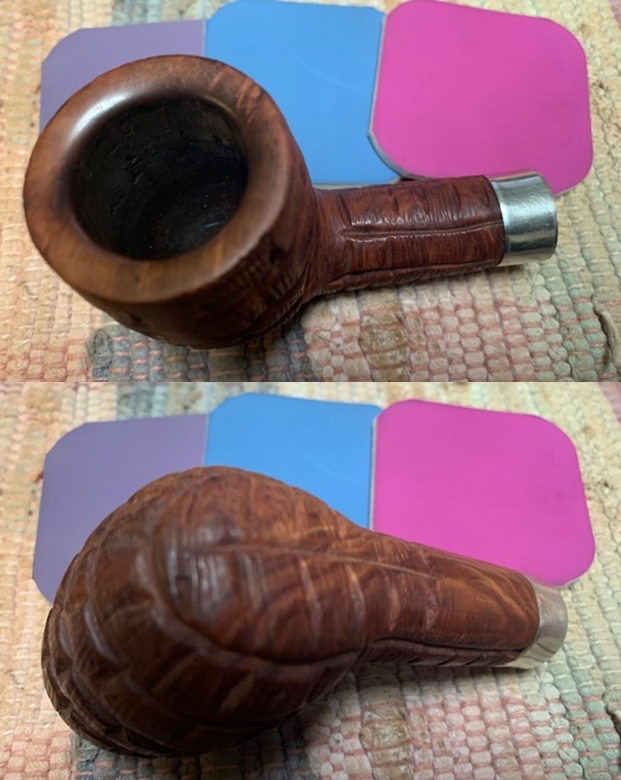
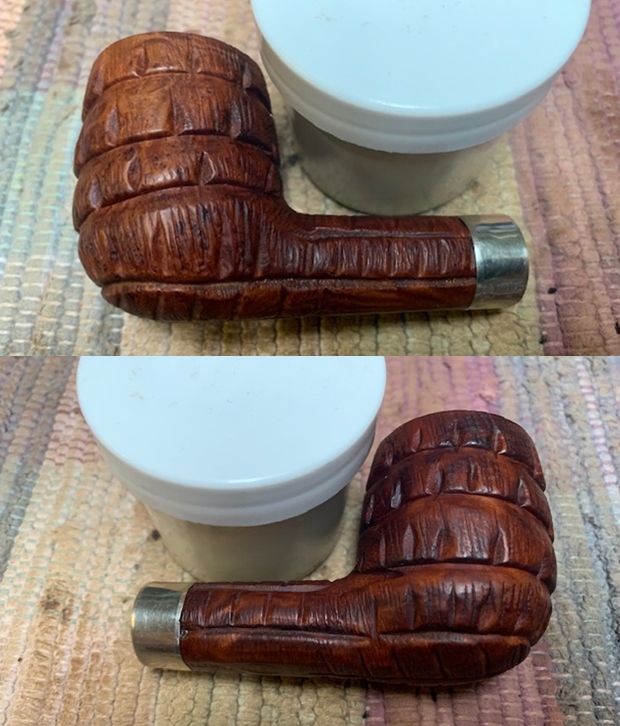
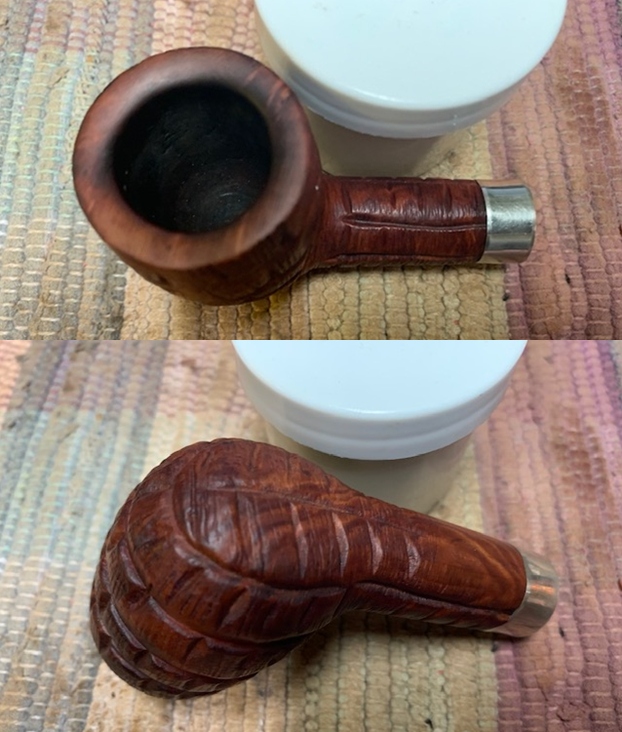
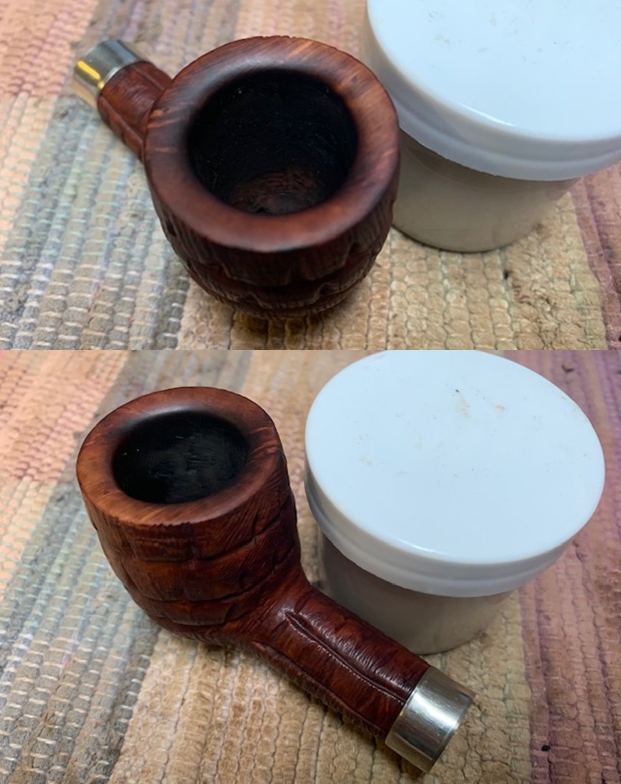
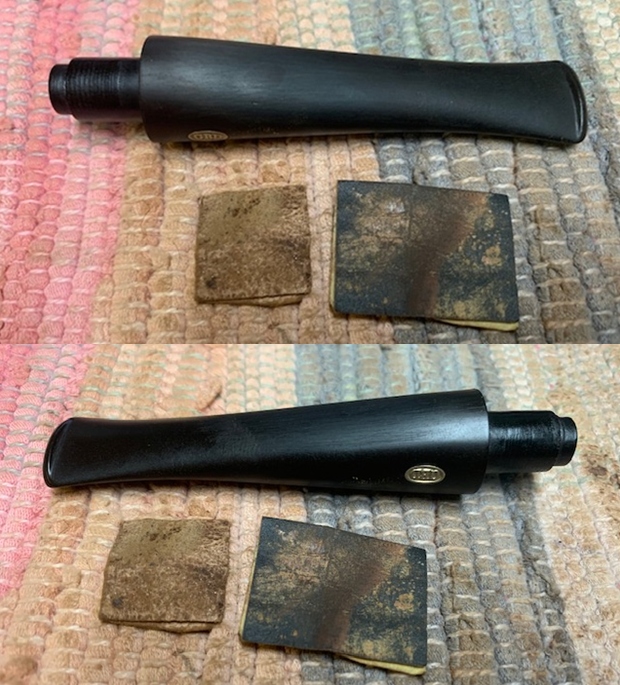
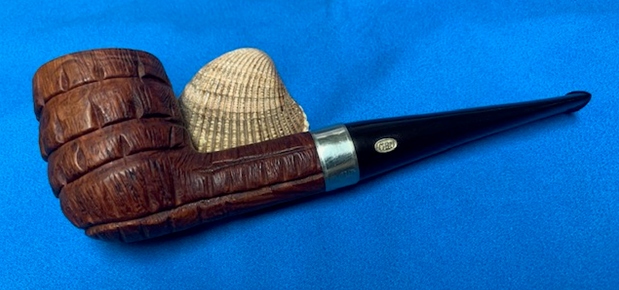
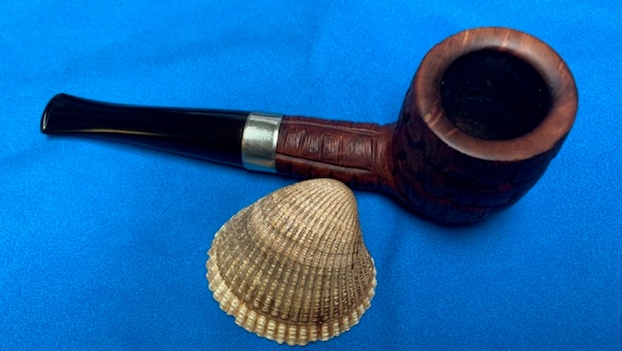
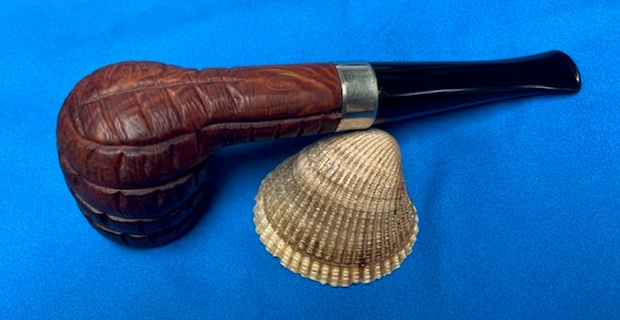
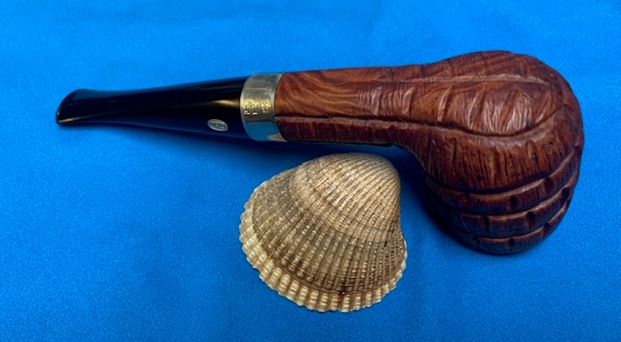
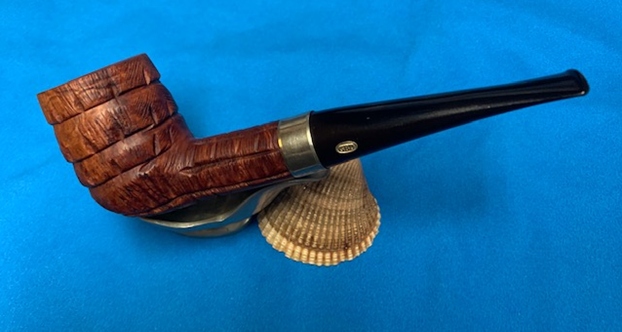
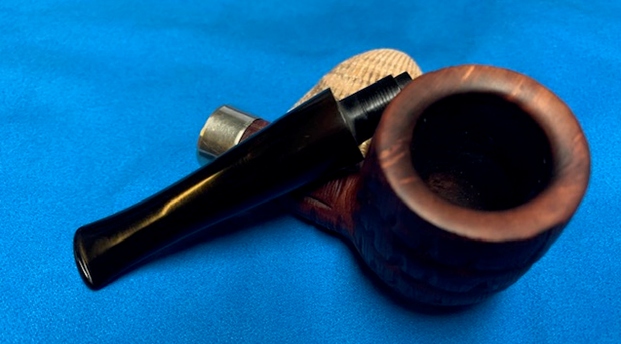
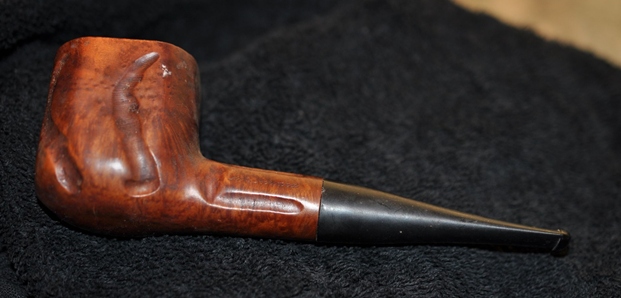
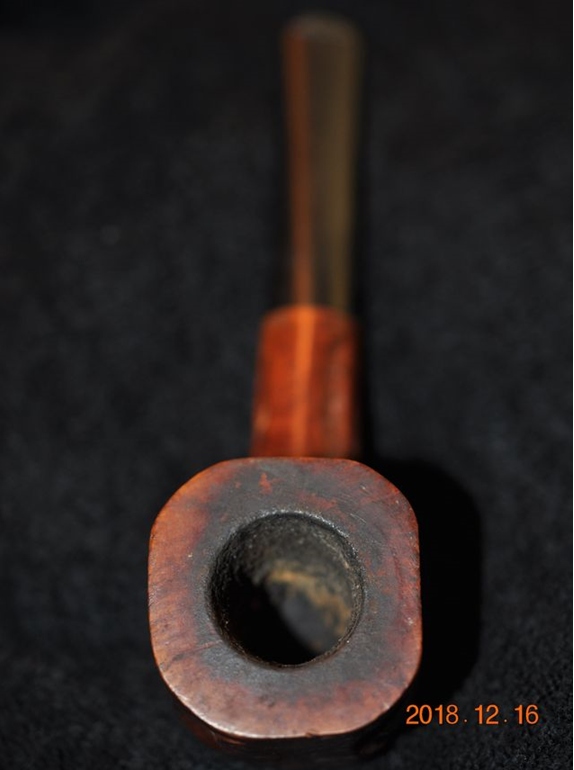
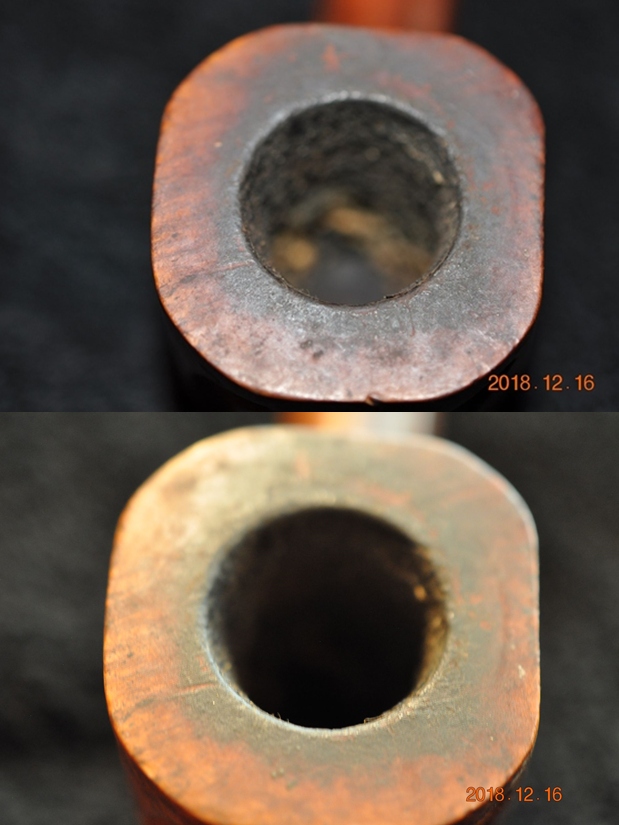
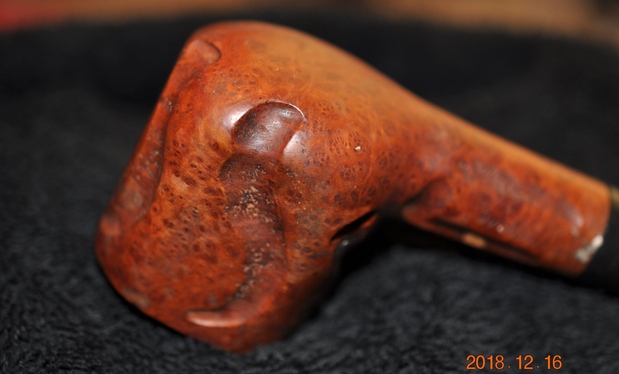
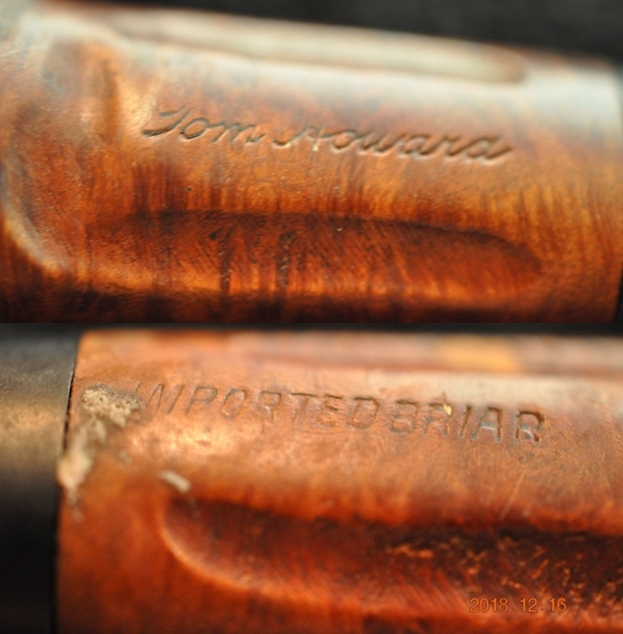
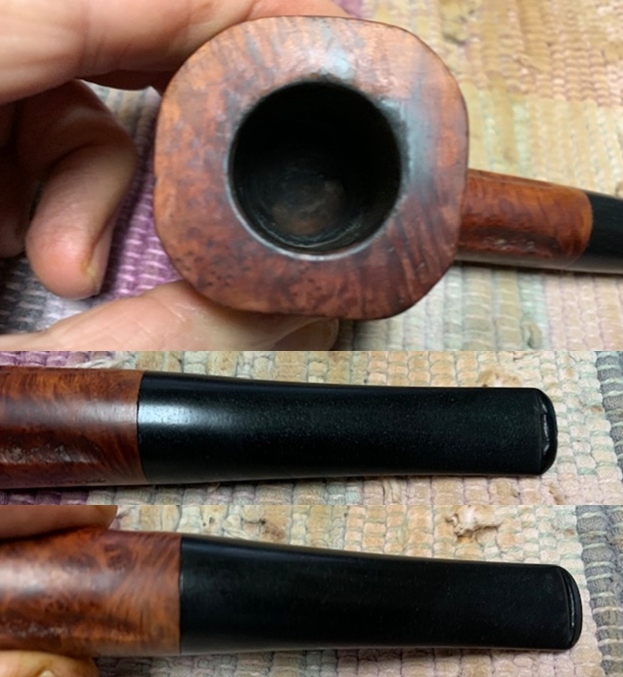
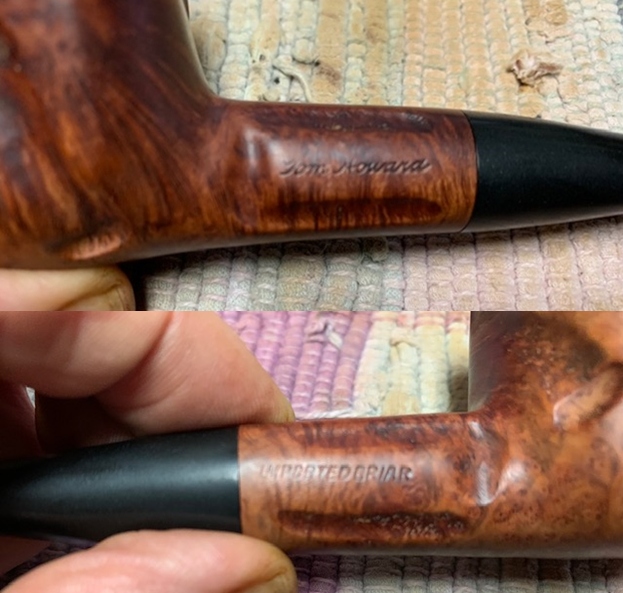
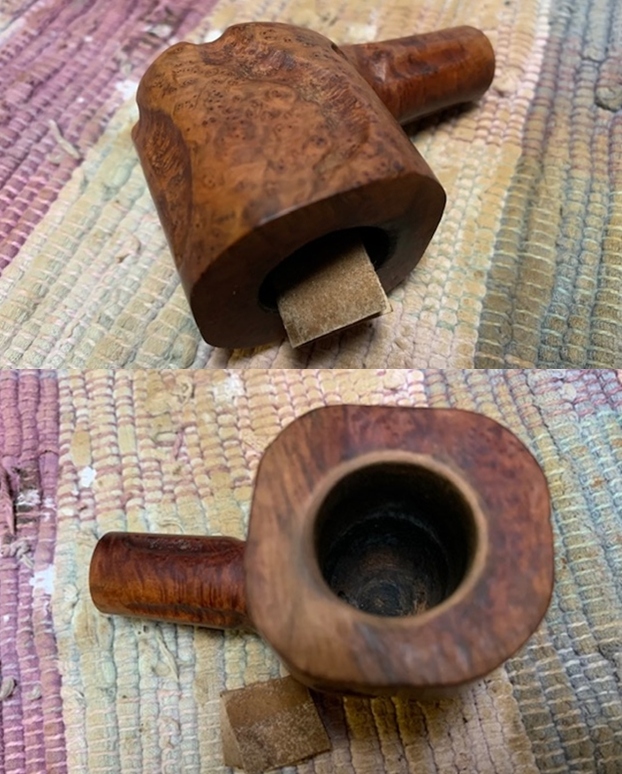
The next pipe on the table came to us in a group of pipes that we purchased from online auction on in 2018 from Dearborn Heights, Michigan, USA. It is a rusticated Panel Billiard that is in good condition. It is stamped on the sides of the shank. On the left side it is stamped Tom Howard. On the right side it is stamped Imported Briar. The stamping is clear and readable. I have worked on at least one Tom Howard pipe in the past and later in the blog will give a bit of the history. At this point I have to say that the pipe is well made but it is clunky looking and feeling. It does not have the rugged beauty or finesse of a Tracy Mincer Custom-Bilt in my opinion. It has its own charm, to be sure but it is not the same. The age of the pipe and the oils in the finish has given the pipe a rich reddish brown finish. There is also some nice grain that the shape follows well. The finish was dirty with dust around the nooks and crannies of the worm trail rustication. There was a thick cake in the bowl and the rim top showed darkening and some lava. The inner edge showed some potential damage that would only become clear once the pipe was cleaned. The vulcanite taper stem was oxidized, calcified and had tooth marks and chatter ahead of the button on both sides.  Jeff took photos of the pipe to show what it looked like before he started working on it. He took photos of the bowl and rim top to show the thickness of the cake and the darkening and lava overflow on the rim top. The photos of the stem show the oxidation, calcification and tooth marks and chatter on the surface on both sides.  The photo of the side and heel of the bowl shows the carved worm trail rustication and the grain on the pipe. It looks quite nice under the grime and dust.    The stamping on the sides of the shank is shown in the photos below. It looks very good and readable. It reads as noted and explained above. Before I started my work on the pipe I wanted to refresh my memory of the brand. I remembered that Tom Howard was a notable figure beyond pipe making. I also remembered that Dal Stanton had worked on one and done a great job ferreting out the history of the brand and the maker. I turned to his blog on the brand and read what he had written during his restoration of one of the Howard pipes (https://rebornpipes.com/2018/09/16/the-vintage-notoriety-of-tom-howard-and-his-jumbo-squat-rustified-tomato/). I have included the portion of the blog on the history below for ease of reference. (Thanks Dal!)
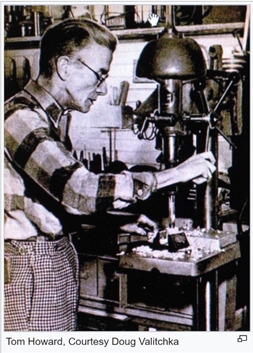
I had never heard of a Tom Howard stamp on a pipe and after I put the name in search tool on Pipedia I was surprised to find what I found.  Tom Howard was a vintage celebrity in America during the 1940s and 50s.  Here’s what Pipedia said about Tom Howard the man:

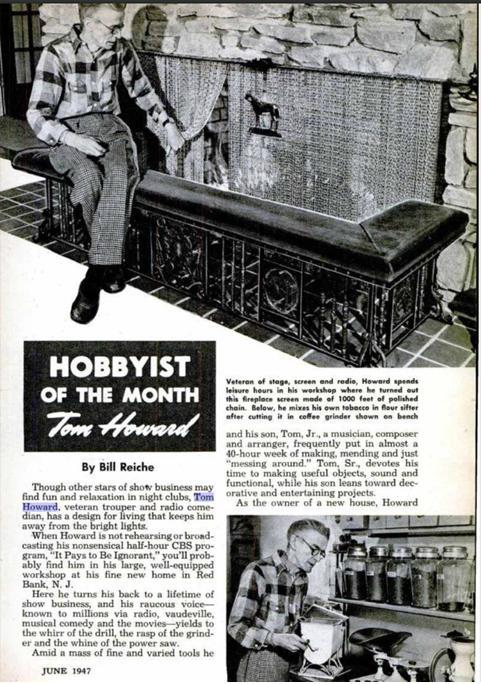
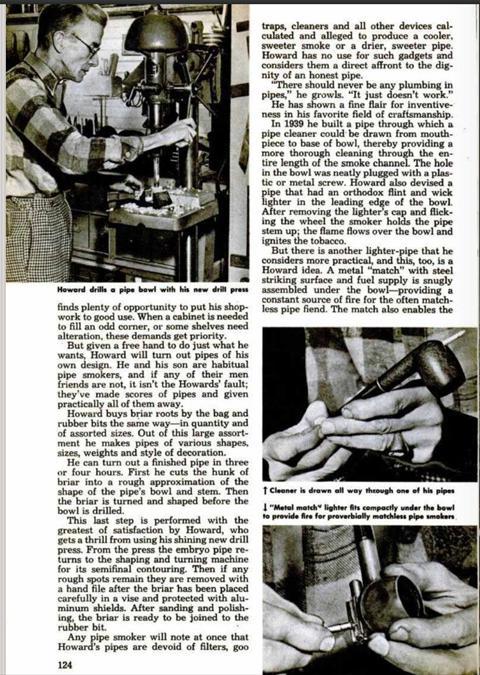
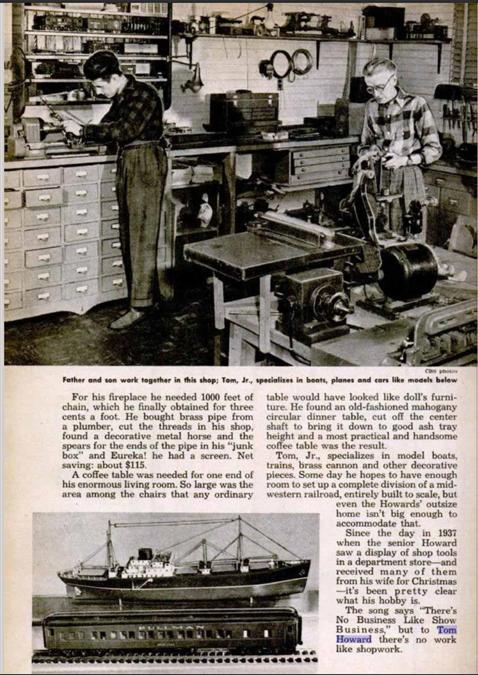
Tom Howard was a popular comedian and personality in the 1940s/50s, known for vaudeville stage and radio work. But he also was a skilled pipe maker. In a Popular Mechanic article from 1947 he is written up as the “Hobbyist of the Month, Tom Howard.” He made pipes in his workshop outside his home in Red Bank, NJ. Starting about 1939 and looks like into the late 1940’s or later. He purchased briar blocks by the bag as well as stem blanks, and in his well-equipped shop he handcrafted his pipes, in about three hours on average. He was a true craftsman, also specializing is intricate model boats, trains and brass canons, all built to scale.

I was intrigued – this vaudeville and stage comedian made pipes and this pipe came from his workshop made by his hands.  How cool is that?  Desiring to find out more about Tom Howard the man, I searched Wikipedia and found a fun and informative article about his professional life and how he hosted a I was intrigued – this vaudeville and stage comedian made pipes and this pipe came from his workshop made by his hands.  How cool is that?  Desiring to find out more about Tom Howard the man, I searched Wikipedia and found a fun and informative article about his professional life and how he hosted a zany Q&A game show that was spoofing the ‘serious’ Q&A game shows.  It was called “It Pays to Be Ignorant”.   Here is what the Wikipedia article said:

It Pays to Be Ignorant was a radio comedy show which maintained its popularity during a nine-year run on three networks for such sponsors as Philip Morris, Chrysler, and  DeSoto. The series was a spoof on the authoritative, academic discourse evident on such authoritative panel series as Quiz Kids and Information Please, while the beginning of the program parodied the popular quiz show, Doctor I.Q. With announcers Ken Roberts and Dick Stark, the program was broadcast on Mutual from June 25, 1942 to February 28, 1944, on CBS from February 25, 1944 to September 27, 1950 and finally on NBC from July 4, 1951 to September 26, 1951. The series typically aired as a summer replacement.
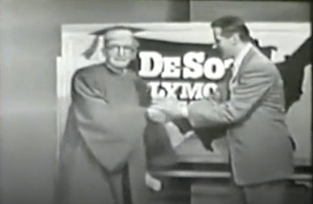
Snooping a bit more, I found an online site that had the July 5, 1951 episode of ‘It pays to Be Ignorant’ available for viewing.  I watched it and it was like I was in a time machine!  The video also included period advertising for cars and tobacco and Tom Howard in form, dawning a professorial gown and a gravelly 1950s vaudeville tin can voice.  It’s great! I clipped a picture of the episode.  If you want to see it yourself, here’s the link:  The Internet Archive.

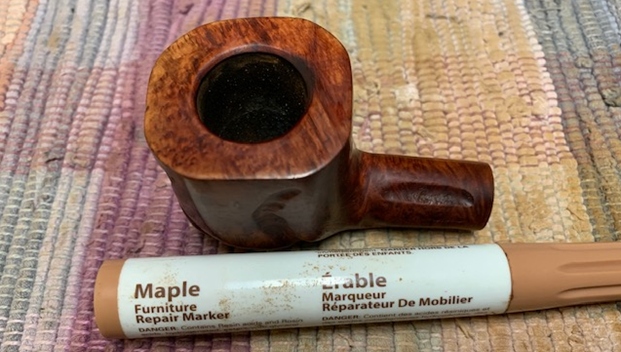
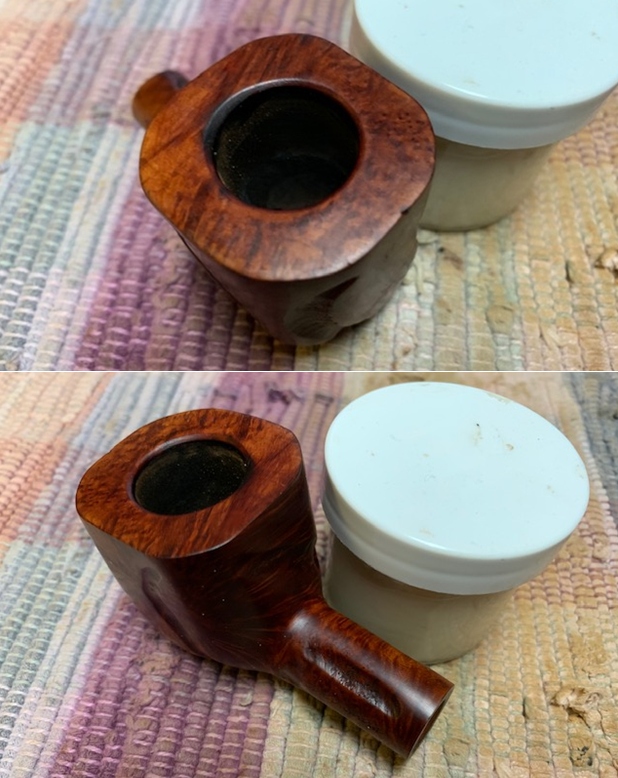
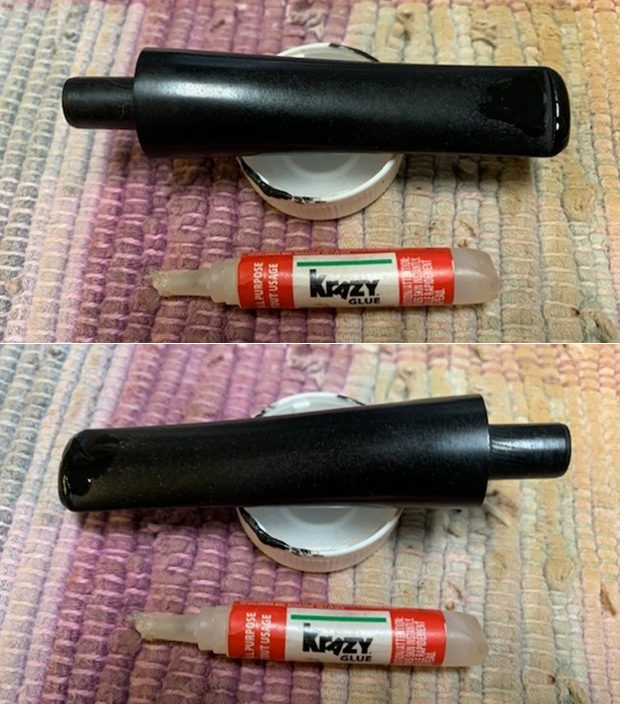
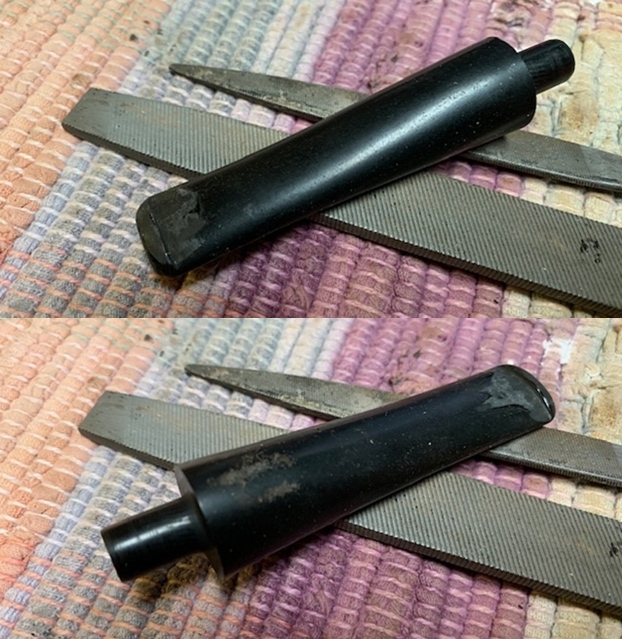
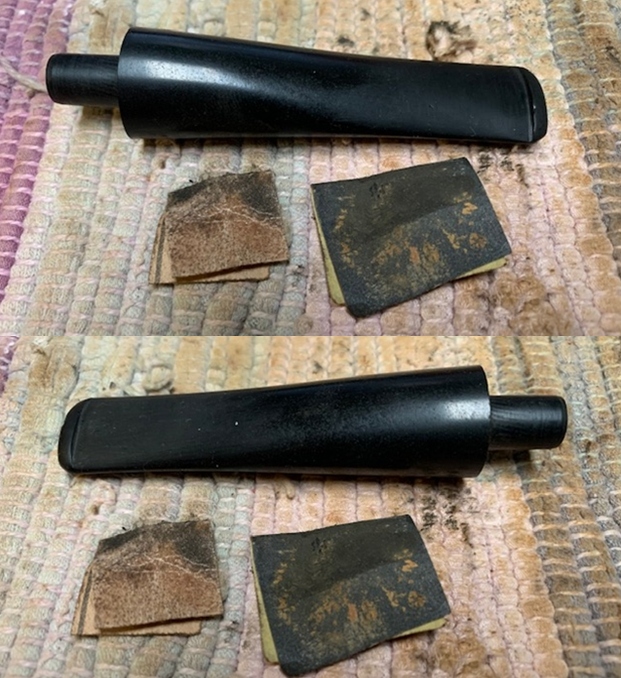
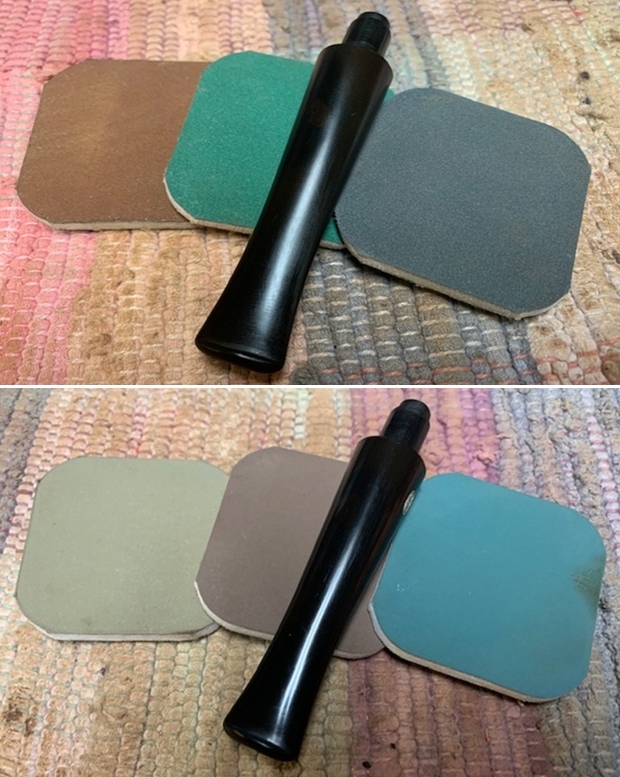
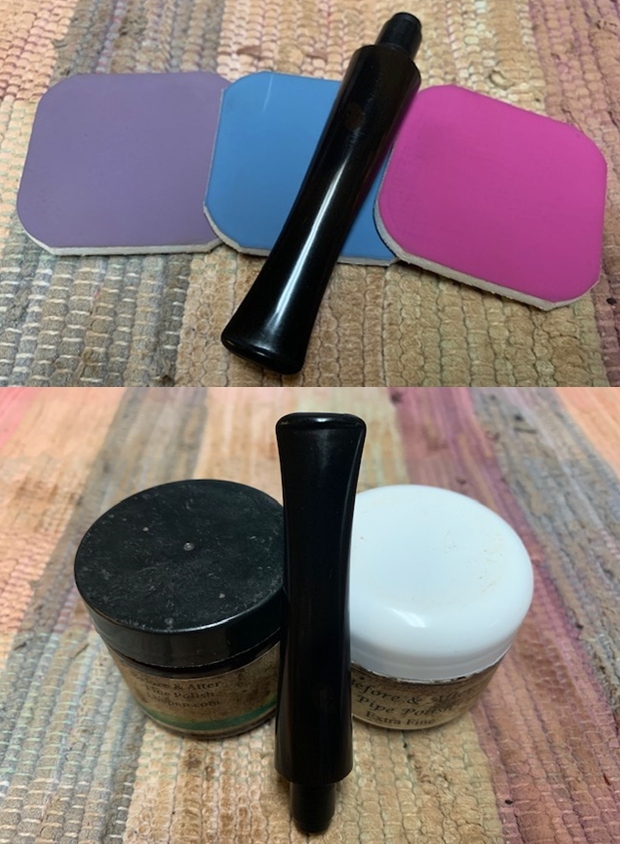
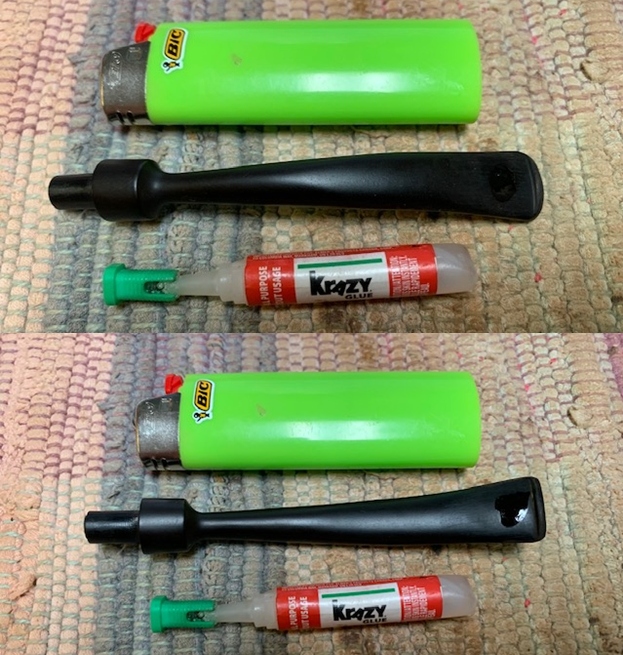
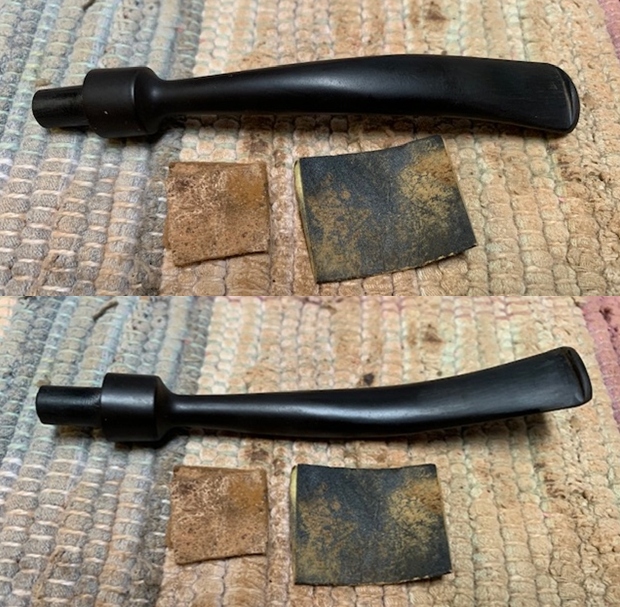
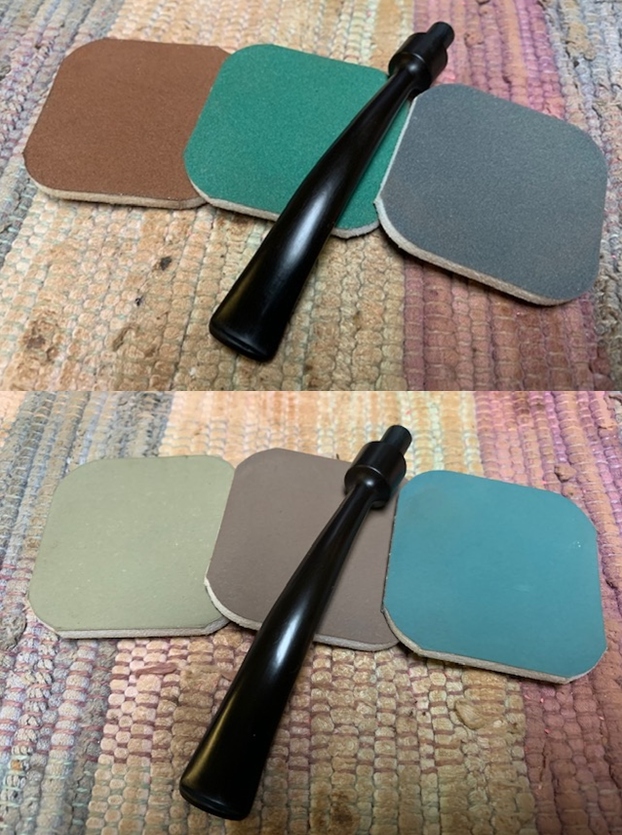
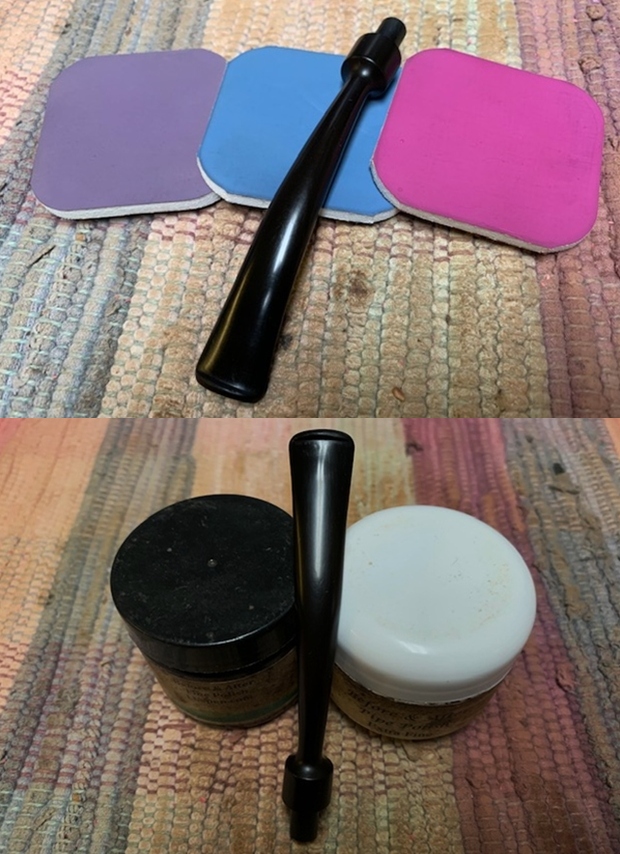
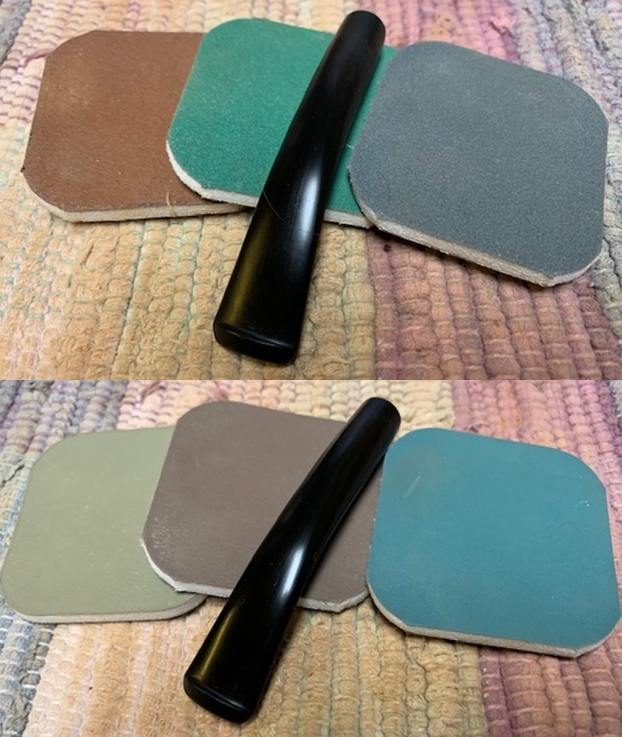
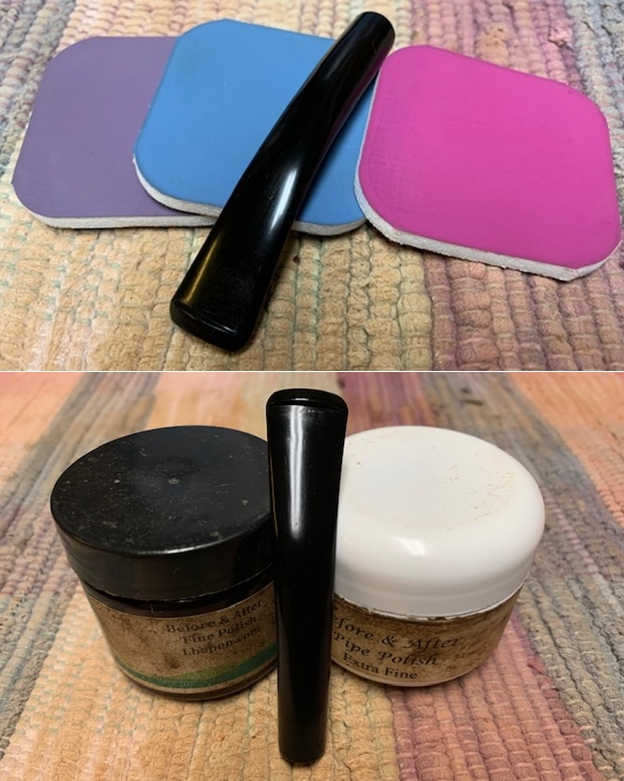
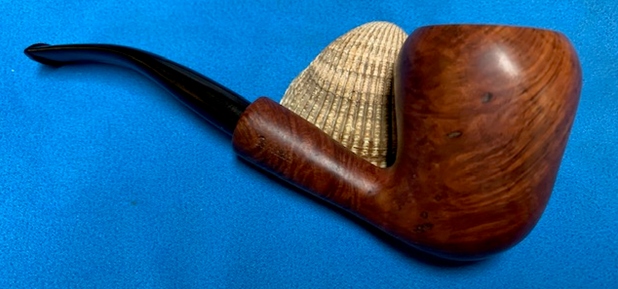
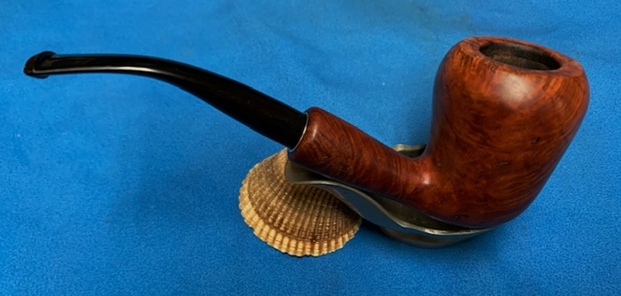
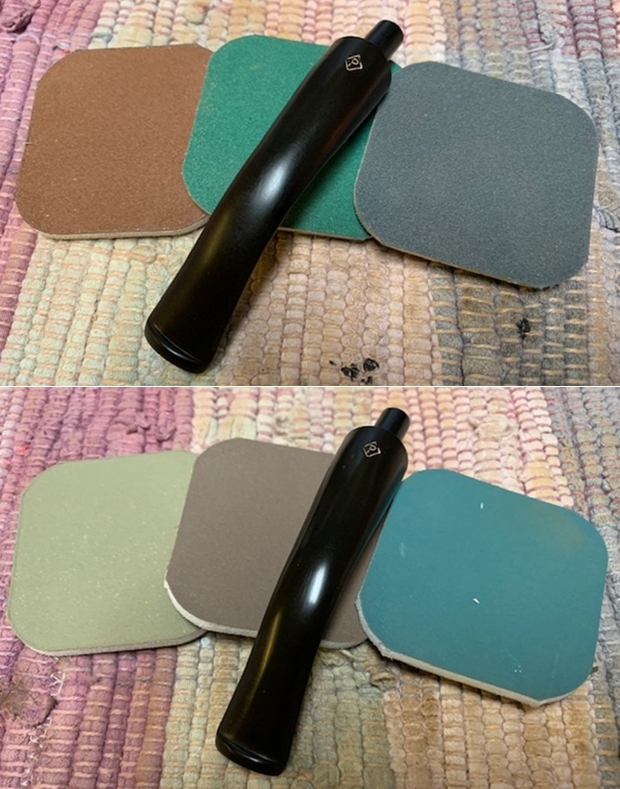
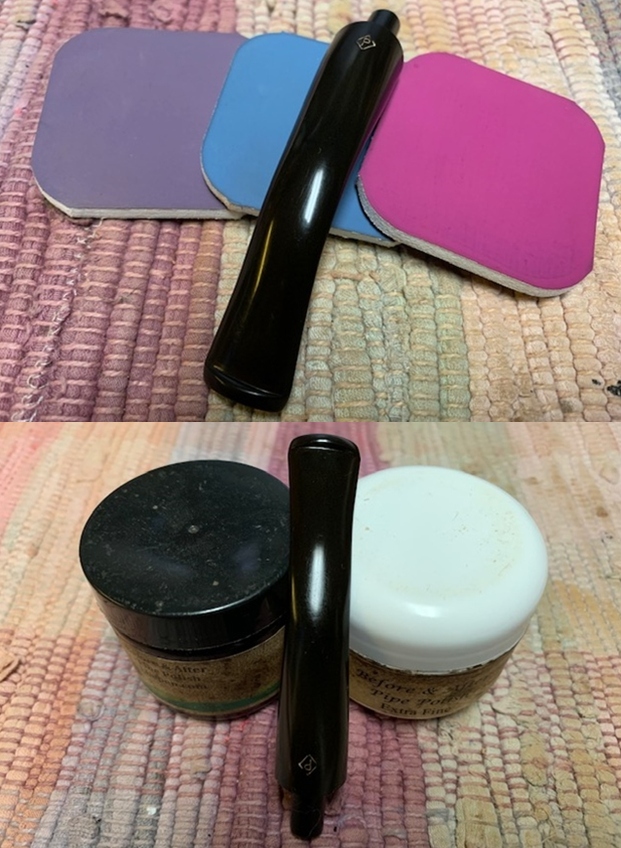
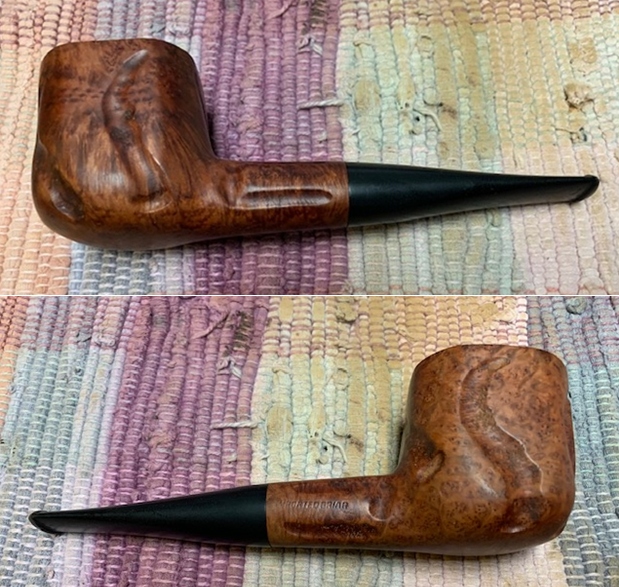
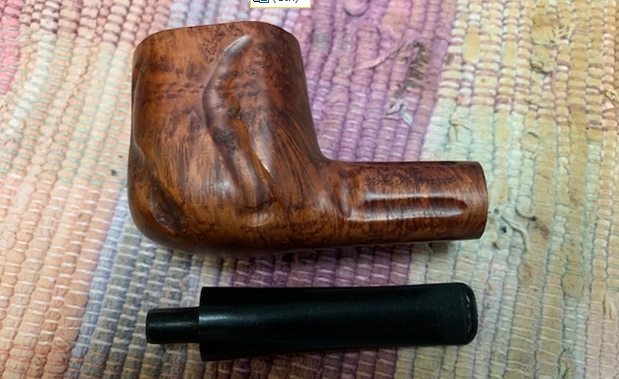
The Pipedia article I included above, referenced one more source to learn a bit more about Tom Howard.  In a 1947 Popular Mechanics edition he was named ‘Hobbyist of the Month’ – but it didn’t say which month!  With a little bit of help from Google, I found Archive.org that housed old editions of many periodicals including Popular Mechanics.  I started in January and started searching – thankfully they had a search tool I utilized for each month.  Finally, I found the article in the Popular Mechanic 1947 June’s edition.   For the absolute nostalgia of it, and for the interesting information it adds about Tom Howard and especially his pipe production, I’m including the pages here for you to read – including the cover page!  I couldn’t pass it up!  Armed with the great information Dal had provided I turned to work on the pipe itself. Jeff had carried out his usual thorough cleanup of the pipe. He had reamed it with a PipNet reamer to remove the cake and cleaned the reaming up with a Savinelli Fitsall Pipe Knife. He scrubbed the internals of the bowl and stem with alcohol, cotton swabs and pipe cleaners. He scrubbed the externals with undiluted Murphy’s Oil Soap and rinsed the bowl off with running water. He soaked the stem in Before & After Deoxidizer and once it had soaked rinsed it off with warm water to remove the residual solution. He dried it off and rubbed it down to remove any oxidation that was still on the stem. The pipe looked much better when I received it.  I took a photo of the rim top to show the condition. You can see the darkening and the damage to the inner edge of the rim on the back right. It is roughened and chipped and out of round. The taper stem came out looking quite good. There are tooth marks and chatter on both sides near the button and some damage to the button surface itself.     I took photos of the sides of the shank to show the stamping. It is clear and readable as noted above.  I removed the stem from the shank and took a photo of the pipe parts to show what I was working with. It is a nice looking pipe.I decided to start the restoration on this one by working on the damage and darkening on the right rear of the rim top. I sanded the rim top with 220 grit sandpaper and gave the inner edge of the bowl a slight bevel to remove the damage and blend it into the rest of the rim edge. I polished the briar with micromesh sanding pads – wet sanding with 1500-12000 grit pads. I wiped the bowl down with a damp cloth after each sanding pad.  I touched up the sanded rim top and edge with a Maple stain pen to blend it into the surrounding briar. The match is perfect and once the bowl is buffed it will disappear.With the repair completed I rubbed the briar down with Before & After Restoration Balm. I worked it into the briar with my fingertips and a horsehair shoe brush to work it into the nooks and crannies of the rusticated finish. The product works to clean, enliven and preserve the briar. I let it sit for 15 minutes while I worked on the stem. After the time passed I buffed it with a cotton cloth to deepen the shine. The briar really comes alive with the balm. I set the bowl aside and turned my attention to the stem. I filled in the bite marks on both sides of the stem and button with clear super glue and set it aside for the repairs to cure. I reshaped the button with a file and then sanded it with 220 grit sandpaper to smooth it out. I started the polishing with a piece of 400 grit wet dry sandpaper. I polished the vulcanite with micromesh sanding pads – 1500-12000 grit pads. I wiped it down with Obsidian Oil after each sanding pad. I used Before & After Pipe Polish – both Fine and Extra Fine to further polish the stem.   This Tom Howard Panel Billiard turned out to be a nice looking pipe. The rusticated finish looks quite good while not obscuring the grain around the bowl. The stain used on the bowl served to highlight the grain on the bowl. The polished black vulcanite taper stem adds to the mix. With the dust gone from the finish and the bowl it was a beauty and is eye-catching. I put the stem back on the bowl and buffed the pipe with Blue Diamond on the buffing wheel being careful to not buff the stamping. I gave the bowl and the stem multiple coats of carnauba wax on the buffing wheel and followed that by buffing it with a clean buffing pad. I hand buffed the pipe with a microfiber cloth to deepen the shine. The finished Tom Howard Panel Billiard is a large pipe and feels great in the hand. Give the finished pipe a look in the photos below. I can only tell you that like the other pipes I am working that it is much prettier in person than the photos capture. The dimensions of the pipe are Length: 6 inches, Height: 2 inches, Outside diameter of the bowl: 1 ¾ inches, Chamber diameter: 7/8 of an inch. The weight of the pipe is 71grams/2.50oz. Thanks for walking through the restoration with me as I worked over another beautiful pipe. Remember we are not pipe owners; we are pipemen and women who hold our pipes in trust until they pass on into the trust of the next generation.

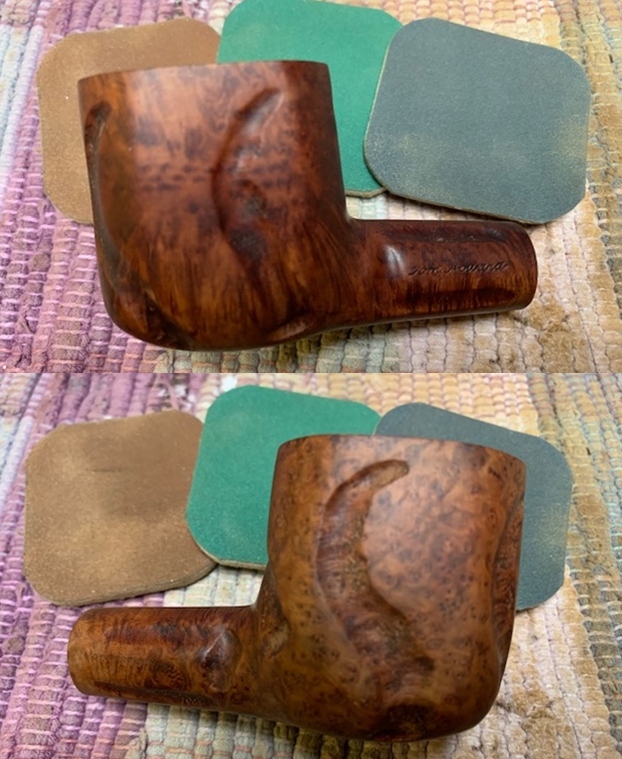
Breathing Life into a BBB Own Make Thorneycroft 708  Square Shank Dublin


Blog by Steve Laug

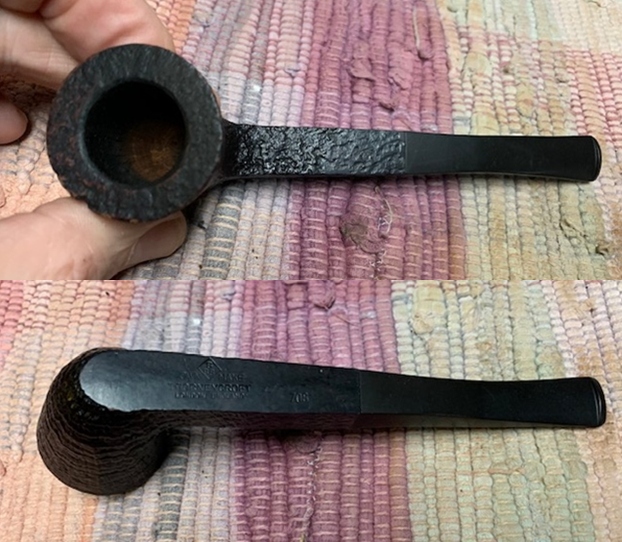
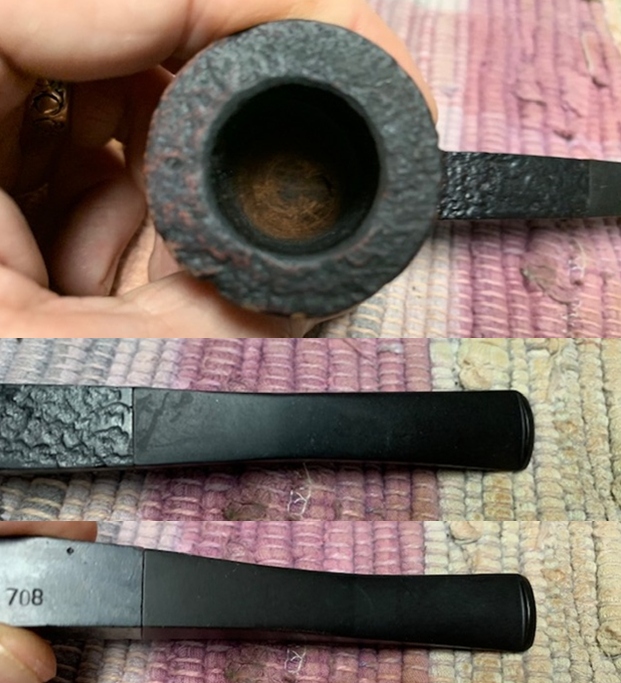
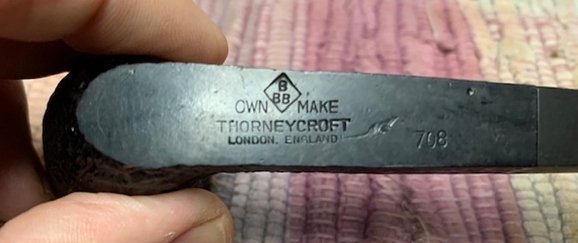
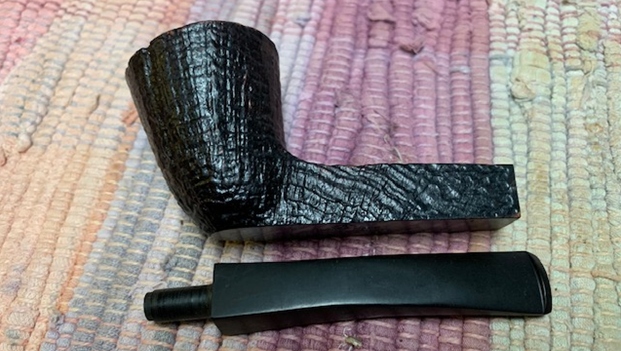
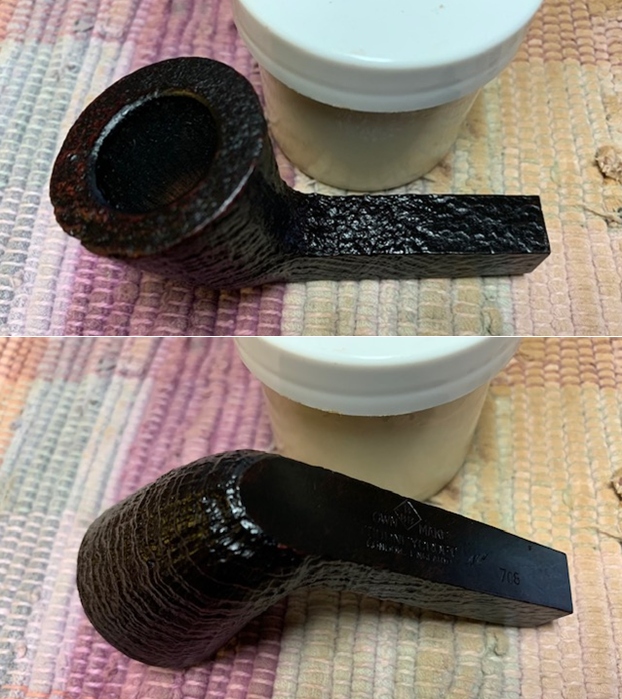
The next interesting looking large Billiard was picked up in 2018 from a fellow in Scottsdale, Arizona, USA. The long, square shank sandblasted Dublin looked very good. The finish was dirty but otherwise in good condition on the bowl and shank. The pipe is stamped on a smooth panel on the underside of the shank and reads BBB in a diamond [over] Own Make [over] Thorneycroft  [over] London, England. To the right of this toward the stem it is stamped with the shape number 708. The Thorneycroft line seems to be associated with the sandblast finished pipes. There was a thick cake in the shank and thick overflow of lava on the rim top that obscured potential damage on either. The stem was the original, square tapered vulcanite without the usual brass BBB diamond of stamping. It was oxidized, calcified and had light tooth marks and chatter on both sides. The pipe had a lot of potential. Jeff took photos of the pipe before he started his cleanup work.     He took a photo of the rim top to show condition of the bowl. It is hard to tell what the inner edge of the bowl looks like under the lava coat. It is a very dirty pipe. He also captured the condition of the stem. It is oxidized, calcified and has light tooth marks and chatter on the top and underside of the stem near the button.     He took a photo of the sides and heel of the bowl to show the sandblast finish around the bowl and the condition of the pipe.    The pipe is stamped BBB in a diamond [over] Own Make [over] Thorneycroft [over] London, England that is followed on the right by the shape number 708.   I looked on Pipephil’s site for information on the Thorneycroft line and found the following listing. I did a screen capture of the section on the line (http://www.pipephil.eu/logos/en/logo-bbb.html) and have included it below.I looked on Pipedia and found several references to the BBB Own Make Thorneycroft pipe but nothing specific (https://pipedia.org/wiki/BBB).

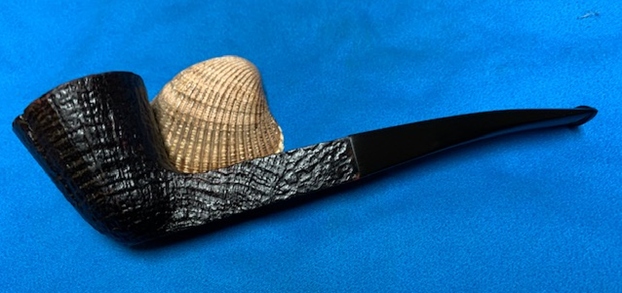
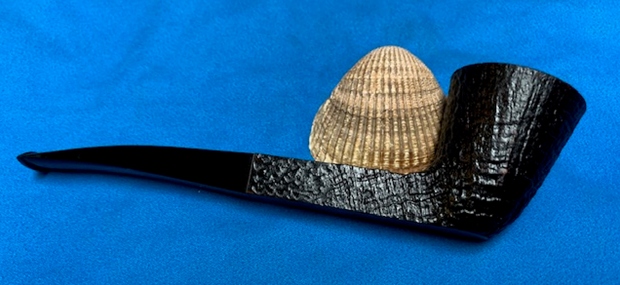
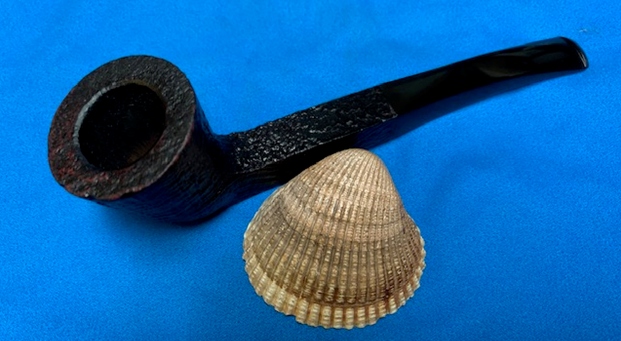
It was time to work on the pipe. As usual Jeff had done a thorough cleanup on the pipe. He reamed the bowl with a PipNet pipe reamer and followed up with a Savinelli Fitsall pipe knife to remove the cake. He scrubbed out the mortise and the airway in the shank and the stem with alcohol, cotton swabs and pipe cleaners. He scrubbed the exterior of the bowl, rim, shank and stem with a tooth brush and Murphy’s Oil Soap to remove the oils and tars on the rim and the grime on the finish of the bowl. He rinsed it under running water. One of the benefits of this scrub is that it also tends to lift some of the scratches and nicks in the surface of the briar. He dried it off with a soft cloth. He cleaned the internals and externals of the stem with alcohol, pipe cleaners and cotton swabs. He soaked the stem in Before & After Deoxidizer and rinsed it off with warm water and cleaned out the airway in the stem with alcohol. I took photos of the rim top and bowl to give a clear picture of the rim top and bowl. The bowl has raw briar for the lower third of the bowl. The rim top is clean and the blast looks very good. I took photos of the top and underside of the stem to show cut marks on the top and underside of the stem.The stamping on the underside of the shank was readable. It read as noted above.I removed the stem from the shank and took a photo of the pipe.I rubbed the bowl and shank down with Before & After Restoration Balm. I worked it into the surface of the bowl sides and shank with my fingertips and a horsehair shoe brush to clean, enliven and protect the briar. I let the balm sit for ten minutes and then buffed it with a cotton cloth to raise the shine. The grain came alive and the finish looked rich. I set the bowl aside and turned my attention to the stem. I polished the vulcanite stem with micromesh sanding pads – 1500-12000 grit pads. I wiped it down with Obsidian Oil after each sanding pad. I used Before & After Pipe Polish – both Fine and Extra Fine to further the stem. The photos below show the polished stem.    I am pretty happy with the restoration of this BBB Own Make Thorneycroft Sandblast Canted Dublin. There is a sandblast finish to the bowl that is rugged and rich looking. The stem is clean and smooth with no damage. I put the stem back on the bowl and carefully buffed the pipe with Blue Diamond on the buffing wheel using a light touch on the briar. I gave the bowl multiple coats of Conservator’s Wax and the stem multiple coats of carnauba wax on the buffing wheel and followed that by buffing the entire pipe with a clean buffing pad. I hand buffed the pipe with a microfiber cloth to deepen the shine. The finished BBB Own Make Thorneycroft fits nicely in the hand and feels great. Give the finished pipe a look in the photos below. The dimensions of the pipe are Length: 6 inches, Height: 1 ¾ inches, Outside diameter of the bowl: 1 ½ inches, Chamber diameter: ¾ of an inch. The weight of the pipe was 29g/1.06oz. I will be putting it on the rebornpipes store shortly. Thanks for reading this blog and my reflections on the pipe while I worked on it. There are many more to come!  

Unplugging a Plugged stem on a Peterson’s 2018 Pipe of the Year


Blog by Steve Laug

On Tuesday this week I received the following email from a fellow here in Vancouver regarding repairing a couple of pipes for him. He wrote as follows:

Hi Steve… You were recommended to me by our good friends at City Cigar (Vancouver).  I have 2 pipes I’d love to have rescued – if possible!  Please let me know if you could be of service.  I’ve attached a few photos.

One is a Peterson 2018 Pipe of the Year, Smooth Fishtail.  Pipe is great – except there is an unsolvable (for myself) blockage in the stem.  I think the filter is damaged.

The other is an unfortunate Savinelli; the actual wood is broken, right at the connection between pipe body and stem.

Let me know your thoughts!  I’d love to regain these to a workable state if possible; they are lovely pipes.

Thanks kindly and best regards, Zak

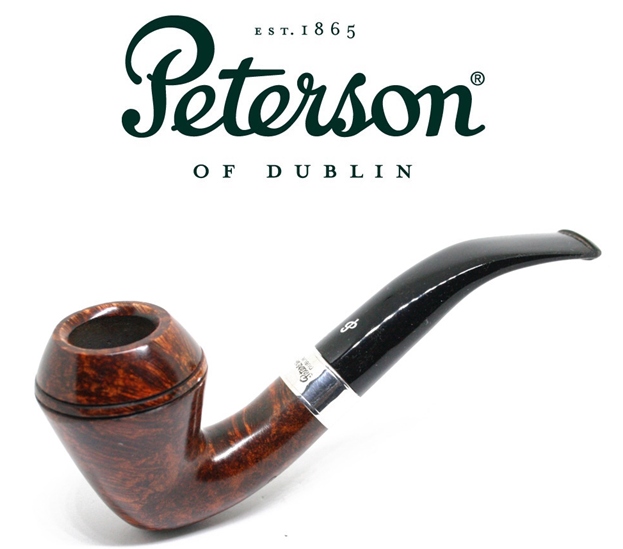
He included pictures of both pipe for me. It was time to work on the plugged stem in the Peterson 2018 POY. Here is the photo that Zak included with his email. Once I saw the pipe I confirmed that the stem was not sitting correctly in the shank and the finish on the bowl was dirty and needed a little attention. Once I had the stem cleared out I would clean up the exterior of the bowl.I did a Google search for the Peterson 2018 Pipe of the Year to double check the fit of the stem to the shank. It is not fit against the shank in the above photo but in the ones that I found on two different sites (same pipe) the stem was a snug fit against the shank. I have included the links and photos that I found below.

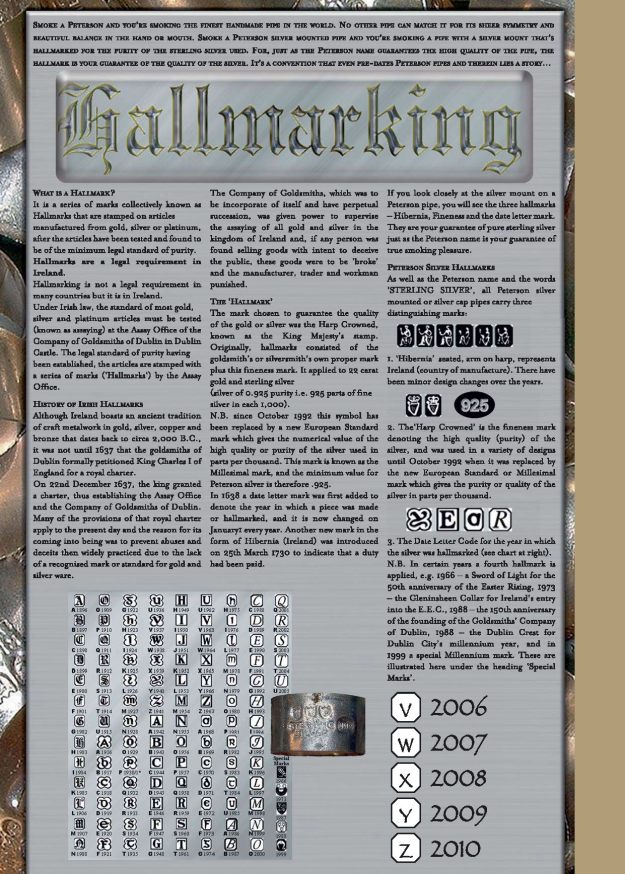
The first photo is from Petersonpipenotes site. The write up there by Mark Irwin is a great read (http://petersonpipenotes.org/2018/01/16/77-first-look-the-2018-peterson-pipe-of-the-year/).The second photo is from and advertising page on the GQTobaccos.com site for the Peterson’s 2018 Pipe of the Year (https://www.gqtobaccos.com/tobacco-pipes/peterson-pipe-of-the-year-2018-smooth/).The pipe I am working on is stamped on the underside of the shank and reads Peterson [over] Of Dublin [over] Pipe of the Year [over] 2018 [over] 47 of 500. The Sterling Silver Band on the shank is stamped on top and reads Peterson [over] Dublin. On the underside it reads Peterson [over] three hallmarks. I have included the Hallmark chart from Peterson below. I have also done a screen capture of the section entitled Peterson Silver Hallmarks.  I am not sure what to make of the information on the band as it does not match the 2018 year on the POY.The photo to the left explains the hallmarks on this Peterson 2018 Pipe of the Year.

The first hallmark on this pipe is what is noted as Hibernia – a seated woman with her arm on a harp. This represents the country of manufacture – Ireland.

The second hallmark is 925 in an oval. It is the standard European Mark or Millesimal Mark which gives the purity or quality of the silver in parts per 1000.

The third hallmark is the Date Letter Code for the year in which the silver was hallmarked. The Date Letter on this pipe band is an italic upper case “G” which according to the chart dates the band to 1992. It is interesting that the band is on a pipe that is a Pipe of the Year for 2018. I am not sure what to make of that conflicting information. Was the band old stock made previously? I am not sure I will ever know that for sure.

I decided that the first thing I would work on was the fit of the stem to the shank. The shank itself was dirty and there was a thick coat of stain on the inside that had tar and oils built up on it that kept the tenon from seating properly in the shank. I took photos of the pipe as it looked when I received it. Compare the fit of the stem in these photos with the fit in the photos of the same pipe above. I cleaned out the shank with pipe cleaners, cotton swabs and alcohol to remove the build up from the walls of the shank that prevented the stem from seating properly. There was also a lot of stain on the inside of the shank that must have influenced the taste of the smoke.  I smoothed out the ridges on the tenon with 220 grit sandpaper and made it smooth to allow an easy push into the shank.  I put the stem on the shank and took photos of the proper looking 2018 Pipe of the Year.   With the fit of the stem to the shank corrected it was now time to deal with the plugged stem. Zak thought that there was a filter jammed up the airway. My guess, judging on the size of the airway in the tenon and stem was that it was a broken pipe cleaner or even just pipe cleaner debris compacted and blocking the airway. I tried to push a cleaner in from both directions to try and locate the blockage. I was able to assess that it was equal distance from the tenon end and the button end – dead center in the stem, just before the bend.

I began my work on the obstruction by using a small drill bit and turning it into the clog without pushing the clog further up the stem. I was able to pull out some of the debris using that method but I did not push it as I did not want to move it up the stem. Once I had it drill I used a pipe cleaner to drip some acetone on the blockage. I repeated that from both ends of the stem and let the acetone sit and work on the blockage. I was hoping that it would dissolve any tar or oils that held the plug tightly in place in the stem.I was hoping to unplug it without heating and straightening and rebending the stem with my heat gun. After the acetone had soaked on the plug for a while I used an unfolded paper clip to push and pick at the plug. I inserted it from both ends and worked on the blockage.  After working the block over with the wire I was able to break through the blockage. The airflow was very constricted but at least there was some air. I cleaned the airway with a pipe cleaner and alcohol, working on the clog from both directions. I used the wire to pick away at the edges of the plug and loosen it. The pipe cleaners push out what the wire had loosened. In the next photos you can see the pile of darkened pipe cleaner debris that I was able to work out of the airway. I worked on the stem with pipe cleaners and alcohol until the airway was clean and the airflow was no longer hampered.    With the stem finish I cleaned up rim top and beveled rim edge and then I rubbed the bowl and shank down with Before & After Restoration Balm. I worked it into the surface of the bowl sides and shank with my fingertips to clean, enliven and protect the briar. I let the balm sit for a little while and then buffed with a cotton cloth to raise the shine. The Balm did its magic and the grain stood out.  I buffed the Sterling Silver band with a jeweler’s cloth and removed the tarnish coat. This nicely grained Peterson 2018 Pipe of the Year with a Sterling Silver band and an acrylic taper stem with an inlaid silver P is a great looking pipe. The briar around the bowl is clean and really came alive. The rich brown stains gave the grain a sense of depth with the polishing and waxing. The grain really popped. I put the acrylic stem back on the bowl and carefully buffed the pipe with Blue Diamond on the buffing wheel using a light touch on the briar. I gave the bowl and the stem multiple coats of carnauba wax on the buffing wheel. I buffed the pipe with a clean buffing pad to raise the shine. I hand buffed the pipe with a microfiber cloth to deepen the shine. The finished Peterson is a beauty and feels great in the hand and looks very good. Give the finished pipe a look in the photos below. The dimensions of the pipe are Length: 6 inches, Height: 2 ¼ inches, Outside diameter of the bowl: 1 ¼ inch, Chamber diameter: ¾ of an inch. The weight of the pipe is 54grams/1.90oz. The pipe will be going back to Zak along with the Savinelli I finished earlier. He will see them in person soon, so he can enjoy them both again. Thanks for reading this blog and my reflections on the pipe while I worked on it.

Repairing a broken shank on a Savinelli Liquirizia 920KS Dublin


Blog by Steve Laug

On Tuesday this week I received the following email from a fellow here in Vancouver regarding repairing a couple of pipes for him. He wrote as follows:

Hi Steve… You were recommended to me by our good friends at City Cigar (Vancouver).  I have 2 pipes I’d love to have rescued – if possible!  Please let me know if you could be of service.  I’ve attached a few photos.

One is a Peterson 2018 Pipe of the Year, Smooth Fishtail.  Pipe is great – except there is an unsolvable (for myself) blockage in the stem.  I think the filter is damaged.

The other is an unfortunate Savinelli; the actual wood is broken, right at the connection between pipe body and stem.

Let me know your thoughts!  I’d love to regain these to a workable state if possible; they are lovely pipes.

Thanks kindly and best regards, Zak

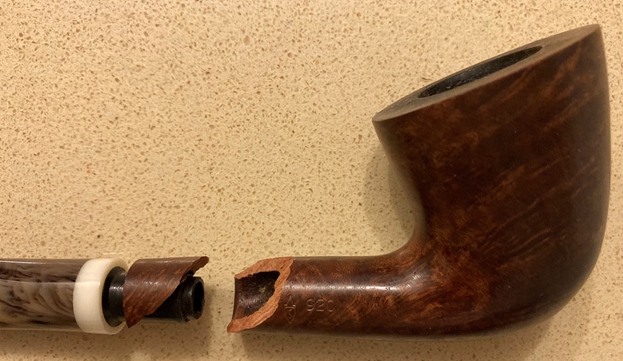
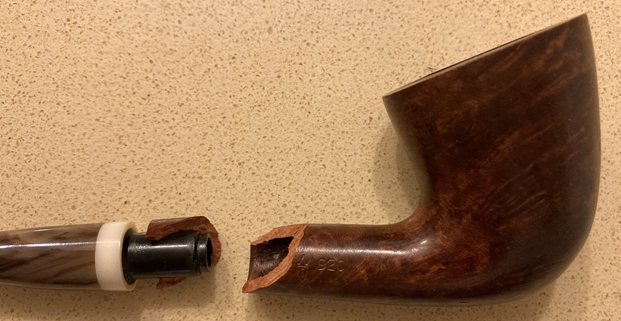
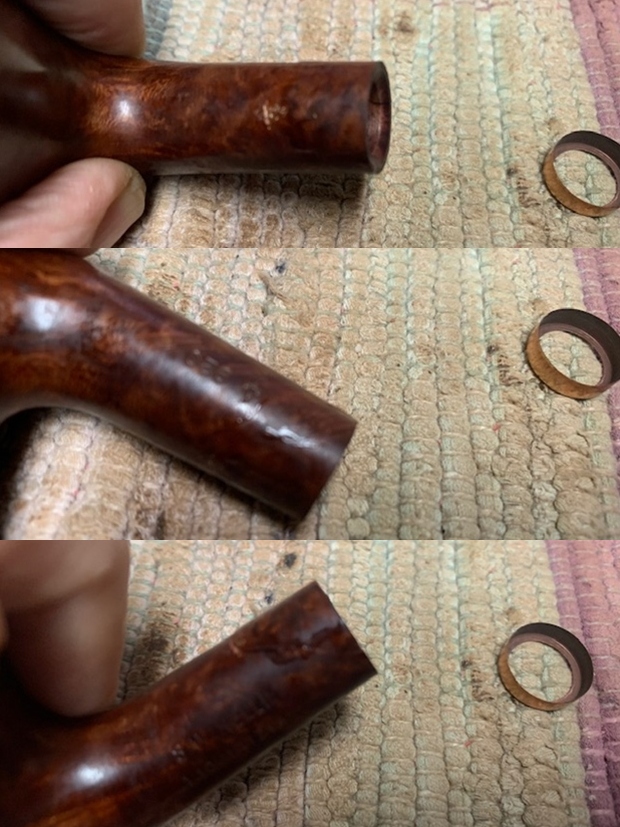
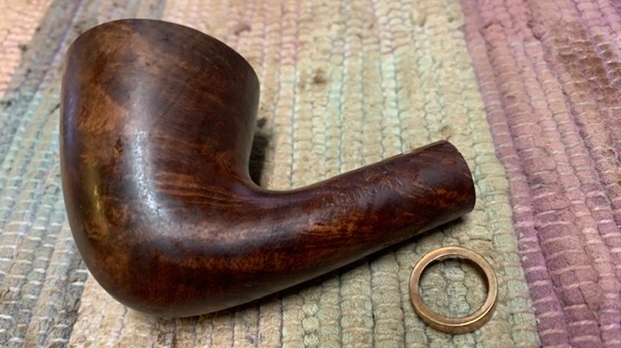
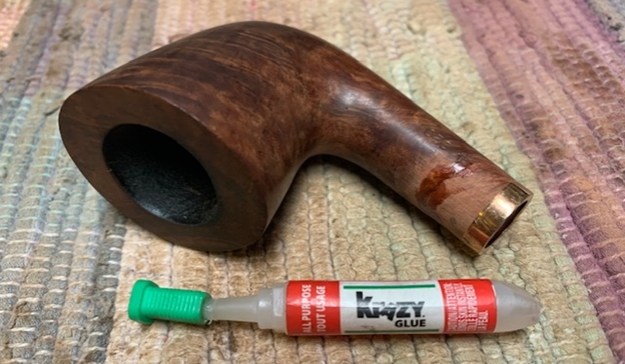
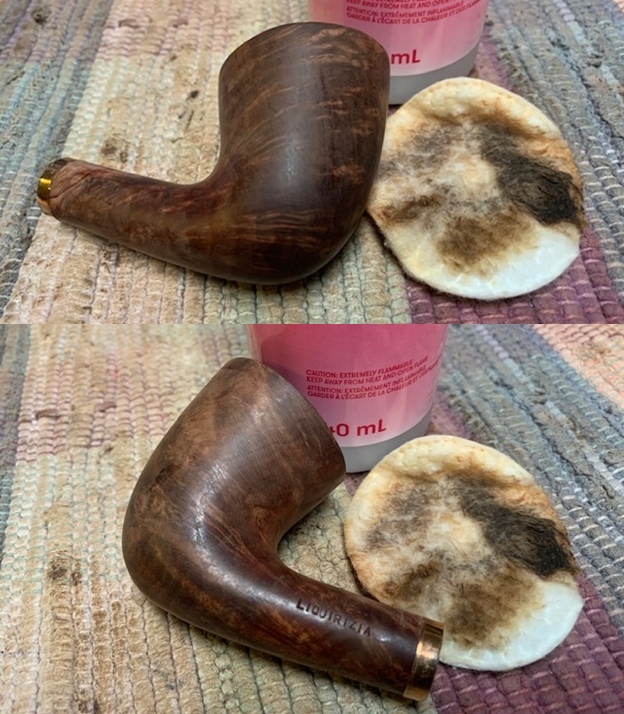
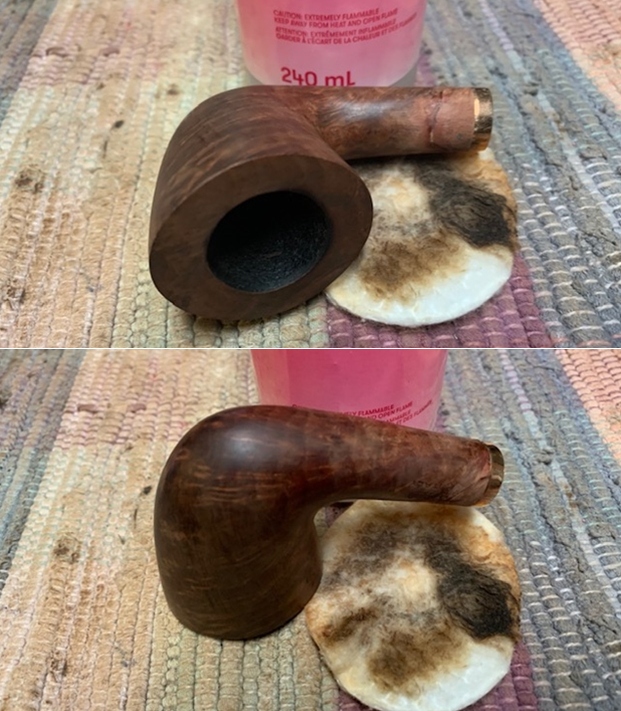
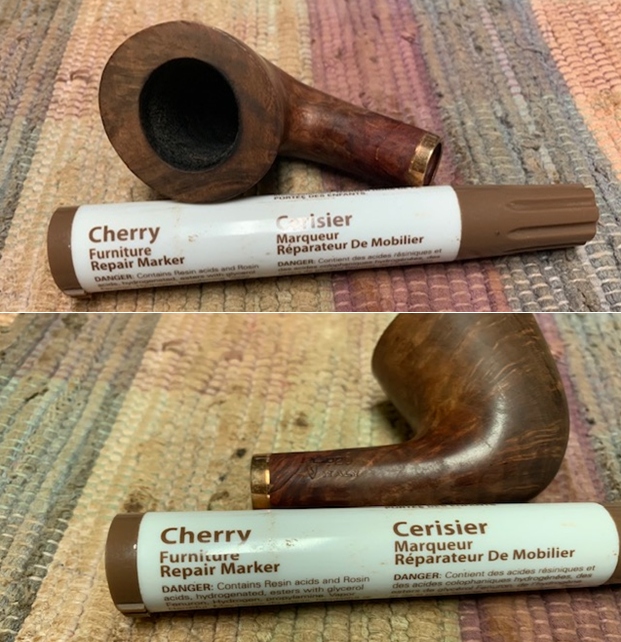
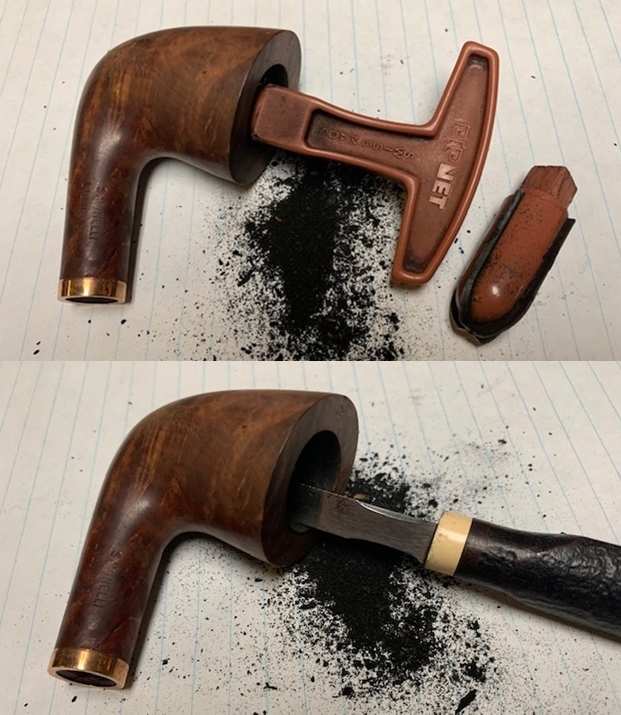
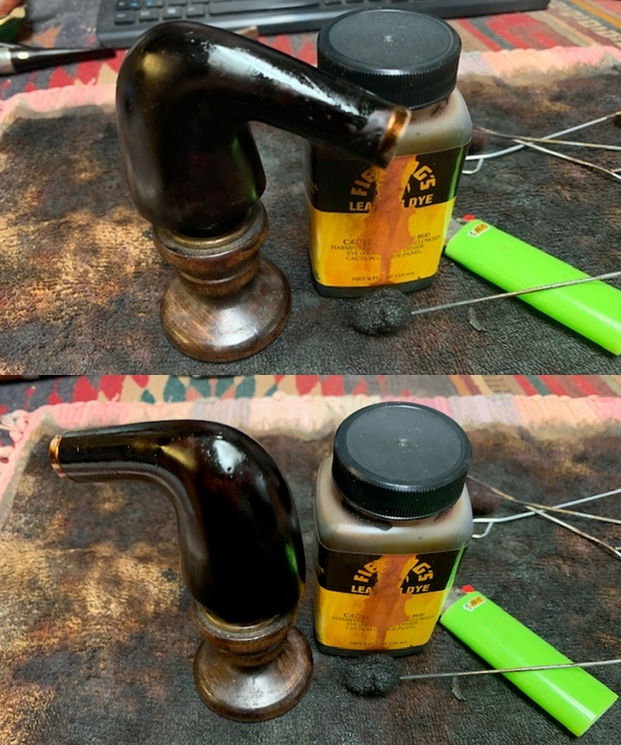
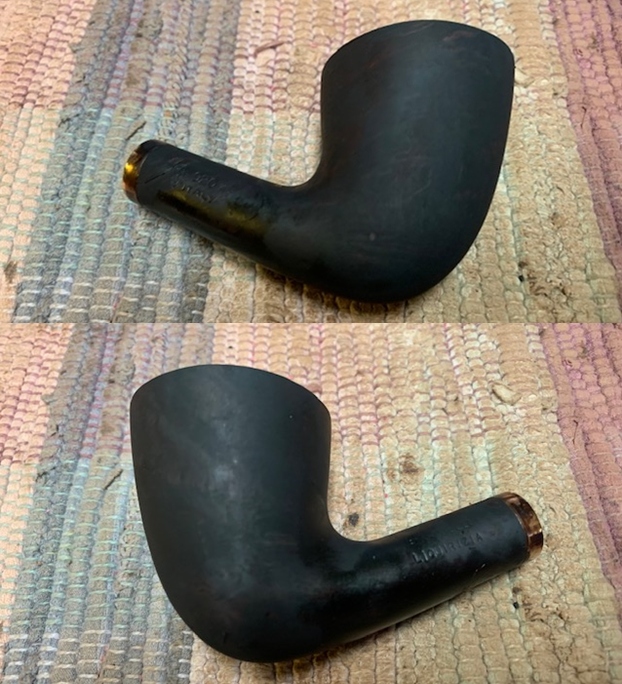
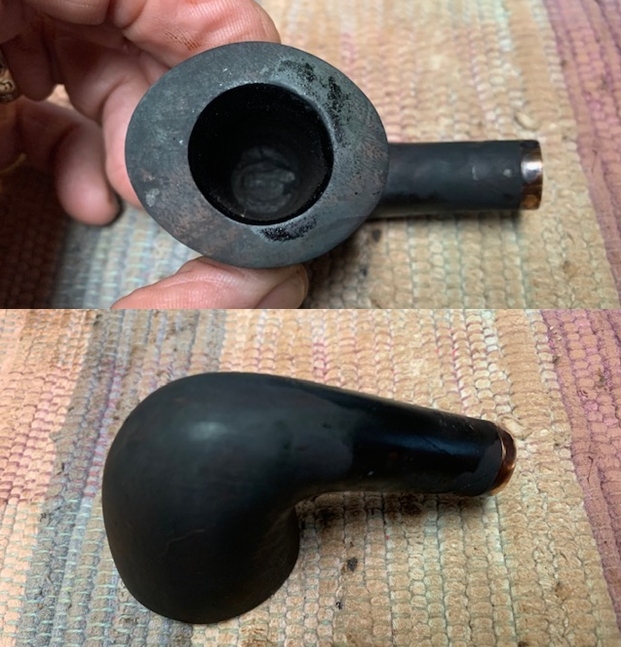
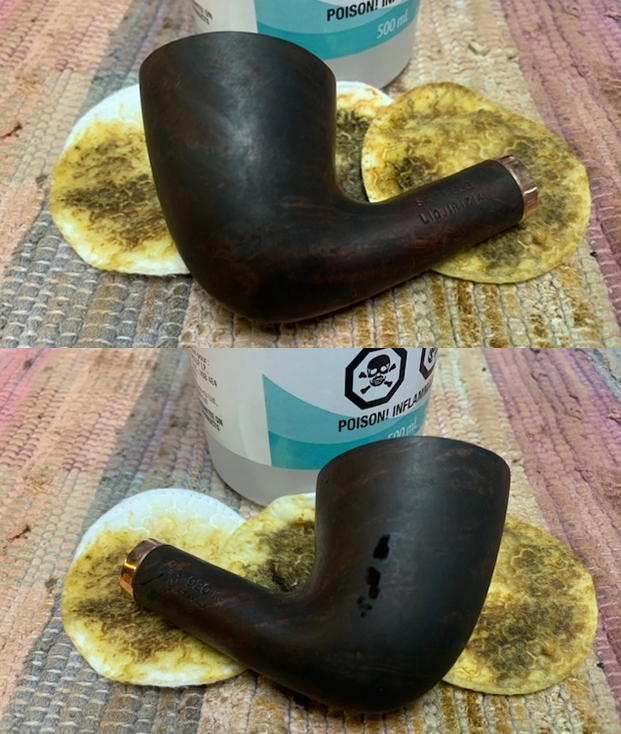
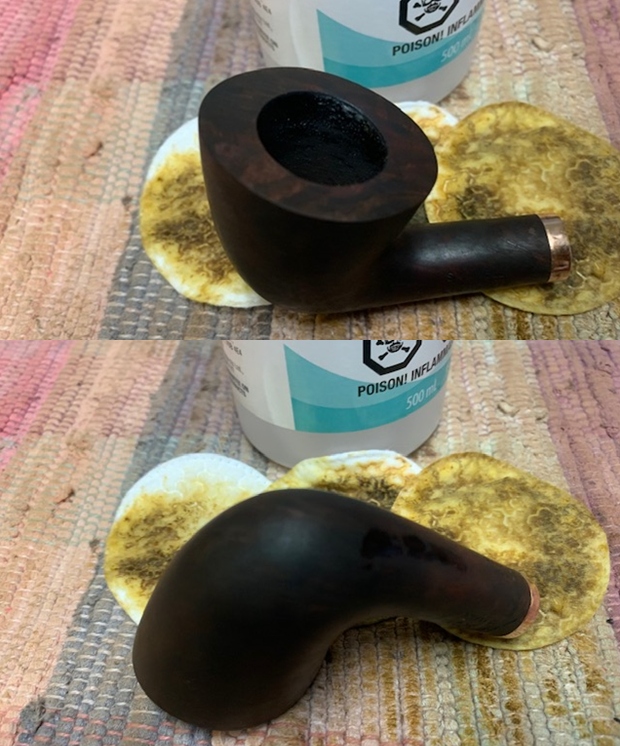
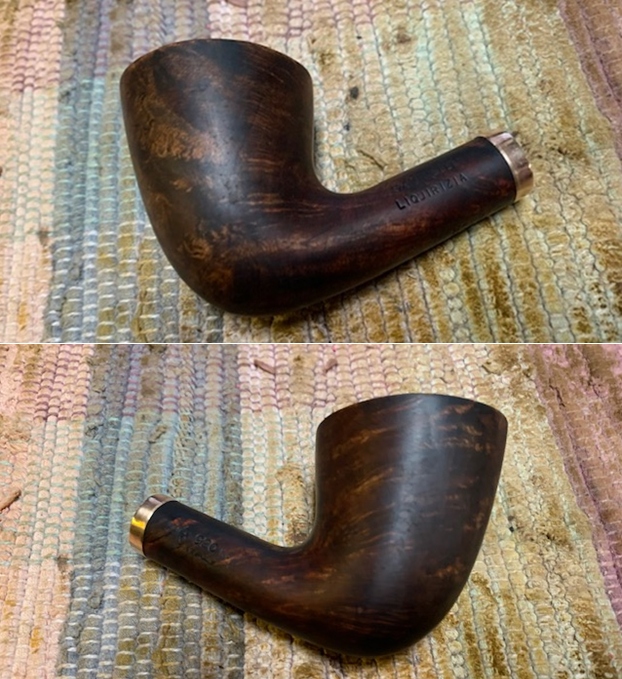
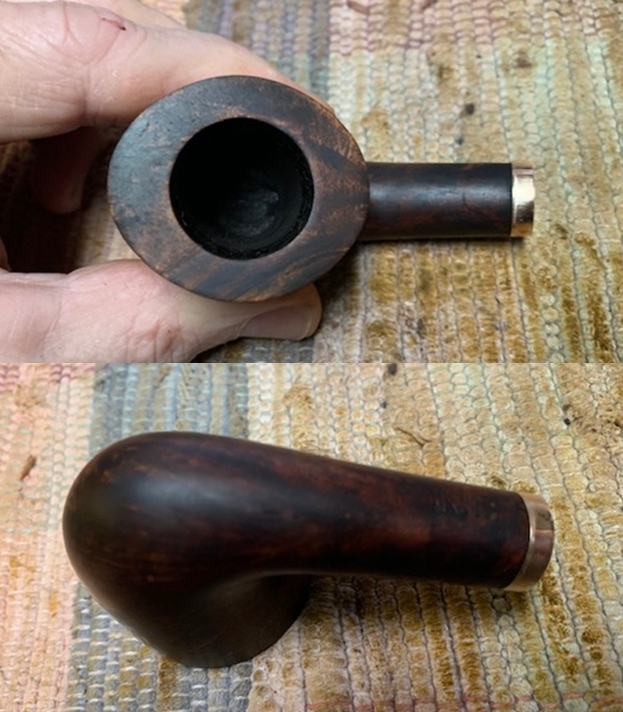
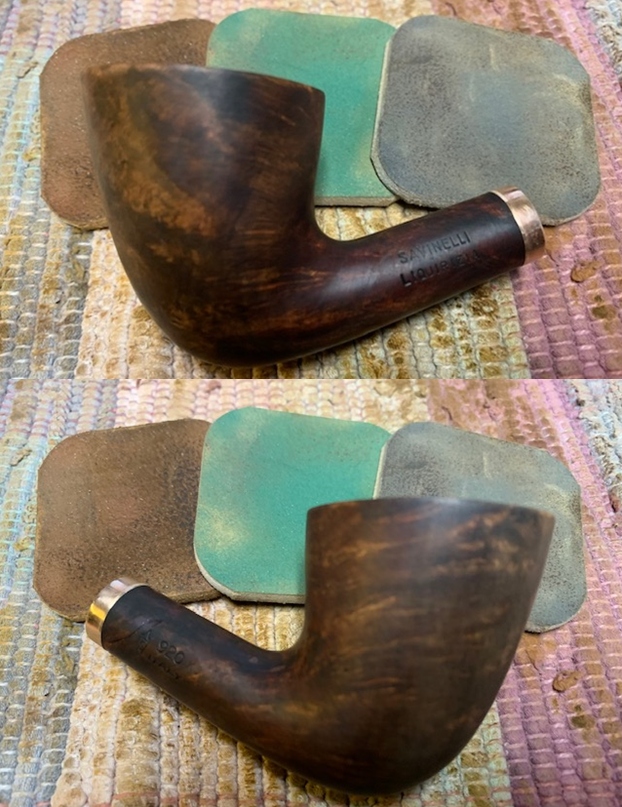
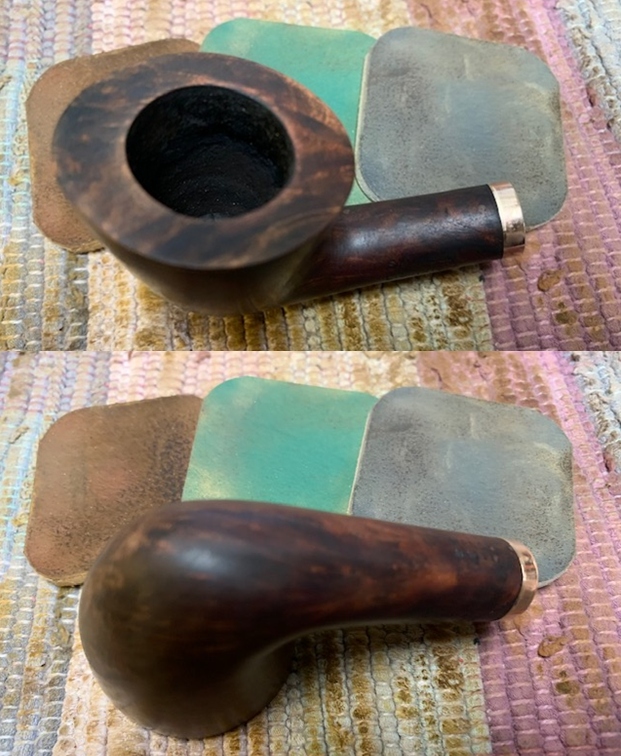
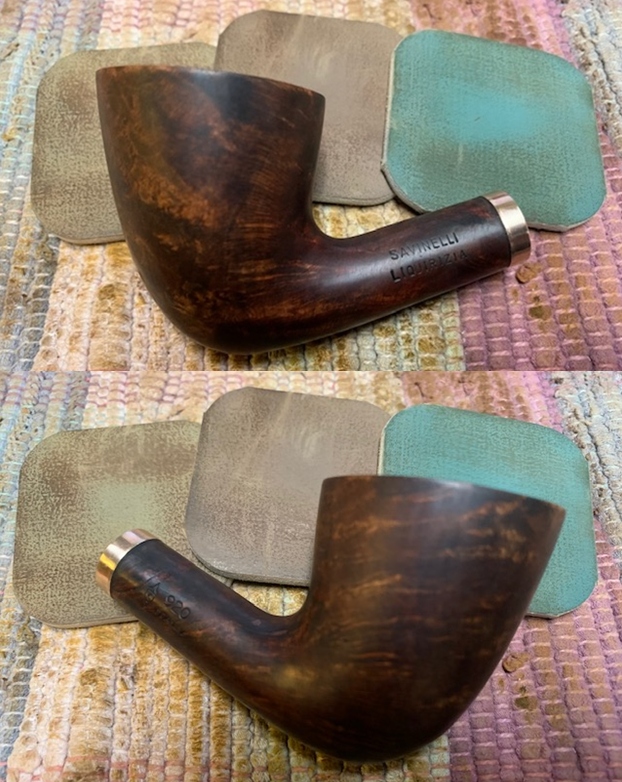
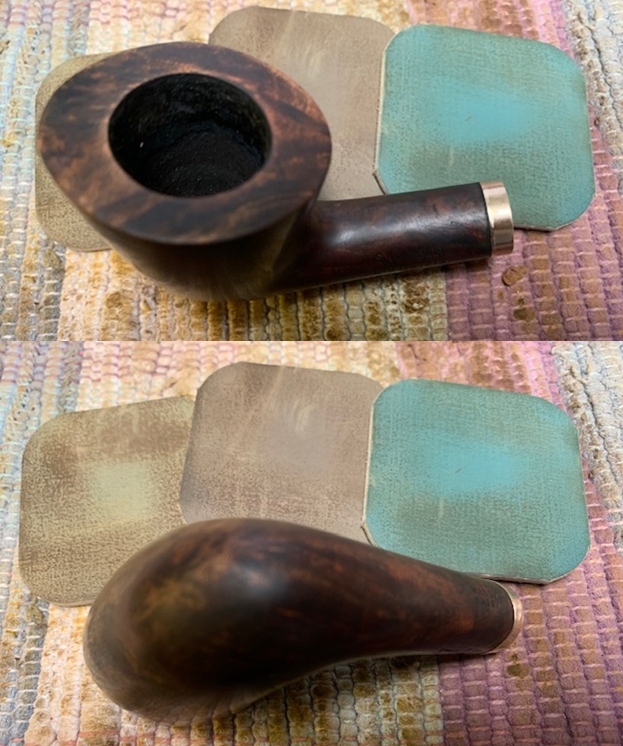
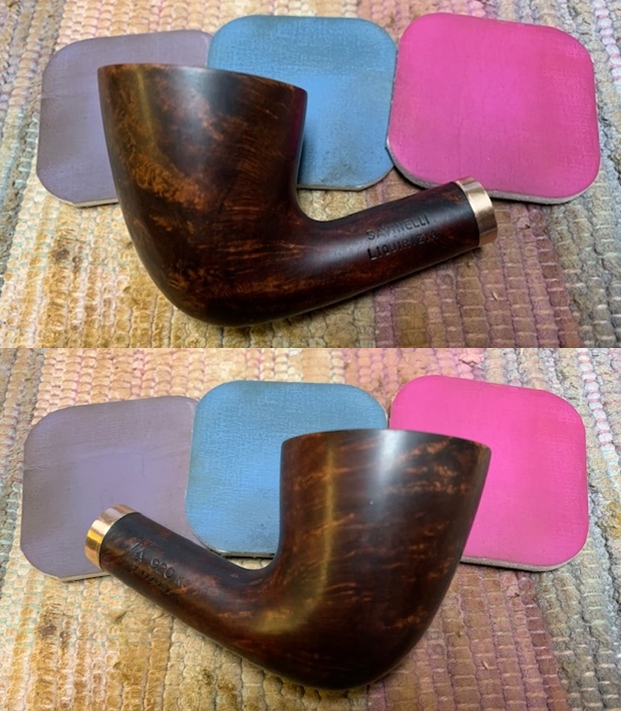
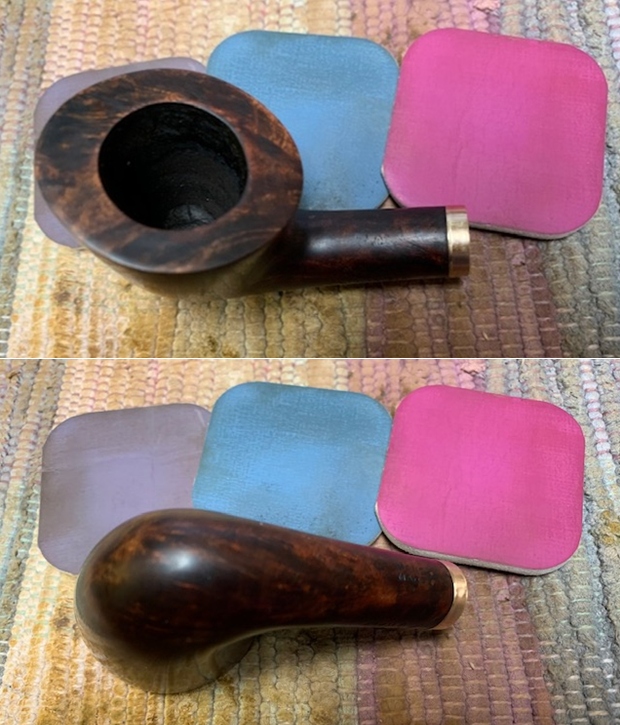
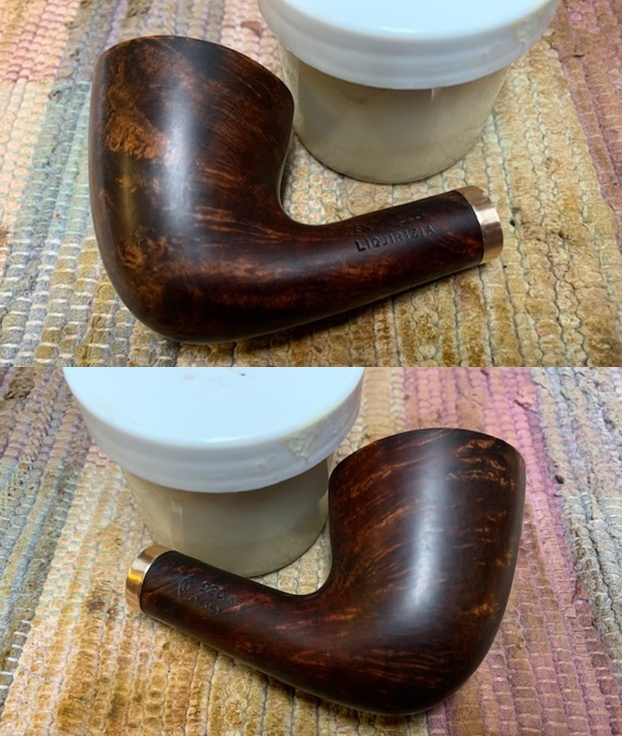
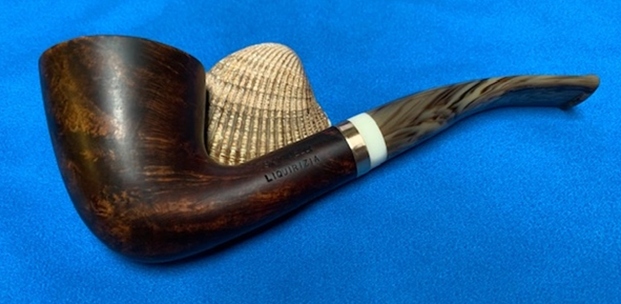
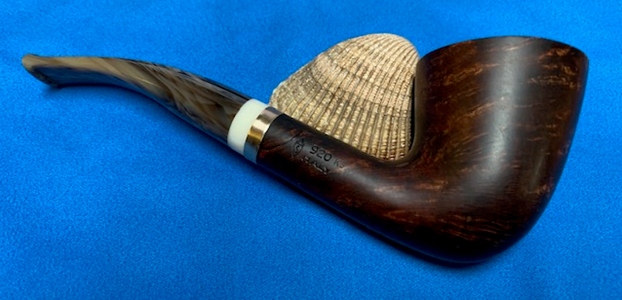
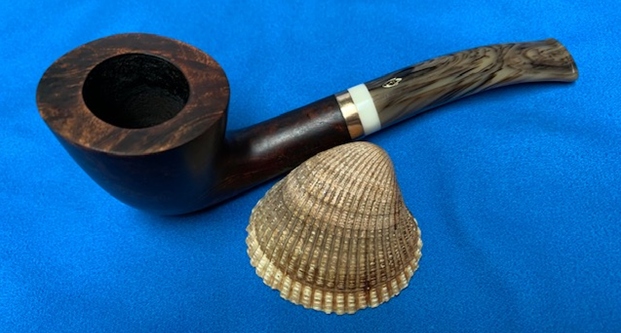
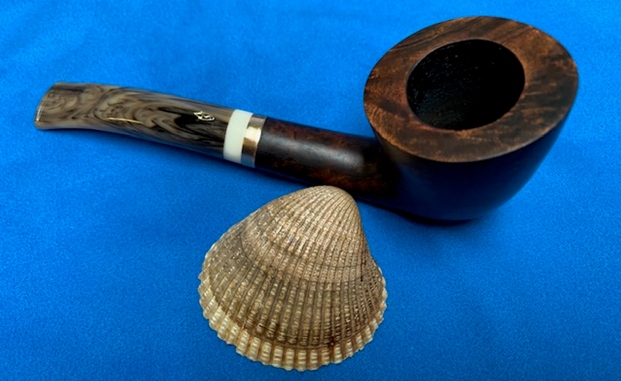
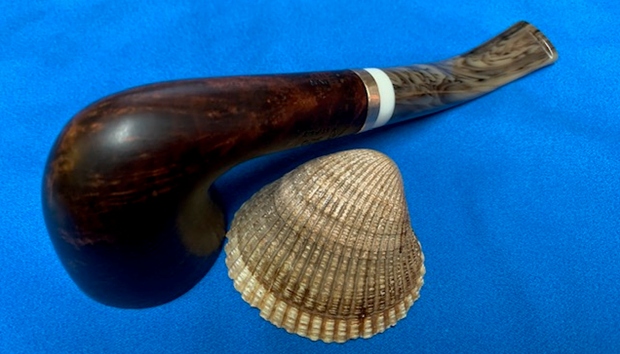
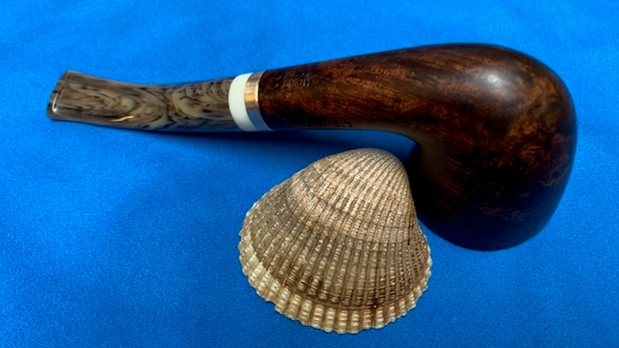
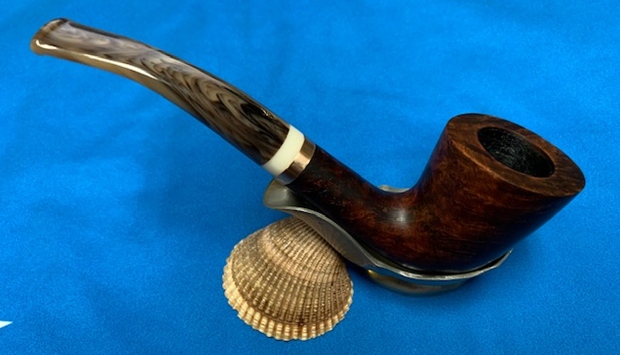
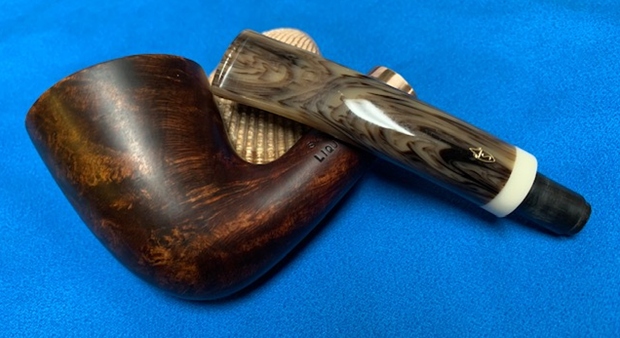
He included pictures of both pipe for me. I decided to tackle the Savinelli first. Here are the photos that Zak included with his email. As you can see the shank is snapped with a clean break about ½ inch up the shank. Zak fortunately had the pieces of the broken pipe and delivered them to me. The break had not damaged the stamping on the pipe. It read on the left side Savinelli [over] Liquirizia. On the right side it had the Savinelli Shield S logo followed by the shape number 920KS [over] Italy. On the underside of the shank it is stamped Hand Made. The pipe had a beautiful acrylic stem with a white band on the end. The tenon was Delrin and had been drilled out for a Savinelli 6mm filter or a Balsa filter. The bowl had a moderate cake and some lava on the rim top. The stem and shank had tar and oils. I cleaned out the shank and the areas of the break and glued the broken piece back in place on the shank using clear CA (super glue). The photos below show the glued shank piece.  When I repair this kind of break in a shank gluing and clamping it is not sufficient to hold. As the stem is put back in place the break will happen again due to the pressure from the tenon on the walls. I have learned that a simple band will bind it together and add strength. I have some brass bands that I picked up online that are quite thin but have and end cap that works really well to bind it all together and strengthen the joint. I went through the bag of bands I have and found the one that fit the best.I sanded the repaired area smooth with 220 grit sandpaper to blend the repair into the surface of the briar. Once the repair was smooth heated the band with a lighter and pressed it onto the shank end against my topping board to press it in place. The band added stability to the repair.I filled in a few spots with clear CA glue and resanded them with 220 grit sandpaper. Once the repairs cured I wiped the bowl down with acetone to remove the spotty varnish coat that was on the rest of the bowl. I touched up the repaired areas with a Cherry stain pen to blend it in and prepare it for a further stain coat a little later.I reamed out the uneven cake in the bowl with a PipNet reamer and cut it back to bare briar so I could inspect the interior walls. I cleaned up the remnants of the cake with a Savinelli Fitsall Pipe Knife. The walls of the bowl looked very good with no heat damage or fissures.I put a cork in the bowl and stained it with a dark brown stain. I flamed the stain to set in the briar and then repeated the process until I was happy with the coverage on the bowl. It did a great job blending the repaired area into the briar.   I set the bowl aside so the stain coat would cure overnight. Here is what it looked like in the morning when I brought it to the table.   I wiped the bowl down with isopropyl alcohol to make the finish more transparent. I began to see the grain stand out.  I continued to wipe it down until I had the variation in colour I was looking for. The grain really stood out now and the brass band was a great contrast.   I polished the briar with micromesh sanding pads – wet sanding with 1500-12000 grit pads and wiping the bowl down between each pad with a damp cloth. The contrasting colours really came alive.  I rubbed the bowl and shank down with Before & After Restoration Balm. I worked it into the surface of the bowl sides and shank with my fingertips to clean, enliven and protect the briar. I let the balm sit for a little while and then buffed with a cotton cloth to raise the shine. The Balm did its magic and the grain stood out.    I polished the acrylic stem with micromesh sanding pads – 1500-12000 grit pads. I wiped it down with a damp cloth after each sanding pad. The photo below shows the polished stem.  This nicely grained Savinelli Liquirizia 920KS Bent Dublin with a thin brass repair band and a swirled acrylic stem is a great looking pipe. The briar around the bowl is clean and really came alive. The rich brown stains gave the grain a sense of depth with the polishing and waxing. The grain really popped. The brass band binds the cracked shank repair and gives it a bit of bling. I put the acrylic stem back on the bowl and carefully buffed the pipe with Blue Diamond on the buffing wheel using a light touch on the briar. I gave the bowl and the stem multiple coats of carnauba wax on the buffing wheel. I buffed the pipe with a clean buffing pad to raise the shine. I hand buffed the pipe with a microfiber cloth to deepen the shine. The finished Savinelli Liquirizia Bent Dublin is a beauty and feels great in the hand and looks very good. Give the finished pipe a look in the photos below. The dimensions of the pipe are Length: 5 ½ inches, Height: 2 inches, Outside diameter of the bowl: 1 ½ inch, Chamber diameter: ¾ of an inch. The weight of the pipe is 44grams/1.55oz. The pipe will be going back to Zak as soon as finish the second one. He will soon, so he can enjoy it again. Thanks for reading this blog and my reflections on the pipe while I worked on it.
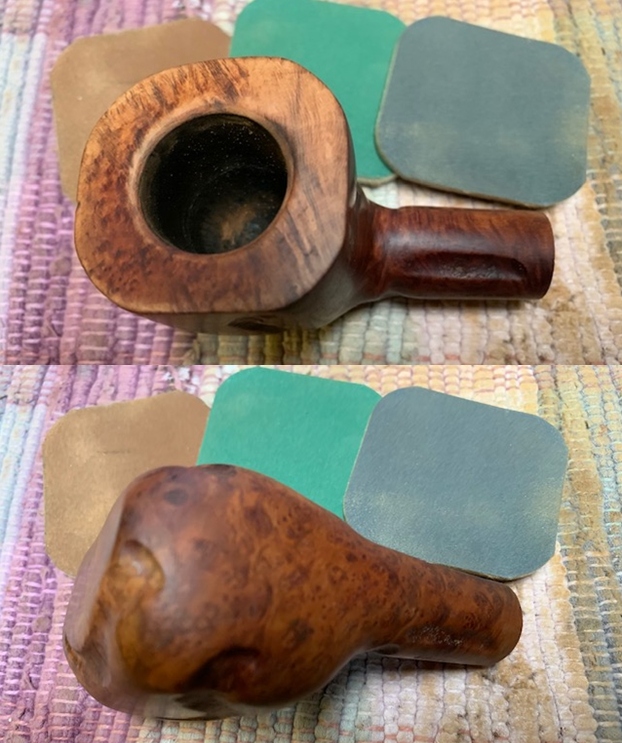
Breathing Life into a GBD Tahiti Billiard


Blog by Steve Laug

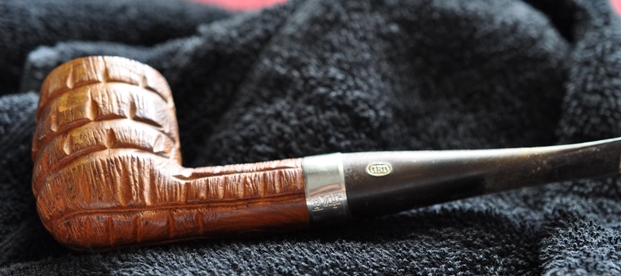
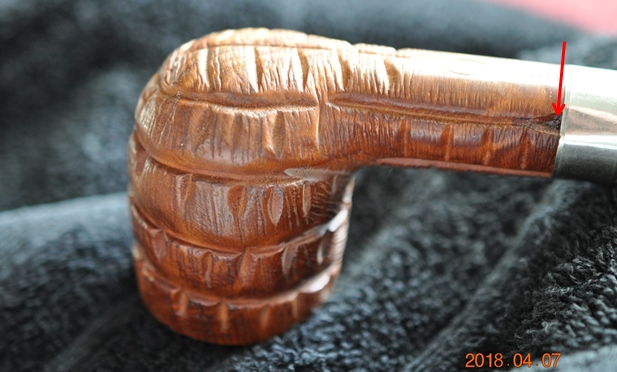
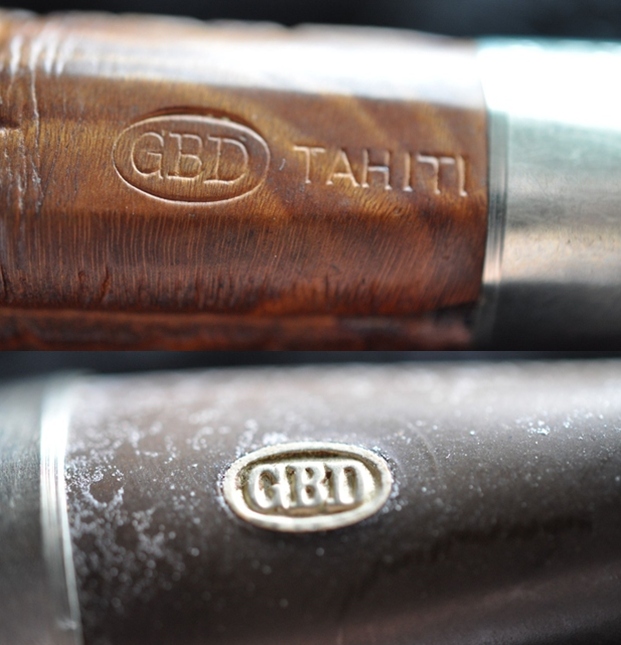
The next interesting looking large Billiard was picked up 2018 from a fellow in Pocatello, Idaho, USA. It was a bit of an oddity for me in that it is a GBD pipe with a very different rustication on the bowl and shank than even the alligator finish I have seen. The finish was dirty but otherwise in good condition on the bowl and shank. There was a repair band on the shank that generally signals a repair on a cracked shank. The pipe is stamped on a smooth panel on the underside of the shank and reads GBD in the oval logo [over] TAHITI. I wonder if the shape number is not under the repair band. The line does not show up on any of the GBD materials that I have accessed. There was a thick cake in the shank and thick overflow of lava on the rim top that obscured potential damage on either. The stem was an original tapered vulcanite with the GBD Brass roundel on the left side. It was oxidized, calcified and had light tooth marks and chatter on both sides. There was also a gouge on both the top and underside of the stem mid-stem. It had a lot of potential. Jeff took photos of the pipe before he started his cleanup work. He took a photo of the rim top to show condition of the bowl. It is hard to tell what the inner edge of the bowl looks like under the lava coat. It is a very dirty pipe. He also captured the condition of the stem. It is oxidized, calcified and has tooth marks and chatter on the top and underside of the stem near the button. He took a photo of the sides and heel of the bowl to show the rustication pattern around the bowl and the condition of the pipe. You can see the repair in the photo below next to the shank. I have used a red arrow to highlight the repaired area under the band.The pipe is stamped GBD in an oval followed by TAHITI on the underside of the shank there is no London England stamp and no shape number. I looked on Pipedia and Pipephil’s site for information on the Tahiti line and came up empty handed. There was no information on the line. I did a Google search on the brand and came upon a link on smokingpipes.com to a very similar looking pipe and a description (https://www.smokingpipes.com/pipes/estate/england/moreinfo.cfm?product_id=35108). On the site Bear Graves writes this description of the pipe:

One thing I love about the older GBD pipes is that they were never timid when it came to staying within shape charts, and they would often play with different carved finishes. “Tahiti” is a wonderfully appropriate name for this pipe. I can almost hear the ocean now.–Bear Graves

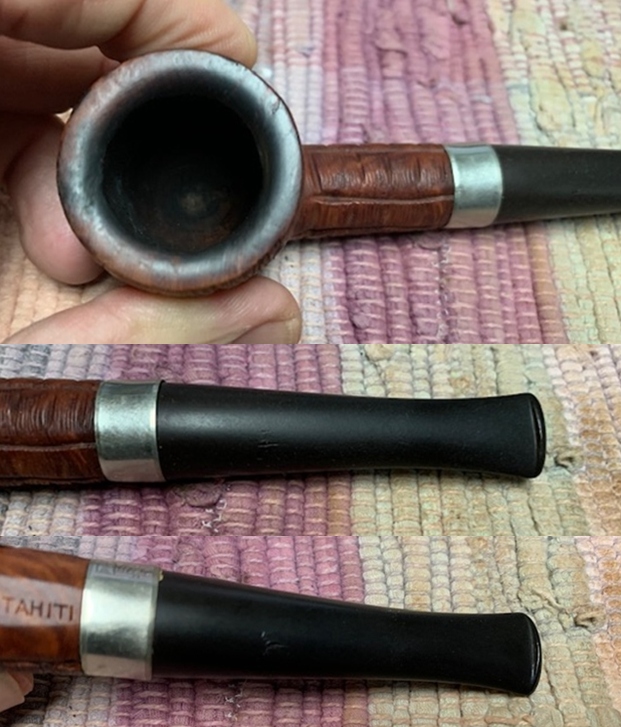
It was time to work on the pipe. As usual Jeff had done a thorough cleanup on the pipe. He reamed the bowl with a PipNet pipe reamer and followed up with a Savinelli Fitsall pipe knife to remove the cake. He scrubbed out the mortise and the airway in the shank and the stem with alcohol, cotton swabs and pipe cleaners. He scrubbed the exterior of the bowl, rim, shank and stem with a tooth brush and Murphy’s Oil Soap to remove the oils and tars on the rim and the grime on the finish of the bowl. He rinsed it under running water. One of the benefits of this scrub is that it also tends to lift some of the scratches and nicks in the surface of the briar. He dried it off with a soft cloth. He cleaned the internals and externals of the stem with alcohol, pipe cleaners and cotton swabs. He soaked the stem in Before & After Deoxidizer and rinsed it off with warm water and cleaned out the airway in the stem with alcohol. I took photos of the rim top and bowl to give a clear picture of the darkening and damage to the rim top and edges of the bowl. There appeared to be some burn damage on the surface and inner edge of the rim. I took photos of the top and underside of the stem to show cut marks on the top and underside of the stem.The stamping on the underside of the shank was readable. It read as noted above.I removed the stem from the shank and took a photo of the pipe.I started my work on the rim top by cleaning the top and edges with 220 grit sandpaper to remove the damage on the top of the rim. The rim had a very nice inward bevel that when cleaned up was attractive. The grain on the top of the rim was very nice. I started the polishing process with 400 grit wet dry sandpaper.I polished the briar with micromesh sanding pads – dry sanding with 1500-12000. I wiped the bowl down with a damp cloth after each pad. Note the rim top and you can see the change to the look of the bevel that I worked on above.   I rubbed the bowl and shank down with Before & After Restoration Balm. I worked it into the surface of the bowl sides and shank with my fingertips to clean, enliven and protect the briar. I let the balm sit for ten minutes and then buffed it with a cotton cloth to raise the shine. The grain came alive and the finish looked rich. I set the bowl aside and turned my attention to the stem. I filled in the damaged areas with clear super glue. Once the repairs cured I sanded them smooth with 220 grit sandpaper to blend them into the surface. I started polishing them with 400 grit wet dry sandpaper.  I polished the vulcanite stem with micromesh sanding pads – 1500-12000 grit pads. I wiped it down with Obsidian Oil after each sanding pad. I used Before & After Pipe Polish – both Fine and Extra Fine to further the stem. The photos below show the polished stem.  I am pretty happy with the restoration of this GBD New Tahiti Billiard. The rim top looks far better and the finish is now and reveals the grain really well. There is a matte finish to the bowl that is rugged and rich looking. The stem is clean and smooth with no remaining damages. I put the stem back on the bowl and carefully buffed the pipe with Blue Diamond on the buffing wheel using a light touch on the briar. I gave the bowl multiple coats of Conservator’s Wax and the stem multiple coats of carnauba wax on the buffing wheel and followed that by buffing the entire pipe with a clean buffing pad. I hand buffed the pipe with a microfiber cloth to deepen the shine. The finished large GBD Billiard fits nicely in the hand and feels great. Give the finished pipe a look in the photos below. The dimensions of the pipe are Length: 6 inches, Height: 2 inches, Outside diameter of the bowl: 1 ½ inches, Chamber diameter: 7/8 of an inch. The weight of the pipe was 49g/1.73oz. I will be putting it on the rebornpipes store shortly. Thanks for reading this blog and my reflections on the pipe while I worked on it. There are many more to come!  

Restoring a Golden Parker Danish Style 141 Bent Acorn


Blog by Steve Laug

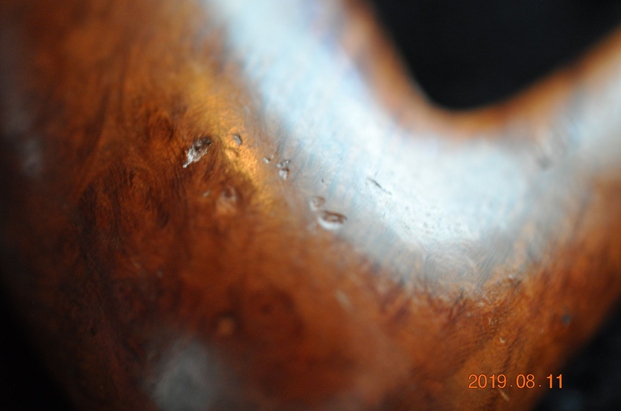
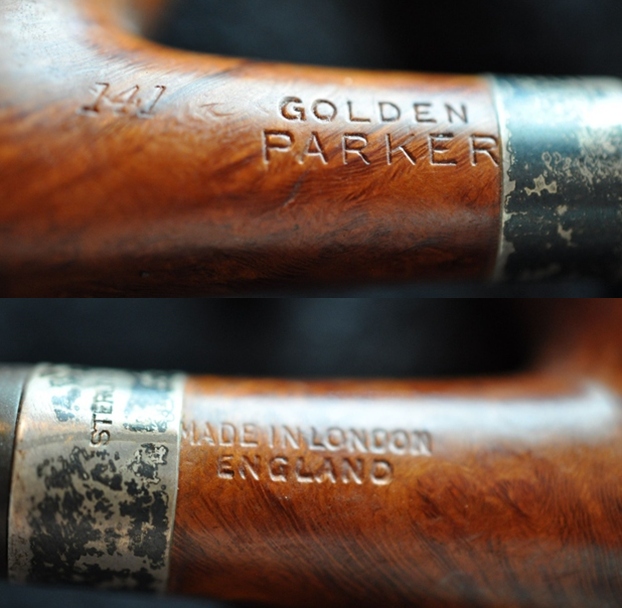
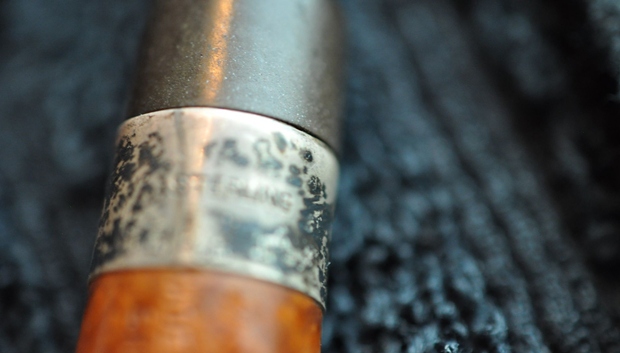
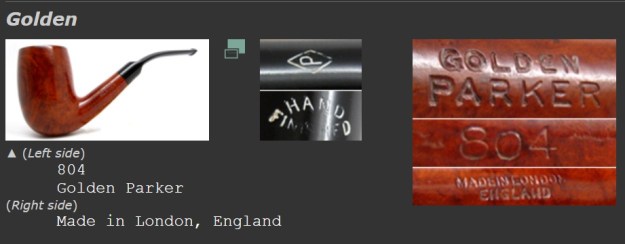
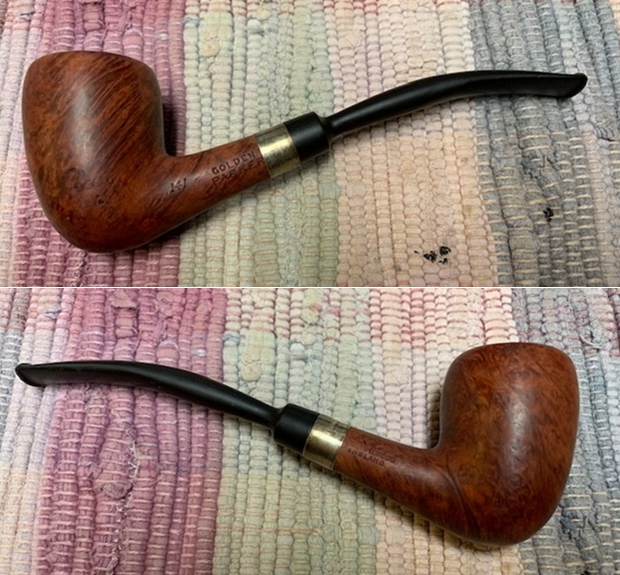
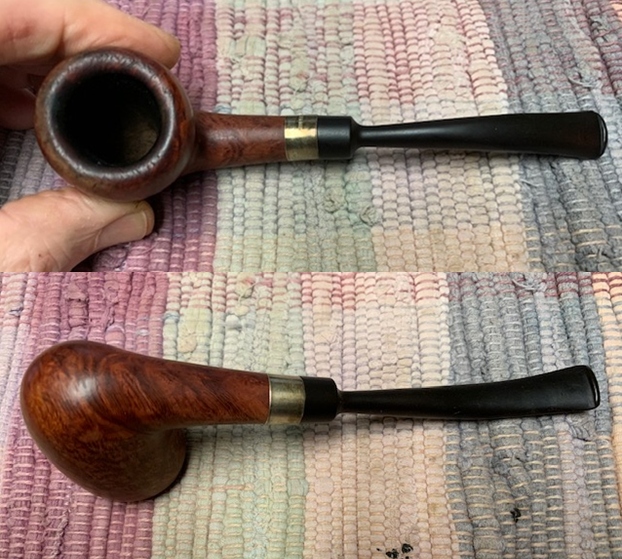
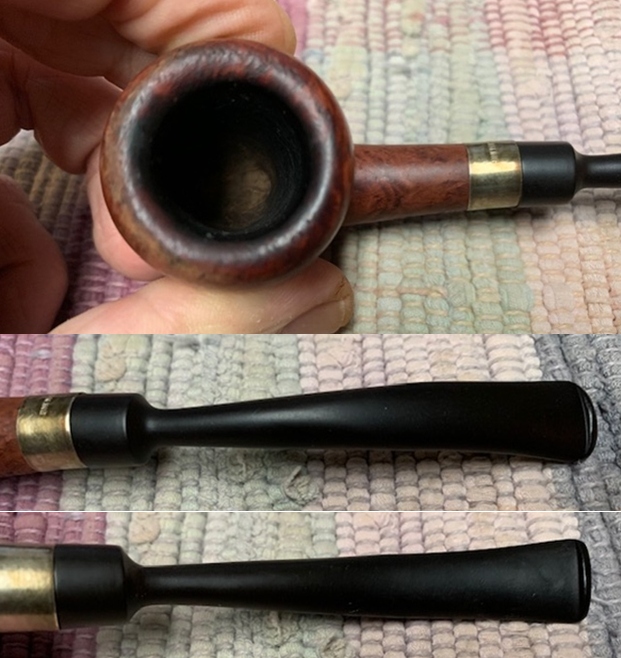
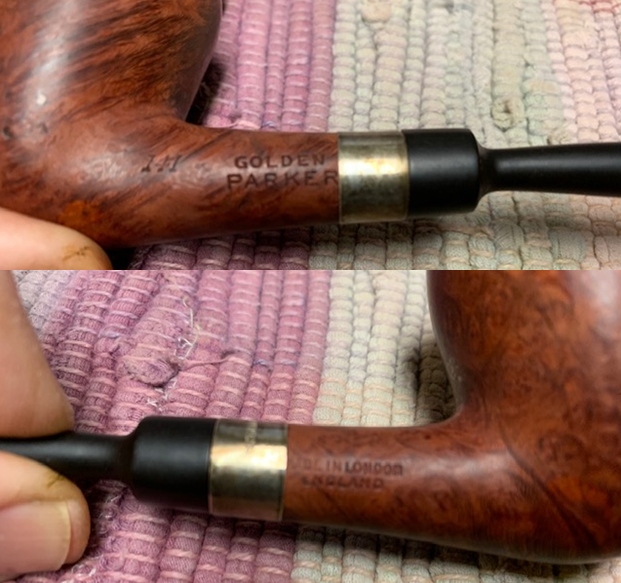
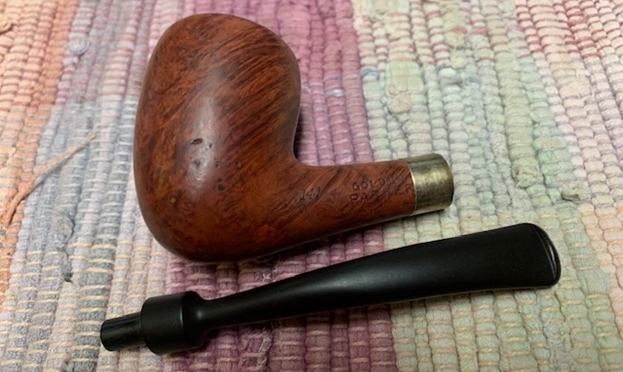
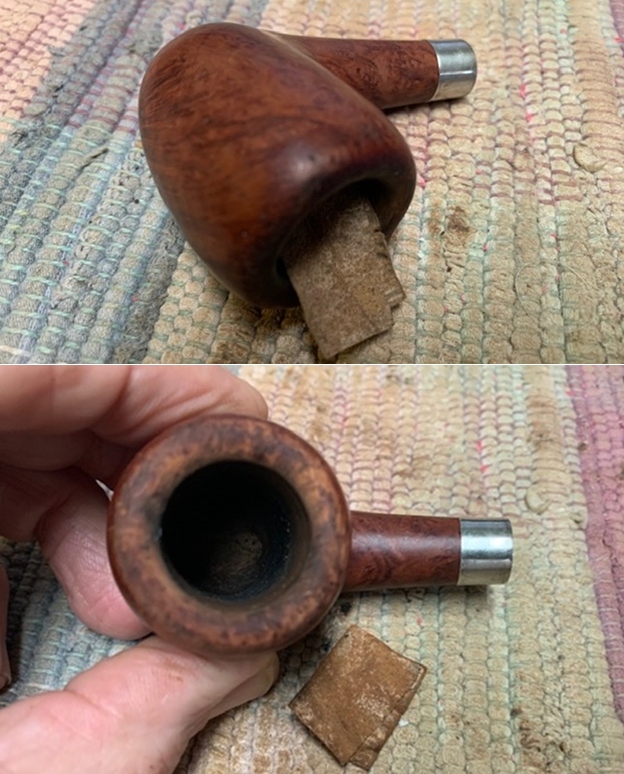
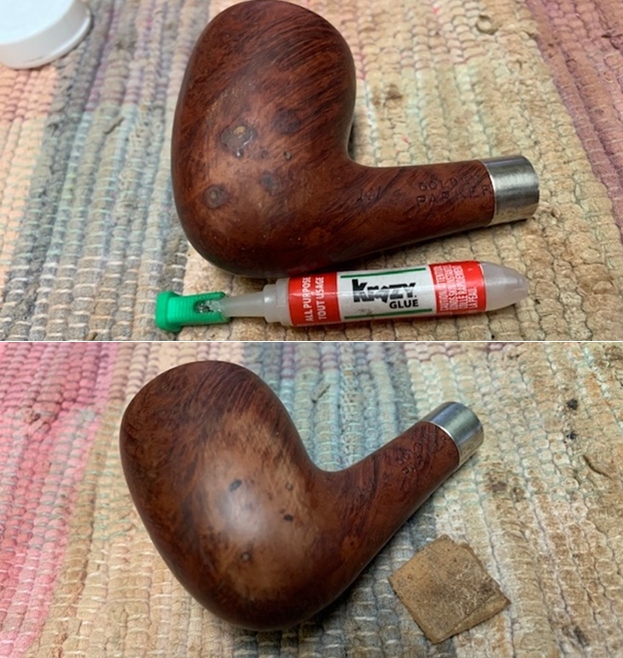
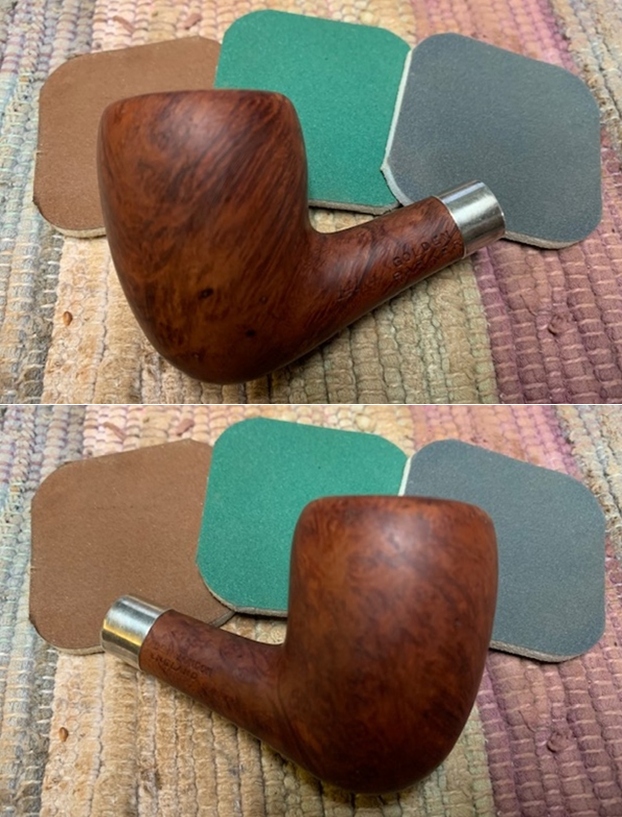
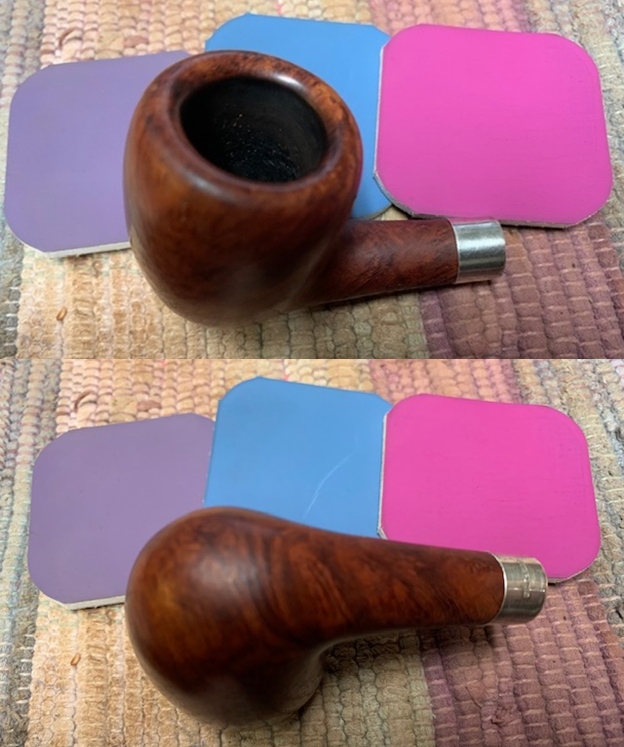
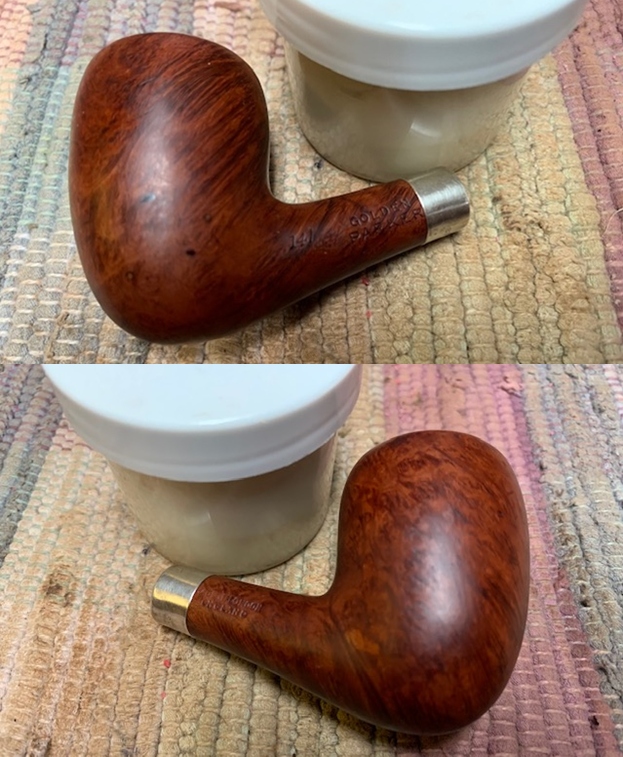
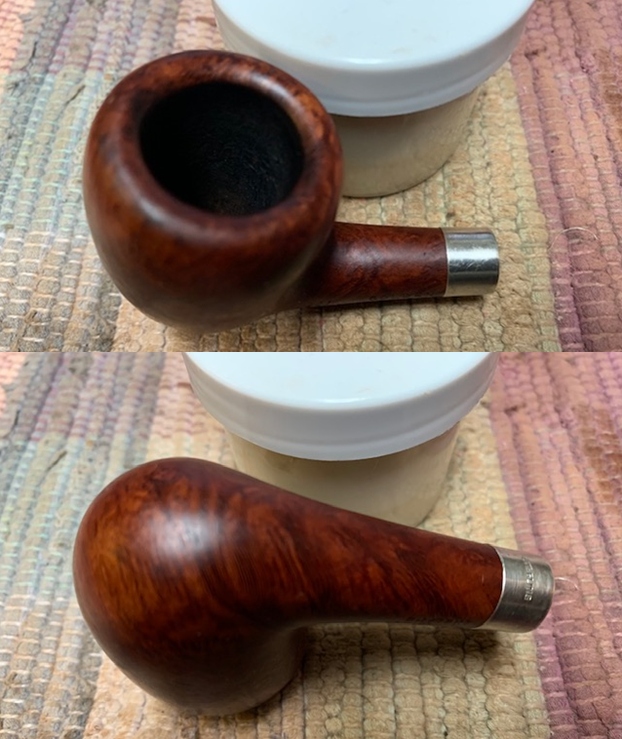
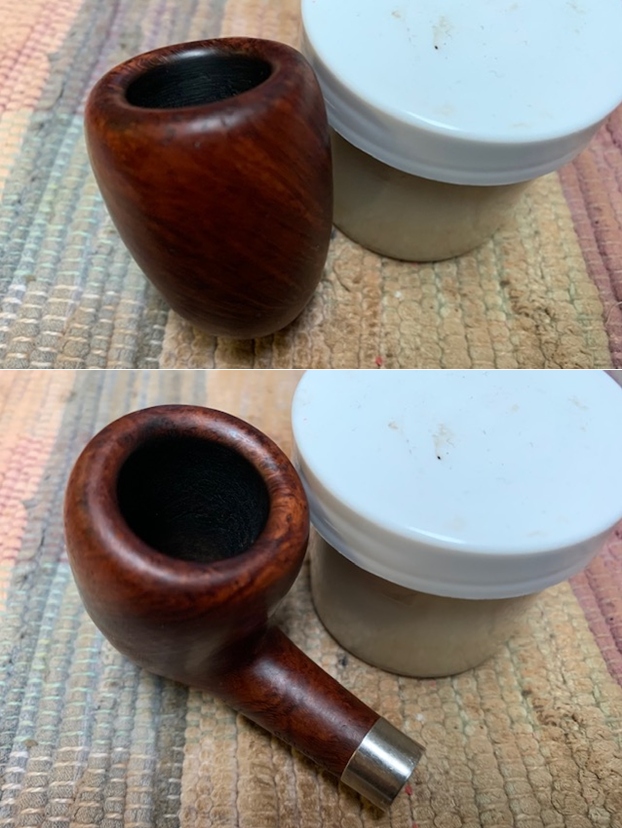
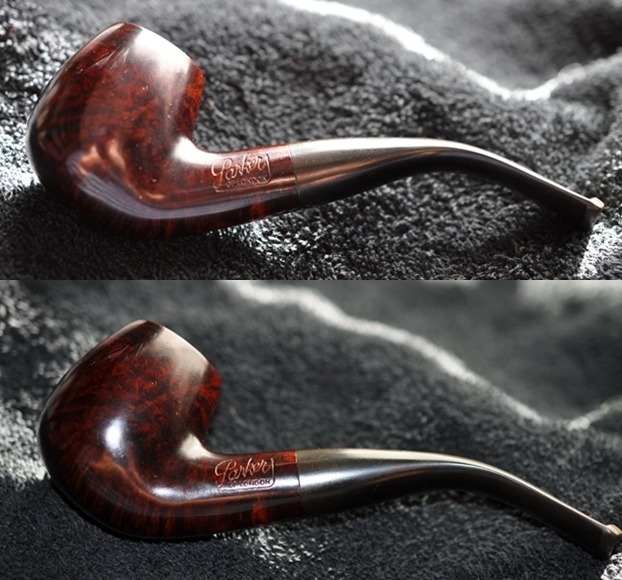
The next pipe on the work table we purchased in 2018 from a fellow Scottsdale, Arizona, USA. It is a mixed grain in a Danish looking shape. The bowl has a rich reddish brown colour combination that highlights grain. The pipe was dirty but appeared to be in decent condition under the grime. There was grime and oils ground into the surface of the briar. This pipe is stamped on the sides of the shank. On the left it reads Golden [over] Parker. To the left of that is the shape number near the bowl that reads 141. On the right it Made in London [over] England. There is a tarnished Sterling Silver band on the shank that appears to be a repair band. The fancy saddle stem has no distinguishing marks or logos. There was a thick cake in the bowl and a heavy overflow of lava on the crowned rim top. It is hard to know the condition of the top or edges underneath the lava. We would know more once it was cleaned up. The stem was oxidized, calcified and had tooth marks and chatter on the stem surface. It was definitely someone’s favourite pipe judging by the condition it arrived at Jeff’s house. He took photos of the pipe before he started his cleanup. He took a photo of the rim top to show condition of the bowl. It is hard to tell for sure but the inner edge of the bowl looks good the lava coat. The top and outer edge also look okay. It is a very dirty pipe. He also captured the condition of the stem. It is oxidized, calcified and has tooth marks and chatter on the top and underside of the stem near the button. He took photos of the sides and heel of the bowl to show the beautiful grain around the bowl and the condition of the pipe. There was a spot on the lower left side of the bowl where the pipe appeared to have been dropped and there was some “road rash”.    He took a photo of the stamping on the sides of the shank. It is clear and readable as noted above.  The repair band was well done and did not cover the stamping on the left side and went right along side of the M on Made in in England on the right side.  The tarnish silver repair band is stamped Sterling. I turned first to Pipephil’s site to look at the Parker write up there and see if I could learn anything about the line (http://www.pipephil.eu/logos/en/logo-parker.html). There was a Parker Golden pipe listed and the stamping matched the one that I am working on but there was no further information on line.I looked up the Parker brand on Pipedia to see if I could find the Parker Golden (https://pipedia.org/wiki/Parker). There was nothing that tied directly to the line I am working on. There is a decent history of the brand there that is a good read.

It was time to work on the pipe. As usual Jeff had done a thorough cleanup on the pipe. He reamed the bowl with a PipNet pipe reamer and followed up with a Savinelli Fitsall pipe knife to remove the cake. He scrubbed out the mortise and the airway in the shank and the stem with alcohol, cotton swabs and pipe cleaners. He scrubbed the exterior of the bowl, rim, shank and stem with a tooth brush and Murphy’s Oil Soap to remove the oils and tars on the rim and the grime on the finish of the bowl. He rinsed it under running water. One of the benefits of this scrub is that it also tends to lift some of the scratches and nicks in the surface of the briar. He dried it off with a soft cloth. He cleaned the internals and externals of the stem with alcohol, pipe cleaners and cotton swabs. He soaked the stem in Before & After Deoxidizer and rinsed it off with warm water and cleaned out the airway in the stem with alcohol. Other than the damaged rim top the pipe looked good. I took a photo of the rim top and stem to show the condition. The rim top and edges looked very good. The vulcanite stem had tooth chatter and marks on both sides ahead of the button and on the button edges.  The stamping on the sides of the shank is clear and readable as noted above.    I removed the stem from the shank and took a photo of the pipe to give a sense of the whole. It is a nice Bent Acorn that should clean up very well. I started my work on the pipe by cleaning up the rim top and edges. I used a folded piece of 220 grit sandpaper to remove the damaged areas and scratches in the bowl. It looked much better than when I started.  I filled in the damaged areas on the left side of the owl with clear super glue. Once the glue cured and hardened I sanded them smooth with a folded piece of 220 grit sandpaper. Once finished they were smooth.   I polished the briar with micromesh sanding pads – wet sanding with 1500-12000 grit pads. I wiped the bowl down between pads with a damp cloth.   I rubbed the bowl and shank down with Before & After Restoration Balm. I worked it into the surface of the bowl sides and shank with my fingertips to clean, enliven and protect the briar. I let the balm sit for a little while and then buffed with a cotton cloth to raise the shine. The Balm did its magic and the grain stood out.    I set the bowl aside and turned my attention to the stem. I “painted” the surface of the stem with the flame of a lighter to lift the tooth marks and chatter. I was able to life many of them. I filled in the remaining marks with clear super glue. Once the repairs cured I sanded them smooth with 220 grit sandpaper to blend them into the surface. I started polishing them with 400 grit wet dry sandpaper. I polished the vulcanite stem with micromesh sanding pads – 1500-12000 grit pads. I wiped it down with Obsidian Oil after each sanding pad. I used Before & After Pipe Polish – both Fine and Extra Fine to further the stem. The photo below shows the polished stem. This nicely grained Golden Parker 141 Danish Looking Bent Acorn with a Sterling Silver repair band and a fancy vulcanite saddle stem is a great looking pipe now that it has been restored. The briar around the bowl is clean and really came alive. The rich brown stains gave the grain a sense of depth with the polishing and waxing. The grain really popped. I put the vulcanite stem back on the bowl and carefully buffed the pipe with Blue Diamond on the buffing wheel using a light touch on the briar. I gave the bowl and the stem multiple coats of carnauba wax on the buffing wheel. I buffed the pipe with a clean buffing pad to raise the shine. I hand buffed the pipe with a microfiber cloth to deepen the shine. The finished Golden Parker Bent Acorn is a beauty and feels great in the hand and looks very good. Give the finished pipe a look in the photos below. The dimensions of the pipe are Length: 6 inches, Height: 2 inches, Outside diameter of the bowl: 1 ¼ inch, Chamber diameter: ¾ of an inch. The weight of the pipe is 40grams/1.41oz. This will be going on the rebornpipes store under the British Pipemakers section soon. Thanks for reading this blog and my reflections on the pipe while I worked on it. There are many more to come!

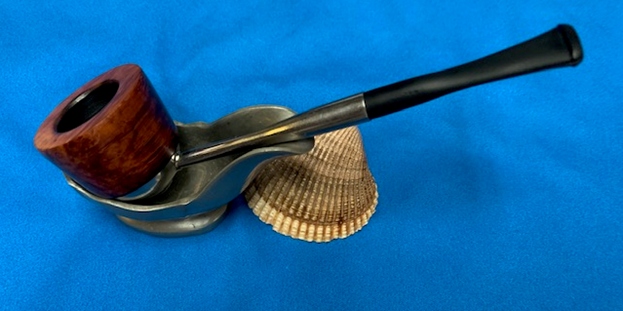
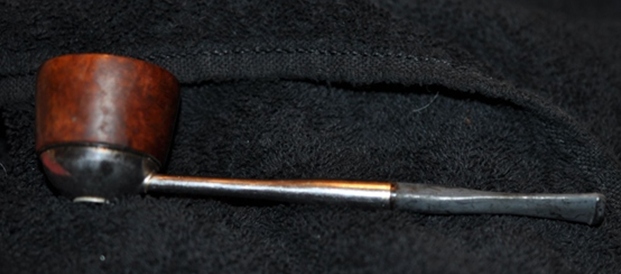
New Life for an English Made Titan Patent Metal Pipe and Briar Bowl


Blog by Steve Laug

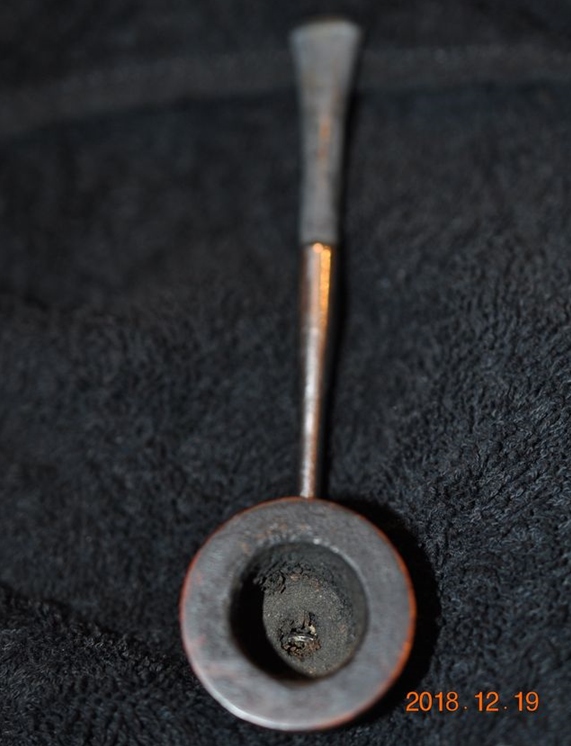
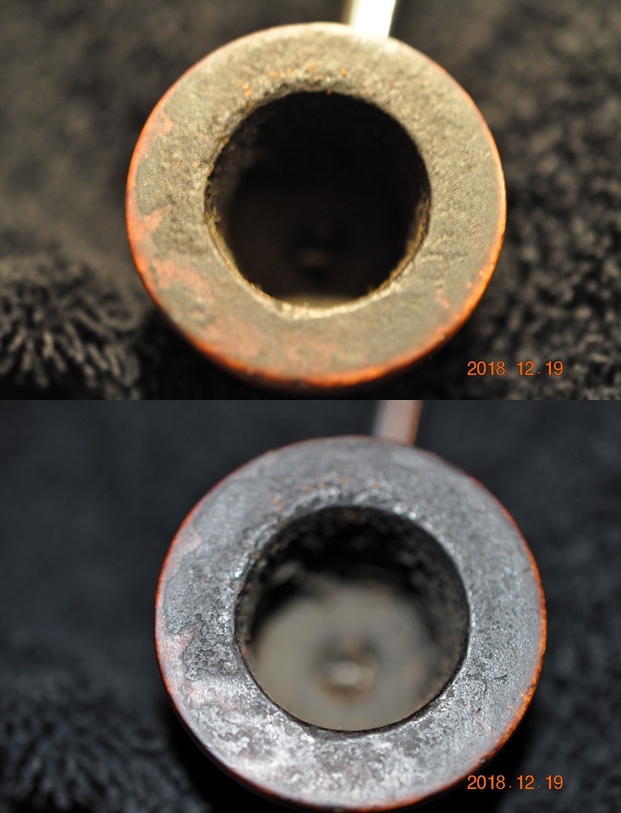
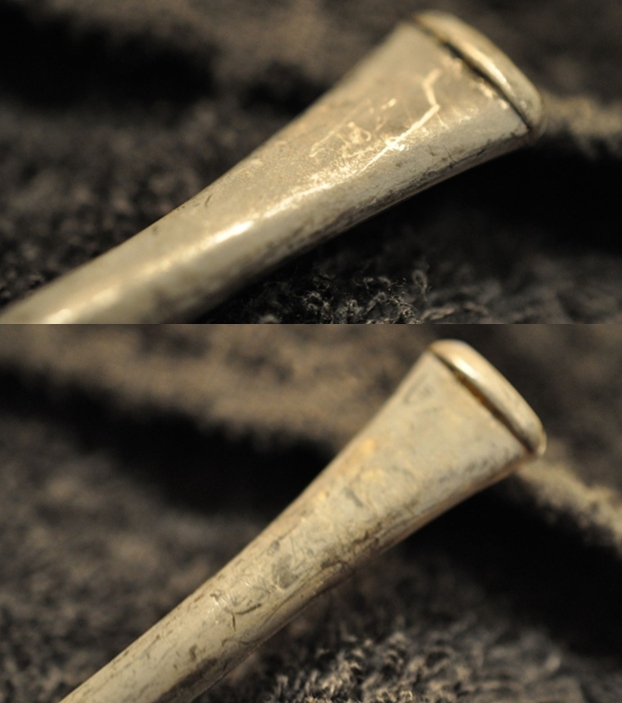
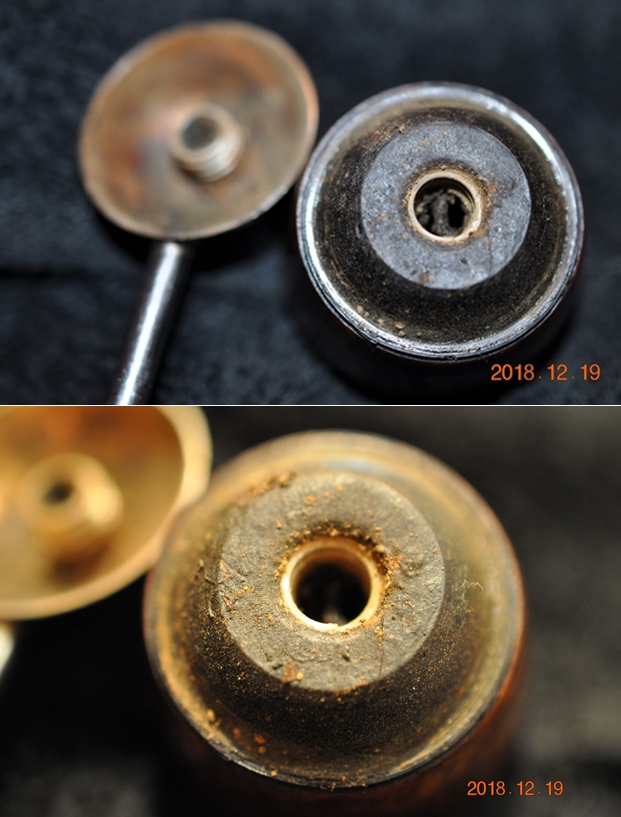
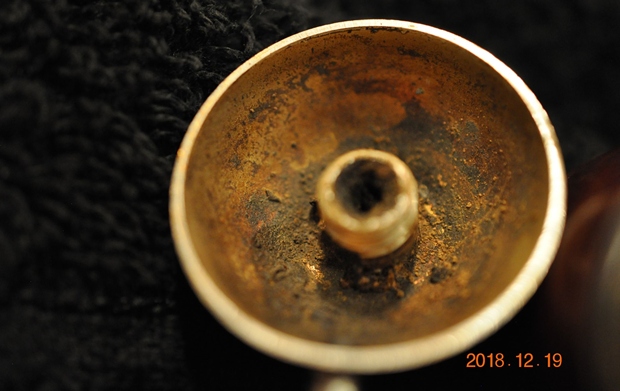
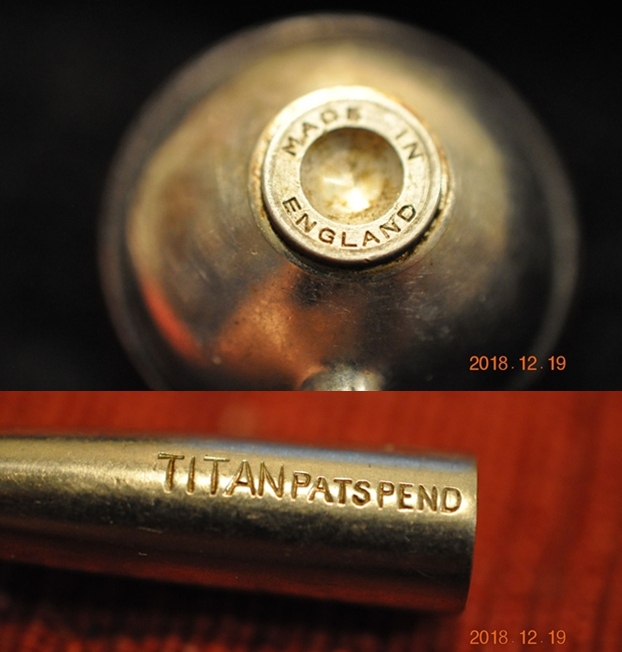
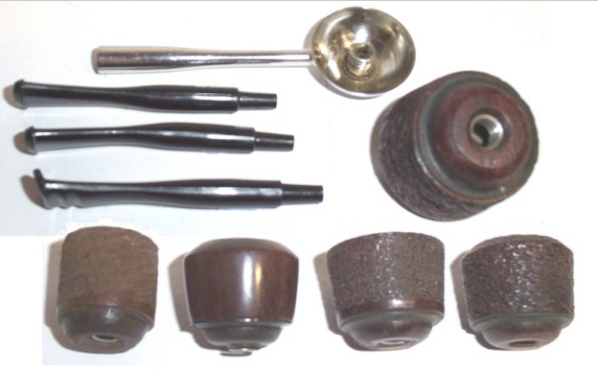
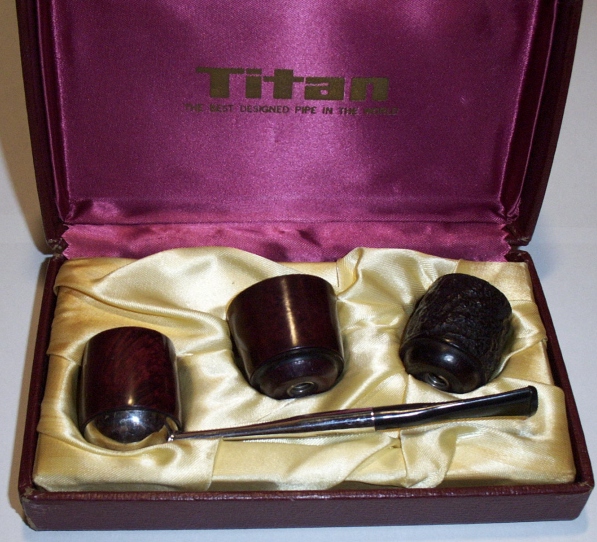
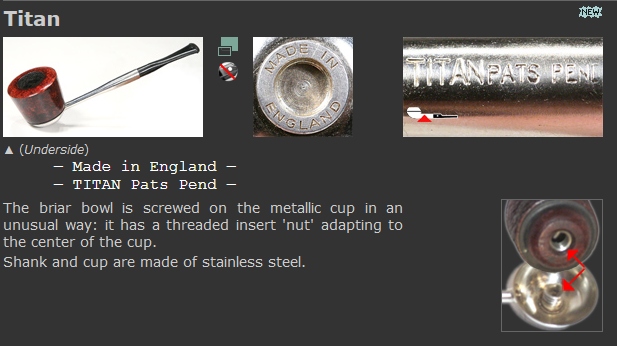
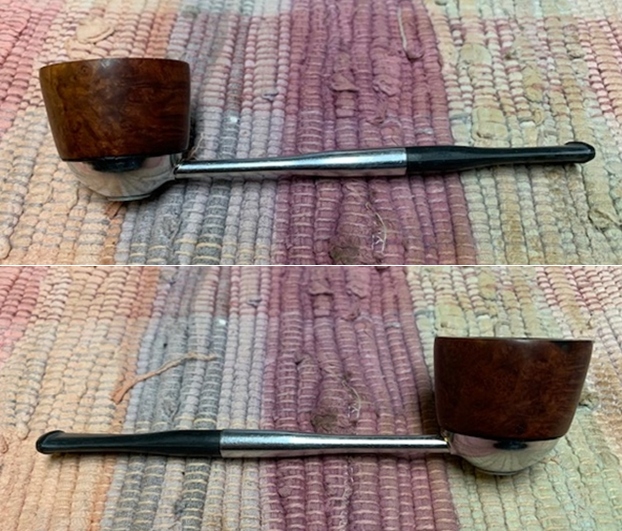
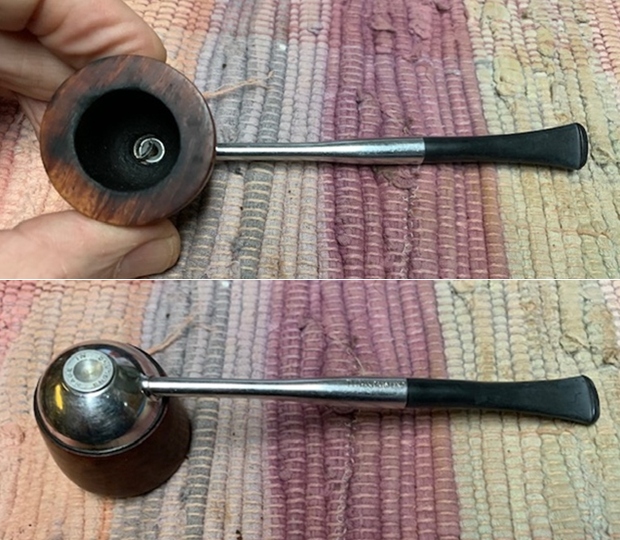
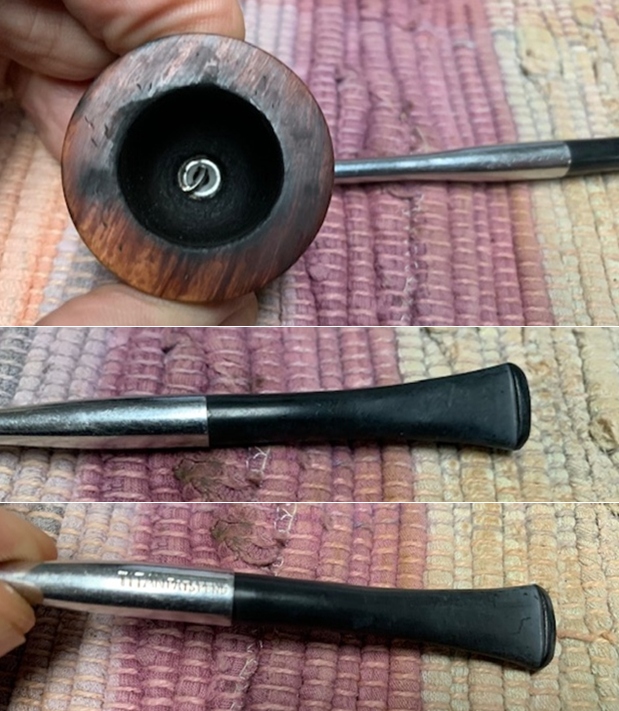
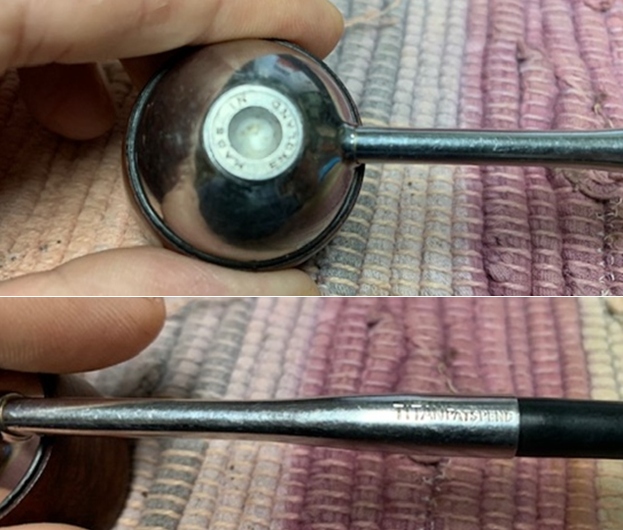
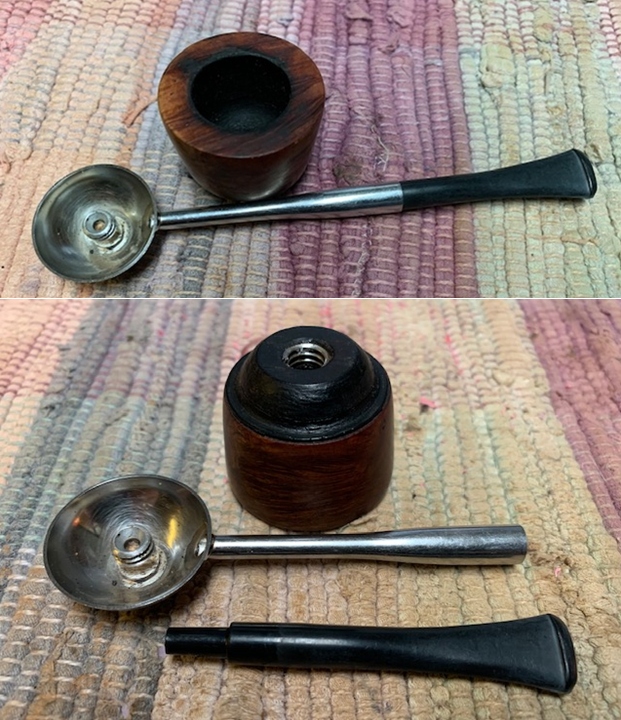
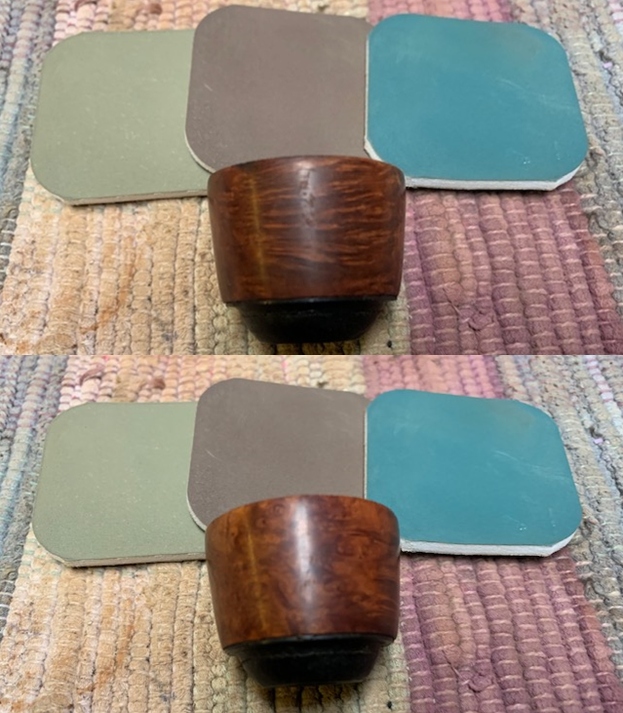
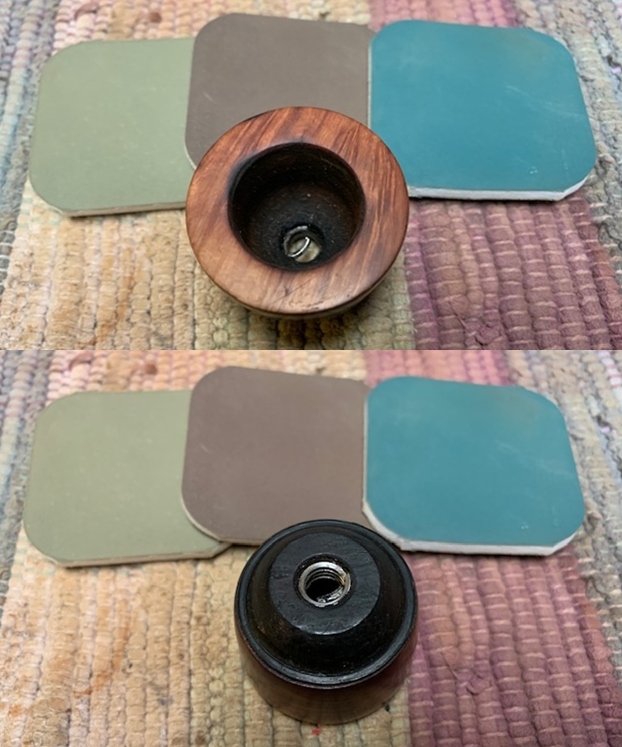
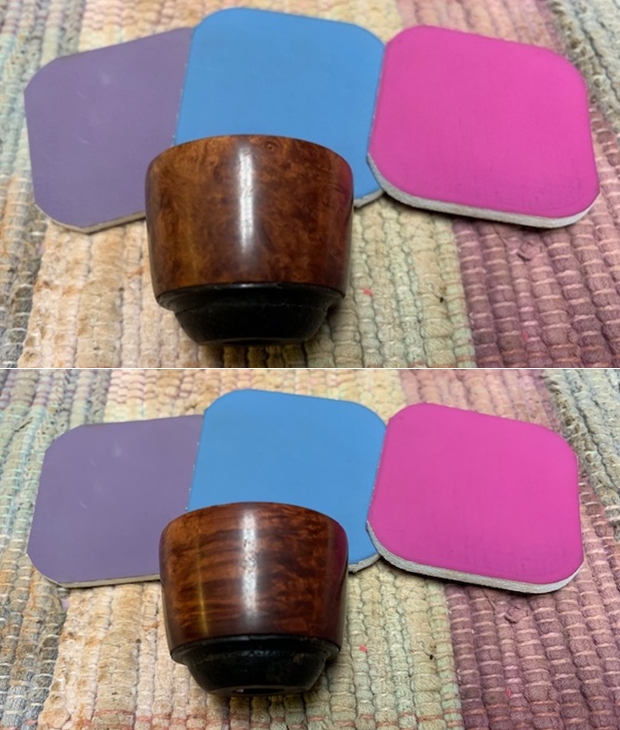
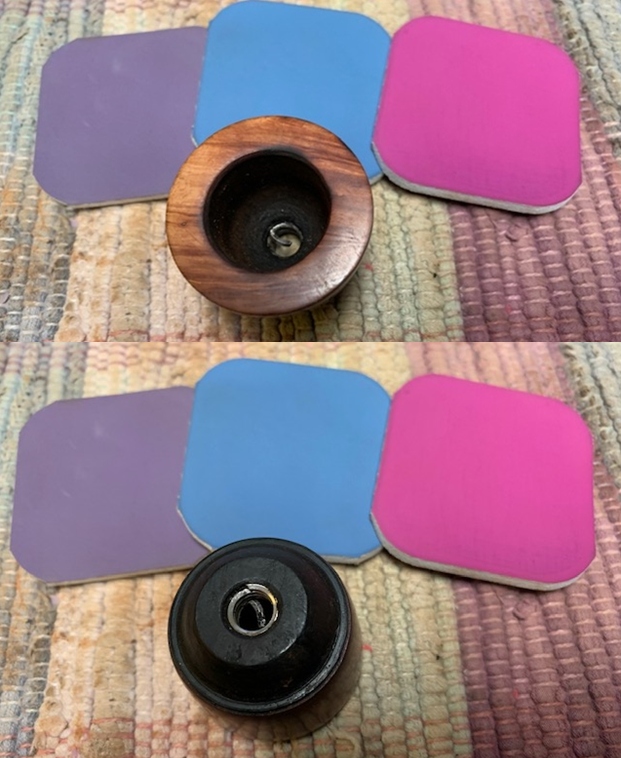
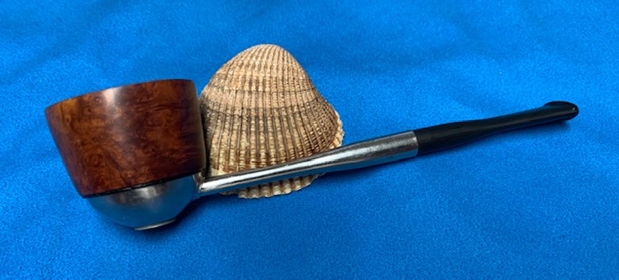
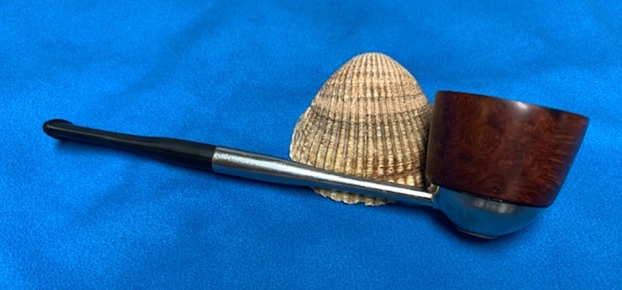
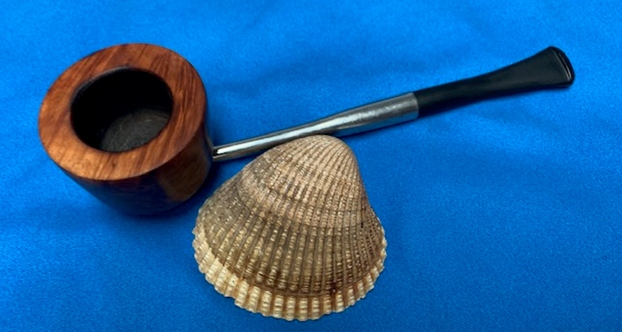
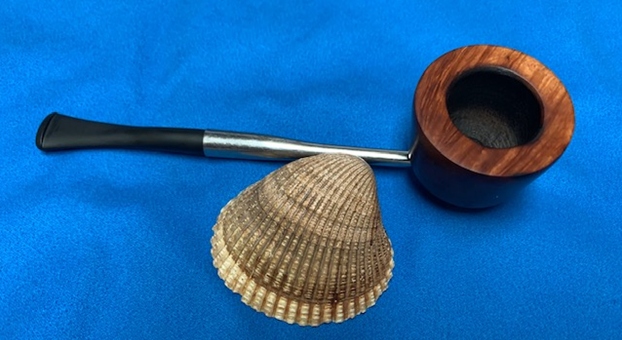
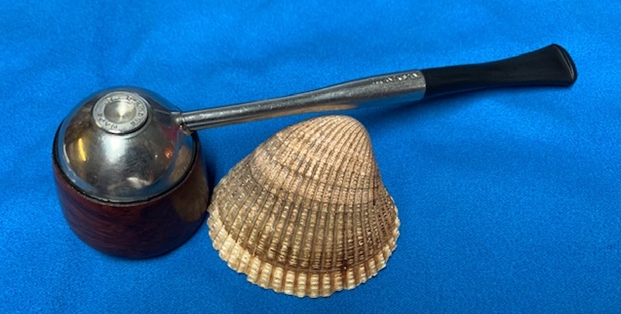
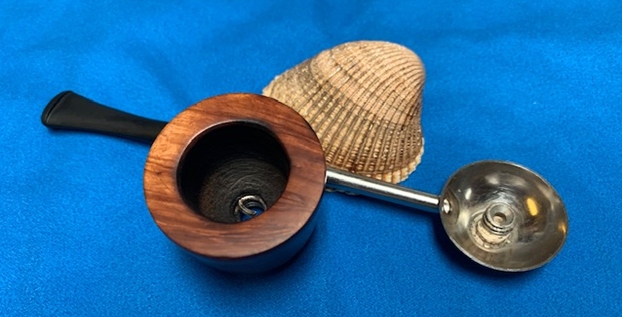
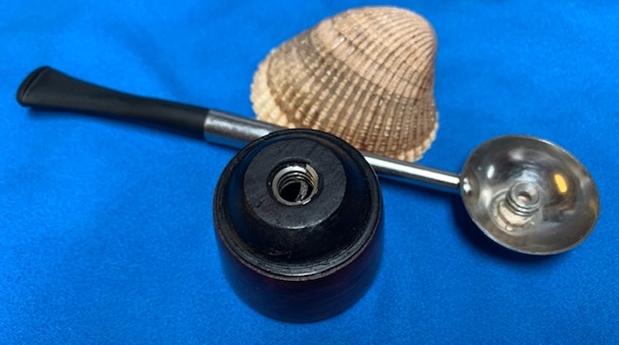
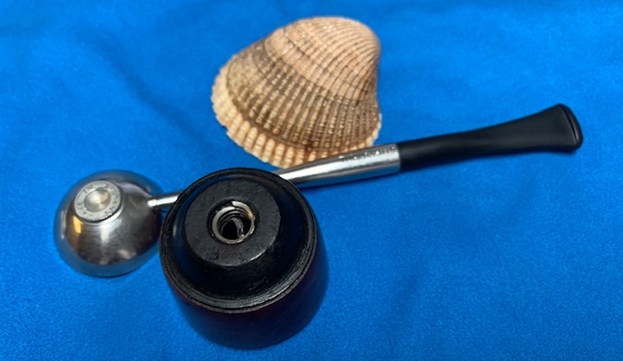
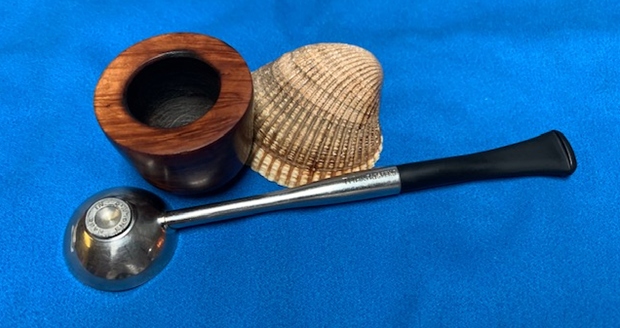
The next pipe on the work table came to us from an online auction in 2018 in Nampa, Idaho, USA. It is an interesting looking Metal Pipe that is made of Stainless steel rather than aluminum. The stem is removable from the base and the bowl is removable from the cup as well. The bowl has a rich reddish brown colour combination that highlights grain. The pipe was in surprisingly good condition other than the normal wear and tear. There was some grime ground into the surface of the briar. This pipe is stamped on the underside of the base – the cup and the shank. On the cup it reads Made in England in a circle around a flat portion of the cup. On the shank it is stamped TITAN Pats. Pend. There is a moderate cake in the bowl as well as tobacco debris. There was a thick coat of lava on the rim top making it impossible to adequately assess the condition of the rim top and the inner edge of the bowl. The outer edge looked very good. The stem was oxidized, calcified and dirty with light tooth chatter and marks on the stem surface. The pipe looks to be in good condition other than being dirty. Jeff took photos of the pipe before he started his cleanup. He took a photo of the rim top to show condition of the bowl. The inner edge of the bowl appears to have some damage on both the front and rim of the bowl. It is hard to know what the rim top will look like under the lava coat. He also captured the condition of the stem. It is oxidized, calcified and has light tooth marks and chatter on the top and underside of the stem near the button.  Jeff took the bowl off the base and  took photos to show how it was connected. It is different from the way that many of the briar bowl are connected to the base. This bowl has a nut inside the hole that is threaded and turns onto the threaded screw in the base. There is also a piece of the metal threading that goes across the top of the nut to keep tobacco from falling into the base. It was very dirty but it obviously was a great smoking pipe.   He took a photo of the stamping on the heel of the base and the shank. It is clear and readable as noted above.    I turned first to a site I always turn to for metal pipe with briar bowls or alternative bowls. It is a site in the UK called Smokingmetal (http://www.smokingmetal.co.uk/pipe.php?page=1410). They had the pipe listed and I include both the description given as well as some photos that were included on the site.

TITAN

Titan, made in England is unusual in that the screw is part of the cup and the bowl has a threaded insert ‘nut’.

The stem is of stainless steel, and cleaning by immersing in boiling water is recommended for the metal stem only

Strangely there are two identical pipes, one stamped TITAN PATS PEND under the shank, near the mouth piece, and another with CITY PATS PEND. This of course calls for more investigation.

The bit comes in 3 styles, straight, curved and dental, an easy push fit to enable easy interchangeability. There were 6 shapes of bowl (in image below from left to right) which they called

Billiard which confusingly equates to the Falcon Dublin)

Bullcap (Falcon- Genoa)

Dublin equates to Falcon Algiers

Devon (nearest in Falcon would be the Dublin) not shown here

Pot which I find it hard to differentiate from their Dublin

Apple seems the same in both ranges

Also found a meerschaum lined bowl

All six shapes were available in smooth or rustic and cost at the time of my brochure 16 shillings,(which means it had to be before 1971) or 80 p ( $1.40) in today’s cash. The complete pipe was £2 ($3.70)

Not yet established the cost of the case set of pipe and three bowls. I looked up the Titan brand on Pipedia to see if I could find any information and there was nothing there. I turned to Pipephil’s site and surprisingly I found the information included below in the screen capture (http://www.pipephil.eu/logos/en/logo-t6.html). It also included the information that follows in the sidebar: The Titan pipes came with 6 shapes of interchangeable bowls available in smooth or rustic finish each.

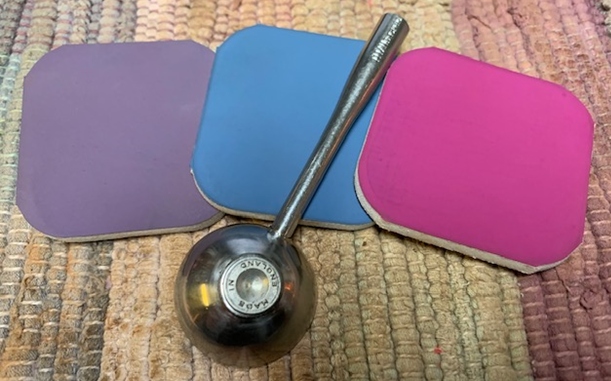
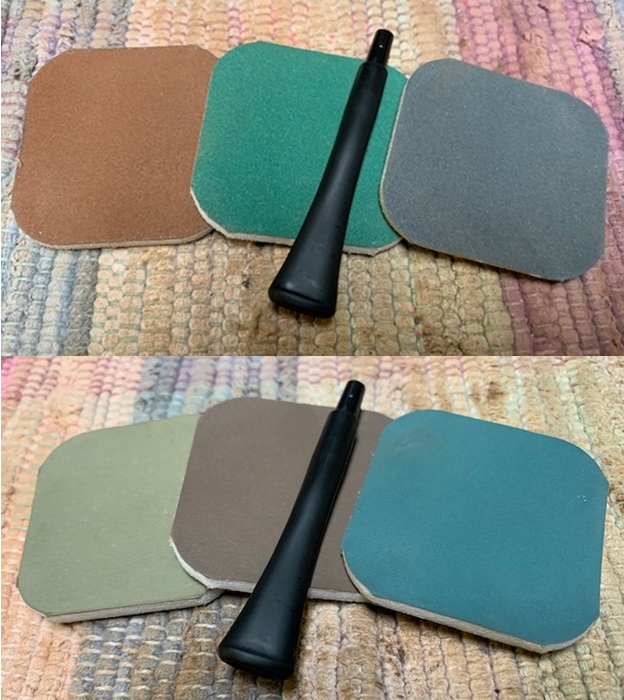
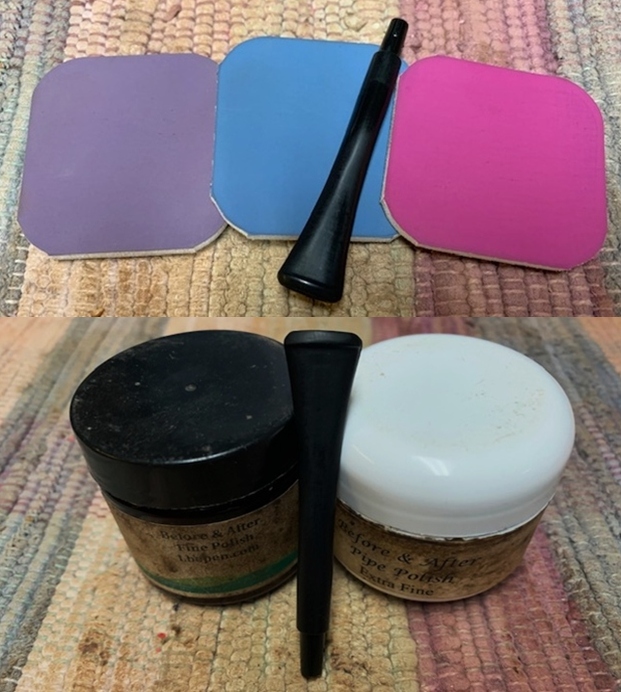
It was time to work on the pipe. As usual Jeff had done a thorough cleanup on the pipe. He reamed the bowl with a PipNet pipe reamer and followed up with a Savinelli Fitsall pipe knife to remove the cake. He scrubbed out the mortise and the airway in the shank and the stem with alcohol, cotton swabs and pipe cleaners. He scrubbed the exterior of the bowl, rim, shank and stem with a tooth brush and Murphy’s Oil Soap to remove the oils and tars on the rim and the grime on the finish of the bowl. He rinsed it under running water. One of the benefits of this scrub is that it also tends to lift some of the scratches and nicks in the surface of the briar. He dried it off with a soft cloth. He cleaned the internals and externals of the stem with alcohol, pipe cleaners and cotton swabs. He soaked the stem in Before & After Deoxidizer and rinsed it off with warm water and cleaned out the airway in the stem with alcohol. I took photos of the rim top and stem to show the condition. The rim top and edges showed obvious issues. There were burn marks on the flat rim top and the inner edge had damage all the way around and was out of round. There was one small burn spot on the front outer edge as well. The vulcanite taper stem had light oxidation remaining and light tooth chatter and marks on both sides ahead of the button and on the button edges.   The stamping on the heel and the underside of the shank is clear and readable as noted above. I removed the bowl from the base and the stem from the shank and took a photo of the pipe to give a sense of the whole. It is an interesting metal pipe and should clean up very well.       I started my work on the pipe by addressing the damage to the rim top. I topped I on a topping board with 220 grit sandpaper. I removed the damage to the rim top and on the outer edge. I was able to minimize the damage on the inner edge some but would need to work on it some more. I gave the inner edge a slight bevel with a piece of folded 220 grit sandpaper. I was able to remove and minimize the damage to the inner and outer edge of the rim.I polished the briar with micromesh sanding pads – wet sanding with 1500-12000 grit pads. I wiped the bowl down between pads with a damp cloth. I rubbed the bowl and shank down with Before & After Restoration Balm. I worked it into the surface of the bowl sides and shank with my fingertips to clean, enliven and protect the briar. I let the balm sit for a little while and then buffed with a cotton cloth to raise the shine. The Balm did its magic and the grain stood out.     I polished the stainless base and shank with micromesh pads – wet sanding with 1500-12000 grit pads and wiping it down with a jeweler’s cloth afterwards.   I polished the vulcanite stem with micromesh sanding pads – 1500-12000 grit pads. I wiped it down with Obsidian Oil after each sanding pad. I used Before & After Pipe Polish – both Fine and Extra Fine to further the stem. The photo below shows the polished stem.     This interesting metal pipe stamped Titan Patd. Pend. with a short Dublin bowl is a beauty. The stainless steel base and vulcanite taper stem add to the mixture and contribute to a great looking pipe now that it has been restored. The briar around the bowl is clean and really came alive. The rich brown stains gave the grain a sense of depth with the polishing and waxing. The grain really popped. I put the vulcanite stem back on the bowl and carefully buffed the pipe with Blue Diamond on the buffing wheel using a light touch on the briar. I gave the bowl and the stem multiple coats of carnauba wax on the buffing wheel. I buffed the pipe with a clean buffing pad to raise the shine. I hand buffed the pipe with a microfiber cloth to deepen the shine. The finished Titan Patd. Pend. pipe is a beauty and feels great in the hand and looks very good. Give the finished pipe a look in the photos below. The dimensions of the pipe are Length: 5 ½ inches, Height: 1 ½ inches, Outside diameter of the bowl: 1 ½ inches, Chamber diameter: 7/8 of an inch. The weight of the pipe is 30grams/1.06oz. Thanks for reading this blog and my reflections on the pipe while I worked on it. There are many more to come!

Breathing Life into a Leonard Payne Classic Bulldog


Blog by Steve Laug

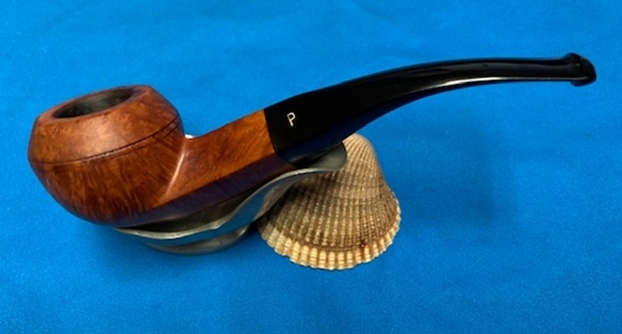
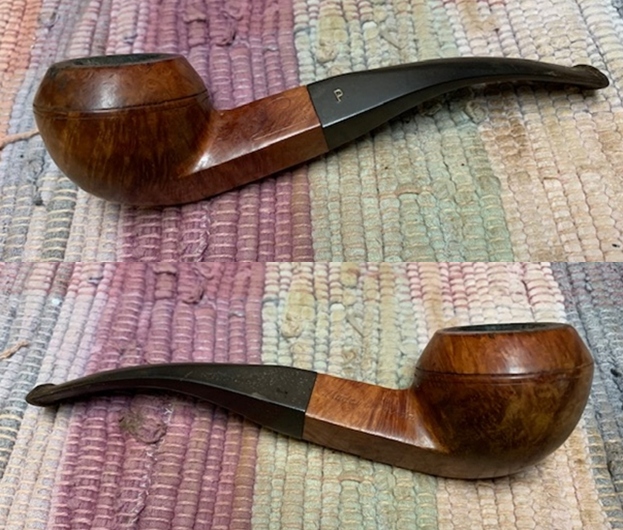
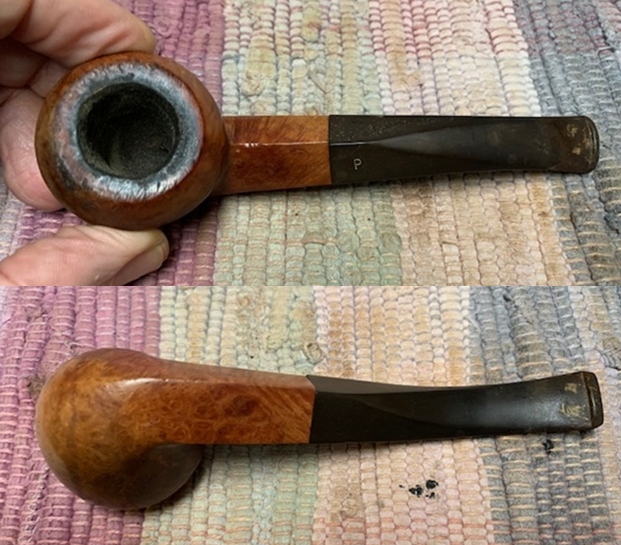
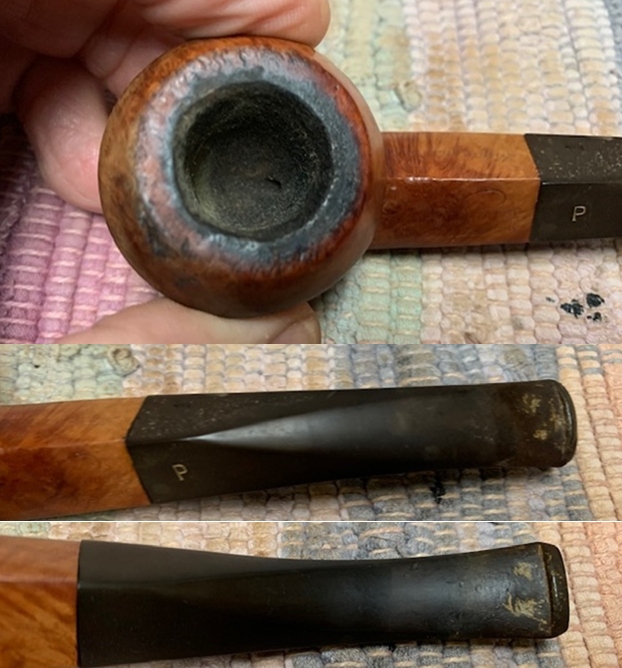
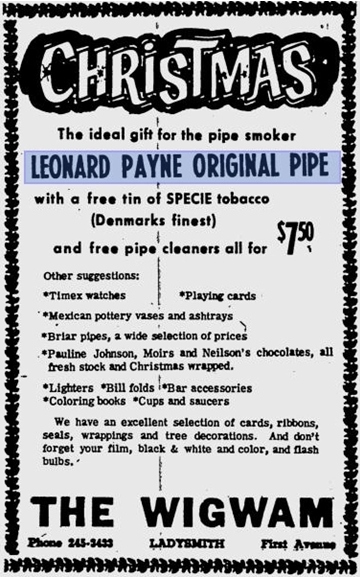
The next pipe on the work table is one that came to us from one of our pipe hunts – maybe one of them in Alberta. It is another Leonard Payne pipe that is very interesting. The pipe is a classic ¼ bent Bulldog. The pipe is stamped on the left side of the shank and reads Leonard Payne in an underscored signature style [over] Classic. On the right side it is stamped Made in Canada. There was a stamped P on the left side of the taper stem. This is a unique Leonard Payne pipe in that the shank has not been snapped and reconnected as was the usual practice that he claimed strengthened the pipe at its weakest point. The bowl has a thick cake that overflows onto the rim top as lava. There are some nicks and scratches on the top and edges. The bowl is slightly out of round from damage on the inner edge.  The outer edges have a few nicks around the right side. The exterior was very dirty with grime and debris ground into the finish on the bowl. The taper vulcanite stem is oxidized, calcified, scratched and has tooth marks and chatter on both sides ahead of the button. I took some photos of the pipe before I did any clean up.  I took photos of the rim top and the stem. The photo of the rim top shows the damage and the cake in the bowl and lava on the top. The stem photos show the oxidation, calcification and tooth chatter and deep marks. I took photos of the stamping on the right and left side of the shank. The stamping on the left side is the Leonard Payne signature over Classic. The stamping on the left side reads Made in Canada.   I removed the stem from the shank and took a photo of the parts to give an idea of the flow and form of the pipe. It is a nice looking Bulldog.I reread several of the blog I have written on the brand in the past restorations of Payne pipes and decided to include the material on the brand before I write about the cleanup of the pipe. I am including advertisement for Leonard Payne’s pipes. Here is the link to the blog (https://rebornpipes.com/2013/11/16/a-pipe-maker-i-had-never-heard-of-leonard-payne-pipes/).

Further digging with Google came up with this short note from alt.smokers.pipes forum. It was written by Mike Glukler of Briar Blues. I quote it below in full. (https://groups.google.com/forum/#!topic/alt.smokers.pipes/RrICLiVgE2o)   “Leonard Payne was based in B.C. for many years. He came to Canada from England. He had shops in Surrey, B.C. and Kelowna, B.C. Interesting fellow. Gruff as the day is long. When you bought a pipe it was handed to you in a paper bag. No sock, no box. Most of his pipes carried a “carburetor” system at the shank / stem junction. Another Payne idea was his shanks. Almost all his pipes were two pieces. He’d turn the bowl and shank, then cut off the shank and reattach with glue (not always with the same piece of briar, so many did not match grains). His thinking was that the shank being the weakest link, if cut and glued would never break and thus “correcting” the weakest link. You may find his pipes on E-Bay on occasion listed as a Len Cayne. The P in his stamping looks more like a fancy upper case C.”

The pipe I am working on now is more of a classic looking bent Bulldog and does not have the characteristic quirks of other Payne pipes that I have worked on.

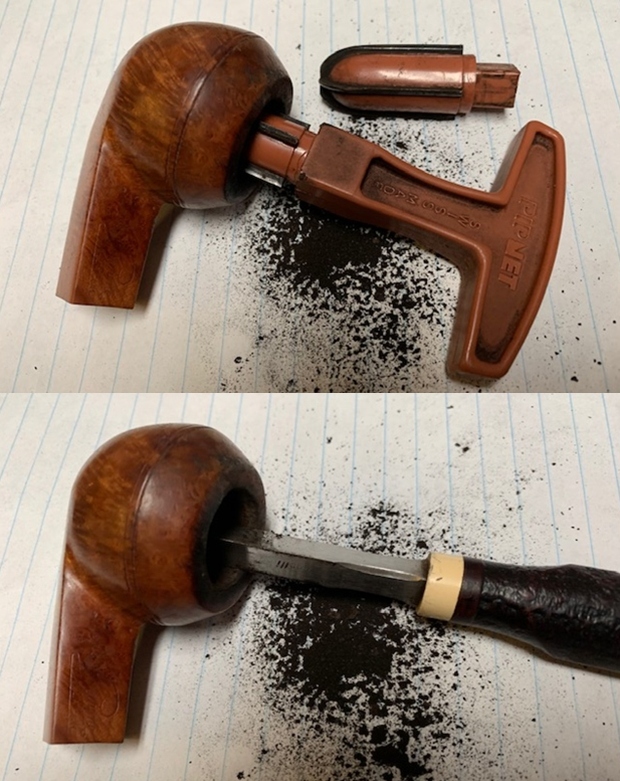
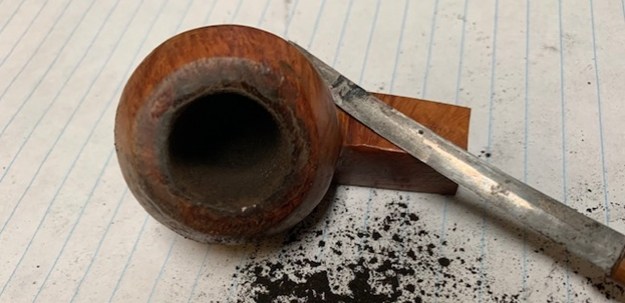
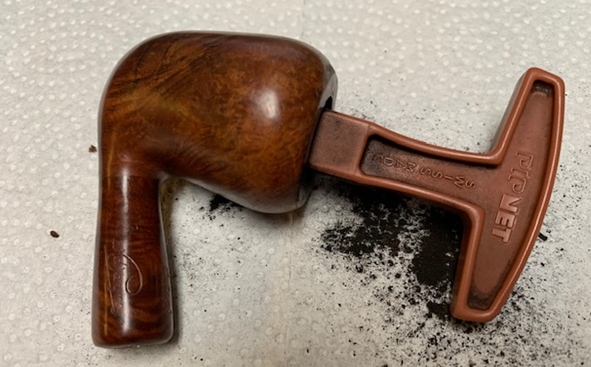
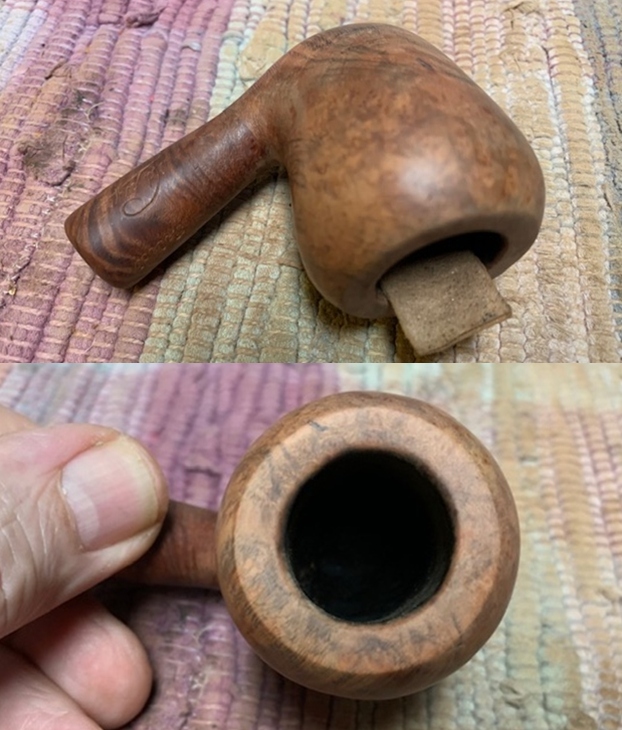
Now it was time to work on the pipe. I reamed the pipe with a PipNet Pipe Reamer and took the cake back to bare briar. I cleaned up the remnants of the cake in the bowl with a Savinelli Fitsall Pipe Knife. I sanded the bowl with a piece of 220 grit sandpaper wrapped around a dowel. I scraped off the rim top with a pen knife to remove the lava top coat on the rim. The rim looked better with the lava removed. I scrubbed the exterior of the bowl with a tooth brush and undiluted Murphy’s Oil Soap. I rinsed it off with running water to remove the soap and the grime. The pipe looked better and the grain stood out nicely.  With the externals cleaned I moved onto the shank. I scraped it with a dental spatula and removed the buildup of tars and oils on the internal walls. I scrubbed the internals of the shank and mortise, the vulcanite stem and the shank with pipe cleaners, cotton swabs and alcohol. I worked on them until they were clean.    I worked on the damaged rim top and damage to the edges. I topped the bowl on a topping board with 220 grit sandpaper. I reworked the inner edge of the bowl with a folded piece of 220 grit sandpaper. I started polishing it with 400 grit wet dry sandpaper.  I polished the bowl and rim top with micromesh sanding pads – wet sanding with 1500-12000 grit pads and wiping the briar down with a damp cloth after each sanding pad.     I rubbed the bowl down with Before & After Restoration Balm. I worked it into the surface of the bark on the bowl sides and shank with my fingertips to clean, enliven and protect it. I let the balm sit for a little while and then buffed with a cotton cloth to raise the shine.  I set the bowl aside and turned my attention to the stem. Before I went to lunch I dropped the stem in a bath of Briarville’s Pipe Stem Oxidation Remover. It would soak for the afternoon and in later I would see what it did.  I took it out of the bath and scrubbed it off with a paper towel and was able to remove the oxidation and calcification. The stem looked amazingly better at this point in the process. There were deep tooth marks in the stem surface on both sides. I “painted” the tooth marks and chatter with the flame of a lighter to lift them. I was able to lift most of them. Even the deeper marks came up significantly. I filled in the remaining marks with black superglue and set it aside to cure.   Once the repairs cured I smoothed them out with a file. I sanded it with 220 grit sandpaper to further blend them into the surface of the vulcanite. I started polishing the stem with 400 grit wet dry sandpaper. I polished the vulcanite with micromesh sanding pads – 1500-12000 grit pads. I wiped it down with a damp cloth after each sanding pad. I used Before & After Pipe Polish – both Fine and Extra Fine to further polish the stem.   This Leonard Payne Classic Bent Bulldog is a great looking pipe that is void of the Payne innovations. The smooth finish on the pipe looks good and works well with the polished vulcanite taper stem. I put the stem back on the bowl and carefully buffed the pipe with Blue Diamond on the buffing wheel. I gave the bowl and stem multiple coats of carnauba wax on the buffing wheel and followed that by buffing the entire pipe with a clean buffing pad. I hand buffed the pipe with a microfiber cloth to deepen the shine. The finished Canadian Made Leonard Payne Classic is a great looking pipe that looks almost new. The flow of the grain around the bowl and the shape contribute to the beauty of this pipe. It fits nicely in the hand and feels great. Give the finished pipe a look in the photos below. The dimensions of the pipe are Length: 5 ½ inches, Height: 1 ½ inches, Outside diameter of the bowl: 1 ½ inches, Chamber diameter: ¾ of an inch. The weight of the pipe is 38grams/1.38oz. This one will soon be on the rebornpipes online store. If you are interested in carrying on the legacy of this Canadian Made pipe let me know. Thanks for reading this blog and my reflections on the pipe while I worked on it. This was an interesting pipe to bring back to life.
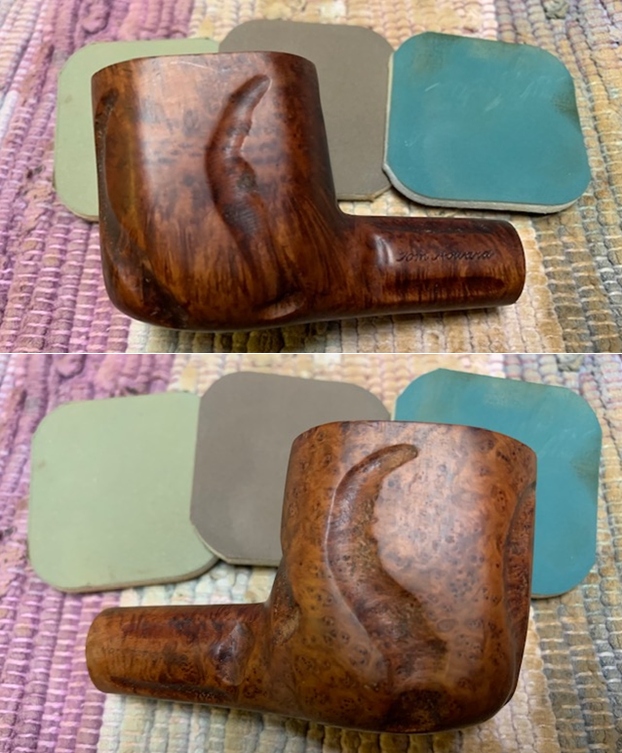
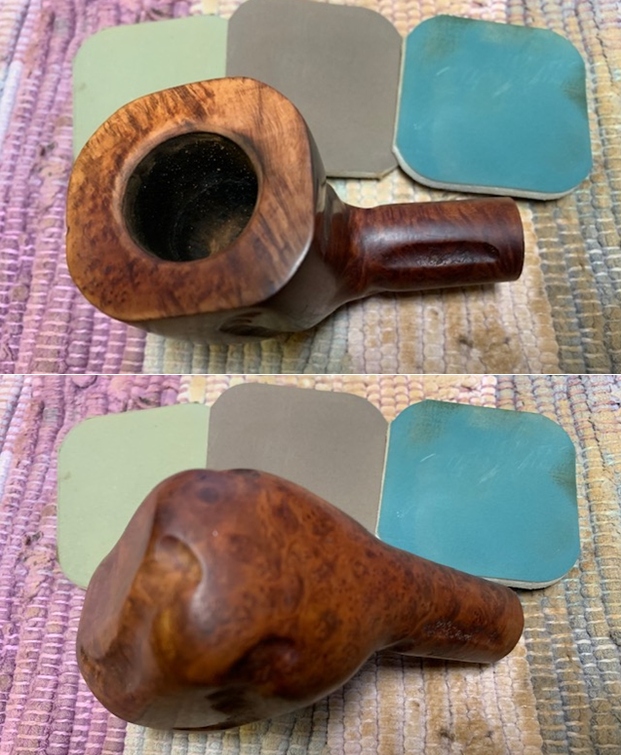
Breathing Life into a Leonard Payne Select Freehand System Pipe


Blog by Steve Laug

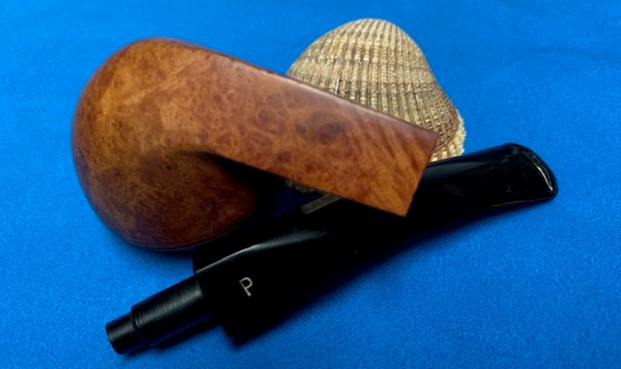
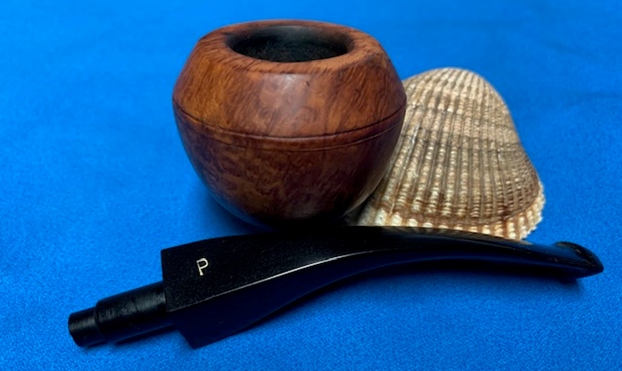
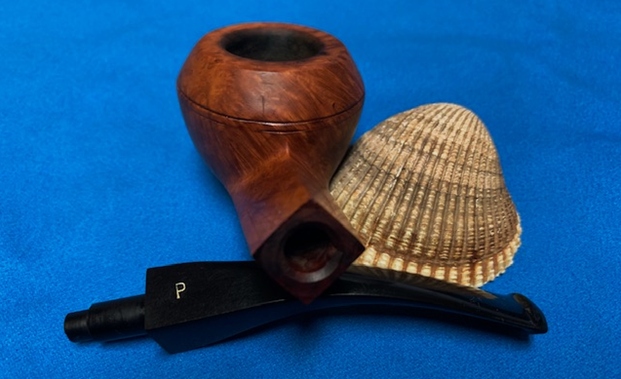
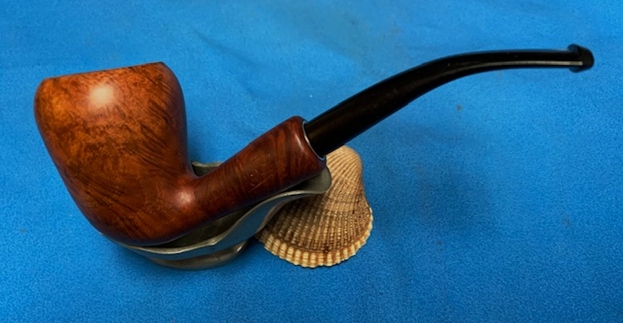
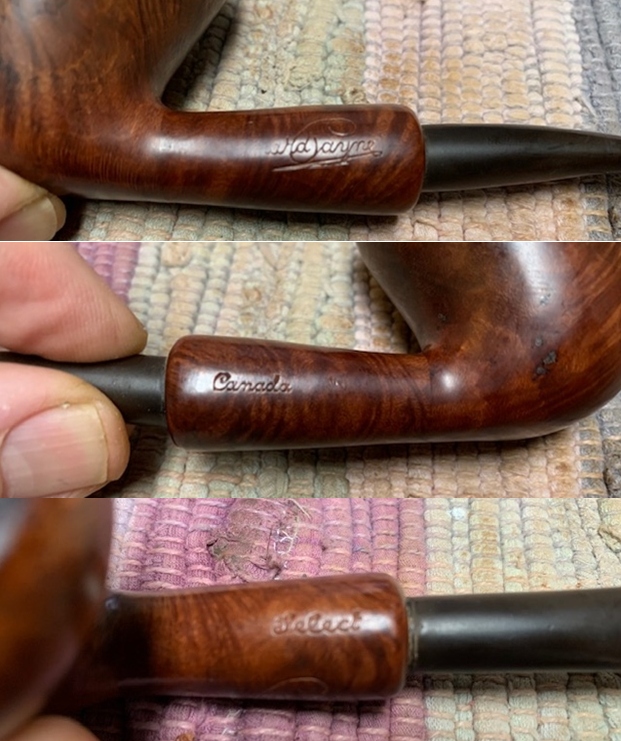
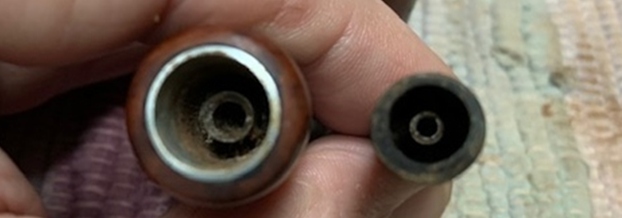
The next pipe on the work table is an interesting piece that came to us from one of our pipe hunts – maybe one of them in Alberta. It is another Leonard Payne pipe that is very interesting. The bowl has a Dublinesque shape and the shank is also flared. The pipe is stamped on the left side of the shank and reads Leonard Payne in an underscored signature style. On the top of the shank it is stamped Select in script. On the right side it is stamped Canada. There is some darkening around the shank bowl junction that when examined appears to be a rejoined shank and bowl. This is a classic Leonard Payne practice that he claimed strengthened the pipe at its weakest point. The aluminum system piece is inserted in the shank and has a tube inside it. The vulcanite stem also has a tube in it. To me it is a lot like Keyser Hygienic pipe in terms of the system structure. The bowl has a thick cake that overflows onto the rim top as lava. There are some nicks and scratches on the top and edges. The exterior was very dirty with grime and debris ground into the finish on the bowl. The inside of the aluminum shank insert is filled with tar and oils the same as the stem is. The vulcanite stem is oxidized, calcified, scratched and has tooth marks and chatter on both sides ahead of the button. I took some photos of the pipe before I did any clean up.    I took photos of the rim top and the stem. The photo of the rim top shows the damage and the cake in the bowl and lava on the top. The stem photos show the oxidation, calcification and tooth chatter and light marks. I took photos of the stamping on the top, right and left side of the shank. The stamping on the left side is the Leonard Payne signature. The stamping on the left side reads CANADA. The stamping on the top of the shank reads Select.   I reread several of the blog I have written on the brand in the past restorations of Payne pipes and decided to include the material on the brand before I write about the cleanup of the pipe. I am including advertisement for Leonard Payne’s pipes. Here is the link to the blog (https://rebornpipes.com/2013/11/16/a-pipe-maker-i-had-never-heard-of-leonard-payne-pipes/).

Further digging with Google came up with this short note from alt.smokers.pipes forum. It was written by Mike Glukler of Briar Blues. I quote it below in full. (https://groups.google.com/forum/#!topic/alt.smokers.pipes/RrICLiVgE2o)  “Leonard Payne was based in B.C. for many years. He came to Canada from England. He had shops in Surrey, B.C. and Kelowna, B.C. Interesting fellow. Gruff as the day is long. When you bought a pipe it was handed to you in a paper bag. No sock, no box. Most of his pipes carried a “carburetor” system at the shank / stem junction. Another Payne idea was his shanks. Almost all his pipes were two pieces. He’d turn the bowl and shank, then cut off the shank and reattach with glue (not always with the same piece of briar, so many did not match grains). His thinking was that the shank being the weakest link, if cut and glued would never break and thus “correcting” the weakest link. You may find his pipes on E-Bay on occasion listed as a Len Cayne. The P in his stamping looks more like a fancy upper case C.”

The pipe I am working on fits Mike’s information perfectly. First, there was a carburetor system on this pipe. The aluminum shank extension has a tube in it that matches a tube in the inside of the military bit stem.The second part of the information from Mike regards the shank and bowl connection. It was obvious that the shank had been cut off the shank and reattached with glue. It was Payne’s belief that since the shank was the weakest link cutting it off and gluing on would remove the possibility of it breaking in the future.  I have marked the joint in the photos below with red arrows. The line is at the center of the two arrows. Now it was time to work on the pipe. First I took the pipe apart and took the following photo of the pipe. It was very dirty and needed to be thoroughly cleaned. I reamed the pipe with a PipNet Pipe Reamer and took the cake back to bare briar. I cleaned up the remnants of the cake in the bowl with a Savinelli Fitsall Pipe Knife. I sanded the bowl with a piece of 220 grit sandpaper wrapped around a dowel. I scraped off the rim top with a pen knife to remove the lava top coat on the rim. The rim looked quite good with the lava removed. I reworked the inner edge of the bowl and the rim top with a folded piece of 220 grit sandpaper. I started polishing it with 400 grit wet dry sandpaper.   I scrubbed the exterior of the bowl with a tooth brush and undiluted Murphy’s Oil Soap. I rinsed it off with running water to remove the soap and the grime. The pipe looked better and the small fills around the bowl sides were very visible. With the externals cleaned I cleaned the internals on the metal fitment, the vulcanite stem and the shank with pipe cleaners, cotton swabs and alcohol. I worked on them until they were clean.   I repaired the fills on the bowl sides with clear super glue and briar dust. Once the repairs cured I sanded them smooth to blend them into the surface with a folded piece of 220 grit sandpaper.    I polished the bowl and rim top with micromesh sanding pads – wet sanding with 1500-12000 grit pads and wiping the briar down with a damp cloth after each sanding pad.   I rubbed the bowl down with Before & After Restoration Balm. I worked it into the surface of the bark on the bowl sides and shank with my fingertips to clean, enliven and protect it. I let the balm sit for a little while and then buffed with a cotton cloth to raise the shine.  I set the bowl aside and turned my attention to the stem. Before I turned out the shop lights for the evening I dropped the stem in a bath of Briarville’s Pipe Stem Oxidation Remover. It would soak overnight and in the morning I would see what it did.I polished the vulcanite with micromesh sanding pads – 1500-12000 grit pads. I wiped it down with a damp cloth after each sanding pad. I used Before & After Pipe Polish – both Fine and Extra Fine to further polish the stem. This Leonard Payne Select Freehand System Pipe is a great looking pipe that has all of the classic Leonard Payne innovations – the carburetor and the cut off and glued on shank to strengthen the connection. The smooth finish on the pipe looks good (even with the small fills) and works well with the polished vulcanite, military style taper stem. I put the stem back on the bowl and carefully buffed the pipe with Blue Diamond on the buffing wheel. I gave the bowl and stem multiple coats of carnauba wax on the buffing wheel and followed that by buffing the entire pipe with a clean buffing pad. I hand buffed the pipe with a microfiber cloth to deepen the shine. The finished Canadian Made Leonard Payne Select is a great looking pipe that looks almost new. The flow of the grain around the bowl and the shape contribute to the beauty of this pipe. It fits nicely in the hand and feels great. Give the finished pipe a look in the photos below. The dimensions of the pipe are Length: 6 inches, Height: 2 ¼ inches, Outside diameter of the bowl: 1 ½ inches, Chamber diameter: ¾ of an inch. The weight of the pipe is 54grams/1.90oz. This one will soon be on the rebornpipes online store. If you are interested in carrying on the legacy of this Canadian Made pipe let me know. Thanks for reading this blog and my reflections on the pipe while I worked on it. This was an interesting pipe to bring back to life.
Restoring a Parker of London Jockey Club  570 Bent Apple


Blog by Steve Laug

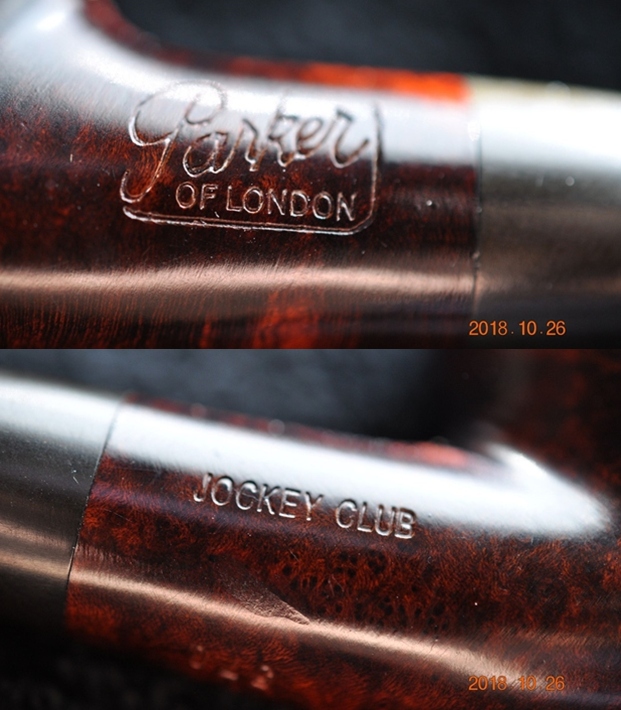
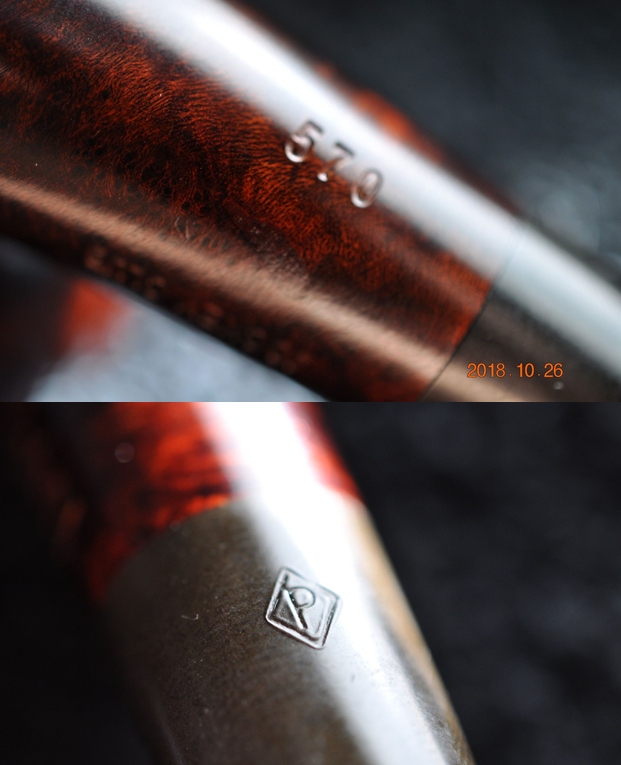
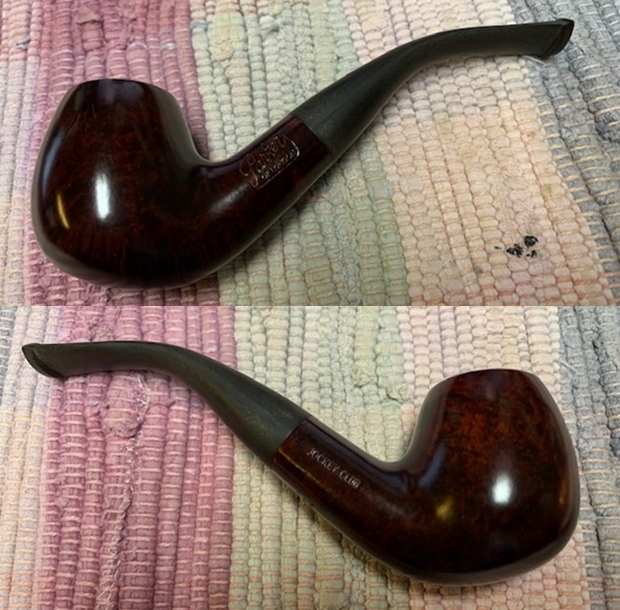
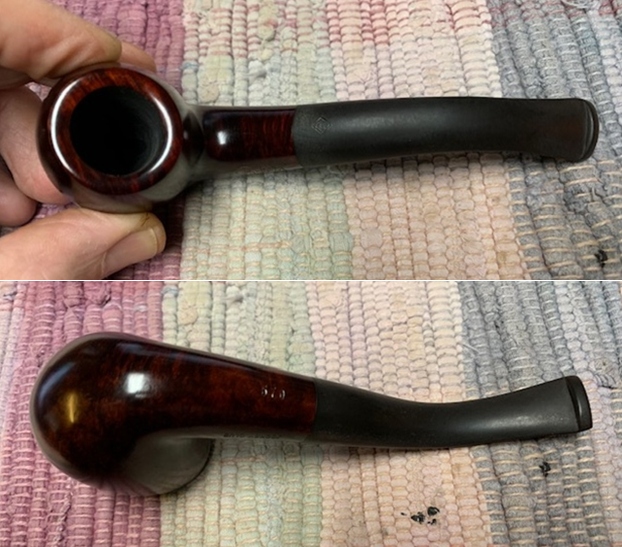
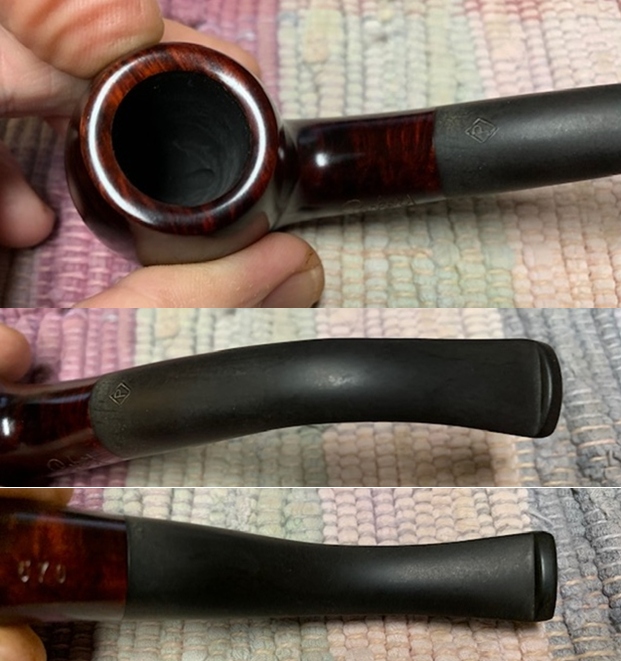
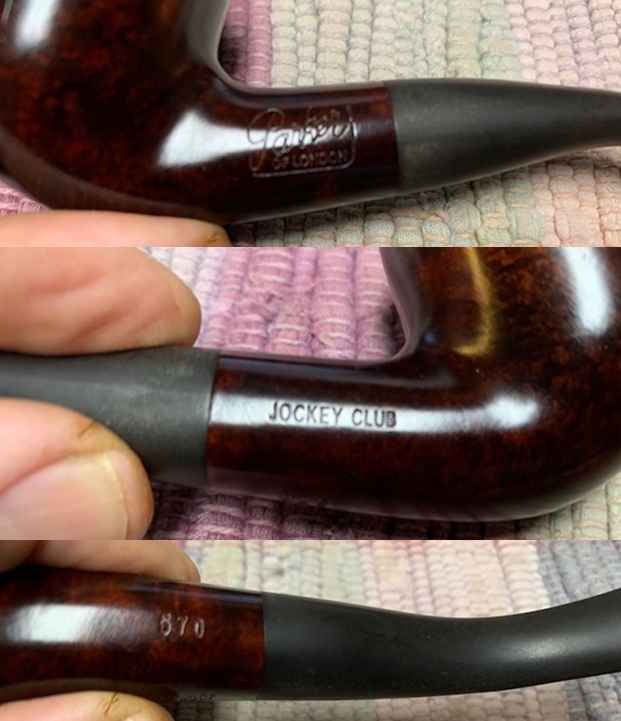
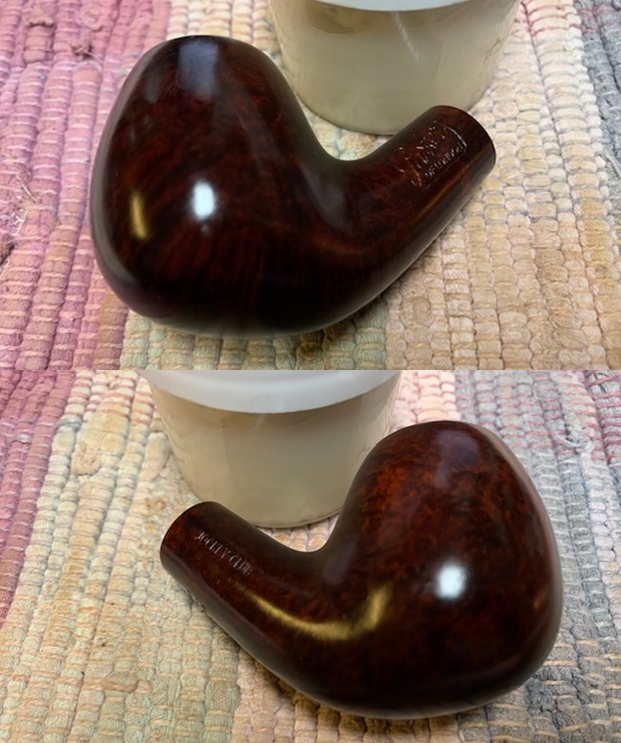
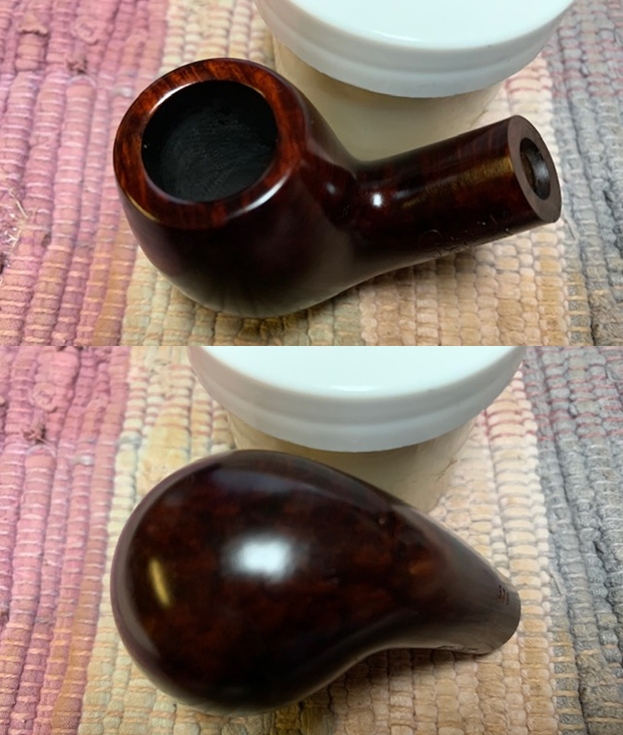
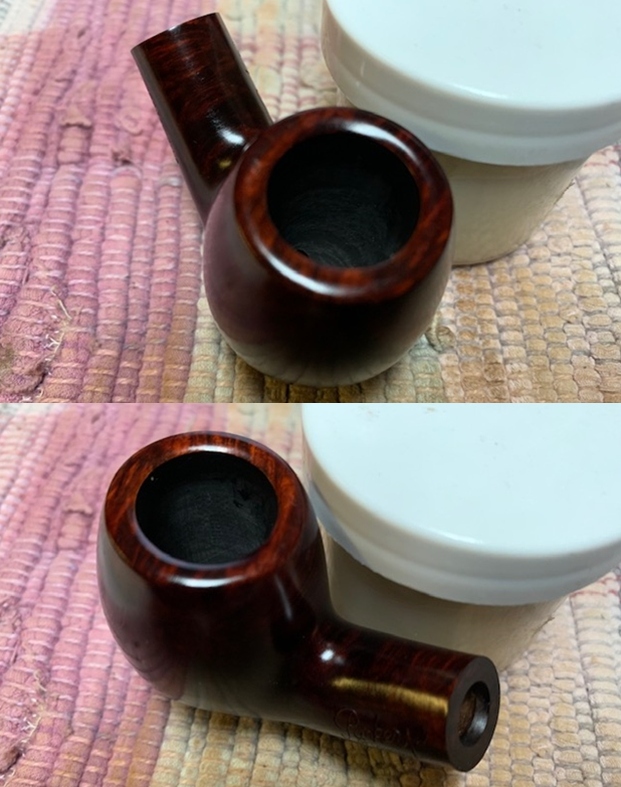
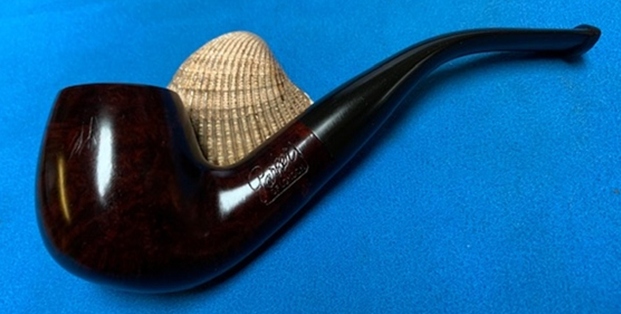
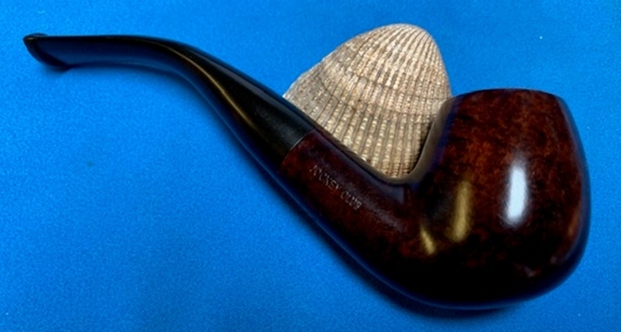
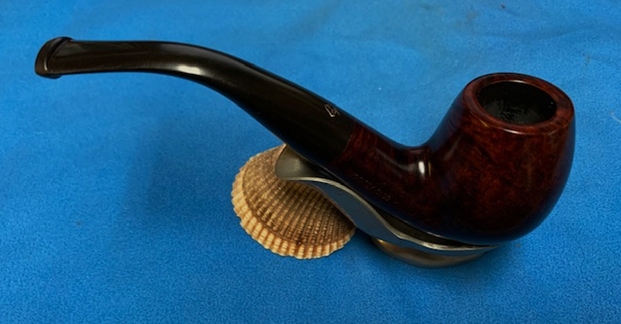
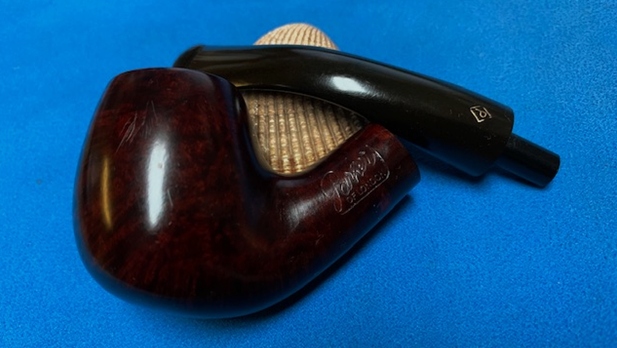
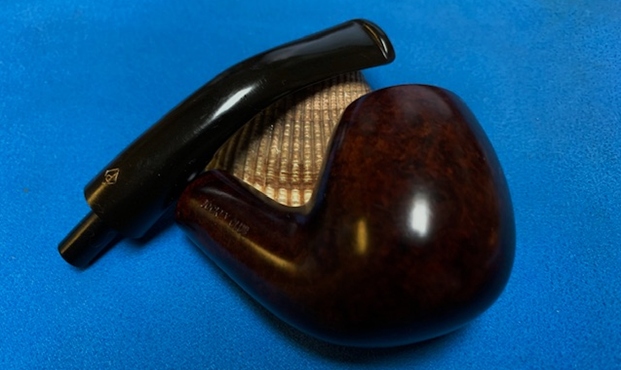
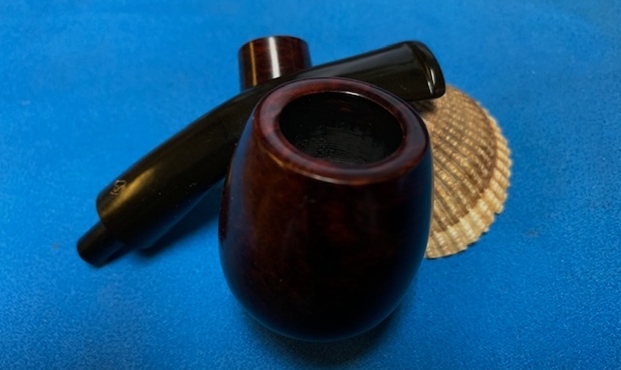
The next pipe on the work table came to us from an auction in Ancram, New York, USA. It is a nice looking mixed grain in a shape Parker identifies as a bent apple with a taper stem. The bowl has a rich reddish brown/ oxblood colour combination that highlights grain. The pipe was in surprisingly good condition. There was some grime ground into the surface of the briar. This pipe is stamped on the sides of the shank. On the left it reads Parker [over] of London. On the right it read Jockey Club and the underside of the shank it is stamped with the shape number 570. The taper stem has a Parker “P” in a Diamond logo on the top side. There is a light cake in the bowl and a few spots of lava on the edges of the rim top. The crowned rim top and edges look very good. The stem was oxidized but there were no tooth marks on the stem surface. The pipe looks to be in good condition other than being dirty. Jeff took photos of the pipe before he started his cleanup. He took a photo of the rim top to show condition of the bowl. The inner edge of the bowl looks good other than a little lava on the right inner edge. The top and outer edge also look okay. It is a very clean pipe. He also captured the condition of the stem. It is oxidized, calcified and has light tooth marks and chatter on the top and underside of the stem near the button.  He took photos of the sides and heel of the bowl to show the beautiful grain around the bowl and the condition of the pipe. He took a photo of the stamping on the sides of the shank. It is clear and readable as noted above.  I turned first to Pipephil’s site to look at the Parker write up there and see if I could learn anything about the line (http://www.pipephil.eu/logos/en/logo-parker.html). There was a Parker of London pipe listed and the stamping matched the one that I am working on but there was no information on the Jockey Club.
I looked up the Parker brand on Pipedia to see if I could find the Parker of London Jockey Club (https://pipedia.org/wiki/Parker). There was nothing that tied directly to the line I am working on. There is a decent history of the brand there that is a good read.

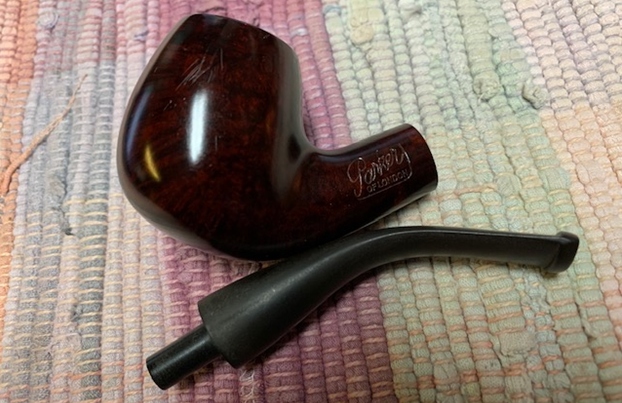
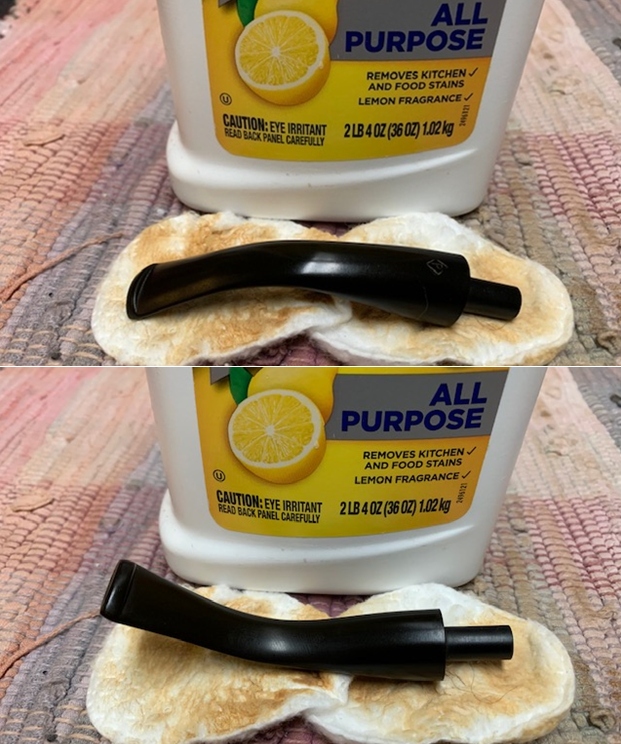
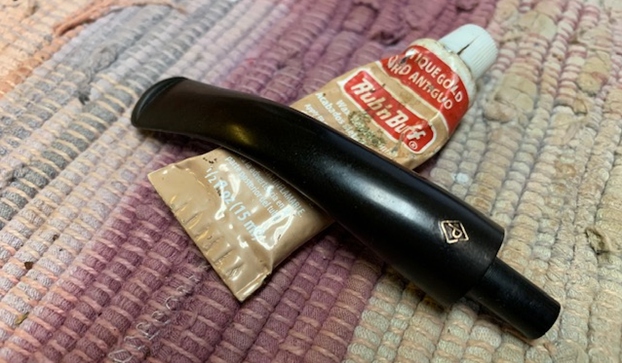
It was time to work on the pipe. As usual Jeff had done a thorough cleanup on the pipe. He reamed the bowl with a PipNet pipe reamer and followed up with a Savinelli Fitsall pipe knife to remove the cake. He scrubbed out the mortise and the airway in the shank and the stem with alcohol, cotton swabs and pipe cleaners. He scrubbed the exterior of the bowl, rim, shank and stem with a tooth brush and Murphy’s Oil Soap to remove the oils and tars on the rim and the grime on the finish of the bowl. He rinsed it under running water. One of the benefits of this scrub is that it also tends to lift some of the scratches and nicks in the surface of the briar. He dried it off with a soft cloth. He cleaned the internals and externals of the stem with alcohol, pipe cleaners and cotton swabs. He soaked the stem in Before & After Deoxidizer and rinsed it off with warm water and cleaned out the airway in the stem with alcohol. Other than the damaged rim top the pipe looked good. I took a photo of the rim top and stem to show the condition. The rim top and edges looked very good. The vulcanite taper stem had light oxidation remaining and light tooth chatter and marks on both sides ahead of the button and on the button edges.   The stamping on the sides of the shank is clear and readable as noted above.     I removed the stem from the shank and took a photo of the pipe to give a sense of the whole. It is a nicely shaped pipe that Parker called a Bent Apple that should clean up very well.   There were some small scratches on the left side of the bowl toward the top. I decided to leave them so as not to damage the sheen of the finish that was otherwise in excellent condition. I rubbed the bowl and shank down with Before & After Restoration Balm. I worked it into the surface of the bowl sides and shank with my fingertips to clean, enliven and protect the briar. I let the balm sit for a little while and then buffed with a cotton cloth to raise the shine. The Balm did its magic and the grain stood out.    I scrubbed the remaining oxidation on the stem with Soft Scrub All Purpose cleanser to remove it. I have found that the product does really well in removing oxidation that remains after soaking in a Before & After  Oxidation bath.   Under a lens it appeared that the Parker “P” Diamond had some gold remaining in the stamping. I used some Rub’n Buff Antique Gold to fill in the Diamond P stamp on the top side of the taper stem. I let it dry the buffed off the excess with a cotton pad.   I polished the vulcanite stem with micromesh sanding pads – 1500-12000 grit pads. I wiped it down with Obsidian Oil after each sanding pad. I used Before & After Pipe Polish – both Fine and Extra Fine to further the stem. The photo below shows the polished stem. This nicely grained Parker of London Jockey Club 570 Bent Apple with a vulcanite taper stem is a great looking pipe now that it has been restored. The briar around the bowl is clean and really came alive. The rich oxblood stains gave the grain a sense of depth with the polishing and waxing. The grain really popped. I put the vulcanite stem back on the bowl and carefully buffed the pipe with Blue Diamond on the buffing wheel using a light touch on the briar. I gave the bowl and the stem multiple coats of carnauba wax on the buffing wheel. I buffed the pipe with a clean buffing pad to raise the shine. I hand buffed the pipe with a microfiber cloth to deepen the shine. The finished Parker Jockey Club Bent Apple is a beauty and feels great in the hand and looks very good. Give the finished pipe a look in the photos below. The dimensions of the pipe are Length: 5 ½ inches, Height: 1 ¾ inches, Outside diameter of the bowl: 1 inch, Chamber diameter: ¾ of an inch. The weight of the pipe is 47grams/1.62oz. This will be going on the rebornpipes store under the British Pipemakers section soon. Thanks for reading this blog and my reflections on the pipe while I worked on it. There are many more to come!