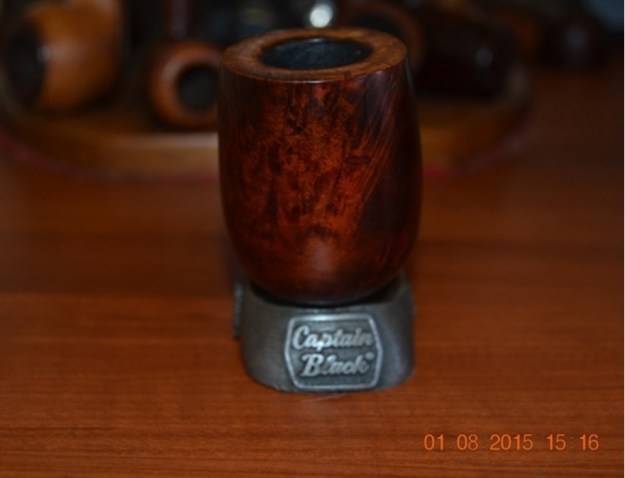
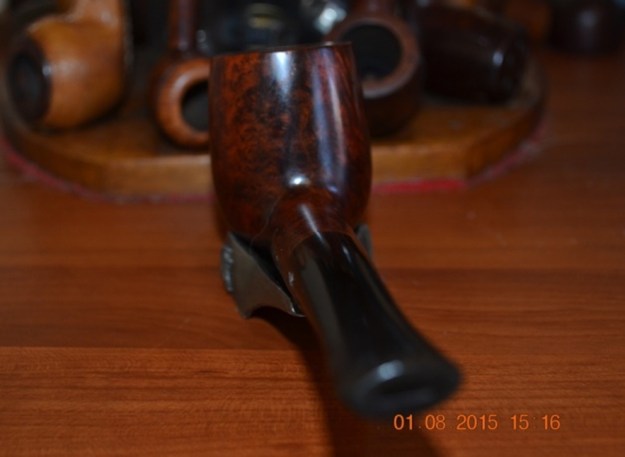
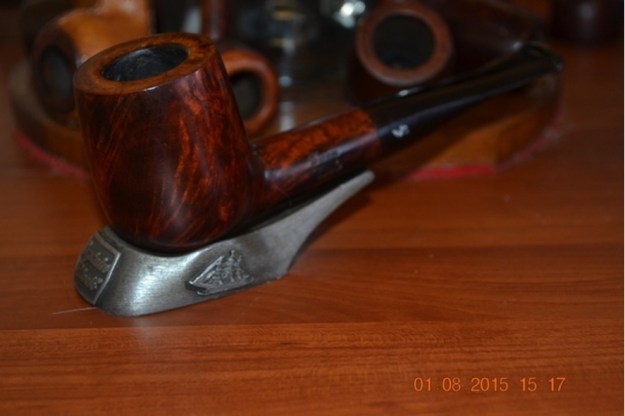
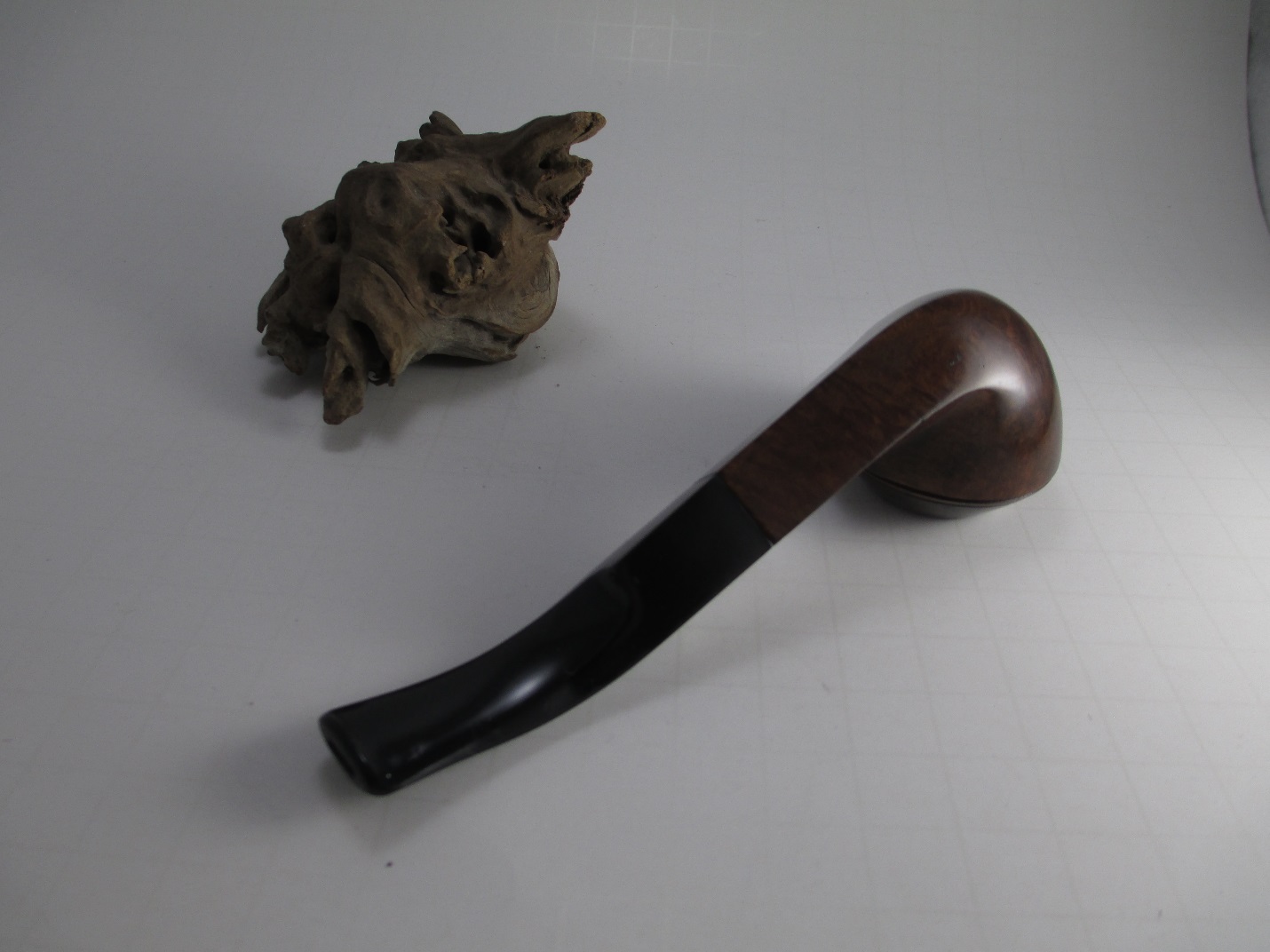
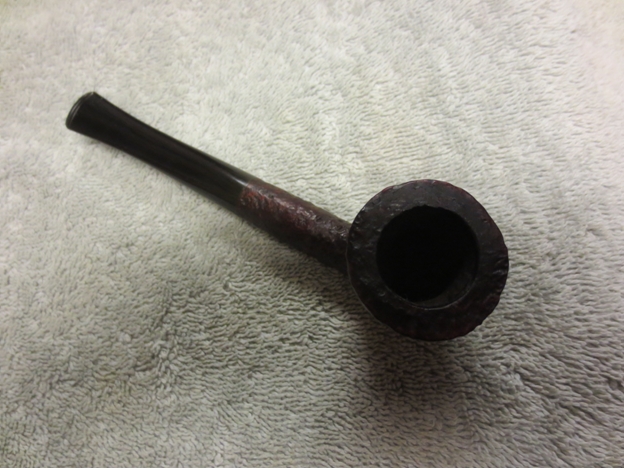
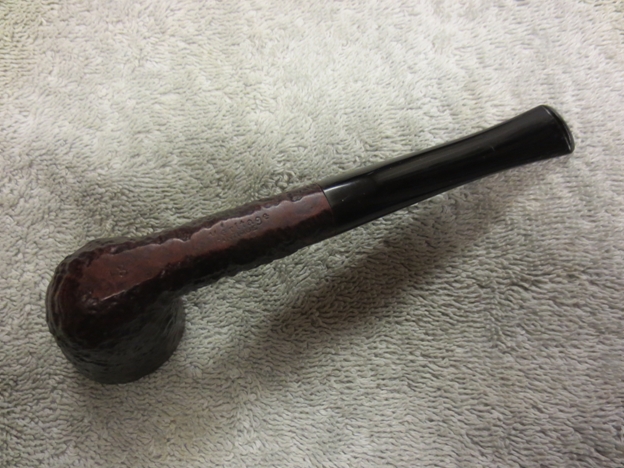
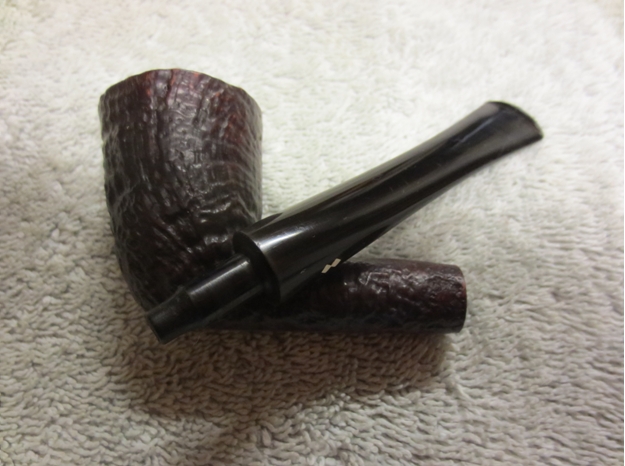
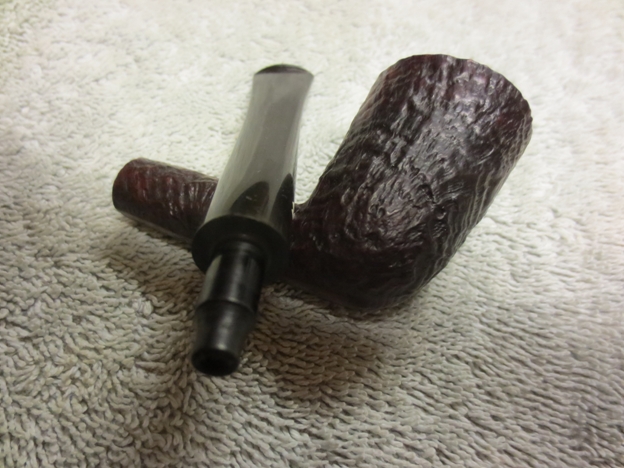
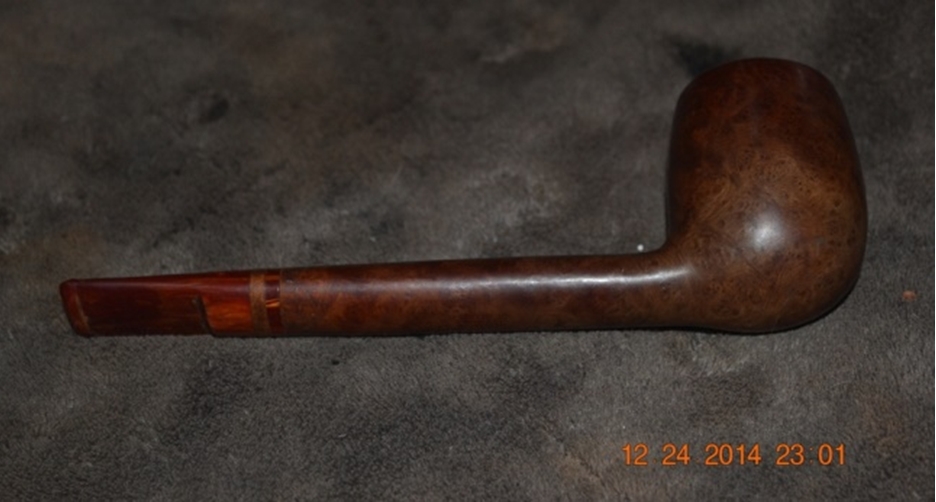
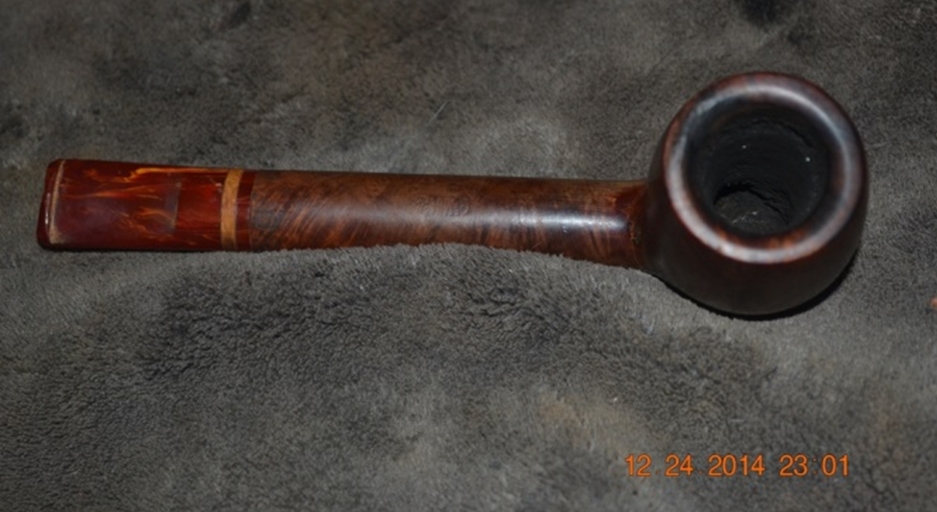
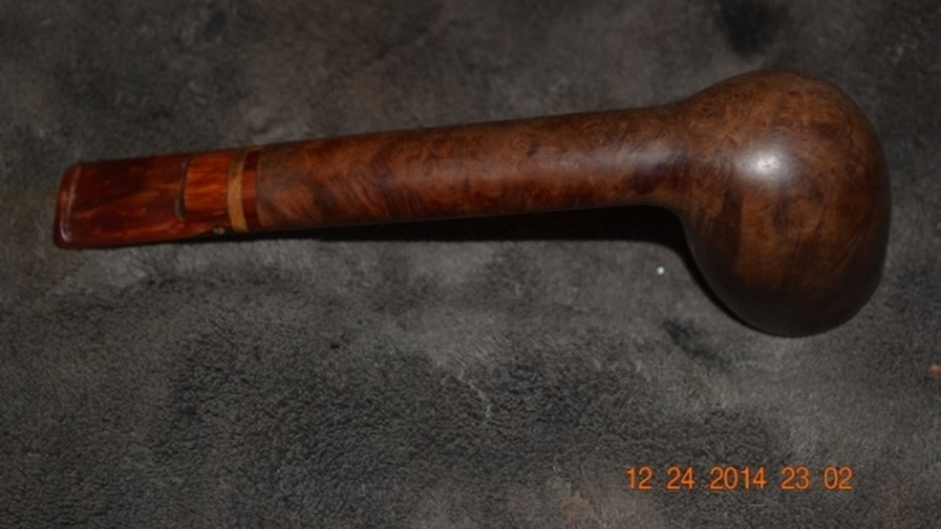
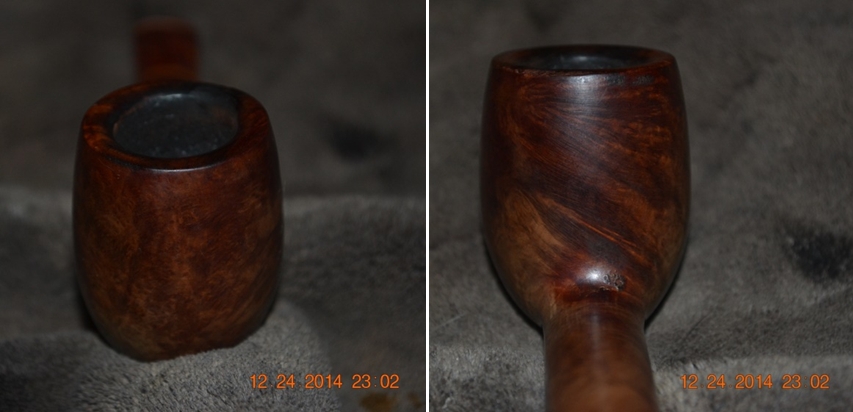
Tag Archives: refurbishing

Rescuing a Scorched GBD New Era 549


Blog by Andrew Selking

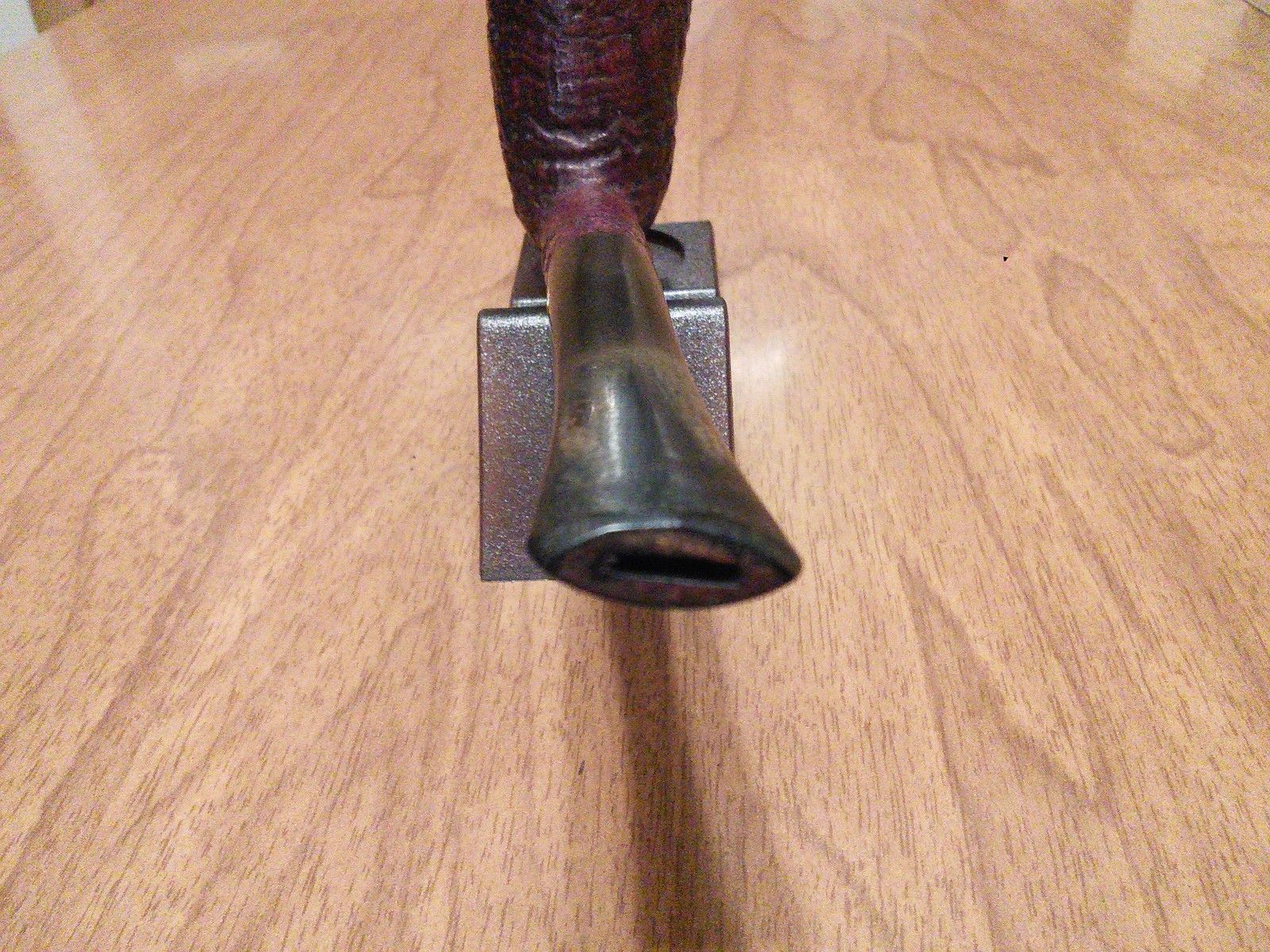
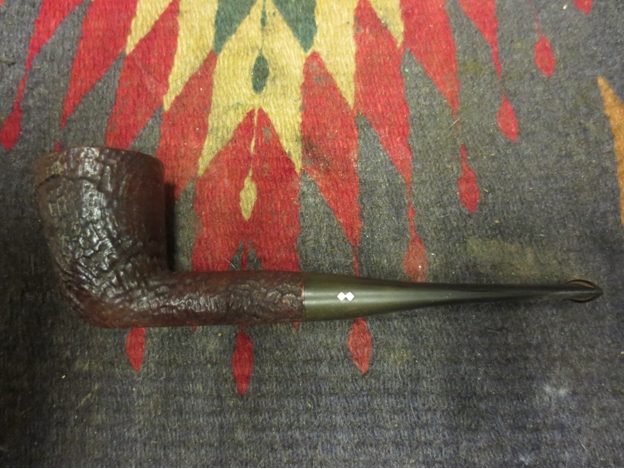
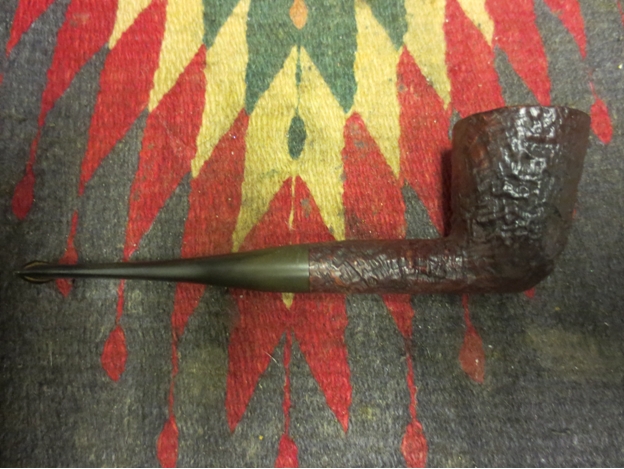
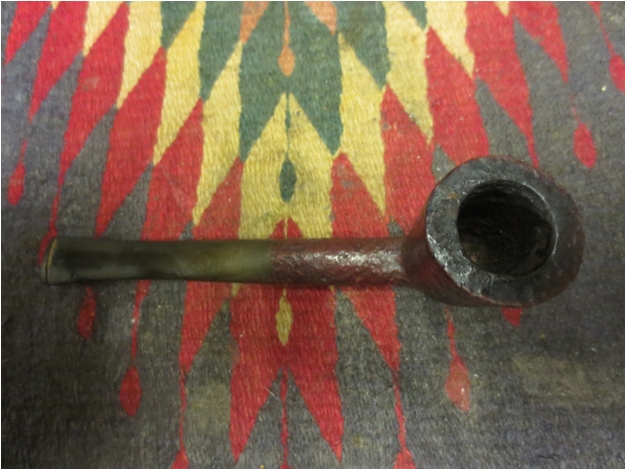
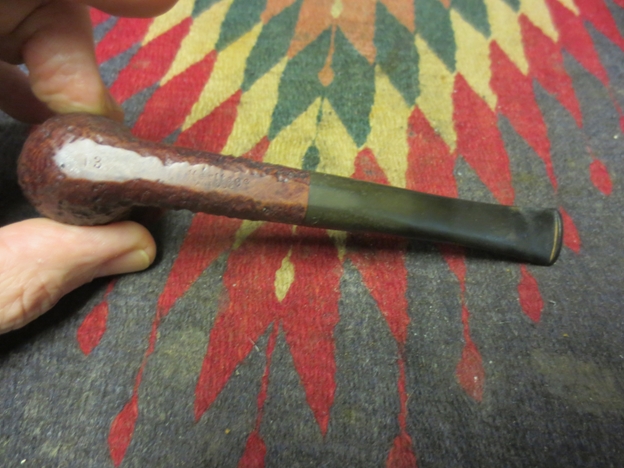
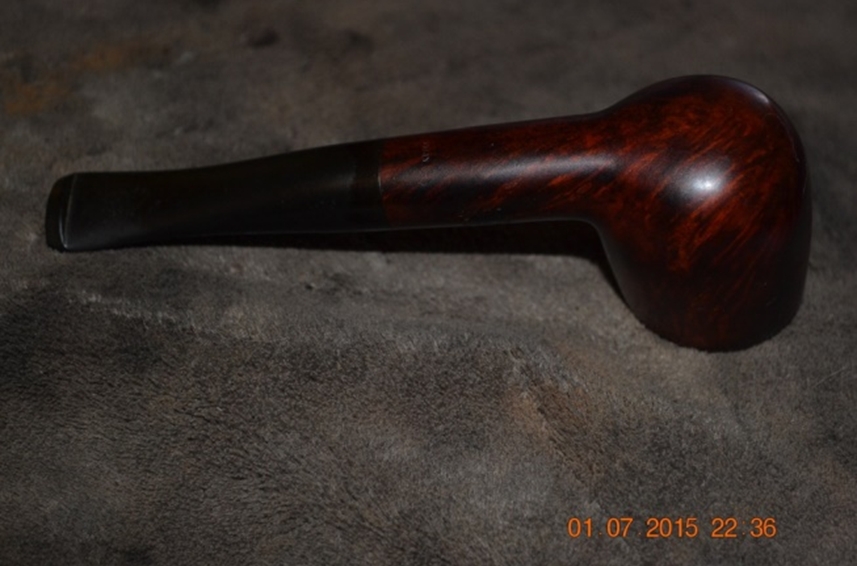
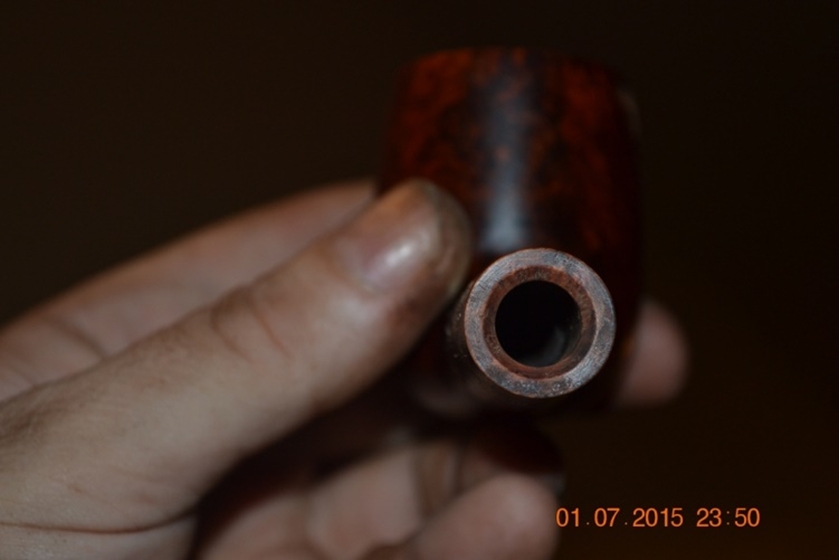
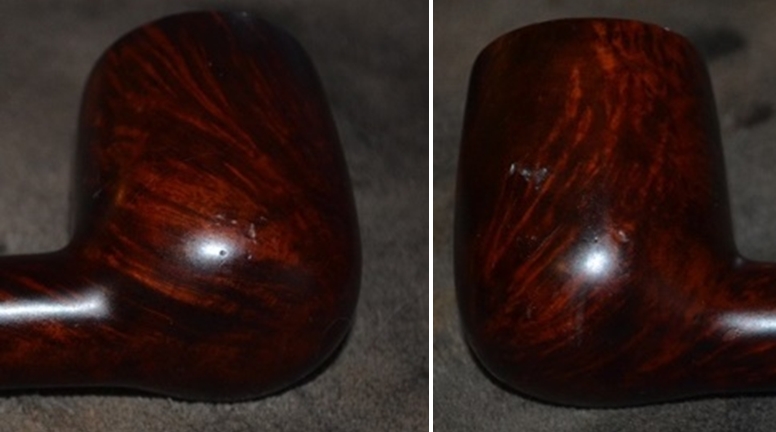
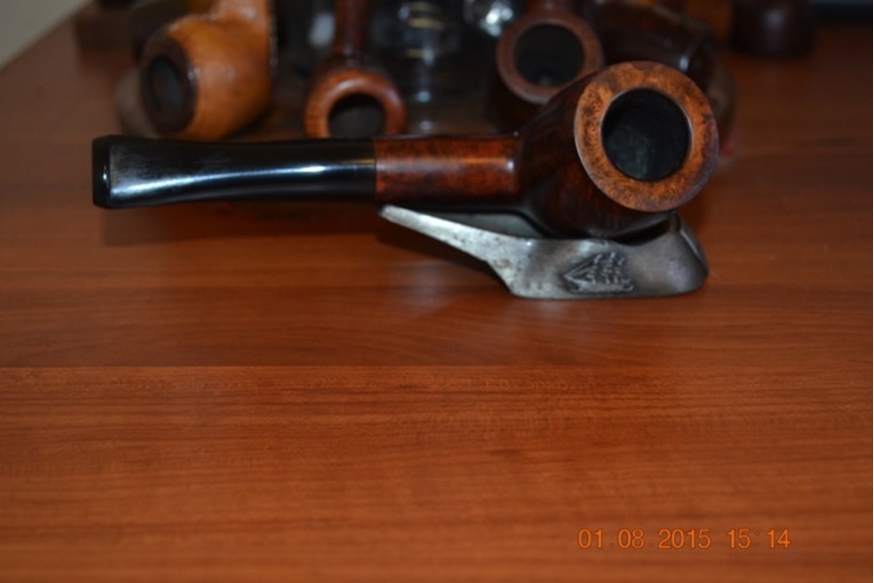
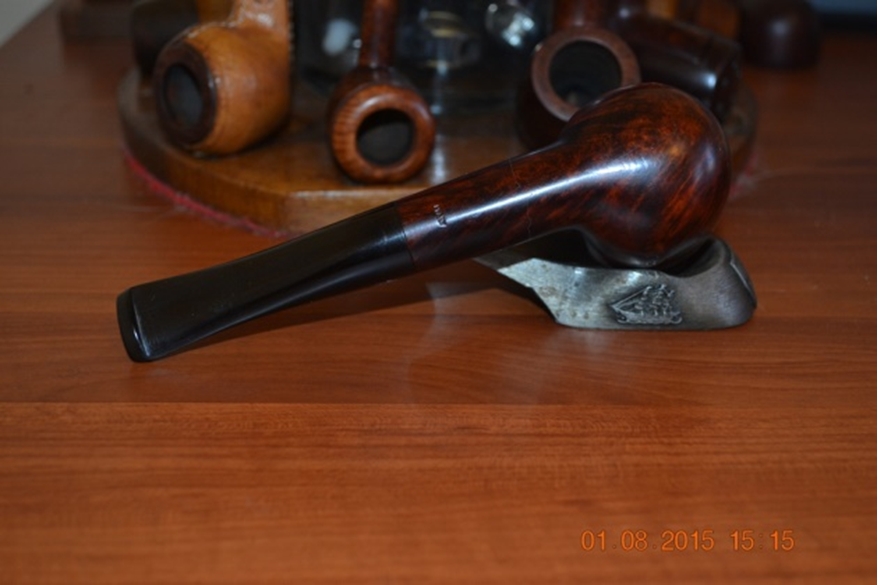
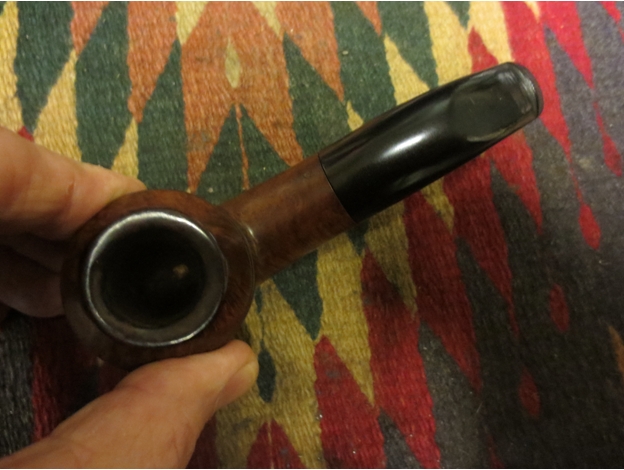
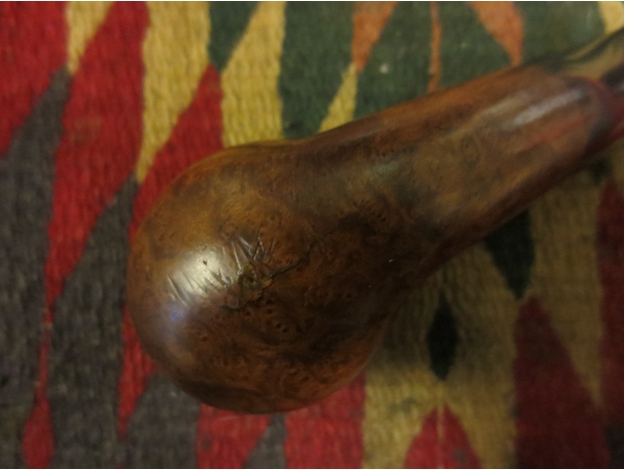
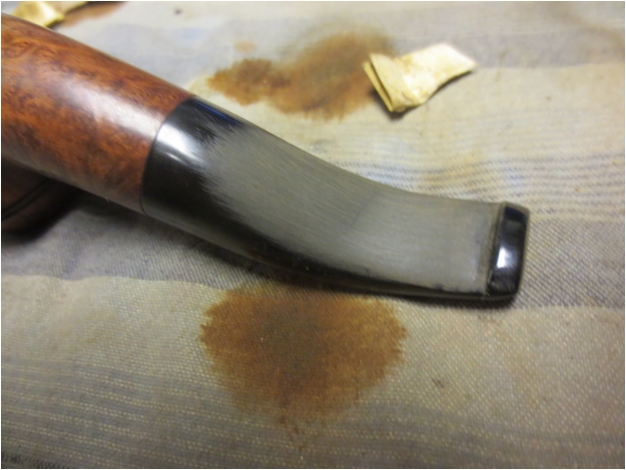
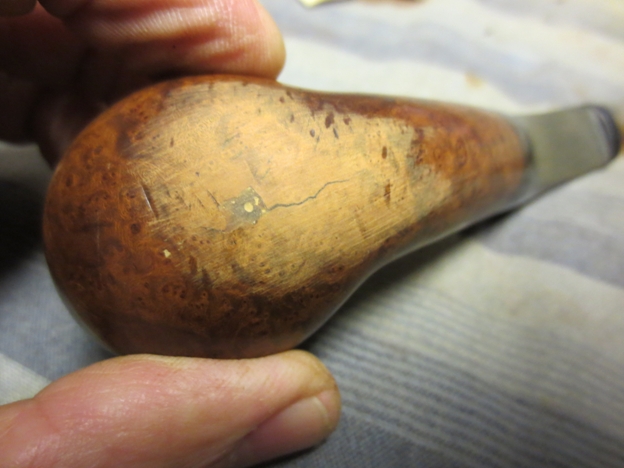
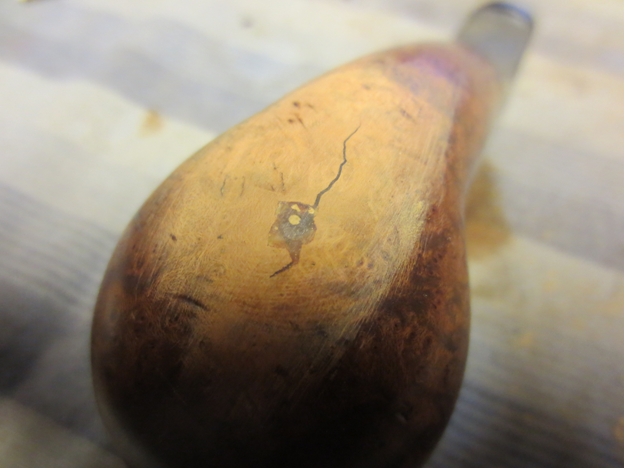
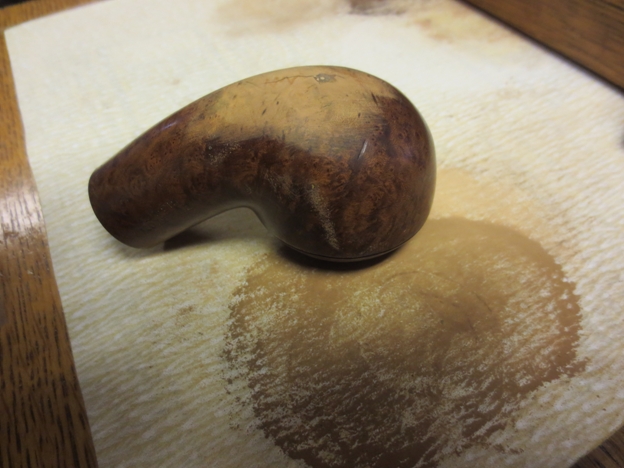
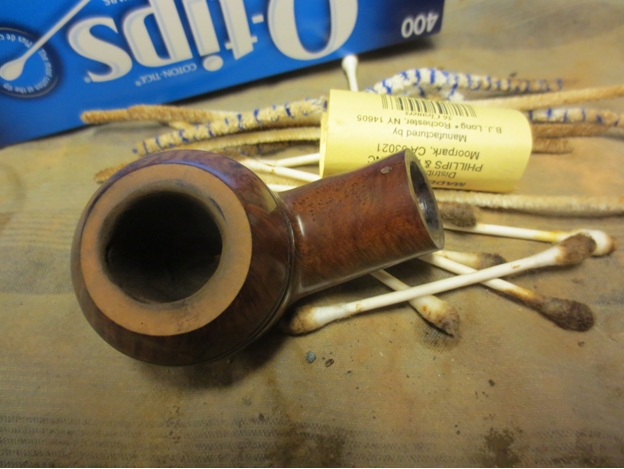
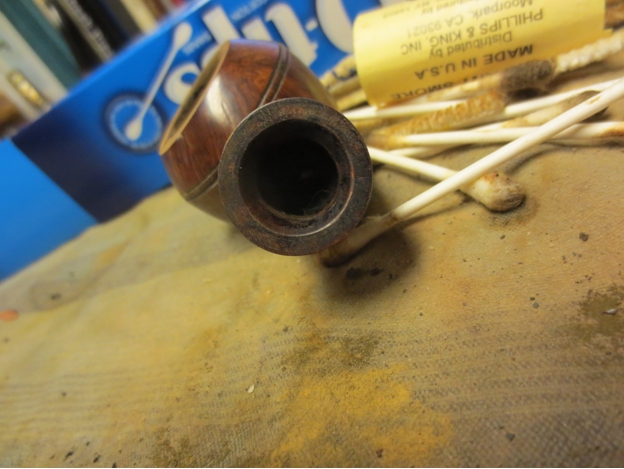
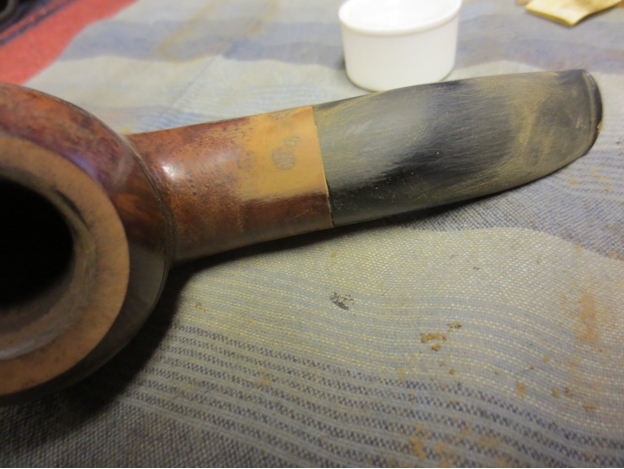
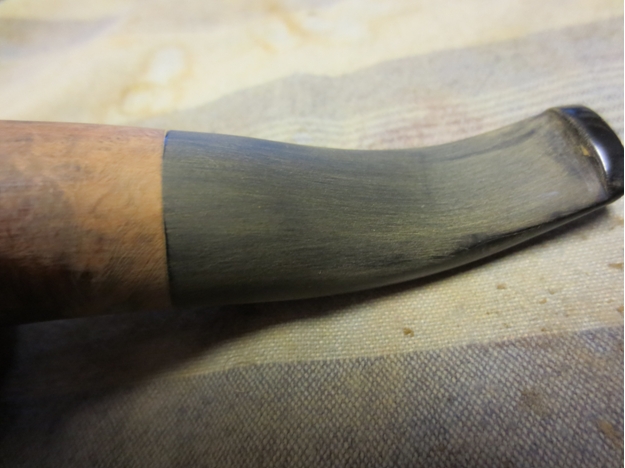
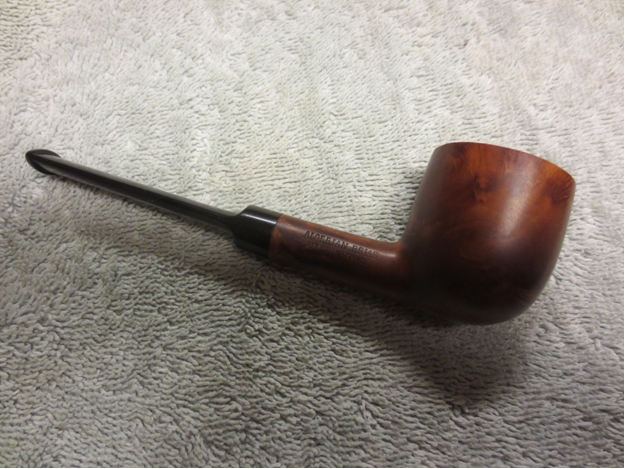
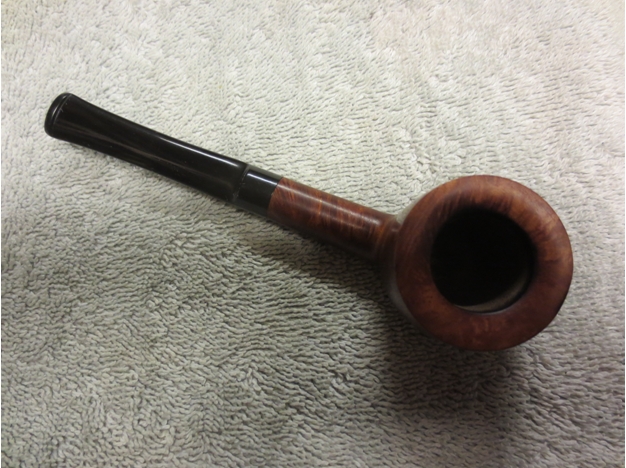
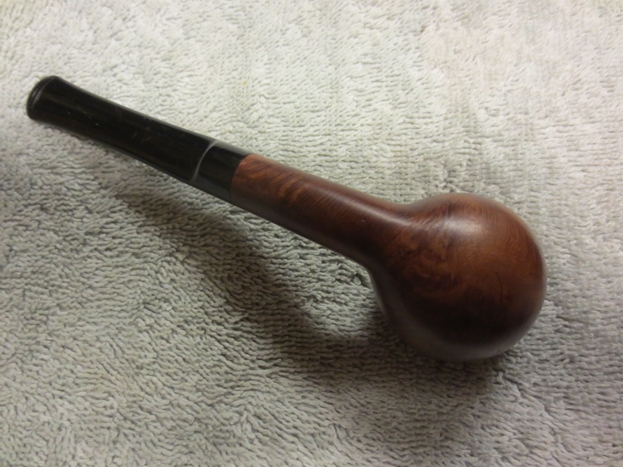
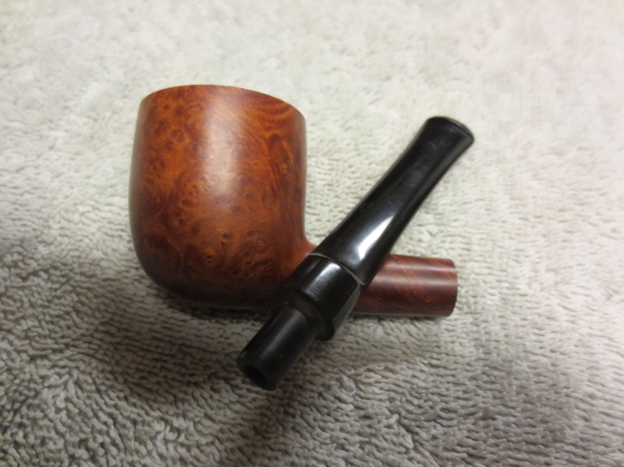
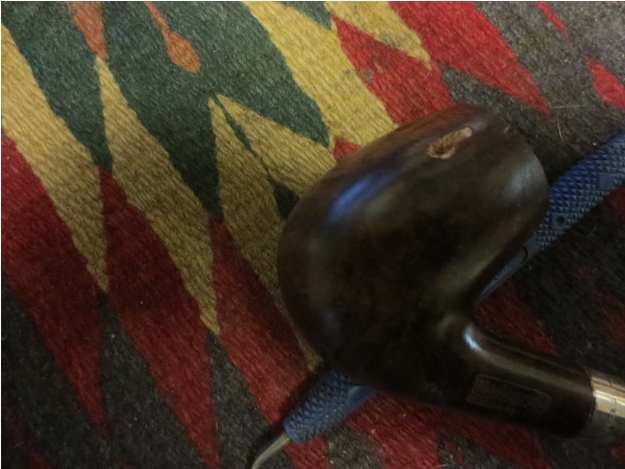
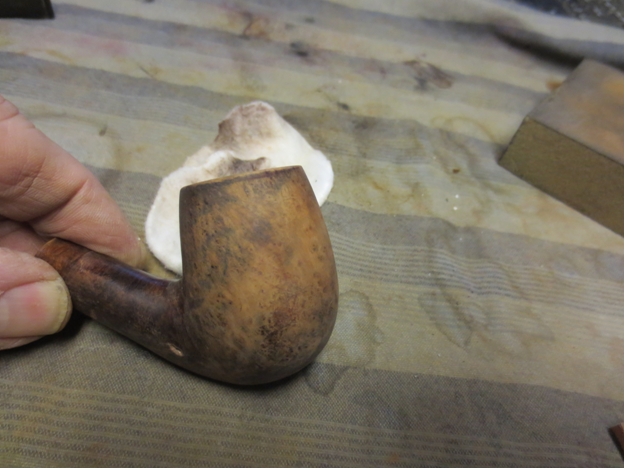
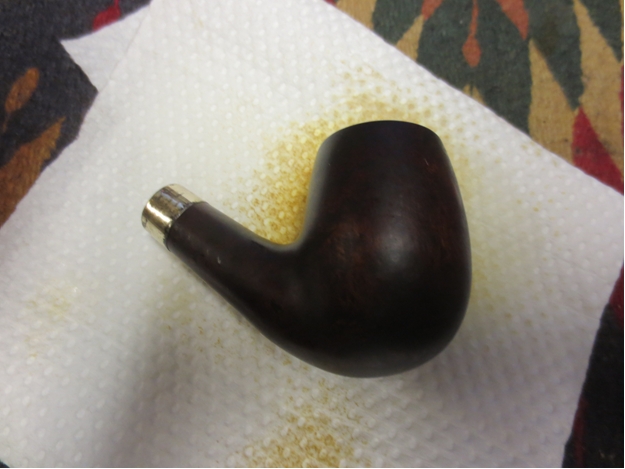
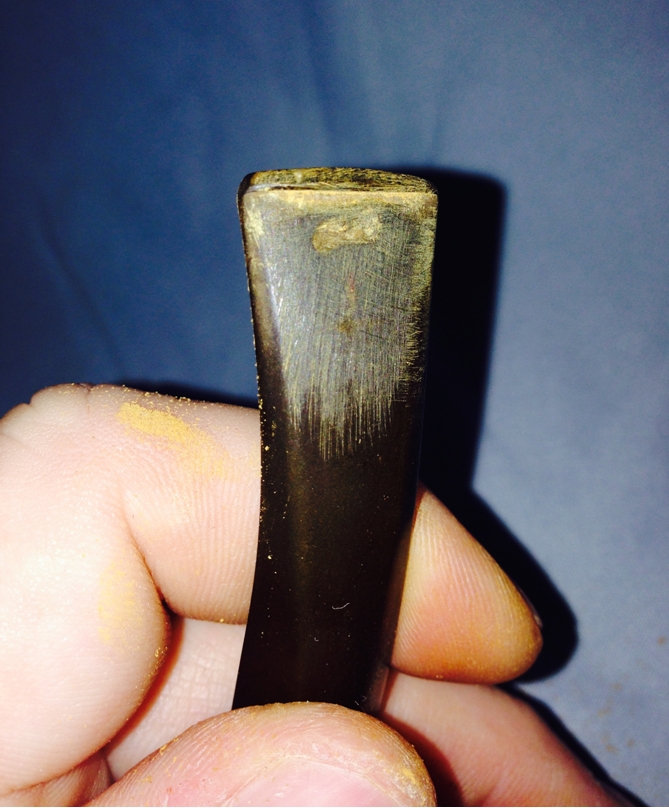
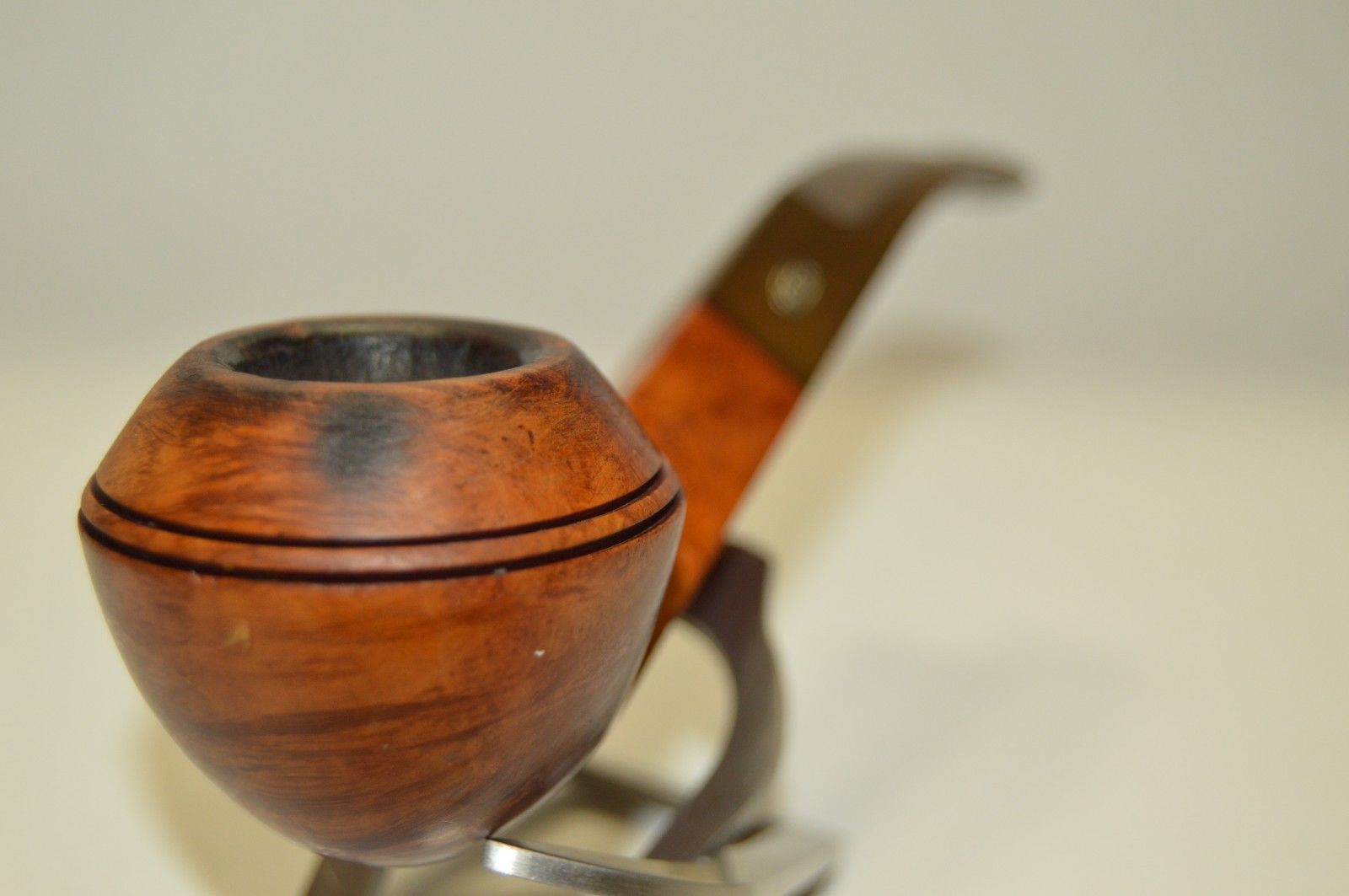
After reading Al’s posts about his GBD pipes, I had to have one. I saw this pipe listed on eBay with a low buy it now price, obviously based on the scorch mark on the front of the bowl.GBD1 I’m not sure whether it was a sense of overconfidence in my ability or naivety about the extent of the damage, but I bought the pipe. I realized when it arrived that if I couldn’t fix the scorch mark the pipe probably wouldn’t be worth my time. I nearly despaired when normal procedures failed to even lighten the mark. I put the pipe aside several times before finally deciding to take drastic measures and use a hand sander with 150 grit sand paper. I figured at this point there was nothing to lose and I knew I could still maintain the original shape if I was careful. After spending about a half an hour with the sander, I found myself at about an 80% solution. The mark was still too dark, so I took it to the next level of desperation: the rotary tool (that’s the generic name for a dremel that you buy at Harbor Freight Tools) with a sanding attachment.

I do not recommend the use of either a hand sander or the rotary tool except as a last resort. By this point I had accepted the fact that this pipe was beyond hope for a perfect restoration, so I lowered my expectations to a good restoration.

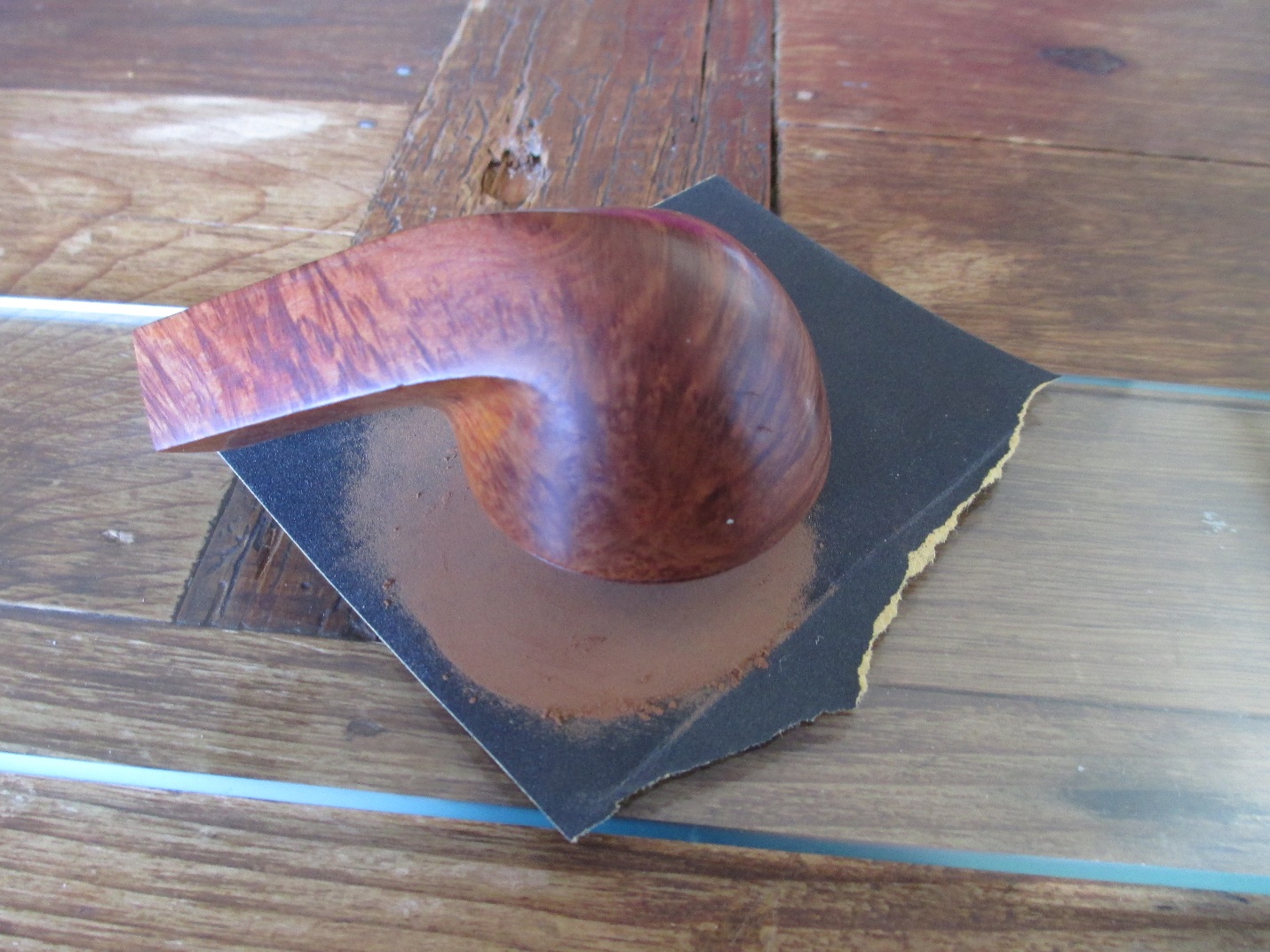
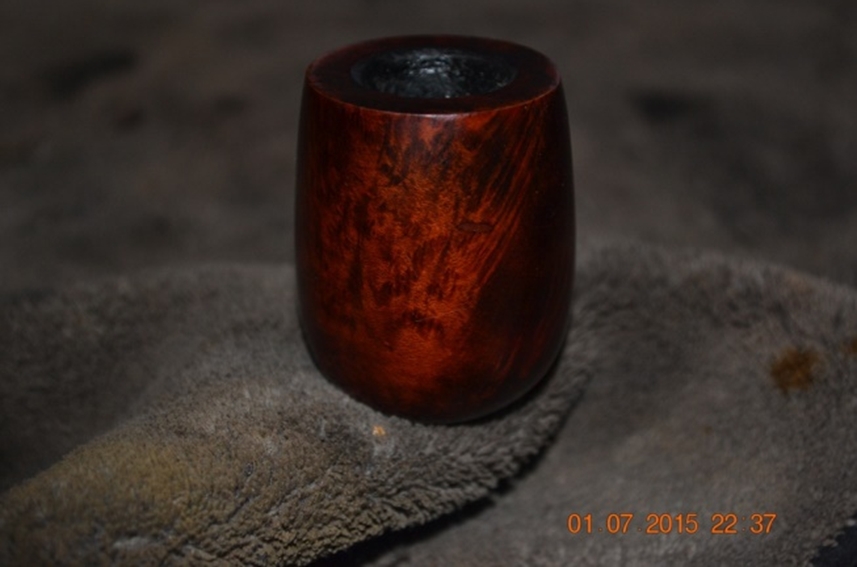
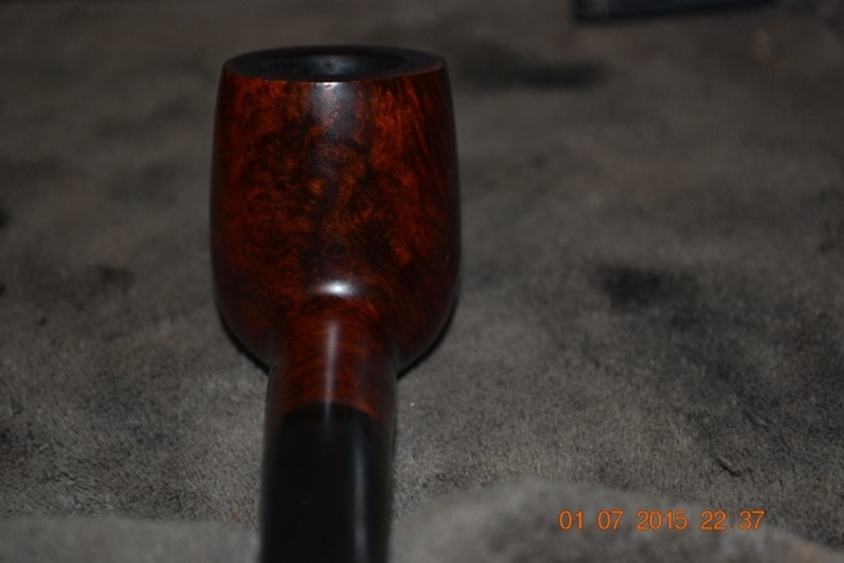
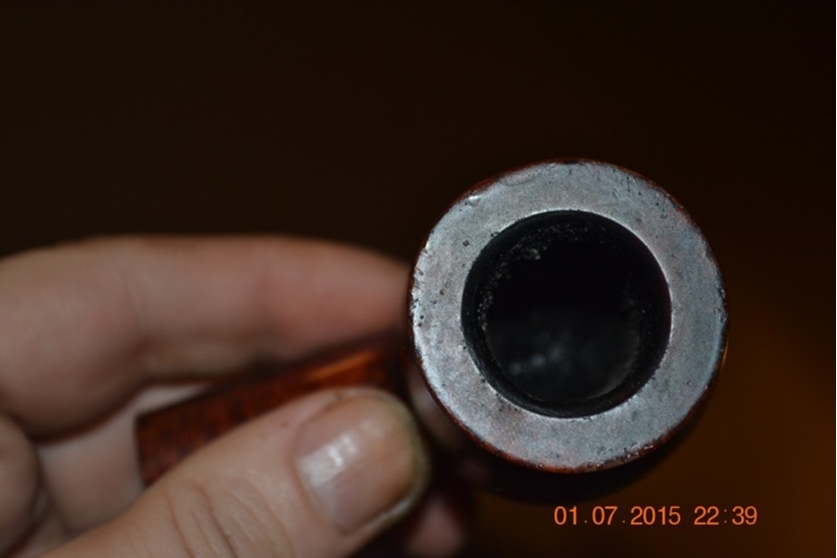
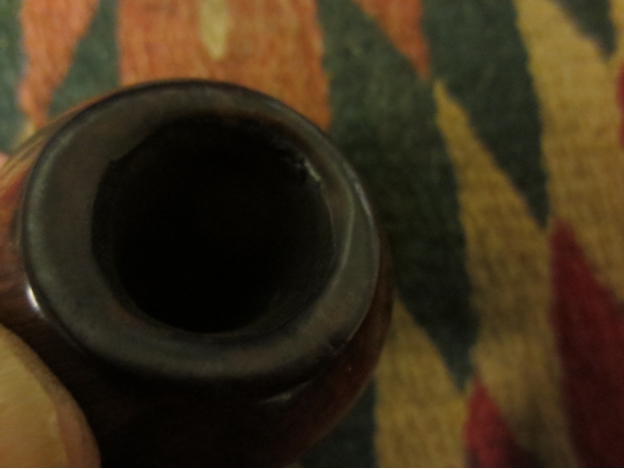
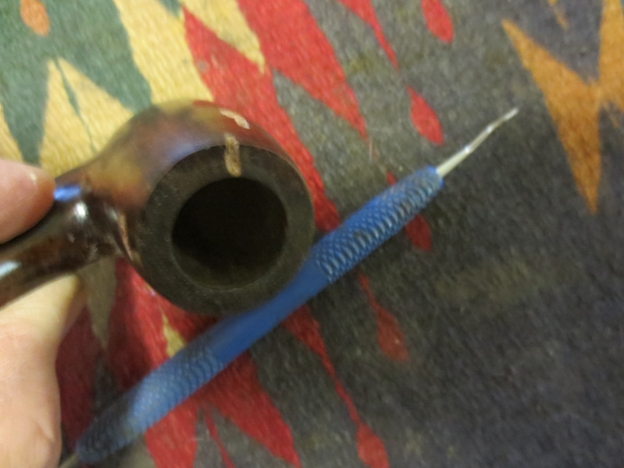
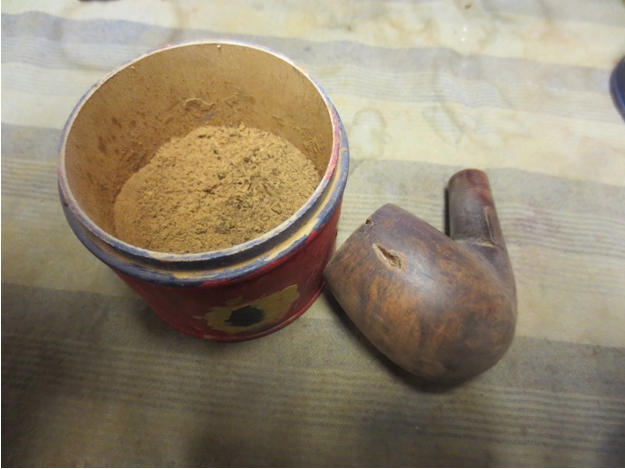
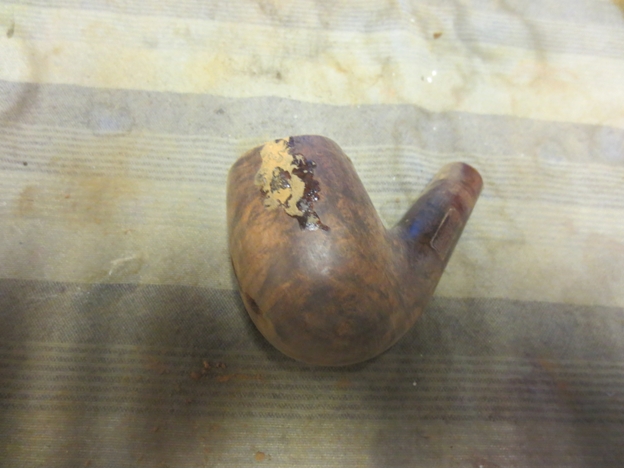
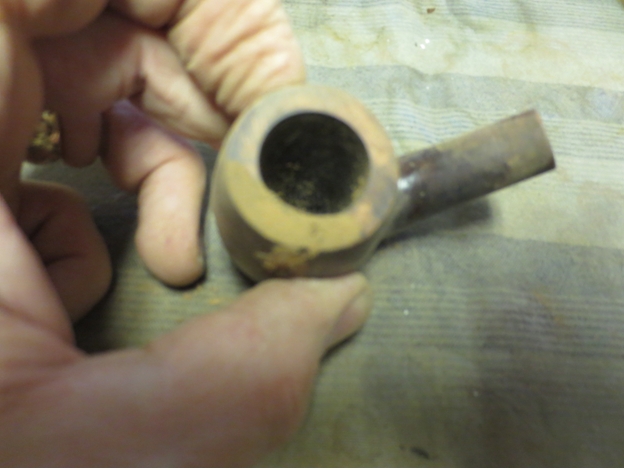
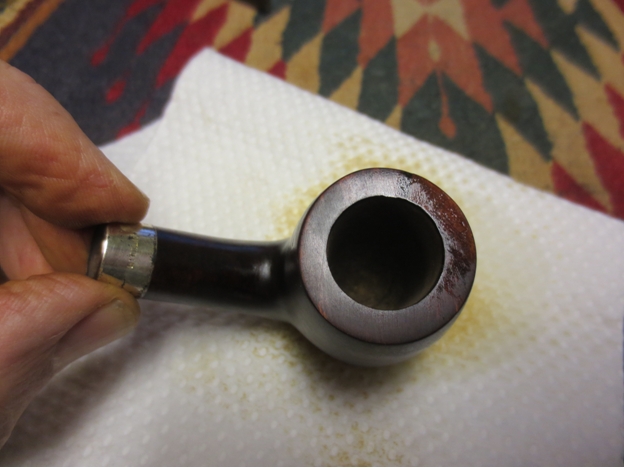
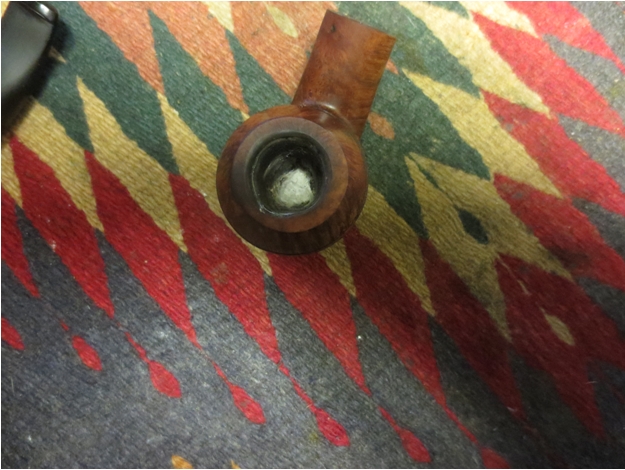
The sanding on the top portion of the bowl changed the contour of the rim, so I used 400 grit sand paper and a piece of glass to top it.GBD2 Normally I have a set order for restoring a pipe, but dealing with the scorch mark threw it all off. I don’t like to work on a pipe that has a dirty bowl, so I went ahead and reamed it. As you can see from this picture the scorch mark is fairly light.GBD3 Next I retorted the shank.GBD4 She was a dirty girl.GBD5

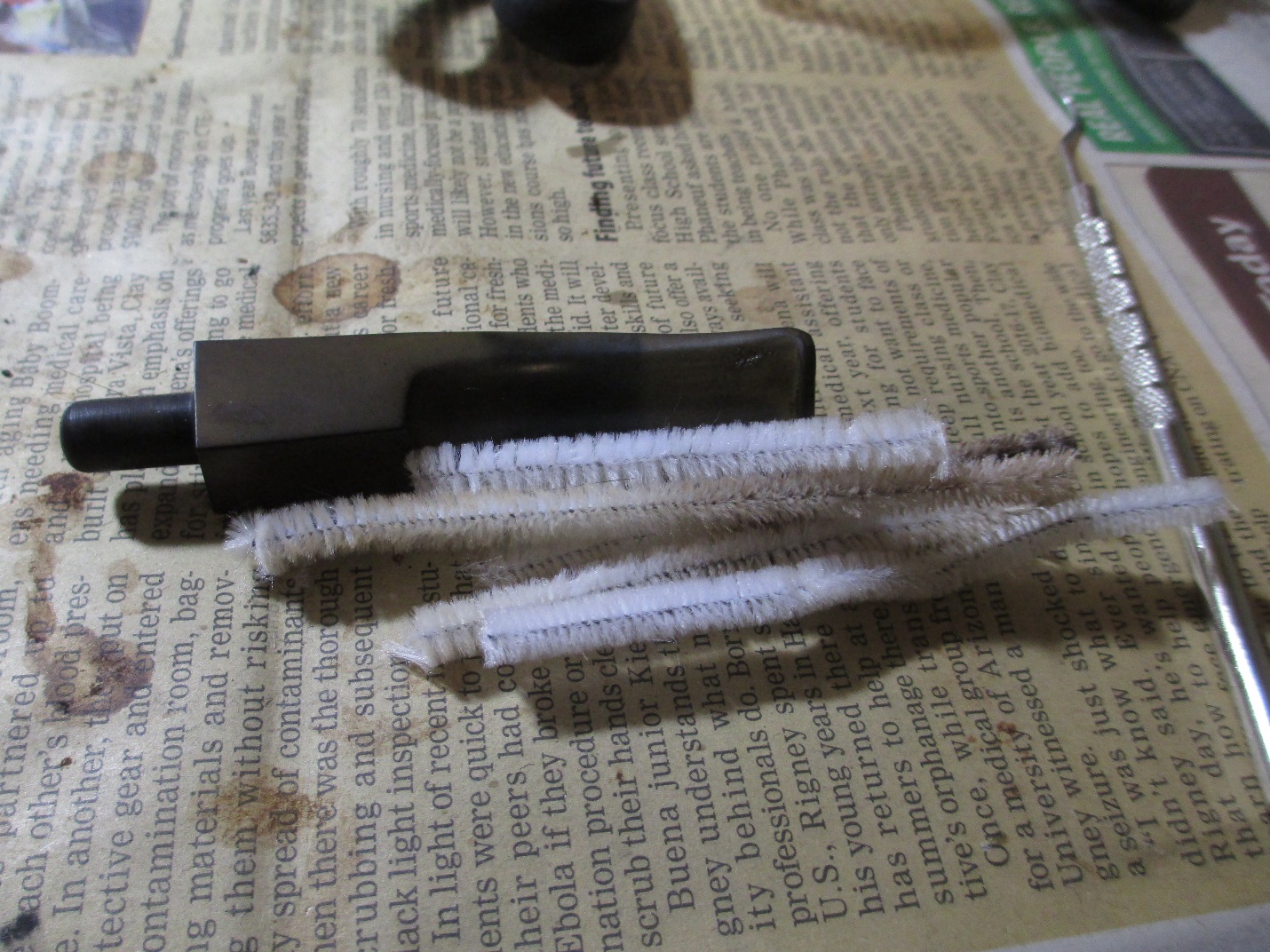
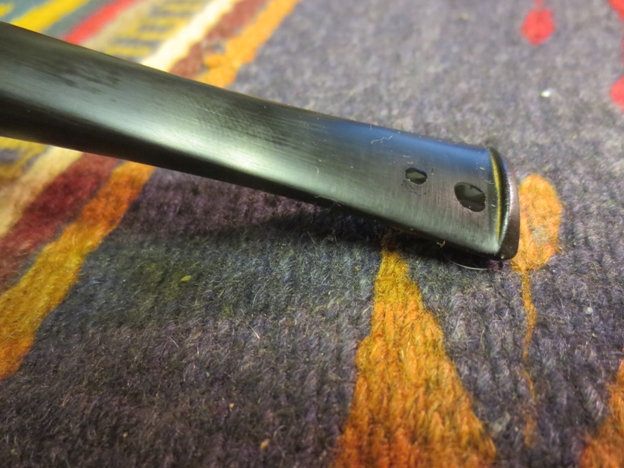
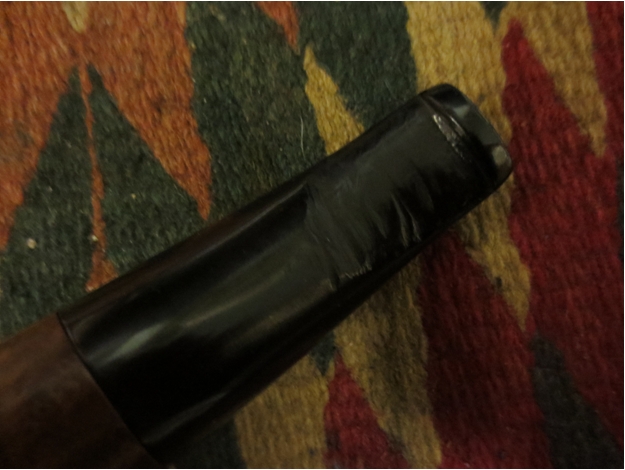
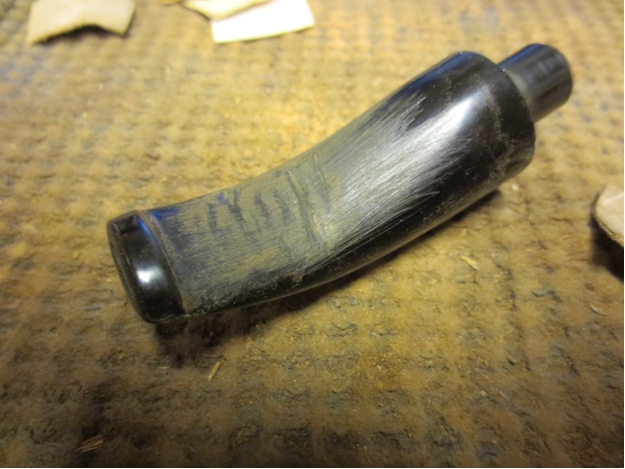
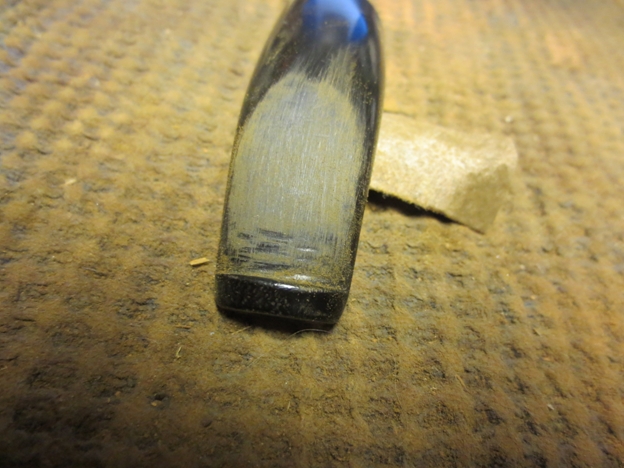
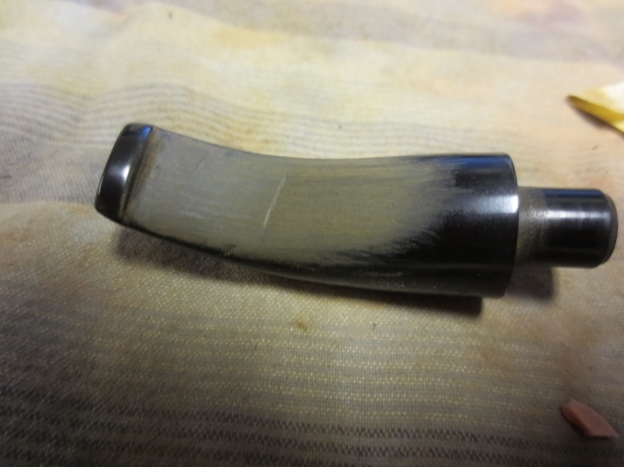
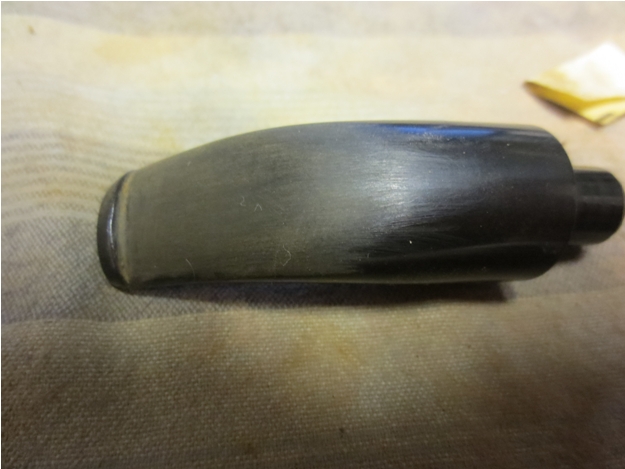
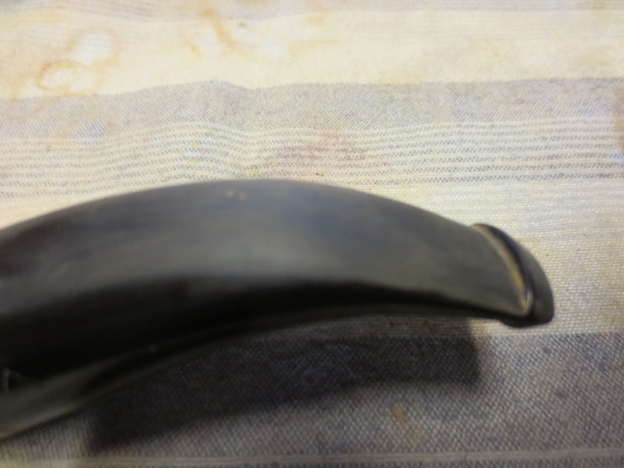
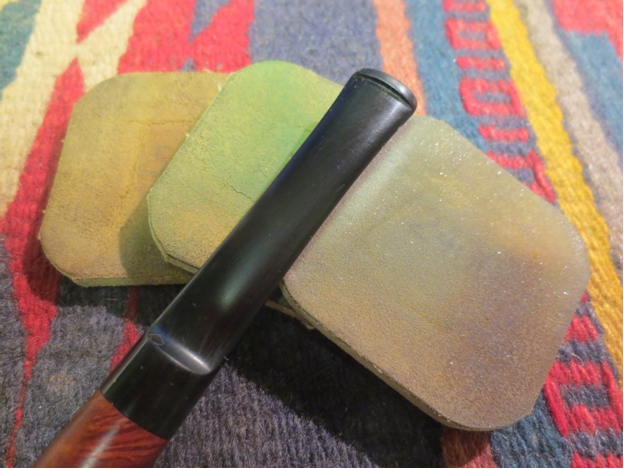
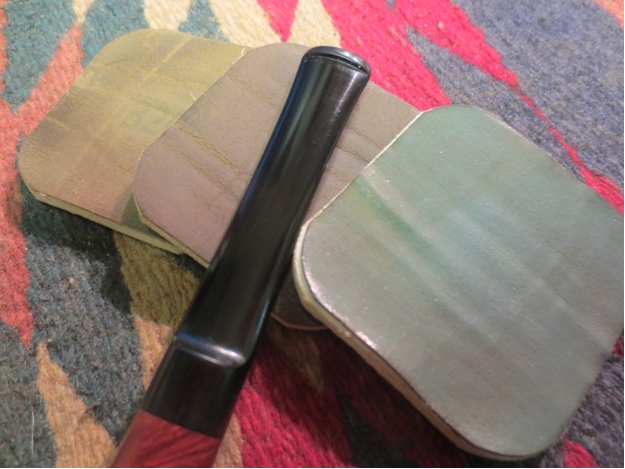
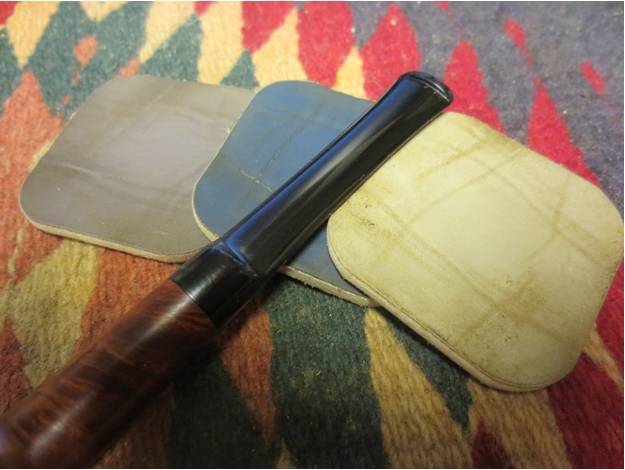
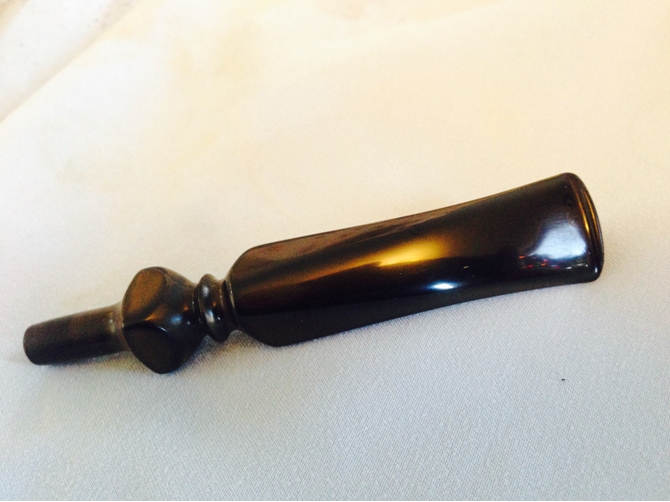
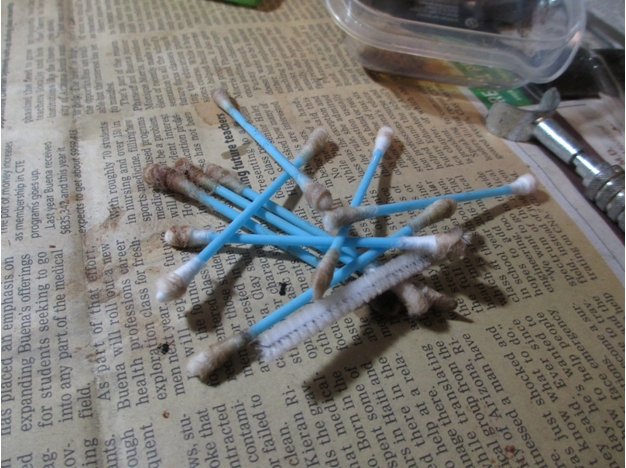
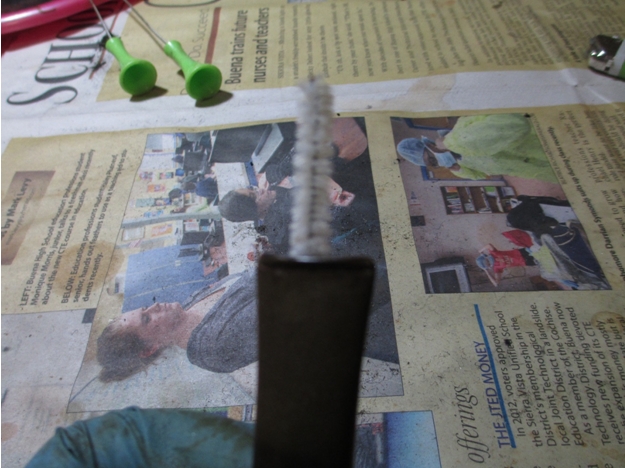
GBD6 I retorted the stem after that, but did it four times. On a dirty pipe you can either spend time with lots of q-tips and fuzzy sticks, or do the retort multiple times.GBD7 Now that I had the internals of the pipe cleaned, I turned my attention to the removing the oxidation from the stem. This stem was all angles and had some serious oxidation. I’ve felt for a long time that my stem work needed improvement. It’s especially difficult to clean the crease under the button and in the case of this stem the curved area where it meets the diamond portion. I know that when I work with wood I use a sanding block or wrap the sand paper around an object that would fit into the area to be sanded. With that in mind, I “borrowed” a small plastic scraper from the kitchen. You will notice that it has a beveled edge and fits the underside of the button perfectly.GBD8

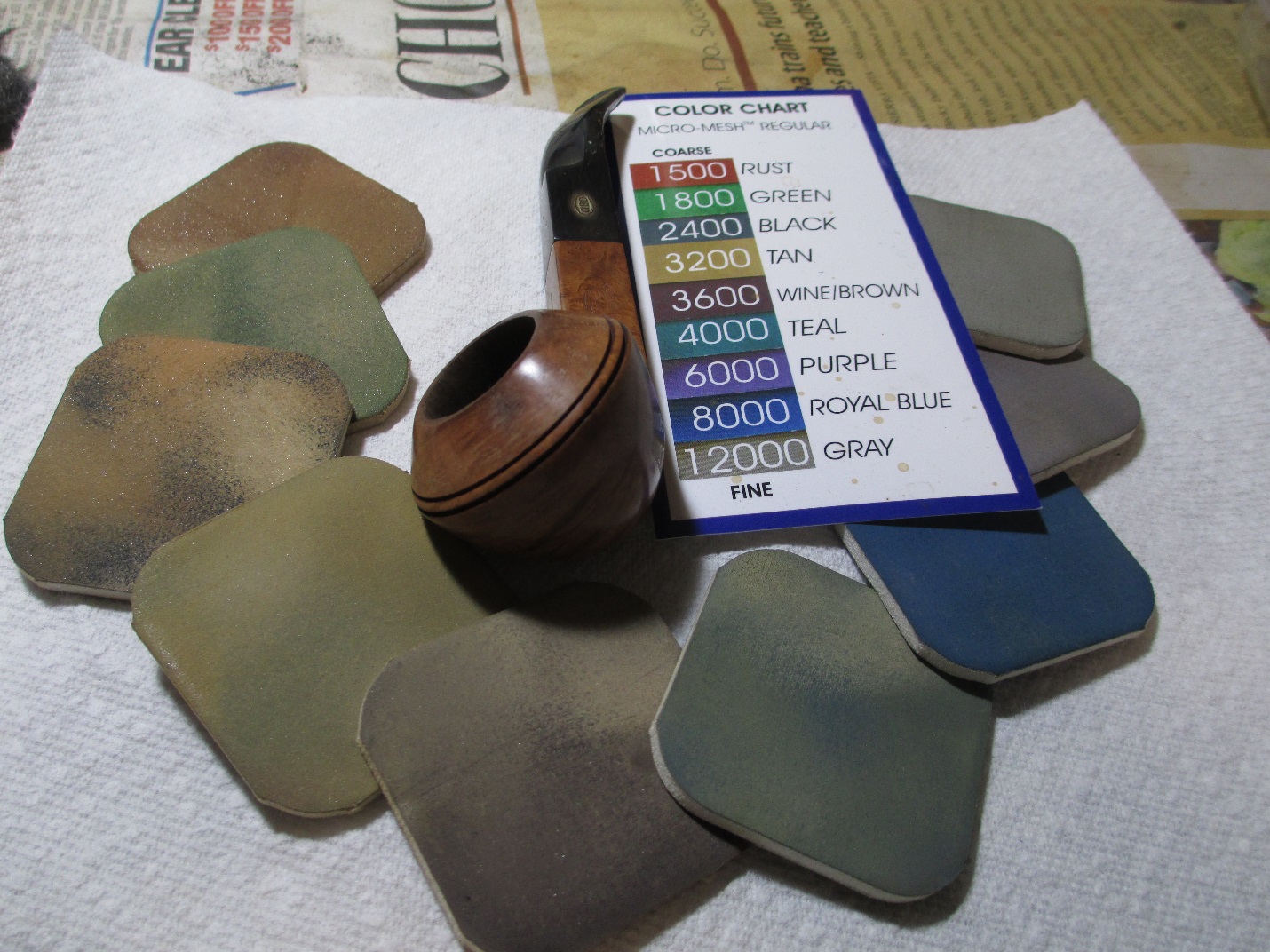
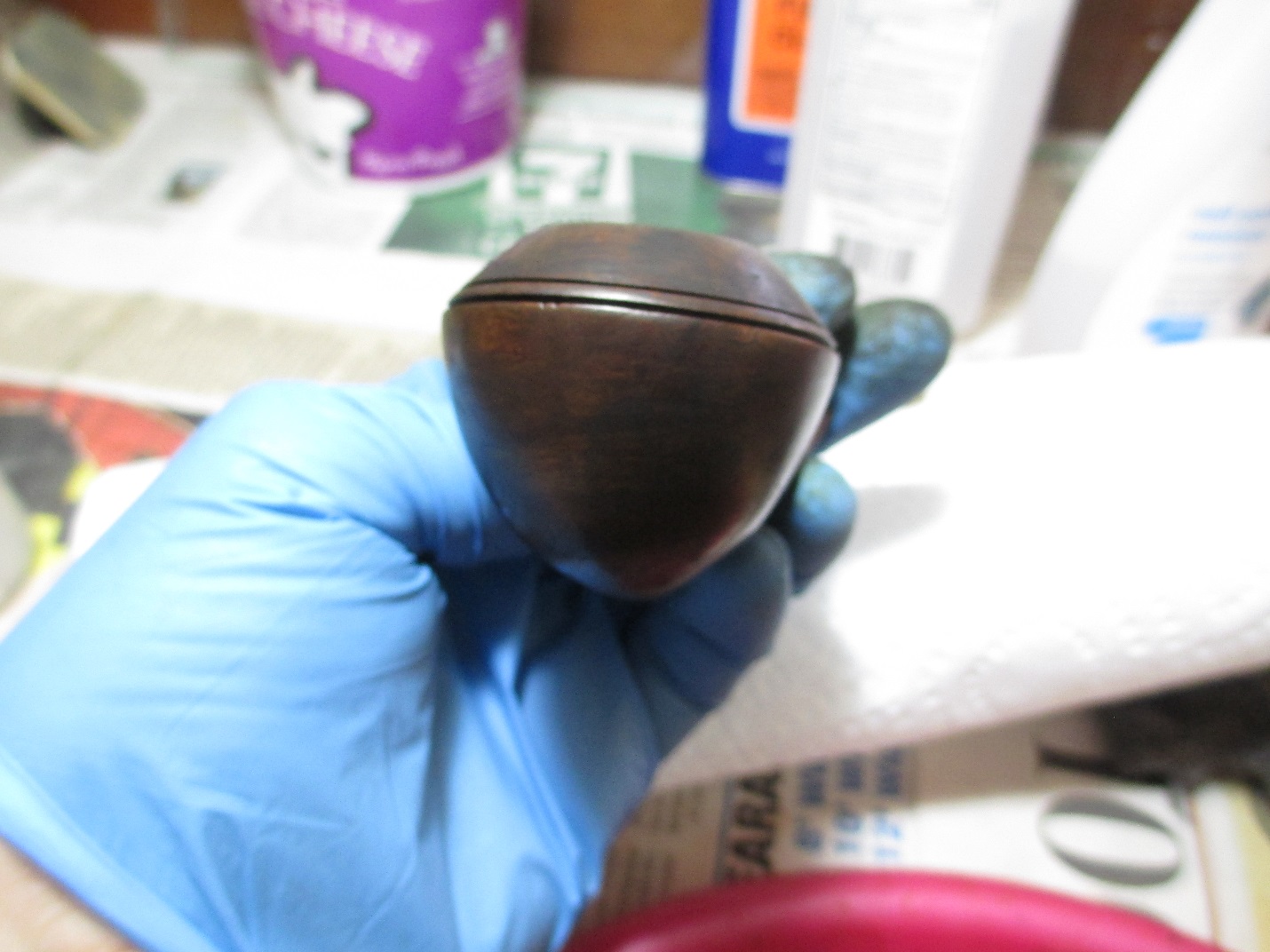
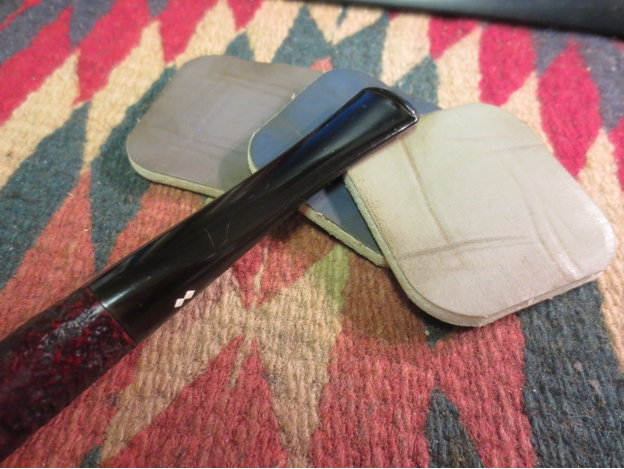
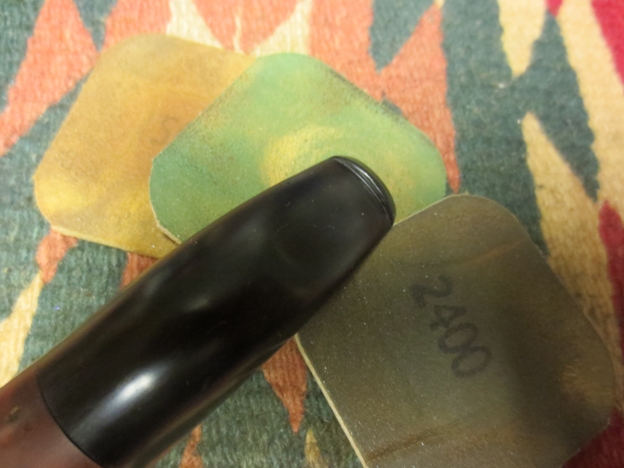
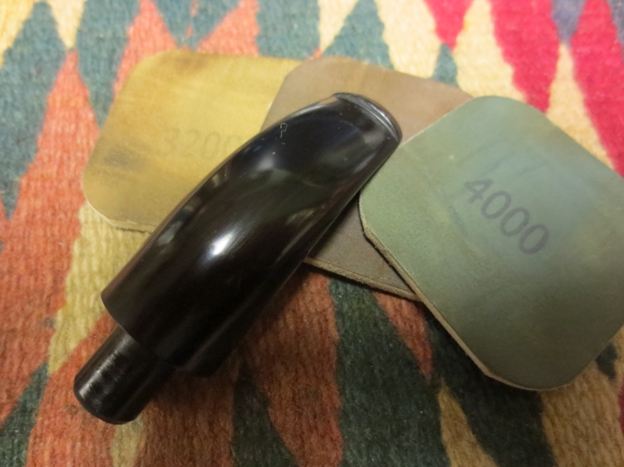
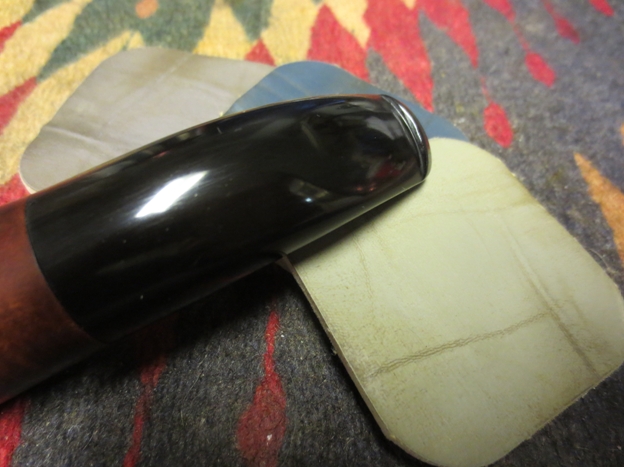
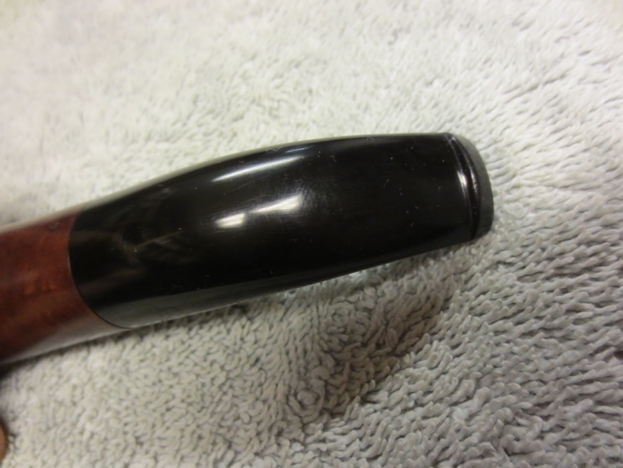
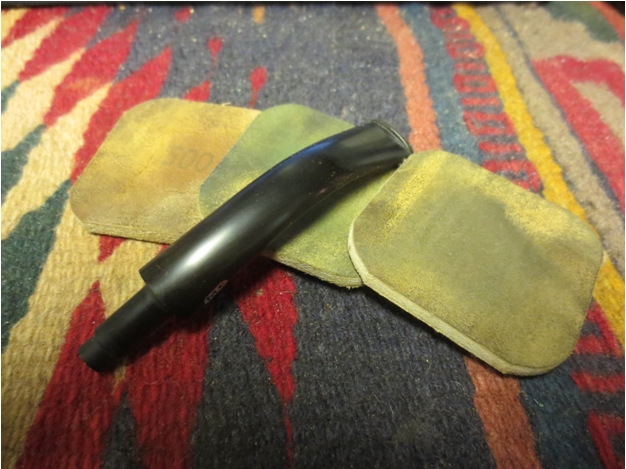
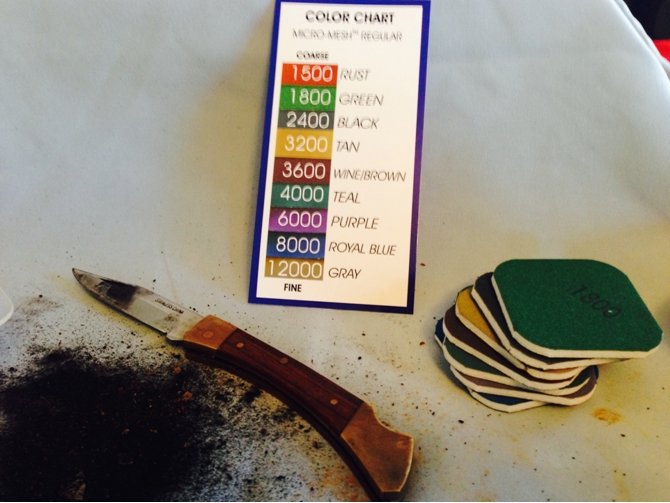
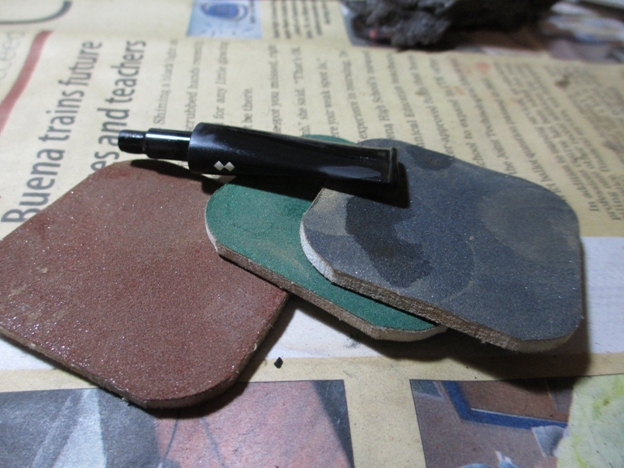
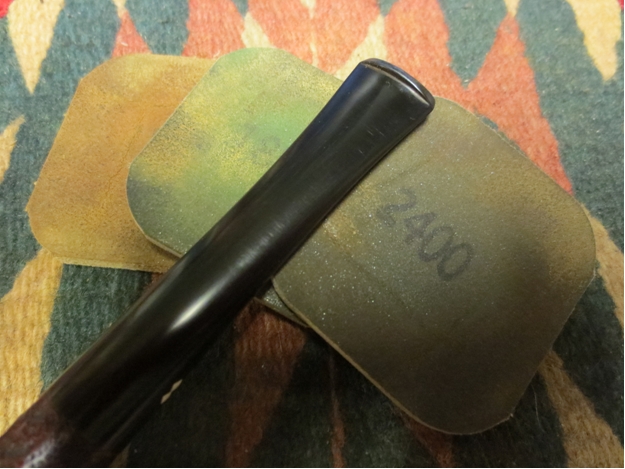
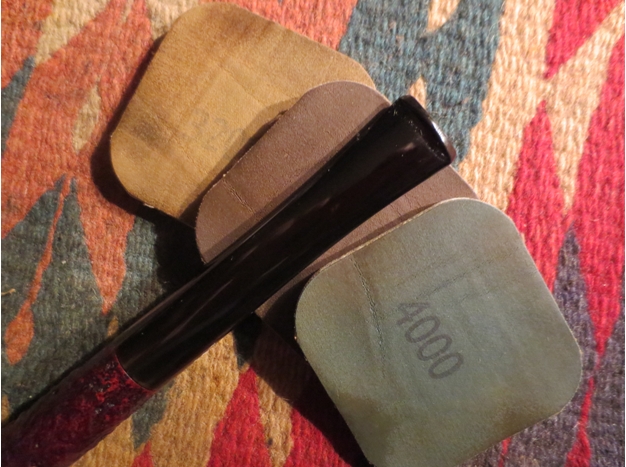
GBD9 Using the scraper wrapped with 400 grit wet/dry and water, the oxidation was soon gone. I followed with 1500-2400 grit micro mesh pads and water.GBD10 The bowl had a couple of dents so I decided to steam them out.GBD11 One of my essential tools for this type of work is an old butter knife.GBD12 I used my heat gun to get the tip of the knife very hot, then applied it to a wet cloth directly over the dents. Here is what it looked like after several applications of steam.GBD13 The dents still needed some work, so I sanded them smooth with 400 grit sand paper.GBD14 By this point the finish was completely uneven, with bare wood on the rim and side of the bowl, so I used acetone and 0000 steel wool to remove the remaining finish. I find that if I’m careful with the stampings, that grade of steel wool cleans the wood without damaging the stampings.GBD15 This is what the pipe looked like after I took the bowl and stem through a progression of micro mesh pads, 1500-12,000.GBD16 I decided to use a dark walnut stain from Pimo Pipe Supply to help cover the remaining scorch mark. Here is the bowl after the application of stain.GBD17 I used white diamond buffing compound on the buffing wheel to bring out a shine. Let me digress a bit about buffers. There are three things that a buffer loves, angles, stem inserts, and nice pipes. When spinning at 3450 rpm’s the buffer will catch anything with an angle and fling it at a high rate of speed onto the nearest hard surface. Alternately it will catch any type of stem insert and rip it out of the stem. Finally if you have a nice pipe that you’ve invested time in, the buffer has a tendency to shatter it just as you finish. This pipe had all of those elements, so I decided to try something different; my rotary tool.

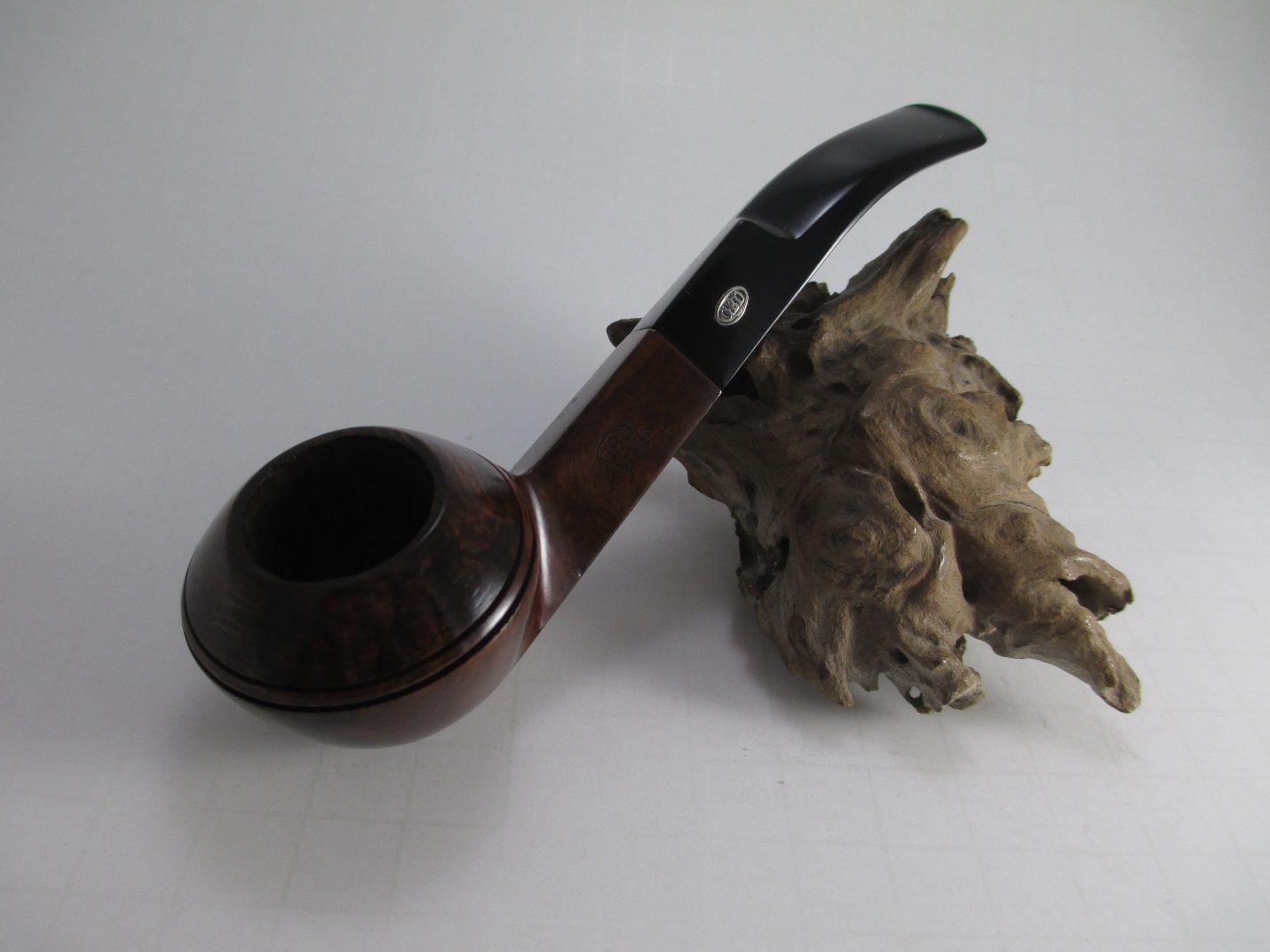
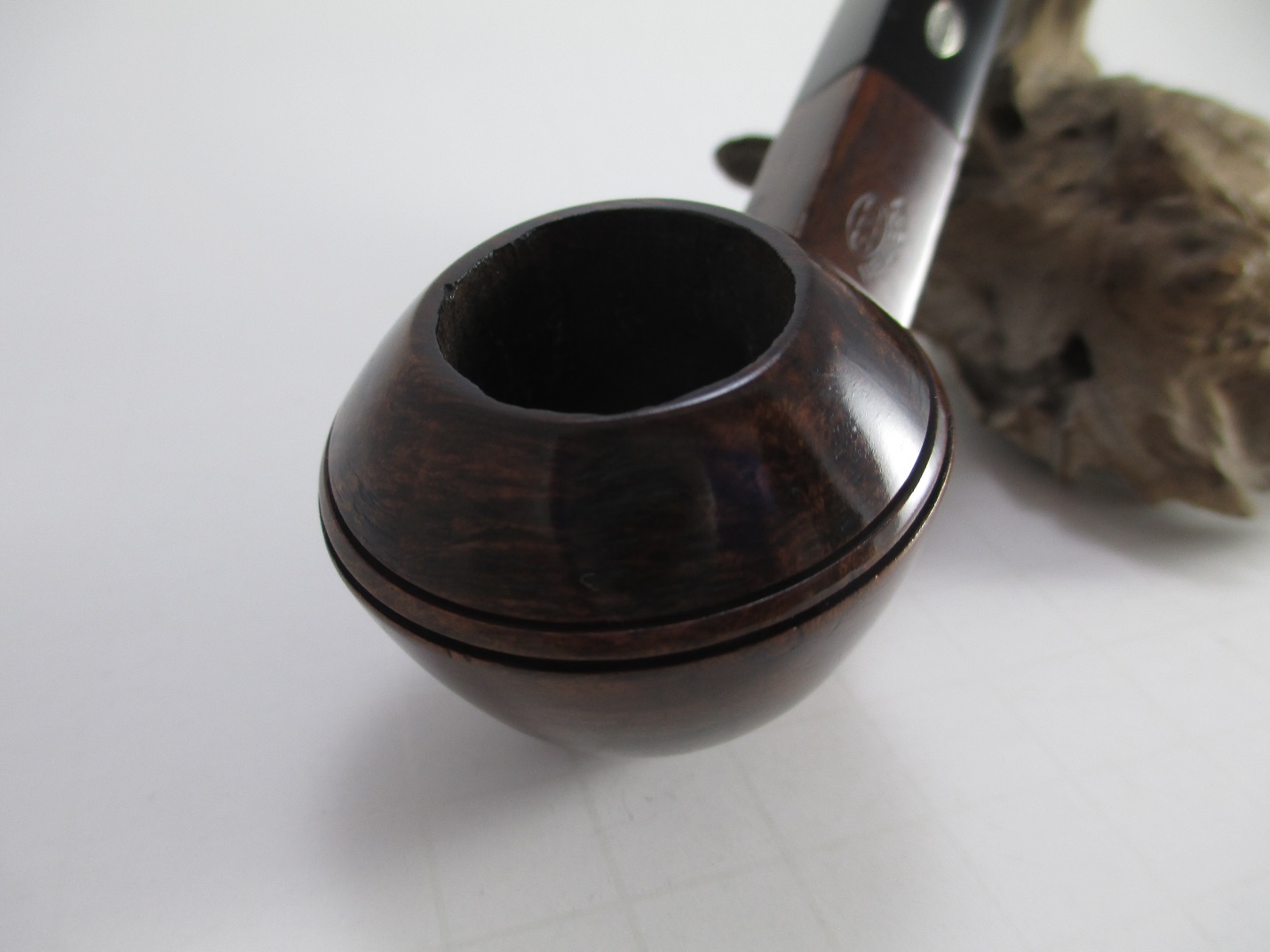
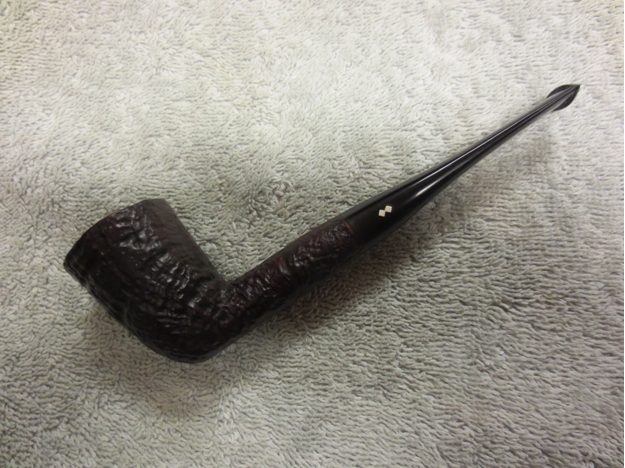
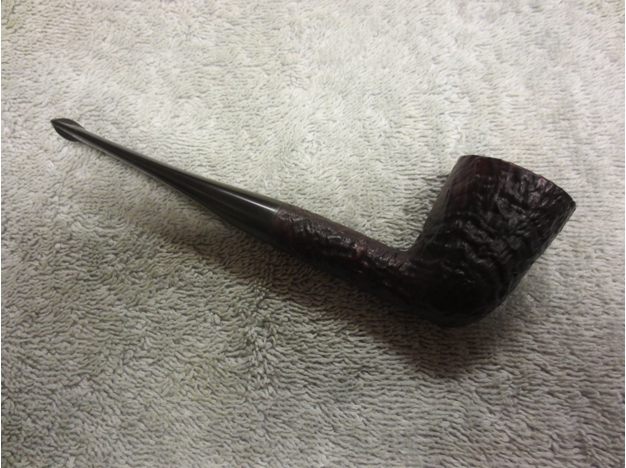
I took a felt buffing pad and loaded it with white diamond buffing compound. The results were spectacular. The rotary tool gave me more control, I didn’t have to worry about the stem flying out of my hand, and I was able to achieve a more consistent shine in the areas that are hard to get with a buffer. Not bad when you consider that I paid $19.99 for this thing at Harbor Freight Tools.GBD18 I finished the bowl on the buffing wheel and here is the final result.GBD19

GBD20

GBD21

GBD22

GBD23

GBD24

GBD25

GBD26

GBD27

Refreshing an Older Heritage Antique #13 Dublin Pipe


Blog by Steve Laug

The Heritage brand was on I had no familiarity with until Andrew wrote up this blog for us https://rebornpipes.com/2014/12/23/refurbishing-a-heritage-heirloom/ He gave background, history, line information and the classic brochure from the company. I want to give a brief summary of what he found in the next two short paragraphs to set the stage for the one that I found once he highlighted the brand for me.

Heritage pipes were Kaywoodie’s answer to Dunhill. According to one of their brochures, Heritage pipes were made from “briar burls seasoned and cured for up to 8 months,” with only “one briar bowl in over 300 selected to bear the Heritage name.” “Heritage stems are custom fitted with the finest hand finished Para Rubber stems. Mouthpieces are wafer thin and concave.”

The Heritage line began in the early 1960’s, with the trademark issued in 1964. The line was started at the request of Stephen Ogdon, (who worked for Kaywoodie in 1962). Mr. Ogdon had previous experience working for Dunhill, either running the New York store or working for Dunhill North America. Mr. Ogden was made President of Heritage Pipes, Inc., Kaywoodie Tobacco Co.,Inc. and Kaywoodie Products Inc. as well as a Vice President of S.M. Frank & Co. Heritage Pipes were produced from 1964 until 1970 (Source Kaywoodie.myfreeforum.org).

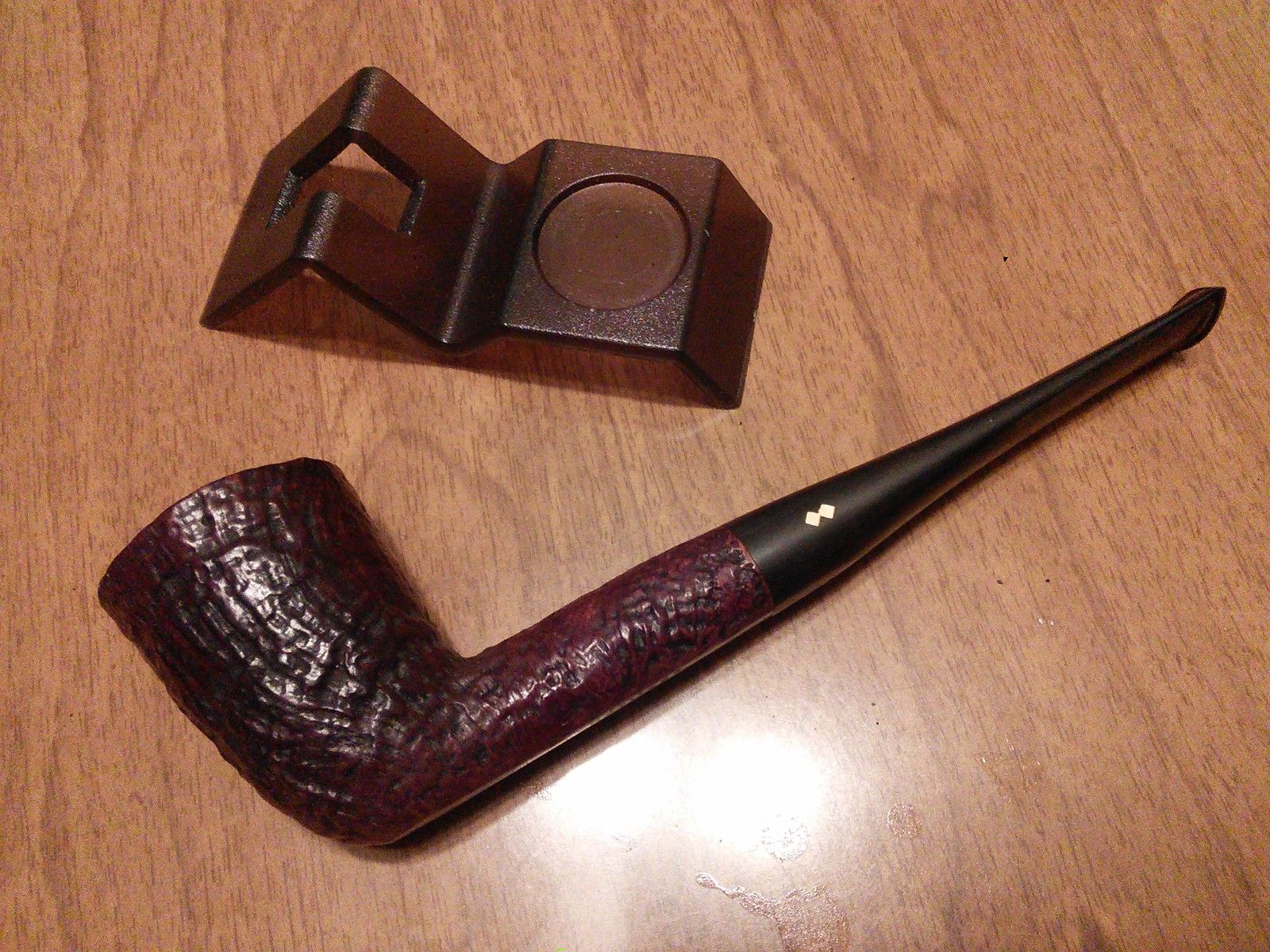
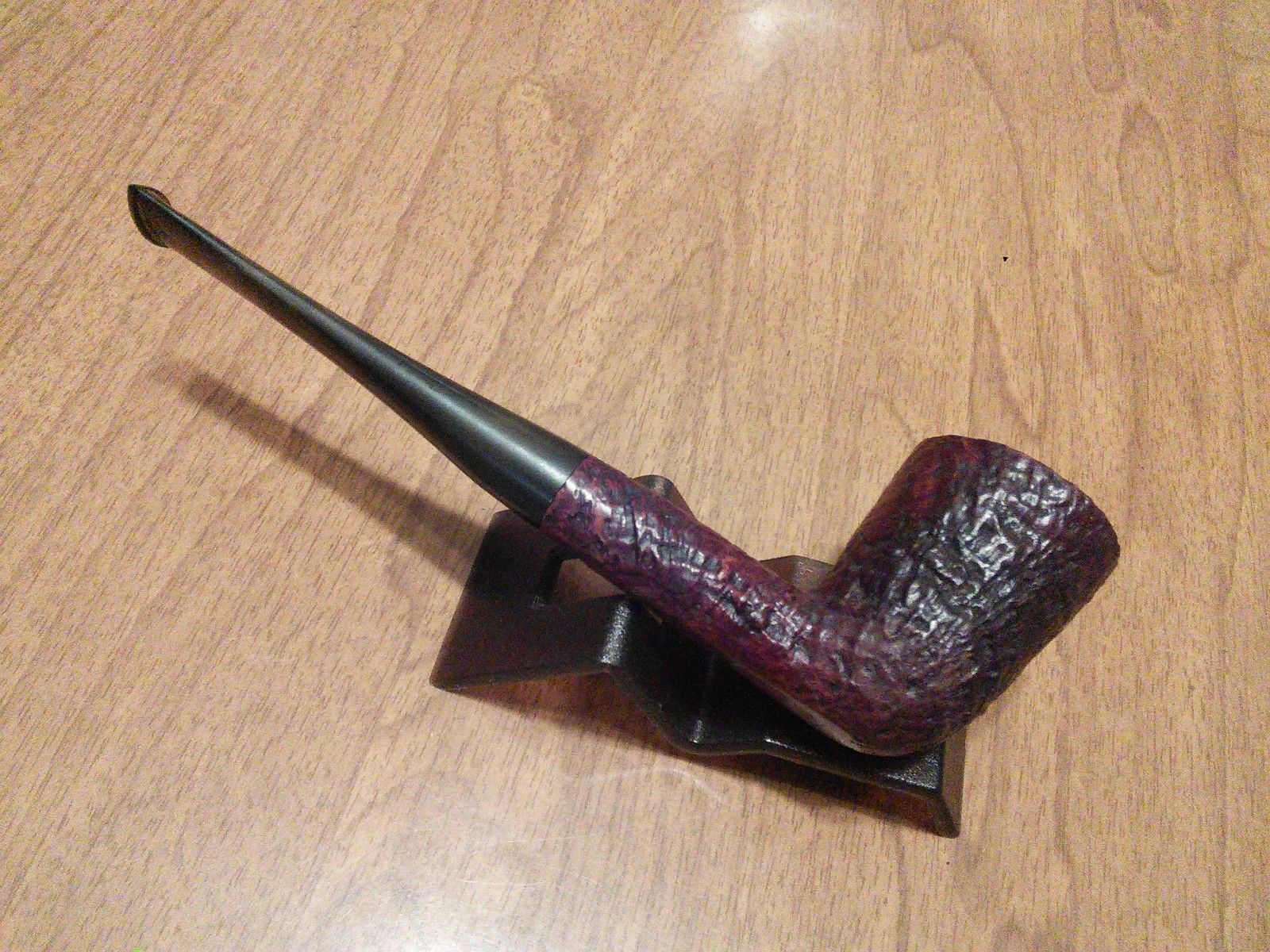
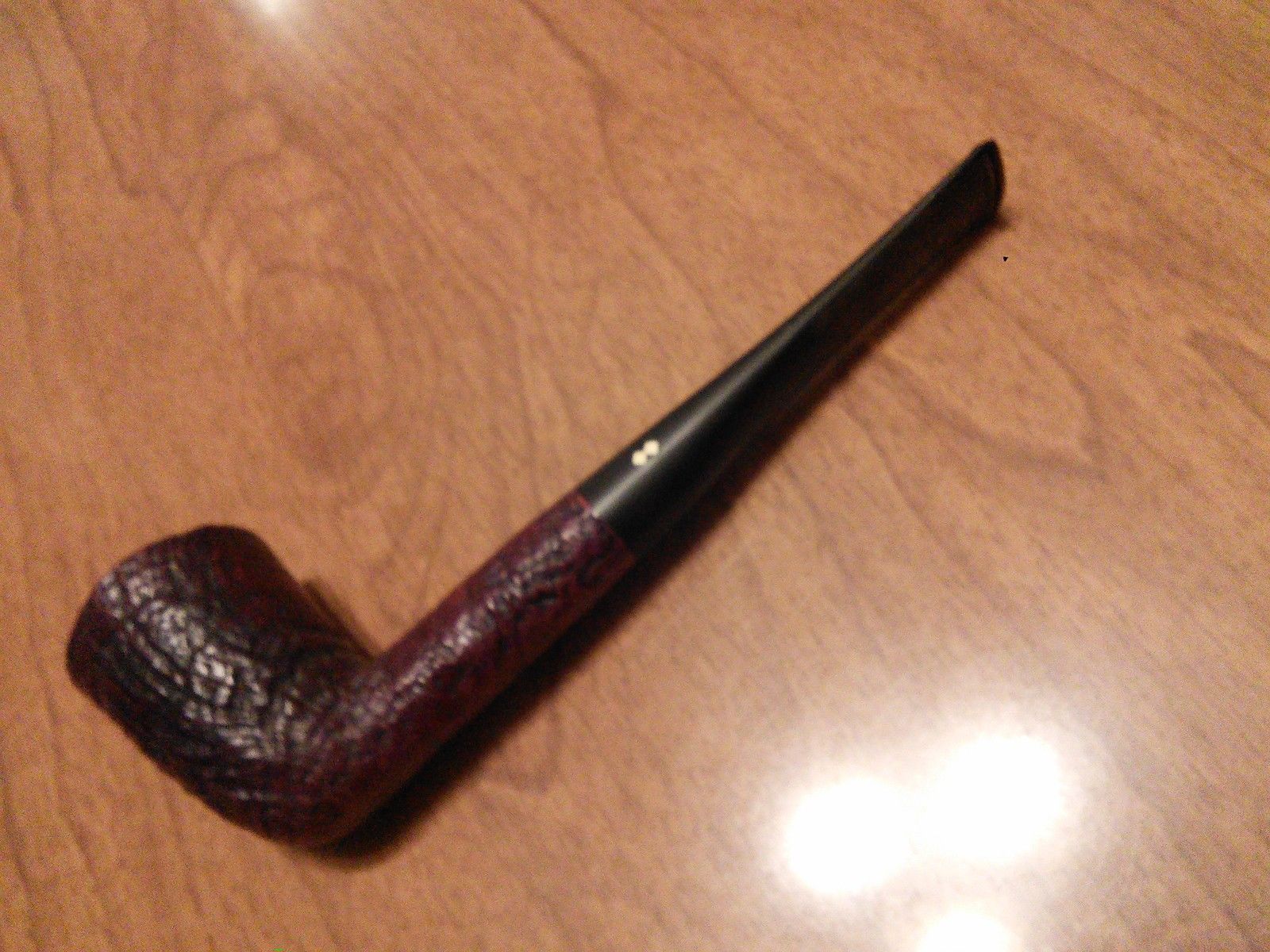
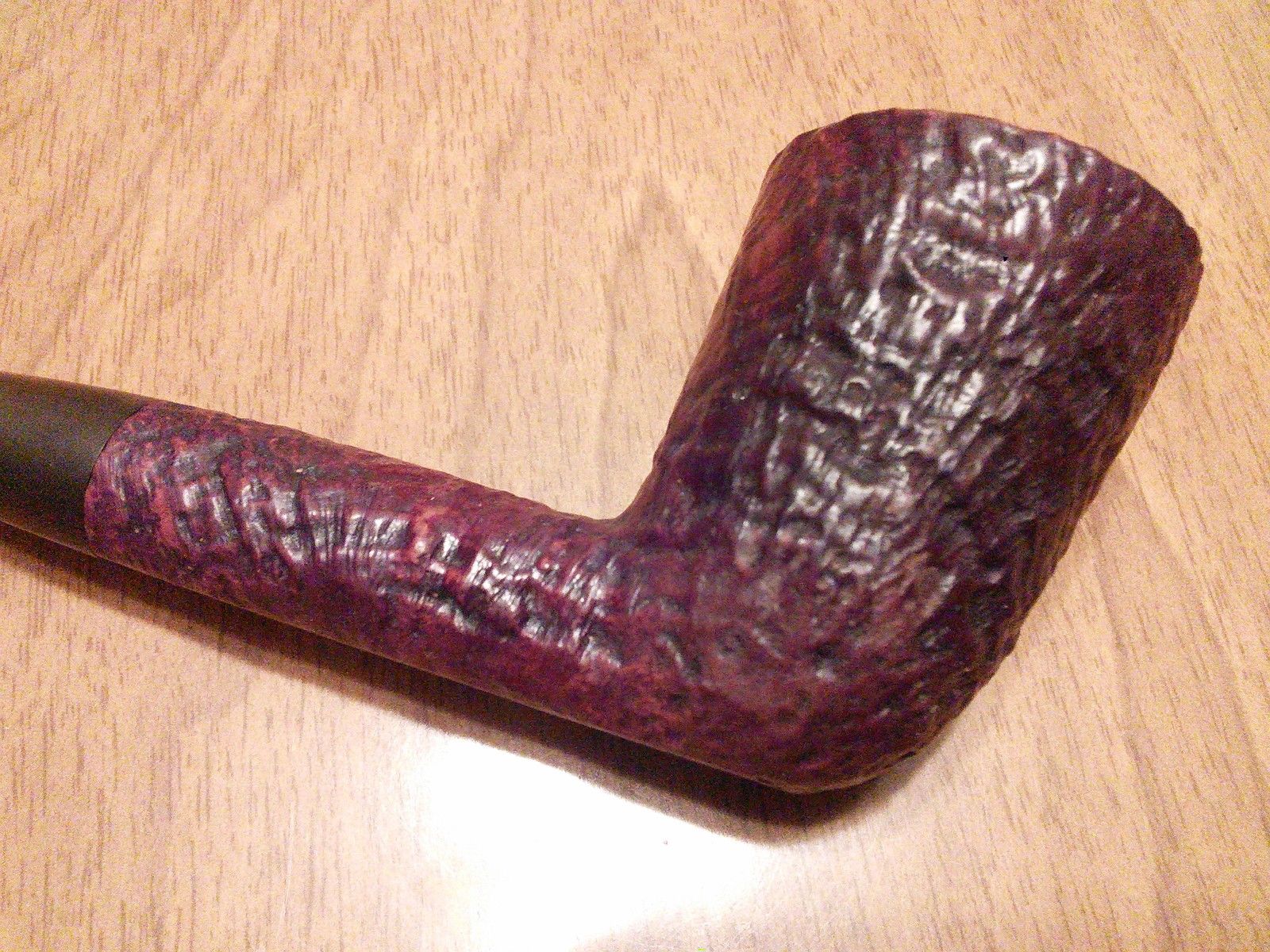
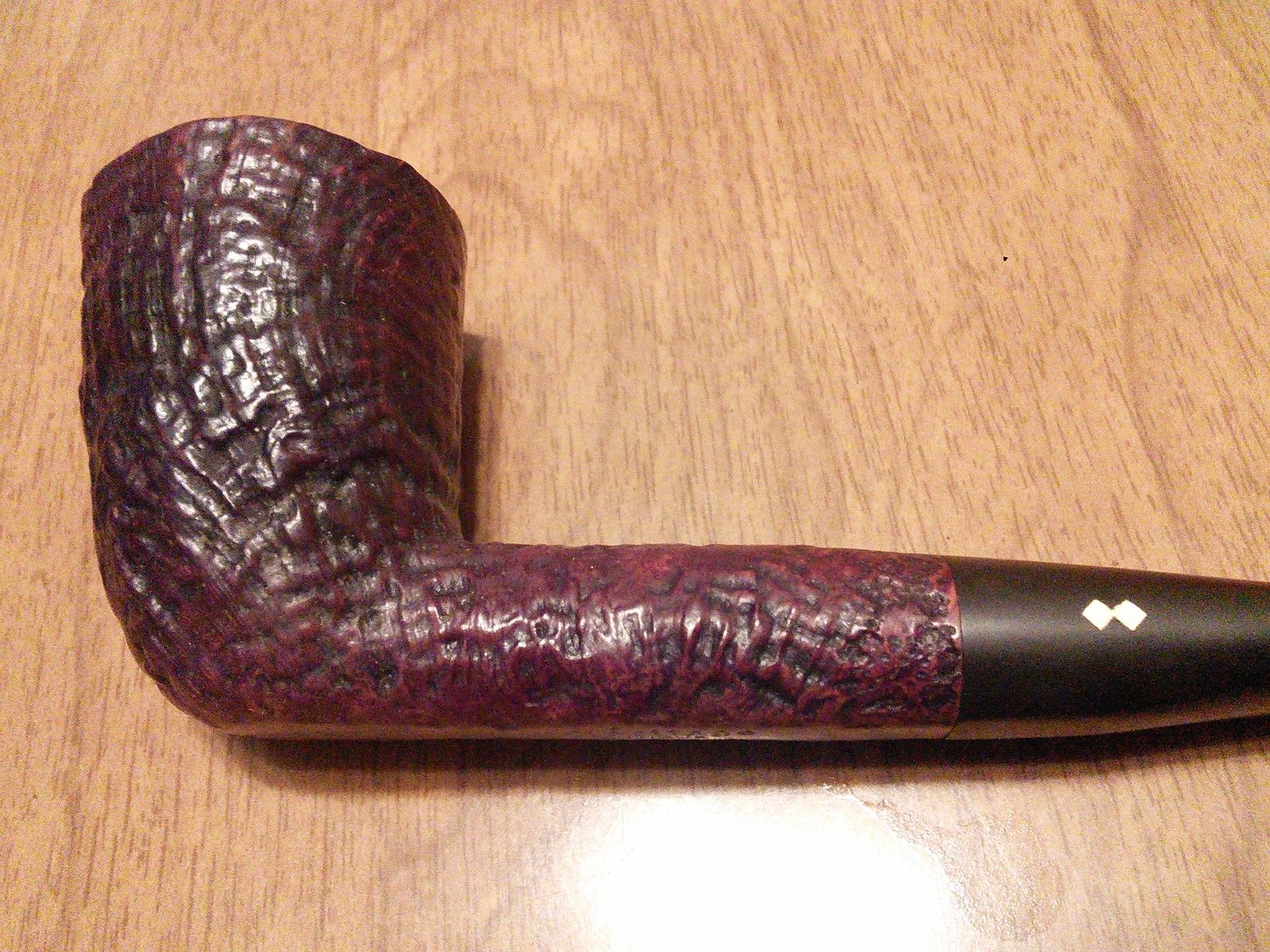
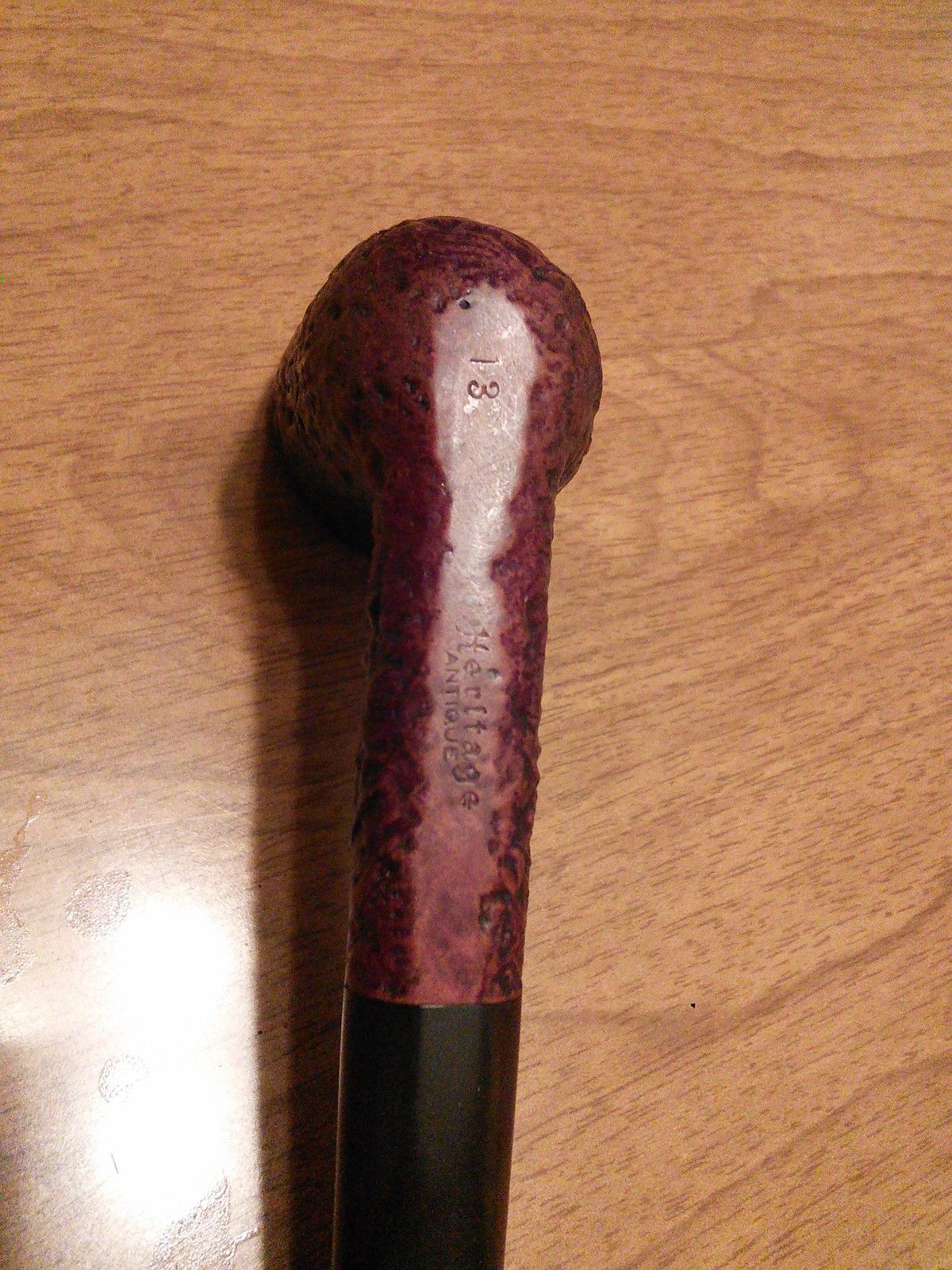
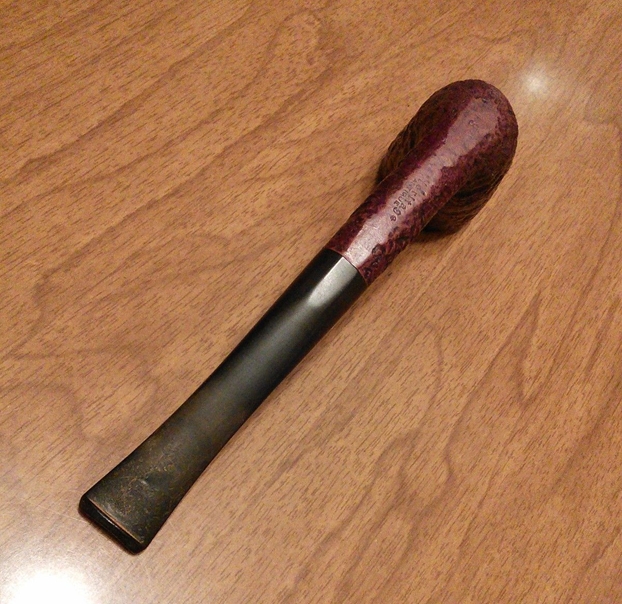
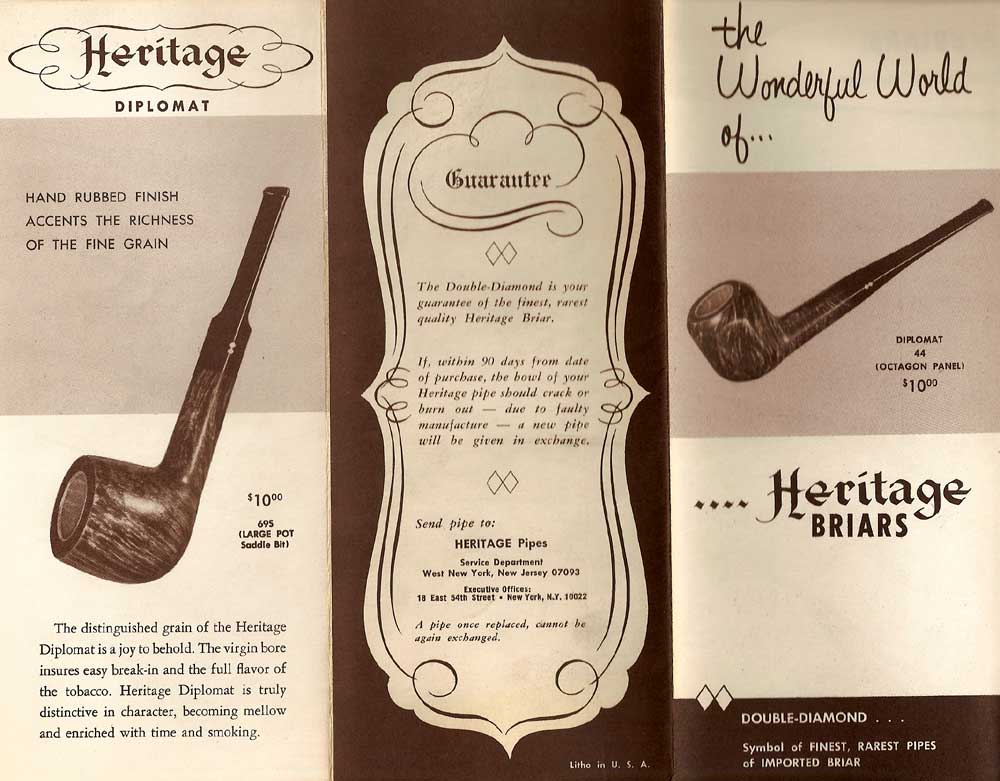
I found one online on Ebay that was stamped Heritage Antique 13. I scanned the brochure that Andrew provided and found this regarding the Antique Line: The Heritage Antique line is characterized by “Rustic Grain stands out in rugged relief.” “This pipe is so bold-looking, yet so light and smooth-smoking. A special sandblasting process exposes a greater surface area on the bowl, giving a cooler, more satisfying smoke. Centuries-old Heritage Antique is strikingly masculine in appearance.”The number 13 is the shape number for the Dublin shape. It can be seen in the first coloumn second pipe down on the left side of the brochure page below.heritage4_zpsdc6295ef The seller of the pipe I picked up on EBay included some basic information on the pipe. The said the stamping was Heritage Antique with a 13 on the bottom of the shank. The stem has an inlaid double white diamond on the left side. It is out of a Kansas City estate. It measures:
5-1/2 inches Long
1-3/4 Inches High Bowl
1-1/4 inches Bowl Width
3/4 inch of a Bowl Bore
3 inch long stem

The next eight photos were included with the EBay advert and give a pretty good idea of the type of blast on the briar as well as a good picture of the state of the stem. The pictures show the colour of the pipe in a more red hue than it actually appeared when it arrived. In reality the stain is a brown tone similar to that of the Dunhill Shell Briar.Heritage1

Heritage2

Heritage3

Heritage4

Heritage5

Heritage6

Heritage7

Heritage8 When the pipe arrived in Canada I was very pleased when I opened the box. The briar was in good but dirty condition and it appeared that the finish was in great shape under the grime and tars. The blast was amazing and craggy – very much like that on my older Shell Briars. The rim had some buildup on it that was flaking off but the bowl was in round and there was no damage to the edges of the rim.Heritage9

Heritage10

Heritage11

Heritage12 The stem was thin and quite clean. It was oxidized and had some waxy substance on the top side. There were two tooth marks – almost pin prick marks, on the underside of the stem visible in the first photo below. The second photo shows the waxy buildup on the surface of the stem and the oxidation.Heritage13

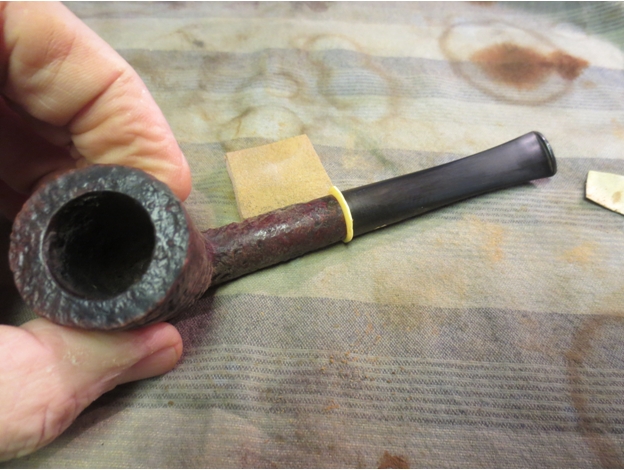
Heritage14 The rim of the pipe, shown in the photo below had a thick buildup of tars that were flaking off the surface of the rim. I picked at it with a dental pick and could see that the sandblast surface was undamaged underneath. The bowl was in need of a reaming to smooth out the uneven cake on the sides and bottom of the bowl.Heritage15 The stem was frozen in the shank so a short time in the freezer and the stem was easily removed from the shank. The step down tenon was in great shape and showed no damage and the tenon itself was not tarry.Heritage16 I reamed the bowl with a PipNet Reamer beginning with the first cutting head and finishing with the size 2 cutting head. I reamed it back to bare wood to restart the cake build up.Heritage17

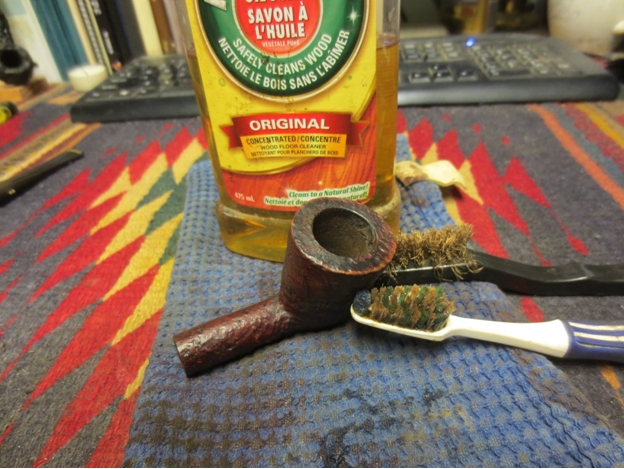
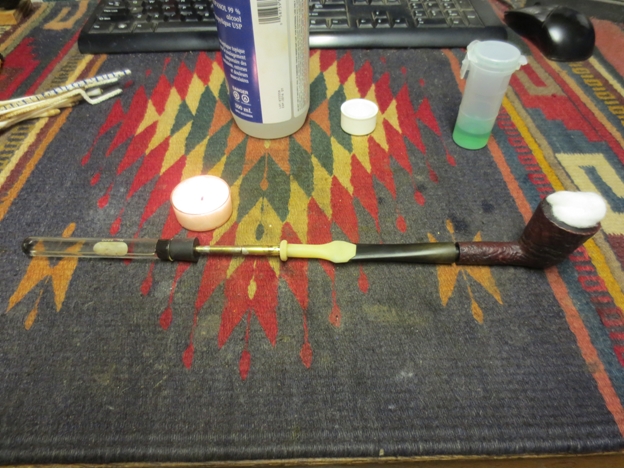
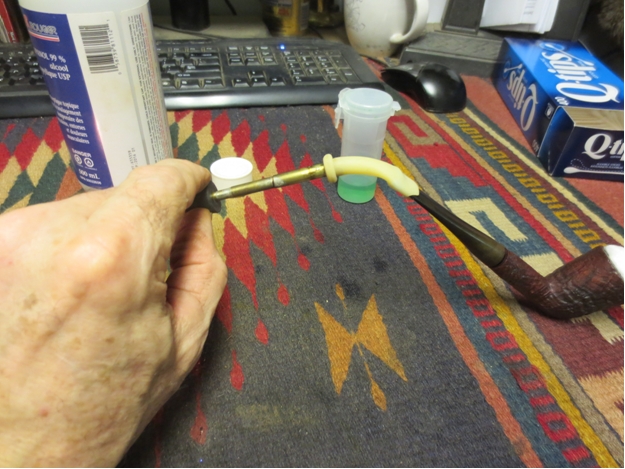
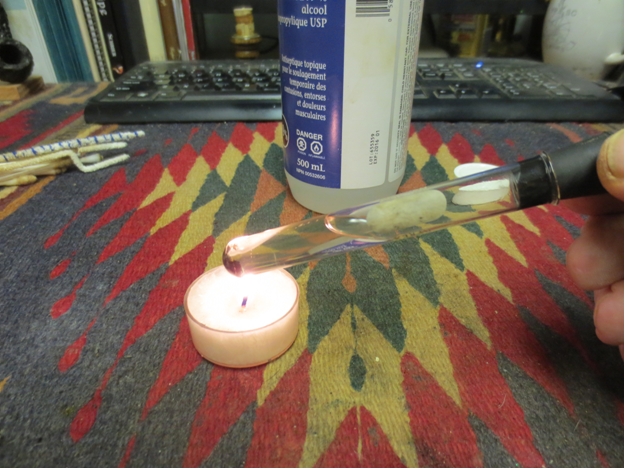
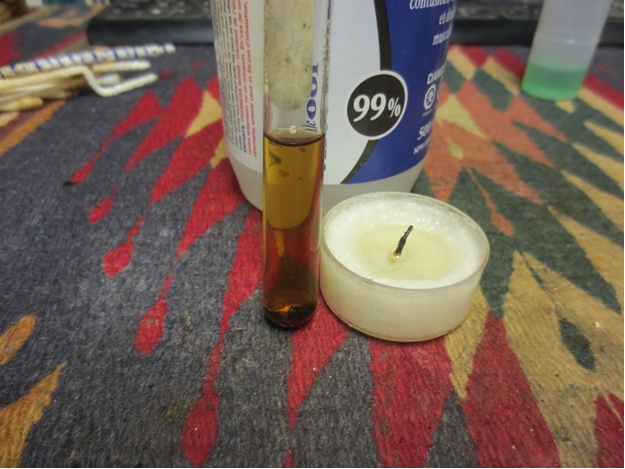
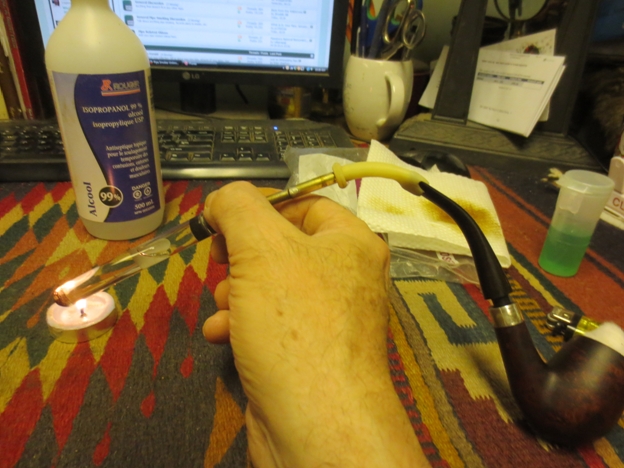
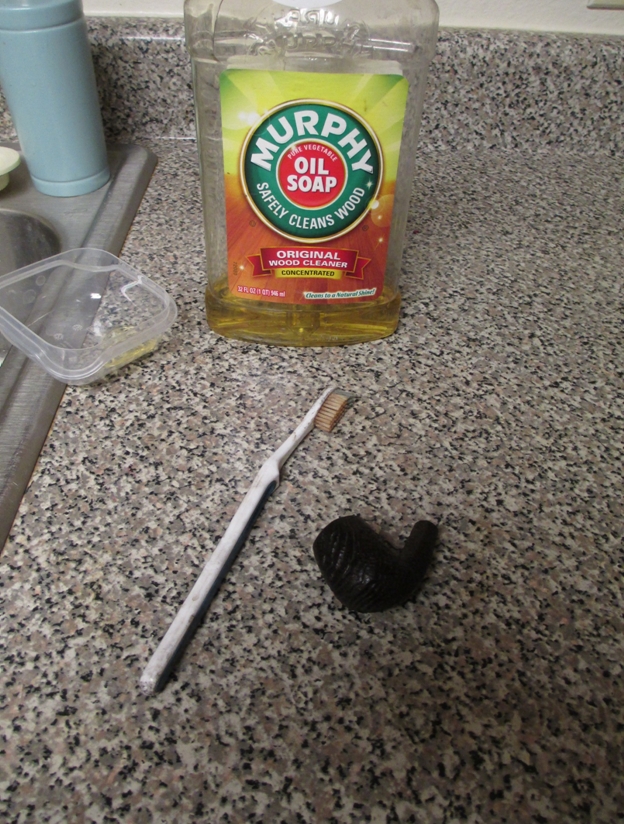
Heritage18 I picked the flaky buildup on the rim with a dental pick and the scrubbed it with a soft bristle brass tire brush to remove all the grit and take it back to the surface of the rim. I have used this method over years as the bristles remove the tars without damaging the sandblasted surface.Heritage19 Once I had the surface brushed clean with the wire brush I scrubbed the entire bowl and shank with undiluted Murphy’s Oil Soap and a tooth brush to get the grime out of the crevices of the blast and remove the oils from the previous owners hands. Once I had scrubbed it I put my thumb in the bowl and rinsed it off with cool water and dried with a cotton cloth.Heritage20 I put the stem back in place and set up the retort. I filled the test tube half full of 99% isopropyl alcohol and heated the alcohol over a tea candle. The alcohol boiled through the pipe and cleaned out the tars and oils in the stem and shank. The alcohol also rinsed the inside of the bowl which was plugged with a cotton ball.Heritage21

Heritage22

Heritage23

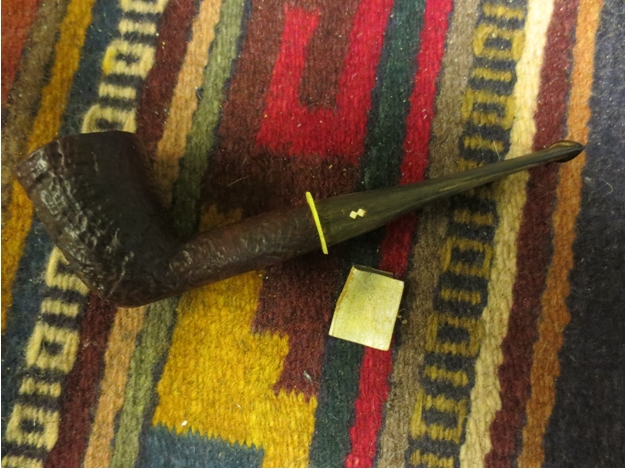
Heritage24 With the inside of the pipe cleaned and the exterior of the briar scrubbed it was time to address the oxidation and the marks on the stem. I put a plastic washer between the stem and shank so that I could sand the stem right up to the shank without worrying about rounding the shoulders of the stem. I sanded it lightly with 220 grit sandpaper to remove the waxy buildup on the stem (turns out it was a varnish) and also loosen the surface oxidation. I followed that by sanding with a medium and fine grit sanding sponge to remove scratching and oxidation.Heritage25

Heritage26

Heritage27 Once the stem was sanded, I wiped it down with a cotton pad and alcohol in preparation for repairing the two tooth marks. I filled these with black super glue and set aside the stem to let the glue cure.Heritage28 When the glue had dried I sanded the two spots with 220 grit sandpaper and the two sanding sponges to smooth out the patches and blend them into the vulcanite. I then sanded the stem with micromesh sanding pads – wet sanding with 1500-2400 grit pads and dry sanding with 3200-12,000 grit pads. I rubbed the stem down with Obsidian Oil between each set of three pads and also at the end of the sanding process.Heritage29

Heritage31

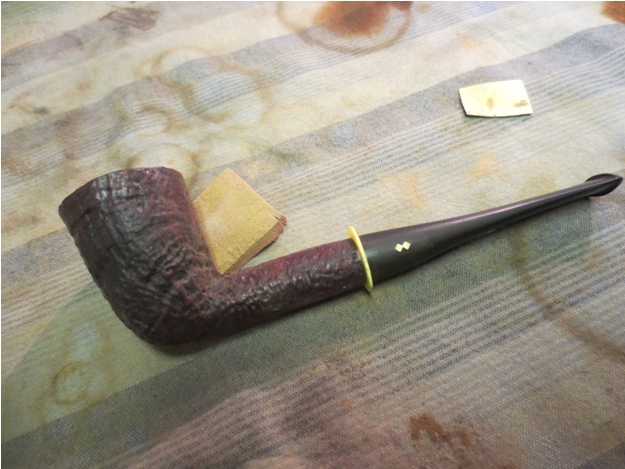
Heritage32 I buffed the stem with White Diamond and gave it multiple coats of carnauba wax. I rubbed two coats of Halcyon II Wax on the sandblast of the bowl and then gave the pipe and stem a light buff with a soft flannel buff to raise the shine. The next photos give a clear picture of the finished pipe. Heritage33

Heritage34

Heritage35

Heritage36 I end with three close-up photos of the bowl to give a good idea of the quality of the sandblast on this piece of briar. It is a stunning pipe with a blast that rivals that found on the Dunhill Shells that are in my collection. I intend to fire up this old pipe and enjoy its trust for many years to come.Heritage37

Heritage38

Heritage39

Cleaning an Older Savinelli Duca Carlo Straight Billiard and Paying It Forward


Guest Blog by Robert M. Boughton
Member, North American Society of Pipe Collectors
http://www.naspc.org
http://www.roadrunnerpipes.com
http://about.me/boughtonrobert
Photos © the Author

“As you know, Shibumi has to do with great refinement underlying commonplace appearances. It is a statement so correct that it does not have to be bold, so poignant it does not have to be pretty, so true it does not have to be real. Shibumi is understanding, rather than knowledge. Eloquent silence. In demeanor, it is modesty without pudency. In art, where the spirit of shibumi takes the form of sabi, it is elegant simplicity, articulate brevity. In philosophy, where shibumi emerges as wabi, it is spiritual tranquility that is not passive; it is being without the angst of becoming.”
― Trevanian (Rodney William Whitaker, 1931-2005), U.S. film scholar and writer, in “Shibumi,” 1979

INTRODUCTION
Although Trevanian, in the well-turned quote above from one of his diverse novels (in this case a spy story), is far less sesquipedalian yet just as articulate as the late great jack of all trades, William F. Buckley Jr., I admit I had to resort to my Oxford English Dictionary to look up pudency. To save anyone reading this the trouble, if he might be inclined to do as I did, I will say the word is defined as susceptibility to the feeling of shame, or bashfulness. I made it through that stage long ago. The passage as a whole is apt to the understated grace, style, artistry and charm, combined with simplicity and humbleness, of this lovely Savinelli Duca Carlo Straight Billiard,relative to higher end Savinelli beauties and their prices.

The circumstances surrounding my chance and fleeting but thoroughly pleasant encounter with the alluring implement for fine tobacco enjoyment are also appropriate for this preface. Had I not sought refuge at my local tobacconist in a fluky and serendipitous urge the other day, I might never have met Al, a 25-year-old student who is pursuing both a master’s degree in his field of study and new pipe experiences. And, of course, I would not be writing this account of my rewarding experience cleaning the Duca Carlo.Duca1 When Al introduced himself to me by his full first name, Alfred, and moved with spontaneous purpose from where he was sitting to the cushioned chair next to mine, I had been distracted, in deep concentration, working on something on my laptop. In most cases when someone can see I’m working, and still tries to engage me in conversation, I become a bit piqued. But something was different about Al. So outgoing and affable was his personality that I really can’t even remember now what had been so important to me the moment before his appearance beside me.
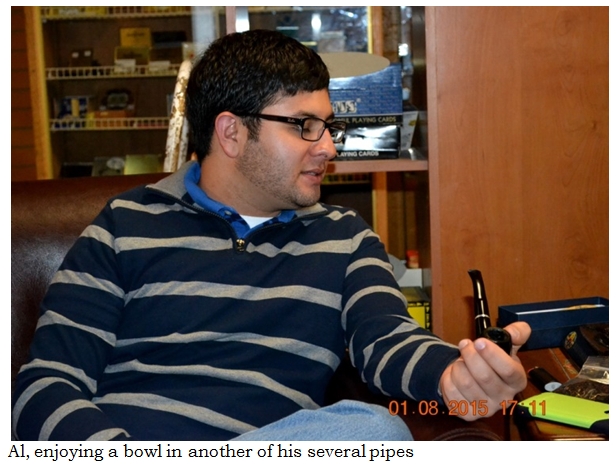
Al spotted the rather large, black bag on the floor by my side, which was made for carrying tools but is now my run case. In case I ever need to run to my tobacconist, to get away from the mounting pressures that consume the rest of my life, I always have my run case with its selection of pipes and jars of tobaccos du jour. It should come as no surprise that I also keep a stock of provisions within the many pockets of the run case, from an extra Bic in the event my regular pipe lighter runs out of butane to a cheap pipe nail against the times when I misplace my three-in-one tool; pipe cleaners; balsa, 6mm and 9mm filters, for the most part to have on hand for others who like to use them; sandpaper and micromesh for refurbishing on the go; a small digital caliper, and a 120-inch cloth tape measure, should I ever run into the Titanic of pipes and need to determine its exact specs. Basically, everything the OCD pipe enjoyer and restorer might want without notice. Sometimes my fellow tobacco enthusiasts poke fun at me– more often than not the cigar smokers – seeing me coming through the door with my run case and laptop in either hand like a circle and crosshair marking me as a target. Being a good former Boy Scout, I always say be prepared.

At any rate, Al somehow got the idea that I was serious about pipes, and being new to the attendant rituals, he enquired what was in the bag.As I am rather free with my tobaccos, I began taking out the jars, looking for something appropriate for a newcomer. Mostly that day I found stronger, more advanced blends such as McClelland’s Top Hat and C&D Bayou Morning (with a whopping 28% Perique content), but I also had C&D Joie de Vivre and Rattray’s High Society. Al’s sharp eyes noticed the Joie de Vivre plug, and he was intrigued. Thinking he might be up to that excellent, smooth and unusual English blend, I said so and suggested he give it a try.

Well, the next thing I knew, poor Al was puffing away and suddenly looked a bit peaked. When he told me he had opted for a bowl of the Bayou Morning, I wasn’t surprised. As his composure returned, he brought up the subject of my pipes and ended up asking me if his was “very good.” He said a college friend had given it to him, knowing he wanted to quit cigarettes. Glancing at it in his hands, I said it looked Italian, and that a good pipe was anything that made its owner enjoy the tobacco. I added that if he took care of it, the pipe would last him a lifetime. Seeing the briar had faint nomenclature of some sort, I wanted to take a closer look, and perhaps sensing this, he held it out to me.

Squinting, I made out the words Duca Carlo on the shank and exclaimed something that some might consider inappropriate for this space. Understandably alarmed, Al asked if anything were wrong. I told him it was a Savinelli, and it was apparent the name meant nothing to him. I proceeded to explain a little about the well-known Italian maker and the quality of its pipes, noting that although his Duca Carlo was not one of the high-end varieties, it was a fine pipe indeed. That was when the magical moment happened. Al said he was thinking of having it professionally cleaned.

Hmm, I thought. Chuck was gone for the day, and I supposed I had a spare half-hour that night, so I offered my services to the young newcomer. Surprised, he asked how much it would cost, and I told him I would be happy to do it for free. While I have always been reluctant to charge people for anything I enjoy doing, I suppose there were several subconscious reasons behind my impulsive offer: Al is a young student working hard to assure a secure future, similar to another young pipe-smoking friend of mine who is now studying physics at Purdue, and for whom I bought two packs of my own tobacco mix – Sneaky Rabbit, sold by my tobacconist as a house blend – since he was enjoying it so much he was almost out both times during a recent visit to his hometown for the holidays; I remember how tight my finances were in my own college days; I had a sudden desire to pay forward the many similar favors my friend and mentor, Chuck Richards, and others in my piping community have done for me, and least of all, it was just good sense for the growing business Al knew I was in. Al still tried to resist, but there was no way I was going to take his money for a simple cleaning.

Having a similar but apparently newer Duca Carlo of my own, I showed him the picture of it stored in my laptop. Al told me what he really wanted was to see the stem (which was in excellent shape but a dull, faded gray with a thin shiny streak by the shank) sparkle all over. He said he had no idea if it would be possible. I could do that, I assured him, and return it to him the next day.

So that was how the adventure began. Still a little wary, however, when he handed the pipe over to my care as we left, Al said with the sincerest note of entreaty in his voice, “Please don’t break my pipe.” I knew exactly where he was coming from.

REFURBISH
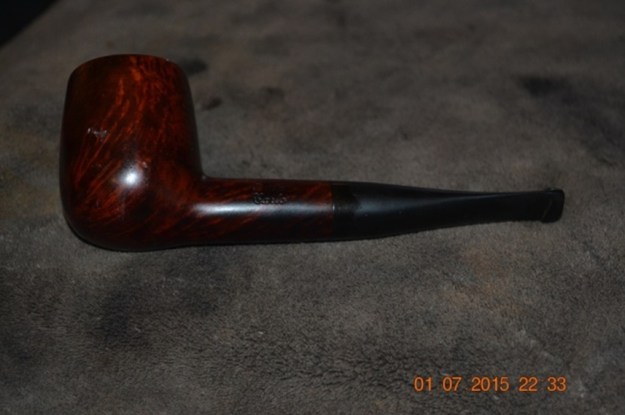
I knew from the beginning there was no way I would just buff the stem and clean and sanitize the pipe. After all, if Al were a paying customer of my business he would get the Basic Cleaning, which includes light refurbishing. All I could see the pipe needed was a little rim burn removal, touch-ups on slight scratches on the stem and bowl and a careful ream of the chamber to remove the small amount of excess cake buildup while leaving the optimal amount intact. The college friend who gave Al this pipe certainly took good care of it and knew what it was, but never said a thing of it his buddy. I liked that.Duca2
Duca3

Duca4

Duca5

Duca6

Duca7

Duca8 Wishing to work with as much efficiency and economy of movement as possible, and having observed the minor burns and other blemishes on the rim, I chose 220 sandpaper to start.Duca9 The choice of paper worked just right in removing the blackness but of course required smoothing. First I used superfine steel wool, which returned a soft sheen and coloration to the nice grain, and followed that with micromesh, buffing upward from 1500 to 2400 to 3200 to 4000.The resulting rim glimmered in its natural pale shade.I also removed the black circle around the shank opening with the steel wool.Duca10 To clear out the unneeded cake in the chamber, I used my smallest reamer, the 17mm, which was loose but close enough to gain a purchase on the walls. Several turns removed the majority of the cake, and followed by a little work with a small piece of 150-grit paper, the work there was done except for cleaning out with a swab of cotton cloth squares soaked in Everclear.
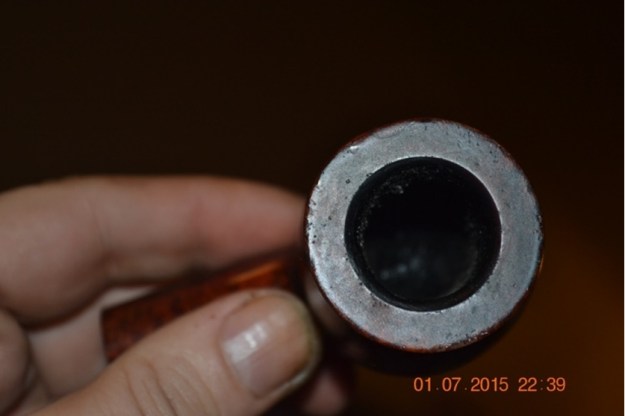
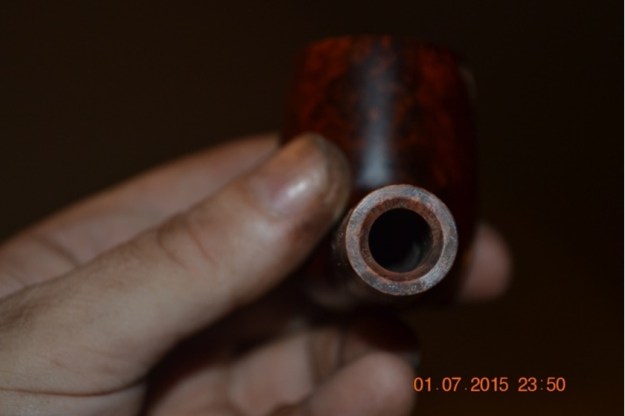
Believing the stem to be black Lucite, and also because of the thorough stripping of cake the procedure would cause, I opted against retorting. Instead I ran a single bristled pipe cleaner dipped in freshener through the stem, back and forth a few times, followed with a dry cleaner so as not to leave any possible unnecessary initial aftertaste.

The shank I cleaned as well as I could, which ended up being quite well, with a wire-handled bristle brush that I ran through the narrow passage about ten times, dipping in a small container of Everclear between each run.

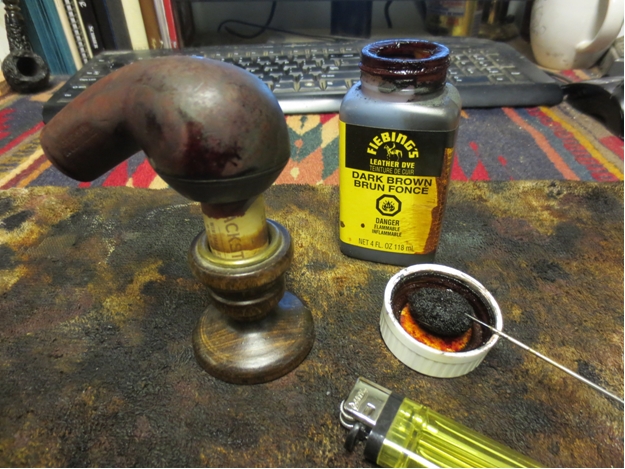
Next up were the only three halfway serious scars I found on the Duca Carlo, shown below before I gave the briar a bath with purified water.Duca11 The scuffs on the right and lower left sides came off fast with micromesh using 1500, 2400 and 3200. The higher and deeper scratch on the middle left side of the bowl needed more surgical, localized work with 220-grit paper followed by the same micromesh progression. I then needed to re-stain the small higher spot on the left side using my Feibings dark brown leather dye.
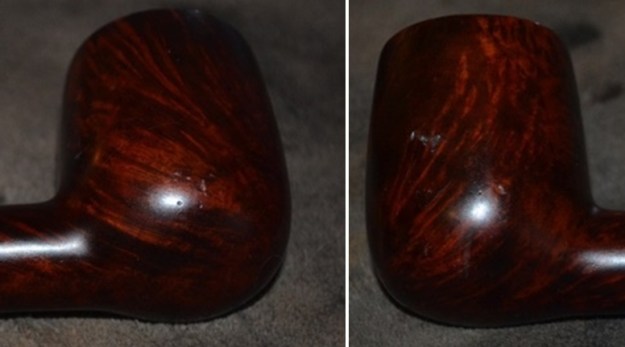
After flaming it with my Bic and letting it cool for a few minutes while I re-stained the rim (for which, again on impulse, I decided to do with some Lincoln medium brown dye I had on hand, to show off the nice grain there), I used 3600 micromesh to buff the side where the blemish had been until it appeared never to have existed. By then it was time to do the same to the rim, which, as I intended, was the wood’s natural lighter color but, to me at least, gave the pipe a cool two-tone effect.

While I used 3200 micromesh over the whole of the remaining bowl and shank to be sure it was all smooth and ready to put to the wheels, I was seriously eyeballing the new two-tone, almost sick with dread at the thought that Al would be disappointed by my summary decision to alter his pipe without even a consultation. But I let my gut ruling stand, if only with the knowledge that I could reverse it in a jiffy should Al indeed show even a hint of unhappiness.

No kidding, I heard a faint drum roll when the moment came to address Al’s primary concern: the stem. As I noted several times already, this Duca Carlo was in great shape when it was entrusted to my care, and the stem, with the slightest of scratches just below the bit on both sides, was the least of the exceptions despite its almost complete lack of luster. Once more I remembered the advice of others wiser than I to use the least necessary force to correct a problem – advice I took to heart – and began with 1500 micromesh.

Tackling the miniscule scratches first, of course, I saw them vanish with the slightest of pressure before I continued over the rest of the stem to make it even and gave it a thorough rubbing with a soft cotton rag. Then I did the same with 2400, wiped it again, and finished at last with 3600. The prepped stem was looking good, and my heart began to beat harder, knowing I had to take the two precious parts to my single-speed wheels, where only God knew what might happen.

This project had become a labor of love to me, even greater than most of the much more difficult jobs I had performed without disaster before. And so I took a moment to collect my wits and think good thoughts.The phone rang. Dang! There went my happy thoughts.

I didn’t recognize the 575 Area Code and almost did not answer, as is my habit with unknown or Toll Free numbers because of the near certainty that they are spam or scam or other callers I wish would stop phoning me. But something convinced me to go for it. At first the voice on the other end failed to register, but then I realized it was – that’s right – Al. I gave him my card the night before but had no way to call him. There was a slight tone of anxiety in his voice when he asked how his pipe was doing. Relieved to hear his voice and understanding his concern more than he could have known, I almost laughed but choked it down. Feeling my own nerves settling, I told him I was just putting the final touches on the Duca Carlo and could meet him at the tobacconist between 3 and 3:30. At the end of our conversation, I realized I was calm again and good to go.

Proceeding from the living room, where I like to do most of my work in more comfort, to my workroom, with the pipe, stem, cotton rag and camera in my hands, I set everything down on my desk and turned to the small bench with my two buffing wheels. I threw the switch on the one with red Tripoli and without another thought to distract me picked up the smooth gray stem and held it in both hands with confident firmness (but not like a mother choking her child as she’s about to watch the poor kid go off to summer camp or college or wherever) and did what I knew how to do. The first step done, I wiped the stem down, removing the streaks, and flicked on the second wheel that had the white Tripoli. Ditto. Two-thirds of the way home with the stem, and seeing each buff give it a higher shine, I returned to the first wheel where I…yes, I finished it on the White Diamond pad, without a single incident or even slip through the whole process!

Stoked for the next part, I set aside the stem and went straight through the steps again with the bowl and shank, except that I used white Tripoli followed by White Diamond and ended with carnauba.

This Savinelli required one very last task, which is always a pleasure when I have the opportunity to do it. I always seem to forget one thing when I walk to my workroom ready to polish a pipe, and this time it was the white wax marker to fill in the outline of the crown on the stem. I retrieved it from my run case.Taking what I considered a well-needed rest in the office chair before my desk, I took the stem firmly in hand and, with my magnifying glasses on, scraped the little exposed end of wax first left to right across the crown, then turned the stem vertically and applied another layer top to bottom and finally added a third layer diagonally. Brushing aside a little of the considerable resulting excess wax, I pressed my thumb down across the whole blotch and waited for the heat of my skin to make the wax settle into the tiny grooves. After about a minute I lifted my thumb and used the cotton cloth gently around the edges and still more lightly over the area of the crown, which emerged visible with all of its points.

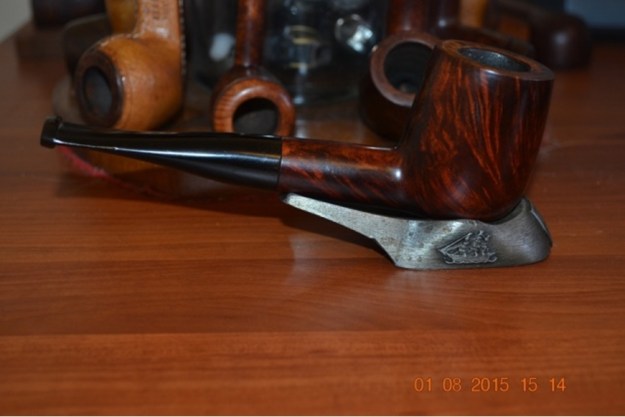
I attached the completed stem and briar and gave the fine pipe that was whole again a final wipe with the rag and millimeter by millimeter scrutiny with my glasses. It passed muster, despite my ever-growing attention to detail.Duca12
Duca13

Duca14

Duca15

Duca16

Duca17 CONCLUSION
The best laid plans of mice and men often go astray, and due to unforeseen circumstances I was a half-hour late to the tobacconist. Spotting Al sitting in the back of the shop almost as soon as I was through the door, I know he saw me, also, but pretended not to, playing it cool. I even had to say hello first as he stared at something, and when he looked up at me the forced smile told me he was sure I had broken his pipe. All of the good seats were taken by those dratted cigar smokers, except for Al sitting in his in misery that was clear to my keenly empathetic eyes.

And thus it became my extreme pleasure to walk to his side and set down my run case and laptop. Before I stood straight again, I retrieved a dark blue Savinelli box inside of which was a light brown Savinelli cloth bag containing the refurbished Duca Carlo. Al’s eyes lit on the box in my hand. Yes, indeed, that had his attention. I could not, even to save my life, lose the grin on my face as I handed it to him and watched his real smile appear in what must have been extraordinary relief.

Then to watch Al open the box slowly, like a Christmas present, only to find the bag inside that he took out with care and reached inside the open end to pull his pipe out by the stem – well, the obvious shocked surprise as he saw the glistening, dark black stem emerge first, followed by the lustrous refurbished pipe, and the initial reaction of total speechless wonder, told me everything.

“Wow,” was his first word. He went on to expand on that dazed thought, but this seems like a good place to wrap it up.

Bringing an Everton Big-Boy 1025 Rhodesian back from the brink


Blog by Steve Laug

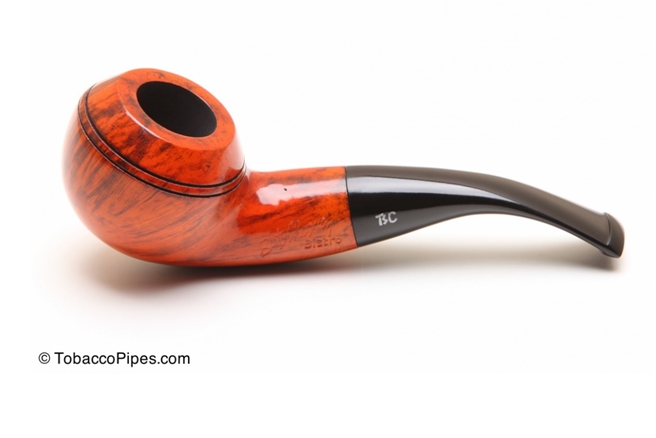
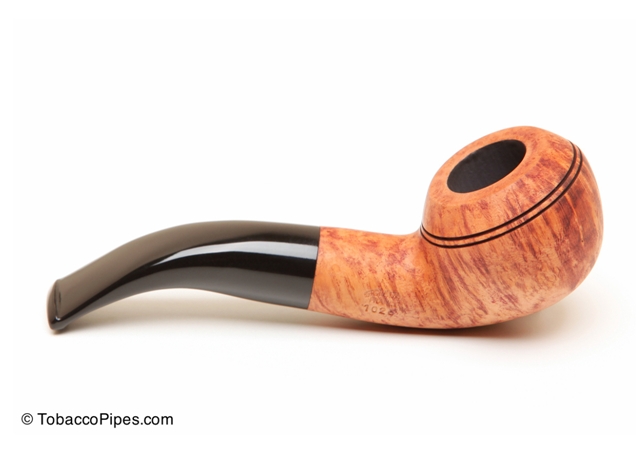
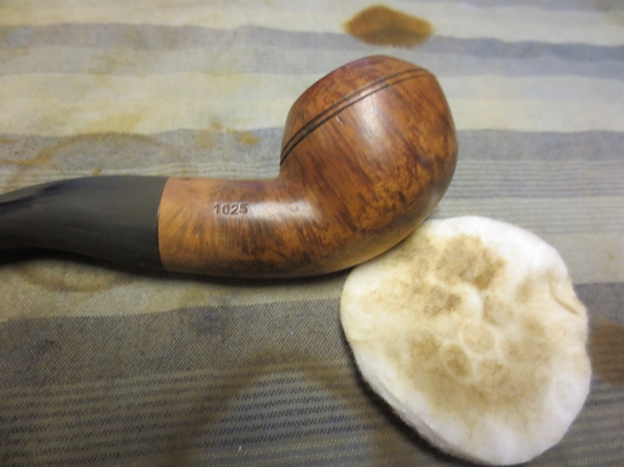
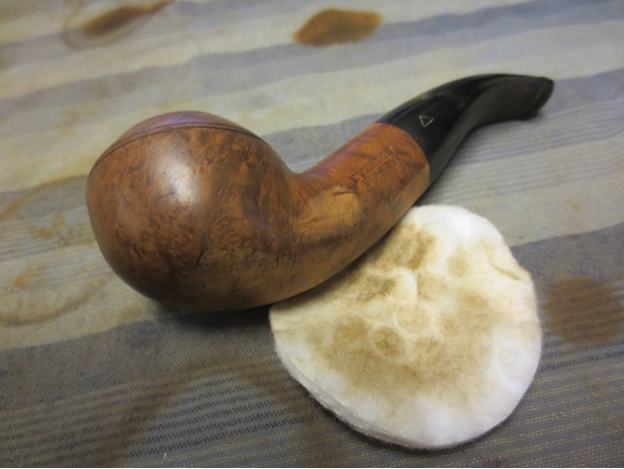
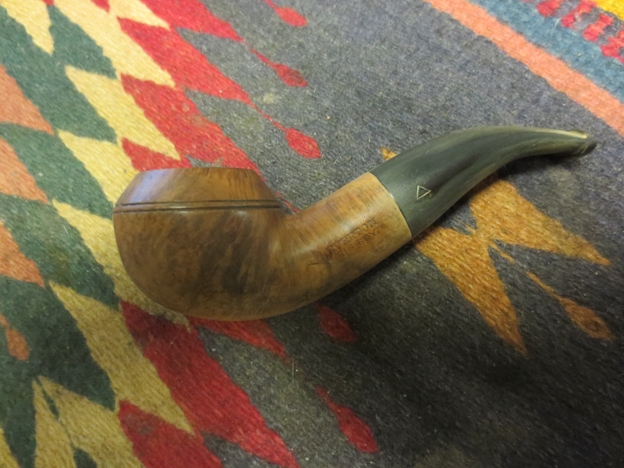
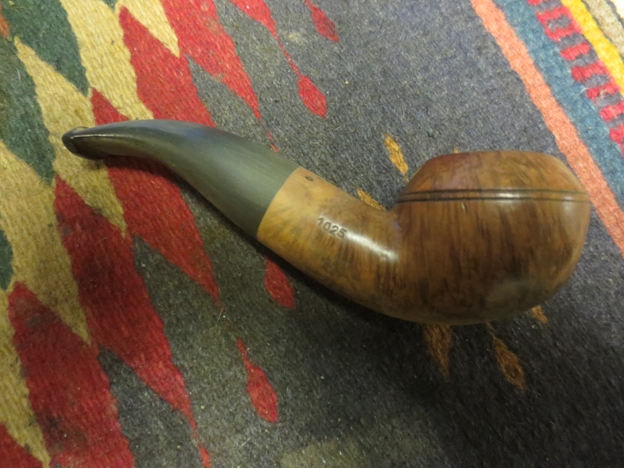
I saw the Everton Big-Boy pipe on a website and the shape hooked me. In the photos the bowl seemed squat and wide and the shank was thick. The bend in the stem appeared similar to an earlier Sina pipe that I picked up; in fact the entire shape was similar. I searched and could find nothing on the brand. There was nothing in any of the books that I usually check out and nothing on the various websites that I use when researching a brand. The brand was a mystery to me and that made me want the pipe even more. I could find Everton Tobacco which is a Danish pipe tobacco. I could find the Everton Football Club (Everton is a District of Liverpool) but no Everton tobacco pipes. I figured that when it arrived I might be able to see why the seller had labeled it an English made pipe.Everton Big Boy When the pipe arrived I checked the stamping and it was stamped Everton over Big-Boy on the left side of the shank. On the right side of the shank it was stamped 1025. The shape in hand is not as wide and squat at the above photo led me to believe it would be. It is actually very close to a GBD 9438 though I had never seen a GBD stamped with this number. This sent me on a hunt for potential English makers that had a similarly shaped Rhodesian. I looked through many of the Comoy’s charts and again could not find any reference to the number. On a lark I just typed in the shape number in a Google search and immediately had a hit for a 1025 shaped pipe made by the French pipe making company, Butz Choquin (BC). I opened the link from Google to find that it was indeed the pipe I was looking for. BC still makes the 1025 shape in several of their lines. The stamping is slightly different in terms of the name on the left side of the shank. All of them have the BC name and the Line underneath. The right side has the 1025 stamp and also a Made in France. I have included the next two photos from Tobacco Pipes.com. The first is the Bistro line 1025 Rhodesian, while it has the thick shank the stem shape is slightly thinner that the one I have. The second one is from the Manoir line. It has the same thick stubby stem as the one I have. From this exploration I can see that the pipe is an older BC pipe. I have no idea what the Everton stamping is – though it may well be a Liverpool tobacconist.BC_Bistro_1025_Left_Side_WM__79374.1409501055.1280.1280

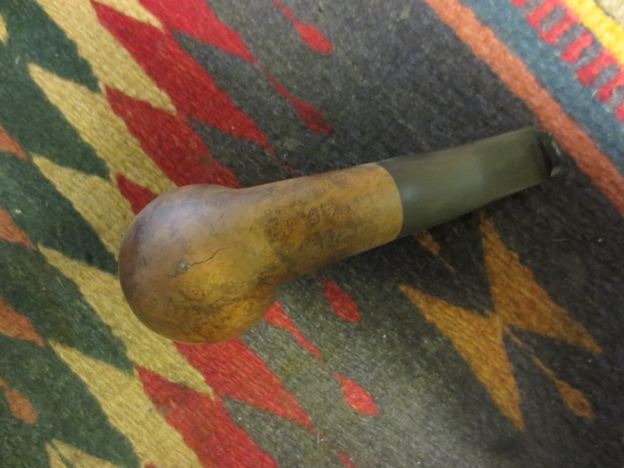
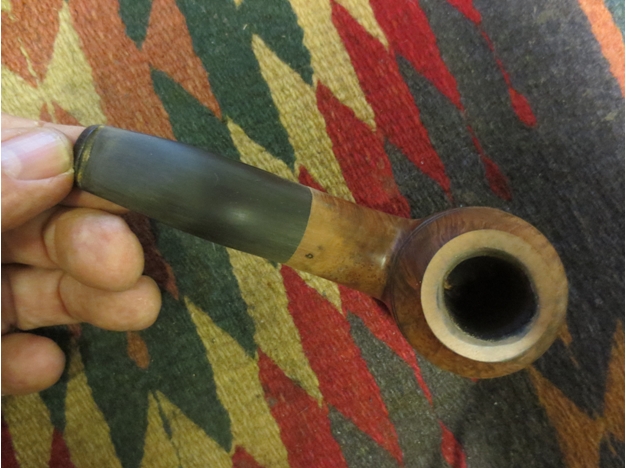
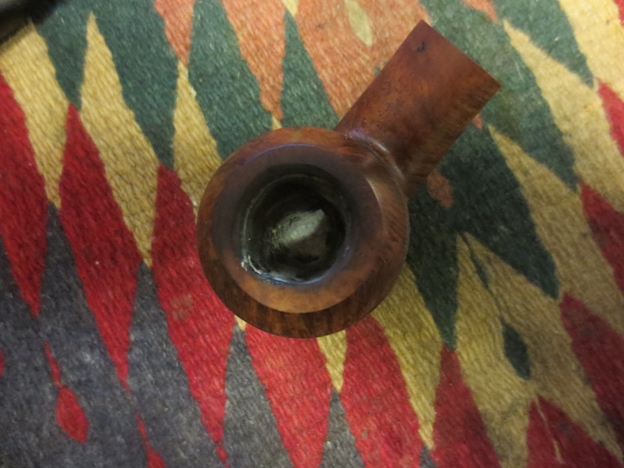
BC_Manoir_Old_Root_1025_Right_Side_WM__27194.1409495504.120.120 As I examined the pipe upon taking it out of the box I was troubled by the state of the pipe. There were no noted issues with the pipe either on his site or in email exchanges regarding billing and shipping. The trouble was that there were many issues with the pipe. All together they add up to a question mark for me regarding this pipe. The bowl was over reamed and out of round. There appears to be a sandpit in the inner edge of the bowl toward the front. There is a small crack on the underside of the bowl (the heel) directly below the over reaming. The top of the shank near the stem has a large pit that appears to have small spider web cracks that radiate from it. They are not deep but they are present. The stem is a mess. Evidently the previous owner found the stem to thick to his liking and had performed a butcher job trying to remedy that. It had been hacked with a knife blade on the underside from about mid stem to the button leaving the surface corrugated looking with a lot of file and knife marks. The top of the stem had also been hacked and filed in an attempt to thin it down. It is wavy and rippled. I think that most of the damages to the stem can be fixed as the stem is beefy and I should be able to smooth them out. In terms of the over reaming and the crack – time will tell what I can do with it. Needless to say I was disappointed when I opened the package from the seller.
From first appearance the pipe does not appear all that deficient. It seems like it is in pretty good nick. You can see the similarity in shape to the GBD 9438 Rhodesian in the photos below.Everton1

Everton2

Everton3

Everton4 It is only when the pipe is viewed more closely that the problems become obvious. The first photo below shows the crack in the bottom of the bowl and the dents and scratches around that crack.Everton5 The next photo shows the underside of the stem. The underside had been carved with a knife and with files and left maimed and decimated. The gouges were deep and crossed each other leaving a corrugated surface.Everton6 The next photo shows the topside of the stem. It had much the same issues as the underside but was nearly as drastic. It had grooves, scratches and flattening. There were ripples in the surface of the vulcanite that left it marked. The filing had left grooves and damage and had been done at angles that destroyed the flow of the stem.Everton7 The bowl was out of round and the rim had damage to the inner front edge of the bowl. There was a pit in the edge that had opened up. There was burn damage to the bowl edge and rim top.Everton8 I started working on the stem to smooth out the ridges and corrugations on the top and underside. I used 180 grit sandpaper to begin the process and reduce the ridges. The next series of photos show the stem after this initial sanding.Everton9

Everton10

Everton11 I continued to sand with 220 grit sandpaper to reduce the scratches and smooth out the surface. I followed that by sanding with a medium and a fine grit sanding sponge. The next two photos show the progress in the shaping of the stem. The top side worked quite well. The underside still had one horizontal groove that would take more work but the overall look was getting better.Everton12

Everton13 I continued to sand the underside with the 220 grit sandpaper to remove the groove and reshape the edges of the stem.Everton14 Once I had the stem shaped and smoothed out I sanded the bottom of the bowl to clean up the glue and bumps on the bottom of the bowl. I sanded with 220 grit sandpaper to smooth out the surface. Once I had removed the glue I could see that the damaged area, the crack had been repaired with epoxy mixed with briar dust. I was glad to see that the crack had been repaired and that the repair while rough, nonetheless was solid and had stopped the crack. The round area in the center of the crack made me wonder if there was potential burnout that had been cleaned out and repaired. Examining the bowl interior I could not see evidence of a burnout though it was severely over reamed.Everton15

Everton16 I topped the bowl to remove the sandpit in the surface and smooth out some of the out of round shape of the bowl. The rim was damage so a light topping would take care of the problems.Everton17 I used a folded piece of sandpaper to smooth out the inner rim of the bowl. I cleaned the shank with cotton swabs, pipe cleaners and isopropyl alcohol.Everton18

Everton19 On the top of the shank there was a sandpit at the shank/stem junction that had spidering cracks around it. I sanded it smooth and refilled it with super glue and briar dust. I sanded the junction with 220 grit sandpaper to smooth out the flow of the stem and shank.Everton20

Everton21 I sanded the stem and shank with a medium and a fine grit sanding sponge and wiped the bowl and stem down with a cotton pad.Everton22 I wiped the bowl down with acetone and cotton pads to remove the finish from the bowl and prepare it for staining.Everton23

Everton24

Everton25 I sanded the bowl and stem with a fine grit sanding sponge to smooth out the finish and remove the wear and tear that had come with the bowl.Everton26

Everton27

Everton28

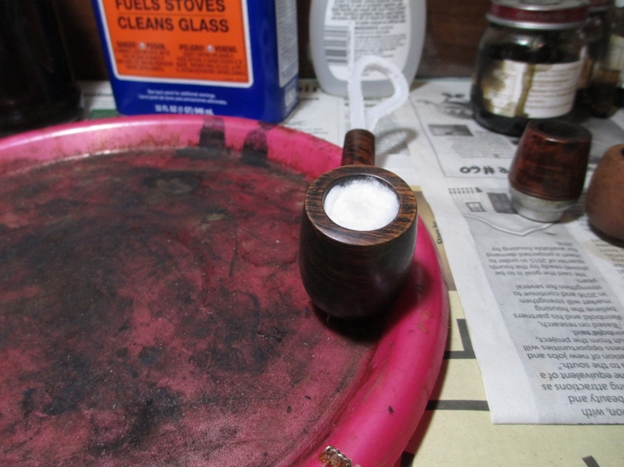
Everton29 I mixed a small batch of plaster of Paris to repair the over reamed bowl. I inserted a pipe cleaner in the shank and then pressed the plaster into the bowl bottom under and around the pipe cleaner. I raised the bottom of the bowl to the bottom of the airway.Everton30

Everton31 I sanded the inner edge of the rim some more to bevel it inward and try to work in more into round. I finished that shaping and then prepped the bowl to restain. I stained it with a dark brown aniline stain and flamed it. I restained and reflamed it until I had an even coverage on the bowl.Everton32 I wiped the newly stained bowl down with alcohol on a cotton pad to lighten the bowl and make it more transparent. I wanted the grain to show through once the bowl was polished.Everton33

Everton34

Everton35

Everton36 I sanded the stem with my usual pattern of micromesh sanding pads – wet sanding with 1500-2400 grit pads and dry sanding with 3200-12,000 grit pads. I rubbed it down with Obsidian Oil between each set of three pads. Once the final rub had dried I buffed the stem with White Diamond.Everton37

Everton38

Everton39 The newly shaped stem is shown in the next two photos. The shine and polish came out well and the reshape of the stem took care of the ridges and cuts on the surface. The sanding had taken care of the issues with the stem.Everton40

Everton41 After I put the stem on the pipe I buffed the entirety with White Diamond and then gave it multiple coats of carnauba wax. I buffed with a soft flannel buffing pad. The finished pipe is shown below. Once I shed this chest cold I intend to christen this one with a bowl of Black Parrot. I am looking forward to giving this old timer a re-entry into pipedom.Everton42

Everton43

Everton44

Everton45

Restoring a Burned Beveled Rim on an Algerian Briar Pot


Blog by Steve Laug

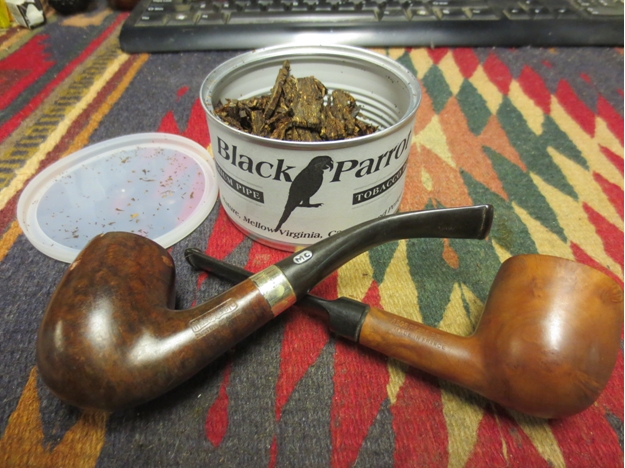
This morning I finished working on the second pipe from my recent pipe hunt – the small pot shaped pipe on the right in the two photos below. It is a natural finish, virgin pot shaped pipe. The left side of the shank has no stamping and the right side is stamped Algerian Briar over Made in France. It is a pretty decent piece of briar and had a beveled/chamferred rim that caught my eye. Not a bad pickup for $10USD.MC1

MC2 When I took it to the work table to examine it I found that the stem was very tight and would not go all the way into the shank. There was no oxidation on it and not a bite mark on the stem. The finish was clean and there were no fills or dents in the bowl. The left side had some great birdseye grain and the right side had a mix of grains. The rim was dirty and had a buildup of tars and oils that would need to be removed. There was also a burn mark on the outer edge at the front of the bowl and potential inner edge burn damage at the back side of the bowl.AB1

AB2

AB3

AB4

AB5 I removed the stem carefully as it was very tight in the shank. It is a delicate stem so I did not want to snap the blade. I reamed the bowl with a PipNet reamer to remove the light cake that was buildup in the bowl. I was surprised to see that the bowl was almost unsmoked from midway down to the bottom of the bowl. The briar did not show any burn or darkening in the bottom of the bowl.AB6 The shank was very clean. I scrubbed it down with isopropyl alcohol, pipe cleaners and cotton swabs to remove the little debris that was in the shank and made the tenon fit so tight.AB7 Once the shank was clean, I waxed the tenon with beeswax and it fit the shank with no problems. That was a very simple fix.

The burned area on the front of the rim was another story. I have detailed the repairs on the rim in a separate blog. If you want to read the details have a look at this link https://rebornpipes.com/2015/01/04/repairing-and-minimizing-a-burn-mark-on-a-bowl-rim/ After sanding, reshaping and polishing the rim I rubbed the natural finish down with a light coat of olive oil to blend it with the bowl. I buffed it by hand and then gave the bowl several coats of carnauba wax to seal and protect the briar. The finished rim is shown in the photo below. At this point I still needed to buff the pipe on the buffer and give it a final polish but the reworked rim is visible.AB8

AB9

AB10

AB11 The stem was one of the simplest I have worked on in a long time. There were no bite marks, tooth chatter or even oxidation. I lightly sanded it with a fine grit sanding sponge and wiped it down with a soft cloth to remove the debris that was stuck on the surface of the stem. I then sanded it with my usual array of micromesh sanding pads – wet sanding with 1500-2400 grit pads and dry sanding with 3200-12,000 grit pads. I rubbed the stem down with Obsidian Oil between each set of three pads and then gave the stem a final coat of oil and let it dry before buffing and applying the wax.AB12

AB13

AB14 I buffed the bowl and stem with White Diamond and gave them multiple coats of carnauba wax. I gave it a final buff with a soft flannel buff to raise the shine and polish the pipe. The finished pipe is shown in the photos below.AB15

AB16

AB17

AB18

AB19

AB20

Giving New Life to a MasterCraft Custom De Luxe Bent Billiard


Blog by Steve Laug

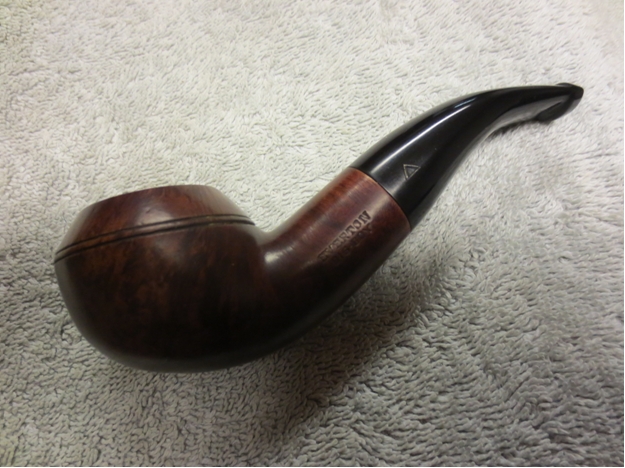
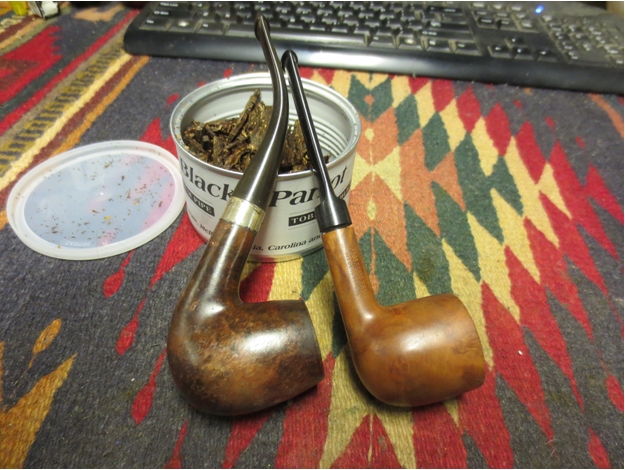
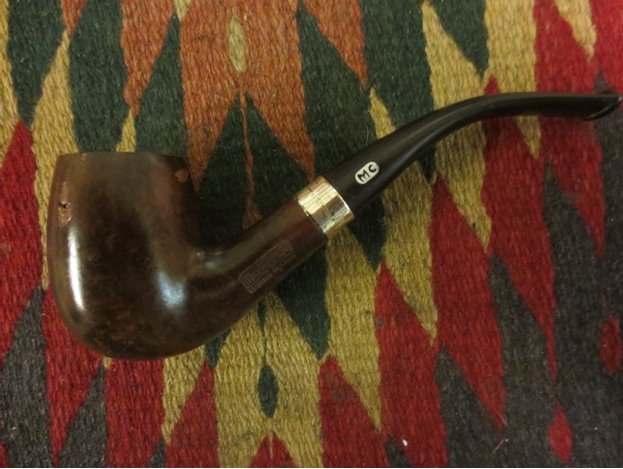
Yesterday morning my wife, three of our daughters and I made our after Christmas trek to the US, crossing the border at Blaine, Washington. After a great breakfast I dropped them off at the shopping mall and I made my way down to my favourite hunting grounds for pipes. I made a quick stop at Senate Tobacco Shop and sorted through some of the tins of tobacco he had in stock, though Washington prices are high they are still lower than Canada. I picked up a nice tin of McClellands Black Parrot, a Virginia, Carolina and Perique flake tobacco dated from May of 2010. I went from there to look for pipes. I went through three of my normal stops and found nothing of interested. I stopped at the last spot, figuring I would go home empty handed but the shopkeep had just picked up a few pipes. I was able to get the MasterCraft pipe on the left below and an Algerian Briar pot that had been made in France.MC1

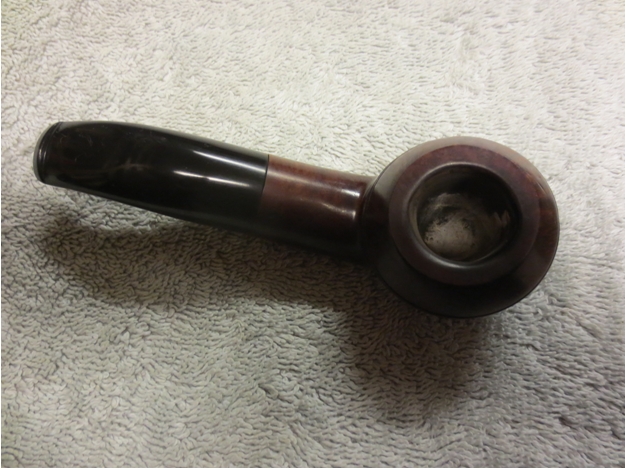
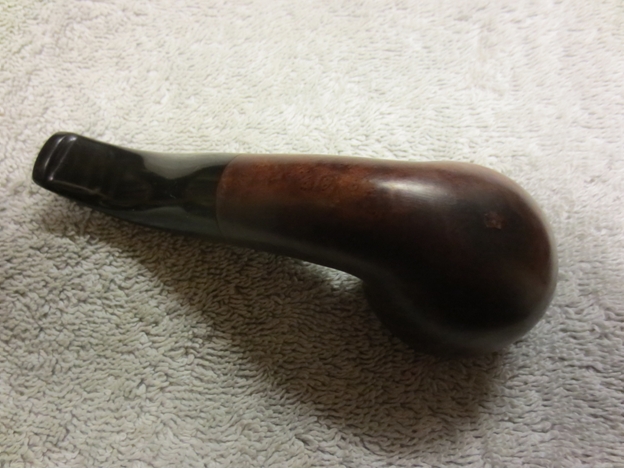
MC2 I really liked the shape of the old MasterCraft. The original stem was in excellent shape with no tooth marks or damage and the MC stem logo was intact. The briar had some nice spots but the pipe had a lot of fills on the bowl and shank that had fallen out and left pits in the briar. The finish was shot with peeling varnish on the sides, back and front. The stamping was sharp and read MasterCraft in the usual shield and underneath that it read Custom De Luxe. There was no other stamping on the bowl.MC3

MC4 There was one large fill on the rim that went ¾ of the way from the outside of the bowl inward but did not enter the bowl. The putty fill on that one had shrunken and portions of it had fallen out. The bowl had a thick hard cake that was like rock. The band was stamped STERLING and was oxidized and worn. It was also loose on the shank so it was amazing that it still was with the pipe when I found it.MC5

MC6 I took the next three photos to show the status of the fills on the bowl and shank. They were broken and loose and would take very little to remove them.MC7

MC8

MC9 To soften the fills and the cake I took the stem off the bowl and dropped the bowl in an alcohol bath to soak while I cleaned up the stem. It was not in bad shape so I did not need to soak it in oxyclean. There was no oxidation on the stem only dirt and grime build up that would scrub off quite easily.MC10

MC11 I removed the bowl after soaking for 30 minutes and used my PipNet reamer with the number 2 cutting head to ream the cake back to the briar.MC12 I used a dental pick to pick out the remaining putty fills from the bowl and shank. The alcohol bath had sufficiently softened them so that removing them was quite simple.MC13

MC14

MC15 I took the band off the shank and wiped the bowl and shank down with acetone on cotton pads to remove the remaining varnish.MC16

MC17

MC18 With the finish removed I took out my canister of briar dust and used the dental pick to fill each of the pits in the bowl. I put the dust in them one at a time, tamped it down so that the dust was well compacted and then dripped super glue into the repair. I packed in more briar dust and then more glue. Even though the glue hardens and dries dark I find it far better than the white and pink putty fills that had been there before. I always overfill the holes as I have found in the past that to skimp on the process inevitably means that I repeat it.MC19

MC20

MC21

MC22 I sanded the bowl and repaired fills with 220 grit sandpaper, medium and fine grit sanding sponges and then wet sanded the bowl and shank with 1500-2400 grit micromesh sanding pads. Once I had the surface of the fills blended into the surface of the briar I stained the bowl with a dark brown aniline stain. I decided to use the stain straight without cutting it to lighten it. I wanted to have the rim and top edges near the fills dark so that they would blend in with the fills well and hide them. I then stained the rest of the bowl and shank, flamed the stain and restained it until I had a good even coverage.MC23

MC24

MC25 I buffed the bowl and shank with red Tripoli and White Diamond and brought it back to the work table. I glued the silver band on the shank and polished it with a silver polishing cloth and 4000-6000 grit micromesh sanding pads. I rubbed the bowl and shank down with a light coat of olive oil to prepare it for sanding with micromesh sanding pads.MC26

MC27

MC28

MC29 The coverage on the fills was quite good. They were still there but the darker stain coat hid them and made them blend into the briar. I sanded the bowl and shank with micromesh sanding pads to lighten the stain slightly and to bring up the shine. I wanted a bit more of the grain to show through the stain so the sanding would allow that to happen. The oil on the surface helped the micromesh to cut into the briar and really smooth things. Once I had finished sanding the bowl, I set up my retort to clean out the shank and stem. I had to run three tubes of alcohol through the stem and shank before it came out clean. It was one dirty pipe.MC30

MC31 When I removed the retort I cleaned out the shank and stem with a minimum of pipe cleaners and cotton swabs and with very little effort they were spotless. I sanded the stem with micromesh sanding pads – wet sanding with 1500-2400 grit pads and dry sanding with 3200-12,000 grit pads. I rubbed the stem down between each set of three pads with Obsidian Oil. I gave the stem a final coat of oil and once it dried buffed the stem with White Diamond and gave it several coats of carnauba wax to protect.MC32

MC33

MC34 I put the stem back on the shank and then buffed the entire pipe with White Diamond and gave it multiple coats of carnauba wax. I buffed it with a soft flannel buff to raise the shine. The finished pipe is shown below.MC35

MC36

MC37

MC38

MC39

MC40

Restoring a 1967 Dunhill 54 F/T Group 2


Blog by Andrew Selking

I’ve had some good luck bidding on Dunhill pipes recently. This little Group 2 came in a lot of five pipes that included four Kaywoodies. With the exception of minor wear on the front of the rim and some oxidation, it looked very nice. Here’s what it looked like prior to restoration.Andrew1

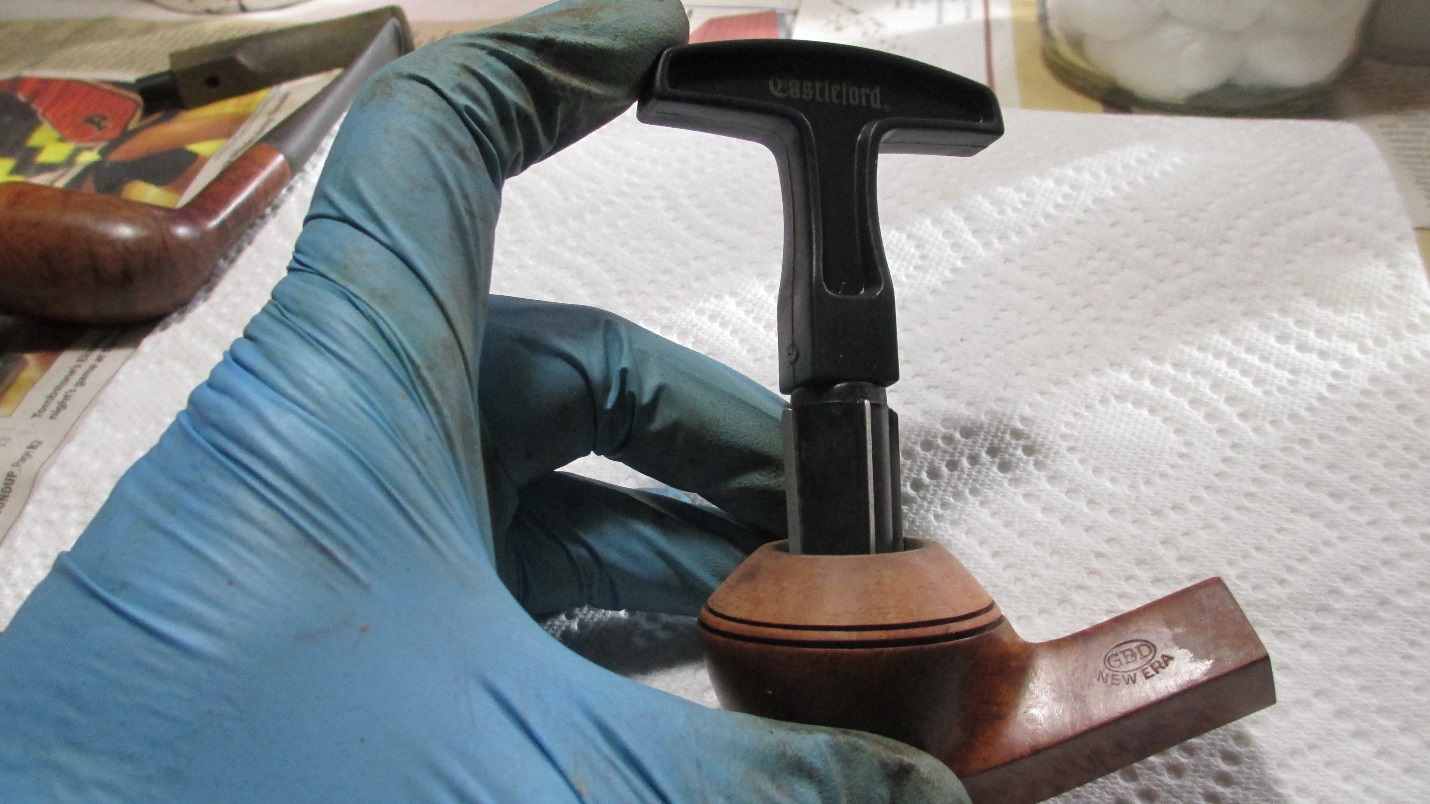
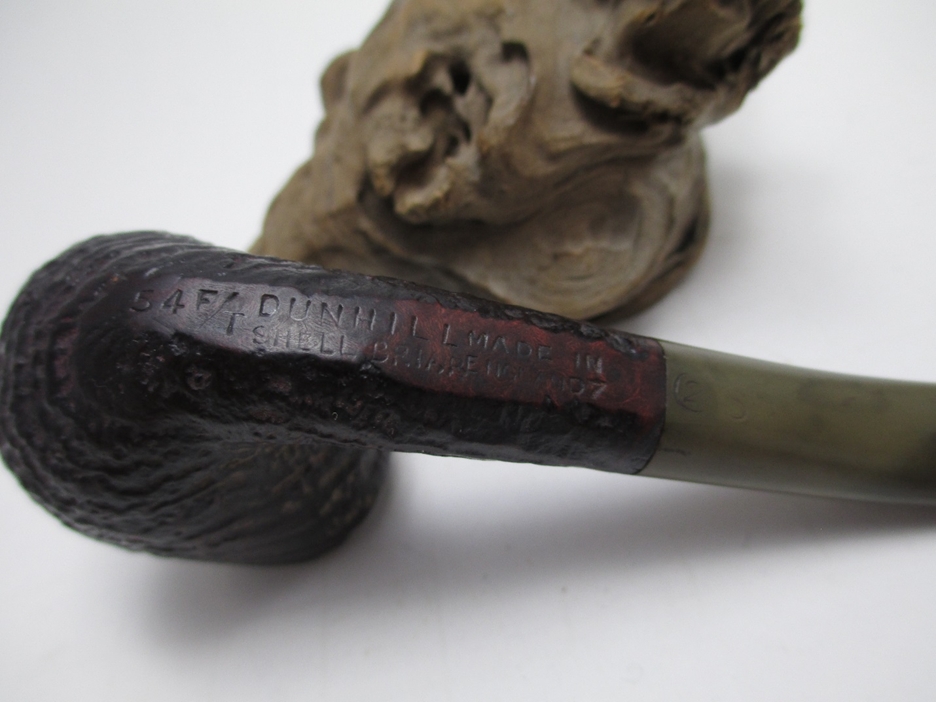
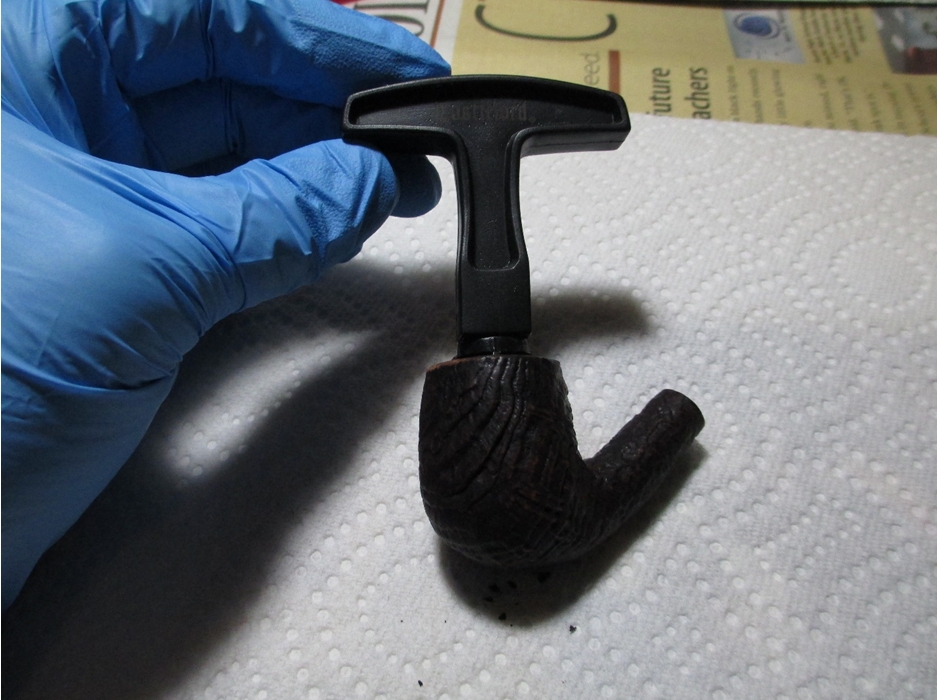
Andrew2 The pipe is so small they stamped the group size on the stem.Andrew3 I began the restoration process by soaking the stem in Oxyclean.Andrew4 While the stem soaked I reamed the bowl with the smallest head of my Castleford reamer. It had a loose cake that came out easily.Andrew5 Next I used undiluted Murphy’s Oil Soap (an all-natural vegetable oil based soap specifically formulated for cleaning wood) with a tooth brush to get the grime out of the blast.Andrew6 This is what the bowl looked like after cleaning.Andrew7

Andrew8 My biggest concern with this pipe was the damage to the front of the rim. I decided to use a furniture touch-up marker (thanks for the tip Steve) to see if I could make it look better.Andrew9 It worked like a champ, the marker was a color match to the rest of the pipe.

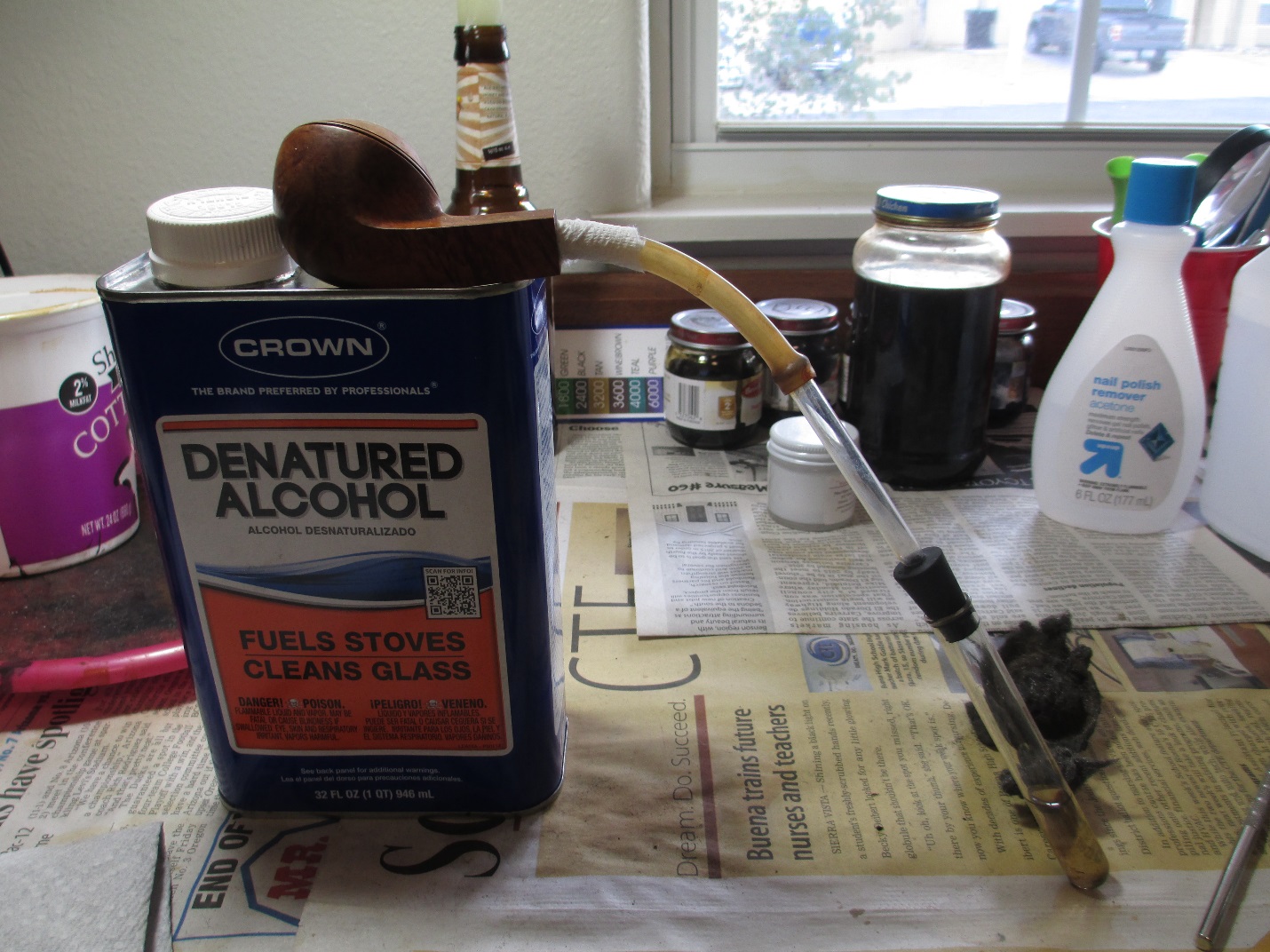
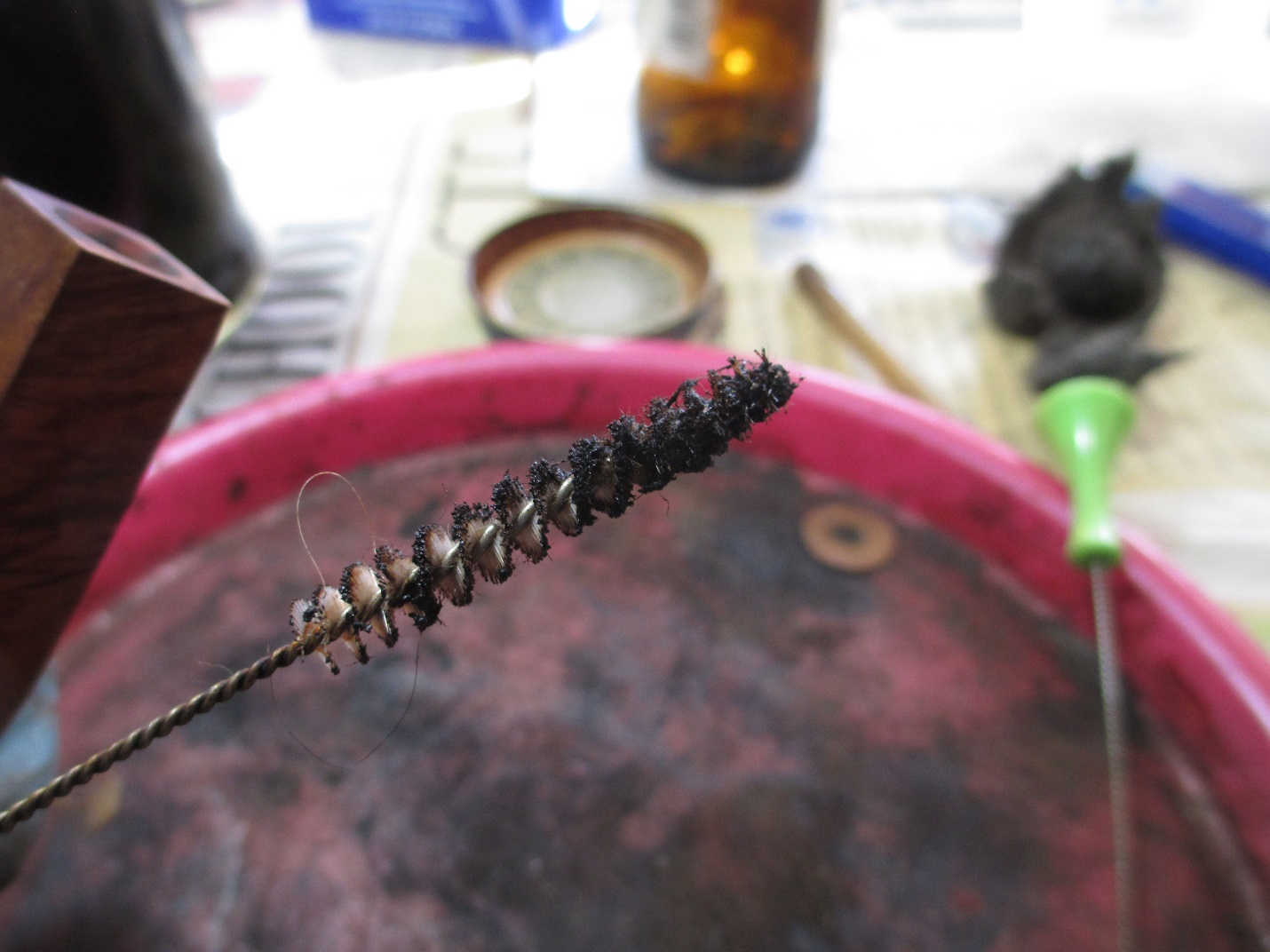
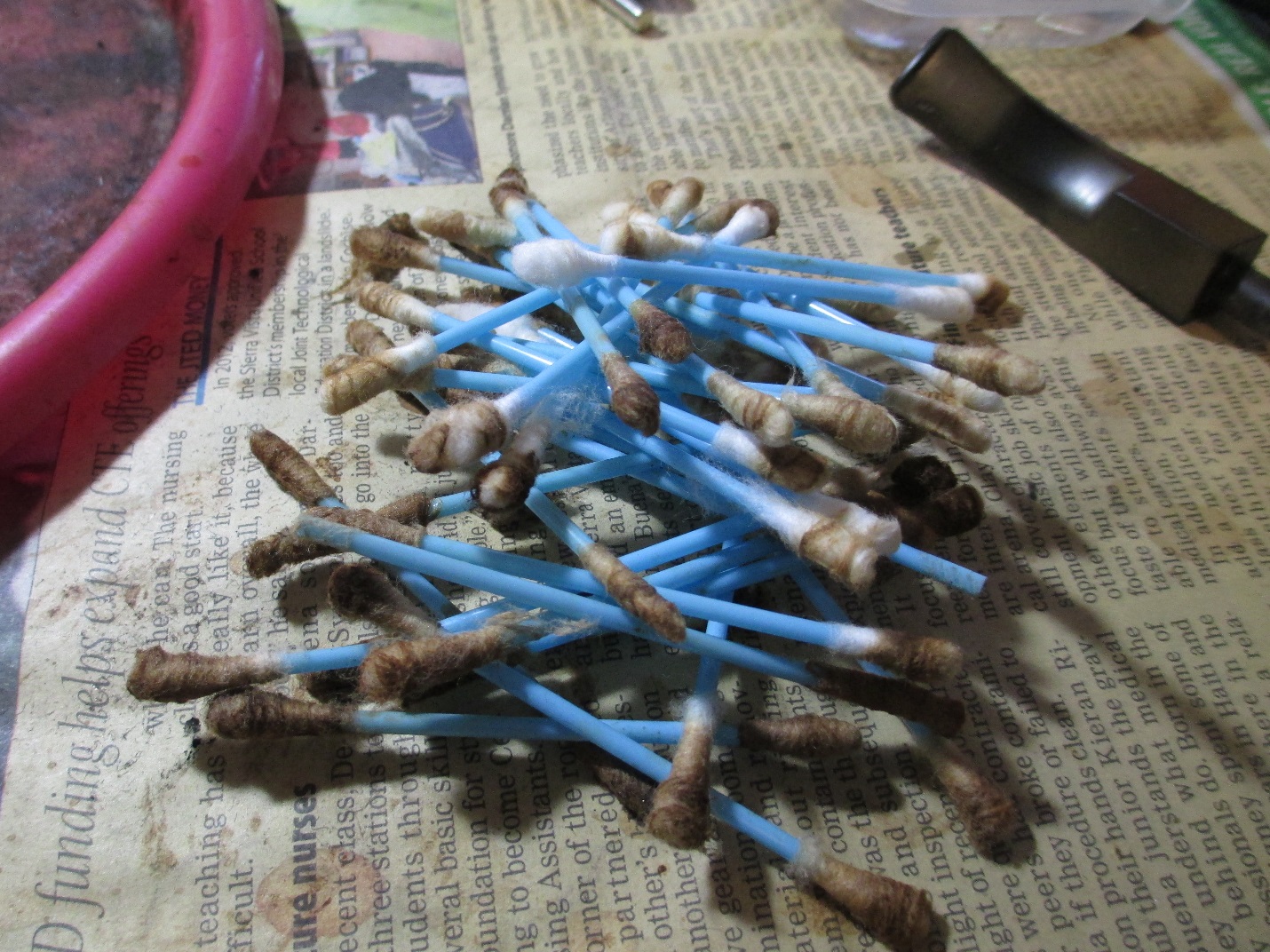
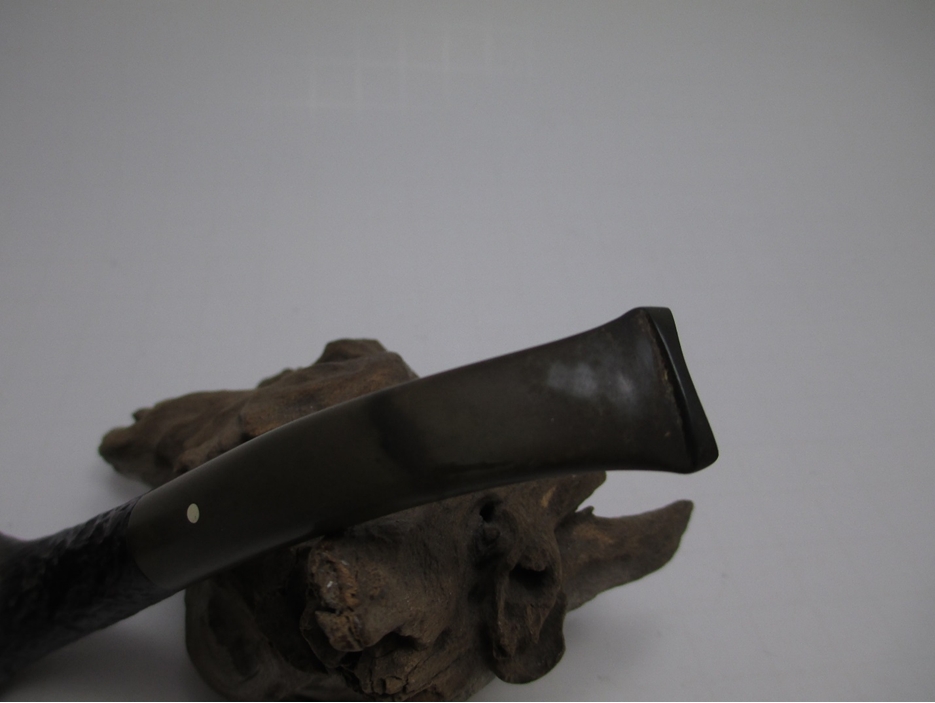
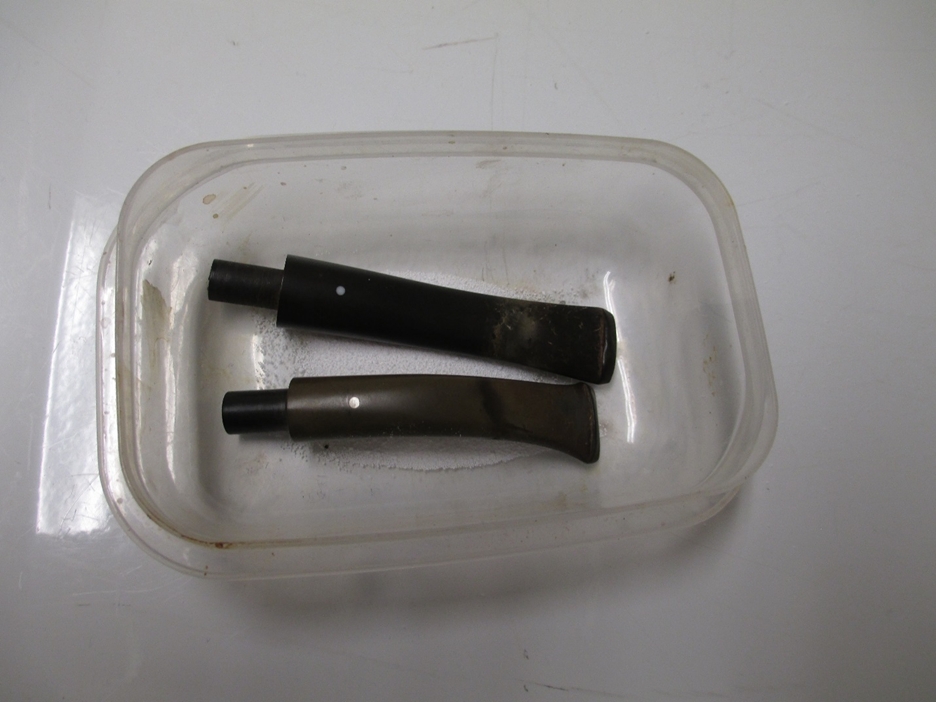
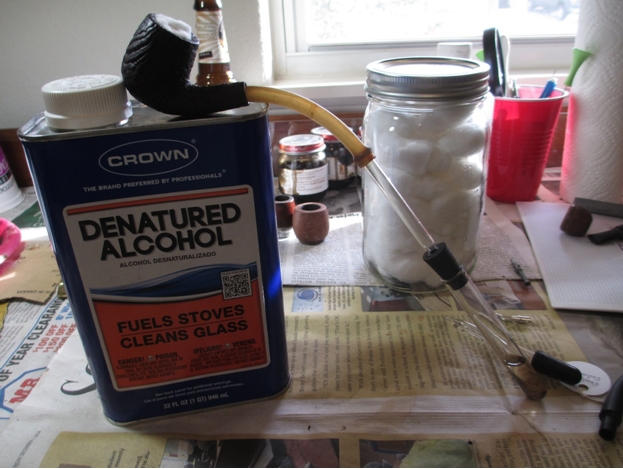
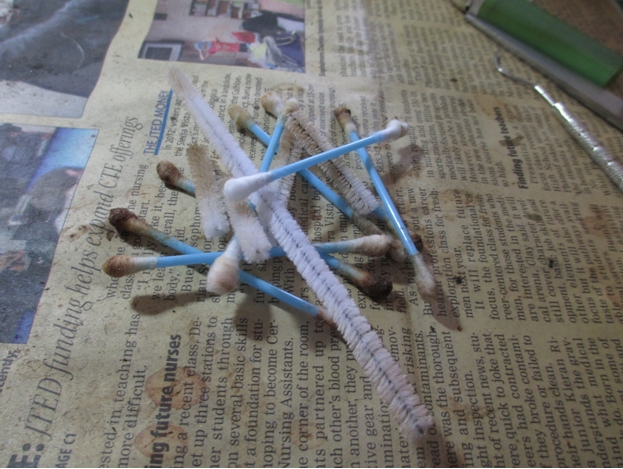
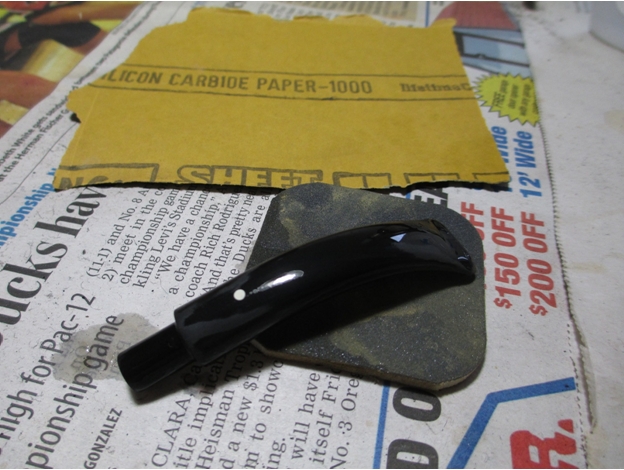
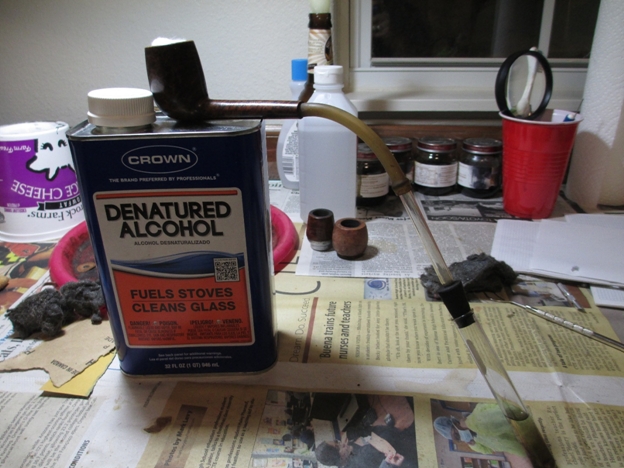
Now that the bowl was taken care of, I turned my attention to the stem. As usual, I used a fuzzy stick (that’s the politically correct term for pipe cleaners sold in the craft section of Walmart) to remove as much of the gunk while I still had the Oxyclean solution. If you’ve ever cleaned a black powder rifle it’s the same concept; stick one end in the liquid and draw the fuzzy stick back and forth. When it gets loaded with tar, I swish it in the liquid and wring it out. Here’s what the fuzzy stick looked like after the first pass. The inner tube did a good job of preventing excess tobacco build up.Andrew10 Next I tackled the shank. I use a retort filled with de-natured alcohol to loosen the gunk in the shank and the stem. I usually do the stem and shank separately for two reason, first it works very well and second when you have a wide button (like the one on this pipe) it’s difficult to fit the rubber tube over the end of it. I do the retort until the alcohol that goes back into the eye dropper looks relatively clean. In the case of this pipe, I did it three times.Andrew11 After the retort, I used a brush to scrub out the shank. This is why I like to retort the shank separately.Andrew12 I then used q-tips and fuzzy sticks dipped in isopropyl alcohol to remove the remaining gunk.Andrew13 Next I used the retort on the stem. If you do this make sure to plug the end of the stem, otherwise you will get boiling brown alcohol everywhere.Andrew14 After a couple of fuzzy sticks, the inside of the stem was clean.Andrew15 With the bowl and shank cleaned, my next step was to remove the oxidation from the stem. Any time I do a pipe that has inlays or stamping on the stem, I use 1000 grit wet/dry and water to remove the oxidation. Especially this pipe, with the group size stamped on the bottom of the stem. It takes a while, but the results are worth the effort. When removing oxidation with wet/dry sand paper and water, periodically dry the stem to make sure you’re getting everything. When it’s wet the stem tends to look really good, but when it dries out that’s when you notice everything you missed. After the 1000 grit, I used 2400 grit micro mesh with water.Andrew16 I used a progression of micro mesh pads, from 3200-12000 to prepare the stem for final polishing.Andrew17 I also polished the flat spot with the nomenclature with a progression of 5000-12000 grit micro mesh. I used Halcyon II wax on the bowl, which I buffed out with a shoe brush, and carnauba wax on the buffing wheel for the stem. Here is the final result.Andrew18

Andrew19

Andrew20

Andrew21

Andrew22

The Christmastime Joy of Refurbishing an Old Peterson


Guest Blog by Robert M. Boughton
Member, North American Society of Pipe Collectors
http://www.naspc.org
http://www.roadrunnerpipes.com
http://about.me/boughtonrobert

Photos © the Author

“Smoke your pipe and be silent; there’s only wind and smoke in the world.” – Irish Proverb

INTRODUCTION
Many of the pipe lots I purchased during the past few months were to spruce up and sell at my online restored pipe site, although I admit to liberating a few of the choicer finds here and there for my own collection. However,this fine example of a vintage classic Peterson and a number of other brands I bought as singles in more recent weeks were intended with lust a forethought for my own ultimate and lifelong use. As far as the Pete I just received is concerned, my decision to keep it was not based on the Peterson brand name, 22 of which I already owned.

In fact, I expected to add one of the Pete’s I ordered near the end of November to the trove, which seems to increase at an exponential rate and counts 23 now of this brand alone.I chose instead to list the fine pipe for sale for disparate reasons even I find difficult to explain. My penchant for anything Peterson is so well known that my announcement on the Smokers Forums of my plan to sell the K&P System Standard brought a humorous reply: “I thought you’d never say ‘Enough Petersons.’ ”

My decision to sell the basic K&P System Standard full bent which, when I at last held it in my hands, was similar to some I already have, was based in part on that factor but, more to the point, it somehow lacked the certain element of instant overwhelming attraction which is too complicated to describe in this forum, and besides, I am sure anyone who reads this already knows the butterfly effect all too well. I am also adding higher-end pipes to my site and concluded a shiny new-looking Peterson would provide a nice incentive to someone out there in Cyberland who possess the essential sense of captivation to give it the loving home it deserves and not enjoy it once or twice only to put it in the rack and almost never again give it a serious thought.

Robert1And I should add how any potential rarity or value of the engaging pipe shown here pre-restored is irrelevant to my sentiments for it. No, I reserved the Peterson Dublin Republic Era straight billiard for my own caring use even despite its mixed grain because it, well, possesses the right stuff as defined by my personal sensibilities. Who knows? Maybe the System Standard full bent is an extraordinary find. I just don’t have eyes for every pipe that comes my way as I do for the subject of this blog.Robert2

Robert3

Robert4

Robert5

Robert6

Robert7

Perhaps the strongest tug at the curious side of me was the stem, which is perfect except for one tell-tale sign that it is not the original for this Made in the Republic of Ireland Peterson. Clear as day on the left side is the symbol that identifies it as a Peterson stem made for a pipe manufactured in France: Robert8

Now that’s one kind of oddity that always endears a pipe to me on first sight.

REFURBISH
First, as the word refurbish suggests, this was, for the most part, not a difficult task. The only actual problem was removing the cake buildup from the chamber, where I started.

For the most part, in my experience at least, even cake this bad comes free without a fight and leaves the chamber relatively smooth. The third photo above does not do service to the way the cake tapered downward from more to less. This turned out to be one of the ordeal varieties, not a piece of cake at all. (I know, and tender my apology now.) I started with the 19mm reamer since most of the carbon mess was at the top, and it fit about halfway down with snugness. Several laborious full turns later, applying just enough force to see the reamer moving a bit lower, I paused to dump the carbon dust. Seeing the huge amount that fell out, I took another close look into the chamber and was amazed to see not only that the upper bowl needed much more work, but that the bottom was unfazed.

And so I switched to the 21mm reamer that was barely able to clear the inner diameter and gave the entire area a go with several more intense turns, using pressure again to reach the real bottom. Another massive amount of carbon fled the chamber as I turned it upside-down over a proper receptacle. Then, sticking with the bigger reamer, I engaged the entire enemy for the first time. The biggest load of carbon so far emptied out, and after I blew through the shank, a thick dark cloud of dust flew through the air, reminiscent of Victorian Era London skies as described by Charles Dickens with much greater skill.

I soaked a couple of small squares of cotton cloth with Everclear and folded them around my middle finger to insert into the chamber and scrub away much of the residual grime. I did this with both sides of the cloths. Waste not, want not and all that. Of course the wet cotton came out soaked solid black along with part of my finger, but I allowed the alcohol to dry a little as I halfway cleaned my begrimed digit before sticking my clean index finger all the way in and feeling the walls. They were pocked all over.

Reattaching the 19mm blades, I angled them first against the upper half of the chamber before adjusting them to favor the lower half. Much more carbon was loosened, and more alcohol-soaked cotton cloths wiped away the excess. Again I inserted a clean finger and used it to dig out little chunks of carbon. The chamber was better but still needed work.

I turned to a small piece of 200-grit sandpaper long enough to reach the bottom of the chamber with a little above the rim and wide enough to cover half of the wall. With whatever finger fit inside the chamber leaving enough room to press down against the paper and turn it with roughness 360 degrees a few times, I heard that old familiar fingers-on-chalkboard screech the entire time. But I felt the wall smoothing. The paper came out black, and I wiped it over a rag to remove the dust. Still again, a small mountain of carbon fell from the inverted chamber. Feeling the wall with a bare finger, I knew I had to get rough at last.

A perfect old piece of 150-grit paper presented itself for my use, and I went at the chamber again with real gusto. The fact that another pile of carbon was removed dismayed and discouraged me. I repeated the process several times, cleaned the chamber with cotton cloths and Everclear, and believe it or not, got the reward I had awaited with a clean, smooth finger inspection. So that’s my page and a half on fixing the dang chamber.

Next up on my itinerary was beginning the cleaning process of the shank. After about ten minutes of running a wire-handled bristle cleaner dipped in alcohol over and over through the inner shank, I saw it was having an effect and stopped to prepare for the retort.

At this point I remembered the small stem was Lucite, which can be warped and ruined by alcohol. However, finding the task of attaching the rubber tube of the retort kit directly over the wide shank opening, and also locating no suitable temporary stem, I saw no choice but to take a chance. And so I connected the rubber over the lip of the stem and commenced the retort process.

Several test tubes of Everclear later, the shank at last came clean. Removing the stem as fast as I could and inserting a stem cleaner into it, where I let it stay long enough to dry, I found that it was intact. I completed the retort by removing the cotton balls from the chamber and using more cotton cloth to scour the chamber clean and dry and doing the same to the shank with a soft cleaner.

The stem, as nice as it was, still had a couple of minor bite marks and other blemishes I might have ignored with a pipe I was keeping, but I couldn’t do it.Robert9The ease of removing the bitemarks and other marks with 400-grit paper came as a happy surprise. While the sandpaper was handy, I cleaned the shank opening, as you will see below. After that all I needed to do was micromesh the bowl and shank with 1500, 2400 and 3200.

I was more reluctant than ever before to remove any of the original stain, but had no choice with the rim, which was blackened beyond the help of purified water, steel wool or micromesh. I chose 400-grit paper, which eliminated the blackening, before a three-step micromesh using 1500, 2400 and 3200. That done, I considered which of my modern day stains would best approximate the original, and decided to go with the medium brown. I flamed it and set it aside to cool. After a few minutes, I took out my 2400 micromesh pad and gently rubbed away the ash, followed by a quick wipe with a soft rag.

I’d have to say the greatest surprise with this old pipe was the flawless condition of the bowl and shank, with the exception of the rim as described. Based on the general design, the less familiar shade of brown and the grain that is not as uniform as pipe enjoyers today expect, I estimate that this pipe dates to the 1940s or 1950s. At first I believed the pipe was never waxed until I gave it a good wash with purified water and cotton cloth and was able to make out a couple of thin, shiny streaks on the top of the shank, where it appears its long-time previous owner seldom if ever touched the faithful companion.

Still, to assure its readiness for a smooth buffing, I prepared the wood with micromesh progressing from 1500 to 2400 to 3200 and at last 4000.Robert10

Robert11

Robert12

Robert13

Robert14 Eager to try out this wondrous pipe that, as I noted, was created before I was, I found myself filled with more excitement than usual as the moment to buff the beauty with waxes arrived. Leaving the stem behind, having waxed it with red and white Tripoli followed by White Diamond while the new rim stain dried, I carried the smooth piece of old briar into my workroom. Wanting to bring out as much of the varied grain as possible, I decided to use the whole ball of wax. (I know, I know! Again, I apologize.) Starting with the red Tripoli wheel, I coated it with an easy, light touch before moving to the white Tripoli, followed by White Diamond, and to finish it off, carnauba.Robert15

Robert16

Robert17

Robert18

Robert19 CONCLUSION
I could never describe what it is about a pipe that attracts me to it. My tastes are too eclectic. But when I see it, it is always like love at first sight. I mean that in the literal sense, as with two or three times in my life when I took one look at someone and was instantly light-headed with my stomach full of butterflies and found myself tongue-twisted. Alas, none of those relationships worked out in the end. With pipes, at least, love is forever – and perhaps a bit lecherously, I have quite the stable of mistresses.

The author enjoying the pipe.

The author enjoying the pipe.

My First Solo Pipe Restoration – A Hand Made Preben Holm IIS – PART 1


Blog by John Ferguson

My friend John Ferguson, who I wrote regarding our pipe hunt and his learning to clean up estates, sent me an email a few days ago. In it he included some photos of a pipe that he picked up and was working on currently. He asked about the brand of the pipe so I did a bit of research on the pipe and found out that it was a Preben Holm pipe – the IIS stamping identifies it as such. Later he sent me a piece that he wrote about the find and his restoration work. Here are his words on this first restoration. It is great to have you posting regarding this pipe on rebornpipes John. Keep up the good work.

Ever since my friend, Steve, showed me how to restore my first estate pipe that I found in a batch of pipes at an antique store in Bellingham, WA, I’ve been itching to do some more hunting for pipes that would intrigue me.

I had the opportunity to do so on a recent trip to Texas to visit my family. One beautiful afternoon towards the end of November, my mother and I headed out to some antique stores to spend some time together. And of course, hunt for some pipes.

I found this pipe that intrigued me.
John1

John2

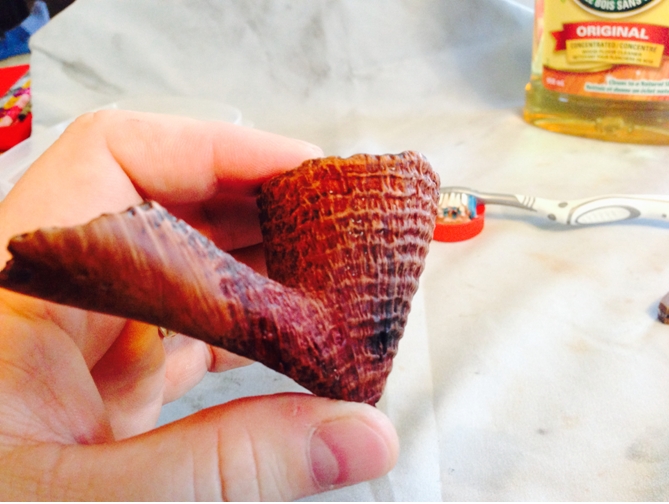
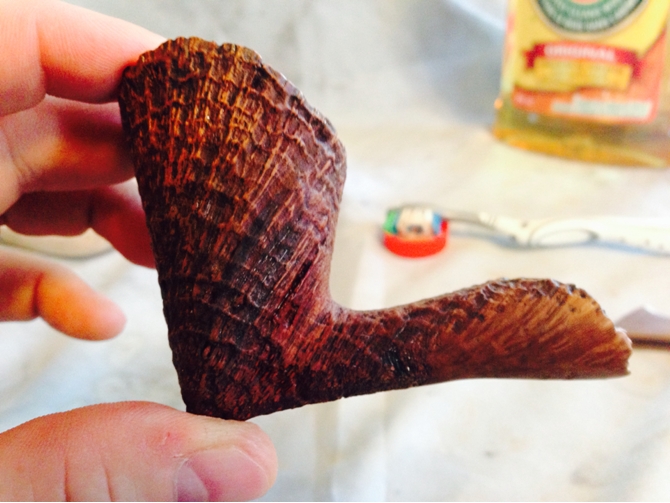
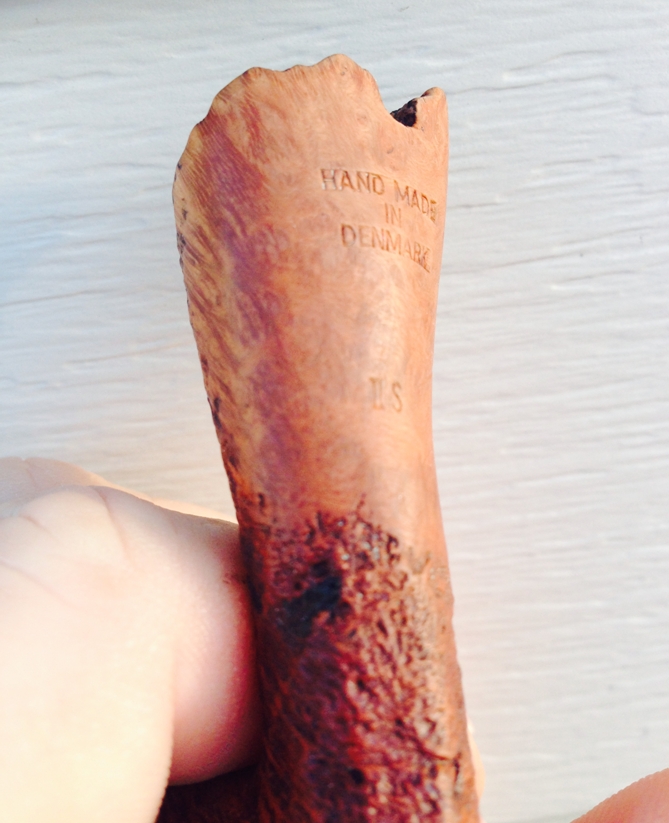
John3 It was stamped with the words, “Handmade in Denmark” with a “IIS” below it. I did a quick search on my smart phone, but couldn’t find any info quickly. With some help from Steve, we discovered that this was a Preben Holm Pipe.

It was only $10, and since my 19 year old son loves all things Scandinavian, and since it looked like something out of Lord of the Rings (another favourite of his), I decided to get it and restore it, and to give it to him as a Christmas gift this year.

It definitely needed some help. The stem had tooth marks plus calcification.John4

John5 And the bowl had what looked like paint chips embedded in the texture.John6

John7 There was a lot of cake built up on the inside of the bowl, so I took my grandfather’s pocket knife and began to ream it. Gently. I was careful not to damage the bowl.John8

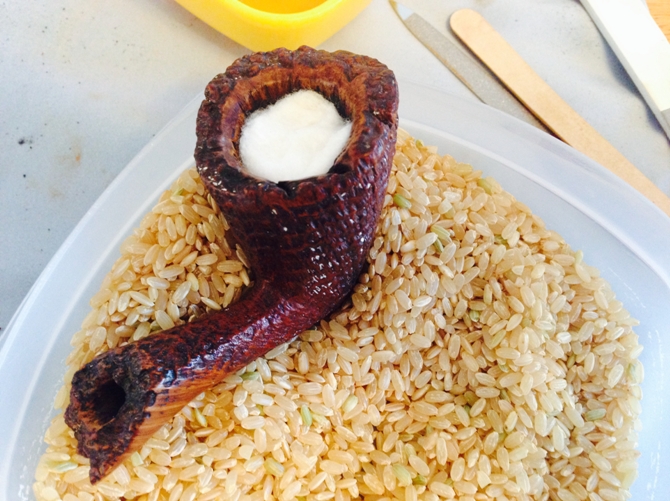
John9 I followed that up with pipe cleaners and alcohol to clean the shank. I used regular pipe cleaners, bristled pipe cleaners, and a pipe cleaning brush and worked until no more gunk came out and the pipe cleaners came out clean.John10 The next step was to clean the pipe with Murphy’s Oil Soap and an old toothbrush. I took several rounds of scrubbing to get most of the ‘paint flecks’ off of it, and what the brush didn’t get the tip of my pocket knife did. I think it turned out beautifully.John11

John12

John13

John14 Next came the cotton ball soak with alcohol on the inside of the bowl.John15 Then I turned to work on the stem. I began working on smoothing out the bite mark and removing the calcification by using 240 grit paper, followed by 180 grit. Then I began using micromesh pads working from the 1500 pad to the fine 12000 pad. After about an hour of work, I had a brand new looking stem.John16

John17

John18

John19 Stay tuned for Part 2!

Refurbishing a Heritage Heirloom


Blog by Andrew Selking

I recently stumbled across the Heritage line of pipes. These pipes were made in the Kaywoodie factory, but on a completely separate line. Heritage pipes were Kaywoodie’s answer to Dunhill. According to one of their brochures, Heritage pipes were made from “briar burls seasoned and cured for up to 8 months,” with only “one briar bowl in over 300 selected to bear the Heritage name.” “Heritage stems are custom fitted with the finest hand finished Para Rubber stems. Mouthpieces are wafer thin and concave.”

The Heritage line began in the early 1960’s, with the trademark issued in 1964. The line was started at the request of Stephen Ogdon, (who worked for Kaywoodie in 1962). Mr. Ogdon had previous experience working for Dunhill, either running the New York store or working for Dunhill North America. Mr. Ogden was made President of Heritage Pi pes, Inc., Kaywoodie Tobacco Co.,Inc. and Kaywoodie Products Inc. as well as a Vice President of S.M. Frank & Co. Heritage Pipes were produced from 1964 until 1970 (Source Kaywoodie.myfreeforum.org).

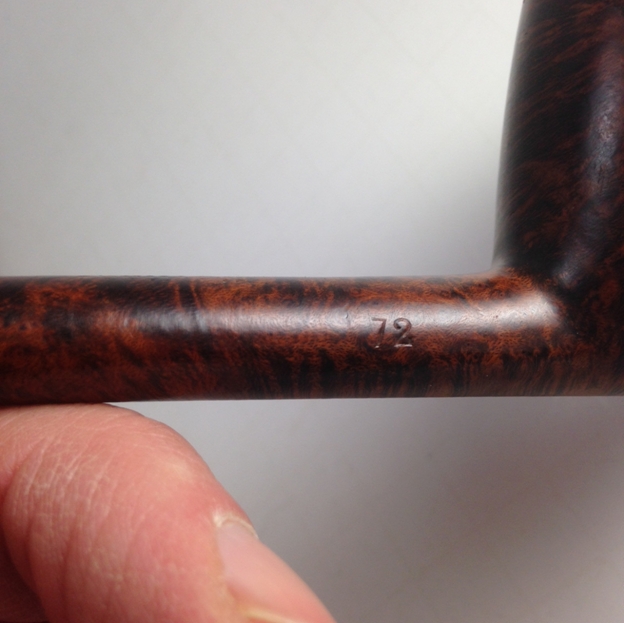
Here is a copy of the Heritage brochure. (Courtesy Kaywoodiemyfreeforum) heritage1_zps888f5f2b heritage2_zps0d4dc760 heritage3_zpsef2358c6 The pipe I found was the number 72 Medium Canadian, oval shank. Interestingly, the one thing the Heritage line shared with Kaywoodie was the size and shape numbers. Unlike Kaywoodies, the Heritage pipes are normal push tenons.

When the pipe arrived, it had some tar build up on the rim and a thick layer of cake.Andrew1

Andrew2 The stem had some oxidation, but minimal chatter.Andrew3

Andrew4

Andrew5 The finish was in nice condition, so I decided to forgo the alcohol bath and attempt to keep the original finish.Andrew6

Andrew7 The first thing I did was ream the bowl. I used my Castleford reamer and was delighted to find that the cake was very loose, mostly old tobacco, and it easily cleaned back to the wood.Andrew8 Next I decided to find out how the bad the rim was under the tar build up.Andrew9 After a light buffing with 0000 steel wool, the tar was gone and I could see a pristine rim.Andrew10 Since I was on a roll, I decided to re-tort the shank.Andrew11 I normally show pictures of a brush loaded with gunk, but in this case the brush came clean on the first pass. I proceeded to use some q-tips and fuzzy sticks on the shank. Most of the tar came off with the first couple of q-tips, after that it was just a matter of a few more and the shank was clean.Andrew12 Since I didn’t soak the bowl in alcohol, I decided to soak it with some alcohol soaked cotton balls.Andrew13 While the bowl soaked, I retorted the stem.Andrew14 It was just as clean as the shank (this was the first fuzzy stick I passed through after the retort).Andrew15This was the cleanest “dirty” pipe I’ve ever had. Since the stem was so clean inside, I skipped the Oxyclean bath and tackled the oxidation. I used my normal progression of 400 grit wet/dry sandpaper with water, followed by 1500-2400 grit micro mesh pads with water.Andrew16 The finish seemed really dark, probably the result of oil from the previous owner’s hands, so I used some 0000 steel wool and acetone to clean the outside of the bowl and shank.Andrew17 The steel wool worked well on the bowl, so I skipped the 1500-2400 grit micro mesh and started at 3200. I used a progression of 3200-12,000 grit micro mesh for the bowl and stem in preparation for the buffing wheel.Andrew18 After an uneventful spin on the buffer, here is the finished pipe.Andrew19

Andrew20

Andrew21

Andrew22

Andrew23 This line of pipes might be one of the best kept secrets out there. I find that the quality of the stem compares to Dunhills and the wood is spectacular. I highly recommend these pipes.heritage4_zpsdc6295ef