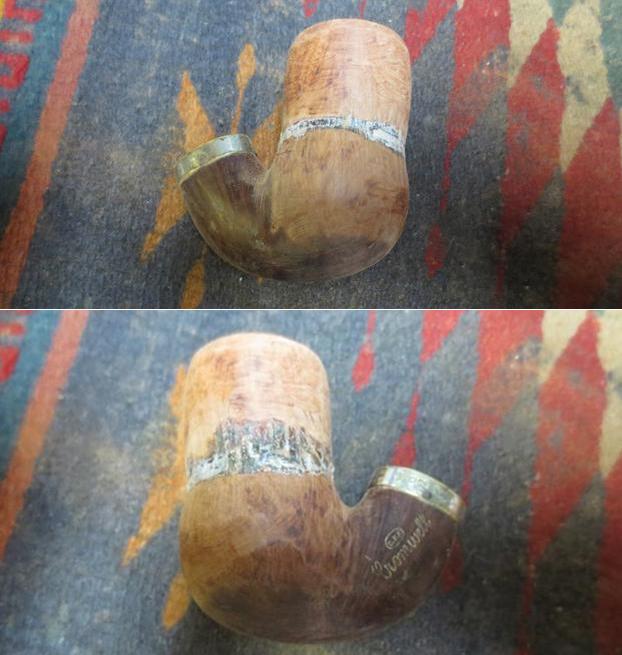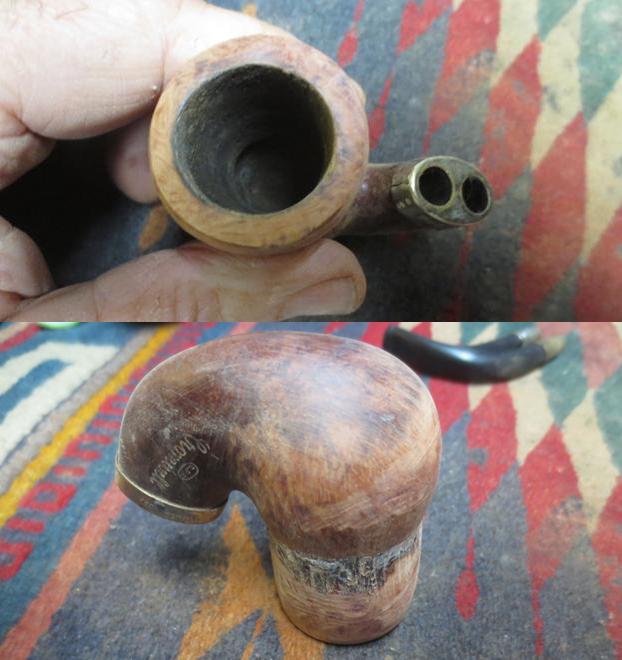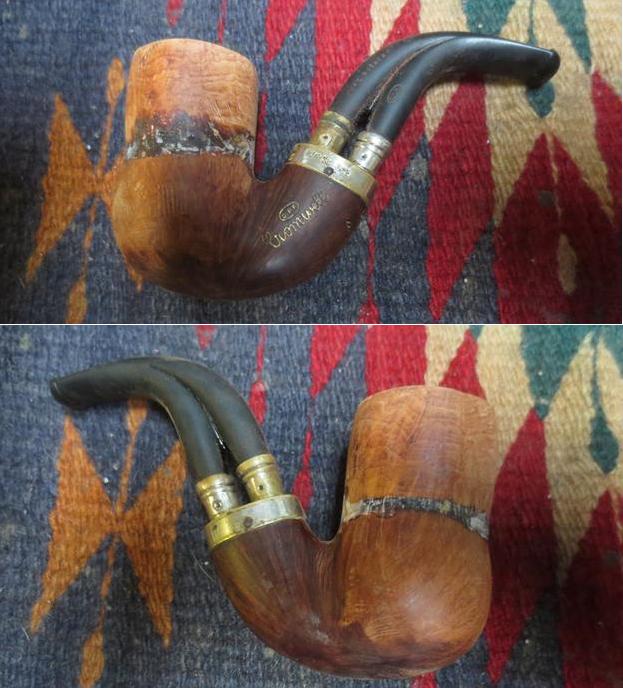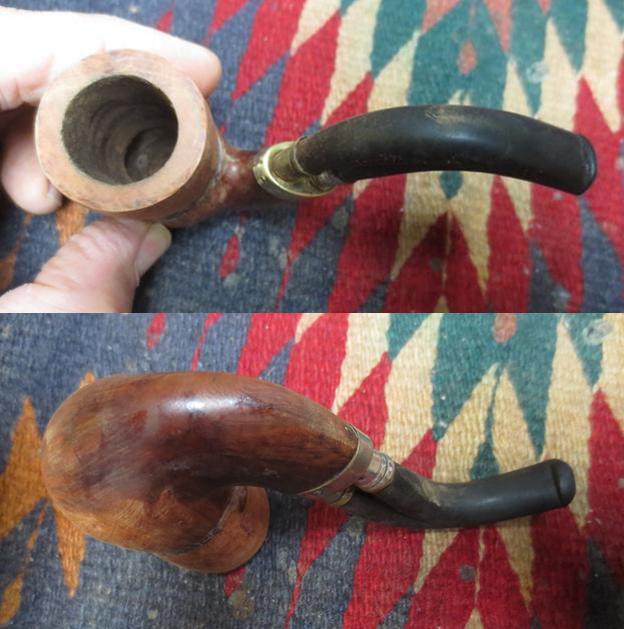
Tag Archives: refinishing

Burn through Repair – Salvage of a Worthy Stanwell Rouge 109 Sand Blasted Ball


Blog by Dal Stanton

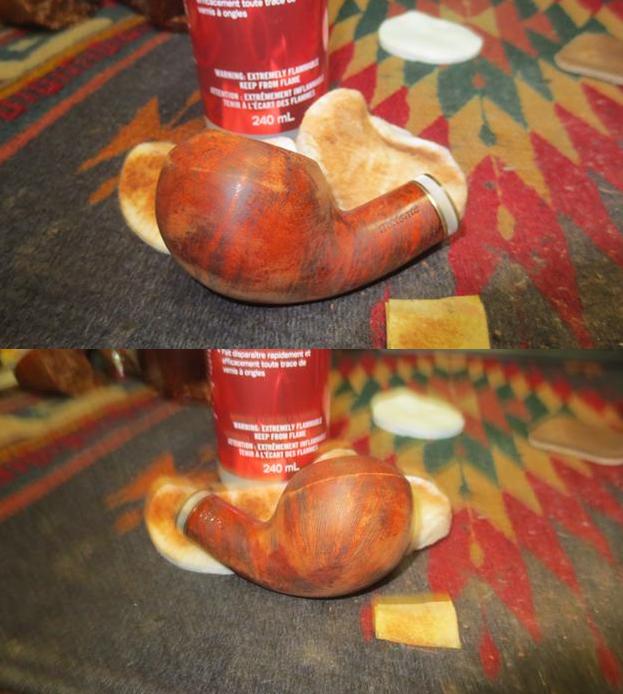
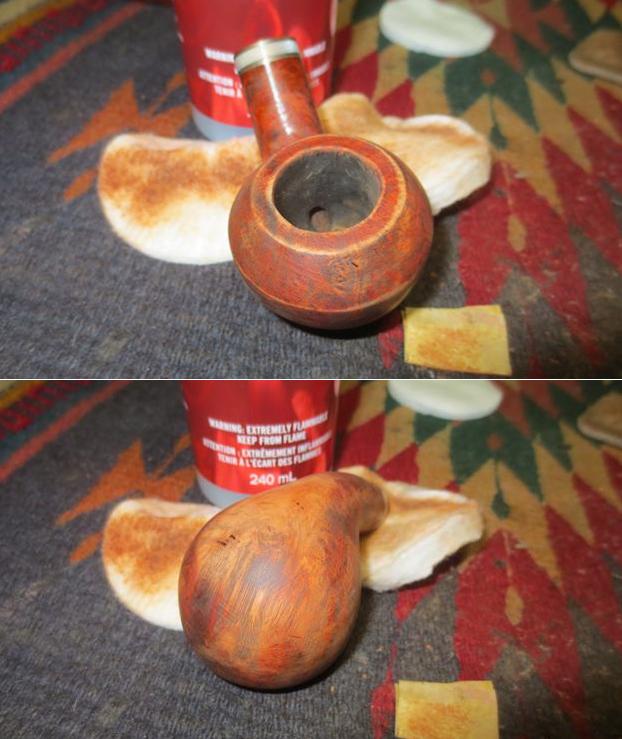
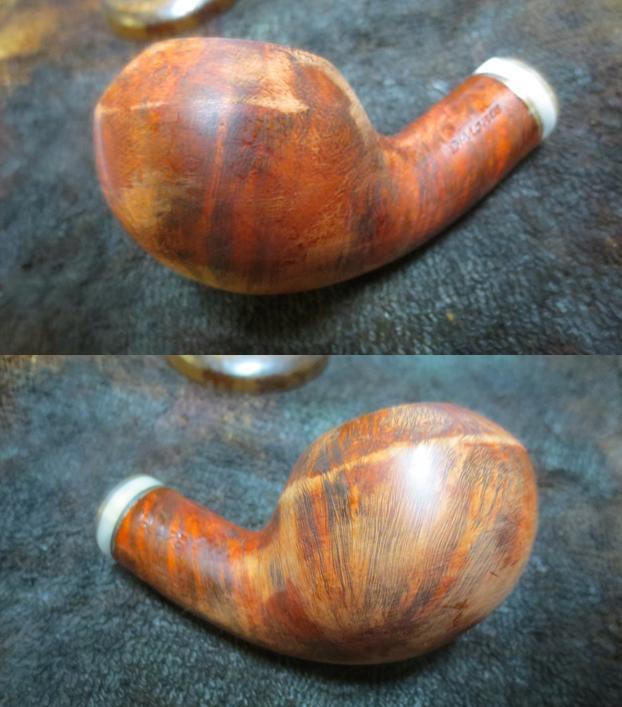
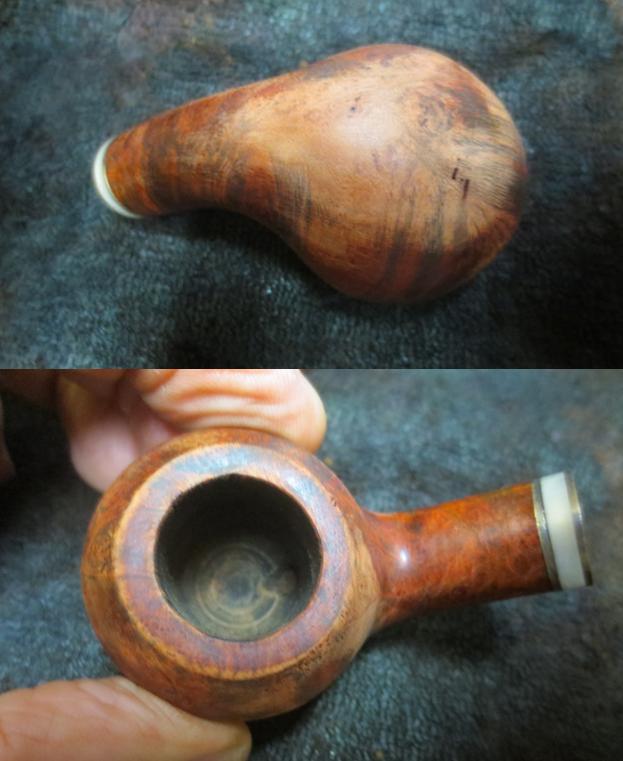
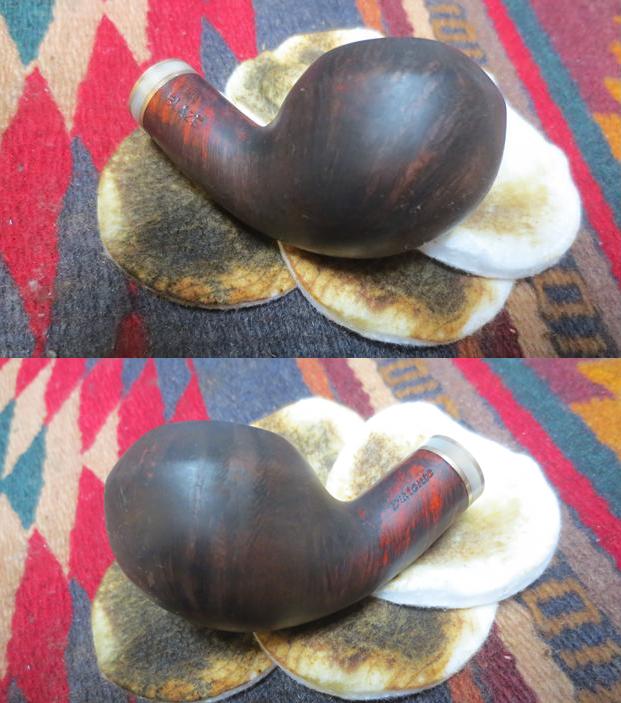
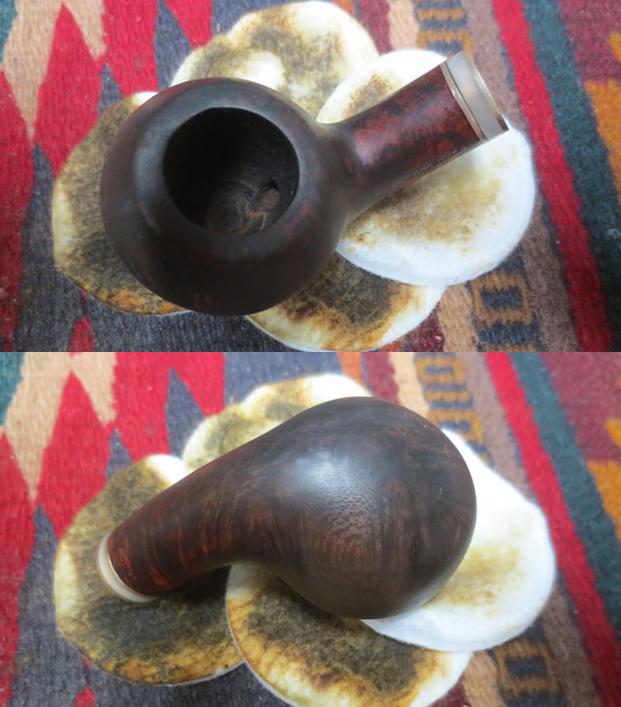
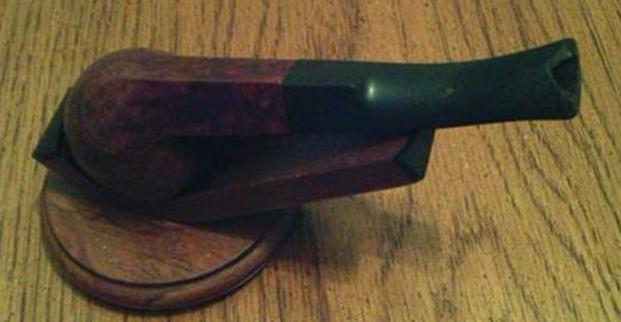
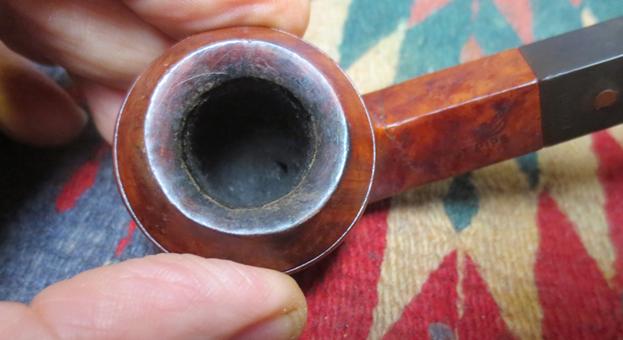
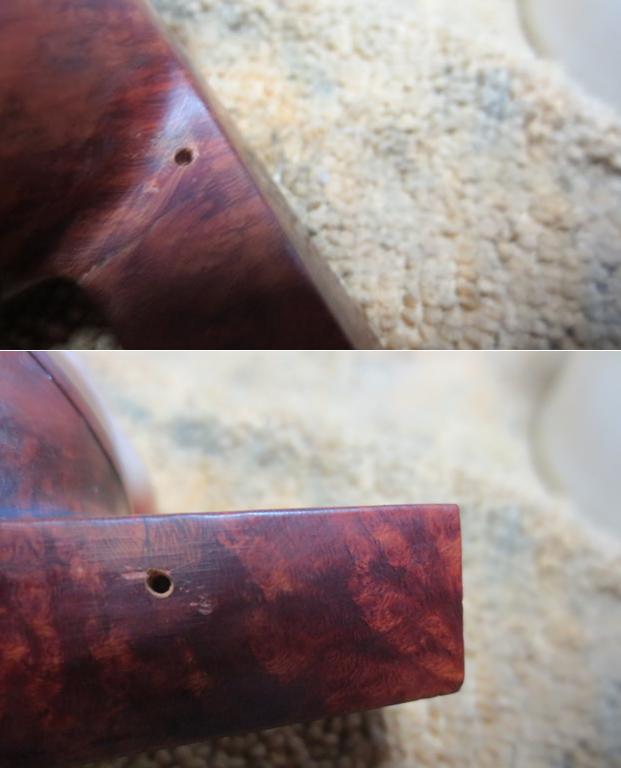
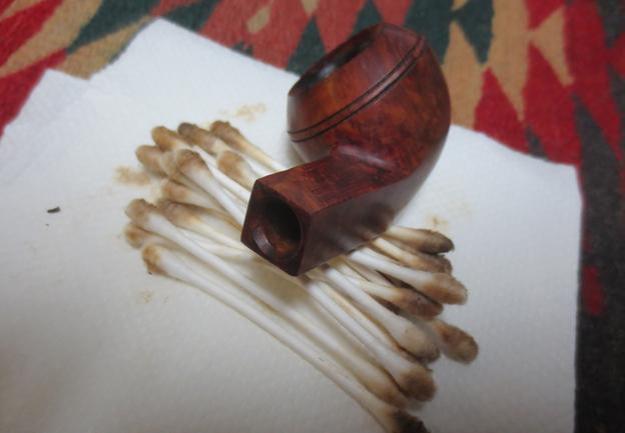
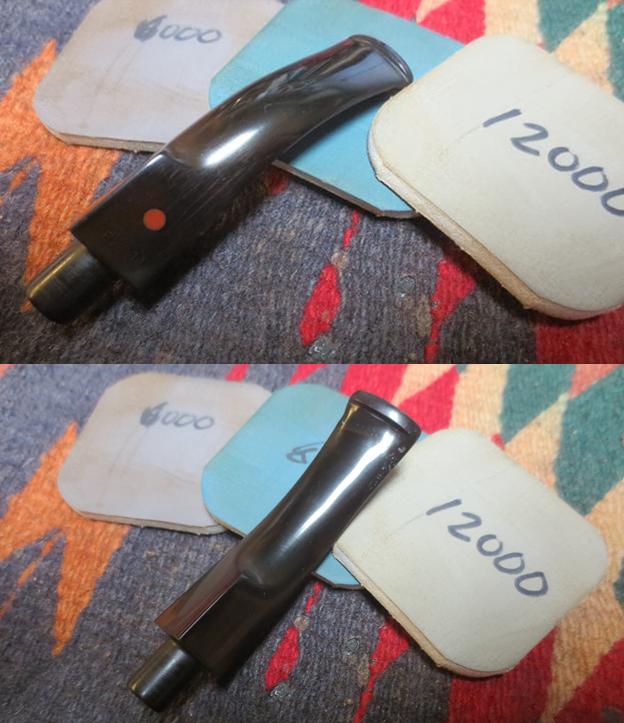
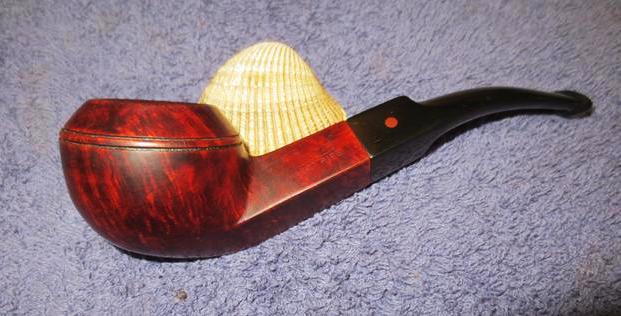
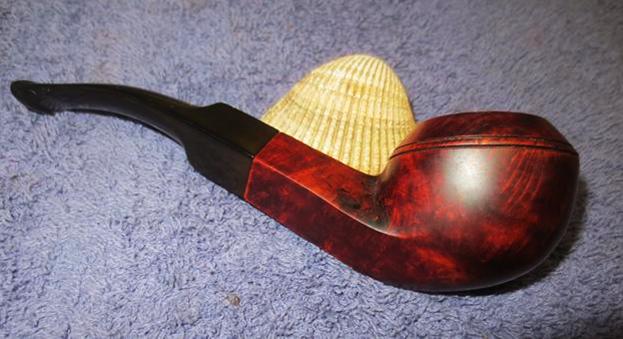
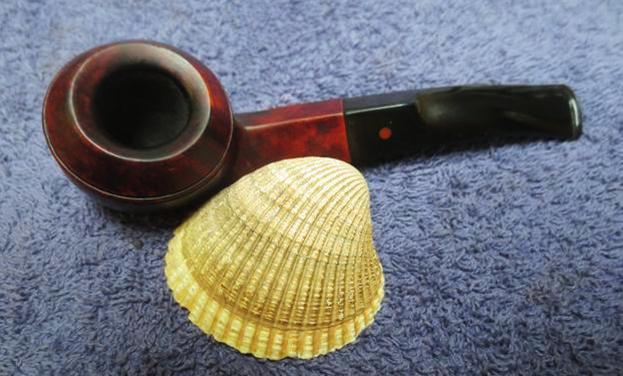
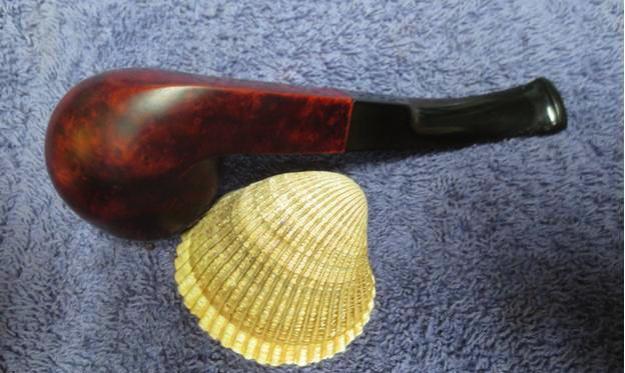
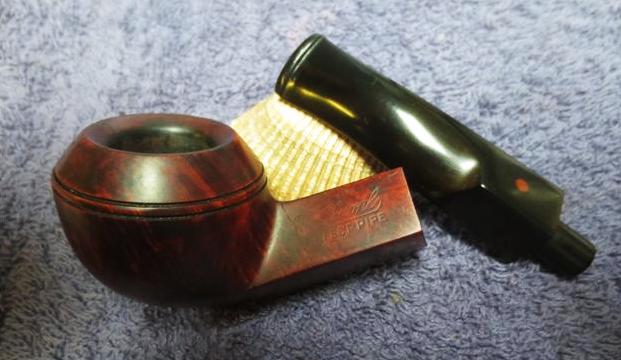
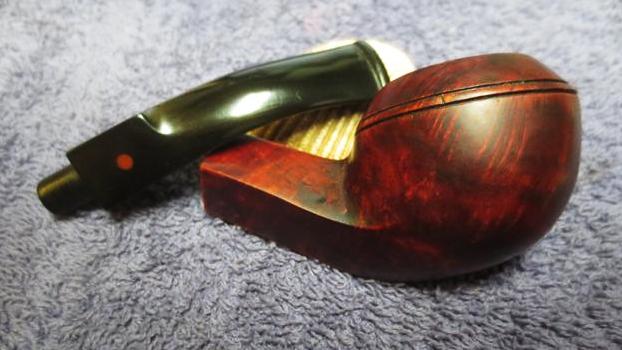
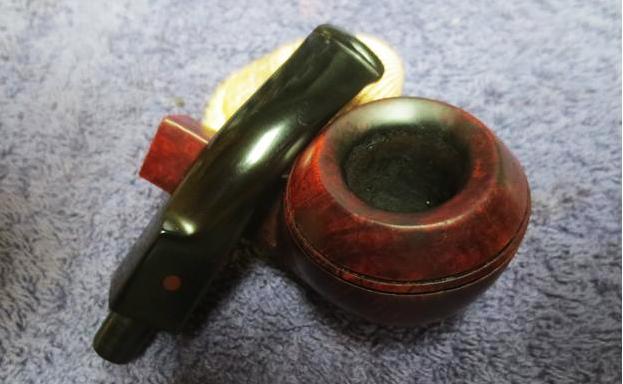
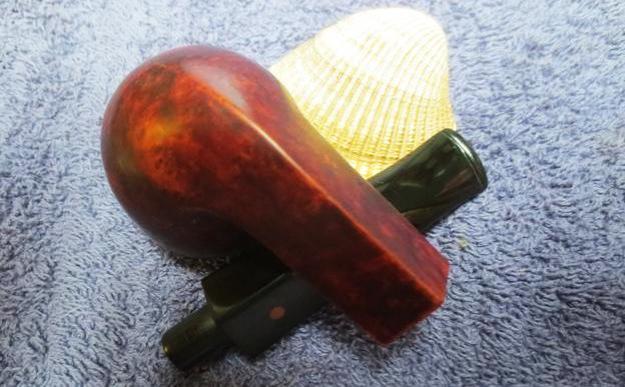
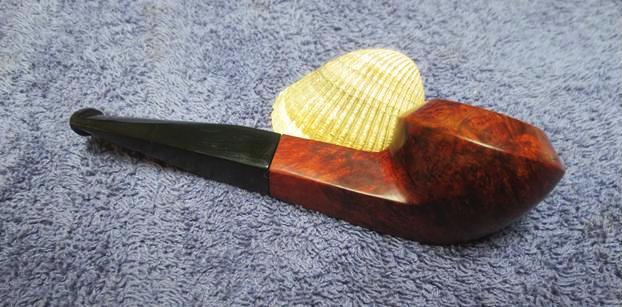
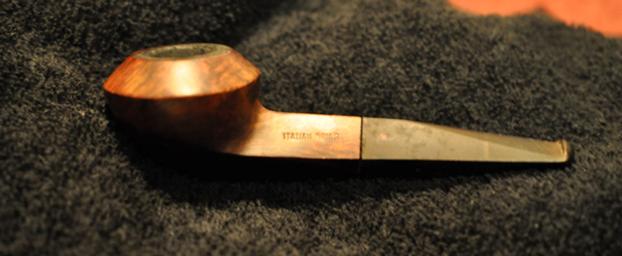
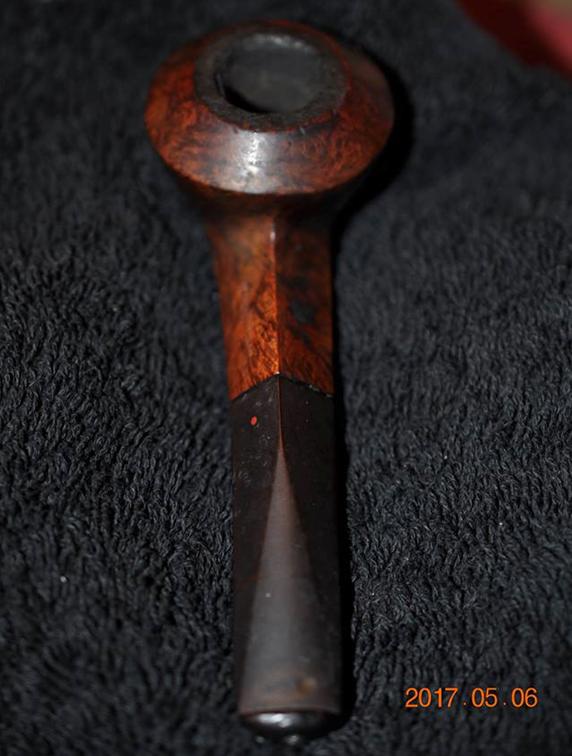
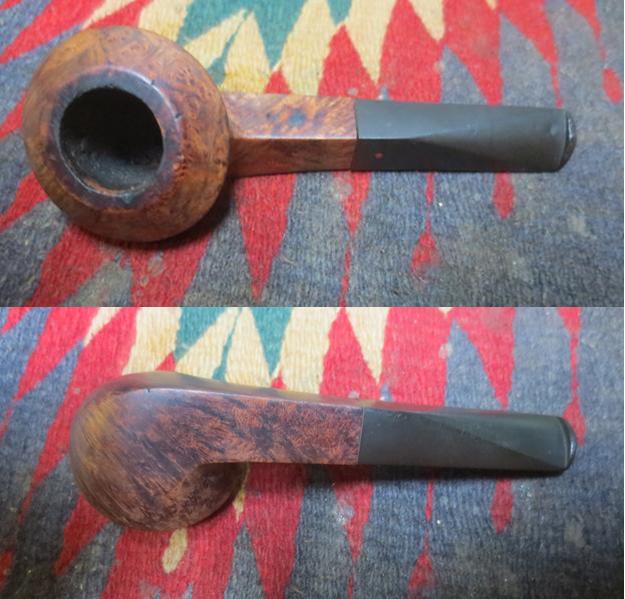
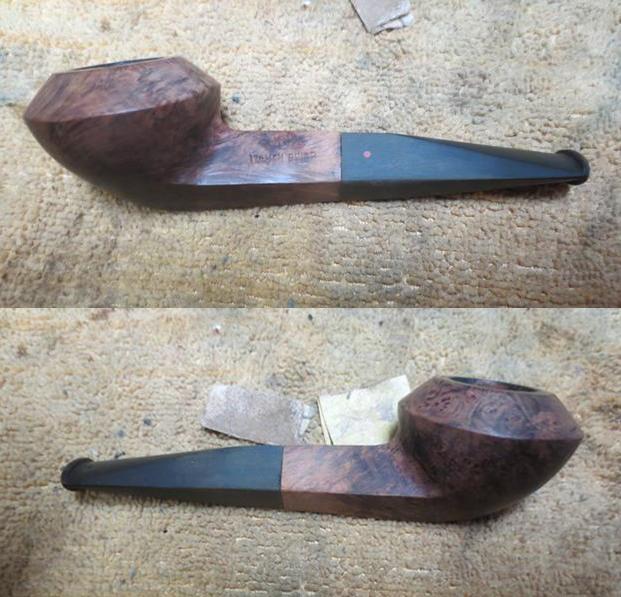
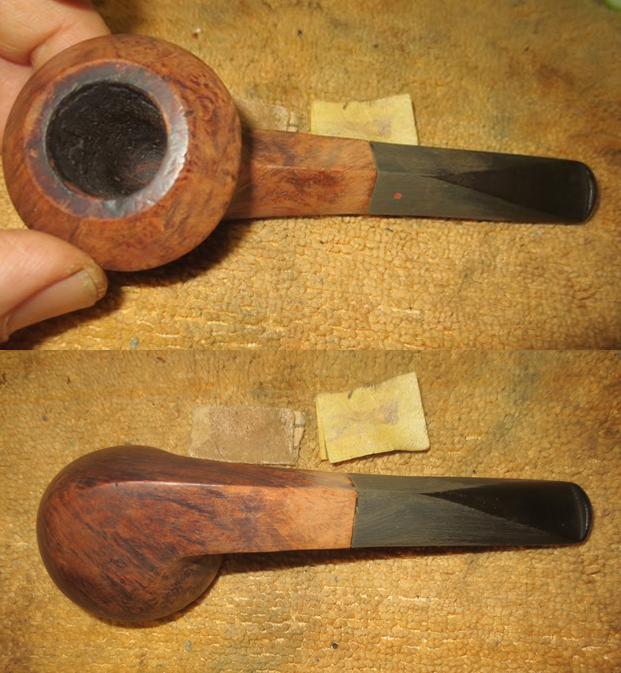
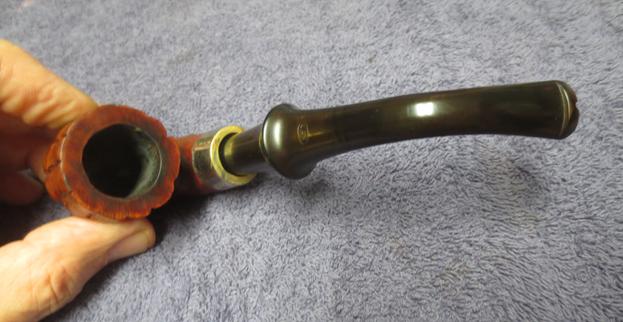
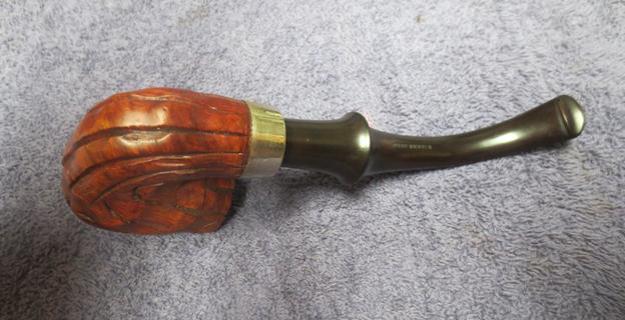
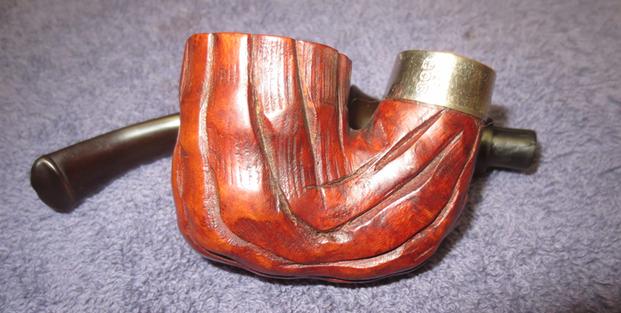
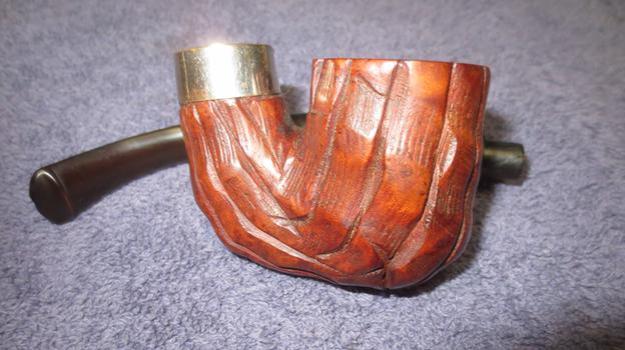
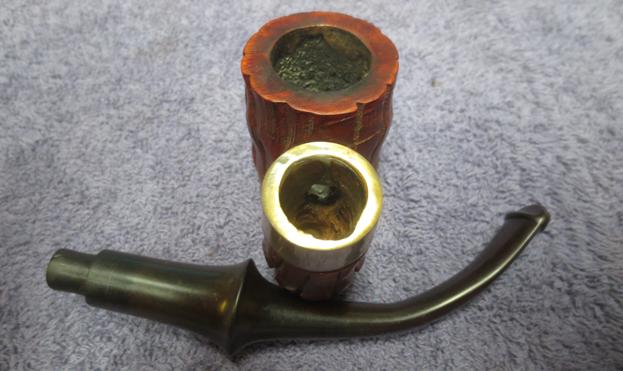
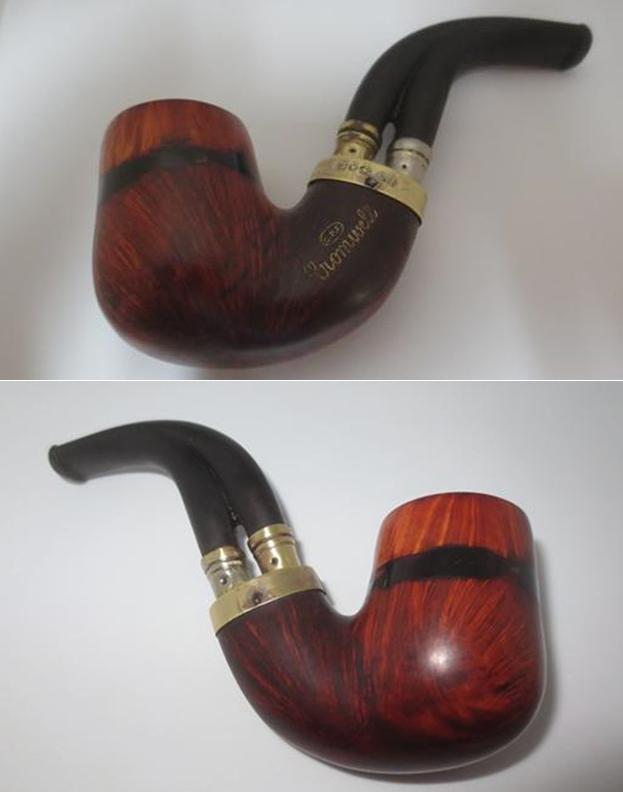
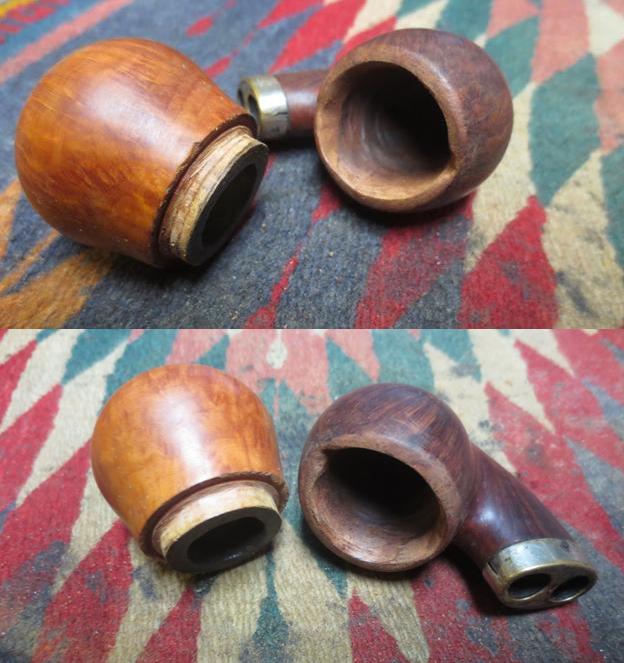
Stephen, a friend visiting Bulgaria from Rainbow City, Alabama, and I were walking through the Antique Market in the shadow of Nevski Cathedral in center city Sofia, when I my roving ‘pipe eyes’ spied an unbelievably nice looking, hefty, handful of a sand blasted Ball or Apple shaped pipe waiting on a table gratuitously mixed with WWII paraphernalia, old Communist memorabilia, skeleton keys and an assortment of cork screws, lighters and want-a-be Rolex watches.  This pipe, though, was the real deal.  With Stephen by my side, I did my best not to lock my eyes on the prize.  Finally, after I gave serious non-interested examination of the seller’s other offerings, I picked up the pipe and gave it a cursory, equally, non-interested look over.  As I looked down into the chamber, I saw my opportunity.  There was daylight at the bottom of the chamber – a hole, my leverage for the negotiation.  A quintessential burn through.  With my index finger at the chamber floor, it was sharply wedged downwardly so that the wearing, digging and burning finally was more than the briar could handle.  Turning the pipe over in my hand I read the nomenclature stamped on the underside of the shank – STANWELL (barely visible in the blasted briar) [over] ROUGE 109 [over] MADE IN DENMARK.  The hefty sand blasted stummel received my initial attention, and then the vulcanite shank extension I had not seen too often.  I laughed after the seller gave me his opening volley.  At the end of the day, both Stephen and I were happy.  The deal struck for the Stanwell Rouge was very satisfactory given that the hole in the bottom of the pipe just would not go away no matter what the seller said.  As we headed to the Metro Subway, Stephen proposed that he become the next steward of the Stanwell after I tackled the burn through.  So, some time later, Stephen emailed me from Alabama, saying he was still interested in the Stanwell.  Now on my worktable here in Sofia, Bulgaria, the time has come to recommission him. Here are the pictures from my worktable.  I recalled that Steve had posted a blog by Bas Stevens, who, according to Steve, was one of the foremost authorities on Stanwell pipes (See: LINK HERE).  Bas Steven’s extensive list of Stanwell shape numbers and designers also included this Rouge’s shape 109, which is described as:  109. Flat, ball-shaped bowl, slightly bent, full mouthpiece.

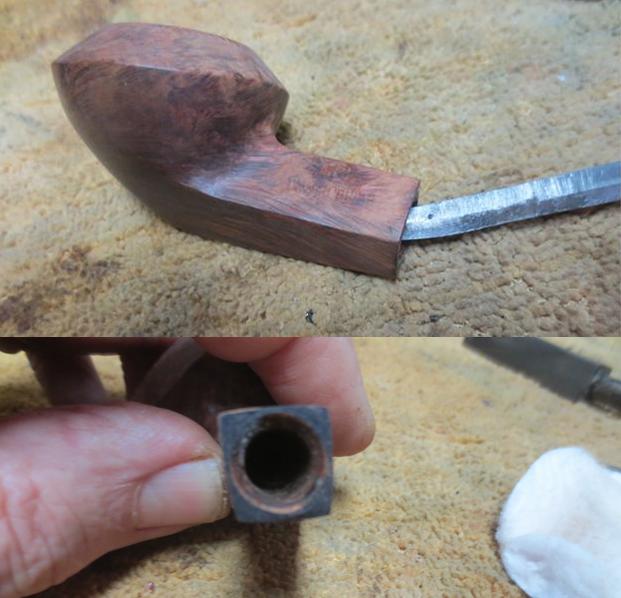
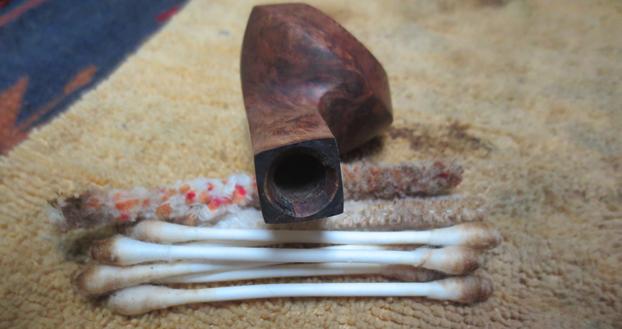
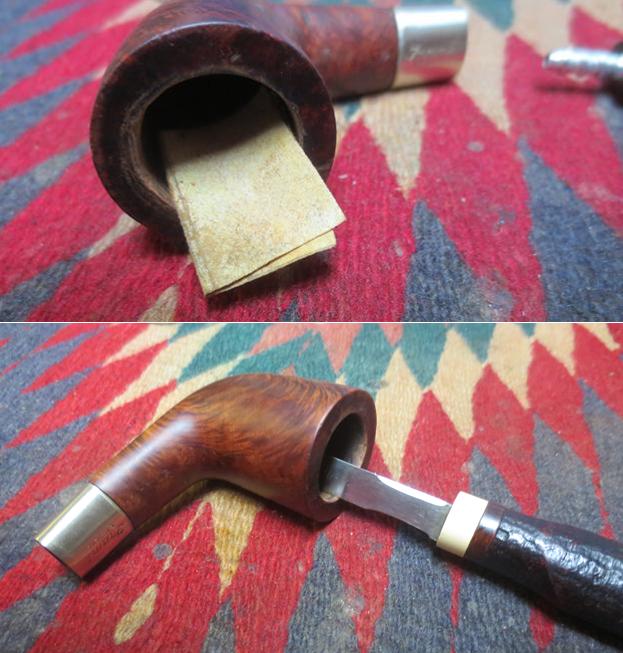
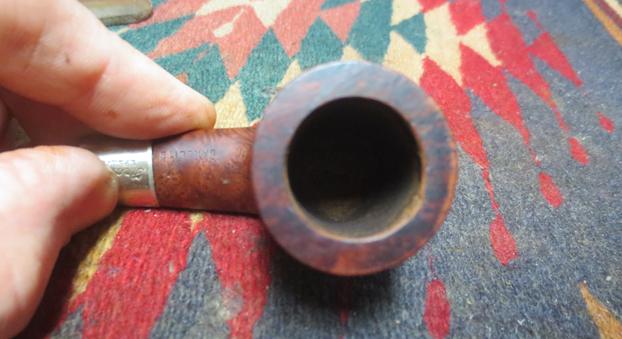
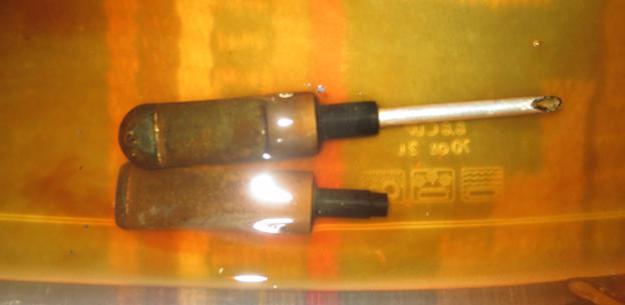
I did searches on Rouge and I could not find a Stanwell listing for only ‘Rouge’ but ‘Royal Rouge’ was evident.  This BollitoPipe.it listing has for sale, a ‘Royal Rouge’ 109 which is a smooth version described with information that matches the ‘Rouge’ in dimension with the difference of the briar shank compared to the vulcanite extension on my Rouge. Pipedia’s site links to Stanwell catalogues shows this 2008 9mm catalogue listing the 109 shape (2nd down on left) with others.  Rouge simply means ‘Red’ in French which is a good description of what the Rouge’s sand blasted stummel formerly revealed, as the ‘Royal Rouge’ exemplifies above.  The Danish pipe company, Stanwell, according to Pipedia’s article closed its doors in 2009 ending an interesting chapter of pipe history as the only remaining pipe manufacturer in Scandinavia.  The ‘Stanwell’ name moved to Italy where pipes were produced bearing the name since 2010.  The ‘Made in Denmark’ on the Rouge indicates that it was produce pre-2010 before the closing.  With a better appreciation for the Stanwell Rouge 109 before me, the first thing I do in his recommissioning is to put the stem in an OxiClean bath after putting petroleum jelly on the Stanwell Crown stamping to protect it. Before I tackle the repair of the burn-through the stummel’s heel, I like working on clean pipes because it helps with the assessment of needs.  I start by carefully reaming the bowl to remove the light carbon build up.  I say, “careful” because the floor of the fire chamber is dangerously thin.  The last thing I want is the floor to drop through!  For the gentle approach, I use the Savinelli Pipe Knife and work the sides of the chamber without reaching too deeply.  Next, I take 240 grit paper wrapped around a Sharpie Pen and sand the chamber ridding it of more carbon and exposing fresh briar.  Finally, I wipe the chamber out with a cotton pad wetted with alcohol.  Using undiluted Murphy’s Oil soap, a cotton pad and a bristled tooth brush, I scrub the exterior of the sand blasted bowl working the brush well into the surface as well as the rim (pictured below) before starting the cleaning.  The surface had a good bit of grime.  The good news is the rim is in good shape – it still shows the blasted sculpting over it, though it is darkened. Now to the internals of the stummel – using pipe cleaners and cotton swabs and isopropyl 95%, I clean the internals.  Oh my.  This old boy I believe was like the old proverbial horse saying, ‘he’s been road hard and put up wet’!  There was no end to the gunk in the mortise.  I scraped it with straight edge files and small screw drivers, and with scads of cotton swabs – the effort was immense to clean the internals.  After some time, things would start to look up, I would scrape a bit more and it was like I was starting over.  Yet thankfully, eventually the tide turned.  The picture shows the aftermath.The stem has been soaking in the OxiClean bath and I take it out to reveal the raised oxidation on the stem.  The petroleum jelly is still intact covering the Stanwell stem Crown stamping, protecting it from the OxiClean process. I start by putting a disk between the stem and the shank to protect the stem from shouldering as I wet sand with 600 grade sanding paper to remove the raised oxidation.  Then, I had one of those ‘Duh!’ moments – the shank extension on the stummel is also vulcanite with a white acrylic divider.  Removing the disk, I treat the two together.  First, with the shank extension, I lightly use 240 grit sanding paper around the extension because it did not have the benefit of the OxiClean bath.  I do this to loosen the oxidation.  Then, with the shank and stem united I wet sand using the 600 grade paper, careful to protect the stem Crown stamping. With this completed, I look to the bit area with minor tooth chatter. Using 240 grit paper I sand the chatter out, following with 600 grit again, then finish off this phase of the stem’s polishing using 0000 grade steel wool over the entire shank and stem.  To try to remove any oxidation in the Stanwell Crown stem stamp, I use a MagicEraser sponge to apply a non-abrasive cleaner.  The pictures show the progress with the stem. With the stem completed up to the micromesh phase, I put it aside to focus on the stummel repairs.  I have been developing the plan since I first saw this incredibly desirable and redeemable Stanwell Rouge beckoning on the table in the Antique Market.  There are two main steps in the burn through repair.  The first is to patch the external presentation of the stummel using a putty created from CA glue and briar dust.  This patch will fill the hole leaving an external mound for eventual sanding and shaping aiming at blending with the sand blasted finish.  When the Briar Dust Putty is applied from the external side, there also will form an internal mounding as the putty presses through the hole.  This is good and desired.  This internal mound will form the primary internal encasing of the burn through area, which is extremely thin and therefore weakened.  This internal covering of Briar Putty will form the hole fill as well as the initial reinforcement of the chamber floor.  The second step is to augment this initial reinforcement internally by using JB Weld.  I first saw the use of this from Charles Lemon on Dad’s Pipes.  I will mix a batch of JB Weld and apply it on top of the patch area and rebuild and level the floor of the fire chamber, bringing the new floor almost up to the draft hole.  That is the theoretical plan – of course, the best laid plans are often…. You know the story 😊!

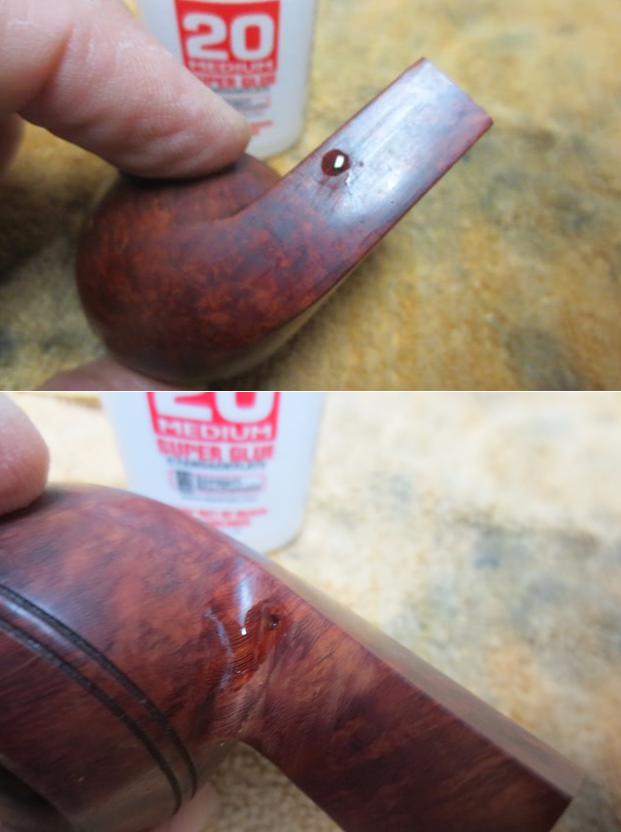
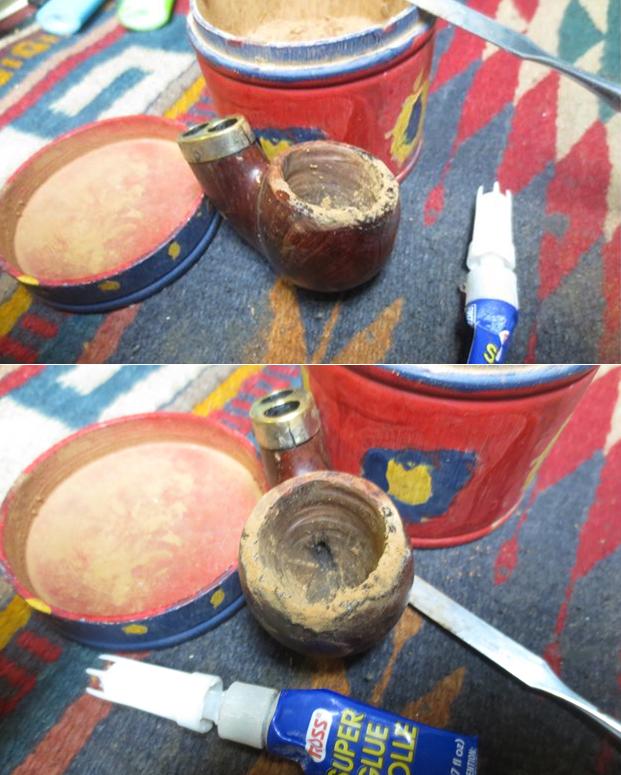
I begin by taking another close picture of the external hole area as well as the floor of the chamber, with a pipe cleaner inserted to mark the gap the new floor will need to fill.  This marks the starting point.  The second picture below does not reveal the depth, but I estimate a good, 3 to 4 mm between the hole and the draft hole level.  I clean the stummel external surface with a cotton pad wetted with alcohol.  The pictures show the prep. Using an index card, I mix briar dust and Hot Stuff Special ‘T’ CA Instant Glue (thicker) with a toothpick to form a putty.  I’m shooting for the thickness of molasses so that the putty will not run and spread but stay where I apply it.  When the putty reaches the viscosity I desire, I apply the putty to the hole pressing it through until I achieve sufficient mounding on the inside.  As I press the putty through with the toothpick, the putty spreads out a bit more than I desire.  I use an accelerator on the inside and outside to cure the putty more rapidly.  I take pictures to mark the completion of step one.  It will be tricky filing and sanding on the sand blasted surface, but not impossible with patience.  As I reflect further, a different approach that may have lessened the mounding on the external side would have been to apply the putty internally and pushed it through…. The approaches for smooth briar and blasted briar may not be the same! Next time. I’m back to the worktable after a day’s work and unfortunately, in the back of my mind the application of briar dust putty to the external surface as I did yesterday, has blossomed in my mind into a colossal blunder!  In my mind, I picture the way I should have done it and it was perfect – in my mind!  But, I have a salvage plan coming together, also in my mind and my hope is that my blunder might spare others from the same fate 😊.

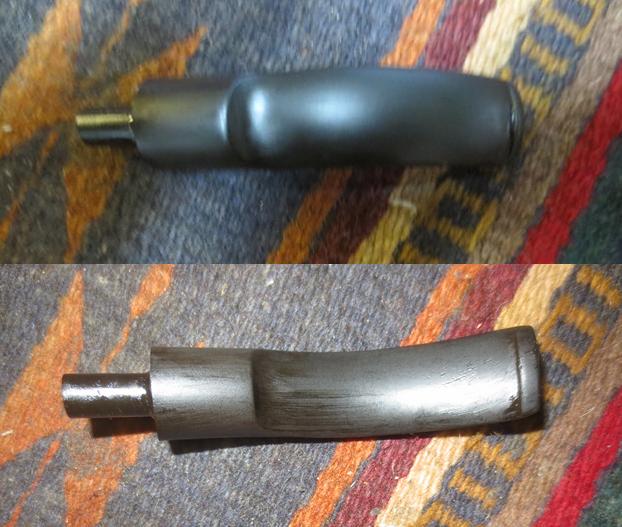
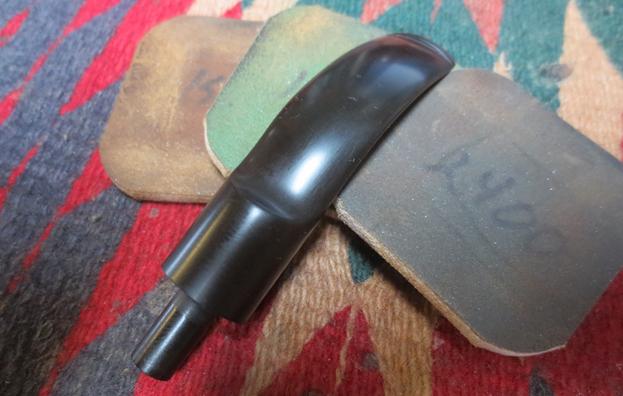
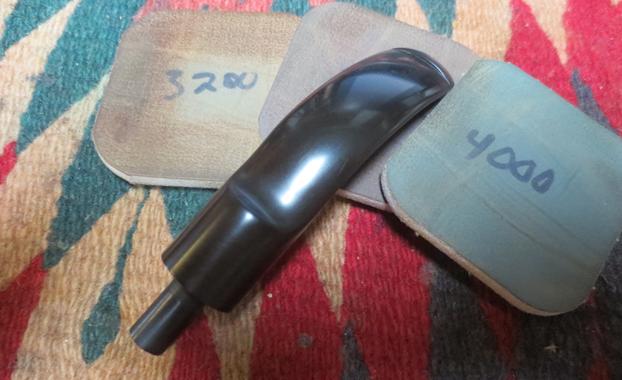
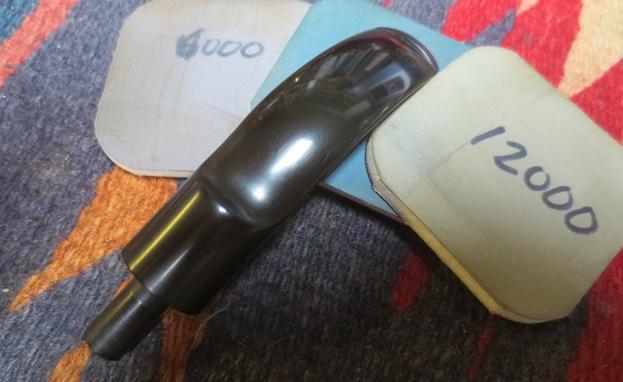
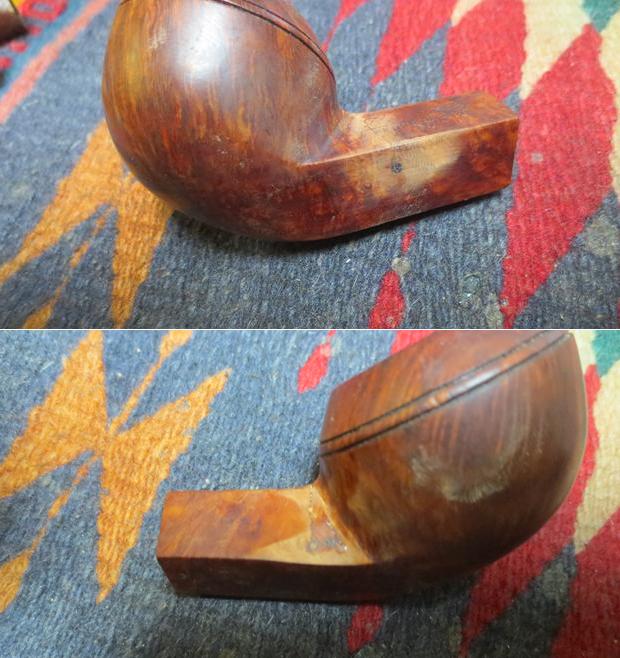
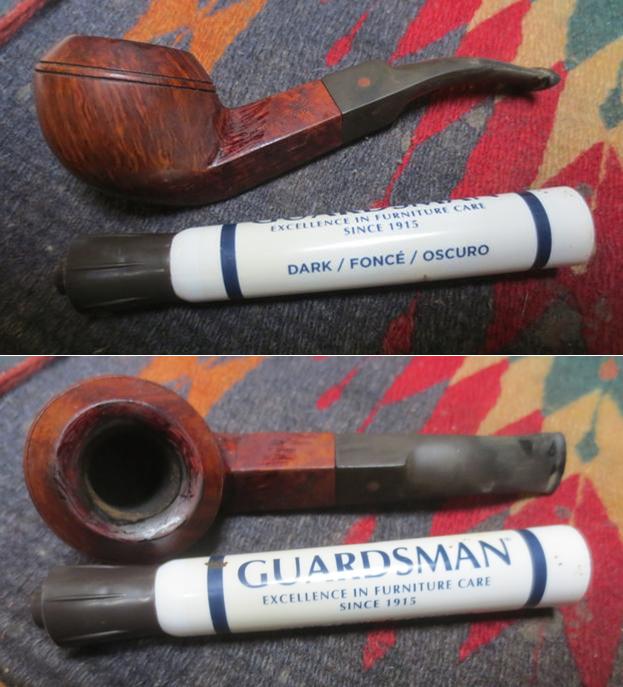
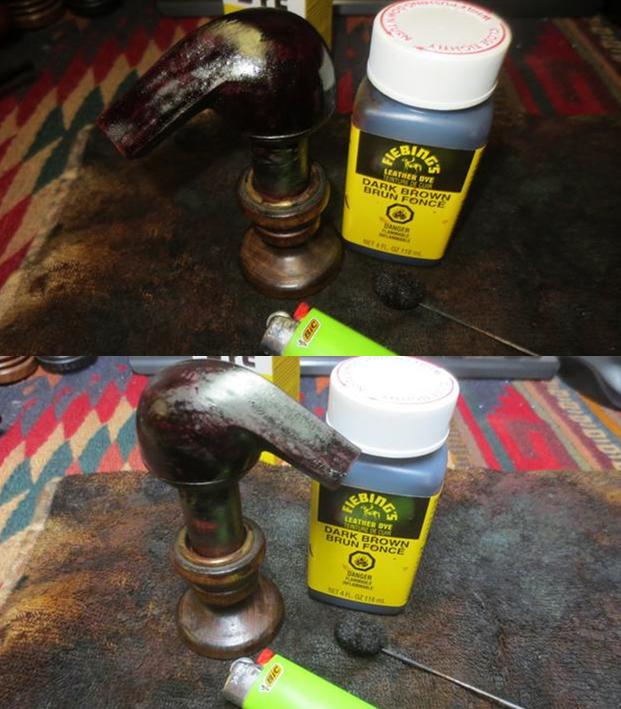
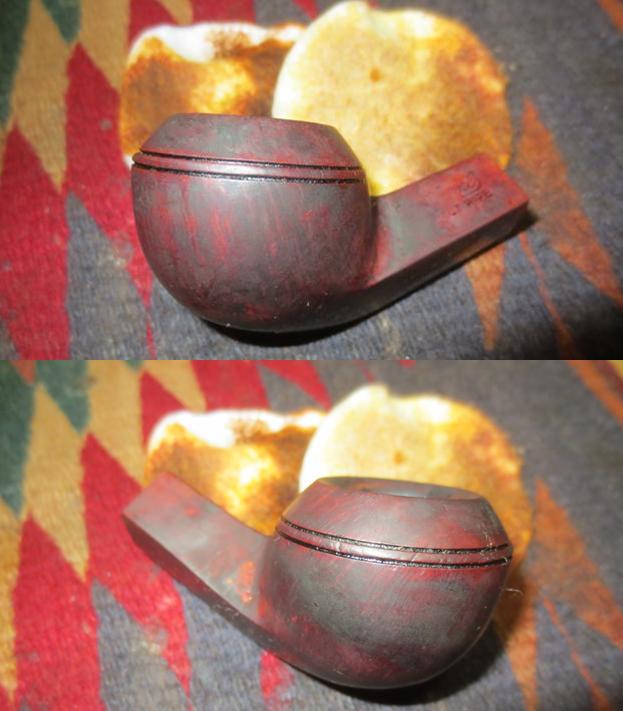
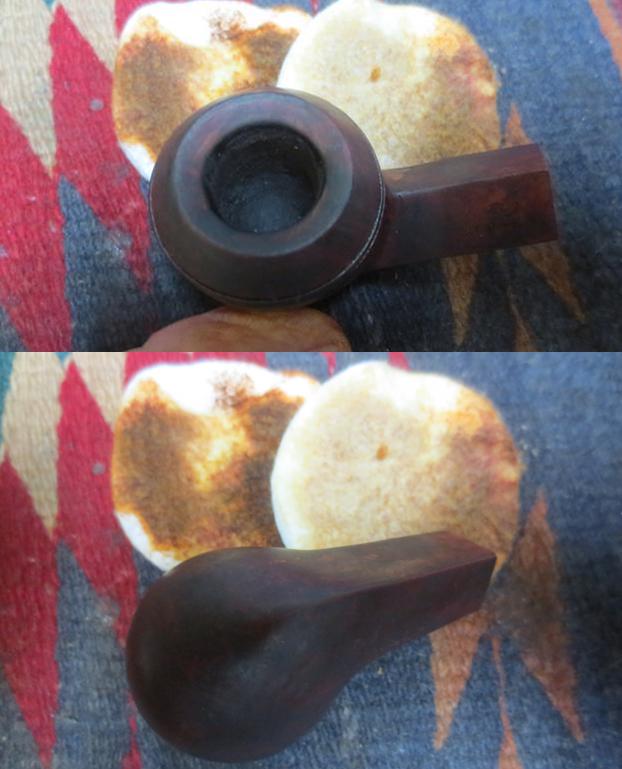
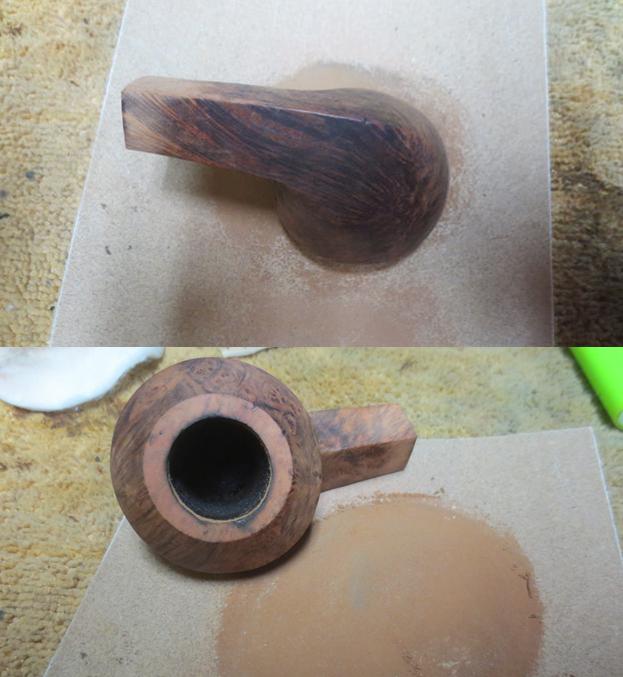
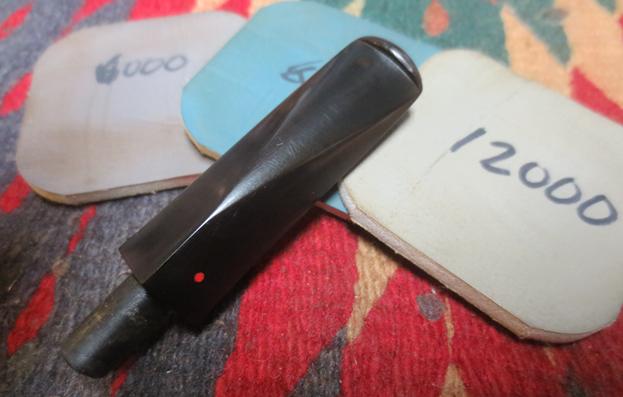
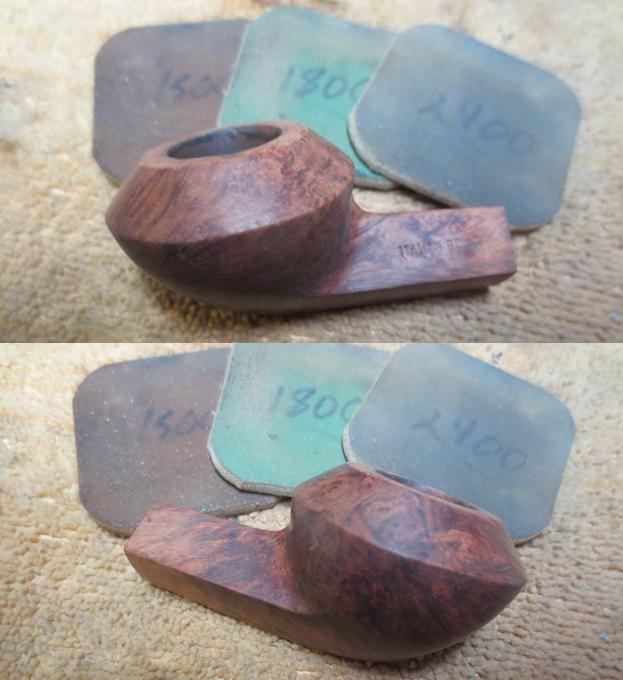
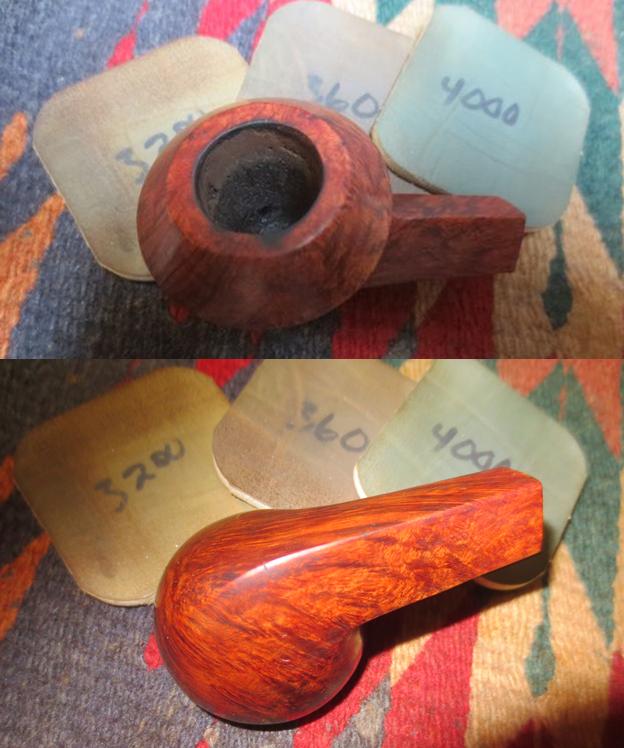
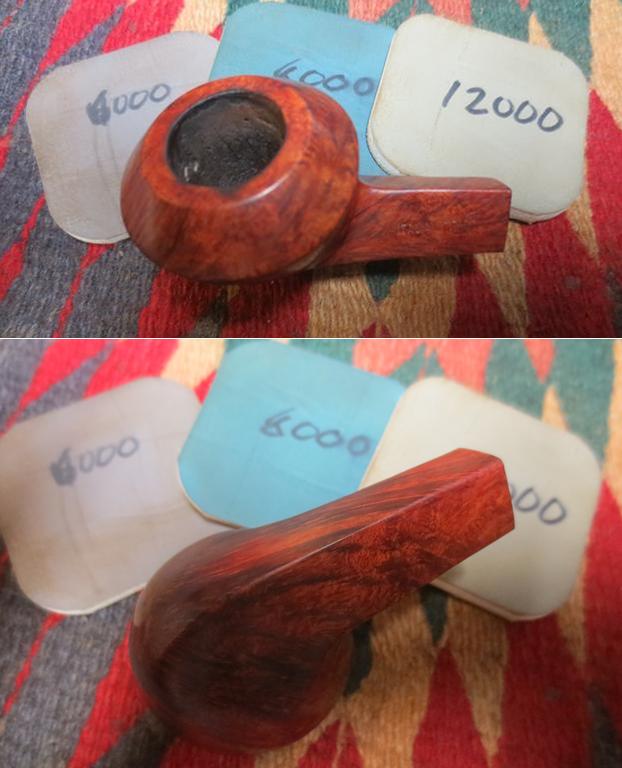
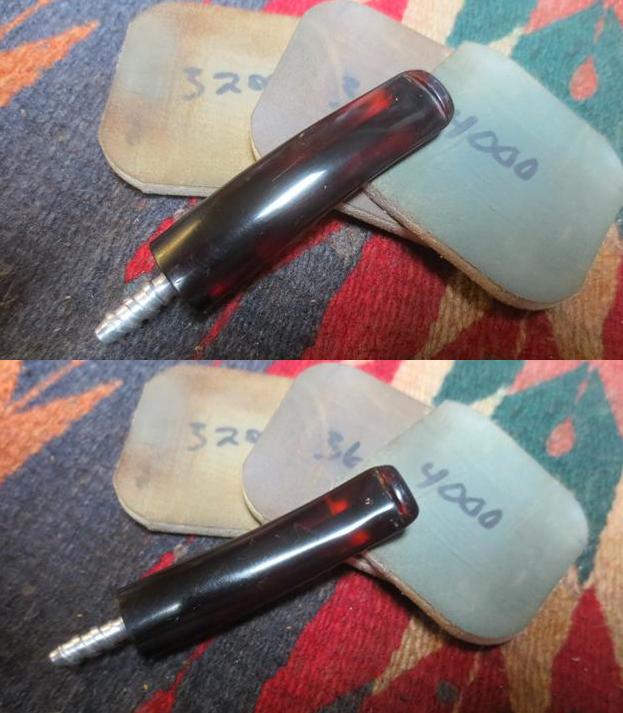
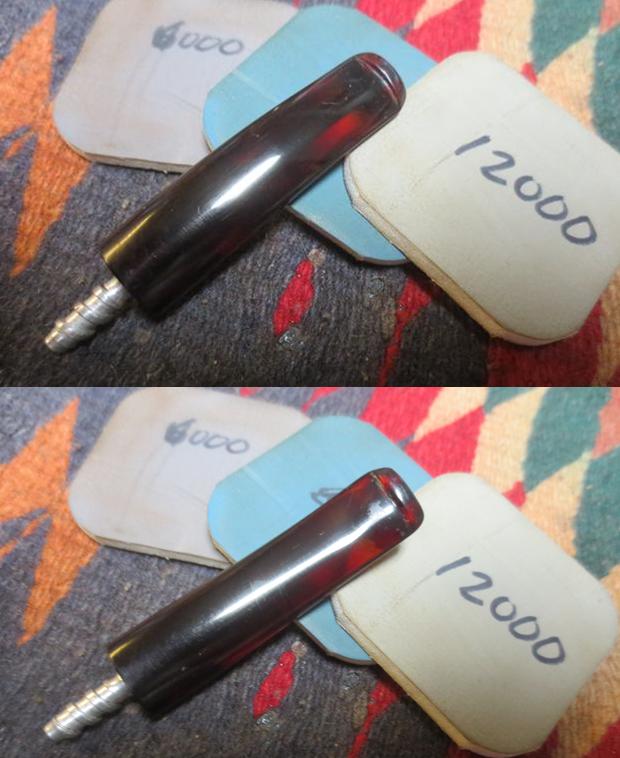
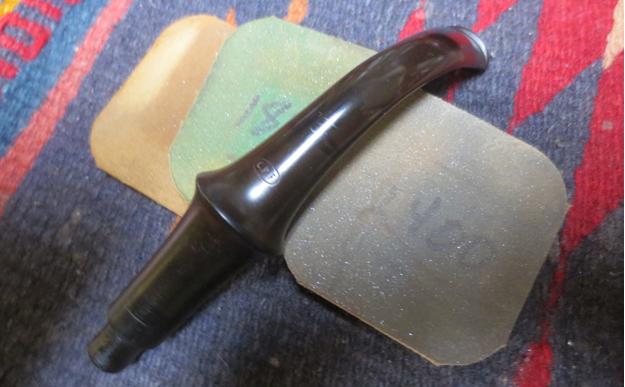
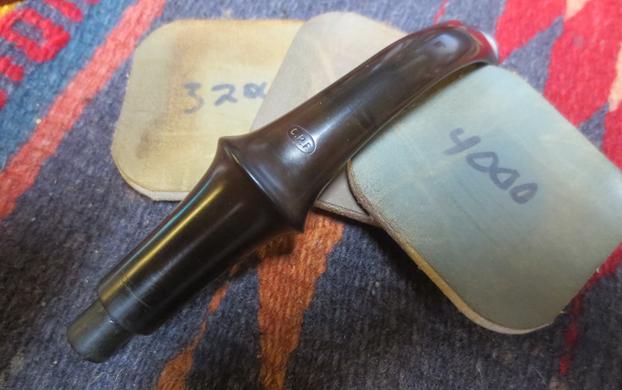
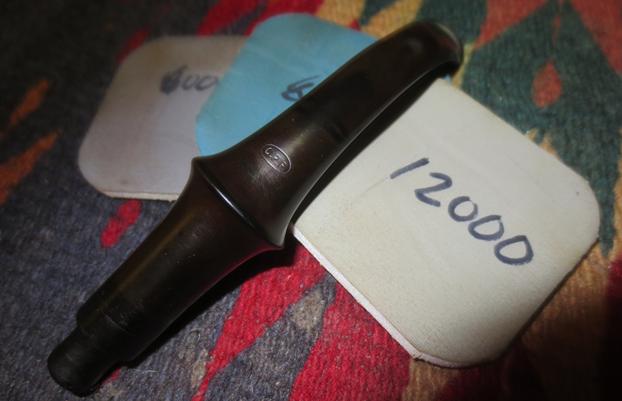
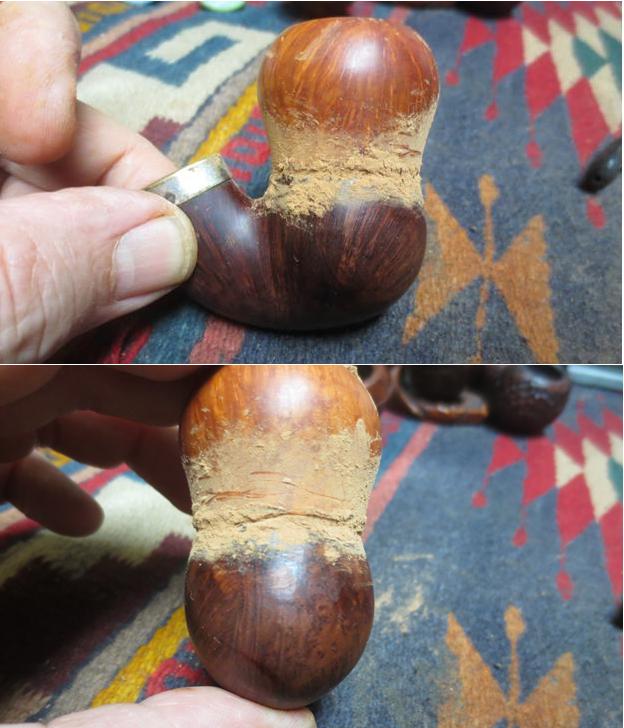
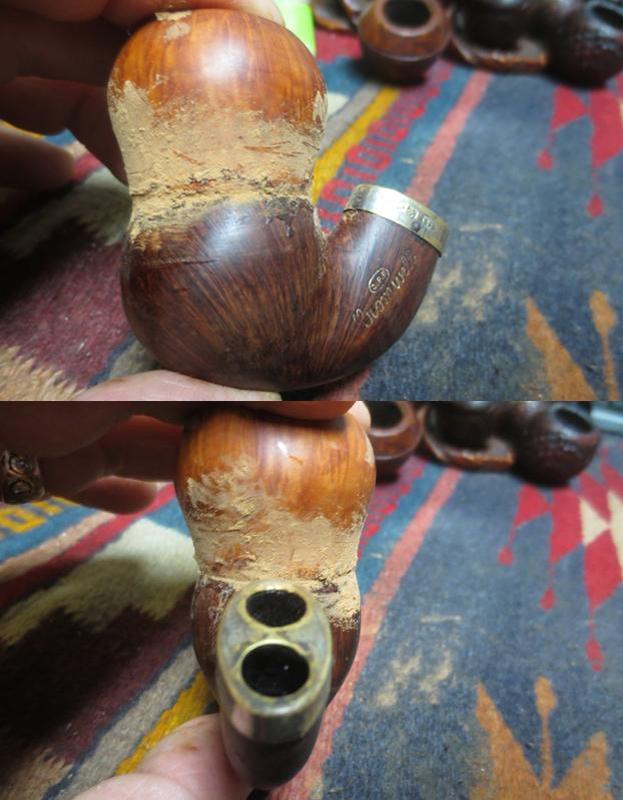
Before I work on the salvage plan coming together in my mind, I will complete the floor build-up using JB Weld.  One of the difficulties that I’ve thought about is a delivery system – how to get the JB Weld mixture to the chamber floor where it’s needed and not smeared on chamber walls trying to place it.  I’ve come up with plan of using a plastic bottle nozzle as the delivery system – load the mixture in the nozzle and force it down with a dowel rod and cotton swab.  It looks like it should work. I also insert a pipe cleaner into the airway to protect the draft hole from being clogged by the JB Weld.  It also helps me know where the floor should be.  The mixture sets up in about 4 minutes after the Hardener and Steel are combined.  Thankfully, everything works as hoped.  I take pictures through the process. Regarding the external surface patch mound, I realize that with a sandblasted surface it will be very difficult to remove the entire patch mound by filing and sanding as is the method with smooth briar.  This will damage the blasted briar surface.  After doing research on the internet, I discover that acetone dissolves CA glue.  Acetone is the primary active ingredient in nail polish removers.  What I’m hoping is a salvage plan; I begin by filing the patch mound down as far as possible without impacting the surface briar terrain. I then apply acetone to the remaining patch mound with a cotton swab to dissolve the surface overflow of the patch.  I work the briar dust patch with the cotton swab and gradually the surface patch begins to loosen and dissolve.  I’m encouraged.  I continue patiently, allowing the acetone to set its own pace.  The putty patch dissolves toward the center and leaves ridges which I scrape with my fingernail.  At the end of the process, I am relieved – it works. Not only did it work, but the blending is incredible!  I cannot see where the hole was without very close scrutiny.  The blunder becomes a teachable moment and a bit more experience for future restorations!  The pictures tell the story and I’m thankful a disaster was averted with this Stanwell. The next day, after several hours of curing for the JB Weld, I look at the new rebuilt floor of the chamber.  I rub my finger over it and it, as expected, is flat.  I want to introduce a slightly bowled chamber bottom.  To do this I employ the round grinding stone attachment which I mount on the Dremel.  I will remove just enough of the JB Weld floor to create this bowl.  With the speed at 40%, I start in the center with a circular motion creating the initial rounding.  I gradually expand it outwardly by moving it in circular motions.  This works well.  Afterwards, I use 240 grit paper to sand it more and wipe the bowl out with a cotton pad and alcohol to clean the chamber.  Done.  Later, near the end of the project, I will coat the chamber with a mixture of activated charcoal dust and sour cream that will form a hard base for forming a new cake for the bowl.  Bowl repair officially complete.  Yes! Before I address the Rouge’s stummel finish, I continue the sanding and finishing of the vulcanite shank extension so it doesn’t get in the way. I reattach the stem and beginning with micromesh pads 1500 to 2400, I wet sand the extension and stem and then apply Obsidian Oil to the vulcanite.  At this point I realize that I have forgotten to clean the internals of the stem (again!).  Before moving on, I clean the airway and the 9mm filter bay – which really needed some cleaning.  With a ‘proof of cleaning’ picture taken, I follow by dry sanding the extension and stem with pads 3200 to 4000, then 6000 to 12000.  After each set of three, I apply Obsidian Oil to the stem and extension to revitalize the vulcanite.  While sanding, I notice that the stem is a bit loose in the mortise extension.  I will look at this later.  The stem and extension look good! Turning now to the Stanwell Rouge’s stummel, and it is evident that the historic color of this stout, blasted ball shape was in keeping with its namesake – red.  My sense is a deeper burgundy tone would fit well.  My plan is to use 2 parts Fiebing’s Oxblood Leather Dye with 1 part of Fiebing’s Black Leather Dye.  I want it on the darker side.  Let’s see what happens!  Taking a close look at the stummel, I probe around with the sharp dental tool and see that there’s bits of dust and residues in the crevices of the blasted texture of the briar.  I use a cotton pad and alcohol to clean the stummel, and I use a bristled brush as well to dislodge debris.  I then tightly wrap masking tape around the vulcanite extension so that the dye does not possibly impact it – in a note from Steve, he said that some vulcanite will absorb the stains, others not….  Better to be on the safe side.  I mix the dyes in a shot glass using a large dropper at 2 to 1, insert a cork in the shank as my handle – and then realize later that the shank extension works just fine as a handle.  I take a picture of the set-up.  I then warm the stummel with a hot air gun and then apply the 2 to 1 dye mixture to the stummel with a folded pipe cleaner.  I work the dye into the crevices – I want good coverage.  I then ‘fire’ the aniline dye and the alcohol immediately burns off and sets the dye pigment in the briar.  After a few minutes, I repeat the process and set the stummel aside to rest. With the stummel now resting, I want to freshen the Stanwell Crown stamp on the stem.  Using white acrylic paint, I dab a bit of paint over the Crown with a tooth pick.  After the paint sets well, I scrape the excess off gently with the flat edge of a toothpick which goes over the stamp patterns leaving color in the stamp.  It looks good.  I had noted that the stem was a bit loose when seated in the mortise.  As I slowly insert the stem into the mortise extension, it is properly snug until the very end – at home station.  The tightness is generated by the white acrylic divider garnishing the end of the extension.  This lets me know that the tenon has thinned only at the base – where it ties in to the stem.  I use Special ‘T’ CA glue and a manicure brush and paint a line around the circumference of the tenon base.  We’ll see if this tightens the stem a bit after the CA glue cures.  After several hours, I’m anxious to unwrap the fire crusted stummel.  With the surface being sand blasted, I use a softer cotton cloth buffing wheel on the Dremel instead of the felt wheel, that I use with smooth briar pipes.  The softer cotton wheel better navigates the textured blasted surface.  With the speed at 20%, I utilize Tripoli compound to remove the crusting and to begin the buffing process.  After a short time, I decide to up the speed to 40% and this works better with the cotton wheel.  I take a picture to show the unwrapping.  After completing with the Tripoli, I wipe the bowl down with a cotton pad and alcohol to blend the dye better.  Then, loading another cotton cloth wheel, I apply Blue Diamond compound to the stummel.  I am liking the very, very subtle oxblood reds tucked away in the contours of the 3-D grain of the sand blasted surface.  This was exactly the classic, smoking jacket effect I was aiming for.  I press on and after changing to another cotton cloth wheel, I apply carnauba wax to the stummel, shank extension and stem.   One last project.  I use a mixture of sour cream (or plain yogurt may be used) and activated charcoal powder to apply to the fire chamber wall.  When this mixture hardens, it provides a good foundation for a new carbon cake to grow – but the new steward needs to be gentle with this after the first few bowls, not scraping the chamber but simply using a folded over bristled pipe cleaner to rub the sides.  This will remove the needed leftovers but protect the walls.  Over time, a cake grows and life as usual!  After mixing the sour cream and charcoal powder to a non-running thickness (like mayonnaise), and inserting a pipe cleaner through the draft hole, using a pipe nail tool, I scoop the mixture into the bowl and spread it over the surface.  After spreading, I see that there is too much here and there as the mix thickened.  I would scoop a little out and spread again.  After it starts to dry, it is thicker.  It takes about 15 to 20 minutes for it to set totally.  I let it set for at least 24 hours before smoking the pipe.  The pictures show the progress.After the sour cream/charcoal powder mixture dries, I check the fit of the stem and shank extension after applying CA glue to tighten the fit.  The patch is too thick so I sand it down using 600 grade sanding paper until the stem slides into the mortise.  I fine tune the cleaning of the tenon and apply some Obsidian Oil to it.  I complete the restoration with a rigorous hand buffing using a microfiber cloth to bring out the striking shine of this Stanwell Rouge.

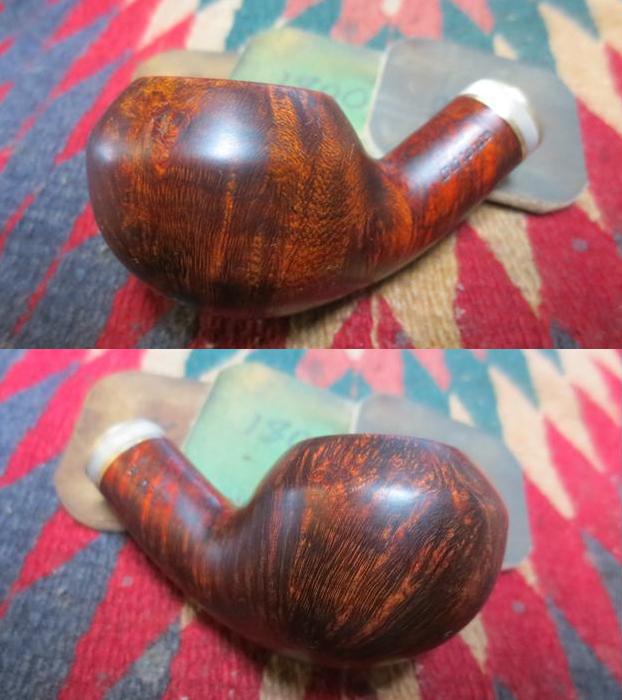
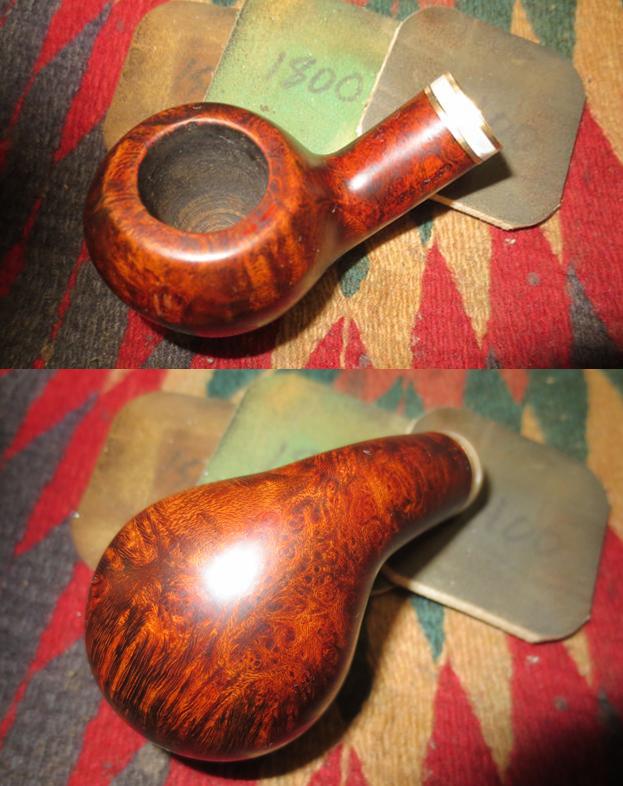
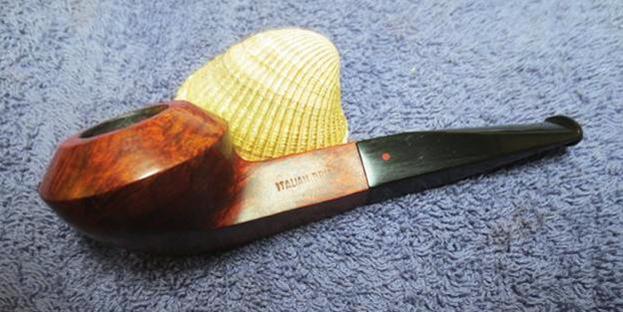
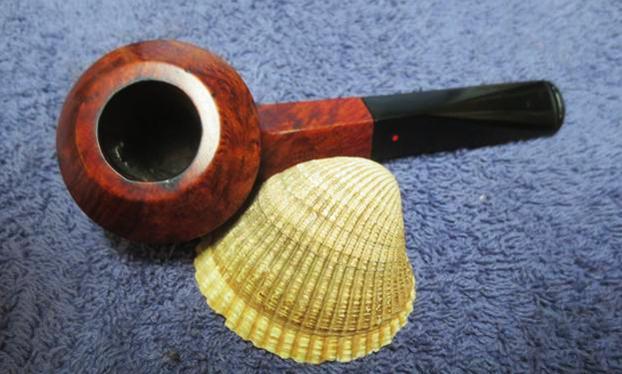
I thought I was facing disaster with the burn through repair when I mounded briar dust putty on the external surface with no way of removing it without damaging the sand blasted briar grain.  Yet, I was bailed out by acetone.  Now, as I look at this Stanwell Rouge, I can’t believe I could see daylight through it and that most people would pass it by as a loss.  I’m glad to have restored it for his new steward.  I’m pleased with the subtle red – burgundy tones in the finish.  The hefty Ball shape is a distinctive presence in the palm and the sand blasted grain stands out well.  This Stanwell Rouge 109, Made in Denmark, is ready to go.  All my restorations benefit the work we do here in Bulgaria with the Daughters of Bulgaria – women and girls who have been trafficked and sexually exploited.  Check out my blog, The Pipe Steward for more information about this, why I do what I do and other pipes I have for sale in the store!  Thanks for joining me!

A Lady’s Choice – WDC Milano Swan Neck Billiard


Blog by Dal Stanton

Is there a psychology in the choosing one makes when befriending a pipe?  A young Bulgarian lady, who also is a budding pipe lady, chose a pipe out of my ‘Help Me!’ baskets and boxes.  After looking at scores of hopeful candidates, there was only one – only one – that she held in her hands, looking at it and smiling. A beautiful, graceful, WDC Milano Swan Neck Billiard caught her attention, and it would seem, her affections.  Is there a psychology unfolding in the process, the evaluation, and the weighing of one pipe against another?  Or, is the process more like the lore of Harry Potter’s choice of one’s wand?  The young wizard does not choose the wand – the wand chooses his wizard.  Does the pipe do the choosing?

And is there any credence to the oft unspoken observation – do pipe stewards resemble their pipes like canine lovers sometimes uncannily resemble their 4-legged friends?  These observations come to my mind because intriguingly, the young lady who was claimed by the WDC Milano Swan Neck, shares, in some very remarkable ways, pleasing characteristics of this graceful pipe.

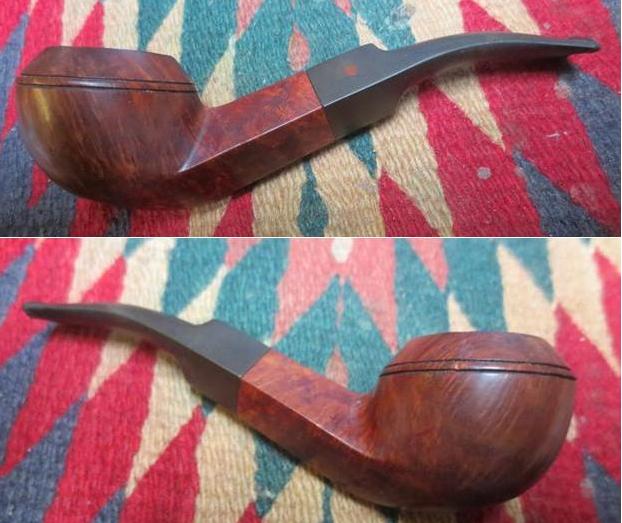
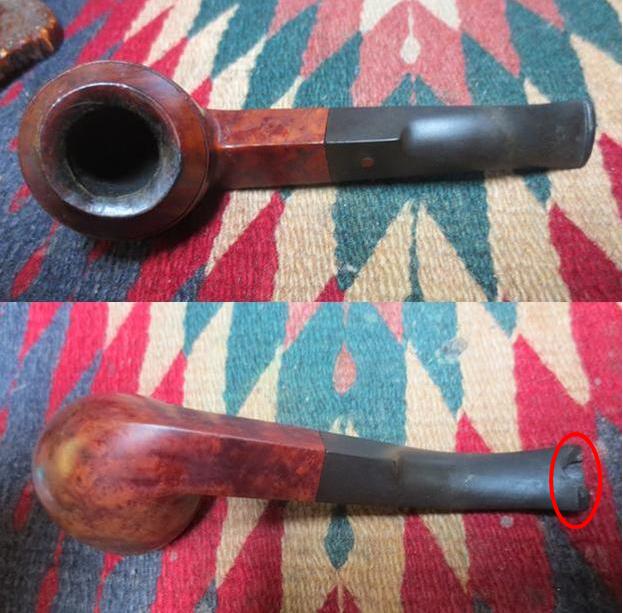
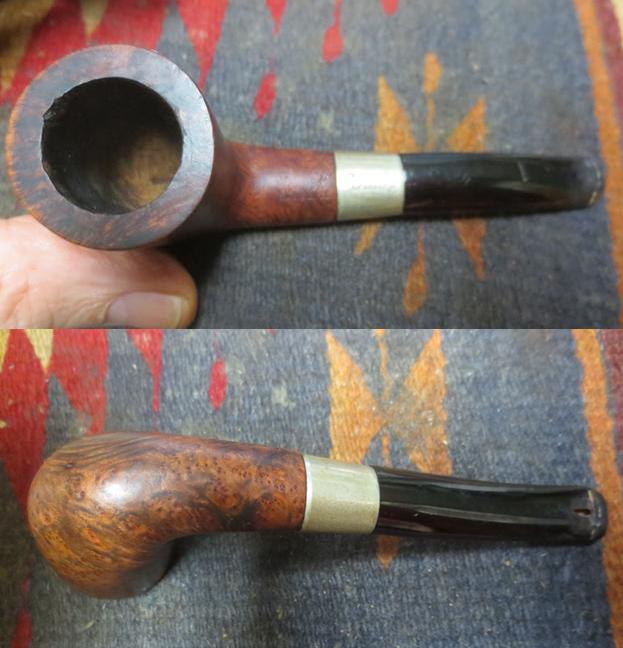
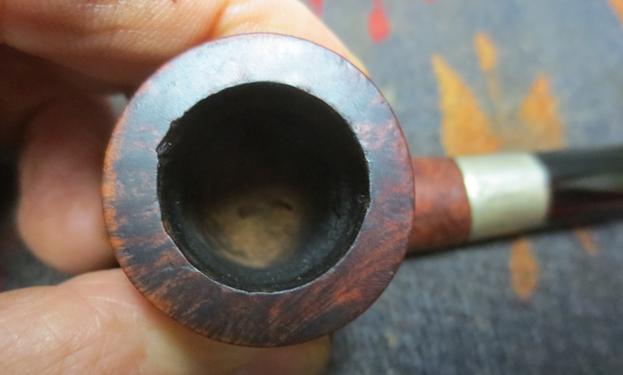
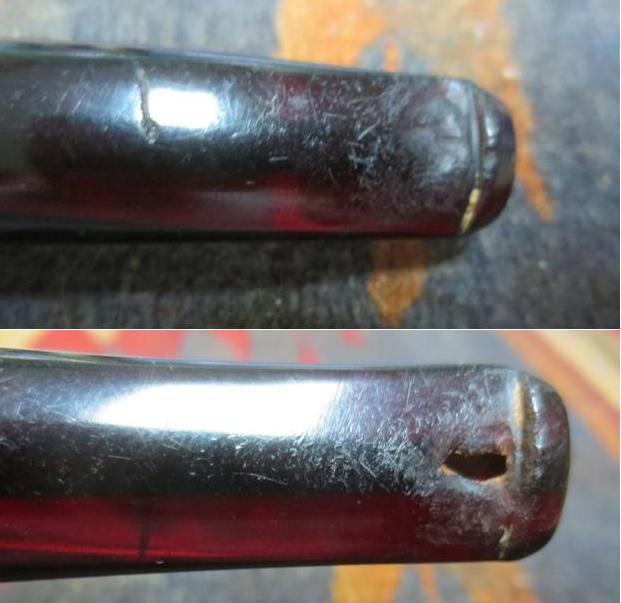
And then there is the ‘question’ of the ‘Pipe Lady’ more so than the ‘Pipe Man’.  A Pipe Lady lives closer to the social and cultural ‘edge’ when she takes her pipe in hand and enjoys a bowl of her favorite blend.  This picture I found somewhere on the internet (sorry, can’t cite!), I suspect would never be ascribed to Pipe Men.  Yet, a Pipe Lady looks at the three with a smile of agreement and a wink, while she is thinking, ‘You’ve got that one right!’This graceful, Milano Swan Neck stem comes from the William Demuth Company, established in 1862 – one of the oldest pipe manufacturing houses in the United States (Pipedia article).  The WDC Milano patent goes back to the 1920s with an example of the familiar WDC rhombus from the same WDC article in Pipedia (courtesy of Doug Valitchka).The eBay seller from Akron, Ohio, described the long dimensions of the Lady’s Choice WDC Milano:  Very graceful bent billiard! About 6″ long, bowl is 2″ tall, 1 3/8″ wide. ID 3/4″, depth 1 13/16″. From Pipedia’s WDC article, courtesy Doug Valitchka, a very nice example of what appears to be the same Swan Neck Billiard of the Milano line.From my worktable on the 10th floor of our flat here in Sofia, Bulgaria, I take these pictures to fill in the gaps. On the left side of the shank is stamped the traditional WDC rhombus [over] MILANO.  The right side is stamped the single shape number, ‘63’.  The chamber appears to have been cleaned to some degree and the carbon cake is very light.  The rim is sad.  It appears someone took a divot out of the internal lip trying to clean it or something.  The rim’s outer edge is beat up and I can see the vestiges of a bevel.  There is lava crusting as well on the rim surface and some hardened light stuff – the rim needs cleaning.  The stummel has few if any fills that I see – the grain of the tall bowl is impressive.  The stem has the WDC inlaid white triangle on the top.  Oxidation is present and the former steward was a clencher and chewer.  Both top and bottom of the bit shows deep bite dents.  The top button lip is dented.

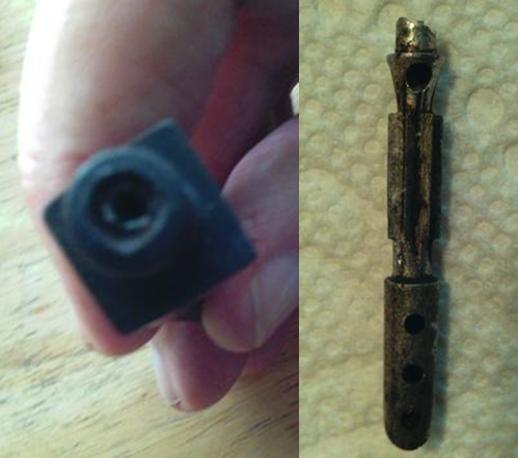
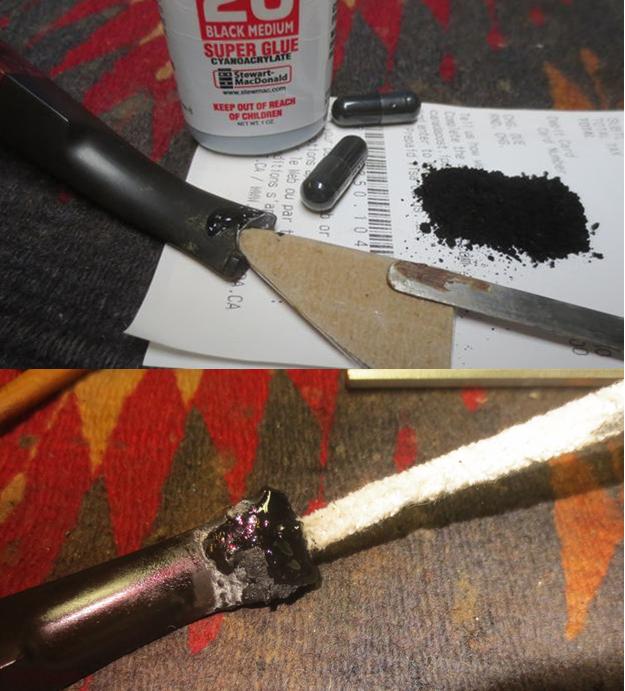
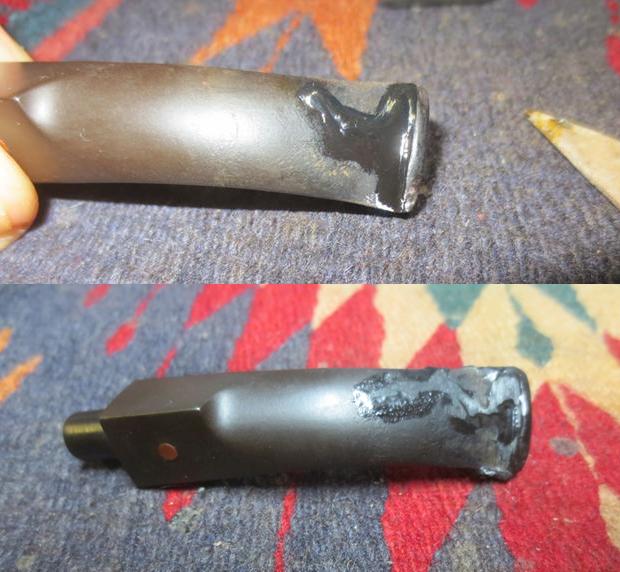
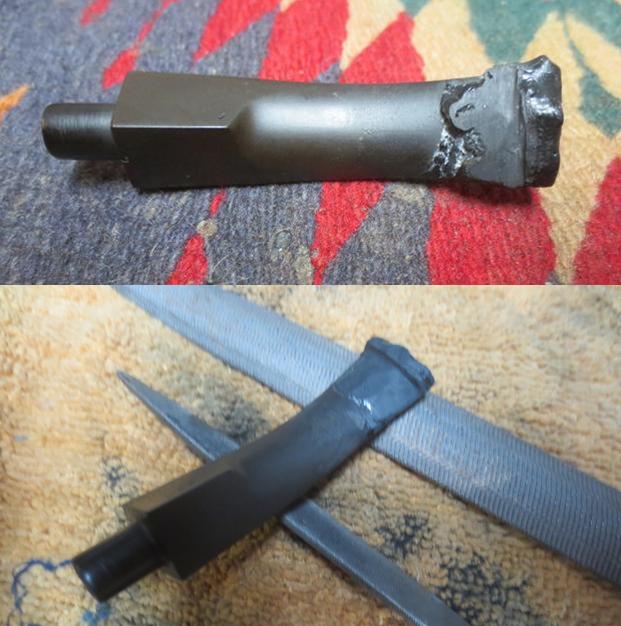
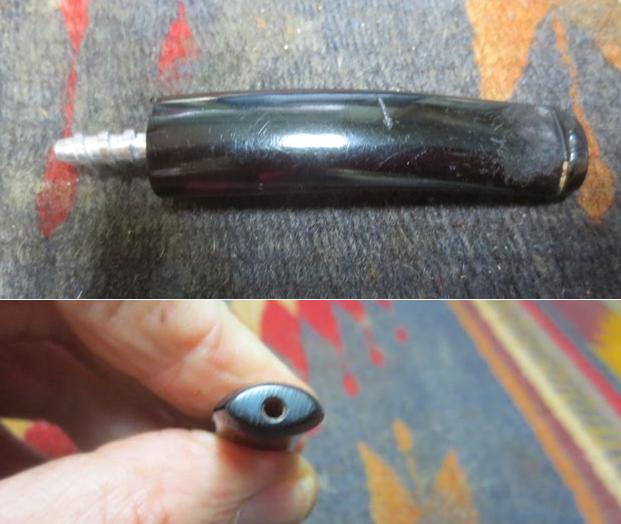
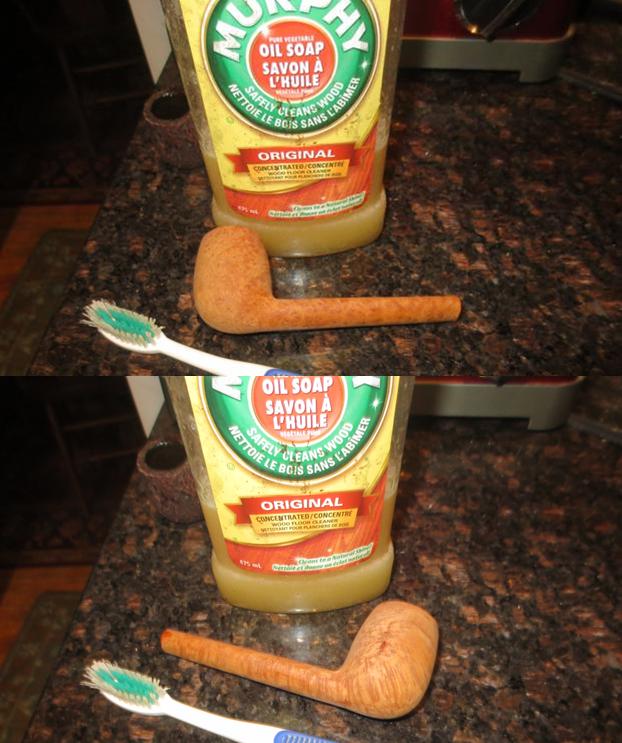
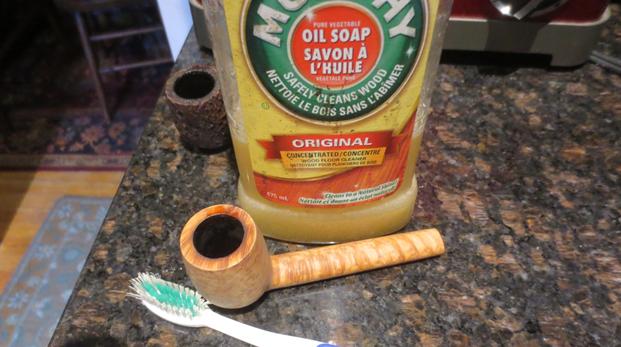
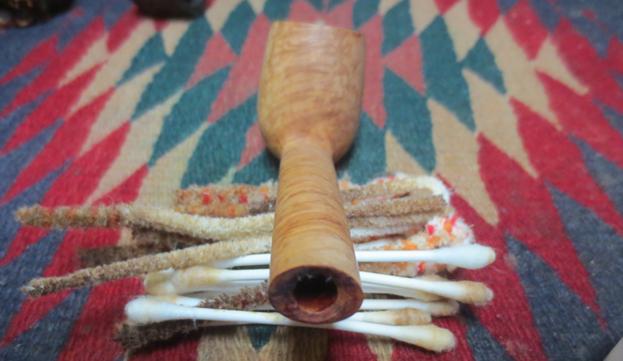
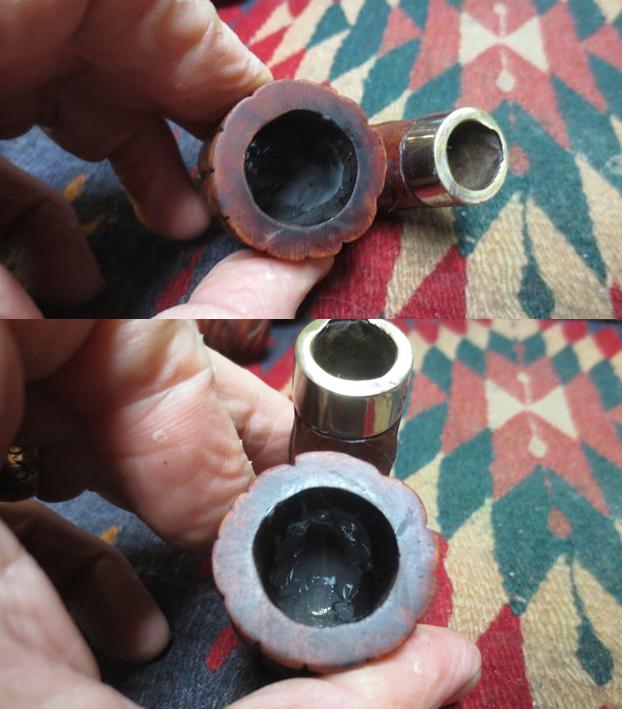
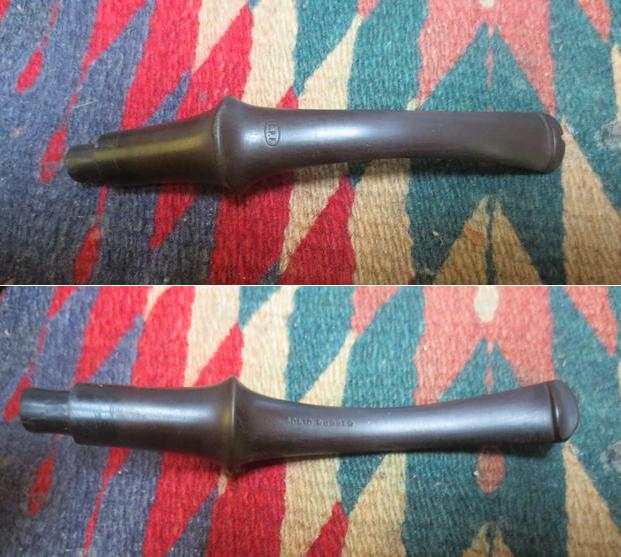
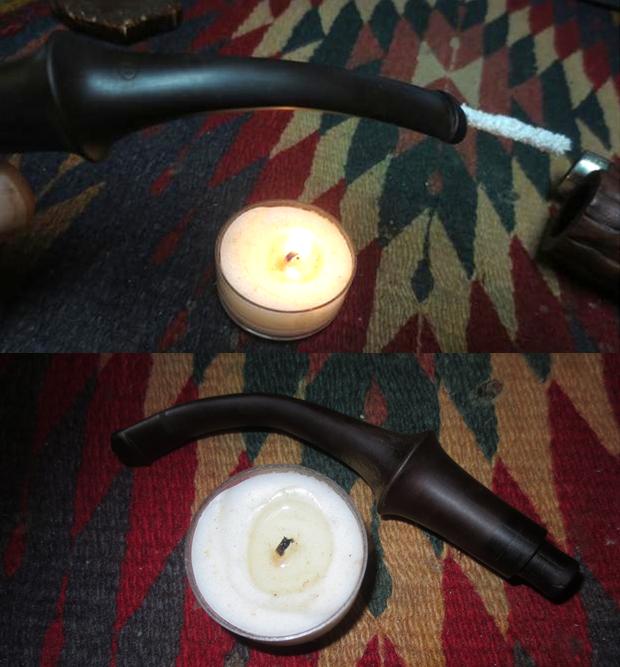
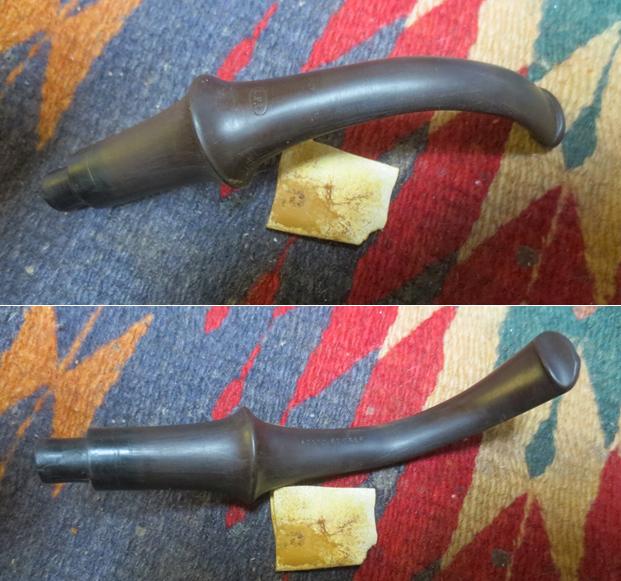
The recommissioning of this Lady’s Choice WDC Milano Swan Neck Billiard, begins by putting the stem into the OxiClean bath to work on the oxidation.  The second thing I do is toss the tubing that was hanging in the tenon.  If it belonged to this pipe originally, something is missing as the airway diameter of the tenon is much larger than the tubing.  On an interesting note, there is a patent number stamped on the tubular stinger.  I looked it up in Google patent search but found nothing that had bearing on pipes (PAT. NO. 5861 / IX – I think).Next, after spreading paper towel to catch the carbon dust, I use the Savinelli Pipe Knife to remove the little carbon left.  I follow with sanding the chamber walls with a 240 piece of sanding paper wrapped around a Sharpie Pen. I then turn to cleaning the internals of the stummel using cotton swabs and pipe cleaners wetted with isopropyl 95%.  There’s a good bit of tar and oils in the mortise.  After some time, I decide to switch to a Kosher Salt and alcohol soak to finish off the internal cleaning and to freshen the stummel.Next, using undiluted Murphy’s Oil Soap I work on the external surface of the stummel and the rim with cotton pads.  I also use a brass bristled brush on the rim.  After the scrub, I rinse the stummel in cool tap water.  The condition of the rim becomes more evident.  I think I will be able to remove the large divot at 4 o’clock in the second picture below by creating an internal bevel on the rim after I lightly top it. I start with by topping the stummel using 240 grit paper.  I follow by creating an internal and external bevel around the rim.  After a few rounds of working on the bevels, I realize that the internal rim divot is too much for the bevel to erase.  I switch gears and mix some briar dust with thick CA glue and create a putty and fill the divot on the rim.  I spray it with an accelerator to shorten the curing time.  With a needle file, I file down the briar dust patch material until it’s almost flush with the briar.  I then use 240 and 600 grit sanding paper to blend the patch and finish the bevel on the internal and external edges of the rim.I then sand the stummel using a medium grade sanding sponge followed by a light grade sanding sponge.  I remove the minor nicks and scratches on the bowl surface.I then proceed to sand the bowl using micromesh pads 1500 to 2400, then 3200 to 4000, then finally, 6000 to 12000.  The process brings out the beautiful horizontal grain flows from the front of the bowl downward to encompass the heel.  Bird’s eye grain is sprinkled nicely on the stummel sides. With the day ending, I continue the cleaning and refreshing of the stummel internals using a Kosher Salt and alcohol soak.  I create a wick to insert into the shank/mortise by twisting and stretching a cotton ball.  I take a straight stiff wire to help stuff it deeply into the mortise.  With the stummel secured in the egg carton I fill the bowl with Kosher Salt (which leaves no iodine after taste) and give it a shank to displace the salt.  I then, using a large eye-dropper, put isopropyl 95% into the bowl until it surfaces over the salt.  I put it aside for the night.  The next morning, the salt and alcohol soak did the job well.  The salt had turned dark and pulling the wick out – the same was true of it.  I toss the expended salt and wick in the waste and wipe the bowl out removing leftover salt.  Then returning to the use of cotton swabs and alcohol, in only a few plunges down the mortise, the internals are clean.  Pictures show the cleaning process. The stem was soaking in an OxiClean bath to raise the oxidation from the vulcanite.  I take stem out of the bath and the oxidation was raised showing the normal olive-green color.  I then take 600 grit sanding paper and wet sand the stem to remove the oxidation and to work on the serious teeth clenching damage. After the 600 grit sanding, I give the stem a stiff buffing from 0000 grade steel wool.  Interestingly, I noticed it earlier but thought that it would go away with the OxiClean and sanding.  I see a small lighter (reddish?) dot on the underside of the stem (second picture below), almost below the WDC triangle mark but just off center.  I’m not expecting a ‘manmade’ mark there so I assume it’s a discoloration in the vulcanite.  I take a little 240 grit paper and go after it, but it remains for now.  Pictures show oxidation and post-oxidation sanding. The button area is in bad shape.  The former steward was a clencher par excellence.  Neither upper nor lower bit areas were spared.  The upper has deep bites and a ‘wedgy’ dent on the button lip.  The lower button lip is spared, but there is a ‘go to’ clench handle which is distinct.  I take pictures to mark the start. Focusing first on the topside, I use the heating method to see if I might hopefully tease out the concave dents.  Then the bottom-side.  Vulcanite, a form of rubber, amazingly will seek out its original disposition when heated as the rubber expands with the heat.  I light a candle and pass the bit-end of the stem over the flame in back and forth style.  I try not to cook the vulcanite, but simply heat it strategically.  After some time, using heat on upper and then lower, I take pictures to compare.  You can see the closing of the dents in the picture comparisons below.  I think there is a beneficial change, but there are still dents to repair.  Pictures 1 and 2 are before heating and after for the upper side.  Pictures 3 and 4 of the lower side – before heating and after.  I first use 240 grit paper on the upper bit.  I sand out as much as possible all the smaller dents. Through the years of clenching, the button lip has lost its distinction so using a flat needle file, I reintroduce the lip edge and then follow by sanding with 240 to erase file tracks and shape more.  I’m wondering if I can avoid having to rebuild the button lip.  I gently sand the upper button lip as well.  The tooth grip has turned into only a small dimple – good movement.  I sand gently to remove the dimple because I don’t want to lose too much button real estate.  The top looks great.  The only patch needed is the remaining large dent.  The topside filing, sanding and shaping progression is pictured below. Turning to the lower bit, again I use 240 grit sanding paper to sand out what can be removed and blended by sanding. The dent/clench configuration was minimized by sanding but I need to patch what remains of the surface damage.To prep the vulcanite for the patch work, I wipe down the upper and lower bit with a cotton pad wetted with alcohol.  I mix activated charcoal powder with Hot Stuff Special ‘T’ CA Instant Glue (extra thick) to form a putty which is like molasses in viscosity to apply to the damaged areas.  I use a tooth pick as my trowel and tamper and I apply more putty than needed – the patch mound allows me to file down gently to the surface of the stem to achieve a better blended patch.  I apply putty to the upper bit, and a dab on the small, remaining dimple on the button lip.  I spray it with accelerator to cure the putty.  I then do the same for the needed area on the lower bit.  The pictures show the patch progress. Using a flat needle file, I begin filing the patch mound on the upper bit until I’m very close to the vulcanite surface.  With the patch expanding closely to the button lip, I also utilize the flat needle file to separate and define the button lip.  When close to the surface, I switch to 240 grit paper to bring the patch flush with the vulcanite surface.  After I’ve blended as far as 240 paper will take me, I switch to 600 grit paper and then finally, 0000 steel wool which fine tunes the blending and each in turn erases the former’s scratch marks.  I take pictures along the way to document progress. At this point, not surprised, I see very small air pockets exposed on the patch area (see picture above).  Taking Hot Stuff CA Glue, thinner than the ‘T’ I used for the patch, I dip a toothpick into the glue opening to give a coat of CA glue on the toothpick.  With this wet glue, I paint the patch with a thin glaze of glue which fills the air pockets.  I give the glaze of glue a quick spray of accelerator to cure it.  I then take 600 grit paper followed by 0000 steel wool to blend and complete the upper bit patch work.  The micromesh sanding later will further blend the patches.Now, to the lower bit patch.  As before, I use the flat needle file initially, then 240, 600 and then 0000 grade steel wool working toward the vulcanite surface then blending.  Again, a few miniscule air pockets are revealed in the patch, and I repeat the same procedure as on the upper patch. Having been so focused on the button repairs, I almost forget (again) to clean the stem internal airway.  With pipe cleaners dipped in alcohol, I do that and it does not take long to clean.Putting the stem aside, I pick up the stummel.  I will use Fiebing’s Light Brown Leather Dye to add some unifying hues on this very attractive WDC Milano’s grain.  I like the lighter motif which is what the Milano’s picture included above courtesy of Doug Valitchka.  I wipe the stummel with a cotton pad wetted with isopropyl 95% to make sure it’s clean.  I then warm the stummel with the heat gun after inserting a whittled cork into the shank to serve as a handle.  After the bowl is warmed, helping the briar more effectively to absorb the dye, I apply the dye liberally using a folded over pipe cleaner.  After the stummel is covered, I fire the dye with a lit candle which ignites the alcohol in the dye and sets the pigment in the grain.  After a few minutes, I repeat the procedure concluding with firing.  I then put the stummel aside to rest. While the stummel rests, the stem is ready for the micromesh pad cycle.  I wet sand with pads 1500 to 2400, then dry sand with pads 3200 to 4000 then 6000 to 12000.  After each cycle, I apply Obsidian Oil to rejuvenate the vulcanite, and my how it likes it!  The pop of a newly restored stem is wonderful to behold! The next day, I’m home from work, and it’s time to ‘unwrap’ the stained and fired bowl.  I mount the felt buffing wheel on the Dremel, which provides more abrasion to the surface, helping to remove the crust.  I used Tripoli compound with the Dremel set at 20% speed – slow because I don’t want to generate too much friction. Using the Dremel’s adjustment wrench, I purge the old compound off the felt wheel to clean and soften it.  I work the felt buffing wheel applying the abrasive Tripoli compound over the stummel.  I am not able to reach the bend curve between the shank and the bowl with the felt wheel.  I change to a cotton cloth buffing wheel again, only dedicated to Tripoli compound.  Each compound has its own dedicated Dremel buffing wheels.  With the cotton cloth wheel, I’m able to reach into the harder to get places.  I run the wheel over the entire surface.  I take a picture showing the completion of the ‘unwrapping’.  One of the helpful aspects of aniline, or alcohol-based dyes, is the ability to wipe it with alcohol to lighten the application as well as blend the dye.  I want to lighten this WDC Milano so I wipe it down with cotton pad wetted with alcohol.  I take a picture before and after.  Immediately after wiping down the surface, the surface clouds with the alcohol.  Then I remove the alcohol wipe clouding effect with Blue Diamond compound, with a cotton cloth wheel mounted on the Dremel at 40% speed.  Following the Blue Diamond application, the true ‘after’ picture is taken.  I also reunite the stem with the stummel for the Blue Diamond buffing.  Well, the third picture below represents the lighter ‘after’ picture, but I don’t believe the picture does justice to what my eyes are seeing.  The lightening and blending of the surface hue is showing off the grains quite nicely.  I’m liking it!  I think this, “Lady’s Choice” is going to like her choice too! I give the pipe a hand buffing with a felt cloth, not so much to buff up the shine at this point but to remove the compound dust from the surface.  The compounds are abrasives and the dust is the residue left over.  After this, I mount the Dremel with a dedicated cotton cloth buffing wheel, leaving the speed at 40%, I apply the carnauba wax evenly over the stummel and stem.  I finish with a hefty hand buffing of the pipe with a microfiber cloth to raise the shine more.

This WDC Milano Swan Neck Billiard is a lady’s choice.  I hope she likes it.  It is an elegant pipe and showcases beautiful flowing grain.  I’m pleased with the button repair that blended very well – without knowing it’s there, most people would not see it.  The repaired rim also looks good – forming the beginning of the long elegant lines carried through to the swan neck stem.  Nice.  Each pipe I restore benefits the work we do with the Daughters of Bulgaria – helping women and girls who have been sexually exploited and trafficked.  For more information about this and pipes I have available, check out the store at The Pipe Steward.  Thanks for joining me! 

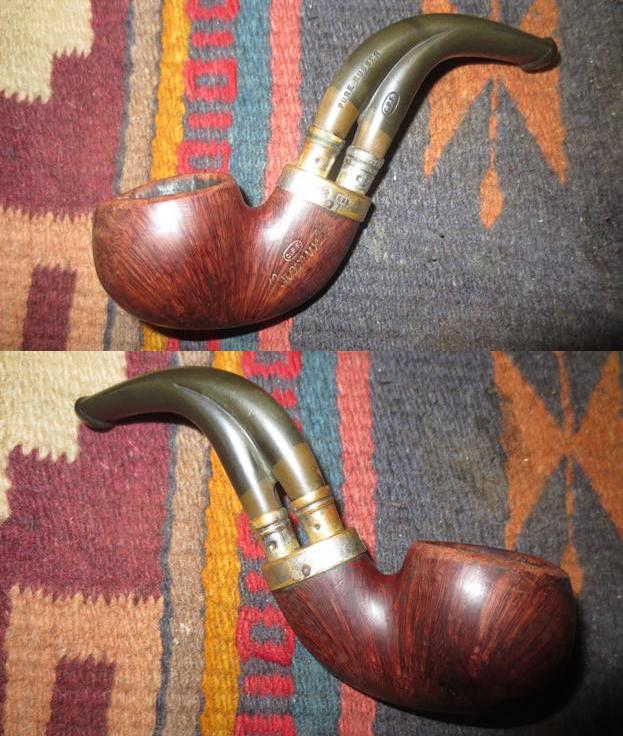
Another interesting piece of pipe history Manhattan Canted Dublin with a Horn Stem


Blog by Steve Laug

I have worked on at least two other pipes that I wrote about that bore the Manhattan stamp on the shank in the past few years. One of them was a cased, bent Bakelite Bulldog with a Lockrite Stem. It had a Bakelite Manhattan stamp on the left side of the shank. When I wrote that blog I could find no information on the brand. The second one was a cased Manhattan Bakelite Billiard. The shank and the case on this one both had the same identifying information. The inside cover of the case read Manhattan over French Briar over Bakelite. The shank read Manhattan De Luxe stamped on the left side. In researching the blog on that pipe, I found that a company in the US called the Manhattan Pipe Company made the pipe. There was no other information that I could find at that time.

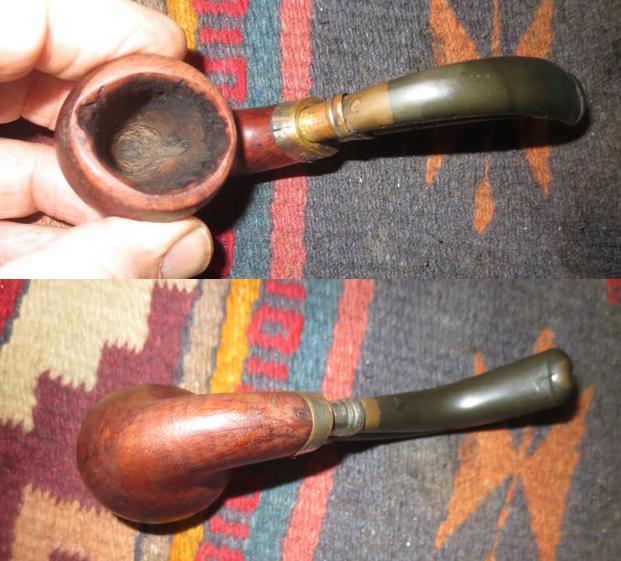
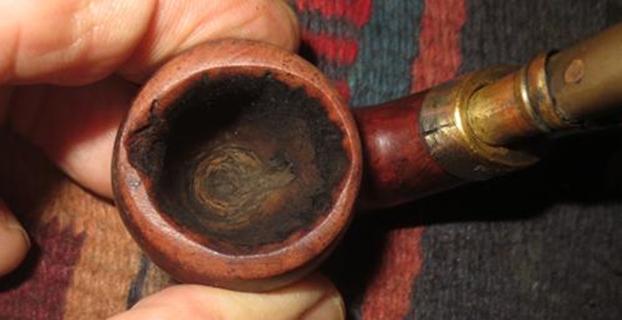
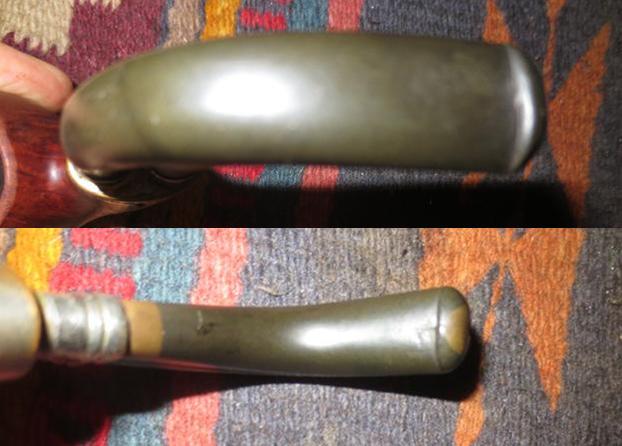
We found the next Manhattan on the virtual pipe hunt that my brother and I did in Montana. It was an older pipe than the others I had worked on. It also had a horn stem. I would call it a canted Dublin shape (others may differ on that). It is a very lightweight pipe and was in fair condition. The finish was worn and peeling but the briar had very interesting straight/flame grain that flowed on an angle on both sides of the bowl and horizontally along the shank. The back and front of the bowl had a mix of birdseye and flame grain. I have included the photos that Jeff took of the pipe before he worked his magic on it. I thought it would be interesting to see if there was any new information online regarding the brand. Of course, I checked on the Pipes, Logos and Stampings – PipePhil’s site. There was a listing for Manhattan pipes but there was not any new information and what was there was inconclusive. I turned to Pipedia to see if there was a new article. I was surprised to find that there was one, I do not know if it was new or not, but I do not recall seeing it before. The article was called The Manhattan Briar Pipe Company. It is an interesting read so I have included the article in its entirety as well as the advertisement from 1913 that showed a Manhattan pipe. The interesting thing for me is that the pipe is the same shape and style as the one I have in hand. The difference of course is that mine does not have a silver band and there is a horn stem rather than a vulcanite stem.

1913 Manhattan Advertisement

The Manhattan Briar Pipe Co. was organized in October, 1902 by the American Tobacco Company, under an agreement with the owners of the Brunswick Briar Pipe Company, as a New York corporation. Its initial address was 111 5th Avenue, New York City, and the value of its stock in 1902 was $350,000.00. American Tobacco Company had itself been founded in 1890 by J. B. Duke through a merger between a number of U.S. tobacco companies, and was one of the original twelve members of the Dow Jones Industrial Average in 1896. It was commonly called the “Tobacco Trust”.

The majority of the stock in Manhattan Briar Pipe Company was immediately acquired by the American Tobacco Company after the company was organized, but the prior owners retained a controlling minority interest for some years. In October, 1906, however, the American Tobacco Company acquired the remaining shares of stock, and from that point on Manhattan Briar was the pipe making branch of American Tobacco. By 1911, however, American Tobacco had been dissolved in anti-trust litigation, and Manhattan Briar Pipe Co. became a separate concern.

Manhattan Briar Pipe Co. had started operations in 1905 in Jersey City, New Jersey, having taken on a lease for a ten year period in 1905, and maintained a factory at Marion, New Jersey, where the pipes were made. By 1913, former American Tobacco pipe department chair John Glossinger was the president of Manhattan Briar Pipe Company, and began a significant advertising push for high grade pipes, using the slogan “Don’t spoil good tobacco by using a poor pipe”. It appears from cases having appeared on the estate market that Manhattan also sold meerschaum pipes, most likely rebranded articles originally made by European craftsmen.

After the expiration of the Jersey City lease the Manhattan Briar Pipe Company maintained offices and a factory at 415-425 Greenpoint Avenue, Brooklyn, New York beginning in 1915, evidently under the direction of W. C. Bastian, who had been granted a patent for a chambered pipe stem otherwise seemingly identical to a Peterson P-Lip in 1910. An employee of the company, one J. Gianninoto, was granted a patent for a device meant to permit the emptying of a cuspidor without the mess in early 1918, and the company continues to be listed in local directories through 1921. In 1922 Manhattan Briar was purchased by S.M. Frank and merged into that company. https://pipedia.org/wiki/Manhattan_Briar_Pipe_Co.

Further digging led me to a link on the S.M. Frank Co. & Inc. history page. Reading through the history of the company I found that S.M. Frank not only purchased the Manhattan Briar Pipe Company but also purchased WDC or William DeMuth & Company – two of the older brands that I enjoy working on. Here is the relevant section from the link: In the year 1900 Sam Frank Sr. started his own business, selling pipes and other tobacco items. His original office was located at 20 W. 17th Street, NYC. He was also closely associated with the sales staff of Wm. DeMuth & Co., selling their line of pipes. It was at this time that Mr. Frank first met Ferdinand Feuerbach and formed what would be a lifelong friendship. Mr. Feuerbach started working for the DeMuth Company in 1897 and by 1903 had become the production manager. In 1919, when Mr. Frank needed an experienced pipe man to run his pipe factory, located at 168 Southern Blvd., in the Bronx, he persuaded his old friend Ferdinand to join him. Mr. Feuerbach is credited with developing DeMuth’s popular Royal DeMuth and Hesson Guard Milano pipelines. In 1922, when S. M. Frank purchased the Manhattan Briar Pipe Co. the company incorporated.  http://www.smfrankcoinc.com/home/?page_id=2

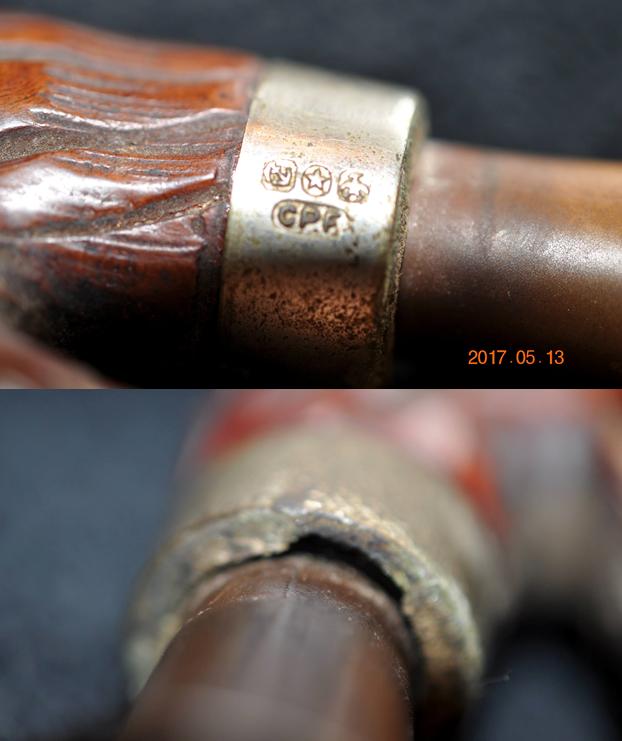
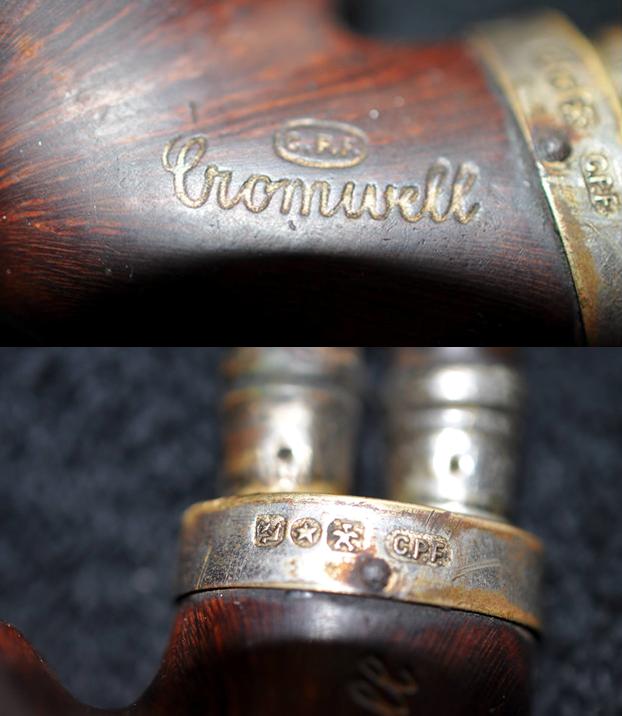
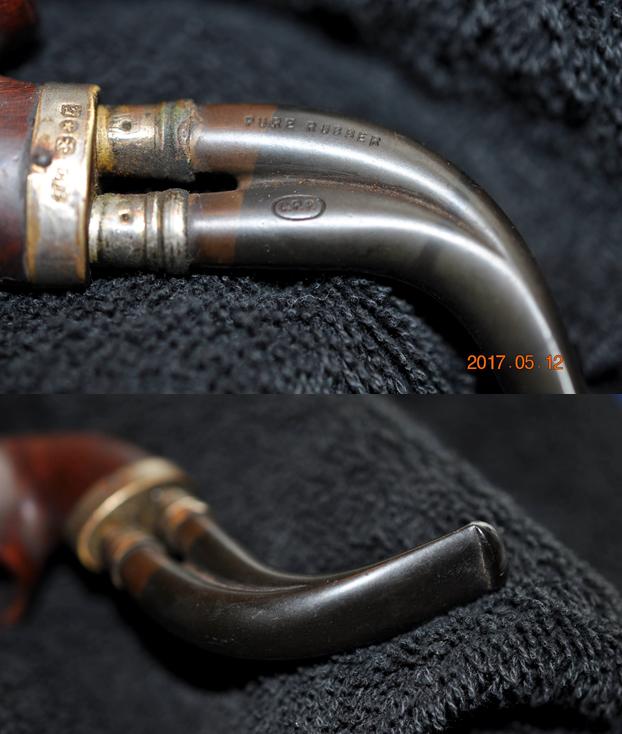
That link led me to me to some further information including an advertisement and a shape chart on Chris Keene’s Pipe Pages http://pipepages.com/mbpc2.htm. I have included them here with acknowledgement to Chris Keene. I always enjoy reading the old copy of these advertisements as they take me back to place where the pipe was an acceptable part of the life. Of course, this influx of information makes me wonder what I was looking for the last time I did a search for this brand. It seems some days you put in the right search parameters and hit the jackpot and other days the wrong ones leave you with nothing. I now knew more about the brand than I ever imagined when I began the hunt. I am pretty sure that my pipe was made in the era between 1900-1910. It is roughly from the same time period as the C.P.F. pipes that were in that lot.The bowl had a thick cake that had flowed out of the bowl and on the rim top. The inner edge of the rim appeared to be damaged but I would know more once I had it in hand. The next series of photos show the bowl from a variety of angles to show the condition of the finish and the grain around the bowl sides and bottom. The pipe was stamped on the left side of the shank MANHATTAN and there was no other stamping on the pipe.The horn stem was in decent condition with tooth chatter and marks on the top and underside near the button. There was also a small hole that was on the underside of the stem – it did not go all the way through the stem into the airway but it was present. The bone tenon was in good condition and the alignment of the stem to the shank was perfect.My brother Jeff has established his own process of thoroughly cleaning the pipes that he works on for me. This one was no exception, it was cleaned thoroughly. He reamed the bowl with a PipNet reamer and tidied it up with a Savinelli Fitsall Pipe Knife. He scrubbed out the mortise and the airway in the shank and the stem with pipe cleaners, cotton swabs and alcohol and cleaned the exterior of the threaded bone tenon with a cotton swab and alcohol. He scrubbed the exterior of the pipe with Murphy’s Oil Soap to remove the grime and grit on the bowl. He scrubbed the rim top with a tooth brush and the oil soap and was able to clean off the lava overflow. I took photos of the pipe to show the condition it was in when it arrived in Vancouver. The grain really was quite stunning. While the MANHATTAN stamp is legible on the left side of the shank it is quite faint. I took a close up photo of the bowl and rim top after my brother had clean it up. The rim top was in good condition, the bowl was clean but the inner edge of the bowl showed a lot of damage and looked like the same knife that had been used to ream the other pipes in this lot had done its work here as well.His clean up on the horn stem had revealed that the small hole I had noted on the photos above was indeed present and was a small separation between the fibres of the horn. Fortunately this is a simple repair but the repair always shows.Since the stem was clean, the repair was simple. I filled in the tooth dent on the top side of the stem near the button with clear super glue. I sprayed the repair with accelerator so that I could repair the split on the other side. I filled that split in with the same clear super glue, sprayed it with accelerator and took the following photos.I sanded the repaired areas with 220 grit sandpaper to smooth out the excess and blend it into the surface of the horn. I worked over the entire stem at the same time to smooth it out and remove some of the nicks and marks on the surface of the horn.Since I was already working on it, I decided to continue and polish the stem before moving on to the bowl. I polished it with micromesh sanding pads – wet sanding with 1500-2400 grit pads and dry sanding with 3200-12000 grit pads. I rubbed the stem down with Obsidian Oil after each pad to give more life to the horn. I gave it a final coat of oil after the last pad and set it aside to dry. The repair on the top of the stem disappeared into the horn while the larger split on the backside was smooth but more visible. I set the stem aside for its final polish on the buffing wheel once I finished the work on the bowl. I began by polishing the rim of the bowl with a 1500 grit micromesh pad. My purpose was to see if I could remove some of the darkening or if I would need to top the bowl. I was happy to see that the pad cleaned it up and no topping was necessary. I used a folded piece of 180 and 220 grit sandpaper to work over the inner edge of the rim and smooth out the rough spots. It did not take too much sanding to even things out and bring the bowl back into round. The next three photos show the process of the rim repair. I decided not to stain this pipe because the briar was so nice in its original form. I chose instead to polish the rim and bowl with micromesh sanding pads – wet sanding with 1500-2400 grit sanding pads and dry sanding with 3200-12000 grit pads. I wiped the bowl down with a damp cloth after each sanding pad to remove the sanding dust. The briar really began to shine as each successive grit of sanding pad was used. With the bowl finished, I put the pipe back together and took it to the buffing wheel. I buffed the bowl and stem with Blue Diamond, being careful not to damage the already faint stamping on the left side of the shank. I gave the pipe multiple coats of carnauba wax and buffed it with a clean buffing pad to raise a shine. I hand buffed it with a microfibre cloth to deepen the shine and give depth to the finish. The completed pipe is shown in the photos below. I love the way the rich striations of the stem play against the red of the buffed and polished briar. This is a beautiful pipe. Thanks for walking with me through the process.


A Small C.P.F. French Briar Horn captured my attention


Blog by Steve Laug

The next pipe I chose to work on from the lot of pipes my brother and I picked up on our virtual pipe hunt in Montana is another C.P.F. French Briar. This one is a classic horn shape with a chubby shank and a horn stem. It is delicate in terms of size (4 inches long and 1 ½ inches tall) but chunky feeling at the same time. Like the other banded pipes in this lot the band on the shank is loose and has turned so that the faux hall marks are on the other side. The finish is very dirty and the rim is damaged around the inner and outer edges. The horn stem is worn and there is tooth chatter on the top and underside of the stem near the button. The stem is overturned in the shank. The photos below show what it looked like before my brother did his clean up on it. If you would like to read about some of the others I have restored I have written about them in individual blogs. They include a CPF horn stem bulldog, a CPF French Briar bent billiard, a CPF Remington French Briar military mount billiard and a CPF French Briar Rhodesian. Just a reminder – CPF stands for Colossus Pipe Factory. The brand was made in the late 1880s and 1890s.Jeff took the above photos as well as the photos that follow to show the condition of the pipe before he cleaned it up. This sad little Horn comes from the same era as the other pipes in this find – the late 1880s – early 1890s. The finish was worn dirty but the grain underneath showed promise. There one large sandpit on the bottom left side of the bowl toward the front. The rim of the bowl and top edge of the pipe were in rough shape. The outer edge had been beat up pretty good by someone knocking their pipe out against something hard (if you are tempted to knock out your pipe on a railing or a garden rock please think twice before you do so). The inner edge of the rim appeared to be out of round and carved up by the same person who had used a knife to ream the others in this lot. There was a thick, crumbling cake buildup in the bowl and the lava from the bowl overflowed onto the damaged top of the rim. The band on the shank end was oxidized and the stamping on it was almost illegible. The horn stem had tooth marks on the top and underside near the button. Jeff took close up photos of the rim top to show how bad it looked before he started the cleanup. The thick cake and lava overflow on the rim filled in a lot of the damage. The full extent of the damage would be revealed once the cake was removed and the lava was cleaned.The next photos show the condition of the bowl sides and the flaking finish. The damage on the rim edge also can be seen in the pictures. The third picture shows the sandpit on the bottom left side of the bowl. You can also see the potential in the lovely grain that is peeking through the grime and flakes of old finish peeling off. The stamping on the left side of the shank is readable – it has the C.P.F. logo in an oval with the words French Briar above and below the oval. The stamping on Briar is fainter than the rest of the stamping. The silver band on the shank has the faux hallmark stamps that I have come to associate with C.P.F. pipes. The horn stem had some great looking striations and colour underneath the wear and tear. There was some tooth chatter and bite marks on both the top and underside at the button. I am very spoiled due to the excellent cleanup work that my brother Jeff does on these old pipes before I ever get them here in Vancouver. He has a pattern to his work and it rarely varies. Jeff thoroughly cleaned the pipe reaming the bowl with a PipNet reamer and tidying up with a Savinelli Fitsall Pipe Knife. He scrubbed out the mortise and the airway in the shank and the stem with pipe cleaners, cotton swabs and alcohol. He scrubbed the exterior of the pipe with Murphy’s Oil Soap to remove the grime and grit on the bowl. He scrubbed the rim top with a tooth brush and the oil soap. He scrubbed the band and stem at the same time to clean it. I took photos of the pipe to show the condition it was in when it arrived in Vancouver. I took a close up photo of the rim top and the sandpit on the lower left side. You can see the damage along the inner and out edges of the rim and the size and location of the sandpit in the photos. The general condition of the briar is rough though the grain patterns are promising.The horn stem is dry and lacklustre but it seems to be solid. There was no delamination happening along the sides or length of the stem and the tooth marks and chatter at the button were relatively minor. This horn stem was in the best condition of all of the horn stems I have worked on in this lot from Montana. The stem was overturned to the right due to wear on the mortise and the threaded bone tenon.I repaired the sandpit with a few drops of super glue and let it dry. Once the glue had dried I sanded the repair with 220 grit sandpaper to blend it into the surface of the briar.I topped the bowl on a topping board with 220 grit sandpaper to remove the damage and minimize the damage to inside and outside edges of the rim. I did not have to take off too much so I checked as I worked over the rim. Once I had the rim smooth I stopped sanding and wiped the bowl down with alcohol on cotton pads to clean off the dust from the surface. I filled in the nicks around the outer edges of the bowl with clear super glue. I carefully over filled the spots around the rim so that I could sand it smooth and leave a smooth flow to the rim. I sprayed the repairs with an accelerator so that I could sand it sooner. The next photos show the repair process and the end results.I gently topped the rim again on the topping board to smooth out the repairs on the rim top and sanded the outer edge of the bowl and inner edge of the bowl with 180 and 220 grit sandpaper. I was able to remove the excess repair material and smooth out the rim edges on both the inside and outside. The overall look was far better than when I started the restoration and it was minimally intrusive.I polished the band with a 1500 grit micromesh sanding pad to remove the tarnish and corrosion (I would use the other grits of micromesh pads later in the process to polish the band). Underneath the film and corrosion the band was gold in tint just like the other C.P.F. pipes that I have been restoring. I coated the shank end with white all-purpose glue and pressed the band in place. I aligned the faux hallmarks with the stamping on the shank. I wiped down the glue that squeezed out around the edge of the band before it dried so that it would not hamper staining the shank end when I was ready.I carefully heated the bone tenon with a Bic lighter, moving the flame constantly and not letting it get to hot. My purpose was to loosen the tenon and turn the stem straight once again. I repeated it several times and was able to get quite a bit of turn on the stem but not enough. I backed it off and let the glue in the stem harden again. I would need to come up with another method to address the worn threads in the mortise and on the tenon.I set the stem aside for a bit and turned my attention to polishing the briar in anticipation of staining it. I went through the full range of micromesh sanding pads – wet sanding with 1500-2400 grit pads and dry sanding with 3200-12000 grit pads. I wiped the bowl down with a damp cotton pad between pads. The pictures show the way the polishing brings the grain out on the bowl. I needed to stain it to blend the repairs into the rest of the bowl surface. The trick would be to stain it with light enough colour to highlight the grain and not mute it. I mixed 1 part of dark brown aniline stain with about 3 parts of isopropyl alcohol to make a medium brown wash for the bowl. I stirred it to get a good mix. I heated the briar and applied the mixture to the bowl. I flamed it and repeated the process until I was happy with the coverage on the bowl.Once the stain dried I wiped it down with alcohol and cotton pads to remove the excess and make it more transparent. I still found that the colour was too dark so I decided to polish it with micromesh sanding pads. I wet sanded with 1500-2400 grit pads and wiped it down with alcohol on cotton pads to remove the finish I had sanded free. I touched up the shallow gold stamping with Rub’n Buff European Gold using a cotton swab. I rubbed of the excess with a cotton pad. I finished polishing the bowl by dry sanding it with 3200-12000 grit pads. I wiped it down with alcohol after each pad to clean it. The pictures tell the story of the process and the end. With the bowl finished it was time to work on the stem. I sanded the tooth marks out and smoothed the flow of the stem with 220 grit sandpaper. I polished it with micromesh sanding pads – wetsanding with 1500-2400 grit pads and dry sanding with 3200-12000 grit pads. I rubbed the stem down with Obsidian Oil after each pad. After the last pad I gave it a final coat of oil and set it aside to dry. I painted the tenon with clear fingernail polish to build up the threads. I layered it on until the threads sat well in the mortise. I put the stem on the shank and it lined properly. I buffed the bowl and stem with Blue Diamond on the buffing wheel to polish out the scratches in those surfaces. I buffed the brass coloured band with Blue Diamond as well. I gave the pipe multiple coats of carnauba wax to protect the aged briar and the horn. The finished pipe is shown in the photos below. It is a beautiful piece of pipe history and I only wish it could tell its story so I could know a bit of its travels. Until such a time that pipes can talk I am left to my own imagination. Thanks for walking with me through the process of the restoration.

This Old CPF French Briar Rhodesian was in rough shape


Blog by Steve Laug

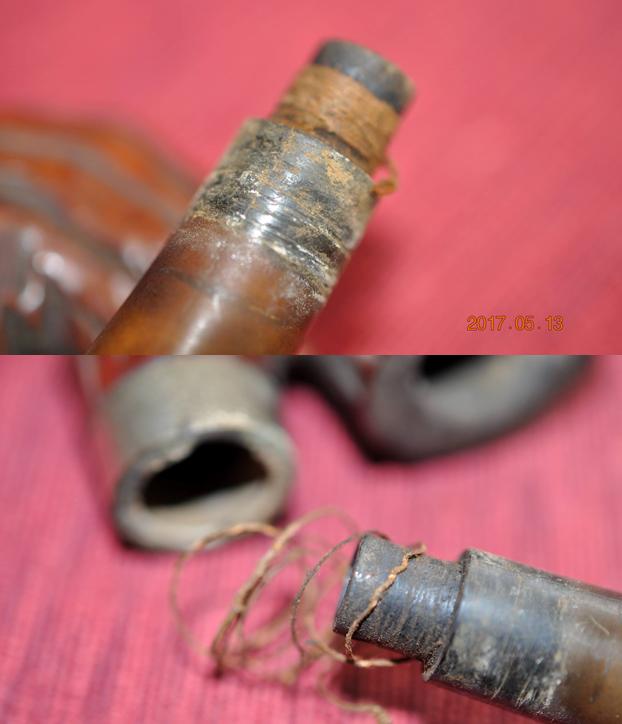
The next pipe I chose to work on from the lot of the lot of pipes my brother and I picked up on our virtual pipe hunt in Montana is another C.P.F. French Briar. This one is a Rhodesian shape with a chubby shank. It is an interesting shape and the carving around the band separating the cap from the body of the bowl. The band on the shank is loose and has turned so that the C.P.F. stamp on the band is on the other side. The finish is very dirty and the rim cap and top is heavily damaged. The horn stem is worn and there is tooth chatter on the top and underside of the stem near the button. There is a wrinkle in the horn on the underside mid stem. The stem looks like someone has either wrapped it or there is a gasket to keep it in place. The photos below show what it looked like before my brother did his clean up on it. If you would like to read about some of the others I have restored I have written about them in individual blogs. They include a CPF horn stem bulldog, a CPF French Briar bent billiard and a CPF Remington French Briar military mount billiard. (You can access them by clicking on the CPF Name above for a hyperlink to the blog). Just a reminder – CPF stands for Colossus Pipe Factory. The brand was made in the late 1880s and 1890s.Jeff took the above photo and the photos that follow to show the condition of the pipe before he cleaned it up. This sad little Rhodesian comes from the same era as the other pipes in this find – the late 1880s – early 1890s. If I thought the silver mount billiard was in bad shape this one was in worse condition than any of previous pipes I had worked on from this lot. It was worn and was in rough condition. The finish was worn off and appeared to be flaking in place. There were a lot of nicks, scratches around the outside of the bowl. The outside of the bowl was covered with grime, grit and was peeling. The rim of the bowl and top edge of the pipe were in abysmal condition. The rim had been knocked out on hard surfaces and burned. There were huge chunks missing all around the rim top. The front of the bowl was in worse condition than the back and sides. The height of the top cap was different all the way around. Once again there was a thick, crumbling cake buildup in the bowl and the lava from the bowl overflowed onto the damaged top of the rim. The band on the shank end was oxidized and the stamping on it was almost illegible. The horn stem had tooth marks on the top and underside near the button. There is a wrinkle in the horn on the underside mid stem.Jeff took close up photos of the rim top to show how bad it looked before he started the clean up. The thick cake and lava overflow on the rim filled in a lot of the damage. The full extent of the damage would be revealed once the cake was removed and the lava was cleaned. The third photo below shows the rim from one side and you can see the damage on that side. The next two photos show the condition of the bowl sides and the flaking finish. The damage on the rim edge also can be seen in the pictures.The stamping on the left side of the shank was readable – it had the C.P.F. logo in an oval with the words French Briar above and below the oval. The band on the shank end had the faux hallmark stamps that I was familiar with as well as the C.P.F. oval. The second photo shows something in between the shank and the stem. The first photo below shows the stem and the wrapping or gasket between the shank and stem. It is followed by photos that Jeff took when he removed the stem showing the wrapping – a thread of twine wrapped around the tenon to hold it in place in what appeared to be worn out threads in the mortise itself.The horn stem showed some tooth chatter, bite marks and what looked like wrinkles on the underside, but it was in better condition than the other previous horn stems I had worked on.Following his usual pattern, Jeff thoroughly cleaned the pipe. He reamed the bowl with a PipNet reamer and tidied up with a Savinelli Fitsall Pipe Knife. He scrubbed out the mortise and the airway in the shank and the stem with pipe cleaners, cotton swabs and alcohol. He scrubbed the exterior of the pipe with Murphy’s Oil Soap to remove the grime and grit on the bowl. He scrubbed the damaged rim top with a tooth brush and the oil soap. He scrubbed the band and stem at the same time to clean it. I took photos of the pipe to show the condition it was in when it arrived in Vancouver. You can see the damaged rim top and edges and the fill on the right side of the bowl. The condition of the briar is rough and the stem is oxidized. The band was loose so I removed it from the shank to clean it. I took a photo of the pipe parts.I took a close up photo of the rim top to show how great a job my brother did on it but also the extent of the damage that would need to be addressed in the repair.The stem was clean in decent shape. Very few tooth marks were on the top and bottom sides and those would be easy to deal with. The button was in excellent condition.I mixed a putty of super glue and briar dust to use for rebuilding the rim on the bowl and the top edge. The damage was quite significant so the repair would be extensive. I was hoping that it would work. Once it dried I topped the bowl on the topping board with 220 grit sandpaper and worked the inner edge with a folded piece of the same sandpaper. The repair came out quite well and gave me something to work with in the finished pipe. I polished the band with 1200-12000 grit micromesh sanding pads to remove the tarnish and corrosion from the surface. It worked really well and left behind a polished brass band. When I finished polishing the band I used an all purpose glue to glue it in place on the shank with the stampings aligned with those on the briar. I wiped down the bowl with alcohol on a cotton pad to remove the remaining sanding dust from the bowl and any grit that had accumulated in the carvings from my sanding. I polished the briar with micromesh sanding pads – wet sanding with 1500-2400 grit pads and dry sanding with 3200-12000 grit pads. I wiped the bowl down with a damp cotton pad to remove the dust after each set of pads. I stained the bowl with a dark brown aniline stain mixed with isopropyl alcohol in a 50/50 ratio. I flamed it and repeated the process until I was happy with the finish. I wiped the bowl down with cotton pads wetted with isopropyl to thin the stain and give it more transparency. When I finished that I buffed it with red Tripoli and sanded it down with 1500-12000 grit micromesh pads to polish it and give it the look that I was aiming for. The pictures tell the story. With the bowl done, except for the final buffing I turned my attention to the stem. The first thing I had to deal with was the worn threads in the mortise. I decided to fill in the threads on the tenon with super glue and make the stem a push stem. I could have removed the threaded tenon and inserted a new push tenon like those on meerschaum pipes but I wanted to keep the original look of the tenon and mortise so I figured that I could convert the stem to push status by simply building up the threads. I layered on clear super glue until I had the build up shown in the photos below. I still needed to sanded it smooth and reapply a final coat but you can see the process.I sanded out the tooth marks in the stem and worked on the “wrinkles” in the underside of the stem with 220 grit sandpaper until they were smooth. I worked on some of the marks at the tenon end of the stem at the same time as it seemed rough to touch.I polished the stem with micromesh sanding pads – wet sanding with 1500-2400 grit pads and dry sanding with 3200-12000 grit pads. I rubbed the stem down with Obsidian Oil after each pad to give the horn some needed oil to help with the dry feel that it had after over a hundred years of smoking. You can follow the development of the shine in the photos that follow. I love the feel and look of polished horn. There is nothing quite like it for translucency and feel. I had forgotten to touch up the gold leaf in the stamping on the shank up to this point so I applied some Rub ‘n Buff European Gold to the stamping with a cotton swab and rubbed off the excess. The stamping on this pipe was in excellent condition so it came out really readable.I buffed the pipe and stem with Blue Diamond on the buffing wheel to polish out the scratches that remained and to give it a shine. I was careful to avoid damaging the gold stamping on the shank. I gave the pipe multiple coats of carnauba wax to protect the horn and the briar. I buffed it with a clean buffing pad to raise the shine on the horn and the stem. I hand buffed it with a microfiber cloth to deepen the shine. The finished pipe is shown below. I am pretty happy how it came out considering what I started with. The rim and cap look the age of the pipe but the damage is gone and the pipe is ready for another 100 years. Thanks for going through the process with me on this challenging restoration.
Restoring another CPF French Briar – a Remington Silver Mount Billiard


Blog by Steve Laug

The next pipe I chose to work on from the lot of the lot of pipes my brother and I picked up on our virtual pipe hunt in Montana is a C.P.F. French Briar Silver Mount Billiard. It is a classic billiard shape, while the silver ferrule and cap on the stem end give it a feeling of elegance. The photos below show what it looked like before my brother did his clean up on it. It is another one from the lot of pipes my brother and I picked up on our virtual pipe hunt in Montana. I have written about several of the other CPF finds with the latest being a CPF horn stem bulldog and a CPF French Briar billiard. Just a reminder – CPF stands for Colossus Pipe Factory. The brand was made in the late 1880s and 1890s.Jeff took the above photos and those that follow to show the condition of the pipe before he cleaned it up. This little billiard comes from the same era as the other pipes in this find late 1880s – early 1890s. It was in worse condition in many ways than the previous pipes I had worked on from this lot. It was worn and was in rough condition. The finish was worn off and there were a lot of nicks, scratches around the outer rim of the bowl and top edge of the pipe. The outside of the bowl was covered with grime and grit. Once again there was a thick, crumbling cake buildup in the bowl and the lava from the bowl overflowed over the top of the rim. The damage to the outside of the rim made me think that the inner edge of the bowl was also damaged from the same kind of knife reaming. But I could not be certain until the cake was gone. The silver ferrule on the shank end was damaged and torn on end with what looked like small cracks in the silver. The tenon endcap was worn, scratched and some brass colour showed through the finish. The vulcanite stem had small tooth marks on the top and underside near the button and was oxidized.Jeff took the next two close up photos of the rim top and bowl. You can see the thick cake in the bowl and the chipped overflow on the rim top. The damage to the inside edge and the chips on the outer edge are visible under the cake. The next three photos show the grain under the dirty and damaged finish on the bowl sides. There are also scratches and nicks in the bowl and around the rim. The stamping on the sides of the shank was very readable. The left side read The Remington and the right side read French Briar. The silver ferrule is stamped with three faux hallmarks and the logo of C.P.F. in an oval. Some of the cracks and tears on the ferrule are also visible in the third photo. Jeff took photos of the condition and tears in the ferrule. It was in very rough shape and would take some work to repair and smooth out. But was it worth the effort. The bite marks, chatter and wear on the both the top and underside of the stem surface are visible in the next photos.Following his usual pattern, Jeff thoroughly cleaned the pipe. He reamed the bowl with a PipNet reamer and tidied up with a Savinelli Fitsall Pipe Knife. He scrubbed out the mortise and the airway in the shank and the stem with pipe cleaners, cotton swabs and alcohol. He scrubbed the exterior of the pipe with Murphy’s Oil Soap to remove the grime and grit on the bowl. He scrubbed the metal ferrule and stem end at the same time to clean it. I took photos of the pipe to show the condition it was in when it arrived in Vancouver. You can see the damaged rim top and edges and the fill on the right side of the bowl. The condition of the briar is rough and the stem is oxidized. Jeff had cleaned up the rim top and what was underneath was sad. The rim was chipped and damaged. The inner and outer edge of the bowl was badly damaged. The inner edge was out of round and the cuts in it seemed like they had been down when a previous owner had reamed the bowl with a knife. The outer edge was beat up with large chips and nicks going down the side of the bowl.The next photos of the stem and end cap show the brass shining through and the oxidation on the surface of both sides. The tooth marks and chatter are also visible. Fortunately they do not appear to be deep.I topped the bowl on the topping board using 220 grit sandpaper to remove the surface damage and clean up the edges from the top view. I did not have to top it too much to smooth out the rim. Topping the bowl also removed much of the damage to the edges as well.I used clear super glue and briar dust to repair the rough outer edge on the bowl top and the damaged fill on the back right side. I sanded the repairs smooth with 220 grit sandpaper to remove the excess repair and blend it into the surface of the briar.I sanded the repairs smooth and repaired the light bevel to the inner edge of the rim with a folded piece of 220 grit sandpaper to repair the damages to the inner edge.I polished the briar rim and the sides of the bowl with micromesh sanding pads – wet sanding with 1500-2400 grit and dry sanding with 3200-4000 grit pads. I wiped the bowl down after each pad with a damp cotton pad. The photos tell the story of the polishing process on the bowl. I heated the briar and stained it with dark brown aniline stain thinned by 50% with isopropyl alcohol. I flamed it to set it in the briar and repeated the process until the stain coverage was even all around the bowl.Once the stain had dried I wiped it down with isopropyl alcohol to thin the stain and make it more transparent. When I finished wiping it down I buffed it with red Tripoli to reduce the stain even more. The pictures that follow show the process of reducing the opacity of the stain. I touched up the gold leaf on the stamping using European Gold Rub’n Buff. I applied it with a cotton swab and rubbed off the excess with a cotton pad. The repaired stamping is shown in the next two photos.I decided to experiment with a repair to the tears in the ferrule using clear super glue. I had never tried this before but I had a hunch that the hardened glue would fill in the gaps and then I could sand it smooth. I applied the glue in layers until the edge was even with the end of the ferrule. I sanded the repairs after each application of glue until the surface of the repair matched the rest of the ferrule. While the glue is slightly visible it bound the tears together and I was able to sand it smooth and blend it into the silver. I polished the repair with micromesh sanding pads – wet sanding with1500-2400 grit pads and 3200-12000 grit pads. The following photos show the progress of the ferrule repair. With the bowl and ferrule restored and functional I turned my attention to the stem. I polished the metal end cap with Blue Diamond on the buffing wheel. I polished the vulcanite with micromesh sanding pads – wet sanding with 1500-2400 grit pads and dry sanding with 3200-12000 grit pads. I rubbed the stem down with Obsidian Oil after each pad and after the final pad I set it aside to dry. I buffed the pipe with Blue Diamond on the buffing wheel to polish the briar and the stem. I gave the bowl and stem multiple coats of carnauba wax and buffed it with a clean buffing pad to raise the shine on the pipe. I hand buffed it with a microfiber cloth to deepen the shine. The finished pipe is shown in the photos below. It has come a long way from the sad and damaged pipe that I started with when I began the restoration. What do you think? Was it worth the effort? Seems to me that it was more than worth it. Thanks for walking with me through this process.
Another Piece Pipe History – a Lovely CPF French Briar Bent Billiard


Blog by Steve Laug

The next pipe I brought to the work table was a little bent CPF French Briar billiard. The photos below shows what it looked like before my brother did his clean up on it. It is another one from the lot of pipes my brother and I picked up on our virtual pipe hunt in Montana. I have written about several of the other CPF finds with the latest being a nice little CPF horn stem bulldog. Just a reminder – CPF stands for Colossus Pipe Factory. The brand was made in the late 1880s and 1890s. This little bent billiard comes from the same era as the other pipes in this find. It was very worn and looked to be in rough condition. The finish was non-existent and there were a lot of nicks, scratches and grime on the surface all around the bowl. There was a thick, crumbling cake buildup in the bowl and it overflowed on to the top of the rim. It looked like the inner edge of the bowl was damaged from reaming with a knife but I could not be certain until the cake was gone. The gold band on the shank was so badly oxidized that it was impossible to see what was under the grime and sticky debris on it. The horn stem had tooth marks on the top and underside near the button and looked like it was delaminating along the edges and the bend on the underside. The horn was very dry. Jeff took some close up photos of the bowl and rim from the top. You can see the crumbling condition of the cake in the bowl and the thick overflow on the rim top. It was really hard to see the condition of the inner edge of the bowl.The grain underneath all of the grim on the sides of the bowl was really quite stunning, even through the debris, grime and buildup. The birdseye and cross grain stain out really well even through the dirty surface. The oxidation on the band was also heavy and very rough. It is hard to know what is underneath the corrosion.The stamping on the left side of the shank has the standard C.P.F. logo in an oval with French arched over the oval and Briar arched underneath. The stamping on the C.P.F. is fainter than the stamping on French Briar. The second photo shows the junction between the band and the horn stem. The horn looks rough and grainy.The next four photos show the stem from various angles. The first and second photos show what looks like delaminating on the left side near the button. The third and fourth photos show tooth marks on the top and underside of the stem at the button. The tooth marks on the top are deep. Jeff thoroughly cleaned the pipe. He reamed the bowl with a PipNet reamer and cleaned it up with a Savinelli Fitsall Pipe Knife. He scrubbed out the mortise and the airway in the shank and the stem. He scrubbed the exterior of the pipe with Murphy’s Oil Soap to remove the grime and grit on the bowl. He scrubbed the tenon with a tooth brush and removed the tars and oils. I took photos of the pipe to show the condition it was in when it arrived in Vancouver. I took a close up photo of the rim top to show the condition it was in after my brother had cleaned it up. It is amazing to me that he was able to remove the thick buildup on the rim top and the crumbling cake in the bowl and leave no debris behind. It was better than I had expected. The rough spots would be easy to sand out and smooth the ridges and bring it back to round. It appeared that the pipe had never been smoked to the bottom of the bowl as the bottom of the bowl is raw briar.The next two photos show the condition of both sides of the stem after the cleanup. Note the roughness on the underside of the stem and the tooth marks/chatter on both to top and the bottom near the button.You can see the oxidation on the band in the photos above. It is not clear what colour it is. The sticky grime was cleaned off but the oxidation would need to go. I sanded the band with 1500-2400 grit micromesh pads to remove all of the sticky substance and the oxidation on the surface. It came off really easily with some polishing. I glued the band in place on the shank with white glue and let it dry.I smoothed out the damage on the inner edge of the rim with 220 grit sandpaper and gave it a light bevel to minimize the damage. I stained the beveled edge on the bowl with a black Sharpie pen to blend it in with the inside walls of the bowl. I wet sanded the bowl and rim with 1500-2400 grit micromesh pads and dry sanded it with 3200-12000 grit pads.  I wiped it down with a damp cotton pad to remove the sanding grit. I polished the band while I worked on the bowl with the same grits of micromesh pads. The following photos showed the polishing on the briar. I touched up the gold leaf on the CPF French Briar logo with European Gold Rub’n Buff. I applied it with a cotton swab and wiped down the excess gold. The light of the flash showed more of the gold buff that needed to come off.I stained the bowl with a 50/50 mix of dark brown aniline stain and isopropyl alcohol. I applied the stain and flamed it with a lighter. I repeated the process until I felt the coverage was even. Once it dried I took some photos of the stained bowl. It is too dark to my liking but the coverage was even. I wiped the bowl down with alcohol on cotton pads to make it more transparent and let the grain show through. I polished the briar with micromesh sanding pads to further remove the stain and make the grain show through. The process of unveiling the grain is shown in the photos that follow.With the bowl finished I worked on the stem. I used some small drops of super glue to fill in the tooth marks on the stem surface and the button. Once the repairs had dried I sanded them smooth to blend them into the surface of the stem. I polished the stem with micromesh sanding pads. I wet sanded it with 1500-2400 grit pads and dry sanded it with 3200-12000 grit pads. I wiped the stem down after each pad with Obsidian Oil on a cotton cloth. I gave it a final coat after the last pad and set it aside to dry. I buffed the stem and bowl with Blue Diamond polish on the buffing wheel to polish it. I gave the stem and bowl multiple coats of carnauba wax. I buffed the waxed bowl and stem with a clean buffing pad to raise the shine. I hand buffed it with a microfiber cloth to deepen the shine. The finished pipe is shown in the photos that follow. The old timer looks really good and should have long years of life in it. I look forward to enjoying this pocket sized pipe. Thanks for walking with me through the process of the restoration.
Breathing life into an 1890’s era CPF French Briar Horn Stem Bulldog


Blog by Steve Laug

I decided to work on another one of the older 1890s CPF (Colossus Pipe Factory) pipes that my brother and I found on our virtual pipe hunt in Montana. That antique mall had just received a large estate of older CPF and WDC pipes. We picked up 30 pipes and one pipe case. There were 11 unique CPF brand pipes. Included were the following pipes (the three pipes that I have already restored are listed as hyperlinks below and you can click on any of them to read about the restoration. The rest will be finished in the near future). I chose to work on the French Briar Bulldog for this blog.
CPF military mount Oom Paul
CPF The Remington, French Briar, (military mount)
CPF French Briar with Hallmarked band and horn stem. Filigree carving around bowl
CPF Pullman with Horn Stem
CPF Siamese with twin horizontal stems
CPF Cromwell with twin vertical stems
CPF Olivewood Bowl Sitting on Petals- Horn Stem
CPF French Briar Bulldog with Horn Stem (the pipe in this blog)
CPF French Briar with tarnished metal band and a Horn Stem (looks like mini-Wellington)
CPF French Briar Horn Shaped Pipe with metal band and Horn Stem
CPF Colon French Briar with Black Meer Bowl and Amber stem

It is a beautifully grained, long shank Bulldog with a horn stem. It is stamped with the C.P.F. in an oval logo. Arched above and below the logo it is stamped French Briar. There is a small flaw in the briar at the end of the Briar stamping. The finish was worn but the pipe was in otherwise good shape. There was a thick cake in the bowl and an overflow of lava on the rim top. The inner edge of the rim top appeared to have some damage but otherwise it was in good shape. The double ring around the bowl under the cap was undamaged and the center ring was unbroken. The horn stem was worn at the button and had been well chewed on both the top and bottom sides. The stem appeared to be underclocked in the pictures that follow but once my brother cleaned it up I would have a better idea with regard to that.
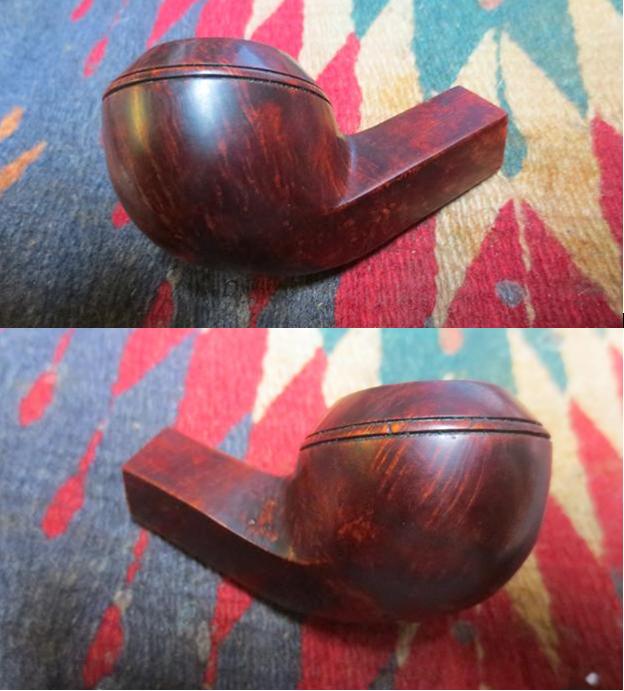
My brother took the following photos of the pipe before he started cleaning it. They give an overall picture and also close up pictures of the pipe from a variety of angles. He included a photo of the stamping on the left side of the shank. It was originally stamped with gold filigree in the letters but that had pretty much worn out. You can see the flaw or gouge going through the AR on the word Briar.The next four photos show the grain on the bowl from a variety of angles. The finish is very worn and dirty but the grain is quite nice and there are no fills in the briar. The close up photo of the rim top shows the scratches and lava on the top and the slight damage to the inner edge of the bowl. A fairly thick cake lines the walls of the bowl and is peeling on the front edge.The next two photos show the underclocked horn stem and what appears to be red thread that had been used to align the stem. It had obviously not worked.The next four photos show the condition of the horn stem. It is dried, chewed and delaminating at the button on both sides of the stem. The button itself also has some tooth damage to the top and underside. There appears to be a lot of colouration to the striations of the horn and it should clean up and be beautiful once polished. My brother did an amazing job on the cleanup of this old timer. His work keeps getting better and better and does not damage the old briar or horn. He reamed the bowl with a PipNet Reamer and cleaned it up with the Savinelli Fitsall Pipe Knife. He scrubbed the airway through the tenon and into the shank with pipe cleaners, cotton swabs and alcohol until it was clean. He scrubbed the externals with Murphy’s Oil Soap and was careful around the remaining gold filigree in the stamping on the left side of the shank. He was able to remove the tar and lava build up on the rim top and showed that inner edge was just lightly damaged. And low and behold once he had removed the thread on the metal tenon the stem lined up perfectly. I took the next four photos of the pipe when it arrived in Vancouver. I took a close up photo of the rim top and bowl to show how thoroughly Jeff had cleaned it. It would take very little work with a folded piece of sandpaper to smooth out the remaining damage to the inner edge of the bowl.He had been able to clean out the debris from inside the stem and also smooth out the exterior of the stem. The delamination of the horn would need to be stabilized and the deep tooth wear would need to be rebuilt to restore the taper of the stem.I decided to change my normal routine a bit and used amber coloured super glue from Stewart MacDonald to stabilize the horn around the button and up the surface of the stem for about an inch. This would bind together the strands of the horn and build up the tooth damaged areas on the surface. Once it dried I would be able to smooth out the repaired surface and blend it into the rest of the stem. I had an idea that the amber super glue would blend in better with the colours of the horn in this particular stem.I sanded the repairs with 220 grit sandpaper to blend them into the surface of the horn. I wanted a smooth transition between the repair and the rest of the horn. I also wanted to see if I had covered the damaged area of the stem surface well enough. I was pleased by what I saw once I had smoothed the repairs out. I polished the stem with micromesh sanding pads – wet sanding with 1500-2400 grit pads and rubbing the stem down with Obsidian Oil after each pad. I dry sanded the stem with 3200-4000 grit pads to further polish it and gave it more oil after each pad. The oil serves to give life to the dried horn. I buffed the stem with Blue Diamond on the buffing wheel before finishing polishing it with 6000-12000 grit micromesh sanding pads. I rubbed it down with Obsidian Oil after each of the micromesh sanding pads and let it dry after the final pad.With the stem finished I worked on the inner edge of the bowl. I used a folded piece of 220 grit sandpaper to smooth out the damage on the bowl edge. It did not take too much work to make it smooth once again. I sanded the top of the rim with micromesh sanding pads – wet sanding with 1500-2400 grit pads and dry sanding with 3200-12000 grit pads (I forgot to take photos of the work on the rim top with the 3200-12000 grit pads).I used some European Gold Rub’n Buff to rework the stamping on the shank side. I applied it to the stamping with a cotton swab and then wiped off the excess. The photo below shows the stamping with the gold applied.I put the stem back on the shank and buffed the pipe with Blue Diamond on the buffing wheel. I carefully worked over the shank so as to not damage the stamping. I gave the entire pipe multiple coats of carnauba wax to protect the briar and the horn. I buffed it with a clean buffing pad to raise the shine and hand buffed it with a microfiber cloth to deepen the shine. The finished pipe is shown in the photos below. It is a classic piece of pipe history. The shape and the finish of the pipe are exceptionally well done and show European craftsmanship that Colossus Pipe Factory was famous for. This is one of those pipes that will have a place in my own collection. It is just too beautiful to part with!
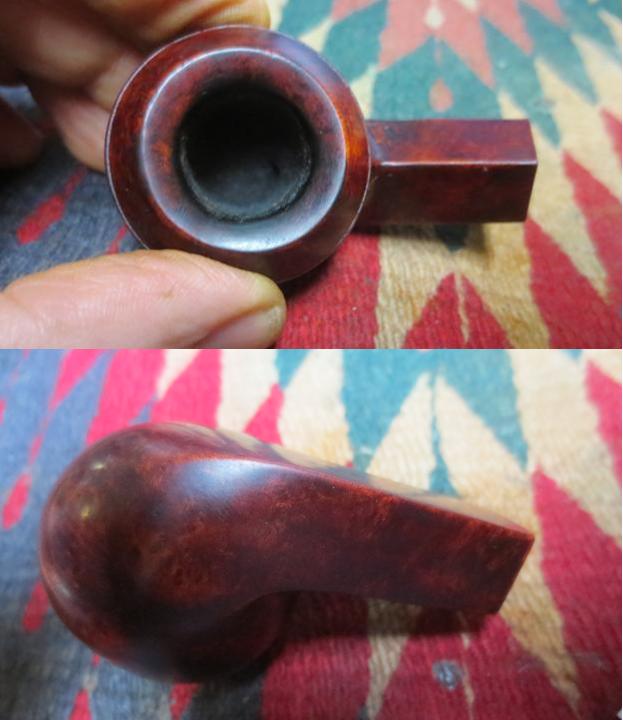
Jen’s Trove No. 7 – A Trident Blasted Bent Billiard with a Question of History


Blog by Dal Stanton

This pipe represents the 7th of 8 pipes that Jen rescued from my ‘Help Me!’ baskets.  She’s leaving Bulgaria very soon returning to the US after working with us for a few years.  She is not returning without gifts!  She has chosen a trove of pipes that have garnered her attention to give as gifts to the men in her family.  Each of these gifts has the added benefit of helping the Daughters of Bulgaria, our work here in Bulgaria with women and girls who have been sexually exploited and trafficked in Europe.  My love of restoring pipes as The Pipe Steward is a way of shining a light on the tragedy of those caught in this modern-day slavery.

The ¾ Bent Billiard got Jen’s attention I believe, because of the blasted finish.  The only stamping is under the shank and it is marked, “TRIDENT”.  However, when I saw this pipe from an eBay seller in the UK, my attention was drawn also to the old-style P-Lip military stem and the old vintage feel of the pipe overall.  Here’s what I saw on eBay UK:This seller had other offerings which I also placed bids to take advantage of combined shipping from UK to Bulgaria.  With the Trident, I added a Hardcastle ‘Deluxe’ No. 12, and a Bewlay ‘The General’ to my basket for restoration.  Now, on my work table on the 10th floor apartment of a formerly Communist apartment block, I look at the Trident with the question, ‘Is this pipe actually vintage old or does it just look old?’  I take more pictures to fill in the gap. My first action was to look in my autographed copy of my eBay acquired copy of, ‘Who Made That Pipe?’ by Herb Wilczak & Tom Colwell.  It’s not autographed to me, but still cool!In ‘WMTP?’ the name ‘TRIDENT’ was associated with two names, ‘E Deguingand & Son/ H. Comoy’.  Country of origin, ENGL.  First looking at Pipedia’s article on Comoy’s, I discover that ‘Trident’ is a second made by Comoy’s – one among many!  Looking at PipePhil.eu, I found an example of this Comoy second which still displayed the ‘Comoy’s’ stamping and nomenclature.  The Trident before me carries no other markings and for this reason, I’m dubious of it being from the Comoy’s line of seconds.Then I turn to ‘E Deguingand & Son’ to see what I can find.  Pipedia has a helpful article that collates information about the name.

Deguingand & Son

Emile Deguingand & Son, Ltd. was a briar pipe maker in London at the end of the 19th and beginning of the 20th centuries. Originally they manufactured pipes in London, on Hamsell Street in Cripplegate, but that entire area was destroyed in the fire of 1897. Deguingand began selling at 5 Colonial Avenue, Minories, East London beginning in 1897. That same year Emile Deguingand purchased a pipe factory built by Charles Cayron in 1885 and 1886 at a place called Sur les Etapes in St. Claude, France. The factory in St. Claude was raised and enlarged in 1900 and 1902.

In 1906 Deguingand was granted a patent in France for a pipe consisting of a removable combustion chamber over a lower chamber filled with asbestos into which the airway ran.

In 1910, E. Deguingand & Son, known in France as E. Deguingand et Fils, became S.A. des anciens Etablissements Deguingand et Fils with Francis and Paul Deguingand’s entry into the business. While the plant doubled in size in approximately 1926, it was closed around 1930 and later converted to a commercial warehouse.

One pipe line known to have been sold by Deguingand was the Trident.

The last line is interesting in terms of the exclusivity it seems to imply.  The article is helpful but leaves out much and creates more questions.  When Deguingand opened operation in St. Claude, France, 1897, the same year opening another location in London after the fire of 1897, the assumption I believe, that is true, is that operations continued in both London and St. Claude under the Deguingand name.  The indication is that the operation in France closed in 1930, but there is no indication that operation in London ceased as well.  The challenge I am left with is that I can find precious little about production of Deguingand pipes or ‘Trident’ through the 1900s other than this early century reference by Pipedia.  If theories can be developed from silence, the E. Deguingand & Son Company is NOT listed in the 1949 Tobacco Retailers’ Almanac found at Chris’ Pipe Pages.  Can one deduce from this that pipes were no longer produced under the name?

The only other finding in my research that sheds some light on the E. Deguingand & Son name, comes from ‘Company Search Made Simple’ website. Here I find that E. Deguingand & Sons was incorporated, at least as an English entity, 3/12/1912, and was dissolved 7/30/1996.  The address was listed as 20 VANGUARD WAY, SHOEBURYNESS, SOUTHEND ON SEA, ESSEX, SS3 9RA.  The Director of the corporation was listed a John James Adler, from 8/1/1991 to 7/30/1996 – the same date as the dissolution of the corporation.  Of interest to me, but probably not a surprise for others more informed (!), was when I was trolling around the corporate bones of the corporate umbrellas created to manage sales and acquisitions of pipe names in much of pipedom in England and France – I discovered, Cadogan.  On this site, I compiled this list of well-known names in the pipe world that were started at different times, but all were, 1) dissolved on the same date (7/30/1996, with the exception of Kaywoodie, a few weeks later), 2) who shared the same address (Southend On The Sea) and, 3) had the same Director.  Here’s the list I compiled.What this tells me is that E. Deguingand & Son, Limited, existed at least as a corporate entity in the Cadogan consortium until 1996, but I have no indication that pipes were produced under the corporate name from the 1930s to 1996.  I’m growing in my understanding of the name, but is the Trident before me of a vintage that dates to the early 1900s?  I’m not sure, but one thing about the Trident that creates question – Does the P-Lip Military style stem help place this pipe?  It looks older to me, but my question lingers.

When the well runs dry in my research, I send questions to Steve to help prime the pump.  I share with him some of the research related above and some pictures of the Trident, but my specific question is, “Can a P-Lip stem indicate the age of a pipe – or contribute to its age placement?”  Steve’s first response was helpful in clueing me into the probability that the Trident before me could very well be of an early 1900s vintage.  His response was: “It looks a lot like the Wellington that WDC made in the early 1910-1920s.”  It was not difficult to find these artifacts in Pipedia’s article about the William Demuth Co. and the WDC Wellington – a WDC mainstay over the years. With the uncannily similar Wellington pictured above, courtesy of Doug Valitchka from Pipedia, the Trident lookalike before me could very well be of an early century vintage and a product of E. Deguingand & Son, Limited.

My second inquiry to Steve was how it all worked.  Did WDC make pipes (Wellington styled) for E. Deguingand and E. Deguingand marked them with ‘Trident’ though made by WDC?  Steve’s next response was even more to point questioning the accuracy of attributing the Trident to E. Deguingand.  He said,

I wonder if the E. Deguingand is correct. I wonder if WDC in NYC did not make a Trident pipe. I would do some digging in old WDC catalogues and see if you can’t find it. It has the same style band, same style faux p-lip with the air hole in the end of the button rather than on top. WDC did that I think to avoid issues with Peterson.

I did as Steve recommended and looked at several old WDC catalogs I could find online.  One forum was helpful in providing a WDC Master List.  Unfortunately, no ‘Trident’ listing was evident there or anywhere else I looked indicating a William Demuth Company source. I come up empty finding a direct connection between WDC and the Trident.  If anyone can help solve this mystery, I would be grateful!

I approach the restoration of this Trident as an early vintage 1900s vintage and will seek to maintain that.   Not knowing at this point if this is an early E. Deguingand Trident or a WDC made Trident, I appreciate the fact that I do have an ‘Ole Timer’ and will handle him with care!  The ‘faux’ P-Lip Military style stem is heavily oxidized and this will be addressed.  The chamber has moderate cake and this will be removed to reveal fresh briar.  The rim has some lava but is in good shape overall.  The stummel needs cleaning of the grime and band polished.  With an appreciation for the Trident before me, I begin the clean-up by putting the P-Lip stem into the OxiClean bath to start dealing with the heavy oxidation. With the stummel in hand, the fire chamber has light carbon cake build up.  I use the Savinelli Pipe Knife to ream the chamber.  It does the job very quickly.  I then wrap 240 grit sanding paper around a Sharpie Pen and sand the chamber wall to remove more residue carbon.  I conclude the chamber clean up by wiping with a cotton pad wetted with alcohol to remove residue carbon dust.  The pictures show the progress. With the chamber reamed and cleaned I turn to the internals.  Using cotton swabs, pipe cleaners dipped in alcohol and needle files to scrape the edge of the mortise, I work on cleaning the internals of the stummel.  The internal architecture of the mortise has two internal holes drilled.  The upper hole is the airway leading to the draft hole.  Underneath this, a hole is drilled to create a reservoir for moisture to collect.  I take a picture of this and include a cut-away of a WDC Wellington from The Briar Files discussion of WDC Wellingtons After some effort working on the gunk removal, and with the growing need to attend to other obligations not having to do with pipes or their restorations, I decide to continue the cleaning job using the kosher salt/alcohol soak.  I fill the chamber with kosher salt that leaves no aftertaste, and twist and stretch a cotton ball to insert into the mortise, acting as a wick to draw out the oil and tar.  I use a large eye dropper and fill the bowl with alcohol until is surfaces over the salt.  I set it aside and let it do it work.Later, I remove the very oxidized P-Lip Military stem from the OxiClean bath and the bath did the job of raising the oxidation to the surface.  The stem is now a light grey color not the usual dark olive green.  I go to work removing the oxidation using a barrage of tools.  I wet sand the stem in warm to hot water for about 30 minutes using 600 grit paper!  Oxidation is very stubborn in the edges of the P-Lip orific button lips.  I utilize hard edges to wedge the sand paper in the corners.  I then use 0000 grade steel wool to work over the entire stem including the hard to reach corners and curves.  Finally, I use Mr. Clean MagicEraser to put the oxidation to rest.  This phase looks good – it didn’t come easily!I go directly to cleaning the internals of the stem with pipe cleaners dipped in isopropyl 95%.  It did the job quickly.After some time, I return to the stummel that is having a salt/alcohol soak. The salt has darkened showing that it has done its part.  I remove the expended salt and cotton wick and clean the stummel with paper towel to remove residue salt.  I return to cotton swabs and pipe cleaners, also using long bristled brushes to finish the job. With internals clean, I take another look at the stummel surface.  I use undiluted Murphy’s Oil Soap to remove the grime in the crevices of the blast and on the rim top.  I utilize cotton pads and a bristled tooth brush.  The rim has mild cake and I use a mild kitchen scrub pad to gently clean it.  I also clean and polish the band while I was at it. Because there was normal wear around the rim, the cleaning leaves lightened areas devoid of finish, though the blasted architecture of the rim is intact.  Using the lightest stain stick I have in the basket (Furniture Repair Marker – Oak), I color in the rim.  I like the way it darkened and complimented the texture of the hues.  I decide to use the stick on the stummel as well to highlight and deepen the peaks of the blasted surface.  I like how it turns out overall – nice.  I set the stummel aside to dry thoroughly. I take the stem to begin the micromesh pad cycles and to my chagrin, I see that the oxidation is peeking through – mainly around the curves leading to the crest of the military stem (I’m not sure if there is a technical name for that part of the stem!).  Ugh!  It’s already late so I elect again to put the stem in the OxiClean bath to see if it will do the job.  I heat the OxiClean solution in the microwave until it’s warm and plop the stem back in and turn out the lights!The next morning, I go straightaway to the stem in the bath, fish it out, wet sand the problem, oxidized areas with 600 grit paper then with 0000 steel wool.  I’m hoping that the oxidation is now removed as much as it can be removed.  I move on to wet sanding using micromesh pad 1500 to 2400, then dry sanding with pads 3200 to 4000 then 6000 to 12000.  I follow each cycle with an application of Obsidian Oil to revitalize the once oxidized Military, Faux P-Lip style stem.  I’m pleased with the pop of the vulcanite – it looks good. I put the stem aside to fully absorb the Obsidian Oil and to dry. Next, I apply Museum Wax to the bowl with a small cotton cloth – working the wax in the blasted surface landscape.  Then, I buff the bowl with a shoe brush to assimilate the Museum Wax into the surface and begin the shining process.  Turning to the Dremel, I mount a clean cotton cloth buffing wheel and set at speed 2 (40% full power) and more fully buff the stummel.  The buffing wheel does a good job working the wax in more thoroughly and bringing out a deep, resonate shine.  The pictures show the progress. With the Dremel already in use, I load the cotton cloth wheel dedicated to applying Blue Diamond compound. Using the wheel, I apply the compound to the nickel-plated band to bring out the shine.  As hoped, the buffing does the job well.  The Trident is dressing up well! Taking the stem, I mount the cotton cloth buffing wheel dedicated to applying carnauba wax.  I apply the wax to the stem to bring out the shine and protect it.  After applying a few coats of carnauba wax, I then reunite the stummel with the Military style stem and give the entire pipe a rigorous hand buffing using a microfiber cloth to raise the shine of the Trident even more.

Only two things leave me a bit wanting with the restoration and recommissioning of this Trident Blasted 3/4 Bent Billiard – the distinguished Military stem still holds some small traces of oxidation around the concave curves of the stem’s crown or horn.  Yet, my, my, it looks good mounted on the blasted stummel with its newly polished band!  The other item was not being able to identify clearly the maker of this Trident – whether E. Deguingand according to Wilczak and Colwell or the Wm. Demuth Co. as Steve suspects because of the preponderance of similarities between the Trident and WDC’s mainstay of the same style pipe, the Wellington.  In whatever way this question is ultimately settled, the Trident’s vintage status seems to place him in the 1910 to 1930 age range.  Truly, an ole timer who is now ready for another lifetime serving a new steward – gifted to one of Jen’s family members as she soon returns to the US from Bulgaria.  Her gifting helps to benefit the Daughters of Bulgaria, our work here in Bulgaria with those women and girls who have been sexually exploited and trafficked in Europe.  For more information about this, and why I do what I do, check out my blog at The Pipe Steward.  Thanks for joining me!

Jen’s Trove No. 5: Recommissioning a Mehaffey Cutty 6


Blog by Dal Stanton

When I first saw this pipe on eBay, what drew my attention was the canted bowl.  I wasn’t sure then what shape it was, and when Jen recently pulled it out of the “Help Me!” basket to add to her trove of pipes she was collecting for restoration to give as gifts to men in her family, I still didn’t know.  After pulling it out on my work table, I took another look and started looking at my ‘go to’ sites for shapes charts.  My thinking was, “Chimney” because of the taller than usual bowl that can be canted, but “Cutty” was also in the running mainly because of the forward canted bowl.  When I sent my thoughts about the shapes and a picture to Steve for his input, his verdict was a ‘Cutty’ shape.  The forward canted bowl was the clincher and that my pipe’s bowl was tall, but not reaching ‘Chimney’ proportions.  Here is what I saw on eBay and what I sent to Steve:I enjoyed TobaccoPipes description of this very old pipe shape having its genesis in the clay world:As far as we can tell, the Cutty is the oldest pipe shape that is still available today.  

 As early as the 16th century, pipe smokers would settle in at their favorite tavern and–if they had a high enough social status–would pull out a long clay pipe, almost always a Cutty shape.  This shape was common because it was easy to craft in the molds used for clay pipes (William Goldring, The Pipe Book: A History and How to: 1973).  

Clay Cutty pipes, up until about a century ago, always included a “spur” or “boot” of extra material at the bottom of the bowl.  When smoking the same clay pipe all day long, the bowl tends to get pretty hot.  The spur allowed the smoker to grasp the base of the pipe without burning his hand.  Today, some Cutty’s keep the spur attachment, but not many.

A modern example of a Cutty pipe is the Savinelli Petite 402 model.

 Like the Dublin family this pipe falls in, the Cutty has a conical shaped chamber, which means the diameter of the chamber tapers down the closer you move to the bowl.  The largest difference between a Dublin and a Cutty is that while a Dublin has evenly thick chamber walls that move down the bowl, the Cutty has more of a rounded shape, in some ways resembling an Egg.  As pointed out by G.L. Pease, the Cutty has an exaggerated forward cant, originally purposed to keep the heat and smoke away from the smoker’s face.  
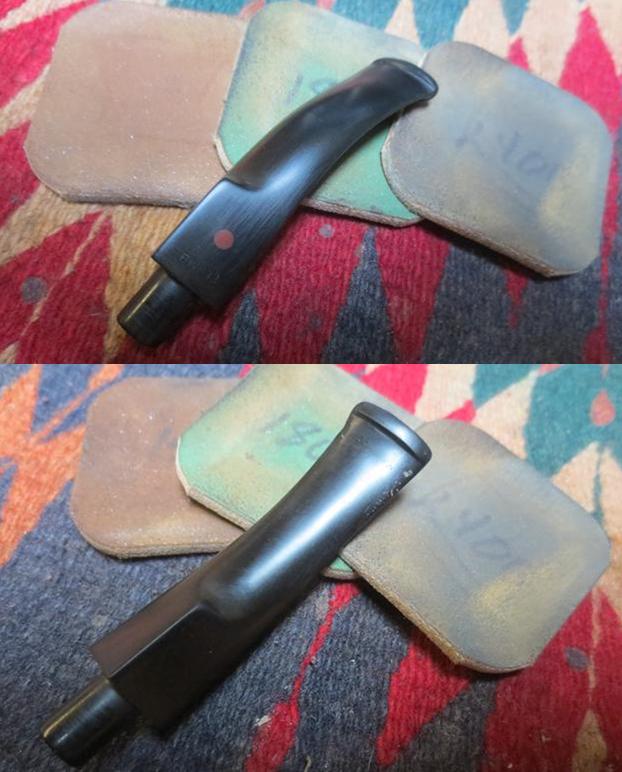
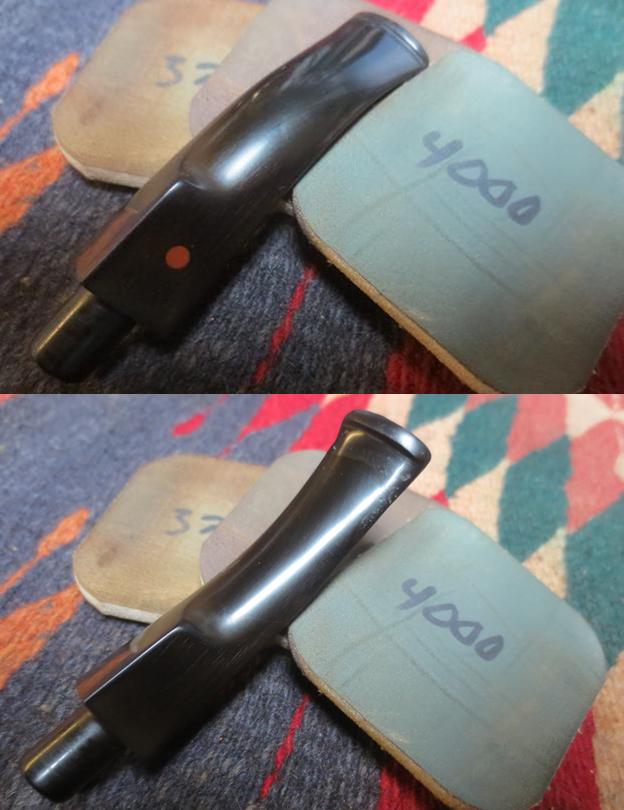
Typically, Cutty pipes have a very slight bent stem, but this is not a strict qualification. In many instances, we see modern Cutty with straight stems and deep bent stems.

On my work table, I took these additional pictures to fill in the gaps and show some of the needs. The stamping on the left side of the shank reads ‘Mehaffey’ [over] ‘6’.  The right side of the shank also has the number ‘6’ stamped – I assume this is the shape number.  While one can find Mehaffey pipes on the internet, unfortunately, the one factoid that is repeated in many places can be found in Pipedia’s single reference to this pipe maker:

E.A. Mehaffey operated a pipe & tobacco shop in Wheaton, Maryland. He used to make pipes for many years but as legend has it, his house tobacco mixtures were much more prestigious than his pipes. Mehaffey was in business up to the 1980’s.

While this statement does not engender enthusiasm for E. A. Mehaffey’s pipe production, the Cutty before me boasts a very attractive, large piece of briar.  With the taller than usual bowl, both sides of the bowl showcase tight bird’s eye grain patterns, which offer a perpendicular disposition toward the grain.  On both the front and the back of the bowl, as one might expect, horizontal grain is evident – the parallel perspective of the grain.  If one thinks of a rope as grain, the horizontal grain is looking at the side-length of the rope.  Whereas, the bird’s eye grain is looking at the ends of the rope ends after they are cut.  This is a beautifully styled and positioned Cutty shape with this fine piece of briar.  Complementing the forward canted bowl, the long shank and tapered stem adds to the perception of styled length.  I’m liking it! Looking at the pipe, the needs start with a moderate build-up of carbon cake in the chamber which needs to be removed down to the fresh briar.  The rim has lava flow and black crusting which needs removal.  I see no fills on the stummel. One area of problem is at the upper junction of shank and bowl.  There are what appear to be two punctures and what appears to be a crack running perpendicularly off the left puncture.  It is difficult to guess what caused these.  I will probe the holes to make sure they are only superficial and make sure the crack is not growing.The tapered stem has mild oxidation and a good bit of tooth chatter on the upper and lower bit. I begin the recommissioning of this Mehaffey Cutty by plopping the stem into the Oxi-Clean bath to soak and to raise the oxidation from the vulcanite. Using the Pipnet Reaming Kit, I address the cake in the bowl.  After spreading paper towel to catch the exhumed carbon, I use the smallest blade first.  I realize very quickly that the smallest will be the only reaming blade I use and switch to using the Savinelli Pipe Knife.  The conical chamber narrows toward the base so the Savinelli Pipe Knife does the job.  After removing the carbon cake, I wrap a piece of 240 grit sanding paper around a Sharpie Pen and sand the chamber.  Following this, I clean the chamber using a cotton pad wetted with alcohol to remove the carbon dust.   While I want to start on the external briar, I like to take care of the dirty stuff first!  Using cotton swabs and pipe cleaners wetted with isopropyl 95% and go to work on the internals.  I like working on a clean pipe.  I discover that a metal tube is providing the airway through the long shank.  With the use of a long, bristled brush I’m able to clean the internals of the mortise very quickly.  Not bad!Now to the external briar surface.  I use undiluted Murphy’s Oil Soap with cotton pads and a bristle tooth brush to clean the bowl of the grime.  I also work on the rim using a brass bristled brush.  With a cleaned up stummel, I take another close look at the rim.  I love the tight canted look of the bowl and I hate the thought of removing any briar real estate from the profile of this Cutty.  Yet, I’ll need to remove some, just enough to remove the damaged briar and to restore fresh lines.  I look again at the problems at the upper junction of the shank and bowl.  I first use a sharp dental probe to clean out the holes of collected debris.  I’m careful with the hole on the left, looking at it very closely it appears to be prone to crumble.  As I look at the crack running to the left of this more fragile problem area, the question in my mind is whether to do a full crack repair, drilling ‘back-holes’ on either side of the crack to block any possibility of the crack enlarging.  Or, avoiding the added trauma to the briar by drilling, would simply laying a line of thin CA glue seep into the crack and sufficiently close it down?  I sent these questions and the second and third picture below to Steve for his input. While I wait for Steve’s response, I’ll focus now on the rim repair.  I begin by using 240 grit sanding paper on a chopping board to create my topping board.  Before putting paper on the board, I invert the stummel on the board and eyeball it free standing.  I want to make sure that I top it keeping the angle of the rim parallel to the board.  Damaged, scorched wood tends to be softer.  I have learned by unfortunate experience that it’s easy to start angling into the softer wood and be left with an angled rim plane.  Not pretty!  As I free stand the inverted stummel, I discover there is a rock – the rim is already dipping.  I determine by looking at which part of the rim is healthy, which part of the rim needs to guide the topping while not dipping into the worn area – softer part of the rim. The pictures that follow show the progression of the topping.  Notice the first picture is only after a few rotations on the topping board staying on the healthy part of the rim.  The dark areas are lower and so don’t engage the paper.  As the topping progresses in the subsequent pictures, the dark areas gradually are engaged by the sanding paper as the rim moves toward the paper at the different points.  The final picture shows switching to 600 grit paper to smooth the topping.  The rim plane looks good and is level! Now I remove the damaged briar on the internal rim’s edge and create an internal bevel to balance the look of the rim – blending the damaged area with the healthier area. In the first picture below, the damaged area is in the 2 to 3 o’clock area.  A bevel looks good too by creating lines that, to me, are classy.   Using a rolled-up piece of 120 grit sanding paper I fashion the internal bevel.  Then I follow with rolled pieces of 240 grit and 600 grit papers to smooth the bevel.After the internal bevel is completed, I take a look at the external edge of the rim.  It also has some heat damage and has a dark ring.  I use 240 grit paper rolled and create a gentle bevel around the outer edge.  I don’t need much – just enough to clean up the briar. I follow the 240 grit paper with 600 grit.  The rim looks good.I put the bowl aside for a time and take the stem out of the OxiClean bath.  The oxidation has risen to the surface.  I reconnect the stem and stummel placing a plastic disc between the two.  I do this to avoid shouldering the stem by rounding the shank edge of the stem.  I use 600 grit paper and wet sand the stem in warm water.  I follow this by using 0000 steel wool to buff out the sanding lines and shine the stem.Turning now to the tooth chatter and tooth dents, I start with the upper bit.  The tooth static is not serious and I sand it out using 240 grit paper.  I also sand out a slight dent on the button lip.  I then erase the 240 grit lines using 600 grit paper followed by 0000 grade steel wool.  The upper bit looks good. The lower bit is a bit more problematic with a significant tooth dent in the center of the bit.  It also has significant tooth chatter and a small dent on the button.  I use the heating method by lighting a candle and I pass the affected area over the flame – I keep the stem moving back and forth over the flame.  This heats the vulcanite and the expansion of the rubber seeks its original shape.  This method works well.  The damaged area did expand so that I am able to sand out the rough areas using 240 grit paper, then 600 to remove the scratch traces of the 240, then 0000 grade steel wool to buff our the remainder of the 600 residue marks and shine the stem.  I also sand out the dent on the button. I receive word back from Steve about the approach to the stummel problems.  His recommendation to do the full ‘surgery’ on the crack by drilling holes at the end points of the crack and filling these along with the holes together is the strategy.  As I was already aware, Steve urged caution around the left hole that appears up close to be crumbling.  The first picture below shows two arrows pointing to the end of the crack where I will drill holes.  The carrot in the middle is marking the obvious area of concern.  I want to keep this area intact so that I can fill it with a putty made from briar dust and CA glue.  First, I use the sharp dental probe to mark the points for the drill – creating a guide hole so that I don’t create unintended rustification!  I utilize a magnifying glass to do this!Historically, it hasn’t been easy to drill these holes with precision.  Using a handheld Dremel with a 1mm drill bit mounted in the hand extender (the cable extension) needs a steady hand!  I decide to try something different.  I attach the Dremel hand extender to a miniature vice.  If I stabilize half of the equation that improves my odds!  With the drill stationary, I can bring the stummel to the drill with more control.  With Dremel readied with a 1mm drill bit, I put my plan in motion.  The first hole I do, the lower one, I had a little wobble so the hole wasn’t as crisp as hoped.  The upper hole was much better.  Of course, the drilling does not go through to the internals!  The depth is only a few millimeters. Overall, this was a better setup. With holes drilled, I mix briar dust and Special ‘T’ thick, CA glue to form a putty to fill the drill holes as well as the holes.  I scoop a small mound of briar dust on a plastic lid and next to it I make a puddle of CA glue.  I gradually mix the dust into the CA glue until I arrive at the viscosity I desire – I want it to be a bit on the wet side so that the putty will better penetrate the holes, cracks and crevices.  I use a dental spade tool to tamp the putty down while I spread it over the damaged area.  I place more than needed so that when I sand the patch mounds down, they will blend well.  The day has turned to night, and it’s time to turn out the lights!Having cured overnight, I’m ready to file and sand the briar dust putty patch.  Using first flat and rounded needle files I slowly and gradually file the patch mounds down so that they are very close to being level with the briar surface. The aim is to keep the files on the patch material and not on briar.  For the fine tuning, I use 240 grit paper to bring the patch flush with the surface, aiming to remove putty from the unaffected surface area – blending the patch.  I take some pictures to show the file progressing. Next, I use 240 grit sanding paper to take the patches down to the briar surface and remove superfluous briar putty from the briar surface.  I roll the paper into more of a roll, and move it in a circular motion over the patch material.  The briar putty is easy to distinguish from briar in that it sands up into a white powder whereas briar doesn’t.  The first picture below shows this well.  I take pictures to show the 240 grit paper progress.  When I come to the place where only the filled patches remain, flush with the briar surface, I then switch to 600 grit sanding paper and smooth out the surface further.  The patches come out very well.  The pictures show the progress. During the repair, I was thinking about the next steps for finishing the stummel.  With the rim repairs, darker scorched areas around the rim, and the crack/holes repair on the stummel surface, I decide to darken the finish on the Mehaffey Cutty to blend these areas more effectively.  Again, with aniline dyes (alcohol based), the opportunity to lighten the hue is an option by wiping the surface with alcohol.  To prepare the surface, I decide to remove the old finish with acetone and cotton pads so that the staining process will have more uniform results.  The acetone removes the old worn finish very quickly and now I’m down to the raw briar.The briar surface is in good shape so I begin with using a light grade sanding sponge to smooth out the nicks.  After the sanding sponge, I wet sand using micromesh pads 1500 to 2400.  Following the wet sanding, I dry sand using micromesh pads 3200 to 4000 then 6000 to 12000.  Oh my.  What emerges through the micromesh cycles is an extraordinary piece of briar works.  Mehaffey may not have been known for his pipes, but I have little doubt that when this Cutty was on the Mehaffey shelf with a price tag on him, it was an upper shelf pipe being offered.  Other than the repair work done, there are no imperfections or fills of any sort that I can discern, and the grain…, oh my! I continue to work on the beautiful Cutty stummel now to apply the stain.  I decide to mix 1 to 1 ratio of Fiebing’s Dark Brown Leather Dye to alcohol.  During the micromesh process, I also decide to add a pinch – just a pinch, of Fiebing’s Oxblood Leather Dye to add a little rich attitude to this proud Cutty! I take a picture of the staining set-up, then wipe the stummel down with alcohol to clean the surface.  With a large eye dropper, I mix the dyes in a shot glass. I then warm the stummel using the hot air gun, expanding the grain and making it more receptive to the dye.  After warmed, I liberally apply the dye over the stummel, using a cork inserted into the mortise as a handle.  After I achieve full coverage, I fire the wet dye using a lit candle which immediately burns off the alcohol in the dye, setting the stain in the grain.  After cooling a few minutes, I repeat the process and set the stummel aside to rest for several hours.  The pictures show the staining process. With the newly stained bowl resting, I take up the stem to complete the sanding process.  Using micromesh pads 1500 to 2400, I wet sand the stem.  I follow this with dry sanding using pads 3200 to 4000 then 6000 to 12000, applying Obsidian Oil after each cycle of three to help the vulcanite regain luster and vitality.  I love that vulcanite pop! I set the stem aside to dry. Time to unwrap the stained Mehaffey Cutty and see the results.  I mount a felt buffing wheel on the Dremel and set the speed at the slowest.  After purging the wheel with the Dremel’s metal tightening wrench, using Tripoli compound, I apply the more abrasive compound by moving the wheel in a circular motion over the surface removing the fired crust.  After completing application of Tripoli, I wet a cotton pad with isopropyl 95% and wipe the surface down to blend the dye evenly over the briar.  I then mount the cotton cloth buffing wheel on the Dremel and add speed up to 2, with the fastest being 5.  I then apply a lesser abrasive compound, Blue Diamond, in the same fashion as the Tripoli compound.  When I complete applying Blue Diamond to the stummel, I reunite the stem and stummel and use Blue Diamond on the tapered stem.  I complete the application of compounds by hand buffing stem and stummel with a soft felt cloth to remove the compound dust from the surface in preparation for applying carnauba wax.  The pictures show the progress – looking very, very nice! With the finish line in sight, I mount a cotton cloth wheel on the Dremel for carnauba wax and I apply it to stem and stummel at the same speed.  After applying several coats of wax, I mount a clean cotton cloth wheel and further buff the surface to make sure the wax has deiminated into the briar and increase the shine.  I then rigorously hand buff the Cutty with a microfiber cloth.

I’m pleased with the results.  This Mehaffey Cutty with the canted bowl is complemented well with the shade of the finish – a rich deep brown and I can see the slight accent of the Oxblood I added to the mix.  The grain is a showcase of bird’s eye and horizontal flow.  The crack and hole repair is all but invisible.  I think Jenny will be pleased to give this Cutty to a special member of her family.  Her gift becomes a help to benefit our work here in Bulgaria with the Daughters of Bulgaria.  Thanks Jenny!  For more about this and why I do what I do, check out my blog, The Pipe Steward.  Thanks for joining me!

Addendum: In case anyone noticed, I forgot to clean the internal airway of the stem!  Rest assured it will be done before a new steward packs his first bowl!