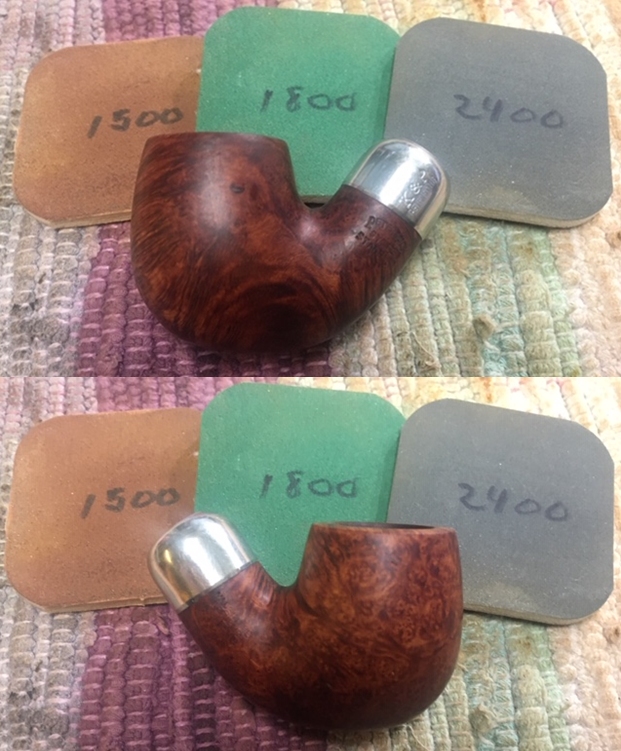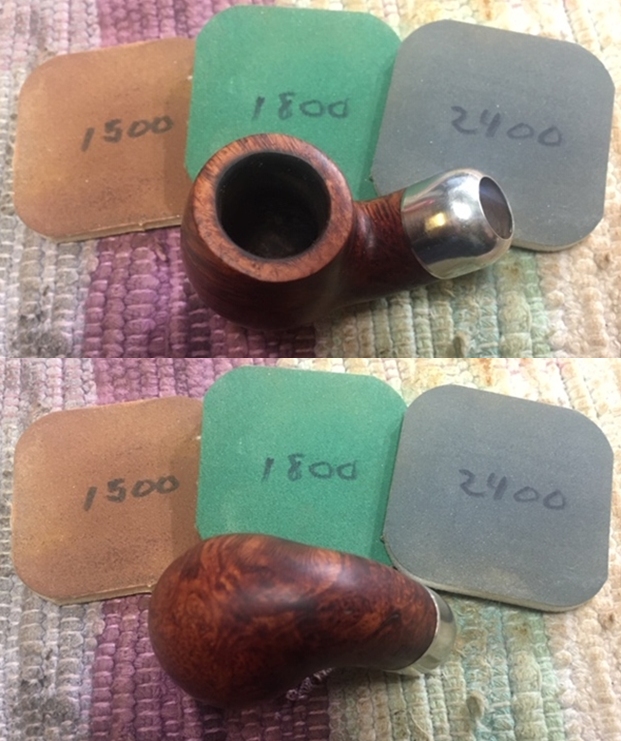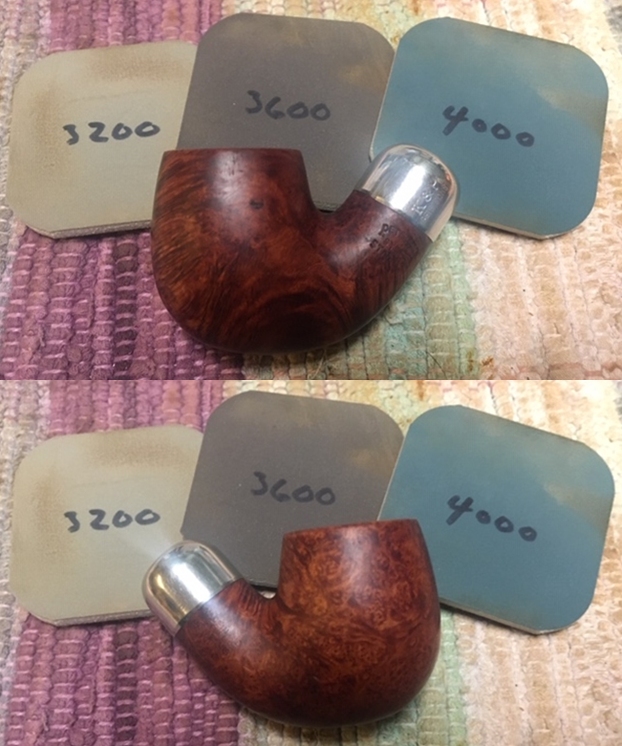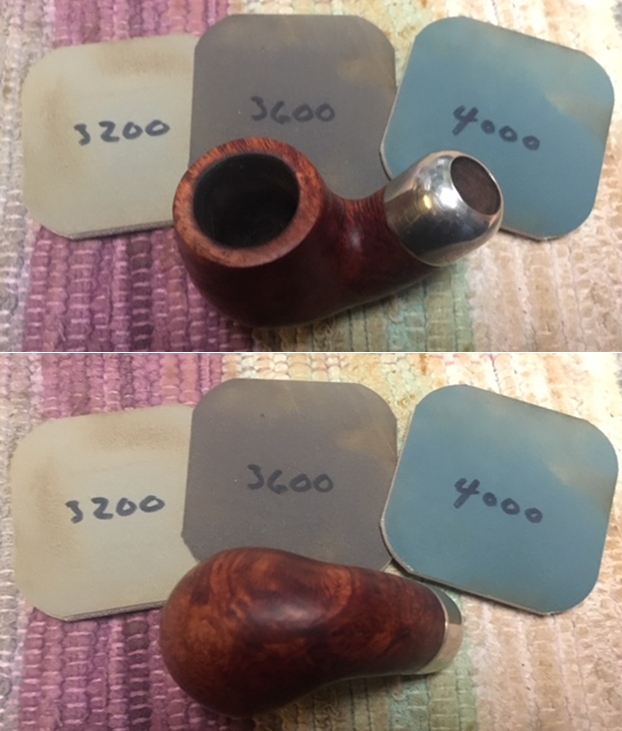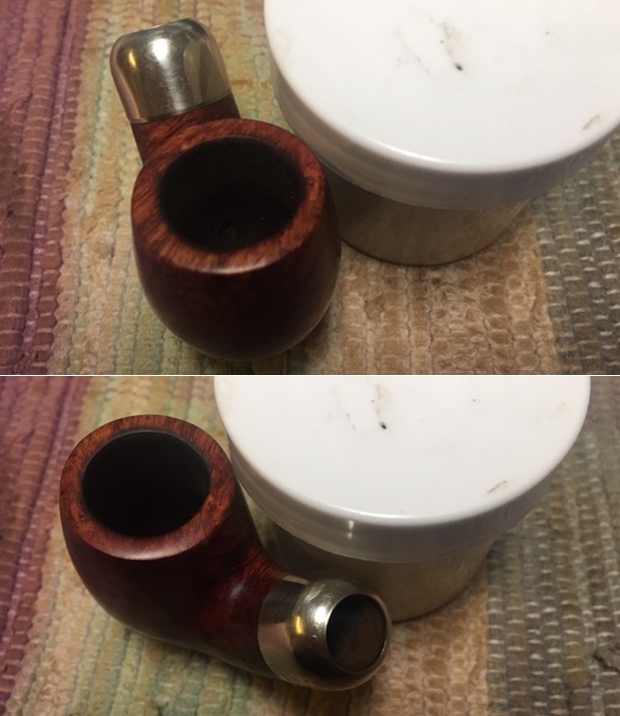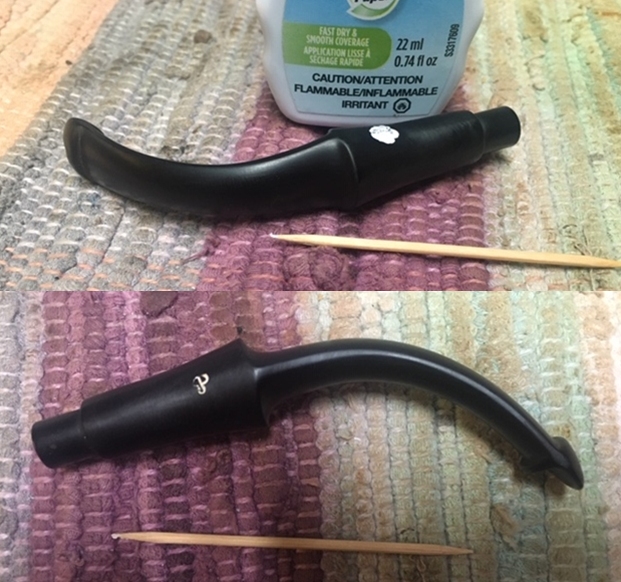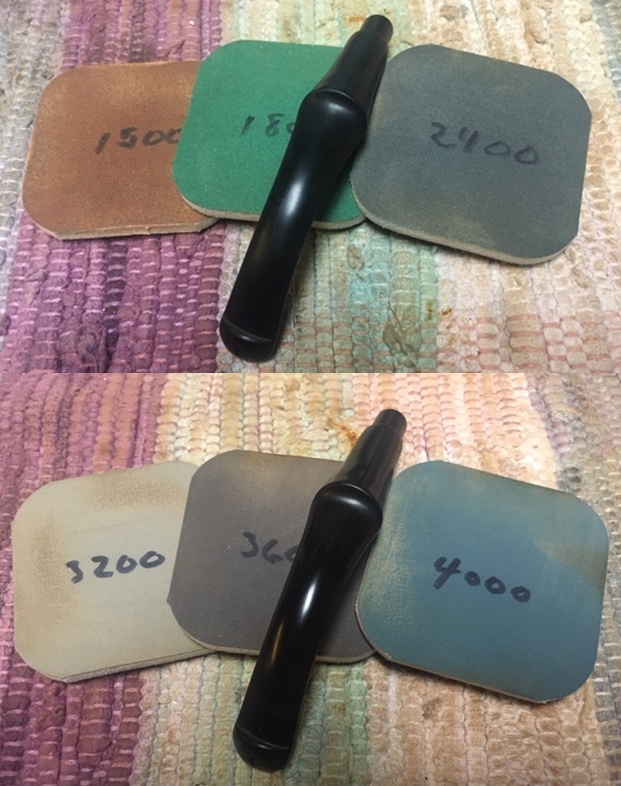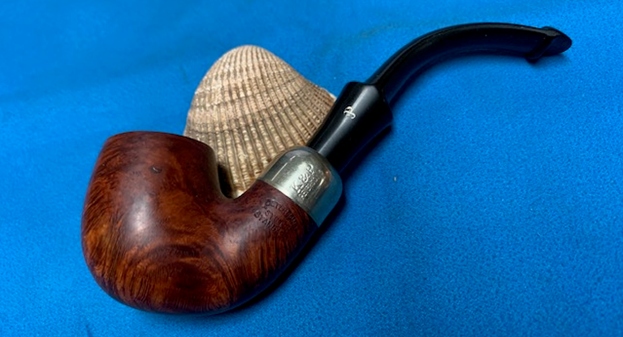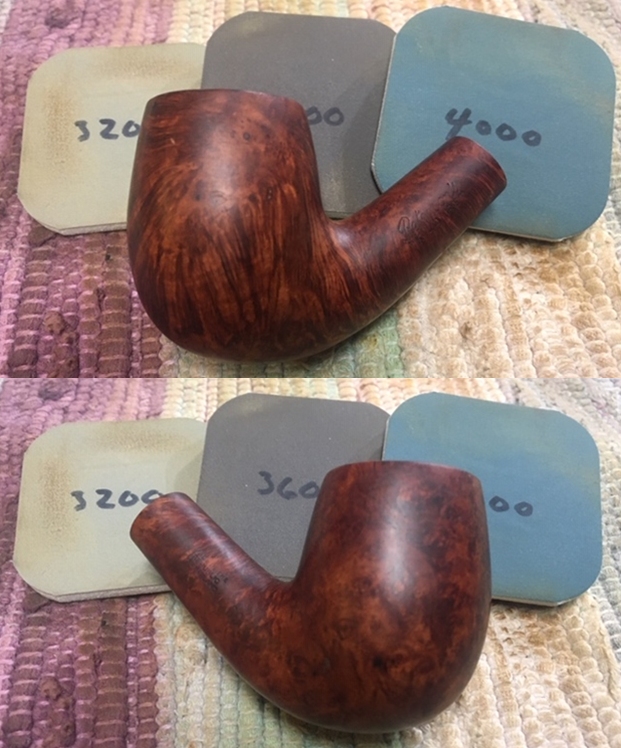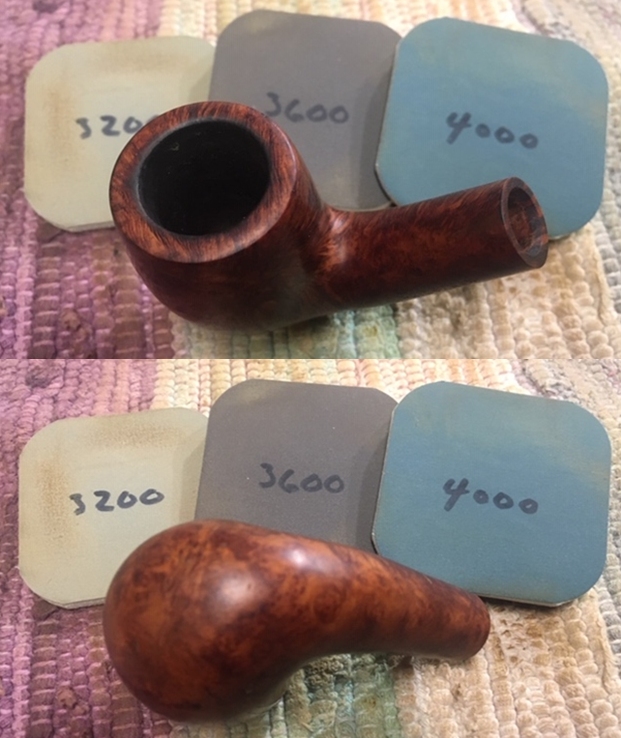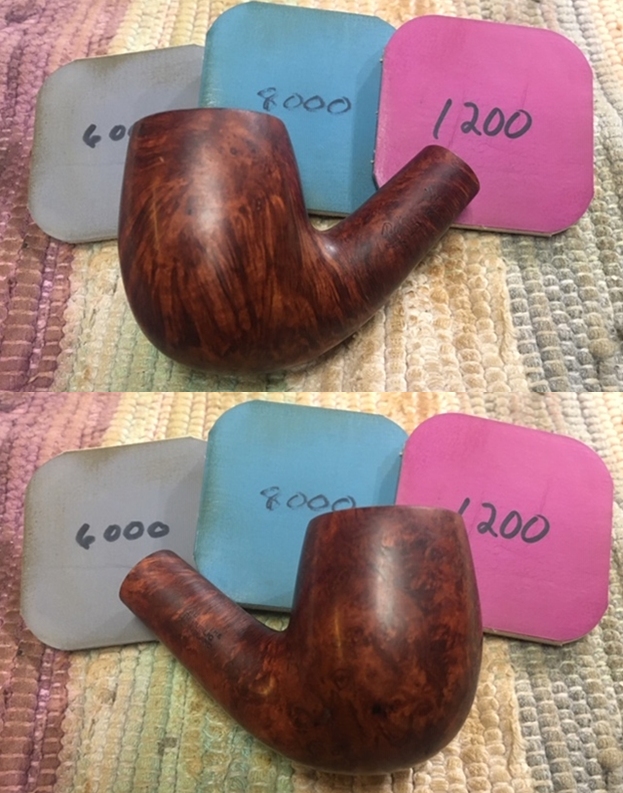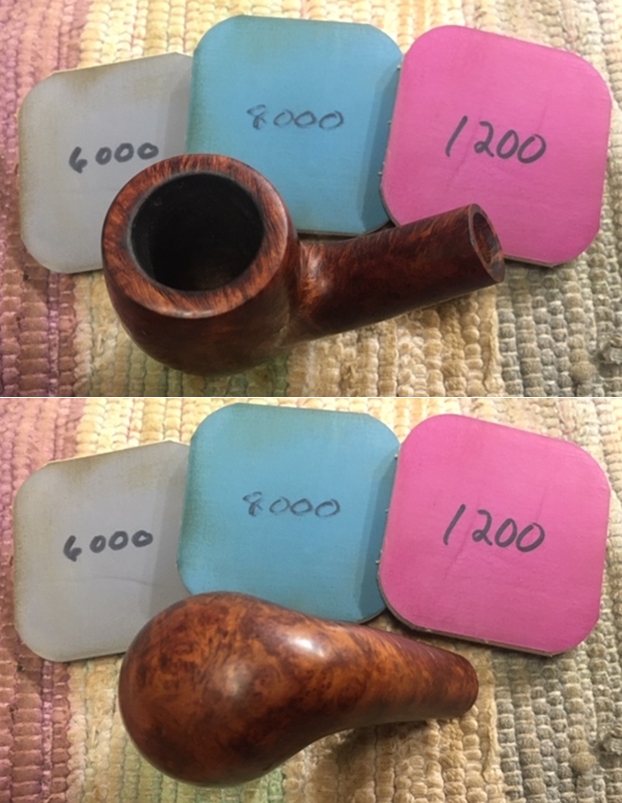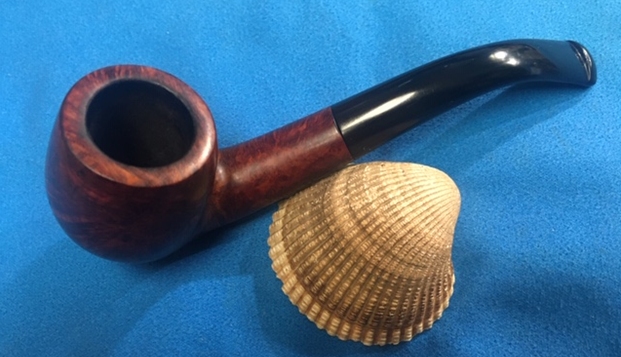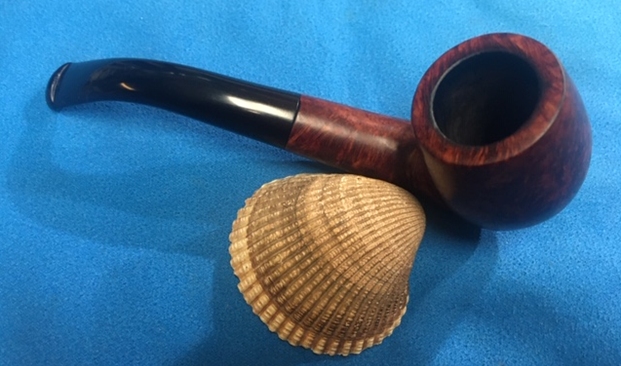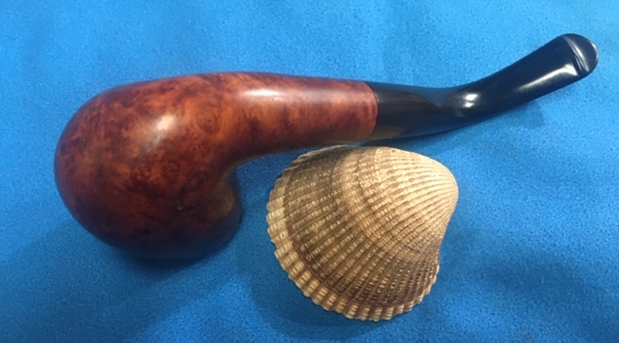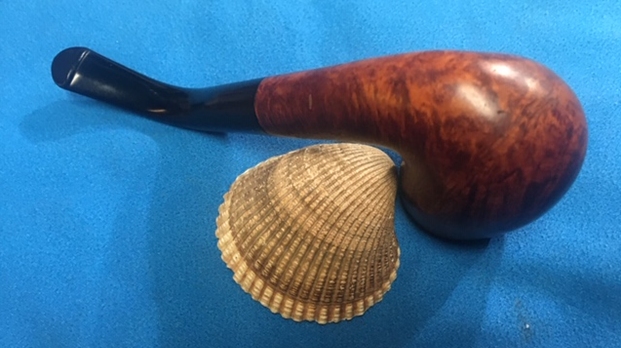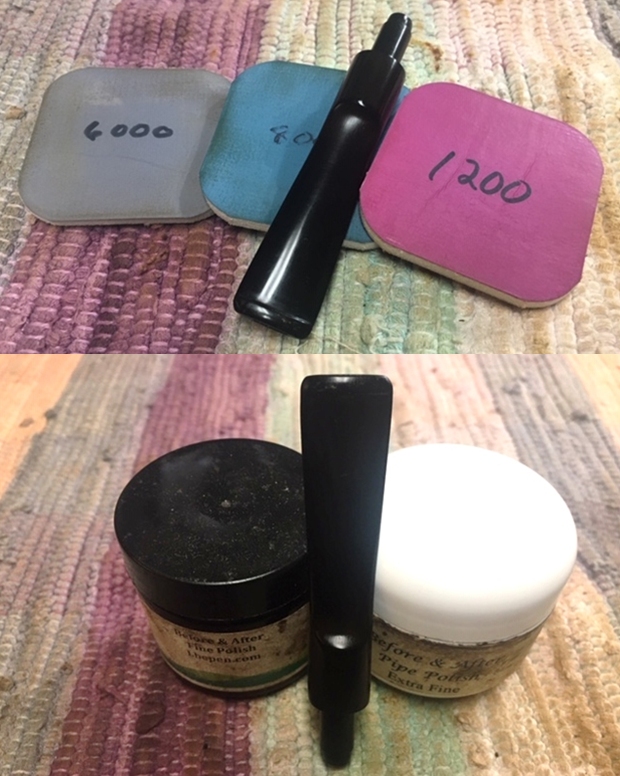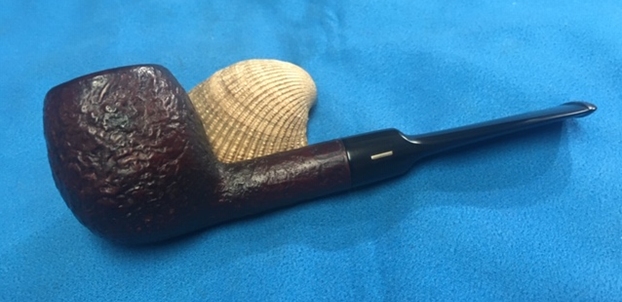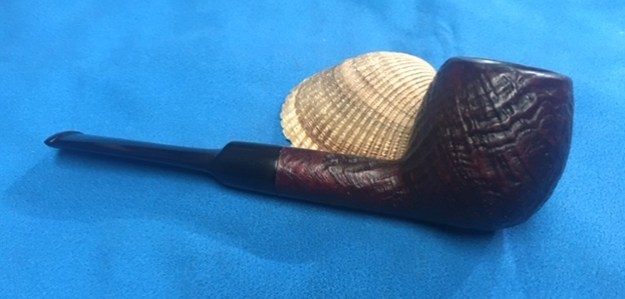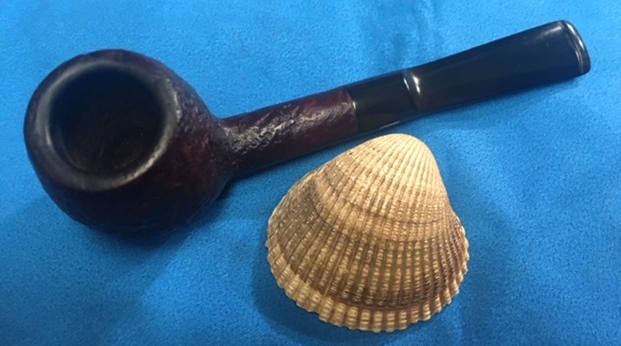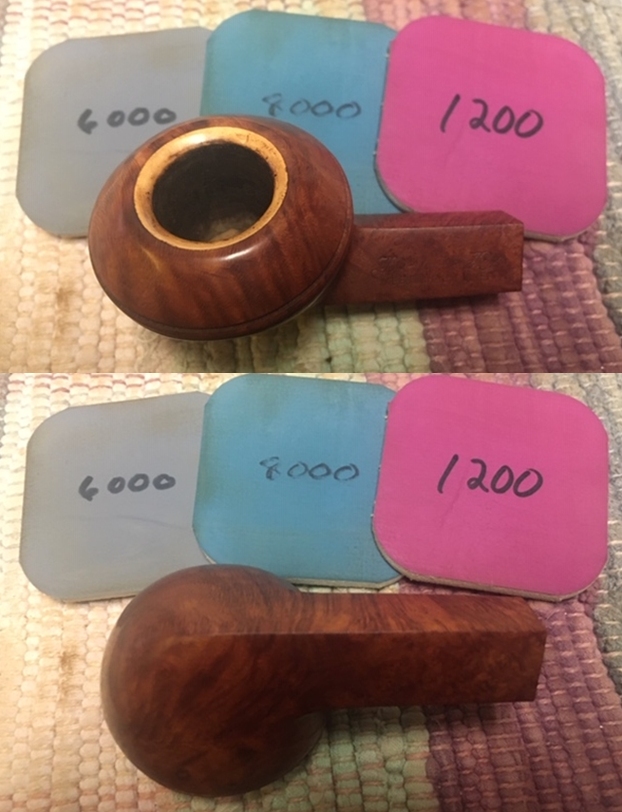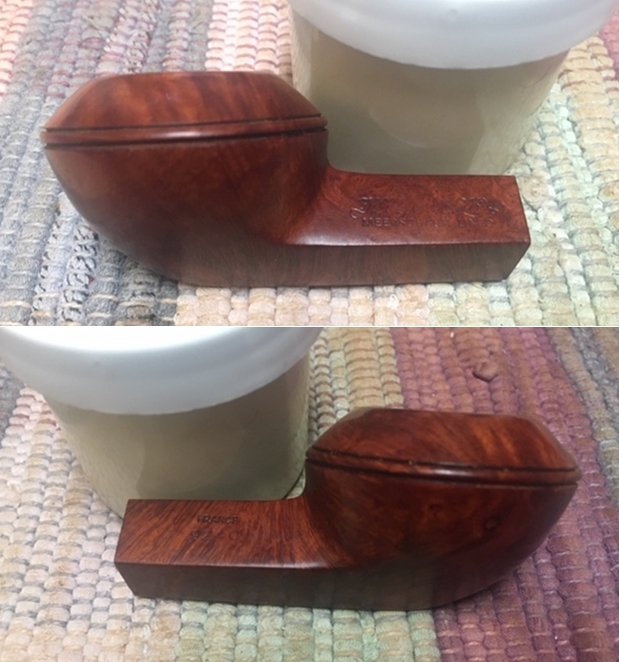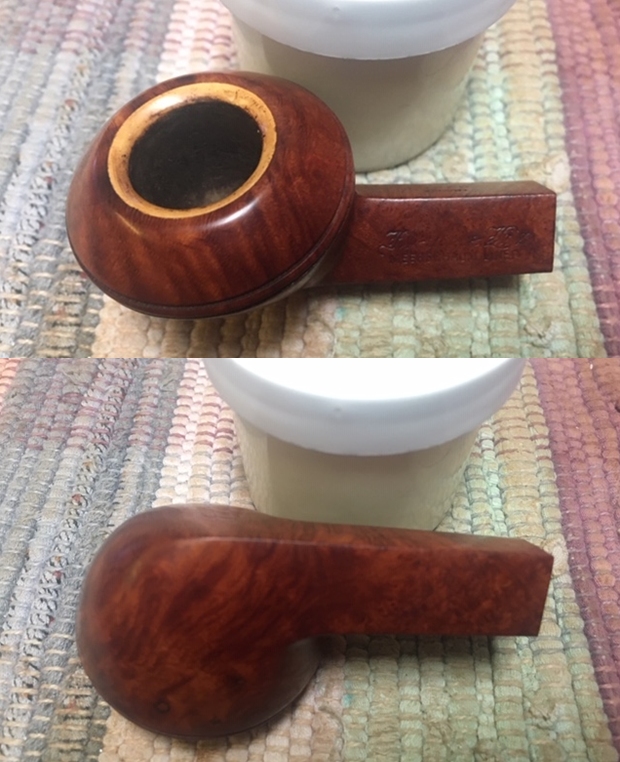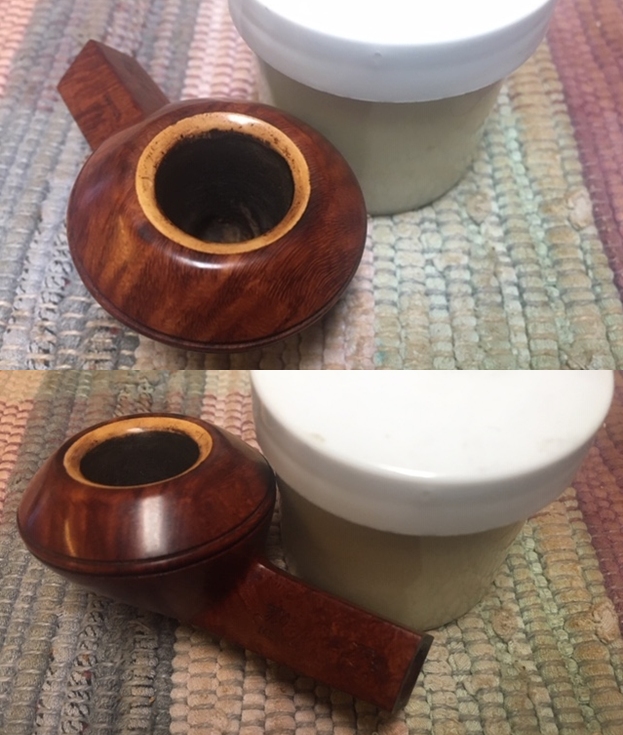
Tag Archives: polishing stems

Stanwell Really Made Some Stunning Pipes Like this Royal Guard 182


Blog by Steve Laug

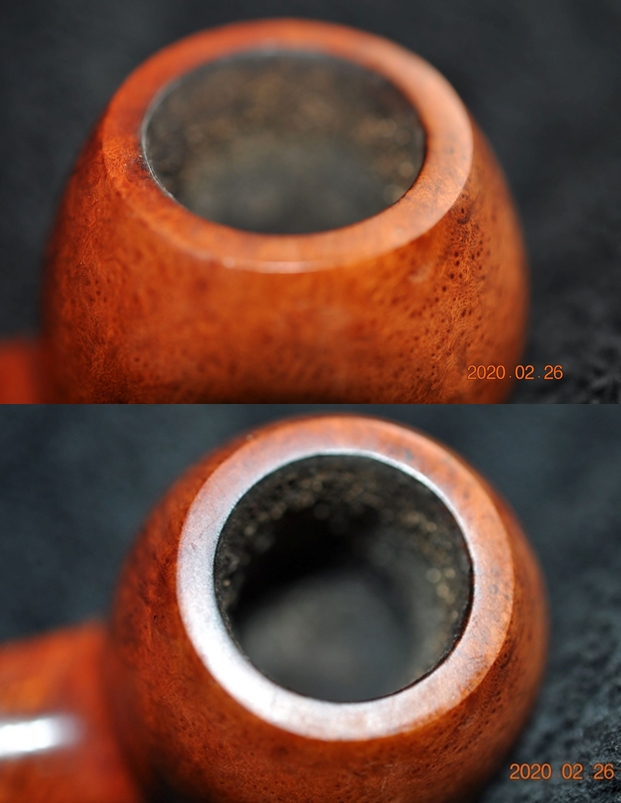
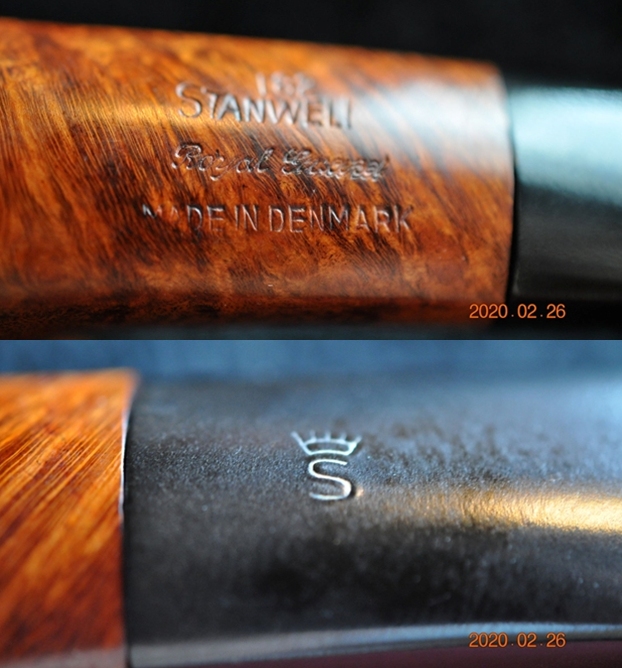
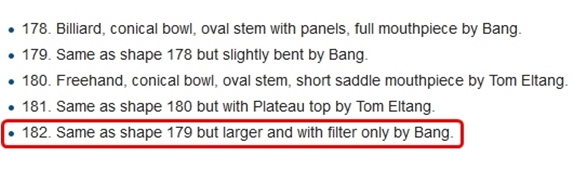
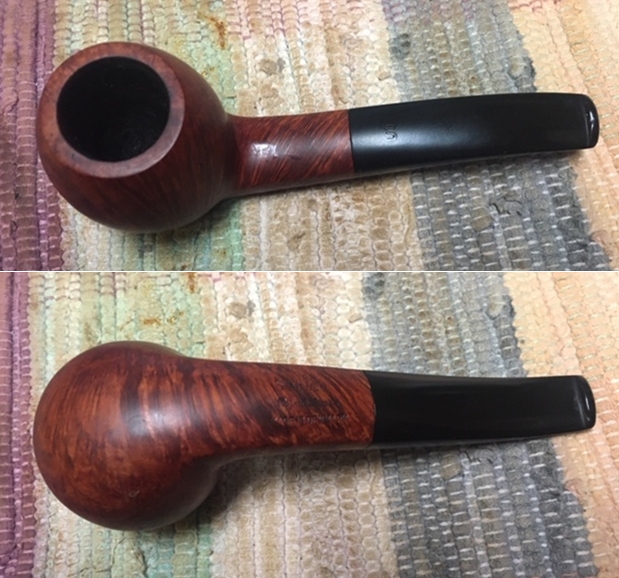
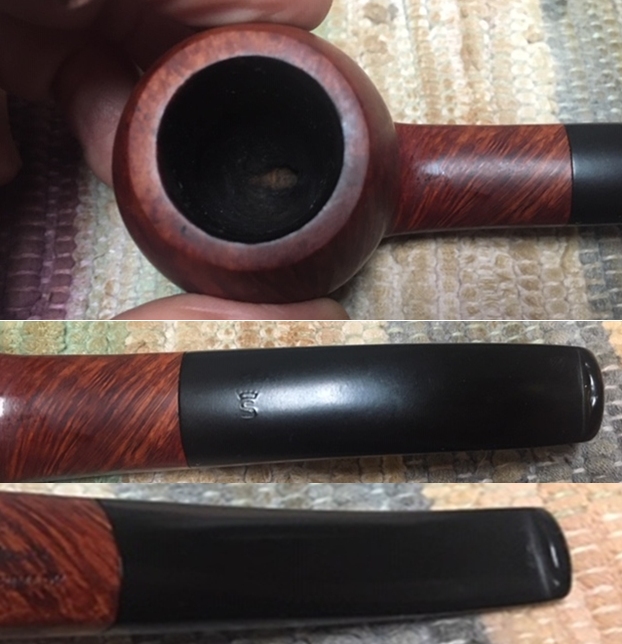
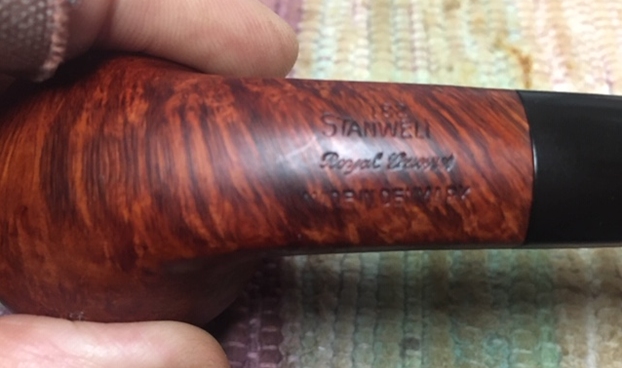
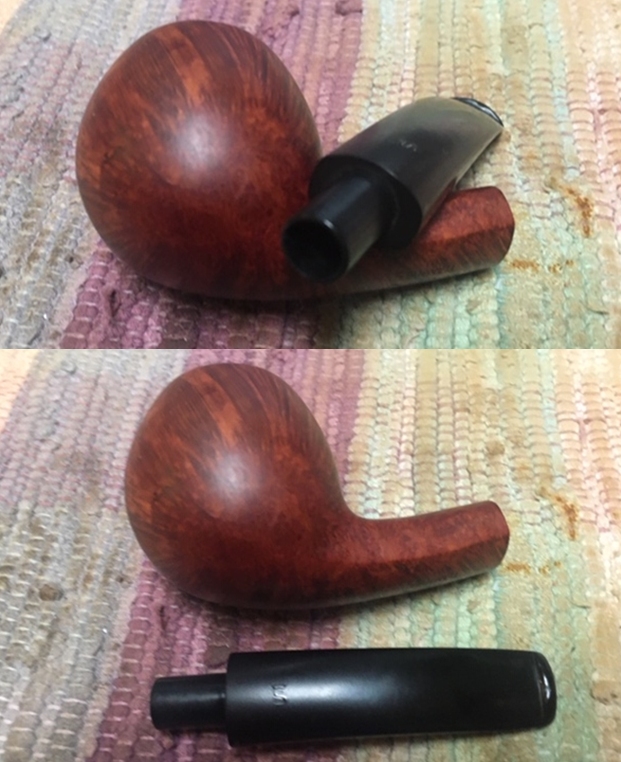
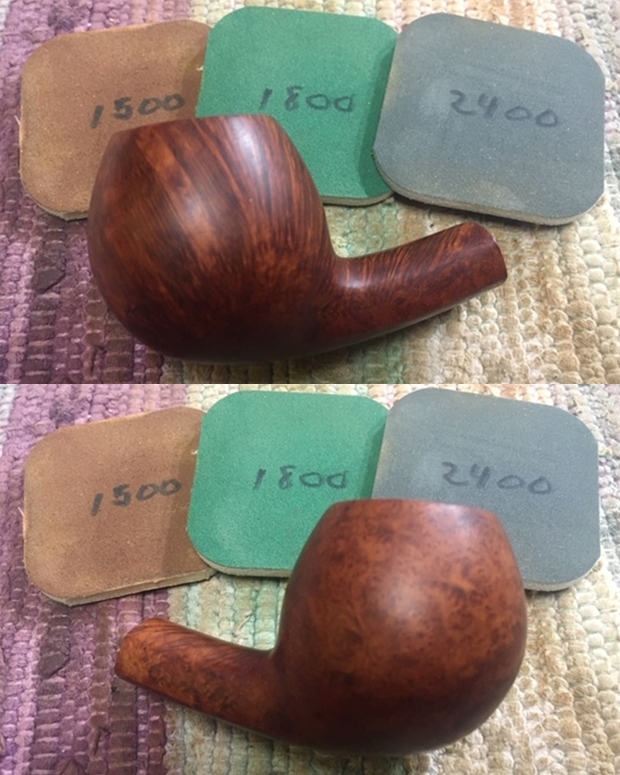
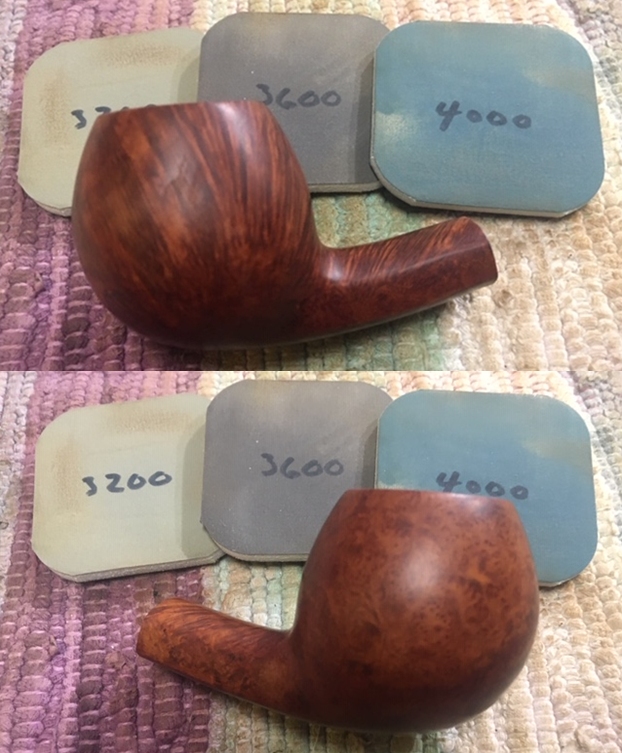
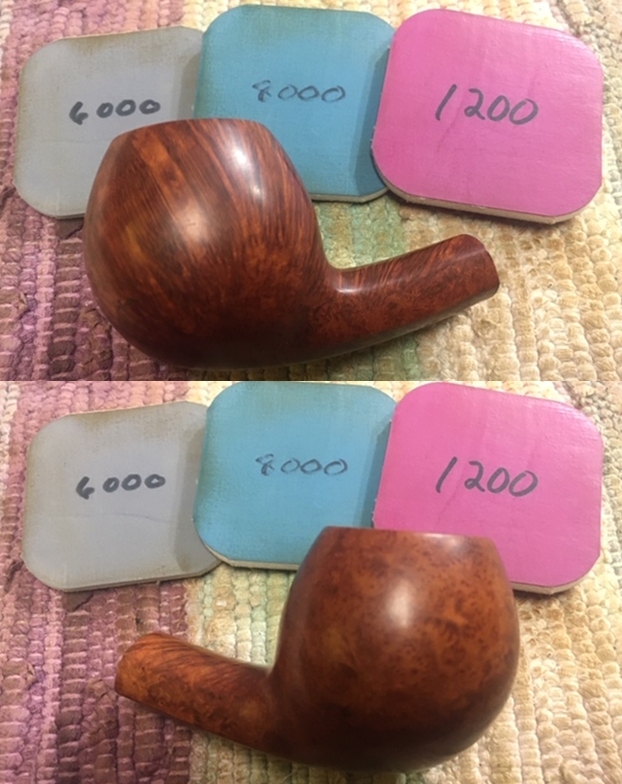
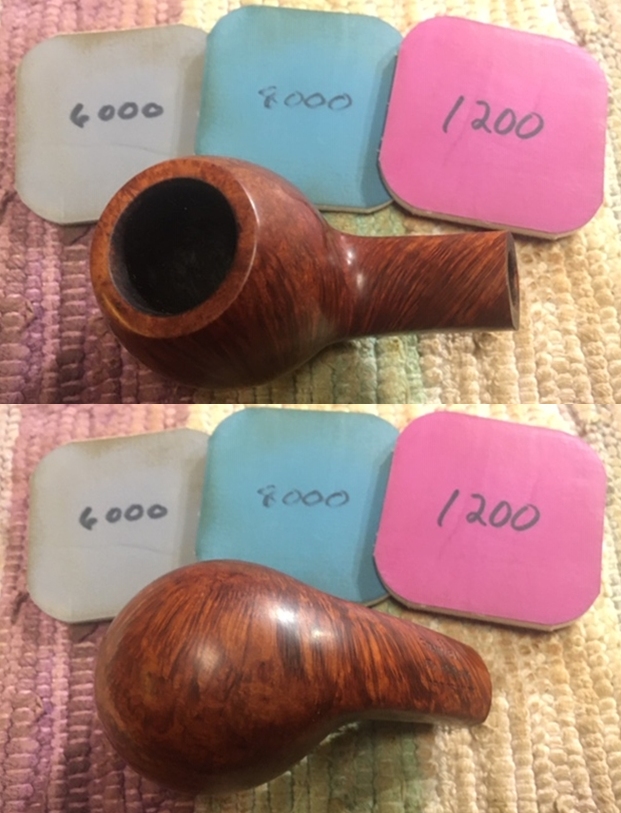
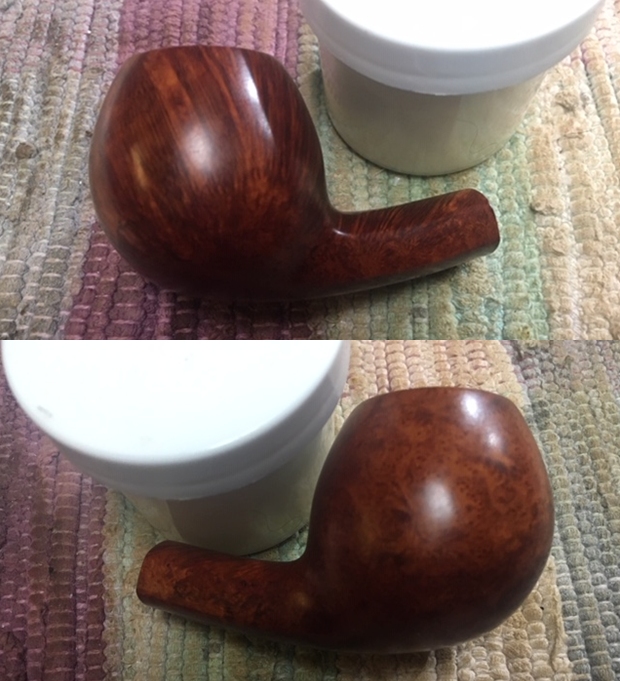
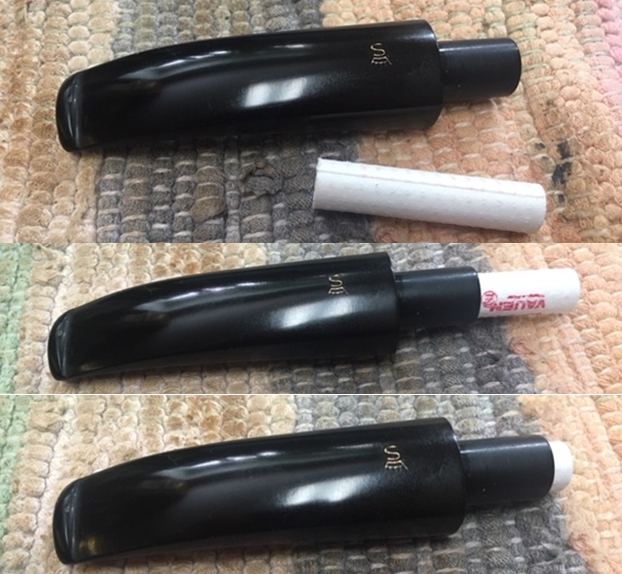
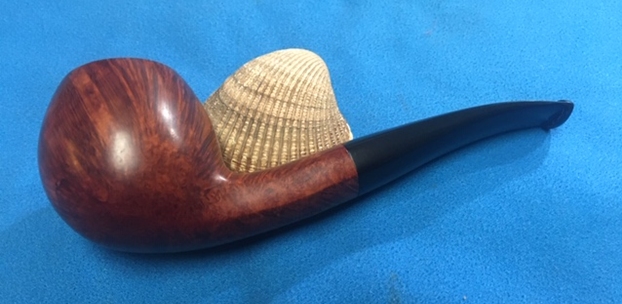
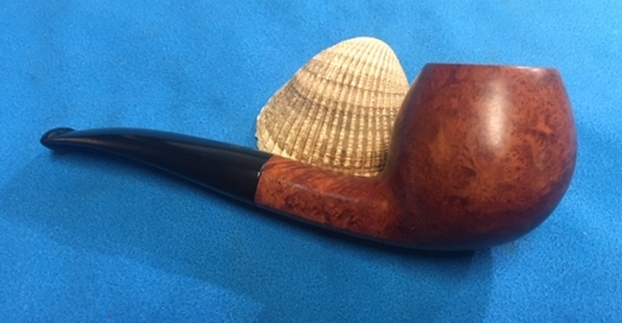
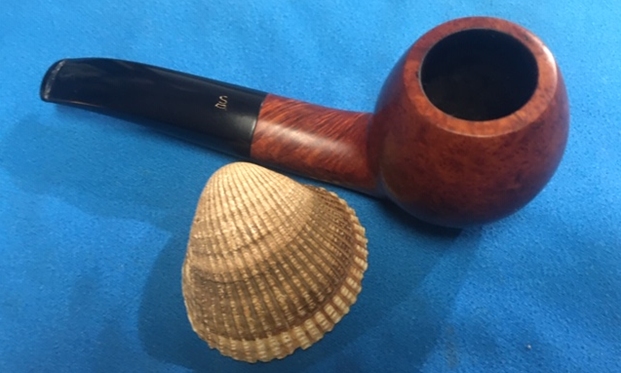
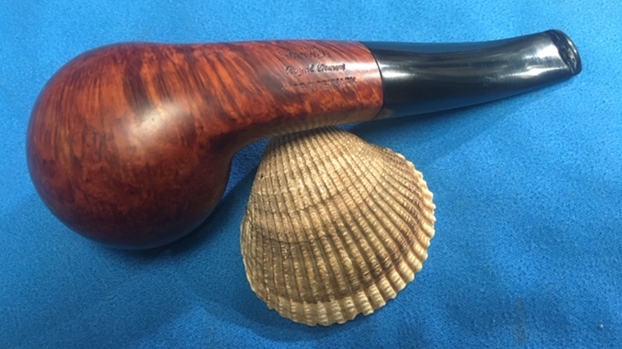
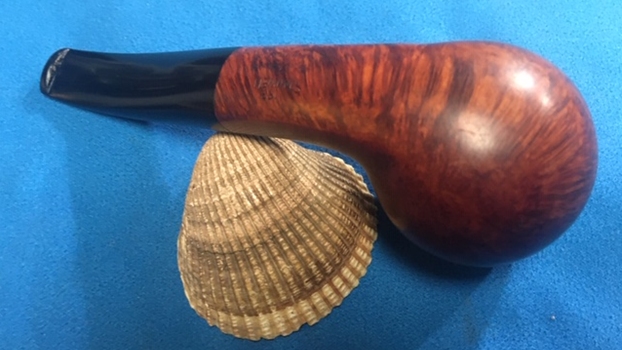
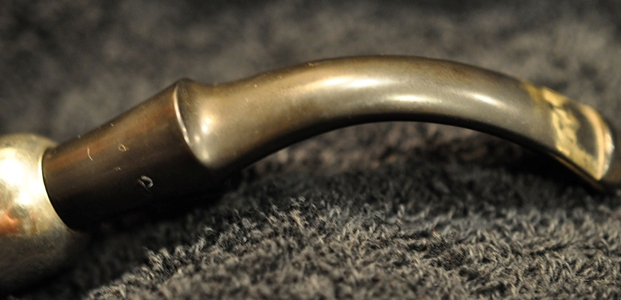
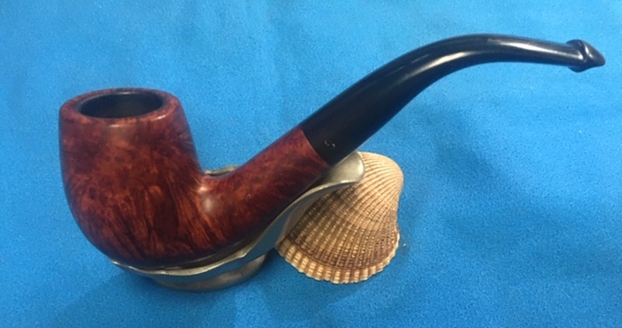
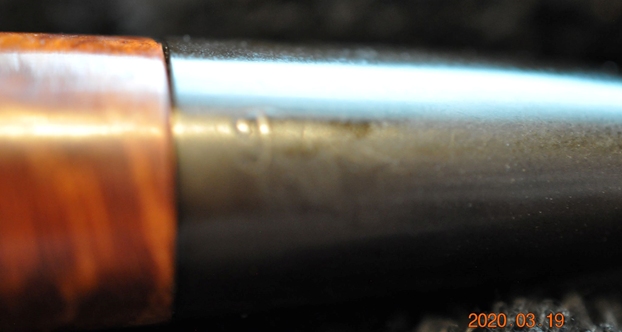
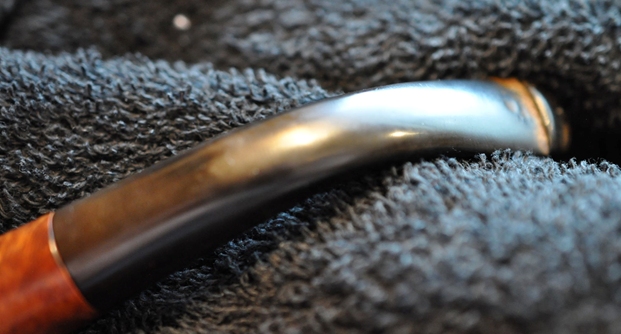
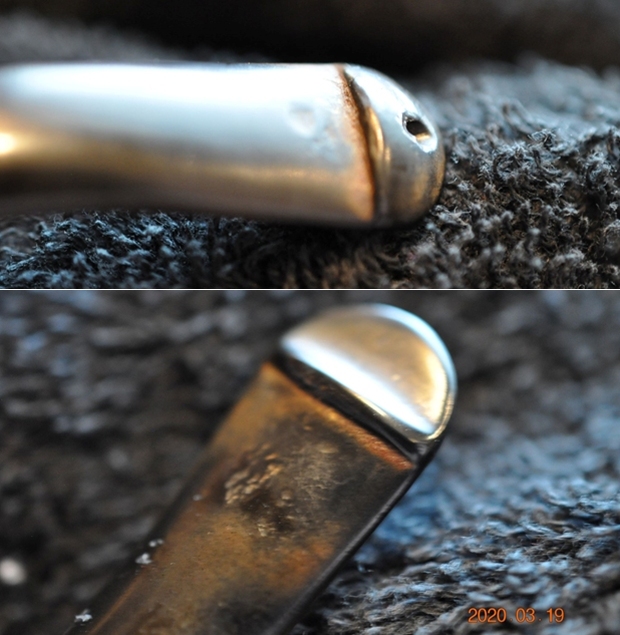
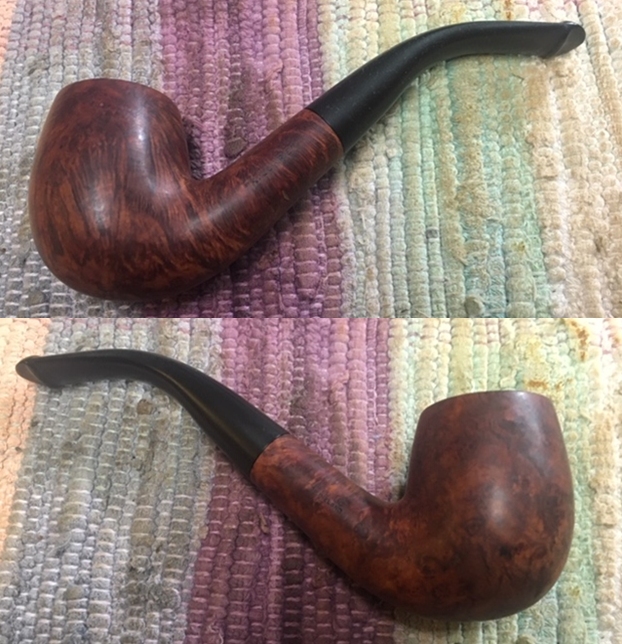
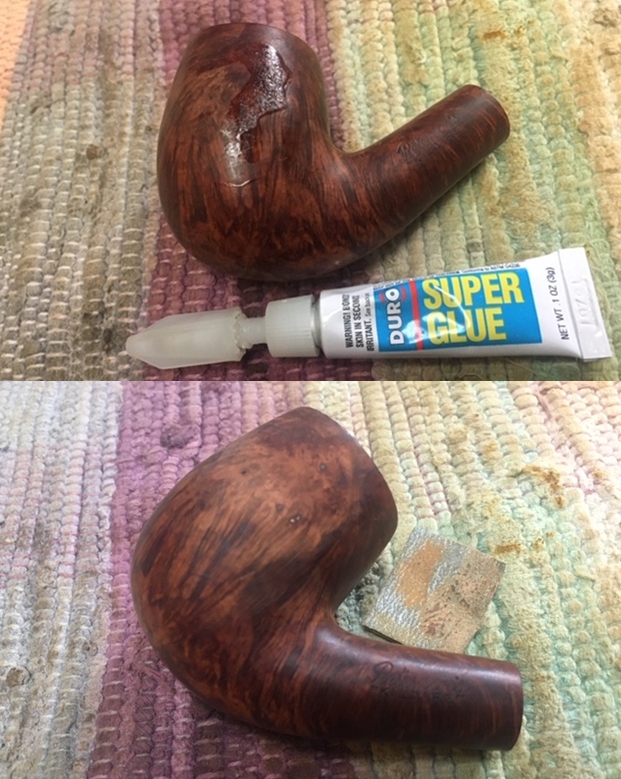
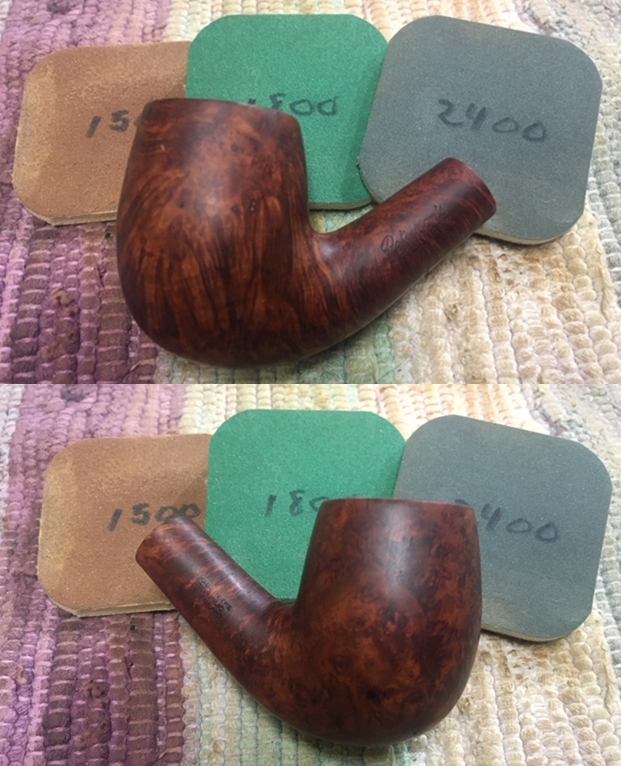
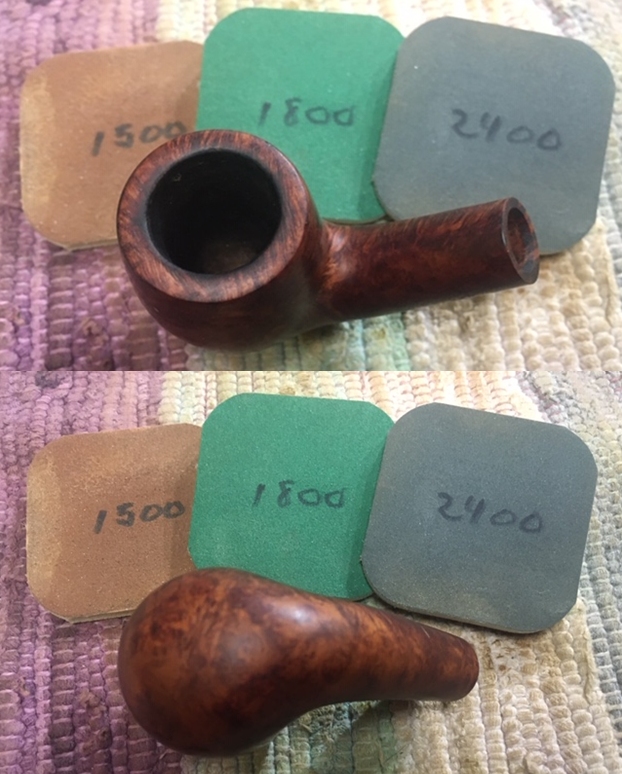
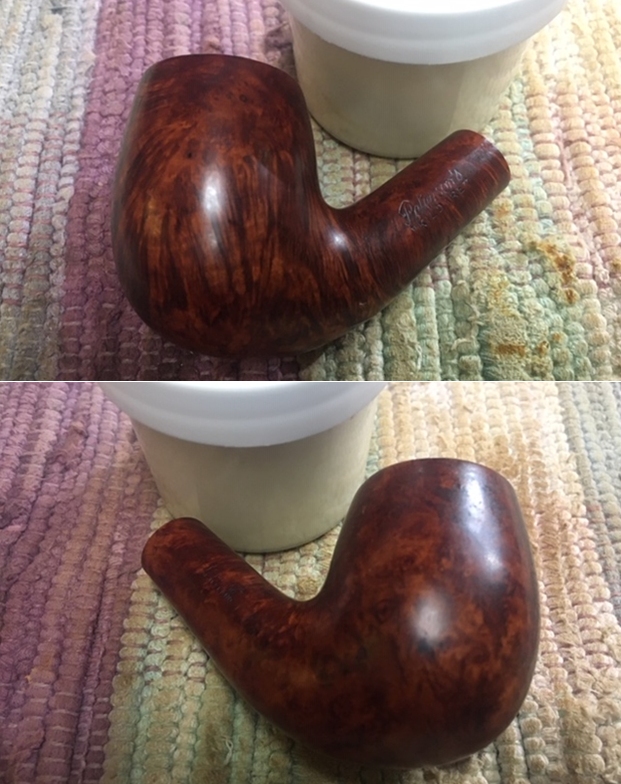
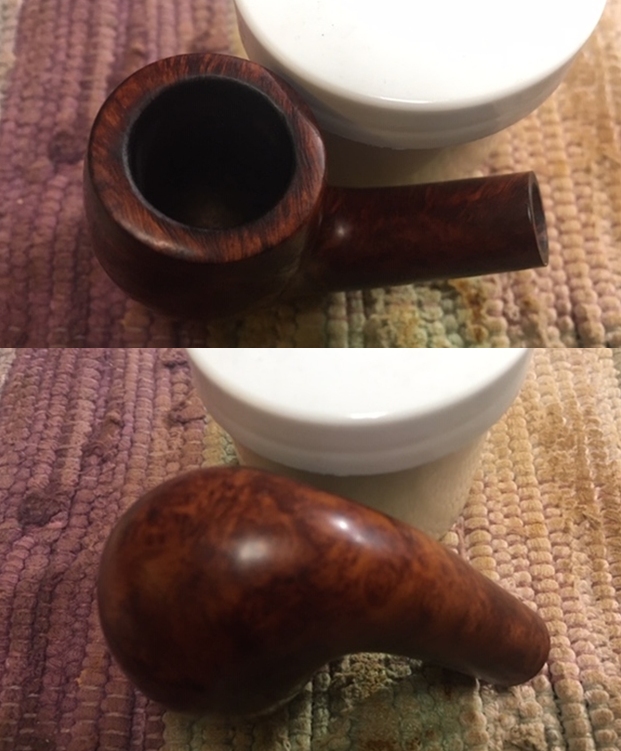
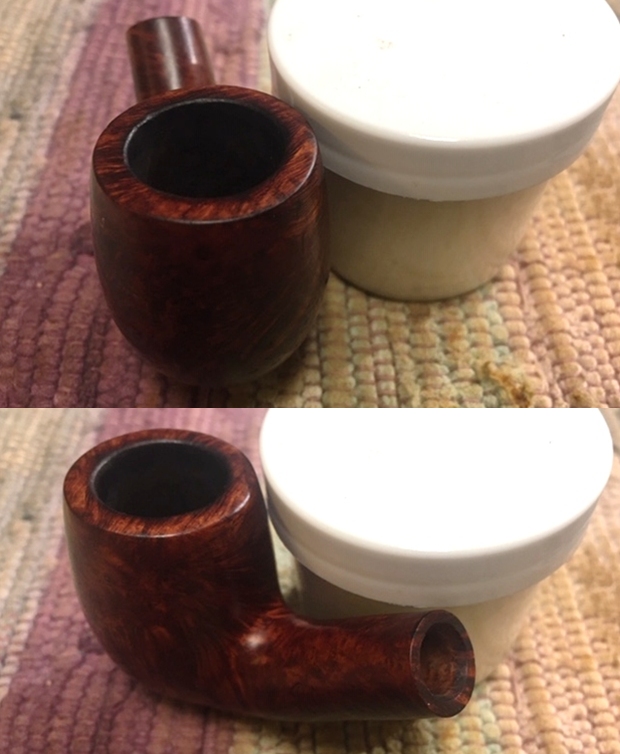
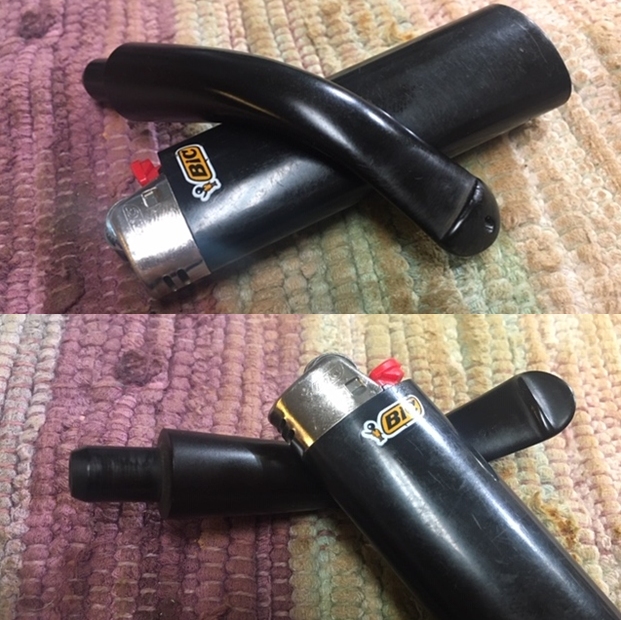
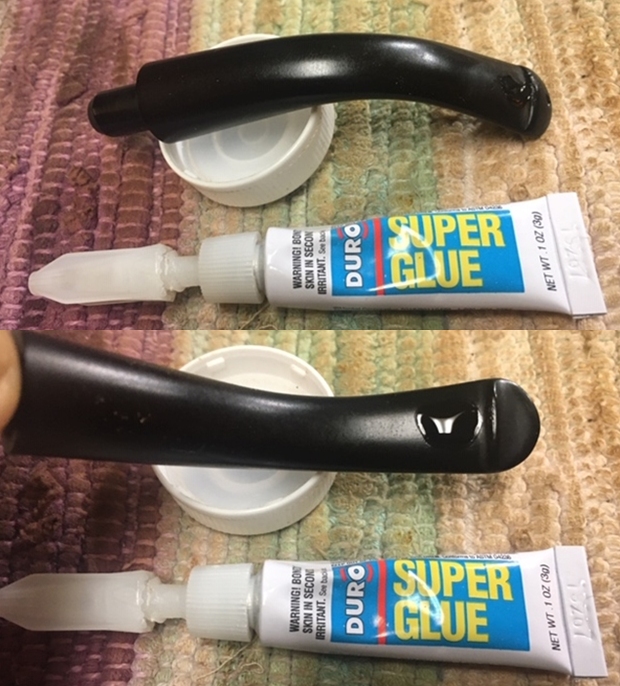
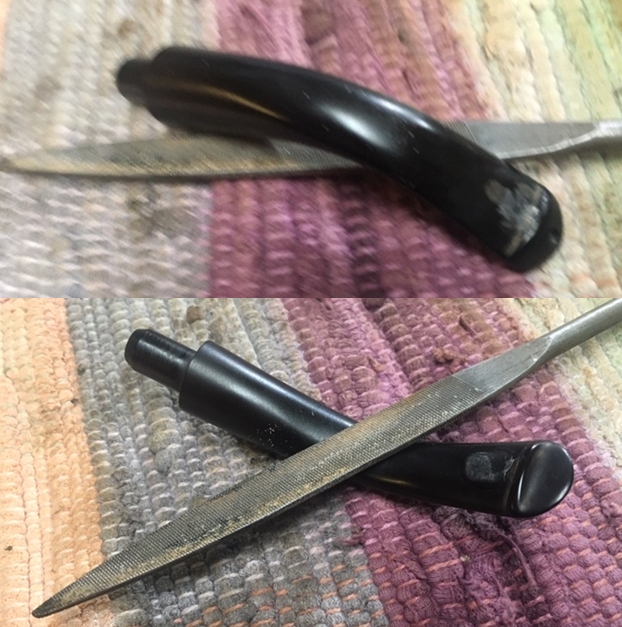
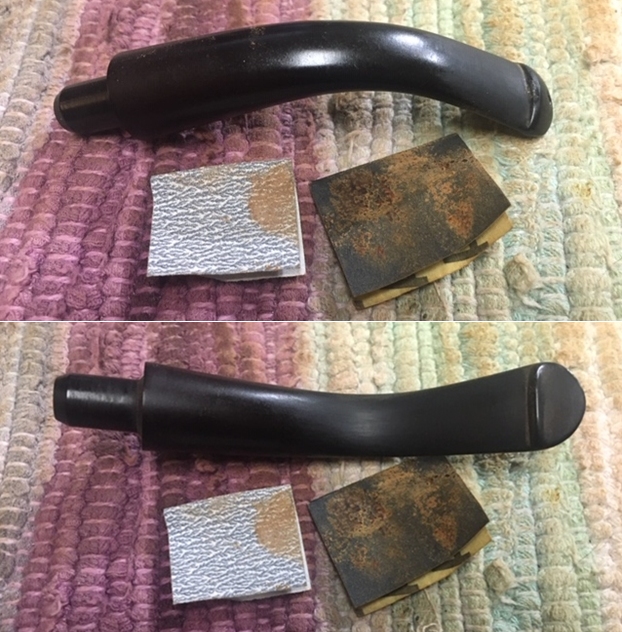
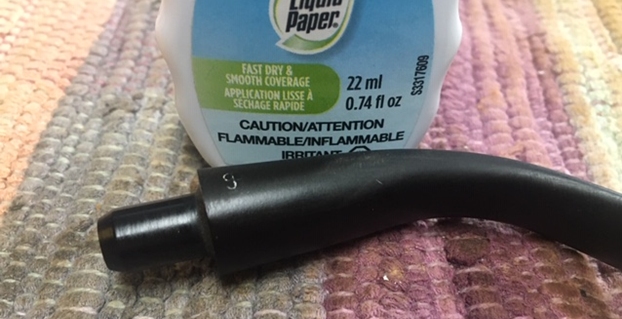
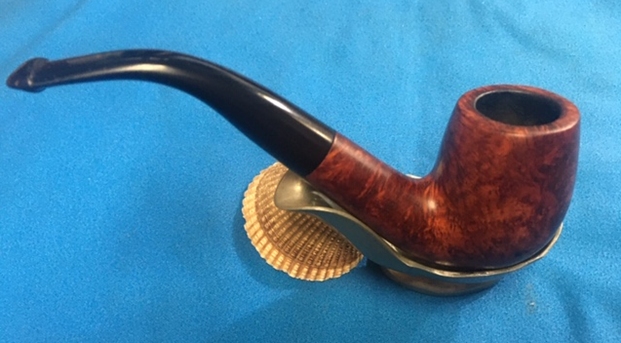
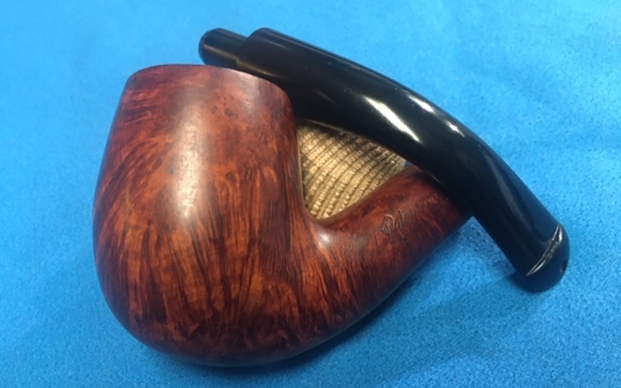
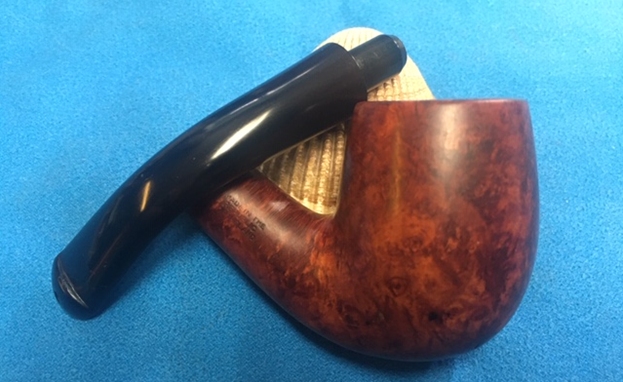
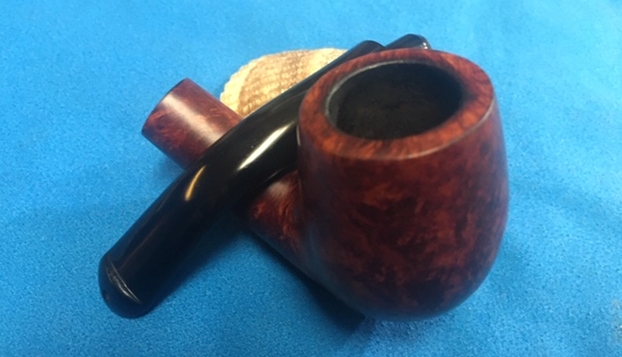
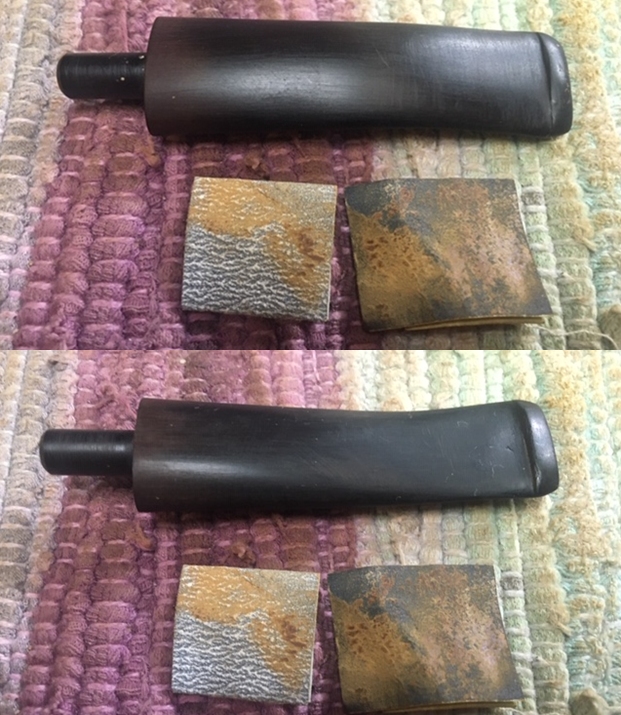
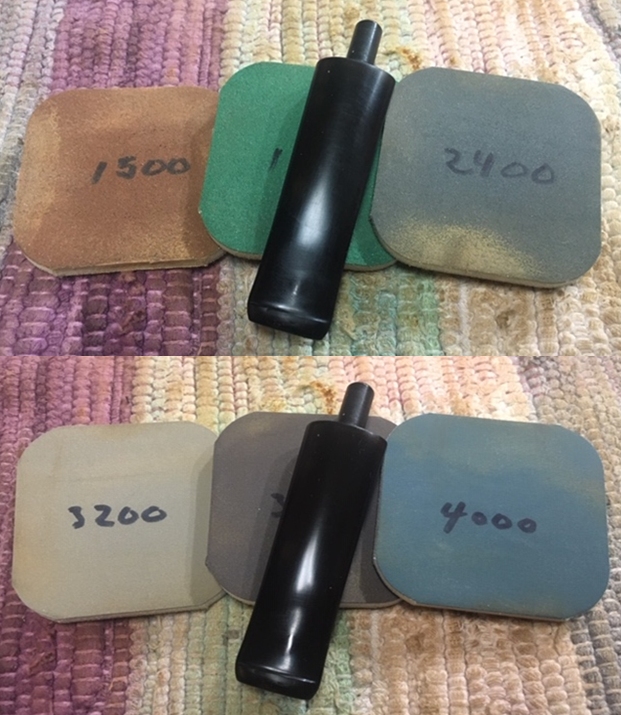
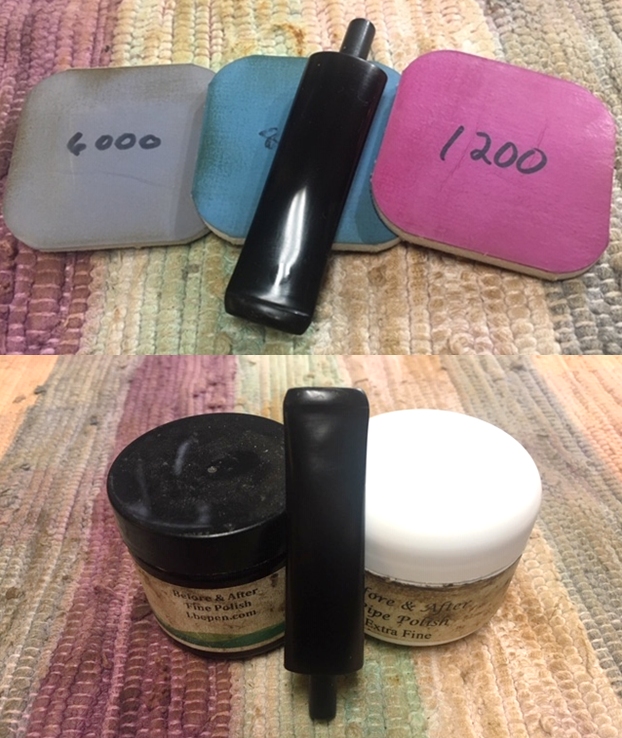
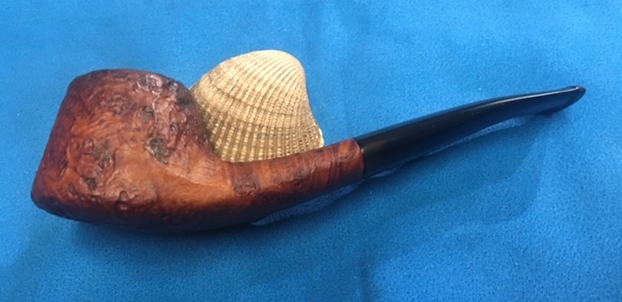
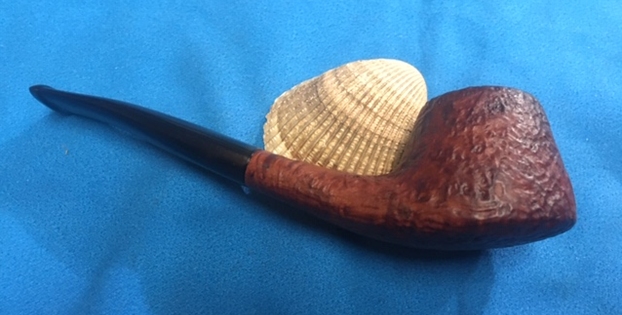
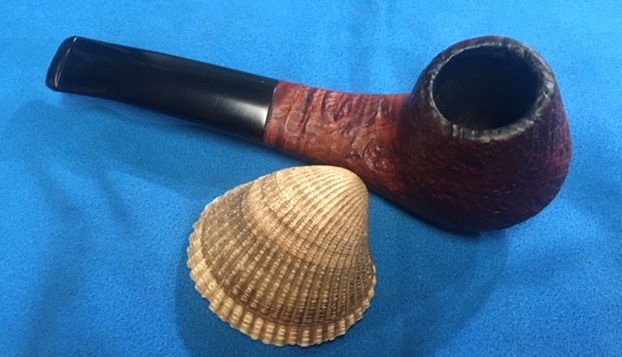
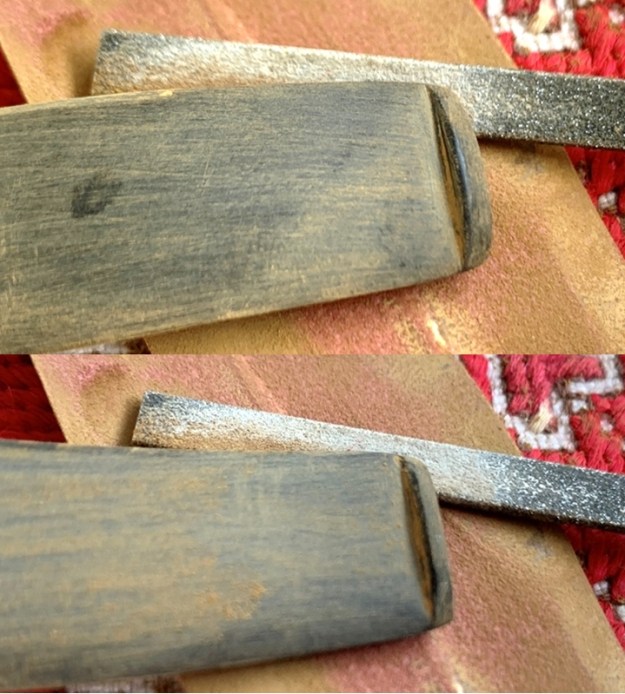
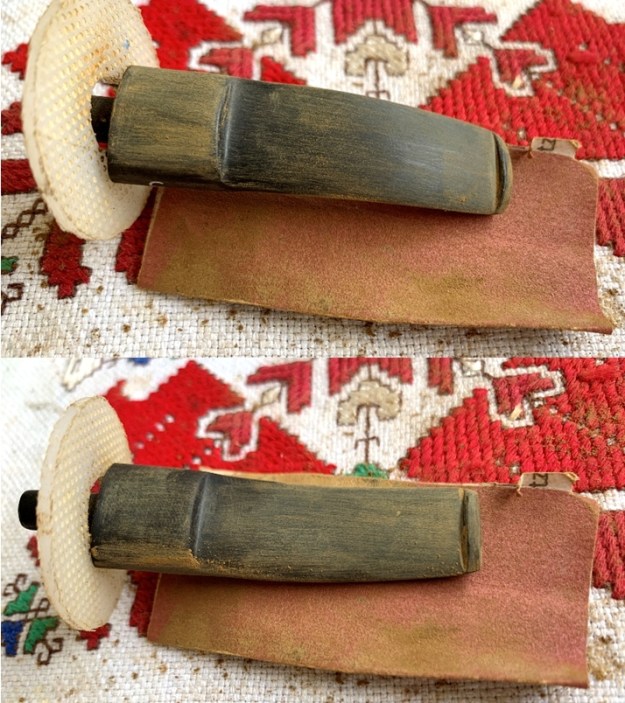
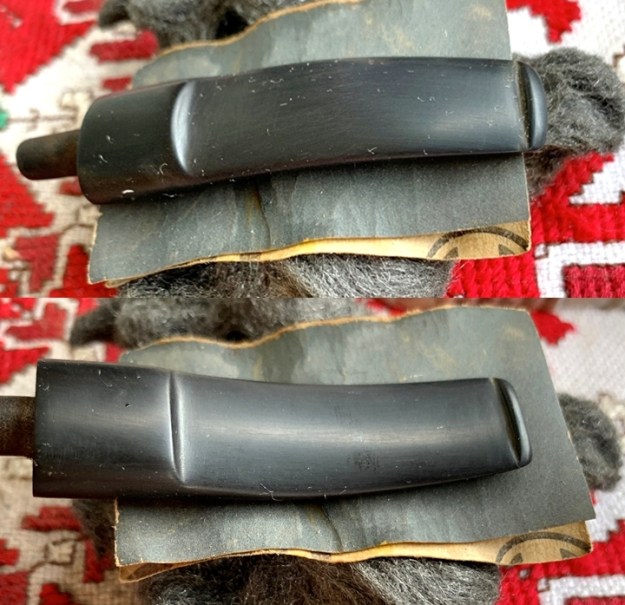
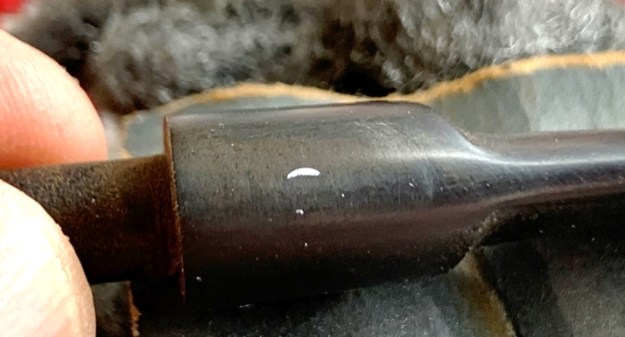
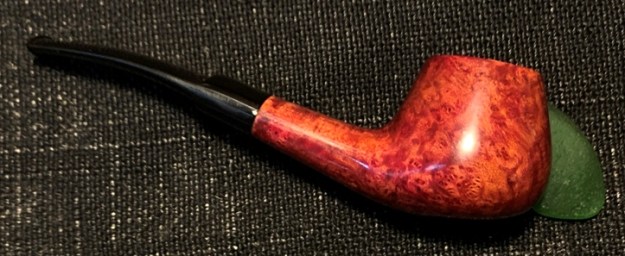
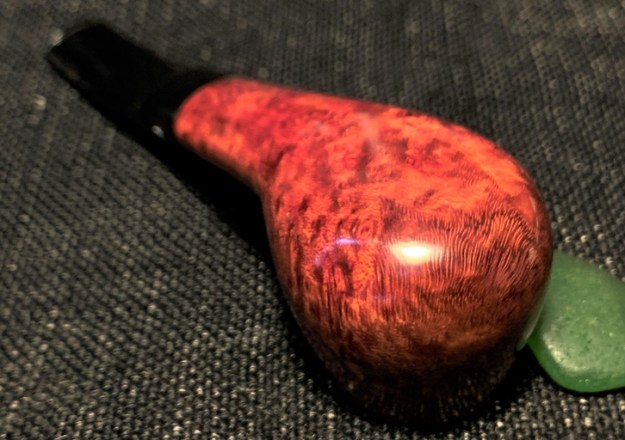
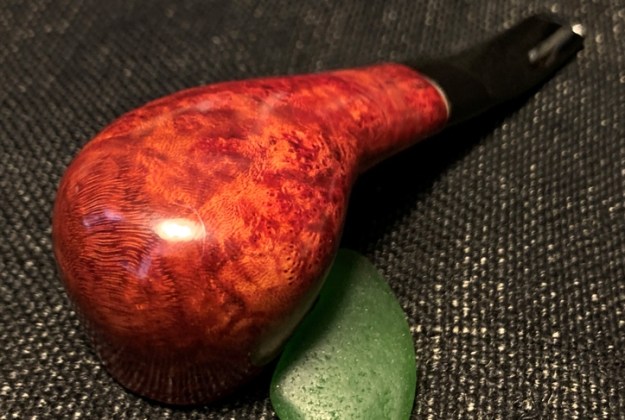
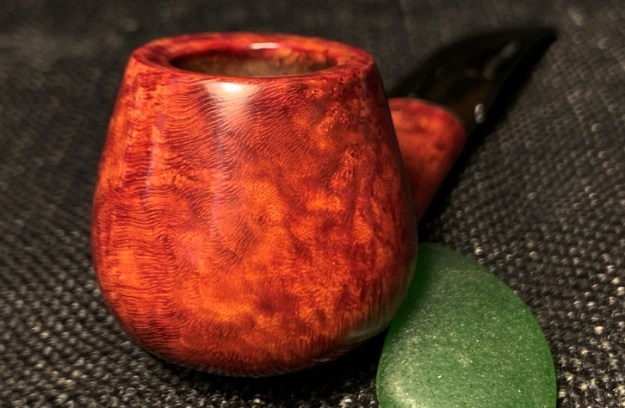
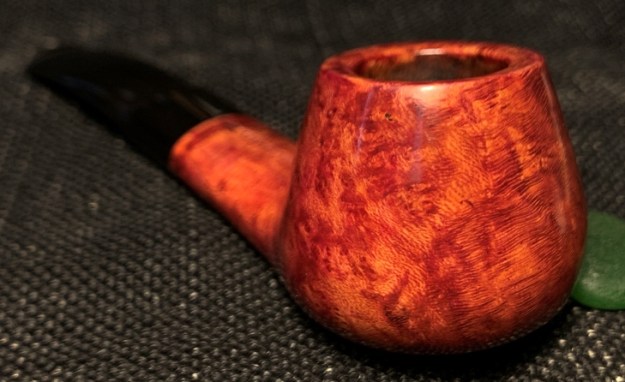
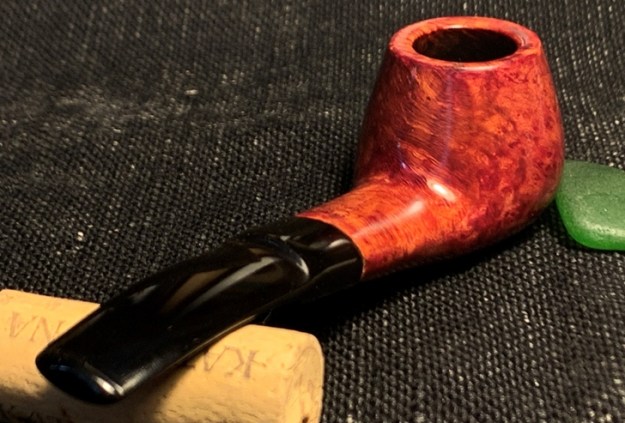
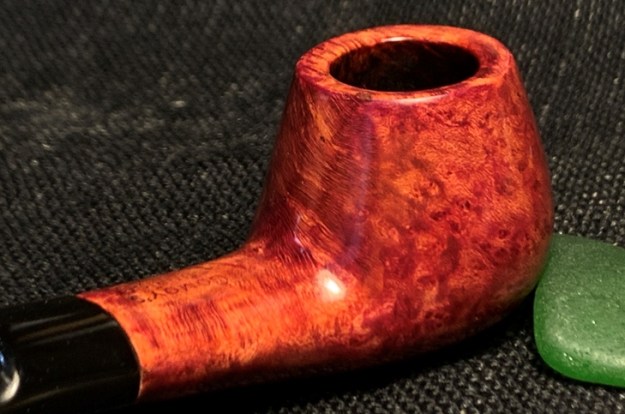
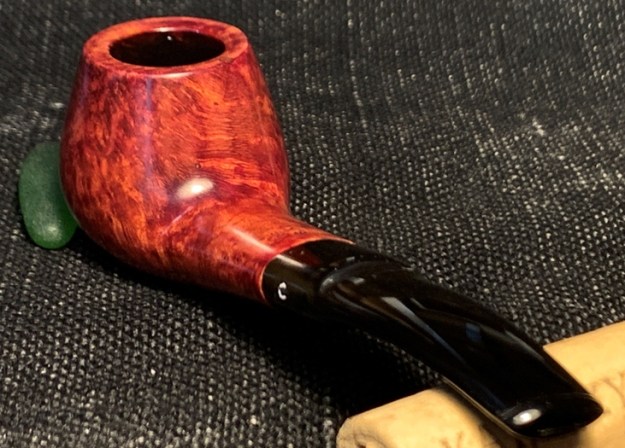
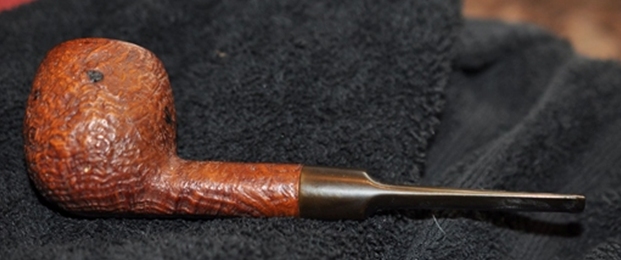
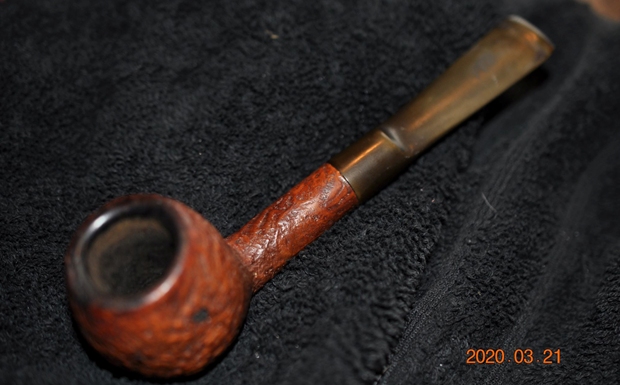
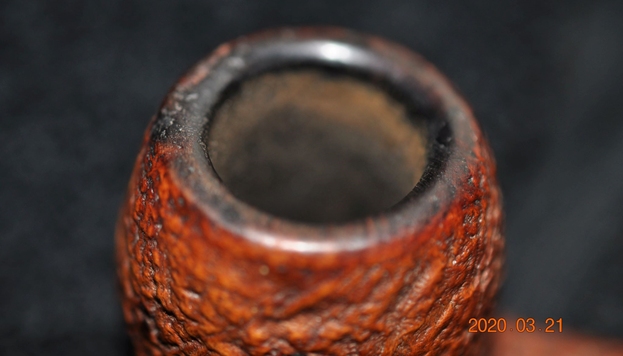
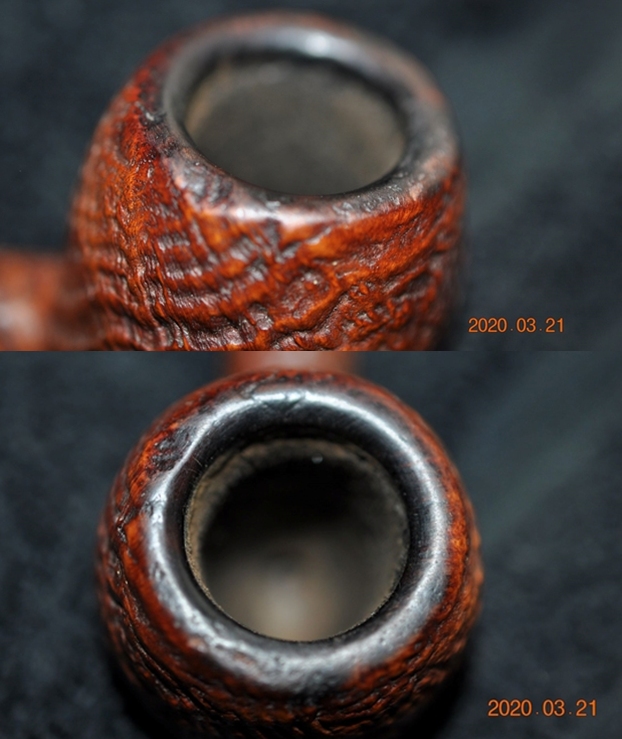
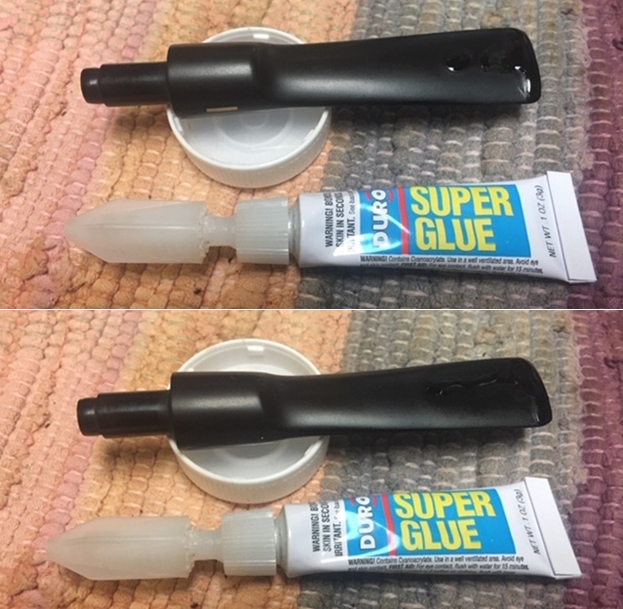
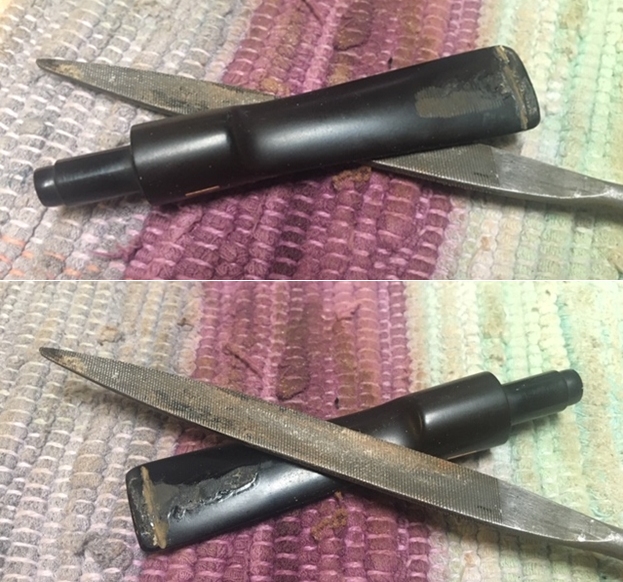
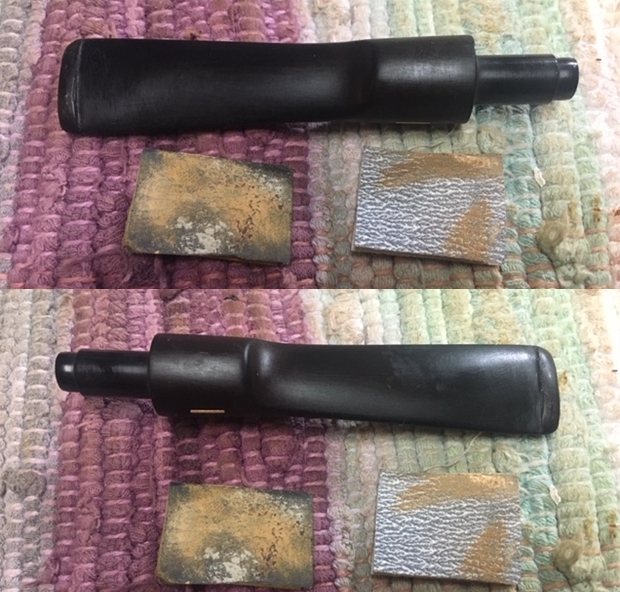
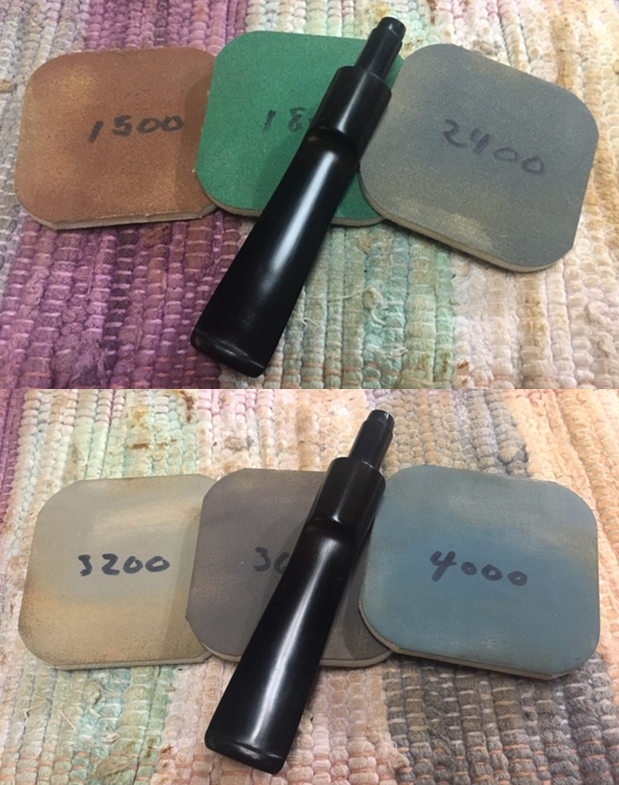
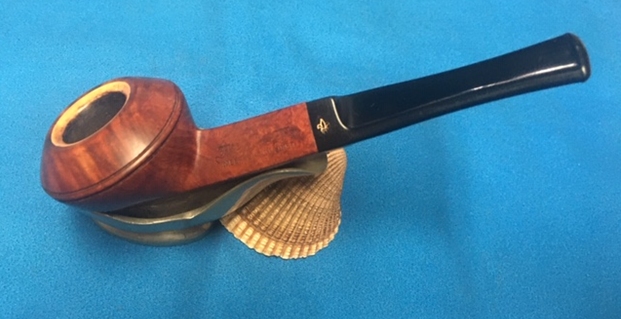
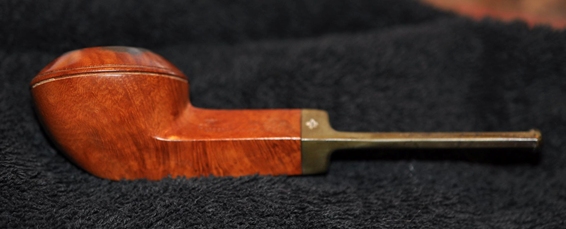
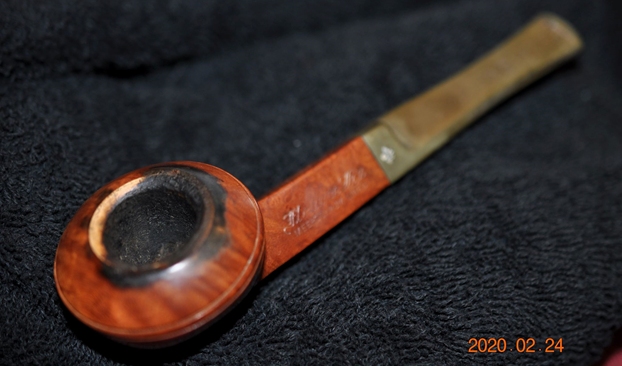
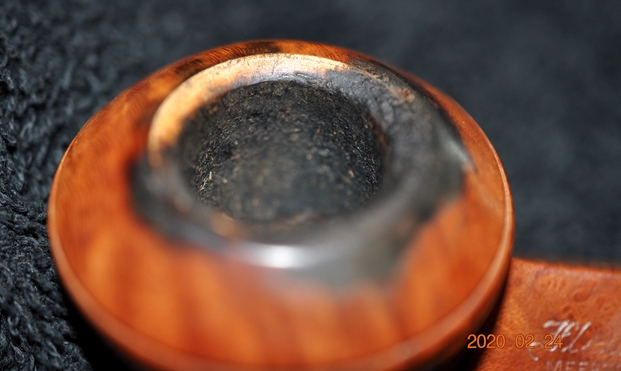
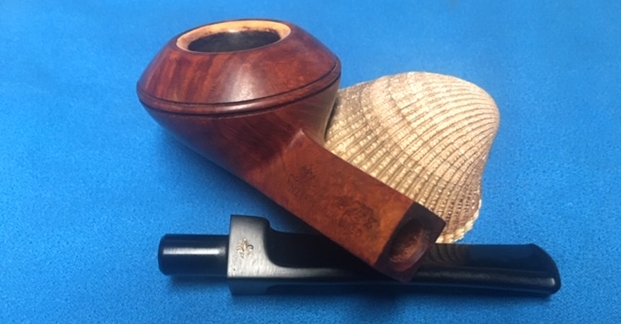
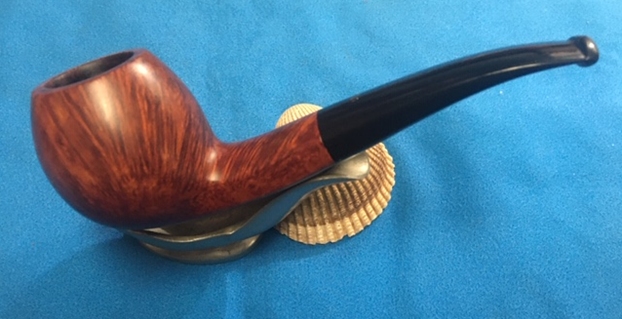
The next pipe on the table is one that was also at the bottom of the box of pipes I am working on. It is a Stanwell Royal Guard Apple. The round shaped bowl, oval shank and taper stem made up a nicely shaped pipe. The smooth finish showed great grain through the ground in dirt and grime. There are also some well hidden fills in the briar. It was stamped on the underside of the shank and read 182 at the top over Stanwell over Royal Guard over Made in Denmark. The finish was very dirty with a heavy coat of grime ground into the bowl and rim top as can be seen in the photos. The bowl had a thick cake with a lava overflow on the inner edge of the rim top but very little on the top itself. It appeared that both the inner and outer edges of the bowl looked clean and undamaged. The stem was oxidized and there were tooth marks and chatter on both sides and on the top and bottom edges of the button. The stem was made for a 9mm filter. Jeff took photos of the pipe before he cleaned it up so you could see what we saw. Jeff took photos of the rim top to show lava build up around the rim, the edges and cake in the bowl. Jeff took some photos of the bowl sides and heel to show the absolutely dirty finish ground into the briar. It was a dirty pipe but I think it will be a beautiful one once we are finished.  The stamping on the underside of the shank is shown in the photos below. It is clear and read as noted above.  There was the Stanwell Crown S stamped on the top of the stem. The stem was a good fit to the shank. It was oxidized, calcified and had debris stuck to the surface of the vulcanite. It also shows the tooth marks on the stem and on the button surface. Pipedia has a great article on Stanwell Shape Numbers & Designers that matches the shape numbers of Stanwell pipes with the designer of the shape. I enjoy that information (https://pipedia.org/wiki/Stanwell_Shape_Numbers_and_Designers?fbclid=IwAR0ULK-xl-hW0RZXbt64VWijPtpMgn1uTDEawHywln8fGcDXtbWcmB6SA24). Turns out the design of this pipe was done by Bang and is a filter pipe. I am including the following screen capture.It was my turn to work on the pipe now. I was really looking forward to what the pipe would look like once Jeff had worked his magic. What would the rim top look like? What would the dirty sandblast on the bowl look like? I had no idea. When I took it out of the box I was struck great job cleaning up the pipe Jeff had done. It was impressive! He had reamed the pipe with a Pipnet piper reamer and taken the cake back to bare briar. He cleaned up the remaining cake with a Savinelli Fitsall Pipe Knife. He scrubbed the interior of the bowl and shank with pipe cleaners, cotton swabs and alcohol to remove the tars and oils. He scrubbed the exterior of the pipe with Murphy’s Oil Soap and a tooth brush to remove the grime from the finish. He worked on the rim top lava and darkening with the soap and tooth brush. He scrubbed the inside of the stem with alcohol and pipe cleaners. He scrubbed the exterior with Soft Scrub and then soaked it in Before & After Deoxidizer. He washed the stem off with warm water to remove the Deoxidizer. The pipe looked far better. I took photos of the pipe when I received it before I started working on it. I took photos of the bowl and rim top as well as the stem to show how clean they were. You can see that rim top and edges look very good. The stem is clean and the tooth damage on the button top and bottom edges. I took a photo of the stamping on the underside of the shank. The stamping is readable as noted above. The stamping GUARD is a double stamped and gives me a bit of a mystery. Royal Guard was a Stanwell second and generally was not stamped Stanwell. This one was! The stem on the Royal Guard was also stamped RG and this one bears the Stanwell Crown S.I took a photo of the pipe with the stem removed to show that the tenon was drilled for a 9MM filter. I also took a photo of the bowl and stem to get an overall look of stem, tenon and profile of the pipe. It really is a beautifully shaped pipe.  I decided to start my work on the pipe by polishing the pipe with micromesh because it was in such good condition. I polished it with 1500-12000 grit micromesh sanding pads. I wiped the bowl down after each sanding pad with a damp cloth. I rubbed the briar down with Before & After Restoration Balm. I worked it into the briar with my fingertips. The product works to clean, enliven and preserve the briar. I let it sit for 10 minutes while I worked on the stem. After the time passed I buffed it with a cotton cloth to deepen the shine. The briar really comes alive with the balm.      I set the bowl aside and turned my attention to the stem. I filled in the indentations on the button edge and built it up with clear super glue. Once the repair cured I used a needle file to reshape the button edges and also flatten the repaired areas.   I sanded the stem with 220 grit sandpaper to finish the shaping and to remove the remaining oxidation. I started polishing the stem with 400 grit wet dry sandpaper. I wiped the stem down with Obsidian Oil before further polishing it.   I used some Rub’n Buff Antique Gold to touch up the gold that remained in the Crown S stamp on the top of the stem.     I polished the vulcanite with micromesh sanding pads – 1500-12000 grit pads. I wiped it down with Obsidian Oil after each sanding pad. I used Before & After Pipe Polish – both Fine and Extra Fine to further polish the stem.   I have a box of Vauen 9MM filters so I took one out of the box and inserted it in the tenon. The fit is perfect and fills in the tenon.  This S. Bang designed Stanwell Royal Guard 182 Apple with a taper vulcanite stem turned out very nice. The mix of brown stains highlights the grain around the bowl sides and bottom. The rim top and edges look very good. The finish on the pipe is in excellent condition. I put the stem back on the bowl and carefully buffed the pipe with Blue Diamond on the buffing wheel. I gave the bowl and stem multiple coats of carnauba wax on the buffing wheel and followed that by buffing the entire pipe with a clean buffing pad. I hand buffed the pipe with a microfiber cloth to deepen the shine. The finished apple is very nice and feels great in the hand and can be used as a sitter with the wide base. Give the finished pipe a look in the photos below. It is a nice pipe whose dimensions are Length: 5 ½ inches, Height: 1 ¾ inches, Outside diameter of the bowl: 1 ¼ inches, Chamber diameter: ¾ of an inch. Thanks for walking through the restoration with me as I worked over another beautiful pipe. This Stanwell Royal Guard 182 will be going on the rebornpipes store shortly. If you are interesting in adding it to your collection let me know! Thanks for your time.
New Life for a Peterson’s Republic Era System Standard 317


Blog by Steve Laug

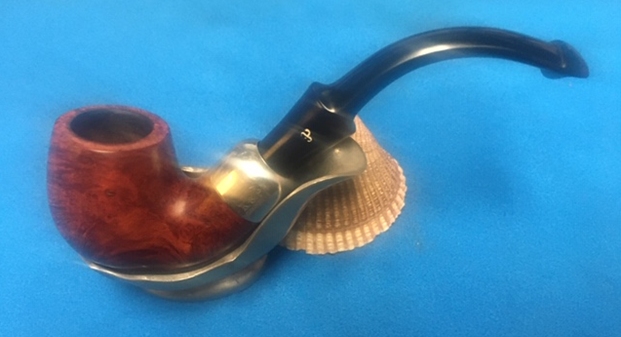
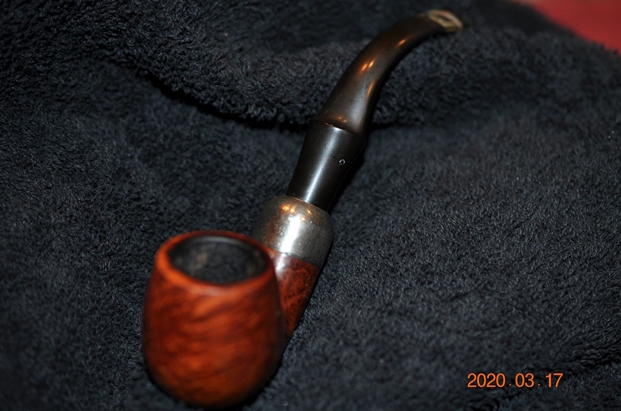
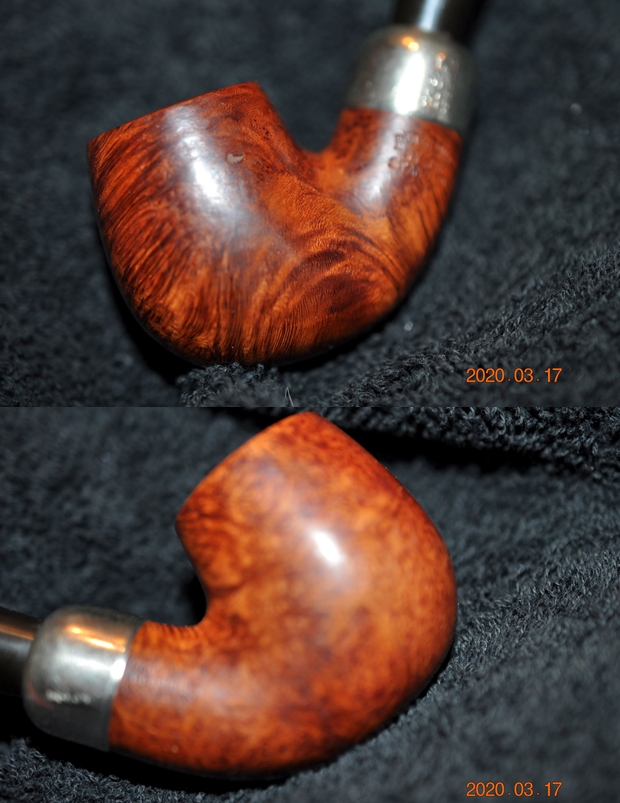
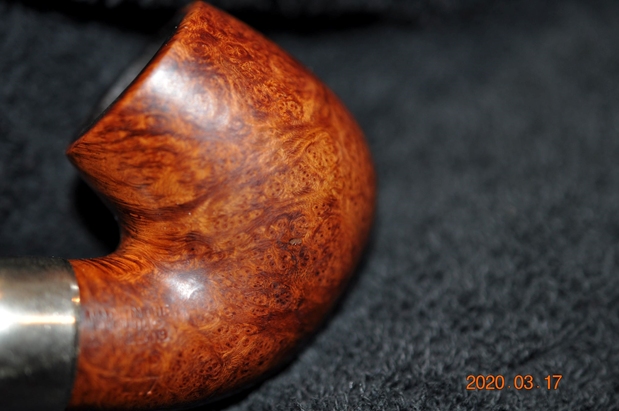
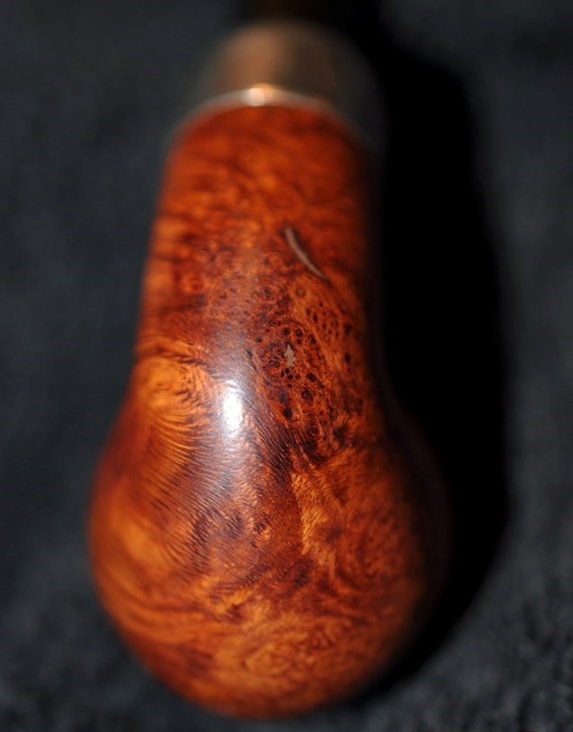
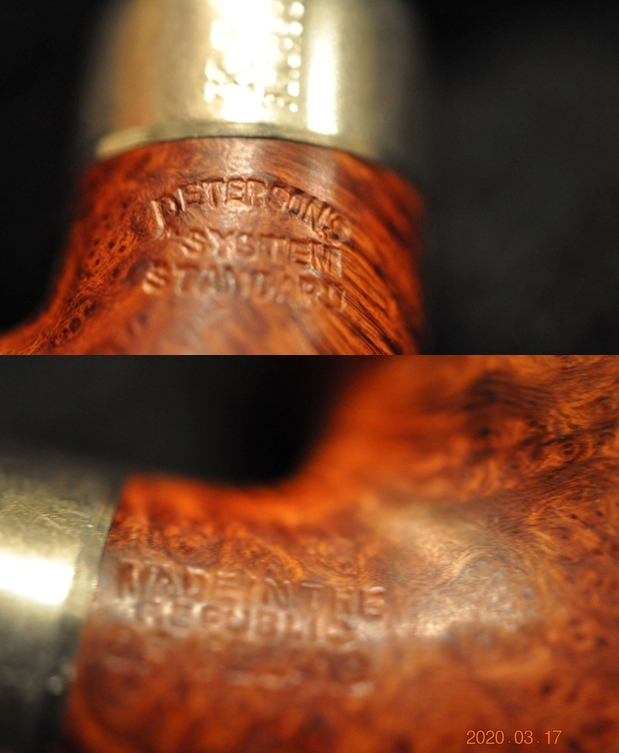
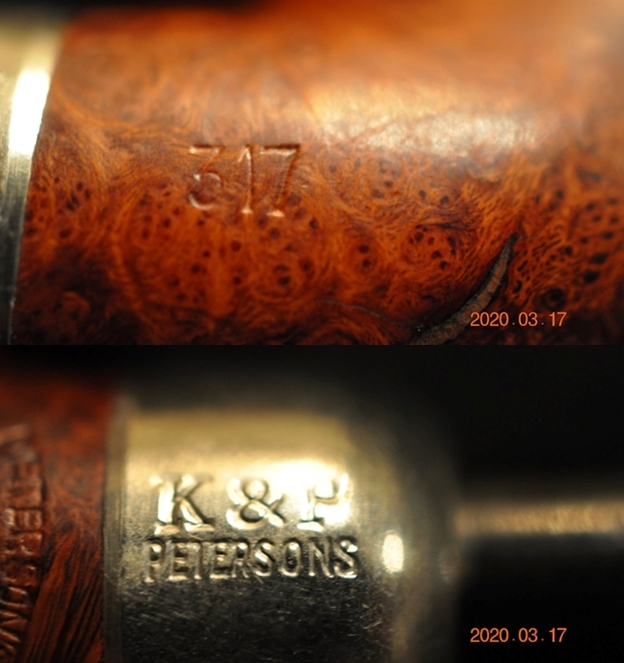
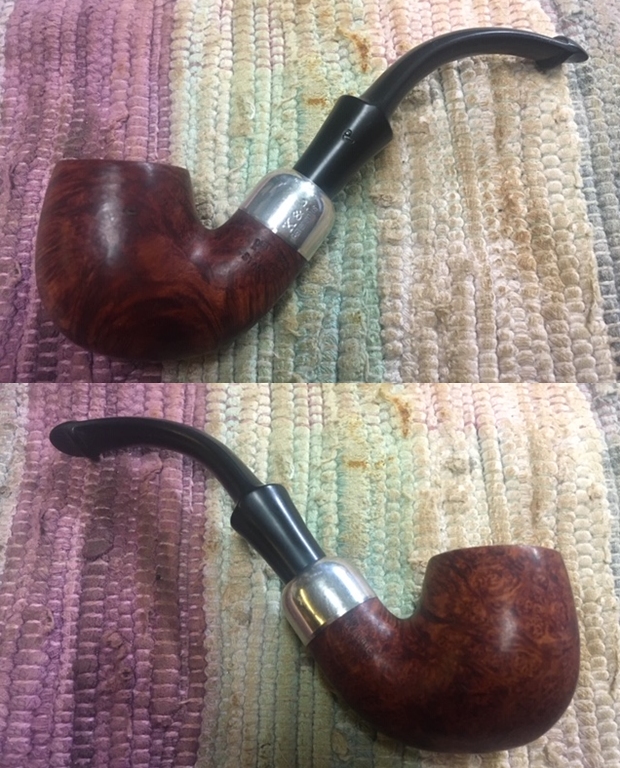
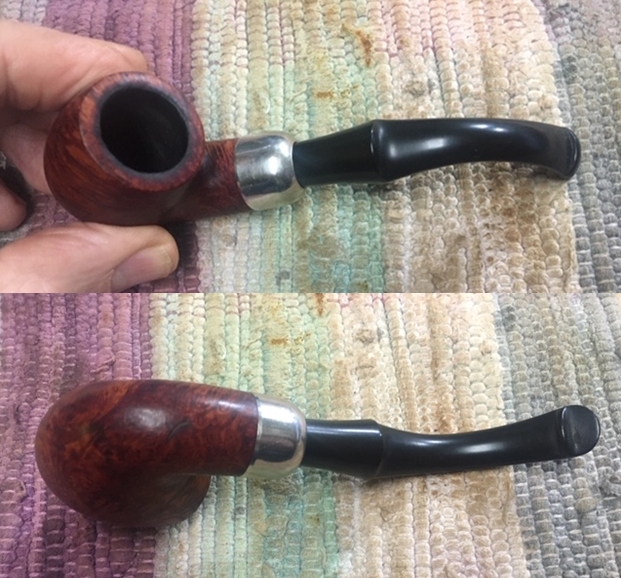
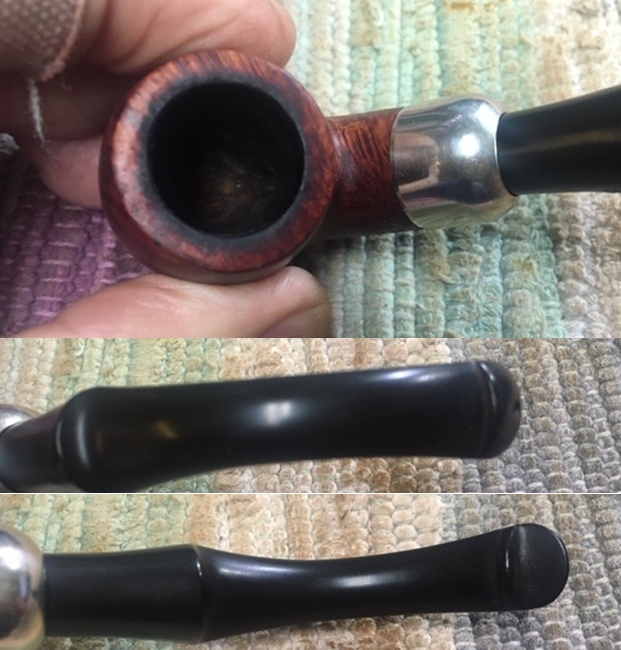
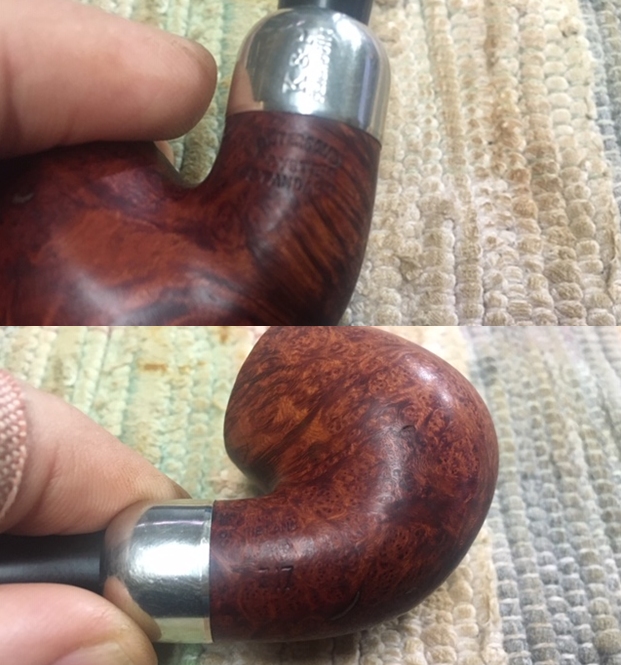
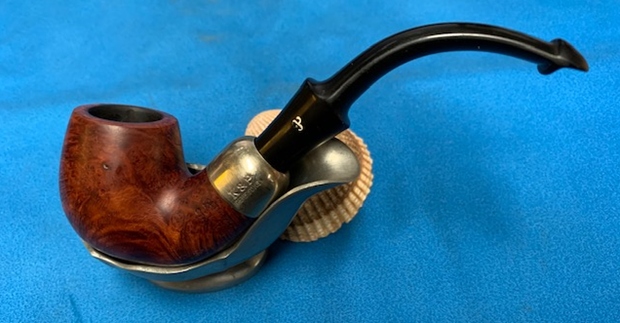
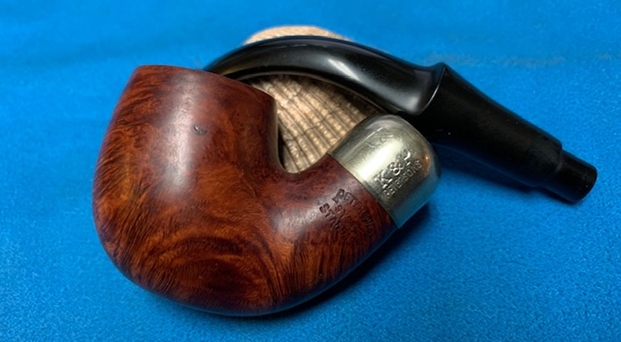
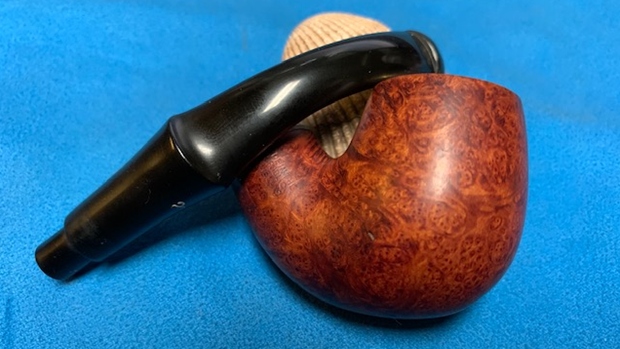
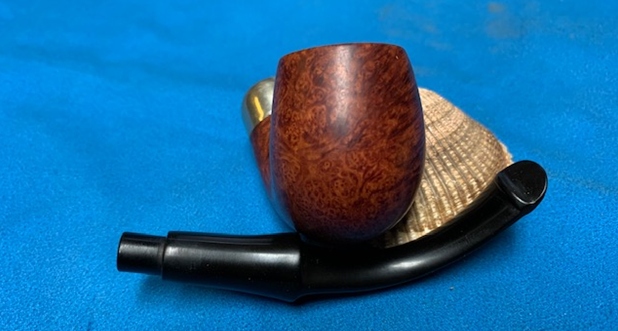
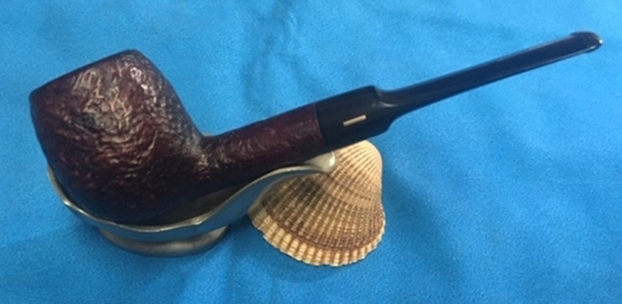
The next pipe on the table came to us from one of Jeff’s pipe hunts or auctions. It is a smaller nicely grained and I would say classic Peterson’s System Standard. The finish is quite nice with an instantly recognizable Peterson’s look. The pipe was dirty, with grime and dust ground into the finish. The bowl had a thick cake in the bowl and a lava overflow on the inner edge of the rim and spilling onto the rim top in some spots. The pipe is stamped on both sides of the shank and reads Peterson’s System Standard on the left side of the shank. It is stamped Made in the Republic of Ireland followed by the shape number 317 on the right side of the shank. The metal ferrule is stamped K&P Peterson’s. The stamping is clear and readable on the pipe and ferrule. The stem was dirty and oxidized. There were light tooth marks and chatter on the stem near the button on both sides and some on the surface of the button as well. There was a faint partial Peterson’s “P” on the left side of the taper stem. Jeff took photos of the pipe before he cleaned it up. Jeff took photos of the rim top to show the cake in the bowl and the overflow of lava onto the rim top and filling in the beveled edge. The photos show the rim top and bowl from various angles.He took some photos of the bowl sides and heel to show the interesting grain that was on this bowl. It is a dirty but quite beautifully crafted pipe. The stamping on the underside of the shank read as noted above. The photo shows that they are very clear and readable. The P on the left side of the stem faint and part of it not stamped into the surface of the stem. The stem was a very good fit to the shank. It was oxidized, calcified and had debris stuck to the surface of the vulcanite. There were tooth marks and chatter on both sides of the stem.  I am including the information from Pipedia’s article on Peterson pipes. It is a great read in terms of the history of the brand (https://pipedia.org/wiki/Peterson). I have included a bit of the pertinent history here.

1950 – 1989 The Republic Era  – From 1950 to the present time, the stamp for this era is “Made in the Republic of Ireland” in a block format generally in three lines but two lines have been used with or without Republic being abbreviated.

During the 1950’s and 60’s the Kapp & Peterson company was still in the ownership of the Kapp family. However 1964 saw the retiral of the company Managing Director Frederick Henry(Harry) Kapp.

With that information in hand I knew what I was dealing with in terms of the stamping and the age of this pipe. I knew from the information that the pipe was made during the Republic Era between 1950 and 1989. Pipedia then qualifies the dating as follows: From 1950 to the present time, the stamp for this era is “Made in the Republic of Ireland”. Now it was time to work on the pipe.

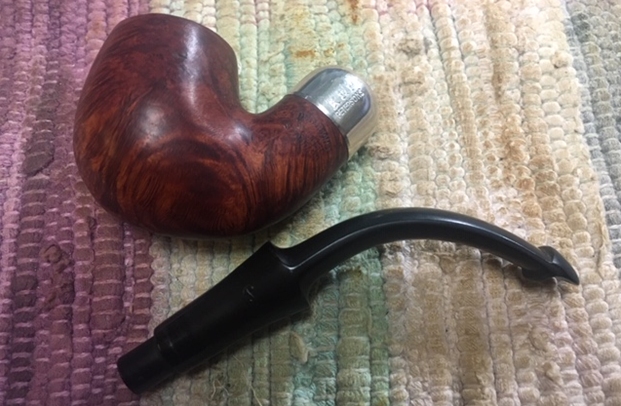
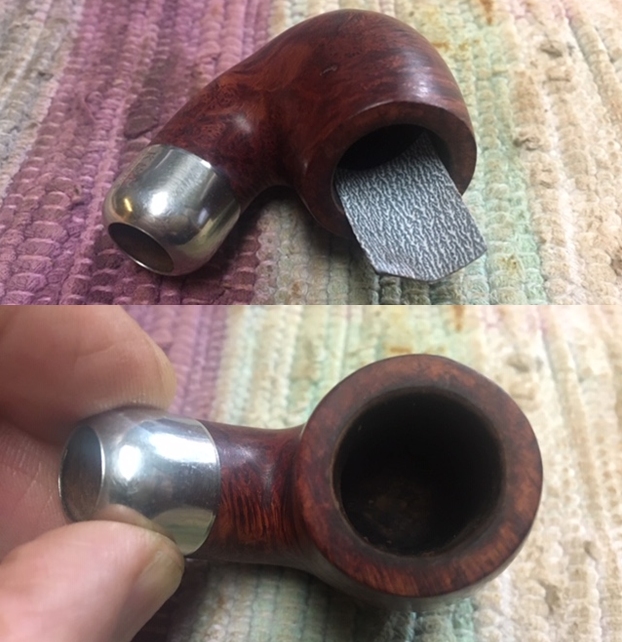
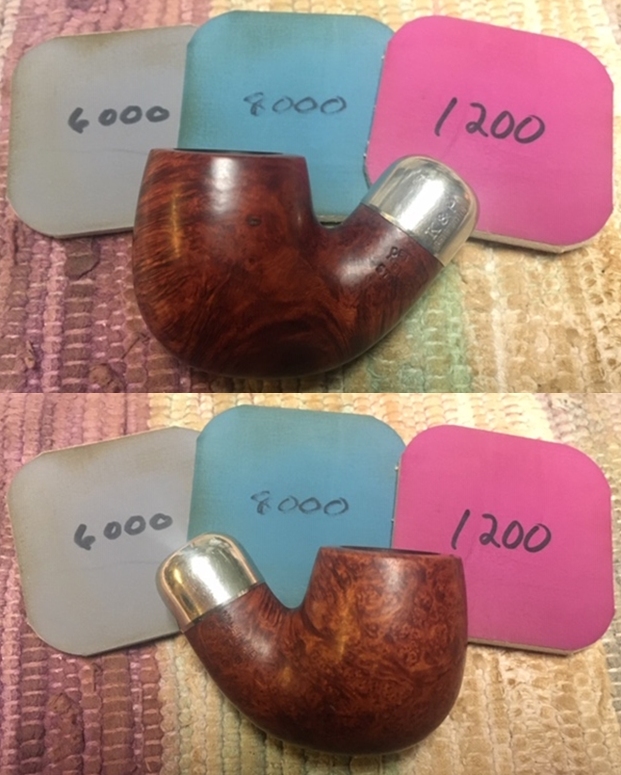
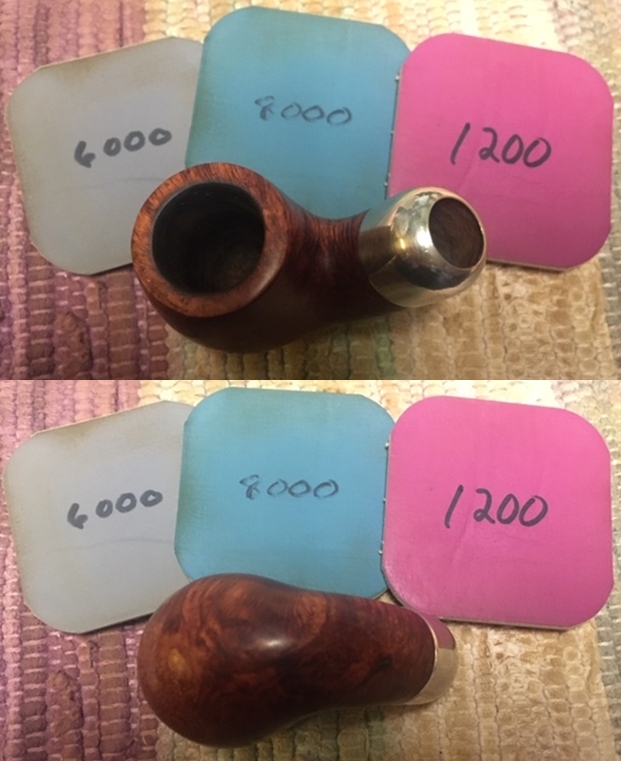
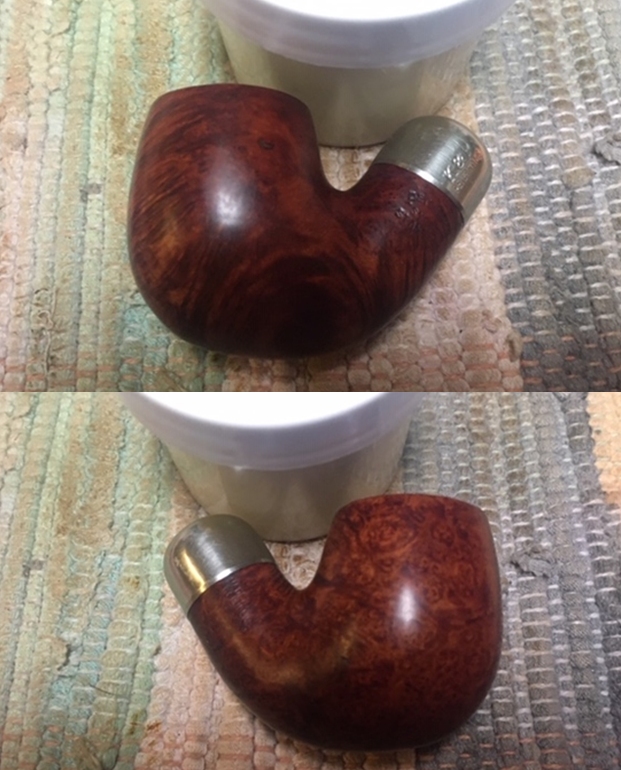
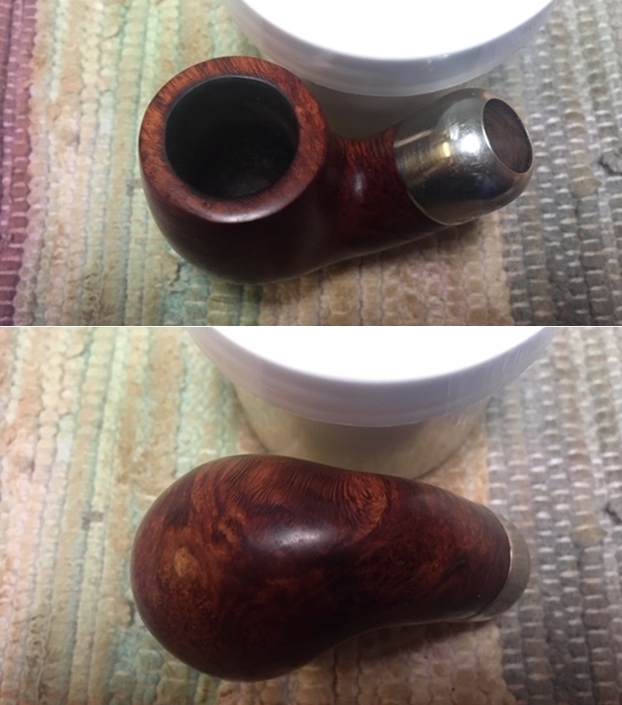
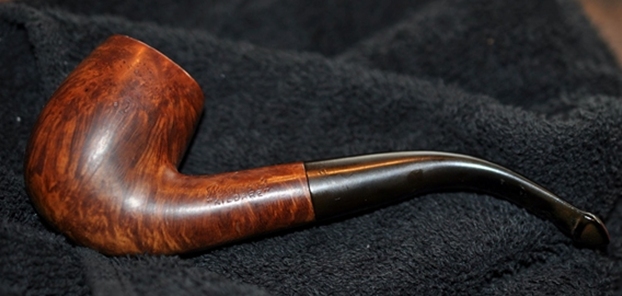
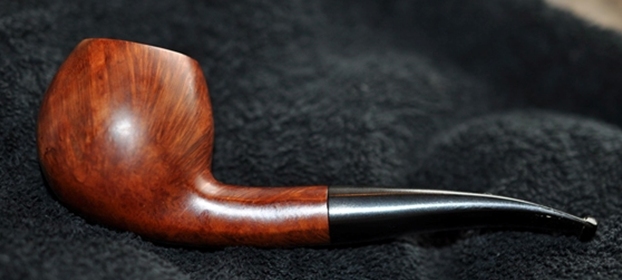
Armed with that information I turned to work on the pipe itself. Jeff had done a great job cleaning up the pipe as usual. He reamed the pipe with a PipNet reamer and cut back the cake back to the bare briar. He cleaned up the walls with a Savinelli Fitsall Pipe Knife. He scrubbed the interior of the bowl and shank with pipe cleaners, cotton swabs and alcohol to remove the tars and oils. He scrubbed the exterior of the pipe with Murphy’s Oil Soap and a tooth brush to remove the grime from the finish. He scrubbed the inside of the stem with alcohol and pipe cleaners. He cleaned the oxidized silver with Soft Scrub and buffed it off with a soft pad. He scrubbed the exterior with Soft Scrub and then soaked it in Before & After Deoxidizer. He washed it off with warm water to remove the Deoxidizer. The pipe looked far better. I took photos of the pipe when I received it before I started working on it. I took photos of the bowl and rim top to show how clean it was. There is some darkening around the inner edge and the rim top is roughened. The stem looks clean of oxidation and there are some tooth marks and chatter on both sides of the stem.The stamping on both sides of the shank was very clear and readable as noted above.I took a photo of the pipe with the stem removed to show the overall look of stem, tenon and profile of the pipe. It is a great looking pipe.I started my part of the restoration by working on the damage to the inner edges of the rim and the rim top. I used a folded piece of 220 grit sandpaper to smooth them both out. There was a fill that was chipped on the bottom of the shank so I repaired it with clear super glue. Once it cured I sanded it smooth with a folded piece of 220 grit sandpaper. I polished the briar with micromesh sanding pads – wet sanding with 1500-12000 grit pads and wiping the briar down with a damp cloth after each pad.  The micromesh worked to blend in the cleaned rim top and the repaired fill on the shank. I would not need to stain either area. I rubbed the briar down with Before & After Restoration Balm. I worked it into the briar with my fingertips to get it into the deep briar. The product works to clean, enliven and preserve the briar. I let it sit for 10 minutes while I worked on the stem. After the time passed I buffed it with a cotton cloth to deepen the shine. The grain came alive with the balm. I set the bowl aside and turned my attention to the stem. I touched up the P stamp on the left side of the stem with Paper Mate Liquid Paper and once it dried I scraped off the excess. The P stamp is far from perfect but it definitely looks better.This stem was in great condition so I polished it with micromesh sanding pads – 1500-12000 grit pads. I wiped it down with Obsidian Oil after each sanding pad. I used Before & After Pipe Polish – both Fine and Extra Fine to further polish the stem. This Republic Era Peterson’s System Standard 317 Smooth Bent Billiard is a nice looking pipe. The combination of brown stains really highlights the grain around the bowl sides and shank. They begin to really stand out with the polishing. The finish on the pipe is in excellent condition and the contrasting stains work well to give some contrast to the pipe. The polished black vulcanite P-lip taper stem adds to the mix. With the grime and debris gone from the finish and the bowl it is really is eye-catching. I put the stem back on the bowl and buffed the pipe with Blue Diamond on the buffing wheel, carefully avoiding the stamping on the shank. I gave the bowl and stem multiple coats of carnauba wax on the buffing wheel and followed that by buffing it with a clean buffing pad. I hand buffed the pipe with a microfiber cloth to deepen the shine. The finished Peterson’s 317 System Bent Billiard is quite nice and feels great in the hand. Give the finished pipe a look in the photos below. The dimensions of the pipe are Length: 5 inches, Height: 1 ½ inches, Outside diameter of the bowl: 1 inch, Chamber diameter: ¾ of an inch. Thanks for walking through the restoration with me as I worked over another interesting pipe. This Peterson’s System Bent Billiard 317 will be added to the Irish Pipe Makers section of the rebornpipes store soon. If you want to add it to your collection send me an email or a message! Thanks for your time.

Restoring a Kriswill “Golden Clipper” Freehand Chimney


Blog by Paresh Deshpande

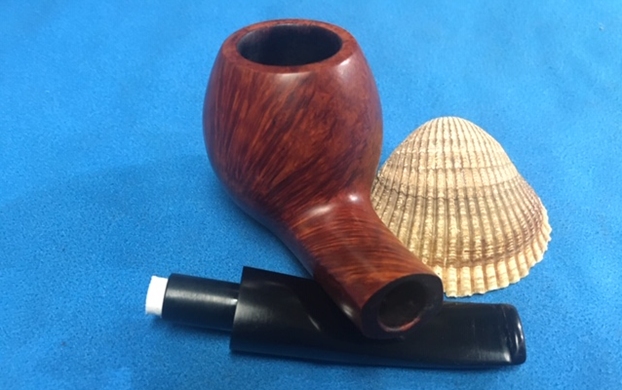
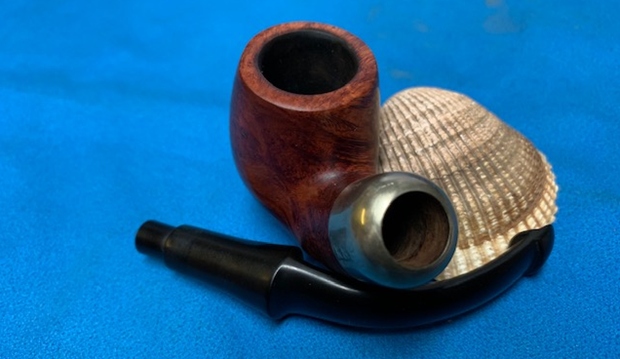
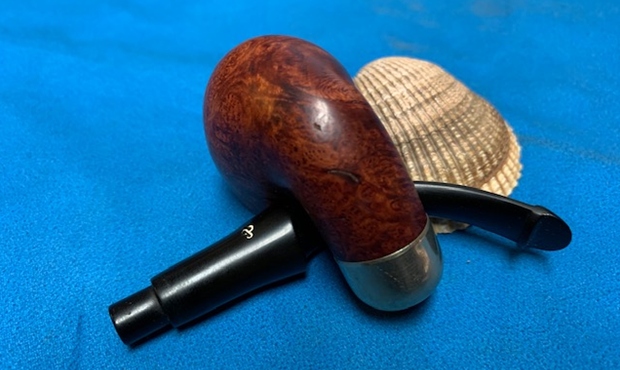
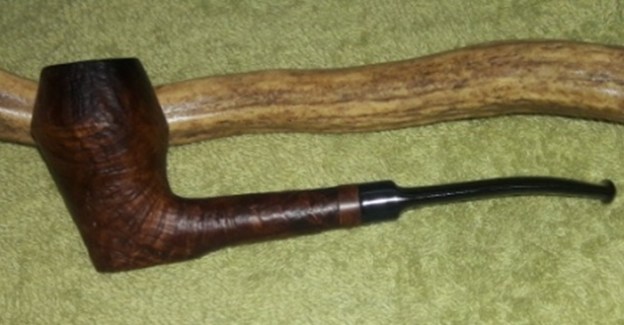
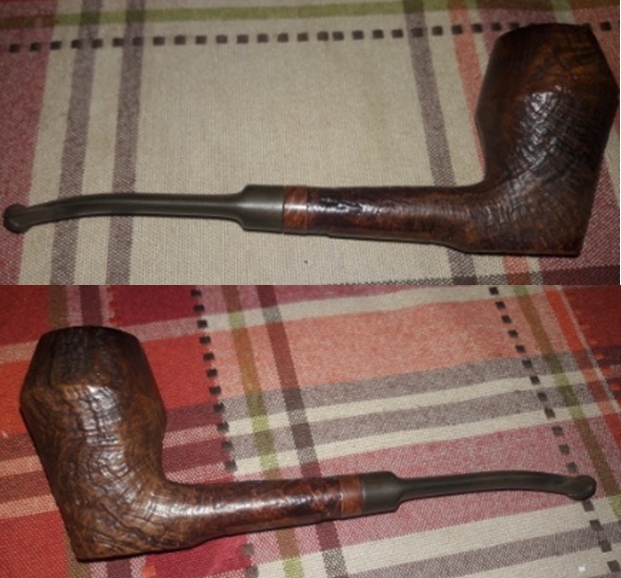
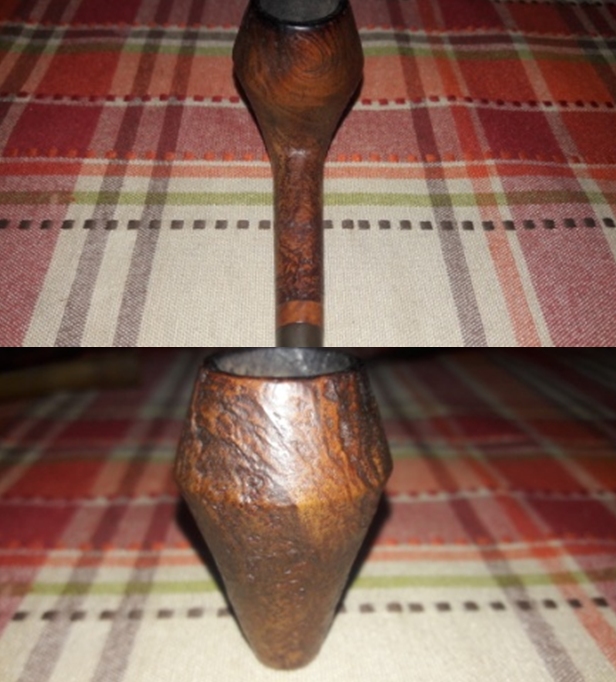
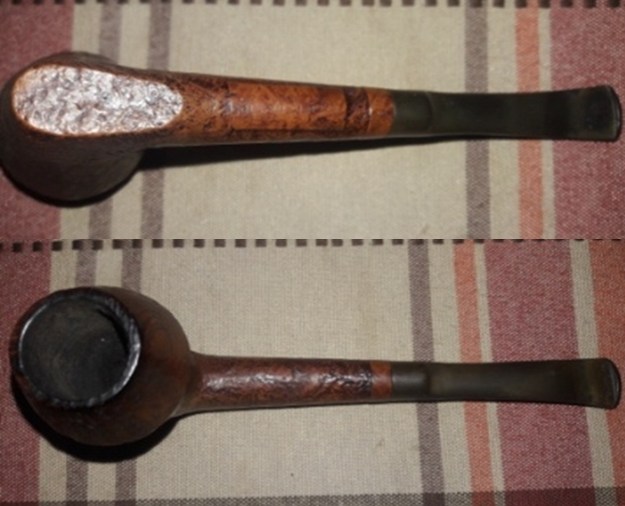
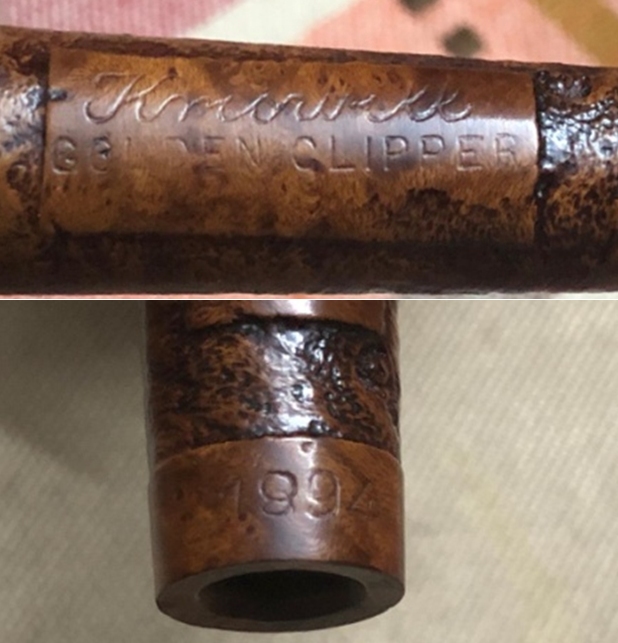
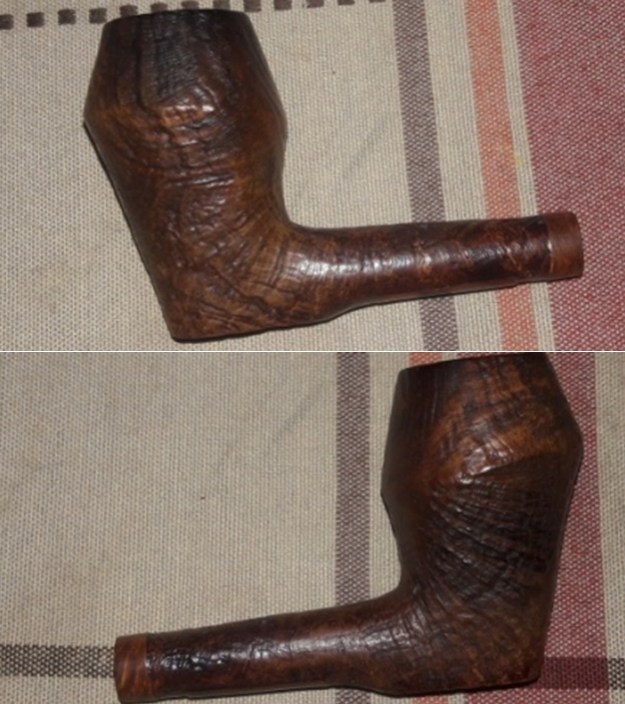
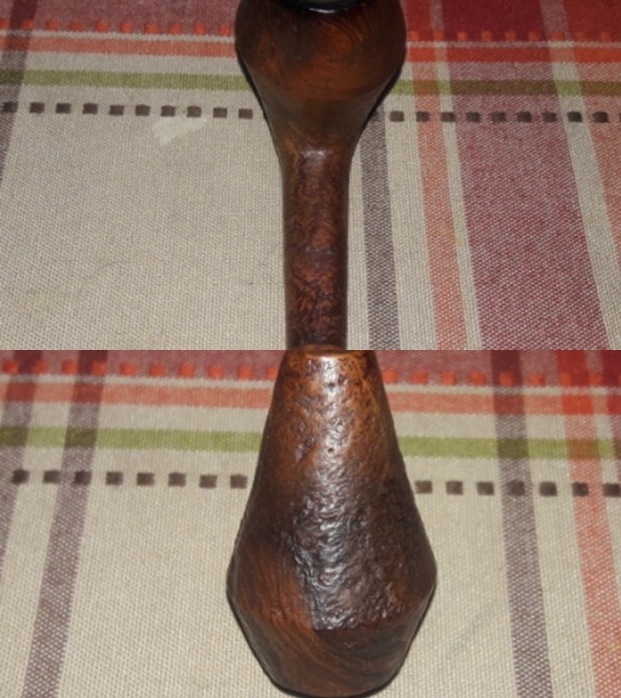
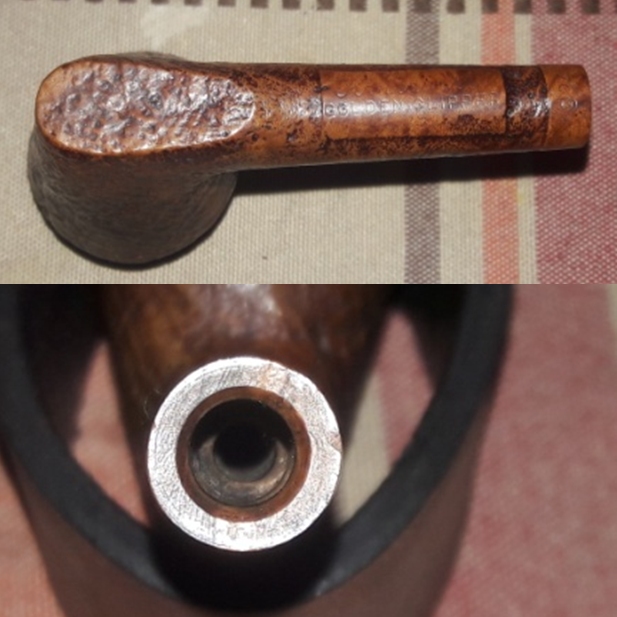
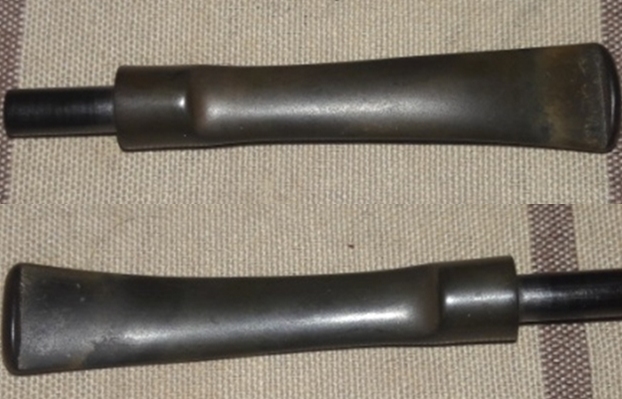
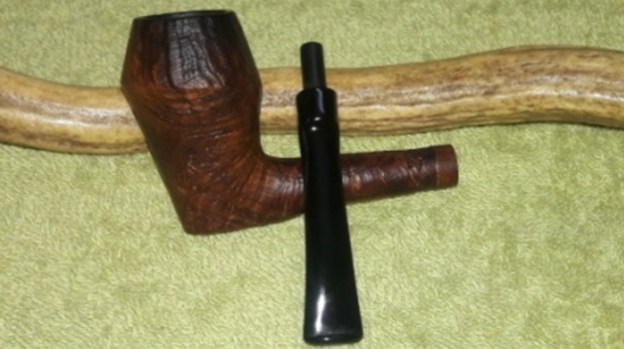
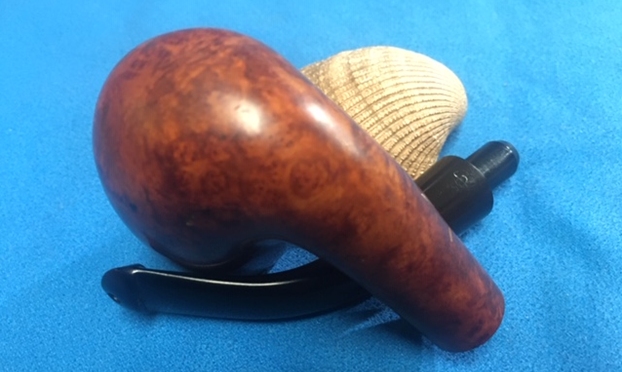
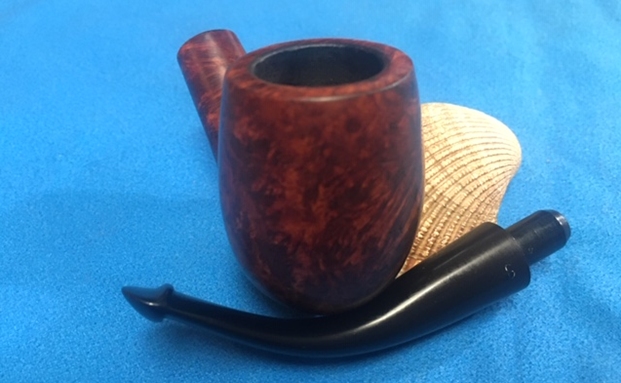
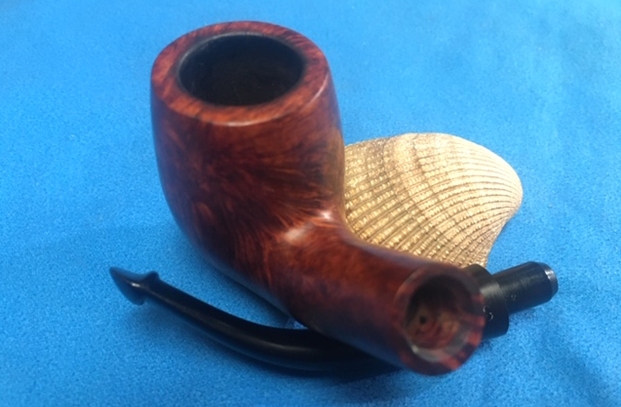
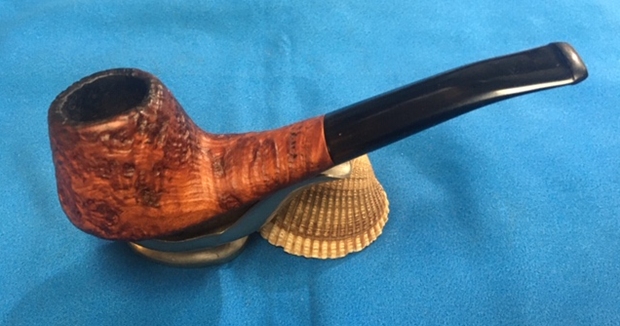
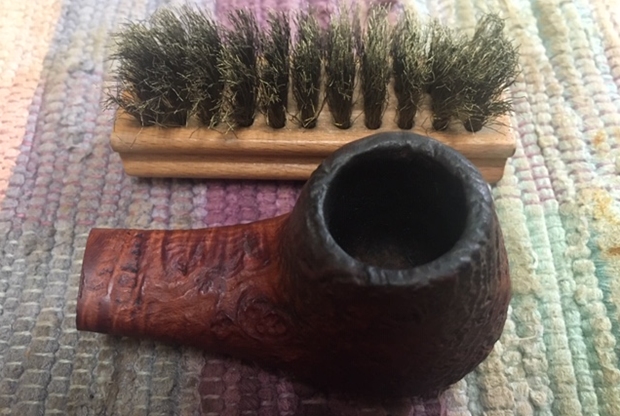
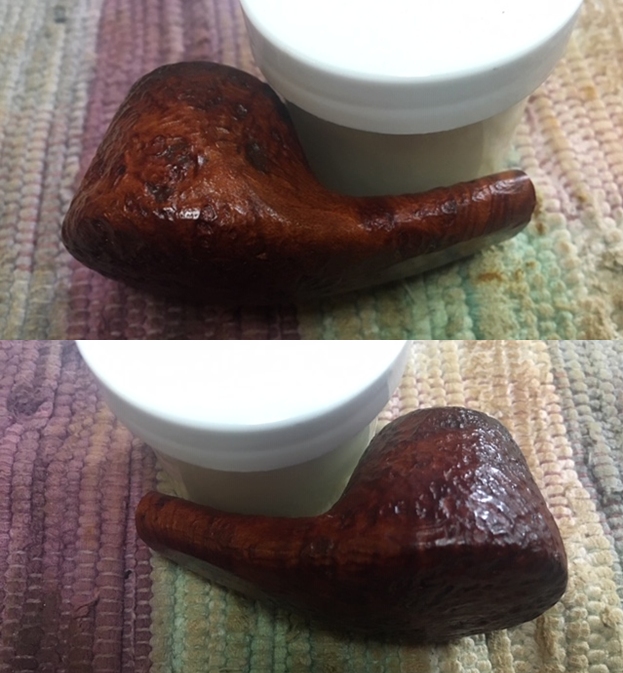
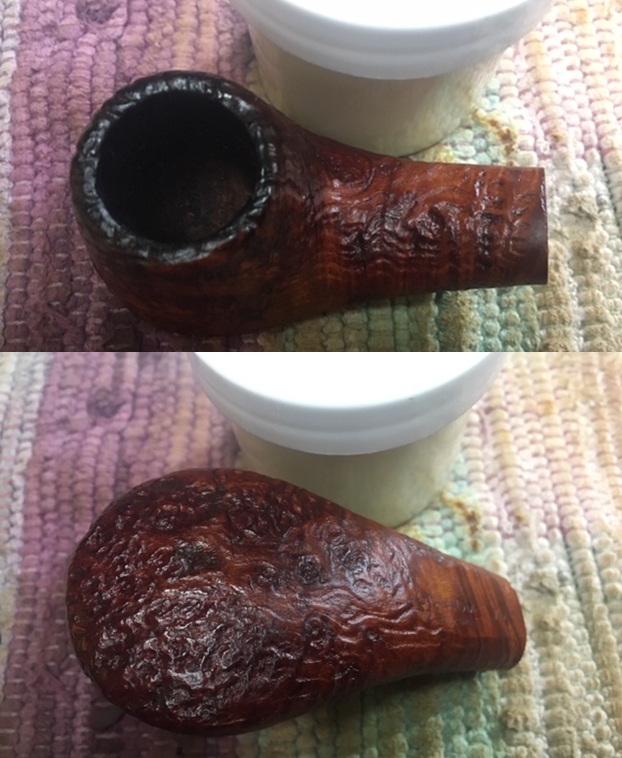
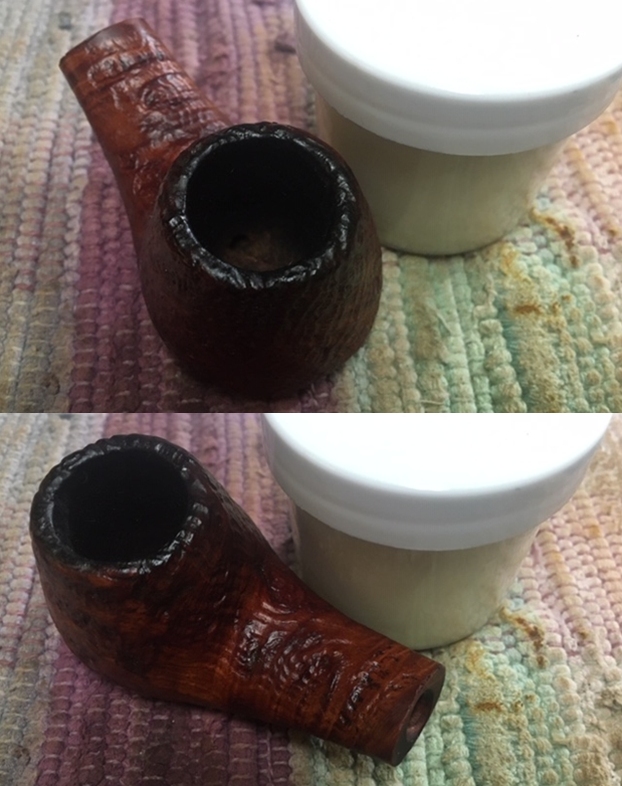
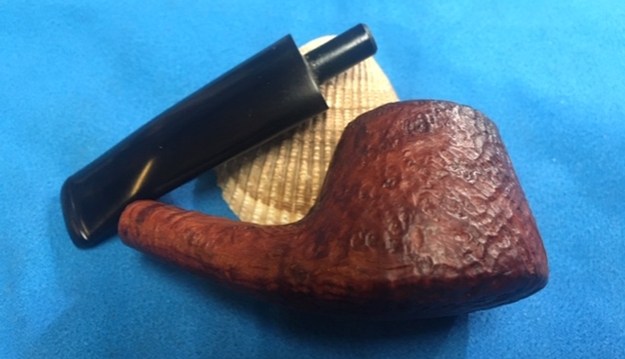
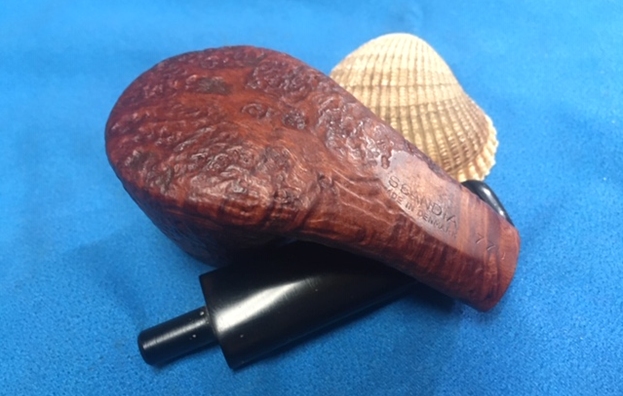
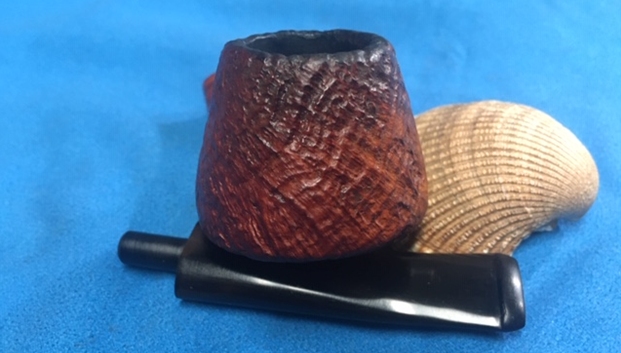
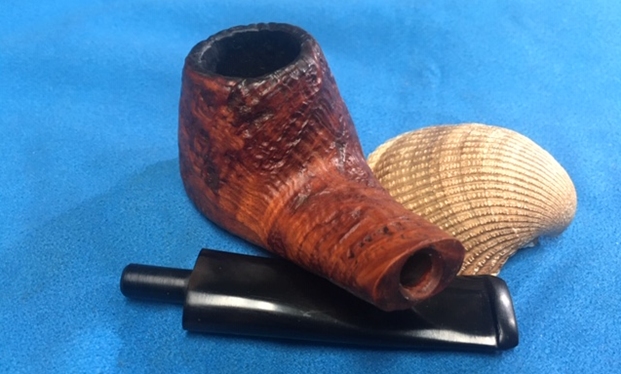
The next pipe selected for refurbishing is a uniquely shaped Danish pipe. I say unique because it has a tall chamber, rounded shank with a rim cap, a slight bent to the stem and is a sitter! It’s a shape that I had never come across and was unable to classify its shape. I shared pictures of the pipe with my Guru, Steve and he opined that it could be called a Rhodesian, stack, sitter or Bulldog as it has characteristics of all these shapes but looks like neither. Thus, we concurred that it’s most appropriate to call this pipe a freehand!!!! The bowl shape reminds me of the chimney of early steam locomotive engines with their bellowing huge plumes of smoke as they rush forward.This pipe has shallow sandblast and a natural finish (I guess) that has darkened over a period of time. For a pipe with a length of 5 ½ inches and bowl height of 2 inches and chamber depth of 1 ¾ inches, it’s pretty much ultra light weight, making it a perfect smoker to clench. The vulcanite saddle stem is thin and delicate. The shallow sandblast form the asymmetric patterns look interesting. The foot of the stummel is flat and elongated, making it a perfect sitter. A smooth briar band at the shank end breaks the monotony of the blasted surface and also provides a surface for stamping the model number. The pipe is stamped on the bottom smooth surface of the shank as “Kriswill” in script hand over “GOLDEN CLIPPER”. Further to the right towards the shank end on the smooth briar band is stamped the shape (?) code “1894”. Truth be told, the shape code stamping of the numeral 8 appears smudged. Having worked earlier on Kriswill pipes, I realized that the stamp “HAND MADE IN DENMARK” is conspicuous by its absence. The thin delicate vulcanite saddle stem is devoid of any stampings.A couple of years back I had worked on a Kriswill Golden Clipper and on a Chief. Here is the link for the Kriswill Chief write up…

https://rebornpipes.com/2018/08/04/breathing-new-life-into-a-kriswill-chief-20/. I am sure you will find it an interesting read.

I had researched the brand at that time and all that was now needed was to refresh the memory. I went through the above write up and also through the material that was available on pipedia.org and pipephil.eu. There are two facts which I wish to highlight, firstly, Prior to 1970 the stampings are in script letters on the shank and on the mouthpiece. The star on the stem and block letters on the shank were introduced from that date on”

Second, is deciphering the four digit model coding system adopted by Kriswill. The last two numerals are the model numbers for smooth finish and all sandblasted have numeral 18 preceding the model number. Thus the pipe currently on my table is a model #94 and since it is a sandblast variant, the number is 1894.

Thus from the above, the pipe that I am now working on dates to pre 1970s since the stamping is in script and the stem is sans the star.

With the provenance of the pipe satisfactorily established, I proceeded to carry out a visual inspection of the condition of the pipe in my hand. This helps me map the road to restoring the pipe by identifying the issues involved and identify methods/ options to address the same beforehand.

Initial Visual Inspection
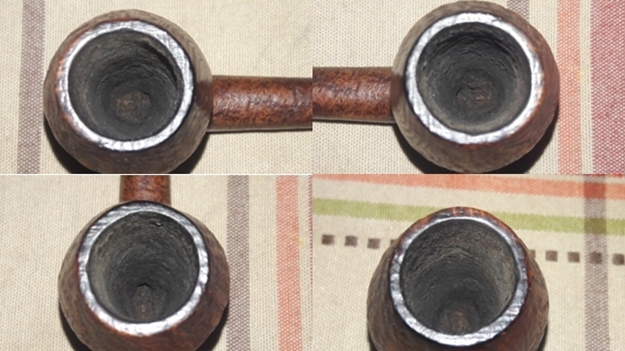
The chamber is so filled with cake that I am unable to reach the bottom of the bowl with my little finger. The build-up of the cake is heavier on the bottom half of the bowl, but overall well maintained. The condition of the inner walls of the chamber can be commented upon after the cake has been taken down to the bare briar. The rim top is thin and has the same shallow sandblast surface as the rest of the stummel, has darkened and is covered with dust, lava and grime. I don’t think that there is any charring to either of the rim edges and they appear to be in pristine condition. The chamber odors are not very strong and should be completely eliminated once the cake has been removed and the shank has been thoroughly cleaned.The stummel surface appears dull and lackluster due to the accumulated dirt, dust and grime of years of usage and subsequent uncared for storage. There are no fills or chips or nicks over the stummel surface. There are no other stummel issues that I have to deal with on this pipe. The mortise is relatively clean with small amount of oils and tars accumulated on the walls of the mortise. This should be an easy clean up job. The delicate vulcanite saddle stem is heavily oxidized. The lip has some minor bite marks on both surfaces and will need to be rebuilt and reshaped. There is some calcification seen around the lip on both the surfaces. The airway in the stem is blocked and the draw is restricted. I will need to clean it to ensure a full and open draw. The tenon and the horizontal slot show accumulation of dried oils, tars and gunk on the inside as well as on the outside, this will have to be cleaned. The Process
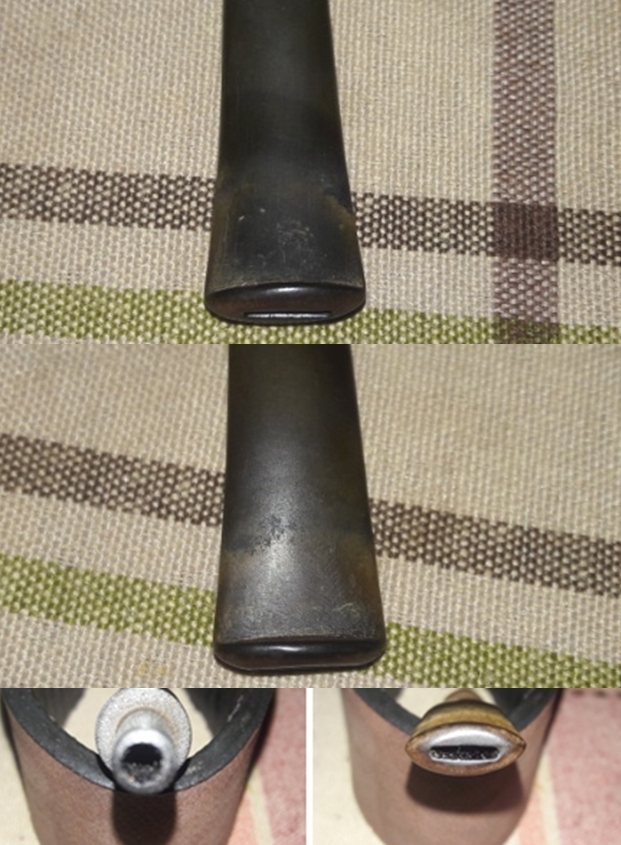
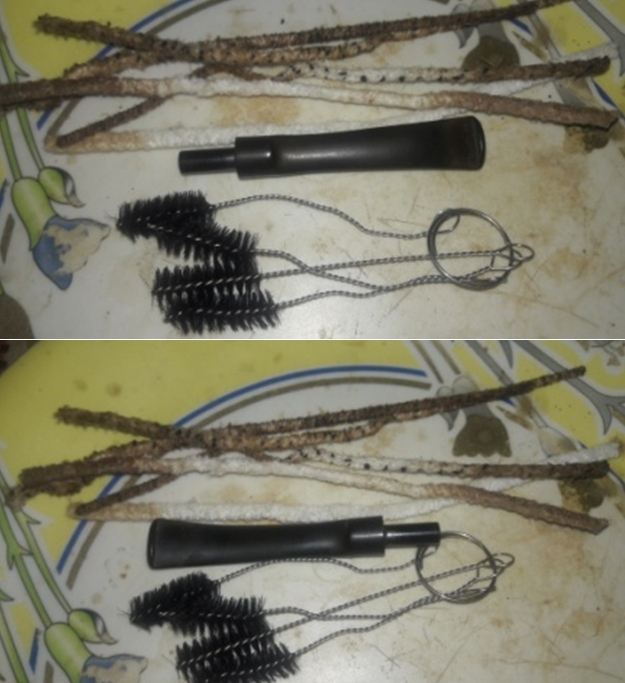
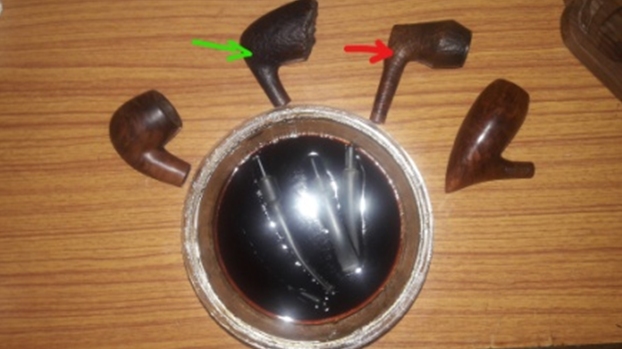
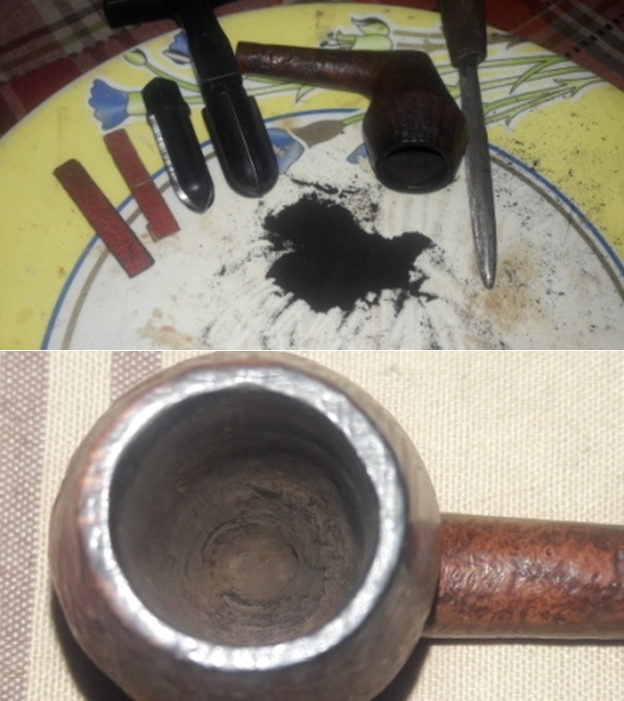
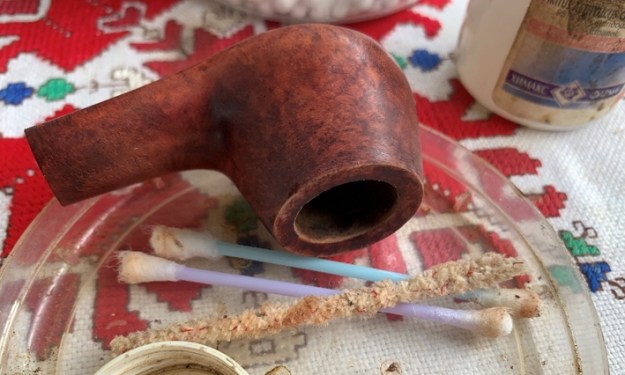
The process of refurbishing this pipe started with the cleaning of the stem. Abha, my wife, cleaned the stem air way with regular and bristled pipe cleaners dipped in 99.9% pure isopropyl alcohol. She further cleaned the stem internals with thin shank brushes and dish soap to remove the stubborn and thick gunk from within the airway. The heap of pipe cleaners and their appearance tells a sordid story. With a sharp fabricated knife, she scraped off all the dried tars and gunk from the tenon end.The stem surface was sanded down with a worn out piece of 180 grit sand paper. I have realized that following this step prior to immersion into the “Before and After Stem Deoxidizer” solution has two advantages, firstly, the stem surface oxidation gets loosened and the solution works deeper and more efficiently in pulling the deep seated oxidation from the stem surface. Secondly, the minor tooth chatter and calcium depositions are taken care of prior to the immersion. I immersed it in “Before and After Deoxidizer” solution along with the stem of other pipes in line for restoration. This solution has been developed by Mark Hoover and works to draw out all the deep seated oxidation from the surface making its subsequent cleaning and polishing a breeze. I would definitely recommend this product as it saves on to time and efforts. The pipe has been marked with a red arrow for easy identification.Abha, my wife, dealt with the cake by reaming the chamber with a Castleford pipe tool using size 1 followed by size 2 head of the reamer. Using the fabricated knife, she further scraped the cake from the bottom of the bowl and also the walls of the chamber. She was especially very careful while reaming with the knife so as not to damage the inner edge of the rim. Once the solid briar was exposed, she further smoothed the walls and removed remaining cake by sanding with a 180 followed by 220 grit sand paper. Another advantage of this process is the elimination of traces of ghosting to a great extent. She wiped the chamber with a cotton swab wetted with 99.9% isopropyl alcohol. The chamber walls are pristine and solid with no heat fissures or pits. Simultaneously I cleaned out the internals of the shank/ mortise and airway using q- tips, pipe cleaners and isopropyl alcohol. I scraped the walls of the mortise with my fabricated knife till the accumulated gunk was removed. Further cleaning of the shank internals will ensue during the external cleaning of the stummel.Thereafter, I generously rubbed “Briar Cleaner”, a product that has been developed by my friend Mark Hoover, into the external surface of the bowl and the rim top surface. It works similar to Murphy’s oil soap and needs to be applied to the stummel surface and set aside for 5- 10 minutes. The product pulls out all the dirt and grime to the surface making further cleaning easy. I am quite happy with this product. I used a hard bristled tooth brush to scrub the stummel and rim top with the solution. After the scrub with Briar cleaner solution, I washed the stummel under running warm water with anti oil dish washing detergent till clean and dried it using paper towels and soft cotton cloth. I simultaneously cleaned the shank internals with the detergent and hard bristled shank brush. The stummel surface has cleaned up nicely with the intricate sandblast patterns on full display. The stummel now looks and smells fresh and the old smells are all gone. I set the stummel aside to dry out naturally. The next morning, Abha removed the stems that had been soaking in the deoxidizer solution overnight. She cleaned the stem and the stem airway under running warm water and scrubbed the raised oxidation from the stem surface using a Scotch Brite pad and the airway with thin shank brush. She further removed the oxidation by scrubbing the stem with 0000 grade steel wool and applied a little olive oil to rehydrate the stem.I further sanded the stem surface with a folded piece of 220 and 320 grit sand papers to further remove the traces of oxidation and reduce the sanding marks and followed it with wet sanding the entire stem with 1500 to 12000 grade micromesh pads (1500 to 2400 grit micromesh pads have completely worn out and unable to order a set due to lock down and so had used 1500 and 2000 grit wet or dry sand paper). I wiped the stem with a moist cloth to remove the dust and monitored the progress being made after every three grit pads. The stem polished up nicely and had a rich deep black shine to it. I applied a little Extra Virgin Olive oil to rehydrate the vulcanite and set the stem aside.Next, I rubbed a small quantity of “Before and After Restoration Balm” in to the briar with my finger tips, working it deep in to the sandblasts and let it rest for a few minutes. The balm almost immediately works its magic and the briar now has a nice vibrant appearance with the beautiful sandblast patterns displayed in their complete splendor. The contrast of the light brown of the raised sandblast portion with the dark brown of the rest of the stummel adds an interesting dimension to the appearance of the stummel. I further buffed it with a horse hair brush. On to the home stretch!! I mounted a cotton cloth buffing wheel on to my hand held rotary tool and applied several coats of carnauba wax. I finished the restoration by giving the entire pipe a rigorous hand buffing using a microfiber cloth to raise the shine further and remove any residual wax from in between the sandblasts. The finished pipe looks amazingly beautiful and is now ready for its long second innings with me. P.S. I am not really pleased with the restoration projects that I can choose due to paucity of equipment and materials that are required. Today I realized that I have run out of the medium superglue I use and that the spare one has mysteriously hardened within the tube. With my country under lock down to arrest the spread of the COVID- 19 virus, no delivery can take place. So I am being forced to improvise and that I shall continue to do!!

The next project that I have earmarked is interesting in that it is the very first time that I shall be undertaking repairs of this nature. Be sure to read that write up and help me improve my skill sets.

I wish to thank each one for sparing their valuable time to read through this write up and praying for the health and safety of entire mankind. Stay home…stay safe!!

New Life for a Peterson’s Republic Era “Kildare” 69 Bent Billiard


Blog by Steve Laug

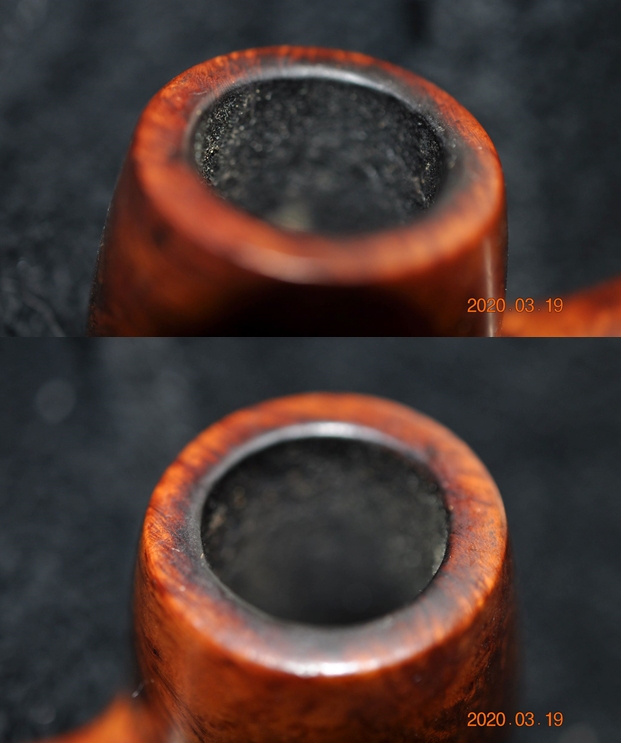
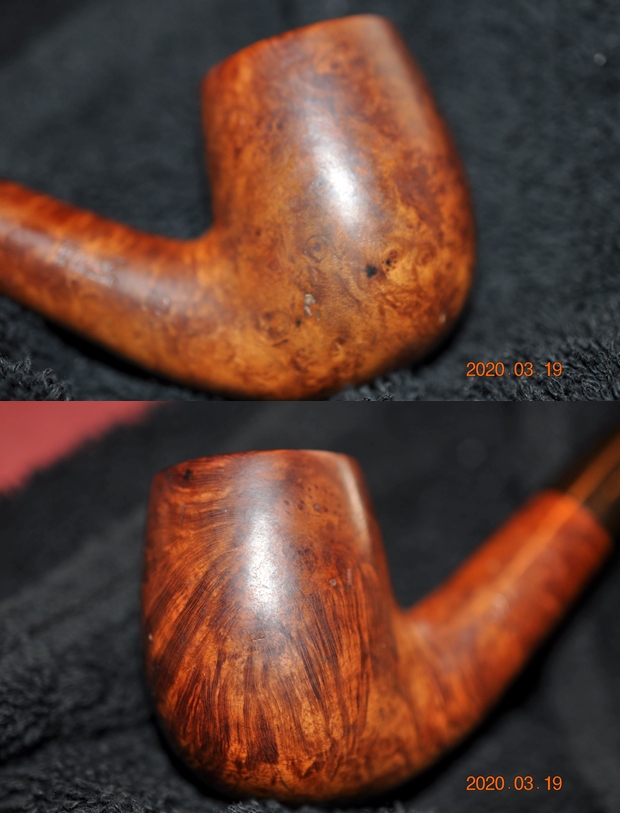
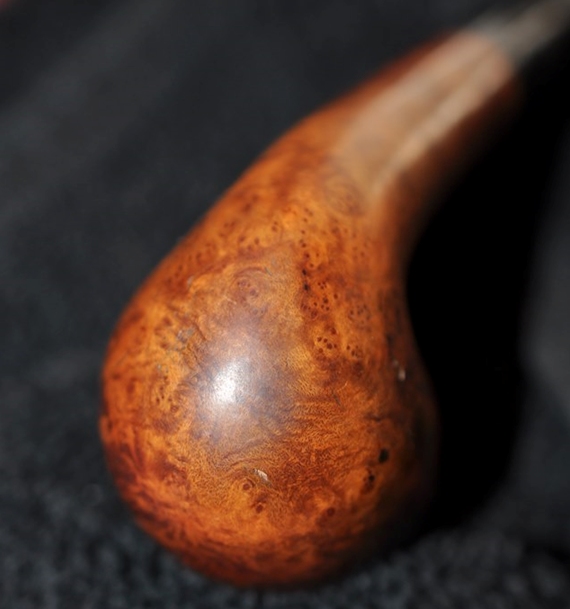
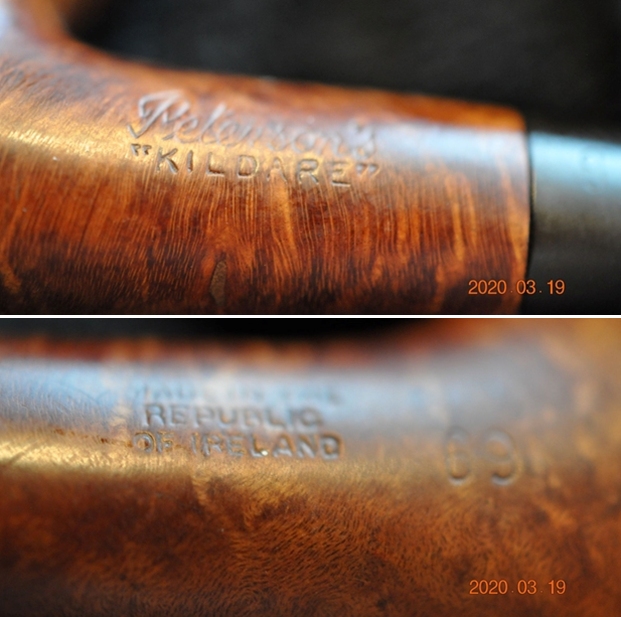
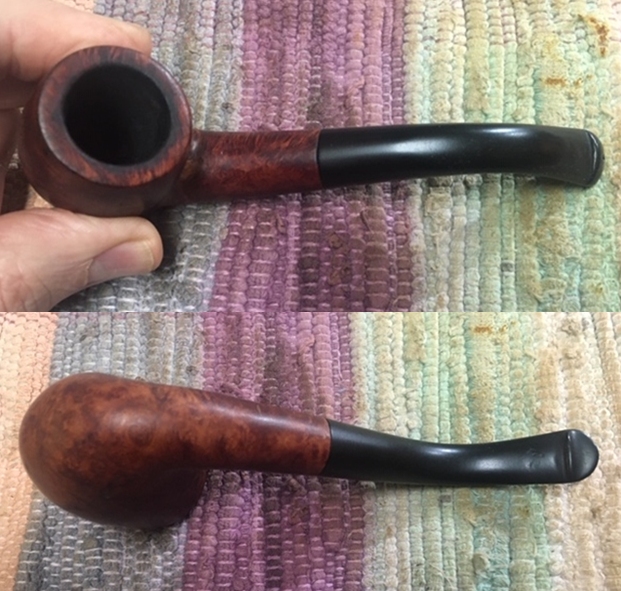
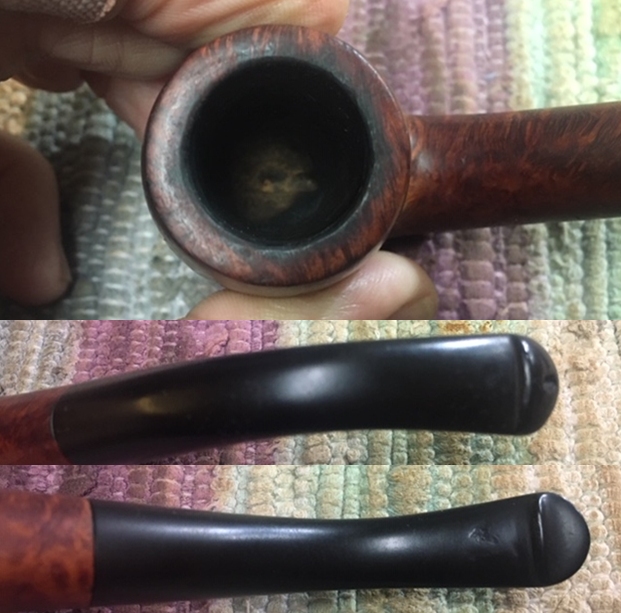
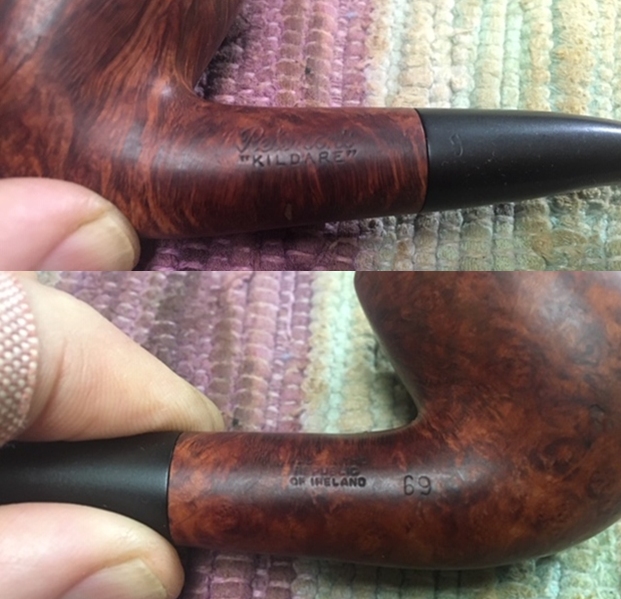
The next pipe on the table came to us from one of Jeff’s pipe hunts or auctions. It is a nicely grained and I would say beautiful Peterson’s “Kildare” 69 Bent Billiard. The finish is quite nice with at that classic Peterson’s look. The pipe was dirty, with grime and dust ground into the finish. The bowl had a thick cake in the bowl and a lava overflow on the inner edge of the rim and spilling onto the rim top in some spots. The pipe is stamped on both sides of the shank and reads Peterson’s “Kildare” on the left side of the shank. It is stamped Made in the Republic of Ireland followed by the shape number 69 on the right side of the shank. The stamping is clear and readable on the pipe. The stem was dirty and oxidized. There were tooth marks and chatter on the stem near the button on both sides and some on the surface of the button as well. There was a faint partial Peterson’s “P” on the left side of the taper stem. Jeff took photos of the pipe before he cleaned it up. Jeff took photos of the rim top to show the cake in the bowl and the relatively clean rim top and beveled edge. The photos show the rim top and bowl from various angles.He took some photos of the bowl sides and heel to show the interesting grain that was on this bowl. It is a dirty but quite beautifully crafted pipe. The stamping on the underside of the shank read as noted above. The photo shows that they are very clear and readable. The P on the left side of the stem faint and part of it not stamped into the surface of the stem. The stem was a very good fit to the shank. It was oxidized, calcified and had debris stuck to the surface of the vulcanite. There were tooth marks and chatter on both sides of the stem.  I am including the information from Pipedia’s article on Peterson pipes. It is a great read in terms of the history of the brand (https://pipedia.org/wiki/Peterson). I have included a bit of the pertinent history here.

1950 – 1989 The Republic Era  – From 1950 to the present time, the stamp for this era is “Made in the Republic of Ireland” in a block format generally in three lines but two lines have been used with or without Republic being abbreviated.

During the 1950’s and 60’s the Kapp & Peterson company was still in the ownership of the Kapp family. However 1964 saw the retiral of the company Managing Director Frederick Henry(Harry) Kapp.

With that information in hand I knew what I was dealing with in terms of the stamping and the age of this pipe. I knew from the information that the pipe was made during the Republic Era between 1950 and 1989. Pipedia then qualifies the dating as follows: From 1950 to the present time, the stamp for this era is “Made in the Republic of Ireland”. Now it was time to work on the pipe.

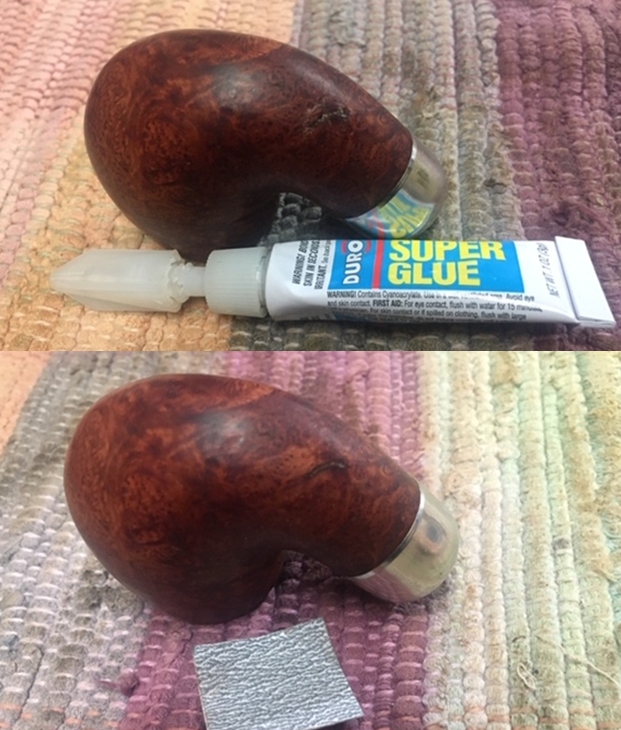
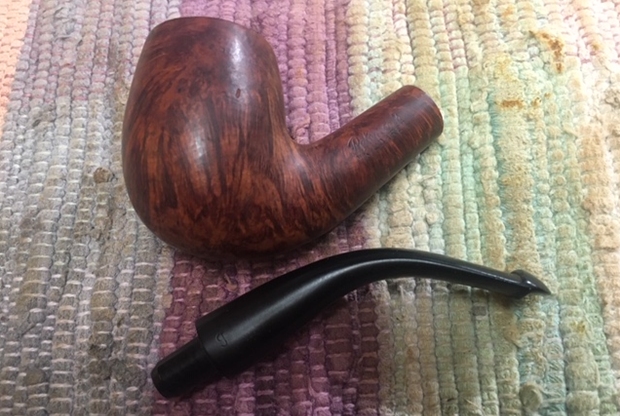
Armed with that information I turned to work on the pipe itself. Jeff had done a great job cleaning up the pipe as usual. He reamed the pipe with a PipNet reamer and cut back the cake back to the bare briar. He cleaned up the walls with a Savinelli Fitsall Pipe Knife. He scrubbed the interior of the bowl and shank with pipe cleaners, cotton swabs and alcohol to remove the tars and oils. He scrubbed the exterior of the pipe with Murphy’s Oil Soap and a tooth brush to remove the grime from the finish. He scrubbed the inside of the stem with alcohol and pipe cleaners. He cleaned the oxidized silver with Soft Scrub and buffed it off with a soft pad. He scrubbed the exterior with Soft Scrub and then soaked it in Before & After Deoxidizer. He washed it off with warm water to remove the Deoxidizer. The pipe looked far better. I took photos of the pipe when I received it before I started working on it. I took photos of the bowl and rim top to show how clean it was. There is some darkening around the inner edge and the rim top is roughened. The stem looks clean of oxidation and there are some tooth marks and chatter on both sides of the stem.The stamping on both sides of the shank was very clear and readable as noted above.I took a photo of the pipe with the stem removed to show the overall look of stem, tenon and profile of the pipe. It is a great looking pipe.There was a cluster of sandpits on the mid left side of the bowl. They were in a tight pattern and were quite deep.  I usually fill these in with a drop of clear super glue then sand the repairs smooth. This afternoon the glue came out in a large clump on the area in question. I wiped off some of the excess but the majority of it hardened very quickly. I now officially had a mess of my own making on the side of the bowl that needed to be cleaned up. I sanded the area smooth with a folded piece of 220 grit sandpaper until it had blended into the surrounding area. I sanded the rim top with a 1500 grit micromesh pad to smooth out the roughened rim top. I polished the briar with micromesh sanding pads – wet sanding with 1500-12000 grit pads and wiping the briar down with a damp cloth after each pad. I rubbed the briar down with Before & After Restoration Balm. I worked it into the briar with my fingertips and a horse hair shoe brush to get it into the deep briar. The product works to clean, enliven and preserve the briar. I let it sit for 10 minutes while I worked on the stem. After the time passed I buffed it with a cotton cloth to deepen the shine. The grain came alive with the balm. I set the bowl aside and turned my attention to the stem. I “painted” the surface of the stem to try to lift the tooth marks in the vulcanite. I was able to lift them quite a bit.There were still some marks on both sides of the stem near the button. Once the repair I flattened them with a needle file to start the process of blending them into the surrounding material. I sanded out the tooth marks and chatter on both sides of the button surface and stem with 220 grit sandpaper and began the polishing with 400 grit wet dry sandpaper.I touched up the P stamp on the left side of the stem with Paper Mate Liquid Paper and once it dried I scraped off the excess. The P stamp is far from perfect but it definitely looks better.I polished the stem with micromesh sanding pads – 1500-12000 grit pads. I wiped it down with Obsidian Oil after each sanding pad. I used Before & After Pipe Polish – both Fine and Extra Fine to further polish the stem. This Republic Era Peterson “Kildare” 69 Smooth Bent Billiard is a nice looking pipe. The combination of brown stain really highlights the grain around the bowl sides and shank. They begin to really stand out with the polishing. The finish on the pipe is in excellent condition and the contrasting stains work well to give some contrast to the pipe. The polished black vulcanite P-lip taper stem adds to the mix. With the grime and debris gone from the finish and the bowl it is really is eye-catching. I put the stem back on the bowl and buffed the pipe with Blue Diamond on the buffing wheel, carefully avoiding the stamping on the shank. I gave the bowl and stem multiple coats of carnauba wax on the buffing wheel and followed that by buffing it with a clean buffing pad. I hand buffed the pipe with a microfiber cloth to deepen the shine. The finished Bent Billiard is quite nice and feels great in the hand. Give the finished pipe a look in the photos below. I can only tell you that like the other pipes I am working that it is much prettier in person than the photos capture. The dimensions of the pipe are Length: 5 ½ inches, Height: 2 inches, Outside diameter of the bowl: 1 ¼ inches, Chamber diameter: ¾ of an inch. Thanks for walking through the restoration with me as I worked over another interesting pipe. This Peterson’s “Kildare” Bent Billiard 69 will be added to the Irish Pipe Makers section of the rebornpipes store soon. If you want to add it to your collection send me an email or a message! Thanks for your time.

This Made in Denmark Scandia Volcano 770 was a tired looking pipe


Blog by Steve Laug

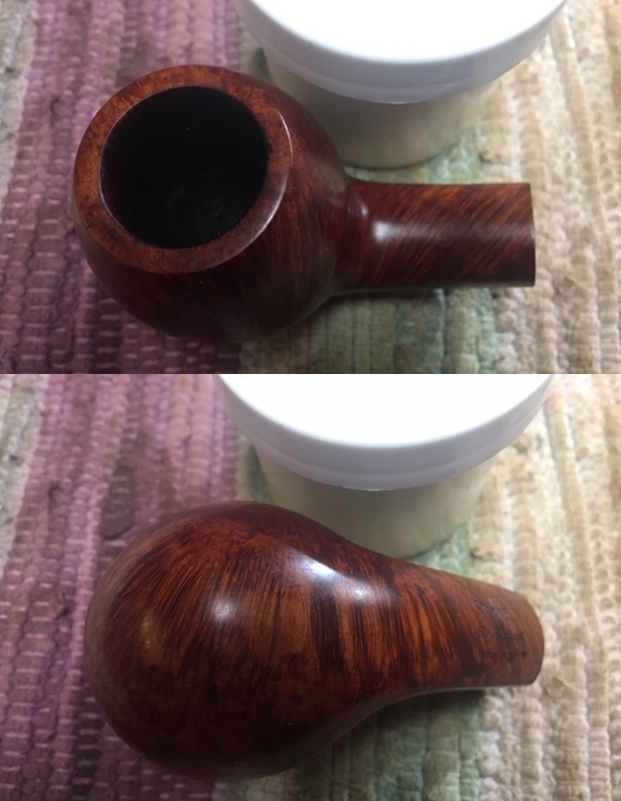
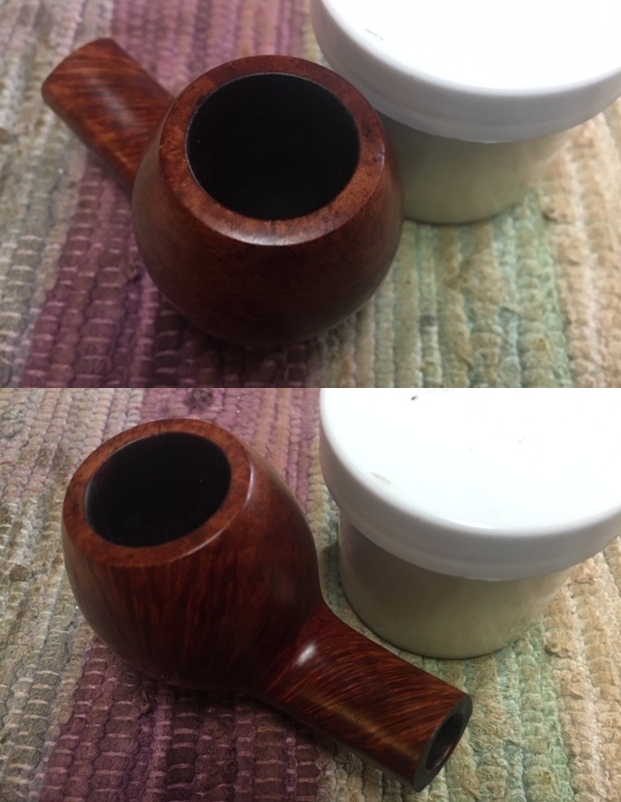
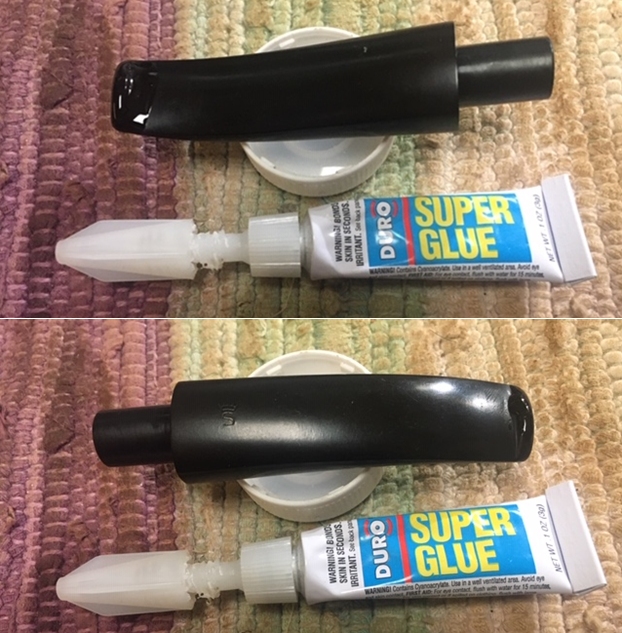
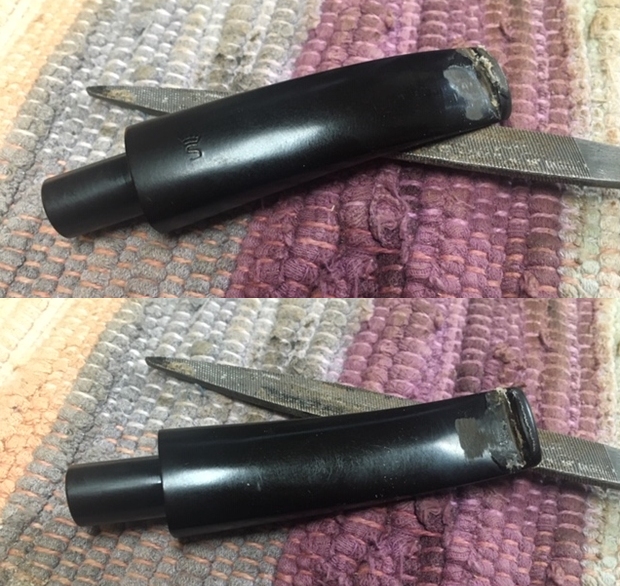
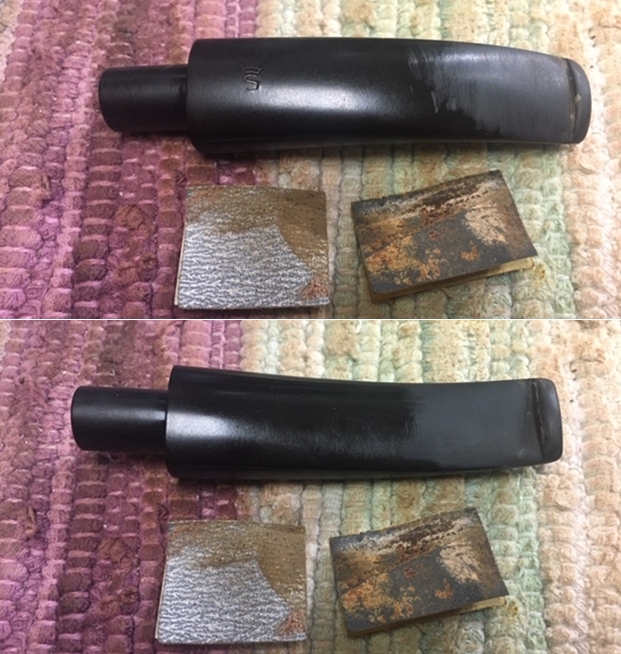
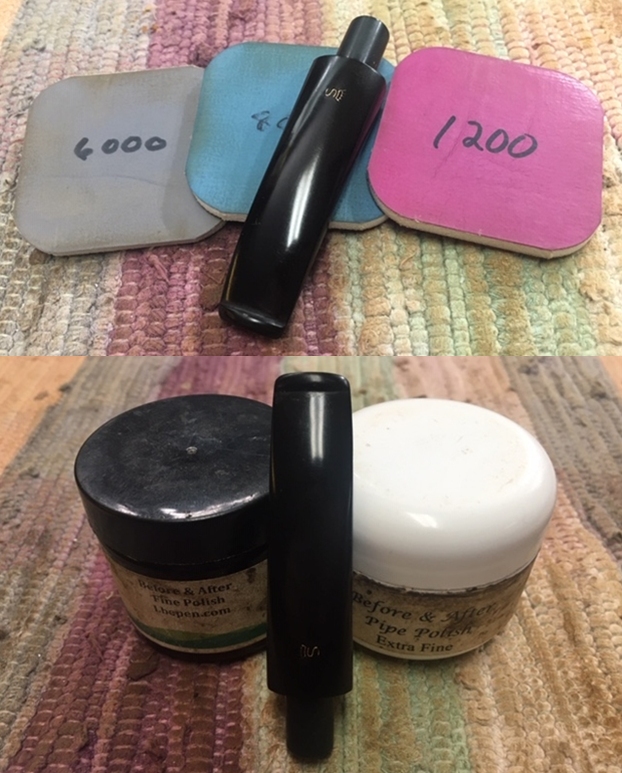
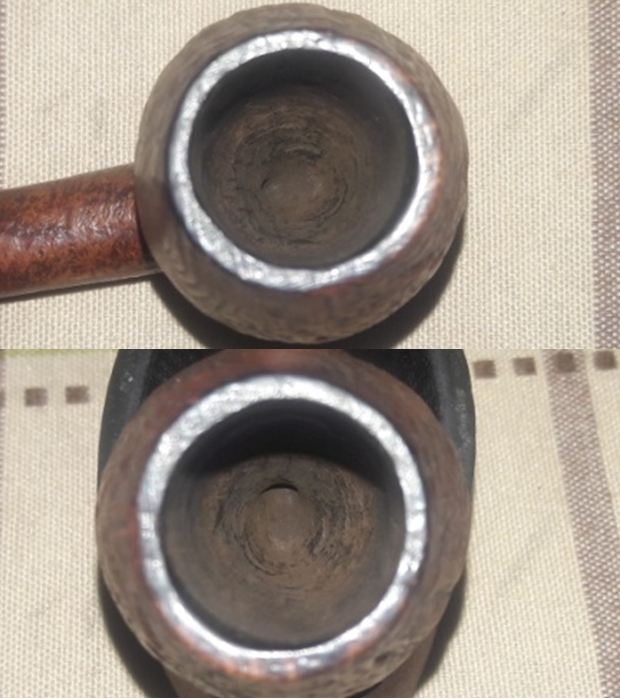
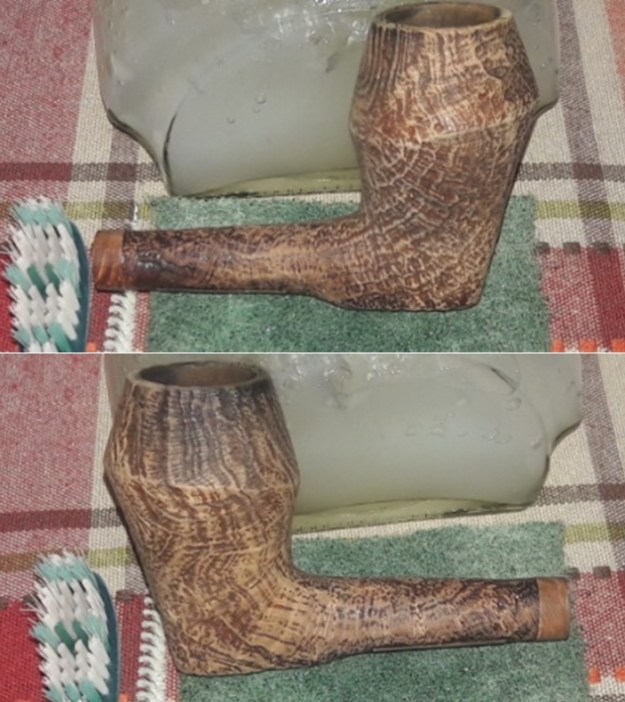
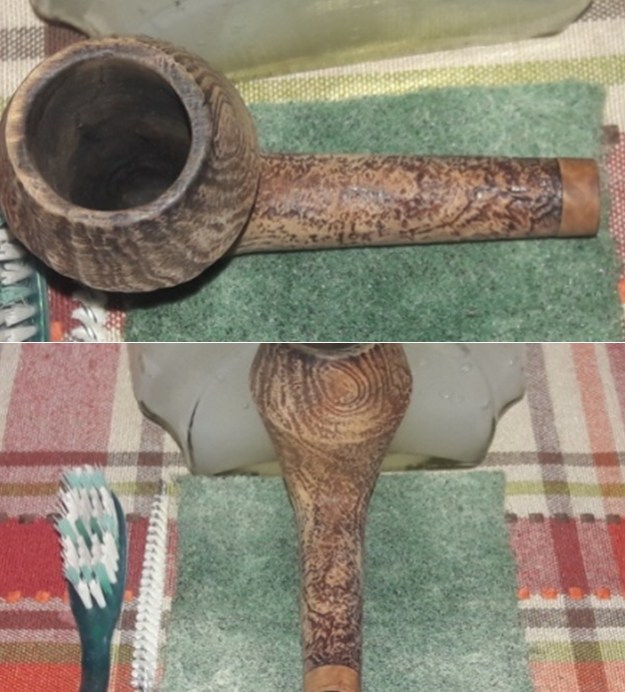
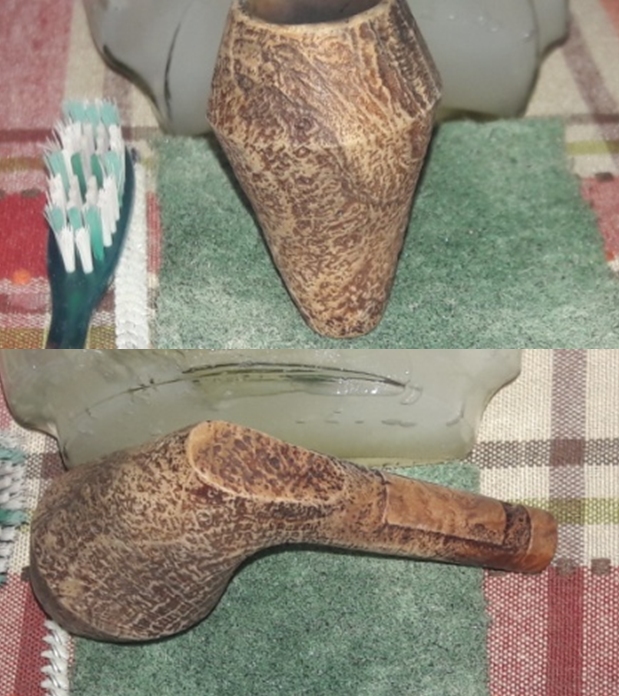
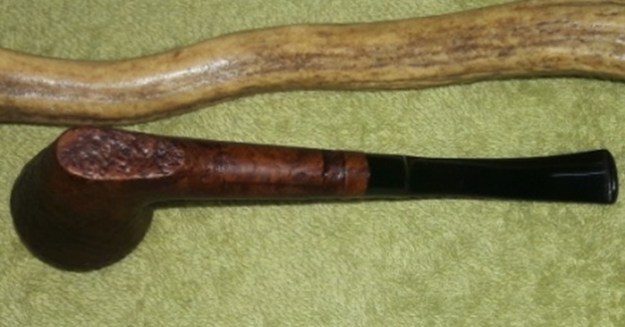
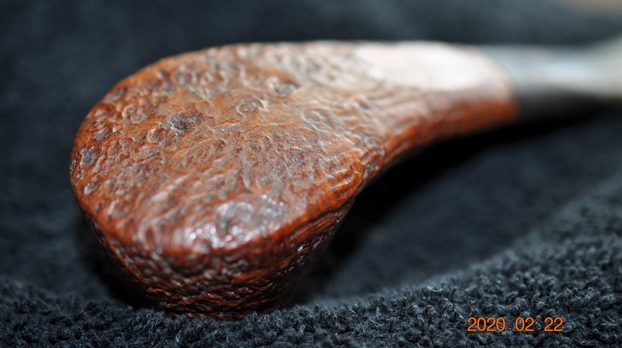
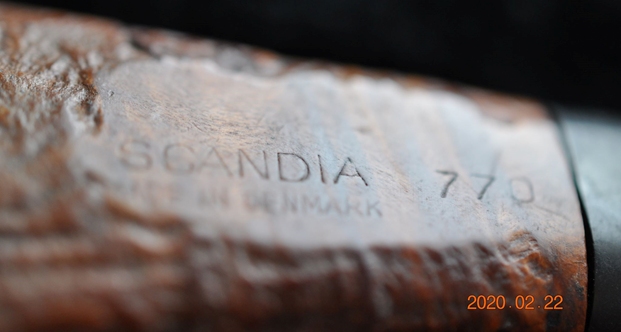
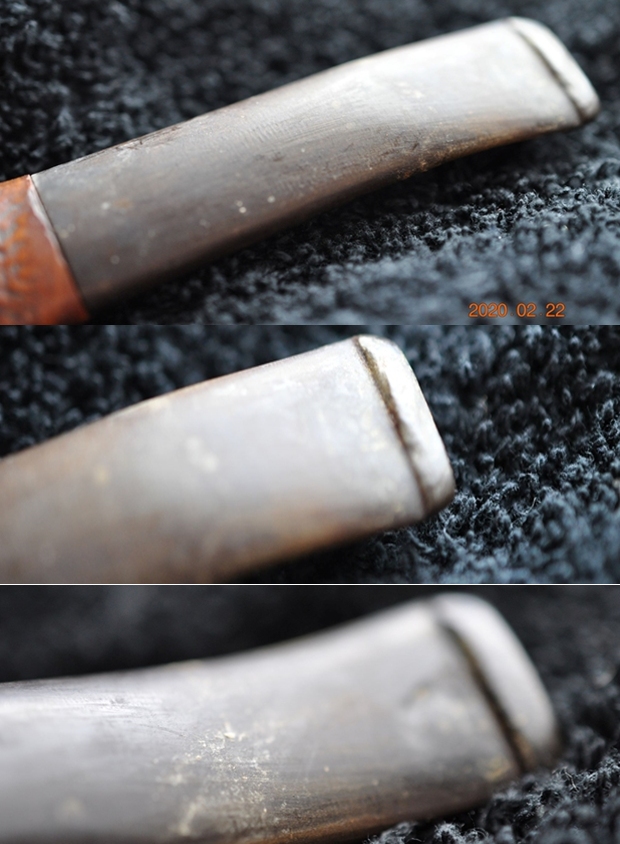
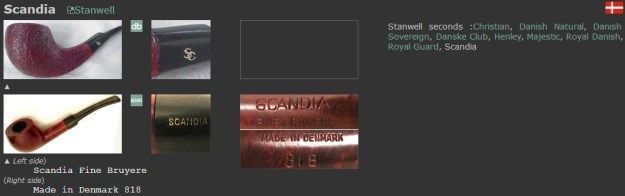
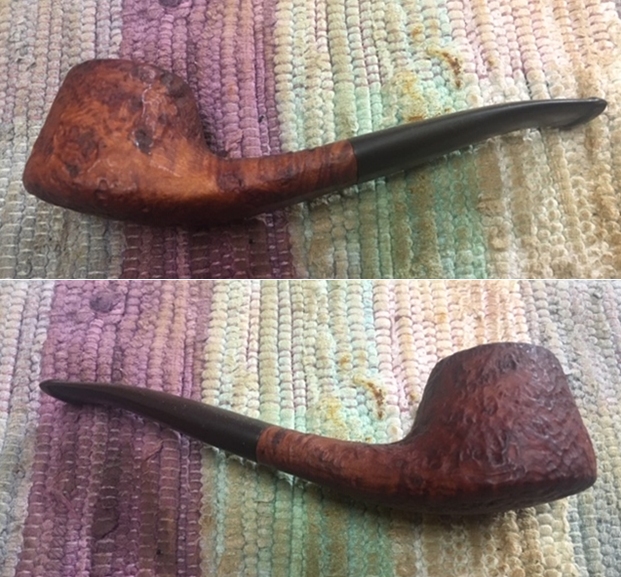
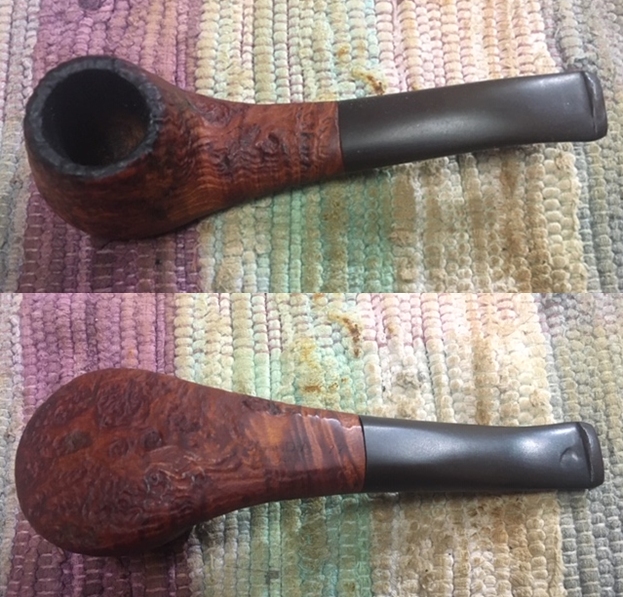
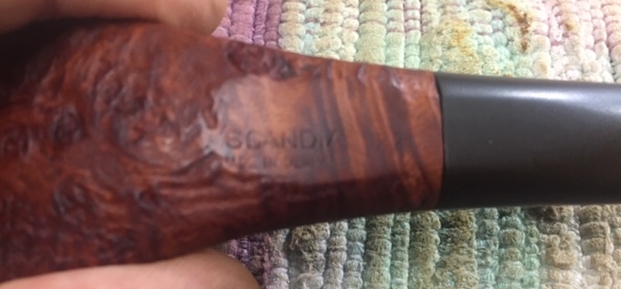
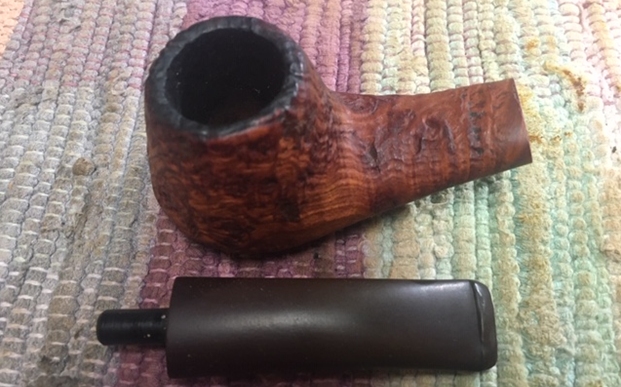
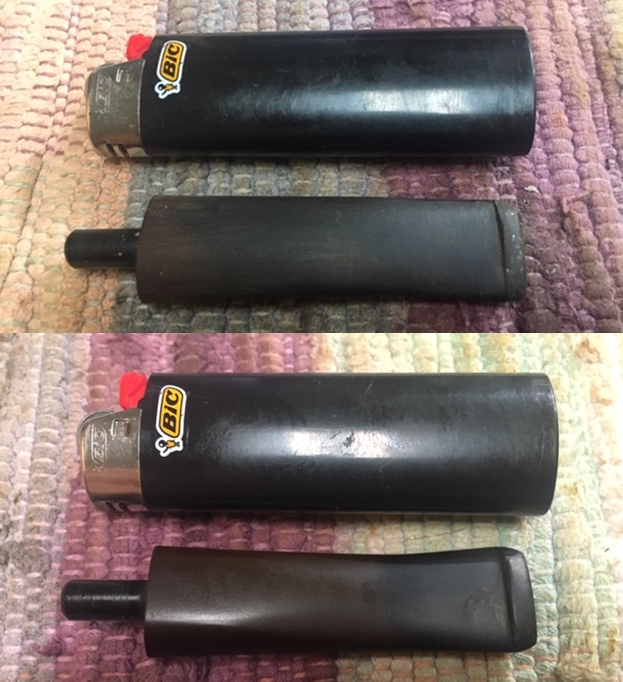
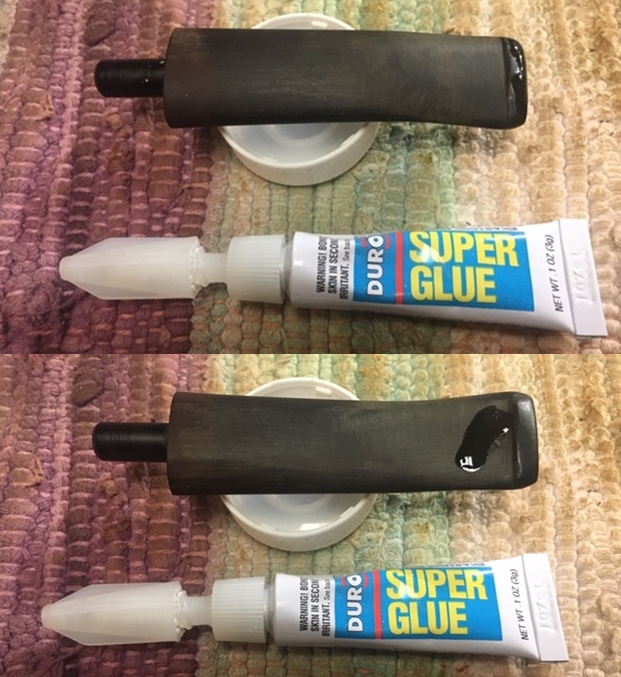
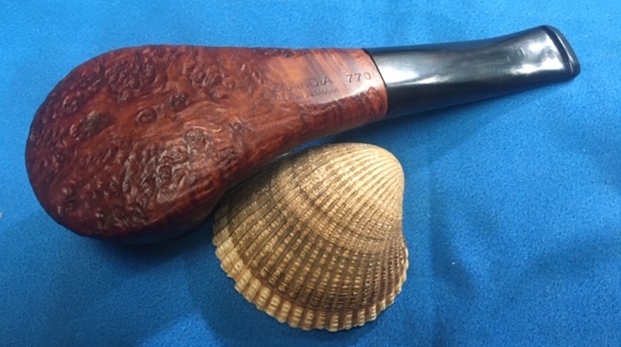
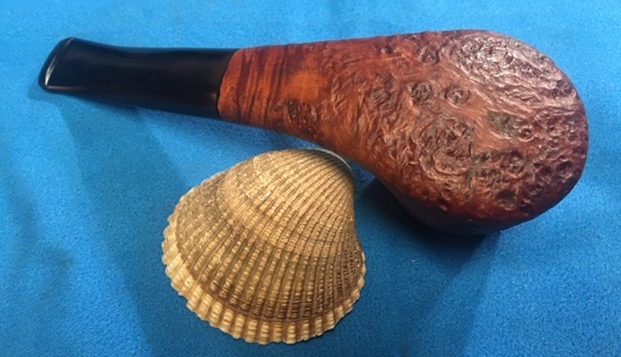
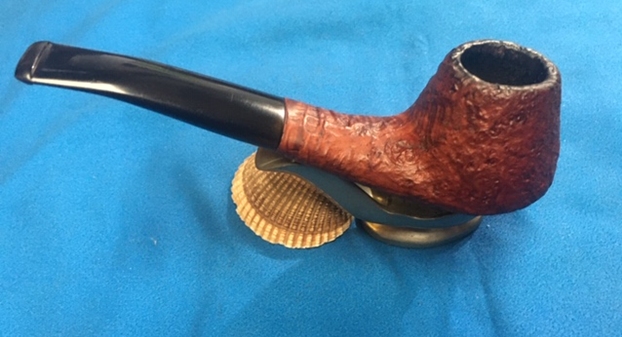
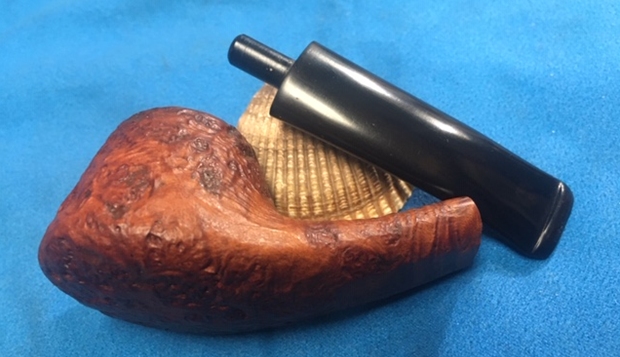
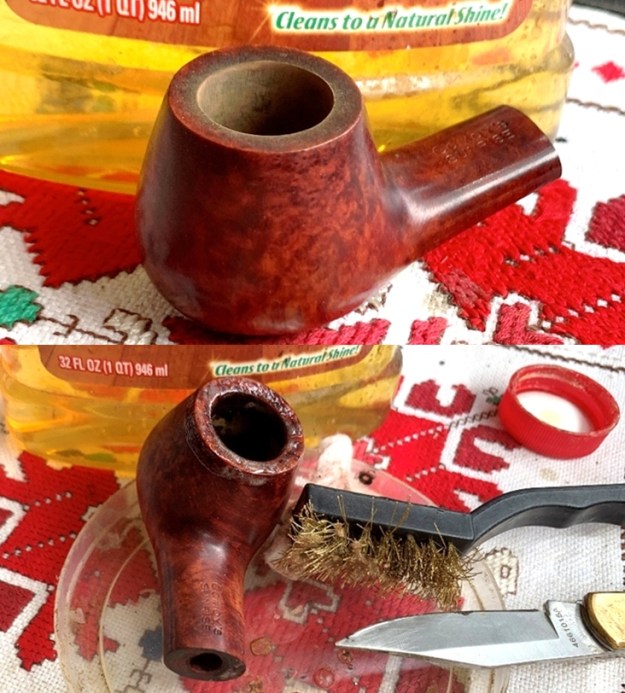
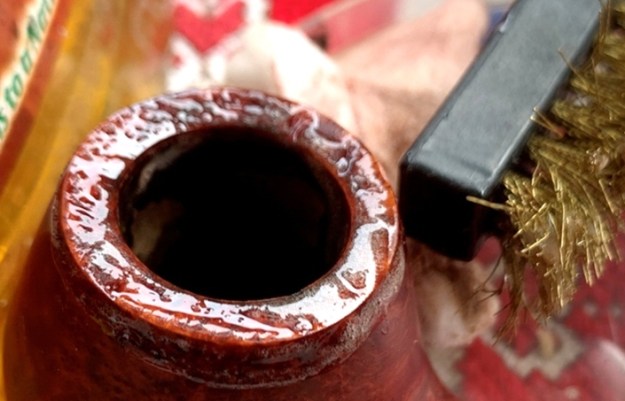
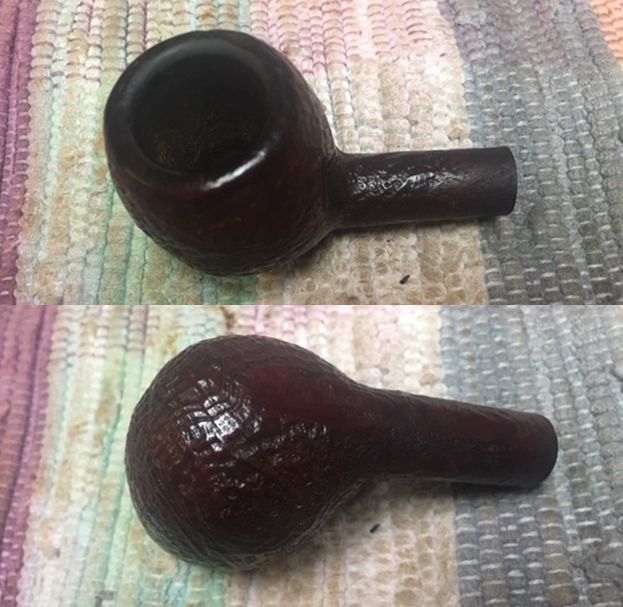
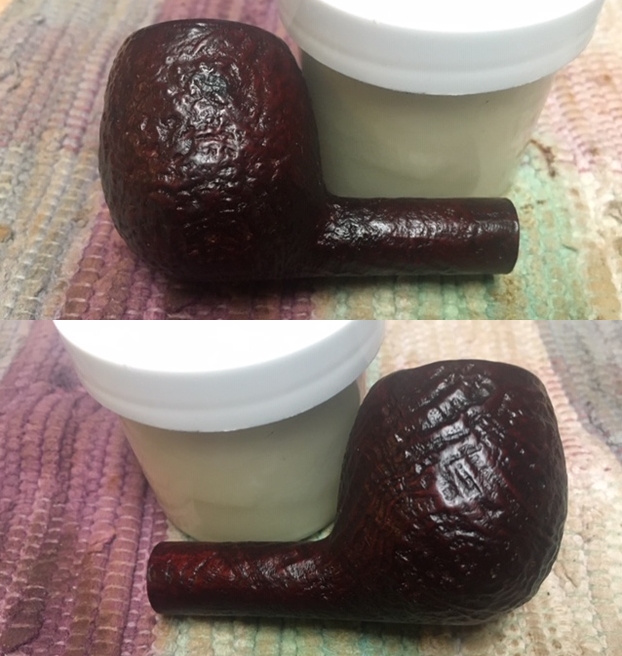
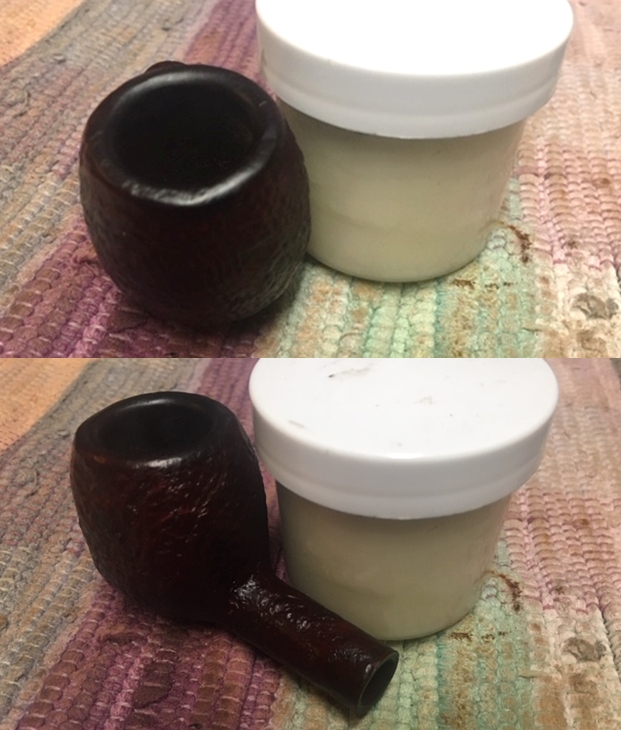
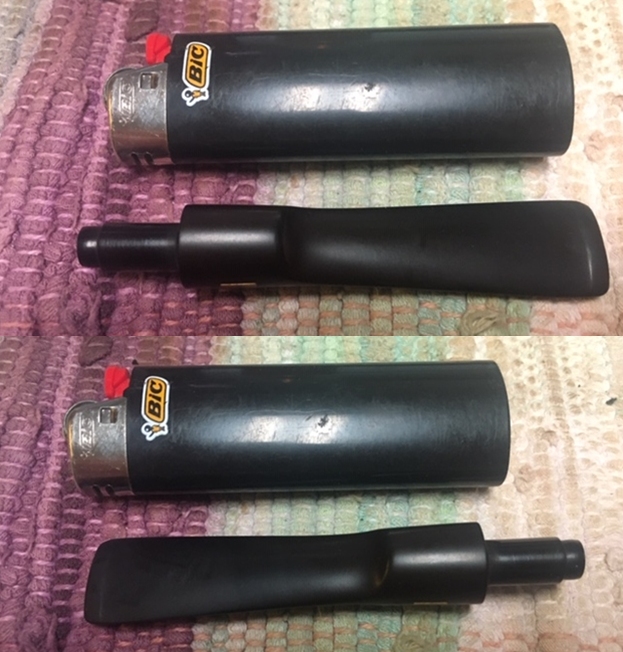
The next pipe on the table is one that was also at the bottom of the box of pipes I am working on. It is a Stanwell made Scandia sandblast pipe – a 770 Volcano shape with an oval tapered stem. The volcano shaped bowl, oval shank and taper stem made up a nicely shape pipe. The sandblast though dirt and grime showed some interesting colour mixes and the blast was very interesting.  It was stamped on a smooth panel on the underside of the shank and read SCANDIA over Made in Denmark and the shape number 770. The finish was very dirty with a heavy coat of grime ground into the sandblasted bowl and rim top as can be seen in the photos. There dust in all of the deep crevices of the blast. The bowl had a thick cake with a heavy lava overflow on the sandblasted rim top. There was too much lava on the rim top and edge to know what they looked like but more would be revealed once it was cleaned. The stem was oxidized and there were deep tooth marks and chatter on both sides and on the top and bottom edges of the button. Jeff took photos of the pipe before he cleaned it up so you could see what we saw. Jeff took photos of the rim top to show lava build up around the rim, the edges and cake in the bowl. The lava actually had filled in some of the nooks and crannies in the sandblast.   Jeff took some photos of the bowl sides and heel to show the absolutely dirty finish ground into the sandblast. It was a dirty pipe but I think it will be a beautiful one once we are finished.  The stamping on the underside of the shank is shown in the photos below. It is clear and read as noted above.  There was nothing stamped on the top of the stem. The stem was a good fit to the shank. It was oxidized, calcified and had debris stuck to the surface of the vulcanite. It also shows the tooth marks on the stem and on the button surface.  I had in my memory the thought that the Scandia brand was a Stanwell second so I quickly turned to Pipephil’s website to check it out (http://www.pipephil.eu/logos/en/logo-s4.html). I am including the following screen capture.It was my turn to work on the pipe now. I was really looking forward to what the pipe would look like once Jeff had worked his magic. What would the rim top look like? What would the dirty sandblast on the bowl look like? I had no idea. When I took it out of the box I was struck great job cleaning up the pipe Jeff had done. It was impressive! He had reamed the pipe with a Pipnet piper reamer and taken the cake back to bare briar. He cleaned up the remaining cake with a Savinelli Fitsall Pipe Knife. He scrubbed the interior of the bowl and shank with pipe cleaners, cotton swabs and alcohol to remove the tars and oils. He scrubbed the exterior of the pipe with Murphy’s Oil Soap and a tooth brush to remove the grime from the finish. He worked on the rim top lava and darkening with the soap and tooth brush. He scrubbed the inside of the stem with alcohol and pipe cleaners. He scrubbed the exterior with Soft Scrub and then soaked it in Before & After Deoxidizer. He washed the stem off with warm water to remove the Deoxidizer. The pipe looked far better. I took photos of the pipe when I received it before I started working on it.   I took photos of the bowl and rim top as well as the stem to show how clean they were. You can see that there is still some darkening to both the briar rim top and inner edge. The stem is clean and the tooth damage on both sides is very clear in the photos.I took a photo of the stamping on the underside of the shank. The stamping is readable as noted above. There is also the expected inset brass bar on the left side of the saddle.I took a photo of the pipe with the stem removed to show the overall look of stem, tenon and profile of the pipe. It really is a beautifully shaped pipe.I decided to start my work on the pipe by addressing the darkening on the briar rim top. I wiped down the entire bowl with alcohol and used a brass bristle wire brush to work over the darkened areas on the bowl top.I rubbed the briar down with Before & After Restoration Balm. I worked it into the briar with my fingertips and a horsehair shoe brush to get it into the crevices of the sandblast. The product works to clean, enliven and preserve the briar. I let it sit for 10 minutes while I worked on the stem. After the time passed I buffed it with a cotton cloth to deepen the shine. The briar really comes alive with the balm.     I set the bowl aside and turned my attention to the stem. I “painted” the stem with the flame of a Bic lighter to lift the deep dents in the surface. The dents on the top side lifted well. The underside was better than before. The button edge on the top was rough.    I filled in the remaining indentations and built up the top and bottom of the button with clear super glue. Once the repair cured I used a needle file to reshape the button edges and also flatten the repaired areas. I sanded the stem with 220 grit sandpaper to finish the shaping and to remove the remaining oxidation. I started polishing the stem with 400 grit wet dry sandpaper. I wiped the stem down with Obsidian Oil before further polishing it.   I polished the vulcanite with micromesh sanding pads – 1500-12000 grit pads. I wiped it down with Obsidian Oil after each sanding pad. I used Before & After Pipe Polish – both Fine and Extra Fine to further polish the stem.   This interestingly stained sandblast Stanwell Made Scandia 770 Volcano with a taper vulcanite stem turned out very nice. The mix of brown stains highlights the nooks and crannies of the sandblast around the bowl sides and bottom. The darkening on the rim top does not look too bad and adds a bit of contrast to the light coloured stain and the dark highlights. The finish on the pipe looks much better. I put the stem back on the bowl and carefully buffed the pipe with Blue Diamond on the buffing wheel. I gave the bowl and stem multiple coats of carnauba wax on the buffing wheel and followed that by buffing the entire pipe with a clean buffing pad. I hand buffed the pipe with a microfiber cloth to deepen the shine. The finished Volcano is very nice and feels great in the hand and can be used as a sitter with the wide base. Give the finished pipe a look in the photos below. It is a nice pipe whose dimensions are Length: 5 ½ inches, Height: 1 ½ inches, Outside diameter of the bowl: 1 ¼ inches, Chamber diameter: ¾ of an inch. Thanks for walking through the restoration with me as I worked over another beautiful pipe. This pipe will be going on the rebornpipes store shortly. If you are interesting in adding it to your collection let me know! Thanks for your time.
Refreshing a Comoy’s Sunrise Made in London England H 16 Volcano


Blog by Dal Stanton

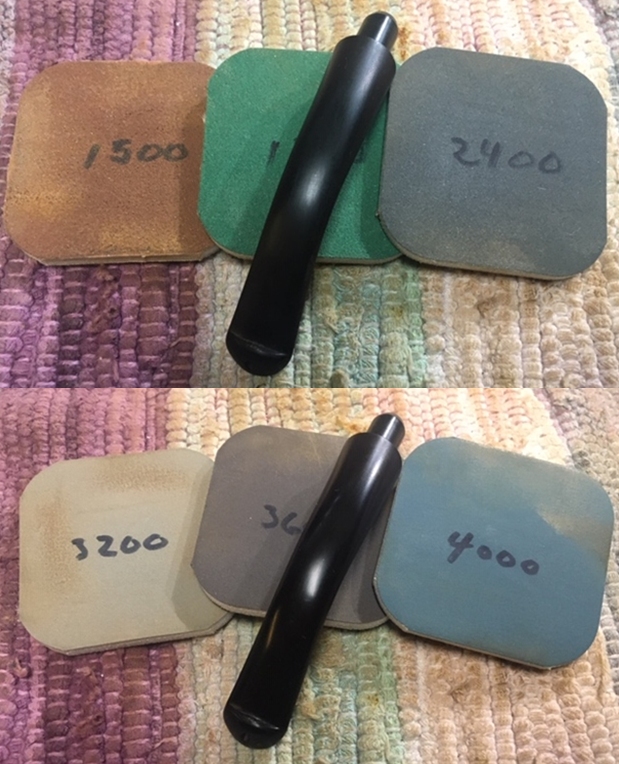
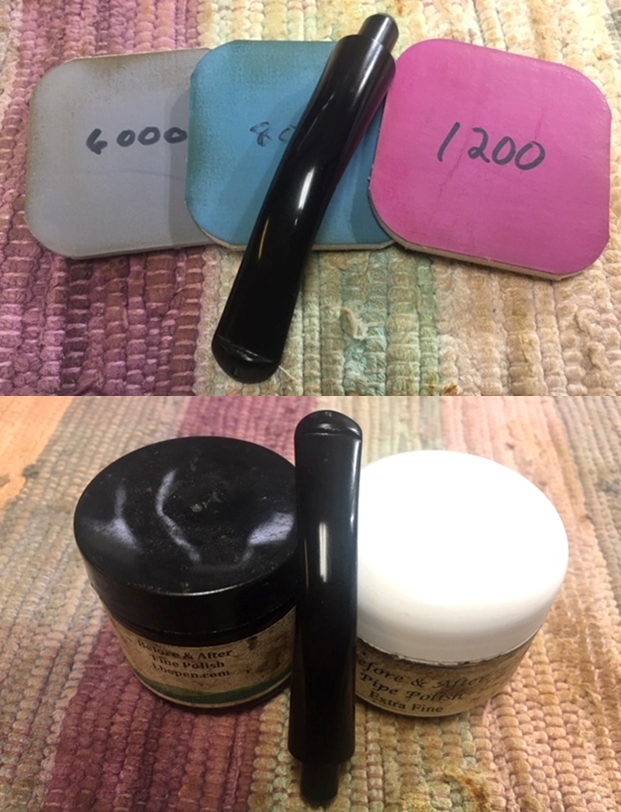
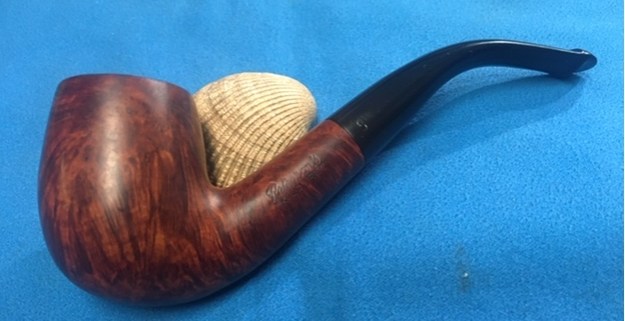
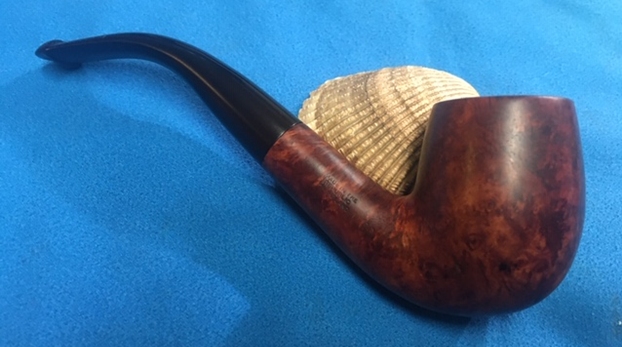
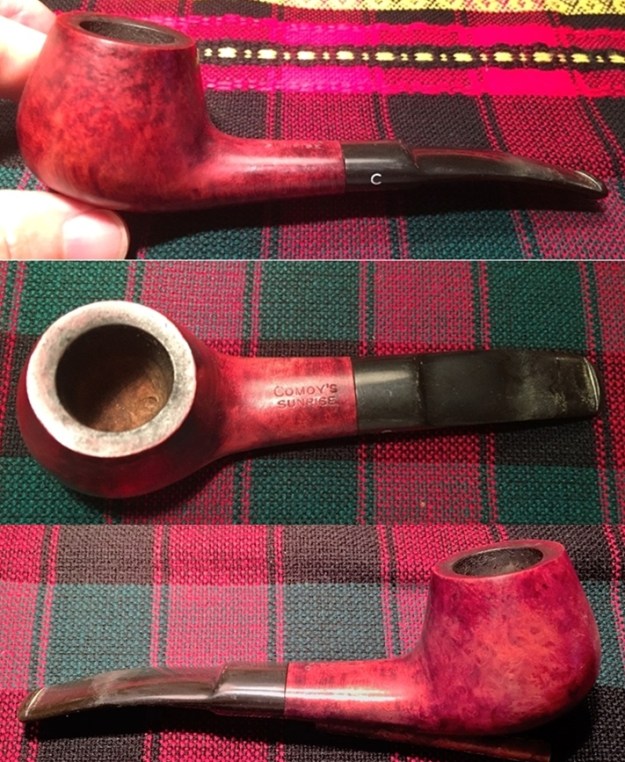
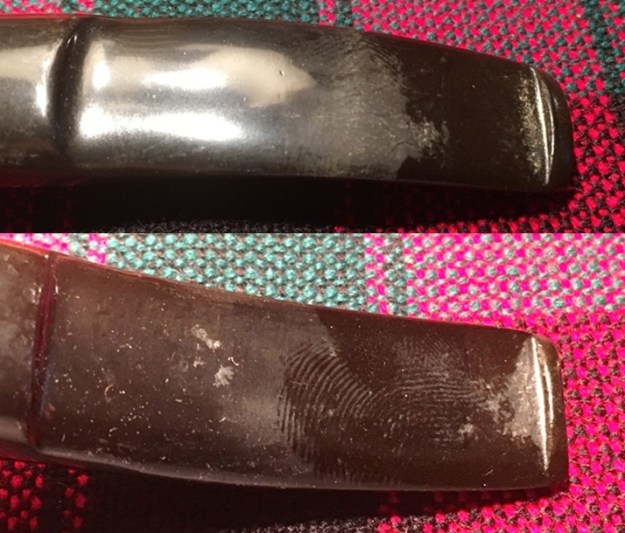
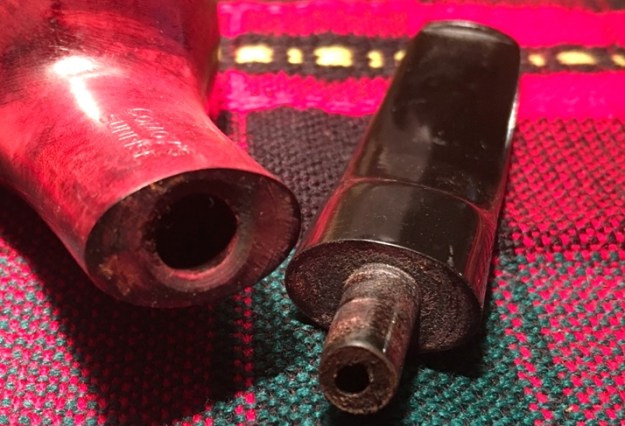
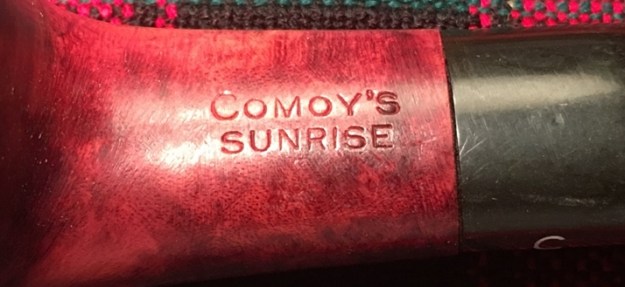
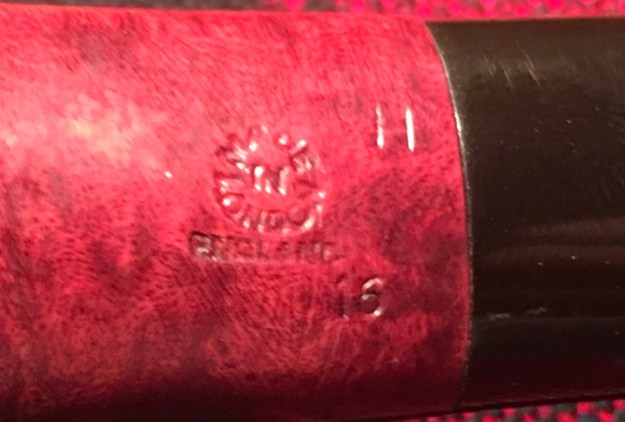
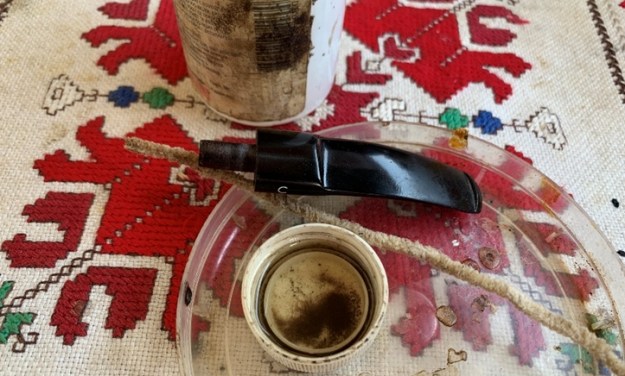
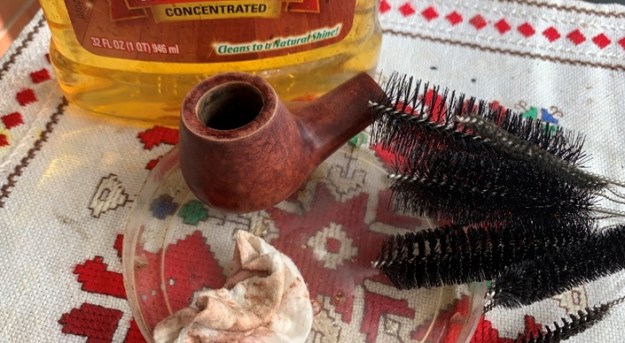
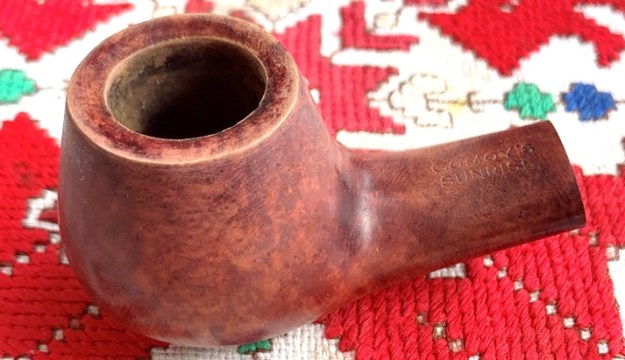
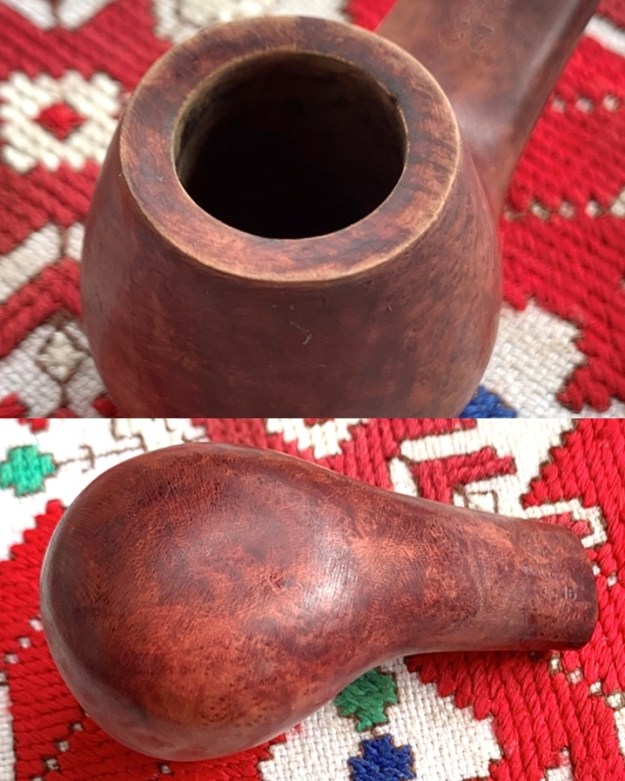
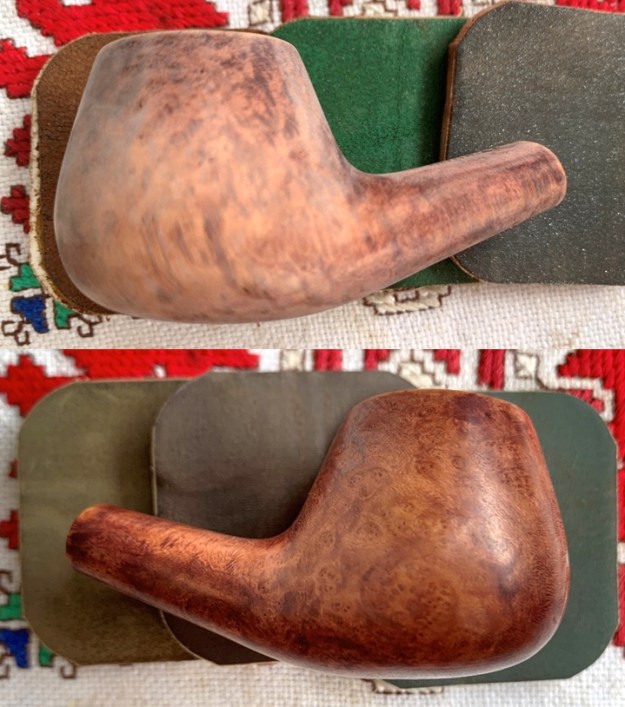
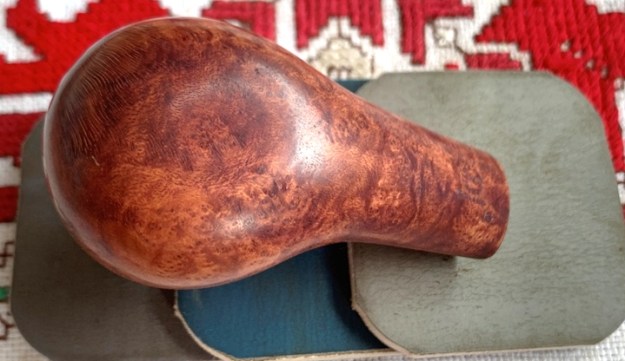
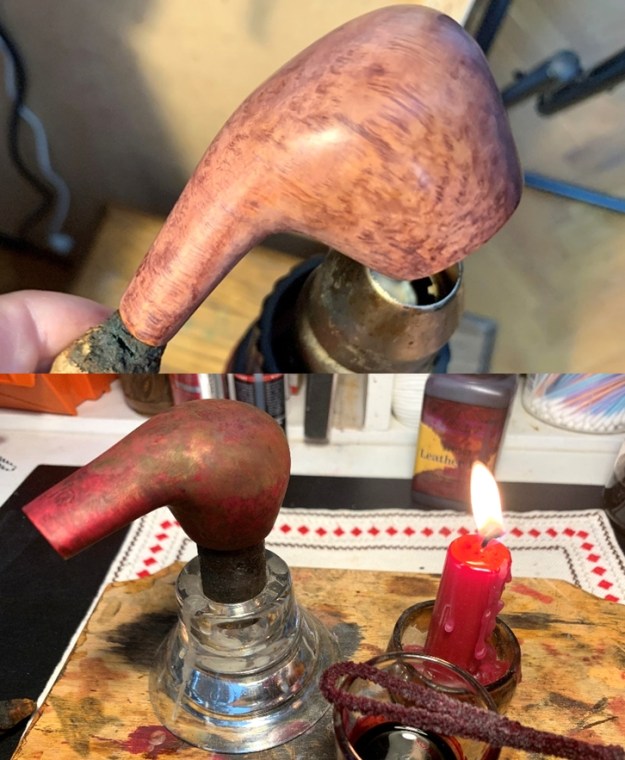
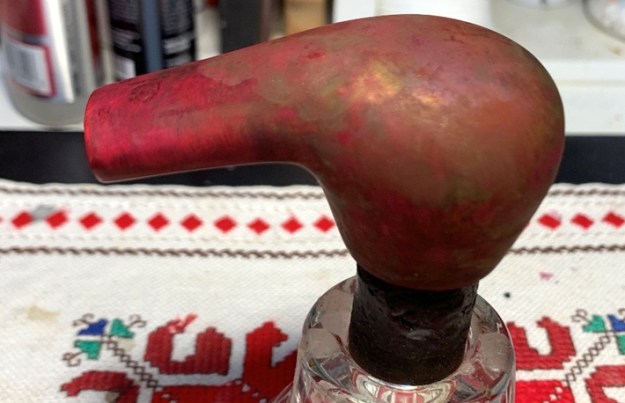
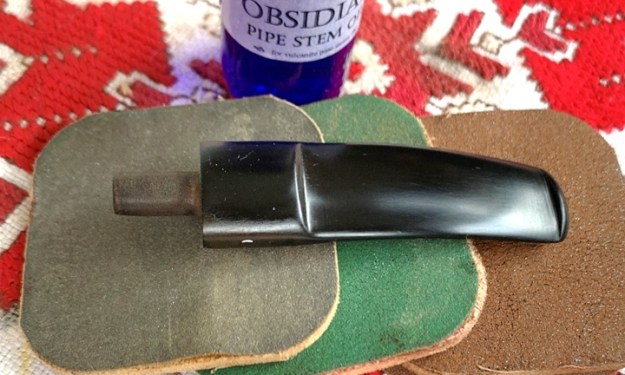
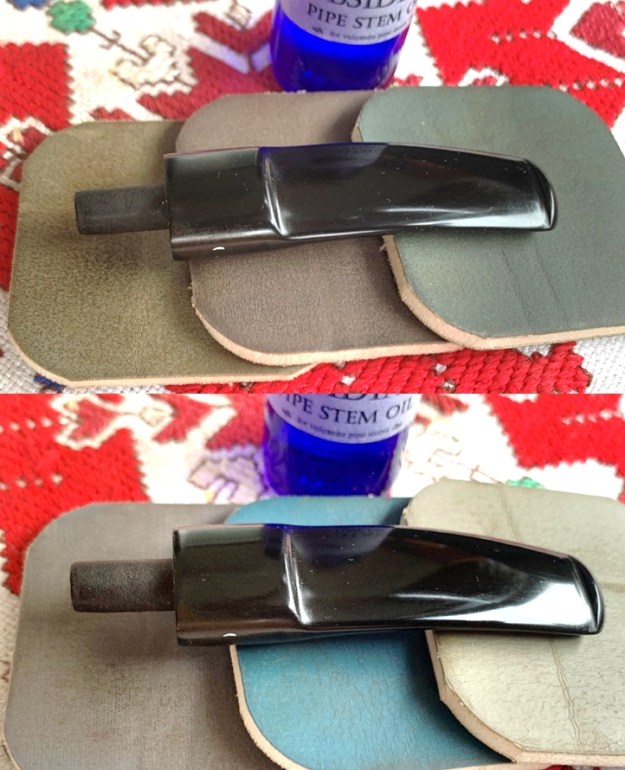
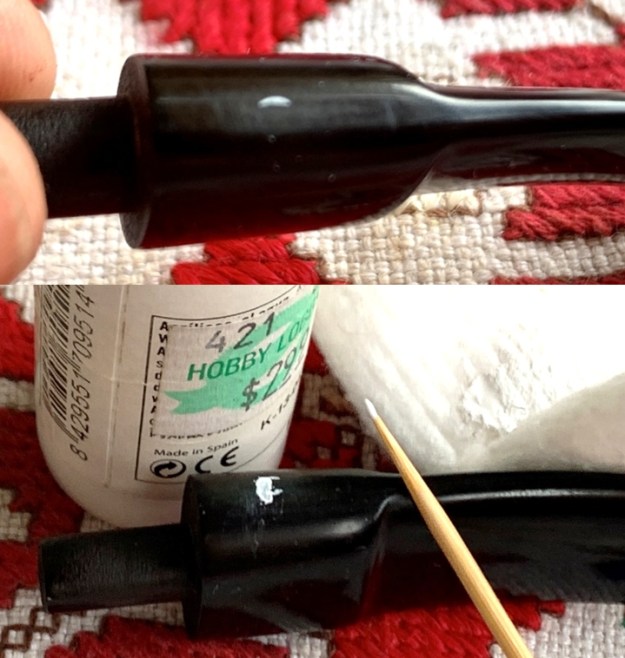
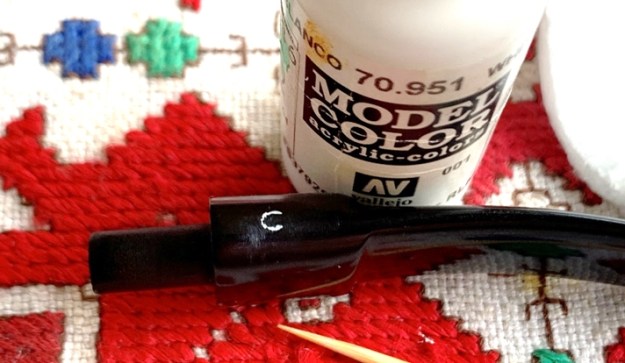
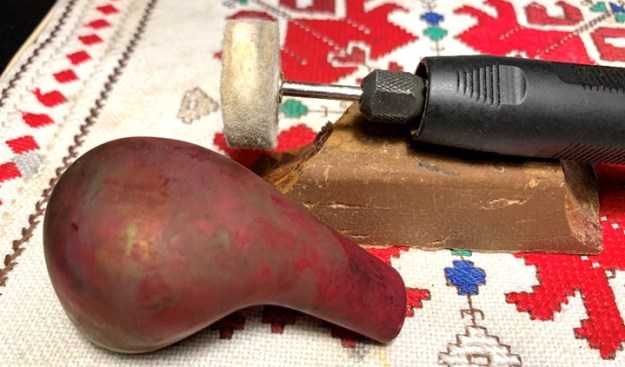
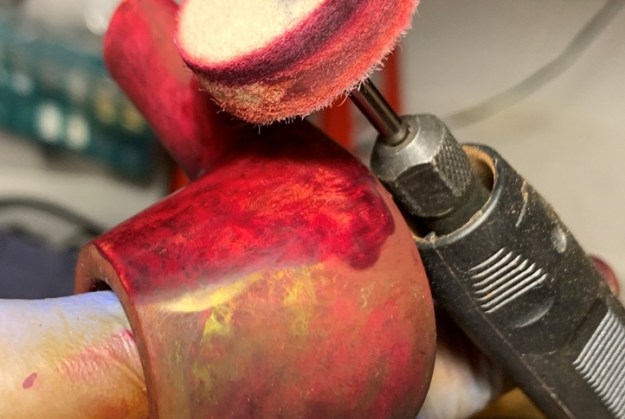
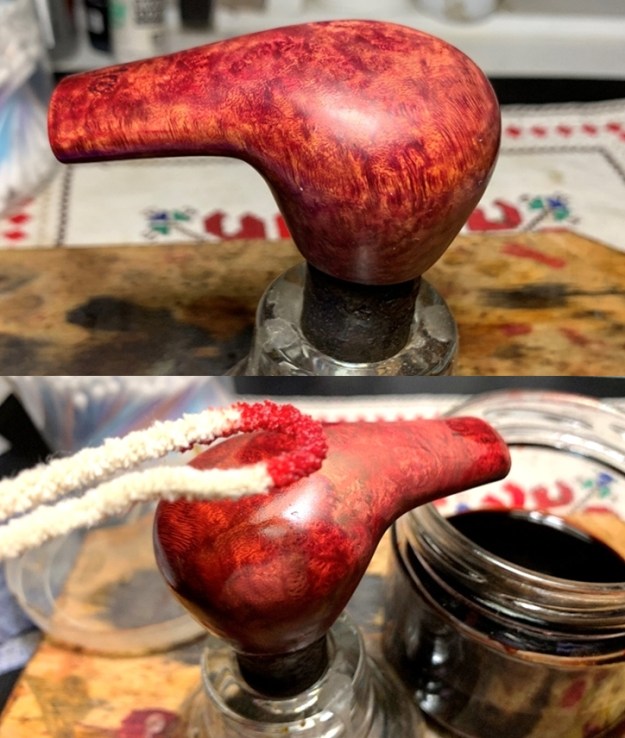
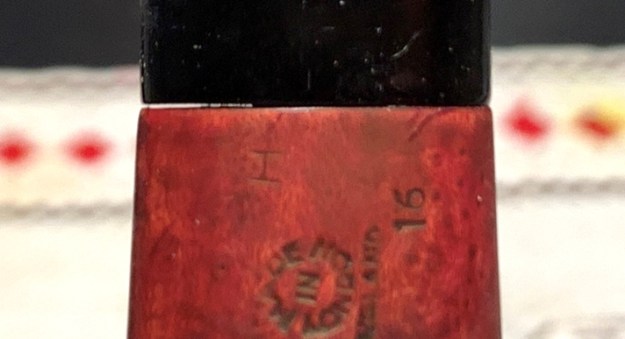
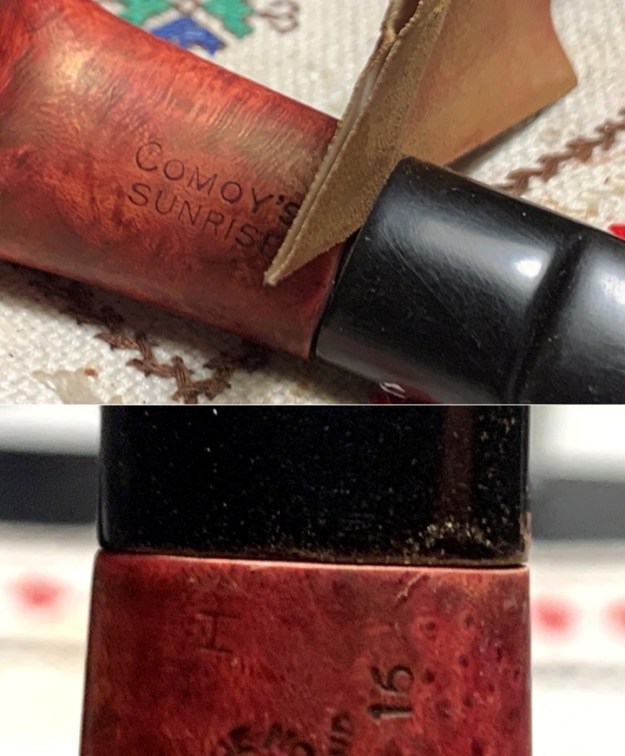
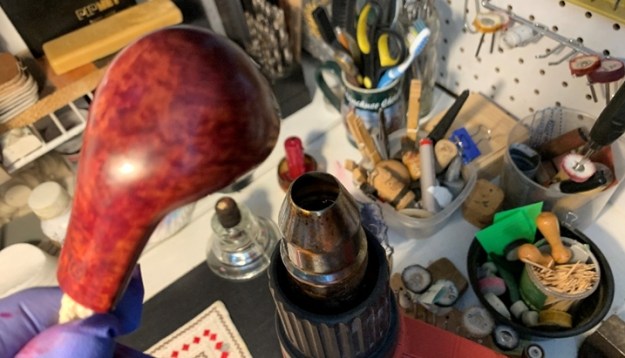
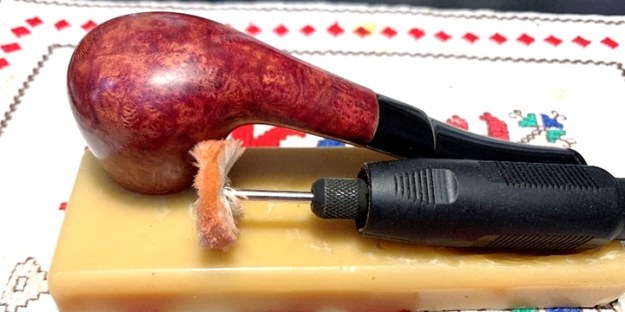
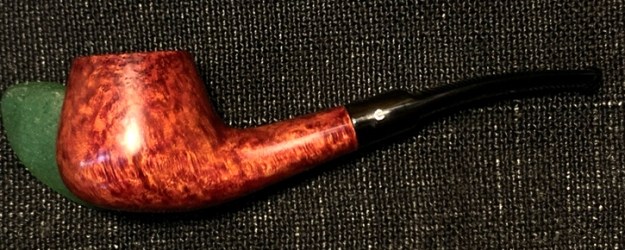
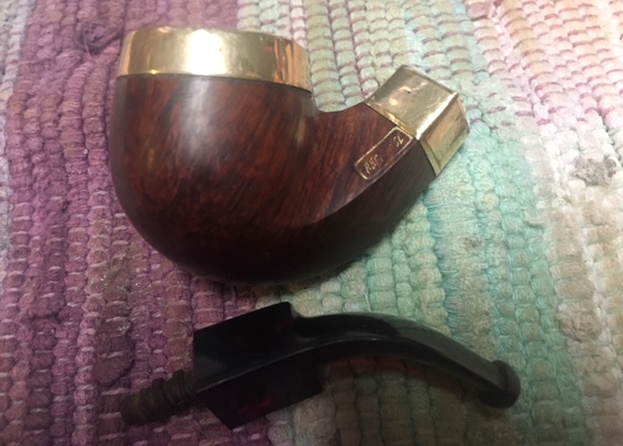
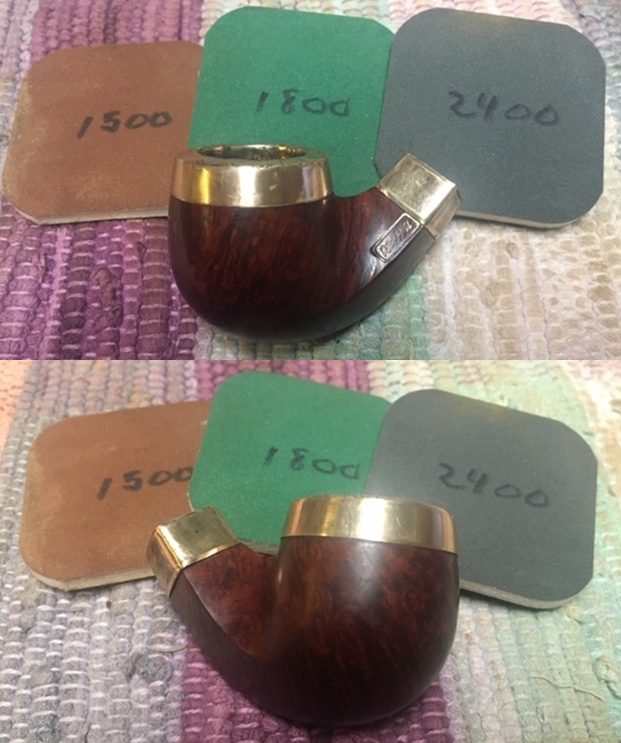
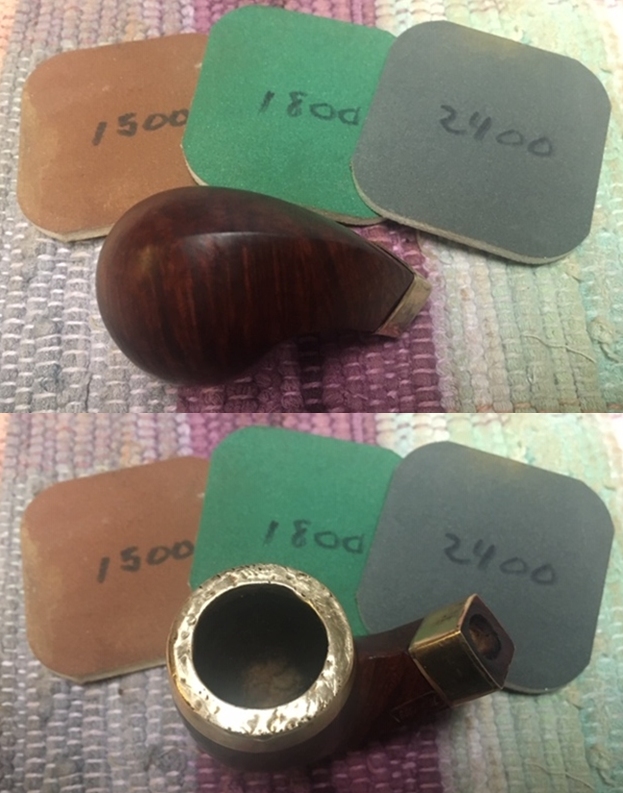
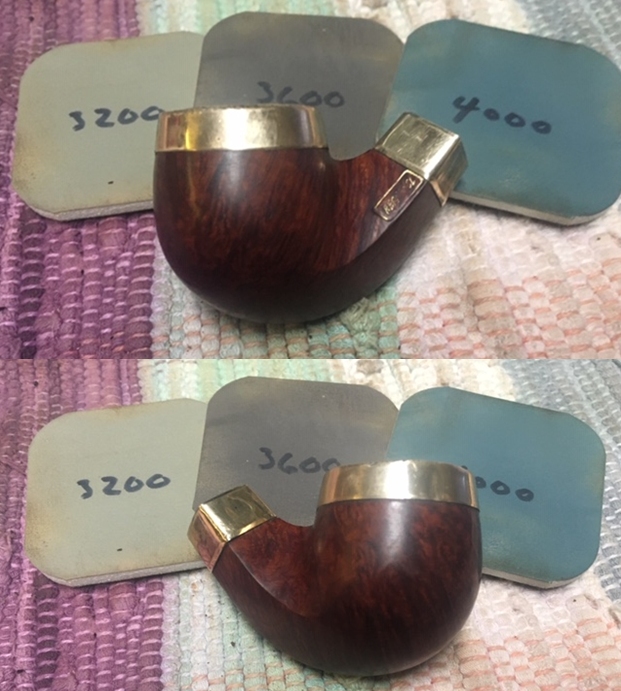
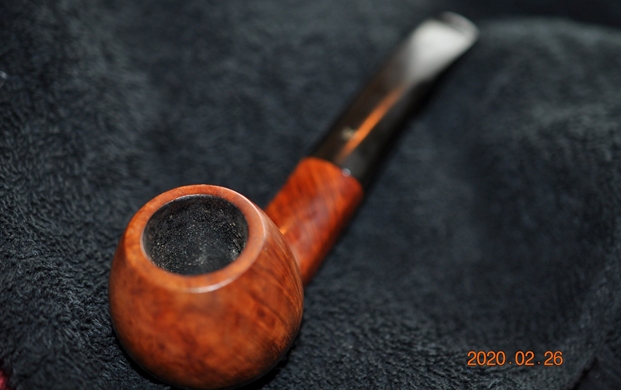
The next pipe on my desk was commissioned by Nathan, a pipe man from St. Louis.  Nathan’s multiple trips to my virtual ‘Help Me!’ baskets in the online collection I call, For “Pipe Dreamers” Only!, resulted in 4 very nice pipes being commissioned by Nathan each benefiting the Daughters of Bulgaria – women and girls who have been trafficked and sexually exploited.  Nathan’s communications with me indicated that he was happy to help a great cause.  Here are the pipes Nathan has in the Pipe Steward queue: a Savinelli Dry System, Pipstar Dublin Sitter, Lorenzo Carnevale Sanremo Italy Rusticated Squat Apple and the Comoy’s Sunrise Volcano H 16 now on the table.The Comoy’s Sunrise Volcano came to me in the acquisition of a large eBay lot I’ve called the ‘Lot of 66’.   It came from a non-profit in Georgetown, Texas, called the Caring Place which I was happy to support.  Here are some of the original pictures I took when the Lot of 66 arrived. The nomenclature is located on the upper and lower panels of the oval shank.  On the upper side is stamped, ‘Comoy’s’ [over] SUNRISE.  On the lower shank panel is stamped to the left the rounded, MADE IN LONDON [over] ENGLAND.  To the left and above is stamped ‘H’, a random letter.  Below and to the right is stamped the shape number, ‘16’ which indicates a number after the Cadogan acquisition of Comoy’s in 1979 when the shape numbers were reduced from 3 to 2 digits.  The stamped ‘C’ on the stem also is consistent with a post Cadogan pipe.  I looked on Pipedia to see how the shape number, ‘16’ would be described. I discovered that it’s not listed there.  I’ve restored other Comoy’s with the ‘H’ stamped on the shank and from what Steve has shared with me, what he has heard is that the random letters indicate a certain parts replacement regimen.Even though the shape number is not listed in the Comoy’s listing on Pipedia, I’m calling this a Volcano.  The dimensions are: Length: 5 1/4 inches, Height: 1 3/8 inches, Rim width: 1 1/8 inches, Chamber width: 3/4 inches, Chamber depth: 1 1/4 inches – a nice, more diminutive size.  The oval shank flowing into the slightly bent stem creates a genuinely nice flow.  The original color of the stummel leans in the direction of an Oxblood/reddish hue which is now pale.  The chamber appears to have been cleaned somewhat with no cake build up.  The rim has some lava build up which should clean off with little problem along with the rest of the stummel which bears minor nicks and bumps.  The grain looks good – no fills jump out at me.  The stem has some chatter but not major.  There is oxidation which will be addressed.  To begin the recommissioning of this Comoy’s Sunrise Volcano for Nathan, the stem’s airway is cleaned with a pipe cleaner wetted with isopropyl 95%.It then joins other pipes in the queue for a soak in Mark Hoover’s product, Before & After Deoxidizer (www.ibepen.com) which does a good job on stems that are not too heavily oxidized.  I allow the stem to soak for a few hours.After taking the stem out of the soak, I squeegee off the liquid with my fingers and use cotton pads wetted with alcohol to wipe off the raised oxidation.  Another pipe cleaner also wetted with isopropyl 95% clears the airway of remnants of the Deoxidizer.To start the process of conditioning the vulcanite stem, paraffin oil is applied, and the stem is put aside to absorb the oil.Turning now to cleaning the stummel, I start by cleaning the chamber.  The cake buildup is almost non-existent, and I give the chamber walls a quick scraping using the Savinelli Fitsall Tool.  I then sand the chamber with 240 paper wrapped around a Sharpie Pen.  The chamber is in good shape.  Little effort to clean is needed – a nice change!Next, turning to the external surface, undiluted Murphy’s Oil Soap is used to clean with a cotton pad.  A brass wire brush, which is not harmful to the briar, is used to help clean the rim along with scraping it very carefully with the edge of my Winchester pocketknife.  Then the stummel is taken to the kitchen sink to continue the cleaning with warm water using shank brushes to clean the mortise with anti-oil liquid dishwashing soap.  After a thorough rinsing, the stummel is brought back to worktable to continue cleaning the internals with cotton buds and pipe cleaners.  A couple buds and a pipe cleaner confirm the cleaned stated of the internals.  Moving on. Taking a closer look at the stummel, the Oxblood/reddish finish is very thin and has disappeared from the edge of the rim which has a nice rounded sloping pitch toward the chamber – a stylistic touch for the volcano shape.  The rim cleaned up nicely and along with the rim, the finish is thin but present. I see no fills that need attention. To clean the surface of the minor nicks, I proceed to using the full regimen of micromesh pads on the stummel surface.  I begin by wet sanding with pads 1500 to 2400 and then dry sand with pads 3200 to 4000 and 6000 to 12000. After the micromesh process, it is evident that the finish has lost its original luster and what is left is a pinkish tint that is not attractive.  However, the micromesh sanding did bring out the grain very nicely. To make sure the surface is clean of the old finish, acetone on a cotton pad is used to wipe the stummel.  The results reveal the former color. I will apply a new dye to the stummel, and I will begin with an undercoat of Oxblood and if needed, follow with a dye wash of red aniline dye.  I’ll see how the first phase goes before deciding on the second.  After assembling the staining module on my desk, I begin by warming the stummel with the hot air gun to open the briar helping the grain to be more receptive to the dye.  After warm, I use a folded pipe cleaner to apply Fiebing’s Oxblood Leather Dye to the stummel.  After painting a section with the pipe cleaner, the dye is this ‘flamed’ using a lit candle combusting the wet aniline dye.  When lit, the alcohol in the dye combusts and leaves behind the pigment set in the briar grain.After a thorough covering a few times over, the flamed stummel is set aside for several hours to allow the new dye to settle in.With the stummel resting, I turn to the Comoy’s stem.  There is minor damage to the bit. Using a needle file, I refresh the lines of the button.  Afterwards, using 240 grade paper, the minor chatter is sanded out on the upper and lower bit.To address any residual oxidation, the remainder of the stem is sanded with 240 grade paper.  A plastic disk helps to guard against shouldering the stem facing.Transitioning now to 600 grade paper, the entire stem is wet sanded.  This is followed by applying 000 steel wool.Ugh!  During this sanding phase, the Comoy’s ‘C’ factory stamping was damaged.  This I don’t like. This mishap will not be easy to restore as thin as the factory stamping is.  Unlike the older inlaid Comoy’s ‘C’, this stamping is more of a painting of a ‘C’ as there is no impression in the vulcanite for new paint to hold.Avoiding  the ‘C’, I continue with the full regimen of micromesh pads is applied beginning with wet sanding with pads 1500 to 2400.  Following this, pads 3200 to 4000 and 6000 to 12000 are used to dry sand.  Between each set of 3 pads, Obsidian Oil is applied to continue conditioning the stem and protect it from future oxidation. Restoring the Comoy’s ‘C’ stamping has no good options as my regretful pining has produced.  Simply to paint a ‘C’ on the surface is not easy to do and it is resting on the surface and will be easily wiped away without too much effort.  I considered attempting to engrave a ‘C’ but without machine shop precision, I’m left to freehand and that leaves no room for errors.  My hand is not that steady!  In the end, the only option open to me is to paint a ‘C’ building on the remnant of the original.  I apply white acrylic paint several times and then carefully shape the lettering with a toothpick.  It’s slow work.  I’ve done the best I could.  I move on. With the fired stummel ready to unwrap after applying Oxblood dye to the briar grain surface, a felt buffing wheel is mounted to the Dremel set at the lowest speed.  Tripoli compound, a coarser abrasive compound, is then used to ‘unwrap’ the flamed crust of dye – removing the excess dye leaving the dyed grain that has absorbed the pigment. I pause to take a picture showing the contrast of the unwrapping process.I mentioned earlier that I anticipated doing a ‘dye wash’ using a red aniline dye over the Oxblood.  This I decide to do using a pipe cleaner.  I simply paint the dye on the stummel and after covering it thoroughly, I put the stummel aside for several hours for the dye to settle in.After the dye had dried enough to handle the stummel, I rejoin the stem and stummel to examine the fit.  I notice a gapping on one side of the oval shank/stem fitting which I’ve pictured below.Attempting to remedy this gap, I use a folded piece of 240 grade sanding paper wedged between the stem and shank on the opposite side of the stem from the gapping – the tight side.  After gently compressing the shank and stem against the sanding paper, I move the paper back and forth in a sawing motion to sand down the tight side resulting in closing the gap on the other side of the stem/shank – hopefully!  After a few attempts, checking and repositioning the paper, the gap is reduced and the seating of the stem into mortise is now much better.After several hours, the red dye has seasoned long enough.  With a cotton cloth buffing wheel mounted on the Dremel and set at about 40% full power, Blue Diamond compound, a finer abrasive compound, is applied to the surface to remove excess dye and to smooth the briar surface.Next, to help avoid dye leaching onto the hands of the new steward when the pipe is initially put into service, I heat the stummel with the hot gun to emulate the initial use of the chamber.  After heating the stummel, I give the stummel a vigorous hand buffing with a cotton cloth to remove the dye loosened by the heating.  I forgot to picture this, but the old t-shirt cotton cloth used had red residue.The final step is to apply carnauba wax to the stem and stummel.  After mounting another cotton cloth wheel onto the Dremel with the speed the same, the wax is applied to the pipe.  Following applying a few coats of wax, the pipe is given a hearty hand buffing to raise the shine.The Comoy’s Sunrise turned out well.  The grain pops now and the Volcano shape, with the wide heel, fits well in the hand ready for a new steward.  The only disappointment was the ‘friendly fire’ damage done to the Comoy’s ‘C’ stem stamping – ugh!  Nathan commissioned this Comoy’s Sunrise and will have the first opportunity to acquire it in The Pipe Steward Store benefitting the Daughters of Bulgaria – women and girls who have been trafficked and sexually exploited.  Thanks for joining me!

Refreshing a Newmarket Airflo Lumberman that is unsmoked


Blog by Steve Laug

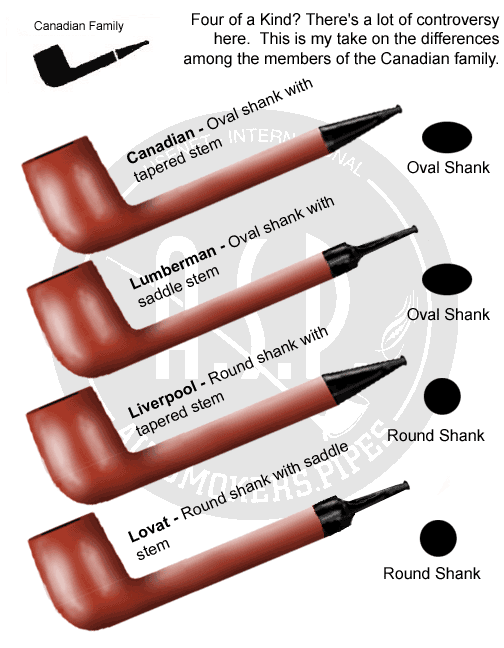
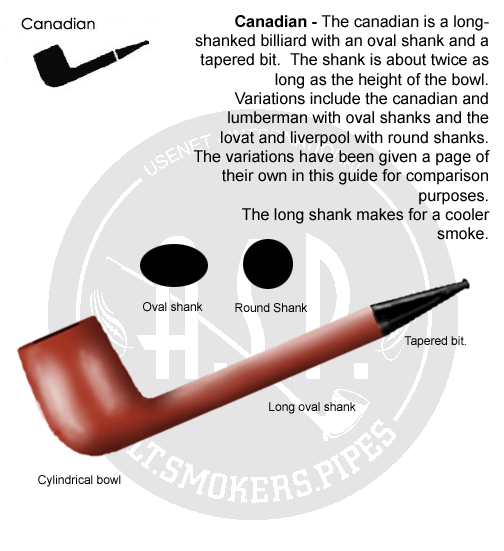
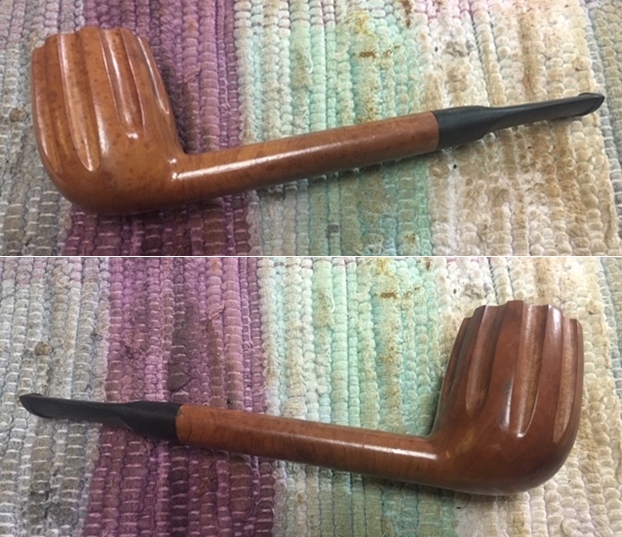
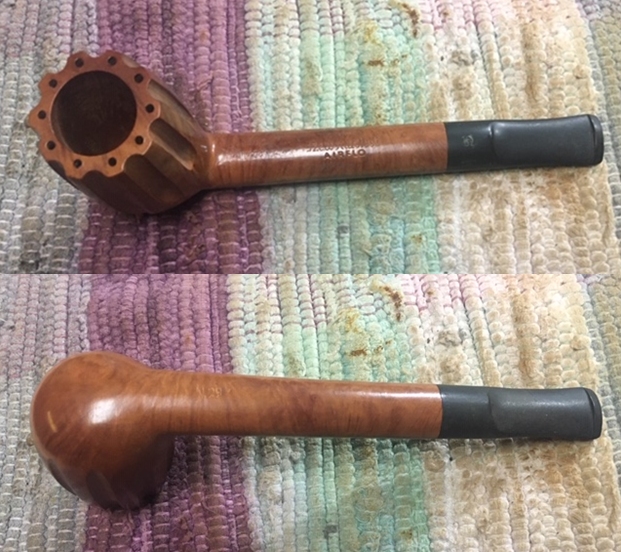
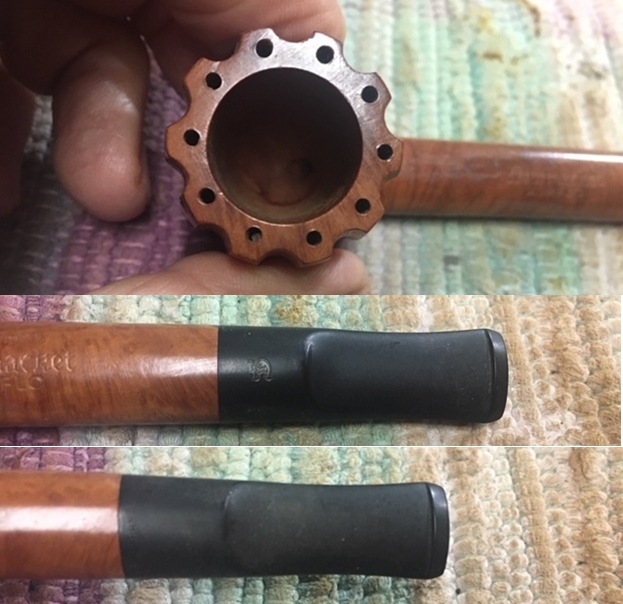
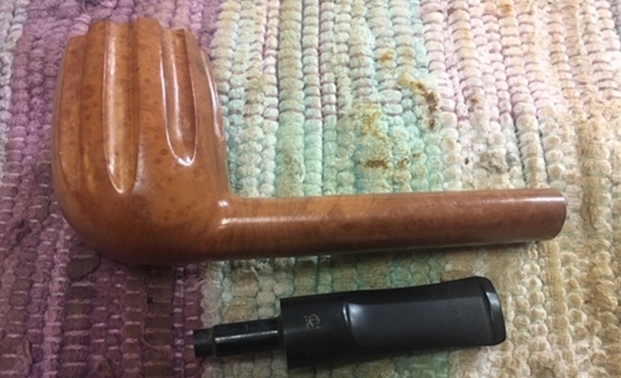
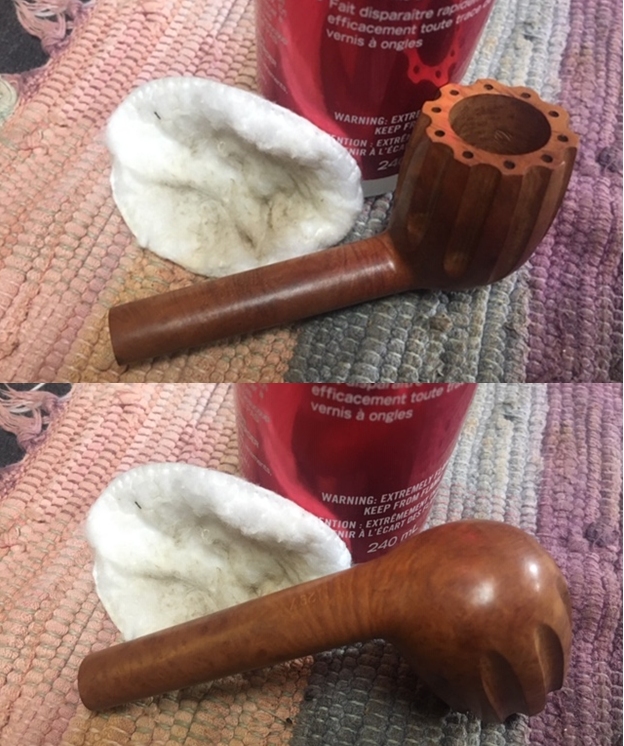
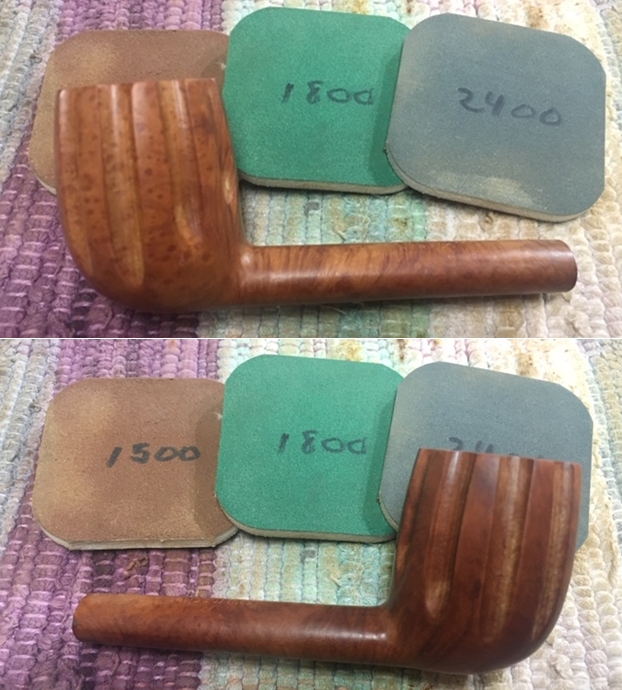
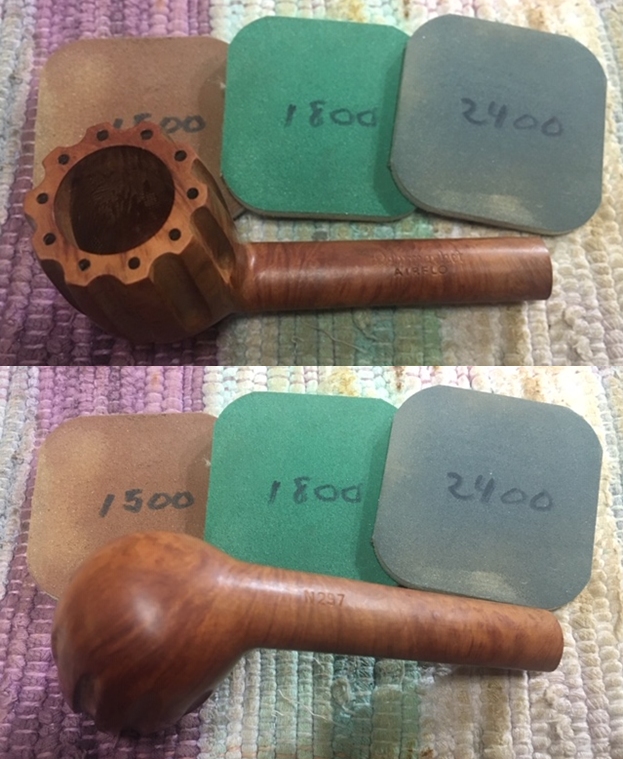
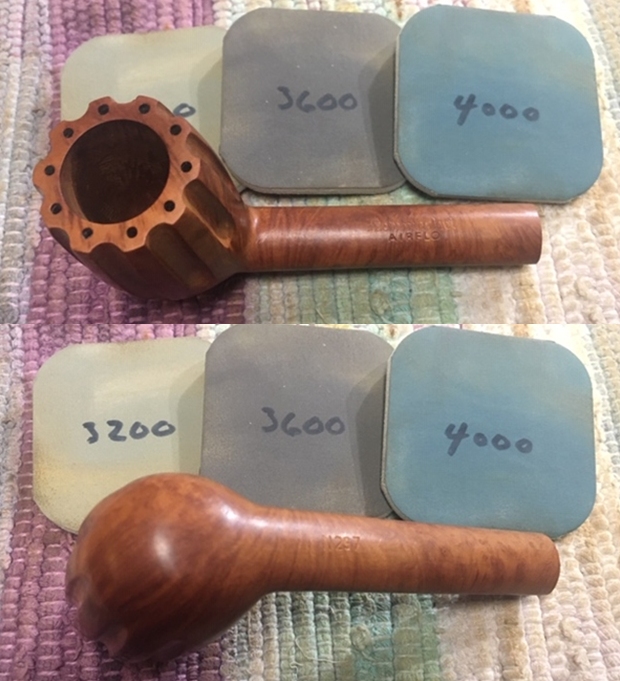
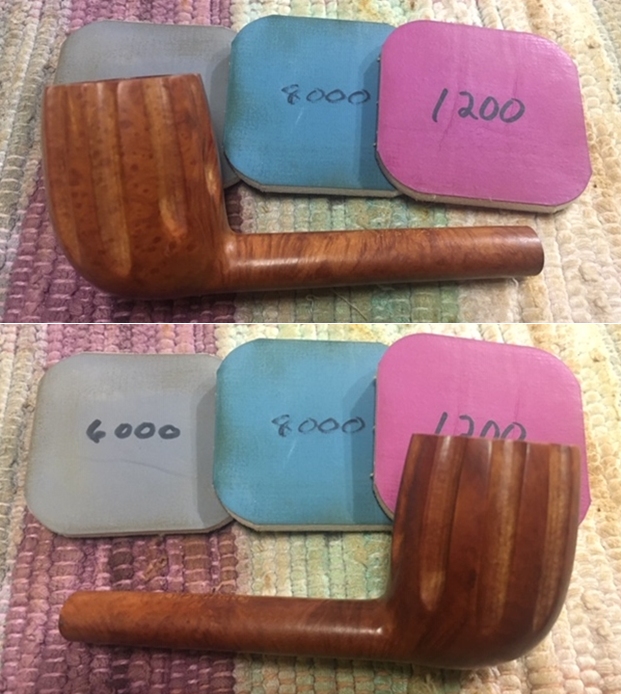
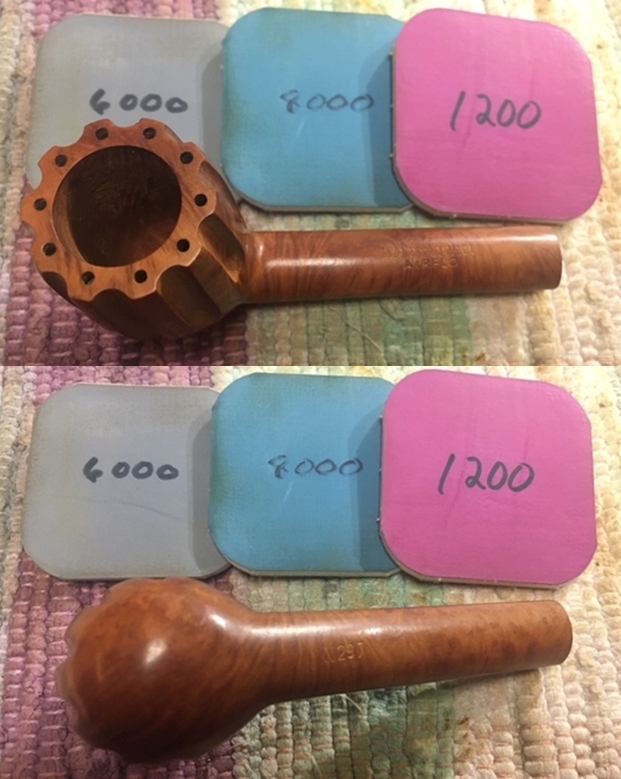
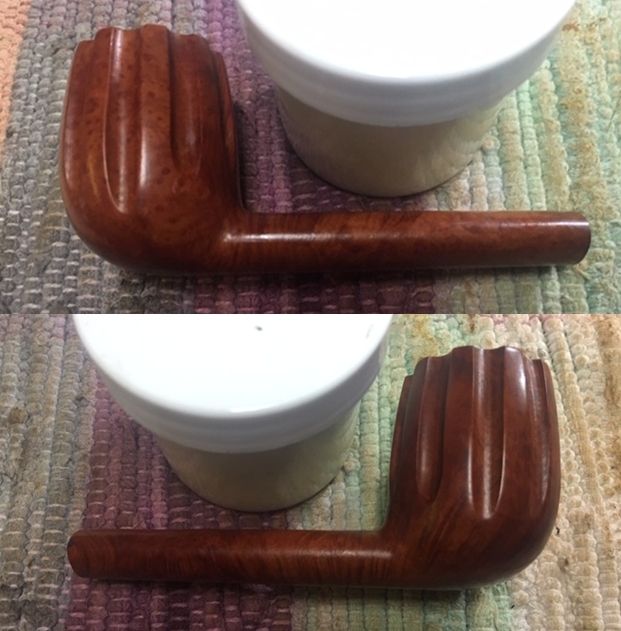
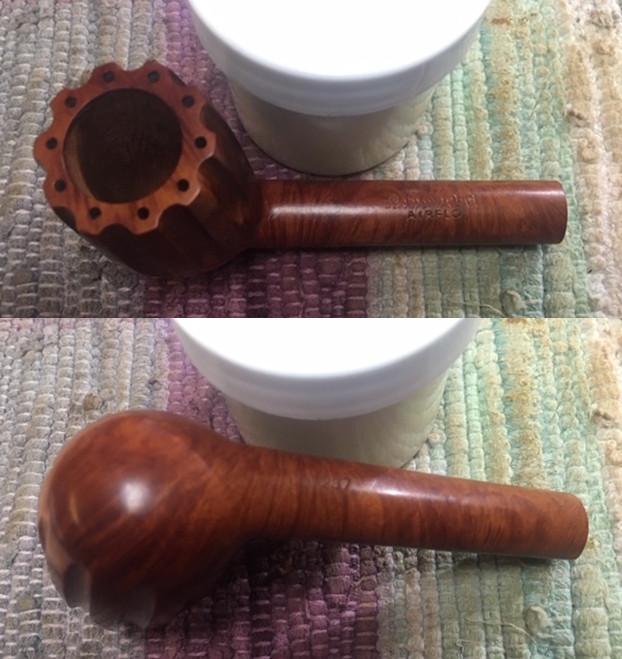
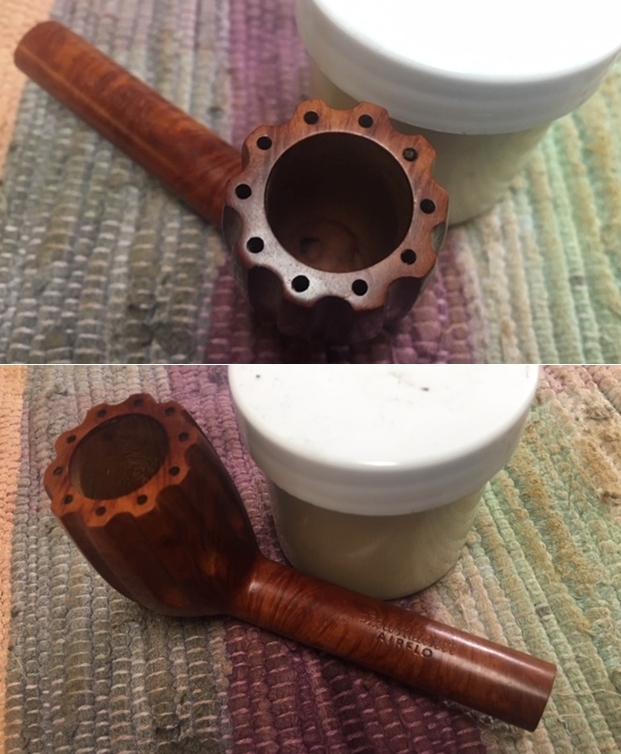
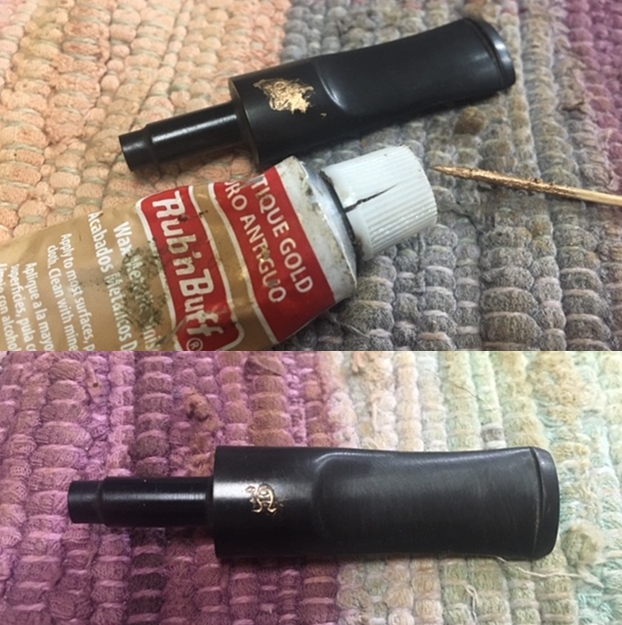
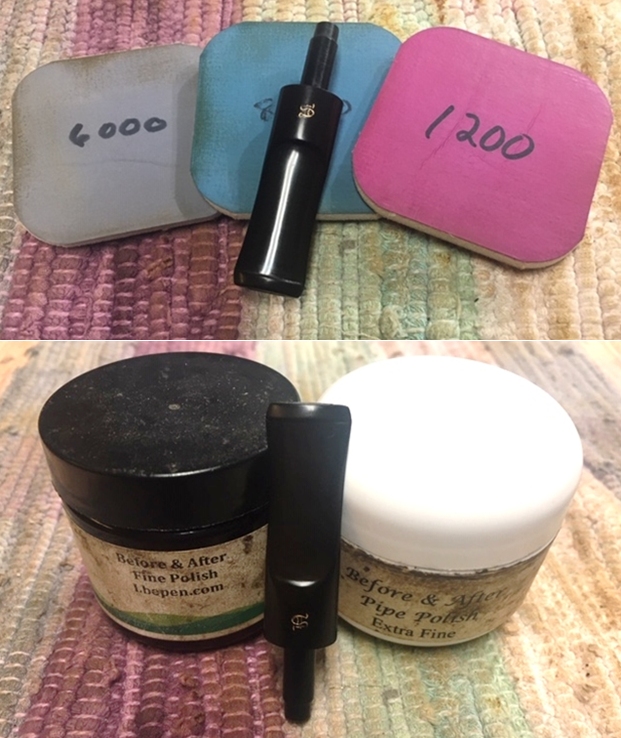
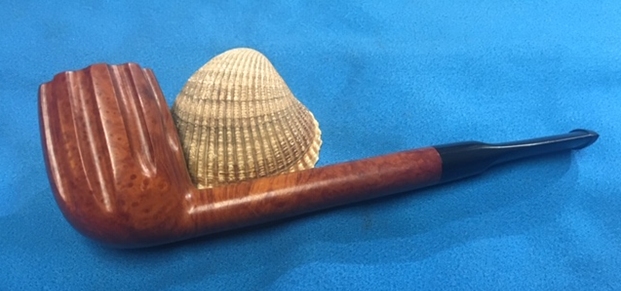
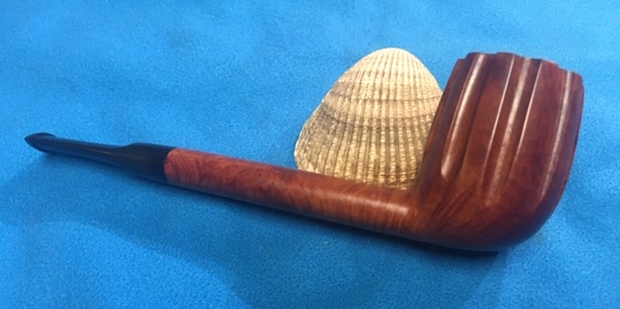
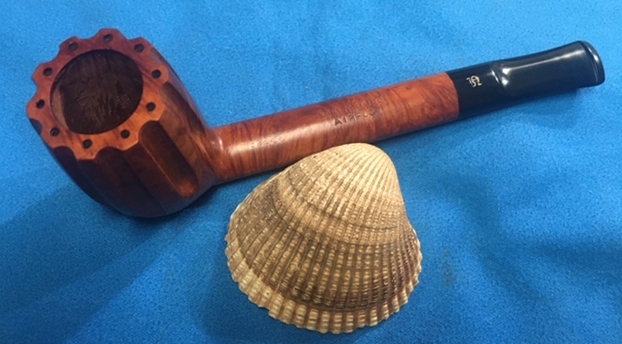
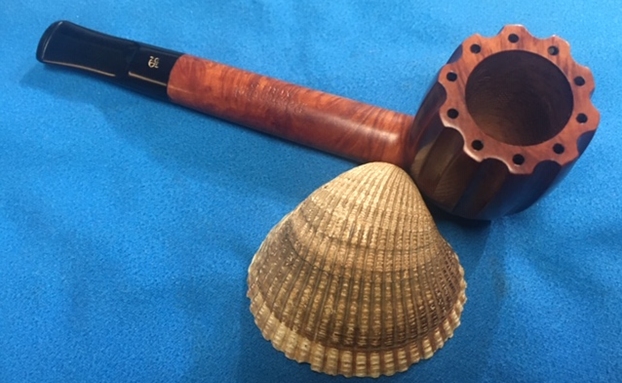
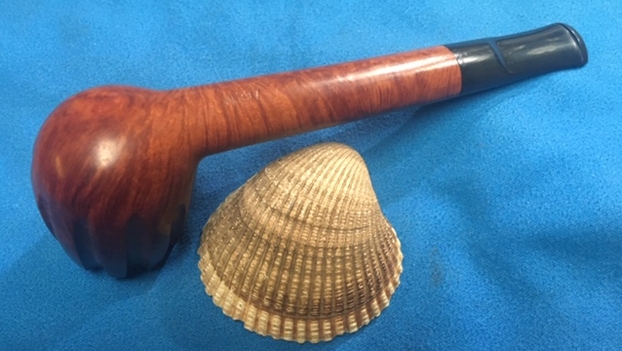
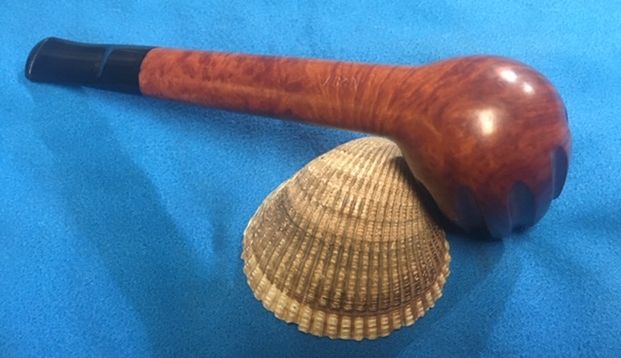
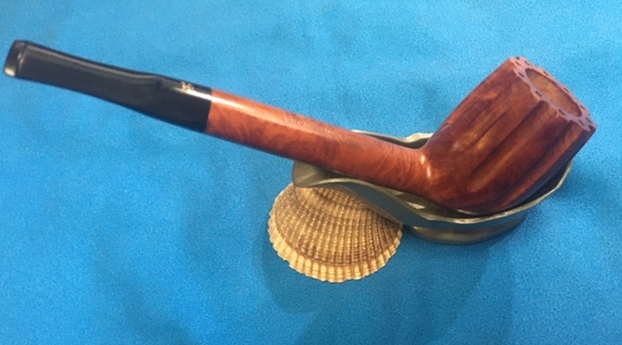
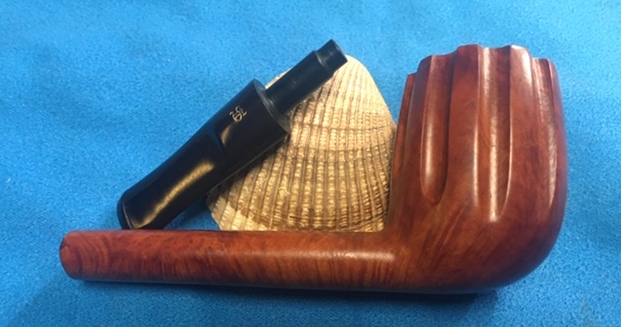
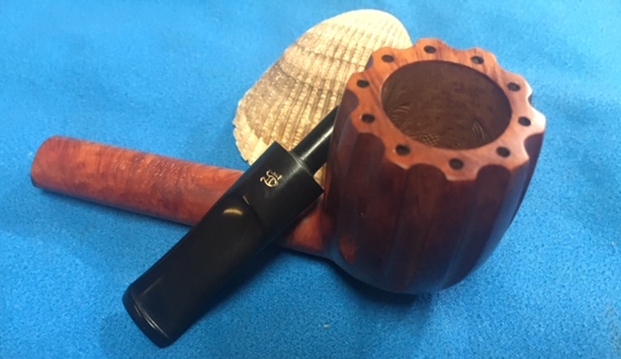
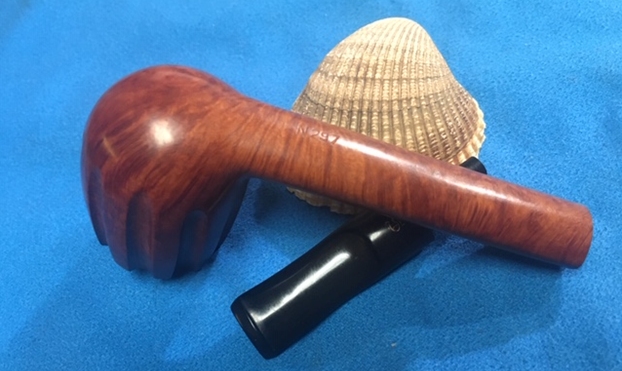
The next pipe on the table is one I had actually forgotten about. This morning I was moving around some of the pipes that needed to be restored to make room for other things and I came across this pipe. What made it attractive to me was the fact that it was unsmoked and NOS (new old stock). It was a long shank pipe definitely in the Canadian Shape family. It had an oval shank and a saddle stem. I turned to Pipedia to have a look at the four different shapes that have been associated with the Canadian shape (https://pipedia.org/wiki/Pipe_Shapes). Like the site I give thanks to Bill Burney his fantastic Pipes shape chart, which he originally developed for Alt.Smokers.Pipes (A.S.P.). The pipe I am working on is definitively a Lumberman. It has an oval shank and a saddle stem. The difference on it is also the fluted sides of the bowl and the small air holes drilled in the rim top fins. Since the pipe was new and unsmoked there were just a few things that demanded my attention. There was sticky substance like that left behind by a price tag on the top of the shank near the bowl shank junction. It extended for about an inch on the top ending at the stamping. The shank itself was stamped Newmarket over Airflo on the topside. On the top of the saddle stem there is a Germanic stylized N. On the underside of the shank it had shape number N297 and on the stem it read FRANCE. The exterior of the bowl was coated with a thick varnish coat that was slightly spotty and needed to be removed. Underneath was a natural briar without stain. The bowl was raw unsmoked briar. The exterior of the bowl was fluted from the top of the bowl down the sides. On the bowl top the fins were each drilled with a small air hole that would act to cool the pipe as it was smoked. The stem was lightly oxidized and dirty. The N stamp on the top of the saddle was faint. This would be a fun pipe to work on. I took photos of the pipe before I started working on it. I took photos of the bowl and rim top as well as the stem to show how good they look. You can see drilled air holes on the “teeth” of the gear looking rim top. They extend down the length of the fins. The fluting between each of them provides more air surface for cooling the bowl. The stem is lightly oxidized in the photos but otherwise in great condition.I took a photo of the stamping on the top and underside of the shank. The stamping is readable as noted above. There is also stylized N on the topside of the saddle stem.   I took a photo of the pipe with the stem removed to show the overall look of stem, tenon and profile of the pipe. It really is a very interestingly shaped pipe.I decided to start my work on the pipe by addressing the varnish coat on the bowl. I wiped it down carefully with a cotton pad and acetone (fingernail polish remover). It quickly removed the shiny/spotty coat and I was able to see nice unstained natural briar. I polished the briar with micromesh sanding pads – wet sanding with 1500-12000 grit pads and wiping the briar down with a damp cloth after each pad.  I rubbed the briar down with Before & After Restoration Balm. I worked it into the briar with my fingertips and a horsehair shoe brush to get it into the crevices of the sandblast. The product works to clean, enliven and preserve the briar. I let it sit for 10 minutes while I worked on the stem. After the time passed I buffed it with a cotton cloth to deepen the shine. The briar really comes alive with the balm.    I set the bowl aside and turned my attention to the stem. I gave the stem a quick polish with a 1500 grit micromesh pad and then touched up the stamped N on the top of the saddle with Rub’n Buff Antique Gold. I worked it into the grooves of the stamp with a tooth pick. I buff it off with a cotton pad.  I polished the vulcanite with micromesh sanding pads – 1500-12000 grit pads. I wiped it down with Obsidian Oil after each sanding pad. I used Before & After Pipe Polish – both Fine and Extra Fine to further polish the stem.    This interesting looking NOS unsmoked Newmarket Airflo Lumberman N297 is a unique pipe with a vulcanite saddle stem. The natural finish looked really good with the varnish removed and the briar polished. The finish looks much better and it goes well with the polished black vulcanite saddle stem. I put the stem back on the bowl and buffed the pipe with Blue Diamond on the buffing wheel. I gave the bowl and stem multiple coats of carnauba wax on the buffing wheel and followed that by buffing the entire pipe with a clean buffing pad. I hand buffed the pipe with a microfiber cloth to deepen the shine. The finished Lumberman is very nice and feels great in the hand. Give the finished pipe a look in the photos below. It is a nice pipe whose dimensions are Length: 5 ½ inches, Height: 1 ¾ inches, Outside diameter of the bowl: 1 ¼ inches, Chamber diameter: ¾ of an inch. Thanks for walking through the restoration with me as I worked over another beautiful pipe. This pipe is staying with me at least for a while because I have never seen one like it all the years I have working on pipe. Thanks for your time.


This Savinelli de luxe Milano 206 Apple was worn and tired pipe


Blog by Steve Laug

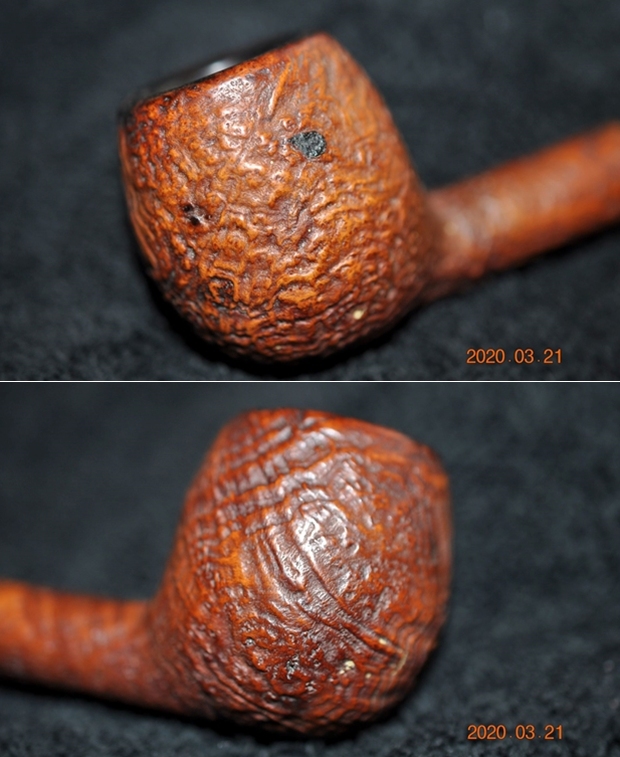
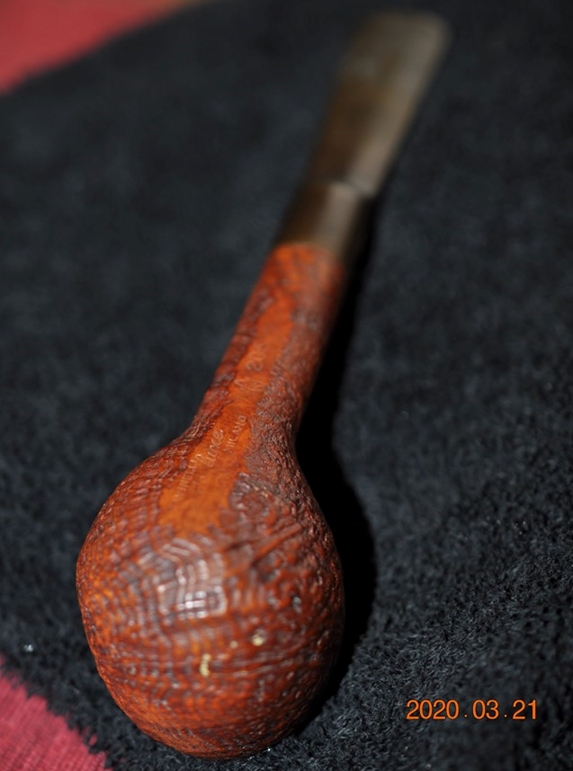
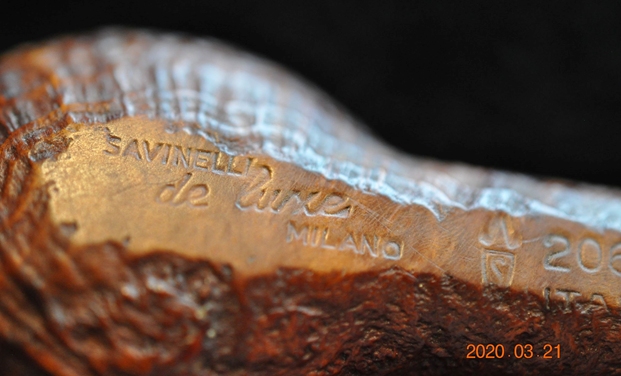
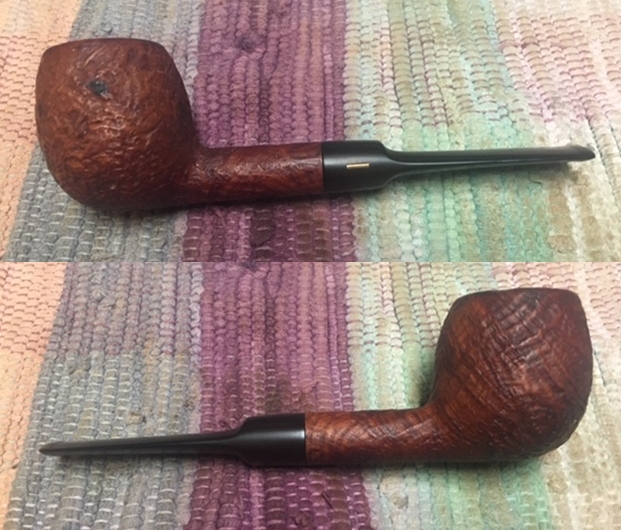
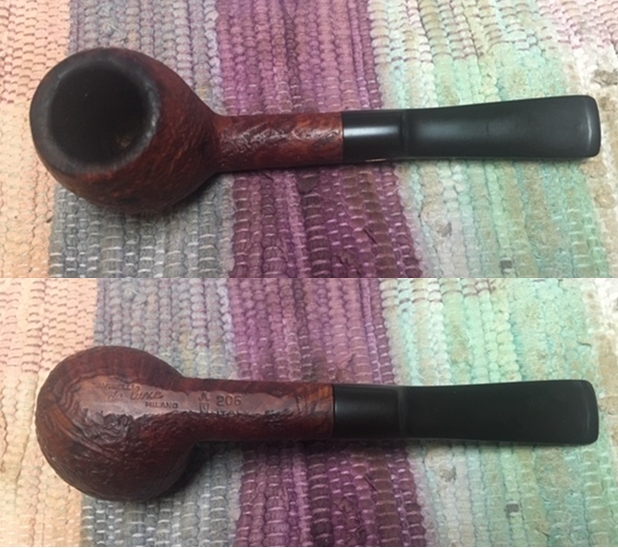
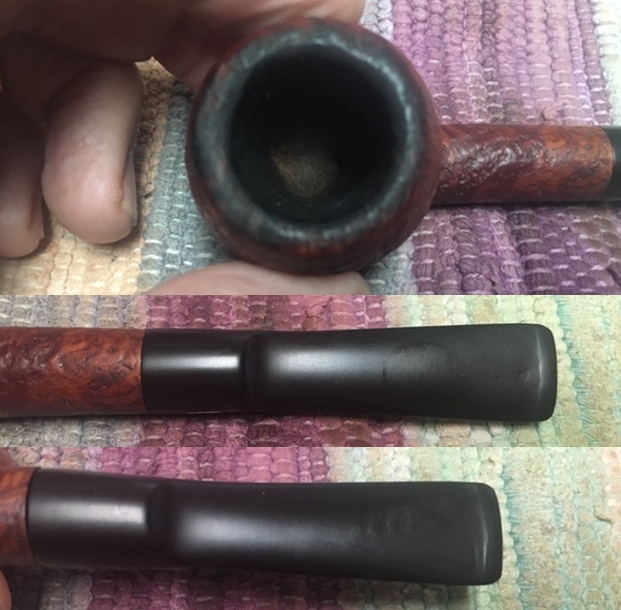
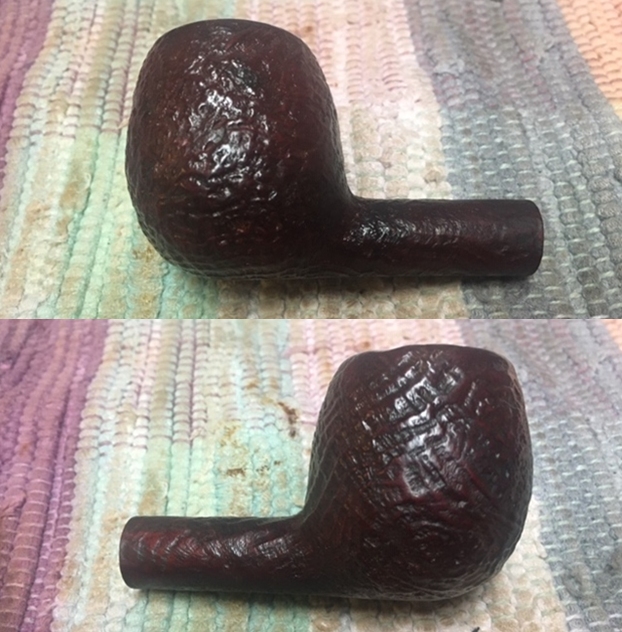
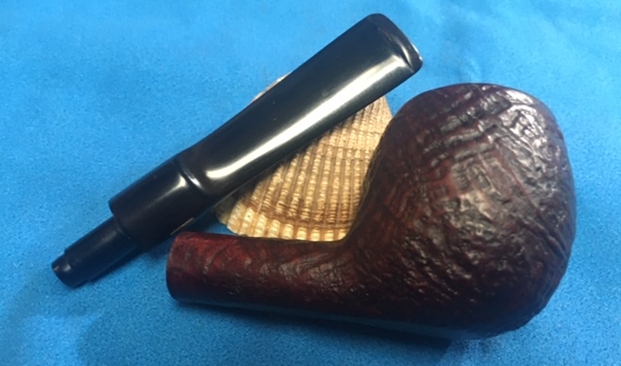
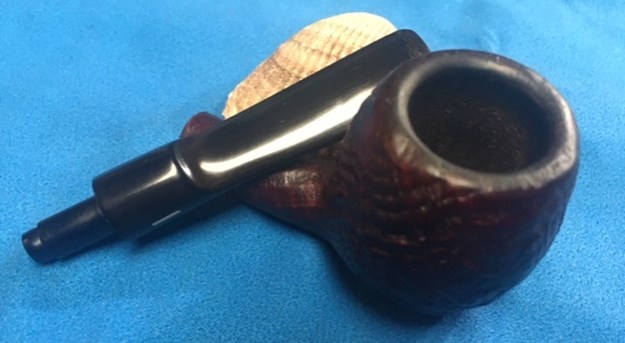
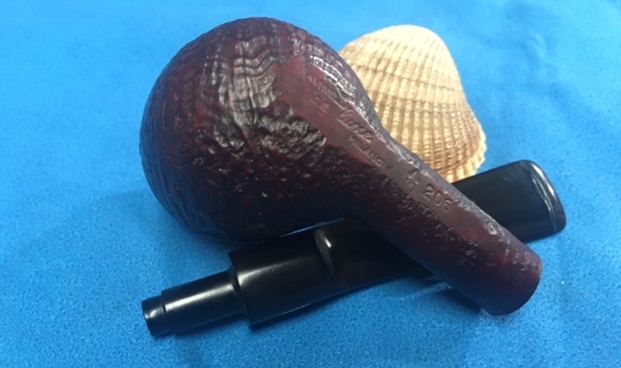
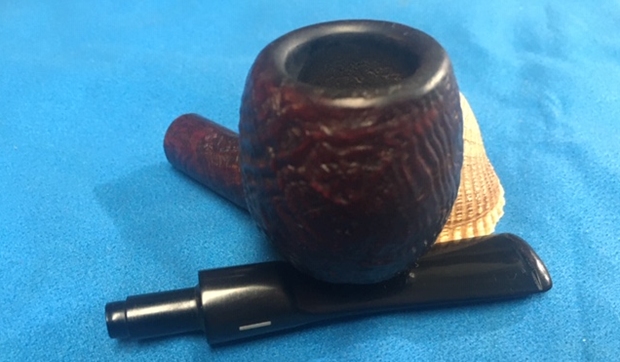
The next pipe on the table is one I have been avoiding working for this whole box of pipes. I just keep putting under others. Today I am getting to the bottom of the box and decided to take this one on. It is a well-shaped sandblast apple made by Savinelli. That is itself is not an issue as it has a great shape and look. The round bowl, slender shank and saddle stem with a thin blade – what’s not to like?  It was stamped on a smooth panel on the underside of the shank and read Savinelli de luxe Milano on the heel and that was followed by the Savinelli S shield and the shape number 206 over Italy. The finish was very dirty with a heavy coat of grime ground into the bowl and rim top as can be seen in the photos. There were dark spots all around the bowl and a deep nick on the right side of the crowned rim top. The bowl had a thick cake with a heavy lava overflow on the rim top. There was too much lava on the rim top and edge to know what they looked like but more would be revealed once it was cleaned. The stem was oxidized and there were deep tooth marks and chatter on both sides and on the top and bottom edges of the button. Jeff took photos of the pipe before he cleaned it up so you could see what we saw. Jeff took photos of the rim top to show lava build up around the rim, the wear on the edges and cake in the bowl. The lava actually was running down the edges of the crown of the bowl and had filled in some of the nooks and crannies in the sandblast. Jeff took some photos of the bowl sides and heel to show the dark spots around the bowl sides mixed in with the nice sandblast. It was a dirty pipe but I think it will be a beautiful one once we are finished.    The stamping on each side of the shank is shown in the photos below. They are clear and read as noted above.  There is a brass bar on the left side of the saddle stem. The stem was a good fit to the shank. It was oxidized, calcified and had debris stuck to the surface of the vulcanite. It also shows the tooth marks on the stem and on the button surface.  It was my turn to work on the pipe now. I was really looking forward to what the pipe would look like once Jeff had worked his magic. What would the rim top look like? What would the dark spots around the bowl look like? I had no idea. When I took it out of the box I was struck great job cleaning up the pipe Jeff had done. It was impressive! He had reamed the pipe with a Pipnet piper reamer and taken the cake back to bare briar. He cleaned up the remaining cake with a Savinelli Fitsall Pipe Knife. He scrubbed the interior of the bowl and shank with pipe cleaners, cotton swabs and alcohol to remove the tars and oils. He scrubbed the exterior of the pipe with Murphy’s Oil Soap and a tooth brush to remove the grime from the finish. He worked on the rim top lava and darkening with the soap and tooth brush. He scrubbed the inside of the stem with alcohol and pipe cleaners. He scrubbed the exterior with Soft Scrub and then soaked it in Before & After Deoxidizer. He washed the stem off with warm water to remove the deoxidizer. The pipe looked far better. While some of the dark marks had faded it became clear that they were dark stains rather than burn marks as I suspected. I took photos of the pipe when I received it before I started working on it. I took photos of the bowl and rim top as well as the stem to show how clean they were. You can see that there is still some darkening to both the briar rim top and inner edge. The stem is clean and the tooth damage on both sides is very clear in the photos. Lots more work to do on this pipe.I took a photo of the stamping on the underside of the shank. The stamping is readable as noted above. There is also the expected inset brass bar on the left side of the saddle.I took a photo of the pipe with the stem removed to show the overall look of stem, tenon and profile of the pipe. It really is a beautifully shaped pipe.I decided to start my work on the pipe by addressing the darkening on the briar rim top. I sanded the crowned rim top and inner edge of the bowl with a folded piece of 220 grit sandpaper. I was able to remove some of the darkening to the top and smooth out the inner edge of the bowl. I wiped the rim top down with alcohol on a cotton pad.I wiped down the entire bowl with alcohol and used a brass bristle wire brush to work over the darkened areas on the bowl sides and top. Once it was dried off I restained the bowl and shank with a Tan Aniline Stain. I applied it to the briar and flamed it with a Bic lighter. I repeated the process. The alcohol burns off with the flame and the stain is set in the briar. I let the bowl sit and the stain cure overnight. In the morning I buffed it on the buffer with Red Tripoli and Blue Diamond. I took photos of the bowl with its new look. I rubbed the briar down with Before & After Restoration Balm. I worked it into the briar with my fingertips and a horsehair shoe brush to get it into the crevices of the sandblast. The product works to clean, enliven and preserve the briar. I let it sit for 10 minutes while I worked on the stem. After the time passed I buffed it with a cotton cloth to deepen the shine. The briar really comes alive with the balm.   I set the bowl aside and turned my attention to the stem. I “painted” the stem with the flame of a Bic lighter to lift the deep dents in the surface.I filled in the remaining indentations and built up the top and bottom of the button with clear super glue. Once the repair cured I used a needle file to reshape the button edges and also flatten the repaired areas. I sanded the stem with 220 grit sandpaper to finish the shaping and to remove the remaining oxidation. I started polishing the stem with 400 grit wet dry sandpaper. I wiped the stem down with Obsidian Oil before further polishing it.   I polished the vulcanite with micromesh sanding pads – 1500-12000 grit pads. I wiped it down with Obsidian Oil after each sanding pad. I used Before & After Pipe Polish – both Fine and Extra Fine to further polish the stem.     This nice looking Savinelli deluxe Milano 206 Apple with a saddle stem turned out very nice. The addition of a tan stain to the mix of brown stains highlights the nooks and crannies of the sandblast around the bowl sides and bottom. The finish on the pipe looks much better and they go well with the polished black vulcanite saddle stem. I put the stem back on the bowl and carefully buffed the pipe with Blue Diamond on the buffing wheel. I gave the bowl and stem multiple coats of carnauba wax on the buffing wheel and followed that by buffing the entire pipe with a clean buffing pad. I hand buffed the pipe with a microfiber cloth to deepen the shine. The finished straight apple is very nice and feels great in the hand. Give the finished pipe a look in the photos below. The dimensions of the pipe are Length: 5 ½ inches, Height: 1 ¾ inches, Outside diameter of the bowl: 1 ¼ inches, Chamber diameter: ¾ of an inch. Thanks for walking through the restoration with me as I worked over another beautiful pipe. This pipe will be going on the rebornpipes store shortly. If you are interesting in adding it to your collection let me know! Thanks for your time.
Restoring an older French Briar Redmanol Diamond Shank Billiard


Blog by Steve Laug

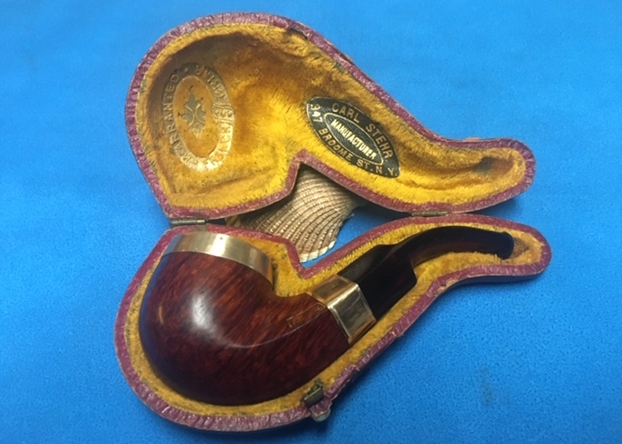
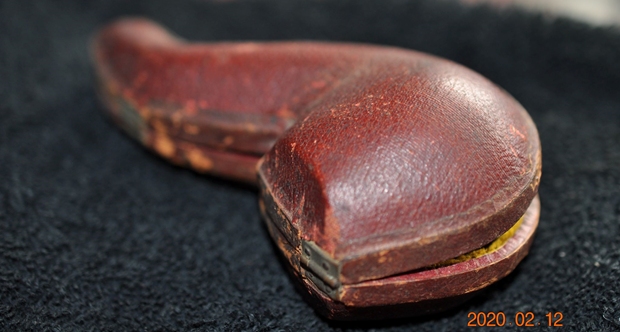
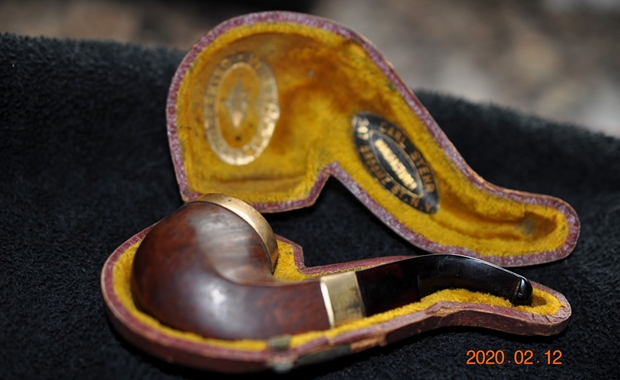
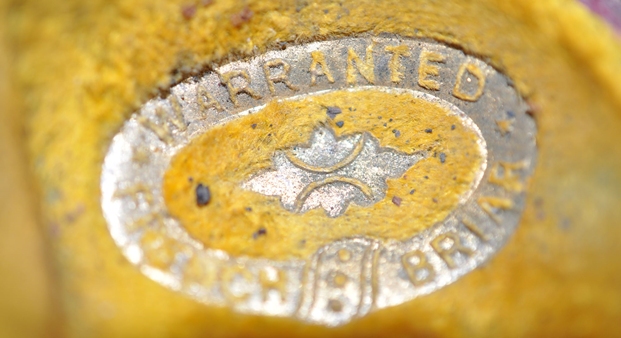
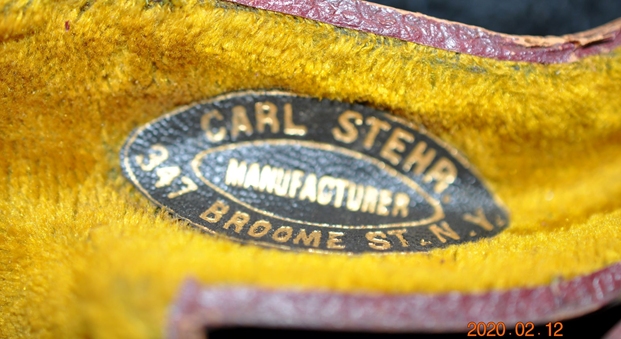
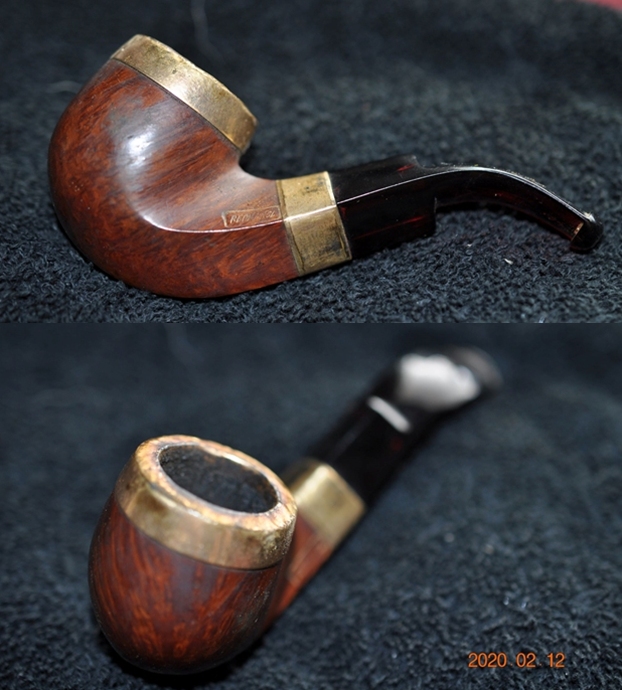
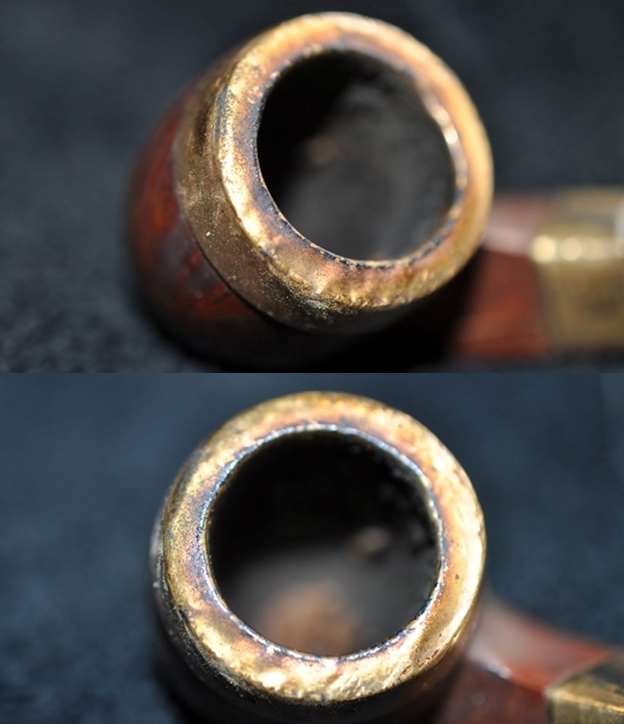
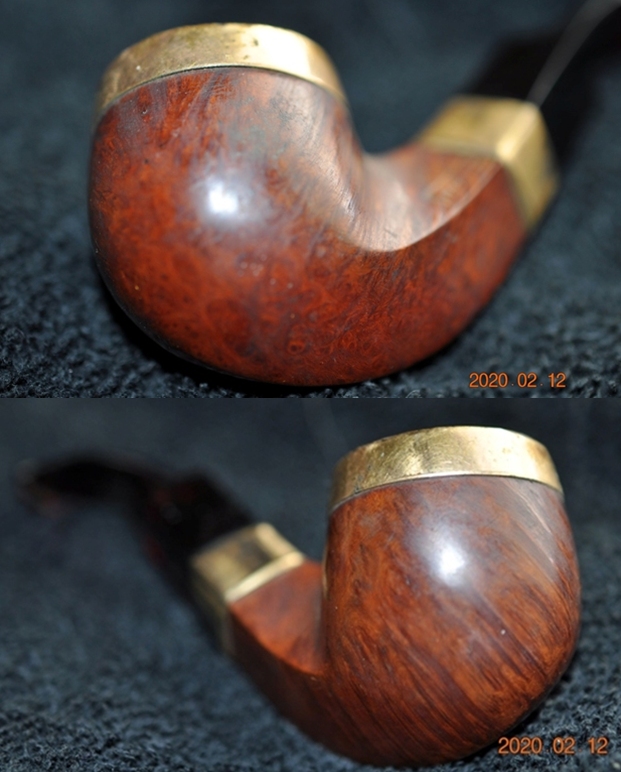
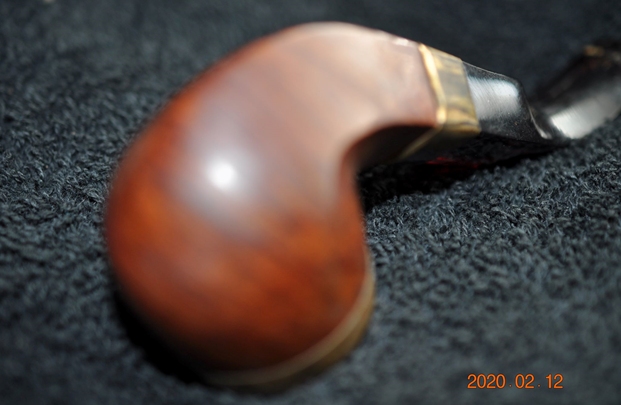
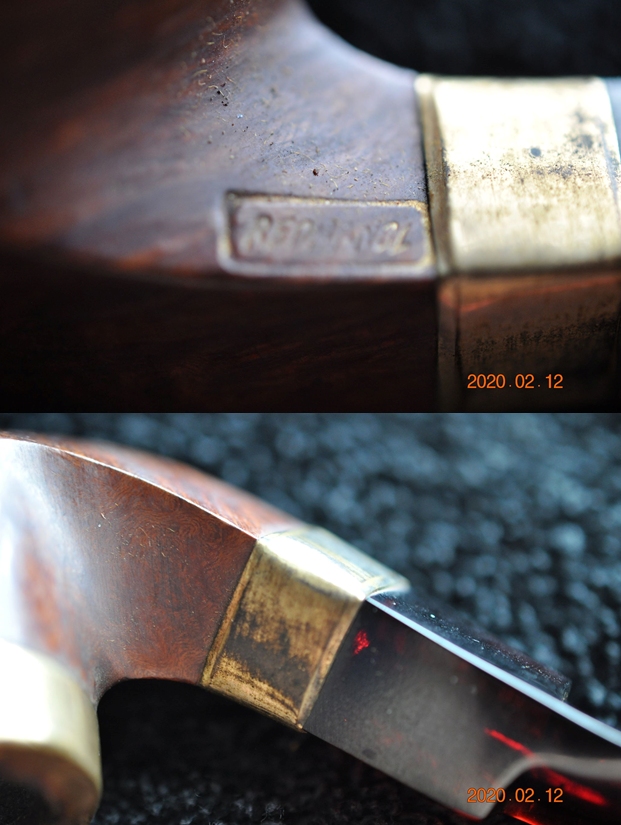
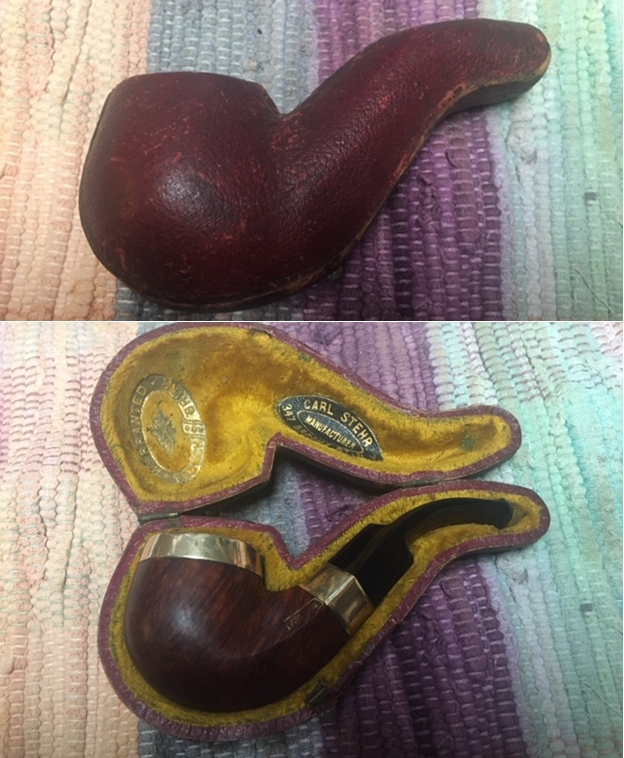
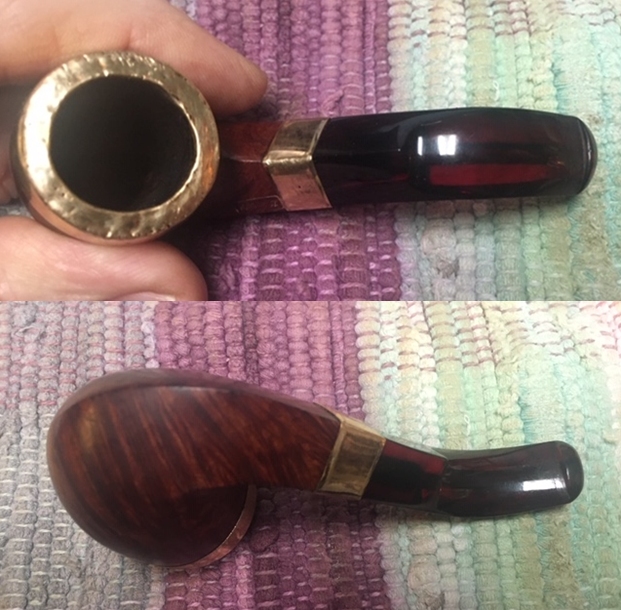
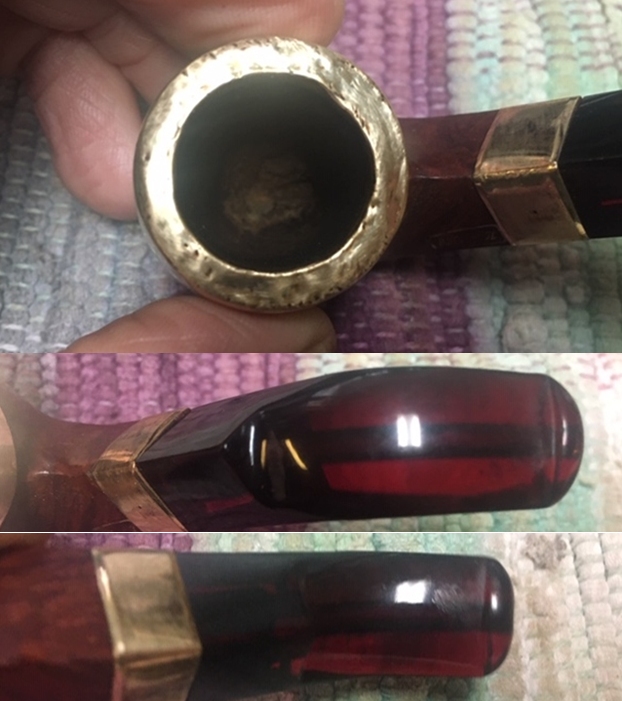
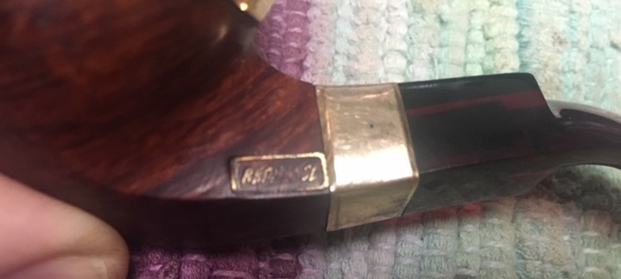
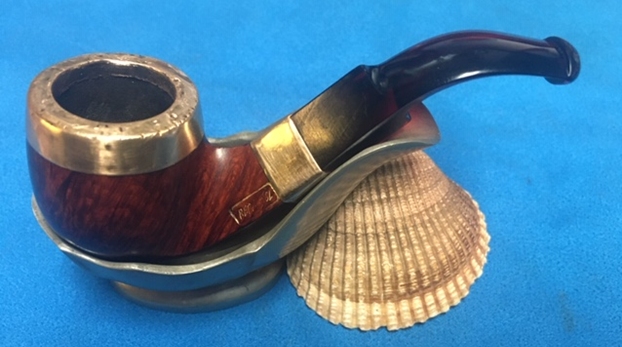
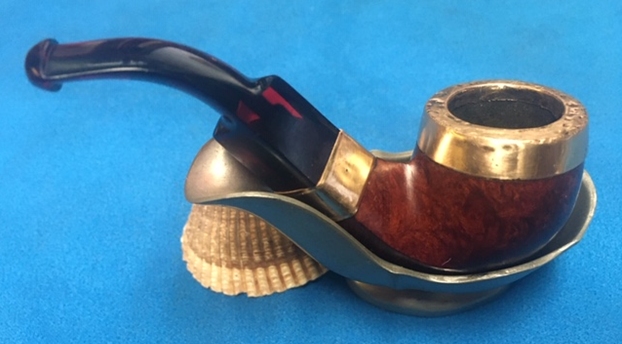
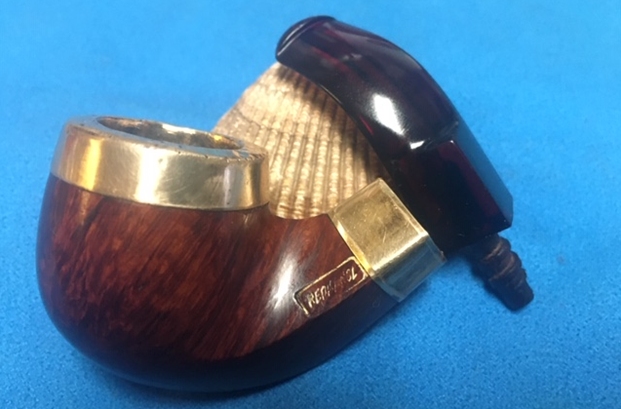
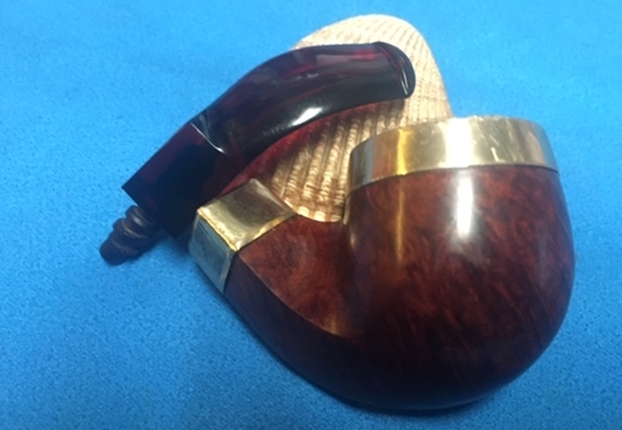
If you have read the blog for long you know that I am a sucker for older C.P.F. pipes whether they are stamped French Briar or Redmanol or other things there is just something about them that grabs my eye. The next pipe on the table is a cased pipe that is a Bent Billiard with a brass band and rim cap and a Redmanol stem. The shank is stamped on the left side Redmanol in a rectangle. It is a well-shaped Bent Billiard with a diamond shank that had some nice grain poking through the grime. The briar that showed has a combination of brown stains that highlights the grain. The finish was very dirty with a heavy coat of grime ground into the bowl and rim cap as can be seen in the photos. The bowl had a thick cake with a heavy lava overflow on the inner edge of the top around the bowl. The Redmanol stem was dull and oxidized and there were light tooth marks and chatter on both sides and on the top and bottom edges of the button. Jeff took photos of the pipe before he cleaned it up so you could see what we saw. The first photos show the condition of the red leather covered case and the opened case with a bright golden velvet lining. The top of the case had two embossed logos. The first was gold stamping on the velvet and read Warranted French Briar – a typical C.P.F. brand stamp. The second was a black label on the lining. It read Carl Stehr Manufacturer 347 Broome St. N.Y. Jeff took the pipe out of the case and took photos. You can see the grime and buildupon the sides of the bowl and rim cap. Both the band and the cap were tarnished. The stamp on the left side of the shank was stamped Redmanol and was readable though worn in the middle of the stamping. The Redmanol stem is nicely done – it is a saddle stem, well shaped and in great condition.  Jeff took photos of the rim cap to show lava build up around the rim and cake in the bowl. The brass cap was dented and damaged with wear to the inner edge of the cap.   Jeff took some photos of the bowl sides and heel to show the grain that showed beneath the grime. I think that this will be a beautiful pipe once we are finished.      The stamping on the left side of the shank is shown in the photos below. They are clear and read as noted above.  The junction of the stem and band was clean.   The stem was a good fit to the shank. It was oxidized, calcified and had debris stuck to the surface of the Redmanol. It also shows the light tooth marks on the stem and on the button surface.I decided to google the Carl Stehr Manufacturer and was taken to an article on the New Yorker Magazine site (https://www.newyorker.com/magazine/1930/02/15/pipemaker).

The New Yorker, February 15, 1930 P. 11

Talk story about pipes. Carl Stehr, maker of hand-carved pipes whose shop is in Broome Street just off the Bowery. His father opened the business in 1867. All types of large pipes were popular in those days. Pipe that lies in the window is almost two feet long. His father made it for the Philadelphia Expostion in 1876, where it won a prize. Tells about the various pipes that were carved. The meerschaum pipe of which the original clay only found in Turkey. There has been decline in pipe-making since cigarettes came in.

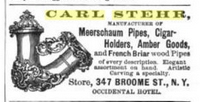
I continued to look through the listings on google and came across this advertisement on Google books Puck’s Library, Issue 42. Here is the link: (https://books.google.ca/books?id=TVznAAAAMAAJ&pg=PT2&lpg=PT2&dq=Carl+Stehr+Manufacturers+New+York&source=bl&ots=nBfkzkDrra&sig=ACfU3U2_SHFWnz8l917H-MpxD2U9fVV0Sg&hl=en&sa=X&ved=2ahUKEwjgyPbO-bbpAhWHqp4KHZ4CC-4Q6AEwAnoECAcQAQ#v=onepage&q=Carl%20Stehr%20Manufacturers%20New%20York&f=false)

The advertisement read Carl Stehr, Manufacturer of Meerschaum Pipes, Cigar Holders, Amber Goods, and French Briar wood Pipes of every description… It had the same store address as that on the inside of the case – Store, 347 Broome St., N.Y. and pinned it down to the Occidental Hotel.

I already knew that the pipe was connected to C.P.F. pipes – Consolidated Pipe Factory. I have worked on a lot of them over the years. I written blog on the historical background of the brand (https://rebornpipes.com/2013/04/14/some-reflection-on-the-historical-background-on-cpf-pipes/). I have also worked on several that were stamped with both the French Briar stamp and the C.P.F. stamp. I had also found a link between the Redmanol stamp and C.P.F. as well.

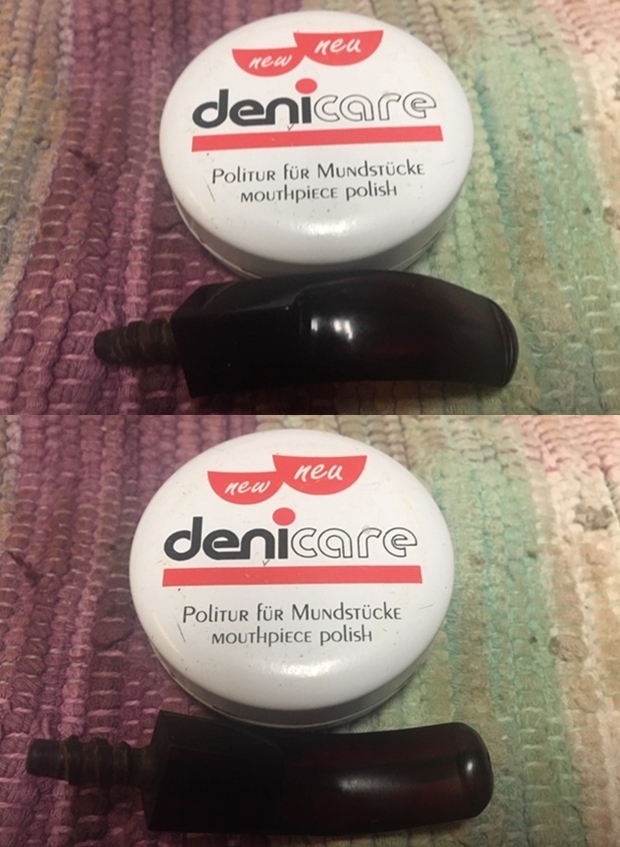
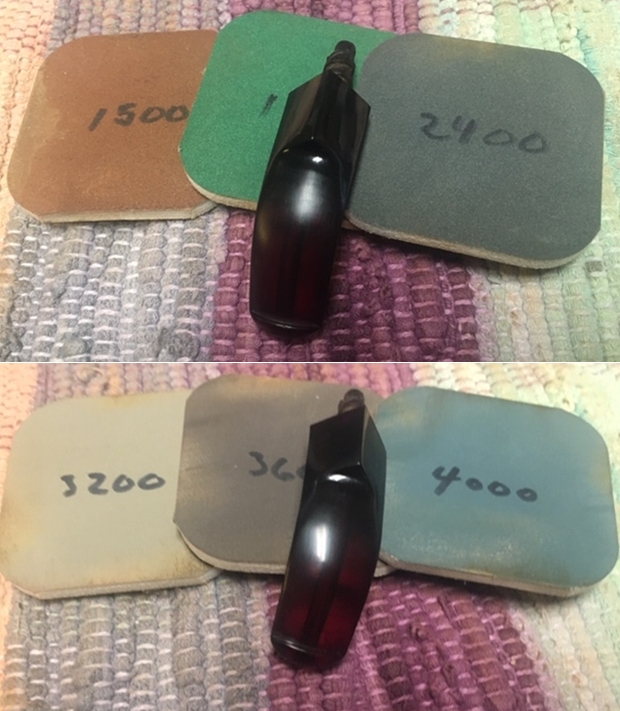
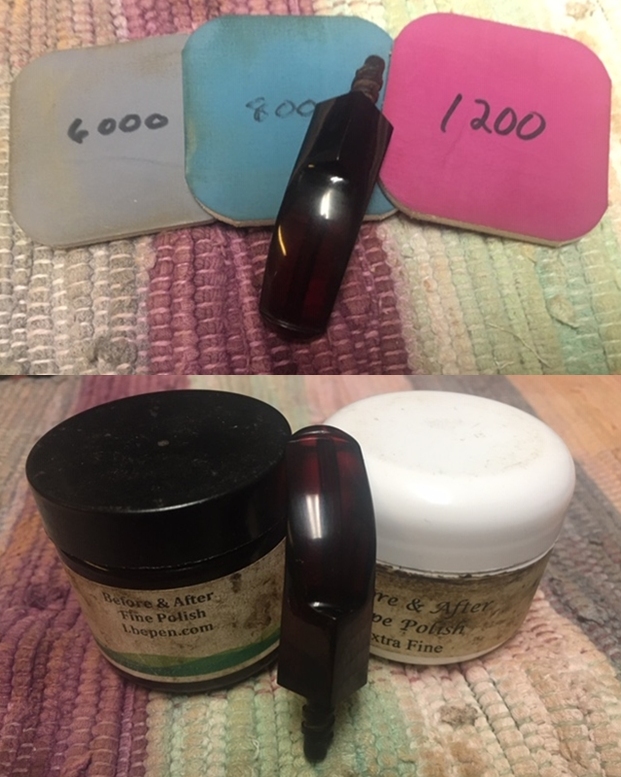
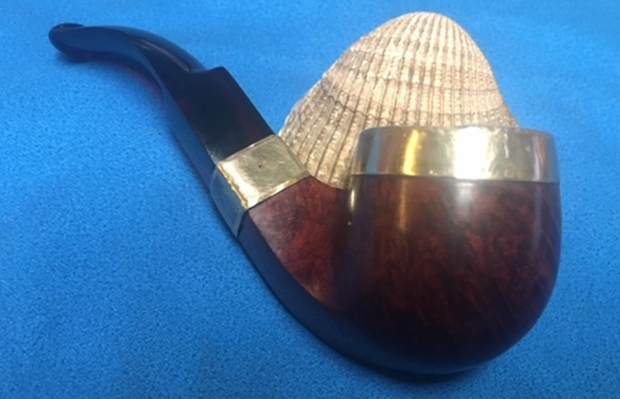
Armed with that information and a clearer picture of the original pipe I turned to work on the pipe on my work table. When I took the case out of the box it was in great condition. I opened the case and was struck great job cleaning up the pipe Jeff had done. It was impressive! He carefully reamed the pipe with a PipNet pipe reamer set and followed that up by removing the remnants of cake with a Savinelli Fitsall Pipe Knife. He scrubbed the interior of the bowl and shank with pipe cleaners, cotton swabs and alcohol to remove the tars and oils. He scrubbed the exterior of the pipe with Murphy’s Oil Soap and a tooth brush to remove the grime from the finish. He worked on the rim top lava and darkening with the soap and tooth brush. He scrubbed the inside of the stem with alcohol and pipe cleaners. He scrubbed the exterior with Soft Scrub. He washed it off with warm water to remove the poliah. The pipe looked far better. I took photos of the pipe when I received it before I started working on it. I took the pipe out of the case and took the following photos.   I took photos of the bowl and rim top as well as the stem to show how clean they were. You can see that there are a lot of dings and dents in the brass rim top. It was in rough condition. The stem is clean and the tooth damage on both sides near the button.    I took a photo of the stamping on the side of the shank. The stamping reads REDMANOL in a rectangle. There is no other stamping on the shank.I took a photo of the pipe with the stem removed to show the overall look of stem, threaded bone tenon and profile of the pipe. It really is a beautifully shaped pipe.I decided to start my work on the pipe by addressing the dents in the top of the rim cap. I loosened the cap from the rim top and used a knife to scrape away the dried glue from the pipe and from the metal cap. I used a flat blade screwdriver to try and flatten out the dents in the cap. Once I had removed as many as possible I used an all-purpose glue to reattach it to the rim top.   I polished the bowl and rim with micromesh sanding pads – wet sanding with 1500-12000 grit pads. I worked over the rim top and edge of the bowl with the pads. I wiped the bowl down with a damp cloth after each pad to remove the sanding debris.   I rubbed the briar down with Before & After Restoration Balm. I worked it into the briar with my fingertips to get it into the crevices. The product works to clean, enliven and preserve the briar. I let it sit for 10 minutes while I worked on the stem. After the time passed I buffed it with a cotton cloth to deepen the shine. The briar really comes alive with the balm.   I set the bowl aside and turned my attention to the stem. I sanded the stem with 220 grit sandpaper to finish the shaping and to remove the remaining oxidation. I started polishing the stem with 400 grit wet dry sandpaper. I wiped the stem down with Obsidian Oil before further polishing it. I rubbed the stem down with Denicare Mouthpiece Polish – a red, gritty Tripoli like substance that is a paste. I rubbed it into the surface of the stem and polished it off with a cotton pad. I have found that is a great intermediary step before polishing with micromesh pads. I am not sure what I will use once the final tin I have is gone!I polished the vulcanite with micromesh sanding pads – 1500-12000 grit pads. I wiped it down with Obsidian Oil after each sanding pad. I used Before & After Pipe Polish – both Fine and Extra Fine to further polish the stem. This French Briar Redmanol pipe by C.P.F. with a Redmanol saddle stem is really quite nice. Even the dented rim cap and band give the pipe a sense of class. The mix of brown stains highlights the beautiful mixed grain around the bowl sides and heel. The finish on the pipe is in excellent condition and the contrasting stains work well with the polished Redmanol saddle stem. I put the stem back on the bowl and carefully buffed the pipe with Blue Diamond on the buffing wheel. I gave the bowl and stem multiple coats of carnauba wax on the buffing wheel and followed that by buffing the entire pipe with a clean buffing pad. I hand buffed the pipe with a microfiber cloth to deepen the shine. The finished diamond shank bent Billiard is very nice and feels great in the hand. Give the finished pipe a look in the photos below. It is a petite pipe whose dimensions are Length: 4 inches, Height: 1 ½ inches, Outside diameter of the bowl: 1 ¼ inches, Chamber diameter: ¾ of an inch. Thanks for walking through the restoration with me as I worked over another beautiful pipe. This pipe will be going into my personal collection of American made C.P.F. pipes. Thanks for your time.
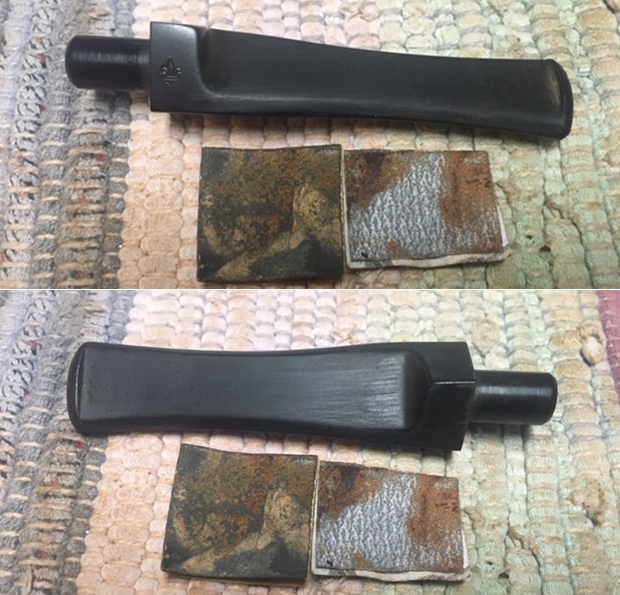
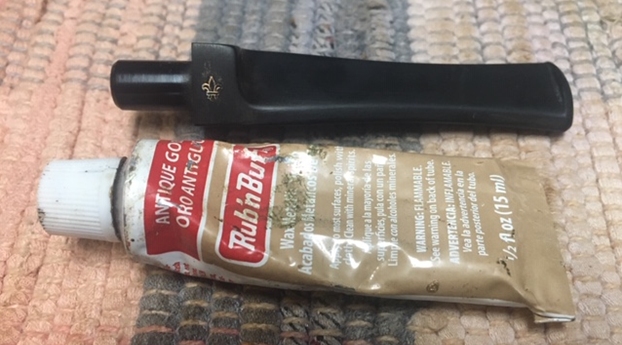
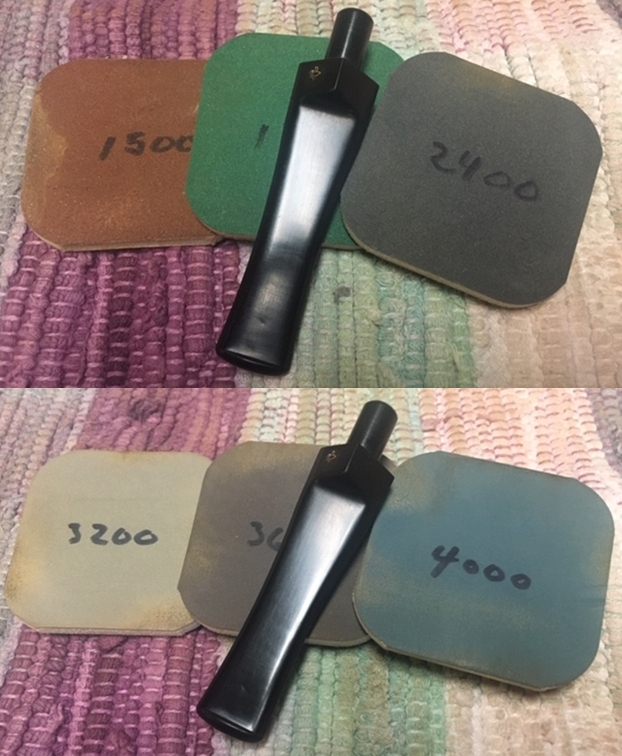
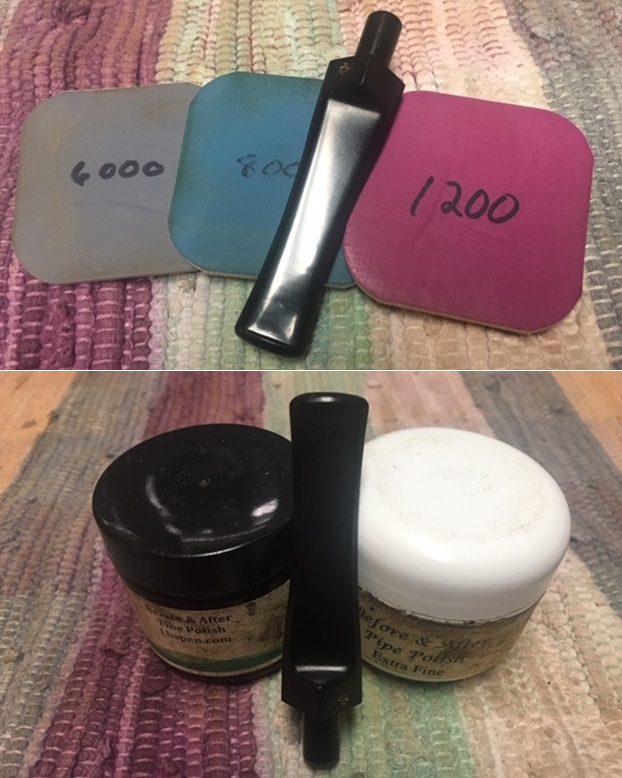
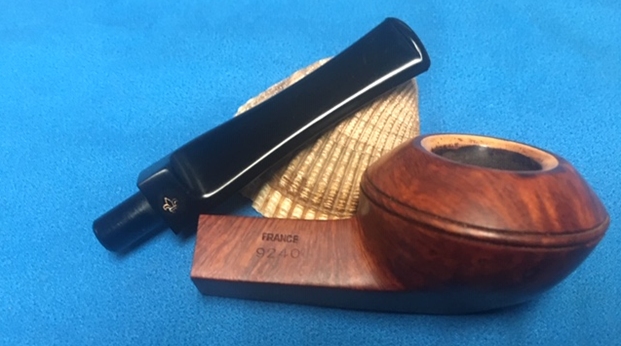
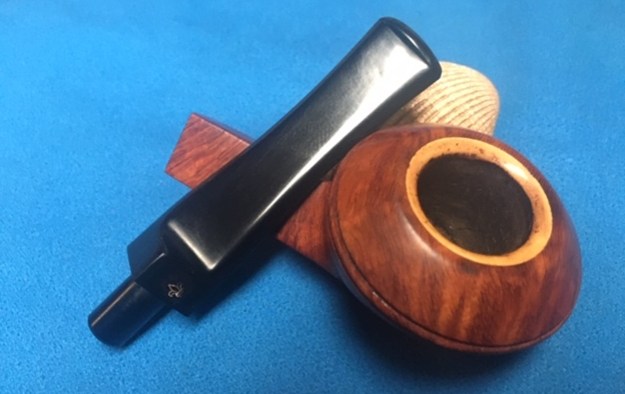
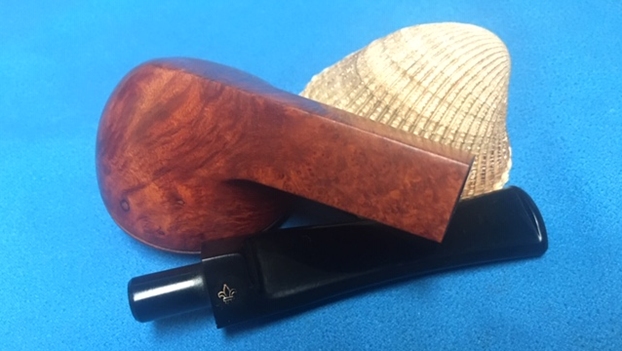
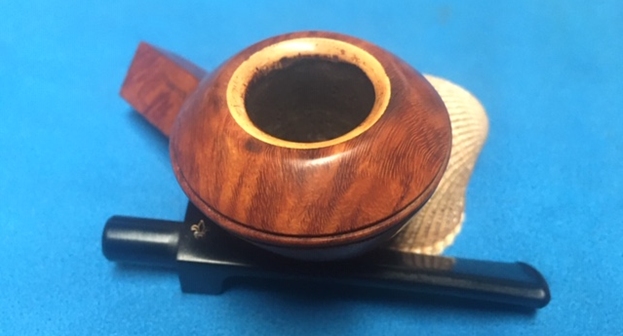
Restoring a Fleur de Lis Squat Meerschaum Lined Bulldog 9240 made by GBD


Blog by Steve Laug

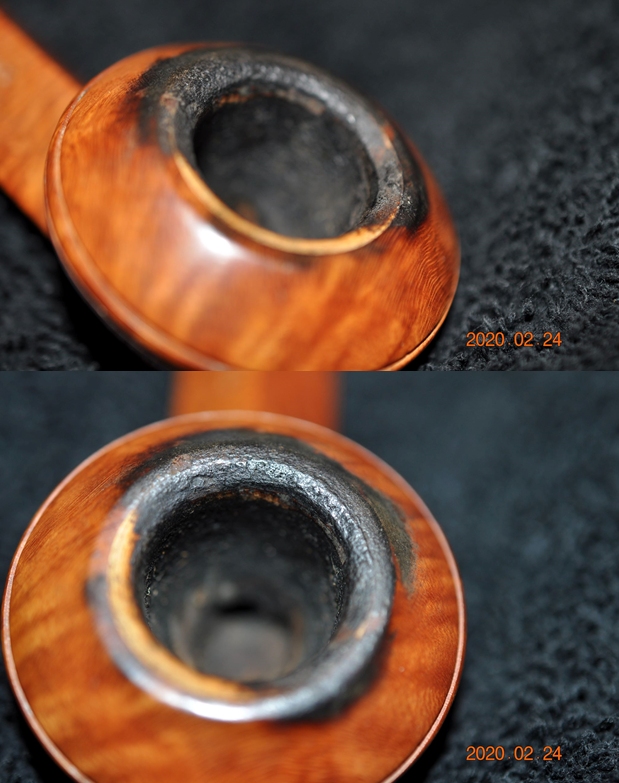
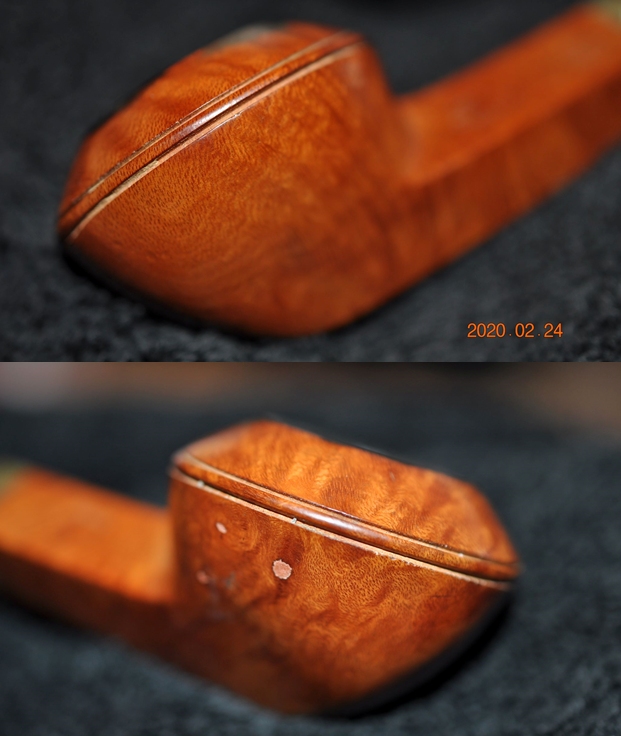
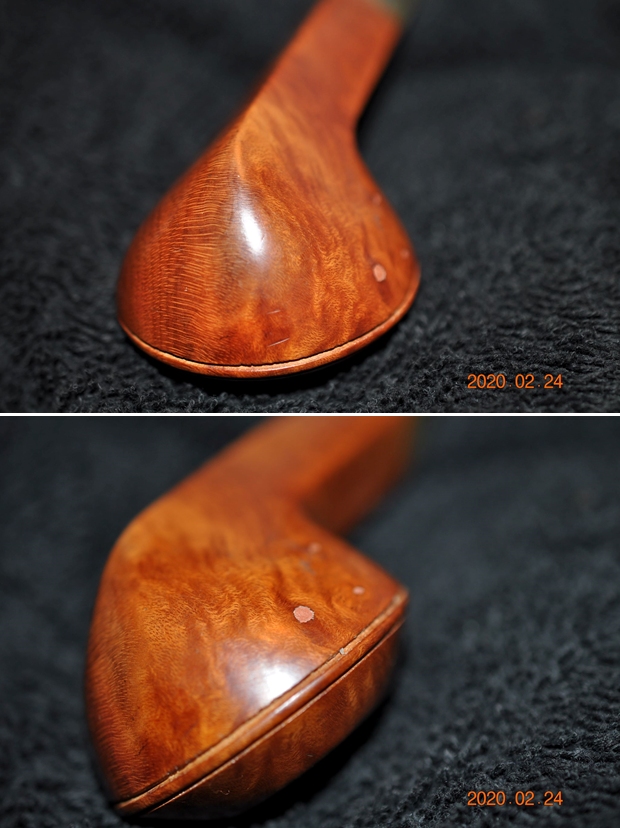
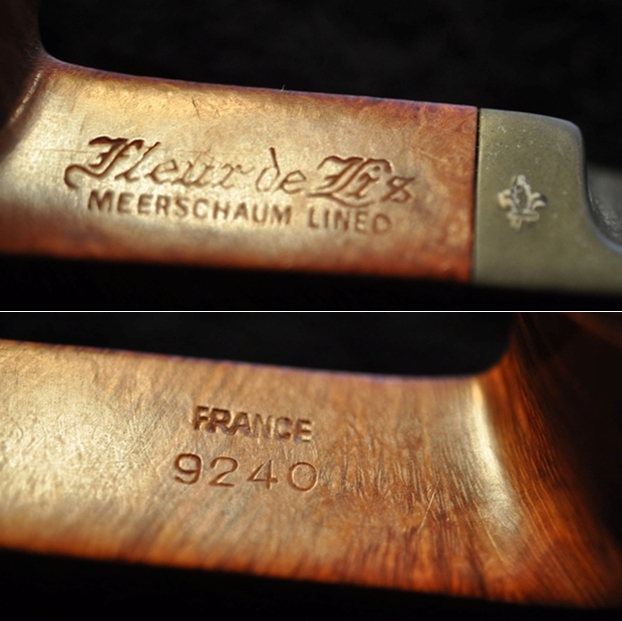
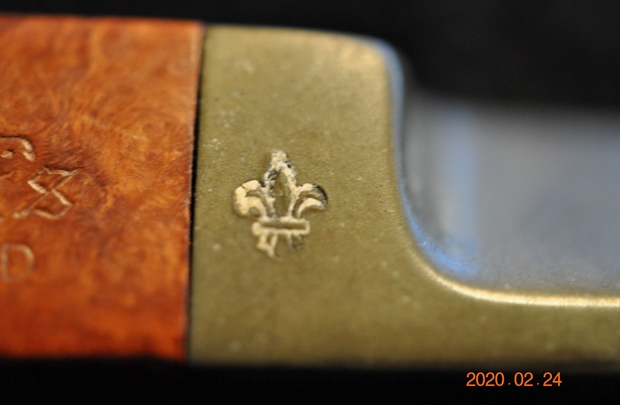
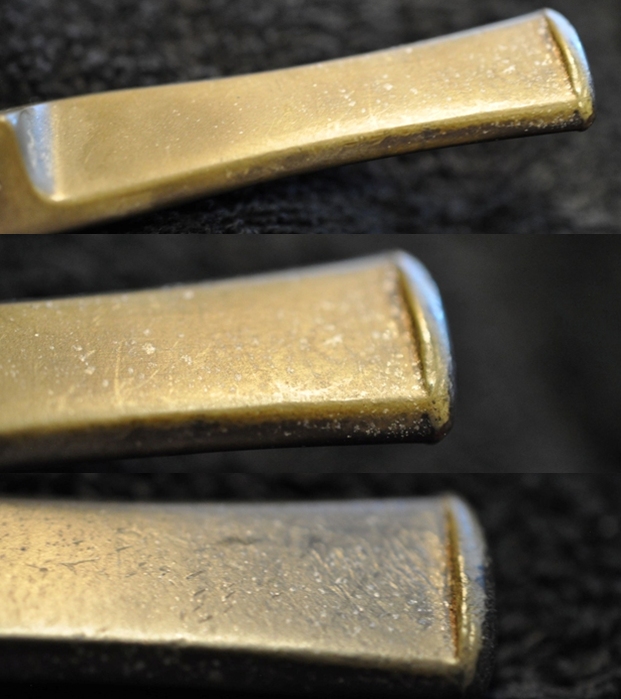
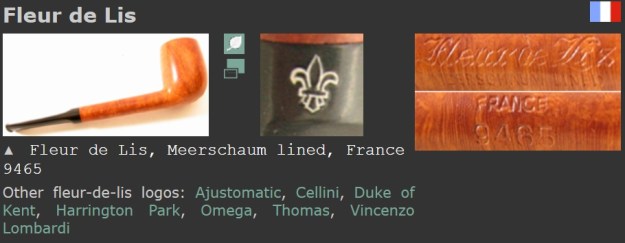
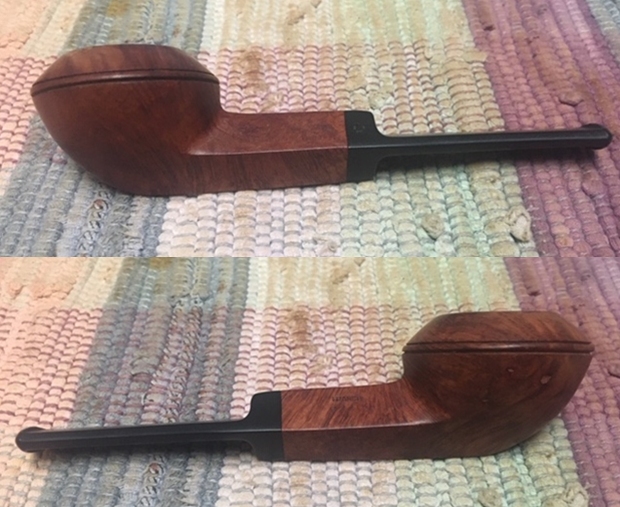
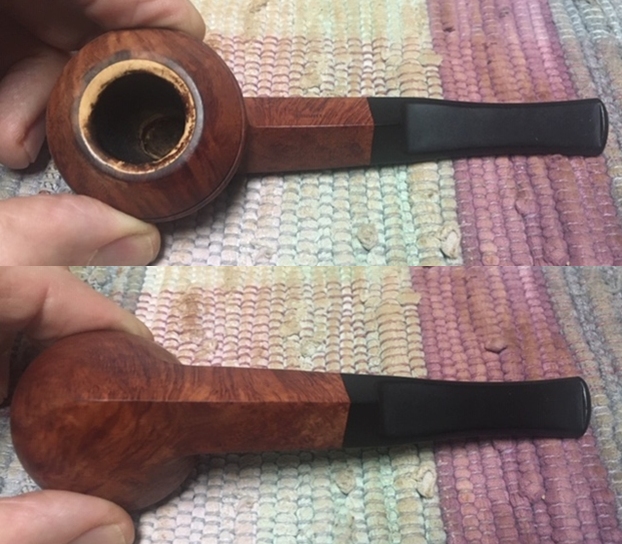
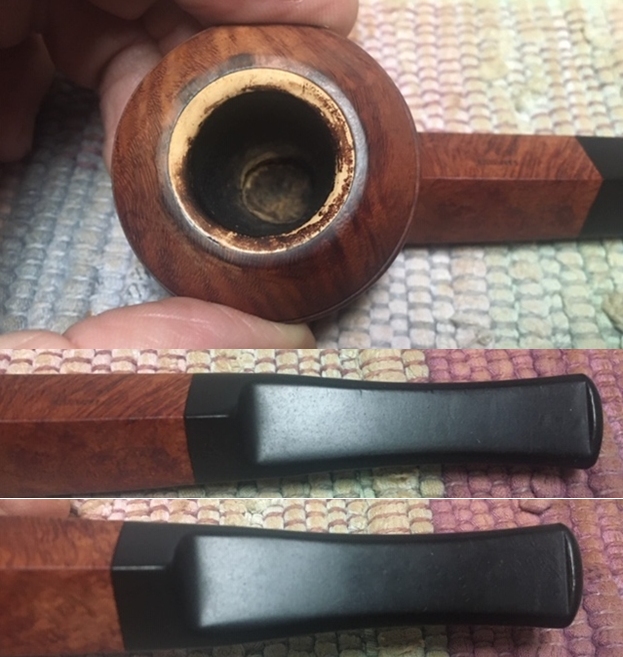
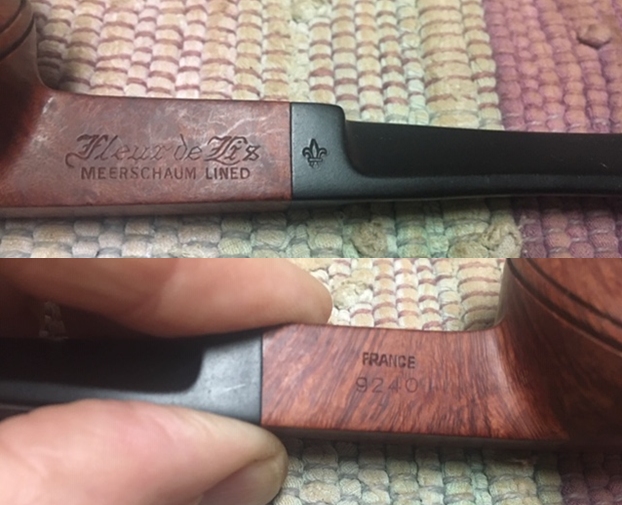
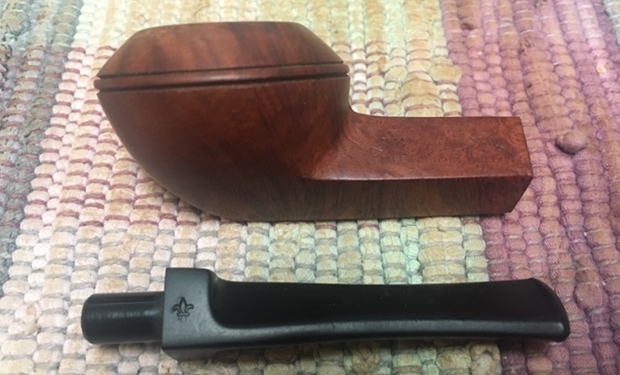
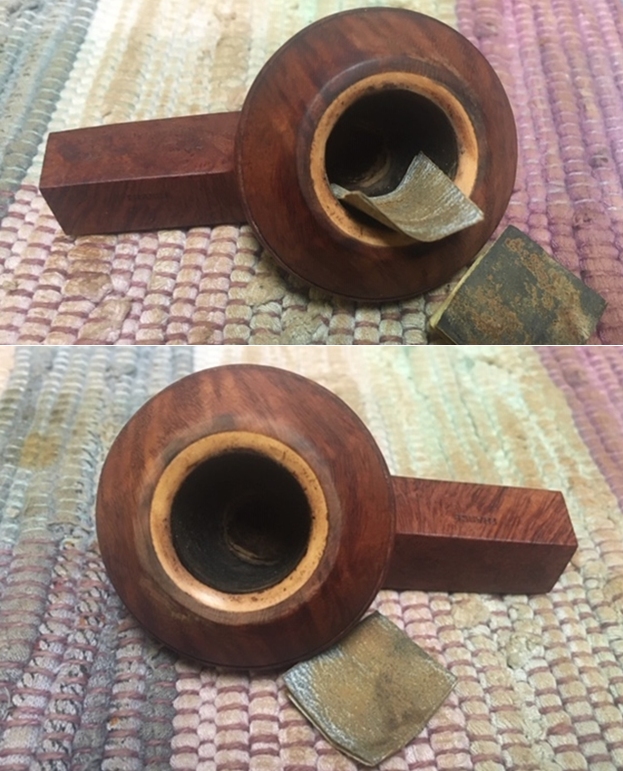
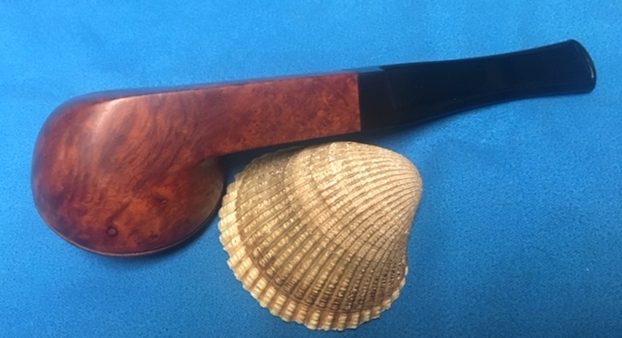
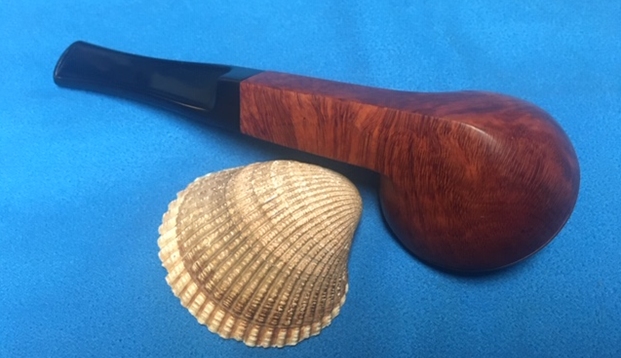
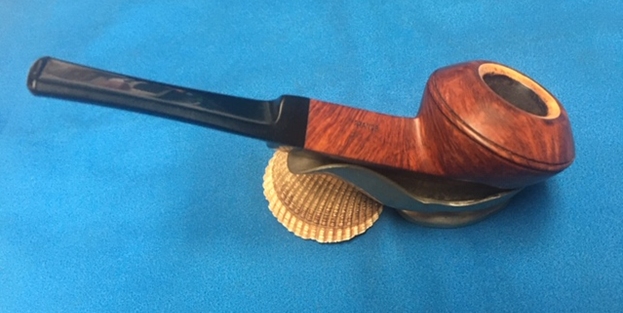
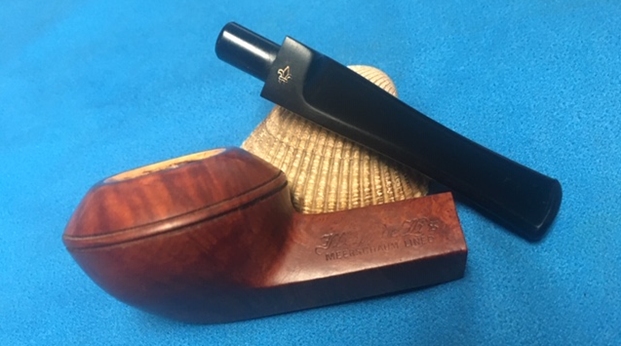
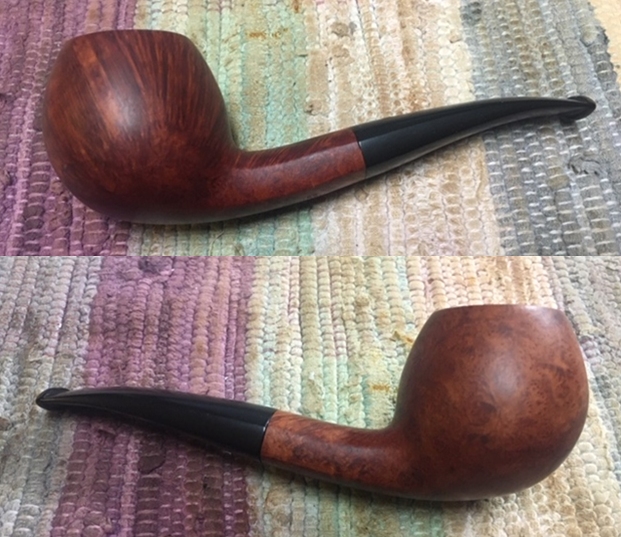
The next pipe on the table is a squat Bulldog with a meerschaum lining. The pipe has a short saddle and long stem that is different. The bowl shape was very similar to GBD pipes that I have worked on. The meerschaum lining was more like a sleeve than a full bowl as it ends above the airway entry into the bottom of the bowl. At first I thought it was missing but the more I studied it the more I realized that it was made this way combining the best of briar and meerschaum in a unique way. It is a well-shaped straight Bulldog that had some nice grain poking through the grime. It was stamped on the top left side of the diamond shank and read Fleur de Lis over Meerschaum-lined. The stamping on the right side of the shank reads France over the shape number is 9240. The briar that showed has a combination of brown stains that highlights the grain. There were a few fills that stood out on the right side of the bowl below the twin rings under the cap. The finish was very dirty with a heavy coat of grime ground into the bowl and rim top as can be seen in the photos. The bowl had a thick cake with a heavy lava overflow on the inner edge of the top around the bowl. There was too much lava on the rim top and edge to know what they looked like but more would be revealed once it was cleaned. The stem was oxidized and there were light tooth marks and chatter on both sides and on the top and bottom edges of the button. Jeff took photos of the pipe before he cleaned it up so you could see what we saw. Jeff took photos of the rim top to show lava build up around the rim and cake in the bowl. The lava actually was running down the edges of the cap of the bowl and had filled in over half of the beveled meerschaum lining. In the third photo you can see where the meerschaum lining ends. Jeff took some photos of the bowl sides and heel to show the grain that showed beneath the grime as well as the fills in the briar. I think that this will be a beautiful pipe once we are finished.    The stamping on each side of the shank is shown in the photos below. They are clear and read as noted above.  There is a Fleur de Lis on the left side of the saddle stem. The stem was a good fit to the shank. It was oxidized, calcified and had debris stuck to the surface of the vulcanite. It also shows the light tooth marks on the stem and on the button surface.    I turned to Pipephil (www.pipephil.eu/logos/en/logo-f3.html) to read about the Fleur de Lis Pipes. The screen capture matches the pipe I am working on. The one in hand is also a meerschaum lined pipe with a four digit shape number that reminded me of GBD pipes and a country of origin in France. There was no further information on the brand to be found there.I turned to Pipedia to check out information on the Fleur de Lis pipe brand and to see if there was a GBD connection (https://pipedia.org/wiki/Fleur_de_Lis). The article was very brief and linked the brand to the French GBD Factory. I quote:

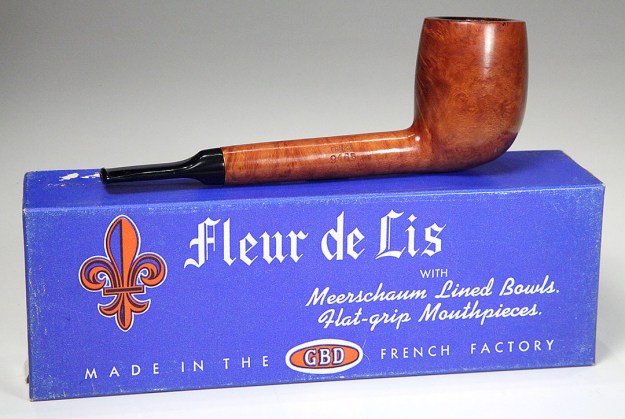
Fleur de Lis pipes were made in the French GBD factory. It appears all the Fleur de Lis pipes had a meerschaum lining.

There was also a series of photos of a Fleur de Lis pipe with the box it came in that definitively linked the brand to GBD. I have included one of those photos below.

Example and details, courtesy Doug Valitchka

Now I knew that there was a connection so I did further checking on the idea that the number stamped on the shank side was a GBD shape number. I checked out the GBD shape numbers on to check my guess about the number 9240 (https://pipedia.org/wiki/GBD_Shapes/Numbers). I have a screen capture below of the shape number and description. It perfectly fit the pipe that I am working on. The 9240 GBD was the number of a squat Bulldog with a straight diamond shank and that is what I had in hand. Armed with that information and a clearer picture of the original pipe I turned to work on the pipe on my work table. I was really looking forward to what the pipe would look like once Jeff had worked his magic. What would the rim top look like? What would the meerschaum insert/sleeve look like? I had no idea. When I took it out of the box I was struck great job cleaning up the pipe Jeff had done. It was impressive! He carefully reamed the pipe with a Savinelli Fitsall Pipe Knife. He scrubbed the interior of the bowl and shank with pipe cleaners, cotton swabs and alcohol to remove the tars and oils. He scrubbed the exterior of the pipe with Murphy’s Oil Soap and a tooth brush to remove the grime from the finish. He worked on the rim top lava and darkening with the soap and tooth brush. He scrubbed the inside of the stem with alcohol and pipe cleaners. He scrubbed the exterior with Soft Scrub and then soaked it in Before & After Deoxidizer. He washed it off with warm water to remove the deoxidizer. The pipe looked far better. I took photos of the pipe when I received it before I started working on it. I took photos of the bowl and rim top as well as the stem to show how clean they were. You can see that there is still some darkening to both the briar rim top and the beveled meerschaum edge. The stem is clean and the tooth damage on both sides is very clear in the photos. Lots more work to do on this pipe.I took a photo of the stamping on the sides of the shank. The stamping is readable as noted above. The Fleur de Lis stamp on the left side of the stem is very clear and deep enough to fill in with some colour.I took a photo of the pipe with the stem removed to show the overall look of stem, tenon and profile of the pipe. It really is a beautifully shaped pipe.I decided to start my work on the pipe by addressing the darkening on the meerschaum and the briar rim top. I sanded it with a folded piece of 220 grit sandpaper on a topping board. I was able to remove the darkening to the top of both materials. I would polish the rim top with micromesh when I polished the bowl.  I repaired the putty fills on the right side of the bowl with clear super glue. Once the repair cured I sanded it smooth with 220 grit sandpaper.  I touched up the stain on the rim top using a Maple stain pen to blend in the briar rim top and repaired areas on the right side of the bowl with the rest of the bowl colour.   I polished the bowl and rim with micromesh sanding pads – wet sanding with 1500-12000 grit pads. I worked over the rim top and edge of the bowl with the pads. I wiped the bowl down with a damp cloth after each pad to remove the sanding debris.   I rubbed the briar down with Before & After Restoration Balm. I worked it into the briar with my fingertips to get it into the crevices. The product works to clean, enliven and preserve the briar. I let it sit for 10 minutes while I worked on the stem. After the time passed I buffed it with a cotton cloth to deepen the shine. The briar really comes alive with the balm. I set the bowl aside and turned my attention to the stem. I sanded the stem with 220 grit sandpaper to finish the shaping and to remove the remaining oxidation. I started polishing the stem with 400 grit wet dry sandpaper. I wiped the stem down with Obsidian Oil before further polishing it.   I used some Antique Gold Rub’n Buff to touch up the stamp on the stem. It looked better.I polished the vulcanite with micromesh sanding pads – 1500-12000 grit pads. I wiped it down with Obsidian Oil after each sanding pad. I used Before & After Pipe Polish – both Fine and Extra Fine to further polish the stem.   This French Made GBD Meerlined Fleur de Lis 9240 Squat Bulldog with a saddle stem is really quite nice. The meerlining is a sleeve that ends just above the entrance of the airway into the bowl. The mix of brown stains highlights the beautiful mixed grain around the bowl sides, top and bottom. The finish on the pipe is in excellent condition and the contrasting stains work well with the polished black vulcanite saddle stem. I put the stem back on the bowl and carefully buffed the pipe with Blue Diamond on the buffing wheel. I gave the bowl and stem multiple coats of carnauba wax on the buffing wheel and followed that by buffing the entire pipe with a clean buffing pad. I hand buffed the pipe with a microfiber cloth to deepen the shine. The finished straight squat Bulldog is very nice and feels great in the hand. Give the finished pipe a look in the photos below. It is a petite pipe whose dimensions are Length: 5 ½ inches, Height: 1 ½ inches, Outside diameter of the bowl: 2 inches, Chamber diameter: ¾ of an inch. Thanks for walking through the restoration with me as I worked over another beautiful pipe. This pipe will be going on the rebornpipes store shortly. If you are interesting in adding it to your collection let me know! Thanks for your time.