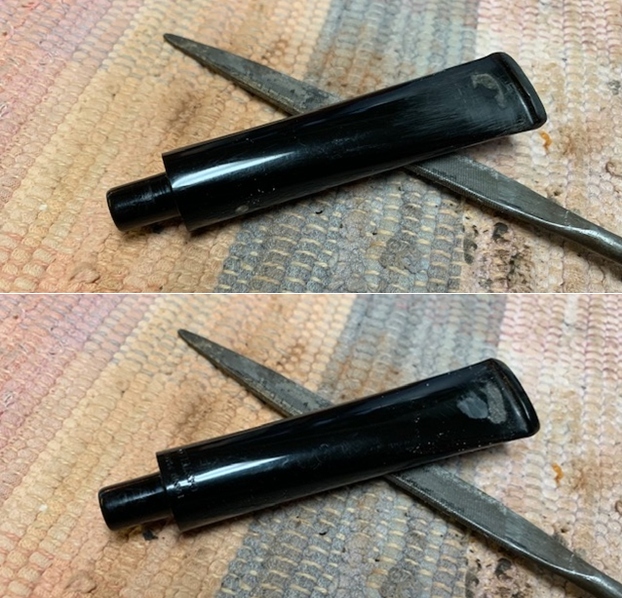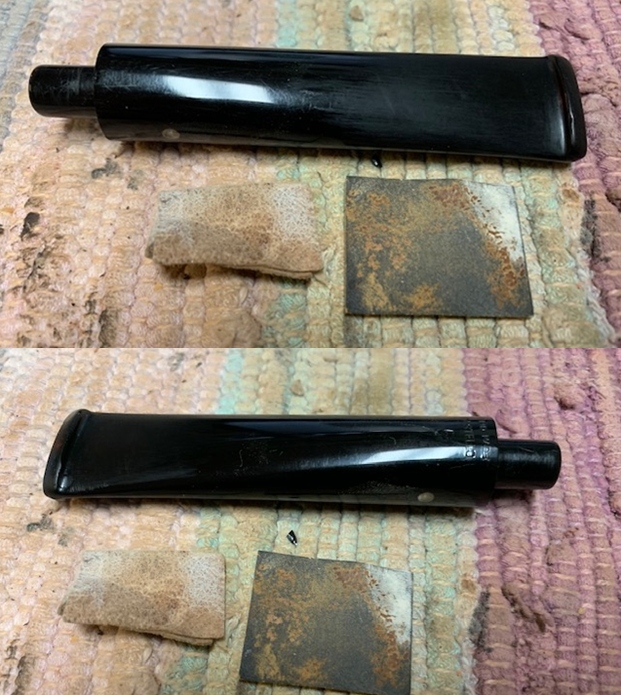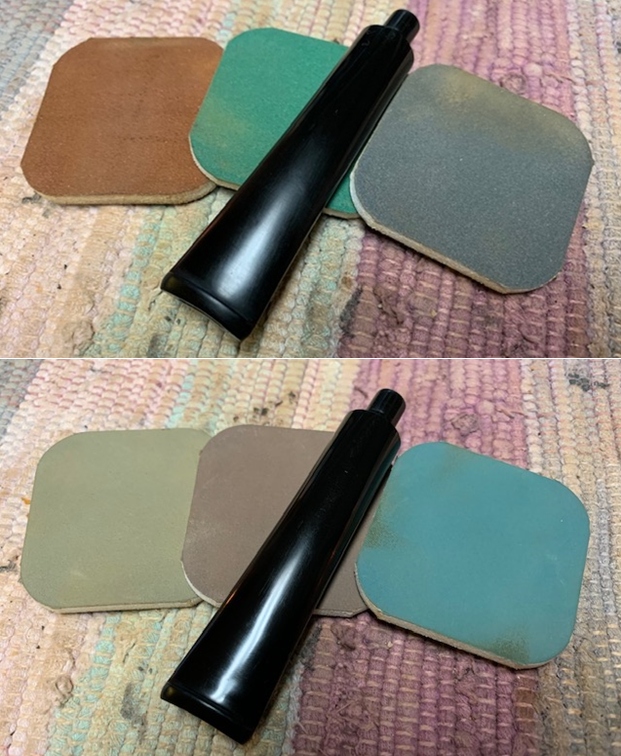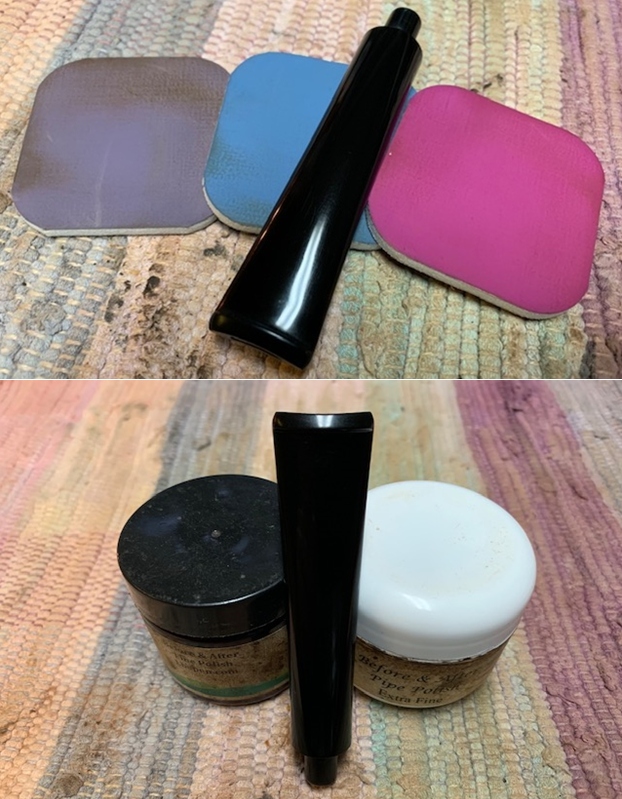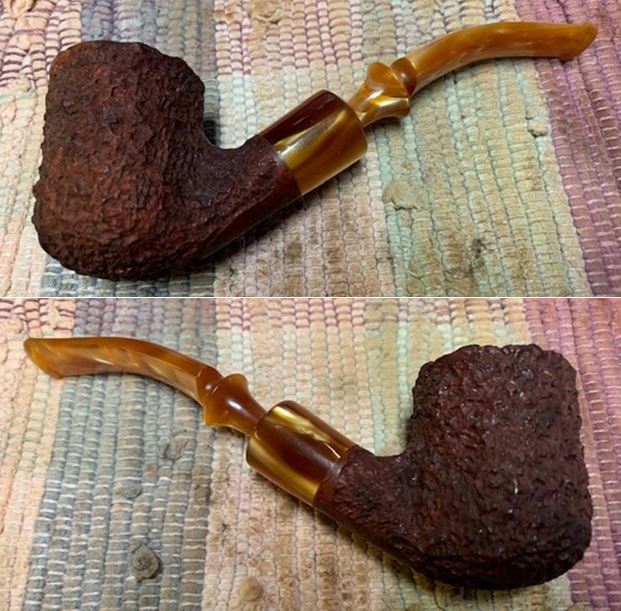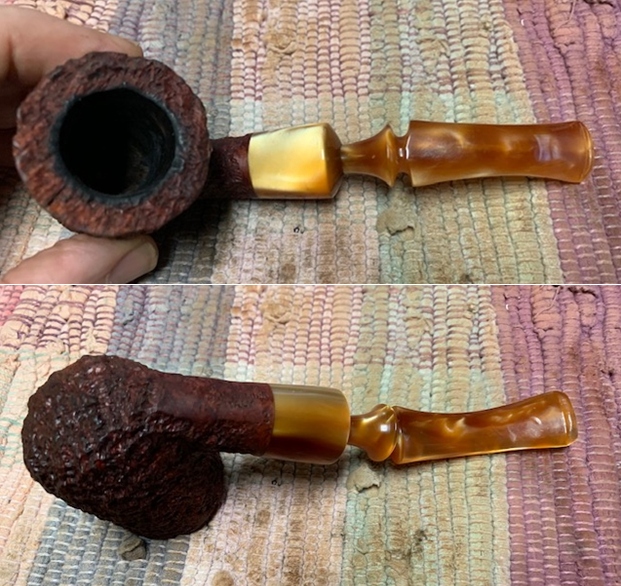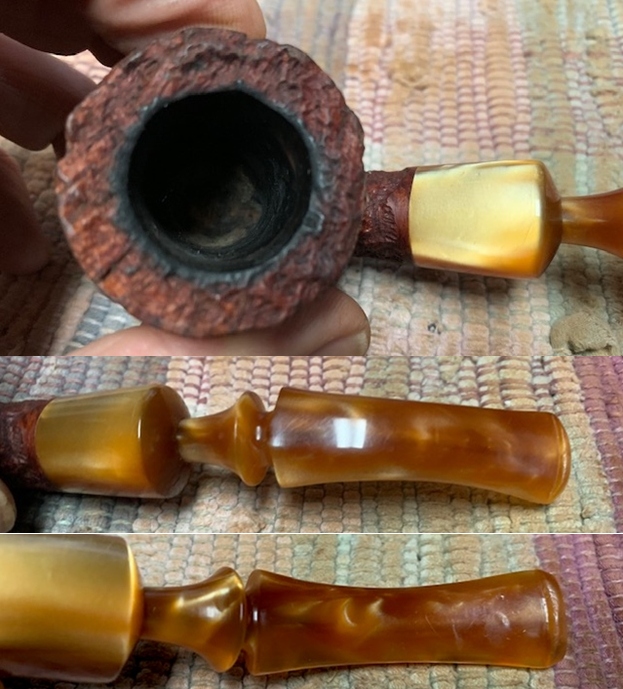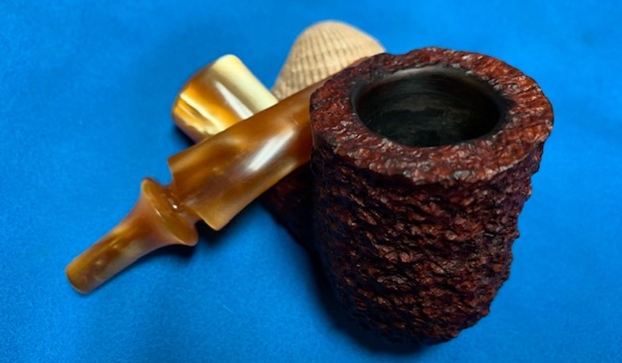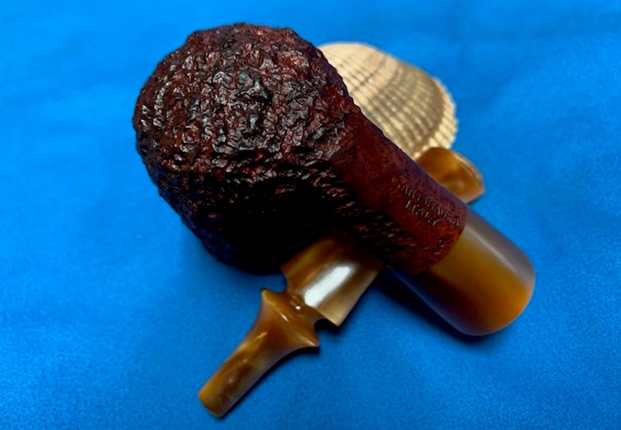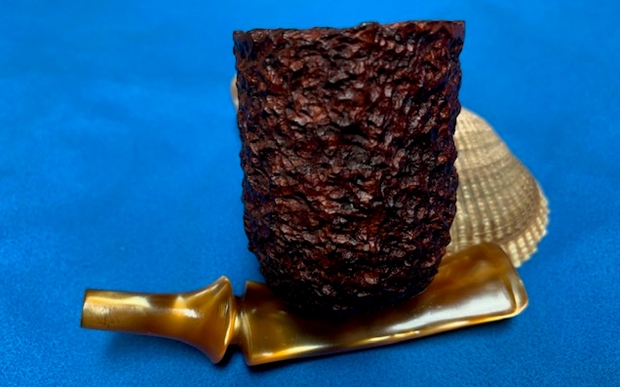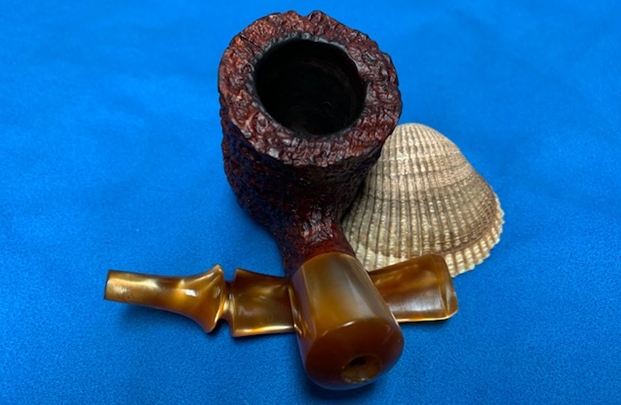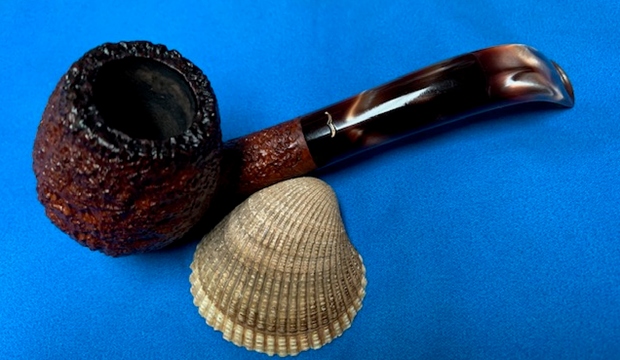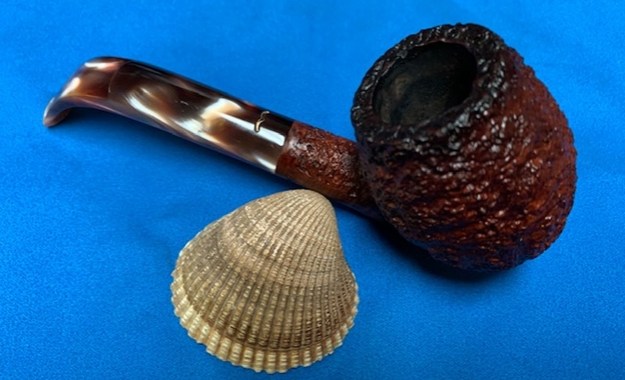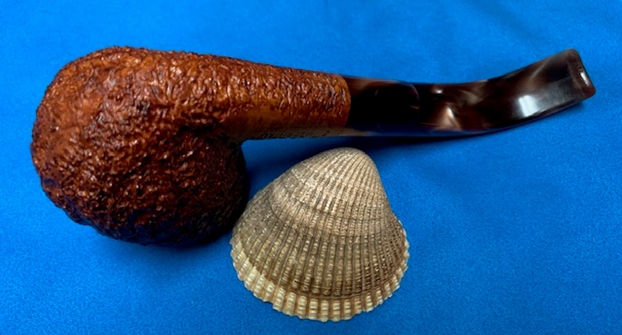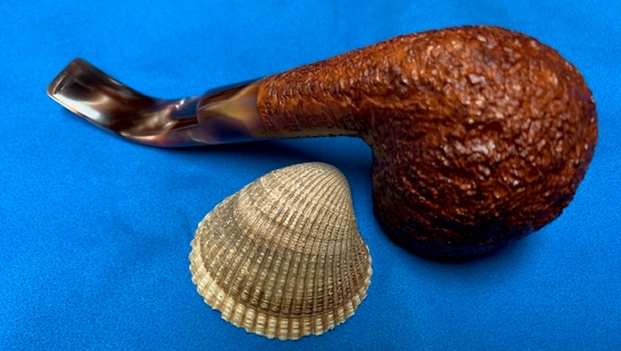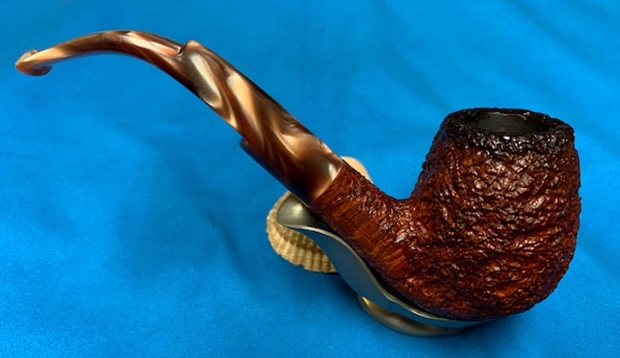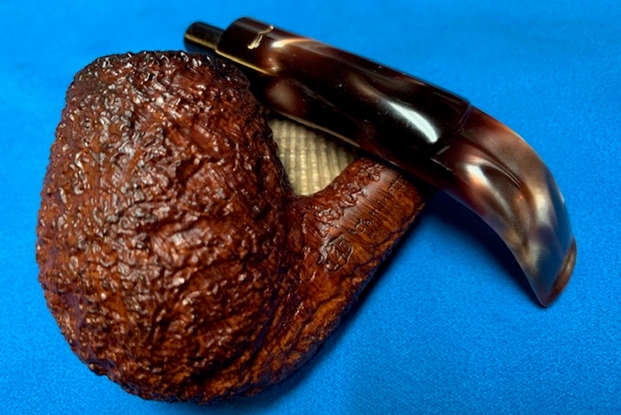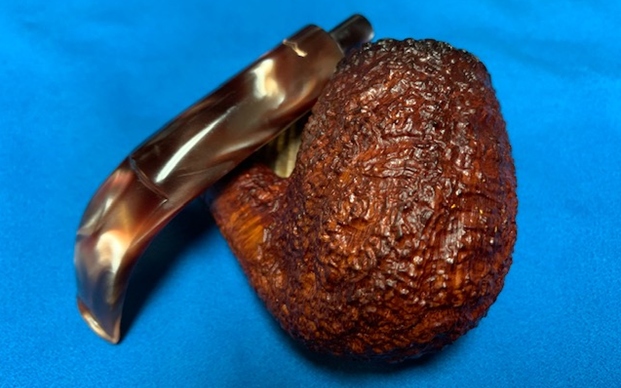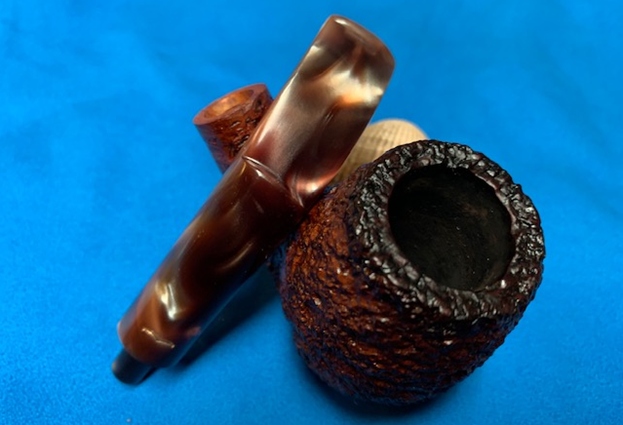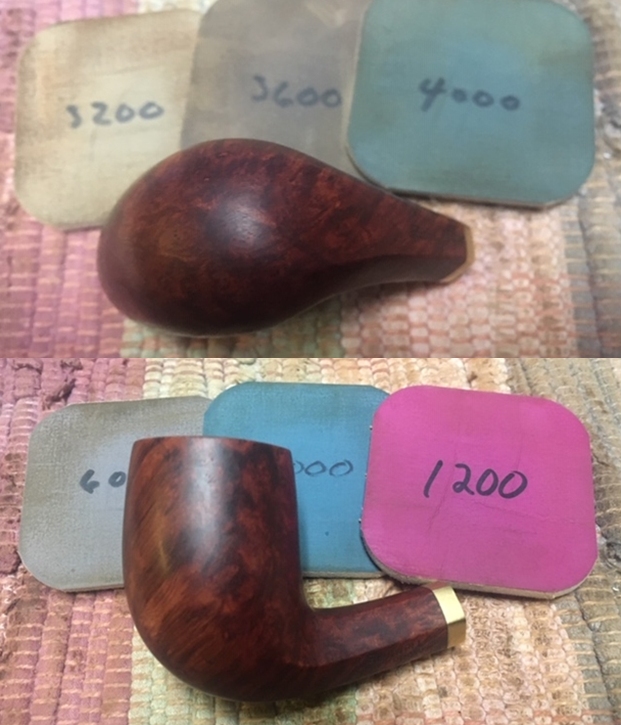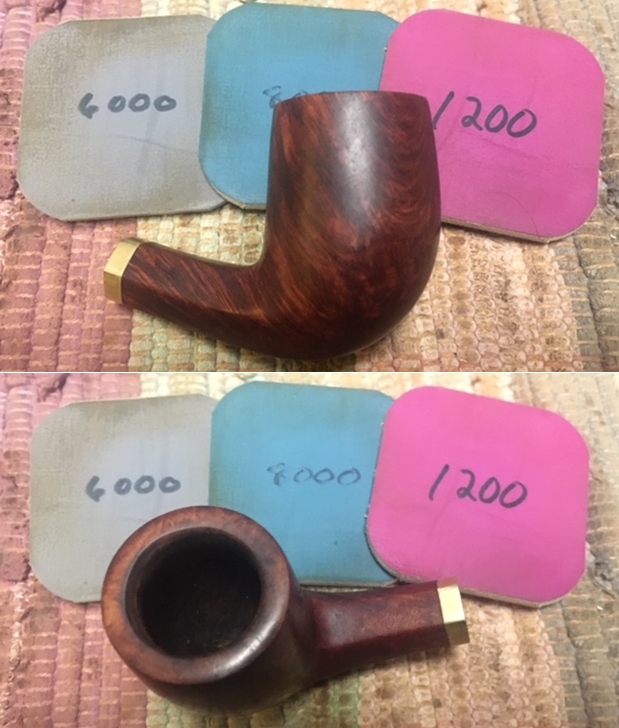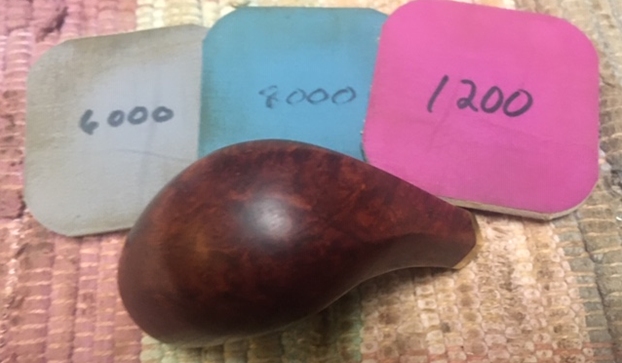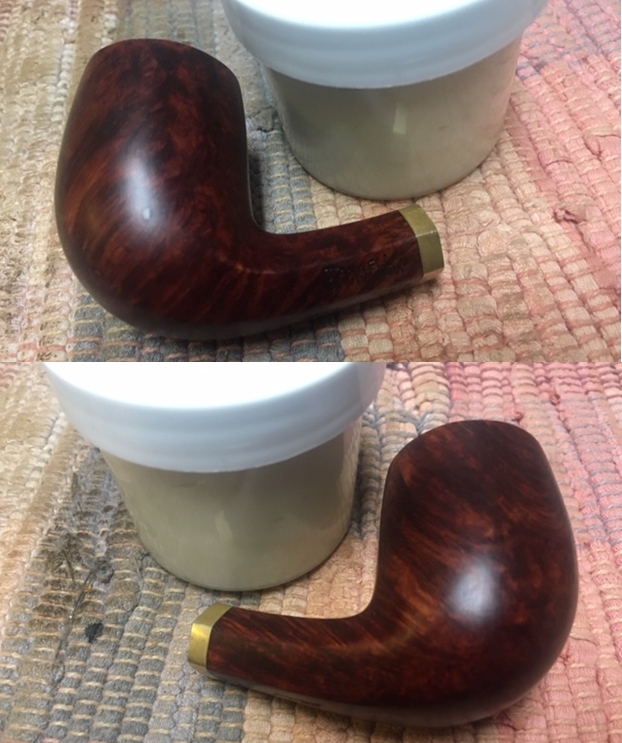
Tag Archives: polishing an acrylic stem

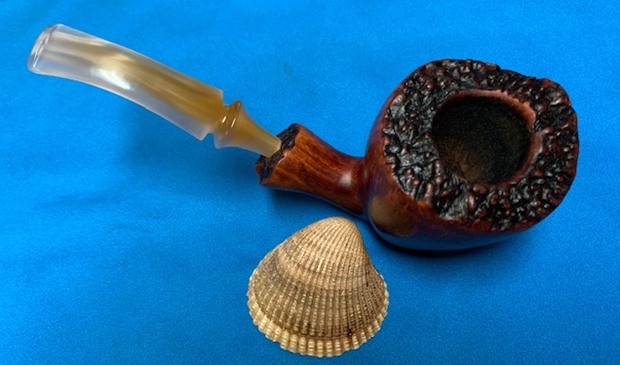
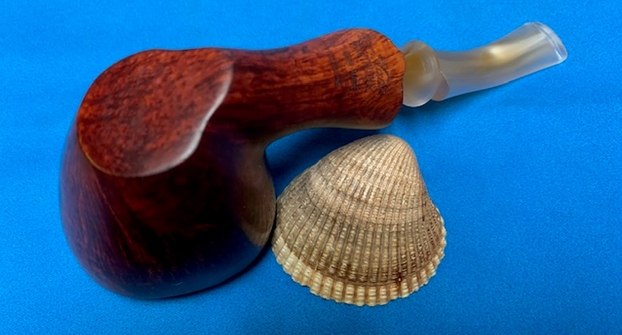
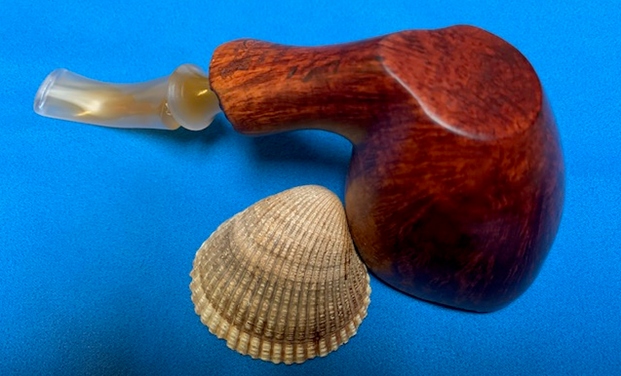
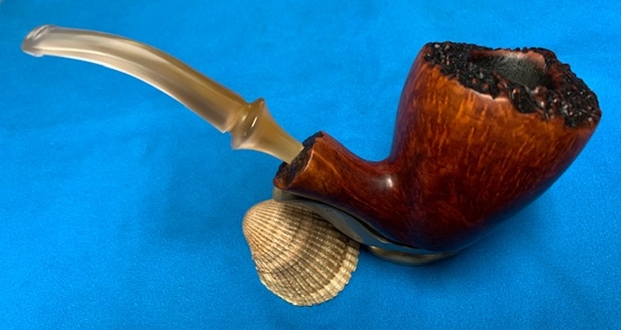
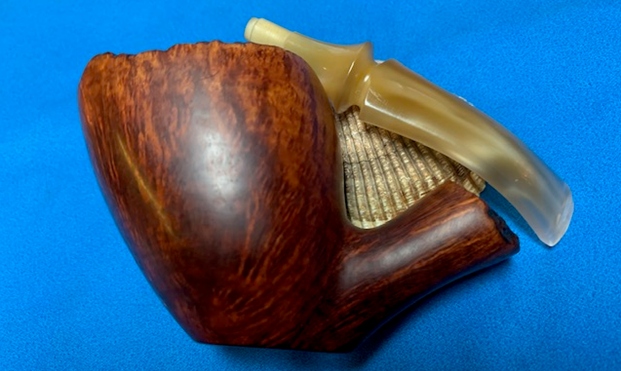
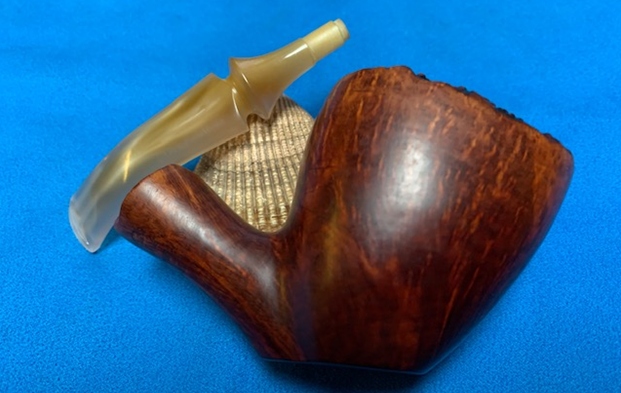
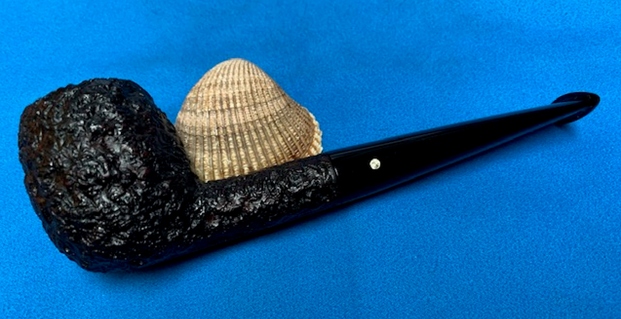
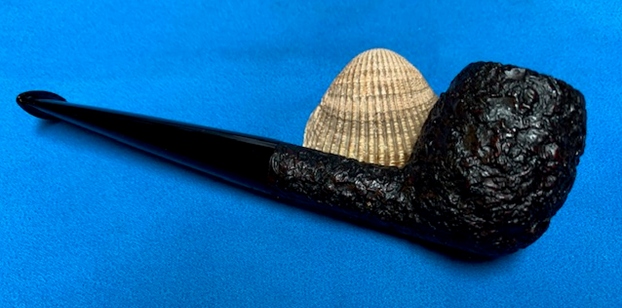
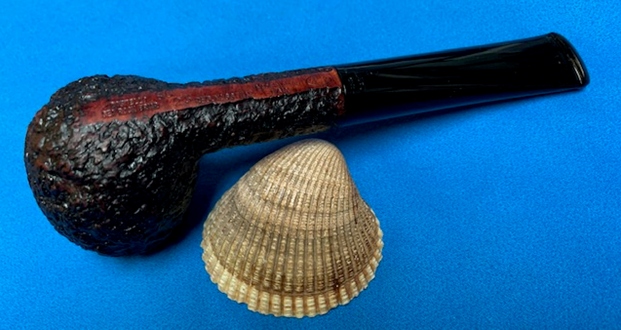
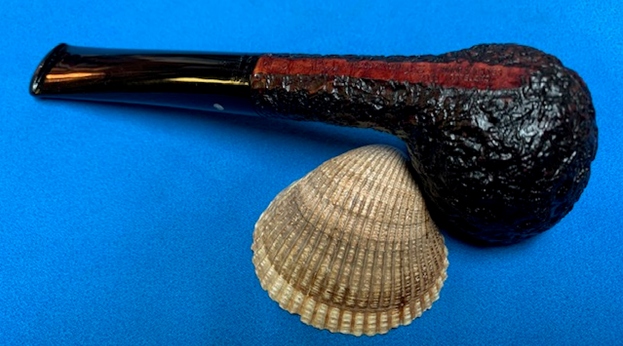
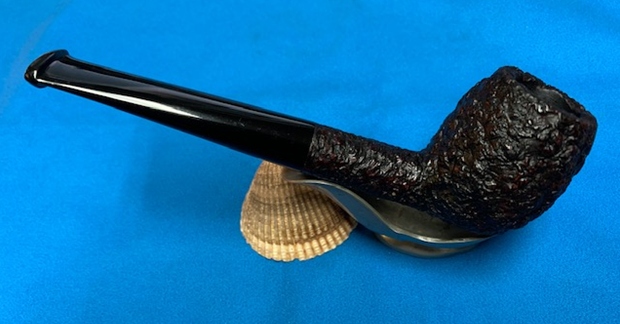
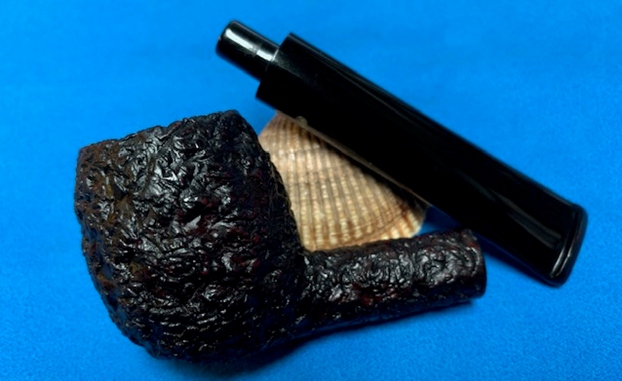
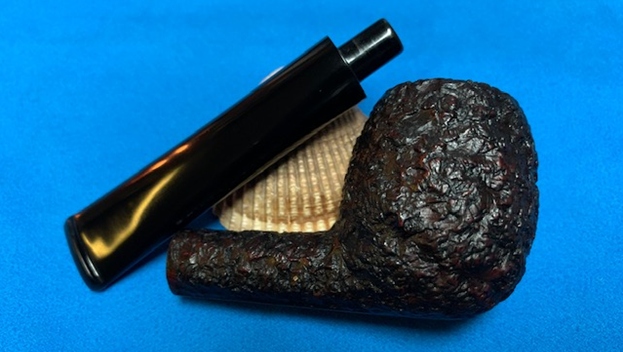
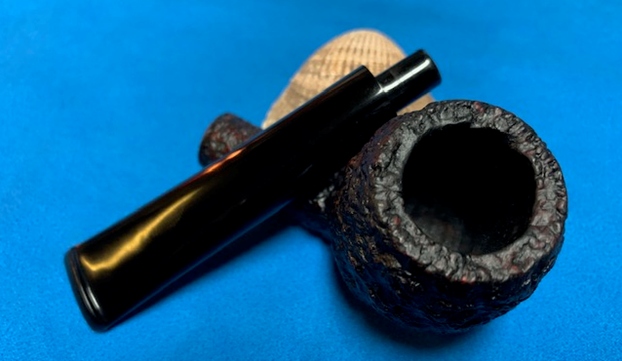
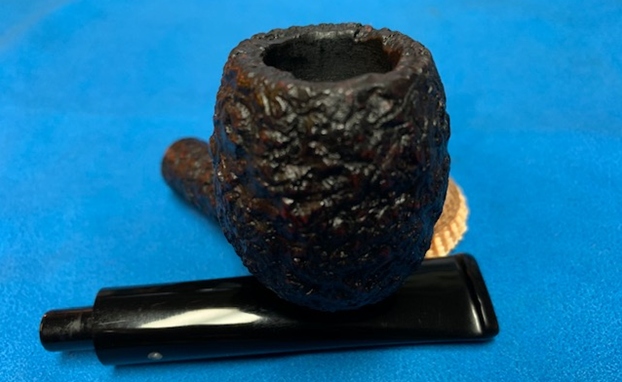
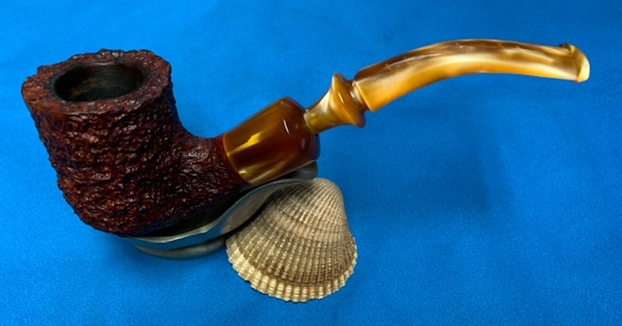
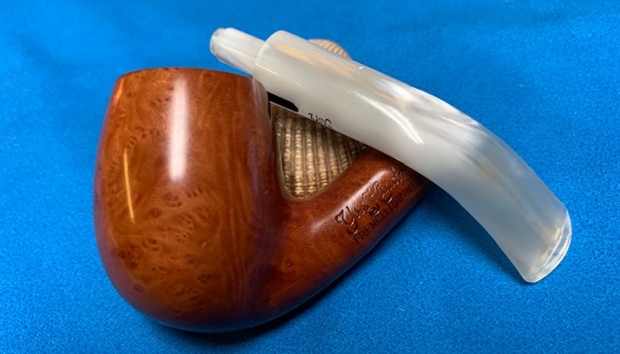
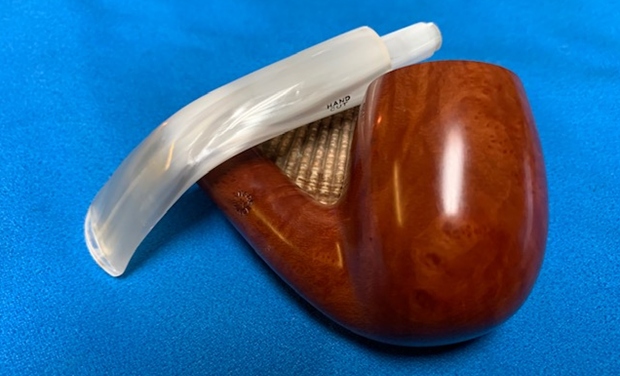
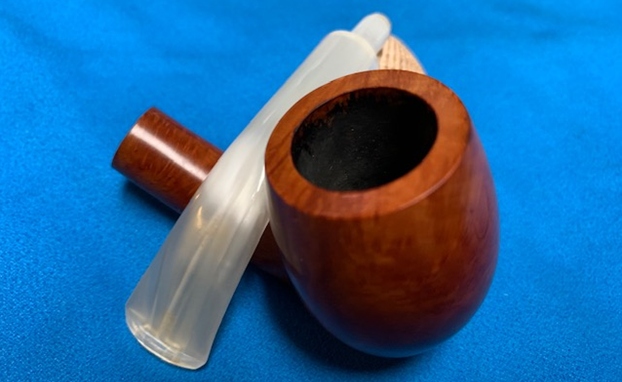
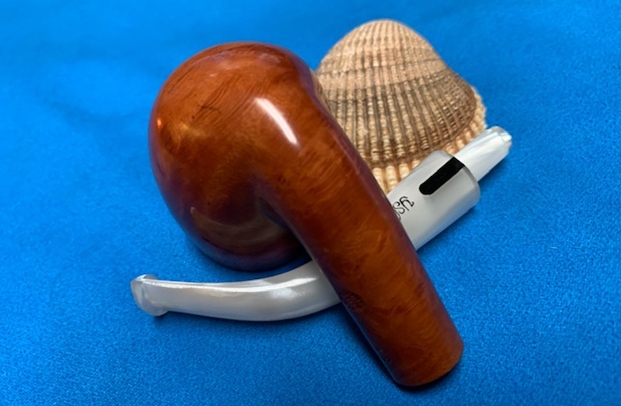
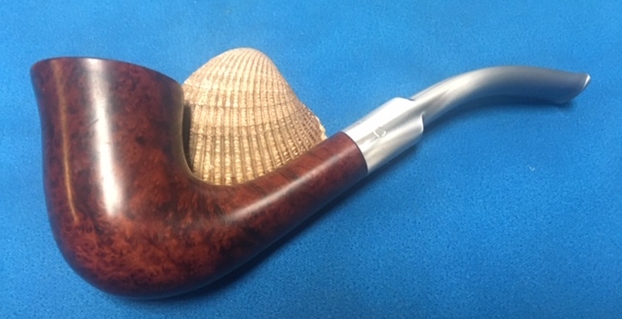
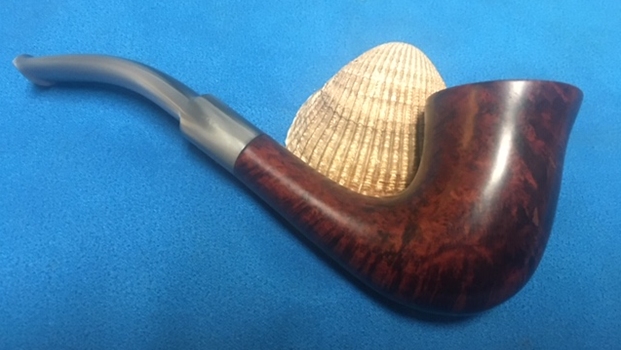
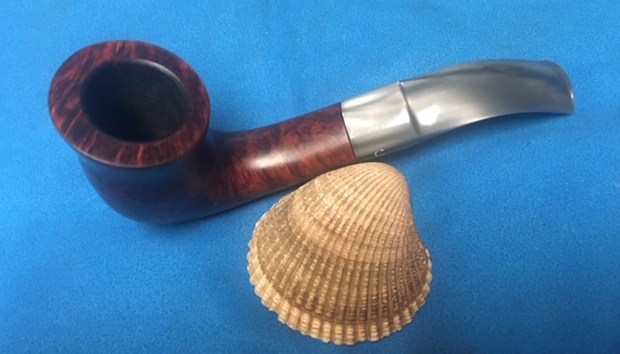
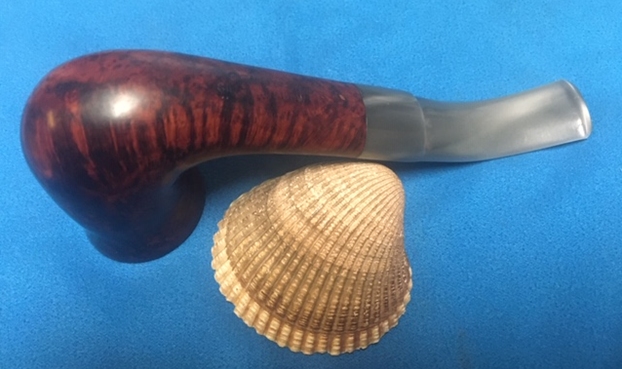
Restoring a Large Ben Wade Martinique Freehand Sitter


Blog by Steve Laug

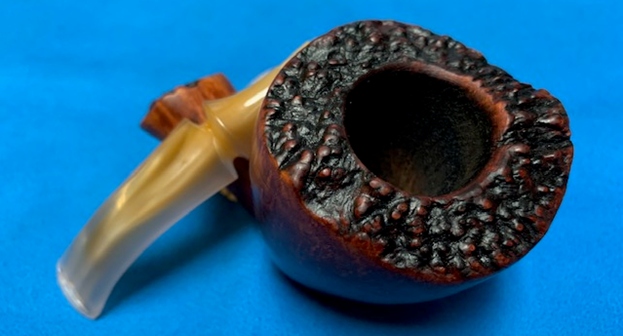
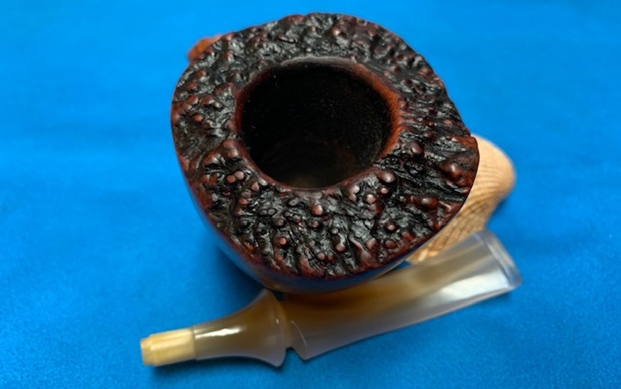
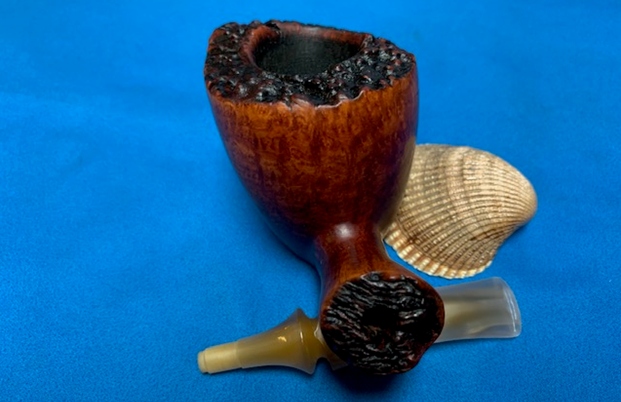
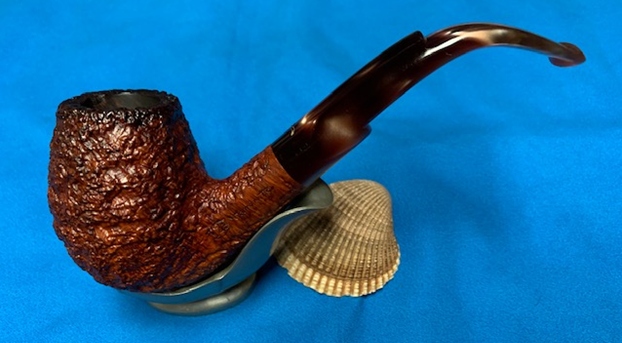
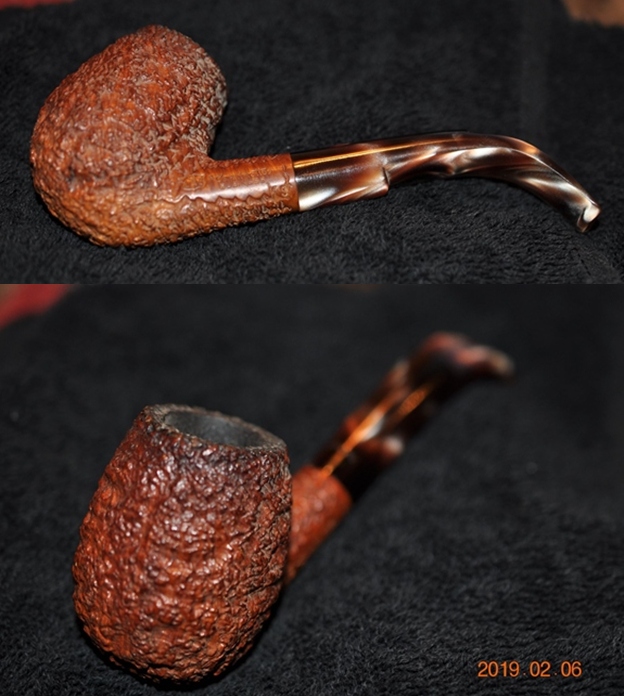
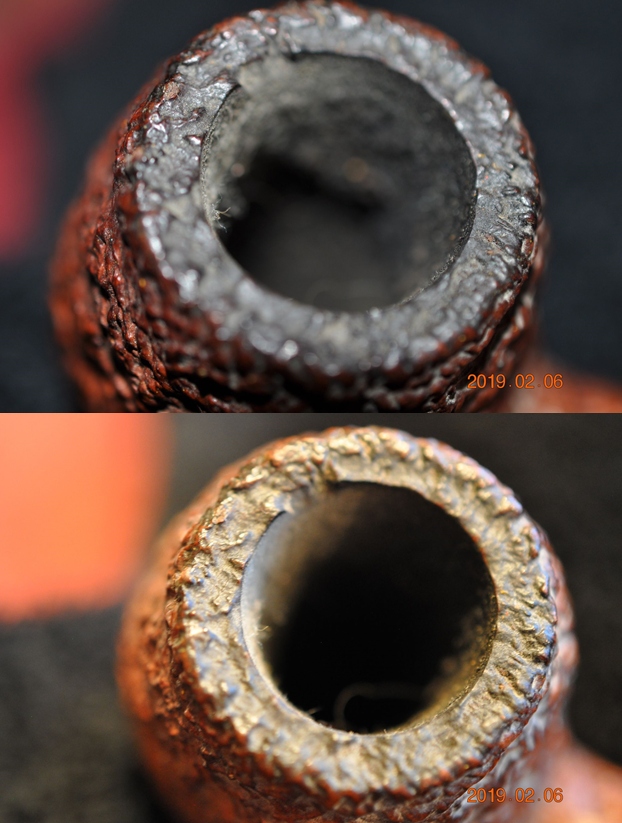
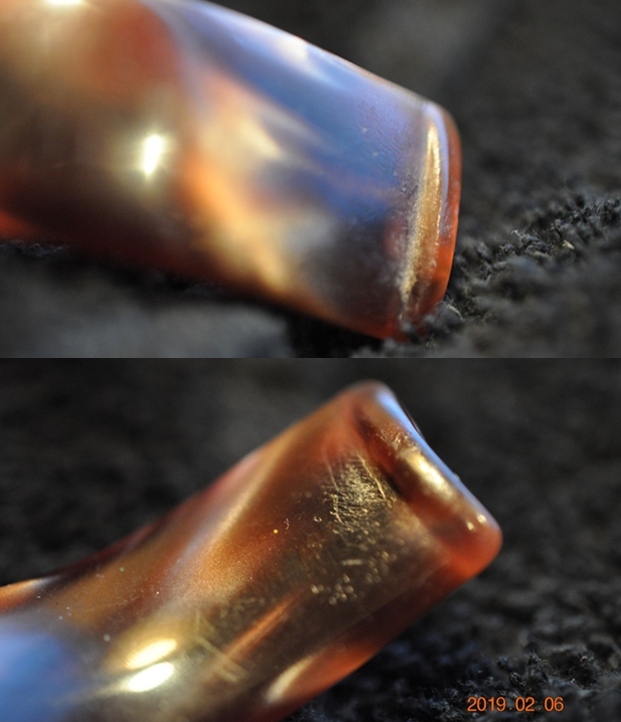
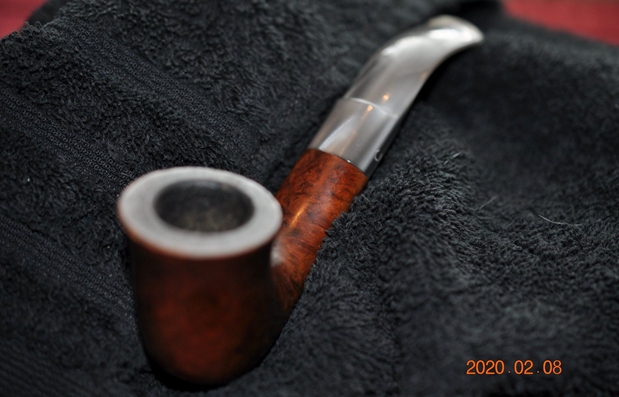
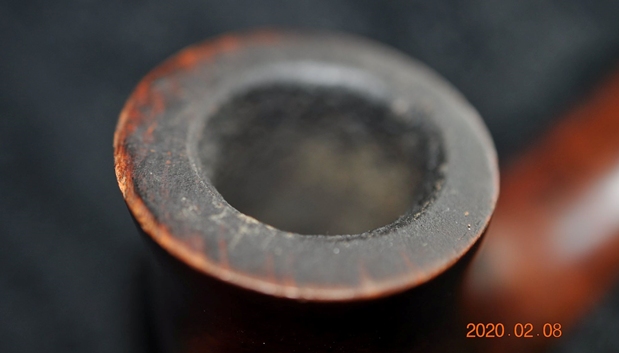
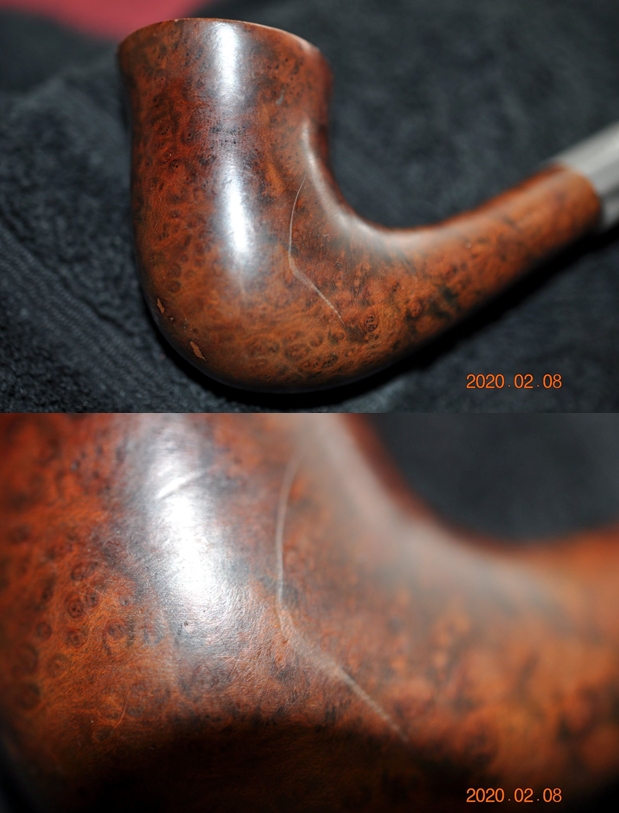
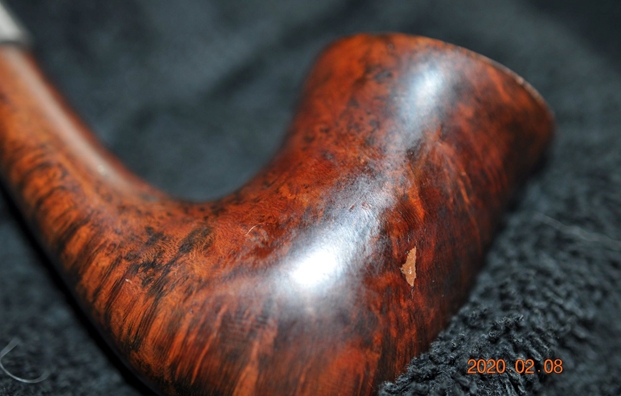
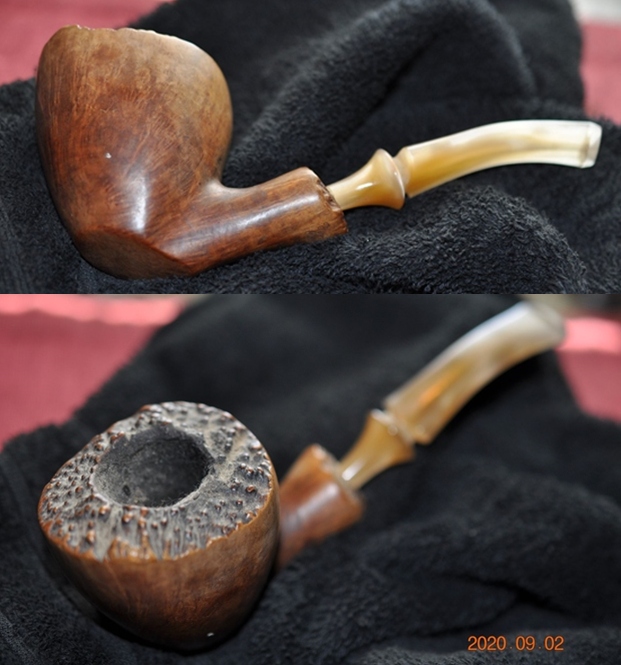
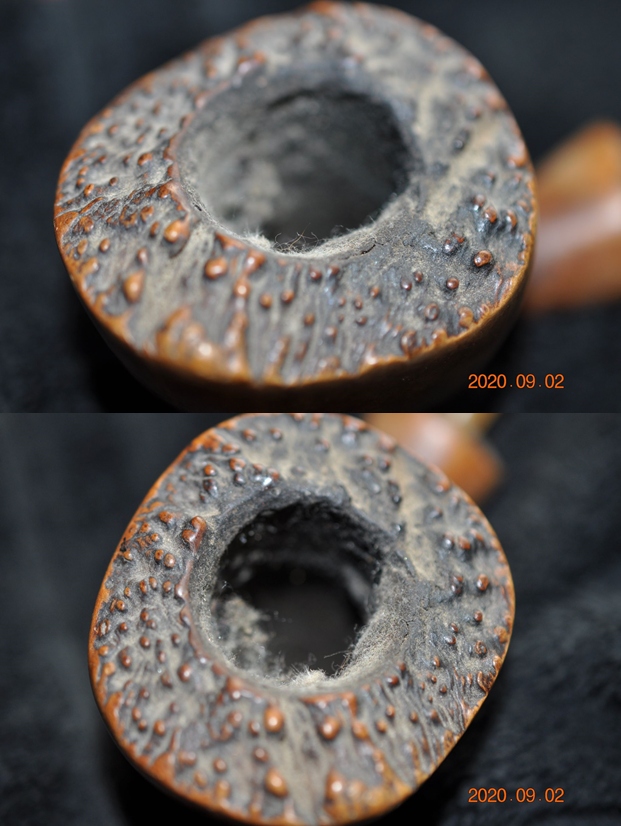
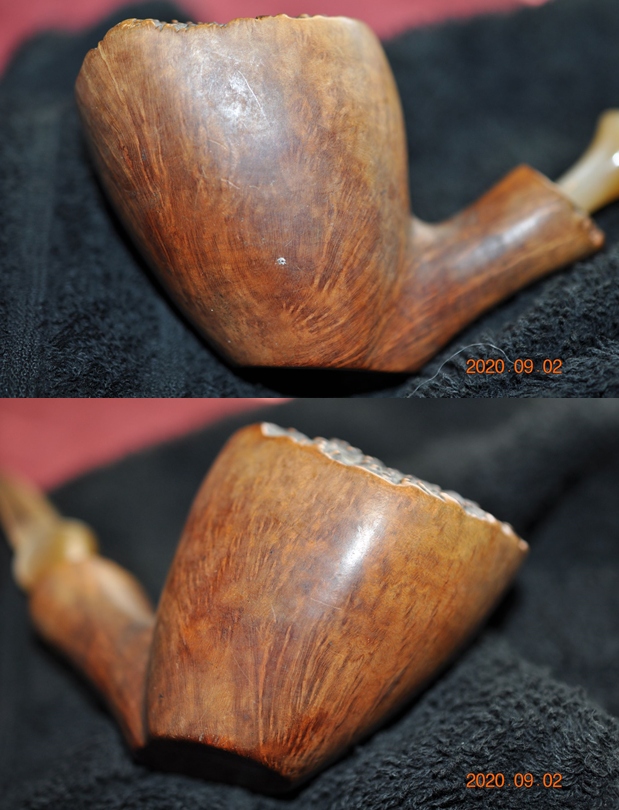
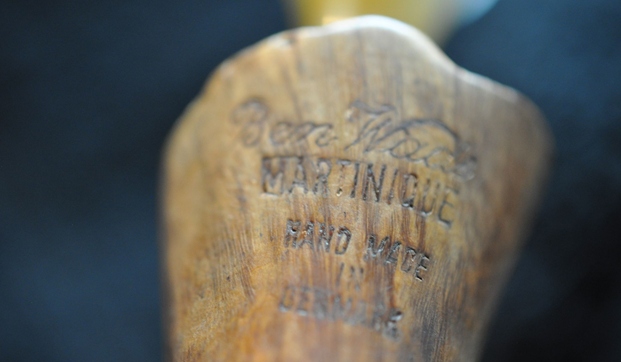
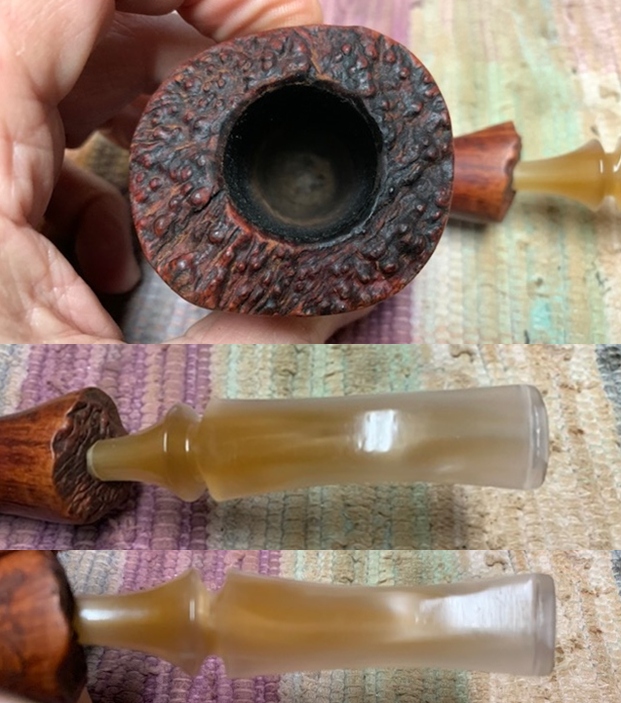
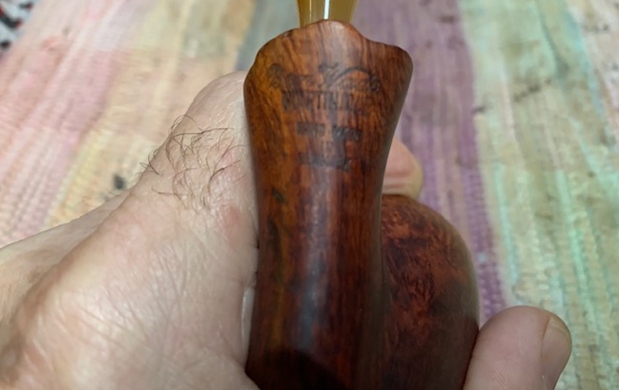
The next pipe on the table came to us from a recent pipe hunt Jeff and his wife Sherry did in Utah. They picked this beauty up at an Antique Mall along the way of the hunt. Even though the finish was dull and lifeless it showed promise under the grit and grime of the years. On the underside of the shank it was clearly stamped Ben Wade in script [over] Martinique [over] Hand Made [over] In [over] Denmark. The finish is filthy with grime and oil ground into the smooth briar of the bowl and shank sides. There were flecks of white paint on the sides as well. The bowl had a thick cake that overflowed in lava on the plateau rim top filling in the grooves and valleys of the finish. The acrylic stem was dirty and had some tooth marks and chatter on both sides ahead of the button. Jeff took some photos of the pipe to show its overall condition before he started his cleanup work.He took photos of the rim top and bowl to give a clear picture of the thickness of the cake and the lava on the plateau finish of the rim top. There is dust and debris stuck to the walls of the bowl clearly visible in the photos. He also took photos of the top and underside of the stem to show the chatter and tooth marks. Otherwise the stem is quite clean. Jeff took photos of the sides and heel of the bowl to give a picture of what the briar around the pipe looked like. There is some stunning grain under the grime.    He took photos of the stamping on the shank. It reads as noted above and is clear and readable. I remembered a bit of history on the brand that thought that the Preben Holm pipes were marketed under the Ben Wade label in the US and imported through Lane Ltd. I turned to Pipedia and read the listing on the brand to refresh my memory and flesh out the knowledge of the brand (https://pipedia.org/wiki/Ben_Wade). I have included a photo from that site that was taken from a Tinderbox advertisement.
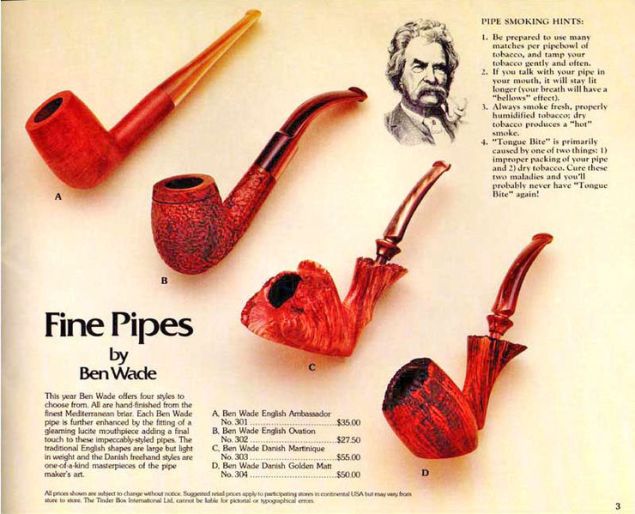
Ben Wade Ad in a Tinder Box catalog, courtesy Doug Valitchka

I quote the portion of the article that summarizes the Danish period of the history of the brand:

Young Copenhagen master pipemaker Preben Holm had made a meteoric career heading a pipe manufacture employing 45 people at the age of 22! But around the turn of 1970/71 he was in major financial difficulties. His US distributor, Snug Harbour Ltd. in New York City, left him in the lurch. Holm had three unpaid invoices on his desk and another large shipment was ready for the USA, when Snug Harbour’s manager told him on the phone that there was no money at all on the account to pay him.

So the Dane went to New York for an almost desperate search for a new distribution partner. He made contacts with Lane Ltd. and met Herman G. Lane in February 1971. Lane Ltd. had no interest in Holm’s serial pipes produced at that time but so much the more in the hand-carved freehands because the hype for Danish freehands and fancies in the States was still on its way to the climax then. The meeting resulted in an agreement to start a cooperation. Lane insisted to improve the quality considerably and in return he assured to be able to sell essentially larger quantities.

Holm went back home to work on new samples with all-new designs and altered finishes for Lane. Both, Lane and Holm, agreed that it would be unwise to sell the pipes under Preben Holm’s name as long as Snug Harbour had a considerable stock of Preben Holm pipes and might sell them pipes at very low prices just to bring in some money.

So on Mr. Lane’s proposal it was determined to use the name Ben Wade belonging to Lane Ltd. Lane spent considerable amounts of money for advertising the new brand in the big magazines– the centerpiece being whole-page ads showing a very exclusive Seven Day’s Set.

The cooperation with Lane Ltd. proved to be an eminent business success for both partners. Within a very short time Ben Wade Handmade Denmark sold in much larger quantities and at higher prices than they had ever dreamed of. And the hype these freehands and fancy pipes caused went on unbroken long after Herman G. Lane deceased. Preben Holm – obviously much more brilliant in pipe making than in pipe business – was in major troubles again in 1986 and had to sack most of his staff. The Ben Wade production was significantly lowered but continued until his untimely death in June of 1989.

Up to now Preben Holm made Ben Wade pipes are cult and highly sought for on the estate markets.

With that information my initial thoughts were confirmed. This pipe was a Preben Holm made Freehand distributed in the US by Lane Ltd under the name Ben Wade. The freehand rage occurred in the late 70s and the pipes were made until Preben’s death in 1989. My guess would be that this pipe was made sometime during that time period and potentially in the late 70s.

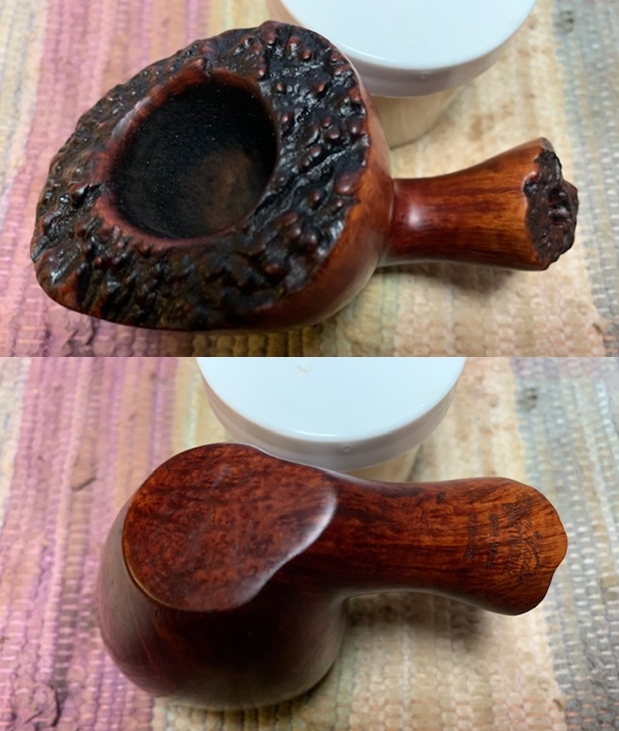
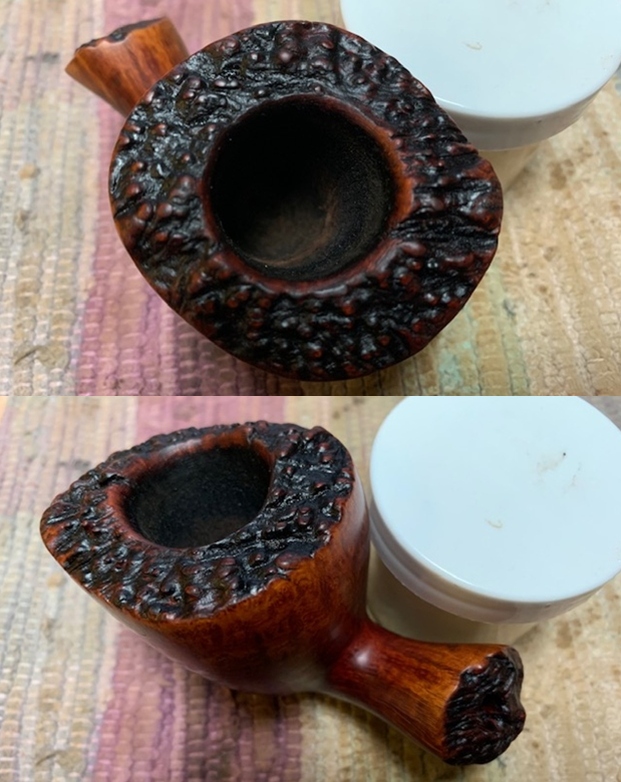
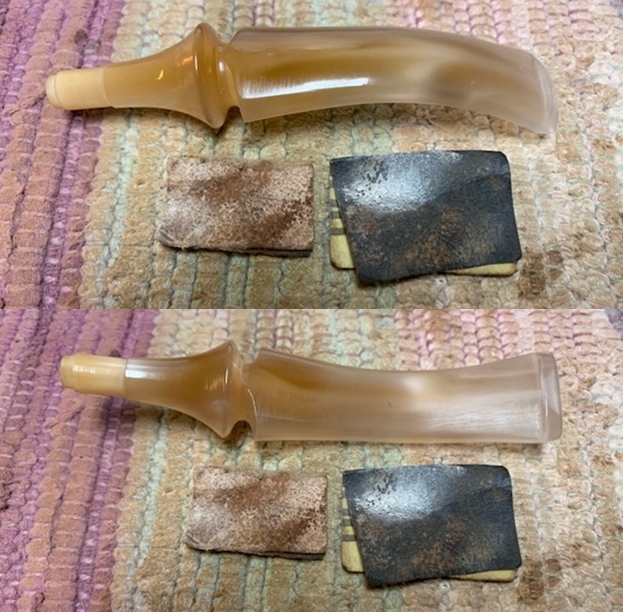
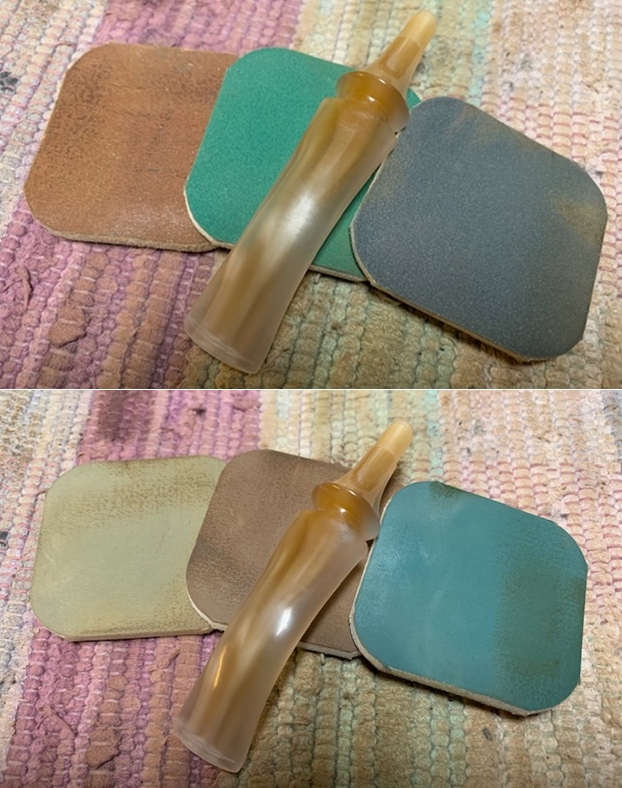
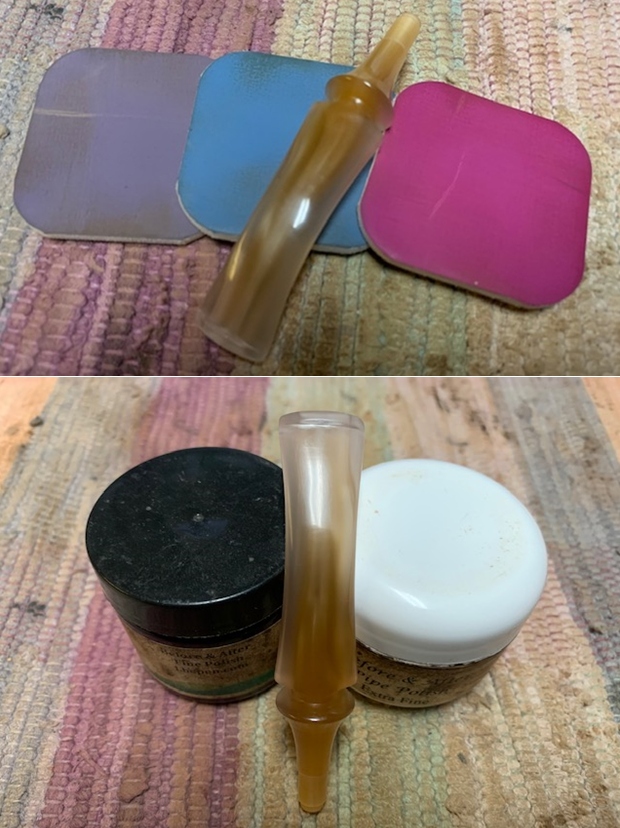
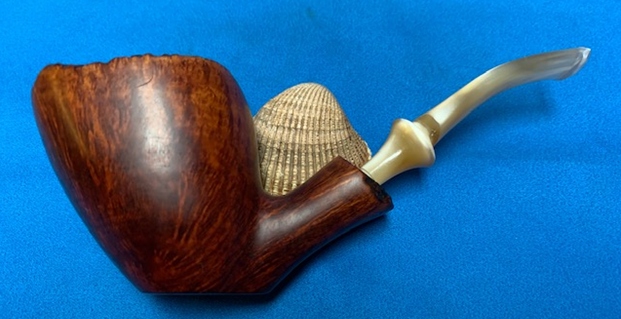
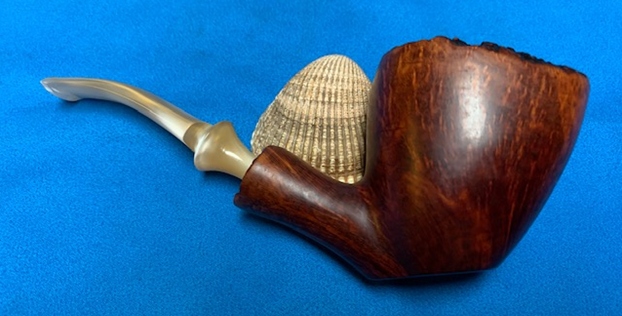
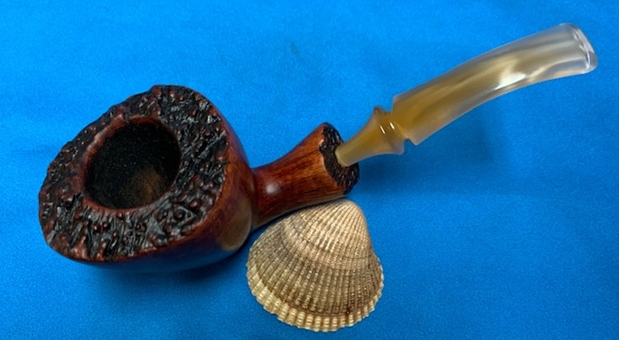
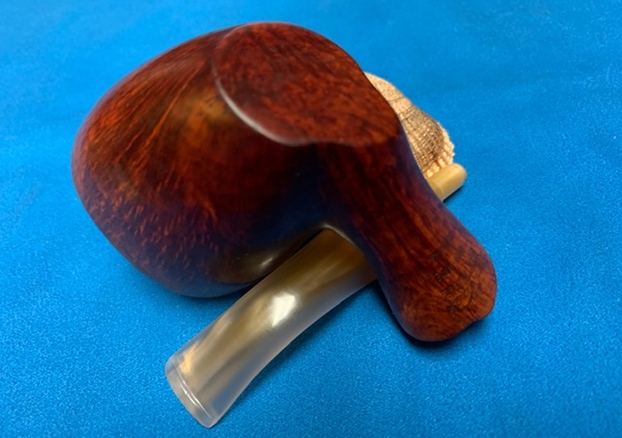
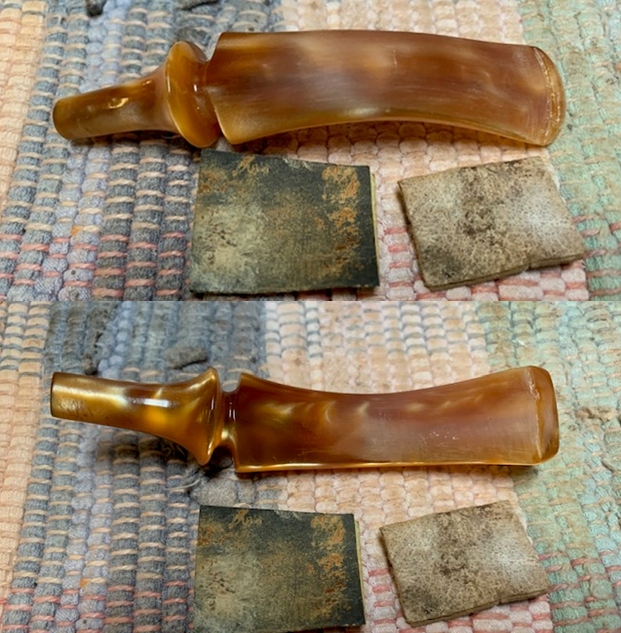
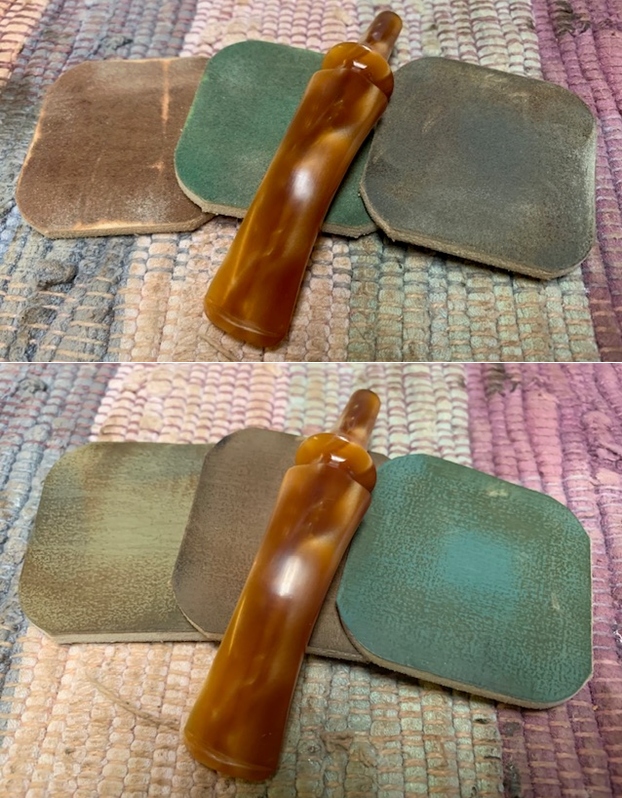
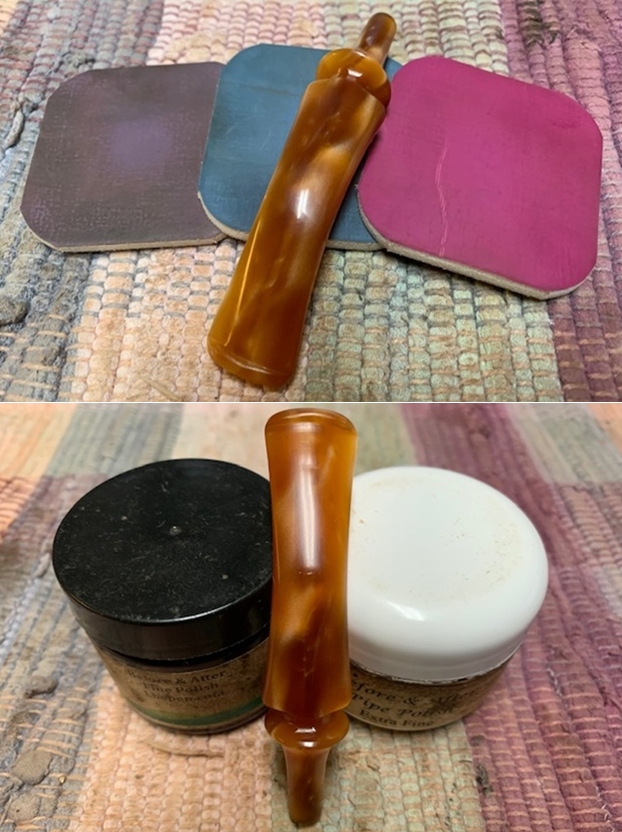
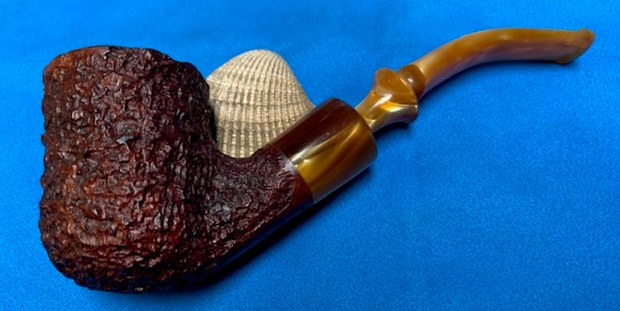
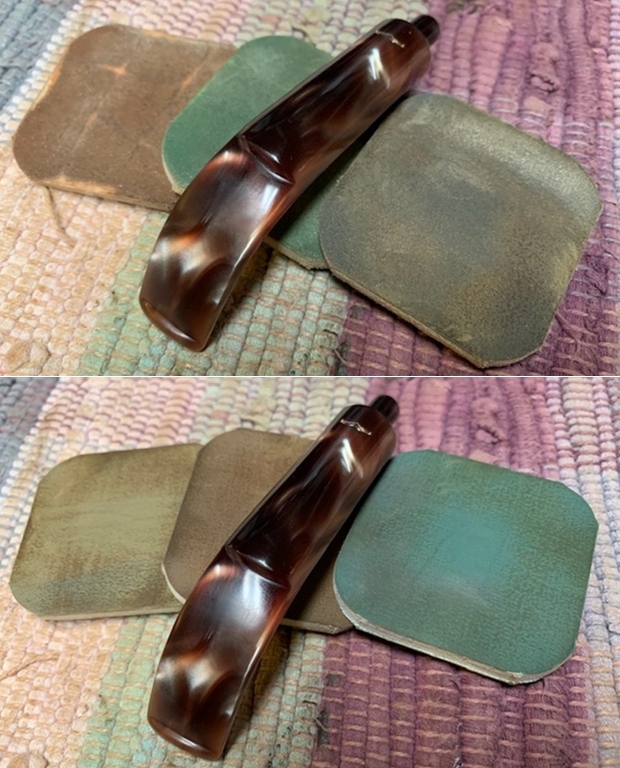
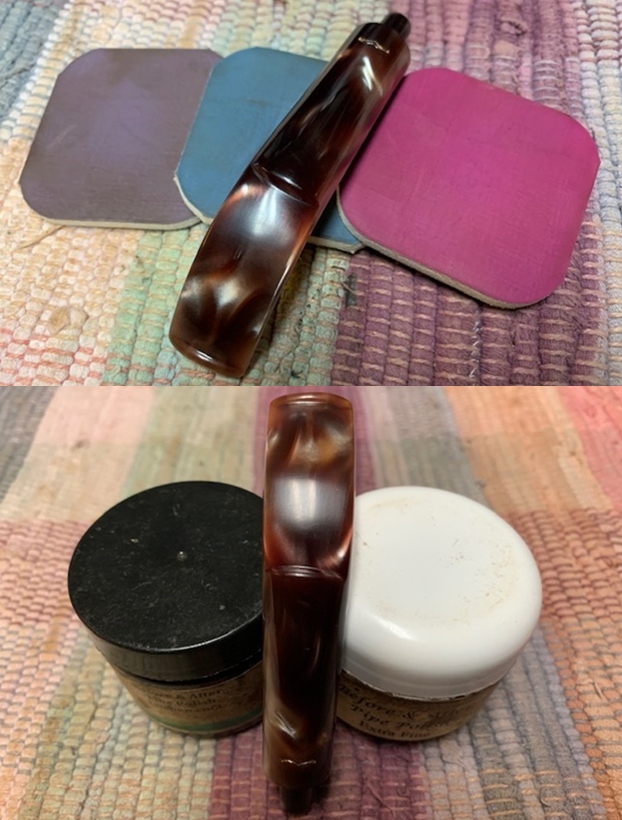
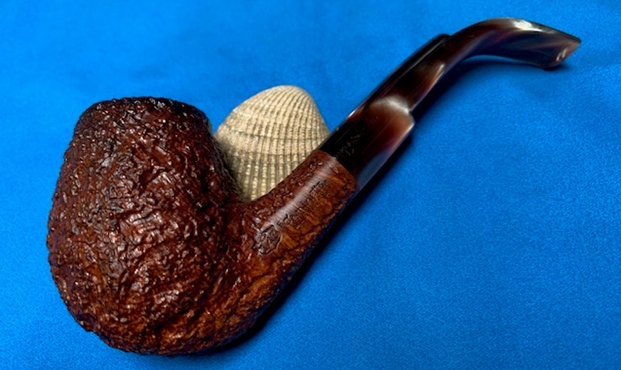
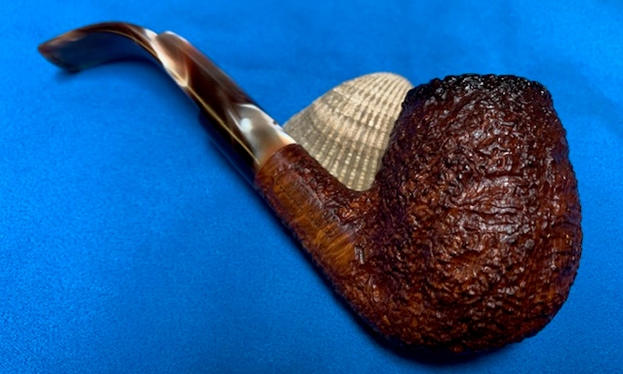
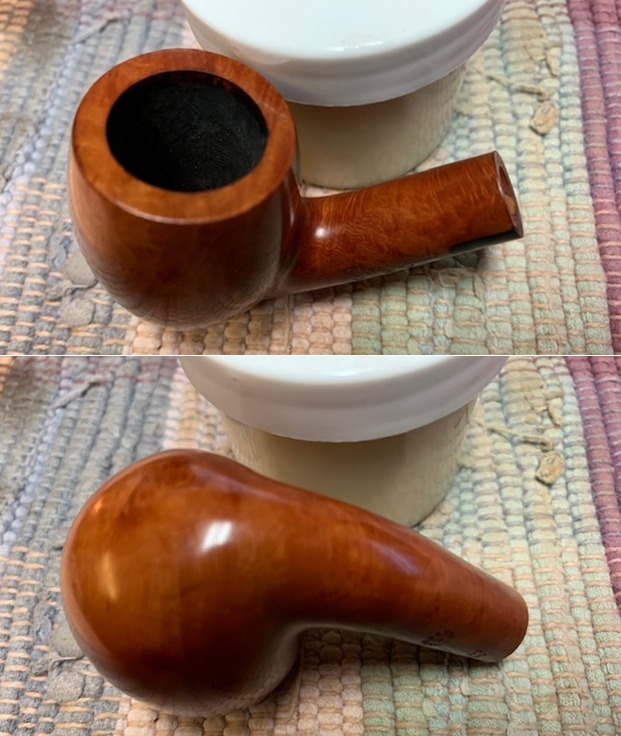
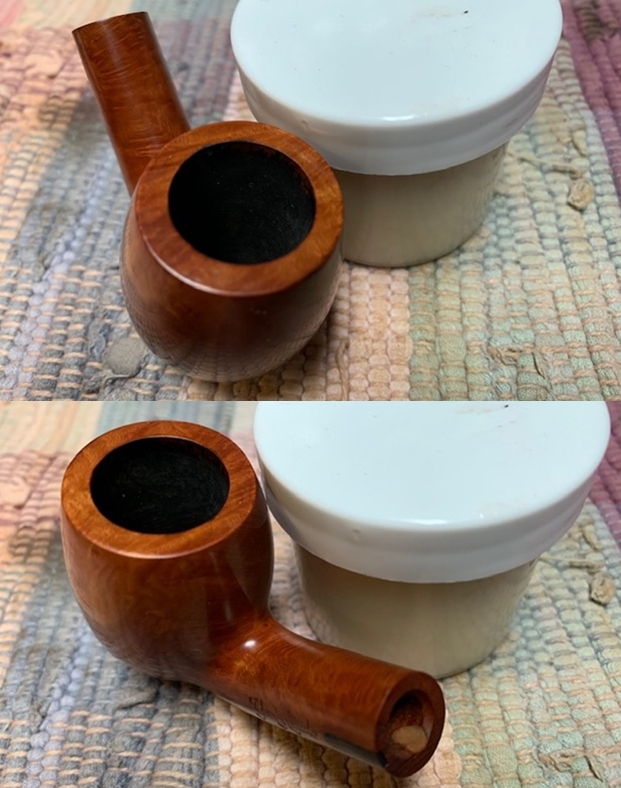
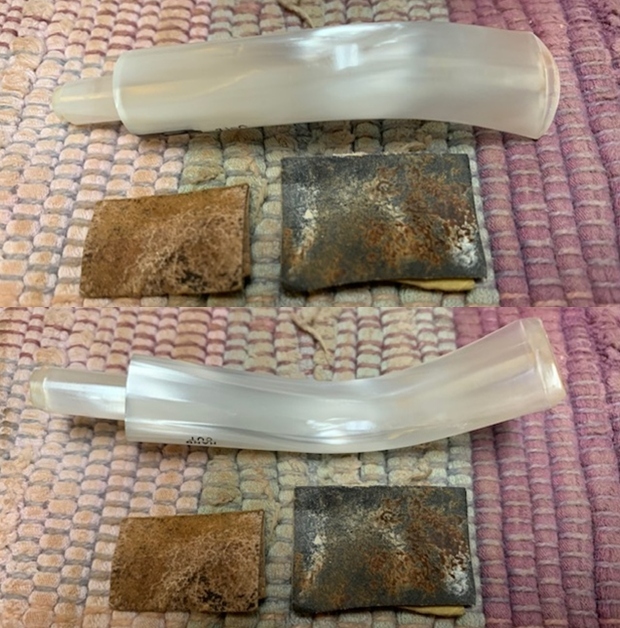
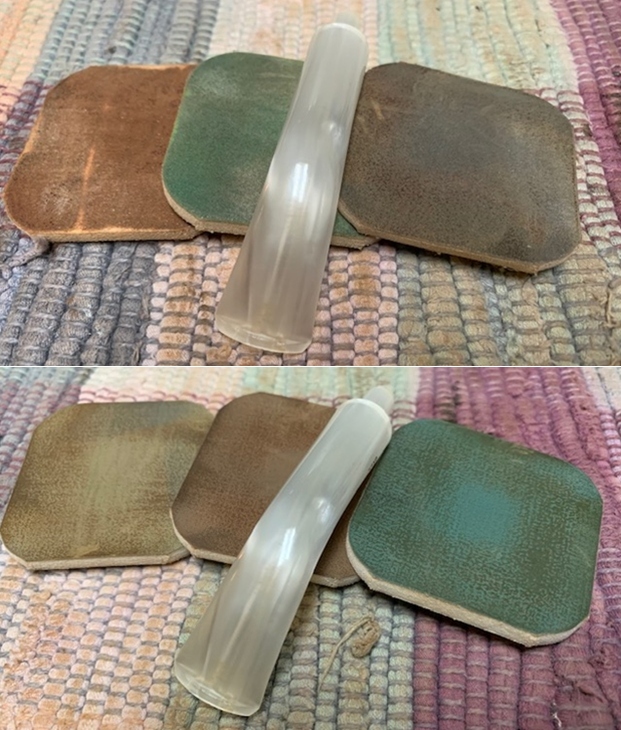
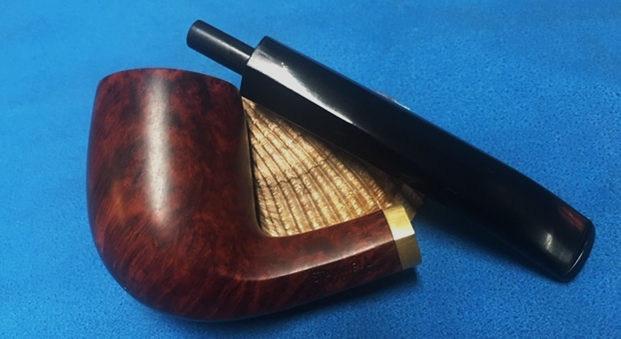
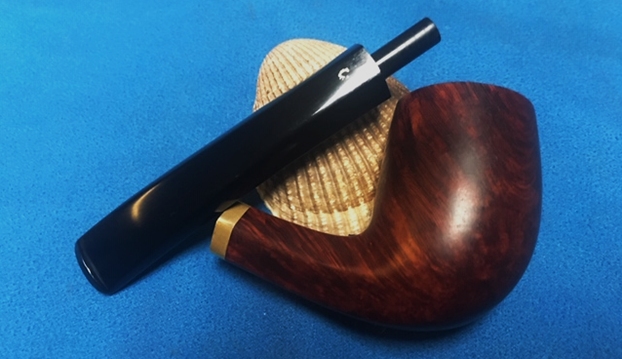
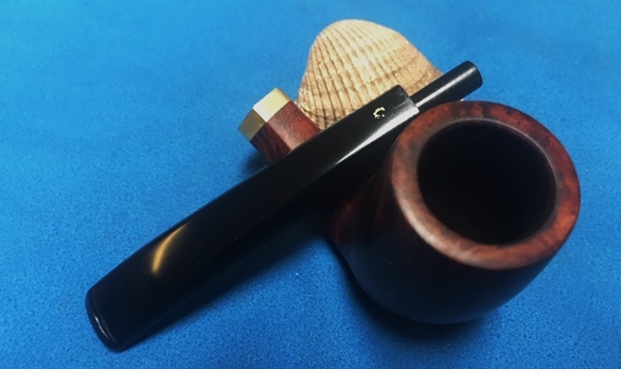
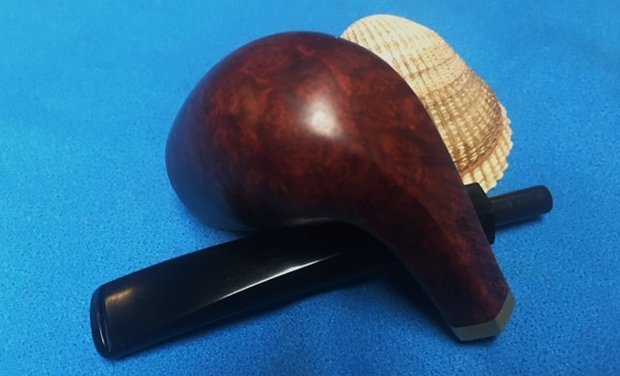
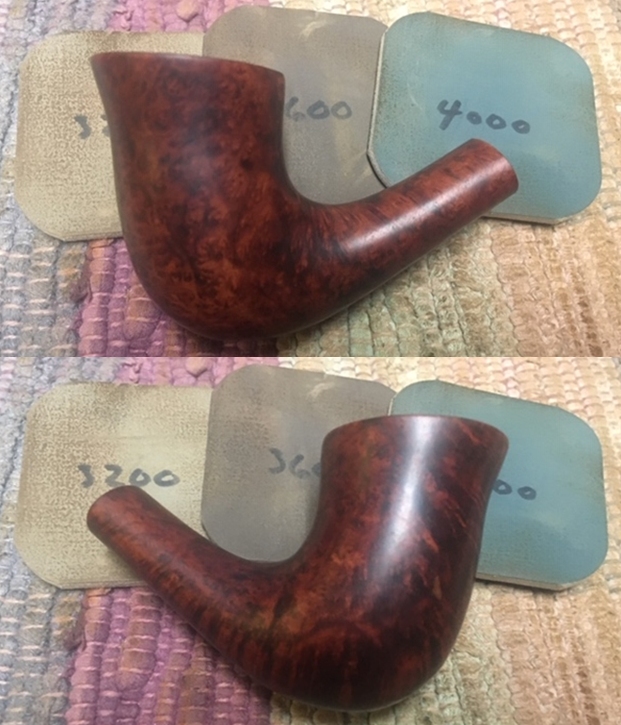
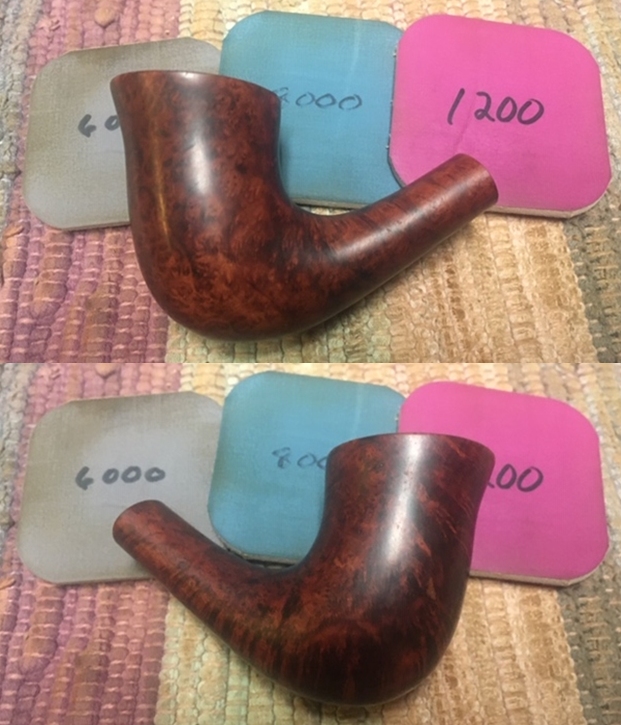
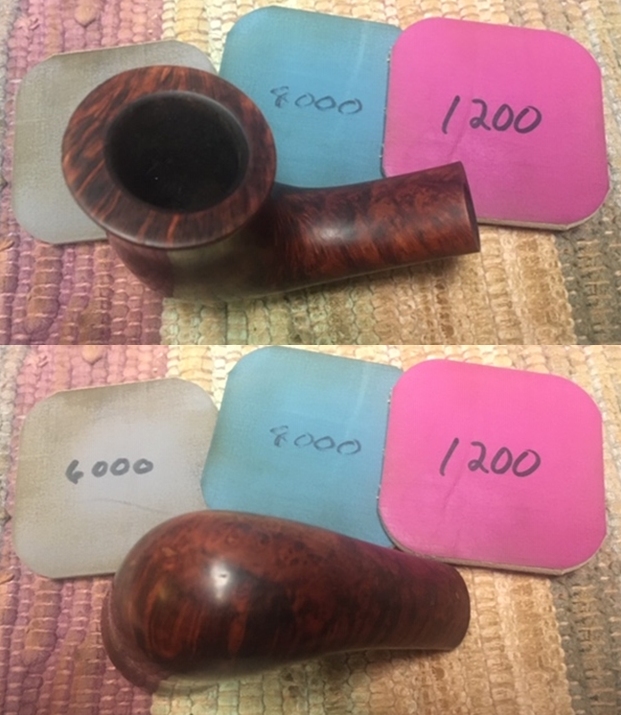
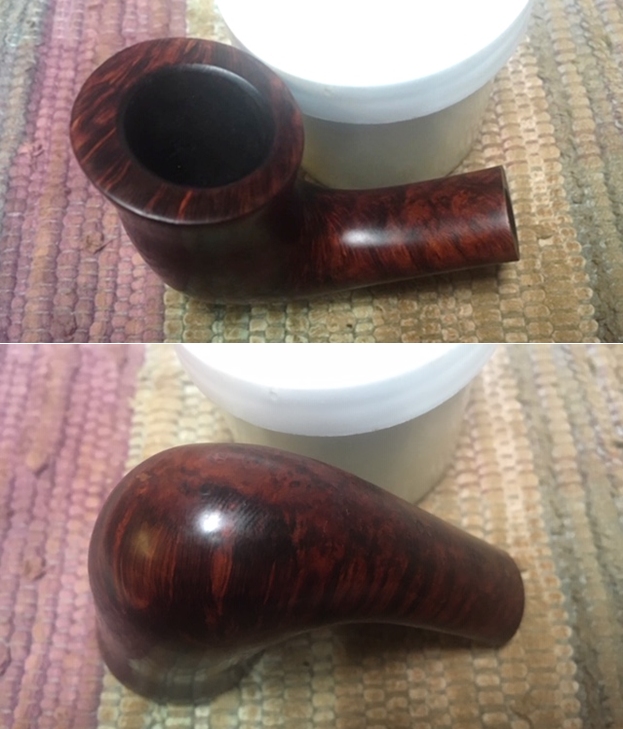
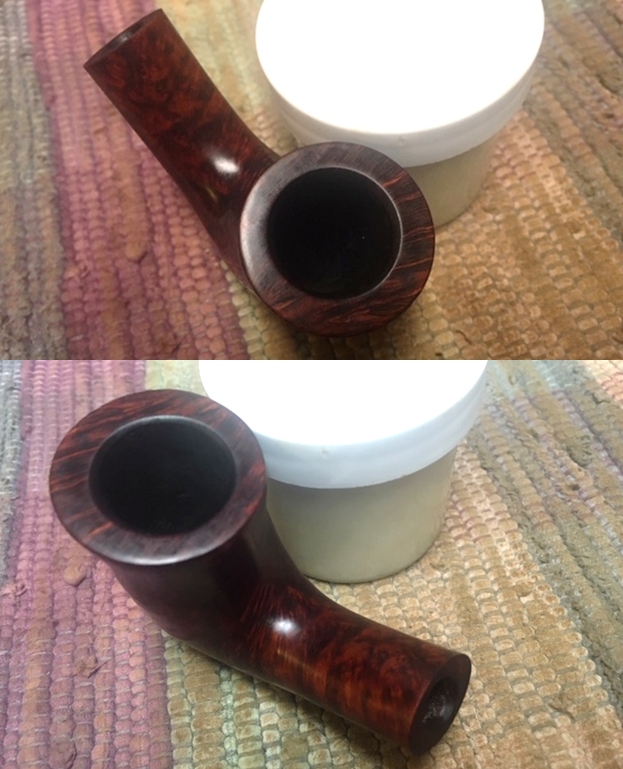
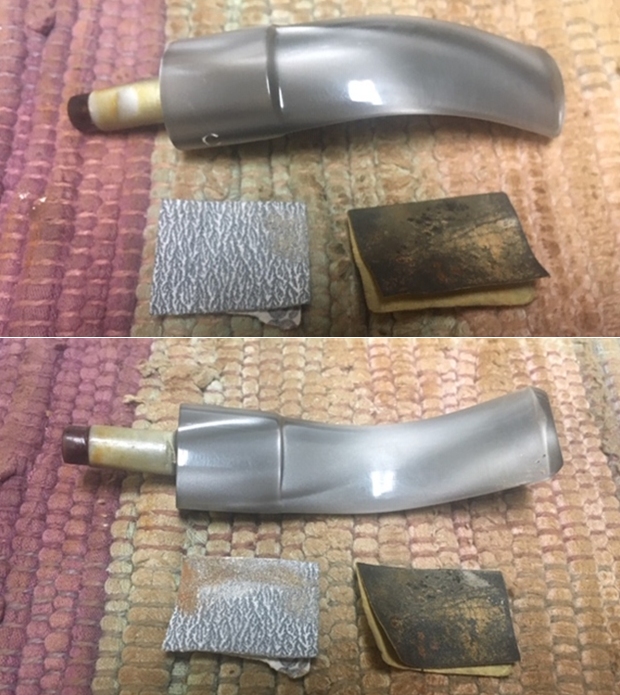
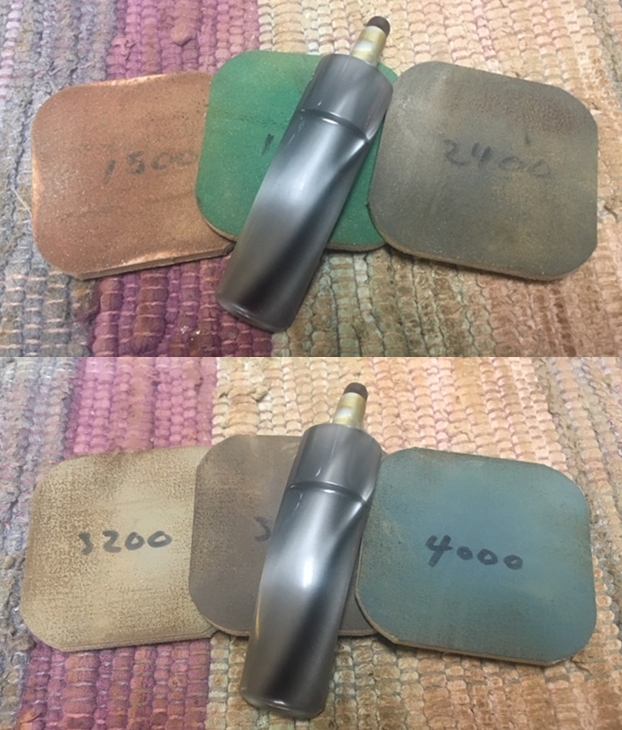
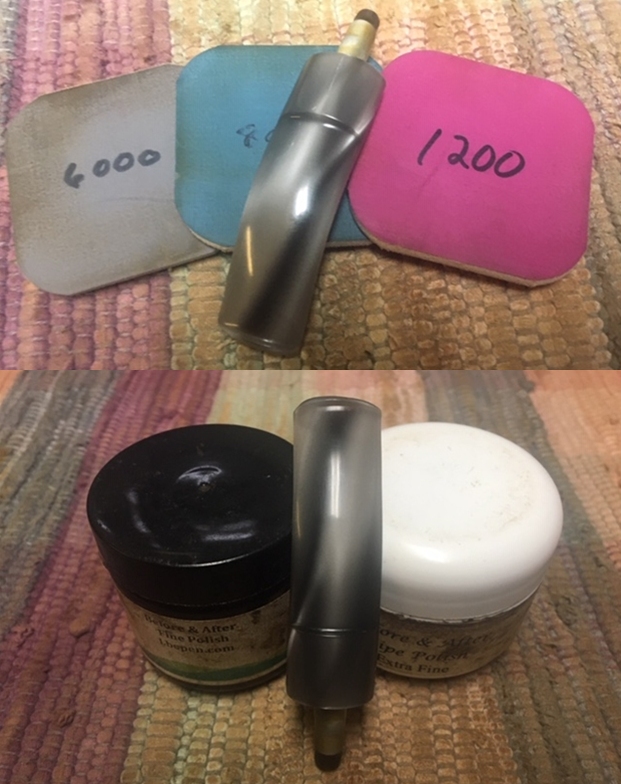
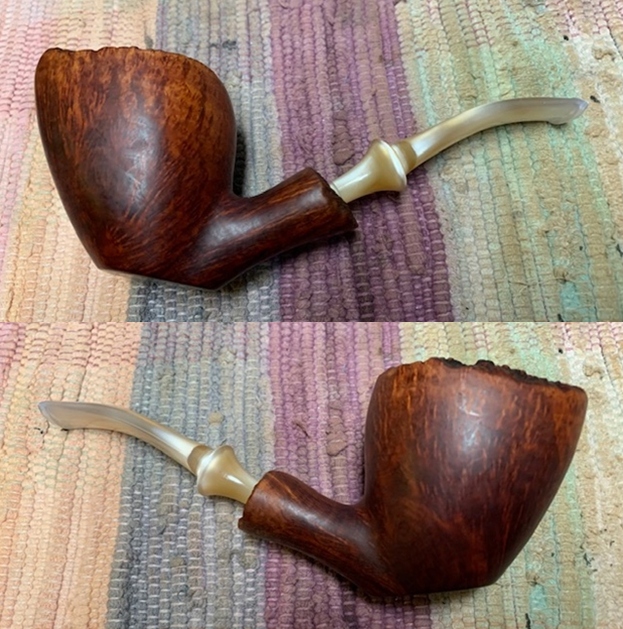
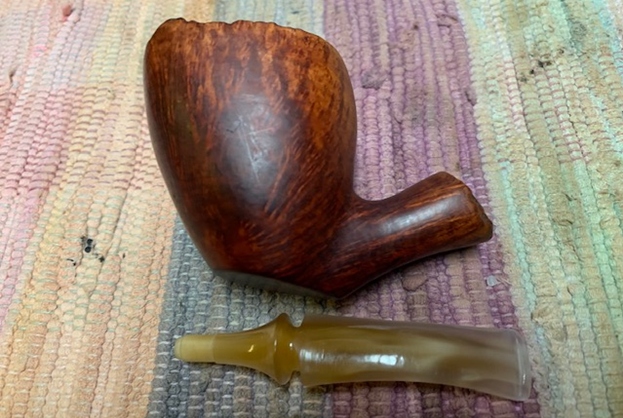
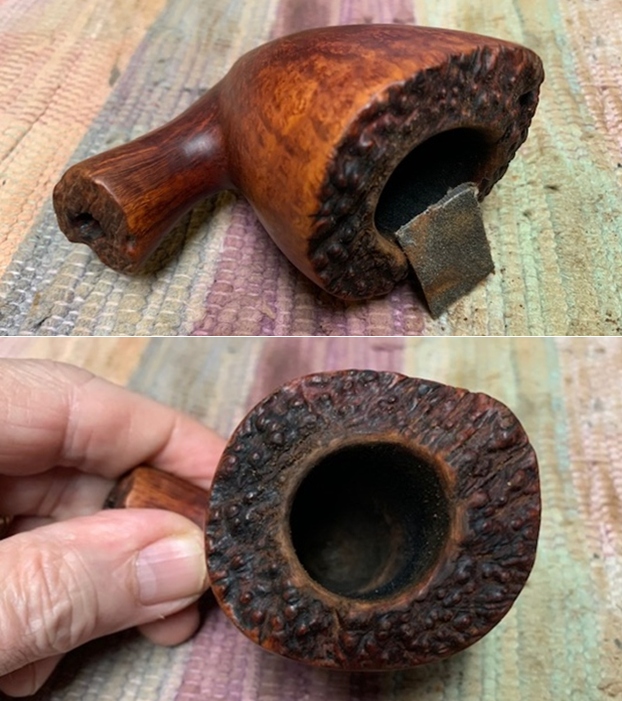
Jeff had cleaned up the pipe with his usual penchant for thoroughness. He reamed the pipe with a PipNet Pipe Reamer and cleaned up the remnants with a Savinelli Fitsall Pipe Knife.  He scrubbed the bowl with undiluted Murphy’s Oil Soap with a tooth brush. He rinsed it under running warm water to remove the soap and grime. He cleaned out the inside of the shank and the airway in the stem with alcohol, cotton swabs and pipe cleaners. He scrubbed the stem with Soft Scrub and cotton pads to remove the debris and oils on the stem. He rinsed it with warm water and dried it off. I took photos of the pipe once I received it.   The rim top had some darkening on the back of the bowl. The beveled inner edge of the rim looked very good with some darkening. The stem surface looked very good with a few small tooth marks and chatter on both sides near the button.    I took a photo of the stamping on the underside of the shank. It read clearly as noted above.  I removed the stem and took a photo of the pipe to give a sense of the whole. The stem is turned fancy acrylic. I started my work on the pipe by cleaning up the darkening on the inner bevel of the plateau rim top with a folded piece of 220 grit sandpaper. I was able to remove the darkening and I like the looks of the rim top.  I touched up the black stain in the valleys of the plateau on the rim top and shank end with a Black stain pen. I would use the micromesh pads to knock off any of the black on the high spots when I polished it.    I polished the bowl and the rim top, sides and shank with micromesh sanding pads – wet sanding with 1500-12000 grit pads and wiping it down after each pad with a damp cloth.   I rubbed the bowl and shank down with Before & After Restoration Balm. I worked it into the surface of the bowl sides and shank with my fingertips and into the plateau rim top with a horsehair shoe brush. The product works to clean, enliven and protect the briar. I let the balm sit for 10 minutes and then buffed with a cotton cloth to raise the shine.   I set the bowl aside and turned to work on the stem. I sanded out the tooth marks from the surface of the acrylic with 220 grit sandpaper and started the polishing of the stem with 400 grit wet dry sandpaper.   I polished the acrylic stem with micromesh sanding pads – 1500-12000 grit pads. I wiped it down with a damp cloth after each sanding pad. I used Before & After Pipe Polish – both Fine and Extra Fine to further polish the stem.      This Ben Wade Martinique Freehand Sitter with a fancy, turned acrylic stem is a great looking pipe now that it has been restored. I put the stem back on the bowl and carefully buffed the pipe with Blue Diamond on the buffing wheel using a light touch on the briar. I gave the bowl and the stem multiple coats of carnauba wax on the buffing wheel and followed that by buffing the entire pipe with a clean buffing pad. I hand buffed the pipe with a microfiber cloth to deepen the shine. The finished Martinique Freehand fits nicely in the hand and feels great. Give the finished pipe a look in the photos below. The dimensions of the pipe are Length: 6 inches, Height: 2 ½ inches, Outside diameter of the bowl: 2 inches, Chamber diameter: 1 inch. If you are interested in adding this pipe to your collection send me a message or an email. Thanks for reading this blog and my reflections on the pipe while I worked on it. There are many more to come!
Breathing Life into a Carlo Scotti Castello Sea Rock Briar SC23 Straight Apple


Blog by Steve Laug

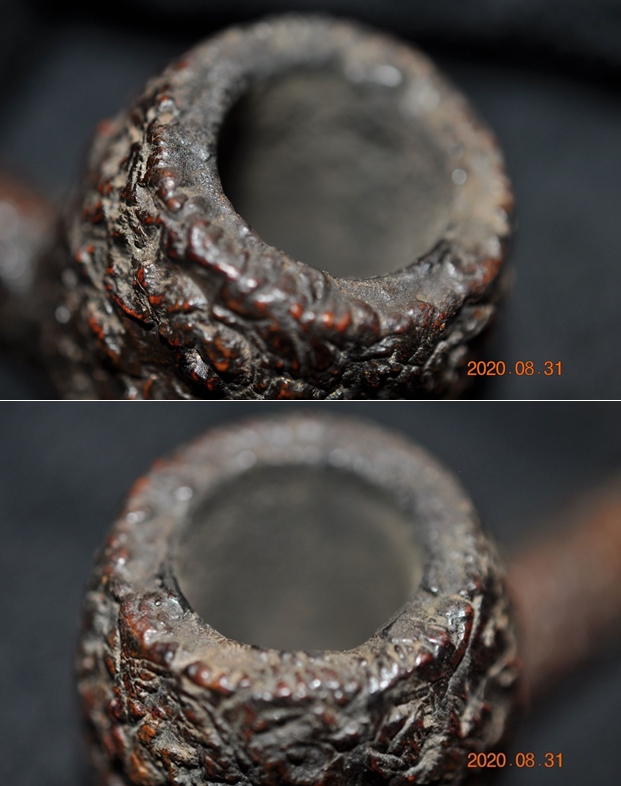
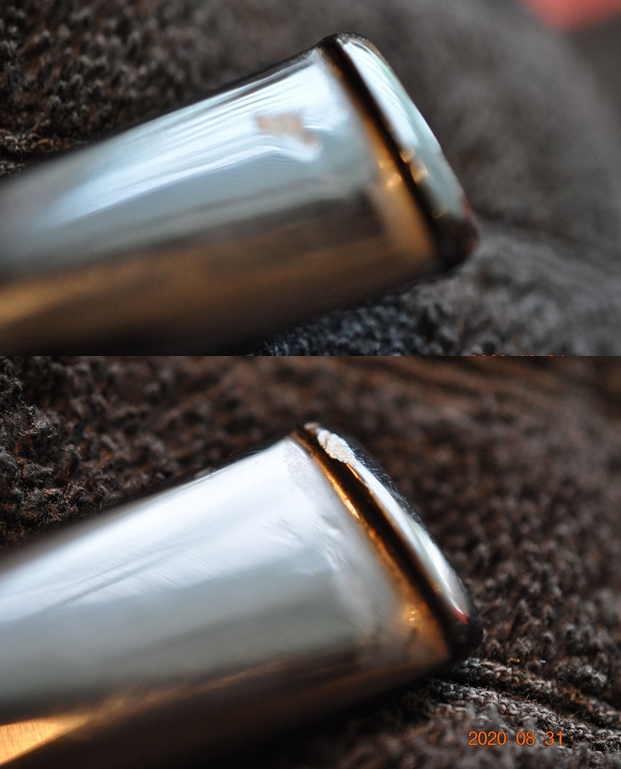
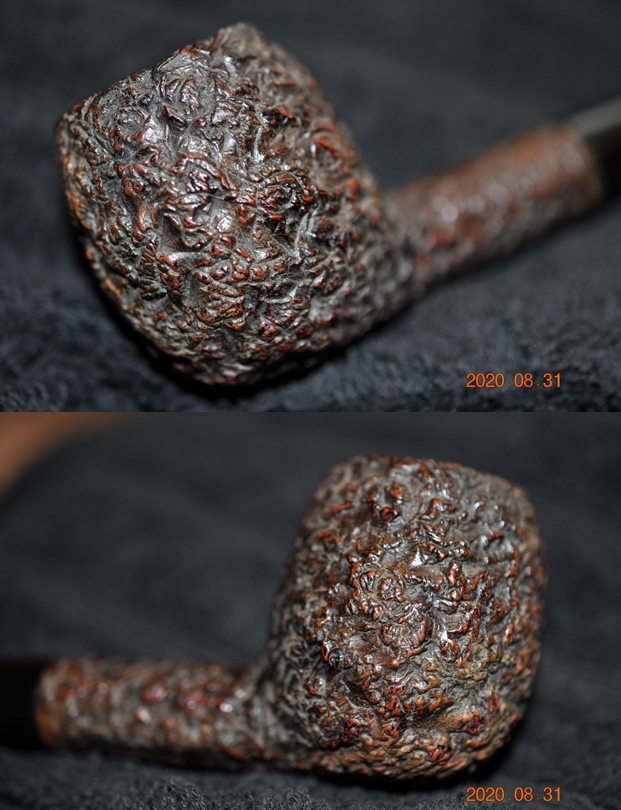
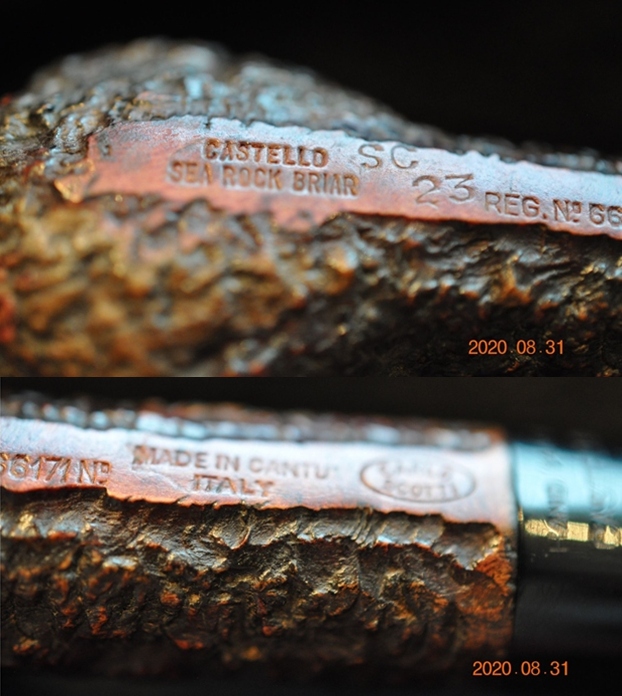
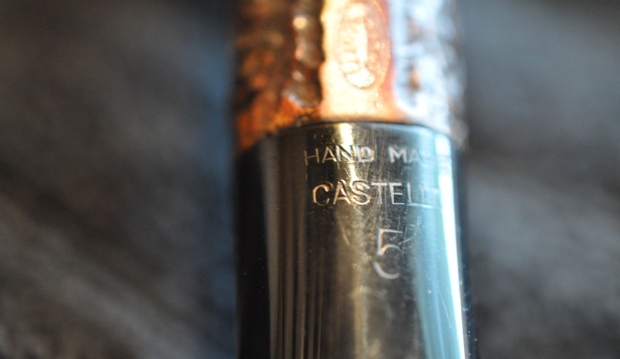
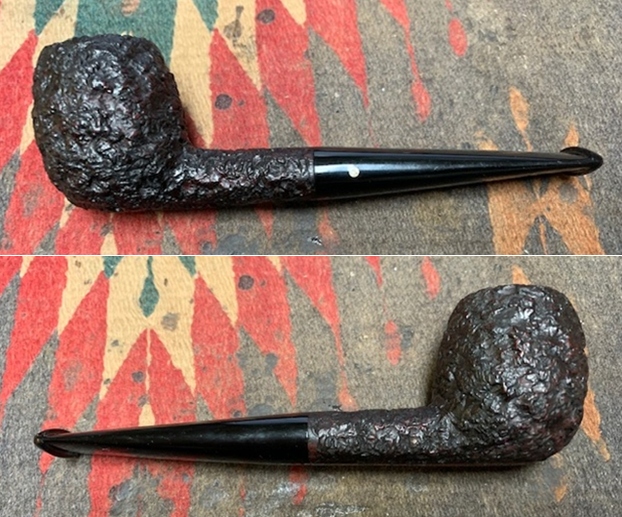
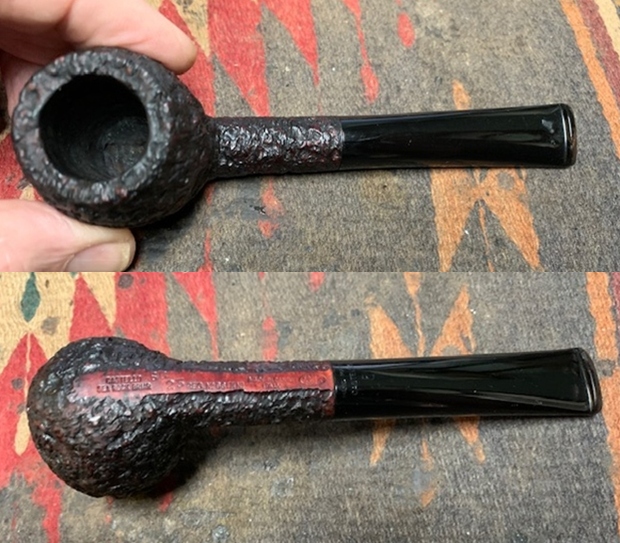
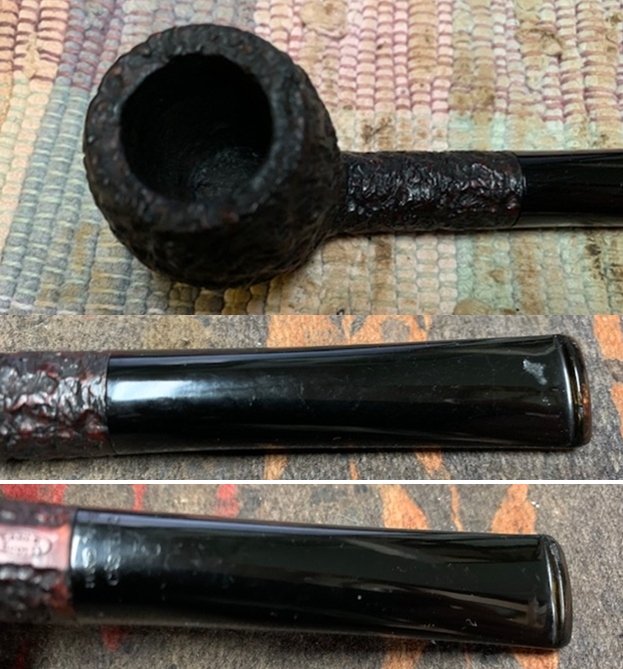
Summer is pretty much over in Vancouver and today was like a rainy, cold fall day. Between appointments and calls I continue to work on pipes. My wife and kids are convinced it is an illness but at least it keeps me out of their way! This next pipe on the table is one that I may have a hard time letting go of when I am finished. It is a Castello Sea Rock Briar and it is an Apple shape to pluses in my book. My brother Jeff picked this pipe up from an antique mall in Utah, USA. It is stamped on the smooth heel of the bowl and the shank bottom and reads Castello [over] Sea Rock Briar followed by Reg. No. 66171 No. Next to that is stamped Made in Cantu [over] Italy followed by an oval containing the name Carlo Scotti next to the stem shank union. The Castello “diamond” inset is on the left side of the tapered stem. On the underside of the stem it is stamped Hand Made [over] Castello [over] 5 It was in pretty filthy looking condition when he got it but still showed promise. He took the following photos of the pipe before he worked his magic on them. The pipe must have been a terrific smoker because the bowl was heavily caked with lava flowing over the rim top. In its condition it was going to take some work to clean out that bowl and be able to see what the rim looked like underneath the layer of lava. The acrylic/Lucite stem was in good condition. It was dirty and had light tooth chatter a deep tooth marks in the top and underside of the stem just ahead of the button. The rest of the bowl looked dirty but the photos give an idea of what Jeff saw before his cleanup revealed the condition of the pipe. The next photos try to capture the stamping on the flat panel on the underside of the shank. It read as I have noted above. The stem also bears a Hand Made Castello 5 stamp on the underside.    Jeff cleaned the pipe with his usual penchant for thoroughness – reaming the bowl with a PipNet pipe reamer and cleaning up the remnants with a Savinelli Fitsall Pipe Knife. He scrubbed the internals of the bowl, shank and stem with alcohol, cotton swabs and pipe cleaners. He scrubbed the exterior with Murphy’s Oil Soap to clean off the dust and grime on the rusticated Sea Rock finish. The rusticated rim top looked very good under the thick lava coat. The inside of the bowl itself looked great. The stem was in great shape other than the tooth marks on both sides. I took photos of the pipe when it arrived here. I took some close up photos of the rim top, bowl and stem to show what they looked like after Jeff’s cleanup. It is a startling difference. The rim top looks very good. The stem will take a bit of work to remove the deep tooth marks on both sides and give it a deep shine.     I removed the stem from the shank and took a photo of the pipe to show the proportions of the bowl/shank and the stem length.I cannot seem to retain the details on Castello pipes in my head for long for some reason. The stamping on them – Castello and the Reg. No. and the Carlo Scotti stamp left me with some questions that I need to answer before I began to work on the pipe. I turned first to the Pipephil site (http://www.pipephil.eu/logos/en/logo-castello.html) because of the general quick summary of information I get there. I quote:

Castello PIPA CASTELLO di Carlo Scotti & C. was founded in 1947 by Carlo Scotti († 1988). Franco Coppo (AKA “Kino”) who married Carlo Scotti’s daughter Savina, manages (2012) the corporate since 1985.

The site also gave a good summary of the grading and sizes of the pipes. I quote that in full.

Sizes (ascending):

1K to 4K, G (Giant) and GG (Extra large)

Rusticated grading: SEA ROCK, OLD SEA ROCK, NATURAL VIRGIN,

Sandblasted grading: ANTIQUARI, OLD ANTIQUARI

Smooth grading (ascending): TRADEMARK, CASTELLO, COLLECTION

Other stampings: Great Line (Non-standard or freestyle) Fiammata (Straight grain)

Production (2012): ~4000 pipes / year

I also found a note on the page that the Rhinestone logo was originally on pipes for the US market. It is occasionally used now.

I turned then to Pipedia for more information on the brand (https://pipedia.org/wiki/Castello). The majority of the information was what was already quoted above in abbreviated form. However there was a link to an article by Bob Hamlin that gave some interesting bits of information that I found helpful (http://www.pipes.org/BURST/FORMATTED/196.016.html). I quote in part from that article.

SEA ROCK [Carved Black or dark brown]:  This is the lowest grade of the Castello line and is the most common in the USA.  Sea Rocks are produced by taking a smooth bowl that has not been “final finished” and surface carving the finish with tools. This “carved” finish is then evened out using a steel wire brush, stained and then waxed. The Natural Vergin carved finish is left unstained and unwaxed as a rule, although we have seen waxed and partially waxed “Vergins”.

All carved Castello pipes are graded by the number of K’s that are stamped on each piece and are K-graded by SIZE.  1K is the smallest and fairly rare, 2K is small to medium, with 3K or 4K being the most common and ranges from medium to medium large. Large pieces are stamped “G” for giant and extra large pieces are stamped “GG” for double giant.  In addition to the number of K’s on a carved Sea Rock piece the shape number is almost always added.  As a rule a Sea Rock Castello is stained Black, although recently there have been quite a few coming in stained deep brown and still stamped “Sea Rock”.  American Logo’d Sea Rocks are all priced the same to the consumer, although most are 2 or 3 K’ed models.  G/GG models are charged at a higher price on American pieces and are basically the same as their European counterparts.

The Castello Sea Rock briar I was working on did not have the K stamping. It definitely was made for the American Market with the Rhinestone in the stem. It had the black finish. The shape number still needed to be determined.

Pipedia also gave a link to Mike’s Briar Blues site for help in dating and determining shapes (http://www.briarblues.com/castello.htm). I quote a piece on the Reg. No. that I found helpful.

1947 – Carlo Scotti begins the company.  In the beginning ( 1947 – 1949, maybe 1950 ) the pipes were stamped Mi Reserva ( my reserve ).  Later the Reg No was added.  This Reg No has nothing to do with shape numbers, but is merely the Castello company trademark

Shape numbers. Shape numbers are all 2 digits. A 2 in front indicates a “fancy” interpretation, a 3 in front means that the carving is somehow unique. I don’t know when the change was made, but currently, a π symbol is used instead of the 3xx. I’ve only seen this on Sea Rocks, but that doesn’t mean anything…

Pre K grading.  Late 1950’s to mid 1960’s the pipe carried stamps which indicated sizes. These were as follows; SA, SB, SC, and SS.  SA being the smallest and SS the largest.

Now I had more information to work with. The Castello Sea Rock in my hands was pre K graded. That told me that it came out in the late 1950s to mid 1960s. The SC stamp makes it a mid-sized pipe from that time period. The number 23 makes it a straight shank apple.

The bowl was in such good condition that I worked some Before & After Restoration Balm into the rusticated Sea Rock finish on the bowl and the rim top. I worked it into the surface of the briar with my fingertips to clean, enliven and protect the wood. I used a horse hair shoe brush to work it into the crevices and keep from building up in the valleys and crevices of the finish. Once the bowl was covered with the balm I let it sit for about 20 minutes and buffed it off with a soft cotton cloth and the shoe brush. I polished it with a microfiber cloth. I took photos of the pipe at this point in the process to show what the bowl looked like at this point. I set the bowl aside and worked on the stem. I filled in the tooth marks with black super glue and set it aside to cure. Once it cured I flattened the repairs with a file and sanded them with 220 grit sandpaper to blend them into the surface. I started polishing the stem with 400 grit wet dry sandpaper.   I continued to polish the stem with 1500-12000 grit pads. I dry sanded it with the pads and wiped it down with a damp cloth after each sanding pad. I finished polishing the stem with Before & After Pipe Polish – both Fine and Extra Fine polishes. I wiped the stem down with a damp cotton pad afterwards and buffed it with a soft microfiber cloth.   I put the bowl and stem back together on this beautiful Castello Sea Rock Briar 23SC Apple. I polished the stem with Blue Diamond to polish out the scratches in the Lucite. I gave the bowl multiple coats of Conservator’s Wax and the stem multiple coats of carnauba wax. I buffed the pipe with a clean buffing pad to raise the shine. I hand buffed it with a microfiber cloth to deepen the shine. The pipe polished up pretty nicely. The contrast of the blacks and dark browns of the briar with the polished black acrylic/Lucite is quite stunning. The dark and coral like rustication around the bowl and shank is quite remarkable and gives the pipe an incredible tactile presence that only improve as it heated from a smok. The finished pipe is shown in the photos below. The dimensions of the pipe are Length: 6 inches, Height: 1 ¾ inches, Outside diameter of the bowl: 1 ¼ inches, Chamber diameter: ¾ of an inch. This Sea Rock Briar Apple will soon be on the rebornpipes store if you are interested in adding it to your collection. Thanks for walking through the restoration with me. I always enjoy working on Castello pipes. Cheers. 

New Life for a G. Vecchio Santamauro C3 Bent Billiard


Blog by Steve Laug

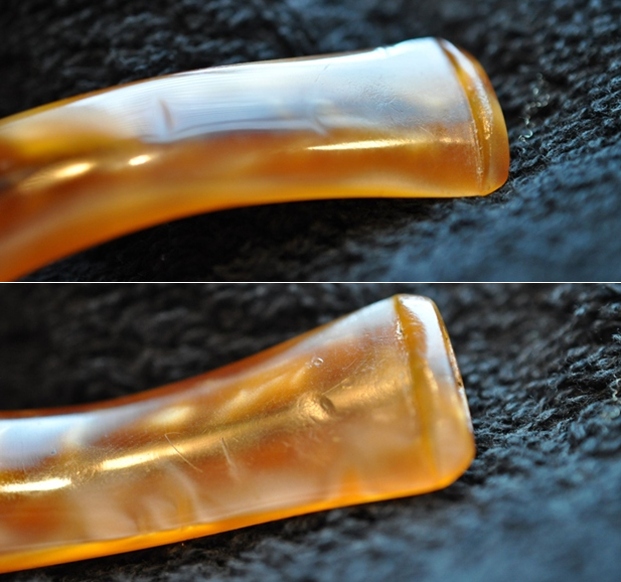
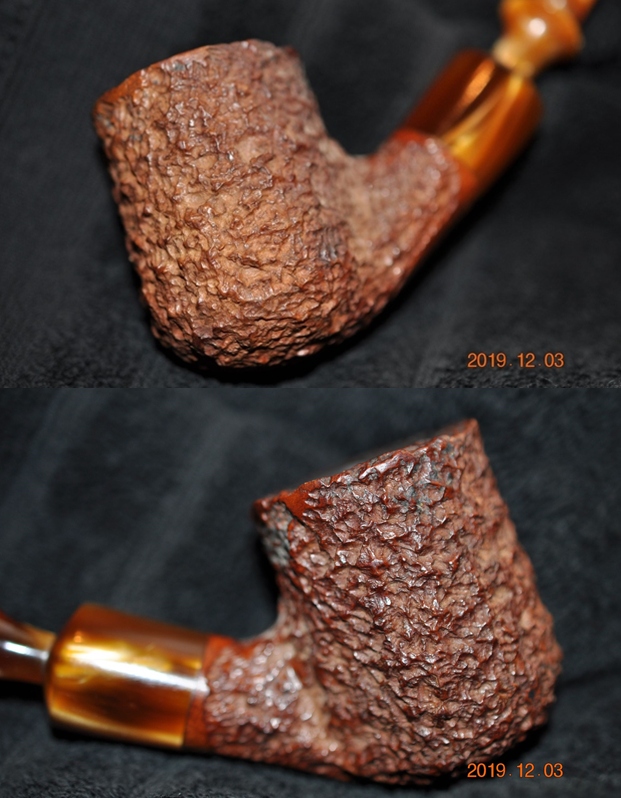
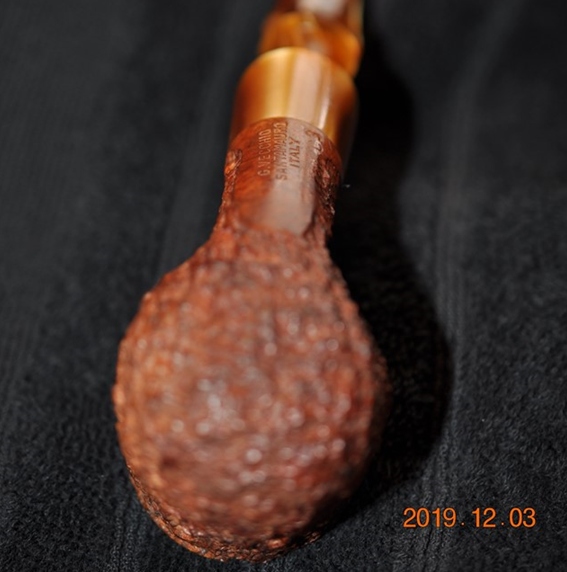
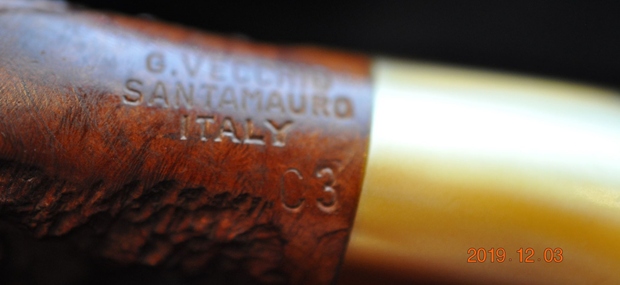
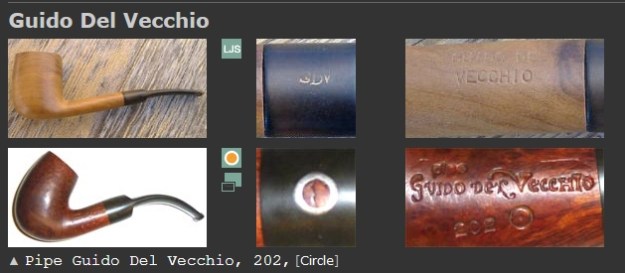
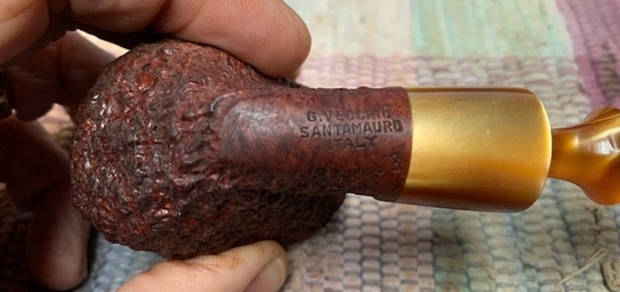
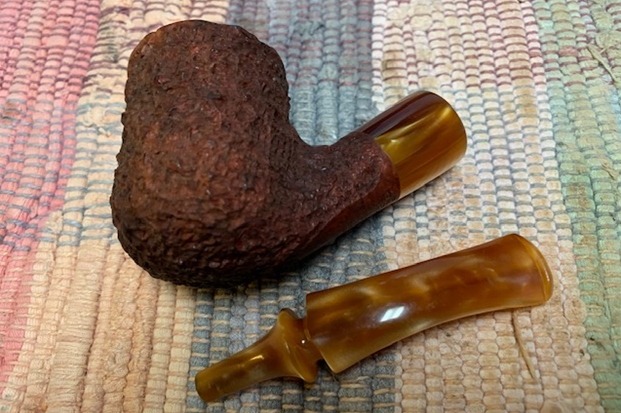
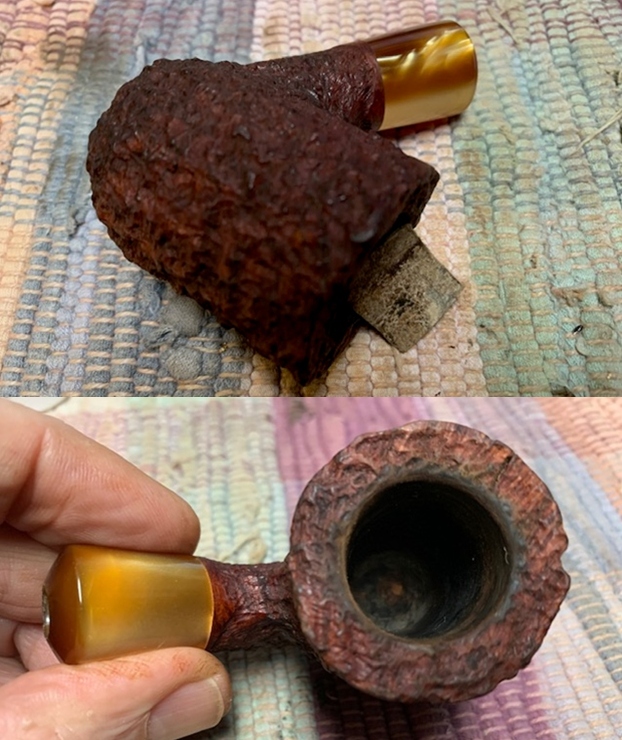
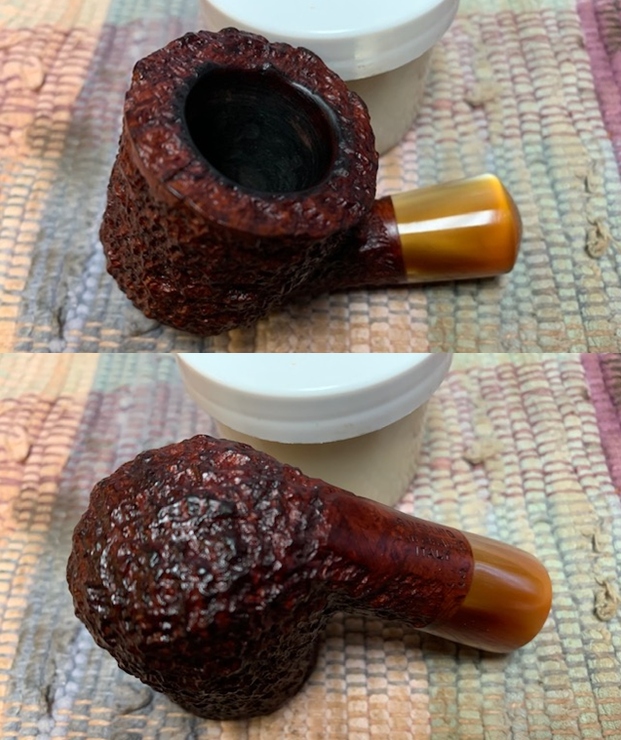
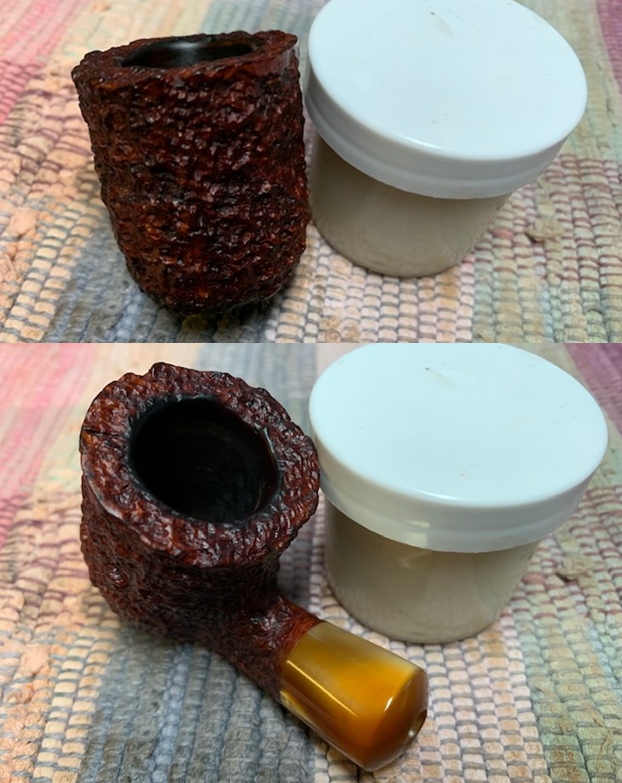
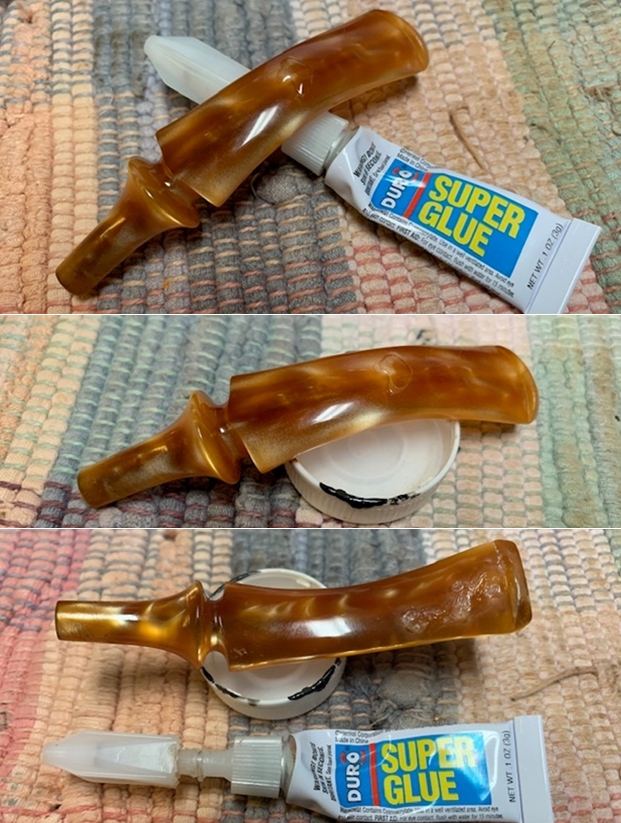
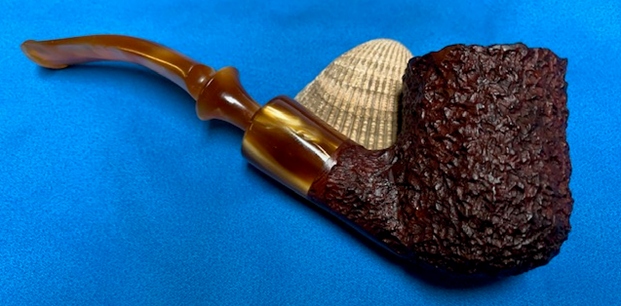
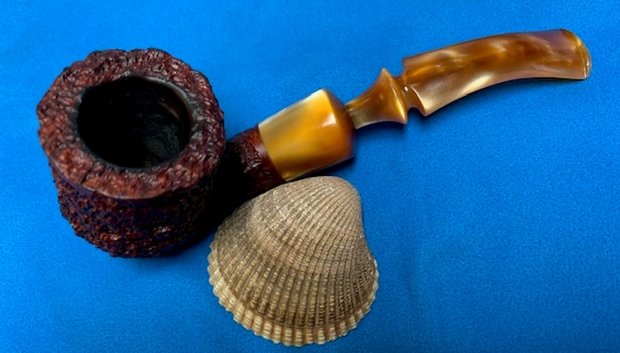
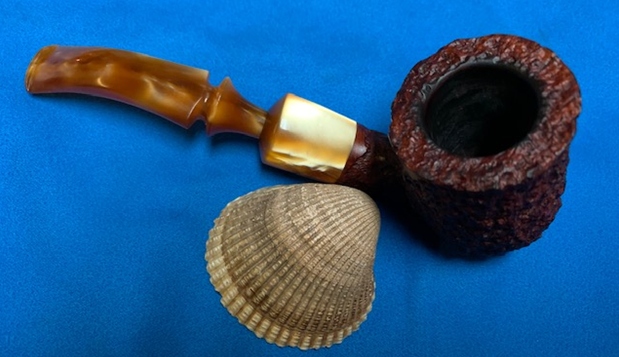
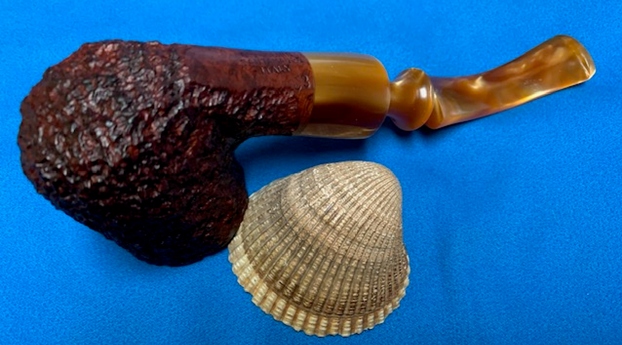
The next pipe on my worktable is an interesting rusticated bent billiard. It has a rugged rusticated finish and an acrylic shank extension with a variegated golden acrylic fancy saddle stem. Jeff found it in antique mall in Houston, Texas USA. It was a filthy pipe with grime and oils ground into the rusticated finish on the bowl. The pipe had some rustic beauty shining through the dust and debris in the valleys of the rough finish. The rustication covered the rim top, bowl and shank with a smooth panel on the underside of the shank. The finish was dull and lifeless and dirty from sitting around. There was a very thick cake in the bowl with lava flowing out of the bowl and over the rim top. The lava had filled in the deeper grooves of the finish on the rim top. The inner edge of the rim was darkened but undamaged. The stamping on the underside of the shank read G. VECCHIO [over] SANTAMAURO [over] Italy. Just below the Italy stamp toward the shank extension it is stamped C3. The fancy saddle stem was variegated gold and did not have any stamping or marks. The surface was dirty and there was a groove on the topside mid stem. There was light tooth chatter and marks on both sides near the button. Jeff took the following photos before he started his cleanup work on the pipe. He took close-up photos of the bowl and rim top from various angles to capture the condition of the bowl and rim top edges. You can see the lava overflow and debris in the rustication of the rim top. You can see the cake in the bowl. This was a dirty pipe but it was the finish was in great condition. The stem is also very dirty with tooth marks and chatter on both sides near the button. He took photos of the sides and heel of the bowl to show the beautiful incredibly deep rustication around the bowl. It is the same kind of rough finish that I really like on Castello Sea Rock pipes. You can see the oil, dust and debris in the finish on both sides of the bowl. Jeff took a photo of the stamping on the shank. It reads as noted above. The stamping is clear and readable.I turned to PipePhil and looked up G. Vecchio as the pipe was stamped and found nothing listed. On a hunch I looked up Guido Del Vecchio (http://www.pipephil.eu/logos/en/logo-g6.html). I found a listing under that name. The pipe I am working on is stamped like the first one in the photo below.I turned to the Pipedia website to see what I could find out about the G. Vecchio Brand. I found a listing for Guido del Vecchio (https://pipedia.org/wiki/Guido_del_Vecchio). He is listed in Italian Pipemakers section but there was not any further information. There was also a listing for Vittorio del Vecchio who was a pipemaker for Mastro de Paja.

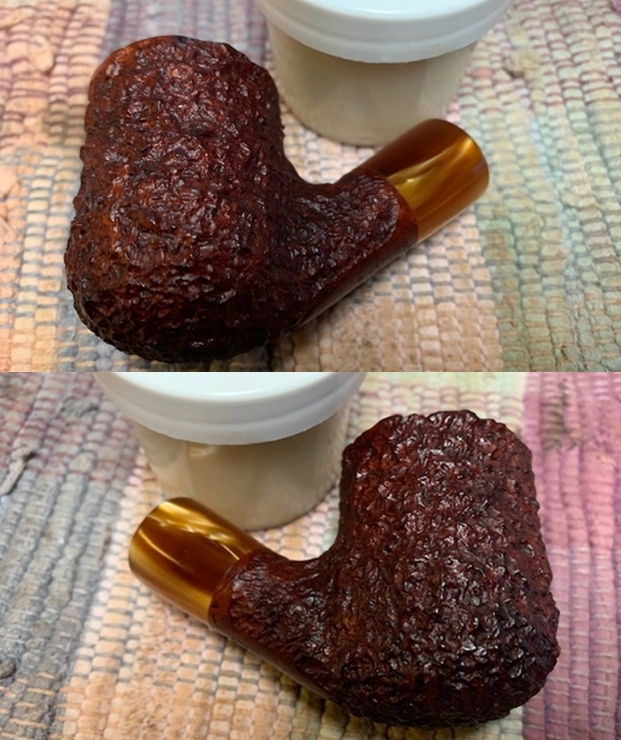
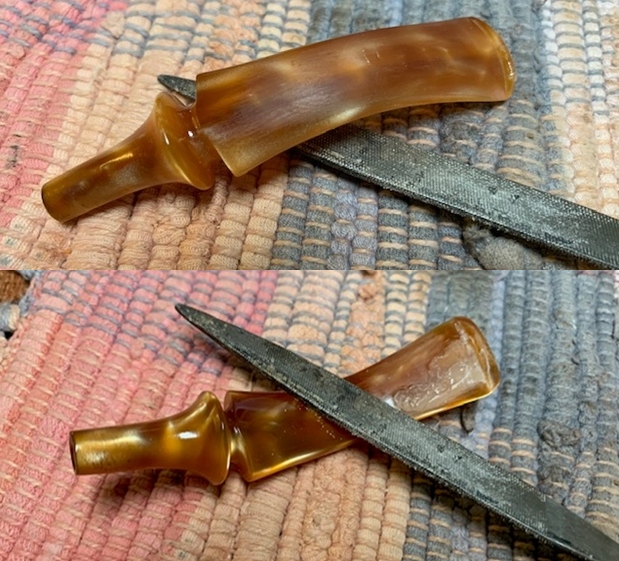
Now it was time to look at it up close and personal. Jeff had done an amazing job in removing all of the cake and the lava on the rim top. He had reamed the bowl with a PipNet Pipe Reamer and cleaned up the remnants with a Savinelli Fitsall Pipe Knife. He took the cake back to bare briar so we could check the walls for damage. He scrubbed the exterior of the bowl with Murphy’s Oil Soap and a tooth brush to remove the grime on the bowl and rim and was able to remove the lava and dirt. He cleaned out the interior of the bowl and shank with pipe cleaners, cotton swabs and alcohol until they came out clean. He cleaned the stem with Soft Scrub to remove the grime on the exterior and cleaned out the airway with alcohol, cotton swabs and pipe cleaners. I took photos of the pipe before I started my part of the restoration. To show how clean the rim top and stem really was I took a close-up photo of the rim and stem. The bowl was clean and cake free. The rim top is very clean with no residual lava in the sandblast finish. The rim inner edge has some darkening and burn damage that will need to be cleaned up. The variegated brown acrylic saddle stem looks cleaned up nicely. The surface had some light tooth marks but the button edge looked really good.       I took a photo of the underside of the shank to show the stamping there. It was clear and readable as noted above.I took the stem off the bowl and took a picture of the pipe to give an idea of the look of the rustication and the stem. It is going to be a pretty pipe.I started my work on the pipe by addressing the burned and darkened inner edge of the rim with a folded piece of 220 grit sandpaper. I smoothed out the edges and was able to bring the rim back to round and clean it up.    The bowl looked very good so I did not need to do any further work on it. I rubbed the bowl and shank down with Before & After Restoration Balm to deep clean the finish on the bowl and shank. The product works to clean, enliven and protect the briar. I worked it in with my fingers and with a horse hair shoe brush to get it into the nooks and crannies of the deep rustication of the finish on the bowl and shank. I let it sit for about 20 minutes to let it do its magic. I buffed it with a soft cloth. The briar really began to have a rich shine. I took some photos of the bowl at this point to mark the progress in the restoration.   The bowl was finished so I set it aside and turned my attention to the stem. There was a groove on the top of the stem that need to be filled in with super glue and tooth marks on the underside of the stem that were deep and needed to be filled in.  Once the repairs cured I used a needle file to recut the button edge and flatten out the repaired areas. I sanded out the repairs on both sides with 200 grit sandpaper to blend it into the surface of the acrylic. I started to polish the stem surface with 400 grit wet dry sandpaper.   I polished the stem with micromesh sanding pads – dry sanding with 1500-12000 grit sanding pads. I wiped the stem down after each sanding pad with a damp cloth I finished polishing it with Before & After Pipe Stem Polish – both Fine and Extra Fine and buffed it off with a cotton cloth. This G. Vecchio C3 Bent Billiard is a real beauty and has a lot of life left. I put the bowl and stem back together again and buffed the bowl and the stem with Blue Diamond on the buffing wheel. I used a soft touch on the rusticated bowl so as not to fill it in with the polishing product. I gave the bowl several coats of Conservator’s Wax and the stem several coats of carnauba wax. I carefully buffed the entire pipe with a clean buffing pad to raise the shine. I finished buffing with a microfiber cloth to deepen the shine. The finished pipe looks very good. The rustication is very tactile and feels great in the hand. It is comfortable and light weight. The finished G. Vecchio Bent Billiard is shown in the photos below. The dimensions of the pipe are Length: 6 inches, Height: 2 inches, Outside diameter of the bowl: 1 ½ inches, Chamber diameter: 7/8 of an inch. This great looking rusticated Vecchio turned out very well. It should be a smoking great pipe. It will be going on the rebornpipes store shortly if you are interested in adding it to your collection. Thanks for reading this blog and my reflections on the pipe while I worked on it.

Breathing Life into a Caminetto Business 143KS Bent Egg


Blog by Steve Laug

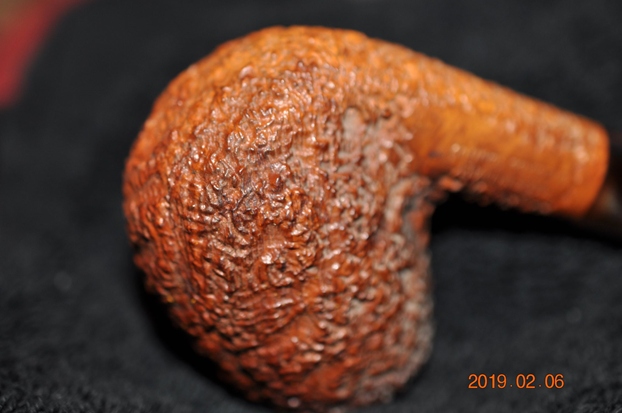
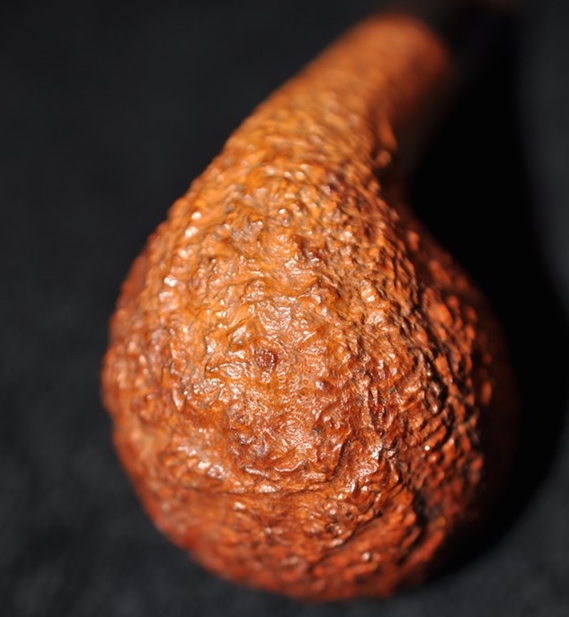
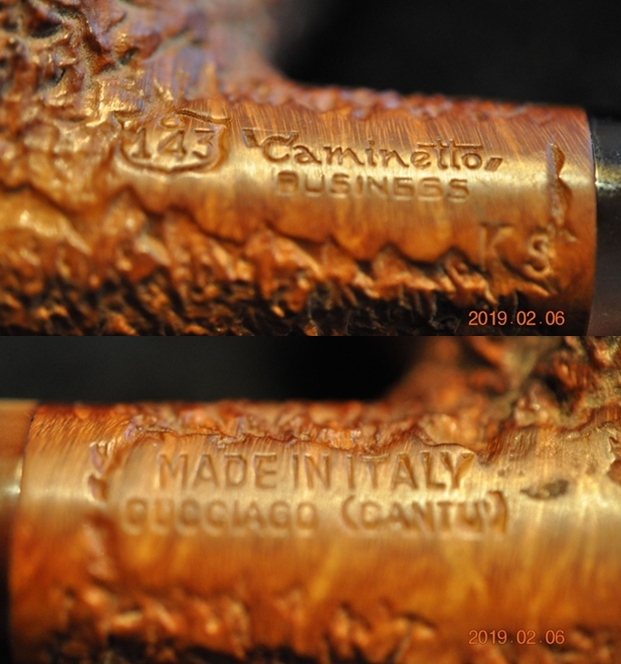
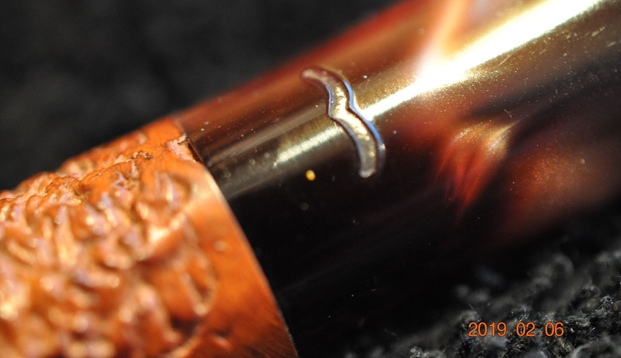
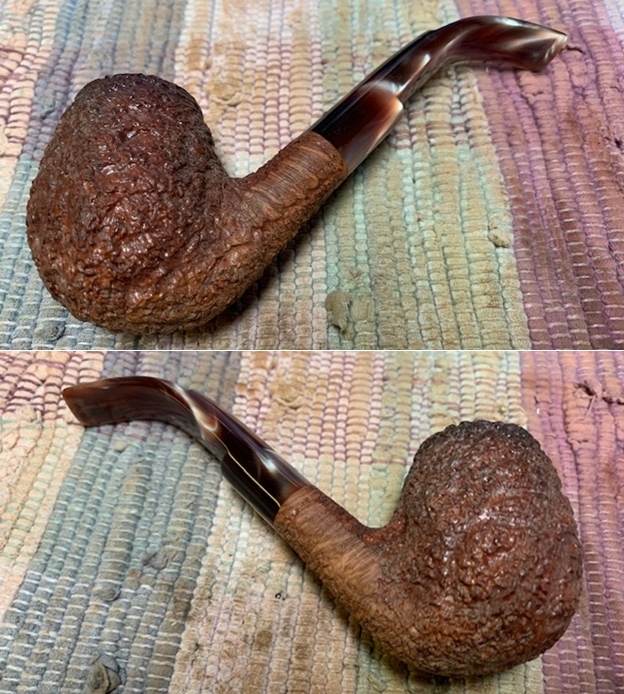
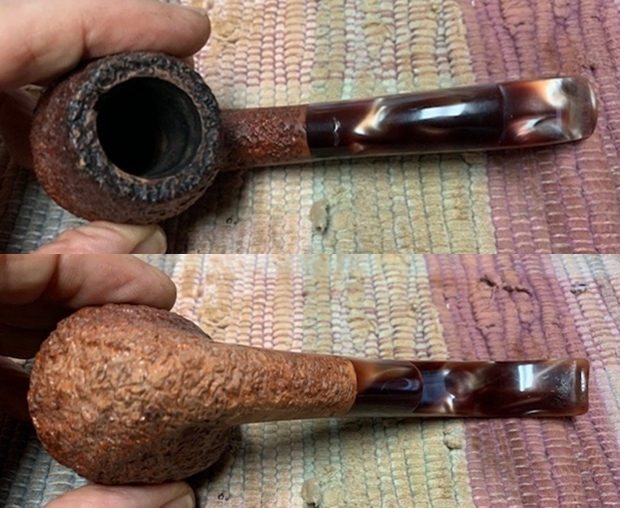
The next pipe on my worktable is a Caminetto Business pipe. Lately I have worked on a few of these and have been impressed by the craftsmanship. The pipe has a rugged rusticated finish and a stepped variegated brown acrylic saddle stem. It had come to us through an auction from Pekin, Illinois, USA. It was a filthy pipe with grime and oils ground into the rusticated finish on the bowl. The pipe had some rustic beauty shining through the dust and debris in the valleys of the rough finish. The rustication covered the rim top, bowl and shank with a smooth panel on each side of the shank. The finish was dull and lifeless and dirty from sitting around. There was a very thick cake in the bowl with lava flowing out of the bowl and over the rim top. The lava had filled in the deeper grooves of the finish on the rim top. The inner edge of the rim appeared to be in good condition under the lava coat other than a nick on the front right edge. The stamping on the left side of the shank read Caminetto in script over BUSINESS. To the left of that toward the bowl was the shape number 143 in a cartouche and to the right of the stamp it read KS. On the right side of the shank it was stamped MADE IN ITALY [over] CUCCIAGO (CANTU). The stepped saddle stem was variegated brown and had the classic Caminetto Mustache on the top of the saddle. The surface was dirty and there was light tooth chatter and marks on both sides near the button. Jeff took the following photos before he started his cleanup work on the pipe.He took close-up photos of the bowl and rim top from various angles to capture the condition of the bowl and rim top edges. You can see the lava overflow and debris in the rustication of the rim top. You can see the cake in the bowl. This was a dirty pipe but it was the finish was in great condition. The stem is also very dirty with tooth marks and chatter on both sides near the button. He took photos of the sides and heel of the bowl to show the beautiful incredibly deep rustication around the bowl. It is the same kind of rough finish that I really like on Castello Sea Rock pipes. You can see the oil, dust and debris in the finish on both sides of the bowl. Jeff took a photo of the stamping on the shank. It reads as noted above. The stamping is clear and readable. I have worked on several Caminetto in the past so I turned to one of the restorations on the rebornpipes blog and reread the background information on the brand. I am including that info here with this restoration (https://rebornpipes.com/2020/04/19/pretty-tired-and-dirty-messy-restoration-of-a-caminetto-business-tomahawk-182/).

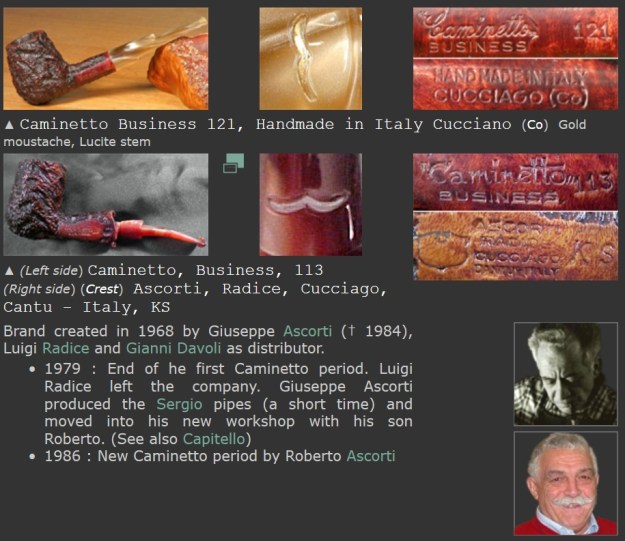
When the pipe arrived I turned to Pipephil (http://www.pipephil.eu/logos/en/logo-c1.html) to see if he included not only information on this Caminetto Business 182. He gave some interesting information about the brand. It was created in 1986 by Guiseppe Ascorti, Luigi Radice and Gianni Davoli as the distributor. It states that in 1979 the first Caminetto period ended with Luigi Radice leaving the company. Guiseppe Ascorti continued making the pipe with his son Roberto. In 1986 the New Caminetto period began by Roberto Ascorti.I turned to Pipedia for more information on the Caminetto and how to date the pipe I had in hand (https://pipedia.org/wiki/The_History_of_Caminetto_(shapes,_stamping,_articles,_etc.). I quote a pertinent paragraph:

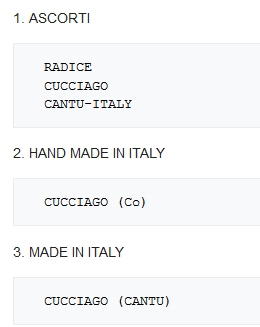
Stampings and dating: First off, dating earlier Caminetto’s is nearly impossible. Nevertheless, there were three phases, some in which were much earlier, of development that occurred in the stamping process of Caminetto. Before that though, every pipe had the stamp of Caminetto in one of two ways: Caminetto in script or Caminetto within quotation marks in block letters (I do not know how it was decided which pipe got which stamp, as I have had EARLY Caminetto’s with both)…

The stampings are shown in the photo to the left. The stamping on this pipe is like #3.

…Now, the question is which stamps are earlier and more likely to have been made by Ascorti and/or Radice. The answer is #1. The differences in #2 and #3 seem to be minute, as Cucciago is simply a suburb of Cantu. Pipes stamped like #1 are the most valuable Caminetto’s as they are the earliest production of the brand, as well as what some would claim the most perfect of Ascorti and Radice’s work. The last tidbit is, of course, debatable…

… There is also another factor in stamping, that is, which series the pipe falls in. The majority of Caminetto’s one sees are those of the “Business” series, which are stamped such with their collective shape (see photo of shapes below). Another stamp that sometimes follows the “Business” one is “KS,” which from what I know means “King-size” (this could be wrong, as there are pipes stamped with KS1, KS2, and KS3).

Now it was time to look at it up close and personal. Jeff had done an amazing job in removing all of the cake and the lava on the rim top. He had reamed the bowl with a PipNet Pipe Reamer and cleaned up the remnants with a Savinelli Fitsall Pipe Knife. He took the cake back to bare briar so we could check the walls for damage. He scrubbed the exterior of the bowl with Murphy’s Oil Soap and a tooth brush to remove the grime on the bowl and rim and was able to remove the lava and dirt. He cleaned out the interior of the bowl and shank with pipe cleaners, cotton swabs and alcohol until they came out clean. He cleaned the stem with Soft Scrub to remove the grime on the exterior and cleaned out the airway with alcohol, cotton swabs and pipe cleaners. I took photos of the pipe before I started my part of the restoration.  To show how clean the rim top and stem really was I took a close-up photo of the rim and stem. The bowl was clean and cake free. The rim top is very clean with no residual lava in the sandblast finish. The inner edges of the bowl look good and the nicked area on the right front is clean. The variegated brown acrylic saddle stem looks cleaned up nicely. The surface had some light tooth marks but the button edge looked really good.I took the stem off the bowl and took a picture of the pipe to give an idea of the look of the rustication and the stem. It is going to be a pretty pipe.I used a drop of super glue to fill in the chipped edge on the right front inner edge of the bowl. Once the glue repair cured I smoothed out the inner edge of the bowl with 220 grit sandpaper.I roughed up the repaired area on the rim top with a wire brush to knock of the debris from the repair. Once it was clean it matched the edges of the rest of the bowl. I knew that the original Caminetto Business 143KS  pipe had a flumed rim top and runoff down the top ½ inch of the bowl sides. I found a photo of the same pipe online and flumed the bowl on the one I had accordingly. I used a Walnut stain pen to touch up the rim top and give the bowl a slight flume around the top edge. Once I treated the pipe with Before & After Restoration Balm the flumed part would flow better with the surrounding briar.The bowl looked very good so I did not need to do any further work on it. I rubbed the bowl and shank down with Before & After Restoration Balm to deep clean the finish on the bowl and shank. The product works to clean, enliven and protect the briar. I worked it in with my fingers and with a horse hair shoe brush to get it into the nooks and crannies of the deep rustication of the finish on the bowl and shank. I let it sit for about 20 minutes to let it do its magic. I buffed it with a soft cloth. The briar really began to have a rich shine. I took some photos of the bowl at this point to mark the progress in the restoration.   The bowl was finished so I set it aside and turned my attention to the stem. I sanded out the light tooth marks and chatter with 200 grit sandpaper and started to polish it with 400 grit wet dry sandpaper. I touched up the mustache stamp on the topside of the saddle stem with Rub’n Buff Antique Gold. I rubbed it into the stamp and pressed into it with a toothpick. I buffed it off with a soft cloth and left the gold in the mustache to bring it back into place.   I polished the stem with micromesh sanding pads – dry sanding with 1500-12000 grit sanding pads. I wiped the stem down after each sanding pad with a damp cloth I finished polishing it with Before & After Pipe Stem Polish – both Fine and Extra Fine and buffed it off with a cotton cloth. This Caminetto Business 143KS Bent Egg is a real beauty and has a lot of life left. I put the bowl and stem back together again and buffed the bowl and the stem with Blue Diamond on the buffing wheel. I used a soft touch on the rusticated bowl so as not to fill it in with the polishing product. I gave the bowl several coats of Conservator’s Wax and the stem several coats of carnauba wax. I carefully buffed the entire pipe with a clean buffing pad to raise the shine. I finished buffing with a microfiber cloth to deepen the shine. The finished pipe looks very good. The rustication is very tactile and feels great in the hand. It is comfortable and light weight. The finished Caminetto Business Bent Egg is shown in the photos below. The dimensions of the pipe are Length: 6 inches, Height: 2 ¼ inches, Outside diameter of the bowl: 1 ¼ inches, Chamber diameter: ¾ of an inch. This great looking rusticated Caminetto turned out very well. It should be a great pipe. It will be going on the rebornpipes store shortly if you are interested in adding it to your collection. Thanks for reading this blog and my reflections on the pipe while I worked on it.

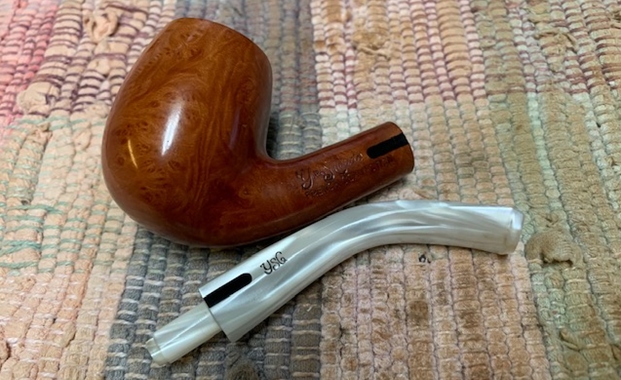
New Life for an Yves St. Claude French Connection 83 White Stemmed Bent Billiard


Blog by Steve Laug

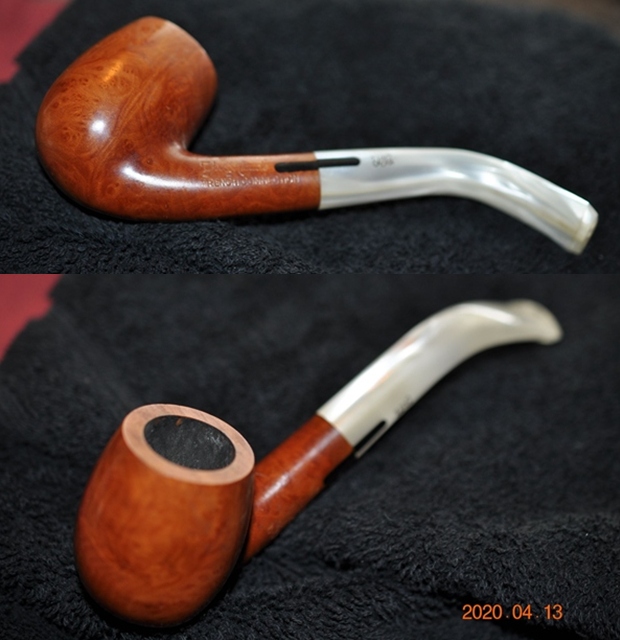
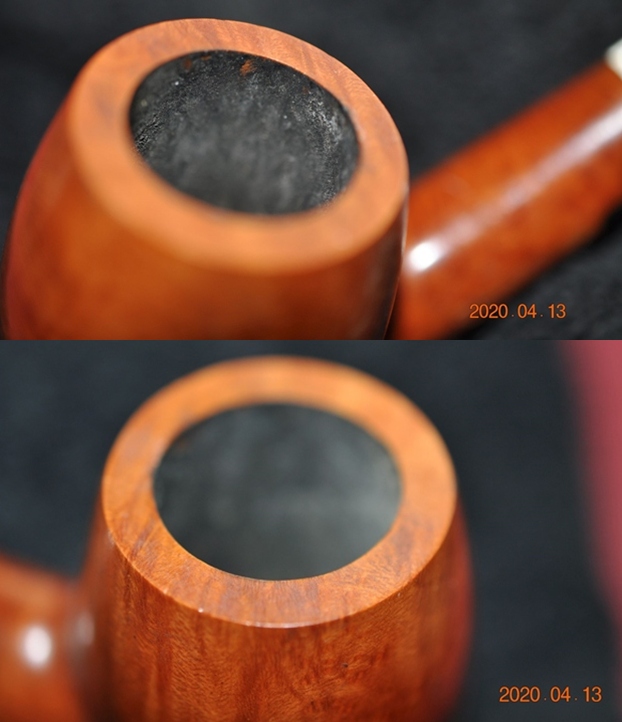
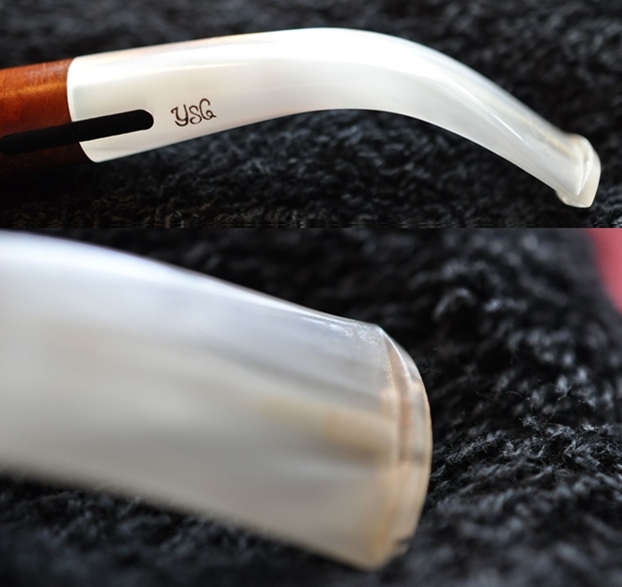
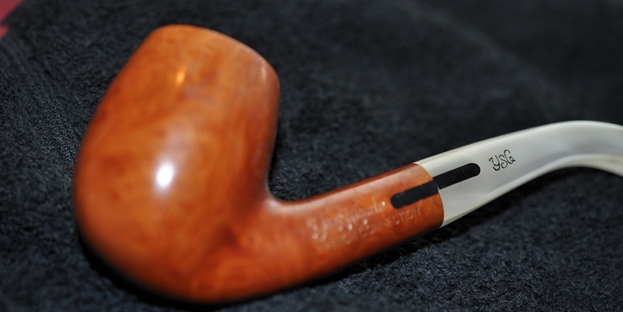
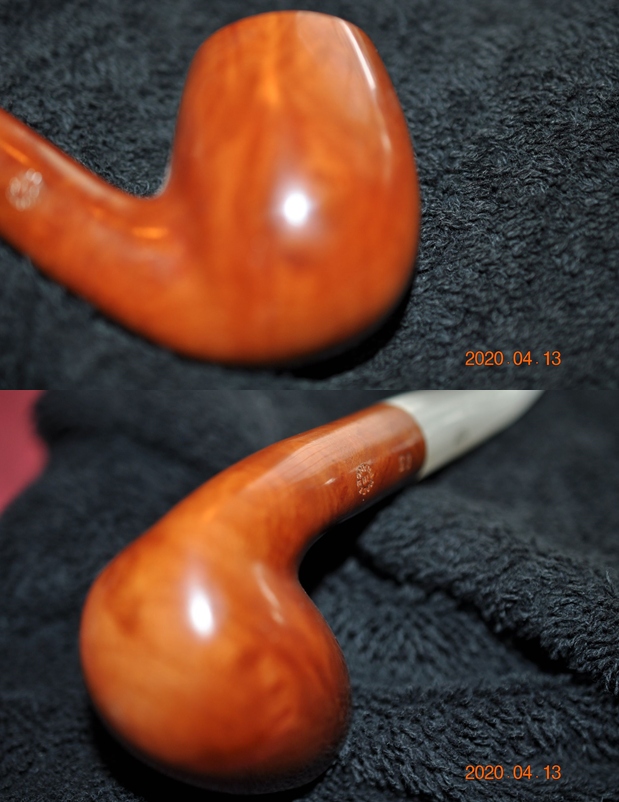
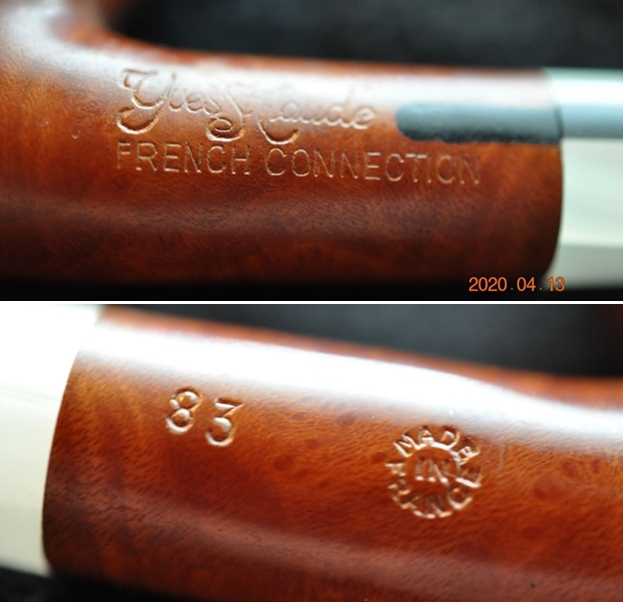
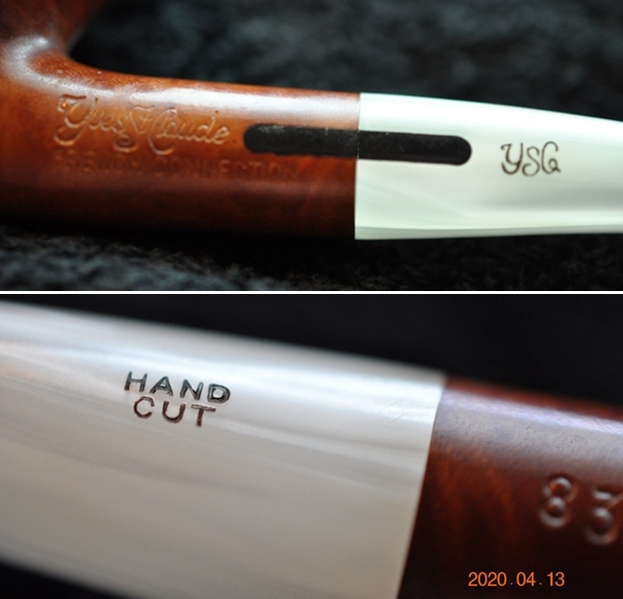
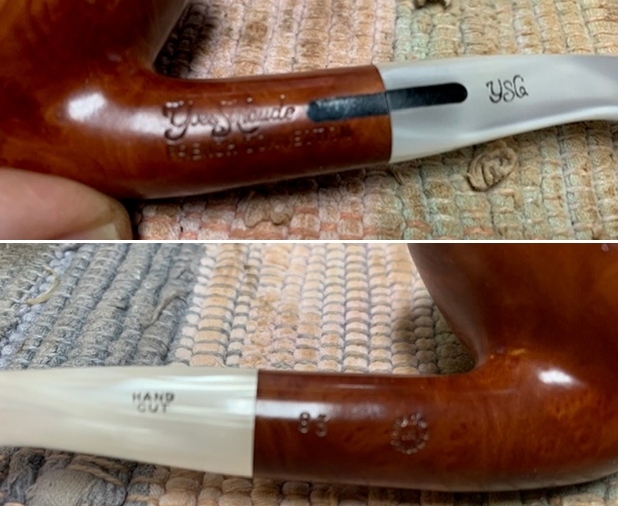
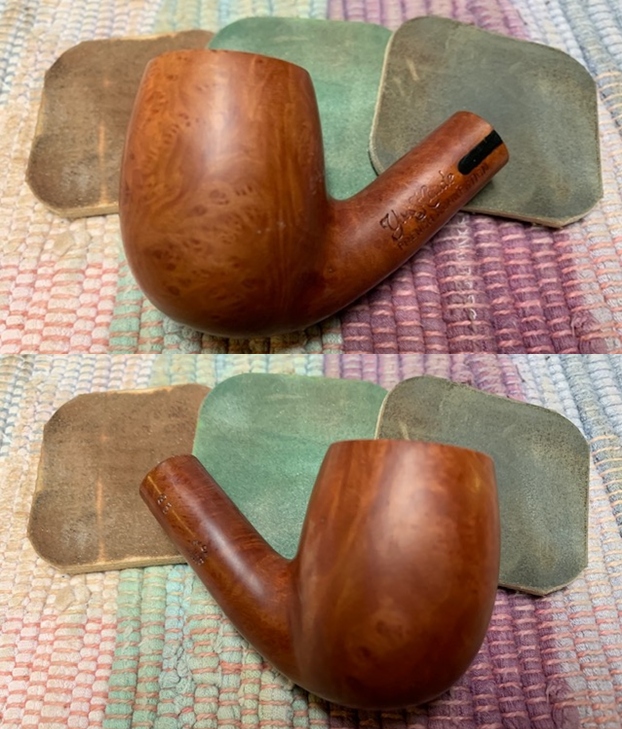
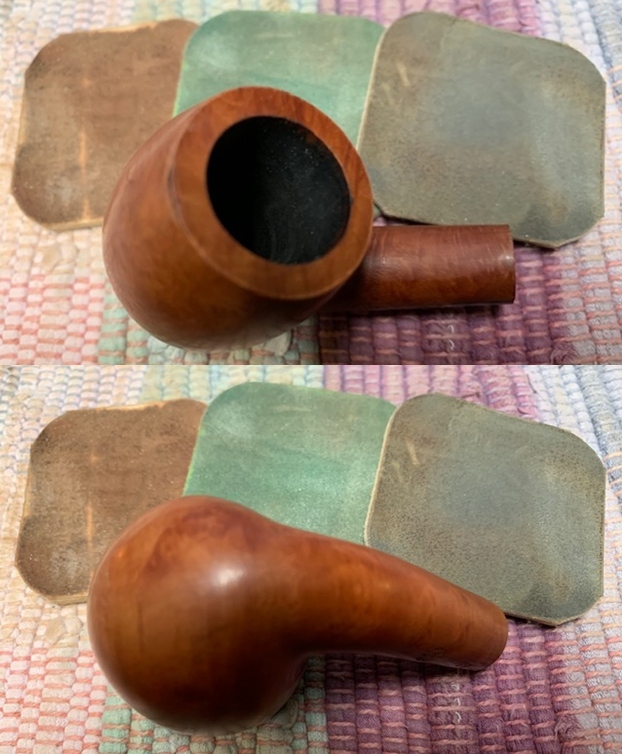
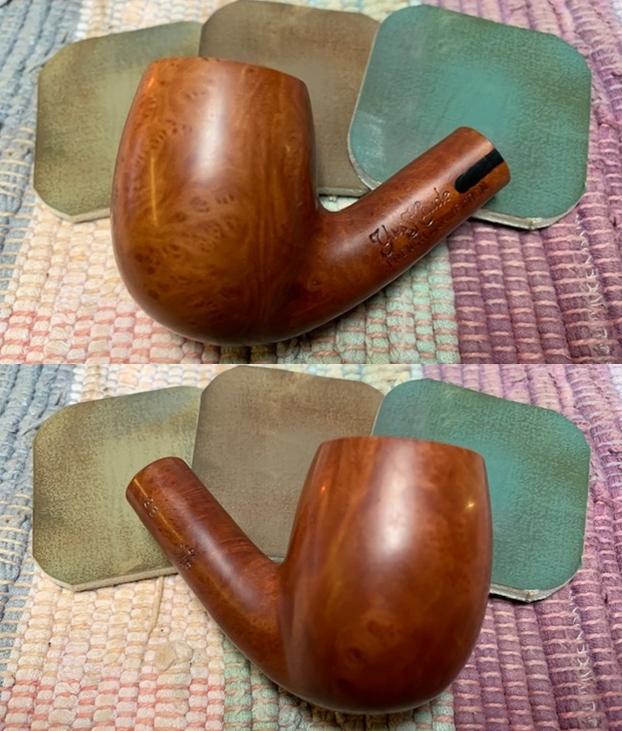
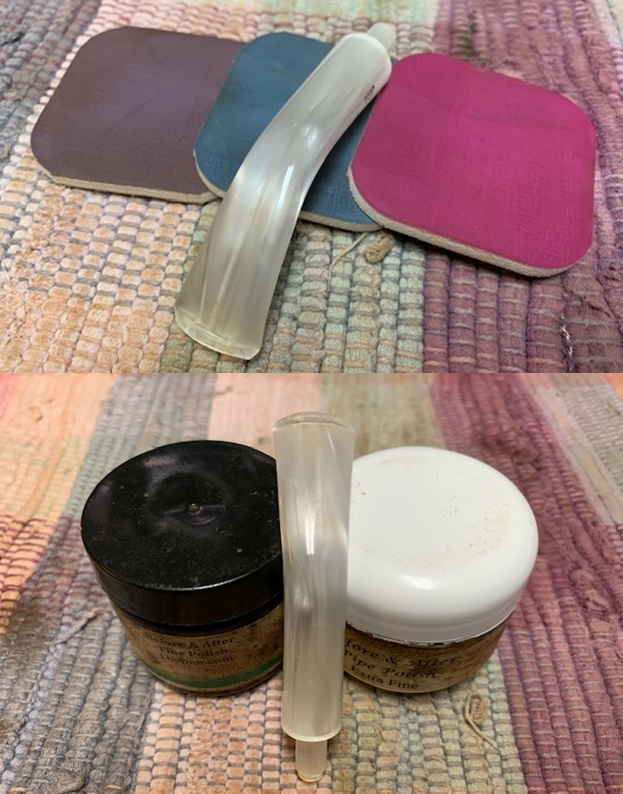
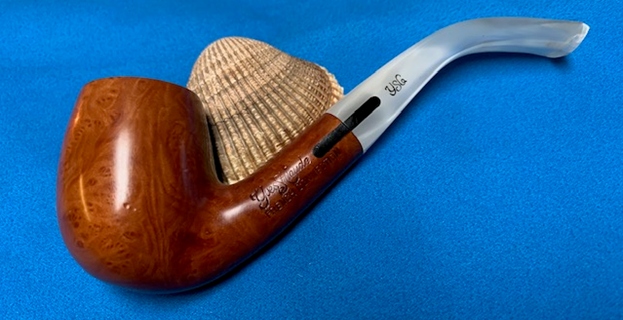
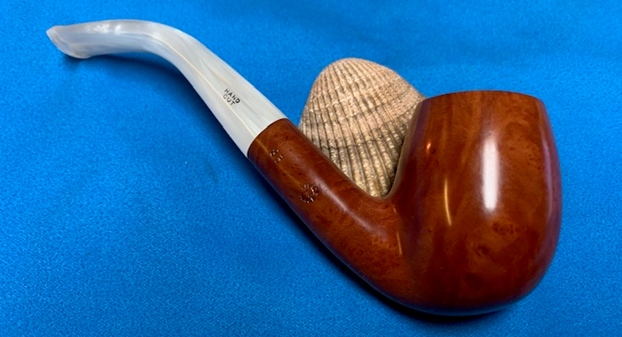
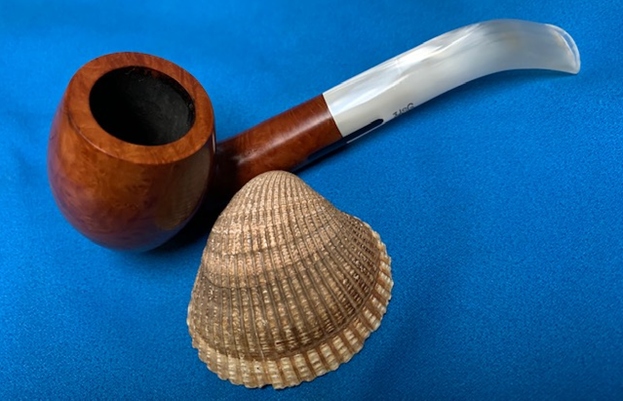
The next pipe on the work table came to us from an online auction in Ottawa, Illinois, USA. It is a nice looking smooth bent billiard with a white pearlized bent stem. It had a mix of nice grain around the bowl and shank. It has a taper variegated silver acrylic military bit stem. The shank and the stem have and inset black bar that makes aligning the stem and shank a simple proposition. The finish on the bowl is in great condition with a coat of shiny varnish over the light tan coloured stain that makes the pipe shine. The pipe has some grime on the surface of the briar. This pipe is stamped on the left side of the shank and reads Yves St. Claude [over] French Connection. On the right side of shank it has the shape number 83 followed by the Made in France circular COM stamp. There was a stylized YSC stamped on the left side of the shank. The pipe is lightly smoked with no cake in the bowl and minimal tars and oils in the stem airway. There were some very light tooth marks and chatter on both sides of the stem near the button. The pipe is in excellent condition. Jeff took photos of the pipe before he started his cleanup. He took photos of the rim top to show the condition of the top and edges of the bowl. It is a beautiful lightly smoked pipe with a carbonized bowl coating. The stem had light tooth marks and chatter on both sides ahead of the button. He took photos of the sides and heel of the bowl to show the grain around the bowl and the condition of the pipe. It is a great looking pipe.   He took photos of the stamping on the sides of the shank. It is clear and readable as noted above. He also took photos of the YSC stamp on the left side and Hand Cut on the right side of the taper stem. I turned first to a blog I had written on the restoration of previous YSC pipe that I received (https://rebornpipes.com/2020/04/23/next-on-the-table-an-yves-st-claude-marbre-75-bulldog/).

In the previous blog that I cited above I had found several references to Yves Grenard, trained in Comoy’s England factory, purchasing the Chacom plant in St. Claude. He managed the factory and it passed on to his son afterward. I am pretty certain that this Yves St. Claude pipes was made by Chacom in France with the stamping bearing Yves name.

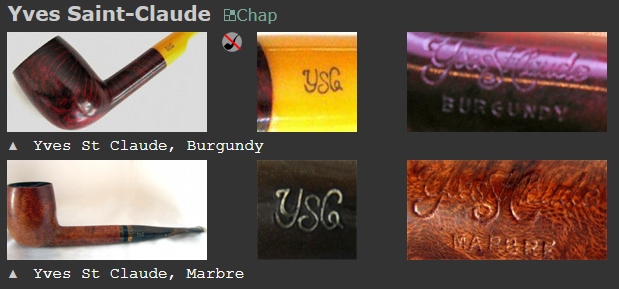
I turned back to Pipephil’s site to have a look at what was listed there and did a screen capture of the section (http://www.pipephil.eu/logos/en/logo-y.html).I turned to Pipedia and in the listing of French Brands and Maker I found a connection of the brand to Chapuis-Comoy and that the YSC brand was made primarily for Tinder Box (https://pipedia.org/wiki/French_Pipe_Brands_%26_Makers_U_-_Z). I followed that up by turning to the Chapuis-Comoy article from Pipedia (https://pipedia.org/wiki/Chapuis-Comoy).

French factory, in St. Claude. It began with Francois Comoy who, in 1825, was making pipes in boxwood and other types, as well as in clay, for the armies of Napoleon. In 1856, the Comoy factory was the first to produce briar bowls at St. Claude. In 1870, Francois’s grandson, Henri Comoy (1850-1924) was taken prisoner in Switzerland whilst serving in the French army during the Franco-Prussian war, where he found his cousins, the Chapuis. This meeting produced the idea of an association, which only became a reality in 1922, with the creation of Chapuis-Comoy. After Henri’s death, his sons Paul and Adrien, took over the company with the support of their cousins, Emile and Louis Chapuis Sr., and in 1928 they created the Chacom brand.

In 1932, due to the economic crisis at Saint-Claude, the factory merged with La Bruyère, adopting that name, and becoming one of the biggest pipe companies in the world, with 450 workers. Louis Chapuis Jr., joined the company in 1938 and Pierre Comoy in 1947. The name Chapuis-Comoy returned in 1957 (125 workers), due to the success of the Chacom brand in France. In 1971, the London factory (see Comoy’s) became independent, and Yves Grenard, second cousin to Pierre, took over Saint-Claude, and is still running it. Between 1987 and 2001, the factory, which employed over 40 people, joined the Cuty-Fort Enterprises SA holding and, in 1994, included the Ropp brand it its catalog.

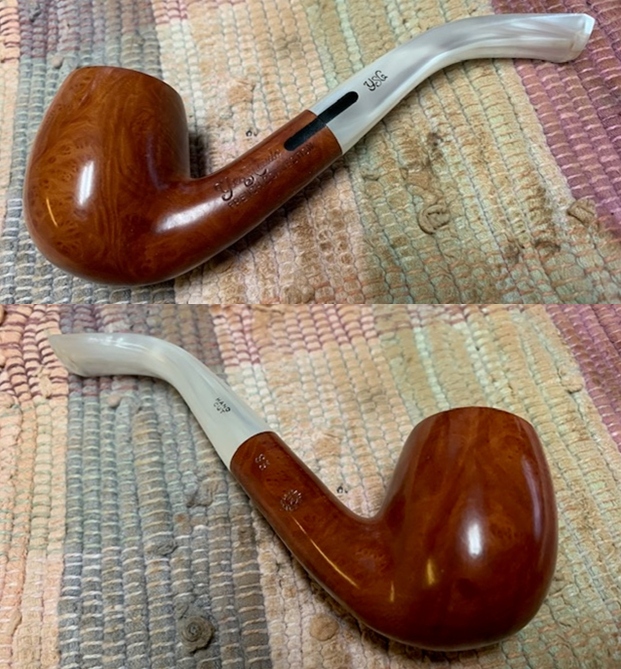
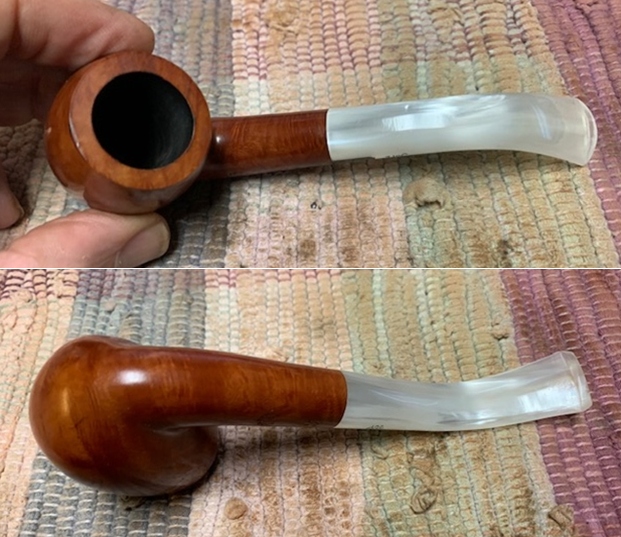
Reminded about the Chacom connection for the YSC brand it was now time to turn to the pipe itself and do my part of the work. As usual Jeff had done a thorough cleanup on the pipe. He reamed the bowl with a PipNet pipe reamer and followed up with a Savinelli Fitsall pipe knife to remove the cake. He scrubbed out the mortise and the airway in the shank and the stem with alcohol, cotton swabs and pipe cleaners. He scrubbed the exterior of the bowl, rim, shank and stem with a tooth brush and Murphy’s Oil Soap to remove the oils and tars on the rim and the grime on the finish of the bowl. He rinsed it under running water. One of the benefits of this scrub is that it also tends to lift some of the scratches and nicks in the surface of the briar. He dried it off with a soft cloth. He cleaned the internals and externals of the stem with alcohol, pipe cleaners and cotton swabs. He soaked the stem in Before & After Deoxidizer and rinsed it off with warm water and cleaned out the airway in the stem with alcohol. Other than the damaged rim top the pipe looked good.   I took a photo of the rim top and stem to show the condition. The rim top and the inner edge of the bowl were in excellent condition. The acrylic taper stem had light tooth chatter and marks on both sides ahead of the button and on the button edges. The stamping on the sides of the shank is clear and readable as noted above.I removed the stem from the shank and took a photo of the pipe to give a sense of the whole. It is a nice looking bent billiard in great condition.I started working on the pipe by removing the varnish coat as it had some bubbling on the rim top. I had to remove it from the entire pipe not just the rim top to get an even coverage when I waxed it. I sanded it with micromesh sanding pads, wet sanding with 1500-12000 grit sanding pads and wiping it down with an alcohol dampened pad after each sanding pad. I rubbed the bowl and shank down with Before & After Restoration Balm. I worked it into the surface of the bowl sides and shank with my fingertips to clean, enliven and protect the briar. I let the balm sit for a little while and then buffed with a cotton cloth to raise the shine. The Balm did its magic and the grain stood out.    I set the bowl aside and worked on the stem. I sanded out the tooth marks with 220 grit sandpaper and started polishing the stem with 400 grit wet dry sandpaper.  I polished the acrylic stem with micromesh sanding pads – 1500-12000 grit pads. I wiped it down with Obsidian Oil after each sanding pad. I used Before & After Pipe Polish – both Fine and Extra Fine to further polish the stem. The photo below shows the polished stem. This nice smooth finished Yves St. Claude French Connection 83 with a white acrylic taper stem is a great looking pipe. The rich medium brown finish and the white stem work really well together. The briar is clean and really came alive. The rich medium brown stain gave the grain a sense of depth with the polishing and waxing. The grain really popped. I put the acrylic stem back on the bowl and carefully buffed the pipe with Blue Diamond on the buffing wheel using a light touch on the briar. I gave the bowl and the stem multiple coats of carnauba wax on the buffing wheel. I buffed the pipe with a clean buffing pad to raise the shine. I hand buffed the pipe with a microfiber cloth to deepen the shine. The finished YSC French Connection Bent Billiard is a beauty and feels great in the hand and looks very good. Give the finished pipe a look in the photos below. The dimensions of the pipe are Length: 5 ½ inches, Height: 2 inches, Outside diameter of the bowl: 1 ¼ inches, Chamber diameter: ¾ of an inch. Thanks for reading this blog and my reflections on the pipe while I worked on it. There are many more to come!

Restoring an Interesting Israeli Made Balsa System Bent Apple


Blog by Steve Laug

The next pipe on the work table came to us from a friend in Maryland, USA. It has been around for a while waiting to be worked on. Jeff did the original photographs of the pipe in December 2019. It is a Bent Apple with an acrylic shank extension and stem and some nice grain around the bowl. There are two rings on the shank before the extension – one is black acrylic and one is brass. It makes for a pretty pipe. The stamping is the clear and readable. It is stamped on the left side of the shank and reads the Balsa [over] System. On the underside of the shank it is stamped with Israel next to the shank extension. The varnished finish had a lot of grime ground into the bowl and some darkening around the sides of the bowl. There was some damage on the outer edge of the rim at the front of the bowl caused by knocking out the bowl. The bowl was moderately caked and the varnish was peeling on the top of the rim. The rim top and inner edge of the bowl looked quite good under the grime. The fancy variegated gold and brown acrylic stem matched the shank extension. It had tooth marks and chatter on both sides of the P-lip style stem. The top showed more damage ahead of the button than the underside. The stem had no identifying logo or markings. The pipe had promise but it was very dirty. Jeff took photos of the pipe before he started his cleanup work.  He took photos of the rim top and bowl to give a clear picture of the thickness of the cake and the condition of the rim top and edges. You can see the damage on the front outer edge of the bowl and the peeling varnish on the top. He also took photos of the top and underside of the stem to show the chatter and tooth marks. The variations in colour on the stem are visible.  Jeff took photos of the sides and heel of the bowl to give a picture of what the briar around the pipe looked like. There is some interesting grain under the grime and smoky looking varnish. Jeff took photos of the stamping on the left and underside of the shank. It read as noted above.His final pre-cleanup photo shows the pipe taken apart. You can see from the drilling on the stem that it was made for a filter and in this case the Savinelli Balsa System Filter.I searched on Pipephil and Pipedia for information on the brand and did not find anything on either site. I Googled the Balsa System Israel brand and did not come up with anything either. I knew from previous work on Israeli made pipes that they came from the Shalom Pipe Company and were made for a variety of shops and makers around the world. Perhaps I was dealing with one of their pipes crafted to accept the Savinelli Balsa System.

I  did a search for the Balsa System and found a great review and explanation of the way that it works (https://www.tobaccopipes.com/blog/filtered-pipes-savinelli-balsa-system/). I quote from that article in part below.

Savinelli’s Convertible Balsa System

One of the many things that sets Savinelli apart from other pipe makers is the signature convertible balsa system. Most Savinelli pipes have this feature, although not all, so check your chosen pipe’s product description first.

Convertible refers to the ability to use the filter or remove it and use a spacer piece to smoke your pipe unfiltered.

Why balsa wood filters?When you hear the word “balsa”, your first thought is probably not about pipes. It’s the same material used to make small airplanes. Balsa is naturally porous, which allows it to absorb the majority of the moisture and smoke impurities from the tobacco, without the need to use chemical elements or paper. This unique wood can do this without altering the aroma or flavor of the tobacco, which sets balsa filters apart from other pipe filters like charcoal.

Popularly hailed as the most absorbent wood Mother Nature has to offer, Achille Savinelli and his team were clearly inspired in creating the convertible balsa system. The use of this unique material can’t be underestimated. No matter how hot you smoke, the tongue bite is eliminated (although we can’t help you with the hole you might burn in your beautiful Italian pipe). In addition, the gurgle caused by moisture build up many new smokers grapple with is no longer an issue. Another benefit of balsa wood is it’s apparent ability to help reduce toxins inherent in smoking tobacco. According to tests by the EURATOM Research Center of Ispra, Italy, the filter has the ability to absorb up to 77% of the nicotine and 91% of the tar contained in the pipe tobacco, without altering flavor. This makes Savinelli’s convertible balsa system ideal for smokers who want to cut down on nicotine and tar, without sacrificing the experience they love.

I knew that the pipe I was working came from an Israeli Pipemaker and was made to use the Savinelli Balsa 6mm Filter System. Now it was time to work on the pipe itself.

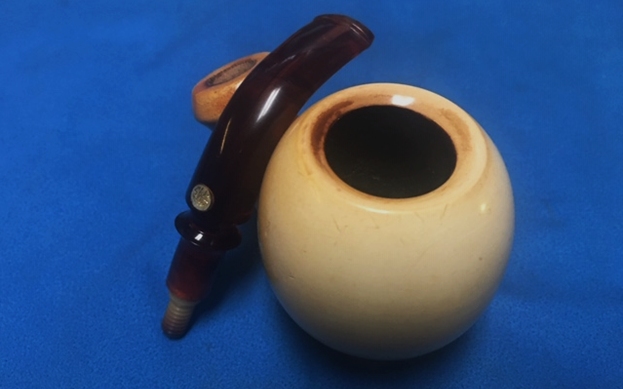
Since Jeff follows the same pattern of work in his cleanup we do not include photos but rather just a simple summary. Jeff reamed the bowl with a PipNet pipe reamer and followed up with a Savinelli Fitsall pipe knife to remove the cake. He scrubbed out the mortise and the airway in the shank and the stem with alcohol, cotton swabs and pipe cleaners. He scrubbed the exterior of the bowl, rim, shank and stem with a tooth brush and Murphy’s Oil Soap to remove the oils and tars on the rim and the grime on the finish of the bowl. He rinsed it under running water. He dried it off with a soft cloth. He was able to remove much of the varnish coat from the rim top and you could see the damages to the front edge of the rim. He cleaned the internals and externals of the stem with alcohol, pipe cleaners and cotton swabs. The stem was clean and you could clearly see the damage on the top and underside. I took photos of what the pipe looked like when I brought to my worktable. The rim top cleaned up really well with the peeling varnish coat removed. The rim top and outer edges of the rim showed some damage. The stem surface looked very good the tooth chatter and marks on both sides ahead of the button very visible.       I took a photo of the stamping on the side of the shank. It read as noted above.   I removed the stem and took photos of the pipe to give a sense of the whole. It is a well shaped apple with great grain. I also captured the mortise and tenon ends to show the 6mm Balsa Filter drilling. Now it was time to do my work on the pipe. To remove the damage to the rim top and the edges of the bowl I topped it on a topping board with 220 grit sandpaper. I was able to remove the  damage on the rim top but the damage on the front outer edge would take more work.    I gave the outer edge of the rim a slight bevel with 220 grit sandpaper to get rid of the damage on the front of the bowl and blend it into the overall look of the outer edge. I polished the bowl and the rim top, sides and shank with micromesh sanding pads – wet sanding with 1500-12000 grit pads and wiping it down after each pad with a damp cloth. I carefully avoided the stamping on the top and underside of the shank so as not to damage the stamping. I stained the rim top with a Maple  Stain Pen and set it aside to let the stain cure for a while.I rubbed the bowl and shank down with Before & After Restoration Balm. I worked it into the surface of the bowl sides and shank with my fingertips to clean, enliven and protect the briar. I let the balm sit for a little while and then buffed with a cotton cloth to raise the shine.  It helped to blend the stain into the rest of the bowl.  The final buffing would bring the pipe alive and further blend the stain. I set the bowl aside and turned my attention to the stem. I filled in the tooth marks on the topside and the damage to the button edge on the underside of the stem with clear super glue.  Once the repairs cured I used a needle file to flatten the repairs and recut the button. I used 220 grit sandpaper to smooth out the repairs further and blend them into the stem surface. I started the polishing with 400 grit wet dry sandpaper.    I polished the acrylic stem with micromesh sanding pads – 1500-12000 grit pads. I wiped it down with a damp cloth after each sanding pad. I used Before & After Pipe Polish – both Fine and Extra Fine to further polish the stem. I have some Savinelli Balsa System filters here in the work shop so I put one in the tenon of the stem. The fit was perfect.   This unique Balsa System Bent Apple with a fancy gold and brown variegated acrylic stem is a great looking pipe now that it has been restored. The rich brown finish came alive with the polishing and waxing. The grain really popped. I put the stem back on the bowl and carefully buffed the pipe with Blue Diamond on the buffing wheel using a light touch on the briar. I gave the bowl and the stem multiple coats of carnauba wax on the buffing wheel and followed that by buffing the entire pipe with a clean buffing pad. I hand buffed the pipe with a microfiber cloth to deepen the shine. The finished Balsa System is a beauty and fits nicely in the hand and looks very good. Give the finished pipe a look in the photos below. The dimensions of the pipe are Length: 6 inches, Height: 2 inches, Outside diameter of the bowl: 1 ½ inches, Chamber diameter: ¾ of an inch. If you are interested in adding this pipe to your collection send me a message or an email. Thanks for reading this blog and my reflections on the pipe while I worked on it. There are many more to come!
 

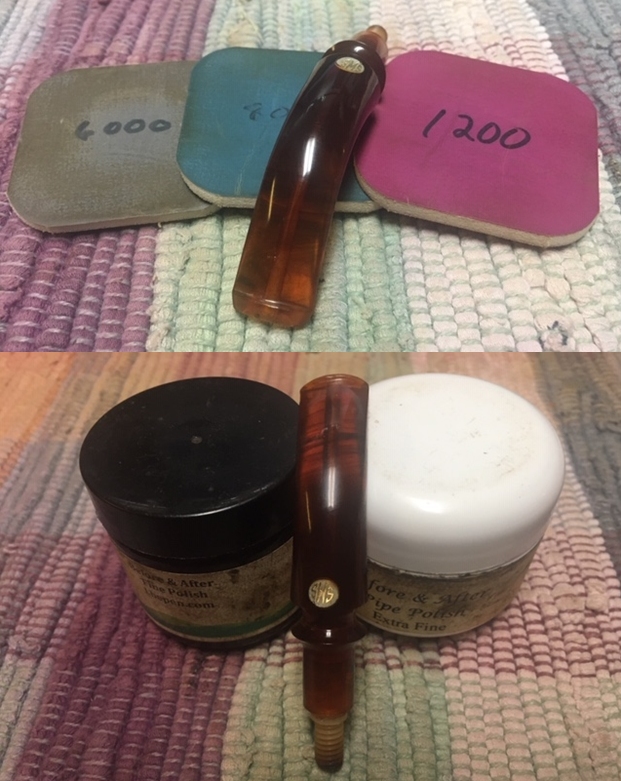
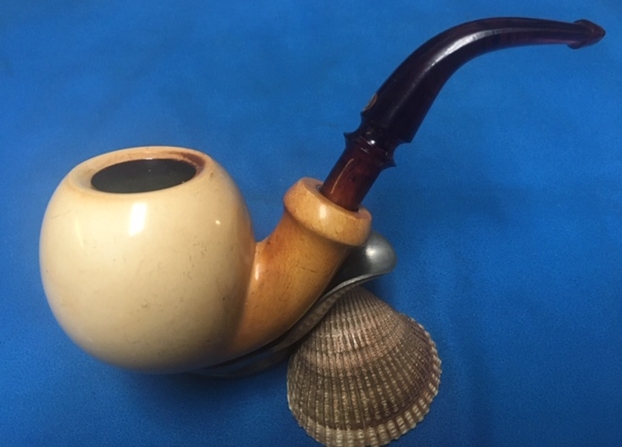
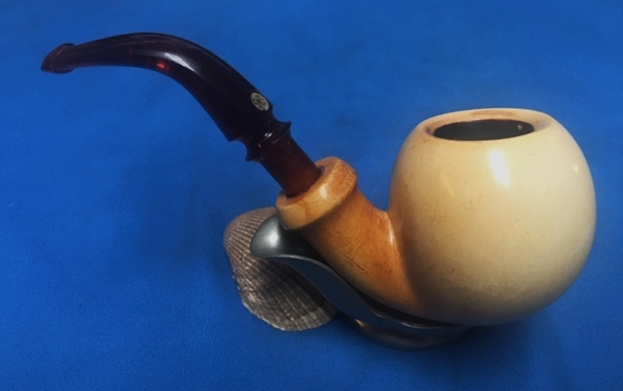
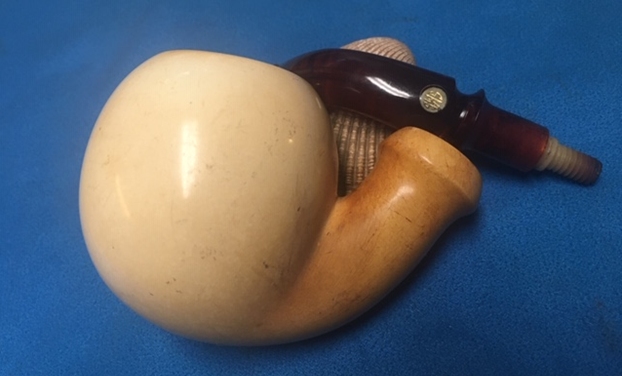
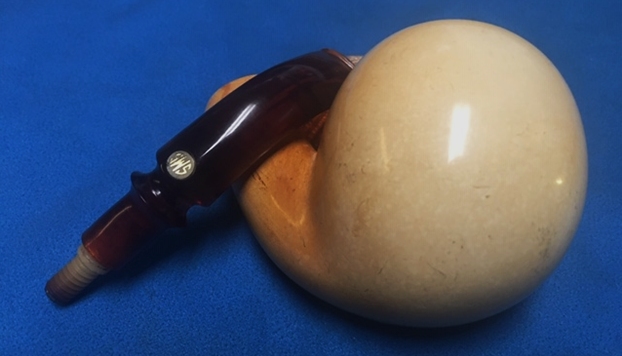
A Change of Pace Restoration – an SMS Meerschaum Bent Ball


Blog by Steve Laug

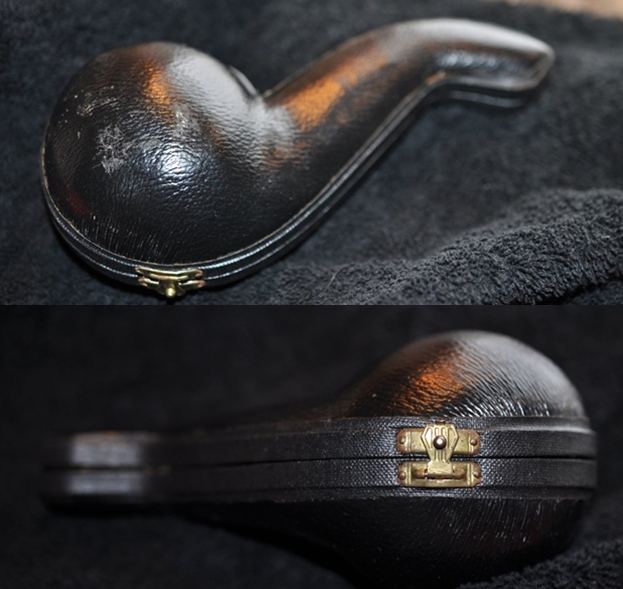
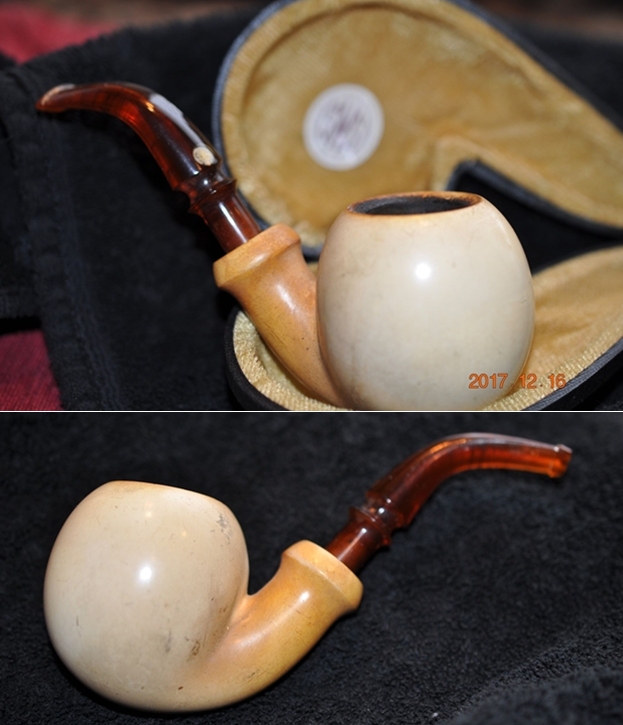
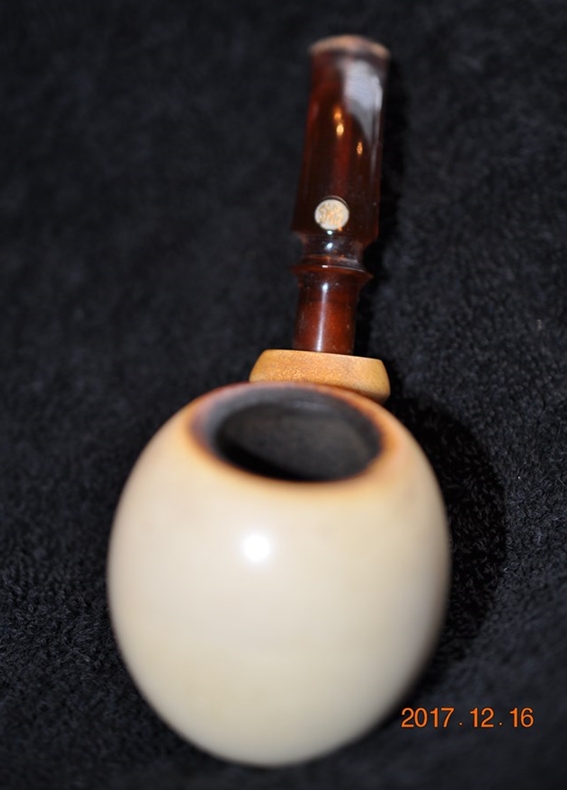
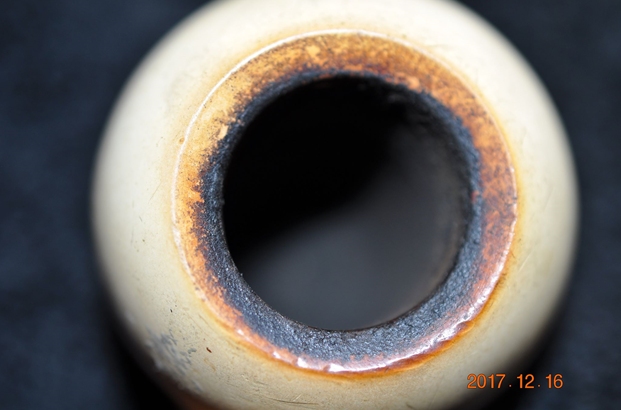
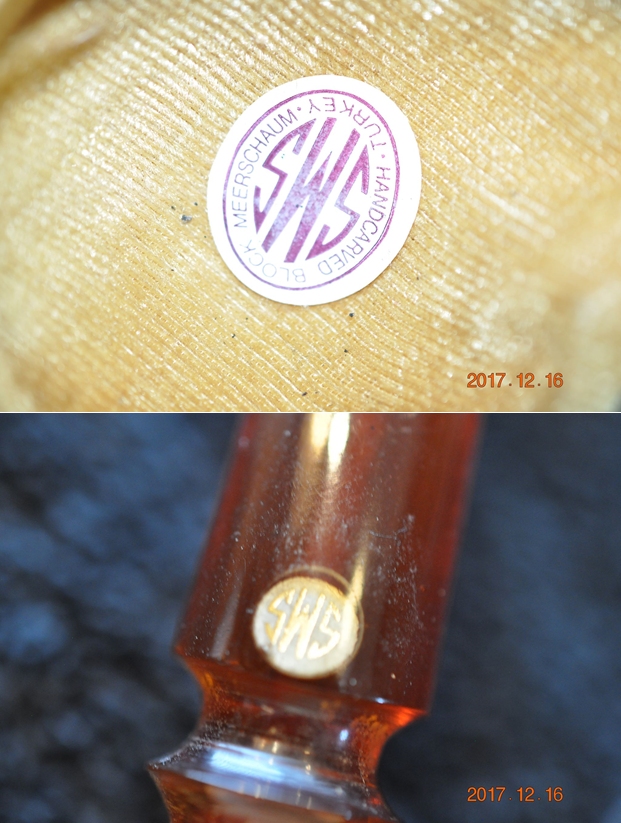
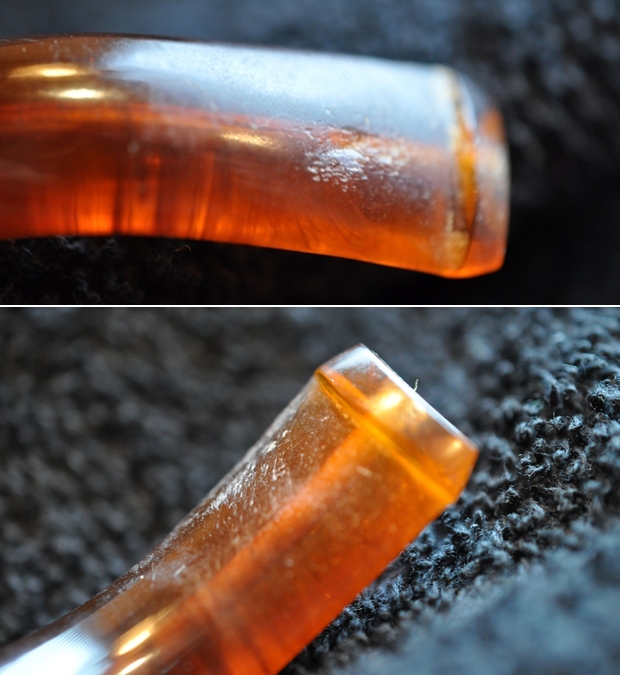
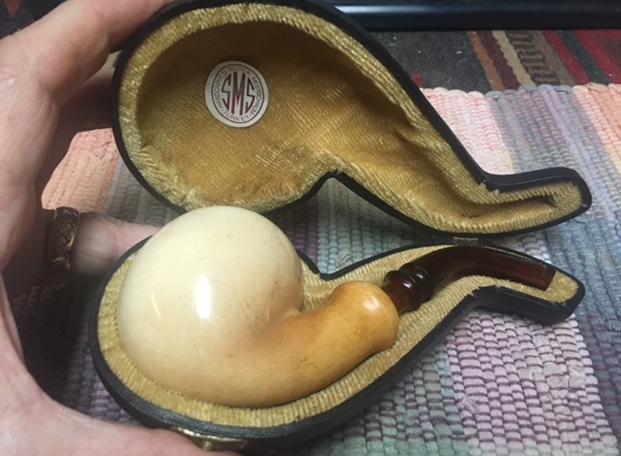
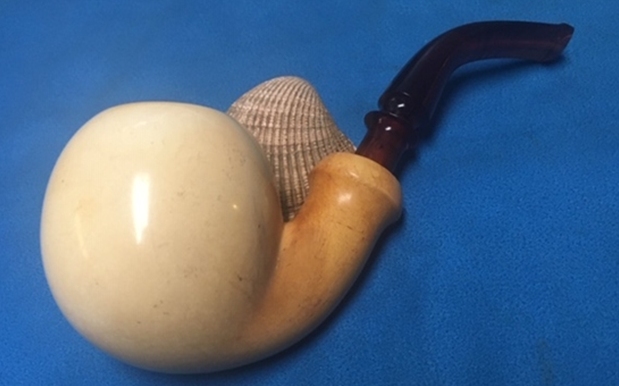
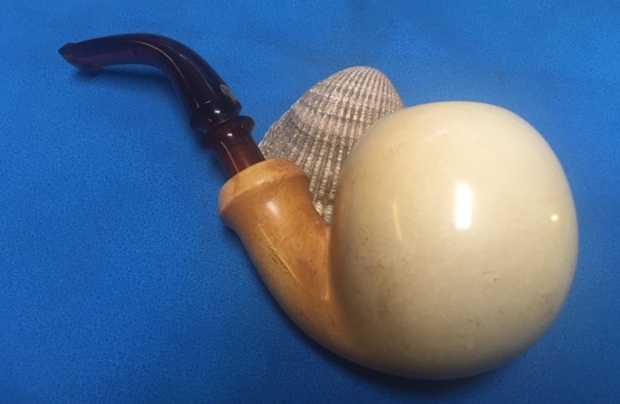
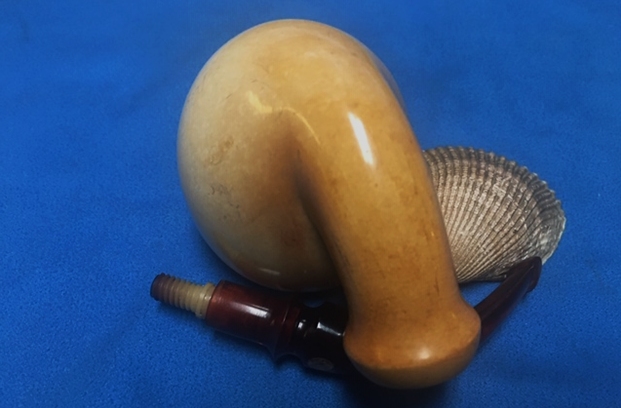
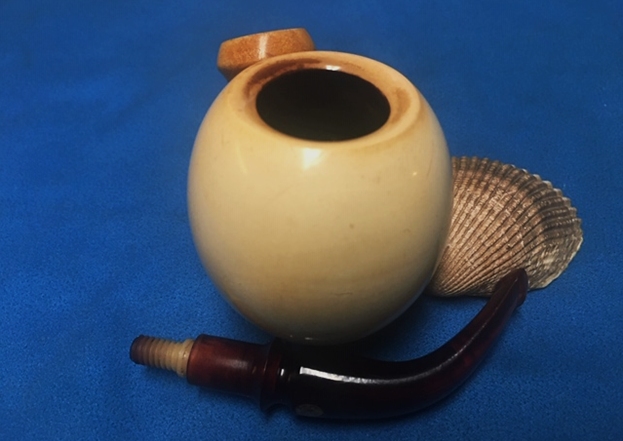
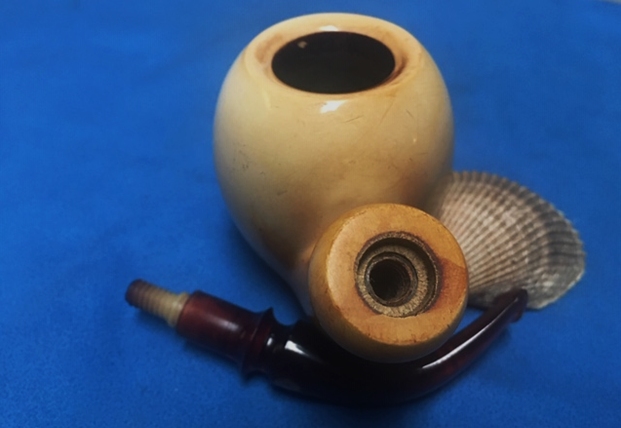
I have been working through Bob Kerr’s estate for several weeks trying to finish up the remaining 12 pipes. I decided this morning that I needed a bit of a change of pace. I have been working on a lot of fine old briar pipes and thought a good meerschaum would be a change. I looked through the various cased figurals that I have to work and on and rejected each on as just not what I was looking for at this moment. I went back to some older pipes I have boxed here in the queue and found a black cased meer. From the case it looked like at least a ball/apple shaped pipe. I opened the case and immediately the pipe had my attention. It was exactly what I was looking for to work on next. It is an SMS Meerschaum ball with an amber coloured acrylic stem. Overall the pipe looked to be in decent condition. I wrote Jeff for the pre-cleanup photos and some history where it came from. Seems that pipe came to us from an auction in Albuquerque, New Mexico. It was a dirty pipe but not too badly scratched. There was a thick cake in the bowl for a meerschaum with some lava overflow on the inwardly beveled rim top. There was some good patina developing around the shank and bowl. The stem was pretty but had some tooth marks and chatter all around the button. The stem came off the tenon end leaving the tenon in the shank of the pipe. Not sure what was happening there. Jeff sent me the photos of the pipe in the case and out of the case before he started his cleanup work. Jeff took a photo of the bowl and rim top to show the condition. It is hard to see the depth of the bowl but there as a cake lining the walls. The inwardly beveled rim top shows a thick lava coat and also some nicks and damage to the outer edge of the rim.He took some photos of the heel and sides of the bowl to show the developing patina as well as the dirty and grime on the bowl sides.   The next two photos show the brand stamping on the inside cover of the case and in the round inlaid stem logo. It is made by SMS and is a Handcarved Meerschaum from Turkey.The next photos show the condition of the stem. You can see the tooth marks and chatter on both sides ahead of the button. It was rough to the touch. Jeff took a great photo of the tenon and stem connection. It appears that the tenon has come unglued from the stem end. I am not sure whether the tenon is a classic threaded tenon screwing into the shank or whether it is a push tenon. Once I work on it I will know.I had some faint recall of the make but could not remember his name so I turned to pipephil’s site (http://www.pipephil.eu/logos/en/logo-s9.html) for some help. I found a quick note on the founding of the SMS brand which was the USA import brand for pipes made by Samil Sermet and his wife Beth. There was also a link there to the company website.I clicked on the site link (http://www.smspipes.com/) to get a bigger picture of the brand and the makers. I quote the section of the site marked “About Us” and quote the following:

Welcome to SMS Pipes!!

We are proud to present a wide selection of premium smoking pipes. SMS Pipes features Turkish Block Meerschaum, supplied exclusively by SMS Meerschaums, and Italian Briar, supplied by Lorenzo of Italy. All the pipes offered by SMS Pipes meet or surpass our exacting “Standard of Excellence.”

Samil & Beth Sermet – SMS Pipes is family owned and operated extension of SMS Meerschaums, founded in 1980 by Samil Sermet and his wife, Beth. SMS Meerschaums is recognized nationwide as a trusted supplier by nearly 500 retail tobacconists. SMS Pipes promises to continue the philosophy embraced by SMS Meerschaums and provide premium smoking pipes that are:

    Distinctive… each pipe is carefully selected for its uniqueness, quality and reliability.

    Affordable… a wide range of prices makes owning a fine pipe possible for everyone.

    Collectable… the timeless beauty of each pipe will be treasured for generations.

Key to the success of SMS Pipes is our dedicated staff. Based in the USA and Turkey, they maintain contact with our exceptionally talented pipe carvers and case makers and perform all the daily business activities described below:

 Samil Sermet, a native of Turkey, is the buyer for SMS Meerschaums. His hometown is Eskisehir, Turkey, where a majority of the meerschaum pipe carvers live and have their shops. Samil makes a buying trip to Turkey each year and has a close working relationship with all the carvers. He is responsible for sales analysis and placing the orders necessary to maintain adequate stock in the warehouse. (samil@smspipes.com)

Beth Sermet, office manager of SMS Meerschaums, processes all orders. Even though Beth was born in Iowa, she is fluent in Turkish after living in Turkey for several years and knows all the carvers. The owners of Lorenzo Briars work closely with Beth to assure ample supply of their premium pipes. Beth also personally selects and photographs all the pipes shown on SMS Pipes. (beth@smspipes.com)

Mert Sermet, son of Samil and Beth, manages the daily operations of SMS Pipes. He is in charge of processing and shipping all orders. Mert has in-depth knowledge of every aspect of pipe manufacturing both in Turkey and Italy. He will personally respond to any comments, questions or concerns you may have about SMS Pipes by e-mail. (mert@smspipes.com)

Emel Sagtekin, Samil’s sister, is responsible for quality control and shipments of pipes to SMS Meerschaums from Turkey. Since 1988, Emel has personally checked thousands of pipes. She evaluates each pipe based on strict criteria set by SMS Meerschaums and selects only the pipes that meet or surpass our high standards.

SMS Pipes provides a wide variety of services for our customers. Although the inventory on SMS Pipes is reserved for Internet sale only, it is possible to have a selection of similar pipes sent “On Approval” to any tobacconist listed on the site. Membership in the SMS Collectors Society provides additional amenities for those interested in collecting our pipes. Our Master Carvers can be commissioned to carve custom pipe designs by special arrangement. We also offer repair and re-waxing services for all SMS Pipes.”

We are happy to have the opportunity to serve you. We hope your time spent with SMS Pipes is enjoyable and worthwhile.

Now I had a clearer picture of the brand and the makers. I knew that pipe was made after 1980 when the company began. Now it was time to work on the pipe itself.

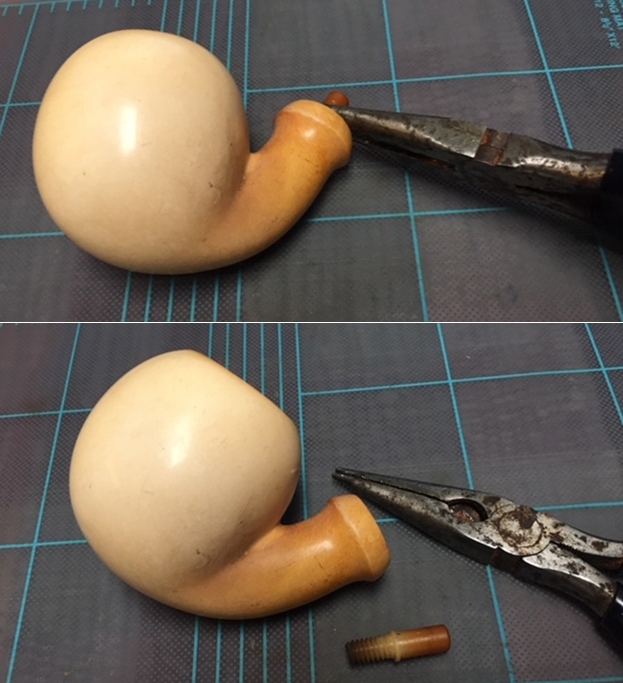
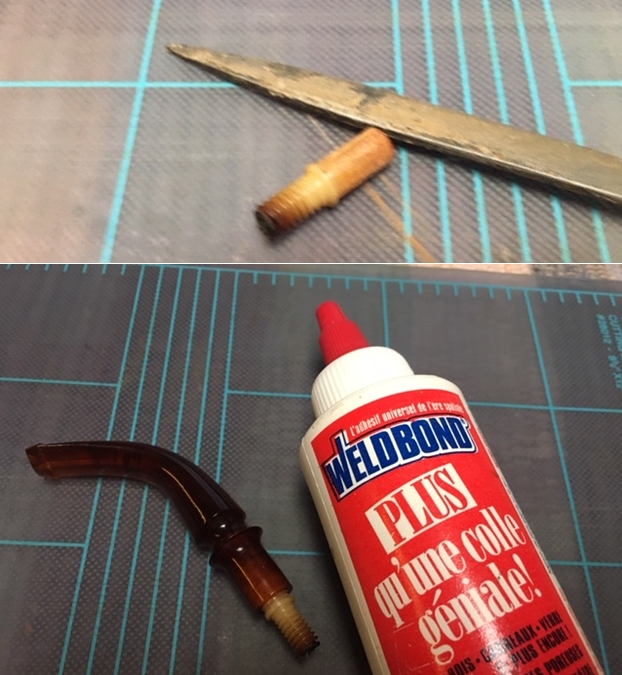
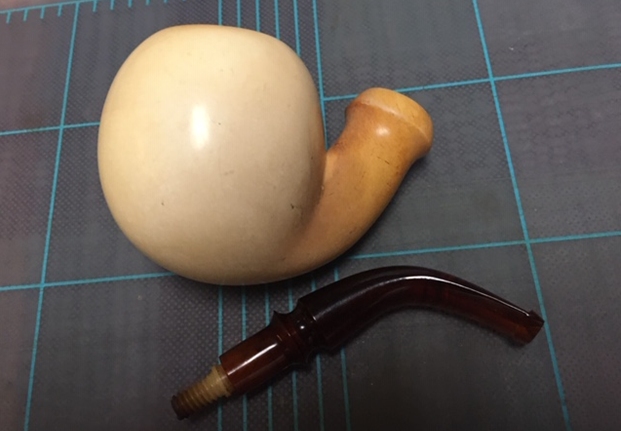
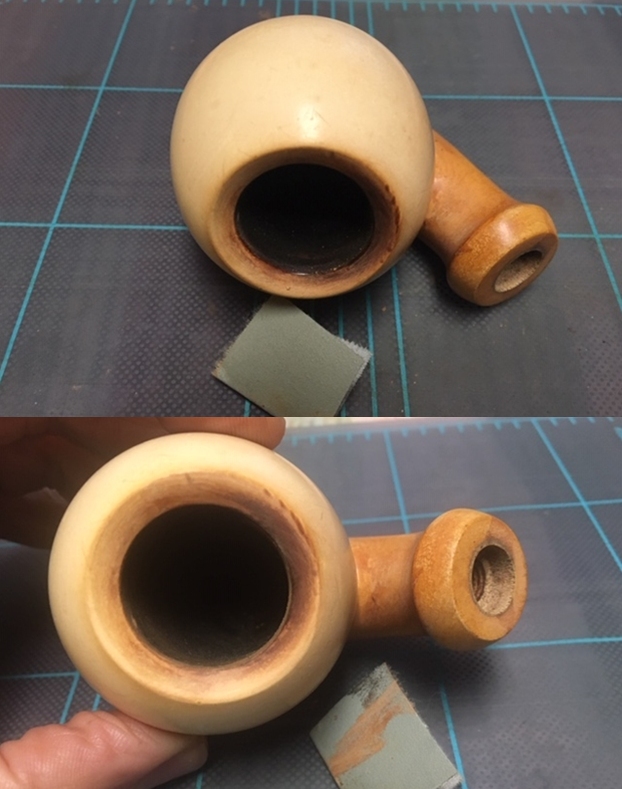
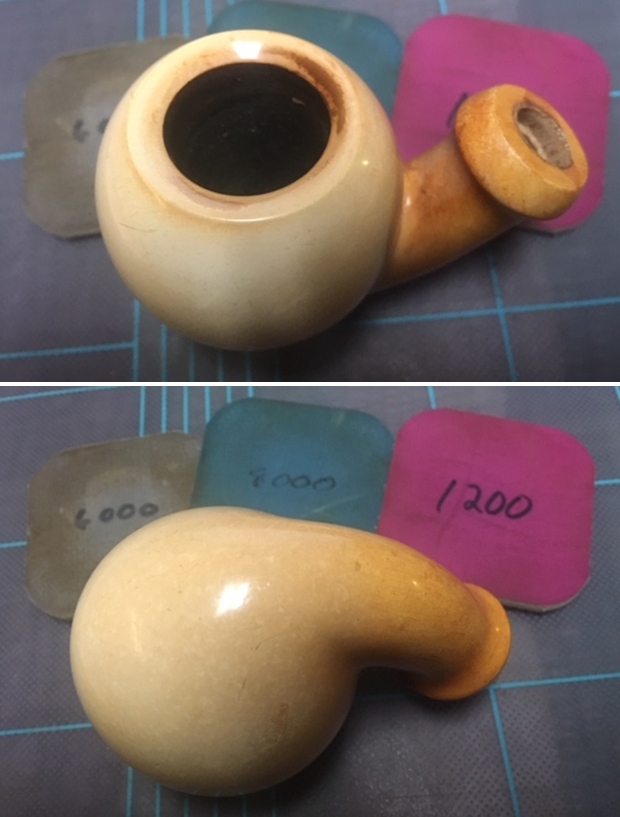
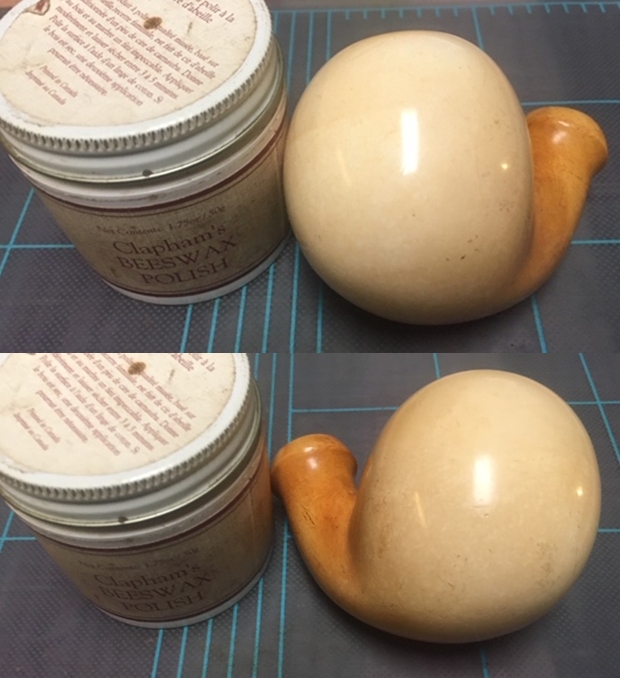
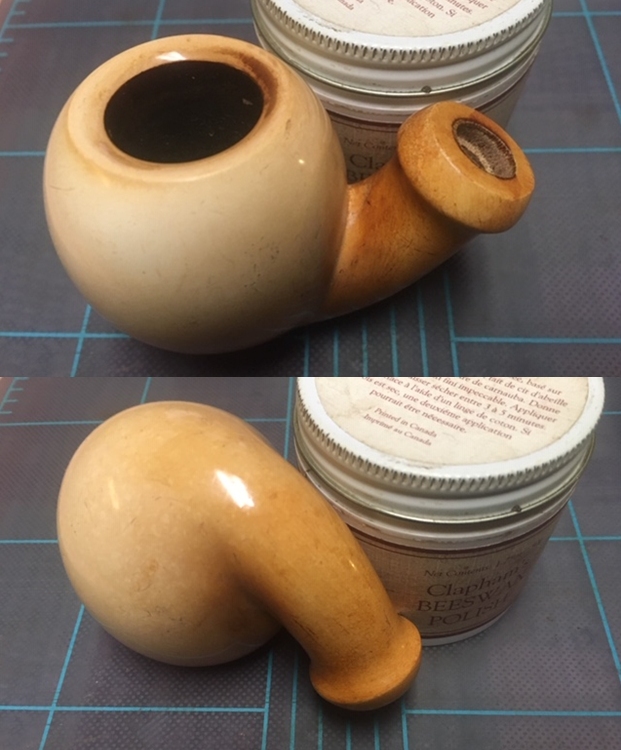
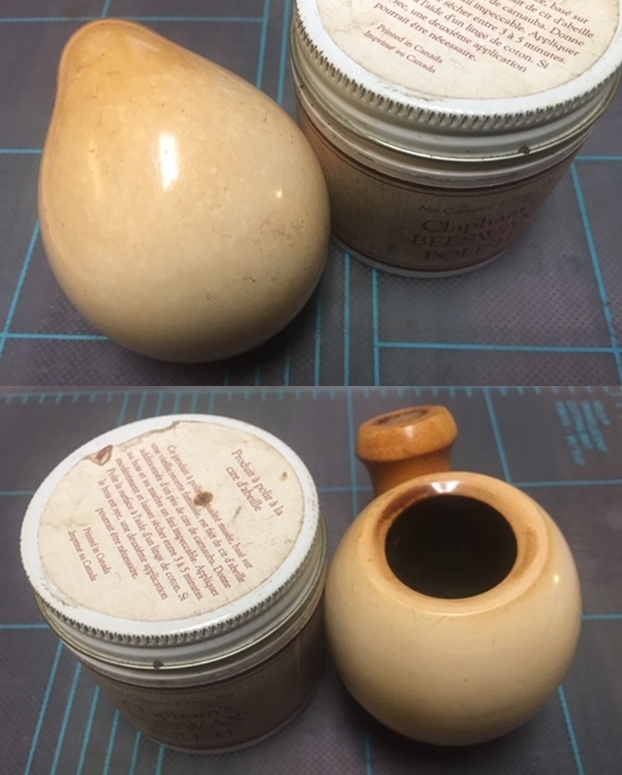
Jeff cleaned the meerschaum with his usual penchant for thoroughness that I really appreciate. Once he finished he shipped it back to me with many of the other pipes that we have purchased or are working on for various estates. He reamed it with a PipNet pipe reamer and cleaned up the reaming with a Savinelli Fitsall Pipe Knife. He scrubbed out the internals with alcohol, pipe cleaners and cotton swabs until the pipe was clean. He scrubbed the exterior of the bowl with Murphy’s Oil Soap and a tooth brush to remove the grime and grit on the briar and the lava on the rim top. The finish looks very good with good looking grain around the bowl and shank. Jeff scrubbed the stem with Murphy’s Oil Soap to remove the grime on the exterior. When the pipe arrived here in Vancouver for the second stop of its restoration tour it looked a lot better. I took photos before I started my part of the work.  I took some close up photos of the rim top and stem to show the condition they were in when they arrived here. There was some slight darkening on the back edge as well as some scratching and nicks around the outer edges.     I took a photo of the pipe with the stem removed to show the overall look of the pipe. It is really a nice looking pipe. I will need to work on the tenon and see what is going on with it as a part of the restoration.I decided to work on the tenon first. I examined it with a bright light and a lens and could see that it had originally been glued in place in the stem. What I was not sure of at this point was whether it was a push tenon or a threaded one. I used a pair of needle nose pliers to check the connection. It did not wiggle like a push tenon and it turned so I had my answer – a threaded tenon. I unscrewed it from the shank and took a photo.I roughened the smooth surface of the part of the tenon that would be glued in the stem with a needle file. Once it was sufficiently rough enough to provide some bite when glued into the stem I painted the end of the tenon with all-purpose white glue and inserted it in the stem. I ran a pipe cleaner through the airway to make sure it was clear and wiped off the excess glue around the threaded end of the tenon. I took a photo of the pipe with the proper tenon connection! Now it only needed to cure before I put it back together again. I set the stem aside and worked on the bowl and rim top while the glue cured in the tenon repair. I used a folded piece of 220 grit sandpaper to smooth out the damage to the outer edge of the rear part of the rim top and to minimize the darkening. I polished the rim top and bowl with micromesh sanding pads – dry sanding it with 1500-12000 grit pads. I wiped the bowl down with a damp cloth after each grit of sanding pad. It is starting to really have a shine by the last sanding pads.   With the bowl polished it was time to wax the meerschaum. I heated it over a candle flame and rubbed it down with Clapham’s Beeswax Polish and let the wax sit and absorb into the meerschaum. Once it had cured I buffed it with a cotton towel and raised a rich shine in the surface of the meerschaum. The wax brought more of the patina to surface and the buffing highlighted. I filled in the deeper dents in the acrylic with clear super glue and set the stem aside to let it dry after a few moments I sprayed it with an accelerator to harden it. I sanded the repairs with 220 grit sandpaper to blend them into the surface and then started polishing the surface with 400 grit wet dry sandpaper. I polished the stem with micromesh sanding pads to remove the scratching in the acrylic stem. I wet sanded it with 1500-12000 grit pads and then gave it a buff with Before & After Pipe Stem polish – both Fine and Extra Fine. I buffed that off with a cotton pad. After each sanding pad and each polish I wiped the stem down with Obsidian Oil to preserve and protect the stem.    I put the pipe back together and gave it a buff on the wheel with Blue Diamond polish. I use a light touch on the acrylic as too heavy a touch can cause the heat to damage to acrylic. I gave the stem multiple coats of carnauba wax and buffed the pipe with a clean buffing pad to raise the shine. I hand buffed it with a soft cloth to deepen the shine. I put it back in the case and took a photo of the pipe in case.I took photos of the finished pipe to show the shine and the patina around the bowl. The reddish amber acrylic stem looks very good with the deepening colour on the shank and the bottom of the bowl. With time the contrast will grow richer and deeper to a thing of beauty. The finished SMS Bent Ball fits nicely in the hand and I think it will feel great as it heats up with a good tobacco. Give the finished pipe a look in the photos below. The dimensions of the pipe are Length: 6 inches, Height: 2 ¼ inches, Outside diameter of the bowl: 1 ¾ inches, Chamber diameter: 7/8 of an inch. If you are interested in carrying on the legacy of this pipe it will be going on the rebornpipes store shortly. You can send me a message or an email to let know you are interested. Thanks for reading this blog and my reflections on the pipe while I worked on it. This is an interesting estate to bring back to life.

A Stanwell Sixtus 212 Tom Eltang Designed Hex Shank Billiard


Blog by Steve Laug

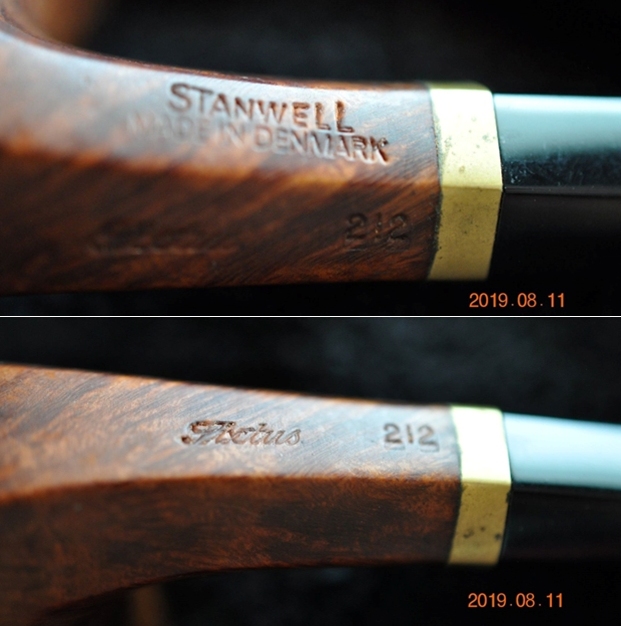
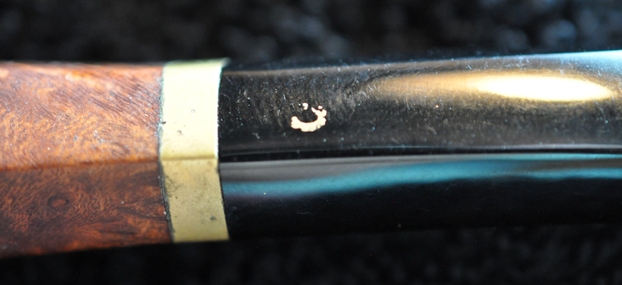
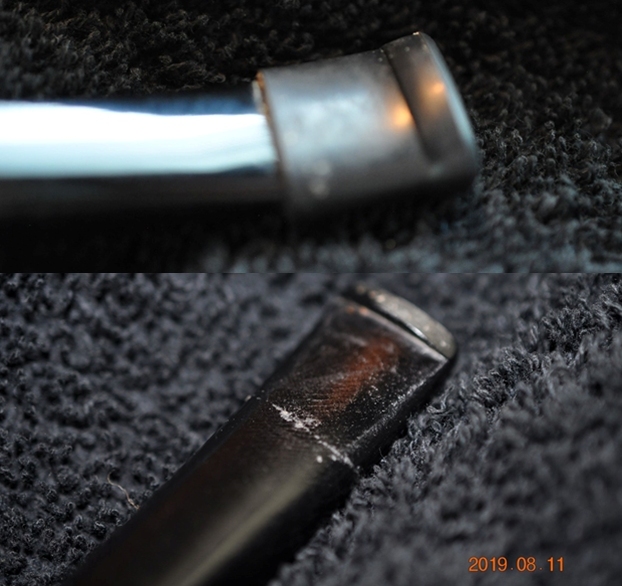
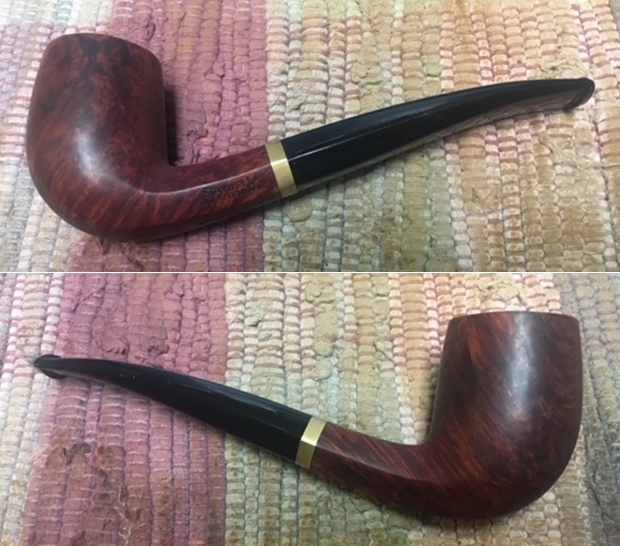
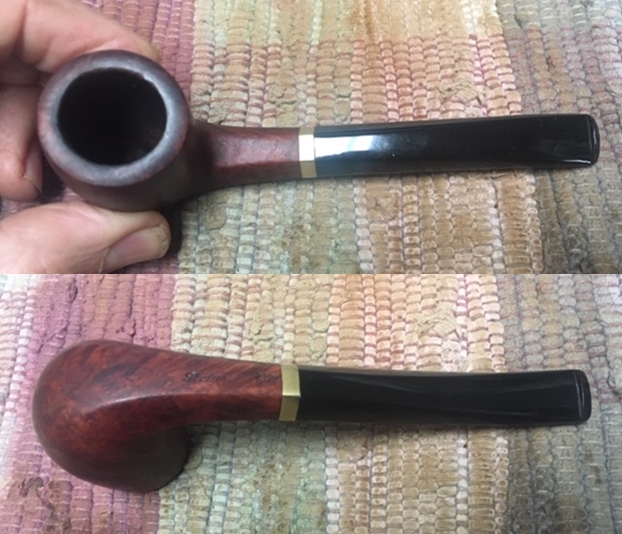
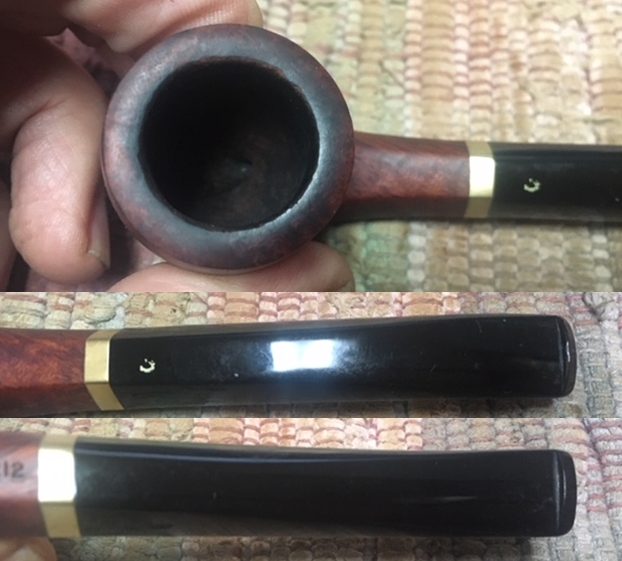
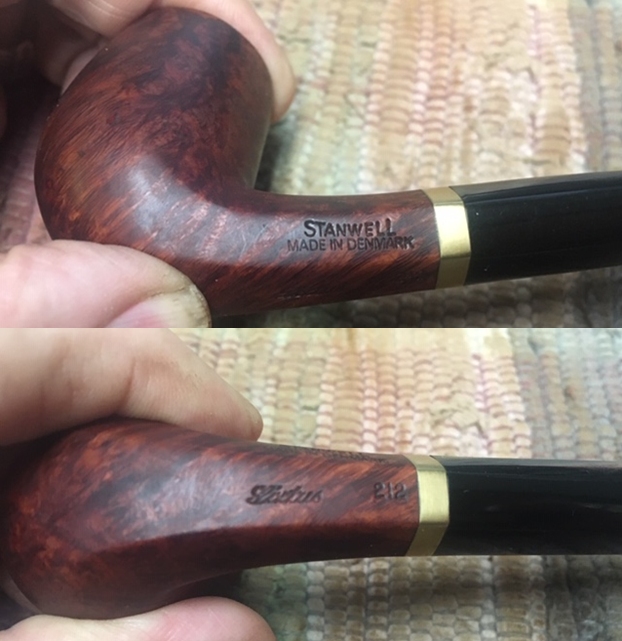
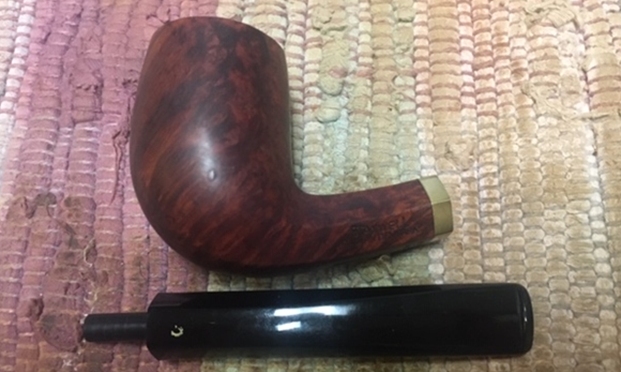
The next pipe on the table is from the next box of pipes I am working through. It is another Stanwell pipe. This time it is a nicely grained bent billiard. It is a Stanwell Sixtus shape 212 ¼ bent billiard with a hexagonal shank and stem. The Billiard shaped bowl, hexagonal shank and black acrylic hexagonal stem combine to make this Stanwell Sixtus a beauty. To me this is another classic Stanwell shape and it instantly recognizable. The finish is a smooth well grained piece of briar stained with a mix of stains to highlight the grain. The top of the bowl is smooth. It was stamped on the second panel and third panel of left side and reads Stanwell Made in Denmark followed by the line Sixtus and the shape number 212. The finish was very dirty with a heavy coat of grime ground into the bowl and rim top as can be seen in the photos. The bowl had a thick cake with a lava overflow onto the plateau rim top and the inner edge of the bowl. The acrylic stem was dirty and there was a Softee bit that was made to protect the surface of both sides and on the top and bottom edges of the button. I would not know if it worked until we removed it during the cleanup. Originally the Stanwell Crown S on the top of the hexagonal stem was a gold decal. Jeff took photos of the pipe before he cleaned it up so you could see what we saw. Jeff took a photo of the rim top to show lava build up in the plateau rim top, the edges and cake in the bowl. This one was obviously someone’s favourite pipe and it was a mess.     Jeff took some photos of the bowl sides and heel to show the absolutely dirty finish ground into the briar. It was a dirty pipe but I think it will be a beautiful one once we are finished.     The stamping on the underside of the shank is shown in the photo below. It is clear and read as noted above. There was a Stanwell Crown S logo decal on the top of the stem that was damaged and missing parts. The acrylic stem was dirty and had debris stuck to the surface. In the first photo of each pair below you can see the rubber Softee bit on the stem and in the second photo of each pair it is removed. The bit did a good job of protecting the stem surface from the majority of tooth damage but even so there are light spots on the surface that will need to be removed. I checked my usual sources for information on the Sixtus line but there was nothing specific on either Pipedia or Pipephil’s site. I also checked on the Pipedia site in the article there on shape number and shape designers(https://pipedia.org/wiki/Stanwell_Shape_Numbers_and_Designers). From there I found that the shape number 212 was designed by Tom Eltang and was a Freehand with and acrylic stem. I did a screen capture of the listing and have included it below.It looks like I am dealing with a pipe designed for Stanwell by Tom Eltang. Now it was my turn to work on the pipe. Jeff had done his usual thorough cleanup of the pipe. He had reamed the pipe with a Pipnet piper reamer and taken the cake back to bare briar. He cleaned up the remaining cake with a Savinelli Fitsall Pipe Knife. He scrubbed the interior of the bowl and shank with pipe cleaners, cotton swabs and alcohol to remove the tars and oils. He scrubbed the exterior of the pipe with Murphy’s Oil Soap and a tooth brush to remove the grime from the finish. He worked on the rim top lava and darkening with the soap and tooth brush. He scrubbed the inside of the stem with alcohol and pipe cleaners. He scrubbed the exterior with Soft Scrub and then soaked it in Before & After Deoxidizer. He washed the stem off with warm water to remove the Deoxidizer. The pipe looked far better. I took photos of the pipe when I received it before I started working on it. I took photos of the bowl and rim top as well as the stem to show how clean they were. The inner edge of the rim had some damage and was slightly out of round. The rim top had some darkening and light nicks. The stem is clean and the minimal damage on the button top and bottom edges is not too bad.     I took a photo of the stamping on the hexagonal patterns of the shank. The stamping is readable as noted above.     I took the stem off the bowl and took a photo of the pipe showing the overall look of the design.I decided to address the issues of the damage to the inner edge and rim top first. I used a folded piece of 220 grit sandpaper to smooth out edge and reshape it. I also smoothed out the damage on the rim top and darkening at the same time. It looked a lot better once I had finished.  I polished the briar with micromesh – wet sanding with 1500-12000 grit micromesh sanding pads. I wiped the bowl down after each sanding pad with a damp cloth.      I rubbed the briar down with Before & After Restoration Balm. I worked it into the briar with my fingertips. The product works to clean, enliven and preserve the briar. I let it sit for 10 minutes while I worked on the stem. After the time passed I buffed it with a cotton cloth to deepen the shine. The briar really comes alive with the balm.   I sanded the stem with 220 grit sandpaper to remove the small tooth chatter and marks near the button. I started polishing the stem with 400 grit wet dry sandpaper. I wiped the stem down with Obsidian Oil before further polishing it.        I polished the vulcanite with micromesh sanding pads – 1500-12000 grit pads. I wiped it down with Obsidian Oil after each sanding pad. I used Before & After Pipe Polish – both Fine and Extra Fine to further polish the stem. This Stanwell Sixtus 212 Tom Eltang Designed Billiard with hexagonal shank and stem turned out very nice. The mix of brown stains highlights the grain around the bowl sides and bottom. The rim top and edges look very good. The finish on the pipe is in excellent condition. I put the stem back on the bowl and carefully buffed the pipe with Blue Diamond on the buffing wheel. I gave the bowl and stem multiple coats of carnauba wax on the buffing wheel and followed that by buffing the entire pipe with a clean buffing pad. I hand buffed the pipe with a microfiber cloth to deepen the shine. The finished Bent Billiard is very nice and feels great in the hand. Give the finished pipe a look in the photos below. It is a nice pipe whose dimensions are Length: 5 ½ inches, Height: 2 inches, Outside diameter of the bowl: 1 ¼ inches, Chamber diameter: ¾ of an inch. Thanks for walking through the restoration with me as I worked over another beautiful pipe. This Stanwell Sixtus 212 Bent Billiard designed by Tom Eltang will be going on the rebornpipes store shortly. If you are interesting in adding it to your collection let me know! Thanks for your time.

Renewed Life for a Comoy’s Silver Shadow 745 Tulip


Blog by Steve Laug

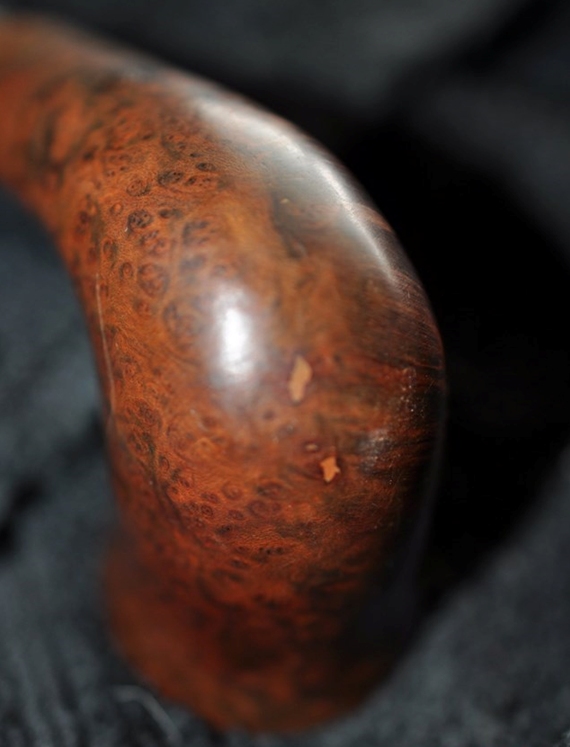
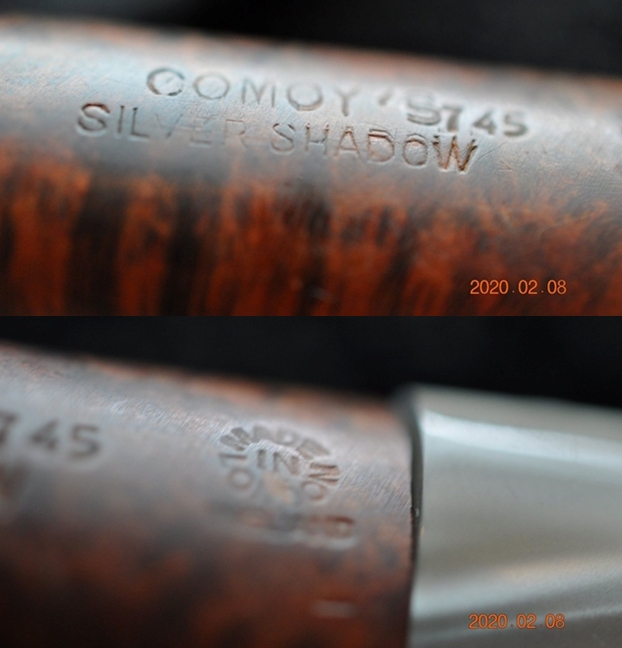
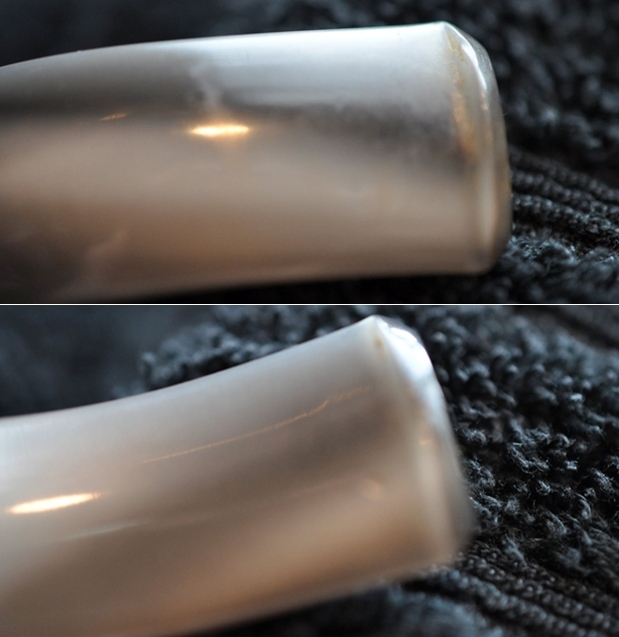
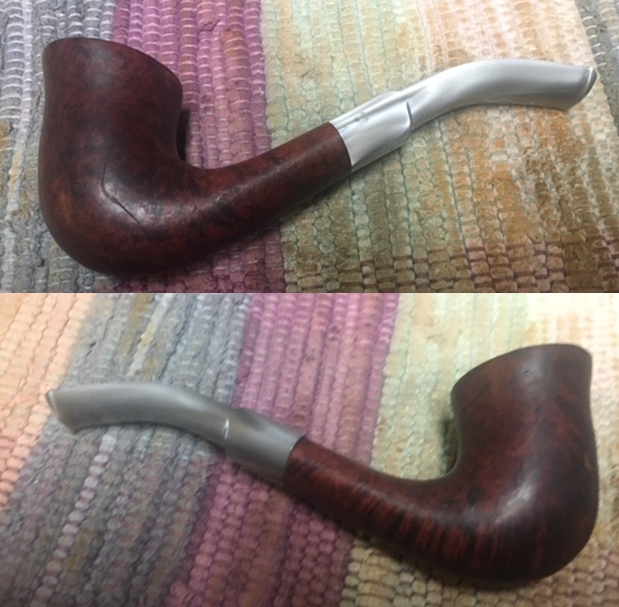
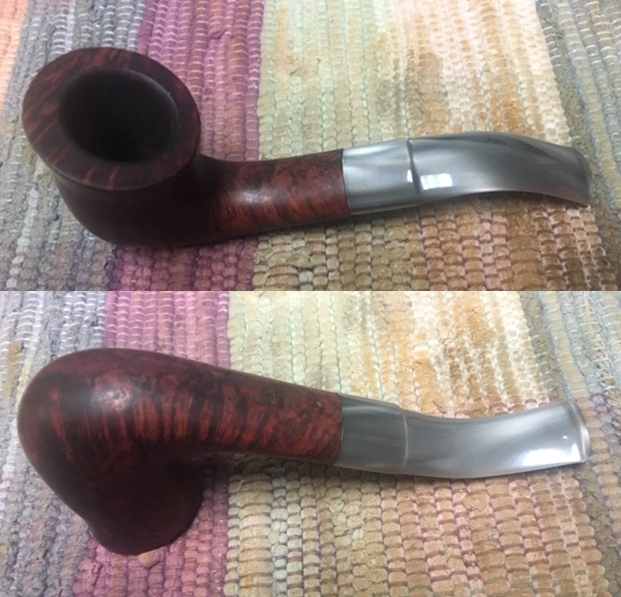
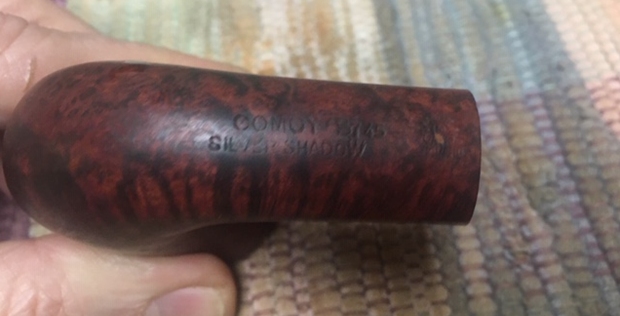
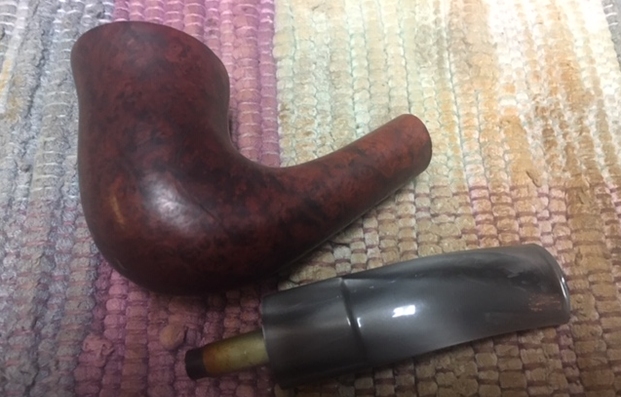
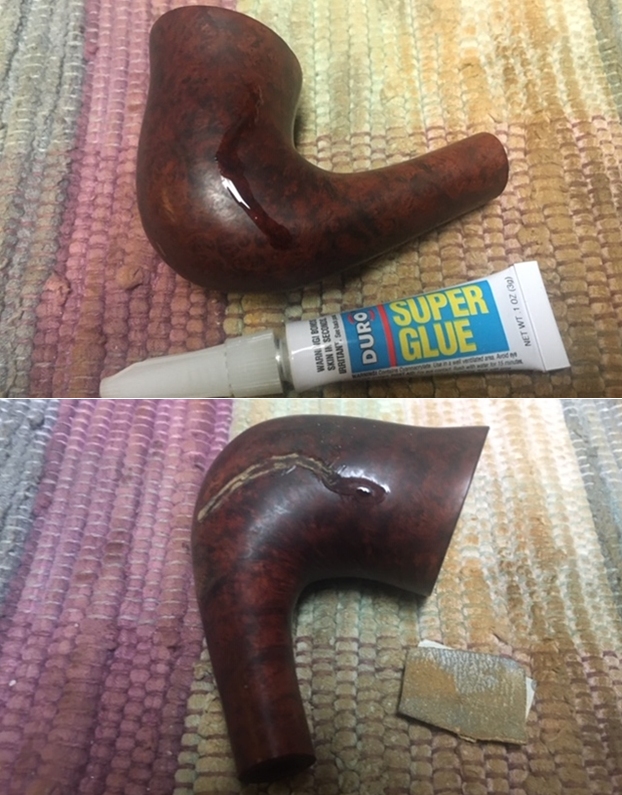
The next pipe on the table is an interestingly shaped Comoy’s pipe. It is almost a tulip shape – at least to me. It is a Cadogan period Comoy’s as the “C” is stamped and painted on the acrylic stem. It is a pretty pipe with a nice looking shape. The condition is very dirty with a thick cake in the bowl and some darkening around the beveled inner edge of the rim. It is well smoked and the finish is dusty and grimy. There are some deep scratches in the briar around the bowl sides and top. The pipe is stamped on the underside of the shank and reads Comoy’s over Silver Shadow followed by the shape number 745 and the Made in London England COM stamp circle. The variegated silver acrylic bent saddle stem has a stamped C on the left side of the saddle. Jeff took photos of the pipe before he started his clean up work on the pipe. He took photos of the rim top to show the condition of the bowl, rim top and edges. The cake is quite thick and there are a few spots of grime on the edges and around the cap on the bowl. He took photos around the sides and heel of the bowl to show the condition. You can see the grime in the finish and the scratches in the briar around the bowl. He took photos of the stamping on the underside of the shank. You can see that it is clear and readable.The next photos show the condition of the stem. The first though blurry gives an idea of the flow of the stem. The remaining photos show that the stem is in good condition other than some tooth chatter on both sides near the button. The “C” stem logo on Comoy’s pipes was the “three-piece C” insert until the Cadogan era in the 1980s. That helped me with a potential date on this pipe – 1980s or later. Knowing that this was a newer Comoy’s pipe from the Cadogan time period did not deter me as the shape on this one fascinated me. I turned to work on the pipe on my work table. Jeff had done a great job cleaning up the pipe as usual. He reamed the pipe with a PipNet reamer and cut back the cake back to the bare briar. He cleaned up the walls with a Savinelli Fitsall Pipe Knife. He scrubbed the interior of the bowl and shank with pipe cleaners, cotton swabs and alcohol to remove the tars and oils. He scrubbed the exterior of the pipe with Murphy’s Oil Soap and a tooth brush to remove the grime from the finish. He worked on the rim edge lava and darkening with the soap and tooth brush. He scrubbed the inside of the stem with alcohol and pipe cleaners. He scrubbed the exterior with Soft Scrub. He washed it off with warm water to remove the cleaner. The pipe looked far better. I took photos of the pipe when I received it before I started working on it. (Note the deep scratch on the left side of the bowl.) I took photos of the bowl and rim top as well as the stem to show how clean they were. You can see the darkening on the top and inner edges of the bowl. Otherwise the rim and edges look very good. The stem looks clean and the tooth marks and chatter are fairly light. I took photos of the stamping on the sides of the shank. They are clean and readable and read as noted above.    I took a photo of the pipe with the stem removed to show the overall look of stem, tenon and profile of the pipe. Jeff had scoured the tenon but it was heavily stained with the tars of use.I decided to start my work on the pipe by addressing the deep gouge in the left side of the bowl. It extended from the heel to mid bowl. I tried steaming it out and had very limited success. I decided to fill in the damaged area with clear super glue. Once the repairs cured I sanded them smooth with 220 grit sandpaper and also began the polishing with 40o grit wet dry sandpaper. I used a Walnut Coloured stain pen to blend the repaired area on the side of the bowl into the colour of the rest of the bowl. The match worked very well. Once I sanded it with the micromesh pads in the polishing process it would look even better.I polished the bowl and rim with micromesh sanding pads – wet sanding with 1500-12000 grit pads. I worked over the rim top and edge of the bowl with the pads. I wiped the bowl down with a damp cloth after each pad to remove the sanding debris. The repair on the right side of the bowl all but disappeared. The pipe looks very good. I rubbed the briar down with Before & After Restoration Balm. I worked it into the briar with my fingertips. The product works to clean, enliven and preserve the briar. I let it sit for 10 minutes while I worked on the stem. After the time passed I buffed it with a cotton cloth to deepen the shine. The briar really comes alive with the balm.  I touched up the C stamp in the side of the stem with a Paper Mate Liquid Paper and a toothpick. It was not too deeply stamped so the coverage was uneven.I worked over the light tooth marks and blended them into the stem surface with 220 grit sandpaper. I started polishing the stem with 400 grit wet dry sandpaper. At this point it is starting to look much better.   I polished the acrylic with micromesh sanding pads – 1500-12000 grit pads. I wiped it down with a damp cloth after each sanding pad. I used Before & After Pipe Polish – both Fine and Extra Fine to further polish the stem.   This Comoy’s Silver Shadow 745 Tulip turned out to be a great looking pipe. The mix of brown stains highlights the mix of grain around the bowl sides, top and bottom. The finish on the pipe is in excellent condition and the contrasting stains work well with the polished variegated silver acrylic saddle stem. I put the stem back on the bowl and carefully buffed the pipe with Blue Diamond on the buffing wheel using a light touch on the briar. I gave the bowl and stem multiple coats of carnauba wax on the buffing wheel and followed that by buffing the entire pipe with a clean buffing pad. I hand buffed the pipe with a microfiber cloth to deepen the shine. The finished Comoy’s Silver Shadow fits nicely in the hand and feels great. There is something about the shape that provides a great curve for the thumb on the back of the bowl. Give the finished pipe a look in the photos below. The dimensions of the pipe are Length: 5 ½ inches, Height: 2 inches, Outside diameter of the bowl: 1 3/8 inches, Chamber diameter: ¾ of an inch. Thanks for walking through the restoration with me as I worked over another beautiful pipe. This pipe will be added to the English Pipe Makers section of the rebornpipes store soon. If you want to add it to your collection send me an email or a message! Thanks for your time.

Refitting the stem  and restoring a Savinelli Made Rectangular Shank Billiard


Blog by Steve Laug

The next pipe on the table is a different looking Savinelli made Billiard. It had a flat shank and stem that are rectangular. It was functionally a sitter. It was a different looking piece of briar in that it is a mix of grains hidden beneath the dirt. There was one fill on the shank bowl junction on the right side of the bowl. The briar was very dirty. The bowl had a thick cake overflowing like lava onto the bevel of the rim top. It is hard to know what the inner edge of the rim looks like because it is buried under the cake and lava coat. The fit of the stem in the shank appeared to be a bit off but cleaning would make that clear. The variegated brown and gold acrylic stem was dirty, scratched and had some light tooth marks and chatter at the button. Jeff took photos of the pipe before his cleanup work. The next photos capture the condition of the bowl and rim top. You can see the work that is ahead of us in terms of cake and lava buildup.The grain around the bowl is a mix of cross grain and birdseye. The pipe follows the grain well. Jeff took photos to show how the grain is laid out. The stamping on the underside of the shank read as noted above. You can also see that the stem is poorly fit to the shank in this photo.The photos of the stem show the stem surface. The first photo shows the fit of the stem against the shank. It was a poorly fit stem. The stem has light tooth marks and chatter on both sides ahead of the button. Now it was time to work on my part of the restoration of the pipe. Jeff had cleaned the pipe with his usual penchant for thoroughness that I really appreciate. This one was in decent condition with a bit of buildup on the rim top but virtually no cake in the bowl. He reamed the bowl with a Pipnet Reamer and then cleaned up the bowl walls with a Savinelli Fitsall Pipe Knife. He scrubbed out the internals with alcohol, pipe cleaners and cotton swabs until the pipe was clean. He scrubbed the exterior of the bowl with Murphy’s Oil Soap and a tooth brush to remove the grime and grit on the briar and the lava on the beveled rim top. The finish looks very good with good looking grain around the bowl and shank. There is one fill on the right side at the shank bowl junction. Jeff scrubbed the stem with Soft Scrub to remove the grime. When the pipe arrived here in Vancouver for the second stop of its restoration tour it looked very good. I took photos before I started my part of the work. I took some photos of the rim top and stem. Once Jeff removed the lava on the inside edge of the rim top it was in pretty rough condition. There were cuts, nicks and burned areas all around the inner edge and the bowl was out of round from the damage. The outer edge of the bowl looked very good. The close up photos of the stem shows that it was very clean and there was some tooth marks and chatter on the stem just ahead of the button. The acrylic was very scratched.The fit of the stem in the shank is off. It looked like the shank end had been rounded slightly and the stem was definitely larger than even the straight portion of the shank. It was poorly fit and that makes me think it is a replacement stem. The question I needed to answer was how far to go with the refitting of the stem. I knew that I wanted to bring it down as close as possible so that transition between the shank and stem was smooth. I decided to work on this as the first item of my part of the restoration. I took some photos to try and capture the variation between the stem and shank. Hopefully you can see what I mean even with my poor photos. I have used red arrows to identify trouble areas.I probably spend an hour or more hand sanding the stem to fit the shank. Often I do that with the stem off and flatten it, constantly checking for progress. I left the stem in place on this pipe for much of the sanding process as I was seeking to make a smooth transition on an already rounded shank end. The photos below tell the story. The next two photos show the stem after much sanding my way through movies on Netflix. It is far better than when I began. The transitions on the sides are perfect while the top and underside I tried to accommodate the rounded shank end as much as possible.With the shank/stem transition improved I was ready to move on to dealing with the issues of the inner edge and rim top. I removed the stem and set it aside and took the bowl in my hands. I used a folded piece of 220 grit sandpaper to smooth out the edge and clean up the slight bevel to mask the damaged areas. I lightly topped the bowl as well to remove the damage on the rim top and smooth out briar. Once the bowl is polished the bevel is hardly visible and the bowl looks better.With that done I decided to call it a night. The pipe still smelled strongly of old tobacco even after all the cleaning so I stuffed the bowl with cotton bolls and used a syringe to fill it with isopropyl alcohol. I set the bowl in an old ice tray and left it while the cotton and alcohol did its work. The second photo shows what I found this morning when I came to the work table. I removed the cotton bolls and pipe cleaner and cleaned out the shank with pipe cleaners and alcohol. It was very clean and it smelled far better!I was happy with the way the rim top and edges looked so I moved on to polish the briar with micromesh sanding pads – dry sanding with 1500-12000 grit pads. I wiped the bowl down after each pad with a damp cloth. The grain really began to stand out and the finish took on a shine by the last sanding pad. The photos tell the story! I worked some Before & After Restoration Balm into the surface of the briar with my fingertips. The product works to clean, enliven and protect the briar. I let the balm sit for about ten minutes and then buffed with a cotton cloth to raise the shine. The photos show the bowl at this point in the restoration process. I laid the bowl aside and turned to deal with the refit stem. I polished the stem with micromesh sanding pads – dry sanding with 1500-12000 grit sanding pads. I was able to remove the scratching and tooth marks with the micromesh. I wiped it down after each sanding pad with a cloth containing some Obsidian Oil. I finished polishing it with Before & After Pipe Stem Polish – both Fine and Extra Fine and buffed it off with a cotton cloth. This Savinelli Made Billiard Sitter was a bit of a pain to work on. The amount of sanding to fit the stem even the way I have it now was a lot. But I am happier with the pipe now that I have finished it. The pipe looks a lot better. The finish on the pipe is in excellent condition and the contrasting stains work well to highlight the different grain patterns on the pipe. The variegated brown and gold acrylic stem just adds to the mix. With the grime and debris gone from the finish and the bowl back in round it was a beauty and the grain just pops at this point.
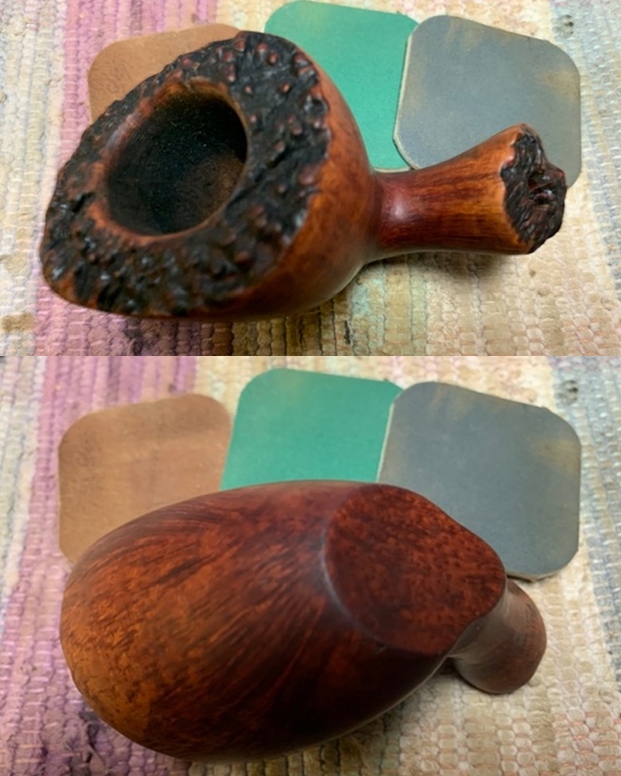
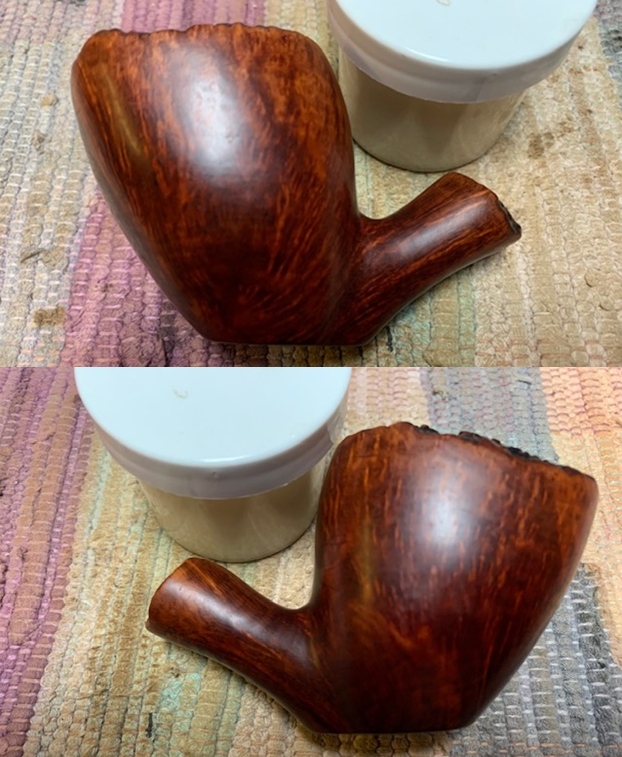
I put the stem back on the bowl and buffed the pipe with Blue Diamond on the buffing wheel. I carefully avoided the stamping on the shank and stem during the process. I gave the bowl and the stem multiple coats of carnauba wax on the buffing wheel and followed that by buffing it with a clean buffing pad on the buffer. I hand buffed the pipe with a microfiber cloth to deepen the shine. The finished Savinelli Billiard with a flat rectangular stem is a nice take on a classic billiard. The finish on the bowl combines various stains to give it depth. It is very well done. Give the finished pipe a look in the photos below. I can only tell you that it is much prettier in person than the photos capture. The dimensions of the pipe are Length: 6 inches, Height: 2 inches, Outside diameter of the bowl: 1 ½ inches, Chamber diameter: ¾ of an inch. It a great looking pipe in great condition. Thanks for walking through the restoration with me as I worked over another interesting pipe. This pipe will be added to the rebornpipes store soon. If you want to add it to your collection send me an email or a message! Thanks for your time.