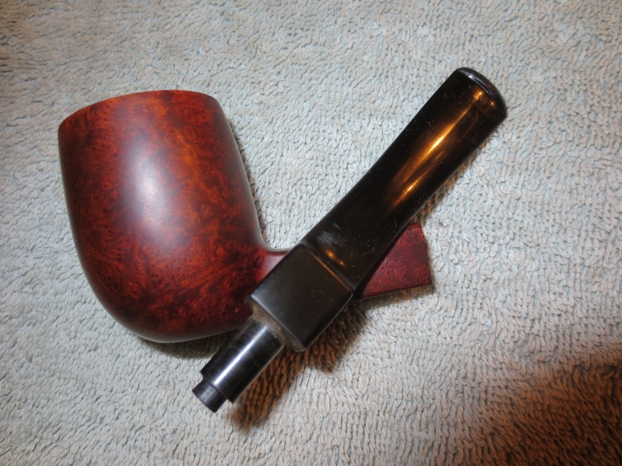
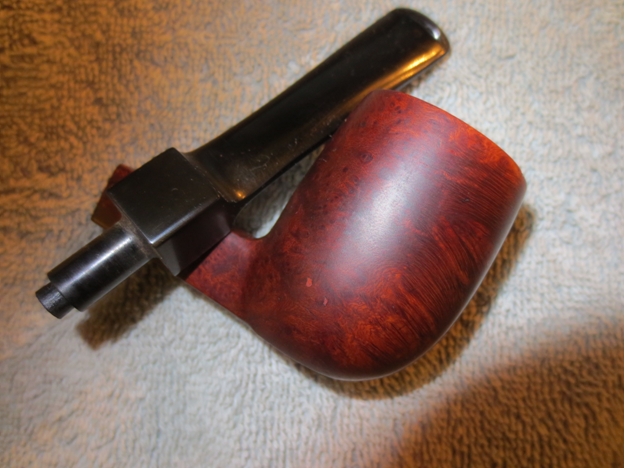
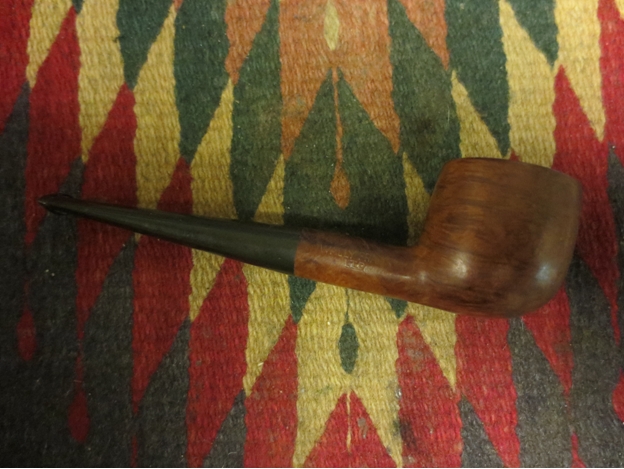
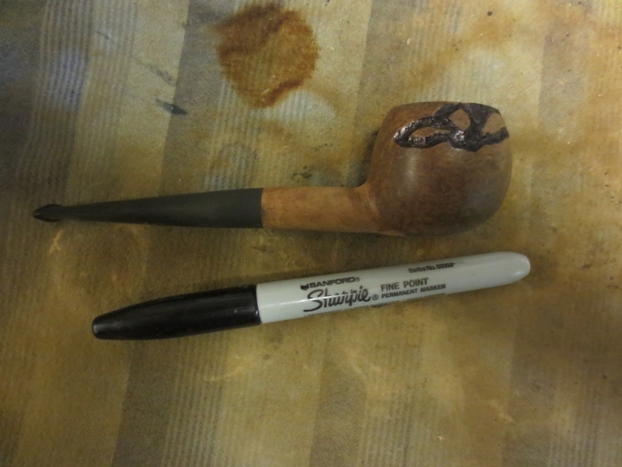
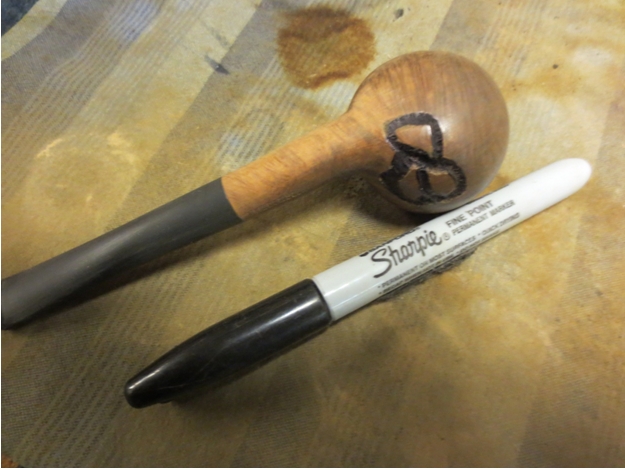
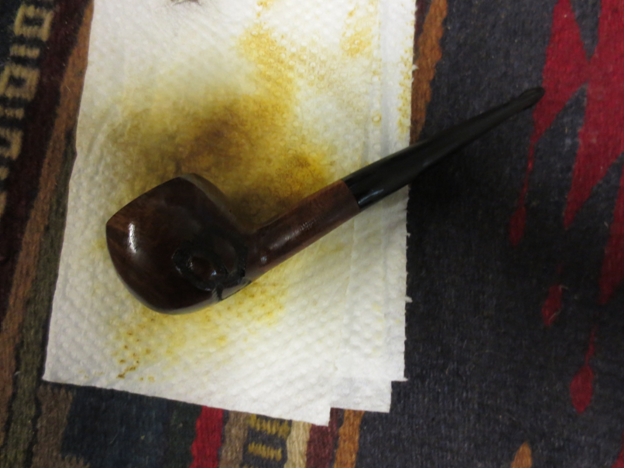
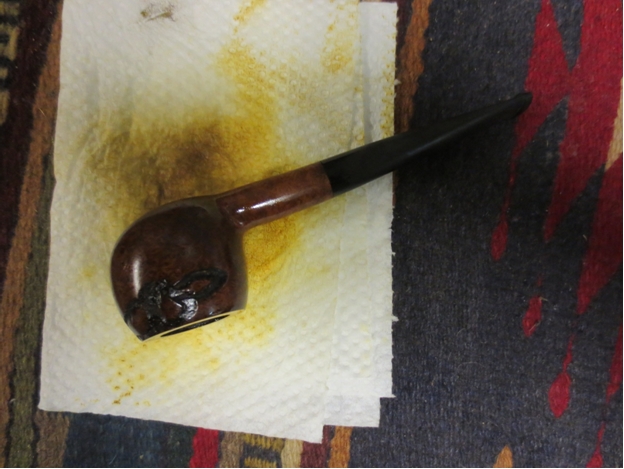
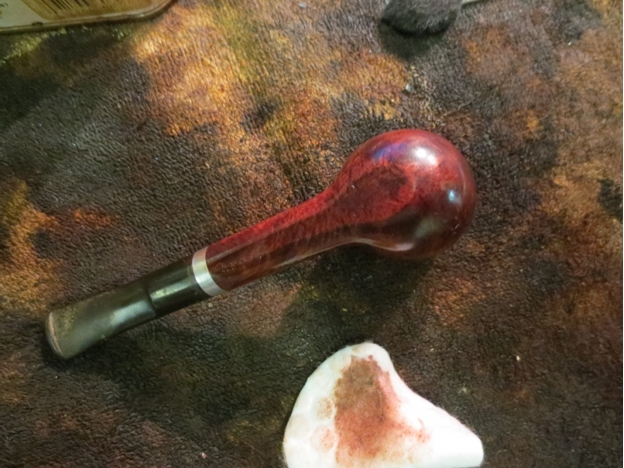
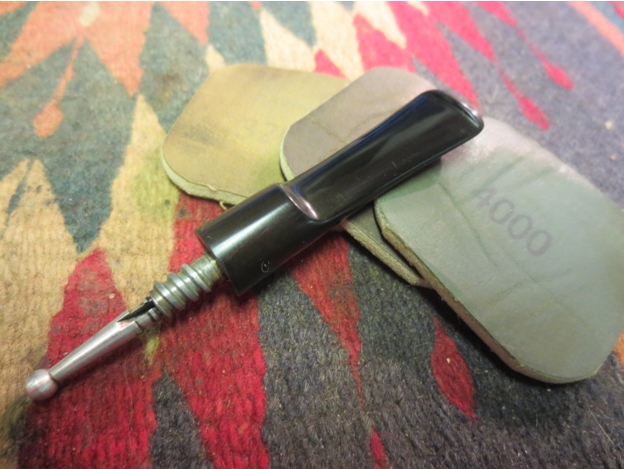
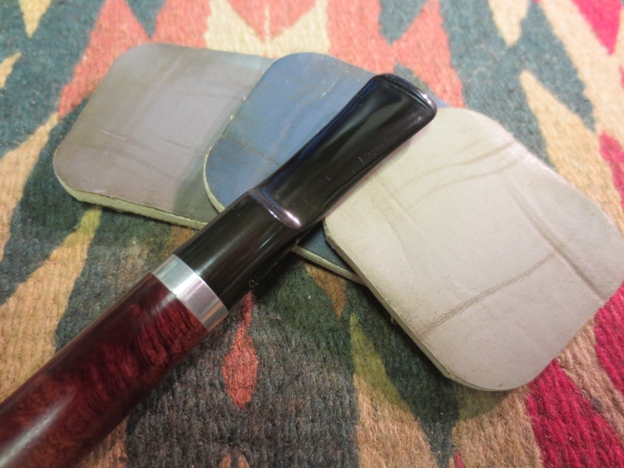
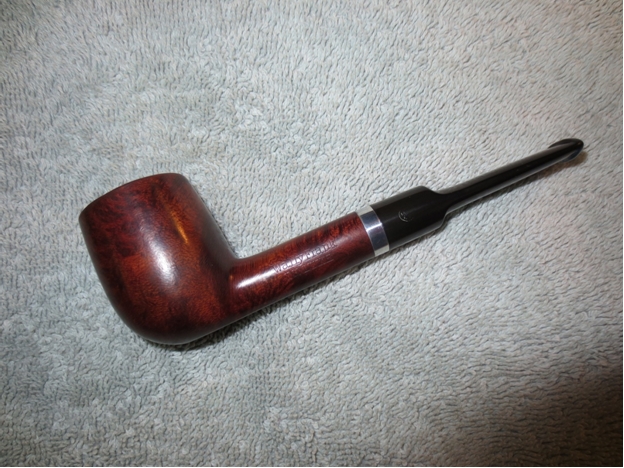
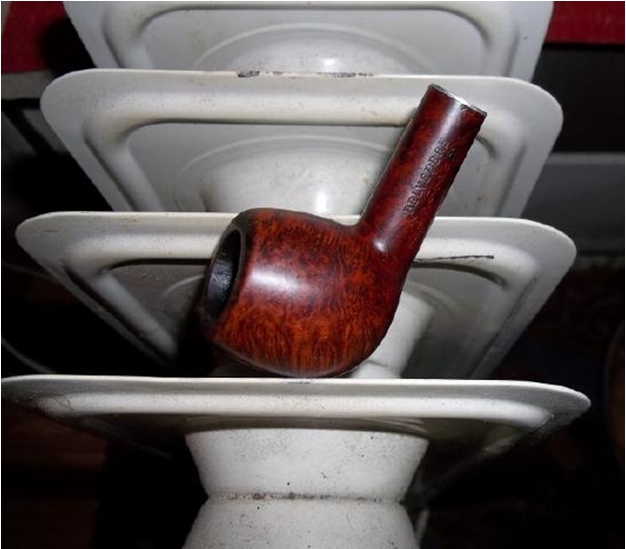
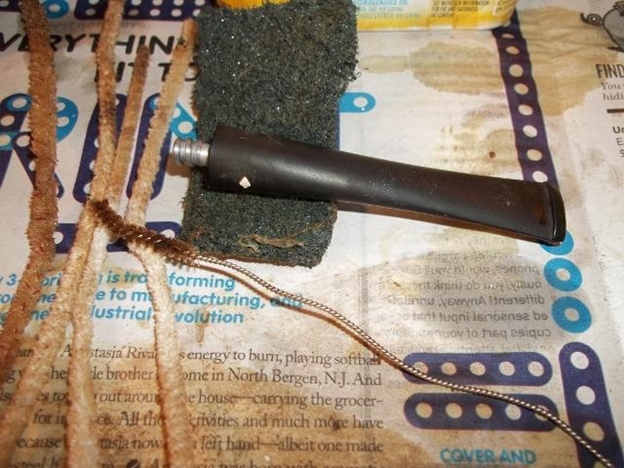
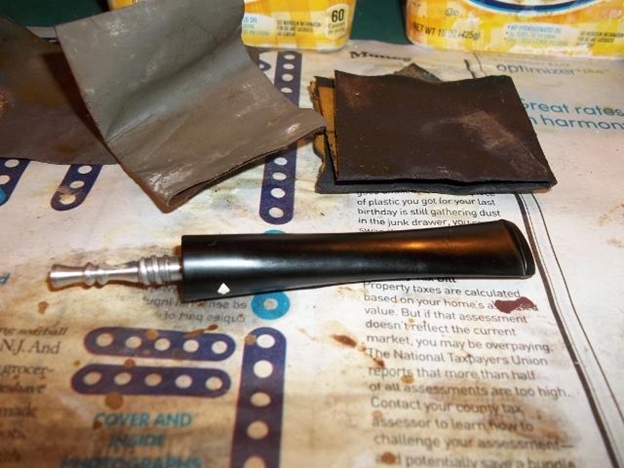
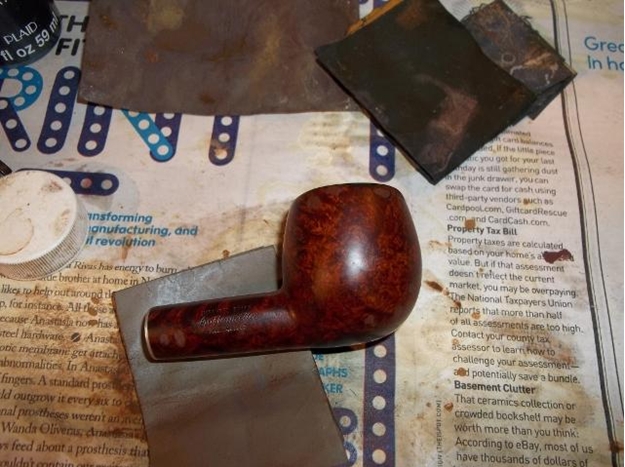
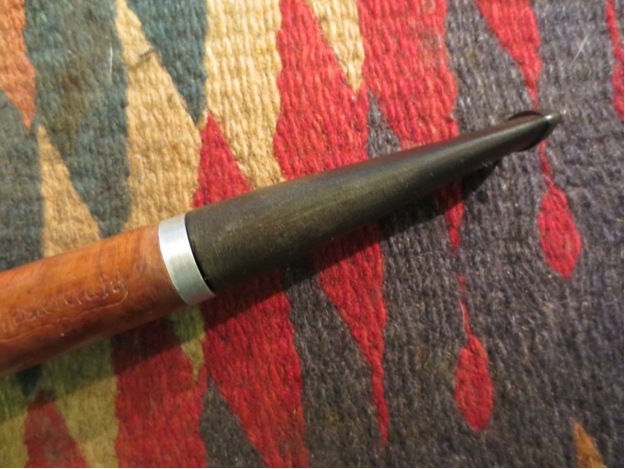
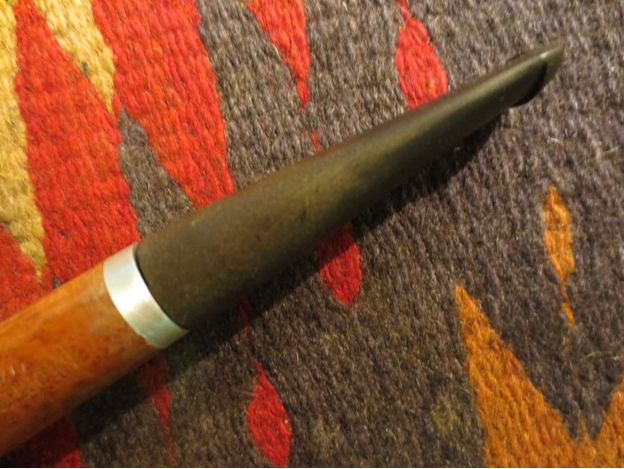
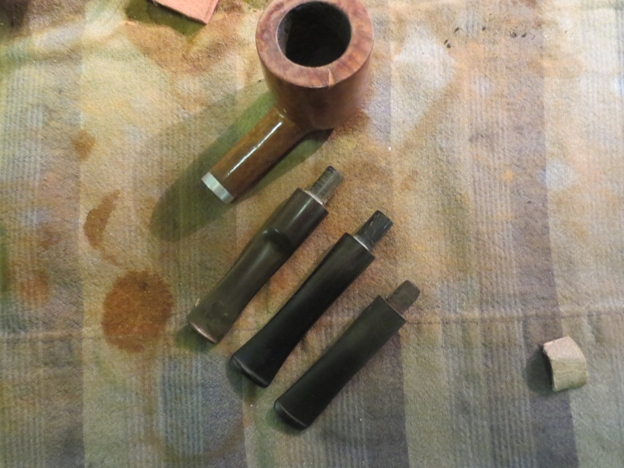
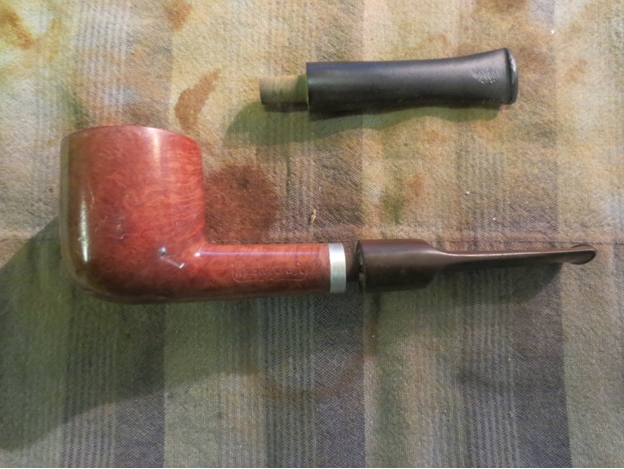
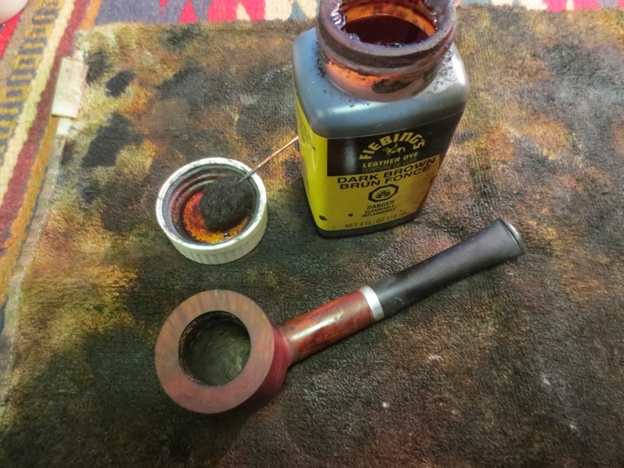
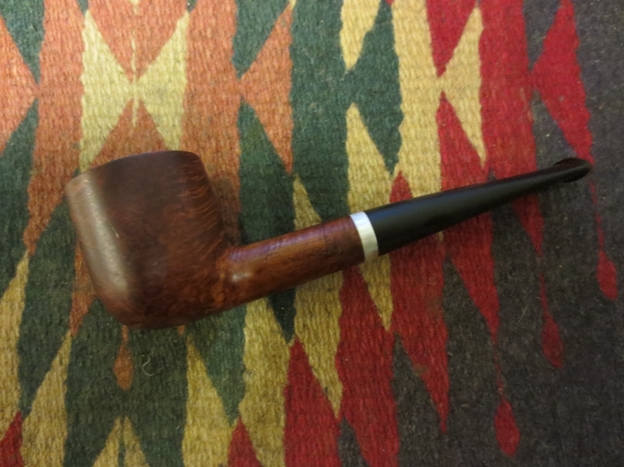
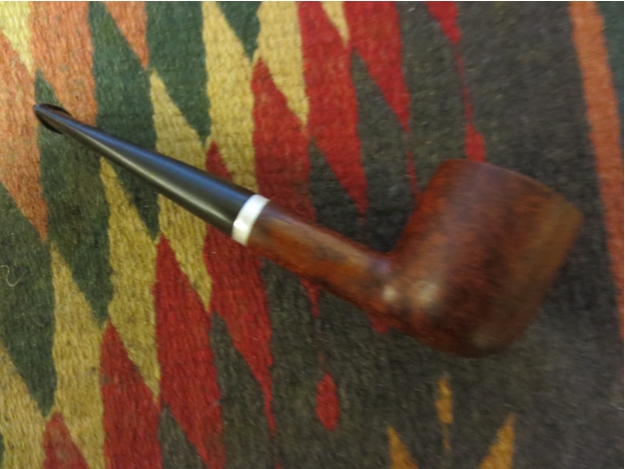
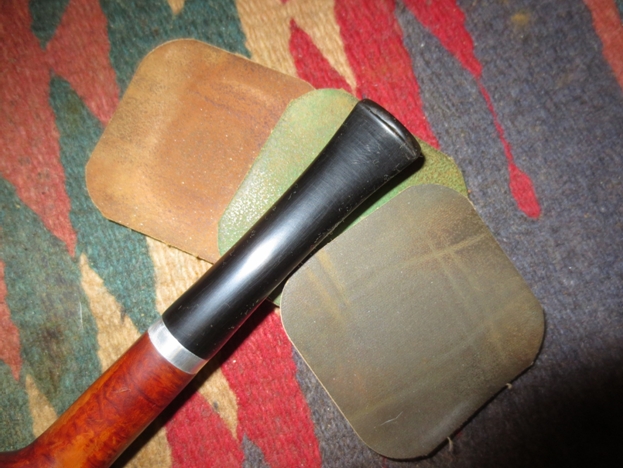
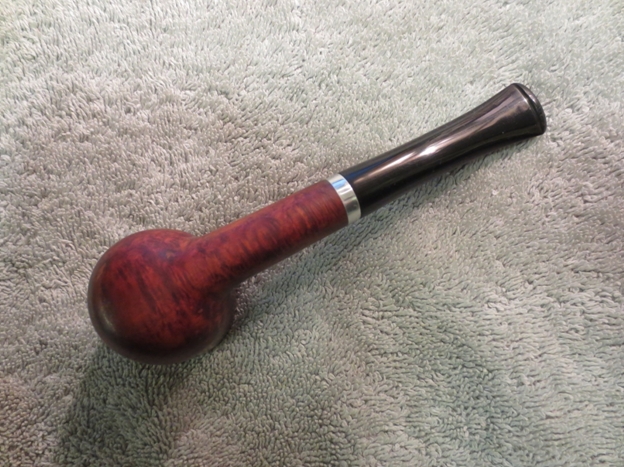
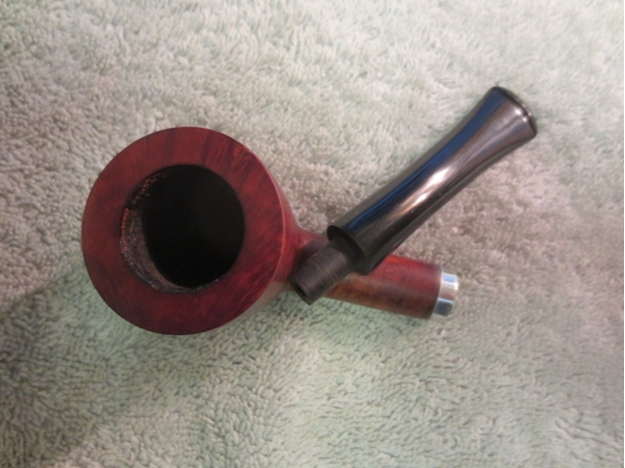
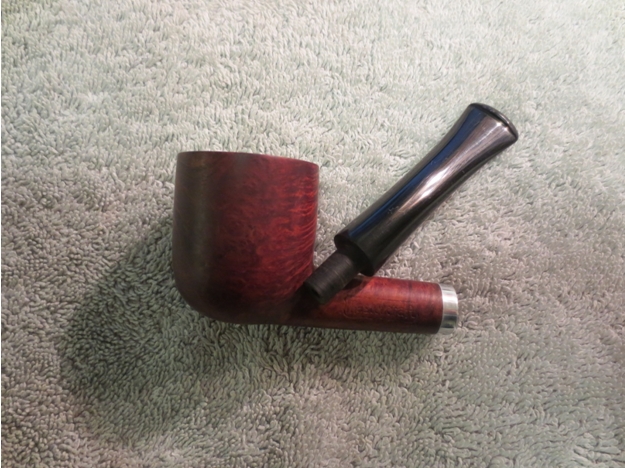
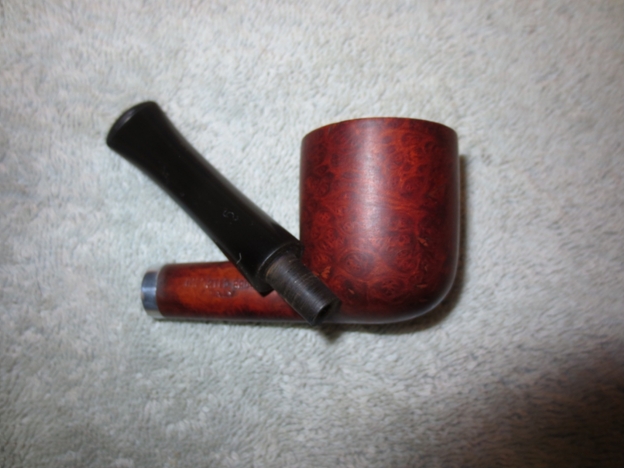
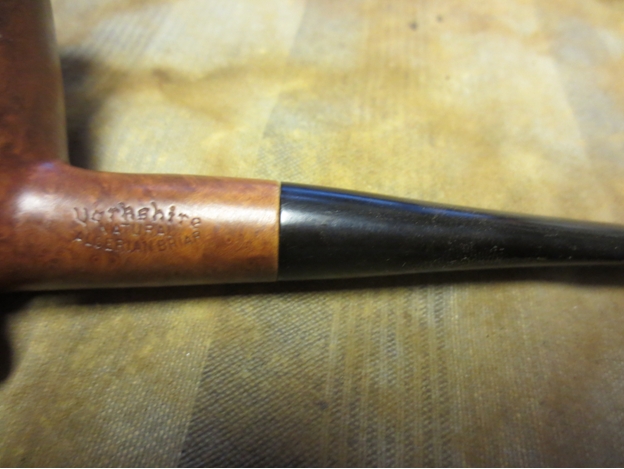
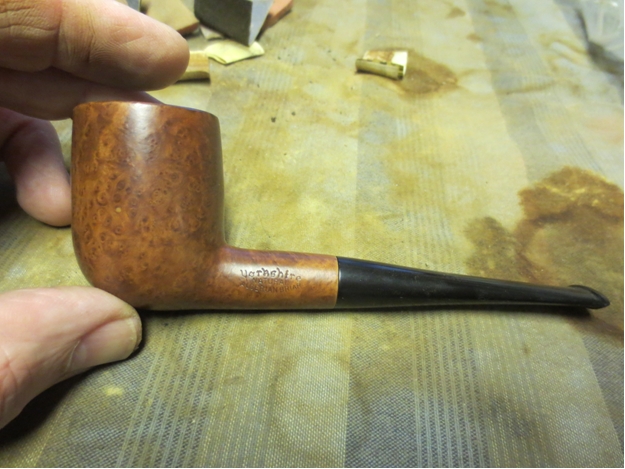
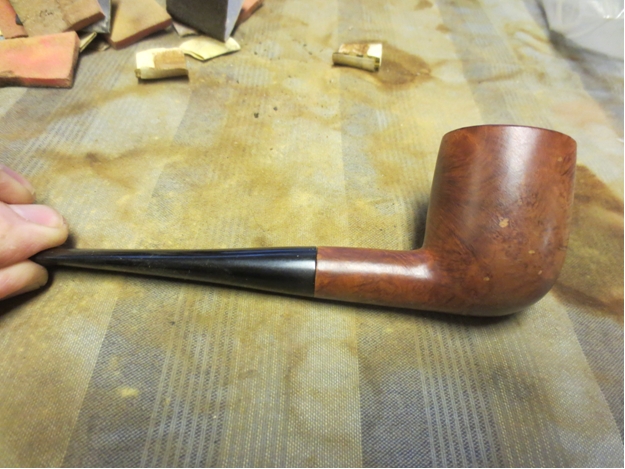
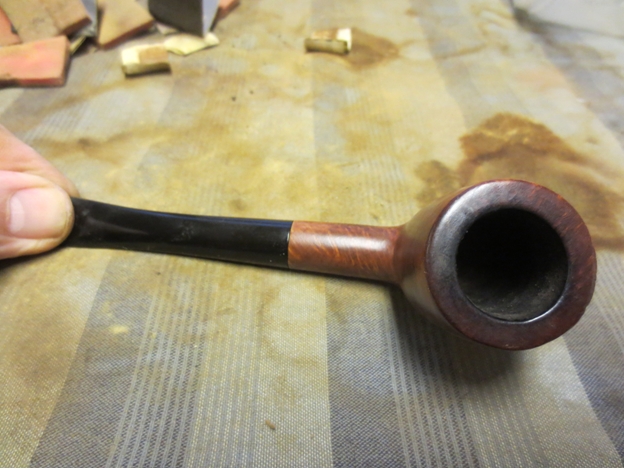
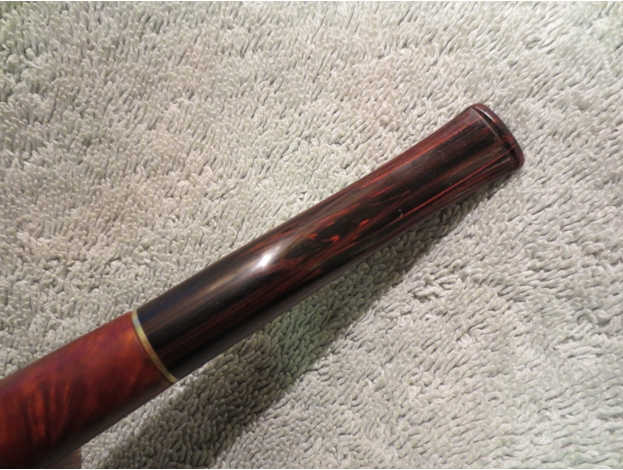
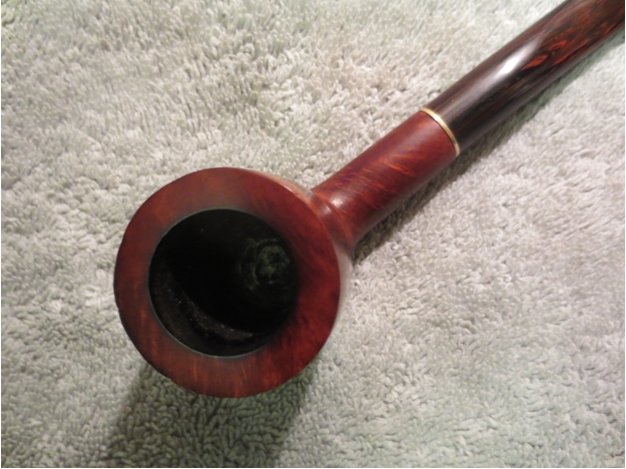
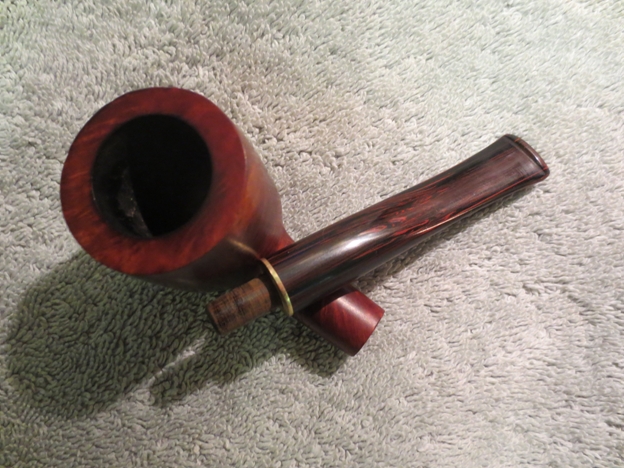
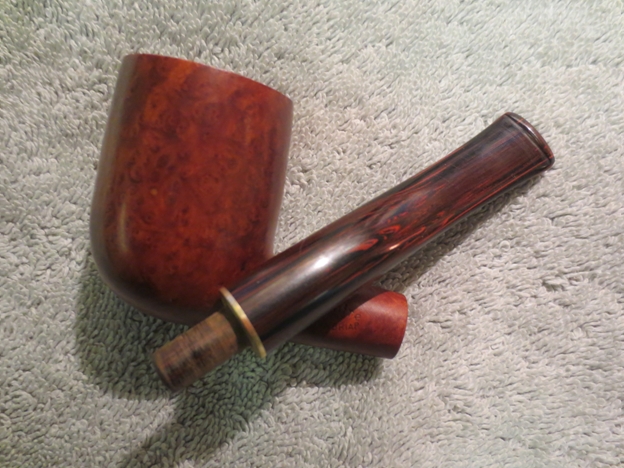
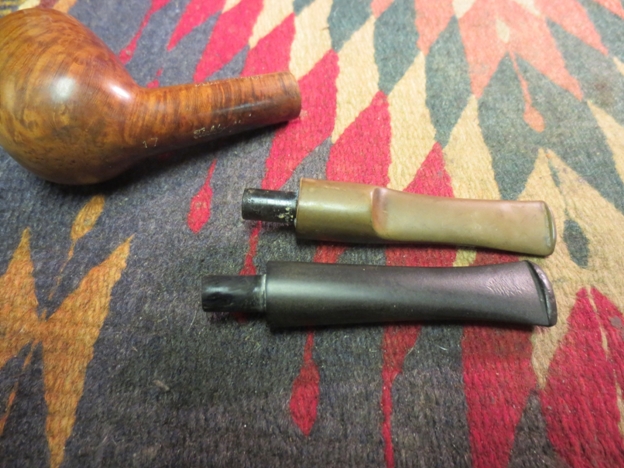
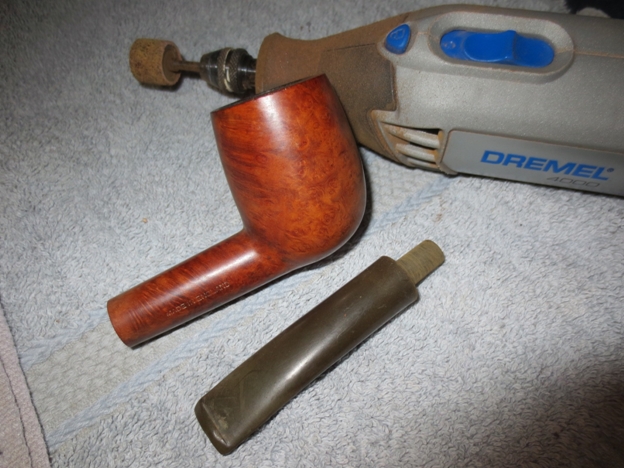
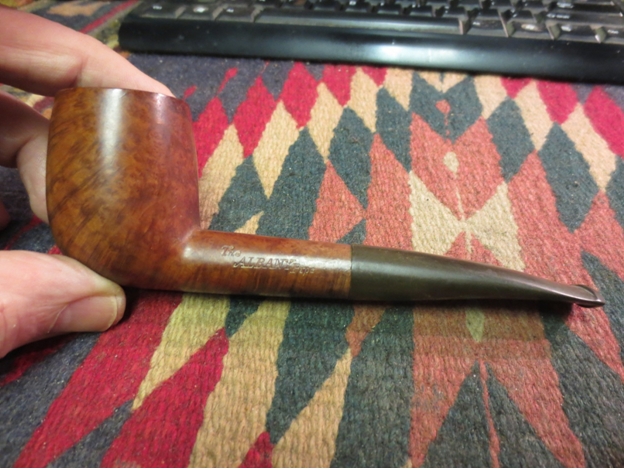
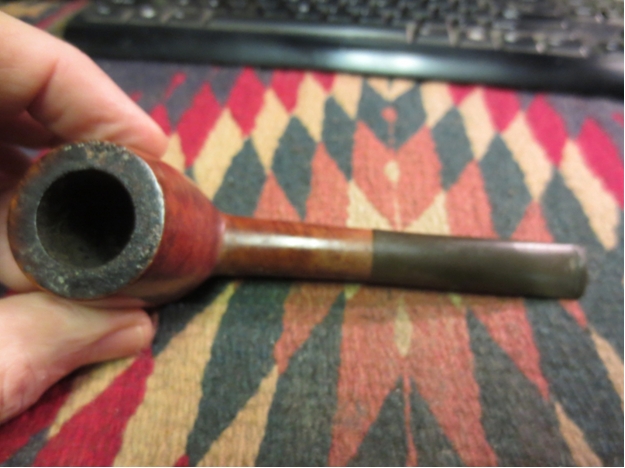
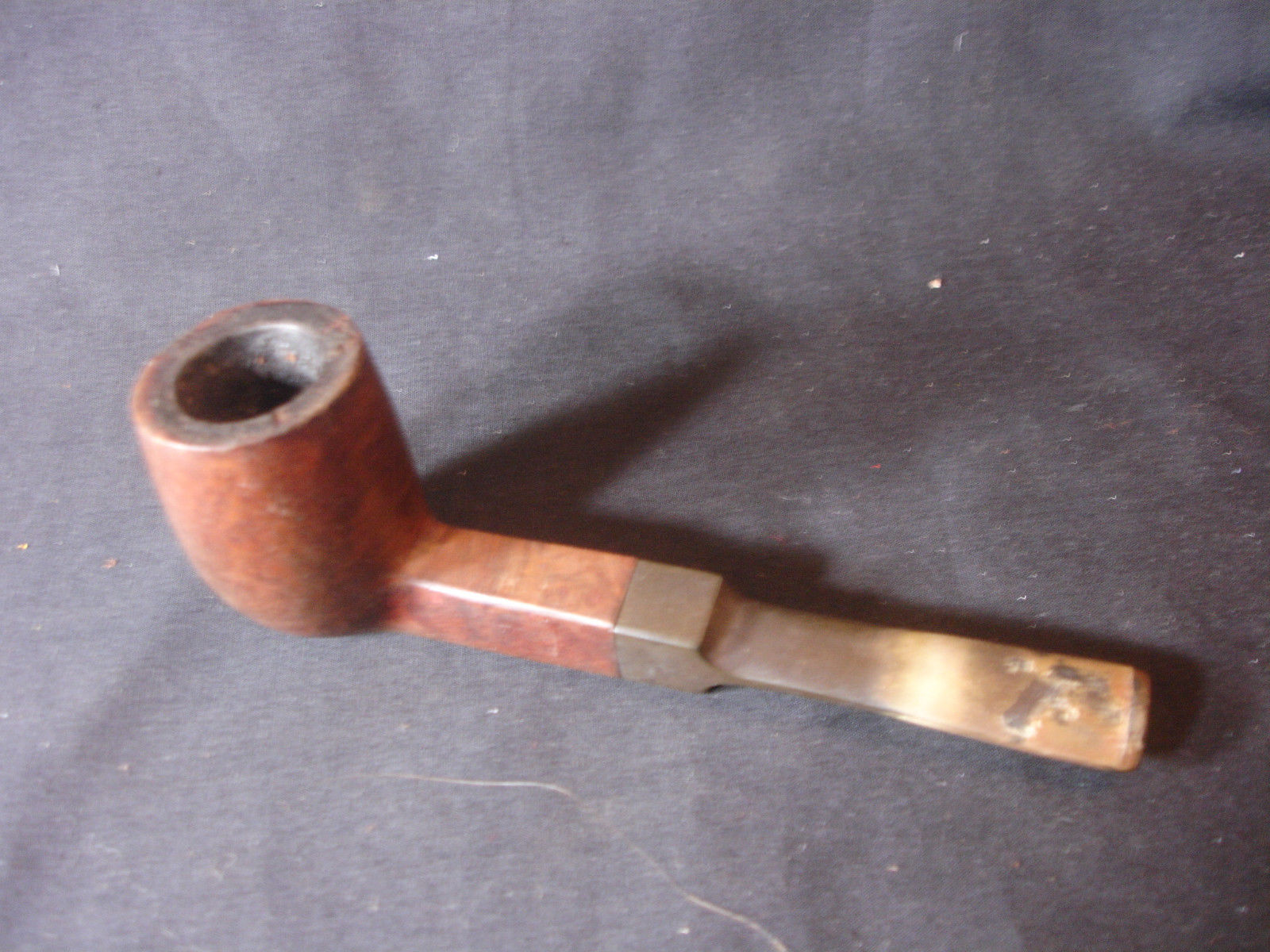
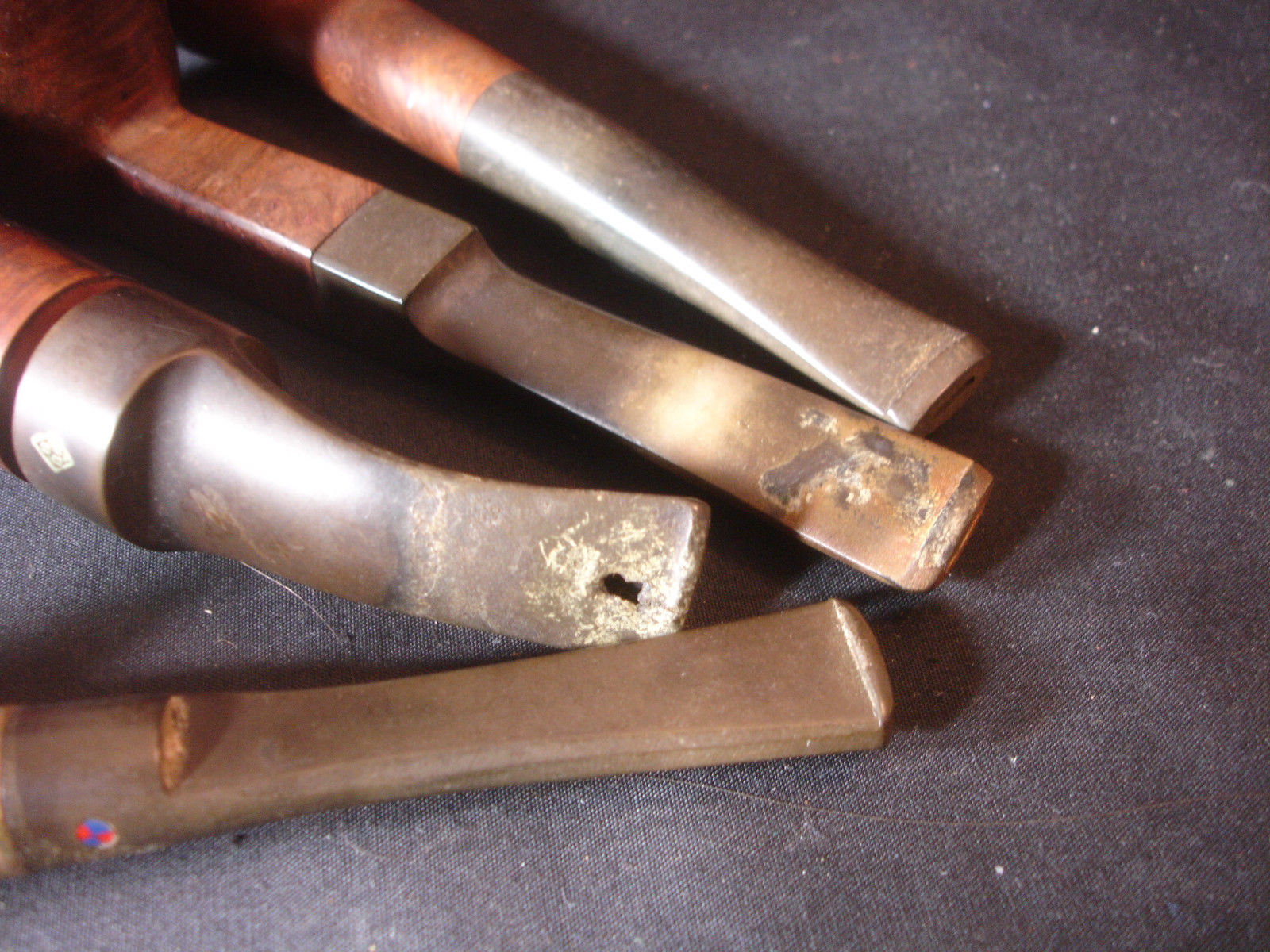
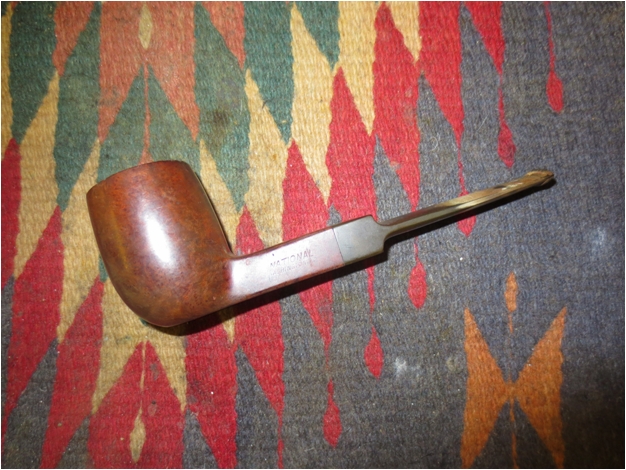
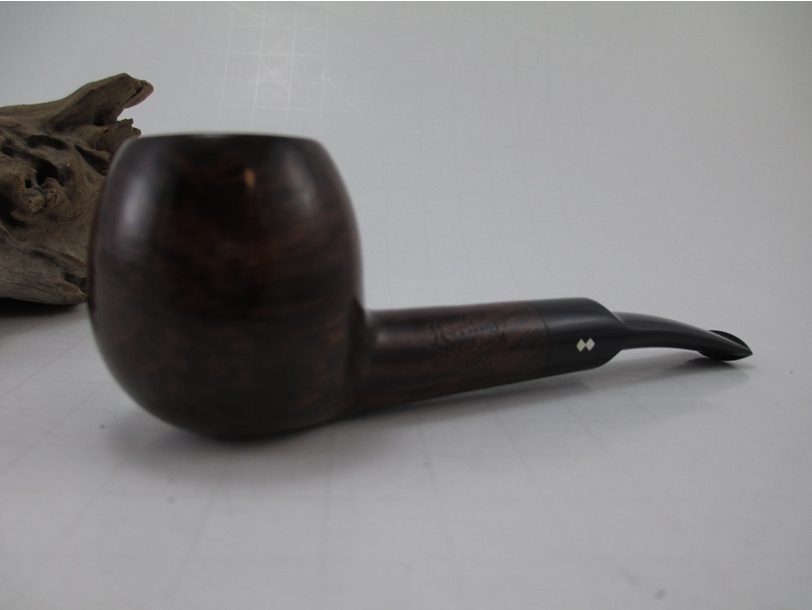
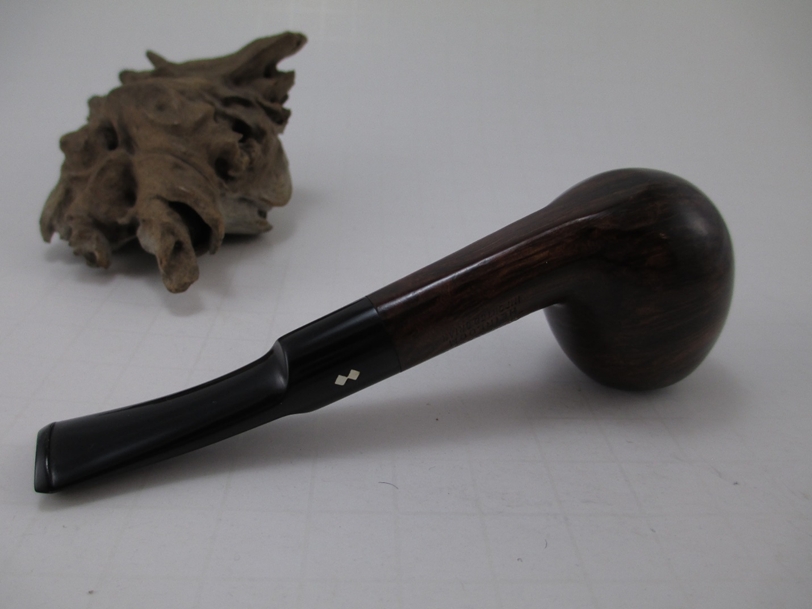
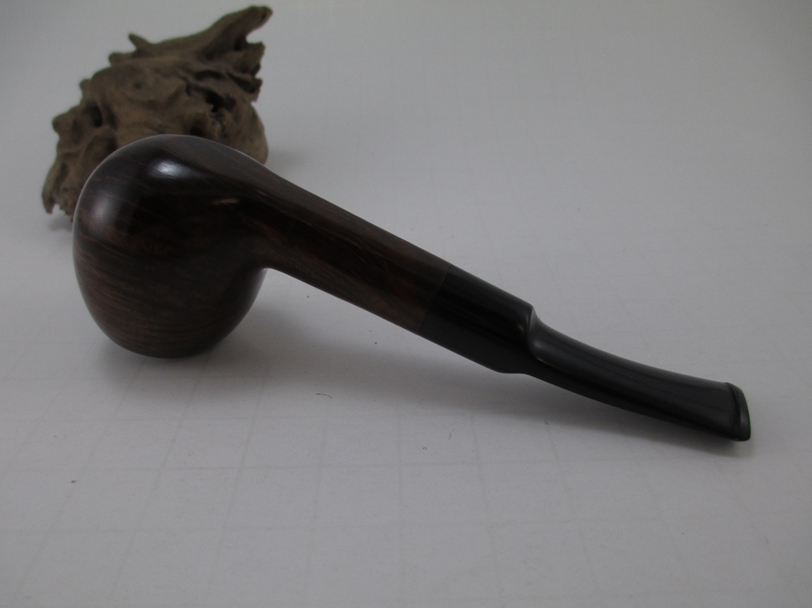
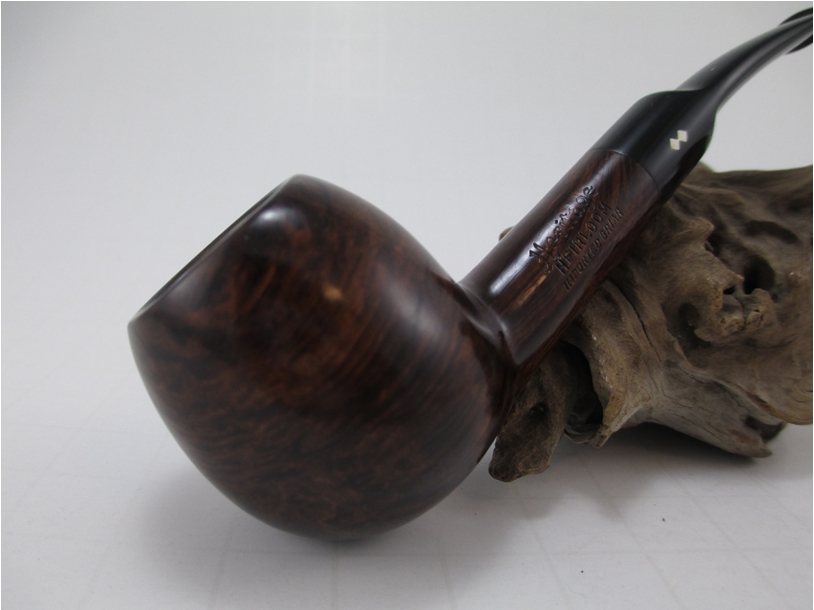
Tag Archives: pipe refurbishing

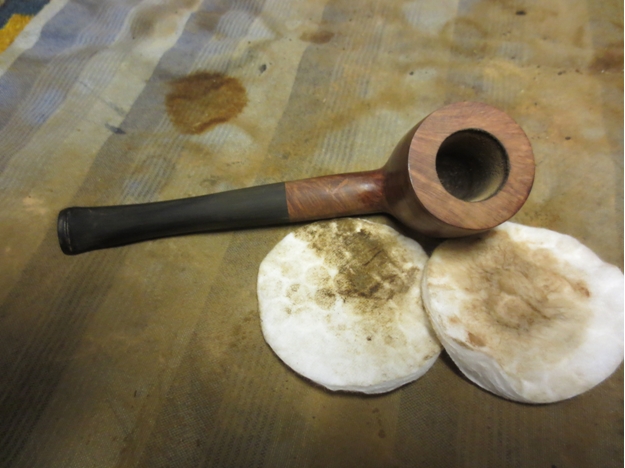
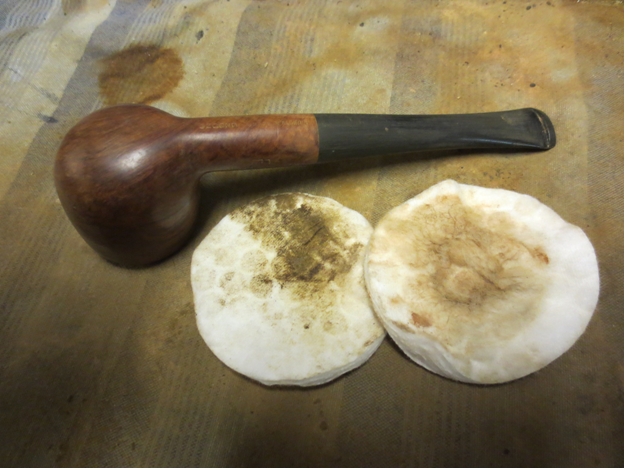
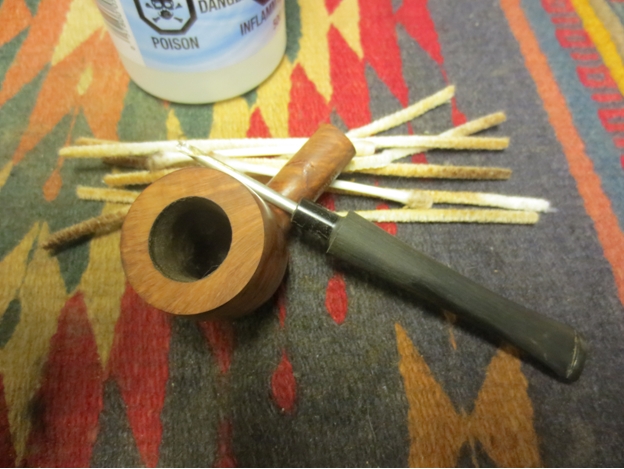
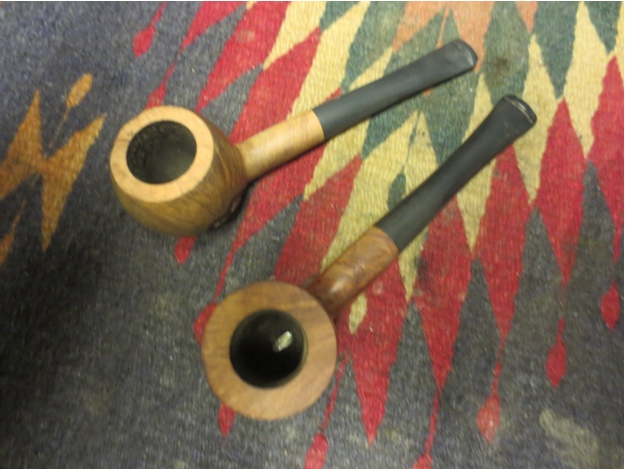
A Custombilt Lovat Reborn


Blog by Steve Laug

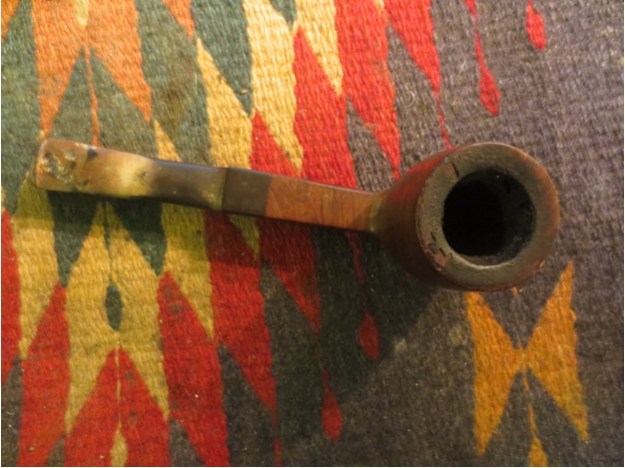
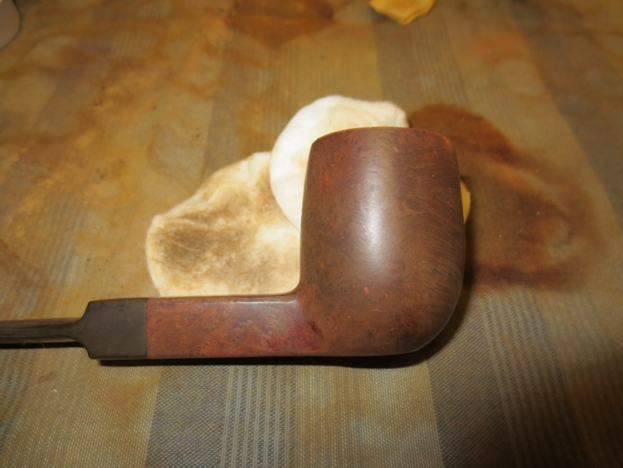
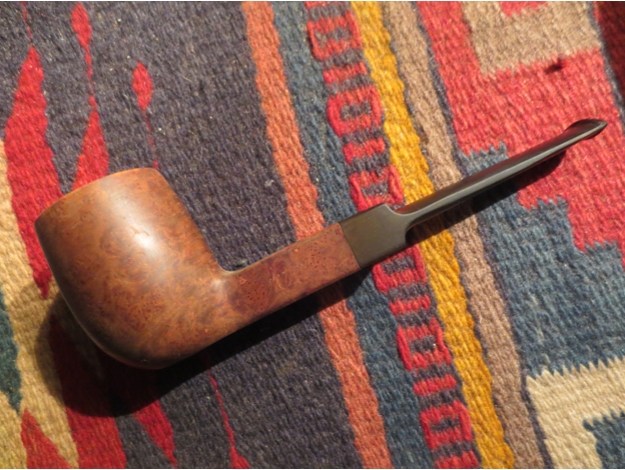
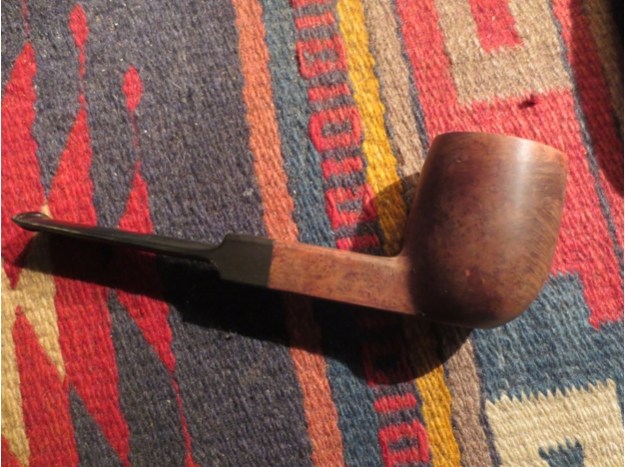
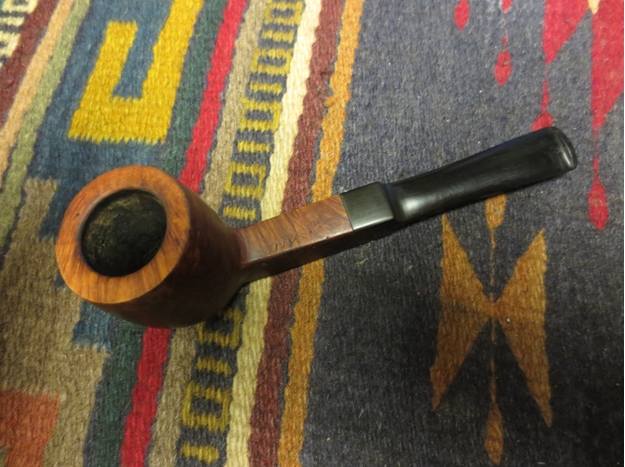
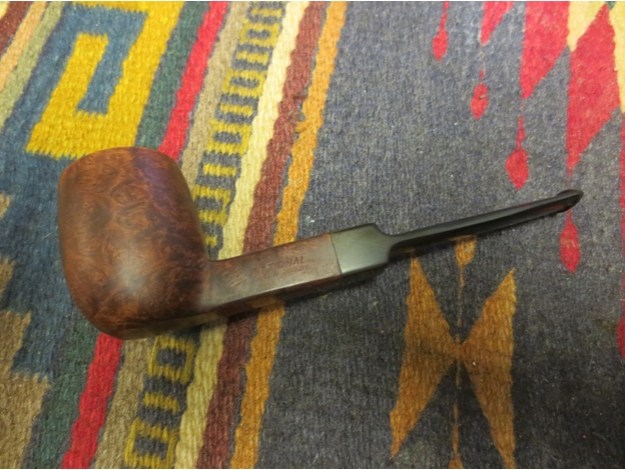
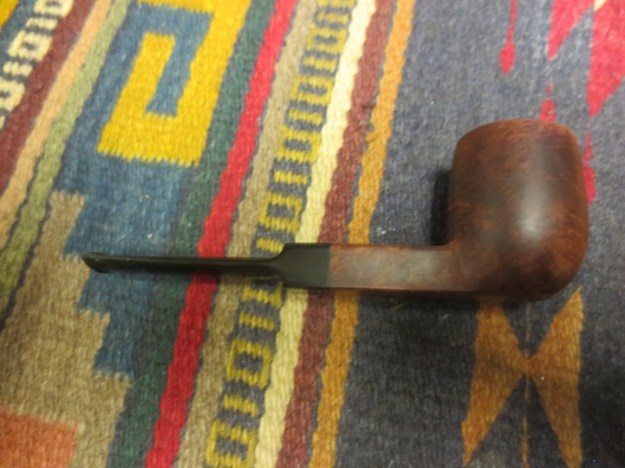
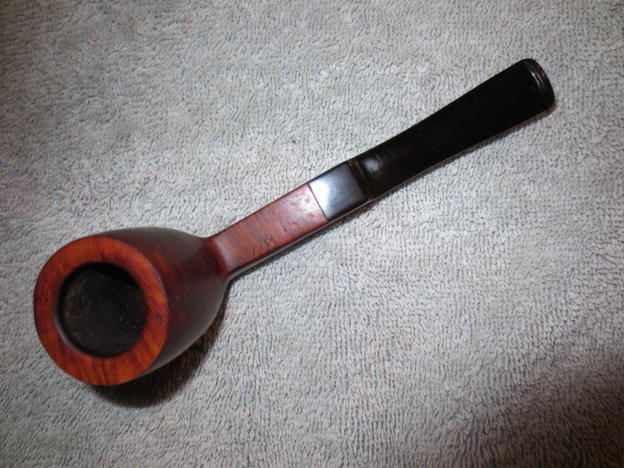
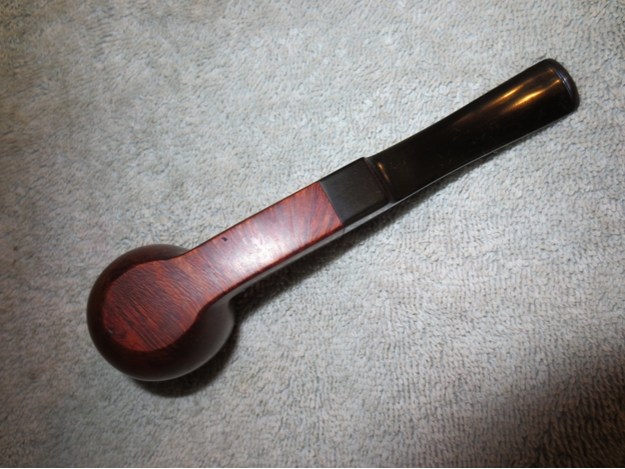
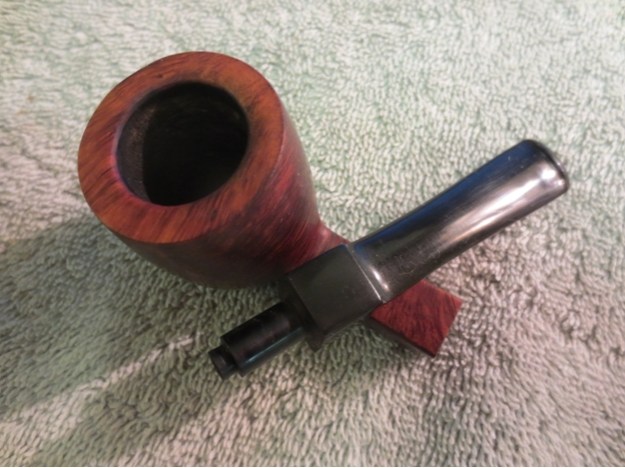
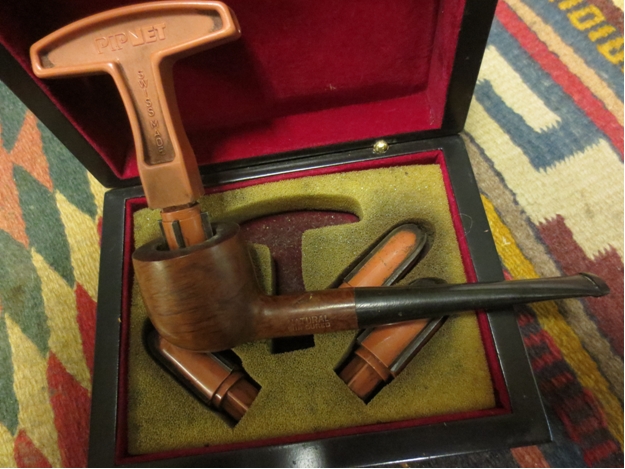
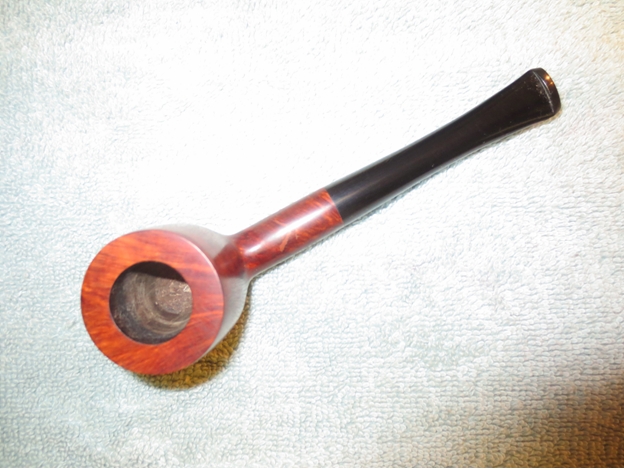
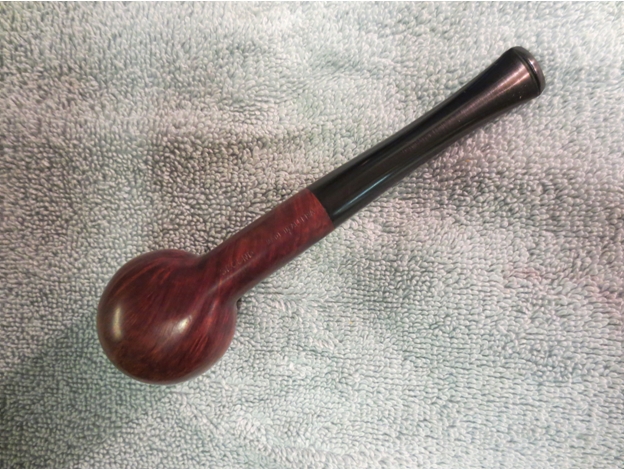
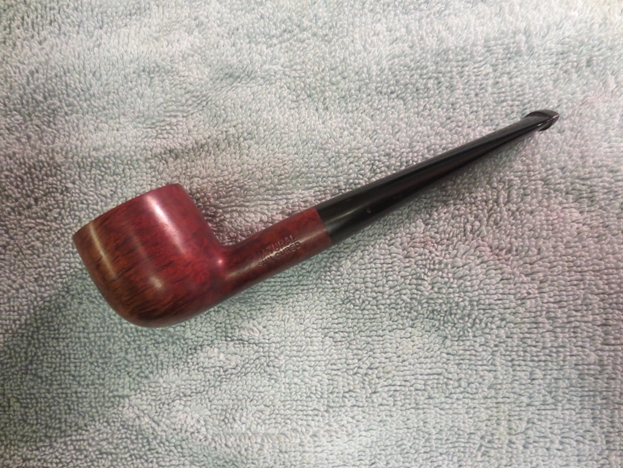
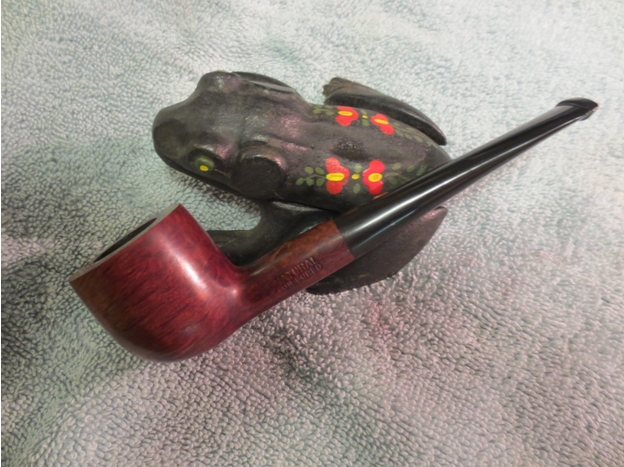
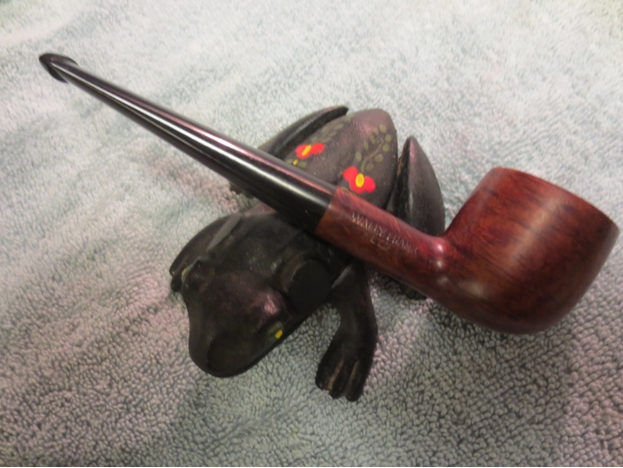
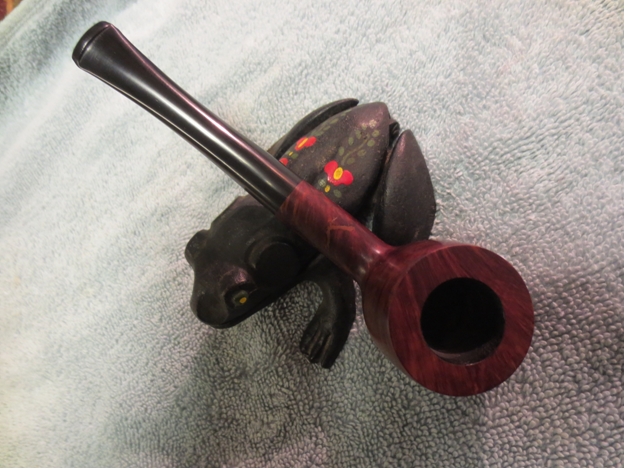
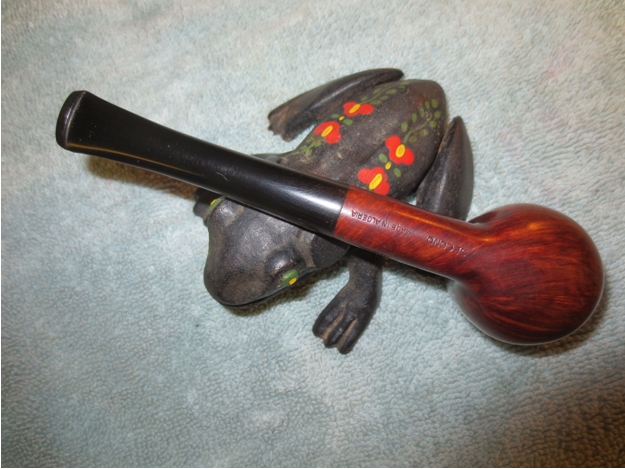
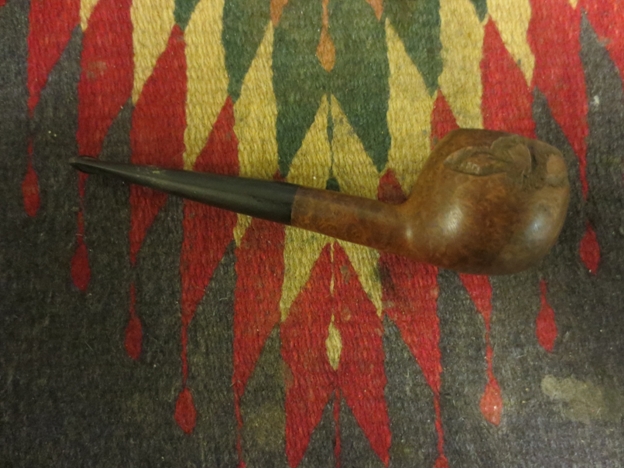
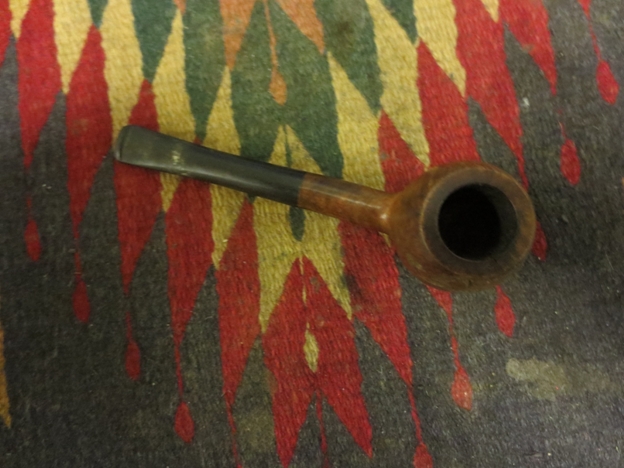
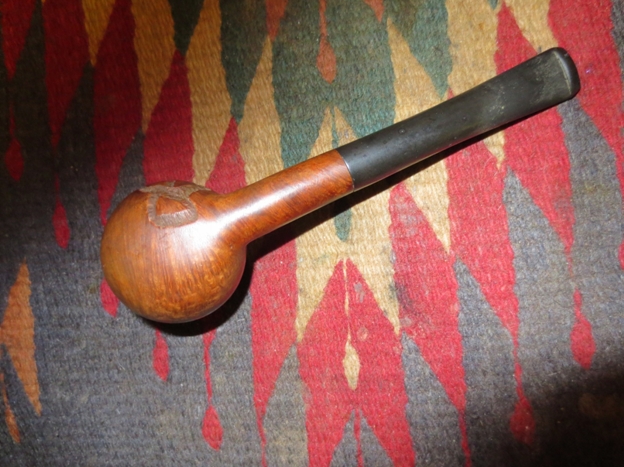
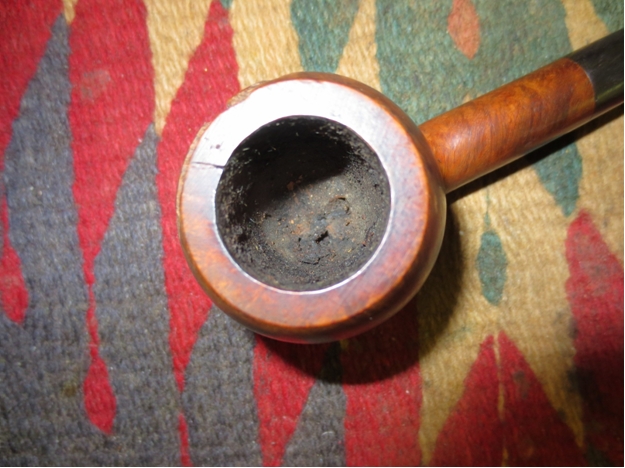
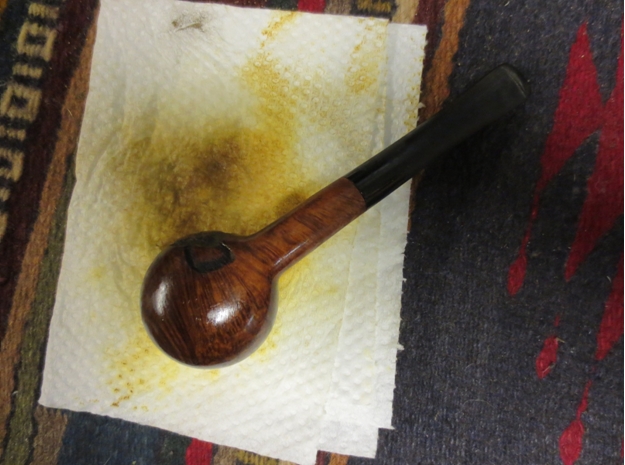
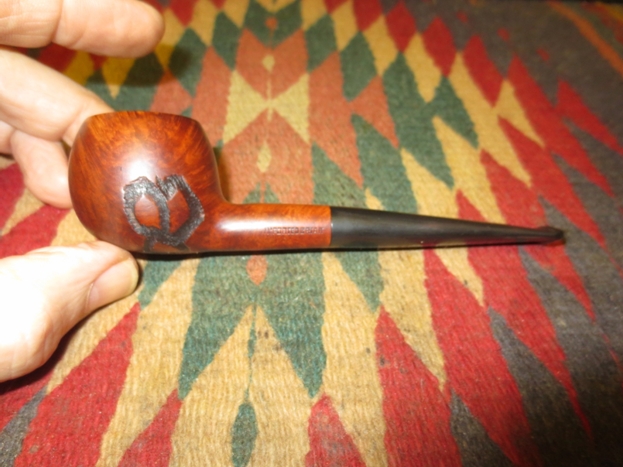
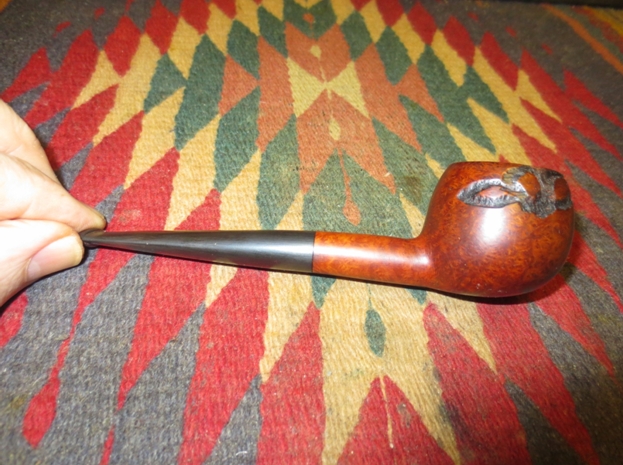
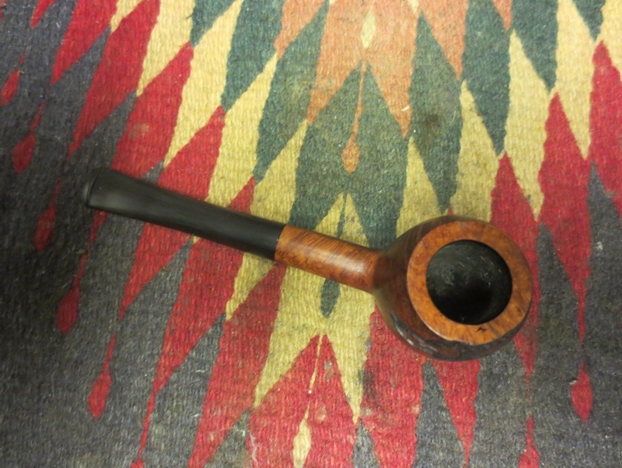
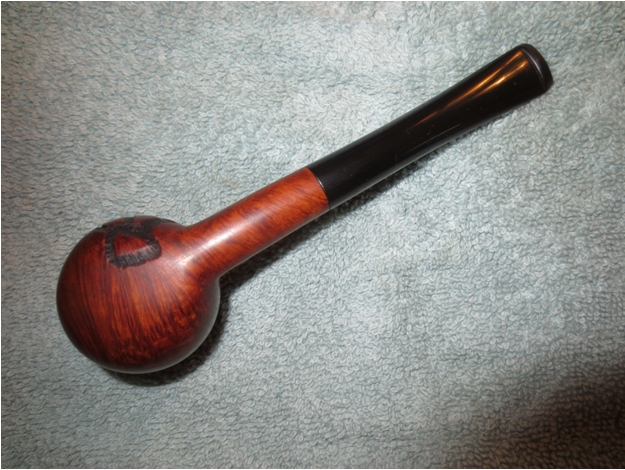
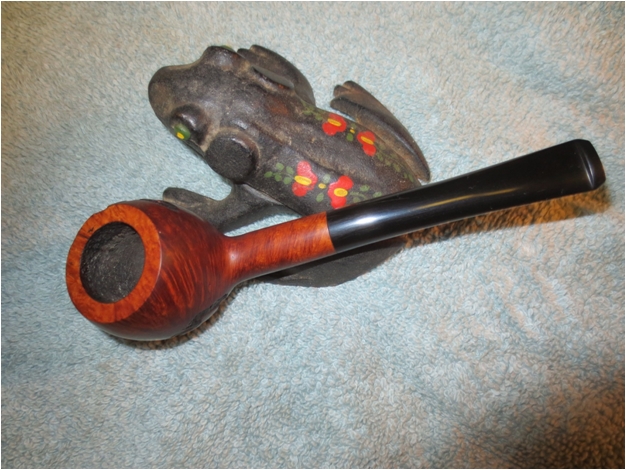
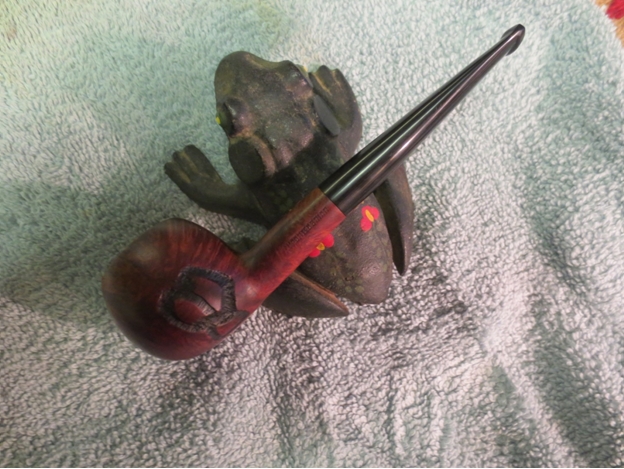
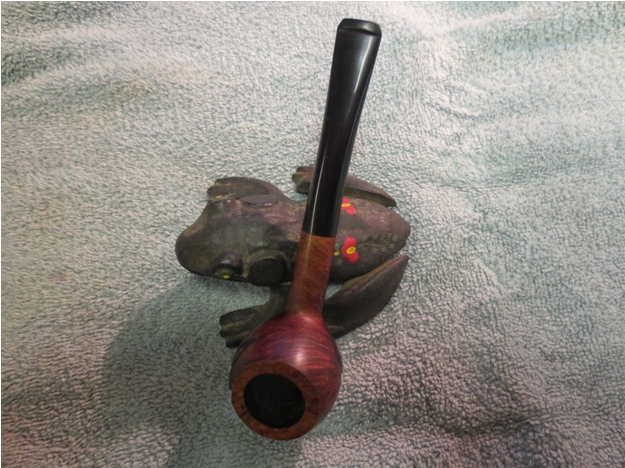
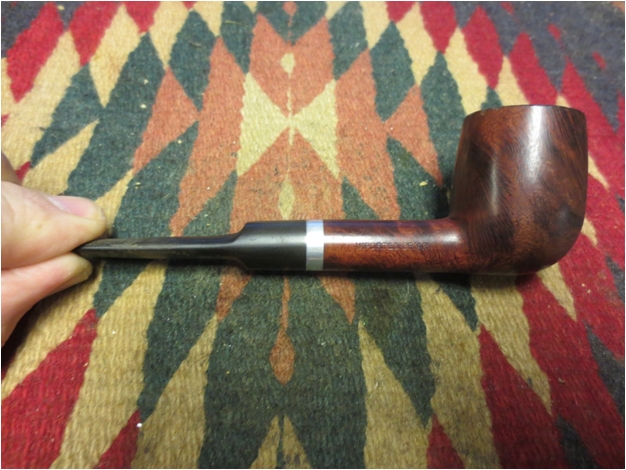
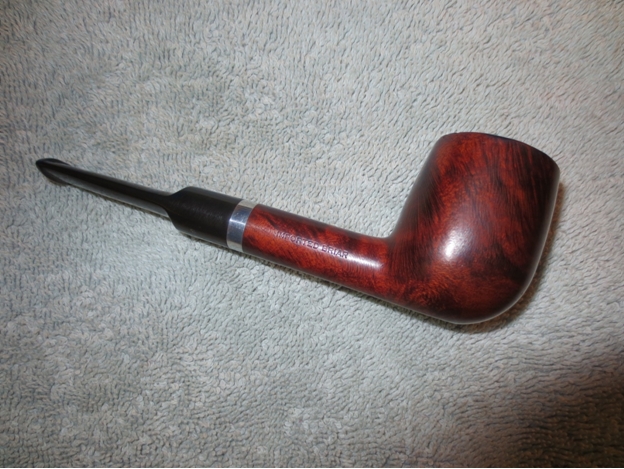
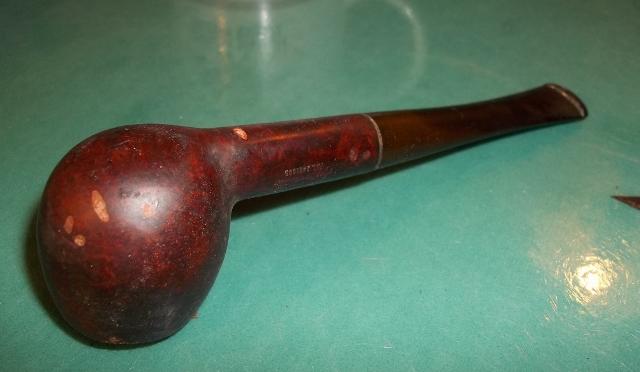
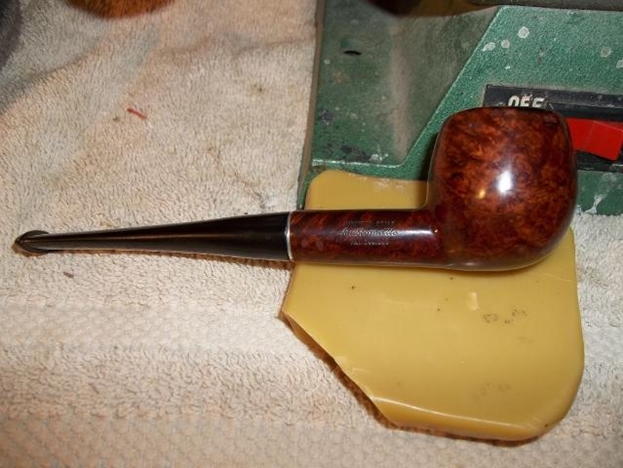
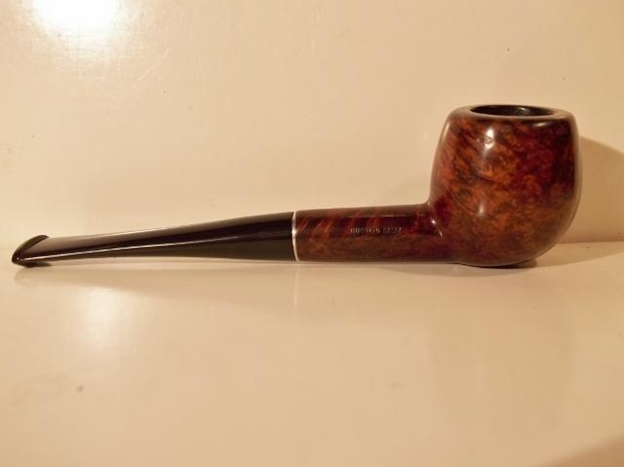
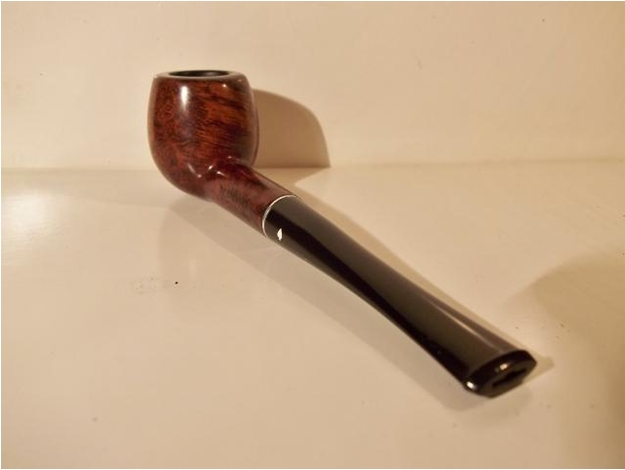
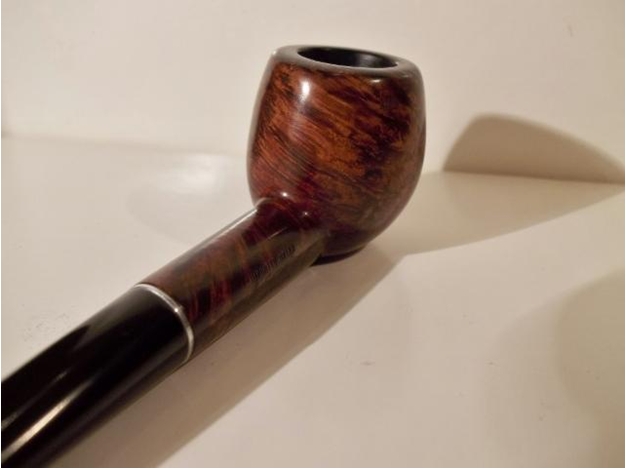
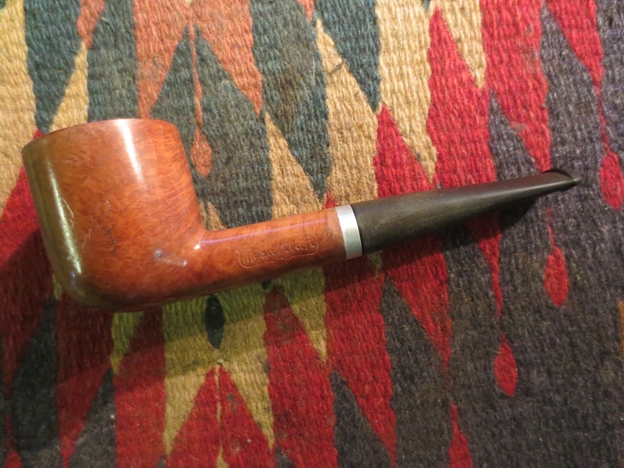
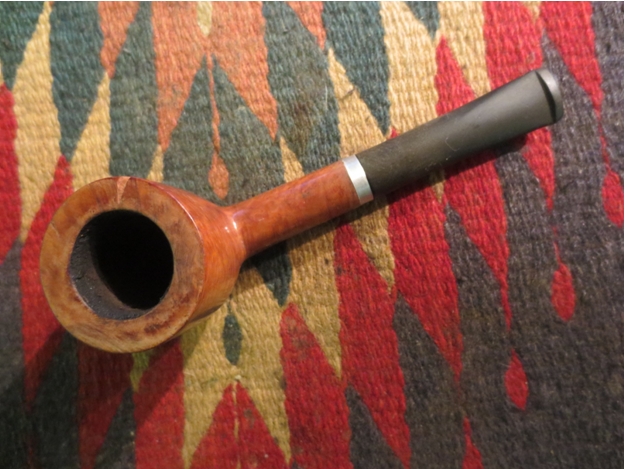
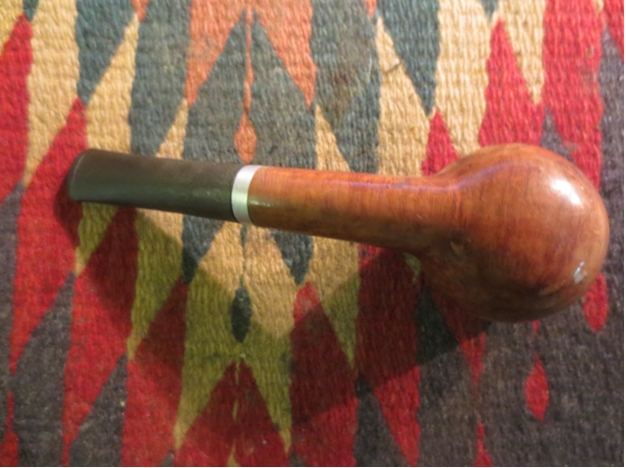
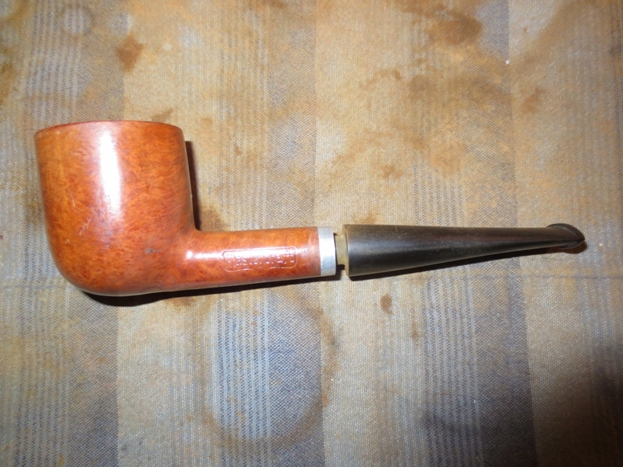
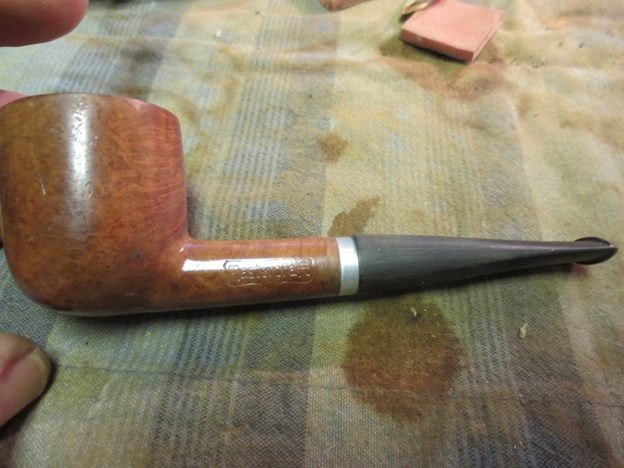
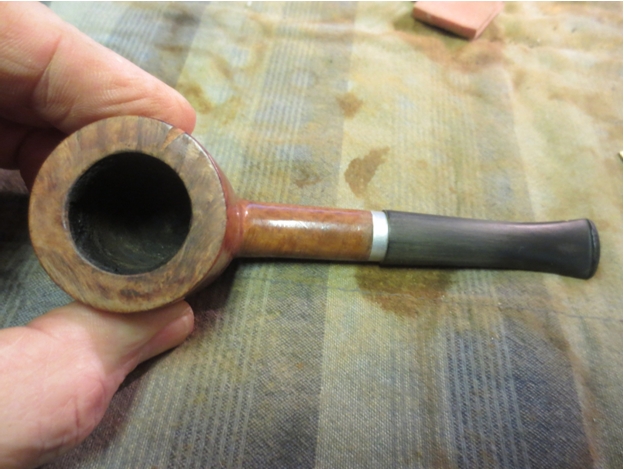
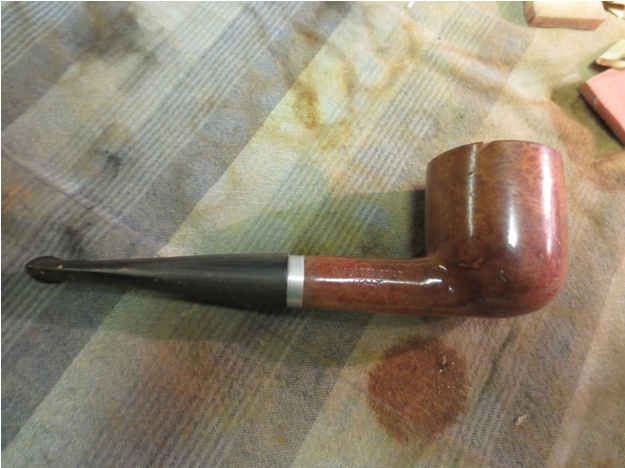
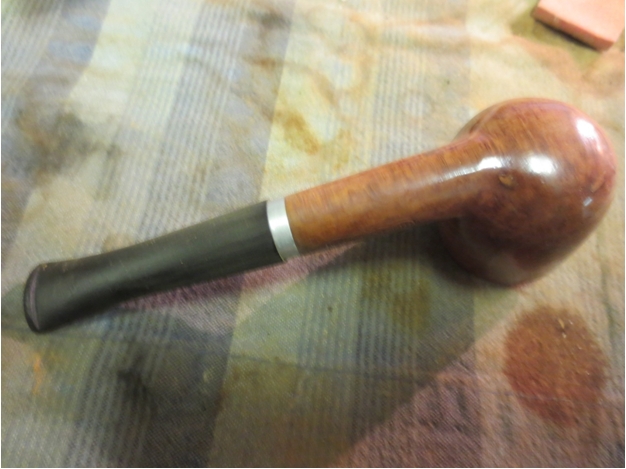
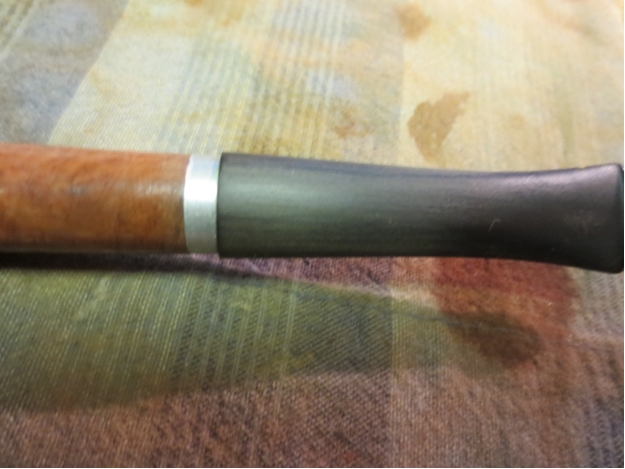
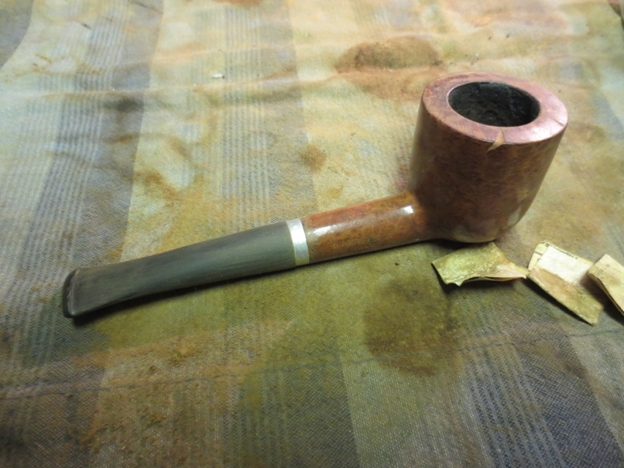
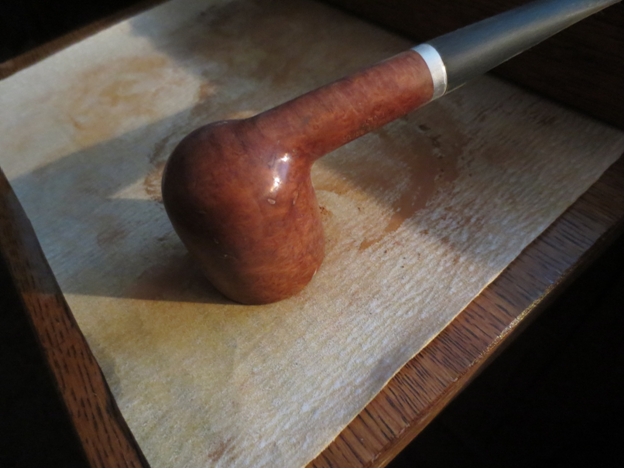
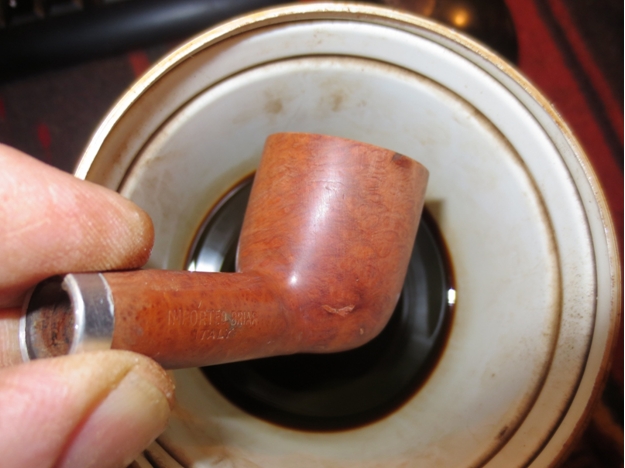
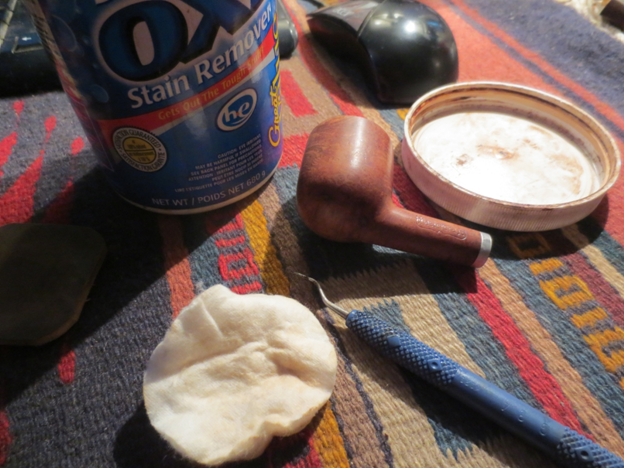
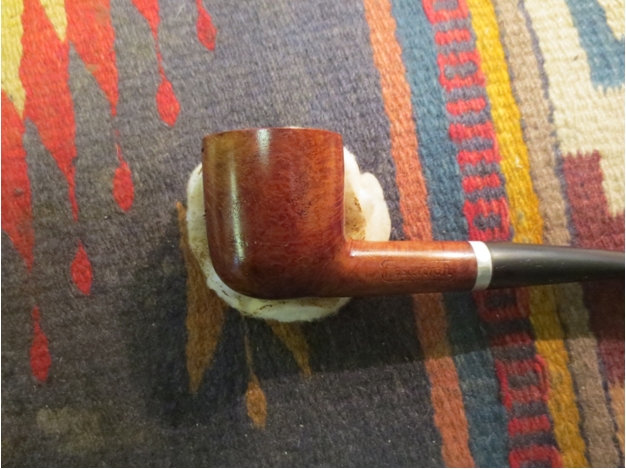
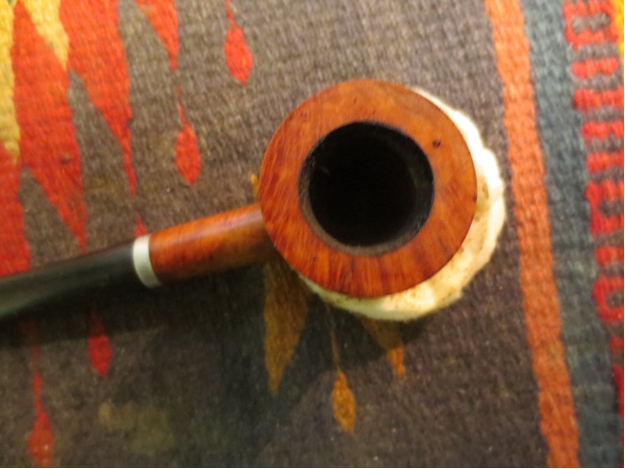
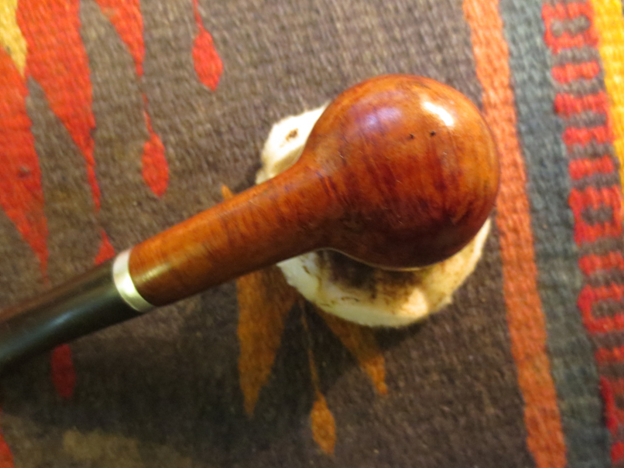
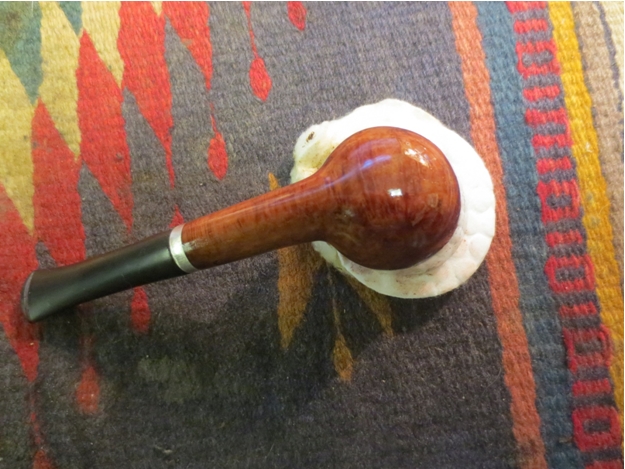
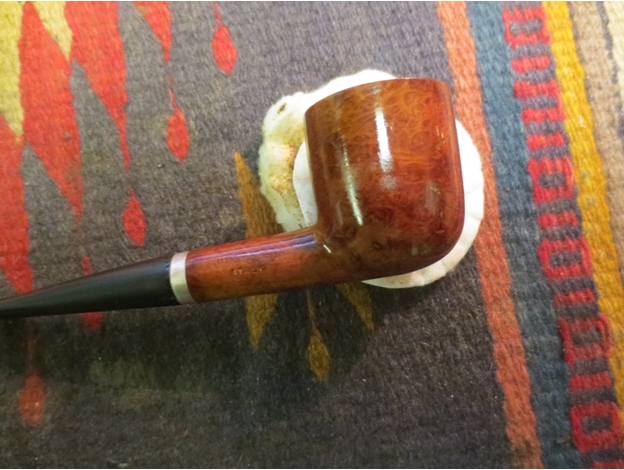
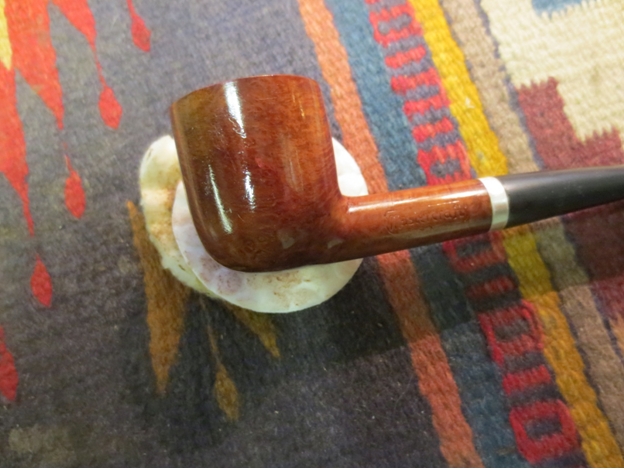
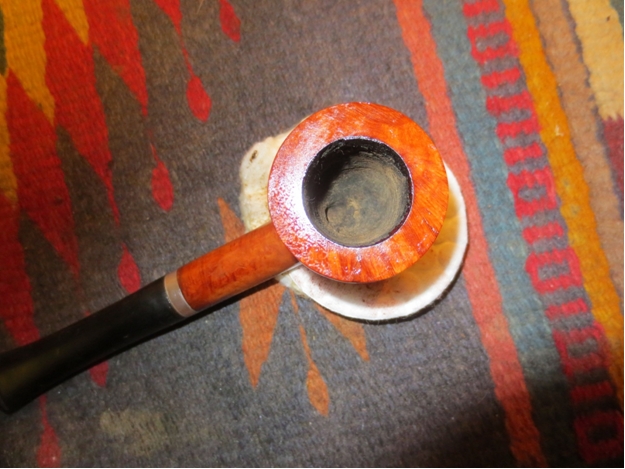
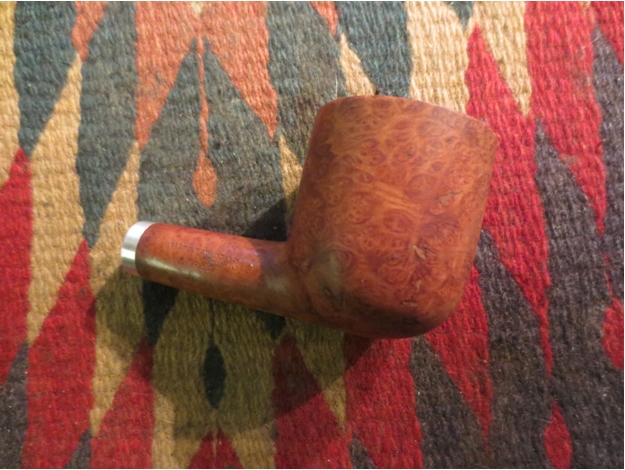
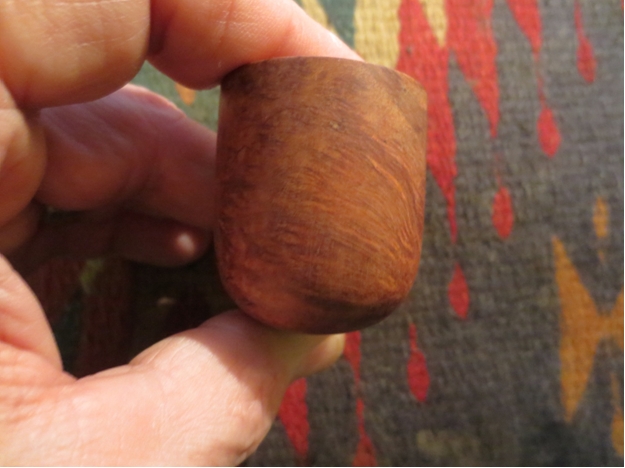
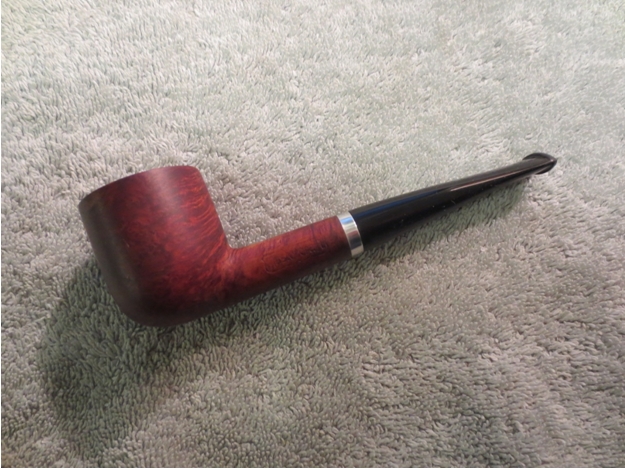
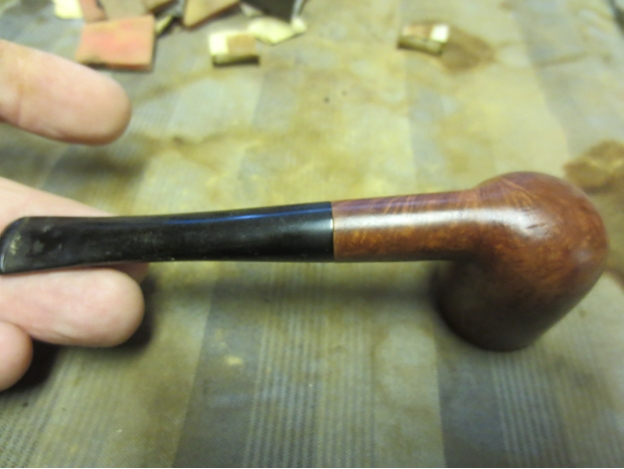
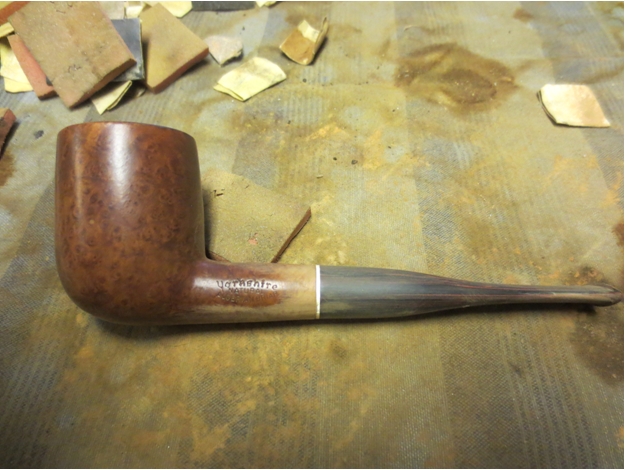
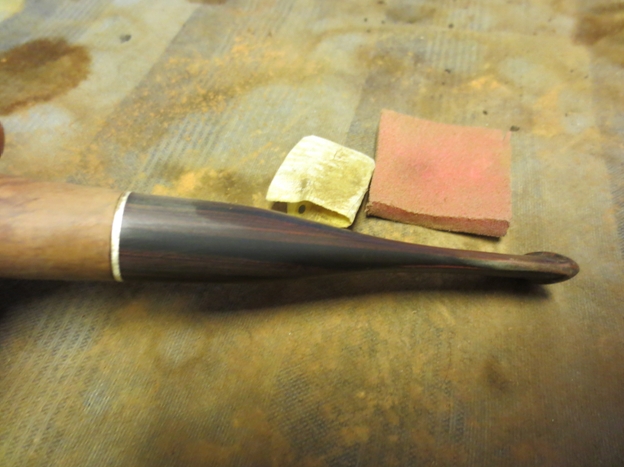
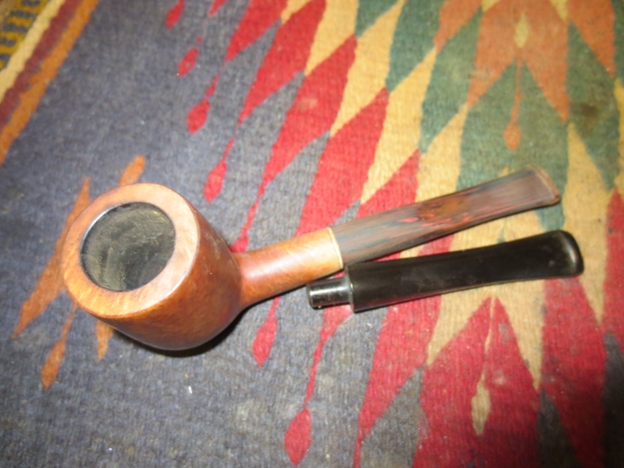
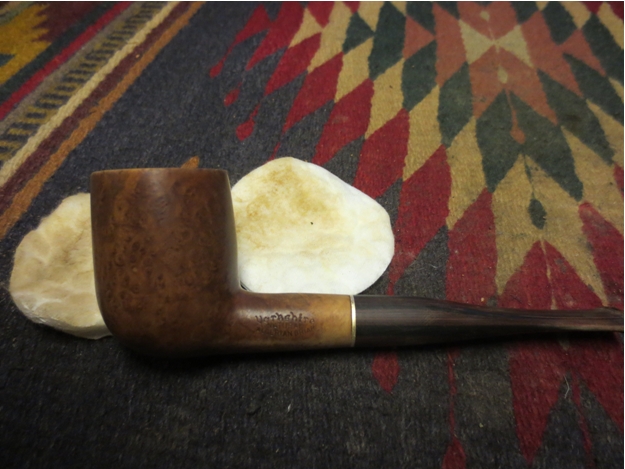
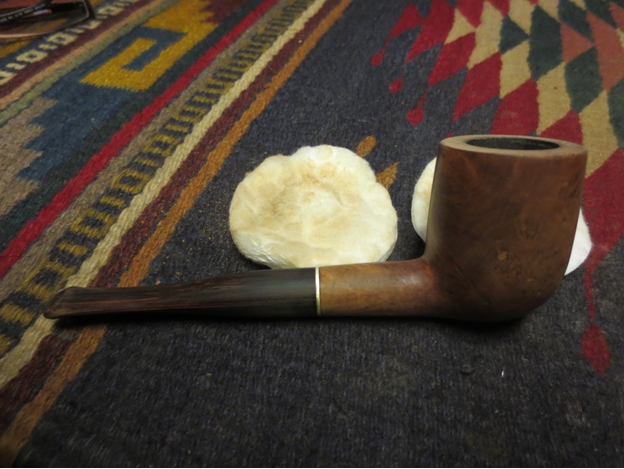
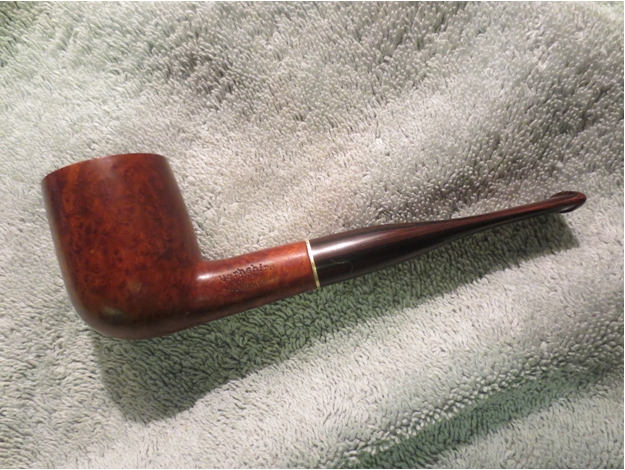
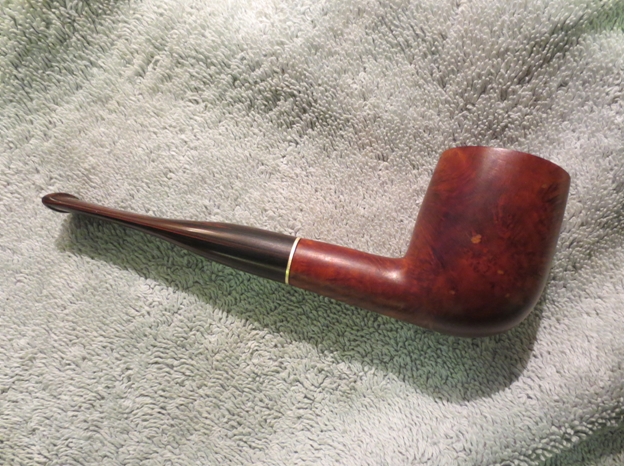
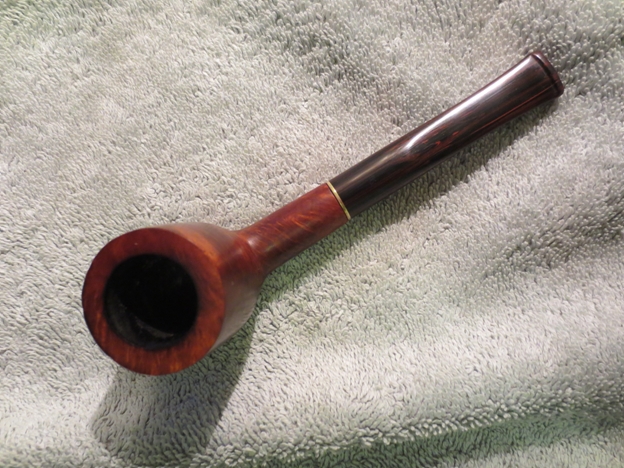
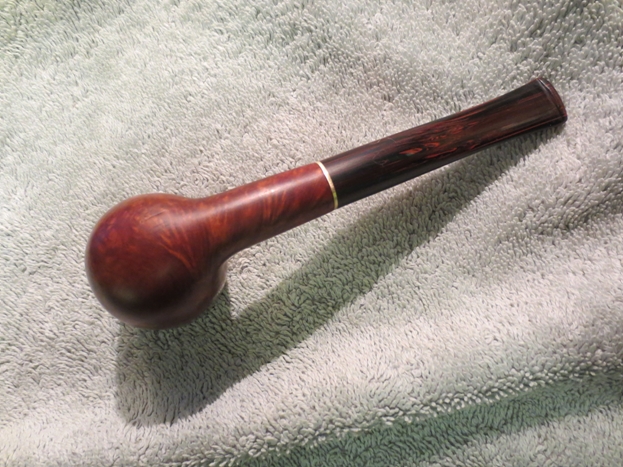
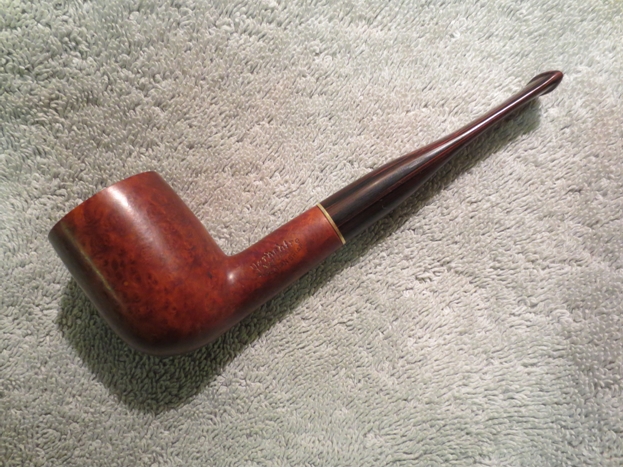
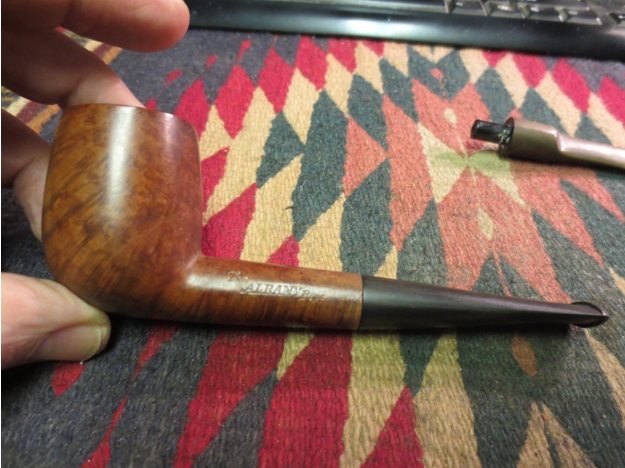
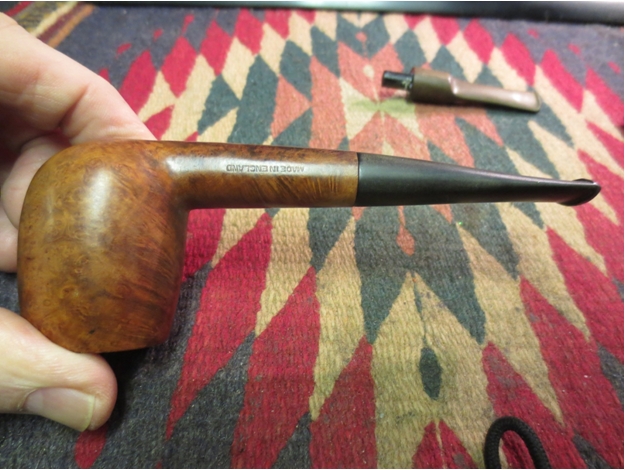
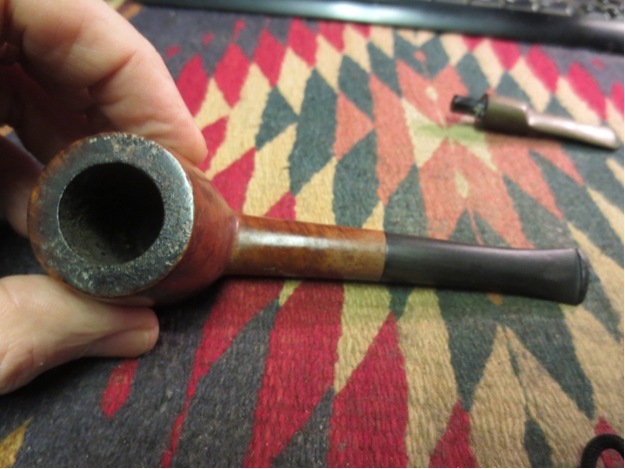
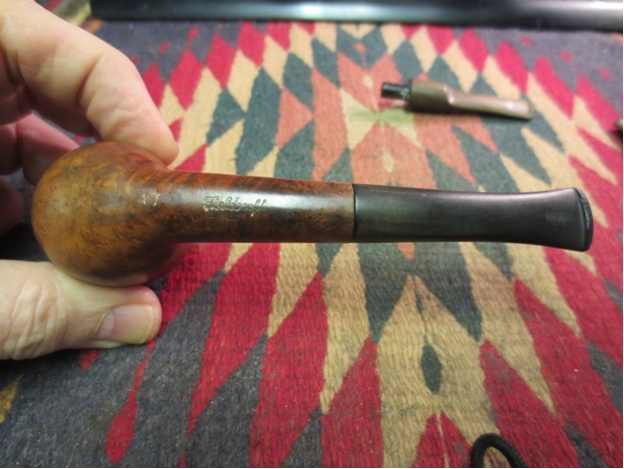
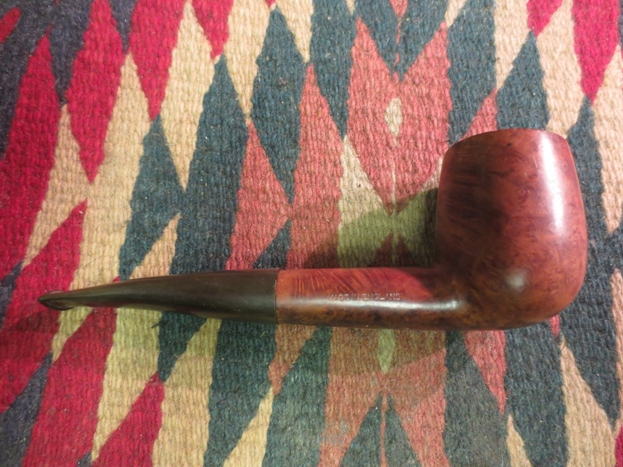
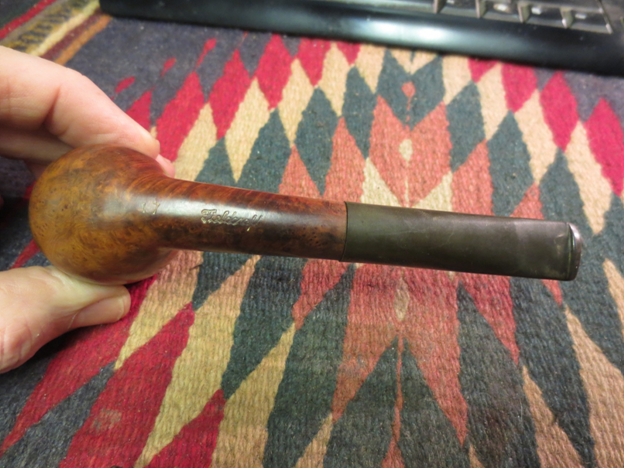
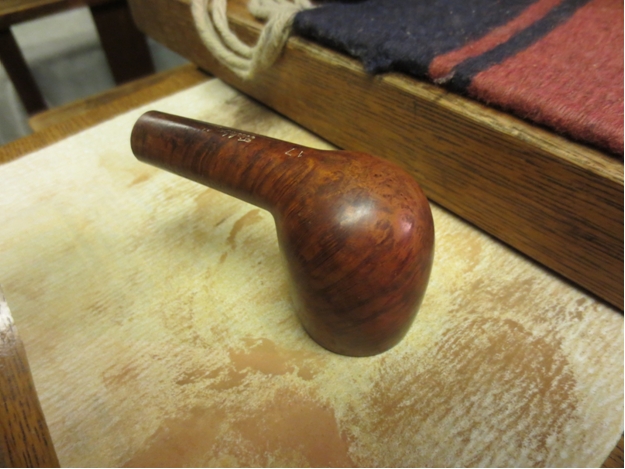
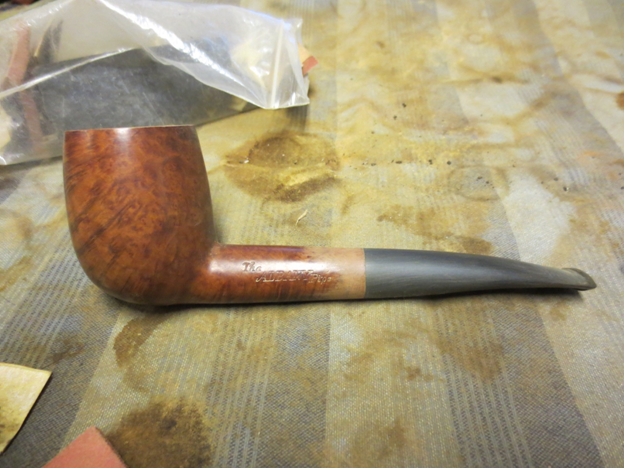
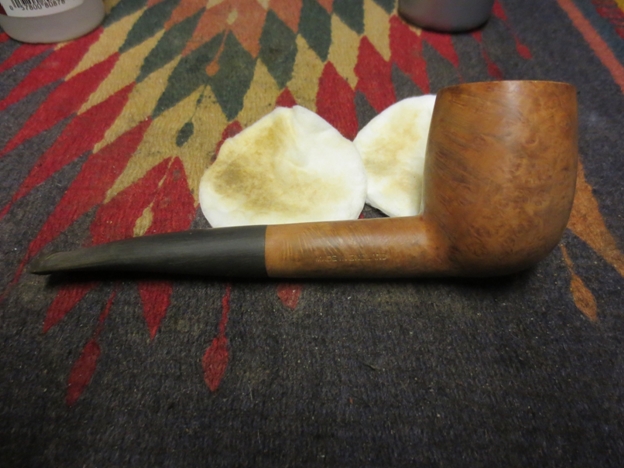
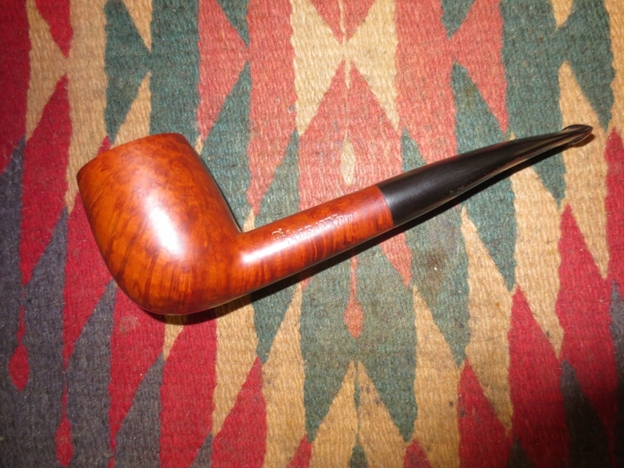
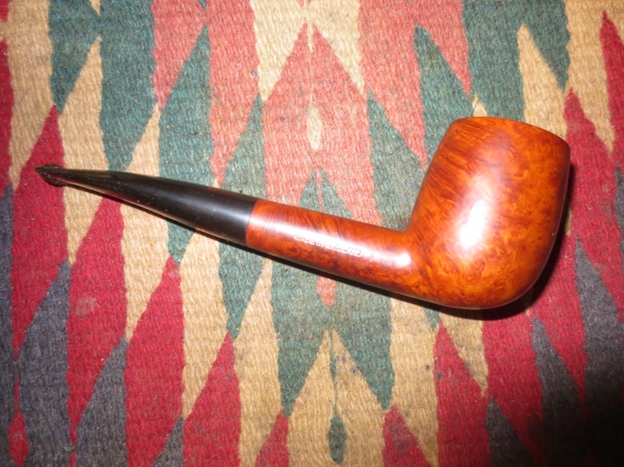
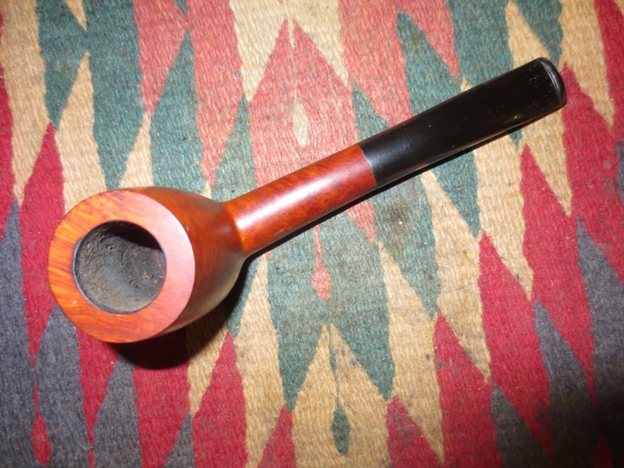
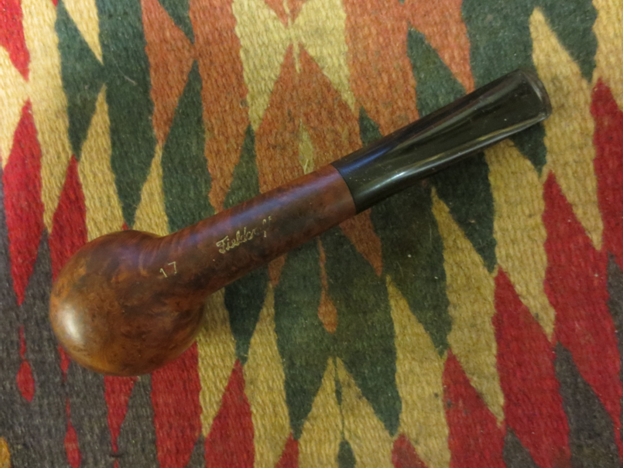
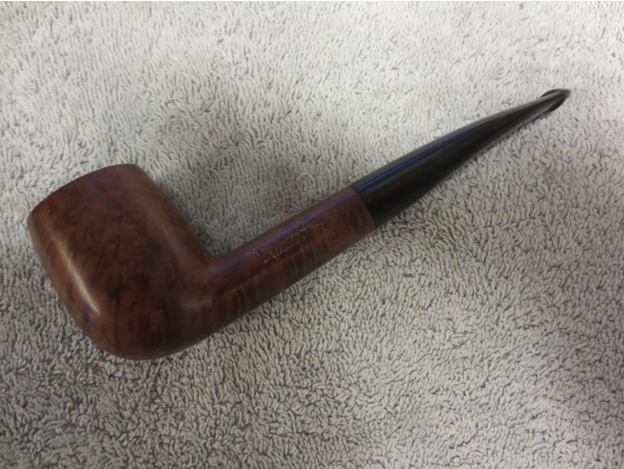
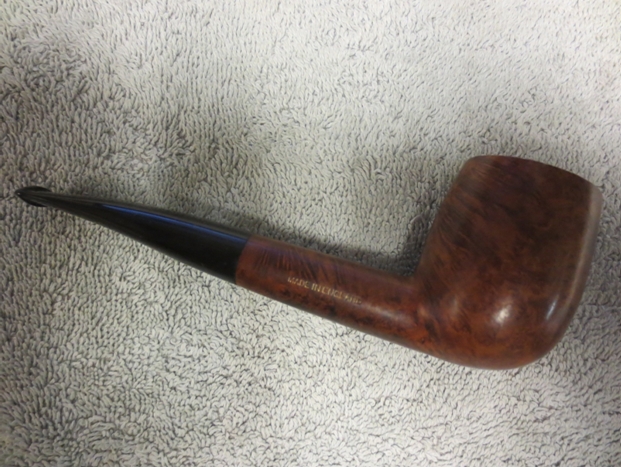
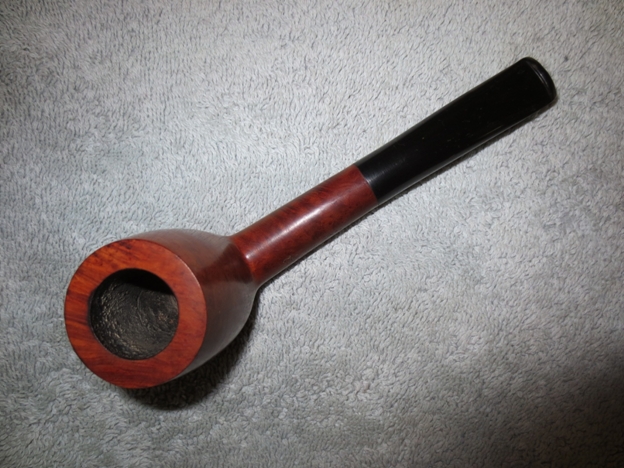
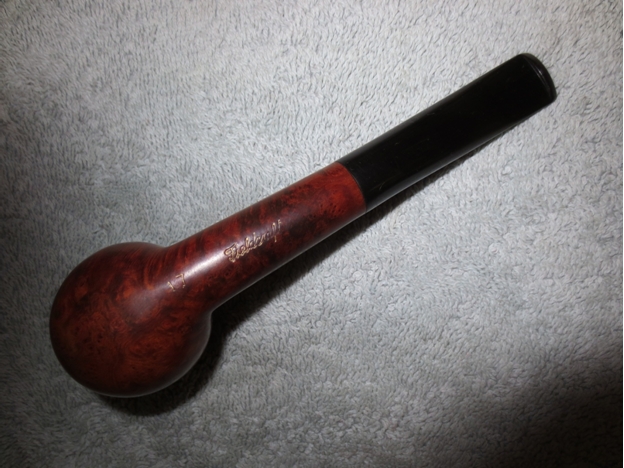
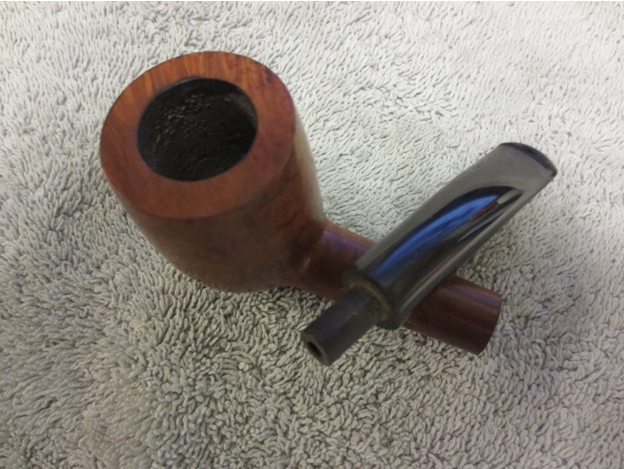
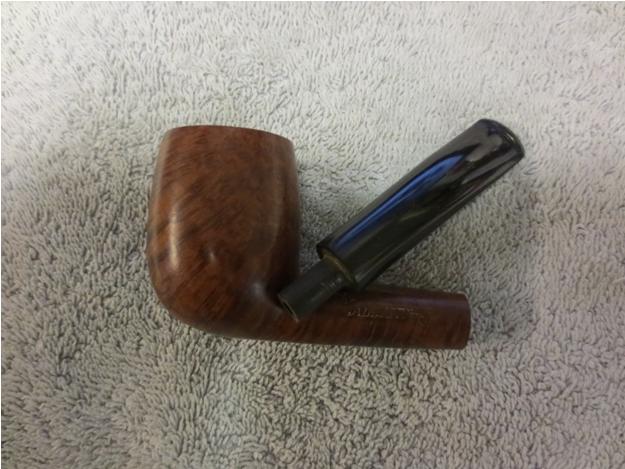
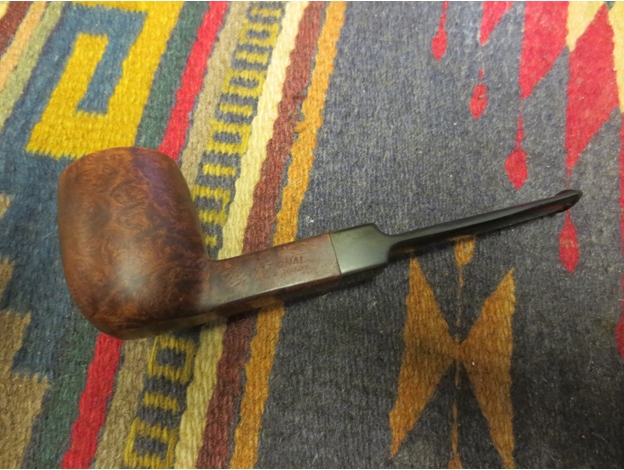
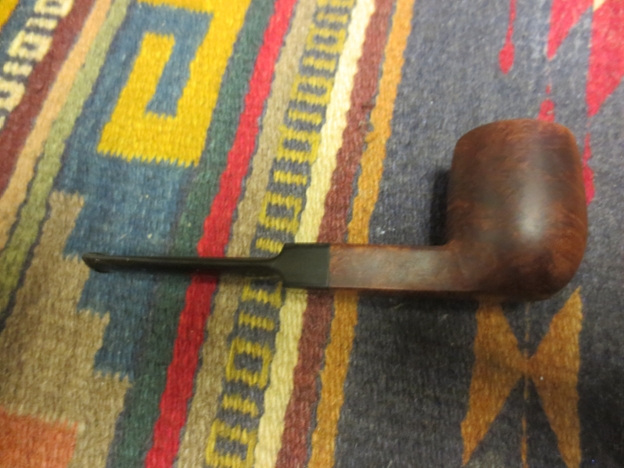
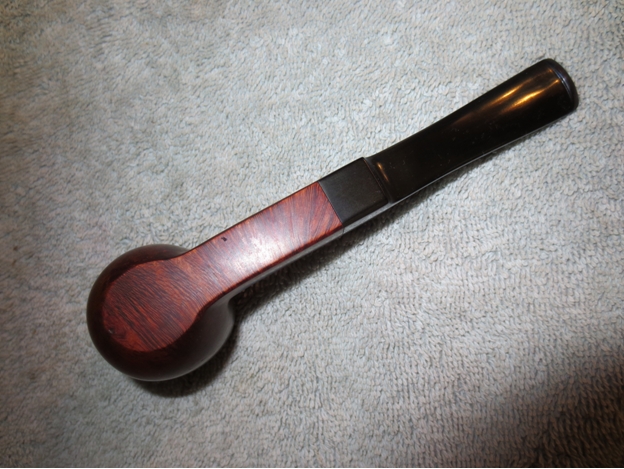
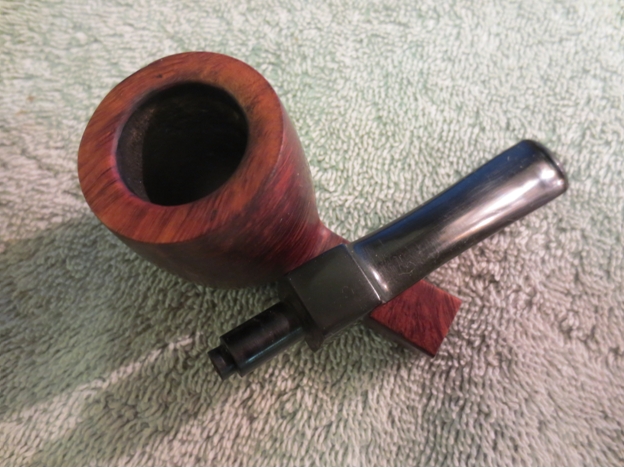
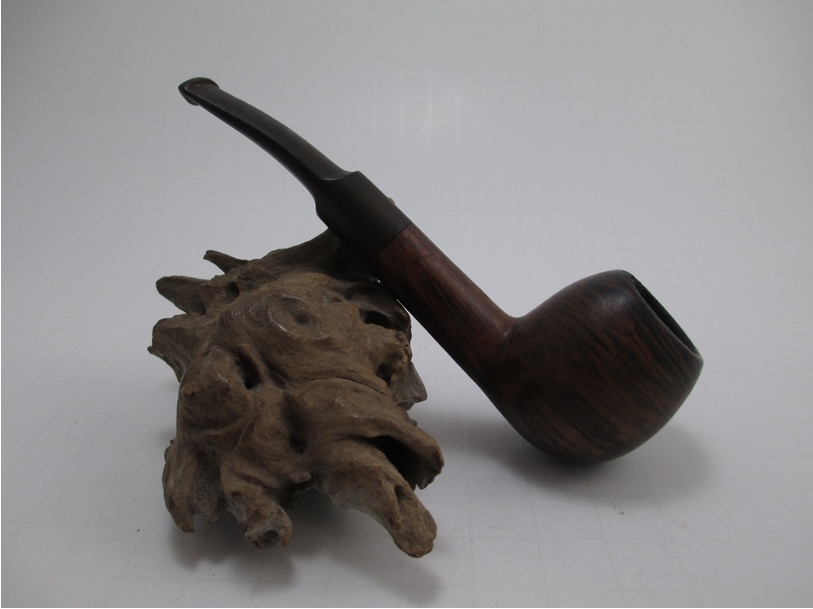
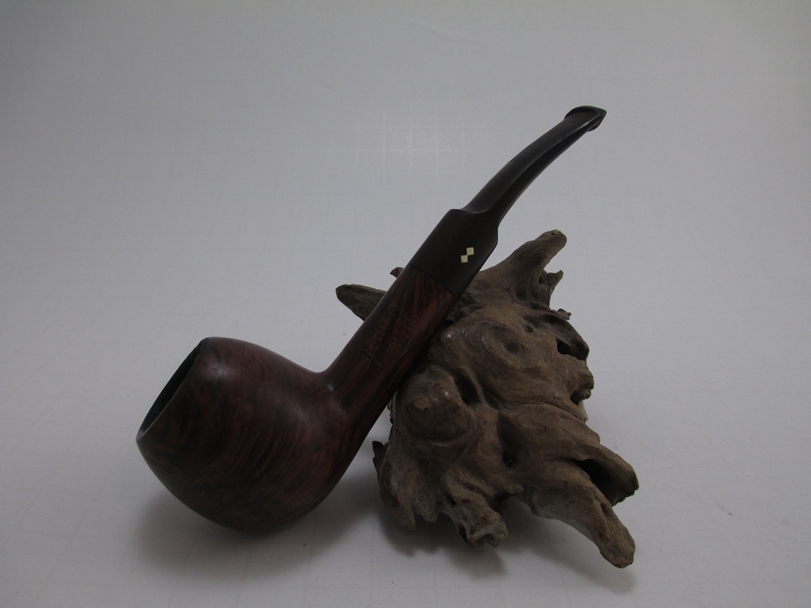
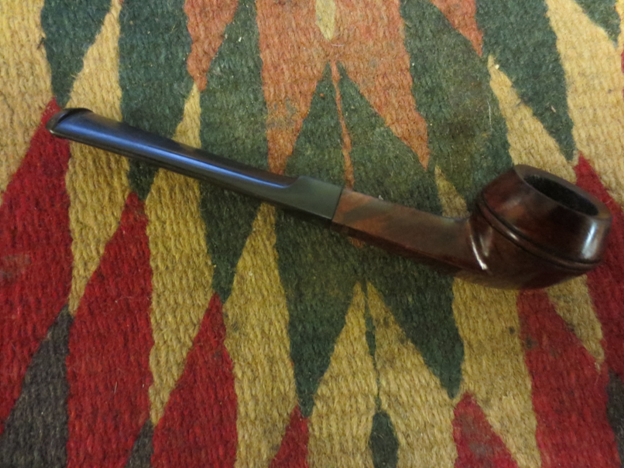
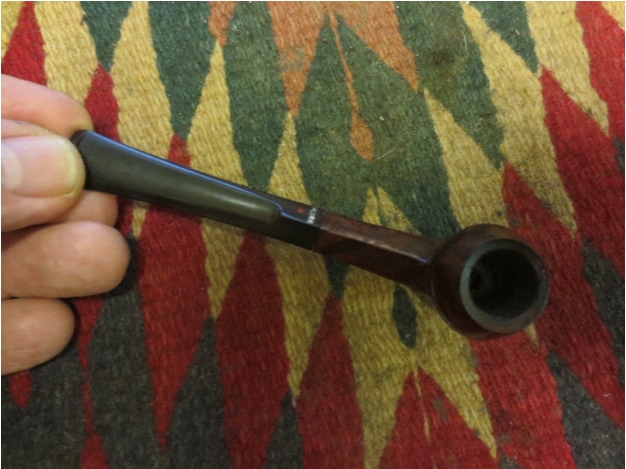
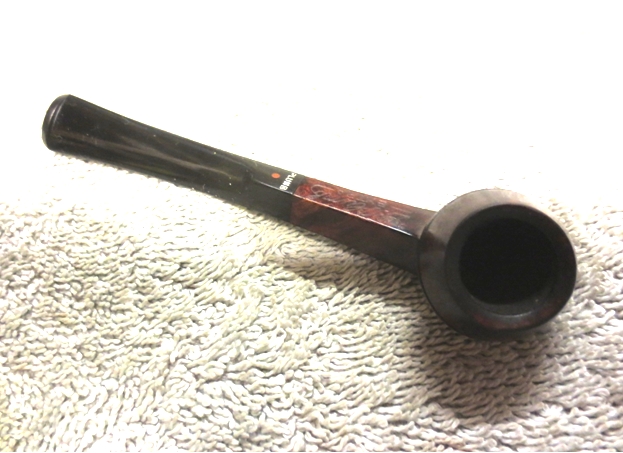
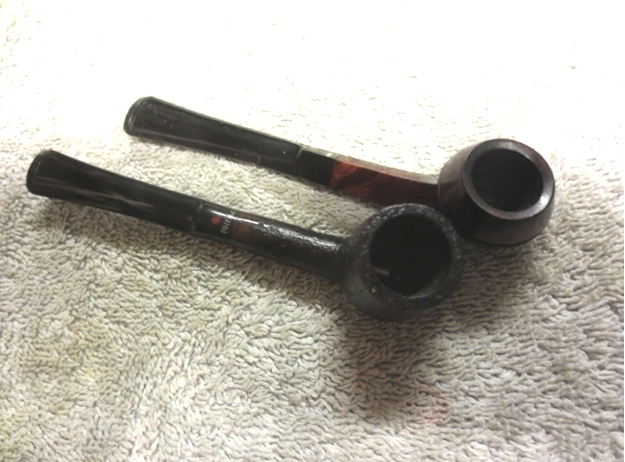
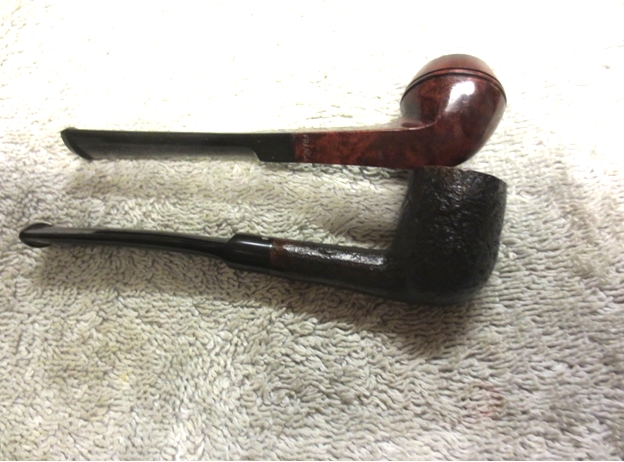
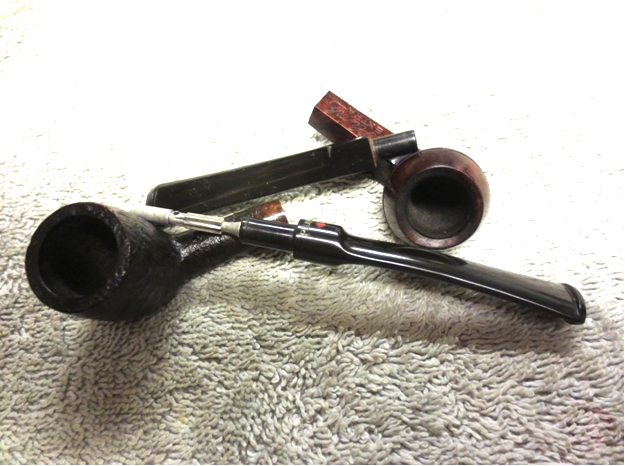
I found this pipe on a recent pipe hunt in the US. It was sitting in a locked cabinet in an antique mall just waiting to be found. It has a long round shank with a saddle stem so it fits the description of a Lovat. It is a large pipe however – approximately 6 inches long. The combination of rustication and smooth is attractive. It has the standard Custombilt rustication but for some reason on this old pipe it looks more refined and less clunky (good scientific term, LOL!) than the other Custombilts and CustomBilts that have passed through my hands.hunt I have several Custom Bilt or Custom-Bilt pipes stamped with a separation or a capital B on bilt. I remembered reading Bill Unger’s book on CustomBilt pipes and knew that the change of stamping reflected a change in the company. I turned to one of my reference sources – Pipedia, to see what they said. Here is the link to the full article by Rich Essermann http://pipedia.org/wiki/Custom-Bilt I quote from that article below:

“In 1946, the name was changed to Custombilt after Mincer began an association with Eugene J. Rich, Inc. There were some big changes in advertising and distribution. The slogan “AS INDIVIDUAL AS A THUMBPRINT” began at this time as well.”

“In the early 1950’s, Tracy Mincer developed severe financial problems that caused him to stop making the Custombilt, and he lost the name. In 1953, Leonard Rodgers bought the company and emphasized tobacco pouches and butane lighters. (However, it appears Mincer was working on his new pipe, the Doodler.) In 1968, Rodgers sold the Company to Consolidated Cigars. In the early 1970s, Wally Frank Co. bought the Custombilt trademark and began to produce their version of the pipe in 1974 or 1975. Hollco Rohr owned the Weber pipe factory, located in New Jersey, and produced the Custombilt pipes there. In 1987, the pipes were made out of the Butz-Choquin factory (France) and then Mexico until the late 1990s. Currently, the Custombilt name is owned by Tobacalera of Spain.”

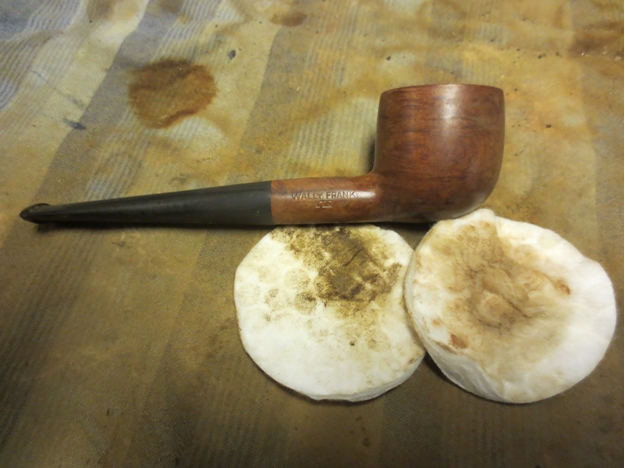
From the above information it seems that the pipe I have could have been made between 1946 and 1953 if it is one made by Tracy Mincer. Otherwise it could have been made during the 1970’s. In my opinion the more refined less classic Mince CB look of the pipe, the variations on the rustication pattern from the bowl to the shank, the type and look of the stem all lead me to put it in the later era – the 1970s and attribute its manufacture to Wally Frank and Company. I may be wrong but that is my read on this particular Custombilt Lovat.

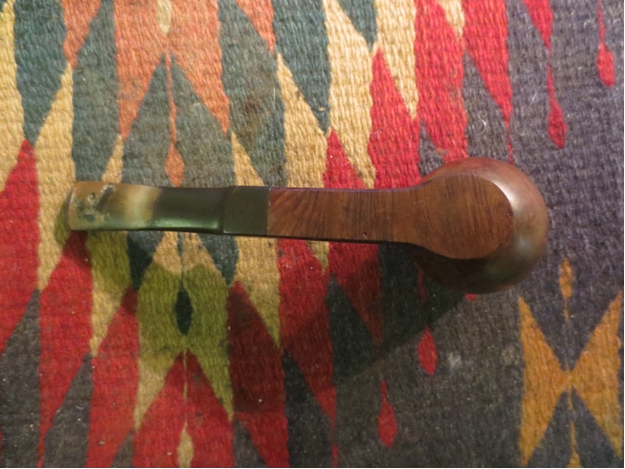
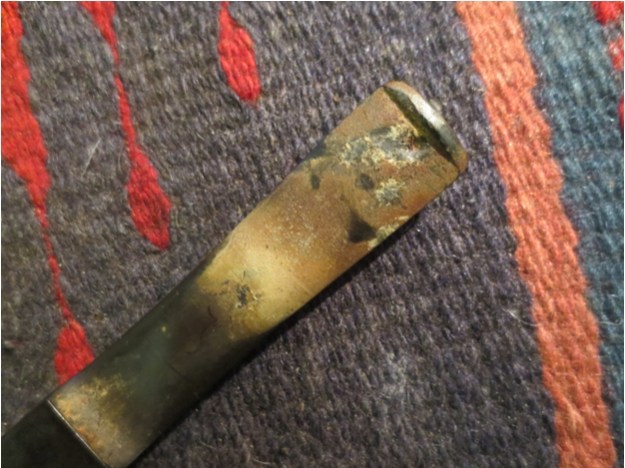
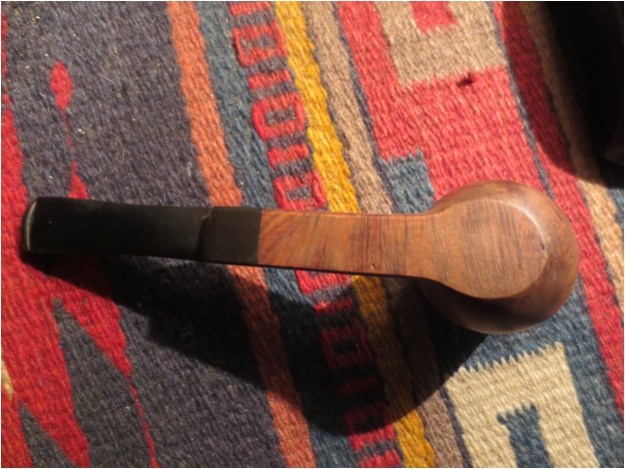
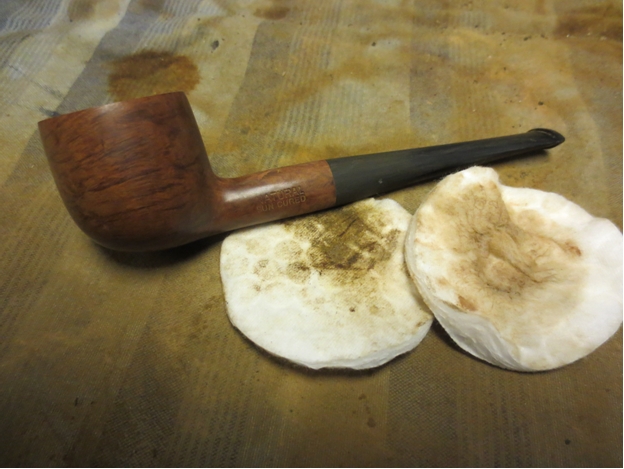
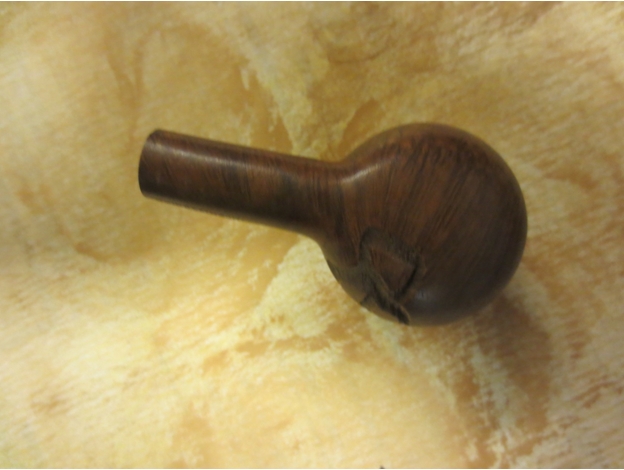
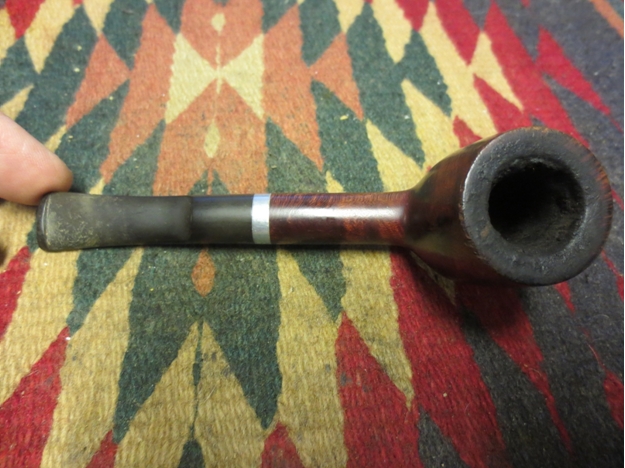
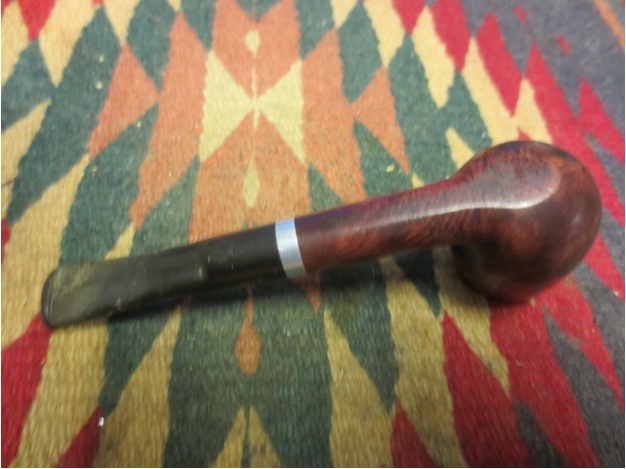
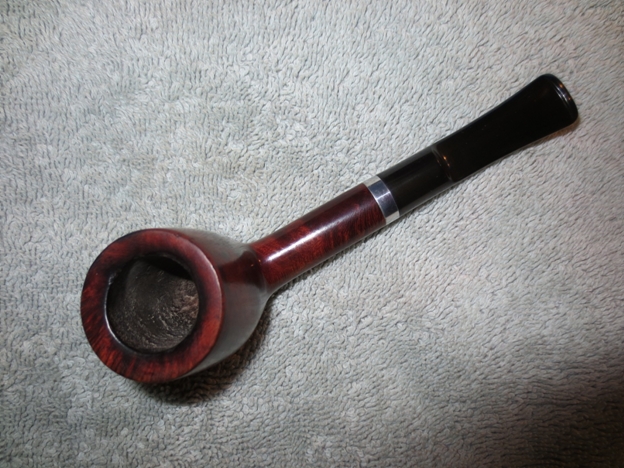
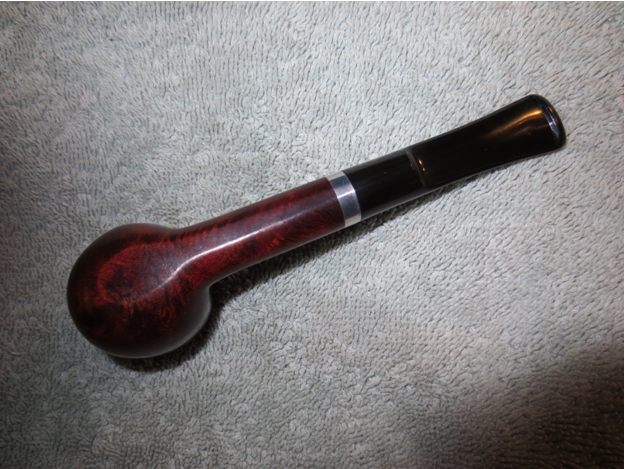
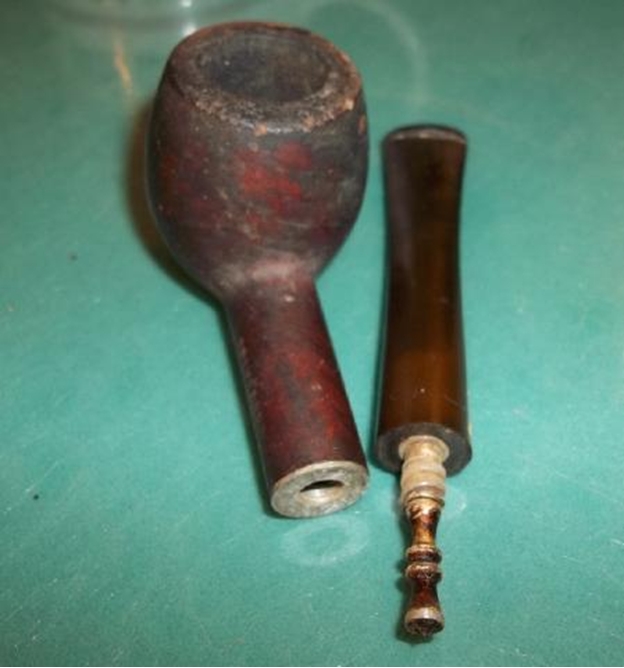
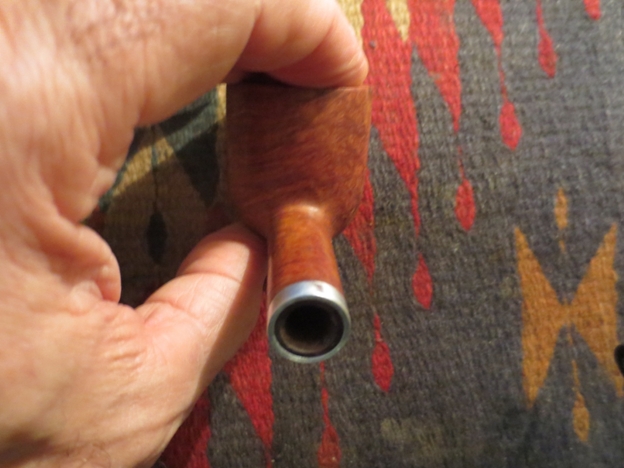
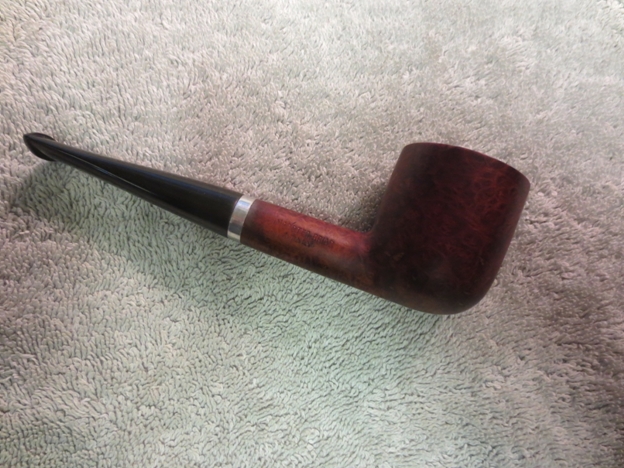
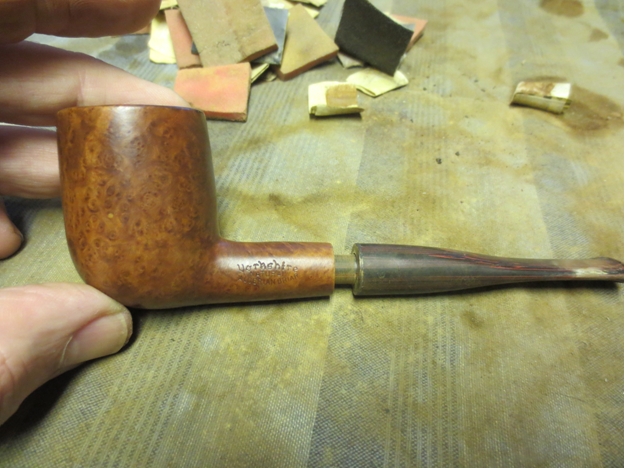
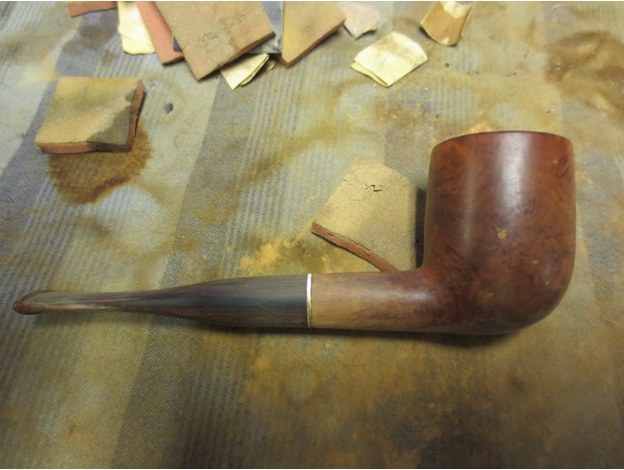
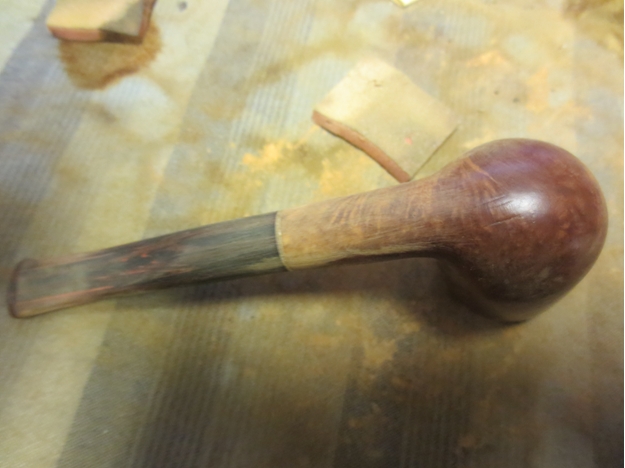
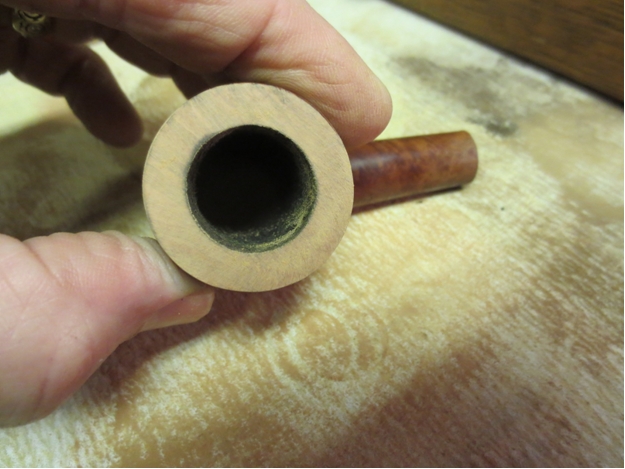
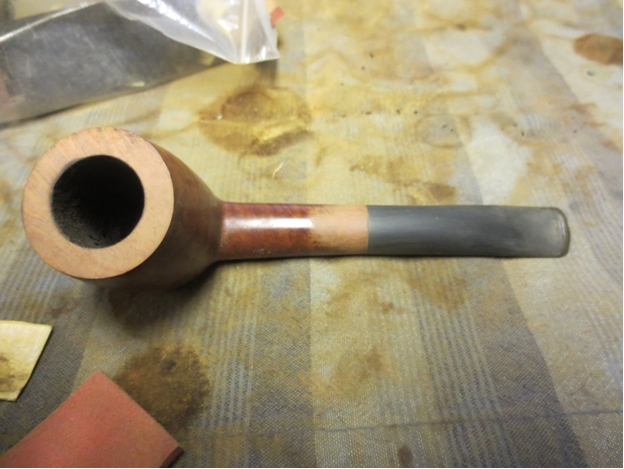
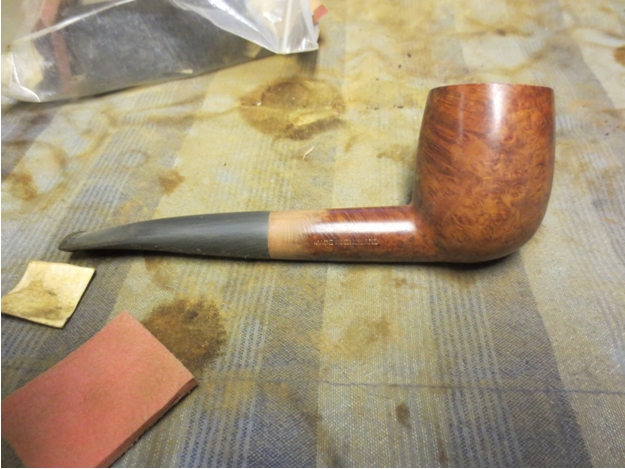
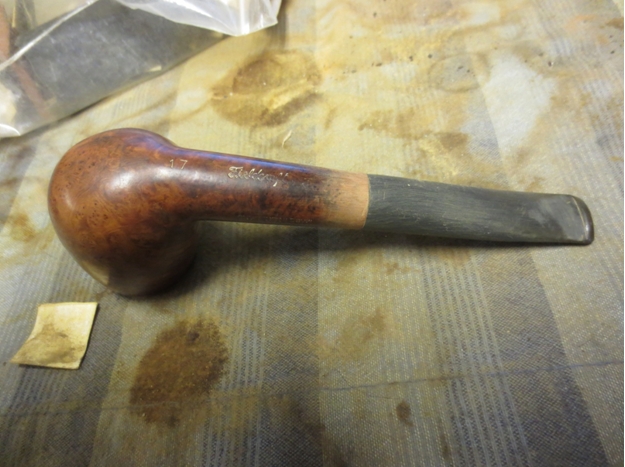
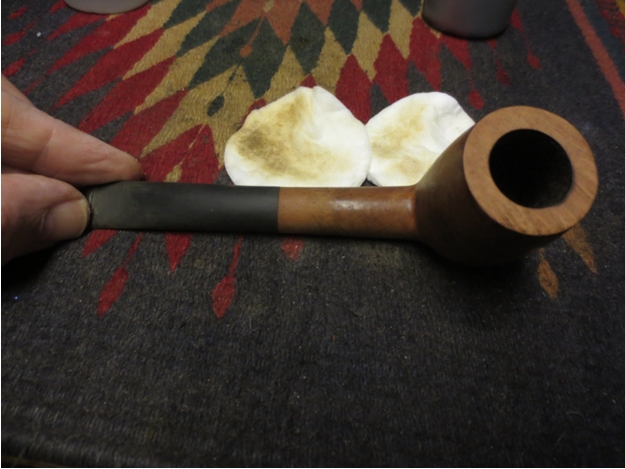
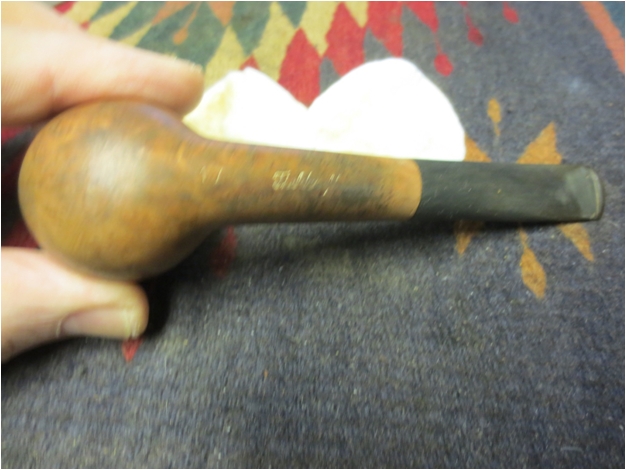
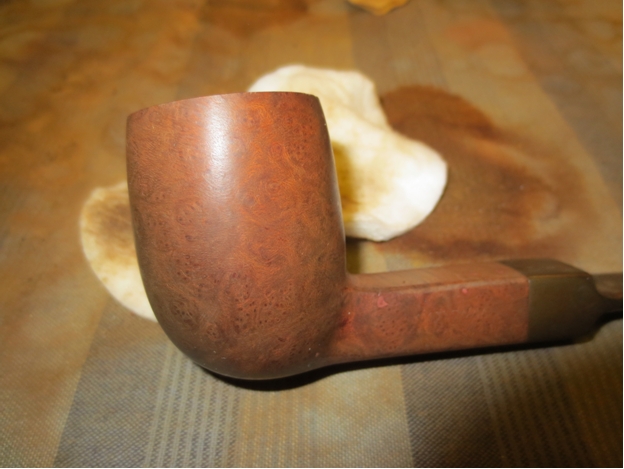
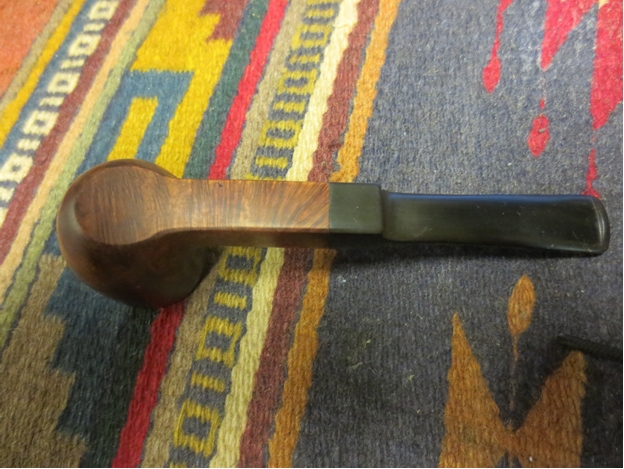
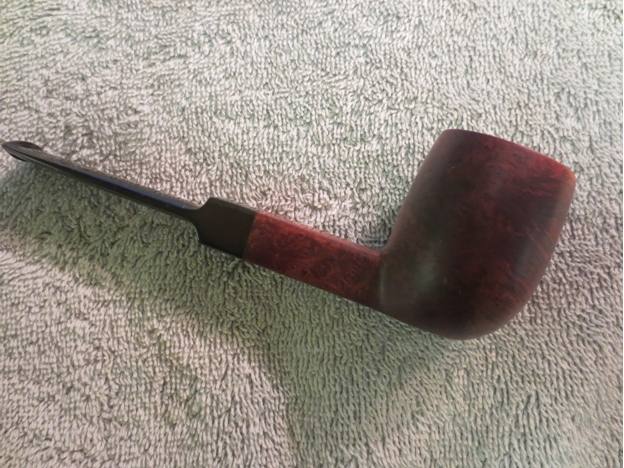
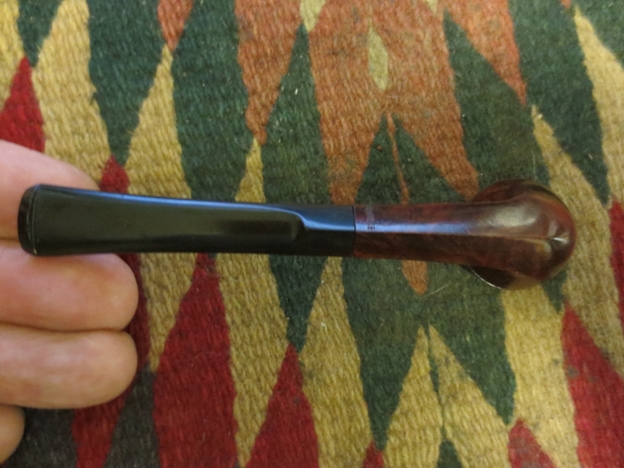
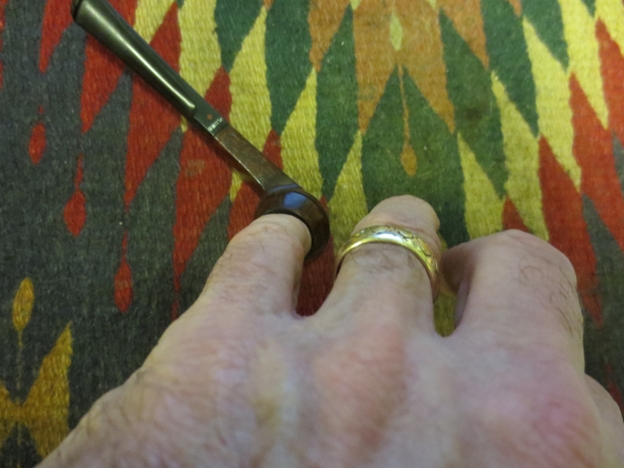
The pipe I found was in very good shape. The stem was slightly oxidized and had some roughness like it had never been finished well. There was no bite or tooth marks or tooth chatter on the stem. The interior of the stem and shank were also clean. The briar in the shank was unstained and looked new. The bowl had a very light cake. The finish was virgin/natural and originally had probably been oiled or just waxed. There was no stain coat or lacquer/varnish coat. Whew! The stamping on the pipe is simple. On the left side of the shank it is stamped Custombilt over Imported Briar. On the underside of the shank it is stamped with the shape number 12 running horizontally next to the stem/shank union.CB1

CB2

CB3

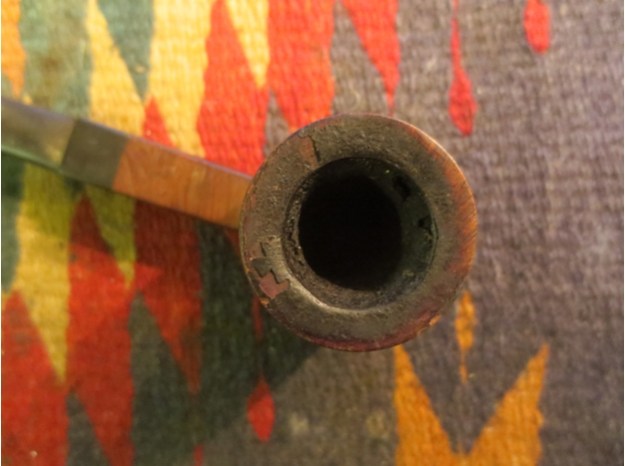
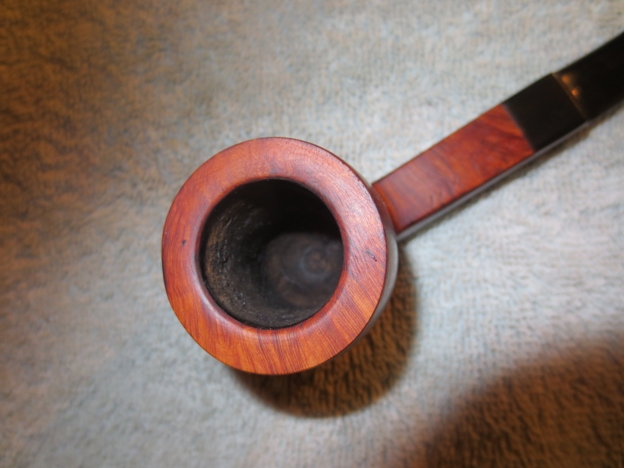
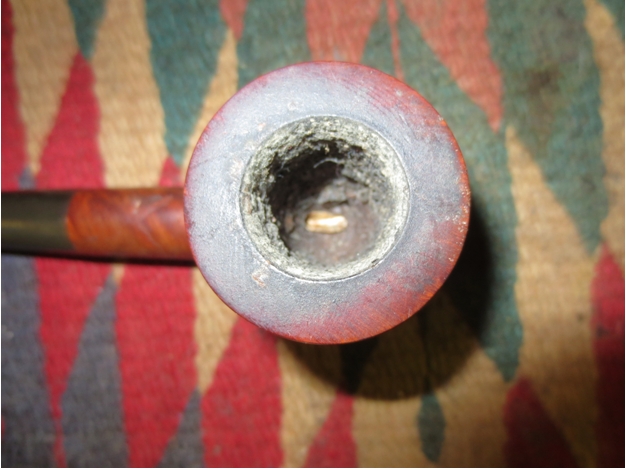
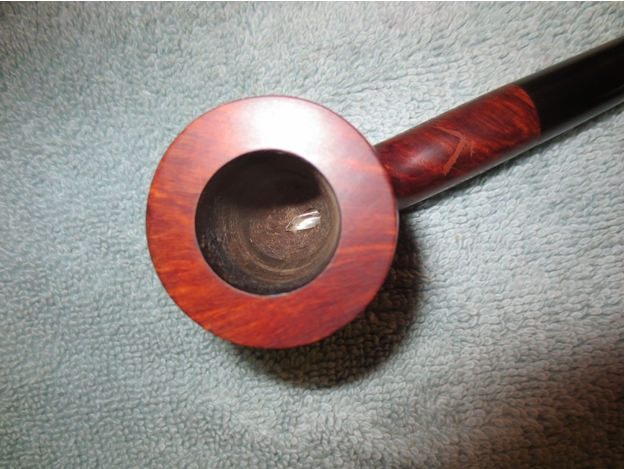
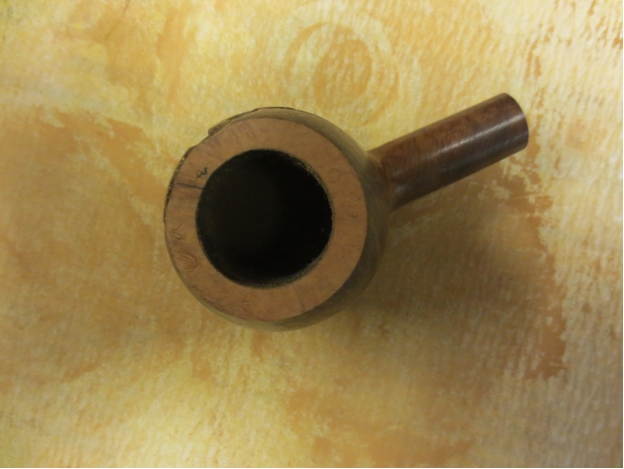
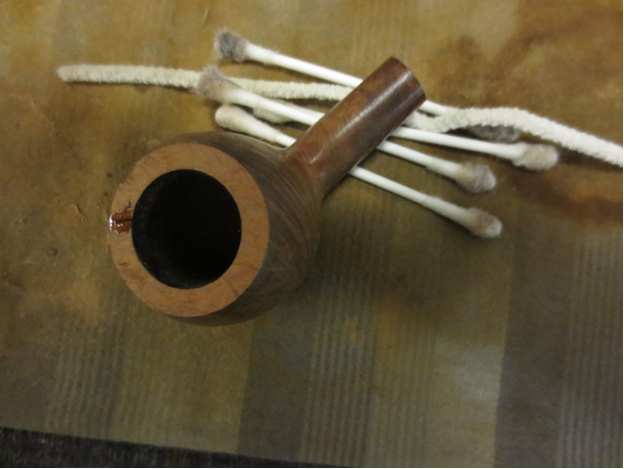
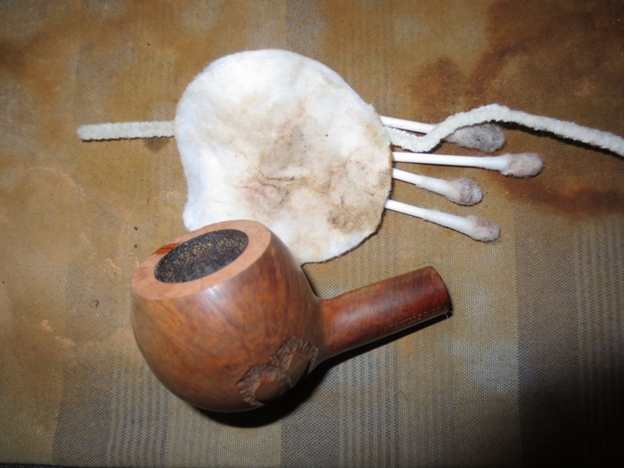
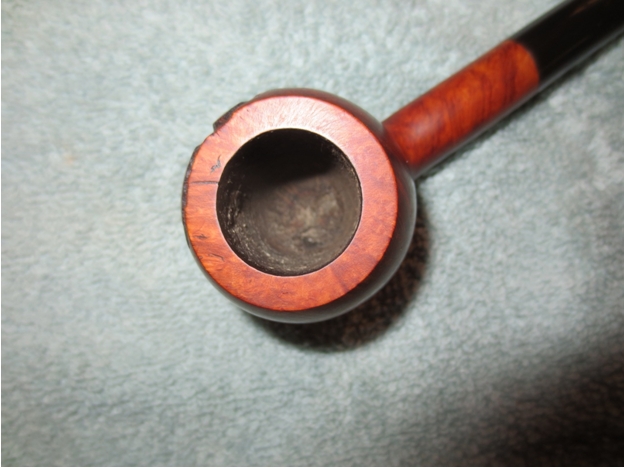
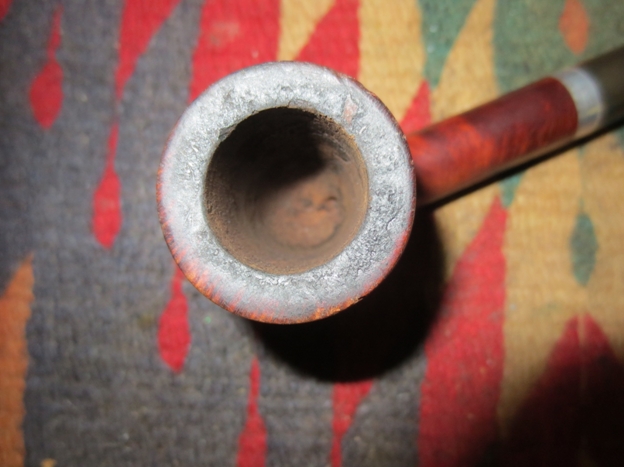
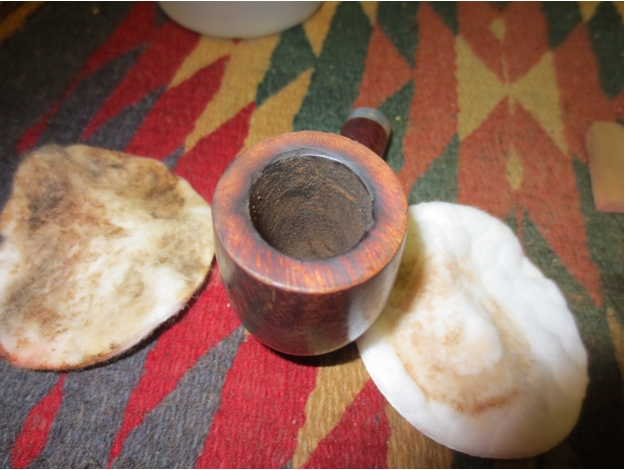
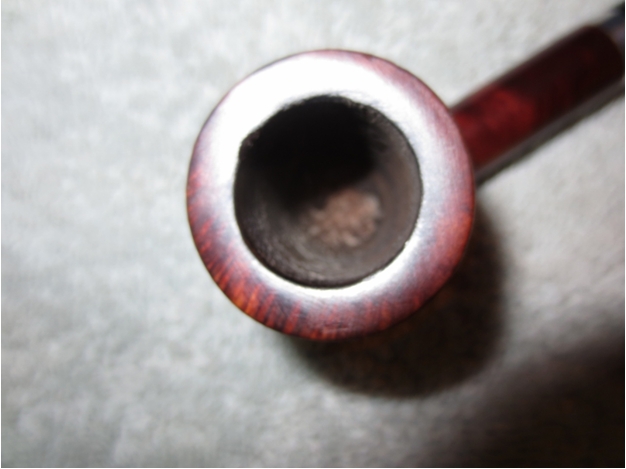
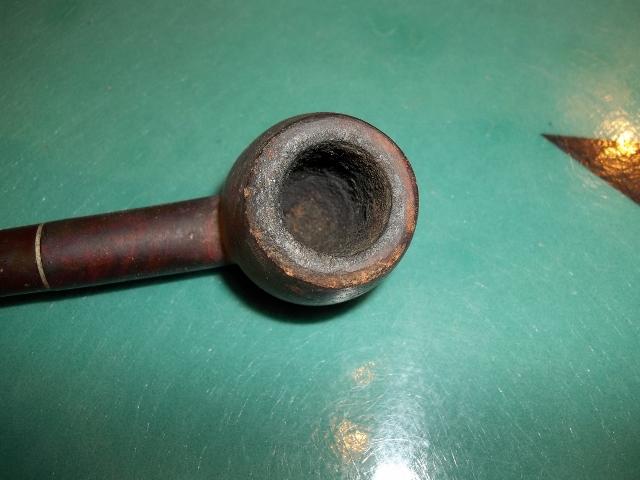
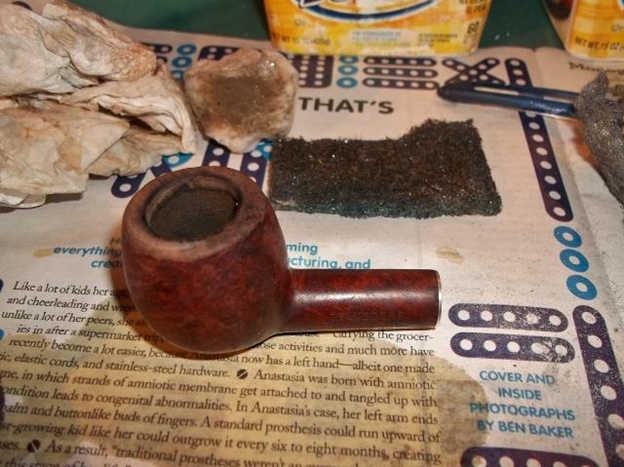
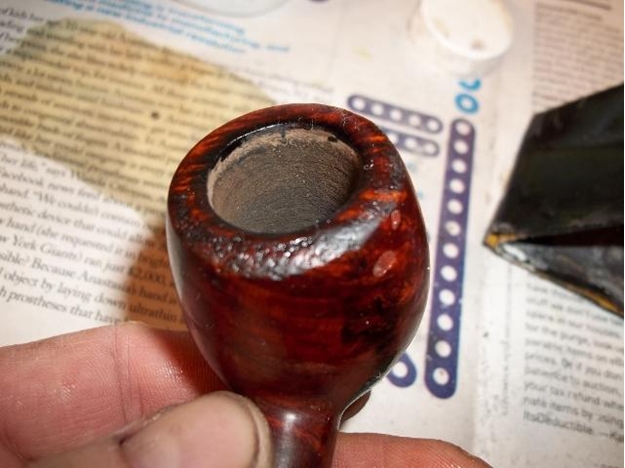
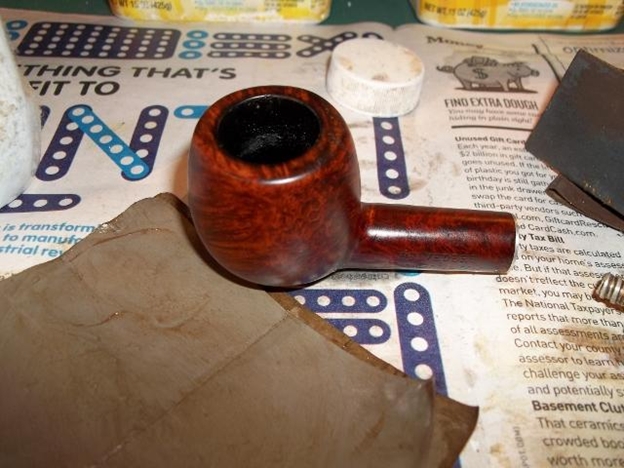
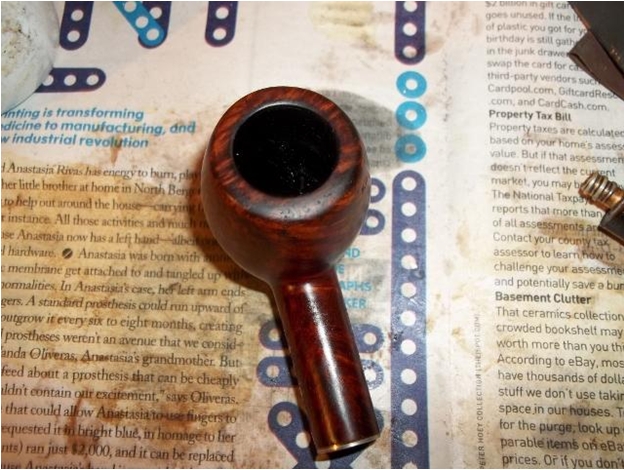
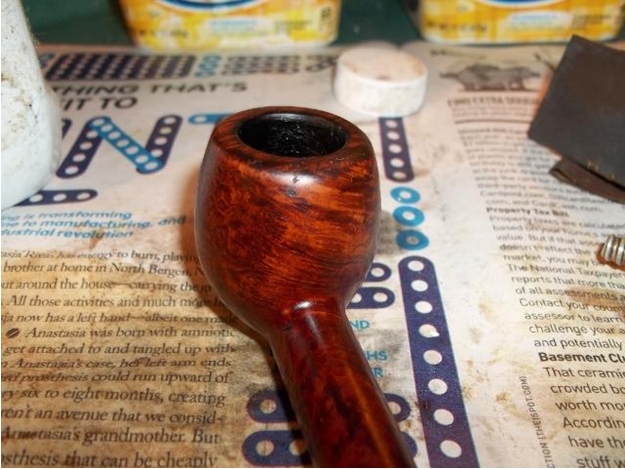
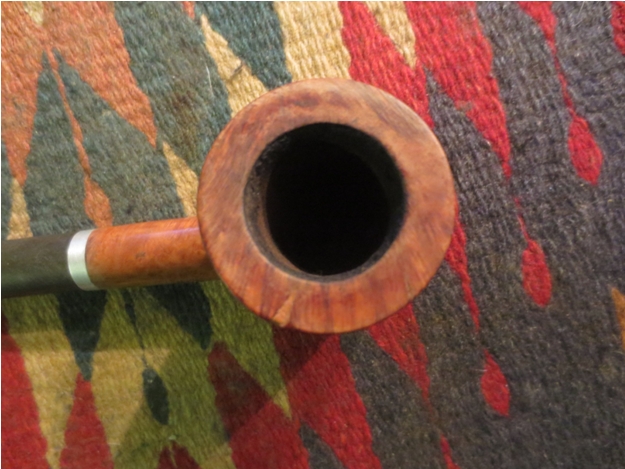
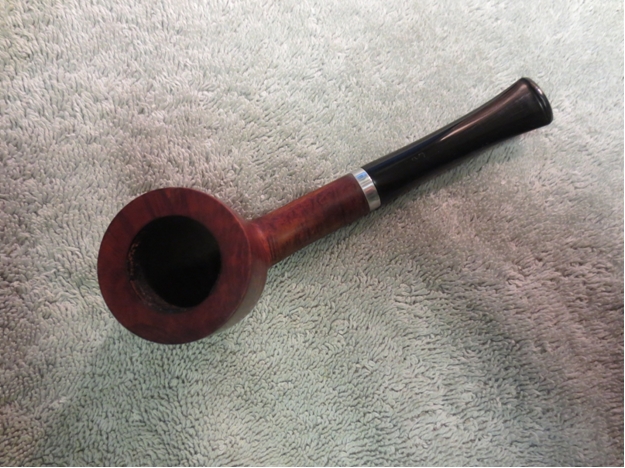
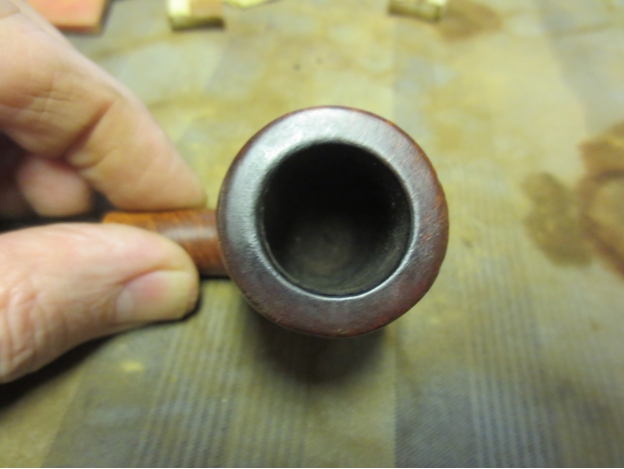
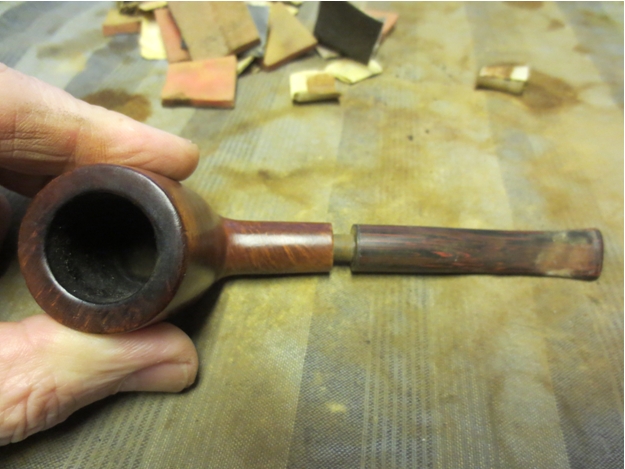
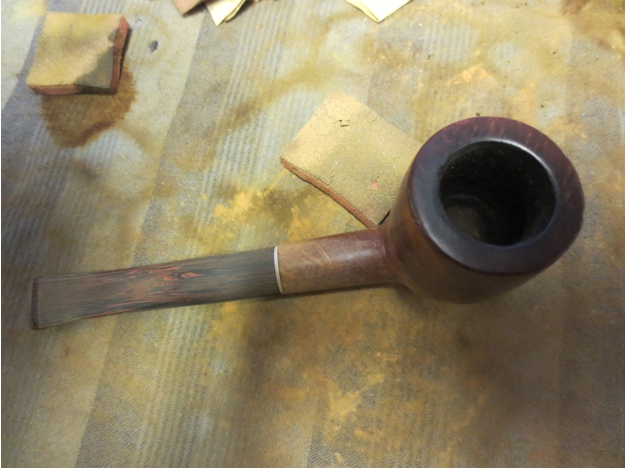
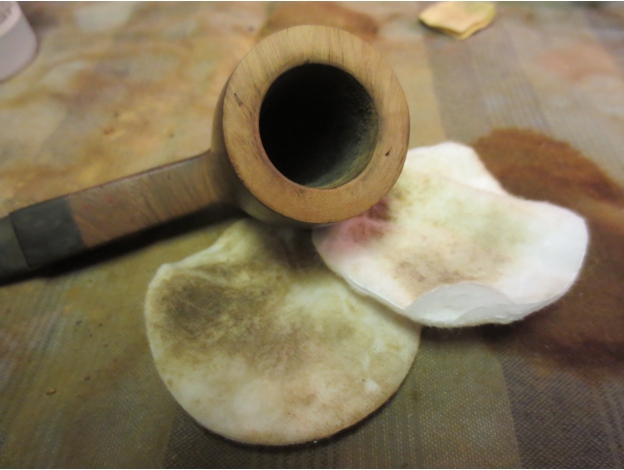
CB4 The closeup photo below shows the top of the rim with its unique rustication and the state of the bowl. The rim is in great shape and the bowl is fairly clean.CB5 I cleaned out the shank and the stem with pipe cleaners, cotton swabs and isopropyl alcohol to remove the light oils and tars. It took very little effort to clean this pipe.CB6 I gave it a light reaming with the PipNet reamer and took it back to bare wood so that whoever ends up with this pipe can break in and build an even cake of their own.CB7 I scrubbed the rusticated areas on the bowl and shank with a tooth-brush and Murphy’s Oil Soap. The grooves and crevices had a buildup of dust in them that dulled the finish. After scrubbing I rinsed the pipe under running water to remove the soap. I put my thumb over the bowl to keep the interior dry.CB8 The next series of four photos show the bowl after the rinse and dry. The grooves are clean and the pipe is ready for the next step in its cleanup.CB9

CB10

CB11

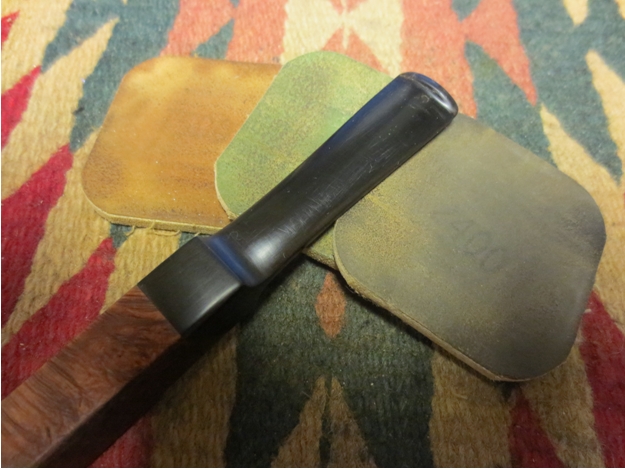
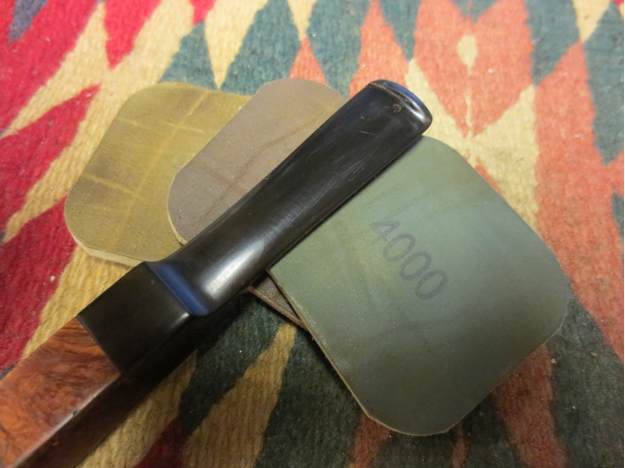
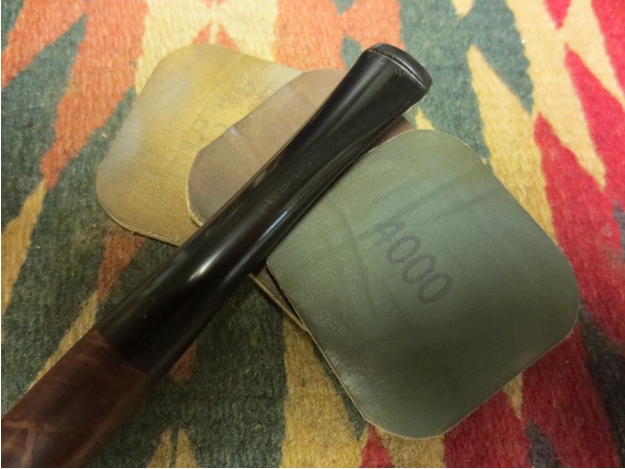
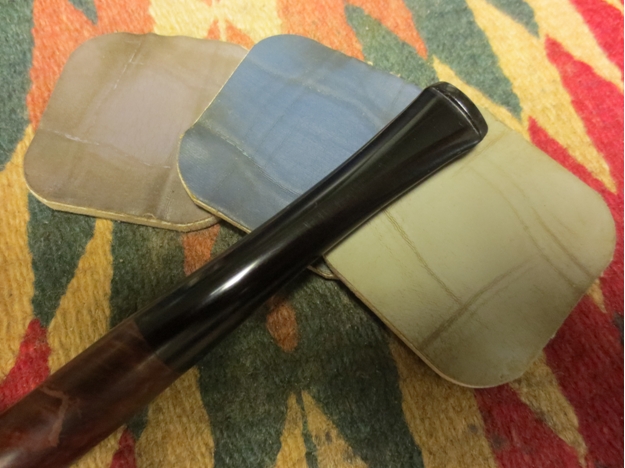
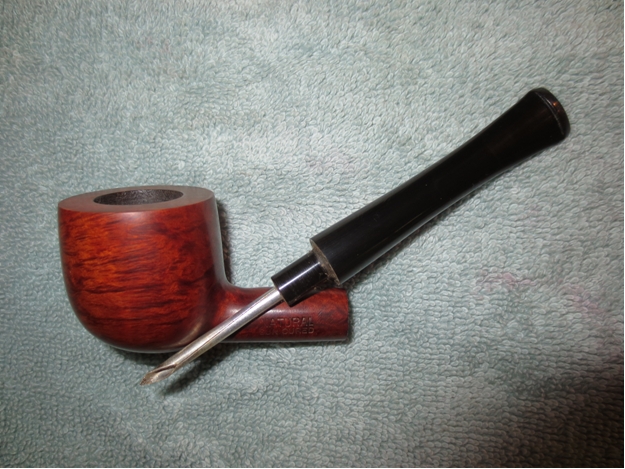
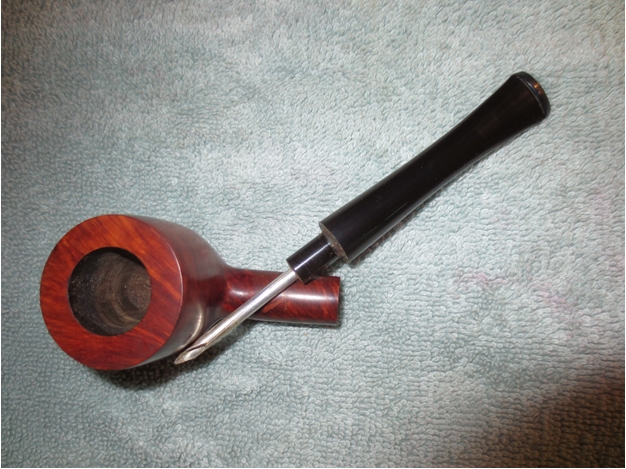
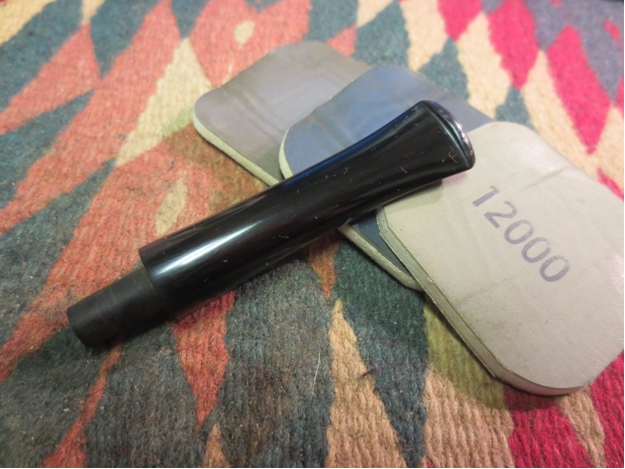
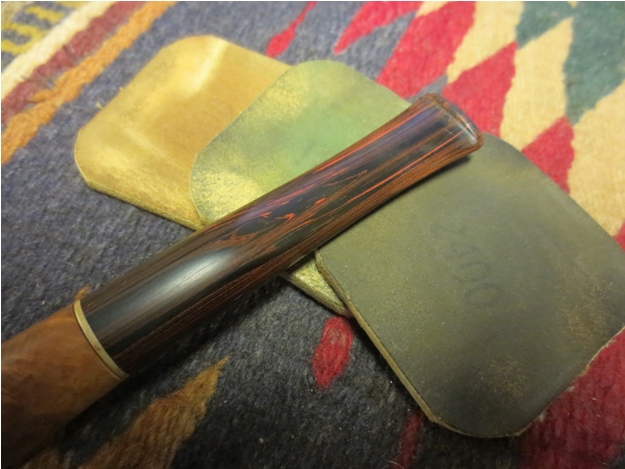
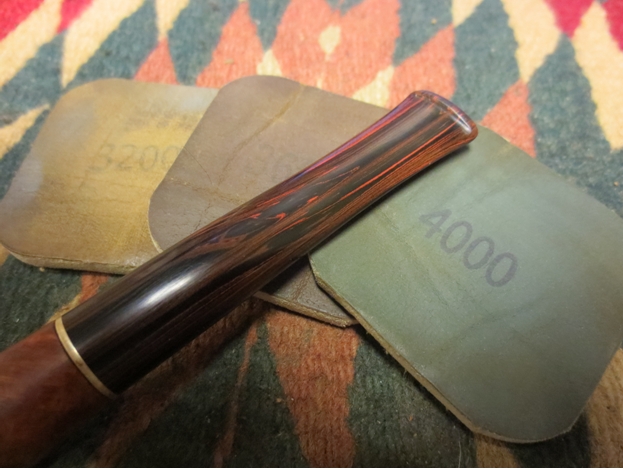
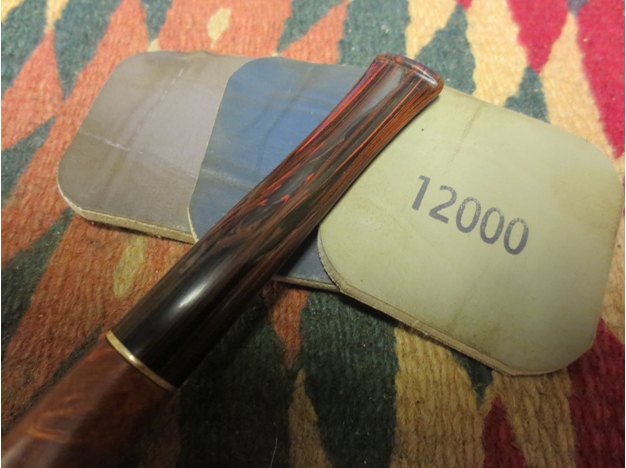
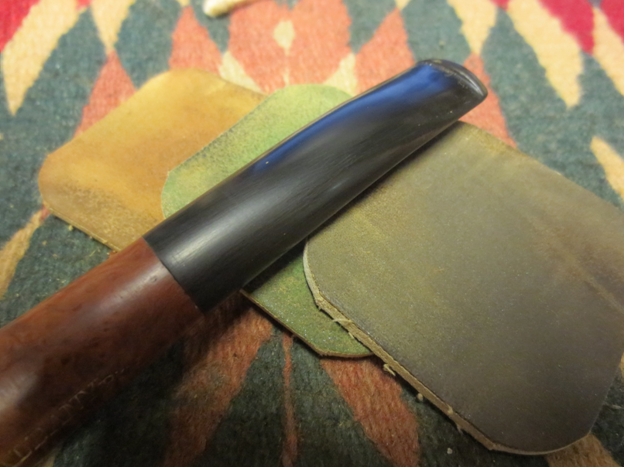
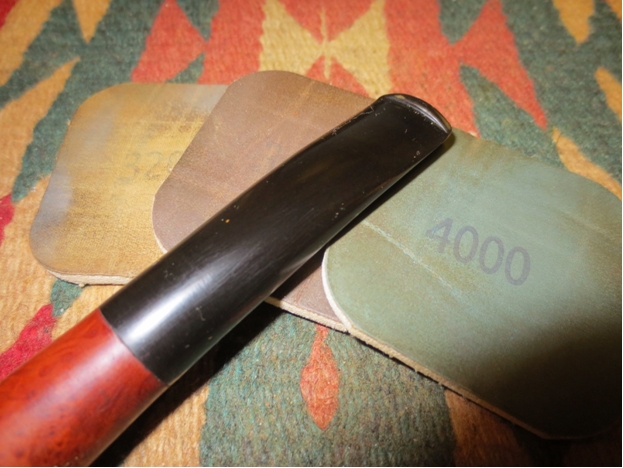
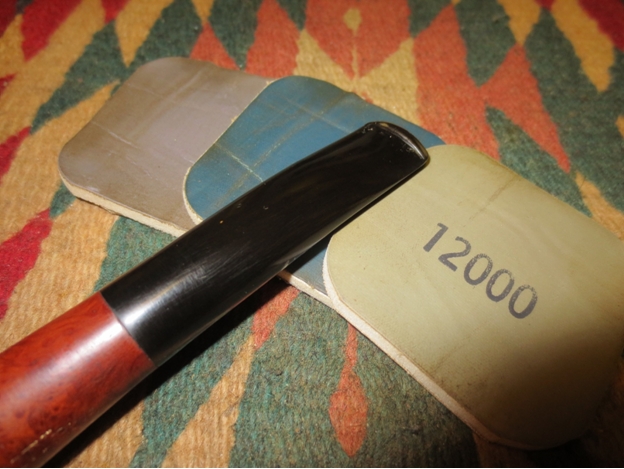
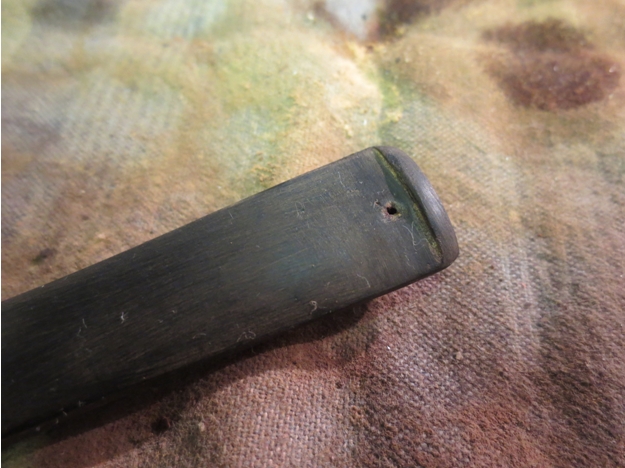
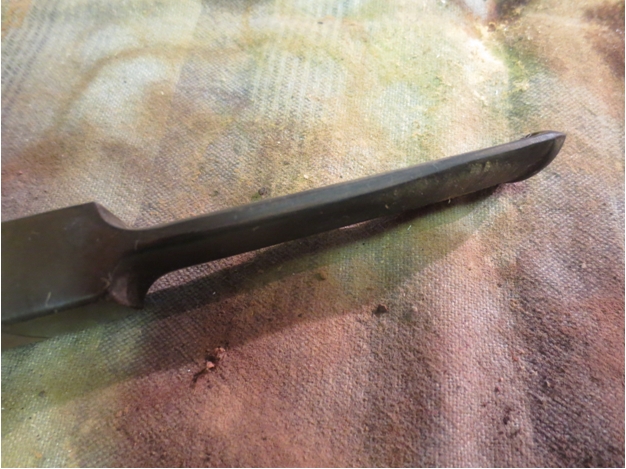
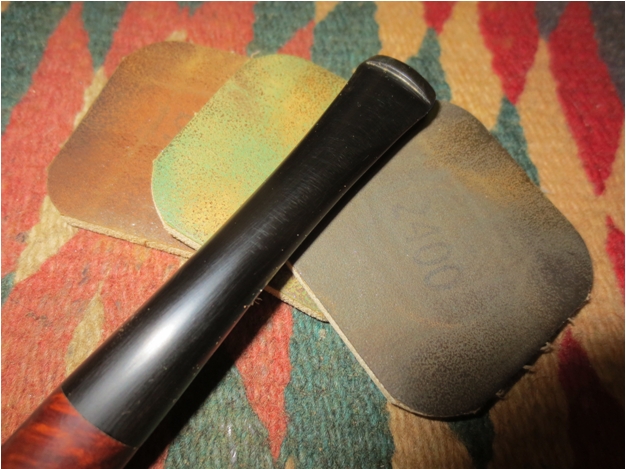
CB12 I use a plastic washer that I made out of a bread tab between the shank and the stem to allow me to sand up against the shank without damaging the finish and without rounding the shoulders of the stem or shank. It works like a charm and I have several of these that I have punched with a variety of holes to fit different tenon sizes. I sanded the stem with 220 grit sandpaper to smooth out the roughness and followed that with a medium and fine grit sanding sponge.CB13 Once I had smoothed out the roughness of the stem I moved on to sanding with micromesh sanding pads. I followed my usual method of wet sanding with 1500-2400 grit pads and dry sanding with 3200-12,000 grit pads. I rubbed the stem down with Obsidian Oil between each set of three pads.CB14
CB15

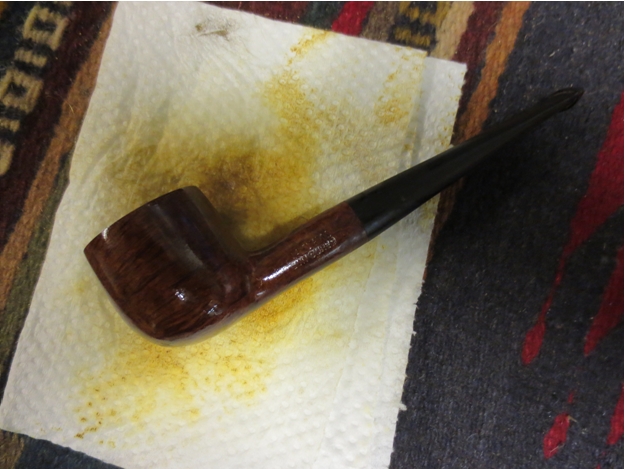
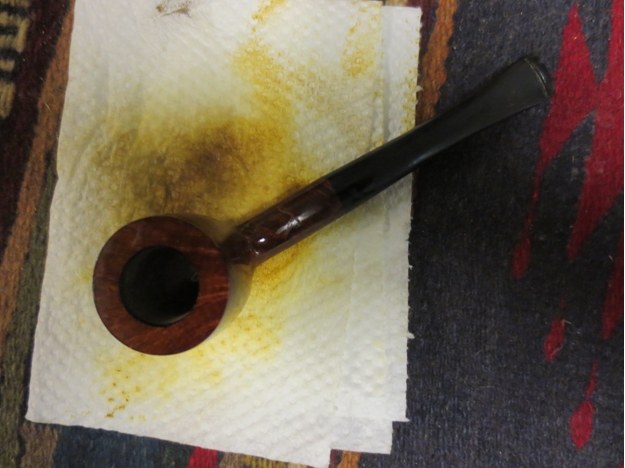
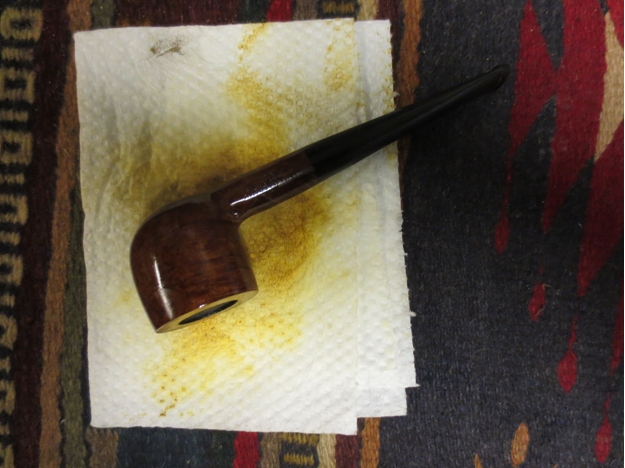
CB16 I rubbed the bowl down with a paper towel and a dab of olive oil to bring the natural finish of the bowl back to life before I buffed it. I rubbed it down and let the oil dry overnight. In the morning I buffed the pipe and stem with White Diamond and gave the bowl a light buff of carnauba and then rubbed it down with some Halcyon II Wax. I gave the stem multiple coats of carnauba wax. The finished pipe is shown below.CB17

CB18

CB19

CB20 The final three photos give a close up view of the bowl and stem from various angles. There is something quite attractive about this particular Custombilt. It has a dignity that draws me to it.CB21

CB22

CB23

Restoring an Apple from Bertam, the Nation’s Pipemaker


Blog by Steve Laug

The second pipe from the foursome I bought on Ebay was a shapely apple and of all the foursome it was in the best shape. It was dirty and lightly caked but the stem was lightly oxidized and very clean. The shank was quite clean and fresh and took very little to clean out. It is stamped Bertram in script on the shank over Washington DC. It appears to also have a number on the shank to the left of the script. The first number is unreadable but the second is a 0. These numbers on the Bertrams told the price of the pipe and where it fit in the hierarchy of the line.

I have included the following link to give a bit of historical information on the pipe company. It is a well written article that gives a glimpse of the heart of the company. http://www.streetsofwashington.com/2012/01/bertrams-pipe-shop-on-14th-street.html#!
Bertram's, detail fall 1974 2 Steve Strack

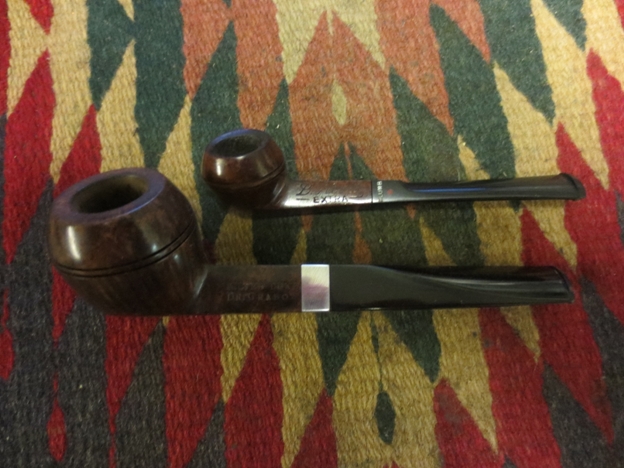
6782006459_a454781584_b In the photo below the Bertram is the pipe at the top of the picture. And in the second photo provided by the seller it is out of focus but the shape is clear.Foursome2

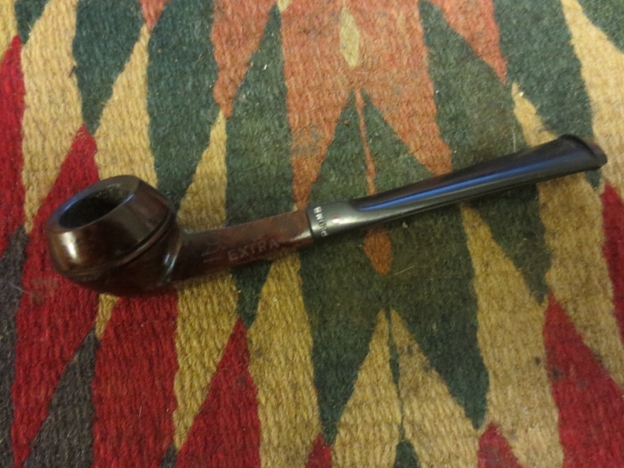
Foursome4 The next four photos show the overall state of the pipe when I brought it to the worktable last evening. The stem is lightly oxidized and appears to be high quality vulcanite. Unlike many of the Bertram stem I have had in the past this one does not have clunky sharp edges of a vulcanite blank. They had been sanded down (at the factory) to make the stem more tapered and finished looking. Bertrams did not typically have a stain or finish. They were polished briar in a natural finish. This one was dirty and had some ground in oils on the shank and sides of the bowl. The grain was a nice cross grain on the right side and mixed on the left. The bowl had a cake in the first 1/3 from the top. The rim was dirty with oils and tar and had a few dents and dings from being knocked about. The slot in the button was very tight – as I have found true of my other Bertram pipes and would need to be opened up to facilitate cleaning with a pipe cleaner. In examining the bowl there were several fills but they had been done well – the putty that was used was not the pink or white putty and had coloured along with the briar as the pipe was smoked.Bertram1

Bertram2

Bertram3

Bertram4 The close up photo of the bowl shows the rim and the buildup of cake at the top of the bowl.Bertram5 I reamed the bowl with a PipNet reamer, matching the cutting head to the diameter of the bowl.Bertram6 I wiped down the briar with acetone on a cotton pad to remove the ground in oils and dirt. I scrubbed with the pad and was able to remove most of the dirt and grime.Bertram7 To address the dents and dings on the rim I decided to lightly top the bowl. I would not be staining the pipe so I would not need to try to match the stain from the bowl and rim. I topped it with 220 grit sandpaper on a topping board.Bertram8 I wiped it down a second time using isopropyl alcohol on cotton pads.Bertram9 I cleaned out the shank and stem with pipe cleaners, cotton swabs and isopropyl alcohol. It was not too dirty and cleaned up quickly.Bertram10 I decided to work on the slot so that I could more easily clean out the inside. I used needle files to open the slot. I used three different files – a flat oval, a rounded oval and a round to reshape the slot into an oval.Bertram11

Bertram12

Bertram13

Bertram14 I sanded the stem with 220 grit sandpaper to remove some of the buildup and roughness on surface of the stem. I also sanded the end of the stem and the inside of the newly shaped slot. I followed that up with a medium and a fine grit sanding sponge. I followed that with my usual micromesh sanding pads – wet sanding with 1500-2400 grit pads and dry sanding with 3200-12,000 grit pads. I rubbed it down with Obsidian Oil and let it dry.Bertram15

Bertram16

Bertram17

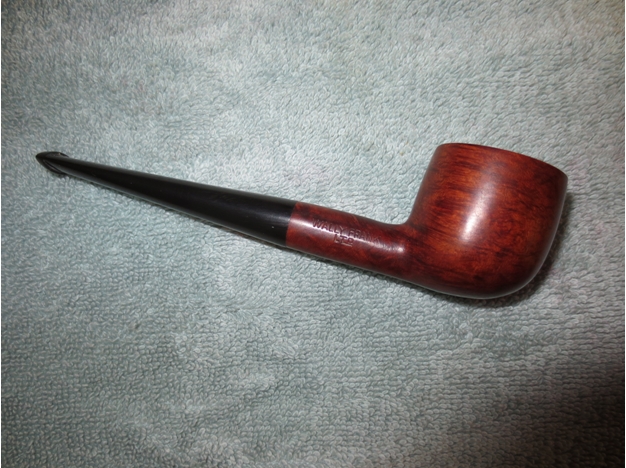
Bertram18 I rubbed the bowl down with a light coat of olive oil and then buffed the pipe with White Diamond and gave it multiple coats of carnauba wax. The finished pipe is shown in the photos below.Bertram19
Bertram20

Bertram21

Bertram22 The inside of the bowl had some cracking so I mixed up some pipe mud – cigar ash and water – and coated the inside of the bowl with it. I painted it on with a pipe cleaner and covered the cracks. I also used a folded piece of sandpaper to clean up the inner edge of the rim and make it crisper. The last three photos show the stem and the bowl after the complete reworking.Bertram23

Bertram24

Bertram25

Anonimo, or the Modern Westminster Cathedral*


Guest Blog by Robert M. Boughton
Photos © the Author
Member, North American Society of Pipe Collectors
http://www.naspc.org
http://www.roadrunnerpipes.com
http://about.me/boughtonrobert

“…once I falsely hoped to meet the beings who, pardoning my outward form, would love me for the excellent qualities which I was capable of unfolding.”
― Mary Wollstonecraft Shelley (1797-1851), English novelist, in “Frankenstein; or, The Modern Prometheus,” 1818

PREFACE
I was, as my ancestors, a native of Redondo Beach and its environs, and most of my family born in that temperate South Bay region of the California Republic was by any appraisal undistinguished, indeed, a study in dysfunction. Whilst every genealogy has its heritage of eccentricity and neurosis, mine is cursed with a spasmodic line of schizophrenia.

My grandfather, the one shining beacon, remains known the world round for his pioneering and influential photography of the sport that is known as surfing, owing to the vernacular origin peculiar to the American colonies. The good gentleman was a lifelong champion and active participant, with vigor, flair and skill, both in the sport and his avid documentation of its participants, famous and obscure, and the attendant culture. Who knew, in its inception, that his physician’s prescription, ordered in the middle part of the late twentieth century, for a hobby to aid the old man in recovering from a particularly tenacious bout with peptic ulcers, would spawn a latent talent and lead to eternal glory?

Indeed, one beguiled writer at a magazine that showcased most of the great photographers of the previous century – which renowned publication, alas, has now passed almost as thoroughly as my grandfather, remaining for the living and breathing inhabitants of this wayfarer’s station, before the Great Unknown, to appreciate only in the ether realm known as the World Wide Web – was so beside himself with giddiness as to dub the much beloved old man “the godfather of surf photography.”

My mother, being the first offspring of the great man, was the only one of her siblings to pursue a noted career, as a nurse now retired. Together the patriarch and eldest daughter formed the bulwark of the otherwise mostly listless, melancholy clan.

On the subject of my own eclectic interests, I have, since childhood, had a consuming hunger for the study of diverse subjects. This omniology put me on my present path, that is, to understand every facet of human knowledge concerning everything, particularly, in my case, the often seemingly unfathomableness of information relating to the genesis, history, science, study, culture, enjoyment and preservation of smoking pipes. One could call me an omnitabacariusphile, although in my zeal for this inclination, however well-meaning and innocent its beginning, the pursuit lead me to a monster I shudder to recall and doubt in my constitution to do so.

Some months have passed since I set upon the fearsome, God-like determination of restoring life to the creature that this narration shall endeavor to describe in the entirety of its awful nature, the frightful apparition of which you shall observe in its original form as I first perceived it in the mists of the cold, barren, lifeless wasteland that is called the Internet in these peculiar times we are fated to spend our lives. Nothing of that initial sighting, the image of the monster blurred by the swirling incorporation of sundry others similar in basic form yet far fairer in the details of their corporeal makeup, could prepare me for the spectre I beheld when the entire host of them arrived by poste.

Good God! Readers, had you been in my company at the instant when first I disrobed the fiendish animation that was hurled through space and time to alight in my quivering hands, then only would you comprehend truly the horror that consumed my entire humanity. Yet, think not for an instant that the visage I discerned was the genuine inception of my natural sense of loathing. The full nature of my revulsion sprang, as fast as the Trees of Truth and Knowledge, from the immediate and overwhelming understanding of the cruelty that was inflicted by Man upon this poor brute.

FIRST SIGHTING

Now, at last, I have regained enough of my stamina – which, for all of my life prior to the advent of the incident which forms the central theme of this account, was as vigorous as that of any young man who plays cricket almost every day – to reveal the thing as I found it, through the following crude illustrations.Anon1

Anon2

Anon3

Anon4

Anon5

Anon6 I implore you, in the name of all that is Holy, to scrutinize the abominable disfigurements of the beast’s original form. Perceive with more than just your eyes, and especially with pity in your hearts, I further beseech you, the jagged wound inflicted just below its forehead, or rim; the dreadful rending of its skin from the right side of its torso – shank, rather – beside the artificial extension of the same, and lastly, the woeful bleeding of black stain, as blood, from this extension onto the very wood that was to be its natural makeup. At first I took the freak of nature, nay, far worse, the creation of a man, to be the first attempt of a novice at crafting a briar pipe of the freehand variety. Only later was I corrected by one whose opinion and experience in such matters I hold inviolate, my mentor and good friend Chuck Richards, who informed me to my astonishment and dismay that the egregious work was in fact of Italian descent with no name.

Read on at your own peril.

RESTORATION OF LIFE
Seeking no more than to breathe new life into the ruined corpse of a smoking pipe, one I envisioned in my mind’s eye as it could have been, had it been born into the good society so many take for granted, I proceeded with the course of action which I perhaps foolishly believed was pre-determined. Regardless of my motives, I felt a pull that led me inexorably to the conclusion I shall in good time reveal.

Having triaged the wounds to the unknown pipe, I found myself in the gravest sense of urgency whilst I resolved to expunge the haphazard spatter of bloodlike blackness betwixt the briar shank and its extension.Anon7

Anon8 With the utmost surgical care, employing 220-grit paper, I erased the accursed stains.Anon9

Anon10

Anon11 Regarding the ridge of the odd, beak-like figure on the front of the bowl, the un-level aspect of the prominently scabrous feature was positively unnerving to behold. Though a full frontal view is not available before its correction, these left and right images reveal the disparity.Anon12 The cruel hideousness of the misdeed inflicted upon a central feature of the freehand was so ghastly to behold, reminding one of the nose of an old man spotted and mangled by the advanced stages of alcoholism, that its repair was my second priority. With the aid of a flat filing tool, I corrected the flaw whilst also removing a gash above it.Anon13 A cursory smoothing of the abraded surface resulted in the beginning of an almost intoxicating, God-like improvement, though minor work to finish the makeover I had begun was still necessary.Anon14 Scarcely able to control my escalating excitement that was directed with all-consuming mania toward the ultimate re-animation of the pipe, I turned my gaze again to the frightful laceration to the cranium – that is to say, the rim.Anon15 Devoid of even a dash of hope for correcting the near fatal head wound, and directly upon the heels of the greatest battle between my ever-intensifying lust to restore the spark that is life to this wretched pipe versus my thoughts of utter failure and ruin, I could envision no measure short of inflicting a deliberate pattern of the very same gouges round the rim and the immediate area of the bowl beneath it. Toward this remarkably heady end, I embarked upon a slippery path of utter destruction of the rim with naught but prayers that I could complete and then reverse, as it were, the radical procedure. The only implement available being a spring-loaded round hole-puncher with a small but sturdy grip, I commenced the initial task of creating matching and equidistant blemishes round the top of the bowl.Anon16

Anon17

Anon18 And then, with mounting glee at the sheer recklessness of the notion, onto the top of the skull – or rim – I repeated the same process with tighter punches.Anon19 Oh, to formulate in words the wonder and terror that overwhelmed my senses is beyond the power of the greatest poet! In my crazed mind I entertained a vision of beauty like a newborn phoenix rising from the ashes! The mental snapshot was breathtaking in its audacity and execution! I was all but hopelessly mad in the ecstasy of the moment! I daresay some would now postulate that I had already surpassed that precipitant threshold.

Therefore it is without any sense of sin whatsoever that I confess my elation at the removal of the few remaining but festering sores that upon first sight of the beleaguered pipe put me in such a state of apprehension.

I performed a retort for a thorough purging of the accreted waste and other filth that continued to leech the innards of the reanimated Italian pipe with no name, though I retained hope that the poor thing would regain some of its more pleasant previous memories, if indeed it ever possessed any, as its recovery progressed.

Wishing to be done forever with the coarse, disheveled appearance of the still recuperating pipe, I applied a progressive regimen of micromesh from 1500 to 4000 upon the unfinished pocks covering the rusticated dome and the pale, sickly spots at various intervals of the pipe’s wooden body where once had flourished cuts, scrapes and crevasses.

The quick application of a double-coat of medium brown leather stain to the areas of the wood effected by the various degrees of sanding and more aggressive restorative measures, and the immediate removal of the dye’s alcohol by ritual of fire left a meager residue of ash that was banished with ease using the 4000 micromesh pad.

The stem, once oxidized to a uniform sickly green shade, glimmered again in its healthy black condition following a treatment with red and white Tripoli and White Diamond.

The wooden body, cured of every ailment that had at first glance so shocked me to the very core of my being, was ready for the final course of medicine, which included the same wholly natural elixirs and a gentle buff with carnauba.Anon20

Anon21

Anon22

Anon23 CONCLUSION
Though mighty powers of science, craftsmanship and other forces beyond the comprehension of Man indeed coexist on some unseen dual plain of reality, the awesome dynamism behind them must be harnessed by the guardians of restoration before they can be utilized on a regular basis. I count myself among the fortunate to have survived this harrowing ordeal with my body, mind and soul intact.

I entreat all those who read this to consider it with open minds, but as a cautionary tale.

*Reconstruction of Westminster Cathedral, the mother church of English Catholicism, began in 1895, but due to the cost has never been completed – leaving much of the interior unfinished brickwork.

New Life for an Old and Tired BBB Own Make 701 Rhodesian


Blog by Steve Laug

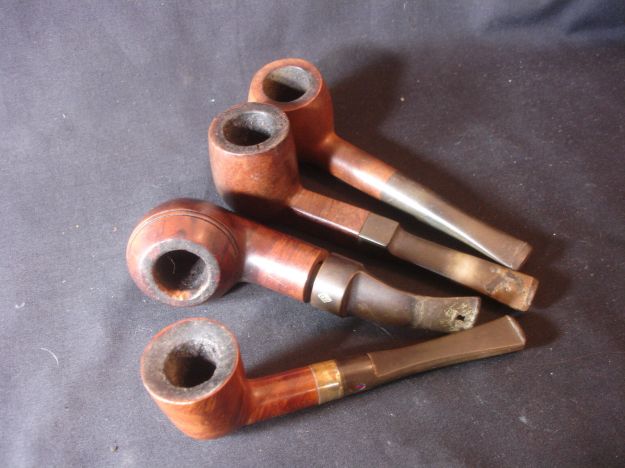
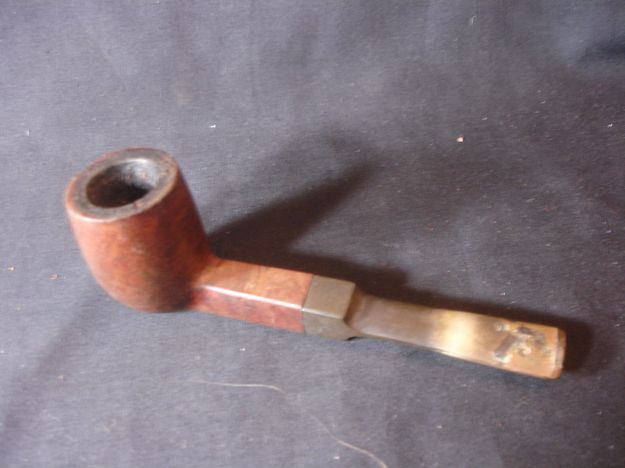
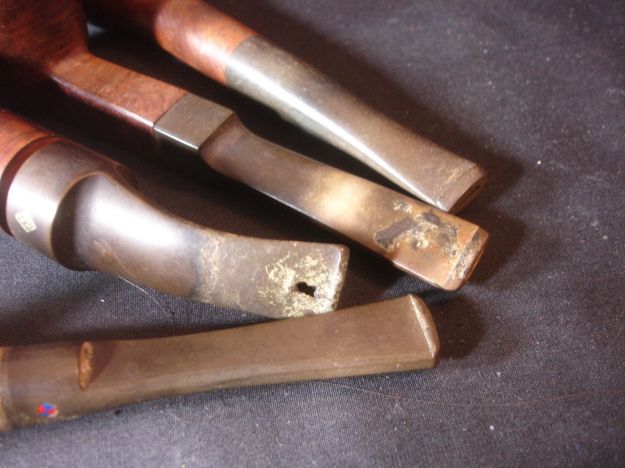
I saw a foursome on Ebay and the one pipe in the lot that caught my eye was of course this older Rhodesian. At first glance I figured it was a GBD 9348. Then I looked more closely at the photos and could see that it was not a GBD at all. It was clearly a BBB with the brass inset on the top of the stem. I bid and won the lot. While the other three pipes are probably fine in terms of additions to the pipes for sale this one was the one I wanted for my collection. It had two things going for it that caught me – it was Rhodesian and it was a BBB. Both fit the one of the focuses of my collection.Foursome2 Needless to say but the one in the roughest shape was the BBB. In the photo below you can see the hole in the stem and the roughening around the inner edge of the rim on the left side of the bowl. It was going to take a bit of work to bring this one back from the brink and keep the original stem.Foursome7

Foursome8 When the package arrived I took out the BBB and unwrapped it from the bubble wrap. The stem was stuck in the shank and the damage to the bowl was quite extensive. The stamping on the left side of the shank read BBB in a Diamond and under that was Own Make. On the right side it read London England in a straight line over the shape number 701. On the right side of the bowl and on several spots on the shank it had dark stains from sitting in water or juice. It had discoloured the briar and damaged the finish. There were also some dents and dings under the dark discolouration from the bowl having been dropped on concrete or something that left the side of the bowl dimpled with dents and marks. The stem was quite gnawed on – the hole on the top was solid around the edges and the button was chewed and worn on the top side. The underside of the stem had bite marks and was worn from clenching.BBB1

BBB2

BBB3

BBB4 I put the pipe in the freezer for 30 minutes and when I took it out I was able to easily remove the stem. I cleaned the edges around the hole in the top of the stem with alcohol and a dental pick to remove the buildup and the detritus that was caught in the edges. The good thing was the edges were solid and not crumbling.BBB5 I put Vaseline on a nail file that I have here and use for more wide repairs on the stem and inserted it into the slot. It provided a solid base for me to drip superglue onto the hole. I built up the edges and worked my way to the centre of the stem bite. You will note that I grossly over filled the hole with the superglue. I have been having trouble with the accelerant that I am using. It tends to dry out the surface of the patch and the centre never sets correctly. I decided to set the stem aside overnight and let the patch cure overnight.BBB6 I dropped the badly stained bowl into my alcohol bath and called it a night. The bowl soaked for over 12 hours and the stem cured while I slept soundly.BBB7 In the morning I took a look at the stem and saw that it was pretty hard. I removed the bowl from the alcohol bath and dried it off. You can see the dark stains on the right side of the bowl and on other spots on the bowl. It was almost black in colour and the alcohol had not lightened it at all.BBB8

BBB9

BBB10 The top view of the bowl below shows the extent of the damage to the bowl. It was out of round and the gouge out of the left inner edge was rough.BBB11 I wiped the bowl down with acetone on cotton pads to remove the finish and see if it would lighten the stains on the bowl. While it indeed lightened them it did not remove them. It was encouraging to see the grain through the stains however, so I knew that sanding the damaged areas would remove much of the darkening.BBB12

BBB13

BBB14

BBB15 I lightly topped the bowl on my topping board to remove some of the damage to the rim surface.BBB16

BBB17 I reamed the bowl with a PipNet reamer and took the cake back to bare wood. I wanted to remove as much as possible and see if I could also clean up the inner edge of the rim.BBB18 I used a retort as has become a habit lately and boiled alcohol through the stem and shank to remove the tars and build up. After the retort I cleaned out the shank and the stem with pipe cleaners, cotton swabs and isopropyl alcohol.

I worked on the stem using needle files to recut the button and clean up the sharp edge. I sanded with 180 grit sandpaper to smooth out the repair to the topside and underside of the stem. I followed that by sanding with 220 grit sandpaper to smooth out some of the scratches left behind by the lower grit paper.BBB19

BBB20

BBB21 While I had the 220 grit sandpaper out I sanded the bowl as well to remove the stains on the sides of the bowl and the cap. I also used a folded piece of sandpaper to work on the inner edge of the rim and give it a slight bevel to minimize the damage there.BBB22 I wiped the bowl down with alcohol and then sanded it with a medium grit and a fine grit sanding sponge followed by 400 grit wet dry sandpaper. In the photos below you can see how it worked to remove the majority of the stain on the bowl. I very carefully sanded around the stamping on the right shank as I did not want to damage the stamping.BBB23

BBB24

BBB25

BBB26 I used a hot knife and wet cloth to steam out the dents on the bowl sides, cap and rim. When I had lifted them as much as possible I sanded the bowl further with the 400 grit wet dry paper and also with the fine grit sanding sponge. I wanted to clean up the damaged areas on the sides and top as well as the stem repairs.BBB27

BBB28

BBB29

BBB30 After the steaming and sanding I spent some more time on the inner edge of the rim. I wanted the bevel to smooth out the damaged side of the rim and also wanted to bring the bowl back into round. It took quite a bit of time to handwork the rim damage but I am happy with the end result. When finished I rubbed the bowl down with a soft paper towel and olive oil. I rubbed the oil into the bowl, paying special attention to the areas that were previously damaged with the stain and the dents. Again, I set the bowl aside for the night to let the oil soak in and be absorbed into the briar.BBB31

BBB32

BBB33

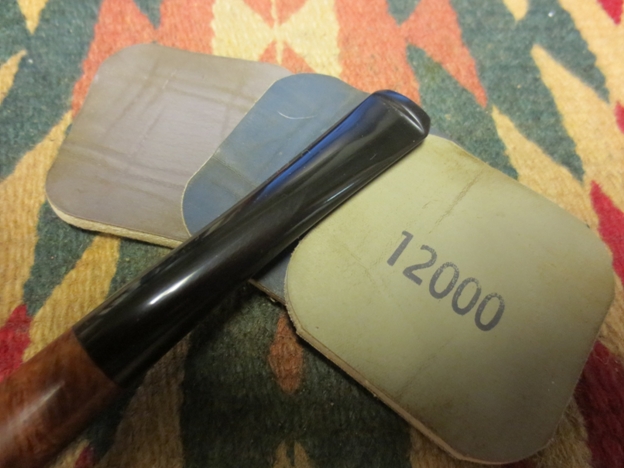
BBB34 The next morning I worked on the stem with fine grit sanding sponges and then with micromesh sanding pads. I wet sanded with 1500-2400 grit pads and dry sanded with 3200-12,000 grit pads. The higher grit pads allowed me to blend in the repair as much as possible and though still visible it looks very good. The patch is hard and solid with no give when pressed on.BBB35

BBB36

BBB37 I rubbed the stem down with Obsidian Oil and when it had dried I buffed it on the wheel with White Diamond. I gave the bowl and stem multiple coats of carnauba wax and then finished by buffing it with a soft flannel buffing pad to raise the shine. The finished pipe is shown below. It is ready for loading up and enjoying a good smoke. It should serve me well for a long time.BBB38
BBB39

BBB40

BBB41

BBB42

BBB43

Bringing a Yello Bole Pot back to Life


Blog by Andrew Selking

Anyone who reads my previous postings know that I have a fondness for early KB&B pipes. Since the briar used in Yello Bole pipes was generally inferior to those used in Kaywoodies, most Yello Bole pipes are smaller. This was a work around for defects found in the briar. I saw this Yello Bole pot and was intrigued. It’s a full size pipe. Here is the seller’s picture.YB1 When the pipe arrived, the stem was nearly perfect with the original stinger intact (not that I planned to leave it there). The bowl looked decent with a minimal amount of tar on the rim and very light cake. I dropped the bowl into the alcohol bath and soaked the stem in Oxyclean.

I noticed the first indication of trouble when I pulled the bowl out for reaming: it had a heavy varnish coating. That’s usually a sign that the pipe maker wanted to hide imperfections in the wood.

YB2

I quickly reamed the bowl then broke out the 0000 steel wool and acetone to remove the varnish.

YB3

I’ve seen some pits in briar before, but this is the first time I’ve encountered a pit so deep that I gave it a name. I named it the pit of despair. Here’s the picture before I removed the pink putty.

YB4

Here’s the pit of despair fully revealed. My dental pick had a good ¼ of an inch of room to explore.

YB5

Even with the pit I still liked the pipe and decided to fix it anyway. I filed a good amount of briar dust from a broken shank onto a piece of paper. The paper makes it easier to collect the briar dust. Or you could do like Steve and just have a big jar of briar dust.YB6 I packed the pit and added super glue followed by accelerator.YB7 After applying the super glue and accelerator, I had to add briar dust two more times. This was the final result.YB8 In addition to the pit of despair, there were three minor pits on the front of the bowl and two deep pits on the bottom of the shank near the juncture of the stem. I finally got the exterior of the pipe sorted out and turned my attention to the insides.
I did my retort on the bowl.YB9 There was some gunk on the brush, but the stinger did a decent job keeping the shank clean.YB10 After a few passes with the brush dipped in alcohol, I moved on to q-tips. Not a terribly dirty pipe.YB11 Next I retorted the stem. I anticipated it would be dirty, since stingers tend to make pipes smoke wet. I retorted it three times to be safe and had an easy time cleaning the remaining tar.YB12

YB13

YB14I next turned my attention to removing the oxidization from the stem. I used 400 wet/dry with water and my sanding wedge, followed by 1500-2400 grit micro mesh pads with water.YB15 I polished both the bowl and stem with a progression of micro mesh pads, 1500-12,000 in preparation for final finish. I used my rotary tool with white diamond, followed by carnauba wax on the stem. I have to say this will be the new standard from now on.YB16 I decided to use Pimo Pipe Supply’s dark walnut stain on the bowl. This would give me a fighting chance to cover the pit repairs while still allowing the grain to show. It turned out better than I expected. I now have a very classy looking short pot. I also had the chance to try extreme pit repair. Even though this pipe had several pits, the briar still had nice grain. This one is a keeper.YB17

YB18

YB19

YB20

YB21

YB22

YB23

YB24

YB25

YB26

Kaywoodie 73 Supergrain Restoration


Blog by Al Jones

This Kaywoodie Supergrain belongs to a Brian, a friend of mine in my local pipe club, based located in Frederick, MD.  I had some brought some restored Kaywoodies to a previous meeting so he asked if I could could tackle this one.  The pipe wasn’t in bad shape.  It had light oxidation and teeth chatter on the stem and some scorching on the rim.    The pipe is a two-digit shape number, but has a “Drinkless” stamped, 4-hole stinger.  I estimate it was made in the early 1950’s as the 4-hole stinger was no longer used after the mid-50’s.

Kaywoodie_73_Supergrain_Before Kaywoodie_73_Supergrain_Before (2) Kaywoodie_73_Supergrain_Before (5) Kaywoodie_73_Supergrain_Before (1) Kaywoodie_73_Supergrain_Before (4)

I used some worn, 8000 grade micromesh to remove the scorching from the top of the bowl.  The briar was then polished with White Diamond and several coats of Carnuba wax.

I polished the stem starting with 800 grit wet paper, moving thru the 1500 and 2000 grades.  Next was 8000 and 12000 grade micromesh sheets followed by a polish with White Diamond on the buffer.

Our pipe club meeting is this week, so Brian will get his Supergrain back.  An relatively easy restoration on an elegant little pipe.

Kaywoodie_73_Supergrain_Finished Kaywoodie_73_Supergrain_Finished (1) Kaywoodie_73_Supergrain_Finished (3) Kaywoodie_73_Supergrain_Finished (4) Kaywoodie_73_Supergrain_Finished (5) Kaywoodie_73_Supergrain_Finished (6)


Rescuing a Scorched GBD New Era 549


Blog by Andrew Selking

After reading Al’s posts about his GBD pipes, I had to have one. I saw this pipe listed on eBay with a low buy it now price, obviously based on the scorch mark on the front of the bowl.GBD1 I’m not sure whether it was a sense of overconfidence in my ability or naivety about the extent of the damage, but I bought the pipe. I realized when it arrived that if I couldn’t fix the scorch mark the pipe probably wouldn’t be worth my time. I nearly despaired when normal procedures failed to even lighten the mark. I put the pipe aside several times before finally deciding to take drastic measures and use a hand sander with 150 grit sand paper. I figured at this point there was nothing to lose and I knew I could still maintain the original shape if I was careful. After spending about a half an hour with the sander, I found myself at about an 80% solution. The mark was still too dark, so I took it to the next level of desperation: the rotary tool (that’s the generic name for a dremel that you buy at Harbor Freight Tools) with a sanding attachment.

I do not recommend the use of either a hand sander or the rotary tool except as a last resort. By this point I had accepted the fact that this pipe was beyond hope for a perfect restoration, so I lowered my expectations to a good restoration.

The sanding on the top portion of the bowl changed the contour of the rim, so I used 400 grit sand paper and a piece of glass to top it.GBD2 Normally I have a set order for restoring a pipe, but dealing with the scorch mark threw it all off. I don’t like to work on a pipe that has a dirty bowl, so I went ahead and reamed it. As you can see from this picture the scorch mark is fairly light.GBD3 Next I retorted the shank.GBD4 She was a dirty girl.GBD5

GBD6 I retorted the stem after that, but did it four times. On a dirty pipe you can either spend time with lots of q-tips and fuzzy sticks, or do the retort multiple times.GBD7 Now that I had the internals of the pipe cleaned, I turned my attention to the removing the oxidation from the stem. This stem was all angles and had some serious oxidation. I’ve felt for a long time that my stem work needed improvement. It’s especially difficult to clean the crease under the button and in the case of this stem the curved area where it meets the diamond portion. I know that when I work with wood I use a sanding block or wrap the sand paper around an object that would fit into the area to be sanded. With that in mind, I “borrowed” a small plastic scraper from the kitchen. You will notice that it has a beveled edge and fits the underside of the button perfectly.GBD8

GBD9 Using the scraper wrapped with 400 grit wet/dry and water, the oxidation was soon gone. I followed with 1500-2400 grit micro mesh pads and water.GBD10 The bowl had a couple of dents so I decided to steam them out.GBD11 One of my essential tools for this type of work is an old butter knife.GBD12 I used my heat gun to get the tip of the knife very hot, then applied it to a wet cloth directly over the dents. Here is what it looked like after several applications of steam.GBD13 The dents still needed some work, so I sanded them smooth with 400 grit sand paper.GBD14 By this point the finish was completely uneven, with bare wood on the rim and side of the bowl, so I used acetone and 0000 steel wool to remove the remaining finish. I find that if I’m careful with the stampings, that grade of steel wool cleans the wood without damaging the stampings.GBD15 This is what the pipe looked like after I took the bowl and stem through a progression of micro mesh pads, 1500-12,000.GBD16 I decided to use a dark walnut stain from Pimo Pipe Supply to help cover the remaining scorch mark. Here is the bowl after the application of stain.GBD17 I used white diamond buffing compound on the buffing wheel to bring out a shine. Let me digress a bit about buffers. There are three things that a buffer loves, angles, stem inserts, and nice pipes. When spinning at 3450 rpm’s the buffer will catch anything with an angle and fling it at a high rate of speed onto the nearest hard surface. Alternately it will catch any type of stem insert and rip it out of the stem. Finally if you have a nice pipe that you’ve invested time in, the buffer has a tendency to shatter it just as you finish. This pipe had all of those elements, so I decided to try something different; my rotary tool.

I took a felt buffing pad and loaded it with white diamond buffing compound. The results were spectacular. The rotary tool gave me more control, I didn’t have to worry about the stem flying out of my hand, and I was able to achieve a more consistent shine in the areas that are hard to get with a buffer. Not bad when you consider that I paid $19.99 for this thing at Harbor Freight Tools.GBD18 I finished the bowl on the buffing wheel and here is the final result.GBD19

GBD20

GBD21

GBD22

GBD23

GBD24

GBD25

GBD26

GBD27

Refreshing an Older Heritage Antique #13 Dublin Pipe


Blog by Steve Laug

The Heritage brand was on I had no familiarity with until Andrew wrote up this blog for us https://rebornpipes.com/2014/12/23/refurbishing-a-heritage-heirloom/ He gave background, history, line information and the classic brochure from the company. I want to give a brief summary of what he found in the next two short paragraphs to set the stage for the one that I found once he highlighted the brand for me.

Heritage pipes were Kaywoodie’s answer to Dunhill. According to one of their brochures, Heritage pipes were made from “briar burls seasoned and cured for up to 8 months,” with only “one briar bowl in over 300 selected to bear the Heritage name.” “Heritage stems are custom fitted with the finest hand finished Para Rubber stems. Mouthpieces are wafer thin and concave.”

The Heritage line began in the early 1960’s, with the trademark issued in 1964. The line was started at the request of Stephen Ogdon, (who worked for Kaywoodie in 1962). Mr. Ogdon had previous experience working for Dunhill, either running the New York store or working for Dunhill North America. Mr. Ogden was made President of Heritage Pipes, Inc., Kaywoodie Tobacco Co.,Inc. and Kaywoodie Products Inc. as well as a Vice President of S.M. Frank & Co. Heritage Pipes were produced from 1964 until 1970 (Source Kaywoodie.myfreeforum.org).

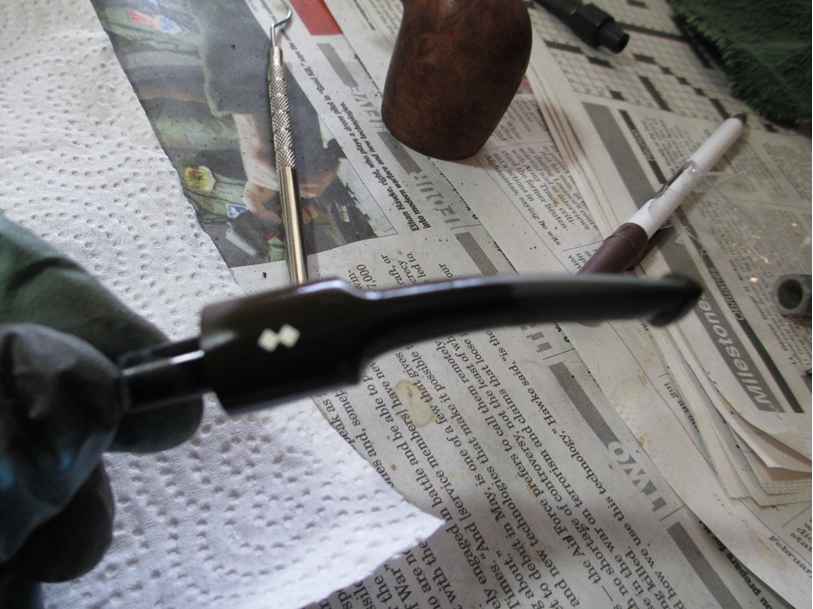
I found one online on Ebay that was stamped Heritage Antique 13. I scanned the brochure that Andrew provided and found this regarding the Antique Line: The Heritage Antique line is characterized by “Rustic Grain stands out in rugged relief.” “This pipe is so bold-looking, yet so light and smooth-smoking. A special sandblasting process exposes a greater surface area on the bowl, giving a cooler, more satisfying smoke. Centuries-old Heritage Antique is strikingly masculine in appearance.”The number 13 is the shape number for the Dublin shape. It can be seen in the first coloumn second pipe down on the left side of the brochure page below.heritage4_zpsdc6295ef The seller of the pipe I picked up on EBay included some basic information on the pipe. The said the stamping was Heritage Antique with a 13 on the bottom of the shank. The stem has an inlaid double white diamond on the left side. It is out of a Kansas City estate. It measures:
5-1/2 inches Long
1-3/4 Inches High Bowl
1-1/4 inches Bowl Width
3/4 inch of a Bowl Bore
3 inch long stem

The next eight photos were included with the EBay advert and give a pretty good idea of the type of blast on the briar as well as a good picture of the state of the stem. The pictures show the colour of the pipe in a more red hue than it actually appeared when it arrived. In reality the stain is a brown tone similar to that of the Dunhill Shell Briar.Heritage1

Heritage2

Heritage3

Heritage4

Heritage5

Heritage6

Heritage7

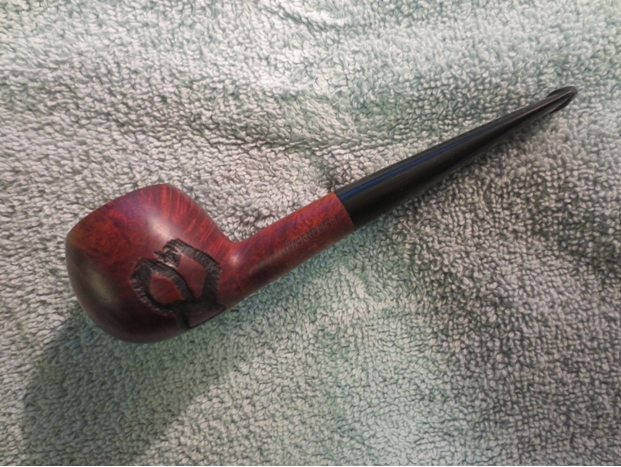
Heritage8 When the pipe arrived in Canada I was very pleased when I opened the box. The briar was in good but dirty condition and it appeared that the finish was in great shape under the grime and tars. The blast was amazing and craggy – very much like that on my older Shell Briars. The rim had some buildup on it that was flaking off but the bowl was in round and there was no damage to the edges of the rim.Heritage9

Heritage10

Heritage11

Heritage12 The stem was thin and quite clean. It was oxidized and had some waxy substance on the top side. There were two tooth marks – almost pin prick marks, on the underside of the stem visible in the first photo below. The second photo shows the waxy buildup on the surface of the stem and the oxidation.Heritage13
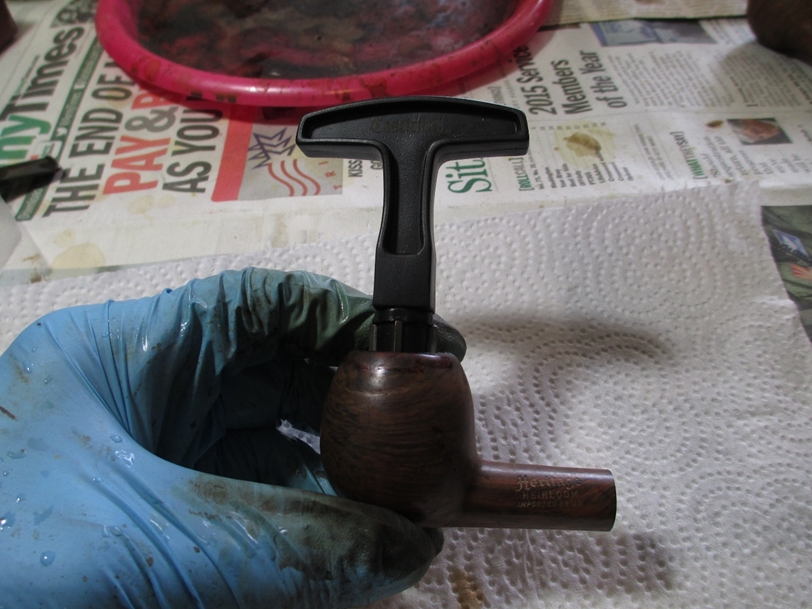
Heritage14 The rim of the pipe, shown in the photo below had a thick buildup of tars that were flaking off the surface of the rim. I picked at it with a dental pick and could see that the sandblast surface was undamaged underneath. The bowl was in need of a reaming to smooth out the uneven cake on the sides and bottom of the bowl.Heritage15 The stem was frozen in the shank so a short time in the freezer and the stem was easily removed from the shank. The step down tenon was in great shape and showed no damage and the tenon itself was not tarry.Heritage16 I reamed the bowl with a PipNet Reamer beginning with the first cutting head and finishing with the size 2 cutting head. I reamed it back to bare wood to restart the cake build up.Heritage17
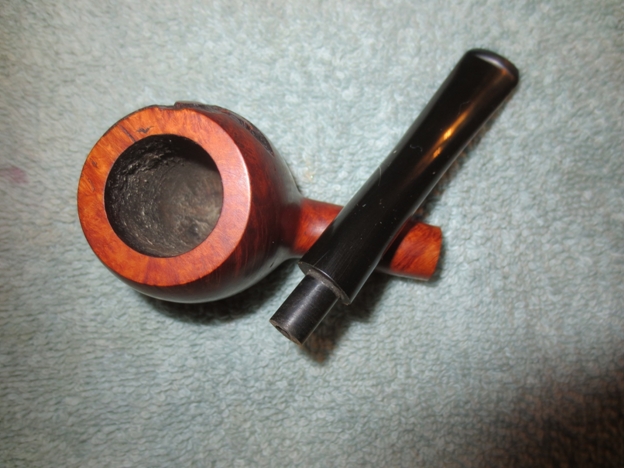
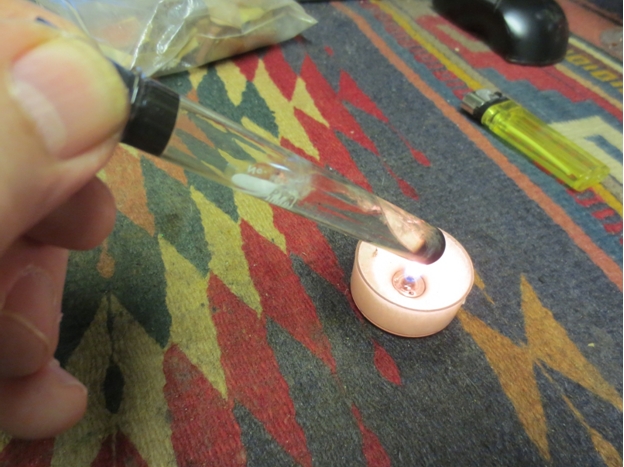
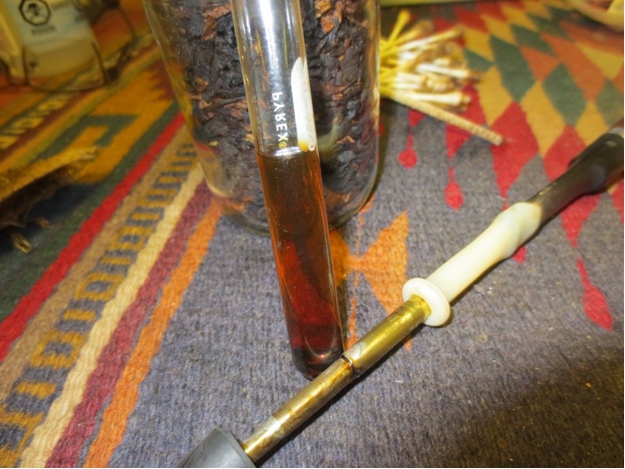
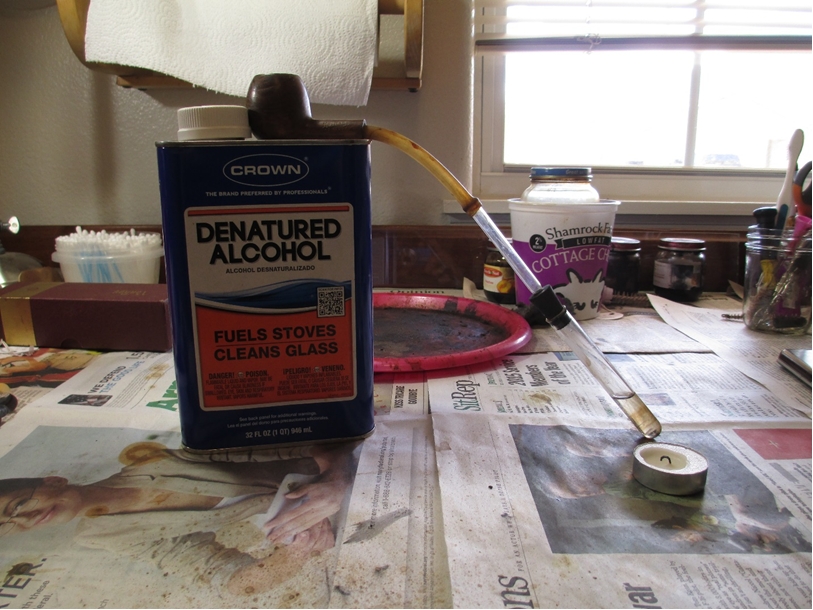
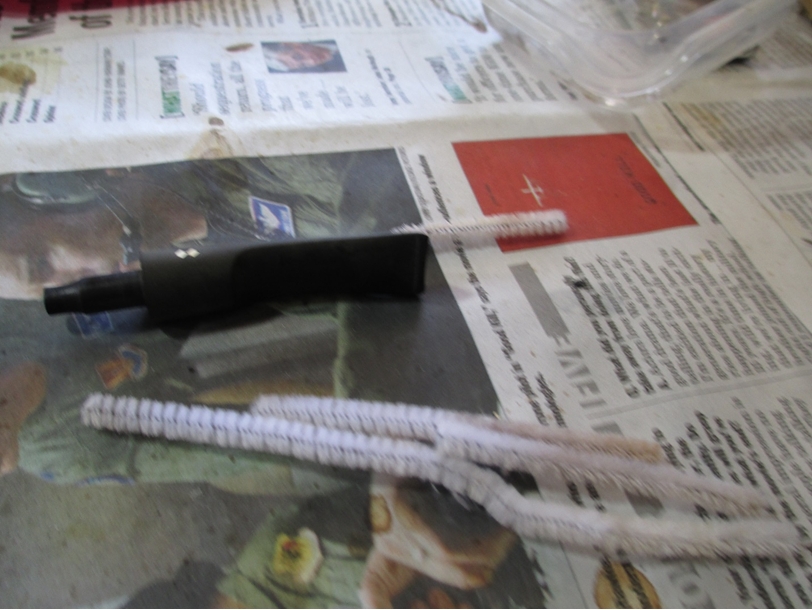
Heritage18 I picked the flaky buildup on the rim with a dental pick and the scrubbed it with a soft bristle brass tire brush to remove all the grit and take it back to the surface of the rim. I have used this method over years as the bristles remove the tars without damaging the sandblasted surface.Heritage19 Once I had the surface brushed clean with the wire brush I scrubbed the entire bowl and shank with undiluted Murphy’s Oil Soap and a tooth brush to get the grime out of the crevices of the blast and remove the oils from the previous owners hands. Once I had scrubbed it I put my thumb in the bowl and rinsed it off with cool water and dried with a cotton cloth.Heritage20 I put the stem back in place and set up the retort. I filled the test tube half full of 99% isopropyl alcohol and heated the alcohol over a tea candle. The alcohol boiled through the pipe and cleaned out the tars and oils in the stem and shank. The alcohol also rinsed the inside of the bowl which was plugged with a cotton ball.Heritage21

Heritage22

Heritage23

Heritage24 With the inside of the pipe cleaned and the exterior of the briar scrubbed it was time to address the oxidation and the marks on the stem. I put a plastic washer between the stem and shank so that I could sand the stem right up to the shank without worrying about rounding the shoulders of the stem. I sanded it lightly with 220 grit sandpaper to remove the waxy buildup on the stem (turns out it was a varnish) and also loosen the surface oxidation. I followed that by sanding with a medium and fine grit sanding sponge to remove scratching and oxidation.Heritage25

Heritage26

Heritage27 Once the stem was sanded, I wiped it down with a cotton pad and alcohol in preparation for repairing the two tooth marks. I filled these with black super glue and set aside the stem to let the glue cure.Heritage28 When the glue had dried I sanded the two spots with 220 grit sandpaper and the two sanding sponges to smooth out the patches and blend them into the vulcanite. I then sanded the stem with micromesh sanding pads – wet sanding with 1500-2400 grit pads and dry sanding with 3200-12,000 grit pads. I rubbed the stem down with Obsidian Oil between each set of three pads and also at the end of the sanding process.Heritage29

Heritage31

Heritage32 I buffed the stem with White Diamond and gave it multiple coats of carnauba wax. I rubbed two coats of Halcyon II Wax on the sandblast of the bowl and then gave the pipe and stem a light buff with a soft flannel buff to raise the shine. The next photos give a clear picture of the finished pipe. Heritage33

Heritage34

Heritage35

Heritage36 I end with three close-up photos of the bowl to give a good idea of the quality of the sandblast on this piece of briar. It is a stunning pipe with a blast that rivals that found on the Dunhill Shells that are in my collection. I intend to fire up this old pipe and enjoy its trust for many years to come.Heritage37

Heritage38

Heritage39

A Bit of Cosmetic Surgery in Restoring a Moistless Sandblast Billiard


Blog by Steve Laug

When I saw this pipe come up on eBay I was struck by the combination of the colours and textures. The yellow Lucite stem and the dark reddish black sandblast went well together. The slight bend in the stem looked perfect. I had not heard of the brand before but decided to bid on it anyway. The first seven photos are from the seller and give different views of the pipe and the stem. In several of the profile photos there appeared to be a lip or ledge near the shank bowl junction. It was a curious thing that I would check when it arrived.Moistless1

Moistless2 The stem also made me wonder about the material it was made of. It has the rounded end button that often appears on orific button stems but there no photos of the end of the stem so it would also be clear once I received it. The stem appeared to be in great shape other than some internal staining.Moistless3

Moistless4

Moistless5

Moistless6

Moistless7 I did some research on the brand and found that there was a patent taken out for a Moistless Pipe in 1935 by a S. Guida. The pipe I purchased is stamped Moistless over Italian Briar. The patent is from the US Patent Office and the pipe I have is American made in my opinion. Moistless patent When it arrived I took it apart to see if the insides reflect the drawings from the Patent diagrams. They did not. The tenon on this one is a metal tenon but there are no any of the other parts of the insert shown. The shank is quite open and deeply drilled so it well could have had the apparatus inside. The inside of the tenon looks like it could have had an insert as it is tapered into a cone shape guiding the smoke into the airway. The inside of the pipe was clean and the bowl lightly smoked with no cake build up. I ran some pipe cleaners, cotton swabs and isopropyl alcohol through the shank and stem. They came out remarkably clean.Moistless8

Moistless9 When I examined the bowl there was a ridge that ran around ½ of the bowl just above the shank bowl junction. It was like a shelf and felt uncomfortable in the hand. The blast had taken some material but left a very distinct shelf and a ridge along the topside of the shank. In my mind it was an unattractive interruption in an otherwise classic shape. It would need to go to bring the most out of the shape of this pipe. The next seven photos show the bowl from a variety of angles to highlight the issue I am speaking of regarding the shelf. It is these issues that the impending plastic/cosmetic surgery will deal with.Moistless10

Moistless11

Moistless12

Moistless13

Moistless14

Moistless15

Moistless16

Moistless17 It almost took more time to decide to remove the shelf and clean up the shape of the bowl and the shank than it did to do the work. I wanted a cleaner junction for the shank and bowl as well. I used a Dremel and sanding drum to remove the excess material. The next three photos show the bowl after surgery – the cosmetic surgery/face lift had begun. The patient did not squeal too much even though there was no anesthesia. Within a matter of five minutes the foundational work was finished and what remained was hand work.Moistless18

Moistless19

Moistless20 I don’t have a sandblaster so I decided to start with a basic rustication pattern and then work it with carving knives and sandpaper to give the rustication a more blasted look. I used the rustication tool that Chris made for me and it did a great job turning the smooth sanded surfaces into a more patterned look.Moistless21

Moistless22 I then used a carving knife to give swirls and movement to the rustication and try to blend it into the surface of the sandblast. I used the dark brown stain pen to highlight the high spots on the rustication to enable me to better determine the pattern I was working on.Moistless23

Moistless24 When I had finished the matching of the pattern as best I could I stained the bowl with a dark brown aniline stain and flamed it to set it in the briar.Moistless25

Moistless26

Moistless27 I buffed the bowl with red Tripoli to smooth out the rough spots and specifically used a sanding block to flatten the rustication more. Then I stained the bowl with an oxblood aniline stain and flamed it. I set the bowl aside to dry. Overall I am happy with the rustication and the match to the sandblast of the bowl.Moistless28

Moistless29

Moistless30

Moistless31 When the stain was set and dry I took the pipe to the buffer and gave it a light buff with White Diamond. I also buffed the stem lightly with it to give it a shine. I gave the stem several coats of carnauba wax and buffed it to a shine. I rubbed the bowl down with Halcyon II wax and then buffed the bowl with a shoe brush to raise the shine. The finished pipe is shown in the photos below.Moistless32

Moistless33

Moistless34

Moistless35 I have included the next two close-up photos of the bowl to show the finished rustication after the two coats of stain and the buffing and polishing have been finished. I really like the finished shape and look of the bowl and the bothersome shelf is gone. The junction of the bowl and shank is much cleaner with a sharper angle. The pipe now fits the classic shape that it approximated previous to the plastic surgery! The patient survived the procedure and looks to be thriving in its post operative glory. Oh, and the stem had an orific opening in the button and it was in excellent shape only needed a quick polish.Moistless36

Moistless37

Cleaning an Older Savinelli Duca Carlo Straight Billiard and Paying It Forward


Guest Blog by Robert M. Boughton
Member, North American Society of Pipe Collectors
http://www.naspc.org
http://www.roadrunnerpipes.com
http://about.me/boughtonrobert
Photos © the Author

“As you know, Shibumi has to do with great refinement underlying commonplace appearances. It is a statement so correct that it does not have to be bold, so poignant it does not have to be pretty, so true it does not have to be real. Shibumi is understanding, rather than knowledge. Eloquent silence. In demeanor, it is modesty without pudency. In art, where the spirit of shibumi takes the form of sabi, it is elegant simplicity, articulate brevity. In philosophy, where shibumi emerges as wabi, it is spiritual tranquility that is not passive; it is being without the angst of becoming.”
― Trevanian (Rodney William Whitaker, 1931-2005), U.S. film scholar and writer, in “Shibumi,” 1979

INTRODUCTION
Although Trevanian, in the well-turned quote above from one of his diverse novels (in this case a spy story), is far less sesquipedalian yet just as articulate as the late great jack of all trades, William F. Buckley Jr., I admit I had to resort to my Oxford English Dictionary to look up pudency. To save anyone reading this the trouble, if he might be inclined to do as I did, I will say the word is defined as susceptibility to the feeling of shame, or bashfulness. I made it through that stage long ago. The passage as a whole is apt to the understated grace, style, artistry and charm, combined with simplicity and humbleness, of this lovely Savinelli Duca Carlo Straight Billiard,relative to higher end Savinelli beauties and their prices.

The circumstances surrounding my chance and fleeting but thoroughly pleasant encounter with the alluring implement for fine tobacco enjoyment are also appropriate for this preface. Had I not sought refuge at my local tobacconist in a fluky and serendipitous urge the other day, I might never have met Al, a 25-year-old student who is pursuing both a master’s degree in his field of study and new pipe experiences. And, of course, I would not be writing this account of my rewarding experience cleaning the Duca Carlo.Duca1 When Al introduced himself to me by his full first name, Alfred, and moved with spontaneous purpose from where he was sitting to the cushioned chair next to mine, I had been distracted, in deep concentration, working on something on my laptop. In most cases when someone can see I’m working, and still tries to engage me in conversation, I become a bit piqued. But something was different about Al. So outgoing and affable was his personality that I really can’t even remember now what had been so important to me the moment before his appearance beside me.

Al spotted the rather large, black bag on the floor by my side, which was made for carrying tools but is now my run case. In case I ever need to run to my tobacconist, to get away from the mounting pressures that consume the rest of my life, I always have my run case with its selection of pipes and jars of tobaccos du jour. It should come as no surprise that I also keep a stock of provisions within the many pockets of the run case, from an extra Bic in the event my regular pipe lighter runs out of butane to a cheap pipe nail against the times when I misplace my three-in-one tool; pipe cleaners; balsa, 6mm and 9mm filters, for the most part to have on hand for others who like to use them; sandpaper and micromesh for refurbishing on the go; a small digital caliper, and a 120-inch cloth tape measure, should I ever run into the Titanic of pipes and need to determine its exact specs. Basically, everything the OCD pipe enjoyer and restorer might want without notice. Sometimes my fellow tobacco enthusiasts poke fun at me– more often than not the cigar smokers – seeing me coming through the door with my run case and laptop in either hand like a circle and crosshair marking me as a target. Being a good former Boy Scout, I always say be prepared.

At any rate, Al somehow got the idea that I was serious about pipes, and being new to the attendant rituals, he enquired what was in the bag.As I am rather free with my tobaccos, I began taking out the jars, looking for something appropriate for a newcomer. Mostly that day I found stronger, more advanced blends such as McClelland’s Top Hat and C&D Bayou Morning (with a whopping 28% Perique content), but I also had C&D Joie de Vivre and Rattray’s High Society. Al’s sharp eyes noticed the Joie de Vivre plug, and he was intrigued. Thinking he might be up to that excellent, smooth and unusual English blend, I said so and suggested he give it a try.

Well, the next thing I knew, poor Al was puffing away and suddenly looked a bit peaked. When he told me he had opted for a bowl of the Bayou Morning, I wasn’t surprised. As his composure returned, he brought up the subject of my pipes and ended up asking me if his was “very good.” He said a college friend had given it to him, knowing he wanted to quit cigarettes. Glancing at it in his hands, I said it looked Italian, and that a good pipe was anything that made its owner enjoy the tobacco. I added that if he took care of it, the pipe would last him a lifetime. Seeing the briar had faint nomenclature of some sort, I wanted to take a closer look, and perhaps sensing this, he held it out to me.

Squinting, I made out the words Duca Carlo on the shank and exclaimed something that some might consider inappropriate for this space. Understandably alarmed, Al asked if anything were wrong. I told him it was a Savinelli, and it was apparent the name meant nothing to him. I proceeded to explain a little about the well-known Italian maker and the quality of its pipes, noting that although his Duca Carlo was not one of the high-end varieties, it was a fine pipe indeed. That was when the magical moment happened. Al said he was thinking of having it professionally cleaned.

Hmm, I thought. Chuck was gone for the day, and I supposed I had a spare half-hour that night, so I offered my services to the young newcomer. Surprised, he asked how much it would cost, and I told him I would be happy to do it for free. While I have always been reluctant to charge people for anything I enjoy doing, I suppose there were several subconscious reasons behind my impulsive offer: Al is a young student working hard to assure a secure future, similar to another young pipe-smoking friend of mine who is now studying physics at Purdue, and for whom I bought two packs of my own tobacco mix – Sneaky Rabbit, sold by my tobacconist as a house blend – since he was enjoying it so much he was almost out both times during a recent visit to his hometown for the holidays; I remember how tight my finances were in my own college days; I had a sudden desire to pay forward the many similar favors my friend and mentor, Chuck Richards, and others in my piping community have done for me, and least of all, it was just good sense for the growing business Al knew I was in. Al still tried to resist, but there was no way I was going to take his money for a simple cleaning.

Having a similar but apparently newer Duca Carlo of my own, I showed him the picture of it stored in my laptop. Al told me what he really wanted was to see the stem (which was in excellent shape but a dull, faded gray with a thin shiny streak by the shank) sparkle all over. He said he had no idea if it would be possible. I could do that, I assured him, and return it to him the next day.

So that was how the adventure began. Still a little wary, however, when he handed the pipe over to my care as we left, Al said with the sincerest note of entreaty in his voice, “Please don’t break my pipe.” I knew exactly where he was coming from.

REFURBISH
I knew from the beginning there was no way I would just buff the stem and clean and sanitize the pipe. After all, if Al were a paying customer of my business he would get the Basic Cleaning, which includes light refurbishing. All I could see the pipe needed was a little rim burn removal, touch-ups on slight scratches on the stem and bowl and a careful ream of the chamber to remove the small amount of excess cake buildup while leaving the optimal amount intact. The college friend who gave Al this pipe certainly took good care of it and knew what it was, but never said a thing of it his buddy. I liked that.Duca2

Duca3

Duca4

Duca5

Duca6

Duca7

Duca8 Wishing to work with as much efficiency and economy of movement as possible, and having observed the minor burns and other blemishes on the rim, I chose 220 sandpaper to start.Duca9 The choice of paper worked just right in removing the blackness but of course required smoothing. First I used superfine steel wool, which returned a soft sheen and coloration to the nice grain, and followed that with micromesh, buffing upward from 1500 to 2400 to 3200 to 4000.The resulting rim glimmered in its natural pale shade.I also removed the black circle around the shank opening with the steel wool.Duca10 To clear out the unneeded cake in the chamber, I used my smallest reamer, the 17mm, which was loose but close enough to gain a purchase on the walls. Several turns removed the majority of the cake, and followed by a little work with a small piece of 150-grit paper, the work there was done except for cleaning out with a swab of cotton cloth squares soaked in Everclear.

Believing the stem to be black Lucite, and also because of the thorough stripping of cake the procedure would cause, I opted against retorting. Instead I ran a single bristled pipe cleaner dipped in freshener through the stem, back and forth a few times, followed with a dry cleaner so as not to leave any possible unnecessary initial aftertaste.

The shank I cleaned as well as I could, which ended up being quite well, with a wire-handled bristle brush that I ran through the narrow passage about ten times, dipping in a small container of Everclear between each run.

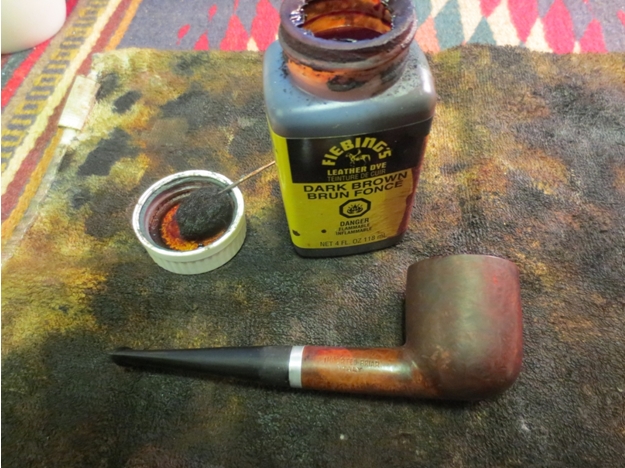
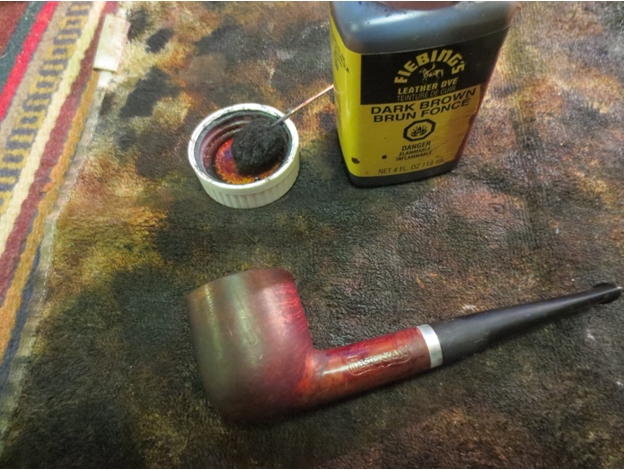
Next up were the only three halfway serious scars I found on the Duca Carlo, shown below before I gave the briar a bath with purified water.Duca11 The scuffs on the right and lower left sides came off fast with micromesh using 1500, 2400 and 3200. The higher and deeper scratch on the middle left side of the bowl needed more surgical, localized work with 220-grit paper followed by the same micromesh progression. I then needed to re-stain the small higher spot on the left side using my Feibings dark brown leather dye.

After flaming it with my Bic and letting it cool for a few minutes while I re-stained the rim (for which, again on impulse, I decided to do with some Lincoln medium brown dye I had on hand, to show off the nice grain there), I used 3600 micromesh to buff the side where the blemish had been until it appeared never to have existed. By then it was time to do the same to the rim, which, as I intended, was the wood’s natural lighter color but, to me at least, gave the pipe a cool two-tone effect.

While I used 3200 micromesh over the whole of the remaining bowl and shank to be sure it was all smooth and ready to put to the wheels, I was seriously eyeballing the new two-tone, almost sick with dread at the thought that Al would be disappointed by my summary decision to alter his pipe without even a consultation. But I let my gut ruling stand, if only with the knowledge that I could reverse it in a jiffy should Al indeed show even a hint of unhappiness.

No kidding, I heard a faint drum roll when the moment came to address Al’s primary concern: the stem. As I noted several times already, this Duca Carlo was in great shape when it was entrusted to my care, and the stem, with the slightest of scratches just below the bit on both sides, was the least of the exceptions despite its almost complete lack of luster. Once more I remembered the advice of others wiser than I to use the least necessary force to correct a problem – advice I took to heart – and began with 1500 micromesh.

Tackling the miniscule scratches first, of course, I saw them vanish with the slightest of pressure before I continued over the rest of the stem to make it even and gave it a thorough rubbing with a soft cotton rag. Then I did the same with 2400, wiped it again, and finished at last with 3600. The prepped stem was looking good, and my heart began to beat harder, knowing I had to take the two precious parts to my single-speed wheels, where only God knew what might happen.

This project had become a labor of love to me, even greater than most of the much more difficult jobs I had performed without disaster before. And so I took a moment to collect my wits and think good thoughts.The phone rang. Dang! There went my happy thoughts.

I didn’t recognize the 575 Area Code and almost did not answer, as is my habit with unknown or Toll Free numbers because of the near certainty that they are spam or scam or other callers I wish would stop phoning me. But something convinced me to go for it. At first the voice on the other end failed to register, but then I realized it was – that’s right – Al. I gave him my card the night before but had no way to call him. There was a slight tone of anxiety in his voice when he asked how his pipe was doing. Relieved to hear his voice and understanding his concern more than he could have known, I almost laughed but choked it down. Feeling my own nerves settling, I told him I was just putting the final touches on the Duca Carlo and could meet him at the tobacconist between 3 and 3:30. At the end of our conversation, I realized I was calm again and good to go.

Proceeding from the living room, where I like to do most of my work in more comfort, to my workroom, with the pipe, stem, cotton rag and camera in my hands, I set everything down on my desk and turned to the small bench with my two buffing wheels. I threw the switch on the one with red Tripoli and without another thought to distract me picked up the smooth gray stem and held it in both hands with confident firmness (but not like a mother choking her child as she’s about to watch the poor kid go off to summer camp or college or wherever) and did what I knew how to do. The first step done, I wiped the stem down, removing the streaks, and flicked on the second wheel that had the white Tripoli. Ditto. Two-thirds of the way home with the stem, and seeing each buff give it a higher shine, I returned to the first wheel where I…yes, I finished it on the White Diamond pad, without a single incident or even slip through the whole process!

Stoked for the next part, I set aside the stem and went straight through the steps again with the bowl and shank, except that I used white Tripoli followed by White Diamond and ended with carnauba.

This Savinelli required one very last task, which is always a pleasure when I have the opportunity to do it. I always seem to forget one thing when I walk to my workroom ready to polish a pipe, and this time it was the white wax marker to fill in the outline of the crown on the stem. I retrieved it from my run case.Taking what I considered a well-needed rest in the office chair before my desk, I took the stem firmly in hand and, with my magnifying glasses on, scraped the little exposed end of wax first left to right across the crown, then turned the stem vertically and applied another layer top to bottom and finally added a third layer diagonally. Brushing aside a little of the considerable resulting excess wax, I pressed my thumb down across the whole blotch and waited for the heat of my skin to make the wax settle into the tiny grooves. After about a minute I lifted my thumb and used the cotton cloth gently around the edges and still more lightly over the area of the crown, which emerged visible with all of its points.

I attached the completed stem and briar and gave the fine pipe that was whole again a final wipe with the rag and millimeter by millimeter scrutiny with my glasses. It passed muster, despite my ever-growing attention to detail.Duca12

Duca13

Duca14

Duca15

Duca16

Duca17 CONCLUSION
The best laid plans of mice and men often go astray, and due to unforeseen circumstances I was a half-hour late to the tobacconist. Spotting Al sitting in the back of the shop almost as soon as I was through the door, I know he saw me, also, but pretended not to, playing it cool. I even had to say hello first as he stared at something, and when he looked up at me the forced smile told me he was sure I had broken his pipe. All of the good seats were taken by those dratted cigar smokers, except for Al sitting in his in misery that was clear to my keenly empathetic eyes.

And thus it became my extreme pleasure to walk to his side and set down my run case and laptop. Before I stood straight again, I retrieved a dark blue Savinelli box inside of which was a light brown Savinelli cloth bag containing the refurbished Duca Carlo. Al’s eyes lit on the box in my hand. Yes, indeed, that had his attention. I could not, even to save my life, lose the grin on my face as I handed it to him and watched his real smile appear in what must have been extraordinary relief.

Then to watch Al open the box slowly, like a Christmas present, only to find the bag inside that he took out with care and reached inside the open end to pull his pipe out by the stem – well, the obvious shocked surprise as he saw the glistening, dark black stem emerge first, followed by the lustrous refurbished pipe, and the initial reaction of total speechless wonder, told me everything.

“Wow,” was his first word. He went on to expand on that dazed thought, but this seems like a good place to wrap it up.