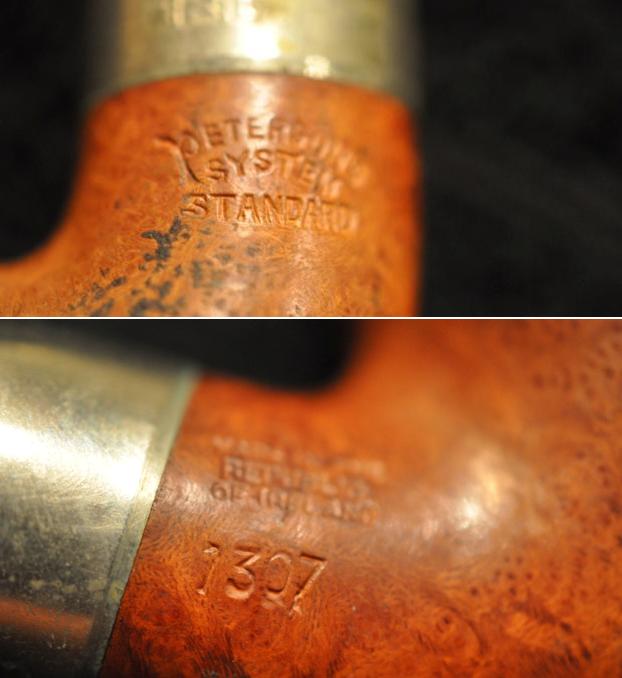
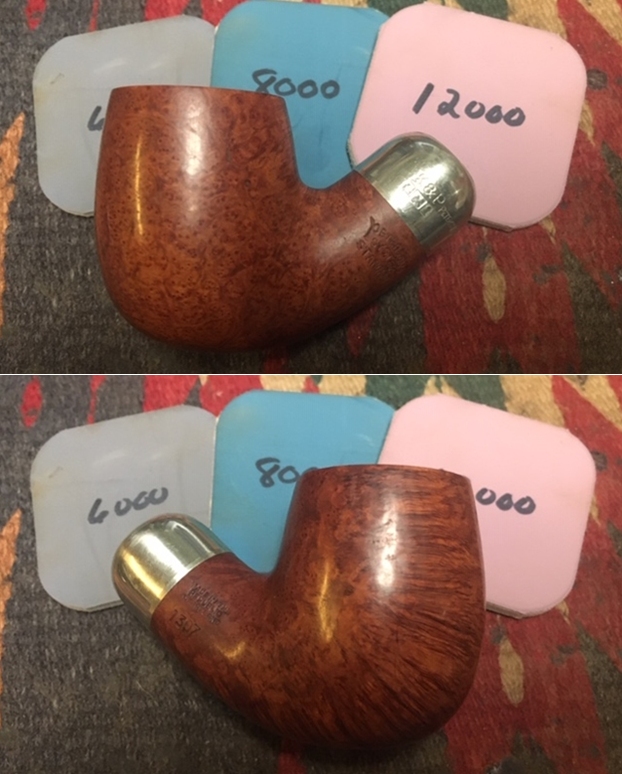
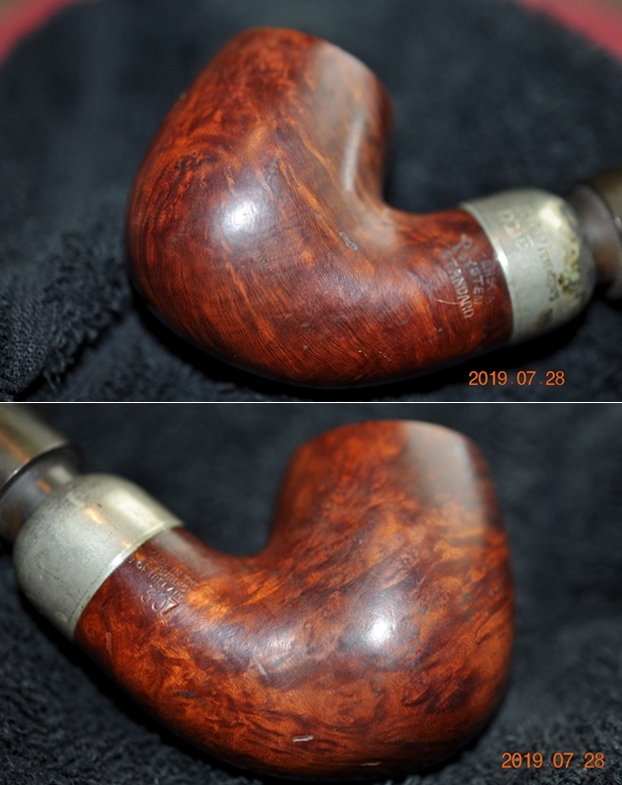
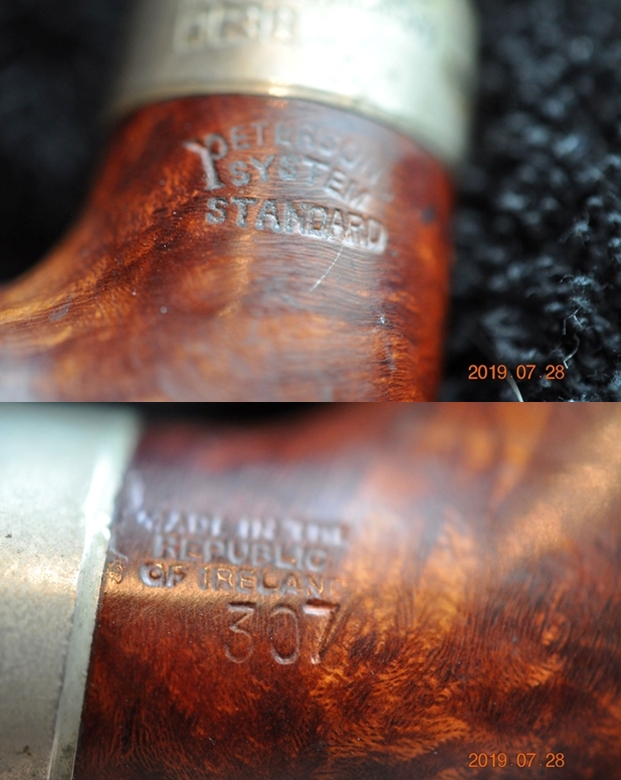
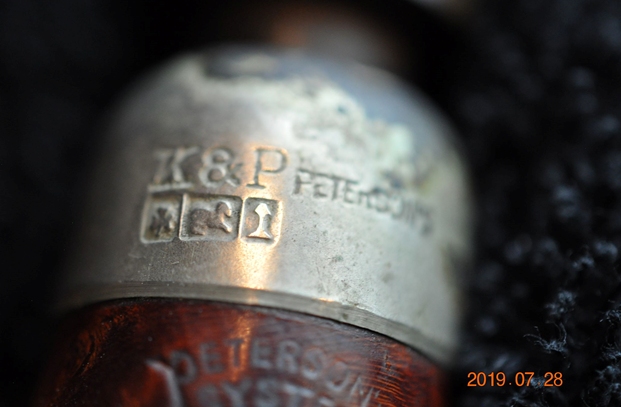
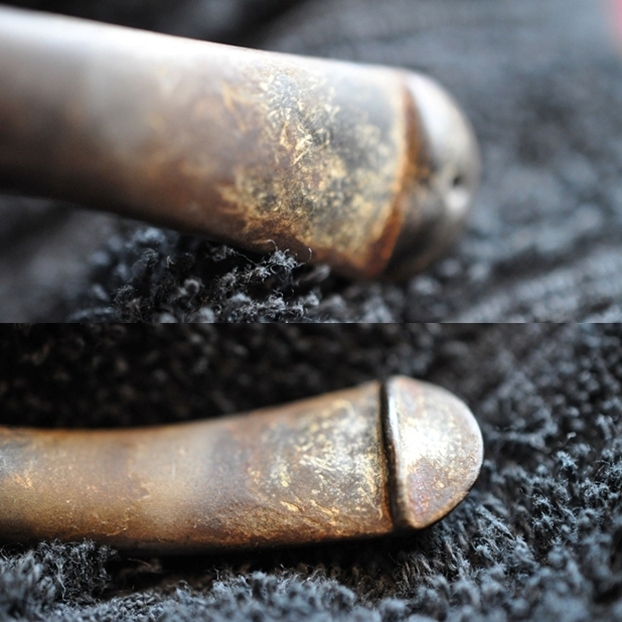
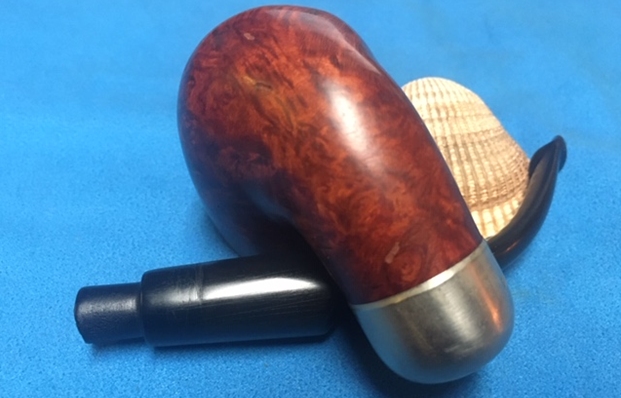
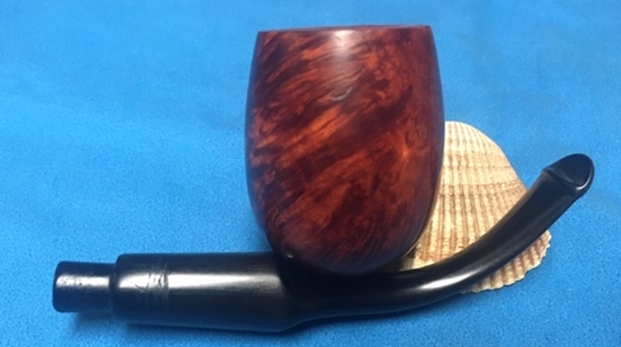
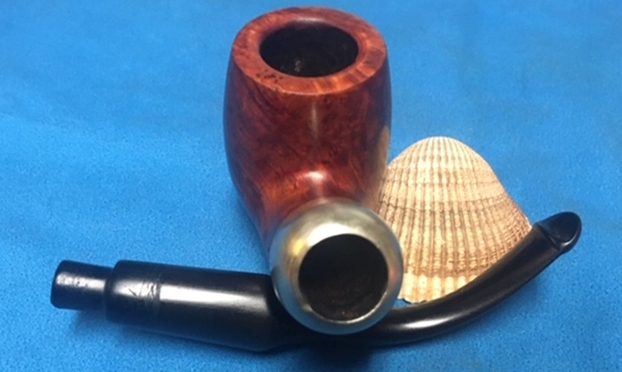
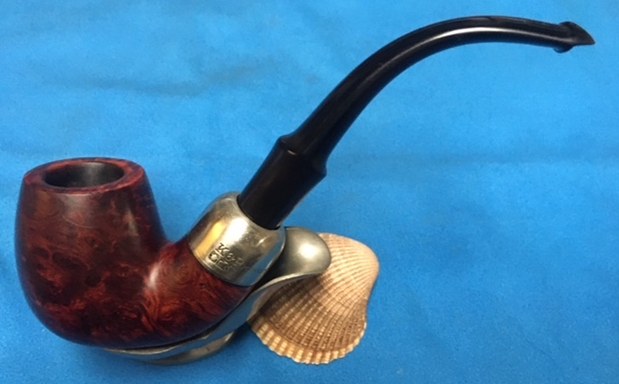
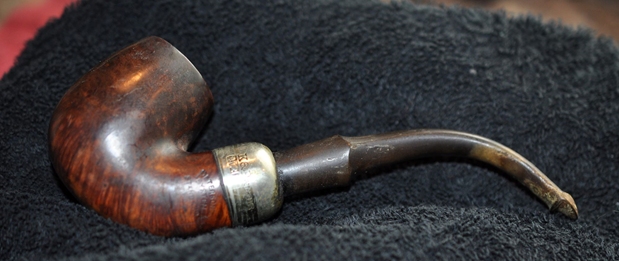
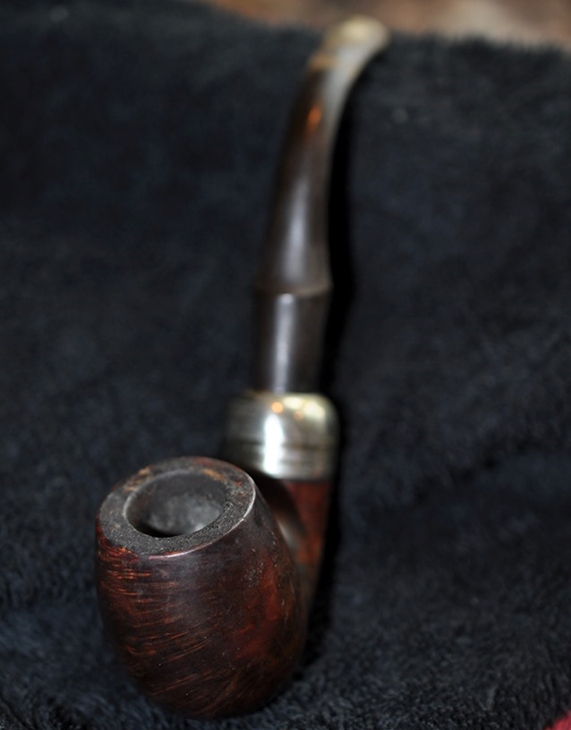
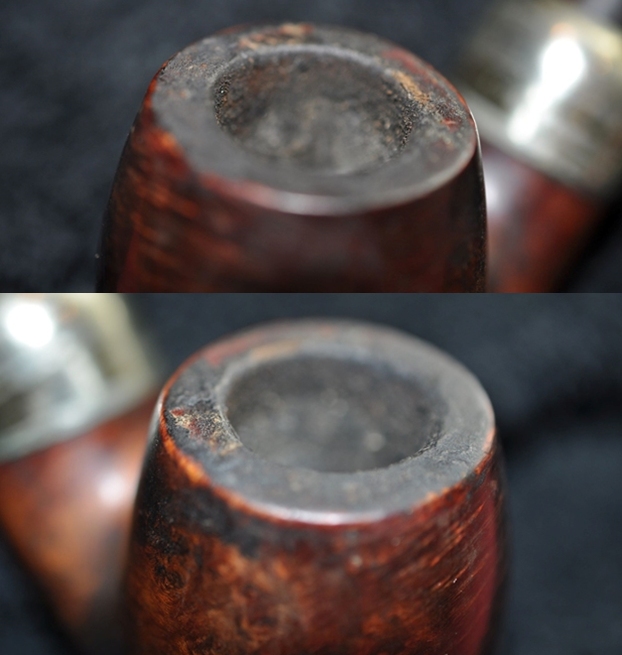
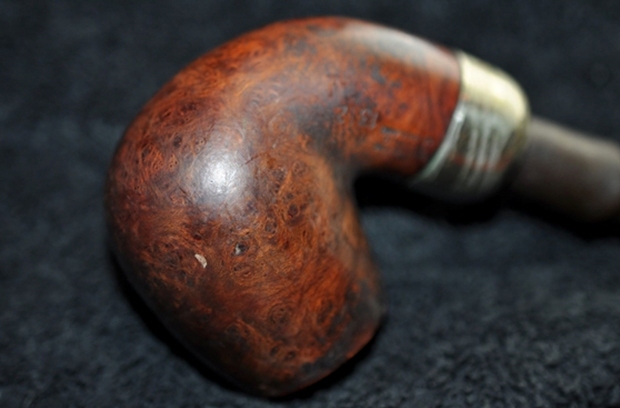
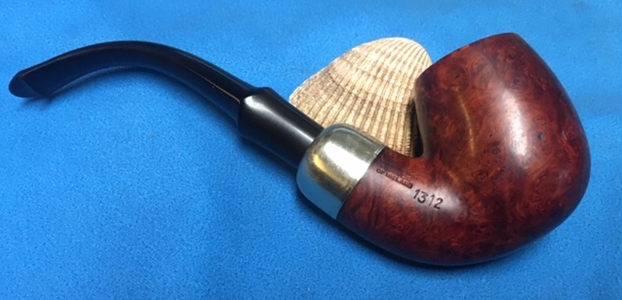
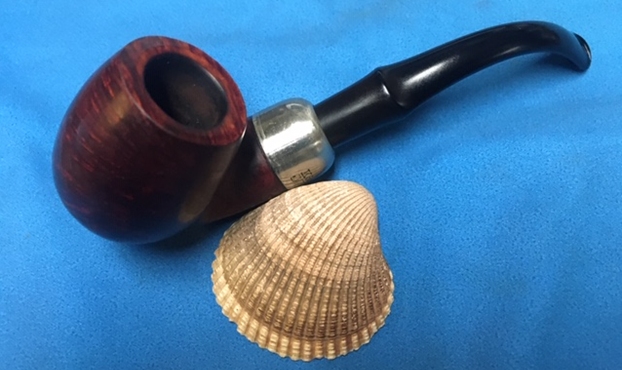
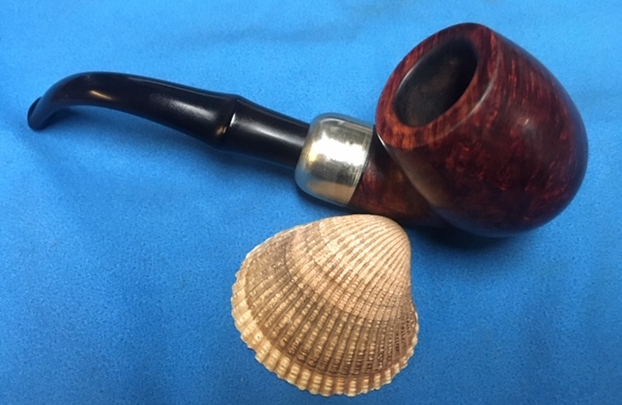
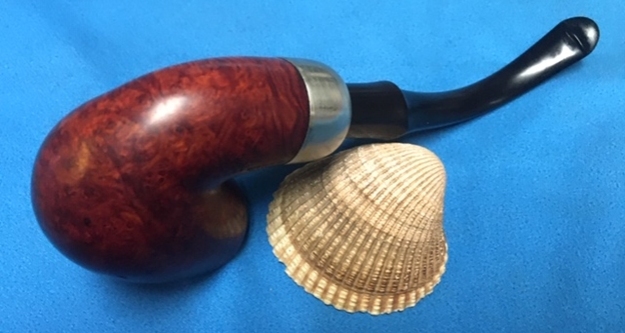
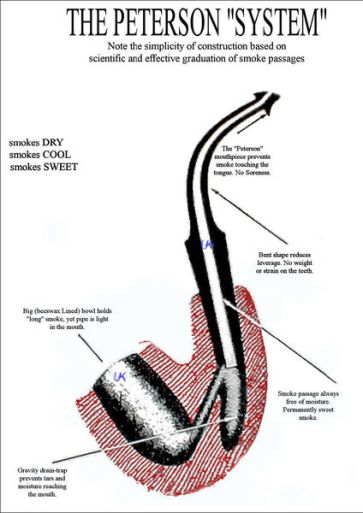
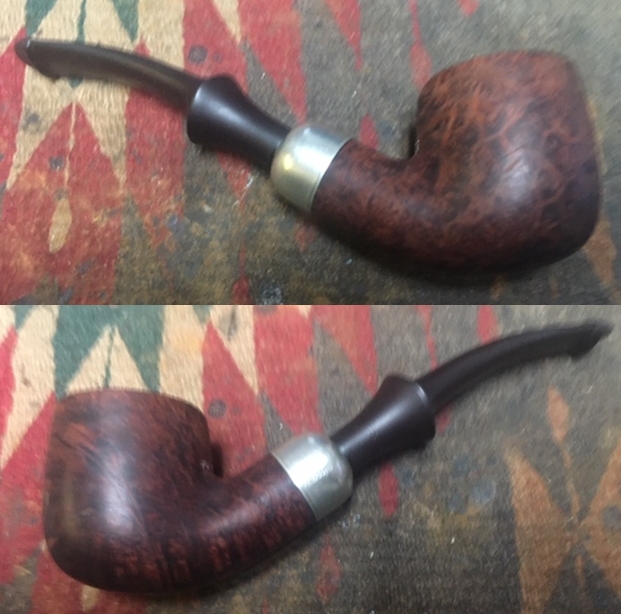
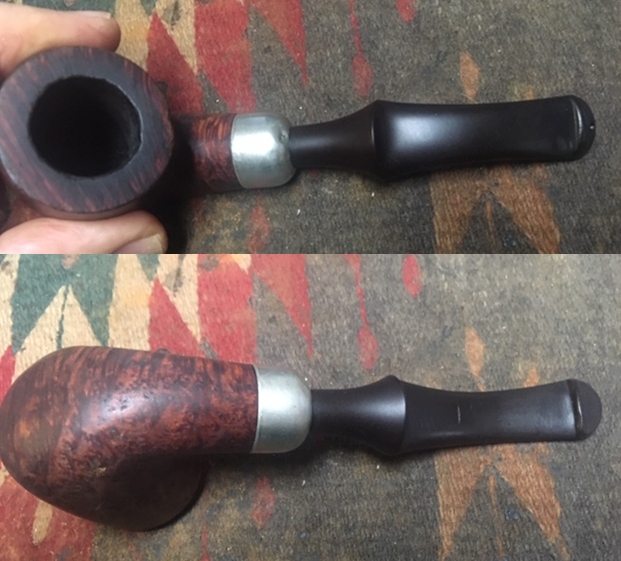
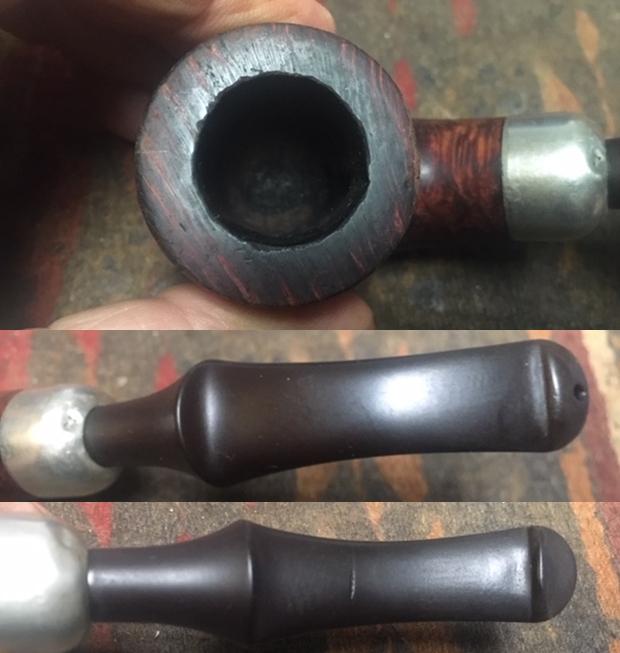
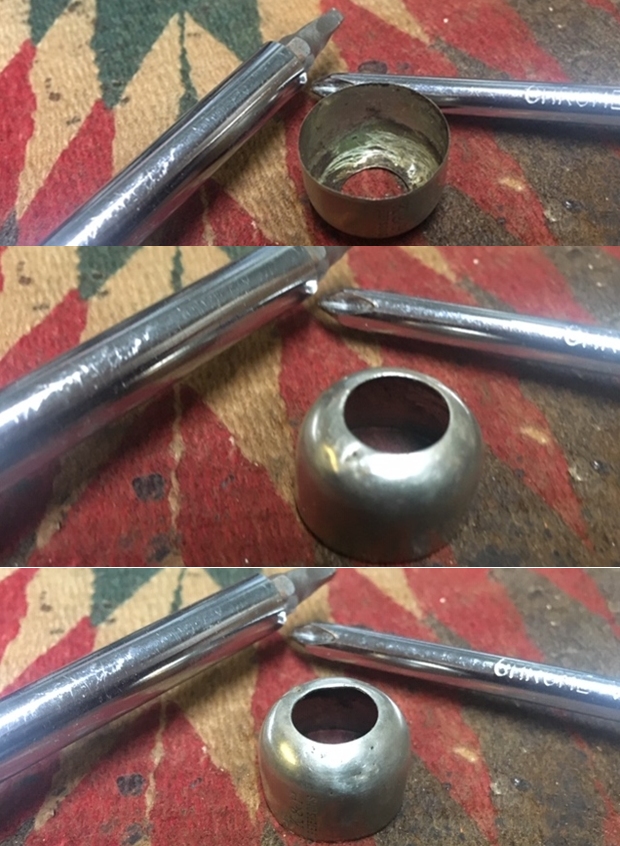
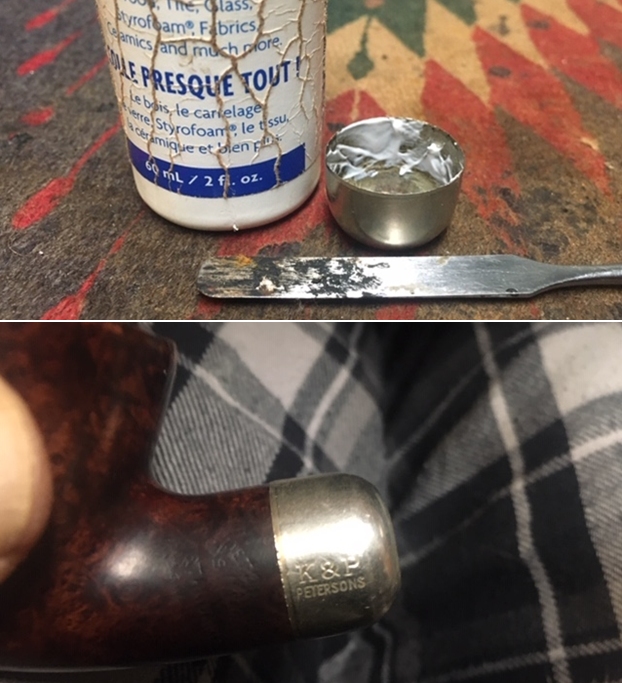
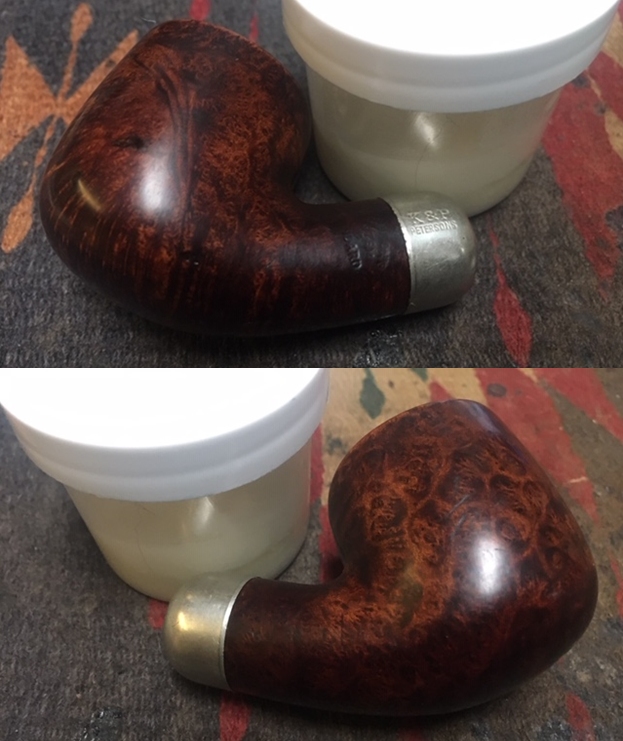
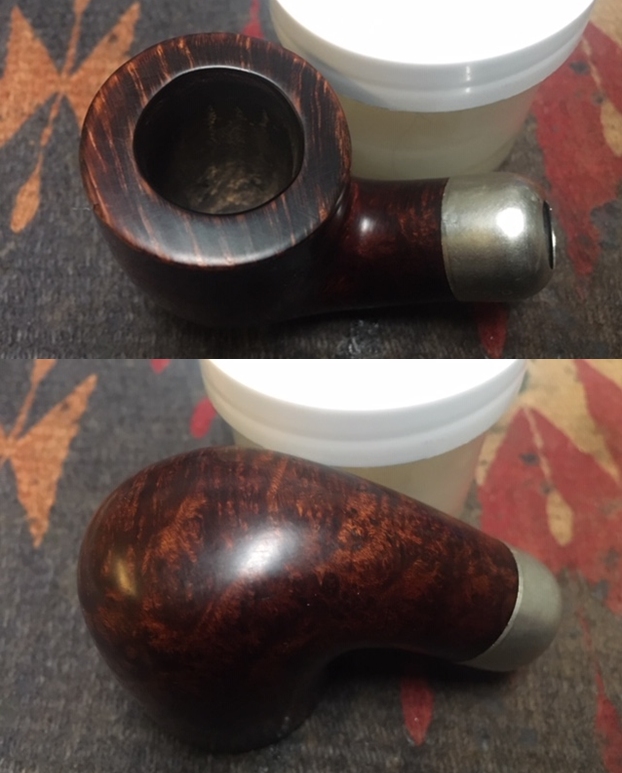
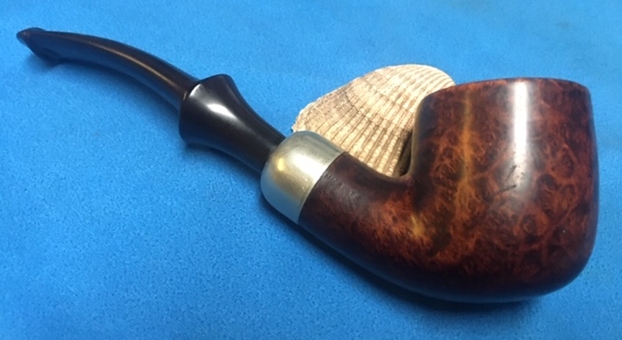
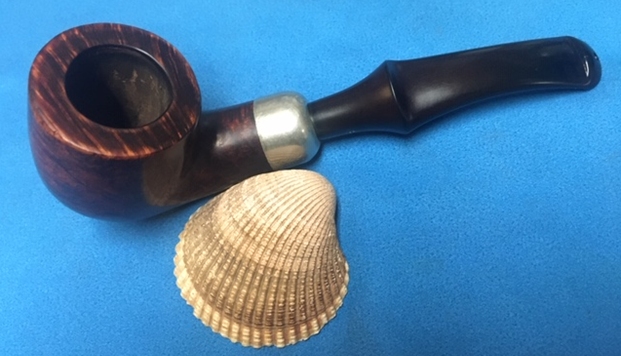
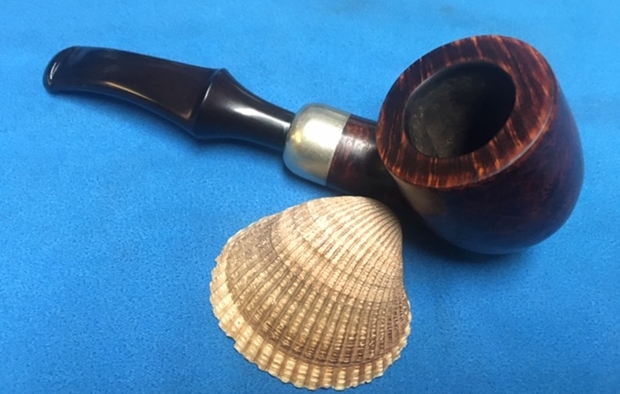
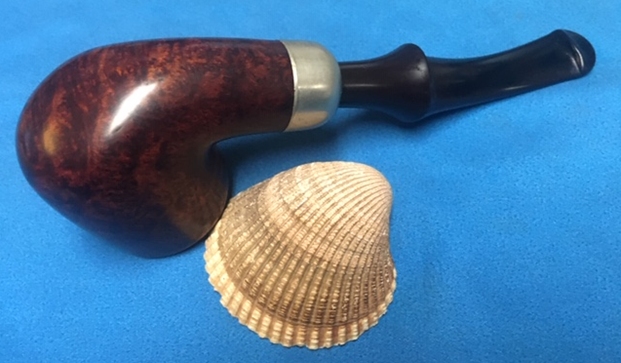
Tag Archives: Petersons Pipes

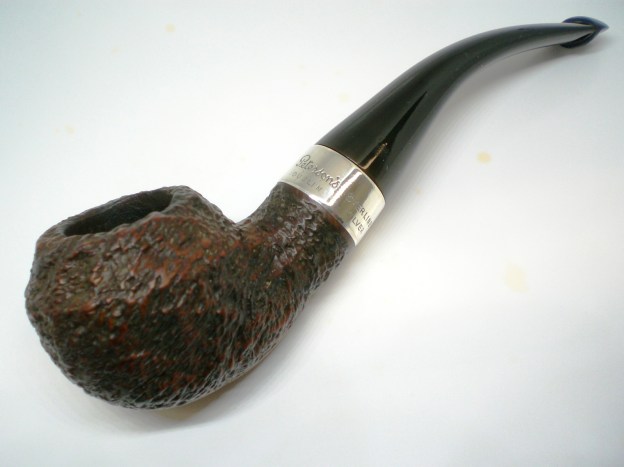
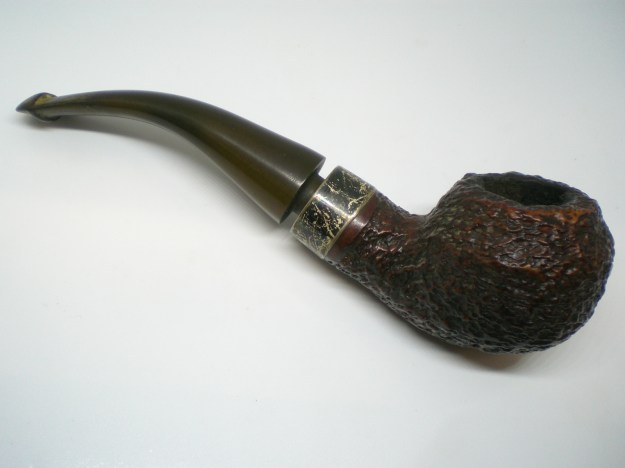
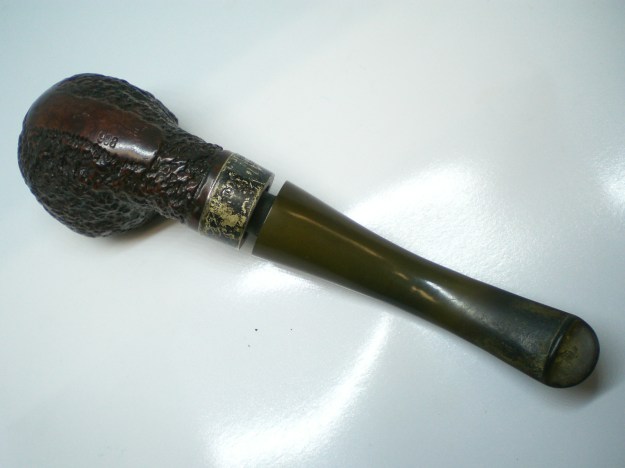
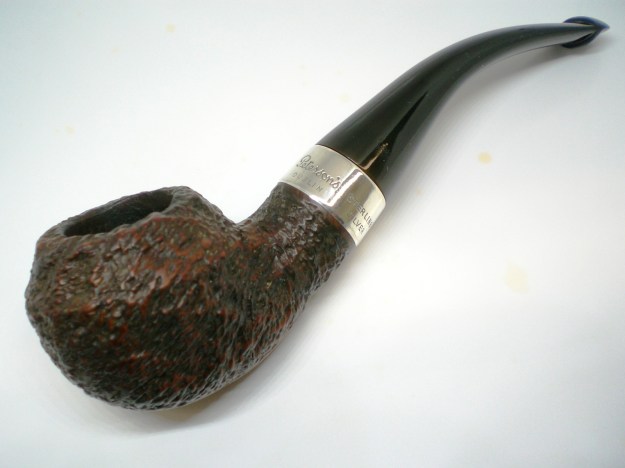
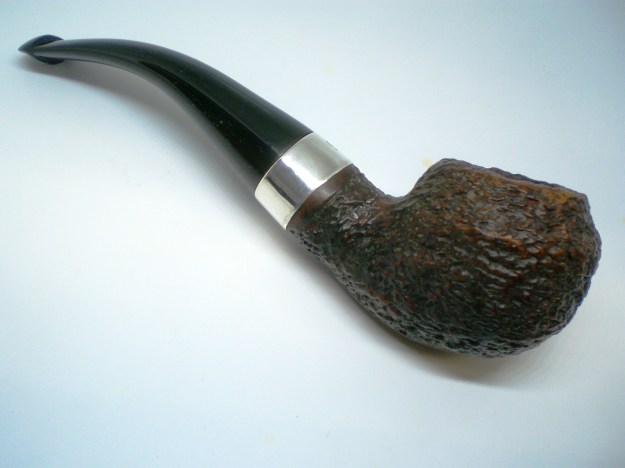
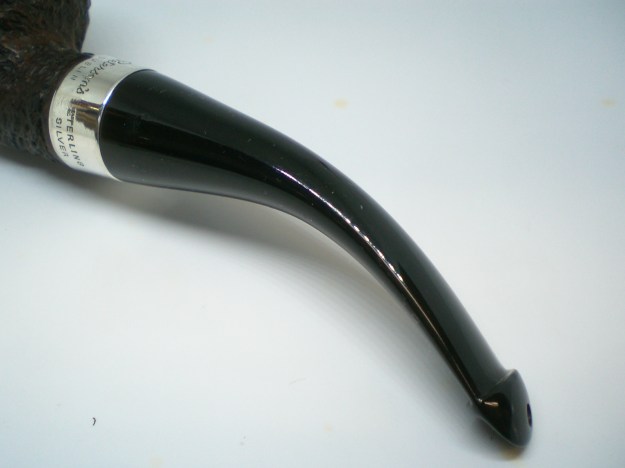
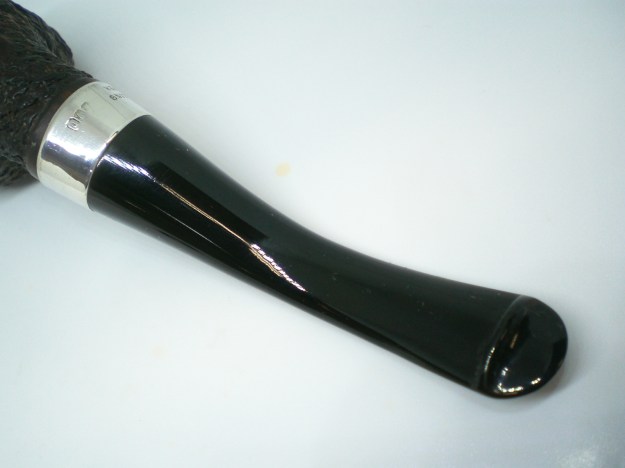
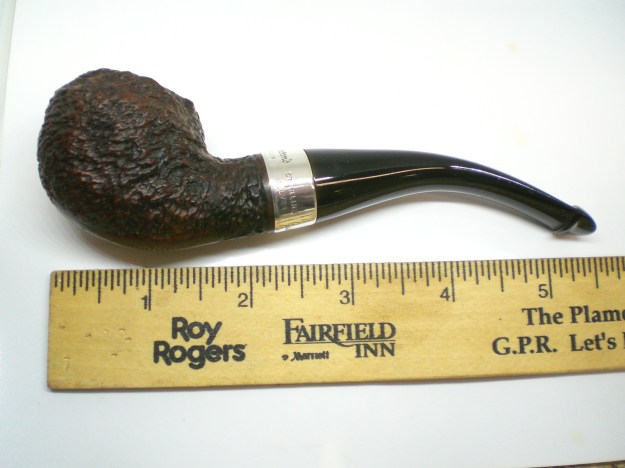
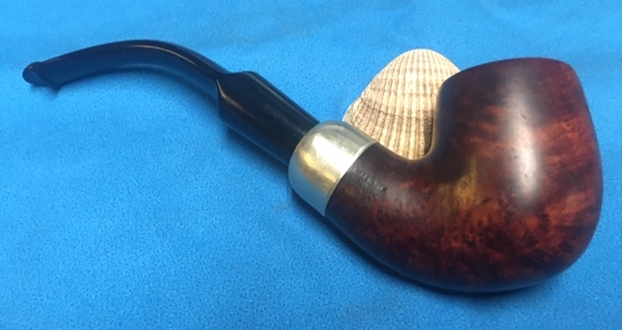
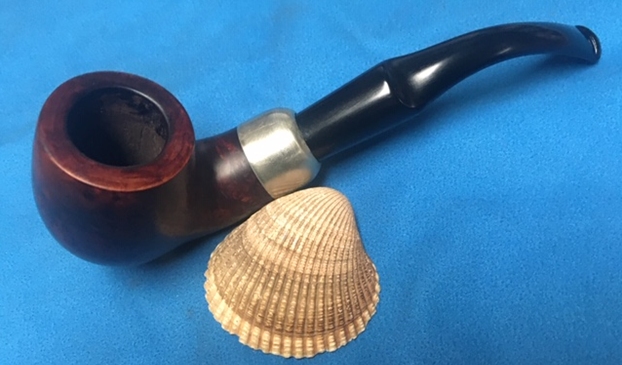
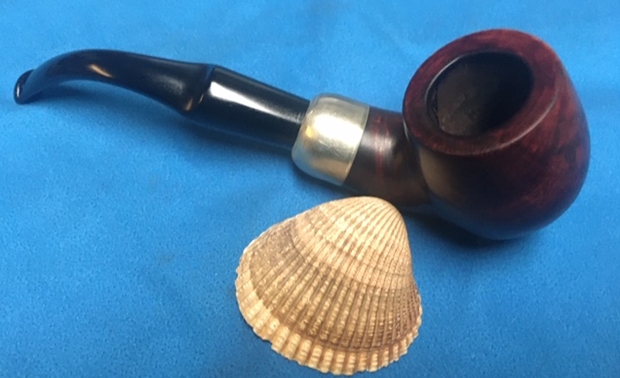
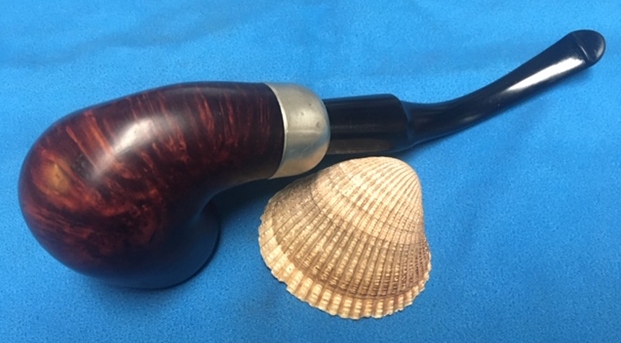
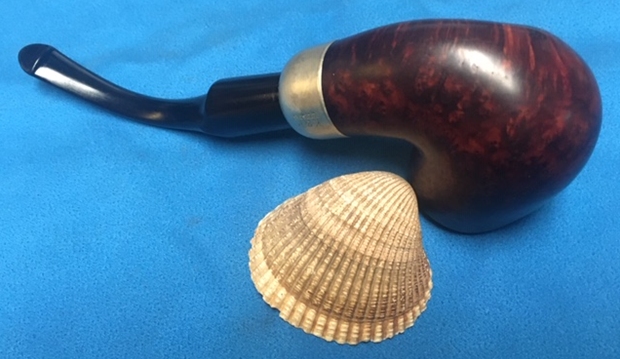
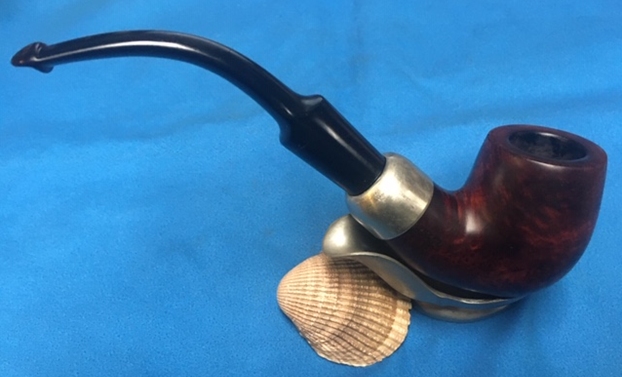
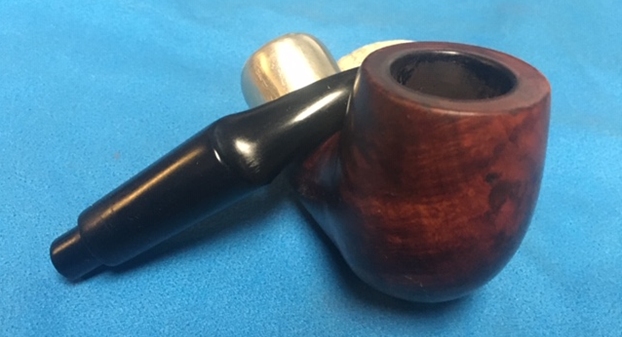
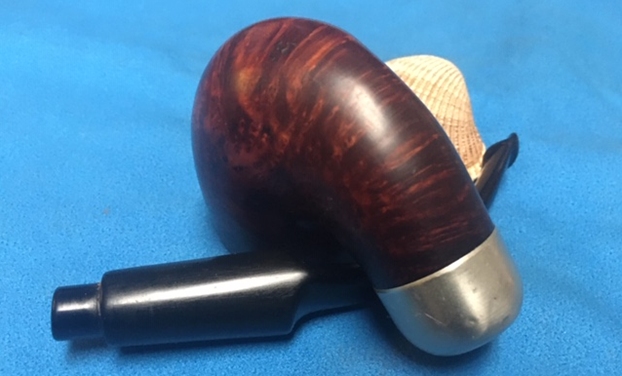
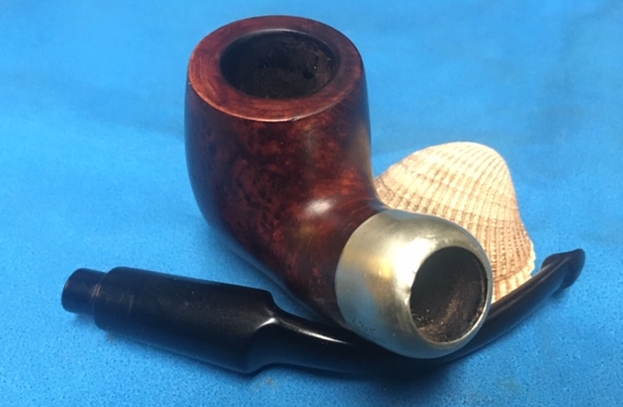
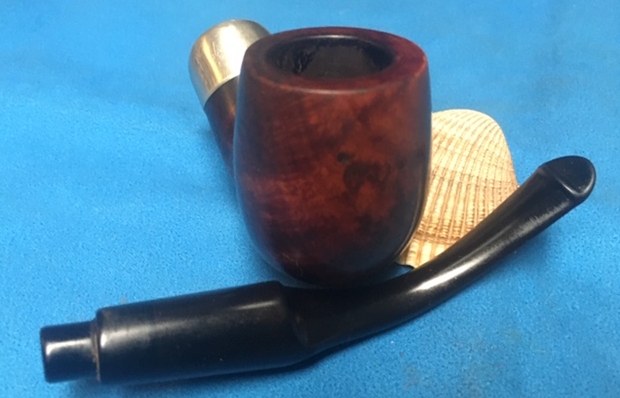
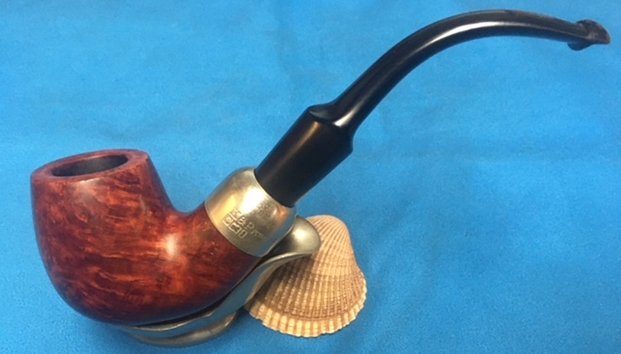
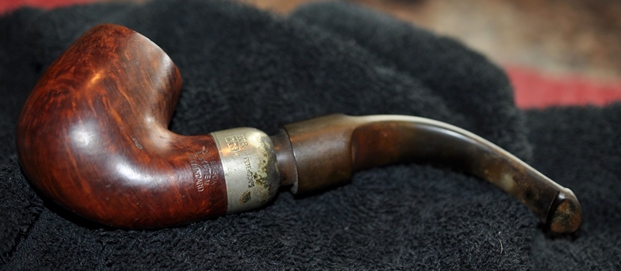
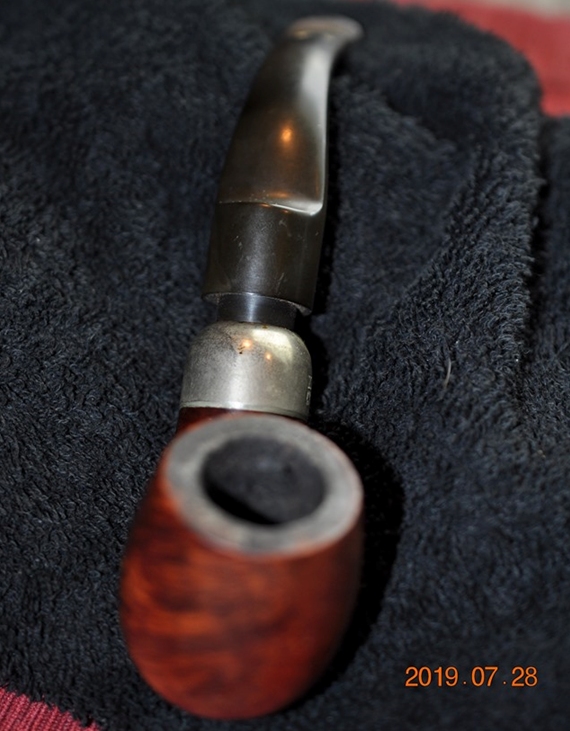
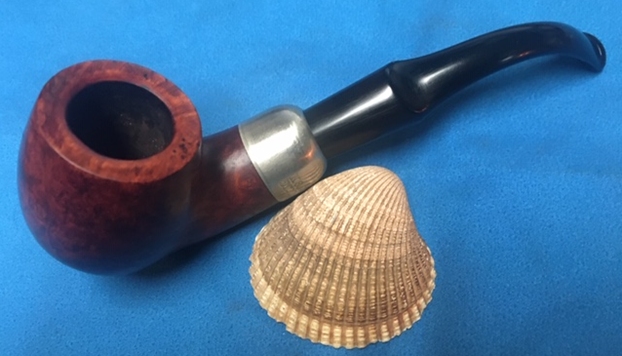
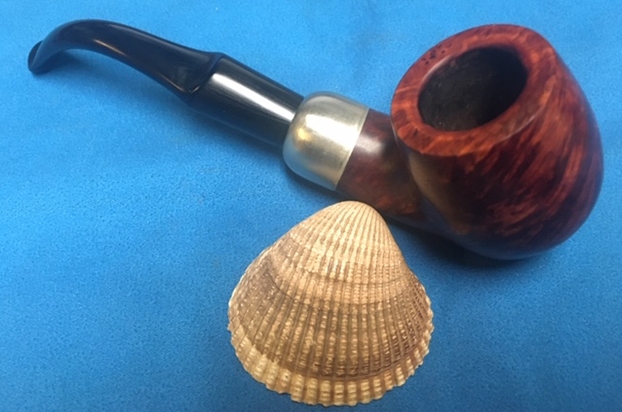
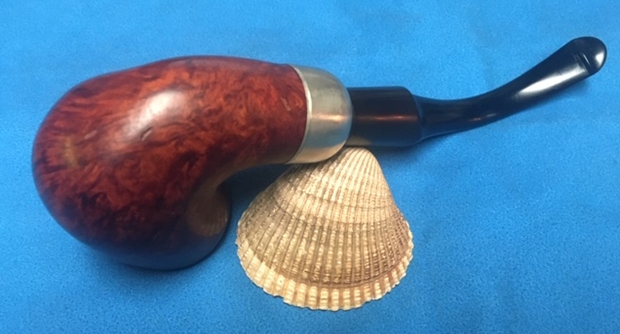
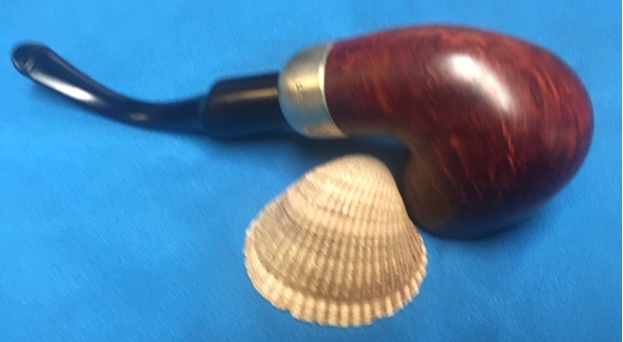
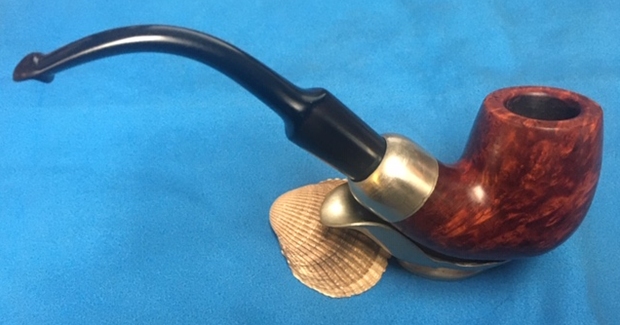
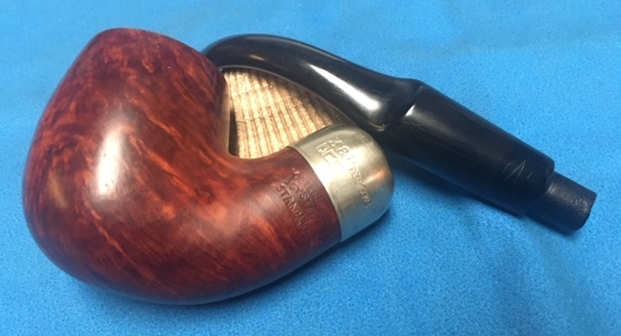
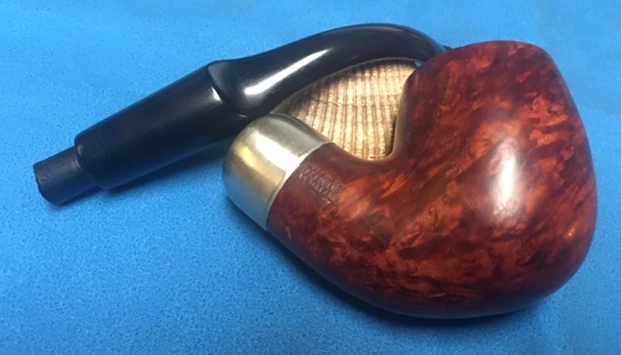
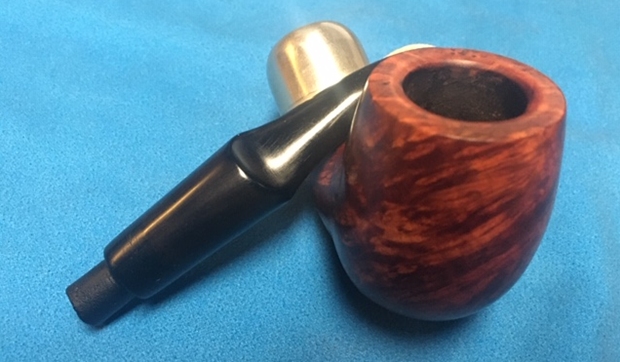
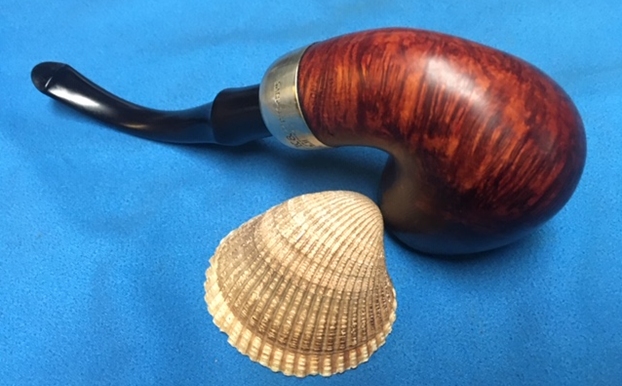
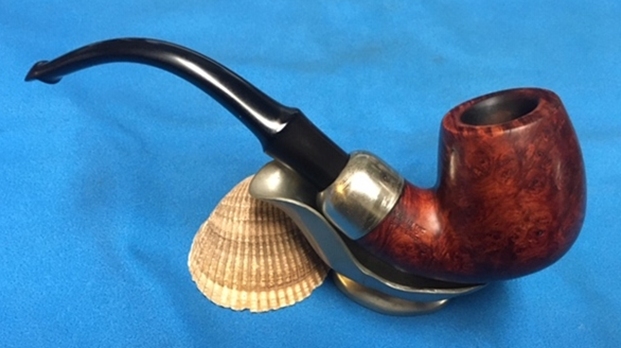
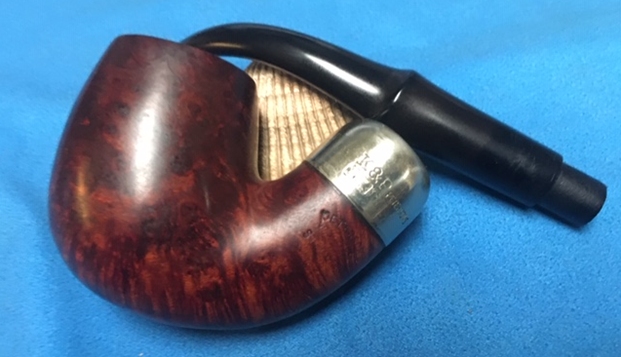
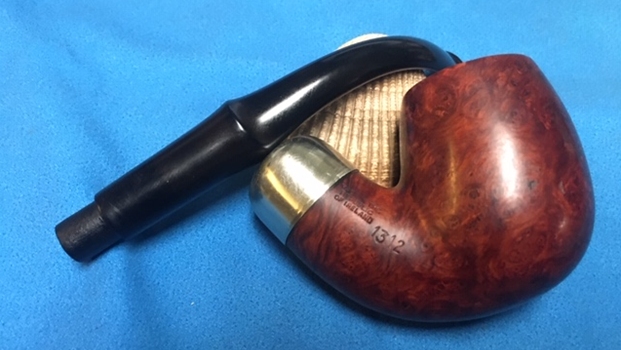
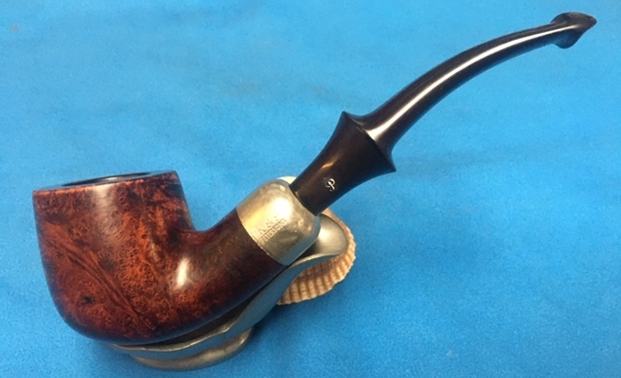
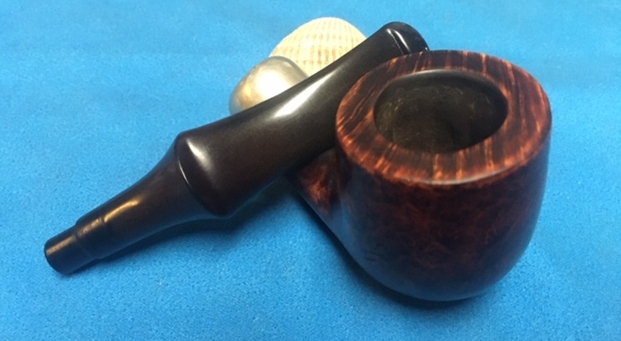
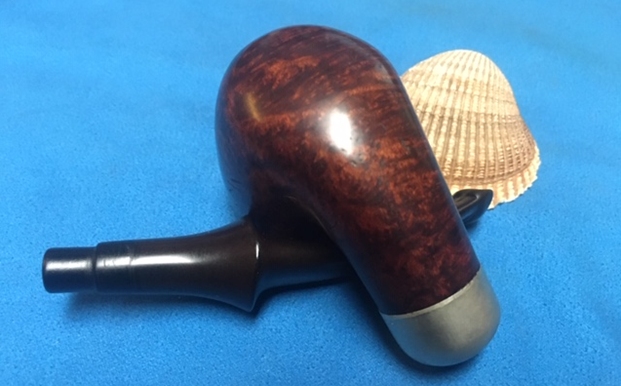
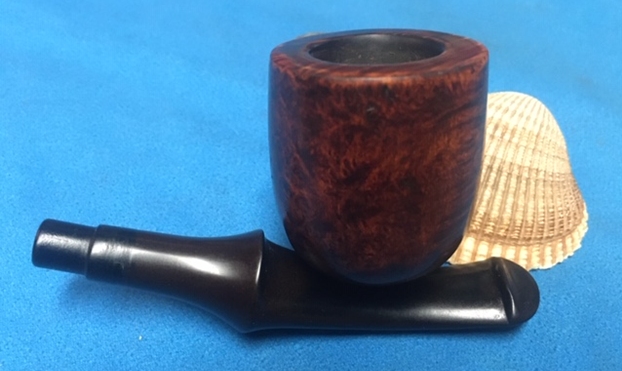
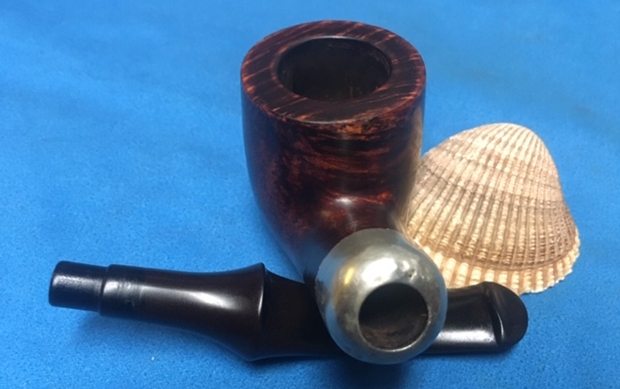
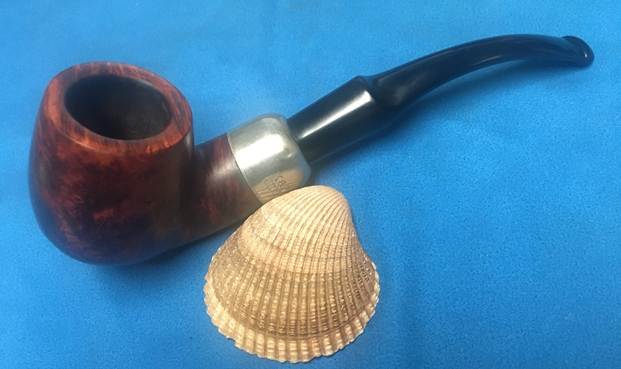
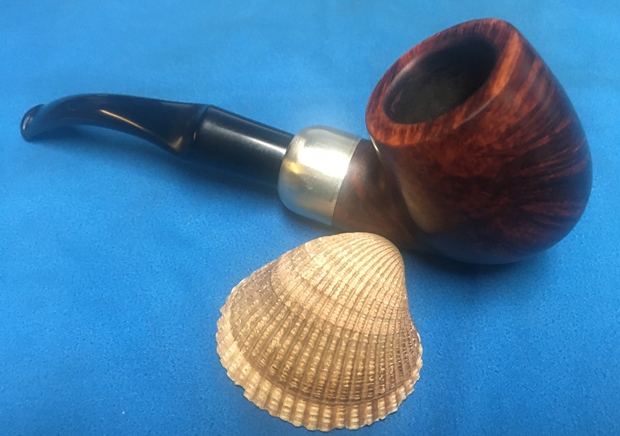
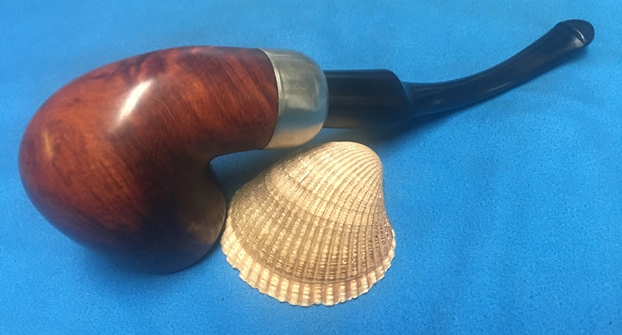
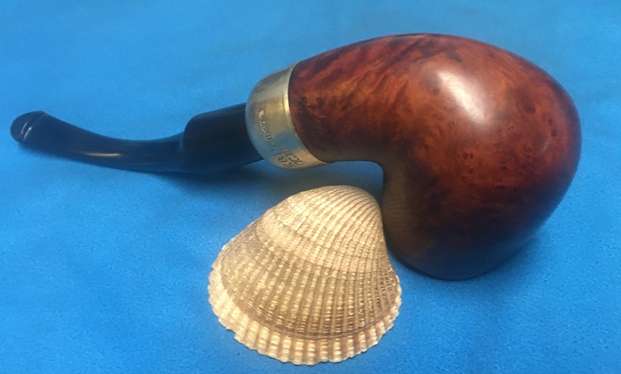
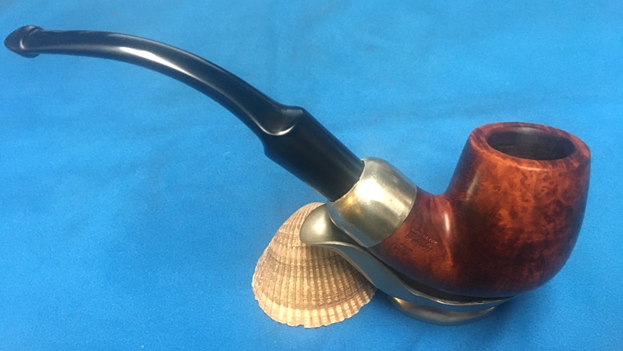
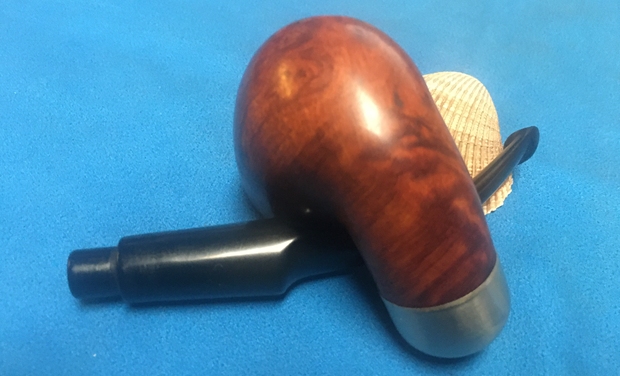
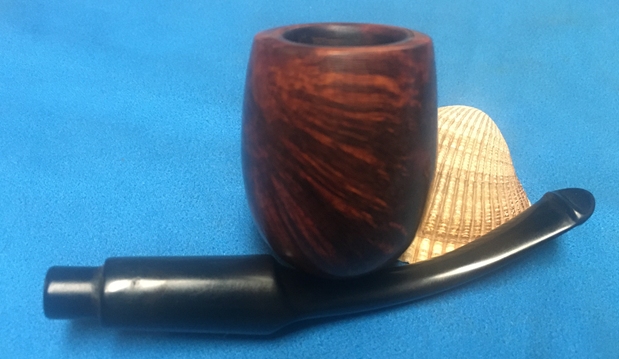
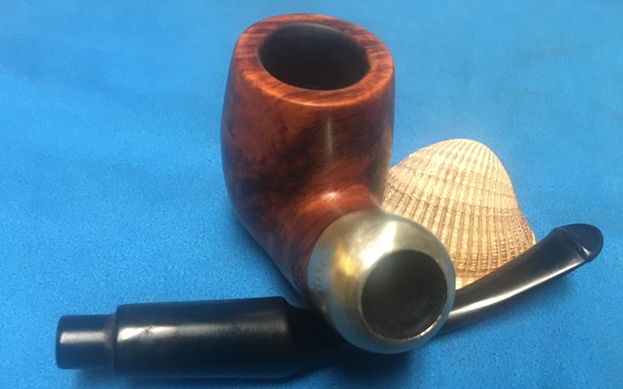
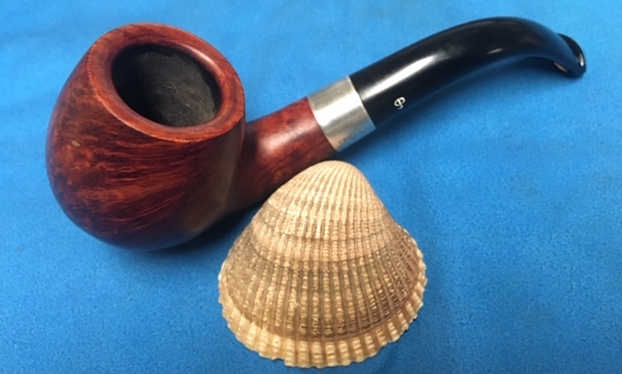
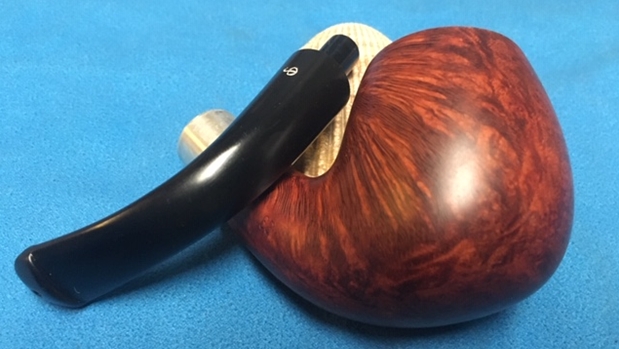
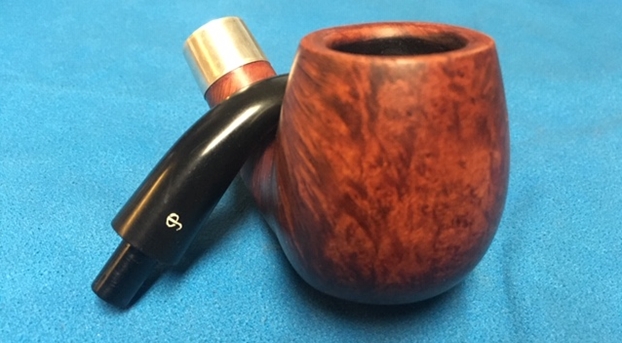
Life for a Republic Era Peterson’s “Sterling Silver” 68 from Bob Kerr’s Estate


Blog by Steve Laug

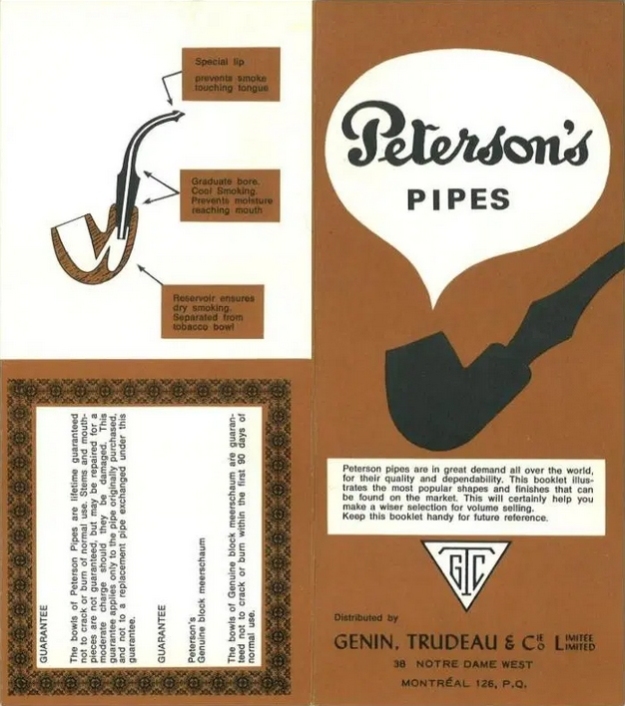
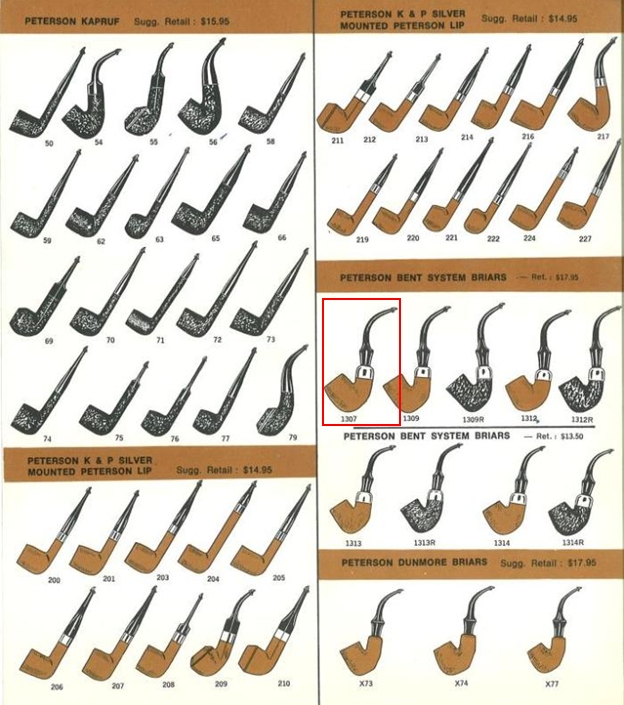
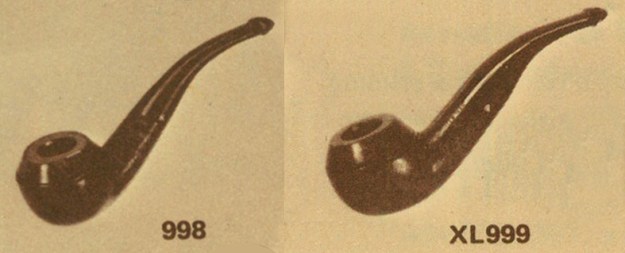
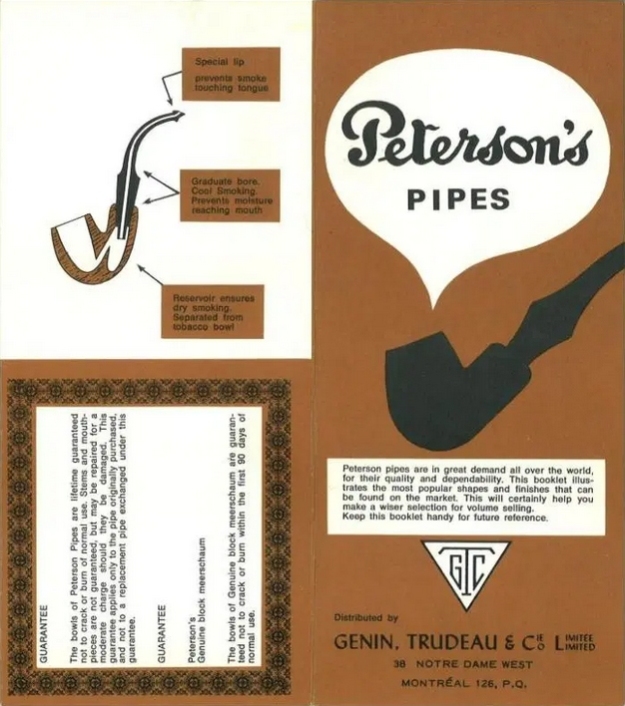
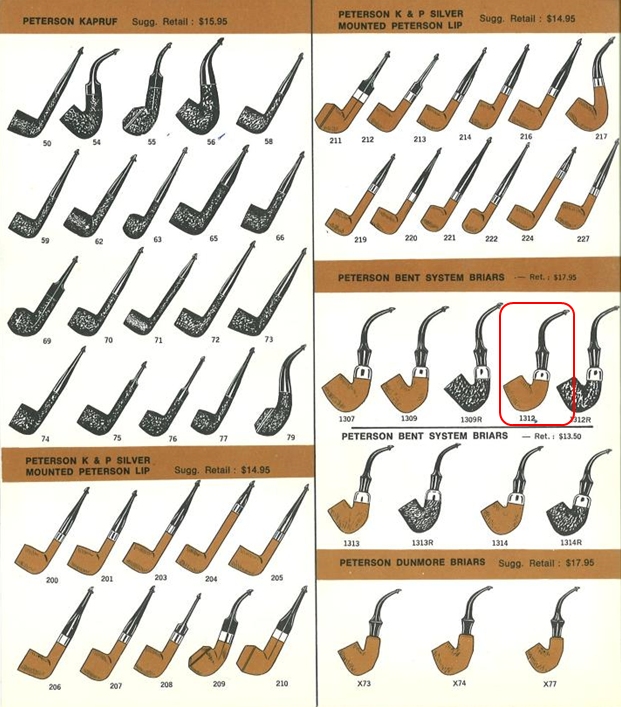
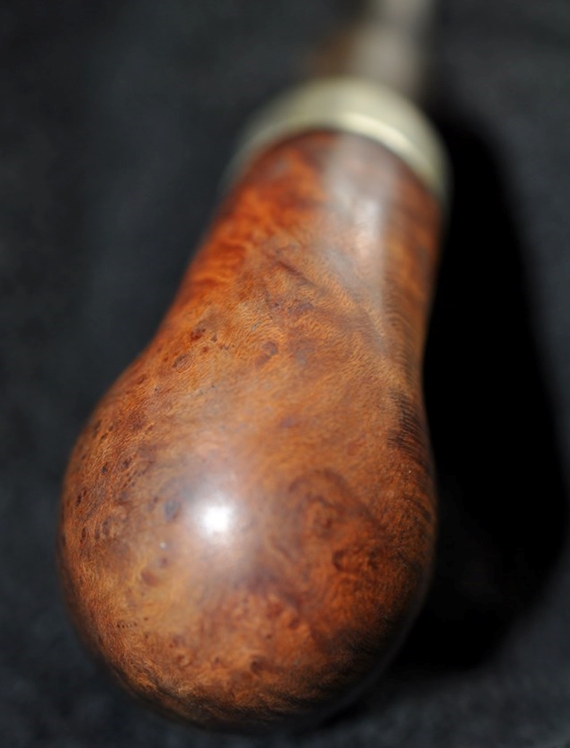
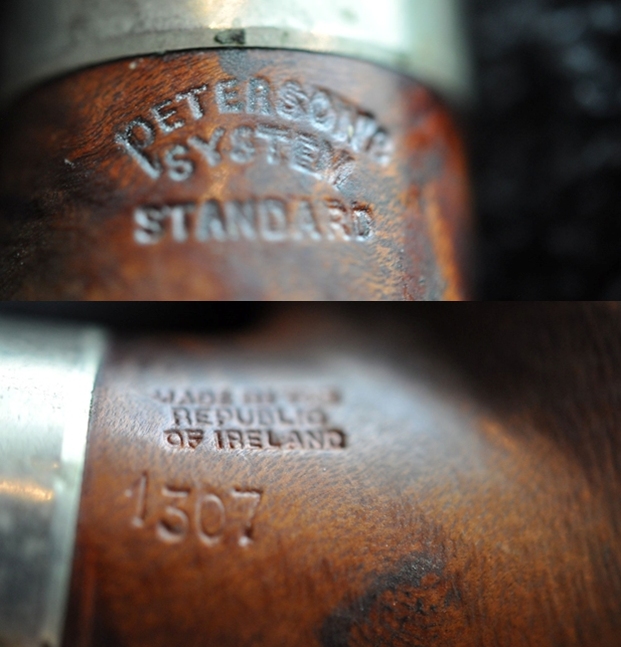
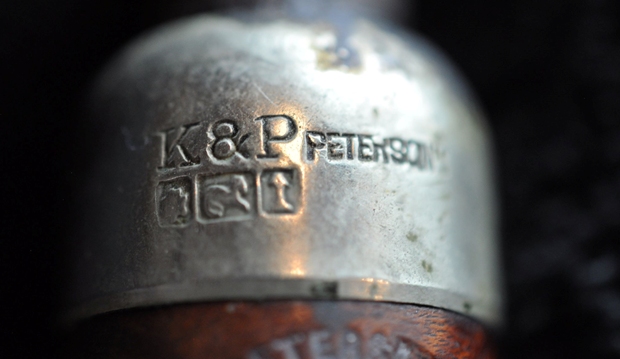
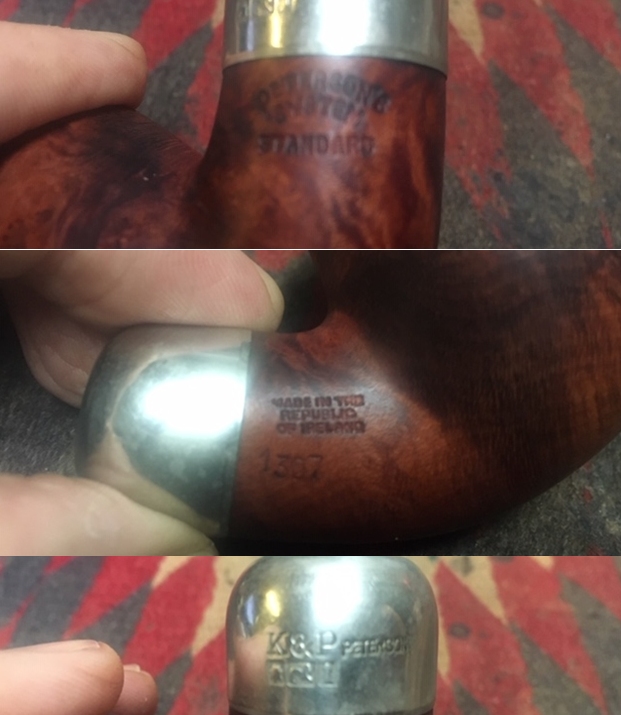
I am working on another pipe from Bob Kerr’s estate, another one of his Petersons. It is beautiful bent billiard with a taper stem. It is a large pipe that has some amazing grain on the briar. I have restored nine of his Peterson pipes and two of these were Peterson’s pipes made specifically for import into the Canadian market – one was a Kapruf 54 sandblast bent billiard (https://rebornpipes.com/2019/08/09/back-to-bob-kerrs-estate-another-canadian-import-petersons-kapruf-a-54/) and the other was a Kapruf 9BC 56 (https://rebornpipes.com/2019/08/09/back-to-bob-kerrs-estate-linking-petersons-kapruf-9bc-with-the-56-shape-number/). These were interesting that they had a unique numbering system designed for Petersons pipes that were specifically brought to Canada by the Canadian importer, Genin, Trudeau & Co. of Montreal, Quebec. I have included the links on that company below. (https://rebornpipes.com/2016/09/13/petersons-pipes-brochure-from-genin-trudeau-co-montreal-quebec/). I restored an English Made Peterson’s System ‘0’ 1307 bent billiard a  (https://rebornpipes.com/2019/08/17/an-english-made-petersons-system-0-1307-bent-billiard-from-bob-kerrs-estate/) and a Republic Era Peterson’s Flame Grain Bent billiard with a fishtail stem (https://rebornpipes.com/2019/08/16/a-petersons-flame-grain-x220s-bent-billiard-from-bob-kerrs-estate/).

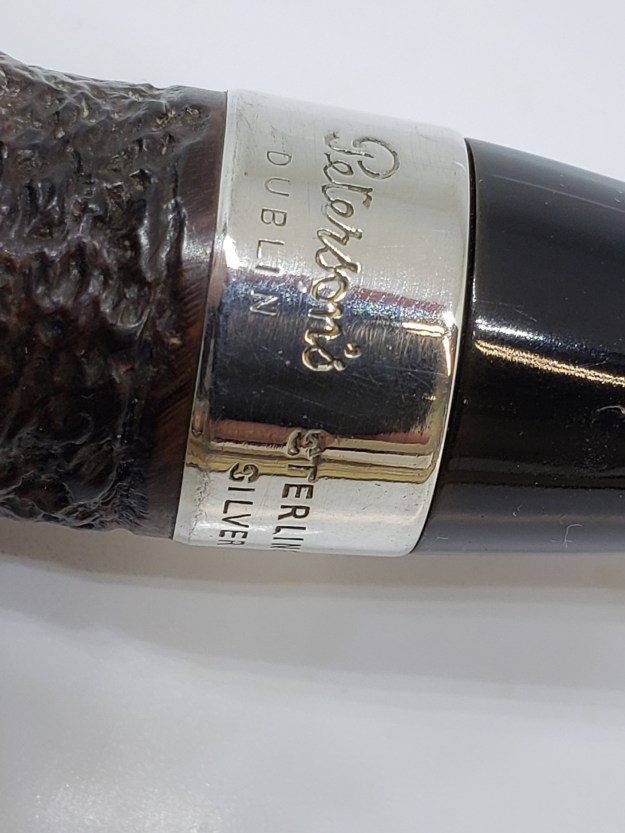
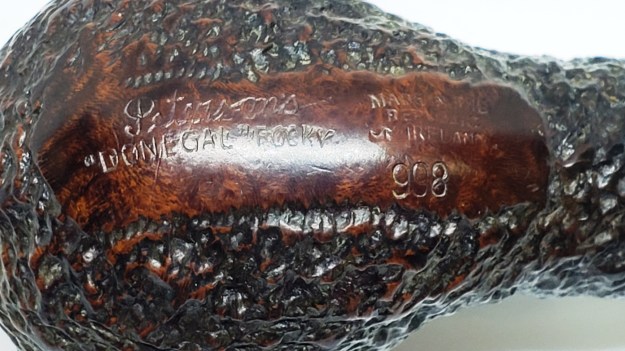
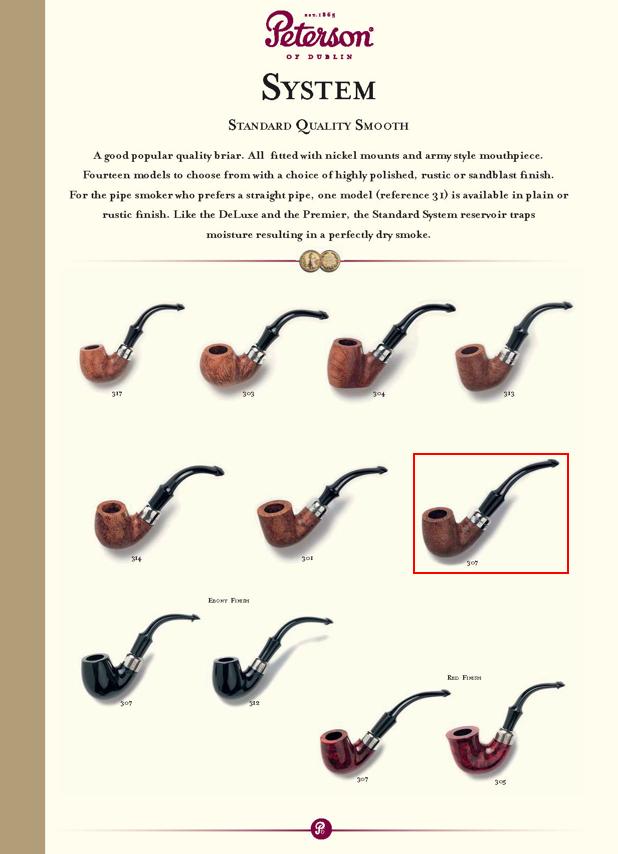
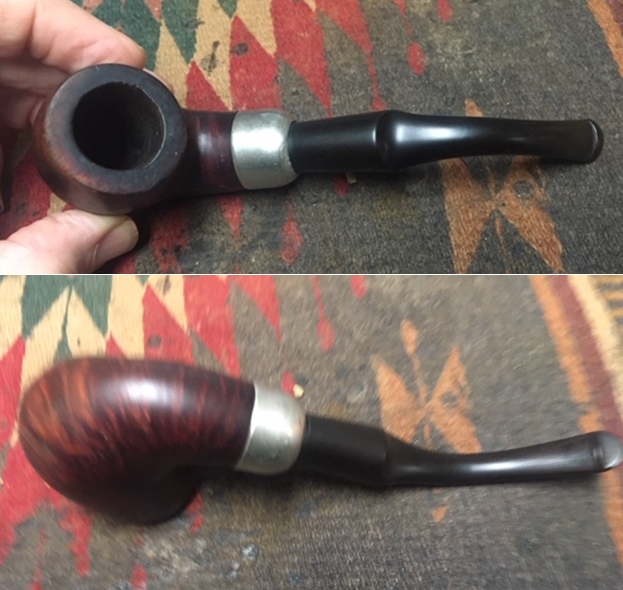
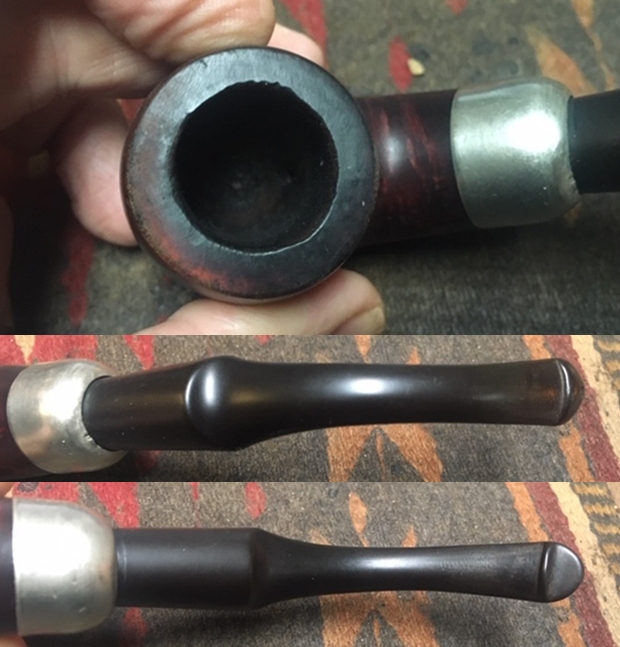
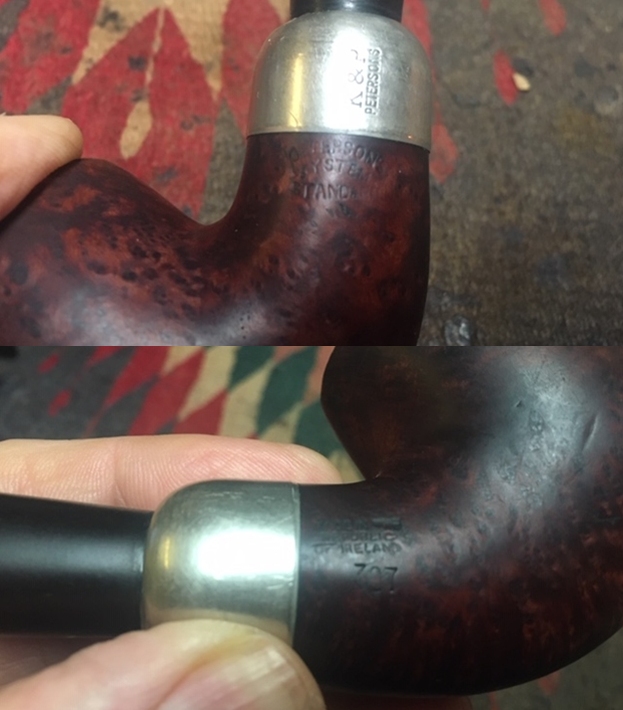
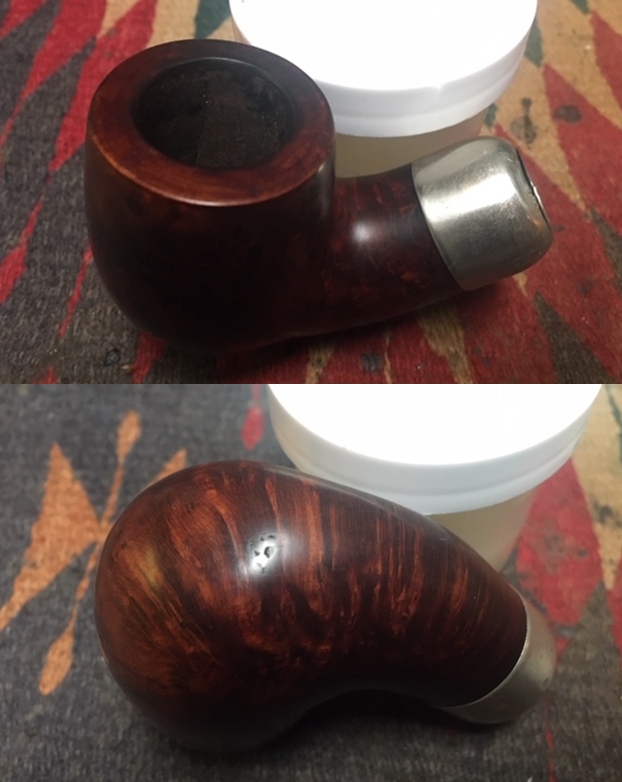
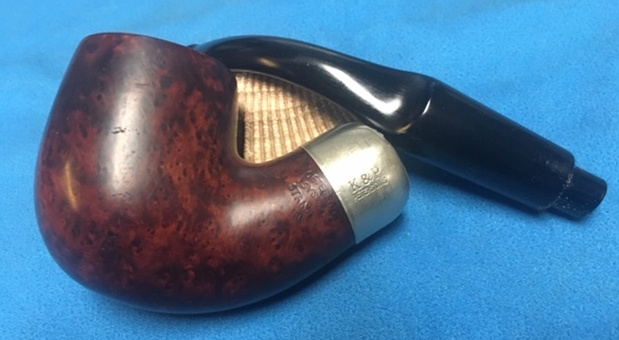
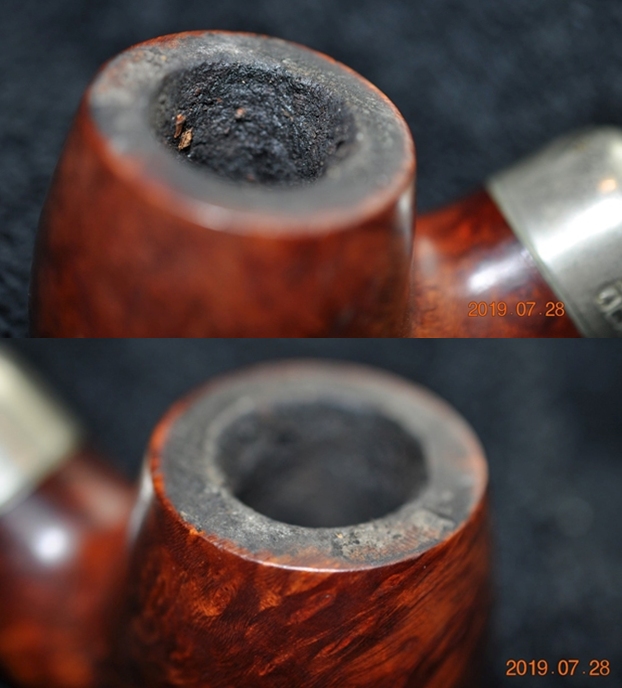
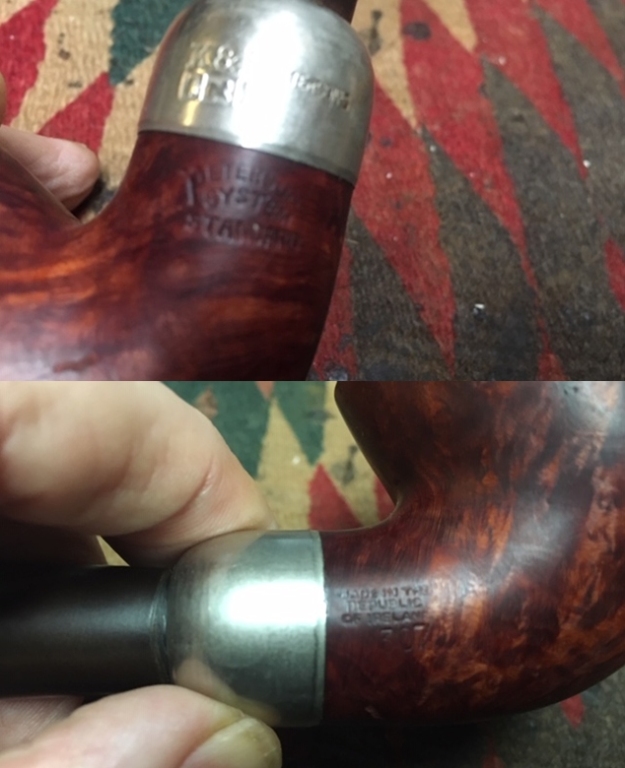
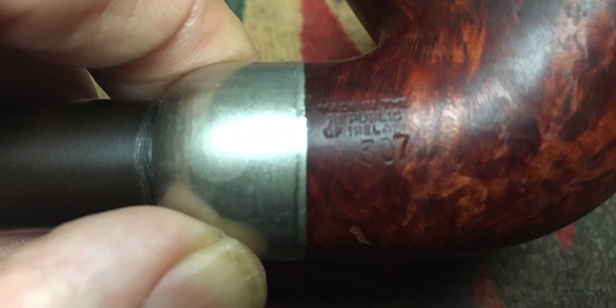
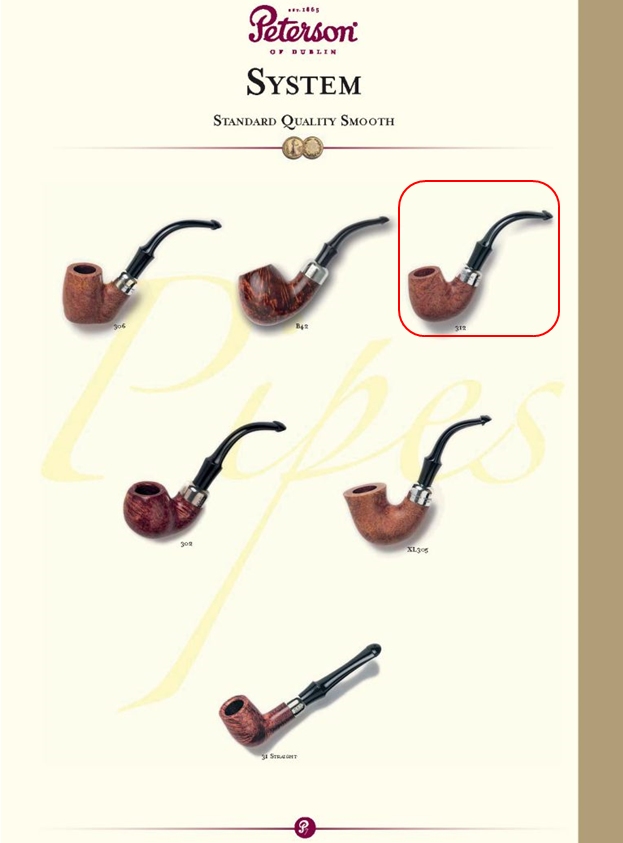
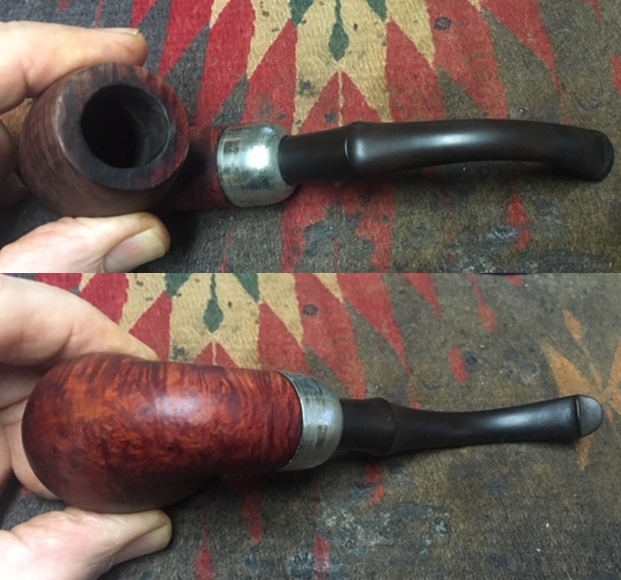
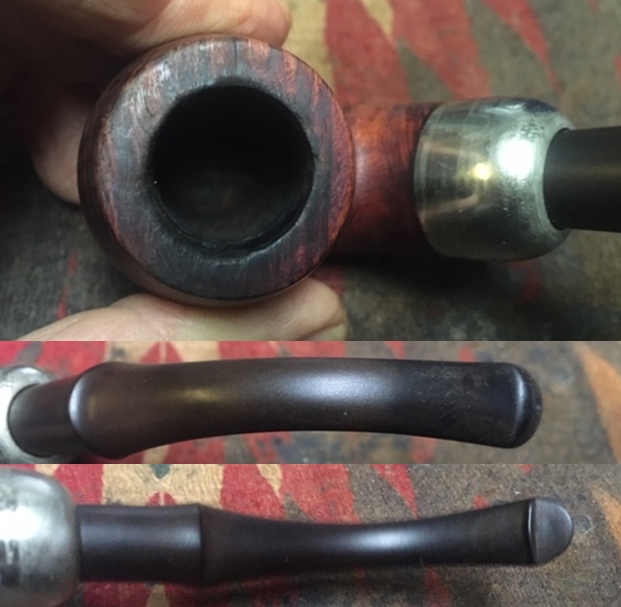
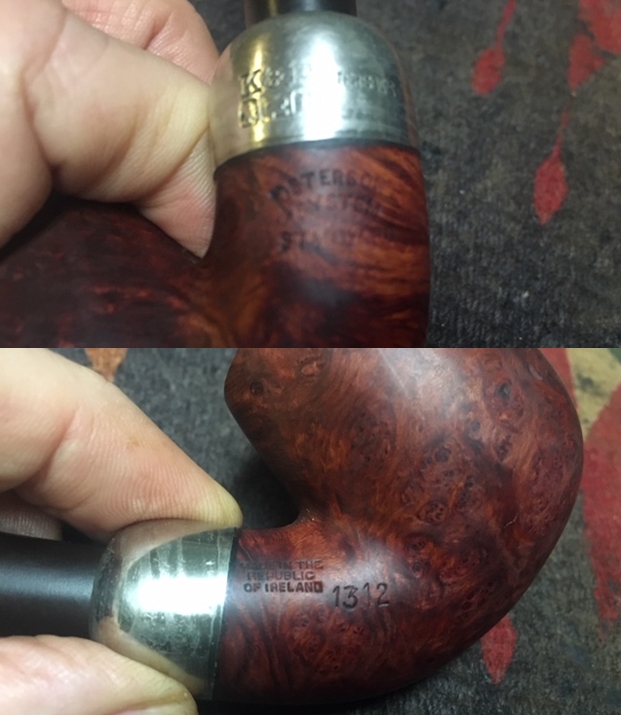
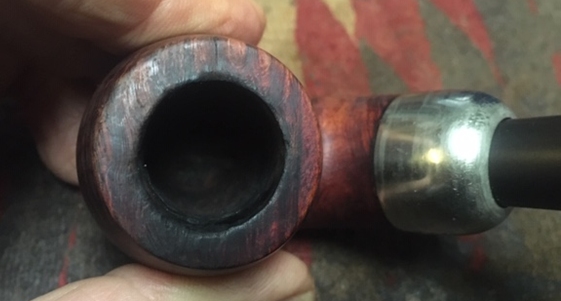
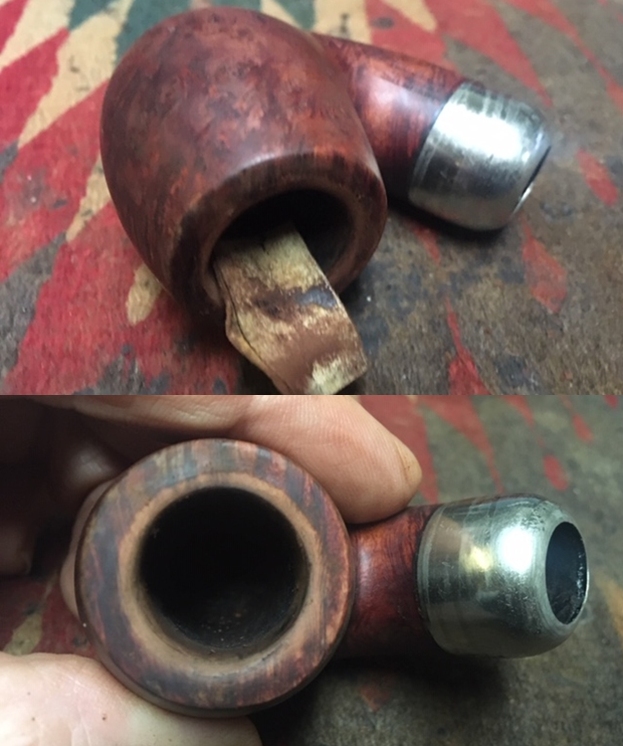
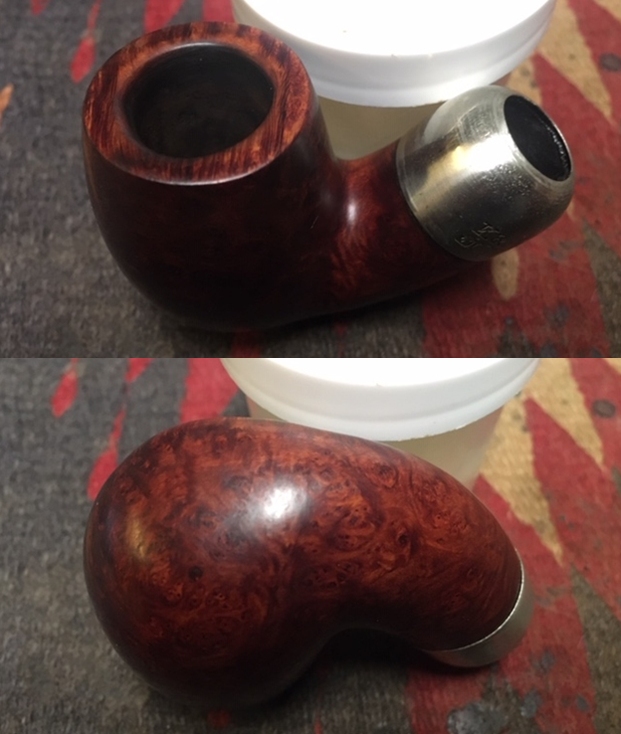
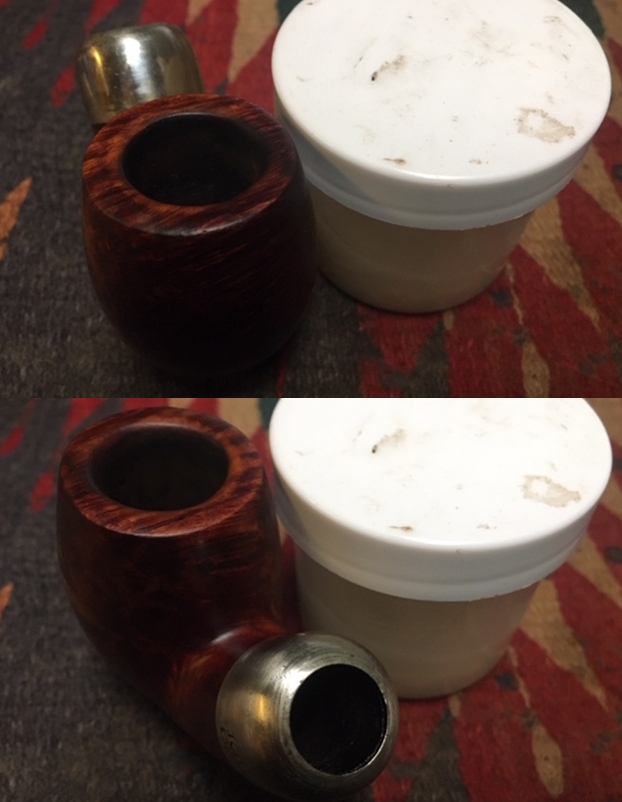
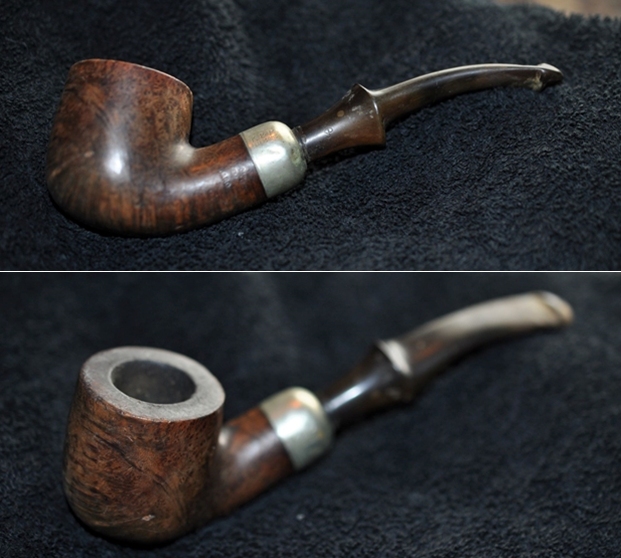
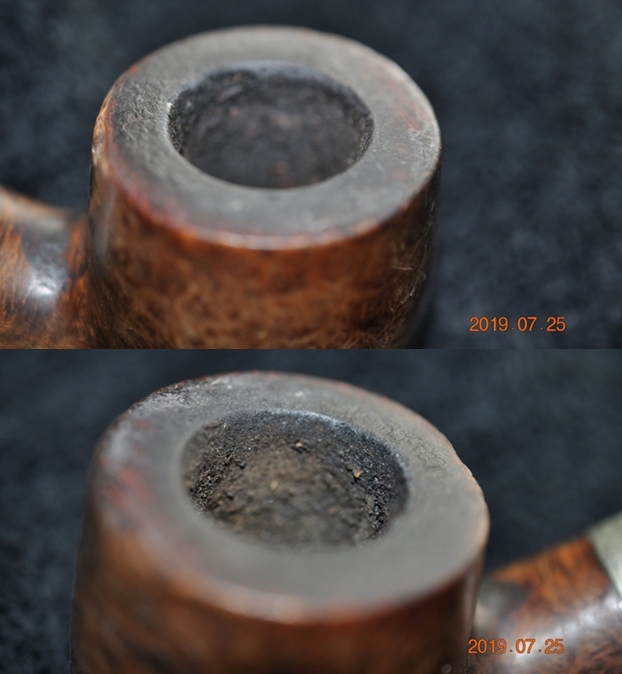
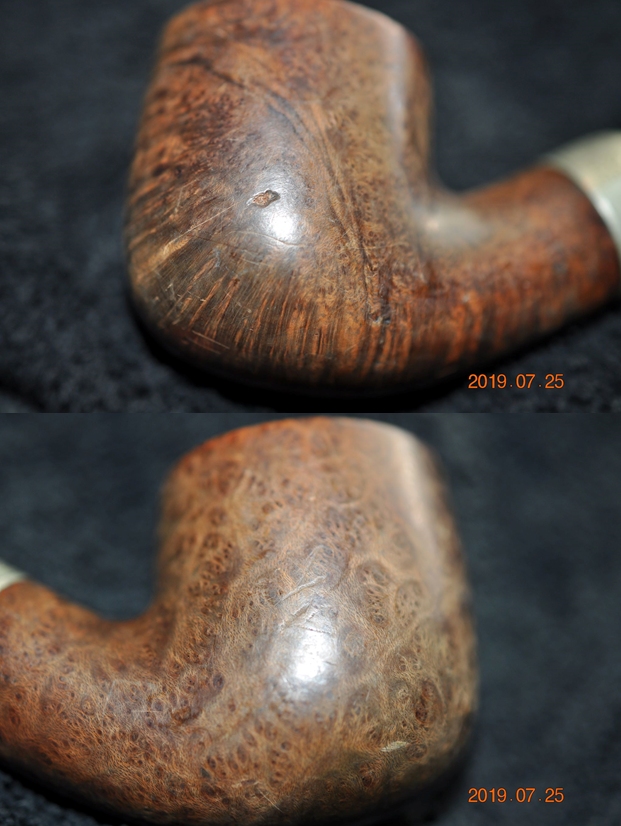
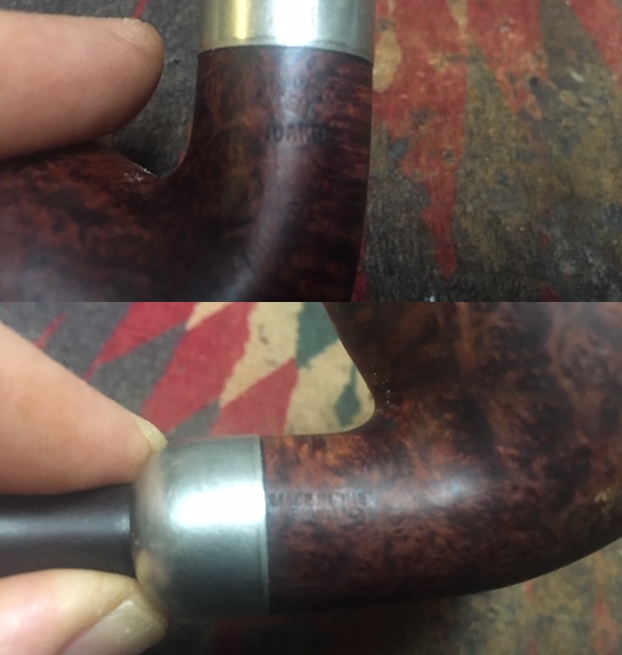
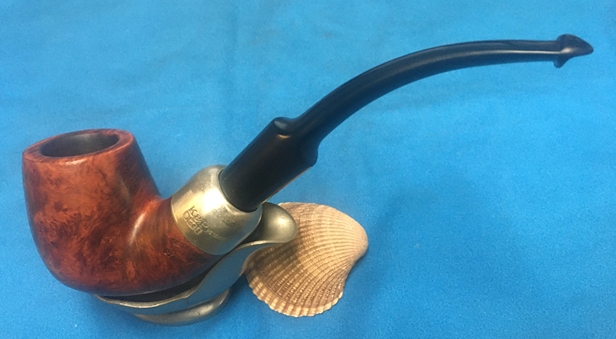
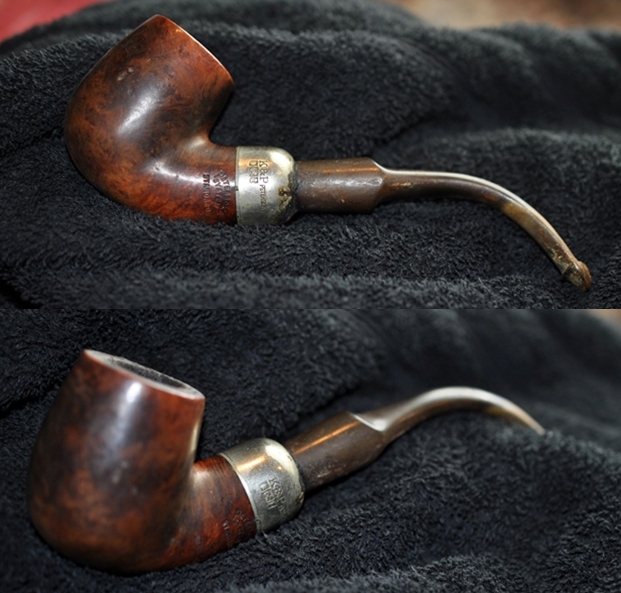
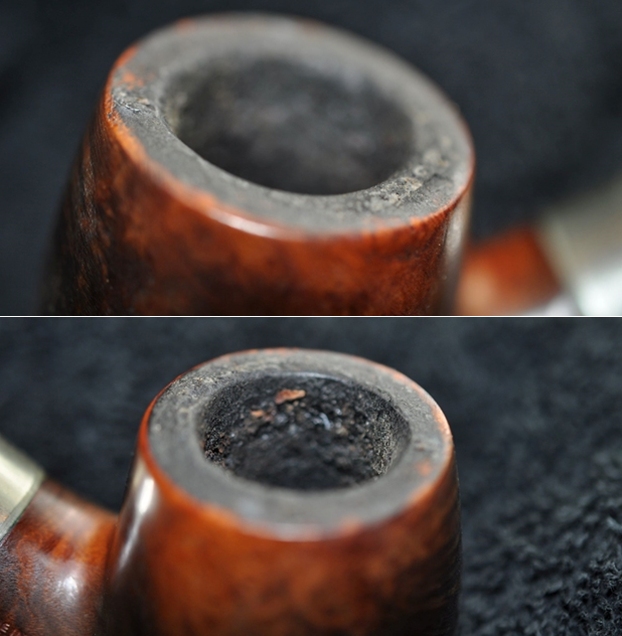
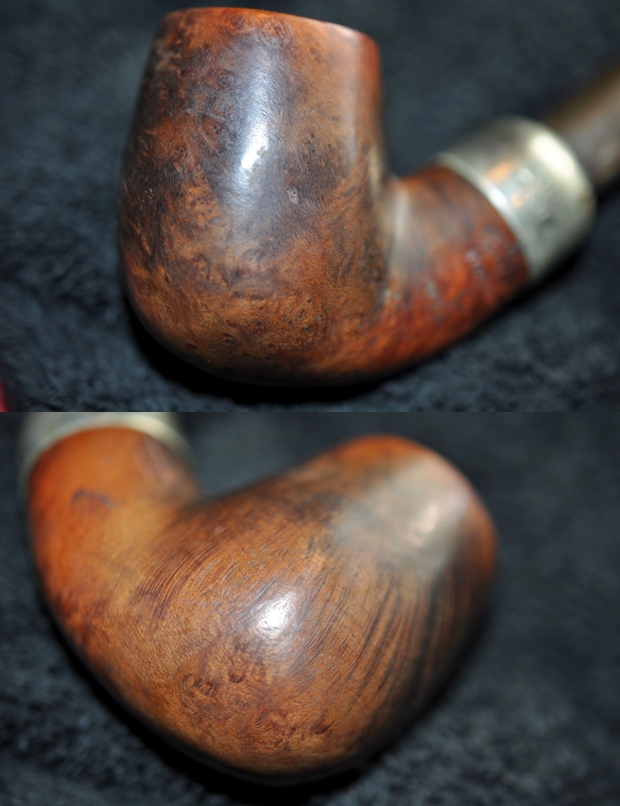
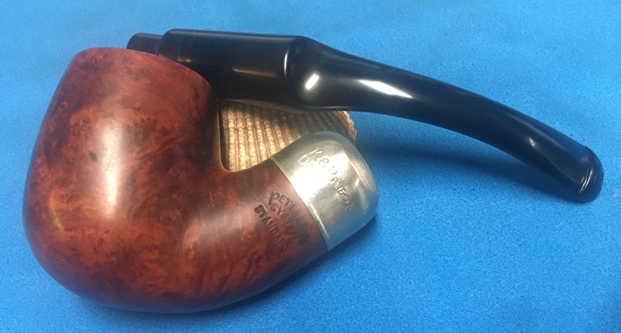
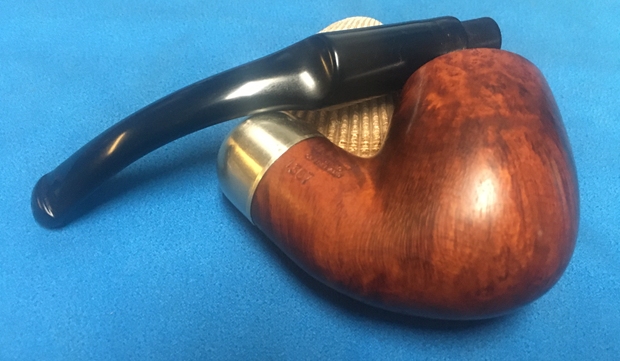
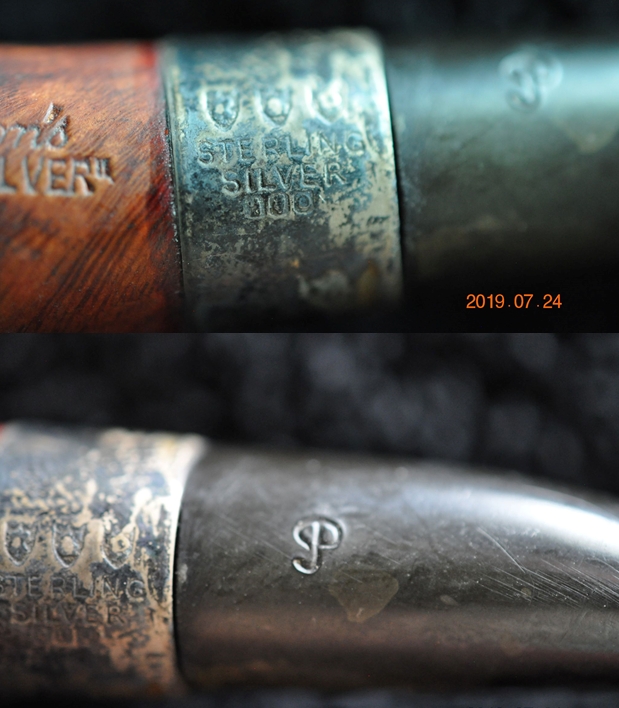
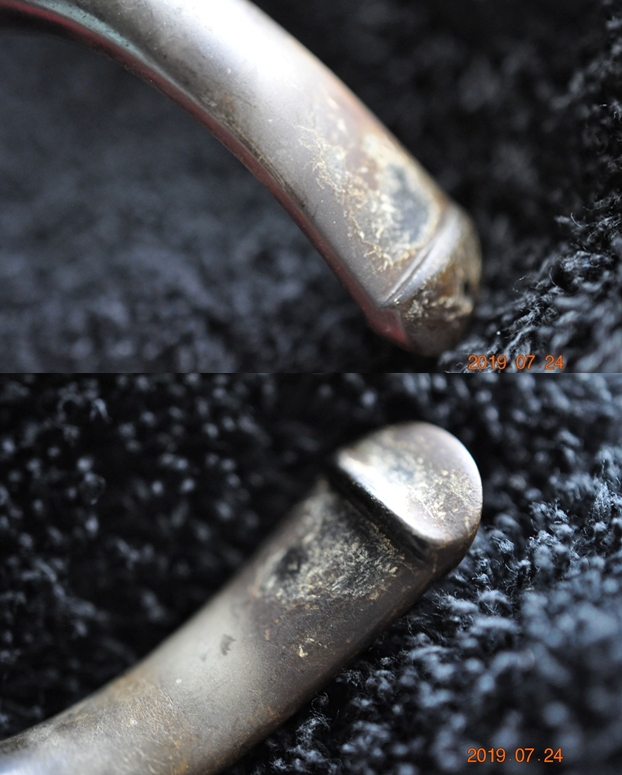
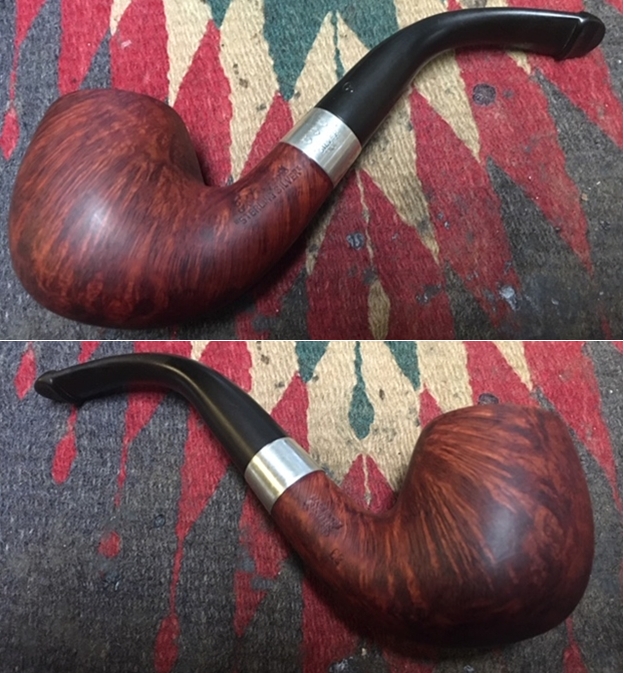
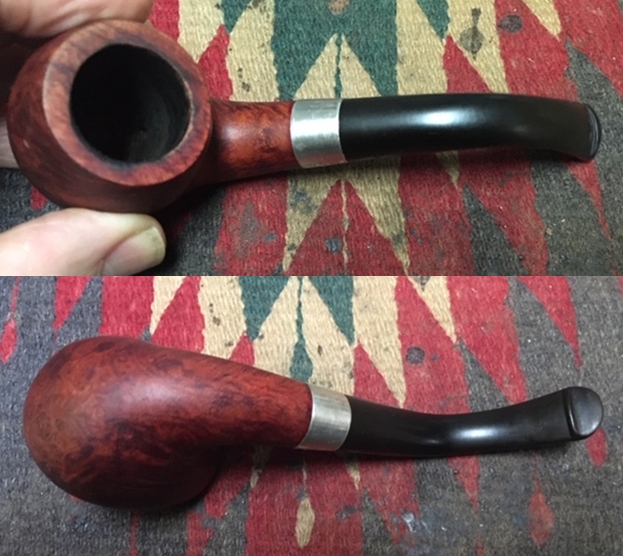
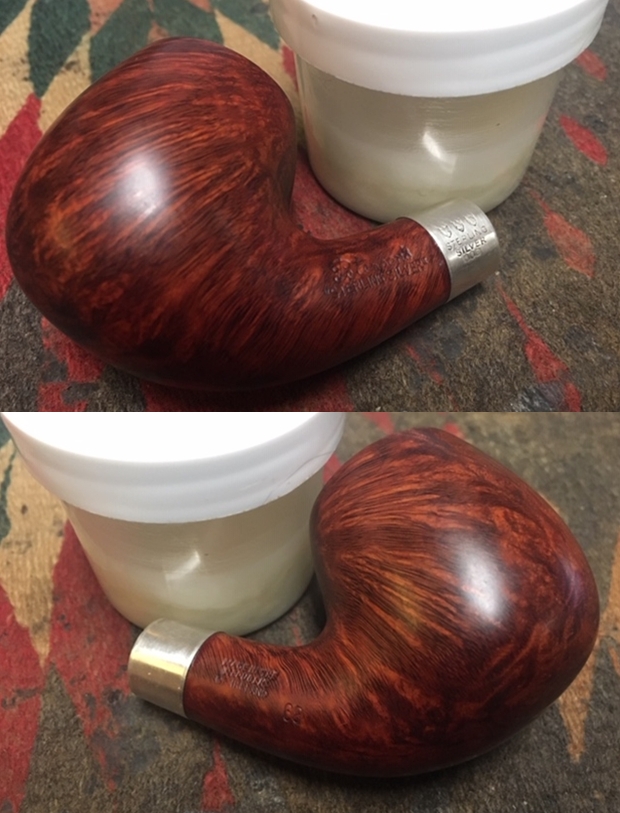
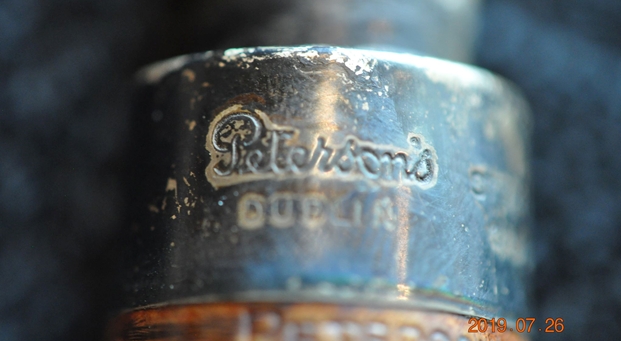
I have been enjoying working on these Petersons particularly because Jeff has done such a thorough cleanup of them before I receive them. When I took it out of the box of the pipes that Jeff had cleaned up and sent back to me, I could see that it was stamped Peterson’s “Sterling Silver” on the left side of the shank next to the band. The right side of the shank was stamped Made in the Republic of Ireland over the shape number 68. It has some stunning grain around the bowl and shank under the thick grime. There was a thick cake in the bowl with remnants of tobacco stuck on the walls. There was a fair lava overflow on the rim. The top and edges of the rim looked good under the grime. It appears that there may be some damage on the inner edge on the left front. I think that there was a beautiful pipe underneath all of the buildup of years of use. The band is stamped Peterson’s over Dublin followed by Sterling Silver on the left side. On the underside are three hallmarks – The Hibernia stamp, the Crowned Harp stamp and finally the letter “O”. The stem was oxidized and calcified toward the end with some tooth chatter but surprisingly it did not have the deep tooth marks that I have come to expect from Bob’s pipes but the button edges were worn. Jeff took photos of the pipe before he started his cleanup work on it. Jeff took photos of the bowl and rim top to show the thick, hard cake in the bowl and the lava build up on the top of the rim and the edges of the bowl. The rim top, with the inner bevel appeared to be in good condition with a potential burn marks on the left front. The outer edges of the rim also appeared to be in good condition. Jeff took photos of the sides and heel of the bowl to show the condition of the finish. You can see the beautiful birdseye grain on the front and the heal. The flame and mixed grain on the back and sides of the bowl and shank. Even under the dirt and debris of the years it looked very good. Jeff took photos of the stamping on both sides of the bowl and shank. The vertical stamping on the left side was readable as you can see from the photos. It read Peterson’s “Sterling Silver”. The stamp on the right side read Made in the Republic of Ireland with the shape number 68 underneath and toward the bowl.The band was also stamped in the silver. Jeff took photos of the stamping. On the left side of the band/ferrule it is stamped Peterson’s Dublin. As the pipe is turned it reads Sterling Silver. Finally on the underside it is stamped with three hallmarks -1. Hibernia, 2. Crowned Harp and 3. The letter “O”. I will need to look that up during the restoration. Jeff took photos of the top and underside of the stem showing the tooth chatter, scratching and oxidation on the stem surface and wear on the edges of the button. I turned to a Peterson Catalogue that I have on rebornpipes and looked up the Classic Range Sterling Silver pipes (https://rebornpipes.com/tag/peterson-hallmark-chart/). I have put a red box around the shape 68 pipe shown in the catalogue page shown below.I turned first to Pipephil’s site to reacquaint myself with the Sterling Silver. Unfortunately there was no information to be found on this specific line. I then turned to Pipedia’s article on Peterson pipes to see what I could garner from that information. It is a great read in terms of the history of the brand (https://pipedia.org/wiki/Peterson). I have included a bit of the pertinent history here.

1950 – 1989 The Republic Era  – From 1950 to the present time, the stamp for this era is “Made in the Republic of Ireland” in a block format generally in three lines but two lines have been used with or without Republic being abbreviated.

During the 1950’s and 60’s the Kapp & Peterson company was still in the ownership of the Kapp family. However 1964 saw the retiral of the company Managing Director Frederick Henry(Harry) Kapp.

In the 1960’s Peterson hallmarked all gold mounted pipes but apparently they used their own marks on silver. This practice stopped at the end of that decade when they started to have all silver bands hallmarked.

  • With that information in hand I knew what I was dealing with in terms of the stamping on the pipe. It is a 1980 Republic Period pipe. I also wanted to be able to interpret the hallmarks on the silver band. I have captured a portion of the chart that include below that helps to clarify the meaning of each of the three hallmarks. I like the Hallmark feature on the higher end Peterson pipes with Sterling silver bands. It helps to pin down the date even further.

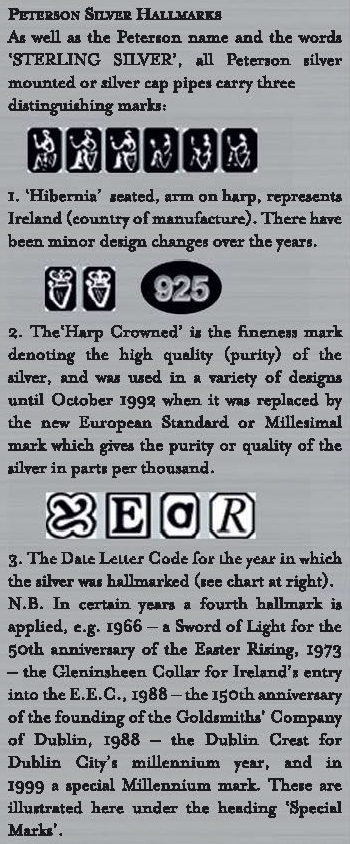
  • “Hibernia” seated, arm on harp represents Ireland (country of manufacture). There have been minor design changes over the years.
  • The “Harp Crowned” is the fineness mark denoting the high quality (purity) of the silver, and was used in a variety of designs until October 1992 when it was replaced by the new European Standard or Millesimal mark which gives the purity or quality of the silver in parts per thousand.
  • The Date Letter Code for the year in which the silver was hallmarked (see the chart below). In certain years a fourth hallmark is applied – for example 1966 – a Sword of Light for the 50th anniversary of the Easter Rising 1973. There were also other marks used for the fourth hallmark.

The pipe on my table had the Hibernia seated mark (Ireland) followed by the Harp Crowned signifying Sterling Silver percentage and finally in this case a lower case “o”. Each of the hallmarks was in an octagonal cartouche. The chart below helps me identify the date mark to 1980. I have highlighted the 1980 mark with a red arrow in the chart below.

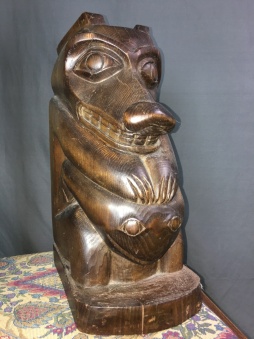
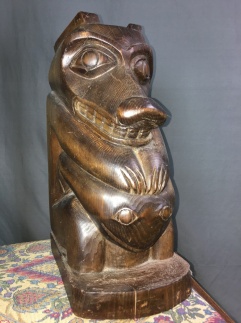
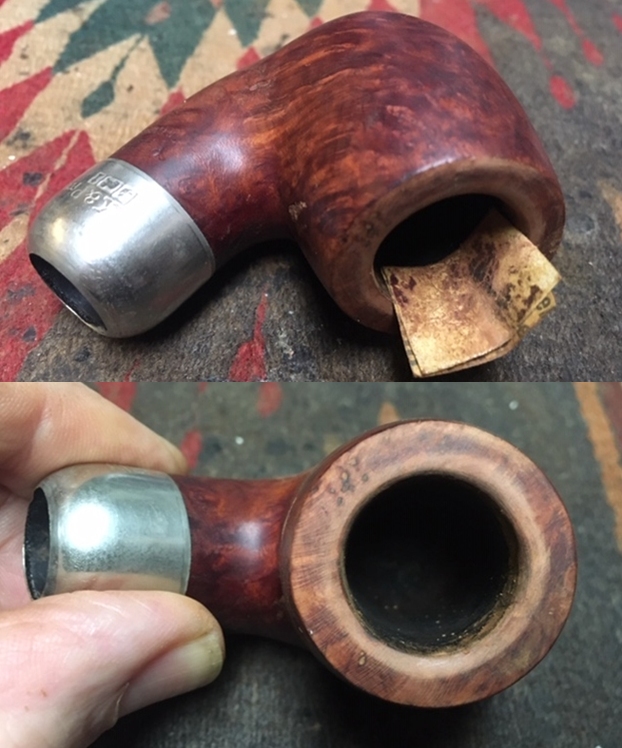
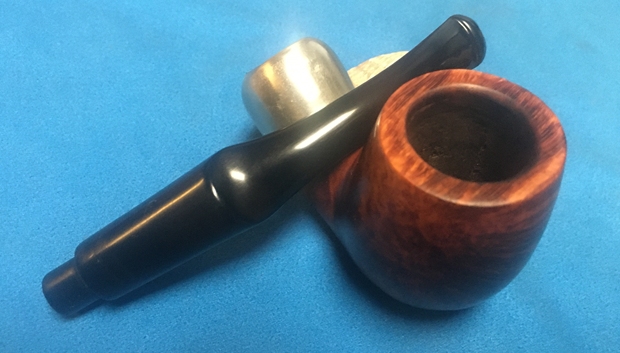
I have included the entire Hallmark chart for ease of reference show any of you be looking to date the pipes that you are working on at present.I took photos of the pipe with the right stem. With over 125 pipes to clean from Bob’s estate I am very glad for Jeff’s help cleaning them. He remembers this pipe as one of the really dirty ones in Bob’s estate. He cleaned this filthy pipe with his usual penchant for thoroughness that I really appreciate. This one was a real mess and I did not know what to expect when I unwrapped it from his box. He reamed it with a PipNet pipe reamer and cleaned up the reaming with a Savinelli Fitsall Pipe Knife. He scrubbed out the internals with alcohol, pipe cleaners and cotton swabs until the pipe was clean. He scrubbed the exterior of the bowl with Murphy’s Oil Soap and a tooth brush to remove the grime and grit on the briar and the lava on the rim top. The finish looks very good with great looking grain around the bowl and shank. Jeff soaked the stem in Before & After Deoxidizer to remove the oxidation on the rubber. When the pipe arrived here in Vancouver for the second stop of its restoration tour I was amazed it looked so good. I took some close up photos of the rim top and also of the stem surface. I wanted to show what an amazing job Jeff did in the cleanup of the rim top. The rim top was burned and darkened on the left front inner edge. I also took close up photos of the stem to show the lack of tooth marks and chatter on the stem surface. It was very clean.   One of the things I appreciate about Jeff’s cleanup is that he works to protect and preserve the nomenclature on the shank of the pipes that he works on. The stamping on this one was very faint to start with so I was worried that it would disappear altogether with the cleanup. He was not only able to preserve it but it is clearer than shown in the earlier photos. I took some photos to show the clarity of the stamping. I have noticed that many restorers are not careful to protect the stamping in their cleaning process and often by the end of the restoration the nomenclature is almost destroyed. I would like to encourage all of us to be careful in our work to preserve this as it is a critical piece of pipe restoration!   I also have included a photo of the cleaned up hallmarks that were noted above.    Since this is another pipe Bob’s estate I am sure that some of you have read at least some of the other restoration work that has been done on the previous pipes. You have also read what I have included about Bob Kerr, the pipeman who held these pipes in trust before I came to work on them (see photo to the left). Also, if you have followed the blog for long you will already know that I like to include background information on the pipeman whose pipes I am restoring. For me, when I am working on an estate I really like to have a sense of the person who held the pipes in trust before I worked on them. It gives me another dimension of the restoration work. I asked Brian if he or his wife would like to write a brief biographical tribute to her father, Bob. His daughter worked on it and I received the following short write up on him and some pictures to go along with the words including one of Bob’s carvings. Once again I thank you Brian and tell your wife thank you as well.

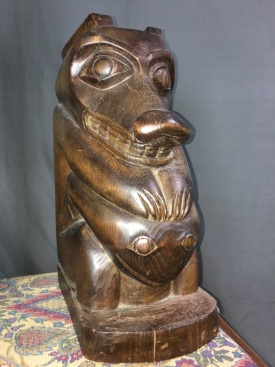
I am delighted to pass on these beloved pipes of my father’s. I hope each user gets many hours of contemplative pleasure as he did. I remember the aroma of tobacco in the rec room, as he put up his feet on his lazy boy. He’d be first at the paper then, no one could touch it before him. Maybe there would be a movie on with an actor smoking a pipe. He would have very definite opinions on whether the performer was a ‘real’ smoker or not, a distinction which I could never see but it would be very clear to him. He worked by day as a sales manager of a paper products company, a job he hated. What he longed for was the life of an artist, so on the weekends and sometimes mid-week evenings he would journey to his workshop and come out with wood sculptures, all of which he declared as crap but every one of them treasured by my sister and myself. Enjoy the pipes, and maybe a little of his creative spirit will enter you!

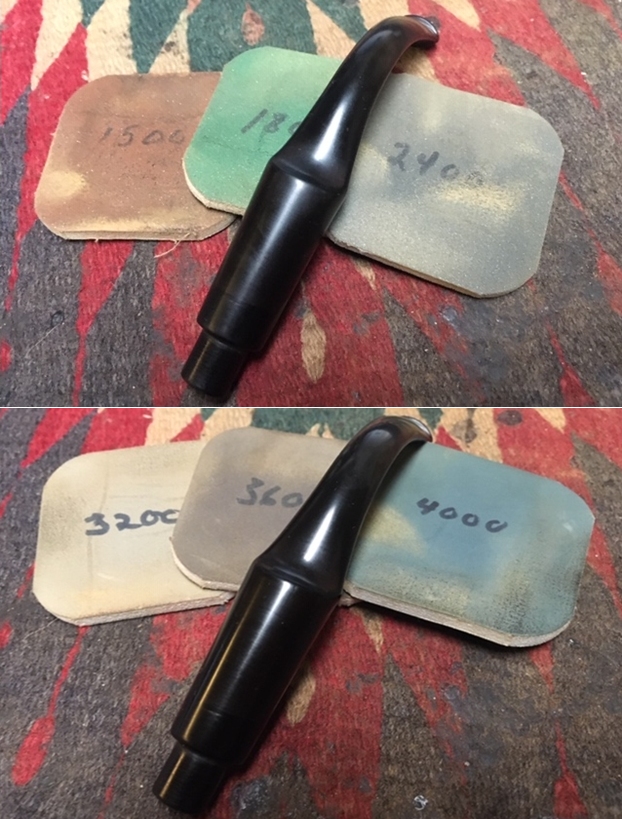
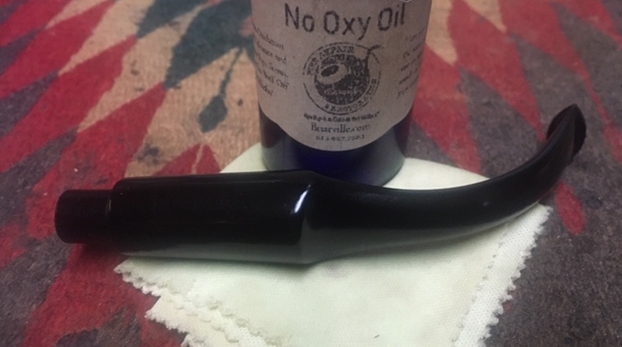
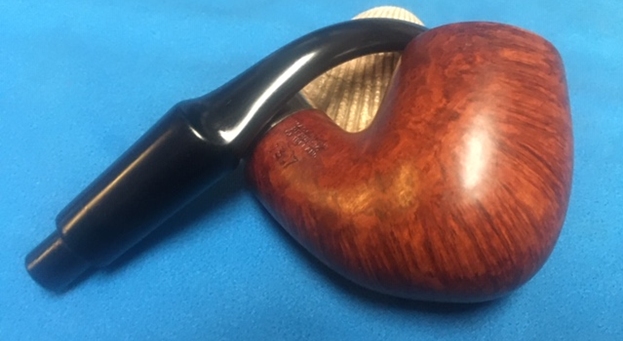
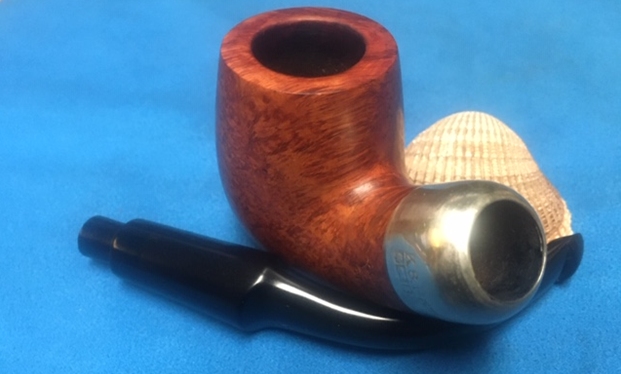
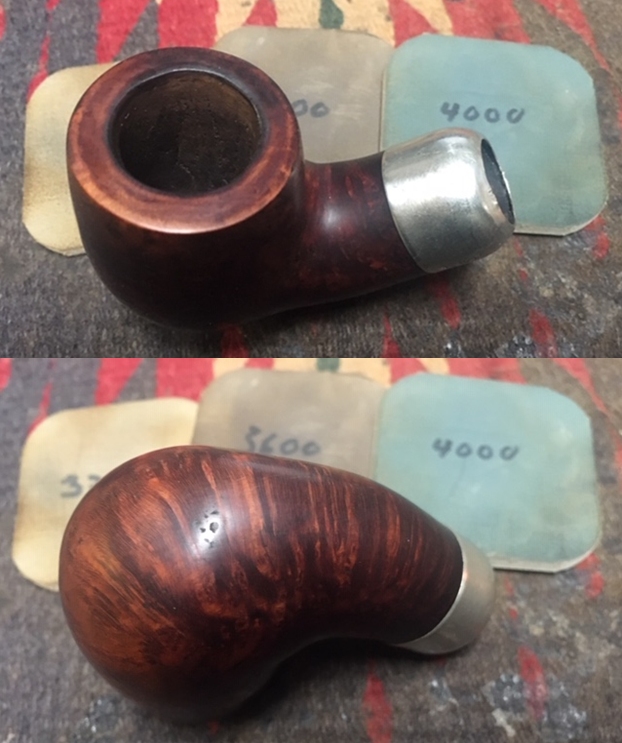
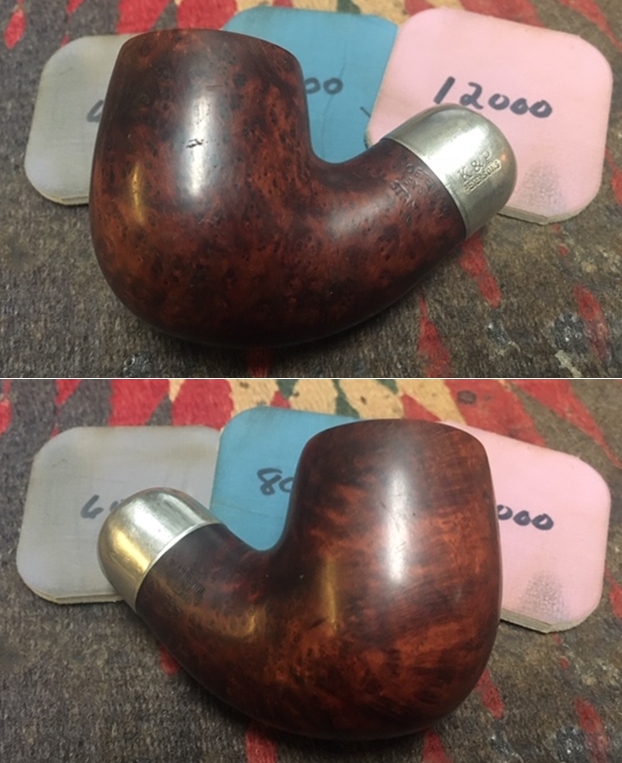
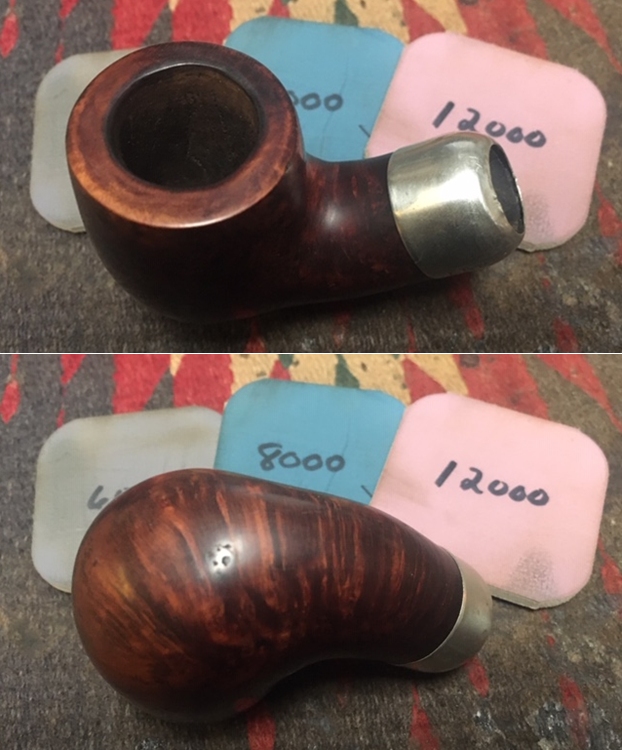
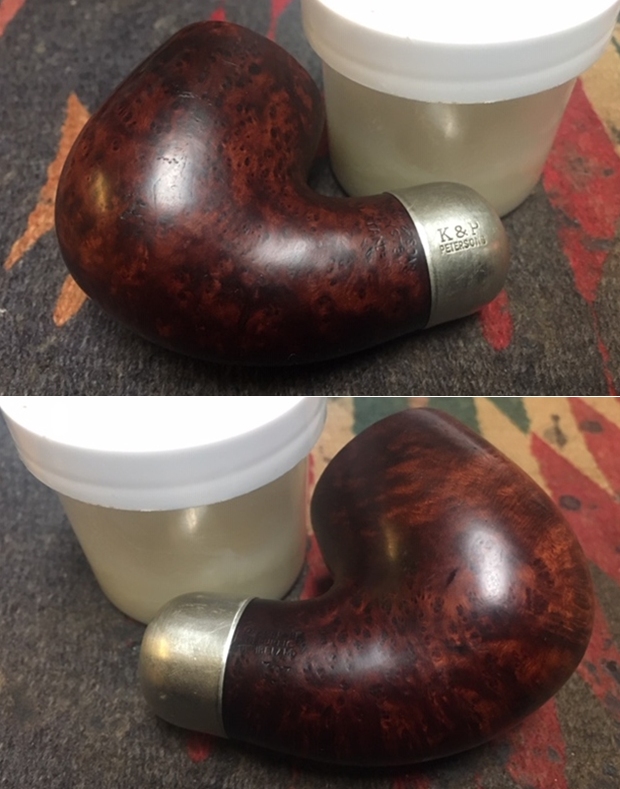
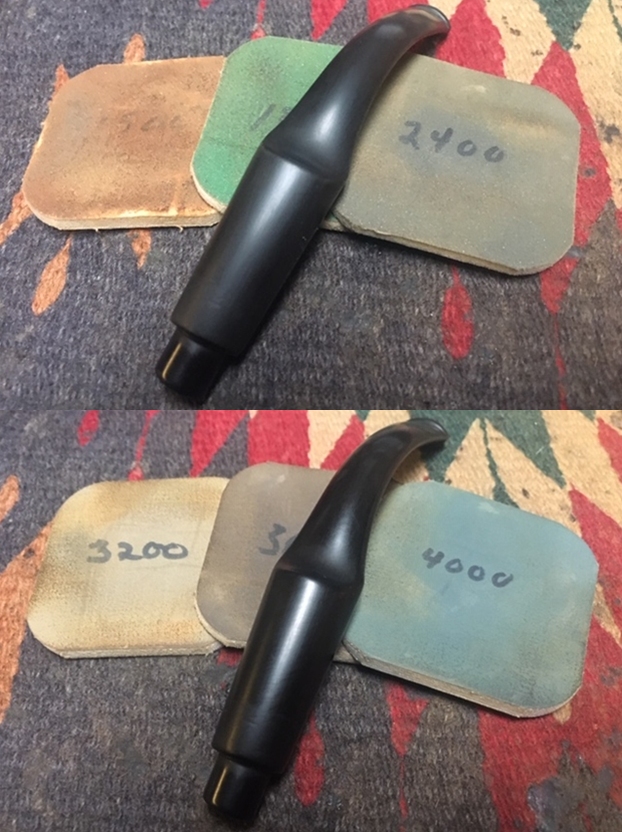
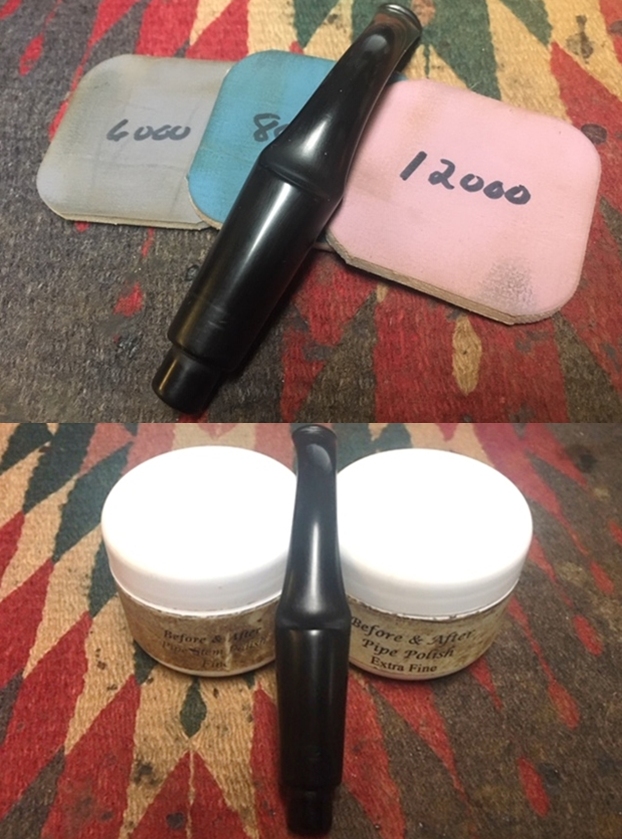
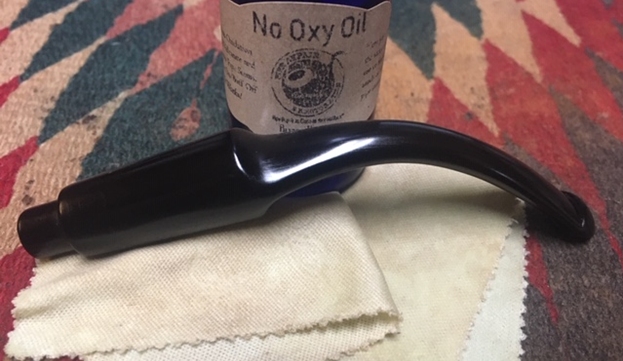
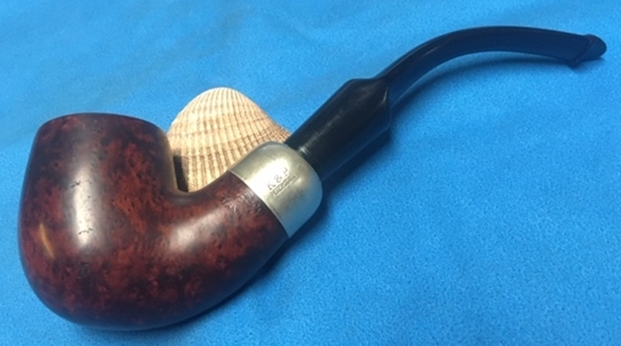
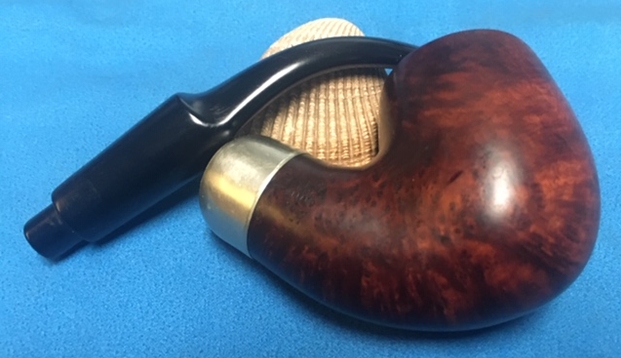
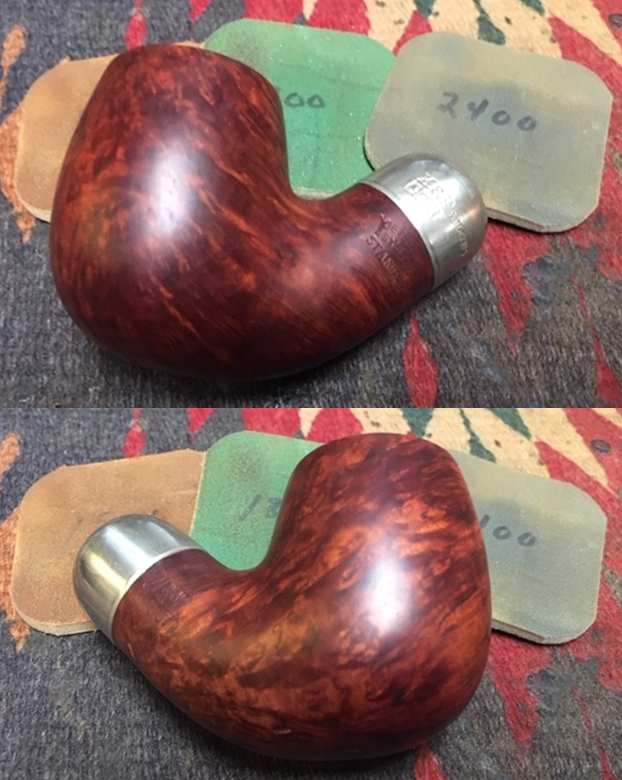
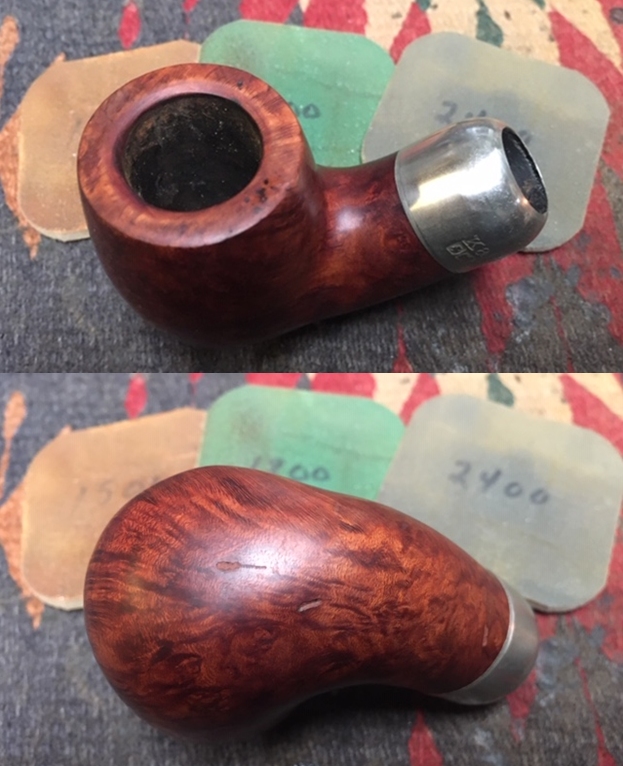
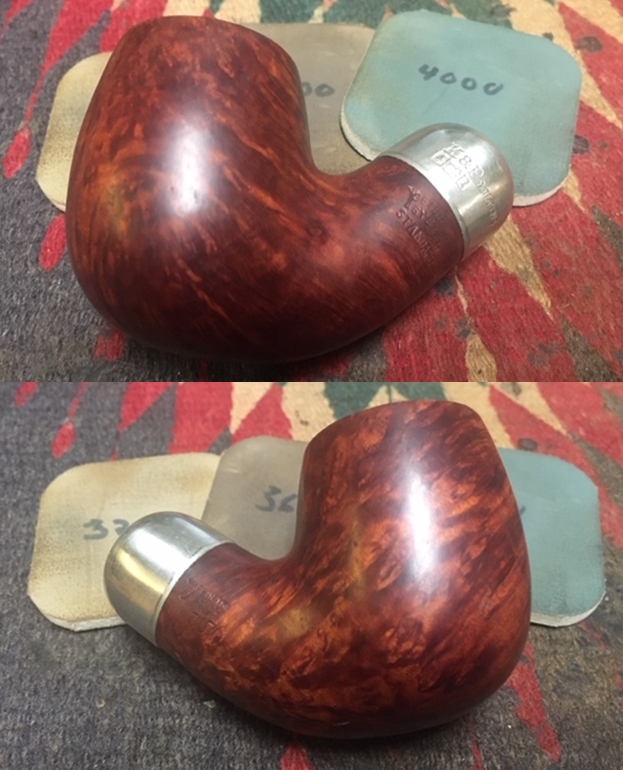
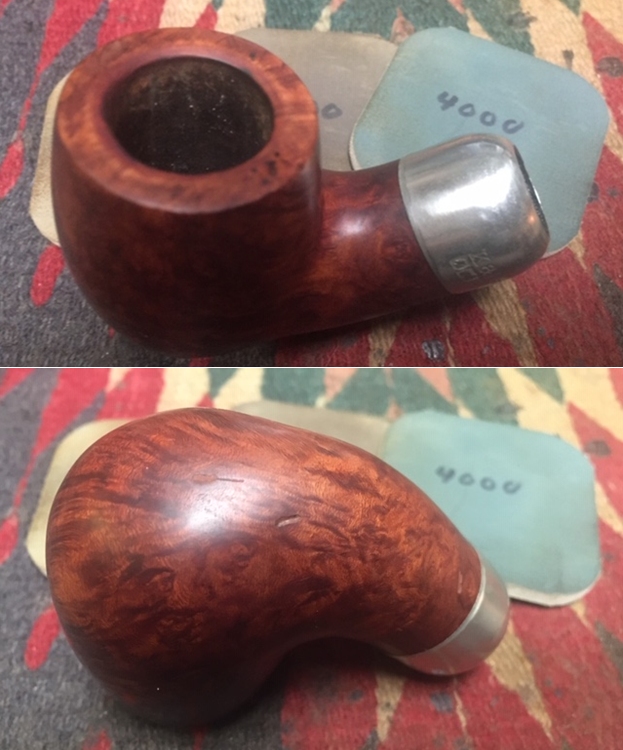
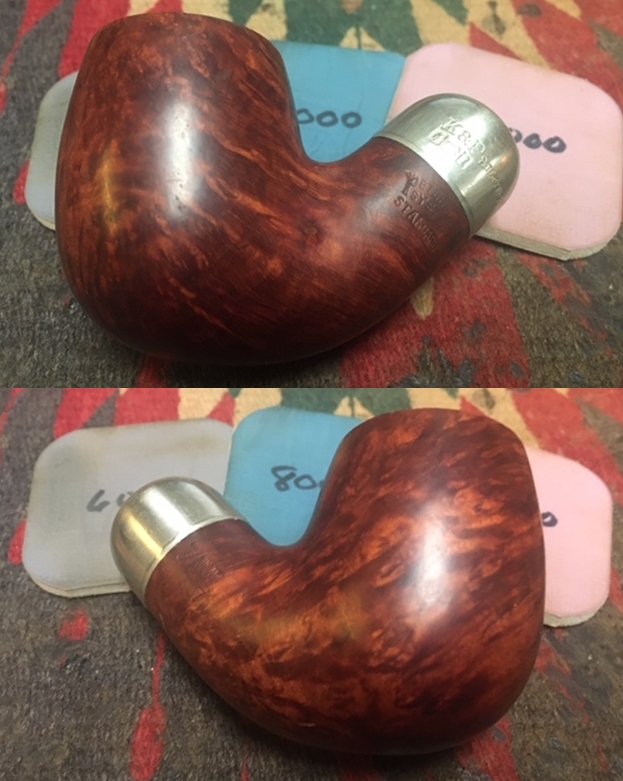
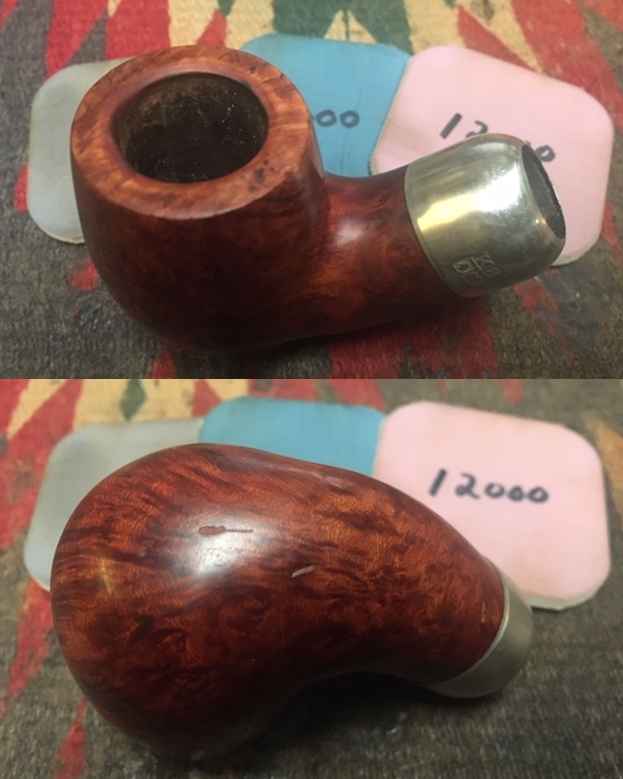
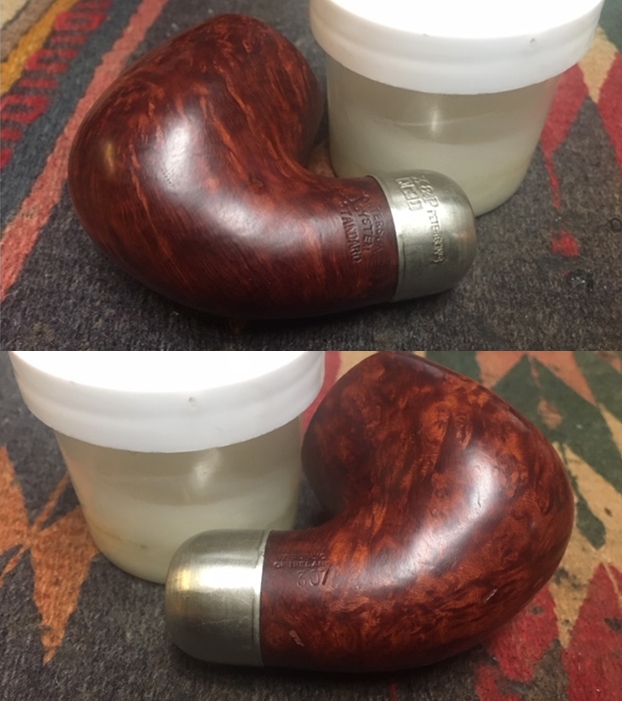
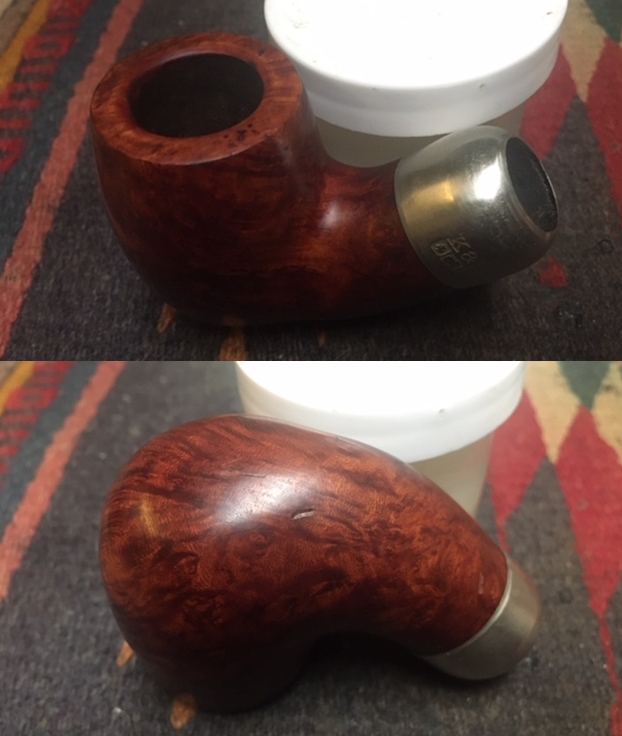
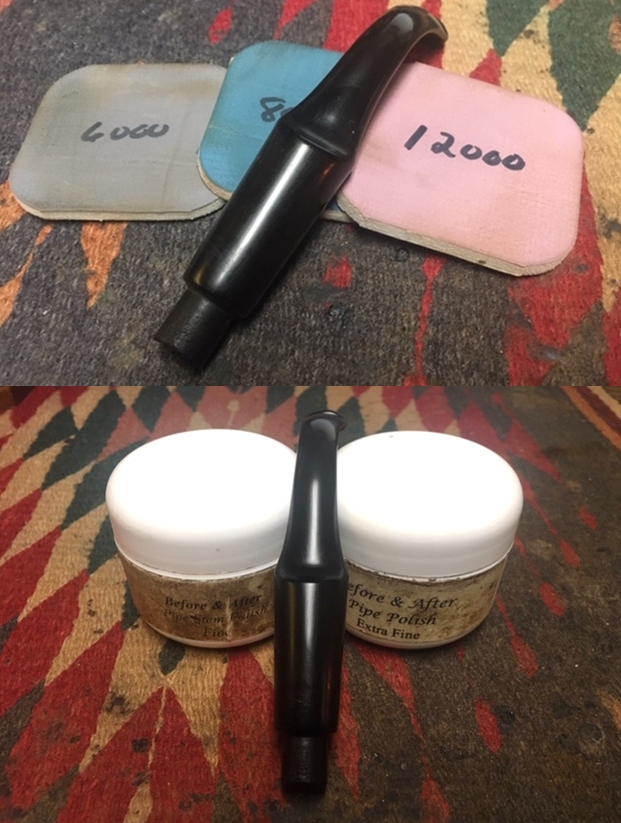
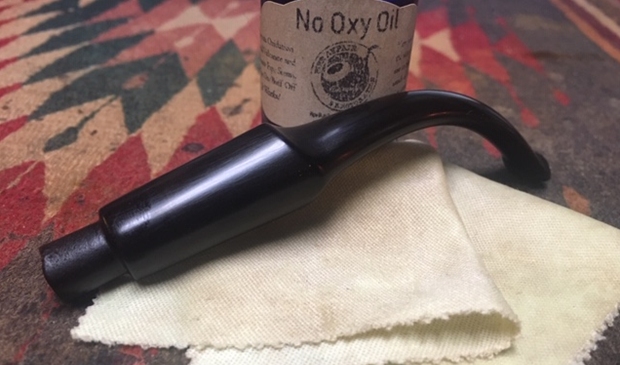
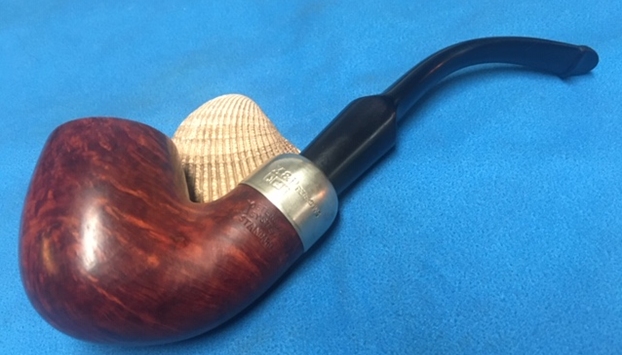
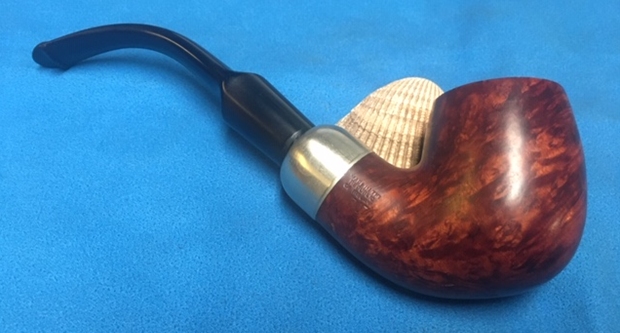
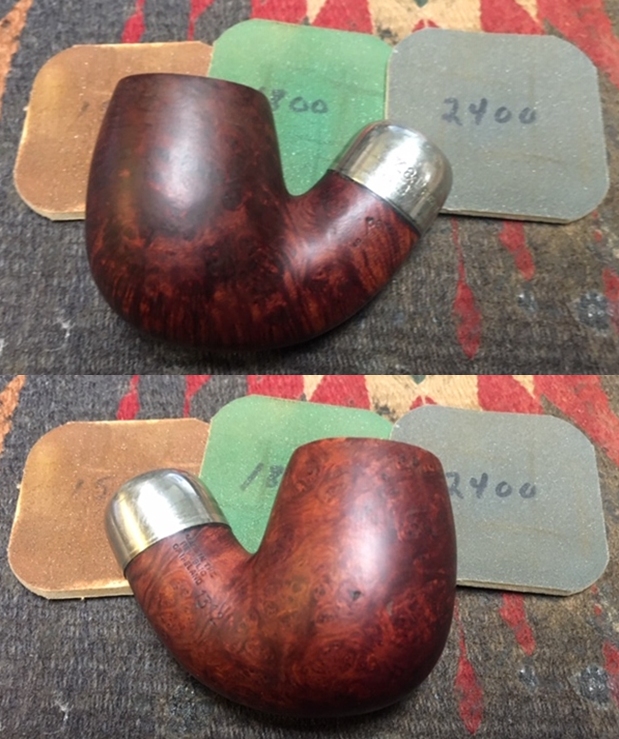
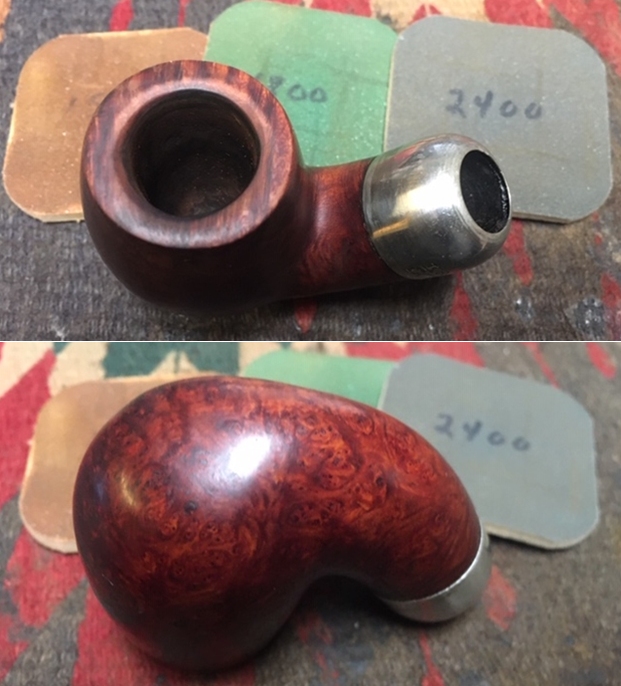
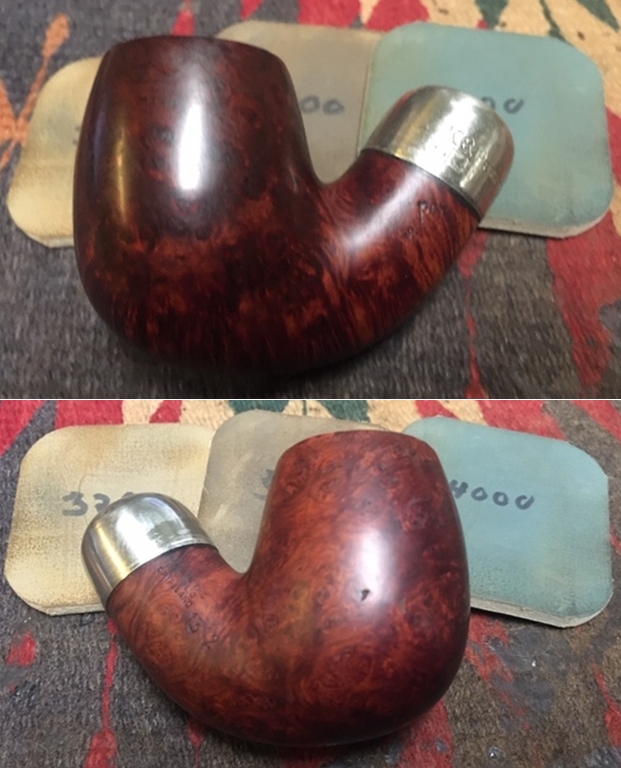
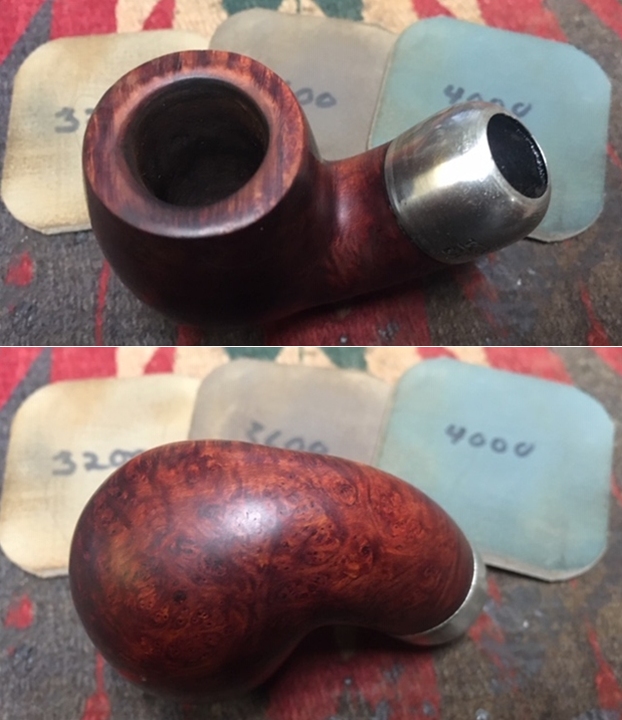
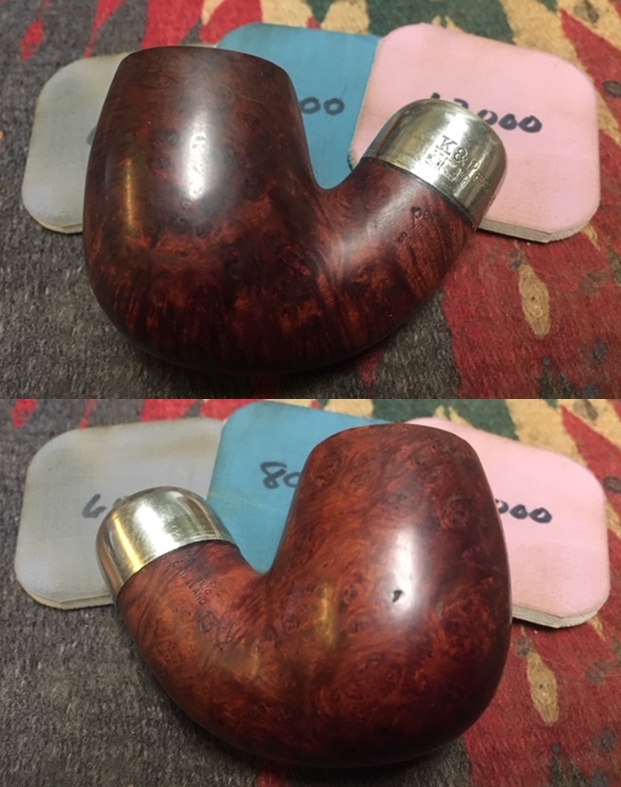
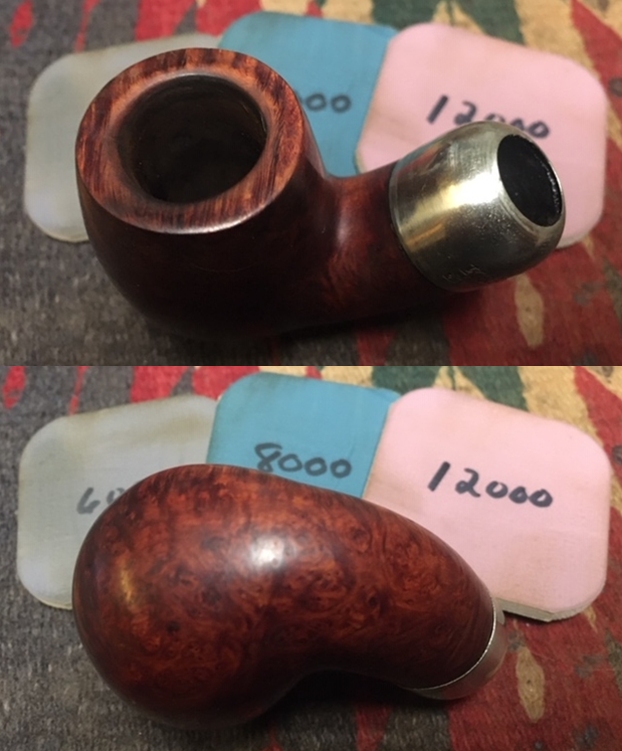
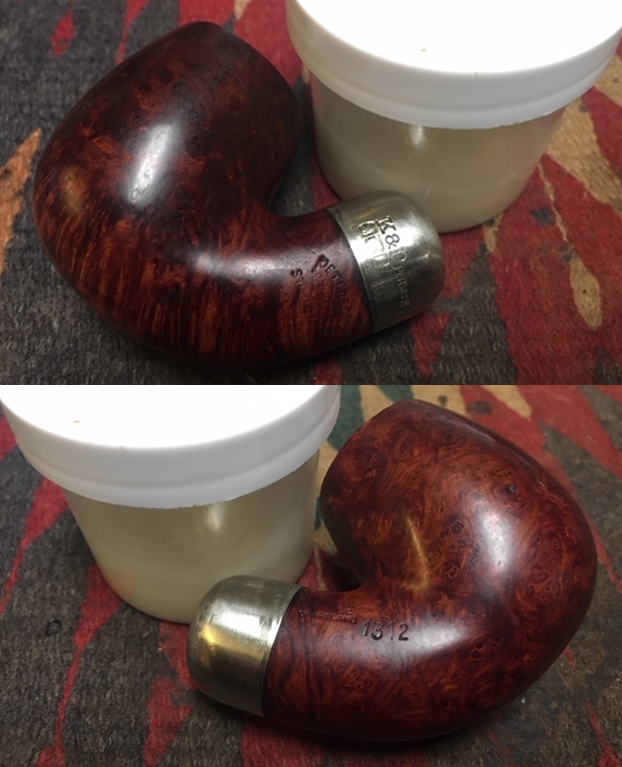
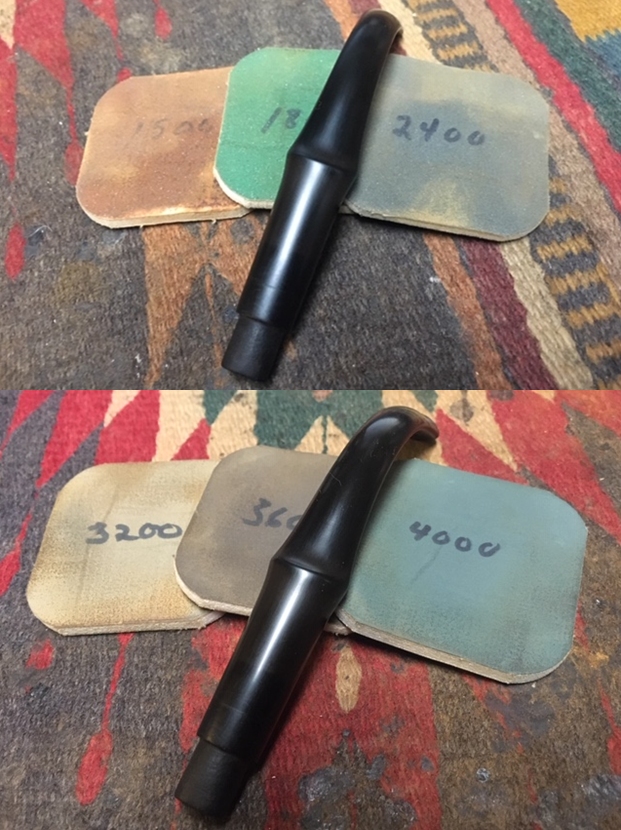
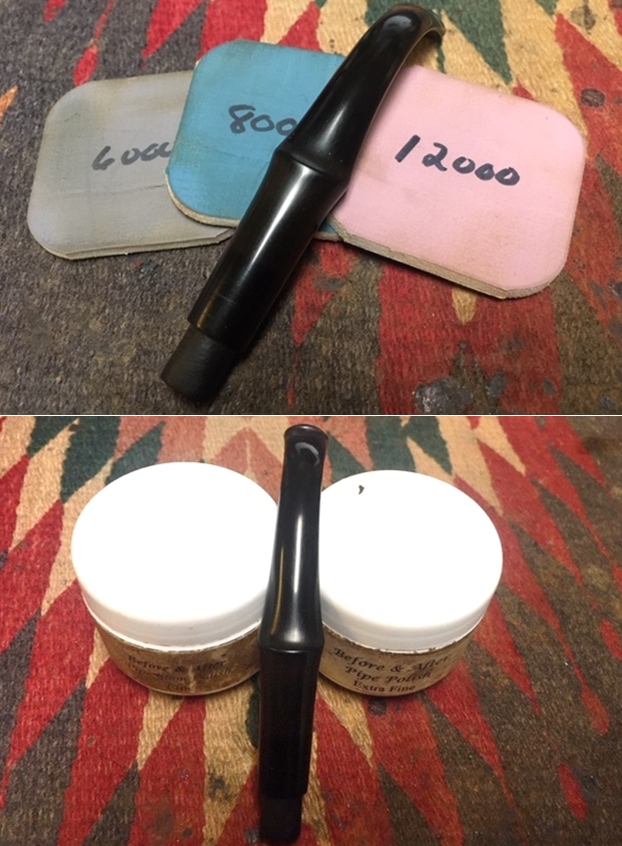
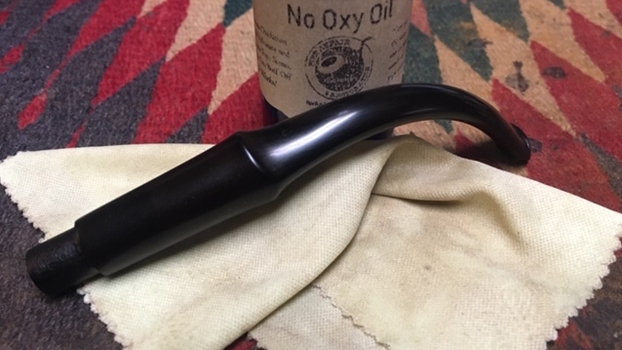
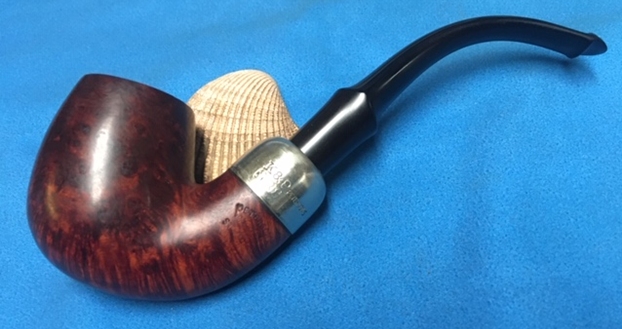
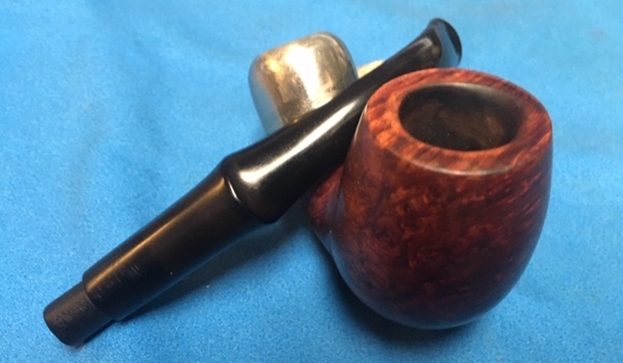
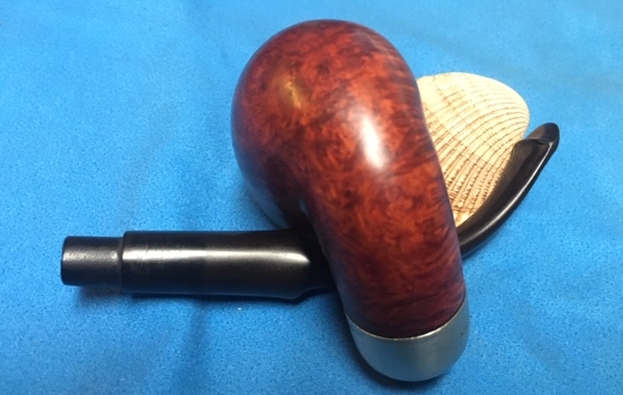
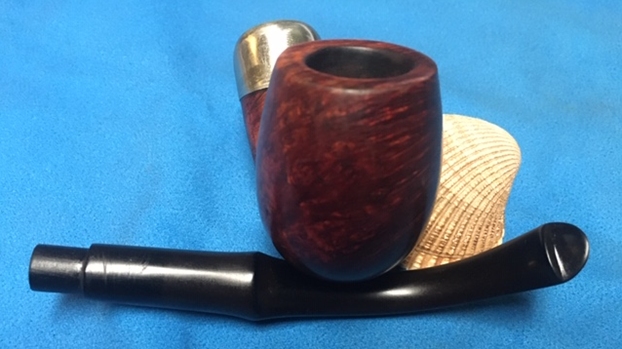
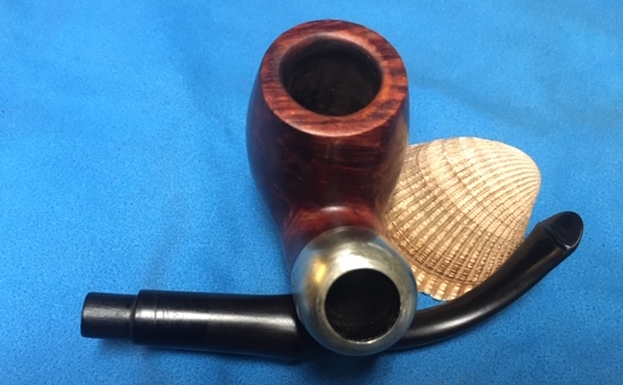
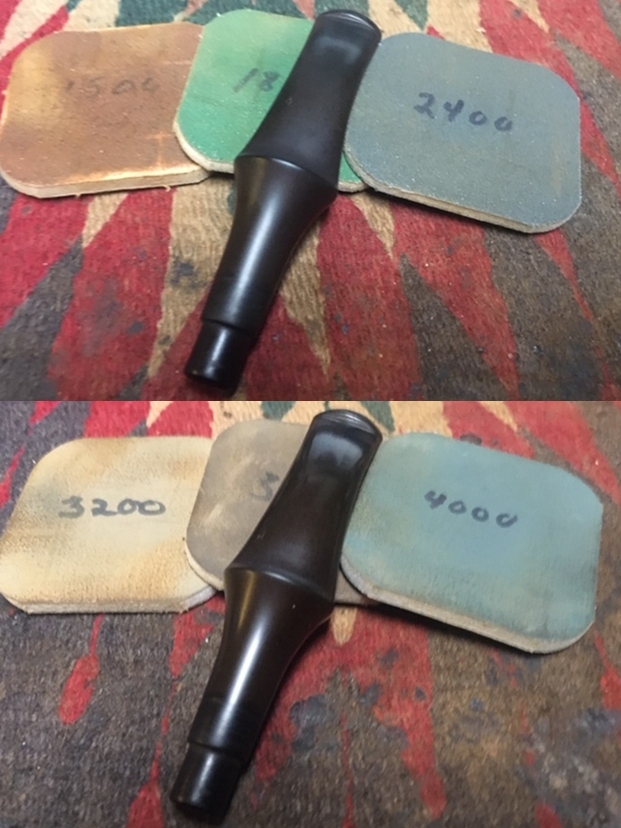
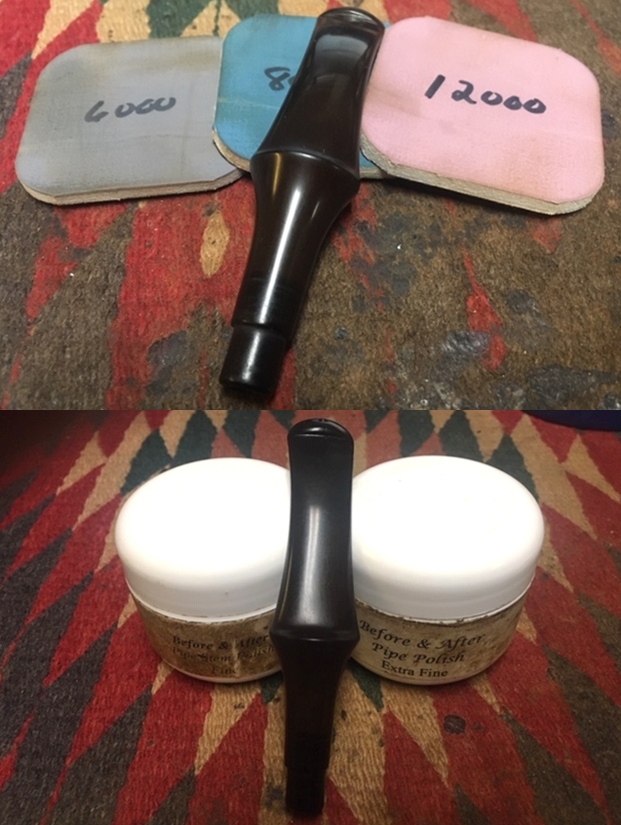
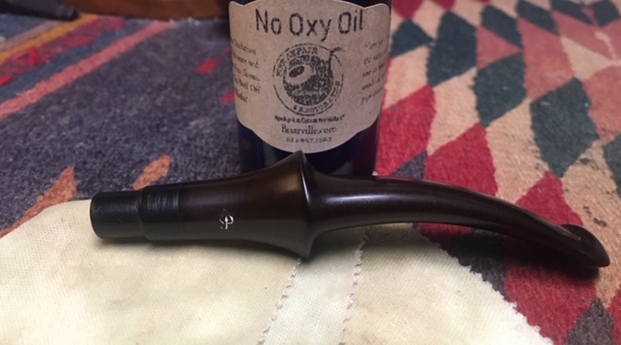
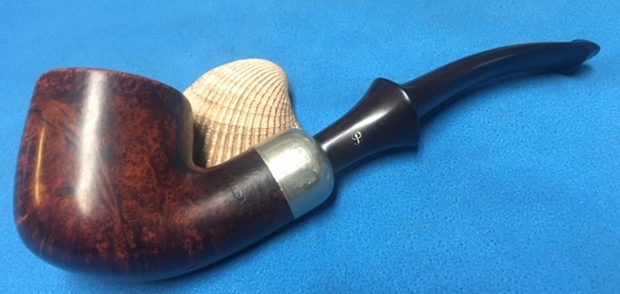
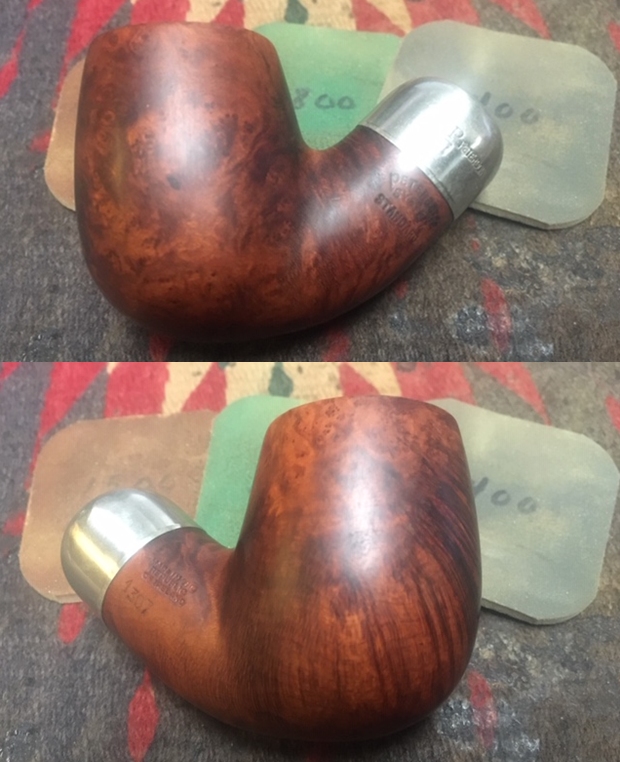
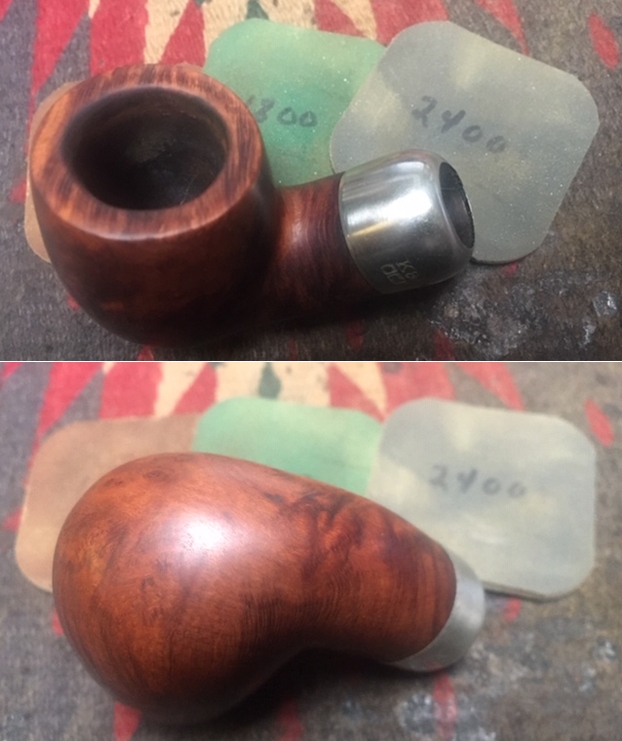
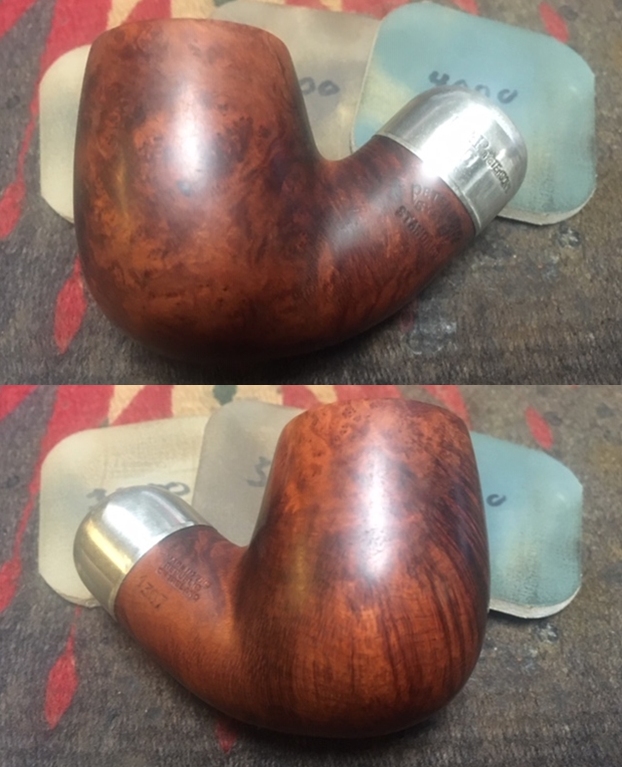
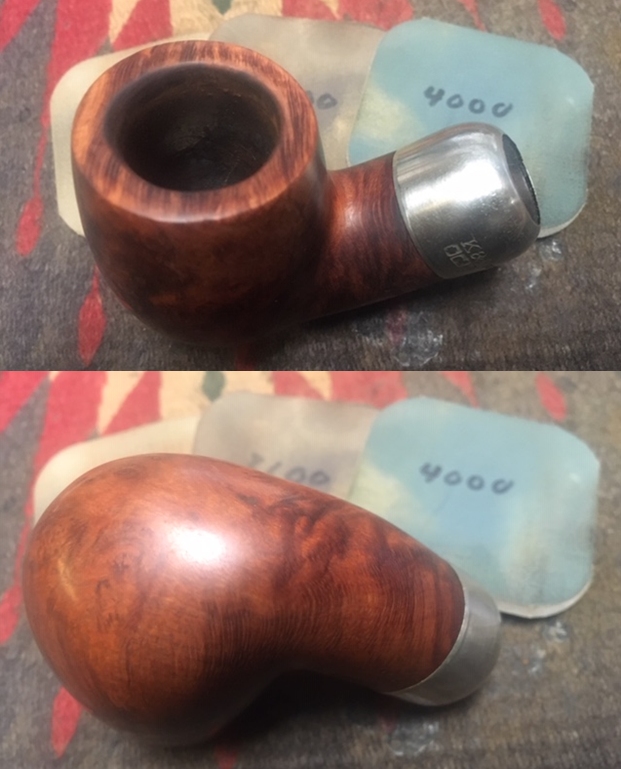
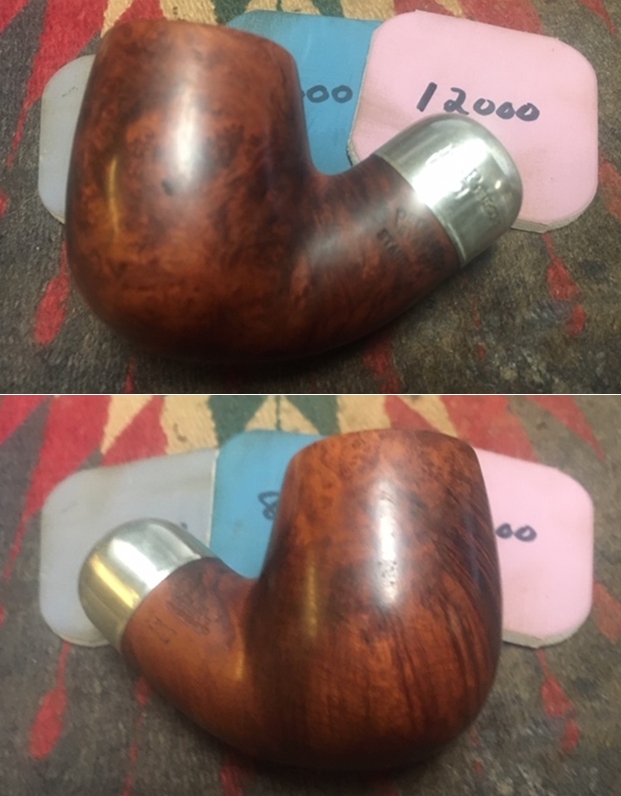
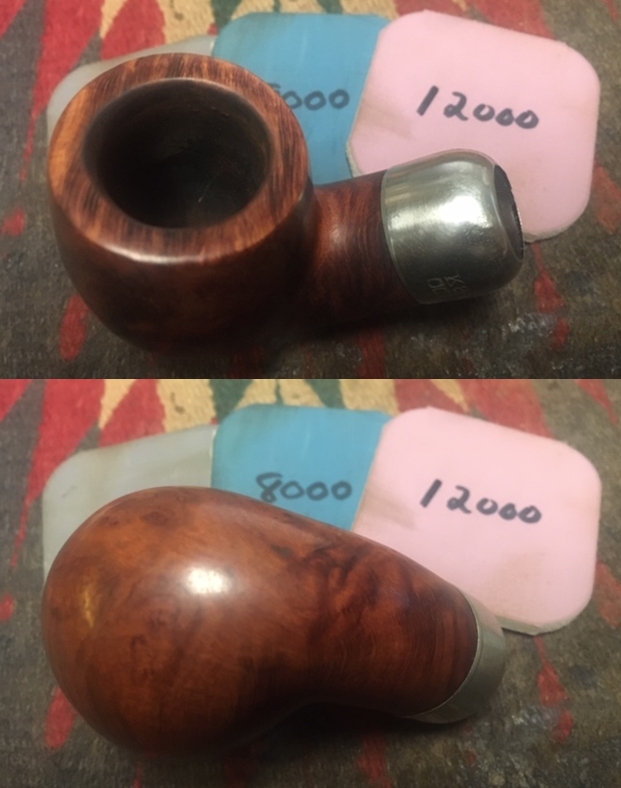
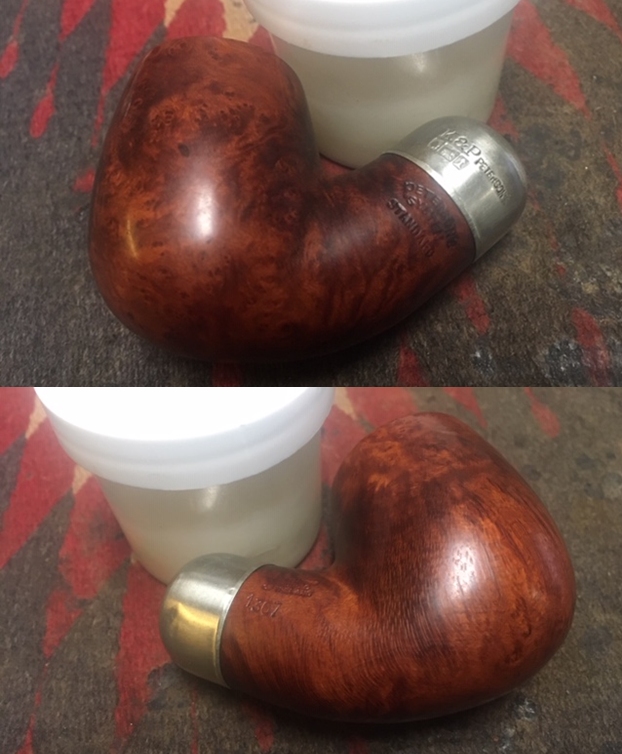
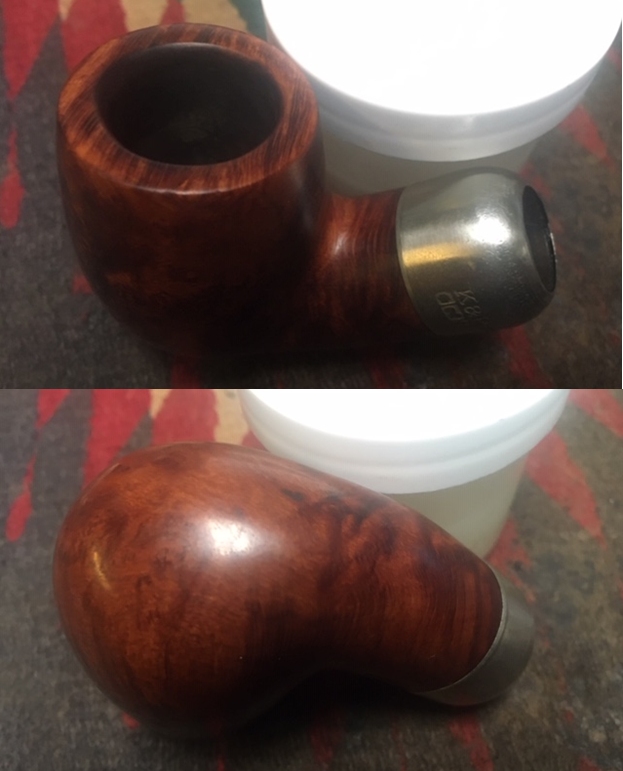
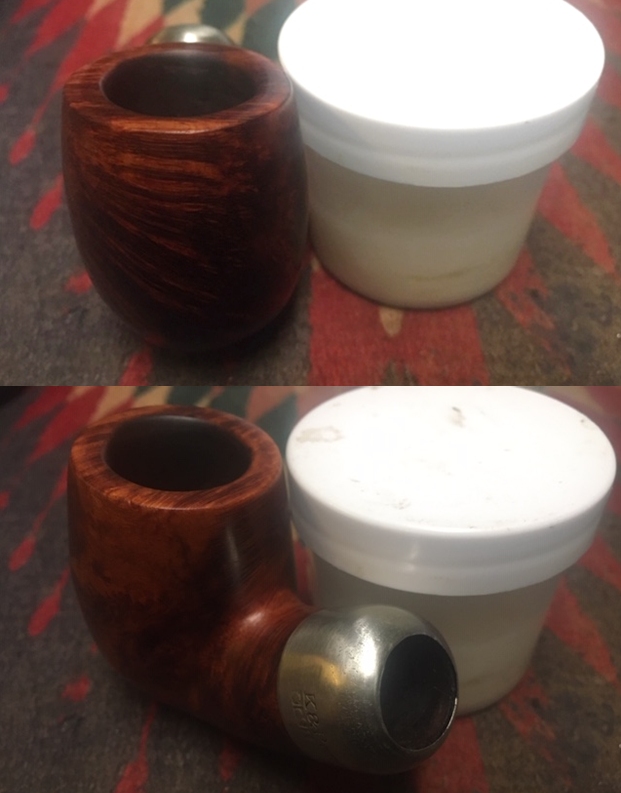
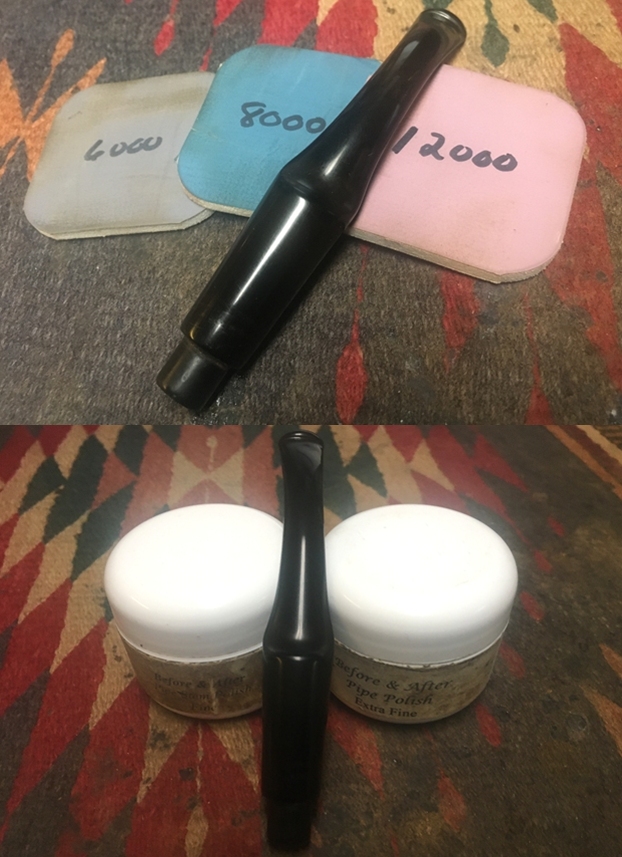
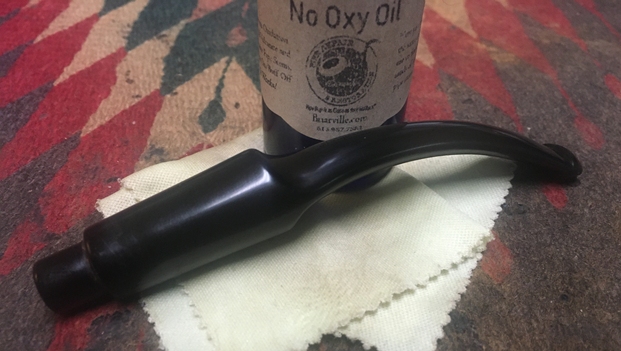
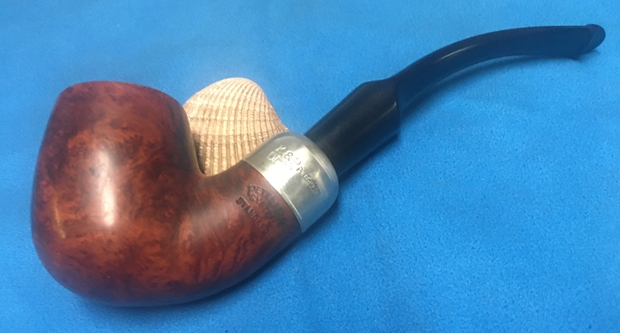
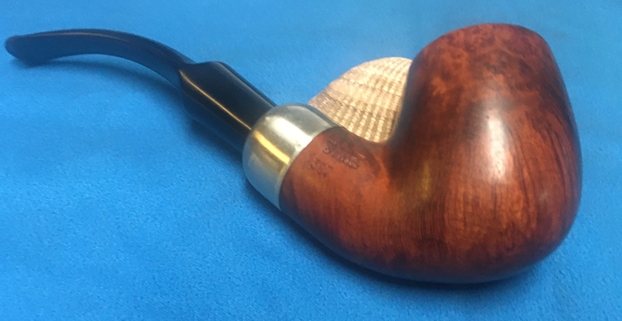
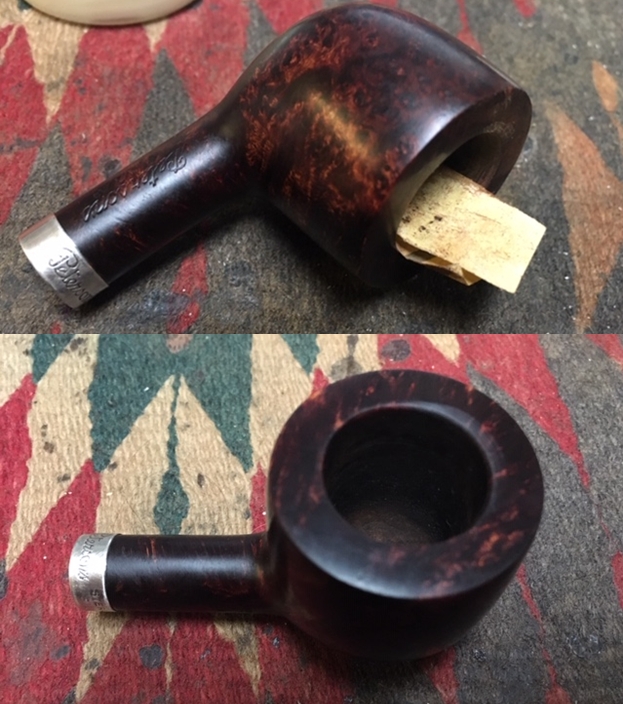
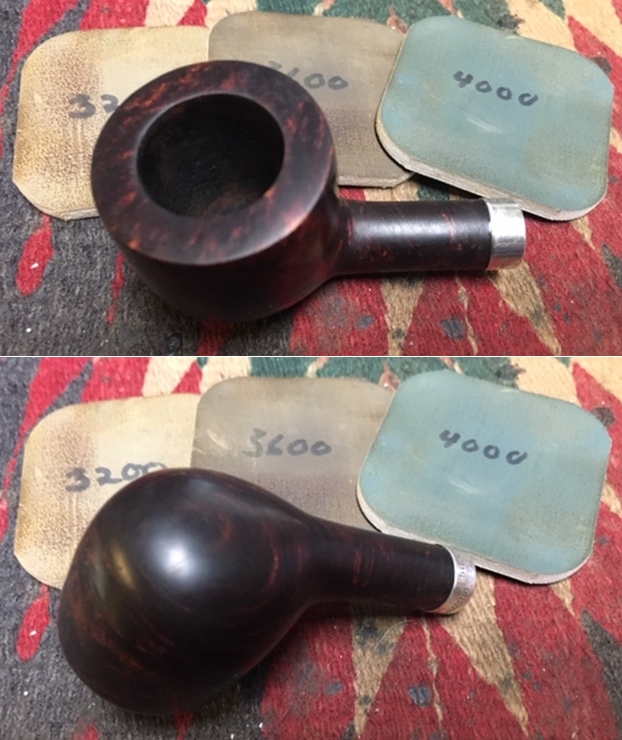
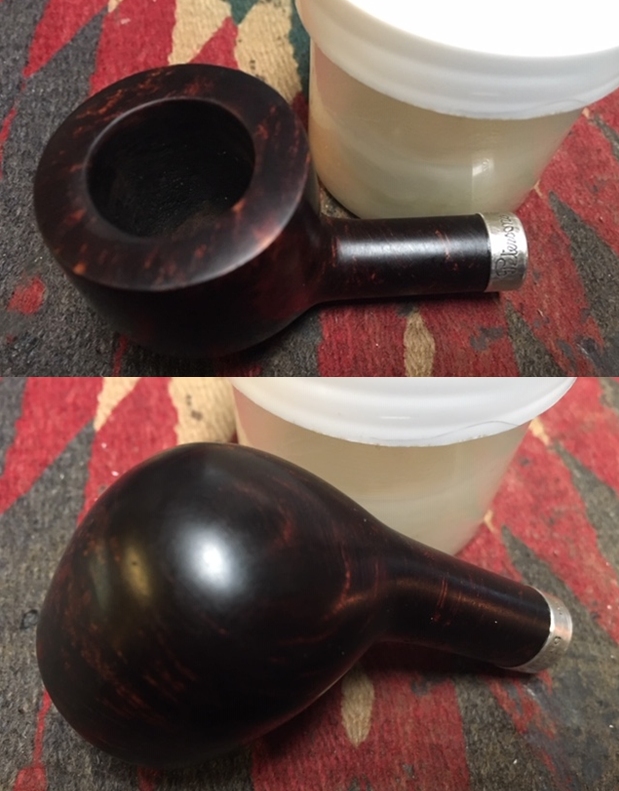
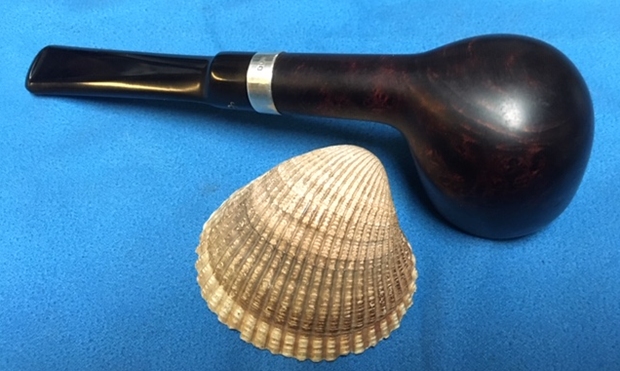
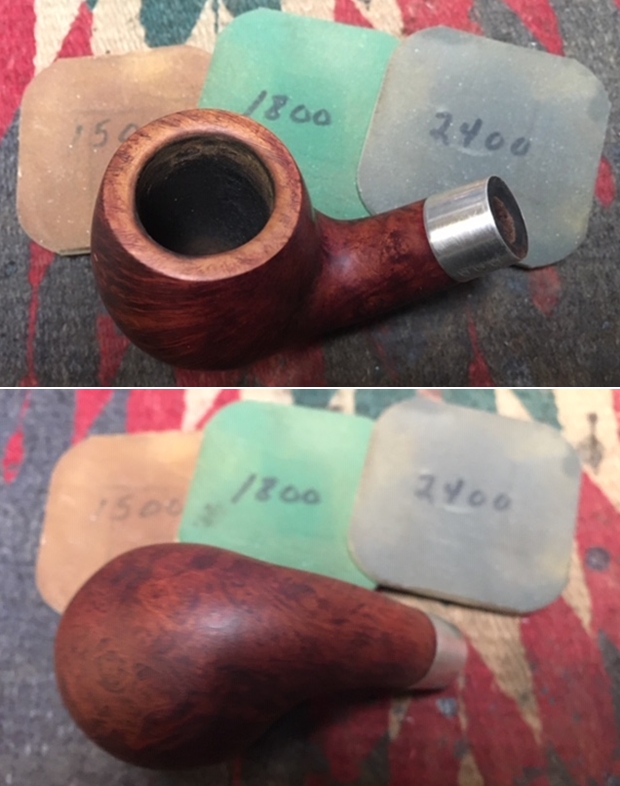
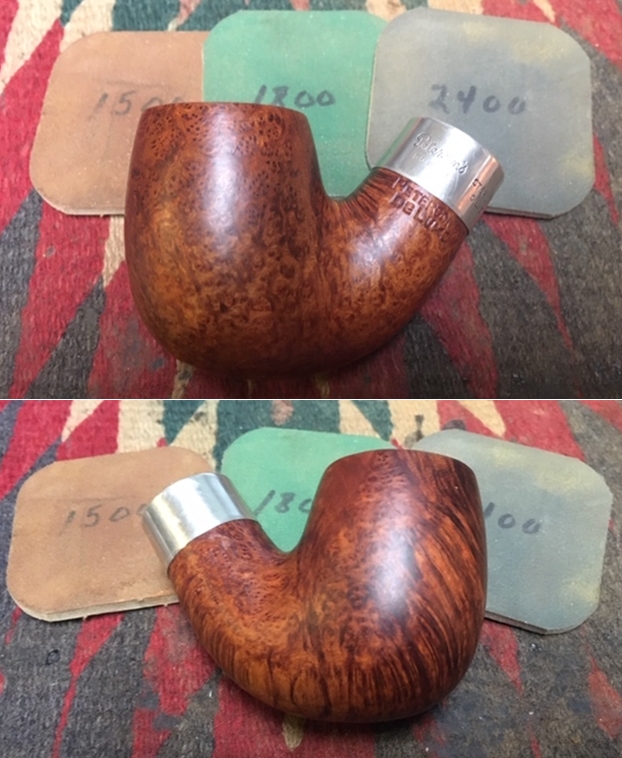
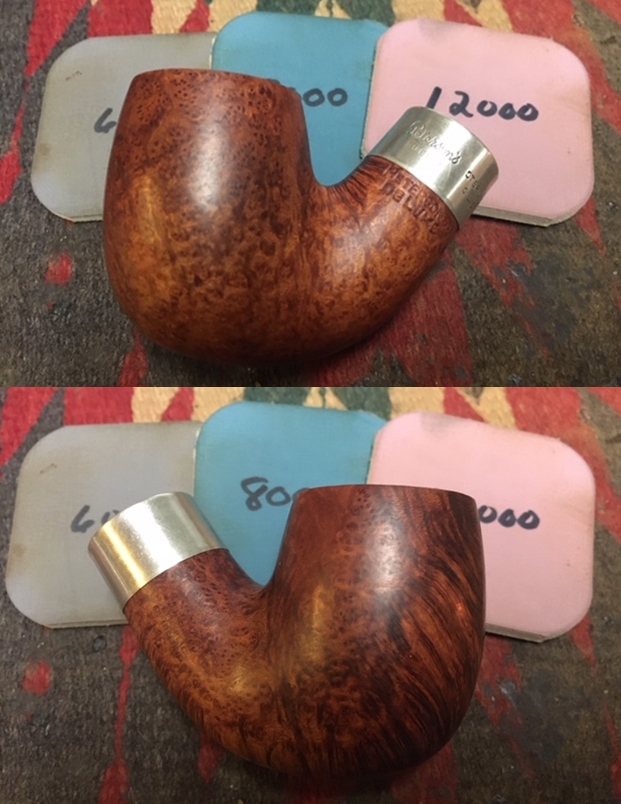
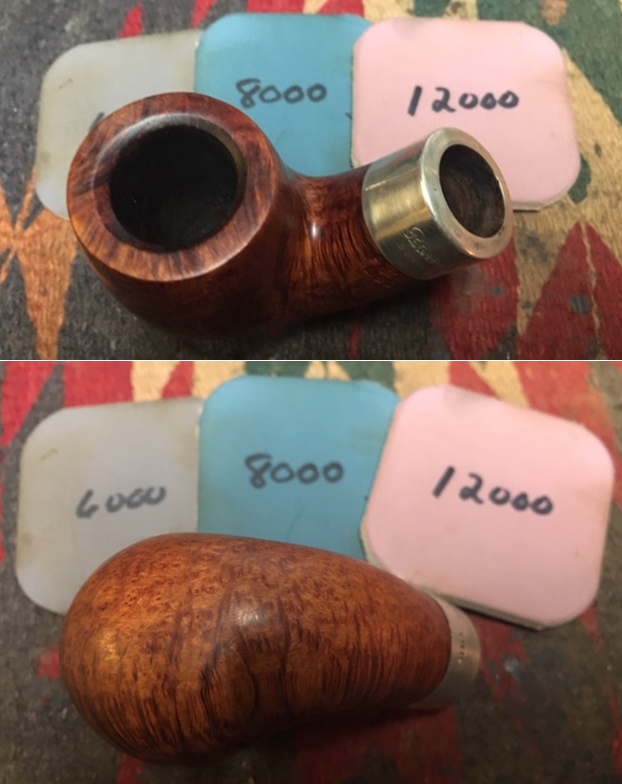
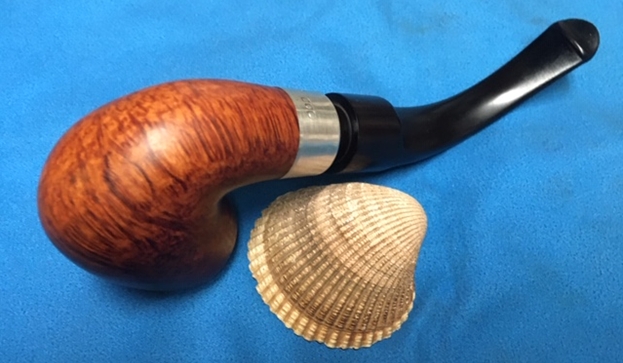
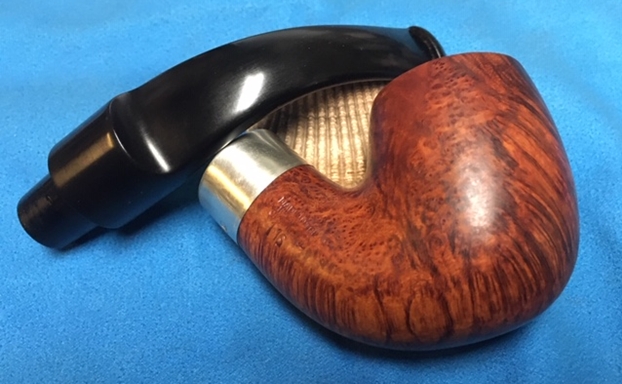
Now with all of the background on the line and the background on Bob Kerr it was time to get on with the restoration of this beautifully grained Peterson’s “Sterling Silver” 68 Bent Billiard. I am really coming to appreciate the hard cleanup work that Jeff did on these pipes. They were a real mess when I sent them to Jeff and I have to tell you it was great that I did not need to clean this pipe. I decided to start the process by cleaning up the left front inner edge of the rim top. I used a folded piece of 220 grit sandpaper to smooth out the edge and give it a bevel.I polished the briar with micromesh sanding pads – wet sanding it with 1500-12000 grit pads and I wiped the bowl down after each sanding pad with a damp cloth. The bowl began to take on a finished shine.  I used Mahagony and Cherry stain pens to restain the rim top. The combination blends with the stain on the body of the bowl.I rubbed the bowl and rim down with Before & After Restoration Balm. I worked it into the surface of the briar with my fingertips to clean, enliven and protect it. I let the balm sit for a little while and then buffed with a cotton cloth to raise the shine. I really like watching the Balm do its magic and bring the briar alive. The stem was in such good condition that I could skip working on it with sandpaper and went directly to polishing it with micromesh sanding pads – wet sanding with 1500-12000 grit pads. I wiped the stem down after each sanding pad with Obsidian Oil. I polished it with Before & After Pipe Stem Polish – both Fine and Extra Fine. Once I had finished the polishing I gave it a coat of a new product I am experimenting with from Briarville Pipe Repair. It is called “No Oxy Oil” and it is made to protect the stem from oxidizing. I set it aside to dry. I used some liquid paper to touch up the P on the left side of the stem. I applied it and let it dry and cure. Once it had cured I scraped the excess off with a tooth pick. The P looks very good.I polished it with Before & After Pipe Stem Polish – both Fine and Extra Fine. Once I had finished the polishing I gave it a coat of a new product I am experimenting with from Briarville Pipe Repair. It is called “No Oxy Oil” and it is made to protect the stem from oxidizing. I set it aside to dry. As usual at this point in the restoration process I am excited to be on the homestretch. I look forward to the final look when it is put back together, polished and waxed. I put the bowl and stem back together. I polished the bowl and stem with Blue Diamond to polish out the scratches in the briar and the vulcanite. I gave the bowl and the stem multiple coats of carnauba wax. I buffed the pipe with a clean buffing pad to raise the shine. I hand buffed it with a microfiber cloth to deepen the shine. The pipe polished up pretty nicely. The grain really pops with the wax and polish. The shiny black vulcanite stem is a beautiful contrast to the browns of the bowl and thick shank. This Peterson’s “Sterling Silver” 68 Bent Billiard was another fun pipe to work on thanks to Jeff’s cleanup work. The pipe almost looks unsmoked. The “Sterling Silver” has a silver Band/Ferrule that is hallmarked and works as a contrast between the stem and the briar and binds it all together. It really is another stunning piece of briar whose shape follows the flow of the briar. The pipe is comfortable pipe to hold in the hand. The finished pipe is shown in the photos below. The dimensions of the pipe are Length: 6 inches, Height: 2 inches, Outside diameter of the bowl: 1 ¼ inches, Chamber diameter: ¾ of an inch. This beautiful pipe will be going on the rebornpipes store if you would like to add it to your collection and carry on Bob’s legacy. If not, I have a lot more of Bob’s estate to work on of various brands. Perhaps one of those will catch your attention. Thanks for reading this blog and my reflections on the pipe while I worked on it. This is an interesting estate to bring back to life.

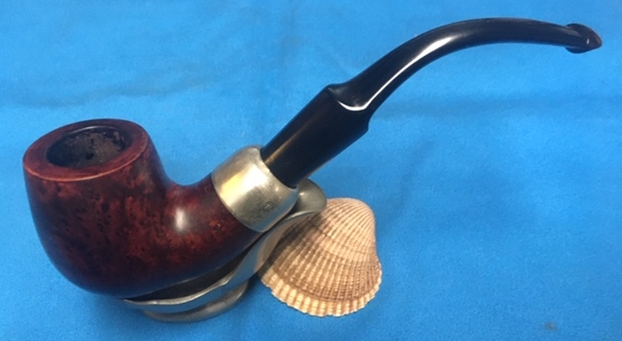
Life for a Republic of Ireland Peterson’s DeLuxe 11S Bent Billiard from Bob Kerr’s Estate


Blog by Steve Laug

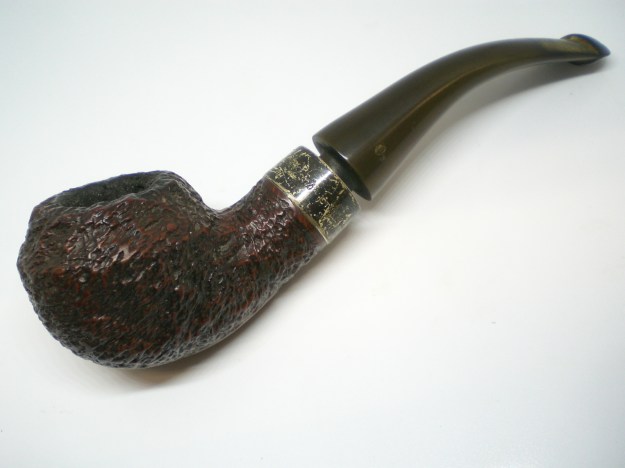
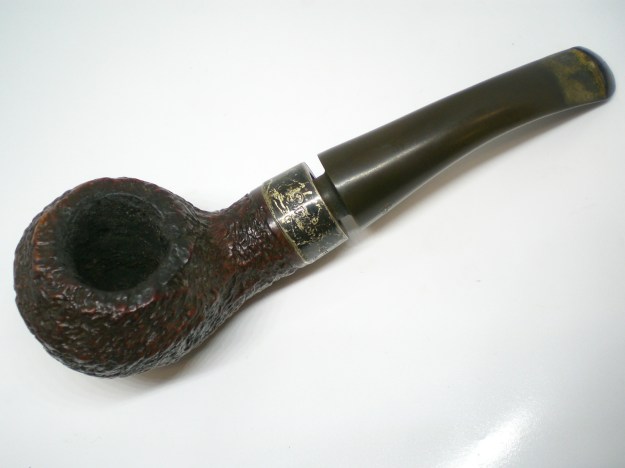
I am working on another pipe from Bob Kerr’s estate, another one of his Petersons. It is the first of the system pipes that I have in his estate and the first Deluxe. It is a large pipe which came with a stem from one of his other pipes. I have restored eight of his Peterson pipes and two of these were Peterson’s pipes made specifically for import into the Canadian market – one was a Kapruf 54 sandblast bent billiard (https://rebornpipes.com/2019/08/09/back-to-bob-kerrs-estate-another-canadian-import-petersons-kapruf-a-54/) and the other was a Kapruf 9BC 56 (https://rebornpipes.com/2019/08/09/back-to-bob-kerrs-estate-linking-petersons-kapruf-9bc-with-the-56-shape-number/). These were interesting that they had a unique numbering system designed for Petersons pipes that were specifically brought to Canada by the Canadian importer, Genin, Trudeau & Co. of Montreal, Quebec. I have included the links on that company below. (https://rebornpipes.com/2016/09/13/petersons-pipes-brochure-from-genin-trudeau-co-montreal-quebec/). I restored an English Made Peterson’s System ‘0’ 1307 bent billiard a  (https://rebornpipes.com/2019/08/17/an-english-made-petersons-system-0-1307-bent-billiard-from-bob-kerrs-estate/) and a Republic Era Peterson’s Flame Grain Bent billiard with a fishtail stem (https://rebornpipes.com/2019/08/16/a-petersons-flame-grain-x220s-bent-billiard-from-bob-kerrs-estate/).

I have been enjoying working on these Peterson’s particularly because Jeff has done such a thorough cleanup of them before I receive them. When I took it out of the box of the pipes that Jeff had cleaned up and sent back to me, I could see that it was stamped Peterson’s DeLuxe vertically on the left side of the shank next to the band. The right side of the shank was stamped Made in the Republic of Ireland over the shape number 11S. It has some stunning grain around the bowl and shank under the thick grime. There was a thick cake in the bowl with remnants of tobacco stuck on the walls. There was a fair lava overflow on the rim. The top and edges of the rim looked very good under the grime. I think that there was a beautiful pipe underneath all of the buildup of years of use. The band is stamped Peterson’s over Dublin followed by Sterling Silver on the left side. On the underside are three hallmarks – The Hibernia stamp, the Crowned Harp stamp and finally the letter “O”. The wrong stem was in the shank when I sent it to Jeff so that is the one shown in the photos. It was oxidized and calcified toward the end with some tooth chatter but surprisingly it did not have the deep tooth marks that I have come to expect from Bob’s pipes but the button edges were worn. Jeff took photos of the pipe before he started his cleanup work on it. Jeff took photos of the bowl and rim top to show the thick, hard cake in the bowl and the lava build up on the top of the rim and the edges of the bowl. The rim top, with the inner bevel appeared to be in good condition with no burn marks or chips. The outer edges of the rim also appeared to be in good condition. Jeff took photos of the sides and heel of the bowl to show the condition of the finish. You can see the beautiful birdseye grain on the sides and cross grain on the front, back and underside of the bowl and shank. Even under the dirt and debris of the years it looked very good. The cross grain on the heel was beautiful.   Jeff took photos of the stamping on both sides of the bowl and shank. The vertical stamping on the left side was readable as you can see from the photos. It read Peterson’s DeLuxe. The stamp on the right side read Made in the Republic of Ireland with the shape number 11S underneath. The band was also stamped in the silver. Jeff took photos of the stamping. On the left side of the band/ferrule it is stamped Peterson’s Dublin (photo 1). As the pipe is turned it reads Sterling Silver (photo 2). Finally on the underside it is stamped with three hallmarks -1. Hibernia, 2. Crowned Harp and 3. The letter “O”. I will need to look that up during the restoration. Jeff took photos of the top and underside of the stem showing the tooth chatter, scratching and oxidation on the stem surface and wear on the edges of the button. I turned to a Peterson Catalogue that I have on rebornpipes and looked up the System Deluxe pipes (https://rebornpipes.com/tag/peterson-hallmark-chart/). I have put a red box around the 11S pipe shown in the catalogue page shown below.   I turned first to Pipephil’s site to reacquaint myself with the DeLuxe. Unfortunately there was no information to be found on this specific line. I then turned to Pipedia’s article on Peterson pipes to see what I could garner from that information. It is a great read in terms of the history of the brand (https://pipedia.org/wiki/Peterson). I have included a bit of the pertinent history here.

1950 – 1989 The Republic Era  – From 1950 to the present time, the stamp for this era is “Made in the Republic of Ireland” in a block format generally in three lines but two lines have been used with or without Republic being abbreviated.

During the 1950’s and 60’s the Kapp & Peterson company was still in the ownership of the Kapp family. However 1964 saw the retrial of the company Managing Director Frederick Henry(Harry) Kapp.

In the 1960’s Peterson hallmarked all gold mounted pipes but apparently they used their own marks on silver. This practice stopped at the end of that decade when they started to have all silver bands hallmarked.

With that information in hand I knew what I was dealing with in terms of the stamping on the pipe. It is a 1980  Republic Period pipe. I also wanted to be able to interpret the hallmarks on the silver band. I have captured a portion of the chart that include below that helps to clarify the meaning of each of the three hallmarks. I like the Hallmark feature on the higher end Peterson pipes with Sterling silver bands. It helps to pin down the date even further.

  • “Hibernia” seated, arm on harp represents Ireland (country of manufacture). There have been minor design changes over the years.
  • The “Harp Crowned” is the fineness mark denoting the high quality (purity) of the silver, and was used in a variety of designs until October 1992 when it was replaced by the new European Standard or Millesimal mark which gives the purity or quality of the silver in parts per thousand.
  • The Date Letter Code for the year in which the silver was hallmarked (see the chart below). In certain years a fourth hallmark is applied – for example 1966 – a Sword of Light for the 50th anniversary of the Easter Rising 1973. There were also other marks used for the fourth hallmark.

The pipe on my table had the Hibernia seated mark (Ireland) followed by the Harp Crowned signifying Sterling Silver percentage and finally in this case a lower case “o”. Each of the hallmarks was in an octagonal cartouche. The chart below helps me identify the date mark to 1980. I have highlighted the 1980 mark with a red arrow in the chart below.

I have included the entire Hallmark chart for ease of reference show any of you be looking to date the pipes that you are working on at present.

From this information and the catalogue page I wanted to see what the original stem looked like then I could go through the other pipes in the estate and see if somehow it had been used on the wrong pipe. I found a pipe that is very similar – an 11S with a thick P-lip stem that did not have the P logo on the side on the Smokingpipes.com online store. I have included both the link and the photo below.

https://www.smokingpipes.com/pipes/new/peterson/moreinfo.cfm?product_id=167772#fullscreenI also found a description of the 11S Deluxe System online on another site:

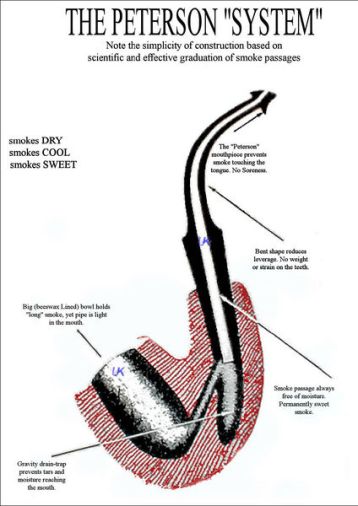
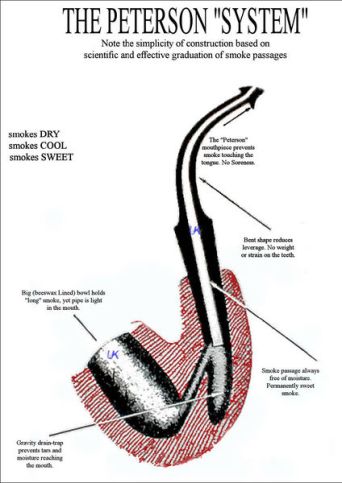
The 11s Deluxe system is a bent billiard with broad, continuous curves and an extra-stout shank. The high quality briar is carefully selected and incorporates the signature system functionality. The shape is fitted with a black acrylic Peterson-Lip mouthpiece, containing an inner metal ‘condenser’ which facilitates a cooler smoking experience. The aluminum Peterson ‘P’ and large hall marked sterling silver band both signature elements of Peterson craftsmanship, combine wonderfully to create a high quality Peterson pipe.

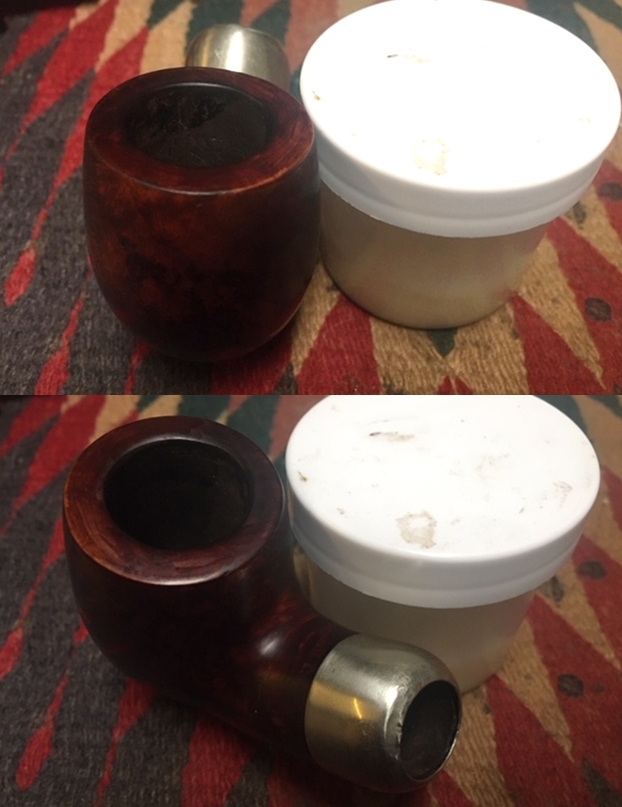
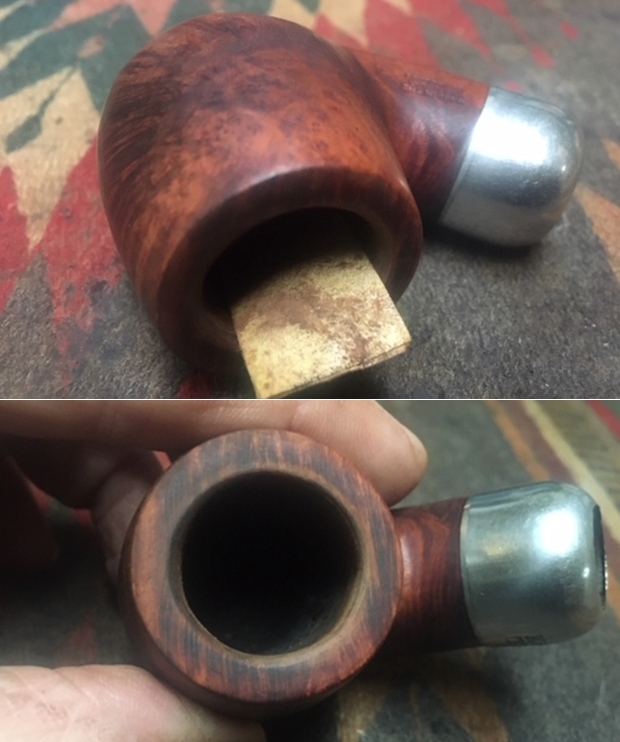
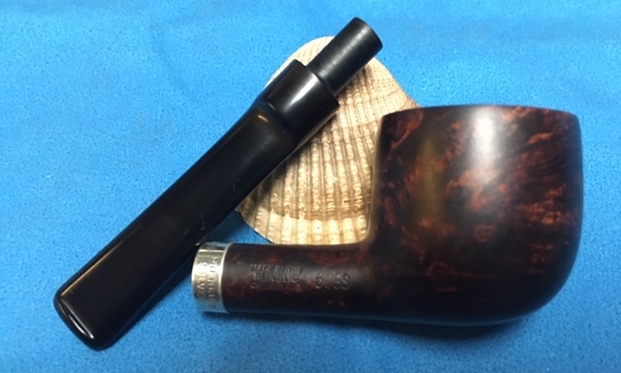
The description includes the aluminum Peterson “P” on the stem which the example I show above and the pipe I am working is lacking. It seemed to have come out both ways. I went through the other Peterson pipes that Jeff had cleaned up and sent back to me. I found one that had the stem switched with the Deluxe. Here are some photos of the two pipes with the wrong stems. The thicker stem shown at the top of both photos is the proper one for the Deluxe. I removed the stems and took photos of the stems.I put the correct stem in the Deluxe and turned my attention to the pipe. I took photos of the pipe with the right stem. With over 125 pipes to clean from Bob’s estate I am very glad for Jeff’s help cleaning them. He remembers this pipe as one of the really dirty ones in Bob’s estate. He cleaned this filthy pipe with his usual penchant for thoroughness that I really appreciate. This one was a real mess and I did not know what to expect when I unwrapped it from his box. He reamed it with a PipNet pipe reamer and cleaned up the reaming with a Savinelli Fitsall Pipe Knife. He scrubbed out the internals with alcohol, pipe cleaners and cotton swabs until the pipe was clean. He scrubbed the exterior of the bowl with Murphy’s Oil Soap and a tooth brush to remove the grime and grit on the briar and the lava on the rim top. The finish looks very good with great looking grain around the bowl and shank. Jeff soaked the stem in Before & After Deoxidizer to remove the oxidation on the rubber. When the pipe arrived here in Vancouver for the second stop of its restoration tour I was amazed it looked so good. I took some close up photos of the rim top and also of the stem surface. I wanted to show what an amazing job Jeff did in the cleanup of the rim top. The rim top was burned and darkened with nicks and notches around the top and inner edge. I also took close up photos of the stem to show the lack of tooth marks and chatter on the stem surface. It was very clean.   One of the things I appreciate about Jeff’s cleanup is that he works to protect and preserve the nomenclature on the shank of the pipes that he works on. The stamping on this one was very faint to start with so I was worried that it would disappear altogether with the cleanup. He was not only able to preserve it but it is clearer than shown in the earlier photos. I took some photos to show the clarity of the stamping. I have noticed that many restorers are not careful to protect the stamping in their cleaning process and often by the end of the restoration the nomenclature is almost destroyed. I would like to encourage all of us to be careful in our work to preserve this as it is a critical piece of pipe restoration!   I also have included a photo of the cleaned up hallmarks that were noted above. Since this is another pipe Bob’s estate I am sure that some of you have read at least some of the other restoration work that has been done on the previous pipes. You have also read what I have included about Bob Kerr, the pipeman who held these pipes in trust before I came to work on them (see photo to the left). Also, if you have followed the blog for long you will already know that I like to include background information on the pipeman whose pipes I am restoring. For me, when I am working on an estate I really like to have a sense of the person who held the pipes in trust before I worked on them. It gives me another dimension of the restoration work. I asked Brian if he or his wife would like to write a brief biographical tribute to her father, Bob. His daughter worked on it and I received the following short write up on him and some pictures to go along with the words including one of Bob’s carvings. Once again I thank you Brian and tell your wife thank you as well.

I am delighted to pass on these beloved pipes of my father’s. I hope each user gets many hours of contemplative pleasure as he did. I remember the aroma of tobacco in the rec room, as he put up his feet on his lazy boy. He’d be first at the paper then, no one could touch it before him. Maybe there would be a movie on with an actor smoking a pipe. He would have very definite opinions on whether the performer was a ‘real’ smoker or not, a distinction which I could never see but it would be very clear to him. He worked by day as a sales manager of a paper products company, a job he hated. What he longed for was the life of an artist, so on the weekends and sometimes mid-week evenings he would journey to his workshop and come out with wood sculptures, all of which he declared as crap but every one of them treasured by my sister and myself. Enjoy the pipes, and maybe a little of his creative spirit will enter you!

Now with all of the background on the line and the background on Bob Kerr it was time to get on with the restoration of this beautifully grained Peterson’s DeLuxe llS Bent Billiard. I am really coming to appreciate the hard cleanup work that Jeff did on these pipes. They were a real mess when I sent them to Jeff and I have to tell you it was great that I did not need to clean this pipe. I decided to start the process by polishing the briar with micromesh sanding pads – wet sanding it with 1500-12000 grit pads and I wiped the bowl down after each sanding pad with a damp cloth. The bowl began to take on a finished shine.  The stem was in such good condition that I could skip working on it with sandpaper and went directly to polishing it with micromesh sanding pads – wet sanding with 1500-12000 grit pads. I wiped the stem down after each sanding pad with Obsidian Oil. I polished it with Before & After Pipe Stem Polish – both Fine and Extra Fine. Once I had finished the polishing I gave it a coat of a new product I am experimenting with from Briarville Pipe Repair. It is called “No Oxy Oil” and it is made to protect the stem from oxidizing. I set it aside to dry. As usual at this point in the restoration process I am excited to be on the homestretch. I look forward to the final look when it is put back together, polished and waxed. I put the bowl and stem back together. I polished the bowl and stem with Blue Diamond to polish out the scratches in the briar and the vulcanite. I gave the bowl and the stem multiple coats of carnauba wax. I buffed the pipe with a clean buffing pad to raise the shine. I hand buffed it with a microfiber cloth to deepen the shine. The pipe polished up pretty nicely. The grain really pops with the wax and polish. The shiny black vulcanite stem is a beautiful contrast to the browns of the bowl and thick shank. This Peterson’s DeLuxe 11S Bent Billiard was another fun pipe to work on thanks to Jeff’s cleanup work. The pipe almost looks unsmoked. The original Sterling Silver Band/Ferrule works as a contrast between the stem and the briar and binds it all together. It really is a quite stunning piece of briar whose shape follows the flow of the briar. The pipe is comfortable pipe to hold in the hand. The finished pipe is shown in the photos below. The dimensions of the pipe are Length: 6 ½ inches, Height: 2 inches, Outside diameter of the bowl: 1 ¼ inches, Chamber diameter: ¾ of an inch. This beautiful pipe will be going on the rebornpipes store if you would like to add it to your collection and carry on Bob’s legacy. If not, I have a lot more of Bob’s estate to work on of various brands. Perhaps one of those will catch your attention. Thanks for reading this blog and my reflections on the pipe while I worked on it. This is an interesting estate to bring back to life.


Restoring an Irish Made Peterson’s K&P Dublin 213 Billiard from Bob Kerr’s Estate


Blog by Steve Laug

I am working on another pipe from Bob Kerr’s estate, another one of his Petersons. It is different than the others as it is stamped “A Petersons Product” Made in Ireland. I have restored two of his pipes that were uniquely made Peterson’s pipes made specifically for import into the Canadian market – one was a Kapruf 54 sandblast bent billiard (https://rebornpipes.com/2019/08/09/back-to-bob-kerrs-estate-another-canadian-import-petersons-kapruf-a-54/) and the other was a Kapruf 9BC 56 (https://rebornpipes.com/2019/08/09/back-to-bob-kerrs-estate-linking-petersons-kapruf-9bc-with-the-56-shape-number/). These were interesting that they had a unique numbering system designed for Petersons pipes that were specifically brought to Canada by the Canadian importer, Genin, Trudeau & Co. of Montreal, Quebec. I have included the links on that company below. (https://rebornpipes.com/2016/09/13/petersons-pipes-brochure-from-genin-trudeau-co-montreal-quebec/). I restored an English Made Peterson’s System ‘0’ 1307 bent billiard a  (https://rebornpipes.com/2019/08/17/an-english-made-petersons-system-0-1307-bent-billiard-from-bob-kerrs-estate/) and a Republic Era Peterson’s Flame Grain Bent billiard with a fishtail stem (https://rebornpipes.com/2019/08/16/a-petersons-flame-grain-x220s-bent-billiard-from-bob-kerrs-estate/).

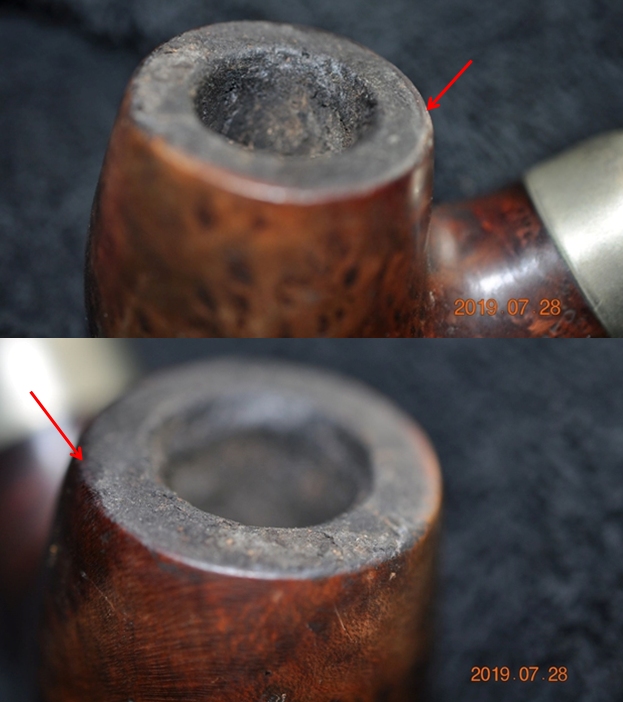
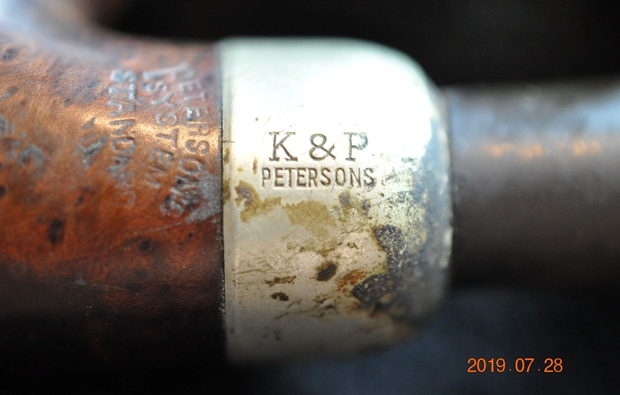
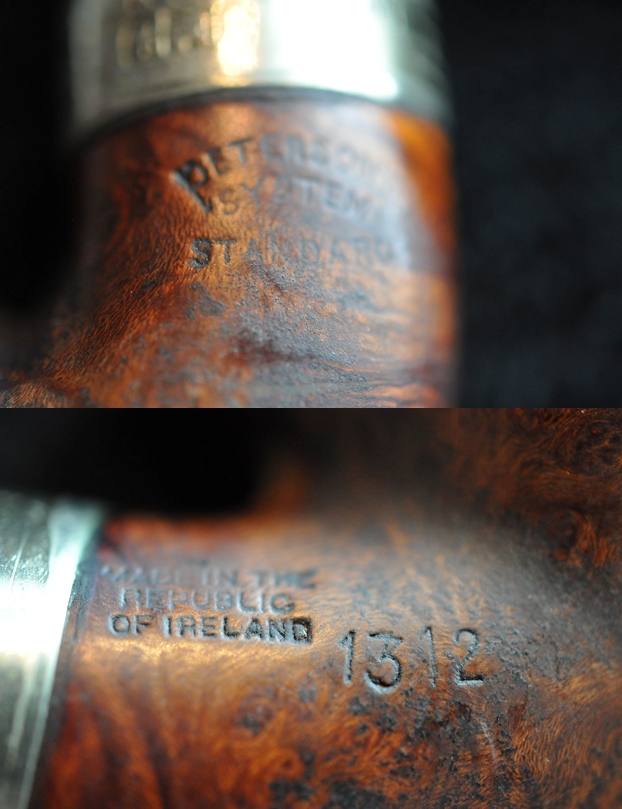
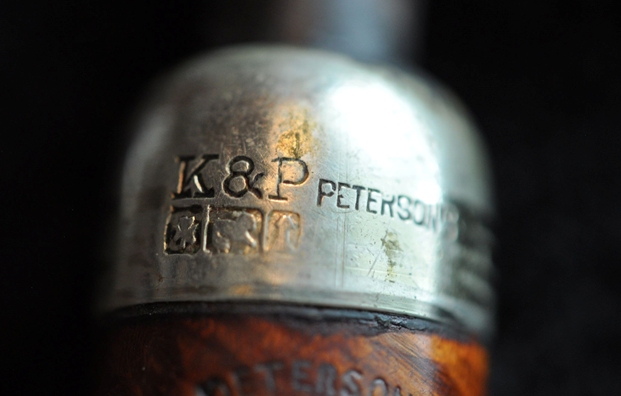
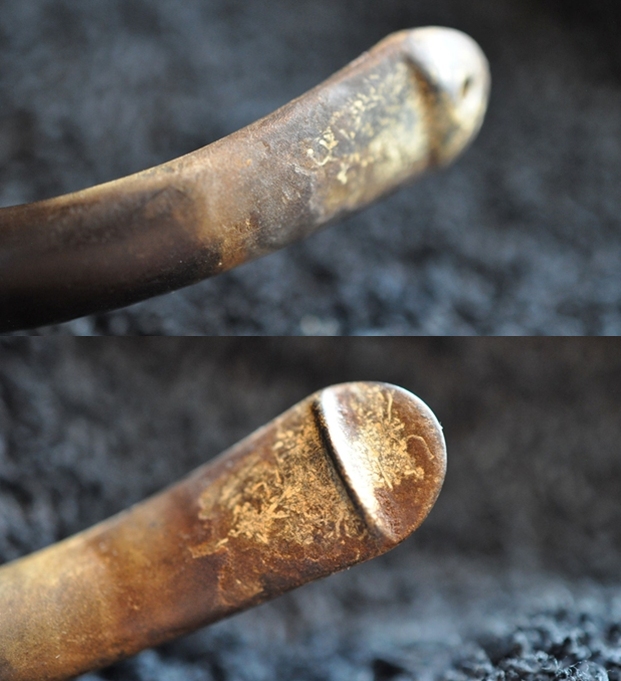
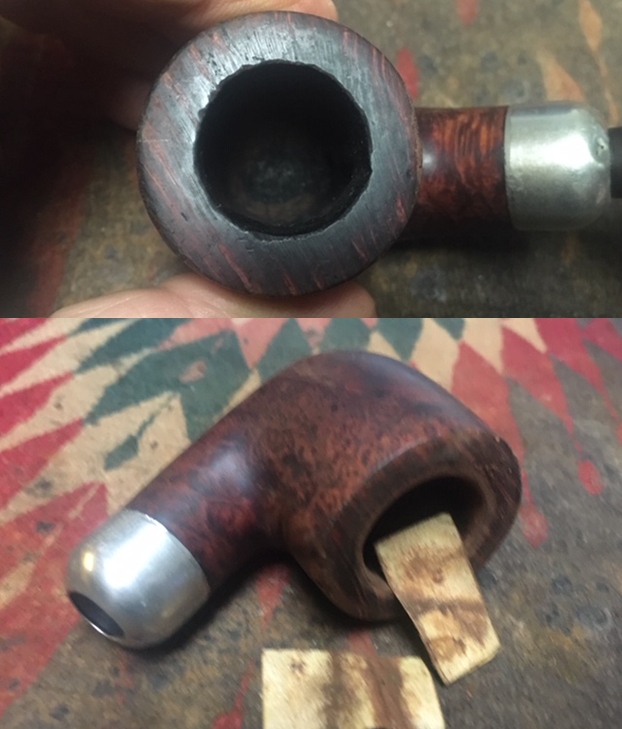
I have been enjoying working on the Peterson’s in the estate. When I took it out of the box of the pipes that Jeff had cleaned up and sent back to me, I could see that it was stamped K&P over Dublin on the left side of the shank and “A Peterson’s Product” Made in Ireland followed by the shape number 213 on the right shank. It has some stunning grain around the bowl and shank under the thick grime. There was a thick cake in the bowl with remnants of tobacco stuck on the walls. There was a fair lava overflow on the rim. The top and edges of the rim are damaged, beat up and very dirty. I think that there was a beautiful pipe underneath all of the grime and buildup of years of use. The band is stamped Sterling Silver with the K&P in chevrons above that. The stem was oxidized and calcified toward the end with some tooth chatter but surprisingly it did not have the deep tooth marks that I have come to expect from Bob’s pipes but the button edges were worn. Jeff took photos of the pipe before he started his cleanup work on it. Jeff took photos of the bowl and rim top to show the thick, hard cake in the bowl and the lava build up on the top of the rim and the edges of the bowl. The rim top had taken a beating and was chipped and worn down. It looked like Bob or someone had used if for a hammer. The inner and outer edges of the rim also sustained damage.   Jeff took photos of the sides and heel of the bowl to show the condition of the finish. You can see the beautiful mix of swirled, flame and birdseye grain underneath the dirt and debris of the years. The cross grain on the heel was beautiful.    Jeff took photos of the stamping on both sides of the bowl and shank. The stamping on the left side was readable as you can see from the photos. It read K&P Dublin. The stamp on the right side read A “Peterson’s Product” Made in Ireland followed by the shape number 213. You can see crack in the shank under the band on the right side. The third photo shows the crack clearly. Jeff took photos of the top and underside of the stem showing the tooth chatter, scratching and oxidation on the stem surface and wear on the edges of the button. I turned first to Pipephil’s site to reacquaint myself with the brand. Unfortunately there was no information to be found on this specific pipe. I then turned to Pipedia’s article on Peterson pipes to see what I could garner from that information. It is a great read in terms of the history of the brand (https://pipedia.org/wiki/Peterson). I have included a bit of the pertinent history here.

The Irish free state came into being in December 1922. The Free State Era was from 1922 through to 1937.  Peterson followed with a stamp of “Irish Free State” in either one or two lines, either parallel or perpendicular to the shanks axis and extremely close to the stem.

Ireland was a republic in all but name. Eventually the Irish people voted for a new constitution in 1937 and Ireland then formally became Eire (Ireland in Irish).

The Made in Eire era stamps were from 1938 through till 1941. Peterson now stamped their pipes with “Made in Eire” in a circle format with “Made” and “Eire” in a circle with the “in” located in the centre of the circle. This was used during the years of 1938 – 41. Later they stamped their pipes with “Made in Ireland” in a circle format 1945-1947 and still later with “Made in Ireland” in a block format 1947-1949. The “Made in Ireland” block format came in either one line or two lines. The Republic of Ireland was formed on 17 April 1949.

With that information in hand I knew what I was dealing with in terms of the stamping on the pipe. It is a 1915-1949 Pre Republic Period pipe. With that dating it is one of Bob’s earlier pipes. Now it was time to work on the pipe.

With over 125 pipes to clean from Bob’s estate I am very glad for Jeff’s help cleaning them. He cleaned this filthy pipe with his usual penchant for thoroughness that I really appreciate. This one was a real mess and I did not know what to expect when I unwrapped it from his box. He reamed it with a PipNet pipe reamer and cleaned up the reaming with a Savinelli Fitsall Pipe Knife. He scrubbed out the internals with alcohol, pipe cleaners and cotton swabs until the pipe was clean. He scrubbed the exterior of the bowl with Murphy’s Oil Soap and a tooth brush to remove the grime and grit on the briar and the lava on the rim top. The finish looks very good with great looking grain around the bowl and shank. Jeff soaked the stem in Before & After Deoxidizer to remove the oxidation on the rubber. When the pipe arrived here in Vancouver for the second stop of its restoration tour I was amazed it looked so good. I took photos before I started my part of the work. I took some close up photos of the rim top and also of the stem surface. I wanted to show what an amazing job Jeff did in the cleanup of the rim top. I also wanted to show that the damage to the rim top was as extensive as I had originally thought. The rim top was burned and darkened with nicks and notches around the top and inner edge. There was some darkening on the back portion of the rim top and inner edge on the front. The rim top was a nightmare of issues. The outer edge of the bowl was also damaged. I also took close up photos of the stem to show the lack of tooth marks and chatter on the stem surface. You can also see the wear to the button.   One of the things I appreciate about Jeff’s cleanup is that he works to protect and preserve the nomenclature on the shank of the pipes that he works on. The stamping on this one was very faint to start with so I was worried that it would disappear altogether with the cleanup. He was not only able to preserve it but it is clearer than shown in the earlier photos. I took some photos to show the clarity of the stamping. I have noticed that many restorers are not careful to protect the stamping in their cleaning process and often by the end of the restoration the nomenclature is almost destroyed. I would like to encourage all of us to be careful in our work to preserve this as it is a critical piece of pipe restoration!   Since this is another pipe Bob’s estate I am sure that some of you have read at least some of the other restoration work that has been done on the previous pipes. You have also read what I have included about Bob Kerr, the pipeman who held these pipes in trust before I came to work on them (see photo to the left). Also, if you have followed the blog for long you will already know that I like to include background information on the pipeman whose pipes I am restoring. For me, when I am working on an estate I really like to have a sense of the person who held the pipes in trust before I worked on them. It gives me another dimension of the restoration work. I asked Brian if he or his wife would like to write a brief biographical tribute to her father, Bob. His daughter worked on it and I received the following short write up on him and some pictures to go along with the words including one of Bob’s carvings. Once again I thank you Brian and tell your wife thank you as well.

I am delighted to pass on these beloved pipes of my father’s. I hope each user gets many hours of contemplative pleasure as he did. I remember the aroma of tobacco in the rec room, as he put up his feet on his lazy boy. He’d be first at the paper then, no one could touch it before him. Maybe there would be a movie on with an actor smoking a pipe. He would have very definite opinions on whether the performer was a ‘real’ smoker or not, a distinction which I could never see but it would be very clear to him. He worked by day as a sales manager of a paper products company, a job he hated. What he longed for was the life of an artist, so on the weekends and sometimes mid-week evenings he would journey to his workshop and come out with wood sculptures, all of which he declared as crap but every one of them treasured by my sister and myself. Enjoy the pipes, and maybe a little of his creative spirit will enter you!

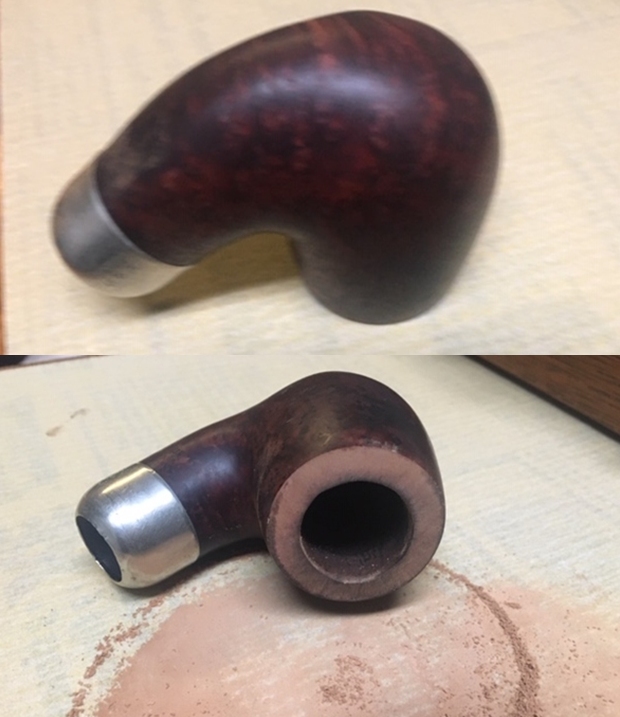
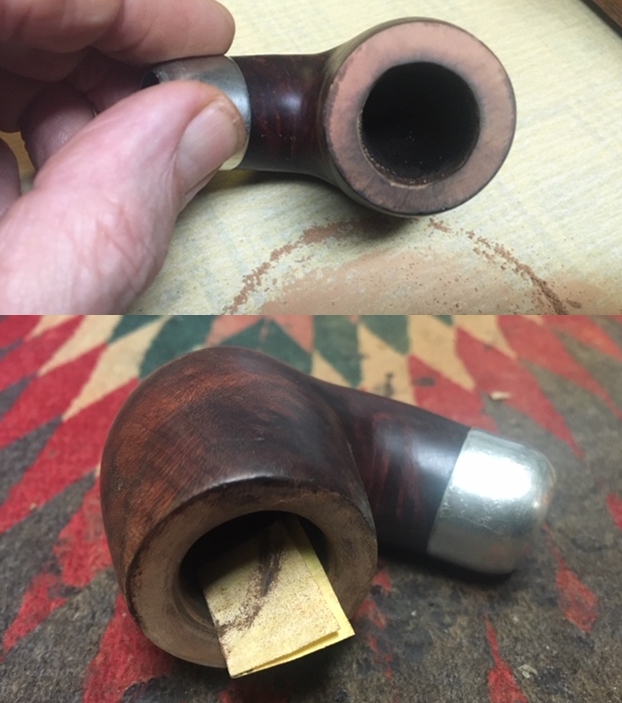
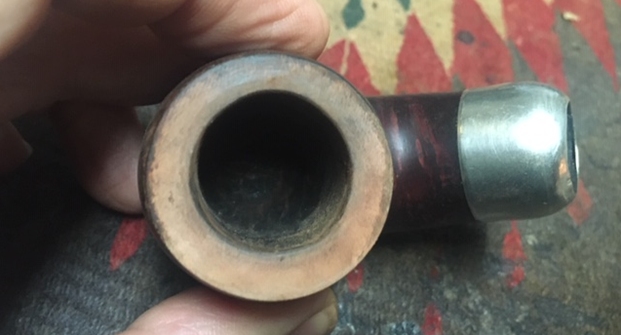
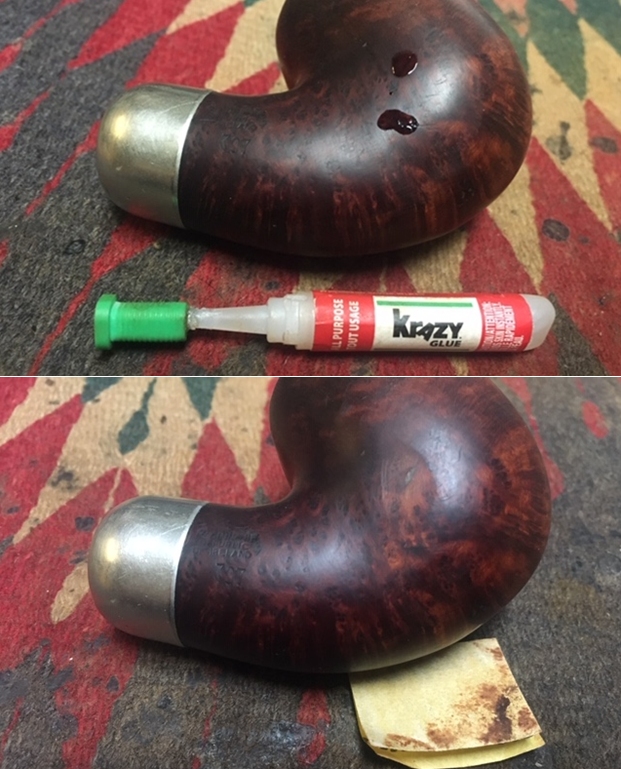
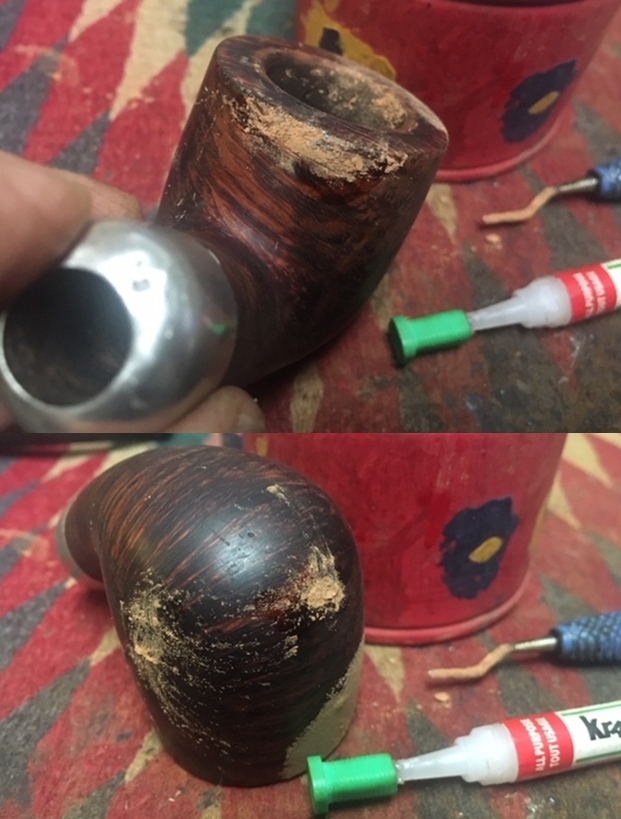
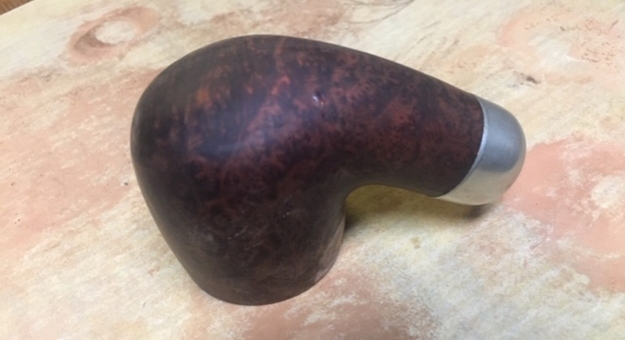
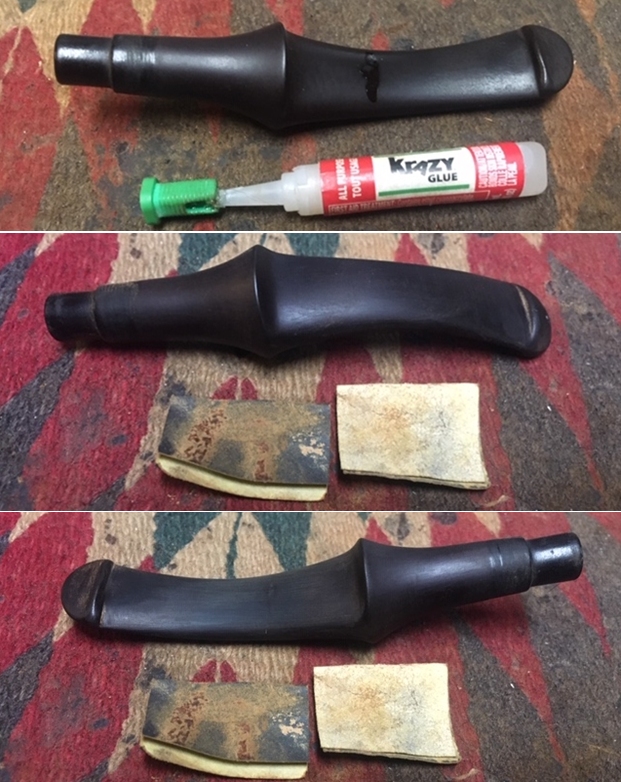
Now, on to the rest of the restoration of this beautifully grained “A Peterson Product” Made in Ireland 213 Billiard. It was great that I did not need to clean the pipe. I decided to start the process by addressing the damage to rim top and the inner edge. I removed the loose band from the shank before I started. From the extent of damage to the inner edge of the rim and the top of the bowl I decided to begin by filling in the damage in the deep chips on the rim top and edge with super glue. Once it cured I topped the bowl on a topping board using 220 grit sandpaper to remove as much of the damage as possible. I took photos to show the slow process of repairing that damage. The photos show the topping process and the rim top after I had topped it to an acceptable point where the condition of the top and edges was good.  I used a folded piece of 220 grit sandpaper to clean up the inner edge and give it a light bevel to take care of the damage. I polished it with 400 grit sandpaper.With the top finished I moved on to address the crack in the shank. In my examination I could see that the crack been repaired somewhere along the way. The crack itself had been filled in with glue. I topped up the filling with clear Krazy Glue to insure that the repair did not shift.     I painted the surface of the shank with Weldbond all-purpose glue and made sure that the crack was covered. I pressed the silver band on the shank and aligned the stamping on the band with the stamping on the left side of the shank. I took photos of the rebanded shank. The repair looks really good. I polished the briar with micromesh sanding pads – wet sanding it with 1500-12000 grit pads and I wiped the bowl down after each sanding pad with a damp cloth. The bowl began to take on a finished shine. I stained the rim top and edges with a Cherry and Walnut Stain pen to match the colour of the stain on the bowl. Once it was polished with the Before & After Balm and buffed with a microfiber cloth the stain would blend perfectly.After the stain had cured, I rubbed the bowl and rim down with Before & After Restoration Balm. I worked it into the surface of the briar with my fingertips to clean, enliven and protect it. I let the balm sit for a little while and then buffed with a cotton cloth to raise the shine. I really like watching the Balm do its magic and bring the briar alive.  I polished the stem with micromesh sanding pads – wet sanding with 1500-12000 grit pads. I wiped the stem down after each sanding pad with Obsidian Oil. I polished it with Before & After Pipe Stem Polish – both Fine and Extra Fine. Once I had finished the polishing I gave it a coat of a new product I am experimenting with from Briarville Pipe Repair. It is called “No Oxy Oil” and it is made to protect the stem from oxidizing. I set it aside to dry.   As usual at this point in the restoration process I am excited to be on the homestretch. I look forward to the final look when it is put back together, polished and waxed. I put the bowl and stem back together. I polished the bowl and stem with Blue Diamond to polish out the scratches in the briar and the vulcanite. I gave the bowl and the stem multiple coats of carnauba wax. I buffed the pipe with a clean buffing pad to raise the shine. I hand buffed it with a microfiber cloth to deepen the shine. The pipe polished up pretty nicely. The grain really pops with the wax and polish. The shiny black vulcanite stem is a beautiful contrast to the browns of the bowl. This Peterson’s K&P Dublin 213 Billiard was another fun pipe to work on thanks to Jeff’s cleanup work. The repair to the rim top and edges came out well. The original Sterling Silver Band covers the shank repair well and binds it all together. It really is a quite stunning piece of briar whose shape follows the flow of the briar. The pipe is comfortable pipe to hold in the hand. The finished pipe is shown in the photos below. The dimensions of the pipe are Length: 5 ¾ inches, Height: 1 ½ inches, Outside diameter of the bowl: 1 ¼ inches, Chamber diameter: ¾ of an inch. This beautiful pipe will be going on the rebornpipes store if you would like to add it to your collection and carry on Bob’s legacy. If not, I have a lot more of Bob’s estate to work on of various brands. Perhaps one of those will catch your attention. Thanks for reading this blog and my reflections on the pipe while I worked on it. This is an interesting estate to bring back to life.

Sprucing up an Unsmoked Peterson’s Sterling Made in Ireland 5 Billiard


Blog by Steve Laug

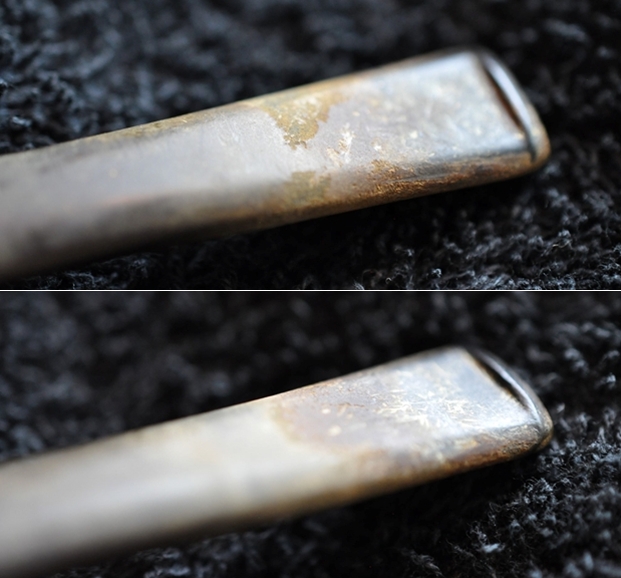
The next pipe I have chosen to work on is an unsmoked Peterson’s Sterling Billiard. It has a Sterling Silver band around the shank that is tarnished and oxidized. The bowl is raw briar on the inside and unsmoked. There are some obvious fills around the bowl and shank that are ugly in appearance to my mind but they are sound – one on the back, one on the left side of the bowl and the third on the left side of the shank. The exterior is also covered with a shiny coat of varnish that would need to go in my opinion. The stem was in decent condition – it had just lost a bit of its shine. Kind of an anomaly – a shiny plastic looking finish on the bowl and a dull looking stem. The pipe was stamped on the left side of the shank and read Peterson’s Sterling. On the right side it is stamped with the Made in Ireland in a circle and the number 5 identifying the shape. It is an interesting pipe. I took photos of the bowl and rim top to show unsmoked condition of the bowl and rim top. It was truly a pristine looking bowl – and it did not have a bowl coating so that was even a bonus. The silver band was quite oxidized and it was impossible to identify the markings on the silver. I took photos of the top and underside of the stem showing the clean and pristine condition of the stem surfaces.     I took the stem out of the shank and was a little surprised by the stinger in the tenon. I don’t know if it was original or had been added somewhere along the way. It too was very clean. It was removable so I took it out of the tenon and took a photo as well. I checked on Pipephil’s website to see what I could learn about the stamping on the pipe. I found the following information that I quote:

The country of manufacture stamp changed from “Made in Eire” to “Made in Ireland” (In circle) about 1945 (this pipe). Later (1947-49) it became “MADE IN IRELAND” (block letters) stamped in one or two lines (http://www.pipephil.eu/logos/en/logo-peterson.html).

I turned to Pipedia’s article on Peterson pipes to see what I could garner from that information. It is a great read in terms of the history of the brand (https://pipedia.org/wiki/Peterson#1950_-_1989_The_Republic_Era). In a section on

Prior to 1920 it was rare for a country of origin to be stamped on the pipe, just Peterson’s Dublin on the band. After 1921/22 if it is stamped “MADE IN IRELAND” and the “Made in” is stacked over “Ireland” or “MADE IN EIRE” or several other forms, it was made between 1922 and 1938. A considerable number of Peterson pipes were stamped “Irish Free State”. From about 1930 to 1949, most of the pipes (those which were stamped) were stamped “Made in Ireland”.” If the stamp reads “MADE IN IRELAND” in a circle, the pipe was made between 1939 and 1948. These are all “prerepublic” pipes.

I then turned to the book I should have consulted first, The Peterson Pipe, by Mark Irwin and Gary Malmberg. On page 155 I found some information on the line.

Peterson’s US distributor during the early Republic era was Rogers Imports, Inc., a New York firm whose catalogs offered all varieties of smoker’s products. Rogers was the exclusive wholesale dealer for several prominent European pipe manufacturers, they also marketed accessories under their own name. On behalf of Kapp & Peterson they registered the Killarney, Shamrock and Sterling trademarks with the US Patent Office in the 1950s, and their catalogs also featured the System, Premier Selection and Supreme.

On page 156-157 in the same book there is a catalogue page with the Sterling shown on it. It sold for $7.50 in 1953. It read:

As the name implies the Sterling quality of this fine pipe is distinguished in a careful selection of its fine Mediterranean Bruyere, its careful workmanship and sparkling finish. Banded with a Sterling Silver band – a Hallmark of quality – the pipe is available in a handsome natural or dark rich walnut finish. Patent P-lip stem. Individually boxed.

With that information in hand I knew what I was dealing with in terms of the stamping on the pipe. It is a late Pre-republic era or early Republic era pipe. The circular Made in Ireland stamp on the right side of the shank tells me it was made between 1939-1948. It showed up in Peterson Catalogue in 1953 and it seems that the pipe has remained unsmoked since the late 40s early 50s.

Now, on to the restoration of this beautifully grained Peterson’s Sterling 5 billiard. The fact that it was an unsmoked pipe meant that I really did not need to clean the pipe. I decided to start the process by addressing the oxidation/tarnish of the Sterling Silver band on the shank. I wiped the band down with a jeweler’s cloth to remove the tarnish. It has three hallmarks stamped toward the top of the left side followed by Sterling Silver and Peterson Dublin. The hallmarks seem to be K&P though they are worn.The bowl had a thick coat of varnish on the surface that was shiny and in some places slightly wrinkled. I wiped the bowl down with a cotton pad and isopropyl alcohol to soften the finish. I wet sanded the briar with micromesh sanding pads – 1500-12000 grit sanding pads. I wiped the bowl surface down with a damp cloth to remove the sanding dust. Once I finished the exterior of the briar was clean of the shiny varnish coat and the grain really stood out.  After sanding the bowl and removing the finished I rubbed it down with Before & After Restoration Balm. I worked it into the surface of the briar with my fingertips to clean, enliven and protect it. I let the balm sit for a little while and then buffed with a cotton cloth to raise the shine. Mark Hoover’s Balm is a product that I have come to appreciate and one I use on every pipe I have been working on.  The stem was in very good condition and appeared to be original. It did not have a “P” logo on stem side or top. I polished the stem with micromesh sanding pads – wet sanding with 1500-12000 grit pads. I wiped the stem down after each sanding pad with Obsidian Oil. I polished it with Before & After Pipe Stem Polish – both Fine and Extra Fine. Once I had finished the polishing I gave it final coat of oil and set it aside to dry.     As usual at this point in the restoration process I am excited to be on the homestretch. I look forward to the final look when it is put back together, polished and waxed. I put the bowl and stem back together. I polished the bowl and stem with Blue Diamond to polish out the scratches in the briar and the vulcanite. I gave the bowl and the stem multiple coats of carnauba wax. I buffed the pipe with a clean buffing pad to raise the shine. I hand buffed it with a microfiber cloth to deepen the shine. The pipe polished up pretty nicely. The grain really pops with the wax and polish. The shiny black vulcanite stem is a beautiful contrast to the browns of the bowl. This Peterson’s Sterling 5 Billiard a great pipe to spruce up. The Sterling Silver Band around the shank is a great contrast between the browns of the briar and the black of the vulcanite. It is a nice piece of briar whose shape follows the flow of the grain. It is a very comfortable pipe to hold in the hand. The finished pipe is shown in the photos below. The dimensions of the pipe are Length: 5 ½ inches, Height: 1 ¾ inches, Outside diameter of the bowl: 1 ¼ inches, Chamber diameter: ¾ of an inch. This beautiful pipe will be going on the rebornpipes store if you would like to add it to your collection and be the first to smoke it. Thanks for reading this blog and my reflections on the pipe while I worked on it. This is an interesting estate to bring back to life.


Restoring a Pair of Petite Peterson’s of Dublin Pocket Pipes


Blog by Steve Laug

I did a pipe repair on an old cased Bulldog for a fellow in Australia, Ray Choy. He sent the pipe and I repaired it and sent it back to him. He replied that he had a few pipes that were just too small for his liking anymore and he wanted to clean and ream them and send them to me. His email said that he would clean them up with the reamer and cleaning equipment he had. Once he had them cleaned and reamed he would send them to me for the finishing touches. The box arrived and I set them aside so that I could finish the clean up later. I decided to tackle the two small Peterson’s Pocket pipes that Ray had sent me. The first one is a Peterson’s of Dublin Belgique military mount and the second is a Peterson’s of Dublin Calabash military mount. Both pipes are stamped on the left side of the shank with the words Peterson’s Dublin. On the right side of the shank both are stamped Made in the Republic of Ireland. Neither one has a shape number on them and both have a vulcanite shank extension bearing the Peterson’s “P”. The stems were in good condition with no chatter or tooth marks. Both had some light oxidation.

Ray had done a great job on the reaming and the cleaning of the bowl and shank so I could literally just start with the finishing touches. The rim tops on both pipes had some darkening on the flat tops. The inner edges of both were damaged and slightly out of round. The outer edges were in great condition. There was some light oxidation on the vulcanite shank extensions. I took some photos of the pipe before I started putting the finishing touches on them. I took some photos of the rim top and bowl to show the condition of the pipes when they arrived. The bowls were very clean. Both rims had some darkening and the inner edge of both had some damage to them. The photos of the stems show the condition of both of them. They both are in excellent condition. I took photos of the stamping on both pipes. The first is the Belgique with straight shank and the second is the Calabash with the bent shank. You can see the clear stamping on both pipes. The left side shows the arched Peterson’s Dublin with a forked P and the right side shows Made in the Republic of Ireland. I have a 2010 Peterson Catalogue on rebornpipes that shows the various shapes that Peterson made. There is a page there on Specialty Pipes that shows the pipes that I am working on. The pipes pictured are different from the two that I am working on in that both of these are military mount stem. It states that the Belgique and Calabash are two petite and lightweight Peterson crafted with all the care and know how of century old pipe makers, from finest quality briar in red polish and rustic finishes with Fishtail mouthpieces only. However they are described in the catalogue the two shapes that are extremely lightweight. These two are not red polish but actually a rich matte brown finish. The fishtail mouthpieces are classic military mounts that can easily be removed to fit in the pocket. They represent the best micro-pocket pipe within the Peterson portfolio. I have included the noted page below (https://rebornpipes.com/2015/05/15/).I did a bit more digging on the Peterson Pipe Notes blog. There I found that Mark had included a photo of the various Speciality pipes. Peterson’s first put these four small pipes on the market in 1945 – Tankard & Barrel, Calabash & Belgique seen in the photo below.  Here is the link to Mark’s Blog (https://www.petersonpipenotes.org/tag/peterson-valentia-pipe/).I did a bit more digging and found some descriptions of the two shapes that I am working on. The various descriptions of the Belgique come from a variety of sites and the final one is quoted on the Brothers of Briar site.

…The Belgique is yet another extremely lightweight, petit pipe. It can be described as a tulip shape, and is fitted… and fishtail mouthpiece. A rich brown hue adorns the briar and makes for an attractive finish to this pocket companion.

…The Peterson Belgique Pipe is a straight cutty, which is a traditional shape derived from the old clay pipes. It is a small un-filtered pipe made from the finest Briar that Peterson have become renowned for. It has a smooth polished finish with a rich Brown stain to show of the natural grain pattern of the Briar.

…I have a pre rep Belgique love it. As you know the bowl is pretty large for the small pipe measuring 5/8″ ID and 1 1/4″ deep. My pipe is just shy of 6″ long and only weighs 11.7 grams. the bowl is not tapered which makes the capacity rather nice. Depending on what tobacco you load you will get a 30- 45 min smoke. The Belgique has thin walls so you have to sip very slowly and tamp more than usuall. The newer models hava a fishtail stem which i believe makes the newer pipes not as delicate as my military p lip. If you decide to get the Belgique I am sure you will not be disappointed. (http://www.brothersofbriar.com/t16010-anybody-familiar-with-peterson-s-belgique-model).

…The Belgique is one of our favorite shapes in the Peterson line up. Interestingly, while it was a serious mainstay of the brand in decades past, it sort of faded into obscurity for a few years there, before being seriously revived in the past decade. A particularly small shape, and sort of an oddity in Peterson’s shaping lexicon (a bit like Native American loan words in English), it nonetheless fits the timeless, elegant style for which Peterson is known and loved.             

I also found this description of the Calabash.

This particular Calabash represents the smallest pipe within the Peterson portfolio making it a perfect pocket pipe for a short smoke.  Finished here with a rich brown finish together with a… fishtail mouthpiece.

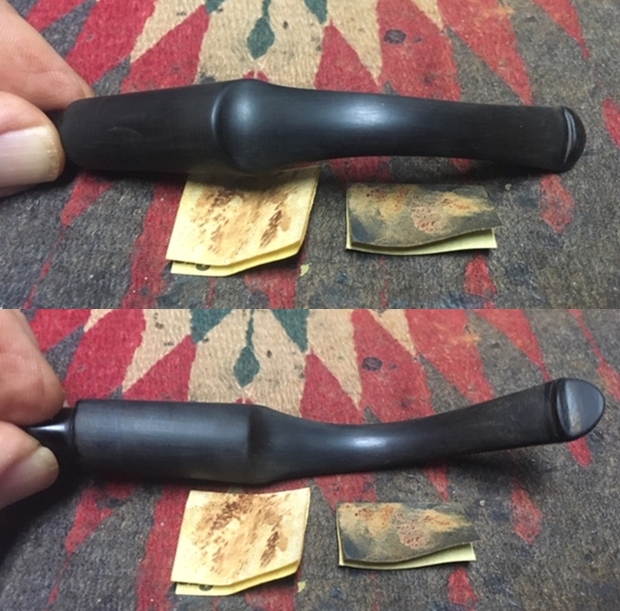
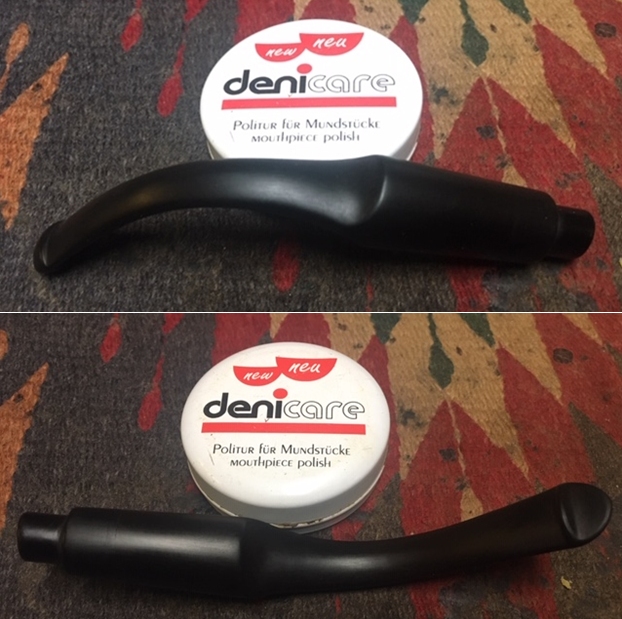
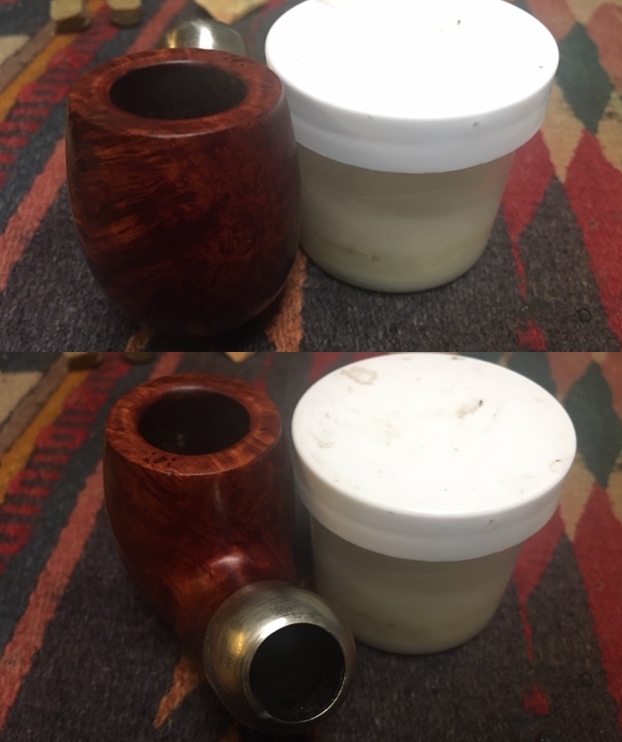
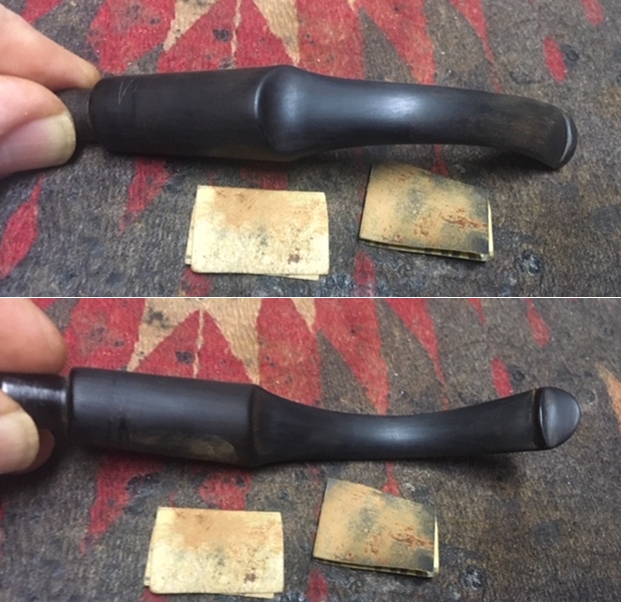
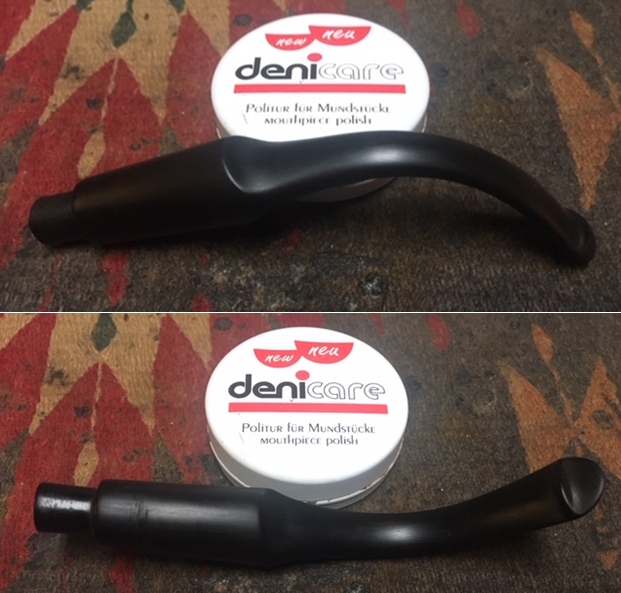
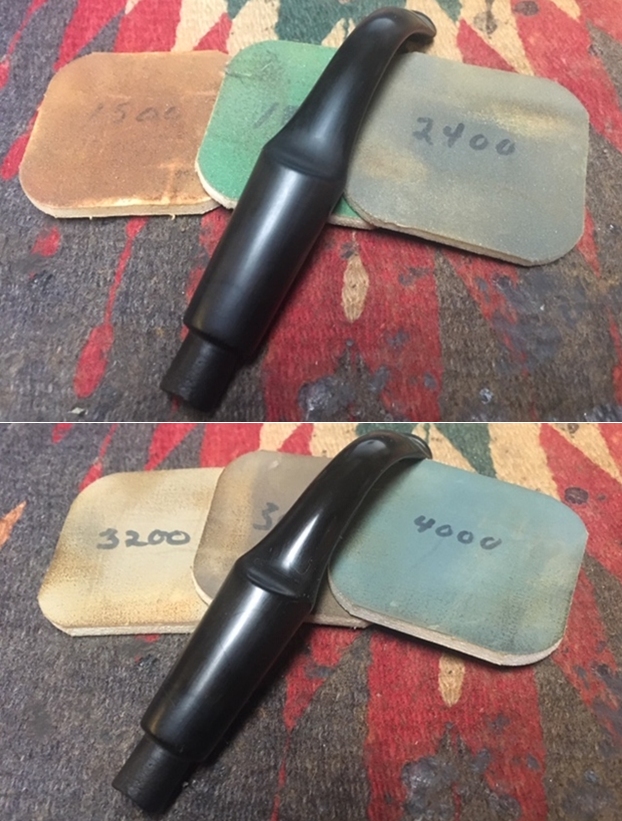
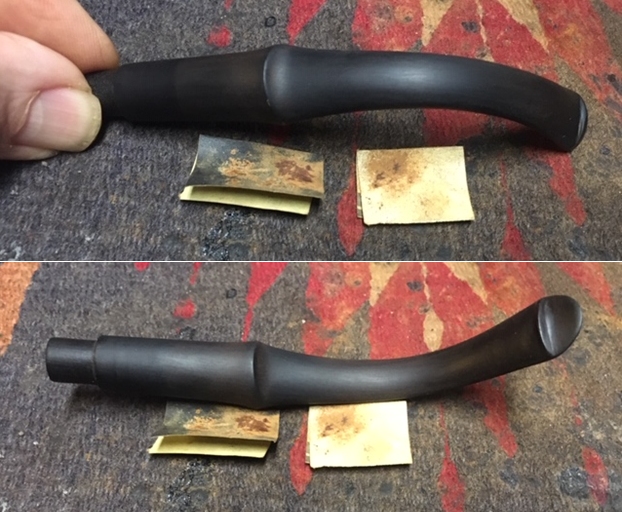
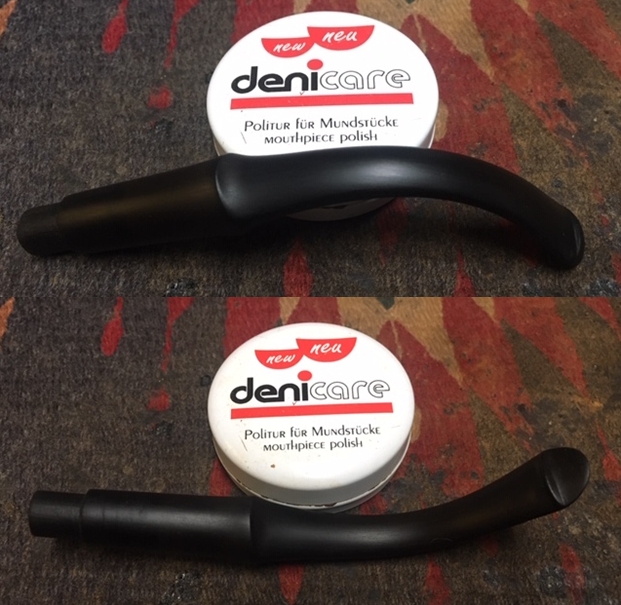
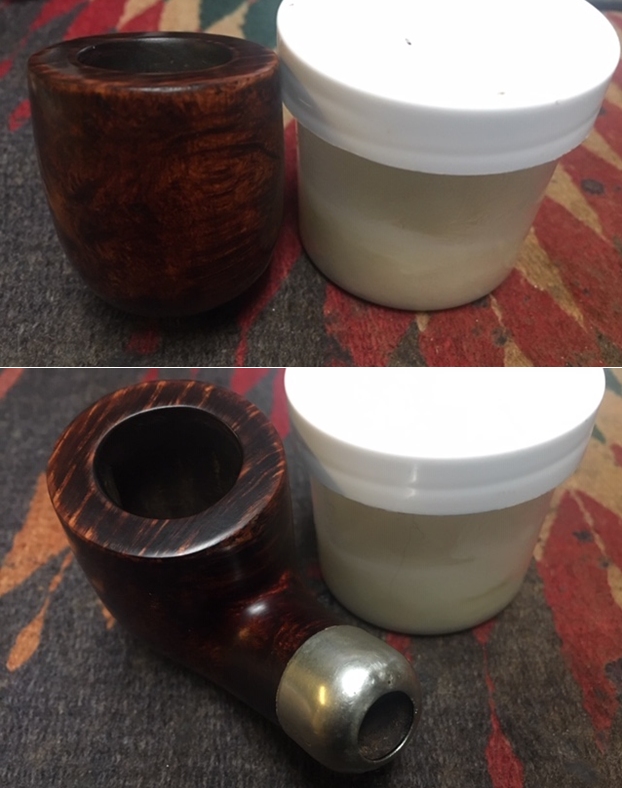
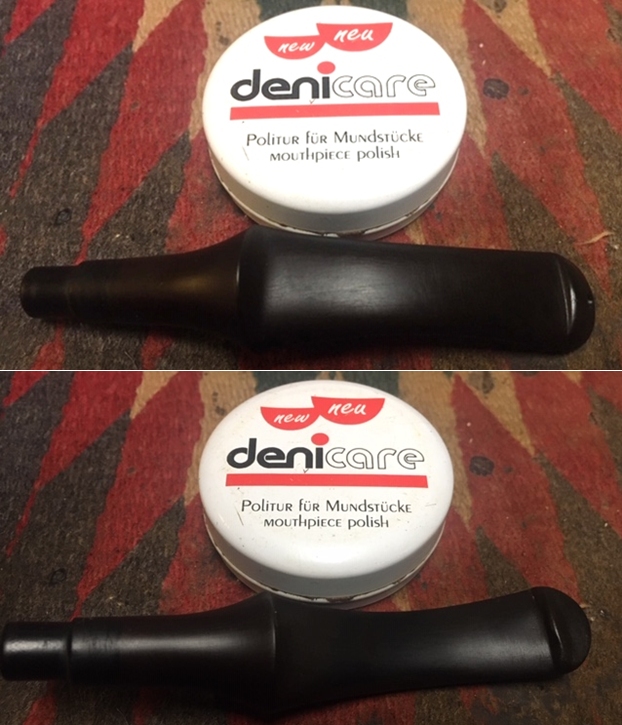
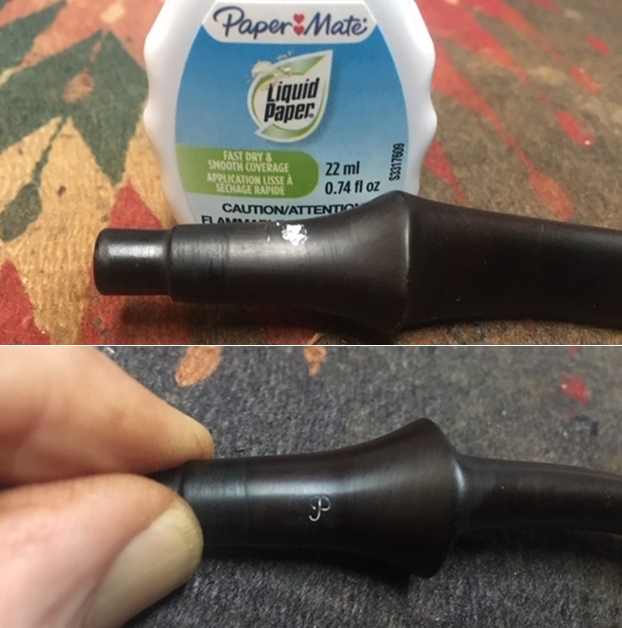
I started working on the pipes by cleaning up the rim top and the inner edge on the bowl of both of them. I used a folded piece of 220 grit sandpaper to clean off the rim darkening. I used the folded edge to clean up the inner edge. I was able to bring the bowl back into round. I polished it with 400 grit wet dry sandpaper to take out the scratches. The rim tops were looking really good.   I polished exterior of the bowl and the vulcanite shank extensions with micromesh sanding pads – wet sanding with 1500-12000 grit pads. I wiped it down with Obsidian Oil after each sanding pad to wipe of the dust and polish it. I rubbed the bowls down with Before & After Restoration Balm. I worked it into the briar and into the vulcanite shank extension to preserve, protect and enliven it. I let it sit on the surface of the bowls for about 10 minutes and then buffed the pipe with a cotton cloth. The photos tell the story. These pipes had some stunning grain on the bowls. I polished the vulcanite shank extensions with Denicare Mouthpiece Polish from a tin of it I have in the drawer here. It is a gritty red paste that I rub on with my finger tips and work into the surface of the stem and button and buff off with a cotton pad. It gives me a bit of a head start on the polishing work plus I have a tin to use up! I touched up the “P” stamp on the shank extensions with PaperMate liquid paper. I filled in the stamping with the liquid applying it with a dauber and a tooth pick. Once it dried I rubbed it off with a cotton cloth. The second  photo shows the stem before the polishing on the buffing wheel.I polished the stem with Denicare Mouthpiece Polish from a tin of it I have in the drawer here. It is a gritty red paste that I rub on with my finger tips and work into the surface of the stem and button and buff off with a cotton pad. It gives me a bit of a head start on the polishing work plus I have a tin to use up!I polished the stem with micromesh sanding pads – wet sanding with 1500-12000 grit sanding pads. I wiped it down after each sanding pad with Obsidian Oil. I polished it with Before & After Pipe Stem Polish – both Fine and Extra Fine and buffed it off with a final coat of Obsidian Oil. This pair of Peterson’s Speciality Pipes is a great addition. The Belgique and the Calabash shapes are classic in every way. They are petite, lightweight and comfortable in the hand. They will be a short smoke. The briar is beautifully grained and the black vulcanite military/stick Fishtail stems go well with the briar and the vulcanite shank extension. I polished stems and the bowls with Blue Diamond polish on the buffing wheel. I gave the bowls multiple coats of stems multiple coats of carnauba wax. I buffed the pipes with a clean buffing pad to raise the shine. I hand buffed them with a microfiber cloth to deepen the shine. The pipes polished up pretty nicely. The rich stained briar on both bowls took on life with the buffing. The rich brown colour of the briar bowls work well with the polished vulcanite stems. The finished pipes have a rich look that is quite catching. Have a look at it with the photos below. The shape, finish and flow of the pipe and stem are very well done.

The dimensions of the Belgique are Length: 6 inches, Height: 1 ½ inches, Outside diameter of the bowl: 1 inches, Chamber diameter: 9/16 of an inch. The dimensions of the Calabash are Length: 5 ½ inches, Height: 1 ¾ inches, Outside diameter of the bowl: 1 1/16 inches, Chamber diameter: 9/16 of an inch. I am pleased with how the pipes turned out. They look very good and show some signs of age. I am uncertain of the dates on either of them but am pretty sure they hold some age. I send my appreciation to Ray for these pipes. I think that these two will stay with me for a while and I will have to at least give them a smoke. We shall see what the future holds for them. Thanks for reading the blog.


Restoring a Peterson’s Dunmore 70 Bent Apple Sitter from Bob Kerr’s Estate


Blog by Steve Laug

The next pipe I have chosen to work on from Bob Kerr’s estate is another one of his unique Peterson’s. I have restored two of the Canadian Imports from his estate – a Kapruf 54 sandblast bent billiard (https://rebornpipes.com/2019/08/09/back-to-bob-kerrs-estate-another-canadian-import-petersons-kapruf-a-54/) and a Kapruf 9BC 56 (https://rebornpipes.com/2019/08/09/back-to-bob-kerrs-estate-linking-petersons-kapruf-9bc-with-the-56-shape-number/). These were interesting in that they both had a unique numbering system for Peterson’s pipes that were specifically brought to Canada by the Canadian importer, Genin, Trudeau & Co. of Montreal, Quebec (https://rebornpipes.com/2016/09/13/petersons-pipes-brochure-from-genin-trudeau-co-montreal-quebec/). I restored an English Made Peterson’s System ‘0’ 1307 bent billiard a  (https://rebornpipes.com/2019/08/17/an-english-made-petersons-system-0-1307-bent-billiard-from-bob-kerrs-estate/) and a Republic Era Peterson’s Flame Grain Bent billiard with a fishtail stem (https://rebornpipes.com/2019/08/16/a-petersons-flame-grain-x220s-bent-billiard-from-bob-kerrs-estate/).

The next one on the table is of interest because it is a uniquely shaped Dunmore Bent Apple Sitter. It is part of the estate that I am cleaning up for the family and moving them out into the hands of pipemen and women who will carry on the trust that began with their father, Bob. In the collection there were 19 Peterson’s pipes along with a bevy of Dunhills, some Comoy’s and Barlings as well as a lot of other pipes – a total of 125 pipes along with a box of parts. This is the largest estate that I have had the opportunity to work on. I put together a spread sheet of the pipes and stampings to create an invoice. I was taking on what would take me a fair amount of time to clean up. I could not pass up the opportunity to work on these pipes though. They were just too tempting.

I really am enjoying working on the Peterson’s in the estate. This was another unique one. When I took it out of the box of cleaned up pipes that Jeff sent back I could see that it was stamped Peterson’s over Dunmore on the left side of the shank and Made in the Republic of Ireland followed by the shape number 70 on the right shank. It has some stunning grain around the bowl and shank under the thick grime and tarry spots. The shank is quite thick and the finish is probably the dirtiest of Bob’s pipes so far. There was a thick cake in the bowl with remnants of tobacco stuck on the walls. There was a fair lava overflow on the rim. The top and edges of the rim are dirty. I think that there was a beautiful pipe underneath all of the grime and buildup of years of use. The stem was oxidized and calcified toward the end with some hack marks on the left side mid stem. Again, surprisingly did not have the deep tooth marks that I have come to expect from Bob’s pipes but the button edges were worn. Jeff took photos of the pipe before he started his cleanup work on it.   Jeff took photos of the bowl and rim top to show the thick, hard cake in the bowl and the lava build up on the top of the rim and the edges of the bowl. It was hard to tell if there was any damage to the inner edge of the rim as it had a thick cake lining it. Hopefully it protected it. The lava flows down the outer edges so it will need to be cleaned in order to assess their condition.  Jeff took photos of the sides and heel of the bowl to show the condition of the finish. You can see the beautiful mix of swirled, flame and birdseye grain underneath the dirt and debris of the years. The cross grain on the heel was beautiful.    Jeff took photos of the stamping on both sides of the bowl and shank. The stamping on the left side was faint but readable as you can see from the photos. It read Peterson’s over Dunmore. The stamp on the right side read Made in the Republic of Ireland followed by the shape number 70. You can see that the beading around the shank end is almost filled in with the grime on the briar. Jeff took photos of the top and underside of the stem showing the tooth chatter, scratching and oxidation on the stem surface and wear on the edges of the button.    I turned first to Pipephil’s site to remind myself of the background of the Dunmore line. Unfortunately there was no information to be found there. I then turned to Pipedia’s article on Peterson pipes to see what I could garner from that information. It is a great read in terms of the history of the brand (https://pipedia.org/wiki/Peterson) but nothing specific to the Dunmore line of pipes.

I then turned to the book I should have consulted first, The Peterson Pipe, by Mark Irwin and Gary Malmberg. On page 298 there is an entry for Dunmore pipes. It reads as follows:

Dunmore (1971-c.1984 2006-10). Appeared first as Iwan Ries & Co. exclusive line “Dunmoor,” a Premier-grade in light-brown smooth or rustic red in all System shapes, with beading at the shank. Documented in the Associated Imports Catalog from 1973. Classic Range Dunmore shapes from ’78. A third Dunmore line (’06-10) featured standard and some B shapes, with beading around bowl instead of at shank-face, produced for European market.

On page 268 there is a shape chart that does comparison of the shapes in the various lines. There I found the following information:

In the Standard and Premier System it was shape 302. In the De Luxe System it was shape 25. In the Dunmore System (1977-1983) it was shape 70. In the Classic Lines it was shape 02/XL02. The production still continues. It is a Peterson Extra Large Size and was named an Extra Large Apple.

On page 165 there were also photos of pages from a catalogue with the  description: The unmounted Dunmore Premier debuted in both System and Classic Range shapes circa 1973 with a final appearance in the 1981 catalogue.

The information blurb on each page read: “Dunmore Briars.” Beautifully grained best quality briar in light-brown, matt or rustic finish. Often described as “Petersons Unmounted System” has all the advantages of the system range. Ten models each fitted with the Peterson Lip mouthpiece.

With that information in hand I knew what I was dealing with in terms of the stamping on the pipe. It is a Late Republic era pipe. It showed up in Peterson Catalogue in 1973 and from what I have learned about Bob’s other pipes this date fits well. Now it was time to work on the pipe.

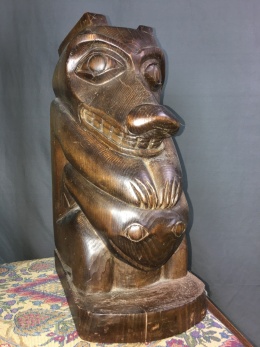
With over 125 pipes to clean from Bob’s estate I am very glad for Jeff’s help cleaning them. He cleaned this filthy pipe with his usual penchant for thoroughness that I really appreciate. This one was a real mess and I did not know what to expect when I unwrapped it from his box. He reamed it with a PipNet pipe reamer and cleaned up the reaming with a Savinelli Fitsall Pipe Knife. He scrubbed out the internals with alcohol, pipe cleaners and cotton swabs until the pipe was clean. He scrubbed the exterior of the bowl with Murphy’s Oil Soap and a tooth brush to remove the grime and grit on the briar and the lava on the rim top. The finish looks very good with great looking grain around the bowl and shank. Jeff soaked the stem in Before & After Deoxidizer to remove the oxidation on the rubber. When the pipe arrived here in Vancouver for the second stop of its restoration tour I was amazed it looked so good. I took photos before I started my part of the work.     I took some close up photos of the rim top and also of the stem surface. I wanted to show what an amazing job Jeff did in the cleanup of the rim top. I also wanted to show that the damage to the rim top was more extensive than I had originally thought. The rim top was burned and darkened with nicks and notches around the inner edge. There was some darkening that ran down the front of the bowl as well. The rim top was a nightmare of issues. The outer edge of the bowl looks very good other than the burning and darkening. I also took close up photos of the stem to show the lack of tooth marks and the light oxidation on the stem surface. You can also see the wear to the button. The third stem photo shows the hatch marks on the left side of the stem. One of the things I appreciate about Jeff’s cleanup is that he works to protect and preserve the nomenclature on the shank of the pipes that he works on. The stamping on this one was very faint to start with so I was worried that it would disappear altogether with the cleanup. He was not only able to preserve it but it is clearer than shown in the earlier photos. I took some photos to show the clarity of the stamping. I have noticed that many restorers are not careful to protect the stamping in their cleaning process and often by the end of the restoration the nomenclature is almost destroyed. I would like to encourage all of us to be careful in our work to preserve this as it is a critical piece of pipe restoration! Since this is another pipe Bob’s estate I am sure that some of you have read at least some of the other restoration work that has been done on the previous pipes. You have also read what I have included about Bob Kerr, the pipeman who held these pipes in trust before I came to work on them (see photo to the left). Also, if you have followed the blog for long you will already know that I like to include background information on the pipeman whose pipes I am restoring. For me, when I am working on an estate I really like to have a sense of the person who held the pipes in trust before I worked on them. It gives me another dimension of the restoration work. I asked Brian if he or his wife would like to write a brief biographical tribute to her father, Bob. His daughter worked on it and I received the following short write up on him and some pictures to go along with the words including one of Bob’s carvings. Once again I thank you Brian and tell your wife thank you as well.

I am delighted to pass on these beloved pipes of my father’s. I hope each user gets many hours of contemplative pleasure as he did. I remember the aroma of tobacco in the rec room, as he put up his feet on his lazy boy. He’d be first at the paper then, no one could touch it before him. Maybe there would be a movie on with an actor smoking a pipe. He would have very definite opinions on whether the performer was a ‘real’ smoker or not, a distinction which I could never see but it would be very clear to him. He worked by day as a sales manager of a paper products company, a job he hated. What he longed for was the life of an artist, so on the weekends and sometimes mid-week evenings he would journey to his workshop and come out with wood sculptures, all of which he declared as crap but every one of them treasured by my sister and myself. Enjoy the pipes, and maybe a little of his creative spirit will enter you!
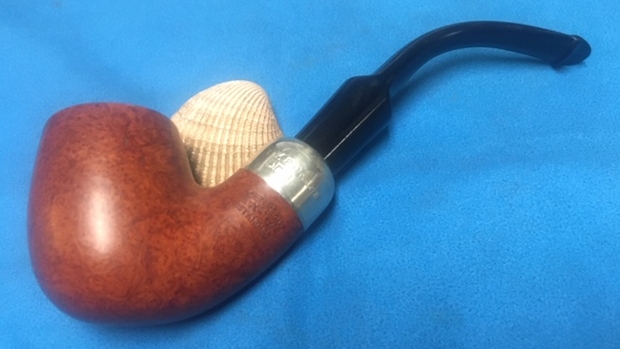
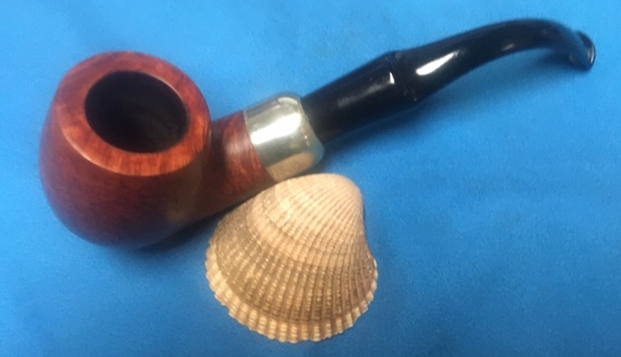
Now, on to the rest of the restoration of this beautifully grained Peterson’s Dunmore 70 Large Bent Apple. It was great that I did not need to clean the pipe. I decided to start the process by addressing the damage to rim top and the inner edge. From the extent of damage to the inner edge of the rim and the top of the bowl I decided I would need to top the bowl to remove as much of this damage as possible to restore the rim top back to a more pristine condition and bring the bowl back to round. I topped it on a topping board using 220 grit sandpaper. I took photos to show the slow process of repairing that damage. The photos show the topping process and the rim top after I had topped it to an acceptable point where the condition of the top and edges was good.    With the top cleaned up and repaired I moved on to address the inner edge surface itself. I used a folded piece of 220 grit sandpaper to remove the damage and bring the bowl back to round. I followed that by sanding the rim top and edge with 400 grit wet dry sandpaper.  I also sanded the darkening on the front of the bowl edge.   The bowl surface was quite smooth so I decided to forego polishing it with micromesh sanding pads. I cleaned the briar with Mark Hoover’s Before & After Briar Cleaner to remove the debris left behind by the sanding of the rim top and to blend the repairs into the briar. I rubbed it into the surface of the briar and let it sit for 10 minutes. I rinsed the bowl off with warm running water to remove the product and the grime. The grain really began to stand out clearly. It was a beautiful piece of briar. I stained the rim top and edges with an Oak Stain pen to match the colour of the stain on the bowl. Once it was polished with the Before & After Balm and buffed with a microfiber cloth the stain would blend perfectly.After the stain had cured, I rubbed it down with Before & After Restoration Balm. I worked it into the surface of the briar with my fingertips to clean, enliven and protect it. I let the balm sit for a little while and then buffed with a cotton cloth to raise the shine. Mark Hoover’s Balm is a product that I have come to appreciate and one I use on every pipe I have been working on. I decided to touch up the “P” stamp on the left side of the shank. I use PaperMate liquid paper for doing this. I worked it into the stamp with a tooth pick. Once the material had hardened I used the tooth pick to scrape off the excess material.  I reshaped the edge of the button and top of the P-Lip with a needle file to get a more defined shape and edge. Once I had the shape more defined I sanded the stem with 220 grit sandpaper to break up the remaining oxidation and smooth out the file marks. I started the polishing with 400 grit wet dry sandpaper to remove the scratching. It is starting to look good.   I polished the stem with micromesh sanding pads – wet sanding with 1500-12000 grit pads. I wiped the stem down after each sanding pad with Obsidian Oil. I polished it with Before & After Pipe Stem Polish – both Fine and Extra Fine. Once I had finished the polishing I gave it final coat of oil and set it aside to dry. As usual at this point in the restoration process I am excited to be on the homestretch. I look forward to the final look when it is put back together, polished and waxed. I put the bowl and stem back together. I polished the bowl and stem with Blue Diamond to polish out the scratches in the briar and the vulcanite. I gave the bowl and the stem multiple coats of carnauba wax. I buffed the pipe with a clean buffing pad to raise the shine. I hand buffed it with a microfiber cloth to deepen the shine. The pipe polished up pretty nicely. The grain really pops with the wax and polish. The bead around the shank looks very good. The shiny black vulcanite stem is a beautiful contrast to the browns of the bowl. This Peterson’s Dunmore 70 Large Bent Apple was another fun pipe to work on thanks to Jeff’s cleanup work. The beading around the shank gives this Peterson’s “Unmounted System” a unique look without the silver or nickel ferrule. It really is a quite stunning piece of briar whose shape follows the flow of the briar. The thick/chubby shank makes it a very comfortable pipe to hold in the hand. The finished pipe is shown in the photos below. The dimensions of the pipe are Length: 6 ½ inches, Height: 1 ¾ inches, Outside diameter of the bowl: 1 ½ inches, Chamber diameter: 7/8 of an inch. This beautiful large pipe will be going on the rebornpipes store if you would like to add it to your collection and carry on Bob’s legacy. If not, I have a lot more of Bob’s estate to work on of various brands. Perhaps one of those will catch your attention. Thanks for reading this blog and my reflections on the pipe while I worked on it. This is an interesting estate to bring back to life.
An English Made Peterson’s System “0” 1307 Bent Billiard from Bob Kerr’s Estate


Blog by Steve Laug

The next pipe I have chosen to work on from Bob Kerr’s estate is another one of his unique Petersons. I have restored two of the Canadian Imports from his estate – a Kapruf 54 sandblast bent billiard (https://rebornpipes.com/2019/08/09/back-to-bob-kerrs-estate-another-canadian-import-petersons-kapruf-a-54/) and a Kapruf 9BC 56 (https://rebornpipes.com/2019/08/09/back-to-bob-kerrs-estate-linking-petersons-kapruf-9bc-with-the-56-shape-number/). These were interesting in that they both had a unique numbering system for Petersons pipes that were specifically brought to Canada by the Canadian importer, Genin, Trudeau & Co. of Montreal, Quebec (https://rebornpipes.com/2016/09/13/petersons-pipes-brochure-from-genin-trudeau-co-montreal-quebec/). I also finished restoring a Flame Grain X220S that was very nice https://rebornpipes.com/2019/08/16/a-petersons-flame-grain-x220s-bent-billiard-from-bob-kerrs-estate/). This next one is of interest because it is a large System 0 1307 bent billiard with a fishtail stem. It is part of the estate that I am cleaning up for the family and moving them out into the hands of pipemen and women who will carry on the trust that began with their father, Bob. In the collection there were 19 Peterson’s pipes along with a bevy of Dunhills, some Comoy’s and Barlings as well as a lot of other pipes – a total of 125 pipes along with a box of parts. This is the largest estate that I have had the opportunity to work on. I put together a spread sheet of the pipes and stampings to create an invoice. I was taking on what would take me a fair amount of time to clean up. I could not pass up the opportunity to work on these pipes though. They were just too tempting.

I really am enjoying working on the Peterson’s in the estate. This was another unique one. When I first looked at it when it came I wondered if the stem was a replacement. However, the shape and the fit of the stem makes me wonder if it was not original. When I took it out of the box of cleaned up pipes that Jeff sent back I could see that it was stamped Peterson’s System 0 on the left side of the shank and Made in England in a circular shaped stamp on the right side. The shape number 1307 is stamped on the underside of the shank just next to the nickel ferrule. It has some interesting grain around the bowl and shank under what appears to be a thick varnish coat. The shank is quite thick and the finish very dirty.  There was a thick cake in the bowl with remnants of tobacco stuck on the walls. There was a fair lava overflow filling in the blast on the rim. The edges of the rim and top are dirty but they looked pretty good under the grime. It was another beautiful pipe that was dirty and tired looking. The stem was oxidized and calcified toward the end. Again, surprisingly did not have the deep tooth marks that I have come to expect from Bob’s pipes. Jeff took photos of the pipe before he started his cleanup work on it. Jeff took photos of the bowl and rim top to show the cake in the bowl and the lava build up on the edges of the bowl. It was thick and hard but it was hard to tell how the inner edge looked under the lava. The outer edges looked okay but there were some nicks there as well.   Jeff took photos of the sides and heel of the bowl to show the condition of the finish. You can see the beautiful mix of grain underneath the varnish, dirt and debris of the years.    Jeff took photos of the stamping on both sides of the bowl and shank. The stamping on the left side was readable as you can see from the photos. It read Peterson’s arched over System over 0. The stamp on the right side read Made in England. The nickel ferrule was stamped K& P Peterson’s of Dublin with three hallmarks. Jeff took photos of the top and underside of the stem showing the tooth chatter, scratching and oxidation on the stem surface.   I turned first to Pipephil’s site to get a quick idea of the Flame Grain line. Unfortunately there was no information to be found there. I then turned to Pipedia’s article on Peterson pipes to see what I could garner from that information. It is a great read in terms of the history of the brand (https://pipedia.org/wiki/Peterson). I quote a pertinent portion of the article below:

1969/70 – The ‘Made in England’ stamp was discontinued with the closing down of the London based factory. Although Peterson has always prided itself in being an Irish made pipe, Peterson had also maintained a pipe factory in London since 1899.

English made Peterson pipes actually spanned the period between the pre Republic and Republic eras.

In 1899, Peterson opened the first in a series of several successive shops in London, England, that lasted until the late 1960’s/70s.

  • 1899 – 53, New Broad St. E.C.
  • 1910 – 7, Hills Pl., Oxford St. W.
  • 1915 – 21, Mortimer St. W.
  • Finally moving to 74/77 White Lion Street until 1970.

So the English Era, for a simplified date, will be from 1899 through to around 1970. The stamps Peterson used in London are:

  • Made in England block format
  • Made in England circle format
  • Made in London
  • Made in London England
  • Simply, London England
  • London Made over England block format
  • Great Britain

I also looked at the article that the late Mike Leverette wrote on pipedia to see if the above information matched (https://pipedia.org/wiki/A_Peterson_Dating_Guide;_A_Rule_of_Thumb). I quote a portion of that as well.

 English made Peterson pipes actually spans between the pre-Republic and Republic eras. In 1895, Peterson opened a shop in London England that lasted until the late 1950s or early 1960s. So the English Era, for a simplified date, will be from 1895 through 1959. The stamps Peterson used in London and that we have seen are;

  • Made in England – block format
  • Made in England – circle format
  • Made in London
  • Made in London England
  • Simply, London England.
  • Great Britain

Though there are a couple of more, the above will give one the general idea. We believe the earliest stamp of this era was the “Made in England” in a block format since Peterson was using the “Made in Ireland” block format at about the same time on their Irish production pipes. The “Made in England” circle format was used during the same time frame as the “Made in Eire” and “Made in Ireland” circle formats.

I looked also on pipesmagazine forum to see if I could find any information on the 0 grade stamp on the shank (http://pipesmagazine.com/forums/topic/petersons). Here is what I found in a quote from Chuck.

On to your query about grading.

  • A System 0 would be the same as today’s Supreme grade.
  • A 1 would be a Deluxe.
  • A 2 would be a Premier.
  • A 3 would be a Standard.

I have a 4 and a 5 grade which I assume were lesser grades and have been discontinued or will simply have re-graded as Standards in today’s market.

With that information in hand I knew what I was dealing with in terms of the stamping on the pipe. It is an English made Peterson and was made before the factory closed in 1969 or early 1970. The System 0 stamp would be the same as a current Supreme grade System pipe. From what I have learned about Bob’s other pipes this fits well. Now it was time to work on the pipe.

With over 125 pipes to clean from Bob’s estate I took a batch of them to the states with me on a recent visit and left them with Jeff so he could help me out. Jeff cleaned the pipe with his usual penchant for thoroughness that I really appreciate. This one was a real mess and I did not know what to expect when I unwrapped it from his box. He reamed it with a PipNet pipe reamer and cleaned up the reaming with a Savinelli Fitsall Pipe Knife. He scrubbed out the internals with alcohol, pipe cleaners and cotton swabs until the pipe was clean. He scrubbed the exterior of the bowl with Murphy’s Oil Soap and a tooth brush to remove the grime and grit on the briar and the lava on the rim top. Wiping it down with acetone on a cotton pad enabled him to get rid of the varnish top coat. The finish looks very good with great looking grain around the bowl and shank. Jeff soaked the stem in Before & After Deoxidizer to remove the oxidation on the rubber. When the pipe arrived here in Vancouver for the second stop of its restoration tour it looked very good. I took photos before I started my part of the work.   I took some close up photos of the rim top and also of the stem surface. Jeff did a great cleaning job on the rim top. The inner edge looked pretty good. There is a small burn mark on the right front inner edge of the bowl but it is minor. The outer edge of the bowl looks very good. I also took close up photos of the fishtail stem to show the lack of tooth marks and the remaining oxidation on the stem surface.    Since this is another pipe Bob’s estate I am sure that some of you have read at least some of the other restoration work that has been done on the previous pipes. You have also read what I have included about Bob Kerr, the pipeman who held these pipes in trust before I came to work on them (see photo to the left). Also, if you have followed the blog for long you will already know that I like to include background information on the pipeman whose pipes I am restoring. For me, when I am working on an estate I really like to have a sense of the person who held the pipes in trust before I worked on them. It gives me another dimension of the restoration work. I asked Brian if he or his wife would like to write a brief biographical tribute to her father, Bob. His daughter worked on it and I received the following short write up on him and some pictures to go along with the words including one of Bob’s carvings. Once again I thank you Brian and tell your wife thank you as well.

I am delighted to pass on these beloved pipes of my father’s. I hope each user gets many hours of contemplative pleasure as he did. I remember the aroma of tobacco in the rec room, as he put up his feet on his lazy boy. He’d be first at the paper then, no one could touch it before him. Maybe there would be a movie on with an actor smoking a pipe. He would have very definite opinions on whether the performer was a ‘real’ smoker or not, a distinction which I could never see but it would be very clear to him. He worked by day as a sales manager of a paper products company, a job he hated. What he longed for was the life of an artist, so on the weekends and sometimes mid-week evenings he would journey to his workshop and come out with wood sculptures, all of which he declared as crap but every one of them treasured by my sister and myself. Enjoy the pipes, and maybe a little of his creative spirit will enter you!

Now on to the rest of the restoration on this English Made Peterson’s System 0 1307 bent billiard. I did not need to clean the pipe. I decided to start the process by addressing the damage to the inner edge of the rim. I used a folded piece of 220 grit sandpaper to remove the damage and bring the bowl back to round. I followed that by sanding the rim top and edge with 400 grit wet dry sandpaper. The photos below show the process and the results of the sanding. I polished the bowl and rim top with micromesh sanding pads – wet sanding with 1500-12000 grit pads and wiping the bowl down after each pad with a damp cloth.   I decided to clean the briar with Mark Hoover’s Before & After Briar Cleaner to clean up the sanded surface of the briar and blend the repairs into the briar. I rubbed it into the surface of the briar and let it sit for 10 minutes. I rinsed the bowl off with warm running water to remove the product and the grime.   After I dried the bowl off, I rubbed it down with Before & After Restoration Balm. I worked it into the surface of the briar with my fingertips to clean, enliven and protect it. I let the balm sit for a little while and then buffed with a cotton cloth to raise the shine. Mark Hoover’s Balm is a product that I have come to appreciate and one I use on every pipe I have been working on.   I set the bowl aside and turned my attention to the stem. I decided to give the stem a proper bend first. I heated the stem with a heat gun until the vulcanite was flexible and then bent it to match the angle of the bowl. The photos tell the story.   I sanded the stem with 220 grit sandpaper to break up the remaining oxidation. I started the polishing with 400 grit wet dry sandpaper to remove some of the scratching. It is starting to look good.     I have one more tin of Denicare Mouthpiece Polish left from a few that I have picked up over the years. It is a coarse red pasted that serves to help remove oxidation. I polished the stem with that to further smooth out the surface of the vulcanite (and to be honest – to use it up).    I polished the stem with micromesh sanding pads – wet sanding with 1500-12000 grit pads. I wiped the stem down after each sanding pad with Obsidian Oil. I polished it with Before & After Pipe Stem Polish – both Fine and Extra Fine. Once I had finished the polishing I gave it final coat of oil and set it aside to dry.    I am excited to be on the homestretch with yet another one of Bob’s pipes and I look forward to the final look when it is put back together, polished and waxed. I put the bowl and stem back together. I polished the bowl and stem with Blue Diamond to polish out the scratches in the briar and the vulcanite. I gave the bowl and the stem multiple coats of carnauba wax. I buffed the pipe with a clean buffing pad to raise the shine. I hand buffed it with a microfiber cloth to deepen the shine. The pipe polished up pretty nicely. The grain really pops with the wax and polish. The shiny black vulcanite stem is a beautiful contrast to the rich reds and browns of the bowl. This Peterson’s “System 0” 1307 shaped bent billiard was another fun pipe to work on thanks to Jeff’s cleanup work. It really has the stunning look of a well-made Peterson’s System pipe with the polished nickel ferrule. The thick/chubby shank makes it a very comfortable pipe to hold in the hand. The finished pipe is shown in the photos below. The dimensions of the pipe are Length: 5 ½ inches, Height: 2 inches, Outside diameter of the bowl: 1 ¼ inches, Chamber diameter: ¾ of an inch. If you want to carry on Bob’s legacy by adding this pipe to your collection let me know as it will soon be on the rebornpipes store. I have a lot more of Bob’s estate to work on of various brands. Perhaps one of those will catch your attention. Thanks for reading this blog and my reflections on the pipe while I worked on it. This is an interesting estate to bring back to life.
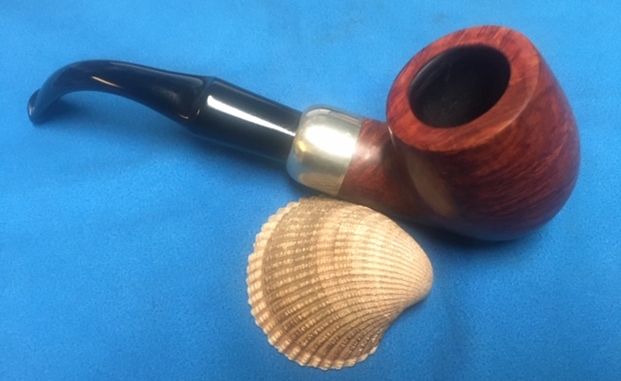
A Peterson’s Flame Grain X220S Bent Billiard from Bob Kerr’s Estate


Blog by Steve Laug

The next pipe I have chosen to work on from Bob Kerr’s estate is another one of his unique Petersons. I have restored two of the Canadian Imports from his estate – a Kapruf 54 sandblast bent billiard (https://rebornpipes.com/2019/08/09/back-to-bob-kerrs-estate-another-canadian-import-petersons-kapruf-a-54/) and a Kapruf 9BC 56 (https://rebornpipes.com/2019/08/09/back-to-bob-kerrs-estate-linking-petersons-kapruf-9bc-with-the-56-shape-number/). These were interesting in that they both had a unique numbering system for Petersons pipes that were specifically brought to Canada by the Canadian importer, Genin, Trudeau & Co. of Montreal, Quebec (https://rebornpipes.com/2016/09/13/petersons-pipes-brochure-from-genin-trudeau-co-montreal-quebec/). This next one is of interest because it is not one that I have seen before – a smooth fish tail stemmed nicely grained bent billiard. It is part of the estate that I am cleaning up for the family and moving them out into the hands of pipemen and women who will carry on the trust that began with their father, Bob. In the collection there were 19 Peterson’s pipes along with a bevy of Dunhills, some Comoy’s and Barlings as well as a lot of other pipes – a total of 125 pipes along with a box of parts. This is the largest estate that I have had the opportunity to work on. I put together a spread sheet of the pipes and stampings to create an invoice. I was taking on what would take me a fair amount of time to clean up. I could not pass up the opportunity to work on these pipes though. They were just too tempting.

I really am enjoying working on the Peterson’s in the estate. This was a bit of a unique one. When I first looked at it when it came it noted that it was a Shamrock but I was very wrong. When I took it out of the box of cleaned up pipes that Jeff sent back I could see that actually it was stamped Peterson’s over Flame Grain on the left side of the shank and Made in the Republic of Ireland followed by the shape number X220S on the right shank. It has some stunning grain around the bowl and shank. The shank is quite thick and the finish very dirty.  There was a thick cake in the bowl with remnants of tobacco stuck on the walls. There was a fair lava overflow filling in the blast on the rim. The edges of the rim and top are dirty and there appeared to be some deep burn damage on the rear side of the bowl. It was a beautiful pipe that was dirty and tired looking. The stem was oxidized and calcified toward the end. Again, surprisingly did not have the deep tooth marks that I have come to expect from Bob’s pipes. Jeff took photos of the pipe before he started his cleanup work on it.   Jeff took photos of the bowl and rim top to show the cake in the bowl and the lava build up on the edges of the bowl. It was thick and hard but there was some burn damage on the inner edge at the back of the bowl. The outer edges looked okay but there were some nicks there as well.  Jeff took photos of the sides and heel of the bowl to show the condition of the finish. You can see the beautiful flame grain underneath the dirt and debris of the years. The birdseye grain on the heel was beautiful.Jeff took photos of the stamping on both sides of the bowl and shank. The stamping on the left side was faint but readable as you can see from the photos. It read Peterson’s Flame Grain. The stamp on the right side read Made in the Republic of Ireland followed by the shape number X220S.  There was a P stamped on the left side of the saddle stem. Jeff took photos of the top and underside of the stem showing the tooth chatter, scratching and oxidation on the stem surface and wear on the edges of the button.   I turned first to Pipephil’s site to get a quick idea of the Flame Grain line. Unfortunately there was no information to be found there. I then turned to Pipedia’s article on Peterson pipes to see what I could garner from that information. It is a great read in terms of the history of the brand (https://pipedia.org/wiki/Peterson). I quote a pertinent portion of the article below:

At the start of the 1950’s, all pipes at Kapp & Peterson were stamped with “Made in the Republic of Ireland” stamp and also starting off the decade with the hallmark letter I on any silverware. Apparently nickel was scarce in those days, just after the war and the company tried to use aluminium instead. Needless to say It was not very successful!

I have adapted this section concentrating on the period following 1950,the made in the Irish Republic era and the different near modern Peterson grades and series, which should bring us up to the time period from the 1990’s onward.

Again this was a time of great change for the brand, the company having changed ownership on several occasions. However it was also one of great creativity, with the introduction of several commemorative series and some new literary character series of pipes that would leave a very lasting impression on the pipe smoking fraternity.

I found a discussion on pipesmagazine online forum on the line and I have included a portion of that below (http://pipesmagazine.com/forums/topic/petersons-80-flame-grain).

The Flame Grain line by Peterson’s are not high grades but the briars are singled out for their exceptional grain patterns. A flaw or two might keep them from becoming a pipe costing hundreds of dollars more….

With that information in hand I knew what I was dealing with in terms of the stamping on the pipe. It is a Republic era pipe and from what I have learned about Bob’s other pipes this is probably from the 60s to the early 70s. Now it was time to work on the pipe.

With over 125 pipes to clean from Bob’s estate I took a batch of them to the states with me on a recent visit and left them with Jeff so he could help me out. Jeff cleaned the pipe with his usual penchant for thoroughness that I really appreciate. This one was a real mess and I did not know what to expect when I unwrapped it from his box. He reamed it with a PipNet pipe reamer and cleaned up the reaming with a Savinelli Fitsall Pipe Knife. He scrubbed out the internals with alcohol, pipe cleaners and cotton swabs until the pipe was clean. He scrubbed the exterior of the bowl with Murphy’s Oil Soap and a tooth brush to remove the grime and grit on the briar and the lava on the rim top. The finish looks very good with great looking grain around the bowl and shank. Jeff soaked the stem in Before & After Deoxidizer to remove the oxidation on the rubber. When the pipe arrived here in Vancouver for the second stop of its restoration tour it looked very good. I took photos before I started my part of the work. I took some close up photos of the rim top and also of the stem surface. I wanted to show what an amazing job Jeff did in the cleanup of the rim top. The damage to the rim top was more extensive than I had originally thought. The burned area extends on the inner edge around the back, the left side and front of the bowl. It is rounded over besides being burned. The outer edge of the bowl looks very good. I also took close up photos of the stem to show the lack of tooth marks and the remaining oxidation on the stem surface.   One of the things I appreciate about Jeff’s cleanup work is that he works to protect and preserve the nomenclature on the shank of the pipes that he works on. I took some photos to show the clarity of the stamping. I have noticed that many restorers are not careful to protect the stamping in their cleaning process and often by the end of the restoration the nomenclature is almost destroyed. I would like to encourage all of us to be careful in our work to preserve this! Since this is another pipe Bob’s estate I am sure that some of you have read at least some of the other restoration work that has been done on the previous pipes. You have also read what I have included about Bob Kerr, the pipeman who held these pipes in trust before I came to work on them (see photo to the left). Also, if you have followed the blog for long you will already know that I like to include background information on the pipeman whose pipes I am restoring. For me, when I am working on an estate I really like to have a sense of the person who held the pipes in trust before I worked on them. It gives me another dimension of the restoration work. I asked Brian if he or his wife would like to write a brief biographical tribute to her father, Bob. His daughter worked on it and I received the following short write up on him and some pictures to go along with the words including one of Bob’s carvings. Once again I thank you Brian and tell your wife thank you as well.

I am delighted to pass on these beloved pipes of my father’s. I hope each user gets many hours of contemplative pleasure as he did. I remember the aroma of tobacco in the rec room, as he put up his feet on his lazy boy. He’d be first at the paper then, no one could touch it before him. Maybe there would be a movie on with an actor smoking a pipe. He would have very definite opinions on whether the performer was a ‘real’ smoker or not, a distinction which I could never see but it would be very clear to him. He worked by day as a sales manager of a paper products company, a job he hated. What he longed for was the life of an artist, so on the weekends and sometimes mid-week evenings he would journey to his workshop and come out with wood sculptures, all of which he declared as crap but every one of them treasured by my sister and myself. Enjoy the pipes, and maybe a little of his creative spirit will enter you!

Now on to the rest of the restoration on this beautiful Flame Grain Peterson X220S bent billiard I did not need to clean the pipe. I decided to start the process by addressing the damage to the inner edge of the rim. From the extent of damage to the inner edge of the rim and the top of the bowl I decided I would need to top the bowl to remove as much of this damage as possible to restore the rim top back to a more pristine condition and bring the bowl back to round. I topped it on a topping board using 220 grit sandpaper. I took photos along the way to show the extent of the damage and the slow process of repairing that damage. Each photo shows a little more of the damage has been removed until the final one that shows the smooth rim top. With the top cleaned up and repaired I moved on to address the inner edge surface itself. I used a folded piece of 220 grit sandpaper to remove the damage and bring the bowl back to round. I followed that by sanding the rim top and edge with 400 grit wet dry sandpaper.   I polished the bowl and rim top with micromesh sanding pads – wet sanding with 1400-12000 grit pads and wiping the bowl down after each pad with a damp cloth. You can see some of the small sandpits in the surface of the bowl in the photos below. I have chosen to leave those and not fill them in as they are really part of the character of this pipe.   I decided to clean the briar with Mark Hoover’s Before & After Briar Cleaner to clean up the sanded surface of the briar and blend the repairs into the briar. I rubbed it into the surface of the briar and let it sit for 10 minutes. I rinsed the bowl off with warm running water to remove the product and the grime. After I dried the bowl off I rubbed it down with Before & After Restoration Balm. I worked it into the surface of the briar with my fingertips to clean, enliven and protect it. I let the balm sit for a little while and then buffed with a cotton cloth to raise the shine. Mark Hoover’s Balm is a product that I have come to appreciate and one I use on every pipe I have been working on.   I set the bowl aside and turned my attention to the stem. I sanded the stem with 220 grit sandpaper to break up the remaining oxidation. I started the polishing with 400 grit wet dry sandpaper to remove the scratching. It is starting to look good.   I decided to touch up the “P” stamp on the left side of the shank. I use PaperMate liquid paper for doing this. I worked it into the stamp with a tooth pick. Once the material had hardened I used the tooth pick to scrape off the excess material.   I polished the stem with micromesh sanding pads – wet sanding with 1500-12000 grit pads. I wiped the stem down after each sanding pad with Obsidian Oil. I polished it with Before & After Pipe Stem Polish – both Fine and Extra Fine. Once I had finished the polishing I gave it final coat of oil and set it aside to dry. I am excited to be on the homestretch of another one of Bob’s pipes and I look forward to the final look when it is put back together, polished and waxed. I put the bowl and stem back together. I polished the bowl and stem with Blue Diamond to polish out the scratches in the briar and the vulcanite. I gave the bowl and the stem multiple coats of carnauba wax. I buffed the pipe with a clean buffing pad to raise the shine. I hand buffed it with a microfiber cloth to deepen the shine. The pipe polished up pretty nicely. The grain really pops with the wax and polish. The shiny black vulcanite stem is a beautiful contrast to the reds and browns of the bowl. This Peterson’s Flame Grain X220S bent billiard was another fun pipe to work on thanks to Jeff’s cleanup work. It really has the unique look of a Peterson’s finish without the silver or nickel ferrule. It really is quite stunning even with the small pits in the briar. The thick/chubby shank makes it a very comfortable pipe to hold in the hand. The finished pipe is shown in the photos below. The dimensions of the pipe are Length: 5 ½ inches, Height: 2 inches, Outside diameter of the bowl: 1 ¼ inches, Chamber diameter: ¾ of an inch. I am still not sure what I am going to do with this pipe. There is something about it that makes me want to hang on to it but time will tell. I have a lot more of Bob’s estate to work on of various brands. Perhaps one of those will catch your attention. Thanks for reading this blog and my reflections on the pipe while I worked on it. This is an interesting estate to bring back to life.
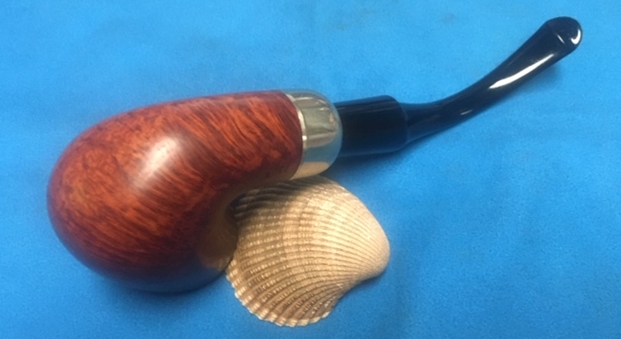
Restoring a “Made in England” Peterson’s System 3 # 357 from the Mumbai Bonanza Lot


Blog by Paresh Deshpande

I have quite a few inherited Peterson’s System pipes ranging from the period 1915 to 1947 to present!!! I also have these pipes in System Standard, System 0 and System 3. So when Abha, my wife, sent me pictures of pipes that I had purchased from a Mumbai trash collector, I saw two distinct Peterson’s System pipes, one large and the other very small!! When Abha confirmed the COM stamping on both these pipes, I knew that I had Peterson’s System pipes from the 1930s-40s. Another two vintage Peterson’s System pipes added to my collection, I say. And I am not complaining, mind you readers!!

I was fortunate enough to have heeded the advice of my dear friend and mentor, Steve, and struck a deal with a junk collector from Mumbai. He did not know what he was selling and I did not know what I was buying as we reside in different cities!!!!! The argument that Mr. Steve presented was that if not anything, I shall at least have some spares and this was logical. I struck a deal and here are pictures of the pipes that I received in this lot.       This lot contains some very nice collectible pipes, a few well known brands and some mediocre brands. Overall, with seven Dunhill pipes, a Preben Holm #1 FH, a couple of “Made in England” Pete System pipes, a couple of  Charatan’s Belvedere, Custom-Bilt, Stanwell and other assorted pipes, I would say that I had struck a decent haul!!! This is indeed my “Mumbai Bonanza”.

This 15th pipe that I decided to work on from this find is a large Peterson’s System 3 pipe with a nickel ferrule and is indicated in indigo color arrow. It is stamped on the left of the shank towards the shank end as “PETERSON’S” in an arch in block capital letters over arched “SYSTEM” in block capital over “# 3”. The tail of the P in Peterson’s is forked. The right side of the shank is stamped with COM stamp “MADE IN ENGLAND” in a circle format with “Made” and “England” in a circle with the “in” located in the center of the circle. Stamped at the bottom of the shank, very close to the ferrule is the shape number “357”. All the stampings are crisp and easily readable. The ferrule has the usual three cartouche with first having Shamrock, the second a Prone Fox and lastly a Stone Tower. Stamped above the cartouche are the letters “K & P” followed by “PETERSON’S” all in a straight line. The stem is devoid of any logo.In my earlier restoration of my inherited Peterson’s System 31, I had extensively researched the dating of these old Peterson’s and I can say with certainty that this pipe is from the period 1938 to 1940/ 41. Also the forked tail of “P” in Peterson’s with the inward coiling upper part corroborates the vintage of this pipe.

I reconfirmed and refreshed my learning by visiting pipedia.org and my memory has served me right. Here is the link to dating Peterson’s pipes: https://pipedia.org/wiki/A_Peterson_Dating_Guide;_A_Rule_of_Thumb

For further understanding of System Standard/ 0/ 3 etc, I referred to the main article on Peterson’s, but came out cropper. There is nothing substantive and clear information about this grading of these System pipes. Any source of information may please be shared with us on rebornpipes.com.

But nonetheless this is a Peterson’s System pipe from the 1938-40/41 vintage and sure is staying with me.

INITIAL VISUAL INSPECTION
The first and foremost thing that struck me as awful was that the smooth stummel is coated with a coat of lacquer!!! To top it, the coat has disintegrated in patches giving it a very sorry appearance. The icing on the cake is that half way up towards the rim, the stummel is stained black!! Why would they do that?  Well, the long and short of the above is that both the lacquer and the black stain will be removed and whether the finish is to be kept natural or be stained will be decided later. To be honest with you, being a grade 3 System pipe, there is nothing much to boast about the grains on the stummel. It has a smattering of cross grains and swirls all around the shank and stummel. The stummel surface is covered in grime giving the stummel a dirty appearance which is further accentuated by the patches of peeled lacquer coat. The stummel surface is peppered with a number of dents and ding on the foot and front of the stummel. A couple of fills are noticeable on either side near the shank and stummel junction and shown with yellow arrows. These will be clear when the stummel is cleaned of all the grime. In spite of all these flaws, the pipe has a nice size, heft and feel in the hand. It does have a quality which is seen on vintage pipes, but difficult to explain in words. And not to forget, this is nearly an 80 year old pipe!! A thick and uneven layer of cake can be seen in the chamber. The rim top surface has suffered the maximum damage and is uneven. It is covered in thick overflow of lava, dirt, dust and grime. The condition of the inner walls of the chamber and rim top surface will be known once the cake has been taken down to bare briar and the rim top crud has been scraped off completely. The bowl is out of round with the left half being thinner than the rest of the rim top. The inner rim is uneven with suspected burn/ charred surfaces in 9 o’clock and 3 o’clock direction (marked in yellow circle). Only once the stummel has been thoroughly cleaned that I can be sure of my initial appreciation. The outer rim edge too has dents, chips and dings, but not very severe, likely caused due to knocking against the hard surface. In spite of the thick cake, the chamber odor is, surprisingly, not strong and should be addressed once the cake has been taken down to the bare briar and the shank internals have been thoroughly cleaned The shank end is adorned with a nickel ferrule. The ferrule has oxidized a fair bit but should polish up nicely. The sump shows a heavy deposition of accumulated dried gunk, adversely affecting the airflow.The P-lip vulcanite stem is heavily oxidized and has calcification deposits towards the button end. There are deep tooth marks on the lower and upper stem surface in the bite zone and appears that the previous owner has literally chomped on the bite zone of the stem. The button edges also have bite marks, in fact, they are badly worn out. The tenon end has a major chunk missing and shows heavy accumulation of oils and tars. The part of the stem that seats in to the mortise is heavily scratched. Along with the stems of other pipes in line for restoration, I immersed the stem of this Peterson’s System 3 pipe in a mix of one part Hydrogen Peroxide 20% with one part hot water after I ran a couple of pipe cleaners dipped in alcohol through the stem air way. A couple of hours later, the stem oxidation on all these stems were raised to the surface.After I had fished out the stem from the Hydrogen Peroxide bath, I scrubbed it with Magiclean sponge and followed it up with a wipe of cotton swab and alcohol. I further scrubbed the stem surface with 0000 grade steel wool. The loosened and superficial layer of oxidation was easily removed and revealed the condition of the stem. There are deep bite marks in both the upper and lower bite zone. The bite marks are deep enough to cause significant thinning of the surface and complete disfigurement of the button edges. The deeper oxidation that was pulled to the surface would require more abrasive techniques.

THE PROCESS
I started the restoration with the stem repairs as this would take the maximum of my time to clean, repair and spruce up the stem. I flamed the damaged button edge and the nicks and dents with the flame of a lighter. This helps the vulcanite to rise to the surface as it has an inherent property to regain its original shape when heated. At this stage, I could clearly make out the extent of damage to the lower surface and the extent of the crack in the bite zone. This was further accentuated due to heating with the flame of a lighter. The upper surface too has a couple of deep tooth marks. I cleaned the internals of the stem using hard and normal bristled pipe cleaners and isopropyl alcohol. The heap of pipe cleaners tells the sordid tale of the stem condition. With a pointed dental tool, I scraped out the entire dried gunk from the tenon end. I addressed the deeper oxidation by sanding the entire stem with a folded piece of 150 and followed by 220 grit sand paper. This also helps to address minor tooth chatter and prevents the fills turning brown once polished. Once the oxidation was completely removed, I wiped the surface clean with a cotton swab and alcohol and rubbed a little Extra Virgin Olive oil to hydrate the stem. Just for the information of statistically oriented reader, to get the stem to this stage it took better part of the afternoon and well past mid night!! Continuing with the stem repair, I tightly wrapped a scotch tape around one end of a pipe cleaner so that I had achieved a snug fit of the pipe cleaner in the small rounded slot of the P-lip stem. At the tenon end, I folded a pipe cleaner till the fit was snug in to the wide tenon and after applying generous coat of petroleum jelly, I inserted it in to the tenon end of the stem. Both the scotch tape and petroleum jelly prevents the mix of charcoal and superglue from sticking over the pipe cleaners and keeps the slot and tenon open. Thereafter, I mixed superglue and activated charcoal powder and generously applied it over the bite zone on either side, including over the button, over the chipped tenon end and set it aside to cure.  With the stem fill set aside to cure, I started with cleaning of the stummel as I was keen to know the condition of the walls of the chamber. With size 1 head followed by head size 2 and 3 of a PipNet pipe reamer, I took the cake down to bare briar. With my sharp fabricated knife, I removed the cake from the chamber where the reamer head could not reach and thereafter, using a folded piece of 180 grit sand paper, I sand out the last traces of cake and expose the walls of the chamber. I wiped the chamber with a cotton pad dipped in isopropyl alcohol to remove the carbon dust left behind by all the reaming and sanding process. Once the chamber walls were cleaned out, I was pleased to note a pristine chamber with no signs of heat fissures/ lines/ pits. With the same sharp knife, I gently scraped off the lava overflow from the rim top surface. The charred and uneven rim surface and damaged inner and outer rim edges is now clearly seen and should be addressed with simple topping of the bowl. Next, I cleaned out the internals of the shank and mortise. Using my dental tool, I scraped out all the dried oils, tars and gunk that had accumulated in the draught hole, airway and sump. The amount of crud that was scrapped out and the condition of the pipe cleaners that were used leaves no surprise why air flow through it was restricted. I finished the cleaning by running a few pipe cleaners dipped in isopropyl alcohol. I also wiped the sump with cotton buds and alcohol. I gave a final cleaning to the sump with a paper napkin moistened with isopropyl alcohol. With this cleaning, all old smells in the pipe are history. The pipe now smells clean and fresh.  All this time that I was handling cleaning of the internals of this pipe, the patchy lacquer coating and the black stain to the upper half of the stummel was irritating me no end. The more I looked at it, the more convinced I was that this needs to be removed completely. Using cotton balls dipped in pure acetone; I worked the entire stummel and got rid of the lacquer as well as the black stain. The cleaned stummel revealed a couple of more flaws in the briar, but that is fine by me. I was prepared to handle a couple of fills and a couple more does not perturb me.  Next, I cleaned the external surface using a hard bristled toothbrush and Murphy’s Oil Soap. With a soft bristled brass wired brush, I removed the overflowing lava from the rim top surface and cleaned the internals of the shank with a shank brush and dish washing soap to remove what little crud remained in the shank. I rinsed it under running tap water and wiped the stummel dry with an absorbent soft cotton cloth.   Once I had wiped the stummel dry with paper towels and soft cotton cloth, the exact extent of damage to the rim top and edges could be clearly gauged. Now I had a fair idea of the extent of topping the rim surface. I top the rim on a piece of 220 grit sand paper to even out the rim surface dents and dings and also to reduce the charred rim surface. I addressed the out of round inner edge by creating a light bevel to inner edge with a folded piece of 220 grit sand paper pinched between my thumb and index finger. With a folded piece of 220 grit sand paper, I sand the entire stummel surface and addressed the minor pits and flaws that were revealed when the lacquer coat was removed. To further smooth out the scratches left behind by the abrasive 220 girt sand paper, I top the rim surface on a piece of 400 grit sand paper. I had hoped that further sanding with a 400 grit paper will address the minor dings that remained on the outer edge, but that was not to be. Thus, with a folded piece of 220 grit sand paper pinched between my thumb and index finger, I created a light bevel over the outer edge. I am very happy at the way the chamber and rim top surface appears at this in restoration. The old fills observed earlier during initial inspection and those revealed once the lacquer coat was removed, were next that I addressed. Very carefully and painstakingly, I completely removed the old fill with a pointed dental pick. I cleaned the fill of all the debris of old fill material, wiped it with alcohol and refreshed the fill with a mix of briar dust and CA superglue in each fill and set it aside to cure overnight.By next day, the fill was nice, hard and well set. Using a flat head needle file, I sand these fills to achieve a rough match with the stummel surface. With a folded piece of 220 grit sand paper, I worked the fill till I had achieved a nice blend with the rest of the stummel surface. At this stage, the dreaded air pockets revealed itself (marked with red arrows) in one of the fills. I spot fill these air pockets with CA superglue. I repeated the sanding with a piece of 220 grit sand paper again once the glue had hardened. It turned out much better than I had anticipated. I further sand the entire stummel surface again with the same grit sand paper to further smooth the stummel surface in preparation for a polish by micromesh pads. I subjected the stummel to a complete cycle of micromesh polish, wet sanding with 1500 to 12000 grit pads. I paid greater attention to polish the rim top surface and the bevels created on the inner and outer rim edges. I wiped the stummel with a moist cloth after every grit pad to remove the sanding dust left behind by the pads. This also helps in monitoring the progress being made and provides an opportunity to take early corrective action, if required. I am happy with the progress being made till now. Next, I rub a small quantity of “Before and After Restoration Balm” in to the briar with my finger tips and worked it deep in to the surface and let it rest for a few minutes. The balm almost immediately works its magic and the briar now has a nice vibrant appearance with the beautiful swirl grain patterns on full display. The contrast of the dark browns of the grain with the light hues of the rest of the stummel adds an interesting dimension to the appearance of the stummel. I further buffed it with a horse hair brush to further deepen the shine. Turning my attention to the stem repairs in my home stretch, using a flat head needle file, I reshaped the button and roughly matched the fills with the rest of the stem surface. I sand the tenon end on a piece of I sand the fill with a piece of folded 220 grit sandpaper to even it out. With a round needle file, I smooth out the jagged tenon opening. A sanding with a flat head needle file of the buttons and bite zone to achieve a rough match, revealed air pockets on the upper and lower portions of the P-lip. I painted these air pockets with a permanent marker and spot filled it with clear superglue. Once the fill had cured, I sand the fills with a piece of folded 220 grit sand paper and followed it up by further sanding the stem with 320, 600 and 800 grit sand papers to achieve a perfect blending of the fills with the stem surface and a build a crisp button edge on either side of the P-lip. The repairs look good and the stem should polish up nicely. In my exuberance to cross the finish line and start on the new project, I completely missed out on taking pictures of this last step in stem restoration. My sincere apologies for this miss…. Using the micromesh pads, I completed the polishing cycle by wet sanding the surface with 1500 to 3200 girt pads. I had read that White diamond polish is between 3600 and 4000 grit of micromesh pads and best used between these two. I decided to give this a try to see if there is any difference in the final stem finish. I mount a fresh cotton buffing wheel on to my hand held rotary tool and apply white diamond polish and buffed the stem. I wiped the stem with microfiber cloth and go through the remaining pads, dry sanding with 4000 to 12000 grit pads. The stem looks great with the fills nicely matched with the rest of the surface. I gave a final rub with “Before and After Extra Fine” stem polish compound from Mark to remove fine scratches from the stem surface. I rub a little quantity of Extra Virgin Olive oil in to the stem surface and set it aside to be absorbed by the vulcanite. The stem polished up nicely and appears as good as when new. To complete the restoration, I mount a cotton cloth buffing wheel on to my hand held rotary tool and applied several coats of carnauba wax. I finished the restoration by giving the entire pipe a rigorous hand buffing using a microfiber cloth to raise the shine further. I vigorously buff the nickel ferrule with a jeweler’s cloth and bring it to a nice shine.I mount a clean cotton cloth buffing wheel and give the entire pipe a once over buff. The finished pipe with a natural finish to the briar looks amazingly beautiful and is now ready for its long second innings with me. The dark spots of the fills, though visible, are not addressed as the pipe looks beautiful as it is. I only wish it could share with me its life story of the past years while I enjoy smoking my favorite Virginia blend in it or maybe an English blend!! P.S. I earnestly would like to request all the readers to help me with information as to what does Standard/ 0/ 3 on these System pipes denote/ signify. The only thing that is confirmed is that this is definitely not one of the high grade System pipes from Peterson’s what with the fills that were seen on the stummel, but nevertheless, it’s a vintage Peterson’s!!

With this write up, I am through with all my pending works and look forward to work on my next project to restore a pipe which my dear friend and mentor, Steve, had sent me about a year back with the intention of providing me an opportunity to test my own skills. This pipe is close to my heart for other reasons too which I shall bring out in the write up after I have completed the restoration. Suffice to say at this point that this pipe is in a very very sad state and that it’s a DUNHILL!! I wish to thank each one for sparing their valuable time to read through this write up and sharing this journey with me.


Back to Bob Kerr’s Estate – Another Canadian Import Peterson’s “Kapruf” – a 54


Blog by Steve Laug

With this Peterson’s “Kapruf” 54 I am continuing my work on a few more pipes from Bob Kerr’s estate. This is the second of the Peterson’s that I am working on. I am cleaning them for the family and moving them out into the hands of pipemen and women who will carry on the trust that began with Bob and in some pipes was carried on by Bob. In the collection there were 19 Peterson’s pipes along with a bevy of Dunhills, some Comoy’s and Barlings as well as a lot of other pipes – a total of 125 pipes along with a box of parts. This is the largest estate that I have had the opportunity to work on. I put together a spread sheet of the pipes and stampings to create an invoice. I was taking on what would take me a fair amount of time to clean up. I could not pass up the opportunity to work on these pipes though. They were just too tempting. I decided to take a break from working on his Dunhills to work on a few of the other pipes. The second of them is another really nice Peterson. It is a shape that is interesting and unique. It will go on the rebornpipes store.

It is a shape 54 with a sandblast that makes it a favourite of mine. This one also has a rugged sandblast finish with lots of nooks and crannies in the briar. It is a beauty! The pipe is stamped Peterson’s “Kapruf” over Made in the Republic of Ireland. That is followed by the shape number 54. The valleys and ridges of the sandblasted grain showing through the grime and dirt are a mixture that leaves a rich texture. It had a rich reddish brown stain that does not look too bad. There was a thick cake in the bowl and lava overflow filling in the blast on the rim. The edges of the rim and top are dirty but look pretty pristine under the grime. It was a beautiful pipe that was dirty and tired looking. The stem was lightly oxidized and surprisingly did not have the tooth marks that I have come to expect from Bob’s pipes. He obviously loved the Peterson’s as much as he did his Dunhills.Jeff took photos of the pipe before he started his cleanup work on it.  Jeff took photos of the bowl and rim top to show the cake in the bowl and the lava build up on the edges of the bowl. It was thick and hard but hopefully it had protected the rim and edges from damage. The edges look pretty good. Jeff took photos of the sides and heel of the bowl to show the condition of the finish. You can see the beautiful undulations of the sandblast. There is a lot of dust and grime filling in the valleys. Jeff took photos of the stamping on the smooth panel on the underside of the bowl and shank. The stamping was faint but readable as you can see from the photos. It took three separate photos from different angles to capture the totality of the stamp. It read Peterson’s “Kapruf” as can be seen below. The pipe also bears the Made in the Republic of Ireland stamp and the shape stamp 54. I think that the clue to the Montreal based Peterson’s Importer is clear with the number but I will check that as I work on the pipe. Jeff took photos of the top and underside of the stem showing the tooth chatter, scratching and oxidation on the stem surface and wear on the edges of the button. The “P” on the stem was washed out but present and the P-lip button is in very good condition.   Once again I turned to the blogs that Al Jones wrote on the Peterson’s Kapruf on rebornpipes to refresh my memory through Al’s blogs written specifically on the 9BC Kapruf pipe. The first blog contained some helpful information was still pertinent to this pipe (https://rebornpipes.com/2015/06/03/peterson-9bc-kapruf-pre-59/). I quote from there and also include some of the catalogue pages from the blog.

I didn’t know much about the Kapruf line. It is described in a 1960’s catalog as: “A fine sandblast finish distinguishes this range of light natural grained pipes with their distinctive red colouring. Very popular with sportsmen.”

Al had also written a second blog about another “Kapruf” 9BC he had picked up that was not stamped with the 9BC stamp but with a shape number 56. The pipe I am working on while not a 9BC or a 56 has the shape number 54 that is a mystery as well if you go by the standard Peterson’s numbers (https://rebornpipes.com/2019/07/25/peterson-shape-56-mystery/). I am quoting the portion where Al resolves the 56 shape number because that will also cover this 54 pipe.

Well, the Shape 56 mystery is now resolved…Well, further sleuthing from the world’s foremost Peterson authority yielded an answer – which came directly from a blog entry here on rebornpipes, by our very own Steven Laug. In 2015, Steve posted a catalog from Canadian importer, Genin, Trudeau & Co. which shows their unique numbering system. I even comment that the Shape 56 looks like a 9BC! So, all the while, the answer was hiding on this blog! Below is that brochure page showing the Shape 56. Steve comments that the postal code used in the address dates the brochure to between 1962 and 1969. I guess not many Canadians appreciated the shape, so they are pretty uncommon. Thanks to Mark Irwin for his superior memory and to Steve for making this type of ephemera available, you never know when it will come in handy.

I have included both the link to the document for you to check out and a page from it that shows the 54 shape number (https://rebornpipes.com/2016/09/13/petersons-pipes-brochure-from-genin-trudeau-co-montreal-quebec/). I have put a blue box around the shape number to make identifying it simpler (the red box shows the 56 that Al refers to above). Be sure to check out the document as it is very informative.I turned to an article on Pipedia by a good friend, the late Mike Leverette entitled A Peterson Dating Guide (https://pipedia.org/wiki/A_Peterson_Dating_Guide;_A_Rule_of_Thumb). I quote from the section by Mike on the Republic Era pipes.

The Republic Era is from 1949 until the present. The Republic of Ireland was formed on 17 April 1949. From 1949 to present the stamp for this era is “Made in the Republic of Ireland” in a block format generally in three lines but two lines have been used with or without Republic being abbreviated.

I went to the full article on Peterson pipes after this to try to pin things down a bit more clearly (https://pipedia.org/wiki/Peterson). I believe the pipe is from the Republic Era – 1950 – 1989. I quote the pertinent section of that article below:

From 1950 to the present time, the stamp for this era is “Made in the Republic of Ireland” in a block format generally in three lines but two lines have been used with or without Republic being abbreviated.

With that information in hand I knew what I was dealing with in terms of the stamping and the age of this pipe. I knew from the information from both Mike’s Pipedia article and the longer article that the pipe was made during the Republic Era between 1950 and 1989. Most of Bob’s pipes were purchased in the 60s so my guess is that this is also a 60’s era pipe. I also knew that the pipe was brought into Canada by the Canadian importer, Genin, Trudeau & Co. in Montreal, Quebec. Noting above that the catalogue postal code puts it in the late 60s early 70s which also fits the story. Now it was time to work on the pipe.

With over 125 pipes to clean from Bob’s estate I took a batch of them to the states with me on a recent visit and left them with Jeff so he could help me out. Jeff cleaned the pipe with his usual penchant for thoroughness that I really appreciate. This one was a real mess and I did not know what to expect when I unwrapped it from his box. He reamed it with a PipNet pipe reamer and cleaned up the reaming with a Savinelli Fitsall Pipe Knife. He scrubbed out the internals with alcohol, pipe cleaners and cotton swabs until the pipe was clean. He scrubbed the exterior of the bowl with Murphy’s Oil Soap and a tooth brush to remove the grime and grit on the briar and the lava on the rim top. The finish looks very good with good looking grain around the bowl and shank. Jeff soaked the stem in Before & After Deoxidizer to remove the oxidation on the rubber. When the pipe arrived here in Vancouver for the second stop of its restoration tour it looked very good. I took photos before I started my part of the work. I took some close up photos of the rim top and also of the stem surface. I wanted to show what an amazing job Jeff did in the cleanup of the rim top. The rim top looks very good. The sandblast finish is very nice. The bowl looked very good. I also took close up photos of the stem to show the deep tooth marks on the top and underside.I took a photo of the stamping and was able to capture most of it. I also captured the P stamp on the left side of the saddle stem.  Since this is another pipe Bob’s estate I am sure that some of you have read at least some of the other restoration work that has been done on the previous pipes. You have also read what I have included about Bob Kerr, the pipeman who held these pipes in trust before I came to work on them (see photo to the left). Also, if you have followed the blog for long you will already know that I like to include background information on the pipeman whose pipes I am restoring. For me, when I am working on an estate I really like to have a sense of the person who held the pipes in trust before I worked on them. It gives me another dimension of the restoration work. I asked Brian if he or his wife would like to write a brief biographical tribute to her father, Bob. His daughter worked on it and I received the following short write up on him and some pictures to go along with the words including one of Bob’s carvings. Once again I thank you Brian and tell your wife thank you as well.
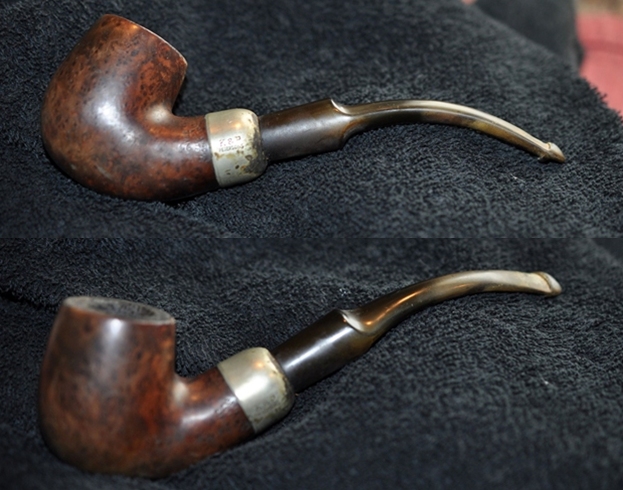
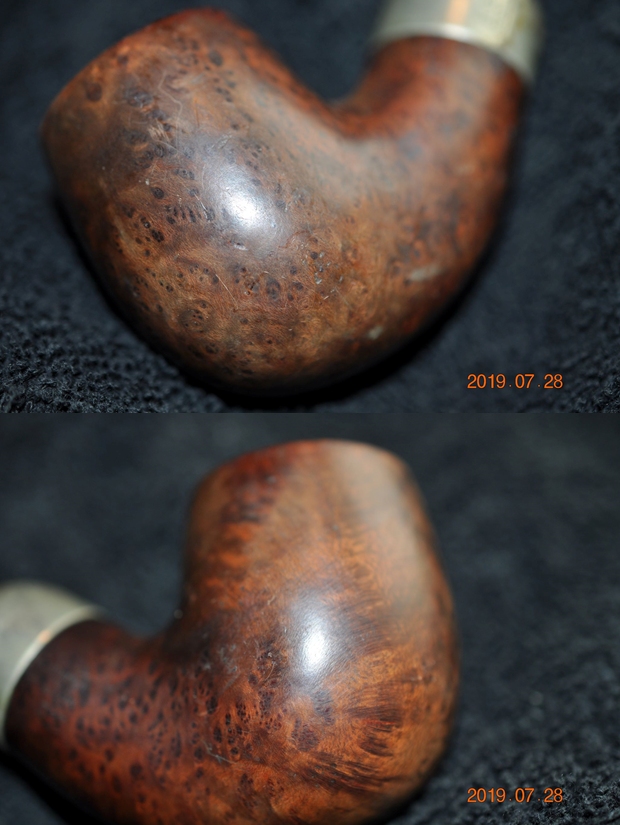
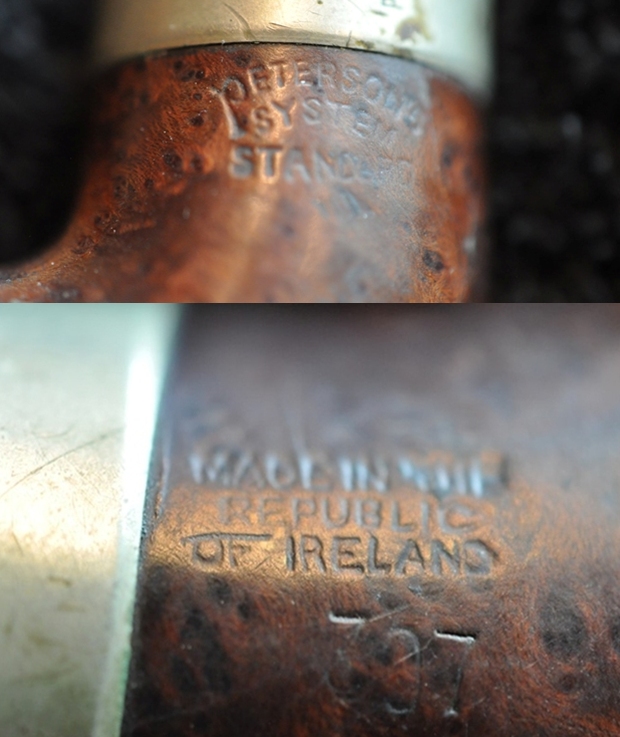
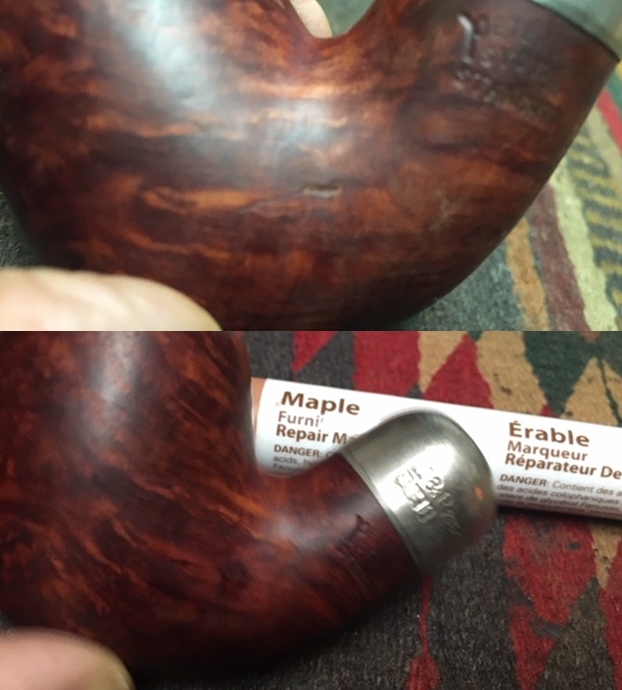
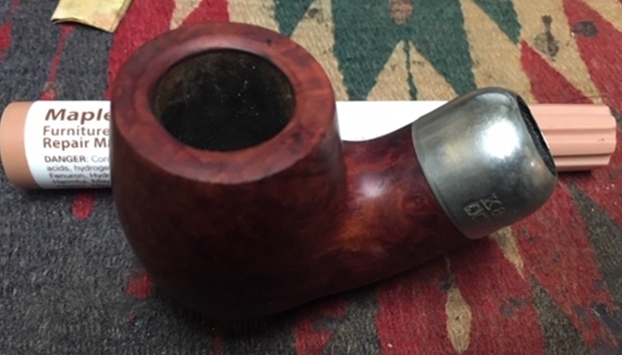
I am delighted to pass on these beloved pipes of my father’s. I hope each user gets many hours of contemplative pleasure as he did. I remember the aroma of tobacco in the rec room, as he put up his feet on his lazy boy. He’d be first at the paper then, no one could touch it before him. Maybe there would be a movie on with an actor smoking a pipe. He would have very definite opinions on whether the performer was a ‘real’ smoker or not, a distinction which I could never see but it would be very clear to him. He worked by day as a sales manager of a paper products company, a job he hated. What he longed for was the life of an artist, so on the weekends and sometimes mid-week evenings he would journey to his workshop and come out with wood sculptures, all of which he declared as crap but every one of them treasured by my sister and myself. Enjoy the pipes, and maybe a little of his creative spirit will enter you!

Now on to the rest of the restoration on this pipe that come from the Canadian Importer of Peterson pipes – a 54 Kapruf. Since Jeff had done such an amazing clean up job on the bowl it was very easy for me. I only had to rub the bowl down with Before & After Restoration Balm. I worked it into the surface of the briar with my fingertips and a horsehair shoe brush to clean, enliven and protect it. I let the balm sit for a little while and then buffed with a cotton cloth and shoe brush to raise the shine. Mark Hoover’s Balm is a product that I have come to appreciate and one I use on every pipe I have been working on. I set the bowl aside and turned my attention to the stem. This stem was in such good condition it made me wonder if Bob had smoked it much. However the cake in the bowl said he had. He had not chomped on the stem at all so there were no tooth marks in the surface. When I removed the stem I was a little surprised that there was an aluminum inner tube in the tenon that was obviously original. It was in good condition so I left it alone. I decided to touch up the “P” stamp before I polished the stem. I used some Papermate Liquid Paper to paint the stamped “P” and when it dried I scraped it off with my fingernail and lightly polished it with a 1500 grit micromesh pad.I polished the stem with micromesh sanding pads – wet sanding with 1500-12000 grit pads. I wiped the stem down after each sanding pad with Obsidian Oil. I polished it with Before & After Pipe Stem Polish – both Fine and Extra Fine. Once I had finished the polishing I gave it final coat of oil and set it aside to dry. Once again I am on the homestretch with this pipe and I really look forward to the final look when it is put back together and polished and waxed. I put the bowl and stem back together. I polished the bowl and stem with Blue Diamond to polish out the scratches in the briar and the vulcanite. I gave the bowl multiple coats of Conservator’s Wax and the stem multiple coats of carnauba wax. I buffed the pipe with a clean buffing pad to raise the shine. I hand buffed it with a microfiber cloth to deepen the shine. The pipe polished up pretty nicely. The valleys and ridges of the sandblast looked good with the polished black vulcanite. This second 1969/70 Peterson’s “Kapruf” a 54 Bent billiard was another fun pipe to work on thanks to Jeff’s cleanup work. It really has that classic Peterson look in a sandblast “Kapruf” finish that catches the eye. The combination of various brown stains really makes the pipe look attractive. It is a comfortable pipe to hold in the hand and I think that as it heats with smoking that over time the finish will darken and look even better. The finished pipe is shown in the photos below. The dimensions of the pipe are Length: 5 inches, Height: 1 ¾ inches, Outside diameter of the bowl: 1 1/8 inches, Chamber diameter: ¾ of an inch. If you are interested in carrying on Bob’s legacy with this pipe send me a message or an email. I have a lot more to work on include 17 more Petersons. Perhaps one of those will catch your attention. Thanks for reading this blog and my reflections on the pipe while I worked on it. This is an interesting estate to bring back to life.