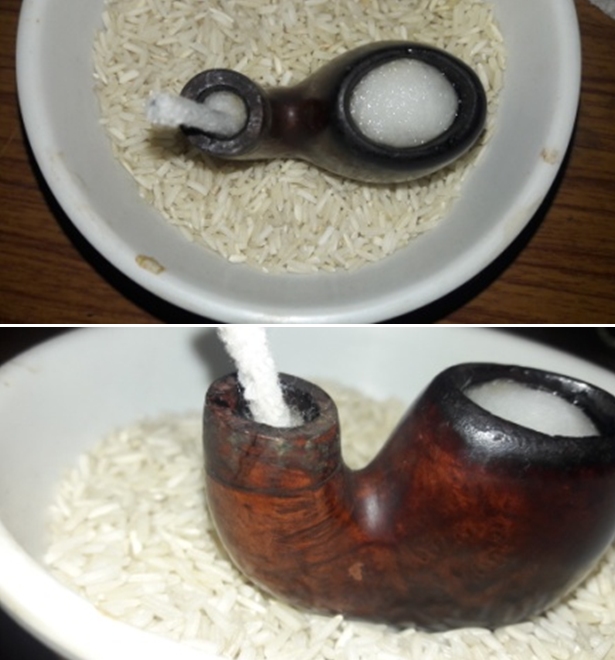
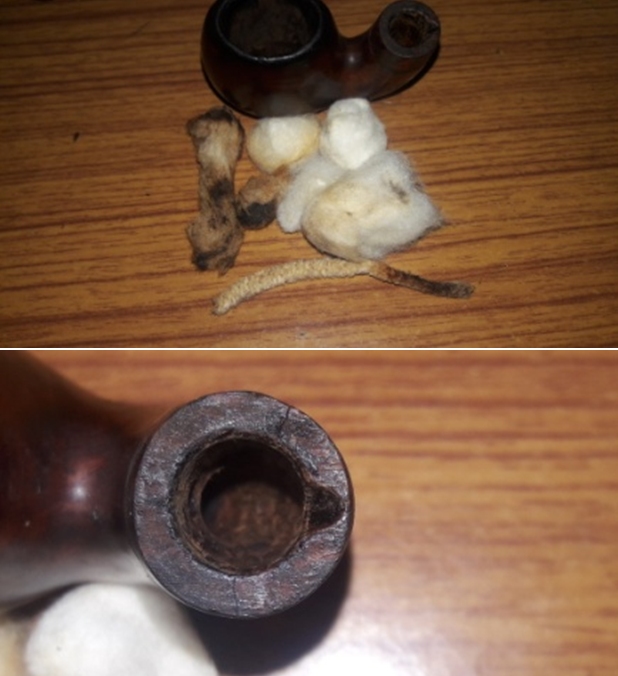
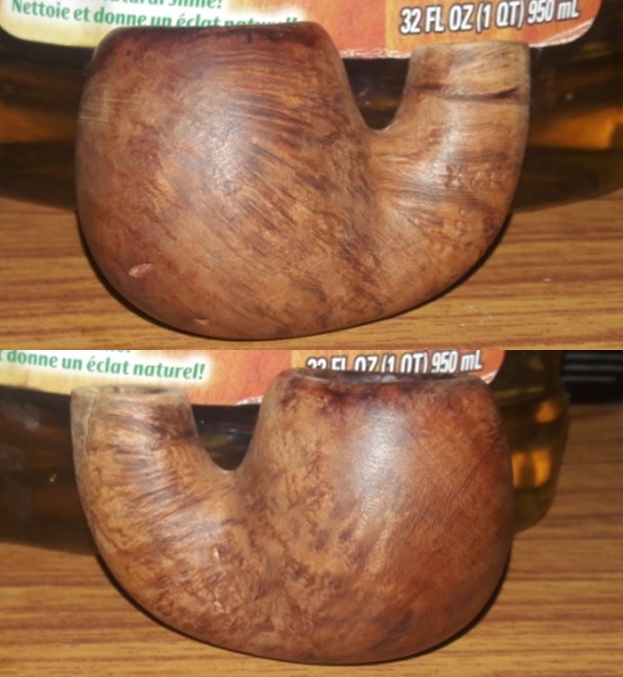
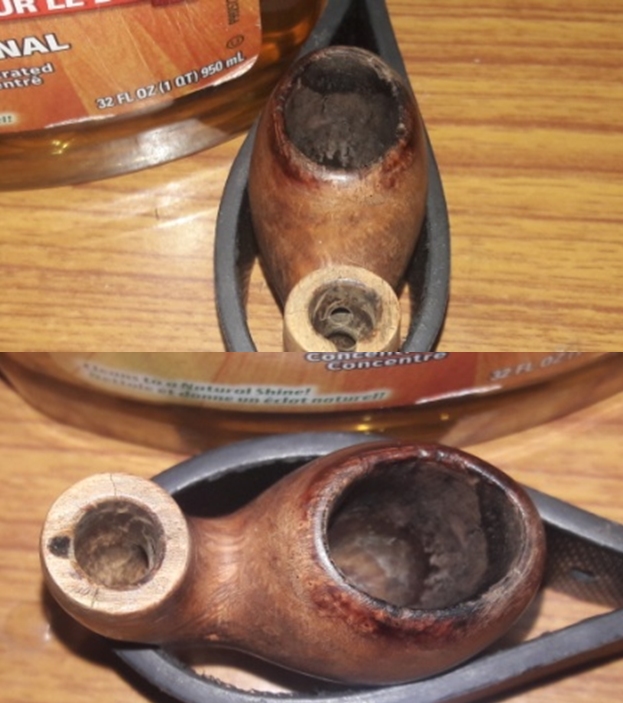
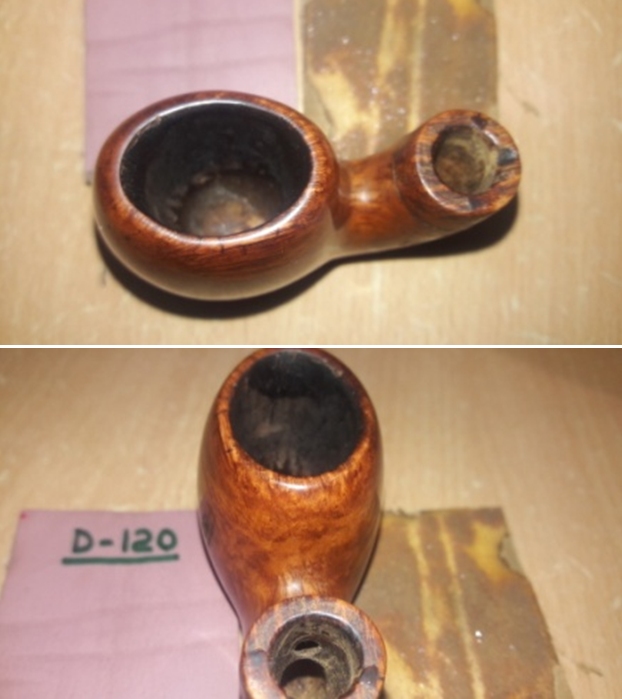
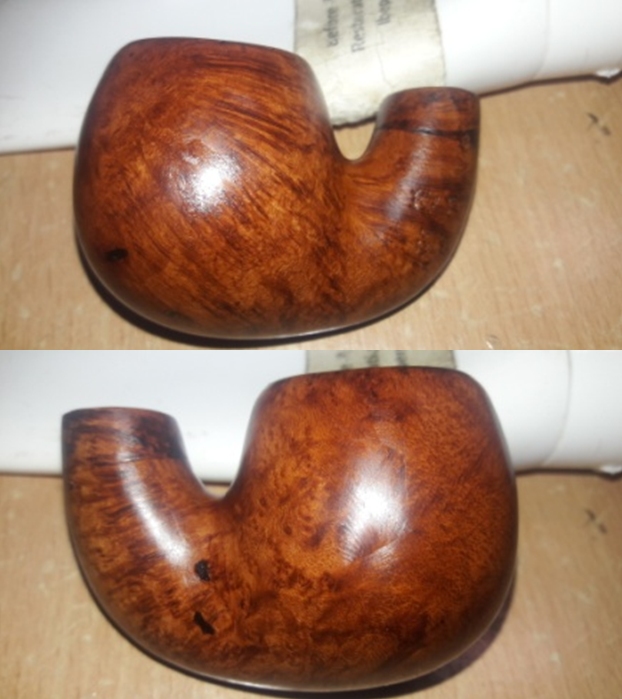
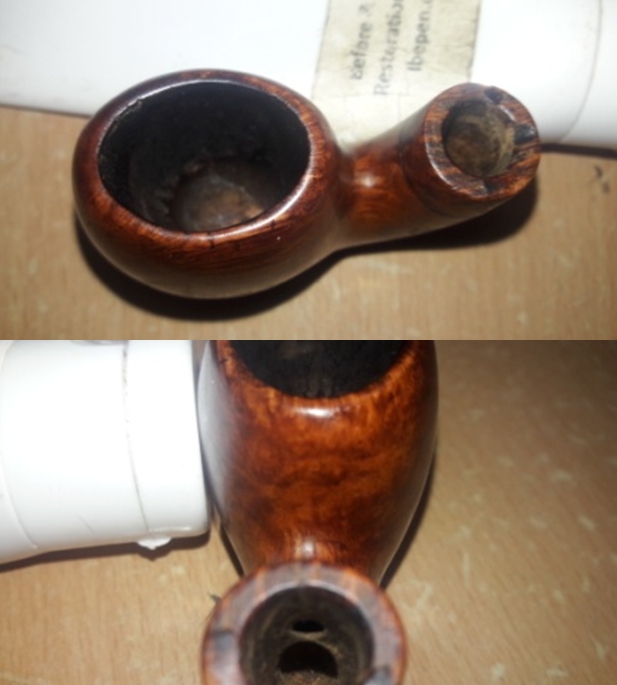
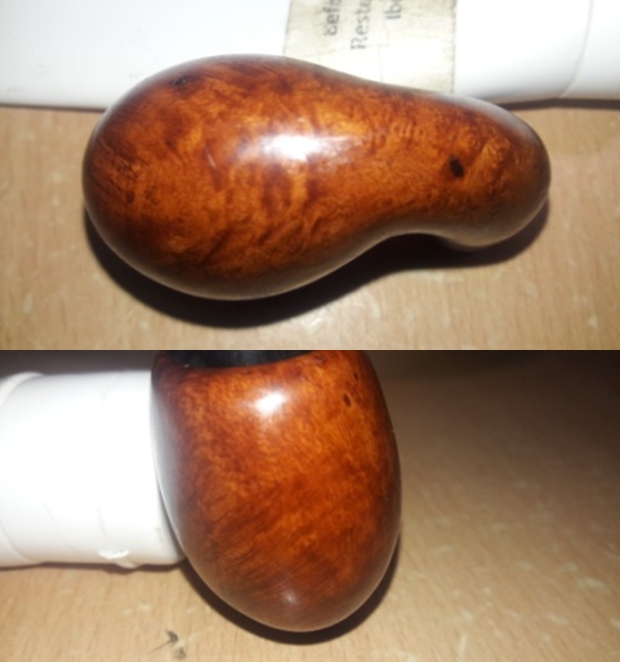
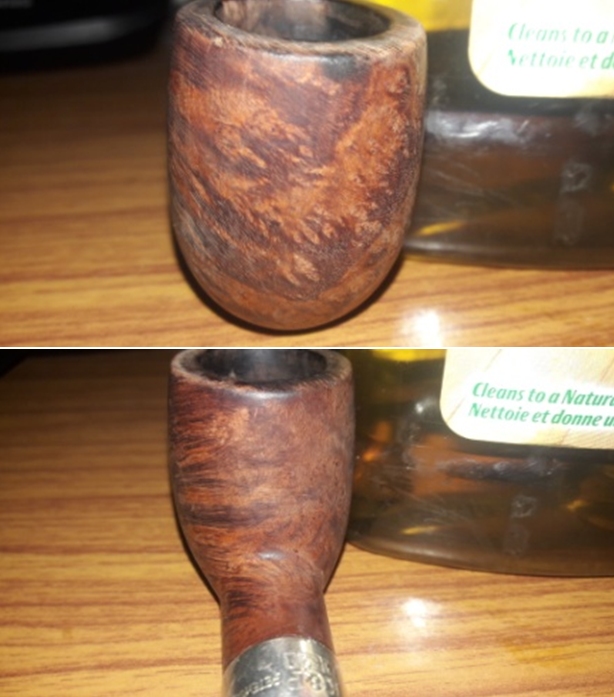
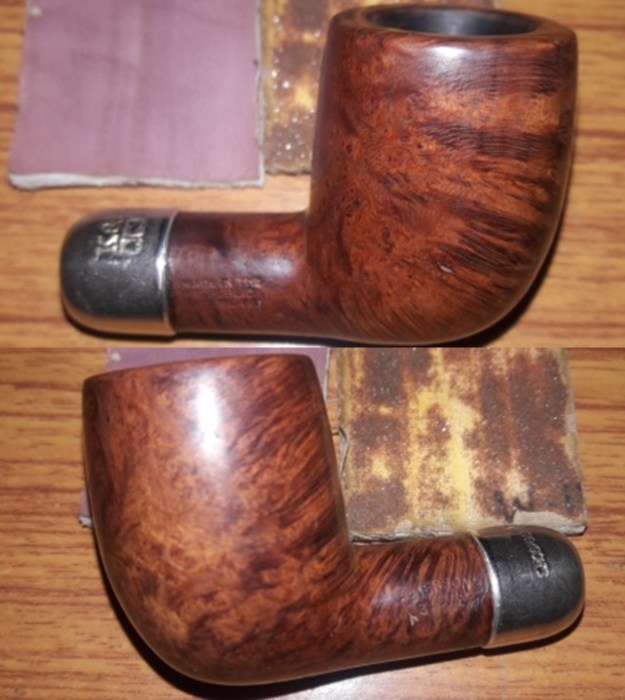
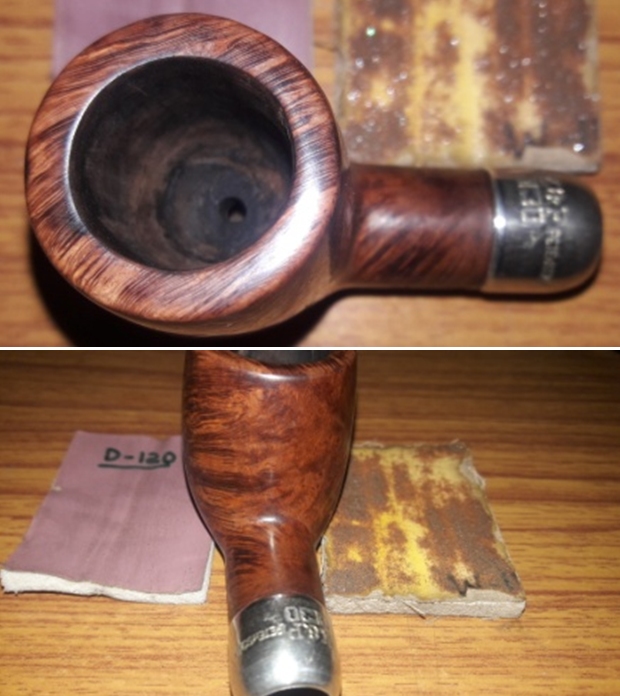
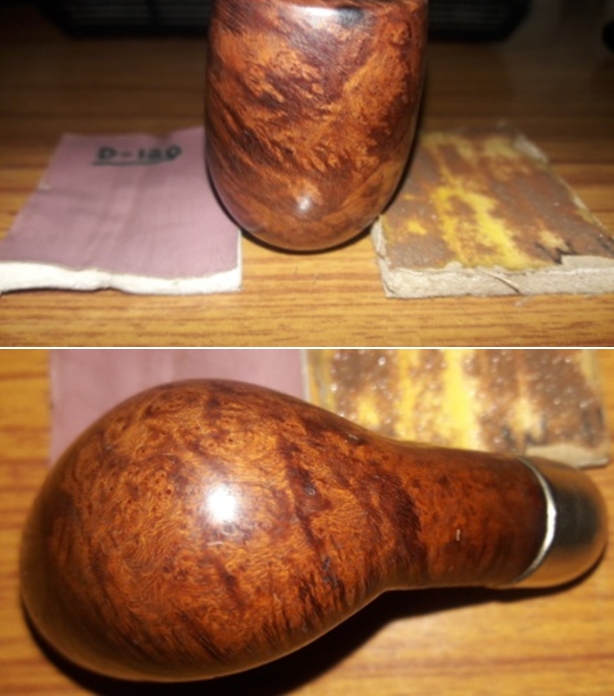
Tag Archives: Paresh Deshpande article

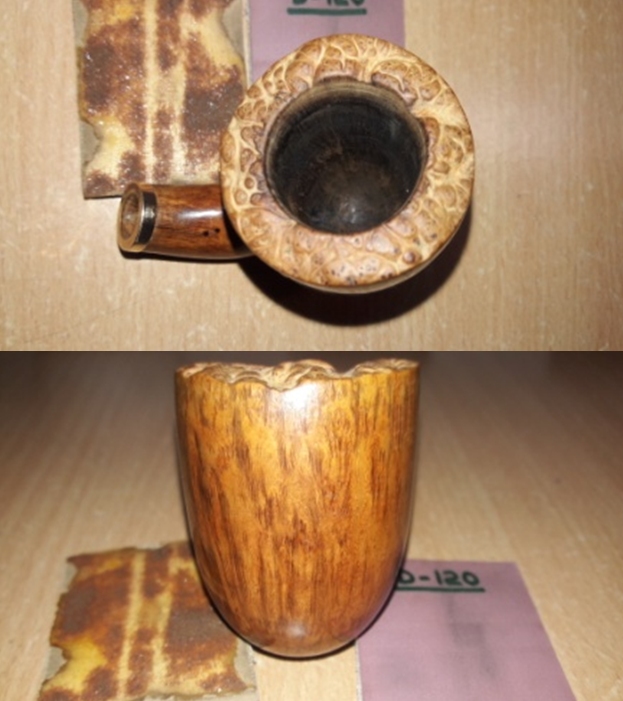
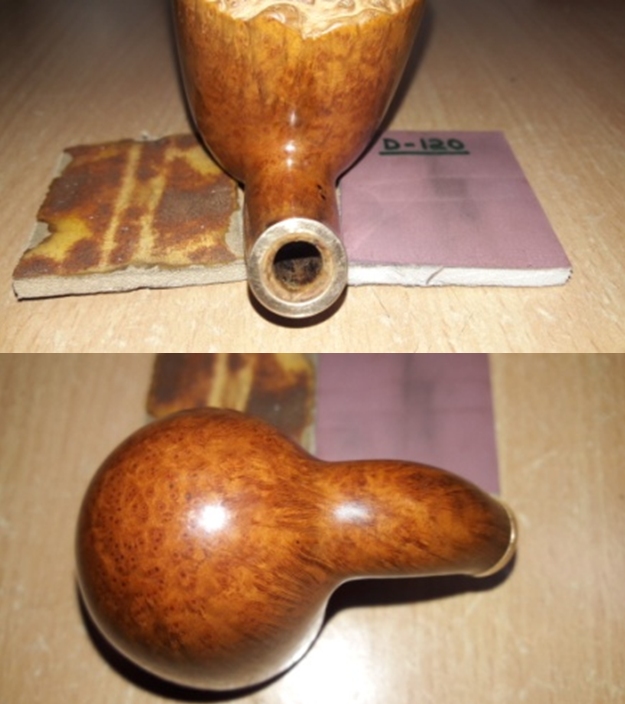
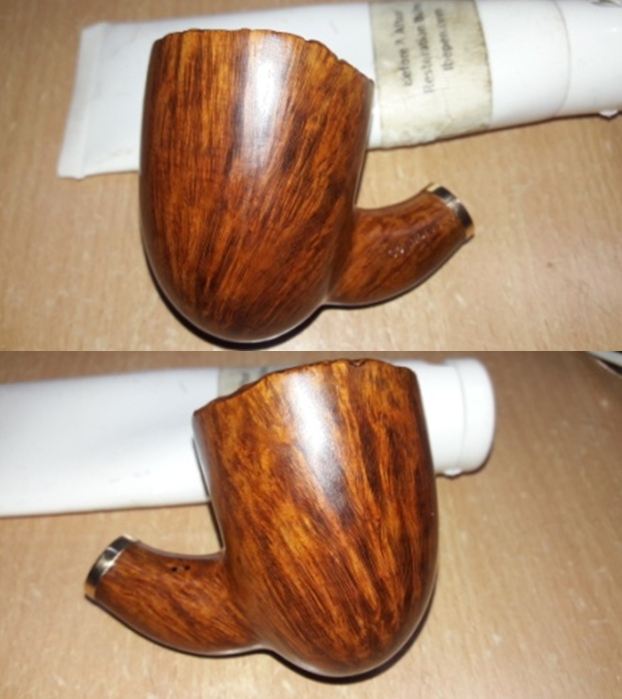
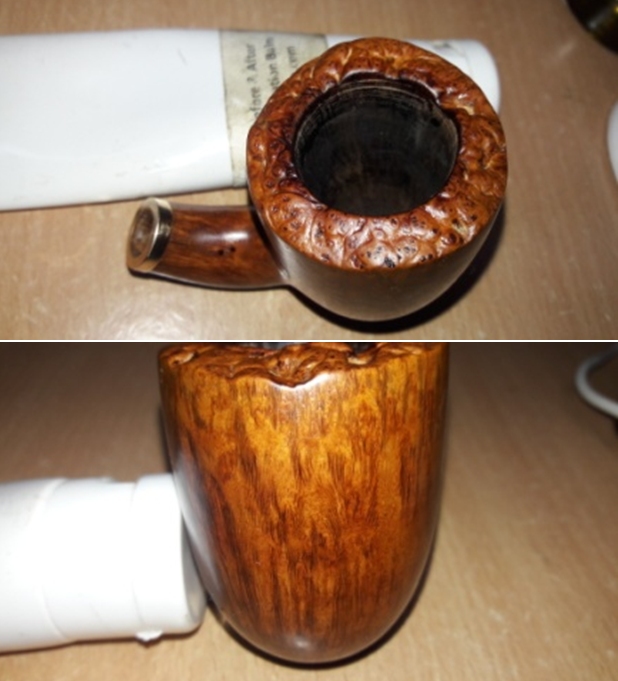
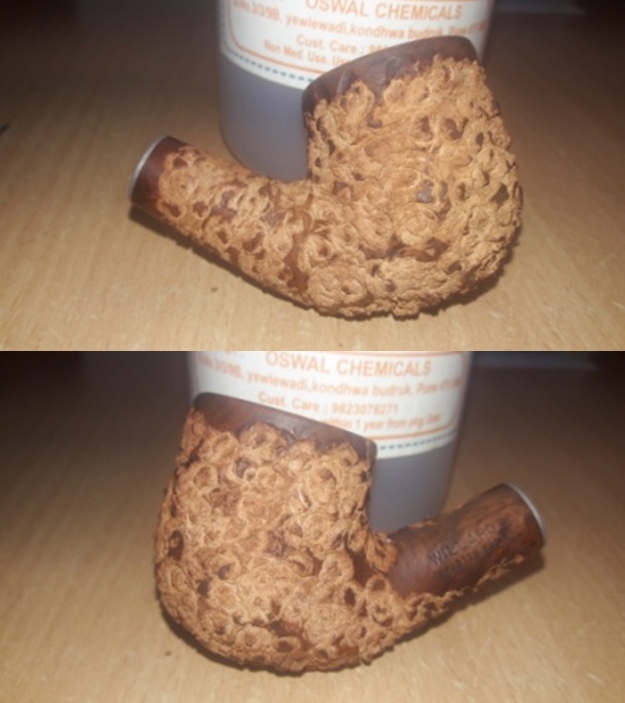
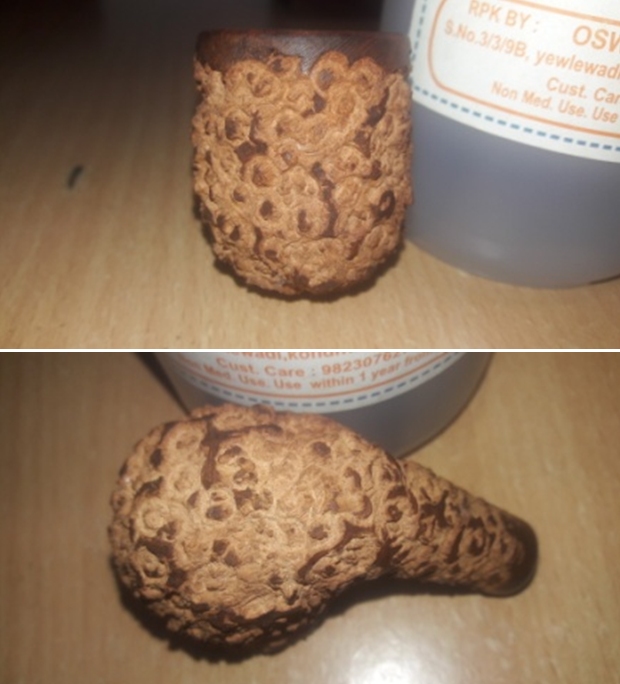
Rusticating A Willard That Was A Gift For My Colleague…


Blog by Paresh Deshpande

My job involves a lot of transfers and frequent shifting of our household to a completely new place. At times, it is we who move to our work place alone while our families stay back for children’s education or when accommodation is not available or when the new place is in a remote area and fraught with risks. I moved to my present place of work alone. Here, I had a very fine set of colleagues with whom I gelled well. As time went by, these colleagues got transferred and new colleagues joined. However, when the last of my old colleagues got his transfer orders, I wanted to gift him a pipe as he has started to enjoy pipes more than his cigars.

Abha, my wife, had sent me one lot of 40-45 pipes that she had cleaned up and all ready for my part of restoration process. From this lot of the pipes that I had earmarked as for sale/ gifting, he selected a pipe that had come to me as part of my Mumbai Bonanza.

For those readers who have missed out on how I came to purchase this lot, here is the background story….

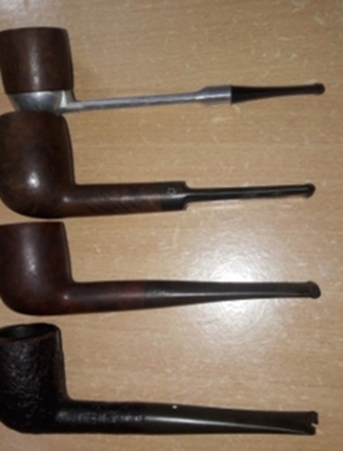
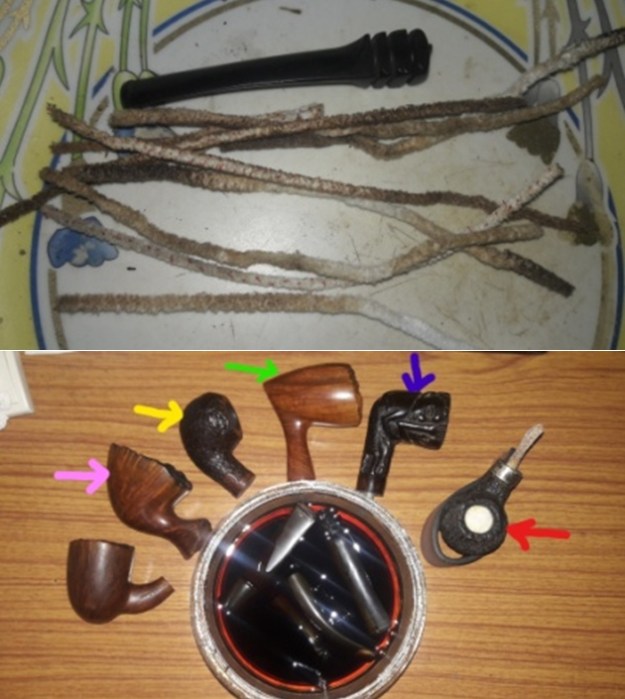
I was fortunate enough to have heeded the advice of my dear friend and mentor, Steve, and struck a deal with a junk collector from Mumbai. He did not know what he was selling and I did not know what I was buying as we reside in different cities!! The argument that Mr. Steve presented was that if not anything, I shall at least have some spares and this was logical. I struck a deal and here are pictures of the pipes that I received in this lot.    This lot contains some very nice collectible pipes, a few well known brands and some mediocre brands. Overall, with seven Dunhill pipes, a Preben Holm #1 FH, a couple of “Made in England” Pete System pipes, a couple of  Charatan’s Belvederes, Custom-Bilt, Stanwell and other assorted pipes, I would say that I had struck a decent deal!! This is indeed my “Mumbai Bonanza”.

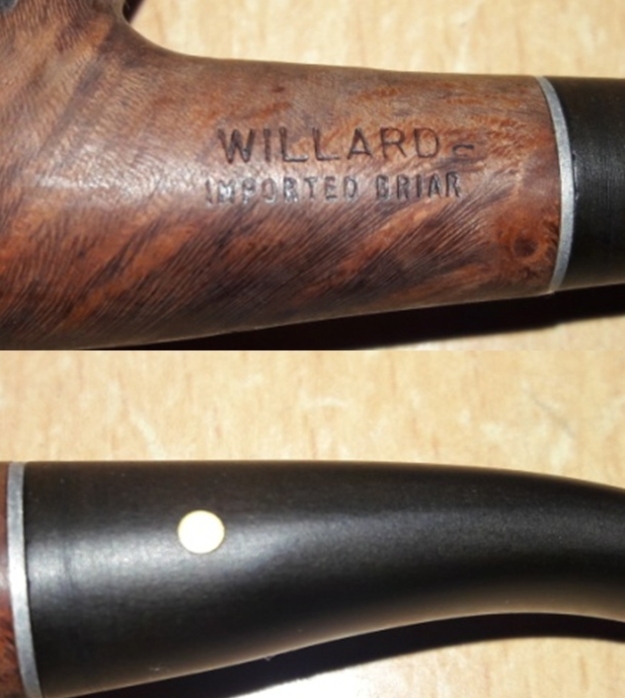
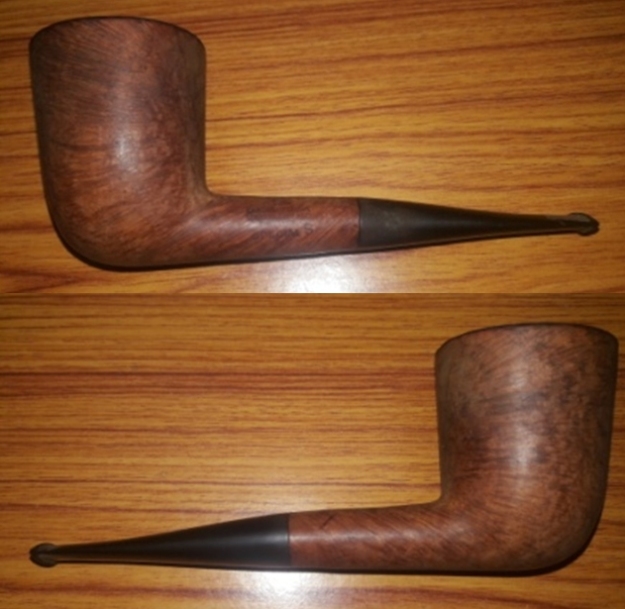
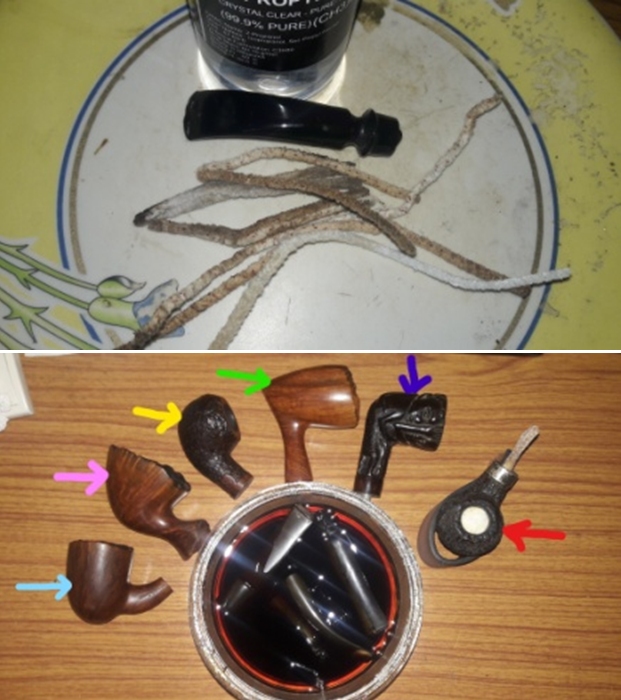
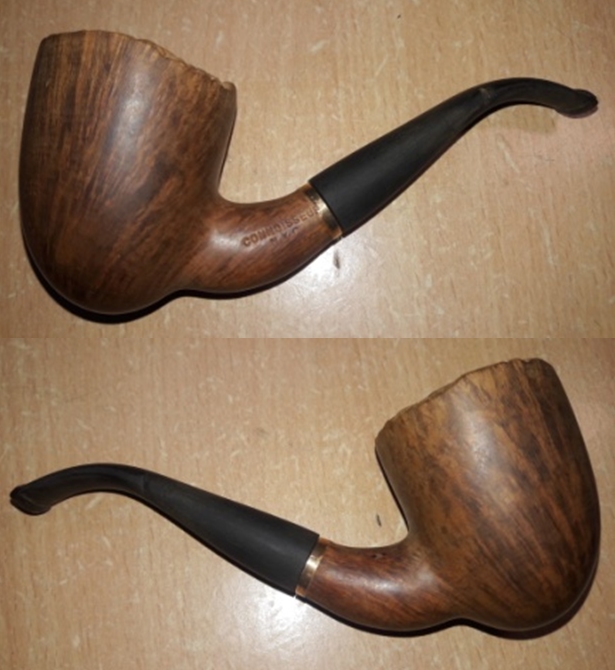
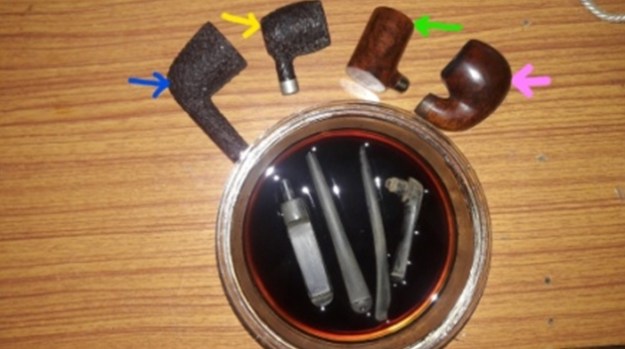
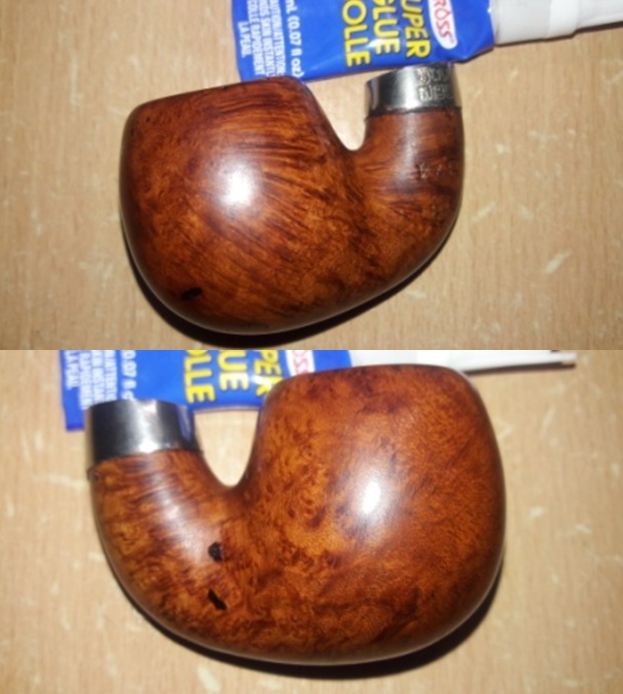
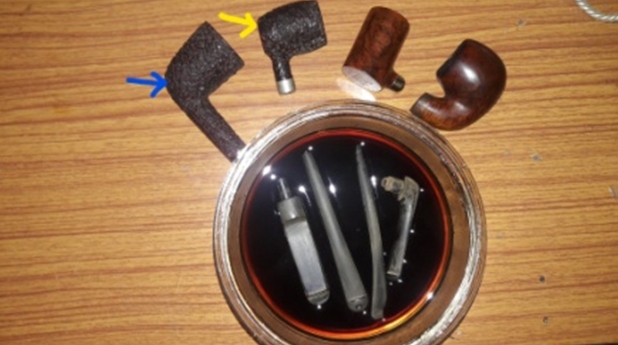
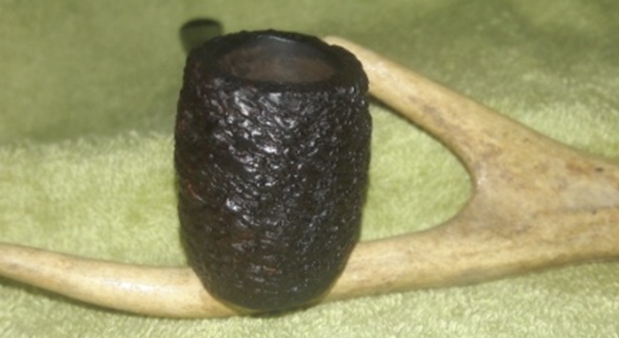
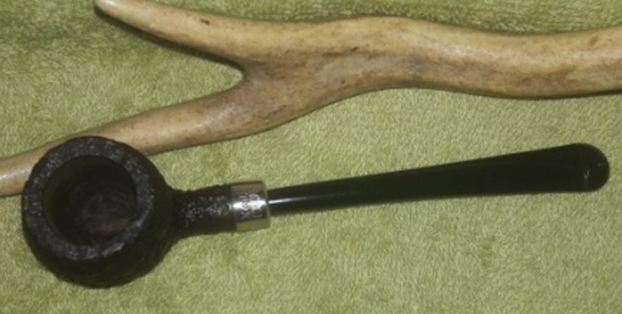
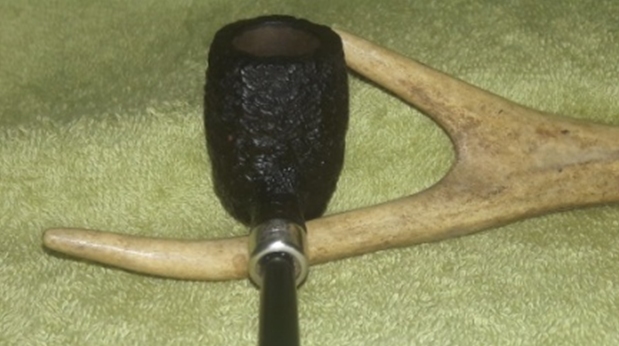
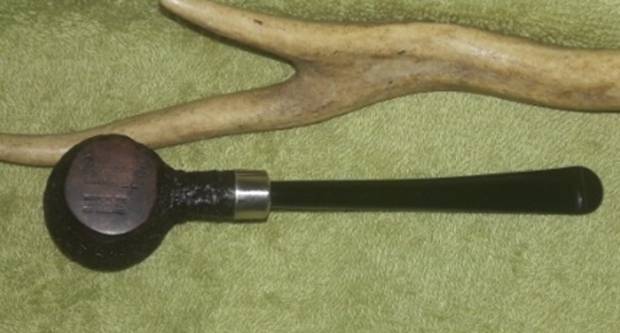
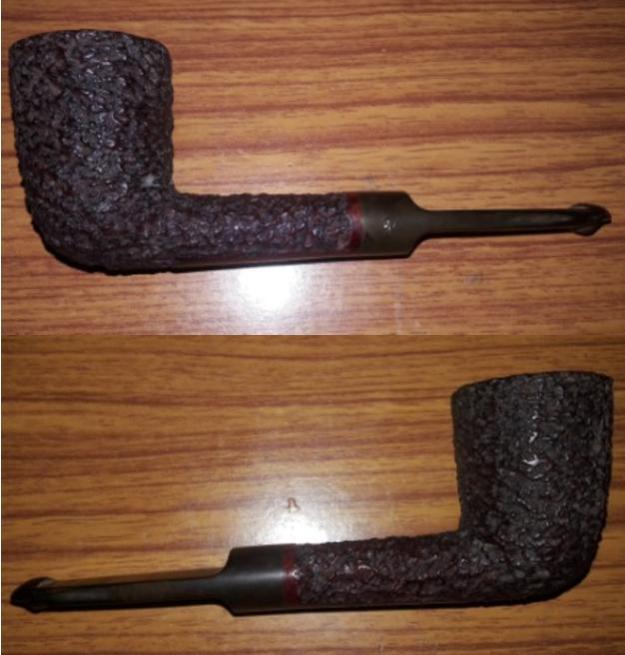
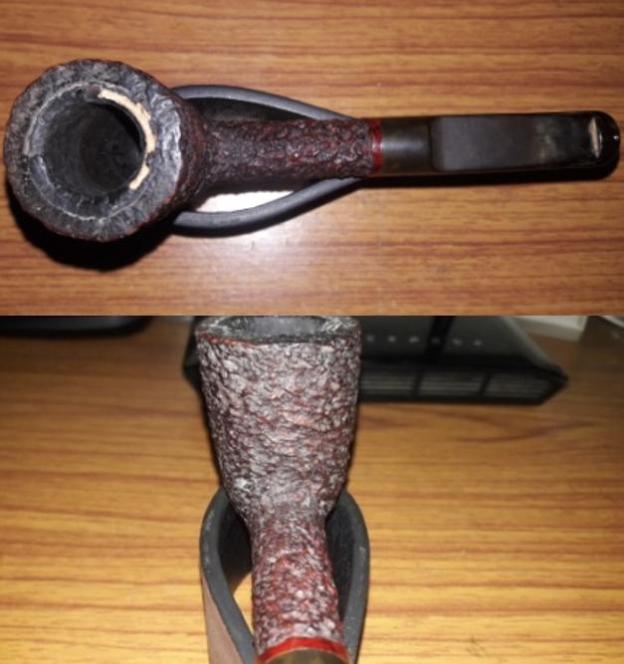
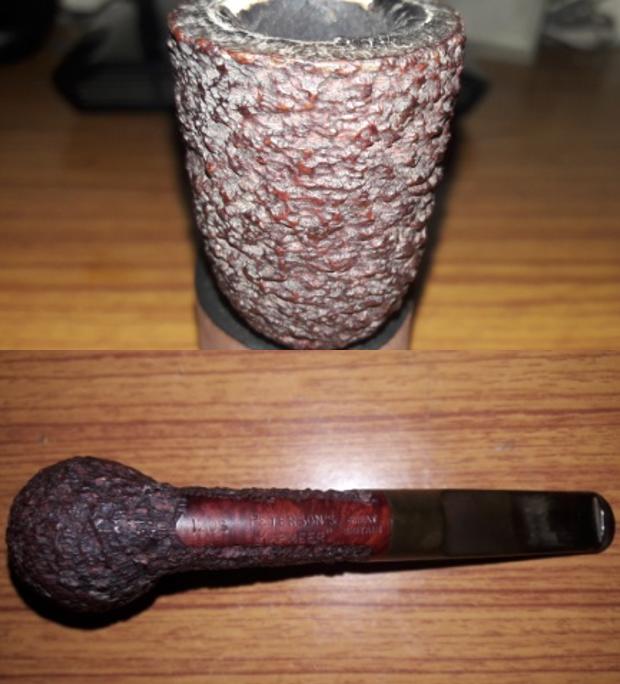
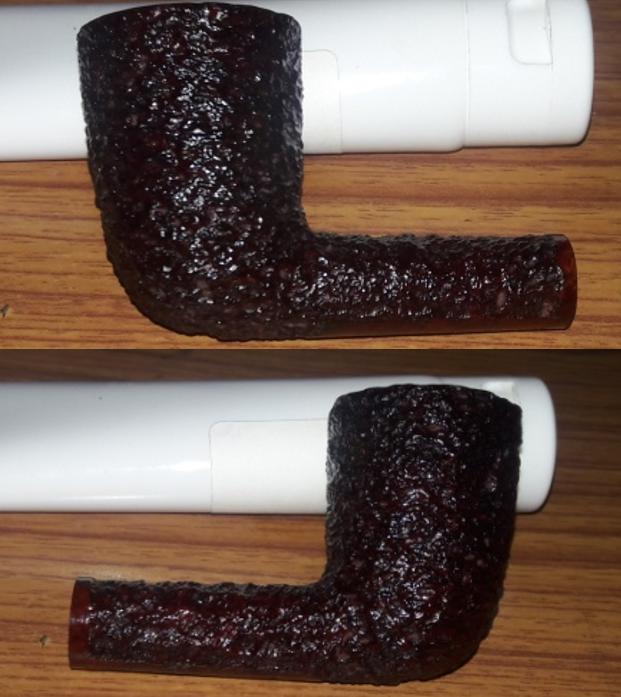
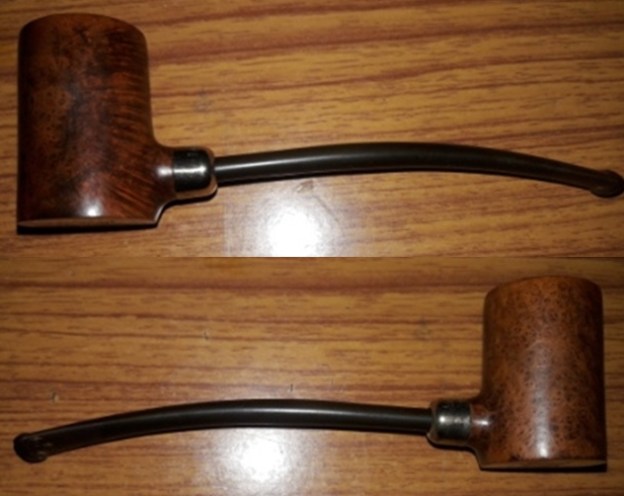
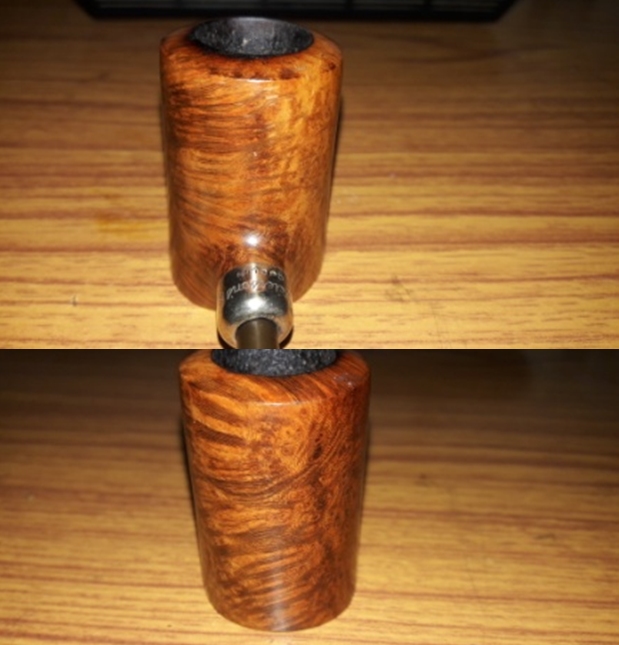
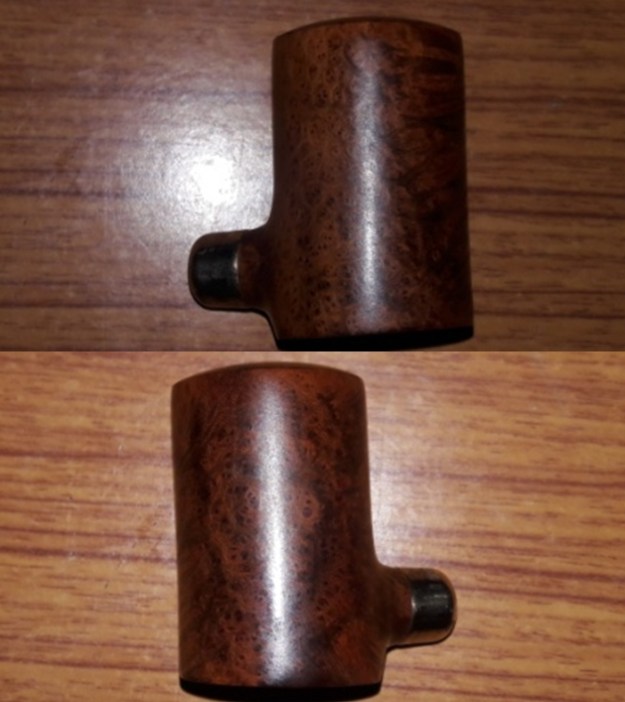
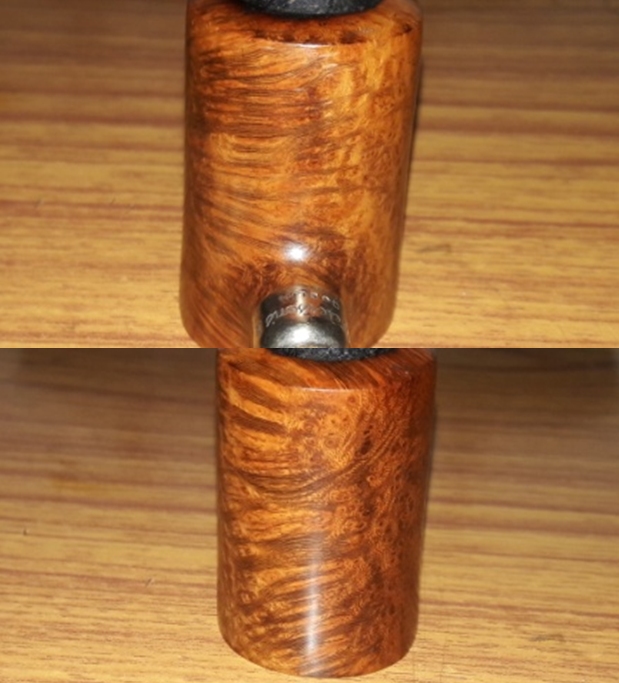
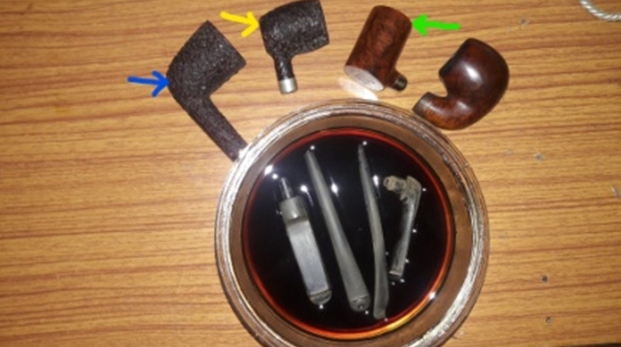
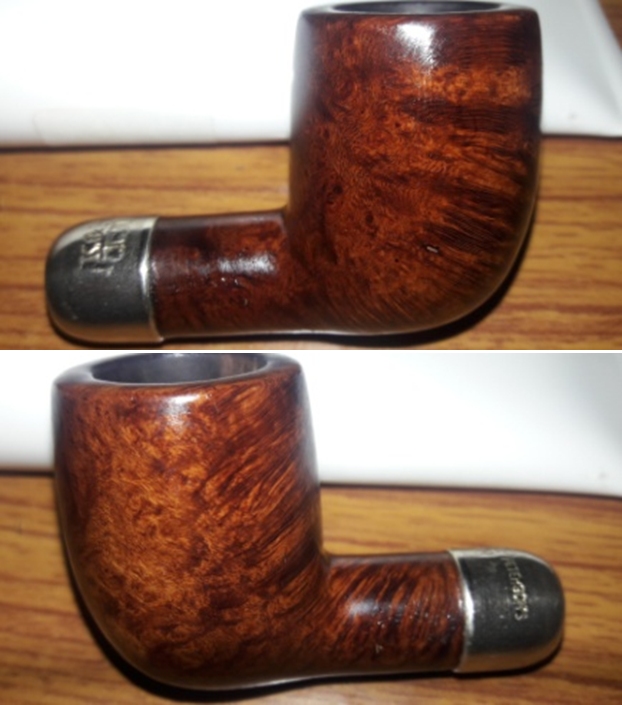
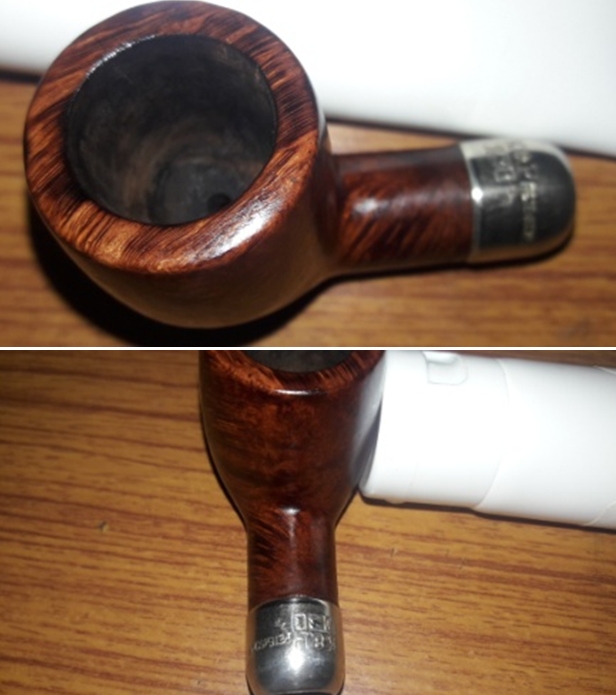
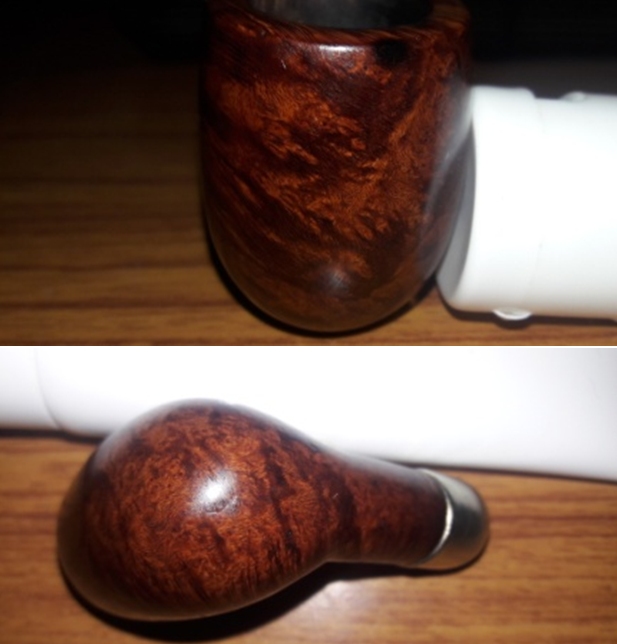
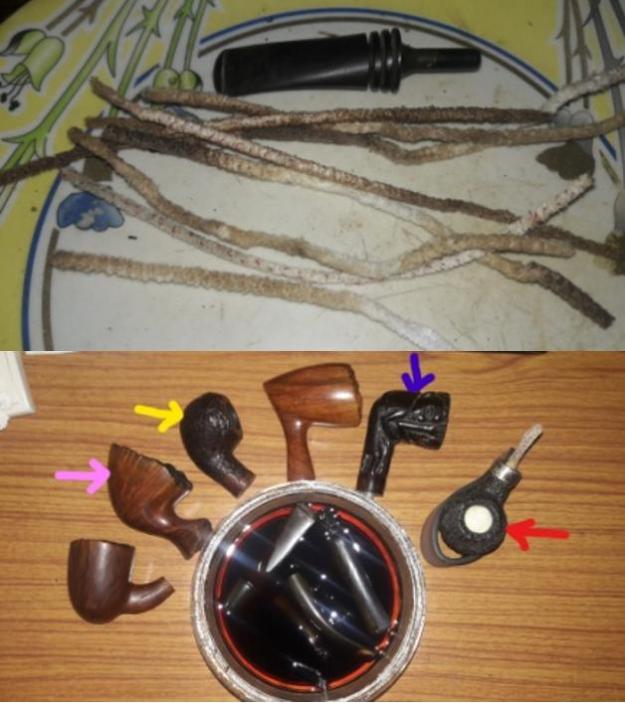
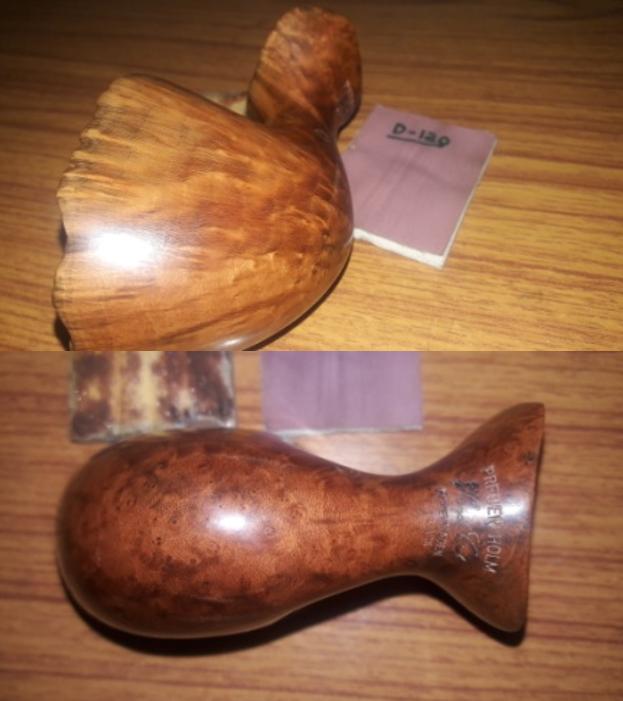
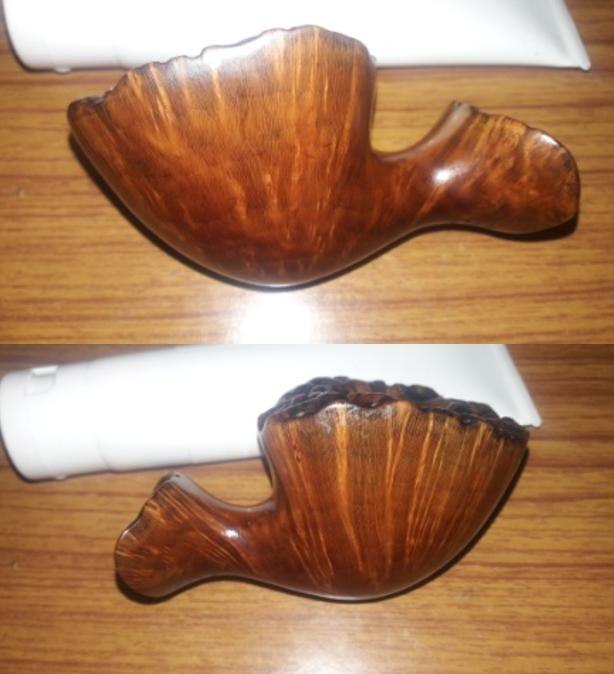
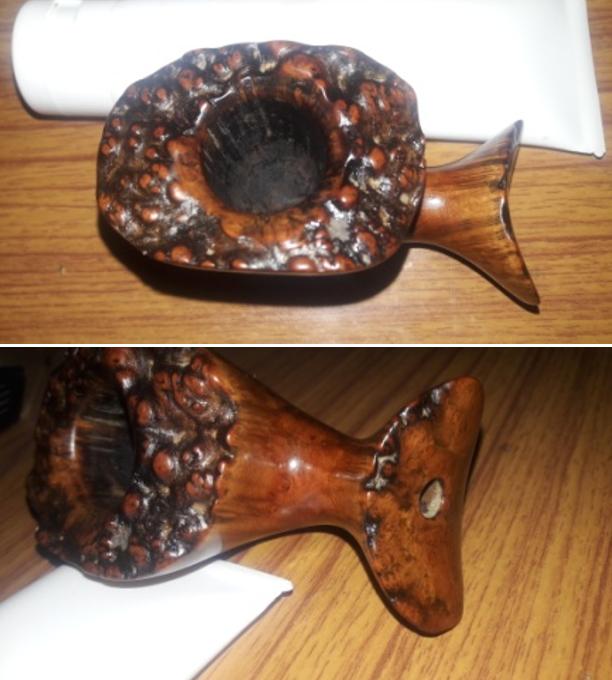
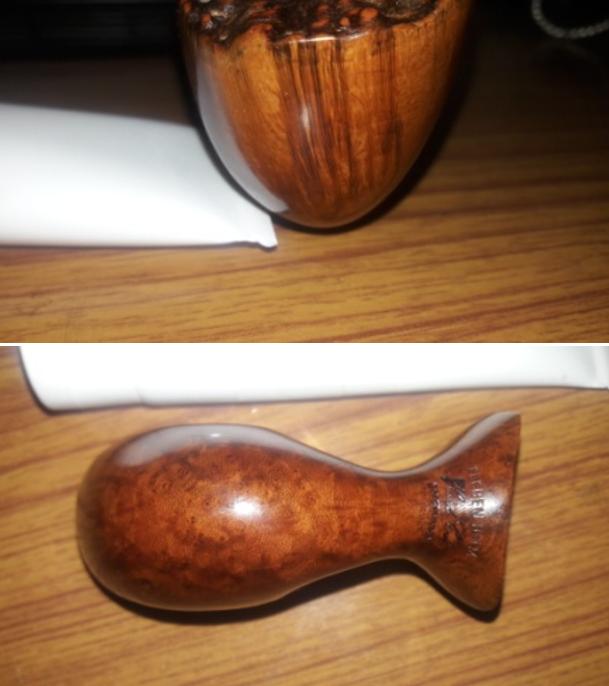
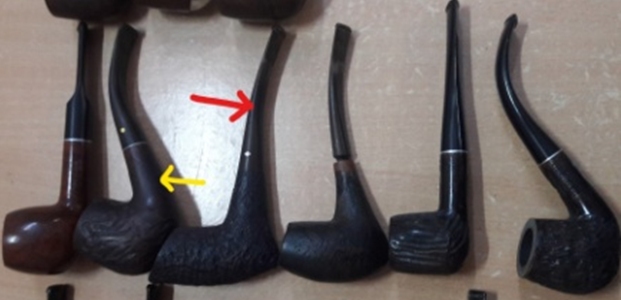
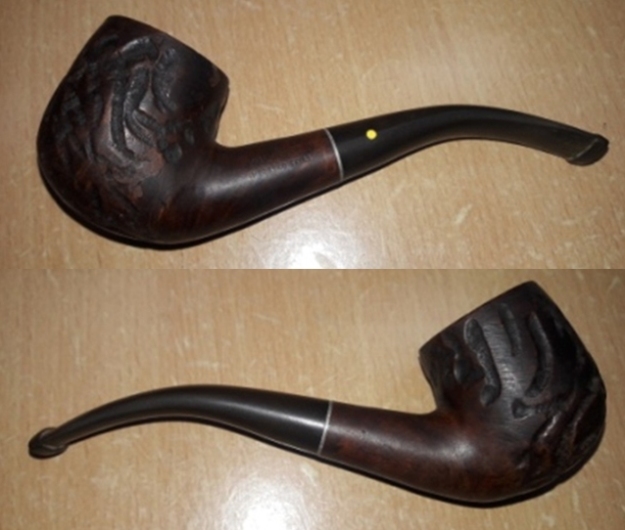
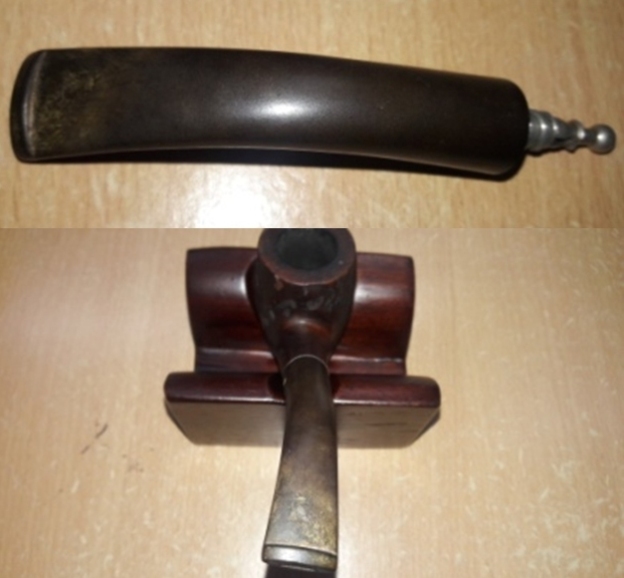
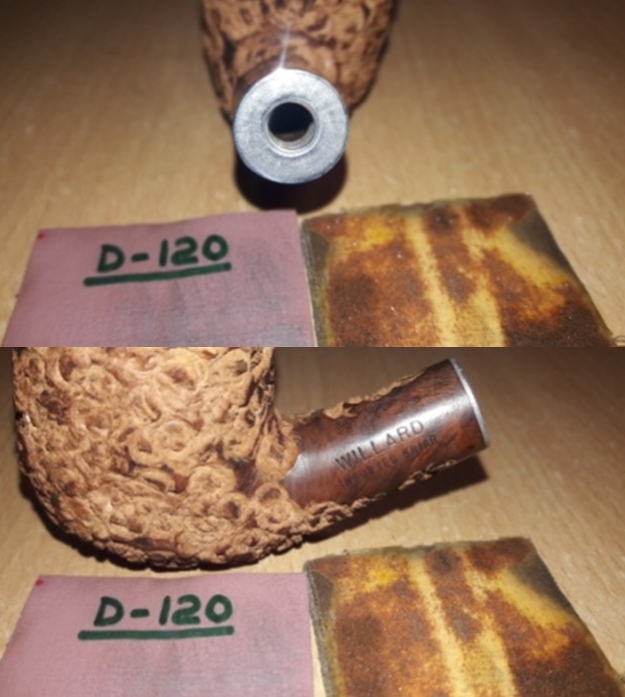
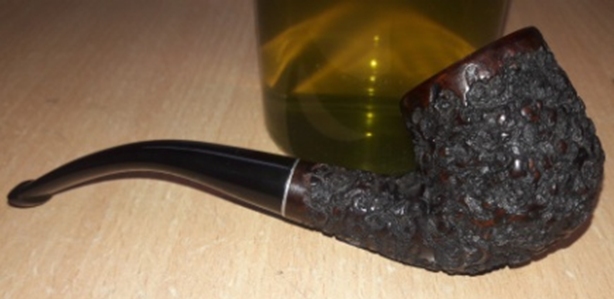
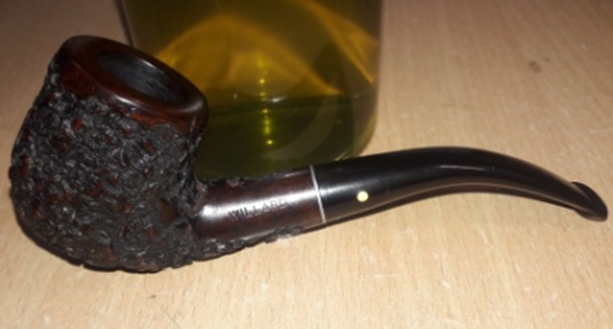
The pipe selected by my colleague and now on my work table from this find (sixteenth pipe being restored) is a bent billiard pipe with flame shaped worm rustications, a poor imitation of worm rustications as seen on Custombilts from the Wally Frank era! It is indicated in yellow arrow in the picture below. It is stamped on the left side of the shank as “WILLARD” in block letter over “IMPORTED BRIAR” again in block letter. The right side of the shank is devoid of any stamping. The stem bears a “Dot” logo in Yellow, embedded on the left side of the stem. Now coming to the research of this brand and line/model in specific, I referred to pipedia.org. Though there are no reams of information on this brand or model, the information provided gives a clear perspective of this brand and its aim. Here is the link (https://pipedia.org/wiki/Willard).
“The Willard pipes were made by Sparta Industries in Sparta, N.C from 1963 to 1975 (about 60,000 pipes per week). Some were distributed by the Post and Base Exchanges that serviced the military during the Vietnam War. Others were produced for R. J. Reynolds Tobacco. (preceding content from the “Pipes” website http://www.pipephil.eu/index.html)

Lord Abbott was either a sub-brand or a series produced by Willard —Dgillmor 22:42, 10 May 2012 (CDT)”

From the above information, it is evident that the pipe currently on my work table is from the period 1963-75. With this input on the vintage of this pipe, I move ahead with the restoration of this 42 plus years old pipe!

Initial Visual Inspection
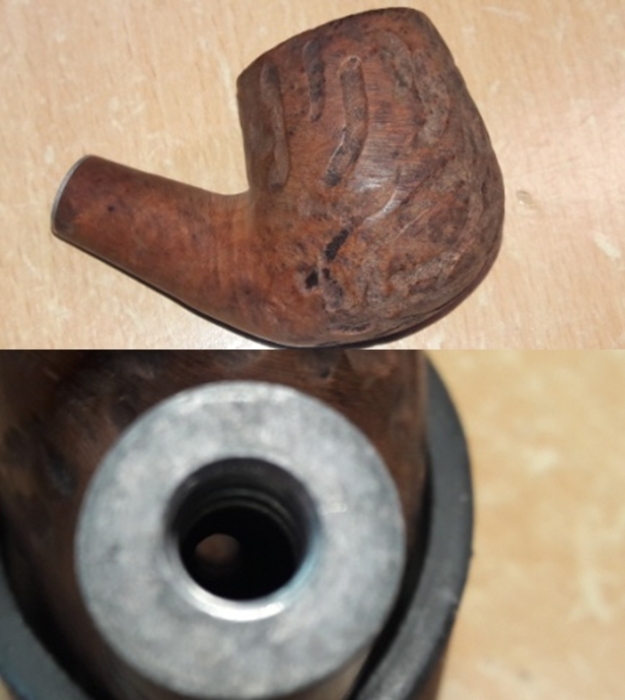
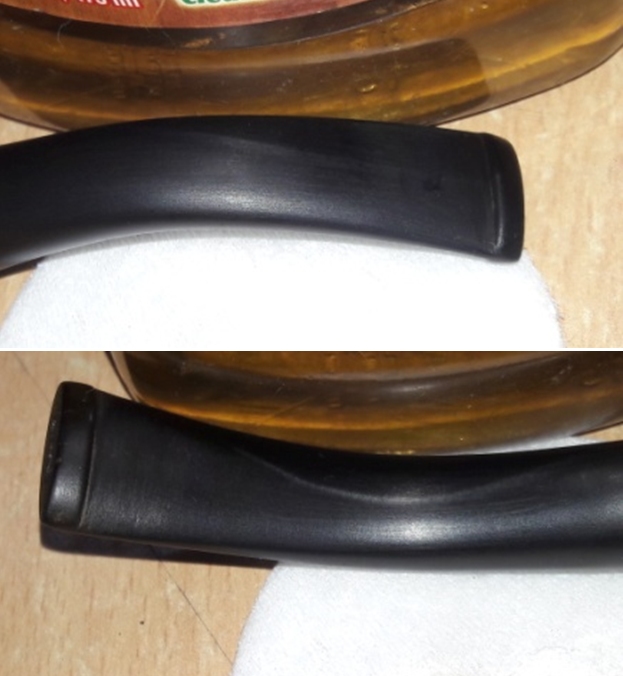
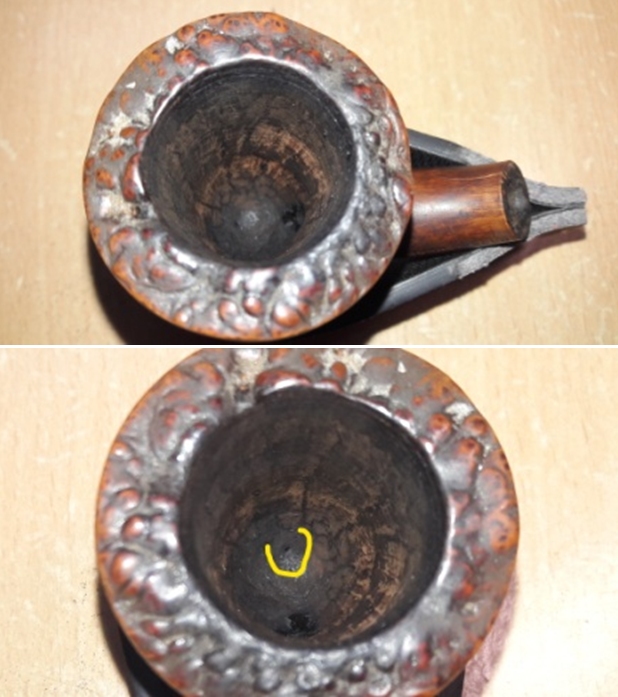
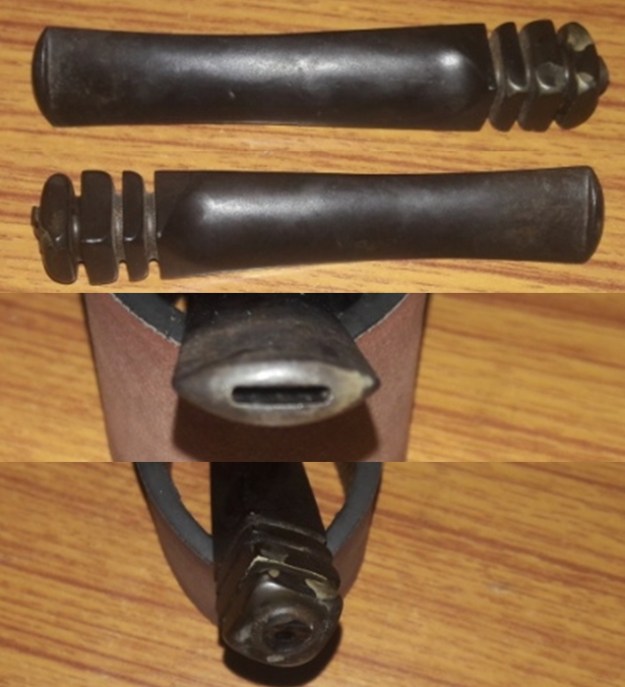
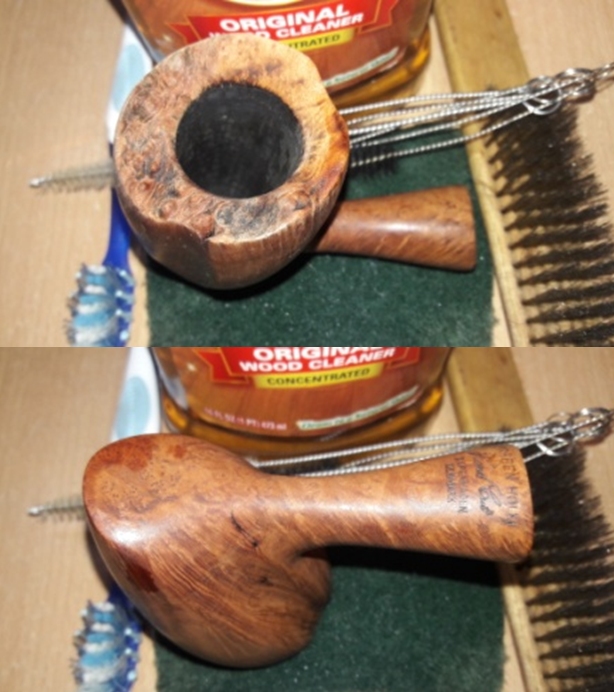
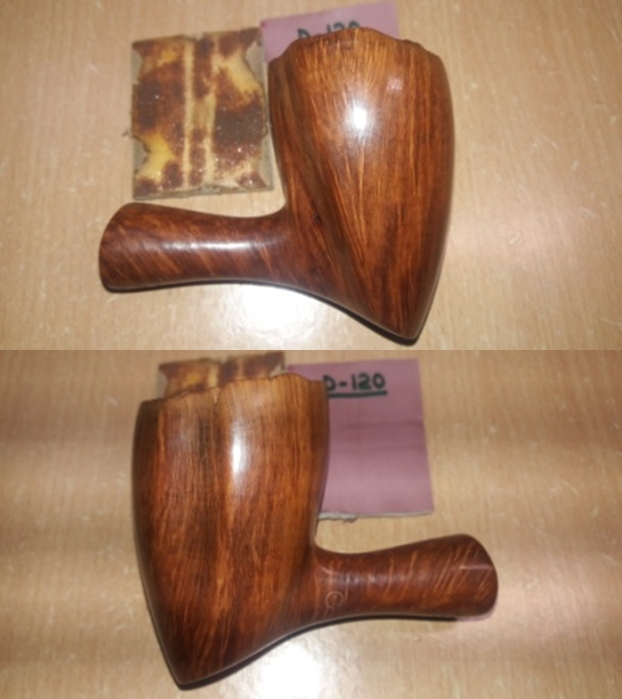
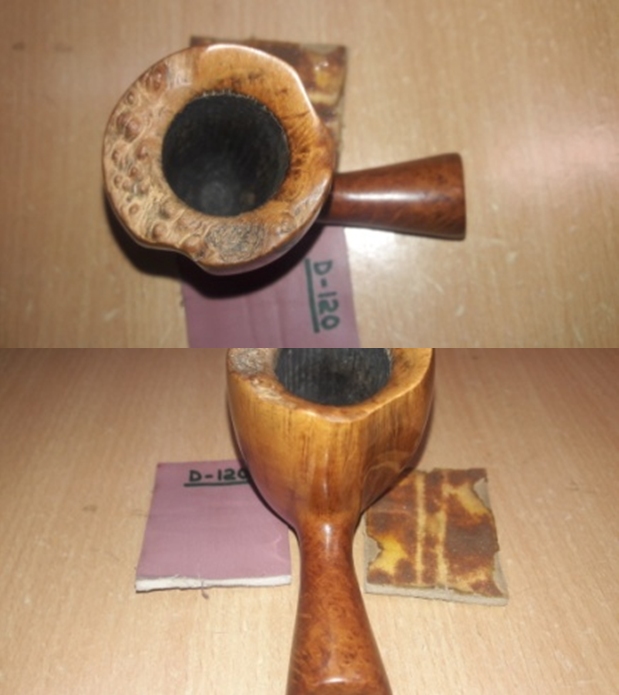
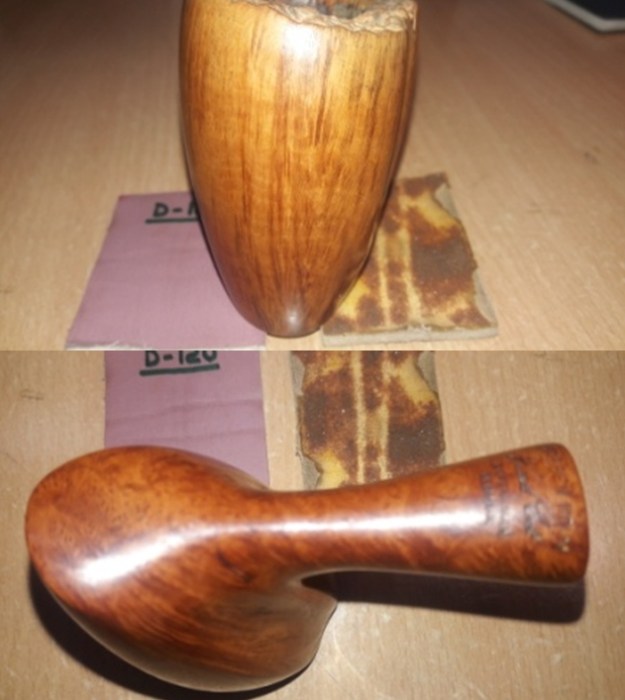
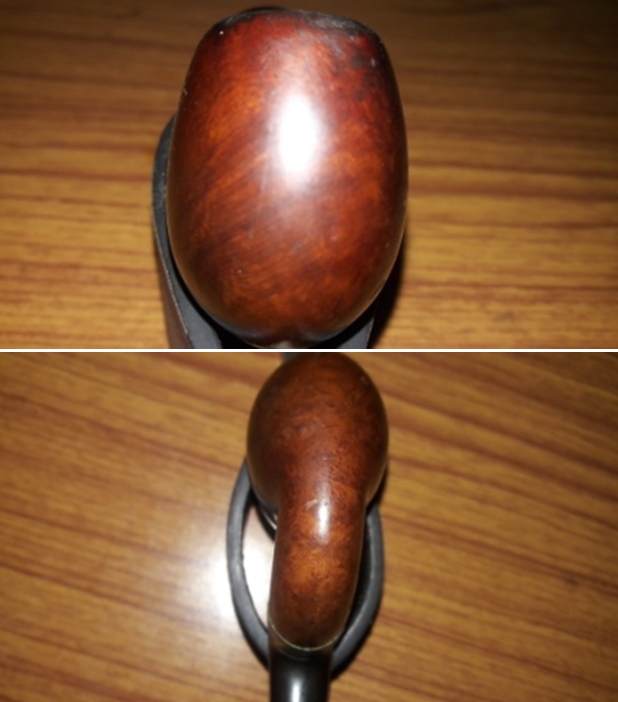
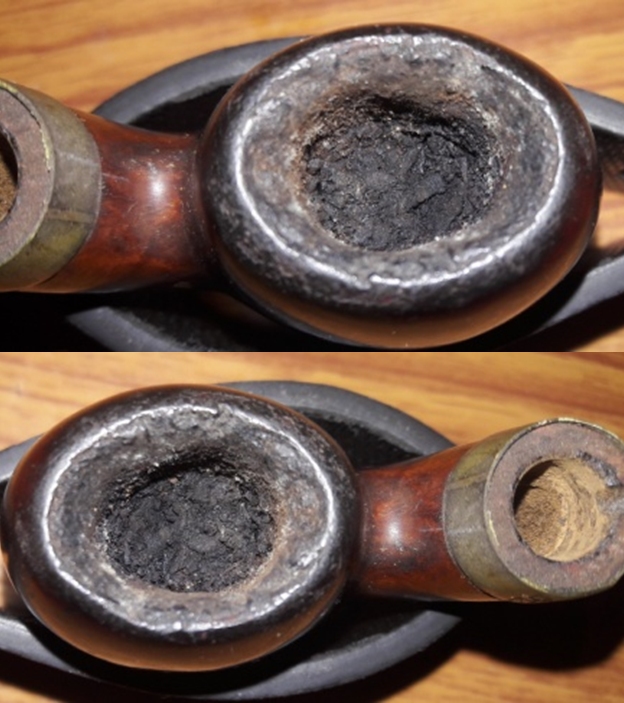
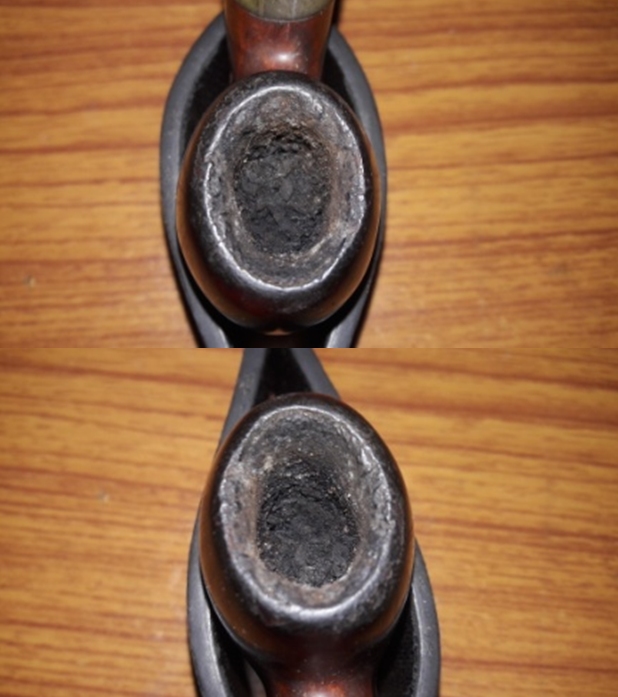
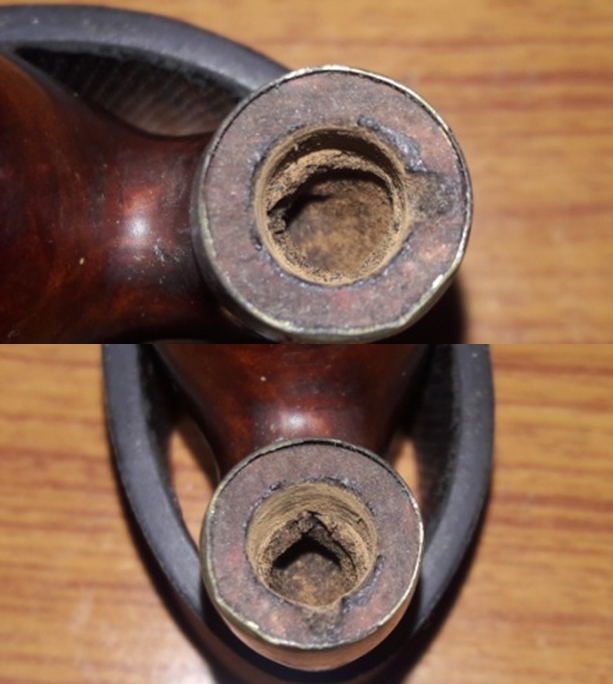
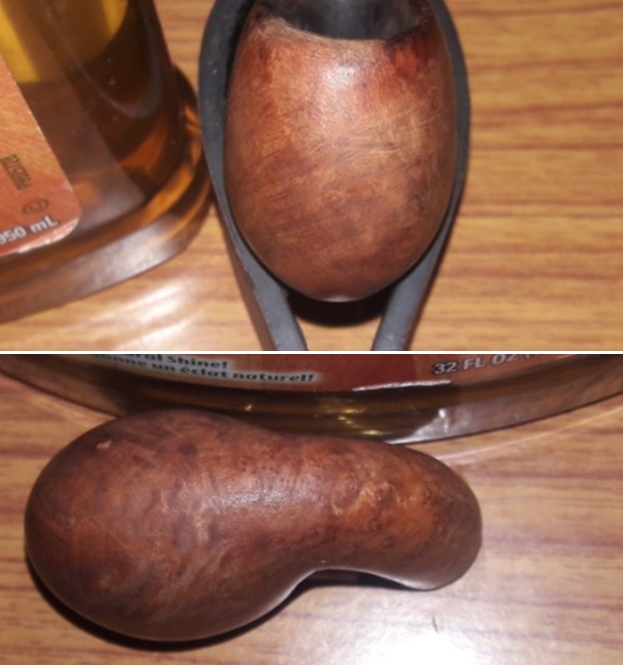
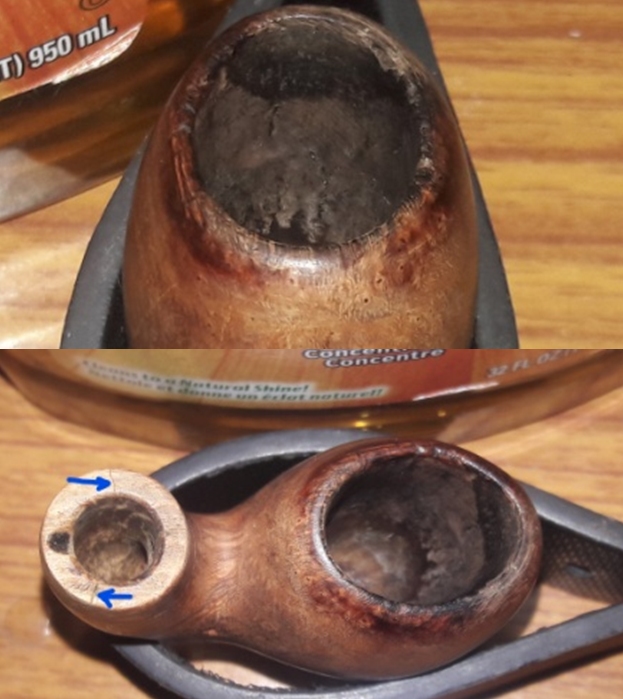
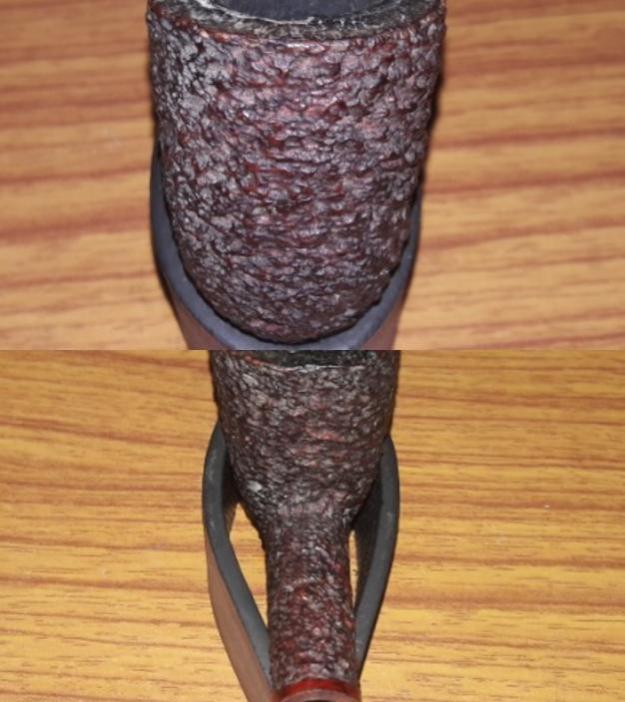
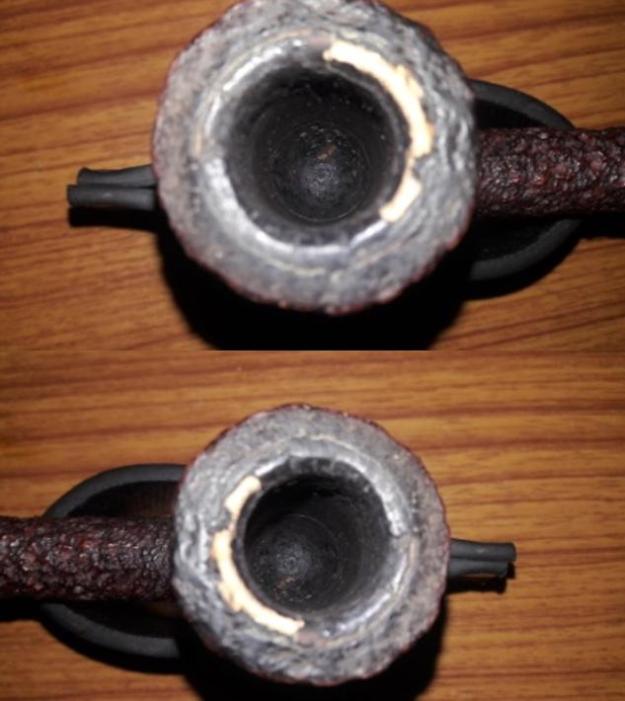
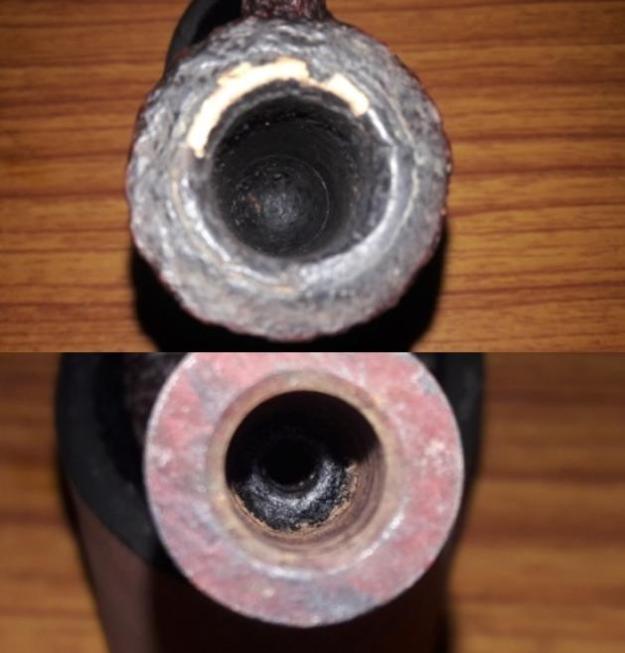
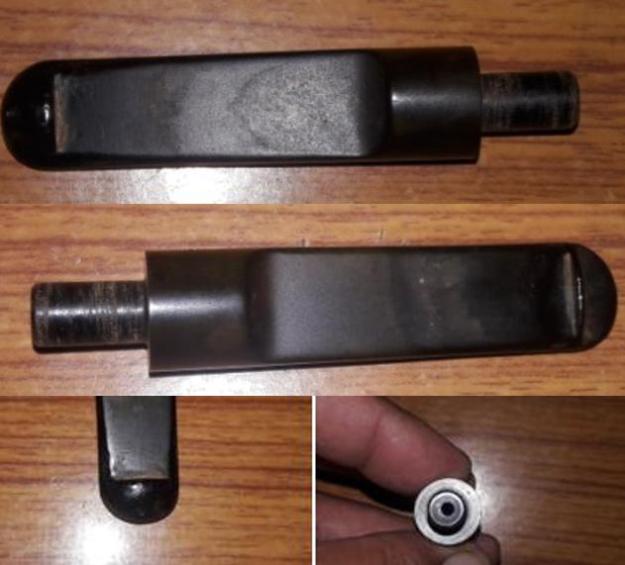
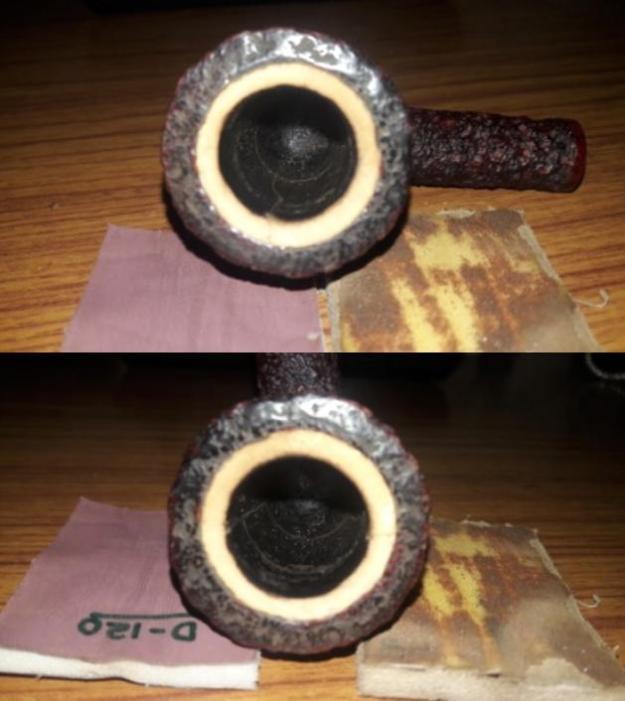
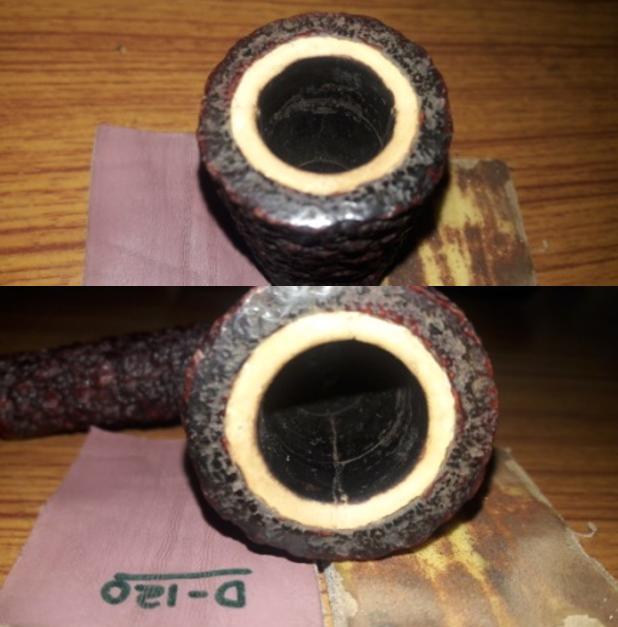
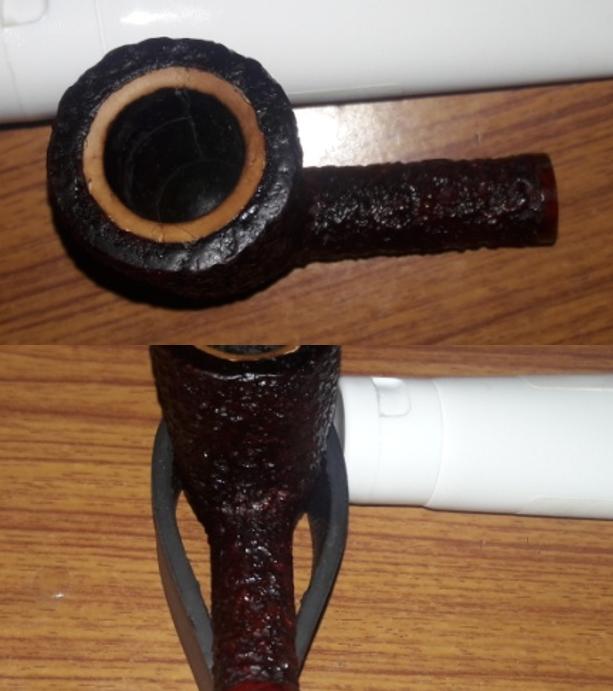
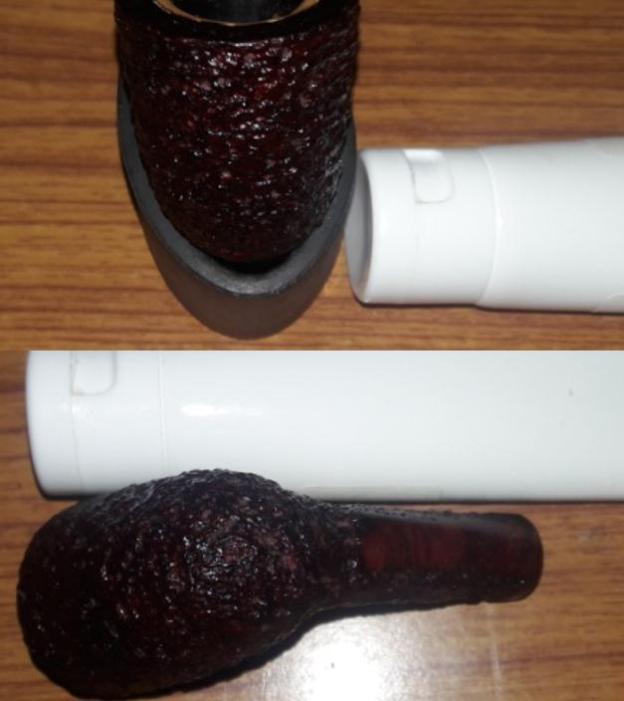
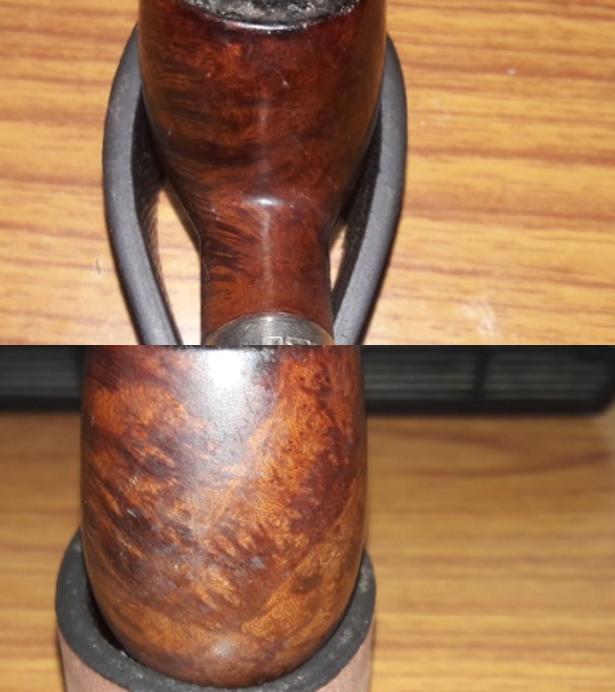
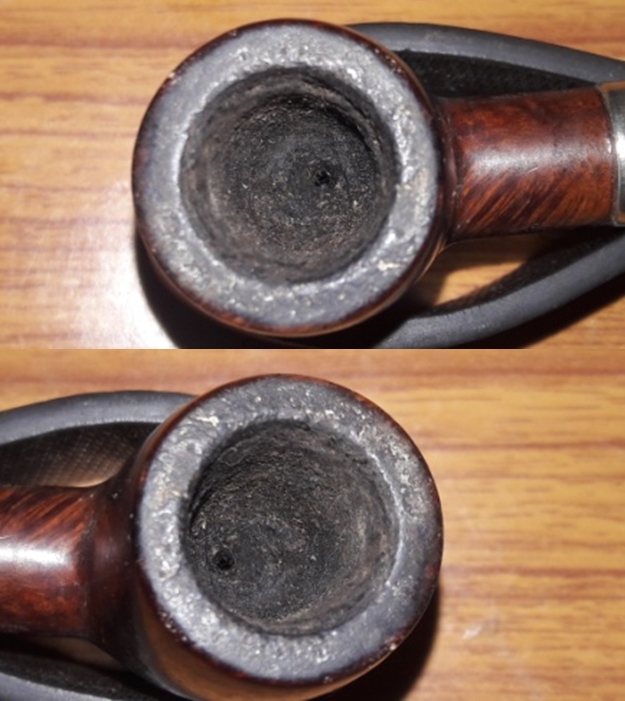
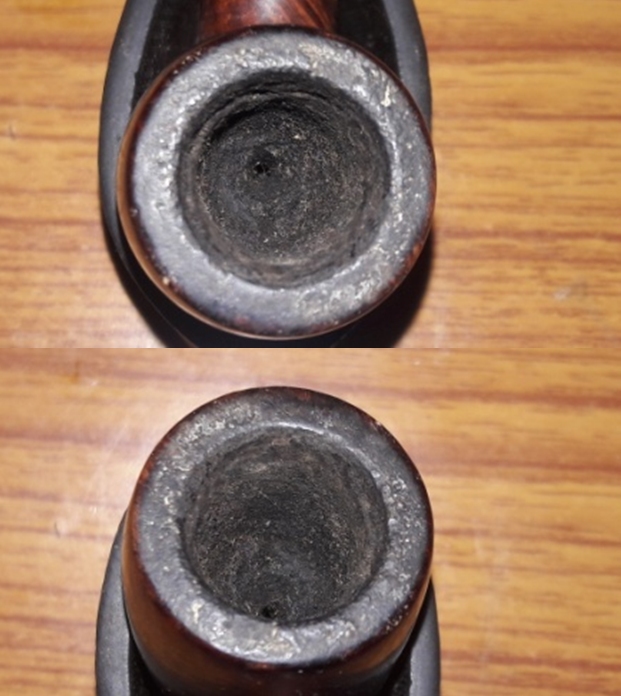
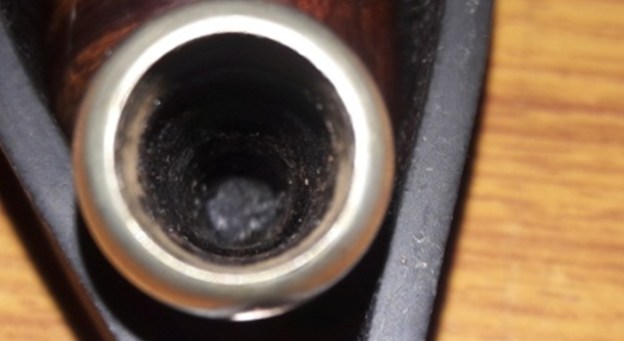
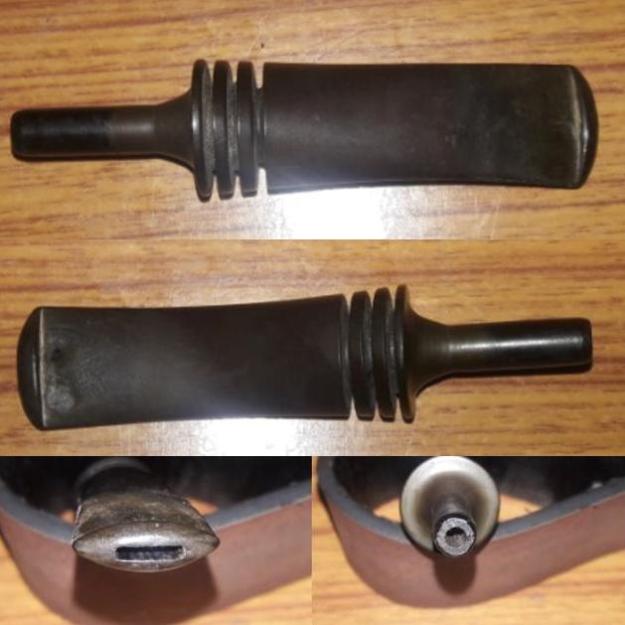
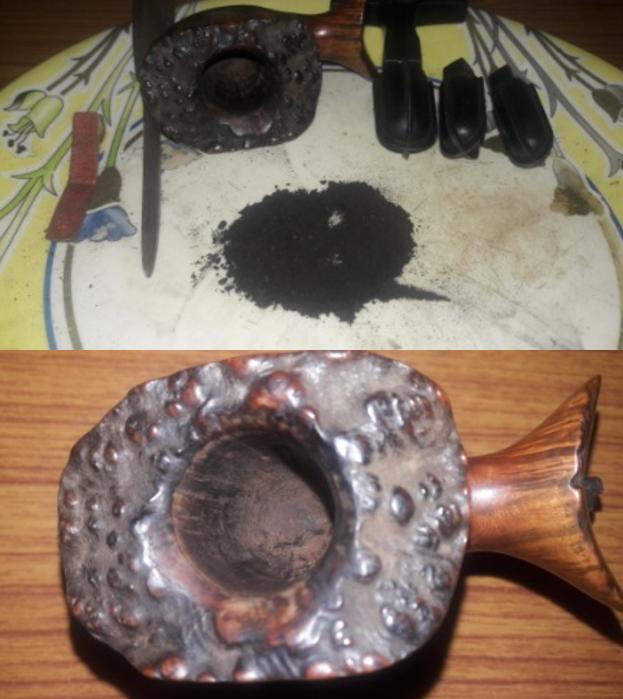
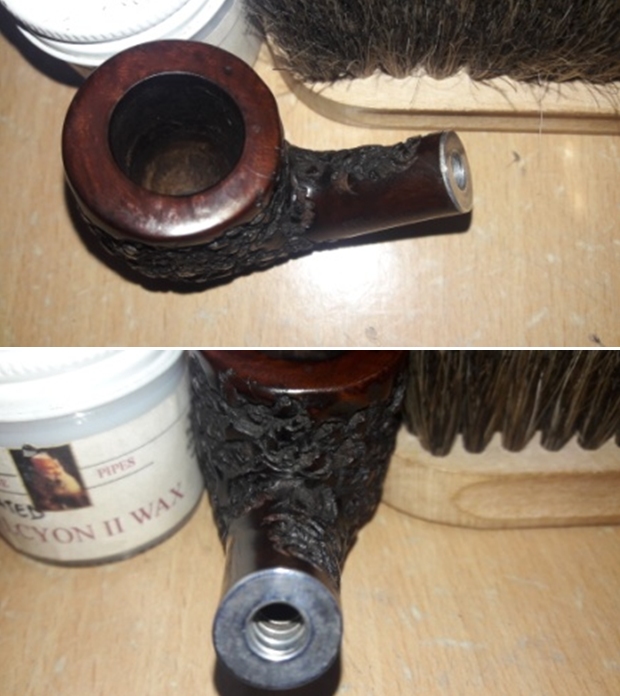
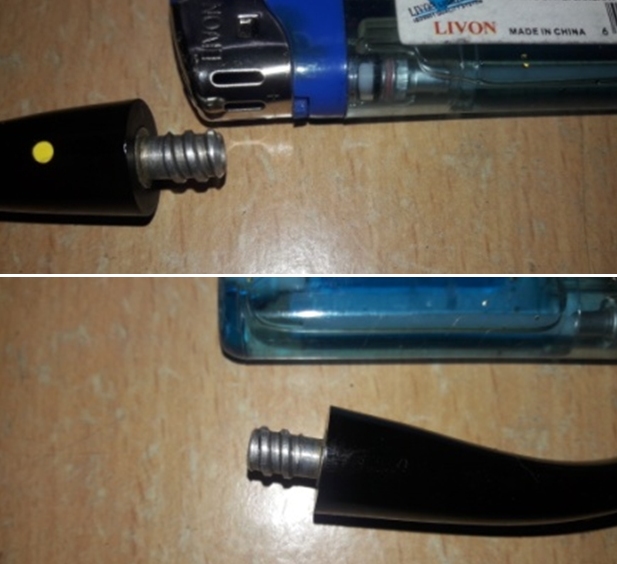
The stummel is covered in dust and dirt giving it a dull appearance. The Custombilt like worm rustications are uneven, without any finesse and filled with dirt and grime. There are a couple of fills that are plainly visible. These will need to be refreshed, if needed. It’s a matter of personal choice; however, I could not help but wonder what it was that attracted my colleague to this pipe in the first place!! I got my answer the next day when he said that he liked the shape and lightness of this pipe. Thus, it was not the grains (which were zero!) or the worm rustication that he was interested in and could be done away with to make it more attractive. With this input from him, I decided to rusticate the stummel as I was not very happy with the appearance of this pipe at this stage. A thick layer of cake can be seen in the chamber. The smooth rim top surface is covered in dirt, dust and grime with a few dents and dings thrown in for good measures. The condition of the inner walls of the chamber will be known once the cake has been taken down to the bare briar. The inner rim condition appears to be in good condition with no burn/ charred surfaces. Even the outer rim edge appears to be in a decent condition. Only once the stummel has been thoroughly cleaned that I can be sure of my initial appreciation. In spite of the thick cake, the chamber odor is surprisingly not strong, yet I shall be subjecting it to a salt and alcohol treatment to freshen it up for him.The shank end has a metal band and this metal band extends inside the shank with threads, over which the threaded stinger is seated in to the mortise. Thankfully, the band and threads are all intact. The mortise is blocked with dried gunk, adversely affecting the airflow. The metal band is dull and dirty in appearance.The vulcanite stem is oxidized and has calcification deposits towards the button end. The lower and upper stem surface is peppered with tooth chatter. The button edges also need to be sharpened. The stinger opening and the horizontal slot is covered in accumulated oils and tars. The alignment of the stem and shank is skewed with the stem being overturned to the right. Initial Cleaning By Abha…
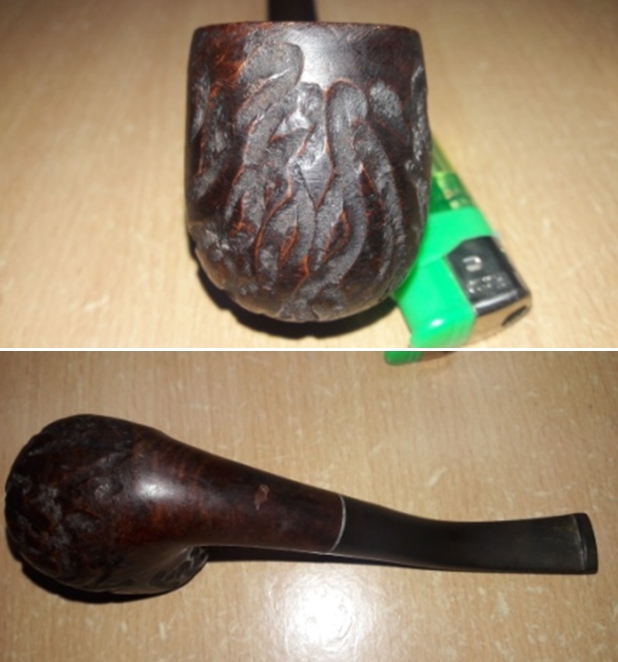
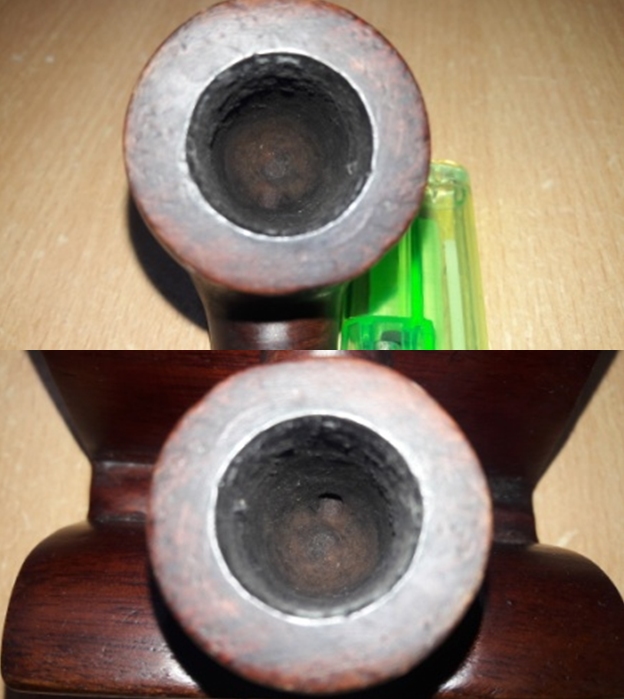
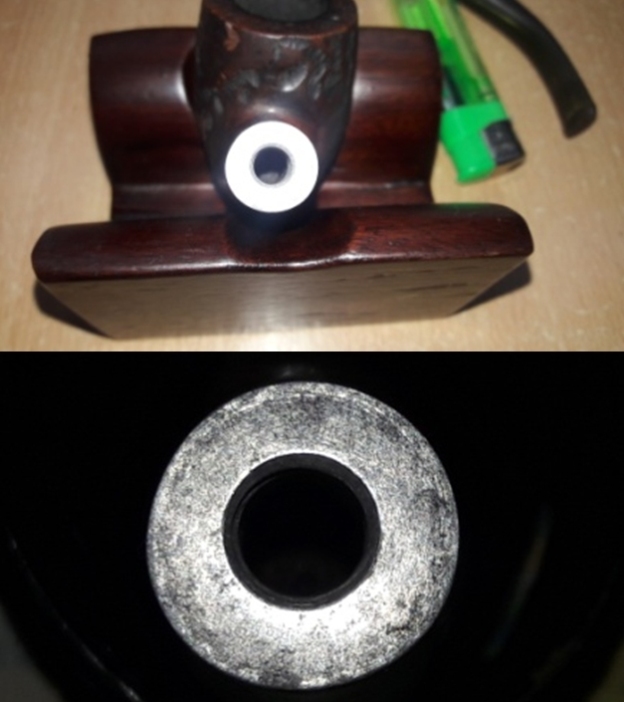
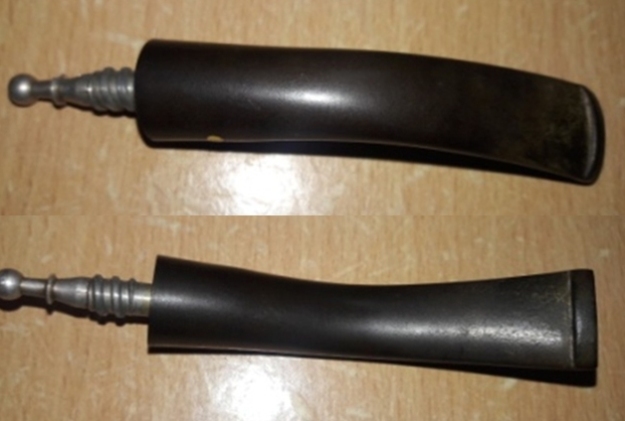
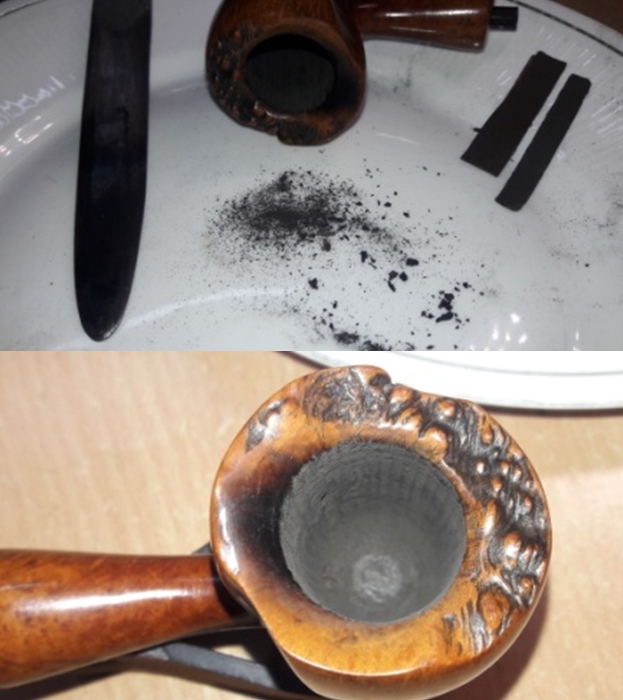
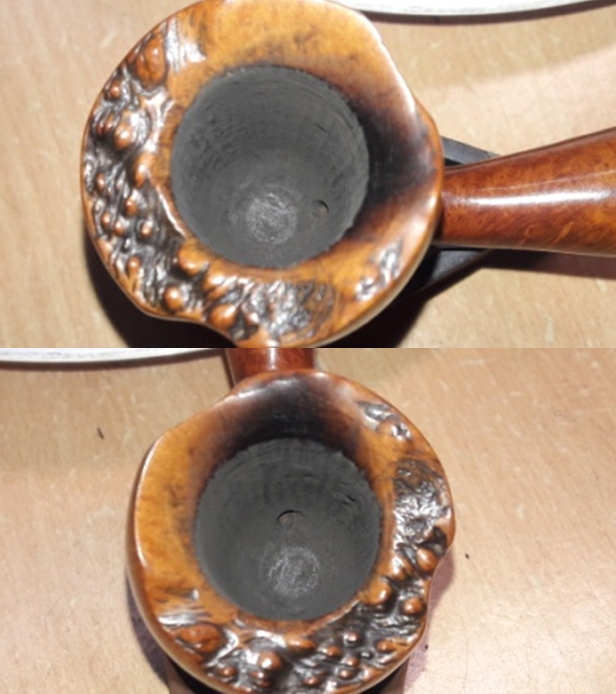
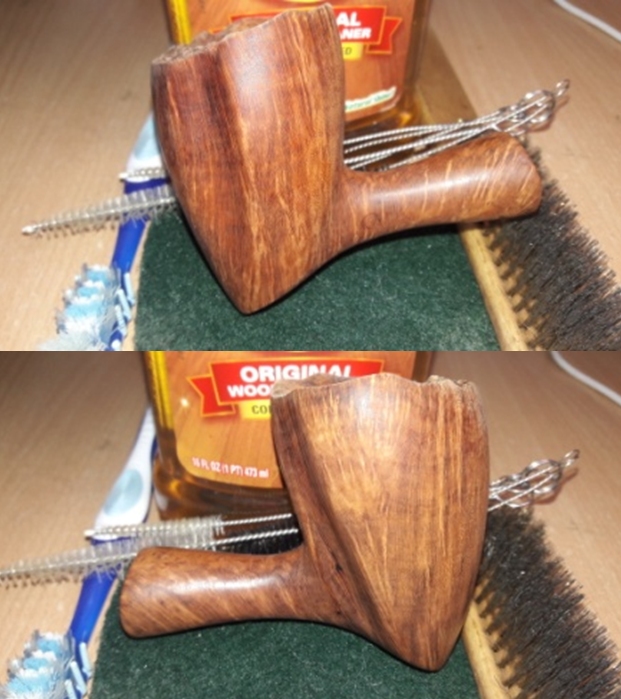
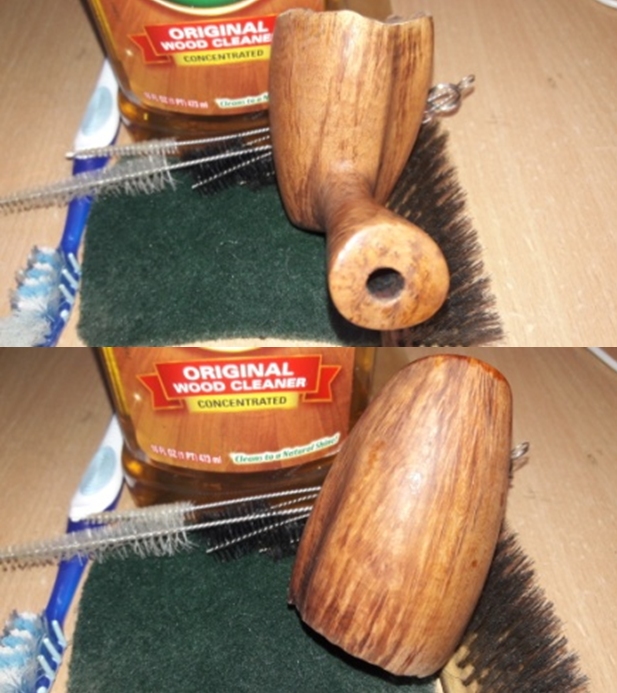
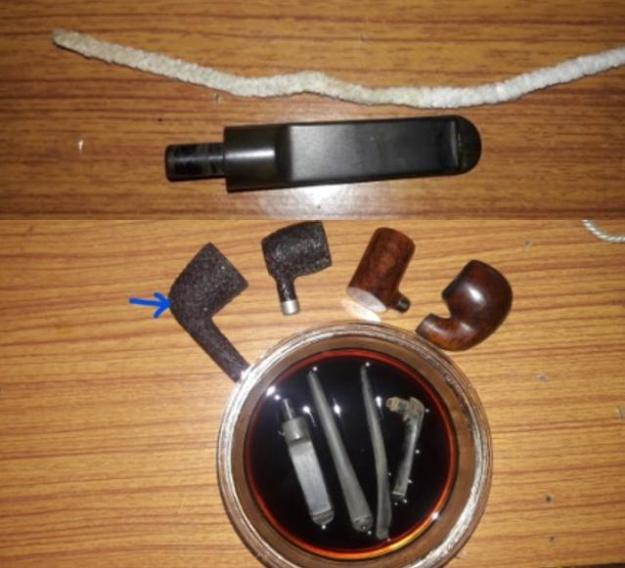
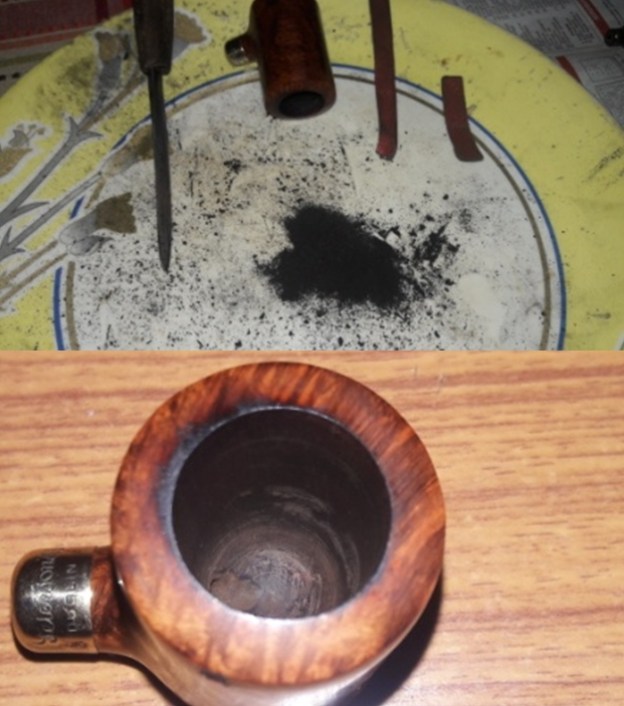
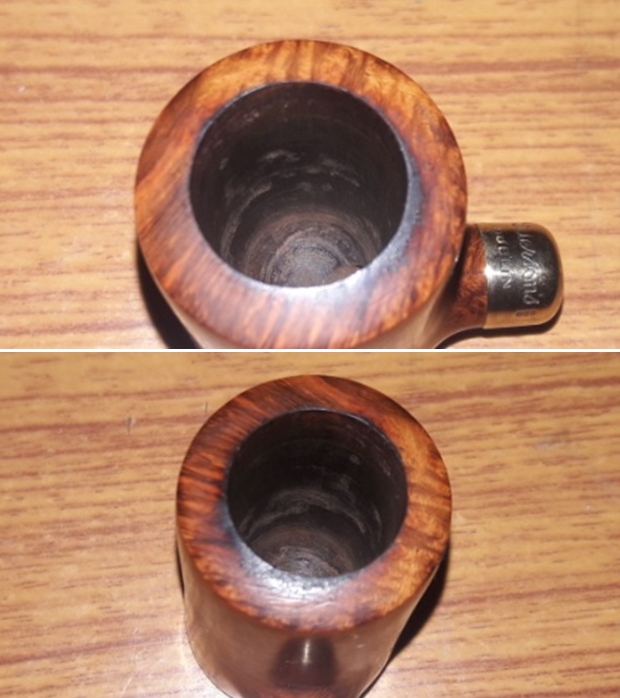
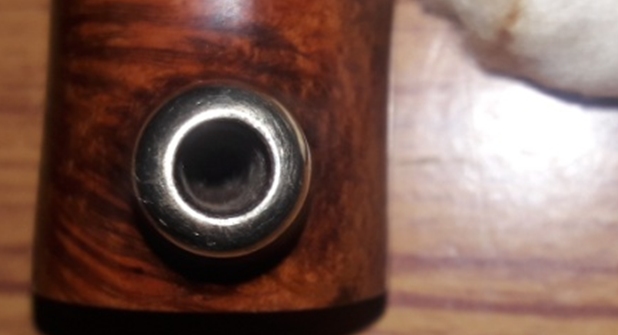
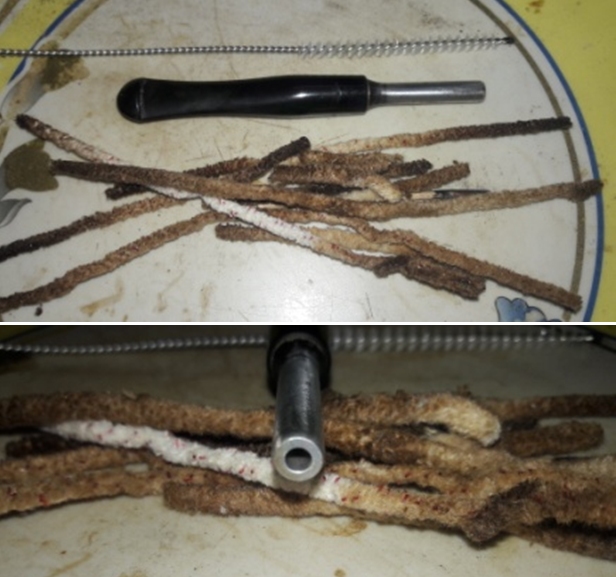
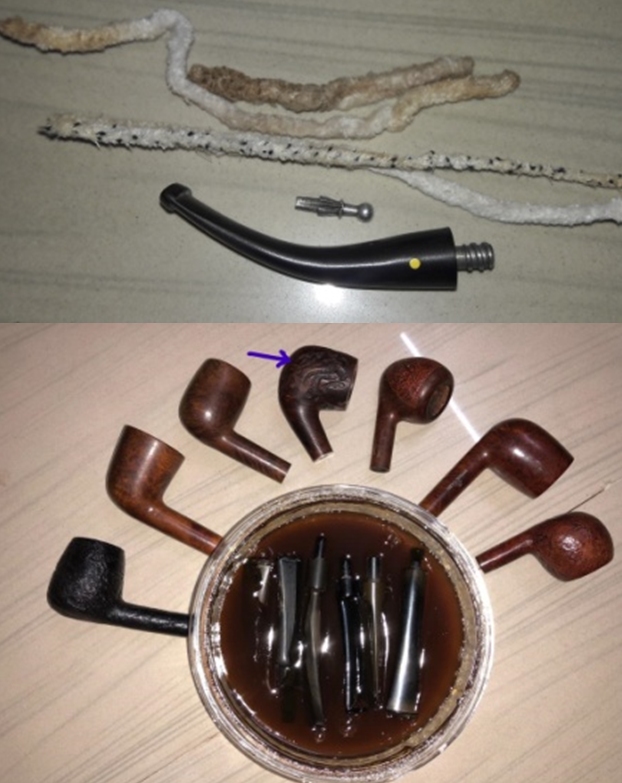
The initial cleaning on this pipe was done by Abha, my wife (she has cleaned up around 40-50 pipes and these have now reached me for further restoration). She reamed out the complete cake and further smoothed out the chamber walls with a folded piece of 220 grit sand paper. She further cleaned out the internals of the shank with pipe cleaners and alcohol and cotton buds. She followed the internal cleaning of the shank with external cleaning of the stummel using Murphy’s Oil soap and hard bristled tooth brush and dried it with paper napkins and cotton cloth.Next she cleaned out the internals of the stem air way and immersed it in “Before and After Deoxidizer” solution (pipe is marked in indigo blue arrow) along with the stem of other pipes in line for restoration. Once the stem had soaked overnight, she cleaned the stem under running warm water and scrubbed the raised oxidation from the stem surface using Scotch Brite pad. She further removed the oxidation by scrubbing the stem with 0000 grade steel wool and applied a little olive oil to rehydrate the stem.Once The Pipe Is On My Work Table…
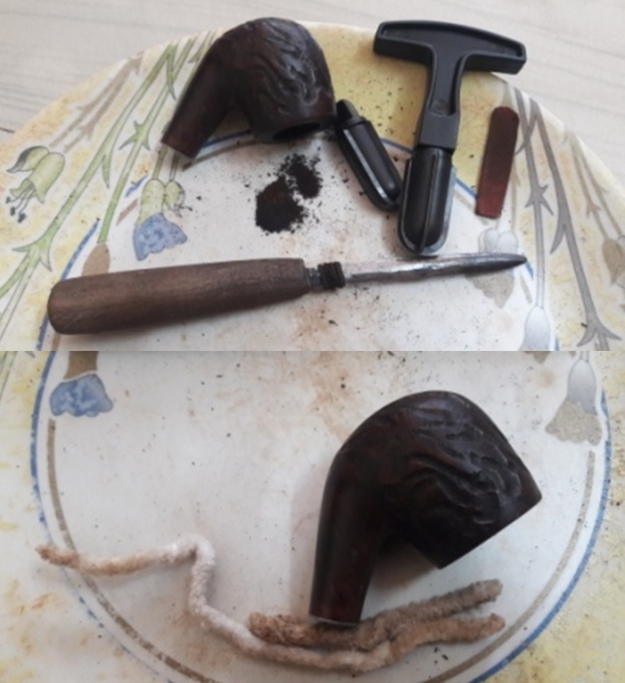
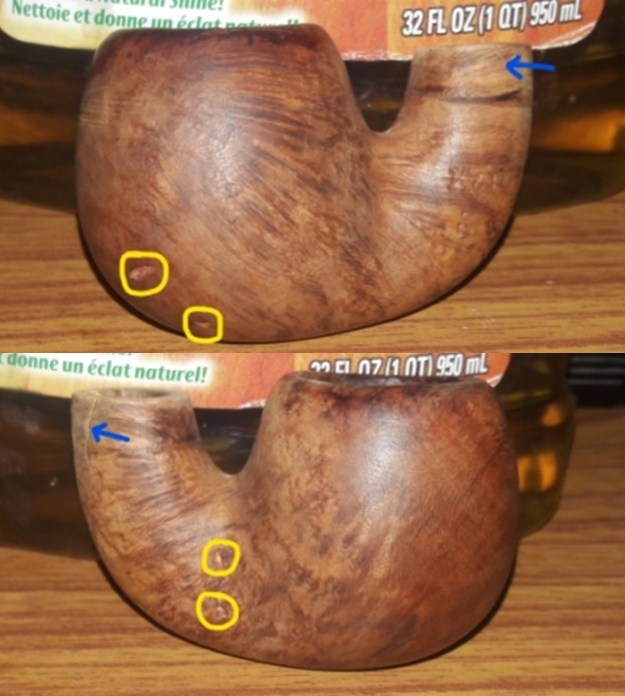
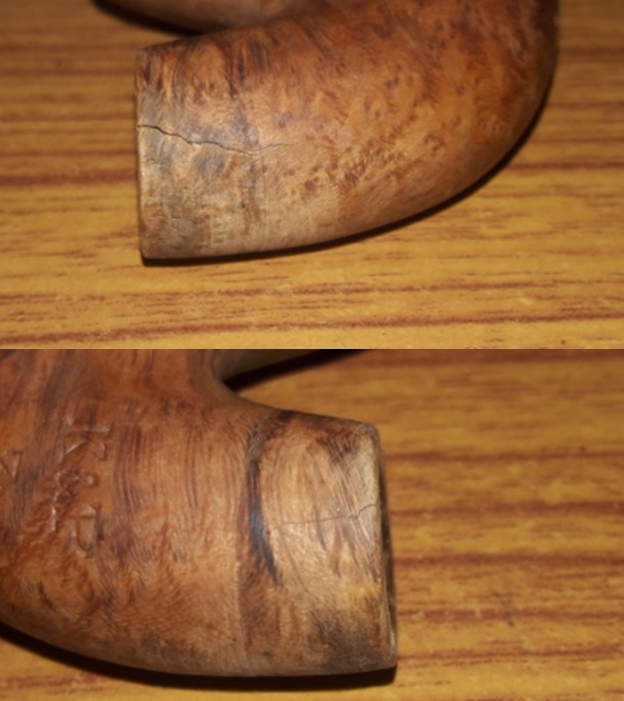
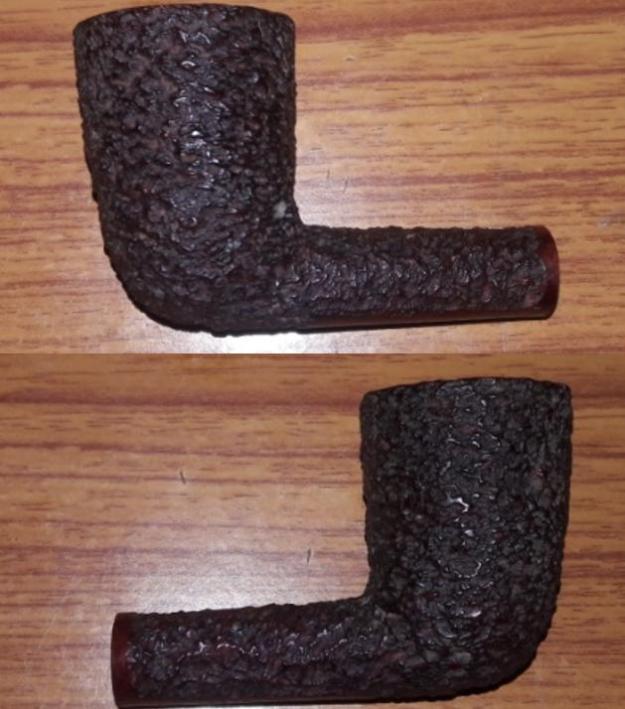
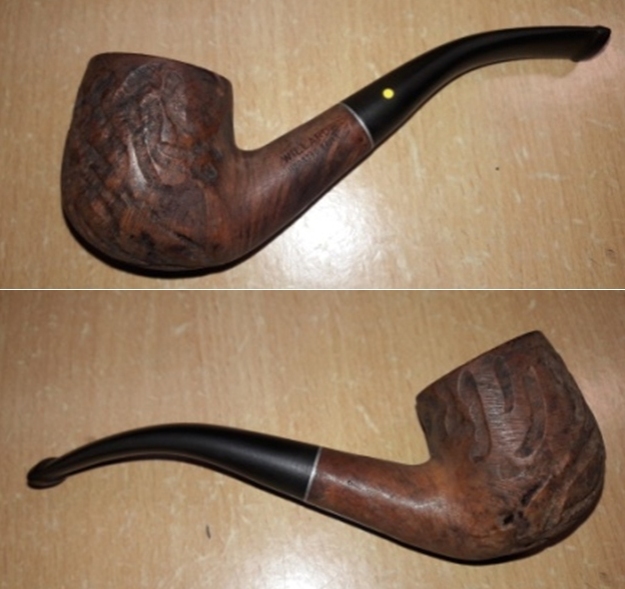
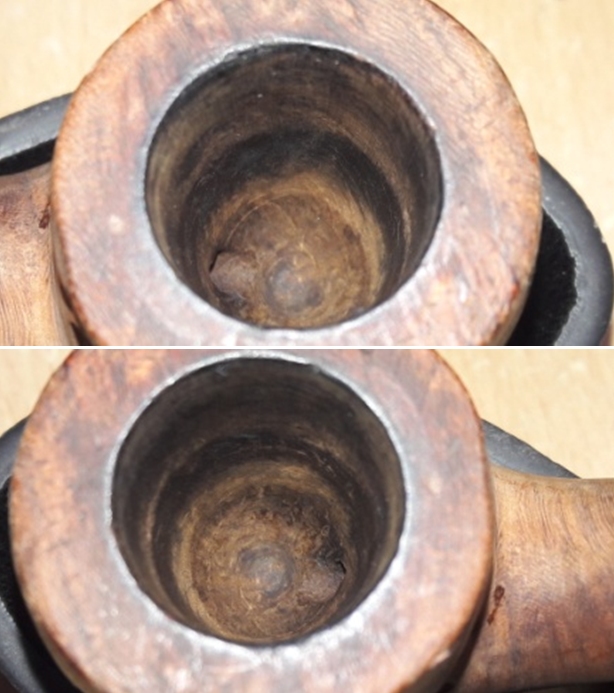
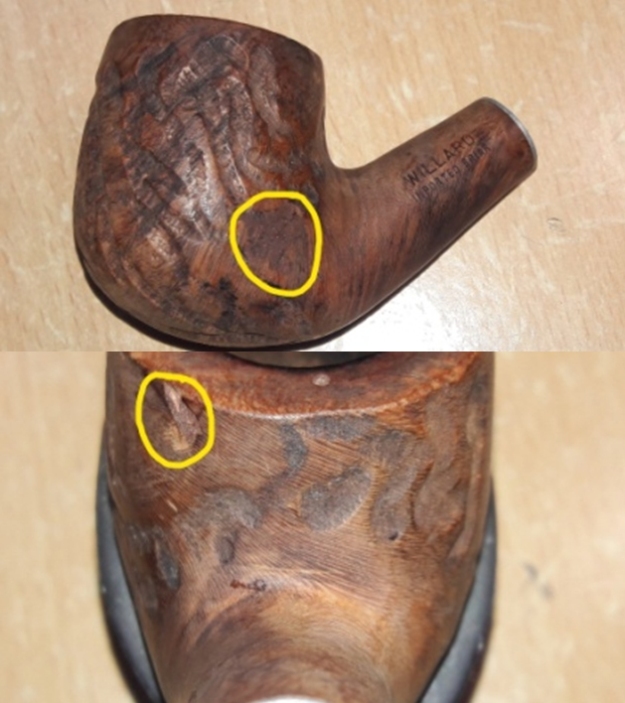
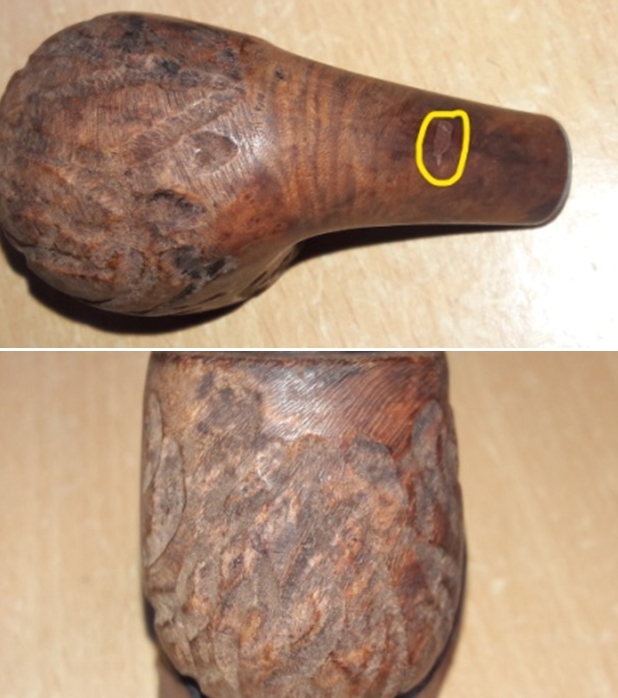
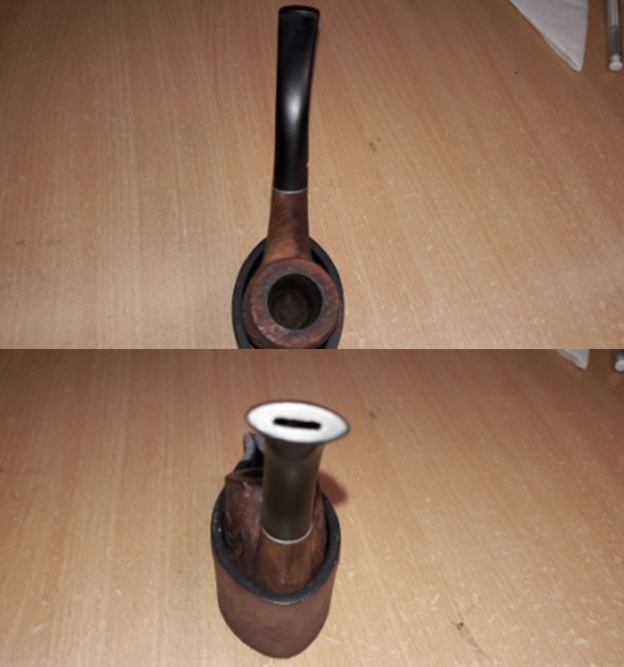
The cleaned up pipe presents a very clear picture of what needs to be done to restore this pipe to a decent and smoke worthy condition. I really cannot thank Abha, my wife, enough for all the help and support that she extends in my pursuance of this hobby. I proceed to carry out my appreciation of the work that needs to be done on this pipe to restore it. The cleaned up pipe, as I received it, is shown below. The chamber walls are without any heat fissures or pits and that’s a big relief. The rim top surface is peppered with dents and dings. The inner rim edge shows slight darkening all round and should be easily addressed with a couple of turns of a piece of 220 grit sand paper along the edge. There are some minute chipped spots on the outer edge. The condition of the chamber is good and will not require much repair work. There are no ghost smells in the chamber. The stummel surface is nice and clean. The worm rustications, though clean, are still not visually pleasing. There are a large numbers of fill now plainly visible (only larger ones are enclosed in yellow circle). The mortise is clean and air flow is smooth. The metal spacer ring is also clean and intact. The vulcanite stem had cleaned up nicely. The upper stem surface has a couple of deep bite marks at the base of the button and also in the bite zone. The lower surface has some minor tooth chatter in the bite zone. The button edges on both the surfaces need to be sharpened. The aluminum stinger is clean.The seating of the stem stinger in to the metal threaded mortise is off center. The stem is overturned to the right and will have to be readjusted to perfectly align with the shank and the stummel.The Process
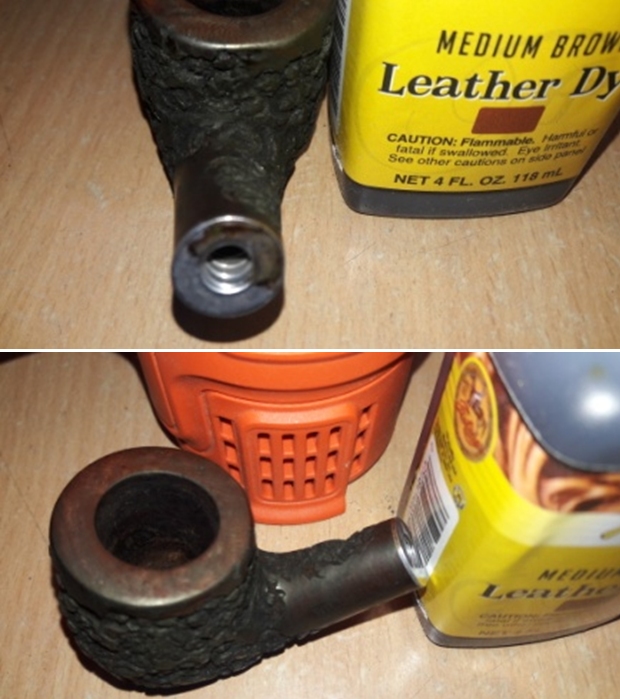
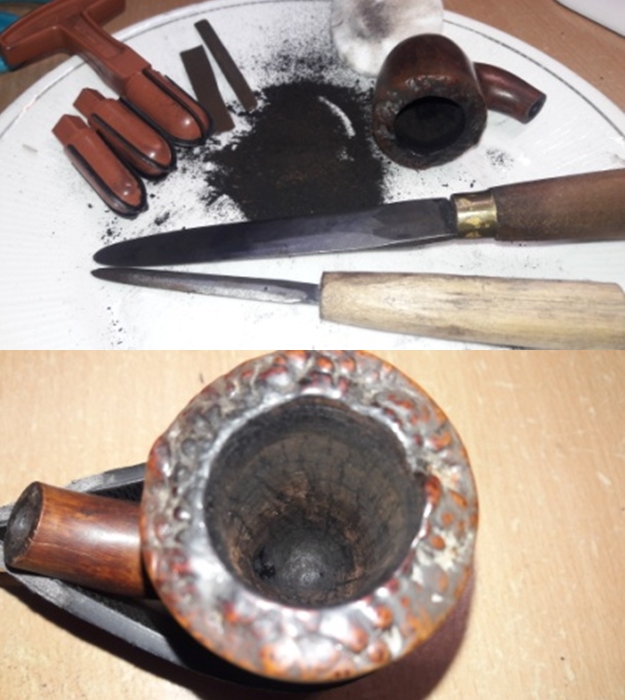
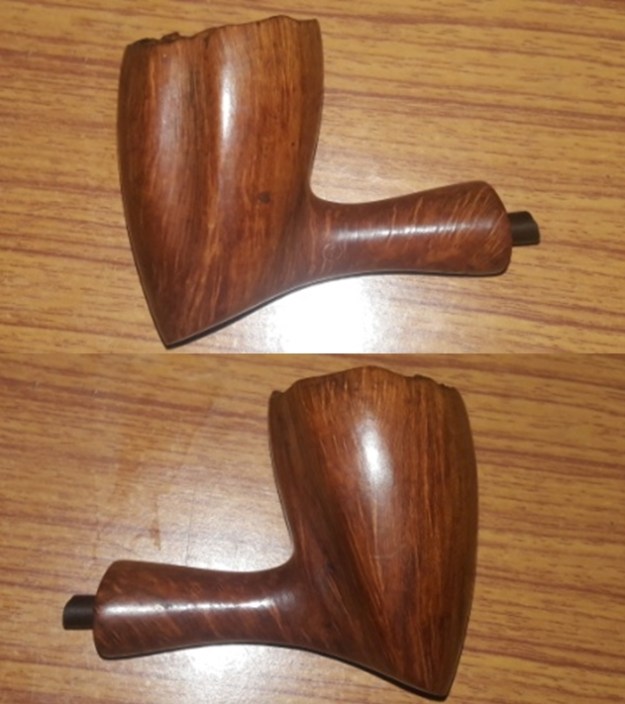
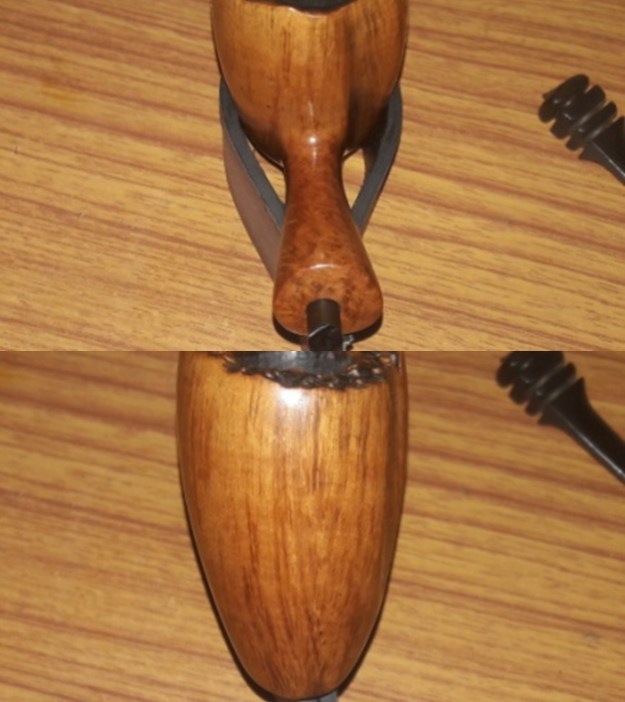
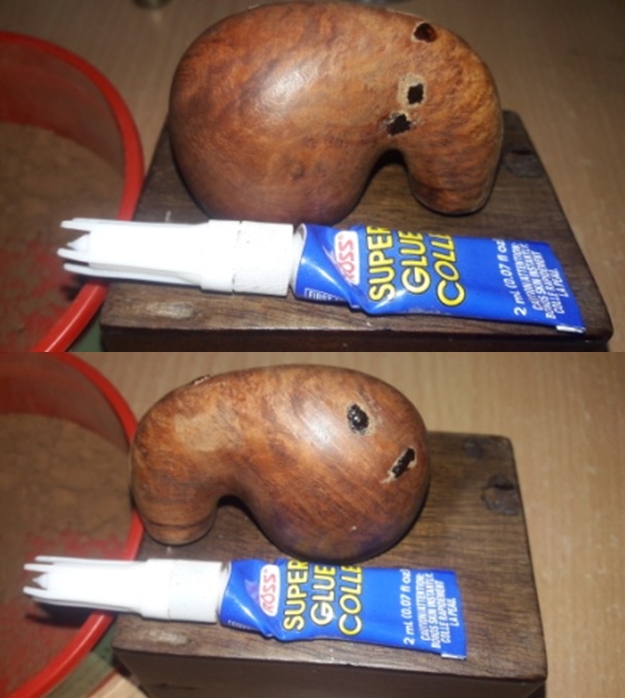
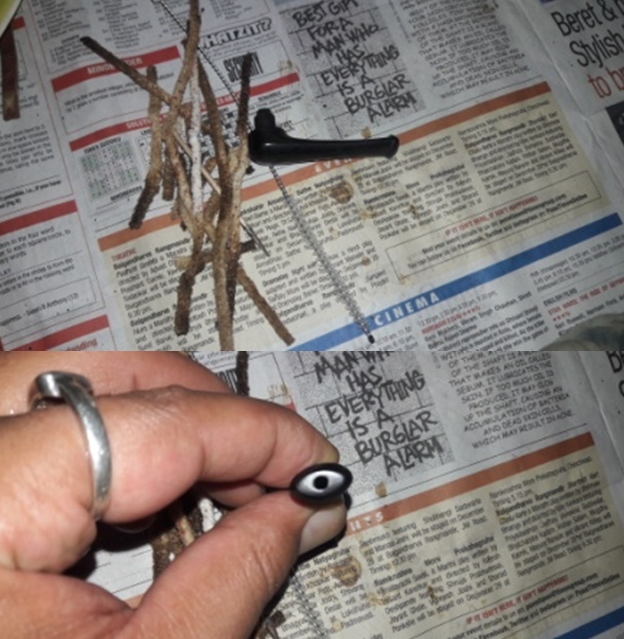
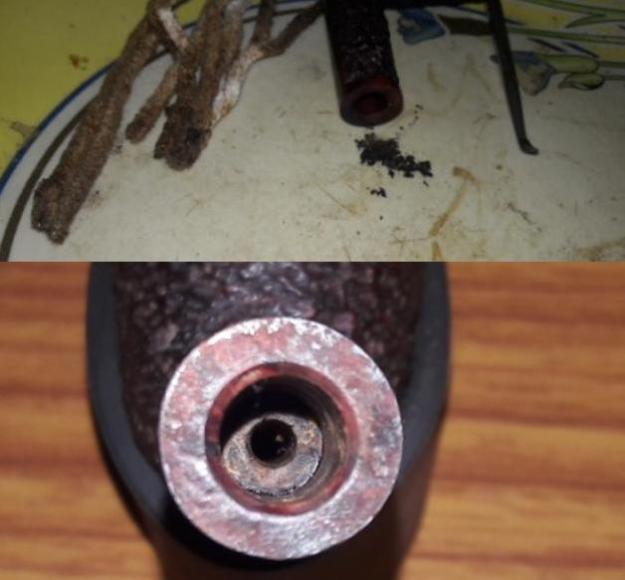
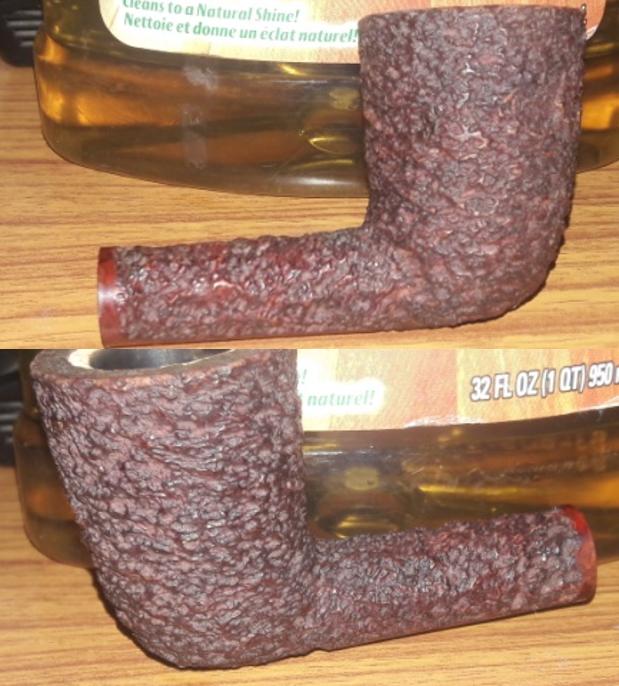
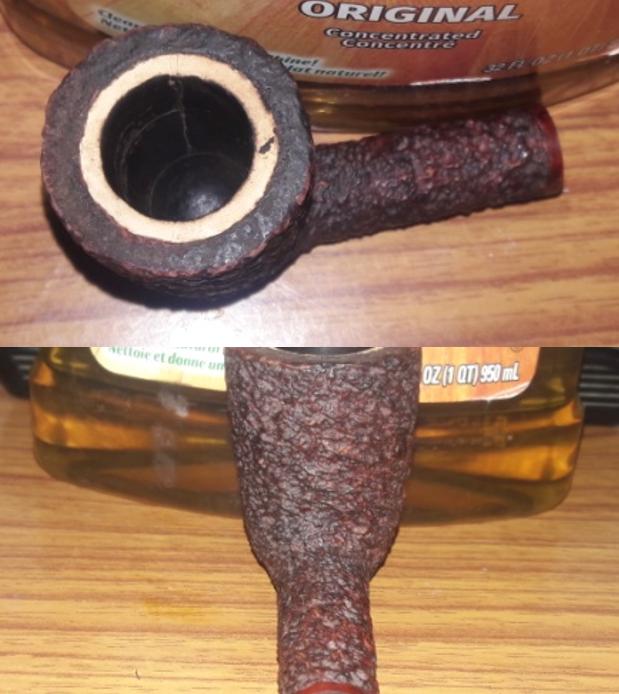
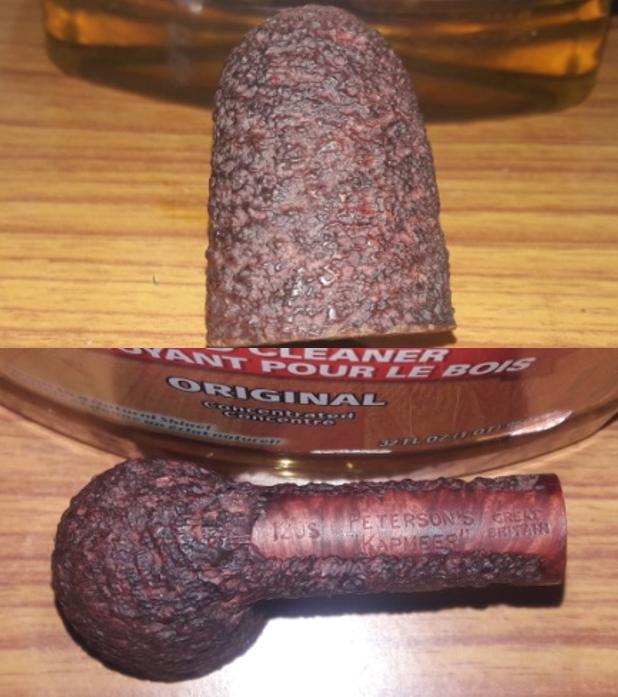
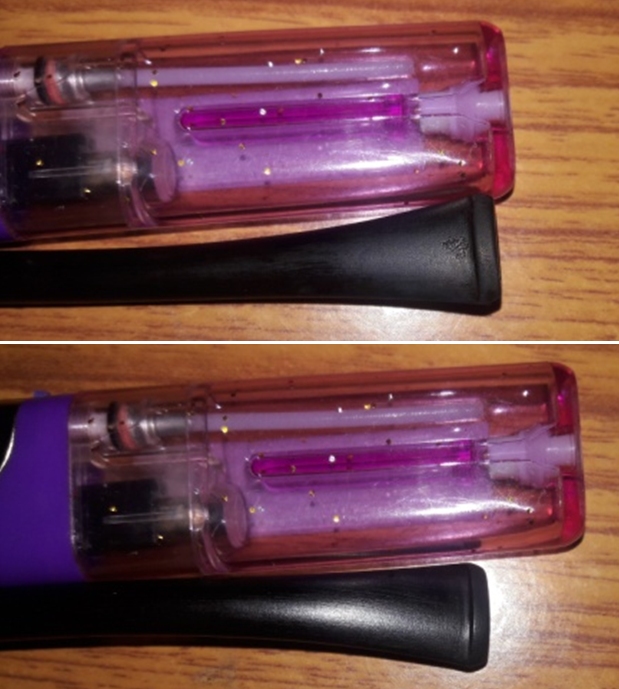
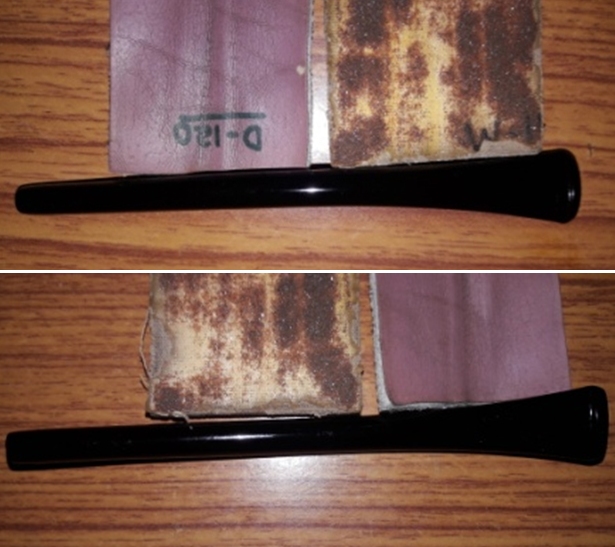
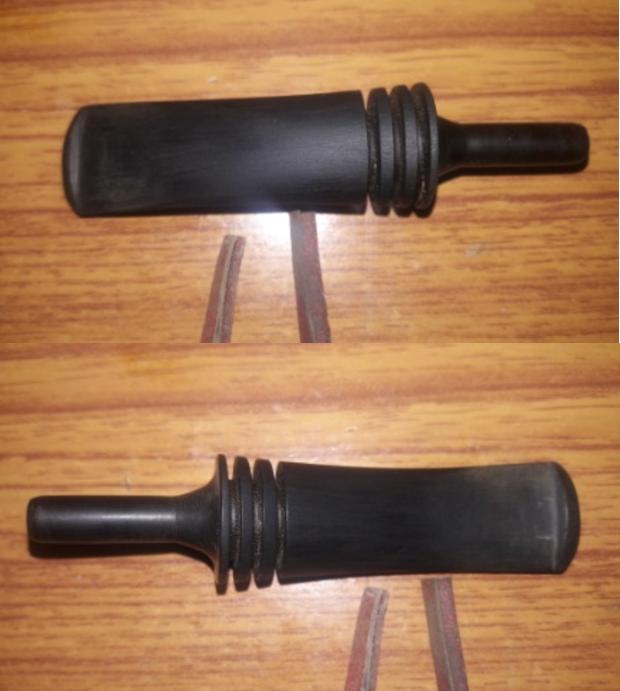
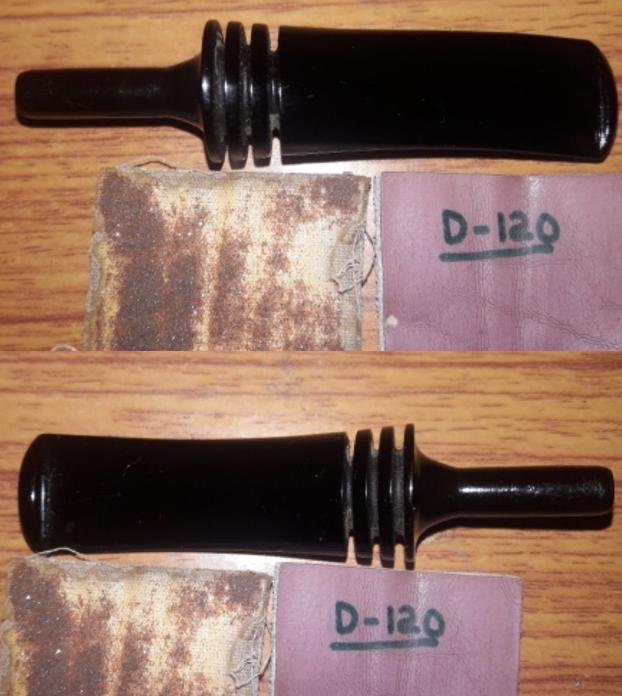
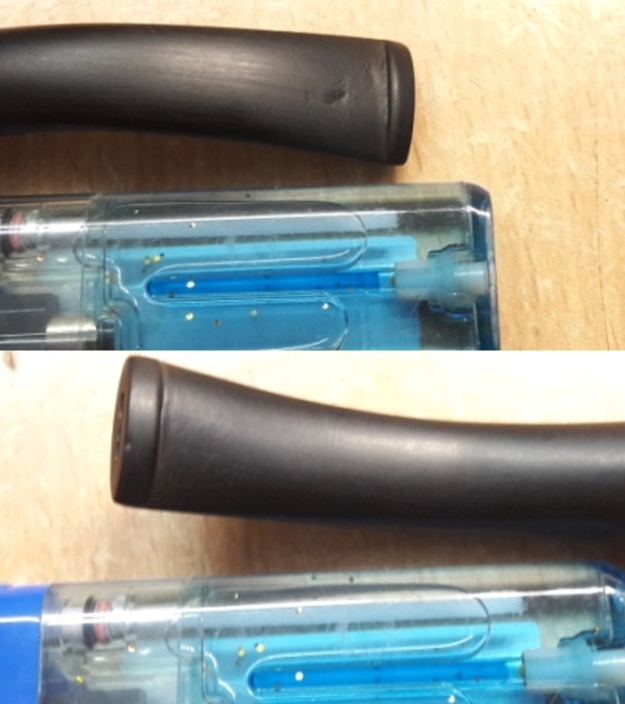
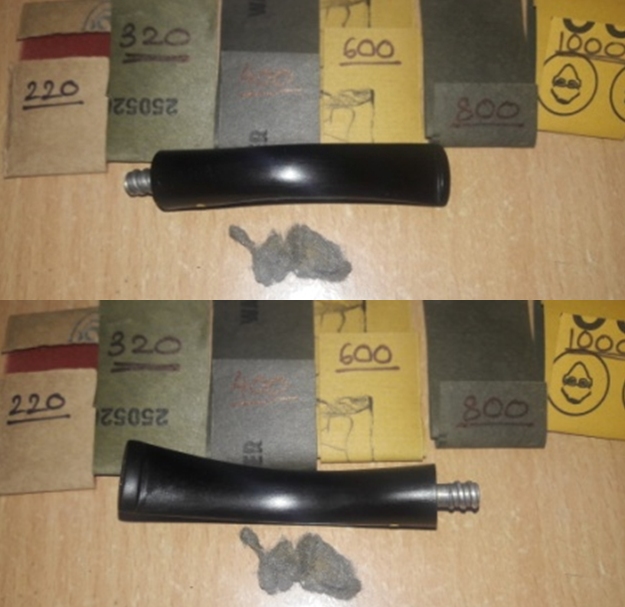
The first issue that I addressed in this project was that of the stem repairs. I painted both surfaces of the stem with the flame of a lighter to raise the tooth chatter and bite marks to the surface. This also helps in loosening minor oxidation from the stem surface. I sand the entire stem surface with a folded piece of a 220 grit sand paper to remove the loosened oxidation. I wiped the stem with a cotton swab and Murphy’s oil soap to further clean the surface. Even though most of the tooth indentations have been eliminated by heating the damaged stem portion, one deep indention is still seen on upper surface in the bite zone and a minor bite mark is seen on the button edge on the lower stem surface. I filled the tooth indentation in the button edge on lower and upper stem surface with a mix of activated charcoal and CA superglue and set it aside for the fill to cure.With the stem fills set aside for curing, I decided to work the stummel. The other day during a Face Time video call with Steve, we discussed the best way to transform this stummel. The long and short of the discussion was that it was decided to rusticate the stummel. This would help to mask the fills and provide a very tactile feel while smoking. It would also provide me an opportunity to practice rustication. With this decision finalized, I proceed with rusticating this stummel.
Now, this would not be my first attempt at rustication as I had rusticated one a few months back, here is the link to the write up (https://rebornpipes.com/2019/08/02/gifting-my-mentor-and-dear-friend-steve-an-alexander-zavvos-hygrosystem-pipe/).

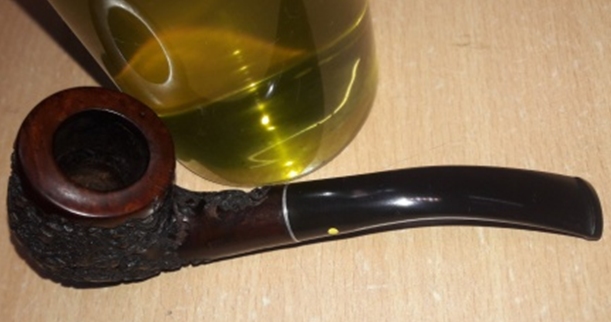
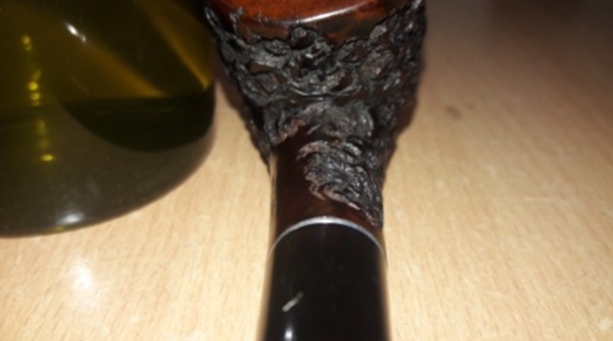
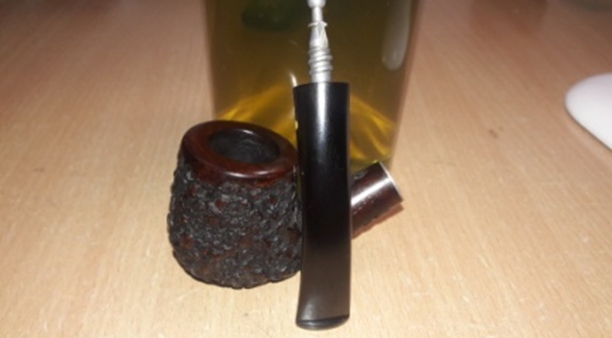
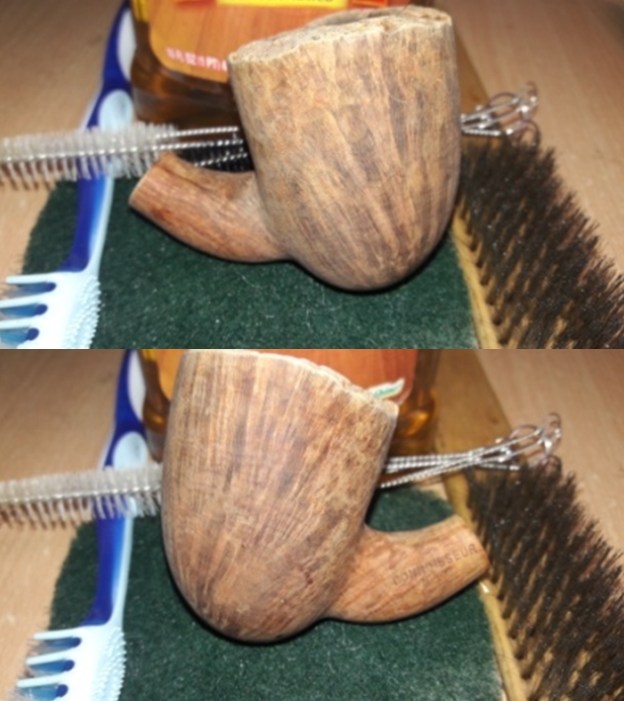
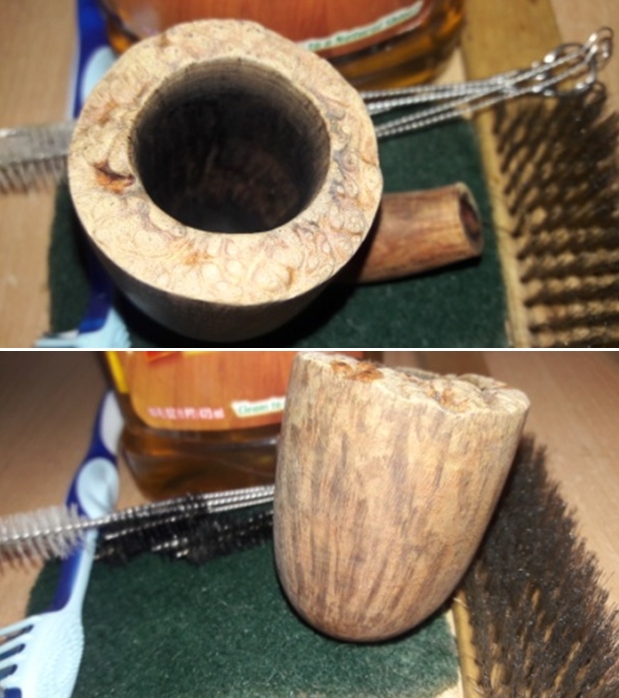
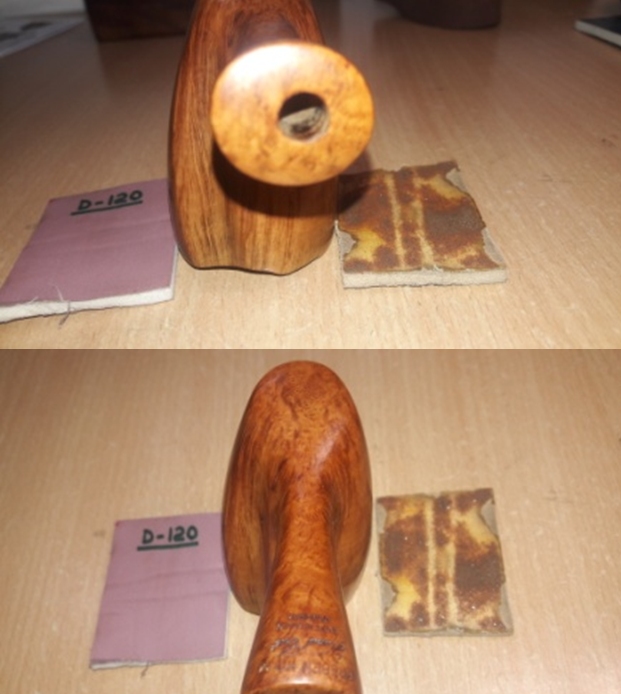
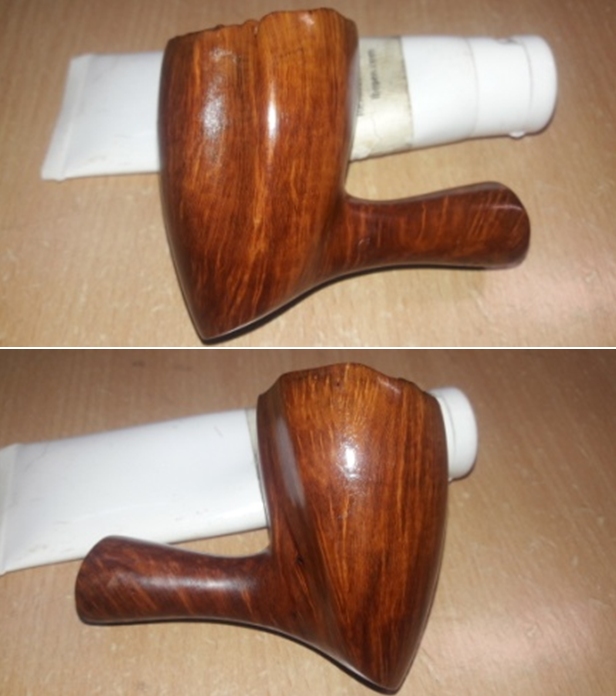
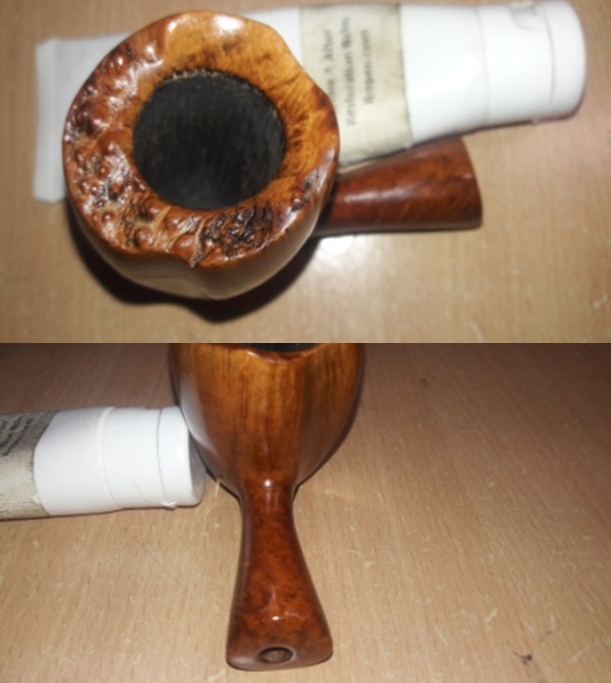
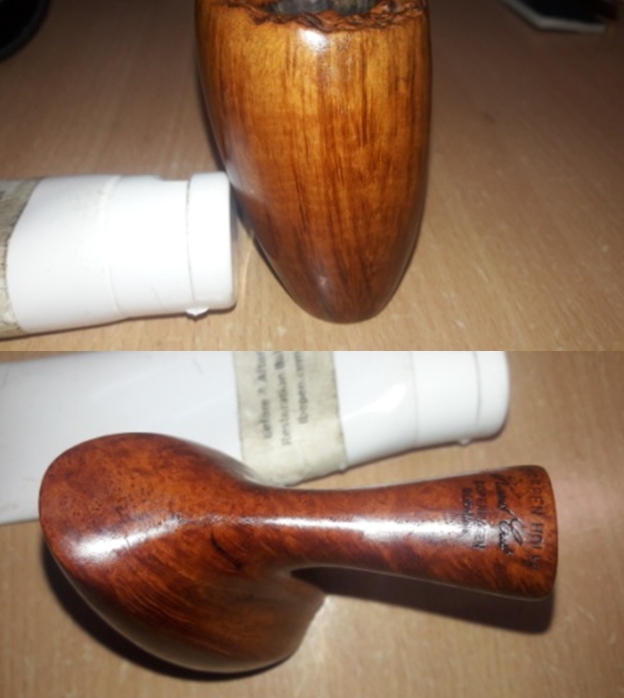
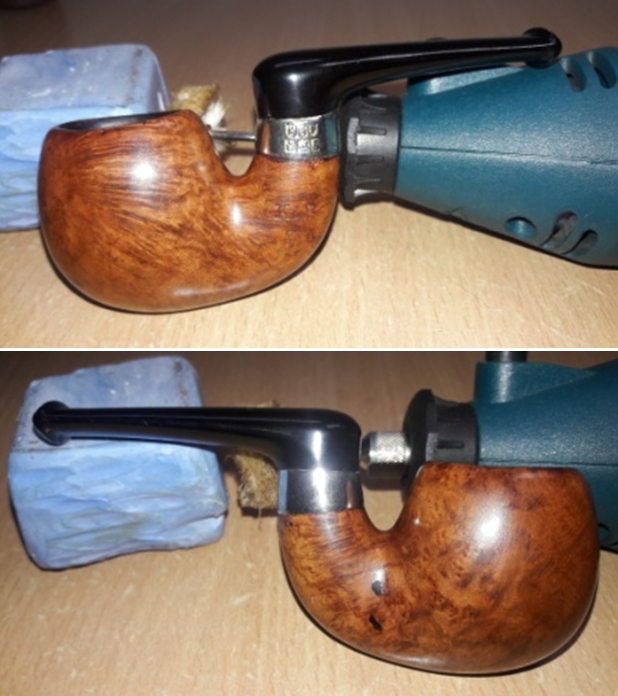
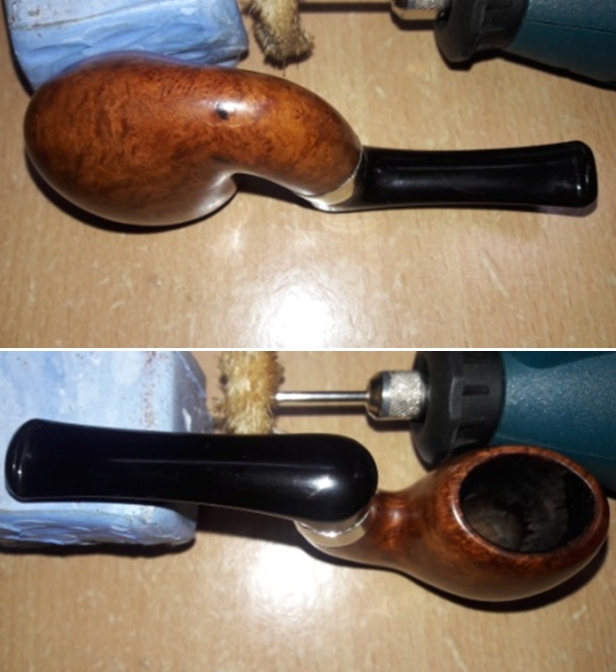
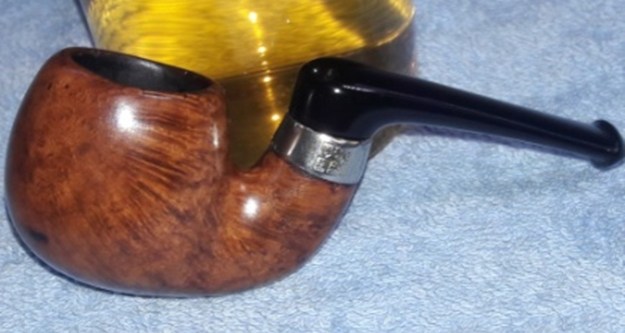
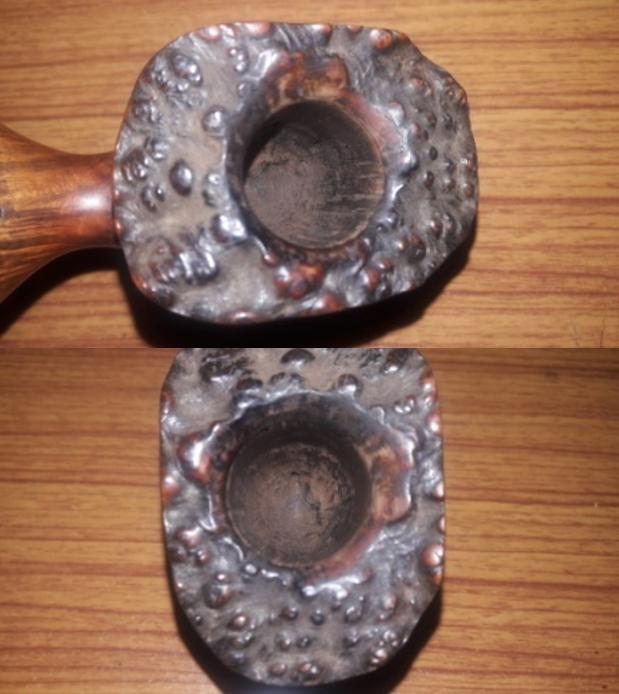
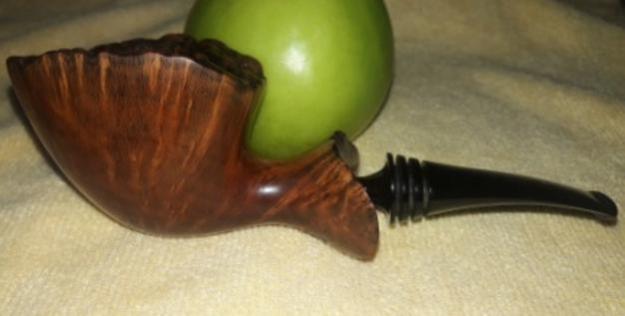
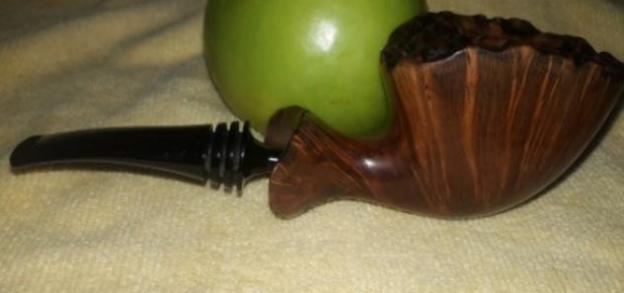
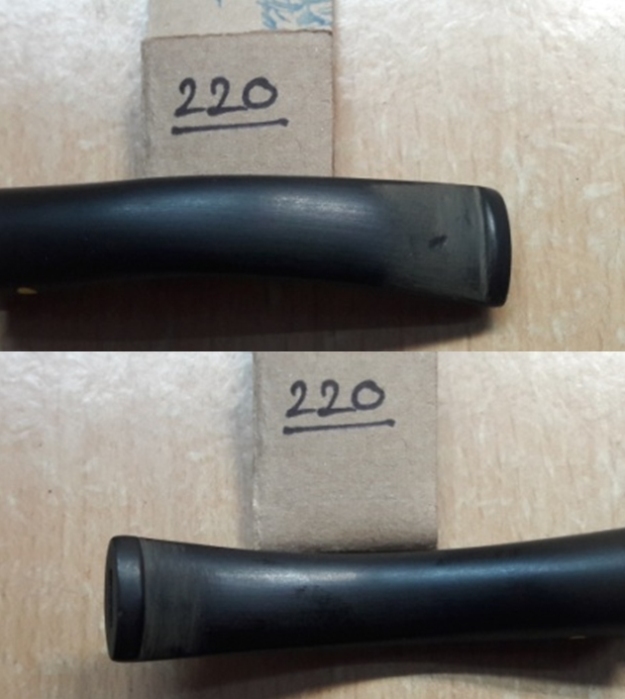
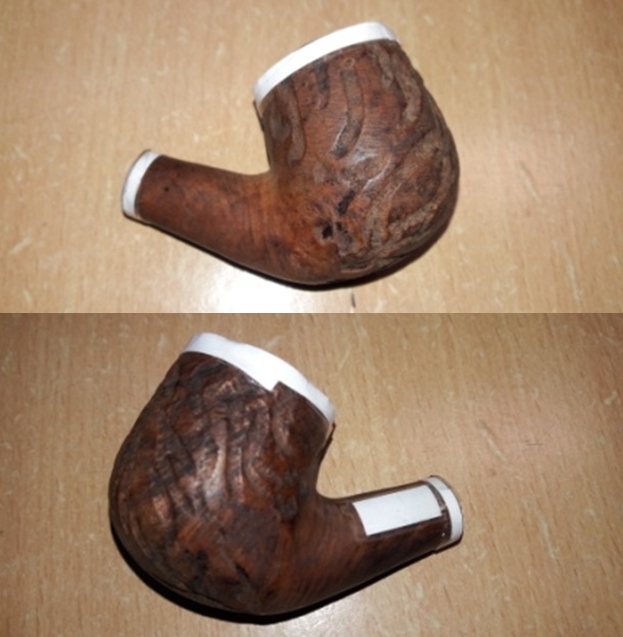
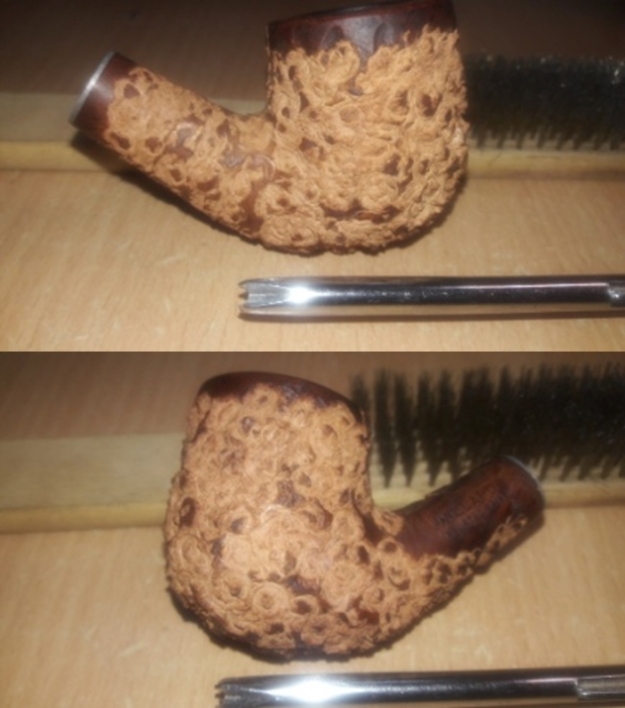
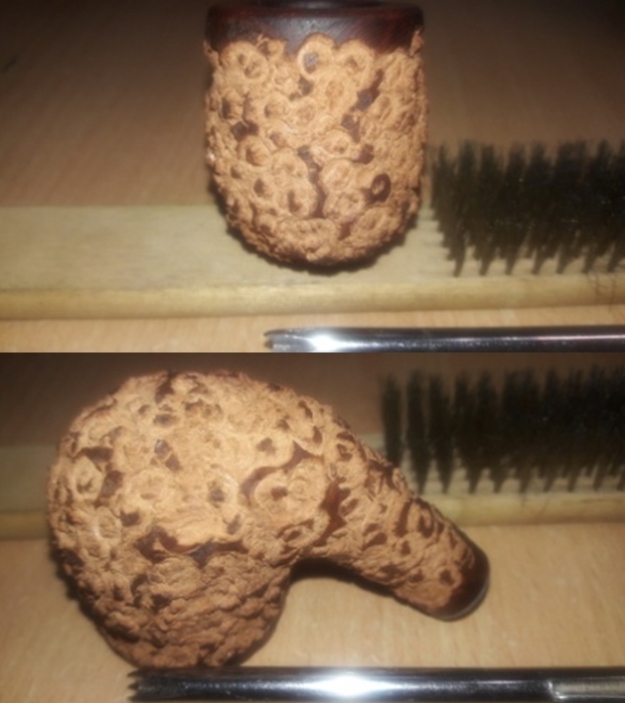
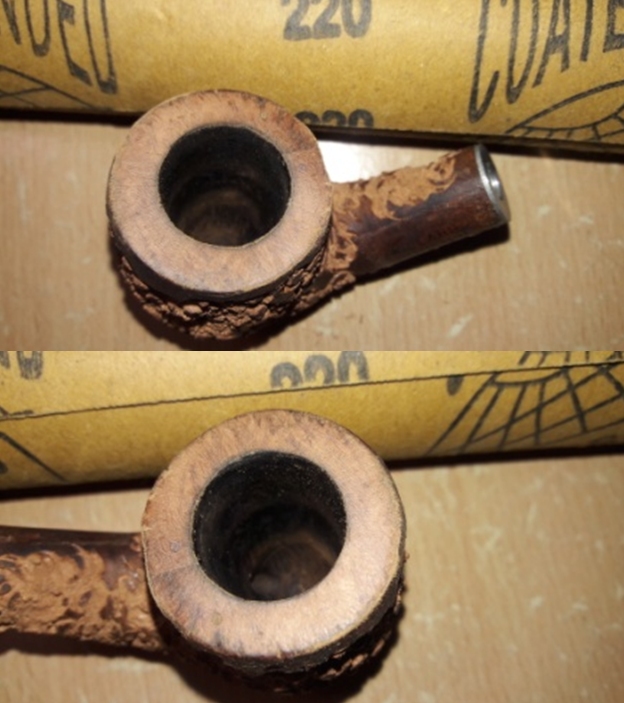
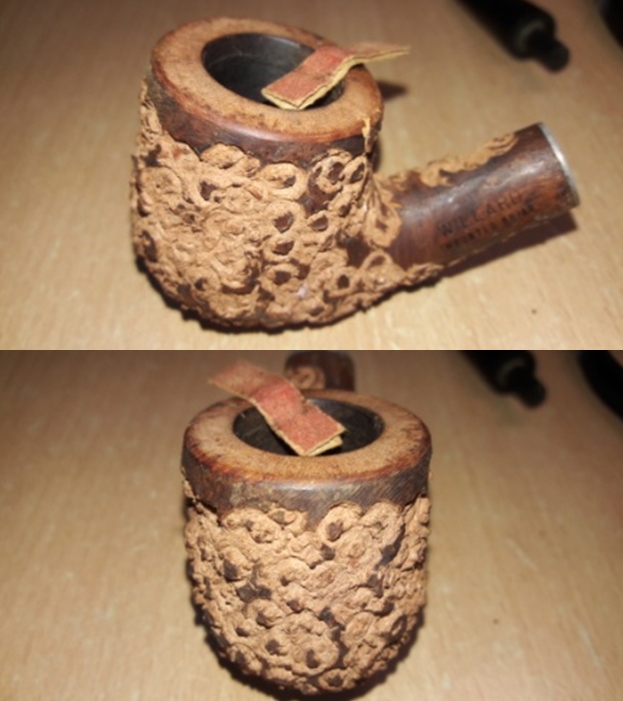
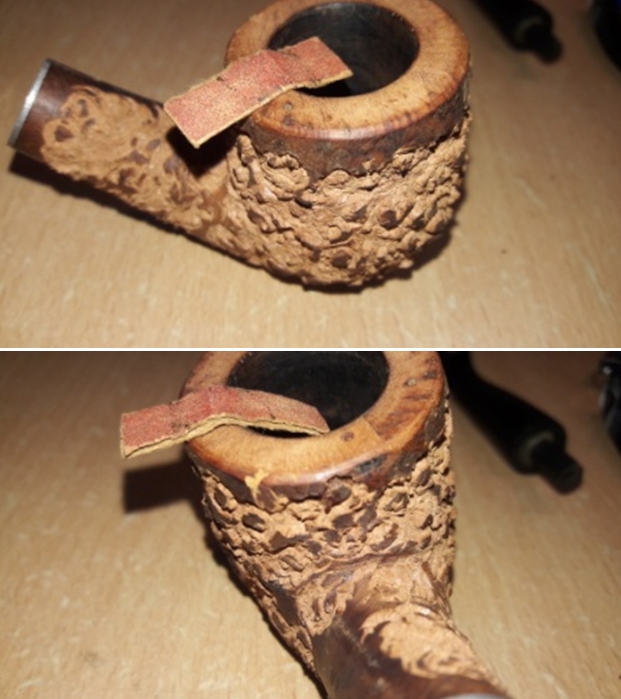
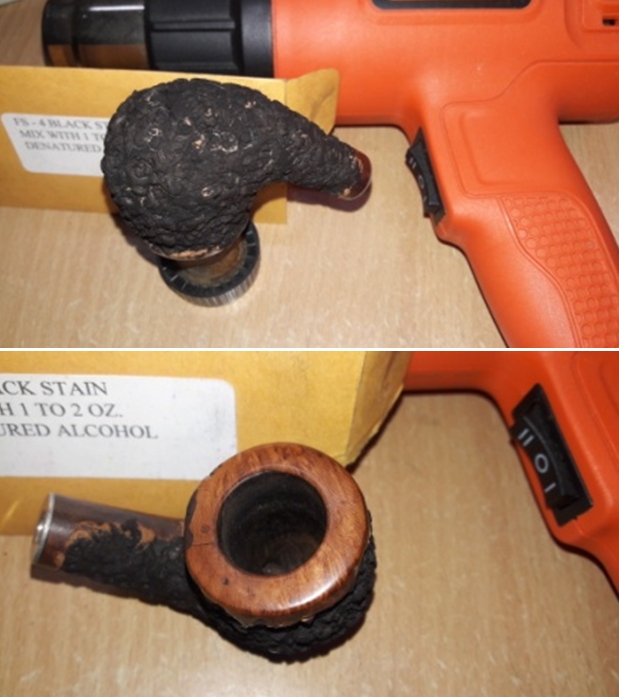
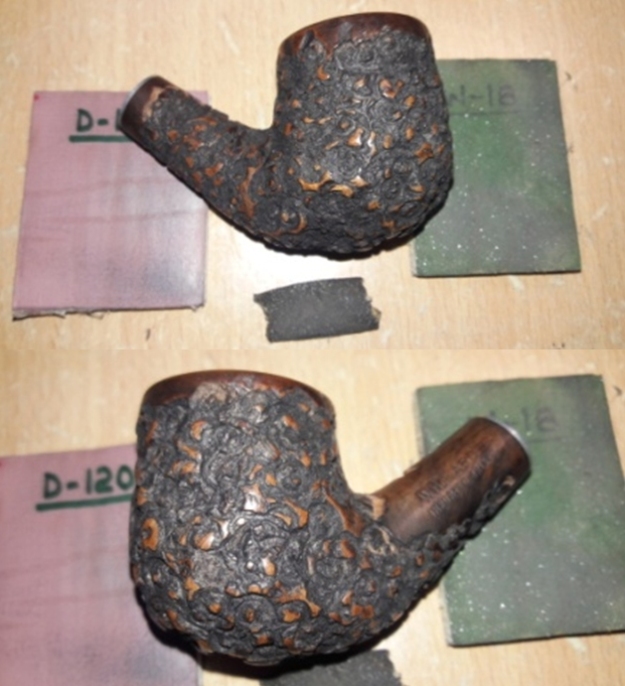
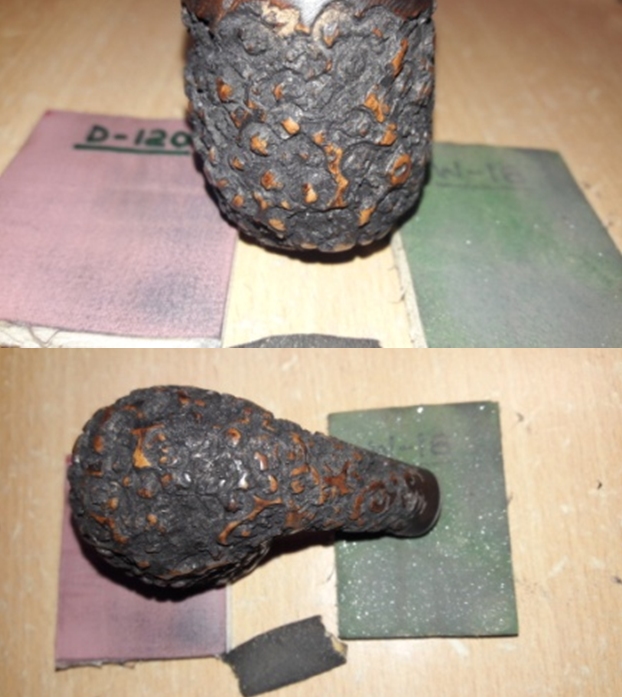
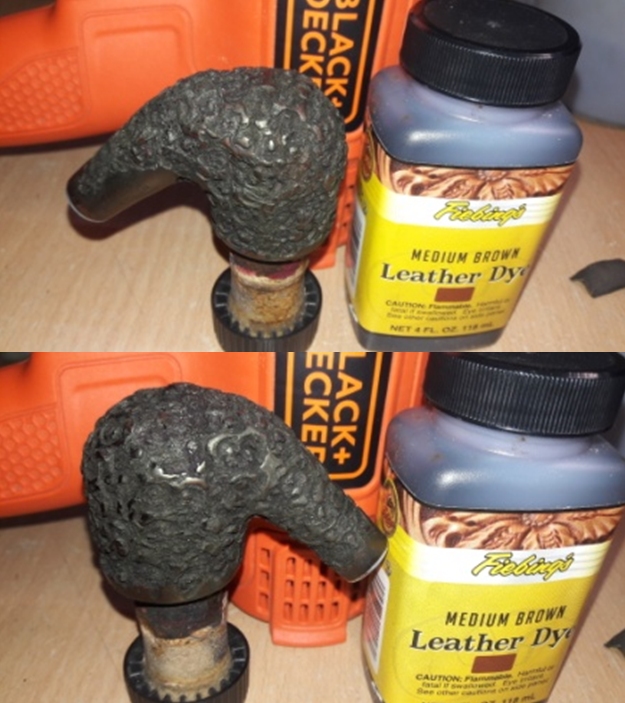
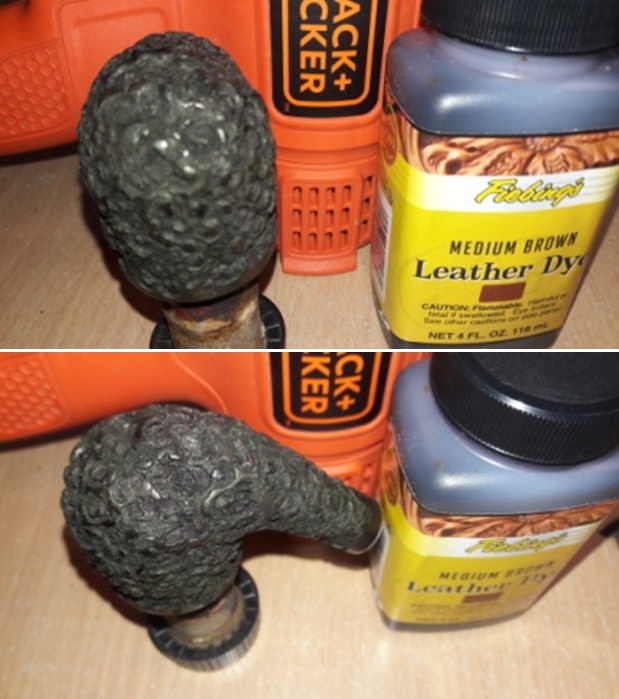
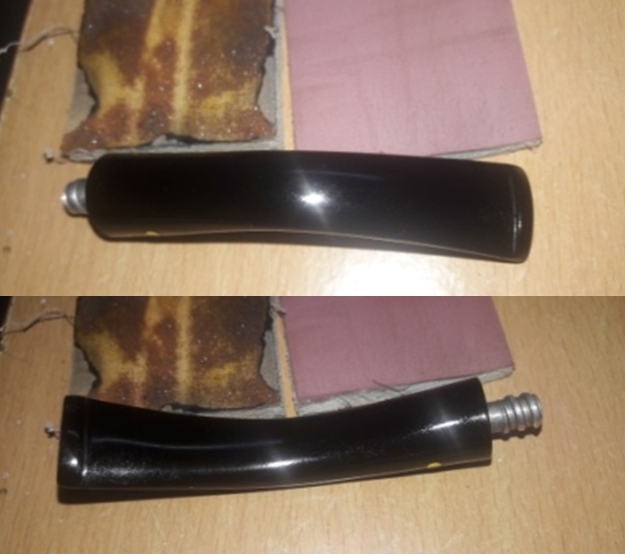
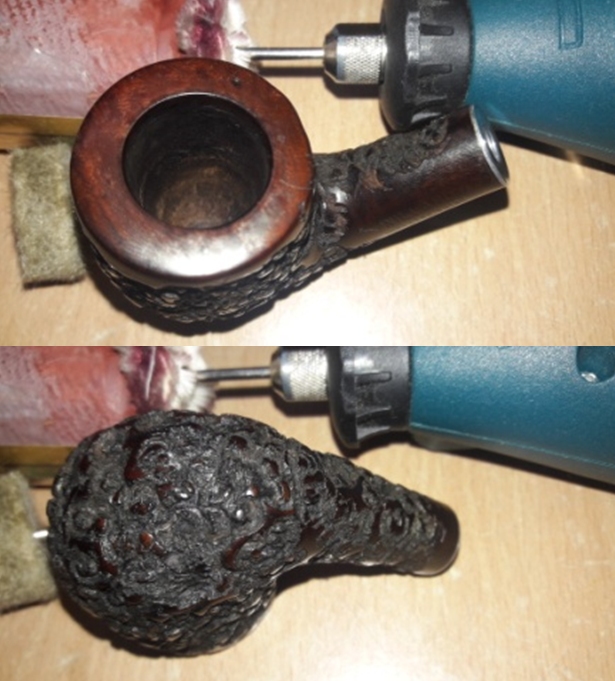
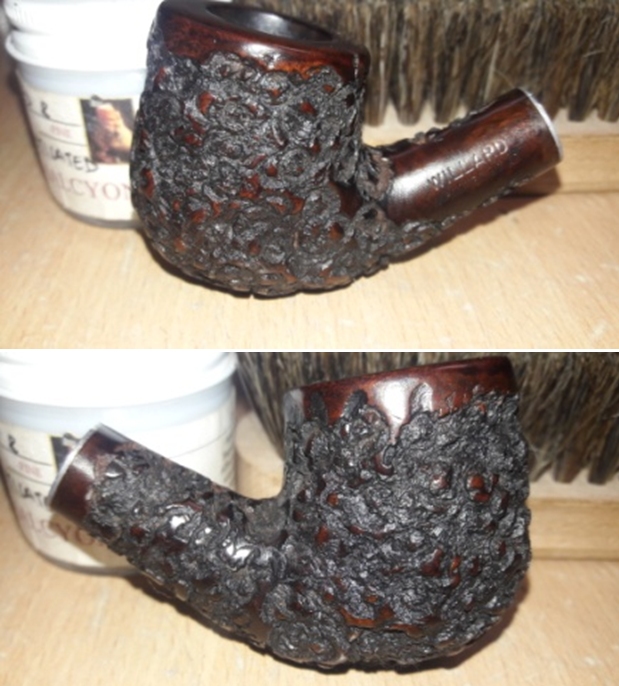
I referred to the above write up and other subject write ups on rebornpipes to understand the mistakes committed and decide on the look/pattern of rustications over the stummel surface. I decided to maintain a smooth ring atop the rustication below the outer edge of the rim and also at the shank end. I used a transparent tape to demarcate the area that I wanted to keep smooth that is the rim top and about quarter of an inch below the rim outer edge and a thin band at the shank end. Similarly, I covered whatever little that remained of the stamping. From my experience, I knew that this is a very essential step as I realized during rusticating that it is very easy to lose track and transgress over the areas and stampings which you wish to preserve.To rusticate, I firmly held the stummel in my left hand and with my right hand and began gouging out the briar. The technique is to firmly press the pointed four prongs of the modified Philips screwdriver in to the surface, rotate and pull out the removed chunk of briar. I worked diligently till I was satisfied with the rustications and the appearance of the stummel. I cleaned the stummel surface with a brass wired brush to clear all the debris from the rustications. I decided to take a break from further rusticating the surface as the process is tiring and painful. This makes me want a better and efficient rusticating tool. While giving my right hand a rest from this task, I decided to work on the damage to the rim top and edges. I start by addressing the rim top surface damage. I top the rim on a piece of 220 grit sand paper, checking frequently till I am satisfied that the darkened surface is addressed to a great extent and the rim top surface is nice, smooth and even. The inner and outer edges are still uneven, though much better than before topping, and shall be addressed subsequently.With a folded piece of a 220 grit sand paper pinched between my thumb and forefinger, I create a slight bevel on the inner and outer edges of the rim top surface. This helps to mask and address the minor dents and dings that had remained on the rim edges after topping. I am careful so as not to alter the profile of the stummel by excessive topping or creation of the bevels. I am pretty pleased with the appearance of the rim top and edges at this stage. I cleaned the stummel with pure acetone and cotton swab to remove the old stain completely in preparation for the polishing and subsequently, a new stain. After the cleaning, I set the stummel aside to dry out naturally. I turn my attention back to the stem. The fill has cured nicely and with a flat head needle file, I sand the fill to achieve a rough match with the surrounding surface. To achieve a perfect match, I sand the stem with a 220 grit paper, progressively moving through to finish with a 1000 grit sand paper. As expected, a clean and neat looking stem stared back at me. I rub a little Extra Virgin Olive oil into the stem surface to hydrate it and set it aside to be absorbed in to the vulcanite.I polish the rim top and the smooth surfaces of the stummel using micromesh pads, wet sanding with 1500 to 12000 grit pads. I am happy with the appearance of the stummel at this point in the restoration. The stummel is now ready for a fresh coat of stain. I heat the stummel surface with my heat gun to open up the pores on the stummel so that the stain is well set. I mix black stain powder with isopropyl alcohol and liberally apply it over the heated surface, flaming it with the flame of a lighter as I went ahead to different self designated zones of the surface. This helps in the setting of the stain in the grain of the briar. Once the stain has set in well, I again warm the stummel with my heat gun. This helps the stain to be absorbed and set further into the briar. I mount a felt cloth buffing wheel on my rotary tool and gently buff the entire stummel surface to remove the stain crust. I wipe the stummel with a cotton swab and alcohol to remove any excess stain and follow it up sanding the raised rustication with a folded piece of 220 grit sand paper. This is followed up by careful dry sanding of the entire stummel, especially the raised rustications with 1500 to 12000 grit micromesh pads. This not only lightens and highlights the rustications, but will also provide a smooth surface for the next coat of stain. Here is how the stummel appears at this stage. I buff the stummel with a horse hair shoe brush to remove any sanding dust resulting from the micromesh sanding. I apply a small quantity of “Before and After” restoration balm to rehydrate and rejuvenate the briar and set it aside for some time. Thereafter, I buff and clean the stummel with a microfiber cloth. I apply a second coat of Medium Brown stain over the stummel and the shank extension, going through the same method as described above and set them aside for the stain to set. With the stummel set aside for the stain to set, I turned my attention to the stem polishing. Using the micromesh pads, I complete the polishing cycle by wet sanding the surface with 1500 to 12000 grit pads. The stem looks great with the fills nicely matched with the rest of the surface. I rub a little quantity of Extra Virgin Olive oil in to the stem surface and set it aside to be absorbed by the vulcanite.Coming back to the stummel, once the stain is set I wipe it down with a cotton swab and alcohol to remove any excess stain and lighten it from the raised rustications. Mounting a felt cloth buffing wheel on my rotary tool, I go about removing the crust formed by the stain over the raised rustication. The second coat of brown stain has added another layer of texture to the appearance of the stummel. Next, I rub a small quantity of “Before and After Restoration Balm” in to the briar with my finger tips, work it deep in to the sandblasts and let it rest for a few minutes. The balm almost immediately works its magic and the briar now has a nice vibrant appearance with the beautiful rusticated patterns on full display. I further buff it with a horse hair shoe brush. I rub a small quantity of Halcyon II wax into the surface and immediately wipe it with a microfiber cloth. The only issue that remains unaddressed at this stage is the issue of the overturned stem. With the flame of a lighter, I heat the aluminum stinger to a point where the stem is just about able to rotate on the stinger. I reattach the stem to the shank while the stinger was still warm, and turned it till the alignment was as perfect as I desired and set it aside to cool down.To complete the restoration, I mounted a cotton cloth buffing wheel on to my hand held rotary tool.  I set the speed at about half of the full power and applied several coats of carnauba wax. I finished the restoration by giving the entire pipe a rigorous hand buffing using a microfiber cloth to raise the shine further. The finished pipe looks amazingly beautiful and quite a transformation it was. It is now ready for its long second innings with my colleague. I wish that he enjoys his pipe and remembers our association for a long time to come. I wish to thank our esteemed readers for sparing their valuable time to read through and any input or advice is always welcome.
 

Refurbishing An Inherited Charatan’s Make Deluxe “Special ‘S’ ”


Blog by Paresh Deshpande

The next pipe that caught my attention was a CHARATAN’S which was in one of the three very large boxes of pipes which I had inherited. Working on these inherited pipe is what I love the most because of the intrinsic connect I have with these pipes and the fact that once I pass away, these will be passed on to my kids as remembrance that their father had worked on restoring each of these vintage and priceless collection of pipes.

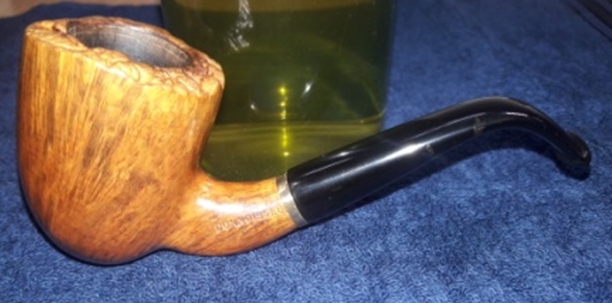
This Dublin had beautiful densely packed cross grains on the sides and also along the shank with some stunning bird’s eye grains to the front and back of the bowl. The bowl delicately flares up towards the rim top and together with the straight tapered vulcanite stem, lends this pipe a lovely Dublin shape with a charm and grace that can be seen on a well crafted pipe from this quality brand!! The overall large size of the pipe in general and the stummel in particular, lends this pipe a nice heft and fills up the palm nicely.The pipe is stamped as “CHARATAN’S MAKE” over “LONDON ENGLAND” over “DELUXE” over “SPECIAL” in block capital letters on the left side of the shank. It is also stamped with the letter “S” just forward of “SPECIAL” after letter L. The left side of the tapered stem is stamped with “CP” logo, with the lower half of the “C” embedded within the letter “P”. The stem logo is very delicate but crisp. The stampings on this pipe are crisp and easily readable. I searched Pipedia for more information about the brand and also to try and accurately date this pipe. Here is the link for the readers interested in history of Charatan’s and also in viewing a 1951 catalog (https://pipedia.org/wiki/Charatan).

In 1863 Frederick Charatan, a Russian / Jewish immigrant, opened a shop in Mansell Street, located in the borough of Tower Hamlets, London E1, where he began to carve Meerschaum pipes.

Charatan was the first brand to make entirely hand-made briars from the rough block to the finished pipe including the stems. The nomenclature “Charatan’s make” refers to this method of production and was meant to differ Charatan from other brands who “assembled” pipes from pre-drilled bowls and delivered mouthpieces.”

Here is another link from the same page which takes the readers to an absolutely well researched page on Dating of Charatan’s (https://pipedia.org/wiki/Dating_of_Charatans).

I have reproduced the relevant portions which had helped me in roughly dating this pipe.

The first step on dating a Charatan is to carefully look to some details:

  1. a) Shape of the mouthpiece
  2. b) Marking on the mouthpiece
  3. c) Engraving on the shank
  4. d) Shape and position of shank engraving/writing

This is because you can make the following conclusions:

  1. a) From 1863 to 1960 the mouthpieces have a normal shape, saddle or tapered. From 1961 they use the ‘Double Comfort’ style still used today. By the way there are some saddle bits (without the double comfort) used in pipes that date after 1960 but these models are always characterized by an X (in the place of the DC) engraved after the shape number on the shank. This means that if a pipe has a tapered mouthpiece instead of a double comfort one, it is definitely a pre-Lane pipe before 1960. While if a pipe has a normal saddle bit stem, it could belong to every era. Nevertheless the pipe is pre 1961 if the shape code does not include an X, and is a pipe from after 1960 if the X is engraved.
    Finally any pipe with the double comfort stem is definitely after 1960.
  2. b) The CP logo on the stem is stamped in a different shape according the era it was used. Some differences are less obvious than others; however the glaring differences are detectable in 4 phases. The CP till the 1960 is very fine, the C penetrates the P.

From 1961 to 1977 the CP logo is more pronounced and the C penetrates the P.

I visited rebornpipes for clarification on the following issues which did not find mention on pipedia.org:

(a) The lack of shape code on this pipe.

(b)  Grading/ hierarchy of this pipe in the line of Charatan’s offering. The relation between “DELUXE” and “SPECIAL” also did not find any explanation on pipedia.org.

(c) Lastly, the significance of the letter “S”!

There is a very informative article that Steve had re-blogged on Charatan’s Models & Shape Information for the Collector. Here is the link for this article; (https://rebornpipes.com/2018/08/22/charatan-models-shape-information-for-the-collector/).

I have reproduced relevant information from the above link

Charatan’s make “Apprenticeship” standard shape grades
Special
Relief Grain (tan)
Relief Grain (dark)
Belvedere
Perfection  

From the above information, I assume that this particular piece dates from prior to 1960. The reason why I am not sure is that there is no shape code anywhere on the shank and the presence of the letter “S” without numerals 100, 200 etcetera, finds no explanation in all the eras that I read through. The stamp of “DELUXE” finds no explanation anywhere that I had searched. Well, the grey areas with respect to dating and grading this piece are too many and as always, may I request our esteemed readers to share any information that they have for the benefit of our piper community.

INITIAL VISUAL INSPECTION
The bowl is heavily caked with an equally heavy overflow of lava on to the rim top. The rim top surface has darkened   considerably. The inner and outer rim edges appear to be damaged with a number of dents, dings and chipped edges, caused probably by banging the rim top against a hard surface to rid the chamber of all the dottle. The internal condition of the bowl can only be ascertained after the process of reaming is completed.The stummel and the shank are covered in grime and dust from years of use and subsequent storage, giving it a dull and a lackluster appearance. The stummel surface has taken on a nice patina which I intend to preserve. Through all the dirt and grime, beautiful bird’s eye grains peek out from the front and back of the stummel while tightly packed cross grains are seen to the sides and over the shank. A nice clean and polish will further accentuate this play of grains over the stummel surface. Air did not flow easily through the pipe and required some lung power to do so. The mortise is clogged with oils, tars and grime of all the yesteryear. This needs to be cleaned out.The stem is tapered vulcanite that is heavily oxidized. Heavy calcification can be seen on either stem surfaces in the bite zone. Apart from the calcification, both the upper and lower surfaces has a mysterious grey black patch extending for about an inch from the button edge. This, I suppose, would have to be some sort of a repair patch. Well, I shall get a closer look at it during the process of stem repairs. The horizontal slot and the tenon end are clogged with residual oils and tars and gunk, making air flow through the stem, laborious.All said and done, this pipe is in great condition given its appreciated age and the ruthless handling that it had survived at my grand old man’s hands. The large size, perfect heft, beautiful grains and the mysteriousness that surrounds its stamping, makes for an interesting project.

INITIAL CLEANING BY ABHA…
The initial cleaning on this pipe was done by Abha, my wife (she has cleaned up around 40-50 pipes and these have now reached me for further restoration). She reamed out the complete cake and further smoothened out the chamber walls with a folded piece of 220 grit sand paper. She further cleaned out the internals of the shank with pipe cleaners and alcohol and cotton buds. She followed the internal cleaning of the shank with external cleaning of the stummel using Murphy’s Oil soap and hard bristled tooth brush and dried it with paper napkins and cotton cloth.

Next she cleaned out the internals of the stem air way and immersed it in “Before and After Deoxidizer” solution along with the stem of other pipes in line for restoration. Once the stem had soaked overnight, she cleaned the stem under running warm water and scrubbed the raised oxidation from the stem surface using Scotch Brite pad. She further removed the oxidation by scrubbing the stem with 0000 grade steel wool and applied a little olive oil to rehydrate the stem. This time around she clicked a few pictures of the processes… ONCE THE PIPE IS ON MY WORK TABLE…
The cleaned up pipes presents a very clear picture of what needs to be done to restore this pipe to a pristine and smoke worthy condition. I really cannot thank Abha, my wife, enough for all the help and support that she extends me in my pursuance of this hobby. A clean pipe also helps in clearly identifying the work that would be required to restore a pipe. The pictures shows the condition of the pipe when it reached me after being cleaned. The stummel is solid without any flaws or fills. There are no dents or dings or chips to the stummel surface. The briar has taken on a nice deep colored patina which I shall endeavor to preserve. A nice polish and the beautiful grains should pop out and be on display in all their glory. The briar feels really solid and of high quality and the craftsmanship is also top notch. The smooth rim top surface is where the maximum damage is on this pipe. The outer rim edge is peppered all around with dents and dings and chipped edges. However, the damage to the outer edges in a 6 o’clock and 12 o’clock directions (both enclosed in red circles) is the most severe. The inner edge is also not spared of similar damage which is most severe in the 6 o’clock and 9 o’ clock directions. The rim top surface has considerably darkened around the inner edge; however, thankfully it is not charred. These issues will need to be attended to. The chamber has strong ghost smells. The thick chamber walls are solid without any signs of damage. The mortise and shank internals are also nice and clean now. The seating of the stem tenon into the mortise is snug and sits flush with the shank end.The oxidation on the tapered vulcanite stem has been removed, thanks to all the efforts put in by Abha. The slot, tenon end and stem internals are all clean and fresh. The large patch of grey on either surfaces of the stem is the only eyesore on this high quality vulcanite stem. If these are repair patches, then I must concede that though they are not aesthetically pleasing to the eye they are but rock solid!! I intend to sand them down to the vulcanite surface and if damaged, repair it using mix of activated charcoal and clear CA superglue which blends perfectly in to the surrounding stem surface.THE PROCESS
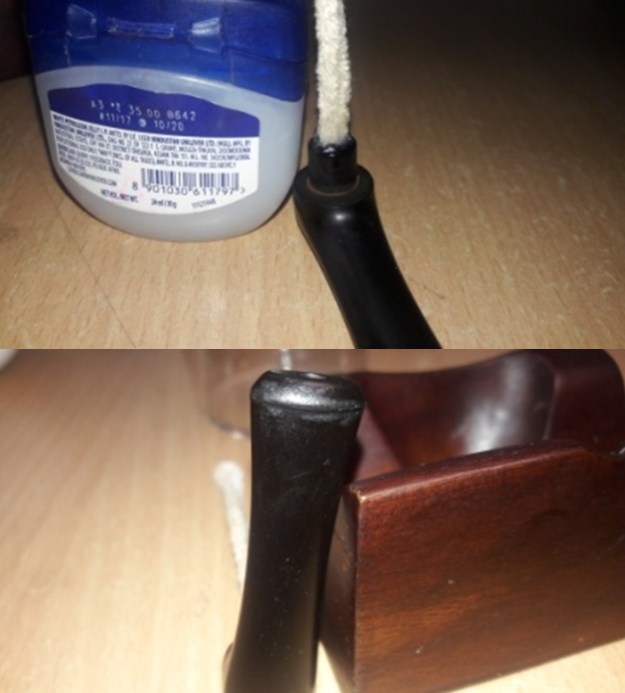
I start the refurbishing of this pipe with the stem repairs. With a folded piece of 220 grit sand paper, I sand down the grey patch from either surfaces of the stem. True enough, as anticipated, the bottom of the patch revealed a hole at the button edge. My guess is that it had been a through hole as a similar hole was revealed on the lower stem surface too.While I was sanding the patch, simultaneously, I worked the entire stem surface with the same piece of sand paper. I was very diligent and careful with the sanding around the stem logo. I further sand the entire stem with a 0000 grade steel wool. This helps to even out the deep scratches caused by the coarser grit sand paper. I wipe the stem with Murphy’s Oil soap on a cotton swab. This helps to clean the surface of all the dust and loosened residual oxidation from the stem surface. Once the stem surface is ice clean and dry, I insert a regular pipe cleaner coated in petroleum jelly through the slot end in to the airway. This prevents the glue from seeping into the airway and blocking it while helping in the smooth extraction of the pipe cleaner once the mix has cured. Thereafter, I mix a small quantity of activated charcoal and superglue and apply it over the holes and set the stem aside to cure. With the stem fill set aside to cure, I decide to address the issues on the stummel surface. I start by addressing the rim top surface damage. I top the rim on a piece of 220 grit sand paper, checking frequently till I am satisfied that the darkened surface is addressed to a great extent and the rim top surface is nice, smooth and even. The inner and outer edges are still uneven, though much better than before topping, and shall be addressed subsequently. The following pictures show the progress being made and improvements to the inner and outer rim edges. At this stage in refurbishing, I realize that the odors from the chamber are still strong and hence decide to address the issue of ghost smells by subjecting the chamber to a salt and alcohol bath. I wrap some cotton around a folded regular pipe cleaner, keeping the tip of the pipe cleaner free of wrapped cotton as this would be inserted through the draught hole in to the chamber. This would form the wick for the shank. I tightly pack the chamber with cotton balls and fill it with 99% pure isopropyl alcohol using a syringe and set it aside. By next day, the cotton and alcohol had drawn out the tars and oils from the chamber and max from the shank. With tools at my disposal, I scrap out the entire loosened gunk from the mortise and the airway leading to the draught hole. The stummel now smells fresh and is thoroughly clean. With a folded piece of a 220 grit sand paper pinched between my thumb and forefinger, I create a slight bevel on the inner and outer edges of the rim top surface. This helps to mask and address the minor dents and dings that had remained on the rim edges after topping. I am careful so as not to alter the profile of the stummel by excessive topping or creation of the bevels. I am pretty pleased with the appearance of the rim top and edges at this stage. This is followed up with the micromesh polishing cycle. I dry sand the stummel going through with 1500 to 12000 grit pads. I wipe the stummel with a moist cloth after every three pads as this helps firstly, to remove the sanded dust and secondly, gives an idea of the progress being made and areas which need more attention. The stummel has taken a beautiful sheen and looks good. Discerning readers must have noted that I did not sand the stummel surface with a sand paper and have resorted to dry sanding with the micromesh pads. This is done so as to maintain the old patina which I want to preserve. I rub some “Before and After” restoration balm over the stummel surface with my fingers. This product has been developed by Mark Hoover and it helps to enrich and enliven the briar. For me it is an absolute “must have” item in my list of items for pipe restorations. I rub this balm in to the briar and set it aside for some time. The transformation is almost immediate and the stummel positively looks amazing. With the stummel nearly completed, I turn my attention back to the stem. The fill has cured nicely and with a flat head needle file, I sand the fill to achieve a rough match with the surrounding surface. To achieve a perfect match, I sand the stem with a 220 grit paper, progressively moving to 600 and 800 grit sand papers. As expected, a clean and neat looking stem stared back at me. I rub a little Extra Virgin Olive oil into the stem surface to hydrate it and set it aside to be absorbed in to the vulcanite. Unfortunately, I missed out on taking pictures of this step. Suffice to say, I am very happy with the blending of the fill with the rest of the stem surface. I highlight the stem logo by filling it with a whitener pen and once it has dried, I carefully wipe out the excess with a cloth. The logo is now crisp and prominent.I finish the stem reconstruction by polishing the stem with micromesh pads, wet sanding with 1500 to 12000 grit pads. I apply a small quantity of Extra Virgin Olive oil to the vulcanite stem and rub some “Before and After” restoration balm before setting it aside.To apply the finishing touches to the pipe, I mount a cotton cloth buffing wheel on to my hand held rotary tool and apply a coat of Blue Diamond to the stummel and the stem to polish out the minor scratches. With a cotton buffing wheel that I use for carnauba wax, I apply a coat of carnauba wax and continue to work on it till the complete coat of wax had been polished out. I mount a clean cotton cloth buffing wheel and give the entire pipe a once over buff. I finish the restoration by giving the entire pipe a rigorous hand buffing using a microfiber cloth to raise the shine further. The finished pipe looks beautiful and is ready to join my collection of the British pipes that I have inherited. The finished pipe looks robust yet elegant, the pictures speaking for themselves. P.S. First, this pipe bears some of the strangest stampings that I have come across on a Charatan’s to date. The absence of shape code, presence of both Deluxe and Special stamping and the letter S without any numeral like 100, 200 etc is truly baffling. I would be singularly thankful if any of the esteemed readers can shed some light over this aspect.
Thanks to all readers of rebornpipes who have spared a moment of their invaluable time in reading through this write up and as is always, your suggestions and advice are always welcome as this would not only help me but may also help the new pursuers of this art.


Continuing My Practice on Tenon Replacement… Working on a Connoisseur, NYC Pipe


Blog by Paresh Deshpande

Any learning consists of three phases; first is being taught, second is practice and the third phase is mastering!! Continuing on my learning curve, I wanted to practice replacing broken tenons on pipes to make them smoke worthy again.

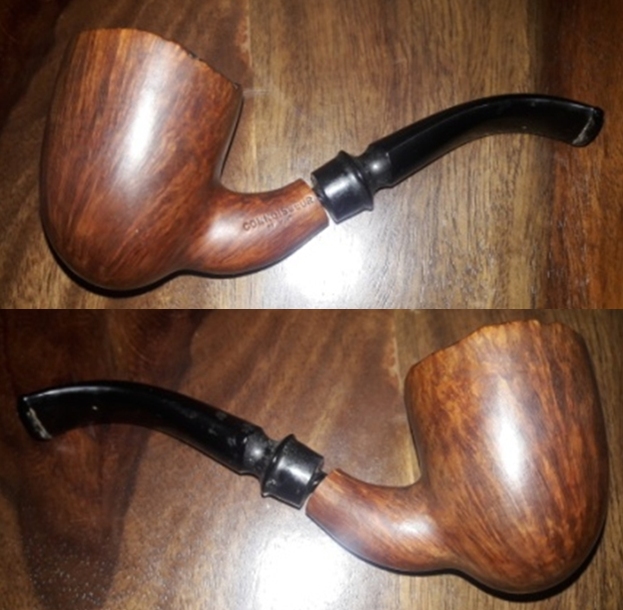
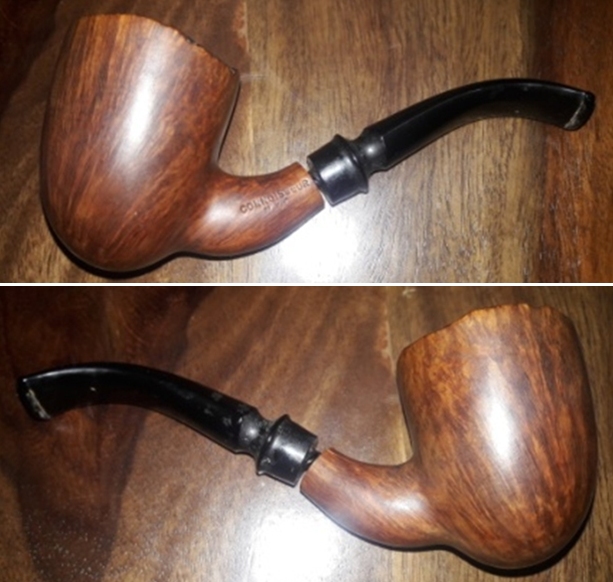
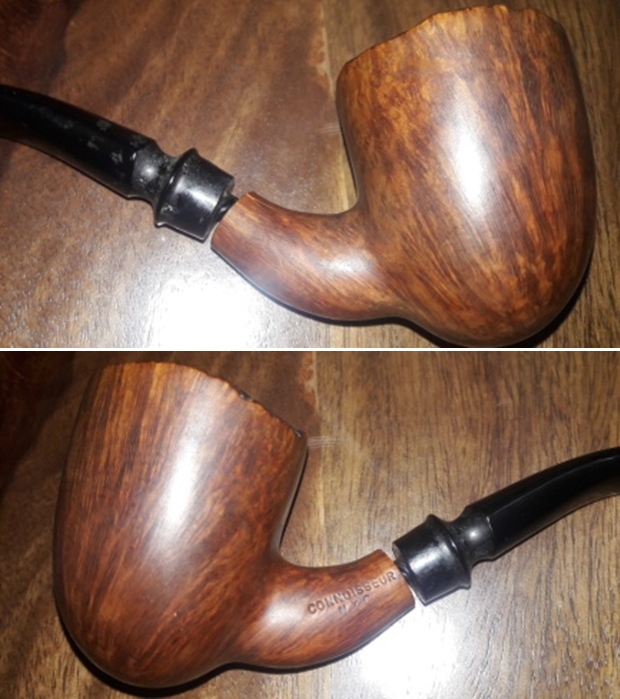
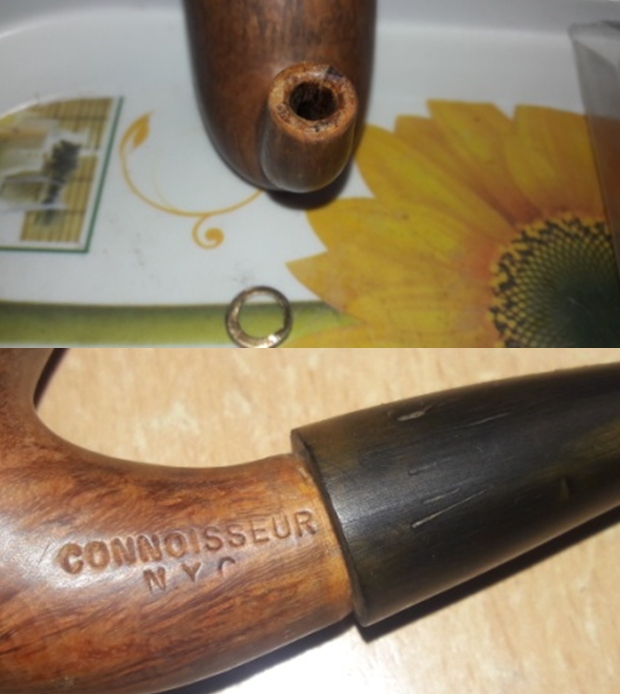
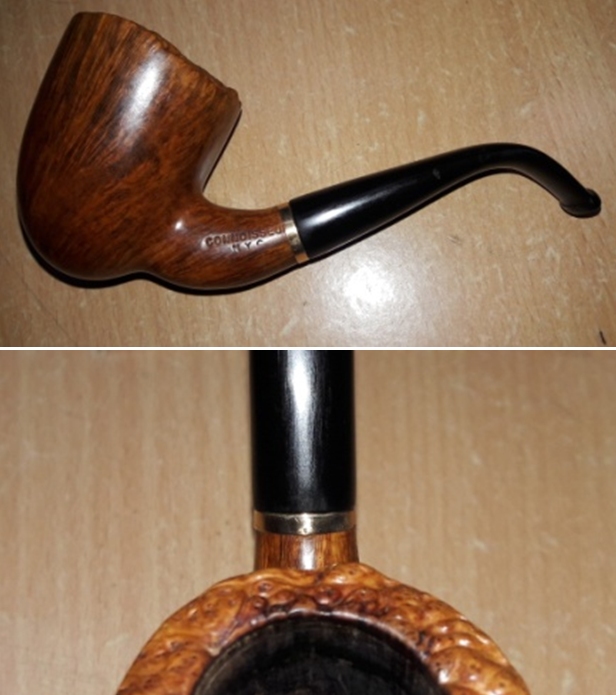
The pipe that I chose to practice on is a free hand that boasts of straight / flame grains all around the stummel with bird’s eyes on the heel of the bowl with a plateau rim top. It is stamped on the left of the shank as “CONNOISSEUR” over “N.Y.C.”. These stampings are crisp and easily readable. There is no other stamping seen on either the stummel or the stem. This is the first time that I am working on a Connoisseur and am keen to know more about this pipe brand, carver and also dating this pipe. As is my habit, the first site that I visit is rebornpipes where, over the years, it seems like Steve has chronicled almost all the pipes that were and are in existence. True enough, Steve has restored and researched a pipe from this maker. Here is the link for a detailed information on this pipe; https://rebornpipes.com/2015/05/23/restoring-an-ed-burak-connoisseur-tall-stack/

Further down the write up, he also gives out the dating methodology adopted by Ed Burak and the same is reproduced for immediate reference.

I also learned on Pipephil’s website (http://www.pipephil.eu/logos/en/about-en.html) that the stamping did indeed give some information that helped in identifying the period that a particular pipe was made. There I found that one may generally separate Connoisseur pipes’ date of manufacture into three periods.

From late 1960’s until 1974: no stampings
From 1974 until 1981: CONNOISSEUR over N.Y.C.
From 1981 on: CONNOISSEUR over N.Y.C. and Ed Burak’s signature.

Thus from the above information, it’s evident that this beautiful Connoisseur pipe in my hand is from the period 1974 to 1981!

INITIAL VISUAL INSPECTION
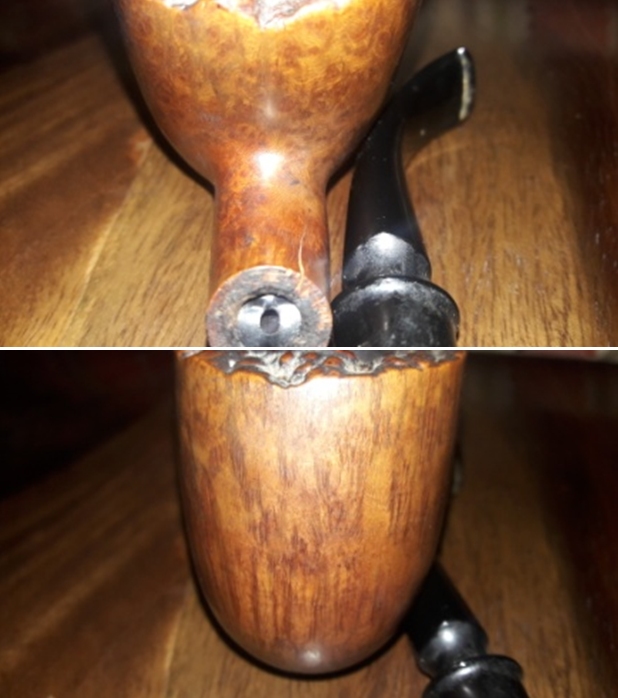
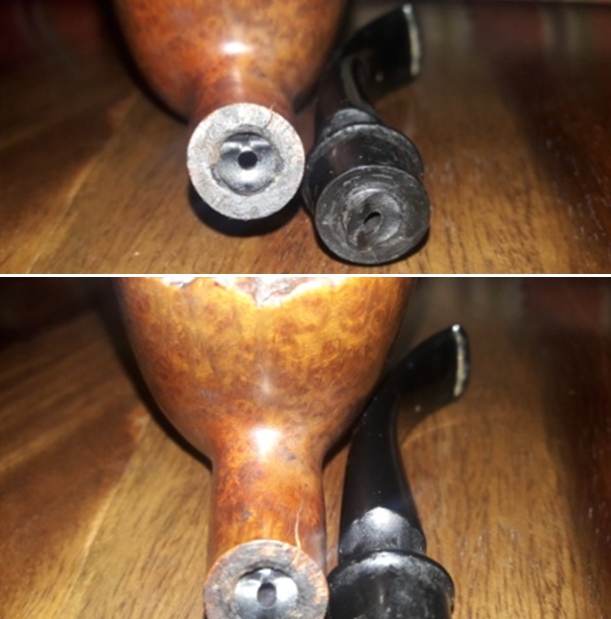
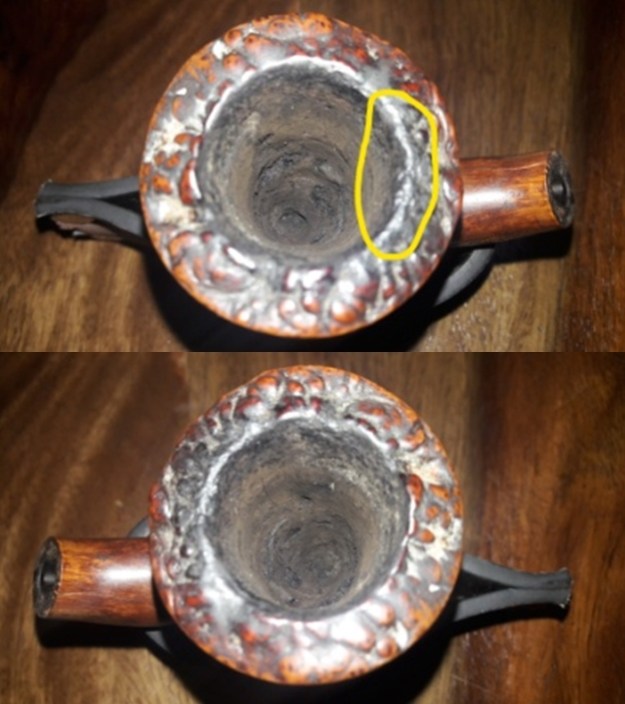
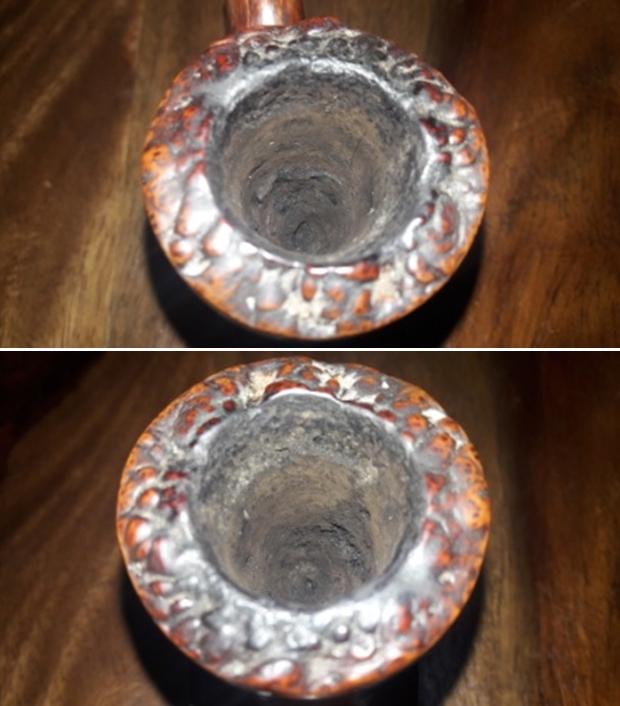
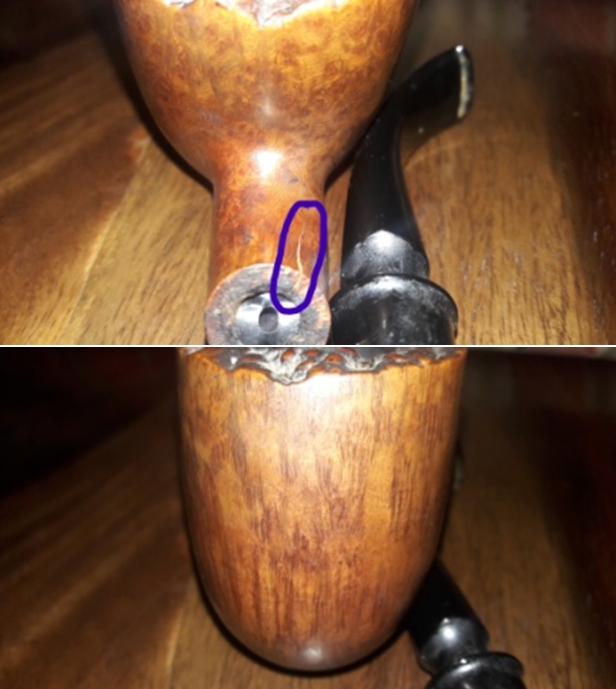
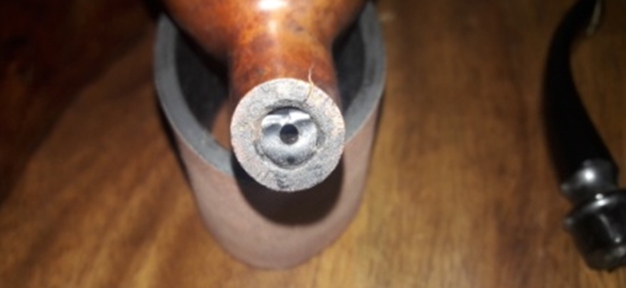
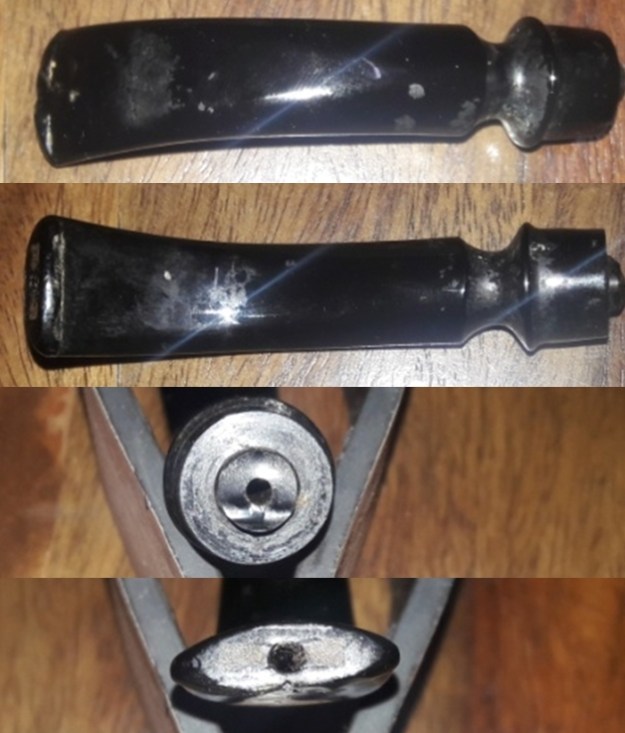
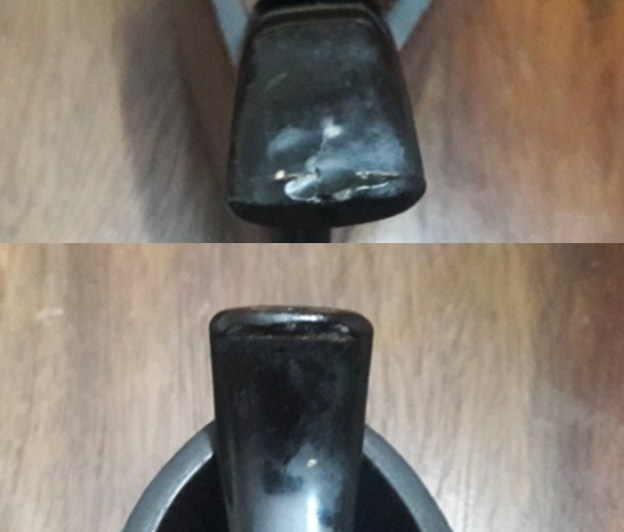
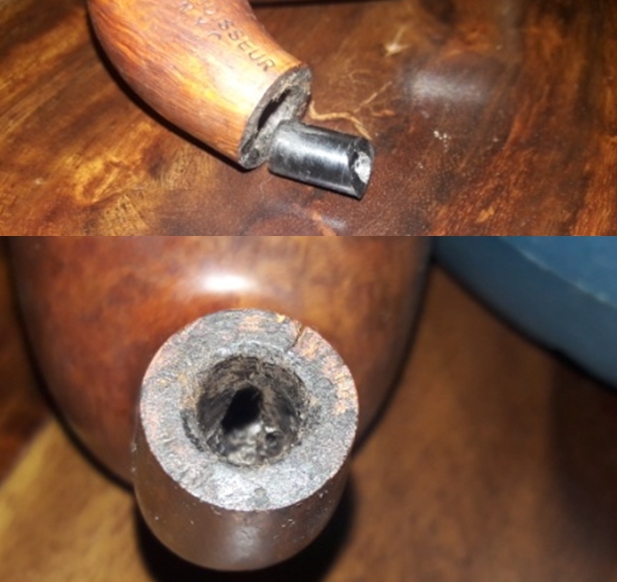
The first and foremost issue that I noticed and was aware of from the description given by the seller is that of the broken tenon. When I saw the pictures of this pipe for the first time, I had observed, apart from the most obvious broken tenon a number of other issues which presented a challenge of their own. The briar was natural and unstained. It had darkened slightly with age. This was how the pipe had reached me…discerning readers will easily make out other major issues that need to be addressed on this pipe. The chamber has a thick uneven layer of dry and hard cake with the inner rim edge showing darkening in 6 o’clock direction (marked in yellow). The condition of the inner walls of the chamber can be checked and ascertained only after the cake has been taken down to the bare briar. However, I do not envision any damage to the chamber walls. There is heavy lava overflow and debris embedded in the plateau of the rim top surface. The condition of the inner rim edge will be commented upon once the lava overflow has been removed. There are very strong and all pervading smells of old tobacco emanating from the chamber. Hopefully this issue should be addressed once the cake has been removed and the mortise is thoroughly cleaned. The stummel boasts of beautiful straight/flame grain all around and extend over the shank surface too!! The surface is covered in lava overflow, dirt and grime. The stummel briar is without a single fill and through all the dirt and grime, exudes a very high quality briar and craftsmanship. The foot of the stummel shows beautiful bird’s eye grains and is sans any damage. The slightly tapered end of the shank has the broken end of the tenon still embedded within. A prominent crack is visible over the shank on the right side. This pipe, in all probability, has suffered this catastrophic damage as a result of having fallen in stem down position. The mortise has the broken tenon stuck inside. I did try to wriggle it out with a screw driver, but the broken tenon wouldn’t budge. This will require more invasive technique. The heavy build up of cake in the chamber, dirty plateau rim top and the sorry condition of the stem all point towards a clogged mortise. This will be ascertained once the broken piece is removed from the shank end.The fancy stem has blobs of sticky oils and tars on both the surfaces as well as in between the nooks and crannies at the tenon end. There are significant tooth indentations on both the upper and lower buttons, to the extent that they would need to be rebuild completely. The slot just does not appear correct. It appears to be a orifice, but it is not a perfect round and  there are horizontal extensions on either side. Even this opening is clogged with old oils and tars. The broken tenon end of the stem is jagged and sharp at the place where the tenon has snapped. In my opinion, there is something which is not right about this stem. The quality of the stem is not something which is to be expected on a Connoisseur pipe. THE PROCESS
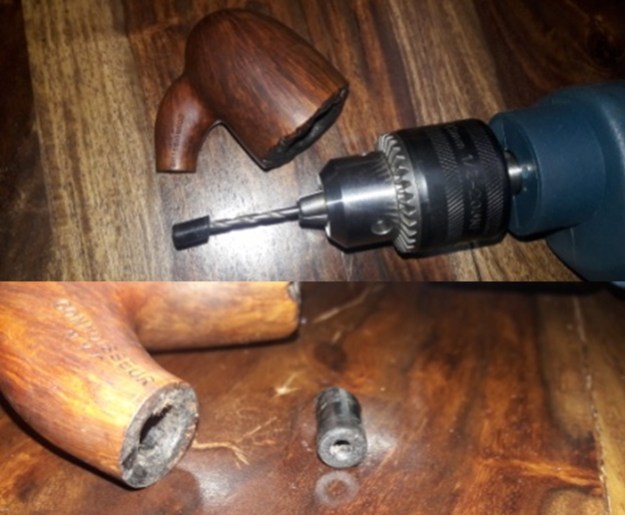
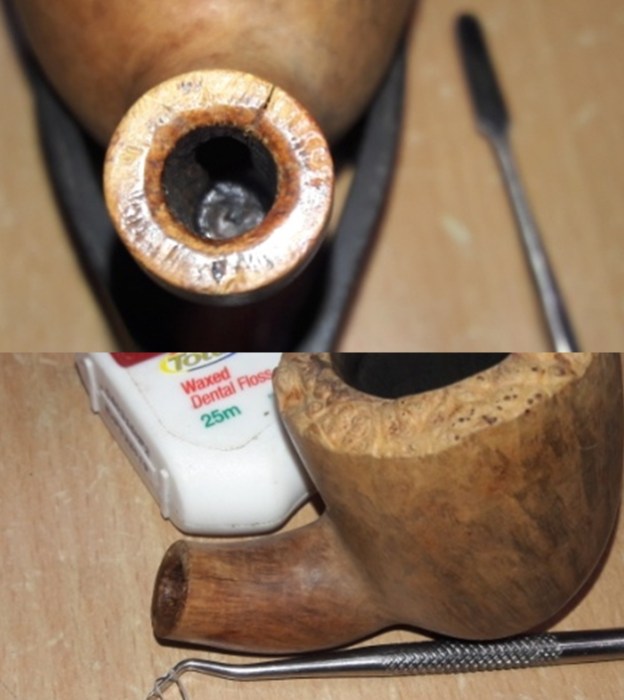
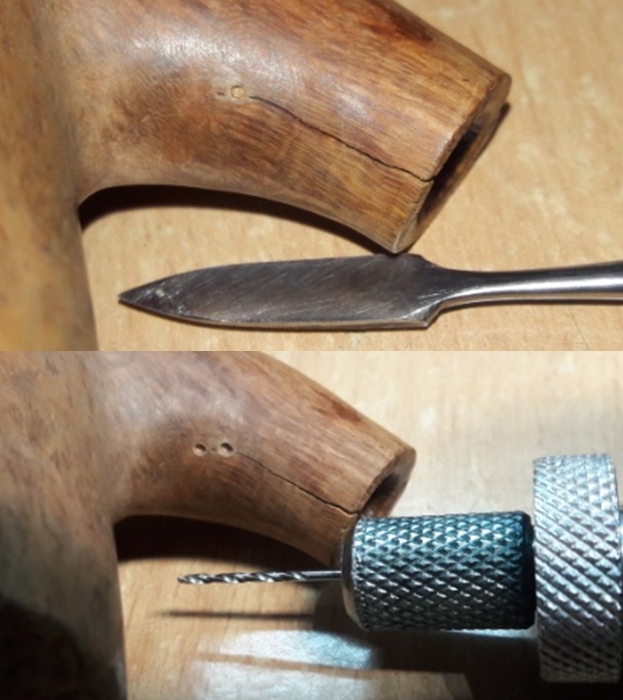
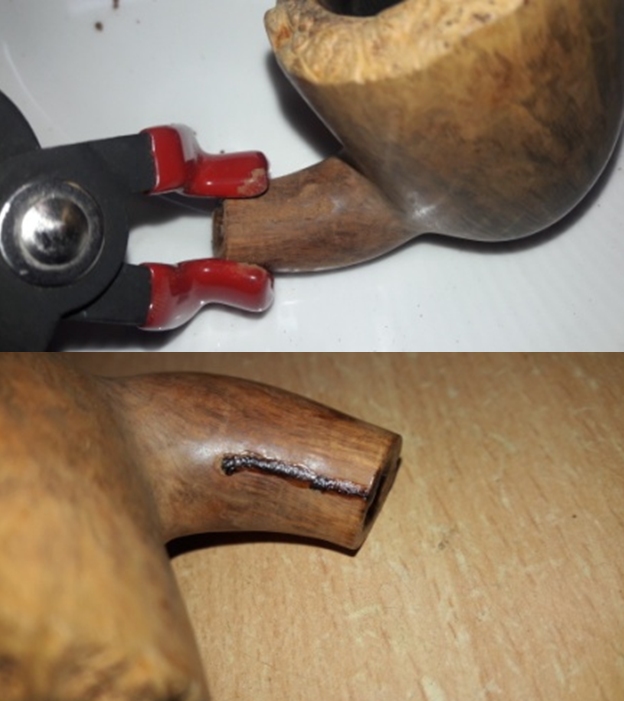
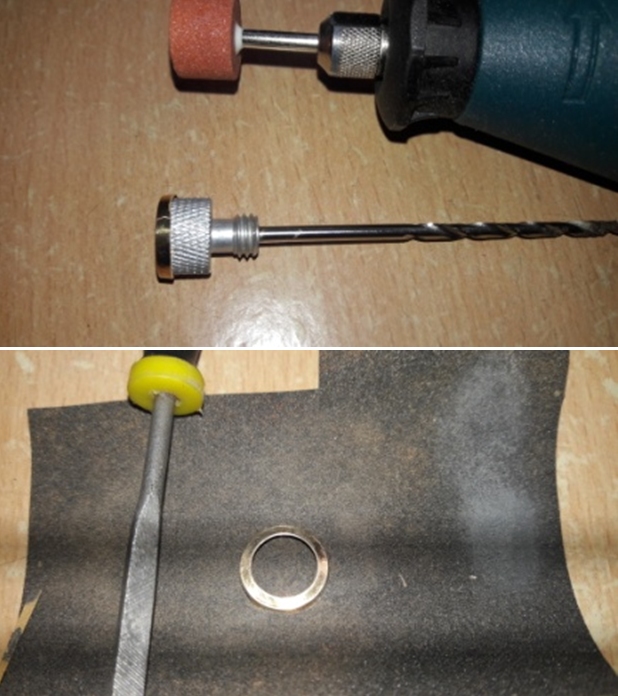
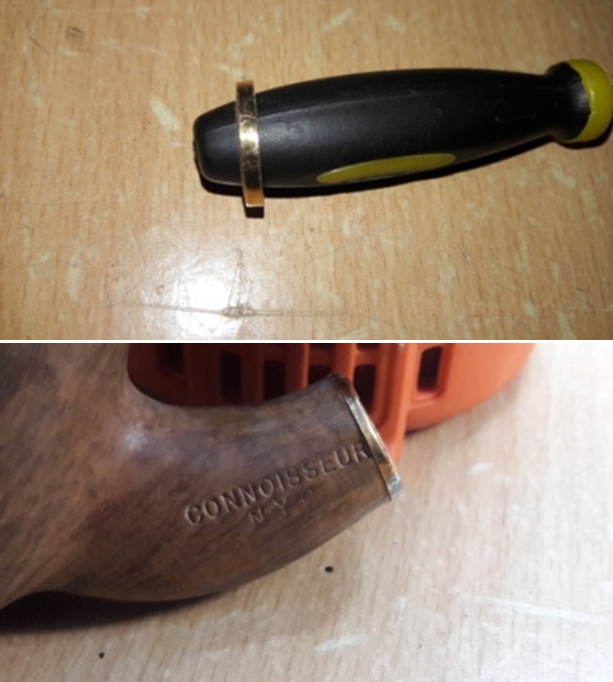
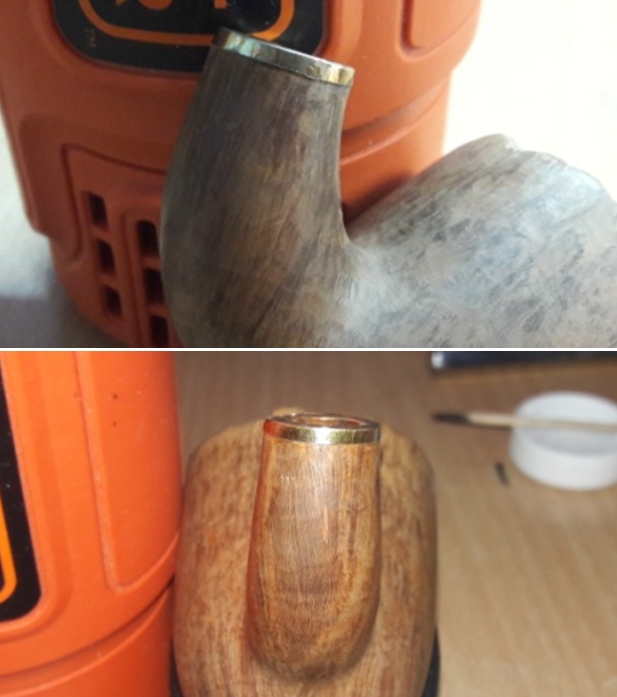
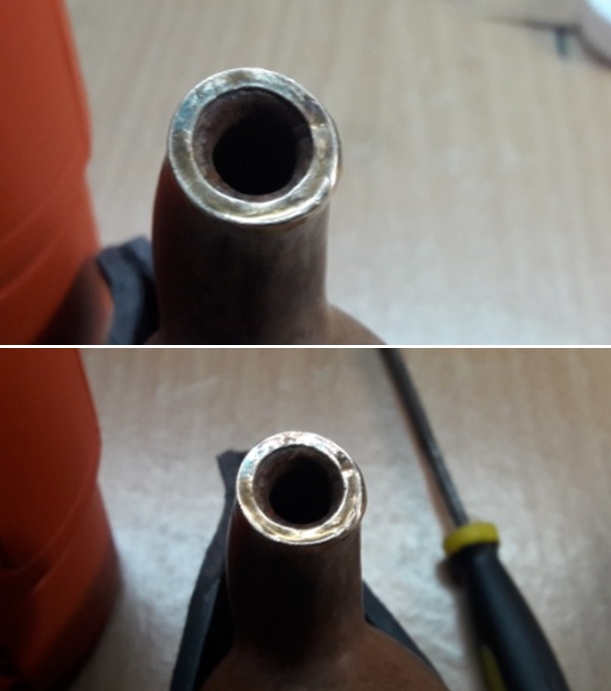
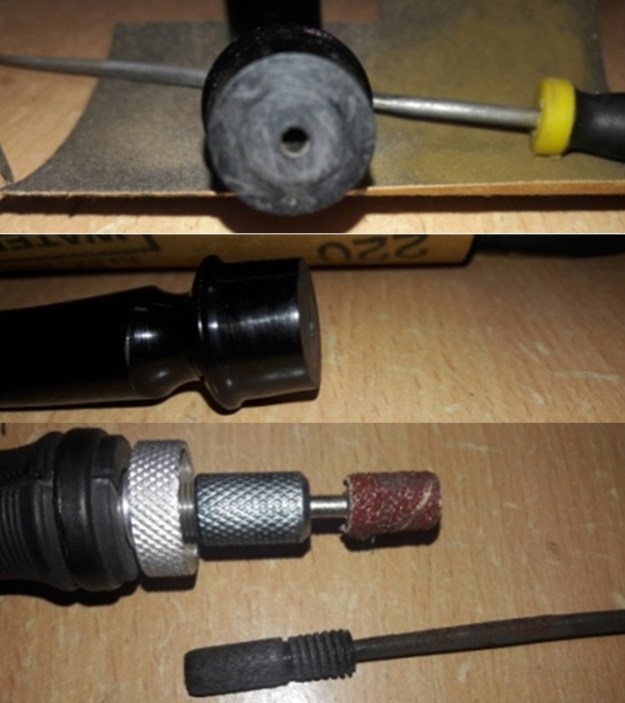
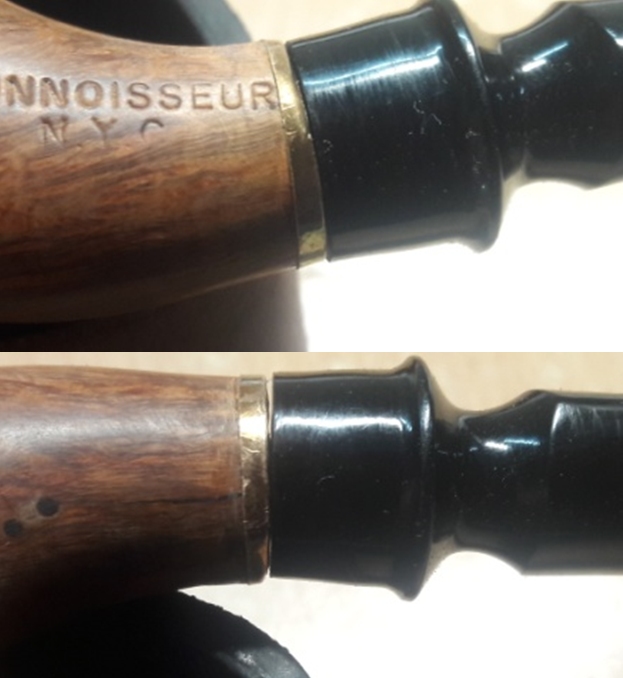
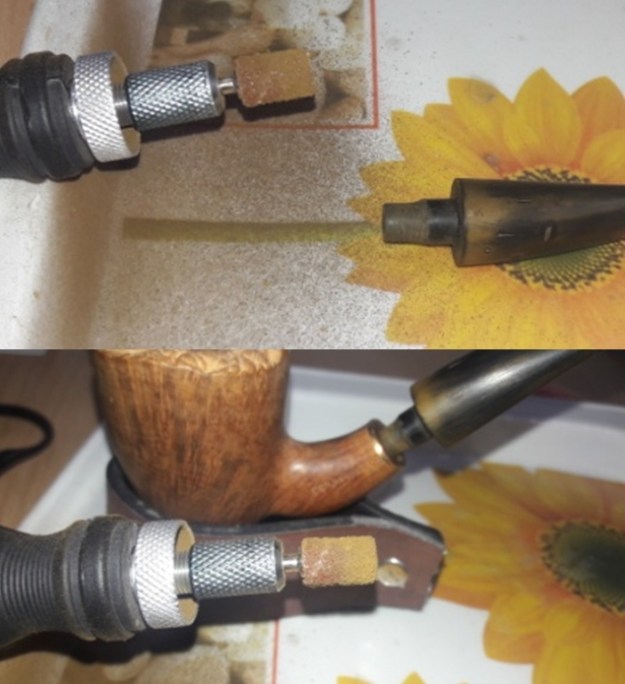
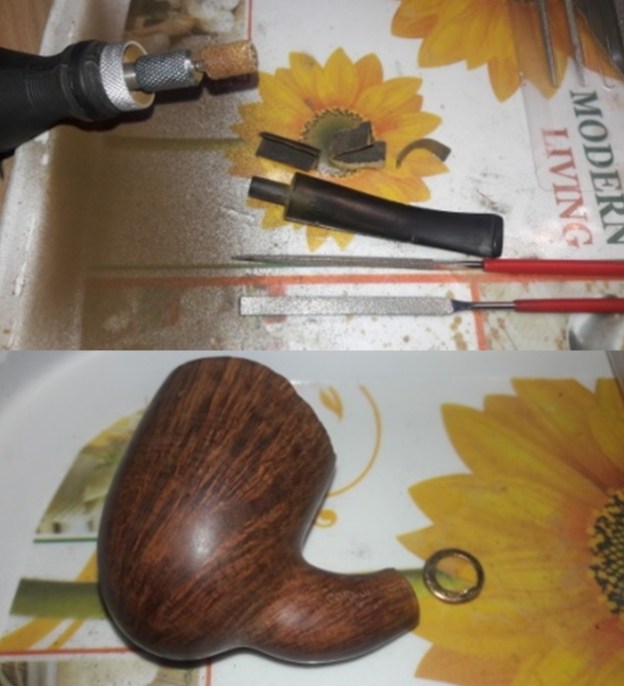
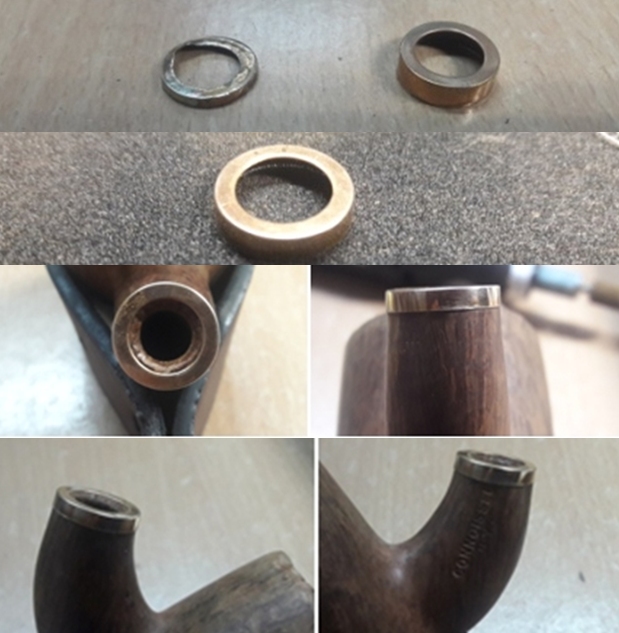
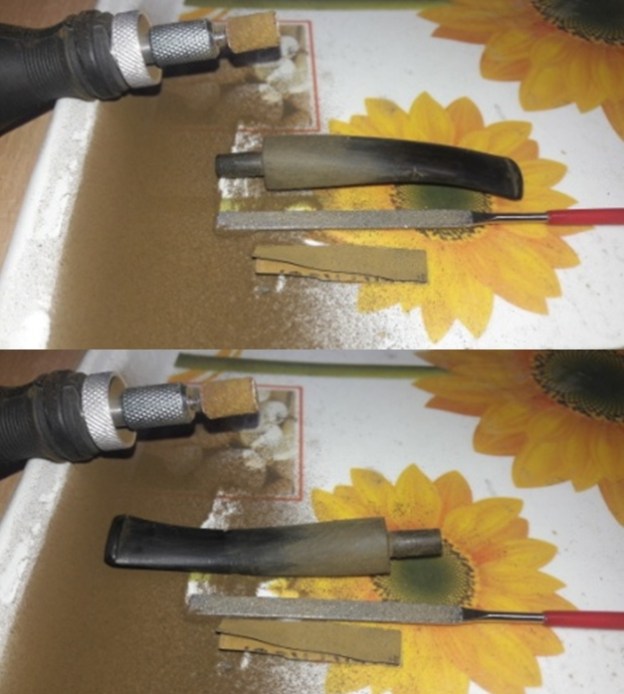
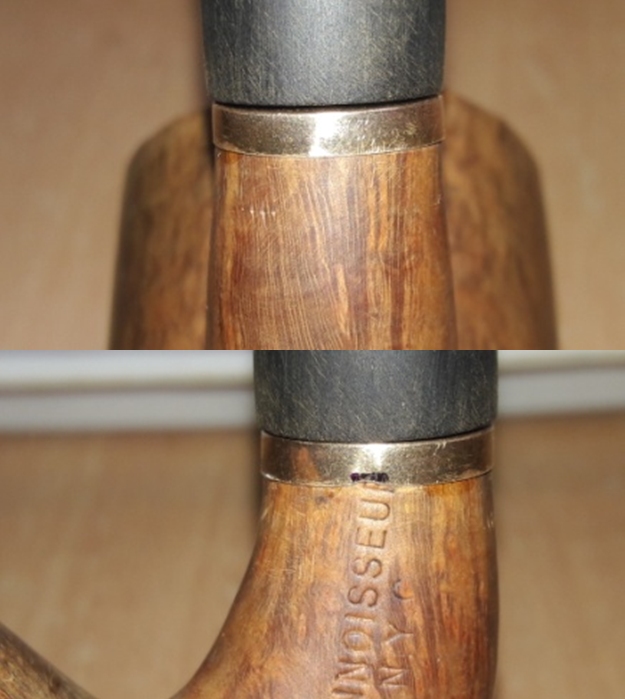
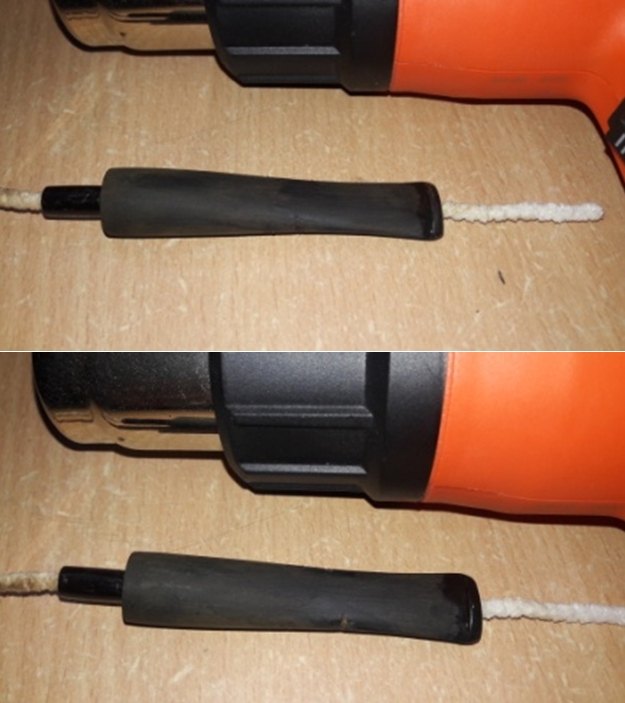
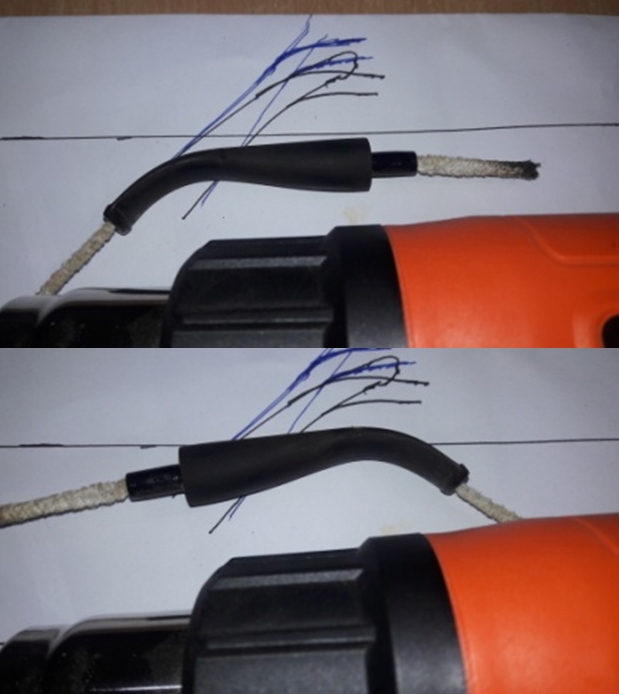
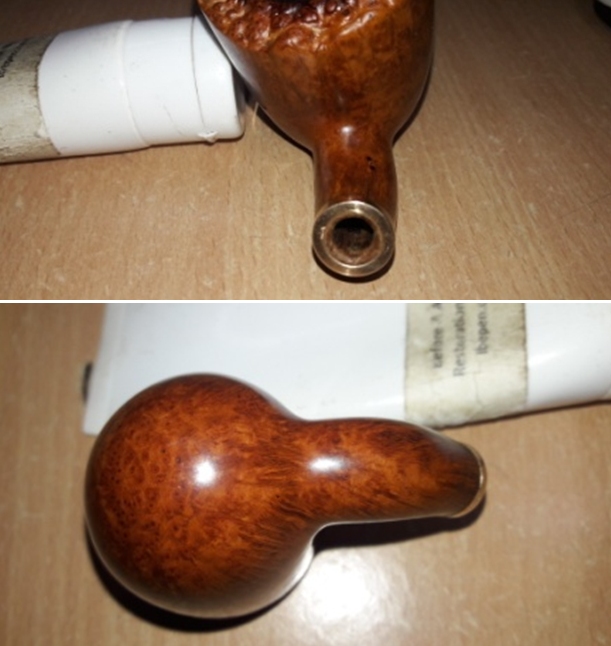
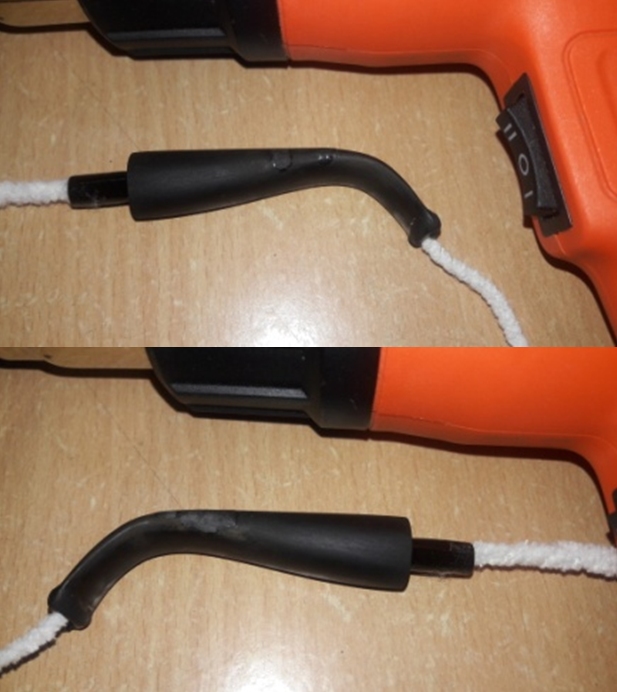
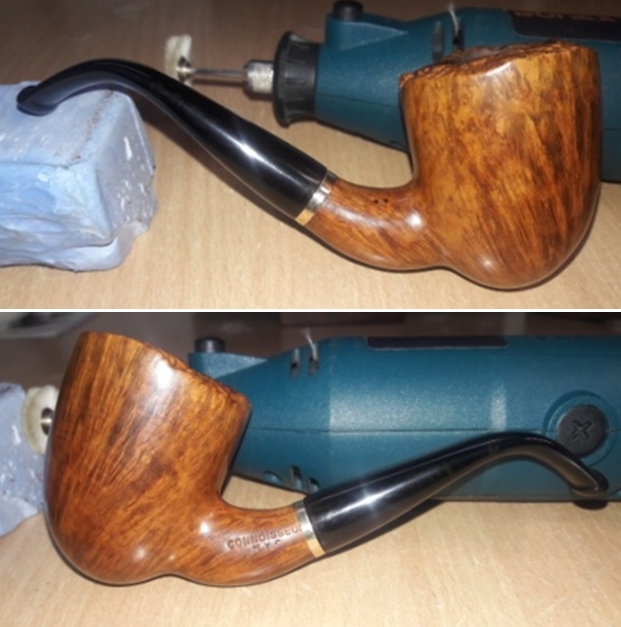
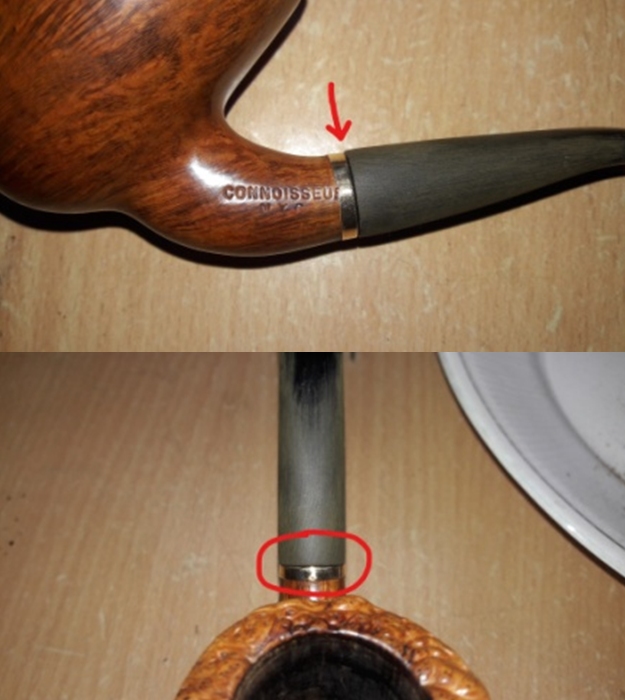
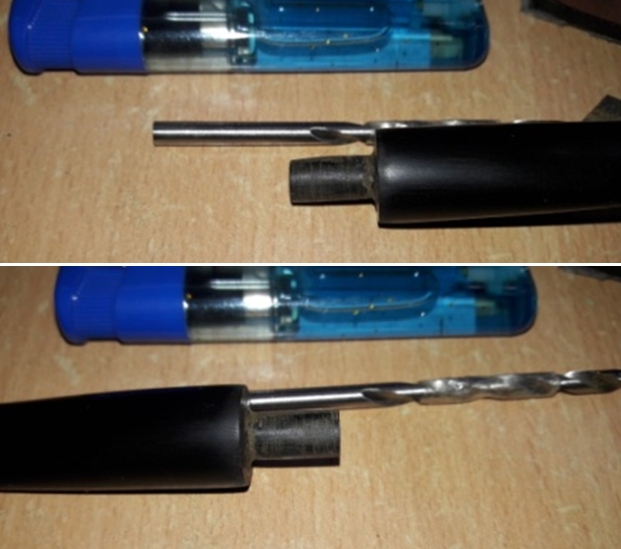
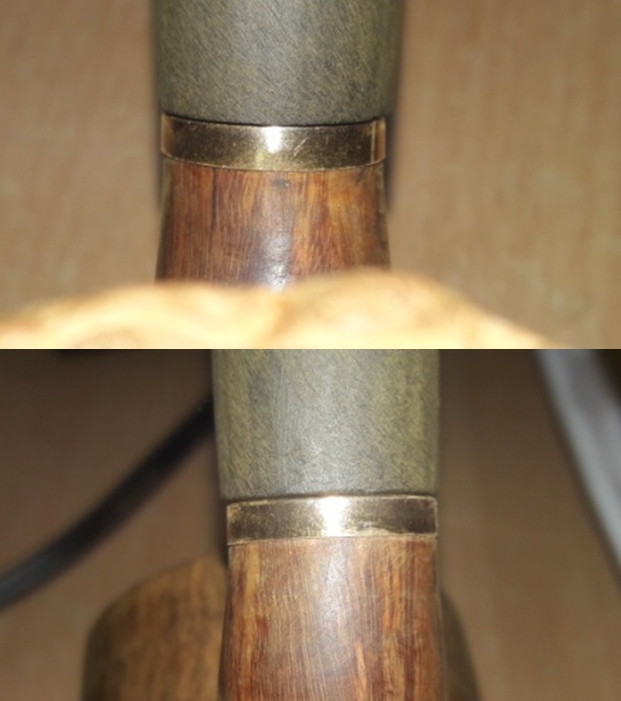
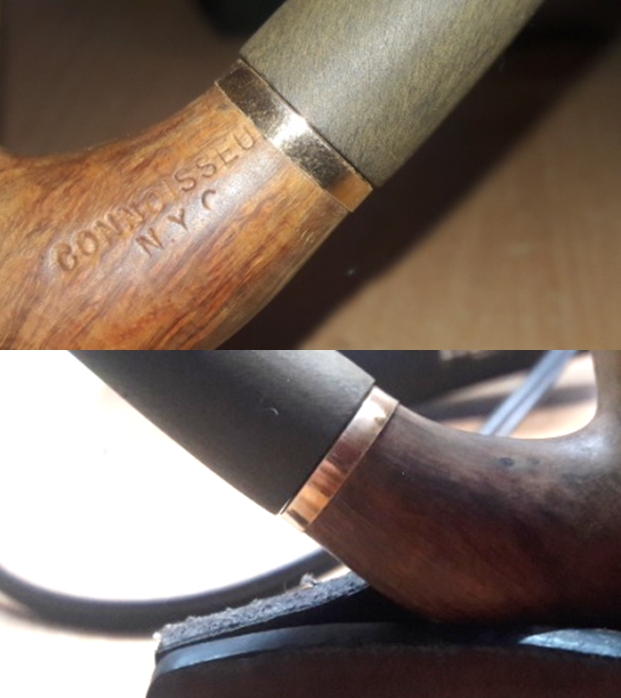
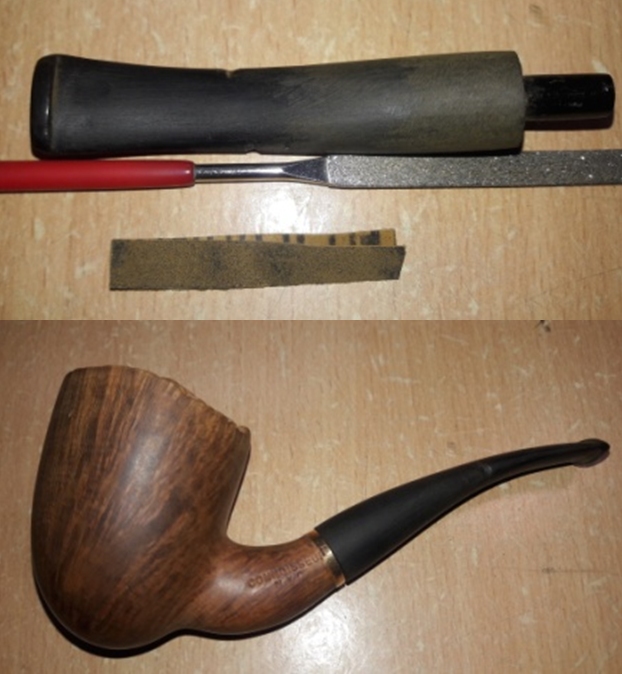
I began the process of refurbishing this pipe with cleaning the internals of the stem using pipe cleaners with isopropyl alcohol (99.9% pure) and dunking the stem in to “Before and After Deoxidizer” solution developed by my friend Mark Hoover. The solution helps to draw out heavy oxidation to the surface making its removal a breeze, while the minor oxidation is eliminated to a very great extent. I usually dunk stems of 5-7 pipes that are in-line for restoration and this pipe is marked in pastel blue arrow. I generally allow the stems to soak in this solution overnight for it to work its magic.With the stem soaking in the deoxidizer solution, I decided to remove the broken portion of the tenon from the shank. I select a drill bit that was slightly bigger than the tenon airway opening and mount it on my hand held drill. Very gently holding the drill absolutely straight, I give the drill machine a few forward turns. Once the drill bit is firmly embedded in to the broken tenon, I turn the drill machine in reverse. The reverse turns pull the broken end of the tenon out from the mortise. I breathe a sigh of relief as this is a very delicate step and a lot of things can go wrong if not executed with precision and patience. I further work the stummel, reaming the chamber with my PipNet reamer using head sizes 1 to 3. Using my fabricated knife, I further ream out the cake from places where the PipNet reamer could not reach and follow it with sanding the chamber walls with a 220 grit sand paper. I wipe the chamber with isopropyl alcohol and a cotton swab to remove all the carbon dust. This final cleaning of the chamber reveals a minor indentation in the wall opposite the draught hole, a result of over enthusiastic use of pipe cleaners to clean the mortise (marked in yellow semi- circle)!! Though not a major issue now, one will have to be careful with using pipe cleaners in future. Next, I clean the mortise with hard bristled and regular pipe cleaners dipped in isopropyl alcohol. I scrub the external surface of the bowl with undiluted Murphy’s oil soap and hard bristled tooth brush and dry it using paper towels and soft cotton cloth. I carefully clean the plateau rim top with a soft brass wire brush to remove the accumulated dirt and debris from the surface. Thereafter, I clean the mortise, plateau rim top and stummel surface with anti-oil dish washing soap on a shank brush and a tooth brush. The entire stummel, including the plateau rim top, cleans up nicely. I set the stummel aside to dry out naturally. The smells from the pipe, though reduced, are still very strong. Close observation of the stummel reveals the culprit to be the now moistened accumulated gunk in the mortise. Using my dental tools, I assiduously pick out and clean the mortise of all the gunk. I also clean the mortise with q-tips and alcohol. The amount of old grime that is scraped out from the mortise itself tells the story. The mortise is now clean and smells fresh.Moving ahead, I now address the crack that is seen on the right side of the shank, extending from the shank end to nearly half distance towards the stummel. Firstly, I clean off all the debris that is lodged in the crack using dental floss. The thin floss cleans the crack of all the dirt without widening it.I follow up this cleaning of the crack by marking the end points and turning points of the crack with a sharp dental pick. These marks help to guide the drill bit when drilling the counter hole. I take care that the drill is just sufficiently deep enough to arrest the further spread of the crack and not a through hole.I fill this crack with a mix of CA superglue and briar dust. To ensure a tight fill I clamp it down with pliers till the mix had cured, which by the way, is instantaneous!! Once the repair has cured for couple of hours, I sand it down with a flat needle file to achieve a rough match with the rest of the stummel surface. I fine tune the match with  220, 400 and 600 grit sand paper.To further stabilize the crack and prevent it from splitting again, I decide to place a band over the shank end. I select a band that is a tad bit smaller than the shank end diameter. When I place this band over the shank end, I realize that the last two letters of the stamping are being masked. I decide on grinding away the excess material from the band with my sanding drum mounted on a hand held rotary tool to a size which while being appropriate to stabilize the crack will not mask the stampings. The process is long and fraught with mistakes… The band has flown out of my hands a few times, since it can not withstand the stress of the sanding drum and is deformed , not to mention the time factor involved. However, through all these difficulties, I have prevailed to shape a band for the shank end. This is the pictorial depiction of the process and the result. Once I am satisfied with the fit, I heat the band with a heat gun in order to expand it and fix it over the shank end. I have avoided gluing it securely in place just in case I may have to revisit the entire process and go for a fresh band. Here is how the band fits over the shank end. Truth be told, I am not very confident that the band would be a success given the fitting of the band over the shank end. I set the stummel aside and decide to replace the tenon on the stem. I have explained in great detail the procedure that I have learnt and followed while replacing the tenon on a Preben Holm # 7 FH pipe. To avoid repetition of the process, I would request all to refer to the write up and other literature on the subject that is available on rebornpipes.

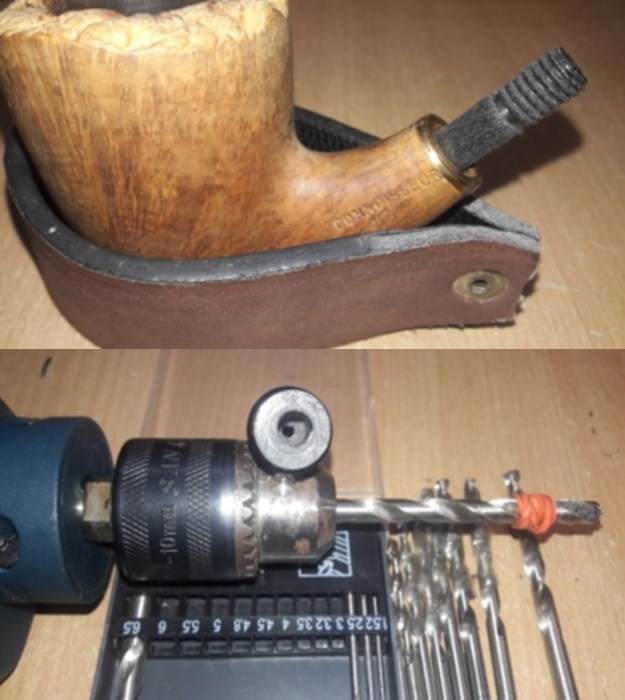
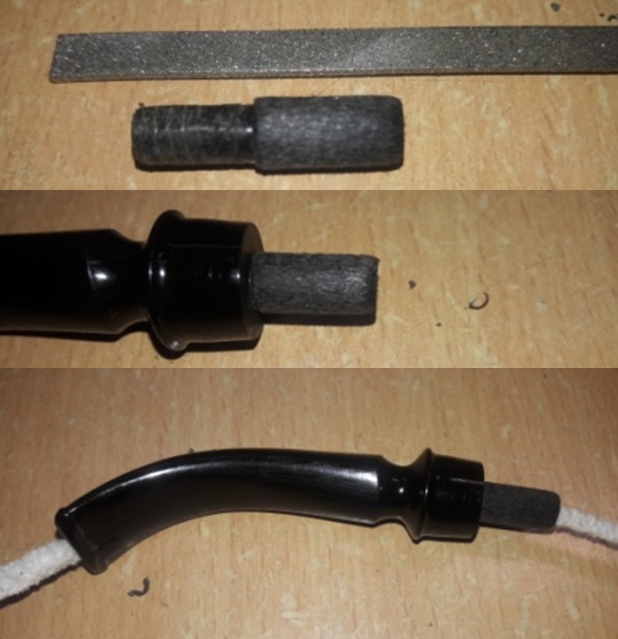
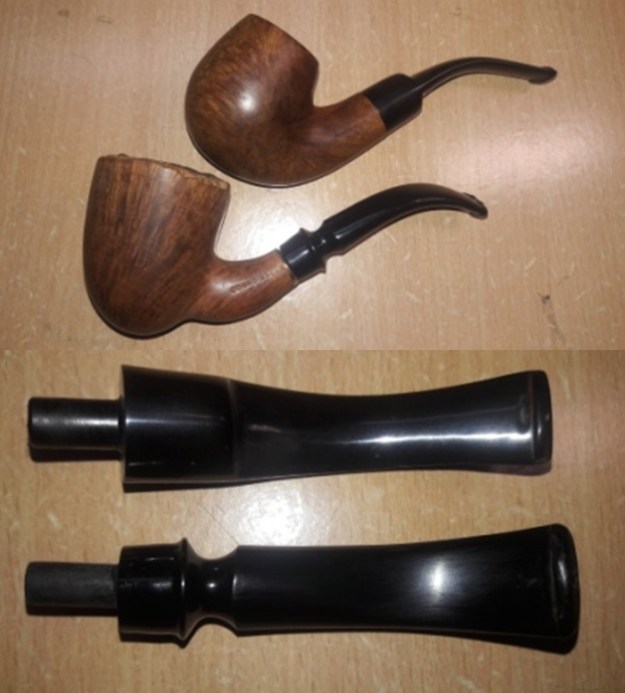
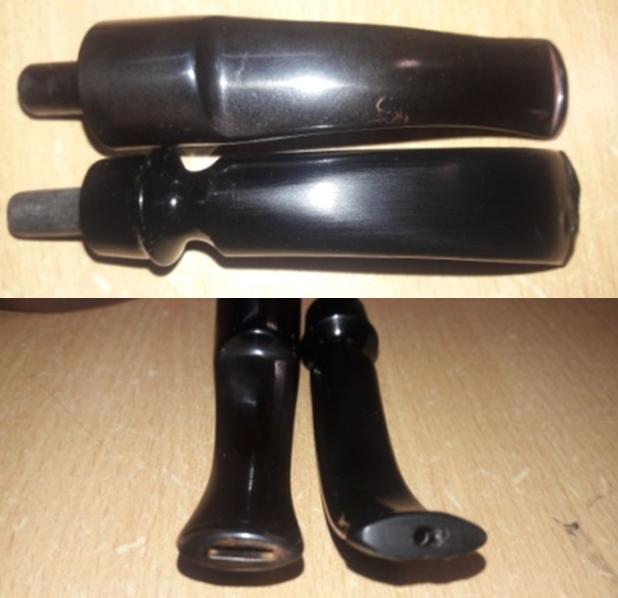
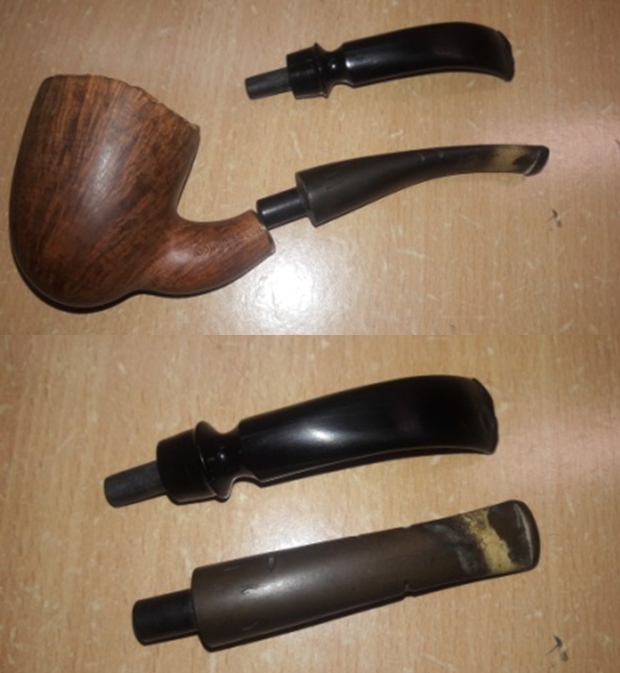
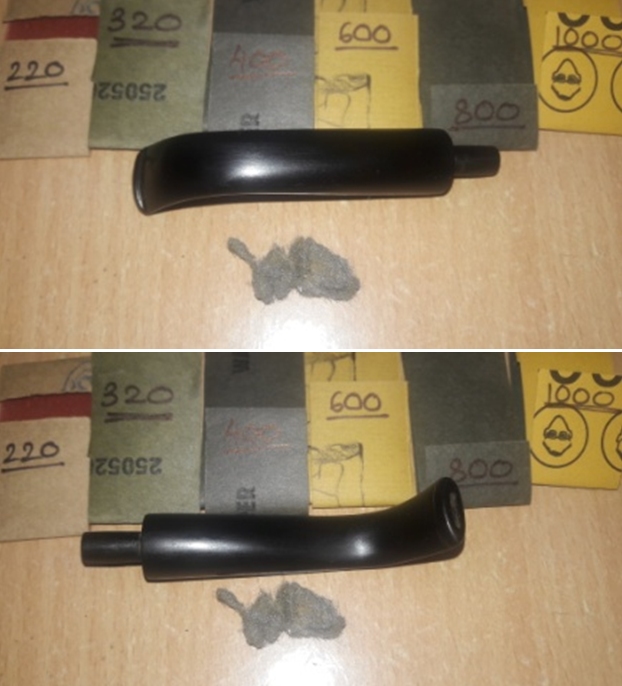
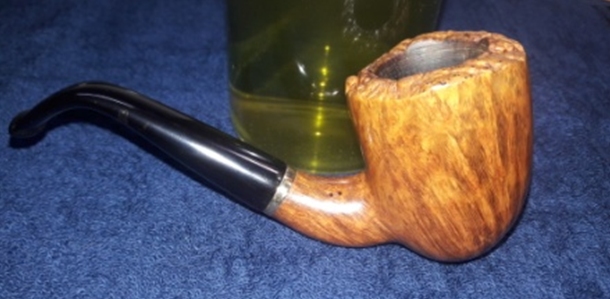
Given below are a series of sequential pictures explaining the procedure. Here I would also like to note that as I had mentioned earlier, the quality of the stem appeared circumspect and this was corroborated while drilling the stem air way to accommodate the new tenon. The plastic or some such low quality of the stem did pose a lot of resistance during the drilling and a straight drill was very difficult. However, my persistence has paid off and I am happy with the replaced tenon. Once the tenon is replaced, I try the fit of the stem in to the mortise. The fit though snug, reveals gaps and the seating of the stem in to the mortise is not flush. No amount of tweaking and minor adjustment by sanding of the tenon can ensure a flush seating. I feel that I have botched up the banding of the shank end and that is what has caused this issue. Here is how the seating appears after all the adjustments and tweaking. At this point in restoration, I shared pictures of this issue and then later in the day had a FaceTime chat with my Guru, Steve. Steve, with his vast experience and having worked on and researched a Connoisseur pipe before, immediately commented that the stem is not the right style for Connoisseur pipes and could be a replacement stem. I have another Connoisseur pipe (which awaits restoration) with a saddle stem in my collection and when the stem of this freehand was compared, it was no where near the quality that was seen on the other saddle stem. The pictures below show the difference in quality of the stem material and finish between the two pipes. Thereafter we discussed the shank band and he suggested to reband the shank end while going in for a completely new stem. Thereafter, we went through my can of spare stems and selected one that would be the best match for this pipe. Here are the pictures of the shortlisted stem. The slightly bent stem with all the calcification is the one that would replace the one that the pipe came with. The shortlisted stem, I am afraid, is not in the best of condition. The tapered slightly bent vulcanite stem is nearly the same length as the replaced one while being very thick at the tenon end. The quality of the re-replacement stem is very good. The stem is heavily oxidized with significant calcium deposition and deep tooth indentations in the bite zone on either surfaces of the stem. A couple of deep chips are seen along the seam on either sides as well as on the lower and upper surfaces of the stem. The button surfaces on either side has bite marks and the edges are equally damaged and deformed. The tenon and the horizontal slot shows heavy accumulation of oils, tars and gunk. All in all, the refurbishing and shaping of this stem presents a ton of effort and time.I begin the refurbishing and reshaping of the stem by first cleaning the stem, both internally and externally. With my fabricated knife and a paper cutter, I remove the entire calcium sediments from the bite zone. Using a dental tool, I dislodge all the dried oils and tars from the tenon and slot end. I clean the stem internals with pipe cleaners and shank brush dipped in isopropyl alcohol. I sand the entire stem surface with a folded piece of 150 grit sand paper to remove some oxidation as well as to even out some tooth chatter from the bite zone. Once the initial cleaning is done, I move ahead for shaping/sizing the stem. The tenon is too thick for the mortise and that is my start point. I mount a sanding drum on to my hand held rotary tool and sand the tenon till I achieve a rough fit in to the mortise. During the entire process, I frequently check the progress being made as I do not want to sand too much material from the tenon, making for a loose fit.I fine tune the fit of the tenon in to the mortise by hand sanding with flat head needle file and 180 grit followed by a 220 grit sand paper. The tenon attachment with the stem is shaped with a triangular needle file. I check the seating of the stem in to the mortise after I remove the shank band. The stem fit is nice and snug. Before I move to the final fit and shaping of the stem, I decide to reband the shank end. This time I select a band that was a snug fit as against a size smaller as I have done earlier. To reduce the thickness of the band, this time I manually sand it over a 150 grit sand paper instead of using my rotary tool and a sanding drum. It does take a long time, but the end result is much better. The last letter “R” has been masked, but I shall deal with it later (will I…?). I still have not glued the band in place, just to be on the safer side!!Now with the band in place, I move ahead with shaping and aligning the stem. The first thing that I proceed to do is to shave of the excess meat from the shoulders at the tenon end. Readers, when I say excess, please be aware that the word excess does not convey the quantum of excess… It  was hell of a lot of material to shave off!! I mount a 150 grit sanding drum on to the rotary tool and go to town sanding off the material from the shoulders of the stem. Once I have achieved a rough match, I use a flat head needle file to further match the fit. I progress to manual sanding with a 180 grit sand paper to fine tune the match. This is how the stem profile matches with the shank end of the stummel…not quite there but getting close. I feel that the mid region of the stem needs to be trimmed a bit and do so with a flat head needle file and a 180 grit sand paper. Here is where I have reached at this stage. Truth be told, eye balling the shape is not the easiest way to achieve the exact shape since I am always seeing it, shaping it and matching it. It’s something akin to optical illusion that I am experiencing. There is a bit of overhang at the shoulders of the stem and I need to shave off some more material from the area above it. Also a slight gap is seen at the lower end and on the left side of the stem that needs to be addressed. I decide to take a break from all the sanding of the stem and move on to shaping the stem to match the profile of the stummel. I insert a pipe cleaner through the stem’s air way to prevent it from collapsing once the stem is heated. I first straightened the stem by heating it with a heat gun. To impart the requisite bend, I try to adopt the technique that my friend, Dal Stanton of PipeSteward fame, uses and that is to draw a diagram marked with the plane of the stummel rim top, a parallel plane that is required, the present profile of the stem and thereafter, the exact place and shape of the bend that is needed. Well, it is an attempt that I made, but ended up eye balling the exact bend to be imparted. I heat the stem with my heat gun till the vulcanite becomes pliable and gives it the necessary bend. I hold it in place till the stem had cooled down a bit and thereafter, hold the stem under cold water for the bend to set. The next issue that is addressed is of the stem repairs. I insert a triangle shaped index card covered in transparent tape in to the slot. The tape prevents the mix of superglue and charcoal from sticking to the index card. I mix superglue and activated charcoal powder and generously apply it over the bite zone, including over the button. I also fill the couple of deep chips along the seam on either sides as well as on the lower and upper surfaces of the stem with the charcoal mix and set it aside to cure. Once the mix has cured, I remove the index card from the slot. While the stem fill is set aside to cure, I polish the stummel with micromesh pads, wet sanding with 1500 to 12000 pads. This time around, I do not repeat the mistake of polishing the plateau rim top as I had done with the PH # 3 earlier! I wipe the surface with a soft cloth at the end of the micromesh cycle. The stummel looks amazing with a deep shine and beautiful straight grains popping over the stummel surface. I rub a small quantity of “Before and After Restoration Balm” in to the briar. I rub this balm deep in to the nooks and crannies of the plateau rim top surface with my fingers and let it rest for a few minutes. The balm almost immediately works its magic and the briar now has a nice vibrant appearance with the dark brown hues of the grain contrasting with the rest of the stummel surface. I further buff it with a horse hair shoe brush. The appearance of the stummel at this stage motivates me further to complete this project at the earliest. I set the stummel aside and all that remains was to shape, align and polish the stem! Now motivated with the appearance of the stummel, I turn my attention to the stem repair. The fills have cured nicely and I move ahead and began the process of filing and shaping the button end with a flat head needle file. At this stage, I get in touch with Steve on Face Time and discuss the progress on the stem. He suggests that a slightly sharper bend to the stem from near the bite zone would accentuate the shape and flow of the shank with that of the stem. He also suggests that the profile of the stem near the shoulder and mid region needs to be more slender. So, it is back to heating the end of the stem with the heat gun and giving it the desired bend, of course, eyeballing it to the desired shape!As discussed with Steve, with a flat needle file, I shave off some more vulcanite from the shoulder and the mid region of the stem. I further sand the stem with 220, 320, 400, 600, 800 grit sand papers and finally with 0000 grade steel wool. I wipe the stem with a cotton pad dipped in alcohol to remove the resultant dust and rub some extra virgin olive oil onto the stem and set it aside to be absorbed.I polish the stem with micromesh pads, wet sanding with 1500 to 12000 grit pads. I rub a little extra virgin olive oil in to the stem at the end of the micromesh pads polishing cycle. I complete the polishing regime of the stem by rubbing a small quantity of Extra Fine Stem polish developed by my friend Mark Hoover, and giving it a final polish with a soft cotton cloth. The stem is now nice, smooth and shiny.To apply the finishing touches, I first mount a cotton cloth buffing wheel on to my hand held rotary tool and apply a coat of Blue Diamond to the stummel and the stem to polish out the minor scratches. Boy, am I glad to finally have reached the home run stretch to complete this project!! I shared these images with Steve for his comment. He suggested that the shoulder overhang needs to be reduced and under belly to be straightened out more.Well, here I was back with a flat needle file and 220 grit sand papers as against carnauba wax and rotary tool!! I again diligently worked on these issues, frequently checking for progress being made. Once I am satisfied that the shoulder overhangs and under belly issues have been resolved, I check the seating of the stem in to the mortise. The seating is canted backwards. I address this issue by heating the tenon and slightly pushing it upwards (that is, in the opposite direction). I check the seating and am quite pleased by the overall appearance of the stem and its seating. Thereafter, I go through the entire regime of sanding and polishing as explained above. At the end of the micromesh pads, I complete the polishing regime of the stem by rubbing a small quantity of Extra Fine Stem polish developed by my friend Mark Hoover, and giving it a final polish with a soft cotton cloth. The stem is now nice, smooth and shiny. With a cotton buffing wheel that I use for carnauba wax, I apply a coat of carnauba wax to the stummel and stem and continue to work on it till the complete coat of wax is polished out. I mount a clean cotton cloth buffing wheel and give the entire pipe a once over buff. I finish the restoration by giving the entire pipe a rigorous hand buffing using a microfiber cloth to deepen the shine further. The finished pipe is shown below. P.S. – This project was more tedious than I had anticipated, mostly because of my own faults and errors in judgement.  But then, isn’t this the fun part of being of the learning curve? I shall be avoiding the following in my future restorations:

(a) Using a band that is a tad smaller then the shank end diameter. I would rather use a band that has a snug and perfect fit over the shank end.

(b) Using a rotary tool with a sanding drum to get the band to the desired size. It’s better, safer and precise to manually sand the band on a sand paper.

(c) Clamping the shank end after filling a crack. I am not sure, but I think that the clamping down may have caused a slight deformation that had caused me such grief with the seating of the stem.

(d) Less reliance on “eye balling” for sizing and shaping…need to get on with hunting for a “PIMO TENON TURNING TOOL” and a set of “VERNIER CALIPERS”.

I am really fortunate to be in the process of learning the nuances of pipe restoration and cannot thank Steve enough for his support and guidance.

Thanks for your patience and looking forward to input about the write up. Cheers…

My First Ever Tenon Replacement and it’s on a Preben Holm # 7 Freehand Pickaxe Pipe!!


Blog by Paresh Deshpande

The first ever Preben Holm in my collection was from eBay about two years back. It came to me with a broken stem and the tenon stuck in to the mortise. This pipe received a new lease on life in the month of May last year when Steve, Jeff and Dal Stanton visited me here in India. I learned the process of tenon replacement along with many other tips and processes in pipe restoration. Here is the link to the informative write up by Steve on this pipe; (https://rebornpipes.com/2019/05/14/restoring-a-preben-holm-hand-cut-sandblast-freehand-in-pune-india/).

The second Preben Holm in my collection came from my Mumbai Bonanza, which I really enjoyed working on; (https://rebornpipes.com/2019/08/12/refurbishing-a-tired-preben-holm-1-from-the-mumbai-bonanza-lot/).

The next two Preben Holm pipes came to me from a seller on eBay. Both these pipes had some serious stem issues which really kept other buyers away from placing their bids and lucky me, I got both these pipes for a really good price. Even though both pipes came to me together, I shall be working on them separately since they each have a different set of issues involved.

The first of these two PH pipes was restored a couple of weeks ago and it really turned out to be a gorgeous pipe. Here is the link to the write up that has been posted on rebornpipes.com (https://rebornpipes.com/2020/03/10/refurbishing-a-preben-holm-3-freehand-pipe/).

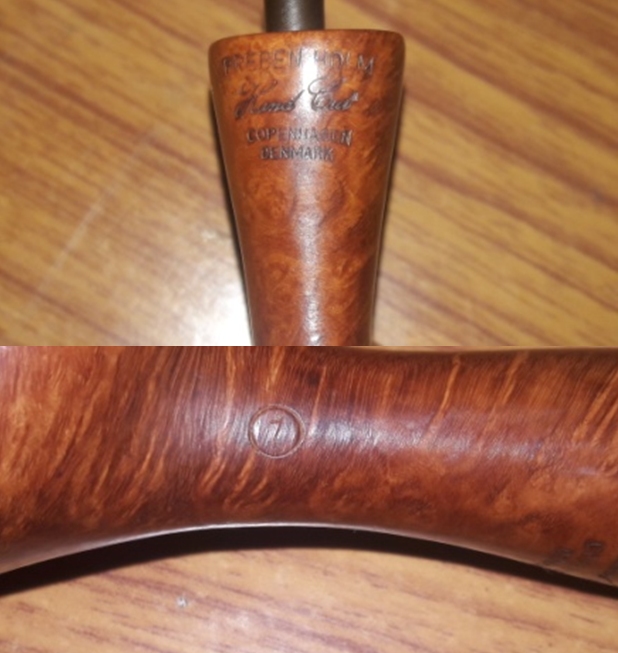
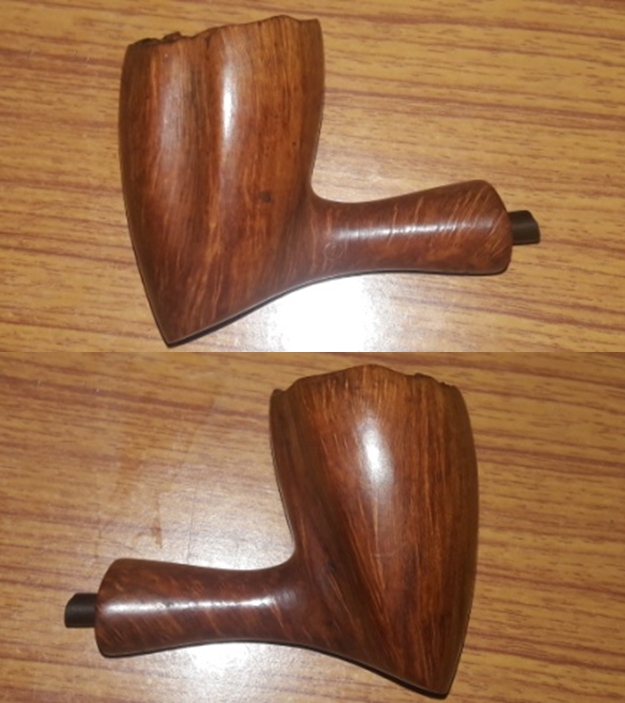
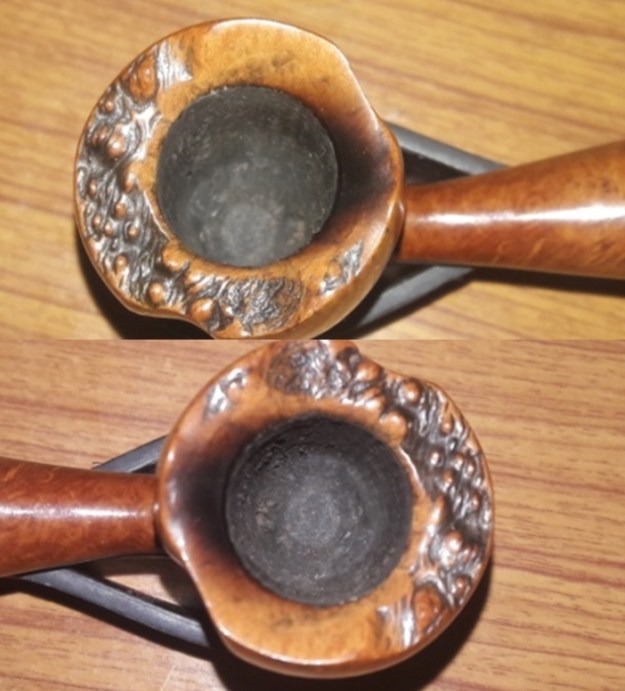
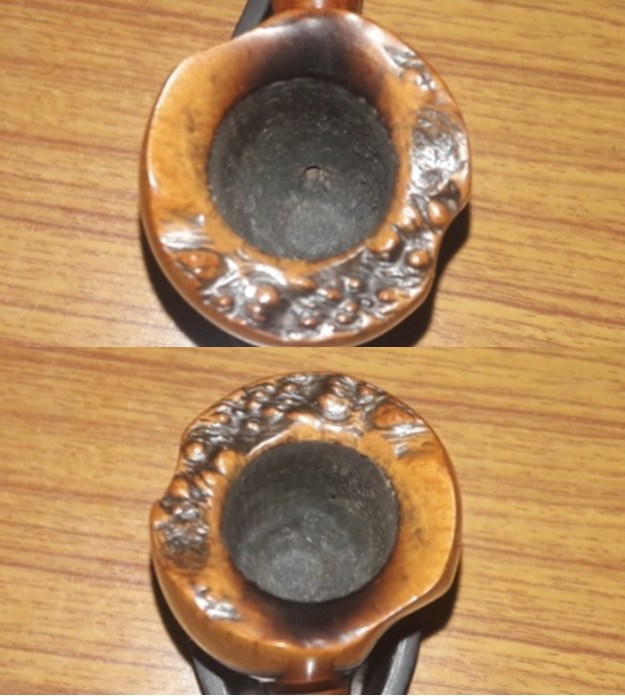
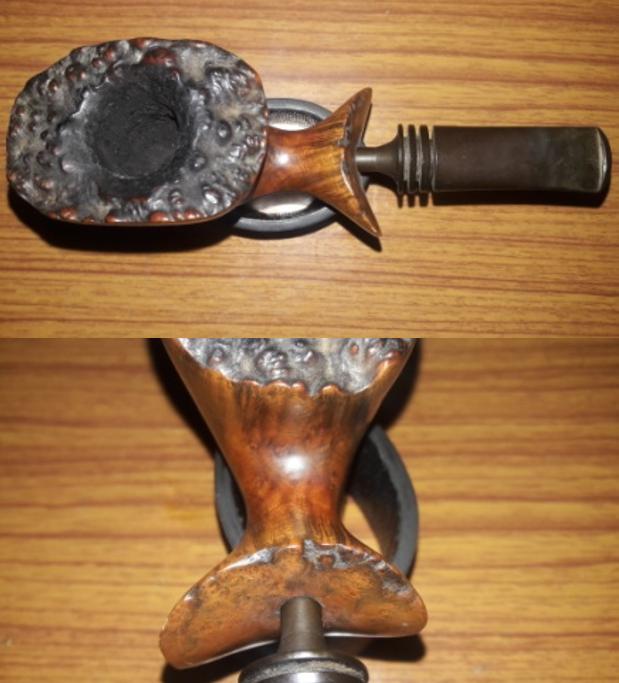
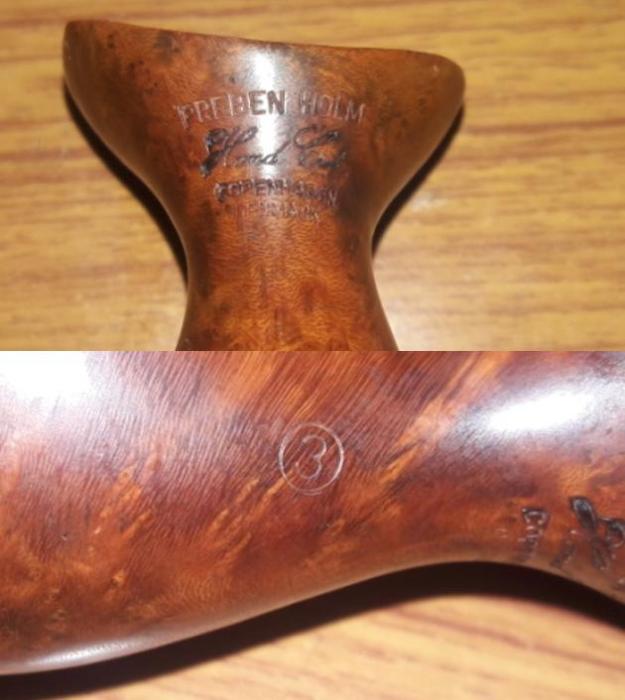
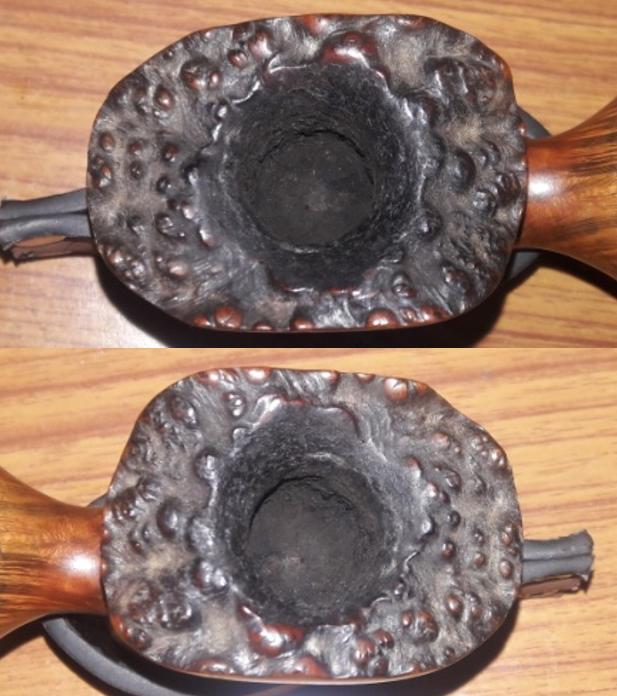
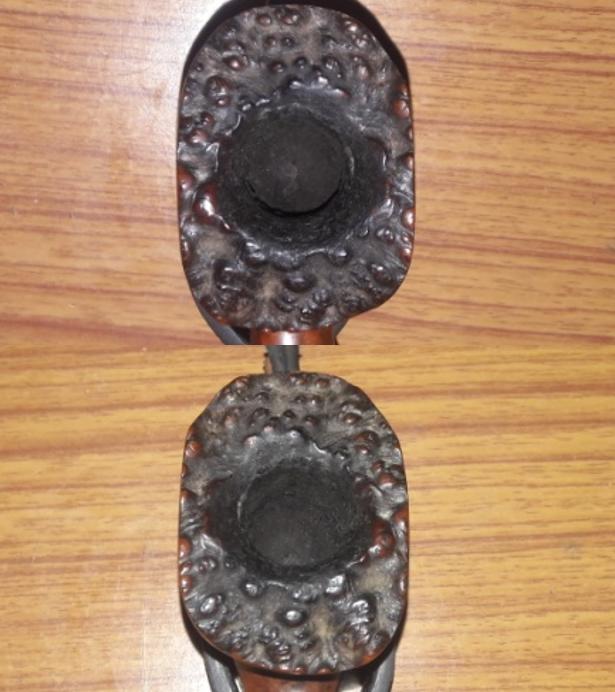
The second PH currently on my work table, is a beautiful pickaxe freehand with beautiful flame grain all around the stummel and shank and birdseye at the foot of the stummel. The rim top has remnants of plateau along the front left side and extending to the right up to half the length of the rim top. The shank end is sleek and smooth with a slight flare at the shank end, a complete contrast to the earlier PH I had worked on that had a large flare at the shank end. Here are the pictures of the pipe as it sits on my work table. The pipe is stamped on the bottom of the flared shank end as “PREBEN HOLM” in block capital letters over “Hand Cut” in a cursive artistic hand over “COPENHAGEN” over “DENMARK”, all in block capitals. The left side of the shank bears the encircled numeral “7”. All the stampings are crisp and easily readable. The fancy vulcanite stem is devoid of any stampings.There is a lot of interesting information on the carver, Preben Holm, on pipedia.org (https://pipedia.org/wiki/Holm,_Preben) which makes for an interesting read. However, there was no information or guidelines to help understand the grading and dating of these pipes from the carver. In my previous write ups on Preben Holm pipes, I had sought input on these specific aspects and was honored by studied information from esteemed readers of rebornpipes. Here is some of the information that was shared by the readers;

Roland Borchers March 10, 2020 at 8:21 am

Hi Paresh,

What a wonderful pipe and a great job (again) on the restoration. The PH pipes were 1968-1970 graded from 1 (lowest) to 8 (unicorn) .
This page from smokingpipes.com might be of interest, but there is more to be found on the www.
https://www.smokingpipes.com/pipes/estate/denmark/moreinfo.cfm?product_id=136933

So a 3 is not bad at all…

Best wishes,

Roland

I followed the link forwarded by Mr. Roland Borchers and reproduce the information gleaned;

“Now that my pulse has returned to (vaguely) normal. Preben Holm pipes which bear a single grading number in a circle, represent Holm’s earliest ‘Hand Cuts’, a period that most estimate between 1968 and 1970. Prior to handling this amazing jewel, the highest grade that I had encountered was a ‘5’. Once (just once) I saw a smoked ‘7’ offered across the pond for a price that could feed a decent sized village for a month (mild exaggeration, but you get the idea). Here we have a ‘6’, featuring both the conservancy of shape that one would expect from the earliest days, as well as a grain worthy of such a lofty grade designation. Forty (plus) years young, utterly unsmoked and it comes with both the original presentation box and sleeve. For Pete’s sake, don’t let this one get away”.

–R. ‘Bear’ Graves

borman August 15, 2019 at 5:44 pm

Not sure how correct I am but… pipes 1-4 as such are lower to higher quality rating as A-E is low to high. The bone extensions that I have had and others I have seen appear to be from the 60’s. Hope I am not far off and also I hope it helps you.

Thus from the above information, it’s evident that this beautiful Preben Holm pipe in my hand is a very rare # 7, top grade and very expensive pipe from 1960s…

INITIAL VISUAL INSPECTION
The first and foremost issue that I noticed and was aware of from the description given by the seller is that of the broken tenon. Most of the readers must be wondering as to the rational of buying a pipe, even a Preben Holm, with a broken tenon and it’s a logical question. However, there are two main reasons why I went in for this purchase; firstly my friend and guru, Steve had demonstrated how to replace a broken tenon and I was keen to try my hand at it and secondly was the economic consideration!! Pray tell me if it is possible to get a grade 7 early hand-cut Preben Holm from the 1960s at USD $65, including shipping!! Never, I say. Below are the pictures of the broken tenon stuck in to the mortise. This is going to be a challenging repair being my first tenon replacement.The chamber has a very thin layer of dry and hard cake with the slightly outward flared inner rim edge showing darkening in the 6 o’clock direction. The condition of the inner walls of the chamber can be checked and ascertained only after the cake has been taken down to the bare briar. However, I do not envisage any damage to the chamber walls. There is negligible lava overflow and debris embedded in the plateau of the rim top surface. It is my guess that this pipe suffered said catastrophic damage very early in its existence and had since been languishing in a box with the previous piper before he decided to get rid of it. The stummel boasts of beautiful straight grain all around and extends over the shank surface too!! The surface is relatively clean and without any fills save for a few very minor scratches that could have been caused during routine use. The slightly flared smooth end of the shank is clean. The foot of the stummel shows beautiful bird’s eye grains and is sans any damage. Overall, the stummel presents a sparingly used and a well-cared for pipe. The mortise has the broken tenon stuck in to it. However, given the condition of the chamber and the overall pristine appearance of the stummel, I think the mortise should be clean too!!

The fancy vulcanite stem shows traces of oxidation and is otherwise sans any major damage. The horizontal slot end of the stem is heavily oxidized to a dark brown coloration. The broken tenon end is jagged and sharp at the place where the tenon has snapped. The fancy stem, though it looks beautiful when black and shiny, is a bear to clean with all the dips and narrow gaps between the beads and rings etc.THE PROCESS
I began the process of refurbishing this pipe with cleaning the internals of the stem using pipe cleaners with isopropyl alcohol (99.9% pure) and dunking the stem in to “Before and After Deoxidizer” solution developed by my friend Mark Hoover. The solution helps to draw out heavy oxidation to the surface making its further removal a breeze, while the minor oxidation is eliminated to a very great extent. I usually dunk stems of 5-7 pipes that are in-line for restoration and this pipe is marked in green arrow. I generally allow the stems to soak in this solution overnight for the solution to do its work.With the stem soaking in the deoxidizer solution, I worked the stummel starting with reaming the chamber with my fabricated knife as the layer of cake was too thin and did not warrant the use of a reamer. It was at this stage that I realized that the pipe has been so sparingly smoked that what I was assuming to be a layer of cake, is in fact a layer of bowl coating!! The walls of the chamber are smooth and solid. I tried to wriggle out the broken tenon that was stuck in to the mortise. Lucky me, it came out without any resistance!! That’s a big relief. Next, I cleaned the mortise with hard bristled and regular pipe cleaners dipped in isopropyl alcohol. I scrubbed the external surface of the bowl with undiluted Murphy’s oil soap and hard bristled tooth brush and dried it using paper towels and soft cotton cloth. I carefully cleaned the plateau rim top with a soft brass wire brush to remove the accumulated dirt and debris from the surface. Thereafter, I cleaned the mortise, plateau rim top and stummel surface with anti-oil dish washing soap on shank brush and tooth brush. The entire stummel, including the platue rim top, cleaned up nicely. I set the stummel aside to dry out naturally. Staying with the stummel restoration, I polished the stummel with micromesh pads, wet sanding with 1500 to 12000 pads. This time around, I did not repeat the mistake of polishing the plateau rim top as I had done with the PH # 3 earlier! I wiped the surface with a soft cloth at the end of the micromesh cycle. The stummel looks amazing with a deep shine and beautiful straight grains popping over the stummel surface. I rubbed a small quantity of “Before and After Restoration Balm” in to briar. I rubbed this balm deep in to the nooks and crannies of the plateau rim top surface with my fingers and let it rest for a few minutes. The balm almost immediately works its magic and the briar now has a nice vibrant appearance with the dark brown hues of the grain contrasting with the rest of the stummel surface. I further buff it with a horse hair shoe brush. As mentioned in the previous write up on refurbishing of pipe PH # 3, I had worked on all the stems that had been soaking in the deoxidizer solution overnight. I fished out all the stems and cleaned them under running warm water and scrubbed the raised oxidation from the stem surface using Scotch Brite pad. I further removed the oxidation by scrubbing the stems with 0000 grade steel wool and applied a little olive oil to rehydrate the stems and set them aside for the oil to be absorbed. Complete oxidation was removed on this stem by the process described above. Unfortunately, I did not click any pictures of these stems at this stage.

With this, I have now reached the most critical and challenging part of this restoration; replacing the broken tenon. While Steve, Dal and Jeff were here in India, Steve had replaced a tenon on a Preben Holm which had come to me with a broken tenon. I had minutely observed the procedure, made detailed notes and read the relevant blogs that Steve has written on rebornpipes.com.

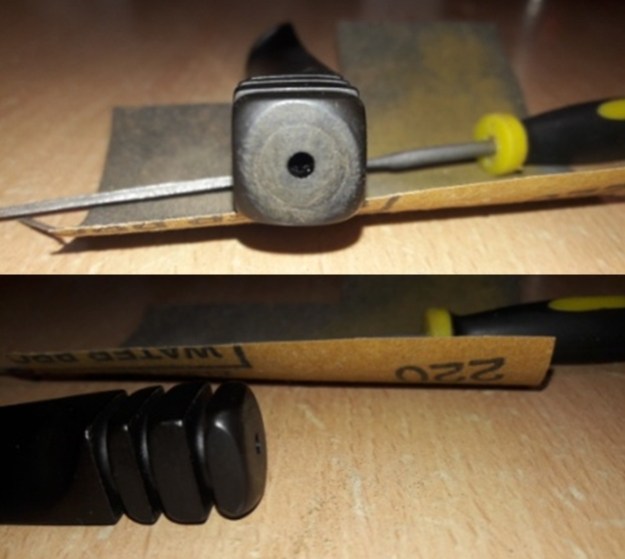
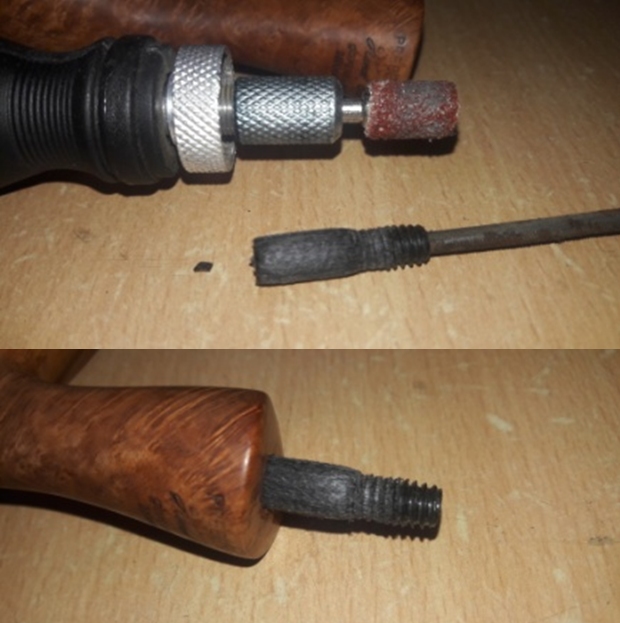
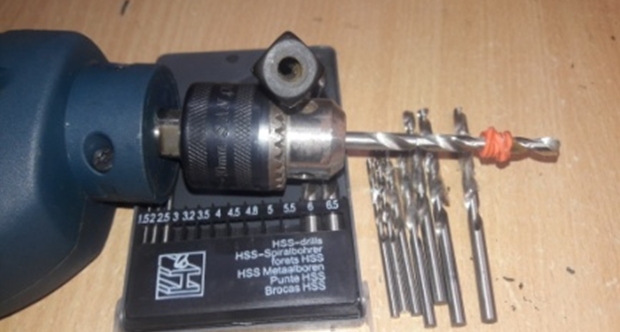
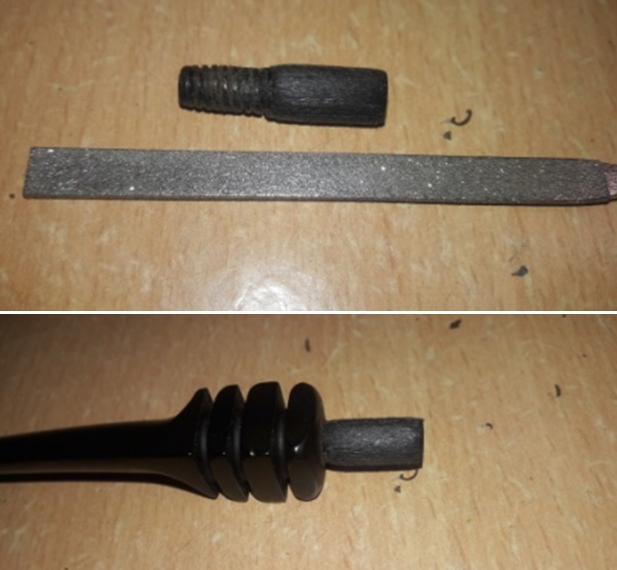
The process starts with sanding the broken tenon end of the stem till a smooth and even stem face is available for the new tenon. This step also reveals and opens up the stem airway for drilling to accommodate the new tenon. I did this by topping the tenon end of the stem face on a piece of 220 grit sandpaper till smooth.Next, I selected a Delrin tenon that was the closest fit in to the mortise. I mounted a sanding drum on to my hand held rotary tool and setting the speed at its lowest, I shaped the tenon to a perfect fit in to the mortise. I was very slow, deliberate and frequently checked the progress being made. Once I had achieved a snug fit, I kept the tenon aside and worked the stem.The one and most important aspect that has to be kept in mind while replacing a tenon is to keep the new tenon and stem airway straight and aligned. To ensure this, with a sharp knife I gave a slight inward bevel to the stem’s airway opening which will serve as a guide to the drill bit when drilling. I use the length of the end of the tenon to determine the depth of the drilling. I marked off this length with a rubber band wound tightly on each and every drill bit that I used. I started the drilling with a bit that was slightly larger than the existing airway. I proceed through a series of bits starting with a 3 mm bit until I had drilled the airway with the final bit of 5.5 mm, the same size as the end of the replacement tenon that I had shaped earlier. I proceed with caution as I wanted to make sure that I kept the airway straight for a good fit of the new tenon.I used a file to knock off the threads on the tenon end just enough to pressure fit it in place in the stem. I carefully checked the alignment to make sure the tenon was straight on the stem before setting it aside to cure. I subjected the stem with the replaced tenon to the pipe cleaner test. The pipe cleaner passed through the air way smoothly and without any obstruction. Once satisfied that the alignment is perfect, I put some super glue on the tenon end and pressed it into the airway and set it aside to cure. I am very pleased with my first attempt at a tenon replacement. I further sand the stem with 600 and 800 grit sand paper and wiped the stem with cotton pad dipped in alcohol to remove the resultant dust and rubbed some extra virgin olive oil in to the stem and set it aside to be absorbed in to stem. I polished the stem with micromesh pads, wet sanding with 1500 to 12000 grit pads. I rubbed a little extra virgin olive oil in to the stem at the end of the micromesh pads polishing cycle. I completed the polishing regime of the stem by rubbing a small quantity of Extra Fine Stem polish developed by my friend Mark Hoover, and giving it a final polish with a soft cotton cloth. The stem is now nice, smooth and shiny.To apply the finishing touches, I first mount a cotton cloth buffing wheel on to my hand held rotary tool and apply a coat of Blue Diamond to the stummel and the stem to polish out the minor scratches.With a cotton buffing wheel that I use for carnauba wax, I apply a coat of carnauba wax to the stummel and stem and continue to work on it till the complete coat of wax has been polished out. I mount a clean cotton cloth buffing wheel and give the entire pipe a once over buff. I finish the restoration by giving the entire pipe a rigorous hand buffing using a microfiber cloth to deepen the shine further. The finished pipe is shown below. P.S. – First things first; tenon replacement, now that I have personally worked on it, is definitely not a very difficult procedure. All it takes is a lot of patience and I strongly recommend that before attempting it, one should go through as many write ups on tenon replacement as possible. Steve has some nice, simple and informative step by step write ups on this procedure which is strongly recommended.

I am really fortunate to be in the process of learning the nuances of pipe restoration and cannot thank Steve enough for his support and guidance.

I wish to thank Mr. Roland Borchers and Mr. Borman who have explained the numbering system followed on Preben Holm pipes and also on dating these pipes for the larger good of our fraternity.

Thanks for your patience and looking forward to inputs about the write up. Cheers…


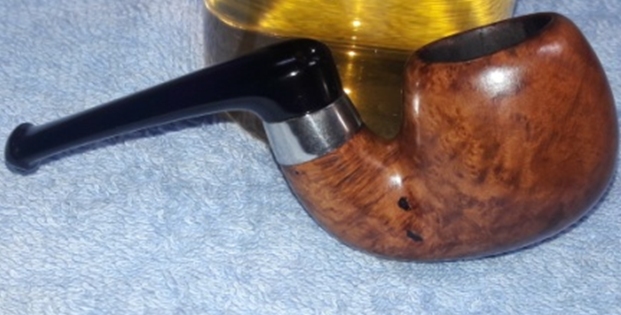
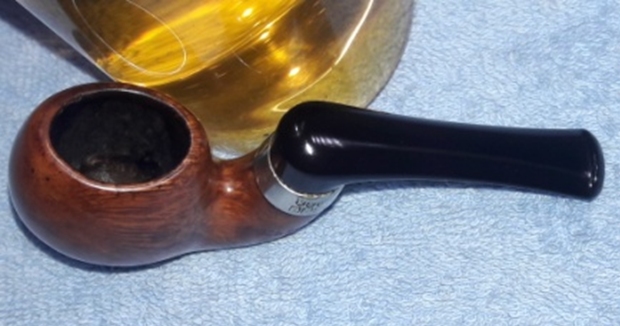
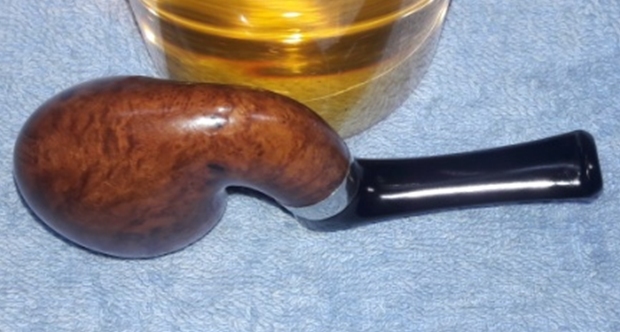
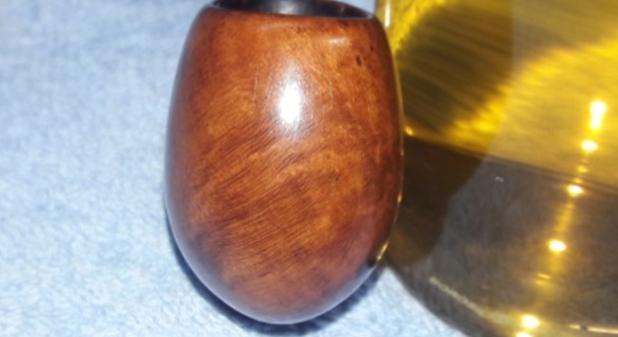
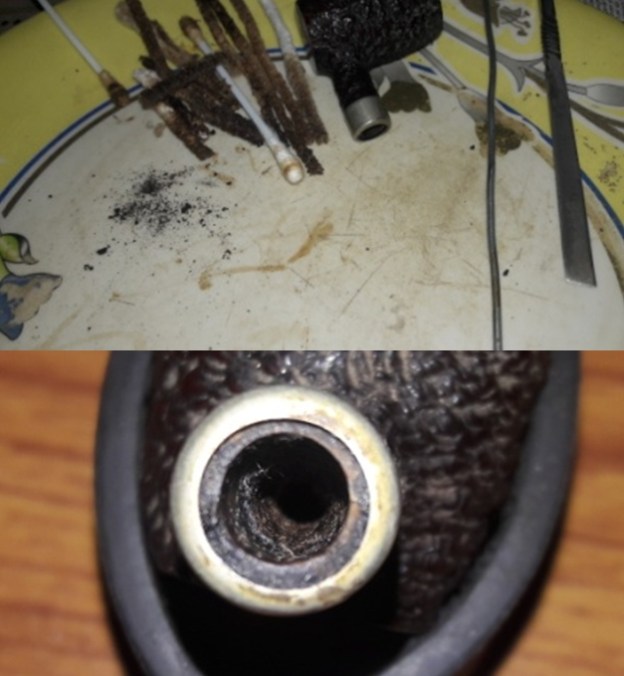
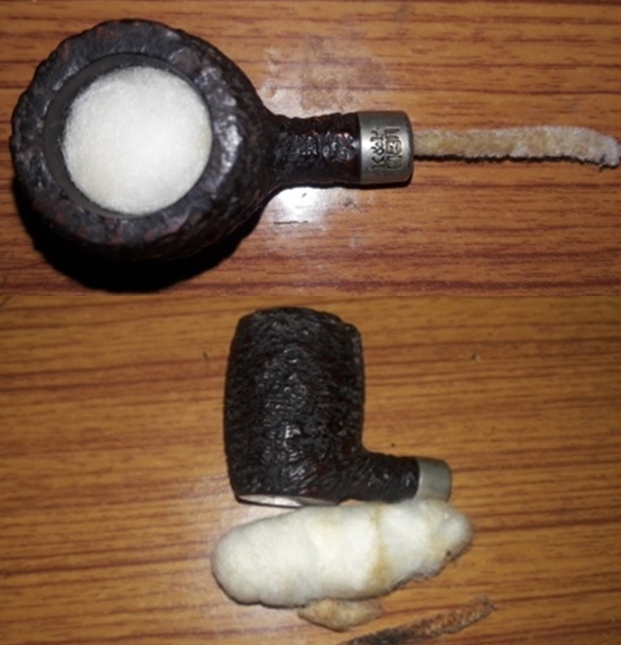
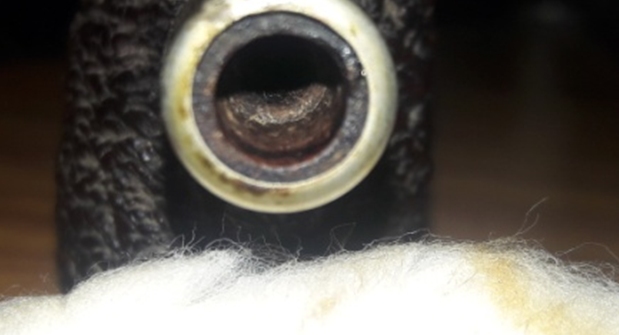
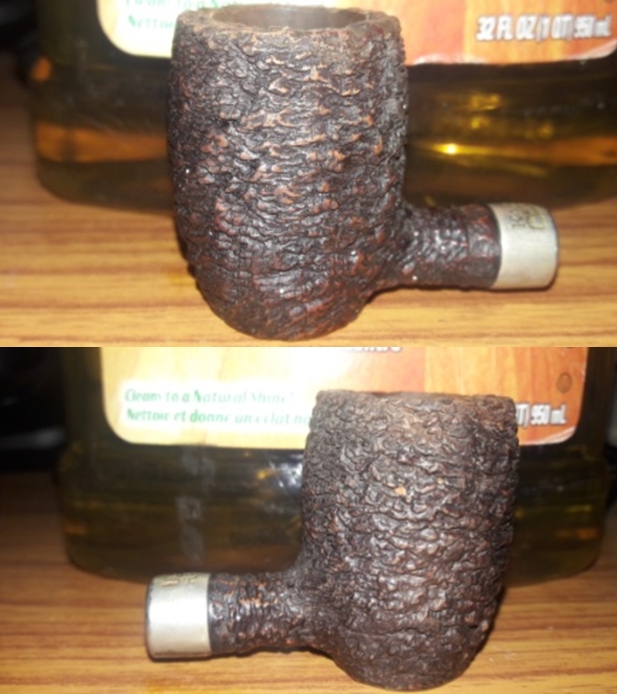
A New Beginning For An Inherited Peterson’s # 3 System Pocket Pipe…


Blog by Paresh Deshpande

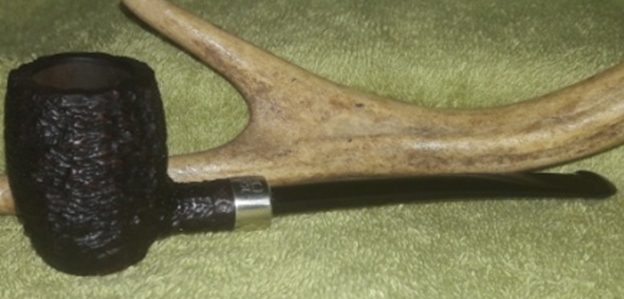
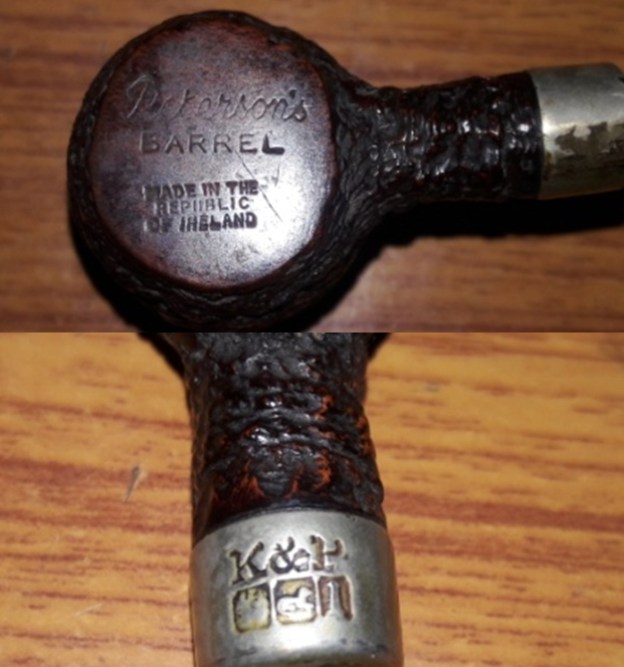
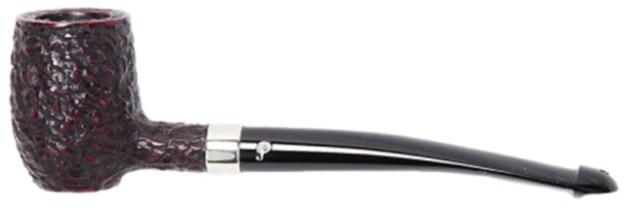
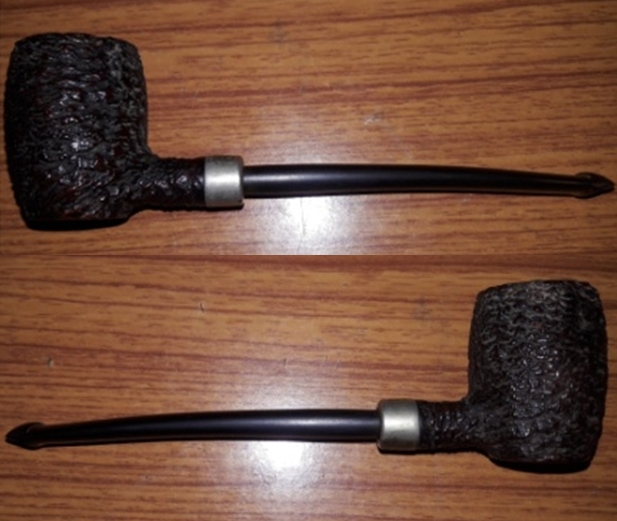
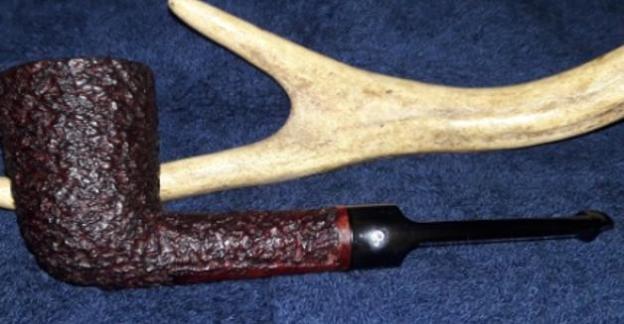
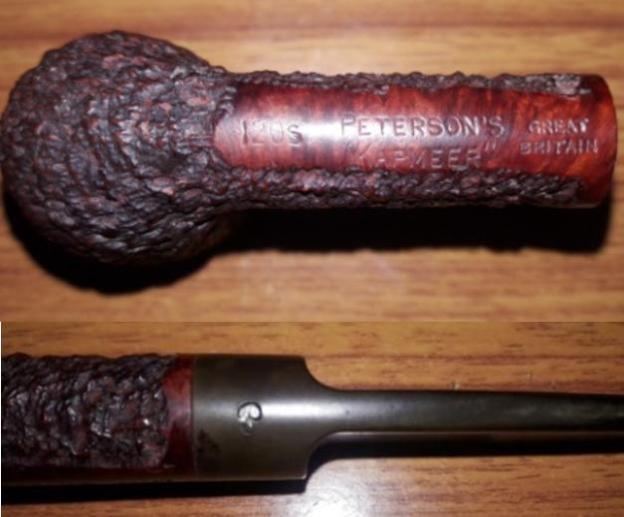
Over the last month and a half, I have worked on five Peterson’s pipes to be added to my personal collection; two from my inherited lot (DONEGAL ROCKY # 999 and KAPMEER # 120S) and three that I had purchased on eBay, a Peterson’s SYSTEM # 31 just so that I could include it in my rotation, a Peterson’s BARREL and a Peterson’s OLD ENGLISH COLLECTION. Continuing with my work on Peterson’s in my collection, the next and sixth pipe that is now on my work table is one from my inheritance; a unique small system pipe with oval shaped chamber/ stummel. The stem folds itself over the rim top, further making it compact enough in size to be carried in one’s vest pocket.

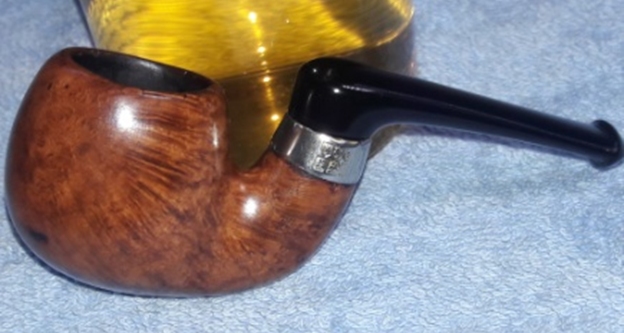
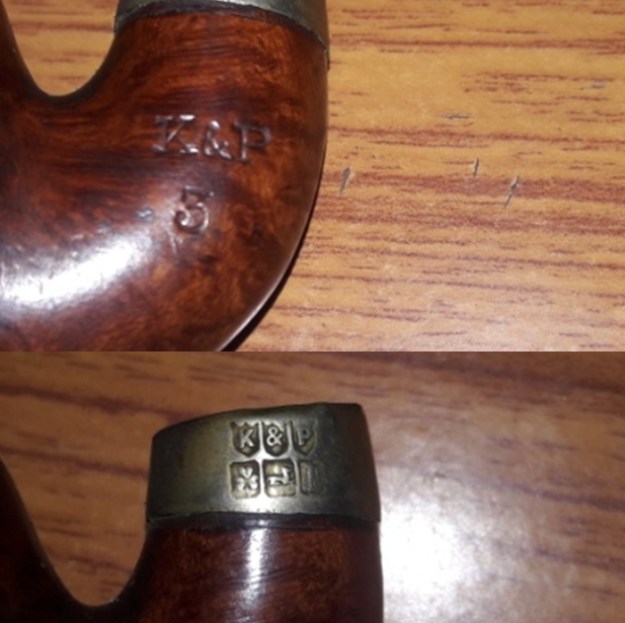
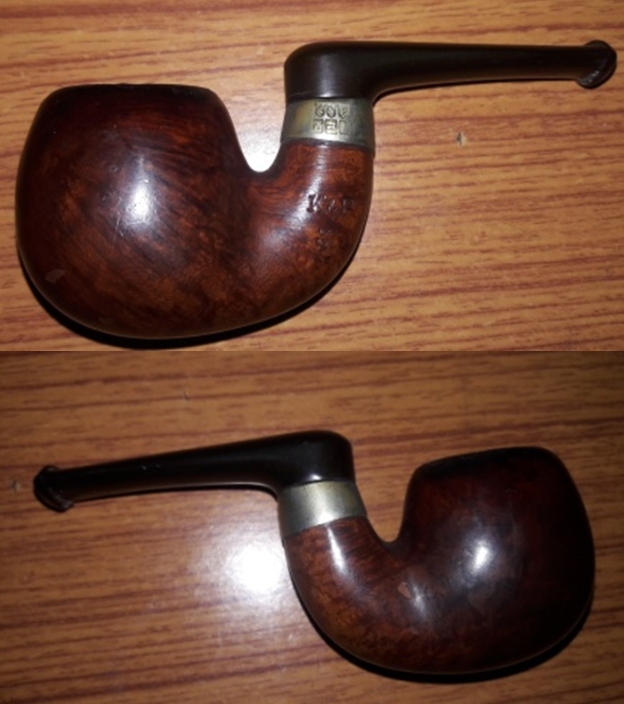
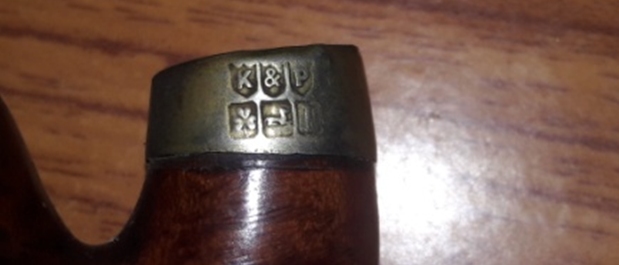
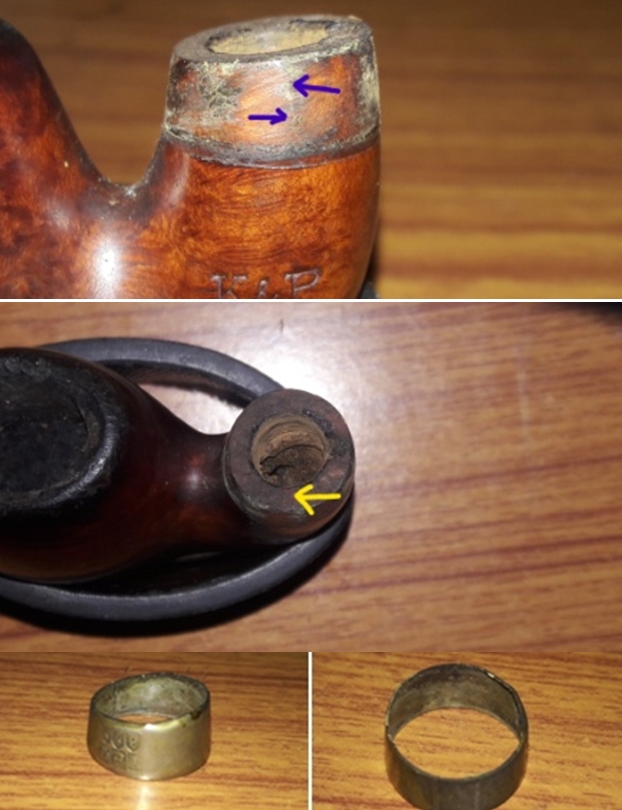
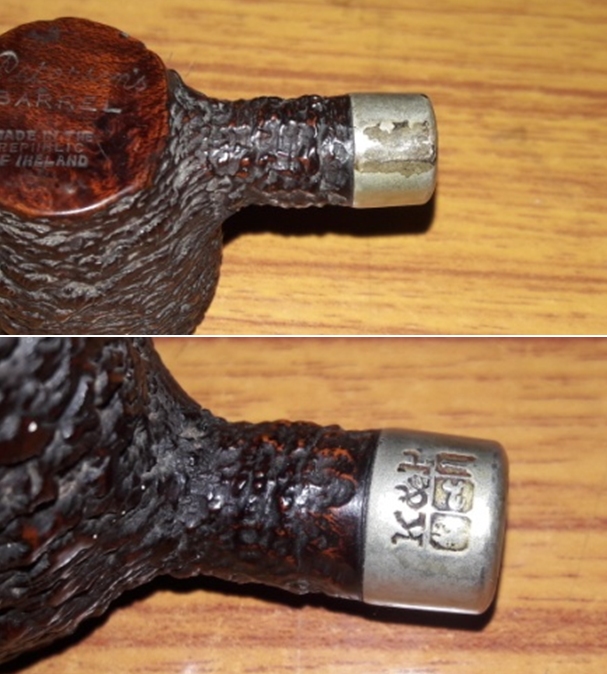
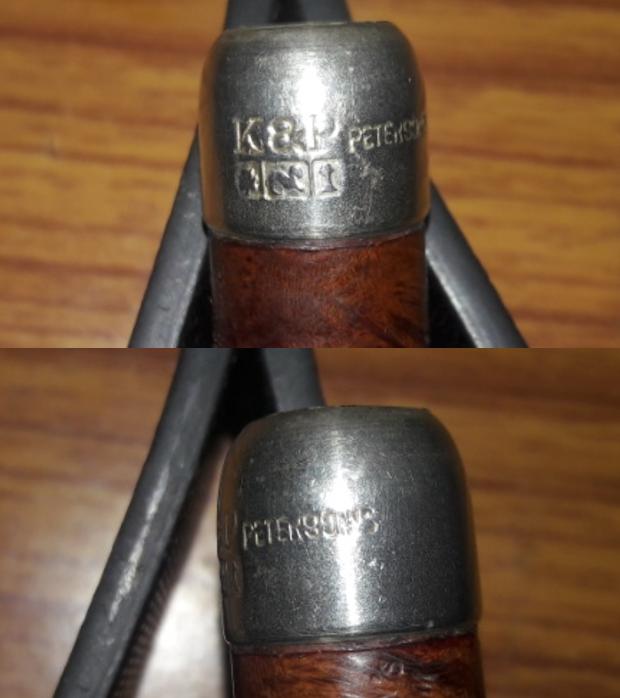
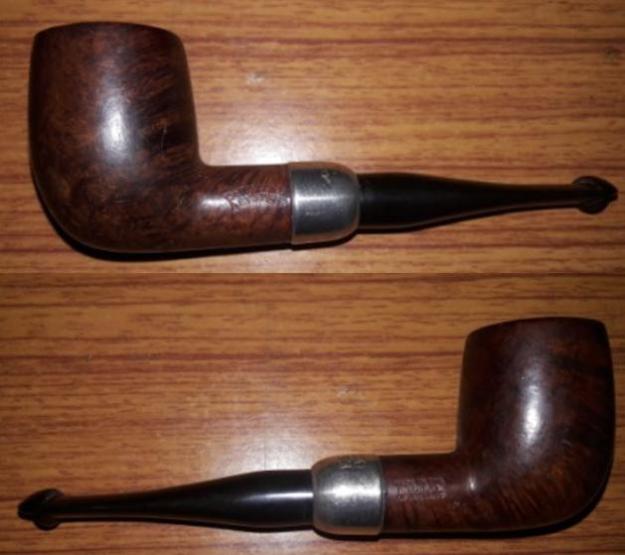
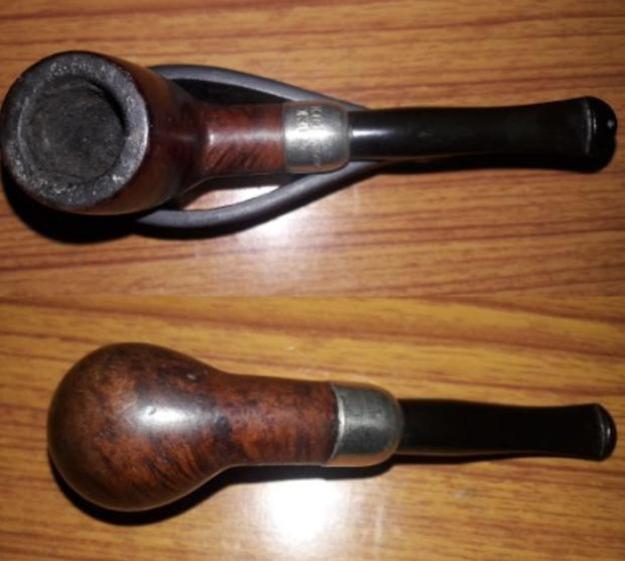
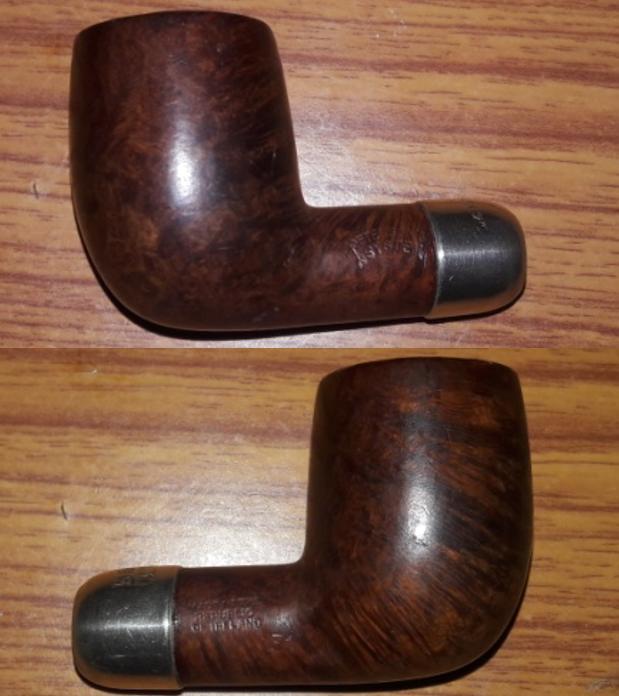
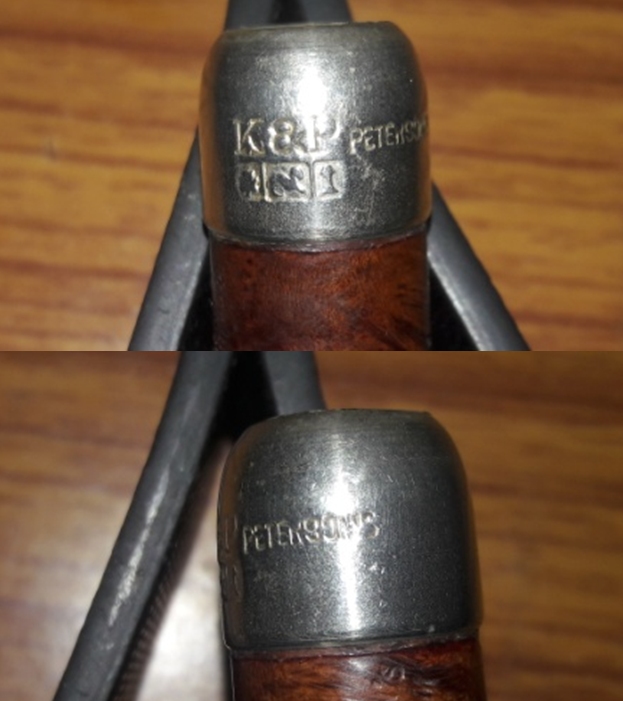
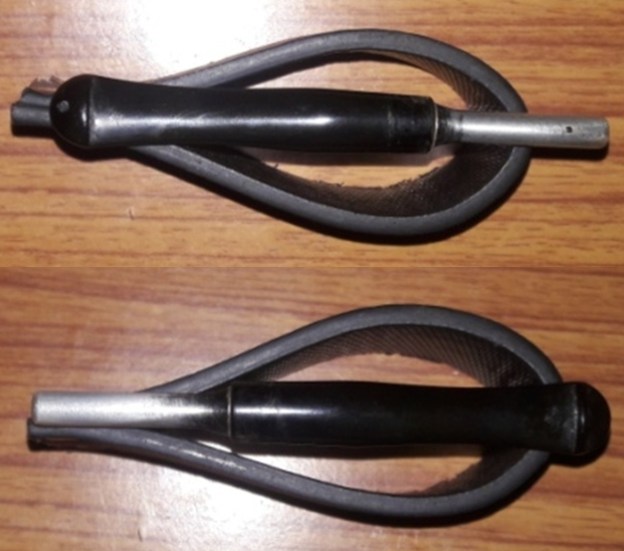
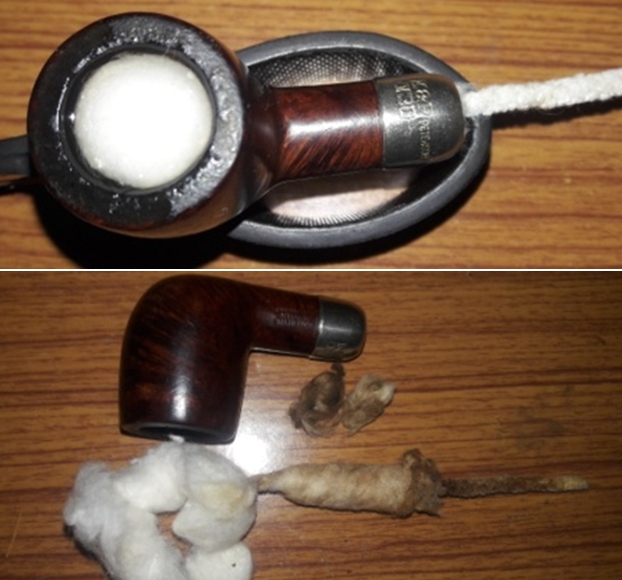
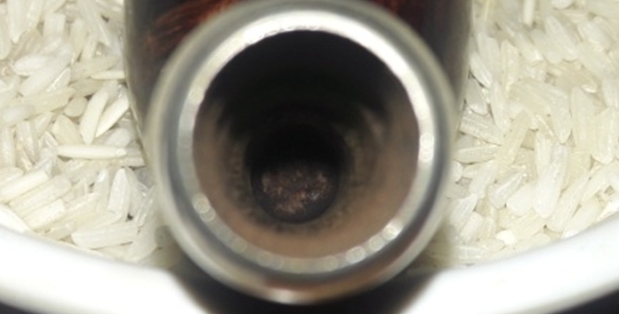
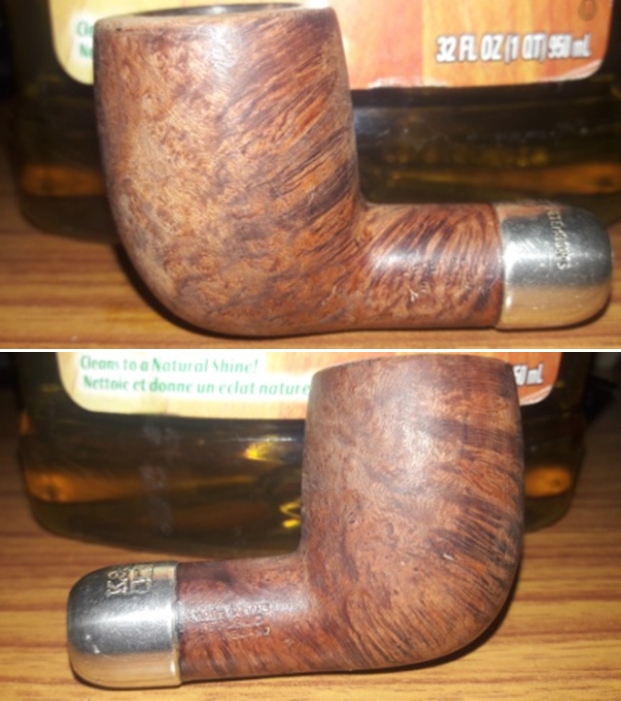
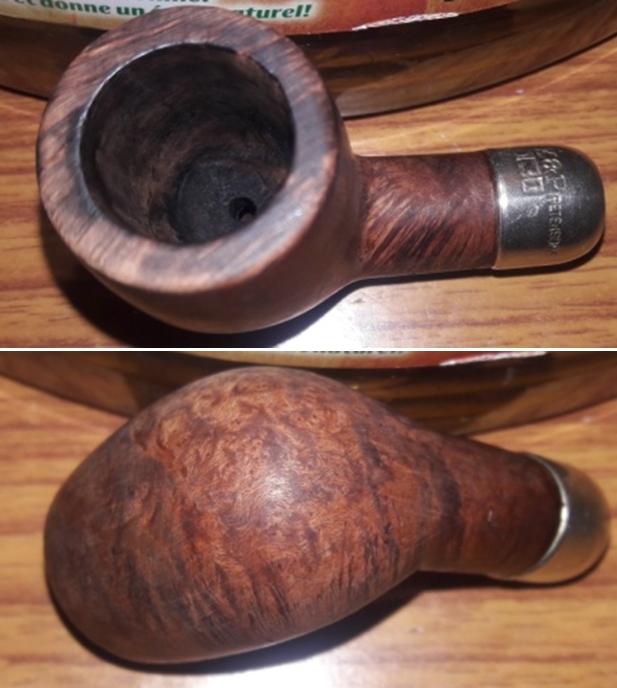
The smooth stummel of this pipe has a beautiful mix of Bird’s eye on the foot of the stummel and cross grain on the front, back, sides and the upturned shank of the stummel. An oval shaped stummel, short upturned shank with a nickel plated ferrule at the shank end and a proportionate vulcanite stem with an orifice for a slot, makes it a visually appealing pipe. It is stamped on the left side of the shank as “K & P” over “3”. The shank end is adorned with a nickel ferrule that is stamped in three shields as “K” “&” “P” over three faux hallmarks a Shamrock, a Prone Fox, and a Stone Tower. The stummel is devoid of any COM stamp that would help in dating this pipe. Even the stem is unstamped. Since I have been recently working on Peterson’s pipes in my collection and reading about it as much as I could, I knew that K & P pipes did not have any COM stamp during the early part of the Patent Era. Furthermore, this pipe has a reservoir/ sump in the mortise making it a System pipe!! The stem slot is a round orifice which points to this pipe being an old one. Thus from these facts, I can safely presume this pipe to be from the Patent Era, that is from 1875 to 1922.

However, in spite of my extensive research on Peterson’s pipes for shapes and models from this era, I came a cropper!!!! In case any of the esteemed readers has some additional information on this pipe, I would request you to share it on Reborn pipes for the benefit of our community.

Initial Visual Inspection
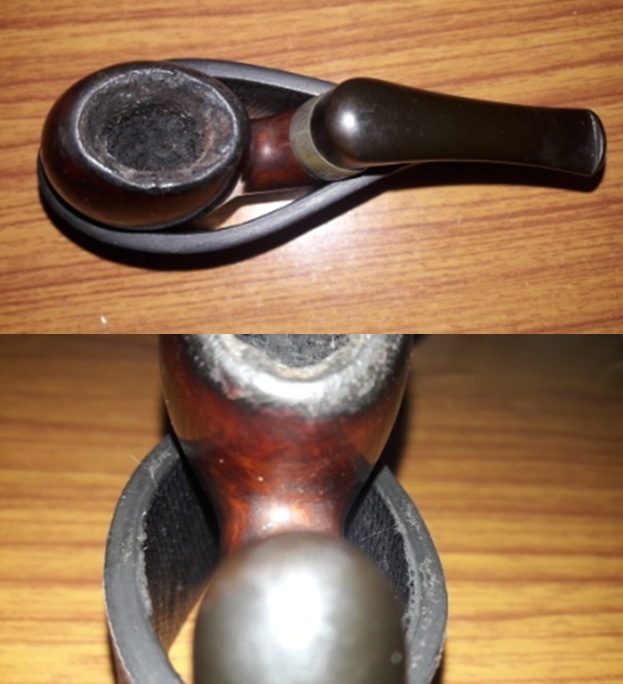
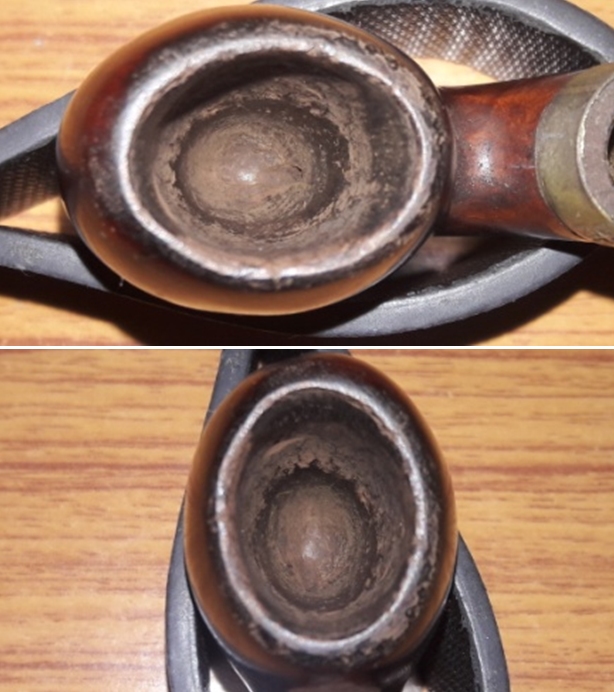
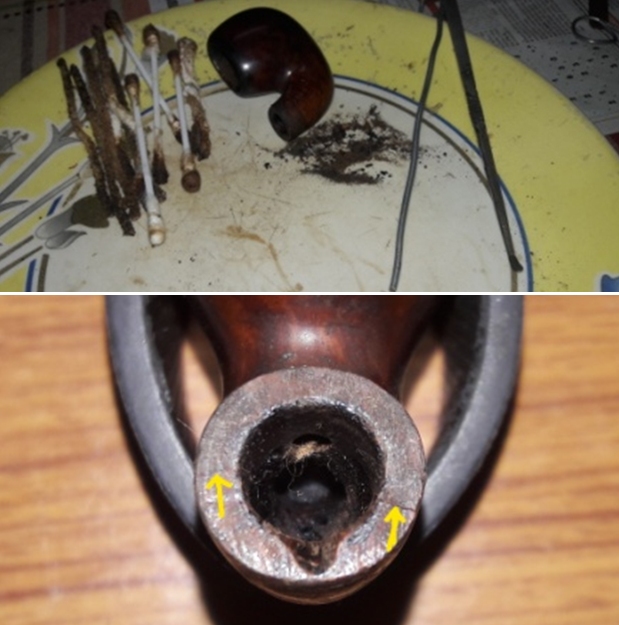
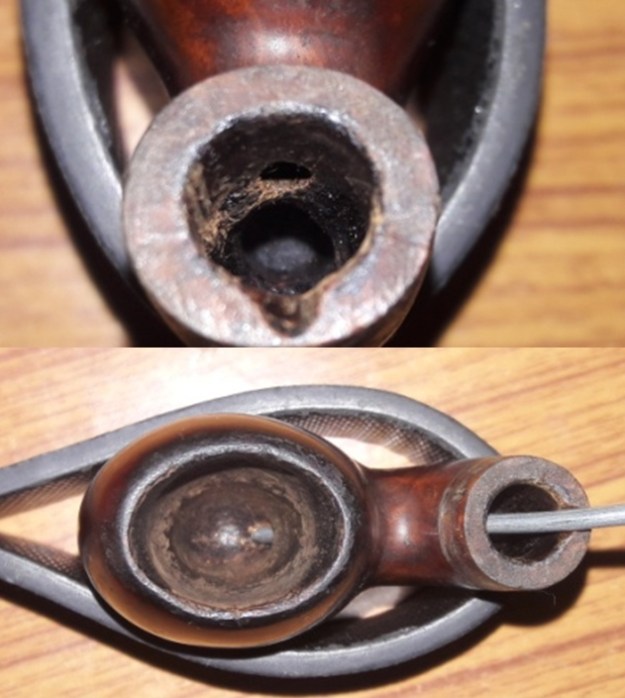
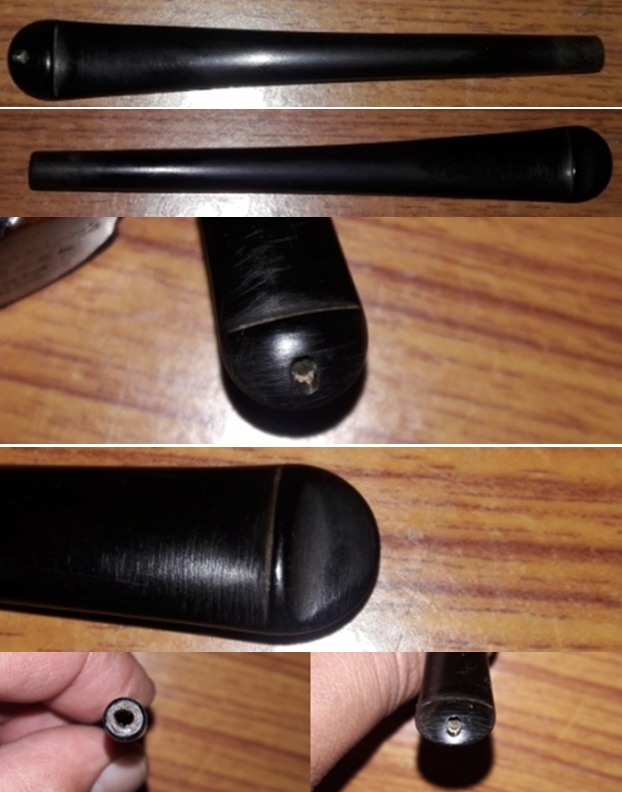
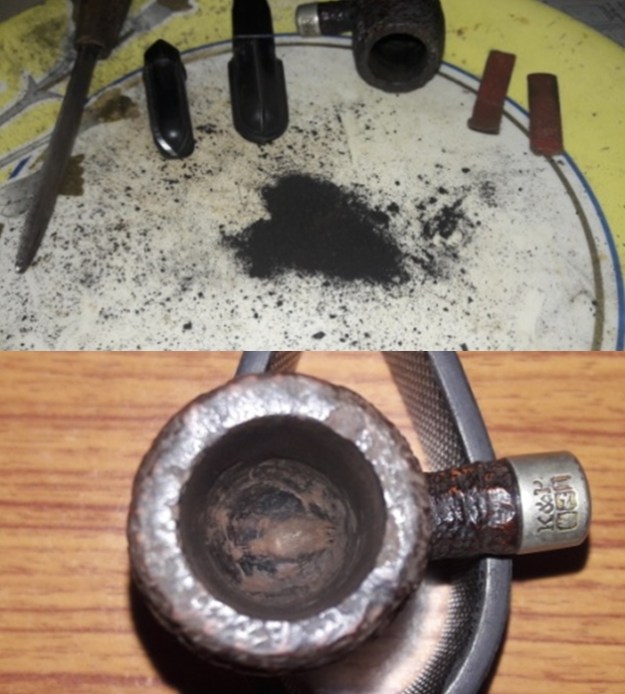
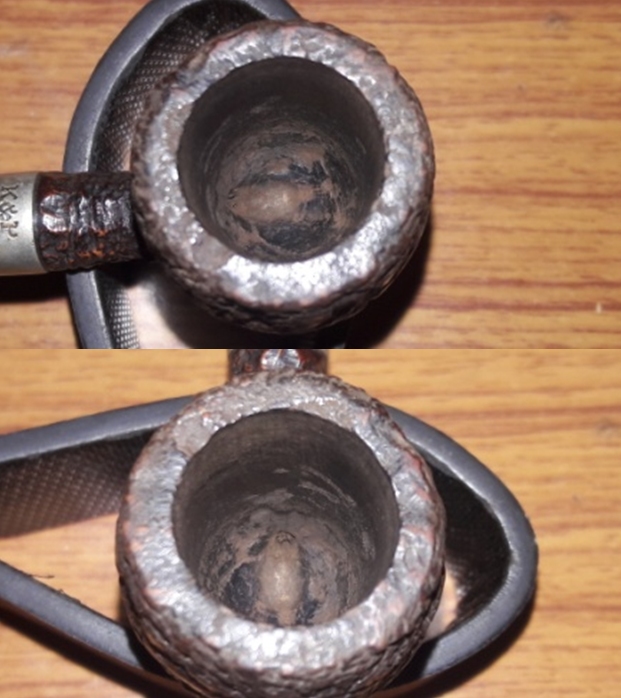
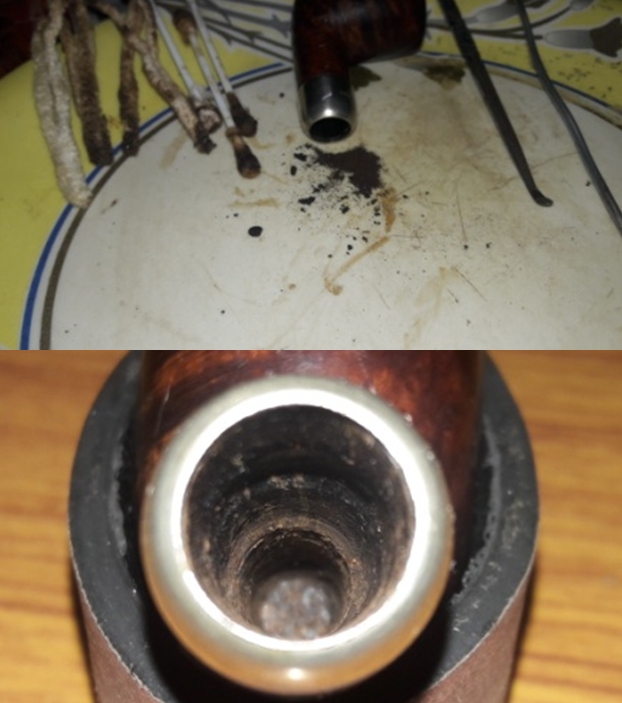
The smooth stummel on this pipe is covered in a thick layer of dust and sticky grime giving it a dull and lackluster appearance. Through all the grime, bird’s eye and cross grains can be still seen at the foot and on sides, front and back of the stummel respectively. The rim top surface appears uneven and is covered in dust, heavy lava overflow, grime and will need to be cleaned and polished. There are a few scratches on the left side of the stummel which will need to be addressed. A few fills seen on either side of the stummel need to be refreshed. The stummel has developed a nice patina which I shall endeavor to preserve. The chamber has a thick layer of uneven cake with lava overflow over the rim top surface. Remnants of half burnt tobacco can be seen at the bottom half of the stummel. The condition of the inner walls of the chamber will be ascertained once the existing cake has been taken down to the bare briar. The draught hole is completely blocked with absolutely no draw. This needs to be addressed. The thin and delicate rim edge appears to be severely damaged with dents and dings all around; however, the extent of this damage will be ascertained once the cake and lava overflow from the chamber and rim top is entirely removed. There is a very strong smell to the chamber which, perhaps, may reduce appreciably after the chamber has been cleaned. The mortise and sump are clogged with dried oils and tars. The nickel ferrule at the shank end, though heavily oxidized, is undamaged. It is cut at an angle to accommodate the stem when it is turned over the stummel. The ferrule, once cleaned should polish up nicely. The vulcanite stem is heavily and deeply oxidized with tooth indentations on the button edge and chatter on either surfaces of the stem in the bite zone. The tenon end shows heavy traces of dried oils and tars. It’s going to take some elbow grease to clean up this stem to a nice deep and shining black. The perpendicular tenon end will make the internal cleaning a bit challenging. The orific slot shows deposition of dried oils and tars. The stink from the stem and clogged airway will take a lot of effort and time to clean up. The Process
I began the process of refurbishing this pipe by using my fabricated knife to remove the unburnt tobacco and thick layer of cake. I further took the cake down to the bare briar with a folded piece of 150 grit sand paper. Once the walls of the chamber were rid of all the remnants of the cake, the chamber walls were found to be smooth and without any damage. With my modified and straightened cloth hanger used as a poker, I cleaned the grime and cake that covered the draught hole at the heel of the stummel. I further wiped the chamber with a cotton swab wetted with isopropyl alcohol to completely remove the sanding dust. While handling the stummel for internal cleaning of the chamber, the nickel ferrule came off, revealing a crack on the left side. This crack extends from the shank end rim surface (indicated with a yellow arrow) and along the shank on the left side (indicated with blue arrows). The extent of the crack will be determined once the dirt, grime and dried glue are removed from the surface. The edges of the ferrule are slightly uneven while the insides of it have traces of deeper oxidation.   I scraped the shank internals with a fabricated tool to remove all the crud that had accumulated along the shank walls and further cleaned it with bristled and regular pipe cleaners dipped in isopropyl alcohol. A huge pile of q-tips, pipe cleaners and lots of elbow grease later, the sump and mortise still appear dirty. I shall further draw out all the residual oils, tars and gunk by subjecting the chamber and the shank to a salt and alcohol bath. I gently scraped the shank end rim surface to remove all the accumulated oils and grime. Now that the shank end rim was cleaned, a second crack on the right side came to the fore (indicated in yellow arrows). This project is turning out to be more time consuming than I had anticipated. I shall deal with these cracks after I am done with internal and external cleaning of the stummel. I cleared the draught hole using a fabricated poker and further cleaned it using pipe cleaners and alcohol. I continued with the cleaning of the chamber and shank internals with a salt and alcohol bath. I use cotton balls which is an at par substitute to Kosher salt as I have realized over the years. I draw out a wick from the cotton and along with a folded regular pipe cleaner; insert it in to the mortise and through the draught hole into the chamber. Thereafter, I packed the chamber with cotton balls to about quarter of an inch below the rim’s inner edge and soaked the cotton balls with isopropyl alcohol up to the brim. About half an hour later, the level of alcohol had gone down, having being absorbed by the cotton. I topped it up once again and set it aside overnight. By the next afternoon, the cotton and alcohol had drawn out all the remaining oils and tars from the chamber and mortise, fulfilling its intended task. I removed the cotton balls and ran pipe cleaners through the mortise to clean out all the loosened tars and gunk. Using my fabricated tool, I scraped out the entire loosened gunk from the sump and further cleaned it with alcohol and q-tips. The chamber now smells clean and fresh. I set the stummel to dry out naturally. Now that the internals of the stummel were cleaned, I scrubbed the external surface of the bowl with undiluted Murphy’s oil soap and hard bristled tooth brush. I deliberately cleaned the thin delicate rim top and the surface just below the rim edge with Scotch Brite and a soft bristled brass wire brush to remove the entire lava overflow and dried it using paper towels and a soft cotton cloth. The shank end rim surface and the shank were deliberately cleaned to remove the grime and dirt so that the exact extent of the two cracks could be fathomed. The thin rim top is generously peppered with nicks, dings and dents. The fills and cracks that are visible on the stummel surface are marked in yellow circles and blue arrows respectively. I removed the old fills and prepared the stummel for a fresh fill. Using my dental tools, I progressed to removing the fills. I know these pictures do not present a very encouraging scenario at this stage, but I shall prevail… I wiped the surface from where the old fill was gouged out, with isopropyl alcohol to clean the area. I let the stummel dry out completely and after all the alcohol had evaporated, proceeded to fill the gouges with CA superglue and briar dust using the layering technique where I put down a thin layer of superglue in to the fill and press briar dust over the glue. I continue with this process till the fill rises above the rest of the stummel surface. Once all the gouges were filled up, I set the stummel aside to cure for the next 24 hours.While the stummel fills were curing, I worked the stem. The stem air way was filthy to say the least. Using a shank brush and dish washing soap, I cleaned the stem air way. I further cleaned the stem internals with hard and regular pipe cleaners and isopropyl alcohol. A lot of elbow grease and a pile of pipe cleaners later, the pipe cleaners did not emerge as white as I wanted. The perpendicular positioning of the tenon to the rest of the stem made cleaning of the air way all the more difficult. In my exuberance, I chipped the very end of the tenon… Some additional unwarranted work and time penalty!! With the stem internals now somewhat clean, I moved to external cleaning of the stem surface by sanding the surface with a piece of 220 grit sand paper and thereafter dunking the stem in to “Before and After Deoxidizer” solution developed by my friend Mark Hoover. The solution helps to draw out heavy oxidation to the surface making its further removal a breeze, while the minor oxidation is eliminated to a very great extent. I usually dunk stems of 5-7 pipes that are in-line for restoration and the K & P # 3 pipe is marked in pastel pink arrow. I generally allow the stems to soak in this solution overnight for the solution to do its work.Next day, I remove the stems from the deoxidizer solution and clean them under warm running tap water to remove all the solution. I scrubbed the stem surface first with scotch brite pad followed by a piece of 0000 grade steel wool. This helps in removing all the raised oxidation from the stem surface. I rubbed a little Extra Virgin Olive oil in to the stem and wiped the excess with a paper napkin. This was followed by inserting a petroleum jelly smeared folded pipe cleaner in to the tenon for reconstruction of the tenon end. Using a mix of CA superglue and food grade activated charcoal, I began the arduous process of rebuilding the chipped tenon end and also the bite marks on the button edges on both sides in the bite zone. I set the stem aside for the fill to cure and harden completely. I took a stock of the progress made till now on this pipe; stummel internals/ externals cleaned, old stummel fills have been refreshed and cured, stem internals cleaned, stem oxidation removed to a great extent, stem repairs set aside for curing. Addressing the stummel cracks, sanding of the stummel and stem fills, refurbishing the nickel band and final polishing is all that remains to be completed.

Next, I address the two cracks at the shank end. Using a magnifying glass and a white correction pen, I marked the points for the counter holes at the end points along the extent of the cracks seen on the stummel. I drilled counter holes with a 1mm drill bit mounted on to my hand held rotary tool, deep enough to serve as a counter hole while taking care that I did not drill a through and through hole. These counter holes arrest and prevent the spread of the cracks further. I filled these cracks and counter holes with a mix of briar dust and CA superglue using the layering method (layer of superglue followed by sprinkling of briar dust and repeated it till desired thickness of fill was achieved) and set it aside for the fills to cure. I ensured that I filled the thin outer edge of rim top surface that I will subsequently sand down to match with the rest of the rim surface. I set the stummel aside for the fills to harden. I cleaned the nickel shank band with Colgate Toothpowder, which Abha, my wife, uses to polish her silver and gold cutlery and jewelry. This compound is a very fine powder and is least abrasive with fantastic results. The band is now a nice shining piece of nickel and should provide a nice contrast to the shining black stem and the dark brown stummel. The patches of deep oxidation that were observed were also completely eliminated.  With the stummel fills nicely cured, it was time again to work on it. Using a flat head needle file, I sanded the fills and followed it by sanding with worn out folded piece of 150 grit sand paper. I sand the thin rim top surface with the same sand paper to minimize the numerous chips, dents and dings. I did not resort to topping since the oval shape with a slight saddle dip in the centre makes it difficult to top without compromising the shape of the rim top. A couple of dents and chips are still visible, but I shall let them be as a part of this pipe’s journey from my grandfather then to with me now!!! The fills have blended in quite well. However, I shall strive to further achieve a near perfect blend during further sanding and polishing with micromesh pads. The shank end crack repairs are now solid and have blended in really well. Yeah, I am pleased with this progress. Thereafter, I polished the entire stummel with micromesh pads, wet sanding with 1500 to 12000 pads. I wiped the surface with a soft moist cloth at the end of the micromesh cycle. The stummel looks amazing with a deep shine and beautiful grains over the stummel surface. Another issue that was addressed to a great extent was that of the minor scratches and nicks that were observed on the stummel. The rim top surface looks good with the few nicks and chips still visible, if observed closely. The refreshed fills distinctly stand out because of their dark coloration, and I shall let it be as a testimony of the journey of this beautiful pipe. I am very happy with the appearance of the rim top and stummel at this stage. I rubbed a small quantity of “Before and After Restoration Balm” in to briar and let it rest for a few minutes. The balm almost immediately works its magic and the briar now has a nice vibrant appearance with the dark hues of the grain contrasting with the rest of the stummel surface. I further buff it with a horse hair shoe brush. I set the stummel aside and took up the stem repairs. The tenon tip rebuild had cured nicely. With a flat head needle file, I sand the rebuilt portion of the tenon and the button edges to achieve a rough match. Using a round needle file, I shaped the opening of the tenon to a perfect round. I resorted to topping the tenon end on a piece of 220 grit sand paper to achieve the correct tenon size, which is just below the opening of the draught hole in the mortise. This ensures that the Pete’s famed “System” functions as effectively. I further sand the entire stem surface with a folded piece of a 220 grit sand paper to achieve a perfect blend of the fill with the stem surface. With the same piece of sand paper, I sharpened the button edges on both the upper and lower surface. I wiped the stem with a cotton swab and Murphy’s oil soap to further remove the oxidation and sanding dust. I rubbed some extra virgin olive oil into the stem and set it aside to be absorbed into stem. I polished the stem with micromesh pads, wet sanding with 1500 to 12000 grit pads. I rubbed a little extra virgin olive oil in to the stem at the end of all the micromesh pads. Next I rubbed a small quantity of extra fine stem polish that I had got from Mark Hoover and set it aside to let the polish work its magic. After about 10 minutes, I hand buffed the stem with a microfiber cloth to a nice shine. The stem is now nice, smooth and shiny. Now with the stummel nicely polished, the nickel band polished and shining and stem repairs and polishing completed, all that remained to be done was to get these parts together for a final polishing with carnauba wax. I glued the nickel ferrule to the shank end with CA superglue.To apply the finishing touches, I mount a cotton cloth buffing wheel on to my hand held rotary tool and apply a coat of Blue Diamond to the entire pipe to polish out the minor scratches. With a cotton buffing wheel that I use for carnauba wax, I apply a coat of carnauba wax to the stummel and stem and continue to work on it till the complete coat of wax is polished out. I mount a clean cotton cloth buffing wheel and gave the entire pipe a once over buff. I finished the restoration by giving the entire pipe a rigorous hand buffing using a microfiber cloth to raise the shine further. The finished pipe is shown below. P.S. – This is another unique and vintage pipe of my grandfather that has been passed on to me. I feel singularly fortunate and honored to carry forward his legacy while at the same time preserving a part of history of these pipe brands. Thanks for your patience and looking forward to inputs about the write up.

I had decided to let the fills be seen and not mask it under a darker stain; I am still open to suggestions from esteemed readers!!

 Cheers…

A Simple Refurbishing Of Peterson’s Barrel Pipe


Blog by Paresh Deshpande

In the last couple of weeks, I have worked on three Peterson’s pipe, two from my inherited lot (DONEGAL ROCKY # 999 and KAPMEER # 120S) and one that I had purchased on eBay (PETERSON’S SYSTEM # 31)  just so that I could include it in my rotation. Continuing with my work on Peterson’s in my collection, the next pipe that is now on my work table is a rusticated Peterson’s “BARREL” with a thin delicate and long P-lip stem.

The rusticated stummel of this pipe has beautiful texture and feels tactile in the hand. A short shank with a nickel ferrule at the end and a long, tapered delicate P-lip stem makes it a visually stunning pipe. It is stamped on the bottom flat smooth surface at the foot of the stummel as “Peterson’s” in a cursive hand over “BARREL” in capital letters over “MADE IN THE” over “REPUBLIC” over “OF IRELAND” in capital letters. The shank end is adorned with a nickel ferule that is stamped as “K & P” over three faux hallmarks a Shamrock, a Prone Fox, and a Stone Tower. Further to the right, it is stamped as “PETERSON’S”. The stampings are crisp and easily readable less the Shamrock hallmark which has been slightly rubbed off.  Having researched and worked on a few early Peterson’s pipes, I knew that the stampings identified this pipe as being from Republic era i.e. 1949 to until the present, making it a newer generation pipe. Also during my search on Donegal Rocky # 999 pipe that I had researched earlier, I knew that BARREL belonged to the Group 4 basic entry level pipes from Peterson’s. Given below are snippets of relevant information that I had learned from pipedia.org:

Group 4, Basic Entry Level Pipes

In this group you will find the basic entry level pipes which many smokers desire and are most comfortable with for every day and rotation use. The two most famous and popular issues probably being the System and the Classic shape pipes. All of the pipes in this group can be purchased for relatively little cost and probably accounts for the majority of Petersons worldwide pipe sales

Tankard & Barrel: Two attractively shaped pipes finished in red polish or rustic. A quality briar fitted with a nickel mount. Available with Peterson lip or fishtail mouthpiece. Prices start from $45.With this information, I now know that this pipe is a pipe from the newer generation that is most comfortable and desired and I move ahead with my initial visual inspection.

Initial Visual Inspection
The pipe, as it sits on my work table, is dirty with a thick layer of cake in the chamber, a stummel that is covered in dust and grime and a military mount tapered vulcanite stem that is lightly oxidized. Here are a few pictures of the pipe before I proceed with a detailed visual inspection of each part of the pipe. The chamber has a thick cake with lava overflow over the rim top surface. The condition of the inner walls of the chamber will be ascertained once the existing cake has been taken down to the bare briar. The inner and outer rim edges appear to be in good condition, however, the same will be ascertained once the cake and lava overflow from the chamber and rim top respectively, is entirely removed. There is a very strong smell to the cake which, perhaps, may reduce appreciably after the chamber and the shank has been cleaned. The draught hole is right at the bottom and center of the wide and rounded heel of the stummel, making it an excellent smoker. The mortise is filled with oils and tars and specks of dried ash are seen on the walls of the mortise. The mortise is filled with dried oils, tars and gunk. The walls, however, are intact and well protected under the nickel ferule.  The rusticated stummel on this pipe is covered in a thick layer of dust and grime giving it a dull and lackluster appearance. The rim top surface is also covered in dust, lava overflow, grime and will need to be cleaned and polished. The nickel ferule at the shank end appears dull due to oxidation. The bottom of the ferrule has a patch that is heavily oxidized. The saving grace is that it is intact and undamaged.The tapered, thin and long slightly bent vulcanite P-lip stem is lightly oxidized with negligible, but visible on close inspection, scratches on either surfaces of the stem in the bite zone and over the P-lip. The shank end opening on the stem is constricted with dried oils and gunk. This should be a relatively simple cleaning up job of the stem.The Process
I began the process of refurbishing this pipe by reaming the chamber with a Castleford reamer tool, using size 2 followed by size 3 head. Using my fabricated knife; I further took the cake down to the bare briar. With a 150 grit sand paper, the walls of the chamber were rid of all the remnants of the cake, revealing smooth chamber walls. I further wiped the chamber with a cotton swab wetted with isopropyl alcohol to completely remove the sanding dust. I gently scraped the lava overflow from the rim top with a brass bristled brush. The inner and outer rim edge is in good condition. I scraped the shank internals with a fabricated tool to remove all the crud that had accumulated along the shank walls and further cleaned it with bristled and regular pipe cleaners dipped in isopropyl alcohol. I shall further draw out all the residual oils, tars and gunk by subjecting the chamber and the shank to a salt and alcohol bath. I continued the cleaning of the chamber and the short shank internals with a salt and alcohol bath. I use cotton balls which is an at par substitute as I have realized over the years. I draw out a wick from the cotton and along with a folded regular pipe cleaner; insert it in to the mortise and through the draught hole in to the chamber. Thereafter, I pack the chamber with cotton balls to about quarter of an inch below the rim inner edge and soaked the cotton balls with isopropyl alcohol up to the brim. About half an hour later, the level of alcohol had gone down, having being absorbed by the cotton. I topped it up once again and set it aside overnight. By next afternoon, the cotton and alcohol had drawn out all the remaining oils and tars from the chamber and mortise, fulfilling its intended task. I removed the cotton balls and ran pipe cleaners through the mortise to clean out all the loosened tars and gunk. Using my fabricated tool, I scraped out the entire loosed gunk from the shank walls and further cleaned it with alcohol and q-tips. The chamber now smells clean and fresh. I set the stummel to dry out naturally. Now that the internals of the stummel were cleaned, I scrubbed the external surface of the bowl with undiluted Murphy’s oil soap and hard bristled tooth brush. I deliberately cleaned the rim top surface with a soft bristled brass wire brush to remove the entire lava overflow and dried it using paper towels and soft cotton cloth. I rubbed a small quantity of “Before and After Restoration Balm” in to briar and let it rest for a few minutes. The balm almost immediately works its magic and the briar now has a nice vibrant appearance with the reddish brown hues of the raised rustications contrasting with the dark stummel surface. I further buff it with a horse hair shoe brush. With the stummel refurbishing completed, I turned my attention to the stem. The stem air way was filthy to say the least. Using a shank brush and dish washing soap, I cleaned the stem air way. I further cleaned the stem internals with hard and regular pipe cleaners and isopropyl alcohol. A lot of elbow grease and a pile of pipe cleaners later, when the pipe cleaners emerged white I knew that the stem internals were clean and fresh.With the stem internals now clean, I moved to external cleaning of the stem surface by dunking the stem in to “Before and After Deoxidizer” solution developed by my friend Mark Hoover. The solution helps to draw out heavy oxidation to the surface making its further removal a breeze, while the minor oxidation is eliminated to a very great extent. I usually dunk stems of 5-7 pipes that are in-line for restoration and the BARREL is marked in yellow arrow. I generally allow the stems to soak in this solution overnight for the solution to do its work.I sand the entire stem surface with a folded piece of a 220 grit sand paper to remove the tooth chatter and minor oxidation from the stem surface. With the same piece of sand paper, I sharpened the button edges on both the upper and lower surface. I wiped the stem with a cotton swab and Murphy’s oil soap to further remove the oxidation. I rubbed some extra virgin olive oil in to the stem and set it aside to be absorbed in to stem. I polished the stem with micromesh pads, wet sanding with 1500 to 12000 grit pads. I rubbed a little extra virgin olive oil in to the stem at the end of all the micromesh pads. I finished the polishing of the stem by rubbing a small quantity of Paragon wax and giving it a final polish with a soft cotton cloth. The stem is now nice, smooth and shiny.I cleaned the nickel ferrule at the shank end with a local compound that Abha, my wife, uses to polish her silver and gold jewelry and cutlery. This compound is a very fine powder and is least abrasive with fantastic results. The results were appreciated by Steve during his visit to India. The band is now a nice shining piece of nickle and provides a nice contrast to the shining black stem and the dark brown stummel. Unfortunately, I missed out on taking pictures as I was keen to finish this pipe!

To apply the finishing touches, I mount a cotton cloth buffing wheel on to my hand held rotary tool and apply a coat of Blue Diamond to the stem to polish out the minor scratches. With a cotton buffing wheel that I use for carnauba wax, I apply a coat of carnauba wax to the stummel and stem and continued to work on it till the complete coat of wax had been polished out. I mount a clean cotton cloth buffing wheel and gave the entire pipe a once over buff. I finished the restoration by giving the entire pipe a rigorous hand buffing using a microfiber cloth to raise the shine further. The finished pipe is shown below. P.S. – This was one of the easiest and most straight forward refurbishing works that I have undertaken till date. It was also a nice change from restoring pipes only from my inheritance. I am really privileged to have had an opportunity to carry forward the trust that the previous owner had posed in his pipes. Thanks for your patience and looking forward to inputs about the write up. Cheers…

Readying An Inherited Pete Kapmeer #120 S, Great Britain, For Its Second Inning…


Blog by Paresh Deshpande

While going through the pile of my inherited pipes searching for my next project, I selected the DONEGAL ROCKY # 999 and this pipe, PETERSON’S KAPMEER # 120 S for restoration. Since I wanted to add Rhodesian shape to my rotation, I first restored the Donegal # 999. Thereafter other interesting pipes caught my fancy and this pipe was relegated to backseat. A few pipes later, as I was contemplating my next project, this pipe again came in to focus along with a few other Peterson’s which were languishing in the box and I decided to complete a few Peterson’s pipes during the next few days.

The shape of this pipe is a nice classic Dublin with a P-lip saddle stem. The deeply rusticated stummel feels tactile in one’s hand and the deep burgundy stain makes for a visual treat. It is stamped on the smooth underside as “120 S” towards the heel of the stummel followed by “PETERSON’S” over “KAPMEER” followed by the COM stamp “GREAT” over “BRITAIN” towards the shank end. The stampings are crisp and clear. The vulcanite P-lip saddle stem bears the trademark decorative letter “P”.During my research on Donegal Rocky # 999 (my first and only Donegal in my collection!!), I had read that KAPMEER belongs to the Classic Range of pipes offered by Peterson’s. These are basic entry level pipes and most of this line up is no longer in production. The COM stamp “GREAT BRITAIN” also points to this being an older pipe, that is, pre-1959.

Initial Visual Inspection
The pipe, as it sits on my work table, is dirty with thick layer of even cake, covered in dust and grime with a heavily oxidized stem. Here are a few pictures of the pipe before I proceed with a detailed visual inspection of each part of the pipe. The stummel has beautiful rustic patterns on this classic shaped pipe and is covered in a thick layer of dust and grime. The stummel appears dull and lackluster. However, the rich dark burgundy hues of the raised portions of the rustications contrast beautifully with the lighter hues of the stummel and would look more appealing once the stummel has been cleaned and polished. The end of the long and rusticated shank has a nice thin band of smooth briar. Once polished, this briar band should further enhance the beauty of this pipe. The meerschaum lined rim top is surrounded by briar wood and is covered in a thick coat of dust, lava overflow, grime and will need to be cleaned and polished. This lava overflow is chipped at places revealing an intact white meerschaum layer. The chamber has an even layer of thick cake that is sticky and hard. The condition of the meerschaum lined walls of the chamber will be ascertained once the existing cake has been completely removed. The inner meerschaum layered rim edge appears intact, however, the same will be ascertained once the cake and lava overflow from the chamber and rim top is removed. There is a distinct perfectly round ring above the draught hole which could be seen even through the cake and grime. Is it a crack? It is unlikely that a crack should be such a perfect round. It would require a closer inspection once the chamber has been cleaned. The mortise has a thick layer of black dried oils and tars on the walls which would need to be cleaned. The straight tapered vulcanite P-lip saddle stem is heavily oxidized and is peppered with light tooth chatter/ indentations on either surface of the stem in the bite zone and on the top surface of the P-lip. Heavy calcification is seen at the base of the edges of the P-lip. The button edges of the P-lip are deformed due to tooth marks and would need to be sharpened. The tenon end is covered in dried oils and tars. This should be a relatively simple repair and cleaning up job of the stem.The Process
I began the process of refurbishing this pipe with scraping out the calcification from the base of the button edges, cleaning the internals of the stem using pipe cleaners with isopropyl alcohol (99.9% pure) and dunking the stem in to “Before and After Deoxidizer” solution developed by my friend Mark Hoover. The solution helps to draw out heavy oxidation to the surface making its further removal a breeze, while the minor oxidation is eliminated to a very great extent. I usually dunk stems of 5-7 pipes that are in-line for restoration and this Kapmeer is marked in blue arrow. I generally allow the stems to soak in this solution overnight for the solution to do its work.Now that the stem is soaking in the deoxidizer solution, I worked the stummel, starting with reaming the chamber with a Castleford reamer tool, using only the second head. I was very gentle and careful while using the reamer head, applying minimum force for fear of cracking the meerschaum lining. Using my fabricated knife; I took the cake down to the meerschaum layer. With a 150 grit sand paper, the walls of the chamber were rid of all the remnants of the cake. My worst fears while working on meerschaum lined pipes were unraveled in front of my eyes!! There are two distinct cracks on either sides on the chamber walls, one each in 3 o’clock and 9  o’clock direction. These cracks are marked in yellow and orange arrows respectively. These cracks do not go all the way through the meerschaum layer, but are only superficial. The perfectly rounded crack that I had mentioned (marked in green arrow) earlier, is not a crack but just a circular line formed most likely by a reamer head. I further wiped the chamber with a cotton swab wetted with isopropyl alcohol to completely remove the sanding dust. I gently scraped off the entire lava overflow from the rim top with a sharp knife blade. The inner rim edge has no damage save for uneven surface. This issue will be easily addressed by a little sanding and polishing with micromesh pads. Just to allay my fears, I shared these pictures with Steve and Facetimed with him. I suggested that I coat the cracks with a mix of egg whites and chalk for repairs. However, Steve opined that these cracks are just superficial and that he would let them be. His closing remark was “that meer lining is going nowhere…”! At peace with my inner being, I move to the next stage.

I scraped the dried gunk from the walls of the mortise with my dental tool and further cleaned the shank internals with q-tips, pipe cleaners and isopropyl alcohol. I continued the cleaning till the pipe cleaners and q-tips came out clean.I scrubbed the external surface of the bowl with undiluted Murphy’s oil soap and hard bristled tooth brush and dried it using paper towels and soft cotton cloth. The burgundy hues of the raised rustications contrast beautifully with the rest of the stummel. I set the stummel aside to dry out naturally. I packed the chamber with paper towels to absorb any water and moisture that may have inadvertently seeped in to the meerschaum. To even out the rim top, I dry sand the top with 1500 to 12000 grit micromesh pads. I also polished the raised rustications and the thin briar band at the shank end, dry sanding with the micromesh pads to further enhance the contrast. I am really happy with the appearance of the entire stummel at this stage. I massaged a small quantity of “Before and After Restoration Balm” in to briar. I rubbed this balm deep in to the nooks and crannies formed between the rustications with my fingers and let it rest for a few minutes. The balm almost immediately works its magic and the briar now has a nice vibrant appearance with the dark hues of the raised carvings contrasting with the rest of the stummel surface. I further buff it with a horse hair shoe brush. I worked on all the stems that had been soaking in the deoxidizer solution overnight. I fished out all the stems and cleaned them under running warm water and scrubbed the raised oxidation from the stem surface using Scotch Brite pad. I further removed the oxidation by scrubbing the stems with 0000 grade steel wool and applied a little olive oil to rehydrate the stems and set them aside for the oil to be absorbed. Unfortunately, I did not click any pictures of these stems at this stage.

I painted both surfaces of the stem with the flame of a lighter to raise the tooth indentations to the surface. This also helps in loosening minor oxidation from the stem surface. I sand the entire stem surface with a folded piece of a 220 grit sand paper to remove the loosened oxidation. I wiped the stem with a cotton swab and Murphy’s oil soap to further remove the oxidation. I filled the tooth indentation in the button edge on both lower and upper stem surfaces with a mix of activated charcoal and CA superglue and set it aside for the fill to cure. Once the fill had cured sufficiently, I sanded down the fill with a needle file to match with rest of the stem surface. With the same file, I sharpened the button edge on both the upper and lower surface. I fine tuned the blending of the fill with the rest of the stem surface using a 220 grit sand paper and also sanded down the entire stem to remove the stubborn residual oxidation. I further sand the stem with 600 and 800 grit sand paper and wiped the stem with cotton pad dipped in alcohol to remove the resultant dust. I rubbed some extra virgin olive oil in to the stem and set it aside to be absorbed in to stem. However, I completely missed taking pictures of this stage.

I polished the stem with micromesh pads, wet sanding with 1500 to 12000 grit pads. I rubbed a little extra virgin olive oil in to the stem at the end of the micromesh pads polishing cycle. I finish the polishing of the stem by rubbing a small quantity of Paragon wax and giving it a final polish with a soft cotton cloth. The stem is now nice, smooth and shiny.I refreshed the stem logo by masking the logo with a whitener correction pen. Once the whitener had dried, I gently wiped the excess whitener away. The stem logo now looks prominent.To apply the finishing touches, I mount a cotton cloth buffing wheel on to my hand held rotary tool and applied a coat of Blue Diamond to the stem to polish out the minor scratches. With a cotton buffing wheel that I use for carnauba wax, I apply a coat of carnauba wax to the stummel and stem and continued to work on it till the complete coat of wax had been polished out. I mount a clean cotton cloth buffing wheel and gave the entire pipe a once over buff. I finished the restoration by giving the entire pipe a rigorous hand buffing using a microfiber cloth to raise the shine further. The finished pipe is shown below. P.S. – This was an easy restoration and the pipe turned out fabulously refreshed. I did enjoy working on it. Steve, with his practical and sound advice has been a great help. I cannot imagine this fun filled journey of mine without his help, guidance and encouragement. Thanks Steve for being such a big support and also for introducing some great friends in piper community.

I have three more Peterson’s pipes lined up and each one is interesting in its own way. I surely am looking forward to work on each one of them in the coming days!!

Thanks for your patience and looking forward to input about the write up. Cheers…

Refurbishing A Peterson’s Old English Collection Pipe.


Blog by Paresh Deshpande

In the last couple of weeks, I have worked on four Peterson’s pipe, two from my inherited lot (DONEGAL ROCKY # 999 and KAPMEER # 120S) and two that I had purchased on eBay, a PETERSON’S SYSTEM # 31 just so that I could include it in my rotation and a Peterson’s BARREL. Continuing with my work on Peterson’s in my collection, the next and fifth pipe that is now on my work table is a smooth Peterson’s “OLD ENGLISH COLLECTION” pipe with a thin delicate and long stem.

The smooth stummel of this pipe has beautiful mix of densely packed Bird’s eye grain on the sides and cross grain on the front and back of the stummel. The Duke shape (or more akin to the Tankard pipe from Peterson’s!!!) captures these grains beautifully for a stunning visual experience. A tallish stummel, short shank with a gold plated silver ferrule at the end and a long, tapered delicate stem makes it a visually appealing pipe. It is stamped on the bottom flat smooth surface at the foot of the stummel as “PETERSON’S” over “OLD ENGLISH” over “COLLECTION” in capital letters over “MADE IN THE” over “REPUBLIC” over “OF IRELAND” in capital letters. The shank end is adorned with a gold plated silver ferule that is stamped as “Peterson’s” in a cursive hand over “DUBLIN”. Further to the right there are three hallmarks in a cartouche, which unfortunately are worn off to the extent that I am unable to identify and make use of them for dating this pipe. Rest of the stamping on this pipe is crisp and easily readable. I would really be glad if any of the readers are able to make out these hallmarks and either share the same with us or describe them and help in dating this pipe. Since I have been working on Peterson’s pipes in my collection, I knew that these stampings identified this pipe as being from Republic era i.e. 1949 to until the present, making it a newer generation pipe. Also during my search on Peterson’s Barrel pipe that I had researched earlier, I knew that OLD ENGLISH COLLECTION belonged to the Collection Series of pipes from Peterson’s. Given below are snippets of relevant information that I had learned from pipedia.org;

Collections: Usually these popular themed collections of pipes are boxed.

They vary in price from the Ebony and Ivory at around $300 and up to $1000 for the River, 6 pipe set.

The Old English Collection: The old English Collection is no longer in production. It featured a set of 12 pipes, recreated using original classic designs from the 1930s and 1940s. Each pipe is handmade and mounted with gold plated sterling silver bands.With this information, I now know that this pipe is a pipe from the newer generation that is handmade and part of set of 12 pipes and I move ahead with my initial visual inspection. I would once again like to request readers of this blog to help me in pinning the exact date for this pipe.

Initial Visual Inspection
The pipe, as it sits on my work table, is dirty with an uneven layer of cake in the chamber, a stummel that is covered in dust and grime and a military mount tapered vulcanite stem that is heavily oxidized. Here are a few pictures of the pipe before I proceed with a detailed visual inspection of each part of the pipe.The smooth stummel on this pipe is covered in a thick layer of dust and grime giving it a dull and lackluster appearance. Through all the grime, beautiful Bird’s eye and cross grains can be still seen on the sides and front/ back of the stummel respectively. The rim top surface is also covered in dust, lava overflow, grime and will need to be cleaned and polished. The stummel has developed a nice patina which I shall endeavor to preserve. There are a few negligible scratches on the left side of the stummel which will be addressed during polishing the stummel with micromesh pads. There is one tiny but a slightly deep chip on the left side of the stummel, any repairs of which I shall take a call on subsequently. The chamber has a thin layer of uneven cake with lava overflow over the rim top surface. This overflow of lava is significantly more on the back of the rim top, in the direction of 6 ‘O’ clock. The condition of the inner walls of the chamber will be ascertained once the existing cake has been taken down to the bare briar. The inner and outer rim edges appear to be in good condition, however, the same will be ascertained once the cake and lava overflow from the chamber and rim top is entirely removed. There is a very strong smell to the cake which, perhaps, may reduce appreciably after the chamber has been cleaned. The mortise is filled with oils and tars and specks of dried ash are seen on the walls of the mortise. The walls, however, are intact and well protected under the gold plated silver ferrule.The gold plated silver ferrule at the shank end appears dull due to oxidation. It shows patches of heavy oxidation over the lower surface. The saving grace is that it is intact and undamaged.The slotted and slightly bent vulcanite stem is heavily and deeply oxidized with significant tooth indentations on the button edge and chatter on either surfaces of the stem in the bite zone. The tenon end shows traces of dried oils and tars. It’s going to take some elbow grease to clean up this stem to a nice deep and shining black. The Process
I began the process of refurbishing this pipe by using my fabricated knife to remove the thin layer of cake. I further took the cake down to the bare briar with a folded piece of 150 grit sand paper. Once the walls of the chamber were rid of all the remnants of the cake, chamber walls were found to be smooth and without any damage. With my modified and straightened cloth hanger, I cleaned the grime and cake that covered the draught hole at the heel of the stummel. I further wiped the chamber with a cotton swab wetted with isopropyl alcohol to completely remove the sanding dust. I scraped the shank internals with a fabricated tool to remove all the crud that had accumulated along the shank walls and further cleaned it with bristled and regular pipe cleaners dipped in isopropyl alcohol. I shall further draw out all the residual oils, tars and gunk by subjecting the chamber and the shank to a salt and alcohol bath.I continued the cleaning of the chamber and shank internals with a salt and alcohol bath. I use cotton balls which is an at par substitute as I have realized over the years. I draw out a wick from the cotton and along with a folded regular pipe cleaner; insert it in to the mortise and through the draught hole in to the chamber. Thereafter, I packed the chamber with cotton balls to about quarter of an inch below the rim inner edge and soaked the cotton balls with isopropyl alcohol up to the brim. About half an hour later, the level of alcohol had gone down, having being absorbed by the cotton. I topped it up once again and set it aside overnight. By next afternoon, the cotton and alcohol had drawn out all the remaining oils and tars from the chamber and mortise, fulfilling its intended task. I removed the cotton balls and ran pipe cleaners through the mortise to clean out all the loosened tars and gunk. Using my fabricated tool, I scraped out the entire loosed gunk from the sump and further cleaned it with alcohol and q-tips. The chamber now smells clean and fresh. I set the stummel to dry out naturally. Now that the internals of the stummel were cleaned, I scrubbed the external surface of the bowl with undiluted Murphy’s oil soap and hard bristled tooth brush. I deliberately cleaned the rim top surface with Scotch Brite and a soft bristled brass wire brush to remove the entire lava overflow and dried it using paper towels and soft cotton cloth. The rim darkening that I had observed over the rim top in 6 o’clock direction, was completely addressed. The inner and outer rim edges are in pristine condition. Thereafter, I polished the entire stummel with micromesh pads, wet sanding with 1500 to 12000 pads. I wiped the surface with a soft moist cloth at the end of the micromesh cycle. The stummel looks amazing with a deep shine and beautiful grains popping over the stummel surface. The rim top surface looks pristine with the issue of darkened inner edge entirely addressed. The second issue that was addressed to a great extent was that of the minor scratches and nicks that were observed on the left side of the stummel. One small nick can still be seen but to address it, I would have to compromise on the patina, which I did not desire. This minor nick is a part of the journey of this beautiful pipe and I shall let it be.  I am very happy with the appearance of the rim top and stummel at this stage. I rubbed a small quantity of “Before and After Restoration Balm” in to briar and let it rest for a few minutes. The balm almost immediately works its magic and the briar now has a nice vibrant appearance with the dark hues of the grain contrasting with the rest of the stummel surface. I further buff it with a horse hair shoe brush. With the stummel refurbishing completed, I turned my attention to the stem. The stem air way was filthy to say the least. Using a shank brush and dish washing soap, I cleaned the stem air way. I further cleaned the stem internals with hard and regular pipe cleaners and isopropyl alcohol. A lot of elbow grease and a pile of pipe cleaners later, when the pipe cleaners emerged white I knew that the stem internals are now clean and fresh.With the stem internals now clean, I moved to external cleaning of the stem surface by sanding the surface with a piece of 220 grit sand paper and thereafter dunking the stem in to “Before and After Deoxidizer” solution developed by my friend Mark Hoover. The solution helps to draw out heavy oxidation to the surface making its further removal a breeze, while the minor oxidation is eliminated to a very great extent. I usually dunk stems of 5-7 pipes that are in-line for restoration and the OLD ENGLISH COLLECTION is marked in green arrow. I generally allow the stems to soak in this solution overnight for the solution to do its work.Next day, I remove the stems from the deoxidizer solution and clean it under warm running tap water to remove all the solution. I scrubbed the stem surface first with scotch brite pad followed by a piece of 0000 grade steel wool. This helps in removing all the raised oxidation from the stem surface.  The deeper tooth indentations and chatter were raised to the surface by heating the damaged area with the flame of a lighter. I further sand the entire stem surface with a folded piece of a 220 grit sand paper to remove the raised tooth chatter and even out the stem surface. With the same piece of sand paper, I sharpened the button edges on both the upper and lower surface. I wiped the stem with a cotton swab and Murphy’s oil soap to further remove the oxidation. I rubbed some extra virgin olive oil in to the stem and set it aside to be absorbed in to stem. I polished the stem with micromesh pads, wet sanding with 1500 to 12000 grit pads. I rubbed a little extra virgin olive oil in to the stem at the end of all the micromesh pads. I finish the polishing of the stem by rubbing a small quantity of Paragon wax and giving it a final polish with a soft cotton cloth. The stem is now nice, smooth and shiny. I cleaned the gold plated sterling silver shank band with a local compound that Abha, my wife, uses to polish her silver and gold jewelry and cutlery. This compound is a very fine powder and is least abrasive with fantastic results. The results were appreciated by Steve during his visit to India. The band is now a nice shining piece of gold and provides a nice contrast to the shining black stem and the dark brown stummel. The patches of deep oxidation that were observed on the lower surface of the band were also completely eliminated. Unfortunately, I missed out on taking pictures as I was keen to finish this pipe and enjoy a bowl!

To apply the finishing touches, I mount a cotton cloth buffing wheel on to my hand held rotary tool and apply a coat of Blue Diamond to the stem to polish out the minor scratches. With a cotton buffing wheel that I use for carnauba wax, I apply a coat of carnauba wax to the stummel and stem and continued to work on it till the complete coat of wax had been polished out. I mount a clean cotton cloth buffing wheel and gave the entire pipe a once over buff. I finished the restoration by giving the entire pipe a rigorous hand buffing using a microfiber cloth to raise the shine further. The finished pipe is shown below. P.S. – This is indeed a beautiful piece of briar that exudes excellent craftsmanship and quality. Now I have set myself a target to acquire all the remaining 11 pipes to complete my personal collection. Thanks for your patience and looking forward to inputs about the write up. Cheers…

A Simple Refurbishing Of A Peterson’s System 31 Billiard Pipe.


Blog by Paresh Deshpande

Two years ago, I had restored a rusticated Peterson’s “System 31, Made in Eire”, from my inherited pipes. Here is the link to the write up, my first post on Reborn pipes!!

https://rebornpipes.com/2018/06/01/restoring-my-grandfathers-petersons-system-31-made-in-eire-billiard/

Being from 1938-41 time period, I could never get myself around to enjoy a smoke in this pipe. However, I always wanted to try out the system # 31 pipes and thus when I came across one on eBay at an attractive price point, I made it a point to purchase it.

The smooth stummel of this pipe has beautiful mixed grain all round with distinct cross grain to the side and on the shank. It is stamped to the left on the shank as “PETERSON’S” over “SYSTEM” in capital letters with a forked P in Peterson’s. The right side of the shank is stamped as “MADE IN THE” over “REPUBLIC” over “OF IRELAND” in capital letters with the numeral “31” towards the stummel shank junction. The shank end is adorned with a nickel ferule that is stamped as “K & P” over three faux hallmarks a Shamrock, a Prone Fox, and a Stone Tower. Further to the right, it is stamped as “PETERSON’S”. The stampings are crisp and easily readable. Having researched and worked on a few early Peterson’s pipes, I knew that the stampings identified this pipe as being from Republic era i.e. 1949 to until the present, making it a newer generation pipe. This fact is further authenticated by the article I found on pipedia.org on Peterson’s System pipes;

https://pipedia.org/wiki/A_closer_look_at_the_famous_Peterson_Standard_System_Pipe

For the Peterson System pipes to work properly, the stem/tenon has to have an extension, the tip of which will pass by the draft hole from the bowl and into the sump. Upon the smoker drawing in smoke, this extension then directs the smoke down and around the sump to dispense a lot of the moisture before the smoke enters the extension and stem. On the System Standards and other less expensive systems, this extension with be made of Vulcanite turned integrally with the stem. On the more expensive System pipes this extension will be made of metal which screws into the Vulcanite stem. This extension on the earlier pipes will be of brass and the newer pipes will be of aluminum.

With this information, I now know that this pipe is an expensive system pipe from the newer generation and now that my curiosity is satiated, I move ahead with my initial visual inspection.

Initial Visual Inspection
The pipe, as it sits on my work table, is dirty with a thick layer of cake covered in dust and grime with many scratches and a lightly oxidized stem. Here are a few pictures of the pipe before I proceed with a detailed visual inspection of each part of the pipe. The smooth stummel on this pipe is covered in a thick layer of dust and grime giving it a dull and lackluster appearance. Through all the grime, beautiful grains can be still seen. The rim top surface is also covered in dust, lava overflow, grime and will need to be cleaned and polished. The stummel has developed a nice patina which I shall endeavor to preserve. The stummel surface is peppered with many minor scratches and nicks, notably over the foot of the stummel. The chamber has a thick cake with lava overflow over the rim top surface. The condition of the inner walls of the chamber will be ascertained once the existing cake has been taken down to the bare briar. The inner and outer rim edges appear to be in good condition, however, the same will be ascertained once the cake and lava overflow from the chamber and rim top is entirely removed. There is a very strong smell to the cake which, perhaps, may reduce appreciably after the chamber has been cleaned. The draught hole has reduced considerably in diameter causing air flow through it to being restricted. The mortise is filled with oils and tars and specks of dried ash are seen on the walls of the mortise. The sump is filled with dried oils, tars and gunk. The walls, however, are intact and well protected under the nickel ferule. The nickel ferule at the shank end appears dull due to oxidation. The saving grace is that it is intact and undamaged.The P-Lip straight vulcanite stem is lightly oxidized with few tooth indentations on the button edge and chatter on either surfaces of the stem in the bite zone. The aluminum tenon extension shows traces of dried oils and tars and remnants of black color at the base. This should be a relatively simple cleaning up job of the stem. The Process
I began the process of refurbishing this pipe by reaming the chamber with a Castleford reamer tool, using the second head. Using my fabricated knife; I further took the cake down to the bare briar. With a 150 grit sand paper, the walls of the chamber were rid of all the remnants of the cake, revealing smooth chamber walls. With my modified and straightened cloth hanger, I cleaned the grime and cake that covered the draught hole at the heel of the stummel. I further wiped the chamber with a cotton swab wetted with isopropyl alcohol to completely remove the sanding dust. I gently scraped the lava overflow from the rim top. The inner and outer rim edge is in good condition. I scraped the shank internals with a fabricated tool to remove all the crud that had accumulated along the shank walls and further cleaned it with bristled and regular pipe cleaners dipped in isopropyl alcohol. The sump was cleaned using q-tips wetted with isopropyl alcohol. I also cleaned the sump with rolled paper napkins. A few hours later and after a lot of patience, elbow grease and q-tips, the sump is finally cleaned to a great extent. I shall further draw out all the residual oils, tars and gunk by subjecting the chamber and the shank to a salt and alcohol bath.I continued the cleaning of the chamber and shank internals with a salt and alcohol bath. I use cotton balls which is an at par substitute as I have realized over the years. I draw out a wick from the cotton and along with a folded regular pipe cleaner; insert it in to the mortise and through the draught hole in to the chamber. Thereafter, I packed the chamber with cotton balls to about quarter of an inch below the rim inner edge and soaked the cotton balls with isopropyl alcohol up to the brim. About half an hour later, the level of alcohol had gone down, having being absorbed by the cotton. I topped it up once again and set it aside overnight. By next afternoon, the cotton and alcohol had drawn out all the remaining oils and tars from the chamber and mortise, fulfilling its intended task. I removed the cotton balls and ran pipe cleaners through the mortise to clean out all the loosened tars and gunk. Using my fabricated tool, I scraped out the entire loosed gunk from the sump and further cleaned it with alcohol and q-tips. The chamber now smells clean and fresh. I set the stummel to dry out naturally. Now that the internals of the stummel were cleaned, I scrubbed the external surface of the bowl with undiluted Murphy’s oil soap and hard bristled tooth brush. I deliberately cleaned the rim top surface with Scotch Brite and a soft bristled brass wire brush to remove the entire lava overflow and dried it using paper towels and soft cotton cloth. On close inspection of the stummel, I noticed a superficial and light burn mark on the front of the bowl in 11 o’clock direction and darkened inner rim edge at 12 o’clock. The saving grace was that the briar at both these places was solid. I shall decide if I would need to resort to more invasive processes like topping after I have polished the stummel with micromesh pads. To address the issue of the light superficial burn mark to the front of the stummel, I lightly sanded the burn mark with a folded piece of 220 grit sandpaper. Thereafter, I polished the entire stummel with micromesh pads, wet sanding with 1500 to 12000 pads. I wiped the surface with a soft moist cloth at the end of the micromesh cycle. The stummel looks amazing with a deep shine and beautiful grains popping over the stummel surface. The burn mark, though lightened considerably, is still visible. The rim top surface, however, looks pristine with the issue of darkened inner edge entirely addressed. The third issue that was addressed to a great extent was that of the numerous scratches and nicks that were observed on the foot and on the sides of the stummel. A few minor nicks can still be seen but to address them, I would have to compromise on the patina, which I did not desire. These minor nicks are a part of the journey of this beautiful pipe and I shall let them be.  I am very happy with the appearance of the rim top and stummel at this stage. I rubbed a small quantity of “Before and After Restoration Balm” in to briar and let it rest for a few minutes. The balm almost immediately works its magic and the briar now has a nice vibrant appearance with the dark hues of the grain contrasting with the rest of the stummel surface. I further buff it with a horse hair shoe brush. With the stummel refurbishing completed, I turned my attention to the stem. The stem air way was filthy to say the least. Using a shank brush and dish washing soap, I cleaned the stem air way. I further cleaned the stem internals with hard bristled and regular pipe cleaners and isopropyl alcohol. A lot of elbow grease and a pile of pipe cleaners later, the pipe cleaners emerged white and I knew that the stem internals were now clean and fresh. I wiped the aluminum tenon extension with alcohol and cotton swabs.I sand the entire stem surface with a folded piece of a 220 grit sand paper to remove the tooth chatter and minor oxidation from the stem surface. With the same piece of sand paper, I sharpened the button edges on both the upper and lower surface. I wiped the stem with a cotton swab and Murphy’s oil soap to further remove the oxidation. I further sand the stem with 600 and 800 grit sand paper. I wiped the stem with cotton pad dipped in alcohol to remove the resultant dust. I rubbed some extra virgin olive oil in to the stem and set it aside to be absorbed in to stem. I polished the stem with micromesh pads, wet sanding with 1500 to 12000 grit pads. I rubbed a little extra virgin olive oil in to the stem at the end of all the micromesh pads. I finish the polishing of the stem by rubbing a small quantity of Paragon wax and giving it a final polish with a soft cotton cloth. The stem is now nice, smooth and shiny. I cleaned the Sterling Silver shank band with a local compound that Abha, my wife, uses to polish her silver and gold jewelry and cutlery. This compound is a very fine powder and least abrasive with fantastic results. The results were appreciated by Steve during his visit to India. The band is now a nice shining piece of nickel and provides a nice contrast to the shining black stem and the dark brown stummel. Unfortunately, I missed out on taking pictures as I was keen to finish this pipe and enjoy a bowl!

To apply the finishing touches, I mount a cotton cloth buffing wheel on to my hand held rotary tool and apply a coat of Blue Diamond to the stem to polish out the minor scratches. With a cotton buffing wheel that I use for carnauba wax, I apply a coat of carnauba wax to the stummel and stem and continued to work on it till the complete coat of wax had been polished out. I mount a clean cotton cloth buffing wheel and gave the entire pipe a once over buff. I finished the restoration by giving the entire pipe a rigorous hand buffing using a microfiber cloth to raise the shine further. The finished pipe is shown below. P.S. – Since the completion of this restoration, I have smoked this pipe and included it in my rotation. Believe you me; this pipe smokes perfect with a nice, smooth draw right to the end. No wonder then that the System pipes from Peterson’s are so much preferred amongst pipers. I am really privileged to have had an opportunity to carry forward the trust that the previous owner had posed in his pipes. Thanks for your patience and looking forward to inputs about the write up. Cheers…

Refurbishing A Preben Holm # 3 Freehand Pipe


Blog by Paresh Deshpande

The first ever Preben Holm in my collection was from eBay about two years back. It came to me with a broken stem and tenon stuck in to the mortise. This pipe received a new lease on life in the month of May last year when Steve, Jeff and Dal Stanton visited me here in India. I learned the process of tenon replacement along with many other tips and processes in pipe restoration. Here is the link to the informative write up by Steve on this pipe; https://rebornpipes.com/2019/05/14/restoring-a-preben-holm-hand-cut-sandblast-freehand-in-pune-india/

The second Preben Holm in my collection came from my Mumbai Bonanza, which I really enjoyed working on; (https://rebornpipes.com/2019/08/12/refurbishing-a-tired-preben-holm-1-from-the-mumbai-bonanza-lot/) .

The Preben Holm, currently on my work table, came to me from a seller on eBay along with another Preben Holm. Both these pipes had some serious stem issues which really kept other buyers away from placing their bids and lucky me, I got both these pipes for a really good price. Even though both pipes came to me together, I shall be working on them separately since they each have different set of issues involved.

The first PH that I selected to work on is a beautiful freehand with some great flame grains all around the stummel and shank and bird’s eye at the foot of the stummel. The shank end has a nice large outward flare with a flattened lower edge, akin to a large whale tail fin. The rim top is a nice plateau with the shank end flare showing minor plateau along the upper outer edge, similar to the scars on a tail fin of a whale that has seen a few skirmishes in its lifetime. Here are the pictures of the pipe as it sits on my work table.   The pipe is stamped on the bottom of the flared shank end as “PREBEN HOLM” in block capital letters over “Hand Cut” in a cursive artistic hand over “COPENHAGEN” over “DENMARK”, all in block capitals. The left side of the shank bears the encircled numeral “3”. All the stampings are crisp and easily readable. The fancy vulcanite stem is devoid of any stampings.There is a lot of interesting information on the carver, Preben Holm, on pipedia.org (https://pipedia.org/wiki/Holm,_Preben) which makes for an interesting read, however, as before when I had worked on a PH from my Mumbai Bonanza, I still could not find any information on dating this particular piece of briar and also the significance of the # 3!!   I had made a humble appeal to all the readers then and making one again, to please share any information on this system of numbering followed by Preben Holm and also method of dating PH pipes.

Initial Visual Inspection
I am making a slight deviation from my usual process that I follow for my write ups in that, in this case, I shall first address an issue that I was aware of from the description given by the seller and thereafter continue with my initial inspection. The seller had advertised that the stem was stuck in to the pipe (mortise) and would not budge. True enough, when the pipe arrived, the stem was firmly stuck in to the mortise and no amount of twists and turns loosened the seating of the stem. I did not wrestle too hard with it as I did not want to have another broken tenon on my hands. I chucked the complete pipe in to the freezer and let it sit for 3-4 hours. Once I removed the pipe from the freezer, I heated the shank a little with my heat gun and gave it a gentle twist and the stem came out intact quite easily. I was very pleased with this progress. I sincerely apologize for not taking any pictures of this process. Now that the stem has been separated from the mortise, I proceed to complete my initial inspection.

The chamber has a thick layer of dry and hard cake with heavy overflow of lava on to the platue rim top surface. The slightly outward flared inner rim edge is covered in oils and tars, but there are no apparent signs of charring. The condition of the inner walls of the chamber can be checked and ascertained only after the cake has been taken down to the bare briar. The stummel boasts of beautiful flame grains all around and extends over the shank surface too!! The surface is relatively clean and without any fills save for a few scratches that could have been caused during routine use. The flared end of the shank is clean with the partial plateau top edge showing accumulated dust and dirt which should be a breeze to clean. The foot of the stummel shows beautiful bird’s eye grains and is sans any damage. Overall, the stummel presents a well cared for pipe. The mortise is clogged with accumulated oils and tars. That the draw is not as smooth and full was expected, given that the stem was firmly stuck in. With a through leaning, this issue should be resolved.The fancy vulcanite stem is where maximum damage is seen on this pipe. It is heavily oxidized and is peppered with deep tooth chatter/ indentations on either surface of the stem. The lower button edge has a bite through and will need to be repaired. The horizontal slot end of the stem is heavily oxidized to a dark brown coloration while the tenon end is covered in dried oils and tars. The button edges on either surface have worn down and will need to be sharpened. The fancy stem, though looks beautiful when black and shiny, is a bear to clean with all the dips and narrow gaps between the beads and rings etc.The Process
I began the process of refurbishing this pipe with cleaning the internals of the stem using pipe cleaners with isopropyl alcohol (99.9% pure) and dunking the stem in to “Before and After Deoxidizer” solution developed by my friend Mark Hoover. The solution helps to draw out heavy oxidation to the surface making its further removal a breeze, while the minor oxidation is eliminated to a very great extent. I usually dunk stems of 5-7 pipes that are in-line for restoration and this pipe is marked in pastel pink arrow. I generally allow the stems to soak in this solution overnight for the solution to do its work.With the stem soaking in the deoxidizer solution, I worked the stummel starting with reaming the chamber with a Castleford reamer tool, using the second, third and fourth head of the tool. Using my fabricated knife; I further take the cake down to the bare briar. With a 150 grit sand paper, the walls of the chamber were rid of all the remnants of the cake, revealing smooth and solid chamber walls. I further wiped the chamber with a cotton swab wetted with isopropyl alcohol to completely remove the sanding dust. Next, I tried cleaning the mortise with hard bristled and regular pipe cleaners dipped in isopropyl alcohol. However, the pipe cleaners would not pass through the draught hole and in to the chamber. I used my fabricated tool, a simple straightened cloth hanger, and pried clear the chunk of dried gunk. This was followed by cleaning the shank internals with pipe cleaners and isopropyl alcohol. I further scrapped out the entire moistened gunk with a dental tool. The shank internals cleaned up nicely with a smooth and full draw.I scrubbed the external surface of the bowl with undiluted Murphy’s oil soap and hard bristled tooth brush and dried it using paper towels and soft cotton cloth. I deliberately cleaned the plateau rim top to clean the entire lava overflow from the surface. The entire stummel cleaned up nicely. I set the stummel aside to dry out naturally. Staying with the stummel restoration, I polished the stummel with micromesh pads, wet sanding with 1500 to 12000 pads. I polished the raised surfaces on the plateau rim top surface. I wiped the surface with a soft cloth at the end of the micromesh cycle. The stummel looks amazing with a deep shine and beautiful grains popping over the stummel surface. However, I am not very happy with the way the rim top appears at this stage. No amount of wiping with a moist cloth could address this issue. If I wash it again with Murphy’s oil soap, it will be like going back to square one!! I would request all the esteemed readers to suggest remedial methods to this issue and help me learn. I rubbed a small quantity of “Before and After Restoration Balm” in to briar. I rubbed this balm deep in to the nooks and crannies of the plateau rim top surface with my fingers and let it rest for a few minutes. The balm almost immediately works its magic and the briar now has a nice vibrant appearance with the dark brown hues of the grain contrasting with the rest of the stummel surface. I further buff it with a horse hair shoe brush. The rim top has now taken on dark hues which is an eye sore at this stage. As mentioned in the write up on refurbishing S & R, Donegal Rocky # 999 and Countryman, I had worked on all the stems that had been soaking in the deoxidizer solution overnight. I fished out all the stems and cleaned them under running warm water and scrubbed the raised oxidation from the stem surface using Scotch Brite pad. I further removed the oxidation by scrubbing the stems with 0000 grade steel wool and applied a little olive oil to rehydrate the stems and set them aside for the oil to be absorbed. Unfortunately, I did not click any pictures of these stems at this stage.

This is how the stem of this pipe came out after the stem cleaning described above. Deep tooth indentations are visible at the base of upper and lower button edges with heavy tooth chatter visible in the bite zone on the lower surface. Complete oxidation was removed on this stem by the process described above.

I painted both surfaces of the stem with the flame of a lighter to raise the tooth indentations to the surface. This also helps in loosening minor oxidation from the stem surface. I sand the entire stem surface with a folded piece of a 220 grit sand paper to even out the raised tooth chatter and the tooth indentations to a degree and also to remove the loosened oxidation. I wiped the stem with a cotton swab and Murphy’s oil soap to further remove the oxidation. Even though the most of the tooth chatter has been addressed by heating the damaged stem portion with the flame of a lighter, couple of deeper indentations and bite marks/ deformation to the button edges is still visible on both upper and lower surface in the bite zone. At this stage in stem repairs, I now had a clear idea as to the extent of the through hole in the bottom surface of the stem. I also realized that the surrounding stem surface around the hole has thinned out and is brittle. However, I am happy with the way this stem appears at this stage and also with the deoxidizer solution. I filled the tooth indentation in the button edge on both lower and upper stem surfaces with a mix of activated charcoal and CA superglue and set it aside for the fill to cure. Once the fill had cured sufficiently, with flat needle file I sanded the fills to match with rest of the stem surface. With the same file, I sharpened the button edge on both the upper and lower surface. I fine tuned the blending of the fill with the rest of the stem surface using a 220 grit sand paper and also sanded down the entire stem to remove the stubborn residual oxidation. I further sand the stem with 600 and 800 grit sand paper and wiped the stem with cotton pad dipped in alcohol to remove the resultant dust. I rubbed some extra virgin olive oil in to the stem and set it aside to be absorbed in to stem. I polished the stem with micromesh pads, wet sanding with 1500 to 12000 grit pads. I rubbed a little extra virgin olive oil in to the stem at the end of the micromesh pads polishing cycle. I completed the polishing regime of the stem by rubbing a small quantity of Paragon wax and giving it a final polish with a soft cotton cloth. The stem is now nice, smooth and shiny.To apply the finishing touches, I mount a cotton cloth buffing wheel on to my hand held rotary tool and apply a coat of Blue Diamond to the stem to polish out the minor scratches. With a cotton buffing wheel that I use for carnauba wax, I apply a coat of carnauba wax to the stummel and stem and continued to work on it till the complete coat of wax had been polished out. I mount a clean cotton cloth buffing wheel and gave the entire pipe a once over buff. I finished the restoration by giving the entire pipe a rigorous hand buffing using a microfiber cloth to deepen the shine further. The finished pipe is shown below. P.S. – This was an indeed an easy restoration. The issue of the stem being stuck inside the mortise had driven bidders away from this beautiful pipe and it proved to be my gain. I am really fortunate to be in the process of learning the nuances of pipe restoration and cannot thank Steve enough for his support and guidance.

I wish to request all the experienced readers to shed some light on the numbering system followed on Preben Holm pipes and also on dating these pipes for the larger good of our fraternity.

Thanks for your patience and looking forward to input about the write up. Cheers…