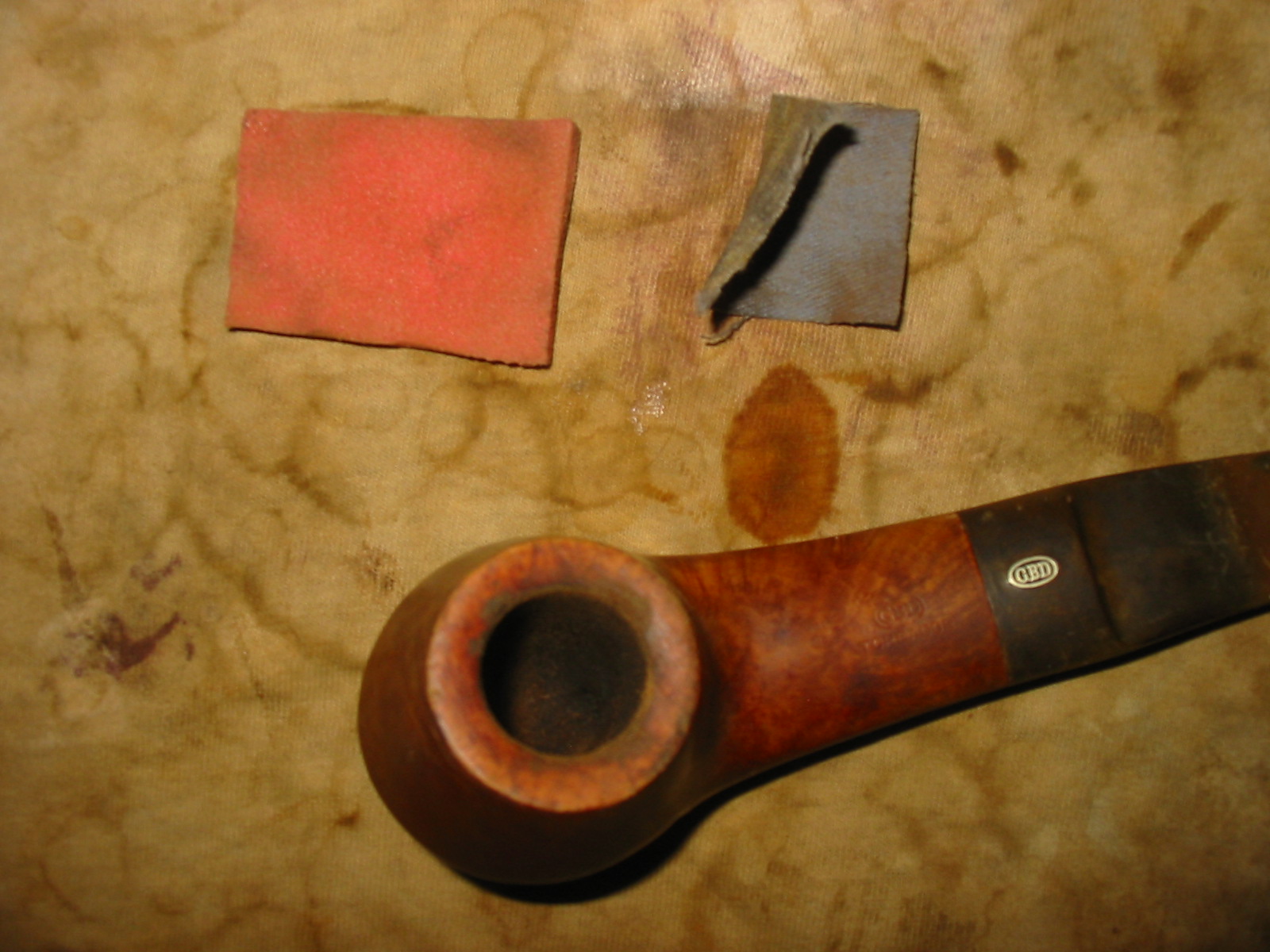
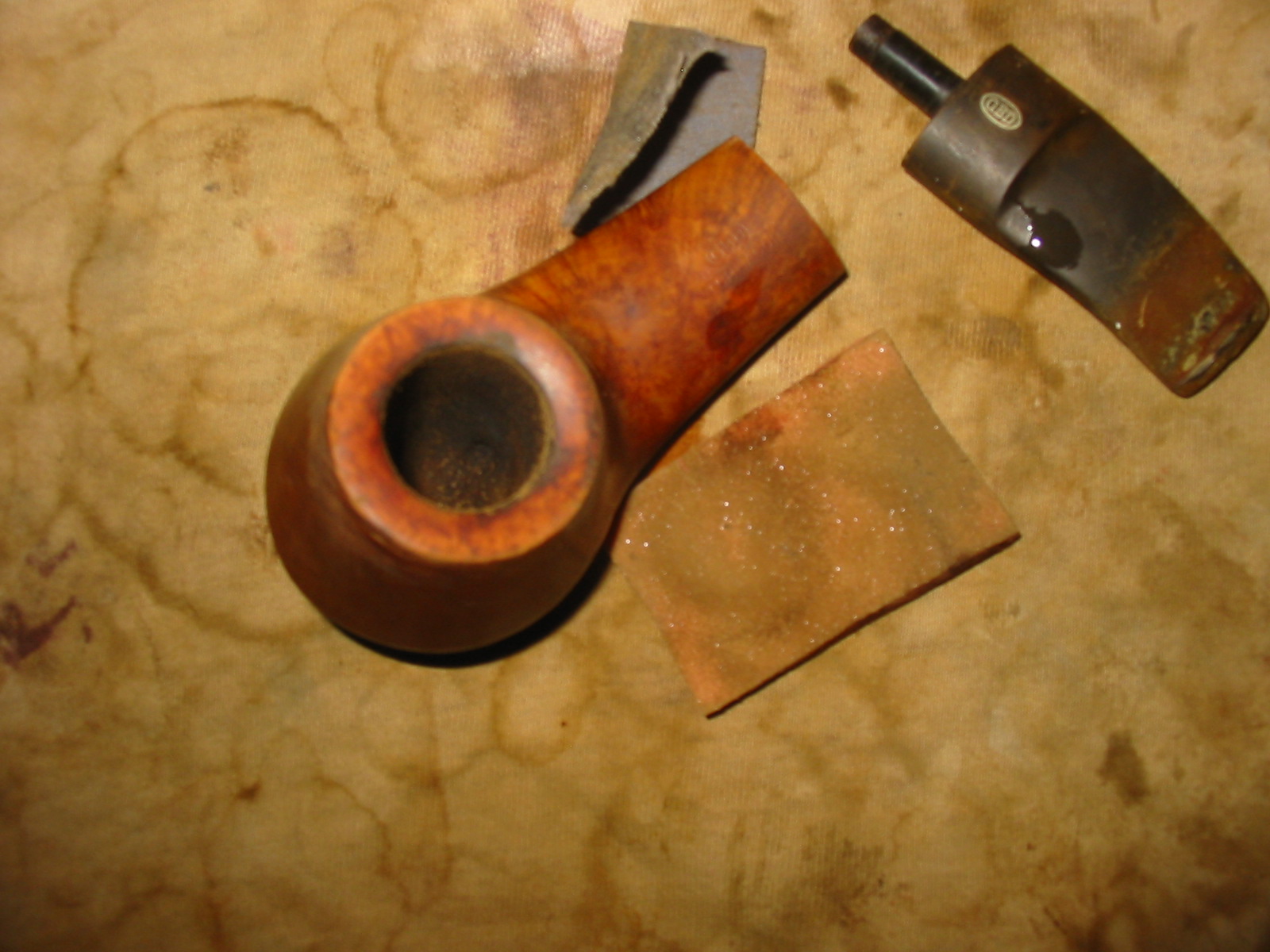
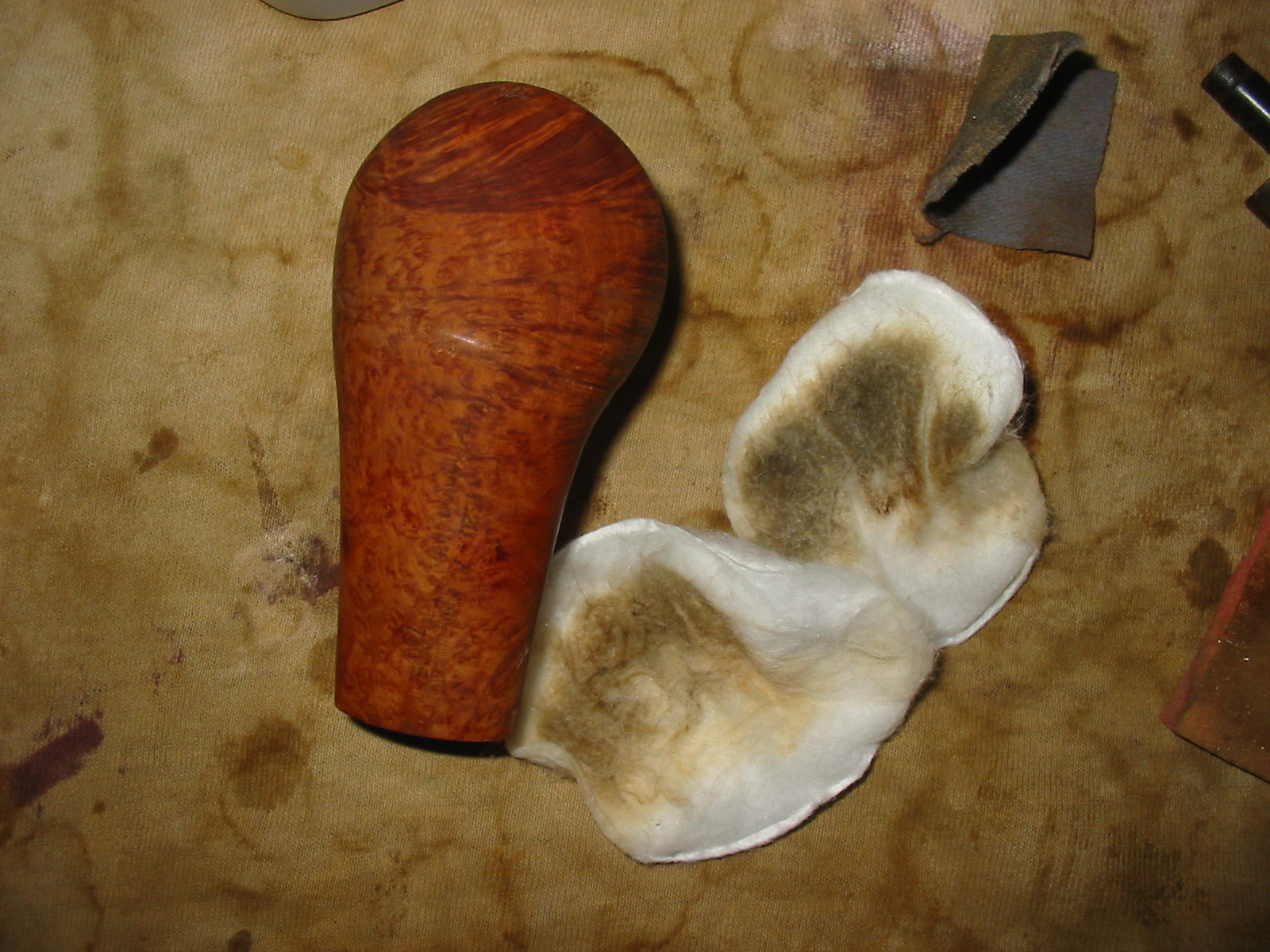
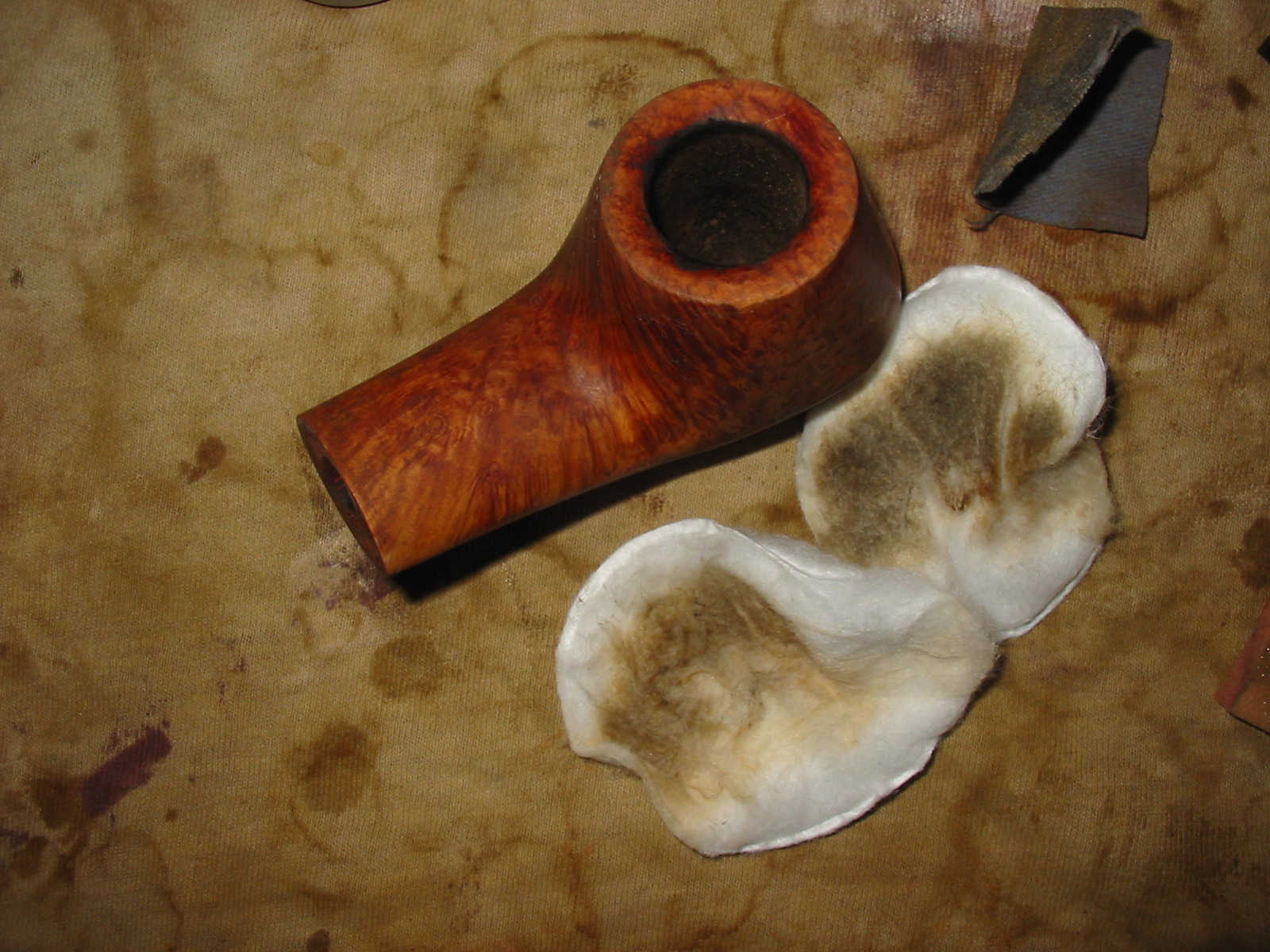
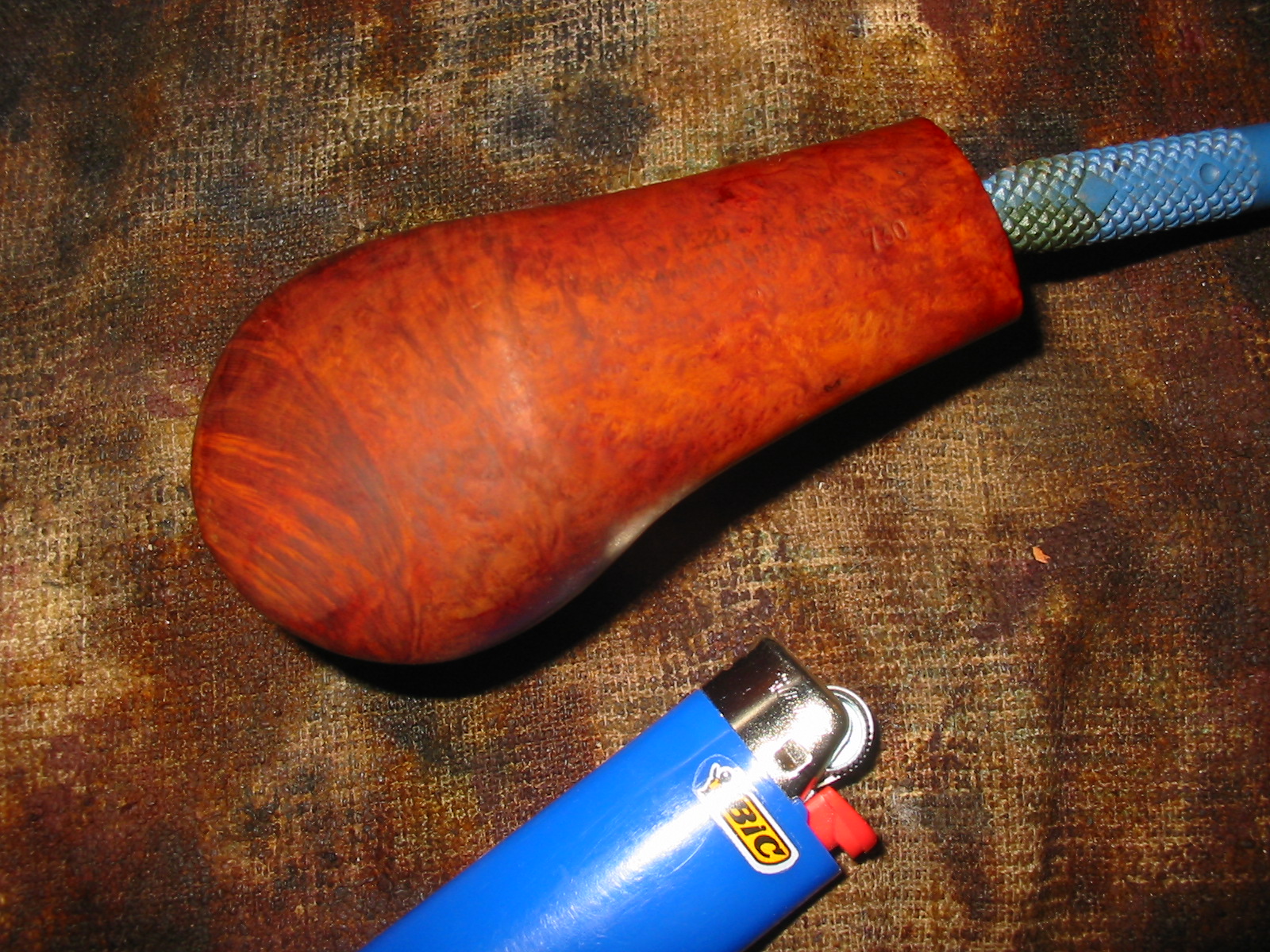
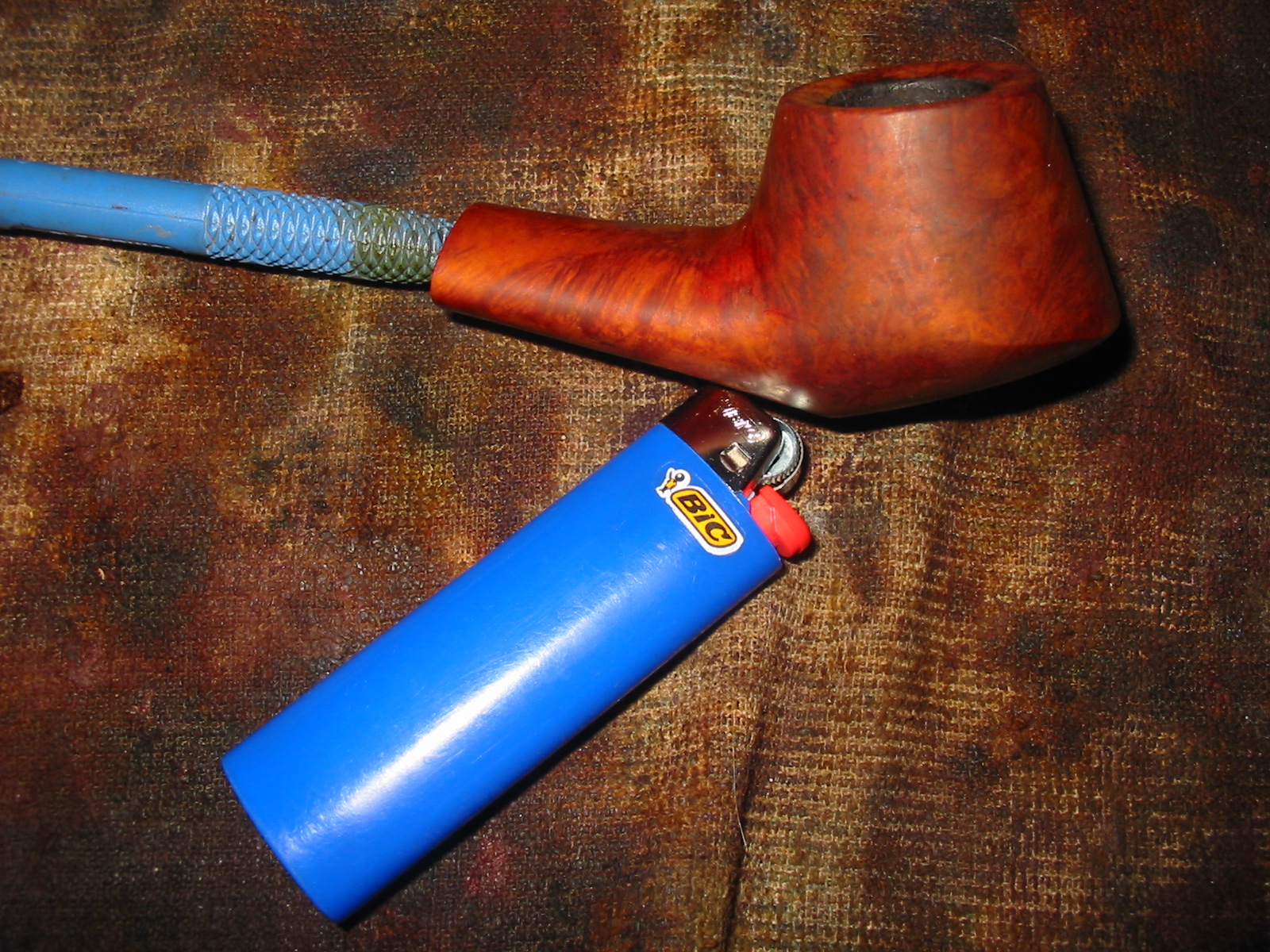
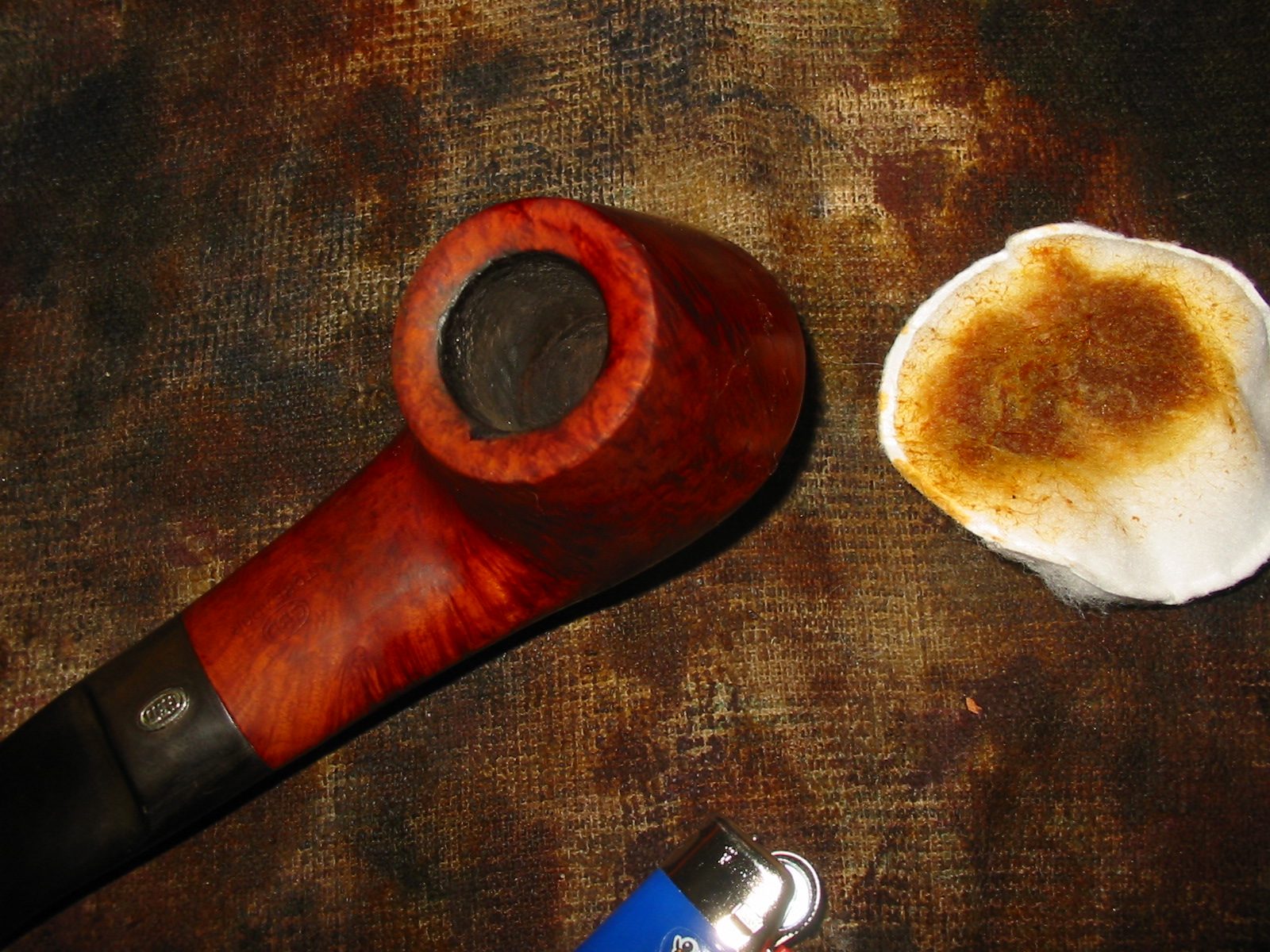
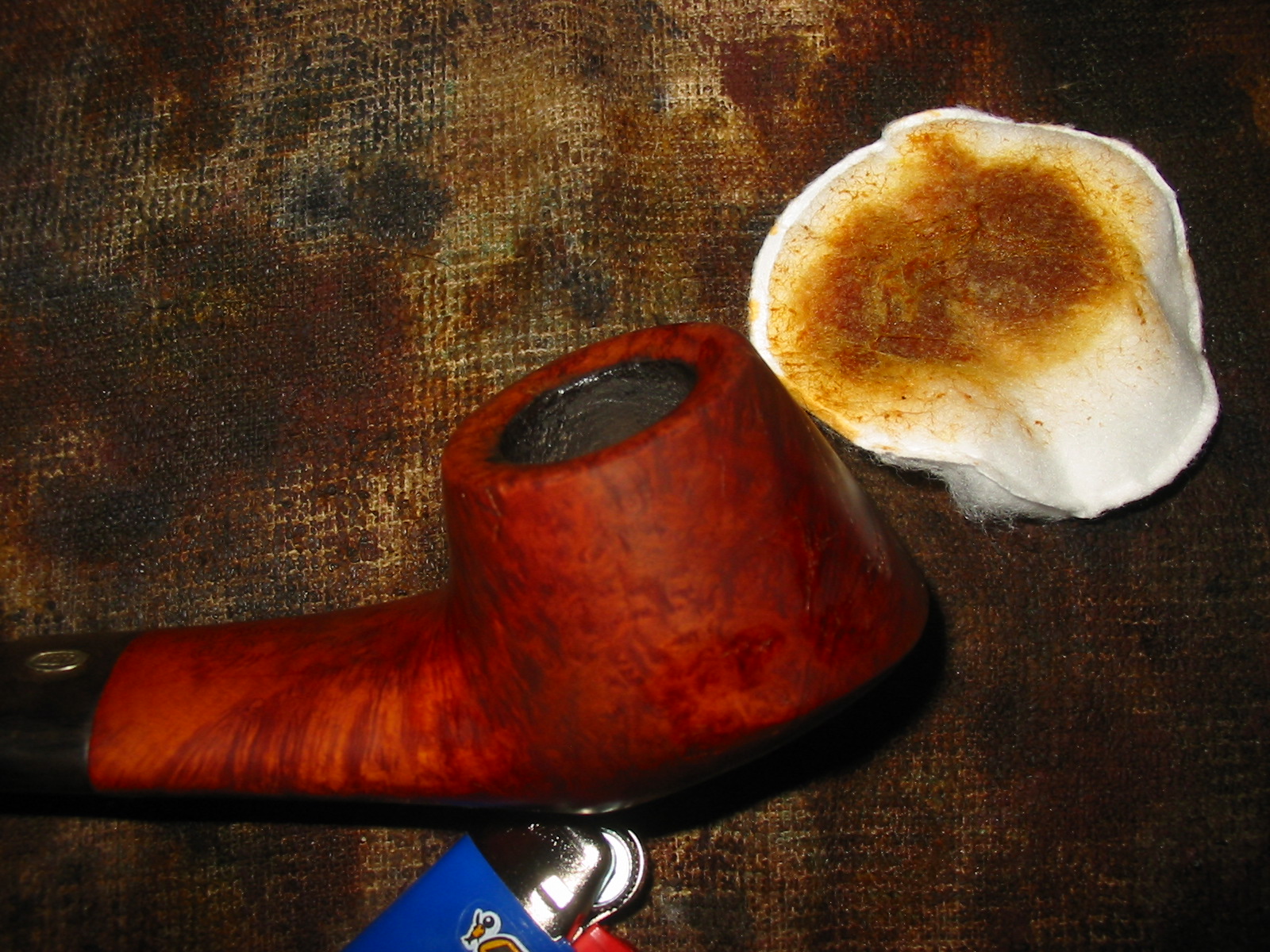
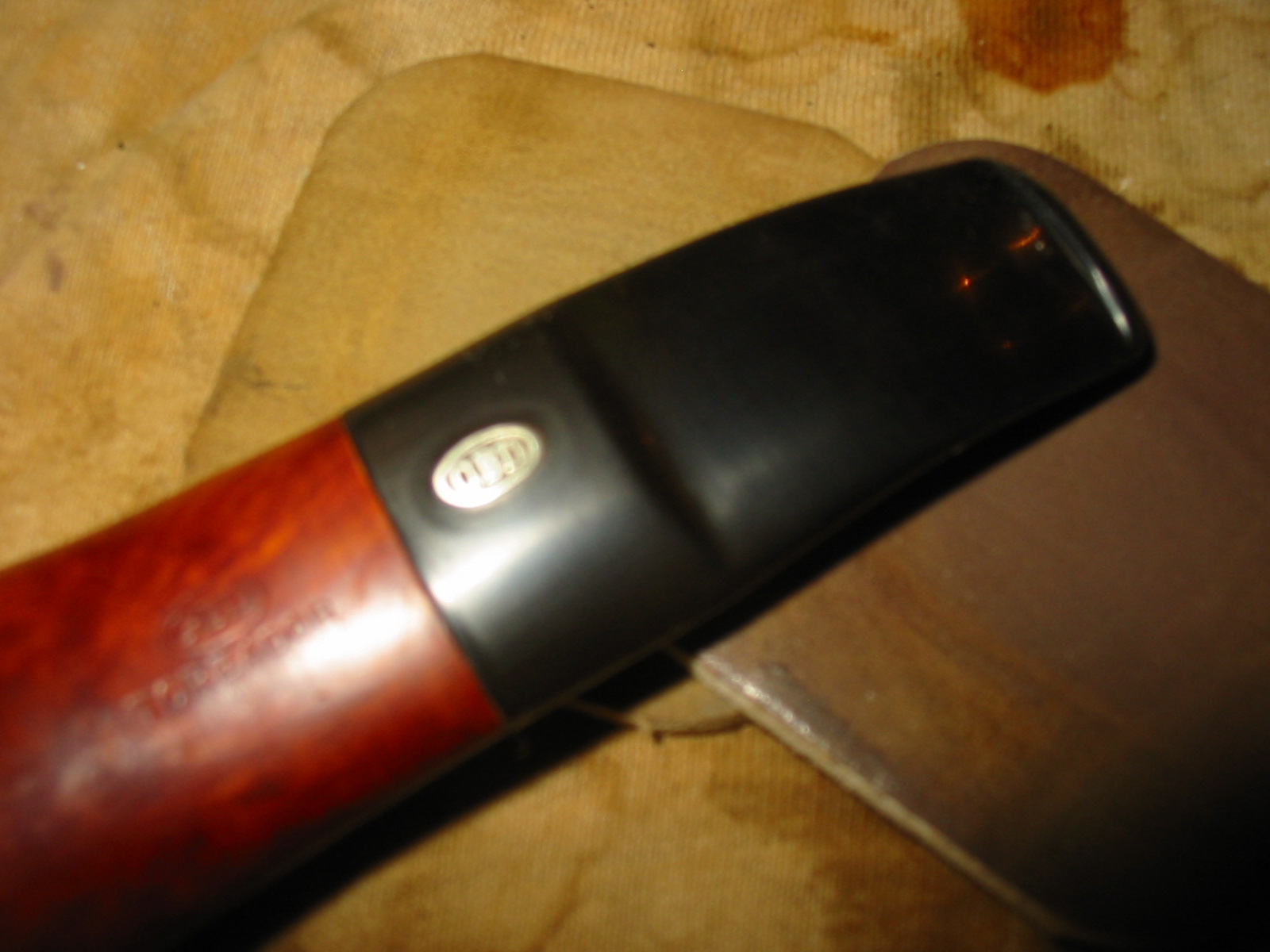
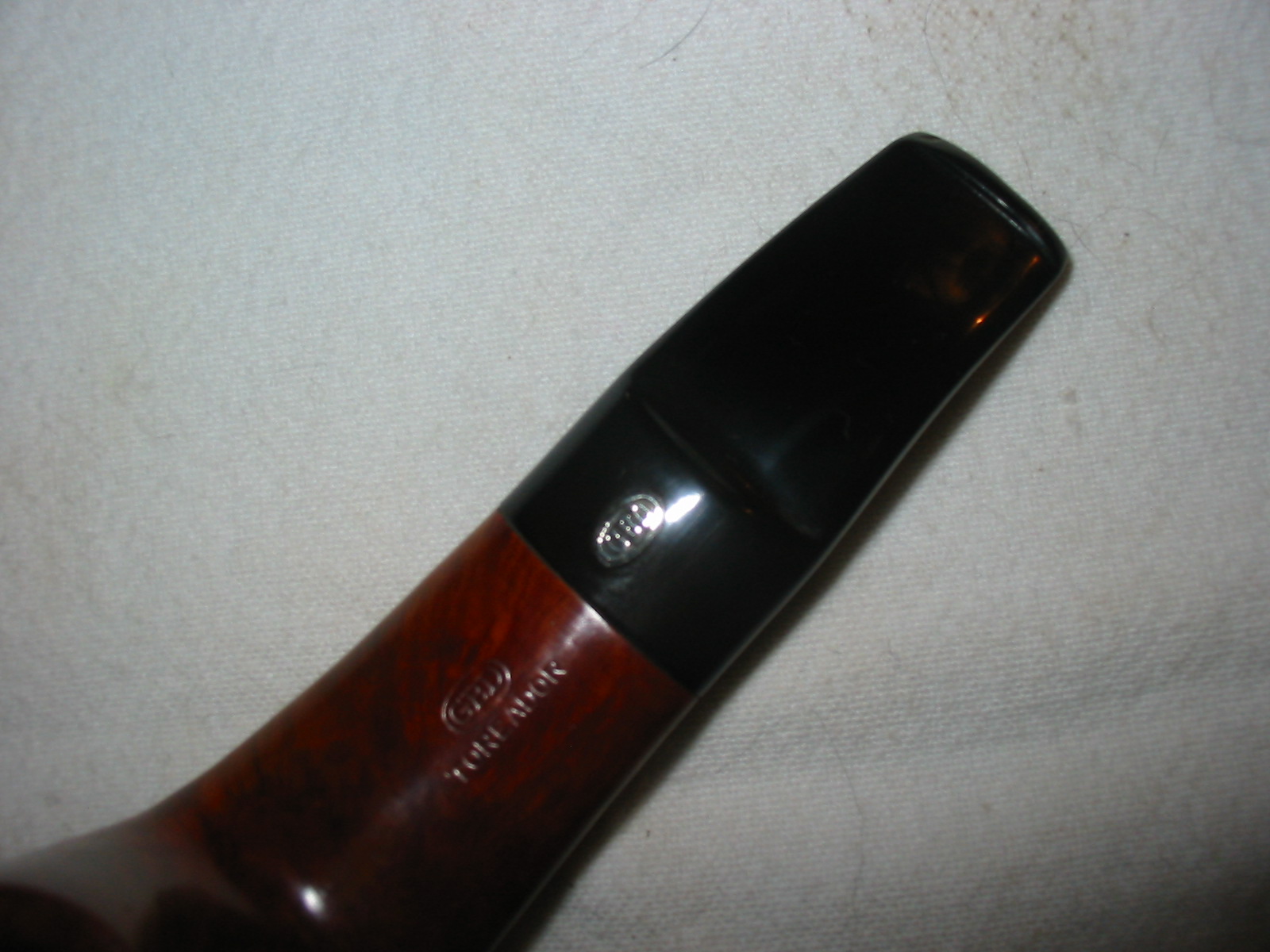
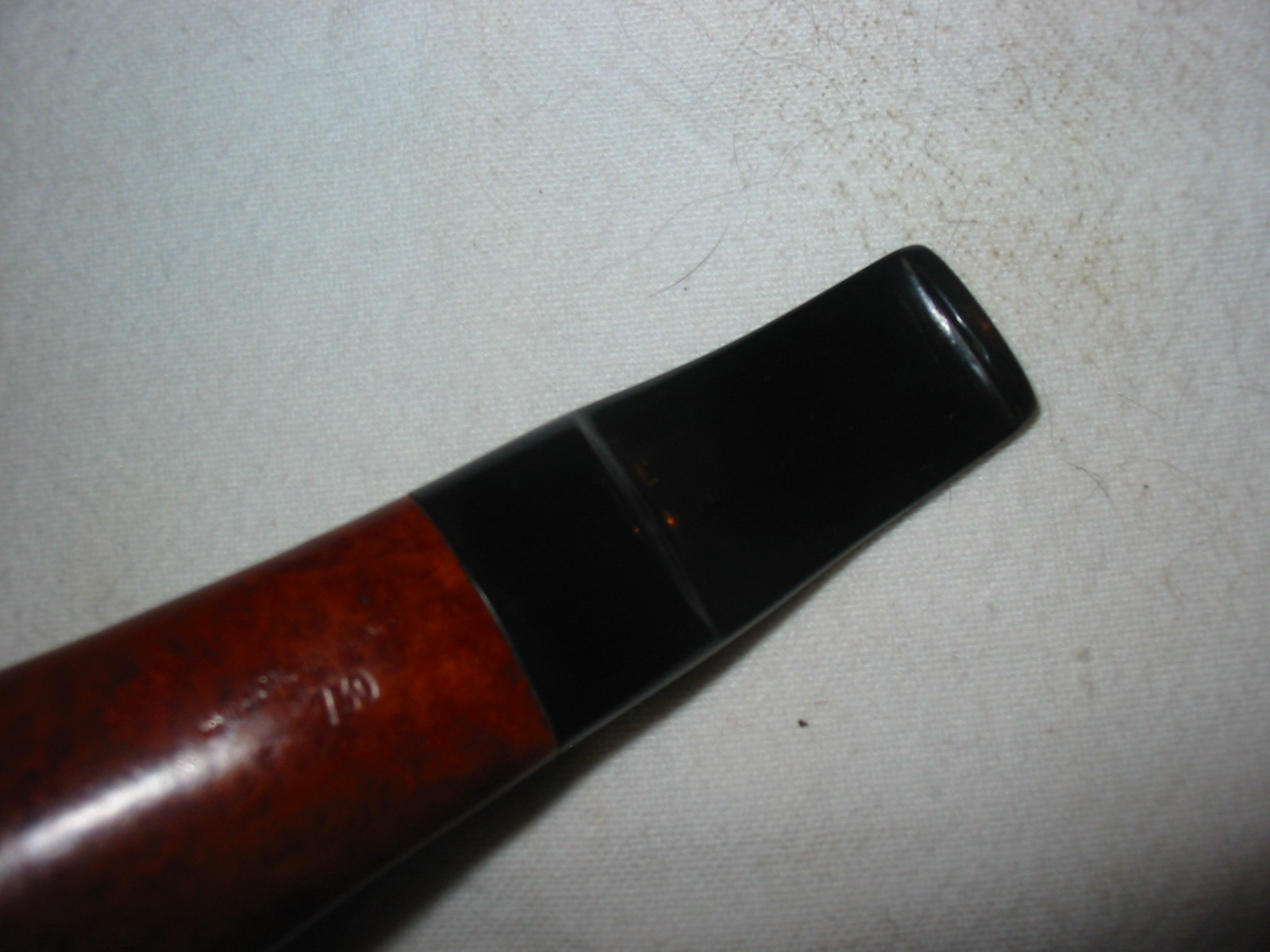
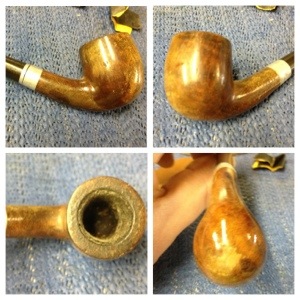
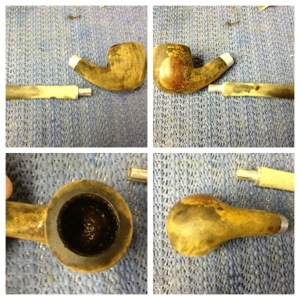
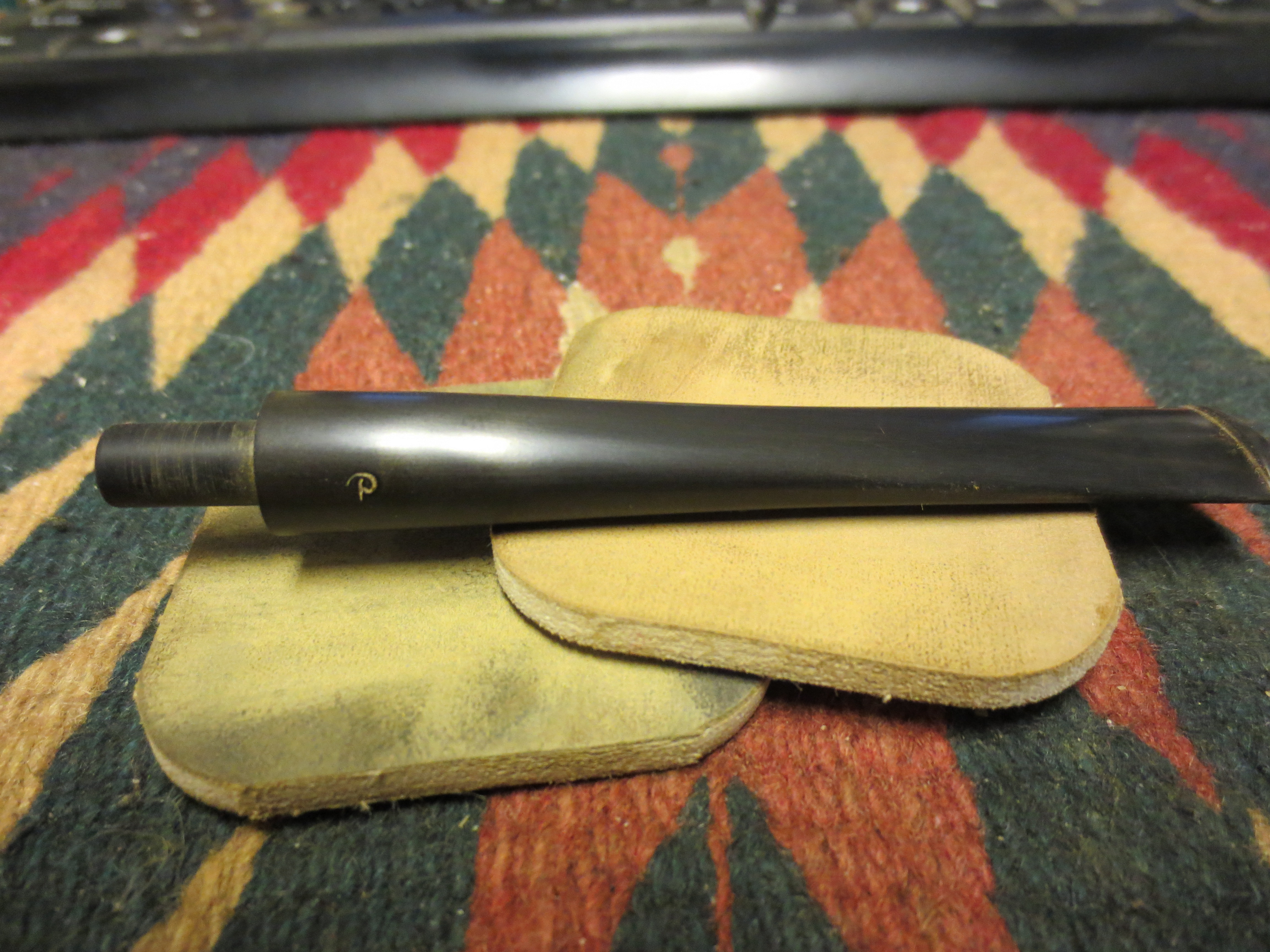
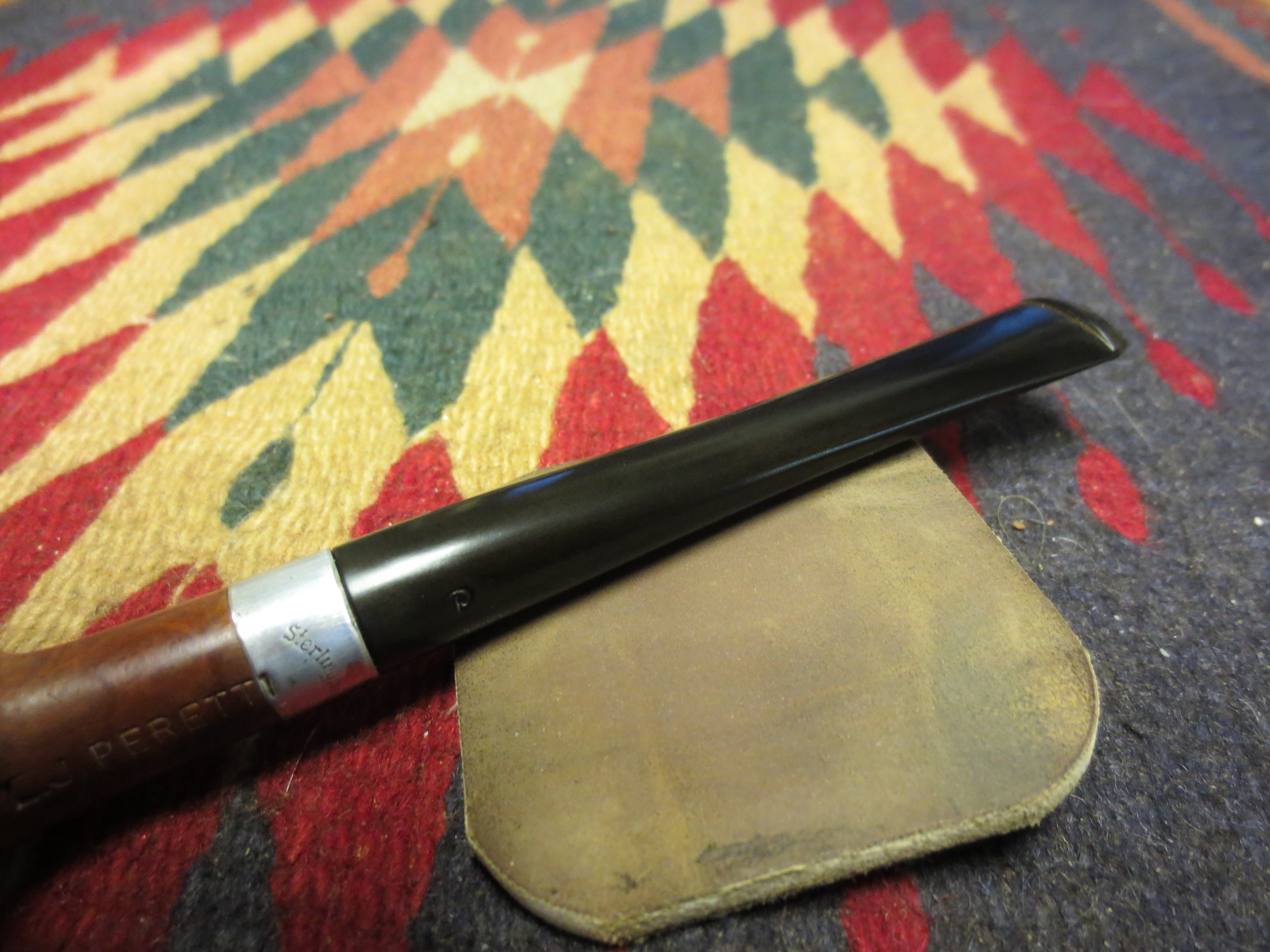
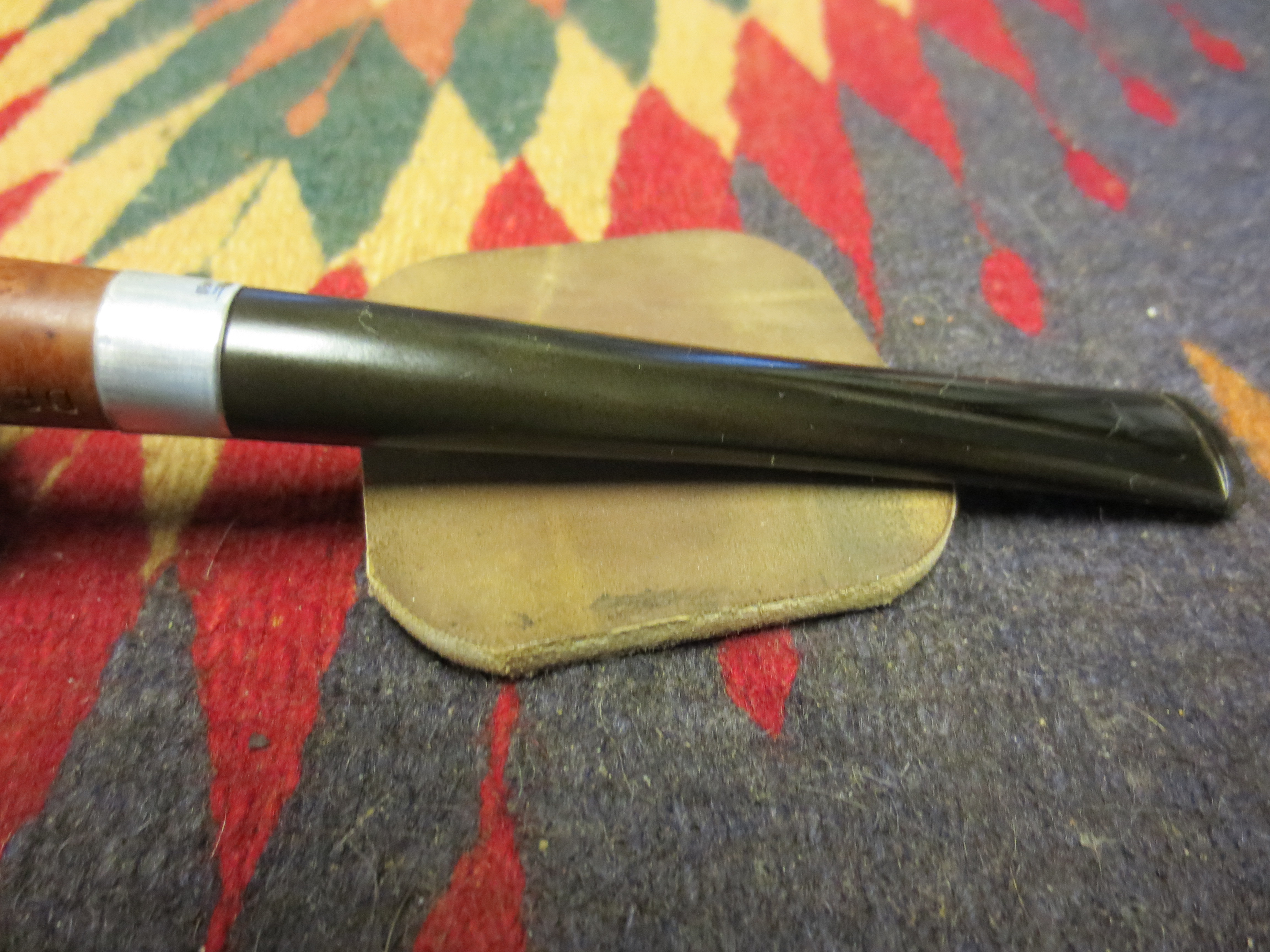
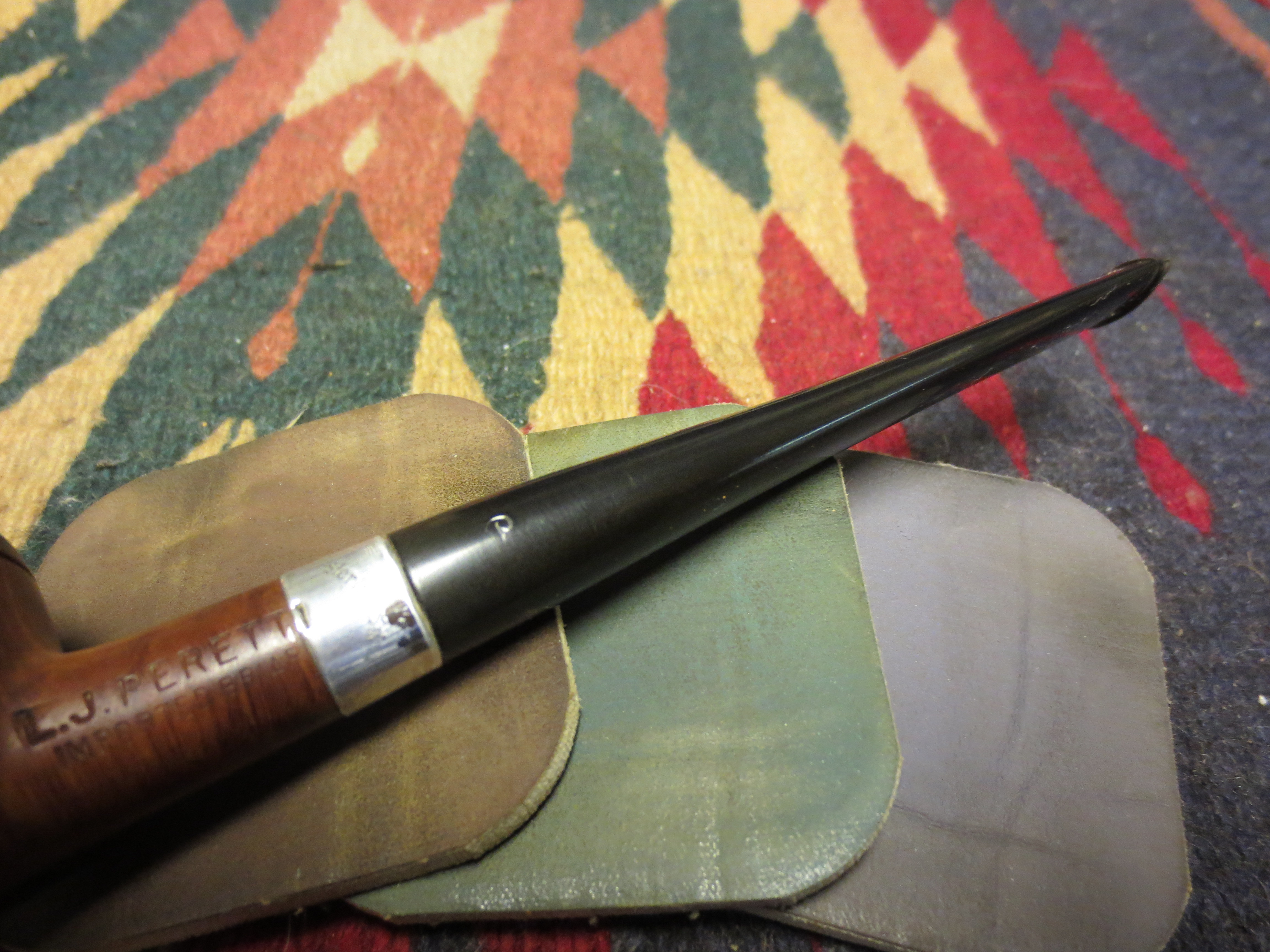
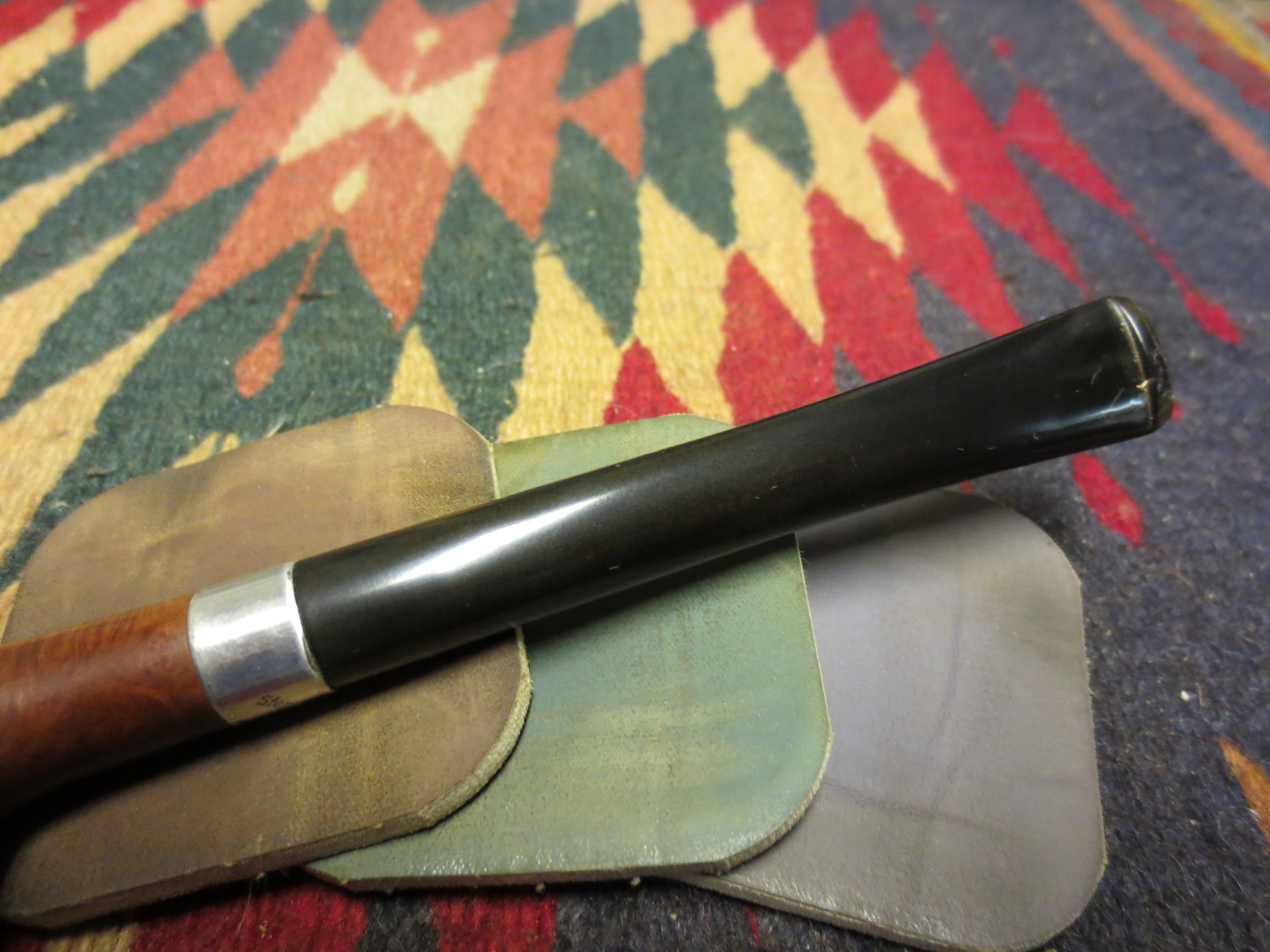
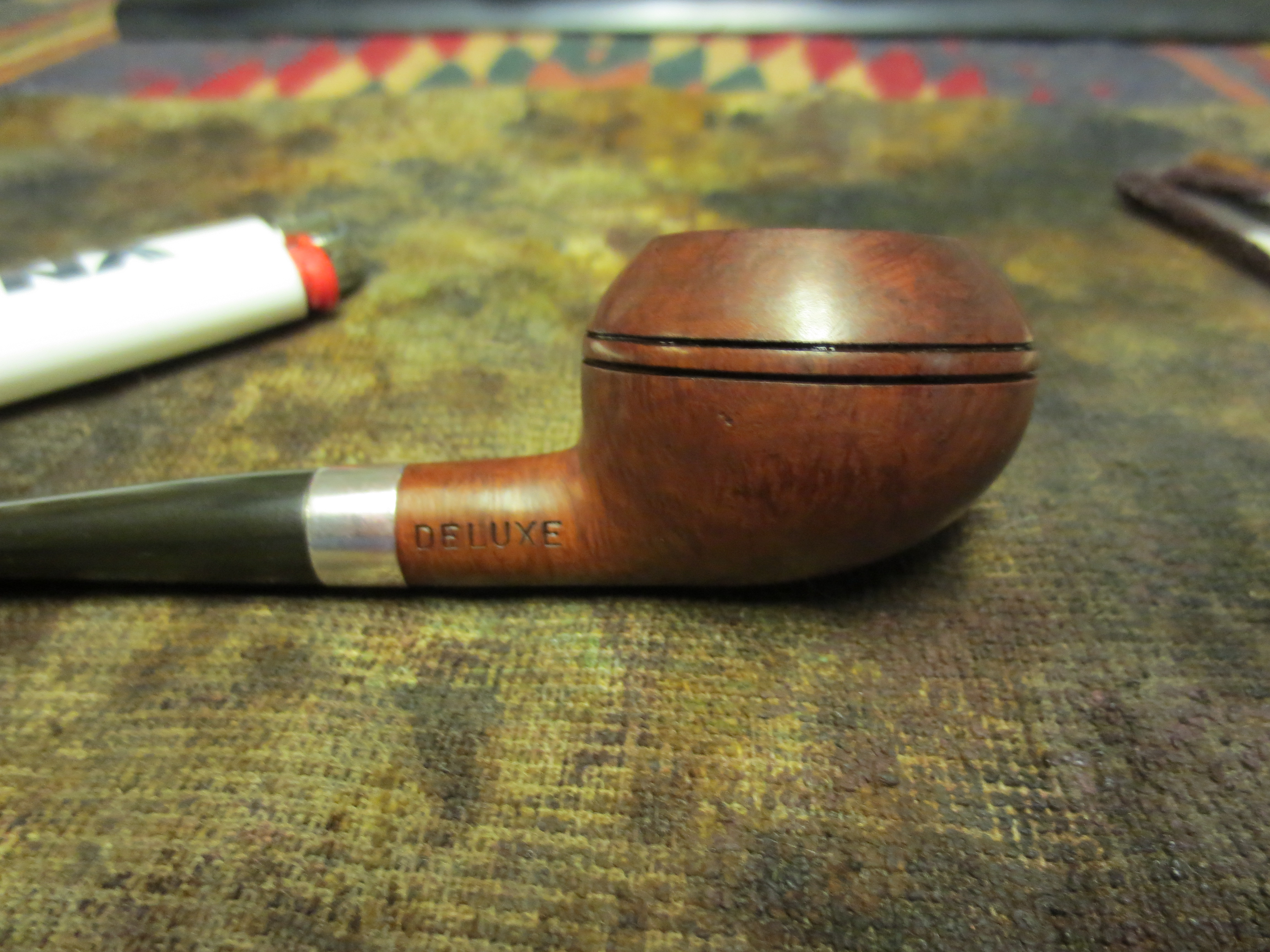
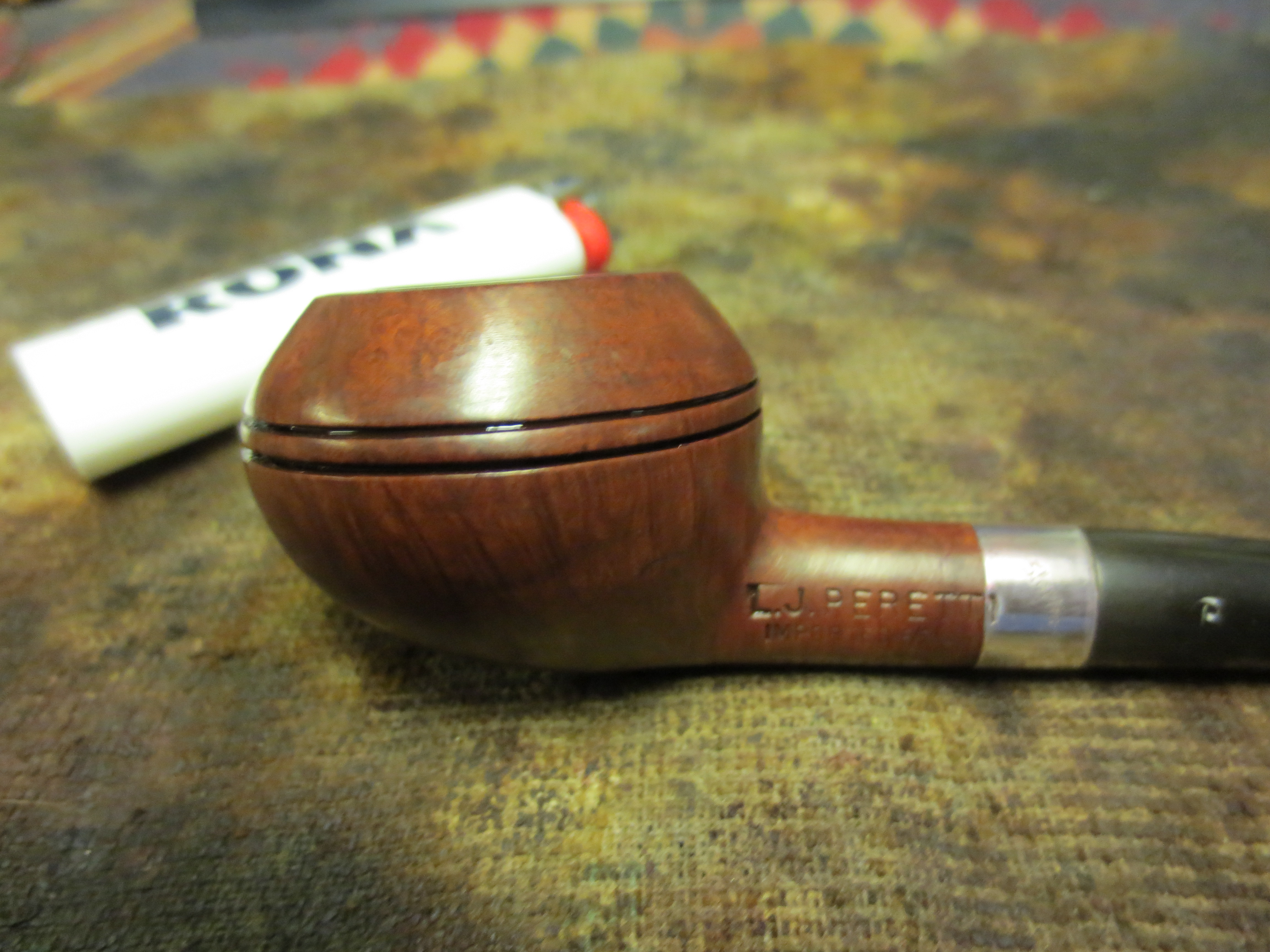
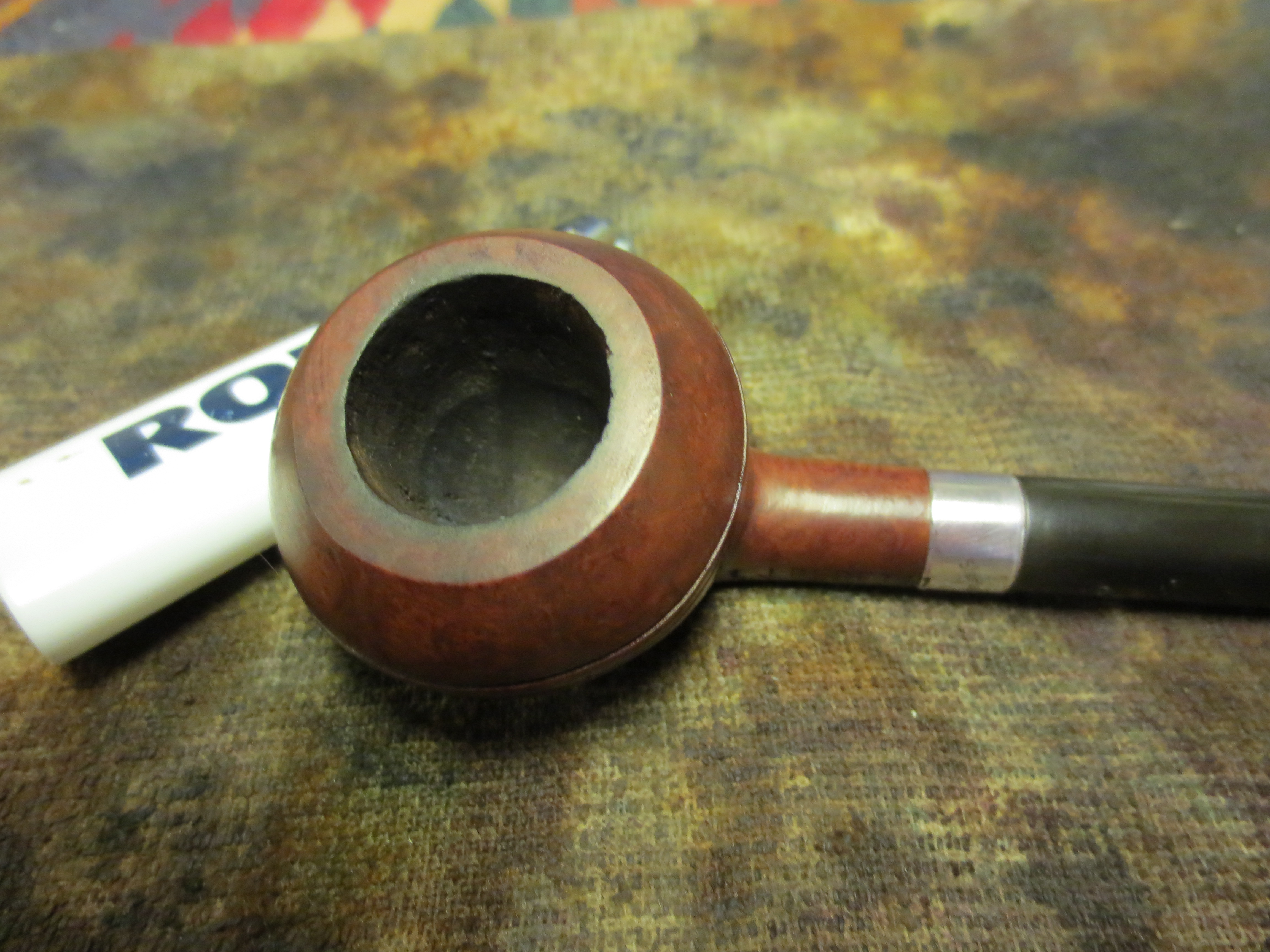
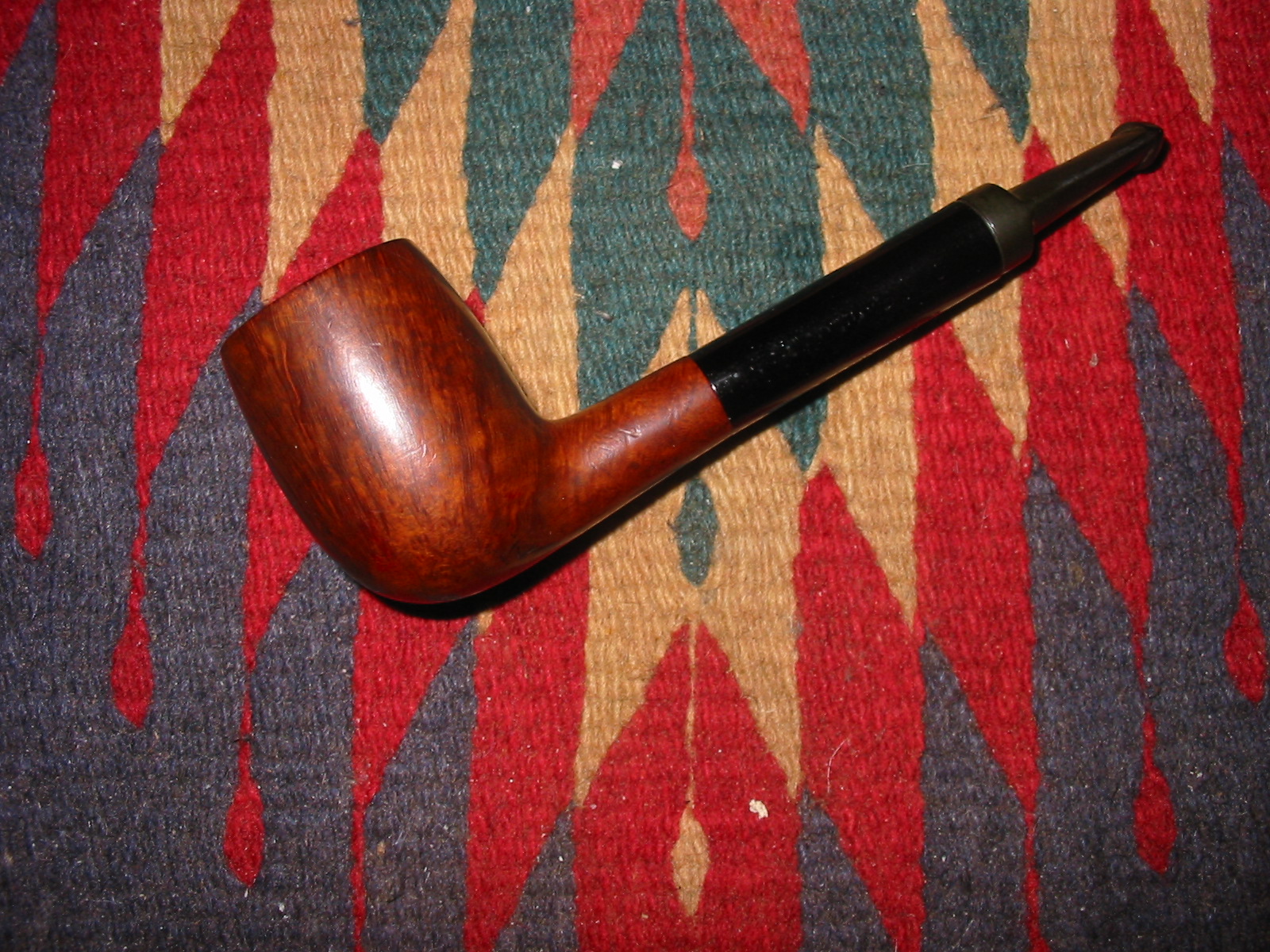
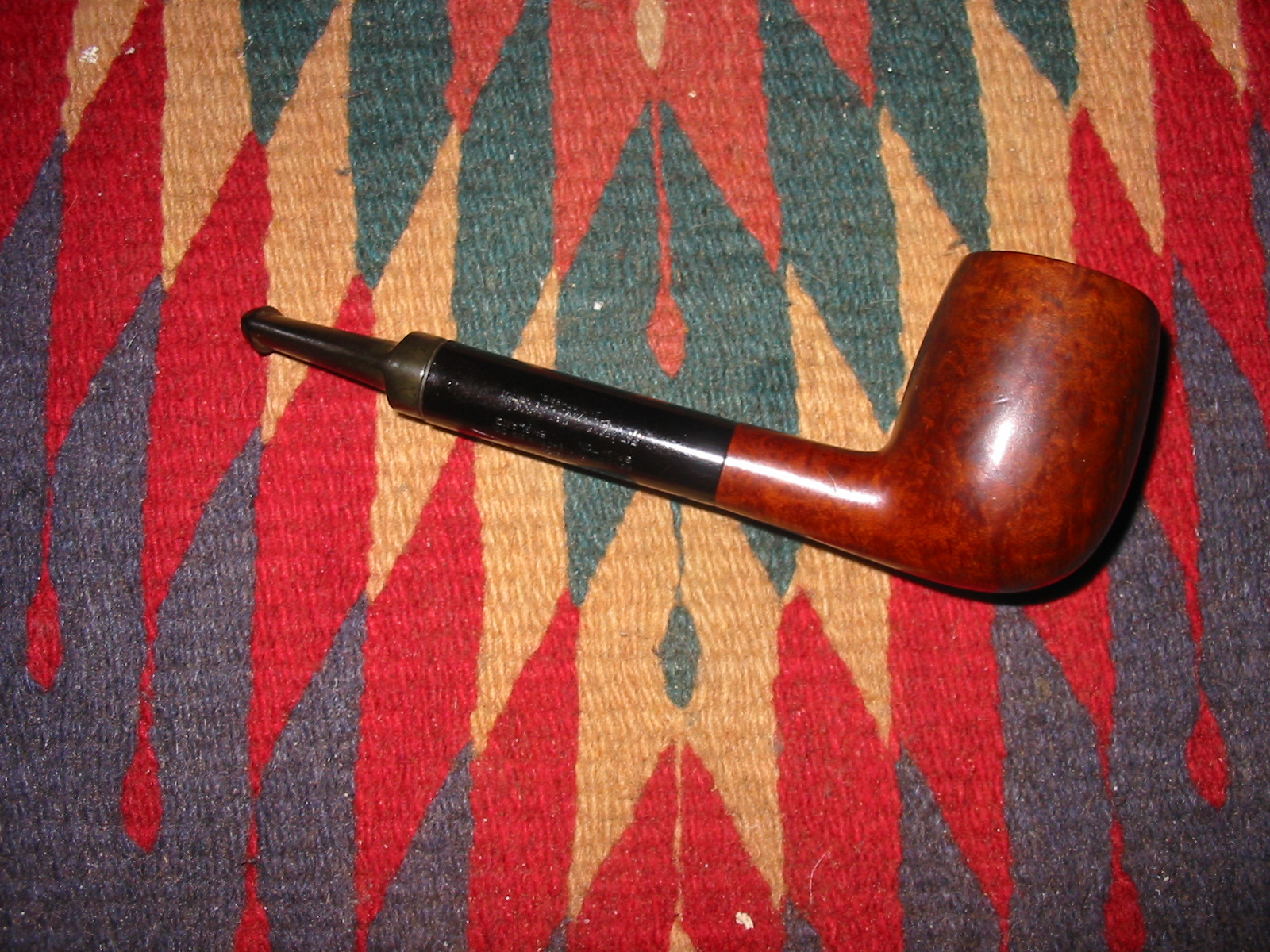
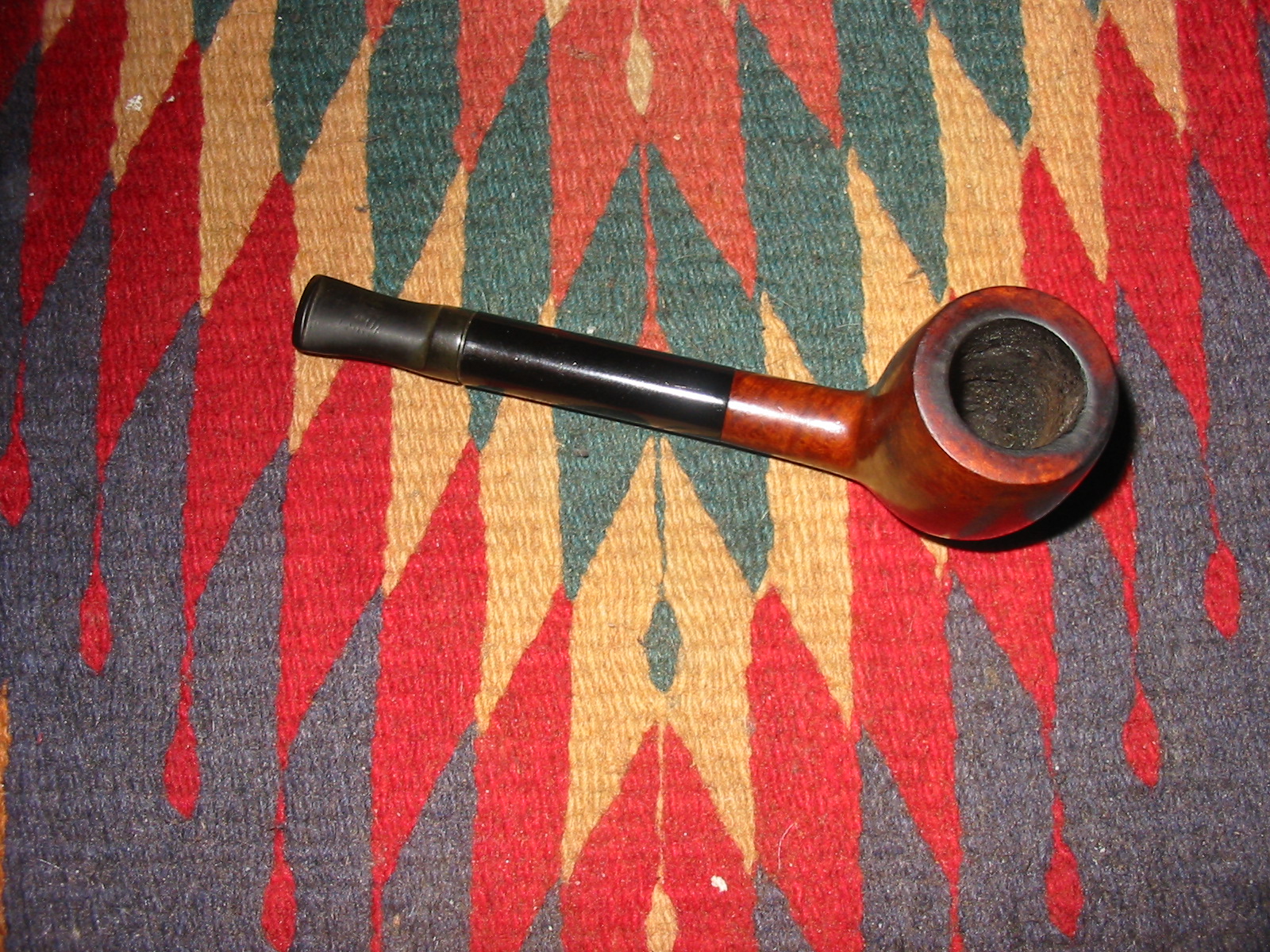
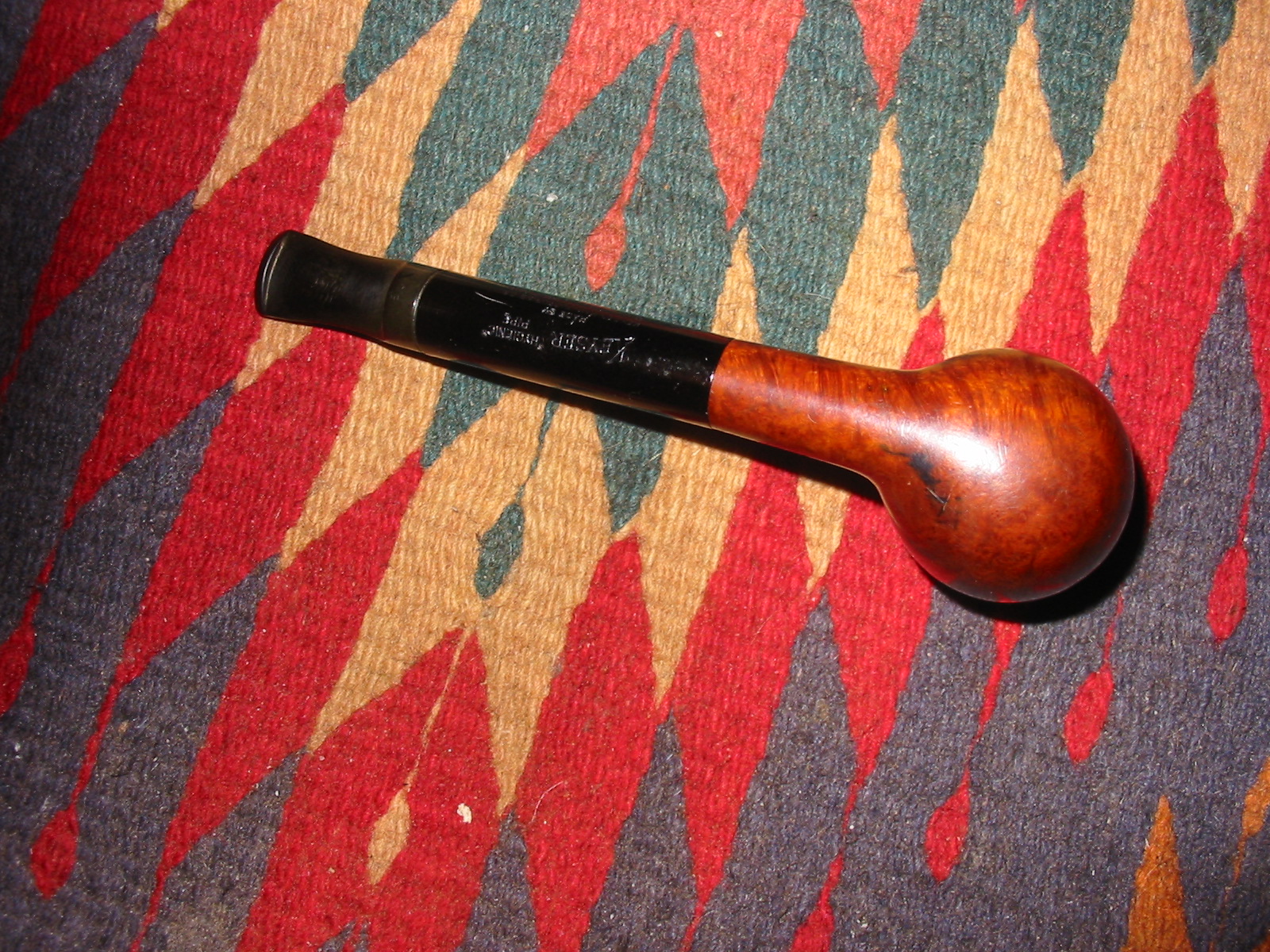
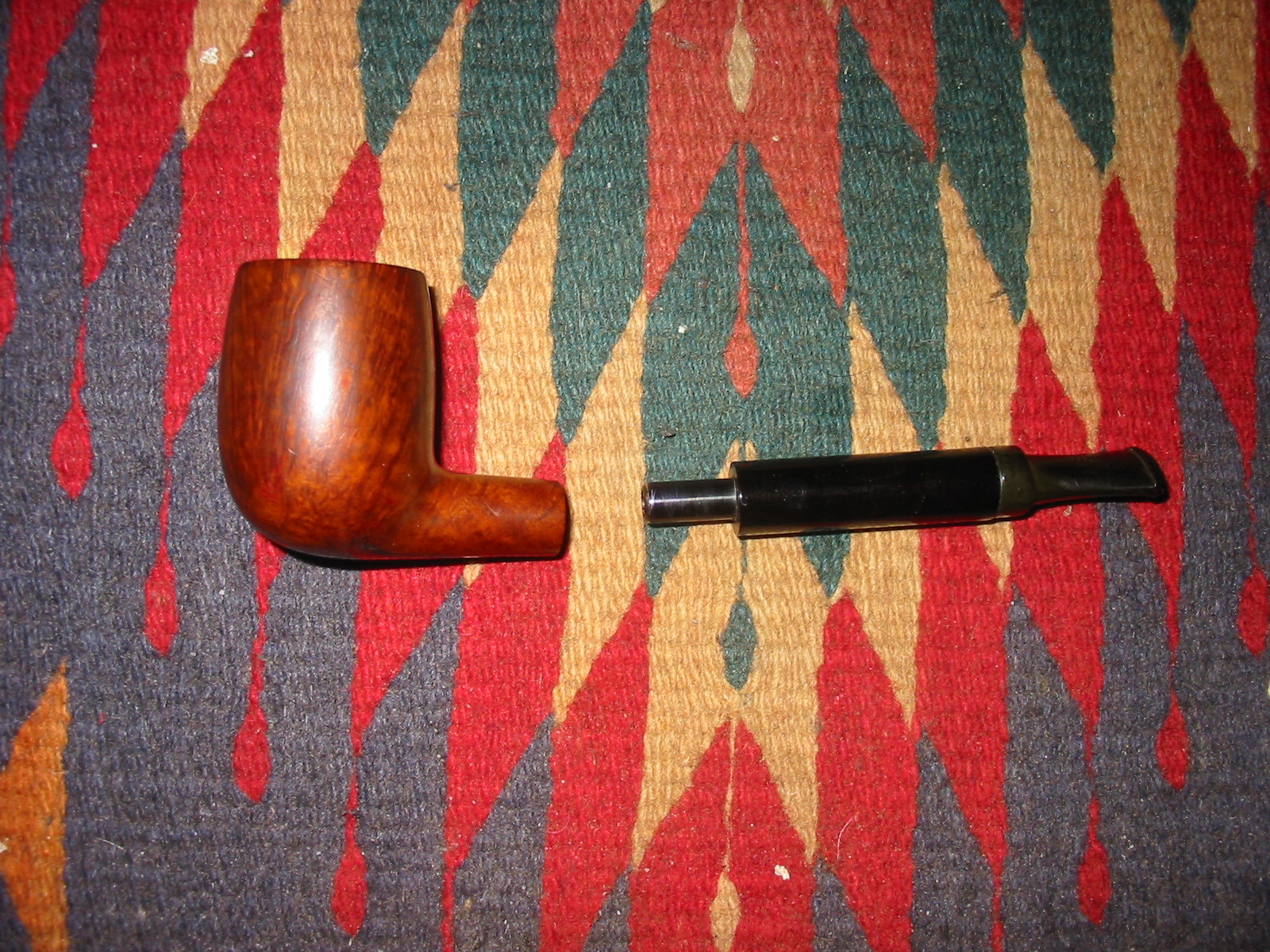
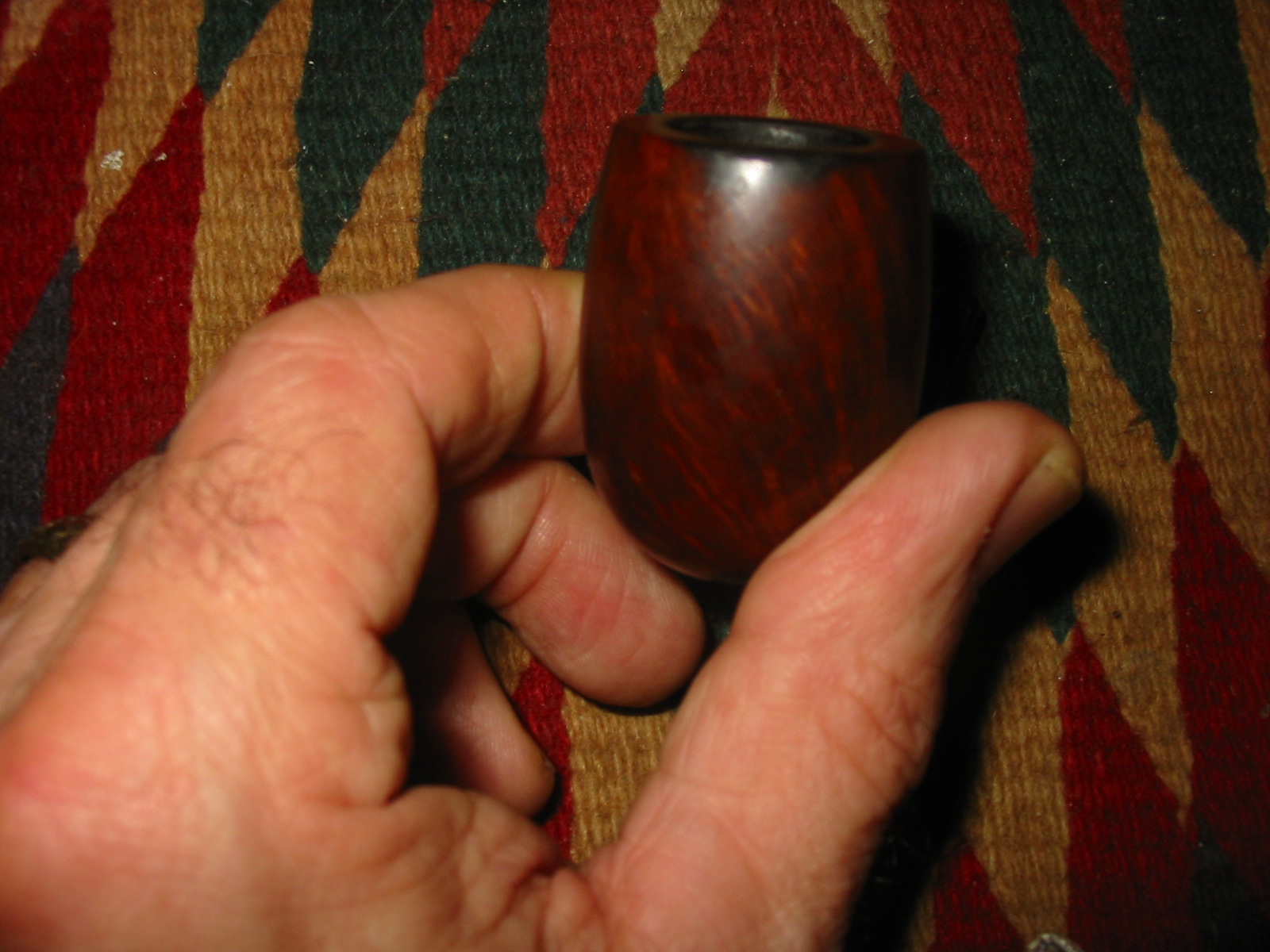
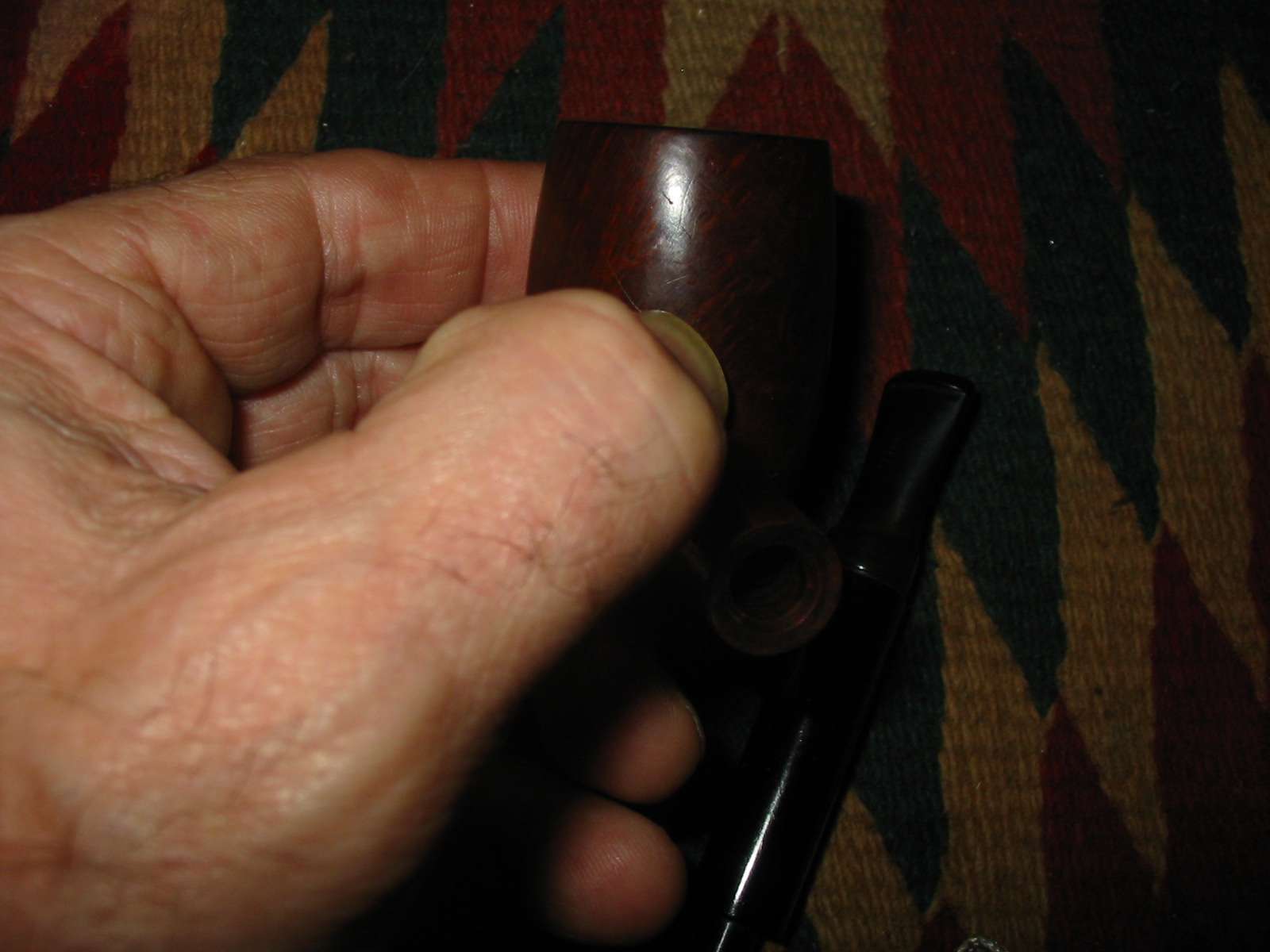
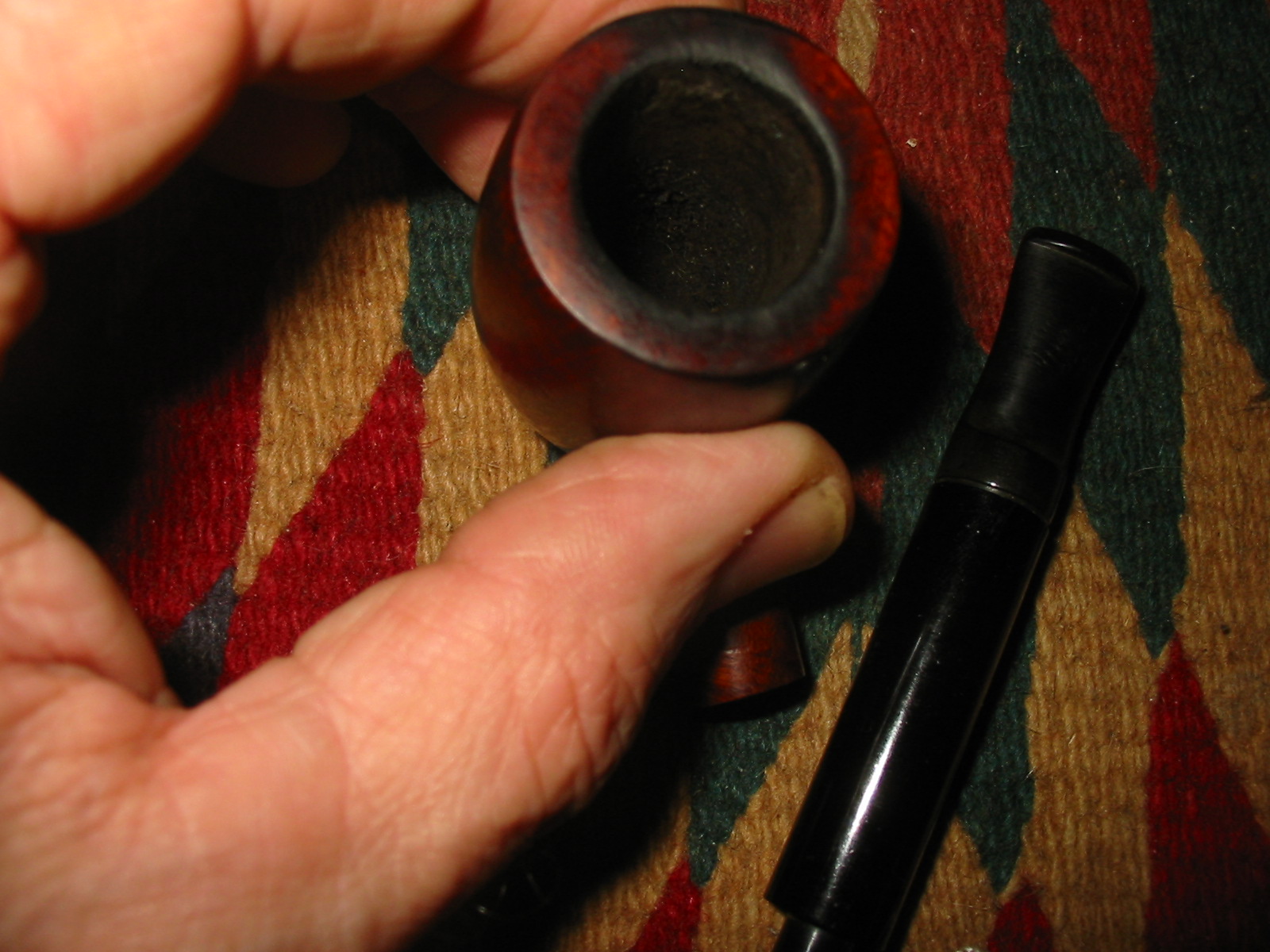
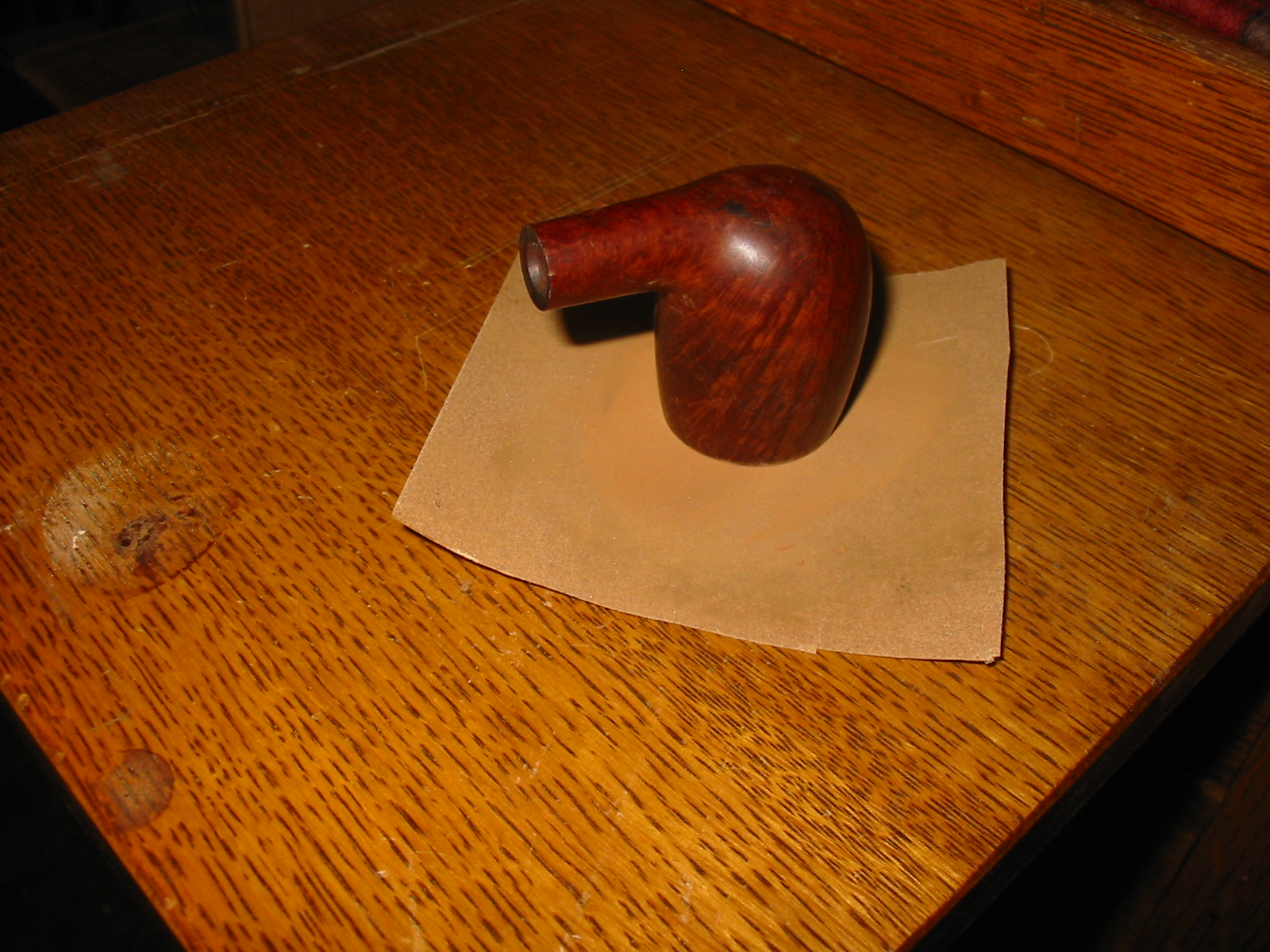
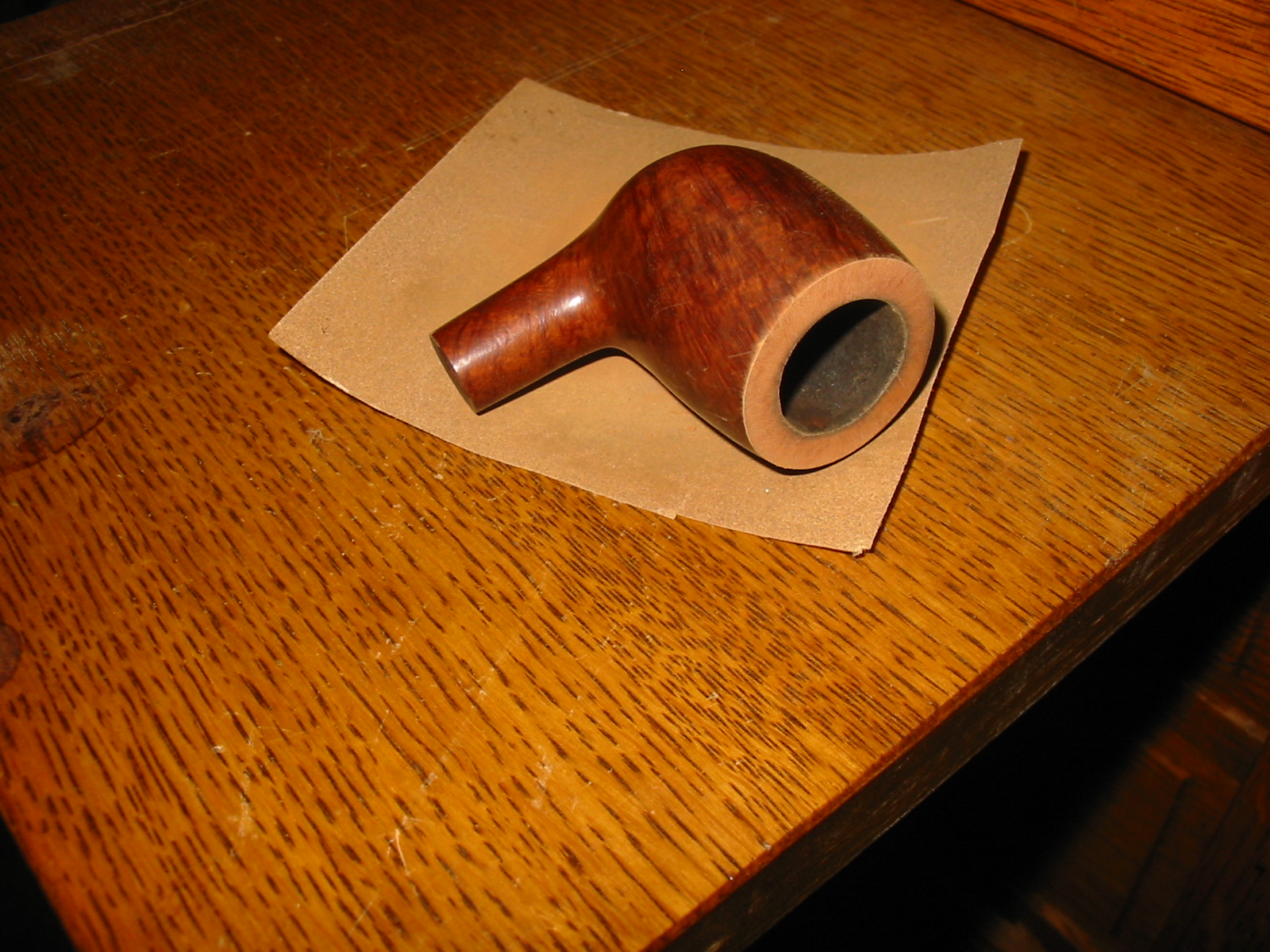
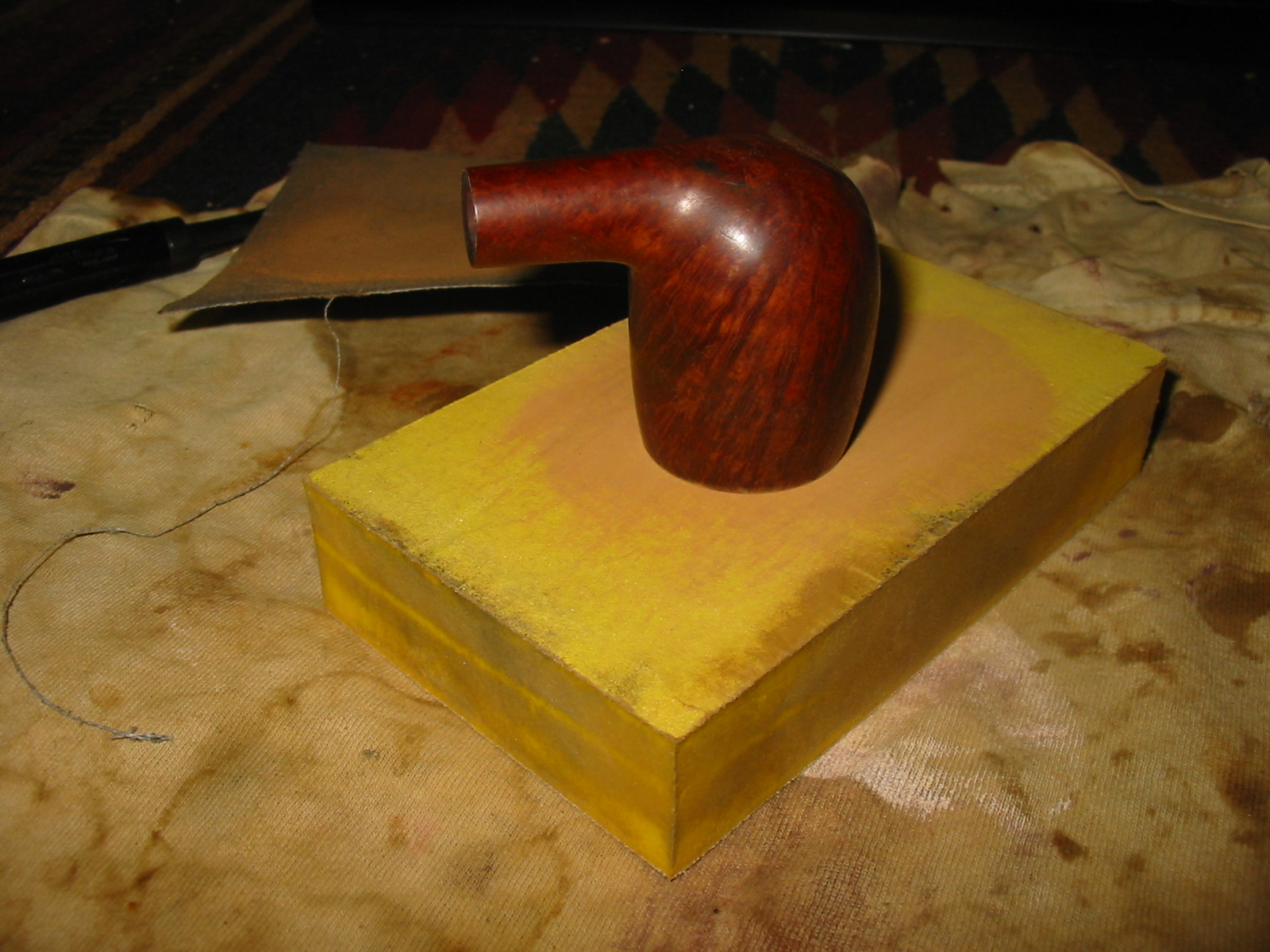
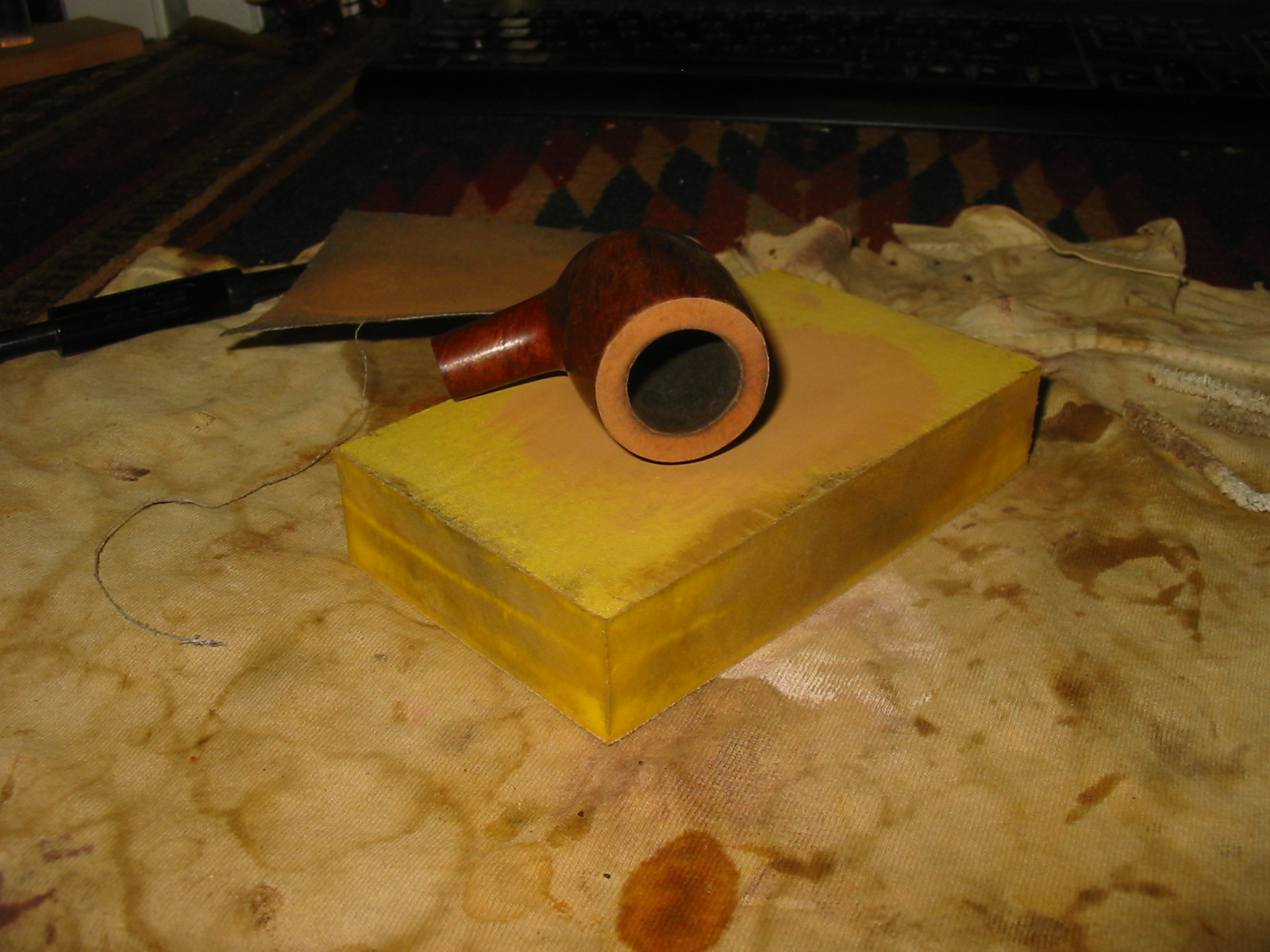
Tag Archives: Oxidation

Refurb – Jarl Ribbon Acorn


Blog by Steve Laug

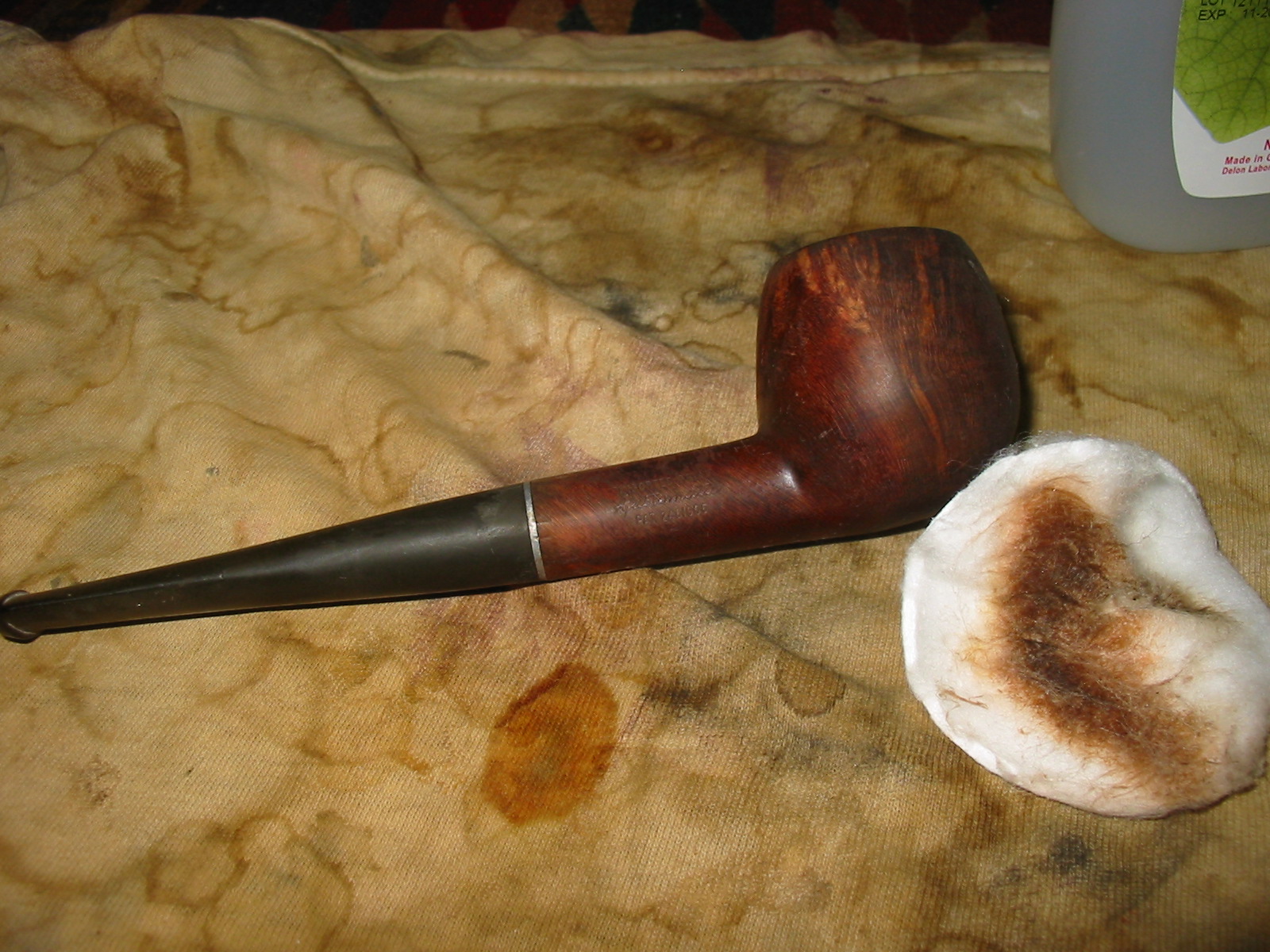
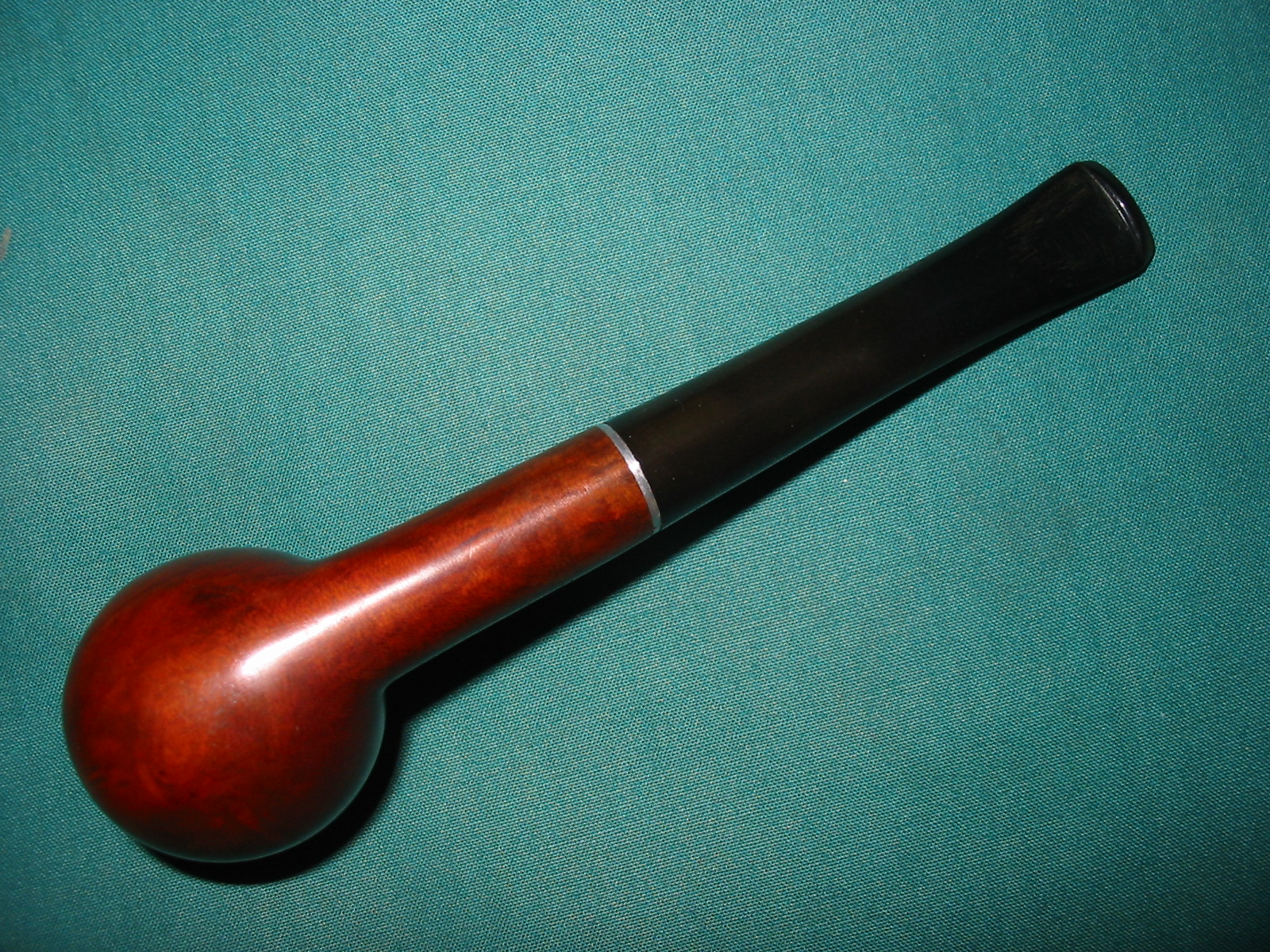
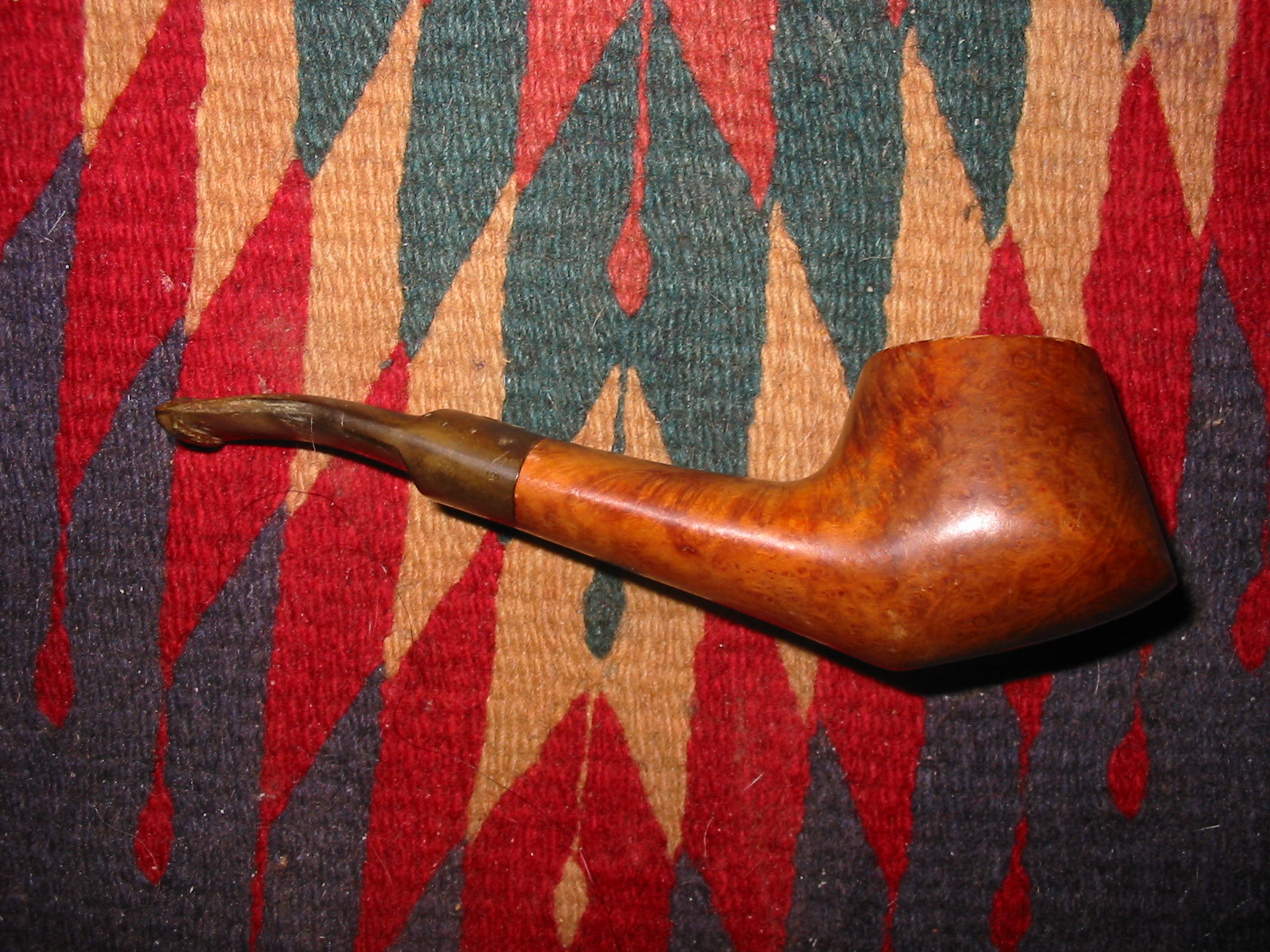
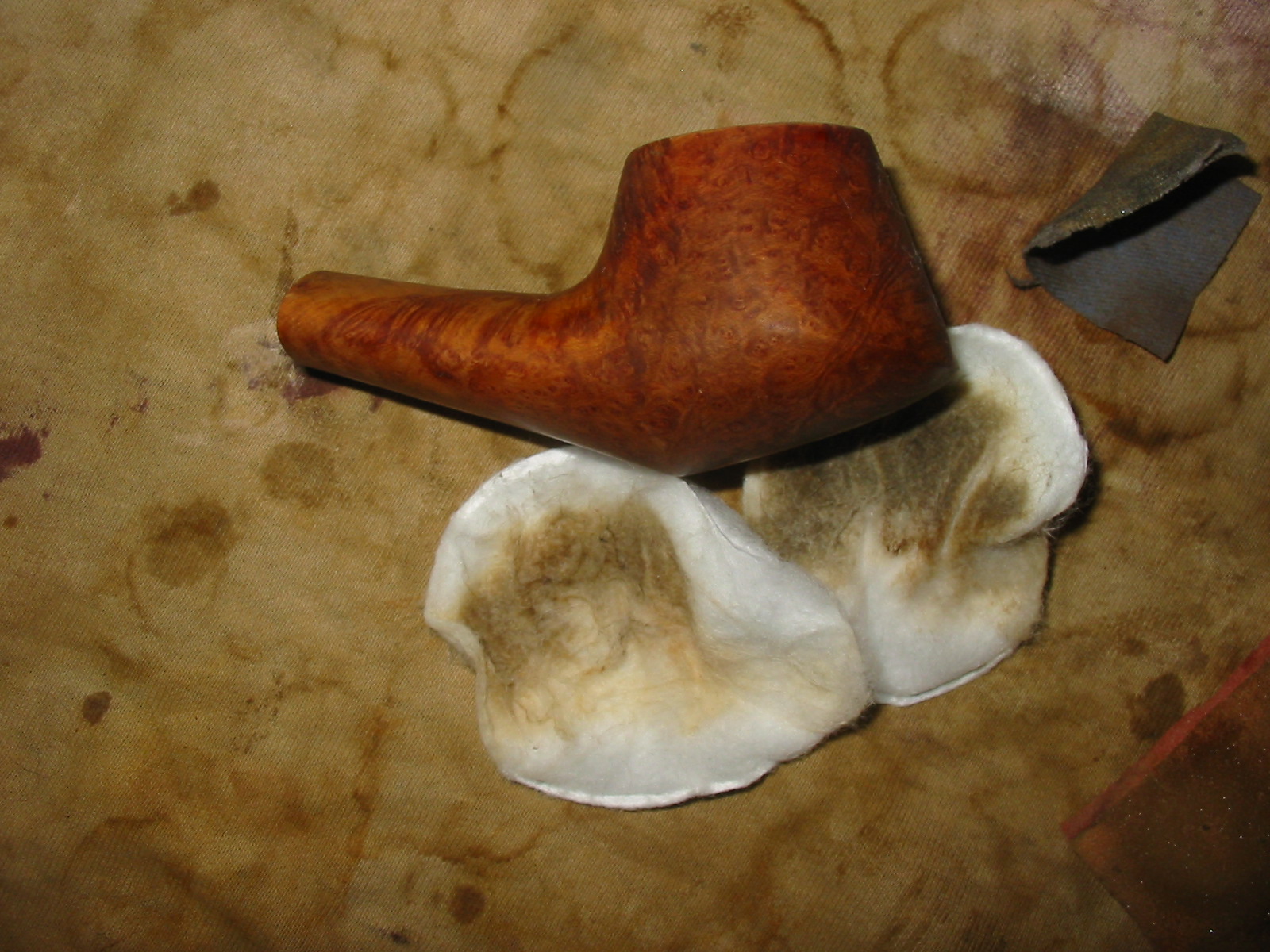
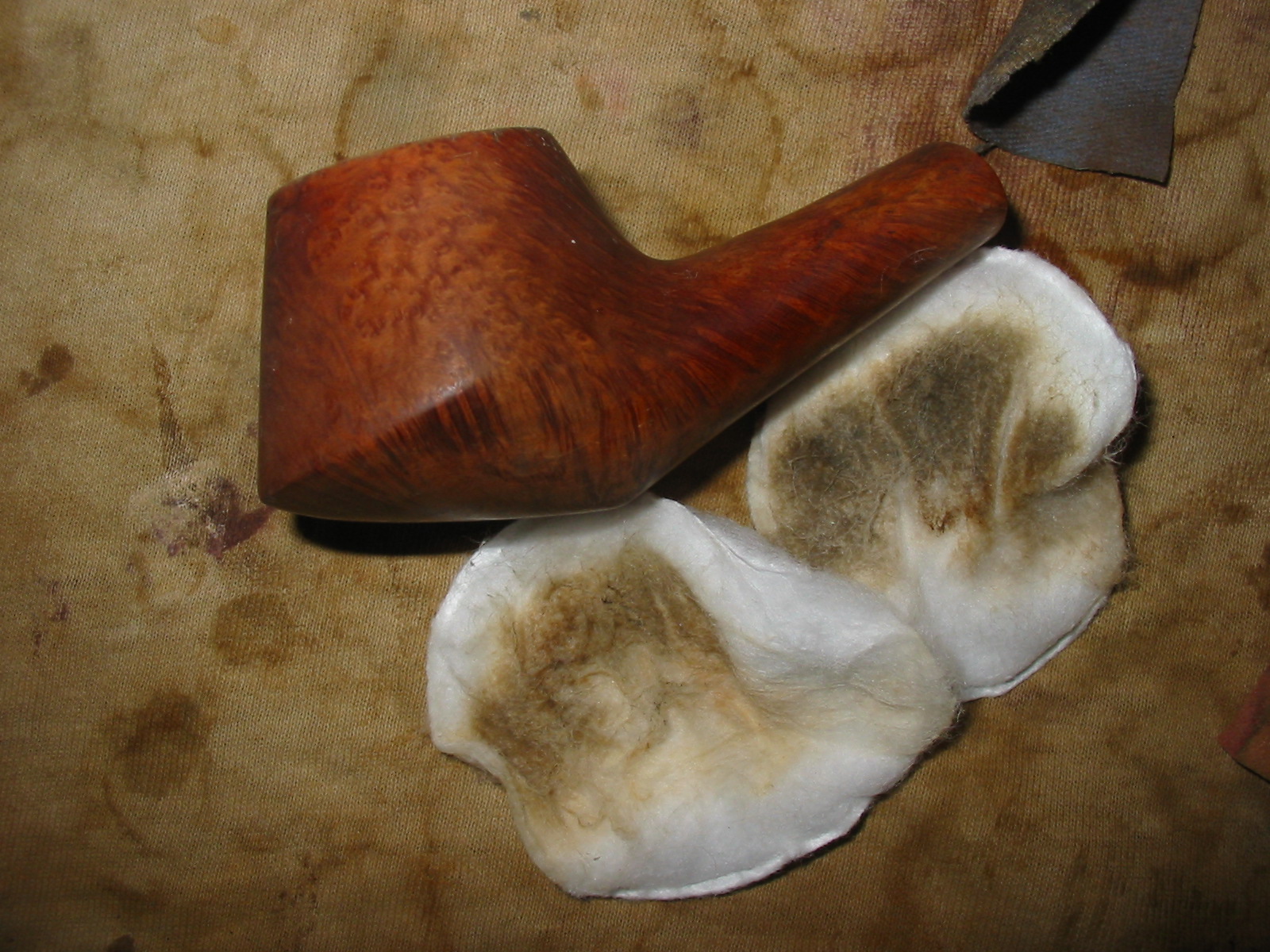
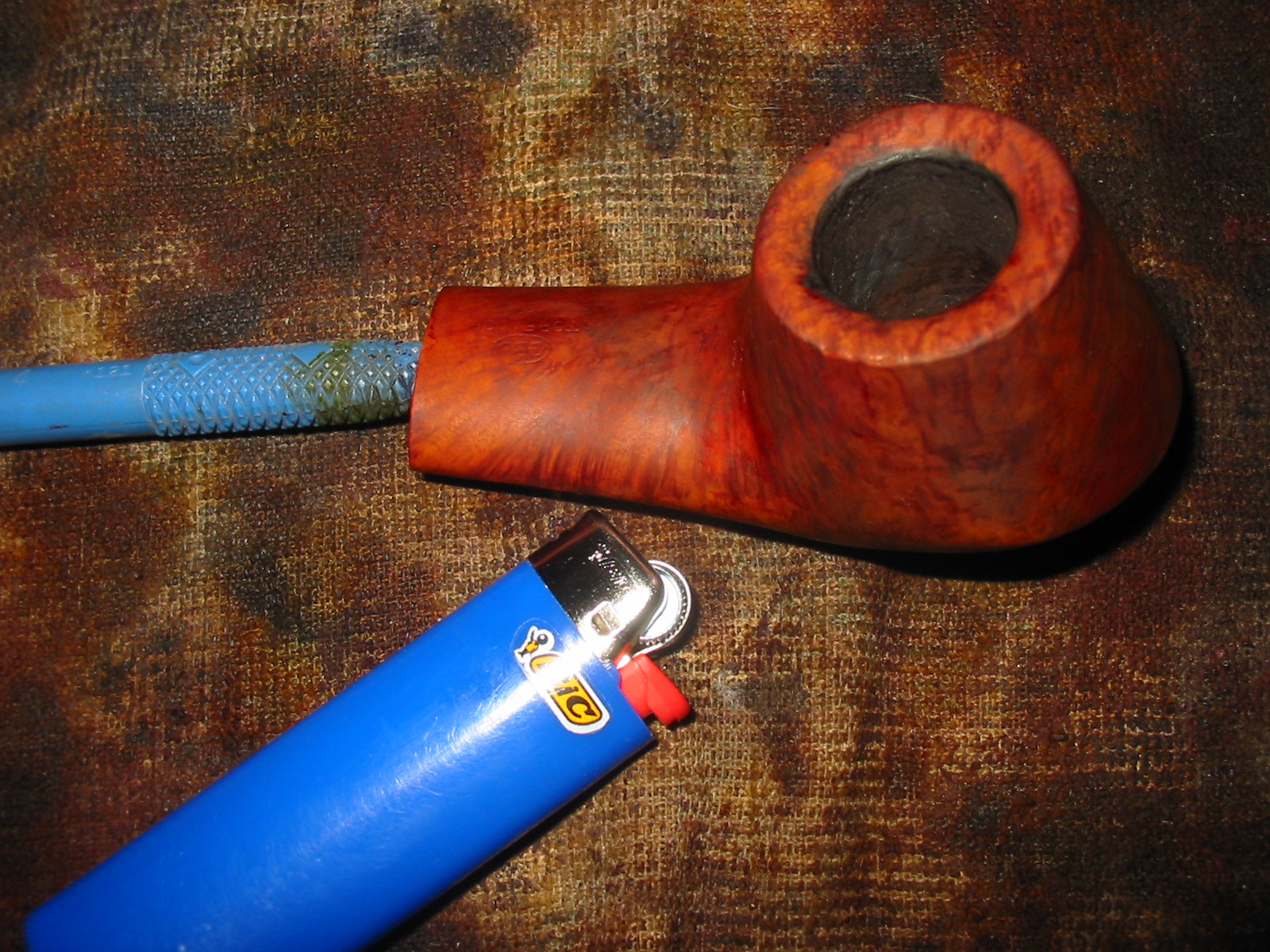
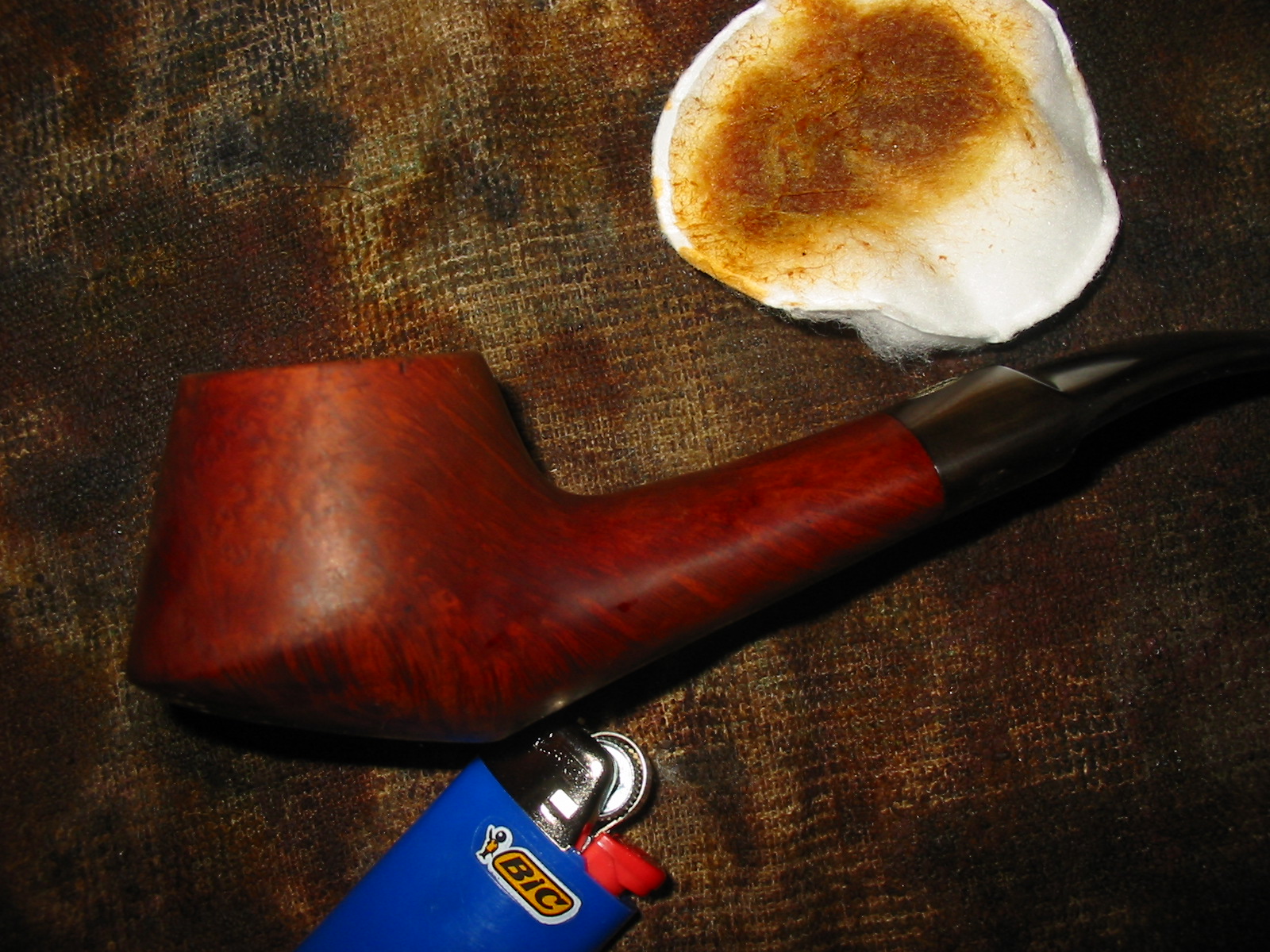
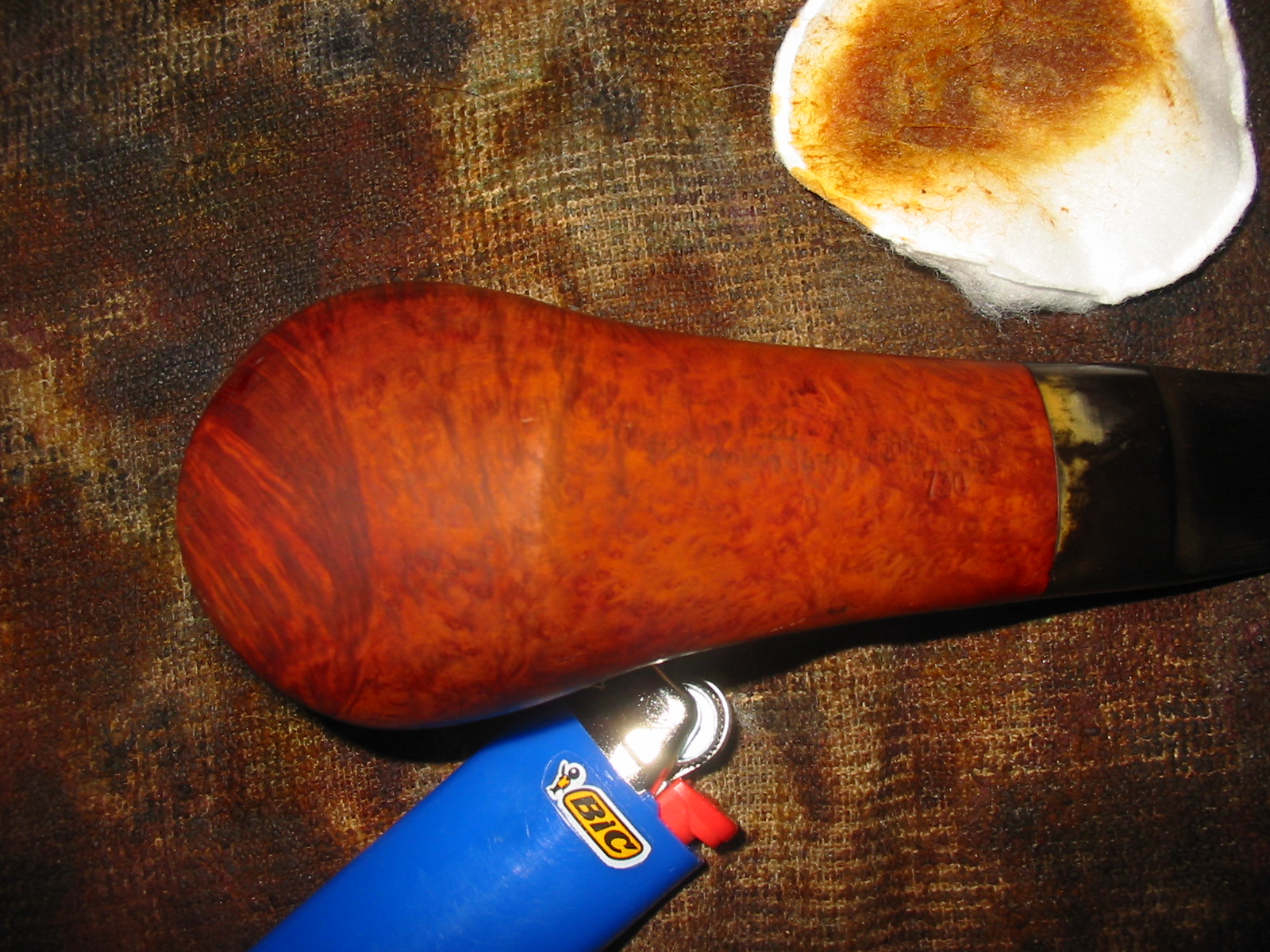
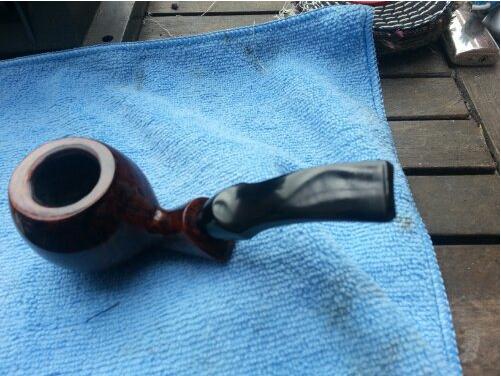
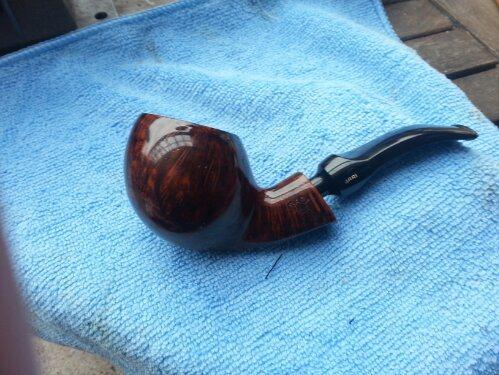
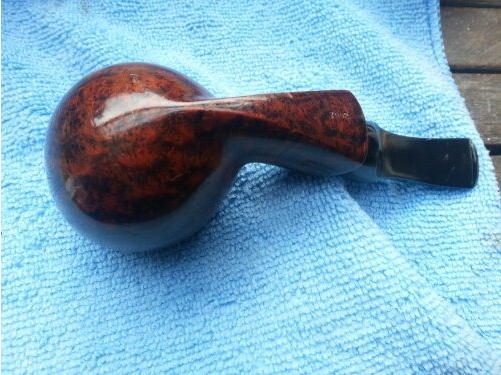
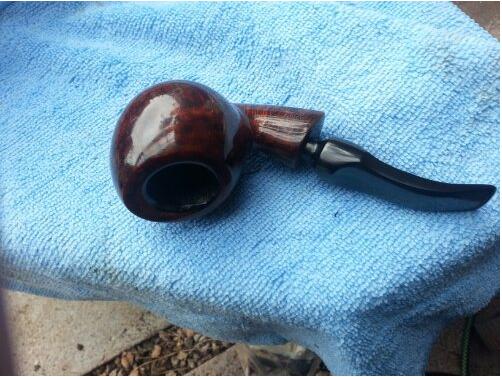
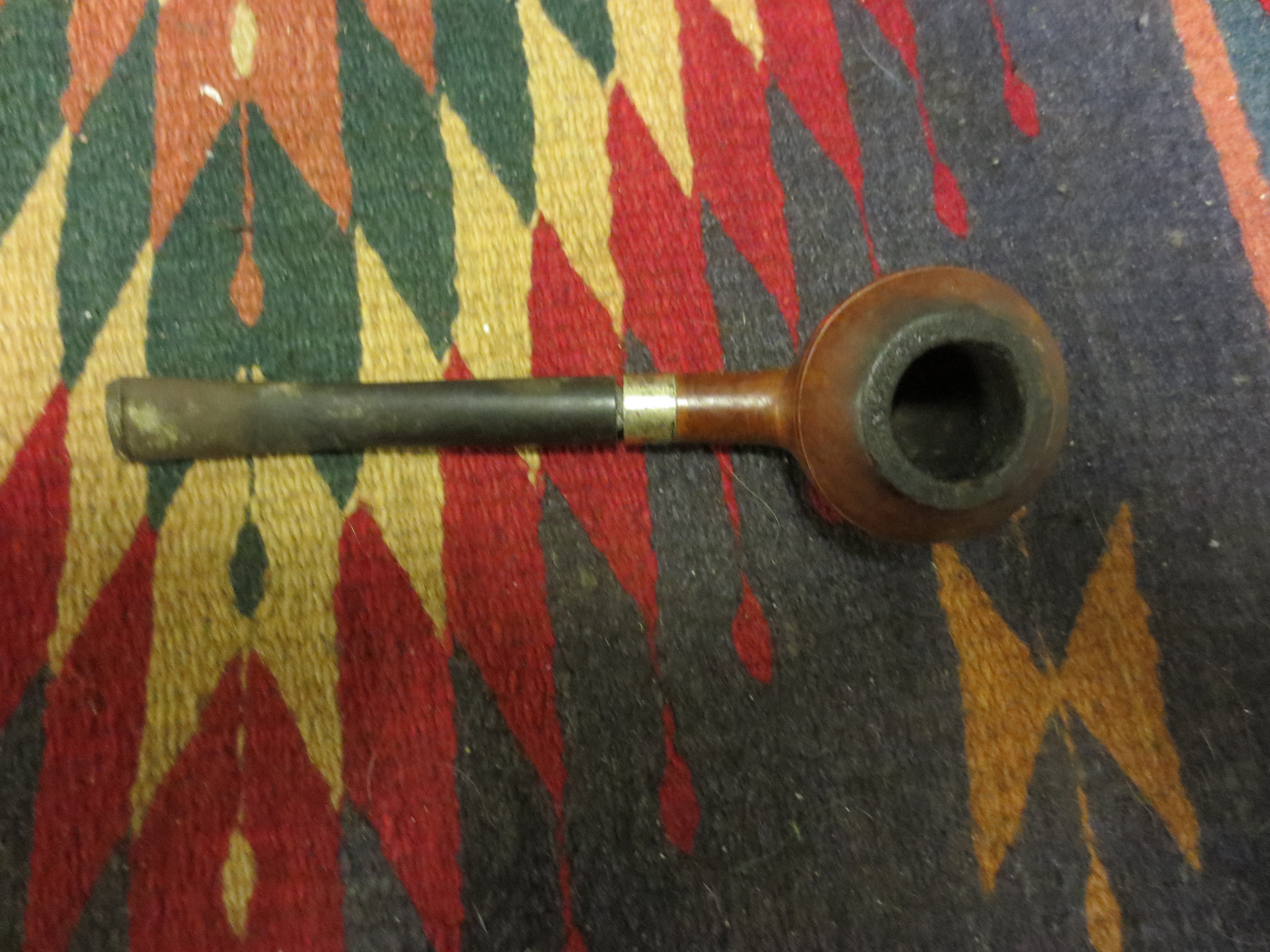
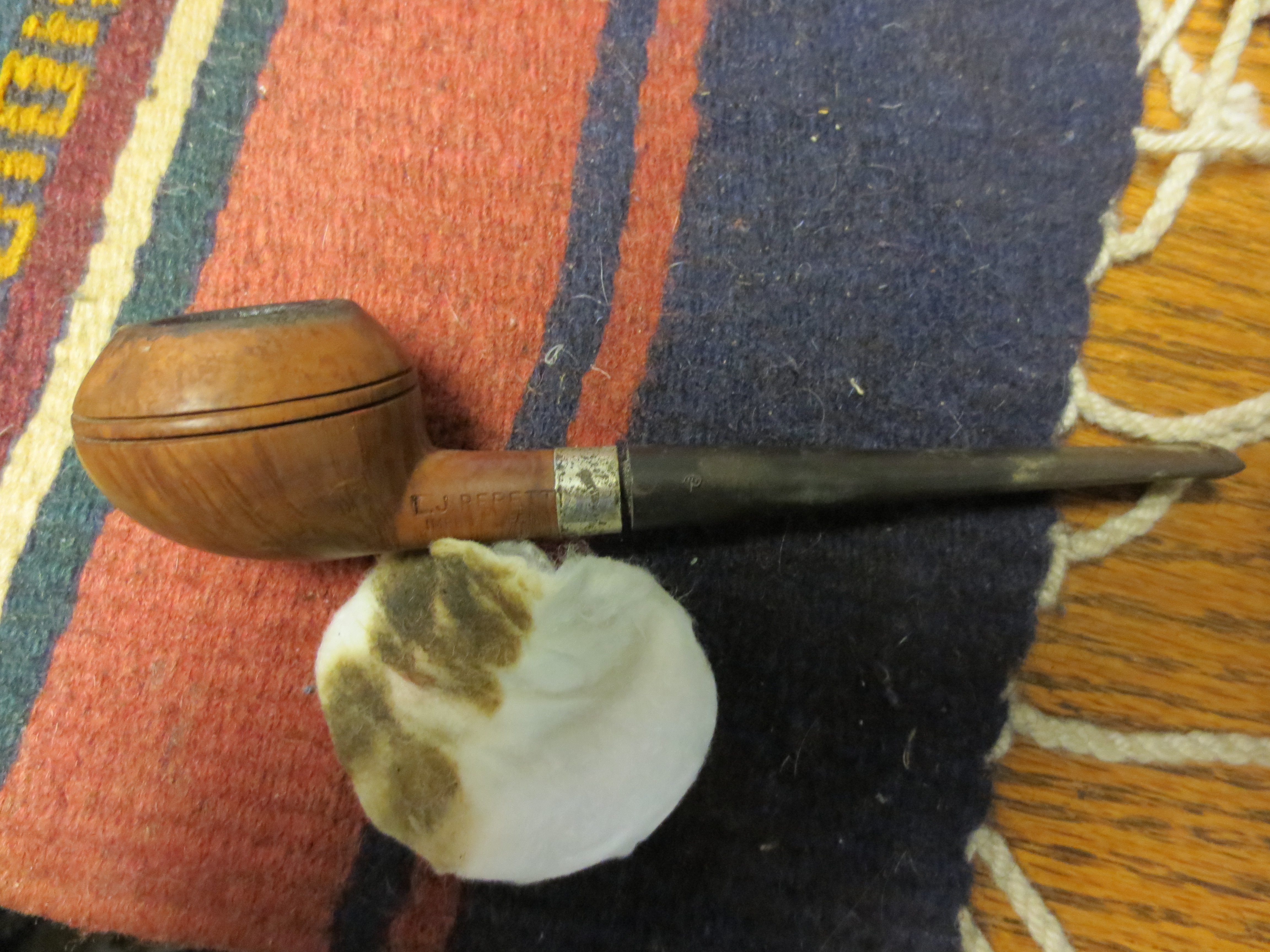
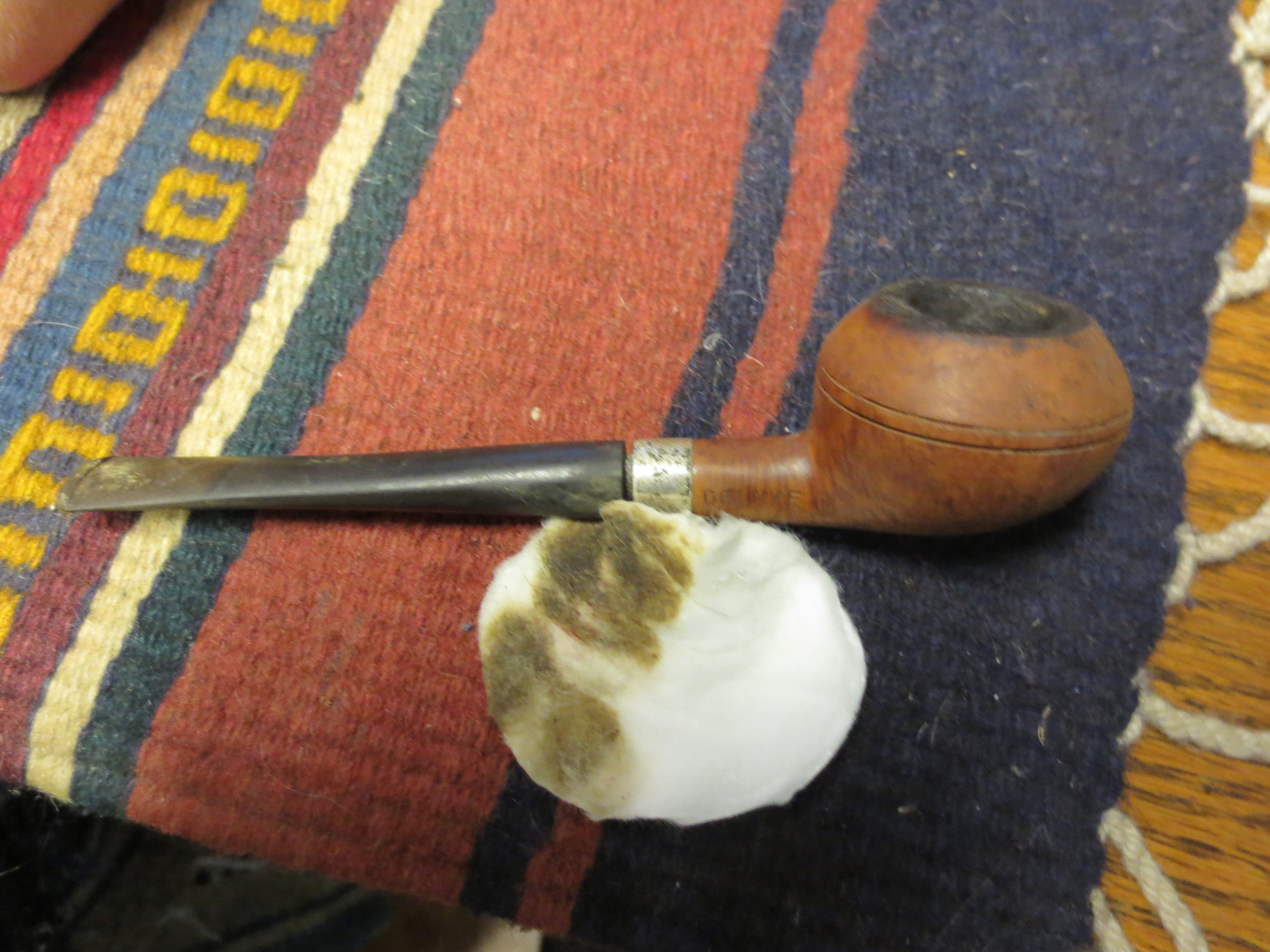
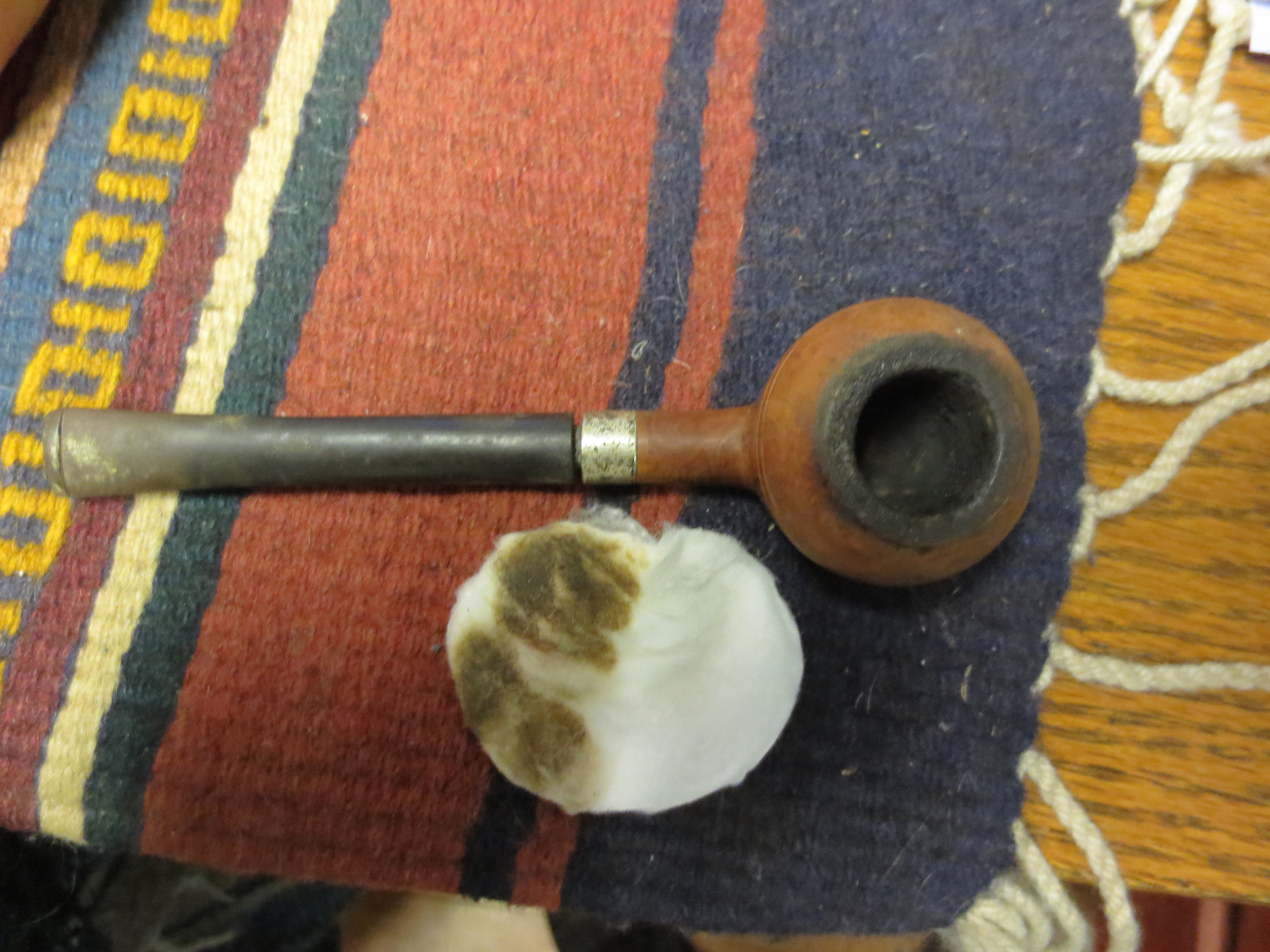
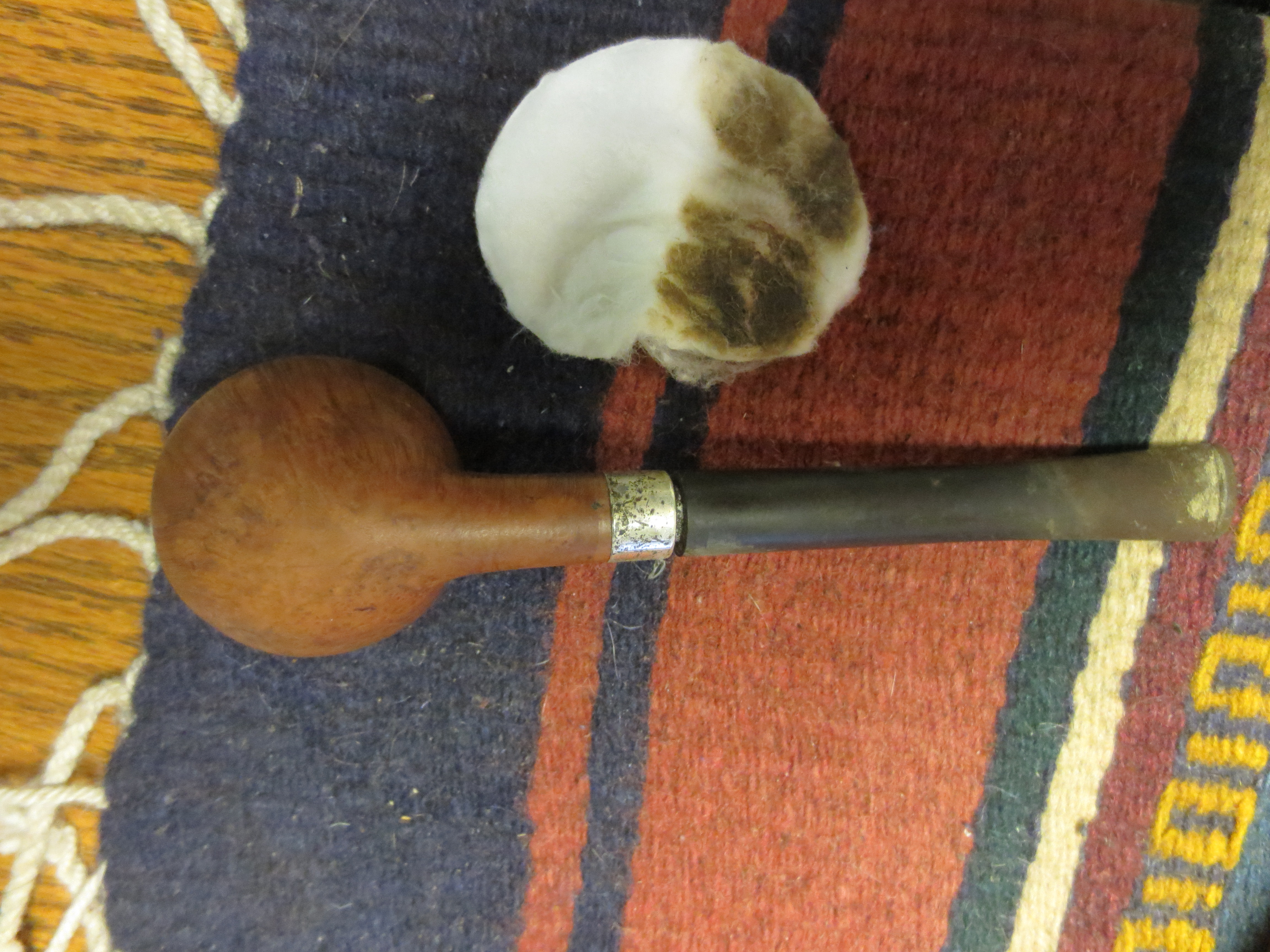
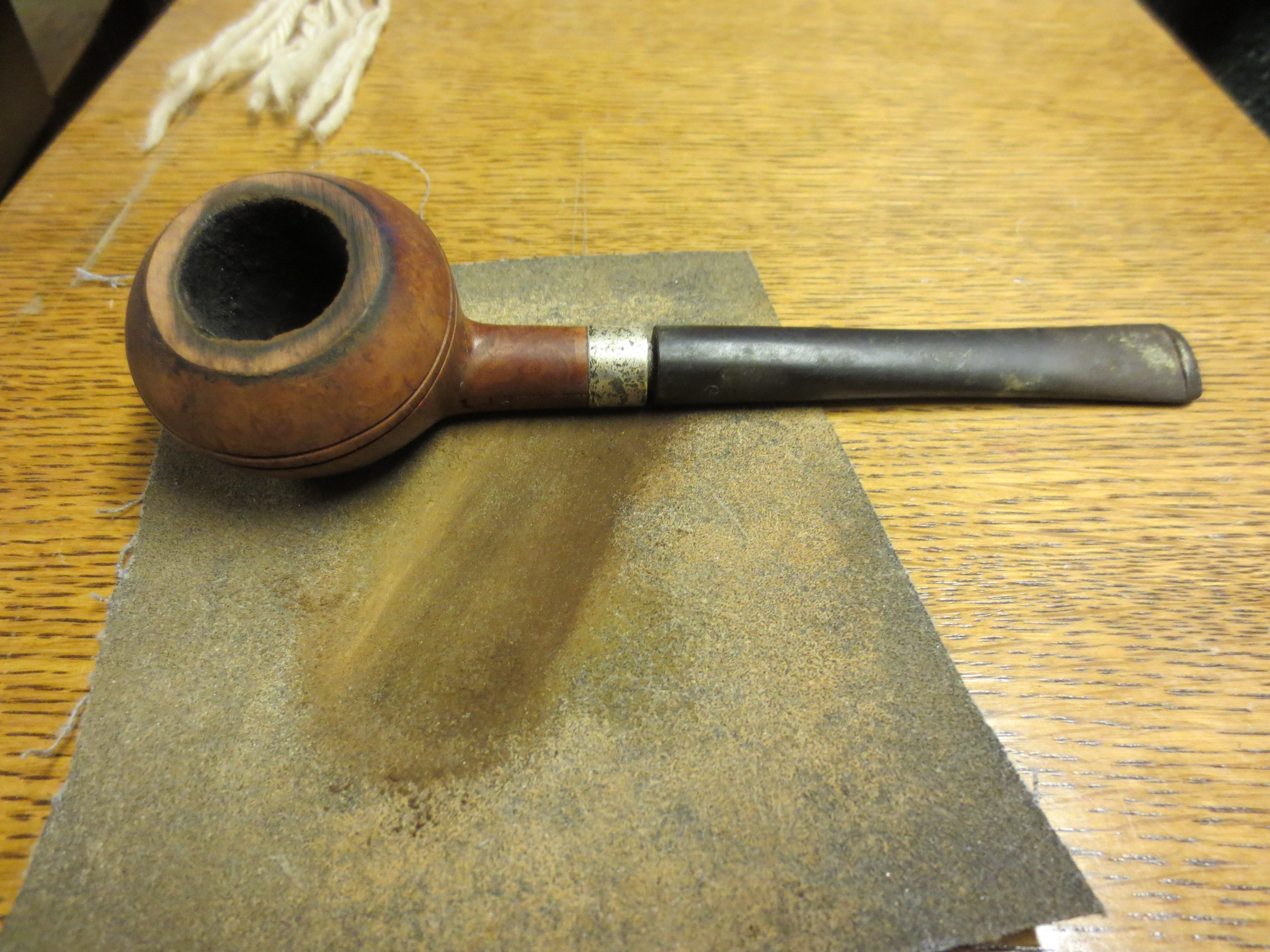
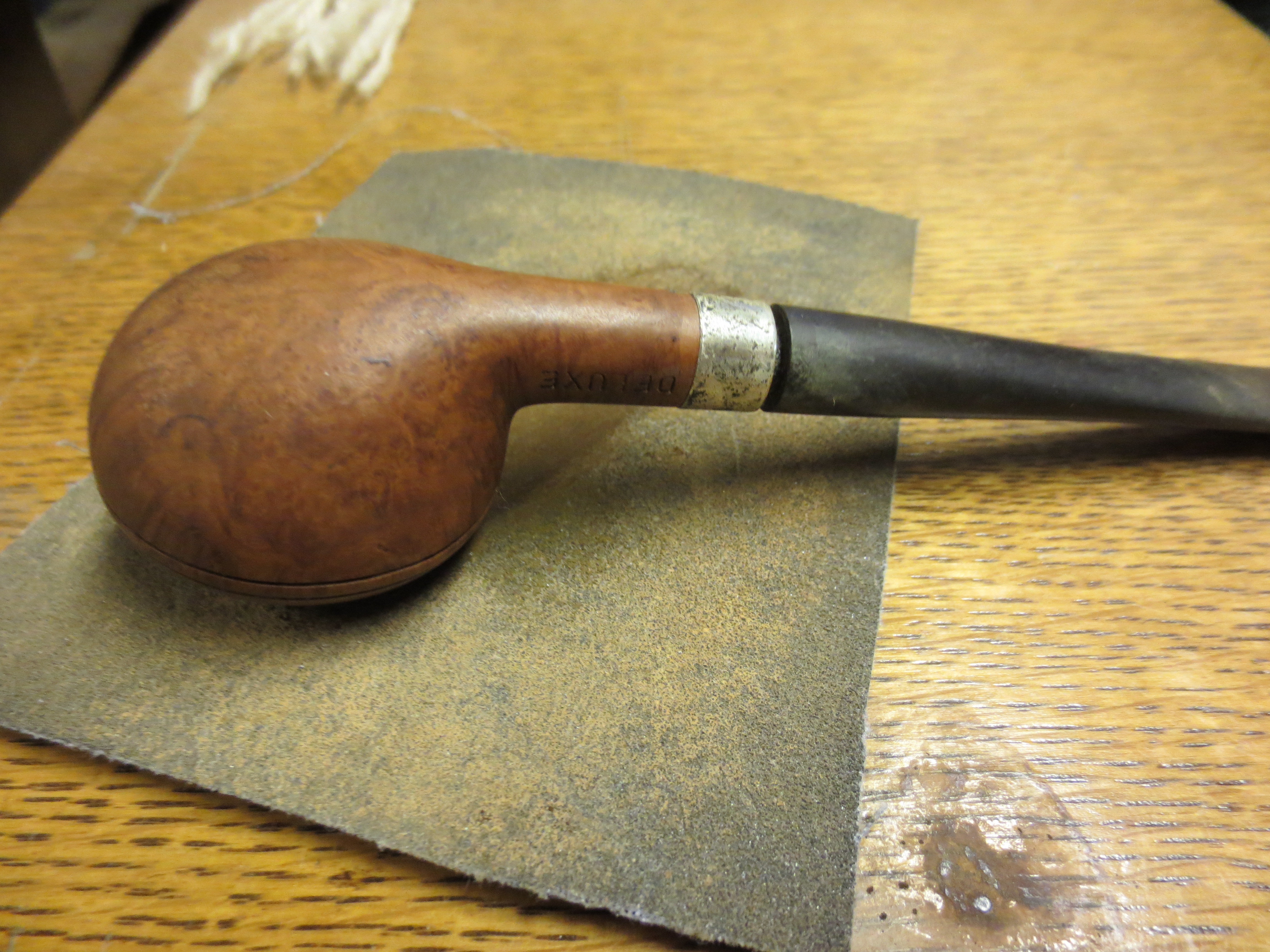
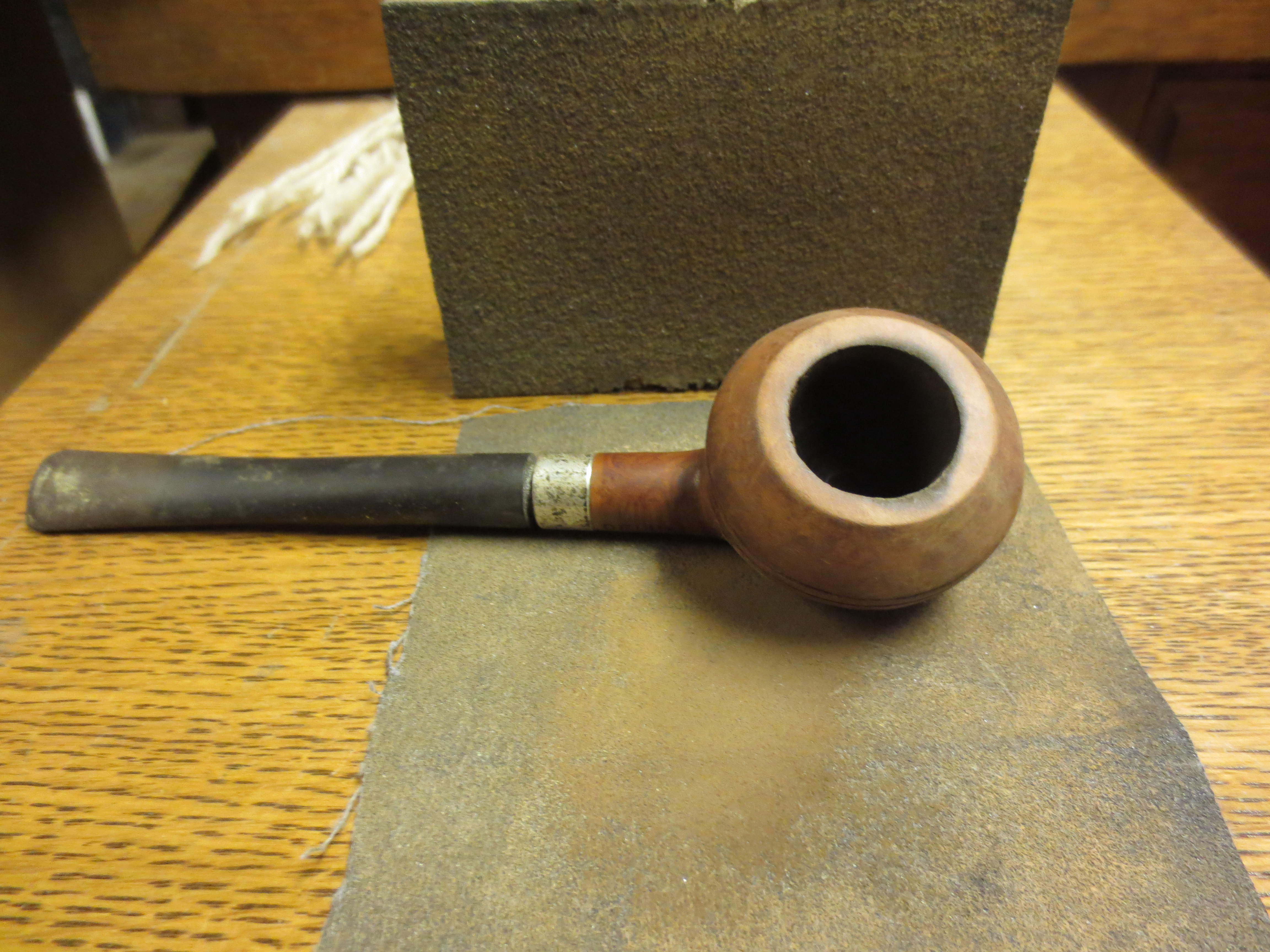
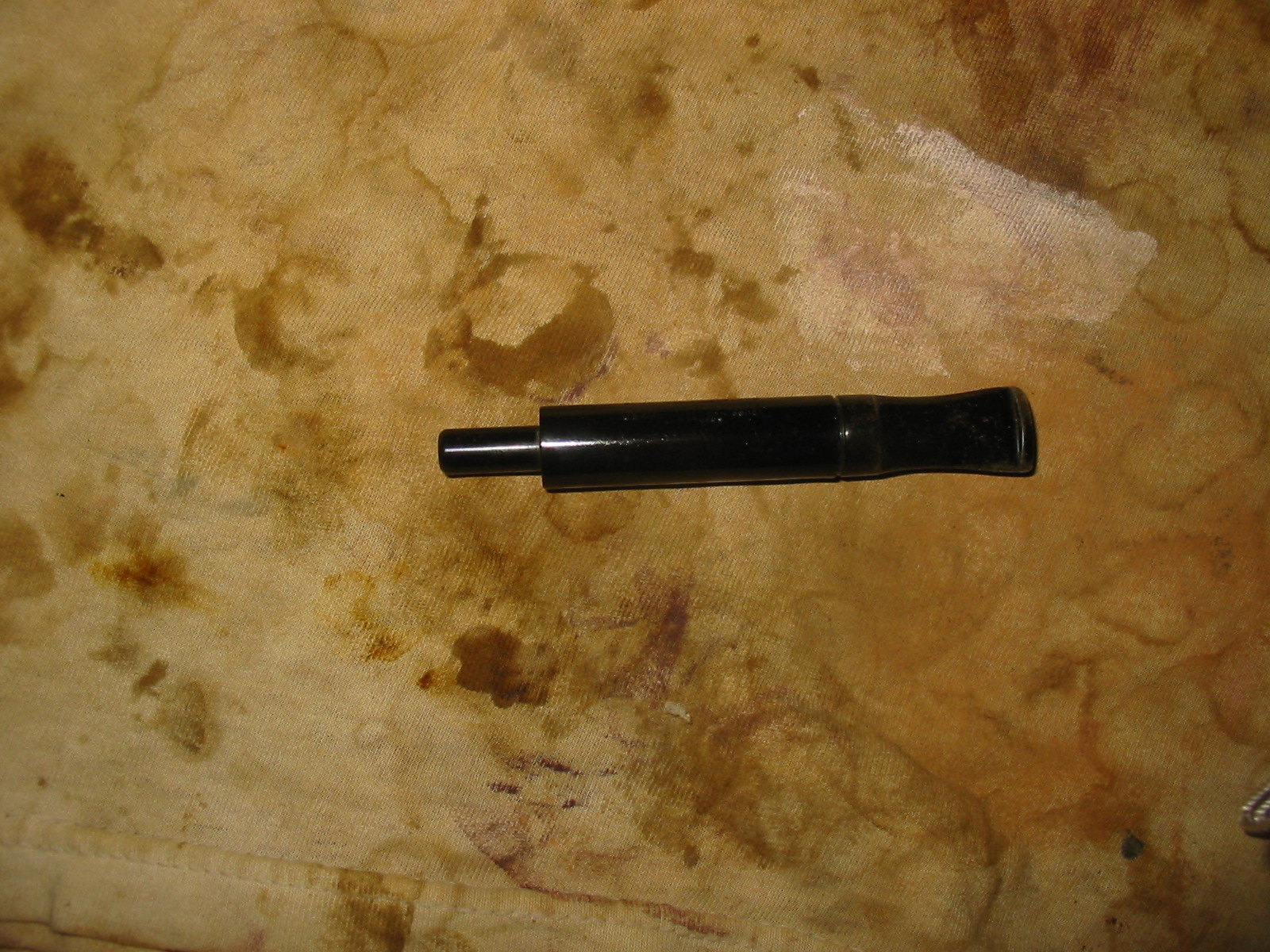
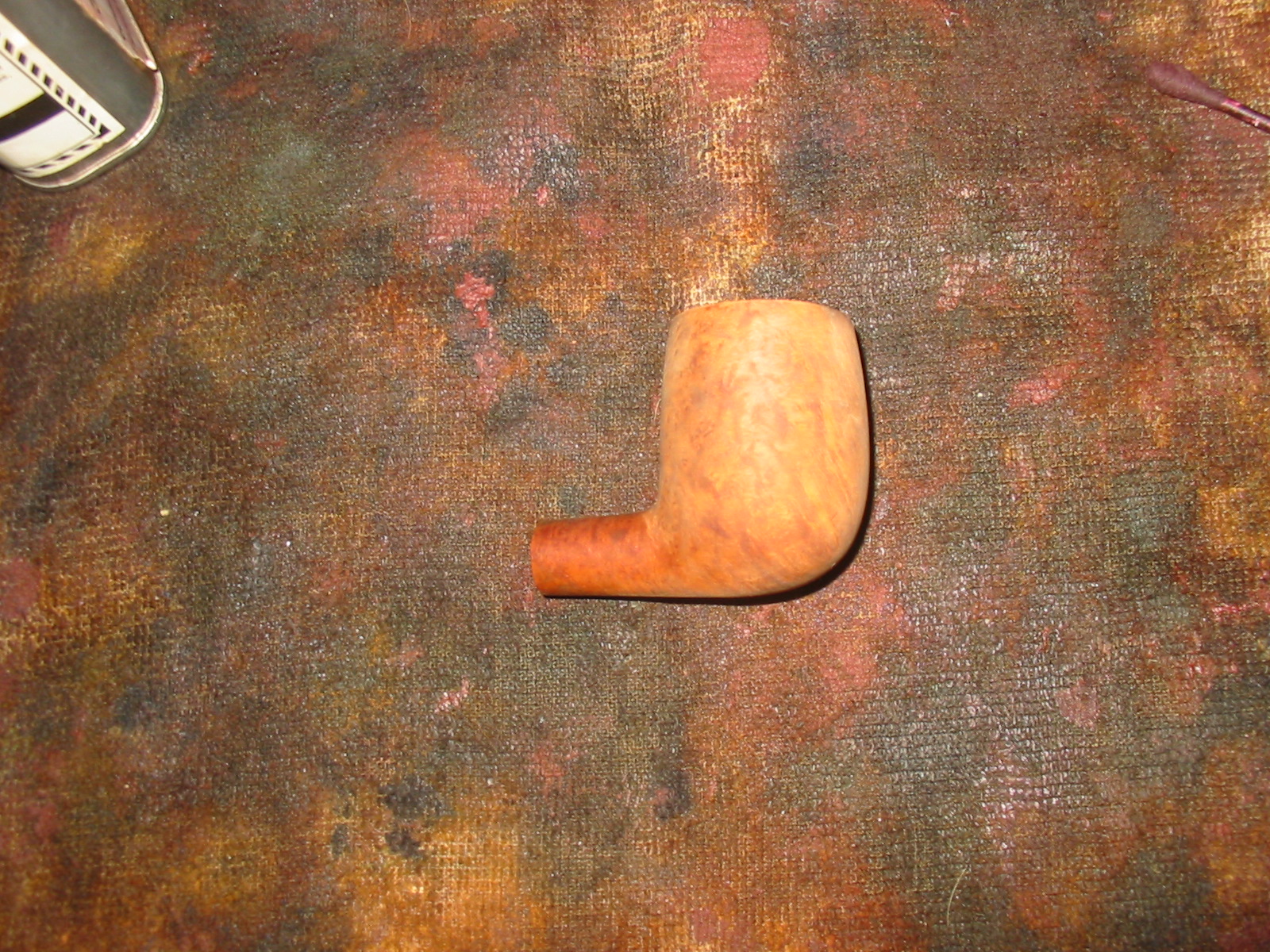
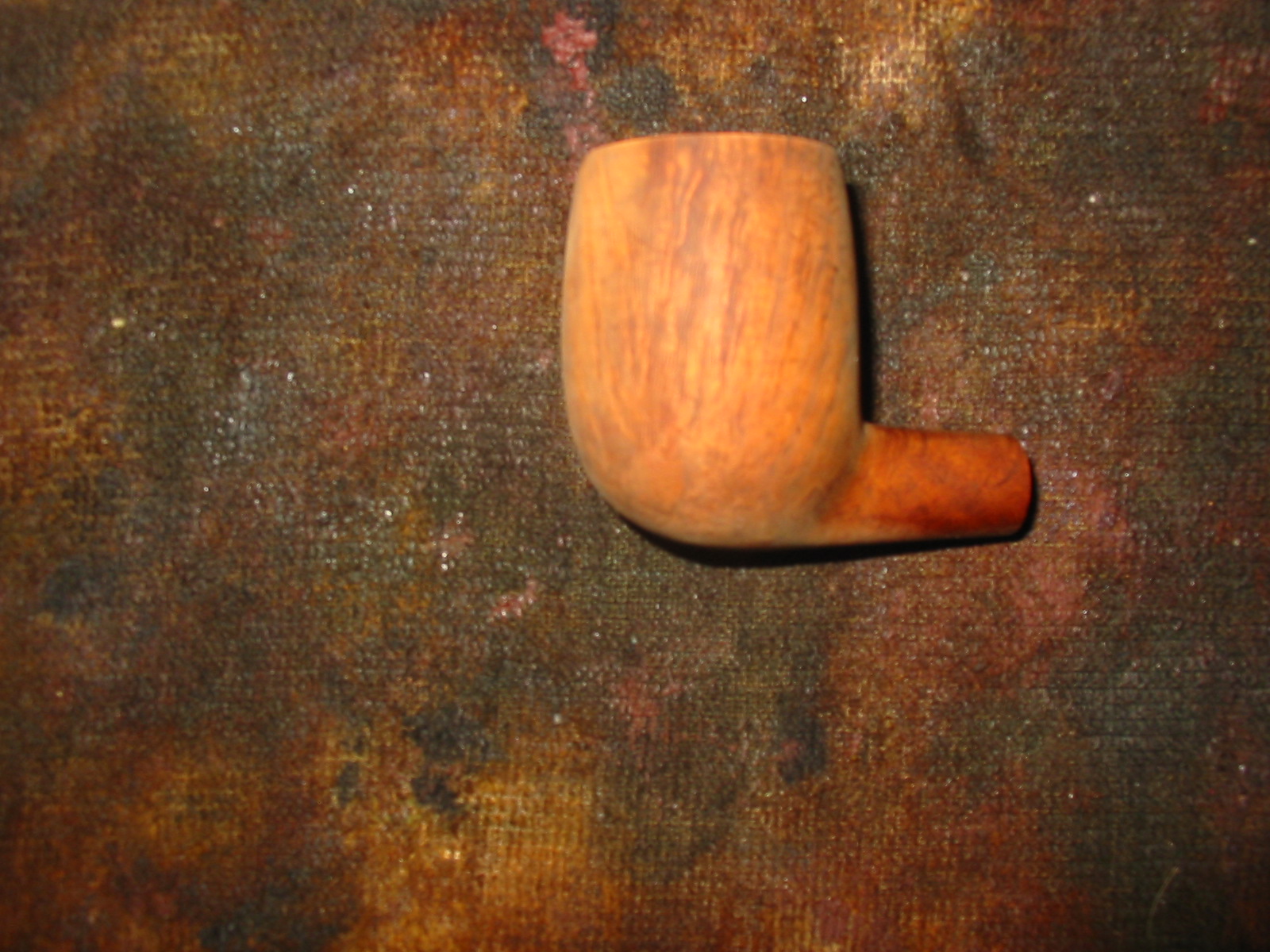
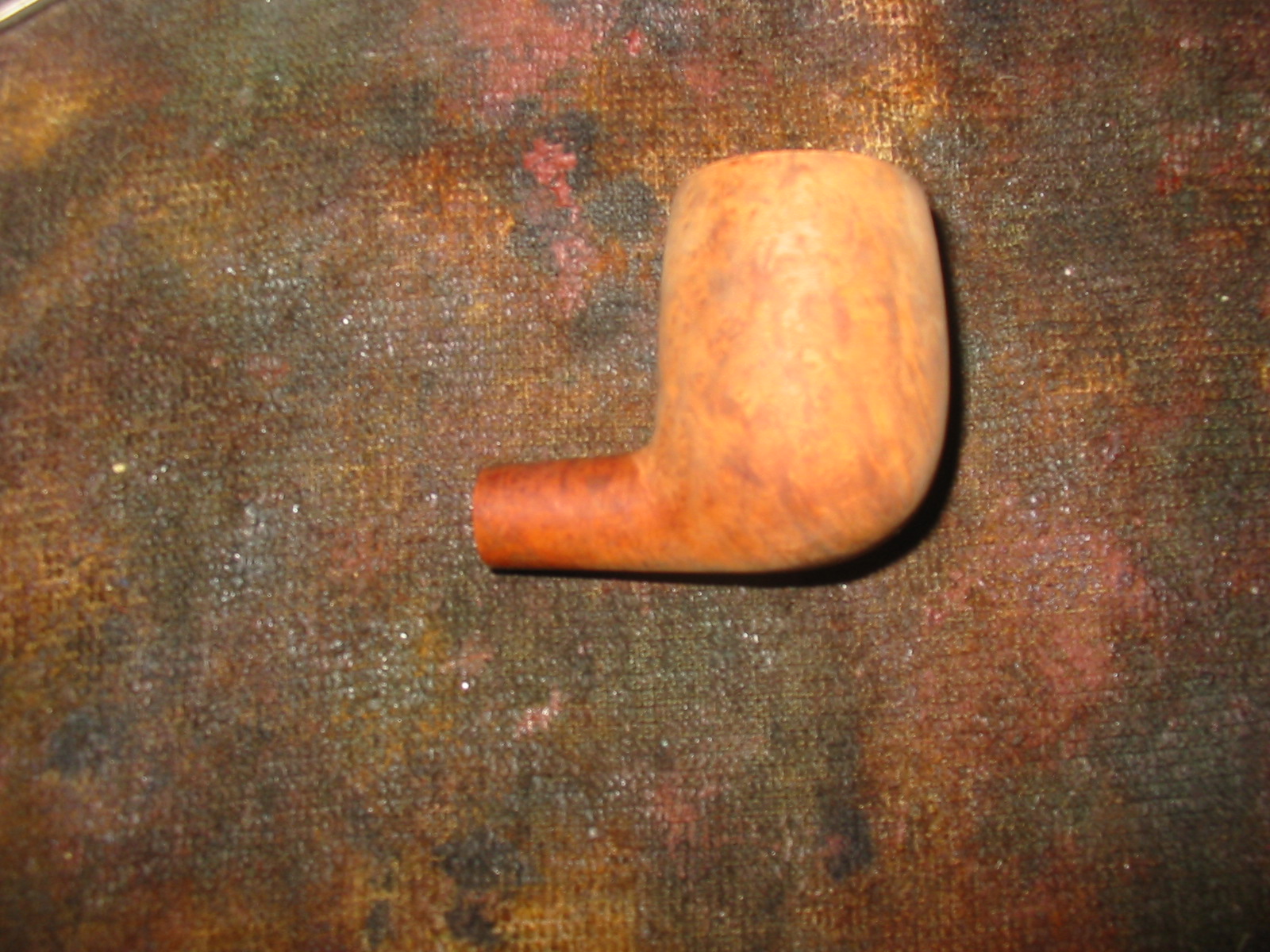
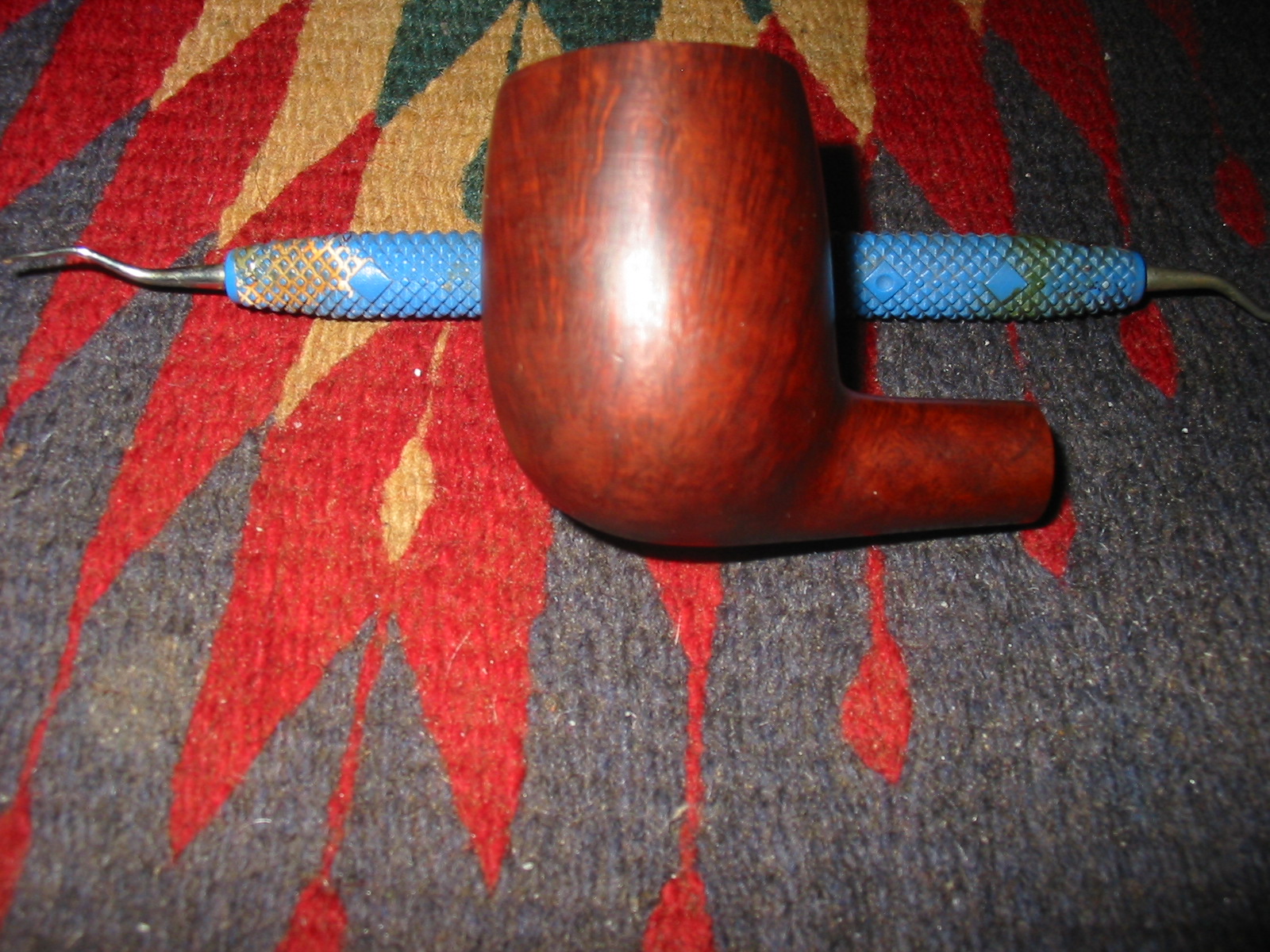
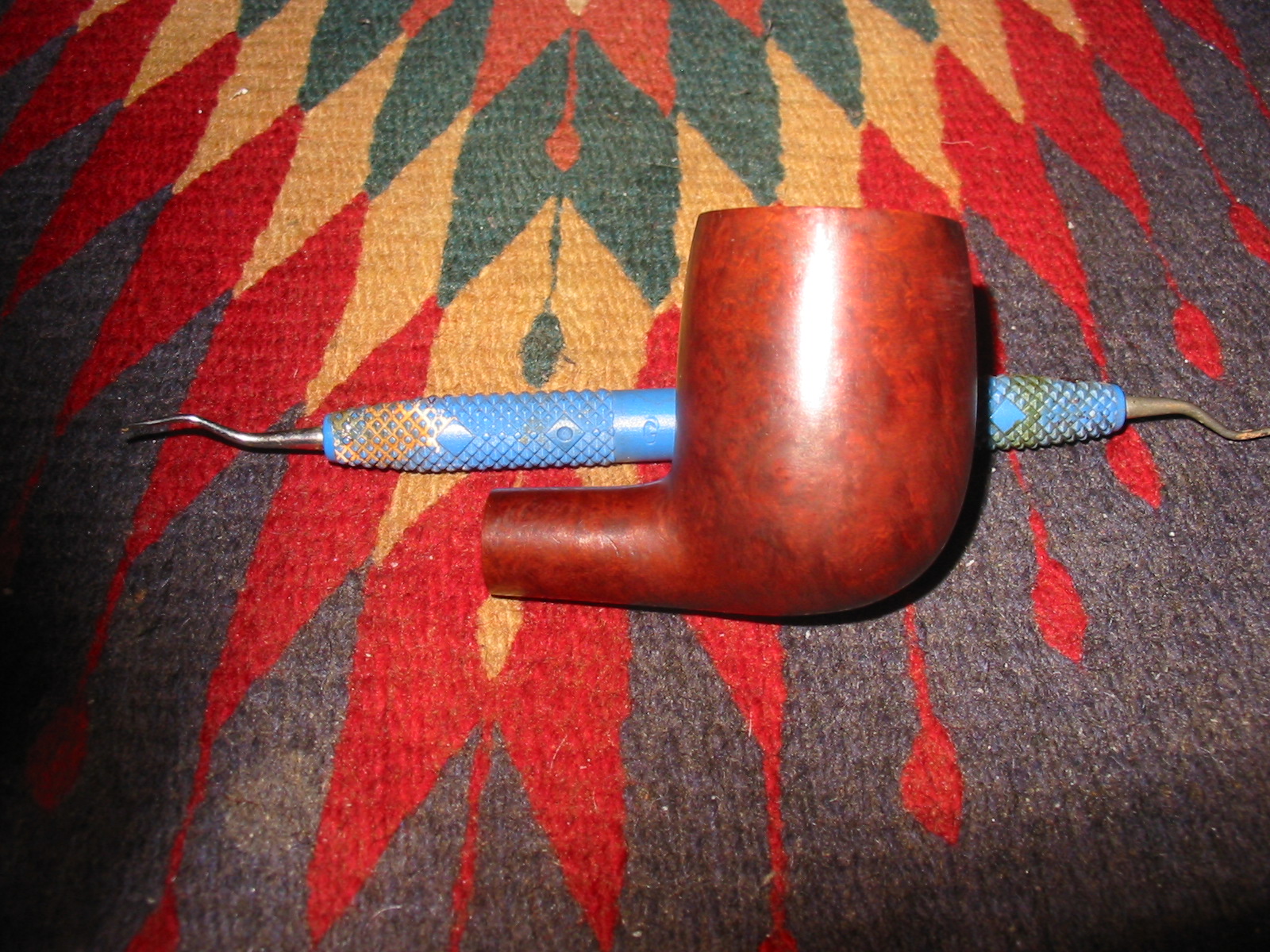
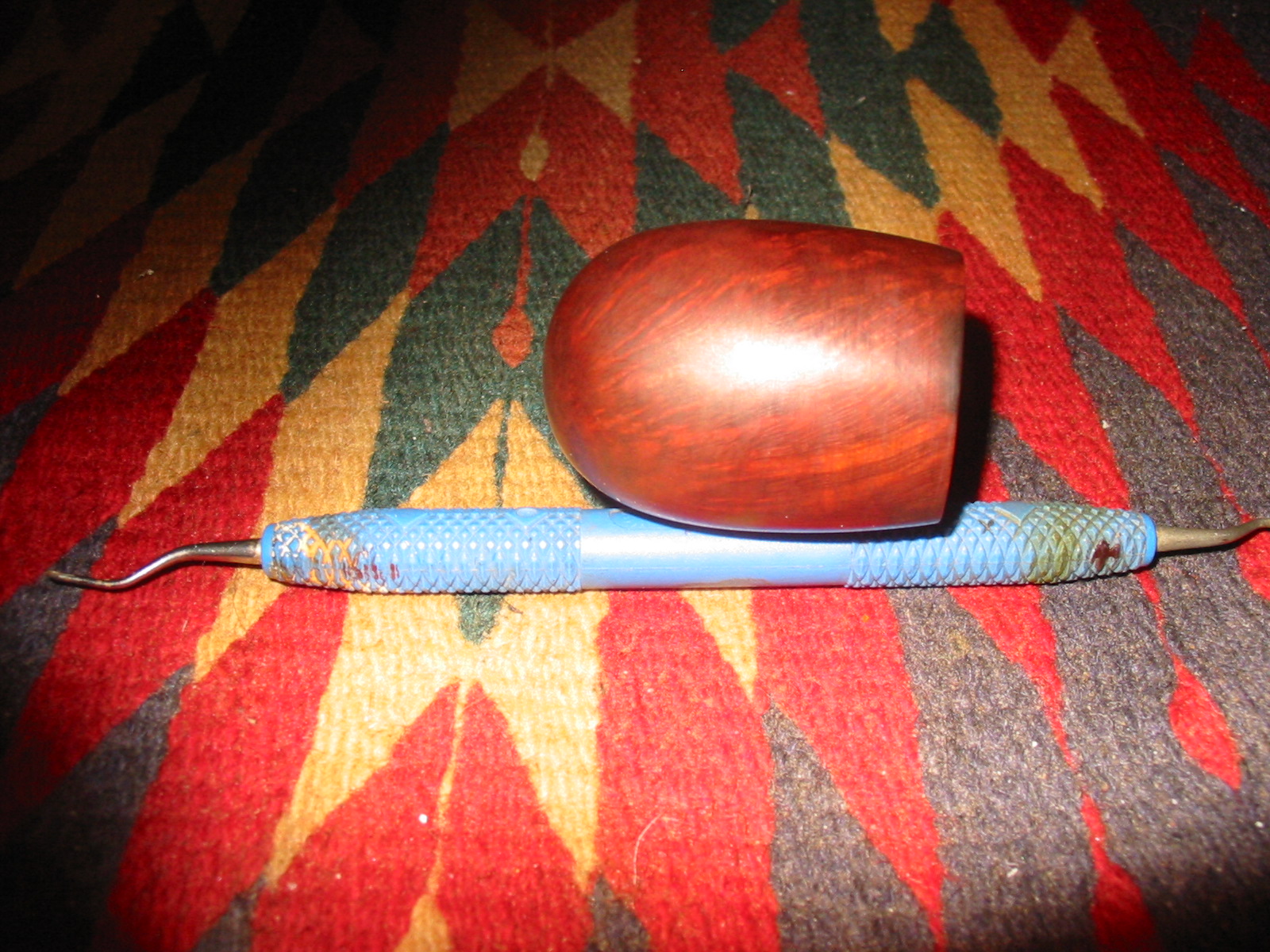
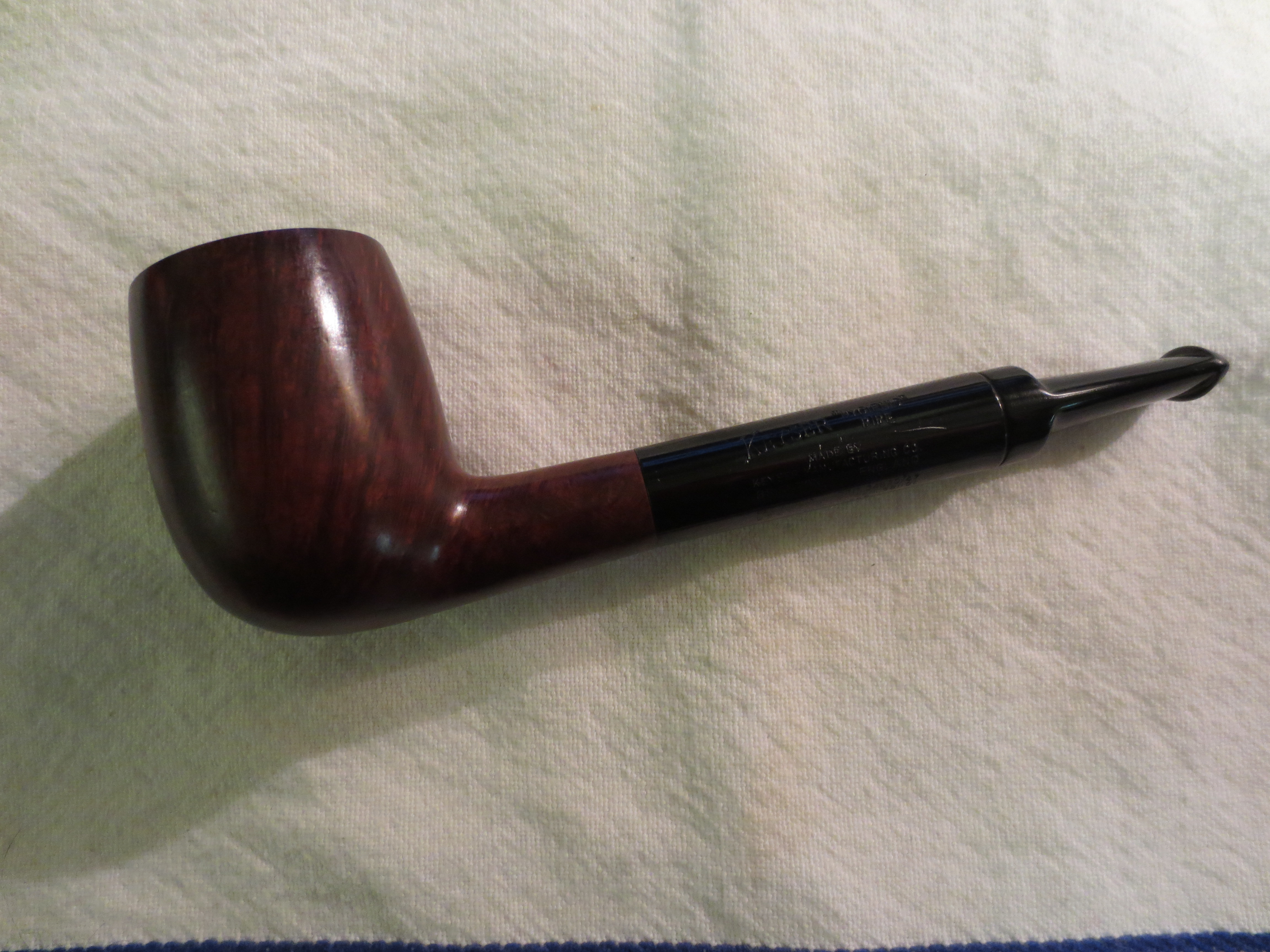
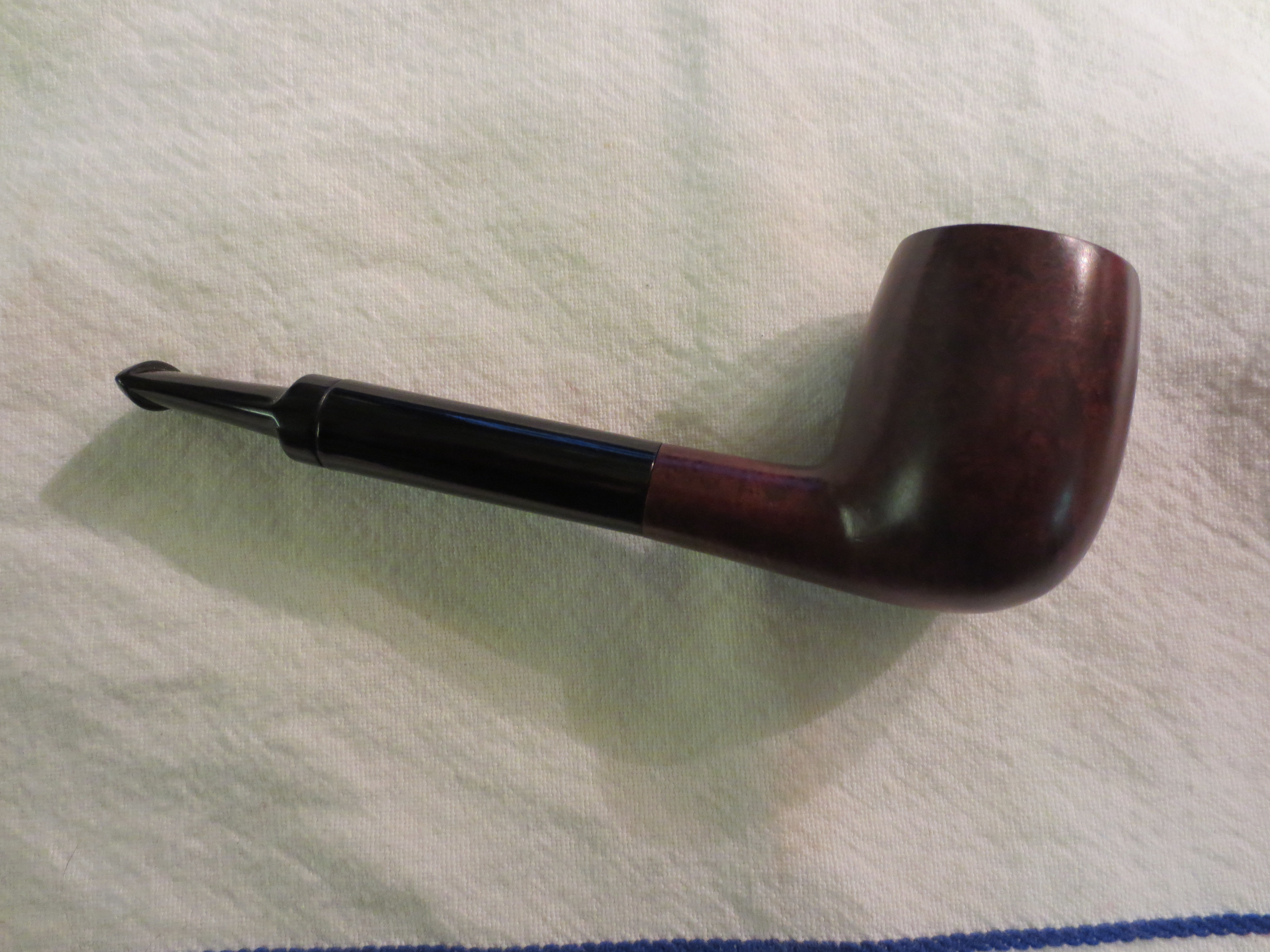
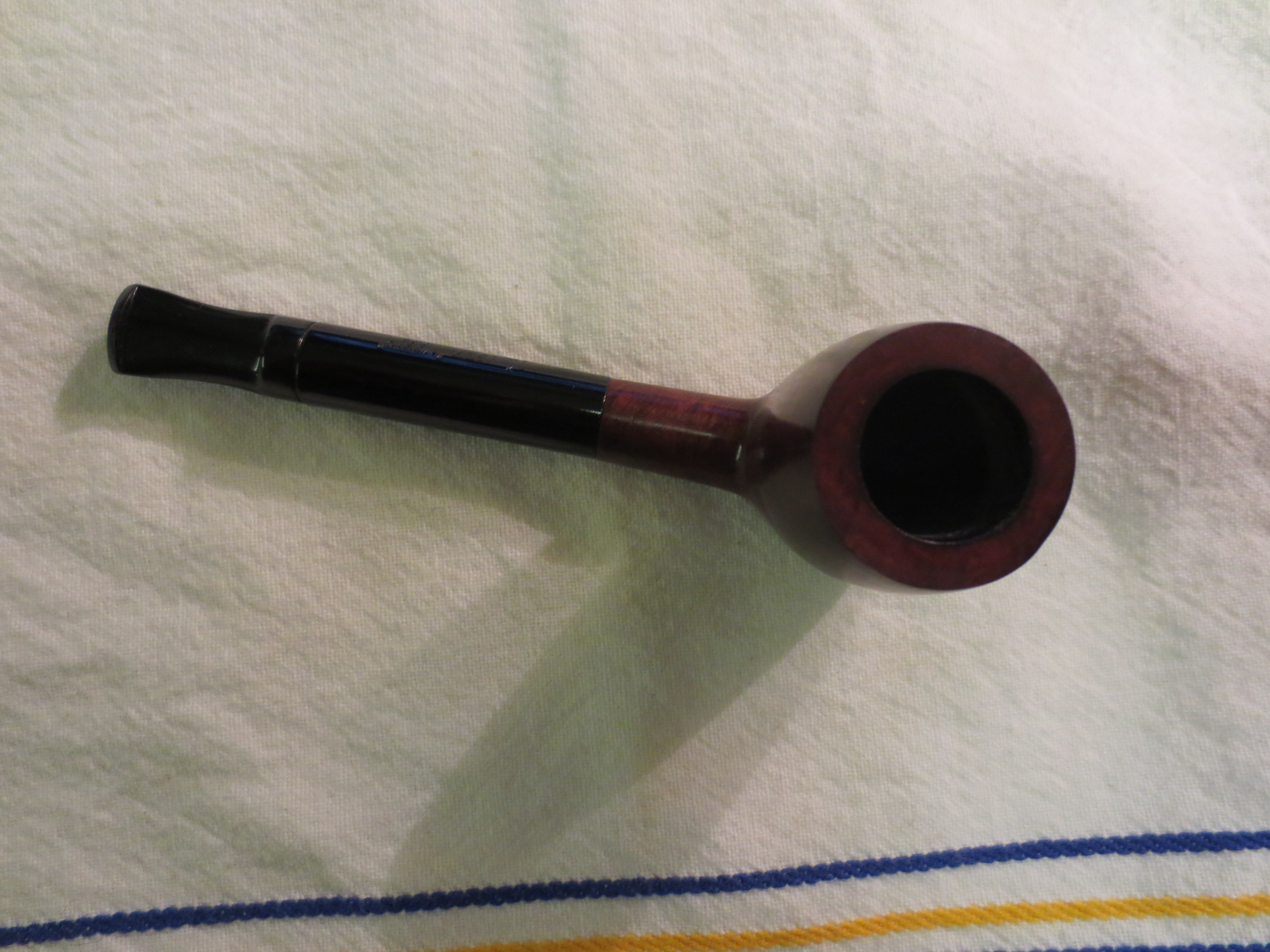
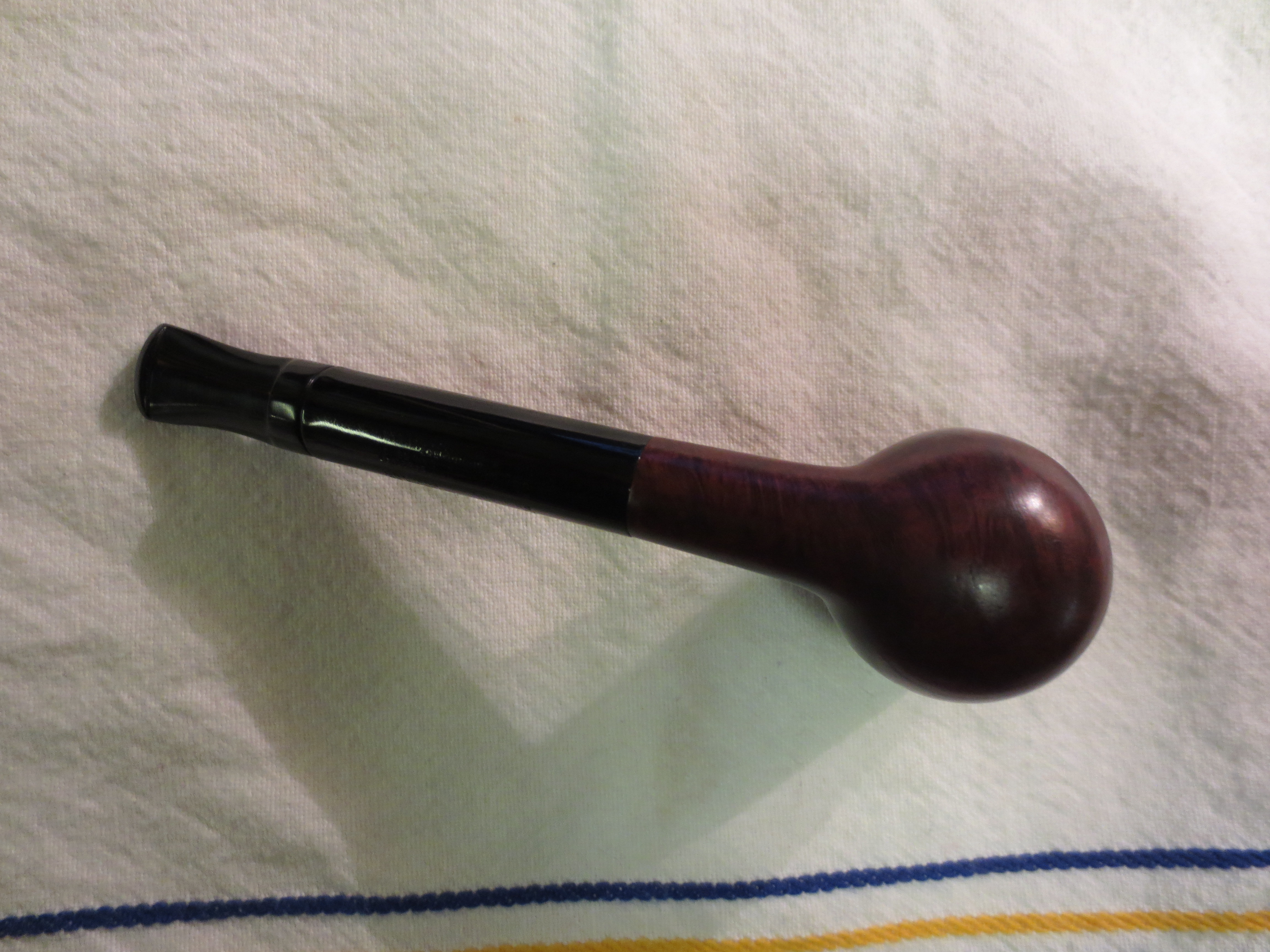
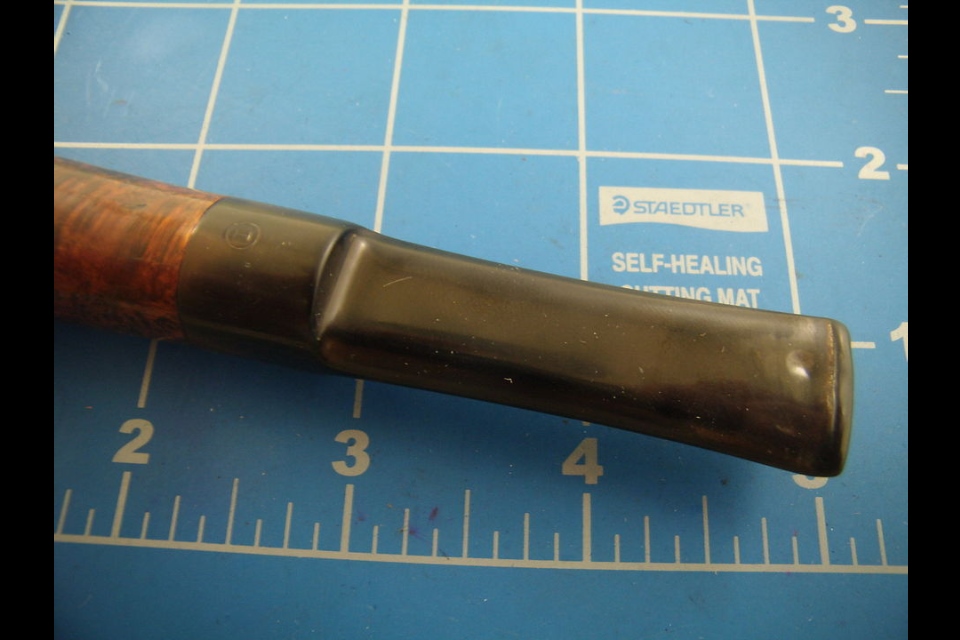
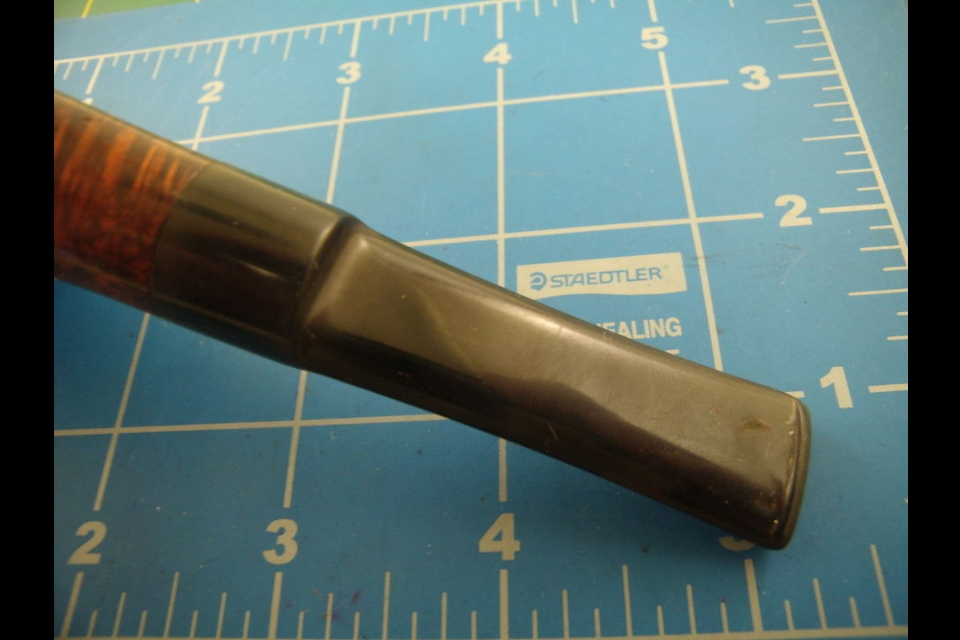
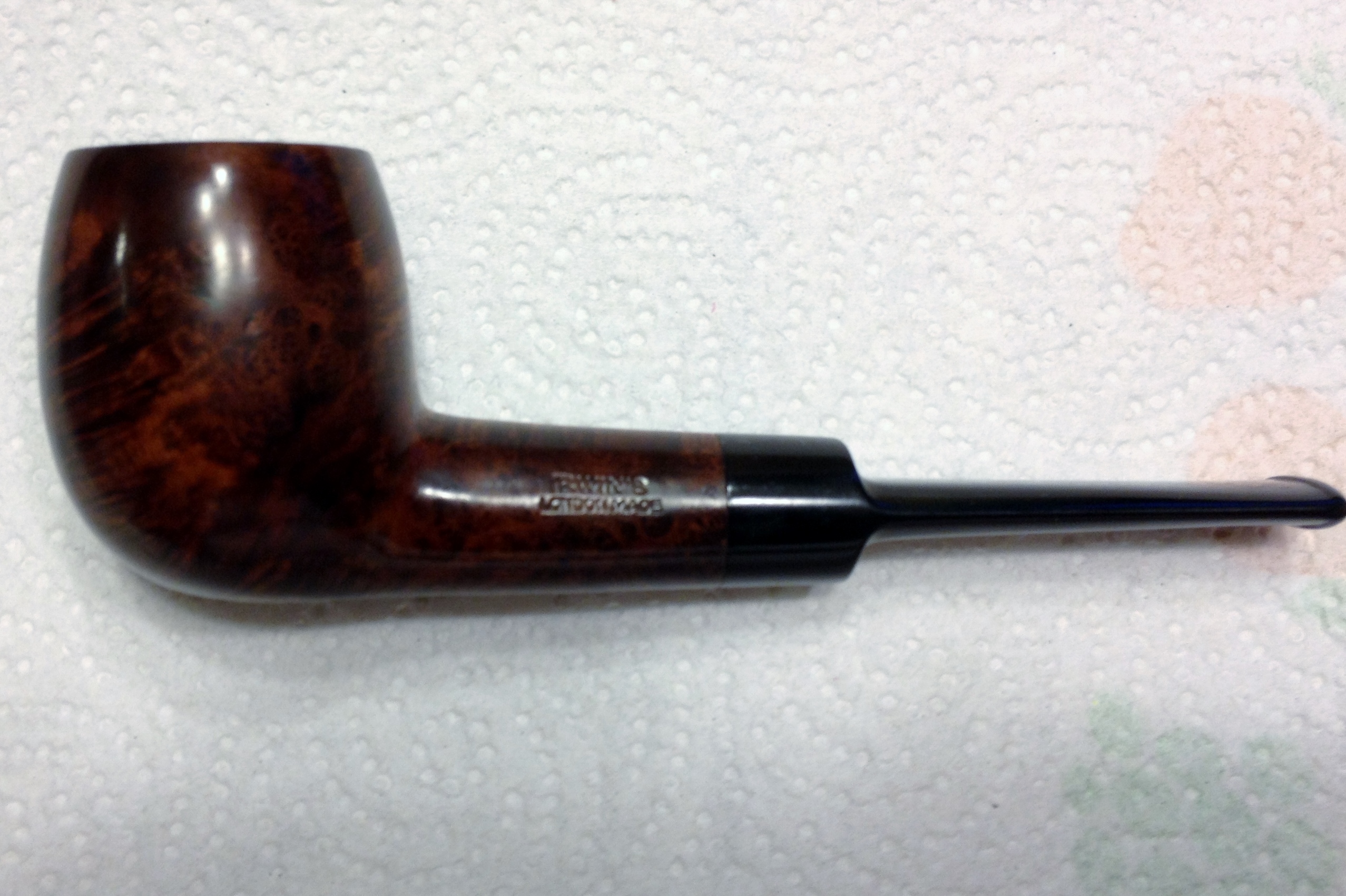
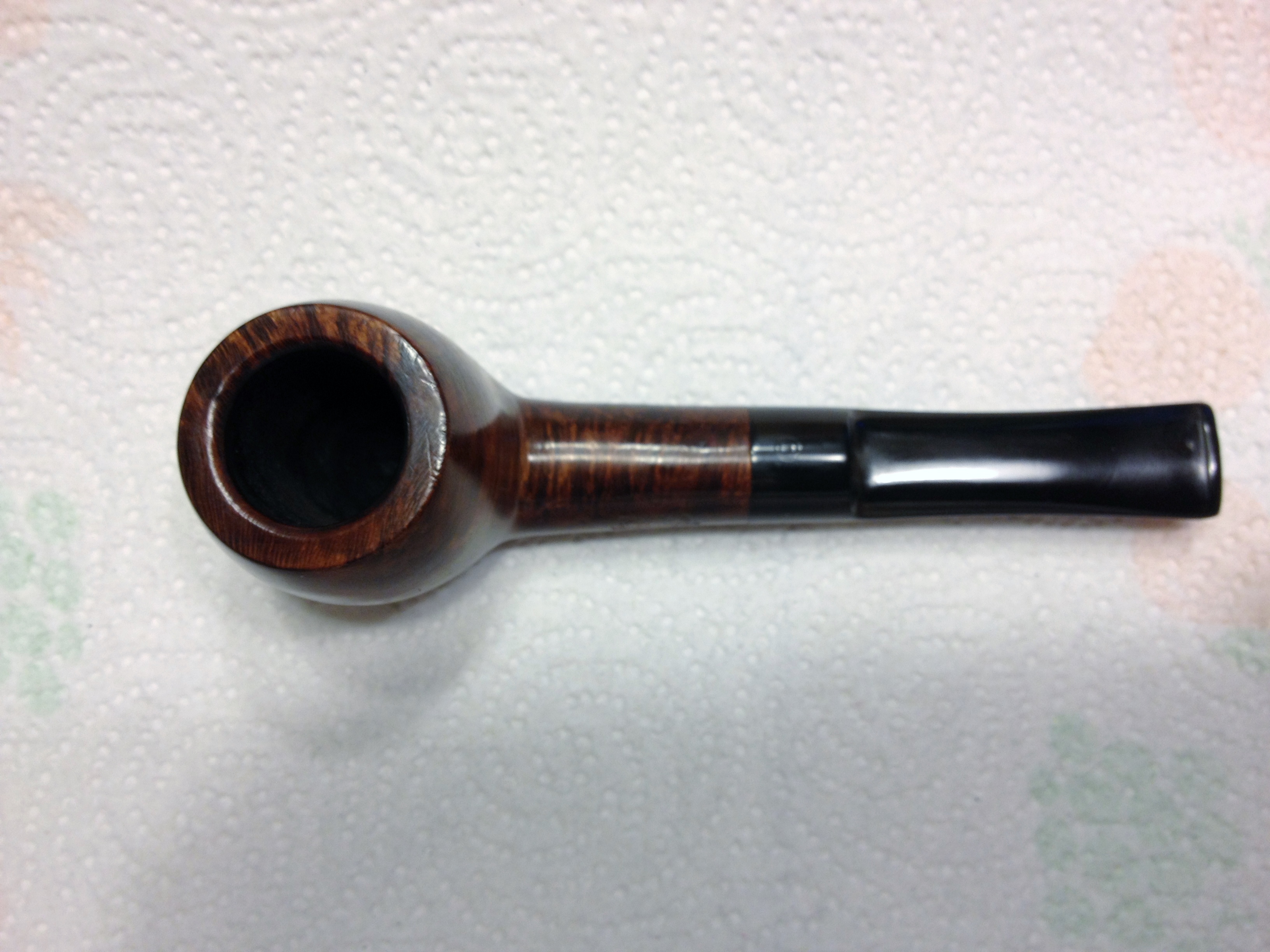
This little pipe caught my eye when I was going through my box of pipes to be refurbished. It is stamped Jarl and is in what they call their Ribbon finish. It an acorn shape with what for all intents and purposes looks like a Celius style stem on it. It is light and clean.

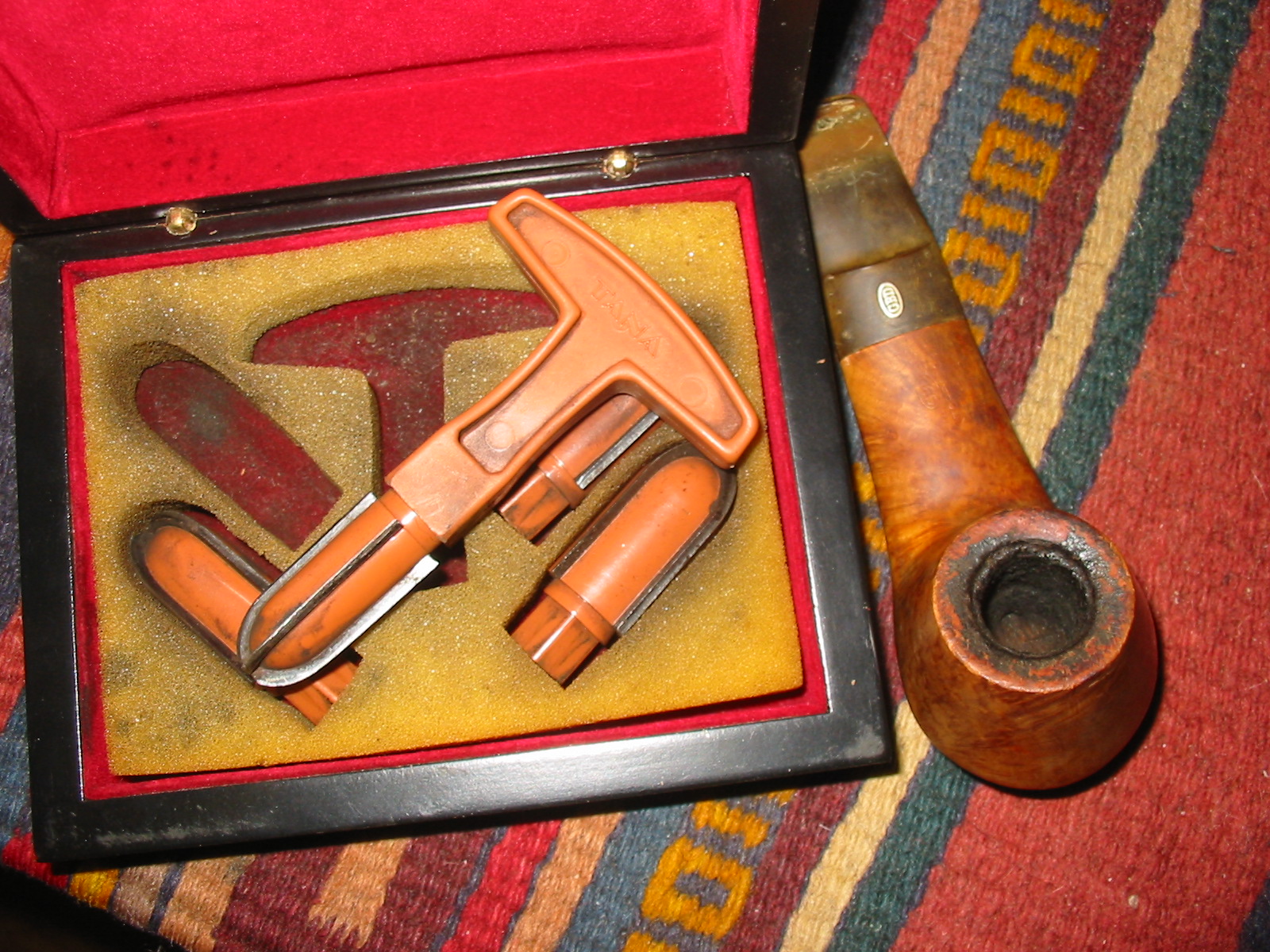
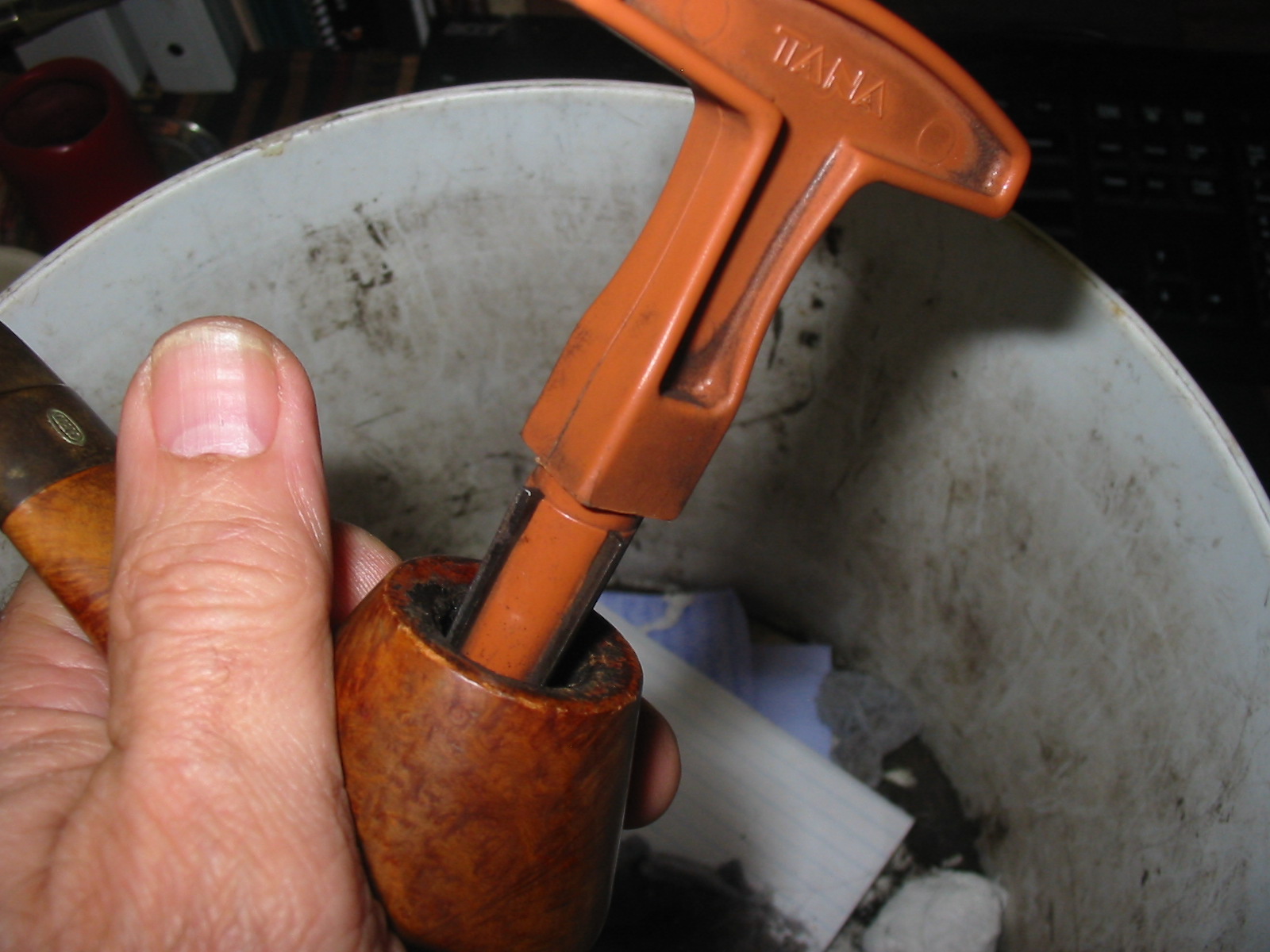
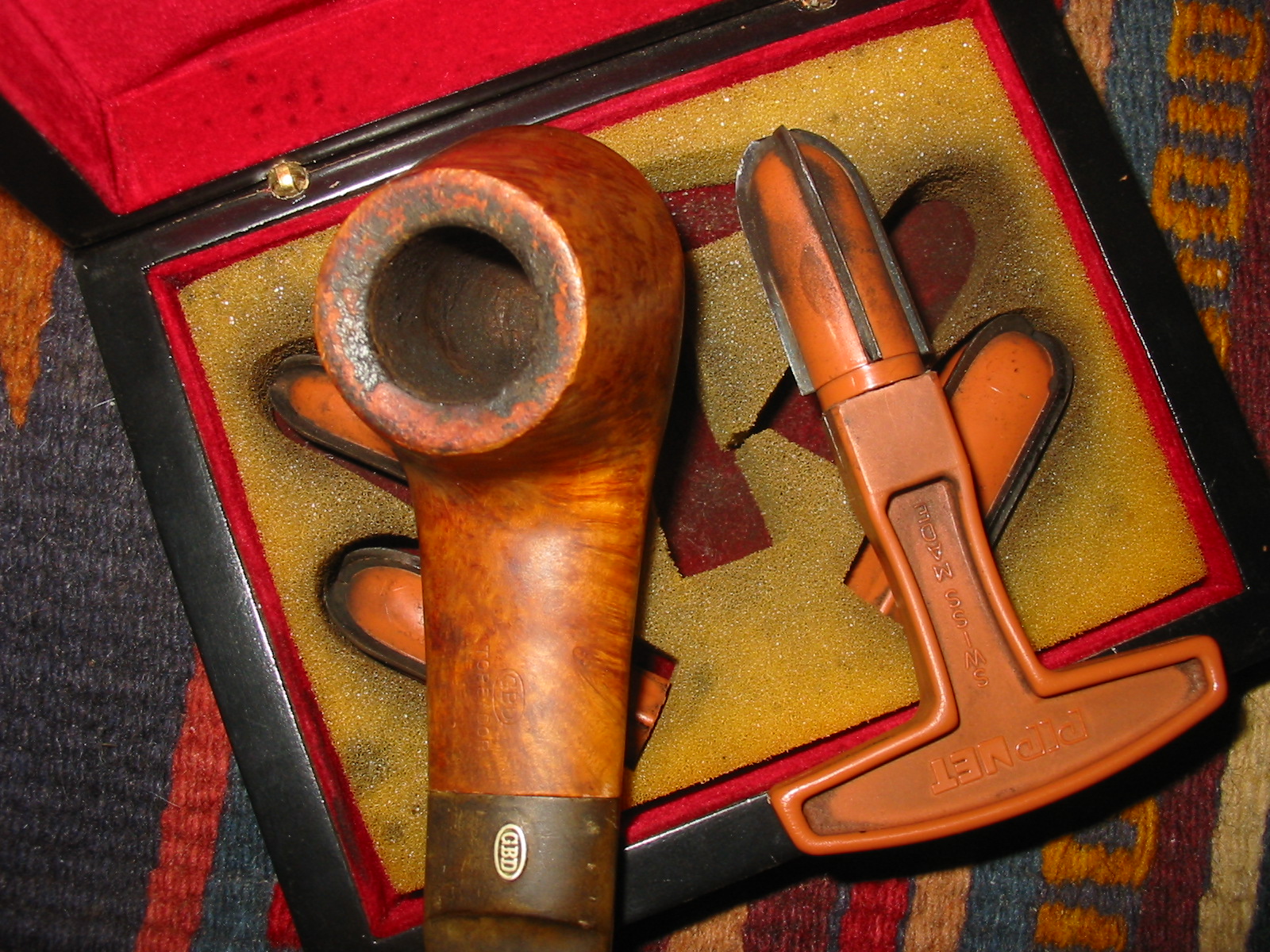
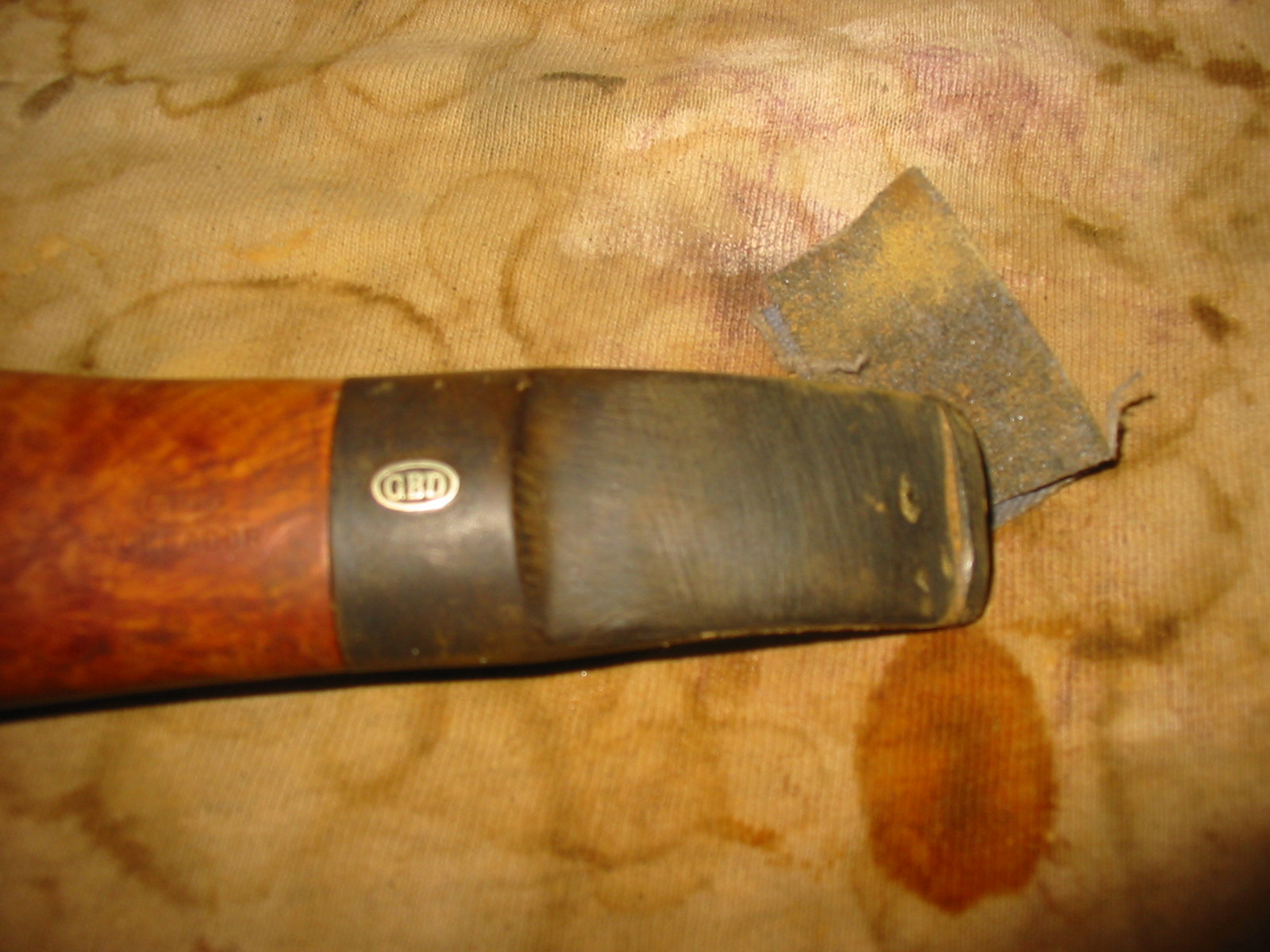
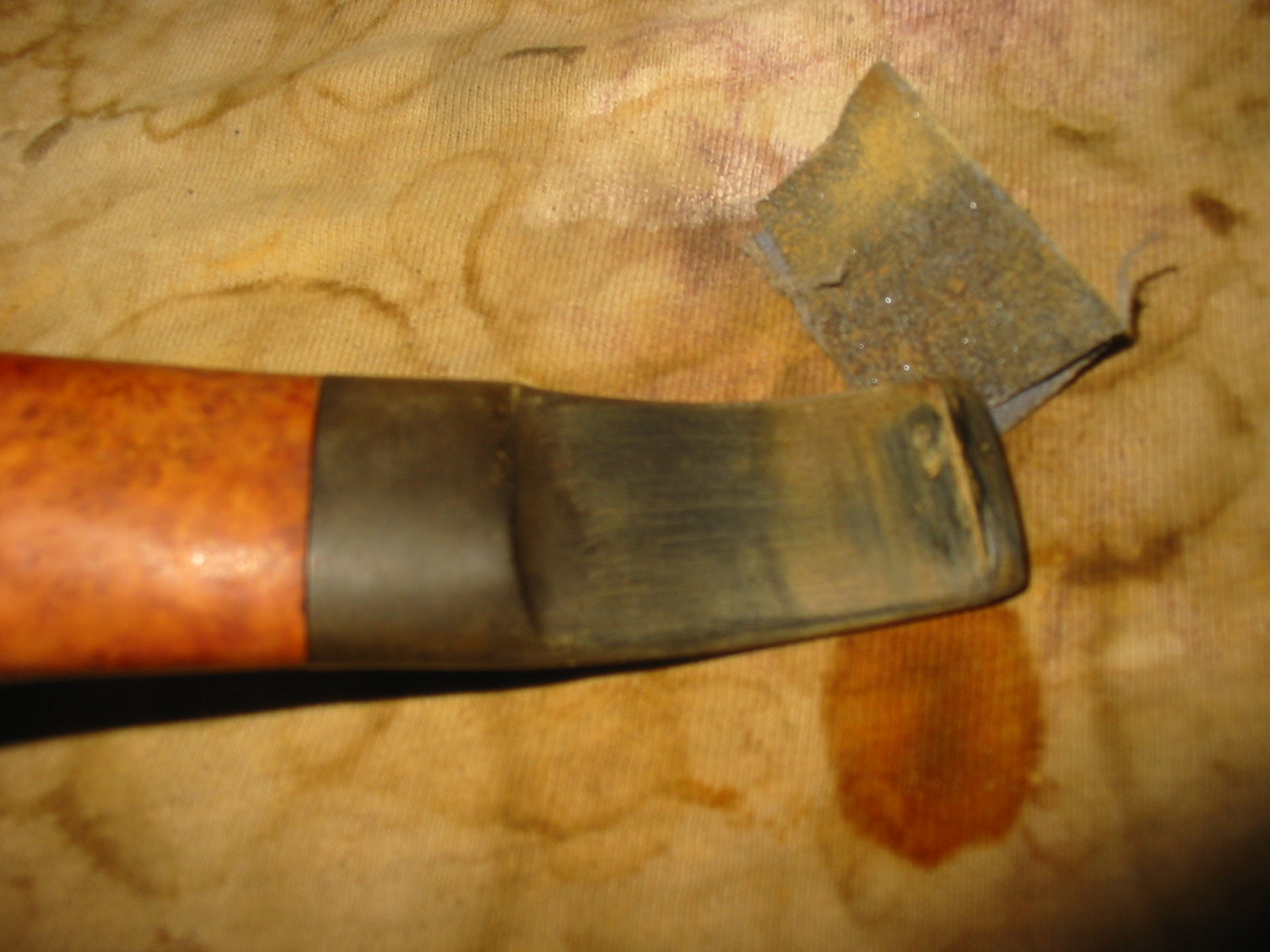
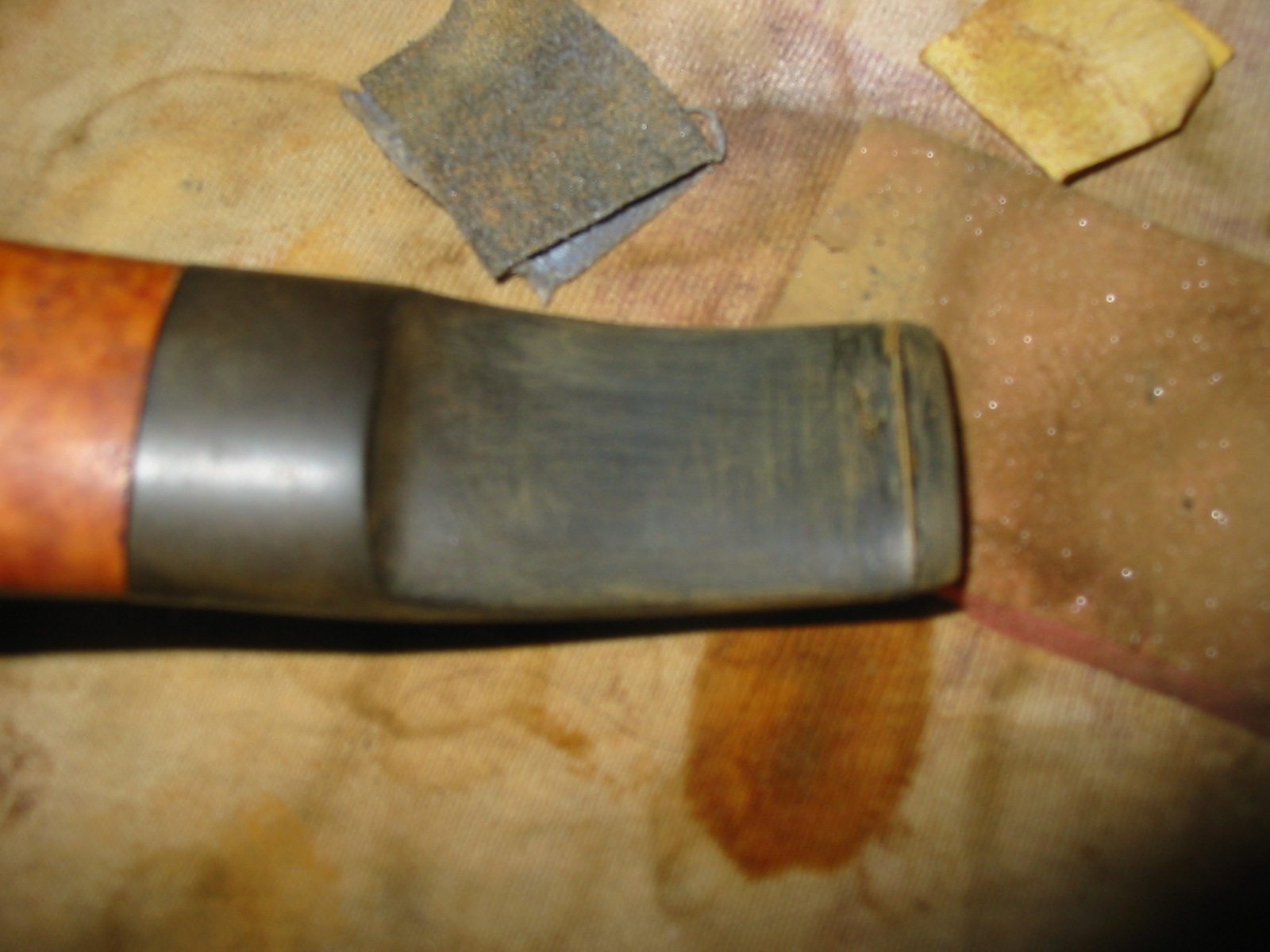
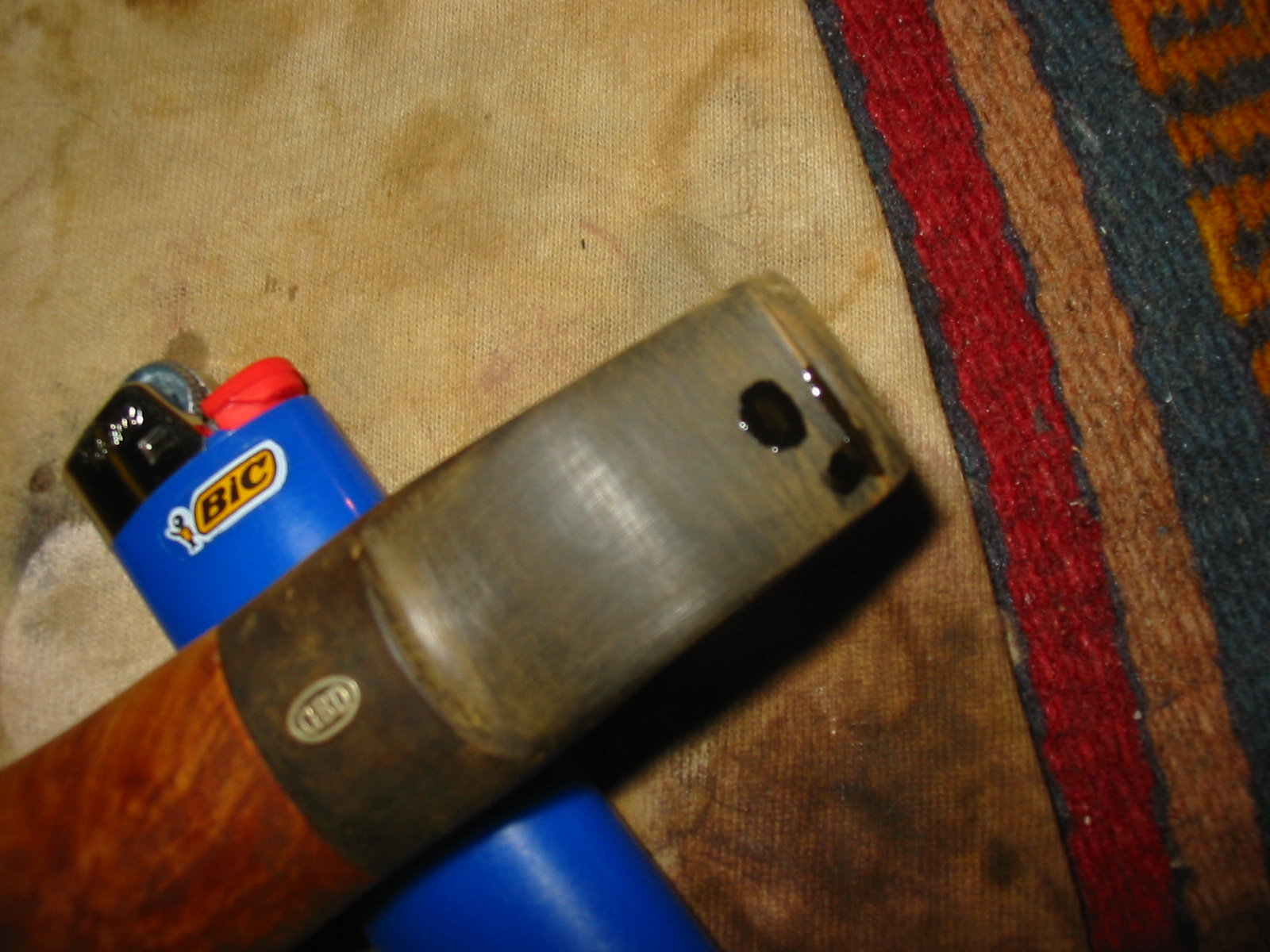
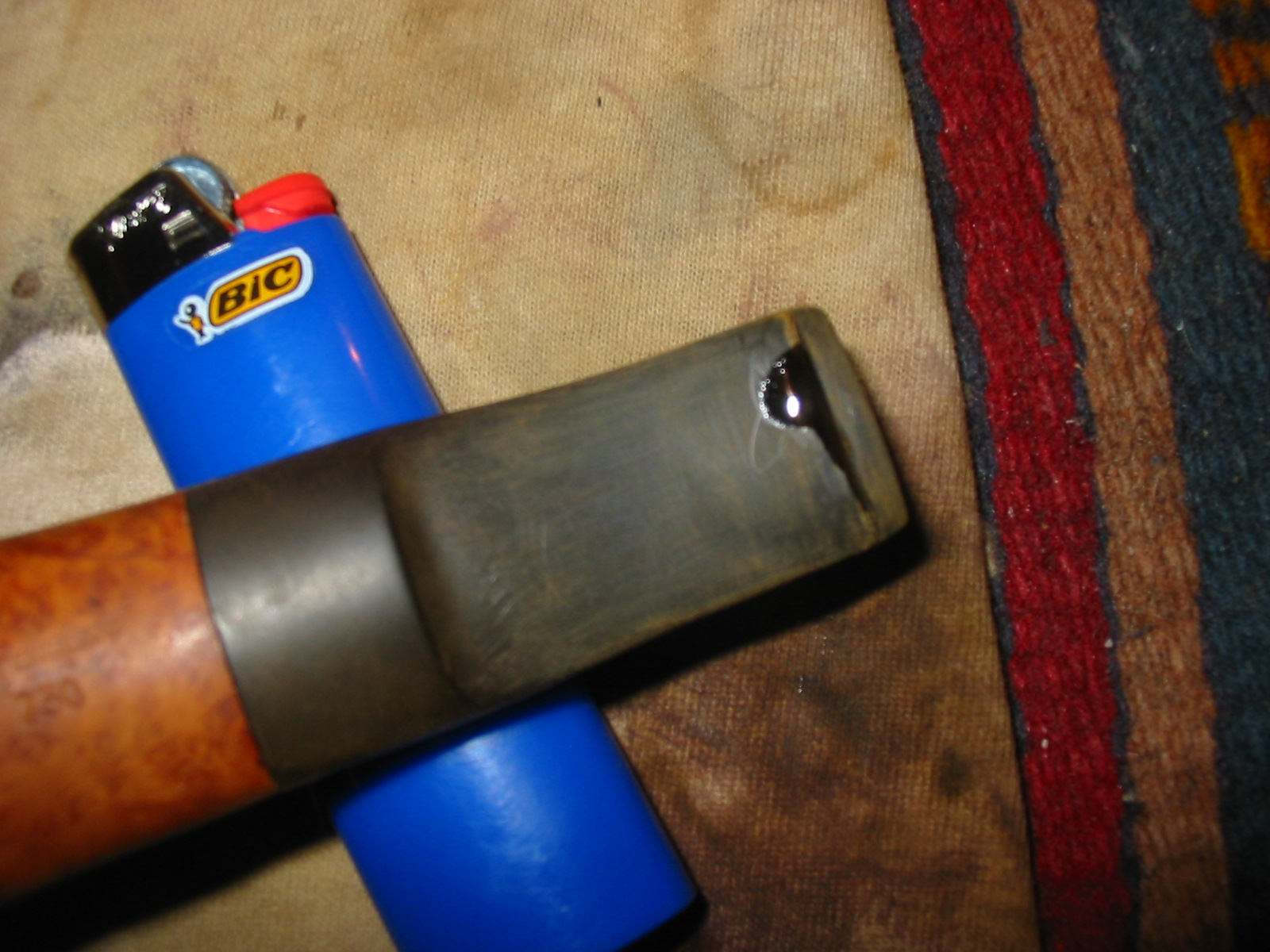
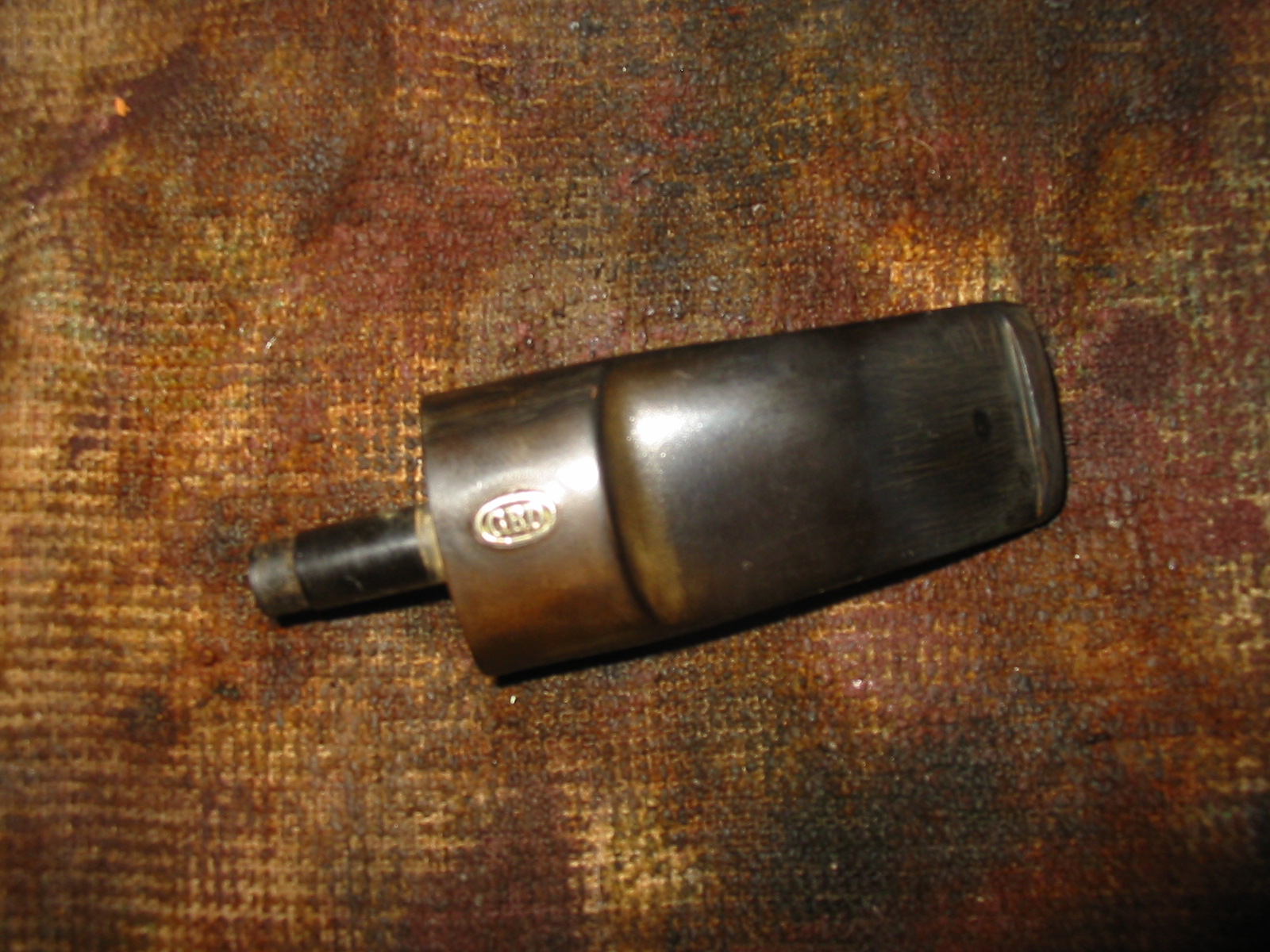
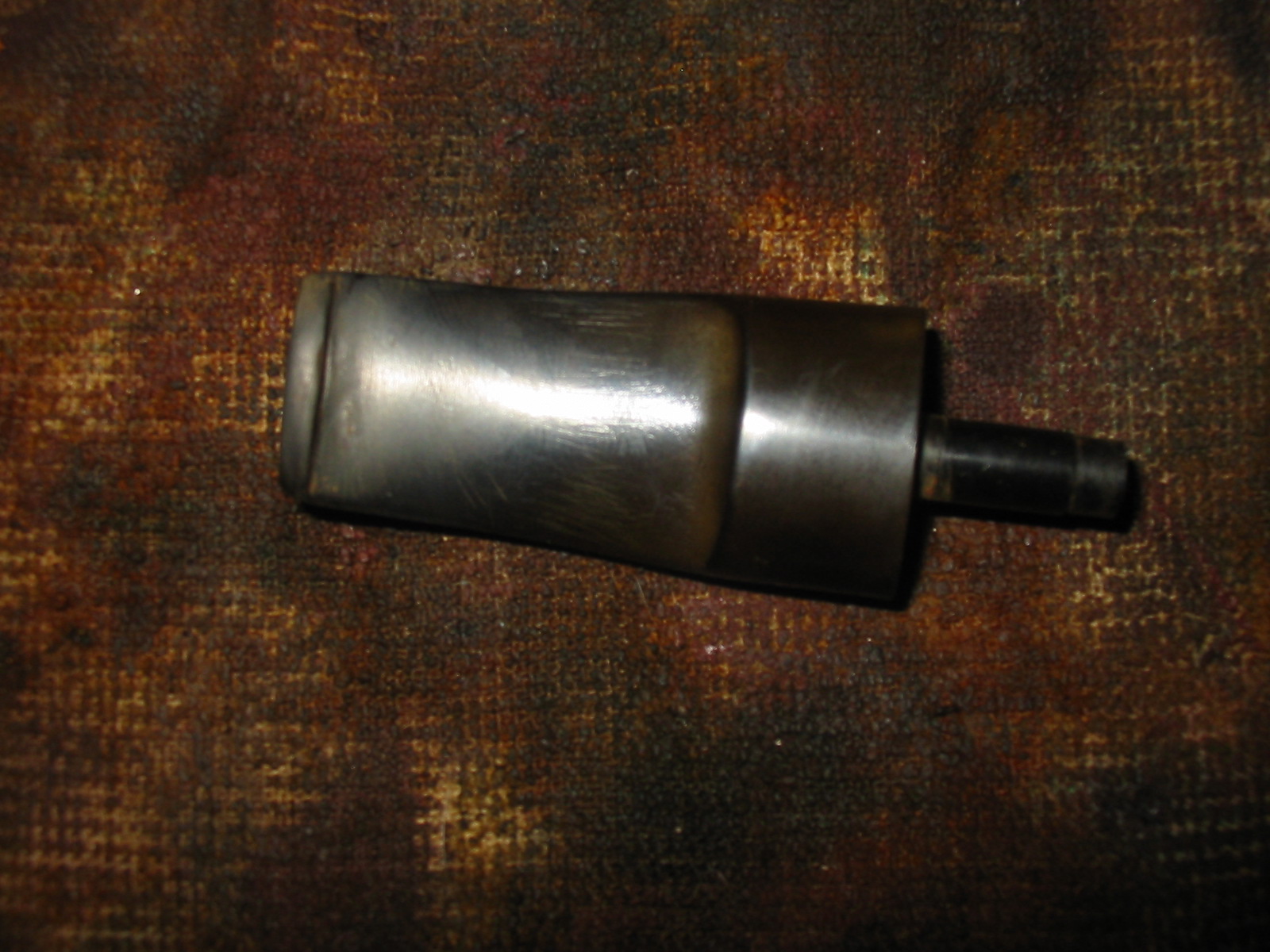
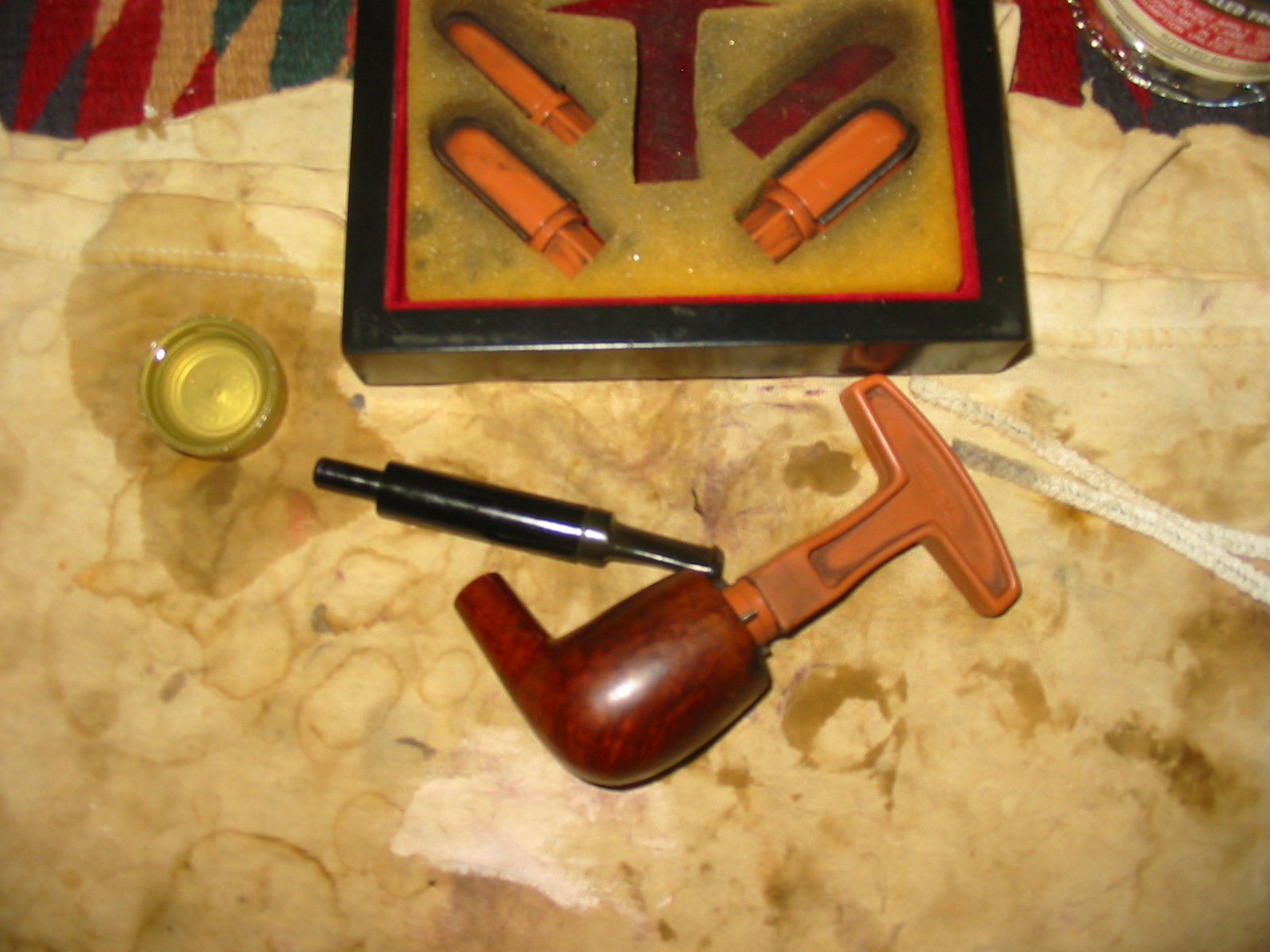
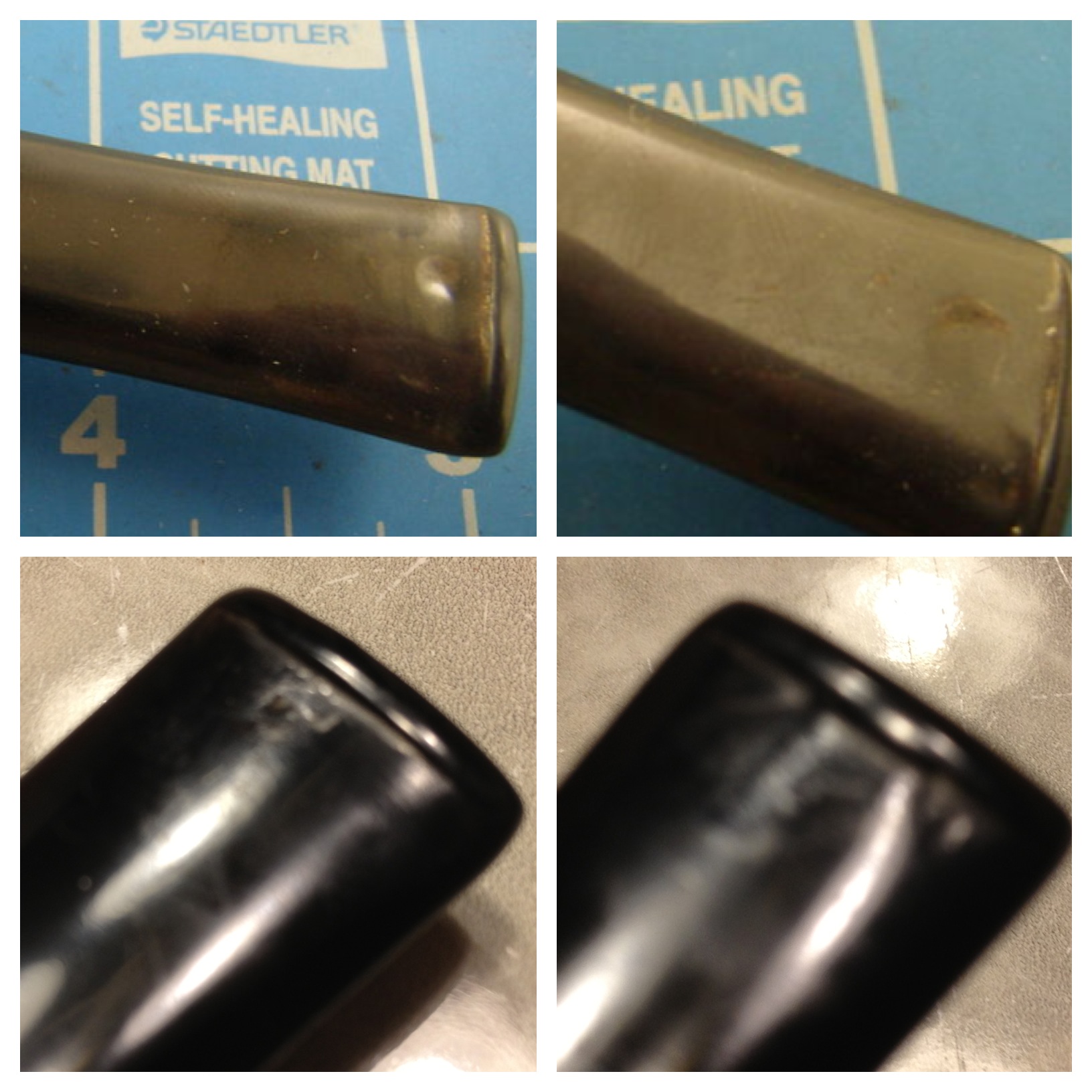
The bowl needed a good reaming – a bit of a trick as it is a conical bowl. I used several of the PipNet bits on the T handle to ream the bowl. The finish was faded and dirty. The inside of the shank was tarry and dirty and the inside of the stem was the same. The stem was oxidized and the original owner had modified it by carving some horizontal lines (3x) on the top and bottom of the stem to make kind of a homemade dental bit. He had also used some Elmers Glue to repair the button where he cracked it trying to put a pipe cleaner through it. The glue was all over the top of the stem.

ImageImage

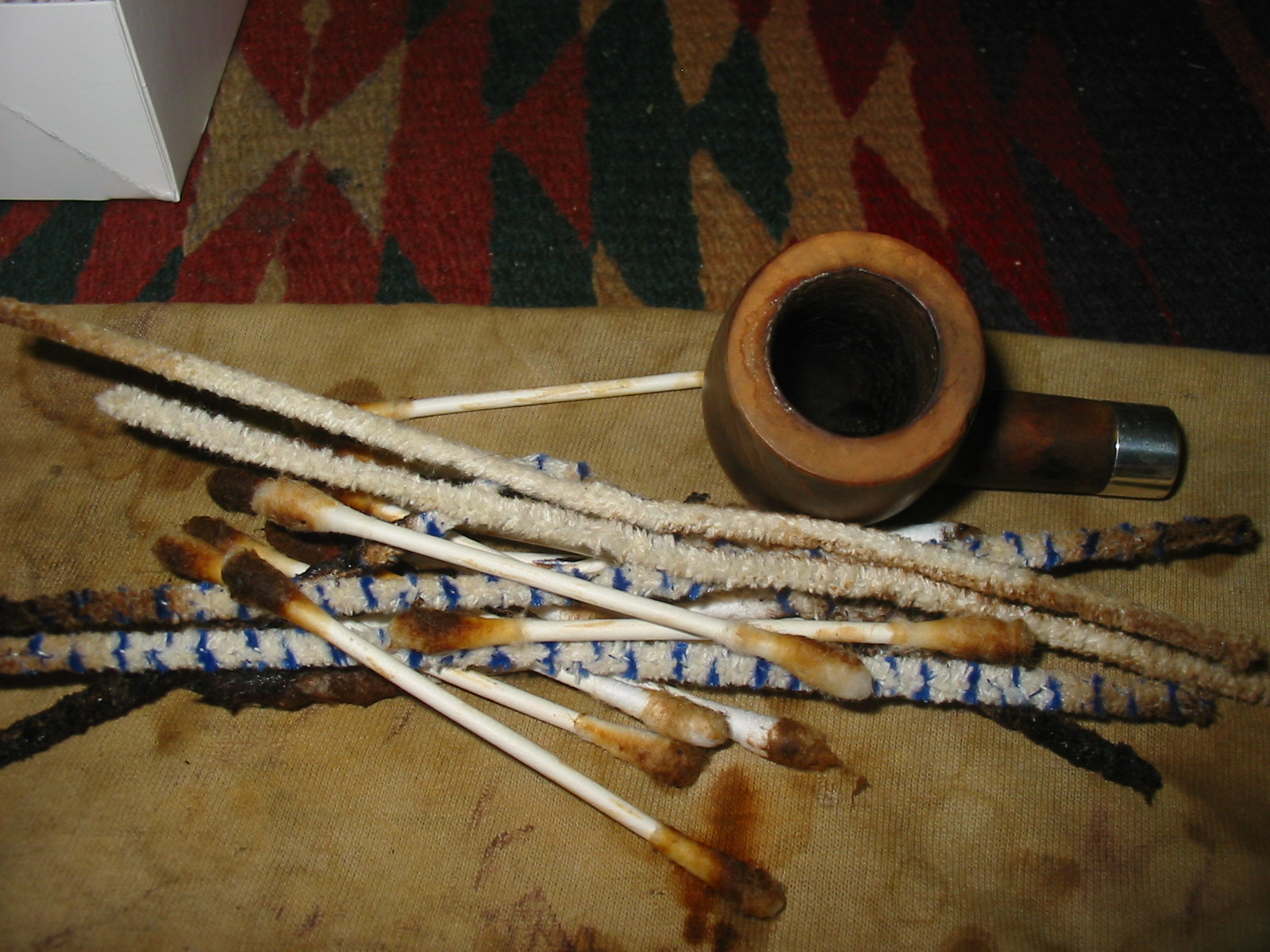
I scrubbed the bowl with some Murphy’s Oil Soap and a soft bristle tooth brush to clean out the grime and dirt from the sand blasted portions of the bowl and shank. I scrubbed the ribbon or smooth portions with a cotton pad and Oil Soap. It took a bit of scrubbing to remove the tars from the rim edge and restore the finish there to a clean colour. I ran it under a clear stream of warm water to wash away the soap and then dried it off with a microfibre cloth. Once it was dry I decided to restain it with an oxblood and black stain on the blast portion and a nice oxblood/cherry on the smooth parts. Before staining I cleaned out the shank and airway with cotton swabs/qtips and bristle pipe cleaners to remove the grime. I finished with fluffy pipe cleaners. Once clean it was ready to be stained. I first used a black aniline stain and then flamed it. I took it to the buffer and buffed it with Tripoli and White Diamond to remove the black stain from the smooth surfaces and from the high spots on the blasted portion. Then I restained it with a top coat of oxblood/cherry stain, flamed it and then buffed it with White Diamond to get a good contrast colour to the bowl.

The stem took some work. I was able to sand out the homemade cuts without compromising the thickness to much as they were fortunately not too deep. The cracked button was a challenge. I cleaned off the Elmers Glue and then scrubbed the crack clean with alcohol and a soft brush. I picked out the bits of glue that were in the crack with a dental pick. I dried the area and then repaired it with Super Glue. It came out looking like new. The stem was buffed with Tripoli and White Diamond after sanding. The entirety was given a coat of Halcyon II wax and buffed with a shoe brush.

ImageImageImage

Some sad news came back to me regarding this beautiful little acorn pipe. When I finished working on it I gave it away to Desertpipe as a gift. He loved the look and feel of it and appreciated it for what it is. Then one day after using it the cracked portion of the button broke off entirely. He sent the pipe out to be restemmed. I am looking forward to the day it is finished and he sends me some pictures.

A Reborn Piccadilly Bulldog


Blog by Steve Laug

This little bulldog came to me in a lot of six pipes given to me by a friend. Something about it caught my attention as it seemed to have a classic bulldog shape. It was in pretty rough shape. It is stamped Piccadilly over Italy. It had a thick coat of varnish over the whole bowl and shank. There were also paint flecks on the surface of the bowl and shank. The rim was tarred and black with minor dings in the wood on the outer edge. The rim was chamfered in toward the bowl and also showed some wear and tear. The bowl was pretty clean; as I am pretty sure it had been recently reamed. The stem was badly oxidized and when the pipe came to me the stem would not come out of the shank or even turn. There were no bite or tooth marks on the surface of the stem. The inside of the stem was also tarry and dirty. The first series of three photos shows the state of the pipe when it arrived.

ImageImageImage

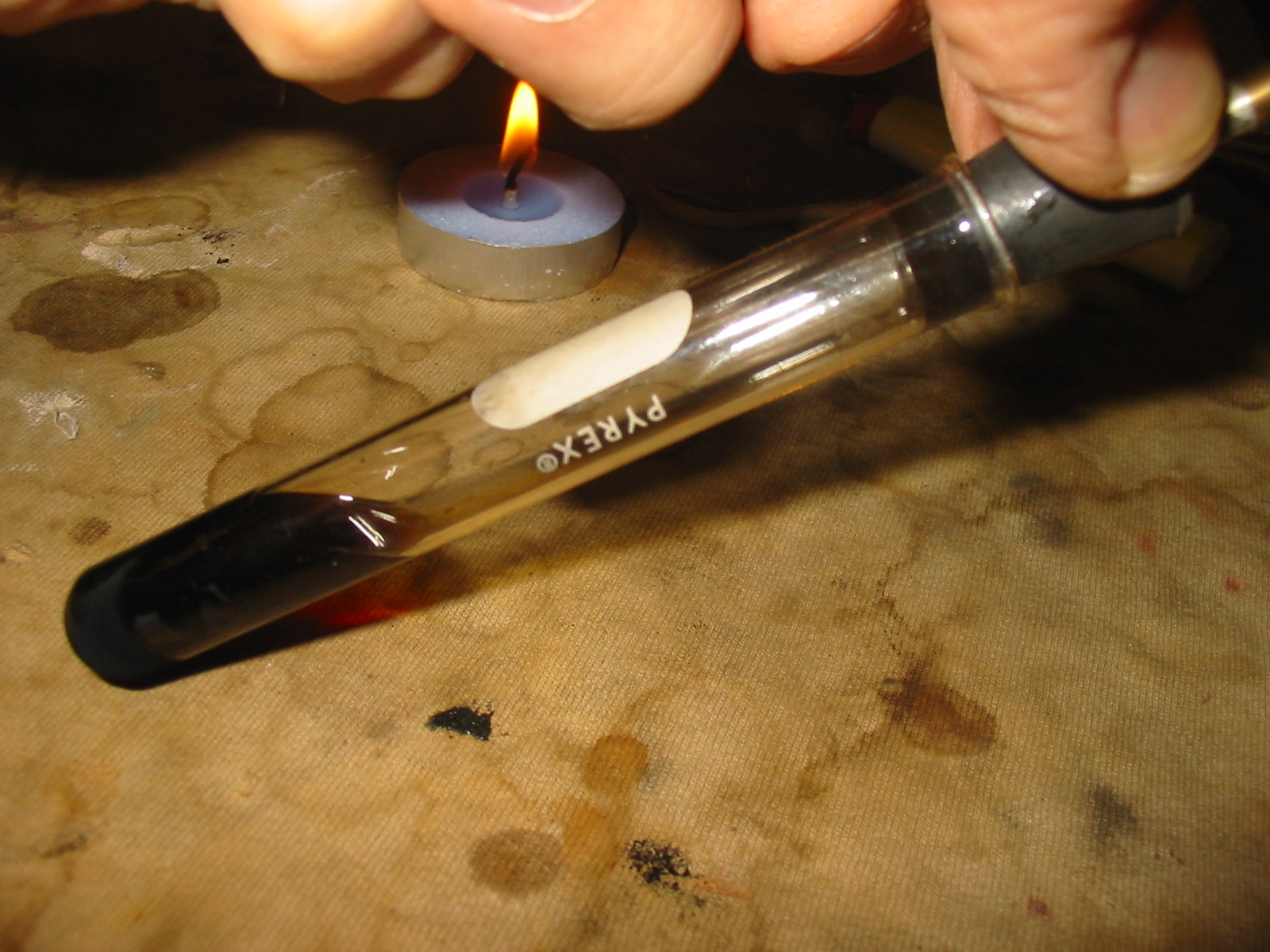
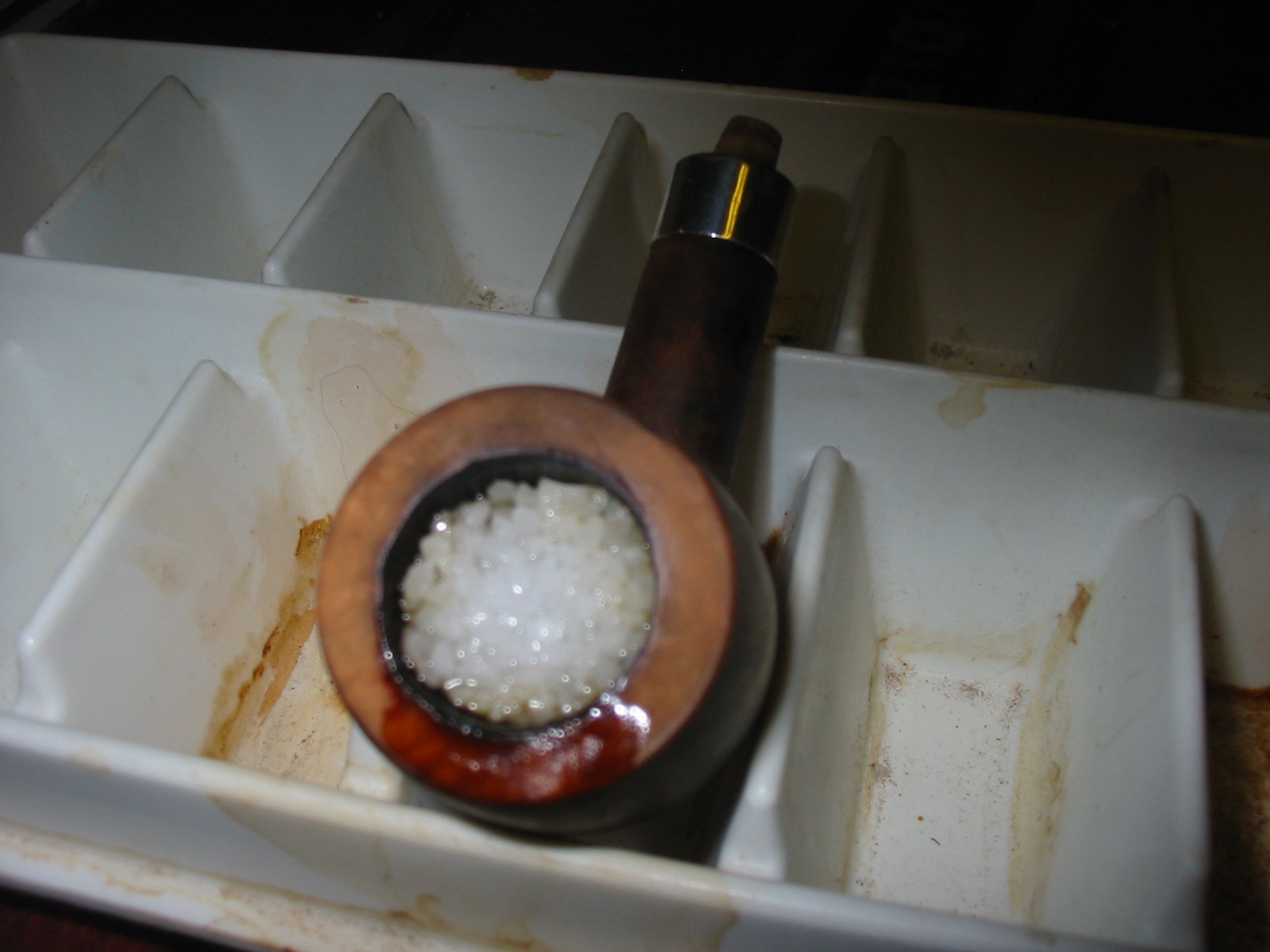
I put the pipe in the freezer for several hours and then I was able to remove the stuck stem. It was incredible tight and very dirty. The tars seemed to have acted like glue holding the stem in the shank. I cleaned out the stem with pipe cleaners and a shank brush and then put it in a bowl of Oxyclean to soak overnight. I dropped the bowl in an alcohol bath overnight as well. The next series of five photos show the bowl and the stem the next morning after an all-night soak in the baths. You can see that the bowl is clean and incredibly shiny. The alcohol bath removed the paint flecks and the surface grime. The rim tars had softened and were ready to be removed. The varnish coat however was not even touched by the soak in isopropyl. The stem was much better than when it went in to the bath. The oxidation had softened and much of it was removed when I dried off the stem. What remained would take more work.

ImageImageImageImageImage

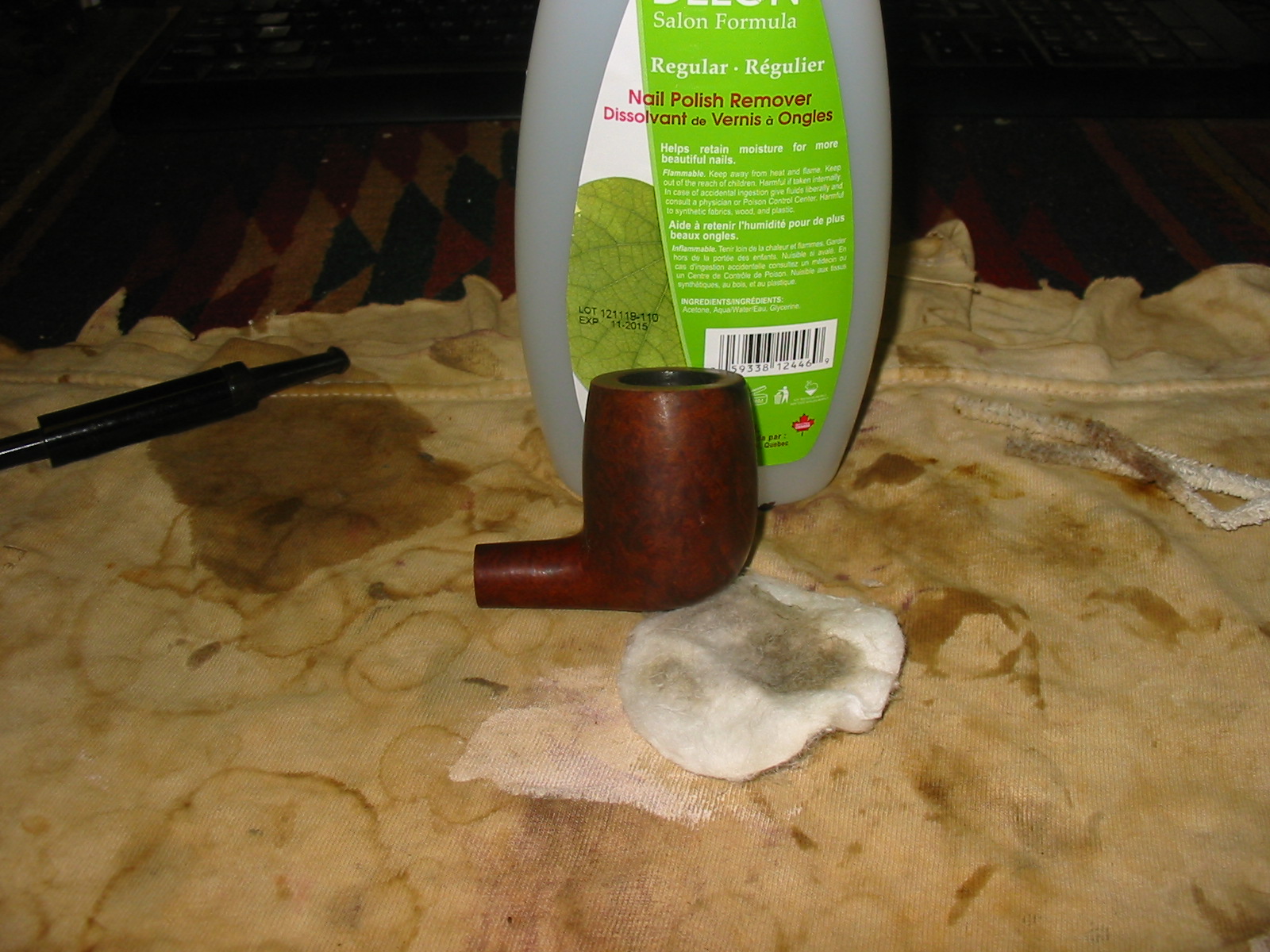
I then wiped the bowl and shank down with cotton pads soaked with acetone to try to break up the varnish finish. It took many wipes to cut through the finish and also to cut through the tars on the rim. I also sanded the rim with 320 grit sandpaper to remove the remaining tars and the slight burning around the inner edge of the rim. The next three photos show the result of the sanding on the rim and the wiping down of the bowl. The varnish was untouched – maybe softened a little but it did not give way at all to the acetone.

ImageImageImage

More drastic measures were going to be required to remove this thick varnish coat. It was almost acting like a coat of polyurethane. I would have to sand the finish off the bowl if I was going to remove it at all. This required care as I wanted to remove the finish and not change the shape of the bowl and shank. I used a medium grit emery cloth to break through the finish coat. The next series of three photos shows the pipe after the sanding with emery cloth. I also wiped it down again with acetone at this point to clean the finish and see what remained. You can see the stubborn remainders of the topcoat.

ImageImageImage

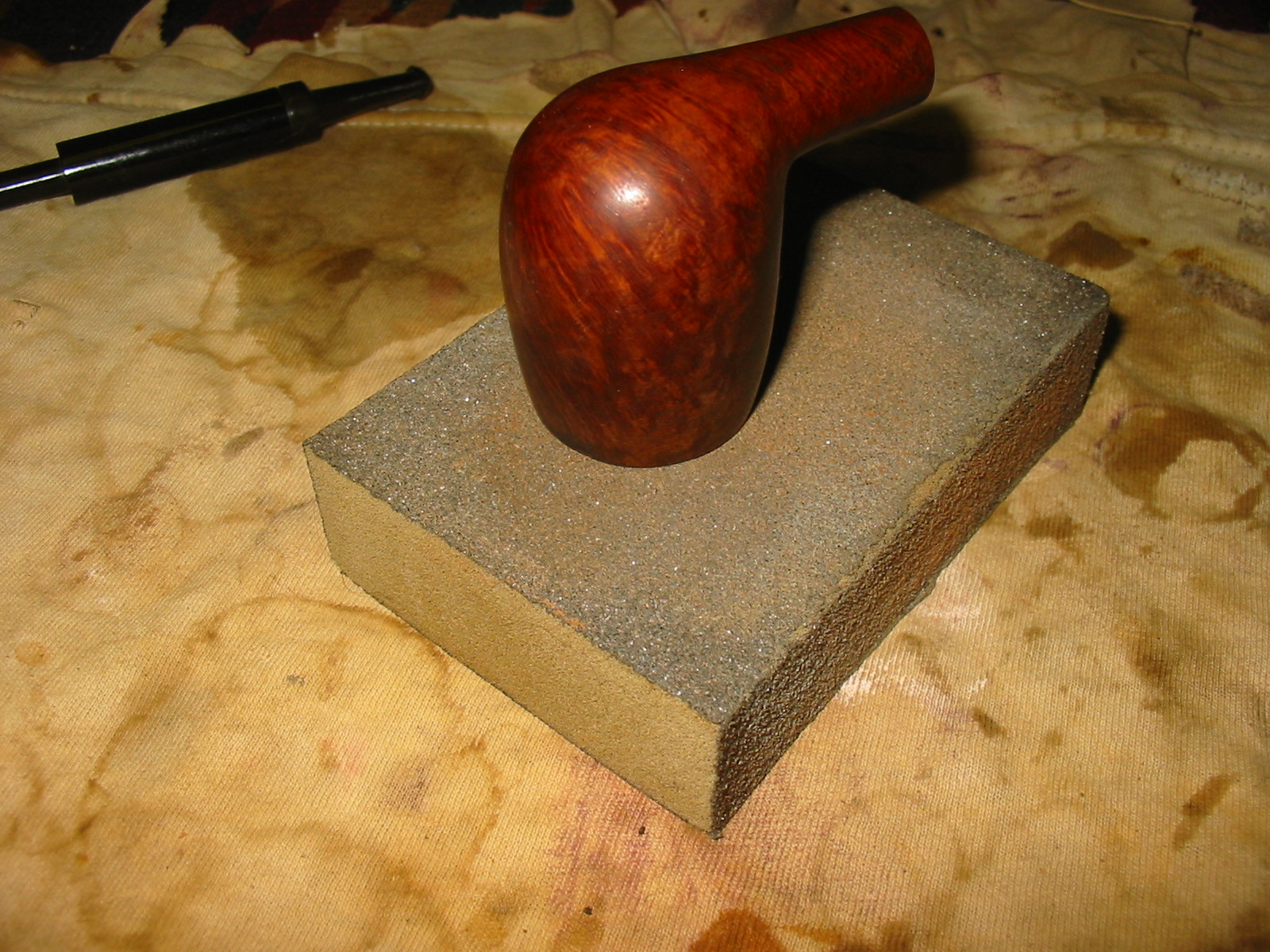
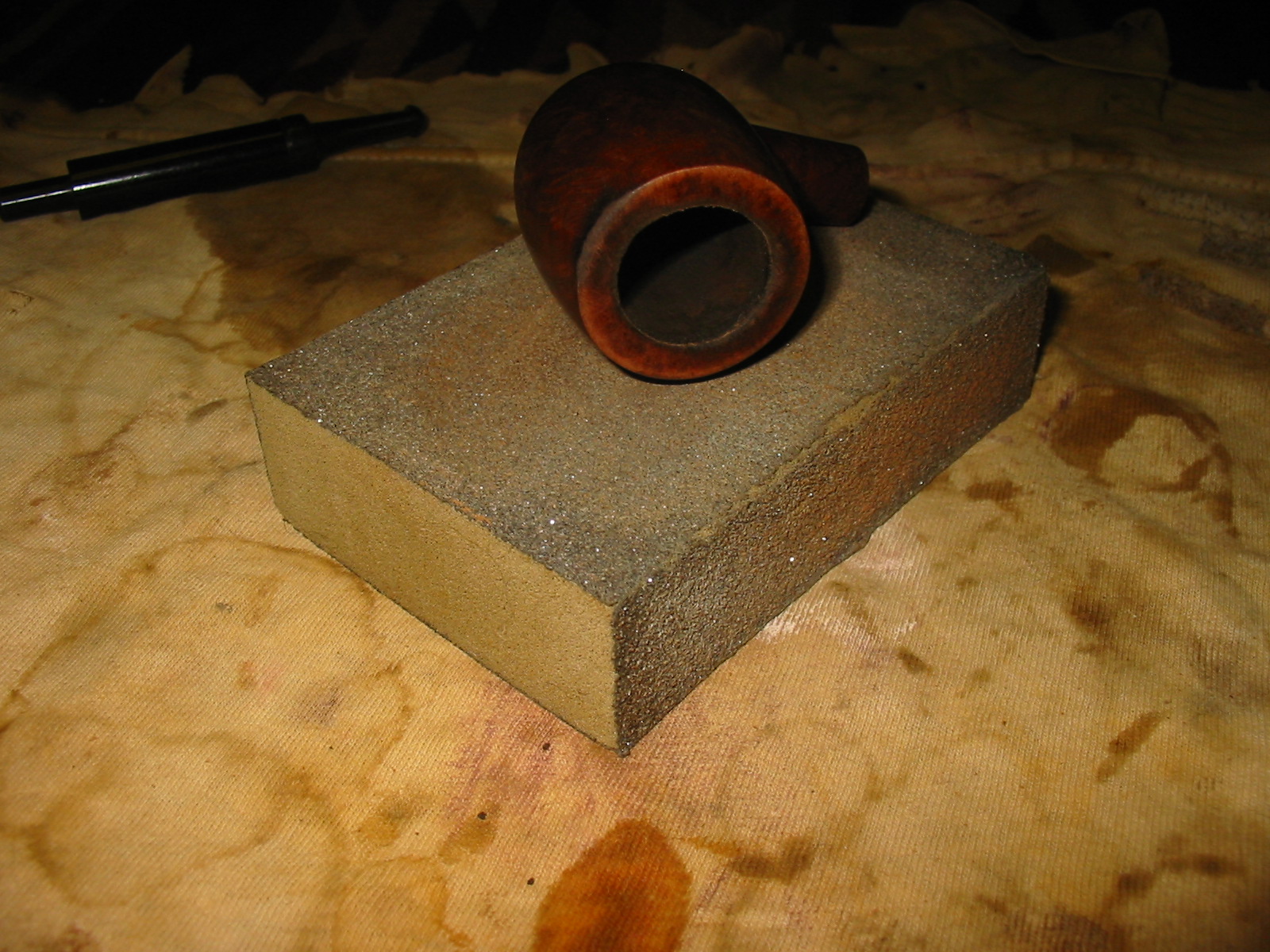
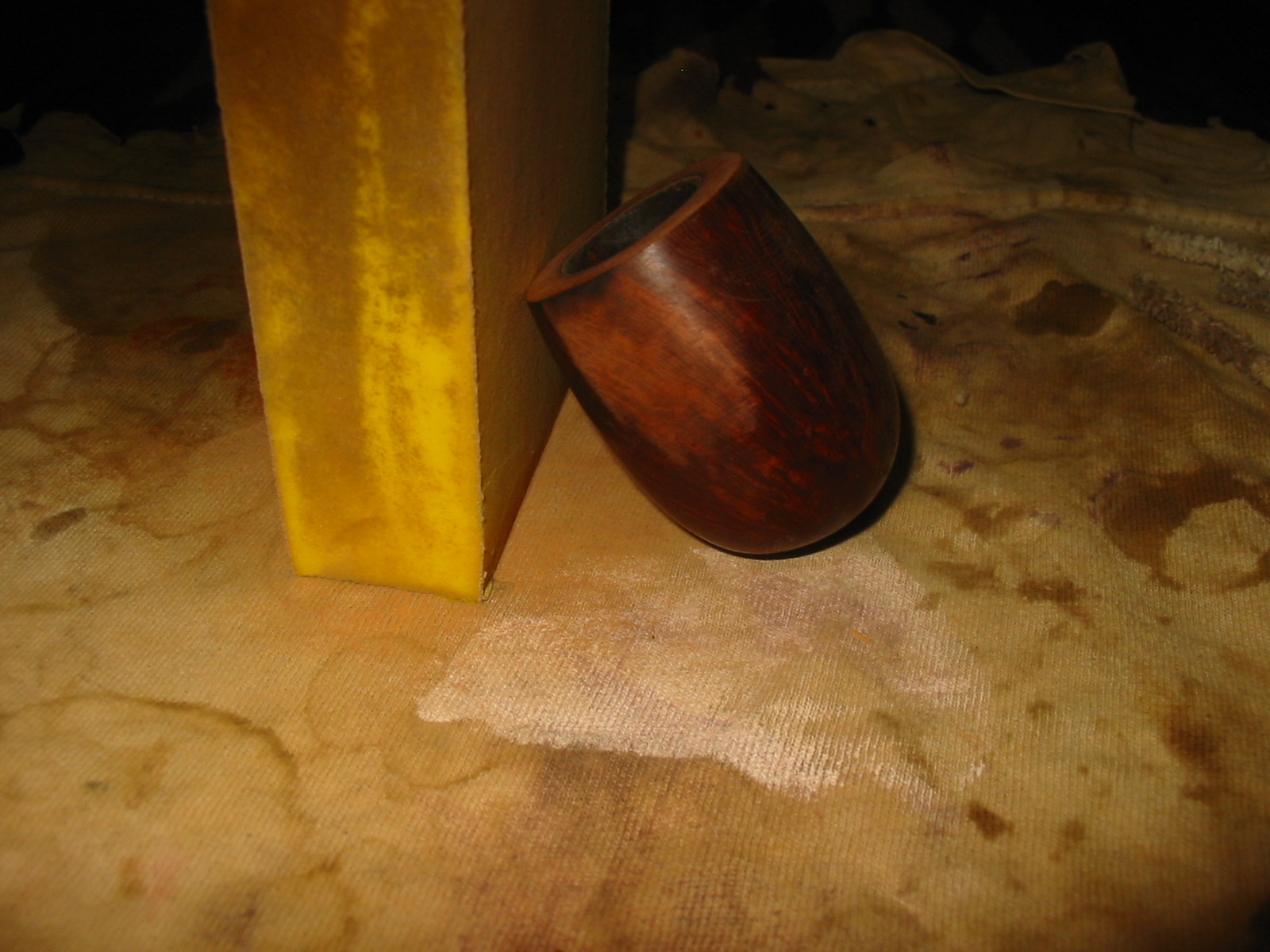
At this point I switched to a medium grit sanding sponge to remove more of the remaining finish. I removed the inserted stinger apparatus and put the stem back in place so that I would not change the angles on the shank where it met the stem when I sanded. It also allowed me to sand the stem and shank simultaneously and to keep the angles sharp and intact. The next three photos show the pipe after sanding with the sponge. I continued to sand until the shiny finish was gone. I then wiped it down with acetone on a cotton pad to clean the surface.

ImageImageImage

I sanded the bowl and shank with 320 grit sandpaper and then 400 and 600 grit wet dry sandpaper followed by micromesh pads from 1500-6000 grit before staining the bowl with a dark brown aniline stain thinned 2:1 with isopropyl alcohol. I wanted to give the pipe a stain so I could see if the many fills that were revealed could be camouflaged with the stain coat. My guess was that they would stand out and I would need to pick them out and refill them with superglue and briar dust. I stained and flamed the pipe several times. The next series of six photos shows the results after staining. I would indeed have to rework the fills – at least the large ones.

ImageImageImageImageImageImage

I used my dental pick to remove the old fill material – it seemed to be white putty that did not take the stain. The pick removed the white material easily and I wiped the bowl down with an alcohol wetted cotton pad to clean up the dust before refilling the flaw. I then took out my container of briar dust (I collect this from the bowls that I top) and used the dental pick to pack the flaw with briar dust. Once it was packed and overflowing I dribbled drops of superglue into the packed dust. It dries quickly so there is no time to work it or move it. Once I finished the first pack and drip I added more briar dust and redripped the glue. The three photos below show the new fill before I sanded it. The briar dust and glue are very hard and I always over fill the flaw and sand it back to smooth. I do not want any shrinkage in the fill so I work with the material as I spelled out above and over fill the flaw.

ImageImage

Image

Since the glue and dust fill dries very quickly, it can be immediately sanded. I used some fine grit emery cloth to smooth out the glue and followed that with some 240 and 320 grit sandpaper. The next two photos show the fill after I had sanded it smooth. The fill is now dark and hard. I have found from past experience that the dark fill is much easier to blend in with the stain than the white or pink putty fills.

ImageImage

After the sanding and preparation of the other fills that I replaced I restained the bowl with the dark brown aniline stain. I flamed it and restained it several times. The bowl is seen both wet and after the flaming in the three photos below. The fill is well blended into the dark stain.

ImageImageImage

Once the stain was dry I took the pipe to my buffer and buffed the bowl with Tripoli and White Diamond. The fills were still to visible to my liking so I used a trick I learned somewhere – I used a black permanent marker (Sharpie) and highlighted the grain on the pipe and also stroked in grain through the fills. Once it was finished I stained it one last time with the dark brown stain and then buffed it to a polish. The bowl was finished and I set it aside to work on the stem.

The stem needed quite a bit of work. I sanded it with the medium grit sanding sponge and then with 320 grit sandpaper and 400 and 600 grit wet dry sandpaper. The oxidation was still stubbornly remaining on the saddle and in the slope of the saddle to the flat bit. I used the Bic lighter and moved it over the surface of the stem to burn off the oxidation. I repeated this several times and then sanded the stem with 1500-4000 micromesh sanding pads. I also used the Maguiar’s Scratch X2.0 between grits of micromesh. I also used my Bic lighter to burn more of the oxidation between the grits. Once I was finished I polished the stem with Maguiar’s and then buffed with White Diamond to polish it. I gave it a coat of Obsidian Oil followed by multiple coats of carnauba wax to the stem and bowl. The final pictures show the pipe after this work. In the last photo the area that had the fill repaired is shown to detail how well the fill blends into the finished pipe.

ImageImageImageImageImage

New Life for a Big Ben Select Bent Billiard


Blog by Steve Laug

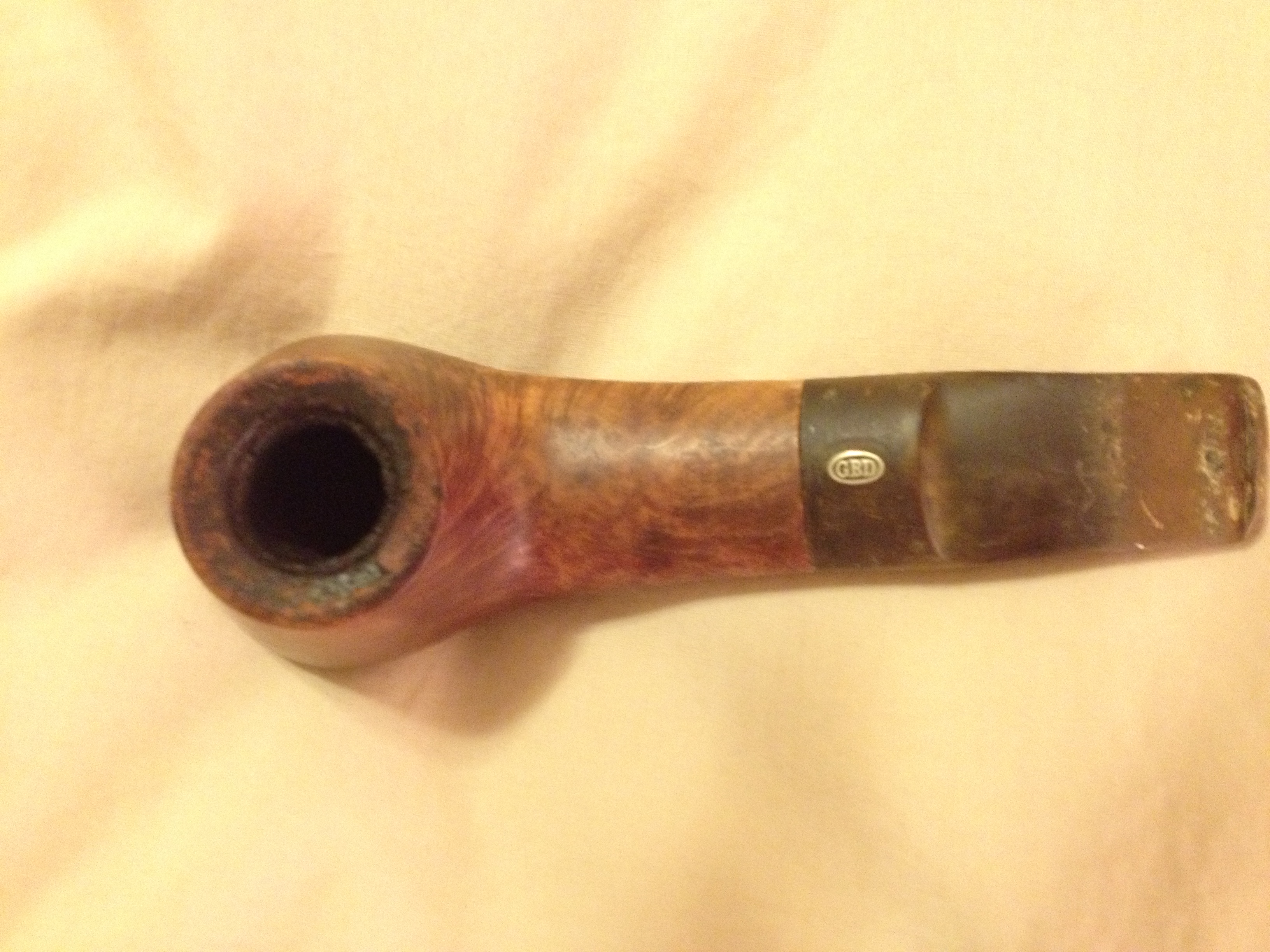
I was gifted six pipes that were in need for refurbishment be a friend on Smokers Forums. The first one that caught my fancy was this nice sandblasted Big Ben Bent Billiard. It had a silver band and a nice looking blast. The finish was rough but shape is classic. The bowl was dirty and the shank and stem were filled with tars and grime. The bowl is stamped on the underside of the shank – Big Ben Select under a B in a circle. The outside of the stem was oxidized but the B logo was still deeply stamped. There was also a slight tooth mark on the underside of the stem near the button. The button was very tight and small – so much so that a thin pipe cleaner was work to get through the slot. The rim edges were worn and rough but as it was a blast this would not be a problem to clean up. Over the stain coat was also a shiny varnish or lacquer coat that I always find to be a pain to remove and deal with in a pipe that is worn like this one. It was just the challenge I wanted to have a go at this weekend. The next series of three photos show the pipe as it appeared when I opened the box and took it out for the first time.

ImageImageImage

I decided to begin by reaming the bowl so I removed the stem so that I could hold the bowl solidly and used my T handle Pipnet reamer. The next series of three photos show the reamer and the pipe bowl as I worked on it. Once I was finished I dropped it my alcohol bath to soak. The fourth photo below shows the bath after I had dropped the pipe bowl in the soak. The alcohol appears dirty but it is darkened from earlier stains that I have removed. I have filtered the alcohol several times over the past months to remove sediment and particulates that were in the mix. The alcohol works exceptionally well and I have found that the darkened stain in it adds a nice aged patina to the briar. The fifth photo shows the stem ready to go into the OxyClean bath. I dropped it in the bath and it immediately darkened the wash. I took it out and took a photo to show the before soaking look of the stem.

ImageImageImageImageImage

I left the bowl in the alcohol bath overnight and then this morning took it out and scrubbed it with a soft bristle tooth brush. I also picked out the paint that seemed to be in the grooves of the blast with my dental pick. I decided to also scrub the bowl with a brass bristle tire brush to get the paint flecks out of the briar. The next series of twelve photos shows the process I have described above. The first three photos show the bowl wet from the bath and the tooth brush off to the side that I use to scrub the sandblast. I rinsed the bowl off with alcohol from the bath and then dried it with a cotton cloth. The next two photos show the bowl with the brass tire brush. Once the surface had dried I scrubbed with the tire brush to remove the grime from the grooves in the briar. The final seven photos show the bowl as I wiped it down with acetone on a cotton pad to remove the remaining finish and top coat of varnish or lacquer. I wanted the briar very clean before I restained it.

ImageImageImageImageImageImageImageImageImageImageImageImage

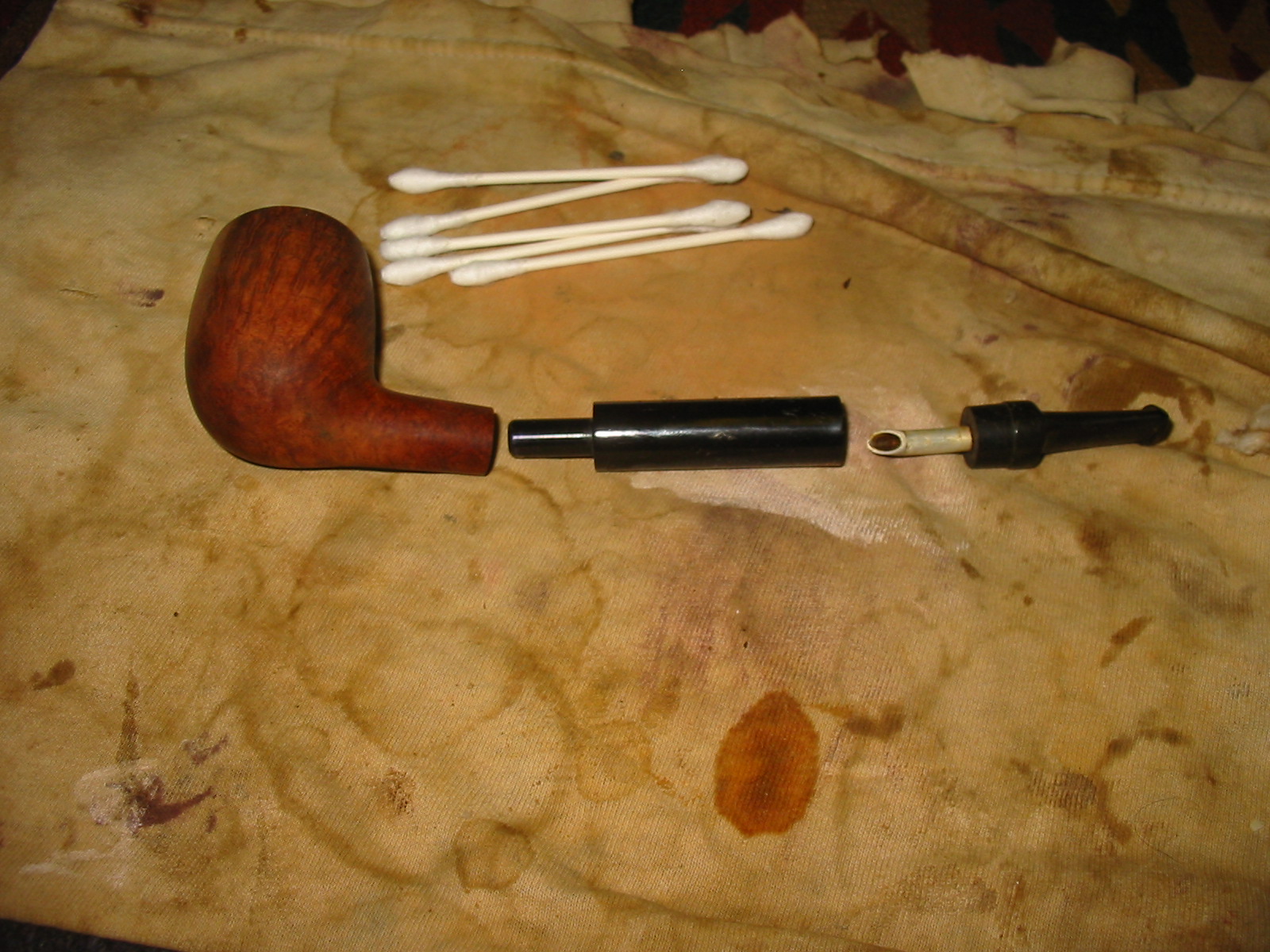
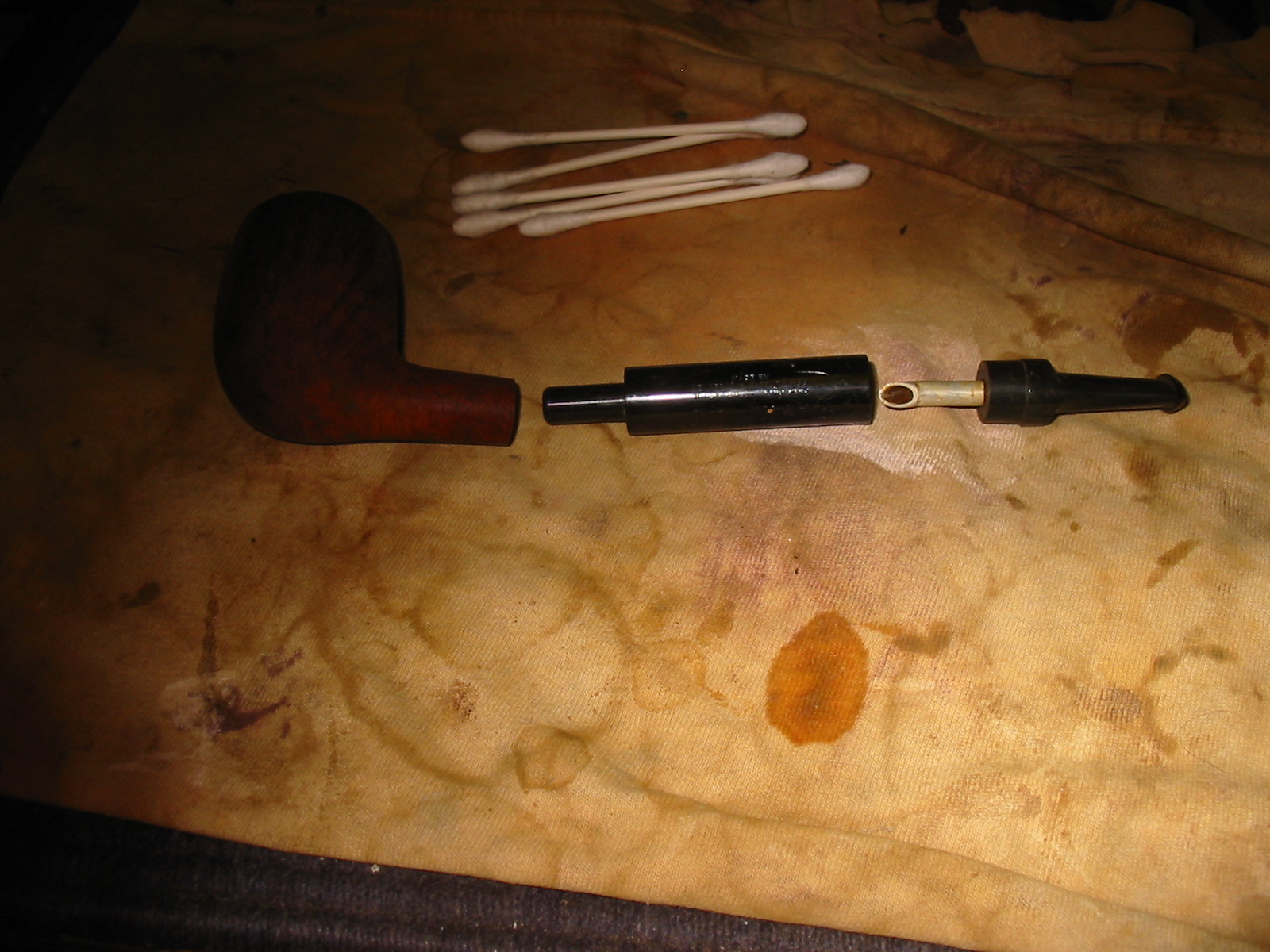
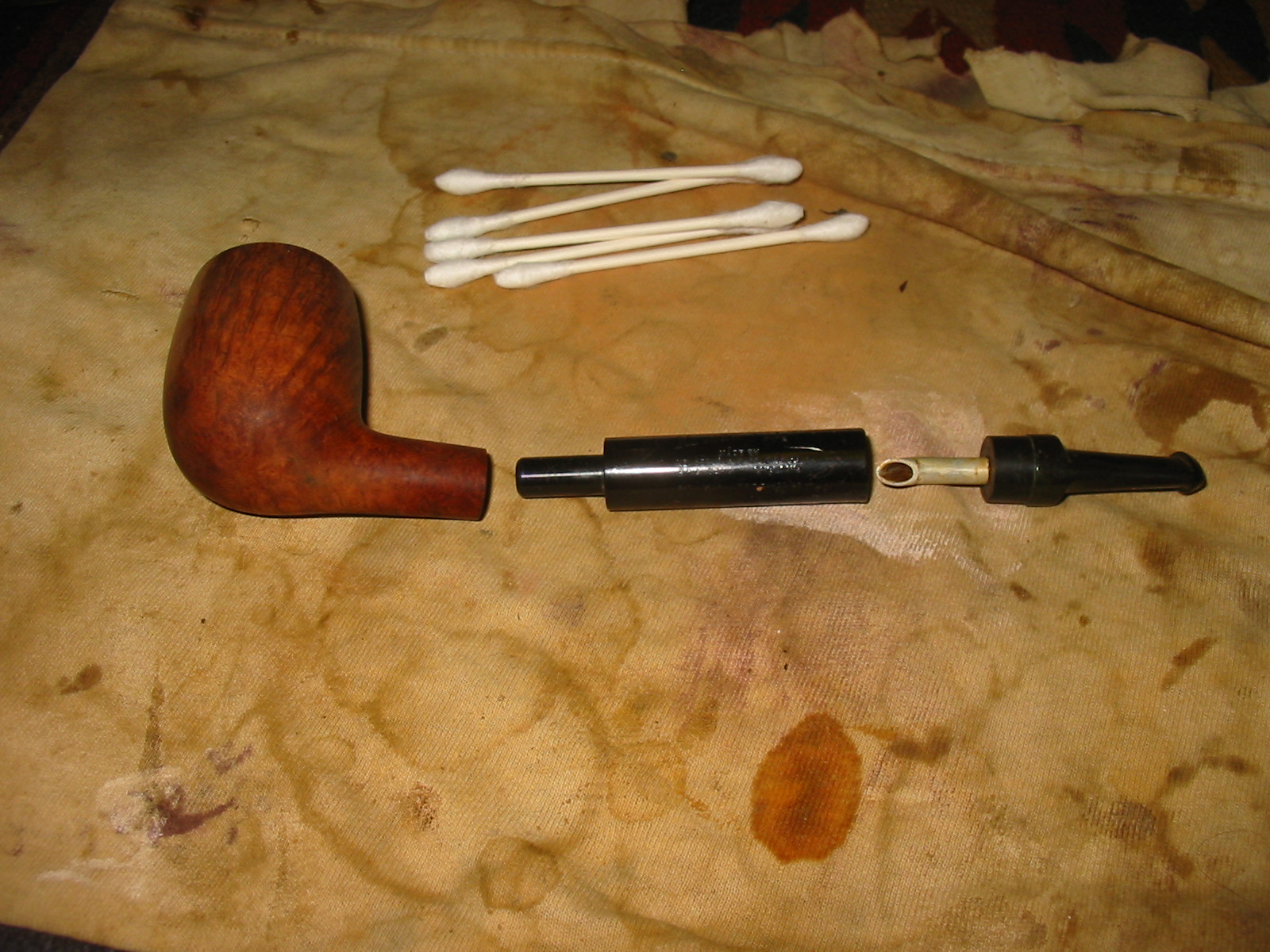
After getting the outside of the bowl cleaned and ready to stain I worked on the inside of the bowl and the shank. The shank was interesting in that it had two stepped down portions. First there was the mortise area where the tenon rested. This was followed by an area that further stepped down to receive the inner tube style stinger in the end of the tenon. Finally there was the area of the airway into the bowl bottom. The step down drilling of the shank made this an interesting airway to clean out. I used isopropyl alcohol and some Everclear to scrub out each step down successively. I began with the mortise area that held the tenon. To clean this I used qtips or cotton swabs dipped in alcohol. I scrubbed that area until the swabs came out clean. I then proceeded to clean the next stepped down area where the inner tube sat. I used cotton swabs on this as well and pressed them against the opening and twisted them into that part of the airway. Again I used the alcohol and kept working on it until the swabs were clean. The final part of the airway I used a shank brush and alcohol followed by fluffy pipe cleaners until that area was also clean. The next series of three photos show the process and the dirty cotton swabs at the top of the photos.

ImageImage

After cleaning out the shank and wiping down the inside of the bowl I cleaned the stem. This was more of a pain than normal due to the constriction of the button and slot. A thin pipe cleaner would not fit into the stem from the button end. So I had to slowly move it into the stem from the inner tube end. I also was able to flatten the pipe clean and work it into the stem. It got most of the gunk out of the stem. The next two photos show the pipe after this cleaning. The stem button would need to be opened in order to give it a more thorough cleaning.

ImageImage

The next series of nine photos show the restaining of the pipe. I used a dark brown aniline stain that I have thinned down 2:1 with isopropyl alcohol. It does a good job of coverage on the briar but also allows some depth the staining. I like the look and effect of it on sandblasted briar. I applied the stain with a dauber and then flamed it with a lit match. I reapplied and reflamed the pipe several times to get a good solid coverage of stain.

ImageImageImageImageImageImageImageImageImage

Once the stain was flamed and dry I took it to my buffer and buffed it with Tripoli and White Diamond to remove some of the high spots and give it a shine. The first three photos below show the polished and buffed pipe. It was still a bit dark to my liking so I took it back to my work table and wiped it down with some isopropyl alcohol on a cotton pad to remove some of the top stain and give me a bit brighter and lighter finish. The next three photos show the bowl after it had been wiped down with the alcohol. It was exactly the colour I was aiming for so I set it aside to work on the stem.

ImageImageImageImageImageImage

I decided to open up the slot in the button to make it easier to clean the stem. The first photo below shows the slot before I started working on it. It was very tight and hard to get a pipe cleaner down the stem. I used several different needle files to open the slot. I took material off the top and bottom of the slot with the needle files and also cut the slot into more of a Y shape as I worked on it. The next four photos show the progress of the opening of the slot with the files. The final photo of the four shows the set of files that I use for the work. I took the photo with the stem on top of the package to give a bit of an idea of the size of the files. I finished the slot with a folded piece of sandpaper and worked it until it was smooth. I then recleaned the stem with pipe cleaners and alcohol until they came out clean.

ImageImageImageImageImage

After reworking the slot in the button I worked on removing the oxidation from the stem. I sanded the stem with 320 grit sandpaper to remove the tooth marks from the underside of the stem and also remove the softened oxidation. I also used a fine grit sanding sponge to remove scratches and marks to the stem. The two photos below show the stem after I had wet sanded the stem with 1500 and 1800 grit micromesh pads. I then used some Maguiar’s Scratch X2.0 polish and scrubbed the stem with a cotton pad. In the photos below the pad is in the lower part of the photos. I progressively sanded the stem with the remaining grits of micromesh – 2400-12,000 grit. I dry sanded with these until the stem shone. I wiped it down with Obsidian Oil and rubbed it in and then reworked the logo on the stem. I used some liquid paper in a correcting pen. I applied it heavily to the stamped area and then rubbed it off and sanded it with 4000 grit micromesh sanding pads to remove the excess. I repeated the process until I had good coverage on the stamping. The third and fourth pictures below show the refinished stamping on the stem. I finished working on the stem by giving it another coat of Obsidian Oil followed by multiple coats of carnauba wax.

ImageImageImageImage

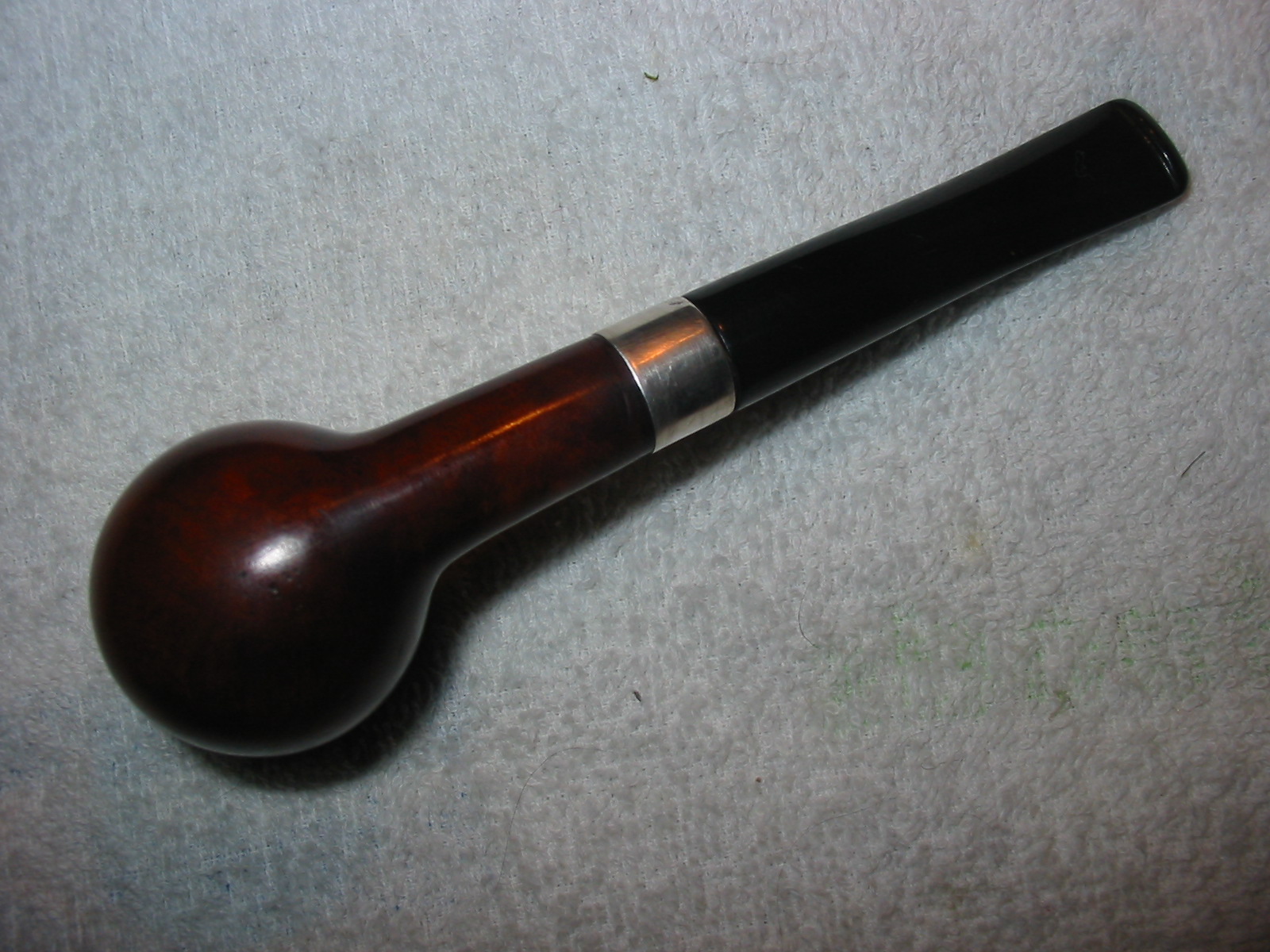
I used a jeweler’s cloth to polish the silver band and then took the pipe to my buffer and gave the bowl a buff with White Diamond. I took it back to the work table and gave it a coat of Halcyon II wax and hand buffed it with a shoe brush. The final series of four photos show the finished pipe.
ImageImageImageImage


A Transformation from a GBD Billiard to a GBD Lovat


Blog by Steve Laug

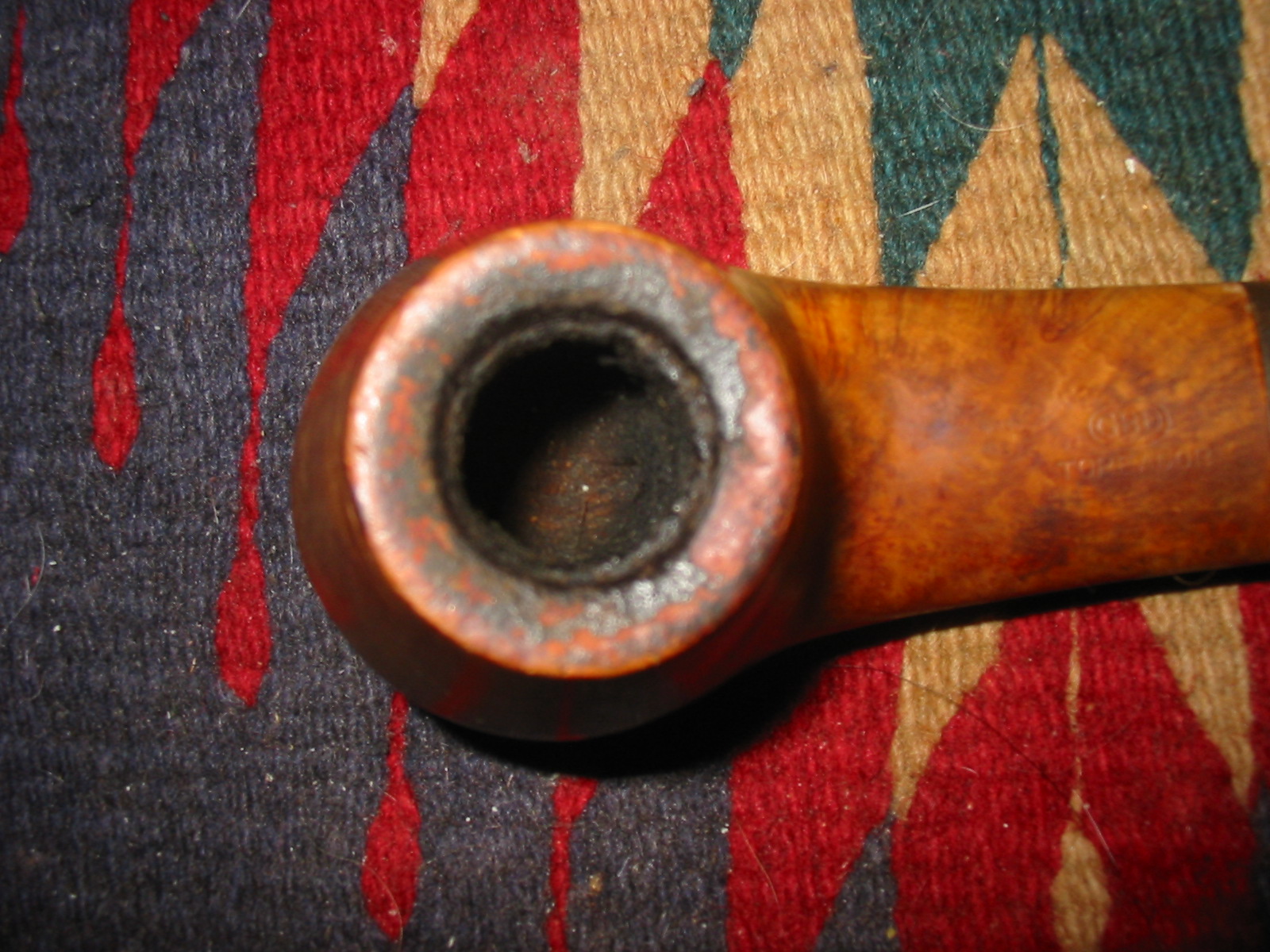
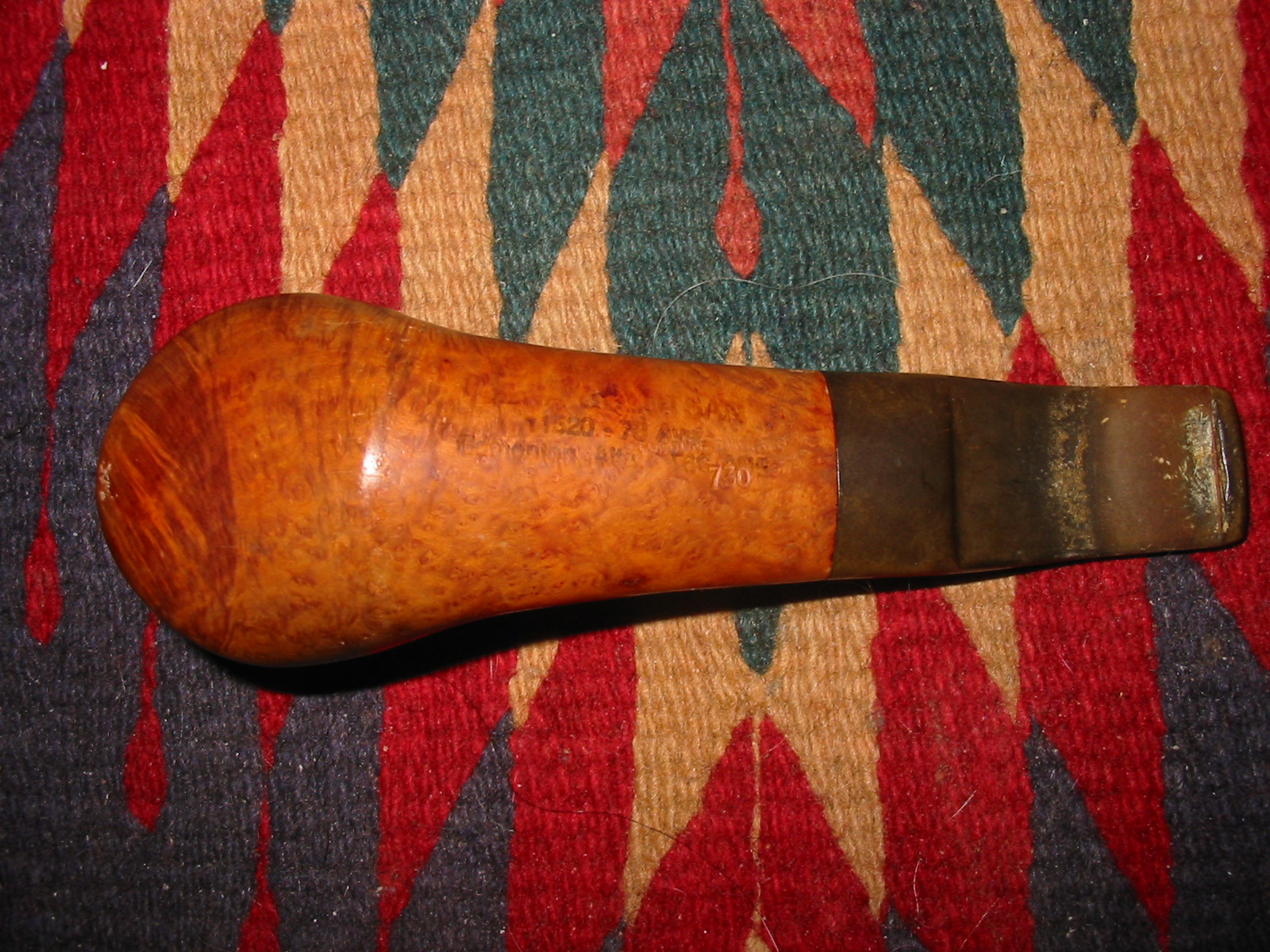
I picked up this little GBD New Era Billiard while traveling awhile back. It had a cracked and broken stem. The GBD roundel was still intact and in good shape. The bowl was a mess in that the rim was hammered. The top of the rim was chipped and rough. It was also out of round from over reaming. Since I had found it I had been looking for a new stem for a replacement. I had searched EBay and some of my other usual spots to see if I could pick up a GBD stem or even broken pipe that would work for me. This evening I gave up on the hunt and decided to see what I could do with the existing stem. I set out to transform the pipe from a billiard to a lovat by shortening the stem.

ImageImageImageImage

The first step in that process was the shortening of the stem – the removal of the damaged portion of the stem would have to go. I used my Dremel with the sanding drum to remove the broken part of the stem and cut a straight line across it. The next three photos show the stem before the cutting and after. The fourth photo in the series shows the airway in the stem. There was plenty of vulcanite for me to cut a new button on the stem and to open a slot in the button.

ImageImageImageImage

The next series of six photos show the process and results of topping the bowl. I used emery cloth on a solid board to sand away the damage to the rim. I chose the emery cloth because the damage was quite deep and extensive and I wanted to be able to remove the rough briar before sanding the rim with higher grit sandpaper. I hold the pipe with the rim flat against the sandpaper and work the pipe over the surface of the sandpaper in a clockwise motion. I find that this works better than using a horizontal or vertical motion and minimizes the scratches on the surface of the briar. I sanded the top until all of the damage was removed on the rim. There was one spot at about 5 o’clock on the rim where there was a large chunk taken out of the briar. I minimized that as best as I could but could not remove it all without damaging the profile of the pipe.

ImageImageImageImageImageImage

Once the rim was finished I decided to clean the pipe inside and out. I used Everclear and pipe cleaners and cotton swabs to clean out the interior of the pipe and stem and then some acetone on a cotton pad to wipe down the bowl surface. I also sanded the rim with 320 grit sandpaper and went on to use 400 and 600 grit wet dry sandpaper to wet sand the rim. In the four photos below you can see the little lovat being born.

ImageImageImageImage

Once the pipe was clean I decided to work on the slot in the end of the stem before cutting the button. There is no logical order to what I worked on next; it was more a matter of whatever I wanted to look at first. I opened the slot with needle files and started to shape the slot into the oval opening I was aiming for. Once it was roughed in I cut the button on the surface of the stem with needle files. The first two photos show the slot taking shape. The next seven photos show the progress of the button and the adjustments to the slope of the stem. I carved the stem with my files removing vulcanite on the top to flatten the profile of the rounded stem. It took quite a bit of sanding to the top and bottom of the stem to achieve the right angles. I also used folded emery cloth to smooth out the flow and remove the file marks from the surface of the stem. By the seventh photo you can see the progress of the button and the slope quite clearly.

ImageImageImageImageImageImageImageImageImage

The next series of six photos show my next steps in shaping the stem. I put it back on the pipe and continued to work on the slope of the stem surface and the definition of the button. By the sixth photo the stem is virtually done in terms of shaping. I finished cutting the slot and smoothing it out by a folded piece of sandpaper. I also sanded the remaining parts of the stem on the saddle to remove the oxidation that was prevalent on that stem as a whole.

ImageImageImageImageImageImage

Once the shaping was finished and the rough sanding done to the surface of the stem I progressed through 320 grit sandpaper and 400 and 600 wet dry sandpaper used wet to remove the scratches left behind by the emery paper. It took quite a bit of fine sanding to work around the roundel and not damage the stamping of the brass. When I finished with the sandpapers I worked with micromesh sanding pads. I used the first three grits – 1500, 1800 and 2400 and wet sanded the stem. I find that the rounded corners of the sanding pads allow me to work closely around the roundel and clean up the oxidation and scratches.

ImageImage

I then polished the stem with Maguiar’s Scratch X 2.0 to remove the surface scratches and to see what remained to work on in terms scratches and marks. I rub the polishing compound on with my finger and work it over the surface of the stem and into the angles of the button. Once it is applied that way I scrub it with a cotton pad to polish and remove the compound. I then sanded it with the next three grits of micromesh – 3200, 3600 and 4000. I dry sanded with these grits and began to see a deep shine emerging. Once finished with the 4000 grit I rubbed the stem down with Obsidian Oil and set it aside. I then stained the pipe with medium brown aniline stain that I thinned down 2:1 with isopropyl. I flamed the stain to set it and then reapplied the stain, flamed it again and then reapplied it to the rim a third time and flamed it. I took it to the buffer and used Tripoli and White Diamond to buff it. I wiped the bowl down with isopropyl on a soft cotton pad to lighten the stain and make the grain variations more visible. I put the stem back on the pipe and finished sanding it with the final three grits of micromesh – 6000, 8000, 12,000. After dry sanding with these pads I took the pipe to the buffer and buffed it with White Diamond. I finished by giving pipe and stem several coatings of carnauba wax and buffing with a soft flannel buff. The new little lovat is pictured in the four photos below.

ImageImageImageImage

Reworking the Stem on a Weber Oom Paul


I decided to save the final pipe of the six I picked up in the states a few weekends ago for last. I knew it would take a bit more work to redo and wanted to take time focusing on it at the end of the cleanup work on the six. It was a Weber Imported Briar smooth finish in an Oom Paul shape. It is stamped on the left side of the shank with Weber in the oval and underneath it in script is stamped Imported Briar. The briar on this was in fairly decent shape and the stem was good other than a chunk that had been bitten or broken out of the button on the top edge. It was solid and the oxidation was actually quite light. The shape of the stem and the thickness of the vulcanite material left me lots of room to work with in reshaping the button. The next series of photos show the pipe as it was when I picked it up.

ImageImageImage

The bowl needed to be reamed and the rim needed to be cleaned of the tars and build up. The finish was a dirty but looked like it would clean up easily. The stem was oxidized a slight bit and the bend in the stem had straightened and would need to be rebent after the new button was cut. The shank had a sump like the Peterson system pipes that was full of tars and grime. That would need to be cleaned out. The stinger apparatus that was a working part of the Weber pipes was tarred and black.

The next series of photos show the pipe after I wiped it down with some acetone to clean the finish and worked on the tars on the rim of the bowl. I also sanded the rim with some 320 grit sandpaper to remove the tars and smooth out the rim.

ImageImageImageImage

I decided to tackle the stem first and rework the button. The first photo below shows the chunk that is missing from the stem. It was quite deep and was not repairable with my usual fixes. So in order to use the same stem I would need to cut back the stem to remove the break and then to reshape the button and the slot. The Weber slot is quite open and oval shaped so I would need to reshape the opening in the slot once I had reshaped the button. I used my Dremel with a sanding drum to cut away the broken part of the stem and to even it out until I had some good thickness in the stem material above and below the airway to work with in cutting the new button. The second, third and fourth photos show the stem after I removed the broken part with the Dremel. You can also see the work that would have to be done in reshaping the button and opening up the new slot.

ImageImageImageImage

After I cut the stem I set it aside and reamed the bowl to remove the cake and even up the walls of the bowl. The existing cake was heavy in the top of the bowl and light in the lower portion. I wanted to ream it back to bare wood so I could build up a new even hard cake. I used a KleenReem pipe reamer at first to ream the bowl back (photos 1 and 2 below). The problem is that the KleenReem does not clean out the bottom of the bowl very well so I finished reaming it with my PipNet reamer and the T handle (photo 3 below). I also used the drill bit that comes with the KleenReem to clear out the airway to the bowl. It was pretty gummed up so that cleared out the airway. I also cleaned out the shank and mortise with cotton swabs and pipe cleaners and Everclear. Once the pipe cleaners and cotton swabs came out clean I was ready to work on the outside of the bowl. I have included a fourth photo in the series to show you the bowl after reaming.

ImageImageImageImage

I wiped the bowl down with acetone again to remove the lasts of the grime and the buildup on the rim of the bowl. Once that was done I set it aside and began to work on the stem. The wiped down bowl is visible in the photo below.

Image

The next series of twelve photos shows the cutting of the new button on the stem. I used three different needle files to cut the button into the existing stem. You can trace the progress of the new button by the series of photos. I begin by cutting a straight line across the top of the stem and the bottom of the stem. I work to make both sides of the stem match one another so that the edge of the button is consistent on the top and the bottom. I do this initial cut with a flat rectangular blade needle file. I hold it firmly on the work table with one hand and work the file into the surface of the stem. Once I have the line defined on top and bottom I work the file like a carving knife against the new edge. I repeat the cut on the edge several times as the stem begins to taper into the button. I work the flat rectangular file first and then move through different flat edged files that have slightly different tooth patterns to keep carving away the vulcanite. By the last few photos you can see the shape of the button and the taper that works down the stem toward the new button.

ImageImageImageImageImageImageImageImageImageImageImageImage

Once the button is at the place pictured above I move to work on the slot in the button. I wanted to open up the airway to match the other Weber stems that I have in my collection. If you can picture an American football, that is about the normal shape of the Weber slot. The next series of four photos shows the progress of the slot. I used a variety of smaller needle files – round, oval, flat and rectangular – to open the airway. Once I had it opened and shaped I used a folded piece of sandpaper (320 grit) to sand the opening and smooth it out. The last two photos show the shape of the slot when I had finished this part of the process.

ImageImageImageImage

Once the slot was cut I needed to sand the stem to remove all the cut marks from the files and smooth out the surface and flow of the stem. The next four photos show the work with sandpapers and emery cloth. I began with folded medium grit emery cloth and worked through the medium grit sanding sponge and then 220 and 240 grit sandpaper. When I finished sanding with these sandpapers the oxidation was gone and the file marks were removed. The new button is very visible and the edge is well defined. It feels great in the mouth and catches nicely behind the teeth. The slot is smooth and the draw is open.

ImageImageImageImage

In the last two photos above you can see that the stem needs to be bent to make it look right and hang correctly in the mouth. I set up my heat gun on the table and inserted a pipe cleaner in the stem. When I am bending a stem I do not want to put a kink in the airway or somehow collapse the airway in the process. Once I have this ready I turn the heat gun on the lowest setting and hold the stem about 2-3 inches above the tip of the gun. If you hold it to close the stem bubbles and the vulcanite can burn. I heat it until it straightens further and that gives me a good sign that the stem is pliable enough to bend. I either use a piece of dowel or some other round tool handle that has the proper bend that I am going for with the stem. I lay the heated stem over the handle or dowel and press the stem downward to comply with the bend. Once I have it where I want it I let it sit for a few moments and then submerge the end of the stem under cool water. The first two photos below show the process of heating the stem and bending it over the tool handle. I repeated this bending process several times to get the bend that I wanted in the stem. The third photo shows the stem after it has been cooled off. This was the angle that I wanted on the stem. All that remained was to do some more sanding to the surface to smooth it out.

ImageImageImage

The next series of four photos show the pipe after the sanding has been finished. I wet sanded the stem with 400 and 600 grit wet dry sandpaper to further remove the scratches left by the previous sandpapers. I then used micromesh sanding pads 1500, 1800 and 2400 grit with water and wet sanded the stem further. I sanded the stem on the pipe be careful around the shank. I removed it from the shank to really smooth out the scratches around the saddle area of the stem. I sanded the button and the slot edges with the same grit micromesh until they were smooth and matte finished. I then polished the stem with Maguiar’s Scratch X2.0 rubbed on by hand and then scrubbed with a cotton pad. I sanded further with micromesh sanding pads 3200, 3600 and 4000 grit this time using water on the first two grits and then finishing that trio up by dry sanding with the 4000 grit pad. I coated the stem with Obsidian Oil and let it soak in before taking it to the buffer and buffing with White Diamond both the pipe and the stem. I took it back to the table and finished dry sanding with 6000, 8000, 12,000 grit micromesh sanding pads. I buffed the stem and pipe with several coats of carnauba wax to bring it to a shine.

ImageImageImageImage

One of the perks of working on this pipe was that I did not need to restain it or remove the finish on the bowl and start over. The finish was salvageable and the darkening on the rim is smooth but in hand it is much lighter than it appears in the photo above.


Resurrecting an Old Weber Silver Grain Apple


Blog by Steve Laug

The fifth pipe of the six that I picked up in the antique malls in Washington State is a Weber Silver Grain Apple. It was probably the cleanest of the six in terms of work that would need to be done to bring it back to life and usefulness. The stem was oxidized and very pitted. The vulcanite was actually rough to touch. It was not the typical roughness I have come to expect in old vulcanite stems but more pitted with visible pits and ridges. There were two tooth marks – one on the top and one on the bottom of the stem about ½ inch above the edge of the button. The button itself was still very clean and the slot was the typical wide open oval that I have found on most of the older Weber pipes I have worked on. It was stamped Weber over SILVERGRAIN on the left side of the shank and IMPORTED BRIAR on the right side of the shank. On the underside of the shank there were some fairly deep gouges to the briar. The finish was not too bad just very dirty. The rim and inside lip of the bowl were very caked with tars and buildup and the bowl was caked with a light build up that was uneven around the sides of the bowl. There were also dings in the sides of the bowl that would need work. The W in a circle stamping on the stem was basically gone other than a small bottom edge of the circle. The silver band was dirty.

ImageImageImageImage

I decided to start work on this refurb by reaming the bowl and cleaning the bowl and shank. I used cotton swabs on the shank as it is a wide open drill from mortise to bowl. I believe this is because of the stinger apparatus that the Weber pipes used. It creates a chamber where the smoke swirls around the stinger and cools as it is then drawn to the stem and the mouth of the smoker. Once the bowl and shank were clean I worked on the outside of the bowl. I first lightly sanded the tars and buildup on the rim and the inner edge of the bowl to remove them. I used 320 grit sandpaper and lightly worked the area over to remove the buildup and to work on the inner edge. Once the rim was free of the tars and buildup I wiped the bowl and rim down with acetone on a cotton pad. The first wipe of that can be seen in the dark stains on the cotton pad in the pictures below. I also sanded the deep marks on the bottom of the shank. I steamed them a little to raise them and then sanded them to be as smooth as possible. I could not remove them entirely as the wood fibres were broken and would not rise totally. Sanding it to make it smooth would change the profile of the bottom of the shank so I brought is as far up as I could and smoothed out the roughness with the 320 grit sandpaper. I also cleaned the silver band with some tarnish remover and a jewelers polishing cloth. The band is stamped STERLING and came back to a clean shine.

ImageImageImageImage

Once I had removed the grime and tars from the bowl and shank I took it to the buffer and buffed the pipe with Tripoli and White Diamond. The resultant shine and colour was excellent so I decided not to restain the pipe at all but to leave it natural and give it some wax. The next series of photos show the bowl and shank when I had finished the buffing. The stamping is still crisp and sharp as I lightly buffed over those areas. I also buffed the stem to remove some of the roughness of the vulcanite and prepare it for sanding. I did a bit of sanding around the tooth marks and chatter in front of the button before buffing.

ImageImageImageImage

The stem was in need of quite a bit of work. I buffed it to begin with using Red Tripoli and then took it back to the work table to sand it with a medium grit sandpaper on a foam back to allow me to really work with the angles of the stem and button. I sanded with that sandpaper until the surface began to get smooth and I could feel the smoothness. I then progressed to the 320 grit sandpaper and worked on it longer. It took quite a bit of sanding to remove the ridges and pits. Once I had it to that point I decided to use the Maguiar’s Scratch X 2.0 and rubbed it on by hand and scrubbed the stem with a soft cotton pad to clean off the polish and the oxidation. I then worked with my micromesh sanding pads and wet sanded with the 1500-3200 grit pads. I then used another wipe down with Maguiar’s and then used the 3600-6000 grit pads on it. The next series of photos show the stem after all of the work described above and you can still see the roughness of the finish and the pitted oxidized state of the stem.ImageImageImage

At this point in the process I started over with my sanding of the stem. I again used the medium grit foam back sanding sponge and broke up the finish. I wanted to smooth out the pits in the vulcanite. I sanded and buffed with red Tripoli and then sanded it once again with the foam back sanding sponge. I wiped it down with a damp cloth and could see that I was finally gaining some ground on the roughness of the stem. I then sanded it with some 320 grit sandpaper and dampened the stem before sanding. I sanded it until the stem was smooth to my touch. I again wiped it down with a cotton pad and was ready to move on to the 400 and 600 grit wet dry sandpaper. I sanded the entire stem with these two grits and then buffed it with White Diamond and was pleased to see that I had the oxidation beat and the pitting was minimized. I then wet sanded with 1500, 1800 and 2400 grit micromesh sanding pads, polished the stem with Maguiar’s Scratch X2.0 and then moved on to 3200-4000 grit micromesh pads. I dry sanded with these pads and then took the stem and pipe to the buffer again and buffed it with White Diamond. I brought it back to the work table and wiped it down with some Obsidian Oil and let it dry while I did a few other things. Once it was dry I finished sanding with 6000, 8000 and 12,000 grit micromesh pads. I used these dry and once I was finished I gave the bowl another coating of wax and the stem a coating of Obsidian Oil and then several coats of carnauba wax. The finished pipe is pictured in the next series of photos.ImageImageImageImage

The bowl is only finished with multiple coats of carnauba wax and buffed and polished. I did not use any stain on the bowl. In the final photo above you can see the dent in the bottom of the shank that remains but the roughness of the edges has been minimized. The silver band was also coated with several coats of wax to slow down the tarnishing. I lightly buffed the whole pipe on my buffer with a soft flannel buffing pad.

Refinished a Custombilt Scoop in Memory of Bill Unger


Blog by Steve Laug

I just heard the sad news that Bill Unger died today. He suffered from leukemia and that war is over now. Bill touched many lives in inestimable ways and will be deeply missed by all who knew him. It was not long ago that all of us in the NASPC got news of Bill’s illness and his impending end. It was a shock for certain but none of us would have guessed it would end so soon. Bill is the one who got me started into hunting down old Custom-Bilt and Custombilt pipes. I read his book: As Individual as a Thumbprint: The Custom-Bilt Pipe Story and was sold on the uniqueness and smokability of these pipes. I don’t remember the date I read the book, but probably not long after it came out. I immediately went on the hunt. I have about a half dozen of the pipes and several of the Doodlers as well. With that background and Bill’s book I could not pass up this old pipe when I found it in the antique mall last weekend. It is fitting that the first refurb of this New Year happened on the same day as Bill’s death. So Bill I dedicate this refurbishment to you. I raise my pipe to you my friend and will smoke a bowl this afternoon in your honour. RIP Bill.

This old timer needed some tlc to make it a functional smoker again. The finish was shot and very dirty. The rim was caked and the cake was thick and heavy. The tars in the shank were so thick that the airway was virtually closed off. I am not sure how the previous owner could still smoke it. The stem was also clogged and dirty. The outside of the stem was oxidized. There were also some tooth marks and bite marks on the underside of the stem near the button. But something about the look and feel of this old timer in my hand drew me to it. I paid a princely sum of $11.99 to take this one home with me. The first set of photos show the state of pipe when I brought it home. The colour of the briar is correct in the first photo. The other ones are cast in an odd light that I cannot quite figure out but you can see what needed to be done to bring this pipe back to life and usefulness.

ImageImageImageImageImage

I took the pipe apart on my worktable and began the long process of cleaning out the tars and grime from the bowl and shank. I reamed the bowl with my Pipnet reaming set until it was down to the bare wood. I like bringing the bowl back to a new base to rebuild the cake as I like it. This one has an odd shaped bowl in that at the bottom of the bowl the airway enters quite high in the side of the bowl – about a 1/8 inch above the bottom of the bowl. Below the airway the bowl bottom is cut like a V – not sure if the previous owner cut the channel that way or it just happened for over working pipe cleaners in the bowl bottom. Whatever the cause, I will need to build up the bowl bottom with pipe mud. I cleaned out the grime from the bowl bottom with a dental pick and removed the dottle that had collected in the V. A good cigar will give me the ash I need to make pipe mud to do the repair. It should be as good as new when I have finished that. I used some isopropyl alcohol and then switched to Everclear to clean the inside of the shank. That took some work as the shank was very constricted from the end of the mortise to the bowl. I cleaned the airway with a bent paper clip and then bristle pipe cleaners to open it up. Because of the way the bottom of the bowl was I did not want to risk a drill bit to clean it at this point. Many pipe cleaners later the airway came out clean. I then scrubbed the mortise with cotton swabs and alcohol until it also was clean and spotless.

ImageImage

After I had finished cleaning the inside of the pipe I put it in an alcohol bath to remove the grime from the rim and the outside of the bowel. I let the bowl soak in the alcohol bath for about an hour. When the time was up I removed it from the bath and scrubbed it with the alcohol from the bath and a toothbrush. I scrubbed the rim and the exterior of the pipe to remove the softened grime. Once it was finished I dried it off and set it aside to dry. The next series of photos show the bowl after the cleaning in the alcohol bath and the scrubbing.

ImageImageImageImage

I went to work on the stem at that point and sanded it initially with fine grit sandpaper on foam backing. This gave me the ability to work the angles and curves of the saddle stem and the area around the button to remove the tooth marks and chatter. Once I had done that I used 320 grit sandpaper to sand out the scratches and remove the remaining oxidation. I then used Maguiar’s Scratch X2.0 to polish the stem. I coated the stem with the polish and then scrubbed it with a cotton pad and repeated the process two more times to give it an initial shine. The next two photos show the stem after the polishing with the Maguiar’s polish.

ImageImage

I put the cleaned stem back on the now dried pipe bowl to do some of the close sanding around the shank/stem union. I did not want to round the edges of the stem and ruin the smooth fit that the stem had originally. Using micromesh sanding pads 1500, 1800 and 2400 grit I wet sanded the stem. I then used Murphy’s Oil Soap and a tooth brush to scour the pipe bowl and shank exterior. I scrubbed it until the soap was brown and frothy. I then rinsed it in the sink under warm water and dried it off with a microfiber cloth. The next series of four photos show the finished bowl ready for a new coat of stain.

ImageImageImageImage

I then set the bowl aside and worked on the stem for the remainder of the micromesh sanding pads from 3200-12,000 grit. Before beginning with the 3200 grit I coated the stem with some Obsidian Oil and rubbed it into the stem. When it was dried I sanded the stem with 3200, 4000 and 6000 grit sanding pads. The next series of photos show the process of the sanding and the resultant look of the stem at this point.

ImageImageImageImage

I set up my staining area and took out the dark brown aniline stain. I thinned it with isopropyl alcohol 3 to 1 and then applied the stain with a dauber to get the stain into all the crevices. Once it was coated well I flamed the stain and let it set the stain. The flaming burns off the alcohol in the stain and works to set the stain in the briar. I reapplied the stain and reflamed it to set a second time.

ImageImageImage

After flaming the stain I let it sit for about 15 minutes to let the stain dry in the crevices of the rustication. The first photo below shows the bowl after the stain has dried to a nice matte finish. I then used a shoe buffing brush to buff the pipe. The second photo shows the bowl after that buffing. I then finished sanding the stem with 6000, 8000 and 12,000 girt micromesh sanding pads and then coated it a final time with Obsidian Oil.

ImageImage

The next series of four photos show the finished pipe. Once I was done with the stem I put it back on the pipe and took the pipe to the buffer and buffed the pipe with White Diamond and then coated the stem with carnauba wax and used Halcyon II wax on the rusticated surface of the bowl. The entirety of the pipe was then buffed with a soft flannel buffing pad to bring up the shine of the wax. Once I have smoked a bowl in Bill’s honour I will coat the bowl with pipe mud to raise the V shaped bottom of the bowl even with the entrance of the airway.
Now the pipe is ready to load with Virginia and smoke a bowl in memory and honour of Bill Unger. Here is to you Bill. May your bowls always be full as you enjoy the end of all your struggles. My prayers and condolences go out to your family and close friends.

ImageImageImageImage

Refurbishing a Pipe by Lee Bull Moose Scoop


Blog by Steve Laug

This weekend I took my wife down for a visit to Bellingham, Washington – just about 40 minutes or so from Vancouver, BC. One of our past times when we are visiting another city is to check out the antique shops and antique malls. We have a circuit of them that we visit whenever we go to Bellingham. She looks for things for the house and I look for pipe and tobacciana. This weekend was great in that I found 6 pipes and three old pouches of tobacco. The first pipe on the work table is one that intrigued me and grabbed my attention. It has a nice rustication (??) that looks almost like a sand blast. The carver left a smooth rim and a small ring around the top edge of the pipe. There is also a smooth band at the end of the shank and also two patches that are smooth that bear the stamping on the pipe. The shape is a Bull Moose, I believer. It is also very similar to a Weber Scoop that I have except for the prominent prow on the front of the bowl. It is stamped on the left side of the shank PIPE BY Lee (Lee is in Script) over LIMITED EDITION. On the other side of the shank it is stamped AN AUTHENTIC over IMPORTED BRIAR. The stem bears the brass stars that grace the stems of Lee pipes. This one has three stars.

When I found it in the shop the stem had some oxidation and some minor tooth marks on the underside of the stem near the button. The stem had a metal stinger that was black with tars and oils and was also overturned slightly. The bowl was dirty with dirt and grime wedged into the finish of the rustication. The rim had a thick coat of tars and buildup and the bowl was heavily caked and wreaked of aromatics. When I found it there was also a threesome of tobaccos in their original packages tied in a sealed plastic bag – Skandinavic Mildly Aromatic, Sir Walter Raleigh Aromatic and a leather pouch of something that smells aromatic as well. The pipe smelled just like these tobaccos. The first series of four photos show the pipe as I found it.

ImageImageImageImage

I unscrewed the stem from the shank and dropped the bowl into my alcohol bath. It is a jar of isopropyl alcohol that I have reused and filtered repeatedly to remove the grit from the bath. The remaining alcohol has a dark brown colour and actually does a great job in not only removing the grime and old finish but gives the old bowls a light patina as well.

ImageImage

While the bowl soaked I worked on the stem. I cleaned it with pipe cleaners and isopropyl alcohol to get the tars and oils out of the stem. The style of stinger restricts the airway enough that I could not get the pipe cleaner all the way through. It took quite a few cleaners until they came out clean. The stinger I cleaned with alcohol and then 0000 steel wool until it was clean. I began sanding it with the medium grit sandpaper on the sponge back to remove the oxidation and the roughness of the stem. It was very rough and almost pitted. It is hard to capture that with the photos. The first three photos below show the sanding pad and the stem after that initial sanding.

ImageImageImage

From there I filled a glass with warm water and used a micromesh1500 grit sanding pad to wet sand the stem. This took the majority of the scratch marks out of the surface and took care of the roughness of the stem. It would take a lot of sanding to bring the surface to a glossy smooth finish.

ImageImage

At this point I took the bowl out of the bath. It had been sitting in the bath for about an hour and I figured it was time to pull it. I scrubbed it with a soft bristle tooth brush to remove the softened grit and grime in the rustication. The next two photos show the bowl after I removed it from the bath and dried it off with the cloth that it is resting on. The grit is pretty well gone and the rim tar is softened but still present. The third photo below shows the rim after I had used some fine grit sandpaper to begin removing the tars on the rim. I continued to sand it until they were all gone. Since I planned on restaining the pipe anyway it was not an issue.

ImageImageImage

I still was not happy with the grime in the crevices of the rustication. I had removed much of it but there was still quite a bit present and I decided to scrub it with Murphy’s Oil Soap and a tooth brush until the surface was clean. Again I was not worrying about removing any finish as I planned on redoing that anyway so I gave it a heavy scrub and then rinsed it with warm water and dried it off. I repeated the scrub until the bowl was clean and the rustication free of grime.

ImageImage

The next four photos show the pipe bowl after I had scrubbed it with the oil soap and rinsed it the final time. I dried it off with some microfiber rags that I have here for that purpose. It removed the water from the briar and left a good clean surface that was ready for a coat of stain. In the photos you can also see the stem after it has been sanded with micromesh sanding pads up to 2400 grit. All of the sanding on the stem to this point was done with water and wet sanded. The rim is clean and ready for the stain. The bowl is clean and you can actually see the rustication really well.

ImageImageImageImage

At this point in the refurbishing process I decided to correct the over turned stem. I set up my heat gun and then took the pipe apart. The second and third photos show the process of heating the stinger. The heat softens the glue in the stem and once it is soft I turn it back on the shank until I can turn it all the way around and align the stem properly. Once it was aligned I dipped it in cold water to set the glue again. The fourth and fifth pictures in the sequence below show the newly aligned stem.

ImageImageImageImageImage

The next series of photos show the staining process of the bowl. I decided to thin the Dark Brown aniline stain to a light brown wash. I use an old tobacco tin and fill it with 2/3 alcohol and 1/3 stain. I mix it well and then use a dauber to stain the pipe. I repeated the staining until it was the brown colour I was looking for. I flamed the stain between coats. The colour I was aiming for was a wash coat that allowed the grain to show through on the smooth portions of the pipe and also made a good contrast between those parts and the rustication.

ImageImageImageImage

Once I had the stain the colour I wanted I took it to the buffer and buffed it with White Diamond. The next two photos show the pipe bowl after the buffing. The contrast came out nicely and the grain is very visible on the smooth portions.

ImageImage

After buffing I took it back to the work table and gave the bowl a coat of Halcyon II wax. I rubbed it on by hand and then buffed it with a soft bristle shoe shine brush. For some reason the photos came out with some strange looking browns to the finish. The final colour is the reddish brown tone that is visible in the first photo below.

ImageImageImageImageImage

Once the bowl was stained, waxed and buffed I put it aside and went back to work on the stem. I finished wet sanding the stem with the micromesh sanding pads 1500, 1800 and 2400 and then gave the stem a coating of Maguiar’s Scratch X 2.0. I applied it with my finger and then rubbed it with a cotton pad. The first photo below shows the coating of the polish. The second and third photos show the stem after the polishing with Maguiar’s.

ImageImageImage

At that point I shifted to 3200, 3600 and 4000 grit micromesh sanding pads. The next two photos show the change in the stem polish after this next set of three sanding pads.

ImageImage

I then coated the stem with Obsidian Oil as pictured in the next two photos. When it was dry I wiped the stem down and finished sanding with the last three micromesh sanding pads – 6000, 8000 and 12,000 grit. The difference in the finish after the last three pads is quite remarkable.

ImageImage

Once the stem was polished I gave it a coat of carnauba wax and then buffed it with a soft flannel buffing pad. Here is the finished pipe. The pipe in person has a glossy stem. I got a new camera so I am still learning all the tricks of it. The thing really picks up the dust particles on the pics. Ah well. I will get it down eventually!

ImageImageImageImageImageImage

Restemming a Custombilt Look Alike


This morning I decided to restem an old Custombilt look alike pot that I had in my box of pipes for repair. I am getting down to only twenty or so pipes left so it is the pipes I have left until the end. Some of these I left because they had no charm to me and others because I just was not ready to work on them. This old no name pot was one of the ones that held no charm for me. The rim was pretty covered with grit and grime. The finish was not in too bad a shape. There was a small crack in the shank which would need to be banded and then the matter of matching a stem to the pipe hung in the air. This morning I went through my can of pipe stems and found an old cast off taper stem that was the right diameter to match the shank. The tenon would need to be sanded to fit the mortise. I set it aside and reamed the pipe and cleaned the shank before fitting the stem. I opened the crack in the shank a bit with some pressure from a dental pick and dripped some super glue into the crack and held it tight until it set. I then heated a nickel band and pressure fit it to the shank. I sanded the tenon by hand with 240 grit sandpaper until the fit was snug.

IMG_9311 IMG_9312 IMG_9313IMG_9314

Once the stem was a good snug fit I went to work on the bowl. I cleaned the bowl with Murphy’s Oil Soap and a soft bristle tooth brush. I wanted to remove as much of the grim from the rim as possible and clean up the rustication on the rim surface without damaging the finish. I repeated the process by applying the soap, scrubbing and wiping it off with a cloth.

IMG_9315

When the rim was clean I wiped down the outside of the bowl with the Oil soap as well and removed the grime that remained on the surface. I then wiped the entire bowl down with some acetone on a cotton pad to even out the stain colouring. Once it was dry I took the pipe to the buffer and buffed the pipe and stem with Tripoli and White Diamond.

IMG_9316IMG_9317 IMG_9318

I sanded the stem with a sponge backed medium grit sandpaper. I find that this allows me to get into the crevices on the button and to follow the shape and taper of the stem well. At this point the two photos below show the stem after the buffing and sanding. I spent a bit of time working on some tooth marks along the edge of the button on both the top and the bottom of the stem. You can see the work that has been done near the button in the photos below.

IMG_9319 IMG_9320

I worked on the stem with the micromesh sanding pads using the 1500, 1800 and the 2400 grit with water to sand out the scratches and the remaining oxidation. At the conclusion of this process the stem was a nice matte black and the oxidation was basically history as can be seen in the photos below.

IMG_9321 IMG_9322 IMG_9323 IMG_9324

At this point in my stem rejuvenating process I rub the stem down with Maguiar’s Scratch X 2.0 a fine scratch and blemish remover intended for cleaning and polishing plastic headlight lenses. I rub it on by hand and then scrub it off with a cotton pad until the stem is clean. When I finish with the polish I move on to the next grits of micromesh 3200-12,000 grit and sand until the finish is a polished black with a depth to it. I dry sand with these grits of micromesh. Between the 4000 and 6000 grit pads I took it to the buffer and gave it a buff with White Diamond. I found that the oxidation at the shank end of the stem was still present after the buffing and would require some more work with the earlier grits of micromesh. I buffed that end with some Tripoli and then decided to try the Bic Lighter method to address the remaining oxidation. Once that was finished I sanded the stem with the higher grits of micromesh 4000-12,000 and then coated the stem with Obsidian Oil. I buffed the stem with White Diamond and then reinserted it in the pipe and gave the entire pipe a final buffing with multiple coats of carnauba wax. Here is the finished pipe.

IMG_9325 IMG_9326 IMG_9327 IMG_9328

Redeeming a Disaster – A Repair with a Happy Ending


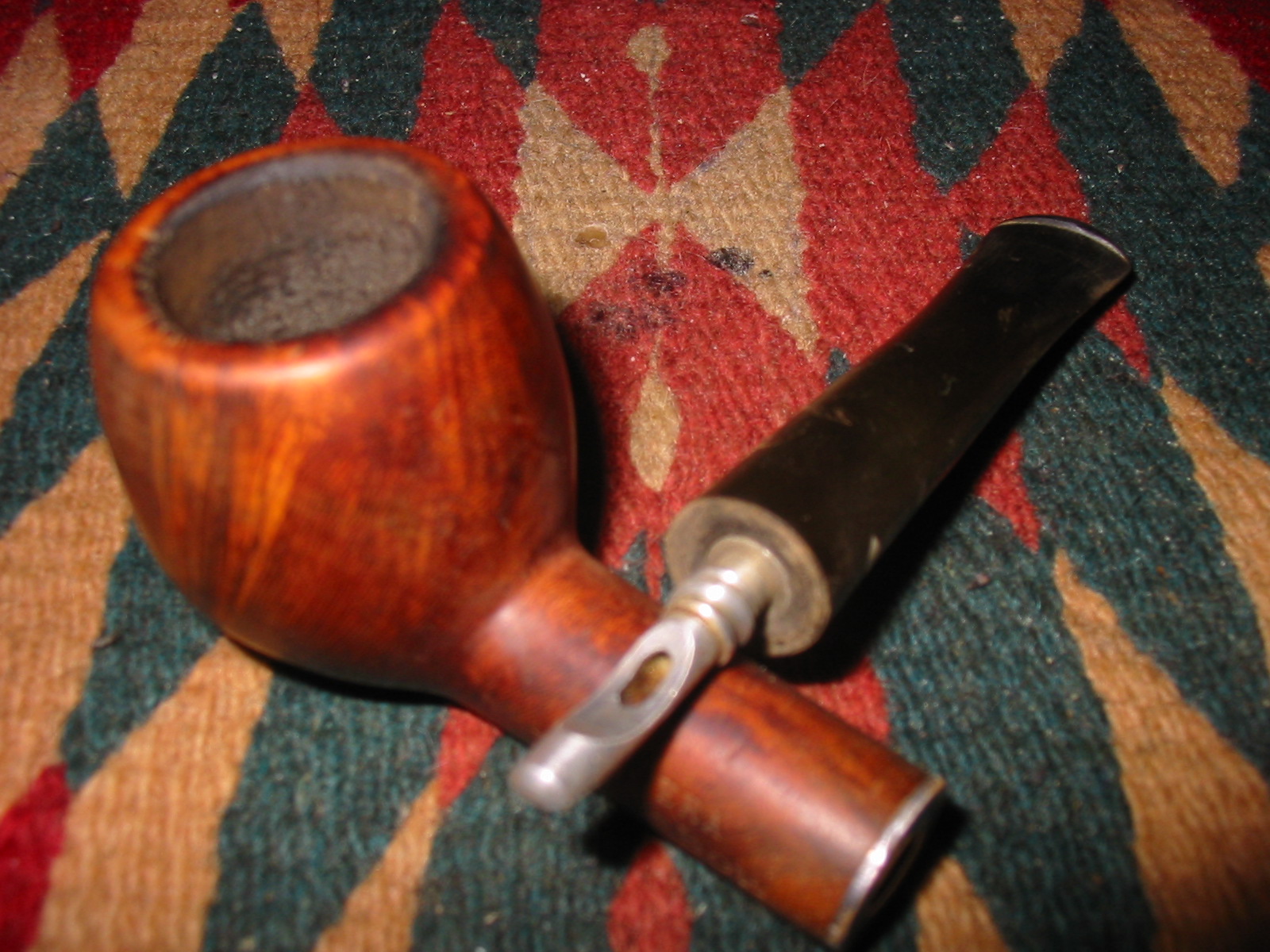
On Christmas Eve I decided to start working on a little acorn shaped pipe bowl that I have had here for quite awhile. It sat in my repair box in wait for the right moment for me to take it to the work table. It needed a stem and the shank was set up for a metal screw in tenon. I did not have any metal threaded tenons that fit the shank well or I could have made a stem for the pipe and inserted the threaded tenon. The time was right and I wanted to try something a bit different on this one. It did not matter if it worked or not really as it was truly a disposable pipe. With that freedom in mind I decided to fit the bowl with a push tenon stem. To make that work involved removing the metal insert from the shank. I reamed the bowl and cleaned out the shank to get it ready for removing the insert. I tried to twist if out as I figured that it was screwed into the shank. No such luck. It was tight and I could not remove it after using heat or putting it into the freezer to cause it to contract and loosen. I made a decision at that moment that did not end well – at least in the short term.

I set up my cordless drill with a bit that would open up the shank. My thinking was that if I could not removed the insert I would drill it open and smooth so that it would take a regular push tenon with no problem. I started with a drill bit virtually the same size as the airway and then planned on moving up to larger drill bits as the work progressed. The initial drilling worked well and the threads were smoothed out. So far so good! I was pretty excited to watch the airway smoothing out and opening up. Then I changed the drill bit for the next size up and drilled it a second time. I progressed slowly holding the bowl in my hand as I drilled the shank. I have done this before and did expect any problems. You know the thinking right – it worked well in the past so I could expect it to work the same this time around. So with full confidence I worked away. Then disaster struck. A few moments after starting to drill with the slightly larger bit the shank literally shattered in my hand. I was left holding four pieces of broken briar in my hand. The bottom half of the shank remained intact but the upper half was in three pieces. The metal insert remained unmovable in the bottom portion of the shank.

I was a bit stunned and almost binned the broken briar. What had at first appeared to be a good idea was reduced to something that I was ready to throw away and write off as a learning experience. However, I stopped and looked at the pieces for awhile. I thought about cutting the shank off and adding a shank extension to do one of Piet’s Hot Rods. I weighed the pros and cons of that and still was not certain whether I wanted to go to that trouble for this pipe. I took the pieces and puzzled them together to see what the damage looked like when it was put back together. I examined it closely and could see that the break was at least very clean and the surface was not chipped or damaged. I used a dental pick to remove the metal insert from the shank. I decided to get out the super glue and put the pieces back together for a look. With all the pieces in place the pipe looked okay. I sanded off the excess glue from the shank and used some acetone to clean off the stain that was on the shank and bowl. It looked like there was some promise. I decided to strengthen the bond with a nickel band. I heated a nickel band with my heat gun and carefully pressure fit the band on the shank. The repaired pipe was going to be workable.

ImageImageImageImage

I sanded the bowl and the shank and wiped it down repeatedly with acetone. The idea was to remove all of the remaining lacquer finish and even out the stain. I wanted to get the bowl back to bare wood as much as possible before restaining. Once I had it clean I sanded it again with a fine grit sponge backed sanding pad. I continued to sand it with the micromesh sanding pads from 1500-12,000 grit to prepare it for staining.

I had an old saddle stem that would fit the shank dimensions in my box of scavenged stems. I turned the tenon to fit the newly cleaned shank and did the initial sanding to remove the oxidation on the stem. I used the same sponge back sanding pad I used on the bowl as it allows good access to the saddle areas of the stem. The photos below show the newly fit stem. I have quite a bit more work to do on the stem and bowl to bring the pipe to a finished condition but the promise is definitely there. In the second and third top view photo below you can see the repaired shank. I am pretty confident that it will be pretty well hidden by the staining.

ImageImageImage

Before restaining the bowl I decided to work on the stem and get it polished and smooth. I used the 1500 and 1800 micromesh pads to do the sanding and polishing before using the Maguiar’s polishing compound. I have started to use it after the first two or three micromesh sanding grits. I rub it on by hand and then scrub it with a soft cotton pads before wiping it off. I repeat this polishing process with the compound two times before proceeding to working through the remaining micromesh grits. I sanded the stem with 2400 and 3200 grit and took it to the buffer and used Tripoli to buff away the scratches and the oxidation that remained at this point in the process. I also buffed the bowl with the Tripoli. Once back to the work table I used 3600 and 4000 grit before giving the stem a rub down with Obsidian Oil. The four pictures below show the pipe as it looks at this point. The bowl is ready to stain and the stem is getting close to the finished look. There is still some oxidation around the saddle area that will need some more work.

ImageImageImageImage

I decided to use an oxblood coloured aniline stain on the pipe to try to minimize the visibility of the repair to the shank. I used a cotton swab to apply the stain, flamed it and then buffed it off with a soft cotton cloth before taking it to the buffer and buffing it with White Diamond. After buffing I waxed it with several coats of carnauba wax to give it a shine.

ImageImageImageImageImage

I also finished the polish on the stem using White Diamond on the buffer before finishing with the remaining three grits of micromesh pads – 6000, 8000 and 12,000. I gave it a final buff with White Diamond and then rubbed it down with some Obsidian Oil. I finished the stem with several coats of carnauba wax. The four photos below show the finished pipe. The repair to the stem is visible if you look closely but the redemption of this broken pipe is complete and it is ready to smoke.
ImageImageImageImage