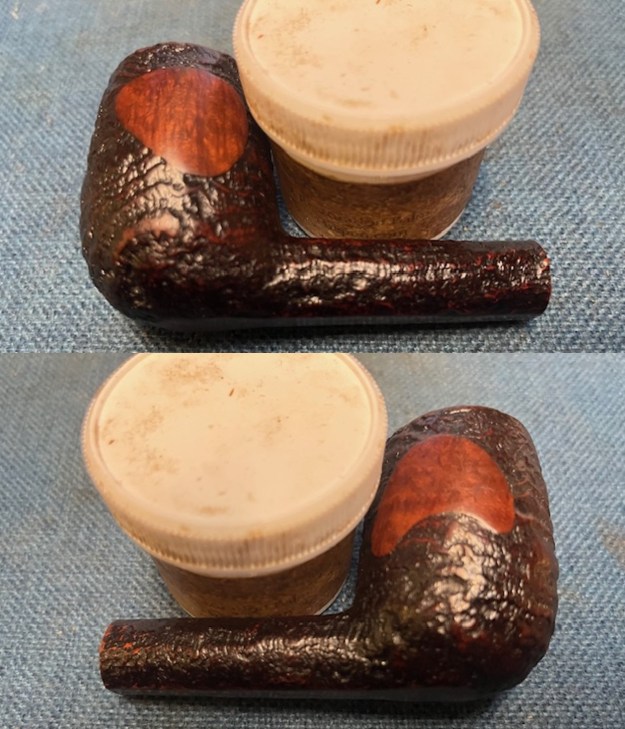
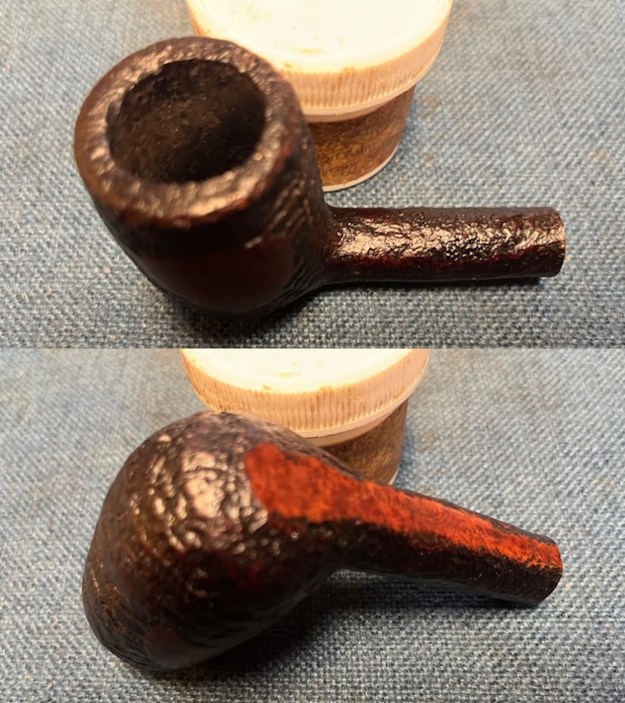
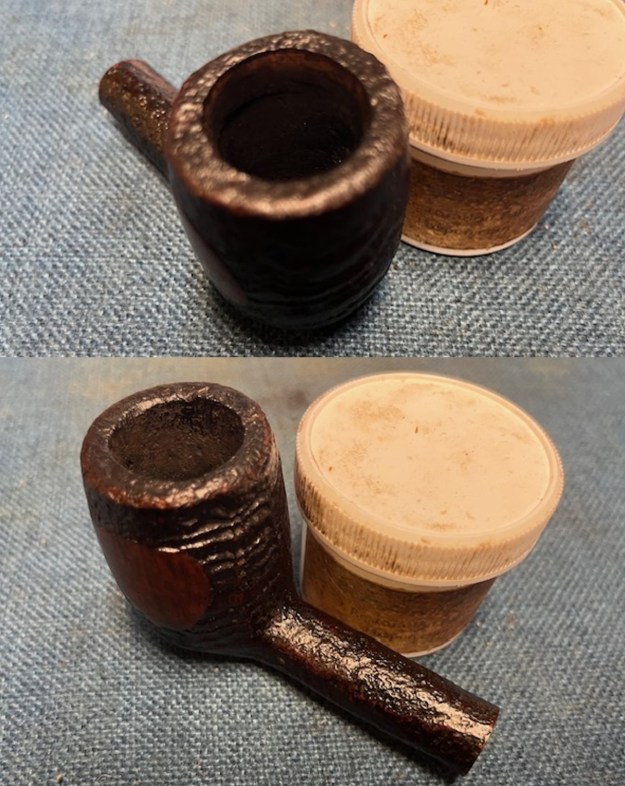
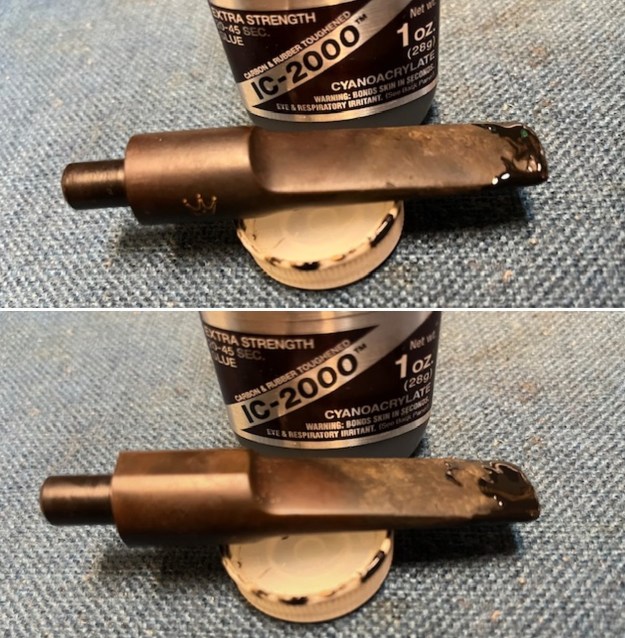
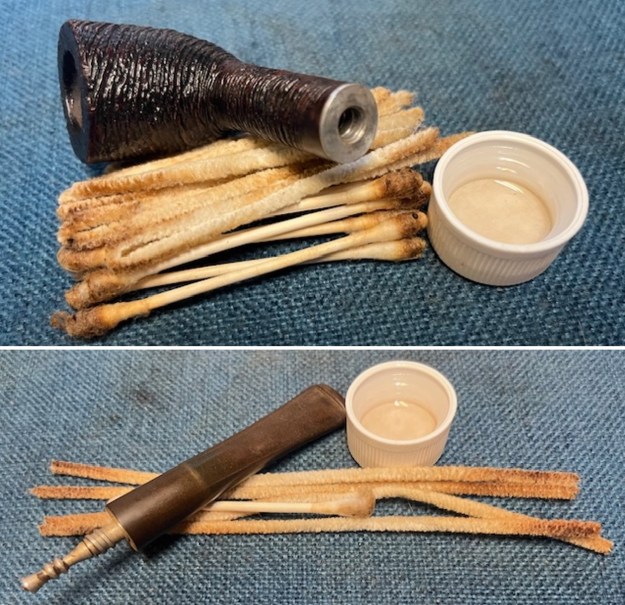
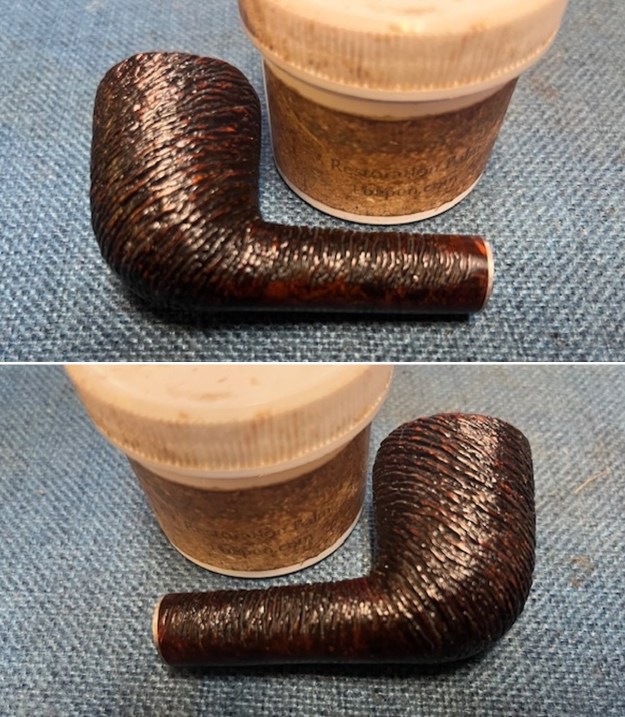
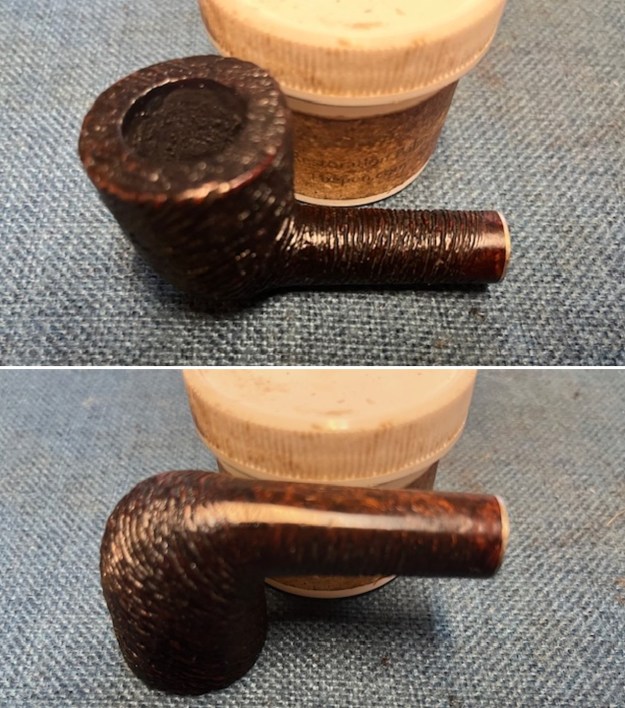
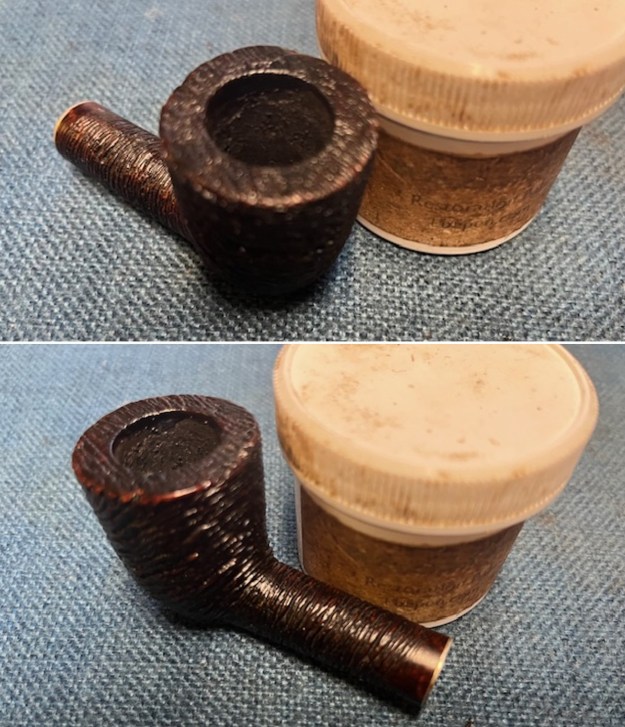
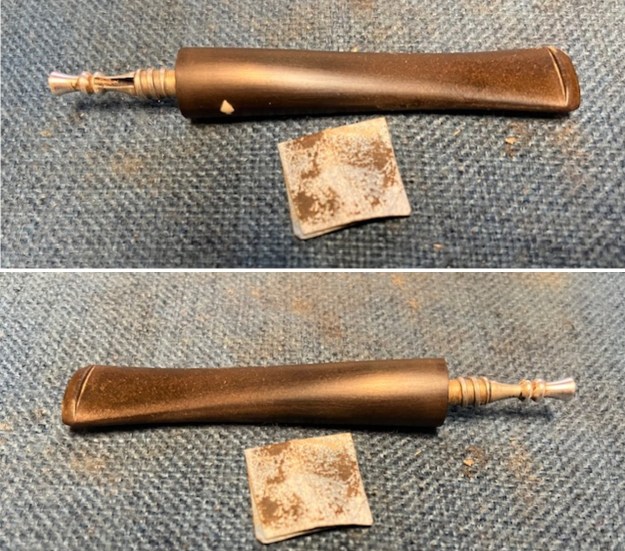
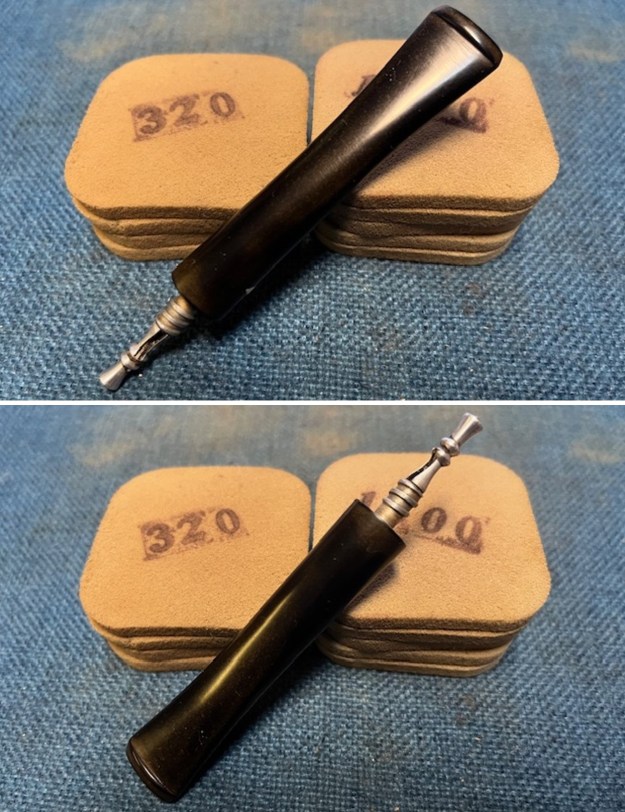
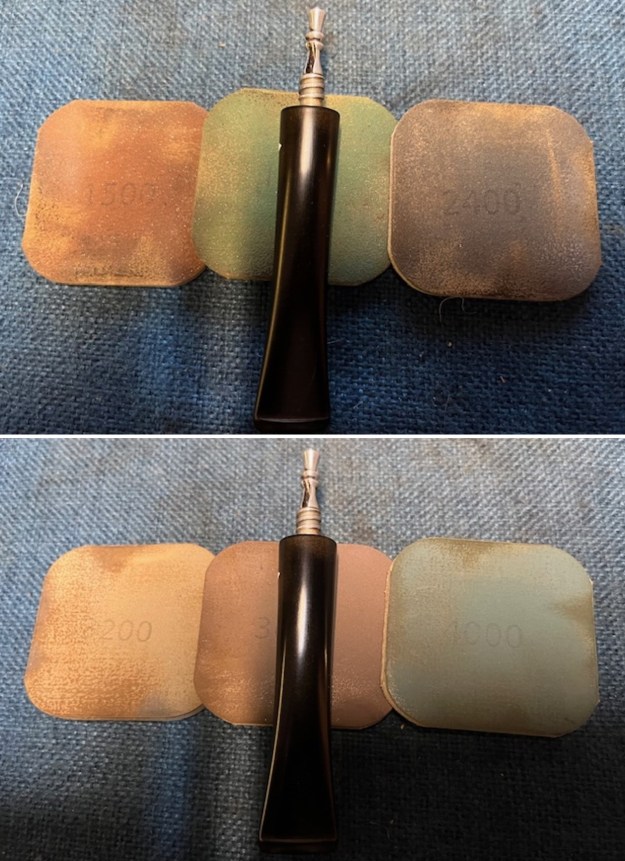
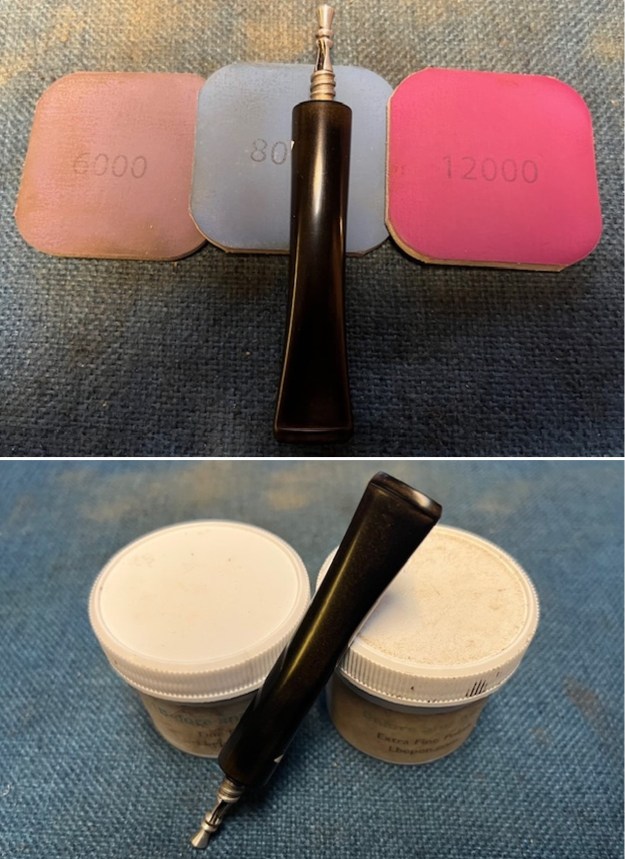
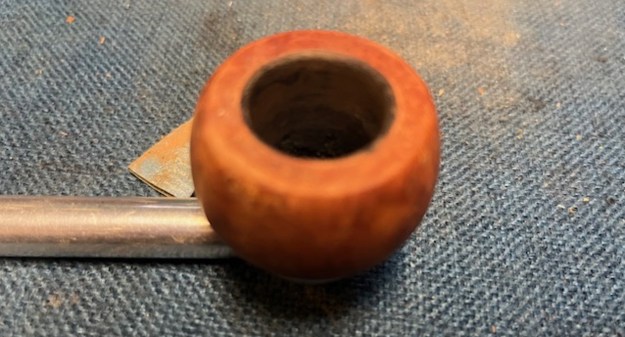
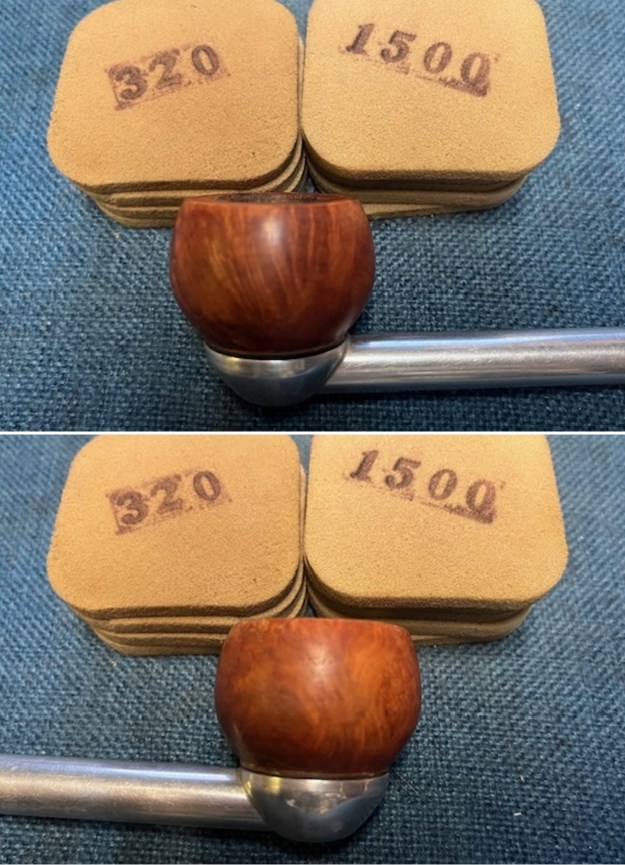
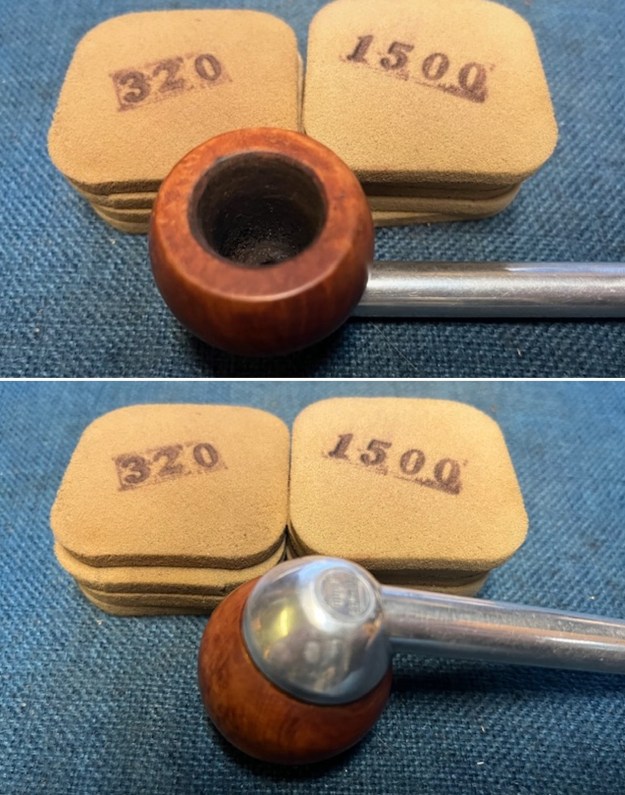
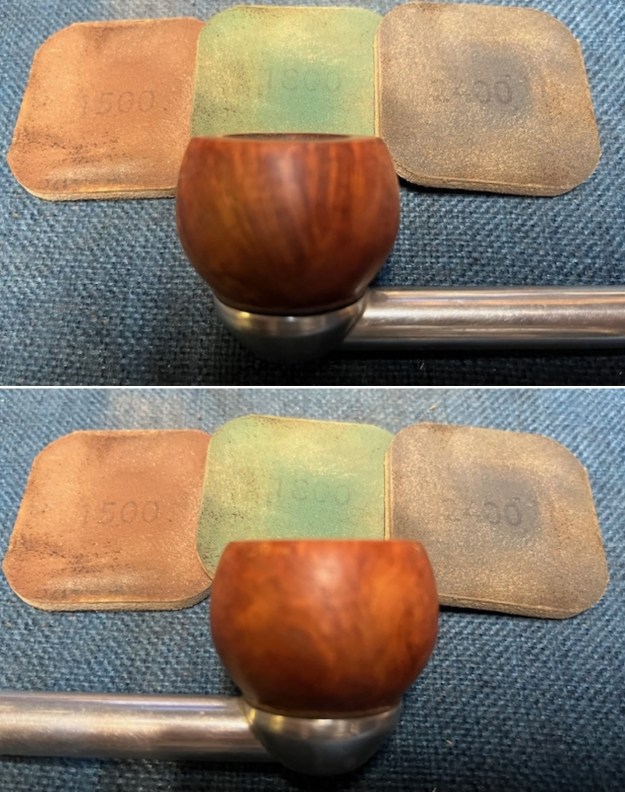
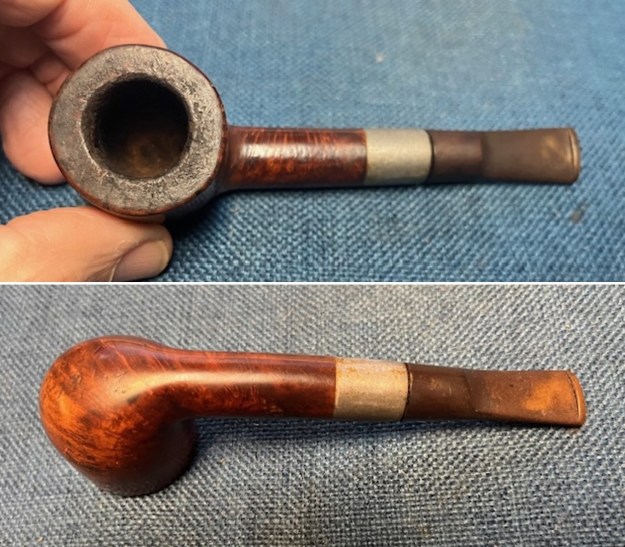
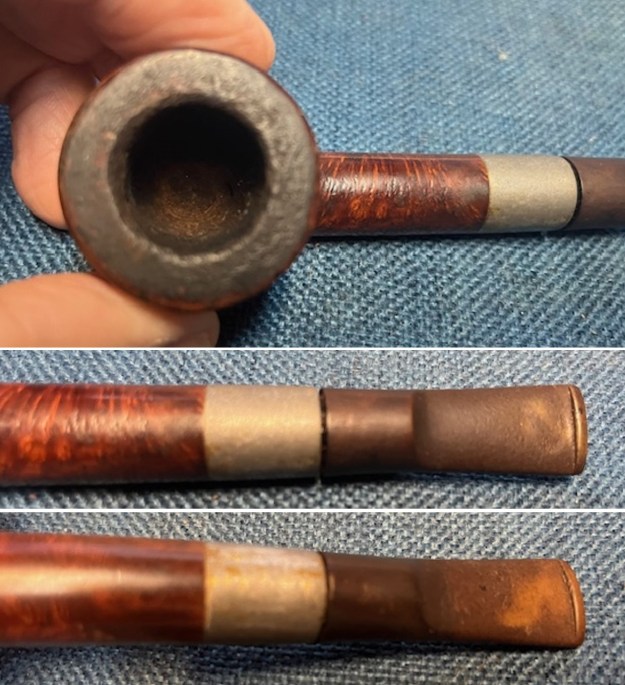
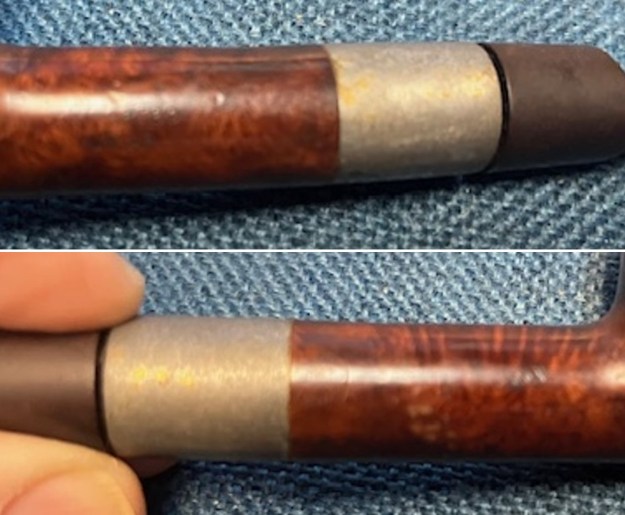
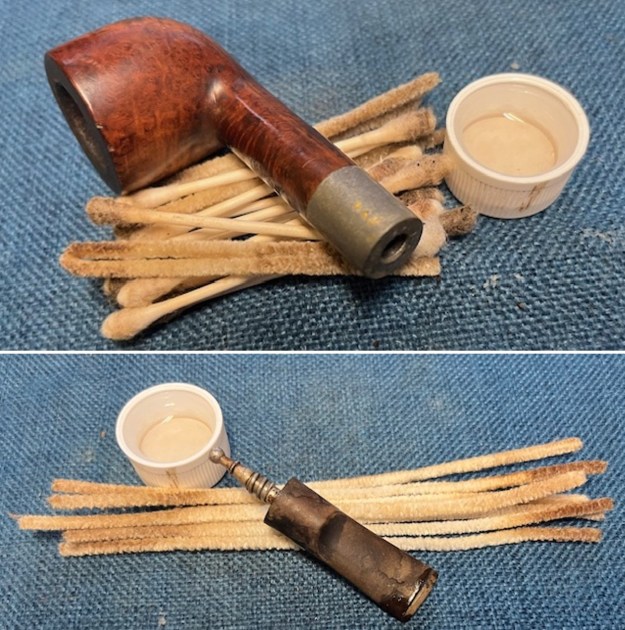
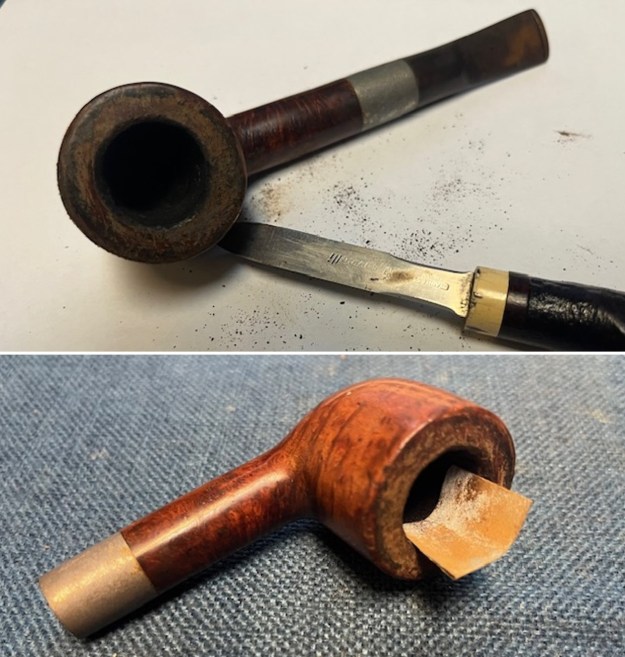
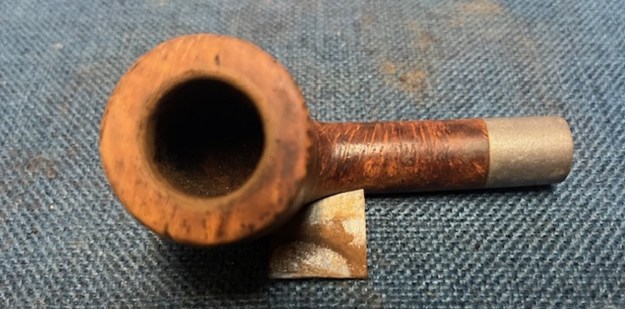
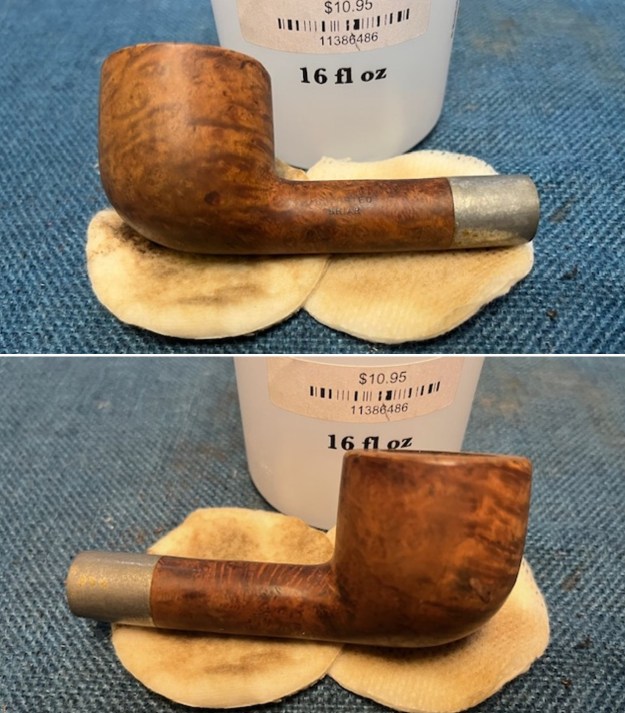
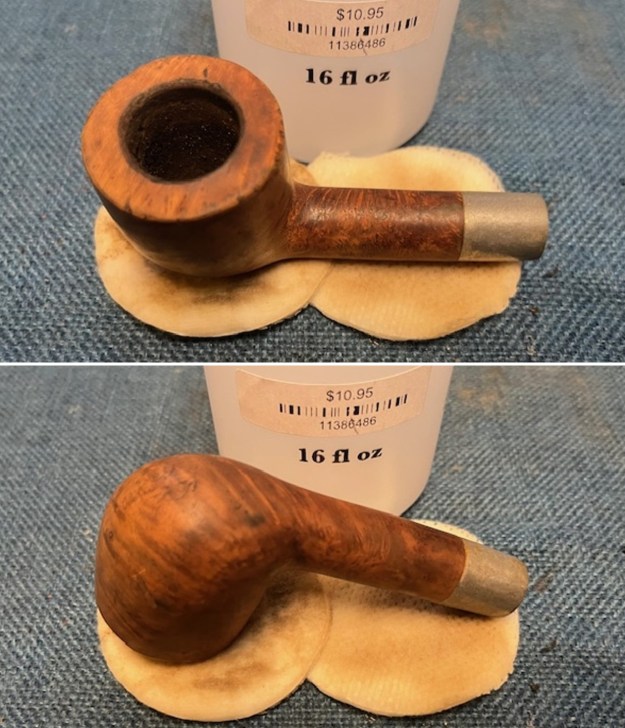
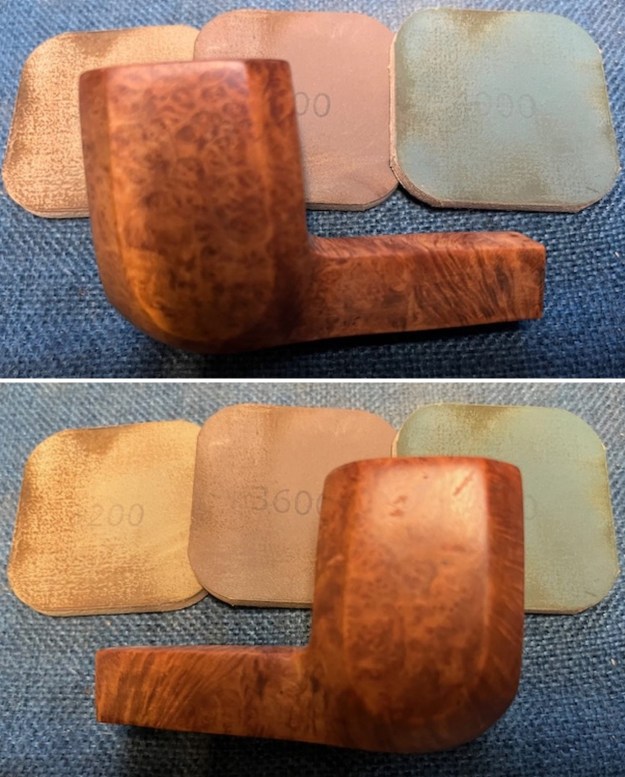
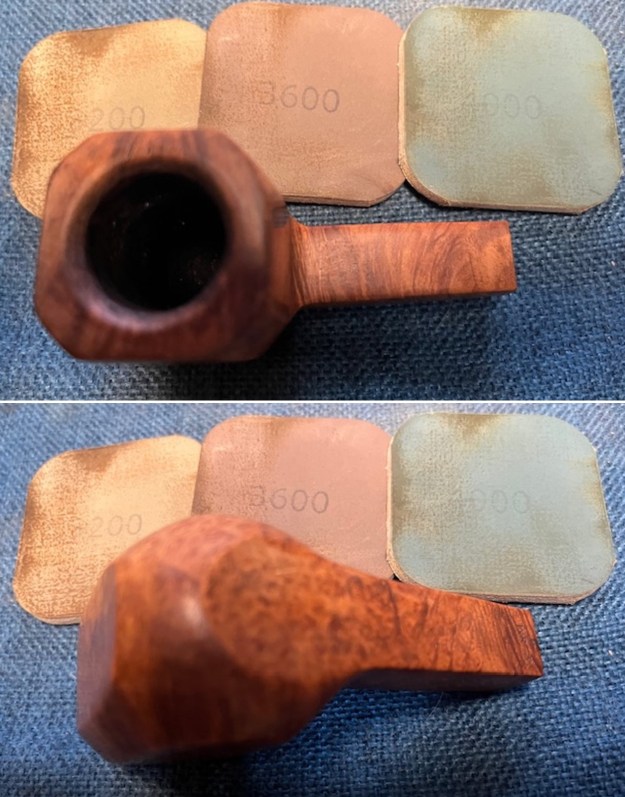
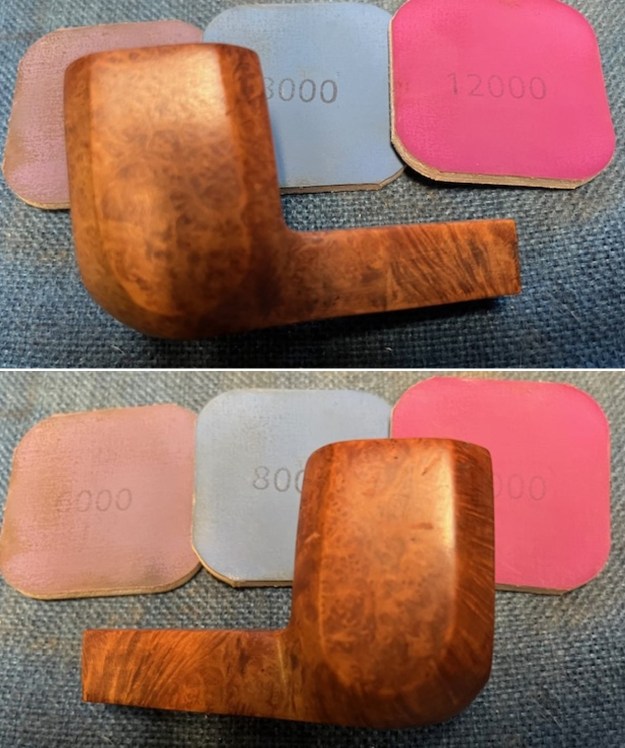
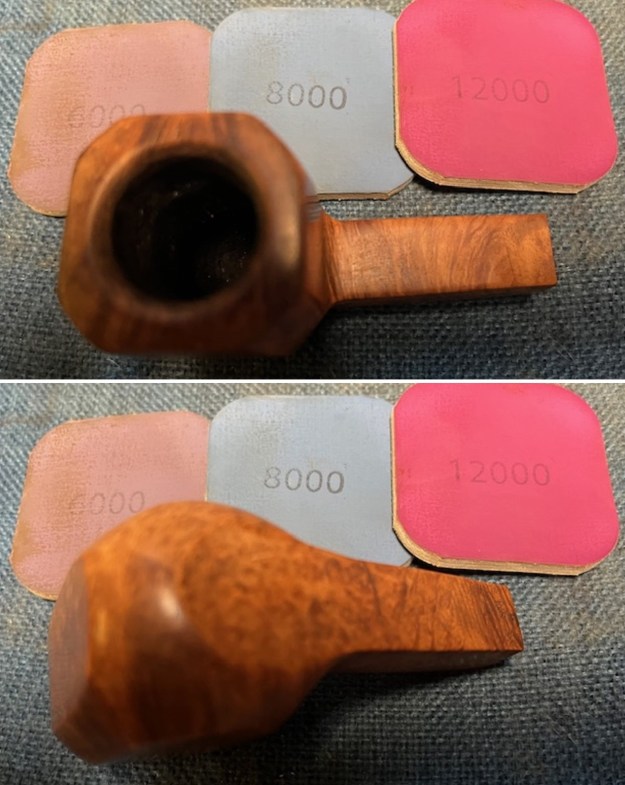
Tag Archives: Oxidation

New Life for a Peterson’s System Standard 301 Smooth Pot


by Steve Laug

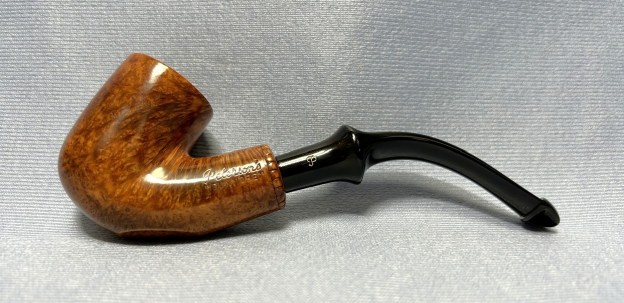
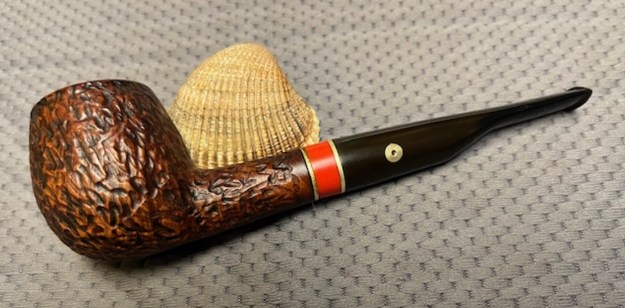
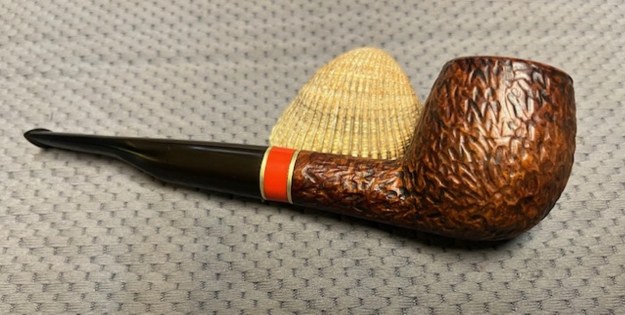
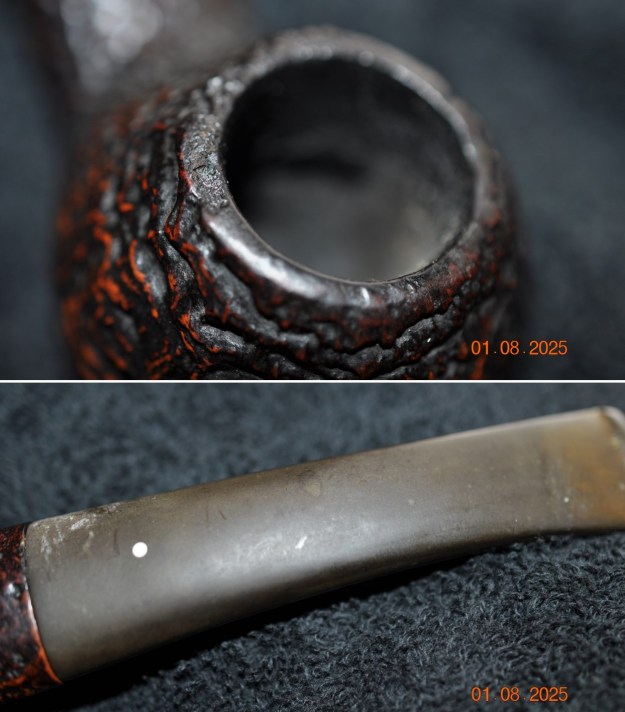
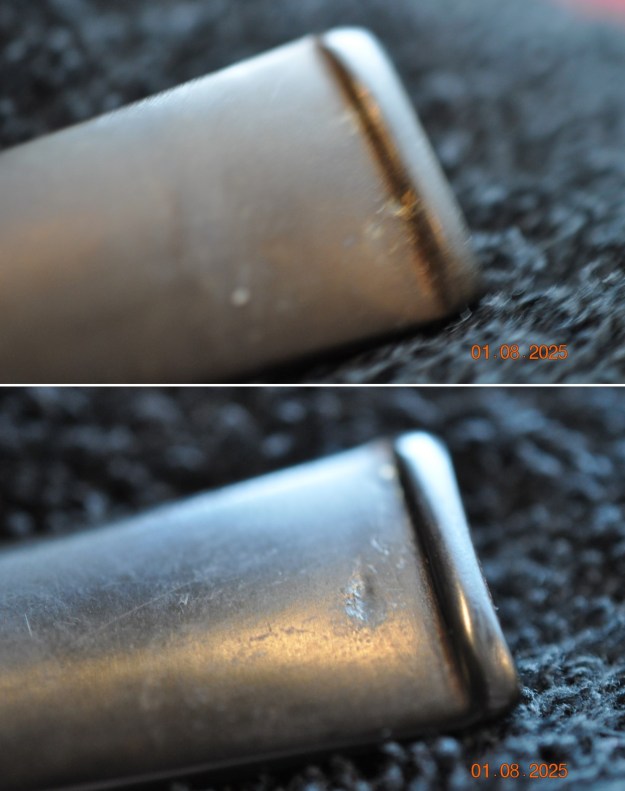
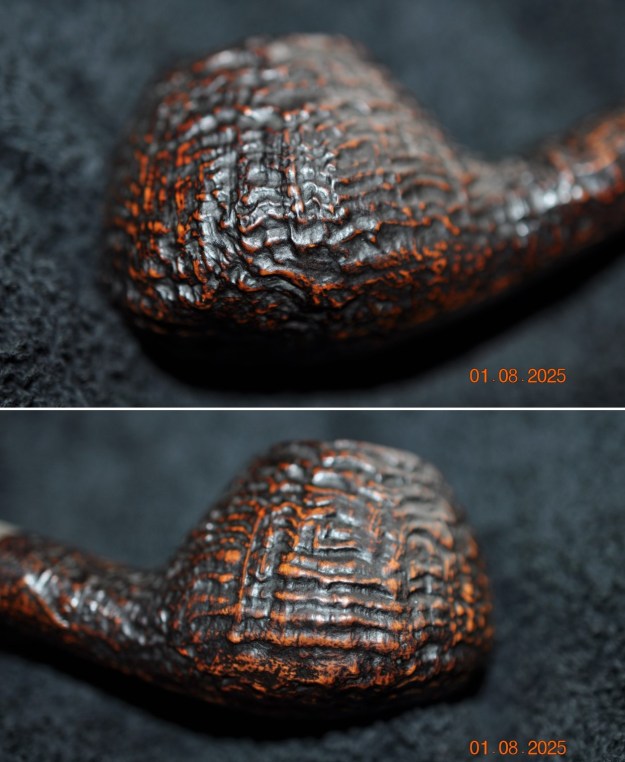
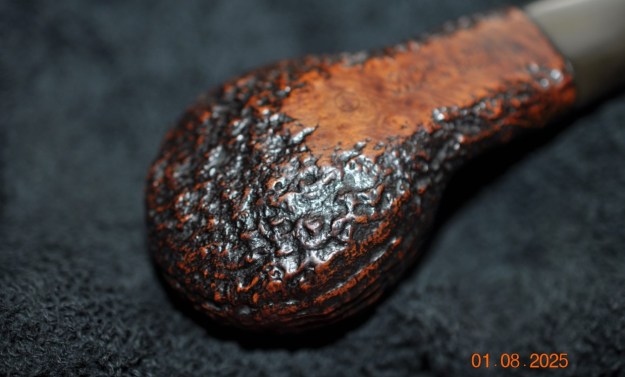
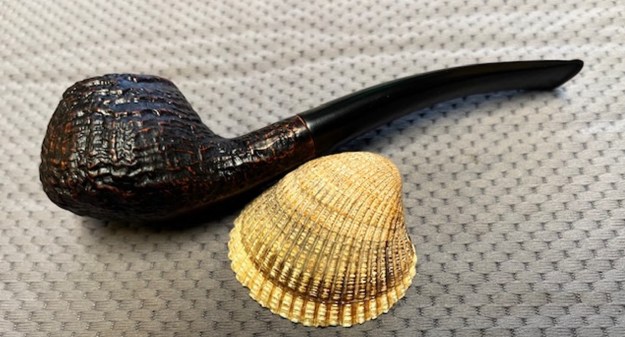
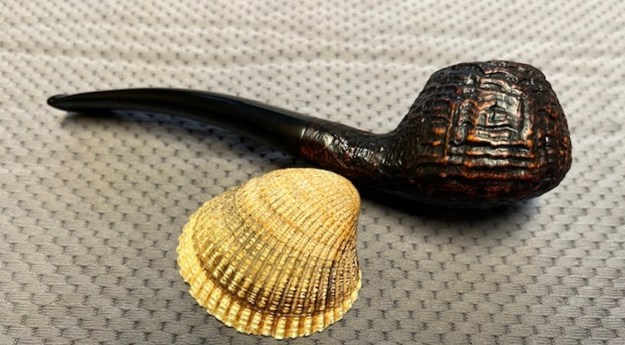
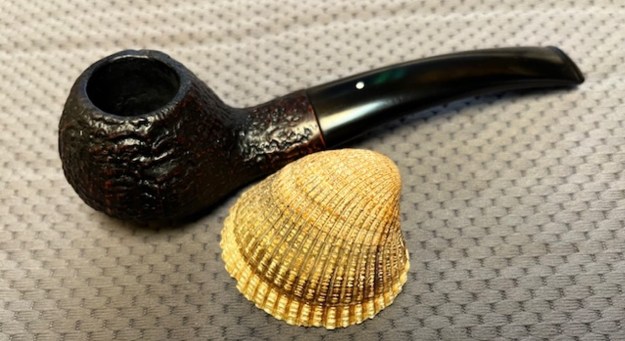
We received the next pipe from our source in Copenhagen, Denmark on 01/29/2024. It is another fitting New Year’s restoration. It is a Peterson’s 301 Bent Pot. It is stamped on the left side of the shank and reads Peterson’s [arched over] System [over] Standard. On the right side it is stamped Made in the Republic of Ireland (in three lines) [over] the shape number 301. The nickel ferrule on the shank is lightly oxidized and stamped K&P [over] Petersons. The pipe is dirty, obviously another favourite smoker. There is grime ground into the finish. There is a thick cake in the bowl and a thick overflow of lava on the inner edge and the smooth rim top. The nickel ferrule is lightly tarnished and stamped as noted. The stem is dirty, very oxidized but does not have tooth marks of chatter on either side. Jeff took photos of it before he started his clean up work. I have included those below. Jeff took photos of the rim top and stem to show the general condition of the pipe. The bowl is heavily caked and there was some darkening and a lava overflow on the rim top and the inner edge. The stem looks amazingly good for a pipe of this age. Jeff took photos of the bowl sides and heel to show the look of the sandblast that was around this bowl. The blast really highlights the grain underneath and is quite beautiful around the sides of the bowl and shank. It is another nice looking pipe. He took photos of underside of the shank to show the stamping. The stamping is clear and readable in the photos below and is as noted above. The stamping on the nickel ferrule is clear and readable as noted above. I have included a link to the Pipedia article so that you can read the history of the brand (https://pipedia.org/wiki/Peterson). Take some time to read through it as it is a great read.

I turned to “The Peterson Pipe” by Mark Irwin and Gary Malmberg to get some background on the Peterson’s System Line. On page 314 it had the following information.

Peterson’s over System – Pipes stamped Peterson’s System have been documented as early as 1920. A ’20 brochure is the earliest printed reference to the Peterson System. The pipe came in three quality grades (no mark, 2, or 3) until 1959, thereafter as De Luxe (no mark), Premier (the old 2) and Standard (the old 3).

Peterson’s over System over Standard (c1945-)

I learned previously that the shape 301 was not introduced until 1975. Considering the Republic stamp, this one would likely date between 1975 and 2000. My guess is that the pipe was made somewhere between 1975 and mid-80s. Now it was time to work on the pipe.

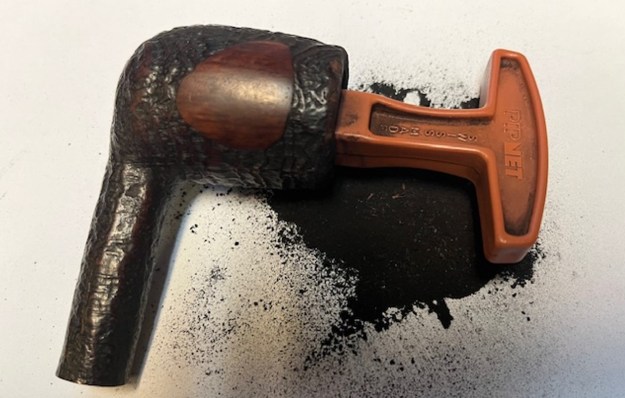
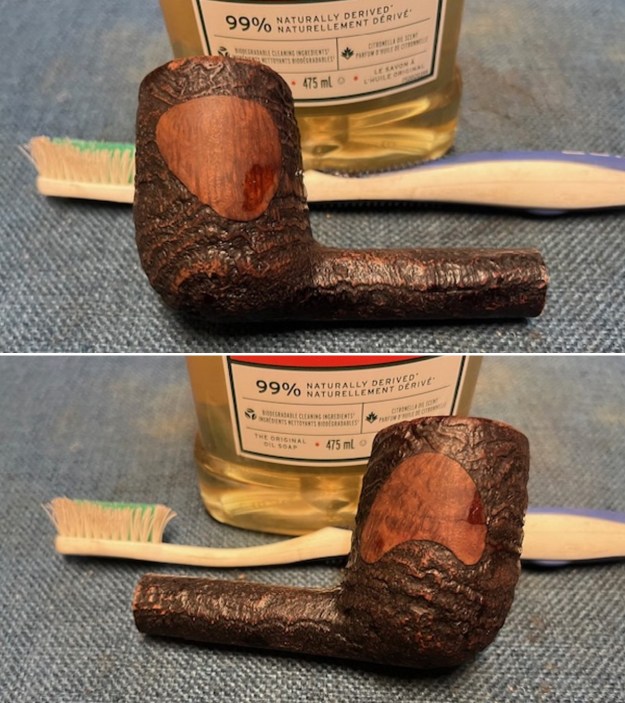
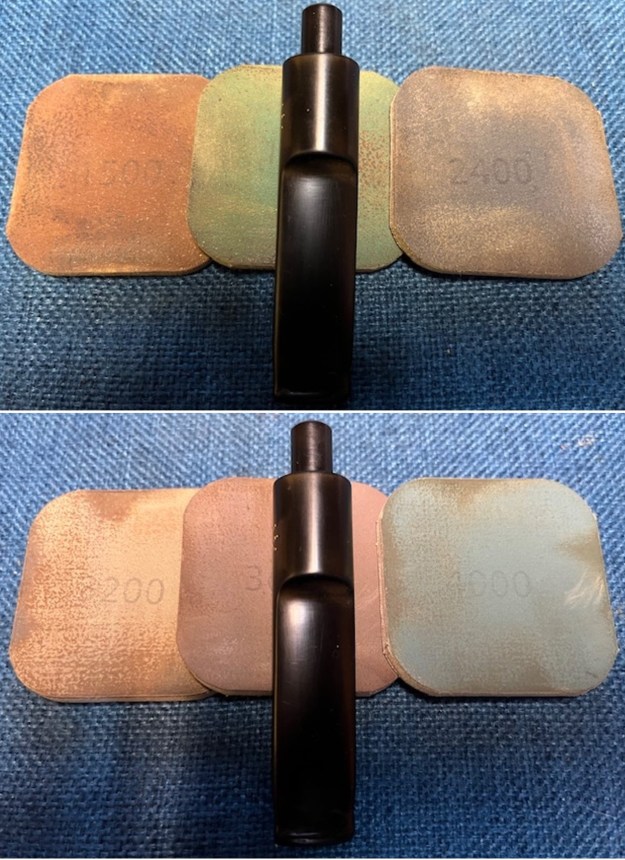
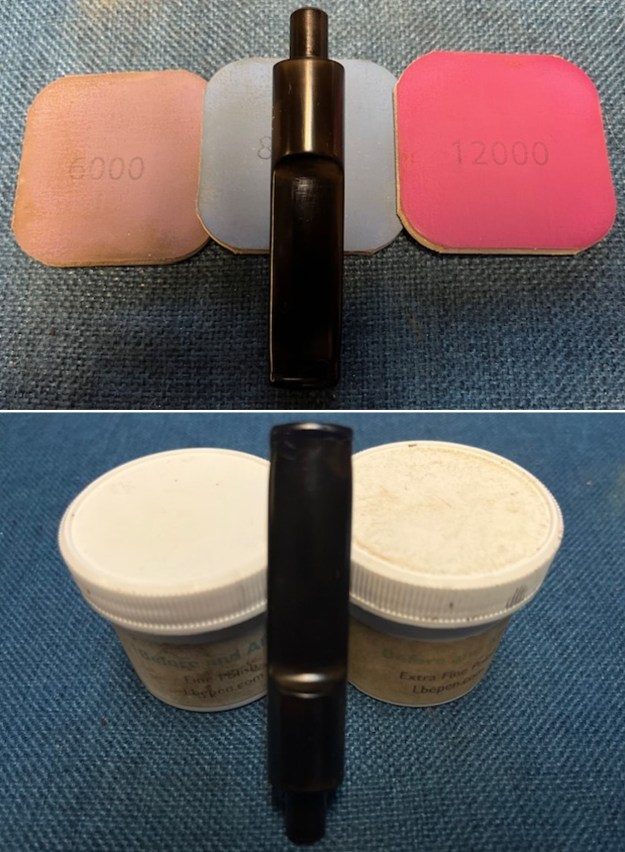
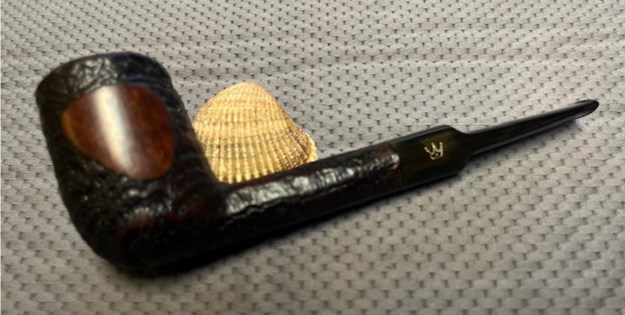
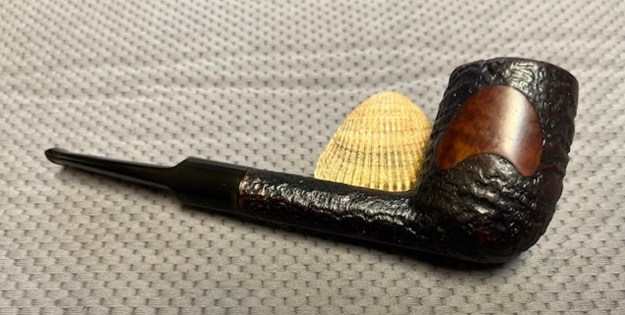
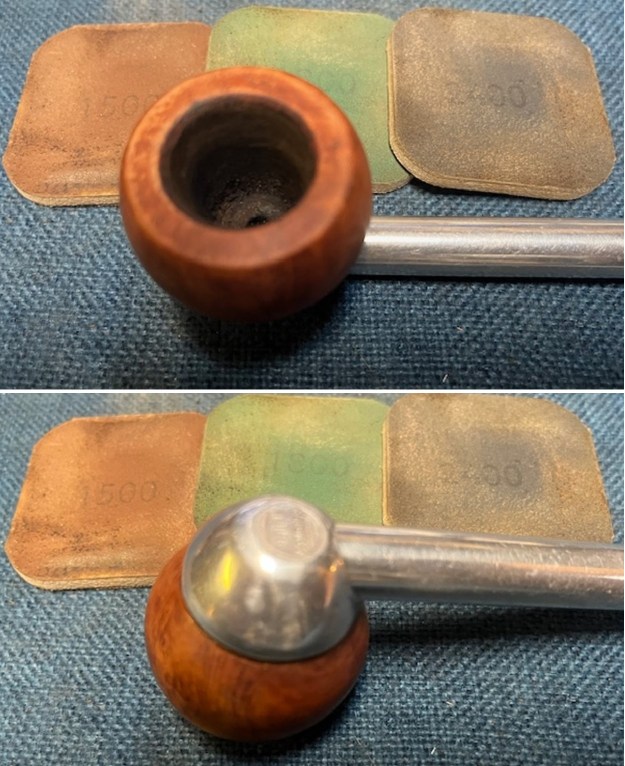
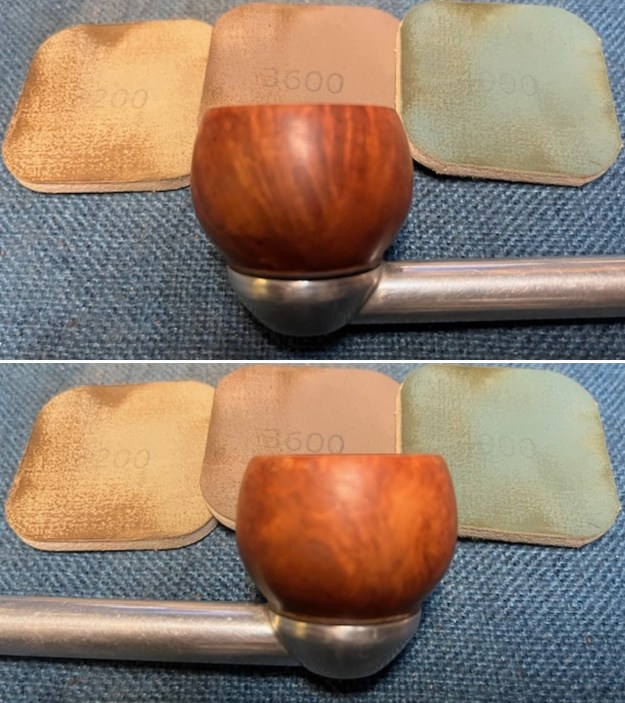
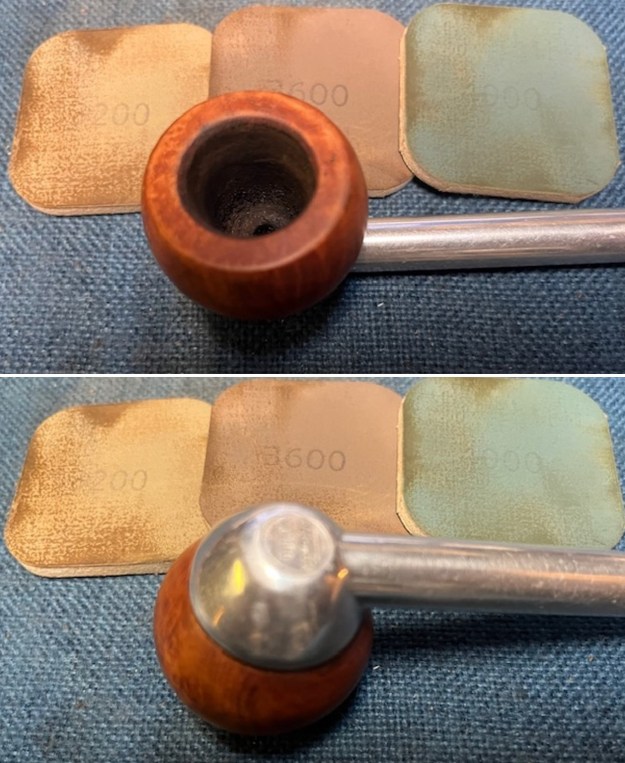
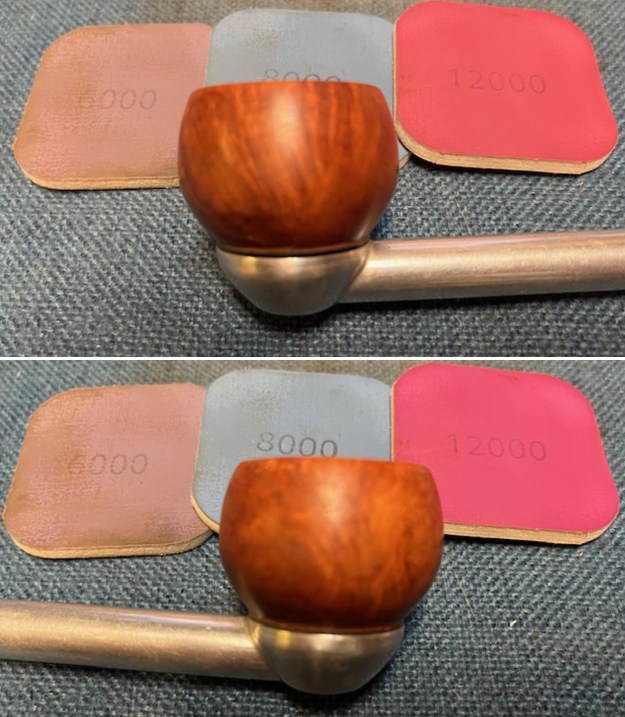
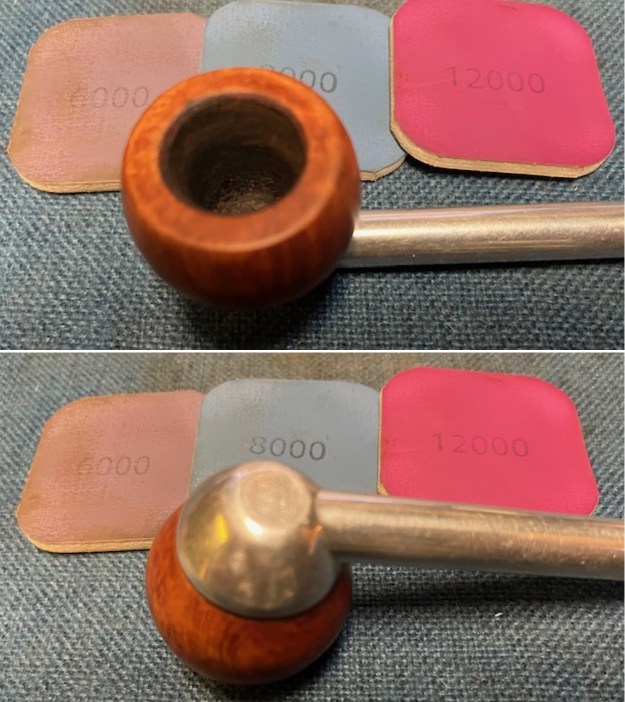
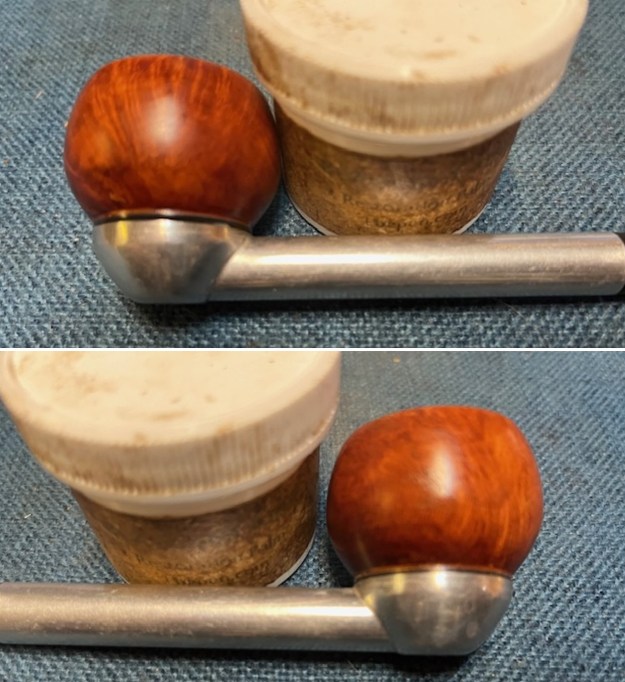
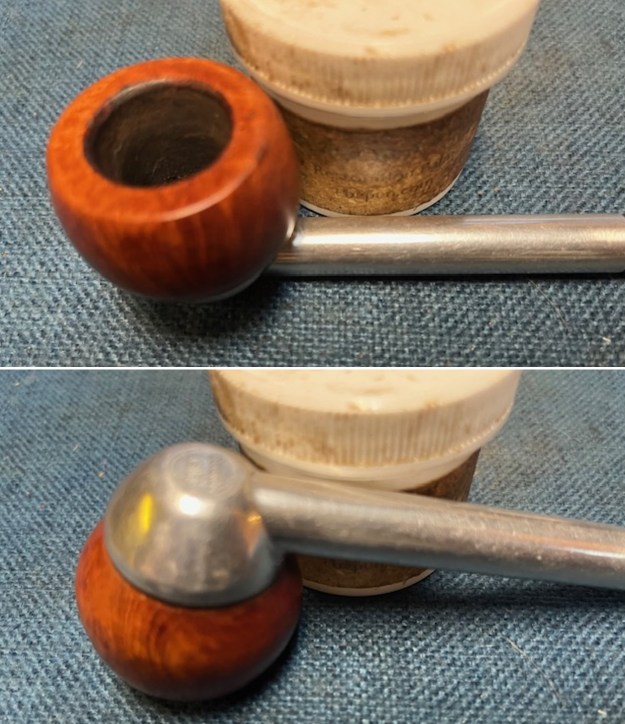
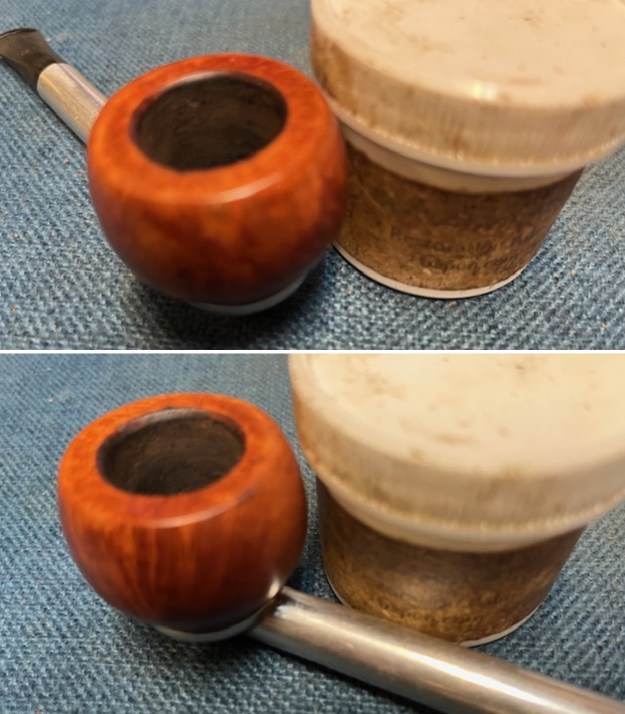
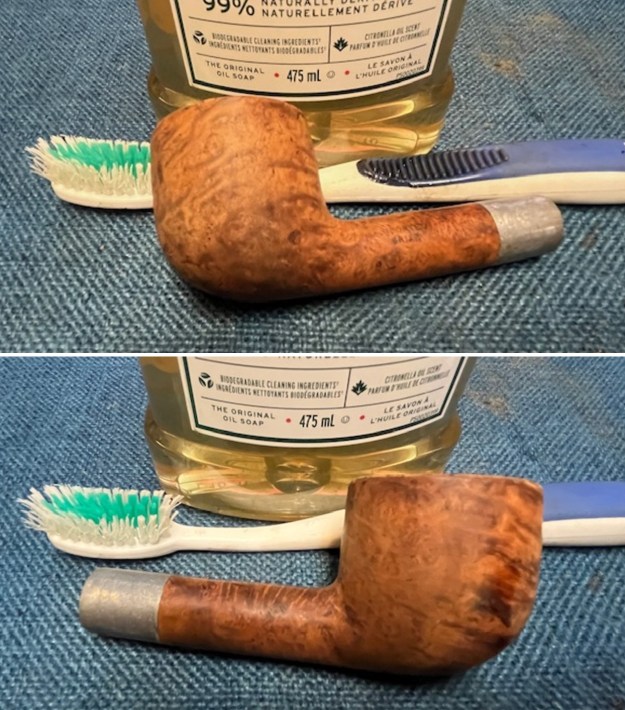
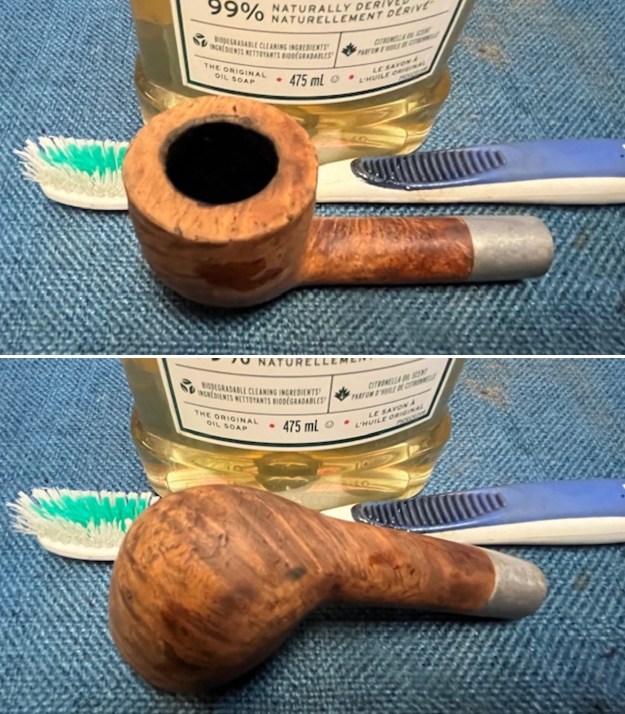
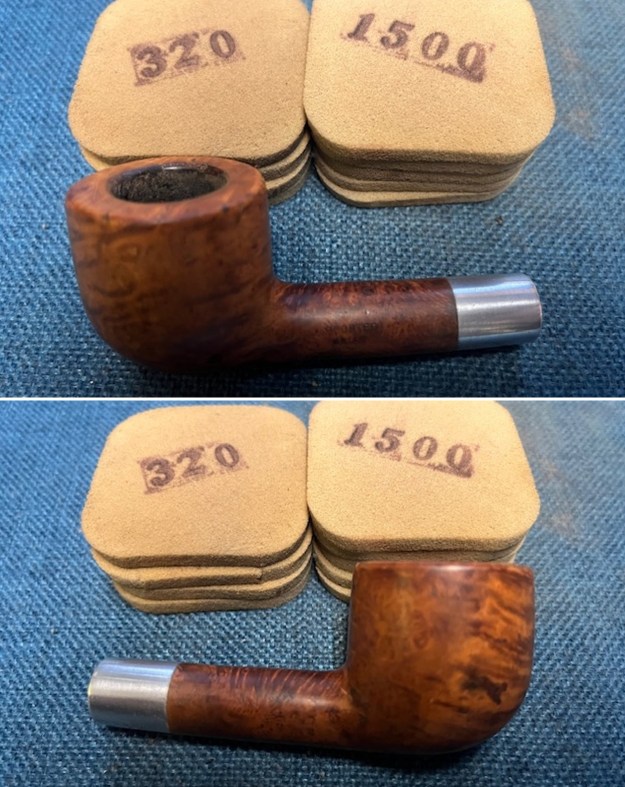
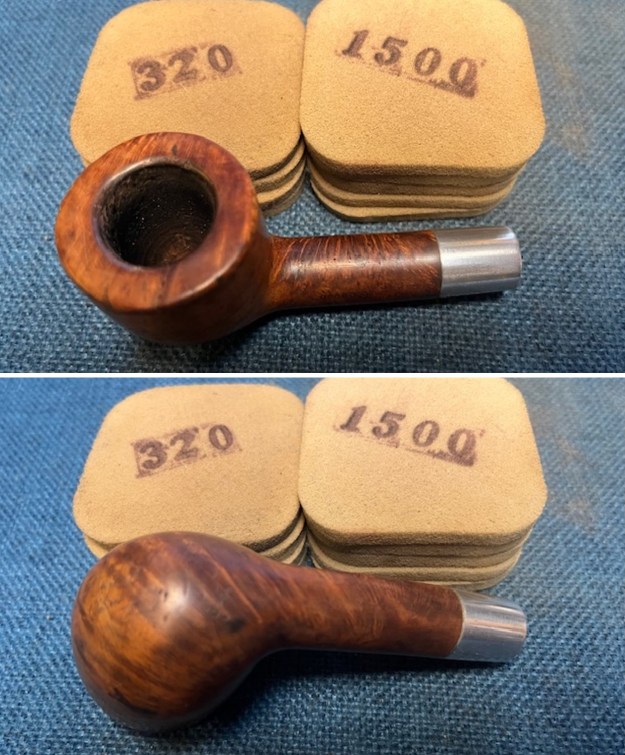
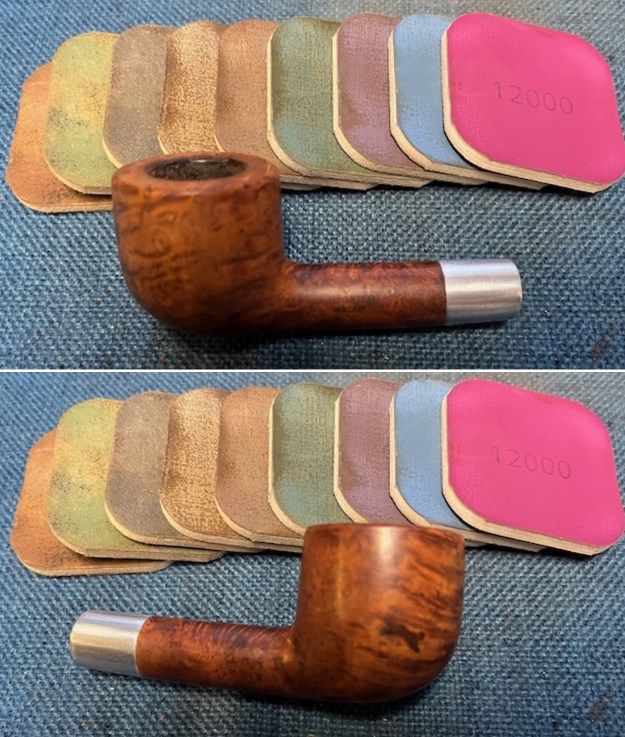
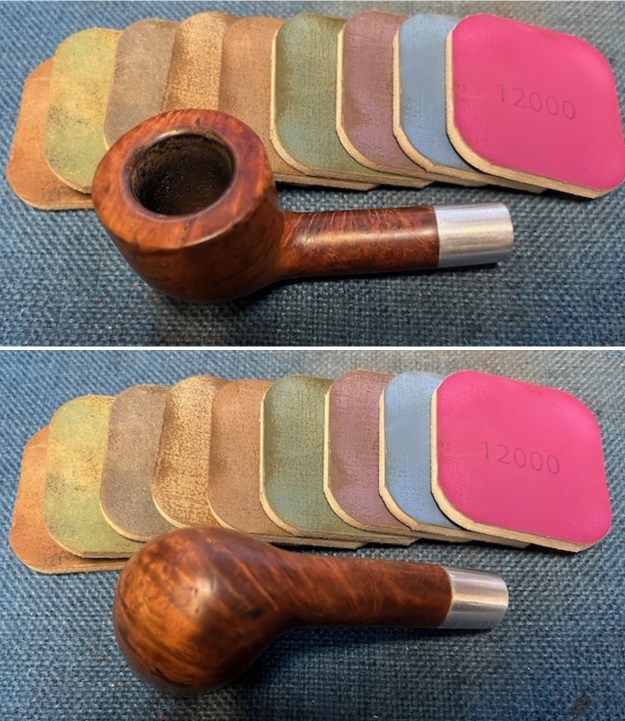
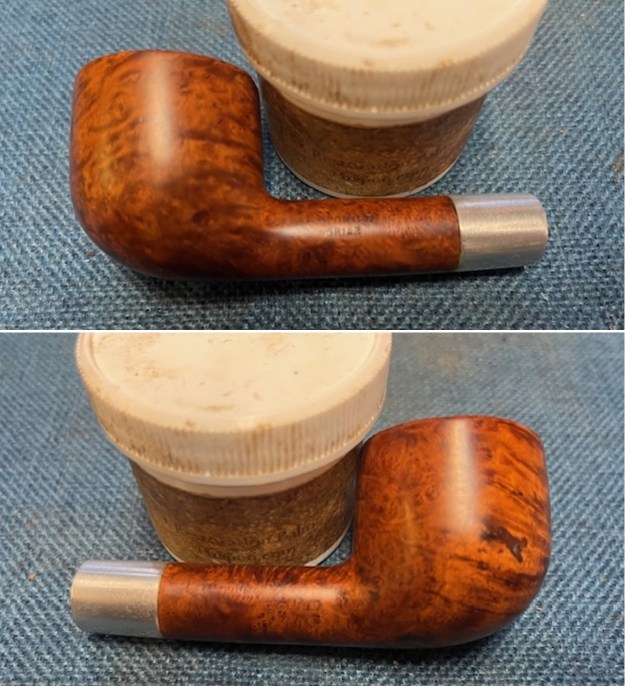
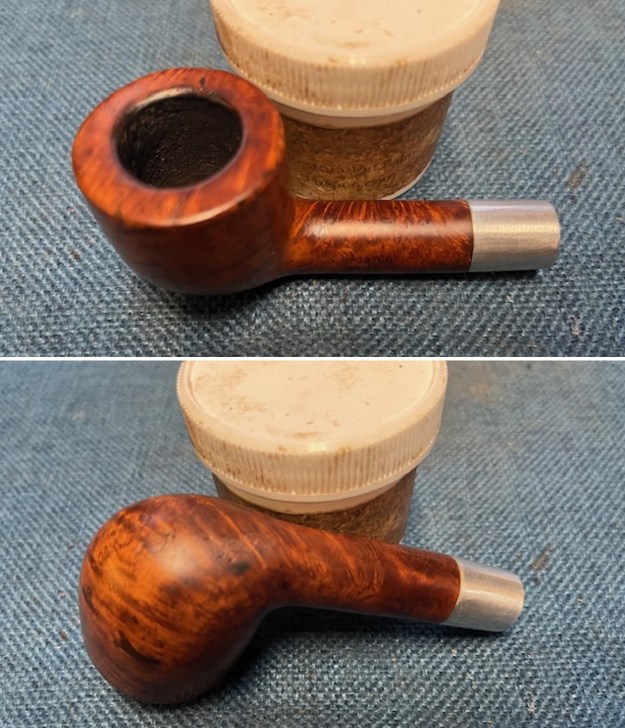
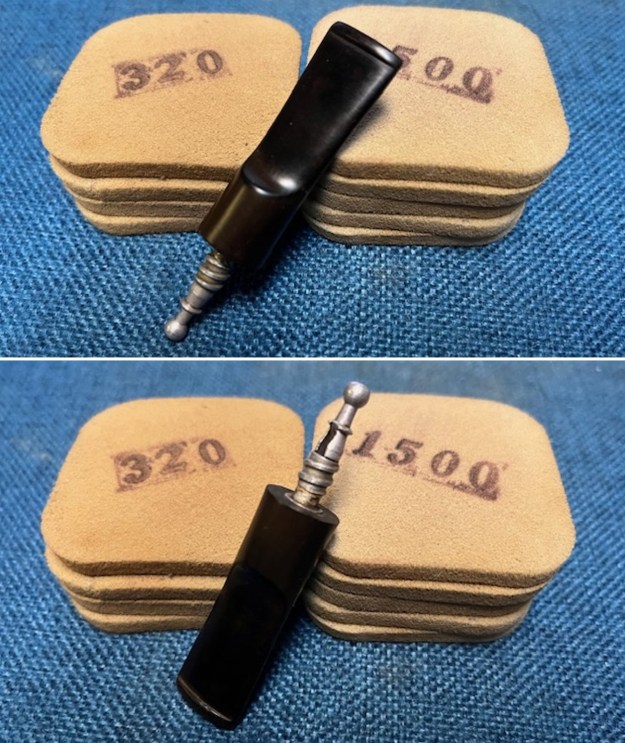
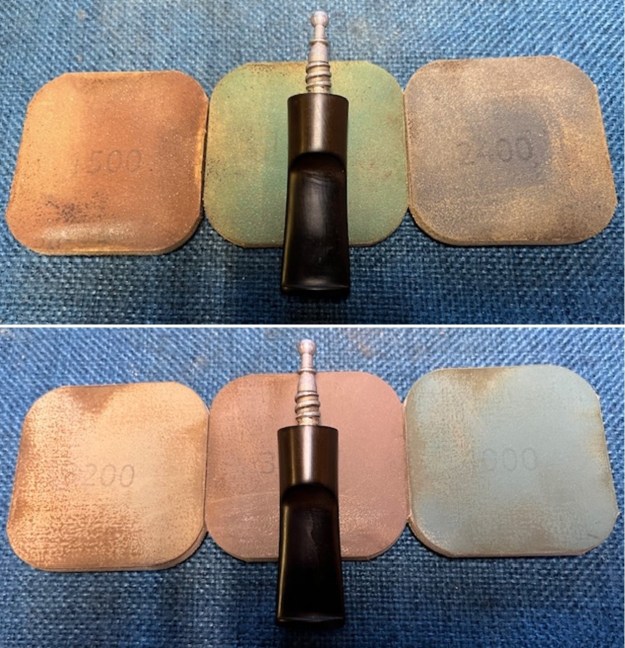
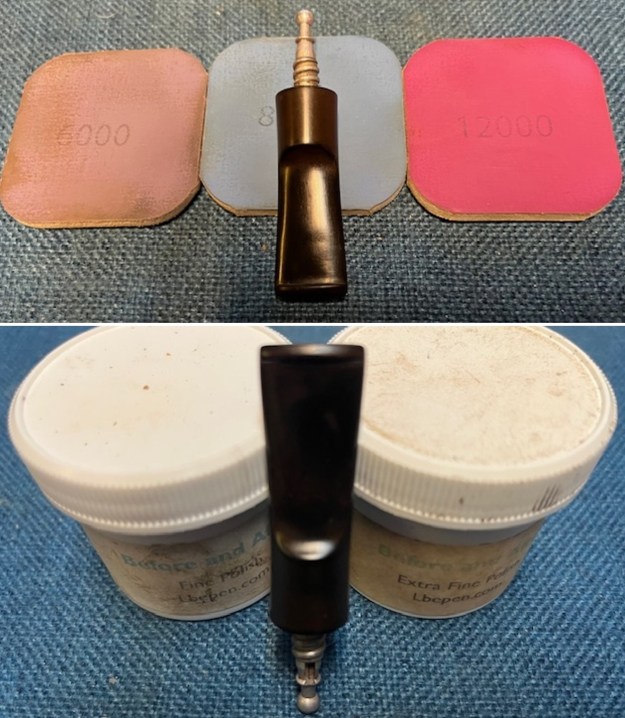
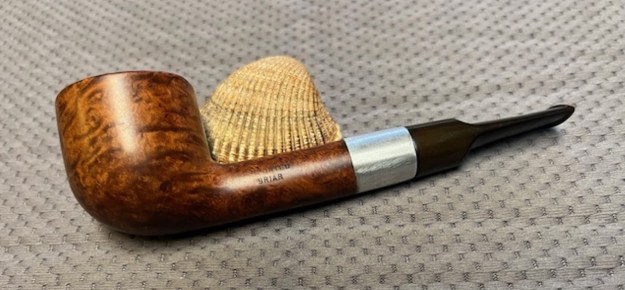
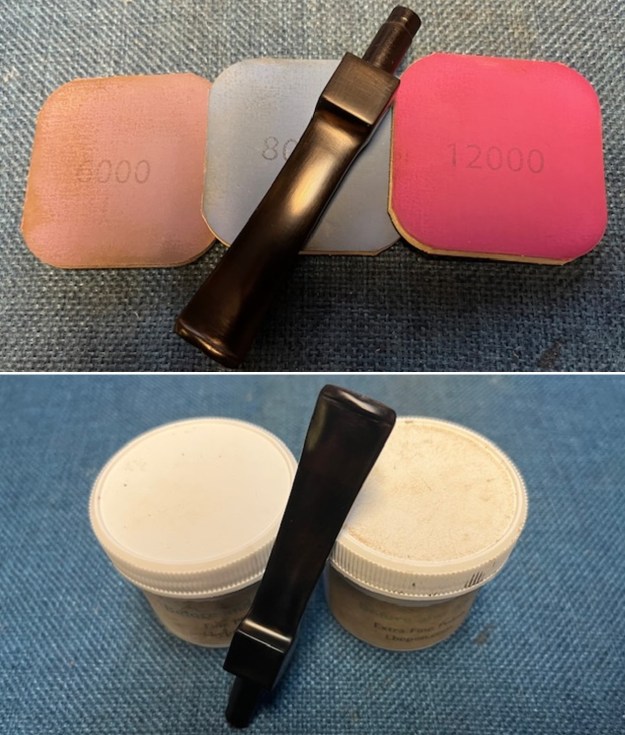
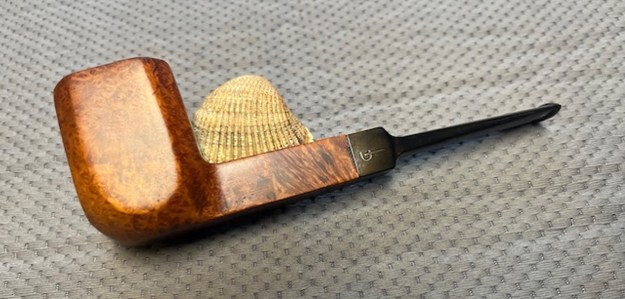
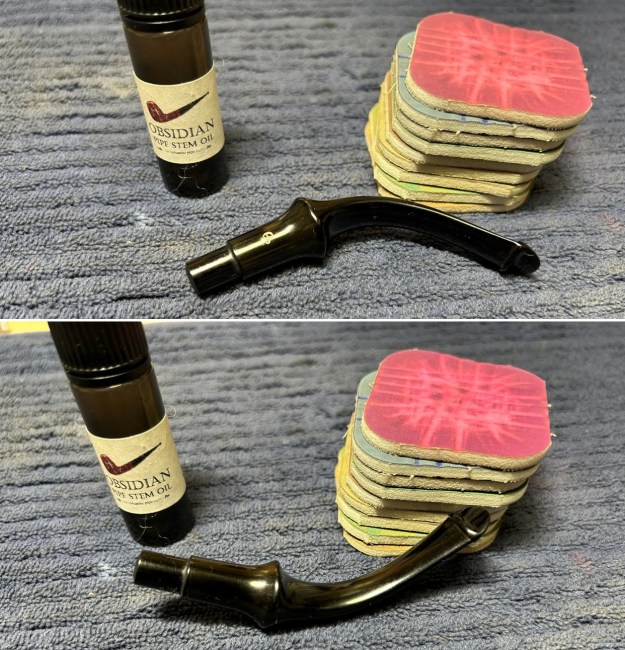
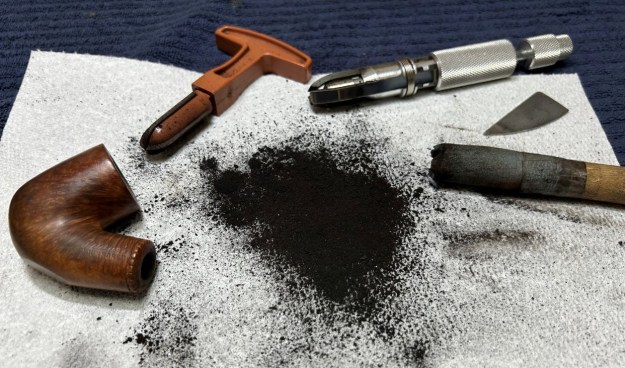
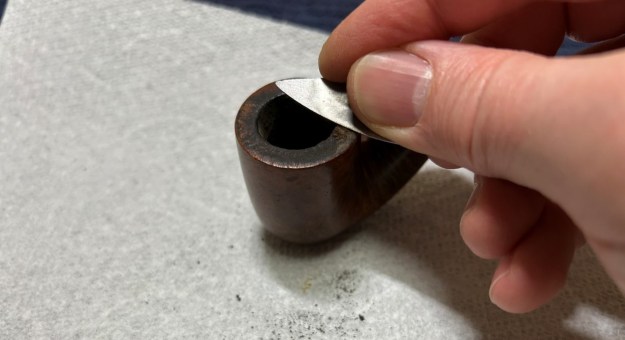
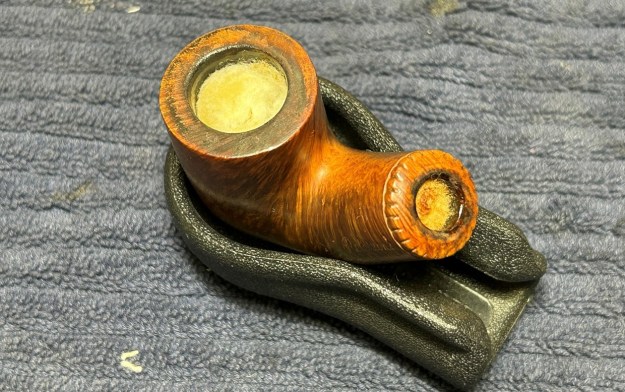
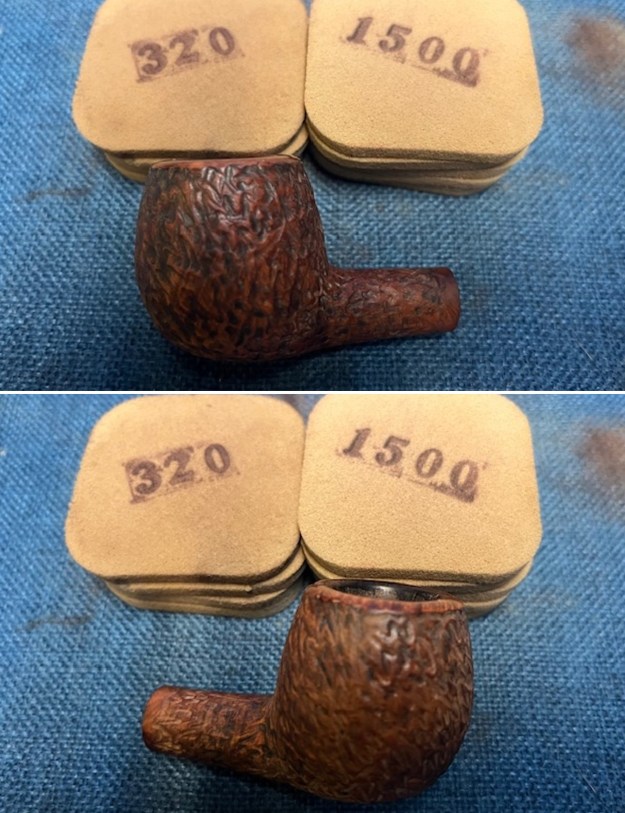
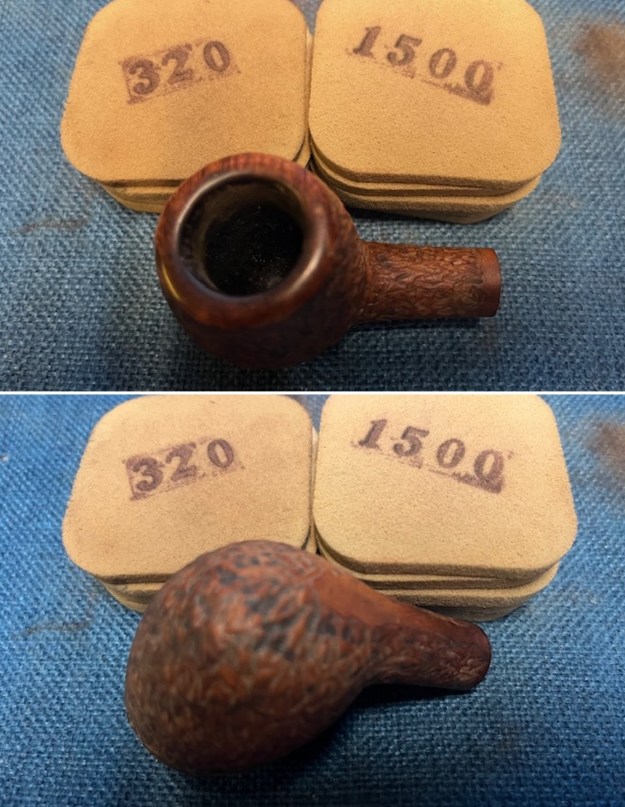
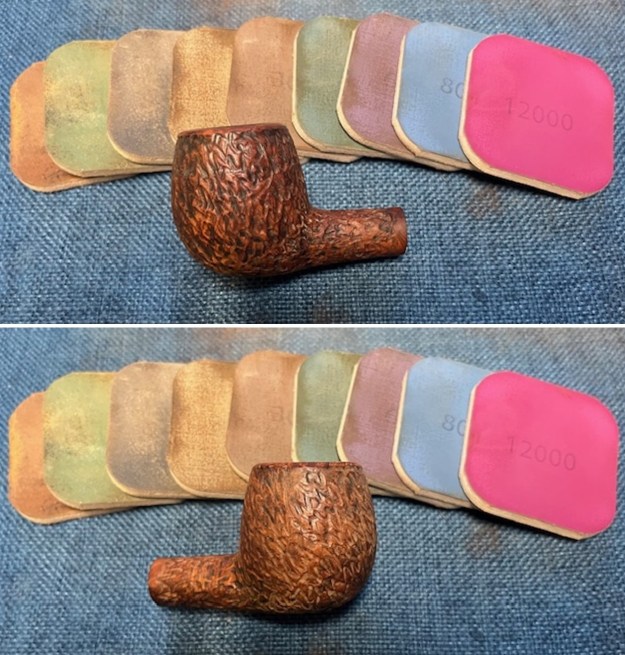
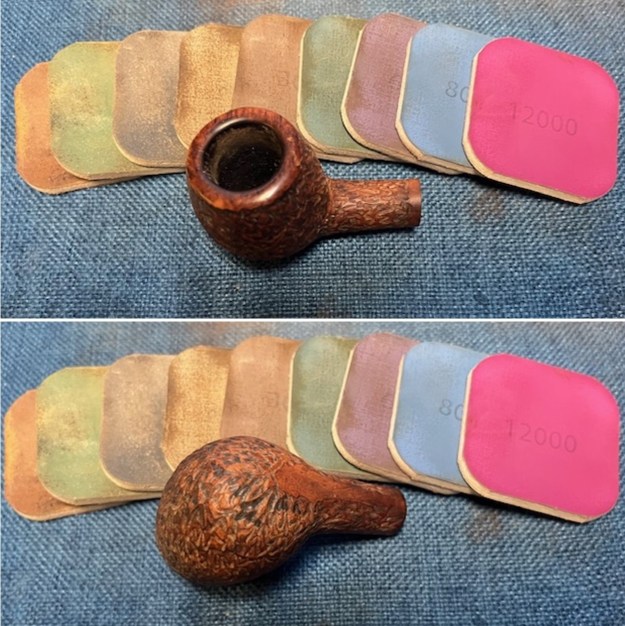
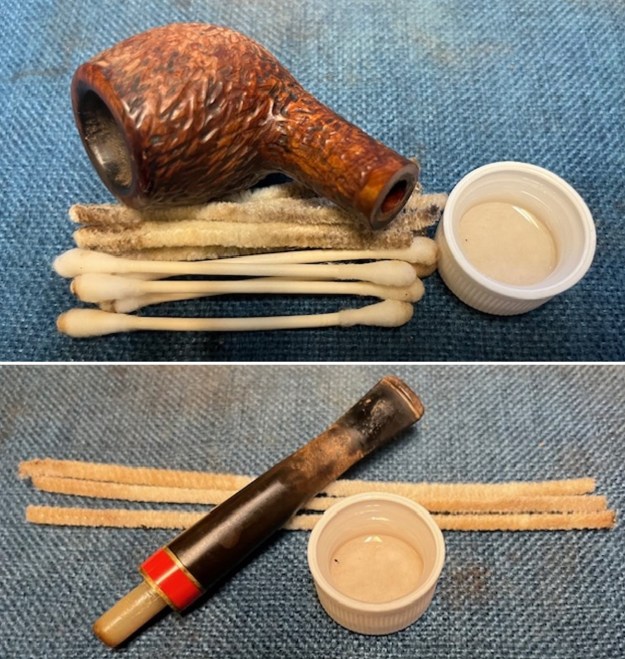
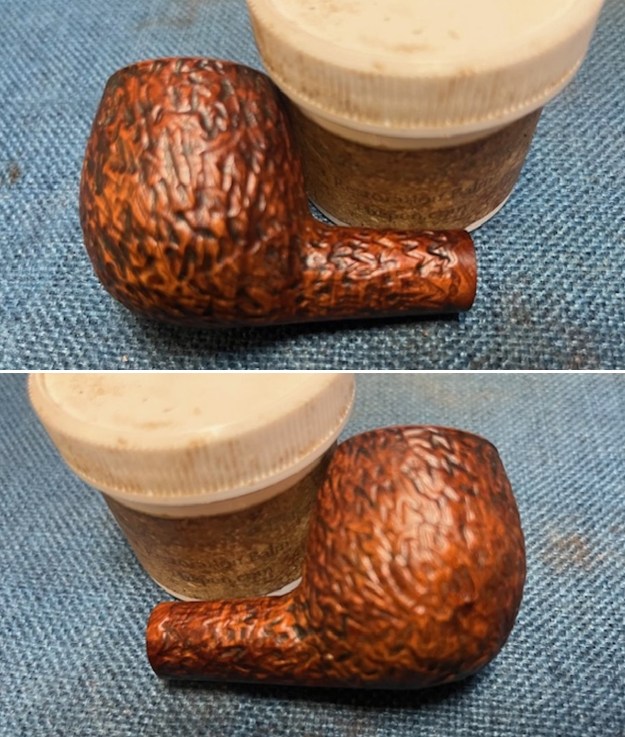
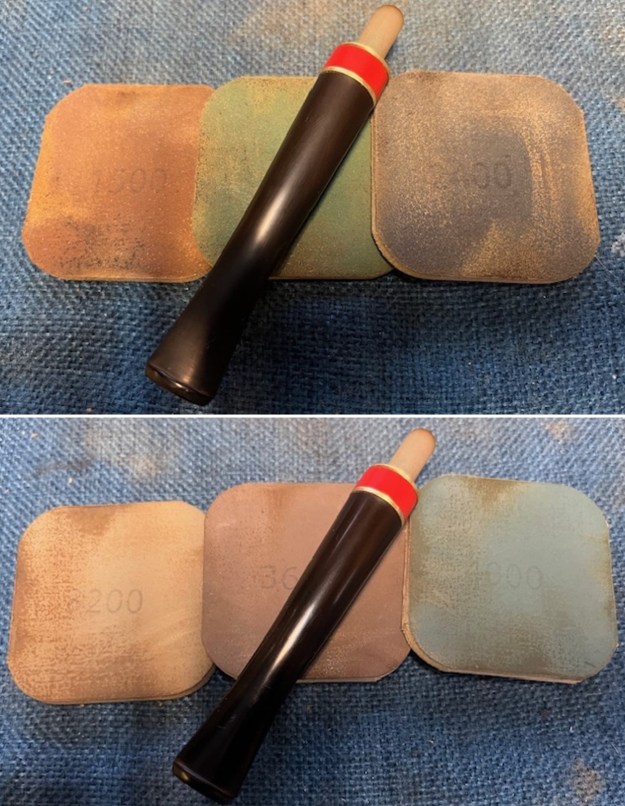
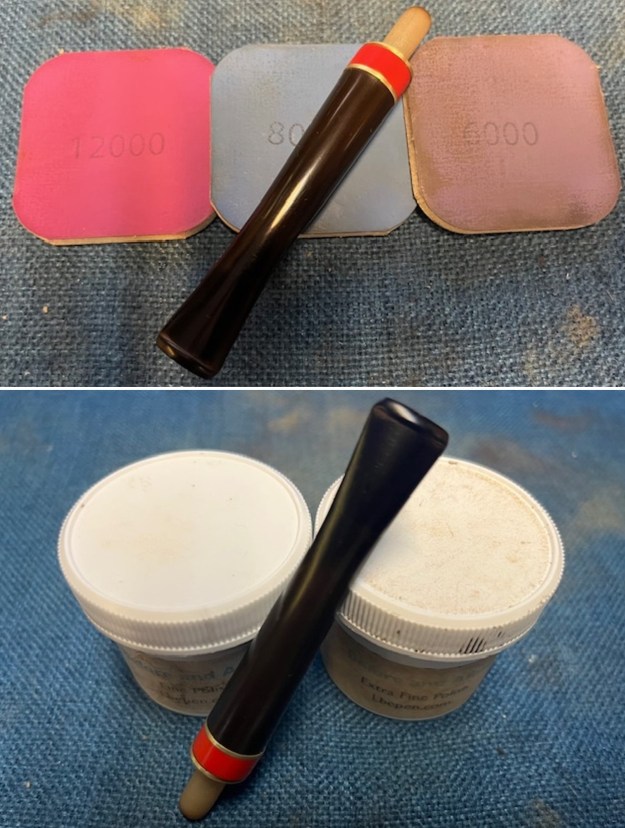
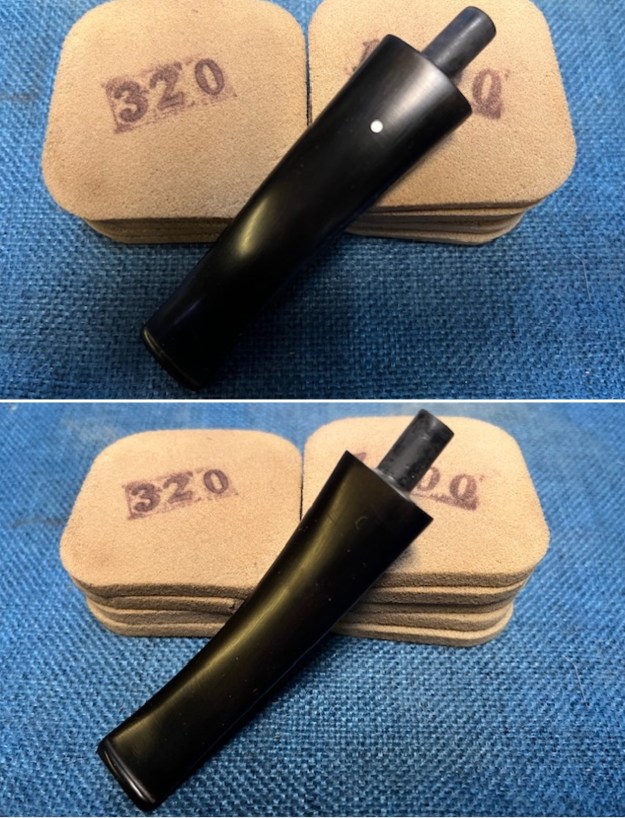
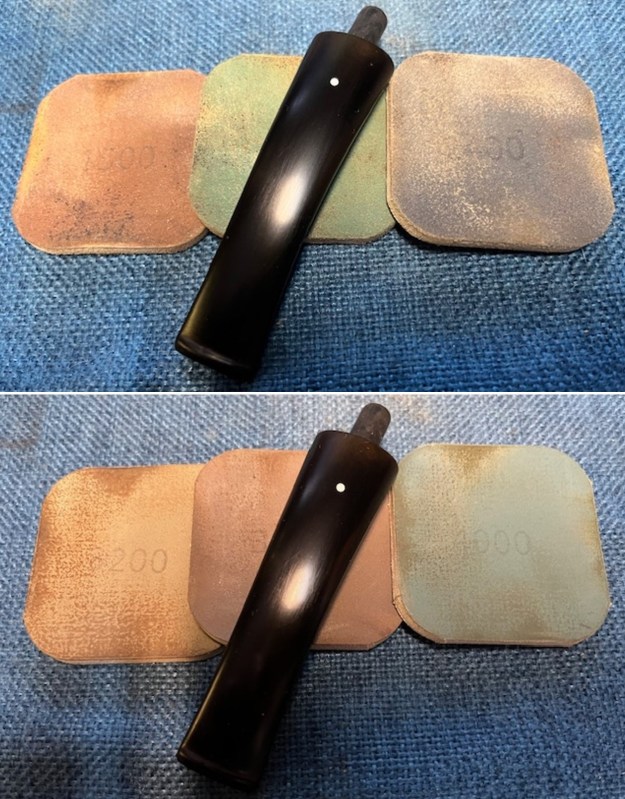
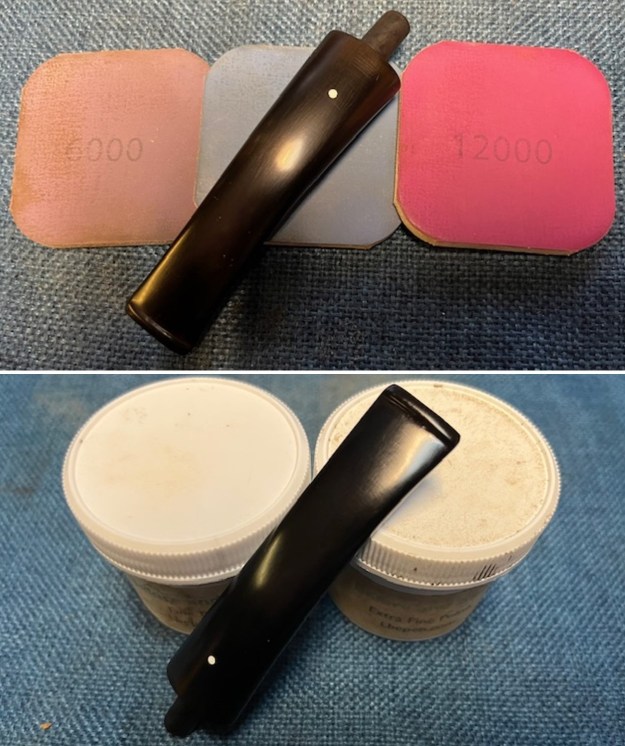
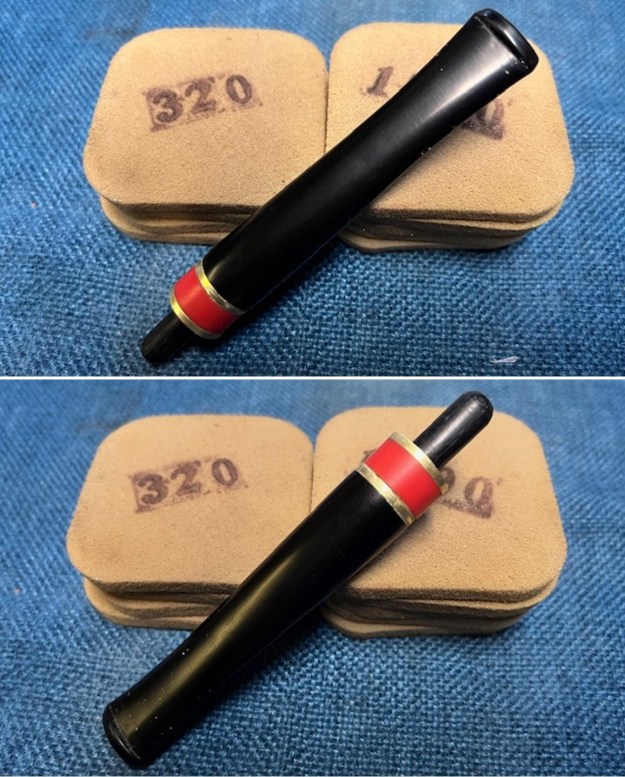
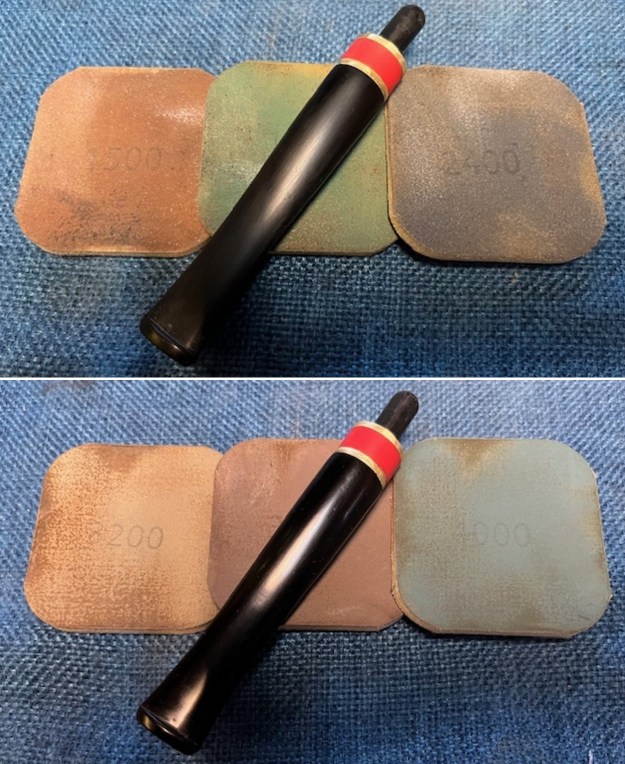
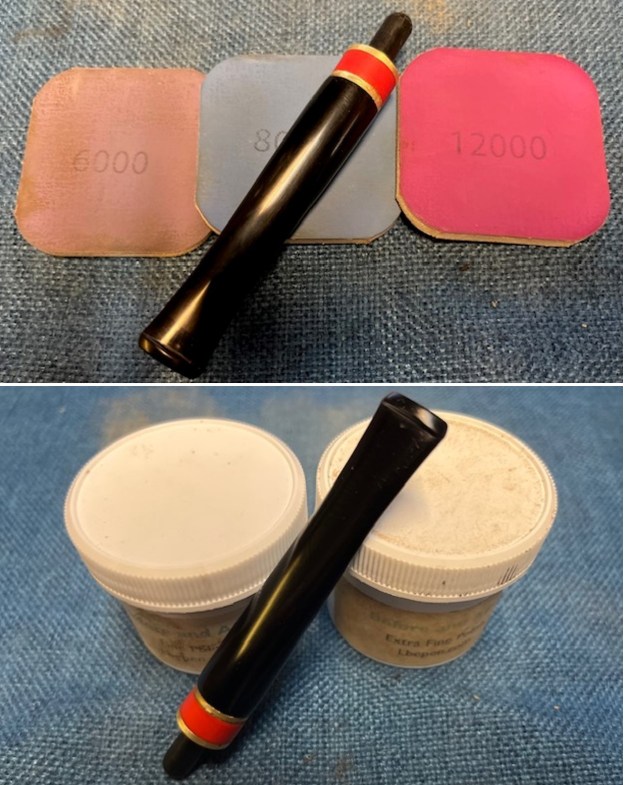
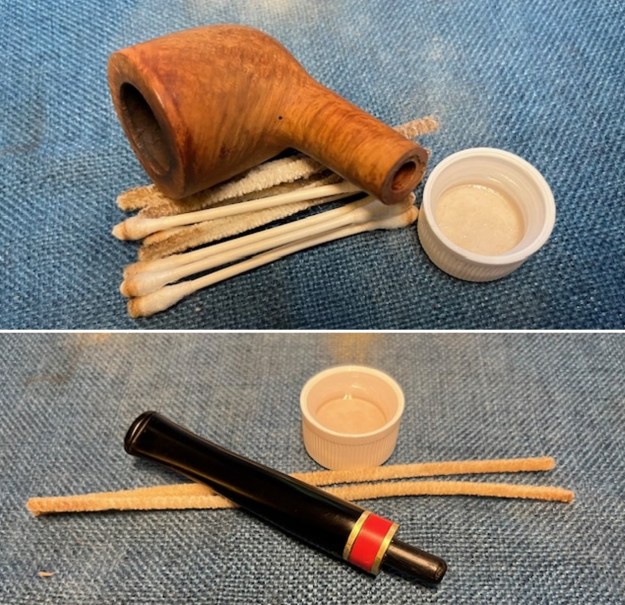
With that information at hand I turned to work on the pipe itself. Jeff had thoroughly cleaned up the pipe. He reamed the pipe with a PipNet Pipe Reamer and cleaned up the remnants with a Savinelli Fitsall Pipe Knife.  He scrubbed the bowl with undiluted Murphy’s Oil Soap with a tooth brush. He rinsed it under running warm water to remove the soap and grime. He cleaned out the inside of the shank and the airway in the stem with alcohol, cotton swabs and pipe cleaners. He scrubbed the exterior of the stem with Soft Scrub to remove as much of the oxidation and calcification as possible. He soaked the stem in Before & After Deoxidizer and rinsed it off with warm water. I took photos of the pipe before I started to work on it.  I took close up photos of the bowl and the stem. You can see the reamed bowl and the clean rim top and edges. It looks good. There is a bit of darkening on the inner edge at the back. The stem surface was clean but there are light tooth marks and chatter on both sides on and ahead of the button.I took a photo of the stamping on the underside of the shank. It is faint in spots but readable as noted above. I removed the stem from the shank and took a photo to give a sense of the proportions of the pipe. It is really quite nice looking. I polished the briar with micromesh sanding pads – dry sanding with 1500-12000 grit pads. I wiped the bowl down between pads with a damp cloth to remove any sanding debris. The briar really took on a rich shine. I rubbed the bowl and shank down with Before & After Restoration Balm. I worked it into the surface of the bowl sides and shank with my fingertips to clean, enliven and protect the briar. I let the balm sit for a little while and then buffed with a cotton cloth to raise the shine. I sanded the stem with 320-3500 grit sanding pads and wiped it down with a cloth and Obsidian Oil to remove the debris. It began to take on a rich shine.I polished the vulcanite stem with micromesh sanding pads – 1500-12000 grit pads. I wiped it down with a damp cloth after each sanding pad. I used Before & After Pipe Polish – both Fine and Extra Fine to further polish the stem. This nice looking Republic Era Peterson’s System Standard 301 Bent Pot with a classic Peterson’s P-lip vulcanite stem looks much better now that it has been restored. The rim top and edges cleaned up very well. The dark brown stains on the bowl came alive with the polishing and waxing. I put the stem back on the bowl and carefully buffed the pipe with Blue Diamond on the buffing wheel using a light touch on the briar. I gave the bowl multiple coats of Conservator’s Wax and the stem multiple coats of carnauba wax on the buffing wheel and followed that by buffing the entire pipe with a clean buffing pad. I hand buffed the pipe with a microfiber cloth to deepen the shine. I left a few of the wounds in the briar left by the journey as they do not detract. The finished Peterson’s System Standard 301 is a beauty and fits nicely in the hand and looks very good. Give the finished pipe a look in the photos below. The dimensions of the pipe are Length: 5 ½ inches, Height: 1 ¾ inches, Outside diameter of the bowl: 1 ½ inch, Chamber diameter: ¾ of an inch. The weight of the pipe is 59 grams/2.01 ounces. I will be putting it in the rebornpipes store in the Irish Pipemakers Section soon. If you are interested in adding this pipe to your collection send me a message or an email. Thanks for reading this blog and my reflections on the pipe while I worked on it. There are many more to come!

Restoring a Republic Era Petersons System Standard 301 Sandblast Bent Pot


by Steve Laug

We received the next pipe from our source in Copenhagen, Denmark on 11/21/2023. It is another fitting New Year’s Day restoration. It is a Peterson’s 301 Bent Pot. It is stamped on the underside of the shank and reads Peterson’s [arched over] System [over] Standard next that is stamped Made in the Republic of Ireland (in three lines) [over] the shape number 301. The nickel ferrule on the shank is stamped K&P [over] Petersons. The pipe is dirty, obviously another favourite smoker. There is grime ground into the finish. There is a thick cake in the bowl and a light overflow of lava on the inner edge and the sandblast rim top. The nickel ferrule is lightly tarnished. The stem is dirty, but is shiny and well cared for. Jeff took photos of it before he started his clean up work. I have included those below. Jeff took photos of the rim top and stem to show the general condition of the pipe. The bowl is heavily caked and there was some darkening and a lava overflow on the sandblast rim top and the inner edge. The stem looks amazingly good for a pipe of this age. Jeff took photos of the bowl sides and heel to show the look of the sandblast that was around this bowl. The blast really highlights the grain underneath and is quite beautiful around the sides of the bowl and shank. It is another nice looking pipe. He took photos of underside of the shank to show the stamping. The stamping is clear and readable in the photos below and is as noted above. The stamping on the nickel ferrule is clear and readable as noted above. I am including the link to the Pipedia’s article on Peterson pipes. It is a great read in terms of the history of the brand (https://pipedia.org/wiki/Peterson).

I turned to “The Peterson Pipe” by Mark Irwin and Gary Malmberg to get some background on the Peterson’s System Line. On page 314 it had the following information.

Peterson’s over System – Pipes stamped Peterson’s System have been documented as early as 1920. A ’20 brochure is the earliest printed reference to the Peterson System. The pipe came in three quality grades (no mark, 2, or 3) until 1959, thereafter as De Luxe (no mark), Premier (the old 2) and Standard (the old 3).

Peterson’s over System over Standard (c1945-)

I learned previously that the shape 301 was not introduced until 1975. Considering the Republic stamp, this one would likely date between 1975 and 2000. My guess is that the pipe was made somewhere between 1975 and mid-80s. Now it was time to work on the pipe.

With that information at hand I turned to work on the pipe itself. Jeff had thoroughly cleaned up the pipe. He reamed the pipe with a PipNet Pipe Reamer and cleaned up the remnants with a Savinelli Fitsall Pipe Knife.  He scrubbed the bowl with undiluted Murphy’s Oil Soap with a tooth brush. He rinsed it under running warm water to remove the soap and grime. He cleaned out the inside of the shank and the airway in the stem with alcohol, cotton swabs and pipe cleaners. He scrubbed the exterior of the stem with Soft Scrub to remove as much of the oxidation and calcification as possible. He soaked the stem in Before & After Deoxidizer and rinsed it off with warm water. I took photos of the pipe before I started to work on it. I took close up photos of the bowl and the stem. You can see the reamed bowl and the clean rim top and edges. It looks good. The stem surface was clean but there are light tooth marks and chatter on both sides on and ahead of the button.I took a photo of the stamping on the underside of the shank. It is faint in spots but readable as noted above. I removed the stem from the shank and took a photo to give a sense of the proportions of the pipe. It is really quite nice looking.The briar was in such good condition that I rubbed the bowl and shank down with Before & After Restoration Balm. I worked it into the surface of the bowl sides and shank with my fingertips and a shoebrush to clean, enliven and protect the briar. I let the balm sit for a little while and then buffed with a cotton cloth to raise the shine. I sanded the stem with 320-3500 grit sanding pads and wiped it down with a cloth and Obsidian Oil to remove the debris. It began to take on a rich shine.I polished the vulcanite stem with micromesh sanding pads – 1500-12000 grit pads. I wiped it down with a damp cloth after each sanding pad. I used Before & After Pipe Polish – both Fine and Extra Fine to further polish the stem. This nice looking Peterson’s System Standard 301 Sandblast Bent Pot with a classic Peterson’s P-lip vulcanite stem looks much better now that it has been restored. The rim top and edges cleaned up very well. The dark brown stains on the bowl came alive with the polishing and waxing. I put the stem back on the bowl and carefully buffed the pipe with Blue Diamond on the buffing wheel using a light touch on the briar. I gave the bowl multiple coats of Conservator’s Wax and the stem multiple coats of carnauba wax on the buffing wheel and followed that by buffing the entire pipe with a clean buffing pad. I hand buffed the pipe with a microfiber cloth to deepen the shine. The finished Peterson’s System Standard is a beauty and fits nicely in the hand and looks very good. Give the finished pipe a look in the photos below. The dimensions of the pipe are Length: 5 ½ inches, Height: 1 ¾ inches, Outside diameter of the bowl: 1 ½ inch, Chamber diameter: ¾ of an inch. The weight of the pipe is 45 grams/1.62 ounces. I will be putting it in the rebornpipes store in the Irish Pipemakers Section soon. If you are interested in adding this pipe to your collection send me a message or an email. Thanks for reading this blog and my reflections on the pipe while I worked on it. There are many more to come!

Restoring another Republic Era Peterson’s Dublin 2 101 Billiard


by Steve Laug

We received the next pipe from our source in Copenhagen, Denmark on 01/08/2024 – almost a year ago. It is a fitting New Year’s Day restoration. It is a Peterson’s 101 Military Bit Billiard. It is stamped on the left side of the shank and reads Peterson’s [arched over] Dublin 2 and the stamping is very clear. On the right side of the shank it is stamped Made in the Republic of Ireland (in three lines) and the shape number 101 is next to the bowl shank junction. The ferrule on the shank is stamped Peterson’s [over] Dublin next to that it is stamped Sterling [over] Silver. Following the r in Silver are three hallmarks – 1. Hibernia seated with her arm on a harp, 2. A crowned harp for the silver quality and finally 3. A date letter stamp, in this case a lowercase “l” that dates the pipe to 1977. The pipe is dirty, obviously a favourite smoker. There is grime ground into the finish. There is a thick cake in the bowl and a light overflow of lava on the inner edge and rim top. The silver ferrule is lightly tarnished. The stem is dirty, but is shiny and well cared for. Jeff took photos of it before he started his clean up work. I have included those below. Jeff took photos of the rim top and stem to show the general condition of the pipe. The bowl is heavily caked and there was some darkening and a light lava overflow on the rim top and the inner edge. The stem looks amazingly good for a pipe of this age. Jeff took photos of the bowl sides and heel to show the grain that was around this bowl. The grain is quite beautiful around the sides of the bowl and shank. It is another nice looking pipe. He took photos of the sides of the shank to show the stamping. The stamping is clear and readable in the photos below and is as noted above. The stamping on the silver ferrule is clear and readable as noted above. As with the blog just previous to this one, I turned to an earlier blog on a pipe with the same stamping that I had restored. I am quoting from what I learned in writing that blog below.

I turned to “The Peterson Pipe” by Mark Irwin and Gary Malmberg to get some background on the Peterson’s Dublin 2. On page 298 it had the following information.

Dublin (1906-2003) Although DUBLIN appears under PETERSON’S on many pipes over the decades, it has served mostly as part of the brand name. The word first appeared on pipes hallmarked 1906-11, stamped PETERSON’S over PATENT over DUBLIN. The simpler PETERSON’S over DUBLIN first appeared on pipes hallmarked 1912 after the expiration of the patent. Illustrations of pipes in the ’37 catalog show a random dispersion of the stamp PETERSON’S over OF DUBLIN together with the ordinary PETERSON’S over DUBLIN on every model offered. Specimens of the former will bear either an Irish COM or LONDON MADE over ENGLAND COM and almost certainly date from 1945-62. It was first mentioned as part of a model name in the ’68 price list, as K&P DUBLIN, in ’92 for a Danish market line and in the 2017 (see below).

“Dublin” (1992-2003) An orange-brown smooth line with a brass-nickel-brass sandwich band, vulcanite fishtail mouthpiece, consisting mostly of D shapes released for the Danish Market. Stamped PETERSON’S in script over “DUBLIN”. A tenth anniversary pipe for the line was produced with a sterling band stamped 2001. Market demand fell shortly thereafter and several pipe stamped “DUBLIN” were released in ’03 for the Fourth of July commemoratives for the US Market.

I wrote to Mark Irwin again and asked for his help in clearing up the mystery and helping to date this pipe. I asked him to provide any additional information for me. He responded with the following:

Steve… It’s first decade of Early Republic (1948-1958). The 2 and 3 numbers were discontinued int in 1958. Great little pipe! The “w” = today’s Premier grade.

I had forgotten to include the hallmarks on the silver so that left me even more in a quandary. So, I wrote Mark back about the date stamp on the silver and the conflicting stamping on the pipe.

How does that work with the date on the ferrule seeming to point 1975 (in this case 1977)? It has the standard stamping – woman on a chair, harp and the letter “h” (in this case “l”),

Mark responded as follows with regard to that pipe (the material fits this pipe very well).

Haha! I love it. You have just entered the Twilight Zone of Peterson Pipes, because the “2” and the small “h” for 1975 cancel each other out. I would prefer to leave it there: “a dimension beyond that which is known to man. It is a dimension as vast as space and as timeless as infinity. It is the middle ground between light and shadow, between science and superstition, and it lies between the pit of man’s fears and the summit of his knowledge.” If, however, you want to get mundane about it, there are only two possibilities: it was rebanded in 1975 (highly unlikely but not impossible) or someone picked up the old stamp (and they have dozens and dozens) who was new to the hand-stamping job. For myself. I’d rather leave it in the imponderables, but there are always skeptics who prefer the easy explanation to the miracle.

I could not have said it any better! The Twilight Zone of Peterson’s Pipes. So I have a pipe that was made between 1948-1958 with a silver ferrule that is dated 1977. What a great mystery. Now it was time to work on the pipe.

Jeff had done a great job cleaning up the pipe as usual. He reamed the pipe with a PipNet reamer and cut back the cake back to the bare briar. He cleaned up the walls with a Savinelli Fitsall Pipe Knife. Surprisingly the walls looked unscathed from the heavy cake. He scrubbed the interior of the bowl and shank with pipe cleaners, cotton swabs, shank brushes and alcohol to remove the tars and oils. He scrubbed the exterior of the pipe with Murphy’s Oil Soap and a tooth brush to remove the grime from the finish. He worked on the rim top lava and darkening with the soap and tooth brush. It looked better but still dark. He scrubbed the inside of the stem with alcohol and pipe cleaners. He scrubbed the exterior of the stem with Soft Scrub and then soaked it in Briarville’s Deoxidizer. He washed it off with warm water to remove the Deoxidizer. The pipe looked far better when it arrived. The rim top looked better but there were some issues with some roughening on the inner edge and scuffing on the top. I took a closeup photo of the rim top and edges to show the issues I spoke of. I also took close up photos of the stem to show the condition of the stem.I took photos of the stamping on the sides of the shank. It is clear and reads as noted above. I removed the stem and took a photo of the pipe to have a look at the parts and overall look. I started my work on the pipe by addressing the darkening on the rim top and damage on the inner edge of the bowl. I used a folded piece of 220 grit sandpaper to clean up the damage on the inner edge and also to smooth out the darkening on the rim top. It began to look much better.I worked over the surface of the rim top and the bowl with 320-3500 grit sanding pads. I wiped the bowl down after each sanding pad with a damp cloth to remove the sanding debris. It began to look good. I polished the briar with micromesh sanding pads – dry sanding with 1500-12000 grit sanding pads. I wiped the bowl down with a damp cloth after each sanding pad. I worked some Before & After Restoration Balm into the surface of the briar with my fingertips to clean, enliven and protect the briar. I let the balm sit for 15 minutes and then buffed with a cotton cloth to raise the shine. The photos show the bowl at this point in the restoration process. I set the bowl aside and worked on the stem. The stem was clean and the light tooth marks were minimal. I polished the stem with micromesh sanding pads – wet sanding with 1500-12000 grit sanding pads. I wiped it down after each sanding pad with Obsidian Oil. I polished it with Before & After Pipe Stem Polish – both Fine and Extra Fine. I wiped it down with another coat of Obsidian Oil. I am excited to finish this beautifully grained Peterson’s Dublin 2 Military Mount 101 Billiard. I put the pipe back together and buffed it with Blue Diamond on the buffing wheel. I gave the bowl and the stem multiple coats of carnauba wax. I hand buffed the pipe with a clean buffing pad to raise the shine. It is fun to see what the polished bowl looks like with beautiful mixed grain all around it. I polished the twin golden bands on the shank with a jeweller’s cloth. This smooth Classic Peterson’s Dublin 2 Military Mount 101 Billiard is great looking and the pipe feels great in my hand. It is light and well balanced. Have a look at it with the photos below. The dimensions are Length: 5 ½ inches, Height: 1 ¾ inches, Outside diameter of the bowl: 1 ¼ inches, Chamber diameter: ¾ of an inch. The weight of the pipe is 27 grams/.95 ounces. It turned out to be a beautiful pipe. I will be putting on the rebornpipes store in the Irish Pipe Makers Section. Thanks for walking through this restoration with me. I am always glad to answer questions or clarify if you would like more information.

New Life for a Republic Era Peterson’s 101 Military Bit Billiard


by Steve Laug

We received the next pipe from our source in Copenhagen, Denmark on 01/08/2024 – almost a year ago. It is a fitting New Year’s Eve restoration. It is a Peterson’s 101 Military Bit Billiard. It is stamped on the left side of the shank and reads Peterson’s [arched over] Dublin 2 and the stamping is blurred from overstamping. On the right side of the shank it is stamped Made in the Republic of Ireland (in three lines) and the shape number 101 is next to the bowl shank junction. The final 1 in the shape number has a small fill that also makes it blurry. The ferrule on the shank is stamped Peterson’s [over] Dublin next to that it is stamped Sterling [over] Silver. Following the r in Silver are three hallmarks – 1. Hibernia seated with her arm on a harp, 2. A crowned harp for the silver quality and finally 3. A date letter stamp, in this case an uppercase “P” that dates the pipe to 1981. The pipe is dirty, obviously a favourite smoker. There is grime ground into the finish. There is a thick cake in the bowl and a heavy overflow of lava on the inner edge and rim top. The silver ferrule is lightly tarnished. The stem is dirty with light oxidation and tooth marks and chatter on both sides ahead of the button. Jeff took photos of it before he started his clean up work. I have included those below. Jeff took photos of the rim top and stem to show the general condition of the pipe. The bowl is heavily caked and there was a heavy lava overflow on the rim top and the inner edge. The stem is lightly oxidized and grimy. It has some light tooth marks on the top and underside near and on the surface of the button itself. Jeff took photos of the bowl sides and heel to show the grain that was around this bowl. The grain is quite beautiful around the sides of the bowl and shank. You can see some flaws or sand pits in the briar or pits but otherwise it is great grain. It is a nice looking pipe.He took photos of the sides of the shank to show the stamping. The stamping is readable in the photos below and is as noted above. The blurriness of the left side stamp is accurate and not a camera issue. It has been double stamped and the result is the blur. The stamping on the silver ferrule is clear and readable as noted above. I turned to an earlier blog on a pipe with the same stamping that I had restored. I am quoting from what I learned in writing that blog below.

I turned to “The Peterson Pipe” by Mark Irwin and Gary Malmberg to get some background on the Peterson’s Dublin 2. On page 298 it had the following information.

Dublin (1906-2003) Although DUBLIN appears under PETERSON’S on many pipes over the decades, it has served mostly as part of the brand name. The word first appeared on pipes hallmarked 1906-11, stamped PETERSON’S over PATENT over DUBLIN. The simpler PETERSON’S over DUBLIN first appeared on pipes hallmarked 1912 after the expiration of the patent. Illustrations of pipes in the ’37 catalog show a random dispersion of the stamp PETERSON’S over OF DUBLIN together with the ordinary PETERSON’S over DUBLIN on every model offered. Specimens of the former will bear either an Irish COM or LONDON MADE over ENGLAND COM and almost certainly date from 1945-62. It was first mentioned as part of a model name in the ’68 price list, as K&P DUBLIN, in ’92 for a Danish market line and in the 2017 (see below).

“Dublin” (1992-2003) An orange-brown smooth line with a brass-nickel-brass sandwich band, vulcanite fishtail mouthpiece, consisting mostly of D shapes released for the Danish Market. Stamped PETERSON’S in script over “DUBLIN”. A tenth anniversary pipe for the line was produced with a sterling band stamped 2001. Market demand fell shortly thereafter and several pipe stamped “DUBLIN” were released in ’03 for the Fourth of July commemoratives for the US Market.

I wrote to Mark Irwin again and asked for his help in clearing up the mystery and helping to date this pipe. I asked him to provide any additional information for me. He responded with the following:

Steve… It’s first decade of Early Republic (1948-1958). The 2 and 3 numbers were discontinued int in 1958. Great little pipe! The “w” = today’s Premier grade.

I had forgotten to include the hallmarks on the silver so that left me even more in a quandary. So, I wrote Mark back about the date stamp on the silver and the conflicting stamping on the pipe.

How does that work with the date on the ferrule seeming to point 1975 (in this case 1981)? It has the standard stamping – woman on a chair, harp and the letter “h” (in this case “P”),

Mark responded as follows with regard to that pipe (the material fits this pipe very well).

Haha! I love it. You have just entered the Twilight Zone of Peterson Pipes, because the “2” and the small “h” for 1975 cancel each other out. I would prefer to leave it there: “a dimension beyond that which is known to man. It is a dimension as vast as space and as timeless as infinity. It is the middle ground between light and shadow, between science and superstition, and it lies between the pit of man’s fears and the summit of his knowledge.” If, however, you want to get mundane about it, there are only two possibilities: it was rebanded in 1975 (highly unlikely but not impossible) or someone picked up the old stamp (and they have dozens and dozens) who was new to the hand-stamping job. For myself. I’d rather leave it in the imponderables, but there are always skeptics who prefer the easy explanation to the miracle.

I could not have said it any better! The Twilight Zone of Peterson’s Pipes. So I have a pipe that was made between 1948-1958 with a silver ferrule that is dated 1990. What a great mystery. Now it was time to work on the pipe.

Jeff had done a great job cleaning up the pipe as usual. He reamed the pipe with a PipNet reamer and cut back the cake back to the bare briar. He cleaned up the walls with a Savinelli Fitsall Pipe Knife. Surprisingly the walls looked unscathed from the heavy cake. He scrubbed the interior of the bowl and shank with pipe cleaners, cotton swabs, shank brushes and alcohol to remove the tars and oils. He scrubbed the exterior of the pipe with Murphy’s Oil Soap and a tooth brush to remove the grime from the finish. He worked on the rim top lava and darkening with the soap and tooth brush. It looked better but still dark. He scrubbed the inside of the stem with alcohol and pipe cleaners. He scrubbed the exterior of the stem with Soft Scrub and then soaked it in Briarville’s Deoxidizer. He washed it off with warm water to remove the Deoxidizer. The pipe looked far better when it arrived. The rim top looked better but there were some issues with some roughening on the inner edge and darkening on the top. I took a closeup photo of the rim top and edges to show the issues I spoke of. I also took close up photos of the stem to show the light tooth marks on the surface near ahead of the button.I took photos of the stamping on the sides of the shank. It is clear and reads as noted above. I removed the stem and took a photo of the pipe to have a look at the parts and overall look. I started my work on the pipe by addressing the darkening on the rim top and damage on the inner edge of the bowl. I used a folded piece of 220 grit sandpaper to clean up the damage on the inner edge and also to smooth out the darkening on the rim top. It began to look much better.I worked over the surface of the rim top and the bowl with 320-3500 grit sanding pads. I wiped the bowl down after each sanding pad with a damp cloth to remove the sanding debris. It began to look good. I polished the briar with micromesh sanding pads – dry sanding with 1500-12000 grit sanding pads. I wiped the bowl down with a damp cloth after each sanding pad. I worked some Before & After Restoration Balm into the surface of the briar with my fingertips to clean, enliven and protect the briar. I let the balm sit for 15 minutes and then buffed with a cotton cloth to raise the shine. The photos show the bowl at this point in the restoration process. I set the bowl aside and worked on the stem. The stem was clean and the light tooth marks were minimal. I polished the stem with micromesh sanding pads – wet sanding with 1500-12000 grit sanding pads. I wiped it down after each sanding pad with Obsidian Oil. I polished it with Before & After Pipe Stem Polish – both Fine and Extra Fine. I wiped it down with another coat of Obsidian Oil. I am excited to finish this beautifully grained Peterson’s Dublin 2 Military Mount 101 Billiard. I put the pipe back together and buffed it with Blue Diamond on the buffing wheel. I gave the bowl and the stem multiple coats of carnauba wax. I hand buffed the pipe with a clean buffing pad to raise the shine. It is fun to see what the polished bowl looks like with beautiful mixed grain all around it. I polished the twin golden bands on the shank with a jeweller’s cloth. This smooth Classic Peterson’s Dublin 2 Military Mount 101 Billiard is great looking and the pipe feels great in my hand. It is light and well balanced. Have a look at it with the photos below. The dimensions are Length: 5 ½ inches, Height: 1 ¾ inches, Outside diameter of the bowl: 1 ¼ inches, Chamber diameter: ¾ of an inch. The weight of the pipe is 33 grams/1.16 ounces. It turned out to be a beautiful pipe. I will be putting on the rebornpipes store in the Irish Pipe Makers Section. Thanks for walking through this restoration with me. I am always glad to answer questions or clarify if you would like more information.

Breathing New Life into a Well Seasoned Peterson’s Meerschaum Bent Pipe


by Steve Laug

The next pipe I have chosen to work on is a smooth finished, well patinaed Peterson’s African Block Meerschaum pipe. This one is a Bent Meerschaum pipe in a classic Peterson’s Bent Billiard shape. The rim top is flumed in the style of the 60s and 70s. Jeff and I are unclear where we picked this one up. Our best guess was we found it during a pipe hunt in November, 2024 somewhere along the Oregon Coast.  This rich butterscotch and golden coloured patina on the bowl and shank adds a touch of depth to the pipe. The pipe was dirty with grime ground into the finish on the pipe. It was thick and oily feeling to touch. The contrast on the meer of the rich colouration/patina on the bowl and shank with the flumed top made a beautiful pipe. It had nicks and chips in the outer edge of the bowl. The inner edge looked very good. The bowl had a moderate cake and there was lava on the rim top and inner edge of the bowl. The Sterling Silver ferrule is oxidized and dirty. It is stamped Peterson’s [over] Dublin followed by Sterling [over] Silver. On the underside are three hallmark stamps – 1. Seated Hibernia (Ireland) 2. The Harp (symbol for the silver quality) 3. The upper-case italic letter “E” for the date of the pipe. The stem was in quite good condition with minimal oxidation, minor debris in the edge of the button and light tooth chatter on the top and underside on and near the button. I took photos of the pipe before I started my cleanup work. They tell the story and give a glimpse of the pipe. I took photos of the rim top and stem to show the general condition of the pipe. The bowl is moderately caked and the rim top and edges have lava overflowing on to them. The stem is dirty, lightly oxidized and has light tooth marks on the top and underside near the button.I took photos of the Sterling Silver ferrule to show the stamping around it. You can see that it reads as noted above. I did not capture the hallmarks on the underside. I removed the stem from the shank and took a photo of the parts of the pipe to give a sense of the proportion of the pipe. I took some time to remind myself of the provenance of these Peterson’s Dublin Meerschaum pipes. I am pretty sure the pipe was made by the Laxey Pipe Ltd. on the Isle of Man for Peterson’s in Ireland (https://pipedia.org/wiki/Laxey_Pipes_Ltd). I quote from the Pipedia article in full:

Laxey Pipe Ltd. resided in a historical 19th century four-storey Man stone building at The Quay, Old Laxey, Isle of Man, which thankfully has been preserved. The company specialized in the production of Meerschaum Pipes using the Meerschaum mined by the Tanganyika Meerschaum Corporation in the Amboseli basin in Tanganyika (since 1964 part of the United Republic of Tanzania). Please note: you may often find names like “Manx Pipes Ltd.”, “Man Pipe Co.” and others more, but there is no indication of another Isle of Man pipe producer other than Laxey Pipe Ltd. at any time!

Laxey Pipe Ltd. marketed own brands like “Manxpipe”, “Manxman”, “Manxland” e.c. Names like “John Bull”, “White Knight” (unwaxed), “Domino” (black, or lined) indicated some shapes / colours of Laxey’s own series. The stems either showed the astronomical sign for “male” or “man” (circle + arrow), or the crest of the Isle of Man, the 3-legged X in a circle. Manxpipes and Laxey’s other brands were available through pipe retailers in general, but also were sold (mainly) to tourists through their own shop in Laxey.

Furthermore Laxey Pipe Ltd. manufactured the meer bowls for Peterson, Barling, Nørding and others from the later 1960’s until 2001. Man Pipe e.g. was a brand distributed by Comoy’s. The bowls usually showed no nomenclature indicating the orderer. “Genuine Block Meerschaum” was engraved frequently. Often, just the stems were different, while bowls were the same.

Supply of meer from East Africa run out (Kenya / Tanzania exhausted, Somalia inaccessible), and thus the last Laxey meers were supplied to trade in May, 2001. Laxey Pipe Ltd. tried to survive continuing with briar pipes – mainly in the Danish style -, but to no success. It closed down business in July, 2002.

As noted above the silver is stamped Peterson’s [over] Dublin followed by Sterling [over] Silver. On the underside are three hallmark stamps – 1. Seated Hibernia (Ireland) 2. The Harp (symbol for the silver quality) 3. The upper case letter “E” for the date of the pipe. I have included the Peterson’s Hallmark chart below as it is a very helpful tool that I have used repeatedly to date my Peterson pipes.I found a larger photo of the letter section of the above chart. The letter stamp is a upper case italic “E” which dates the pipe to 1990. I know that the pipe was made on the Isle of Man by Laxey Pipe Ltd. out of African Meerschaum. It was made for export for Peterson’s of Dublin. From the hallmarks on the silver I know that the pipe (or at least the silver) was made in 1990. The flumed top on the bowl seems to make it older and maybe it is but the silver is definitely from 1990. That was as much as I could figure out.

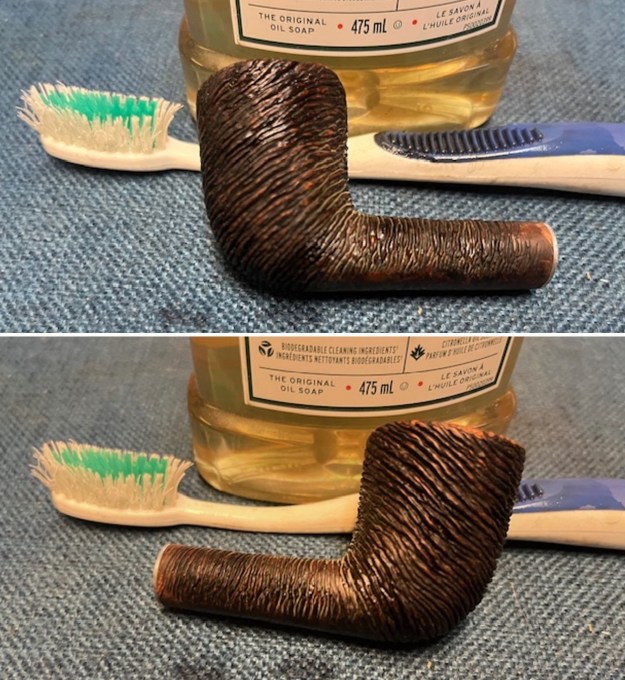
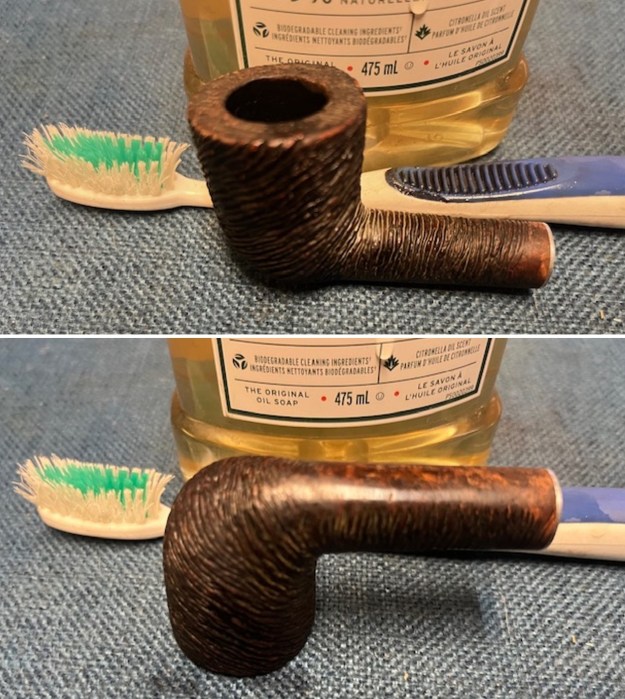
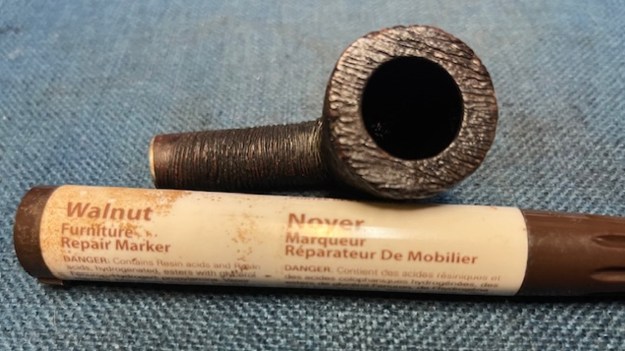
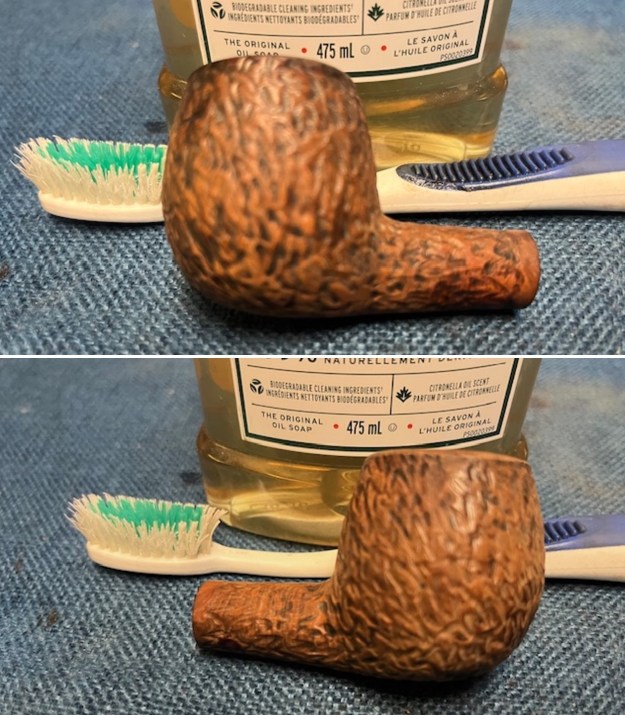
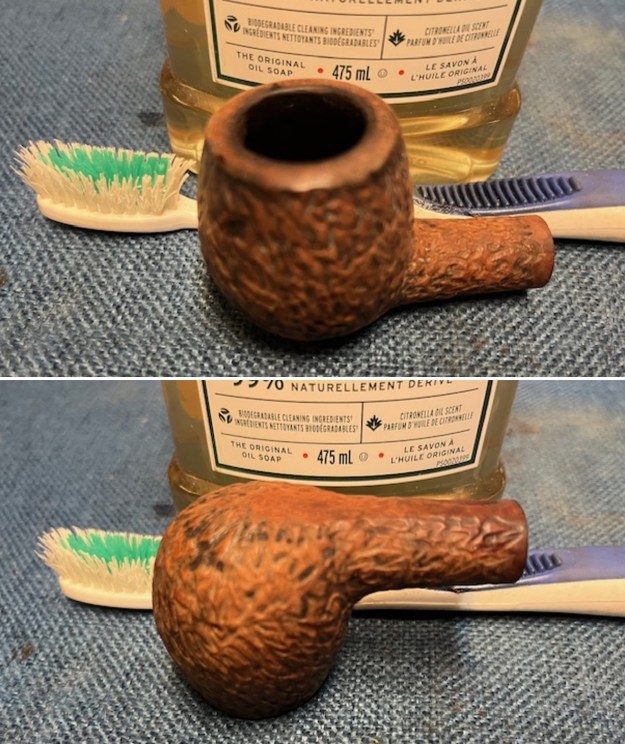
I reamed the bowl with a PipNet reamer and cleaned the reaming up with a Savinelli Fitsall Pipe Knife. I sanded the walls smooth with some 220 grit sandpaper wrapped around a piece of dowel. It looked much better. It was smooth to touch. I scraped the rim top with the edge of the Savinelli Fitsall to remove the lava build up. I cleaned out the stinky smelling tobacco oils and tars in the shank and the airway in the stem. I used 99% isopropyl alcohol, cotton swabs and pipe cleaners and was able to remove the debris and the stench.I scrubbed the exterior of the bowl with a tooth brush and undiluted Murphy’s Oil Soap. I scrubbed the inside of the bowl as well to remove more of the oils and build up there. I rinsed it off with warm running water and dried it with a soft towel. When I dried it off it was dull and a bit lifeless looking. The finish was spotty so I gave it a quick buff with a cotton cloth. It looked much better and the rim top looked clean. I touched up the nicks on the rim top and outer edge with a black stain pen. I had decided to leave them and not sand or remove them. It blended them in much better.I gave the meer a quick buff and then polished the Sterling Silver ferrule with a jeweller’s cloth to shine and slow down the process of oxidation. The ferrule really looks good even with a few small dents in the surface remaining. It has quite a nice sheen. I polished the bowl on the buffer with Blue Diamond polish and hand buffed it with a microfibre cloth to further polish it. I gave it multiple coats of Clapham’s Beeswax/Carnauba Wax and once it dried I had buffed it once again and gave it a quick buff with a clean buffing pad. I set the bowl aside and turned to work on the stem. I sanded the stem with 320-3500 grit sanding pads. I wiped the stem down after each pad with Obsidian Oil. It really began to take on a shine.I polished the stem with micromesh sanding pads – dry sanding with 1500-12000 grit sanding pads. I wiped it down after each sanding pad with Obsidian Oil. I polished it with Before & After Pipe Stem Polish – both Fine and Extra Fine. I wiped the stem down a final time with Obsidian Oil once again and set it aside to dry. As usual at this point in the restoration process I am excited to be on the homestretch. I look forward to the final look when it is put back together, polished and waxed. I put the bowl and stem of this Peterson’s Meerschaum back together. I polished the bowl and stem with Blue Diamond to polish out the scratches in the meerschaum and the vulcanite. I gave the bowl multiple coats of Clapham’s Beeswax/Carnauba Wax mixture and the stem multiple coats of carnauba wax. I buffed the pipe with a clean buffing pad to raise the shine. I hand buffed it with a microfiber cloth to deepen the shine. The pipe polished up pretty nicely. The meerschaum has a rich glow with the wax and polish. The shiny black vulcanite stem is a beautiful contrast to the rich patina of the bowl and the polished silver ferrule. This Peterson’s meerschaum was made by the Laxey Pipe Ltd. on the Isle of Mann. The heavily patinaed finish on this pipe made it another fun pipe to work. It really is a quite stunning pipe whose shape and finish make it stand out. The thick/chubby shank makes it a very comfortable pipe to hold in the hand. The finished pipe is shown in the photos below. The dimensions are Length: 5 inches, Height: 1 ¾ inches, Outside diameter of the bowl: 1 ¼ inches, Chamber diameter: ¾ of an inch. The weight of the pipe is 59 grams/2.08 ounces. It is a beautiful pipe and one that will be on the Irish Pipe Makers Section of the rebornpipes store soon. If you are interested in adding it to your collection let me know. Thanks for walking through the restoration with me as I worked over this pipe. Thanks to each of you who are reading this blog.

Peterson’s Kapruf Made in the Republic of Ireland 120 Dublin


by Steve Laug

Today is rainy, chilly day in Vancouver. I know in comparison to where many of you live it is not cold but to us it is. The next pipe I have chosen is another Peterson’s Dublin. It is a sandblast pipe that came to us from our contact in Copenhagen, Denmark. There was grime ground into the sandblast finish on the bowl sides. I love the way the contrast of the brown and black stains gave the blast a sense of depth. The stain is almost tiger striped. It was stamped on the flat underside in the centre of the shank and read Made in the Republic of Ireland (three lines). To the right of that it is stamped Peterson’s [over] Kapruf. To the left of the Republic stamp, on the heel was the shape number 120. This pipe must have been another favourite of pipe man as it had been well smoked. There was a well-maintained cake in the bowl and some darkening on the rim top. The inner edge of the bowl looked good. The stem was in good condition and there were light tooth marks and chatter on the top and underside on and near the button. Jeff took photos of the pipe before his cleanup work. Jeff took photos of the rim top and stem to show the general condition of the pipe. The bowl is lightly caked and the rim top and edges look to be in good condition despite a little darkening. The photos of the stem show the light tooth marks on the top and underside near the button. Jeff took a photo of the bowl sides and heel to show the blast that was around this bowl. It is a great sandblast and the choice of stain adds depth to the appearance of the bowl. He took photos of the stamping on the underside of the shank. It is clear and readable and reads as noted above. I turned to “The Peterson Pipe” by Mark Irwin and Gary Malmberg to get some background on the Kapruf line. On page 306 it had the following information.

Kapruf and “Kapruf” (c.1922-87) Sandblast (hence the name, Kapp-rough) P-lip or fishtail mouthpiece, in catalogs from 1940-87. Early documented specimens stamped IRISH over FREE STATE, no Eire specimens documented. Mid-century specimens may be stamped LONDON MADE [over] ENGLAND or MADE IN ENGLAND forming a circle or MADE IN [over] IRELAND, all dating no later than 1970. Those of recent vintage stamped MADE IN THE[over] REPUBLIC [over]OF IRELAND.

I knew that I was working on a KAPRUF that was made between 1970-1987 as it is stamped MADE IN THE REPUBLIC OF IRELAND as noted above. Now it was time to work on the pipe.

Jeff had done a great job cleaning up the pipe as usual. He reamed the pipe with a PipNet reamer and cut back the cake back to the bare briar. He cleaned up the walls with a Savinelli Fitsall Pipe Knife. He scrubbed the interior of the bowl and shank with pipe cleaners, cotton swabs and alcohol to remove the tars and oils. He scrubbed the exterior of the pipe with Murphy’s Oil Soap and a tooth brush to remove the grime from the finish. He worked on the rim top lava and darkening with the soap and tooth brush. He scrubbed the inside of the stem with alcohol and pipe cleaners. He scrubbed the exterior with Soft Scrub and then soaked it in Before & After Deoxidizer. He washed it off with warm water to remove the Deoxidizer. The pipe looked far better when it arrived.     I took some close-up photos of the rim top and the stem surface. I wanted to show how well it had cleaned up. The rim top looks very good. There is a little darkening on the top at the back of the bowl but is not too bad. I also took close up photos of the stem to show the oxidation that remained and the light chatter and marks on the surface near the button.I took a photo of the stamping on the underside of the shank. You can see that it is stamped as noted above. It is faint but readable. I took the pipe apart and took a photo of the pipe. It is a good looking pipe and has an interesting sandblast on the bowl.I worked some Before & After Restoration Balm into the surface of the briar with my fingertips and a horse hair shoe brush to clean, enliven and protect the briar. I let the balm sit for 15 minutes and then buffed with a cotton cloth to raise the shine. The photos show the bowl at this point in the restoration process. I set the bowl aside and turned my attention to the stem. I touched up the P stamp on the left side of the saddle stem with some acrylic fingernail polish. I worked it into the stamp with a toothpick and then scraped off the excess once it had dried. I polished the stem with micromesh sanding pads – wet sanding with 1500-12000 grit sanding pads. I wiped it down after each sanding pad with Obsidian Oil. I polished it with Before & After Pipe Stem Polish – both Fine and Extra Fine. I wiped the stem down with Obsidian Oil and set it aside to dry.  I  am always excited to finish working on a pipe. This Peterson’s Kapruf 120 Dublin, Made in the Republic of Ireland is no exception. I put the pipe back together and buffed it with Blue Diamond on the buffing wheel. I gave the bowl multiple coats of Conservator’s Wax and the stem multiple coats of carnauba wax. I buffed the pipe with a clean buffing pad to raise the shine and hand buffed it with a microfibre cloth to deepen the shine. It is fun to see what the polished sandblast bowl looks like with the black vulcanite taper stem. This Classic looking Peterson’s Kapruf Sandblast Dublin feels great in my hand. It is light and well balanced. Have a look at it with the photos below. The dimensions are Length: 6 inches, Height: 1 ¾ inches, Outside diameter of the bowl: 1 ¼ inches, Chamber diameter: ¾ of an inch. The weight of the pipe is 29 grams/.99 ounces. I will be putting it on the rebornpipes store shortly in the Irish Pipe Makers section if you are interested in it. Thanks for walking through the restoration with me as I worked over this pipe. Thanks to each of you who are reading this blog.

Restoring a Handsome Portland Pipe Co. “Falcon Briar”


by Kenneth Lieblich

This is the next pipe that I restored for a local family. One of the gentlemen selected this fine Canadian shape for his own. It’s a good-looking pipe and worthy of restoration. This pipe comes from the Portland Pipe Co., which I’ve written about before. This specific pipe has some interesting markings – let’s take a look. On the top of the shank, it reads Portland Pipe Co [over] B.B& S Ltd. [over] London made – England. On the left side of the shank, it reads Falcon Briar. On the right side of the shank, it reads P2 – presumably a shape code. Two things puzzled me: the term “Falcon Briar” and the code “P2”. They didn’t conform to anything I already knew about Portland. Here is a review of my digging for information on Portland Pipe Co.I began my research with José Manuel Lopes’ book, Pipes: Artisans and Trademarks. As the photo shows, there was a little information, but not a lot.The connection with Barling was interesting, so I also checked Wilczak and Colwell’s book, Who Made That Pipe? From the photos below, you can see that the Portland Pipe Co. is connected to Barling too.Time to check online. Pipephil had a similarly brief write-up (included here).Pipedia was a bit more informative. Their page on the Portland Pipe Co. includes the following information (the typos are in the original and are NOT mine):

Portland Pipe Company was an English pipe maker, and appears to have started in the 1930’s, and went out of business in 1962. It’s though they had ties to Barling pipes from the 1930’s. They might have been a sub-brand or “second” which was separate from, but fully owned by Barling’s all along. It also thought that after Portland closed down, and during Barling’s corporate era (BB&S), Barling picked up some of the Portland brand (Londoner, Cragmoor and Portland) and made them for a while. WILCZAK & COLWELL in their book “Who Made That Pipe?” acknowledge the brand as from England, though some have been made in Italy as well (see Pipephil.eu). The Brand John Peel is a pipe which has the stamping: JOHN PEEL, A PORTLAND PIPE, MADE WHOLLY IN ENGLAND. I have a model with is also stamped SPECIAL, it’s a stack design with shape number 801. This pipe might have been made either by Portland or Barling. According to a 1940 price sheet, the following models were offered, along with the correlating prices:

 Vintage (10/6)
Exchange (7/6)
Londoner (7/6)
Mosaic (7/6)
Portland Super (7/6)
Crustor (5/6)
Diploma (5/6)
Port Royal (5/6)
Port-de-Luxe (5/6)
Portland Patent (5/6)
Souk-el-Arba (5/6)
Times (4/6)
British Sovereign (3/6)
John Peel (3/6)
Jubilee (3/6)
Sirdar (3/6)
Campaigner (2/6)
Dandy (2/6)
First Call (2/6)
Knobby (2/6)
Topsall (2/6)
Topsall Comfort (2/6)
Portman (2/-)
British National (1/6)
Ruf Kut (1/6)

This doesn’t mention anything about “Falcon Briar”. However, there are a few other tidbits of information. The PipesMagazine.com forums include an interesting comment from Barling expert Jonathan Guss:Finally, over at the Very Keen on Pipes website, a reader commented on one of their posts by saying:

“… Portland pipes make up one of the great mysteries of London pipe making. No one knows when Barling bought Portland but most of us barling guys believe it was mid to late 30’s. I saw a reference once online using the year 1936 but this cannot be confirmed. Next, John Peel was for a long time thought to have been a shop but there is no evidence proving that. However, John Peel pipes were almost certainly made by Portland. What most of use want in a pipe of this type is a pipe made before 1962, when the barling family was let go by the new owners and the brand went into a downward spiral quality wise. Re Portland, a number of them have recently turned up as a result of a “garage find” of a batch of pipes from the Toronto Canada area and they were mixed in with other wood from the 50’s and that seems to indicate a 50’s date of manufacture. Note: in those days several of the larger pipe makers made pipes or just bowls for other brands and these were mostly Charatan, Comoy and other makers such as Orlick. What is almost certain is that never did barling make / sell any pipes that were not carved by barling carvers untill after 1970. So, Portland and Peel were never actually barling made, these pipes were either made by Portland in house or, in later years past 1962, by Charatan and others. Also, if one looks at the style of the bits it evident that Portland and Peel pipes were not made that long ago, probably 50’s and 60’s unless there is a BB&S stamp which indicates post 1970 age (the & symbol being the give away since B.B.S was used in the older pre 1962 era.) Just some info for you to keep in mind… “

This is interesting stuff and then Steve gave me another possible detail. Apparently, Comoy’s used to make a line of pipes called ‘Falcon’ and another called ‘Royal Falcon’. Perhaps this bowl was made by Comoy, but later picked up by Portland. This could explain why the pipe contains the ‘Falcon Briar’ line. Pipephil has this tidbit:By inference (and some educated guesswork), this pipe was made in England, probably in the 1970s (or, at least, post 1970), by the Portland Pipe Co. However, there may be a Comoy connection too. I am happy to be educated by someone who knows more.

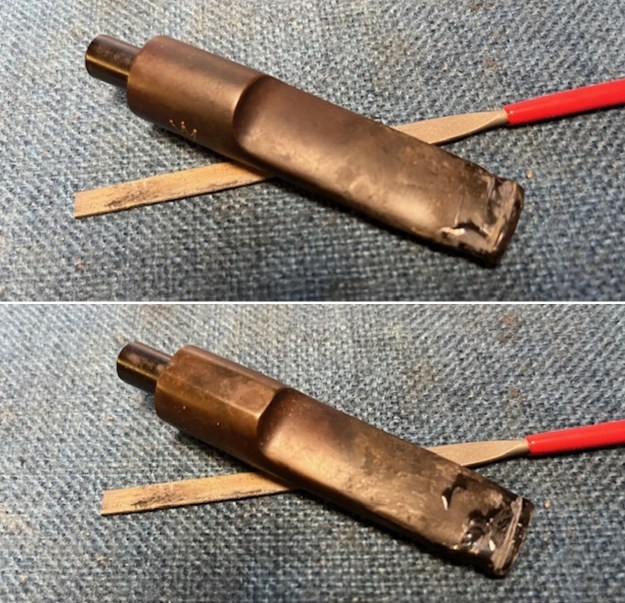
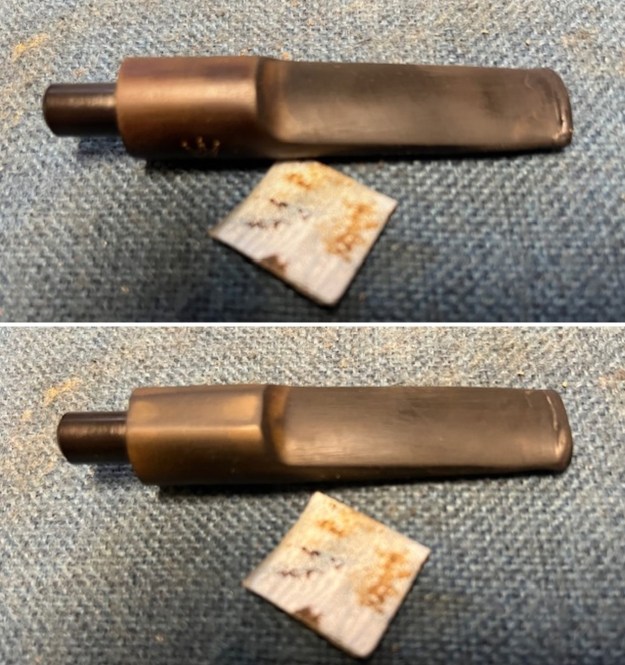
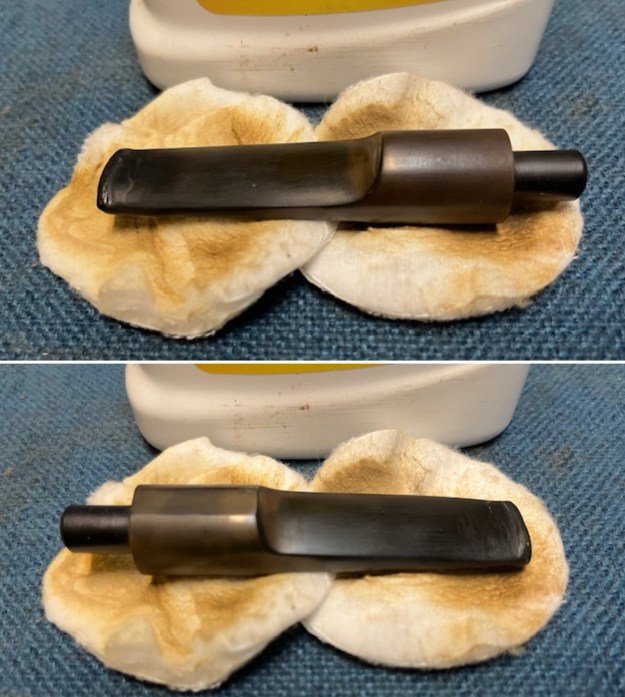
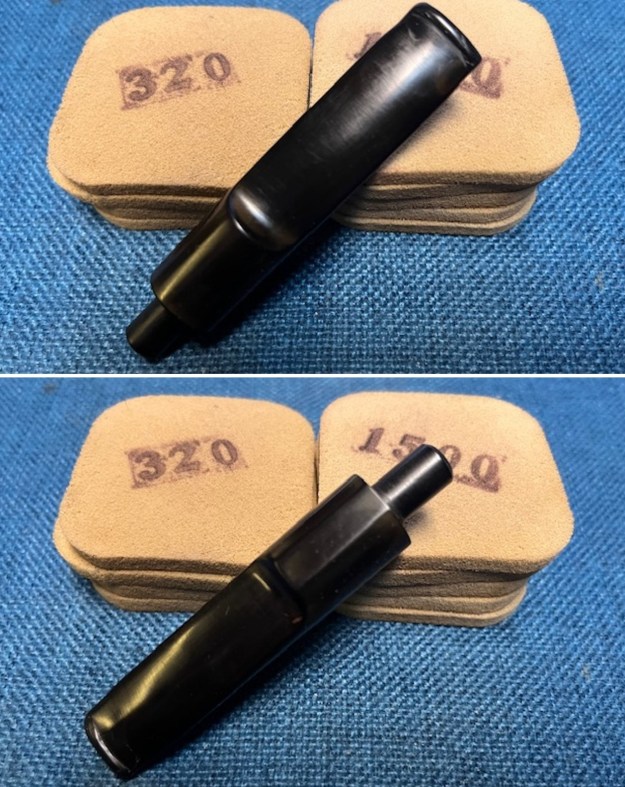
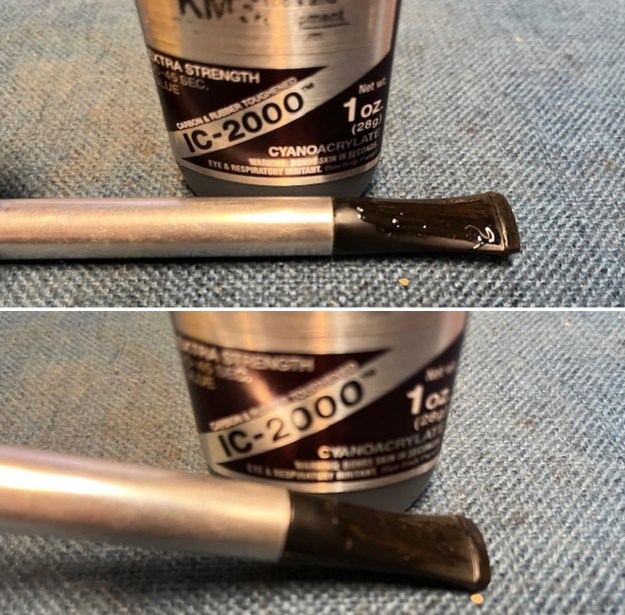
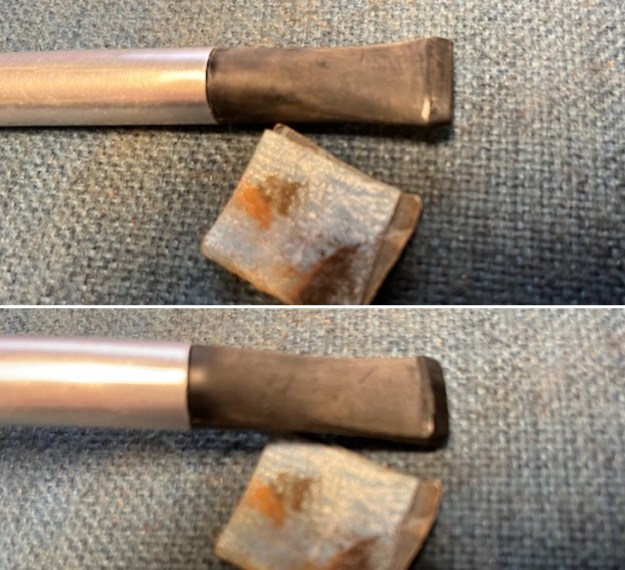
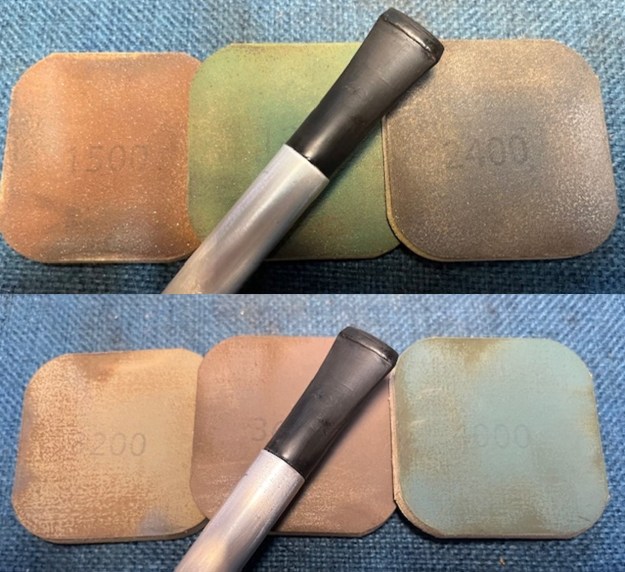
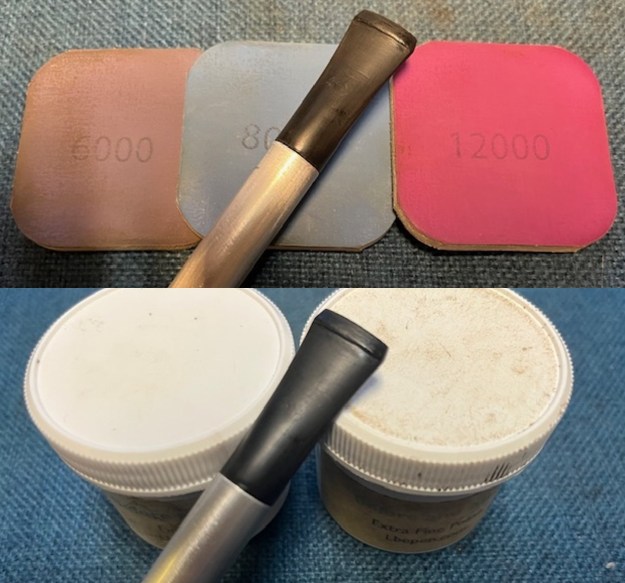
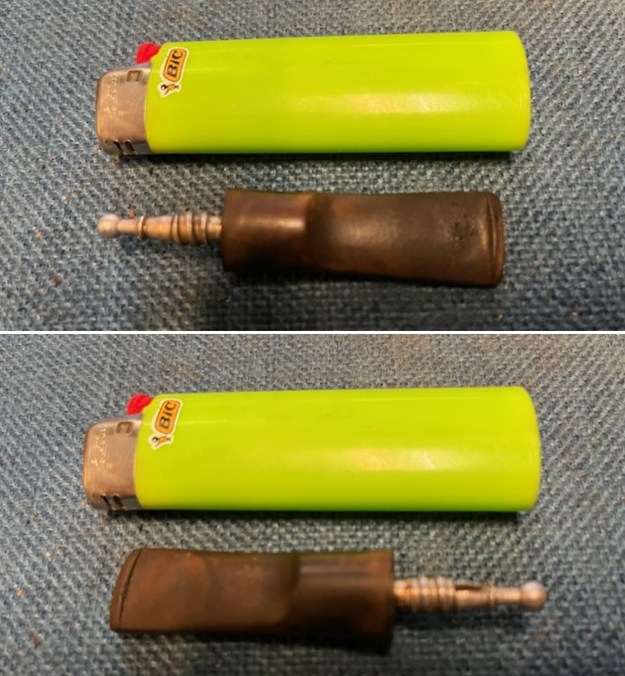
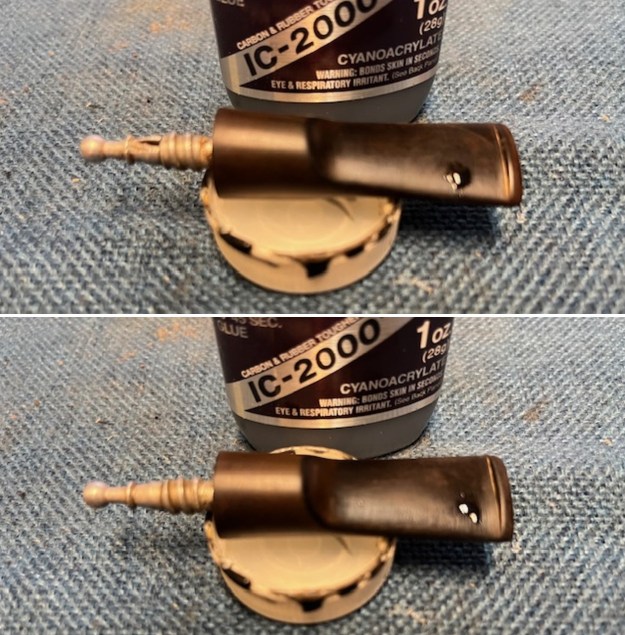
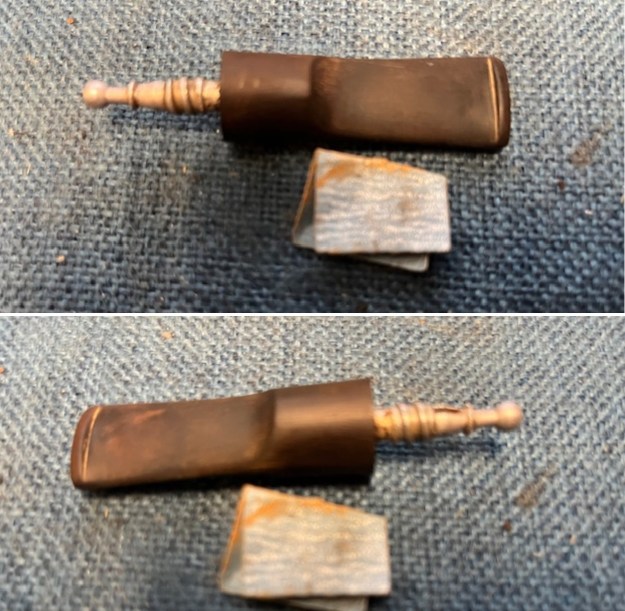
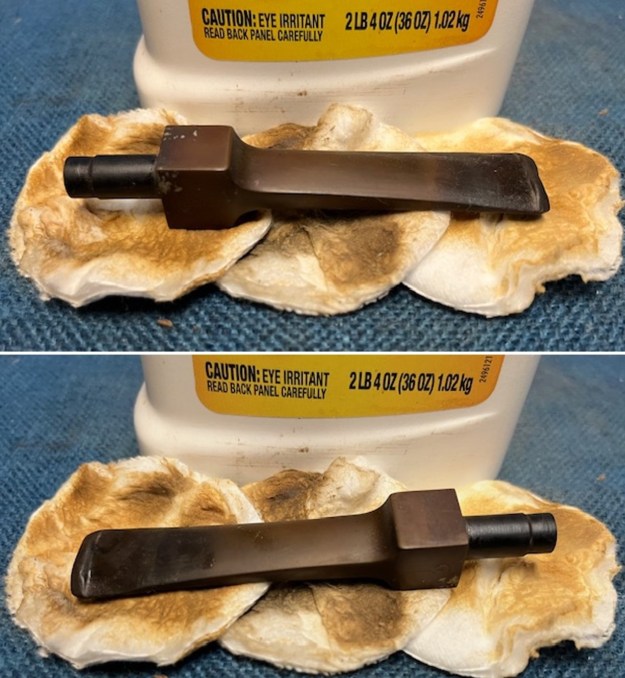
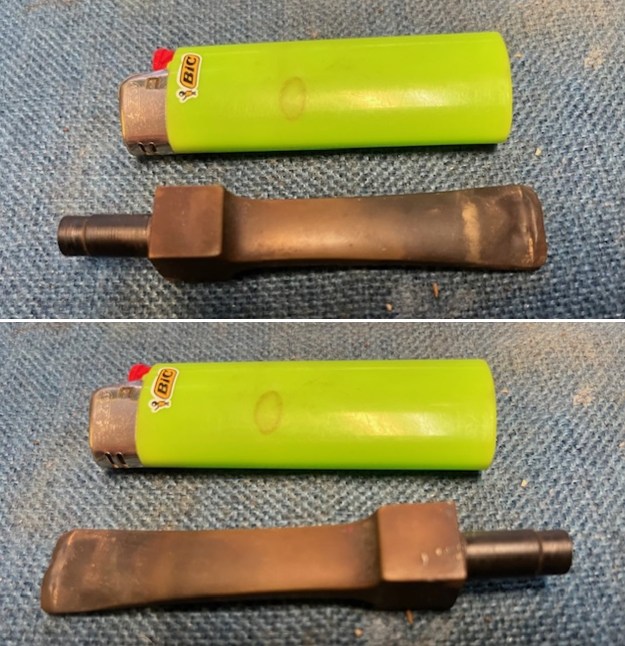
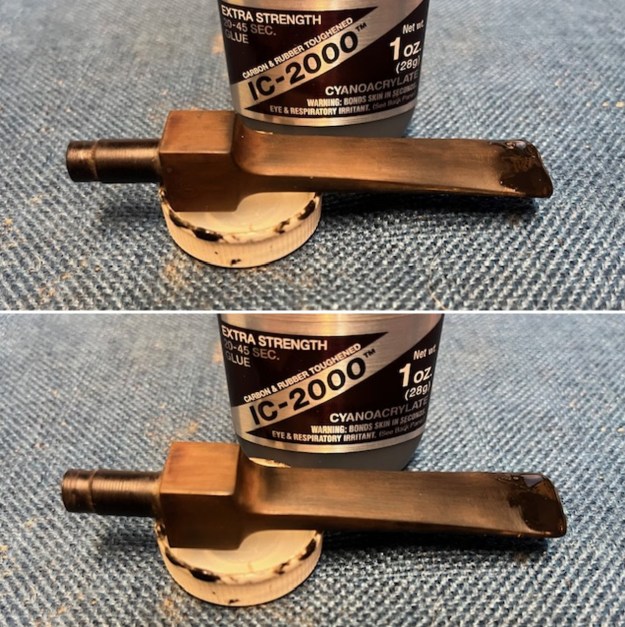
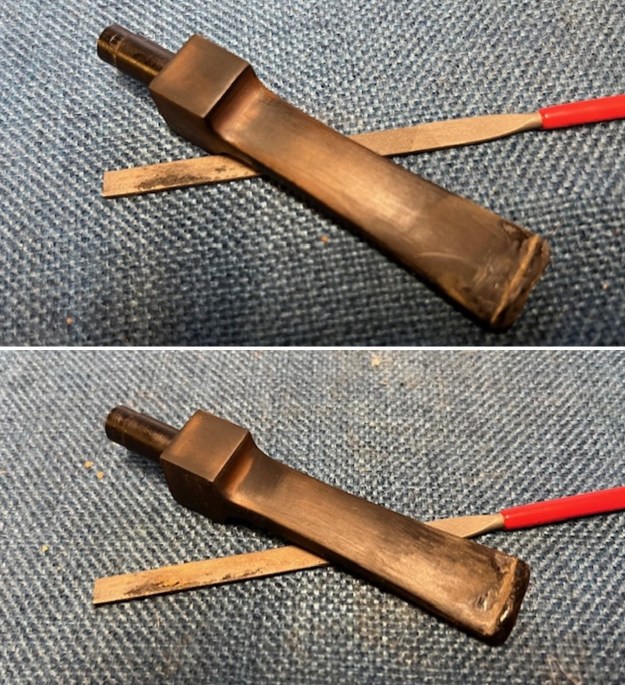
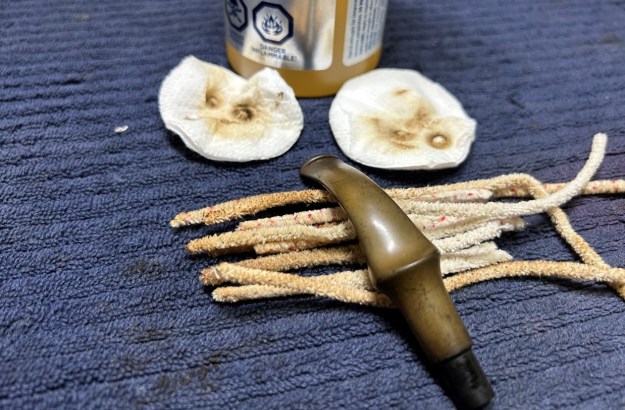
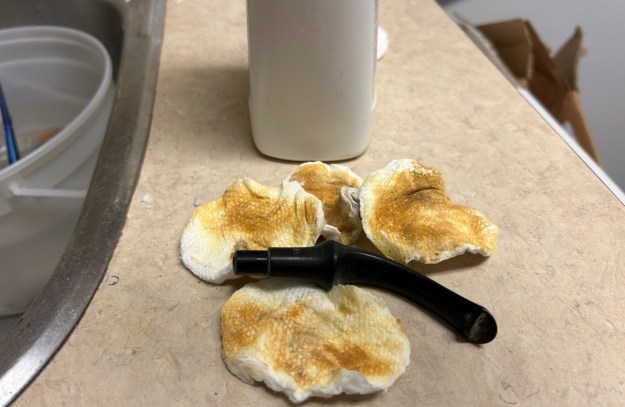
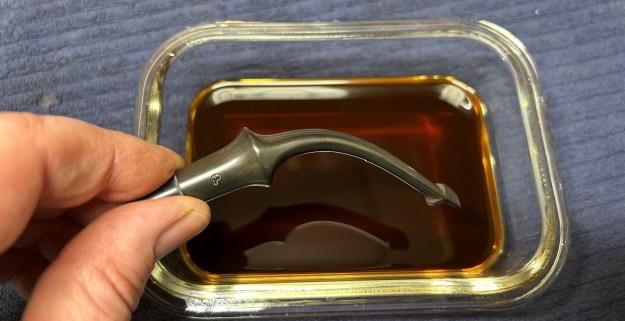
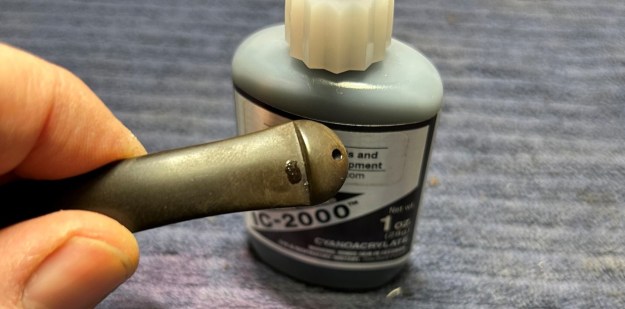
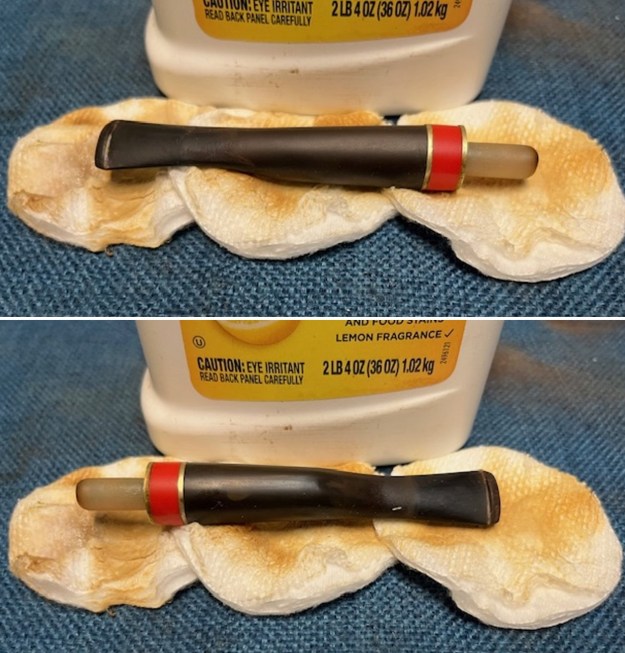
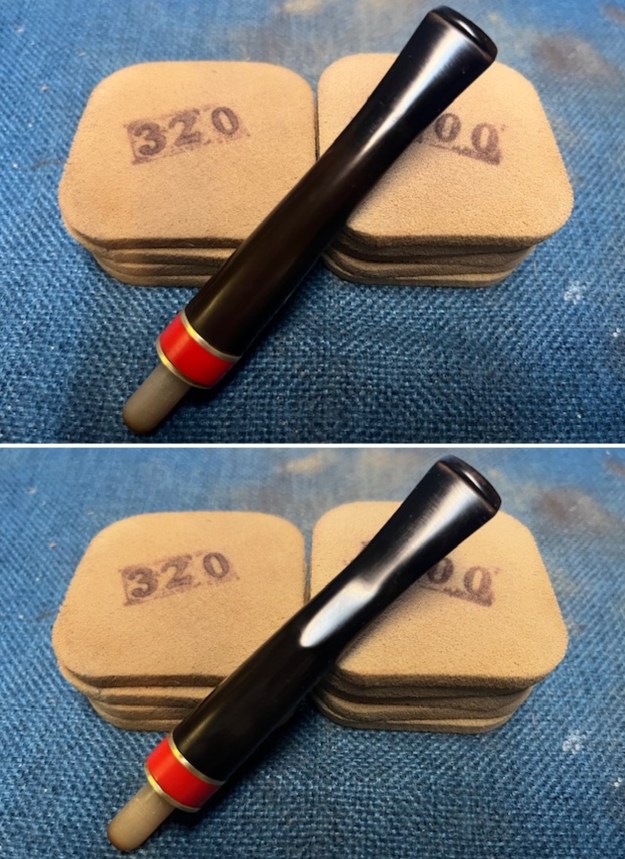
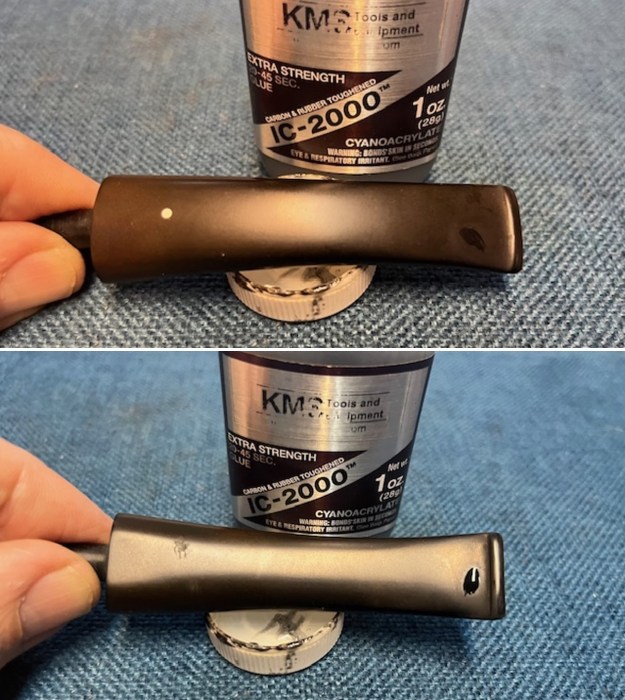
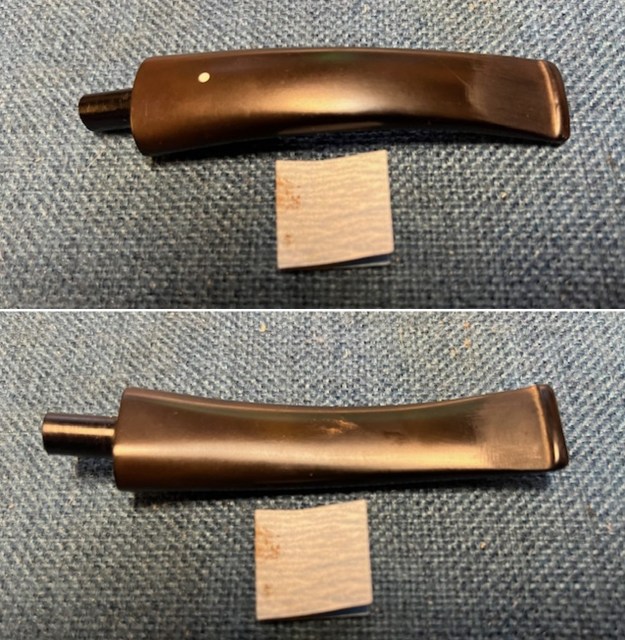
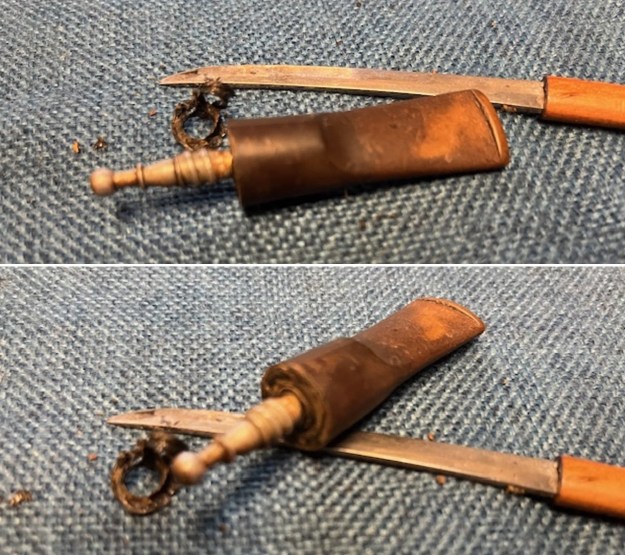
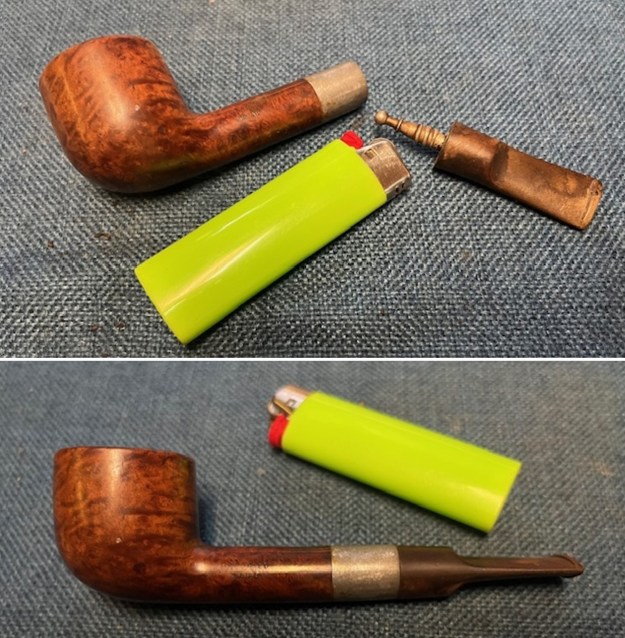
The pipe was in good condition and didn’t require any major surgery. The bowl was a bit dirty and banged up, but nothing serious. Similarly, the stem had some tooth marks and scrapes, nothing to worry about.To start, I used a disposable lighter and ‘painted’ the stem with its flame. The gentle heat of the flame can cause the dents in the vulcanite of the stem to expand back into shape. This helped a little bit.I used oil soap on a few cotton rounds and wiped the stem down to provide an initial cleaning of filth before moving on to the next steps. The primary cleaning comes next. I cleaned the inside of the stem with both pipe cleaners and cotton swabs dipped in 99% lemon-infused isopropyl alcohol. I scrubbed thoroughly to make sure the interior was clean.The goal of the next step is the removal (or minimization) of oxidation. Going to my sink, I used cream cleanser, cotton rounds, and a toothbrush, and scoured the stem to remove as much surface oxidation as possible. As the photos show, the result is a hideous brownish mess – but better off the stem than on it.Once the stem was reasonably clean, I soaked it overnight in some de-oxidation fluid. This solution works to draw oxidation in the stem to the surface. This is a major aid and important step in ensuring a clean stem. The following day, I drew the stem out from its bath and scrubbed the lingering fluid with a toothbrush.Once clean and dry, I set about fixing the marks and dents in the vulcanite. This is done by filling those divots with black cyanoacrylate adhesive, impregnated with carbon and rubber. I left this to cure and moved on.The penultimate step for the stem is sanding. First, with my set of needle files, I reduce the bulk of the cyanoacrylate repairs. I want to remove the excess adhesive as near to the surface as possible, without cutting into the vulcanite. Following that, I use all nine of the micromesh sanding pads (1,500 through 12,000 grit) to sand out flaws, even out the vulcanite, and provide gentle polishing of the finished surface. I also apply pipe-stem oil while using the last five micromesh pads. There is a wonderful, deep black shine to the stem when I am done.Now that the stem is (nearly) complete, I can move on to the stummel. The first step for me is to ream out the bowl – that is to say, remove all the cake inside the bowl. This accomplishes a couple of things. First (and most obviously), it cleans the bowl and provides a refurbished chamber for future smoking. Second, when the old cake is removed, I can inspect the interior walls of the bowl and determine if there is damage or not. Everything looked good inside the bowl. My next step was to remove the lava on the rim. For this, I took a piece of machine steel and gently scraped the lava away. The metal’s edge is sharp enough to remove what I need, but not so sharp that it damages the rim. This worked well. Similar to the stem, I then cleaned the insides of the stummel with both pipe cleaners and cotton swabs dipped in 99% lemon-infused isopropyl alcohol. The pipe turned out to be a bit dirtier than I expected.I then decided to ‘de-ghost’ the pipe – that is to say, exorcize the remaining filth from the briar. I filled the bowl and the shank with cotton balls, then saturated them with 99% isopropyl alcohol. I let the stummel sit overnight. This caused any remaining oils, tars and smells to leach out into the cotton.To tidy up the briar, I also wiped down the outside with some oil soap on cotton rounds (and a toothbrush). This does a good job of cleaning any latent dirt on the surface of the briar. The last step of the cleaning process is to scour the inside of the stummel with some soap and tube brushes. This is the culmination of a lot of work in getting the pipe clean.In order to lessen the nicks on the rim, I ‘topped’ the pipe – that is to say, I gently and evenly sanded the rim on a piece of 220-grit sandpaper. This effectively minimizes the damage, without altering the look of the pipe.I used all nine micromesh pads (1,500 through 12,000 grit) on the outside of the stummel to finish it off. This sanding minimizes flaws in the briar and provides a beautiful smoothness to the wood. I rubbed some Before & After Restoration Balm into the briar and let it sit for 20 minutes or so. The balm moisturizes the wood and gives a beautiful depth to the briar. I then buffed it with a microfibre cloth. For the final step, I took the pipe to my bench buffer and carefully polished it – first with a white diamond compound, then with three coats of carnauba wax. This procedure makes the pipe look its best – the stummel sings and stem glows.This Portland Canadian is a very handsome pipe and will provide many years of smoking pleasure. I hope you enjoyed reading the story of this pipe as much I as I did restoring it. If you are interested in more of my work, please follow me here on Steve’s website or email me directly at kenneth@knightsofthepipe.com. The approximate dimensions of the pipe are as follows: length 6 in. (153 mm); height 1⅞ in. (48 mm); bowl diameter 1⅓ in. (33 mm); chamber diameter ⅔ in. (17 mm). The weight of the pipe is 1⅜ oz. (40 g). I hope you enjoyed reading the story of this pipe’s restoration as much as I did restoring it. If you are interested in more of my work, please follow me here on Steve’s website or send me an email. Thank you very much for reading and, as always, I welcome and encourage your comments.
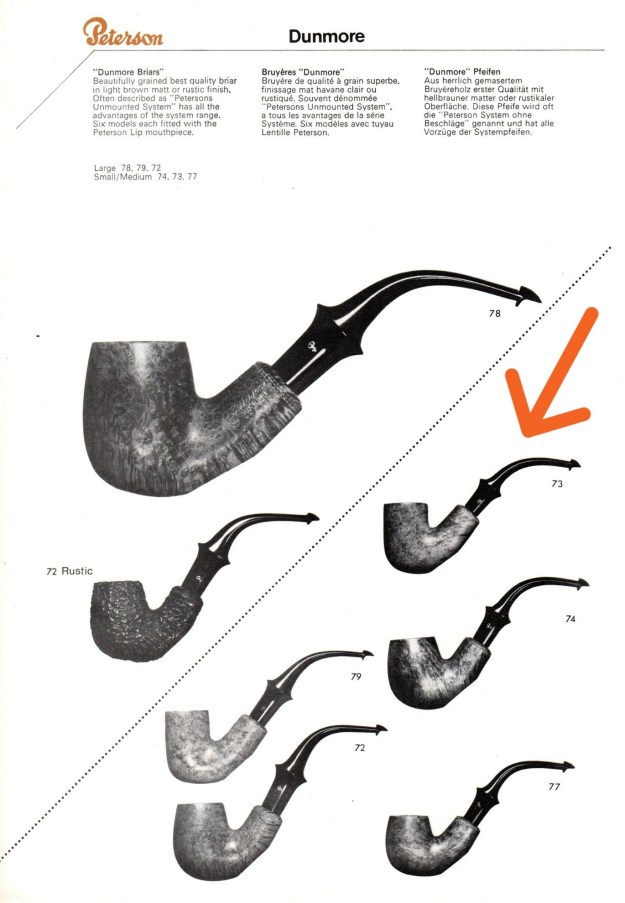
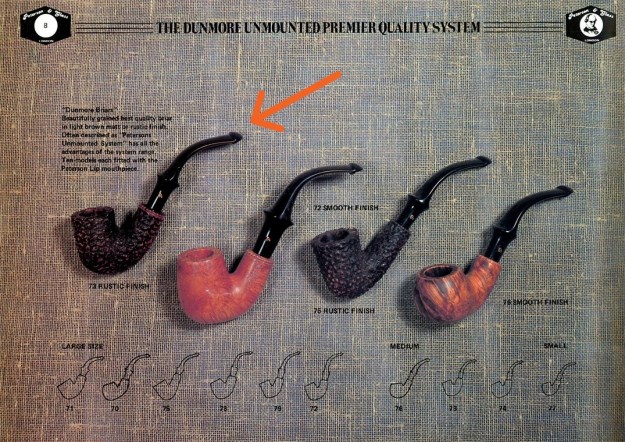
Restoring a Lovely Peterson’s “Kapp-Royal” X105 Billiard with a Cumberland 9mm Filter Stem


by Steve Laug

The next pipe was a mess and one that obviously had been the previous pipe smoker’s favourite pipe. The finish and condition were abysmal. It was definitely a stranger to any cleaning! This one is a smooth Billiard that has a rich coloured finish around the bowl sides and shank under the grit and grime of years. The shank end had a double brass band separating it from the stem. This pipe was purchased on 12/09/2023 from our contact in Copenhagen, Denmark. The finish is shiny but is also so dirty it was hard to know what to expect once it was cleaned. It was stamped on the left side of the shank and read Peterson’s [over] “Kapp-Royal”. It was stamped to the right of the shank and reads MADE IN THE REPUBLIC OF IRELAND (three lines) with the shape number X105 next to the bowl. The underside of the shank was stamped Huber over Munchen. It was filthy when Jeff brought it to the table. There was a thick cake in the bowl and lava on the back of the rim top and the inner edge of the bowl. The outer edge looked good. The Cumberland stem was oxidized and had light tooth marks and chatter on the top and underside on and near the button. Jeff took photos of the pipe before his cleanup work. Jeff took photos of the rim top and stem to show the general condition of the pipe. The bowl is heavily caked and there was a light lava overflow on the back of the rim top and the inner edge. The stem is oxidized and grimy. It has some light tooth marks on the top and underside near and on the surface of the button itself. Jeff took photos of the bowl sides and heel to show the grain that was around this bowl. The grain is quite beautiful around the sides of the bowl and shank. It is a nice looking pipe.He took photos of the sides of the shank to show the stamping. The stamping is readable in the photos below and is as noted above. There is a golden “P” inlaid logo on the left side of the taper stem. I am including the link to the Pipedia’s article on Peterson pipes. It is a great read in terms of the history of the brand (https://pipedia.org/wiki/Peterson). There was a short note toward the bottom of the page about the series. It is definitely referring to the newer line that came out later. I quote:

Kapp Royal Series: The Kapp Royal series is a relatively new one, but has a well establish history in Europe. They are a handsome colourful series with a good quality natural stain briar and bright orange Lucite stems and occasionally Cumberland.

I turned to “The Peterson Pipe” by Mark Irwin and Gary Malmberg to get some background on the Peterson’s Kapp-Royal Pipe. On page 306 it had the following information.

Kapp-Royal (1969, 1976-79, c1988, 2004) First appearance as a line introduced 1969. In 1976-79 Iwan Ries catalog offering identical with non-System Dunmore line. Second appearance in the late eighties as a high-grade Italian market line with briar band inset into the mouthpiece. From c.2004, Italian line available in US as high grade, orange finish, sterling band, amber-colored acrylic fishtail stem or sometimes vulcanite, embedded aluminum P.

Judging from the description above, the pipe I am working on is probably one of the first appearing series that came out in 1969. As noted in Red above it came with an occasional Cumberland stem. The Made in the Republic of Ireland stamp on the right side of the stamp puts it in the Republic Era 1950-1989.

On the underside of the shank it is stamped Huber [over] Munchen. From a past restoration (I have included the link) [https://rebornpipes.com/2023/10/14/petersons-kildare-special-hg-republic-of-ireland-10-canadian/]. I turned to page 300 of “The Peterson’s Pipe” by Mark Irwin and Gary Malmberg as noted by him in the previous blog and found a great paragraph on the stamping. I quote in full.

GH Retailer’s Monogram (c. 1960s) George Huber of Munich, Germany, a Peterson distributor and retailer for decades, stamped their monogram on pipes sold in their store, G overlaid on H. Peterson shared in the 1988 commemoration of Huber’s 125th year in business by producing a special pipe with a sterling rim cap, stamped HUBER over CELEBRATION.

The pipe I have is one that does not bear that monogram and does not appear to have ever had the sterling rim cap and was not stamped HUBER over CELEBRATION. It was however, stamped Huber and Munchen – the city where the shop was located. With that information I turned my attention to working on the pipe.

I was utterly surprised when I took this pipe out of the box and compared it to the before photos. Jeff had done a great job cleaning up the pipe as usual. He reamed the pipe with a PipNet reamer and cut back the cake back to the bare briar. He cleaned up the walls with a Savinelli Fitsall Pipe Knife. Surprisingly the walls looked unscathed from the heavy cake. He scrubbed the interior of the bowl and shank with pipe cleaners, cotton swabs and alcohol to remove the tars and oils. He scrubbed the exterior of the pipe with Murphy’s Oil Soap and a tooth brush to remove the grime from the finish. He worked on the rim top lava and darkening with the soap and tooth brush. He scrubbed the inside of the stem with alcohol and pipe cleaners. He scrubbed the exterior of the stem with Soft Scrub and then soaked it in Briarville’s Deoxidizer. He washed it off with warm water to remove the Deoxidizer. The pipe looked far better when it arrived. The cleaned up rim top looked very good around the edges and the top. I took a closeup photo of the rim top and edges to show how well it had cleaned up. I also took close up photos of the stem to show the light tooth marks on the surface near and on the button itself.I took photos of the stamping on the sides of the shank. It is clear and reads as noted above. I also captured the gold insert P on the left side of the Cumberland stem. It looked great. I removed the stem and took a photo of the pipe to have a look at the parts and overall look. I started my work on this pipe polishing the briar with micromesh sanding pads – dry sanding with 1500-12000 grit sanding pads. I wiped the bowl down with a damp cloth after each sanding pad. I worked some Before & After Restoration Balm into the surface of the briar with my fingertips to clean, enliven and protect the briar. I let the balm sit for 15 minutes and then buffed with a cotton cloth to raise the shine. The photos show the bowl at this point in the restoration process. I set the bowl aside and worked on the stem. The stem was clean and the light tooth marks were minimal. There was pitting on the topside of the stem that left it feeling rough. I sanded the stem with 320-3500 grit sanding pads to smooth out the pitting and marks in the Cumberland. Once finished it was greatly improved.I polished the stem with micromesh sanding pads – wet sanding with 1500-12000 grit sanding pads. I wiped it down after each sanding pad with Obsidian Oil. I polished it with Before & After Pipe Stem Polish – both Fine and Extra Fine. I wiped it down with another coat of Obsidian Oil. I put a new 9mm filter in the tenon on the stem. It fit well and looked great. I used Vauen filters as they are easily accessible here and on Amazon.com.I am excited to finish this beautifully grained Peterson’s Kapp-Royal X105 Billiard. I put the pipe back together and buffed it with Blue Diamond on the buffing wheel. I gave the bowl and the stem multiple coats of carnauba wax. I hand buffed the pipe with a clean buffing pad to raise the shine. It is fun to see what the polished bowl looks like with beautiful mixed grain all around it. I polished the twin golden bands on the shank with a jeweller’s cloth. This smooth Classic Peterson’s Kapp-Royal X105 Billiard is great looking and the pipe feels great in my hand. It is light and well balanced. Have a look at it with the photos below. The dimensions are Length: 5 ½ inches, Height: 1 ¾ inches, Outside diameter of the bowl: 1 ¼ inches, Chamber diameter: ¾ of an inch. The weight of the pipe is 45 grams/1.59 ounces. It turned out to be a beautiful pipe. I will be putting on the rebornpipes store in the Irish Pipe Makers Section. If you are interested in adding this pipe to your collection send me a message or an email. Thanks for walking with me through this restoration.

Best of the Lot an Unsmoked Manuel Shaabi Handcut Scorpion with a Cumberland Saddle Stem


by Steve Laug

I was recently contacted by a fellow here in Vancouver about some pipes he had. He was referred to me by a local pipe shop. I was unclear if he wanted them cleaned or exactly what. When he came on the weekend he brought six pipes in two pipe boxes for me to have a look at. I spoke with him about the cost of restoring them. It finally became clear to me (I guess I am slow) that he wanted to sell the pipes. He was tasked with the job by his sister in law as the pipes were from her late husband’s collection. As I unpacked them it was clear that they were some nice pipes and some were higher grade. All but one was smoked and had the heavy smell of fruity aromatics to them. Some had cake in the bowl and lava on the rim. Of the six, four of them had significant rim damage – bowls out of round, burn marks, cut marks. The saddest part is that the damage was most significant on the higher end pipes. Most of them had tooth marks in the stems. Obviously, they had been his late brother in laws favourites and he had enjoyed them. He left them with me and I went over them, researched the brands and wrote up an offer for him to present to his sister in law. By the end of the day we had a deal. The six pipes now have a new home and five of them had fruity smell needs to be exorcised! The Curled looking one is unsmoked.I turn my attention to the last of the six pipes I purchased. The bottom right pipe of the six is unsmoked. It is another beautiful looking pipe that is the most unique of the lot. It is a Scorpion shaped Bent pipe stamped on the underside of the shank and has a Mouse logo with an MS as part of the stamp [over] Manuel Shaabi [over] Handcut [over] Germany. To the left of the stamping moving up the bowl are three lines like waves. The bowl had beautiful birdseye grain around sides and cross grain on the eye shaped rim top and underside of the shank. The shape is impeccably done. The finish was absolutely beautiful and unblemished. The bowl was unsmoked and there was no cake or lava to worry about anywhere around the bowl. The inner edge of the bowl was flawless and round. The inside of the bowl was polished smooth. The fancy turned saddle stem was Cumberland and no tooth marks or chatter on the stem. The tenon was Delrin and the fit was perfect. The shank had been drilled and the stem was inset in the shank. There was no stamping on the stem. The pipe came with the original Shaabi box and soft felt pipe sock with the Shaabi logo on it. I took photos of the bowl and rim top to give you an idea of what I see. This is a uniquely carved and beautiful looking Scorpion pipe. The unsmoked condition and the pristine Cumberland stem on the pipe make a gorgeous pipe!I took a photo of the stamping on the underside of the shank. It is clear and readable as noted above. I took a photo of the bowl with the stem removed to give a sense of the proportion and appearance of the pipe. To help me understand the pipe and its maker a bit more I turned to Pipephil’s site and read what it said about Shaabi’s Handcut pipes (http://pipephil.eu/logos/en/logo-s6.html). I have included a screen capture of the section below as well as the side bar information below the capture. Artisan: Manuel Shaabi (born 1950 in Lebanon) was a cabinet maker when he decided in 1993 to learn pipe carving. He started as professional pipemaker in 1998.

Next, I turned to Pipedia for more information and detail (https://pipedia.org/wiki/Shaabi_Pipes). I find that the articles there often fill in some more information on the relationships and history of a given brand. In this case I found that also true. I quote it in full below.

Manuel Shaabi was born in Lebanon in 1950. He apprenticed as a wood sculptor and cabinet maker. In 1979, he left, because of the Lebanese civil war, for Bavaria, Germany. There he worked making one a kind furnishings and restoring old sculptures and figurines in churches and cathedrals.

In 1984 he moved to Hamburg, Northern Germany because of his daughter’s asthmatic condition. Unfortunately, he couldn’t find enough work, so he went back to school and completed his professional training. His final test was to make a trunk. He made such a fine trunk that he was offered a position at the school as an instructor.

In 1993, having won numerous awards for his cabinet making, he gave it up as it didn’t satisfy his creative needs. He started over at Dan Pipe learning to repair pipes. He quickly mastered the art of pipe making and in 1998 left to start his own studio.

Shaabi’s’ pipes have an unheard of degree of hand craftsmanship. He feels a drill doesn’t cut true for the tobacco chamber so he uses a special knife. His draft holes are 4mm. “The draft hole should meet the tobacco chamber just a little bit above the the bottom”. He believes this prevents tobacco residue coming up through the air hole and stem.

Manuel Shaabi is probably the only pipemaker who combines the skills of a wood carver, cabinetmaker and pipe smith. His pipes combine the best of European design with a Middle Eastern aesthetic. He has secured some of the best wood on the planet and they smoke as good as they look. Each pipe has an individually hand cut Lucite stem…

I did a Google search for the Manuel Shaabi Nautilus as that is what I thought it was in terms of the shape. Instead of a Nautilus it came up with quite a few pipes that were very similar in shape. One of them was the same style pipe as this one on Esterval’s Pipe House (https://www.tecon-gmbh.de/product_info.php?manufacturers_id=50&products_id=10834). That link gave me the name of the pipe shape that Shaabi called a Scorpion. I have included a photo of the pipe that was on the site.

Now I knew what I had in hand – a Handcut Manuel Shaabi Scorpion that was a real beauty. Knowing that it was new and unsmoked was a bonus. In terms of the six pipes I had purchased in the lot this unsmoked beauty was very high end.
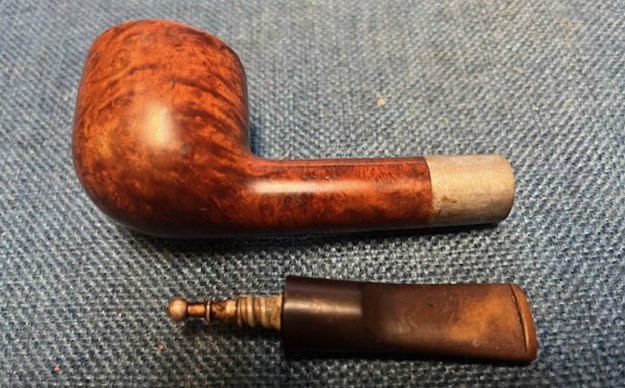
I rubbed the bowl and shank down with Before & After Restoration Balm. I worked it into the surface of the briar with my fingertips to clean, enliven and protect the briar. I let the balm sit for a little while and then buffed with a cotton cloth to raise the shine. The Balm did its magic and the grain stood out. I polished the stem with micromesh sanding pads – 1500-12000 grit pads. I wanted to remove the light oxidation on the stem surface and bring back the shine. I wiped it down with a damp cloth after each sanding pad. I used Before & After Pipe Polish – both Fine and Extra Fine to further polish the stem. I put the German Made Manuel Shaabi Handcut Scorpion and its fancy Cumberland saddle stem back together. The rich browns and blacks of the contrasting stain makes the grain come alive with the polishing and waxing. I carefully buffed the pipe with Blue Diamond on the buffing wheel using a light touch on the briar. I gave the bowl and the stem multiple coats of carnauba wax on the buffing wheel and followed that by buffing the entire pipe with a clean buffing pad. I hand buffed the pipe with a microfiber cloth to deepen the shine. The finished Manuel Shaabi Handcut Scorpion really is a beauty and fits nicely in the hand and looks very good. Give the finished pipe a look in the photos below. The dimensions of the pipe are Length: 5 ½ inches, Height: 3 inches, Outside diameter of the bowl: 1 ½ inches wide x 2 ¼ inches long, Chamber diameter: ¾ of an inch. The weight of the pipe is 2.93 ounces/83 grams. This pipe will soon be on the Pipes From Various Makers Section of the rebornpipes store if you would like to add it to your collection. Send me a message or an email. Thanks for reading this blog and my reflections on the pipe while I worked on it.
Restoring a Collectible JULS Freehand Straight Brandy with a Taper Stem with an Ebony Inlay


by Steve Laug

I was recently contacted by a fellow here in Vancouver about some pipes he had. He was referred to me by a local pipe shop. I was unclear if he wanted them cleaned or exactly what. When he came on the weekend he brought six pipes in two pipe boxes for me to have a look at. I spoke with him about the cost of restoring them. It finally became clear to me (I guess I am slow) that he wanted to sell the pipes. He was tasked with the job by his sister in law as the pipes were from her late husband’s collection. As I unpacked them it was clear that they were some nice pipes and some were higher grade. All but one was smoked and had the heavy smell of fruity aromatics to them. Some had cake in the bowl and lava on the rim. Of the six, four of them had significant rim damage – bowls out of round, burn marks, cut marks. The saddest part is that the damage was most significant on the higher end pipes. Most of them had tooth marks in the stems. Obviously, they had been his late brother in laws favourites and he had enjoyed them. He left them with me and I went over them, researched the brands and wrote up an offer for him to present to his sister in law. By the end of the day we had a deal. The six pipes now have a new home and the fruity smell needs to be exorcised!I am turning my attention to the fifth of the six pipes I purchased. The bottom right pipe of the six is unsmoked. The last of the five that needed work is just above the unsmoked one. It is another beautiful looking pipe that looks to be Danish Made. It is a straight Brandy stamped on the underside of the shank and reads JULS [over] Freehand. The bowl had beautiful straight grain around sides. The shape is impeccably done. The finish was dirty but otherwise all was good it appeared. The rim top was clean of cake and lava. The inner edge of the bowl was damaged all the way around and was slightly out of round. The bowl had been recently reamed and it was clean. Like the others, there was a pipe cleaner trough from the entrance of the airway into the bowl but much less prominent. It could have been caused by an overzealous reaming that left the bottom damaged. The stem was slightly oxidized and had light tooth marks and chatter on both sides of the stem ahead of the button. The stem had what looked like an Ebony wood inlay toward the shank end of the stem spaced between vulcanite at the tenon and the rest of the blade. The transition between the wood and the vulcanite was not smooth on either end. The JS engraving on the topside of the stem was faded but still readable. It also came with a soft felt pipe sock that had a Johs stamp on it. I took photos of the bowl and rim top to give you an idea of what I see. Once again it is too bad that Word does now allow for the inclusion of smells because this sweet vanilla is filling my work area. I have a candle going to mask the smell a bit. You can see the damage to the rim top and inner edge of the bowl. The bowl is lightly caked. The stem is lightly oxidized and has light tooth marks and chatter on both sides ahead of the button. There is also a faint stamp on the top of the stamp.I took a photo of the stamping on the underside of the shank. It is faint but readable with a lens as noted above. The stamp on the top of the stem is a JS etched on the top by hand. I took a photo of the bowl with the stem removed to give a sense of the proportion and appearance of the pipe. To help me understand the stamping a bit more I turned to Pipephil’s site and read what it said about Svendborg Hand Carved pipes (http://pipephil.eu/logos/en/logo-j4.html). I have included a screen capture of the section below as well as the side bar information below the capture. Artisan: Julian Schäffer. He began carving pipes in 1982 and almost stopped the job in the early 90s. His 2001 collection brought 14 high grade pipes together.

From the information I found that the pipe was carved by Julian Schäffer during the 8 years that he carved pipes – 1982-1990. He was known to carve high grade pipes.

Next, I turned to Pipedia for more information and detail (https://pipedia.org/wiki/Juls). I find that the articles there often fill in some more information on the relationships and history of a given brand. In this case I found that also true. The article is very brief and quotes Pipes, Artisans and Trademarks, by José Manuel Lopes I quote it in full below.

JULS pipes are by the German artisan Julian Schäffer, who began carving pipes in 1982, and worked with Former and Rainer Barbi. Influenced by Danish design, his pieces are both with and without 9mm filters, and have ebonite stems. They are collectors’ items today. The brand ran from 1982 to the beginning of the 1990s, when Julian ceased production, and moved on to other activities. Stamp: JULS

I turned to Google and found several listings for JULS pipes that were selling on the estate portion of smokingpipes.com. There was a brief description of a Billiard for sale there that gave more information as well that was further confirmation concerning the brand. Here is the link (https://www.smokingpipes.com/pipes/estate/germany/moreinfo.cfm?product_id=612079). I quote:

Crafted by German artisan Julian Schäffer, Juls pipes were heavily influenced by Danish design sensibilities, with Schäffer having worked with carvers such as Former and Rainer Barbi. Juls pipes began production in 1982, with Schäffer ending his production around the early 1990s. This Billiard from the German carver illustrates his deft understanding of Danish design, its composition replete with soft, sleek line work. The bowl stands tall with an upright posture, formed by smooth, supple walls rising high from the rounded heel toward the flat rim. From a defined transition, a sturdy shank emerges from the bowl, punctuated by a broad accent of dark wood at the shank end as its meets a slender stem with a trim expansion ring at its base. A warm, hazelnut stain dresses the stummel, showcasing whorls of birdseye across the bowl’s left flank. – Joshua Carroll

Now I knew that the carver was Julian Schaffer and that his pipes had an obvious Danish design look to them. He had trained with Hans Former and Rainier Barbi in Germany, both who were master carvers. I also knew that the pipe was made in the short period between 1982-1990 when he stopped carving.

I reamed the bowl with a Savinelli Fitsall Pipe Knife to take back the cake to bare briar. I sanded the walls smooth with some 220 grit sandpaper wrapped around a piece of dowel. I have to say that I was spooked by what I found on the S. Bang Brandy I just finished. I ran my fingers over the sides of the bowl and gladly they were smooth. As mentioned above the bottom of the bowl showed a trough carved in the bottom of the bowl. It was certainly not as deep as the other two pipes but appeared to be carved by zealous use of pipe cleaners. I was able to ream out the ridge with the Pipe Knife. It looked much better. I took a photo of it as best as I could but it is hard to see. I sanded the walls with a piece of 220 grit sandpaper wrapped around a dowel. It was smooth to touch.I cleaned out the stinky, fruity smelling tobacco oils and tars in the shank and the airway in the stem. I used 99% isopropyl alcohol, cotton swabs and pipe cleaners and was able to remove the debris and some of the stench. I needed to “deghost” the bowl and try to exorcise the smell. I stuffed bowl with cotton bolls and used an ear syringe to fill it with alcohol. I set it aside to let the alcohol do its work and wick the oils into the cotton. While it sat for the afternoon, I did some other work. The next morning when I came back to it the cotton and alcohol had wicked out the oils and tars. The cotton was brown and the bowl smelled much better. The damages demanded some restoration and repair. I started with the rough inner edge of the rim. I used a folded piece of 220 grit sandpaper to minimize the damage on the inner edge of the rim and smooth it a bit. I was careful to not change the profile of the rim top and edges. I mixed up a batch of bowl coating – sour cream and activated charcoal powder to give a top coat  on the bottom of the bowl and the walls to facilitate the build up of a cake in the bowl. I applied it to the bowl with a folded pipe cleaner and painted it on the sides and pressed it into the trough marks on the bottom. Once finished I set it aside to cure. I love this recipe for a bowl coating as it leaves no residual taste once the coating cures. It is black and provides perfect protection. I rubbed the exterior of the bowl and shank down with Before & After Restoration Balm. I worked it into the surface of the briar with my fingertips to clean, enliven and protect the briar. I let the balm sit for a little while and then buffed with a cotton cloth to raise the shine. The Balm did its magic and the grain stood out. I set aside the bowl and turned my attention to the stem. I touched up the J.S. Logo stamp on the topside of the taper stem with Rub’n Buff Antique Gold. I robbed it into the stamping with a tooth pick. Once it had cured I buffed it off with a cotton cloth then wiped it down with some Obsidian Oil. It looked very good.The transitions between the ebony and the vulcanite had a slight ridge and the bite marks and chatter were not too deep. I was able to smooth out the transitions between the ebony inset and the vulcanite and the tooth chatter and remove the light oxidation with 320-3500 grit sanding pads. I wiped the stem down after each pad with an Obsidian Oil cloth. It was beginning to look very good.I polished the stem with micromesh sanding pads – 1500-12000 grit pads. I wiped it down with a damp cloth after each sanding pad. I used Before & After Pipe Polish – both Fine and Extra Fine to further polish the stem. I put the cleaned and restored Julian Schäffer JULS Freehand Straight Brandy and its vulcanite taper stem with a Ebony Insert back together. The rich browns and blacks of the contrasting stain makes the grain come alive with the polishing and waxing. I carefully buffed the pipe with Blue Diamond on the buffing wheel using a light touch on the briar. I gave the bowl and the stem multiple coats of carnauba wax on the buffing wheel and followed that by buffing the entire pipe with a clean buffing pad. I hand buffed the pipe with a microfiber cloth to deepen the shine. The finished Julian Schäffer JULS Freehand Straight Brandy really is a beauty and fits nicely in the hand and looks very good. Give the finished pipe a look in the photos below. The dimensions of the pipe are Length: 6 ½ inches, Height: 2 ½ inches, Outside diameter of the bowl: 1 ¼ inch, Chamber diameter: ¾ of an inch. The weight of the pipe is 2.79 ounces/79 grams. This pipe will soon be on the Pipes From Various Makers Section of the rebornpipes store if you would like to add it to your collection. Send me a message or an email. Thanks for reading this blog and my reflections on the pipe while I worked on it.