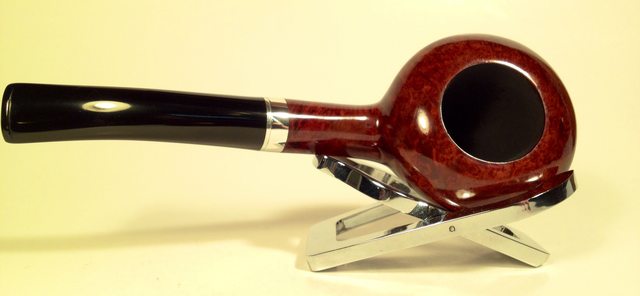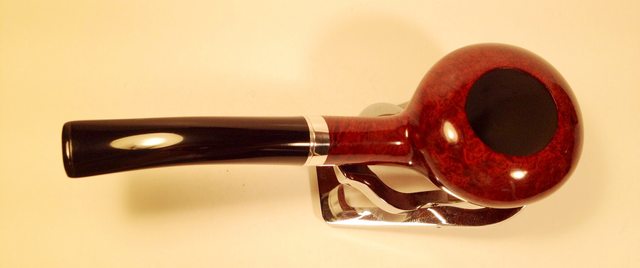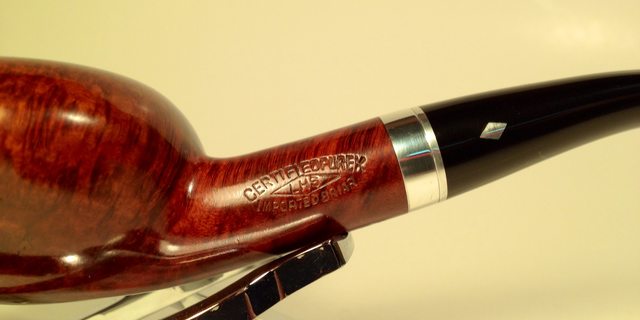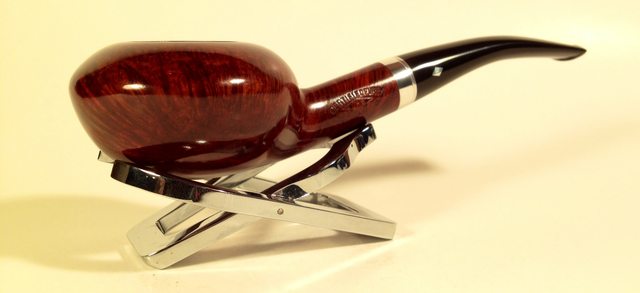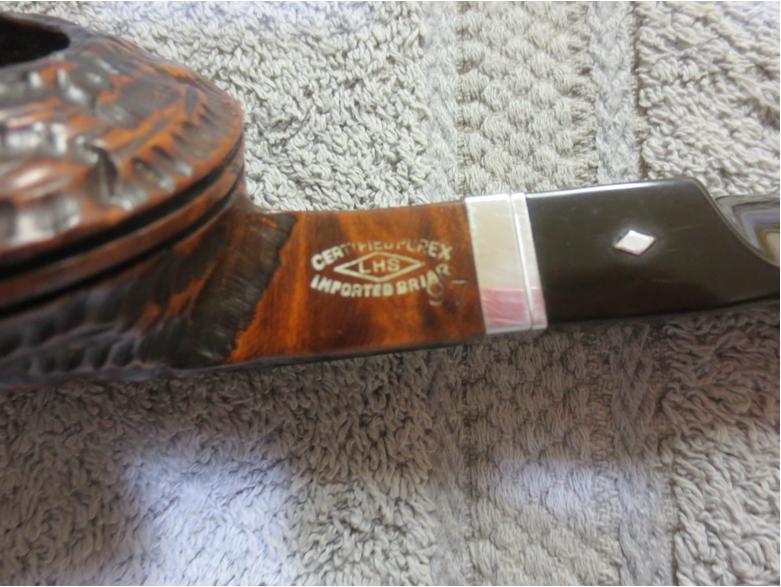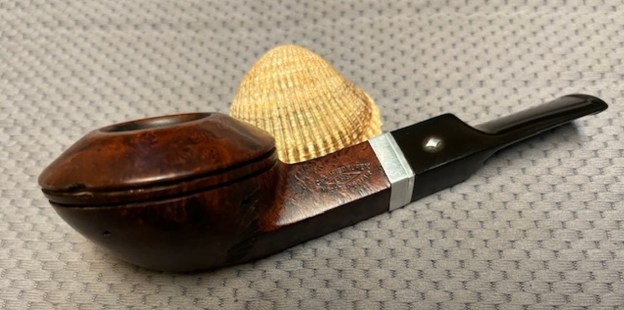
Tag Archives: LHS Certified Purex pipes

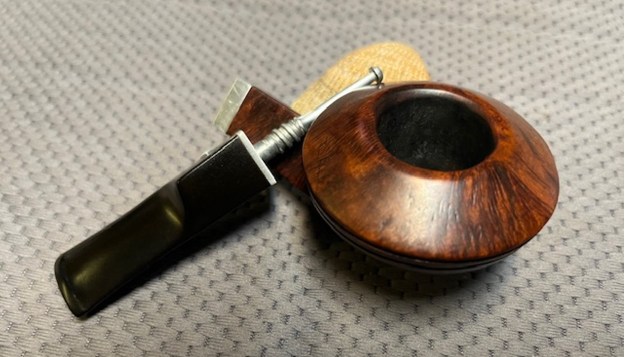
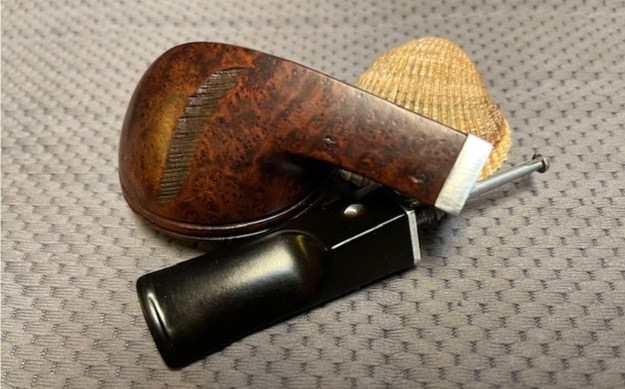
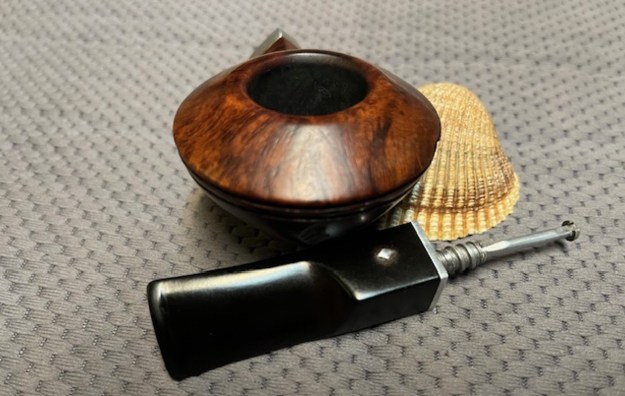
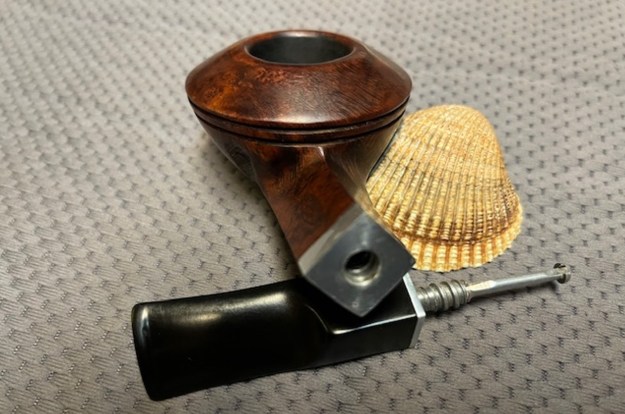
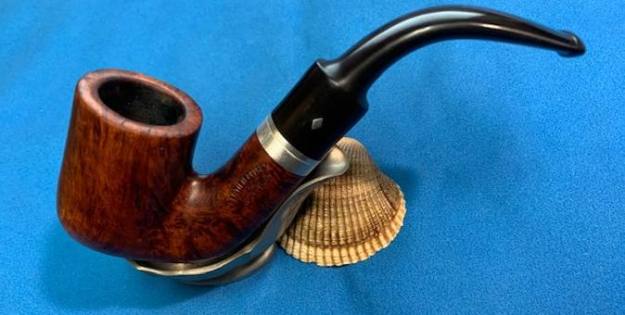
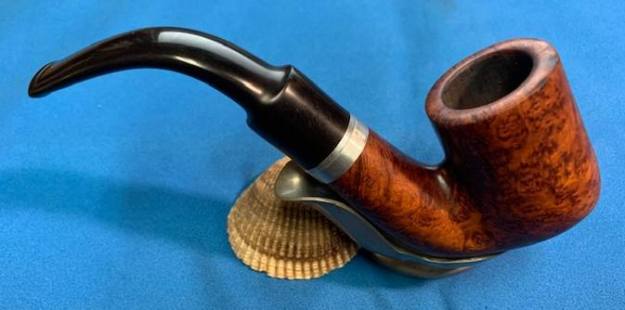
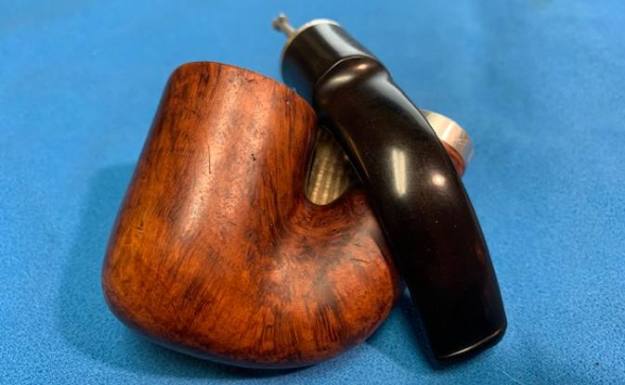
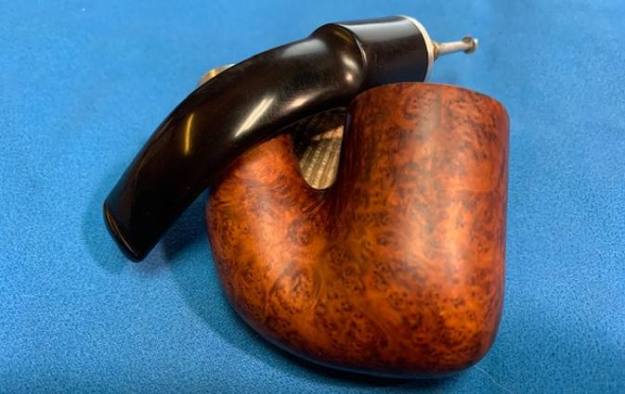
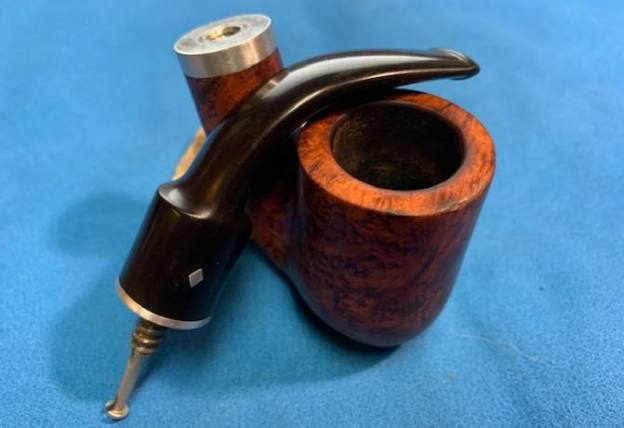
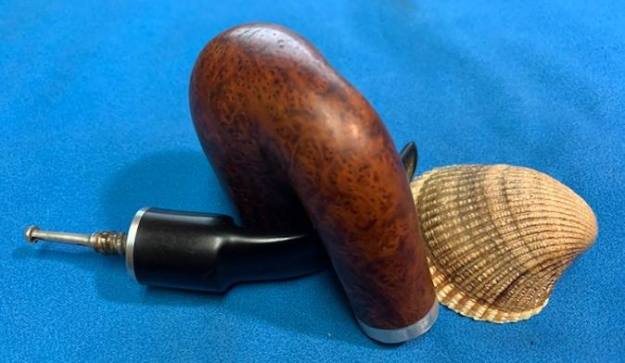
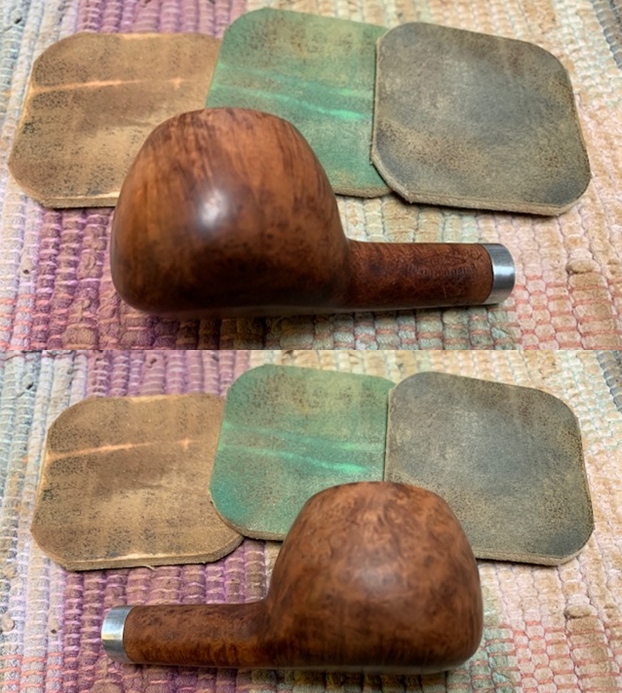
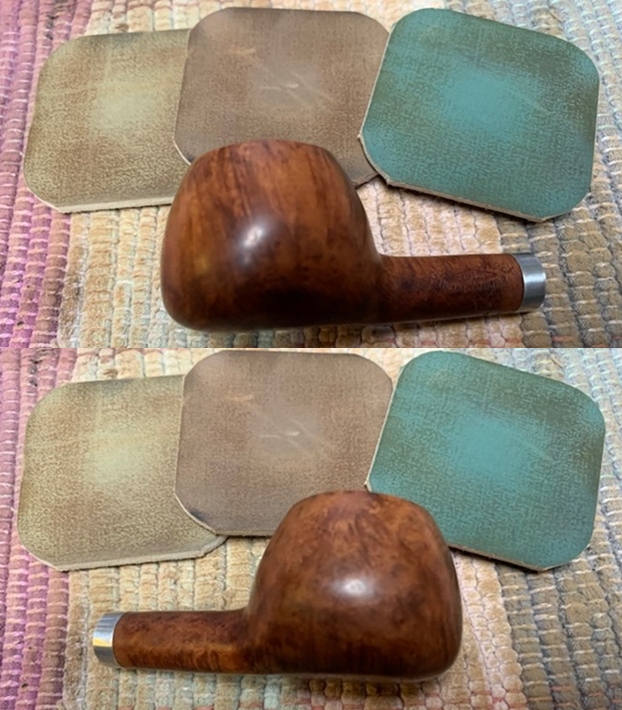
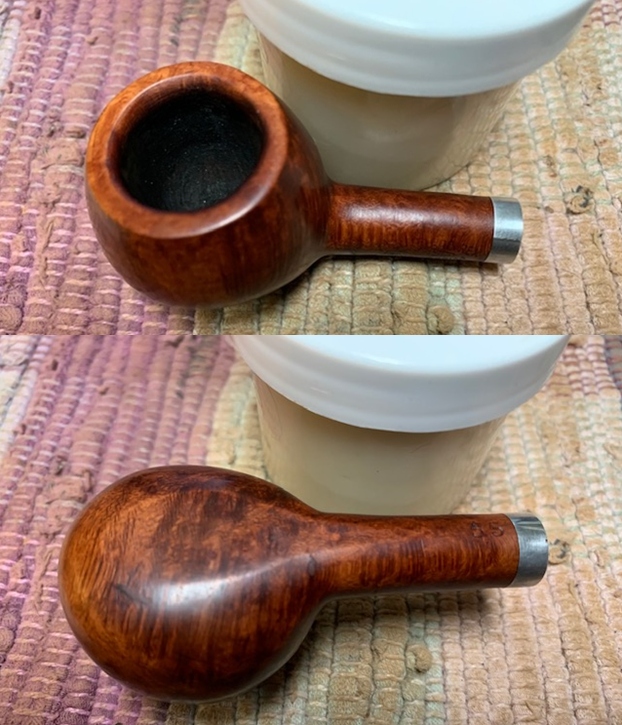
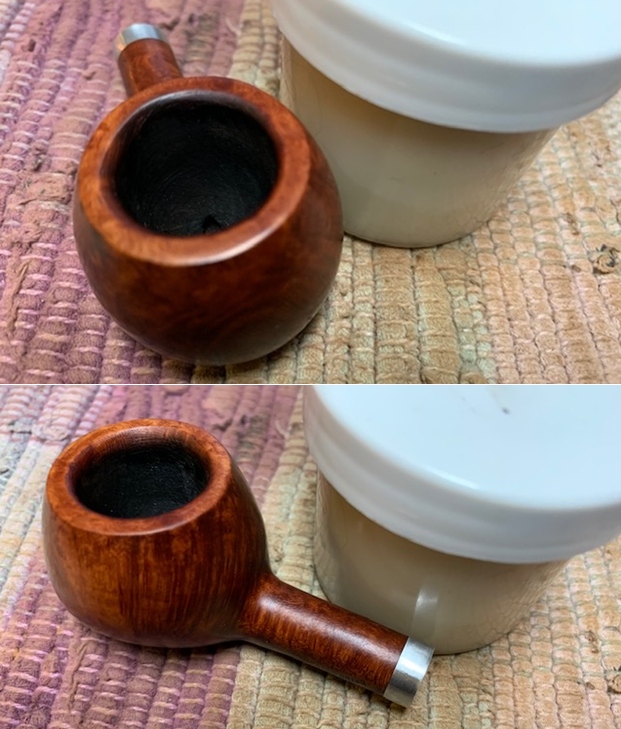
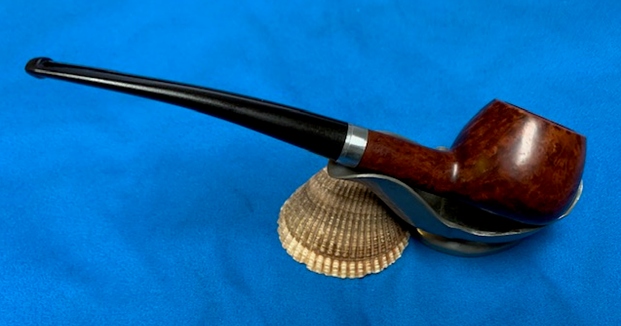
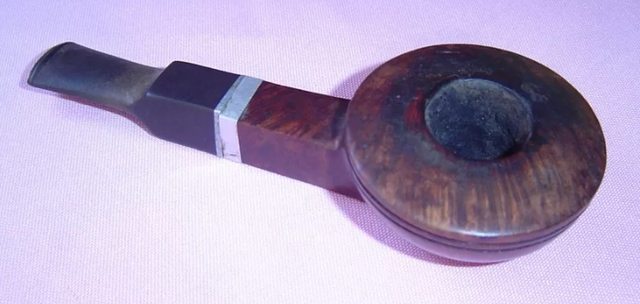
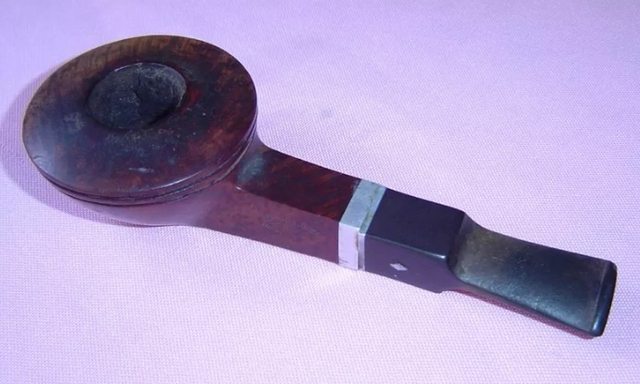
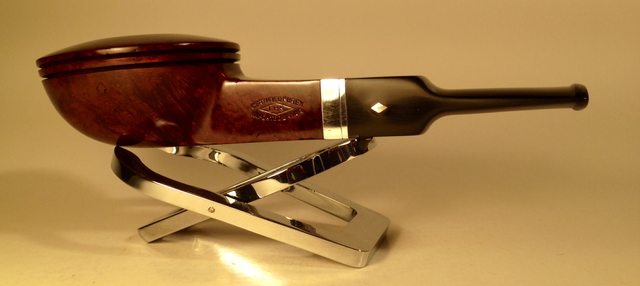
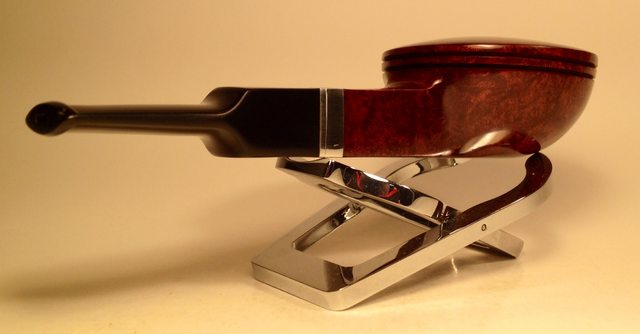
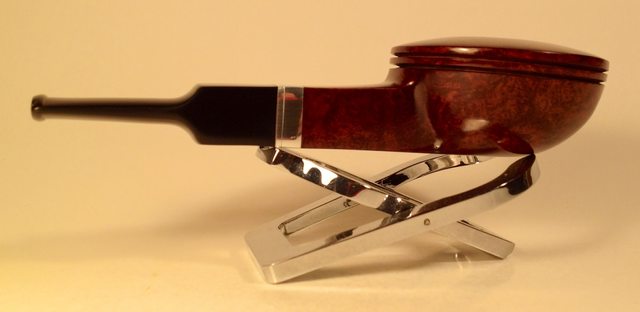
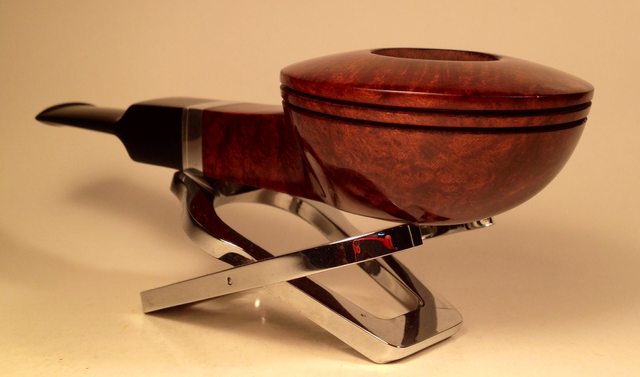
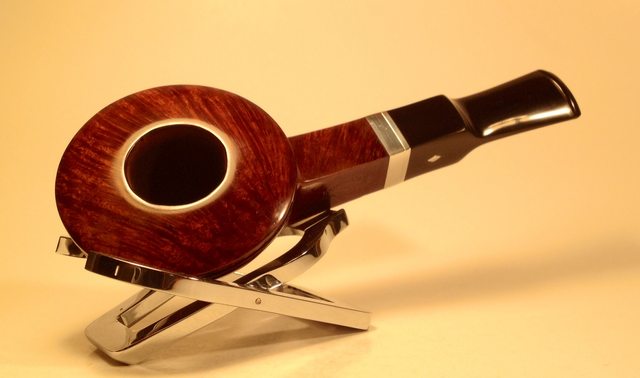
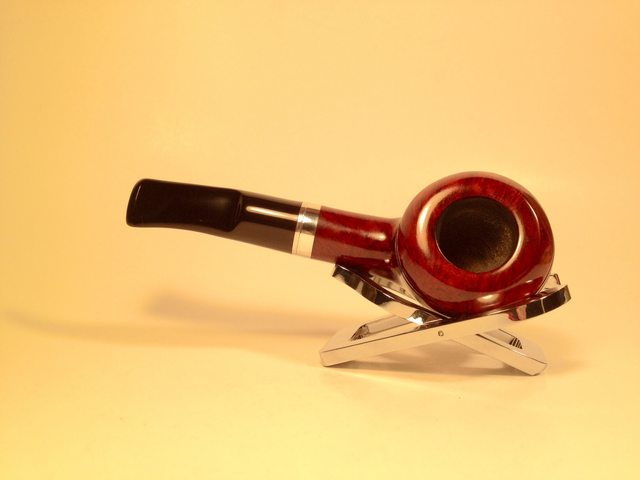
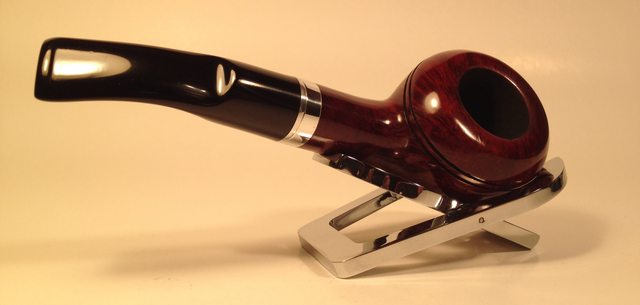
Breathing Life into a LHS Certified Purex Imported Briar 97 Bulldog


by Steve Laug

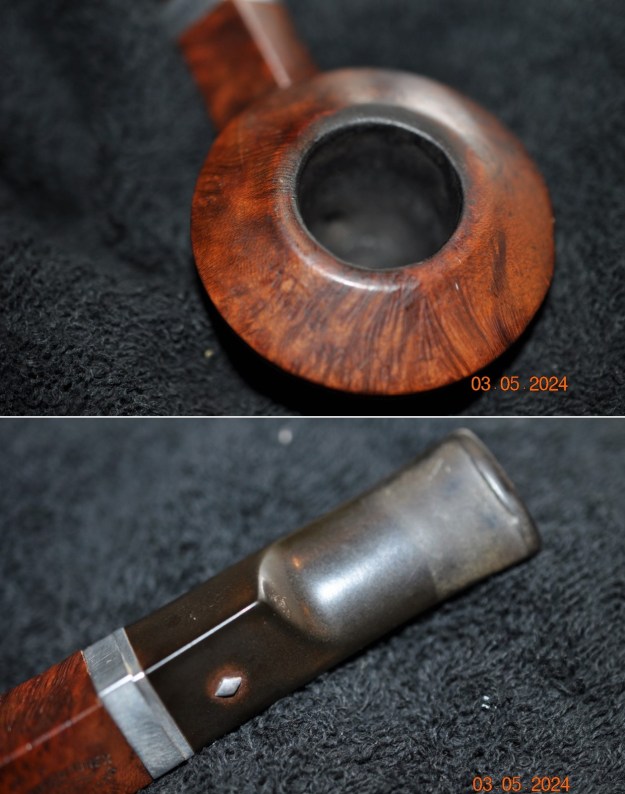
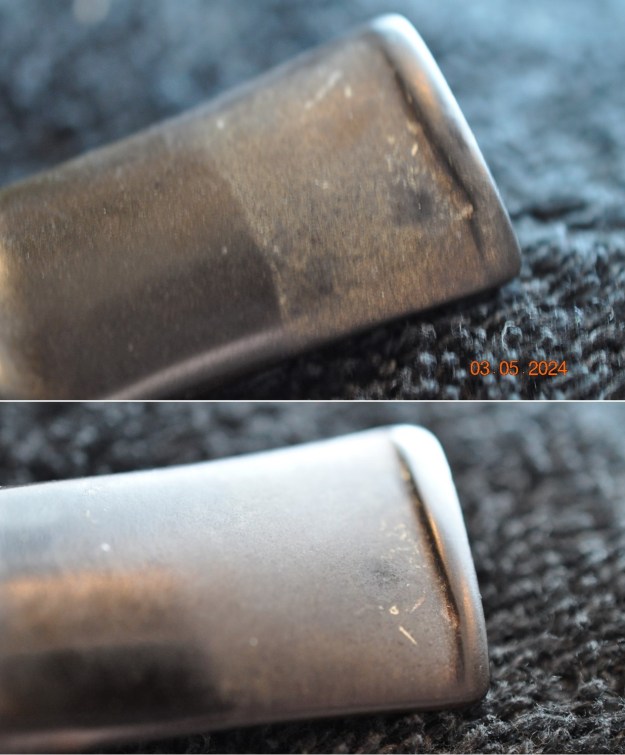
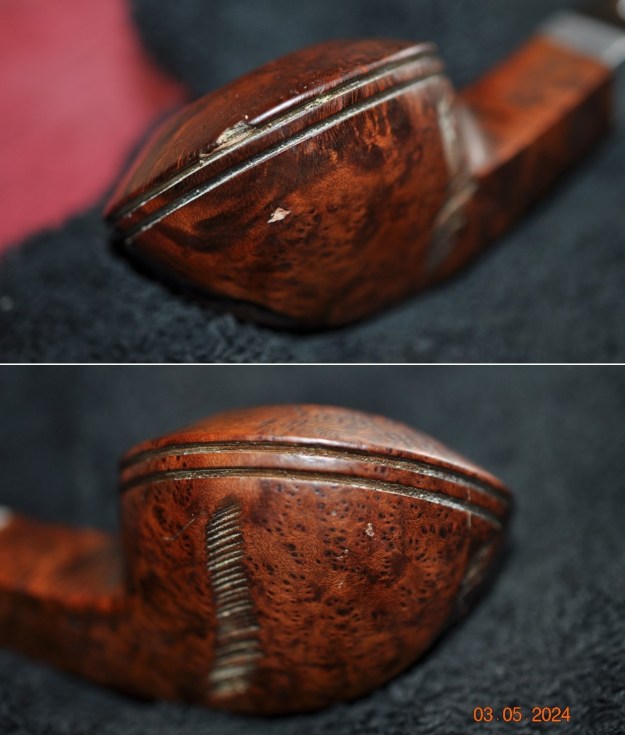
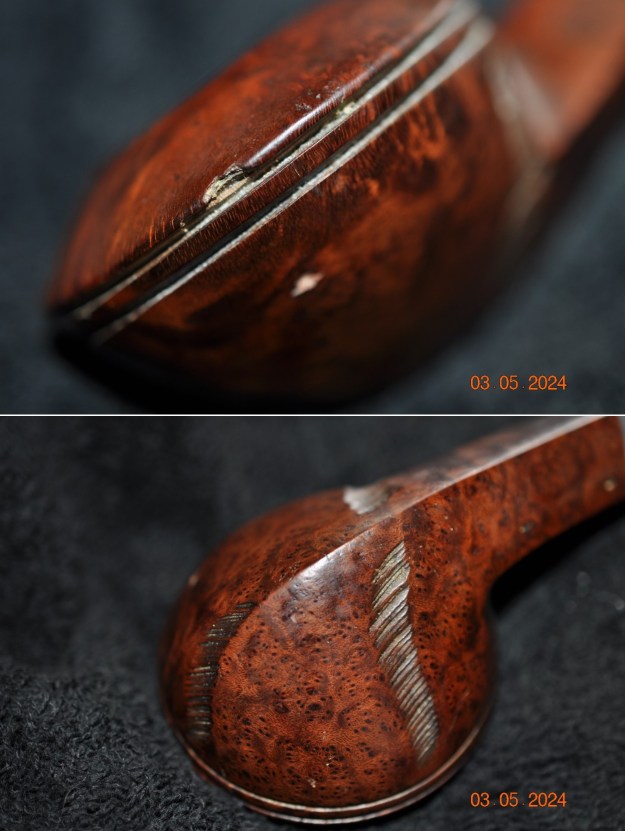
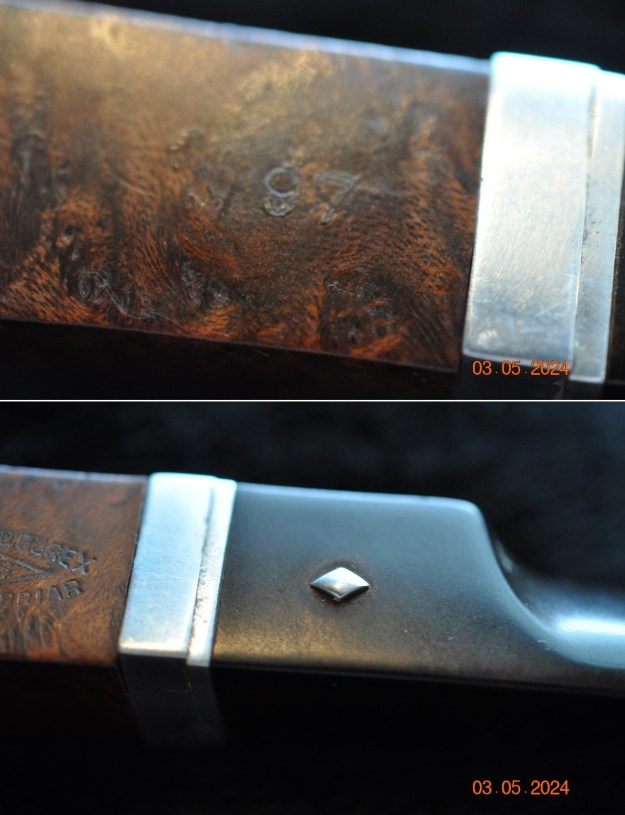
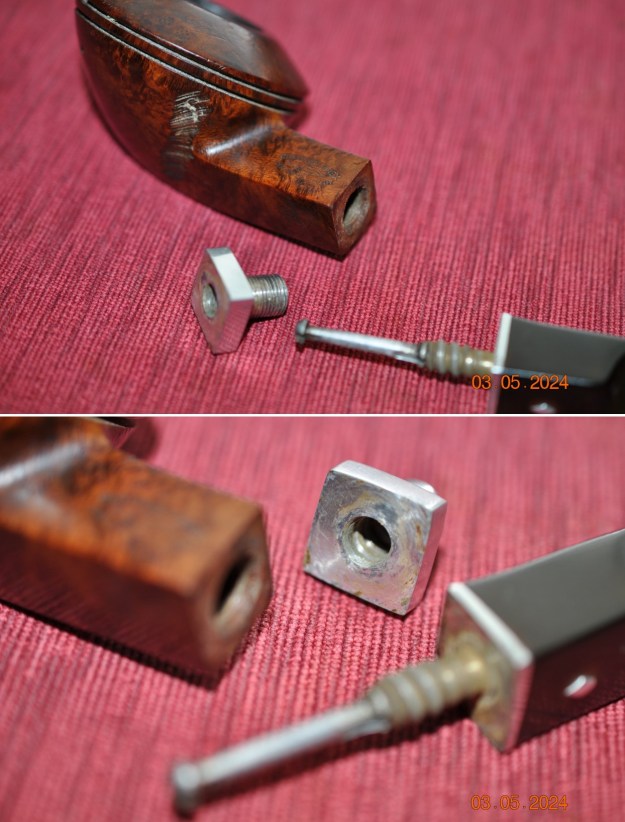
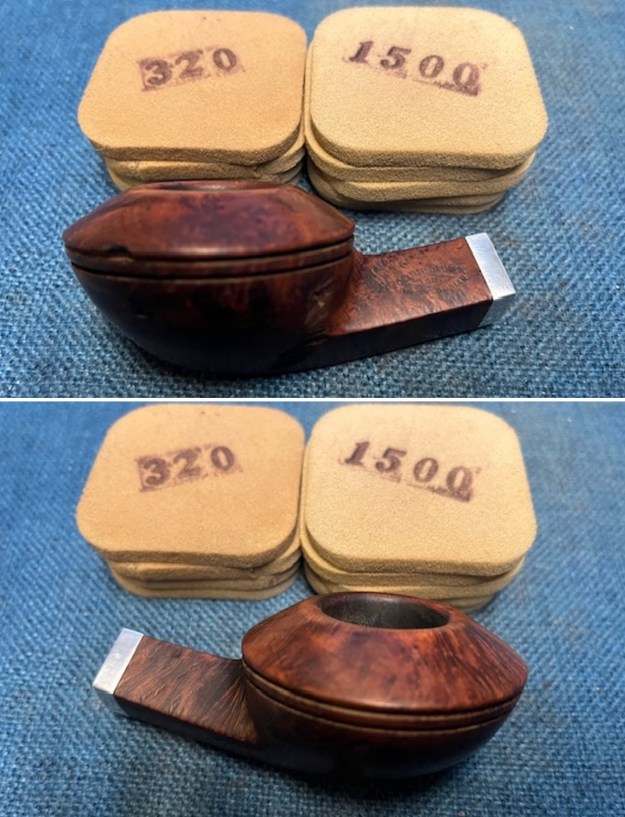
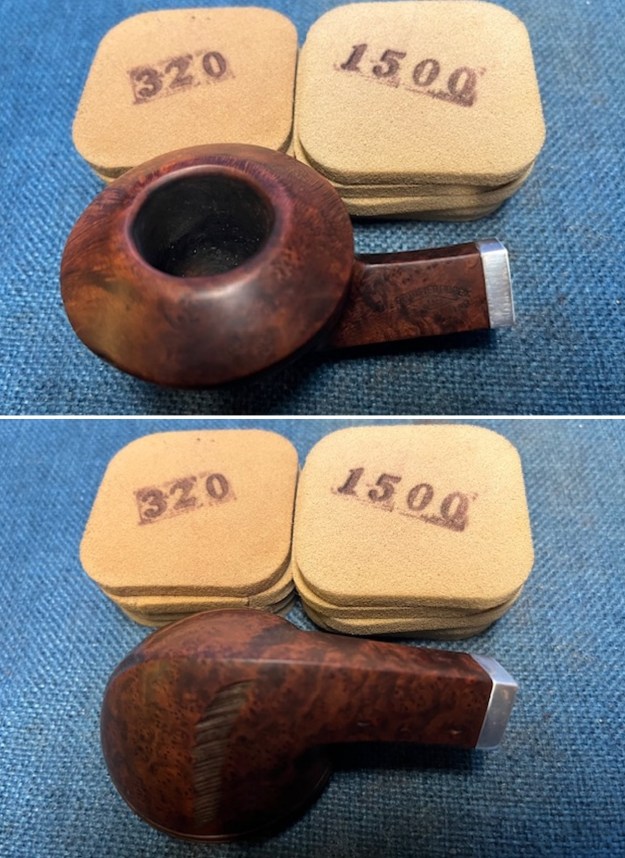
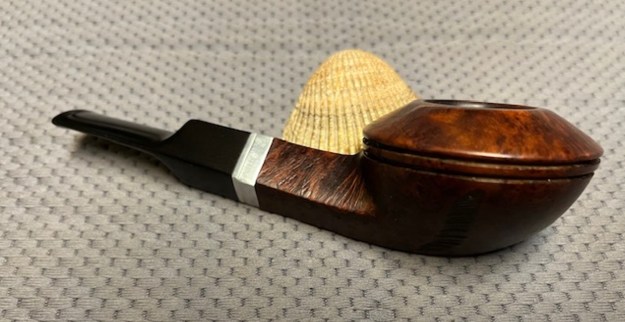
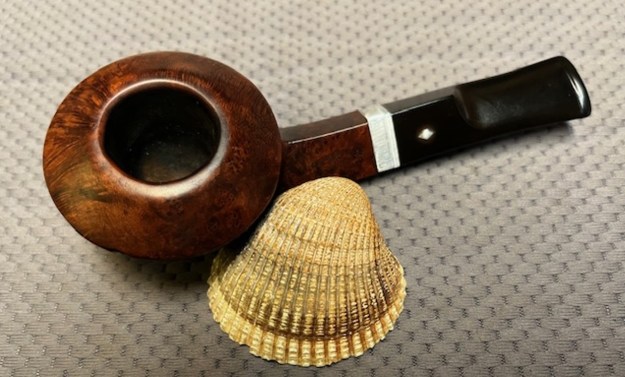
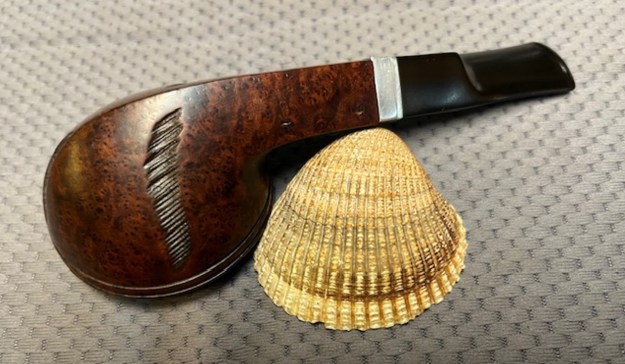
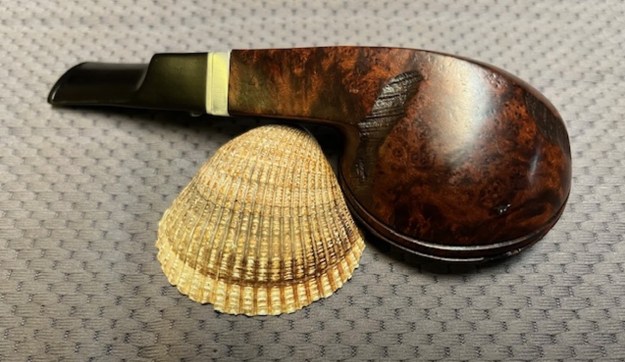
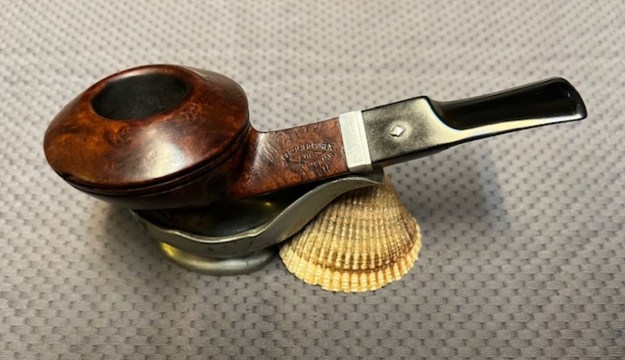
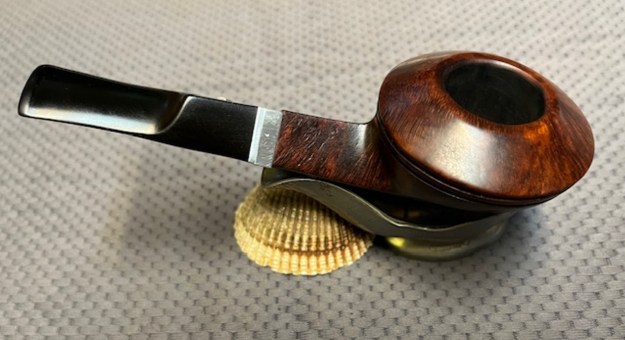
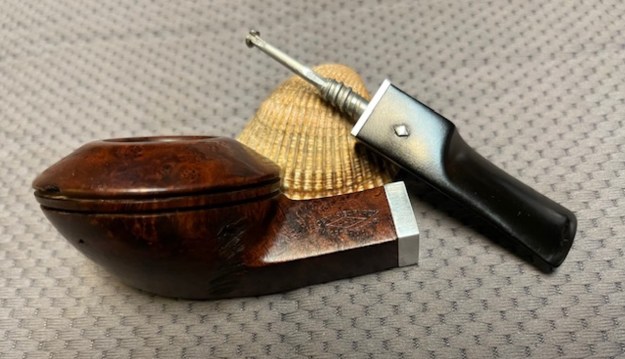
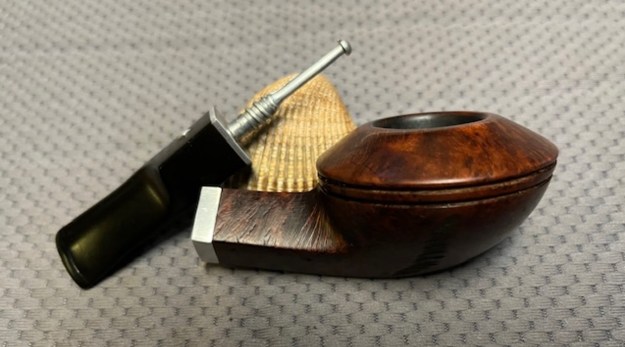
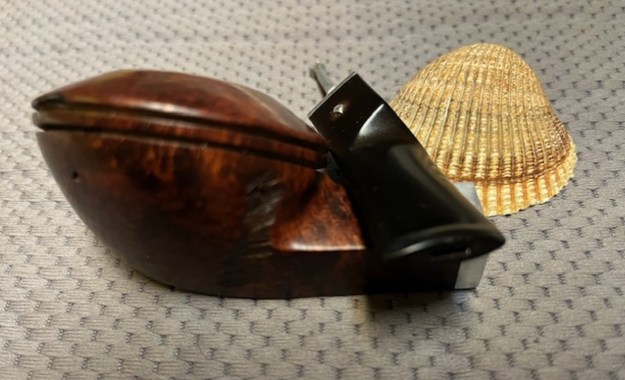
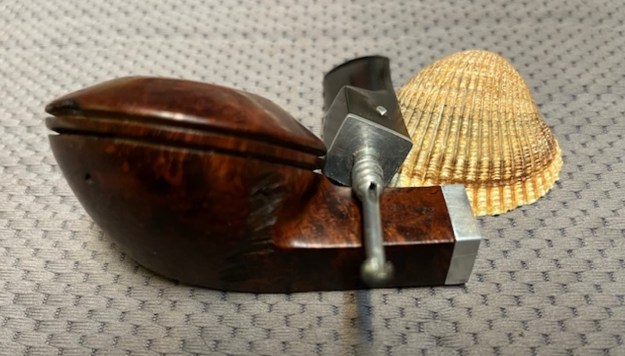
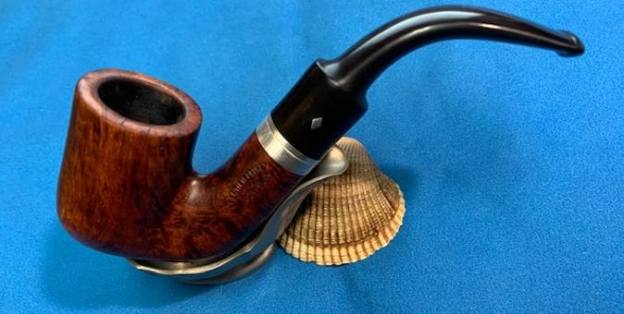
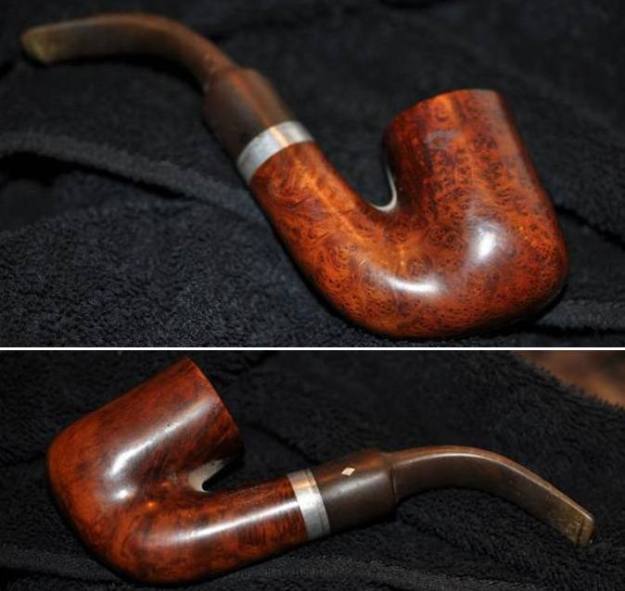
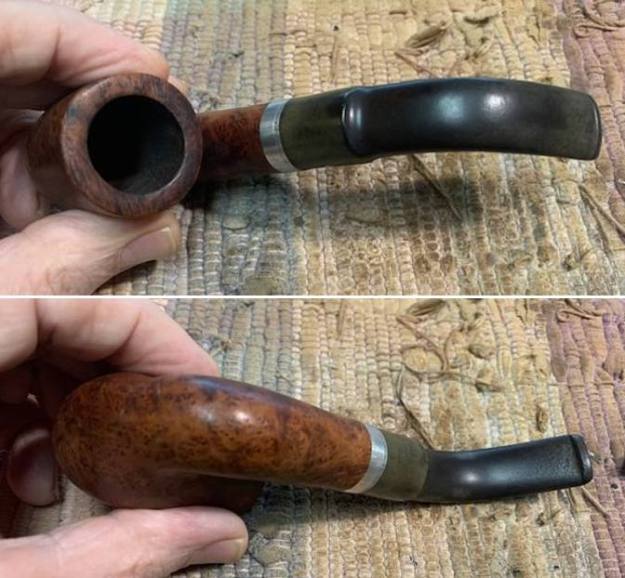
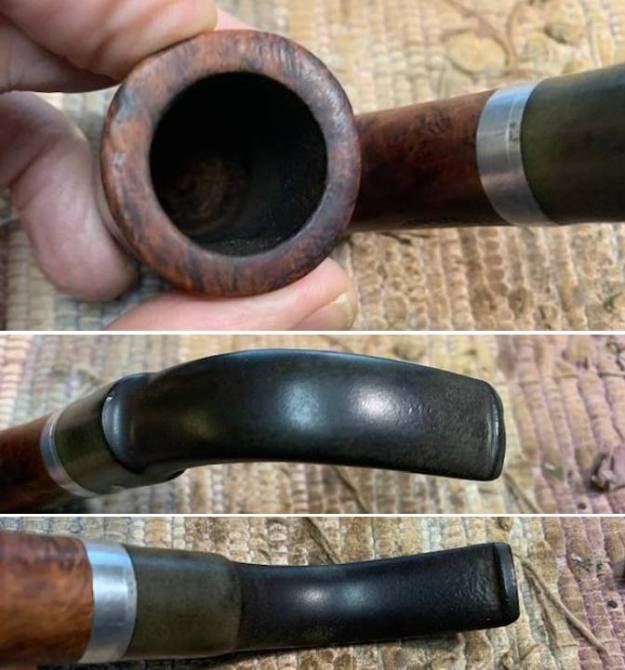
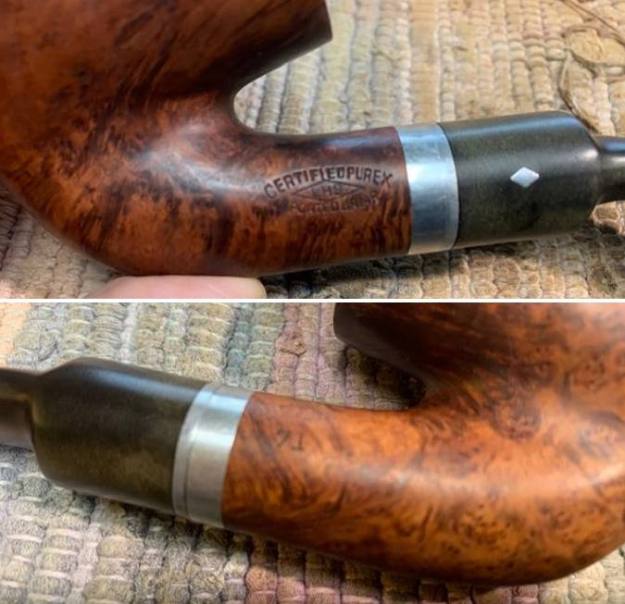
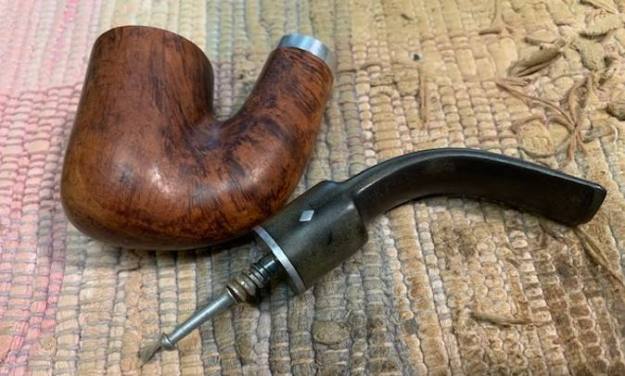
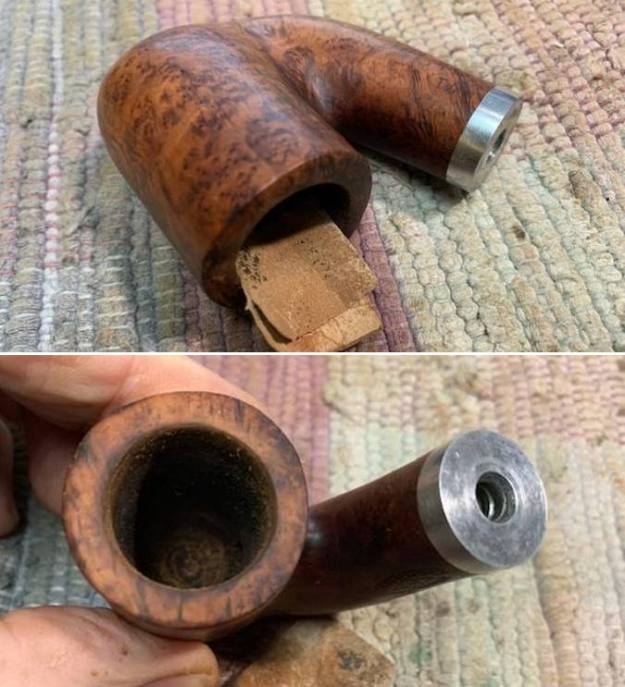
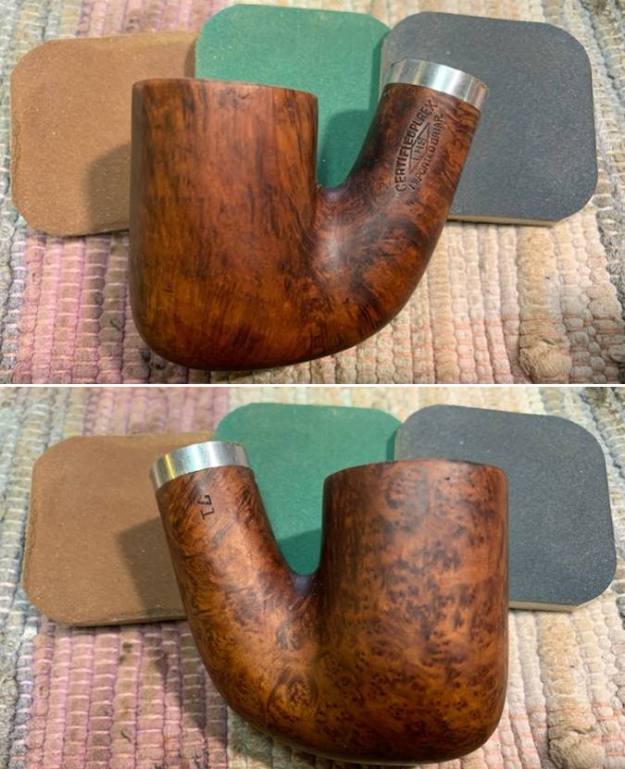
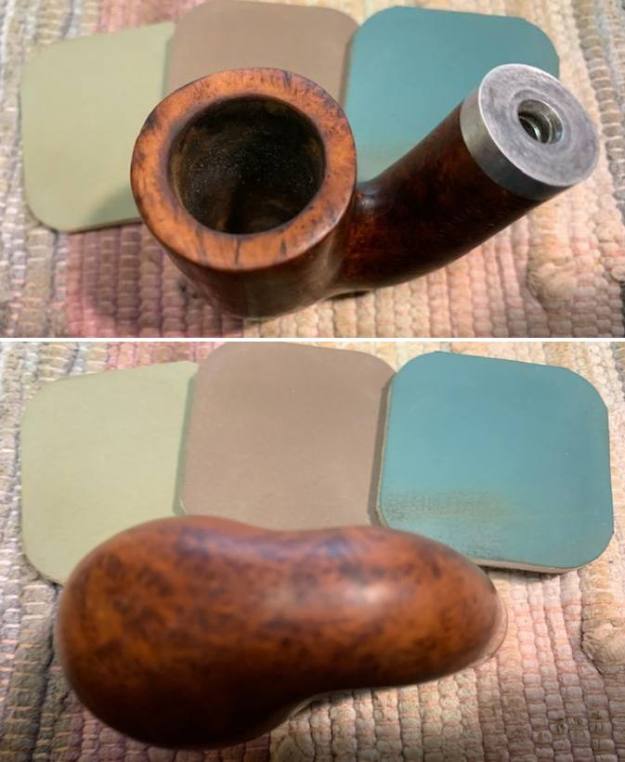
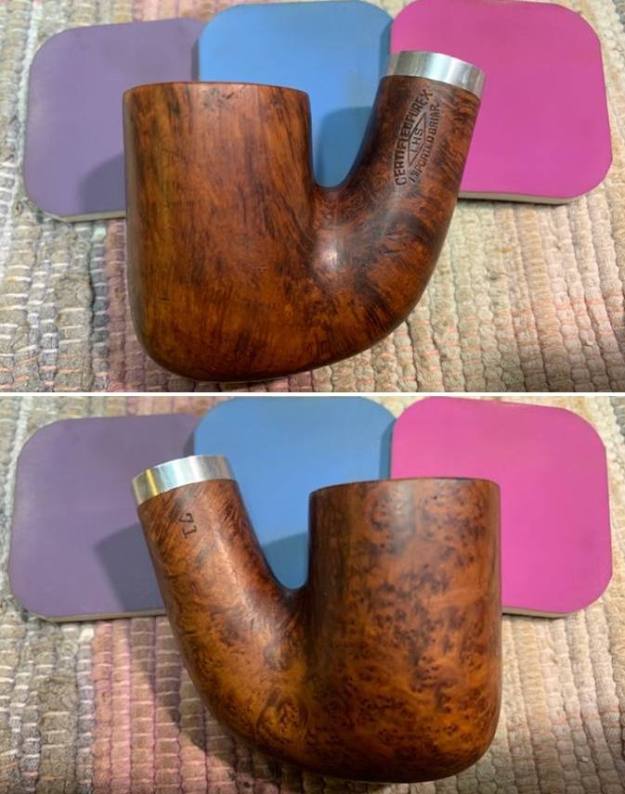
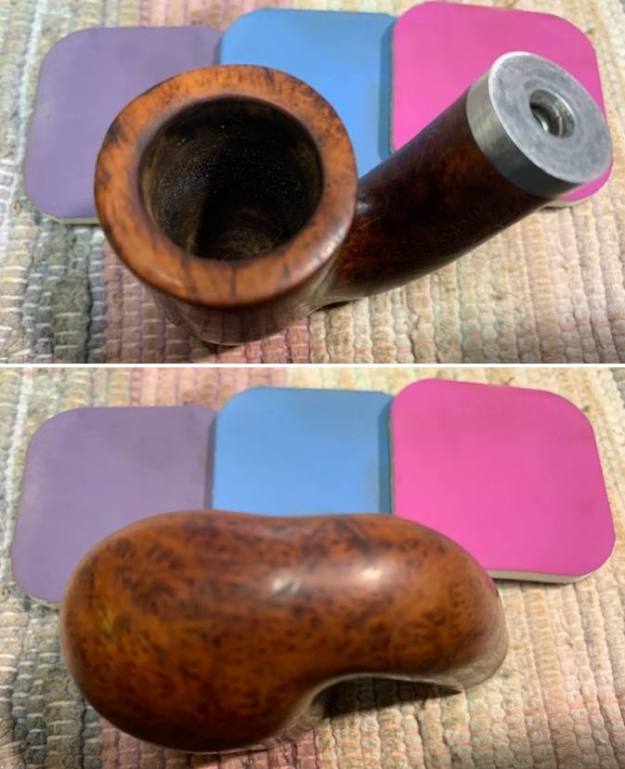
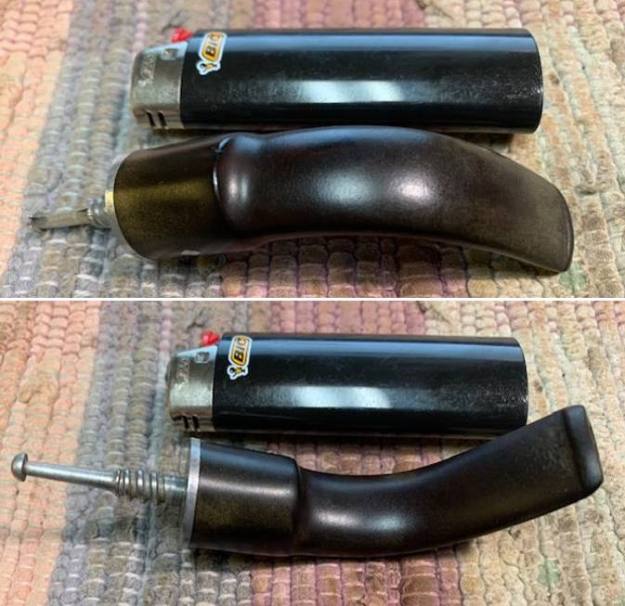
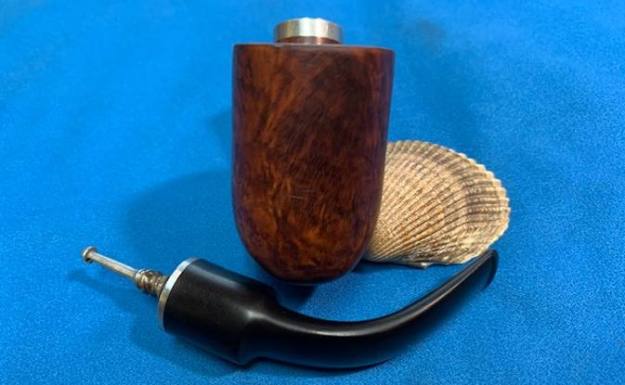
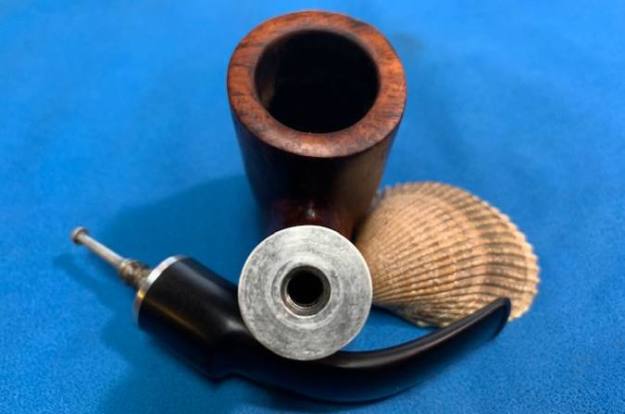
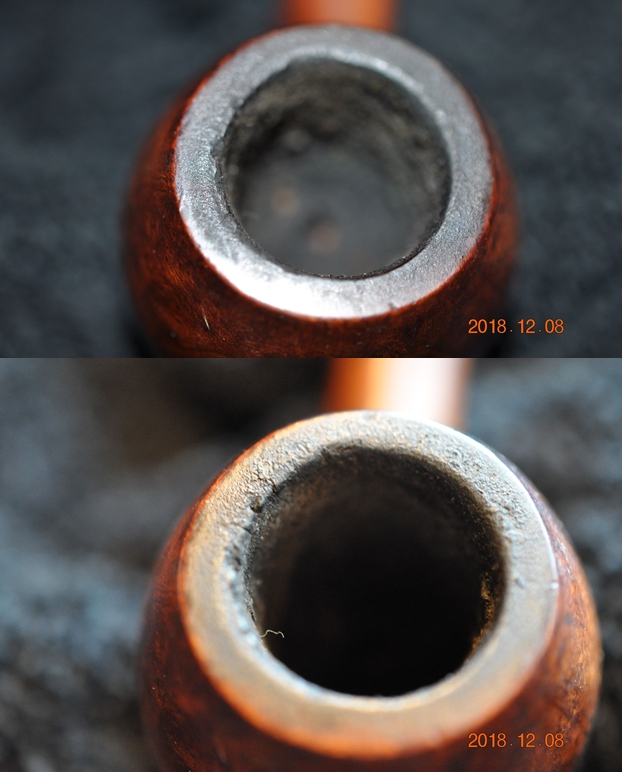
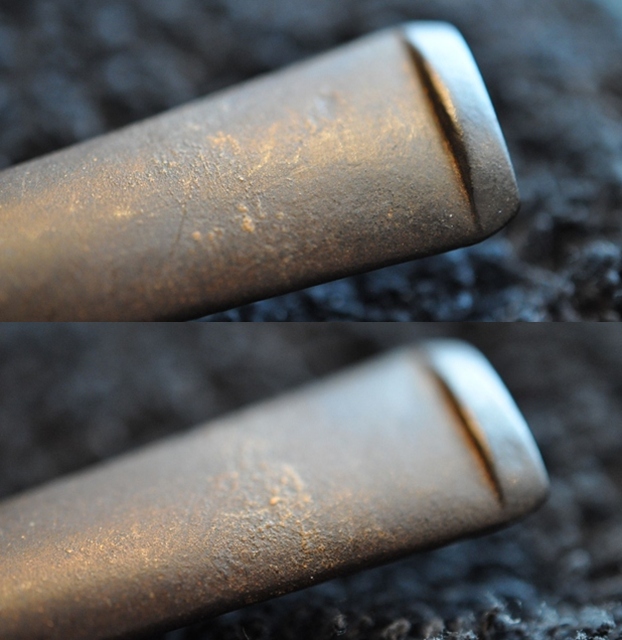
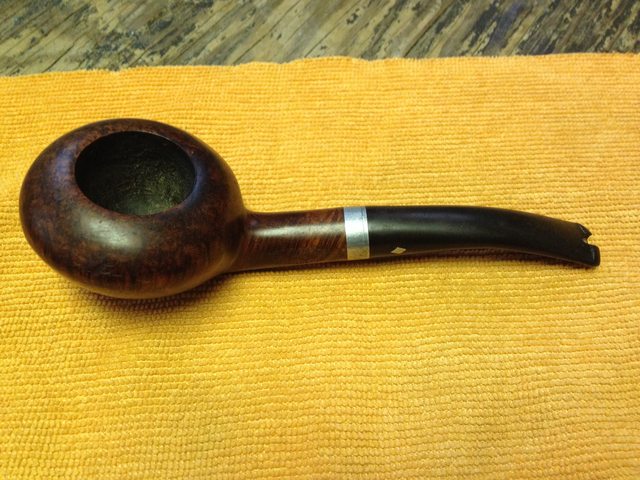
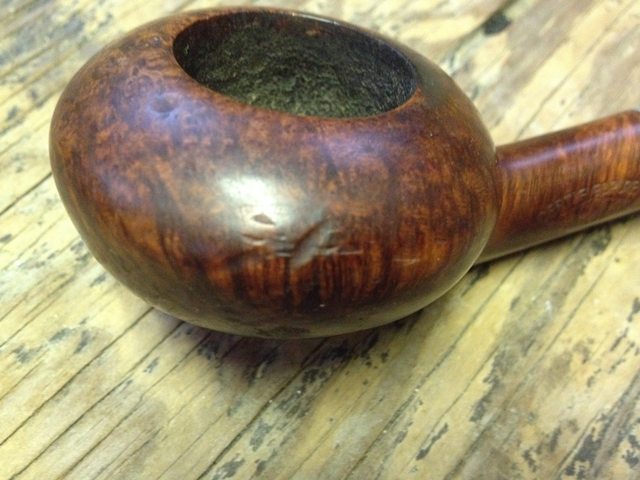
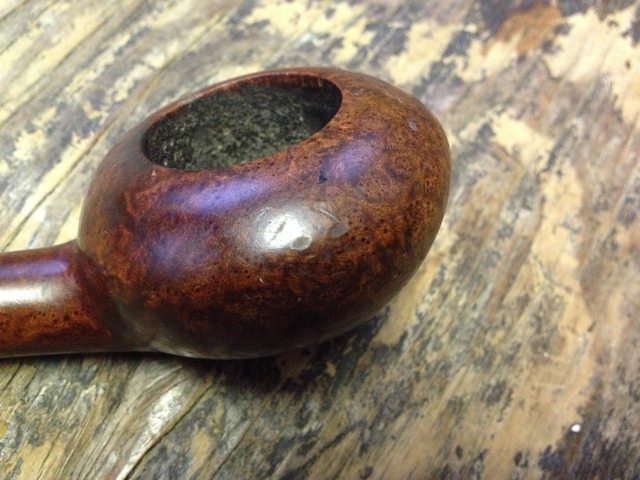
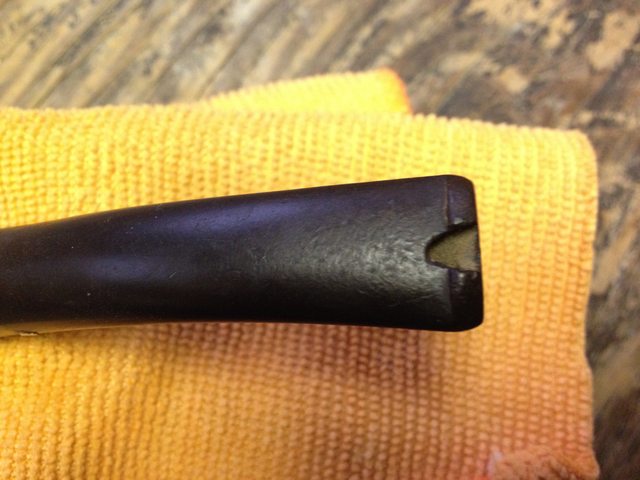
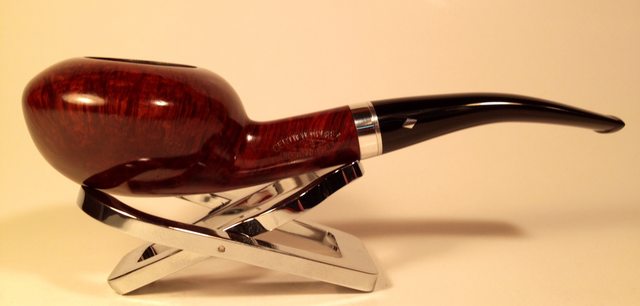
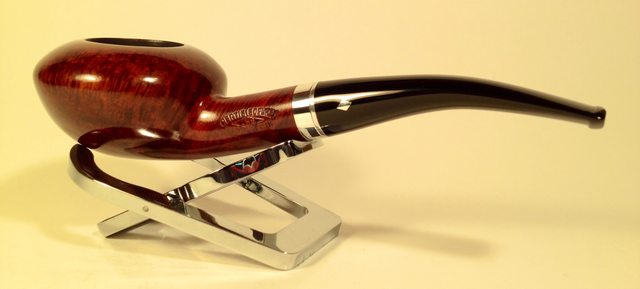
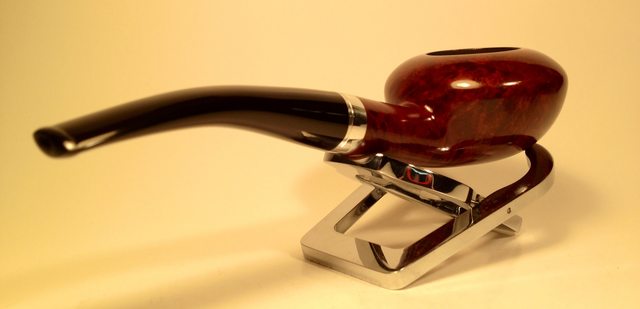
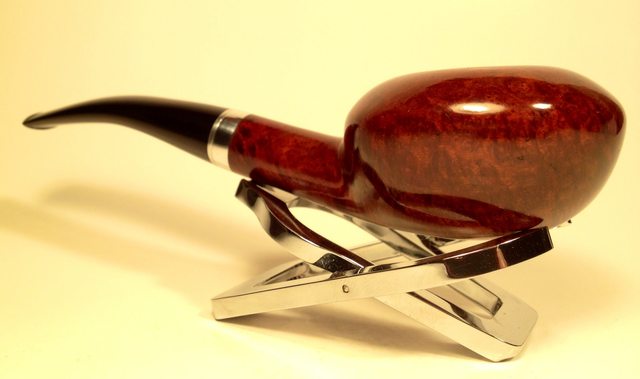
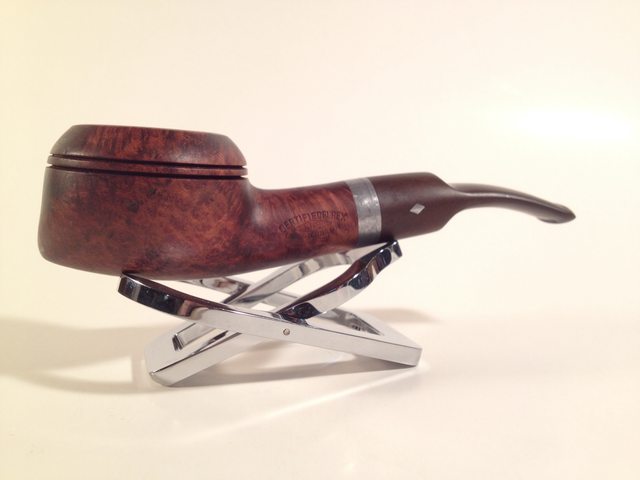
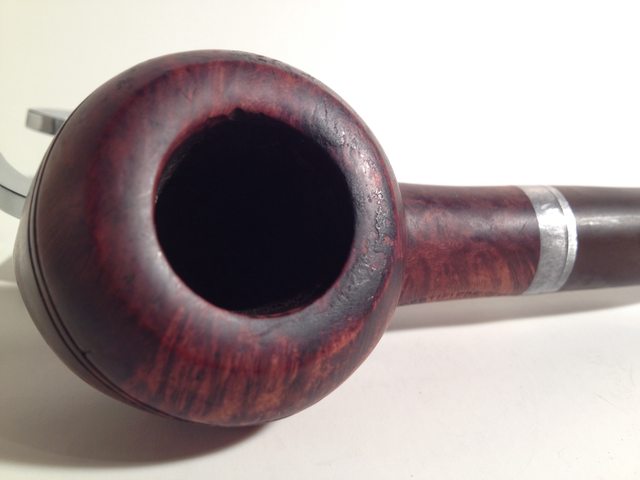
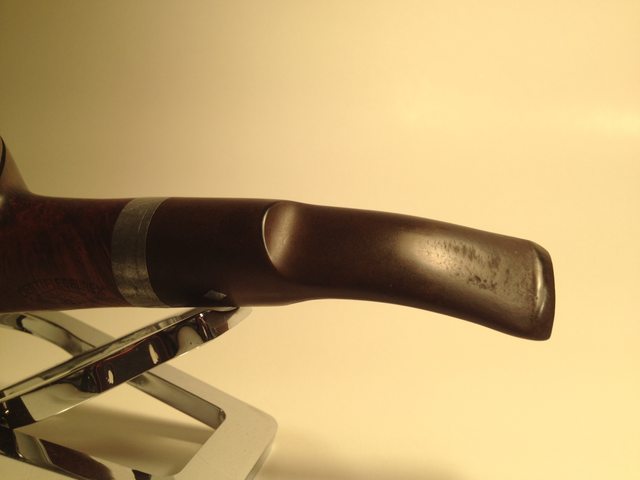
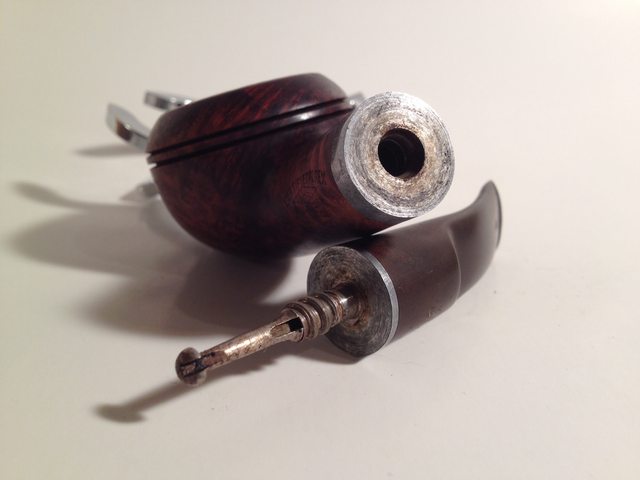
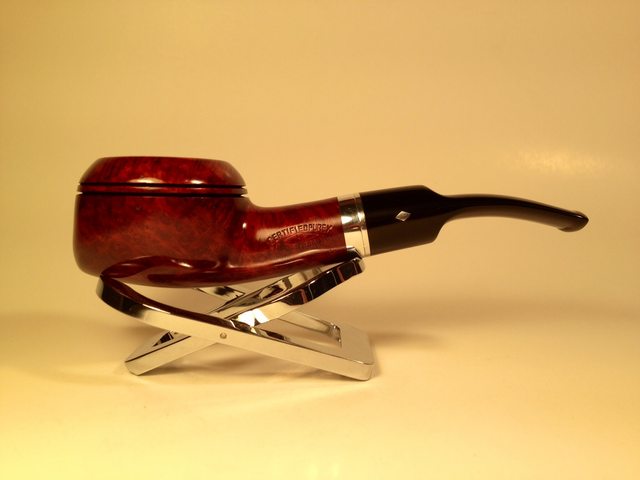
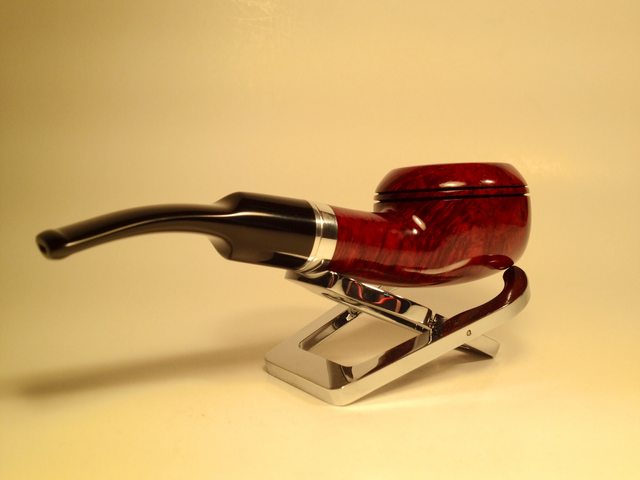
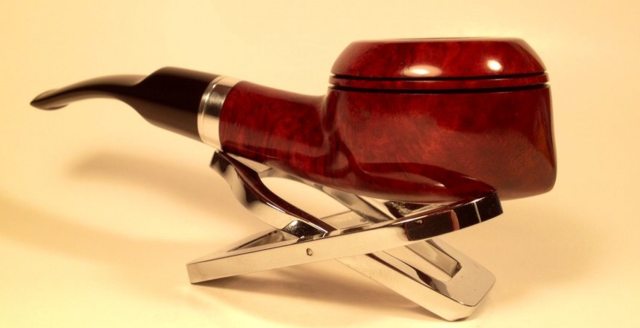
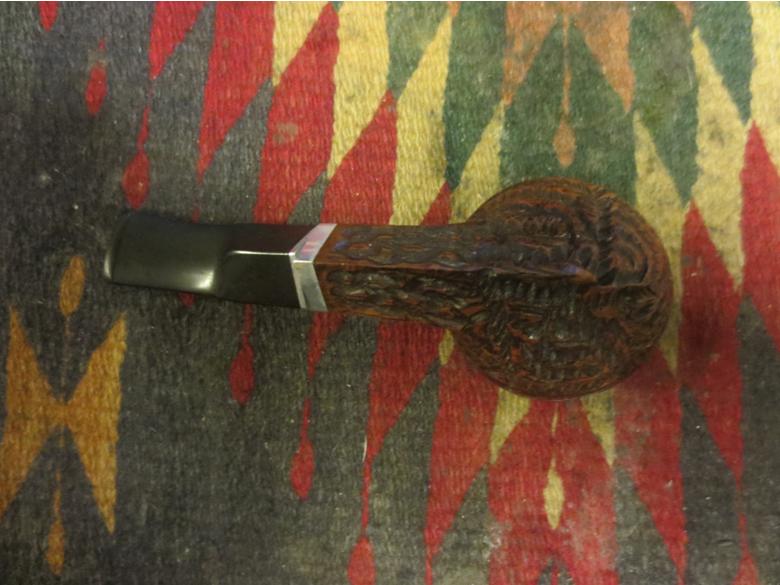
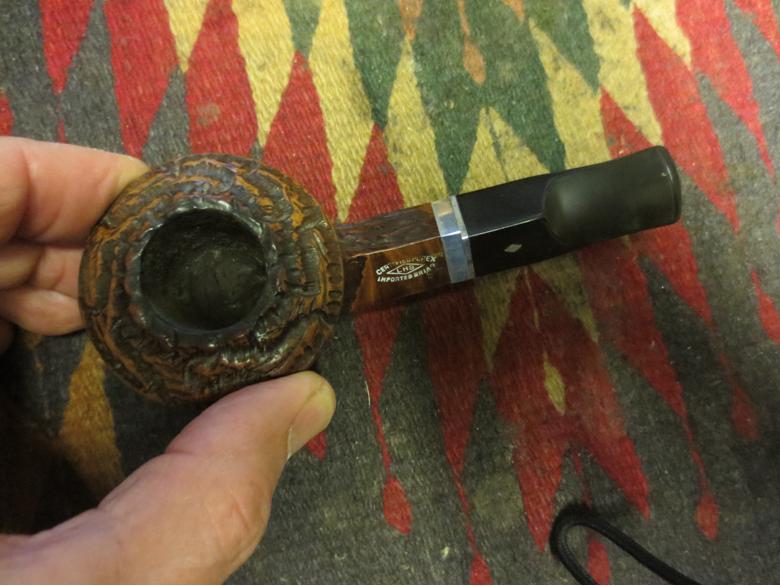
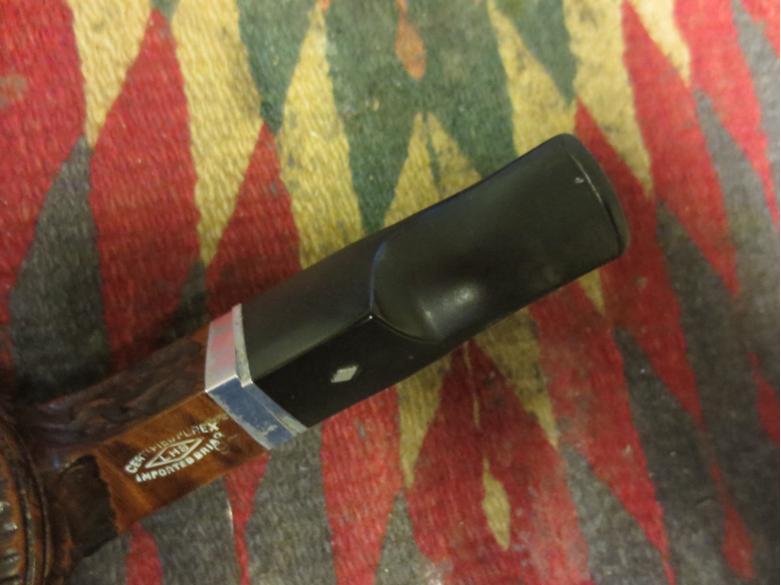
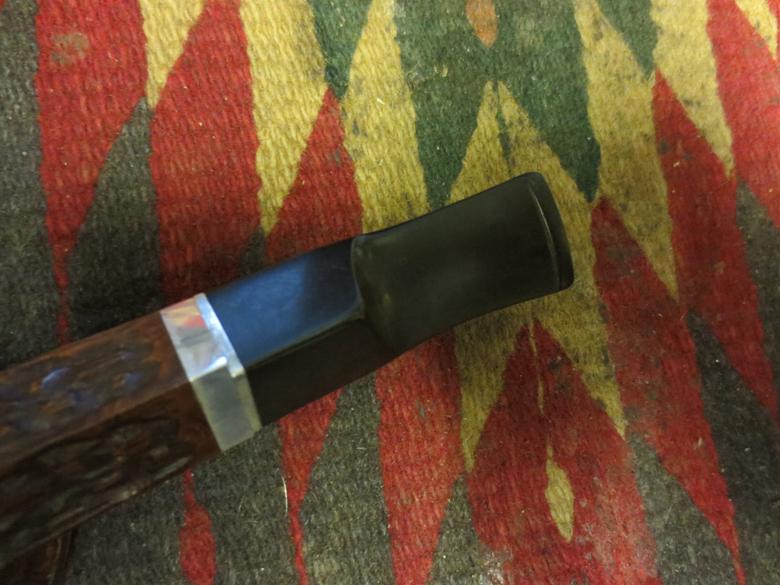
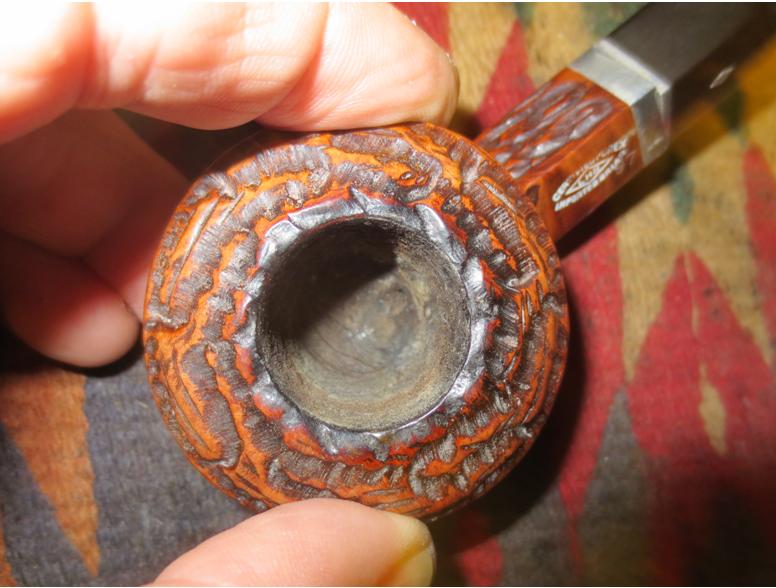
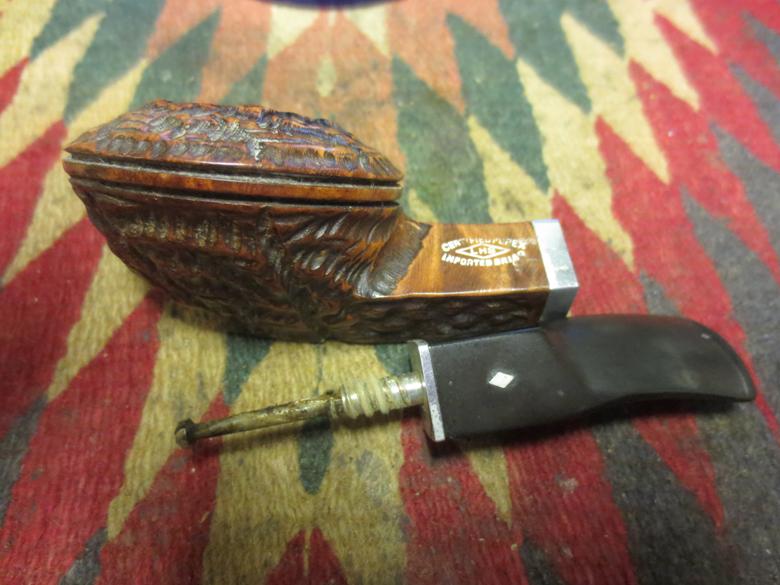
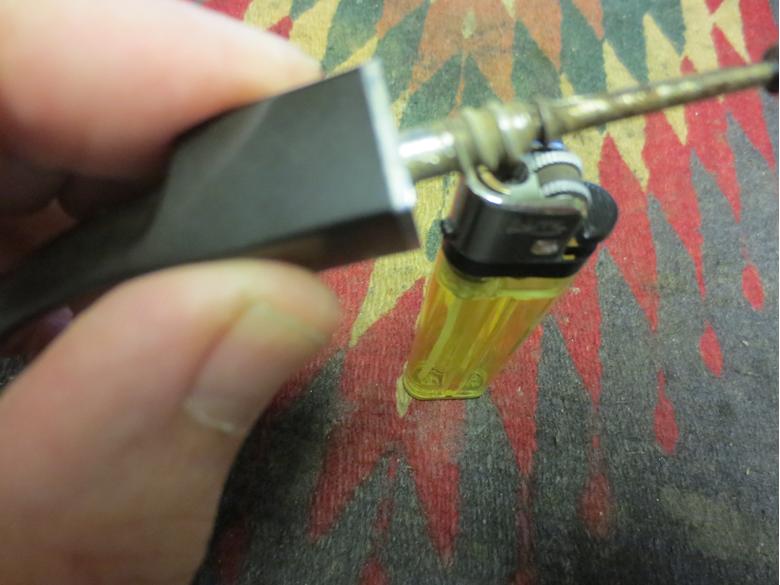
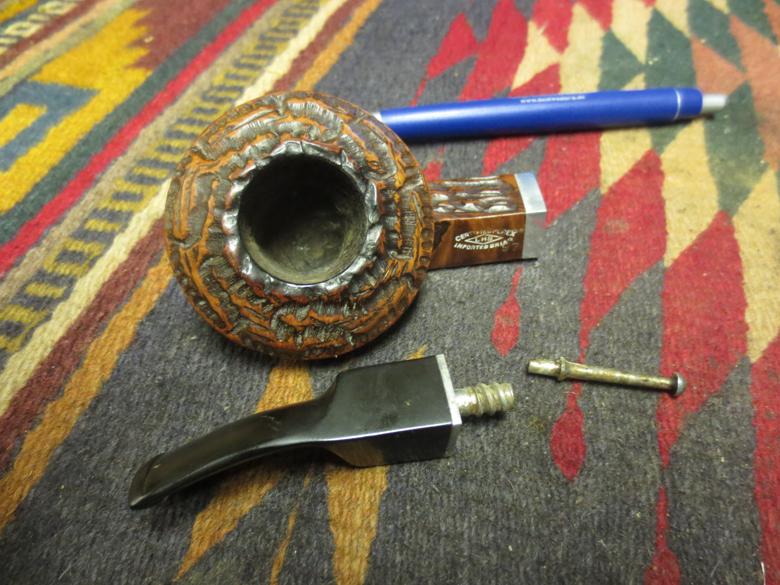
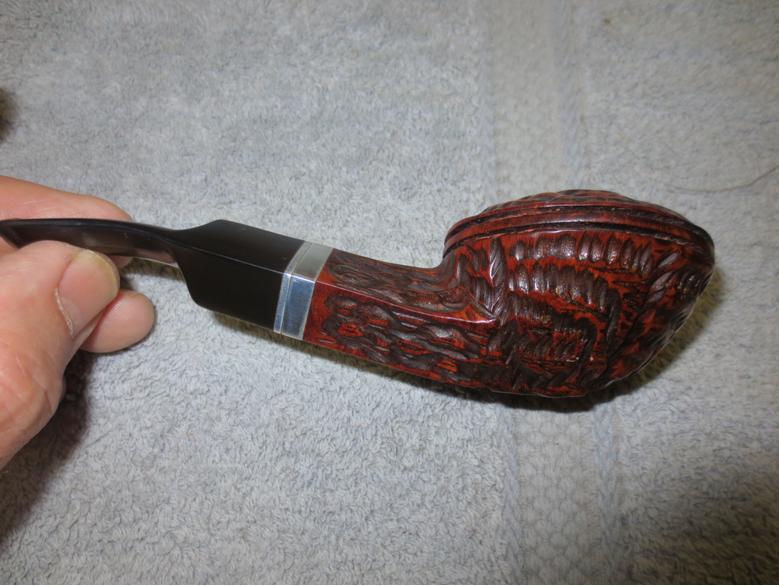
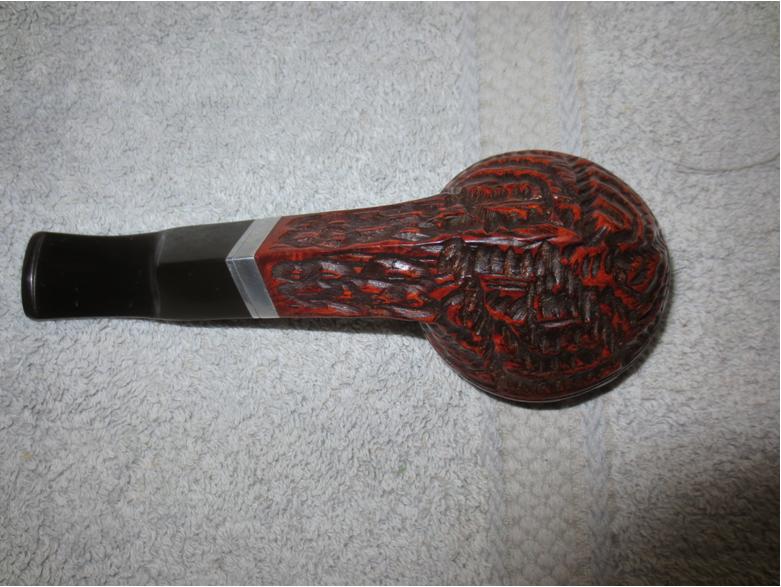
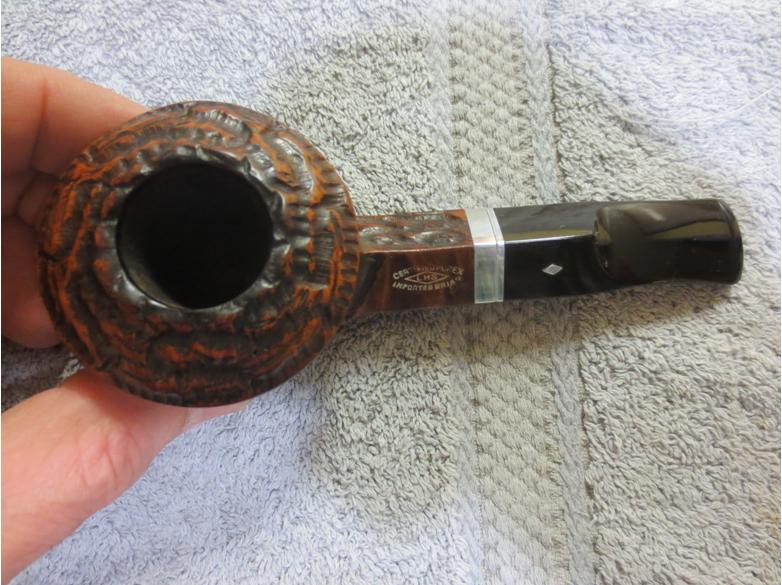
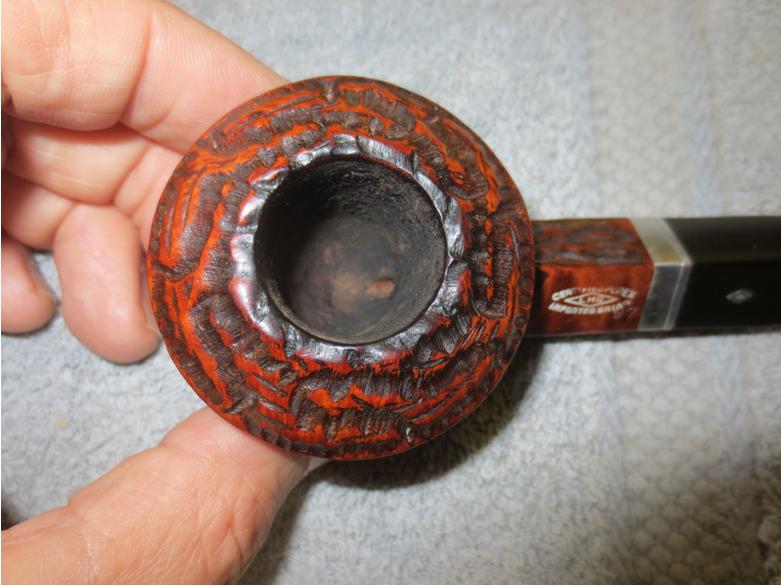
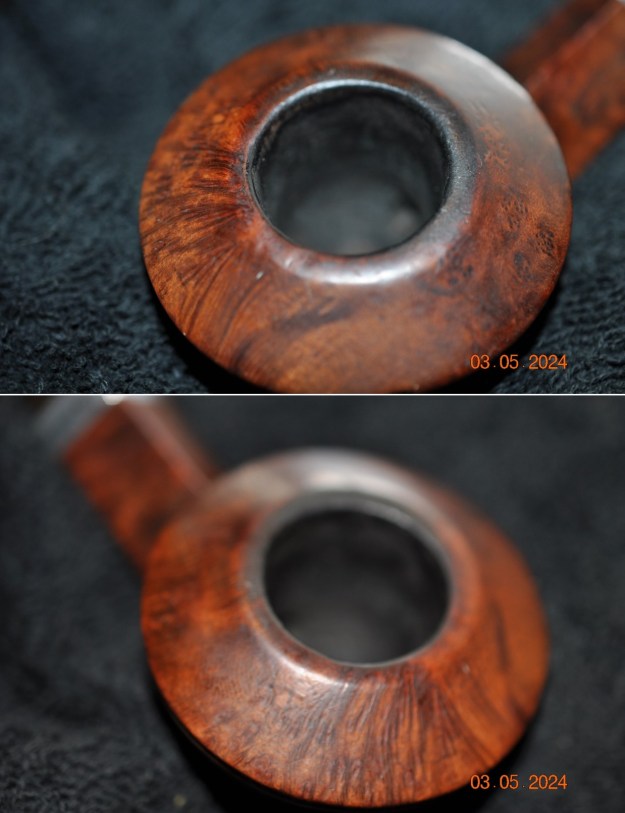
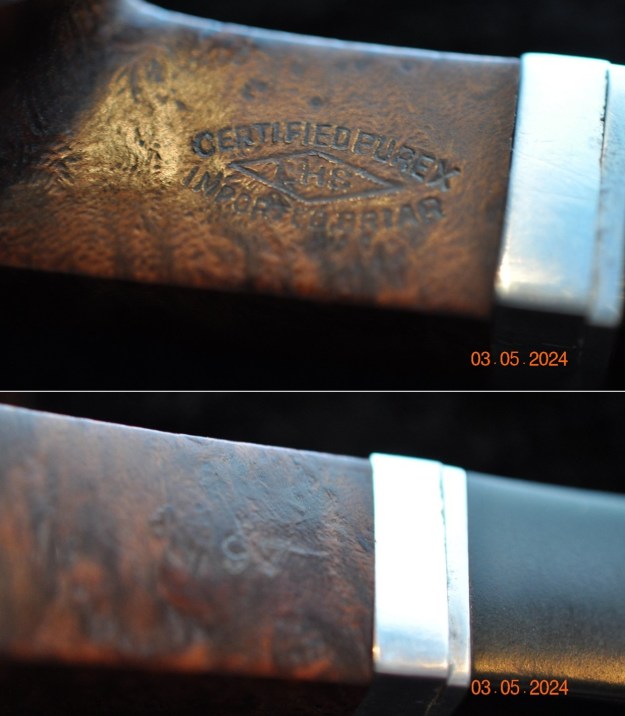
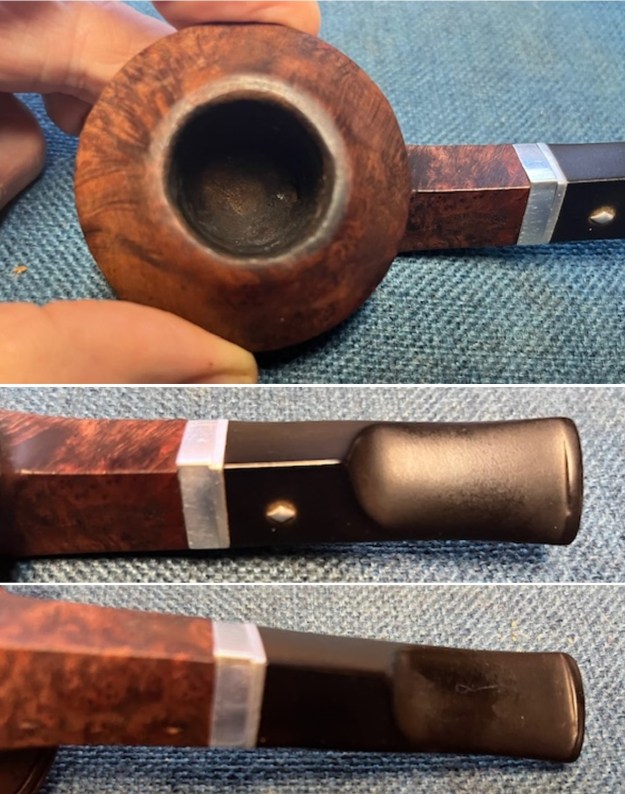
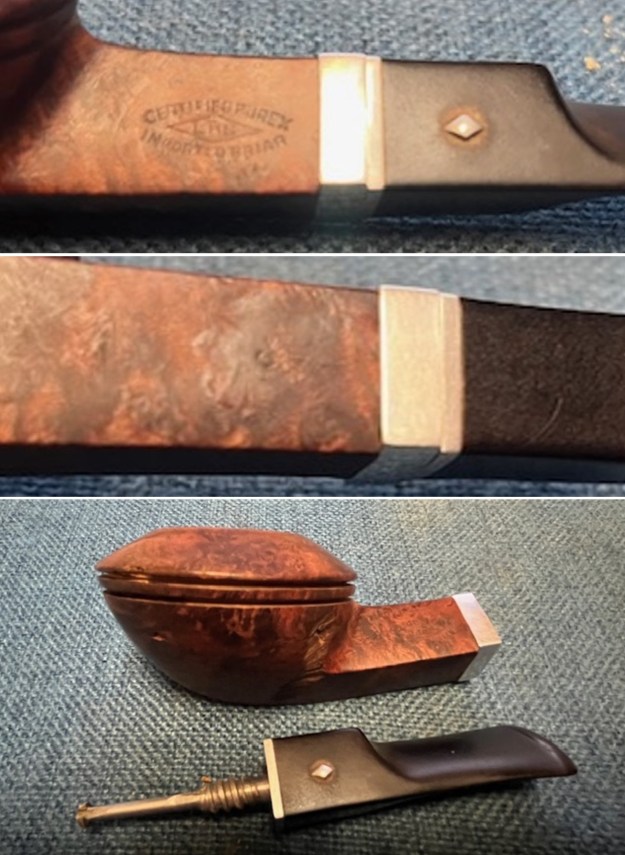
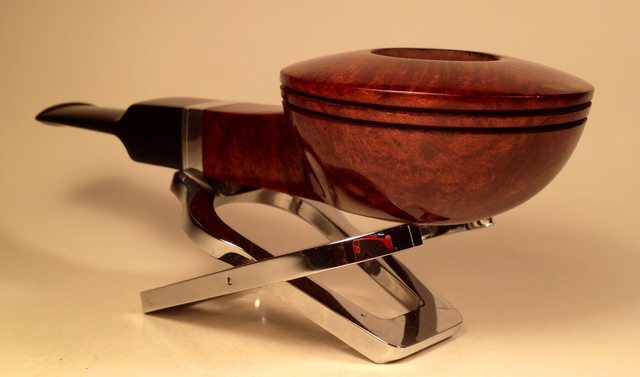
The next pipe I have chosen to work on was purchased from an online auction on January 22, 2024 in Jordan, Minnesota, USA. I have worked on a lot of LHS pipes through the years and many of them had the LHS Certified Purex stamp on the shank. This large flat Bulldog is very nice with great grain around the bowl. There are a few worm trail rustications on the sides of the bowl. It is stamped on the left side of the shank and reads CERTIFIED PUREX arched over a diamond the LHS in the centre. Underneath that is stamped Imported Briar. On the left underside of the diamond shank it is stamped with the shape number 97. The stamping is clear and readable. The saddle stem also bears the silver (inlaid) diamond logo on the left side. The bowl had a thick cake and there was a lava overflow on the rim top. The inner edge of the rim thickly covered with lava so it was hard to know the damage at this point. The outer edge and rim cap showed nicks and light damage. The stem is oxidized, calcified and has tooth marks and chatter on both sides at the button. Jeff took photos of the pipe before he started his clean up. Jeff took photos of the bowl, rim top to show the thickness of the cake in the bowl and the lava on the rim top. The bowl had a thick cake that overflowed in lava on the inner edge and rim top of the bowl. I am hoping that the thick lava coat protected things underneath it from damage to the edges and top. He took photos of the top and underside of the stem showing the tooth chatter, scratching, calcification and oxidation on the stem surface and wear on the edges of the button. Jeff took photos of the sides and heel of the bowl to show the condition of the briar. You can see the beautiful shape of the bowl even through the dirt and debris of many years. You can also see the nicks in the rim cap and the side of the bowl. Jeff took photos of the stamping on the sides of the shank. You can see that it is clear and readable as noted above. Jeff took photos of the pipe taken apart. It shows the shank insert that is screwed into the shank end. You can also see the threaded stinger/tenon apparatus as well.I turned first to Pipephil’s site (http://pipephil.eu/logos/en/logo-lhs.html) and found a pipe with the same stamping as the one that I am working on. There was a brief history of the brand at the top of the page. It read as follows:
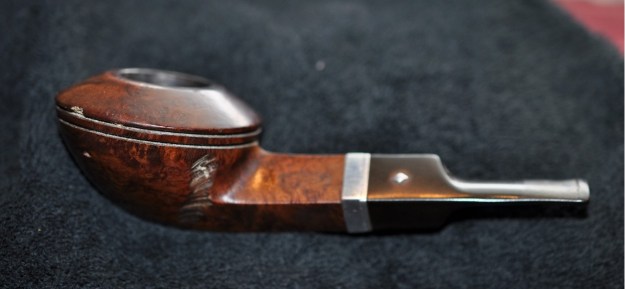
The L&H Stern Inc. was established by Ludwig Stern (1877-1942) in 1911. His brother Hugo (1872-?) acted as vice-president & secretary. The firm moved to 56 Pearl St. Brooklyn in 1920. It closed down in the 1960s. LHS was one of the main pipe supplier for US soldiers during WWII.

I turned to Pipedia to try and place this pipe in the timeline of the brand and was able find some helpful information which I have included below (https://pipedia.org/wiki/LHS). Again it had a brief history. It read as follows:

Ludwig Stern, a successful pipe manufacturer since 1893 and closing around 1960, reorganized his company along with his brother Hugo Stern, opening a factory in 1911. They named the company L&H Stern Smoking Pipes & Holders. The newly formed company was moved into a six story building on the corner of Pearl and Waters street Brooklyn, NY…

There were also Notes from Geyer’s Stationer on the page below this. It read as follows:

Thoroughly organized in all departments, and housed in a well-lighted and ventilated modern office and manufacturing building, the firm of L&H Stern Inc. is located near the first arch of the Manhattan bridge, near the river and convenient to the Brooklyn bridge, which makes it accessible from all the hotels in the metropolis for visiting buyers. The structure is six stories with a seventeen-foot basement, with light on three sides through prismatic glass windows, the first floor being seven feet above the sidewalk. Light enters the upper floors from all four sides.

L&H Stern is known to every important wholesaler and jobber in the country. LHS manufactures a complete line of briar pipes. Ginmetto wood pipes are also made, as well as Redmanol goods, the man-made amber. The first substitute for amber. Everything, even down to the sterling silver and other metal trimmings are made under one roof.

LH Stern was a fascinating company that literally covered the manufacture of all the pipe parts. I was not able to pin down the date on it with the information but it was a nice piece of briar. Now on to the pipe.

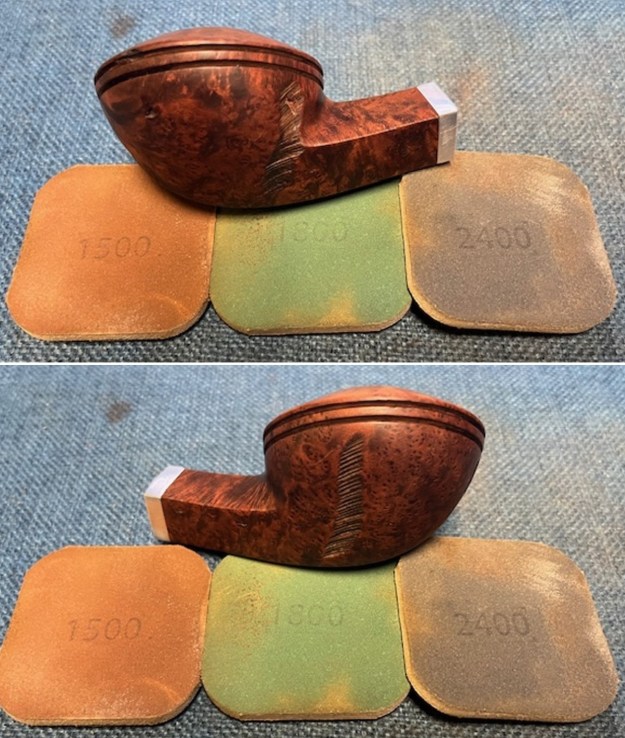
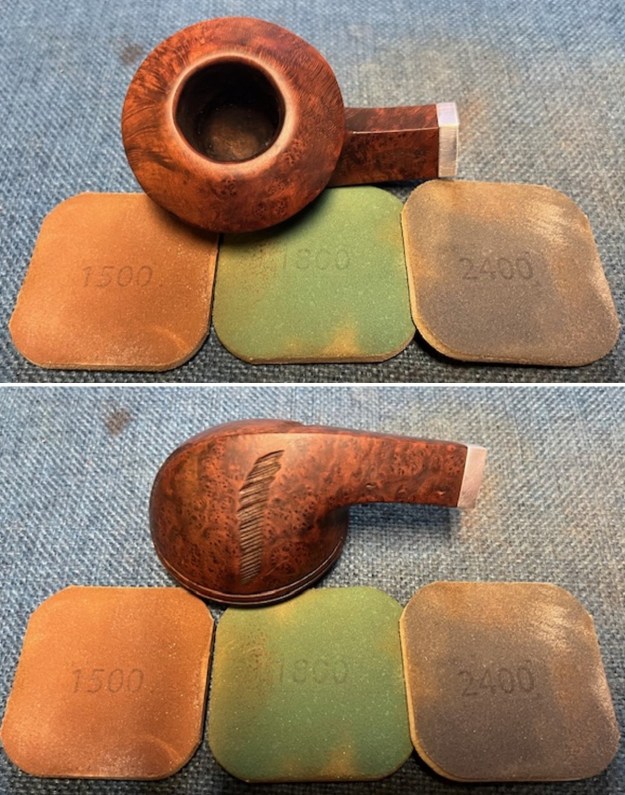
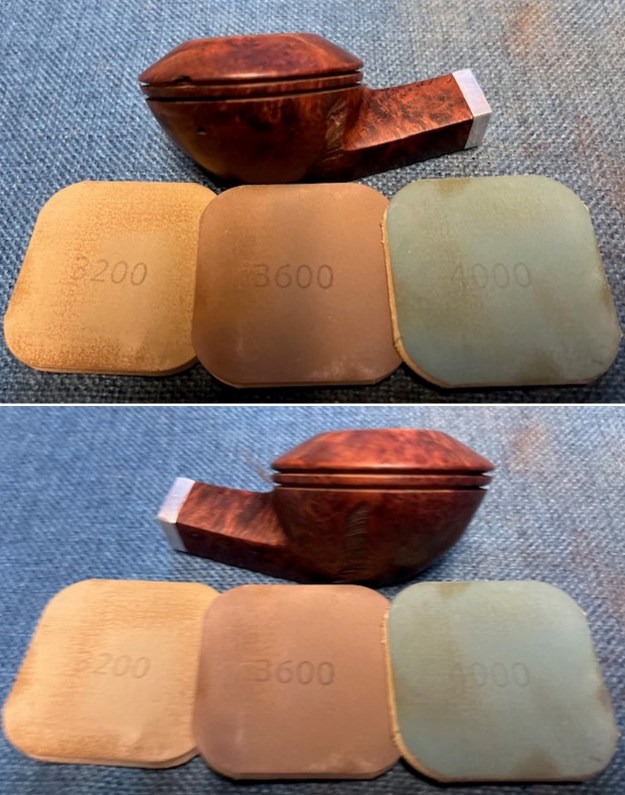
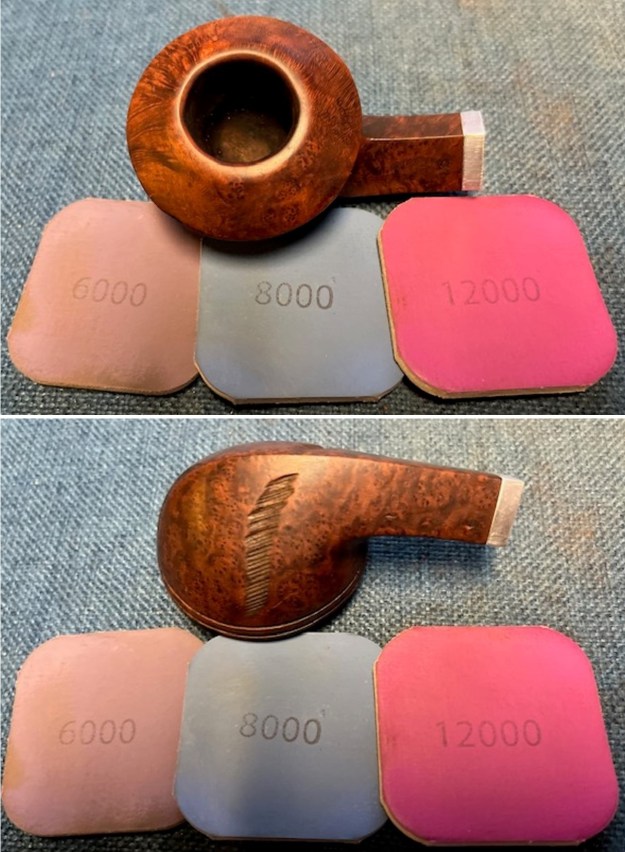
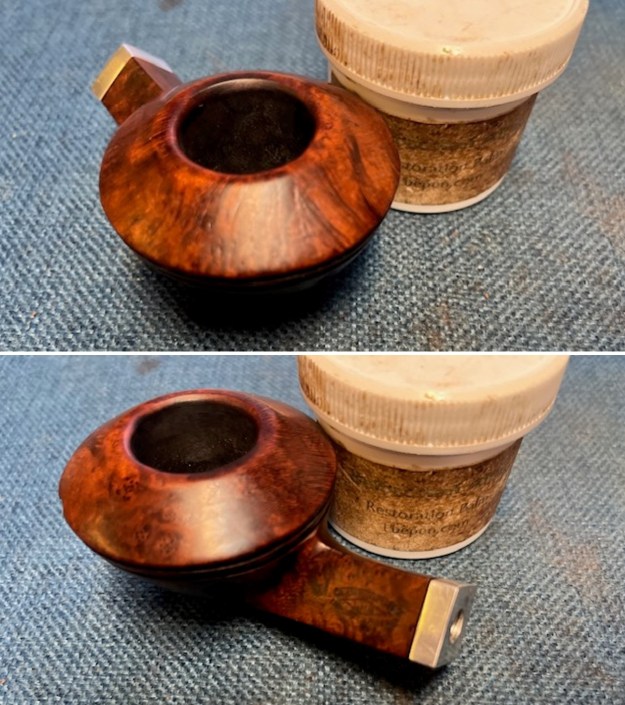
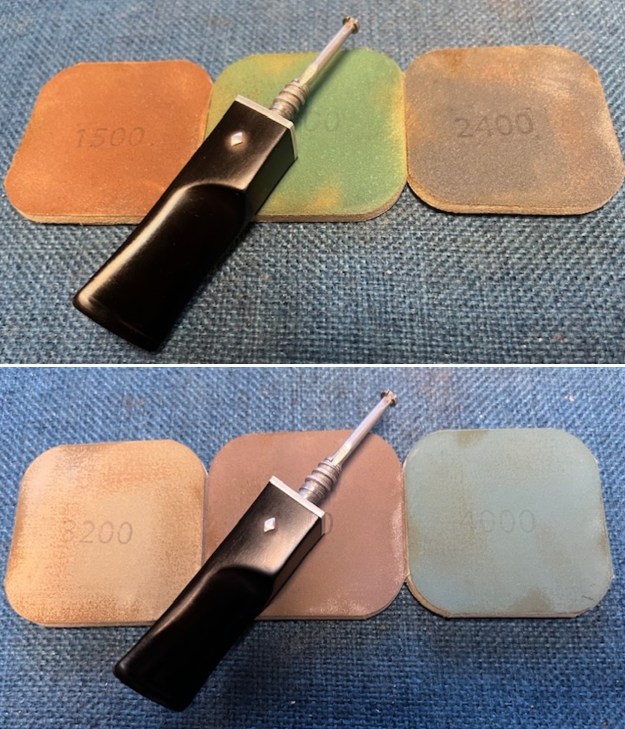
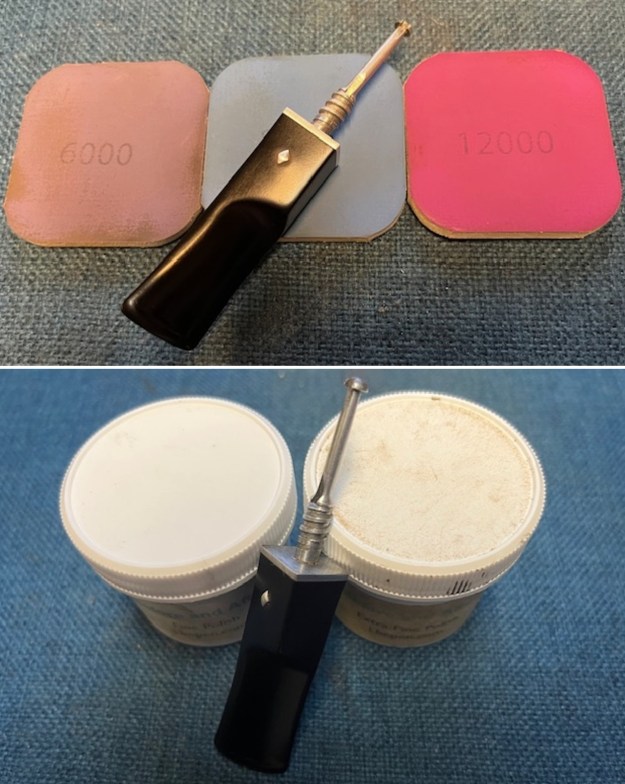
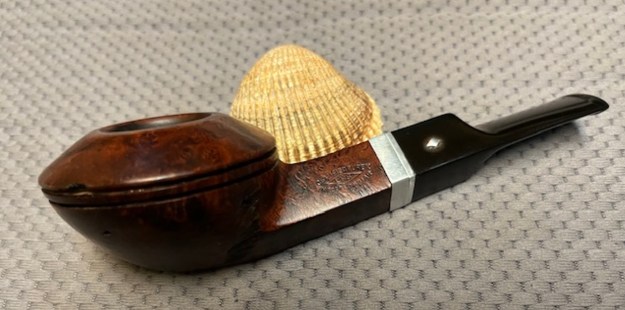
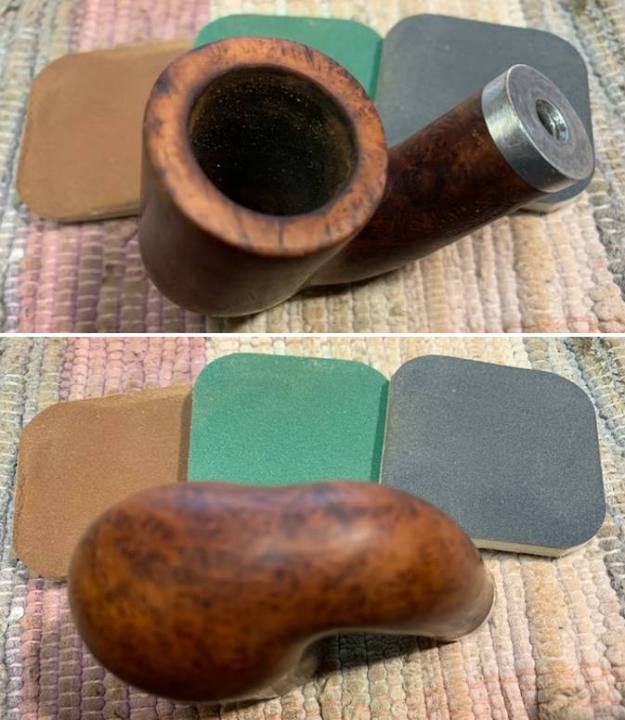
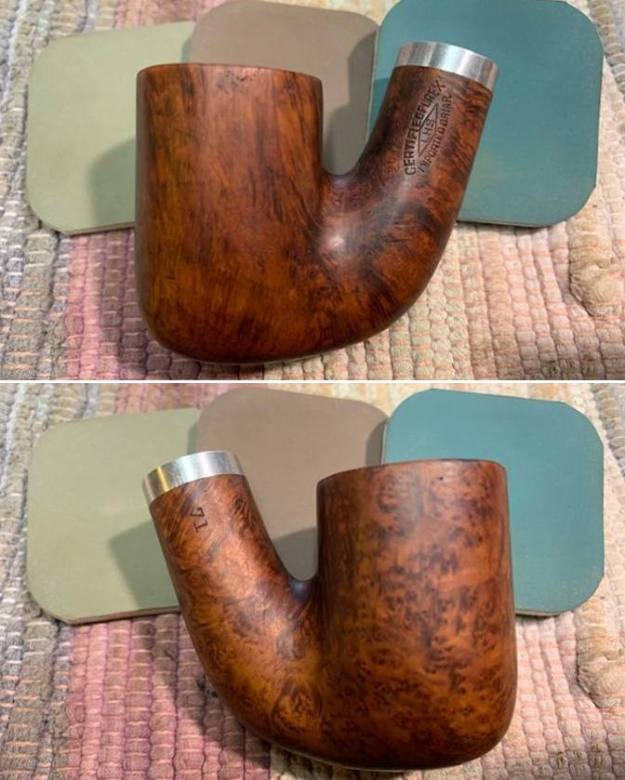
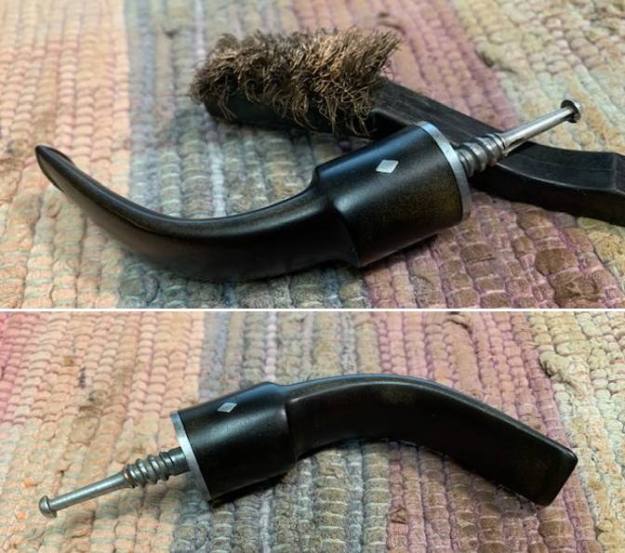
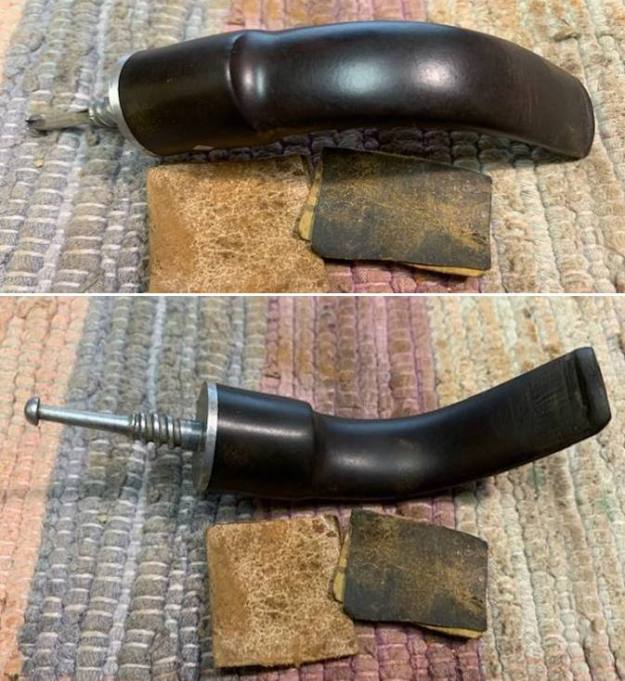
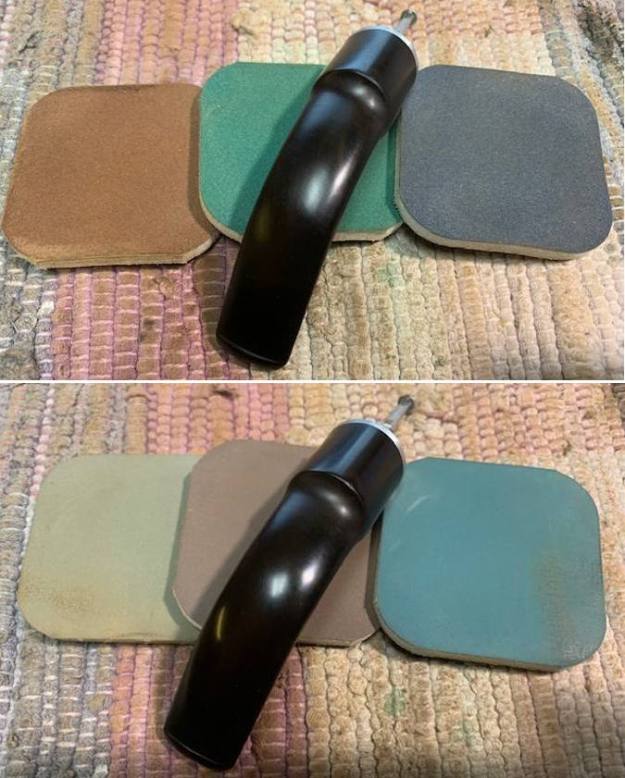
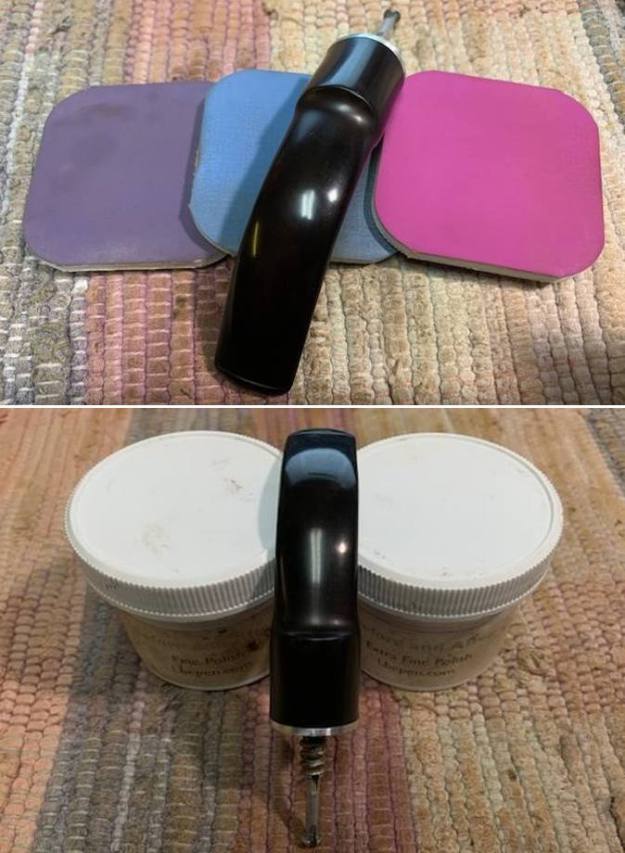
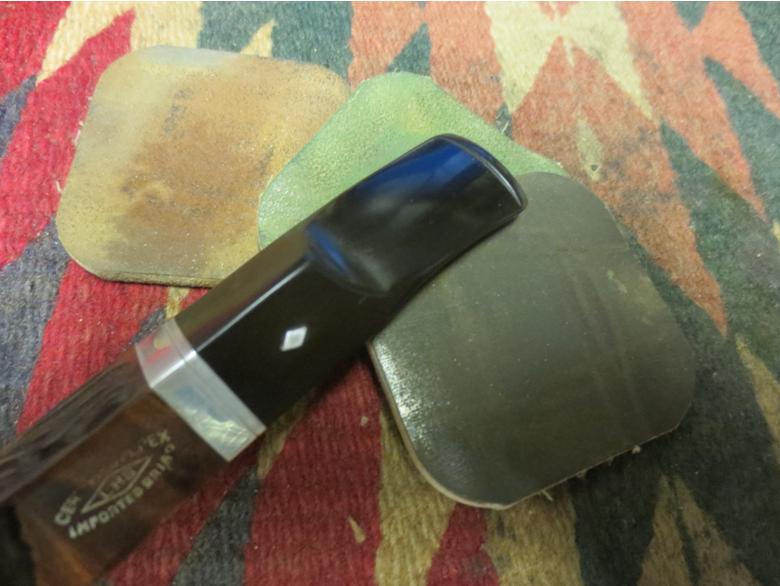
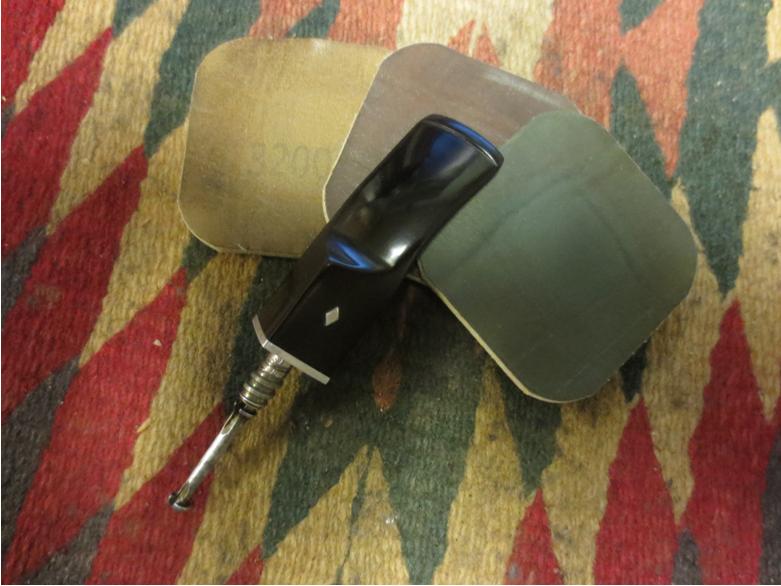
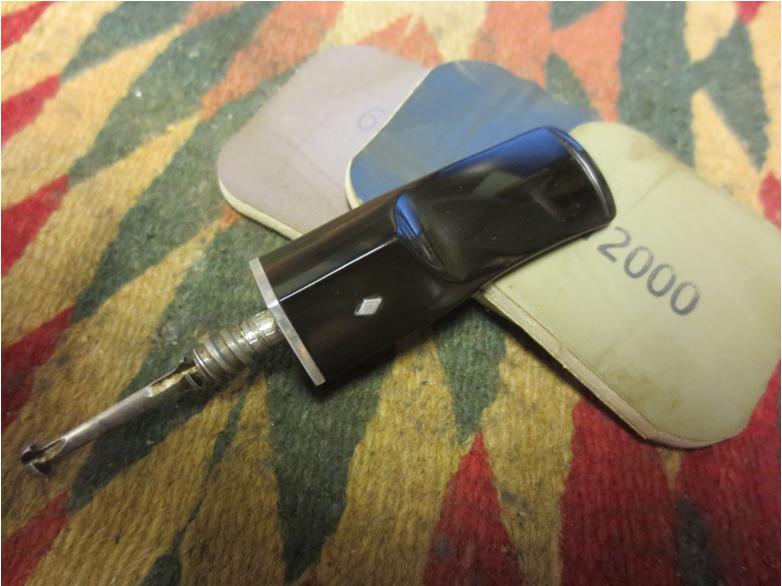
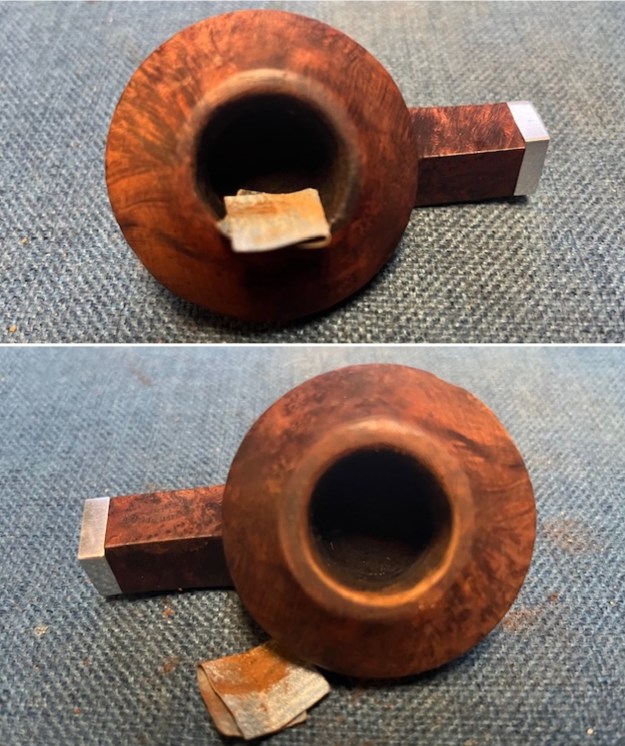
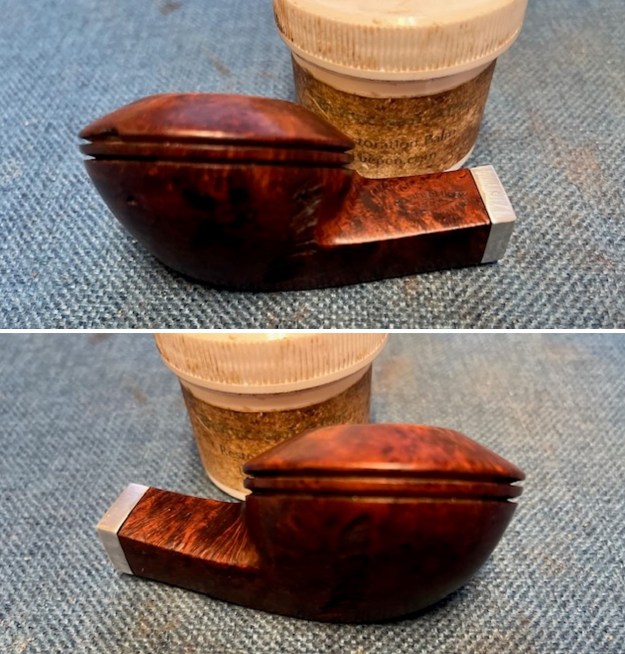
Jeff carefully cleaned the pipe. He reamed it with a PipNet pipe reamer and then cleaned up the reaming with a Savinelli Fitsall Pipe Knife. He scrubbed out the internals of the shank, stem and shank extension with alcohol, pipe cleaners and cotton swabs until the pipe was clean. He scrubbed the exterior of the bowl with Murphy’s Oil Soap and a tooth brush to remove the grime and grit on the briar and lava on the rim top. The finish looks much better and has a deep richness in the colour that highlights grain of the briar. The rim top had some darkening and there was some damage to the inner edge of the bowl. The aluminum on the shank end and on the stem were slightly oxidized but clean. Jeff soaked the stem in bath of Before & After Pipe Stem Deoxidizer to remove the oxidation on the rubber. He worked it over with Soft Scrub All Purpose Cleaner to remove any remnants of oxidation. When the pipe arrived here in Vancouver and I finally started my work on it I was amazed it looked so good. Here are some photos of what I saw. I took some close up photos of the rim top and the stem surface. The inner edge of the rim was nicked around inner edge of the bowl. The rim cap was nicked and damaged as well. I took close up photos of the stem to show the condition of the surface and button. There was some remaining oxidation near the shank and the tooth marks and chatter were evident near the button on both sides.I took a picture of the stamping on the shank sides and it was all clear and readable as noted above. I took the pipe apart and took a photo of the pipe with the stem. It is a good looking pipe and very unique. The stinger apparatus and integrated tenon were a single unit.I started my work on the pipe by addressing the damage on the inner edges of the bowl. I used a folded piece of 220 grit sandpaper to work over the inner edge to clean up the damage. I also worked over the rim top and outer edges at the same time.I sanded the nicks and scratches in the rim cap and bowl with 320-3500 grit sanding pads. I wiped the bowl down between sanding pads with a damp cloth. By the last pad the pipe began to take on a shine. I polished the briar with micromesh sanding pads – dry sanding with 1500-12000 grit pads. I wiped the bowl down a damp cloth to remove the sanding debris. The grain real shone through with the polishing. I worked some Before & After Restoration Balm into the surface of the bowl and shank with my fingertips to clean, enliven and protect the briar. I let the balm sit for 15 minutes and then buffed with a cotton cloth to raise the shine. The photos show the bowl at this point in the restoration process. I polished the stem with micromesh sanding pads – dry sanding with 1500-12000 grit sanding pads. I wiped it down after each sanding pad with Obsidian Oil. I polished it with Before & After Pipe Stem Polish – both Fine and Extra Fine. I gave it a final coat of Obsidian Oil. With the bowl and the stem finished I put the LHS Certified Purex Imported Briar Bulldog 97 back together and buffed it on the wheel using Blue Diamond to give it a shine. I gave the bowl and stem multiple coats of carnauba wax on the wheel and then buffed it with a clean buffing pad to raise the shine. I hand buffed it with a microfiber cloth to deepen the shine. It really a nice looking sandblast. The dimensions of the pipe are – Length: 5 ½ inches, Height: 1 ¾ inches, Outside diameter of the bowl: 2 ¼ inches, Chamber diameter: 7/8 of an inch. The weight of this large pipe is 2.01 ounces /57 grams. This LHS Certified Purex Imported Briar Bulldog was a great find. I will be putting it on the rebornpipes store in the American Pipe Makers Section soon. If you would like to add it to your collection let me know. This is another pipe that has the possibility of transporting the pipe man or woman back to a slower paced time in history where you can enjoy a respite. Thanks for walking through the restoration with me.

Next Up An LH Stern Certified Purex 71 Oom Paul


Blog by Steve Laug

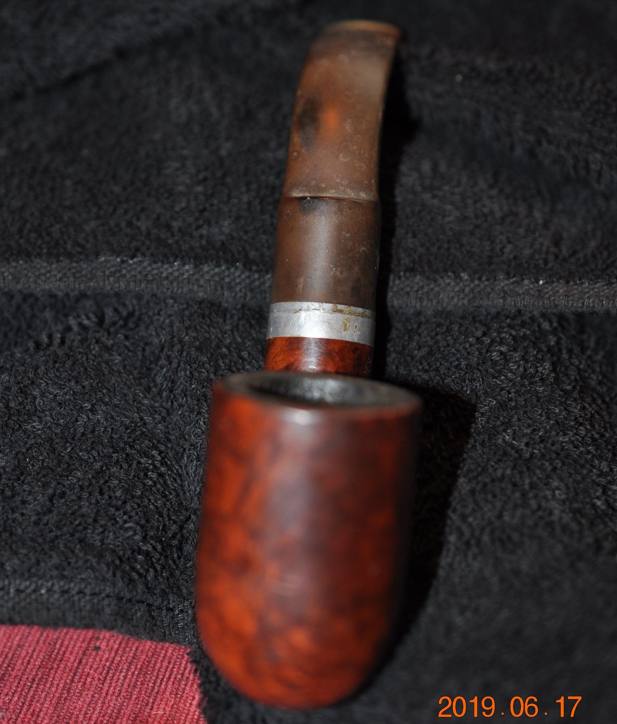
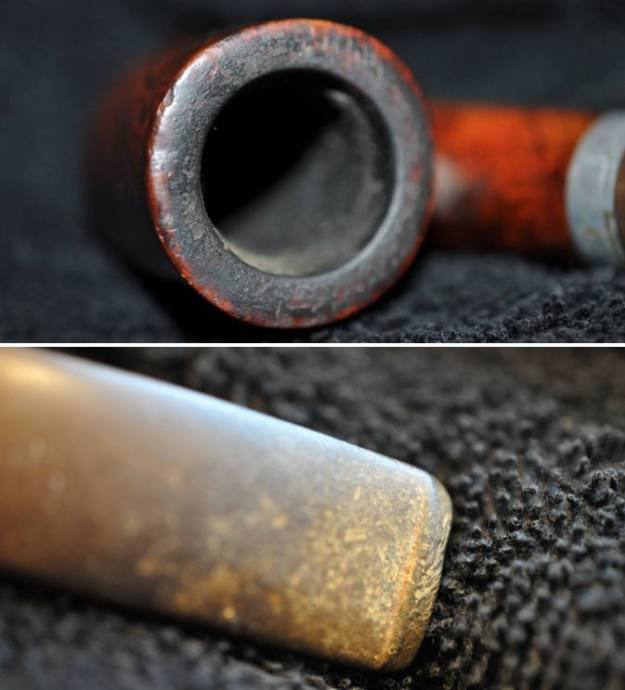
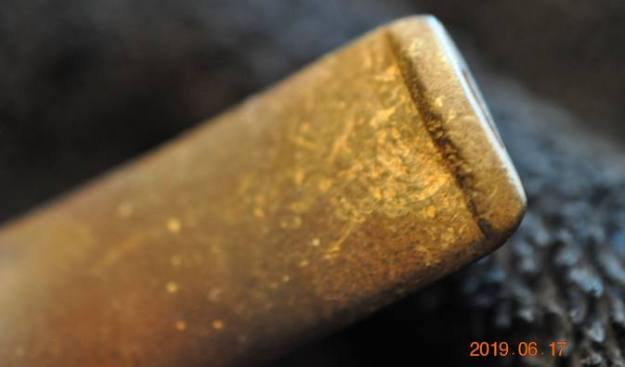
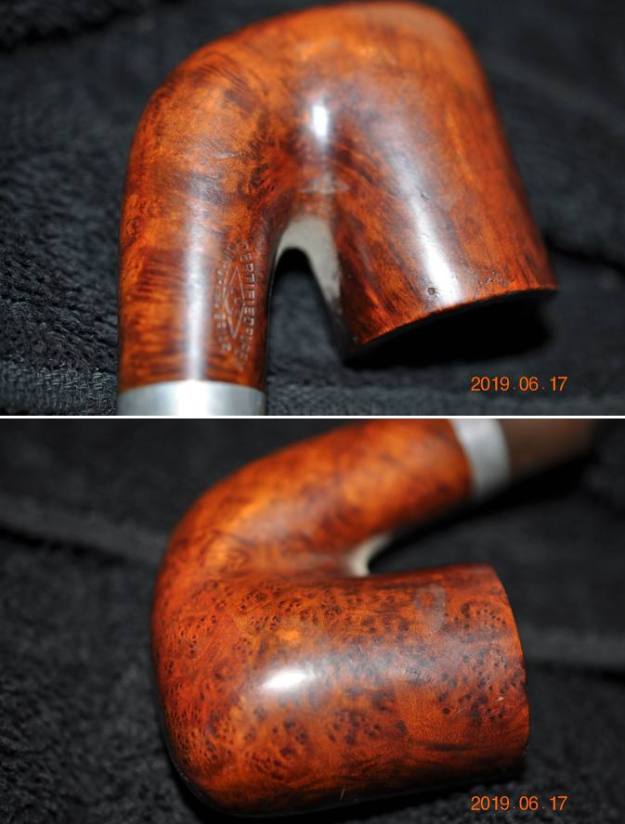
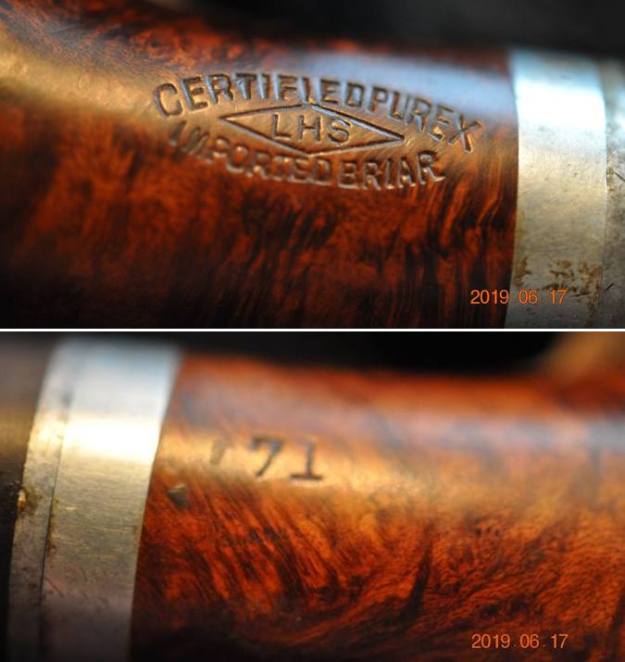
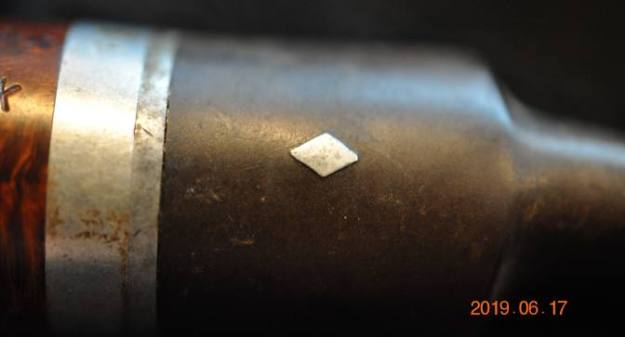
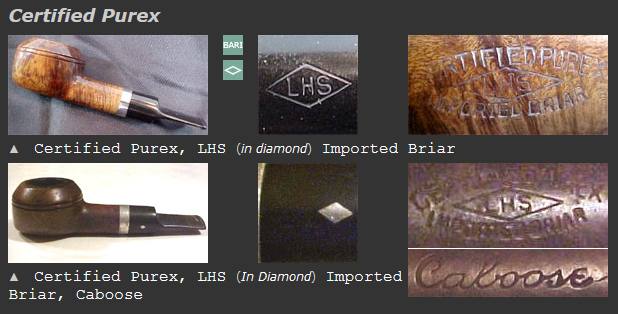
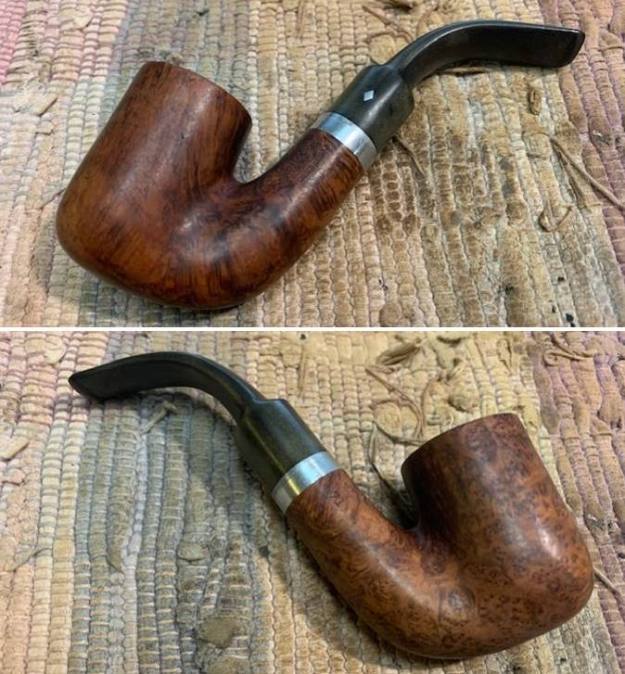
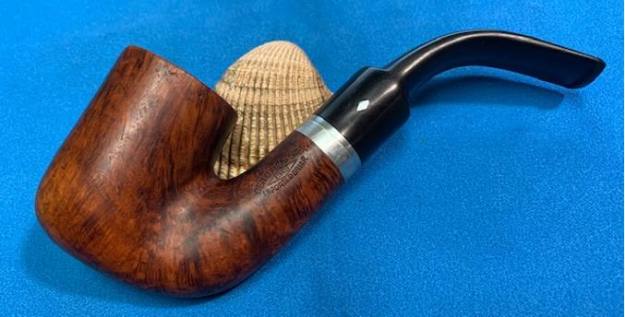
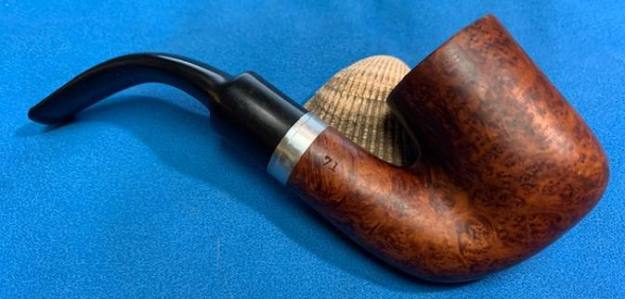
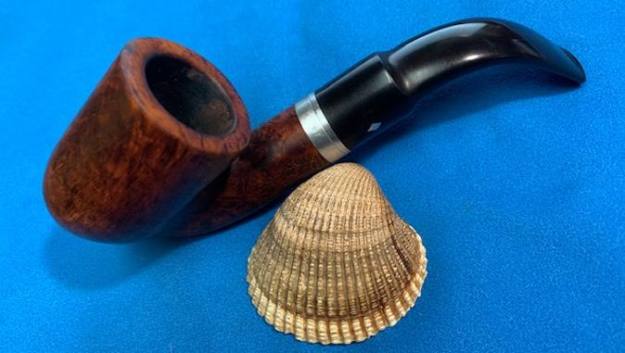
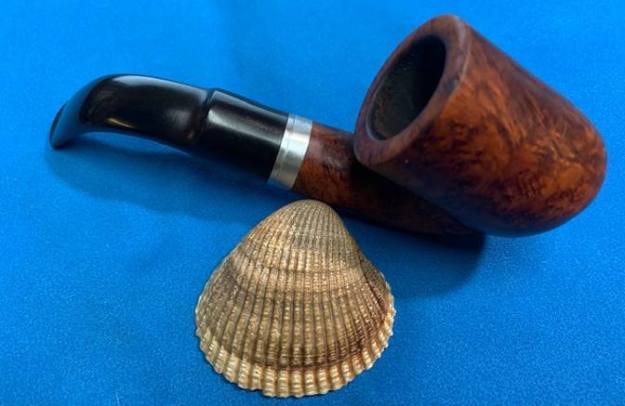
The next pipe I have chosen to work on was purchased from an online auction on June 10, 2019 in Romney, West Virginia, USA. I have worked on a lot of LHS pipes through the years and many of them had the LHS Certified Purex stamp on the shank. This Oom Paul is very nice with great grain around the bowl. It is stamped on the left side of the shank and reads CERTIFIED PUREX arched over a diamond the LHS in the centre. Underneath that is stamped Imported Briar. On the right side of the pipe it is stamped with the shape number 71. The stamping is clear and readable. The saddle stem also bears the silver (inlaid) diamond logo on the left side. The bowl had a thick cake and there was a lava overflow on the rim top filling. The inner edge of the rim thickly covered with lava so it was hard to know the damage at this point. The outer edge and rim top showed nicks and light damage. The stem is oxidized, calcified and has tooth marks and chatter on both sides at the button. Jeff took photos of the pipe before he started his clean up. Jeff took photos of the bowl, rim top to show the thickness of the cake in the bowl and the lava on the rim top. The bowl had a thick cake that overflowed in lava on the inner edge and rim top of the bowl. I am hoping that the thick lava coat protected things underneath it from damage to the edges and top. He took photos of the top and underside of the stem showing the tooth chatter, scratching, calcification and oxidation on the stem surface and wear on the edges of the button. Jeff took photos of the sides and heel of the bowl to show the condition of the briar. You can see the beautiful shape of the bowl even through the dirt and debris of many years.Jeff took photos of the stamping on the sides of the shank. You can see that it is clear and readable as noted above. I turned first to Pipephil’s site (http://pipephil.eu/logos/en/logo-lhs.html) and found a pipe with the same stamping as the one that I am working on. There was a brief history of the brand at the top of the page. It read as follows:
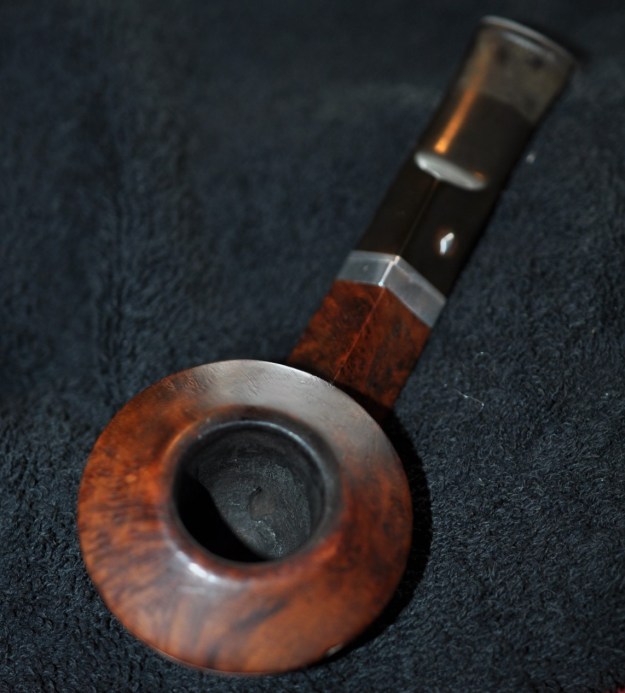
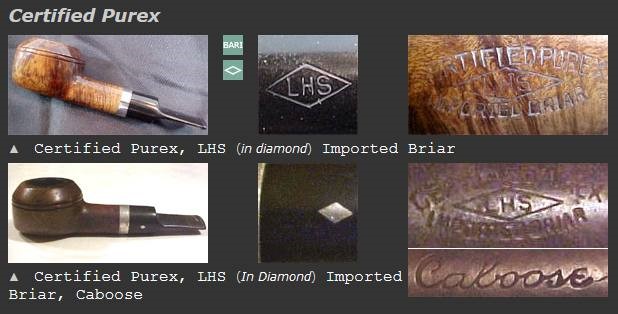
The L&H Stern Inc. was established by Ludwig Stern (1877-1942) in 1911. His brother Hugo (1872-?) acted as vice-president & secretary. The firm moved to 56 Pearl St. Brooklyn in 1920. It closed down in the 1960s. LHS was one of the main pipe supplier for US soldiers during WWII.

I turned to Pipedia to try and place this pipe in the timeline of the brand and was able find some helpful information which I have included below (https://pipedia.org/wiki/LHS). Again it had a brief history. It read as follows:

Ludwig Stern, a successful pipe manufacturer since 1893 and closing around 1960, reorganized his company along with his brother Hugo Stern, opening a factory in 1911. They named the company L&H Stern Smoking Pipes & Holders. The newly formed company was moved into a six story building on the corner of Pearl and Waters street Brooklyn, NY…

There were also Notes from Geyer’s Stationer on the page below this. It read as follows:

Thoroughly organized in all departments, and housed in a well-lighted and ventilated modern office and manufacturing building, the firm of L&H Stern Inc. is located near the first arch of the Manhattan bridge, near the river and convenient to the Brooklyn bridge, which makes it accessible from all the hotels in the metropolis for visiting buyers. The structure is six stories with a seventeen-foot basement, with light on three sides through prismatic glass windows, the first floor being seven feet above the sidewalk. Light enters the upper floors from all four sides.

L&H Stern is known to every important wholesaler and jobber in the country. LHS manufactures a complete line of briar pipes. Ginmetto wood pipes are also made, as well as Redmanol goods, the man-made amber. The first substitute for amber. Everything, even down to the sterling silver and other metal trimmings are made under one roof.

LH Stern was a fascinating company that literally covered the manufacture of all the pipe parts. I was not able to pin down the date on it with the information but it was a nice piece of briar. Now on to the pipe.

Jeff carefully cleaned the pipe. He reamed it with a PipNet pipe reamer and then cleaned up the reaming with a Savinelli Fitsall Pipe Knife. He scrubbed out the internals of the shank, stem and shank extension with alcohol, pipe cleaners and cotton swabs until the pipe was clean. He scrubbed the exterior of the bowl with Murphy’s Oil Soap and a tooth brush to remove the grime and grit on the briar and lava on the rim top. The finish looks much better and has a deep richness in the colour that highlights grain of the briar. The rim top had some darkening and there was some damage to the inner edge of the bowl. The aluminum on the shank end and on the stem were slightly oxidized but clean. Jeff soaked the stem in bath of Before & After Pipe Stem Deoxidizer to remove the oxidation on the rubber. He worked it over with Soft Scrub All Purpose Cleaner to remove any remnants of oxidation. When the pipe arrived here in Vancouver and I finally started my work on it I was amazed it looked so good. Here are some photos of what I saw. I took some close up photos of the rim top and the stem surface. The inner edge of the rim was nicked around the back right side. The outer rim showed some damage as well and was not ever truly round. The rim top was nicked and damaged as well. I took close up photos of the stem to show the condition of the surface and button. There was some remaining oxidation near the shank and the tooth marks and chatter were evident near the button on both sides.I took a picture of the stamping on the shank sides and it was all clear and readable as noted above.I took the pipe apart and took a photo of the pipe with the stem. It is a good looking pipe and very unique. The stinger apparatus and integrated tenon were a single unit. It was clean but slightly oxidized.I started my work on the pipe by addressing the damage on the inner edges of the bowl. I used a folded piece of 220 grit sandpaper to work over the inner edge to clean up the damage. I also worked over the rim top and outer edges at the same time.I polished the briar with micromesh sanding pads – dry sanding with 1500-12000 grit pads. I wiped the bowl down a damp cloth to remove the sanding debris. The bowl began to take on a shine. I worked some Before & After Restoration Balm into the surface of the bowl and shank with my fingertips to clean, enliven and protect the briar. I let the balm sit for 15 minutes and then buffed with a cotton cloth to raise the shine. The photos show the bowl at this point in the restoration process. I set the bowl aside and turned my attention to the stem. I “painted” it with the flame of a Bic lighter to lift the tooth dents in the surface of the vulcanite. I was able to lift all of them. I scrubbed the stinger with a brass bristle wire brush to remove the darkening. I sanded out the remaining chatter with 220 grit sandpaper and started polishing with 400 grit wet dry sandpaper. I polished the stem with micromesh sanding pads – dry sanding with 1500-12000 grit sanding pads. I wiped it down after each sanding pad with Obsidian Oil. I polished it with Before & After Pipe Stem Polish – both Fine and Extra Fine. I gave it a final coat of Obsidian Oil. With the bowl and the stem finished I put the LHS Certified Purex 71 Oom Paul back together and buffed it on the wheel using Blue Diamond to give it a shine. I gave the bowl and stem multiple coats of carnauba wax on the wheel and then buffed it with a clean buffing pad to raise the shine. I hand buffed it with a microfiber cloth to deepen the shine. It really a nice looking sandblast. The dimensions of the pipe are – Length: 5 inches, Height: 2 inches, Outside diameter of the bowl: 1 ¼ inches, Chamber diameter: 7/8 of an inch. The weight of this large pipe is 2.08 ounces /59 grams. This LHS Certified Purex Oom Paul was a great find. I will be putting it on the rebornpipes store in the American Pipe Makers section soon. If you would like to add it to your collection let me know. This is another pipe that has the possibility of transporting the pipe man or woman back to a slower paced time in history where you can enjoy a respite. Thanks for walking through the restoration with me.
New Life for an American Made LHS Certified Purex Pencil Shank Prince


Blog by Steve Laug

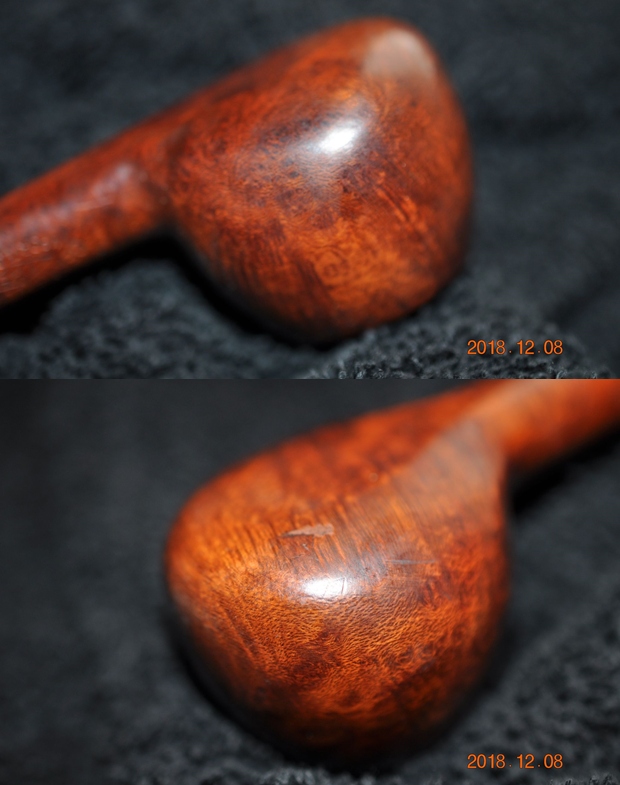
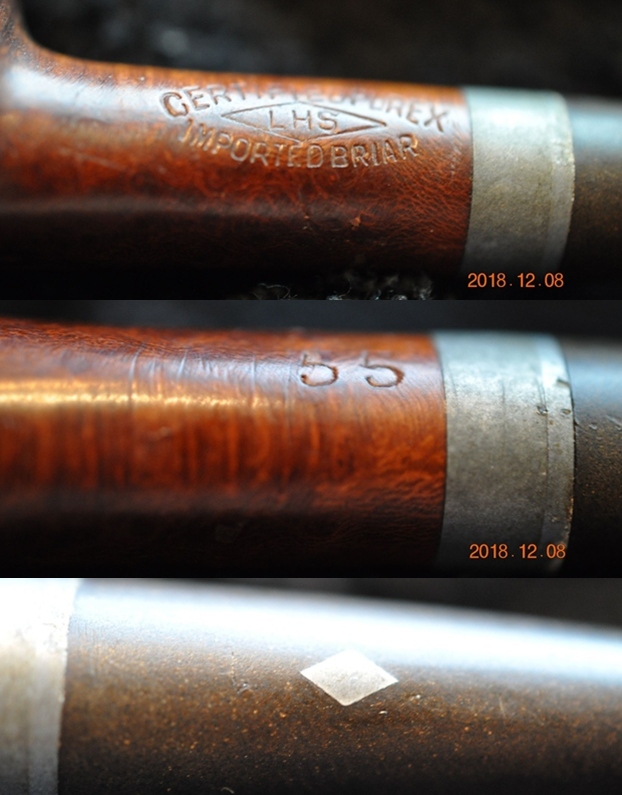
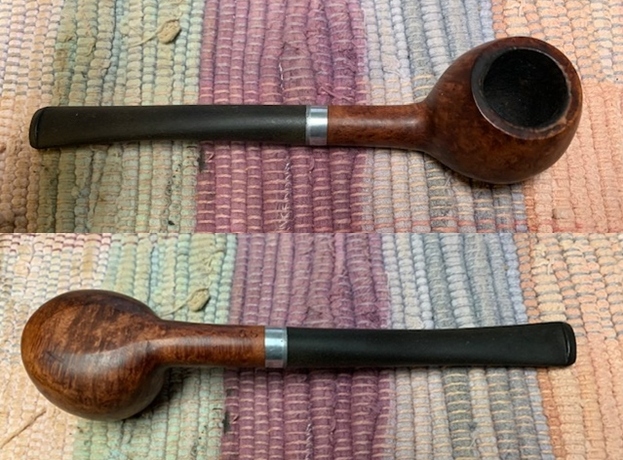
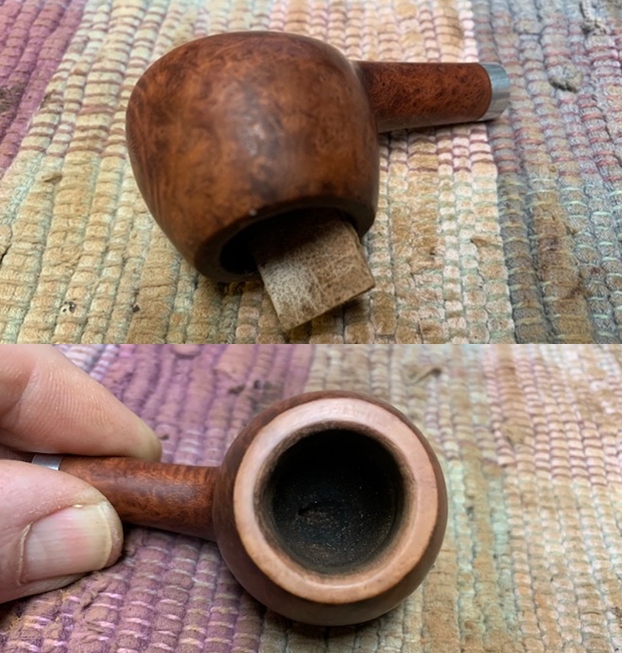
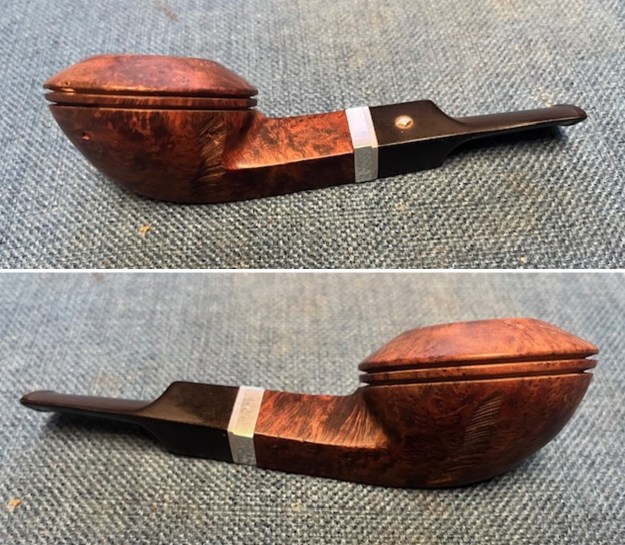
The next pipe on the worktable is another American made pipe from LH Stern of Brooklyn, New York. I will give more information on the brand later in the blog. This one is a classic smooth finished, grained flat bottom Prince with a thin taper vulcanite stem. It has a mix of grain around the bowl and shank sides. Jeff purchased it from an online auction on 03/06/18 from Nampa, Idaho, USA so it has been around the shop for a while. The pipe is stamped on the left side of the shank and reads Certified Purex [over] LHS in a diamond [over] Imported Briar. On the underside of the shank it is stamped with the shape number 55. The pipe is dirty with a thick cake in the bowl and a thick lava overflow on the rim top. It looks like the inner edge of the rim is damaged on the back side of the bowl. The finish was dusty with grime ground into the finish around the sides of the bowl. The black vulcanite stem is oxidized, calcified and has tooth marks and chatter on the top and underside near the button. Jeff took some photos of the pipe before he started his cleanup work. He took a photo of the bowl and rim top to show their general condition. You can see the lava on the rim top and the thick cake in the bowl. There is damage on the rear inner edge of the bowl. The stem is oxidized, calcified and has tooth marks and chatter on both sides near the button.      Jeff took some photos of the sides and heel of the bowl to give an idea of the grain around the bowl. I cannot wait to see what it looks like once it is cleaned and polished. He took a photo of the stamping on the sides of the shank to capture it for me. It is clear and readable. I turned to Pipephil to get a feel for the history of the brand and have included a screen capture of the pertinent section on the site below (http://www.pipephil.eu/logos/en/logo-lhs.html). I quote:

The L&H Stern Inc. was established by Ludwig Stern (1877-1942) in 1911. His brother Hugo (1872-?) acted as vice-president & secretary. The firm moved to 56 Pearl St. Brooklyn in 1920. It closed down in the 1960s. LHS was one of the main pipe supplier for US soldiers during WWII.I turned to Pipedia for any additional information (https://pipedia.org/wiki/LHS). The article gave and expanded history of the brand and a list of the grades of pipes in 1944. I have included that below.

The brand had 8 pipe grades listed in the 1944 issue of Outdoor Magazine.

Sterncrest Ultrafine $ 10

Sterncrest 14K $ 7.50

Sterncrest Sterling $ 5

Certified Purex $3.50

Select Grain $2.50

Sivercrest $ 2

Superfine Purex $1.50

Sculpted Purex $1.50

 In addition to the above grades, a 1944 catalog also listed the following lines and models:

Barrister

Marwyn

Park Lane

Radmanol

Warwick

Additional notes: Some models were made before, during, and after WWII. LHS was one of the main pipe supplier for US soldiers during WWII.

Pre-war pipes were stamped Real Briar Root, or Briar Root. Some war time pipes were made from domestic briar, or “American” briar and were void of any briar stampings. Many American pipe makers lost their over seas supply of Mediterranean briar shortly before and during the war. Post war pipes were stamped Imported Briar to assure customers that they were buying premium briar once again.

Now I had a pretty good idea of how the pipe was stamped and made. With that information I moved forward to work on the pipe itself and see what I had to do with it. Jeff had done an amazing job in removing all of the cake and the lava on the rim top. He had reamed the bowl with a PipNet Pipe Reamer and cleaned up the remnants with a Savinelli Fitsall Pipe Knife. He took the cake back to bare briar so we could check the walls for damage. He scrubbed the exterior of the bowl with Murphy’s Oil Soap and a tooth brush to remove the grime on the bowl and rim and was able to remove the lava and dirt. He cleaned out the interior of the bowl and shank with pipe cleaners, cotton swabs and alcohol until they came out clean. He cleaned the stem with Soft Scrub to remove the grime on the exterior and cleaned out the airway with alcohol, cotton swabs and pipe cleaners. He soaked the stem in Before & After Deoxidizer and rinsed if off and recleaned the inside of the stem with alcohol and pipe cleaners. I took photos of the pipe before I started my part of the restoration. I took some photos of the rim top and stem. The rim top and inner edge of the bowl shows damage and burned areas. It is out of round and will need some work. The close up photos of the stem shows that the surface of the stem is pitted. There are tooth marks and chatter on the top and underside of the stem near the button.  I took a photo of the stamping on the side and the underside of the shank to show the condition after the cleanup. This stamping is readable and looks good.  I removed the stem from the shank and took a photo of the pipe at this point. You can clearly see the condition, size and shape of the pipe.I started my part of the restoration work on this pipe by addressing the damage and darkening on the edge of the rim, particularly on the front and rear of the inner edge. I used a folded piece of 220 grit sandpaper to remove the damage to the bowl.  I started polishing the edge with 400 grit wet dry sandpaper.  I sanded the outside of the briar with micromesh sanding pads to polish the finish. I wet sanded with 1500-12000 grit sanding pads and wiped it down with a damp pad after each pad.     I worked some Before & After Restoration Balm into the surface of the briar with my fingertips to clean, enliven and protect the briar. I let the balm sit for about ten minutes and then buffed with a cotton cloth to raise the shine. The photos show the bowl at this point in the restoration process.  I set the bowl aside and turned my attention to the stem. I polished the stem with micromesh sanding pads – dry sanding with 1500-12000 grit sanding pads. I wiped it down after each sanding pad with a cloth containing some Obsidian Oil. I finished polishing it with Before & After Pipe Stem Polish – both Fine and Extra Fine and buffed it off with a cotton cloth.   This LHS Certified Purex Prince with a pencil shank and stem is a nice looking pipe. The finish looks very good and the grain stands out. I put the stem back on the bowl and buffed the pipe with Blue Diamond on the buffing wheel. I carefully avoided the stamping on the shank sides during the process. I gave the bowl and the stem multiple coats of carnauba wax on the buffing wheel and followed that by buffing it with a clean buffing pad on the buffer. I hand buffed the pipe with a microfiber cloth to deepen the shine. The finished pipe is an excellent example of the Purex line of pipes that were made by LHS Stern. The flow of the grain and the way the shape follows it is very well done. Give the finished pipe a look in the photos below. I can only tell you that it is much prettier in person than the photos capture. The dimensions of the pipe are Length: 6 inches, Height: 1 ¼ inches, Outside diameter of the bowl: 1 ¼ Chamber diameter: ¾ of an inch. This interesting LHS Certified Purex Prince is a great looking pipe in excellent condition. Thanks for walking through the restoration with me as I worked over another beautiful pipe. I will be adding it to the rebornpipes store soon. If you want to add it to your collection send me an email or a message! Thanks for your time.
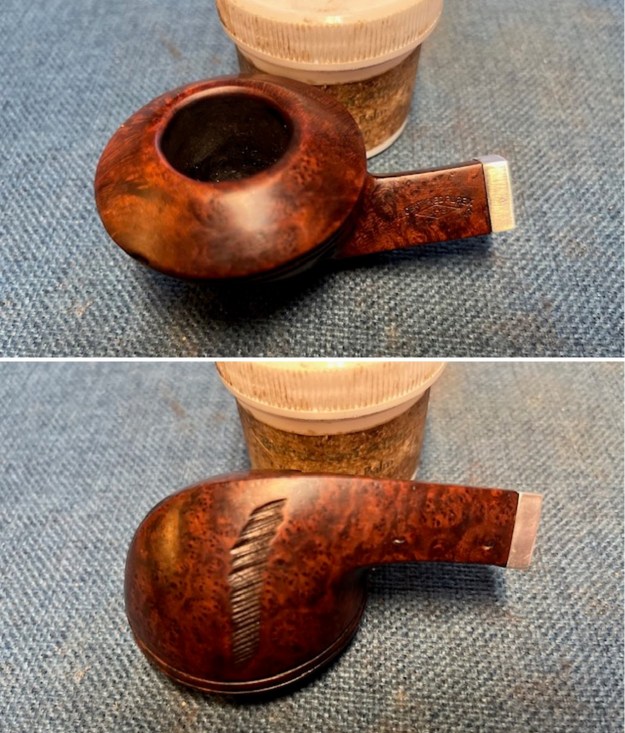
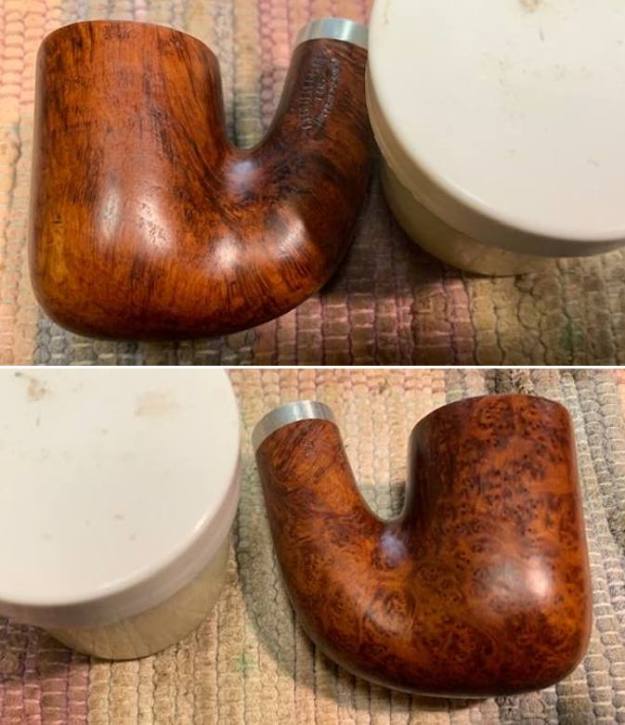
Restoring an LHS Certified Purex #24


Blog by Dave Gossett
Dave1 This pipe was a pretty straight forward cleanup. It was in overall decent shape. It had some light rim char and the stem was out of alignment. Steve had recently posted an LHS repair with this very problem so it came in handy. I followed his process and sanded the aluminum shank cap gently on a flat sanding board until the stem was in proper position. I can’t imagine they left the factory out of alignment, so I don’t know how they end up like that.Dave2
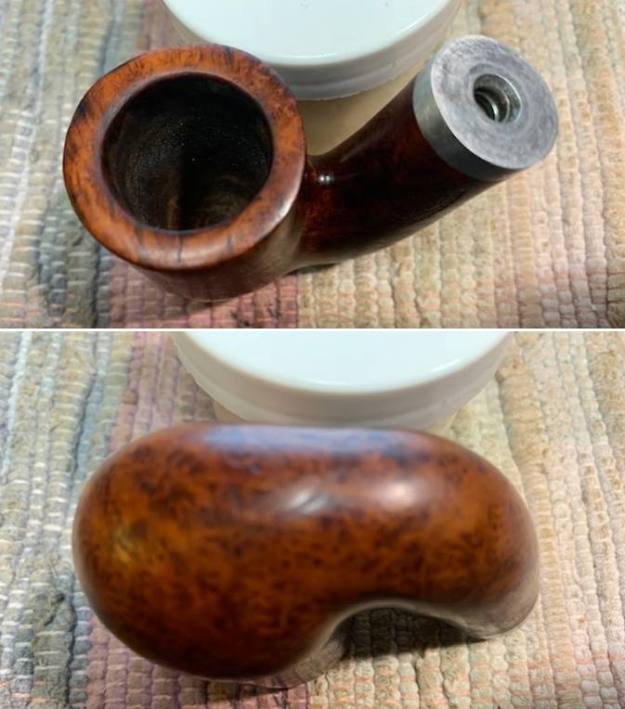
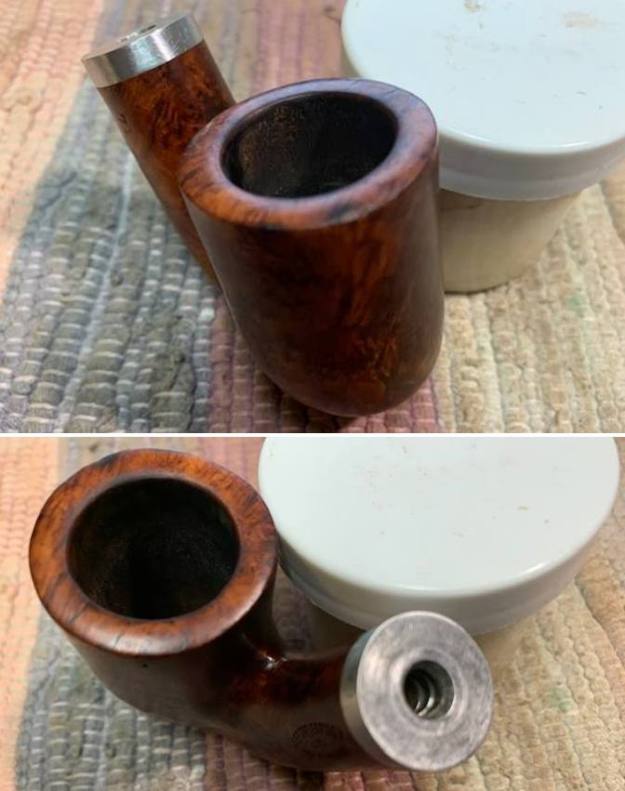
Dave3 Next I sanded the rim with 1000 grit until I reached fresh briar, and went over the rest of the stummel with 2000 grit to remove the nicks and scratches, then began working my way up the grit ladder until it was smooth.

A quick wipe down with alcohol was applied before adding Fiebings dark brown. I left it to cure for 24 hours. For a nice contrast stain, I lightly mist the briar with alcohol and use a very worn piece of 2000 grit. This removes the dark stain from the soft wood and makes the grain more prominent. After the pipe has been wiped down with a damp cloth to remove the excess stain, it was left to dry and then lightly sanded with micro mesh one last time.Dave4

Dave5

Dave6

Dave7

Dave8

A Restored LHS Certified Purex #95 Squashed Tomato


Blog by Dave Gossett

A pipe shape this elegant deserves a better name than squashed tomato. I received this pipe looking more like a bruised tomato. It was beat up and chewed up. An LHS this shape doesn’t pop up very often so I was happy to accept the pipe in any condition.dPk6umBl

Dave2

Dave3

Dave4 I started off with the routine internal cleaning of the pipe with alcohol, pipe cleaners, and shank brush.

Next I began to work out the dents by heating a butter knife with a propane torch and pressing it firmly to the dented areas with a damp rag between the two. This generates steam and lifts the dents out of the briar. This may have to be done several times to the same area depending how bad the dents are.

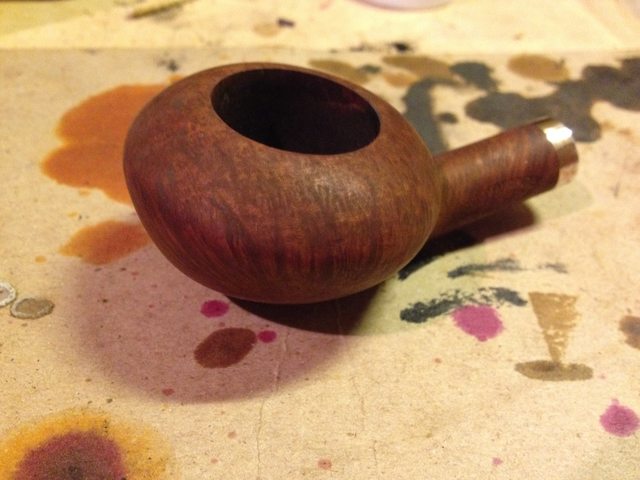
After steaming, I sanded the scratches from the rest of the briar, smoothed out the bowl chamber, prepping it for the carbon coating, gave it a light alcohol scrub with 0000 steel wool to remove the leftover patchy original finish, and finally, masked off the shank and polished the aluminum.Dave5

Dave6

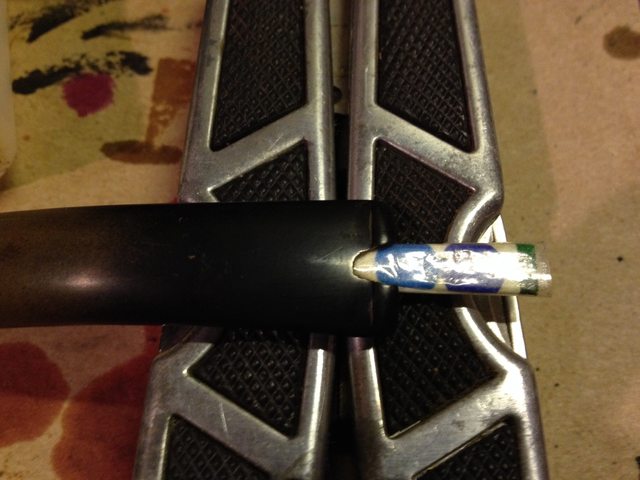
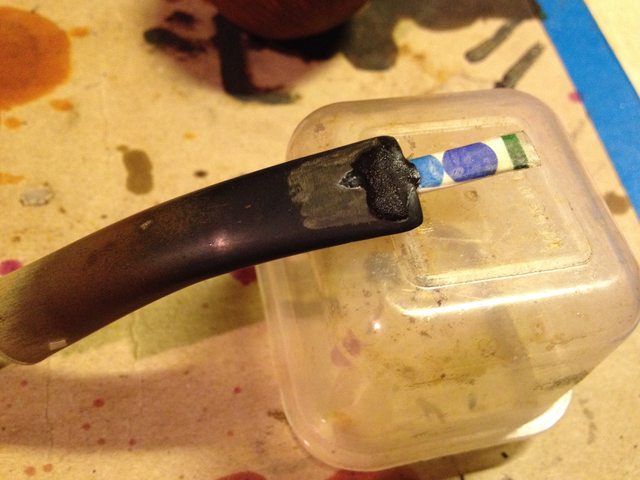
Dave7 Next up is the stem rebuild.Dave8 A tight fitting plug/form for the air way and bit is made from cardboard wrapped in clear tape.
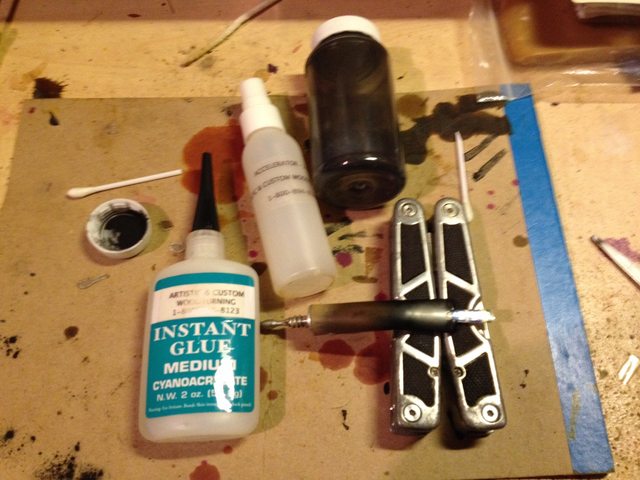
Here is a picture of all the materials used for the stem rebuild.

Cyanoacrylate glue (medium viscosity), activated charcoal. Dave9 I use disposable things for mixing and application process. 25% charcoal/75% glue mixed thoroughly is the recipe. I mix it in bottle caps, and use a q-tip stem with a small scoop/spoon cut into the end to apply to the repair site.

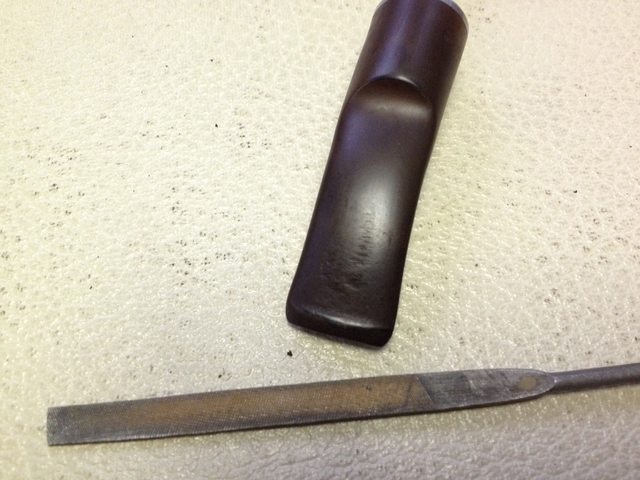
The repair site needs to be scored and cleaned before the mix is applied.Dave10 Once the material has cured, the tape covered cardboard plug is easily removed. Using a needle file I reshaped the button and then wet sanded the stem.

Back to briar.
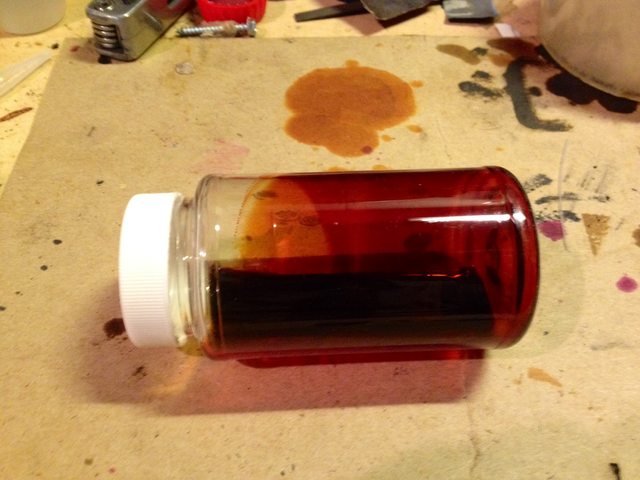
Now that it has been steamed, sanded, and had the old stain removed, I applied a custom color mix of Fiebings, consisting of dark brown, a hint of orange, and a bit of oxblood, thinned a bit with alcohol.Dave11

Dave12 I always like seeing the color transformation from the dry stained tint to the very different shade it becomes after the carnauba wax is applied.

The final step in the restoration after waxing is the carbon bowl coating. It’s a very simple detail to make an old estate pipe look fresh again. Maple syrup and activated charcoal. After the bowl chamber is clean and smooth, lightly coat the bowl chamber with maple syrup, then fill the bowl to the top with the charcoal. Leave it for one hour or more then dump the bowl and blow through the shank to remove the excess. Next is the hard part. Don’t touch it for 5 days. It takes 3-5 days for it to harden and cure. I usually give it a week just to be sure. Once it has set up, it’s as tough as a Savinelli carbon coating and looks just as good. The pipe will have the familiar slightly bitter taste of a brand new pipe, but it doesn’t last nearly as long. After you smoke a bowl or two it goes away. Dave13

Dave14

Dave15

Dave16

Dave17

Dave18

Dave19

Dave20

Restoring an LHS Certified Purex Bullmoose Rhodesian


Blog by Dave Gossett
Dave1 LHS Certified Purex shape #99.

This pipe was in better shape than most estates I start with. It had some dents and dings and some tooth chatter, but overall it was a solid pipe.Dave2

Dave3

Dave4

Dave5 I started off this restoration with the usual internal cleaning, giving the stem, mortise, and airway an alcohol scrub with pipe cleaners and a shank brush. Next up was the bowl chamber. After removing what little cake build up that was in the bowl, I sanded the bowl chamber smooth with 400 grit.

Next, I tackled the dents and dings – first with steam followed by 2000 grit. Heating the flat side of a butter knife and pressing it firmly to the dented areas with a damp rag between the two will generate steam, lifting the dents from the briar. Don’t try this around any stampings, as it will lift the stampings just as it does with dents. This may need to be done more than once or twice for stubborn dents.

After I had worked the dents, I gave the briar a very light scrub with alcohol and 0000 steel wool to remove the stain and even out the finish where I had steamed and sanded.

After prepping the briar, I started on the stem. The button was a little worn down but not bad enough to reform, so I left it as is. I used a needle file to remove the tooth chatter. Feathering out and away from the button past the damaged area will prevent the stem from having a warped look or divot around the repaired area.Dave6

Dave7 The next step after removing the tooth chatter was wet sanding the stem to remove the oxidation and file marks. The way this particular stem was made with a metal inserted logo and metal ring and stinger attached, made this clean up much easier than most others. No worrying about working around a fragile stem stamping or rounding the crisp edge of the stem/shank connection, I was able to just mow through the whole stem while wet sanding until I unearthed fresh black vulcanite.

Now that the grunt work is over, it’s almost time for the fun stuff…Dave8

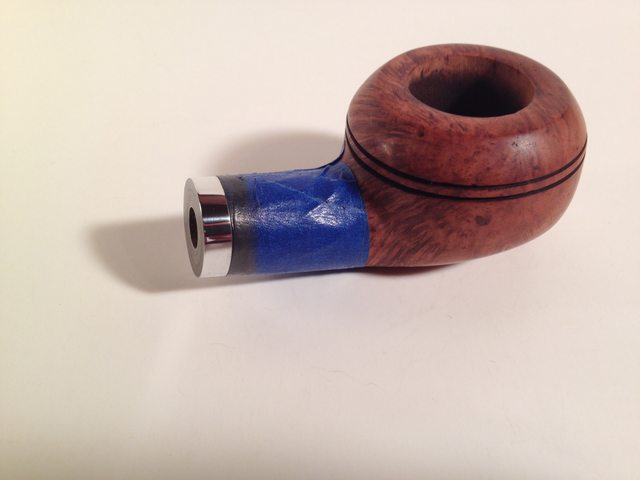
Dave9 Oh, one more thing. Let’s try our hand in some metal alchemy by making the aluminum look more like sterling silver.

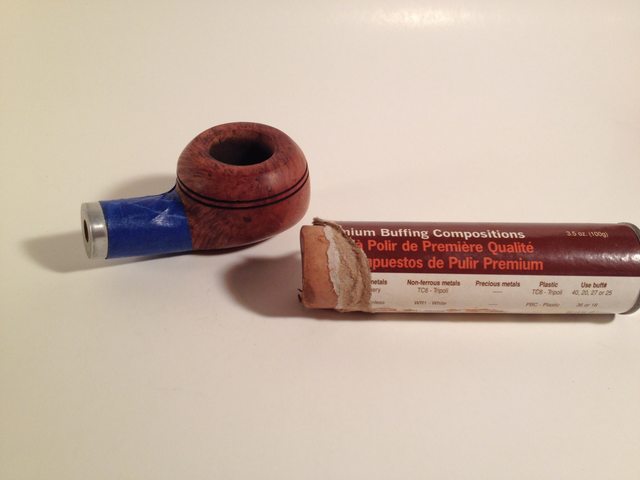
I prepped the briar with tape for two reasons. First, the compound will raise the grain if you run it on a buffing wheel and secondly, the tarnish/compound mix on the buffer wheel with stain the briar black.Dave10 Notice how dark the tape is afterwards.Dave11 The natural briar looked pretty nice and I thought about leaving it in a natural finish, but I decided to put it back to its original color, or as close as I could get. I blended a color close to the LHS burgundy by mixing two full droppers of alcohol, one full dropper of oxblood, and one half dropper of dark brown.

Pay no mind to the workbench of disarray. Sometimes I lose the pipe I’m working on in all the clutter.Dave12

Dave13 After the stain had dried, I lightly sanded the briar with a worn piece of 2000 grit to highlight the grain a bit, and then proceeded with laying on the carnauba wax. Two coats followed by a hand buff with a microfiber rag.Dave14

Dave15

Dave16

Dave17 I forgot to wipe out the buffer fuzz before taking photos.Dave18 Last but least, I finished up the pipe by adding a fresh carbon bowl coating. This is a simple and effective way to give a tired looking bowl chamber a great new look. I’ve seen many crazy recipes for a homemade bowl coating but after trial and error, I have found this to be the most effective and easiest way to do it. Once the bowl chamber is clean and smooth, apply a thin coat of maple syrup to the chamber. Next fill the entire bowl to the top with activated charcoal. Leave it for one hour, then dump it out and blow through the shank to remove excess. Don’t touch it for five days. After the five day curing process, it is as tough as a Savinelli factory coating and looks just as nice.Dave19

NEPAL PROJECT PIPE SALE 11 – Restoring a LHS Certified Purex 97 Squashed Bulldog


Blog by Steve Laug

I decided to add this LHS Bulldog to the sale. It is thus the eleventh pipe from the box of pipes that I was gifted by a good friend of mine with the instructed purpose of cleaning them up and selling them with all of the proceeds going to the aid of earthquake victims in Nepal. Once again all funds raised will all go to the SA Foundation, and organization that has worked in Nepal for over 15 years helping provide recovery, housing and job training for women who are victims of sexual exploitation and trafficking. The ongoing earthquakes (over 300) that continue to shake Nepal have left much in ruins. The SA Foundation Project there was able to find new housing for the women and help with staff as well. Every dollar raised from the sale of these pipes will go to the work in Nepal.

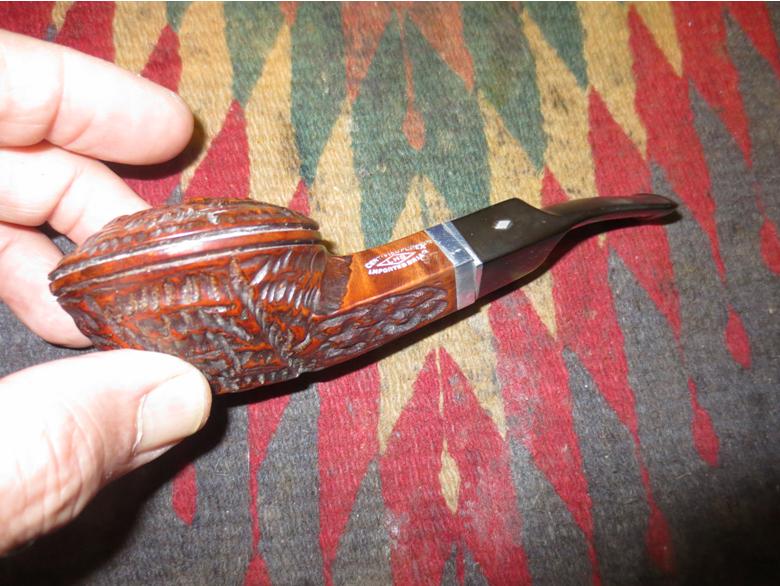
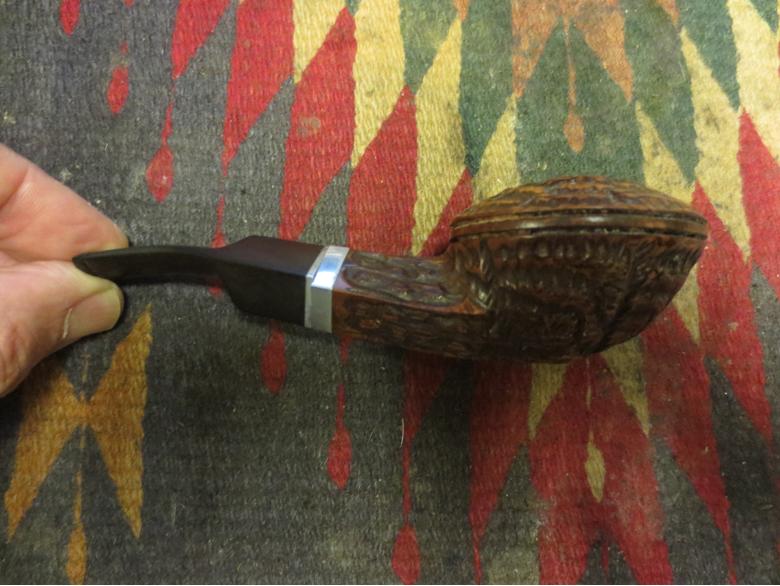
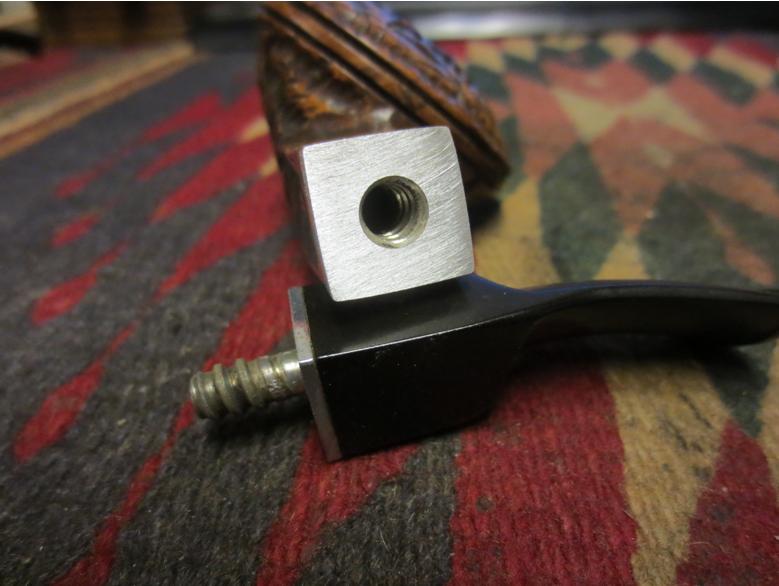
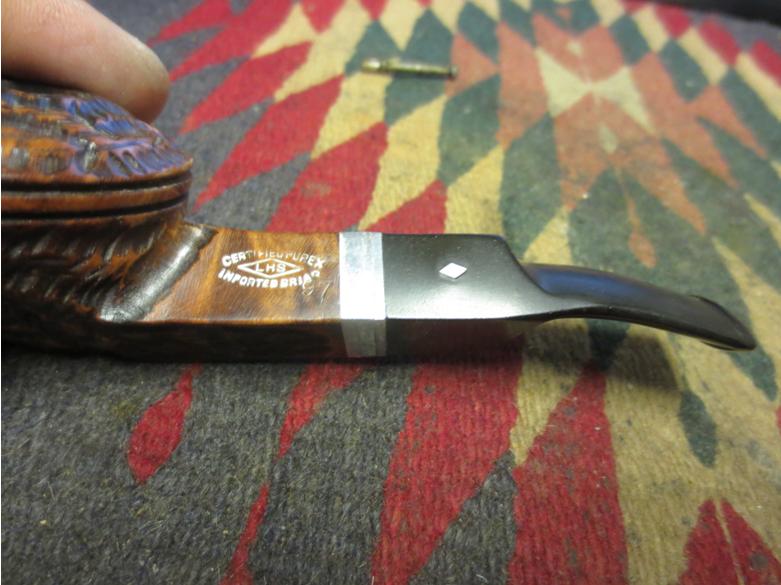
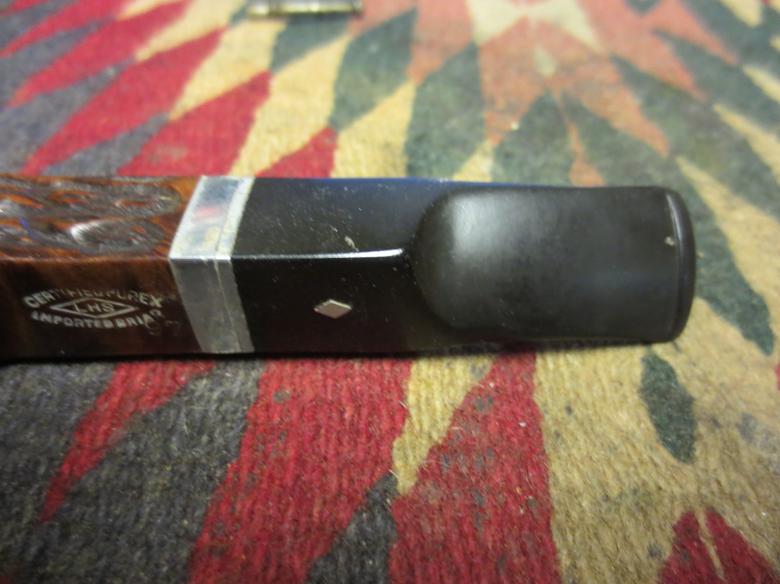
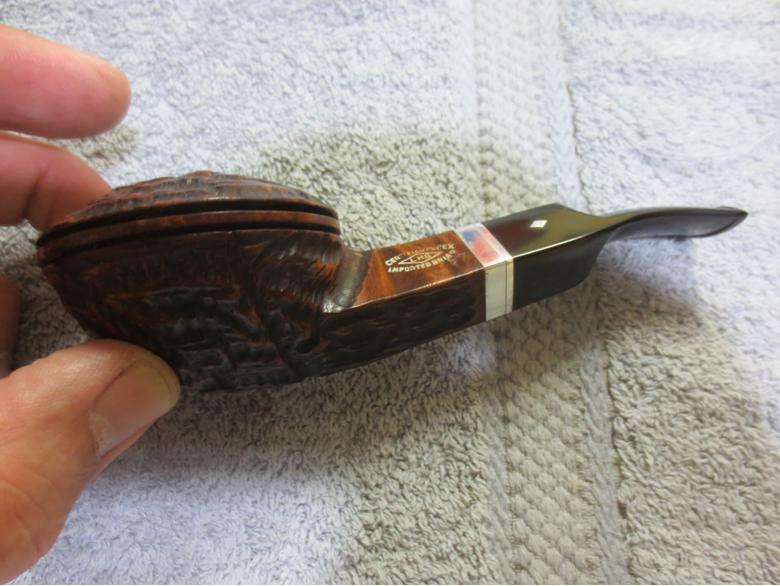
It is an old LHS (LH Stern) Bulldog. It is stamped on the left side of the shank with the shape number 97 and almost over the top of that stamp is the application of a white imprinted logo. The logo reads LHS in a flattened diamond. On the top of the diamond it reads Certified Purex and on the bottom of the diamond it read Imported Briar.Bulldog1 I have had quite a few LHS pipes on my work table over the years but this is the first time I have seen this shape bulldog. It is squat and short but has a large bowl – the size of my thumb and the bowl is quite deep. There are two rings around the bowl and a bulldog cap. The rustication pattern is also quite unique – looking like a thatched pattern. There is an aluminum fitment in the shank of the pipe and an aluminum tenon with a separated stinger that screws into the fitment in the shank. The stem was slightly oxidized and underturned. There were no major tooth marks or chatter on the stem. The finish was in decent shape, just dirty and dusty. The rings around the cap were plugged with debris that would need to be cleaned out. The airway in the bottom of the bowl was very small looking. The bowl had been reamed recently and was clean that way.Bulldog2

Bulldog3

Bulldog4 If you look closely at the alignment of the metal band on the shank with the band on the stem you will see how it is underturned and how the band on the shank is slightly corroded next to the shank.Bulldog5

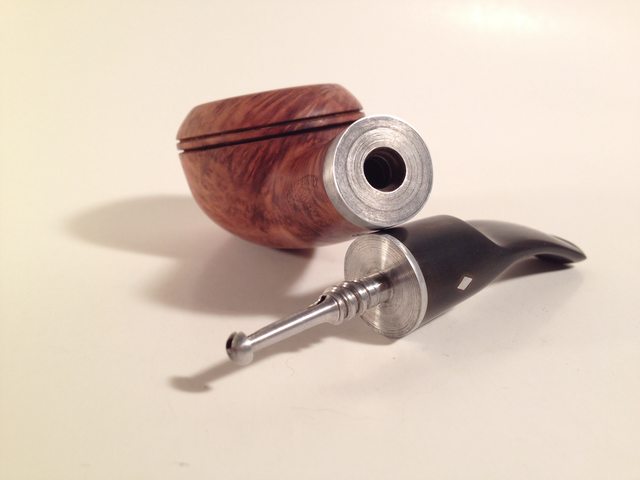
Bulldog6 The close up of the bowl shows the constricted airway at the bottom of the bowl on the back side. Too me it looked to be almost plugged with tars and would not be too difficult to open.Bulldog7 I unscrewed the stem from the shank to look at the internals. I have found that pipes with the metal fitment in the shank are generally quite dirty on the other side of the metal mortise and take some work to clean. This pipe was no exception. I tapped the metal end against my desk top and a lot of chunks of tar fell out on the desk top. The stinger was inserted into the threaded tenon and also was quite dirty and the slots in it were also restricted with buildup.Bulldog8 I heated the tenon and stinger with the flame of the lighter hoping to loosen the tenon in the shank and straighten the fit in the shank. I heated it until the stem itself was warm and the metal tenon did not budge. I was able to remove the stinger for cleaning.Bulldog9

Bulldog10 I examined the tenon insert in the stem (probably should have done this first). I found that the metal plate that acted as a stem adornment and the tenon were integrated into one piece and no amount of heating would ever loosen the tenon from the shank. I had to come up with another solution. I screwed the stem back on the pipe and set it aside to contemplate my course of action. I thought of adding a thin plate of Lucite or briar between the stem adornment and the shank adornment but decided against that. I let it sit for a while and worked on the stem.

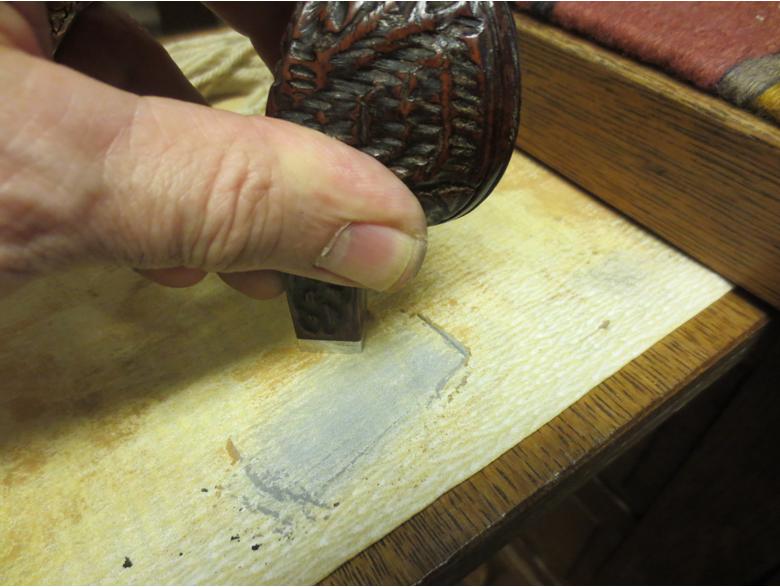
Suddenly I figured out a potential fix. If I were to sand down the shank end enough to allow the stem to sit correctly I could possibly get the alignment correct. I measured the depth of the threads in the shank and then those on the tenon and found that the thread went deeper than the length of the tenon by about 1/8 of an inch. If I could remove some of the aluminum shank end plate I could get it to seat correctly. I used my topping board and pressed the end of the aluminum end plate flat against the board. I carefully worked it in a circular motion on the sandpaper. I checked frequently to make sure I did not take of too much or too little of the aluminum plate.Bulldog11 The next photo shows the end plate after it had been topped sufficiently. The scratches from the sandpaper would easily be polished off with micromesh. I have also included four photos of the different angles on the stem to show how the underturn had been corrected. The fit was perfect.Bulldog12

Bulldog13

Bulldog14

Bulldog15

Bulldog16 With the stem fit corrected I then turned to cleaning out the inside of the stem and the shank. It took many pipe cleaners, cotton swabs and alcohol. I also used the drill bit from the KleenReem reamer to open the airway into the bowl. Bulldog17 I scrubbed the exterior of the bowl down with oil soap and a tooth brush. I picked out the debris in the twin rings around the cap. I sanded the stem down with 220 grit sandpaper and then followed that by sanding with a medium and a fine grit sanding sponge.Bulldog18

Bulldog19 There were two small tooth marks in the vulcanite on the underside of the stem. I repaired those with a drop of clear super glue. I sanded the glue patch with 220 grit sandpaper and then repeated sanding it with the two sanding sponges. When finished I sanded it with micromesh sanding pads – wet sanding with 1500-2400 grit pads and dry sanding with 3200-12,000 grit pads. Between each set of three pads I rubbed the stem down with an Obsidian Oil saturated sock that I use for this purpose. I let it sit for just a few moments before continuing with the next grit of pads. The oil gives traction for polishing the stem.Bulldog20

Bulldog21

Bulldog22 I used the micromesh pads to also polish the aluminum on the shank and the stem. I worked through all of the grits to polish it to a shine. I also used 0000 steel wool to polish the stinger and the tenon. Then I buffed the stem with Blue Diamond Plastic polish to further raise the shine. I put it back on the bowl and buffed the bowl and shank lightly with Blue Diamond. A light touch keeps the buffing compound from collecting in the grooves. I also carefully worked around the white stamping on the shank. I gave the stem several coats of carnauba wax and then rubbed the bowl down with Halcyon II Wax and hand buffed the bowl and shank with a shoe brush. The finished pipe is shown in the photos below. I really like the shape and the rustication on this one. I am looking forward to loading a bowl and enjoying it on the weekend ahead. Thanks John.Bulldog23

Bulldog24

Bulldog25

Bulldog26

Bulldog27

Bulldog28 This LHS Bulldog is a beautiful pipe and the rustication and stain gives it almost a multidimensional look. It should make someone a great addition. The entirety of the sale price will go to the Nepal project. I will pay the postage so that does not get taken off the proceeds. If you are interested in reading about the SA Foundation you can look at their website at http://www.safoundation.com.

Thanks for looking.