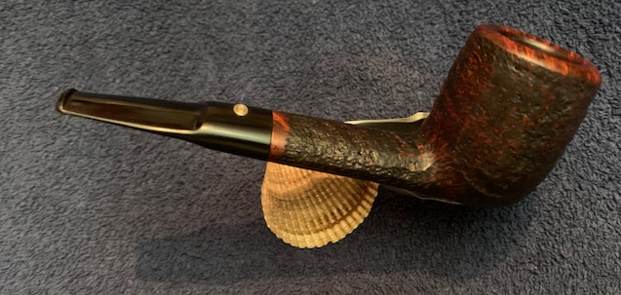
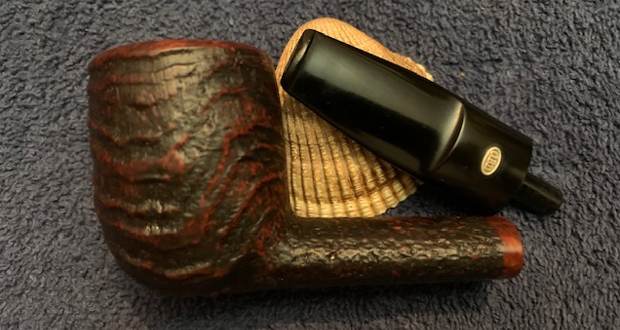
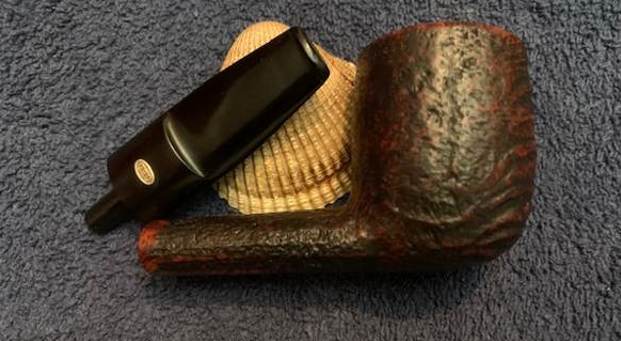
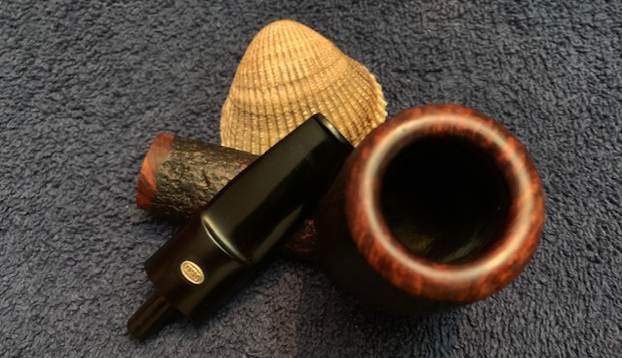
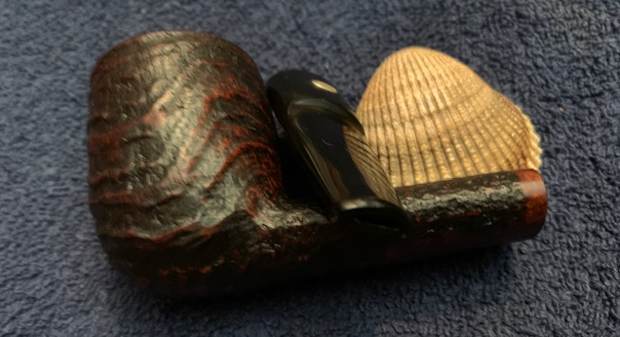
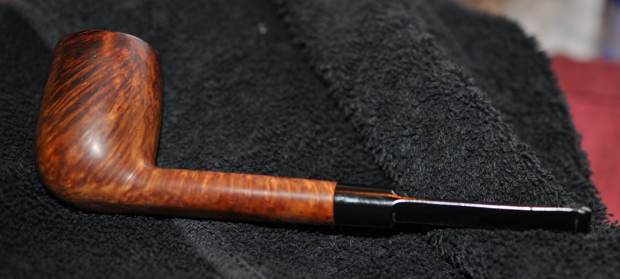
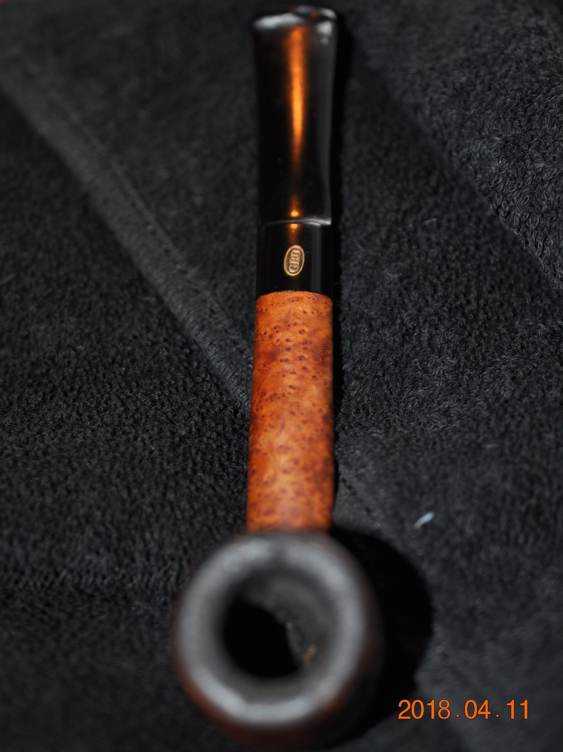
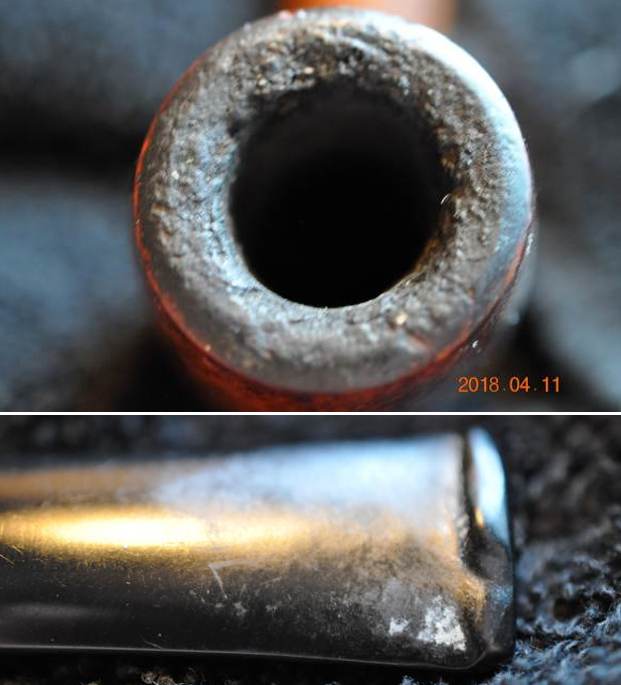
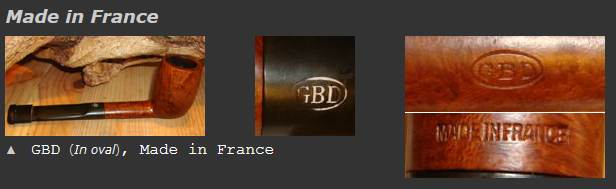
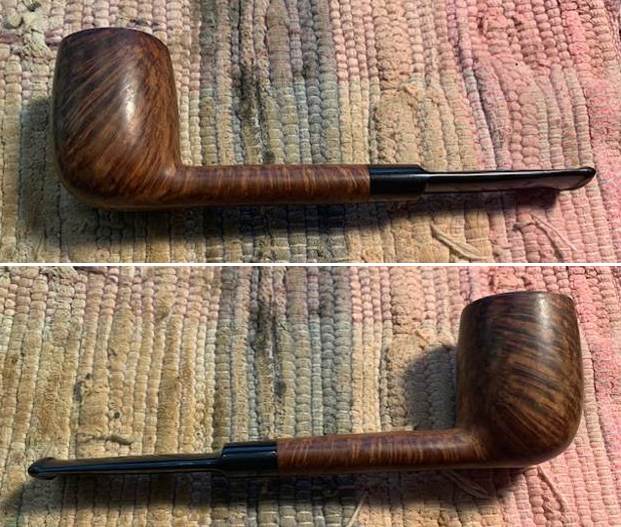
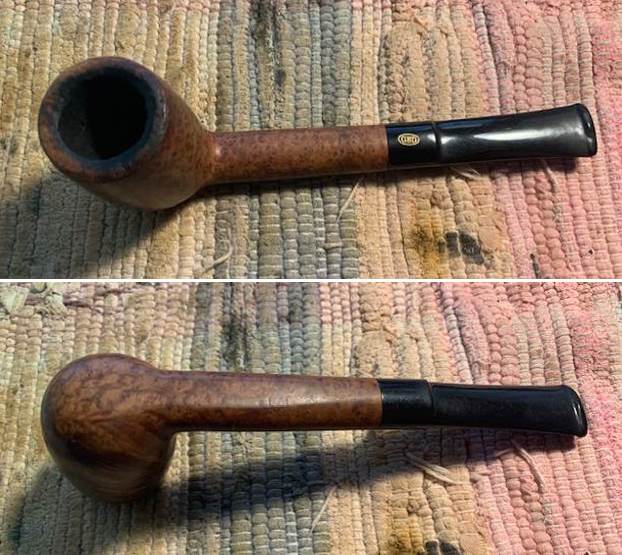
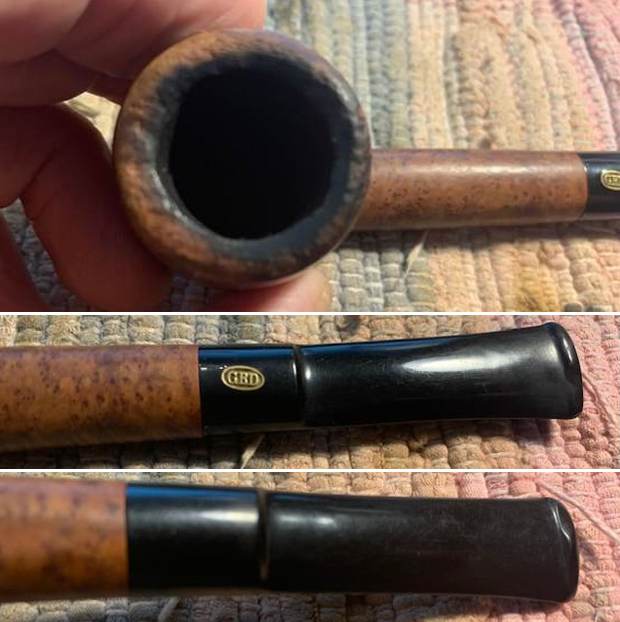
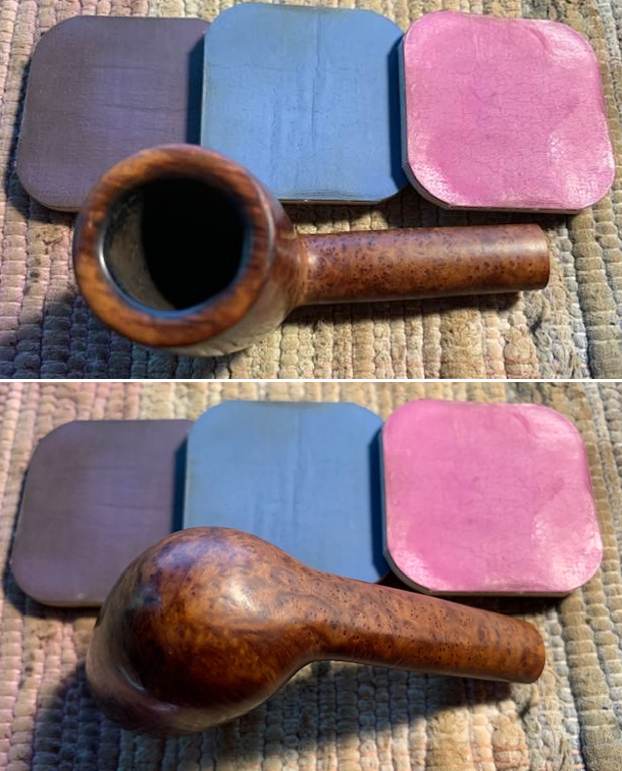
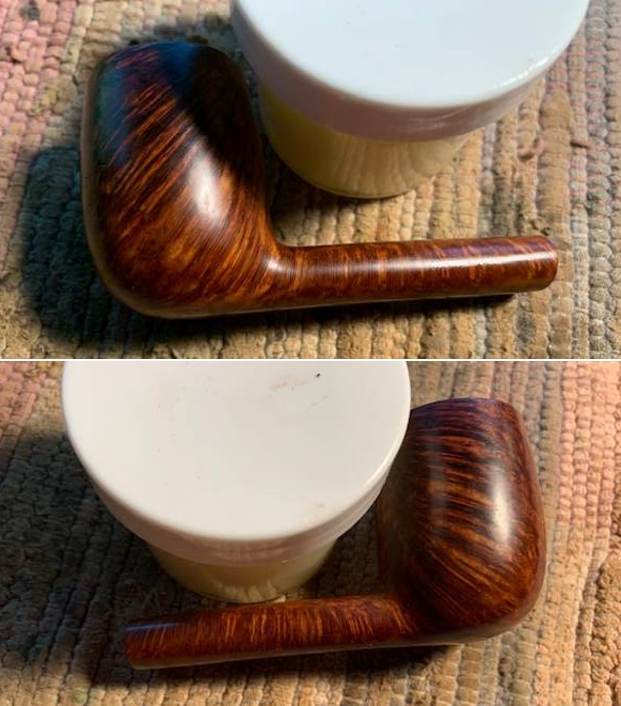
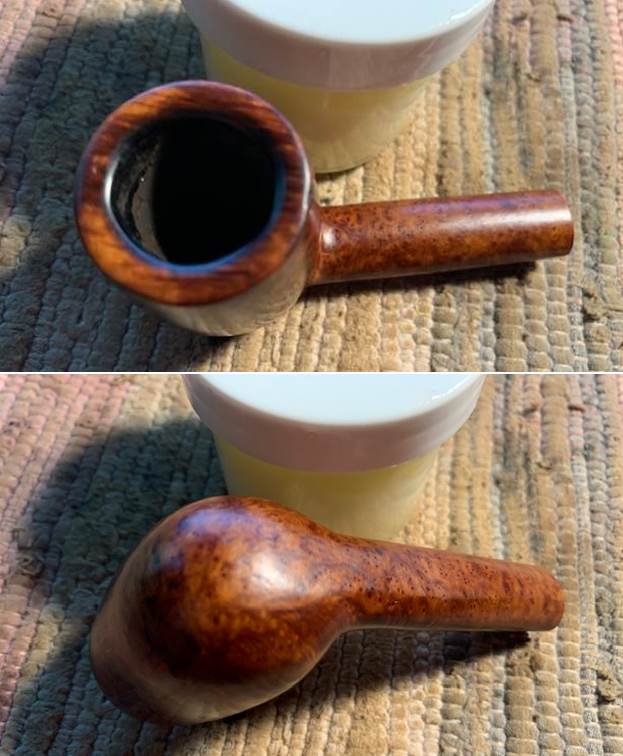
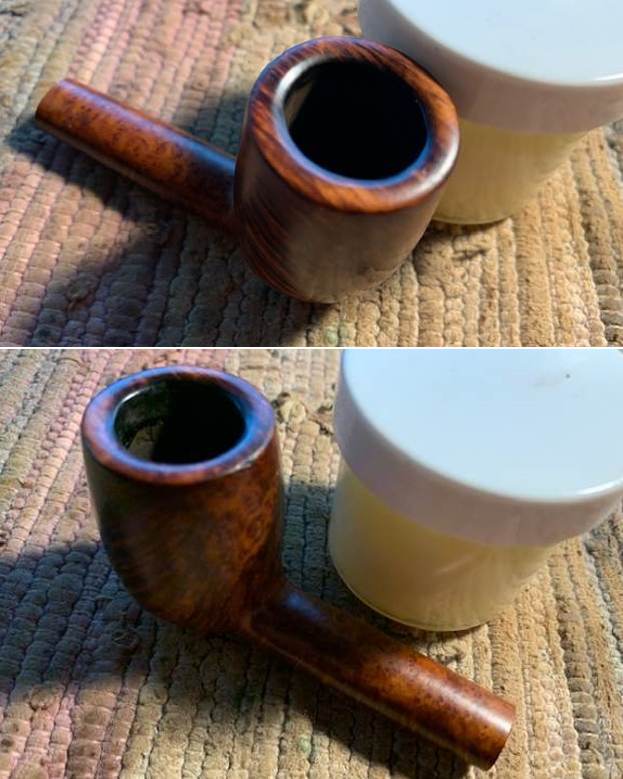
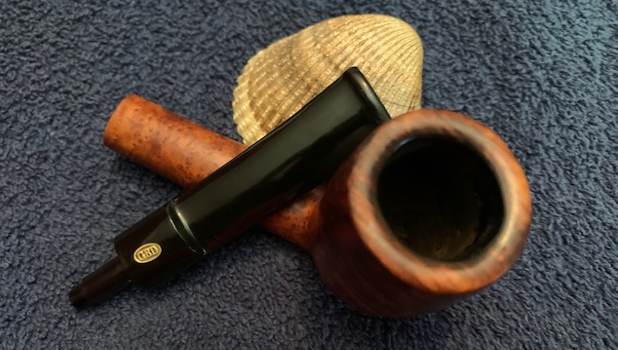
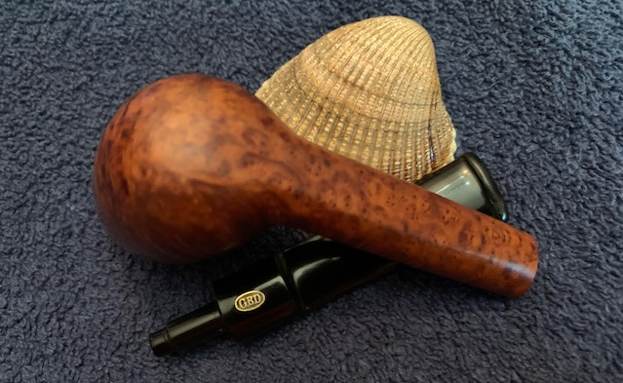
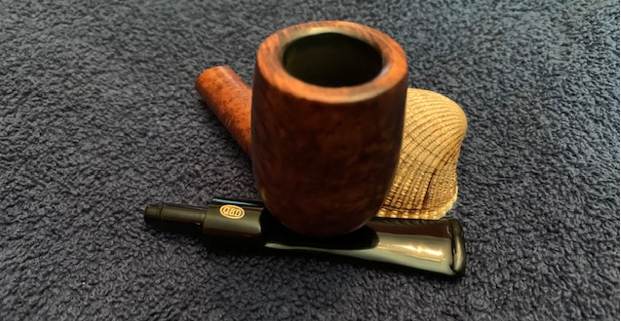
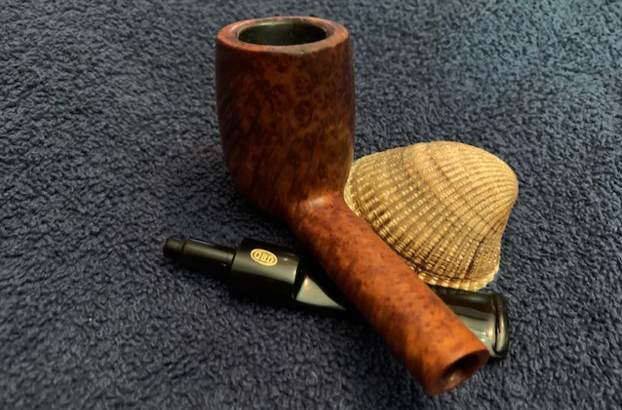
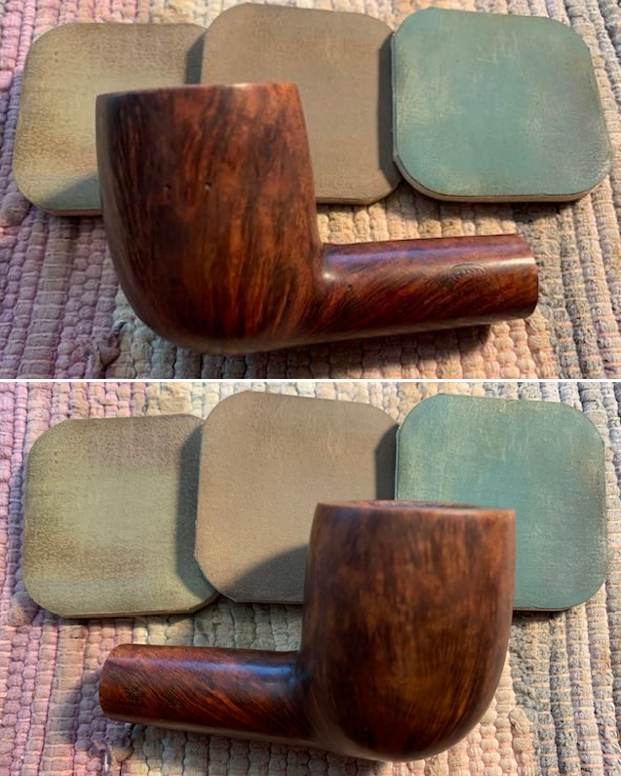
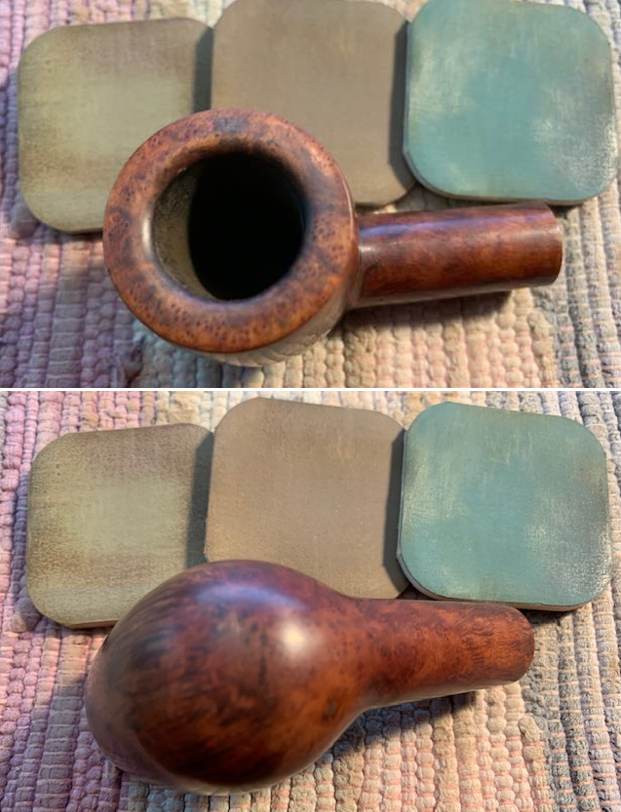
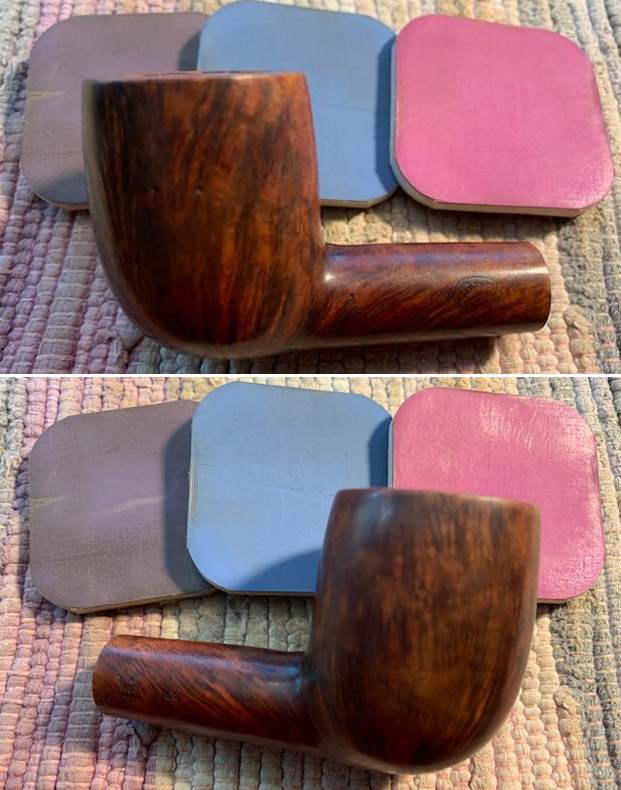
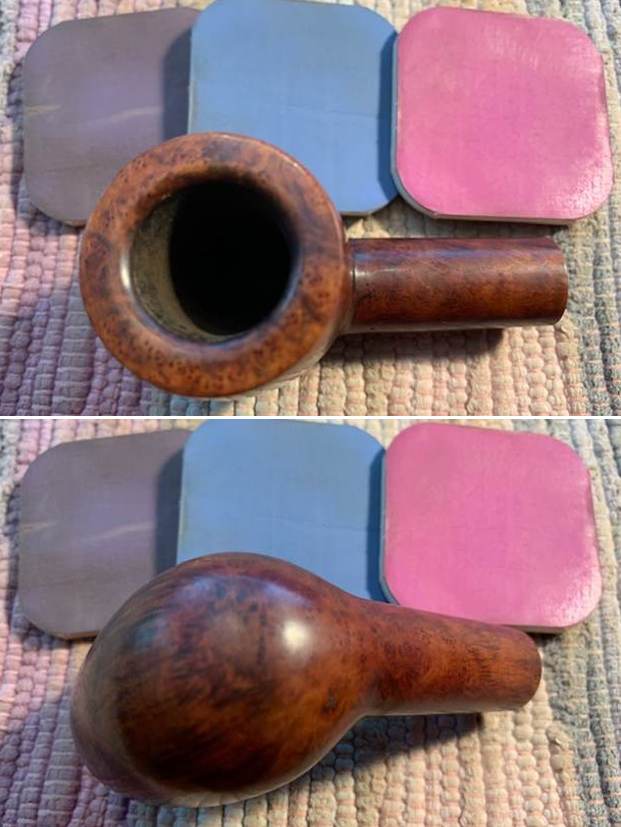
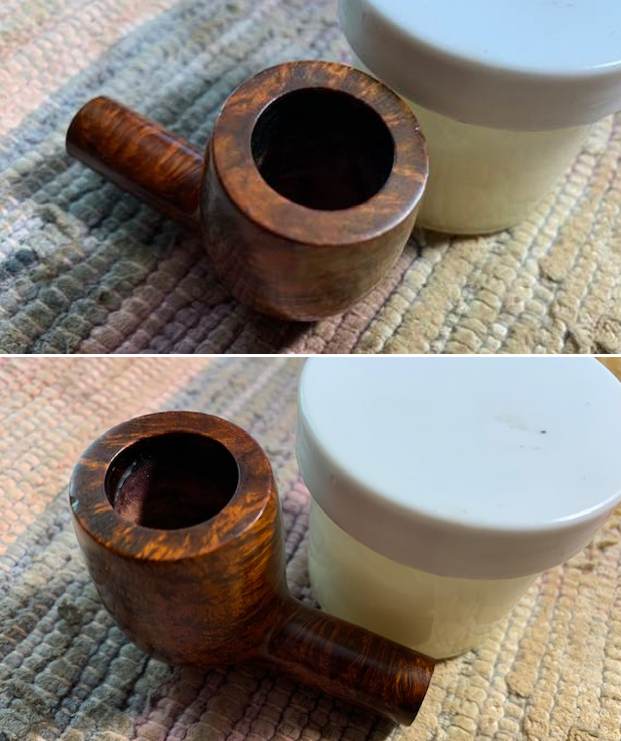
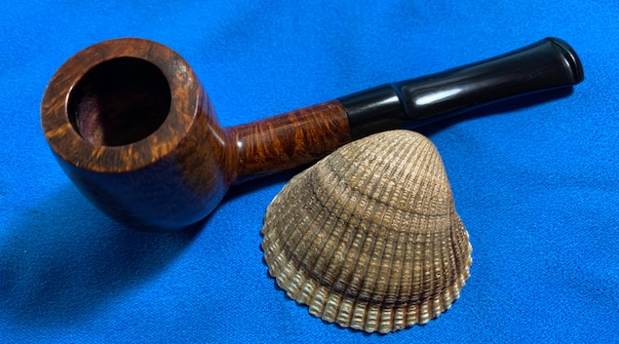
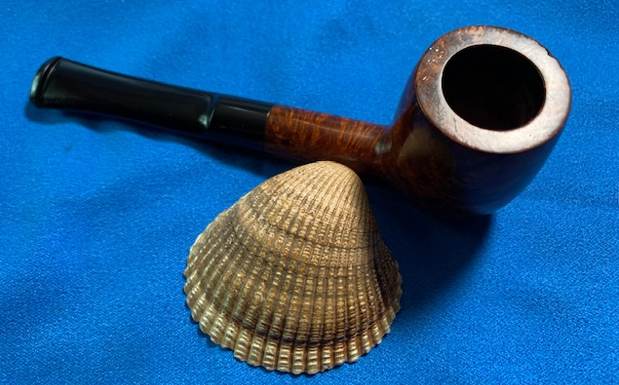
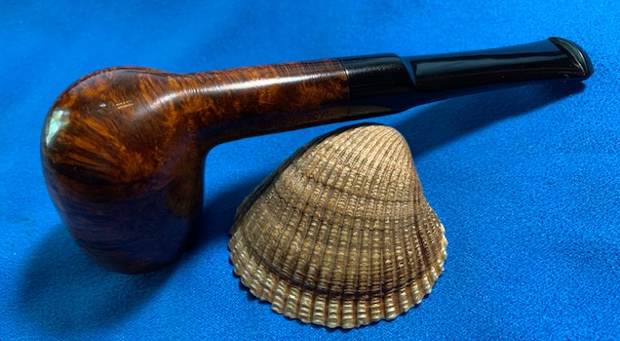
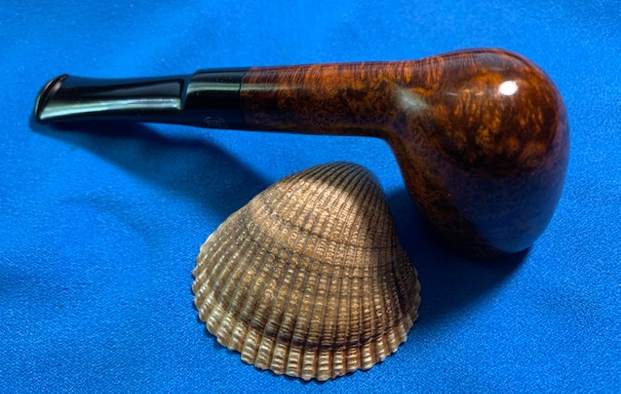
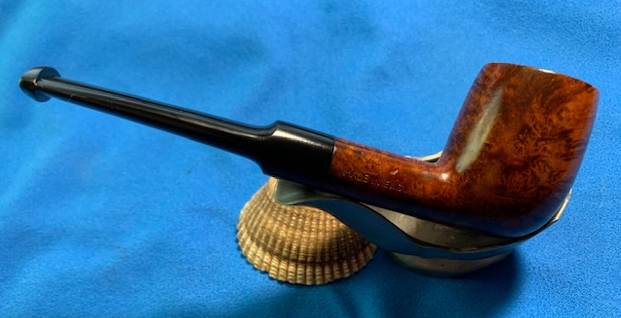
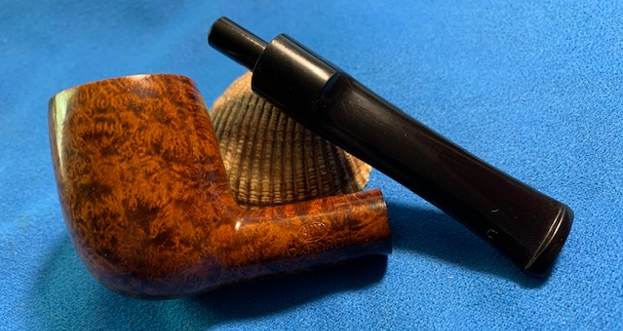
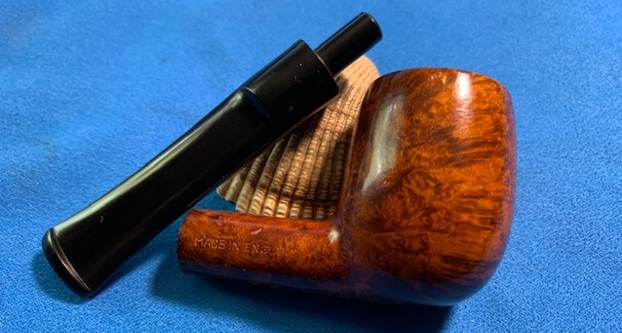
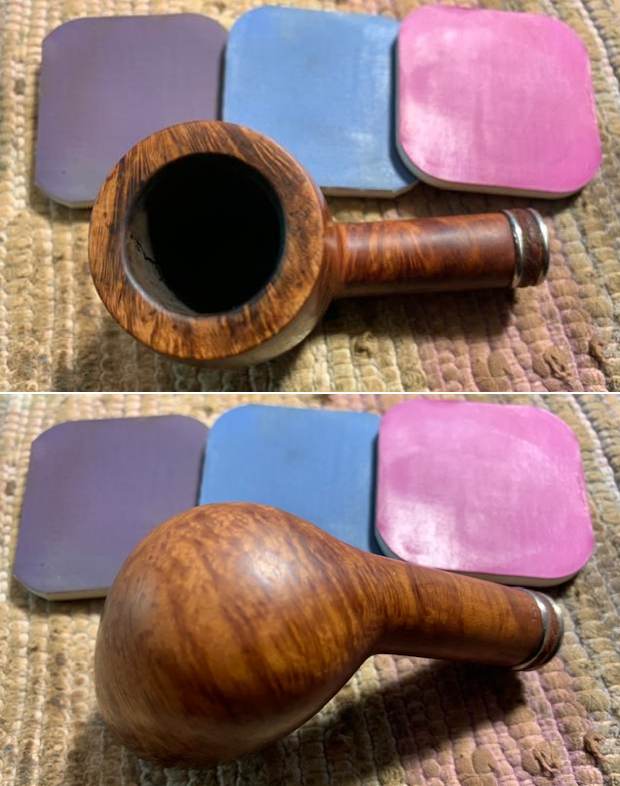
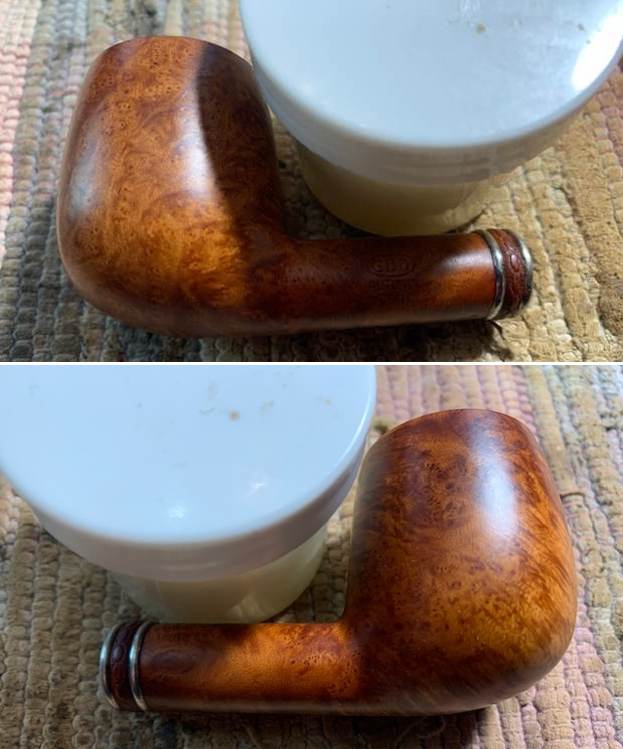
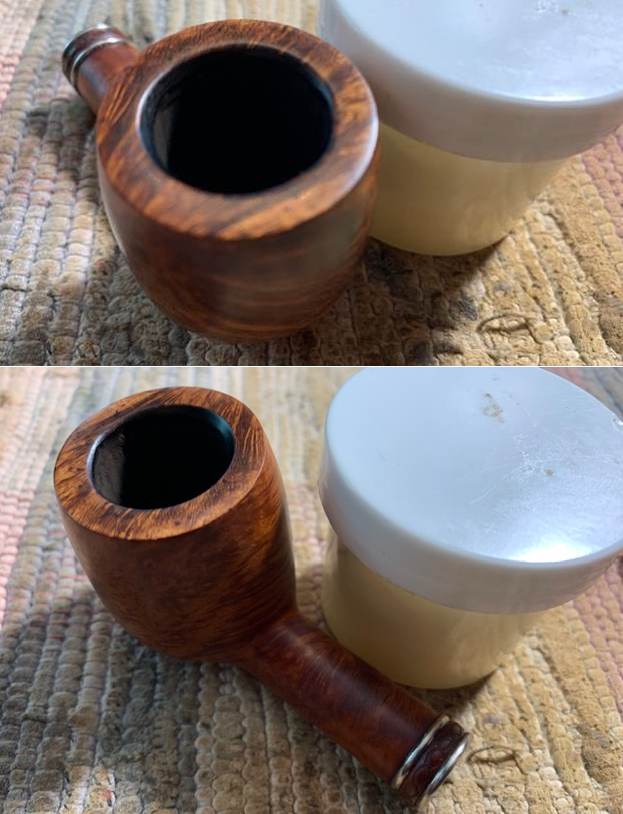
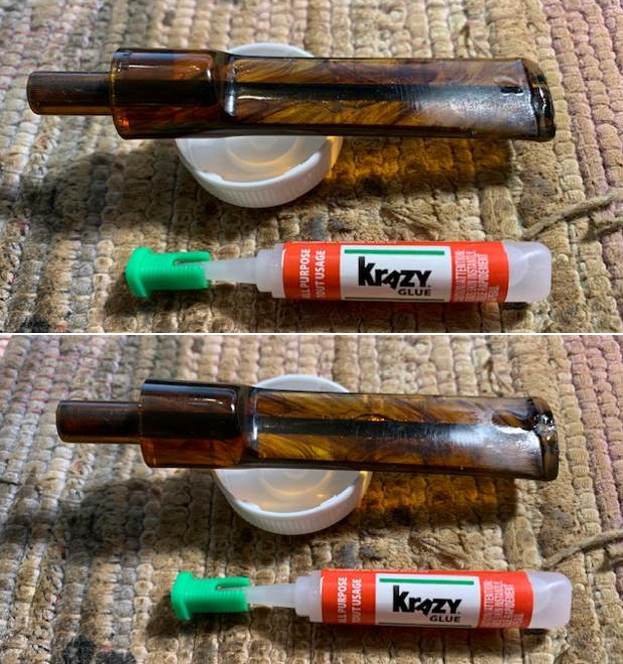
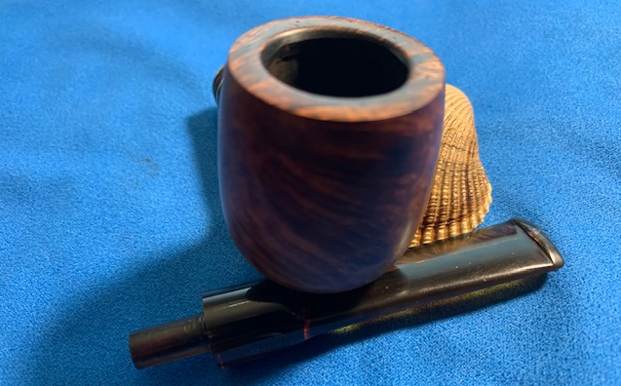
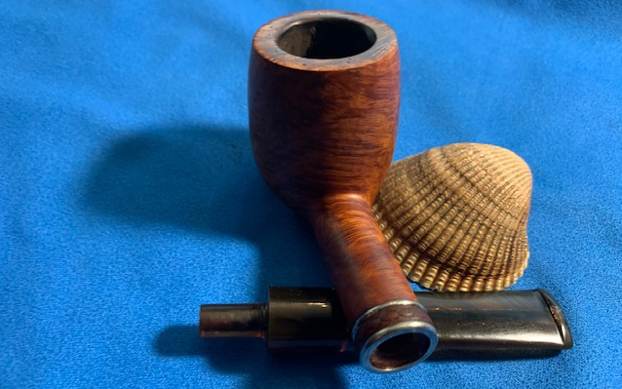
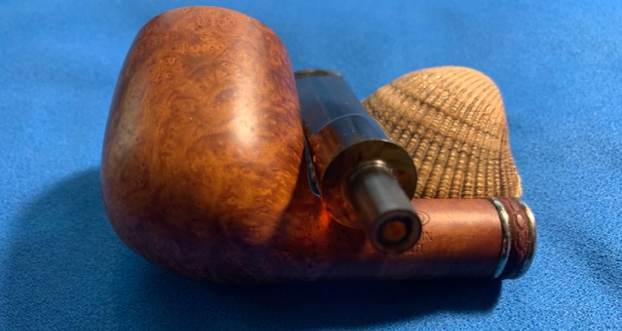
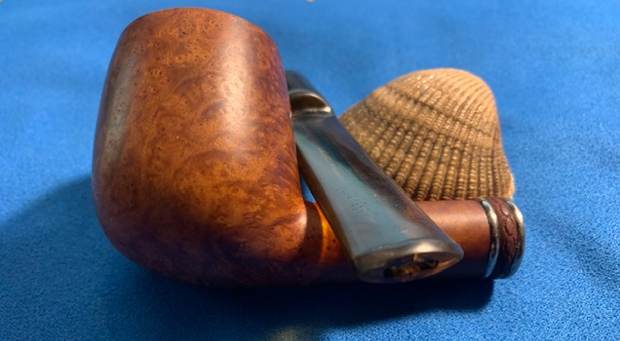
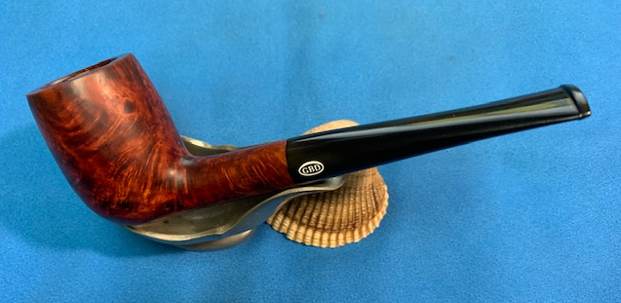
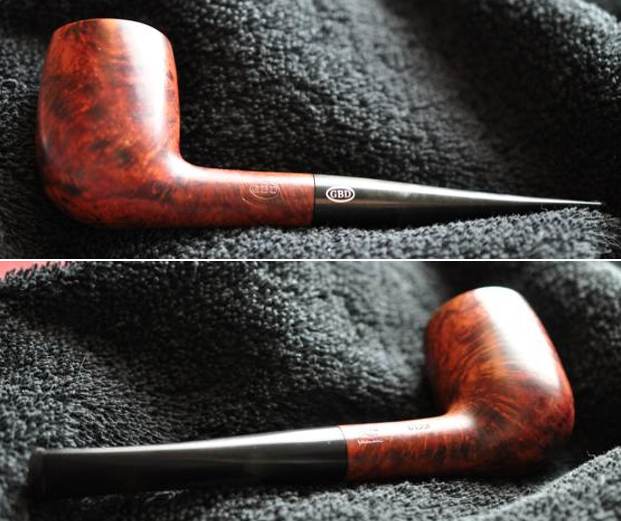
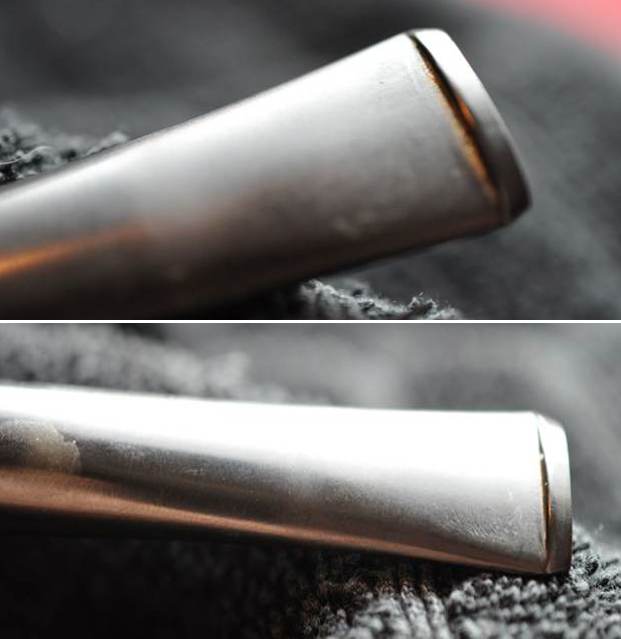
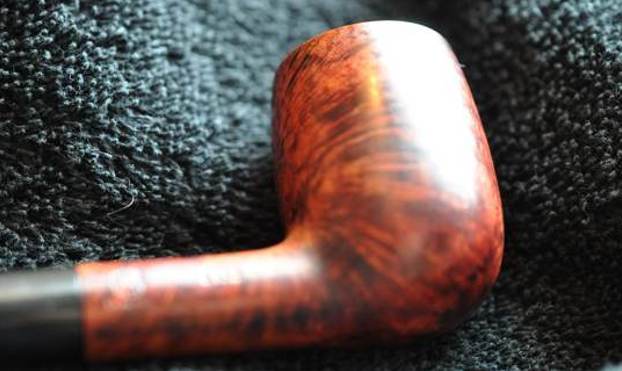
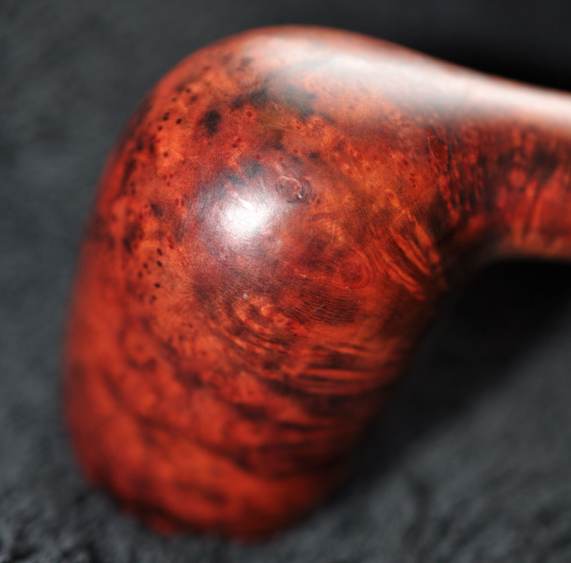
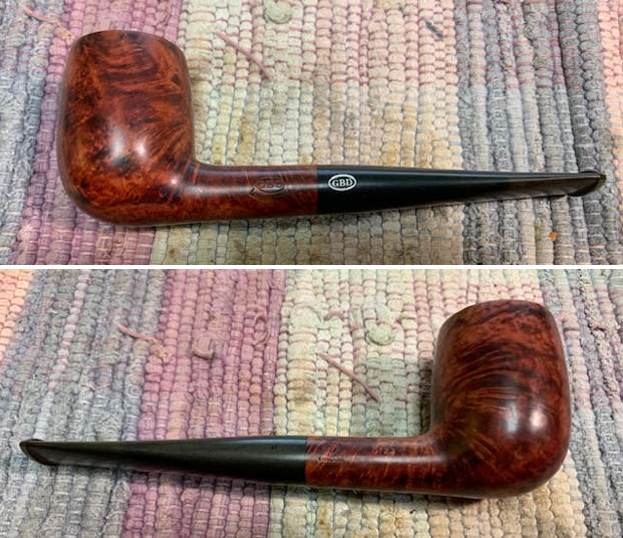
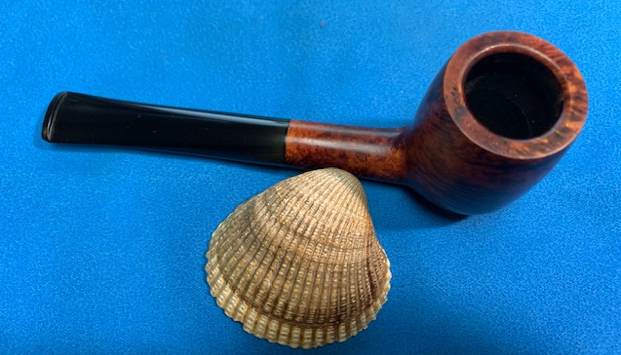
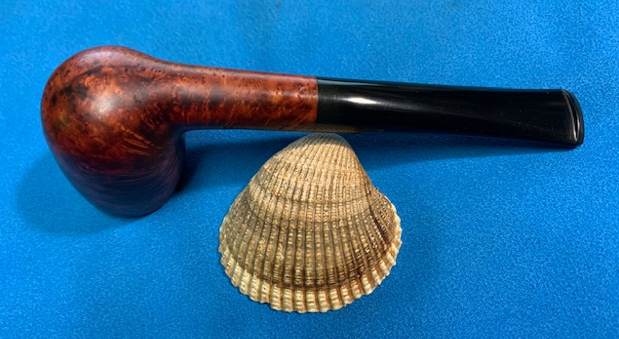
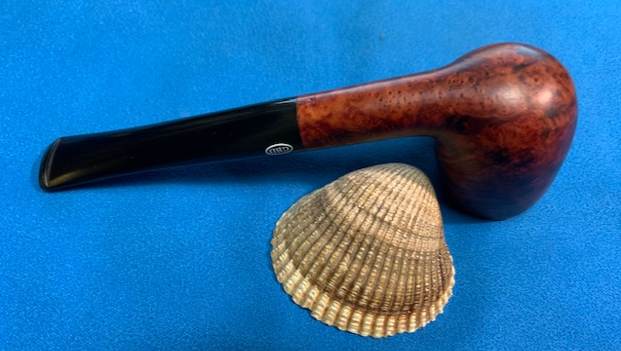
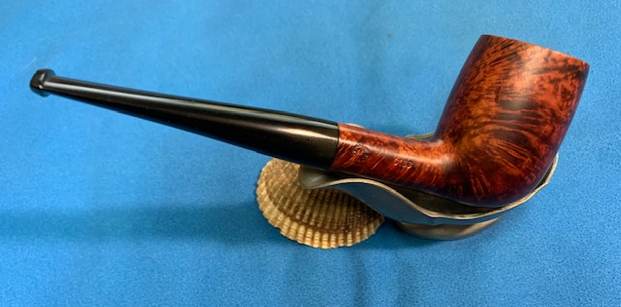
Tag Archives: GBD pipes

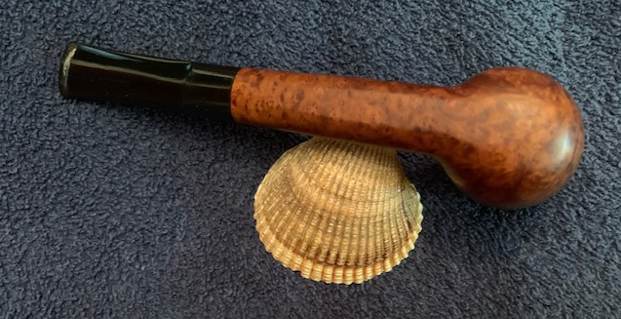
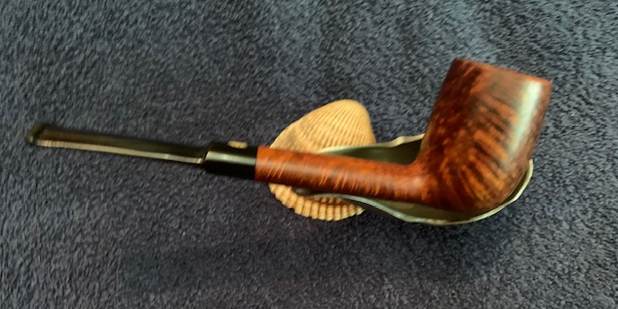
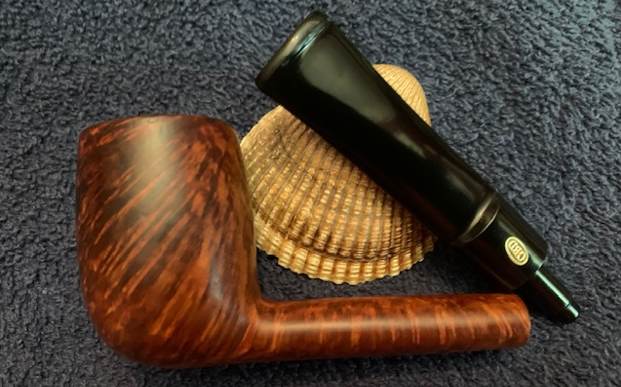
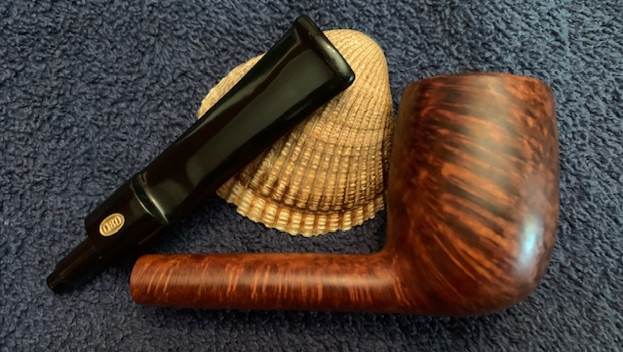
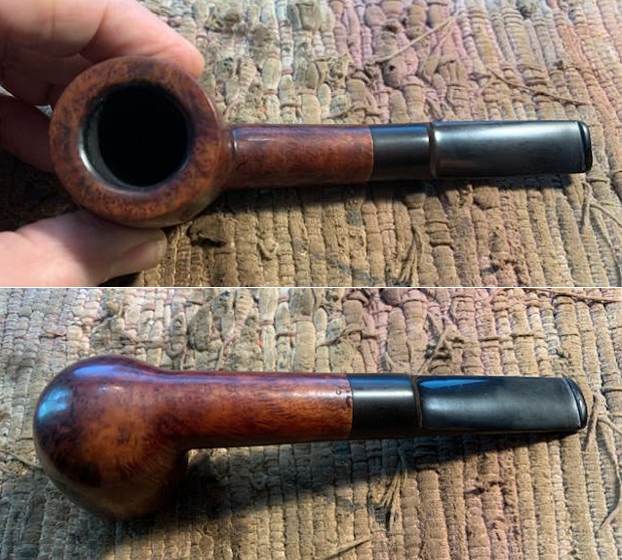
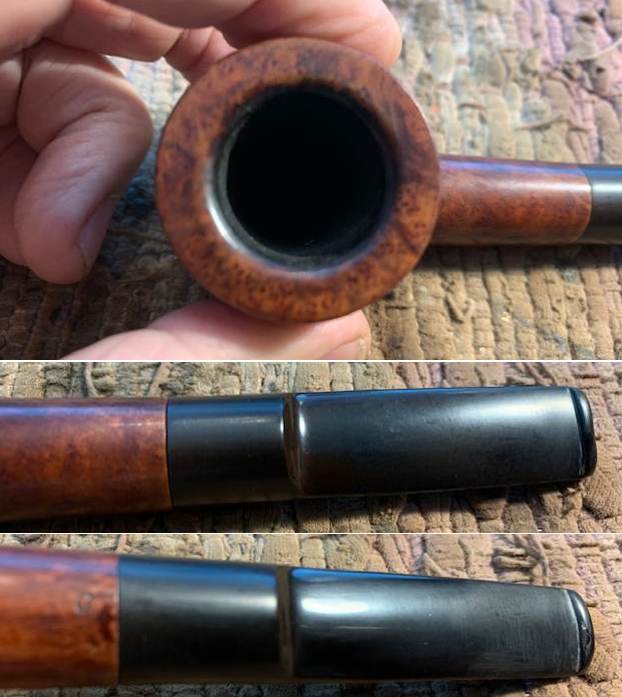
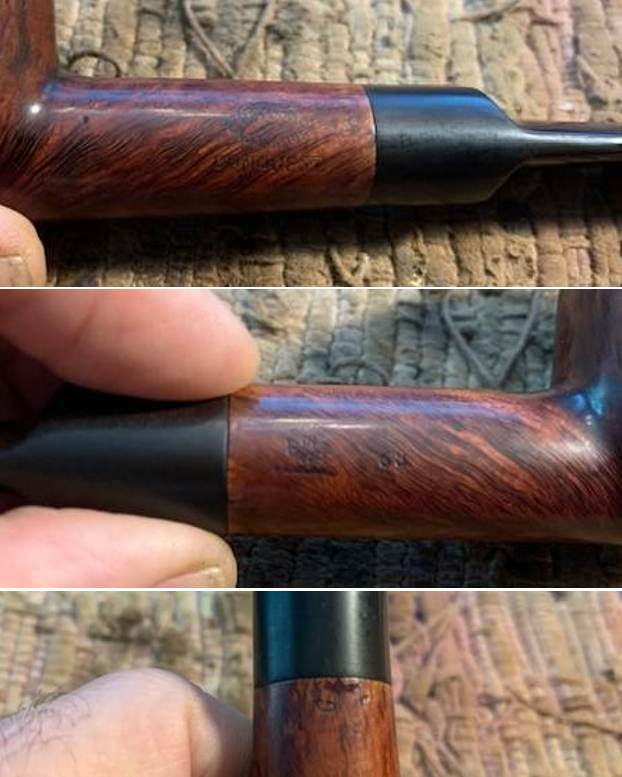
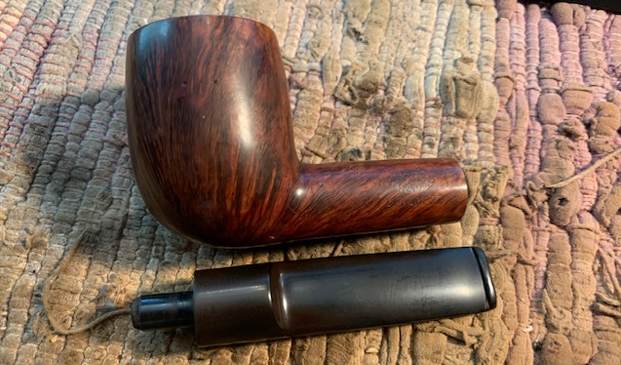
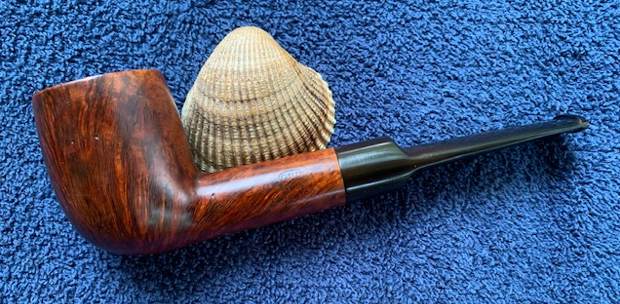
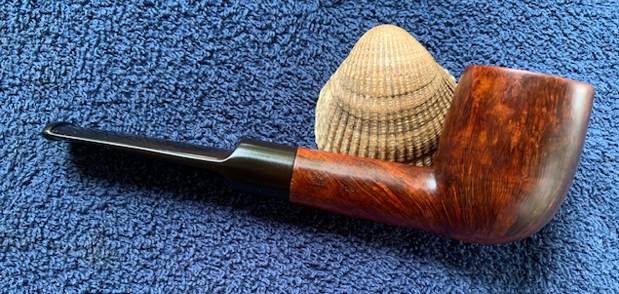
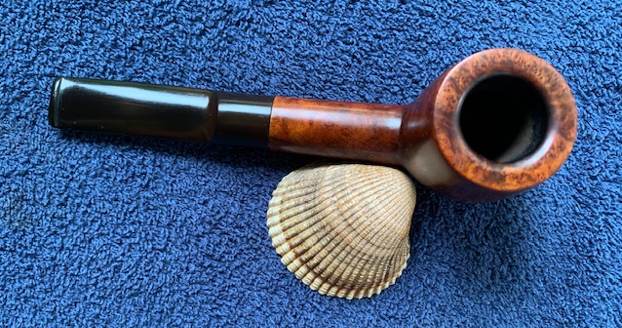
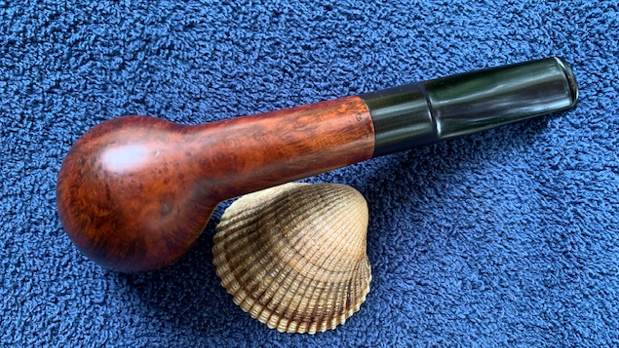
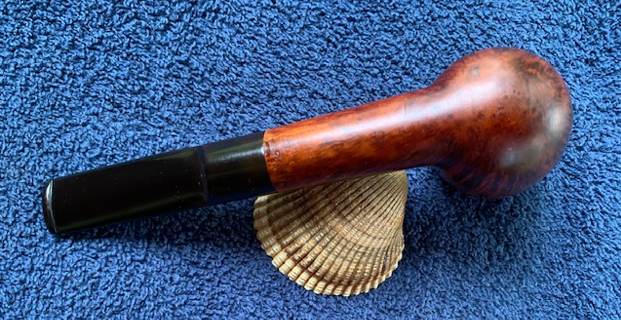
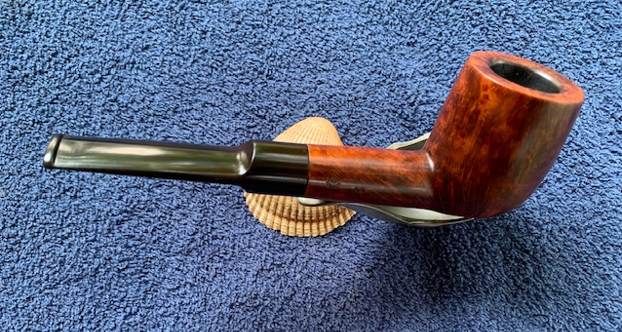
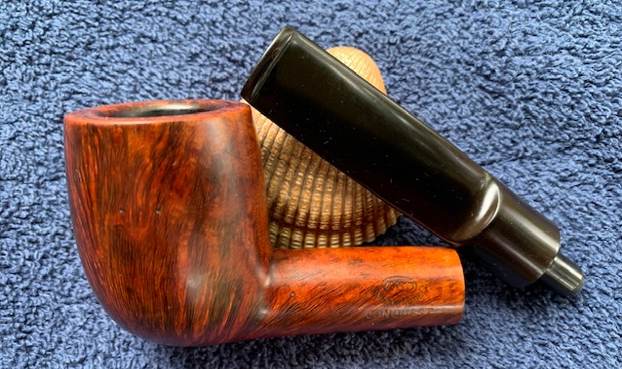
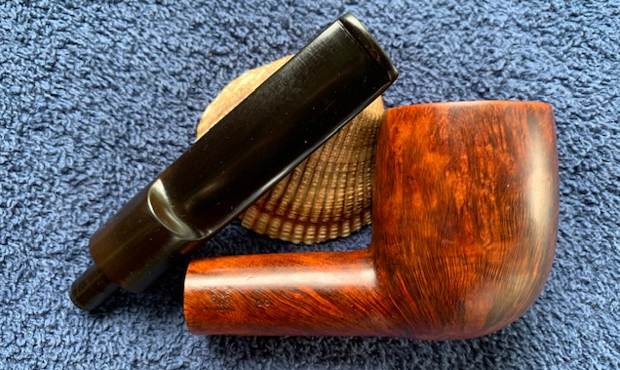
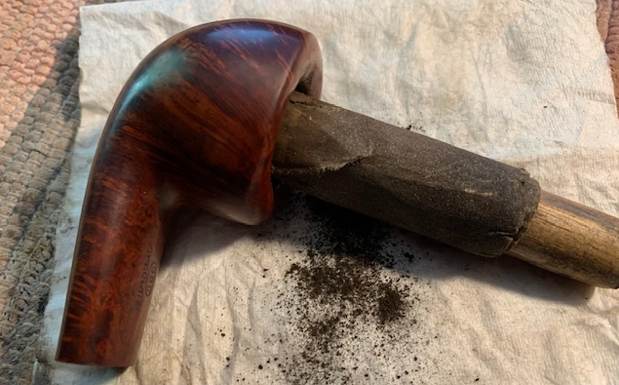
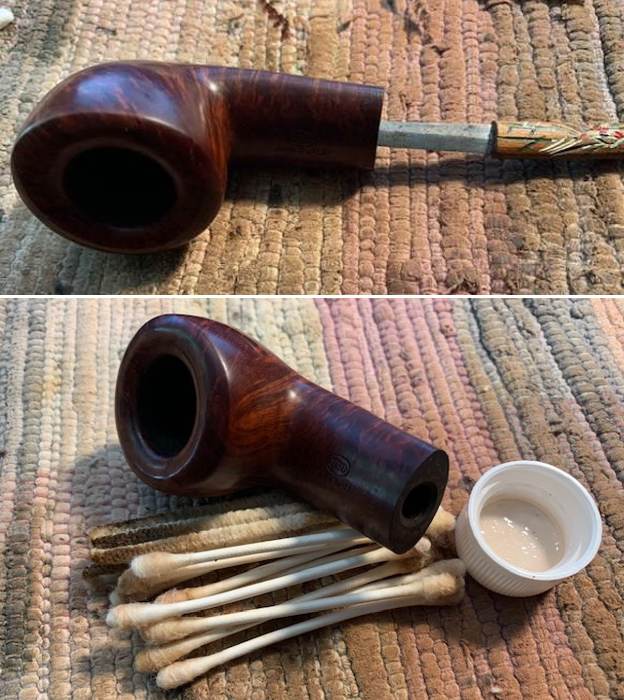
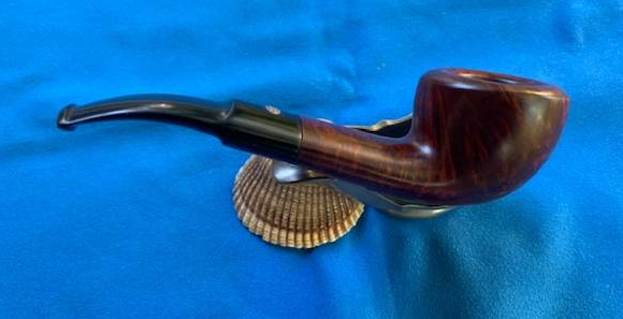
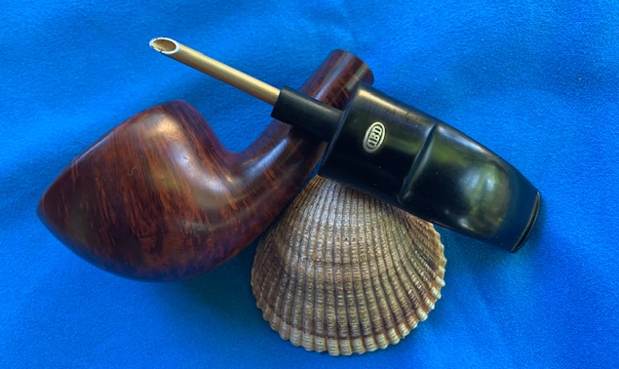
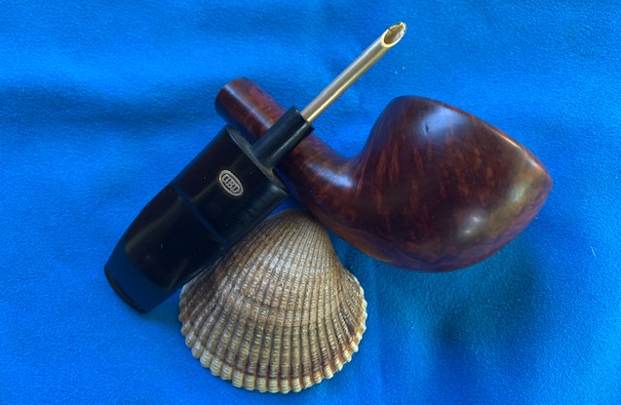
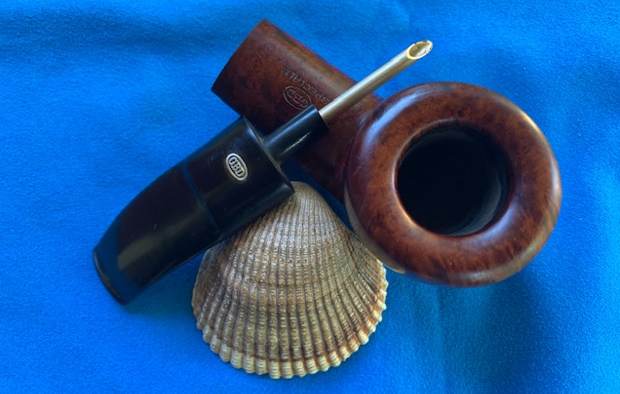
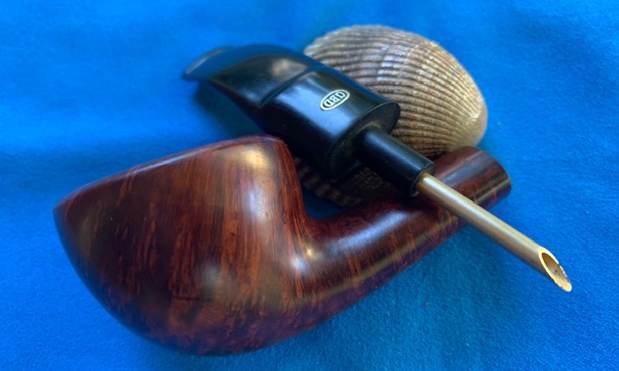
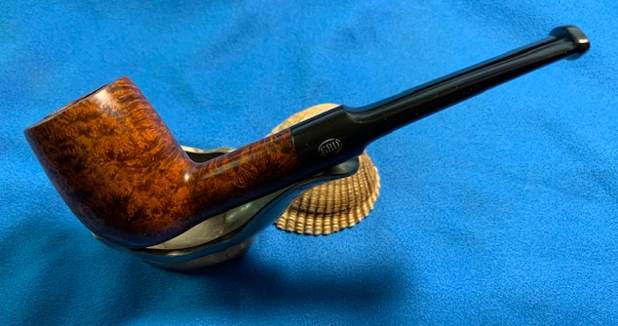
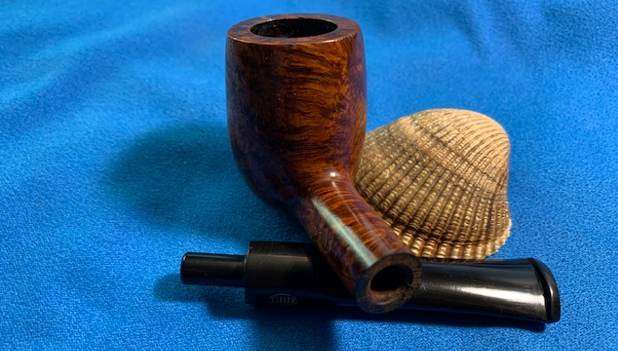
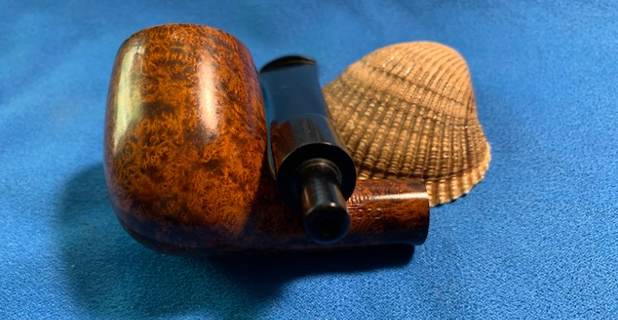
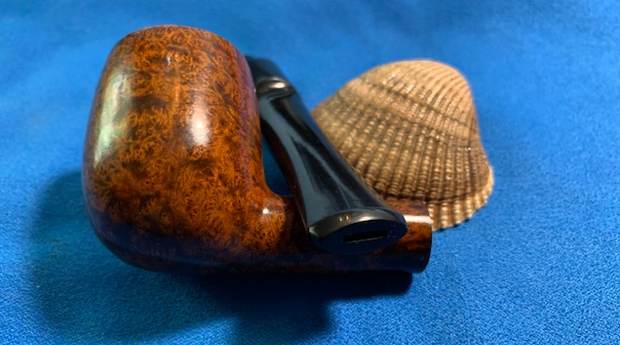
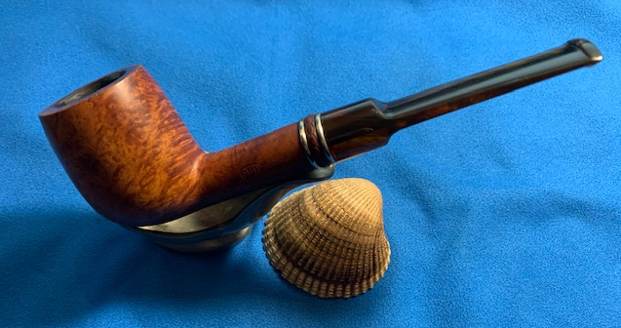
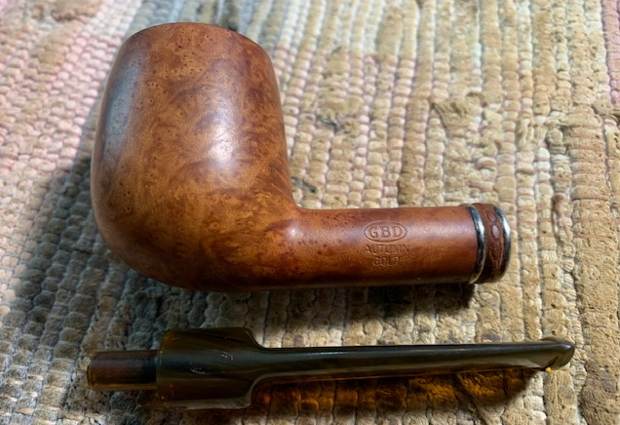
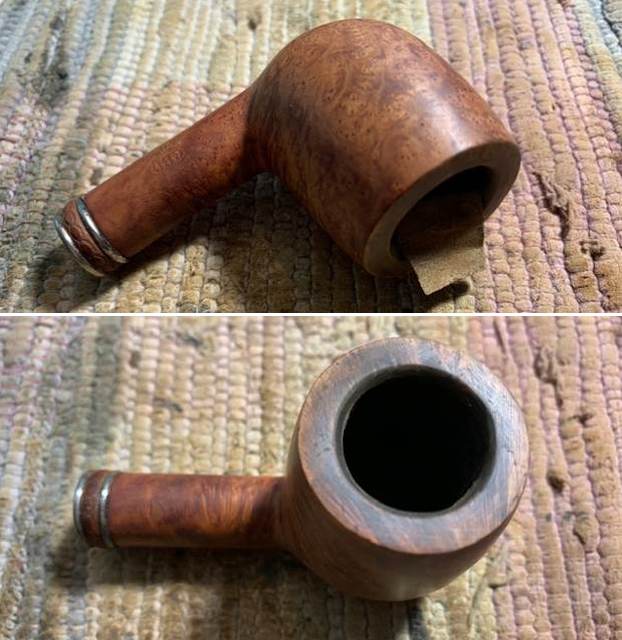
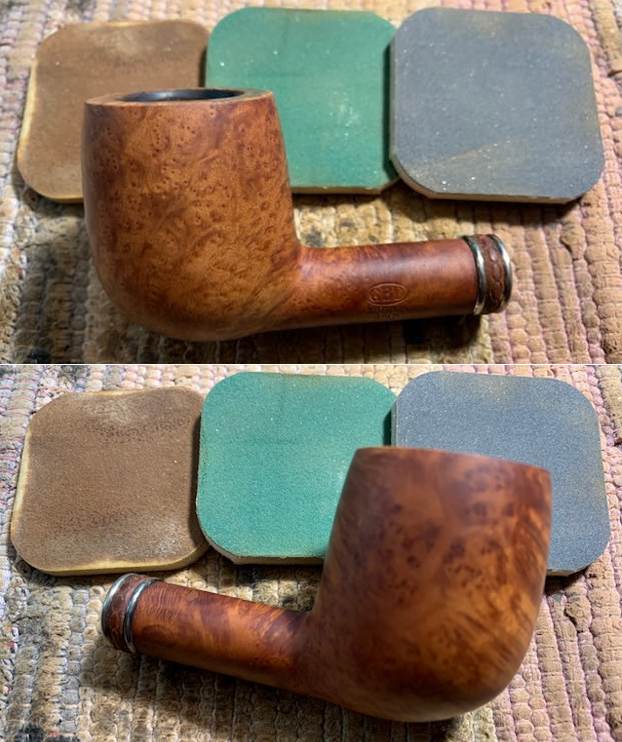
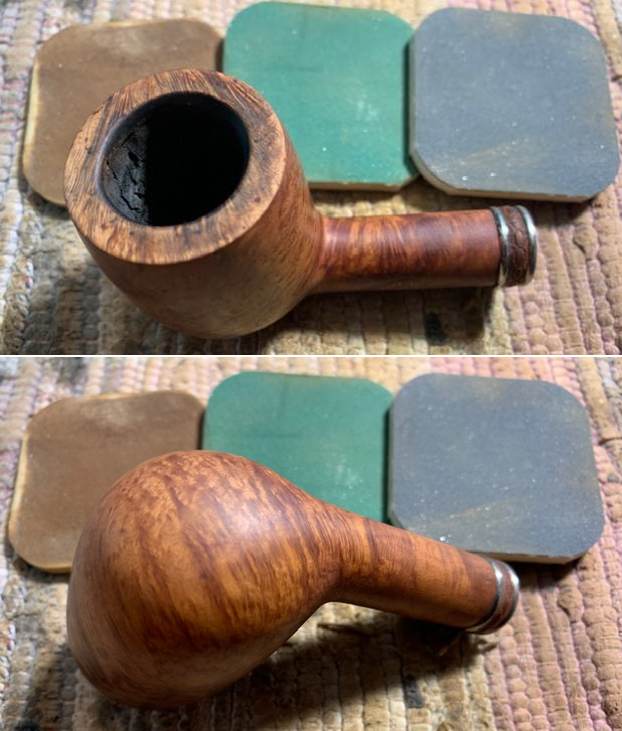
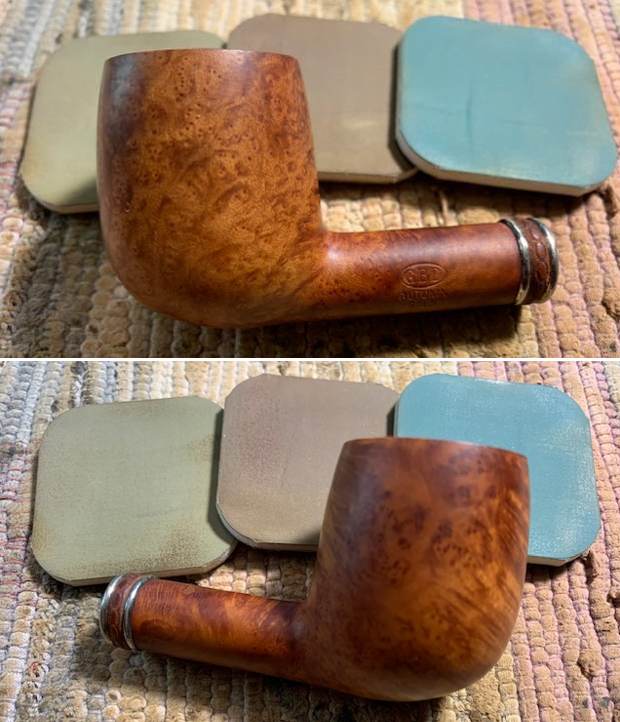
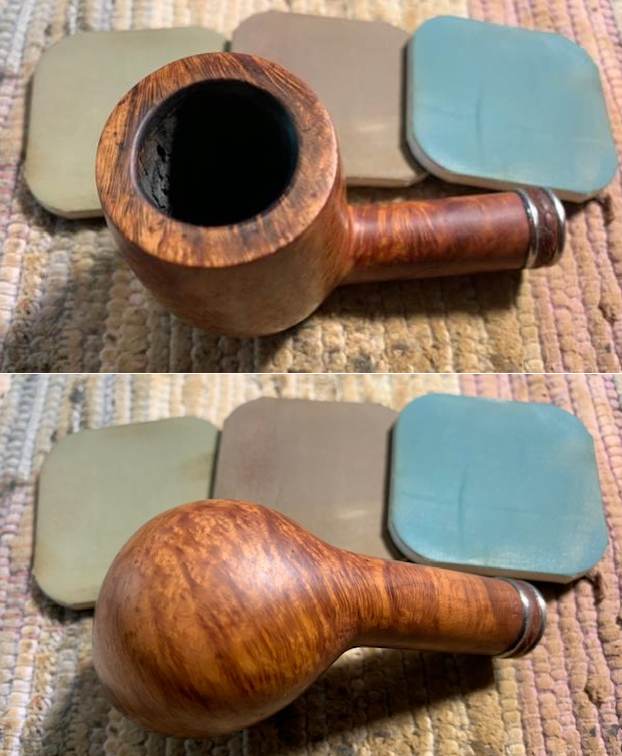
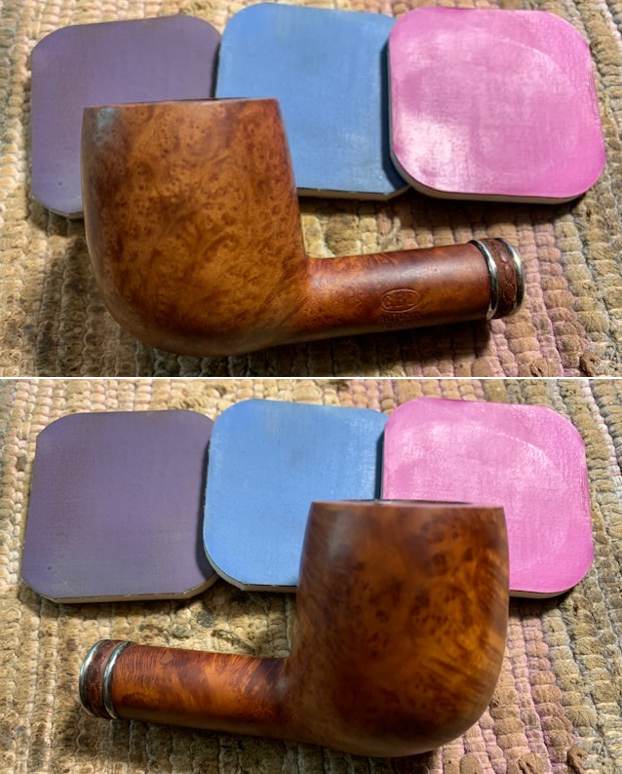
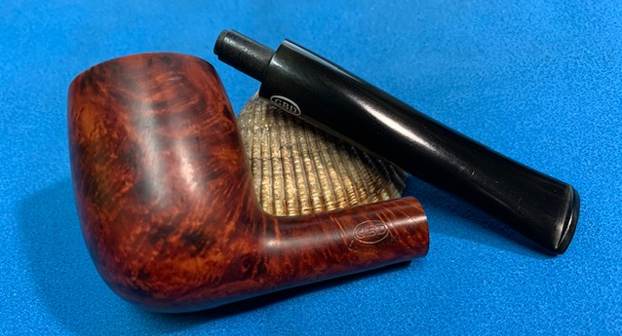
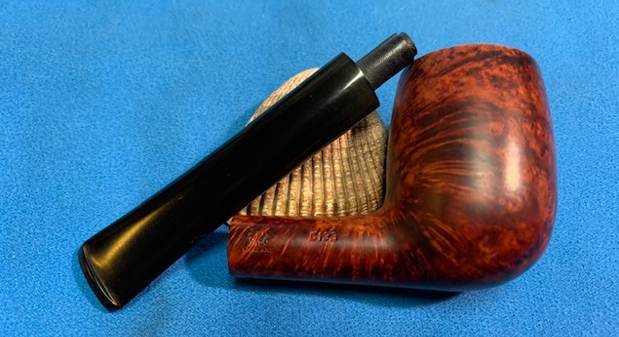
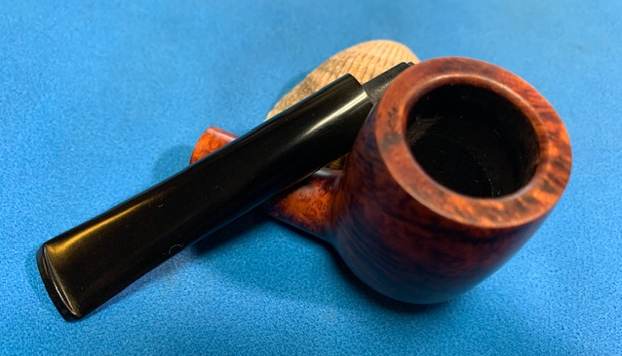
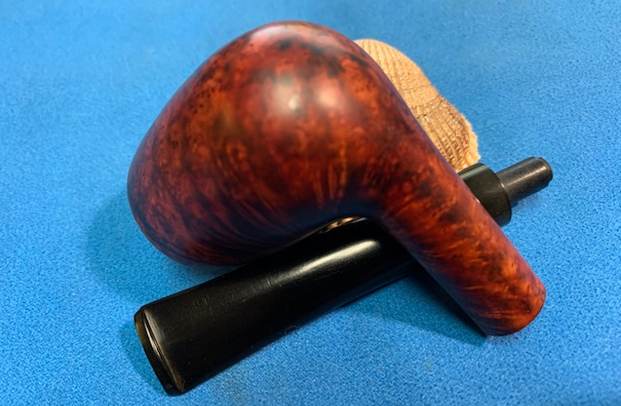
Restemming and Restoring a GBD International London Made Colossus 264


Blog by Steve Laug

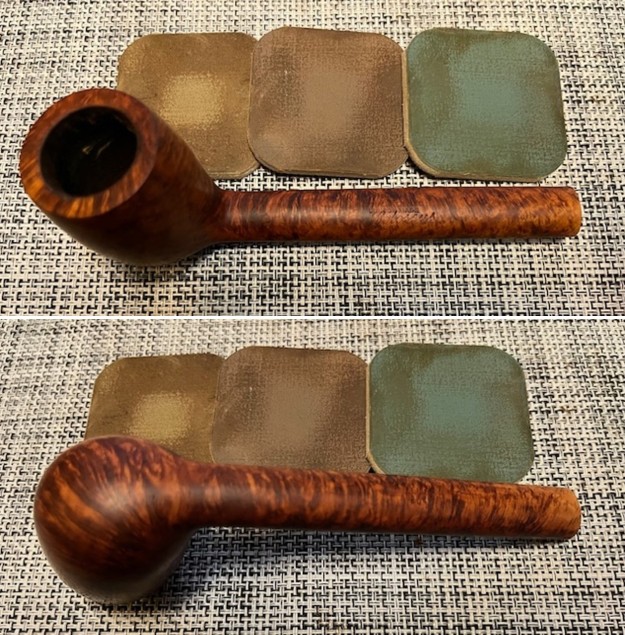
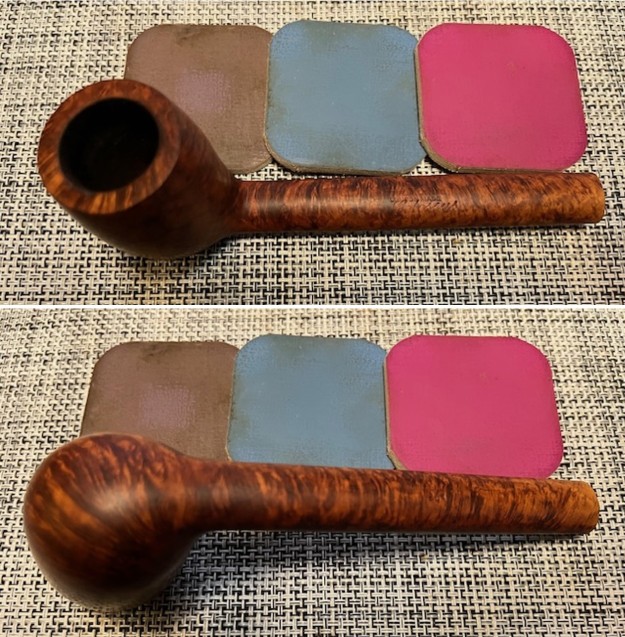
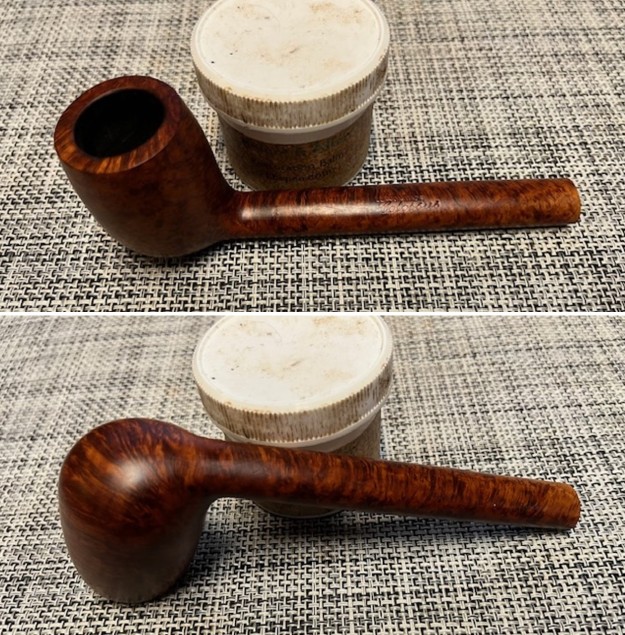
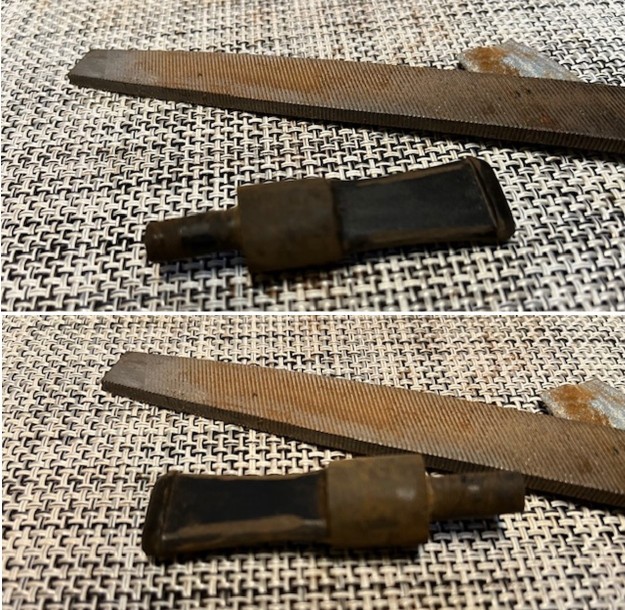
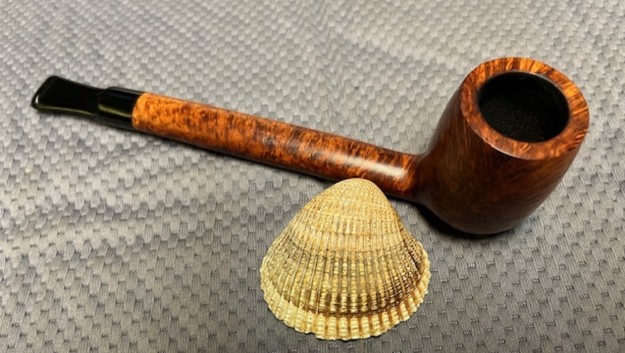
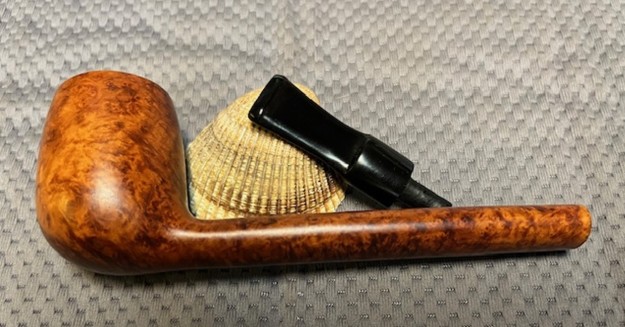
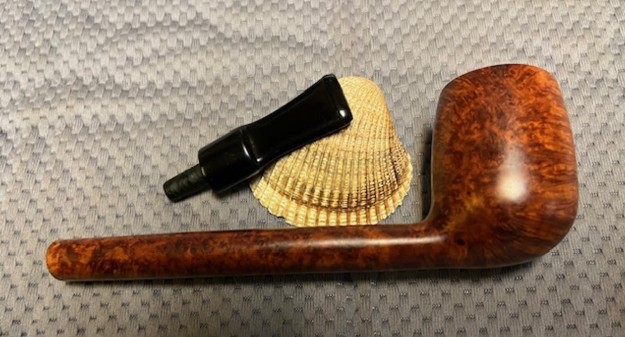
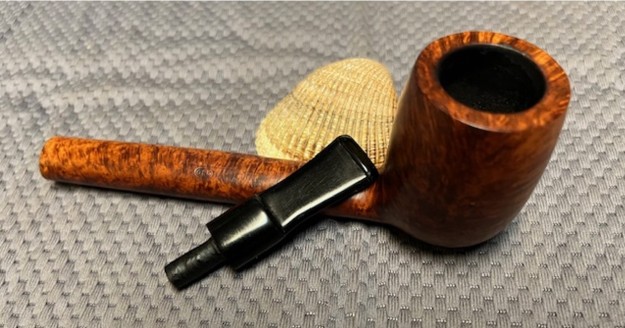
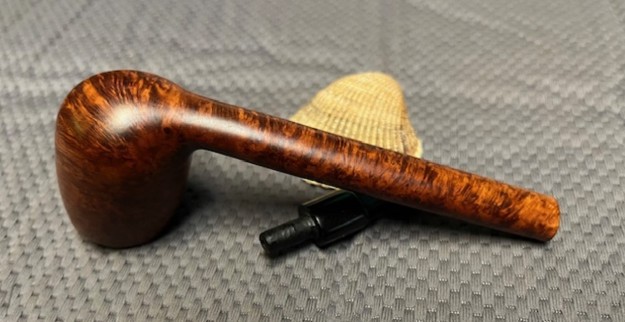
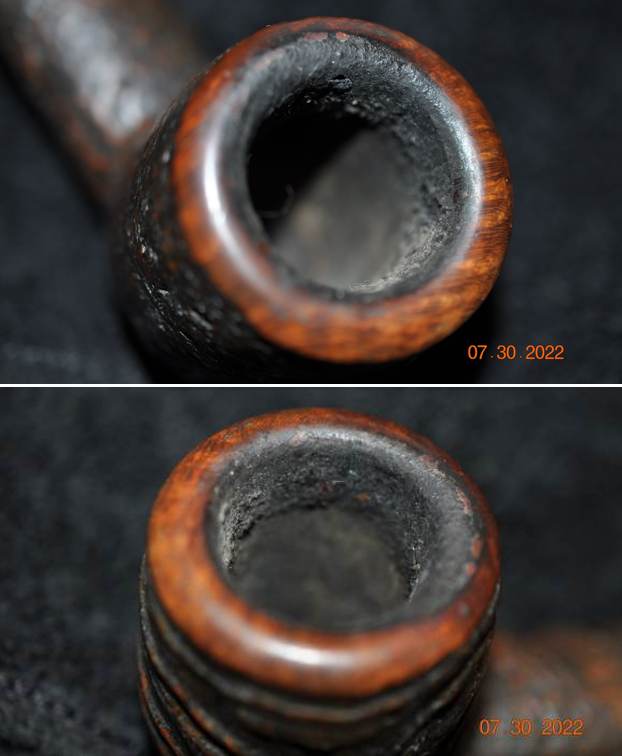
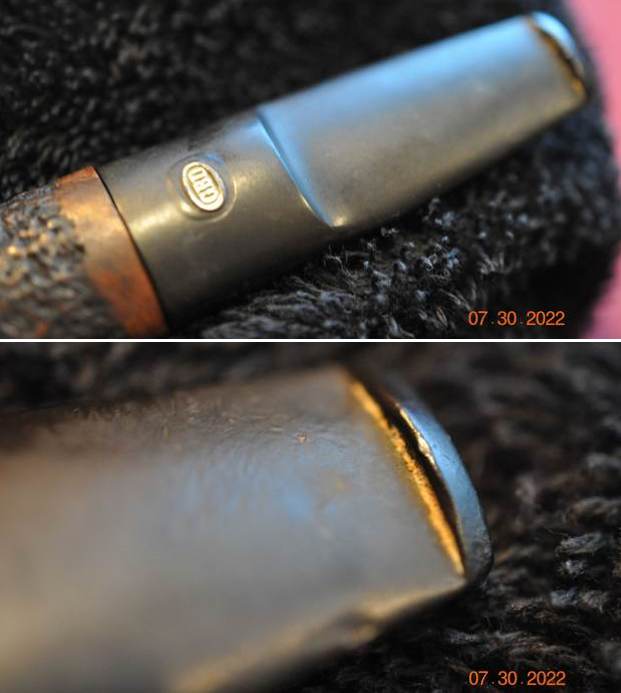
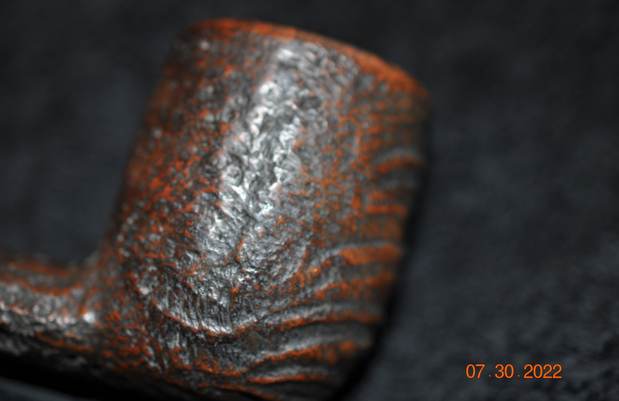
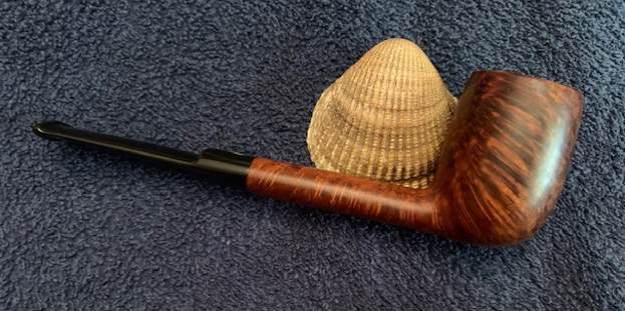
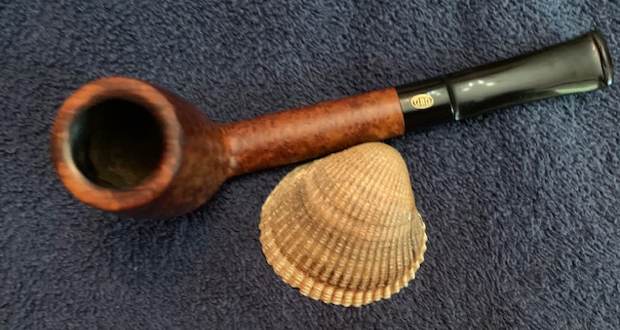
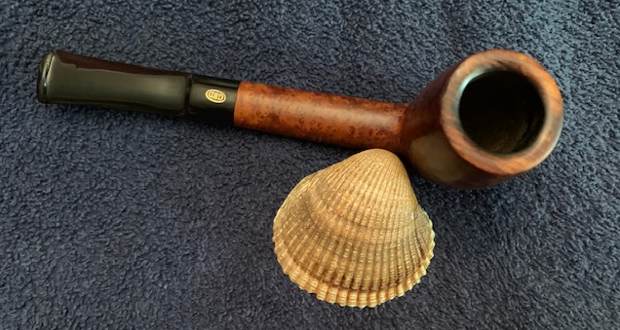
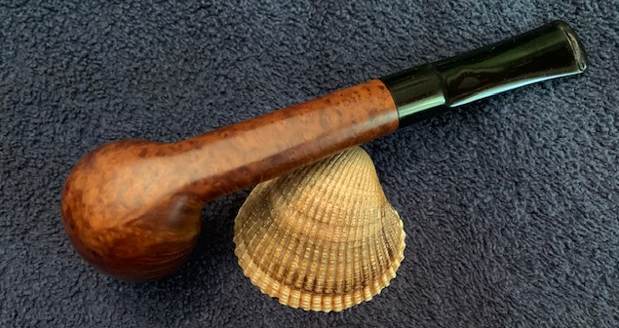
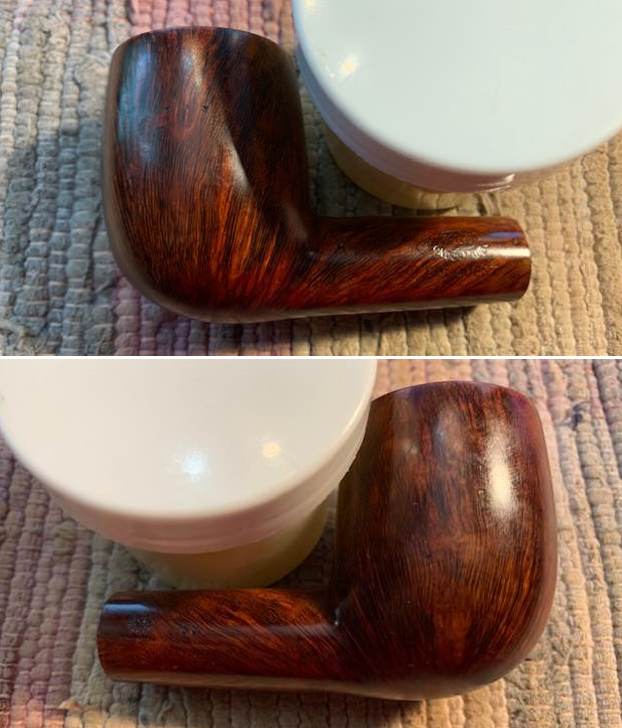
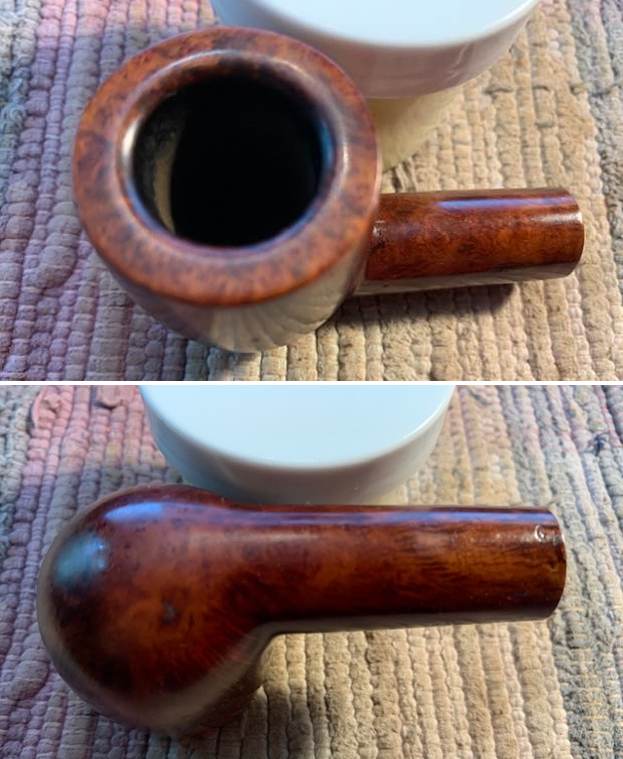
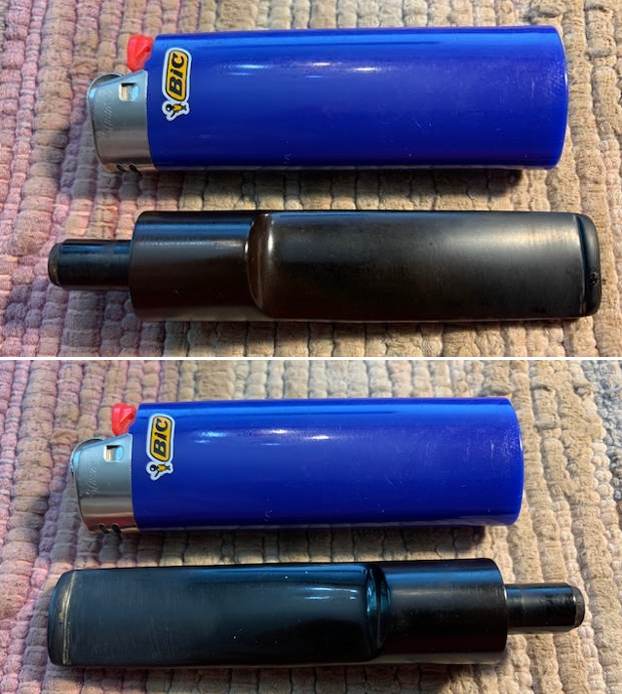
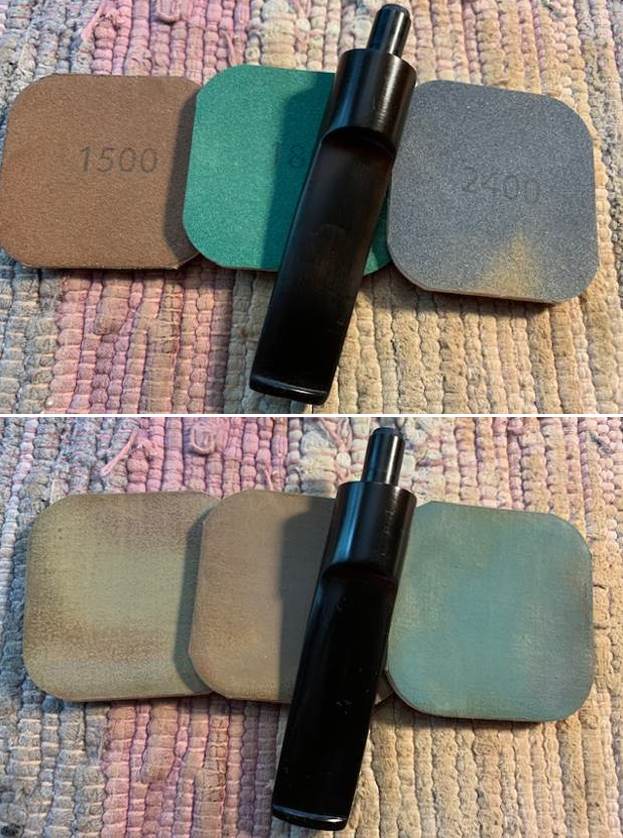
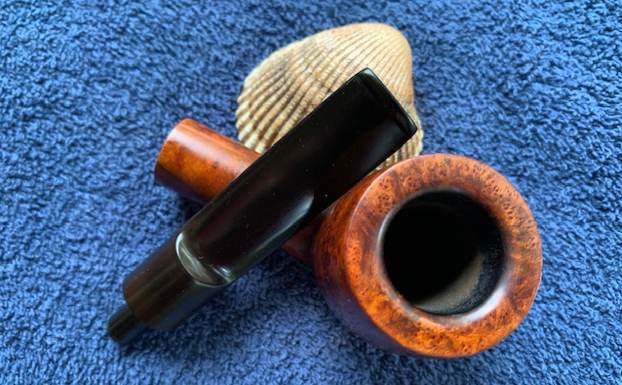
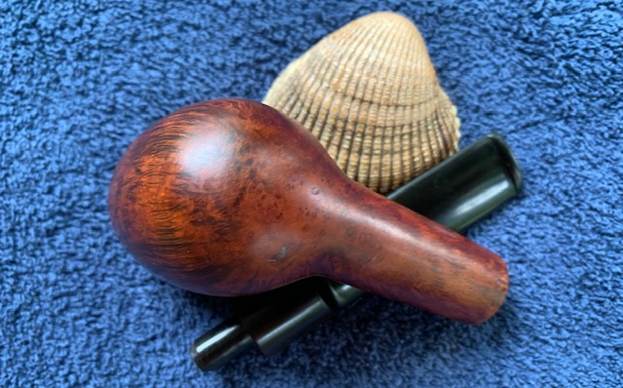
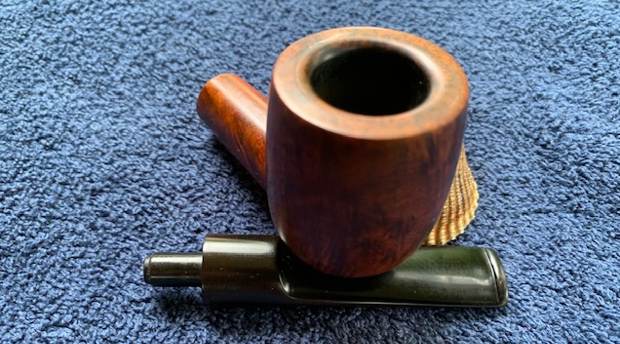
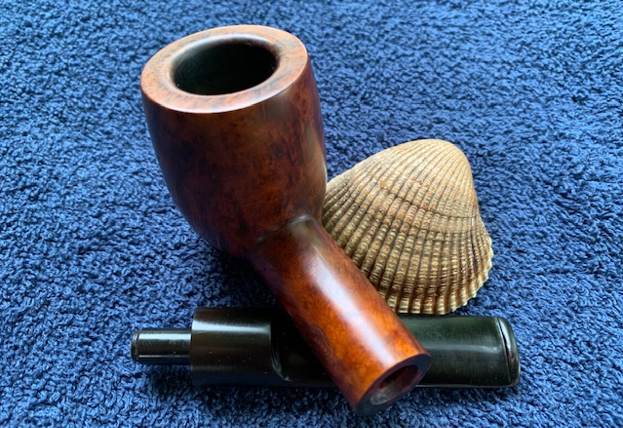
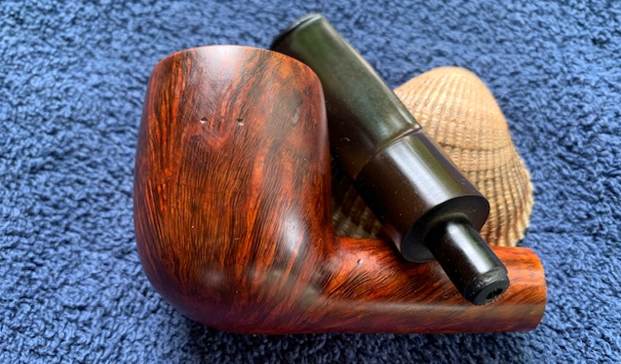
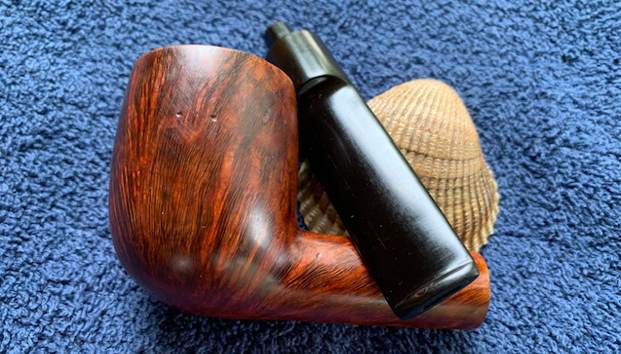
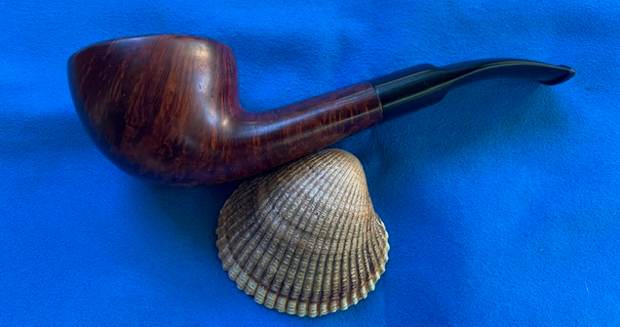
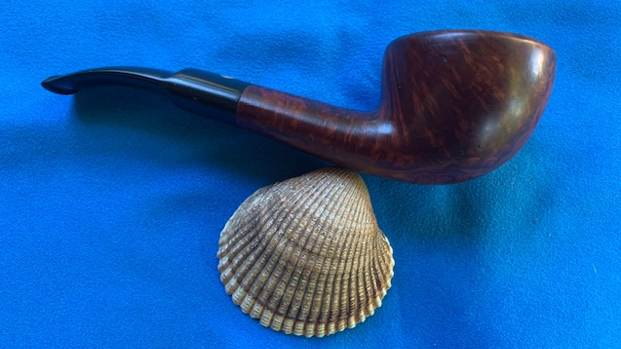
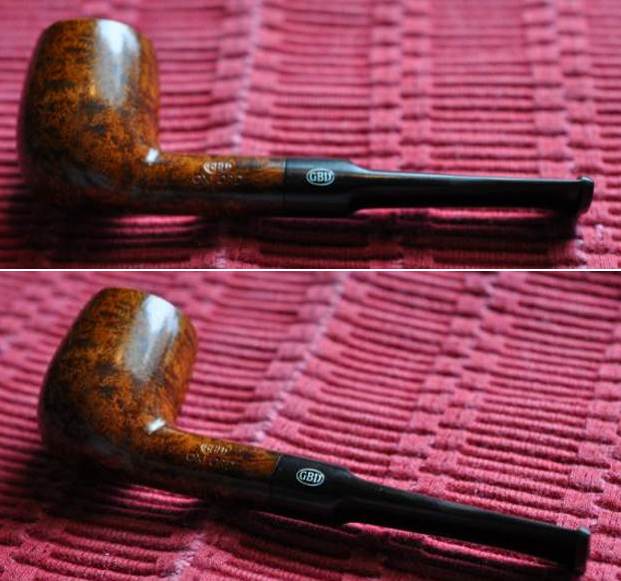
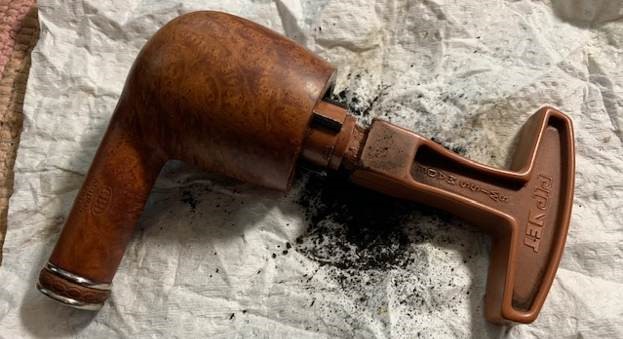
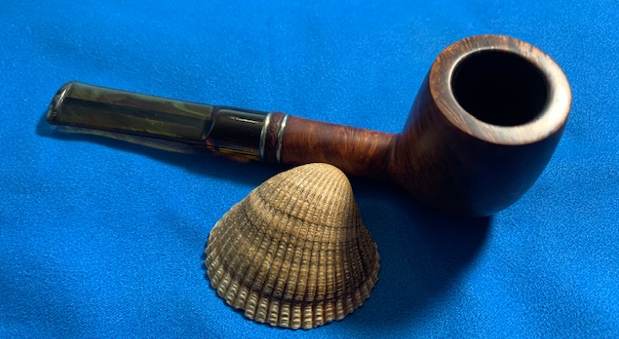
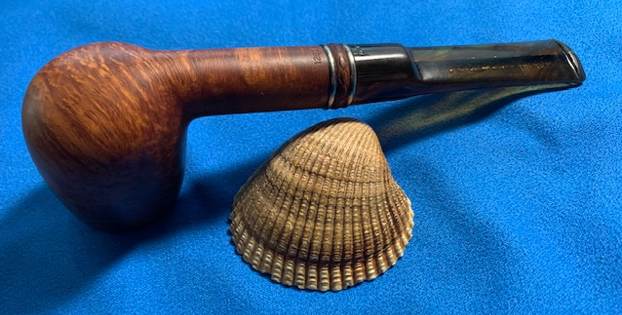
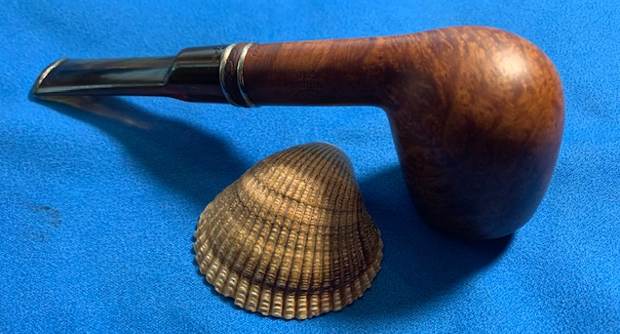
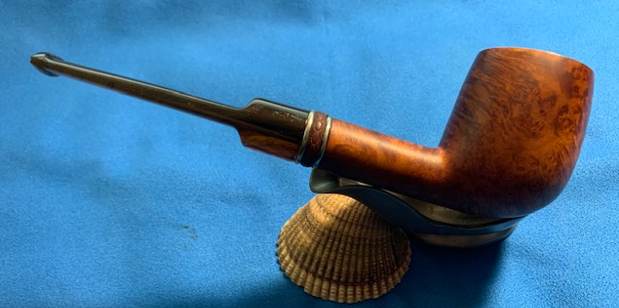
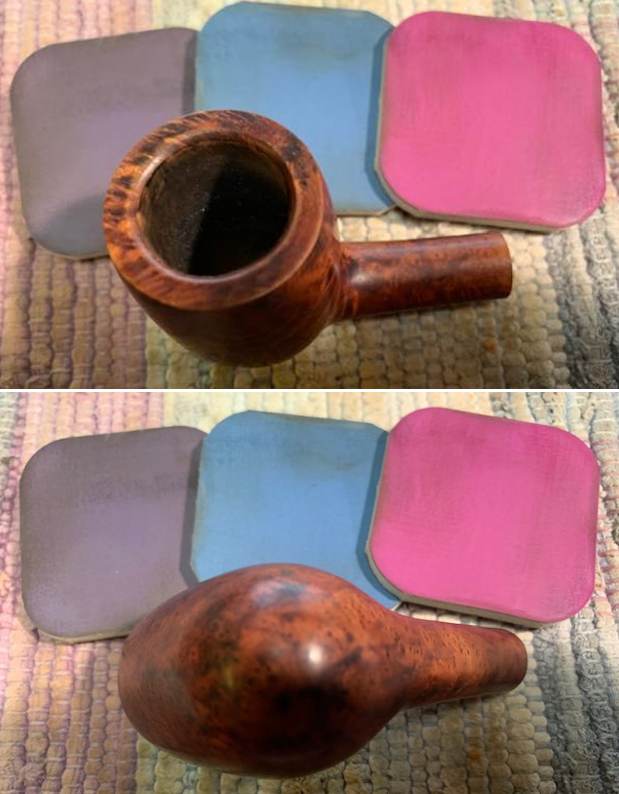
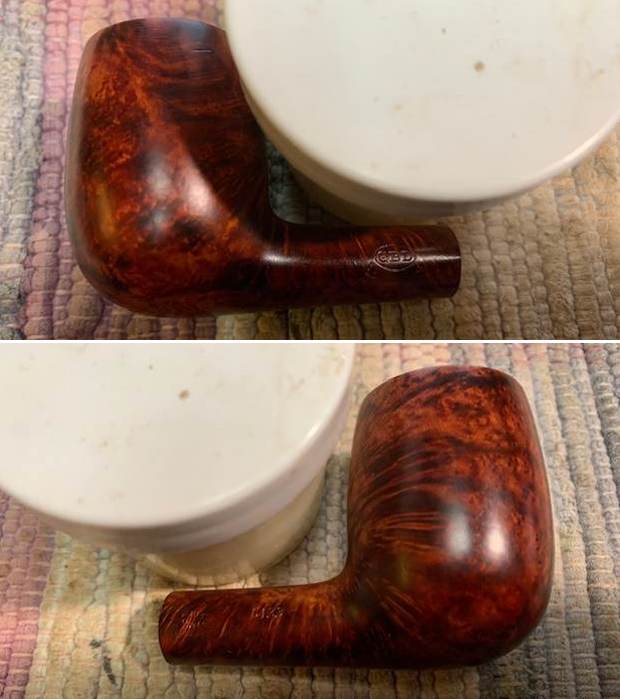
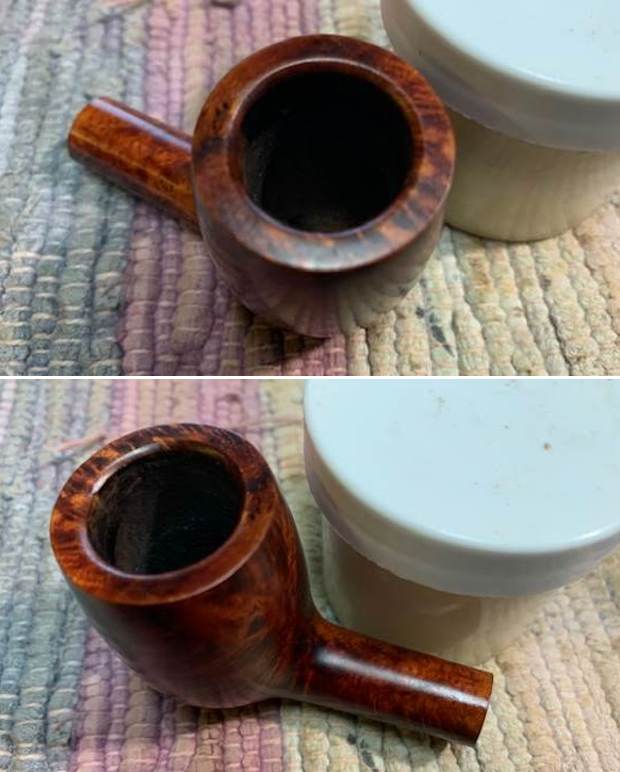
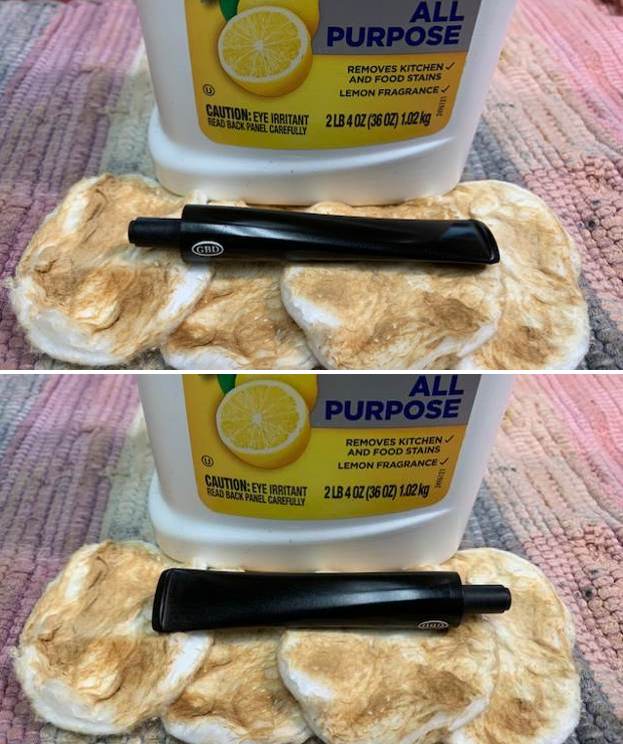
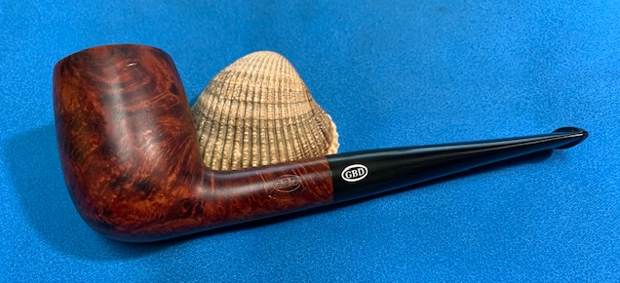
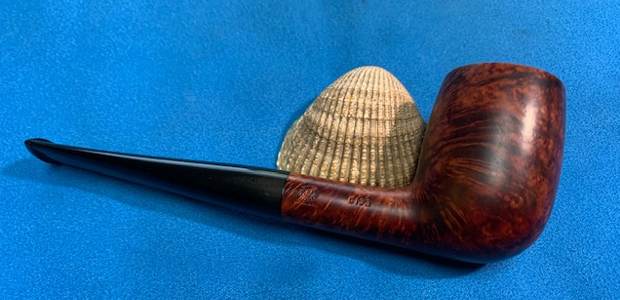
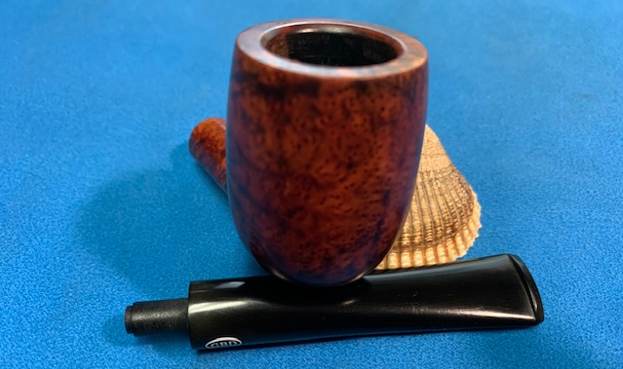
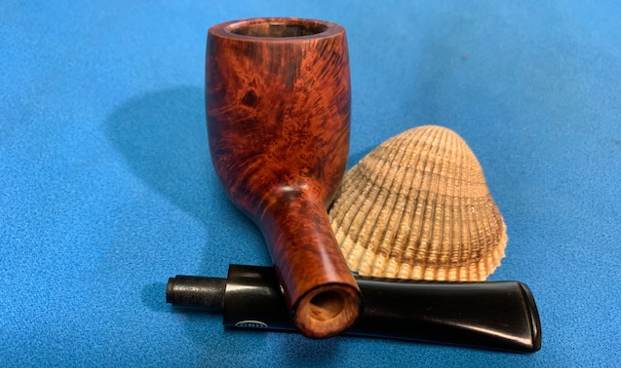
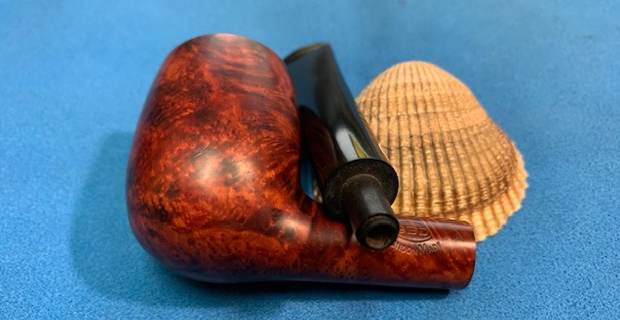
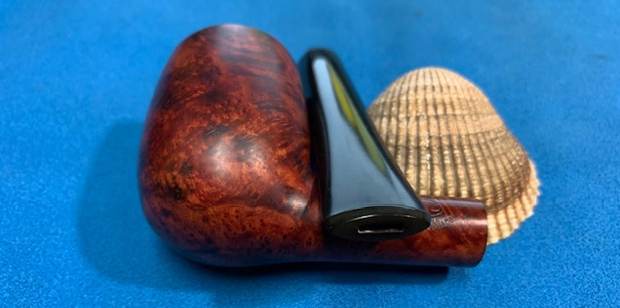
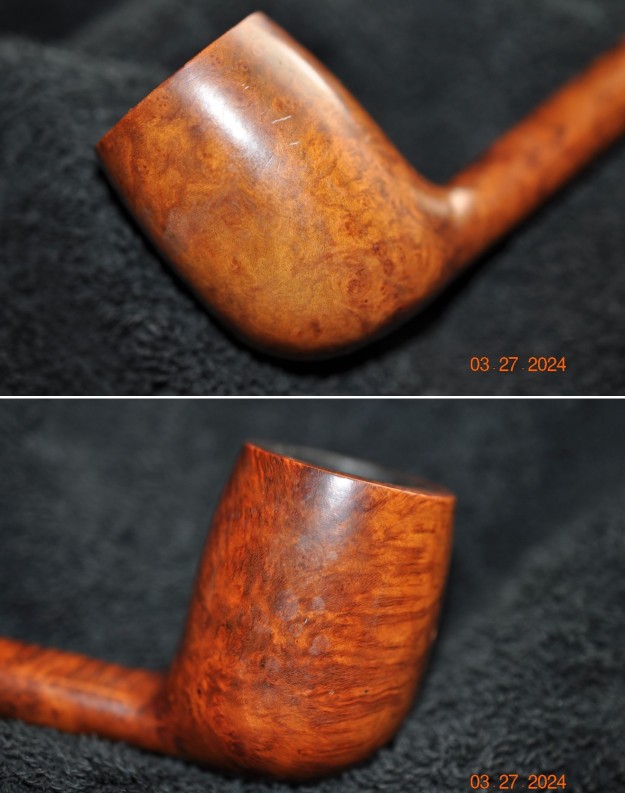
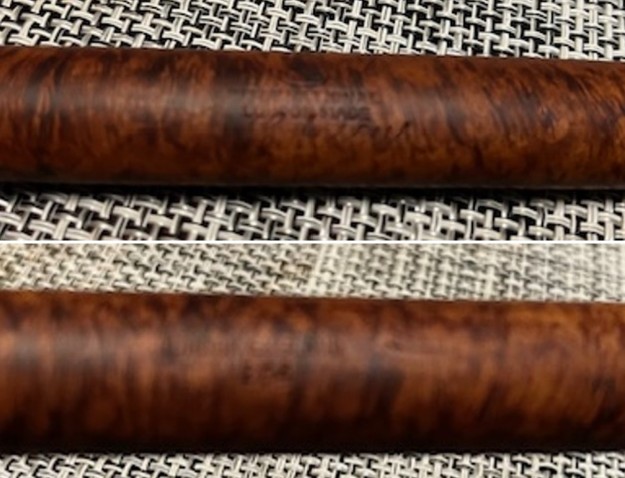
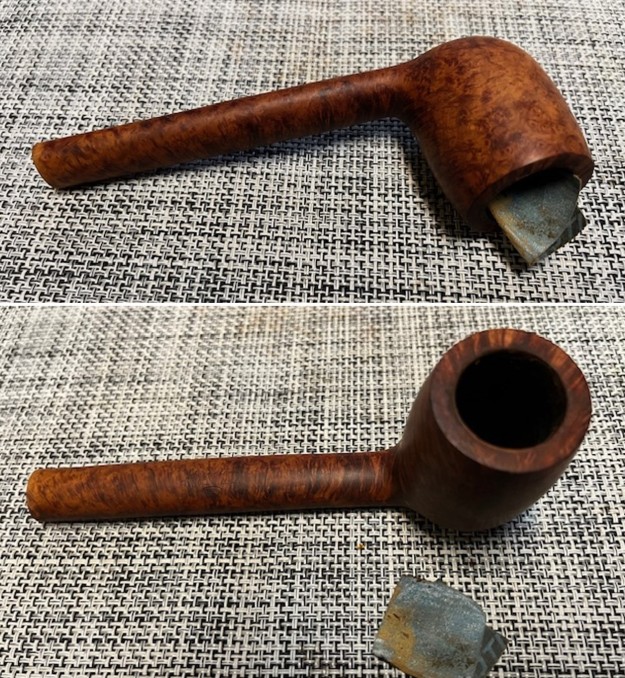
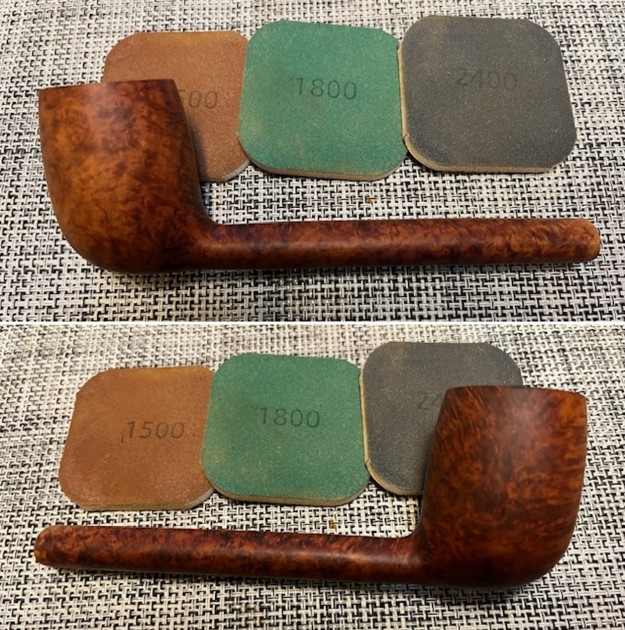
The next pipe on the work table is long and classic looking smooth finish long shank possible Canadian. It is stamped on the topside of the shank and clearly reads GBD in an oval [over] International [over] London Made [over] Colossus in script. On the underside of the shank it is stamped London England [over] the shape number 264. It came from a lot we purchased on 03/21/2024 from an estate in Oregon City, Oregon, USA. It is Canadian/Lumberman shaped pipe with some great grain and only lacking the original vulcanite stem. The shape of the new stem would be determined by the what I could find out about the shape 264. If a Canadian then it would have a new taper stem. If it was a Lumberman then it would have a short saddle stem.The bowl has a thick cake and some lava overflow in the finish on the rim top and inner edge. The finish looked quite good in terms of wear and tear but there was dirt and hand oils in the finish. But under the grime the finish looked very good and highlights some beautiful grain. Jeff took photos of the pipe before he started his cleanup. He took photos of the pipe’s bowl and rim top to show the cake in the bowl and the lava coat overflowing onto the top and over the edges. It is another dirty pipe. He took photos of the sides and the heel of the bowl to give a sense of the condition of the pipe and the interesting grain around the sides and heel. It really is a beautiful pipe bowl. Jeff took photos of the stamping on the top and underside of the shank and it is clear and readable as noted above. It is a bit faint on the top edges of the stamp and the lower edges on both the top and bottom shank.I remembered that Kenneth had restemmed a GBD International London Made Colossus and generally he does some work on the brand to understand the background of the pipe that he is working on. I googled and found the link to the blog he had written on rebornpipes about his Calabash pipe (https://rebornpipes.com/tag/gbd-international-london-made-pipes/). I followed the link to his blog and reread his work on it. I quote the interesting info on the line that he had included. I quote below:
This pipe is a calabash-shaped GBD Colossus. As the photos show, it is stamped on the left side of the shank with GBD [over] International [over] London Made [over] Colossus. On the right side it is stamped Made in London [over] England [next to] 9552 – this, of course, is the shape number. There is quite a bit of information on GBD on the Internet – they have a long and storied history in pipemaking. In this case, I was curious about International and Colossus. The main Pipepedia article on GBD tells us about their origins:

In 1850 three gentlemen got together in Paris to establish a firm dedicated to the fabrication of Meerschaum pipes – a courageous step in politically restless times. Ganneval probably came from the area of Saint-Claude where he had learned making wooden pipes. Bondier’s family obviously came from Paris and had emigrated in 1789 to Geneva. He himself had worked as a wood turner in the clay and china pipe industry in and around Saint-Claude making stem extensions etc. Donninger was an Austrian or Swiss and had worked in Vienna, the world’s center of the Meerschaum pipe. They agreed on the acronym GBD selecting the initials of their surnames.

The Pipedia article provides a lot more information on their interesting history. I would encourage you to read on here. The shape number 9552 corresponds correctly with GBD’s identification of this pipe as a calabash. The page on GBD models states the following concerning the International line and the Colossus size:

International – France and England made: medium brown smooth, carved top rim, rim stained black. In addition to the pipe line and shape information stamped on the pipe, GBD also had codes for plus sized pipes. These codes in ascending order of size were Conquest, Collector, Colossus.

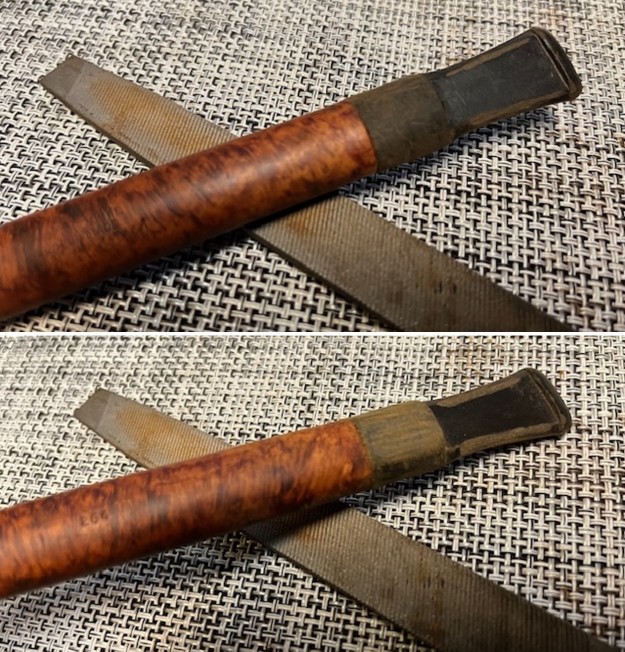
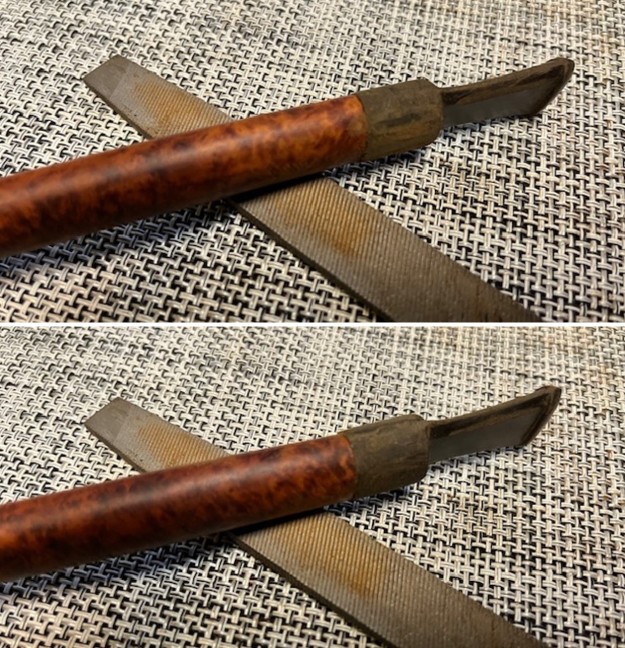
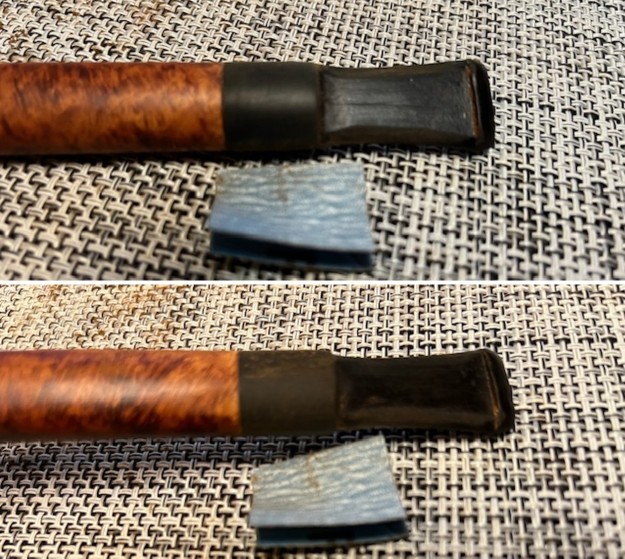
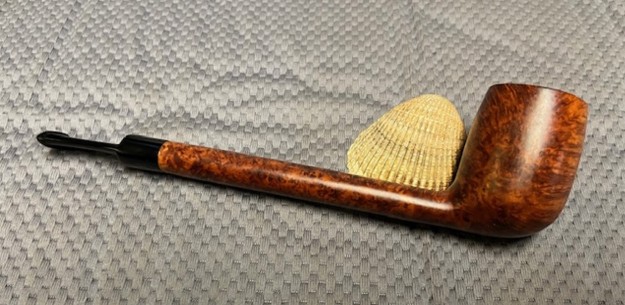
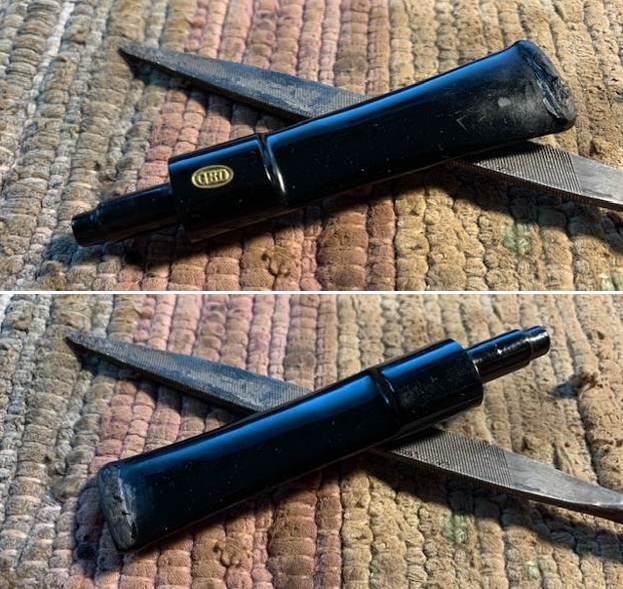
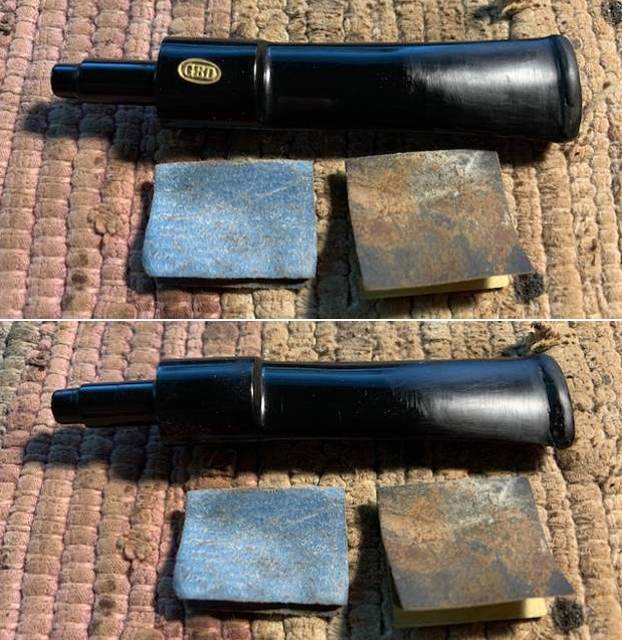
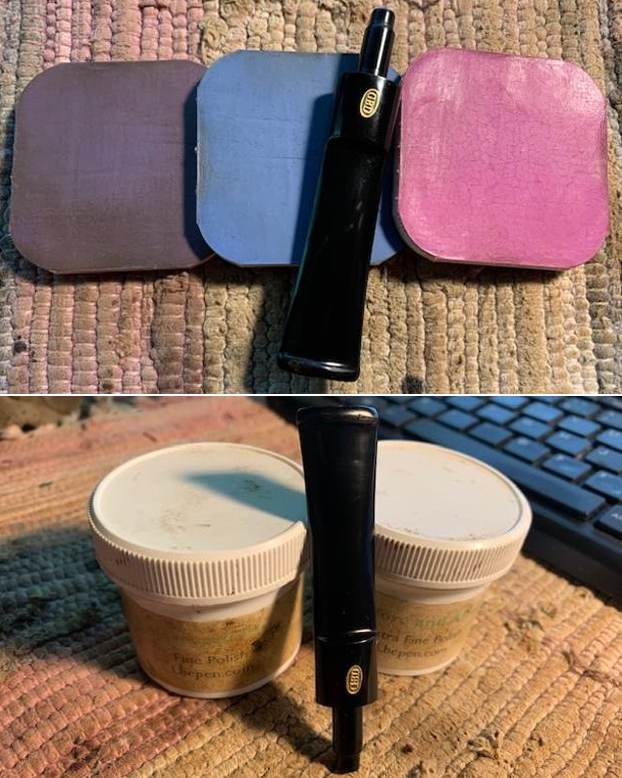
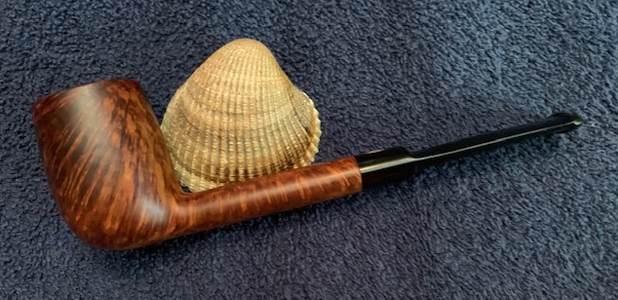
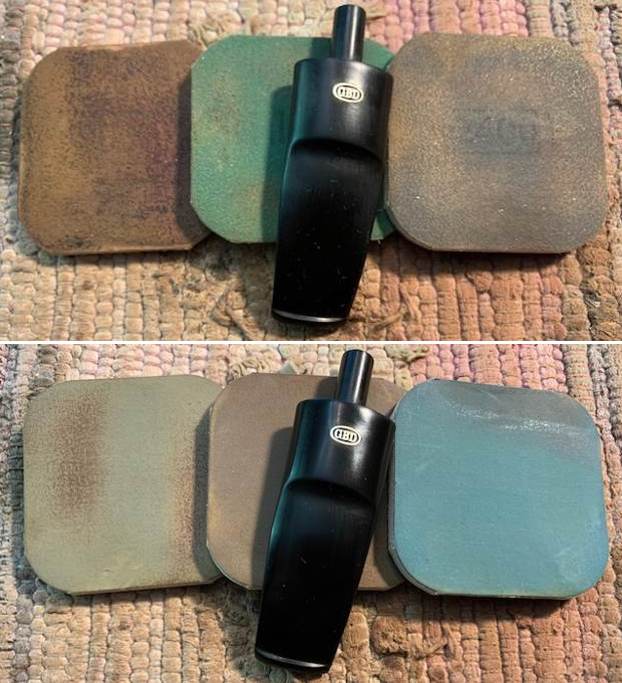
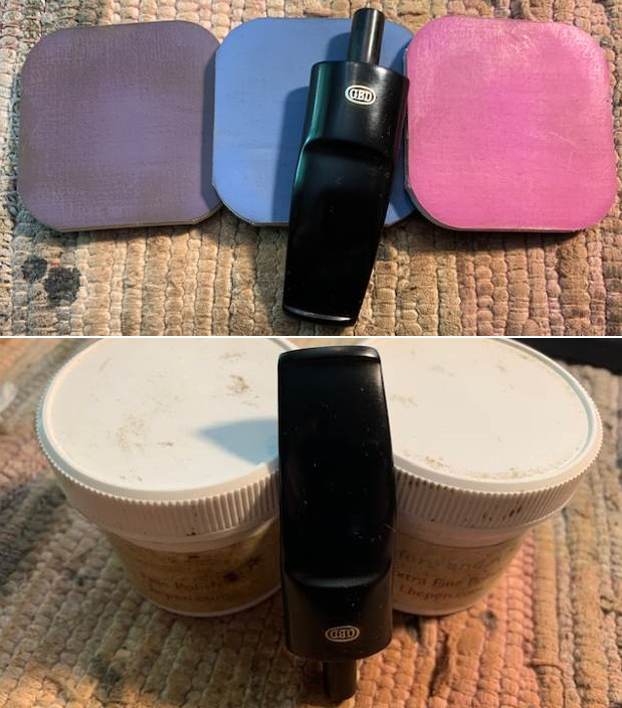
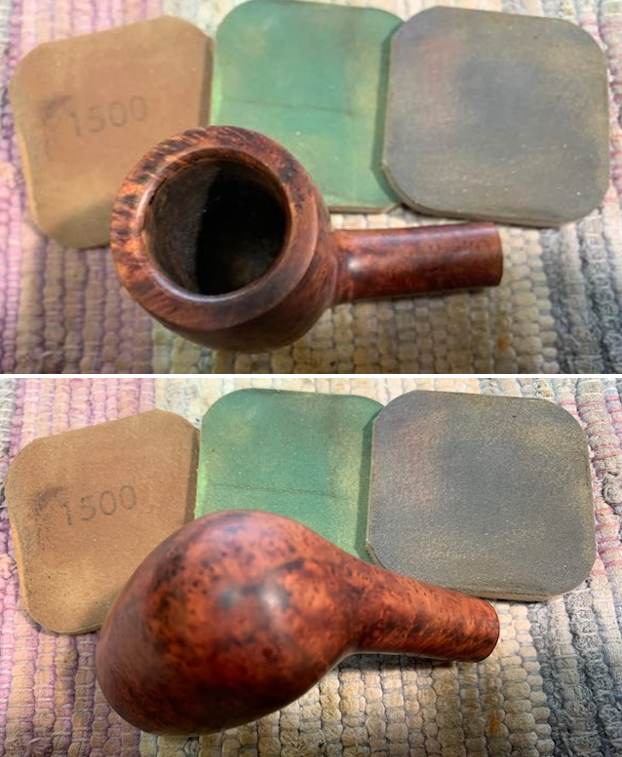
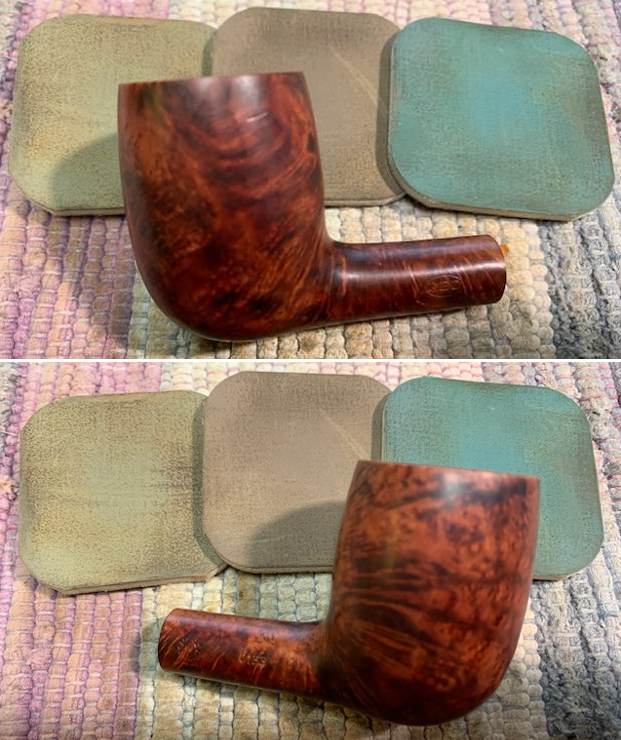
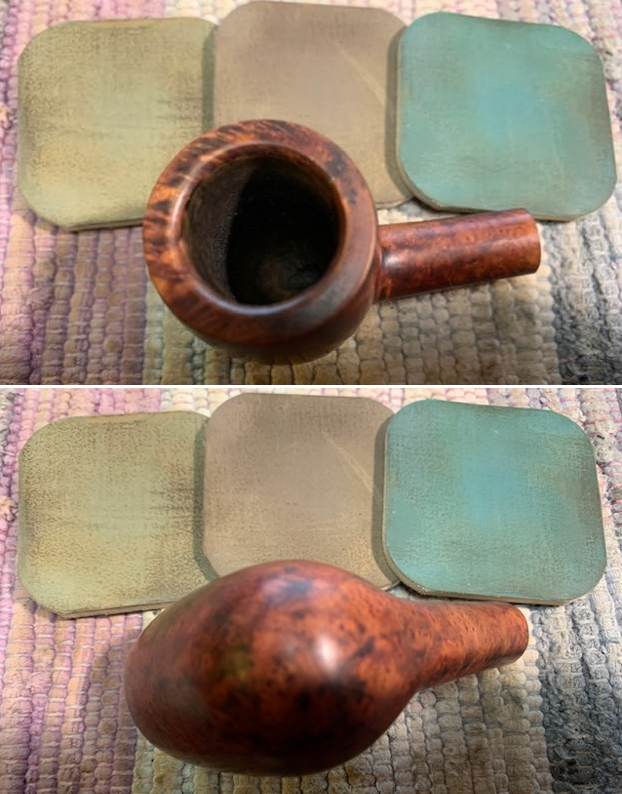
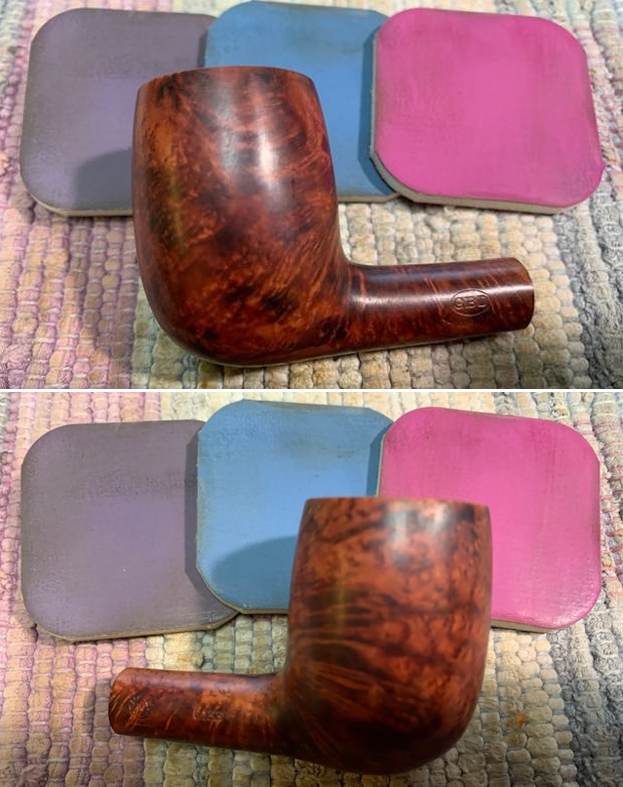
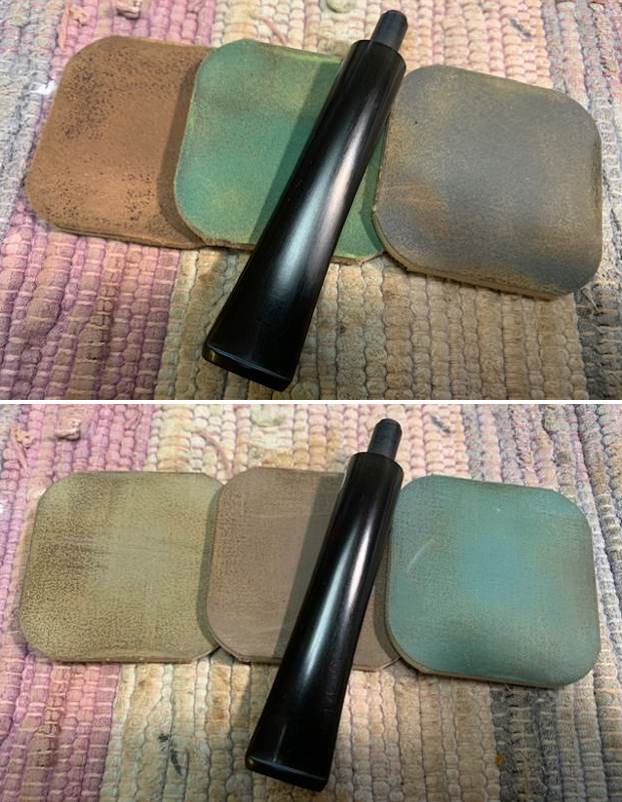
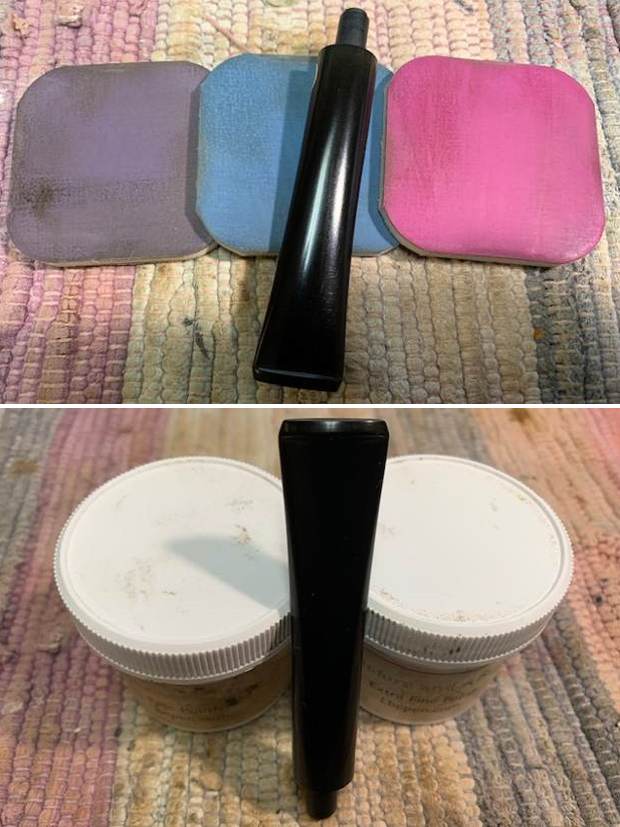
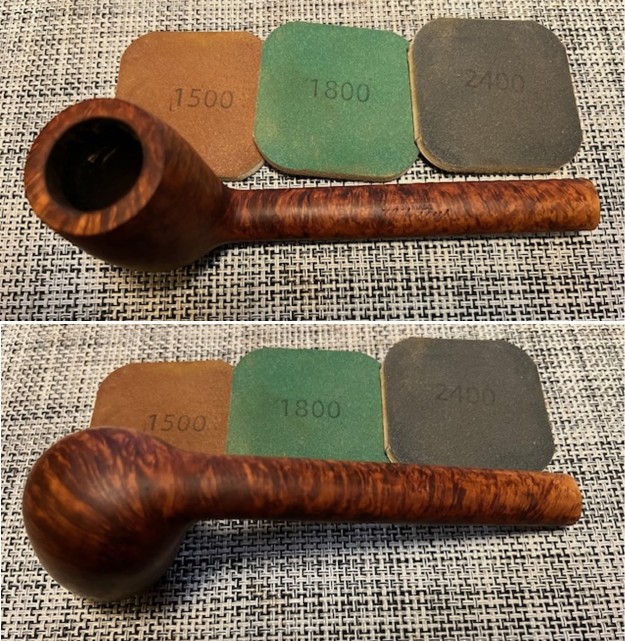
He also included a screenshot from Pipephil:I did some more work on the shape 264. Without the stem I was not sure I was dealing with a Canadian or a Lumberman – same family different stem. I did a Google search on the GBD shape number 264. I did not find the shape number on the shape list so I did a bit more digging. I found a link on Smokingpipes.eu to a GBD Premier Colossus Lumberman (264) (O) (pre-1980)(https://www.smokingpipes.eu/pipes/estate/england/moreinfo.cfm?product_id=168478). The one I am working on is an International while this one is a Premier but the shape number is identical. The pipe is identified as a Lumberman 264 and the photo below (from that site) tells me that the pipe had a saddle stem. Now I knew what I needed for a new stem on the pipe.I turned to work on the pipe itself. Jeff had done an amazing cleanup of the pipe. He reamed the cake with a PipNet reamer and cleaned up that with a Savinelli Fitsall Pipe Knife. He scrubbed the internals of the bowl and stem with alcohol, cotton swabs, pipe cleaners and shank brushes. He scrubbed the externals with undiluted Murphy’s Oil Soap and rinsed the bowl off with running water. He was able to remove the lava on the rim top and edges and the grime from the bowl. The pipe looked better when I received it. I took photos of the pipe before I started my work on the restoration and restemming. I took a photo of the rim top to show the condition. It looks good with the tars and oils removed from the rim top. The condition of the bowl and rim top were very good. There was some damage on the inner edge at the back of the bowl. I took photos of the top and underside of the shank to show the stamping. The stamping is very clear and reads as noted above. It was hard to capture in the photos.I used a folded piece of 220 grit sandpaper to smooth out the inner edge of the rim. I gave the rim a slight bevel to minimize the burn damage. It looked much better once it was smoothed out.I polished the briar on the bowl and shank with micromesh sanding pads – dry sanding it with 1500-12000 grit sanding pads. I wiped the briar down after each pad with a damp cloth to remove the sanding dust. I rubbed the bowl and shank down with Before & After Restoration Balm. I worked it into the surface of the briar with my fingertips to clean, enliven and protect it. I let the balm sit for a little while and then buffed with a cotton cloth to raise the shine. Mark Hoover’s Balm is a product that I have come to appreciate and one I use on every pipe I have been working on. With the bowl finished it was time to find a stem. Earlier today I assumed the pipe was a Canadian so I fit a taper stem to the shank. I liked the look of the pipe with the taper stem. Then on a whim I looked up the information I quoted above on the shape 264. It made it immediately clear to me that the pipe was not a Canadian but was a Lumberman. I started over to find one like that in the photo of the GBD 264 from Smokingpipes above. I would completely need to start over. Oh well! I went through my stem bins and found an oval saddle style stem that would work for this one. I needed to fit the stem to shank. With a little adjustment the tenon fit perfectly to the shank end. It was a snug fit. The diameter of the stem is slightly larger all the way around and would need to be reduced. I used my Dremel and sanding drum to start the process of shaping the saddle portion of the stem to fit the shank. Once I had it close I continued the fitting with a file. I also smoothed out the ridges and casting marks on the blade of the stem to round them out and shape them to be similar to the one on the photo that I found. I put it back on the shank and continue to shape the saddle portion of the stem. It is starting to look much better. I fine tuned the fit with 220 grit sandpaper. I removed all of the remaining excess with the sandpaper. Once I finished the transition between the stem and the shank it was smooth and the fit was snug in the shank. I put the stem and took photos of the pipe with the fit. It looks very good. I touched up the stain on the shank end to cover the lighter areas and match it to the rest of the shank. I used a Cherry Stain Pen to match it. The stain was a perfect match. It looked good.I sanded the stem with 320-1500 grit sanding pads. I dry sanded and after each pad wiped the stem down with a cloth impregnated with Obsidian Oil. By the final pad the stem looked very good and the fit was perfect.I polished the stem with micromesh sanding pads – wet sanding it with 1500-12000 grit pads. I polished it further with Before & After Pipe Stem Polish – both fine and extra fine. I finished by wiping it down with Obsidian Oil and buffing it to a shine. I always look forward to this part of the restoration when all the pieces are put back together. I put the GBD International London Made Colossus 264 Lumberman back together and carefully buffed the stem with Blue Diamond on the buffing wheel. I gave the bowl and the stem multiple coats of carnauba wax. I hand buffed the pipe with a soft cloth to raise the shine. It is fun to see what the polished bowl looks like with the new black vulcanite saddle stem almost glowing. This GBD International London Made Colossus Lumberman is nice looking and feels great in my hand. It is one that could be clenched and smoked while doing other things as it is very light weight and well balanced. It must have been a fine smoking pipe judging from the condition it was when I received it. Have a look at it in the photos below. The dimensions are Length: 7 inches, Height: 1 ¾ inches, Outside diameter of the bowl: 1 ¼ inches, Chamber diameter: ¾ of an inch. The weight of the pipe is 1.52 ounces/43 grams. I will be putting it in the English Pipemakers Section of the rebornpipes store soon. This will make a great addition to someone’s pipe collection. Thanks to each of you who are reading this blog. Remember we are not pipe owners; we are pipemen and women who hold our pipes in trust until they pass on into the trust of the next pipeman or woman.
Breathing Life into a 1913 MR&Co GBD London England 347 Apple


Blog by Steve Laug

The next pipe on the table came to me for restoration from a friend in the US. He sent three pipes for me to restore for him. These included this GBD London England 347 Apple, a Ben Wade Connoisseurs Collection First Edition Long Diamond Shank Brandy with a saddle stem and an interesting Ivarsson 389 Product Apple. All are gorgeous examples of pipe craft and all were incredibly dirty and showed various issues with their finishes. I chose to work on the GBD first. The stamping on the pipe was as follows. On the left side it had a GBD in an oval stamped mid shank and on the right side it was stamped London England [over] the shape number 347. The Sterling Silver Band also had the GBD oval stamp [over] three hallmarks – the date stamp letter “S”, a Rampant Lion and a Leopard’s Head all in square cartouches with rounded corners. Underneath that it was stamped MR&Co in a rectangle with a pointed end on each side. The pipe was in dirty condition. The finish on the bowl and shank were worn and dirty with grime and darkening ground into the surface all around the bowl and shank. Under the tars the rim top and inner and outer edges of the bowl appeared to be in ok condition but cleaning would tell the story. The Sterling Silver band was tarnished and the stamping faint though readable. The vulcanite stem was dirty and had file marks and tooth marks and chatter on both sides ahead of the button. I took photos of the pipe before I started my clean up work on it to give a clear photo of the condition of the pipe before I started my work. I took a photo of the bowl and the rim top. The bowl had a moderate cake on the bowl walls and bottom. The crowned rim top and the inner edge of the bowl showed some nicks and some lava overflow. It was hard to know for sure what was underneath but I would be there would be some darkening. The vulcanite stem shows light tooth marks and chatter on both sides ahead of the button as mentioned above. There were also some file or coarse sandpaper marks. It had promise but it was dirty!I took photos of the shank sides to try to capture the stamping on the briar. It is neat to see the GBD ovals line up on the left side of the shank, band and stem. Because I expected this I can faintly see it. The stamping on the right side is not readable at all. I turned to Pipephil to renew my memory of the brand (http://www.pipephil.eu/logos/en/logo-gbd.html). It gave a brief history of the brand and the changes of owners. I was looking for the MR&Co stamp and found mention of Marechal & Ruchon Cie. The name of the French owners of the GBD lines after the original founders in 1850 sold it. I have included comments below.

Brand created in 1850 in Paris by Ganneval, Bondier and Donninger.

Marechal & Ruchon Cie first, then C.J. Verguet Frères (closed in 1970) owned GBD from 1903 to 1970 and manufactured these pipes in the St Claude (Fr) plant.

Sometime in the 1970s Cadogan company (Oppenheimer group) took over GBD. Prior to this time, the pipes were stamped “London England” in a straight line, even if they were sometimes crafted in France.

I also reread the history of the brand on Pipedia (https://pipedia.org/wiki/GBD). It gave more detail than Pipedia but nothing stunningly helpful.

I went back to Pipephil and did a quick look at some of the additional links that are present on hallmarks (http://www.pipephil.eu/logos/en/infos/hallmark-london.html). I found a great reference tool for London Hallmarks that applied to the pipe in hand. I have included a screen capture of that below.You can see from the information above that the Leopard’s head in a square was the mark for the City of London. That gave me information that the band (the pipe?) was made in London. Secondly the Rampant Lion shown in the second photo above is the same as the mark on this band which certifies the quality of the Sterling Silver in the band. That gave me the information on the two marks on the band. It was thus the London town Mark and the .925 Sterling silver mark. Now I need to look at the date stamp “S” that was on the band.

The page contained a dating chart as well as the above information. It stated that the “Twenty letters of the alphabet of different shape identify the year in which the piece was verified by the assay office.” It included a chart for the years 1896 – 2001. I did a screen capture of that below. To me the “S” stamp matches the one under 1913 in the chart below. I have drawn a red box around it for ease of reference for you.

Given those facts the Hallmarks can be interpreted. The pipe is a GBD London England Made pipe (GBD Logo and stamp on the briar and band). It has a London town mark (Leopard head without the crown), a .925 Sterling Silver certification (the Rampant Lion) and a 1913 date stamp (“S”). The MR&Co stamp identifies it as being made during the time Marechal & Ruchon Cie (1903-1970). That fit well with the 1913 date stamp. Now it was time to work on this old timer.

I started my work by reaming the bowl with a PipNet pipe reamer to remove the thick cake on the walls so I could see what they looked like. I used a Savinelli Fitsall Pipe Knife to scrape off the remaining cake on the bowl walls. I followed that by sanding the walls of the bowl until they were smooth with 220 grit sandpaper wrapped around a piece of dowel. The bowl walls showed no checking or cracking which is remarkable. I cleaned out the airway and mortise in the shank and the airway in the stem. I used 99% isopropyl alcohol, pipe cleaners and cotton swabs to remove the tars and oils. It was extremely dirty and once cleaned smelled and looked better.I scrubbed the exterior of the briar with a tooth brush and undiluted Murphy’s Oil Soap to remove the build up on the surface of the briar and clean off the lava on the rim top. I scrubbed it and then carefully rinsed the bowl with warm water. I dried it with a soft cotton cloth. It certainly looked significantly better and the patina remained in the wood. I cleaned the oxidation on the silver band with Hagerty’s Tarnish Preventive Silver Polish. I was able to remove all of it without damaging the stamping on the band. I polished it further with a jeweler’s cloth to further protect it from tarnish. I worked on the finish around the rim top and bowl with micromesh sanding pads – 1500-12000 grit sanding pads to dry sand the briar. I wiped it down after each sanding pad with a damp cloth after each sanding pads. I rubbed the bowl and shank down with Before & After Restoration Balm. I worked it into the surface of the bowl sides and shank with my fingertips and a horsehair shoe brush. The product works to clean, enliven and protect the briar. I let the balm sit for ten minutes and then buffed with a cotton cloth to raise the shine. I set the bowl aside and turned my attention to the stem. I painted the stem surface with the flame of a Bic lighter to lift the tooth marks. I was able to lift them all with little issue left. I sanded out what remained with a folded piece of 220 grit sandpaper. I started polishing the stem with 600 grit wet dry sandpaper. With a pipe of this age I was careful to not sand much as the stem is thin around the button. I did not repair the bite marks with CA as I wanted to leave it as pristine as possible. There are light marks on both sides on the side edge ahead of the button on both sides. I polished the stem surface with micromesh sanding pads – 1500-12000 grit pads. I wiped it down Obsidian Oil on a cotton cloth. I finished my polishing with Before & After Pipe Stem Polish – both Fine and Extra-Fine polishes. I wiped it down with a final coat of Obsidian Oil and set aside. I am excited to finish restoration of this 1913 GBD London England 347 Apple. I put the pipe back together and buffed it with Blue Diamond on the buffing wheel. I gave the bowl and the stem multiple coats of carnauba wax. I hand buffed the pipe with a clean buffing pad to raise the shine. It is fun to see what the polished bowl looks like with beautiful mixed grain all around it. I love the look of the polished grain on the pipe with the polished black vulcanite stem. This smooth 1913 GBD 347 Straight Apple is great looking and the pipe feels great in my hand. It is light and well balanced. Have a look at it with the photos below. The dimensions are Length: 5 ¼ inches, Height: 1 ¾ inches, Outside diameter of the bowl: 1 ¼ inch, Chamber diameter: ¾ of an inch. The weight of the pipe is 45 grams/1.59 ounces. It turned out to be a beautiful pipe. I will be sending it back to the pipeman who sent it to me once I finish the remaining two pipes. Thanks for reading this blog and my reflections on the pipe while I worked on it.

As always, I encourage your questions and comments as you read the blog. Thanks to each of you who are reading this blog. Remember we are not pipe owners; we are pipe men and women who hold our pipes in trust until they pass on into the trust of those who follow us.

Cleaning up a GBD Fantasy 9643 Tomato


Blog by Mike Belarde

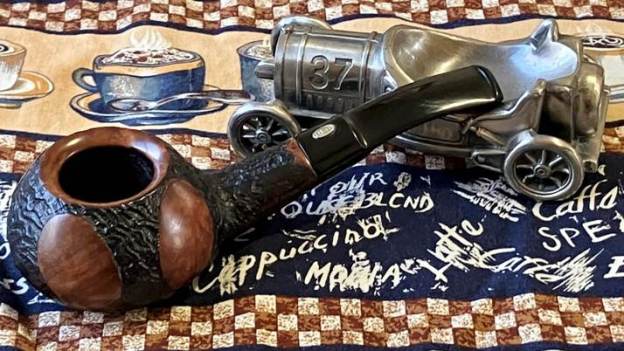
Hello, I hope everyone is doing well. I’m grateful to finally have an easy going Sunday to clean up a pipe. This GBD Tomato is not a shape that I have encountered often, and I was excited to win the online auction.

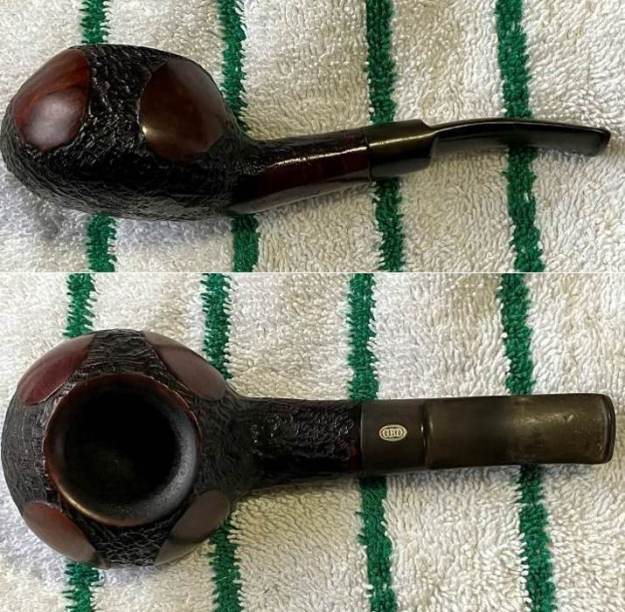
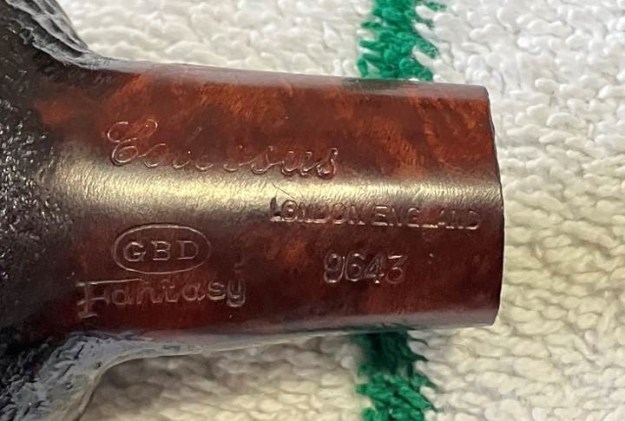
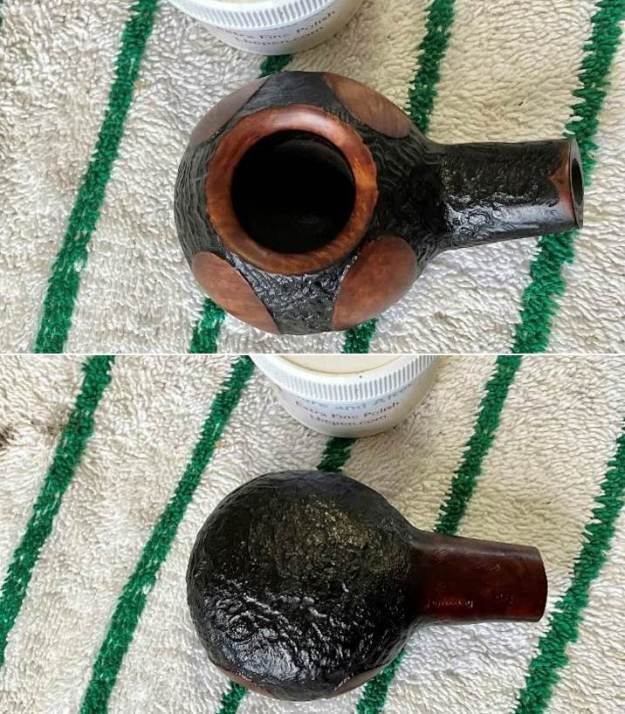
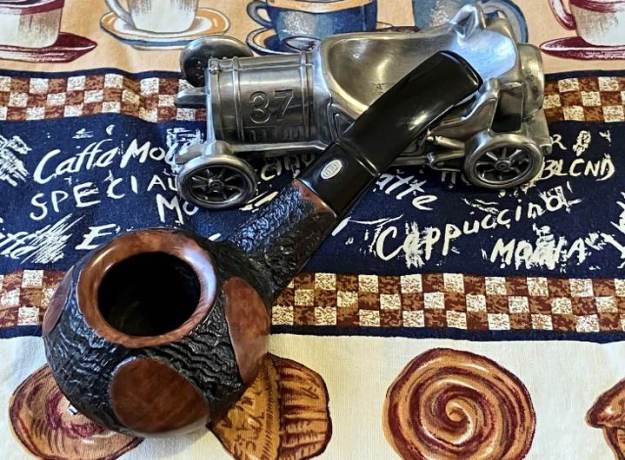
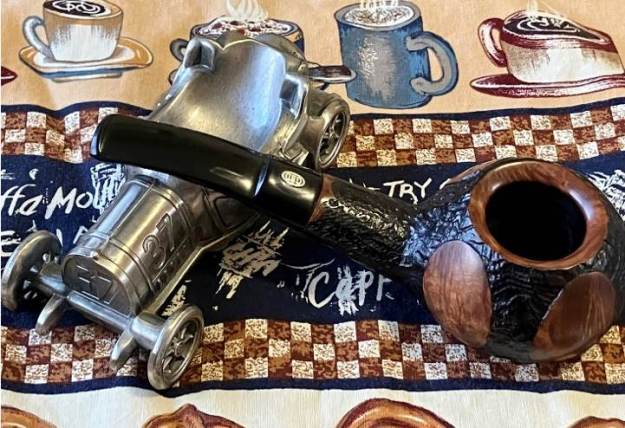
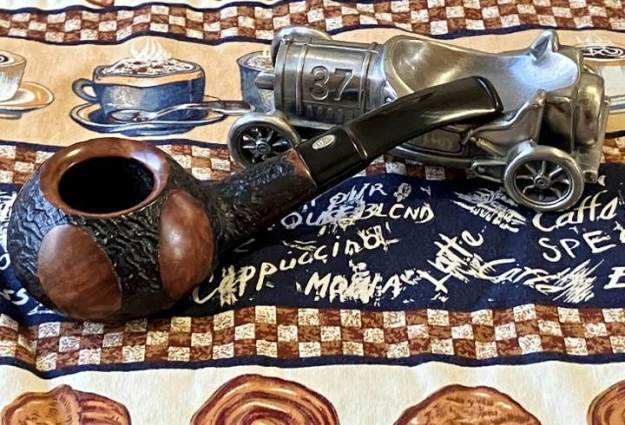
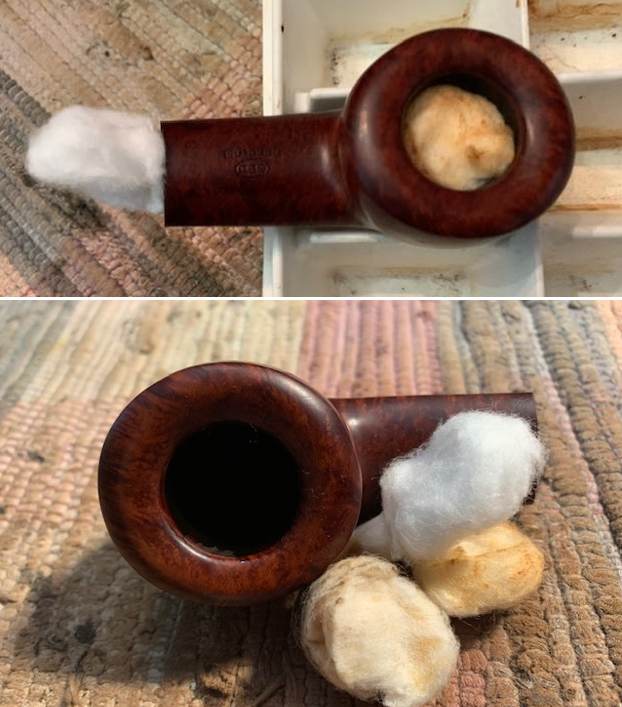
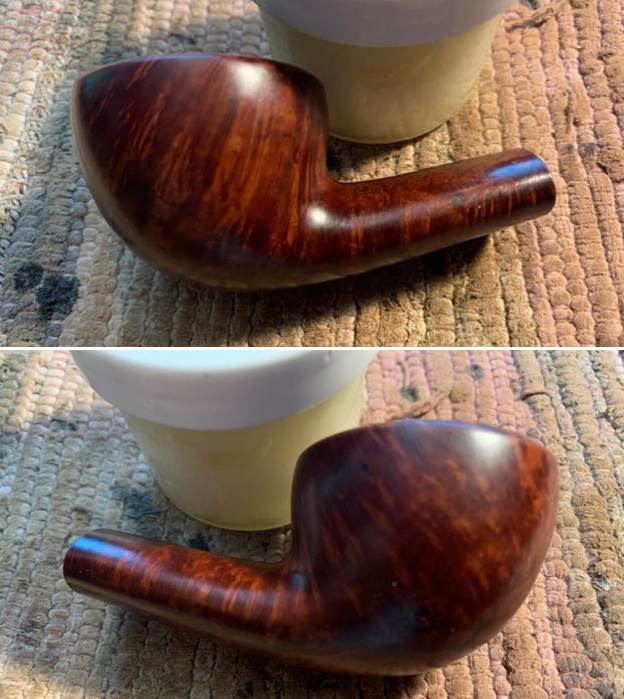
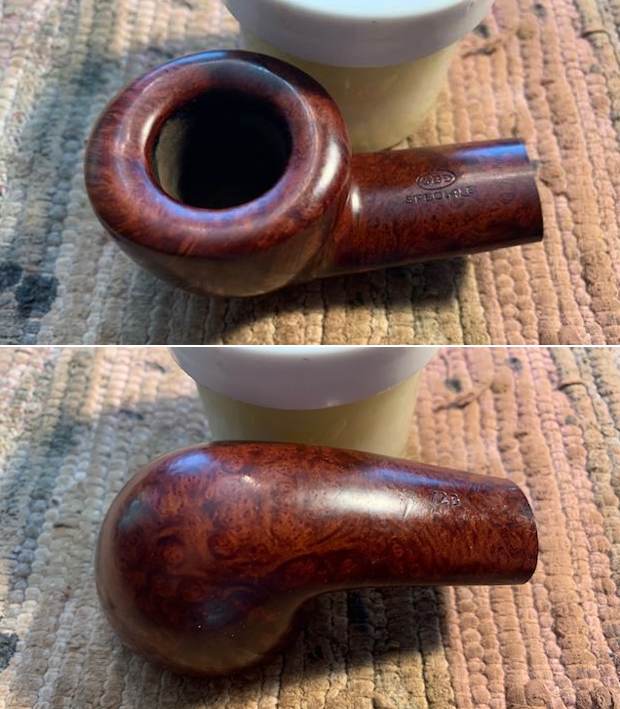
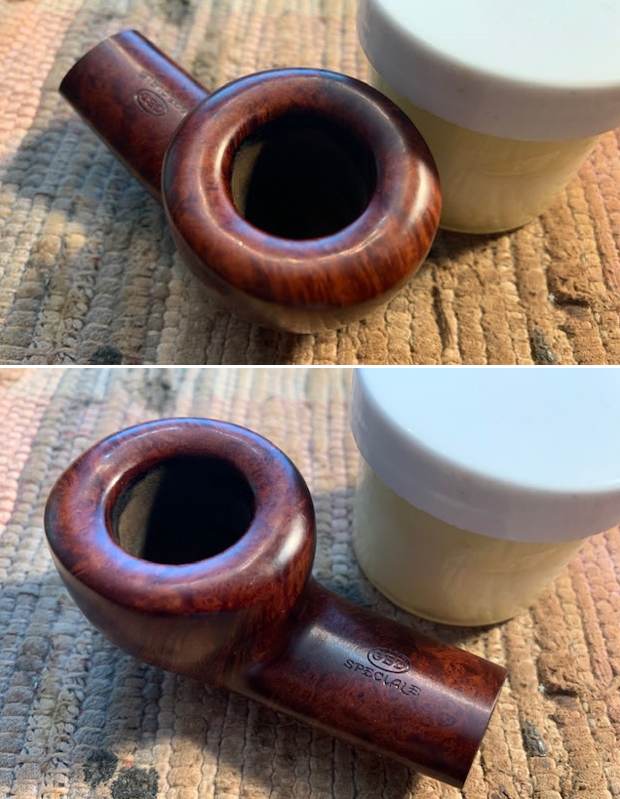
The pipe is an impressive piece of briar with a very wide and squat bowl. When I received it, I was pleased that it was in fairly good condition.  The stummel had been cleaned and waxed, but the pipe still looked a little grimy and dull.  The chamber and rim had a light build up of carbon. Thankfully, the stem still had a nice crisp button and was only lightly oxidized.  Below are photos of the initial condition.As you can see from the photos, it is a great looking pipe.  I really like GBD’s Fantasy and Tapestry lines with their whimsical geometric smooth panels over a black or brown sandblast.  The stamping on this pipe is still crisp.  The markings include the Colossus stamp, and the linear London England stamp.  Below these, are the GBD in an oval over the Fantasy stamp with the shape number of 9643.

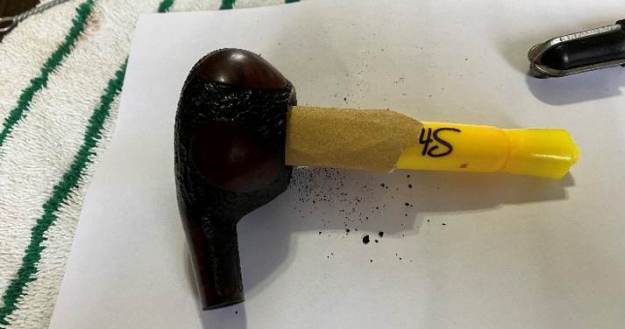
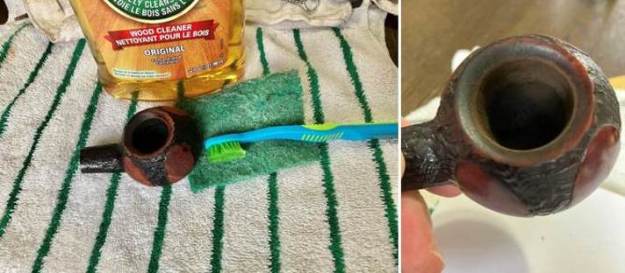
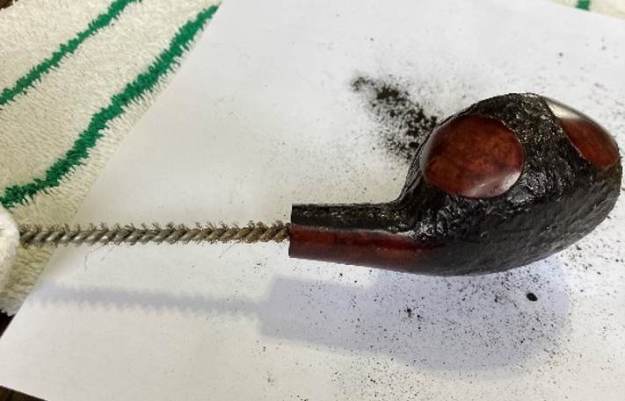
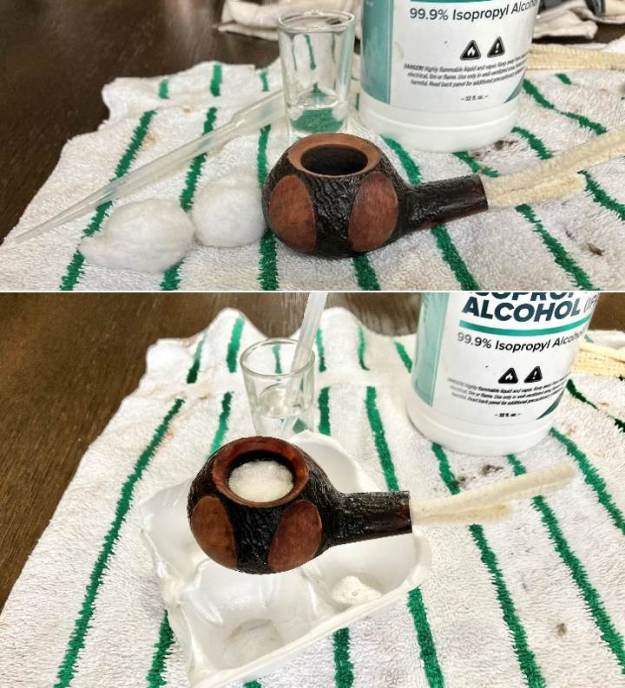
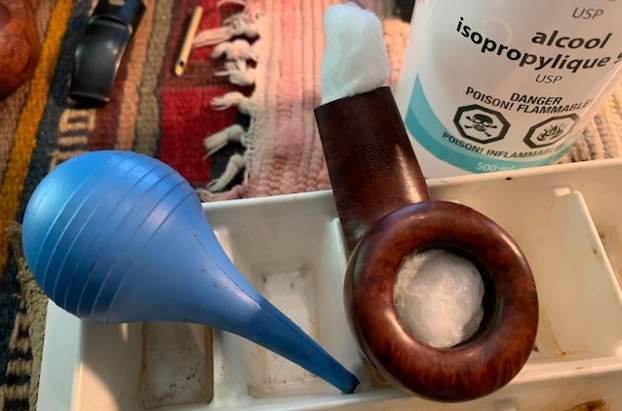
The Colossus stamp indicates that this was part of GBD’s line of supersized pipes. The linear London England stamp, paired with the brass GBD rondel, dates this pipe prior to 1981 or 1982.  My guess is this pipe was made sometime in the 1970s.Eager to clean the pipe up and add it to my collection, I placed the stem in a small Tupperware to soak overnight in Briarville’s Pipe Stem Oxidation Remover solution. I then set to cleaning up the stummel. Realizing all my pipe reamers were too small for the width of the chamber, I wrapped a piece of 220 grit sandpaper around a highlighter to remove the built-up carbon.After this was done, I took the stummel to the sink and washed the exterior with Oil soap and an old toothbrush.  A light lava build up was present on the rim so I used an old green scouring pad to scrub it away. With the chamber and the exterior clean, the Tomato was looking really nice. The chamber seemed to be in good condition once the light cake had been removed.Thankfully the internals of this pipe were fairly clean and required minimal work on my part. I have to admit that cleaning the draught is my least favorite part of restoring estate pipes! I first used a 3mm wire brush to gently clean out the shank. Once done, I cleaned the internals with a handful of pipe cleaners dipped in 99% Isopropyl alcohol.After the interior of the pipe was cleaned to a satisfactory level, I prepared the pipe for de-ghosting. I put two fluffy pipe cleaners down the shank to act as a wick and then placed two cotton balls in the chamber. I soaked each cotton ball with alcohol, as I placed them one at a time in the chamber. To let the alcohol, work its magic and draw out more of the old tar and grime, I let it sit overnight. The next day I took the stem out of the Briarville solution and scrubbed the surface with a green scouring pad and some Soft Scrub.  The stem looked great, but I ran into a problem – for some reason the brass rondel came off. I’m not really sure what went wrong, but it would have to be fixed. I reattached the rondel by applying a small amount of Super Glue and used a soldering iron to apply heat. Hopeful that the heat would soften the vulcanite under the rondel and allow it to reattach as the vulcanite cooled. The process seemed to work, but I’m going to keep an eye on the rondel for possible problems down the road.

With that done, I sanded the stem with some 220 grit sandpaper and polished it with the series of micropads (1500-12000). Between each pad I wiped the stem down with stem oil. In the final step, I applied some Before and After Extra Fine Stem polish. I think the results turned out pretty well and am happy with how the stem looked. I may go back and rework some of the area around the rondel, but I am leery of disturbing the area too much and dislodging it again.Satisfied with the progress on the stem, I turned my attention to the stummel. I polished the rim and smooth panels with the progression of micromesh pads (1500-12000), wiping the areas with a damp paper towel after each pad. I lightly polished the sandblast areas with the 6000-12000 pads to avoid removing any of the original black stain. After I cleaned the stummel, I noticed a few areas that needed to be re-stained. You’ll notice the areas where the brown stain was showing through on the sandblast in the pictures below. I also noticed the transition between the shank and stem was darkened like it had been stained over with black dye. On other Fantasy pipes that I own, this transition is usually stained brown giving the pipes a nice highlight on the shank. I lightly sanded the rim with a piece of 220 grit sandpaper to remove some lingering darkening. I also lightly sanded the smooth panels and shank transition to remove some of the dark stain there. After this was done, I mixed a 1-to-3 ratio of Medium Brown and Black dyes with alcohol to thin them down. I like to apply the stain with a small hobby brush as I find the brush helps me to coat the stummel evenly. Once the stain was applied, I used a candle to fire the briar and set the dye. I let the stummel sit for 10 or 15 minutes and then removed some of the excess stain with a folded paper towel dampened with alcohol.I began to polish the stummel with the micromesh pad series (1500-12000), wiping the briar down with a damp paper towel between each pad. Once finished with the micro pads, I worked some Before and After Restoration Balm into the stummel, let it sit for about 10 minutes, and then buffed it with a cotton cloth. At this point I was very pleased with the results – the pipe looked great! For the last step, I buffed both the stummel and stem with Red Tripoli and Blue Diamond. I gave both several coats of Carnauba wax and buffed them with a cotton cloth.

I’m really happy how this pipe turned out! It is a great shape and the size of the bowl just dominates one’s palm.  The overall length of the pipe is 5.25”, with the outside diameter of the bowl coming in at 2.13”. The chamber itself is a generous 1”, while the entire bowl stands at a modest 1.13”. The pipe weighs a noticeable 2.20oz, and its haft and size just feel nice in one’s hand.   It should be a nice smoking pipe, and I’m happy that I can add it to my collection. Thank you for taking the time to read this blog!

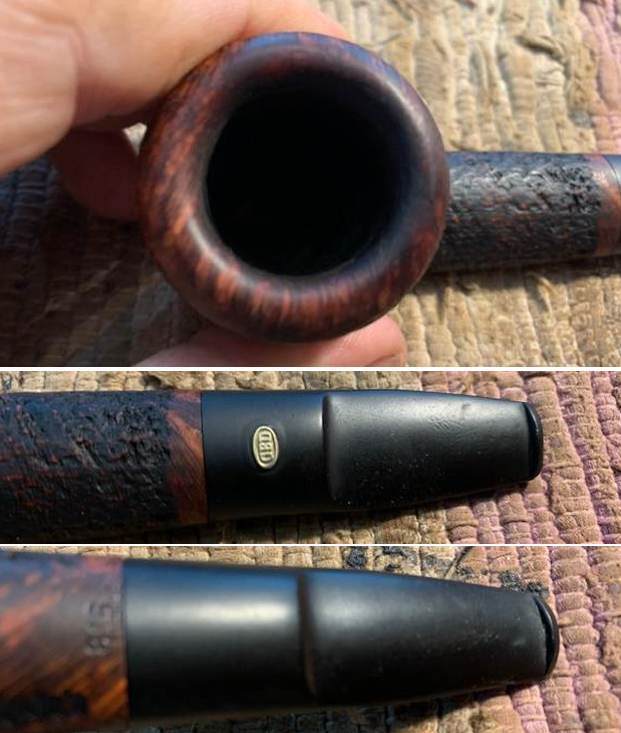
Cleaning Up a Lovely French Made GBD Sandblast Avoriaz 816 Oval Shank Billiard


Blog by Steve Laug

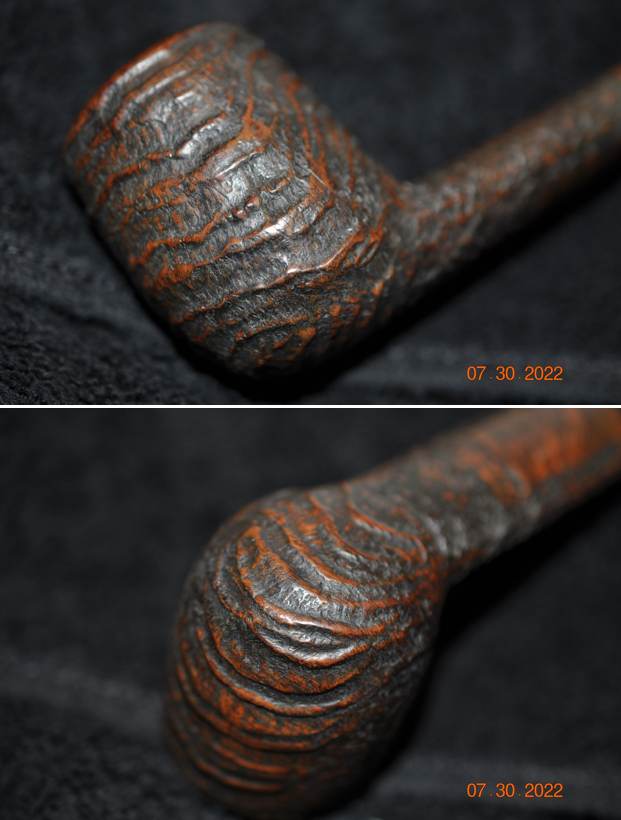
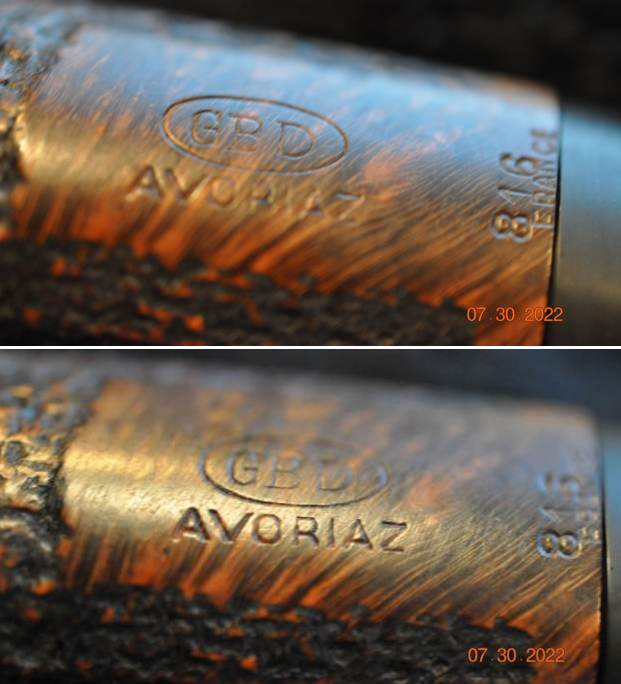
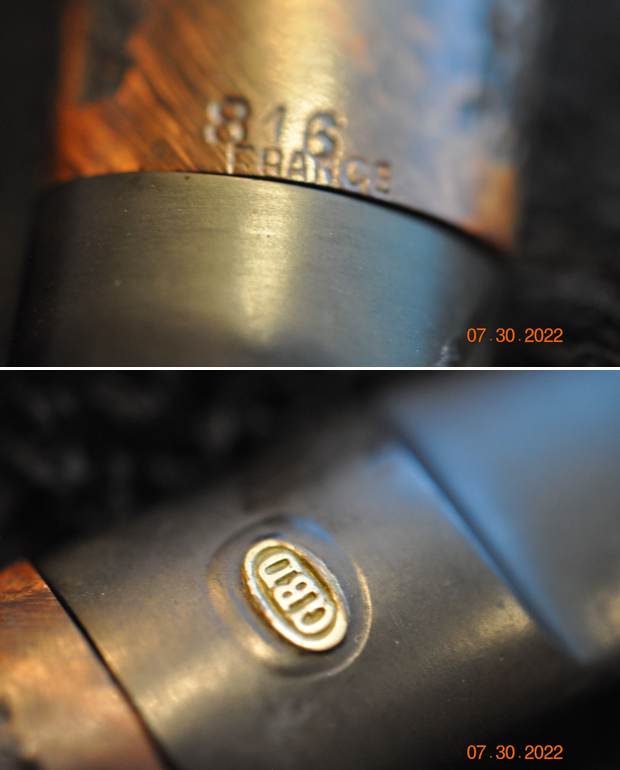
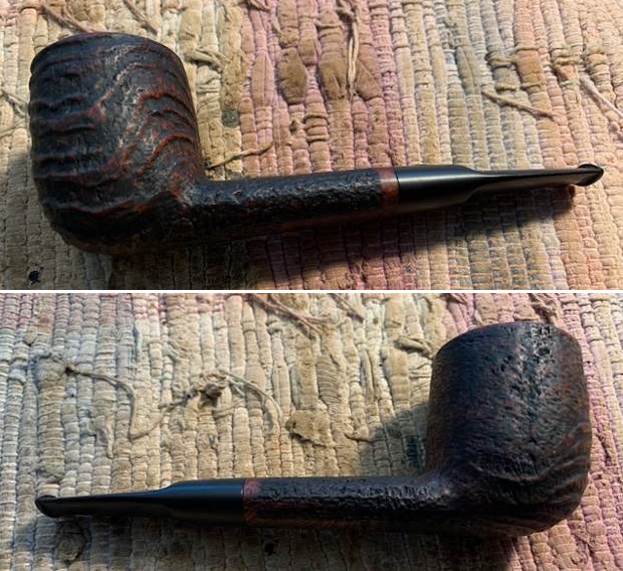
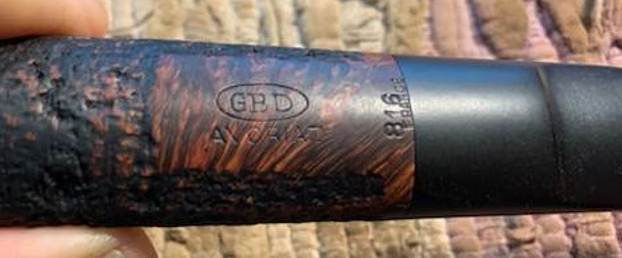
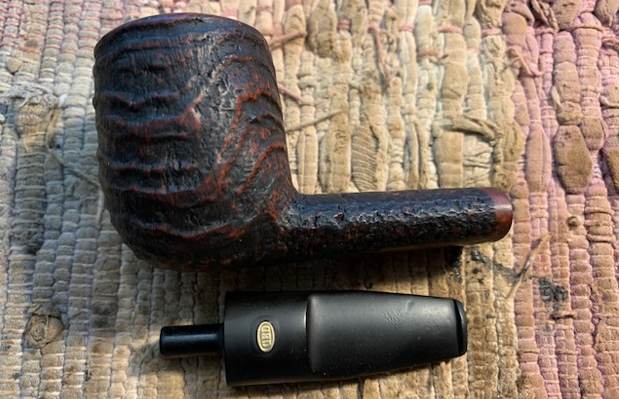
Over the years Jeff and I have picked up many different GBD pipes from a variety of lines that all have a very English look and feel to them. We have also picked up quite a few that are from the French factory before the move to England. This pipe was purchased from an estate on 06/13/22 from Fort Myers, Florida, USA. The finish on the pipe is a sandblast that is deep but smooth and follows the grain around the pipe. The mix of black and brown stains of the briar looks very good with the black of the saddle stem. The rim top is crowned with a bevel inward and has some great grain. It was hard to know if there was damage with the thick cake in the bowl and the veritable eruption of lava over the top of the rim. The finish was quite dirty with grit, grime and oils ground into the surface of the bowl and shank. The shank is stamped on a smooth panel on the underside of the shank and reads GBD in an oval [over] Avoriaz. Next to the shank/stem junction there is the shape number 816 [over] France. The vulcanite saddle stem was lightly oxidized and well dented with tooth marks and chatter on both sides near the button. There is a GBD brass oval roundel on the top of the saddle stem. Jeff took photos of the pipe to capture its condition when it arrived at his place. It was going to take some work to bring this one back to life. But both of us thought that it would be worth it. Jeff took photos of the rim top and bowl that show the cake and overflowing lava on the top and edges of the bowl. It is really hard to know what it looks like under all of that. We have learned that it will either be badly damaged or it will have been well protected. Only cleaning it off would reveal which result was on this pipe. The stem had a lot of tooth chatter and marks that are clear in the photos that follow. There is some oxidation and the calcification on the stem surface. He took photos of the sides and heel of the bowl to show condition of the briar. You can see the dust and debris ground into the bowl. The rim edge and top have some very nice grain. The sandblast is actually quite different. I wonder if it isn’t manipulated when blasting. It has a unique look to it. He took photos of the stamping on the underside shank. It was clear and readable as noted above. The brass GBD roundel looked good as well.   I always like to be able to set the pipe I am working on in its historical setting so I turn to Pipedia (https://pipedia.org/wiki/GBD) and read through the brand history. Toward the middle of the article I found what I was looking for. I quote below:

The Paris factory moved to Saint-Claude in 1952. Since 1981 the majority of GBD pipes come from the English factory.

The premium lines of GBD offered very good values, and are considered amongst the most affordable high end pipe of the 1960’s and earlier and a rival in quality, design, and price to Dunhill. Smokers’ Haven was the main retail supplier for GBD’s in the US until the early 1980’s.

GBD produced consistently well made pipes, almost entirely of Algerian or Grecian briar. In the late 1960’s to late 1970’s, they introduced the “Collector” and “Unique” lines, made primarily by Horry Jamieson, who had carved for Barling for many years, and was skilled in freehand design. Older GBD pieces are excellent smokers and unique in design. They did an excellent executions of classic pipe shapes, as well as some beautiful freehands in the “Unique” line. [2]

The following list comprises the better grades in descending order:

The pipe I am working on was stamped Avoriaz (not listed in the GBD line list) and with a shape number that is not on the list either. It is stamped France, thus I knew that it was made either in Paris before 1952 or in St. Claude after that date and before 1981 when production moved to England.

I wondered about whether Avoriaz was a French word or a region. I did a quick search on Wikipedia and found what I was looking for (https://en.wikipedia.org/wiki/Avoriaz). I quote the introduction to the article on Avoriaz, a French Mountain Resort.

Avoriaz (French: [avoʁija], Franco-Provençal: [aˈvɔʁja, aˈvɔʁi])[1] is a French mountain resort in the heart of the Portes du Soleil. It is located in the territory of the commune of Morzine. It is easily accessible from either Thonon at Lake Geneva or Cluses station on the A40 motorway between Geneva and Chamonix. Either way one follows the D902, Route des Grandes Alpes,[2] to Morzine and then the D338 running from Morzine to Avoriaz. Snow chains are often necessary. Avoriaz is built on a shelf high above the town of Morzine, which is among the pioneering towns of skiing with its first lifts dating back to the early 1930s. Today Avoriaz is one of the major French ski destinations catering for all standards of skiing and ranks among the top snowboarding destinations of the world. Apart from snow-based pursuits, Avoriaz is also a centre for trekking, golf, VTT (mountain biking) and other outdoor activities during the summer. Cars are forbidden in Avoriaz. The resort is designed to be fully skiable. Other transport around the resort includes horse-drawn sleighs and snowcats during winter.

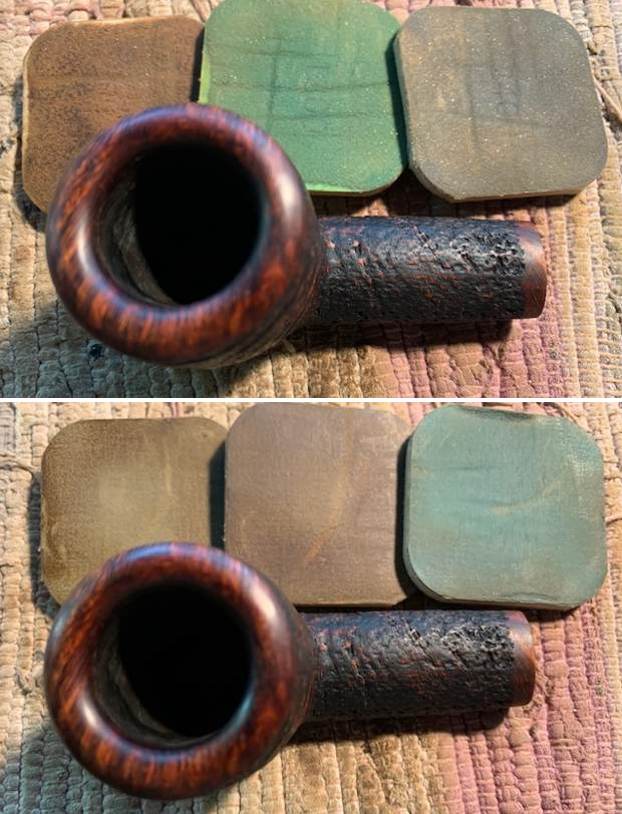
Now it was time to work on the pipe itself. Jeff had cleaned up the pipe with his usual focus on detail. He reamed the pipe with a PipNet pipe reamer and removed the rest of the cake with a Savinelli Fitsall Pipe Knife. He scrubbed the exterior of the bowl with undiluted Murphy’s Oil Soap with a tooth brush and was able to remove the thick lava build up on the rim top. He rinsed it under running warm water to remove the soap and grime. He cleaned out the inside of the shank and the airway in the stem with alcohol, cotton swabs and pipe cleaners. He rubbed down the stem with Soft Scrub – an all purpose cleaner that works well to remove oxidation and calcification on a vulcanite stem. He soaked it in Briarville’s Stem Deoxidizer and rinsed it off with warm water. I took photos of the pipe once I received it. The rim top cleaned up really well. The crowned rim top, inner and outer edges of the bowl looked very good. The rim top and inner edge has some darkening on the back side of the bowl but there was no burn damage. The stem surface looked good with some small, deep tooth marks and chatter on both sides near the button. I took a photo of the stamping on the underside of the shank. It was readable as noted above.I removed the stem and took a photo of the pipe to give a sense of the whole.  I polished the crowned rim top with micromesh sanding pads – dry sanding with 1500-12000 grit sanding pads. I wiped it down after each pad with a damp cloth to remove the sanding debris and dust.  I rubbed the bowl and shank down with Before & After Restoration Balm. I worked it into the surface of the bowl sides and shank with my fingertips. I worked it into the deeper parts of the blast with a horse hair shoe brush. The product works to clean, enliven and protect the briar. I let the balm sit for a little while and then buffed with a cotton cloth to raise the shine. I set the bowl aside and turned my attention to the stem. I “painted” the surface of the stem with the flame of a lighter to lift the tooth marks. It worked very well and many of the marks lifted. I filled in the remaining marks with clear CA glue and let the repairs cure. I sanded the stem with 220 grit sandpaper to blend the repairs into the stem surface. I started the polishing with 400 grit sandpaper.    I polished the vulcanite stem with micromesh sanding pads – 1500-12000 grit pads. I wiped it down with Obsidian Oil after each sanding pad. I used Before & After Pipe Polish – both Fine and Extra Fine to further polish the stem.  This French Made GBD Avoriaz 816 oval shank saddle stem Billiard is a great looking pipe now that it has been restored. The rich contrasting brown stained finish around the bowl is quite beautiful and highlights the sandblast grain. The stain and finish works well with the polished vulcanite stem. I put the stem back on the bowl and carefully buffed the pipe with Blue Diamond on the buffing wheel using a light touch on the briar. I gave the bowl and the stem multiple coats of Conservator’s Wax and buffed the entire pipe with a clean buffing pad. I hand buffed the pipe with a microfiber cloth to deepen the shine. The finished GBD Avoriaz 816 sits nicely on the desk top and in the hand. Give the finished pipe a look in the photos below. The dimensions of the pipe are Length: 5 ¾ inches, Height: 2 inches, Outside diameter of the bowl: 1 ½ inch, Chamber diameter: 7/8 of an inch. The weight of the pipe is 56 grams/1.98 ounces. I will be putting it on the French Pipe Maker section of the rebornpipes store shortly. If you are interested in adding this pipe to your collection send me a message or an email. Thanks for reading this blog and my reflections on the pipe while I worked on it. There are many more to come!

A GBD Mystery Pipe – Unreadable Shape Number and Line Information


Blog by Steve Laug

The next pipe on the table is a nice looking oval shank Billiard with an oval saddle stem. The shape number and line information is worn off with buffing. The stem has the GBD brass rondelle in the top of the saddle. There is a very faint GBD stamp in a logo on the top of the shank and some very faint stamping on the top and underside. This pipe was purchased from a antique seller on 04/07/18 in Pocatello, Idaho, USA. The finish was very dirty but the briar shows some beautiful grain on the bowl and shank sides. The bowl had a thick cake and heavy lava overflow onto the rim top. It looked like the edges and top were damaged but we would know more once it was cleaned. The stem did not show oxidation but had bite marks on the top and underside of the stem surface of the button. Jeff took photos of the pipe to show what it looked like before he cleaned it up. He captured the thick cake in the bowl and the heavy lava cake on the rim top. It really was a mess. I really wondered what the rim would look like under that. There appeared to be an inner bevel on the rim top. The photos of the stem show the tooth marks on the top and underside of the button surface. He captured the grain around the bowl sides and heel in the next photos. You can see the grime in the finish and a flaw in the briar on the lower front of the bowl. The stamping on the shank is very faint. It appears that there is a GBD in an oval and the faint numbers on the shank that are not clear. The brass oval on the stem top is in good condition. I did some digging on Pipephil and found that a French made GBD that was shown on the site was the same shape as the one I am working on (http://pipephil.eu/logos/en/logo-gbd.html). I have included a screen capture of the section below. The stamping on the one in hand is unreadable so I cannot be certain but it certainly looks like the same pipe. I turned to Pipedia to read about the French made GBD (https://pipedia.org/wiki/GBD). I have included the following information on the French made GBD. It gives me a possible date for the making of this pipe if it is indeed a French made pipe. That date is somewhere between early 1950s and the time the pipes moved to be made in England (1981). I quote:

The Paris factory moved to Saint-Claude in 1952. Since 1981 the majority of GBD pipes come from the English factory. At about that same time GBD merged with Comoys, since then all production for both GBD and Comoy comes from a single factory.

I then turned to a section on Pipedia (https://pipedia.org/wiki/GBD_Shapes/Numbers) where the shape numbers are listed. I went through the list and looked for an oval shank Billiard. I found the following listing that fits the pipe.

Now it was time to work on the pipe itself. Jeff reamed the bowl with a PipNet pipe reamer and followed up with a Savinelli Fitsall pipe knife to remove the cake. He scrubbed out the mortise and the airway in the shank and the stem with alcohol, cotton swabs and pipe cleaners. He scrubbed the exterior of the bowl, rim, shank and stem with a tooth brush and undiluted Murphy’s Oil Soap to remove the lava, oils and tars on the rim and the grime on the finish of the bowl. He rinsed it under running water. He dried it off with a soft cloth. He was able to remove lava build up on the rim top and you could see the great condition of the bowl top and edges of the rim. There was still some darkening to the rim top toward the back of the bowl. He soaked the stem in Before & After Deoxidizer to remove the oxidation. I took photos of the pipe before I started my work on it.  I took a close up photo of the rim top to show the condition of the bowl and rim after Jeff had cleaned up the grime and lava. The beveled rim top had some darkening on the whole rim top though darker on the backside of the rim and there were cuts, dings and nicks in the surface. The stem photos show the tooth marks and chatter on the stem and the button surface. It appears that the brass GBD rondelle is slightly crooked.I took photos of the faint stamping on the top and underside of the shank. The GBD oval is barely visible on the top of the shank. There are also remnants of the shape number on the underside.  I decided to address the damage on the rim top and edges. To begin I sanded the top of the rim on a topping board to smooth out all the cuts and ridges on the rim top.    I used a folded piece of 220 grit sandpaper to start the bevel on the inner edge of the rim. The goal would be to restore the original one. I then used a wooden ball wrapped with 220 grit sandpaper to work over the rim top and give the inner edge a bevel.  I filled in the flaw in the briar on the front of the bowl heel with clear CA glue. I set it aside to cure. I carefully filled it so I could polish it off with 1500 grit micromesh once it cured.I polished the bowl and rim top with micromesh sanding pads – dry sanding it with 1500-12000 grit pads. I wiped the bowl down with a damp cloth after each pad to remove the sanding debris. After the final sanding pad I hand buffed it with a cotton cloth to raise a shine.   I worked some Before & After Restoration Balm into finish of the briar with my fingertips to clean, enliven and protect it. I let the balm sit for a little while and then buffed with a cotton cloth to raise the shine. The Restoration Balm really makes the grain stands out beautifully.   I set the bowl aside and turned my attention to the stem. I used some black CA glue to rebuild the button top and bottom. I set it aside to let it cure.  Once it cured I used a small file to redefine the button edge and flatten out the surface of the stem. Once I had removed the largest part of the fills I used clear CA glue to fill in the air bubbles and work on the repaired edge shape.  I then used the file to flatten and reshape those repairs.  I used a folded piece of 220 grit sandpaper to blend the repairs into the surface of the stem. I started polishing the stem with a folded piece of 400 grit sandpaper. I wiped the stem down with Obsidian Oil.    I polished the stem with micromesh sanding pads – dry sanding it with 1500-12000 grit pads. I wiped the stem down with Obsidian Oil after each pad. I polished it with Before & After Pipe Polish – both Fine and Extra Fine and gave it a final coat and set it aside to dry.     I put the stem back on the GBD Mystery Oval Shank Saddle Billiard and buffed the pipe with Blue Diamond on the buffing wheel. I polished the briar and the vulcanite of the stem until there was a rich shine. This classic oval shank Billiard shape and finish really highlights some amazing grain on a proportionally well carved pipe. Once I buffed the pipe the briar came alive and the mixture of grain – straight, flame and birdseye – popped with polishing. The repaired black vulcanite stem had a rich glow. This GBD Oval Shank Billiard fits well in the hand and sits right in the mouth. Have a look at it with the photos below. The dimensions are Length: 6 inches, Height: 1 ¾ inches, Outside diameter of the bowl: 1 1/8 inch, Chamber diameter: ¾ of an inch. The weight of the pipe is 1.23 ounces/35 grams. This beauty will be going on the rebornpipes online store in the French Pipemakers Section. If you are interested let me know. Thanks for walking through the restoration with me as it was a pleasure to work on.

Breathing Life into a GBD London Made C Conquest 68 Billiard


Blog by Steve Laug

Jeff and I know longer remember where or when we purchased this pipe. It is a large pipe with nice grain and a saddle stem. It is stamped on the left side of the shank and reads GBD in an oval with London Made C arched underneath it. Below that it is stamped CONQUEST. On the right side of the shank it is stamped Made in London in an oval England followed by the shape number 68. On the underside of the shank it is stamped with a G. We don’t have any photos of the pipe before Jeff cleaned it. But Jeff did his usual cleanup. The bowl was reamed with a PipNet reamer. He cleaned it up with a Savinelli Fitsall Pipe Knife. He scrubbed the internals with alcohol, pipe cleaners and cotton swabs. He did the same with the airway in the stem. The briar is very clean and the rim top and the beveled rim edge look good. There were several fills well blended into the finish on the bottom of the bowl. There were are few sandpits on the right side of the bowl. There is some darkening on the back edge of the beveled rim top but otherwise it looks great. The vulcanite saddle stem is clean but has some tooth marks on the top and underside ahead of the button. I took some photos of the pipe before I started my work on it.  I took photos of the bowl and rim top to show the condition of both. The bowl is very clean but you can see some darkening on the inner beveled edge. There was some slight darkening was also on the rim top on the back. I took photos of the stem as well to show the tooth marks on the top and underside ahead of the button and on the button surface as well. There was no brass logo on the side of the saddle though it was a perfect fit.I took photos of the stamping on the shank sides. The stamping on the left, right and underside is faint but still very readable.I removed the stem from the shank and took a photo of the pipe. It is proportionally pleasing and quite an eye catching pipe.I knew that the GBD Conquest was a special line of GBD pipes that were generally larger in my experience than the normal GBD Pipes. So I turned to Pipephil to have a look and found one photo of a Conquest but no specific information on the line (http://pipephil.eu/logos/en/logo-gbd.html). I have included a screen capture of the pipe there. It was a Conquest Century Model which was different from the one I was working on. It also had a Perspex stem rather than the black vulcanite one I have.I turned then to Pipedia link on GBD pipes and followed a link there to a separate page on the various GBD Models (https://pipedia.org/wiki/GBD_Model_Information). I found a section on what they called Plus Sized Pipes that included information on the Conquest line. I quote below.

In addition to the pipe line and shape information stamped on the pipe GBD also had codes for plus sized pipes. These codes in ascending order of size were…

Conquest

Collector

Colossus

Perspex refers to the lucite/acrylic bit material GBD used, the clear bits used on various models are Perspex. Metal rondelles were discontinued after the merger with Comoy.

The information was very clear that the pipe was one of the larger GBD pipes like I suspected. I also found it interesting that the Conquest was at the bottom of the order of Large pipes. It also notes that the Metal rondelles were discontinued after the merger with Comoy. That helped me to come to the conclusion that the stem on the one I was working on is probably original.

I started my work on the pipe by addressing the darkening on the inner beveled edge of the bowl and the rim top. I used a folded piece of 220 grit sandpaper to deal with the darkening. It did not take too much and it was clean and smooth.  The inside of the bowl was a bit rough from the removal of the cake. I sanded it smooth with a piece of 220 grit sandpaper wrapped around a dowel. I wiped it down with a piece of paper towel and the inside was clean and smooth. I cleaned out the dust from the sanding with alcohol and pipe cleaners.I polished the briar with micromesh sanding pads – dry sanding it with 1500-12000 grit pads. I wiped the briar down with a damp cloth to remove the sanding dust. The briar really took on a rich shine with the polishing.   I rubbed the bowl down with some Before & After Restoration Balm. I worked it into the briar with my finger tips to clean, revive and preserve the wood. It really brings the grain alive once again. I let it sit for 15 minutes then buffed it off with a soft cloth. The grain really pops at this point in the process. I set the bowl aside and turned my attention to the stem. I “painted” the surface of the stem with the flame of a Bic lighter and was able to lift the tooth marks and chatter. It looked much better and the marks all lifted. Polishing the stem would take care of the damage.  I polished the stem with micromesh sanding pads – 1500-12000 grit pads. I wiped the stem down after each pad with a cloth impregnated with Obsidian Oil. I finished the polishing with some Before & After Pipe Stem Polish – both Fine and Extra Fine. The stem looked very good.    As always I am excited to finish a pipe that I am working on. I put the GBD London Made Conquest C 68 Billiard back together and buffed it with Blue Diamond on the buffing wheel. I gave the bowl and the stem multiple coats of carnauba wax. I buffed the pipe with a clean buffing pad and hand buffed it to raise the shine. It is fun to see what the polished bowl looks like with the grain popping around the bowl and shank. Added to that the polished vulcanite saddle stem was a beautiful touch. It is light and well balanced. Have a look at it with the photos below. The dimensions are Length: 6 inches, Height: 1 ¾ inches, Outside diameter of the bowl: 1 3/8 inches, Chamber diameter: 7/8 of an inch. The weight of the pipe is 56 grams/1.98 ounces. It is a beautiful pipe and one that will be on the rebornpipes store in the British Pipe Makers section. If you are interested in adding it to your collection let me know. Thanks for walking through the restoration with me as I worked over this pipe. Thanks to each of you who are reading this blog. I want to keep reminding us of the fact that we are not pipe owners; we are pipemen and women who hold our pipes in trust until they pass on into the trust of the next trustee.

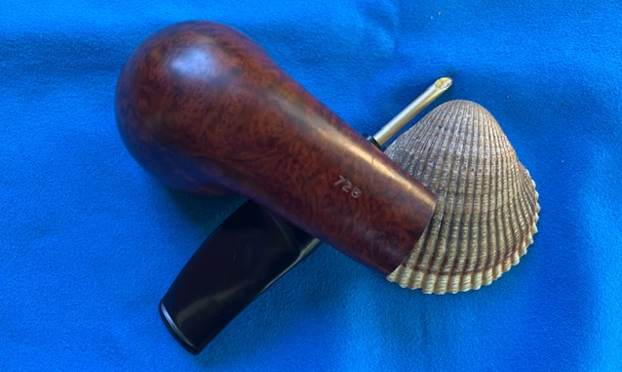
Restoring a GBD Speciale 728


Blog by Steve Laug

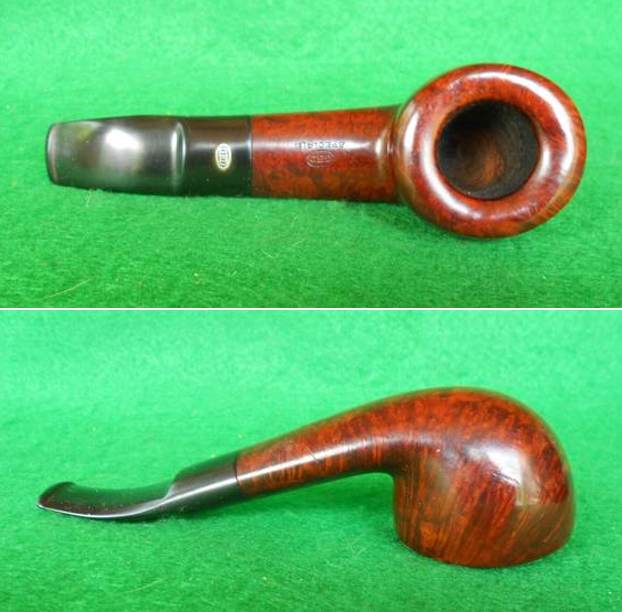
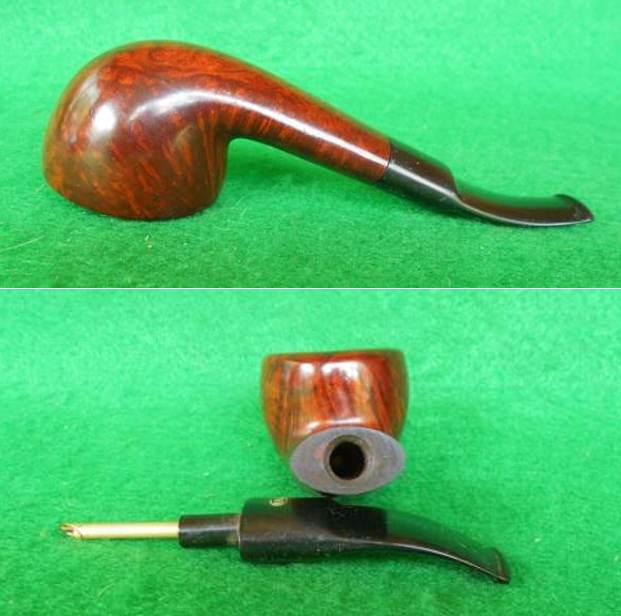
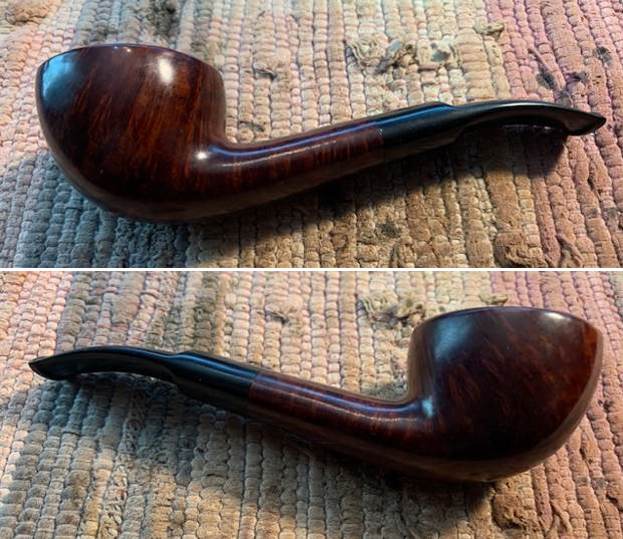
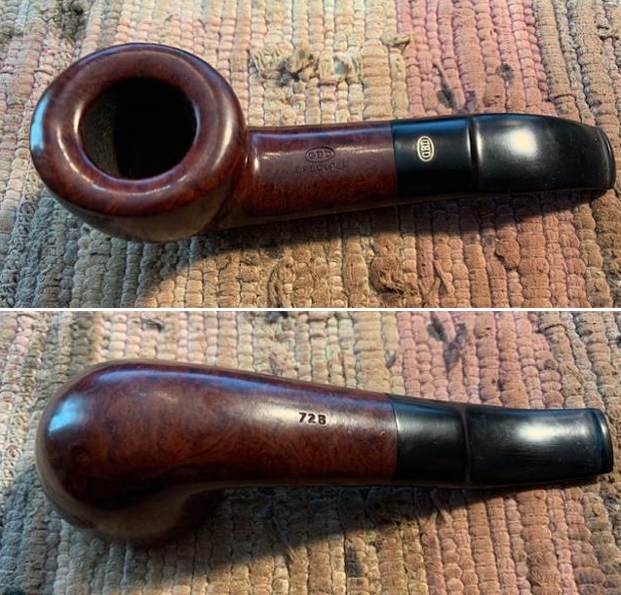
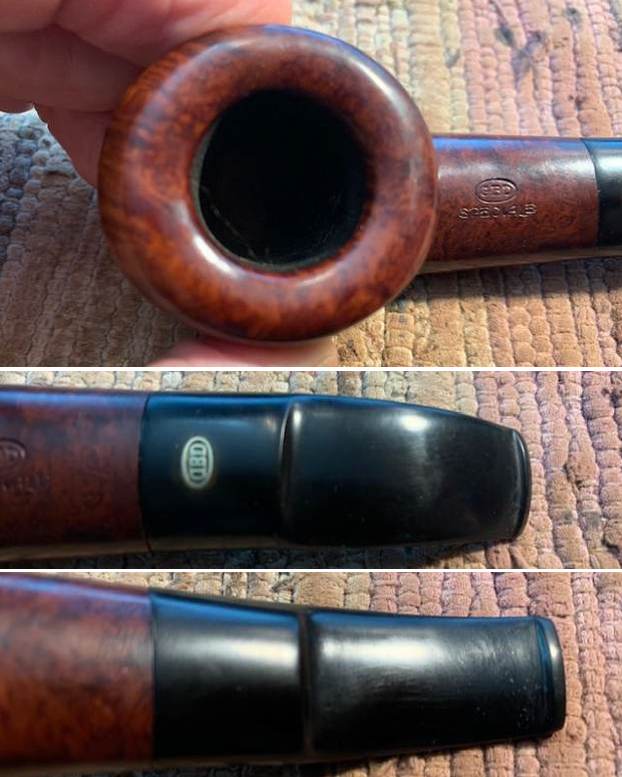
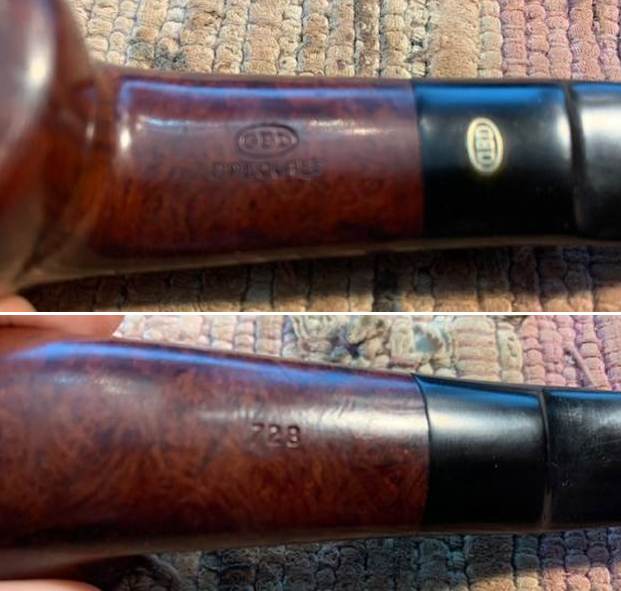
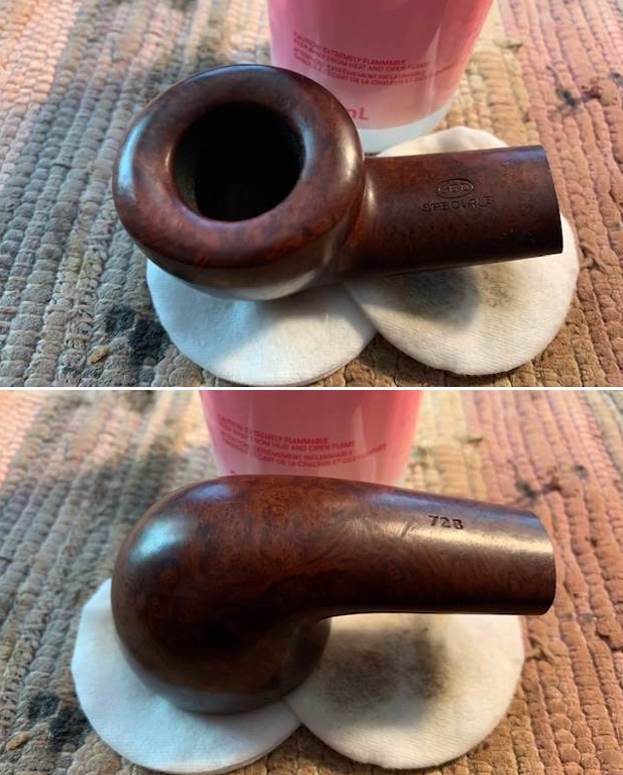
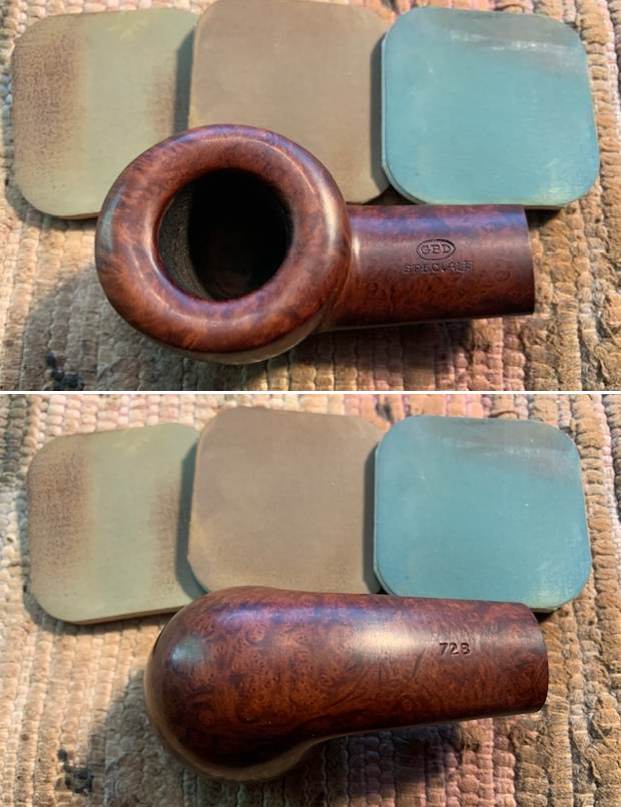
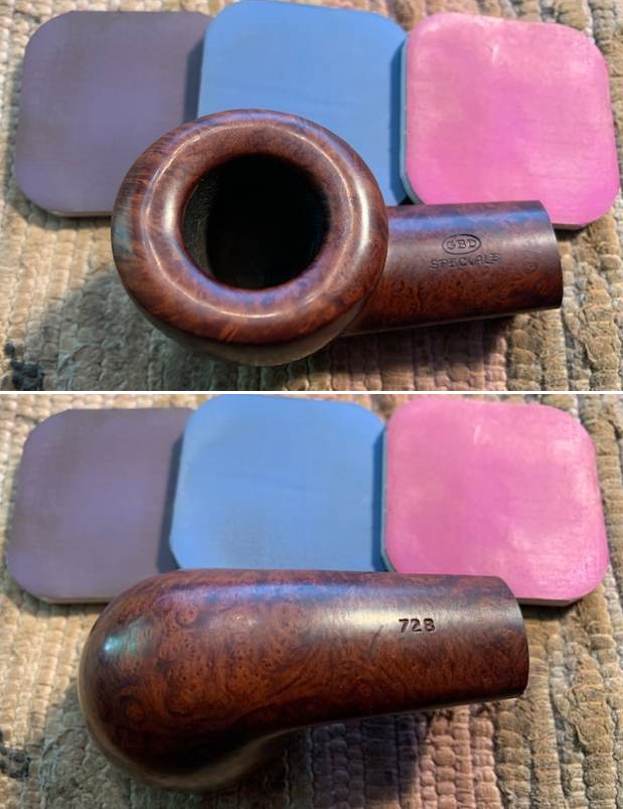
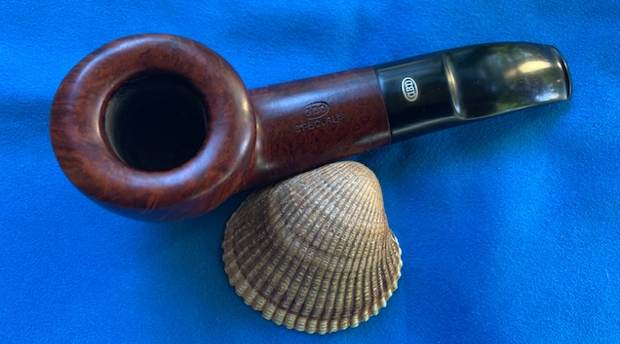
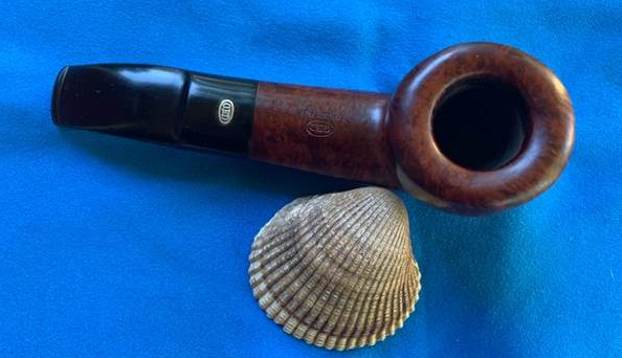
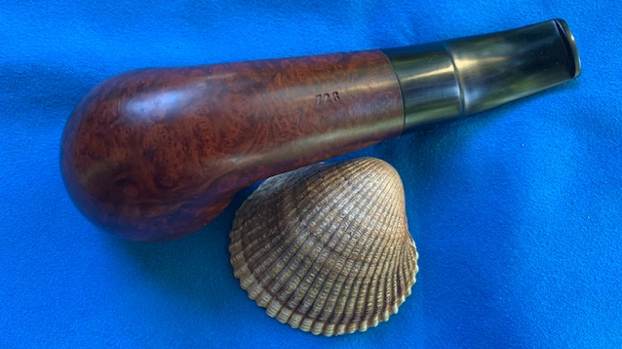
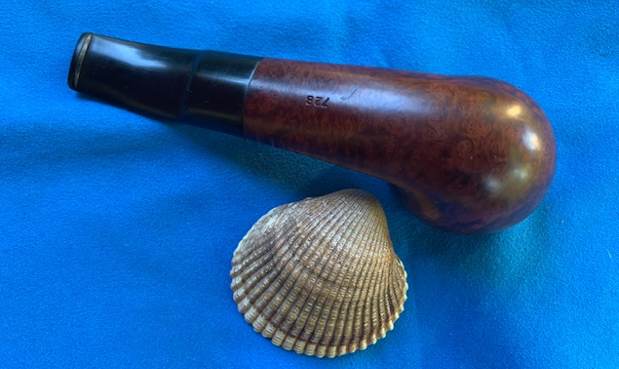
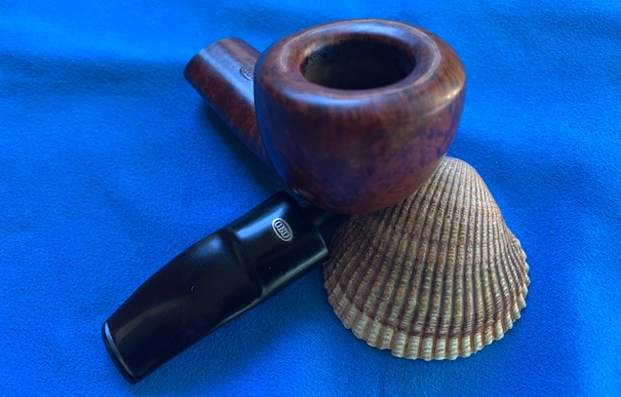
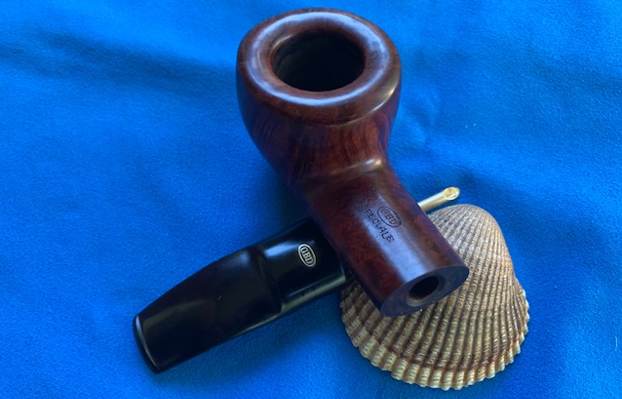
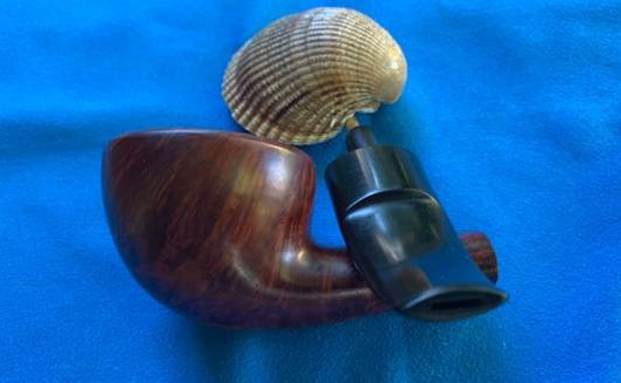
I have worked on several pipes for a fellow in Israel over the past few months and he is great to work with. He has great taste in pipes and the ones he has purchased from me have also been beautiful. Periodically I receive an email from him about another pipe he was interested in purchasing EBay. This next one was one that caught my attention. He sent me the link and wanted my opinion on it. It was a nice GBD with a brass rondel on the stem top. It is stamped with the GBD oval over Speciale on the top of the shank and on the underside it has the shape number 728. GBD called this one a Rhodesian according to their shape charts but I would not call it that. To me it is more of Dublin/Scoop and has some great looking grain around the bowl sides, rim and shank. The pipe appeared to be in decent condition and lightly smoked. Not too many days after that he wrote me to say he had won it and he had it shipped to me rather than to him in Israel. We chatted back and forth about it via email and I would let him know when I received it. Here are the pictures that the EBay seller included with the advertising. I always like to be able to set the pipe I am working on in its historical setting so I turn to Pipedia (https://pipedia.org/wiki/GBD) and read through the brand history. Toward the middle of the article I found what I was looking for. I quote below:

The Paris factory moved to Saint-Claude in 1952. Since 1981 the majority of GBD pipes come from the English factory.

The premium lines of GBD offered very good values, and are considered amongst the most affordable high end pipe of the 1960’s and earlier and a rival in quality, design, and price to Dunhill. Smokers’ Haven was the main retail supplier for GBD’s in the US until the early 1980’s.

GBD produced consistently well made pipes, almost entirely of Algerian or Grecian briar. In the late 1960’s to late 1970’s, they introduced the “Collector” and “Unique” lines, made primarily by Horry Jamieson, who had carved for Barling for many years, and was skilled in freehand design. Older GBD pieces are excellent smokers and unique in design. They did an excellent executions of classic pipe shapes, as well as some beautiful freehands in the “Unique” line. [2]

The following list comprises the better grades in descending order:

Pedigree, Pedigree I, Pedigree II, Straight Grain, Prodigy, Bronze Velvet, Virgin, Varichrome, Prestige, Jubilee, New Era, Prehistoric, International, Universe, Speciale Standard, Ebony, Tapestry, New Standard, Granitan, Sauvage, Sierra, Penthouse, Legacy, Concorde.

The pipe I am working on was stamped Speciale and though it does not say it was made in France I think it was like the other Speciale pipes I have worked on. Thus I knew that it was made either in Paris before 1952 or in St. Claude after that date and before 1981 when production moved to England. I also new that I was dealing with one of the better grade pipes with the Speciale Standard stamp.

I then followed the links included to a listing of the shapes and numbers on the GBD pipes (https://pipedia.org/wiki/GBD_Shapes/Numbers). The pipe I was working on was labeled by GBD as a 728 which is a Rhodesian/Poker according to the chart. It has an oval shank though and I am not sure I would classify it as either of those shapes.

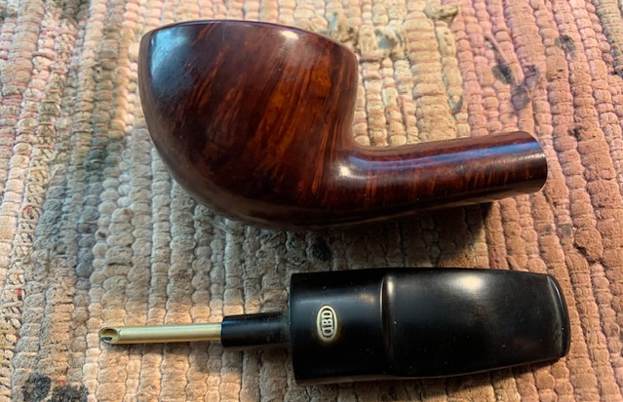
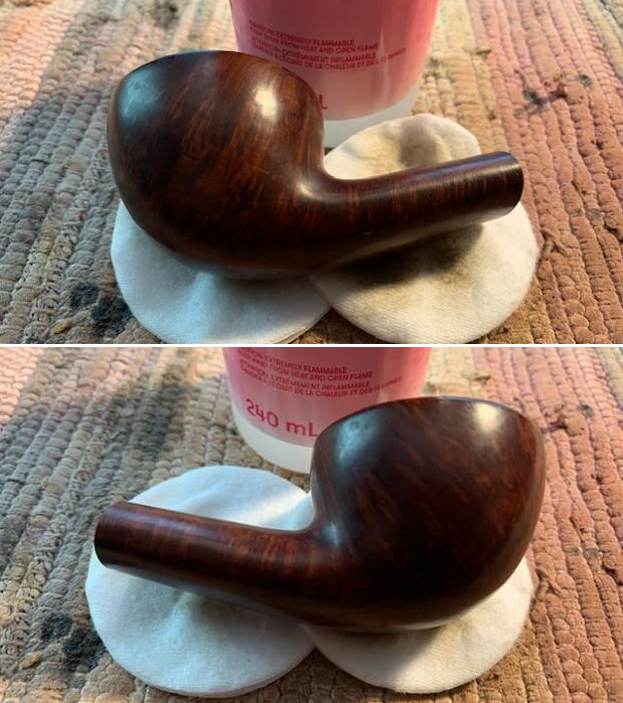
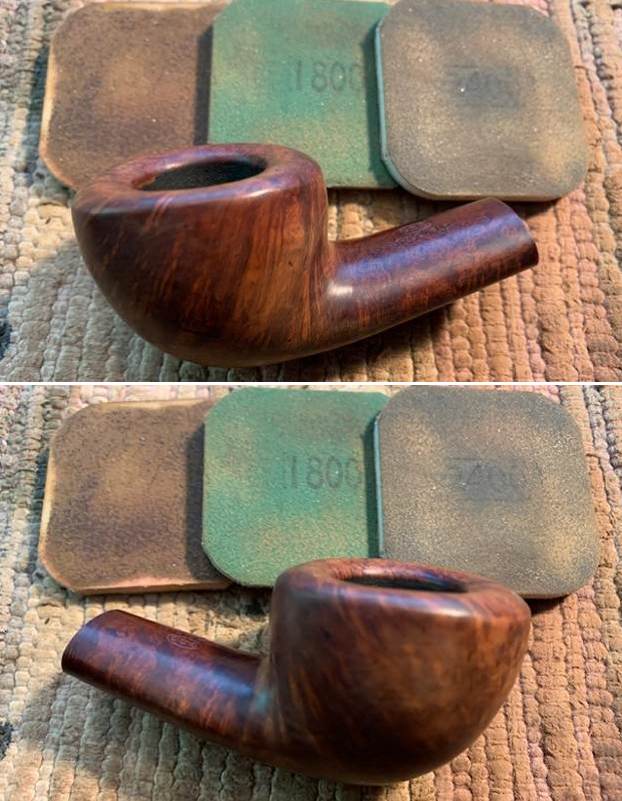
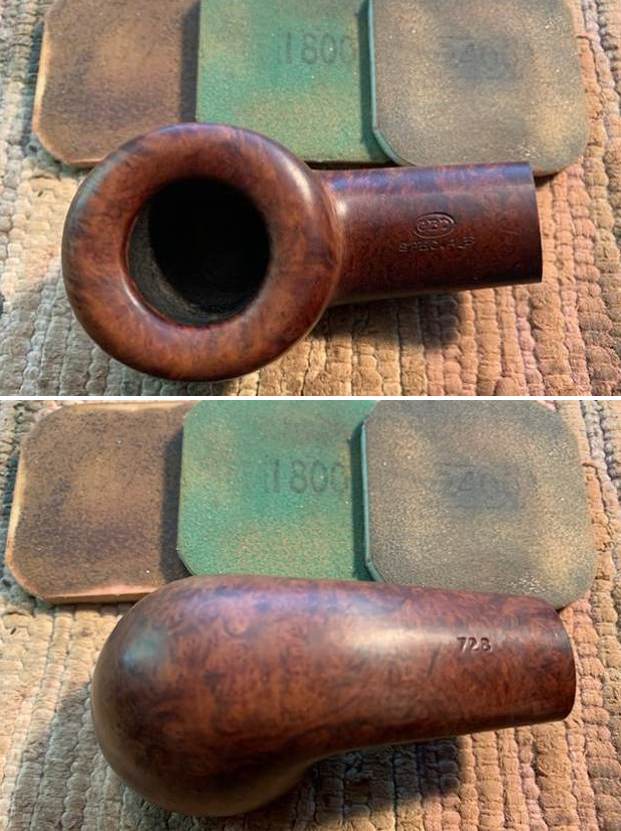
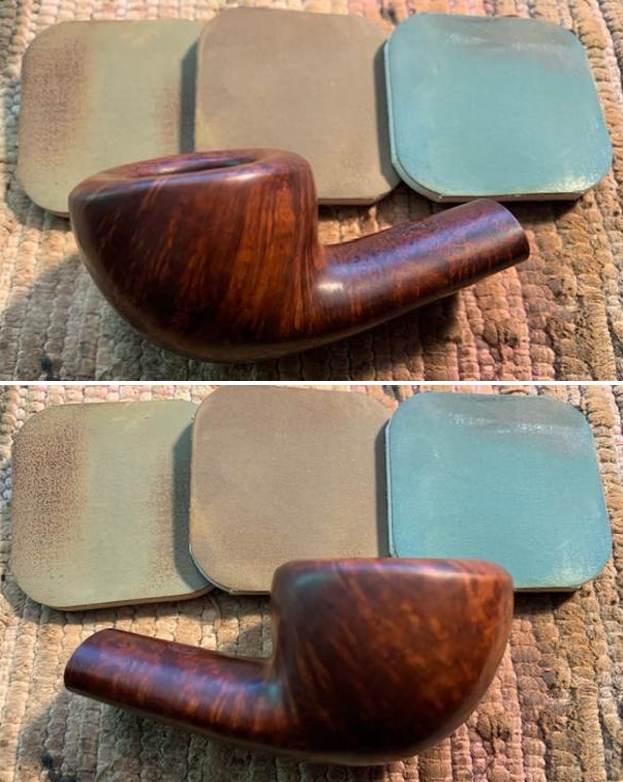
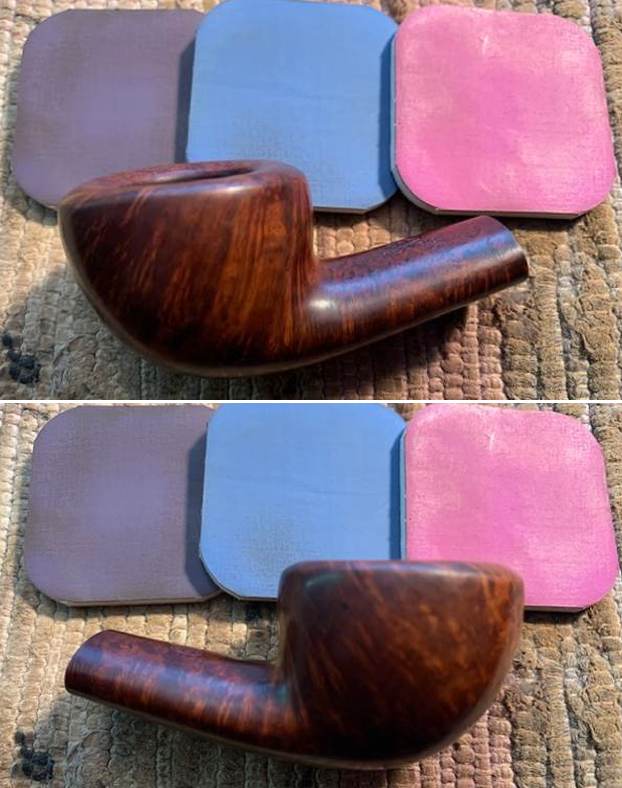
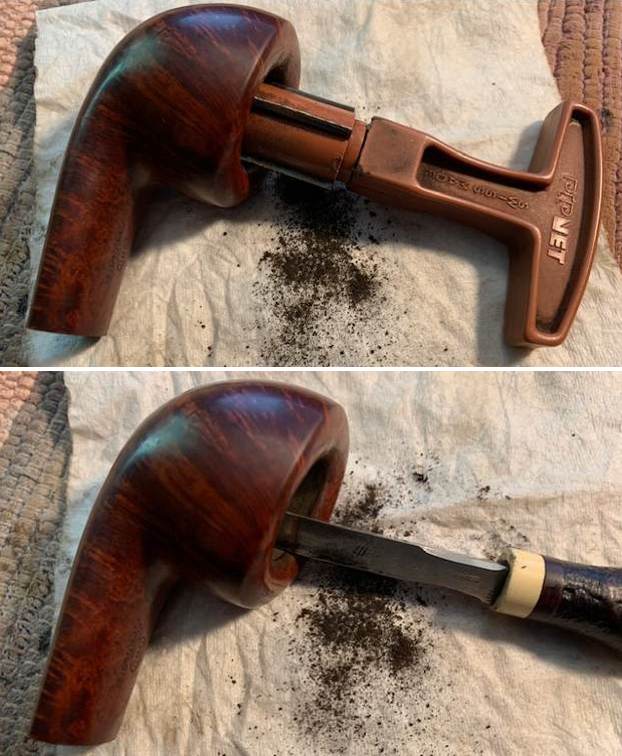
The pipe arrived this week in a Bubble Mailer from the seller in Italy. To me it is a questionable way to ship pipes as they can be easily damaged. I was concerned when I opened the mailer to examine the pipe inside. Fortunately the seller had separated the stem and bowl and wrapped each in thick bubble wrap which certainly helped. I examined the pipe carefully to assess both the condition of the pipe and what I needed to do with it. There was a light cake in the bowl and no lava on the rim top or edges. There light scratches on the rim top and on the sides of the bowl. The pipe was stamped on the on the top and underside of the shank as noted above. The finish was surprisingly clean and shiny with some great grain showing through. As I looked over the finish it appeared to me that bowl had been varnished to give it that shininess. I personally don’t like that kind of coating as I feel that it gets in the way of the briar breathing and often bubbles when the pipe is heated. The stem had the inlaid brass oval rondel on the top of the saddle portion. The vulcanite stem was fairly clean and there was light tooth marks and chatter on the top and underside. I took some photos of the pipe before I started my work on it. I have included them below. The cleaned up rim top looked very good around the edges and the top. I took some close up photos of the rim top and edges to show how it looked when it arrived. There were a few dents and scratches in the crowned top. The inner and outer edges looked good. I also took close up photos of the stem to show the light tooth marks on the surface near and on the button itself.I took photos of the stamping on the top and underside of the shank. It reads as noted above.I removed the stem and took a photo of the pipe to have a look at the parts and overall look. You can also see the inner tube in the tenon. It is removable and I will take it out and clean it up in the process.To remove the varnish coat from the briar I wiped it down with cotton pads soaked in acetone. It worked very well and took off the varnish but did no remove the stain finish. It was clean and the grain stood out more clearly. Once the bowl was polished and waxed I think that the rain would sing. I polished the briar with micromesh sanding pads – dry sanding with 1500-12000 grit sanding pads. I wiped the bowl down with a damp cloth after each sanding pad. With the outside polished I decided to clean the insides of the pipe and shank next. I reamed the bowl with the third cutting head of a PipeNet pipe reamer to take the thin cake off the walls of the pipe. I cleaned up the reaming with a Savinelli Fitsall Pipe Knife. I polished the walls of the bowl with 220 grit sandpaper wrapped around a piece of dowel.  I scraped the inside of the shank with a small pen knife to remove the tars and oils that had built up on the walls of the pipe. I scrubbed the shank with pipe cleaners, cotton swabs and isopropyl alcohol and worked on it until the shank was clean. I cleaned out the slot in the button and the airway in the stem with pipe cleaners and alcohol. It was quite dirty but with the scrubbing it was very clean. I decided to de-ghost the bowl with alcohol and cotton pads. I stuffed the bowl with cotton pads and twisted one up to insert in the shank. Once those were in place I used an ear syringe to fill the bowl with isopropyl alcohol. I set the bowl in an old ice cube tray to hold the bowl upright. I set it aside until the morning. At that time the cotton was very dirty with tars and oils both on the twisted cotton in the shank and the bolls stuffed in the bowl. I cleaned out the shank and mortise with alcohol to remove any debris. The pipe smelled much better. I worked some Before & After Restoration Balm into the surface of the briar with my fingertips to clean, enliven and protect the briar. I let the balm sit for 15 minutes and then buffed with a cotton cloth to raise the shine. The photos show the bowl at this point in the restoration process. I set the bowl aside and turned my attention to the stem. I polished the scratches and tooth chatter out of the stem with micromesh sanding pads – wet sanding with 1500-12000 grit sanding pads. I wiped it down after each sanding pad with Obsidian Oil. I polished it with Before & After Pipe Stem Polish – both Fine and Extra Fine. I am excited to finish this beautifully grained GBD Speciale 721 with a saddle stem. I put the pipe back together and buffed it with Blue Diamond on the buffing wheel. I gave the bowl and the stem multiple coats of carnauba wax. I hand buffed the pipe with a clean buffing pad to raise the shine. It is fun to see what the polished bowl looks like with beautiful mixed grain all around it. The polished bowl looks great with the black vulcanite stem. The removal of the varnish will enable the briar to breathe. This smooth Classic GBD Speciale 721 is great looking and the pipe feels great in my hand. It is light and well balanced. Have a look at it with the photos below. The dimensions are Length: 5 ½ inches, Height: 1 ½ inches, Outside diameter of the bowl: 1 ½ inches, Chamber diameter: 7/8 of an inch. The weight of the pipe is 47 grams/1.62 ounces. It turned out to be a beautiful pipe. I will be sending it off to the fellow in Israel shortly and I look forward to hearing what he thinks of it once he receives it. Remember that we are only trustees of our pipes and long after we are gone the pipes will go onto the next person who takes on the trust. Thanks for your time and as Paresh says each time – Stay Safe.

Breathing Life into a GBD Oxford Saddle Stem Billiard


Blog by Steve Laug

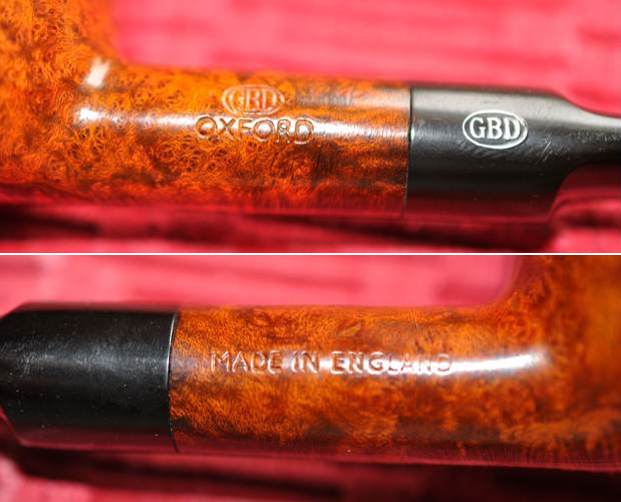
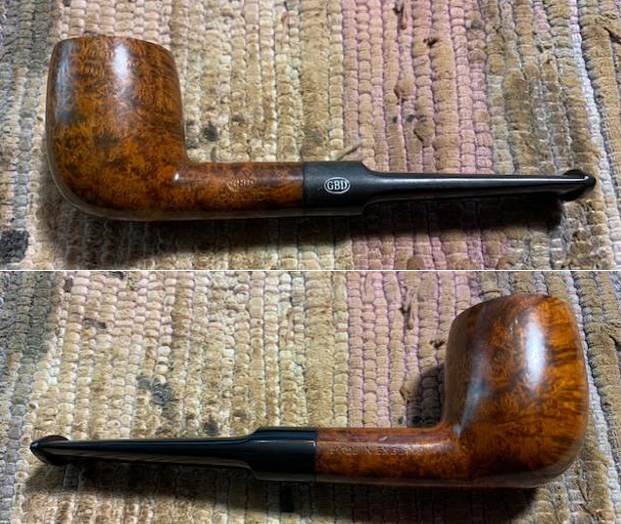
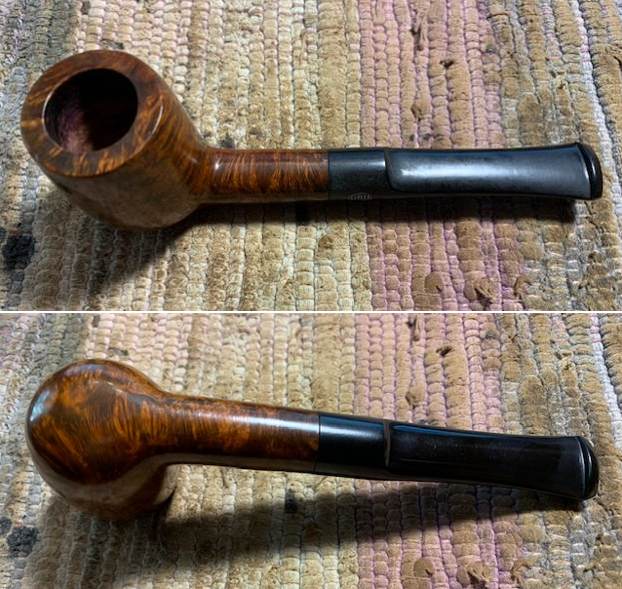
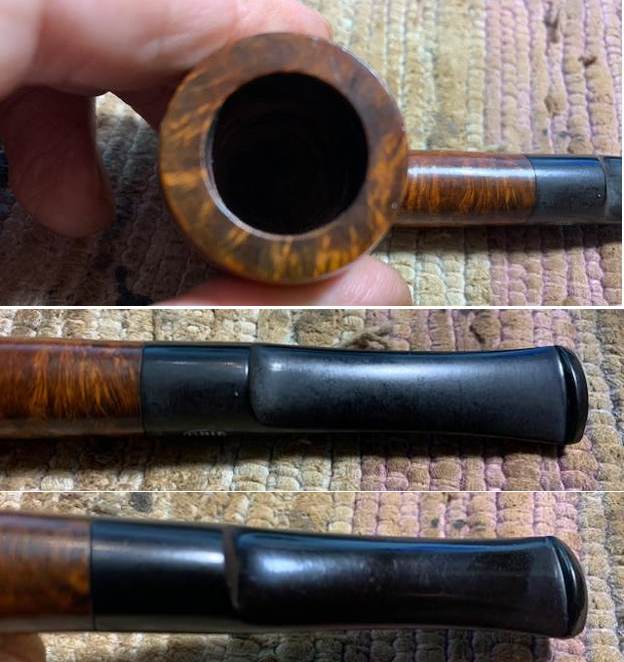
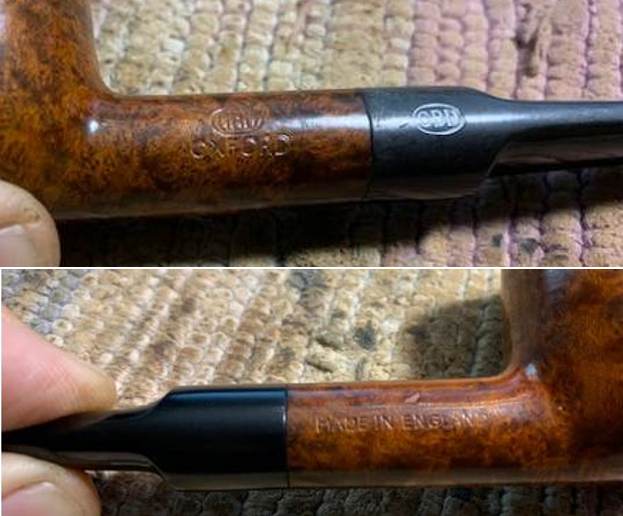
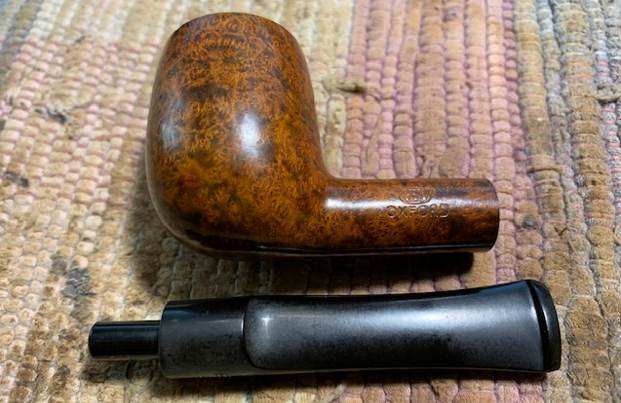
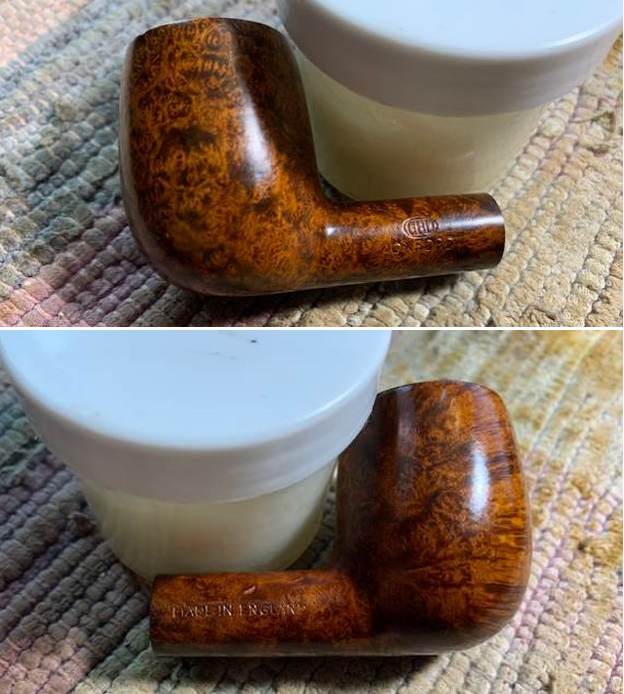
The next pipe on the work table came to us from EBay on  06/11/2016 from Albuquerque, New Mexico, USA. The pipe is a classic newer GBD Billiard shaped pipe with a varnish coat on the bowl. The pipe is stamped on the left side of the shank and reads GBD in an oval [over] OXFORD. On the right side it is stamped Made in England. The finish is quite shiny and has some nice grain highlighted by the contrast stain. The bowl was moderately caked around the first ½ inch down into the bowl then there was bare briar. It was quite clean and the inner edge looked to be in good condition. There was a small nick on the left front outer edge. The saddle stem was vulcanite and was lightly oxidized. It had a stamped GBD Oval logo that was in good condition. It is a nice looking newer GBD made by Cadogan and will make someone a great small billiard. Jeff took some photos of the pipe before he started his cleanup work. He took a photo of the rim top and bowl to give a clear picture of the thickness of the cake and tobacco debris as well as the thick lava on the smooth rim top. Though there are no photos of the top and underside of the stem it is remarkably clean and undamaged. The stamping on the sides of the shank is clear and readable as noted above. The stamp on the stem is also quite clean. I turned to Pipephil and there was nothing listed for the Oxford model of GBD pipes. I was a little disappointed but have gotten used to that for some the newer GBDs. I have hit the wall in the search for information many times on these.
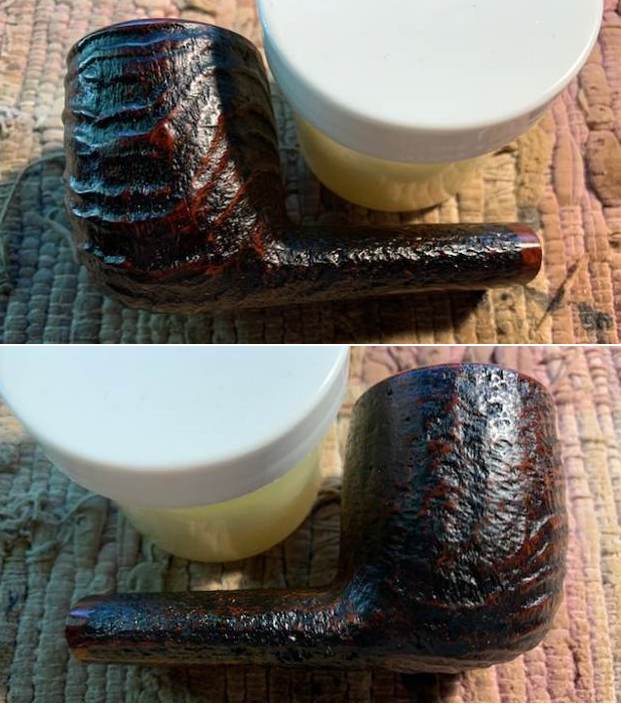
I turned then to Pipedia to see if I could find anything. On the main page there was a great summary of the history of the brand lots of information on the more known models. There was nothing there on the Oxford model.

At the bottom of the listing on Pipedia there was a link to a section on the various models so I clicked on the link (https://pipedia.org/wiki/GBD_Model_Information) and finally found something. At the bottom of the listing of models of GBD pipes there was a list of GBD seconds. I have included the some of models listed there below. I have highlighted the Oxford in red in the list below. That was the extent of information that I could find.

List of GBD “Seconds”

The lines listed below are either 2nds or lines made for other makers/pipeshops. Please send me any corrections or additional information you might have on these.

  • Matt Special — England, unknown if also made in France: “Warm Amber” on black dual tone Matt finish, “mid-priced” private label. -catalog ( 1976 ). This style was listed under “Private Brand Pipes” in the catalog which means that GBD would stamp a custom name of the pipe, often the name of a pipe shop or chain.
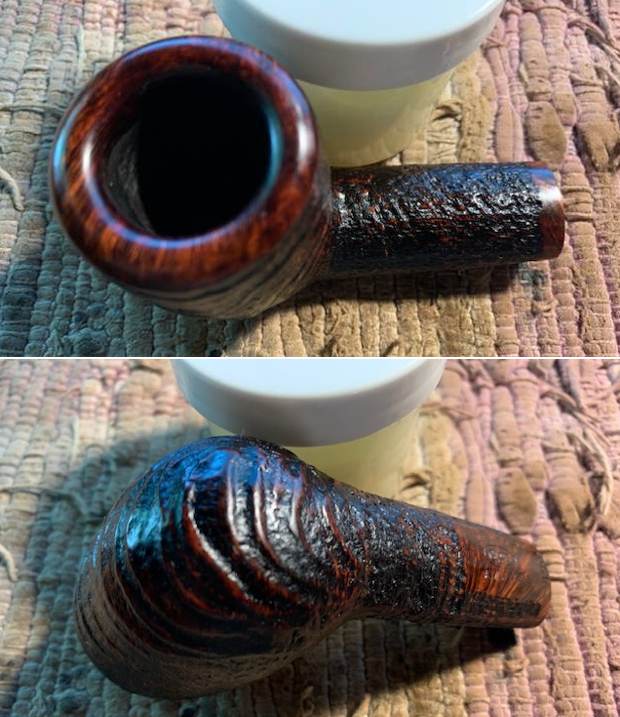
  • Medley — England, unknown if also made in France: “A collection of oversize Conquest and Collector shapes…varying shape selection”, varying finishs. -catalog ( 1981 )
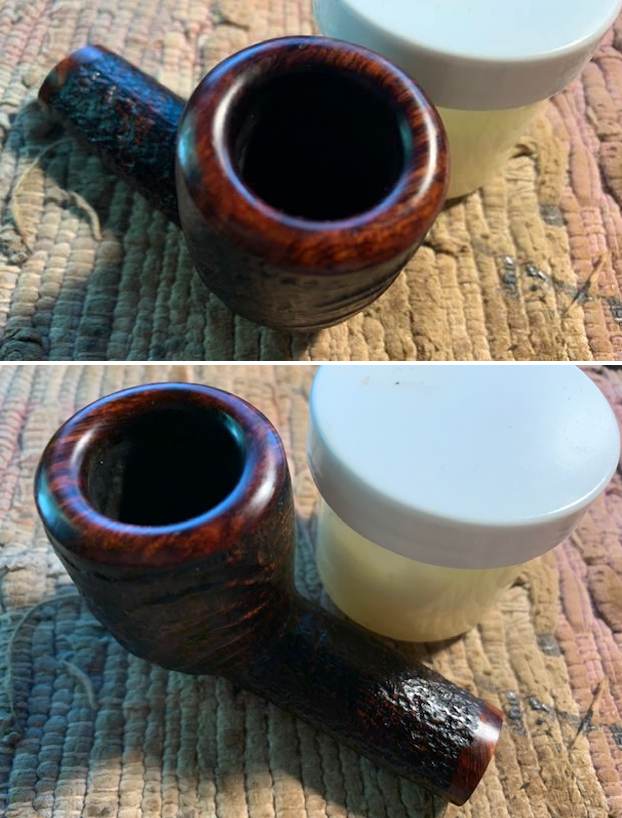
  • Oxford — England, unknown if also made in France: –
  • Peerless — England, unknown if also made in France: –

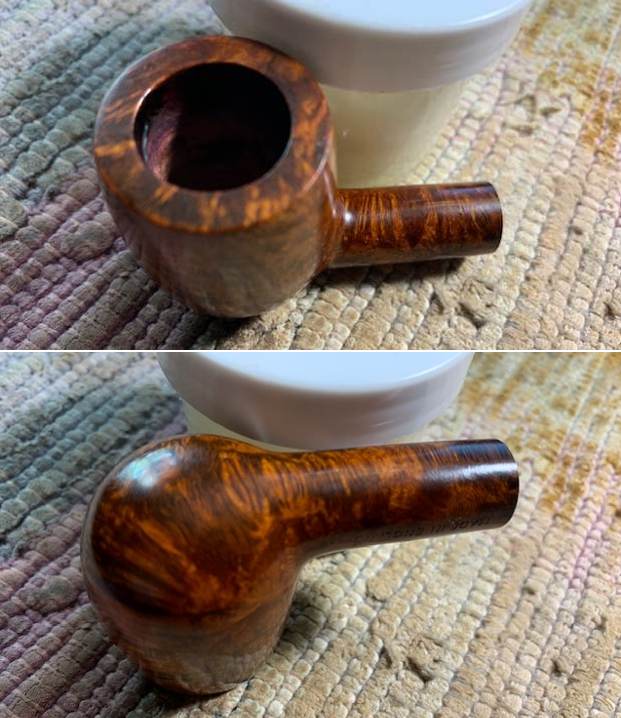
Armed with that information I knew that I was working on a Cadogan era GBD pipe (made after 1981) I turned to work on the pipe itself.  Jeff had cleaned up the pipe with his usual penchant for thoroughness. He reamed the pipe with a PipNet pipe reamer and removed the rest of it with a Savinelli Fitsall Pipe Knife. He scrubbed the bowl with undiluted Murphy’s Oil Soap with a tooth brush. He rinsed it under running warm water to remove the soap and grime. He cleaned out the inside of the shank and the airway in the stem with alcohol, cotton swabs and pipe cleaners. He scrubbed the stem with Soft Scrub and a tooth brush and rinsed it off with warm water. I took photos of the pipe before I started my part of the restoration work.   The rim top and edges of the bowl looked great. There was one small nick on the left front outer edge of the bowl but otherwise the outer edge looks good. The vulcanite stem was very clean with no tooth marks or chatter. There was some light oxidation that I would need to deal with but otherwise it was clean. The stamping on sides of the shank is clear and readable as noted above. I removed the stem and took a photo of the pipe to give a sense of the whole. It is another proportionally pleasing pipe.The bowl and rim looked very good so I rubbed the pipe down with Before & After Restoration Balm. I worked it into the surface of the bowl sides and shank with my fingertips and a horsehair shoe brush to clean, enliven and protect the briar. I let the balm sit for about 10-15 minutes and buffed with a cotton cloth to raise the shine.    I set the bowl aside and turned to work on the stem. I needed to remove the light oxidation on the stem. I rubbed it down with Soft Scrub and was able to clean it up significantly.   I polished the vulcanite stem with micromesh sanding pads – 1500-12000 grit pads. I wiped it down with Obsidian Oil after each sanding pad. I used Before & After Pipe Polish – both Fine and Extra Fine to further polish the stem.     This Cadogan Era GBD Oxford Vulcanite Saddle Stem Billiard is a great looking pipe. The contrasting brown and black stain on the briar highlights the grain around the bowl and shank. It works well with both the shape and the polished vulcanite saddle stem. I put the stem back on the bowl and carefully buffed the pipe with Blue Diamond on the buffing wheel using a light touch on the briar. I gave the bowl and the stem multiple coats of carnauba wax on the buffing wheel and followed that by buffing the entire pipe with a clean buffing pad. I hand buffed the pipe with a microfiber cloth to deepen the shine. The finished GBD Oxford Billiard is another pipe that fits nicely in the hand and feels great. Give the finished pipe a look in the photos below. The dimensions of the pipe are Length: 5 ¼ inches, Height: 1 ½ inches, Outside diameter of the bowl: 1 inch, Chamber diameter: ¾ of an inch. The weight of the pipe is 32 grams/1.13 ounces.  I will be putting it on the rebornpipes store in the British Pipemakers Section shortly. If you are interested in adding this pipe to your collection send me a message or an email. Thanks for reading this blog and my reflections on the pipe while I worked on it. There are many more to come!

Breathing Life into a GBD Autumn Gold 1260 Billiard


Blog by Steve Laug

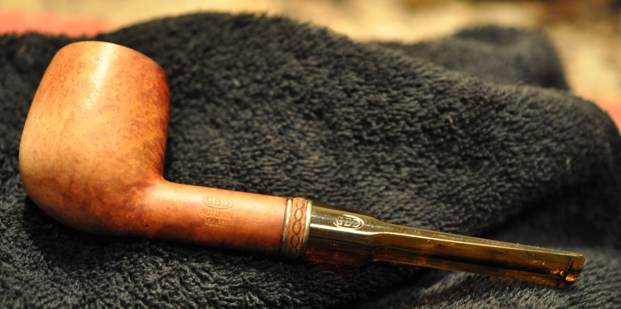
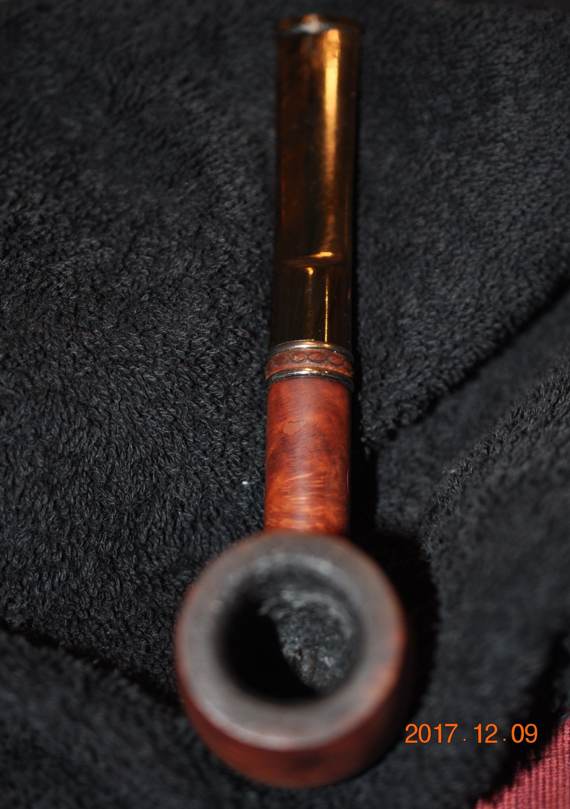
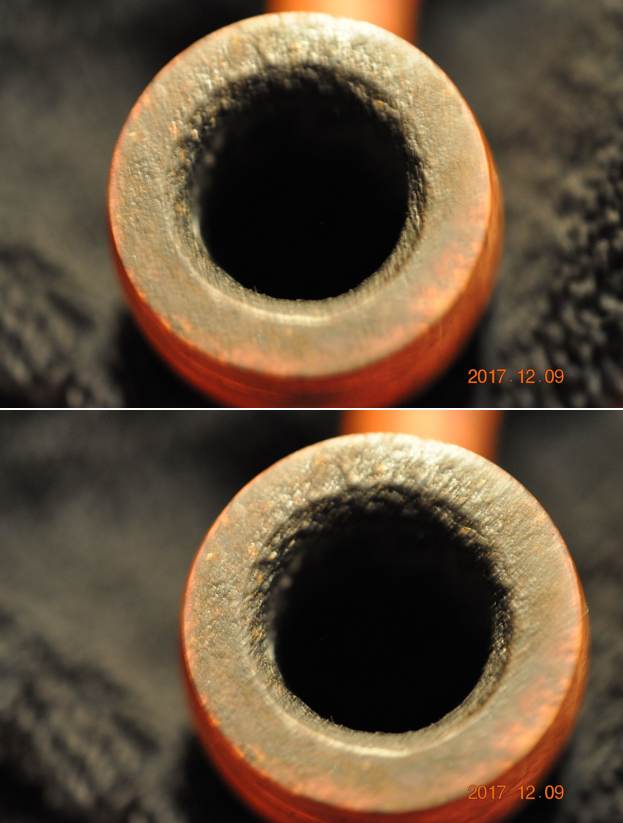
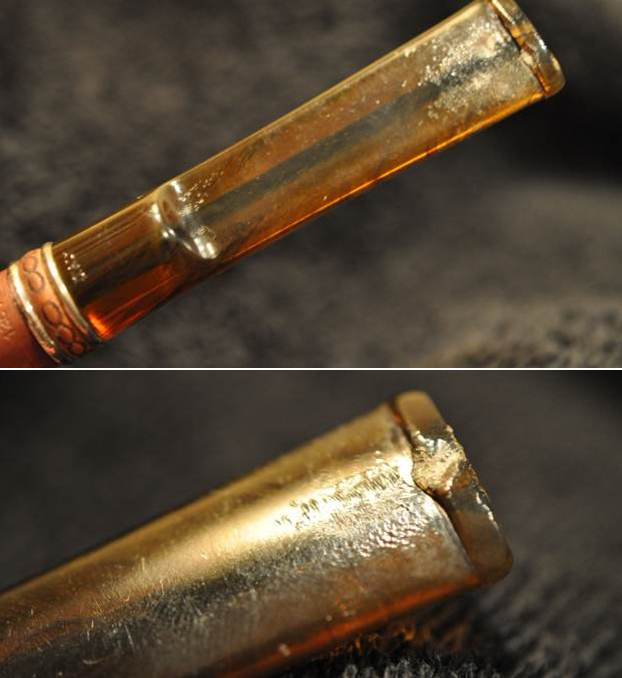
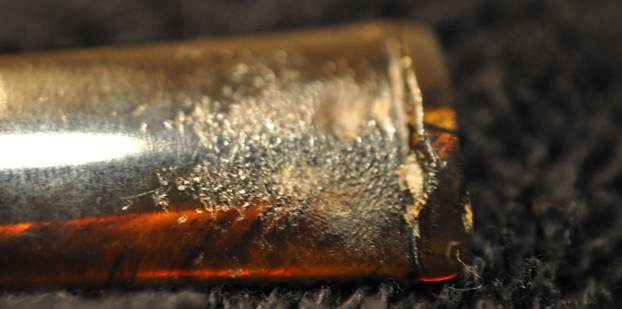
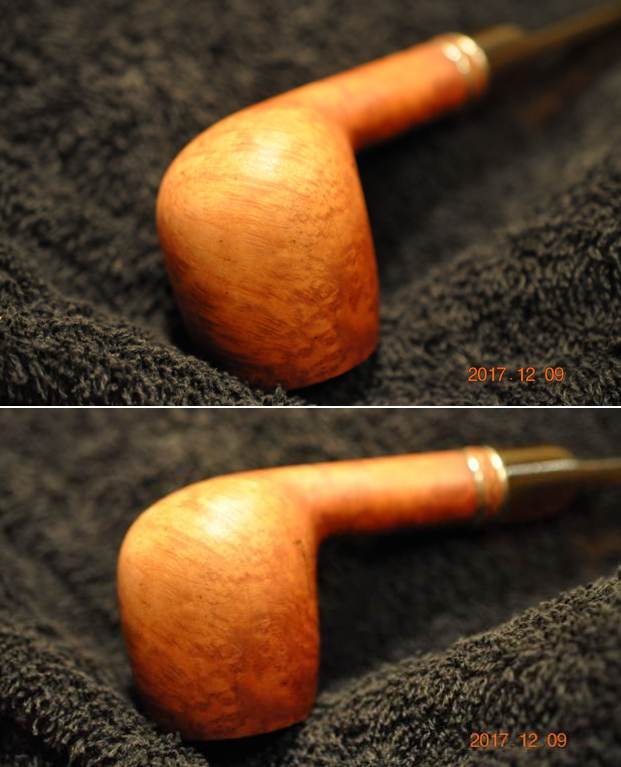
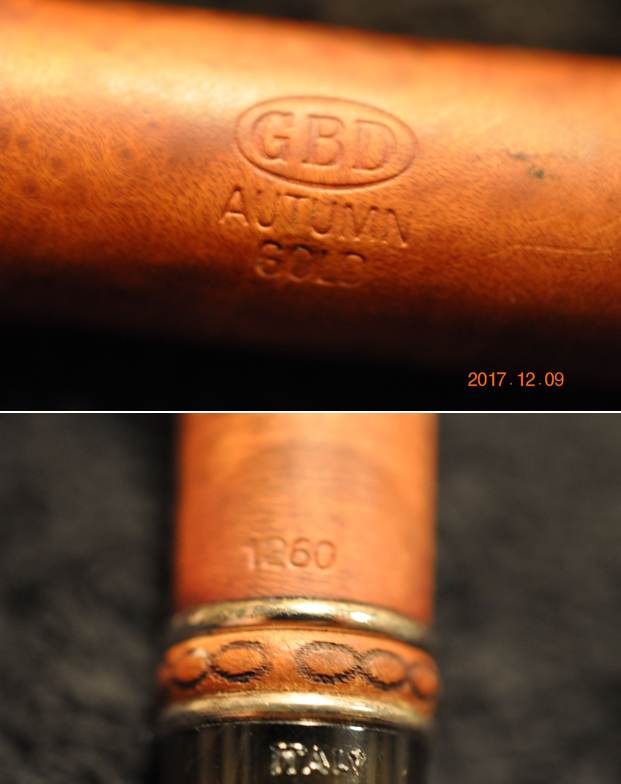
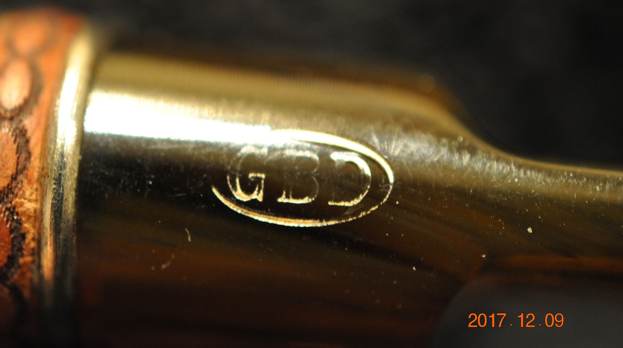
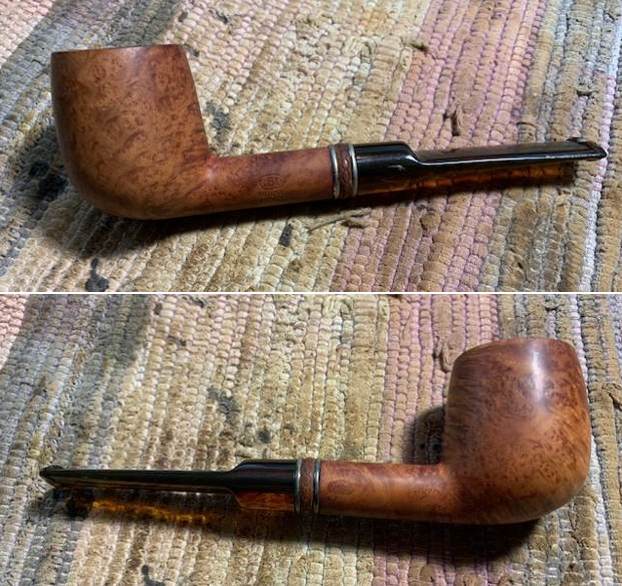
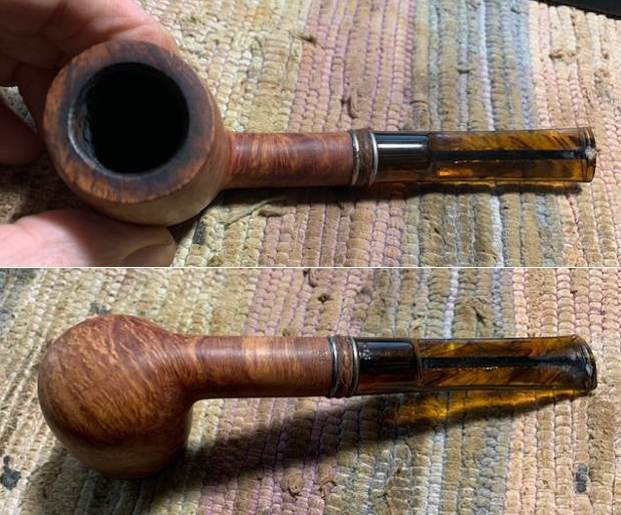
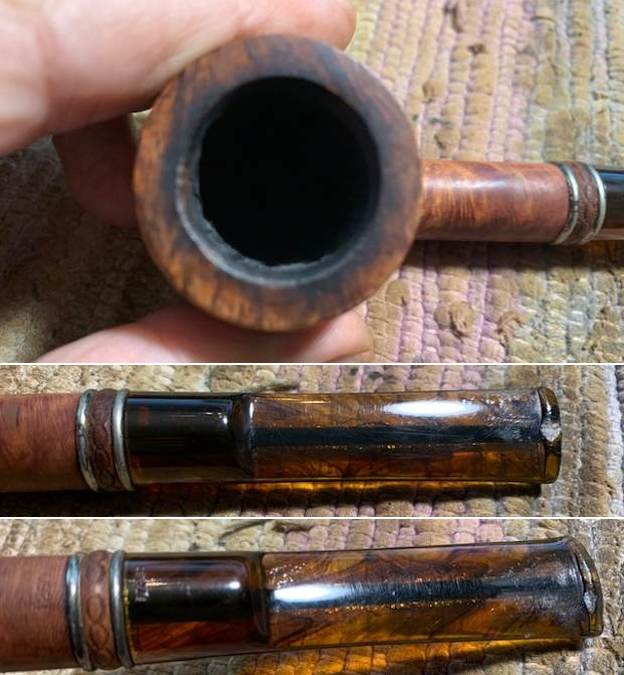
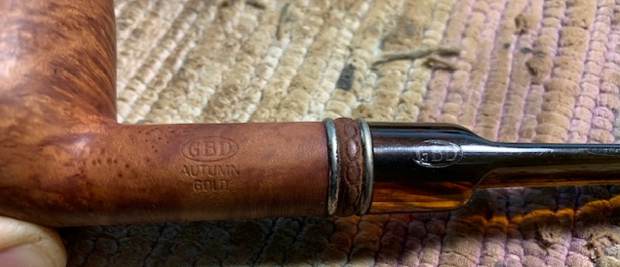
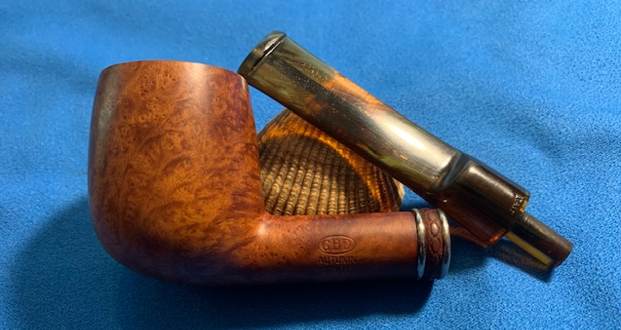
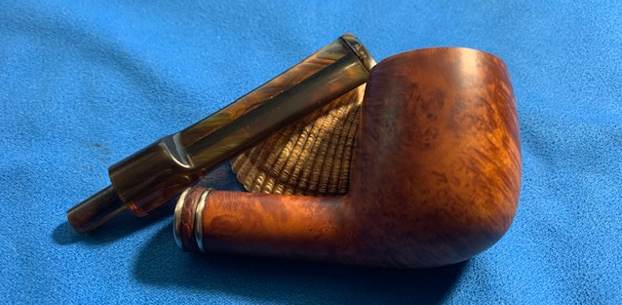
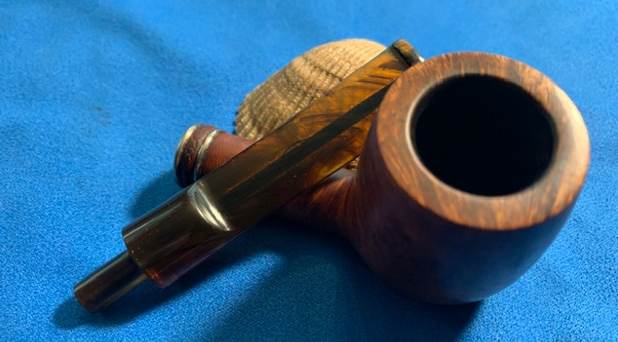
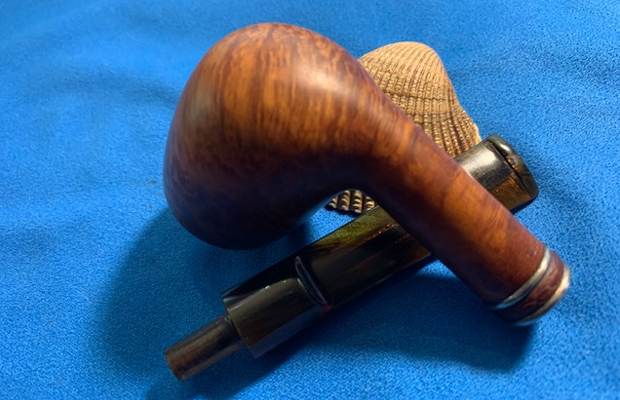
The next pipe on the work table came to us from EBay on 11/25/2017 from Omaha, Nebraska, USA. The pipe is a classic newer GBD Billiard shaped pipe with an intricate three layer band on the shank. It has a rope like carving in briar sandwiched between two brass bands. The pipe is stamped on the left side of the shank and reads GBD in an oval [over] Autumn [over] Gold. On the underside of the shank it is stamped with the shape number 1260. On the underside of the stem it is stamped Italy. There was a lot of grime ground into the finish on the briar. The bowl was heavily caked with a thick overflow of lava on smooth rim top and inner edge of the rim. The inside and outer edges looked to be in good condition. The saddle stem was amber acrylic and was dirty and the  stamped GBD logo was worn. It had tooth chatter and deep tooth marks on the top and underside near and on the button. It had promise but it was very dirty. Jeff took some photos of the pipe before he started his cleanup work. He took photos of the rim top and bowl to give a clear picture of the thickness of the cake and tobacco debris as well as the thick lava on the smooth rim top. He also took photos of the top and underside of the stem to show the heavy chatter and deep tooth marks. Jeff took photos of the sides and the heel of the bowl to give a sense of what the briar looked like. The finish quite light and under the obscuring dirtiness of the bowl you can see some nice grain peeking through.   The stamping on the left and underside of the shank is clear and readable as noted above.   I turned to Pipephil and there was nothing listed for the Autumn Gold model of GBD pipes. I was a little disappointed but have gotten used to that for some the newer GBDs. I have hit the wall in the search for information many times on these.

I turned then to Pipedia to see if I could find anything. On the main page there was a great summary of the history of the brand lots of information on the more known models. There was a short reference under the section labelled Current GBD Production that referred to the Autumn Gold Model (https://pipedia.org/wiki/GBD#Current_Production). I quote below:

Current GBD website. GBD is now made by Cadogan, who also make Comoy of London, Dr. Plumb’s Perfect Pipes, BBB, and Orlik Pipes. [3]. Since the merger in 1981 with Comoys, GBD pipes are not considered to be of the quality they were under the original companies. Metal rondelles were discontinued after the merger with Comoy. The brass rondell made a reappearance on new production GBD’s. The new lines are Autumn Gold, Bermuda, Facet, Pub and CW (Churchwarden).

At the bottom of the listing on Pipedia there was a link to a section on the various models so I clicked on the link (https://pipedia.org/wiki/GBD_Model_Information) and finally found something. At the bottom of the listing of models of GBD pipes there was a list of GBD seconds. I have included the first three models listed there below. The third model down in the list is the Autumn Gold. That was the extent of information that I could find.

List of GBD “Seconds”

The lines listed below are either 2nds or lines made for other makers/pipeshops. Please send me any corrections or additional information you might have on these.

  • Americana — Factory unknown: –
  • Arizona — Factory unknown: –
  • Autumn Gold — Factory unknown: –  …

Armed with that information that I was working on a Cadogan era GBD pipe (made after 1981) I turned to work on the pipe itself.  Jeff had cleaned up the pipe with his usual penchant for thoroughness. He reamed the pipe with a PipNet pipe reamer and removed the rest of it with a Savinelli Fitsall Pipe Knife.  He scrubbed the bowl with undiluted Murphy’s Oil Soap with a tooth brush. He rinsed it under running warm water to remove the soap and grime. He cleaned out the inside of the shank and the airway in the stem with alcohol, cotton swabs and pipe cleaners. He scrubbed the stem with Soft Scrub and a tooth brush and rinsed it off with warm water. I took photos of the pipe before I started my part of the restoration work.   The rim top cleaned up quite well but there was a lot of darkening on the rim top and there was damage on the front inner edge of the bowl. There was some checking on the inner walls of the bowl that I would investigate further in the clean up process. The outer edge of the bowl looks good. The amber acrylic stem had some deep tooth marks on the button surface and on the stem ahead of the button as well. There was a lot of chatter on both sides near the button. The stamping on sides of the shank is clear and readable as noted above. I captured the stamping on the left side but forgot to take a photo of the shape number on the underside.   I removed the stem and took a photo of the pipe to give a sense of the whole. It is another proportionally pleasing pipe.I started my work on the pipe by addressing the the darkening on the rim top and inner edge with a folded piece of 220 grit sandpaper. Once I had finished it looked better.    I polished the smooth rim and shank top with micromesh sanding pads – dry sanding with 1500-12000 grit pads. I wiped the bowl down with a damp cloth after each pad to remove the debris.   I noticed that I had not addressed the checking on the bowl walls at this point and it shows up in the above photos quite clearly. I set aside the polishing for a bit and worked over the bowl walls. I used a PipNet Reamer to cut back the remaining cake in the bowl. I took it back to bare briar. I followed that with scraping out the remnants with a Savinelli Fitsall Pipe Knife. I sanded the inside of the bowl with a dowel wrapped in 220 grit sandpaper and was able to smooth out the damage. Though there were still some check spots the overall condition of the bowl was certainly much better than it looked prior to this. With the checking addressed and the little that remains cleaned up, I turned back to polishing the bowl with the last three micromesh sanding pads. The bowl had taken on a deep shine. The bowl and rim looked very good so I rubbed it down with Before & After Restoration Balm. I worked it into the surface of the bowl sides and shank with my fingertips to clean, enliven and protect the briar. I let the balm sit for about 10-15 minutes and buffed with a cotton cloth to raise the shine.    I set the bowl aside and turned to work on the stem. I filled them in with clear super glue and set the stem aside to let the repairs cure. Once they had cured I used a small file to flatten them and start blending them into the surface of the stem.  I sanded the repaired areas with 220 grit sandpaper to blend them into the surface of the vulcanite. I started polishing it with 400 grit wet dry sandpaper.     I polished the stem with micromesh sanding pads – 1500-12000 grit pads. I wiped it down with Obsidian Oil after each sanding pad. I used Before & After Pipe Polish – both Fine and Extra Fine to further polish the stem.   I touched up the faint GBD Oval stamp on the left side of the saddle stem with Rub’n Buff Antique Gold. I worked it into the remaining stamp with a tooth pick and buffed it off with a soft pad. It is better but still faint.This Cadogan Era GBD Autumn Gold 1260 Amber Acrylic Stem Billiard is a great looking pipe now that it has been restored. The golden stain on the briar highlights the grain around the bowl and shank. It works well with both the shape and the polished amber acrylic saddle stem. I put the stem back on the bowl and carefully buffed the pipe with Blue Diamond on the buffing wheel using a light touch on the briar. I gave the bowl and the stem multiple coats of carnauba wax on the buffing wheel and followed that by buffing the entire pipe with a clean buffing pad. I hand buffed the pipe with a microfiber cloth to deepen the shine. The finished GBD Autumn Gold Billiard is another pipe that fits nicely in the hand and feels great. Give the finished pipe a look in the photos below. The dimensions of the pipe are Length: 6 inches, Height: 1 ¾ inches, Outside diameter of the bowl: 1 ¼ inches, Chamber diameter: 7/8 of an inch. The weight of the pipe is 50 grams/1.76 ounces.  I will be putting it on the rebornpipes store in the British Pipemakers Section shortly. If you are interested in adding this pipe to your collection send me a message or an email. Thanks for reading this blog and my reflections on the pipe while I worked on it. There are many more to come!

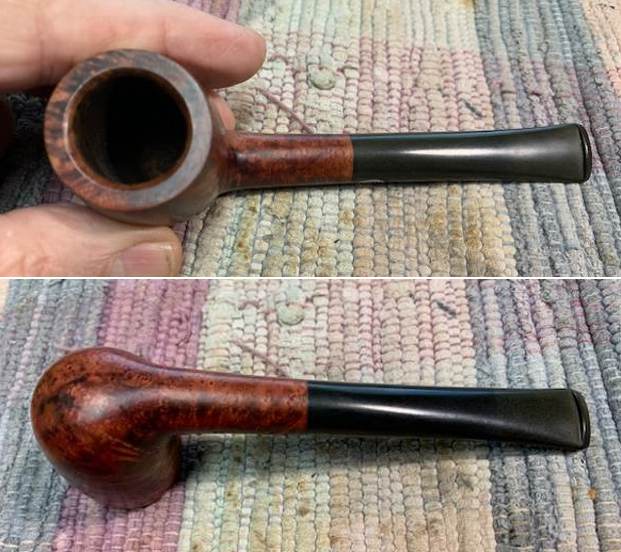
Restoring a Newer GBD London Made C133 Billiard


Blog by Steve Laug

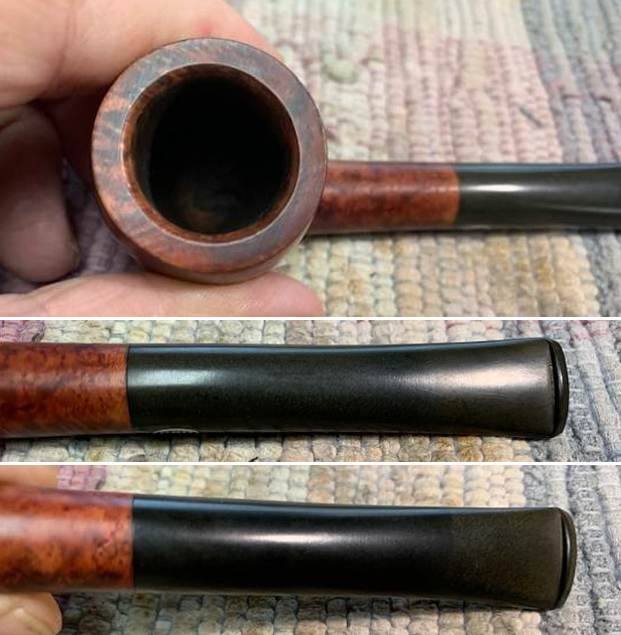
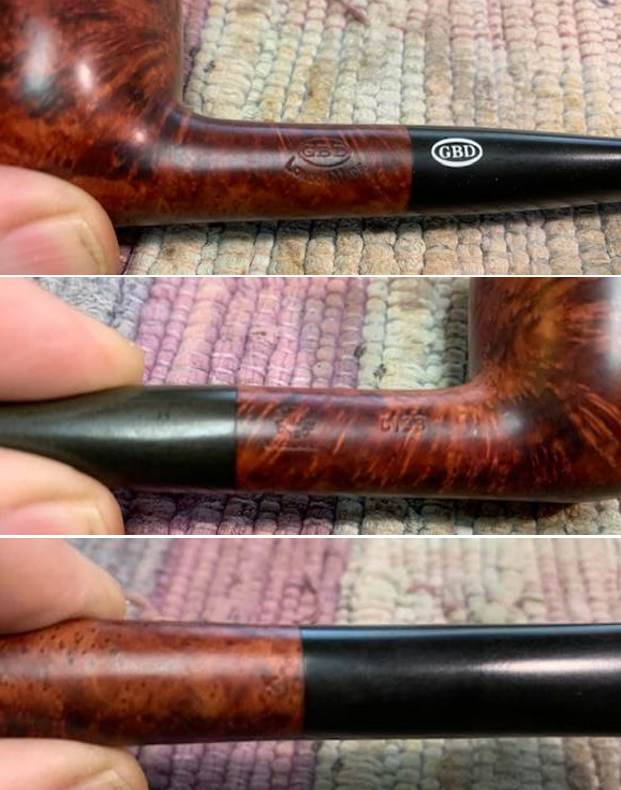
The next pipe on my work table a nice looking newer Cadogan era GBD pipe. It is stamped GBD in an oval [over] London Made on the left side of the shank. On the underside of the shank it is stamped with a K. On the right side of the shank it is stamped with the circular COM Stamp with MADE IN LONDON (“IN” is in the centre) and England stamped underneath that. The shape number C133 is stamped mid shank on the right side. The taper stem has an oval GBD logo stamped on the left side. The briar has a mix grain around the bowl and shank. This pipe was bought off eBay in January, 2017 from Greenville, New Hampshire, USA. The finish was dirty but the grain shone through well. The rim top had a thick lava coat on backside and the inner edge was also coated. There was a thick cake in the bowl and some tobacco debris. The shank and stem airway was very dirty. The stem was oxidized, calcified and had light tooth chatter on both sides ahead of the button. Jeff took photos of the pipe before he started his clean up. He took photos of the rim top and bowl to show the cake in the bowl (heavier on the back side of the bowl), the lava on the bevel and rim top. The edges look very good under the grime. The stem photos show the oxidation, calcification and tooth chatter very well. Jeff took photos of the sides of the bowl to highlight the grain around the bowl sides and base. He captured the stamping on the shank sides in the next photos. They are clean and readable as noted above.I have worked on quite a few GBD London Made pipes in the past so I turned to a blog on one of them to read the background on the brand and remind myself how to understand the stamping on the shank. Here is the link (https://rebornpipes.com/2019/08/10/cleaning-up-a-gbd-london-made-9664/). I quote from the blog below rather than redo the research.

I turned to Pipedia’s article on GBD to see if I could find any information on the London Made. The article gives a lot in terms of the history of the brand and a list of various lines of GBD pipes (https://pipedia.org/wiki/GBD_Model_Information). I quote the section where I found the reference to the London Made.

London Made — Factory unknown: Some might not be marked with GBD logo and some with additional “house” stampings. Introduced in 1978(?) plain wax finished branded pipes” available in at least six stains. – catalog (1981)

With that information in hand I knew what I was dealing with in terms of the stamping and the age of this pipe. I knew from the information from the section quoted that the London Made originally came out in 1978 in a variety of colours. Now I had an idea of the age of the pipe and it was time to work on the pipe.

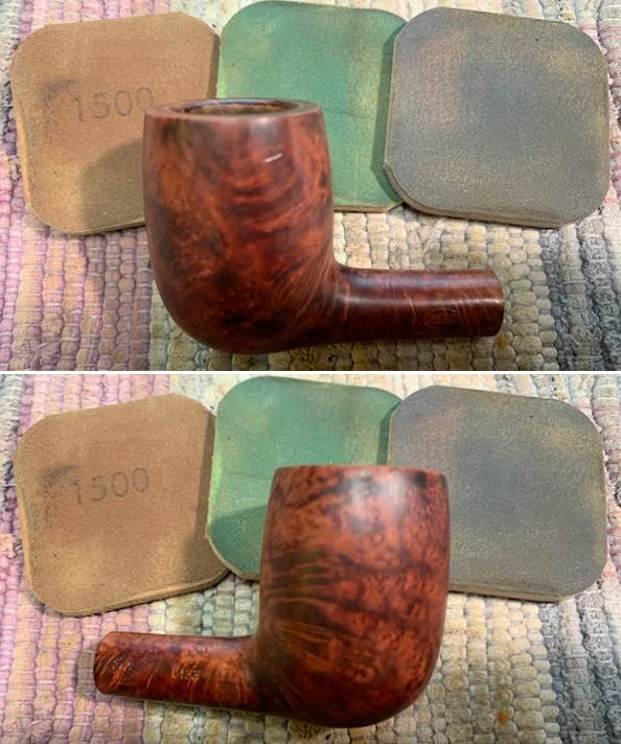
Jeff cleaned up the pipes with his usual thoroughness – reaming the bowl with a PipNet pipe reamer and cleaning up the reaming with a Savinelli Fitsall Pipe Knife. He scrubbed the internals of the shank and the stem with alcohol, cotton swabs and pipe cleaners. He scrubbed the exterior with Murphy’s Oil Soap to clean off the dust and grime on the finish. When he sent it the pipe was ready to restore. I could not believe how good the rim top looked in comparison to what it was when he started. I took photos of the pipe when I unpacked it. The briar was clean and the grain quite stunning. The finish looked dull and lifeless. I took a close up photo of the bowl and rim top after Jeff had cleaned it up. The look of the rim top and edges is very good. He had been able to remove the cake and the lava very well. The bowl was spotless. The stem is also shown and was very clean but lightly oxidized. He had scrubbed it with Soft Scrub and then soaked it in Mark’s Before & After Deoxidizer. There was light tooth chatter still remaining.I took some photos of the stamping on the shank sides. The first photo shows the GBD in an oval [over] London Made stamp on the left side as well as the stamped GBD oval logo on the left side of the stamp. The second shows the COM stamp Made in London [over] England and the shape number C133 on the right side. The third shows the letter “K” on the underside of the shank near the shank/stem joint.I polished the briar with micromesh sanding pads – dry sanding (carefully avoiding the stamping on the shank sides) with 1500-12000 grit pads. I wiped the bowl down with a damp cloth between each pad. The grain to take on a shine. I rubbed the briar down with Before & After Restoration Balm. I worked it into the briar with my fingertips and let it do its magic. The product cleans, enlivens and preserves the briar. I let it sit for 10 minutes and then buffed it off with a cotton cloth. The bowl really is looking good at this point. I set the bowl aside and turned my attention to the stem. I scrubbed it with Soft Scrub cleanser to remove the residual oxidation that remained on the surface of both sides. I find that when I let the pipe sit a long time before getting to it this light oxidation almost always happens.I polished the stem with micromesh sanding pads – dry sanding with 1500-12000 grit pads. I wiped the stem down after each pad with a cloth impregnated with Obsidian Oil. I polished it with Before & After Stem Polish – both Fine and Extra Fine then gave it a final coat of Obsidian Oil and set it aside to dry. This is another beautiful pipe – this one is a GBD London Made C133 Billiard. It is made by Cadogan as can be seen from both the stamping on the stem, the shank. It would have come out after 1978. The grain on the pipe is quite nice and the few small fills are hidden in the stain and the finish. I put the stem on the shank and buffed the pipe with Blue Diamond on the wheel (being careful of the stamping so as not to damage that). I gave the bowl and stem multiple coats of carnauba wax and buffed the pipe with a clean buffing pad to raise the shine. I hand buffed it with a microfiber cloth to deepen the shine. The dimensions of this pipe are – Length: 5 ½ inches, Height: 1 ¾ inches, Outside diameter of the bowl: 1 ¼ inches, Chamber diameter: ¾ of an inch. The weight of the pipe is 1.31 ounces/37 grams. It is a great looking pipe and one that will be going on the rebornpipes store in the British Pipe Makers section. If you want to add it to your collection let me know via email to slaug@uniserve.com or by message. Thanks for walking through the restoration with me.