Tag Archives: finishing

Making Work for myself – Restoring a GDB Rainbow 347


Blog by Steve Laug

I have worked on and collected many GBD pipes over the past 20 years. I have some great resources that I use to identify the nomenclature, shape and date of the various lines that GBD issued. However, all of my sources and resources regarding GBD are from the time prior to the merger (Cadogan) or shortly thereafter. The Rainbow Line is not mentioned in any of them. I also looked on the pipephil Logos and Stampings site and Pipedia and again there is no mention of the line. In my online research, I found several people who think that it is probable that the pipe was made during the 70’s through 90’s. Several things point to this – the chunky Lucite stem, the name of the line itself and the brightly coloured stems used. One fellow on Pipes Magazine’s online forum had a great quote that caught my attention. He said, “If you’re old enough you might remember that Rainbow was a popular theme in the late 70’s to early 90’s due to Sesame Street, “The Rainbow Connection,” The Rainbow Reading Room, etc.” http://pipesmagazine.com/forums/topic/help-with-info-on-a-gbd-pipe I think this is as close as I am going to get to a time period when the pipe was made.

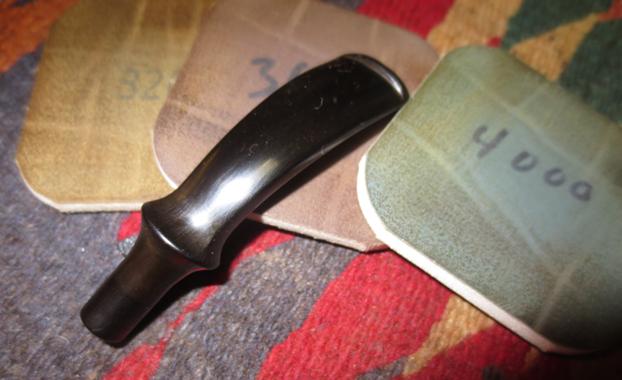
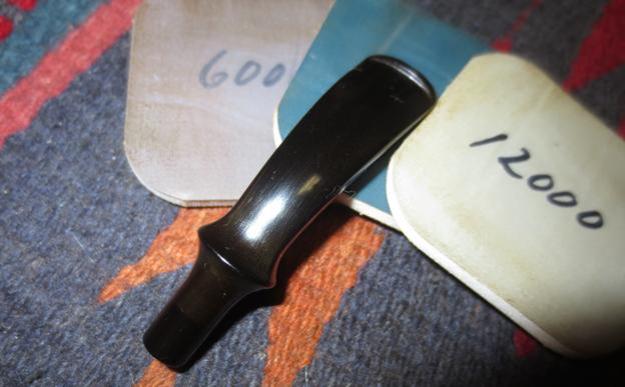
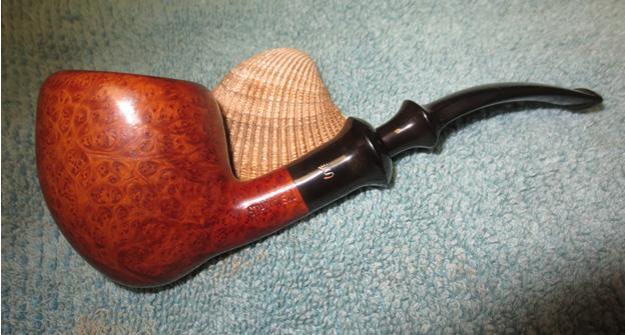
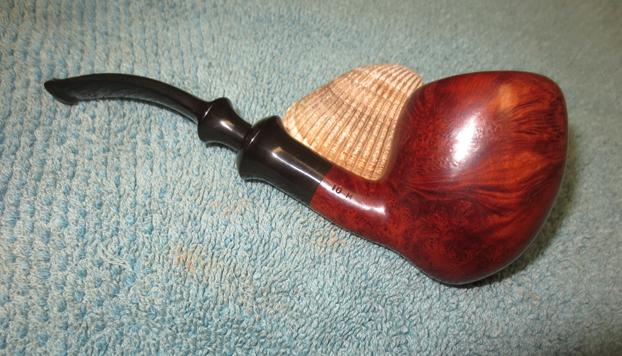
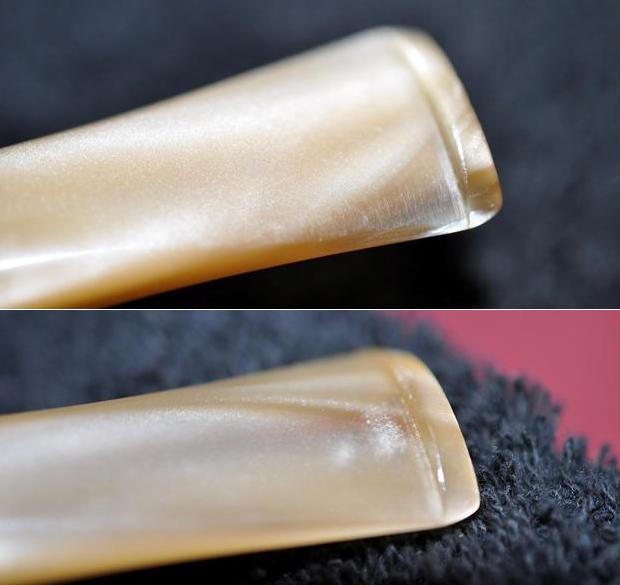
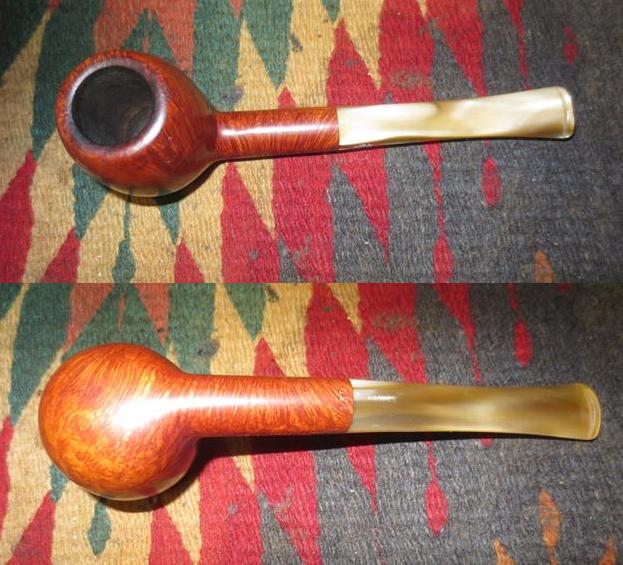
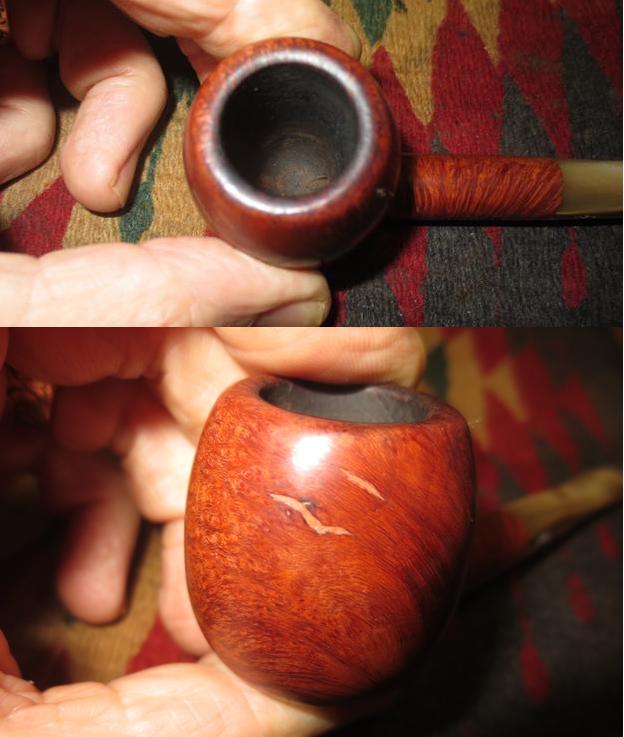
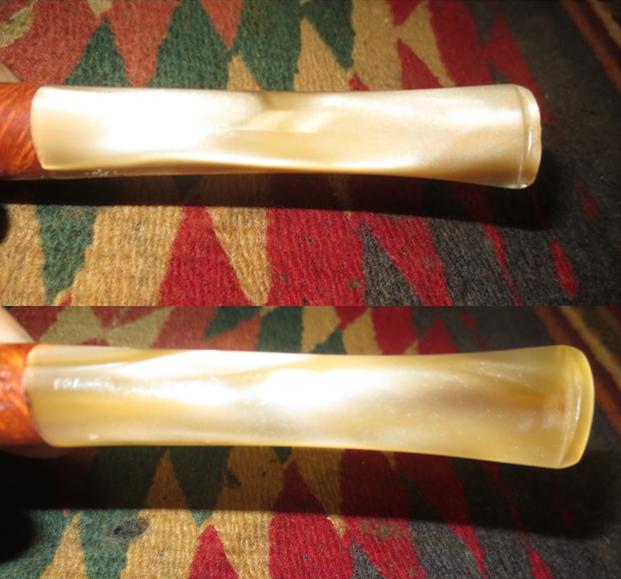
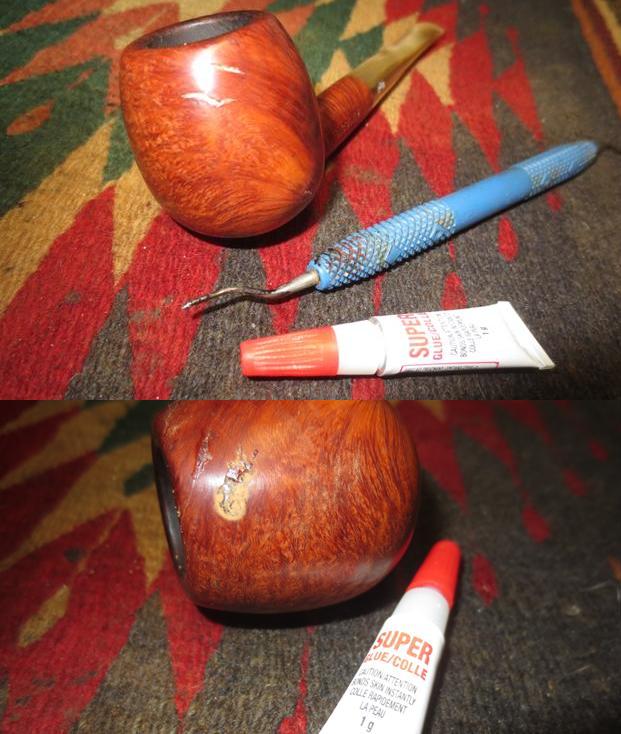
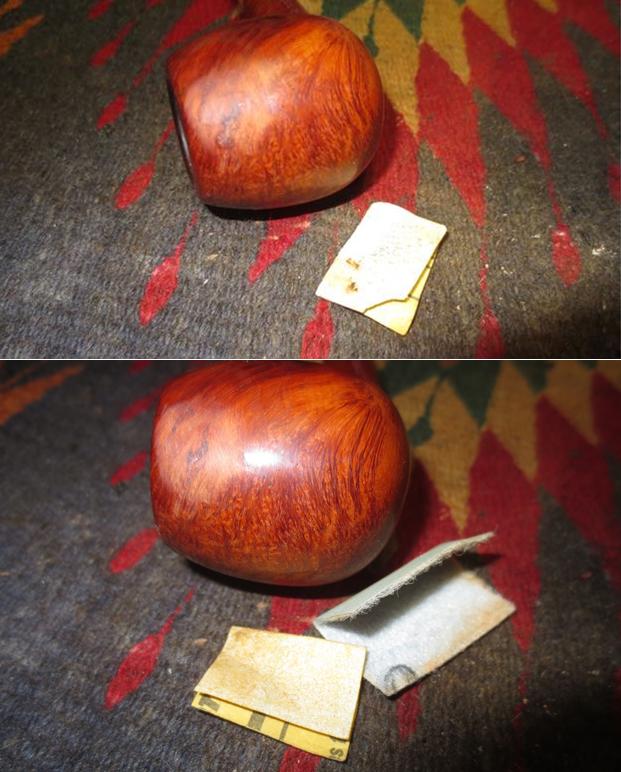
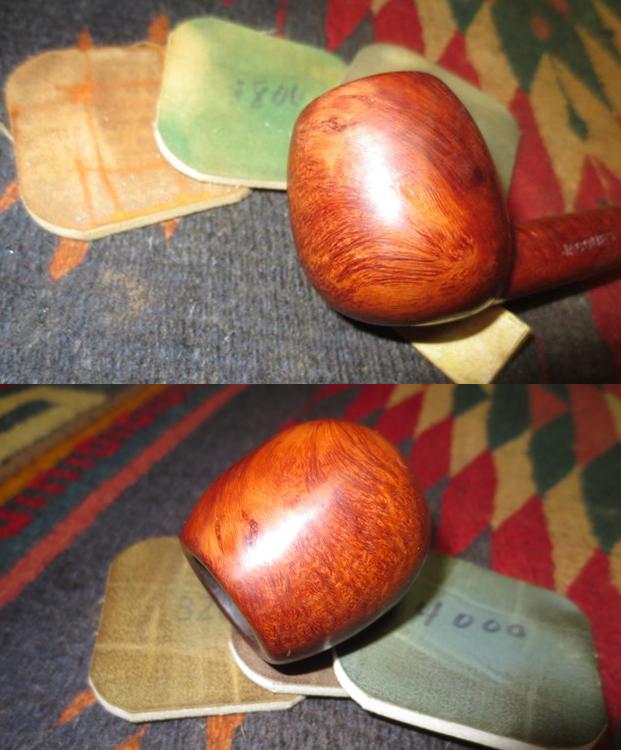
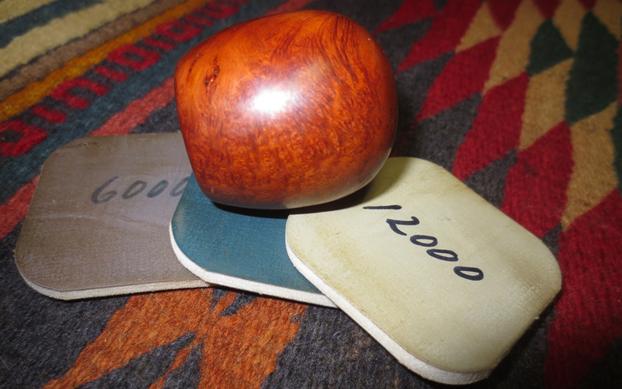
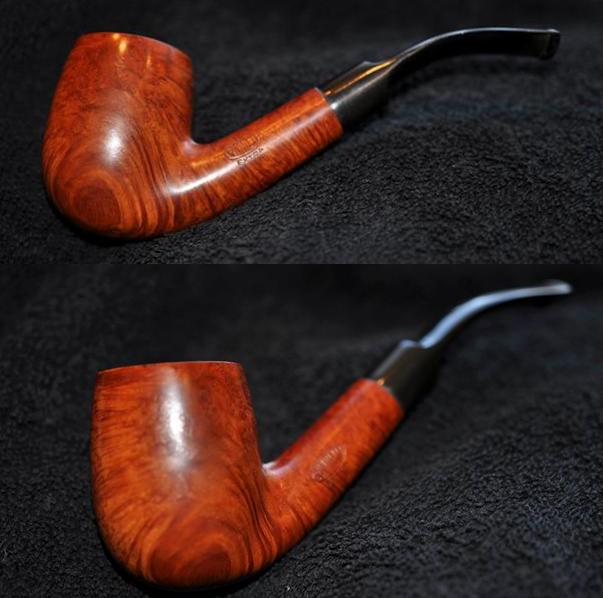
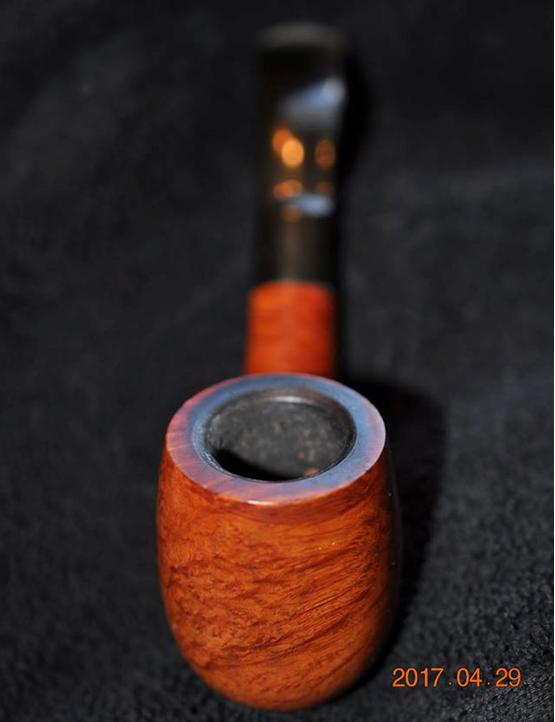
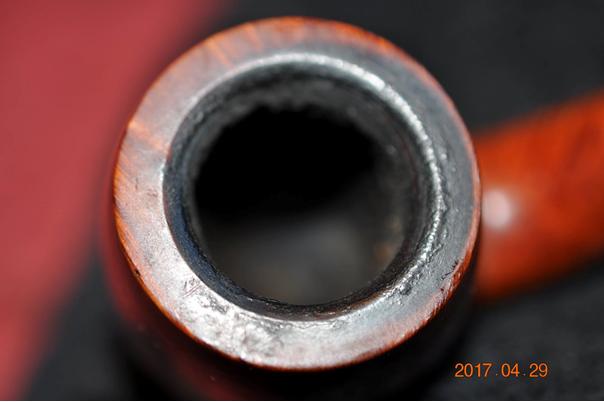
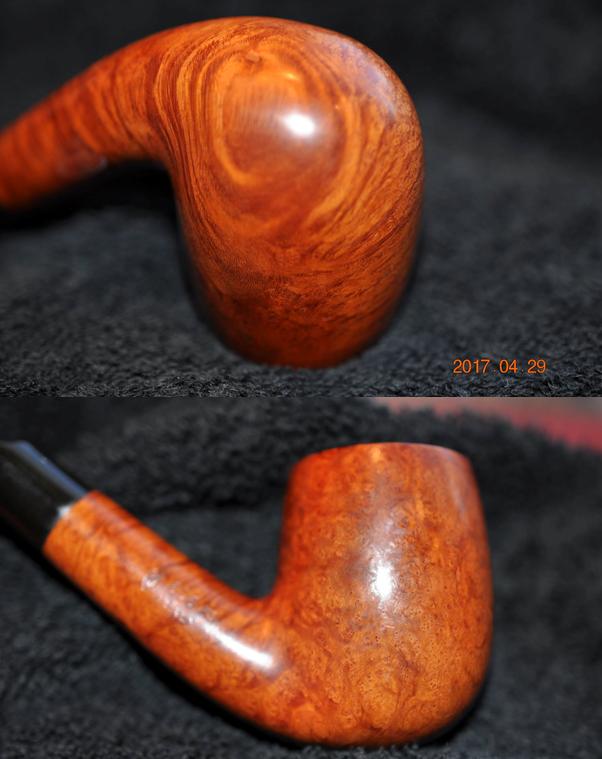
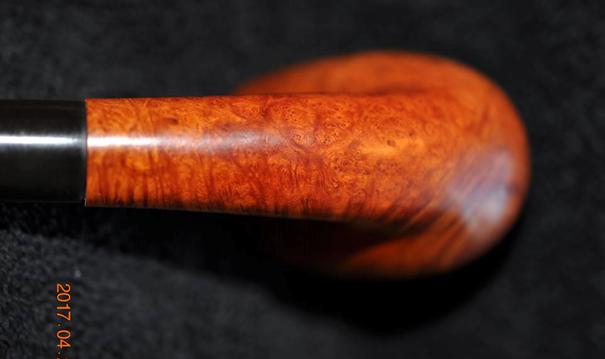
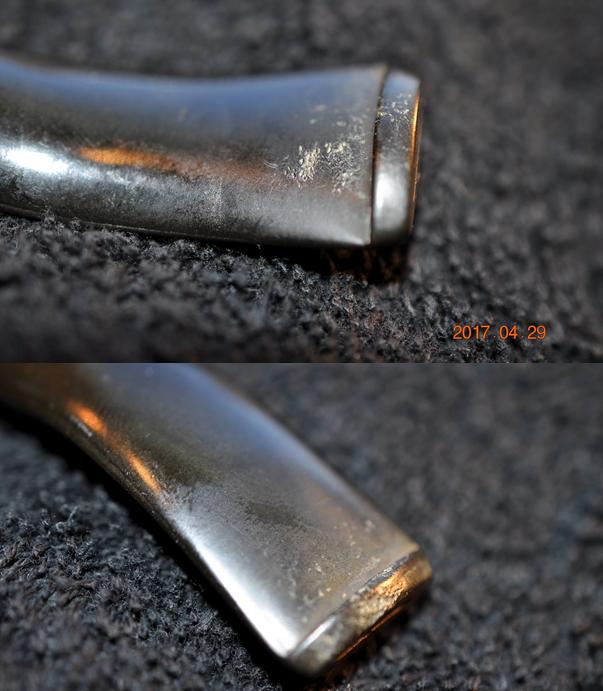
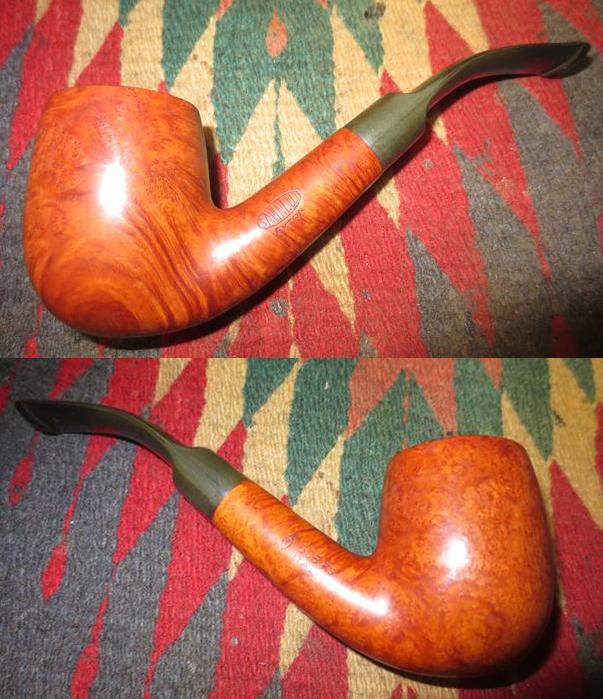
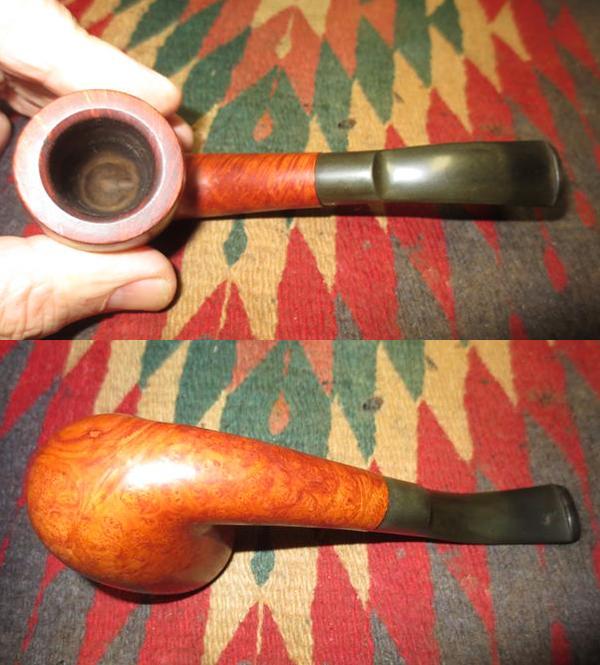
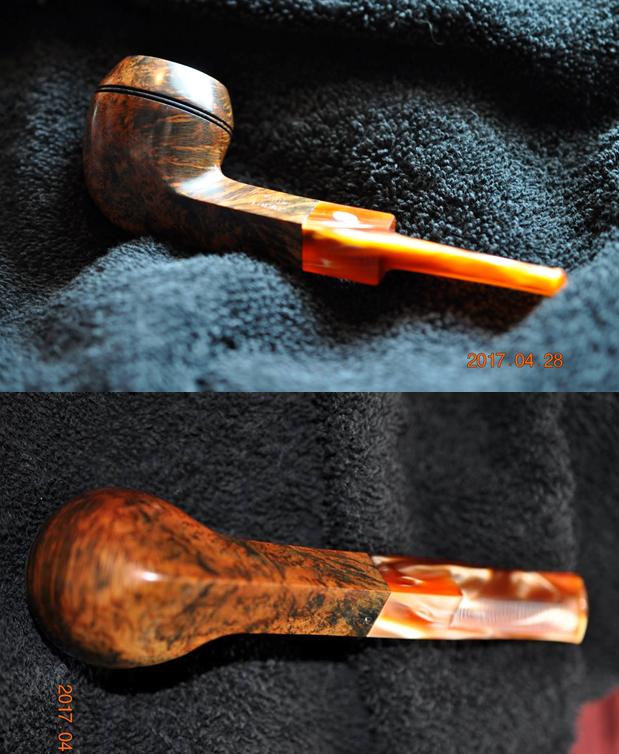
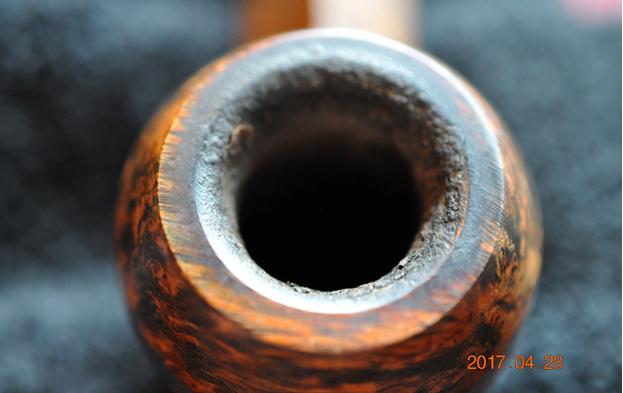
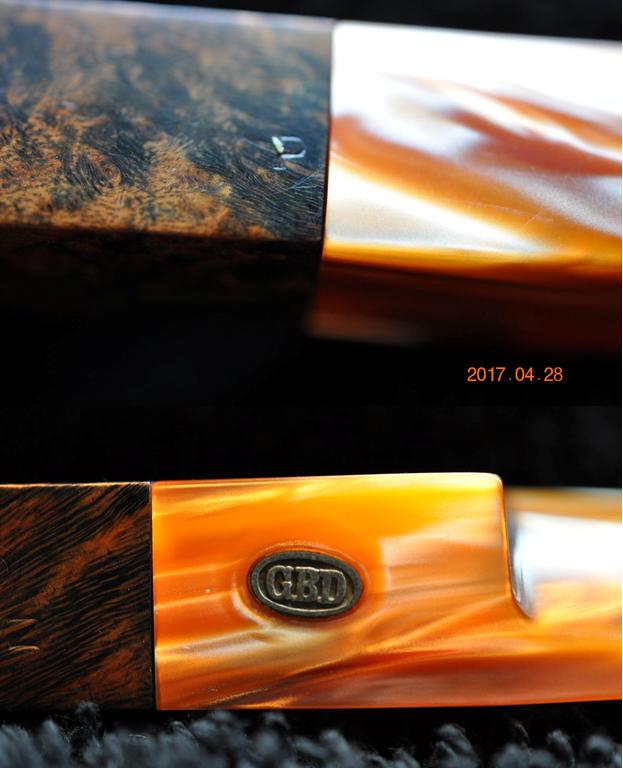
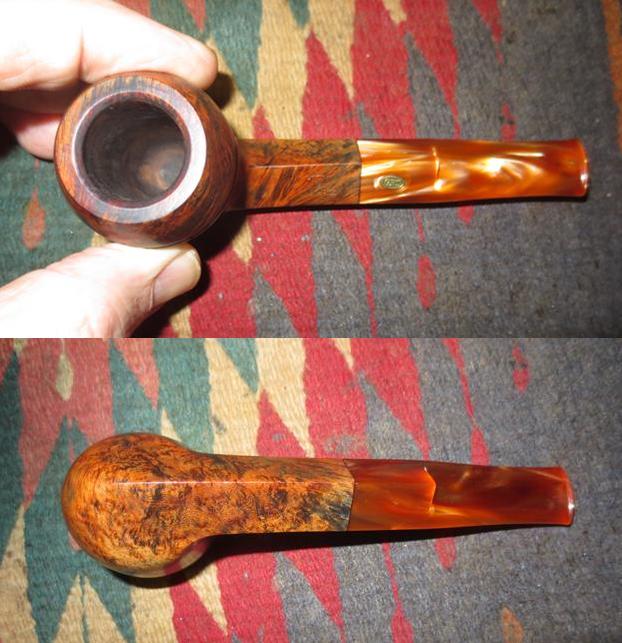
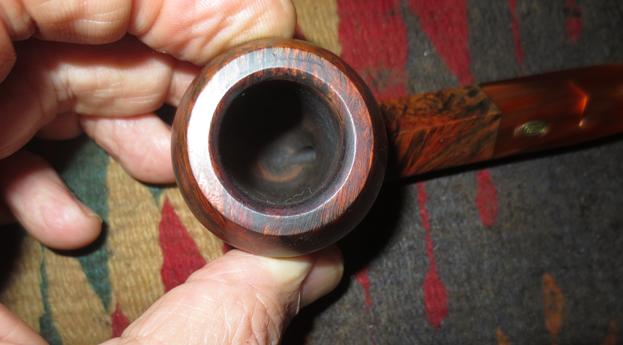
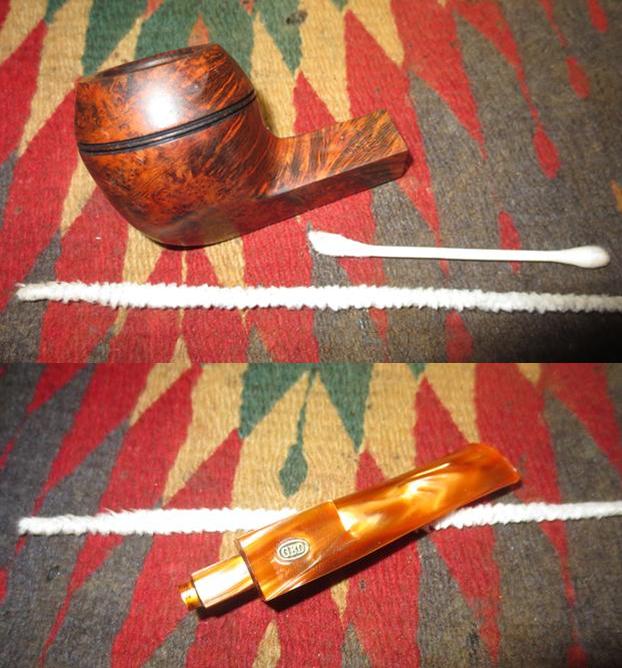
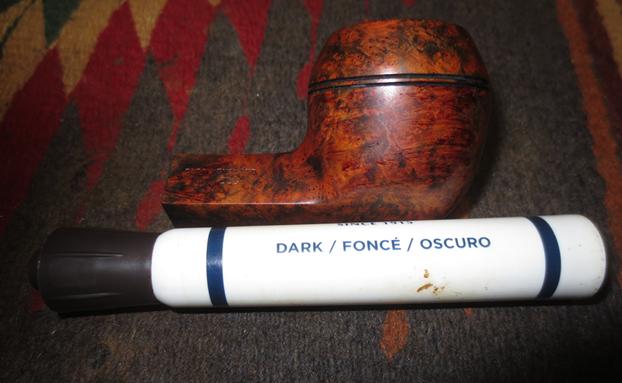
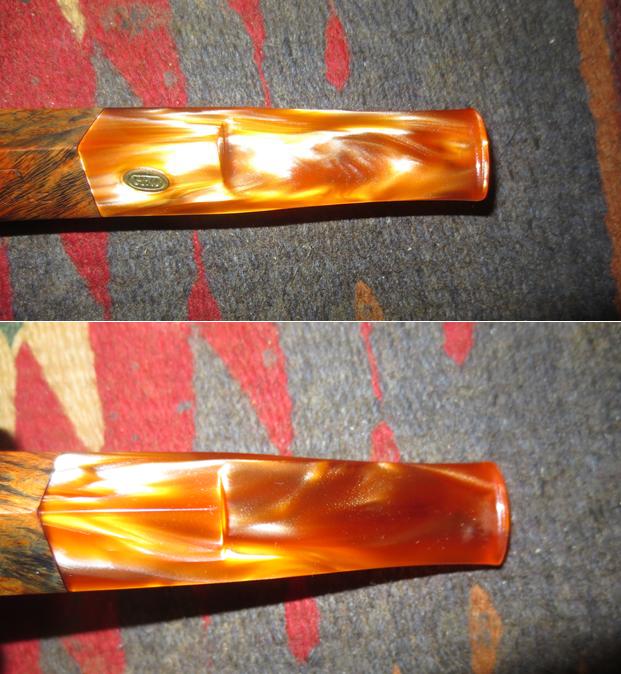
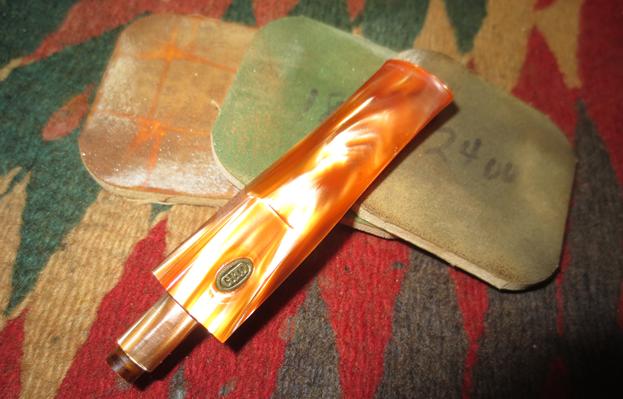
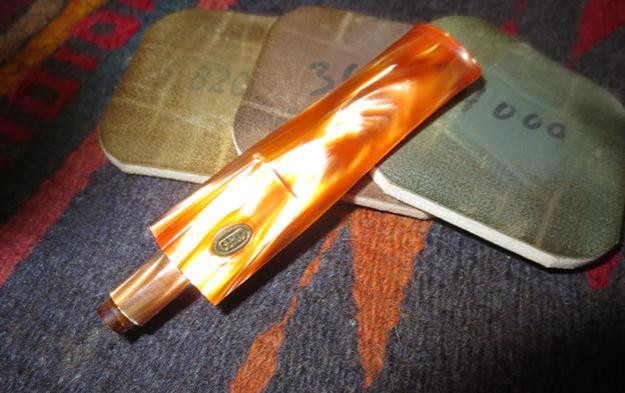
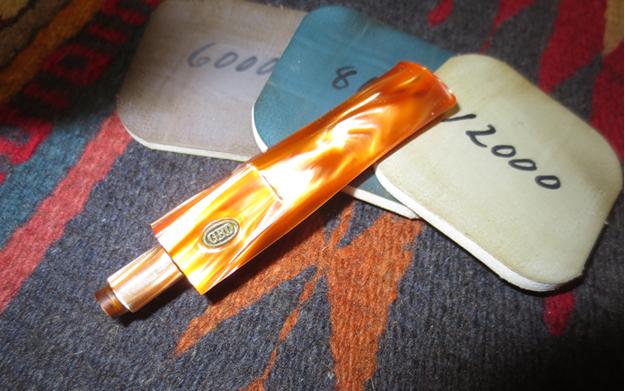
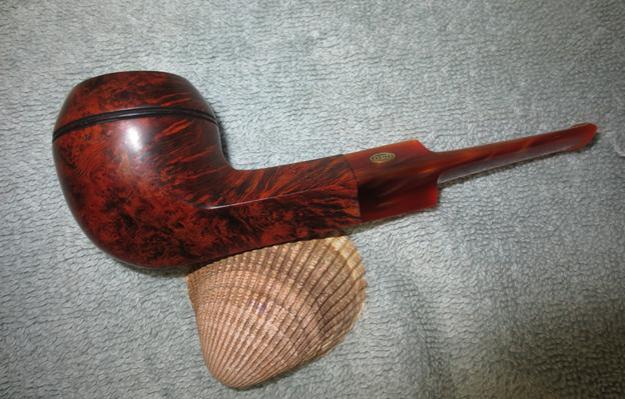
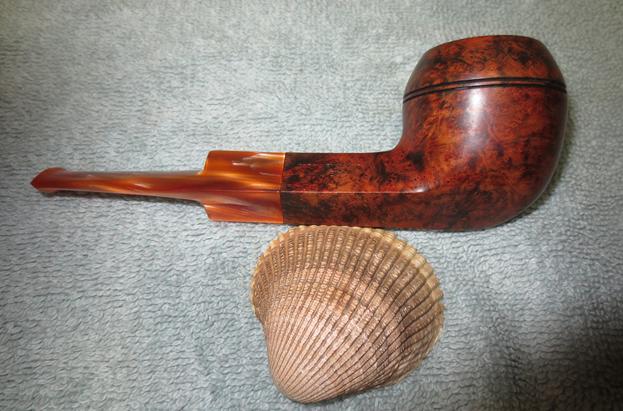
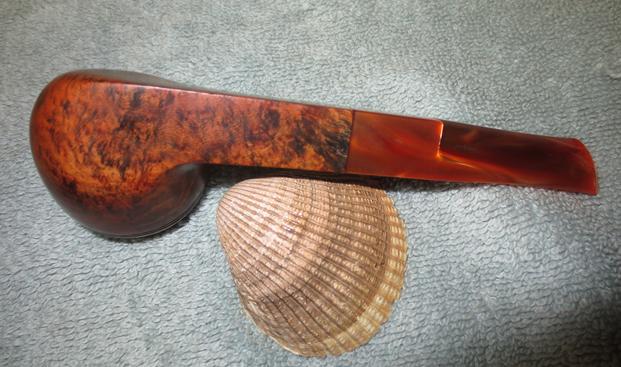
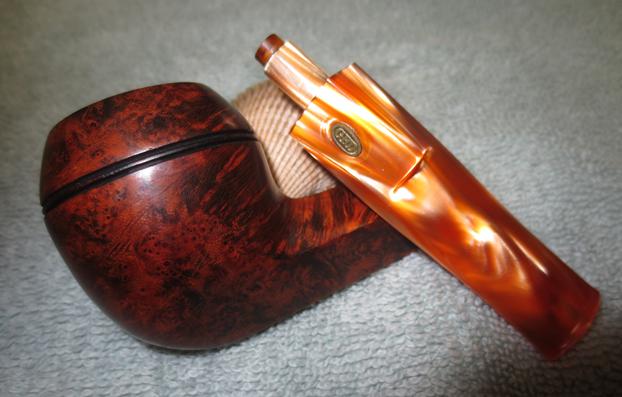
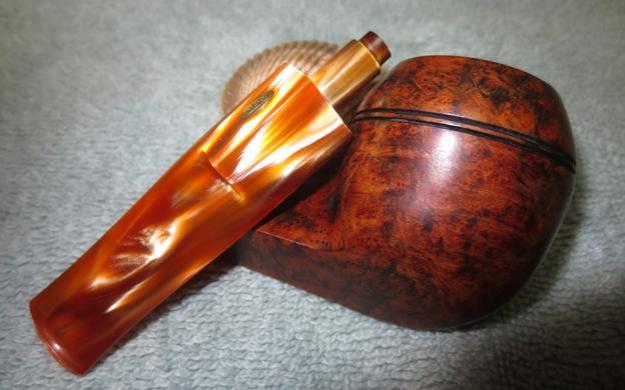
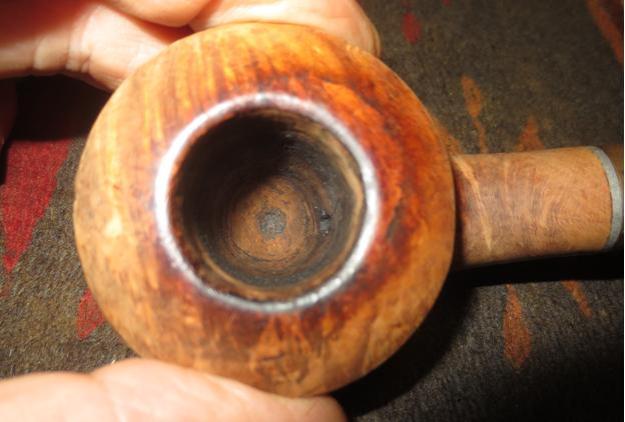
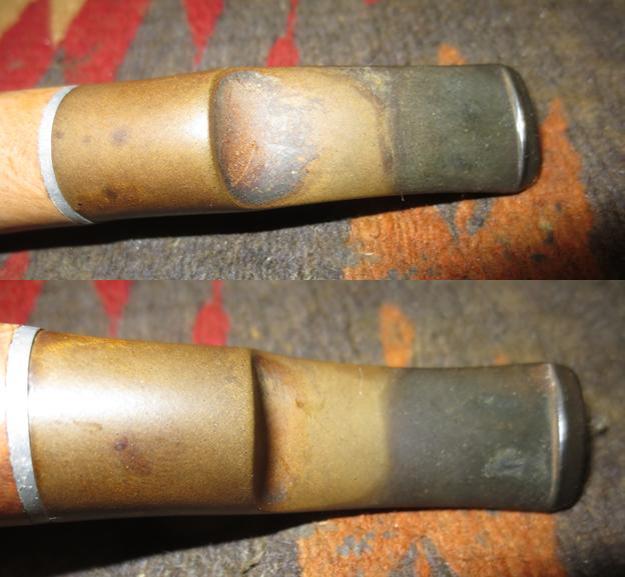
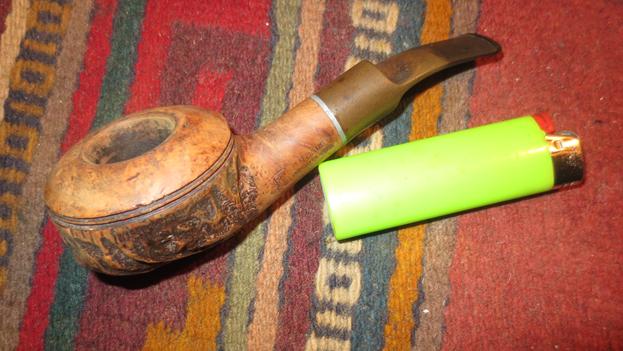
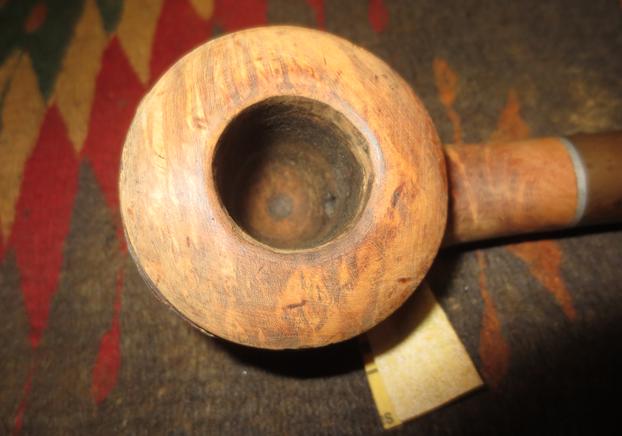
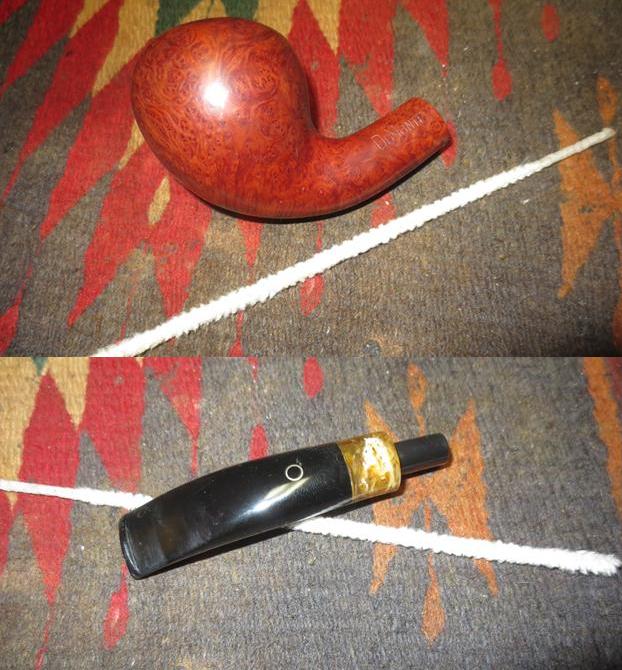
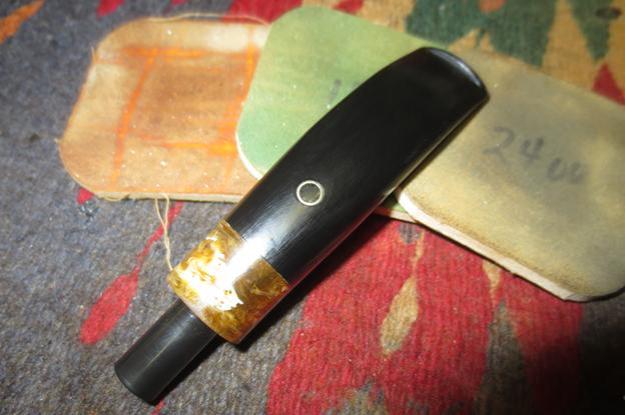
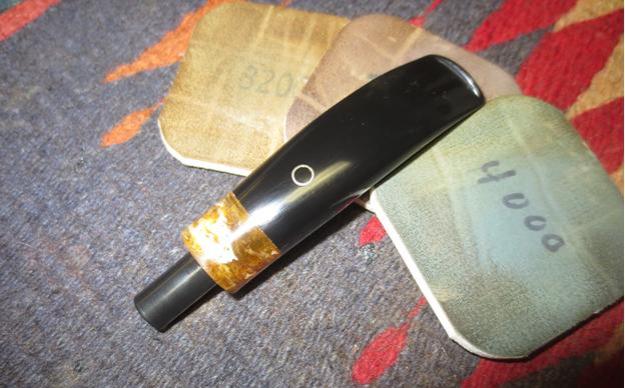
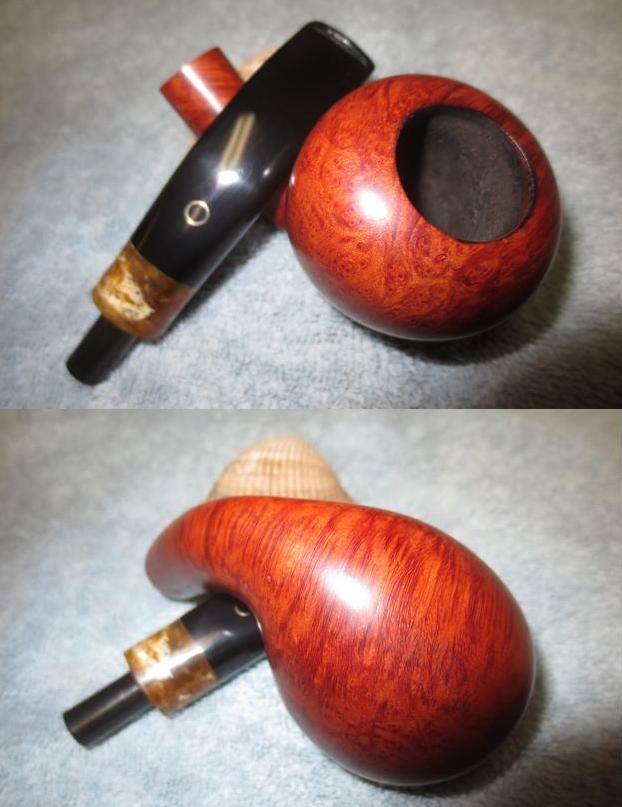
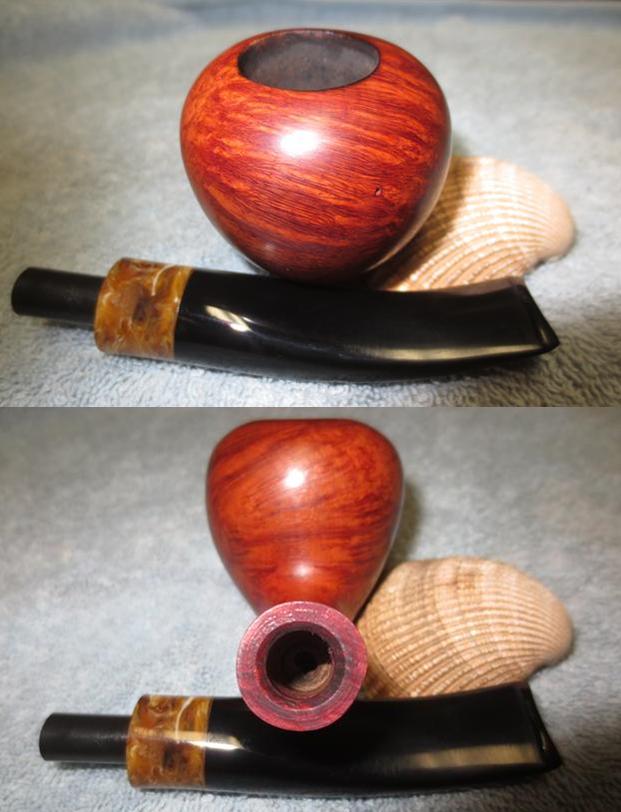
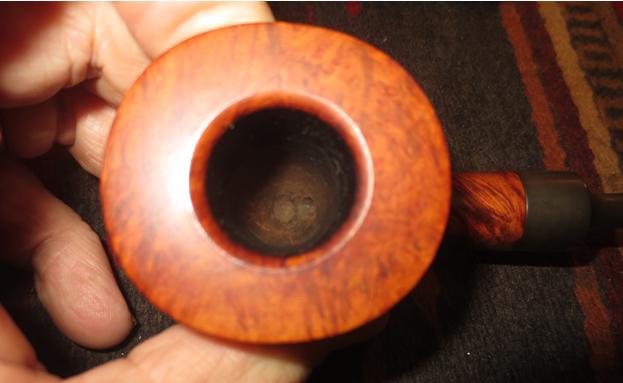
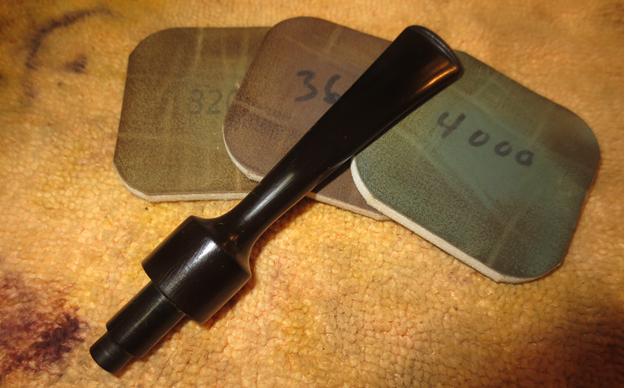
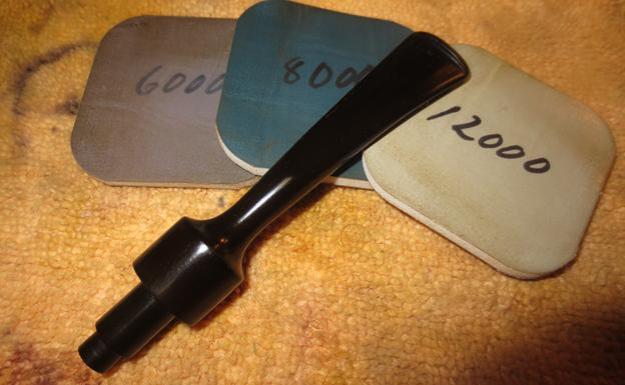
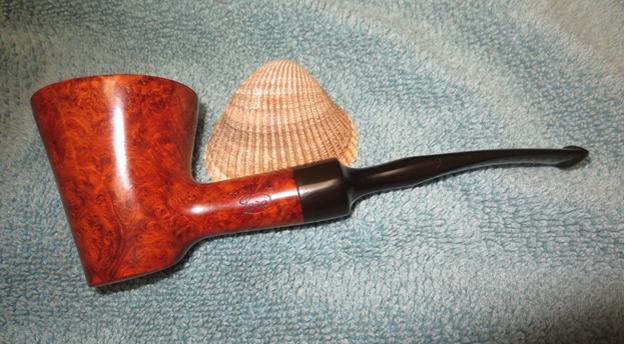
The pipe I picked up on a recent trip to Idaho is a nicely shape apple that was in pretty decent shape. I figured it would be an easy clean up. But things happened along the way and I made more work for myself. It is stamped GBD in an oval over Rainbow on the left side of the shank. On the right side stamped London, England in a straight line over 347 (shape number). On the underside of the shank near the stem/shank junction it is stamped D. The faint painted GBD in an Oval on the left side of the stem also suggests a later GBD. The nomenclature is consistent with usual smooth GBD markings (GBD over Grade (left side) and London England over style number on the right side.) The photos below came from the person I purchased the pipe from and show the general condition.He provided some close up photos of the bowl and rim. He said that the pipe had been reamed and clean. However, it was not reamed and clean to my liking. The bowl had a thick cake that I will need to remove, some rim darkening and some dents in the rim. My guess was that like the bowl, the shank and mortise would need some attention. The stamping on the shank was very clear. The first photo below shows that. Next to the shank/stem junction in the first photo, there is also the remnant of the GBD oval logo that had been originally painted on the stem. The stem had a lot of tooth chatter and some shallow tooth marks in the Lucite.While I was staying with my brother, I cleaned and reamed the pipe. I used the PipeNet reamer and took it back to the walls. I would need to clean it up more once I got home but it was better than when I started. Last evening I took the pipe out of the box to finish the clean up and restoration. I took some photos of it before I started to have a benchmark. I took a close up of the bowl and rim. It was better than when I started but still needed to be cleaned up some more. The rim had some darkening that I could reduce some more as well.I used the Savinelli Fitsall Reamer to scrape the remaining thin cake from the walls of the bowl. I personally like to remove all of the cake when cleaning up a bowl. I will sand a bowl interior a bit later to smooth things out. Little did I know at this point that the decision to sand the bowl would send me on a repair detour.I scrubbed out the mortise, airway in the bowl and in the stem with alcohol, cotton swabs and pipe cleaners. I used the dental spatula to scrape the walls of the shank and remove the hard tars that had built up there. The airway in the stem was also dirty and had some darkening at the button and in the first few inches of the stem. I cleaned it with bristle pipe cleaners and picked the debris out of the button and from around the stem down tenon with a dental pick.The stem not only had tooth chatter but also some stickiness from a price tag on the top surface. The edge of the button also had some chatter. I sanded the tooth marks out with 220 grit sandpaper and reshaped the button at the same time. The stem was smooth when I finished. It was dull and needed a good polishing.I polished it with micromesh sanding pads – wet sanding with 1500-2400 grit pads and dry sanded with 3200-12000 grit pads. I wiped the stem down with a damp cotton pad to remove the dust after each pad. I was finished with the stem at this point so I set it aside to work on the bowl. I had decided to use a dark brown aniline stain thinned by 50% with alcohol to darken the grain on the pipe and hide a couple of small fills. I applied the stain, flamed it and repeated the process until the  bowl was covered evenly. I wiped the bowl down with cotton pads and alcohol to make it more transparent. I hand buffed it and took the following photos. It was still too dark to my liking. I sanded the bowl with micromesh sanding pads to make it more transparent and to see if I could make the grain pop. I sanded it with 1500-2400 and took these photos. It was getting there. I continued to sand it with 3200-12000 grit pads to polish it and give it a shine. The next photos tell the story. The bowl was looking better and better. It is at this point that I made a decision that would inevitably cost me. That results of that decision turned out to be a mistake that made a lot more work for me! I put the stem on and decided to work on sanding out the inside of the bowl to remove the polishing compound and remnants of cake. Stupidly, I put the stem on the pipe to enjoy the look of the combination while I worked. Wrong thing to do! Understand, I was sitting at my work table, the top of which is a meter above the floor. I was carefully sanding the bowl interior so as not to damage the nice stain on the rim. Somehow, the pipe wiggled free from my hands and fell to the floor. If you could have watched it and my face at the same time you would have seen the look of horror on my face as it dropped to the floor. That horror changed to a moment of dread as I watched it bounce and heard a snap and watched as the bowl and stem went in opposite directions. I quietly picked up the bowl and stem. The tenon had snapped off in the mortise. It was a clean break. I don’t know about you but I find Lucite is much less forgiving than vulcanite. I have had pipes with vulcanite stem hit the floor with not breakage but not so with Lucite. It seems that the tenon inevitably snaps. Well this one certainly did.I sat and looked at it for a long time just sick at the thought that a pipe I was basically finished with was in pieces on my table. I know how to replace a tenon; that is not a problem. I just did not want to have to do that on this pipe. However, my own stupidity and carelessness had successfully sent me back to work on this pipe. Ahh well… just as well call it a night. Perhaps a good night’s sleep would give me better perspective on this new problem!

I woke up early this morning and dragged my feet about going back to work on the pipe. I think I was hoping at some level that it had not actually happened. I sipped my coffee as long as possible postponing the inevitable. I talked with my eldest daughter who is in Kathmandu for work. I took the dog for a walk around the yard… but finally I made to the basement and the work table. It was not a dream the tenonless stem and the bowl was sitting waiting for me.

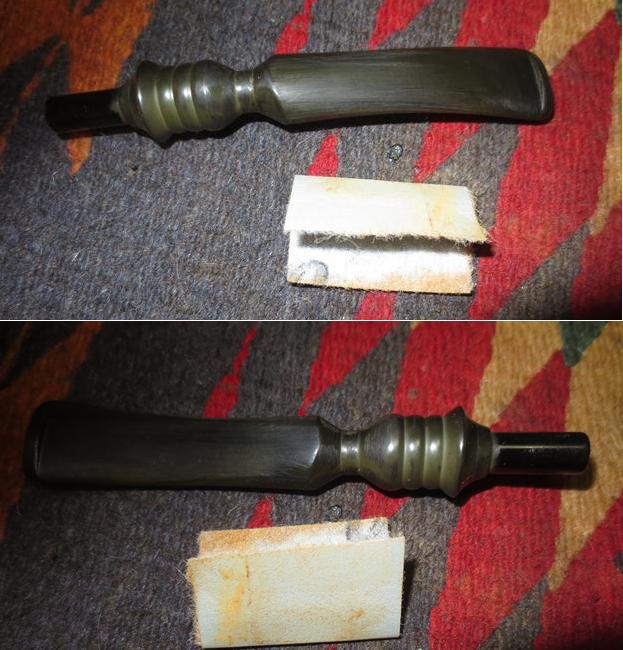
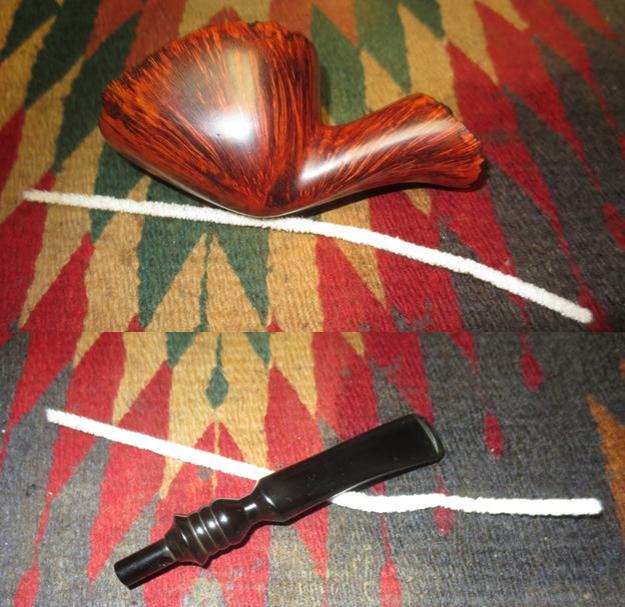
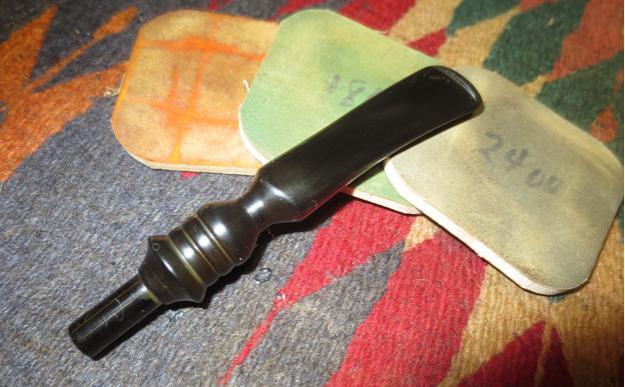
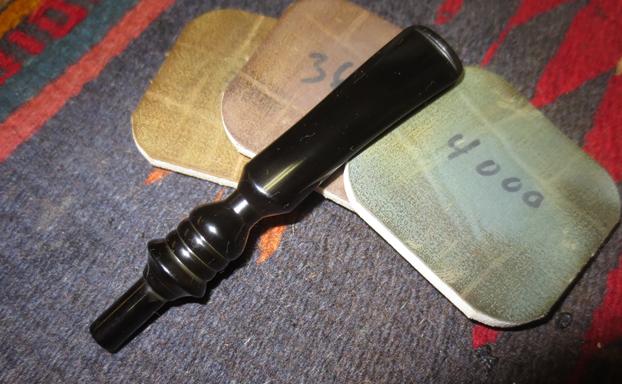
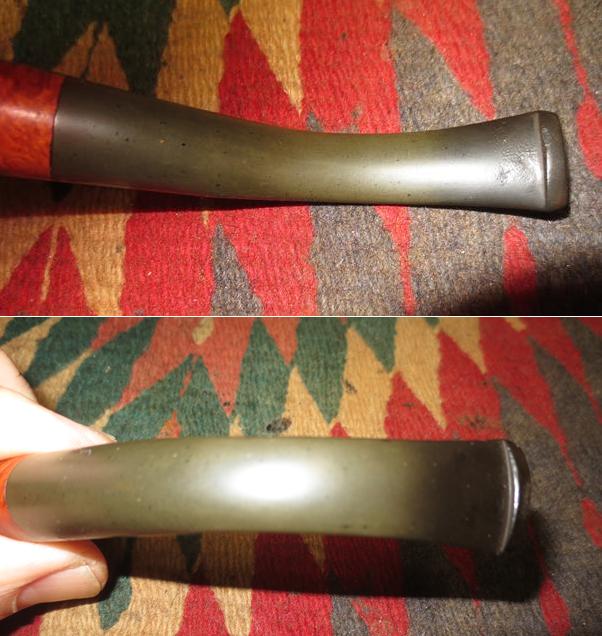
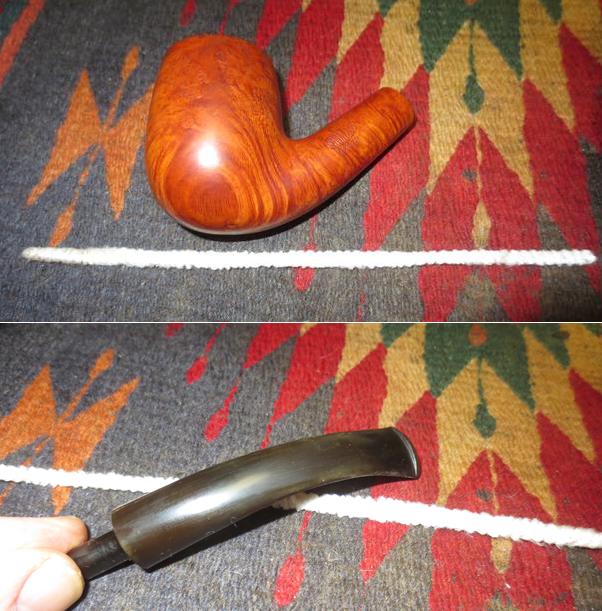
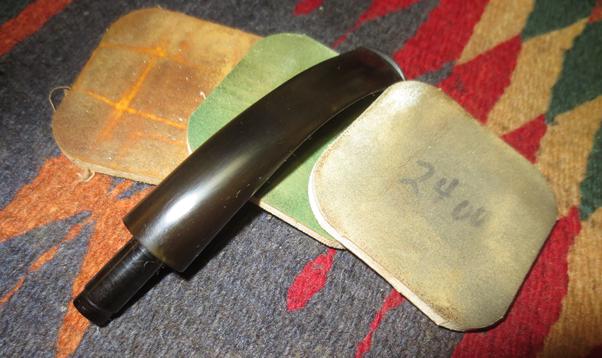
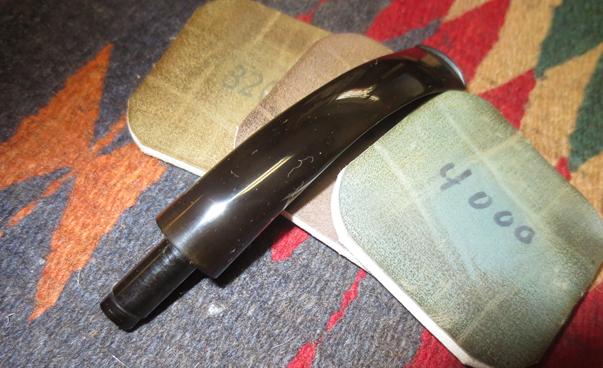
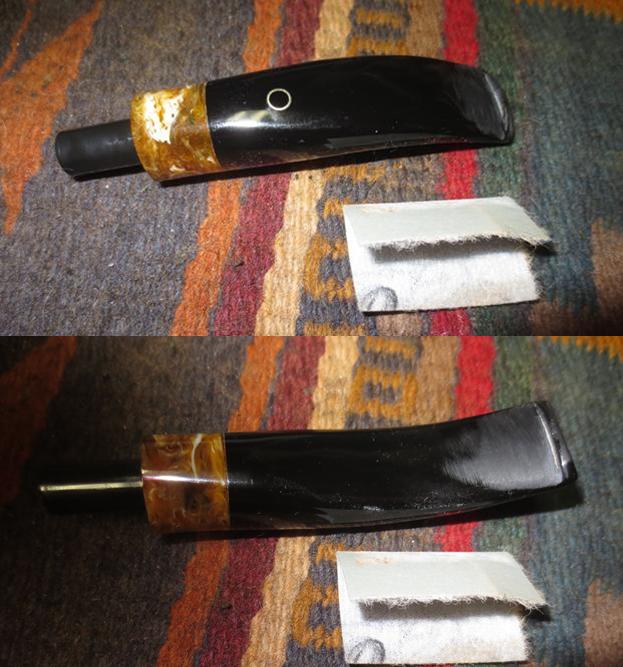
I used the Dremel to remove the remnants of the old tenon that were on the face of the stem. I flattened it against the topping board. I went through my assortment of threaded Delrin tenons until I found one that was slightly larger than the broken one. I needed to reduce the diameter slightly to make it work but it would do!I set up my cordless drill and put in a bit slightly larger than the airway and turned the stem onto it by hand. The first photo below shows the bits I used as I repeated the process until the hole was large enough for me to use a tap to thread it to match the tenon. The second photo below shows the last drill bit I used the piece of tape on the bit is to show me how deep I needed to go with the bit to accommodate the new tenon threads.I roughened the tenon surface so I could grip it enough to turn it into the newly drilled stem end. It was a good fit. I painted the end with some epoxy and turned it back in place and set it aside to cure and harden.Once the tenon was set firmly in place I used the Dremel and sanding drum to reduce the diameter to a close fit. I finished the fitting with 180 and 220 grit sandpaper. I polished the new tenon with micromesh sanding pads. Now came the telling moment. Would the stem match up with the shank? Would the fit be tight against the shank end? Even though I have done this many times I always have the same questions. I placed the new tenon in the mortise and carefully pushed the stem against the shank end. It was a very close fit and all I would need to do was sand the left side and top a little bit to make the fit even better. I was relieved and happy. I sanded the stem with 220 grit sandpaper and cleaned up the fit. I was almost back to where I was last night before the pipe dropped and the tenon broke. I have to polish the stem once again but the stem fits well. I took photos of the pipe at this point to check it out. The newly fit stem and the stain on the pipe worked well together. Now to polish it all and get it finished. I polished the bowl and stem with micromesh sanding pads – dry sanding with 1500-12000 grit pads to raise the shine.I buffed the pipe and stem with Blue Diamond on the buffing wheel. I gave it multiple coats of carnauba wax and buffed it with a clean buffing pad to raise the shine. I hand buffed it with a microfibre cloth to deepen that shine. The finished pipe is shown in the photos below. I am pretty happy with the way it turned out – even with the detour. The stain accomplished what I hope it would in making the grain pop. The grain stands out like it never did in the pipe when I received it. Now it is visible. It is a nice looking pipe that feels good in the hand. Thanks for looking.
 

Sandblast Reveals Stunning Grain on a GBD Concorde 9438


Blog by Steve Laug

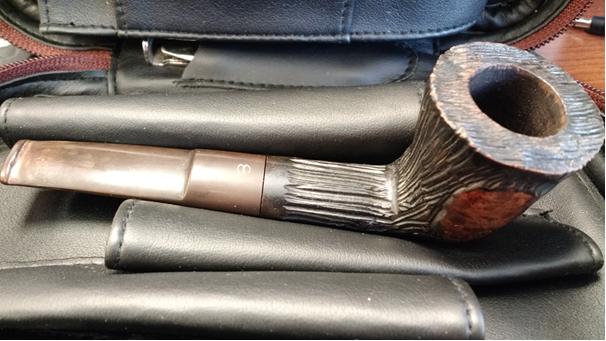
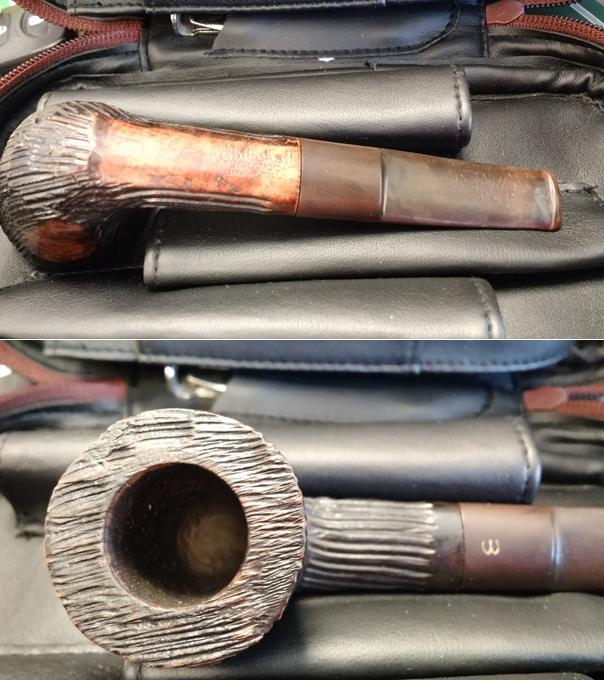
The next pipe I brought to the table had two major attributes that piqued my interest. The first was that it has an amazing sandblast (or is it a combination blast and rustication?). The second thing was that it was a pipe in my favourite GBD shape that I think nobody does as well as they do – the 9438 Rhodesian.  The pipe is stamped on the smooth underside of the shank GBD in an oval and next to that Concorde. Running along the shank stem junction it reads 9438 and Made in France. The logo is stamped into the left side of the saddle portion of the stem. The next photos show what the pipe looked like when it arrived in Idaho before my brother started cleaning it for me.Jeff took some close up photos of the bowl, rim and stamping to show the condition and the brand of the pipe. Those of you who love the 9438 did not need to see the stamping to confirm the shape but here it is. The finish was dirty with lots of debris in the grooves and crevices on the bowl and shank. The rim had a tarry build up on the back half where the cake was overflowing the bowl. The mortise was so dirty that the stem no longer seated against the shank. The GBD oval was stamped on the side of the stem and did not have a brass roundel as some of the earlier ones did.The stem was oxidized and there was tooth chatter on both the top and bottom sides near the button.The finish was a new one to me. I have not worked on a Concorde before so I wanted to learn a bit about it. I was not sure if it was a sandblast or a rustication or both. I did some searching online and found some things about it however. The GBD Concorde was made in France and was a lower priced GBD. It sported what GBD called a “take-off” brown/black stained sandblast. The top three pipes (ABC) in the photo below are from a 1976 Tinderbox Catalog I located on Chris’ Pipepages. The weblink for the pages is shown in the link that follows: http://pipepages.com/2tinderbox3.htm

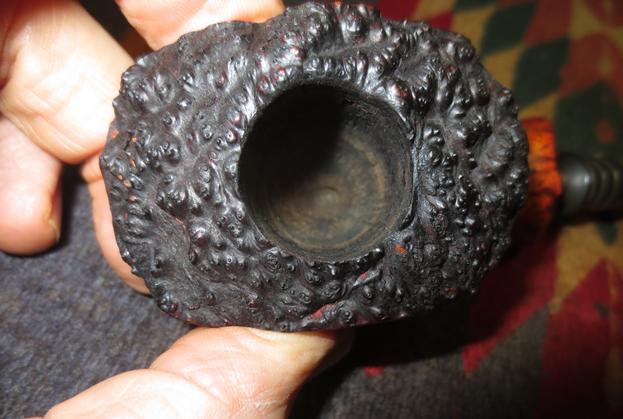
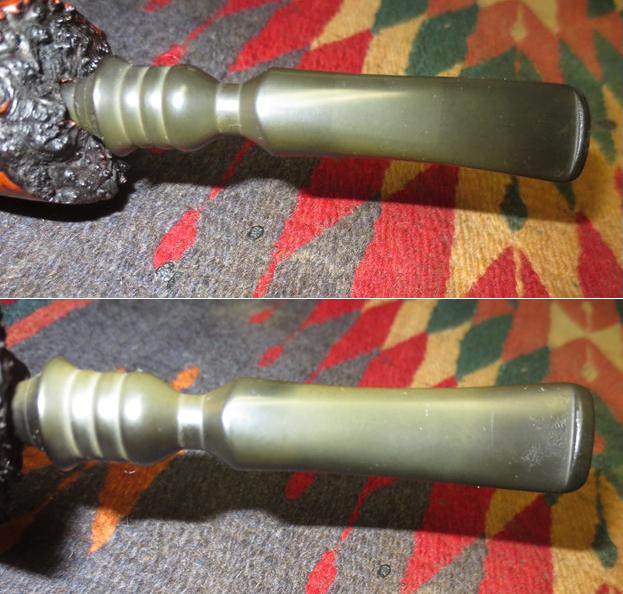
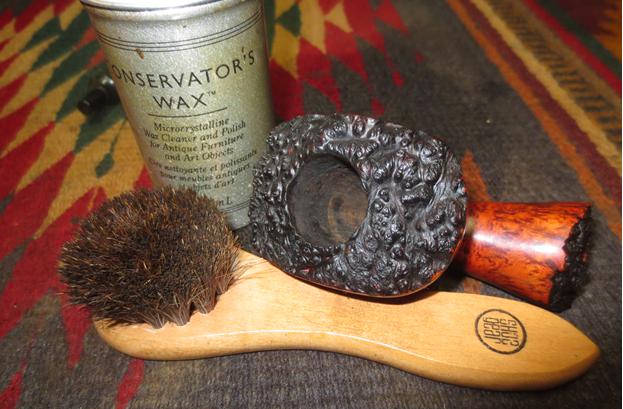
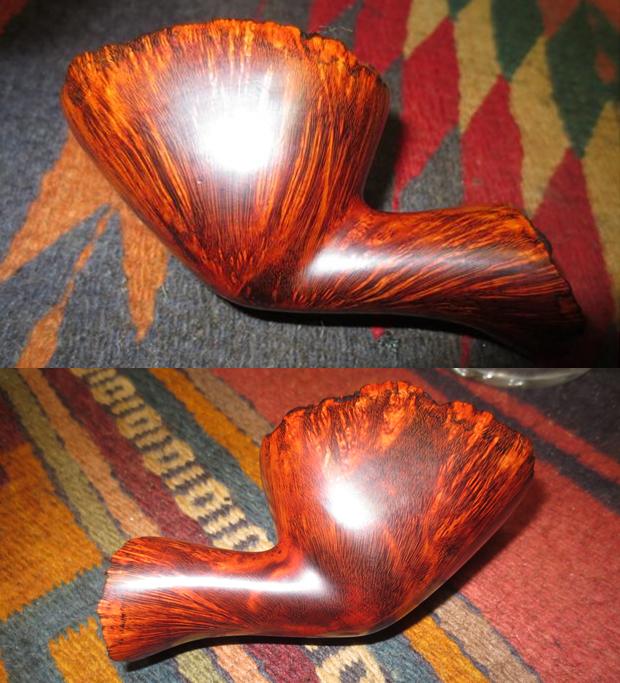
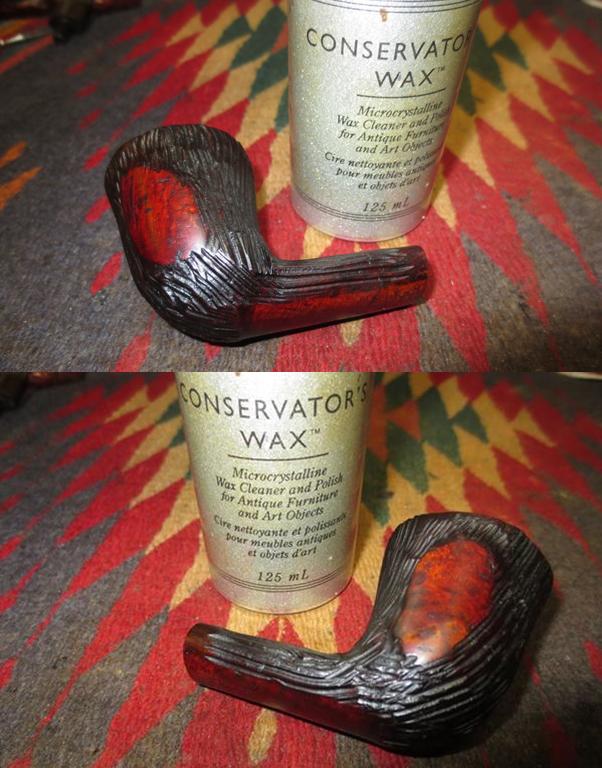
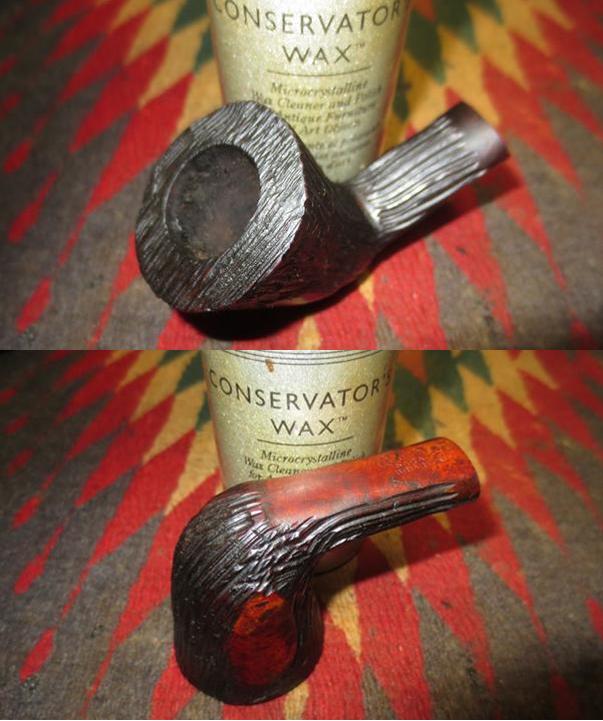
The pipe I was working on was “B” in the photo below. The finish on mine was very similar but mine did not have the brass roundel on the stem as the one in the photo does. On the second page of the catalogue there is a description of the pipe. It is a little hard to read but here is the text: “GBD Breaks with Tradition and Forges Bold New Designs. A.B.C. Concorde – This latest innovation from GBD’s French factory, the Concorde, offers exceptional value in the popular price range and features a most novel “take-off” process.” The catalogue lists the retail price in 1976 at $12.50. I have a sense of what they mean by the take of process in looking at the finish. It appears that the pipe has a dark brown stain applied to the bowl. It is buffed off the high spots on the pipe giving it a contrasting appearance. At least that is what I think is meant by the take-off process. When I received the pipe it was clean inside and out. My brother had done a great job cleaning out the grime and debris. The stem fit in the mortise perfectly and all looked good. The finish was clean and faded and the oxidation on the stem had come to the surface so it was ready for me to move ahead with the restoration. I took a few photos of the pipe so you could see what it looked like when it arrived in Vancouver. The rim looked much better but still had a bit of debris on the back side. It was nothing that a little sanding with micromesh could not cure. There is some stunning grain on the rounded rim top and on the smooth parts of the bowl. There is also some peeking through the sandblast. This is a beautiful pipe and one I may well hold onto.The oxidation on the stem had been brought to the surface by the cleanup. It definitely appears worse than it did in the earlier pictures but the difference is that the oxidation is on top now and easier to deal with. The tooth marks and chatter on the stem are visible in both photos.I polished the rim and the high surfaces of the bowl with a fine grit sanding block and with 1500-4000 grit micromesh pads to raise a shine. I gave it a coat of Conservator’s Wax and  hand buffed it with a shoe brush and cloth. The photos below show the bowl after that simple treatment. I sanded the stem with 220 grit sandpaper, carefully avoiding the area around the GBD Oval stamping. I did not want to damage that. I polished the stem with 1500-2400 grit micromesh to begin bringing the shine to the stem.I rubbed the stem down with Obsidian Oil and did something I probably should have waited to do. I cleaned around the area of the stamp with a damp cotton pad. I applied some Rub’n Buff European Gold to the stamping and rubbed it off the surface with a cotton pad. The second photo below shows the stamp when I had finished the first application. I can justify this step by saying it is actually easier to see the stamp with a little gold in place so that I can carefully polish around it. I repeated sanding the stem with 1800-2400 grit micromesh sanding pads.I polished it with 3200-12000 grit pads and gave it a coat of Obsidian Oil after each set of three pads. The shine was beginning to come through. I gave it a final coat of oil after the 12000 grit pad and set it aside to dry. I buffed the pipe with Blue Diamond to polish the stem and remove the scratches that still remained on the stem. I lightly buffed the bowl to raise a shine. I gave the stem several coats of carnauba wax and the bowl several coats of Conservator’s Wax and buffed the pipe with a clean buffing pad. The pipe began to truly shine. I hand buffed it with a microfibre cloth to deepen that shine. The finished pipe is shown in the photos below. It is really a beauty and one I am thinking seriously of adding to my own collection… ahh well… we shall see. Thanks for looking.
An unsmoked Koolsmoke Boxed Set with Three Extra Bowls


Blog by Steve Laug

Over the last few years I visit the same antique mall when I go home to Idaho for a visit. For at least the last two years there has been a boxed set of unsmoked Koolsmoke pipe bowls that the owner was selling. It was missing the base/stem unit and the bowl that came on it. The bowls were unsmoked and new. I looked at them every time I was there and walked away. This recent trip I went to the antique mall to have a look and found that the place was closing. Everything was marked down by 50%. The box of bowls was still there and it was marked down from $40 to $20. I decided to go for it. I put it on the counter and kept looking. I found a few other odds and ends and settled the account at the counter. Now I needed to find a unsmoked base/stem unit and another unsmoked bowl to go with it.

I went back to my brothers and went hunting on eBay for the parts I was missing. Over the years I think every time I go on eBay I have seen Koolsmoke pipes for sale. But this time there were none to be found. I had a feeling that this would take a while to find what I was looking for. My brother however had an idea. He had the phone number of a seller he had bought pipes from over the past months named Beverly. She had been an avid pipe collector and had a lot of pipes that she was selling. She had mentioned to him that she had plenty more to sell. We gave her a call and asked about a Koolsmoke. At this point I would have taken a used one, cleaned it up and added it to the set. She was delightful to talk with and she said she had a few over the years but they were all gone. However, she said she had one unsmoked red base/stem unit with a bowl on that she was willing to sell us.

I could not believe it. One call and we not only had a unsmoked NOS (new old stock) base/stem unit but we also had a unsmoked bowl to go with it that was different from the other three in the set. We paid her immediately and within two days it had arrived in Idaho. It was a beauty and it fit in the box. The bowls in the set were dusty and there was debris in the threads and in the rustication from years of sitting on the antique mall shelves. They would need to be brushed clean. The white fabric that lined the box was spotless – I was surprised that it did not have any stains. The cardboard box was broken at all the corners and would need to be repaired. The new stem was scratched but clean. It still had the casting marks on the sides and end. I took photos of the new set from a variety of angles to highlight the various bowls and show the threads, the rims and bowls. I looked up the brand on one of my favourite sites that specializes in smoking metal pipes. They indeed had the information I was looking for. Here is the link: http://www.smokingmetal.co.uk/pipe.php?page=145  I quote from there with some minor edits.

The Koolsmoke is an American made pipe with bowls looking much like Falcon, except these only have a single thread, not the 4 start thread of the Falcon. Confusingly there seem to be boxes around containing Koolsmoke pipe and spare bowls, but labelled Rogers Drymatic. (The photos below show the two boxed sets. The Rogers Drymatic is on the right).

The nut in the cup can be adjusted to alter the space between the bowl and pipe to suit the smoker or the actual bowl in use. The brand was patented on 29 Nov 1955 US patent # D176221 without the adjustable nut and 2,760-496 with the nut (also comes as Dri-Smoke). The inventor was Ben Lieber of Brooklyn New York. The assignor was Aply-Tech Products.I unscrewed the bowl from the base so that I could polish the stem. The base has the nut in the bottom of the base for adjusting the airflow from the bowl to the button. The metal is well painted and the paint undamaged. The stem has some scratches and stickiness from a price tag that it had sported sometime in its life.I took some close up photos of the stem. The edges of the stem are sharp from the casting lines that had never been sanded out smooth. You can also see the scratching and marks on both sides of the stem. I sanded off the casting lines on the sides of the stem and on the button end. I polished the stem with micromesh sanding pads – wet sanding it with 1500-2400 grit pads and dry sanding with 3200-12000 grit pads. I rubbed the stem down with Obsidian Oil after each set of three pads and gave it a final coat after the 12000 grit pad. I set the stem aside to dry. I repaired the torn edges of the box with clear cellophane tape that I use to repair books. I wiped down each bowl with a damp cloth and scrubbed the rustication on the one bowl with a tooth brush. Once the bowls were clean and dusted, I gave them a coat of wax and hand buffed them with a microfibre cloth. The finished pipe and bowls are shown in the photos below. It is a nice looking set of exchangeable bowls and a metal base. It is similar to a Falcon but has the added adjustment nut in the bottom of the base. It can be raised or lowered to adjust the airflow between the bowl and the stem. The pipe will be available on the rebornpipe store shortly if you are interested in picking one up for your collection. Thanks for looking.

Cleaning up the last of the five Gourd Calabashes


Blog by Steve Laug

Well, I have come to the end of restoring the five gourd calabashes that my brother and I picked up on my recent trip to Idaho. This final one is very similar to the previous one that I cleaned up. I think it may also be a Pioneer Gourd Calabash but I have no way of proving it one way or another. The gourd on this one is a bit longer and has a slightly different bend than the previous one. The shank cap and extension is identical. The stem is different and it may well be a replacement. The pipe had been lightly smoked as is evidenced by the internals of the bowl and shank. However, it has been roughly handled. The bowl was darkened and scratched and there were chips missing on the outside edge. Fortunately they were not too deep and could be addressed but they were present nonetheless. This calabash was externally in the worst shape of the five but as I looked it over I could see that there was a lot of promise left in it and the bowl could be polished and smoothed out. The next four photos show the condition of the pipe when I brought it to the work table. I took the pipe apart to get a look at the parts. The inside of the gourd was surprisingly clean. In fact it looked barely smoked. This made me wonder if the bowl was not a used replacement bowl from another pipe. The cork gasket was also new and had been replaced. It was dry and hardened but still had not cracked or broken. The top of the bowl was in rough shape. There were some scratches and the burn marks were all around the inner edge of the bowl. I took a close up photo of the bowl top and edges to show more clearly the kind of damage that would need to be addressed in cleaning this one up. You can see the nicks on the inner edge of the bowl and on the top. The burn marks went all the way around and out into the surface of the bowl. The scratches on the top are visible and many. The second and third photo below show the nicks in the out edge of the bowl. It looked to me that the bowl had been dropped some time in its life. There were two missing pieces and there were also a lot of scratches all the way around the outer edge of the bowl. I sanded out the as many of the scratches as possible with 220 grit sandpaper. I smooth out the missing chips on the edge of the bowl and reshaped the rounded edge of the bowl so that the chips were no long visible. I polished the meerschaum with micromesh sanding pads – wet sanding with 1500-2400 grit pads and dry sanding with 3200-12000 grit pads. I buffed the bowl with Blue Diamond to polish it to a shine. By the time I was finished most of the scratches and damage had been repaired and the bowl looked far better. I greased the cork with Vaseline to revitalize it and soften it. I rubbed it down and let it absorb before giving it another coat. Once it had been absorbed the cork was softer and more flexible. The bowl seated very well when pressed into place.I waxed the gourd with Conservator’s Wax and buffed it by hand with a soft cloth. I repeated the process and after buffing it with the cloth hand buffed it a final time with a microfibre cloth.I pressed the bowl into the gourd and it fit really well. The next two photos show the polished bowl and gourd. The pipe is already looking far better than it did when I started the refurbish on it. There is a shine to it now.I cleaned out the shank, the mortise and the airway in the stem with pipe cleaners, cotton swabs and alcohol. It was remarkably clean which made me more certain that the pipe itself was unsmoked and a used replacement bowl had been added later.I polished the unused stem with micromesh sanding pads – wet sanding with 1500-2400 grit pads. I buffed the stem with red Tripoli to remove the light oxidation and then finished dry sanding with 3200-12000 grit pads. I gave the stem repeated coats of Obsidian Oil after the first set of pads and the buffing and after each set of three pads after that. I gave it a final coat after the sanding with the 12000 grit pad and then set it aside to dry. I gave the stem multiple coats of carnauba wax and buffed it with a clean buffing pad to raise the shine. I removed the bowl and carefully buffed the gourd with a clean buffing pad to raise the wax shine on it as well. I put the pipe back together and hand buffed it with a microfiber cloth to deepen the shine. The pipe looks really good now that it is finished. You would be hard pressed to find the damaged areas on the bowl sides and the scratches on the rim top look really quite good. The bowl has a light patina that remained after I waxed it with beeswax. It is a beauty and will serve someone well. It will be available on the rebornpipes store shortly. If you have been looking for a gourd calabash this one may well fit the bill. Thanks for looking.

A No Name Cumberland Shank Gourd Calabash


Blog by Steve Laug

The third Gourd Calabash from the five that my brother and I picked up in Idaho is an interesting one. I have no idea of the age though the gourd looks similar in age and patina to the previous two pipes. It is certainly a little older than the next two on the work table which look to be Pioneer Gourd Calabashes. This one has been obviously restored and repaired sometime in its long life. The repairman added an interesting touch to the pipe. There is a Cumberland shank extension that is connected to the end of the gourd and gives the old style pipe a touch of another century. The Cumberland has a mortise drilled to take a push stem and it is really well made and well attached. It appears that the repairman used a tube to connect the gourd and the shank extension so it is a very solid repair. The stem and the meerschaum bowl is the only part of this pipe that is both new and unsmoked. I took the pipe apart to have a look at the parts. The Cumberland shank extension was oxidized and dull and really did not show the red striations along its length very well. The stem was also oxidized and dirty. It is interesting that the stem was a little dirty on the inside so I am guessing that it was pressed into service on this pipe from a stem can like my own. The internals of the bowl have some darkening and tars on the walls of the gourd but it has been well cleaned. The externals of the gourd are really in great shape and there is a nice patina to the calabash.The inside of the gourd bowl is in good shape. There is some darkening but it has been well cleaned out. There is a new cork gasket installed around the inner edge of the rim of the gourd. It is dry but is in good shape. I took a picture of the mortise drilling in the Cumberland as well. It is a great piece of craftsmanship. The next photos show the beautiful striations in the Cumberland that are hiding beneath the oxidation. The repairman who put this shank extension on the gourd made an interesting choice to use Cumberland. Nicely done.The old freehand stem was lightly oxidized but was otherwise in great shape. There were not any tooth marks or chatter on the surfaces of the stem. The button and slot were in great shape.I started polishing the Cumberland shank extension with micromesh sanding pads – wet sanding with 1500-2400 grit pads and dry sanding with 3200-12000 grit pads. I rubbed the Cumberland down with Obsidian Oil after each set of three pads. After the final pad I gave it a final coat of oil and let it dry. I ran a pipe cleaner dipped in alcohol through the airway in the shank and the stem. I cleaned out the mortise with cotton swabs and alcohol. The pipe was amazingly clean. The stem had a little debris in it but it was not too bad. I rubbed Vaseline into the cork gasket to enliven it and lubricate it. I repeated the rubdown until the cork was soft and pliable again. When the cork had absorbed the grease I pressed the Meerschaum cup into the gasket and it was a smooth, snug fit.I gave the gourd several coats of Conservator’s Wax and hand buffed it with a soft cloth and a microfiber cloth. The wax gave the gourd a real shine. I set the bowl aside and turned my attention to polishing the stem. I wet sanded it with 1500-2400 grit micromesh sanding pads and dry sanded it with 3200-12000 grit pads. I rubbed it down with Obsidian Oil after each set of three pads and then gave it a final coat of wax after the 12000 grit pad. I set the stem aside to dry. I buffed the stem with Blue Diamond on the buffing wheel to take out the last bit of oxidation and scratching. I gave the stem multiple coats of carnauba wax and buffed it with a clean buffing pad to give the stem shine. I put it back on the pipe and gave the shank and bowl several more coats of Conservator’s Wax and hand buffed the entire pipe with a microfiber cloth to deepen the shine. The finished pipe is shown in the photos below. The shine of the Cumberland looks really good between the rich golden yellow of the gourd and the black of the stem. It is a beauty. This one will join the previous two Calabashes on the rebornpipes store very soon. You might consider adding this one to your rack. It is a beauty. Thanks for looking.

Cleaning up a Bit of a Frankenstein English Gourd Calabash


Blog by Steve Laug

This old Gourd Calabash had been reconditioned and brought back into service somewhere along the way in its long life. This lovely Calabash is a combination of things old and things new. It has been reconstructed from parts like Frankenstein. The Gourd is old and bears the stamp “LONDON over ENGLAND” on the left side of the shank at the bottom of the curve. The old silver band appears to bear hallmarks under the tarnish but I will know more once I clean it up. Those are the only two old parts that remain of the original pipe. The rest of the pipe is relatively new. The meerschaum bowl is a new replacement bowl. The shank end of the gourd has been fitted with a round wooden plug that has been drill to hold the tenon. The stem is also new and has been tapered at the shank end with a bevel and fits perfectly in the wooden plug. The next four photos show what the pipe looked like when I brought it to the worktable. I took the pipe apart to check out the interior of the gourd. The meerschaum bowl was new and had the size on the underside. It was marked the same way as other bowls I have purchased from Tim West at JH Lowe. This one is marked 24.5. The fit of the bowl in the gourd is snug with no play. The wood plug on the shank end was stained and had been inserted into the gourd. The oxidized silver band held the plug in place against the shank of the gourd. The stem was high quality vulcanite with minimal oxidation and no tooth marks. It appeared to unsmoked like the new meer bowl.There is a new cork gasket that is glued in place on the inside of the top edge of the gourd. It is a replacement cork and was in perfect shape. It was dry and would need to be lubricated with some Vaseline to enliven it again. The inside of the gourd was clean in the top half and there were some concretized tars half way down the interior.I used a dental pick with a flattened blade to scrape at the hardened material on the inside of the gourd. I knew that I would not be able to remove all of it but I could at least smooth it out slightly. I scraped and dumped the carbon on a piece of paper for an easy disposal. I ran some pipe cleaners through the shank of the gourd to remove the dust that I had generated. After a few cleaners the gourd was clean. I blew it out to remove any dust that had remained. I rubbed the cork gasket down with some Vaseline to soften the cork and enliven it. I have found that this works really well to give back some elasticity to the cork and softens it. I wiped it down and let the cork absorb the Vaseline before putting the bowl back in place.I wiped down the gourd with a damp cloth and then gave it several coats of Conservator’s Wax and buffed it by hand. The gourd was stamped on the left side “LONDON” over “ENGLAND” as shown in the photo below.The silver band was tarnished, pitted and dented. I could see letters on it but with the tarnish they were illegible. I polished the silver with a jeweler’s cloth and took the following photo to capture the stamping on the silver.After polishing I could make out some of the stamping on the silver band through a lens. It is stamped STERLING about the middle of the band. Above that is the makers mark – kind of a banner with some unreadable letters and then the letters JD in boxes. Next to that mark are three cartouches with an Anchor, a Lion and a lower case “l” that dates the silver to 1910. (I have included the Birmingham Hallmark chart below). Whoever had fashioned the wooden end plug had done a great job. It fit down into the shank of the gourd and then up through the band and provided a mortise for the replacement stem. The draught from the plug into the shank and up the gourd was wide open.I polished the stem with micromesh sanding pads – wet sanding with 1500-2400 grit pads and dry sanding with 3200-12000 grit pads. As is my usual practice I rubbed the stem down with Obsidian Oil after each set of three pads and gave it a final coat after using the last pad. I set the stem aside to dry. I buffed the stem with Blue Diamond on the buffing wheel to remove any remaining scratches and gave it multiple coats of carnauba wax. I buffed it with a clean buffing pad to raise a shine on it. I put it back in place on the gourd and gave the gourd a final coat of Conservator’s Wax and hand buffed it with a microfiber cloth. I hand buffed the silver until is shone. The finished pipe is shown in the photos below. It is the first of five gourd calabashes that my brother and I picked up when I was down on a recent trip to Idaho. Keep an eye open for the rest of them in the days ahead. I plan on finishing them all and posting them here and then for sale in the store. Thanks for looking.
Refreshing a Family Heirloom – a Brunswick Imported Briar Saddle Billiard


Blog by Steve Laug

I had an email conversation with a pipe smoker over in Eastern Canada about a pipe that had been in his family for quite a while. He had inherited it and though he loved it, the pipe smoked wet. We talked about how to clean the mortise and the airway in the stem and shank. He did the cleanup but the pipe still smoked wet. He wrote back and asked if I would have a look at it for him and see what I could do with it. When it arrived I could see why he liked it. The pipe is extremely light weight and the saddle stem and flow of the bowl is perfect. The brand is one that I had not heard of before. The pipe is stamped Brunswick over Import Briar on the left side. There is a nice rusticated wedge on each side of the bowl otherwise the finish is smooth. The photos below show what the pipe looked like when it arrived in Vancouver.The pipe was in decent shape. The finish was a little dirty and there were burn marks on the front outer edge and the left and rear inner edge of the rim top. The rim top also had some dents and nicks in it and some general darkening from being lit with a lighter in the same place each time.I took a close up photo of the rim and bowl to show the uneven cake and the rim top damage. The rim was slightly beveled and the inner edge was undamaged.I took some photos of the stem to try to capture the damage on the underside. It was hard to capture but there were four divots out of the vulcanite on the underside. I have circled their location in red in the photo below. The quality of the vulcanite was very good and the stem was not oxidized. There were a lot of small pits and scratches in the stem surface but it would polish up nicely and have a deep shine. The aluminum spacer was set on the tenon and acted as a thin ring around the shank and stem junction. It was lightly oxidized but also would polish up well.Before I started the clean up of the pipe I decided to do a bit of digging to see if I could learn anything about the brand. I looked on Pipedia and Pipephil’s Stampings and Logos site and neither one listed the brand. I also did a pretty thorough Google search of the brand using different combinations of words around the brand name. That turned up a pipe starter kit that included a new pipe, tobacco and tamper combination. The pipe bore the Brunswick name but it just did not look anything like the pipe or the stamping on the one I had in hand. It was available through the Pipeguys back in 2013 but the link no longer works. Looking at the pipe I do not think that the brand is related.

I turned to a copy of Who Made that Pipe that resides on my desk next to the computer. I looked through the listings and found two different possible makers of the brand – one in France and one in the USA. I have attached a screen capture of the listing from the book.

The American Company is listed as Adrien Brunschwig 1942. I think this is the maker of this particular pipe. The Imported Briar stamp under the Brunswick name leads me that conclusion as it was used in the US after WW2 when briar was once again available for import. I did some more searching for that brand and maker. The only thing I could find was an American wholesaler and manufacturer of household items called Brunschwig & Fils. I suspect that it is possible that like many other post war manufacturers the company had pipes made by an American Manufacturer (or maybe a European one) to sell or distribute to clients. Quite a few companies did that during this era.

The other company, Ruchon & Verguet 1933 is French and is a predecessor to the company that later was became GBD. I looked on Pipedia and found a link to the history of the company that later became Marechal Ruchon & Cie: https://pipedia.org/wiki/Marechal_Ruchon_%26_Cie. The link gave me the following info and certified the link to GBD. Marechal Ruchon & Cie. was a company owned by Auguste Marechal and Ferdinand Ruchon (“& Cie” is the french equivalent of “& Co”) which owned the GBD brand from the end of the 19th century until 1902 when they sold Marechal, Ruchon & Cie. to Oppenheimer Pipe, which in turn changed the name of the company to Marechal, Ruchon & Co., Ltd.. Upon the creation of Cadogan, however, the brand was no more, remembered only in the name of the GBD Marcee pipes made until just after the Second World War.

To me the connection to the French company is unlikely because of the Imported Briar stamp. The rustication on the pipe also would place it in the post WW2 years as that style was pretty prevalent in US made pipes.  I had a passing thought that can in no way be confirmed, perhaps the Brunschwig name has been bastardised into Brunswick. It has happened to a lot of Germanic names over time so I would not be surprised. That tie also makes the connection to the American maker very probably.

I think I can say with a good measure of confidence that the pipe is American made in the late 1940s by Brunschwig (Brunswick). I wrote to the owner and asked him if he could give me any information on where his father in law may have picked up the pipe. He wrote back as follows:

Hi Steve,

…As far as I know it was my wife’s father’s pipe, she grew up in Toronto and so as far as I can gather I believe it was made around that area. I am pretty certain that he bought it in Canada though he was in the army and may even picked it up somewhere along wherever he was stationed, but I do think he bought it here. She remembers him as a child smoking it (before he stopped smoking a pipe and switched to cigarettes) so the age is roughly 50+ years old, perhaps a bit older…I couldn’t find any information on it either on any sites I visited, so I don’t think that the Brunswick company is still in operation. I would love to know more about it myself so at the next family get-together I’ll ask around with the few of the old-timers that are still around and see if they can recall anything about it and I’ll pass on any info I come across. I haven’t heard of the brand either, they seem to be very obscure.

She did tell me when I inherited the pipe that she found it in his drawer after he had passed so I don’t think he even smoked it all that often.

He also included a photo of his father in law with this pipe in his mouth. It looks to me like he is wearing a Canadian Army uniform.Now I had the back story on the pipe and a good lead on the name and the maker of the pipe. Those details are things I love to have in hand when working on a pipe. It adds another dimension to the restoration and repair process. The pipe will soon go back to the family and the next generation will carry on the tradition of pipe smoking. It is a reminder to me that we truly do hold our pipes as a trust that can be passed on when we depart. They certainly are made to outlast the sturdiest of us.

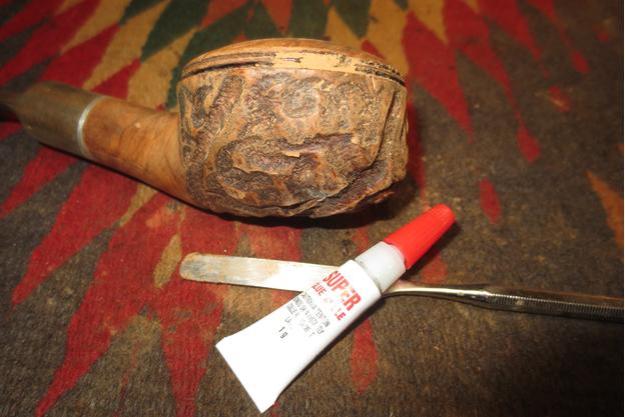
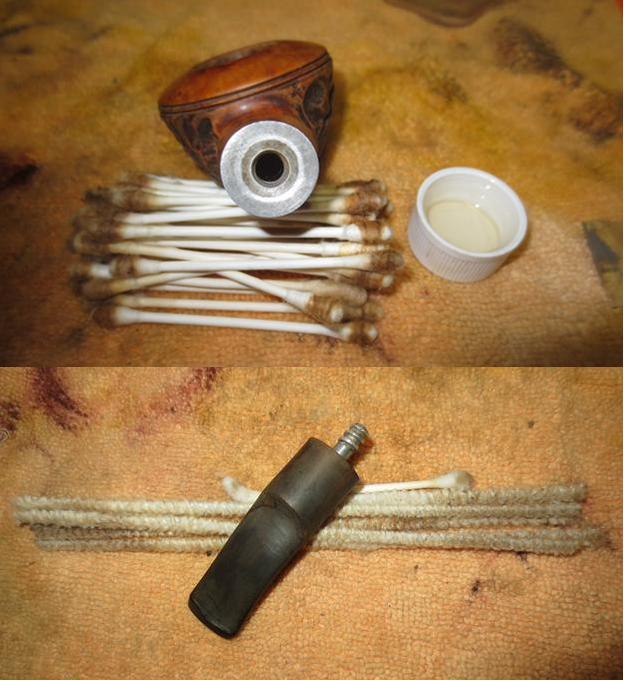
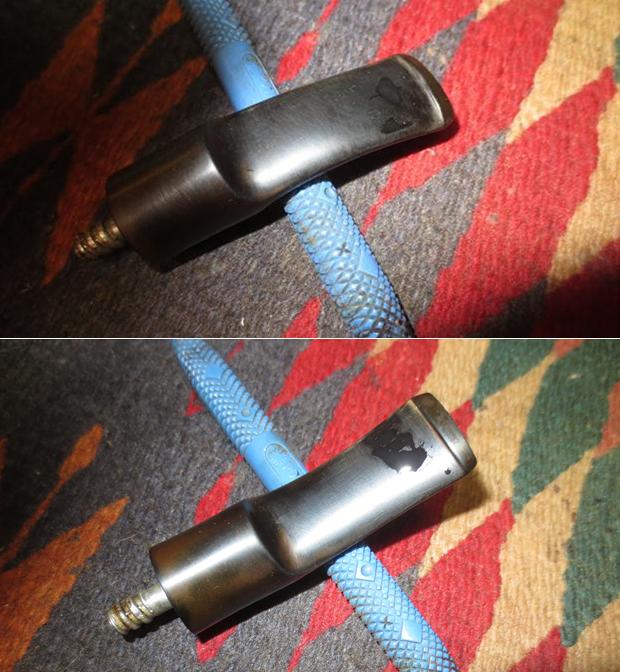
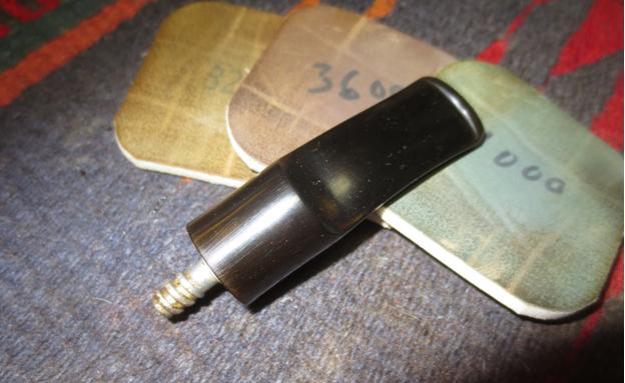
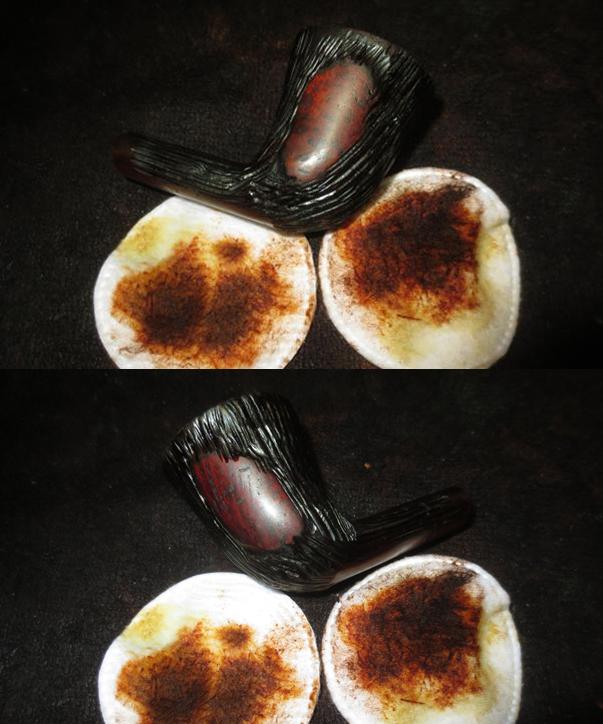
I started the cleanup on this one by addressing the issues on the rim top. I decided not to top the bowl but rather just lightly sand out the scratches and nicks. Sanding the top would also minimize the darkening and burn marks on the rim top and edges. There were also some burn marks on the front of the bowl that extended from the rim top down about ¼ inch. I sanded those at the same time and was able to remove much of the damage. I lightly sanded out the tooth chatter on the stem surface and wiped the stem down with alcohol on a cotton pad to remove the dust. I filled in the three remaining divots with black super glue. Once the glue cured I sanded the stem with 220 grit sandpaper to blend the repairs into the surface of the stem.I reamed out the uneven cake with a PipNet reamer and cleaned up the remains with a Savinelli Fitsall Pipe Knife. I took the cake back to bare briar.I rolled a cotton pad and inserted it in the shank to plug the mortise and wick the alcohol back into the shank. I pushed a cotton ball into the bowl and used an ear syringe to fill the bowl with alcohol. I used an old ice-cube tray to hold the pipe upright and left it overnight to draw out the oils and tars in the briar.In the morning I woke to find the cotton ball darkened with tars. It was not the worst I have seen but it drew out a lot.I left the bowl sitting a little while longer and countersunk the end of the tenon to funnel it. I find that the funneled tenon draws the air into the stem and can work to reduce moisture by facilitating air movement. The photo below shows the tenon end after I had cut the funnel. I still needed to sand it but it was ready. I remove the cotton ball from the bowl and ran a pipe cleaner and cotton swabs through the shank.I let the bowl dry and turned my attention to sanding out the patches and repairs on the stem. I wanted to do a bit more blending and smoothing work. I was not ready for the micromesh pads yet as I wanted to use the retort on the pipe before polishing the stem.I finished the stem and put the pipe back together. I set up the retort. I pulled the rubber tube over the end of the mouth piece. I put a cotton ball in the bowl. I filled the test tube 1/3 full with alcohol and lit a candle to heat the alcohol. Once the alcohol gets hot it boils through the stem and the shank cleaning and loosening any remaining oils and tars.I boiled the alcohol through the pipe for quite a while and then stood the pipe up and let the alcohol cool and run back into the test tube. I was amazed at how little grime came out of the shank. I boiled it through a second time and repeated the cooling. This pipe was very clean now.I cleaned up the retort and put it away. I ran a pipe cleaner through the stem and also through the shank to dry out any remaining alcohol. It came out very clean.I touched up the rim and the front of the bowl with a medium brown stain pen to match the colour of the rest of the bowl and hand waxed it with Conservator’s Wax. The rim is looking really good and the burn mark on the front edge is minimized though still showing. I look at those kind of marks as battle scars that tell a story.I polished the stem with micromesh sanding pads – wet sanding it with 1500-2400 grit pads and dry sanding it with 3200-12000 grit pads. I rubbed the stem down with Obsidian Oil after each set of three pads. After the final polishing with the 12000 grit pad I gave it a final coat of oil and set it aside to dry. I put the stem back on the shank and took the pipe to the buffing wheel. I buffed the pipe with Blue Diamond to remove any remaining scratches in the bowl, rim and stem. I gave the pipe multiple coats of carnauba wax focusing on the smooth portions. I buffed it with a clean buffing pad to raise the shine. I took the pipe back to the work table and waxed the rusticated areas with Conservator’s Wax. I buffed those areas with a shoe brush. I hand buffed the pipe with a microfibre cloth to deepen the shine. The pipe is finished and ready to go back to its owner to carry on the family connection. I am looking forward to hear how it smokes for him now. Thanks for looking.


One Quiet Sunday Afternoon – Finding an older KBB Yello-Bole Imperial Panel


Blog by Steve Laug

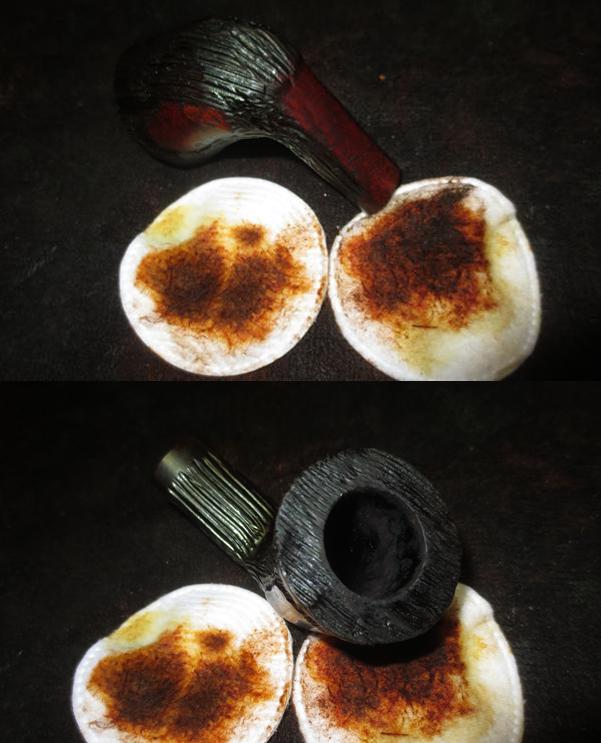
On a quiet Sunday afternoon the family and I drove to nearby Fort Langley for lunch. We visited a favourite pipe hunting site that in the past has yielded some good finds. I went through the shop and found a lot of assorted pipes that really did not interest me. In one booth there was a jar with a bouquet of pipe sticking out of the top. They looked interesting and the sales clerk who unlocked the case said they were from the owner, an older gentleman’s private collection. There were several that looked promising but the one that grabbed my attention was an older Panel shaped pipe with worm trail rustication. It has the classic Yello-Bole yellow circle on the top of the stem. The pipe was stamped on the left side of the shank with a KBB in a cloverleaf next to Yello-Bole over Cured with Real Honey ® over Imperial in script. Underneath it reads Imported Briar. The bowl had a thick cake inside and it had run over the top of the bowl. The finish was pretty well shot and it had deep grime in the rustication trails on the sides of the bowl. The stem was lightly oxidized and there was some calcification around the button on the top and underside. I took the stem off the shank to find a push tenon. I decided then and there to add this one to the lot. I took the following photos once I got the pipe home. The finish was worn and dirty with a lot of grit and dust in the worm trail grooves on the bowl. It would take some cleanup work to determine what needed to be done with that. I took a close up photo of the bowl and rim. There was a thick cake and an overflow unto the rim top. The overflow and cake made it hard to tell if there was any rim damage or outer edge damage on the bowl. I also took close up photos of the stem to show the condition – it was in great shape other than oxidation. I reamed the bowl with a PipNet reamer and cleaned up the remnants of the cake with a Savinelli Fitsall Reaming knife. I took the cake back to bare briar so that I could inspect the internals and the rim edges. I used a brass bristle brush and alcohol to clean the rim top of the buildup and grime that was there. I was surprised to see that it was undamaged.I scrubbed the remaining finish and the dirt off the exterior of the bowl with acetone on a cotton pad. I was able to remove the majority of the grime. The bowl sides, bottom and rim came out really clean. The scrubbed bowl is shown in the photos below.As you can see from the photo below the rim top still needed a lot of work to get it clean and the rustication patterns clearly visible again.I scrubbed out the internals of the mortise and airway into the bowl with alcohol, cotton swabs and pipe cleaners. I think it had been years since this old pipe had met a pipe cleaner. It took a lot of rigorous scrubbing to clear out the buildup and debris in those areas. I used a cotton swab, alcohol and a dental pick to work on the rim top some more as well.I scrubbed the bowl and rim with Murphy’s Oil Soap and a tooth brush. I rinsed it under running water and dried it off with a towel. I sanded the smooth surfaces of the briar with micromesh sanding pads to polish it – wet sanding with 1500-2400 grit pads and dry sanding with 3200-12000 grit pads. I used a black Sharpie Pen to stain the rustication patterns on the bowl and shank. I don’t worry too much about covering every small nook and cranny at this point because I am going to put a top coat of dark brown stain over the top. I just want the rusticated areas to be a bit darker than the rest of the bowl once I have finished. It provides an interesting contrast. I stained the bowl with a dark brown aniline stain and flamed it. I repeated the process until I was happy with the coverage over the entire bowl. I set the bowl aside and left for work. When I get home this evening I will “unwrap” as Dal says.When I got home in the evening I wiped the bowl down with alcohol on a cotton pad to make it more transparent and highlight the rustication trails. I buffed the pipe with Blue Diamond to polish the briar and give it a shine. The photos below show the pipe at this stage in the process. I broke up the oxidation and calcification on the stem with 220 grit sandpaper. There were some small tooth marks and chatter under the buildup that the sandpaper took care of as I worked on the stem.I cleaned out the airway in the stem with alcohol, bristle pipe cleaners and regular pipe cleaners. I picked out the debris in the slot with a dental pick. It did not take too long to get the stem clean.I polished the vulcanite with micromesh sanding pads – wet sanding with 1500-2400 grit pads and dry sanding with 3200-12000 grit pads. I rubbed the stem down with Obsidian Oil after each set of three pads. I gave it a final coat of oil after the 12000 grit pad and set it aside to dry. I put the stem back in place on the bowl and buffed the pipe with Blue Diamond to polish out the remaining scratches in the briar and the stem. I gave the bowl and stem multiple coats of carnauba wax. I buffed it on the wheel with a clean buffing pad to raise the shine on the briar and vulcanite. I hand buffed it with a microfibre cloth to deepen the shine. The finished pipe is shown in the photos below. I am uncertain of the age of the pipe but I figure that when Troy reads this he may be able to give me a clear picture of the age of the pipe. Thanks for looking.
A Simple Refresh – a GBD New Standard 9438 Rhodesian


Blog by Steve Laug

I chose a second easy pipe to work on – another of my favourite shapes, a GBD Rhodesian. It is stamped on the left side of the shank with GBD in an oval over the words New Standard in script. On the right side of the shank it is stamped London, England over 9438. The stamping is quite readable. The finish was in decent shape. There was a light cake in the bowl and overflowing onto the topside of the rim. There was a slight burn mark on the outer edge of the rim from repeated lighting in that spot. The stem has the brass roundel on the left side of the saddle. The stem was lightly oxidized and there was tooth chatter on both the top and underside near the button. The next series of photos show the pipe when my brother received it in Idaho. He sent along a few close up photos to show the rim top and cake in the bowl. It shows the thickness of the cake and the light build up on the top. The photos that follow show the stamping on the shank sides and the roundel on the stem side. The next two photos show the tooth chatter on the top and the underside of the stem at the button. There were a lot of tiny tooth marks that covered the first inch of the stem on each side.My brother did his usual exceptional job of cleaning the pipe on the inside and out before he sent it to me in Vancouver. I ran a pipe cleaner through it when it came and it was spotless. He was able to remove much of the grime from the finish and the tars from the rim top.In the next photo you can see the burn marks around inner edge of the rim and on the front left outer edge. These would take a bit of work to minimize.I took a close up photo of the rim top to focus in on the burn marks around the edges of the bowl and rim top. I also took some photos of the stem to show the oxidation and the tooth chatter. I worked on the rim top with 1500-2400 grit micromesh sanding pads to remove the burned areas. I was glad to see that they were only surface and did not go too deep. I was able to remove them for the most part. There is a small remnant of the mark on the front edge of the rim. I polished the entire bowl with the 1500-2400 grit micromesh while I worked on the rim to begin to bring a shine to the briar. I continued to polish the rim and the bowl with 3200-12000 grit micromesh sanding pads to deepen the shine and polish the briar. I buffed the bowl lightly with Blue Diamond on the buffing wheel and set it aside. I worked on the stem. I sanded the stem with 220 grit sandpaper to remove the tooth  chatter on both sides. They were not too deep so it did not take too much work to remove the marks in the vulcanite. I polished the stem with micromesh sanding pads – wet sanding with 1500-2400 grit pads and then buffed it with Red Tripoli on the buffing wheel to breakdown the oxidation further. I then dry sanded it with 3200-12000 grit pads. I rubbed the stem down with Obsidian Oil after each set of three pads to bring life to the rubber and to also give the micromesh something to bit in during the polishing. Once I finished with the 12000 grit pad I gave it a final coat of oil and set it aside to dry. I put the stem on the pipe and buffed the entire pipe with Blue Diamond on the buffing wheel to polish out the remaining scratches. I gave the pipe multiple coats of carnauba wax to protect it and buffed it with a clean buffing pad to raise the shine. I took it back to the work table and hand buffed it with a microfibre cloth to deepen the shine. The finished pipe is shown in the photos below. The grain is unique and a mix of grains – flame grain, cross grain and some straight grain. There is even birdseye on the bottom and on the rim. The stain that was on the bowl is a reddish-brown and it allows the grain to shine through. It is a beautiful example of the GBD 9438 shape Rhodesian and one that will grace the pipe rack. Thanks for walking through this simple refresher with me.  

Whew, finally a simple restore of an older Imported Briar Rhodesian


Blog by Steve Laug

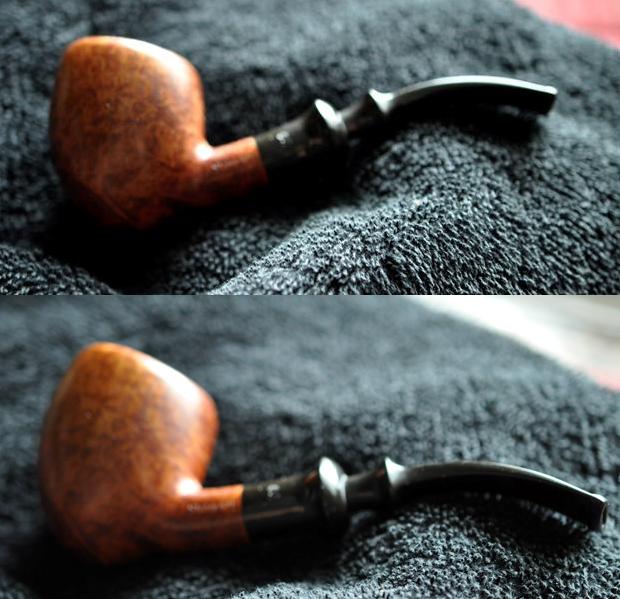
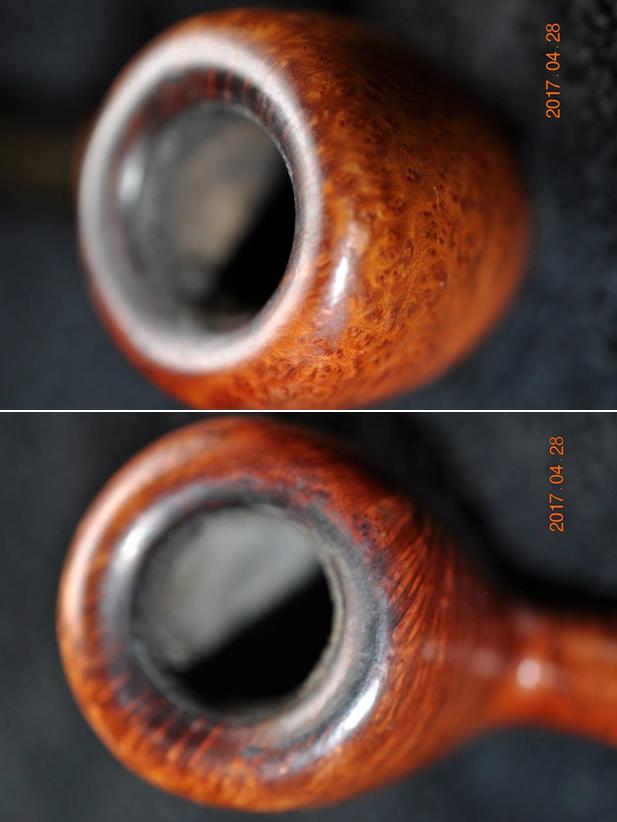
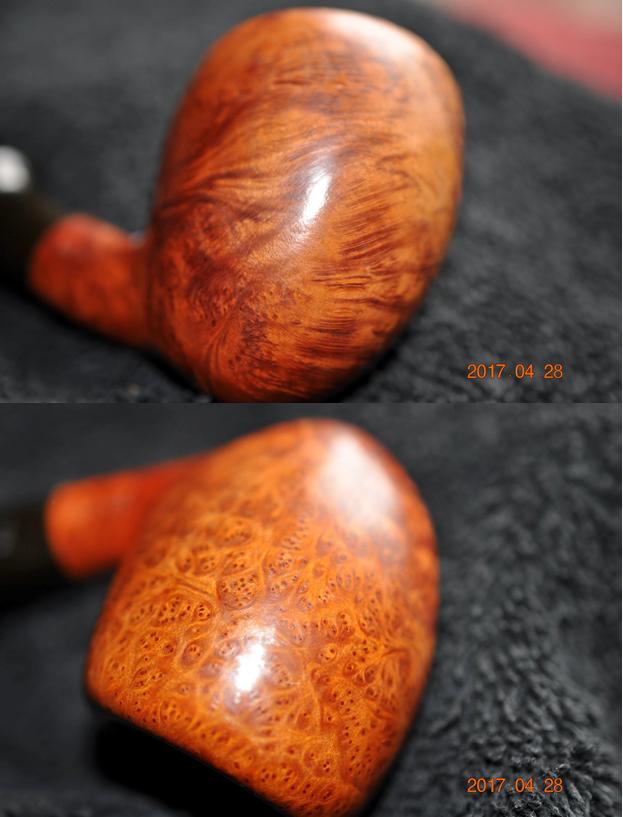
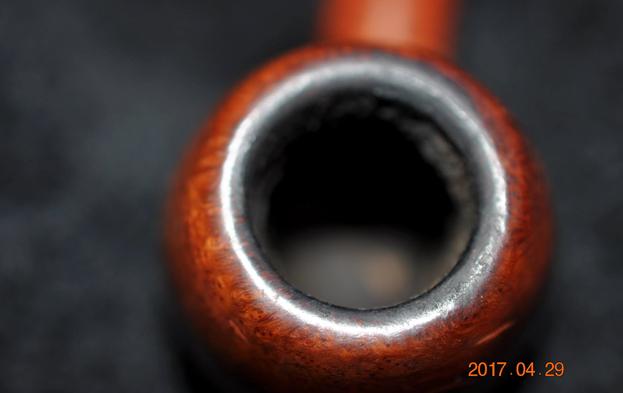
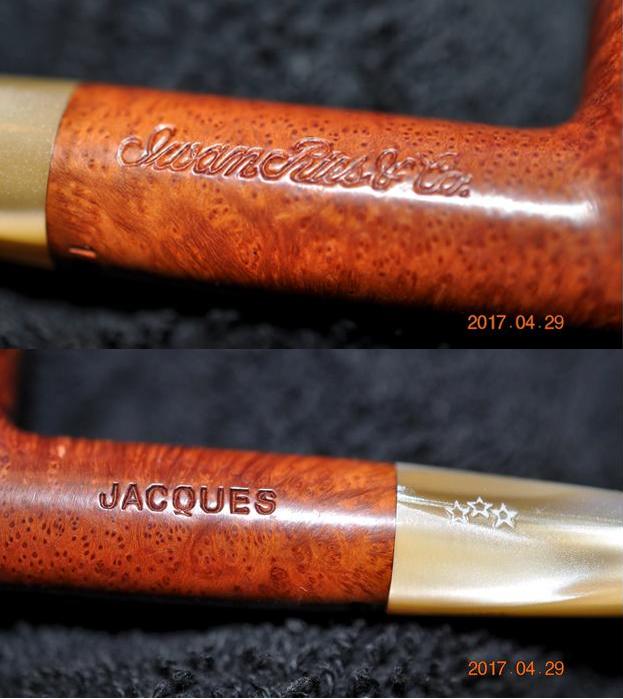
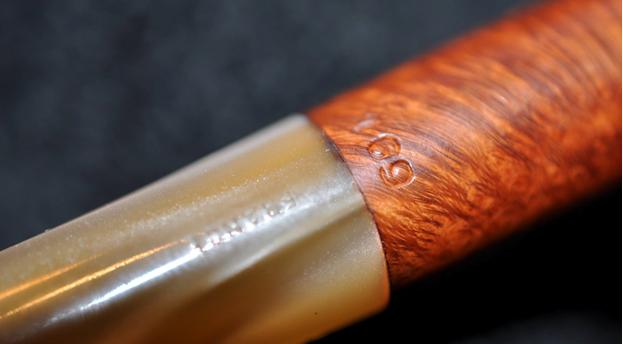
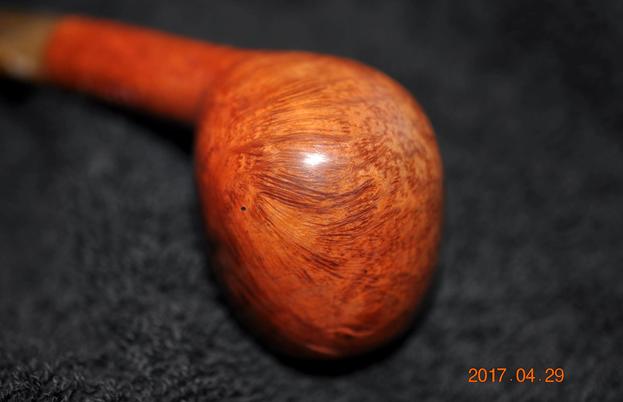
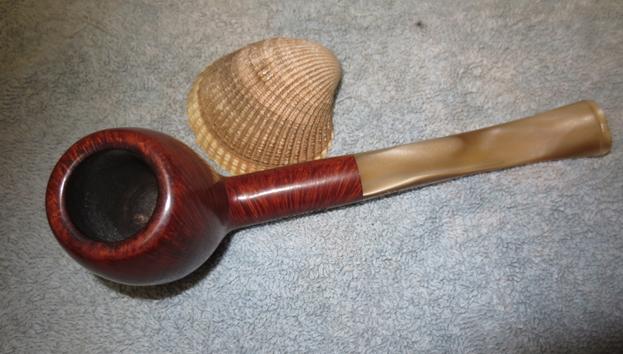
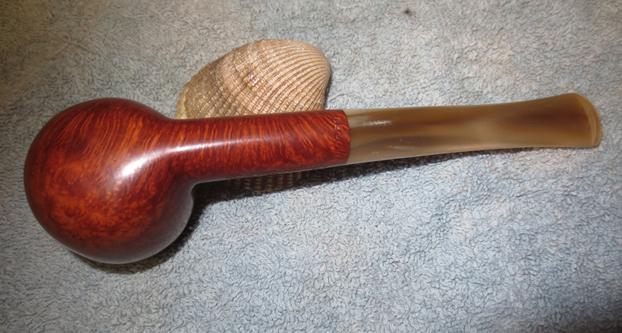
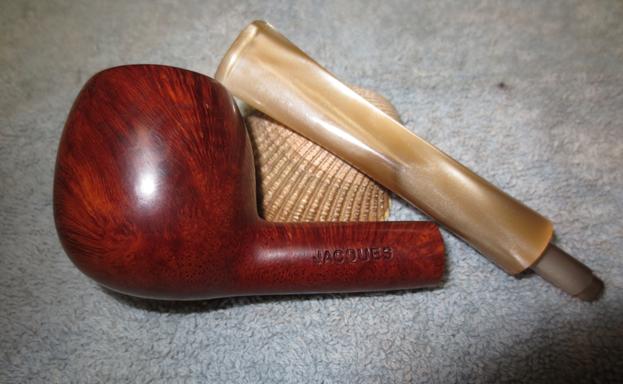
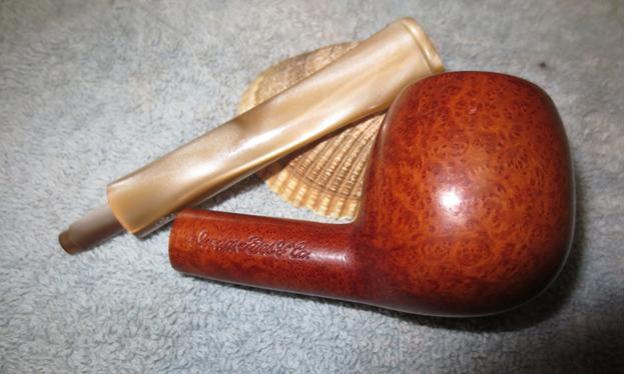
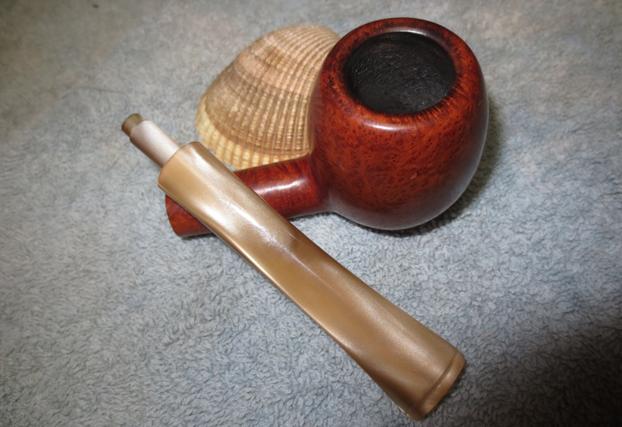
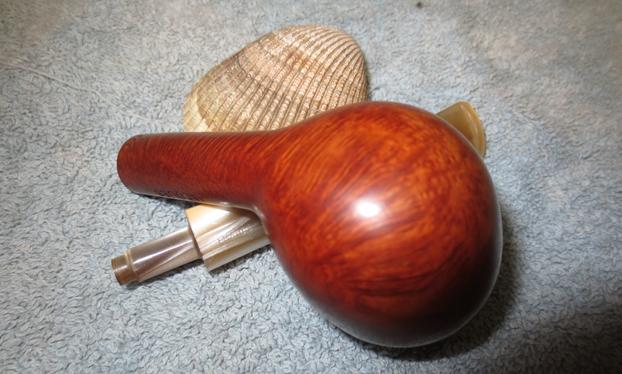
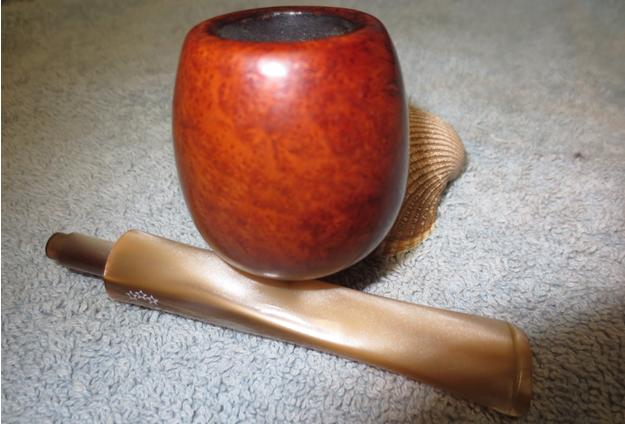
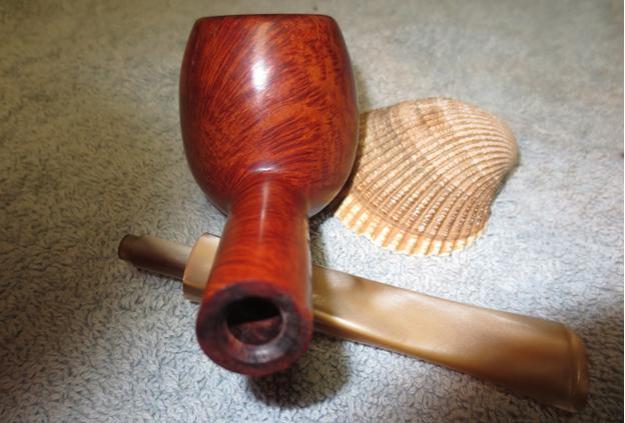
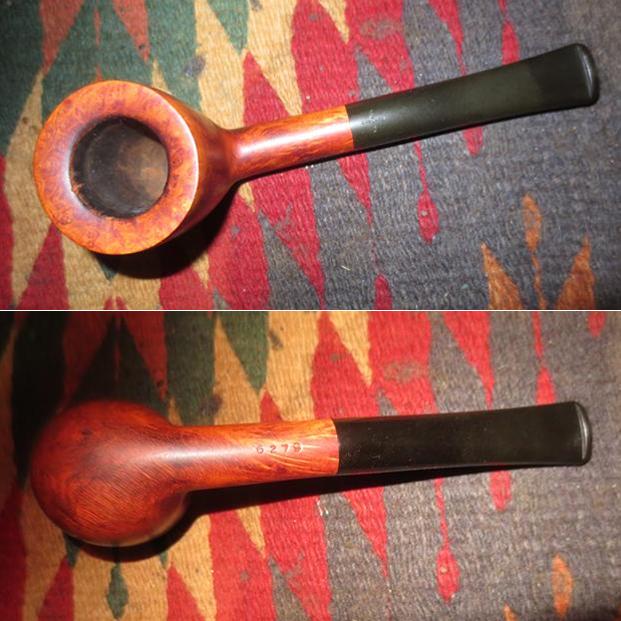
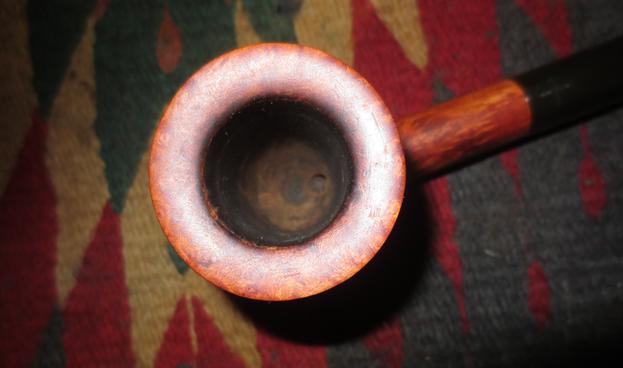
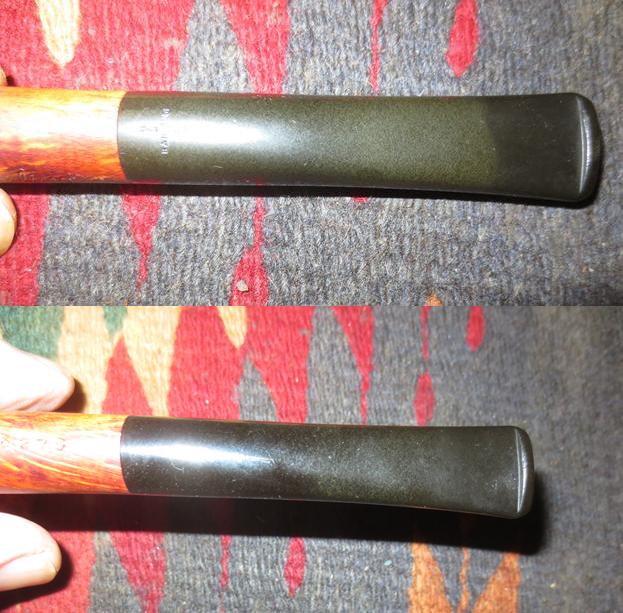
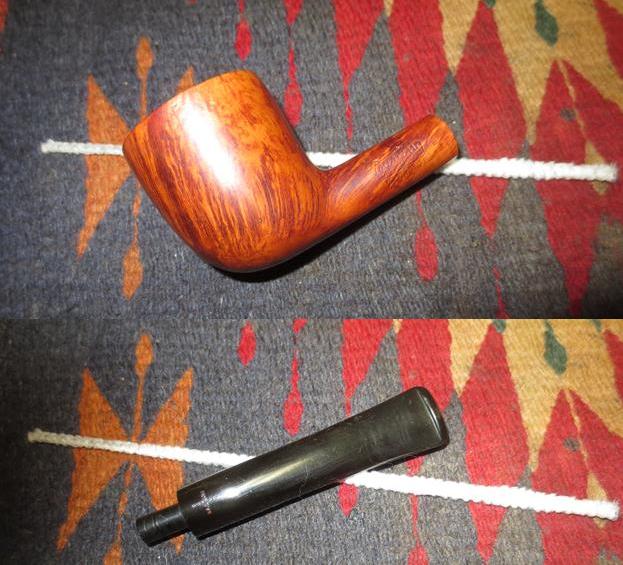
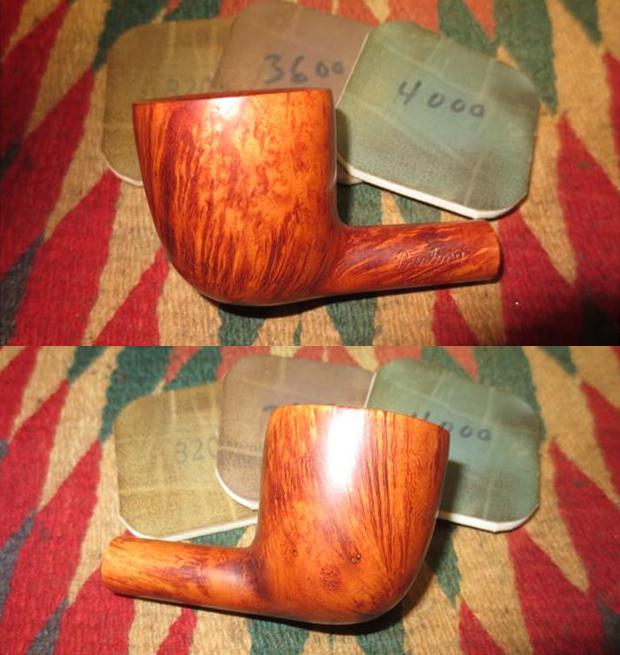
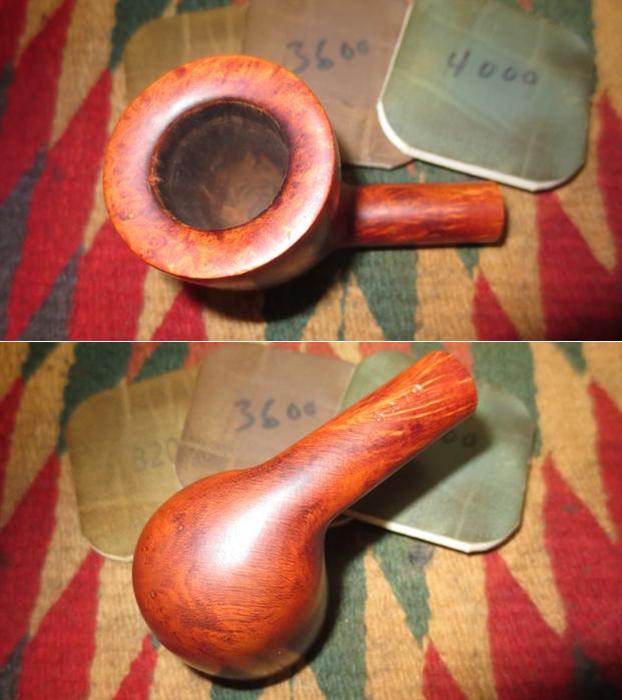
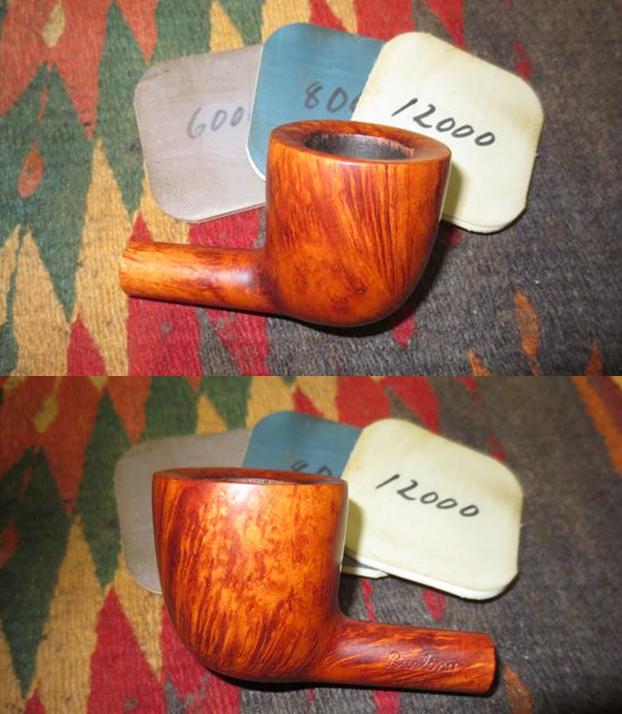
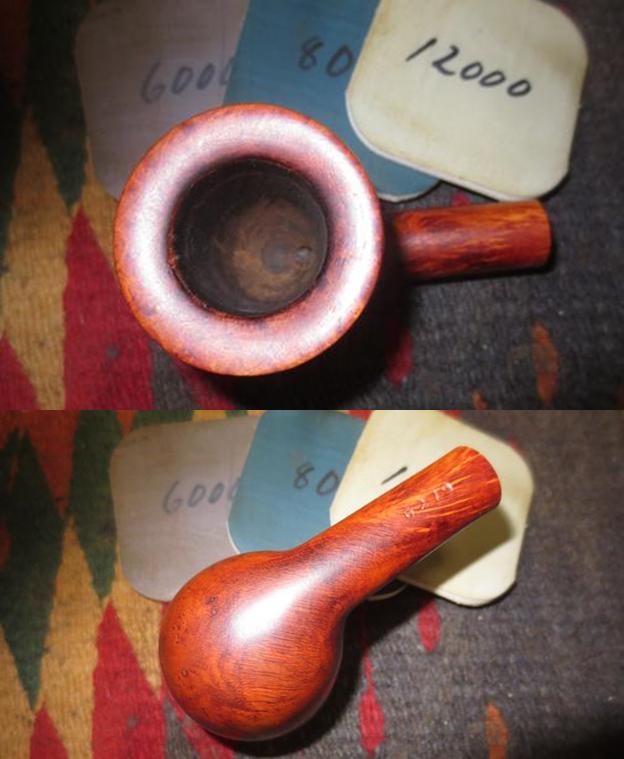
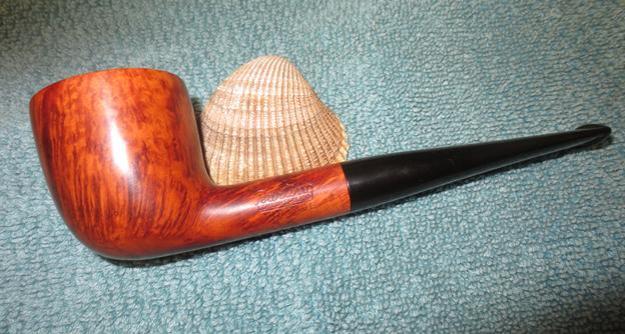
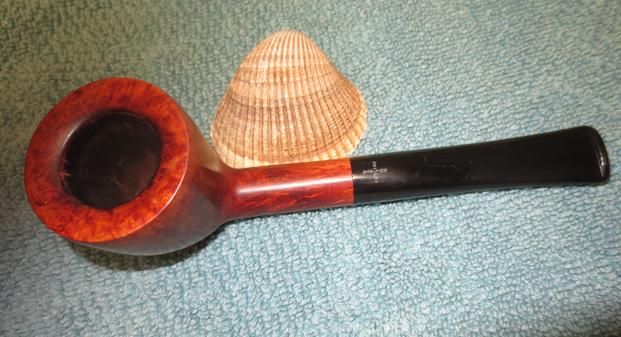
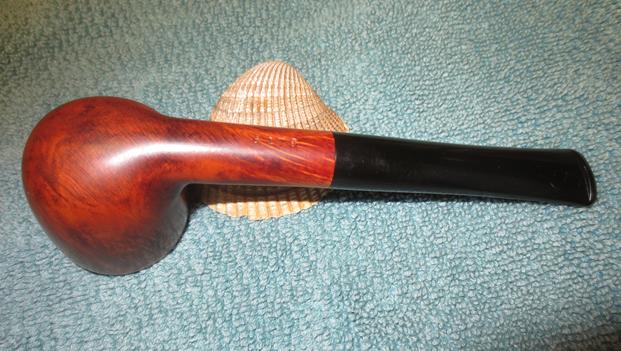
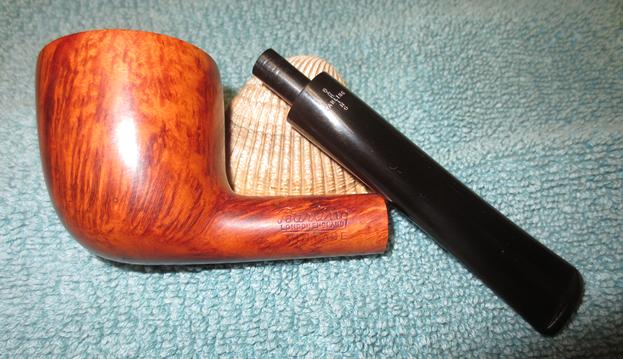
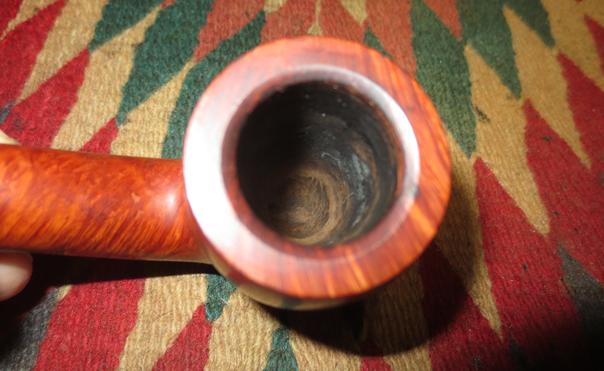
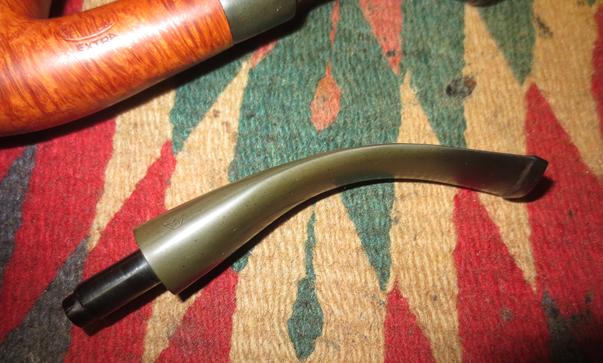
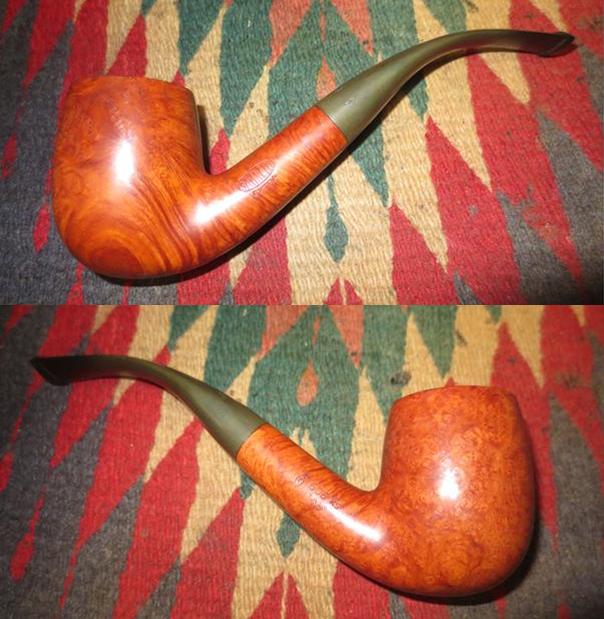
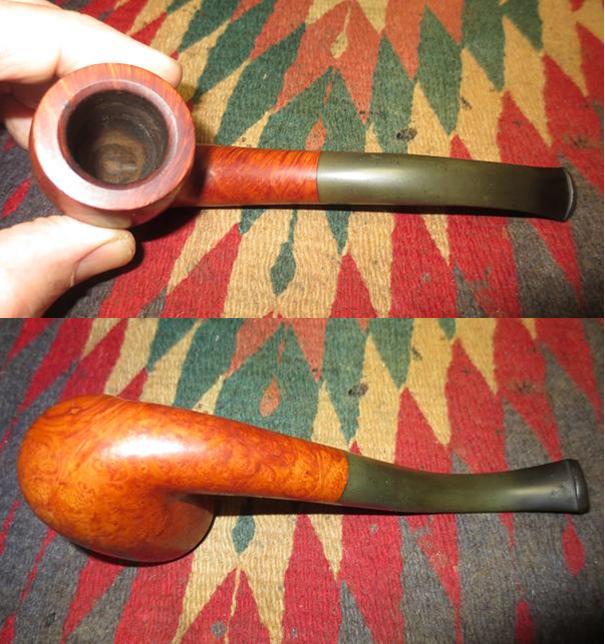
After all the tough restoration jobs I have been doing lately I wanted to take a breather and do an easy restore. In the box of pipes, that my brother sent there was one that fit the need perfectly. It was one of my favorite shapes, had some interesting grain and needed minimal work. Thanks to my brother Jeff, it was astonishingly clean, and smelled the same! I have missed his help on the last batch I have been working on. When he does the cleanup, it cuts my work by 2/3’s and I have the pleasure of working on a clean pipe. This Rhodesian was very clean. The first set of photos is what the pipe looked like before he did his magic. When the pipe arrived in Vancouver I was really happy with what I found. The bowl was hardly darkened inside. The finish was gone, and though there were fills, they were not the ugly pink ones that I usually find in pipes of this era. There was some slight rim darkening on the rear left side of the rim. The stem was lightly oxidized and there were light tooth marks and chatter on both the top and underside of the stem near the button. The next photos show what the pipe looked like before I started my restoration. I took close up photos of the bowl and the rim top to show how clean it was. You can also see the fills on the front of the bowl. I actually started working on it this morning before I left for work. There was no dread attached to working on this one. There were no surprises under the grime or finish. There were no cracks of major issues with the bowl. It is a sweet pipe.The close up photos of the stem show the light oxidation and the tooth marks and chatter. They are not deep so they will not be hard to work on.I sanded the oxidation, tooth marks and chatter with 220 grit sandpaper until they were removed. It did not take too much sanding to smooth out the surface of the stem. There was a small nick on the top inner edge of the button that may need to be repaired.  I will look at that after I have polished the stem more.The nick in the button disappeared as I cleaned and reshaped the button. I polished the stem with micromesh sanding pads – wet sanding with 1500-2400 grit pads and dry sanding with 3200-12000 grit pads. After each set of three pads I rubbed the stem down with Obsidian Oil. After the 12000 grit pad I gave it a final coat of oil and set it aside to dry. I polished the briar with micromesh pads – wet sanding with 1500-2400 grit pads and dry sanding with 3200-12000 grit pads. The briar responded really well to the polishing and the fills began to disappear into the grain of the briar. They are still visible but they no longer stand out as they did when I started. At this point I think I will leave the finish natural and waxed instead of staining it. Just because it is a habit for me I did a cursory cleaning of the inside of the pipe and stem with alcohol, cotton swabs and pipe cleaners and it was as clean as I expected. There was nothing left to clean out. It was spotless.

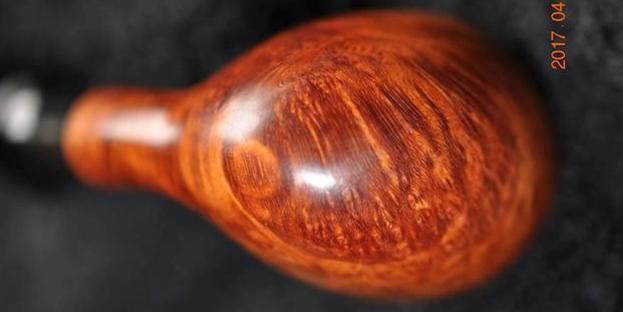
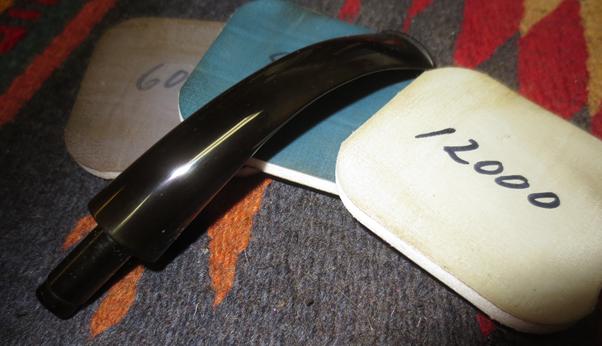
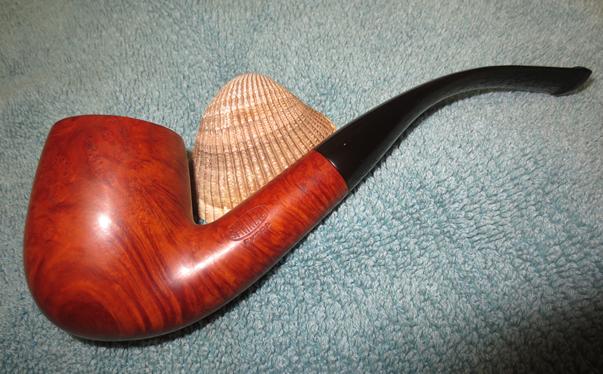
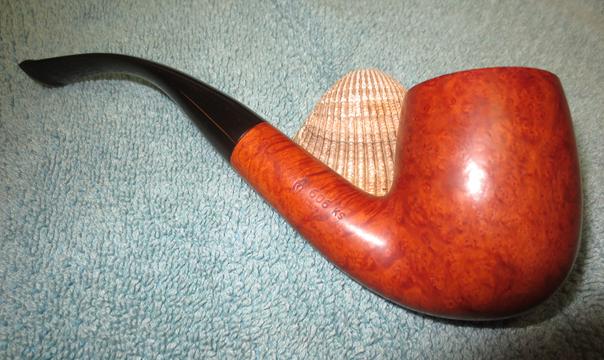
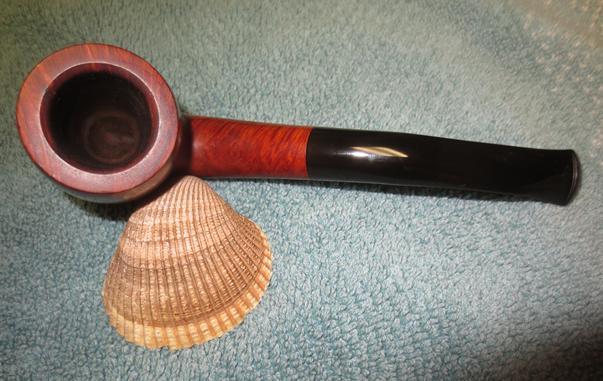
Because the grain looked so good and I did not find the fills to be too distracting I decided to leave the pipe unstained. I liked the look of the briar and new it would colour with time and smoking. To give the bowl a little life I wiped it down with a light coat of olive oil and put the stem back on the shank.  I buffed the entire pipe with Blue Diamond polish on the buffing wheel to remove the last remnants of scratching. I gave it multiple coats of carnauba wax and buffed it with a clean buffing pad to raise the shine. I finished by hand buffing it with a microfibre cloth to deepen the shine. The pipe is shown in the photos below. I really like the way it looks. For a factory made pipe the way the shape follows the grain is pretty amazing. Thanks for looking.