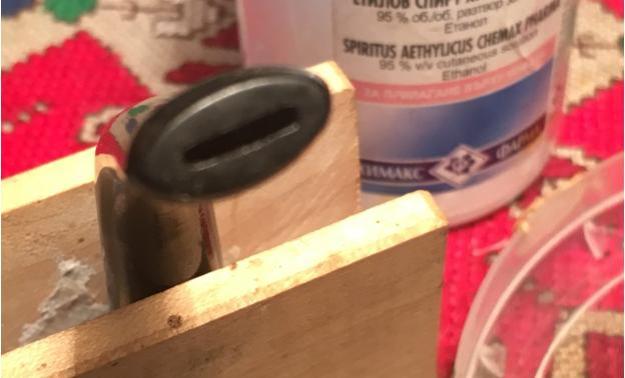
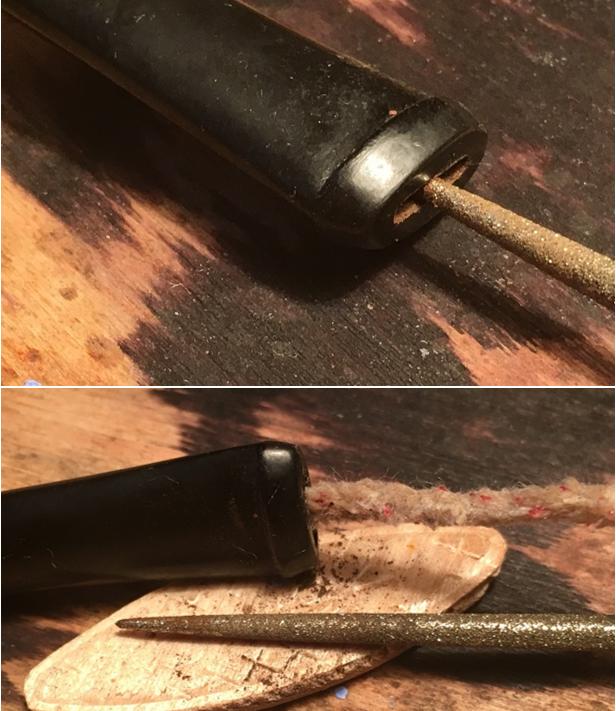
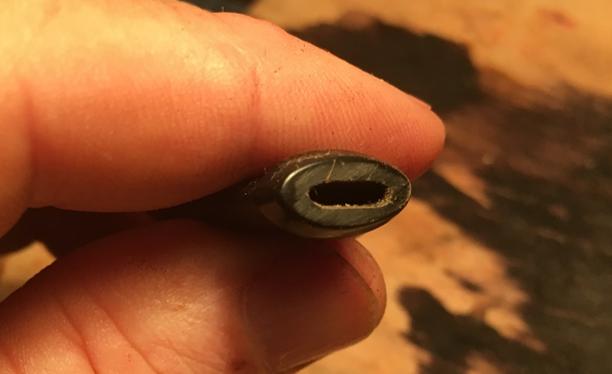
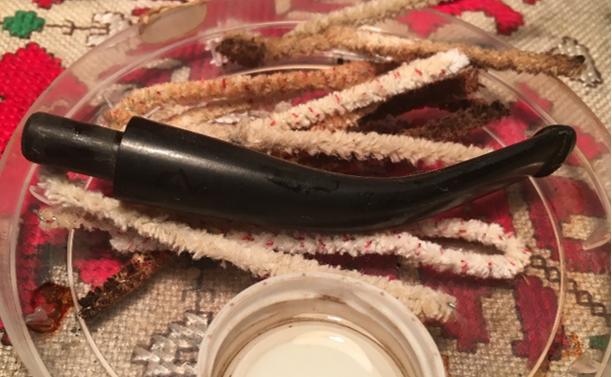
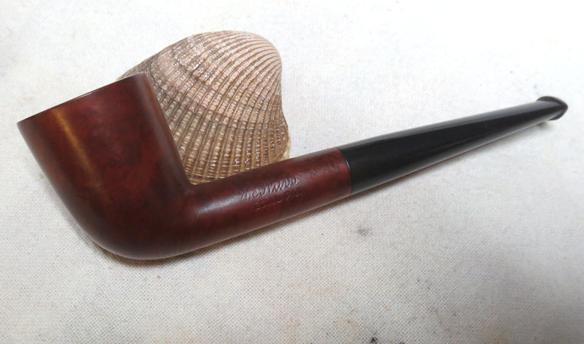
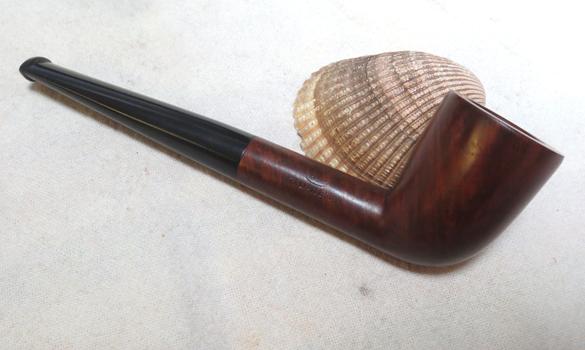
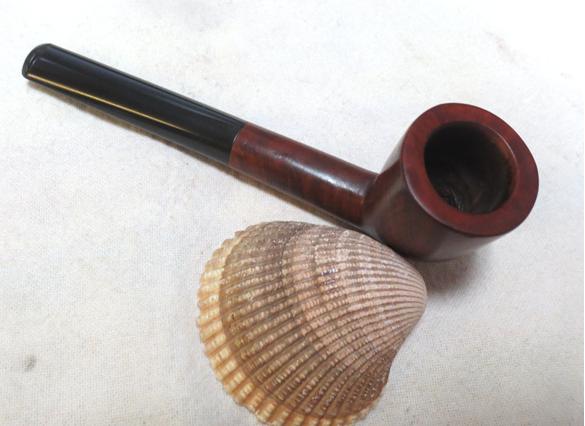
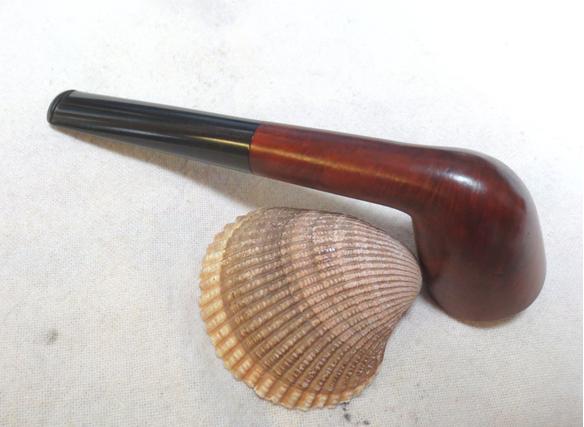
Tag Archives: contrast staining

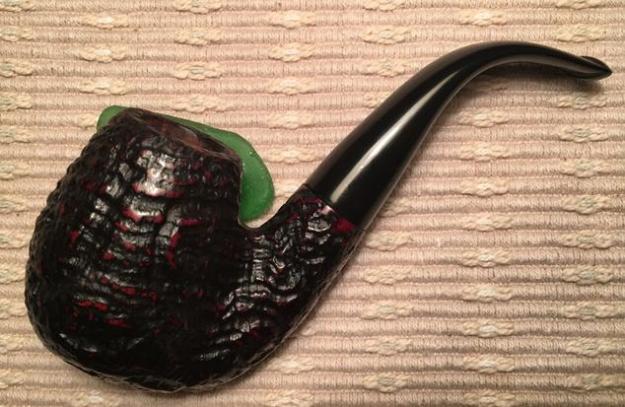
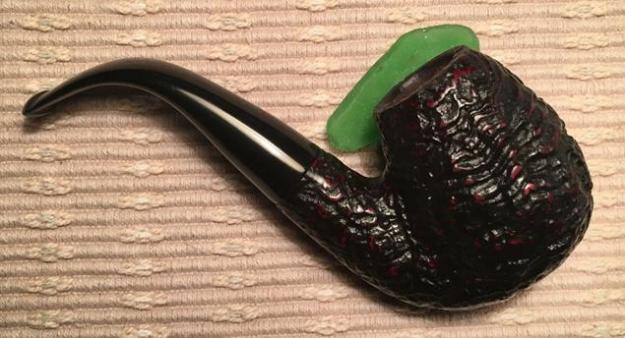
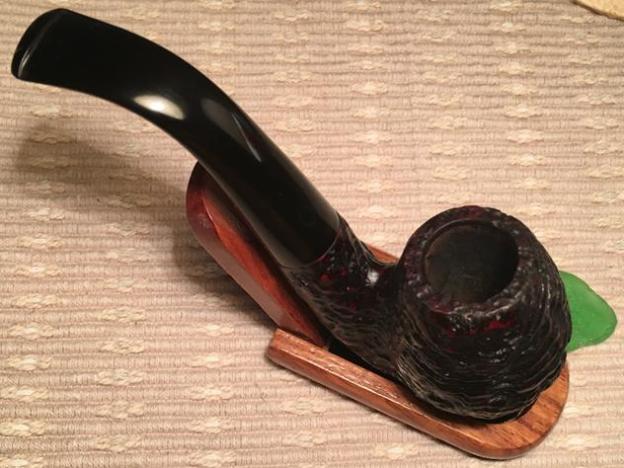
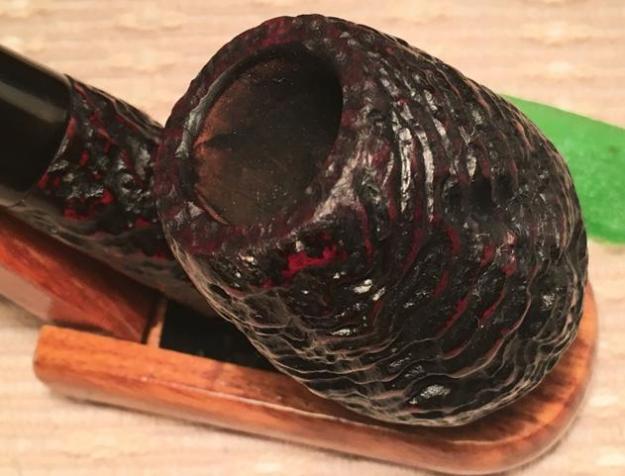
The Last of 4 ‘Hole in the Wall’ finds – a Savinelli Capitol Prince with a secret


Blog by Dal Stanton

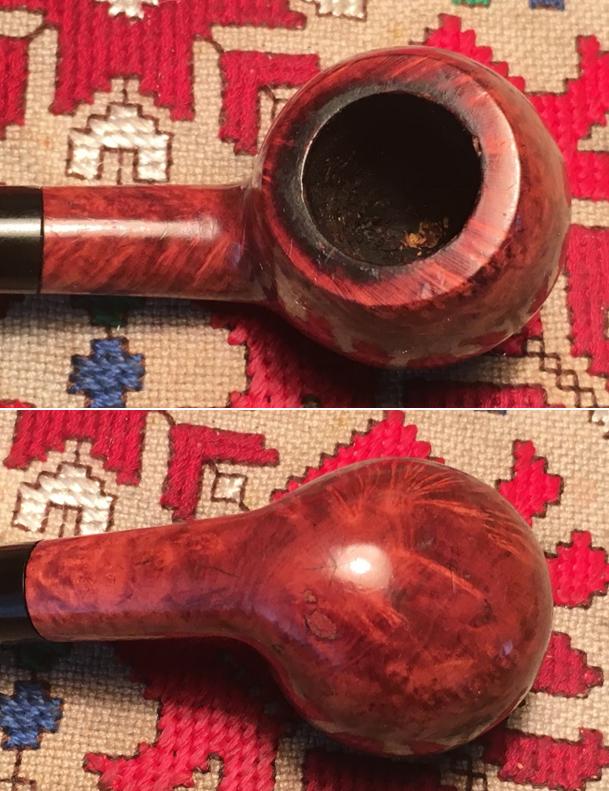
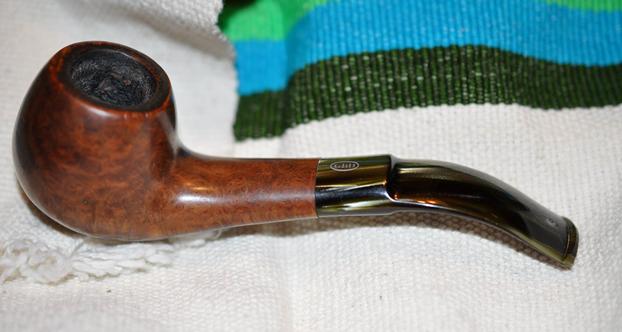
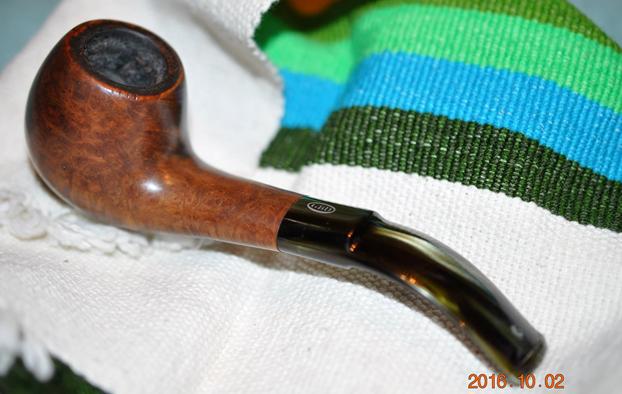
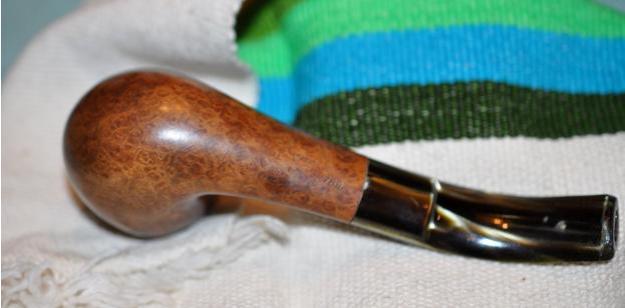
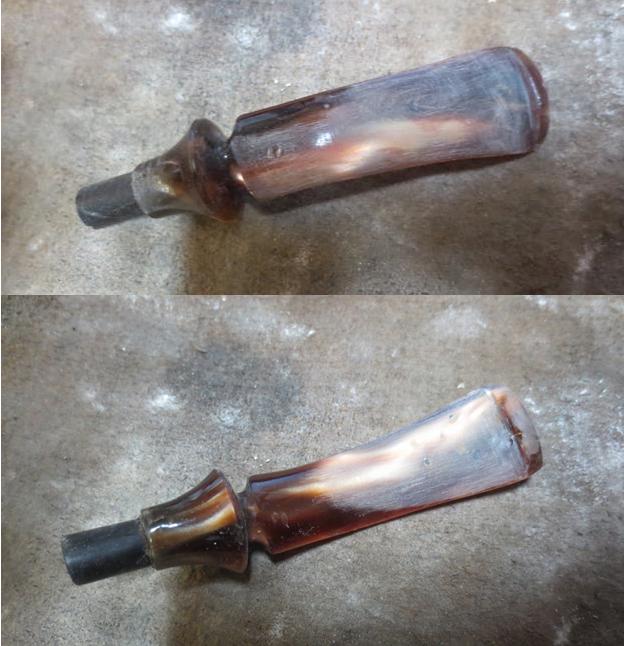
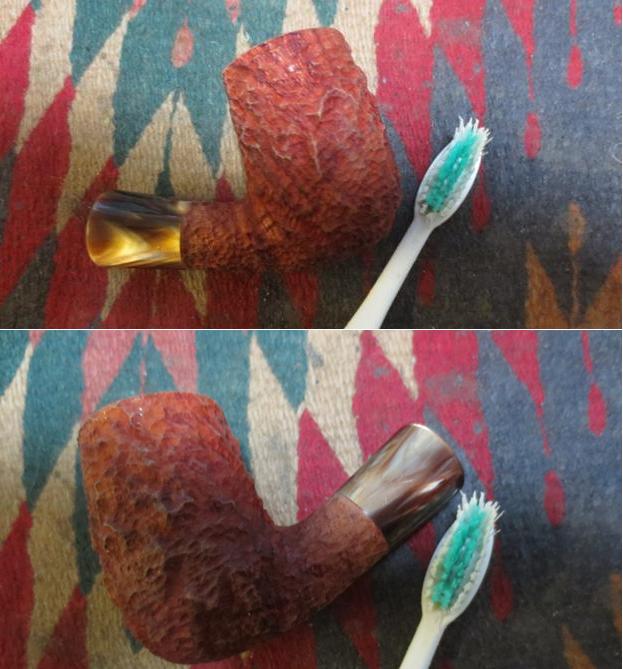
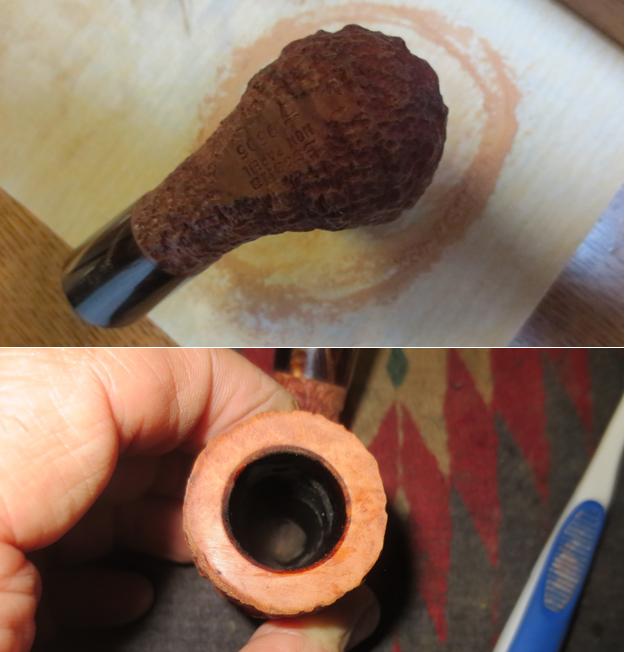
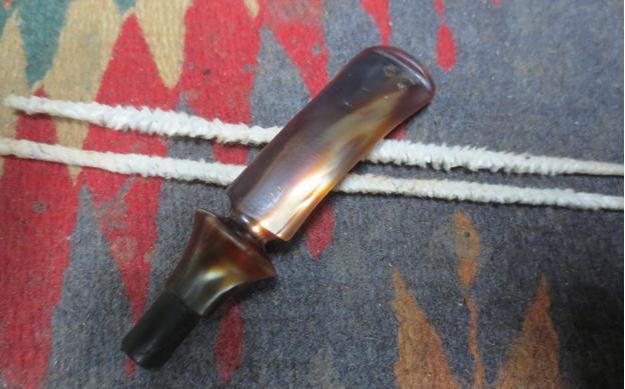
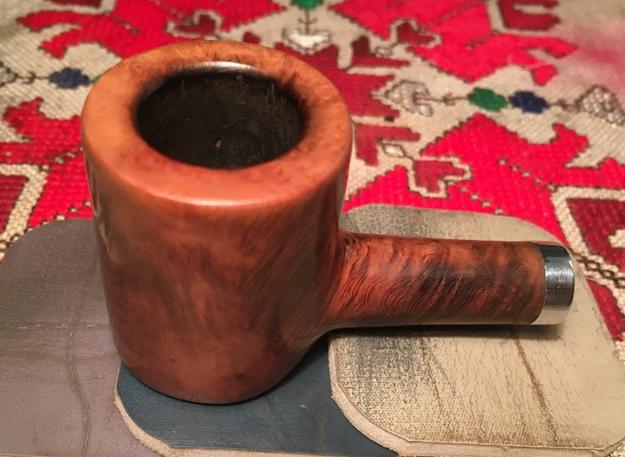
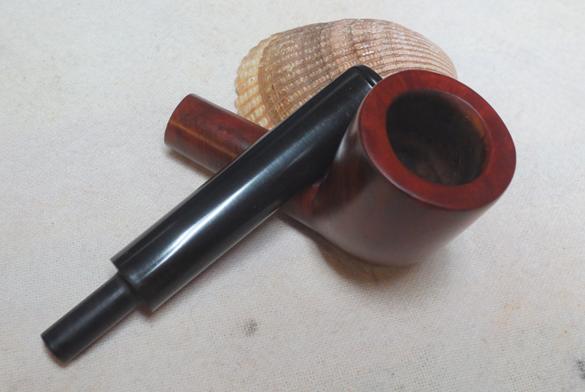
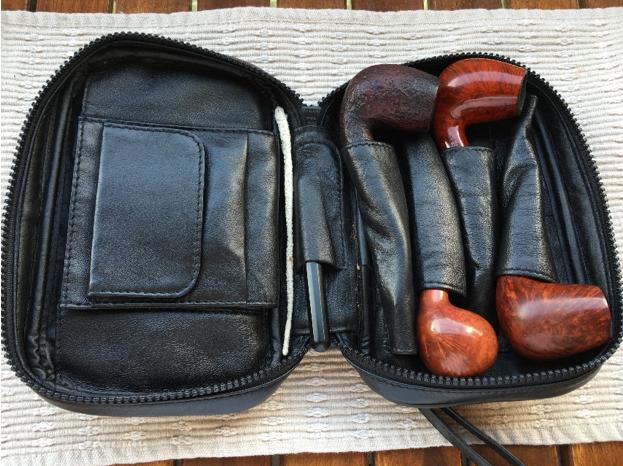
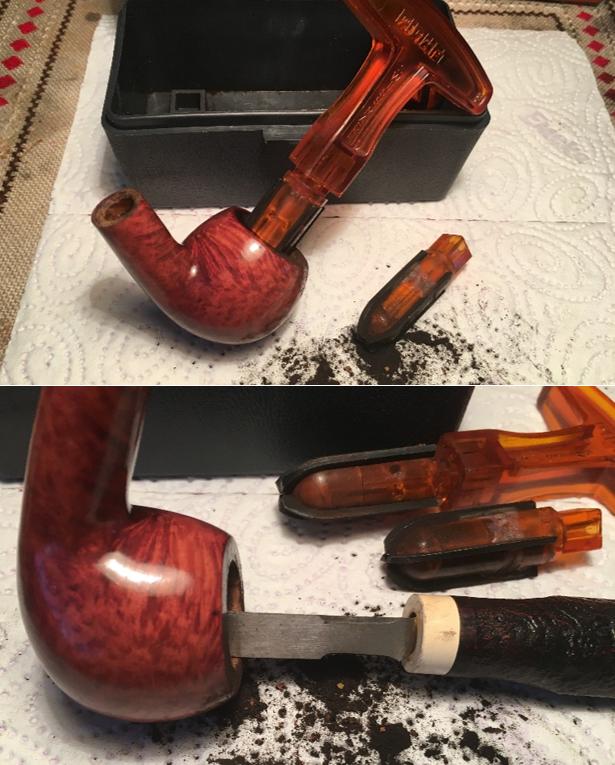
I purchased the Savinelli Capitol in June of this year, at the Hole in the Wall antique store near Zhenski Pazar (Women’s Market) located in downtown Sofia.  Steve was visiting Bulgaria from Vancouver in the context of our work and we went to the Hole in the Wall for a mini pipe hunting sortie.  I’d remembered on other occasions the vendor producing a 4-pipe pouch that he kept behind the counter and I asked about it and he still had it with pipes intact.  The leather bag itself was a find.  The 4 pipes revealed after unzipping the bag were a Savinelli Tortuga 628, Danske Club Vario 85 (both occupying a place in my rotation), a Butz-Choquin Rocamar (which became a wedding gift for my new son-in-law), and the Capitol (that I learned was a Savinelli second) now before me.  Above, I linked the restorations of the Tortuga and BC Rocamar to their respective postings.cap1Honestly, when I first acquired the Bag of Four, my sights were fixed on the 3 big brothers of the Capitol which I identified as a Prince shape from Pipedia’s shapes chart.  Per Bill Burney’s description,
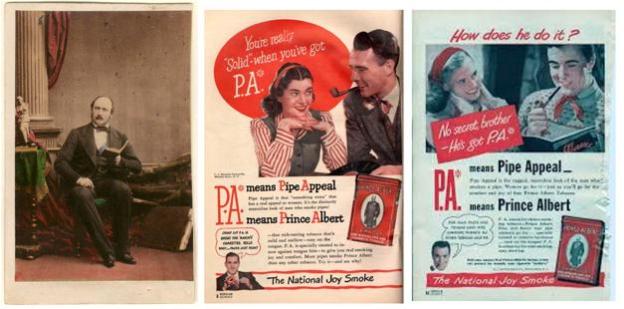
The prince, named after the Prince of Wales (Prince Albert, later King Edward VII), has a squat, rounded bowl with a long, usually very slightly bent stem and a short shank.  Compared to other pipes, the shank and stem are thin and delicate, though not necessarily fragile.  This makes for a light and comfortable pipe (Link).

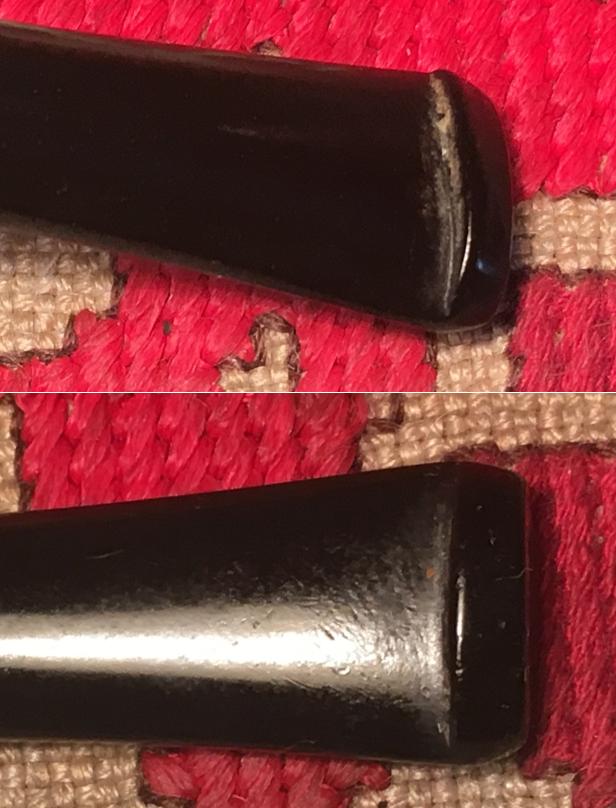
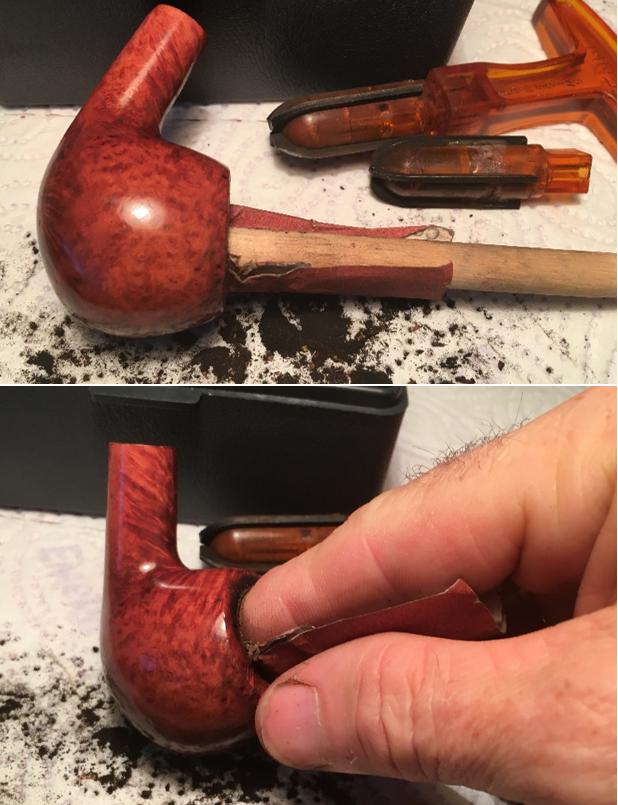
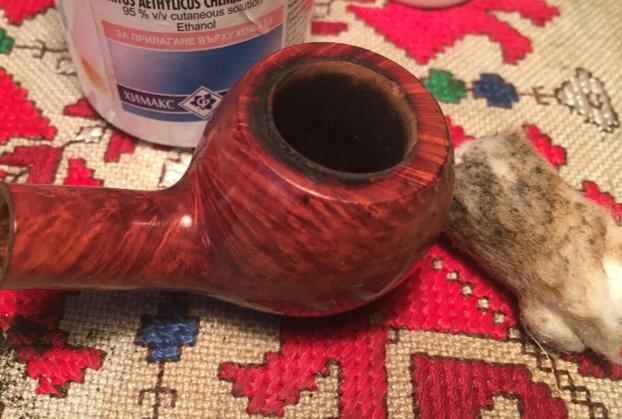
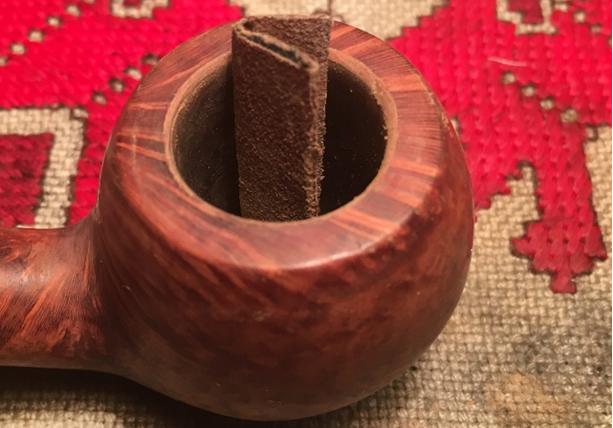
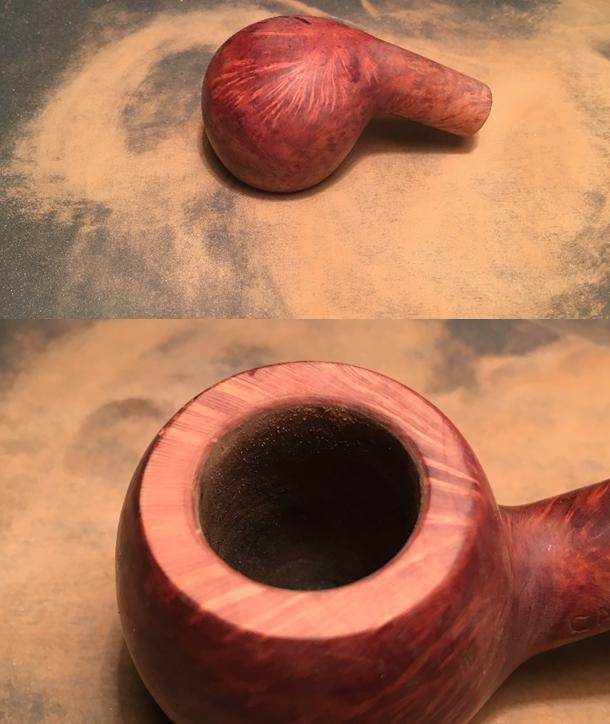
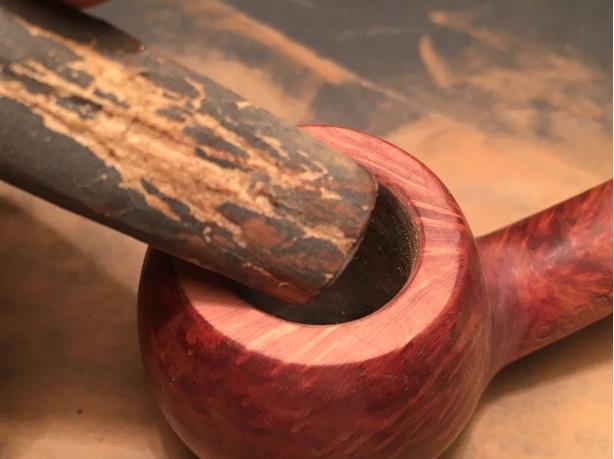
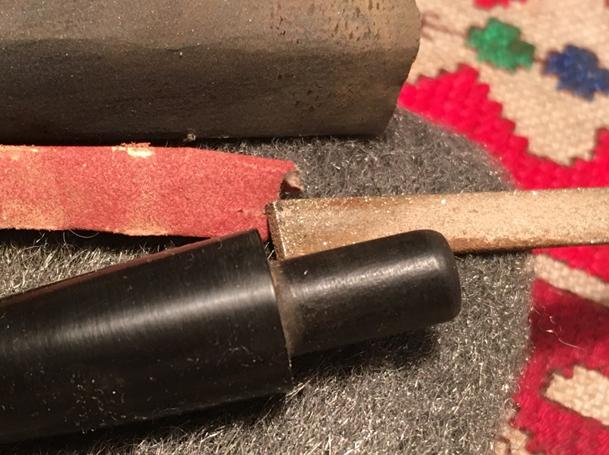
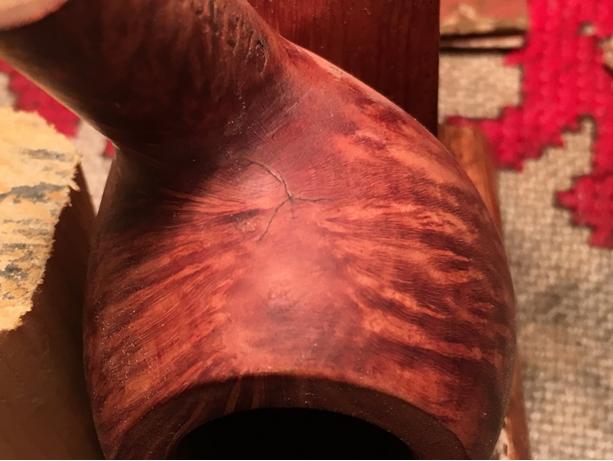
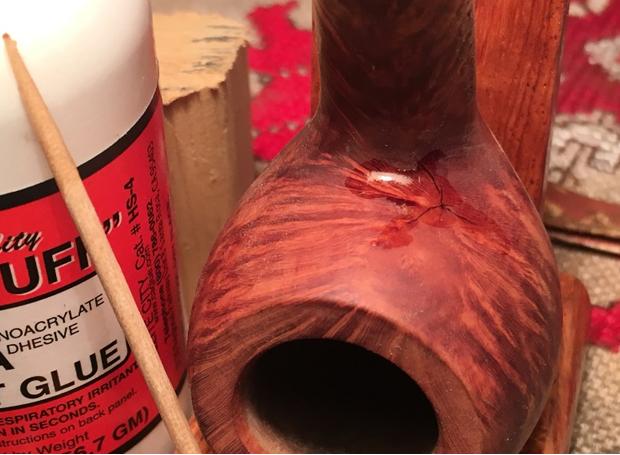
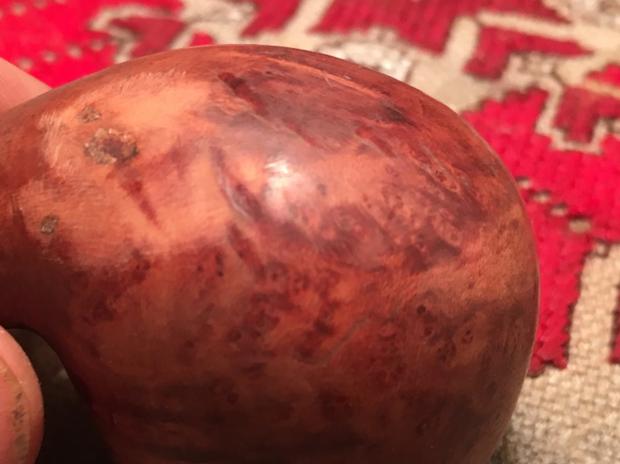
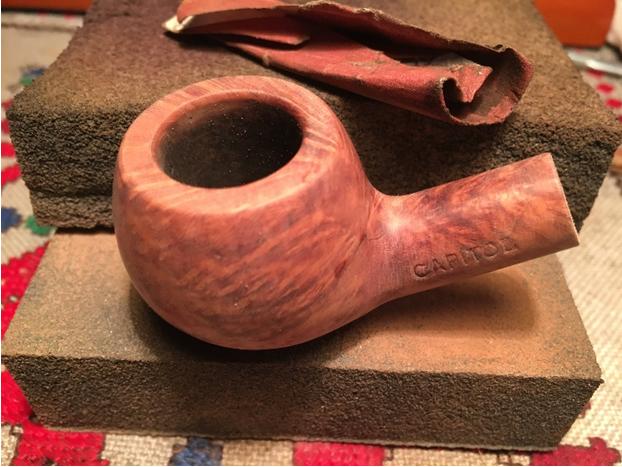
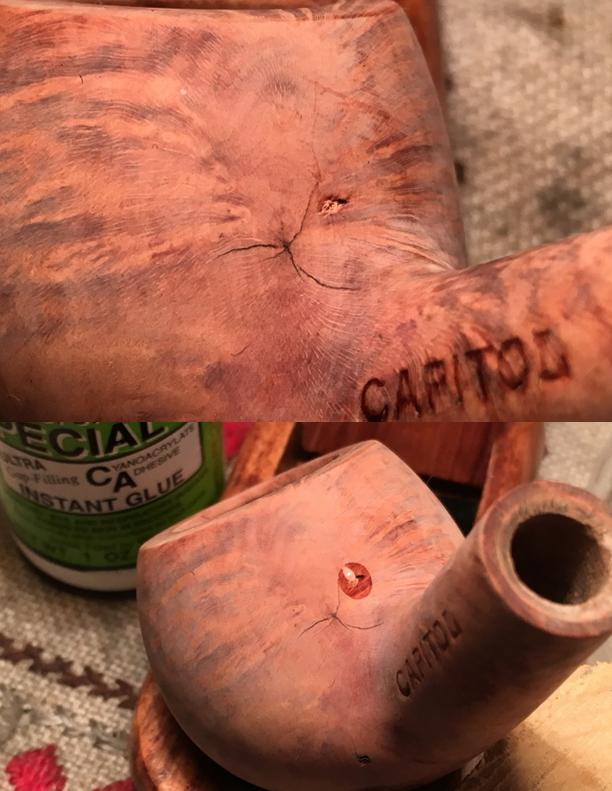
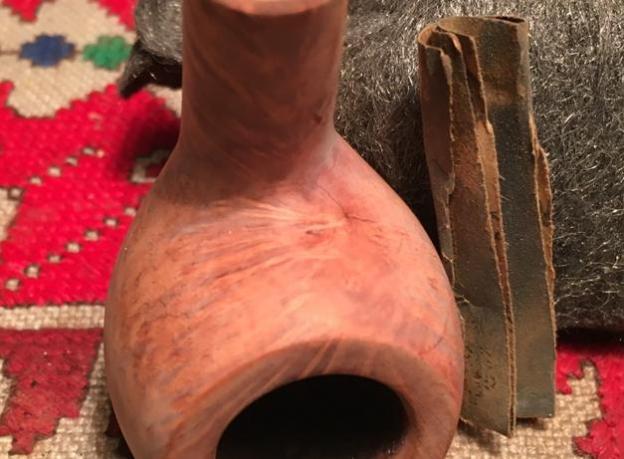
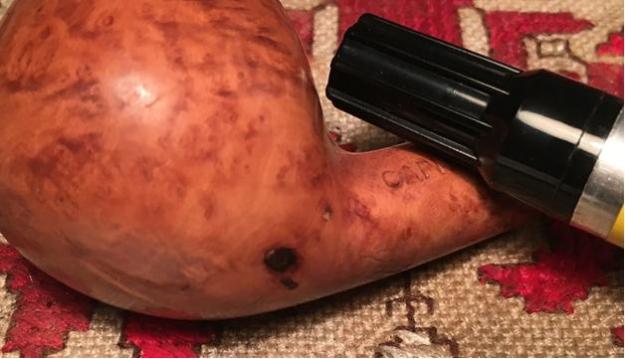
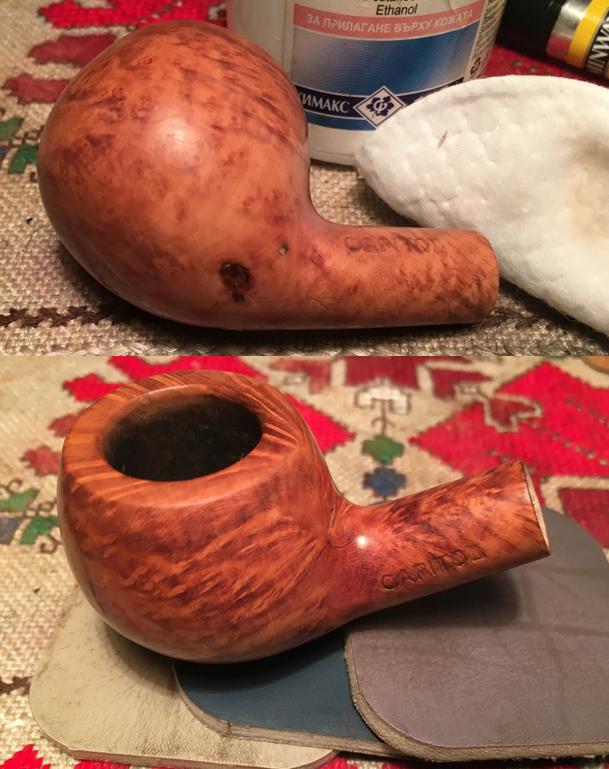
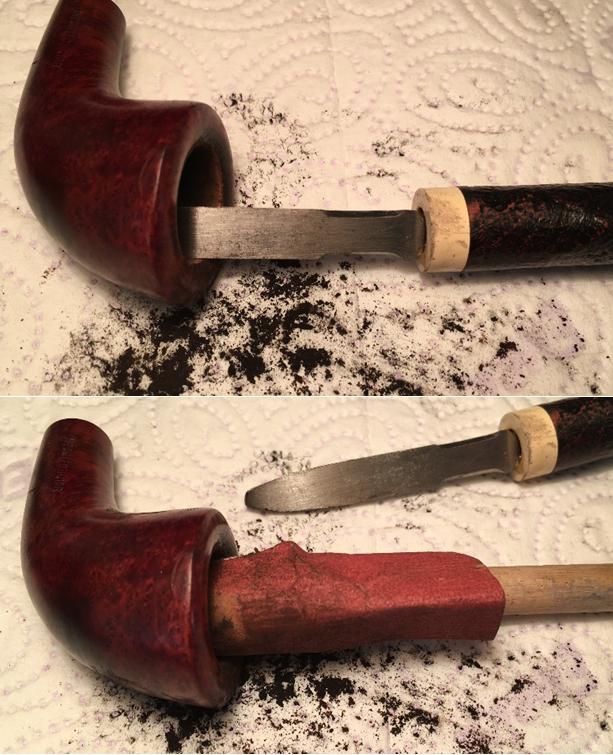
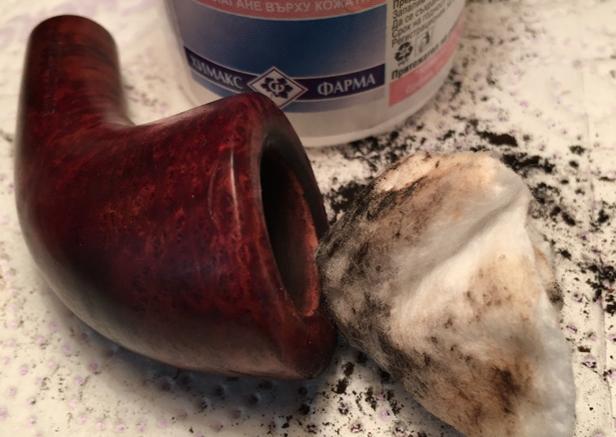
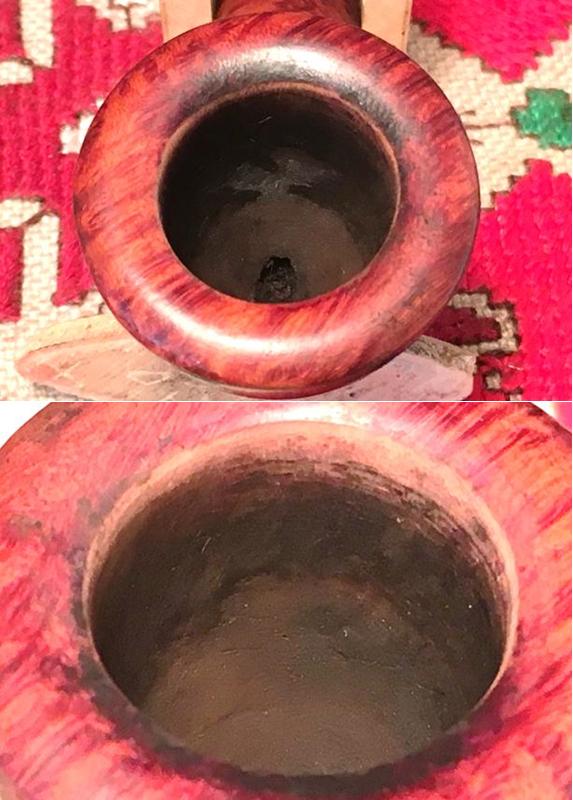
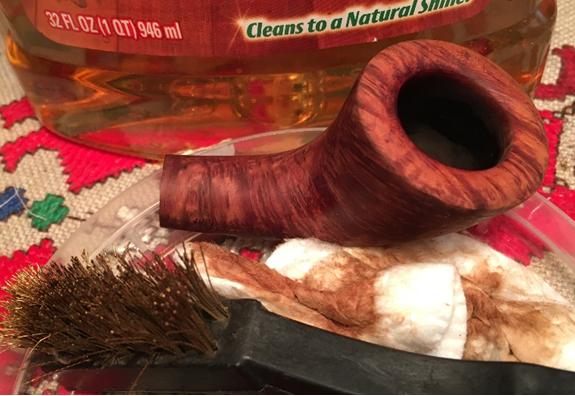
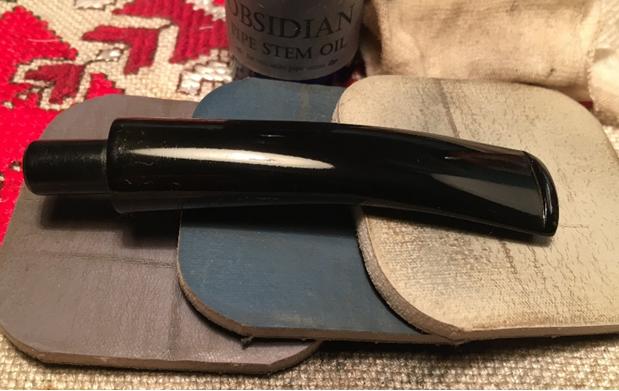
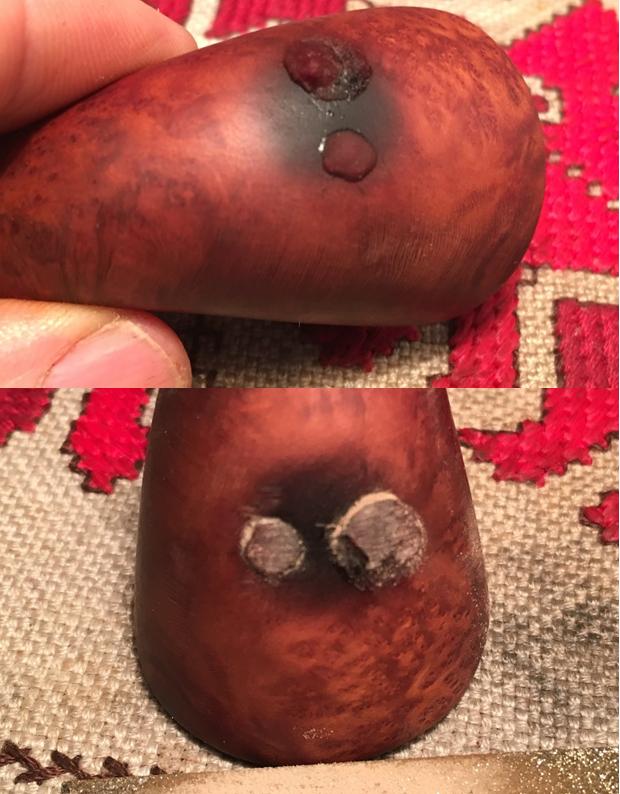
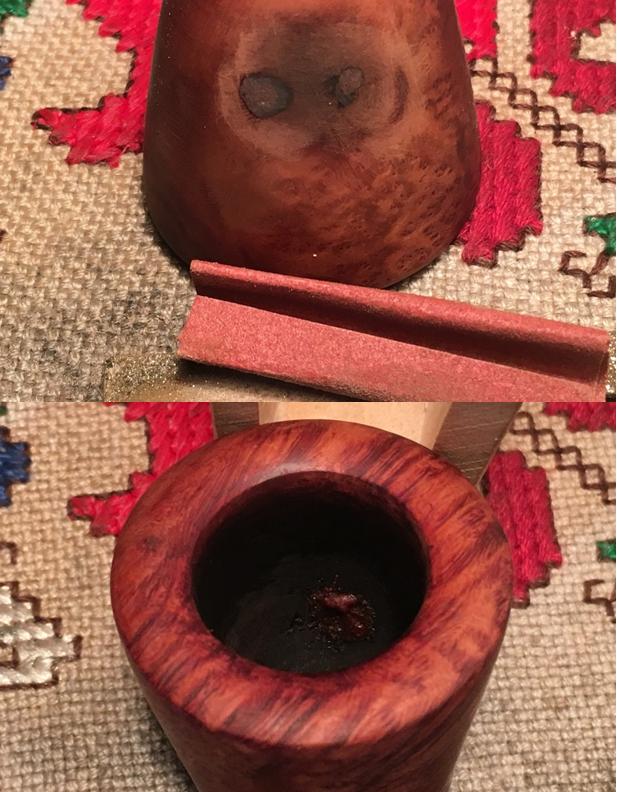
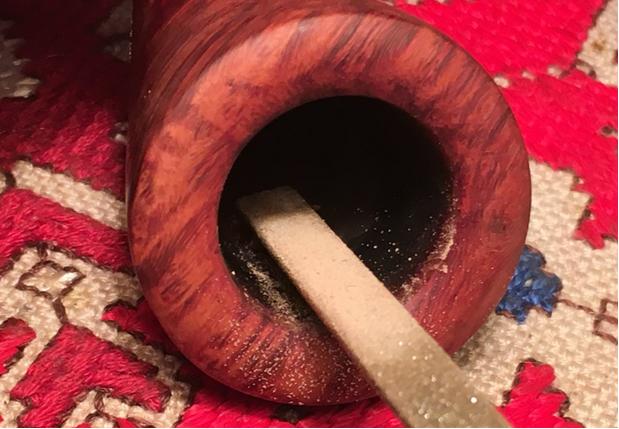
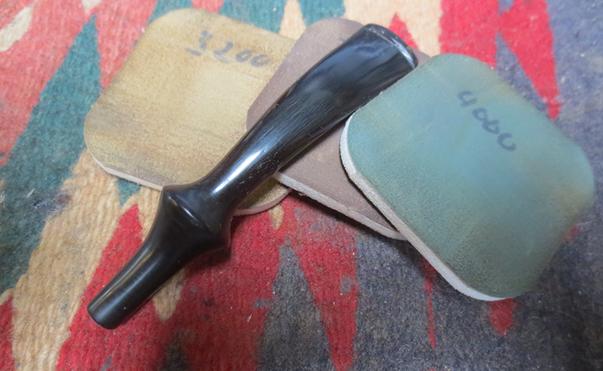
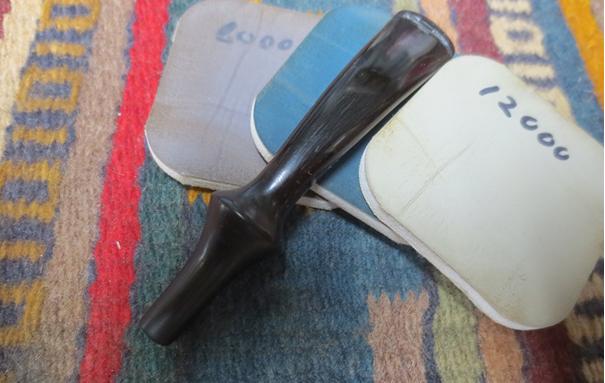
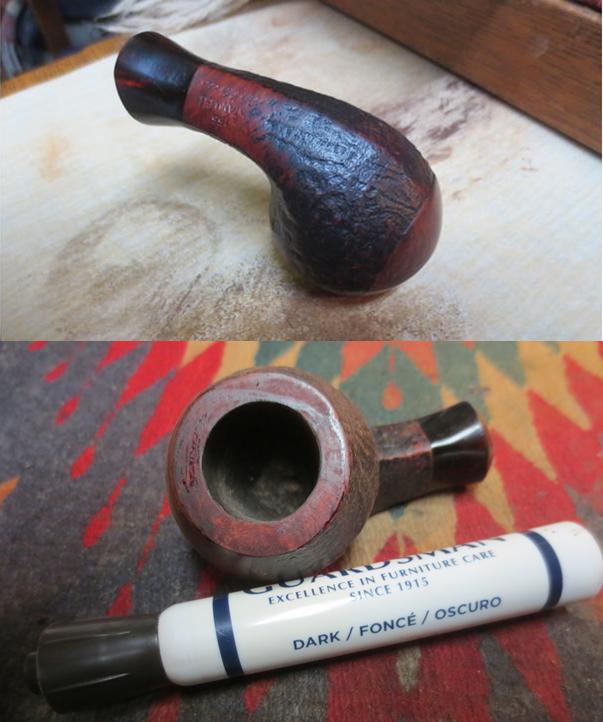
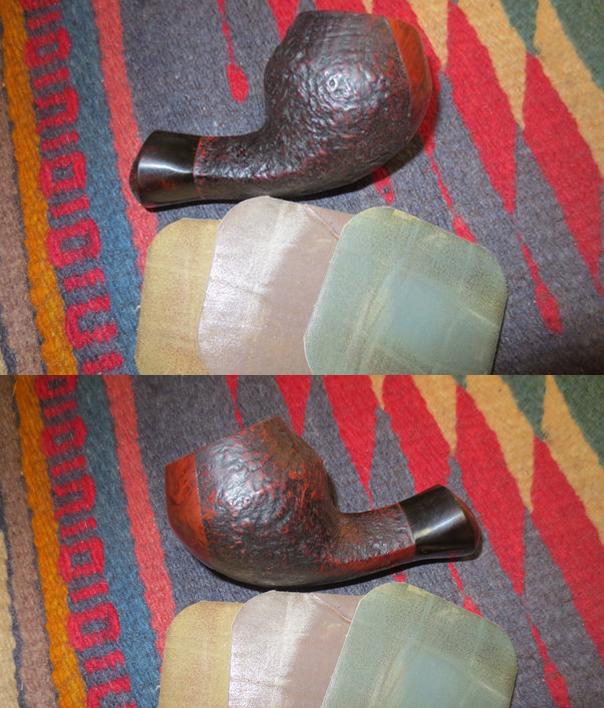
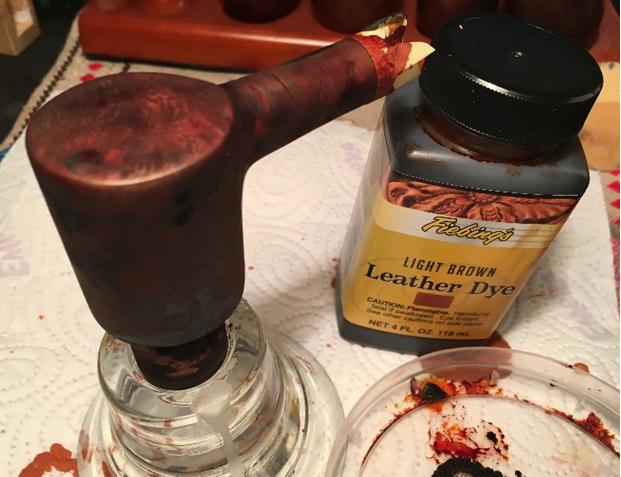
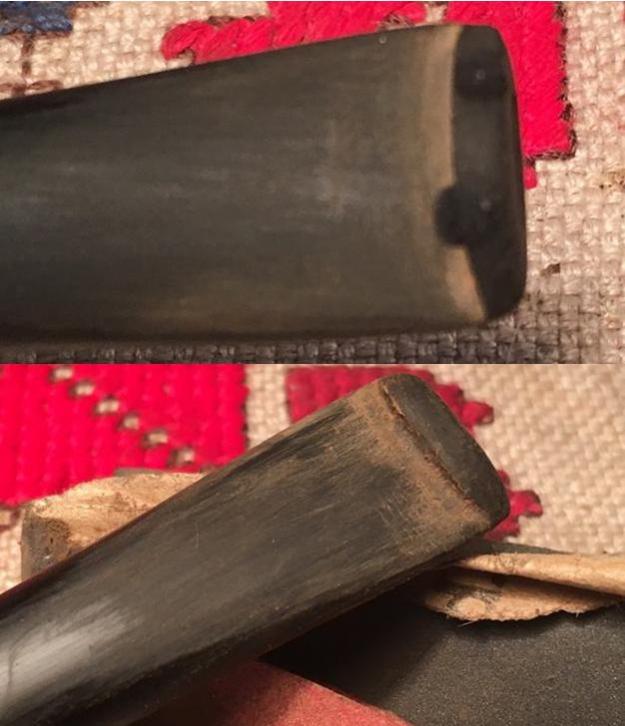
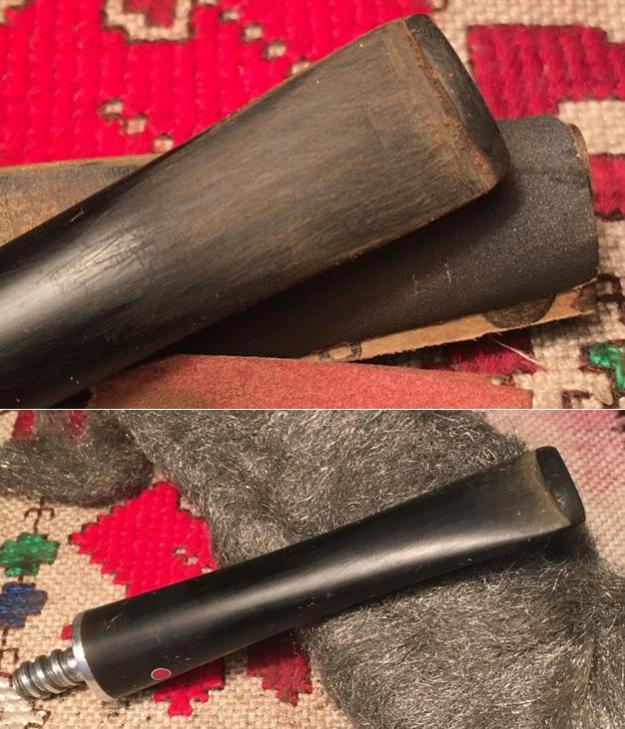
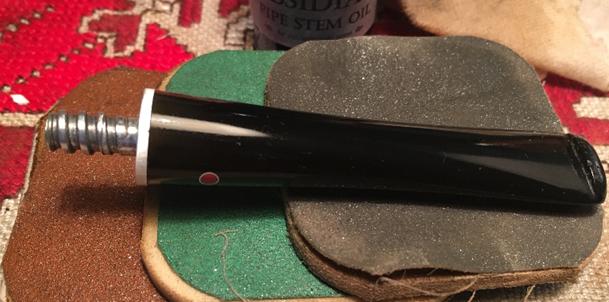
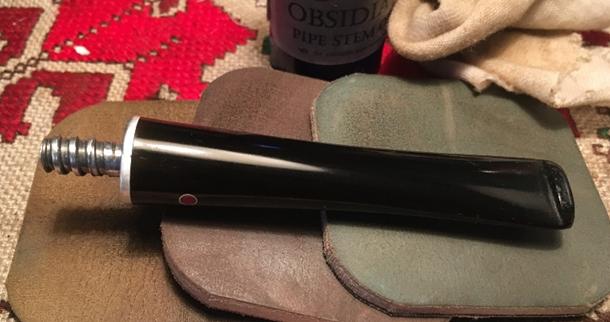
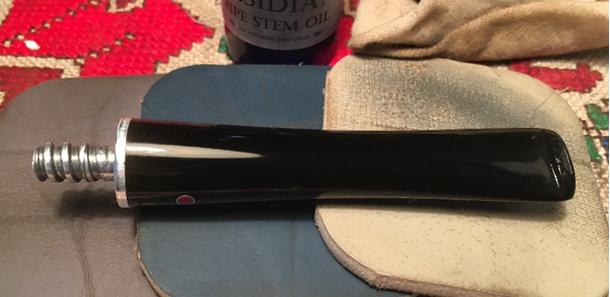
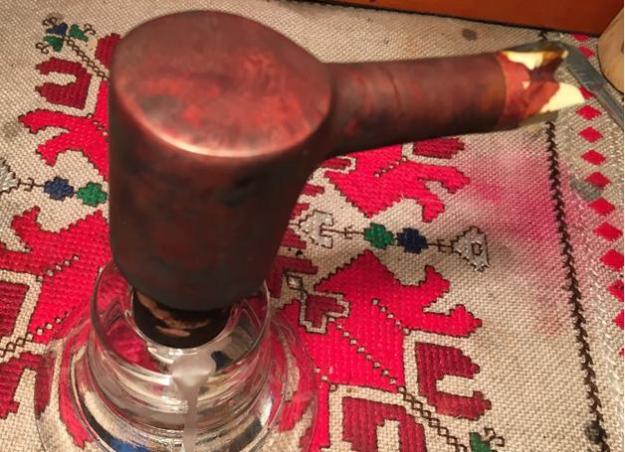
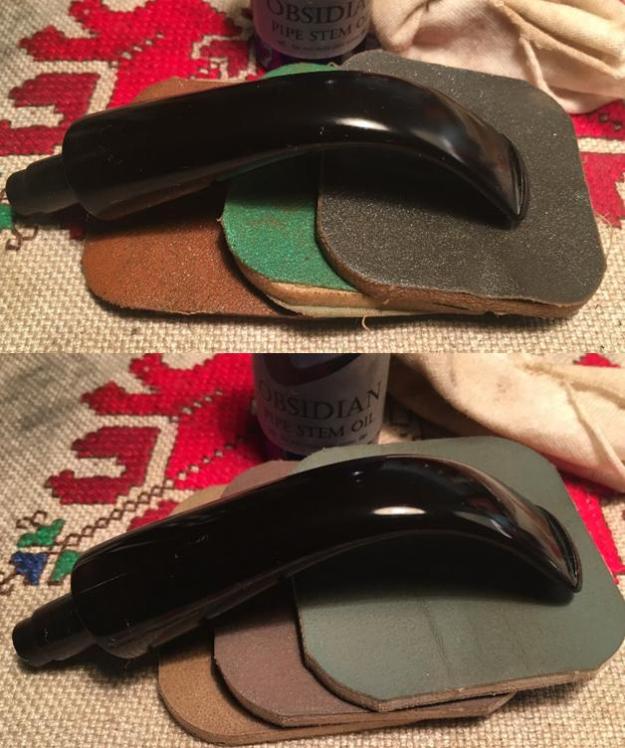
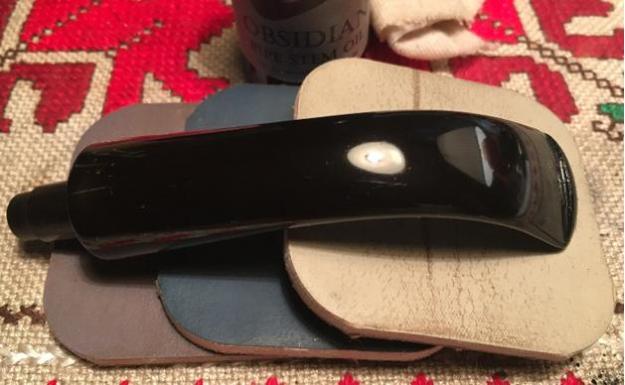
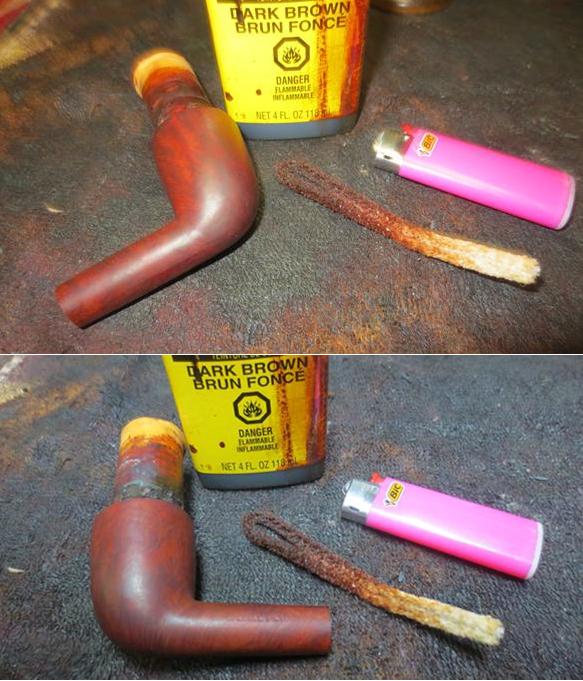
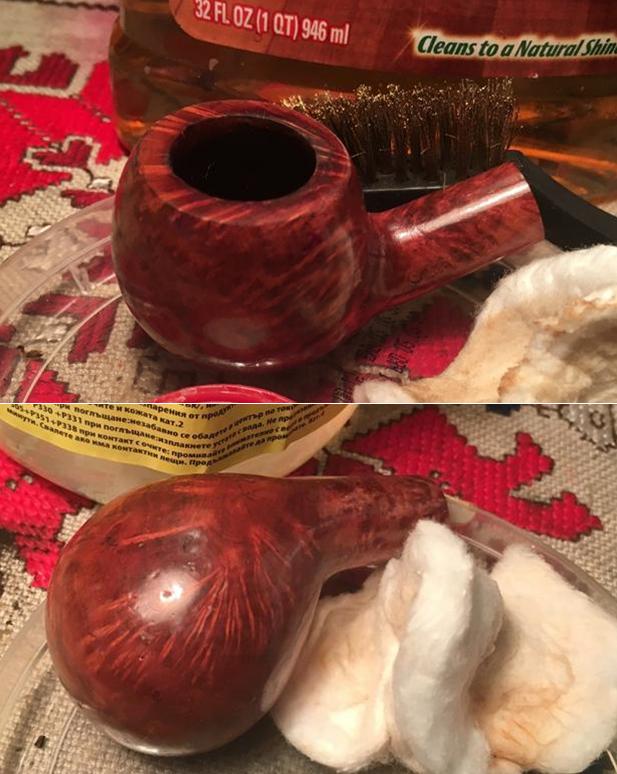
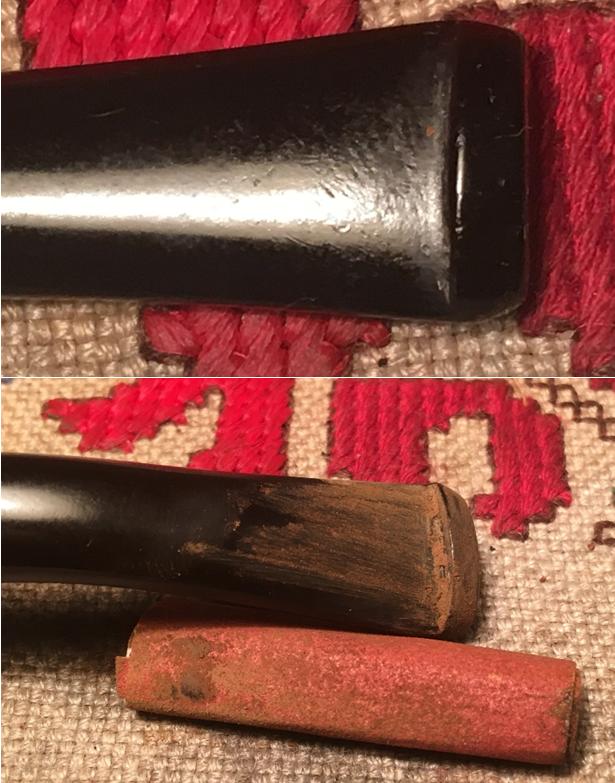
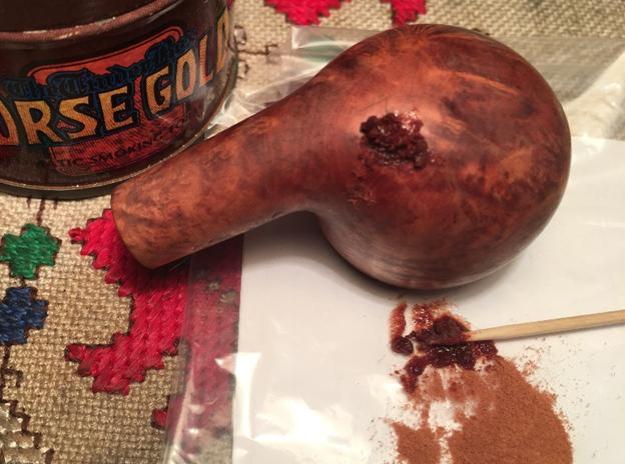
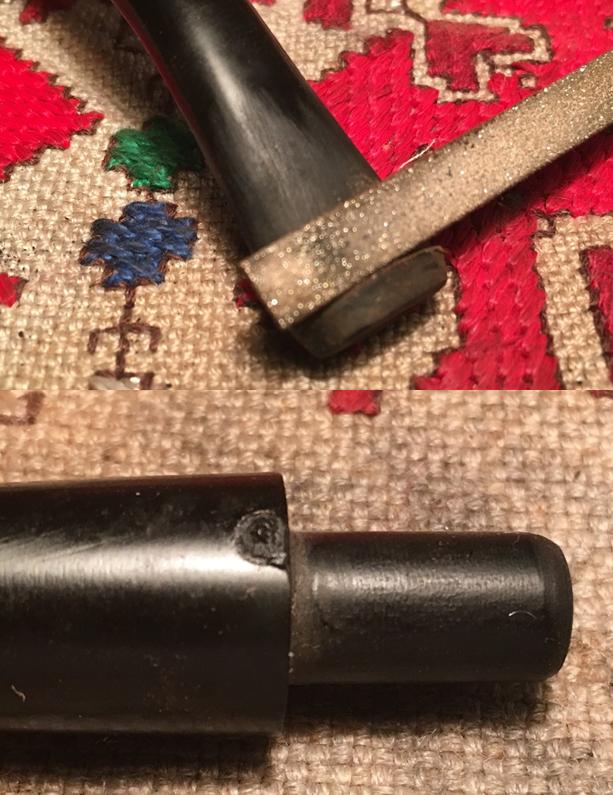
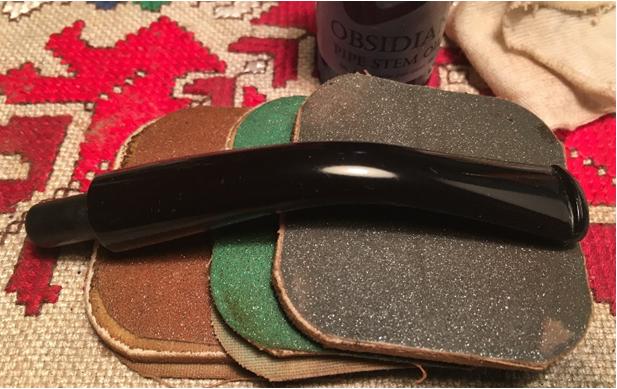
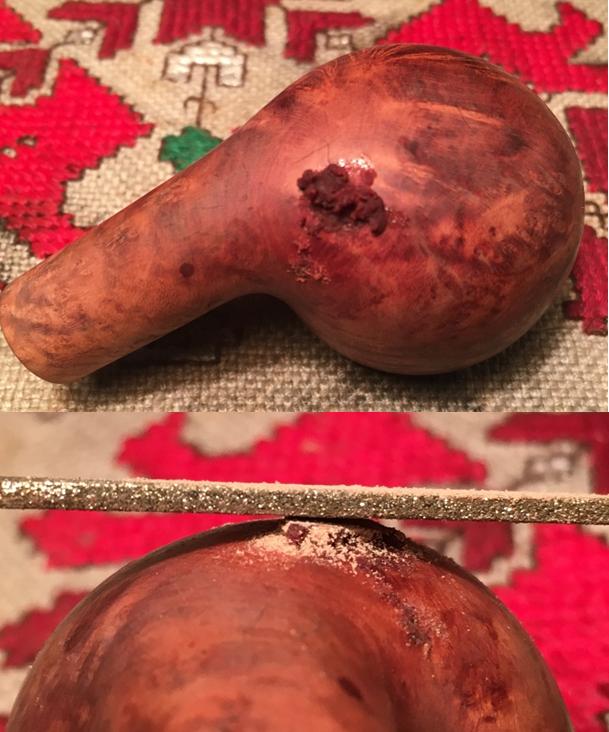
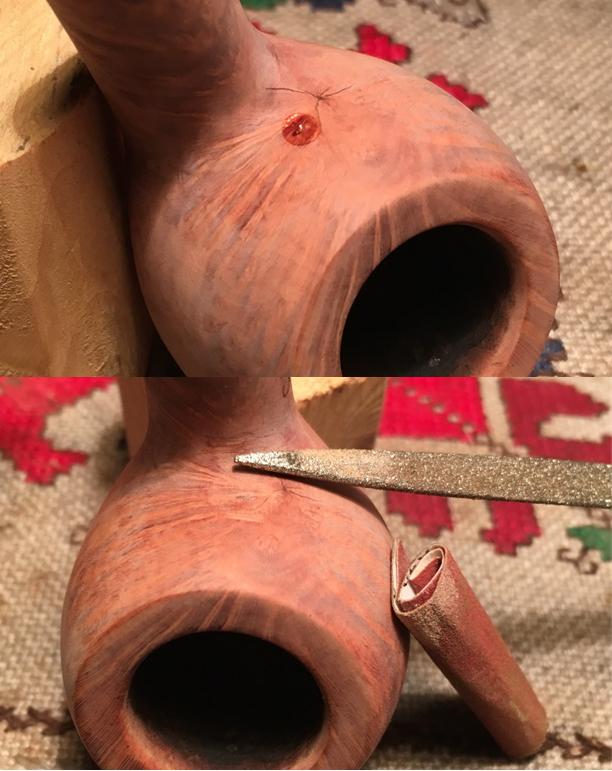
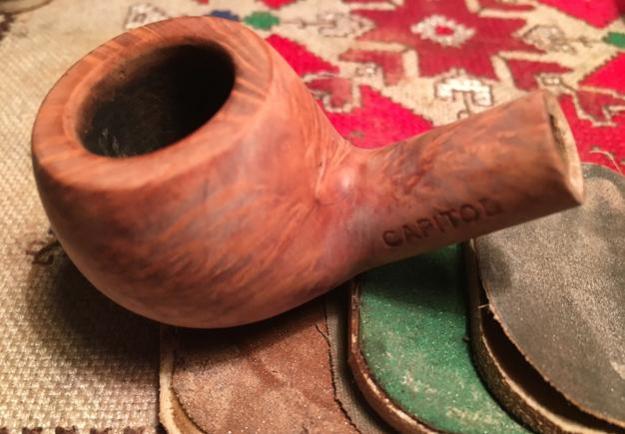
On the internet, I searched high and low through images of Prince Albert (1819-1861) and found no images among the 100s visually linking the prince with the shape now associated with him.  The photo below, one could imagine, has his pipe waiting for him just to his right, reluctantly removing it from the eventual public view of the old ‘sit-still’ camera recording the moments.  Yet, in my search on the internet, one can find 100s of pictures of happy, confident men smoking their pipes with adoring women looking on. How is this possible? – a man would be quick to ask.  Well of course, their pipes are packed with Prince Albert’s tobacco!  So, the secret is out – PA not only stands for Prince Albert but also, and more importantly, Pipe Appeal!  Good to know as Christmas gift lists are being created for this holiday season!cap2With Christmas music playing in the background the ambiance is perfect. The CAPITOL is stamped on the left side of the shank with no other markings.  When I search Pipedia, I discover that Capitol is listed among a robust inventory of other Savinelli made sub-brands, seconds and order productions. At Pipes Website store, I found several Savinelli Capitol shapes for sale.  At The Danish Pipe Shop I discovered several Savinelli Capitols listed and a bit pricy at that!  So, it would seem, the Capitol line of Savinelli has some depth and quality to it.  Unfortunately, I could find no Savinelli listing that brought the entire Capitol line inventory together.  This Capitol Prince has an elegant, slim appearance, boasting a length of 5½ inches, a petite bowl width of 1½ inches and a fire chamber diameter of ¾ of an inch.  The rim has some clunk dents along the edge and the backside shows darkening from oils and perhaps rear-end tobacco lighting over the edge.  The fire chamber has a light cake build up but I will bring it to the briar for a clean, fresh start.  I detect a larger fill on the heel of the bowl near the left junction of the shank. The stem is in great shape with minor teeth chatter on the bit.  I detect a dent in the vulcanite at the shank junction and note that there is day-light between the junction of shank and stem – the mating is not flush, but a good cleaning may take care of this.  Interestingly, I also notice that the stummel is encased in what I call a ‘Candy Apple wrapper’ which I also saw in the Savinelli Tortuga restoration acquired at the same time as the Savinelli Capitol.  I didn’t like the Candy Apple wrapper around the Tortuga then and this Capitol Prince’s natural briar will be liberated as was his big brother’s!  The following pictures on my work table here in Sofia, Bulgaria, show these areas of need and a very handsome pipe.cap3 cap4 cap5 cap6With the stem showing no oxidation, I skip the Oxiclean bath which may be a first for me!  The twisty stinger extending from the tenon is extracted unceremoniously and added to the Lonely Stingers Bottle and is officially retired from active service.  I give my initial focus to the stummel clean-up starting with reaming the bowl.  I use the Pipnet reaming kit camped over a paper towel which enables me to quickly catch and dispose of the powdered carbon – this makes my wife happier as my work table shares our bedroom space in our 10th floor flat!  Often, I go out onto the balcony to do this dirty work but winter has come in Bulgaria.  I use the two smallest reaming blades and I do not use them aggressively – I do not want to dig into the briar.  I follow the reaming blades with the Savinelli pipe knife to scrape and fine tune the cleaning of the cake residue.  I remove what appears as dried dottle at the floor of the bowl.  I finish by using 240 grit paper wrapped around a dowel rod and my index finger to clean and smooth the wall.  Finally, I take a cotton pad with alcohol and wipe the bowl removing the carbon dust.  The pictures show the progress.cap7 cap8 cap9With the isopropyl 95% on the work table, I clean the internals of the stummel.  Using pipe cleaners (bristled and smooth) and Q-tips I go to work.  Dental probes are also helpful to reach into the mortise and scrape the surface dislodging muck.  It was dirtier than I expected, but finally Q-tips start re-emerging ever whiter from the mortise plunges.  Done.  Now, I take the stem and go to work on its airway with pipe cleaners.  I discover very quickly that a reason for lack of cleaning on this stem is that I am not able to move a pipe cleaner through the airway.  The button airhole is too tight and needs to be enlarged to accommodate pipe cleaners.  No one likes fighting with pipe cleaners that refuse to pass through cramped quarters.  I take a round, pointed needle file and begin gradually to enlarge the button airhole.  My method is to insert the file point into the airhole but only as far as the expanding file diameter will allow to enable me to move the file back and forth easily, gradually removing the upper and lower button airhole surfaces.  If I jam the needle file down the airhole too aggressively, not only will it get jammed, it will also damage the vulcanite contours around the airhole.  After some time, the airhole gradually expands allowing the needle file to file more deeply opening the airway.  After some time and testing, pipe cleaners are able successfully to navigate the passage and the stem airway cleans up very quickly.  When I work on the teeth chatter later, I’ll smooth out this work with 240 grit paper.  The pictures show the cleaning and button airhole enlargement processes.cap10 cap11 cap12 cap13 cap14I love working on clean pipes!  With internals clean I know shift my attention to the stummel surface.  I first attack the Candy Apple varnish-like surface.  I start conservatively by first using cotton pads with undiluted Murphy’s Oil Soap to work on the rim and bowl surface.  With the aid of a brass brush, the Murphy’s Soap does a good job cleaning the rim, but it is probable that the surface is an acrylic finish which is difficult to remove.  Next, I use acetone with cotton pads to attack the Candy Apple surface.  As I scrub, and I scrub a good while, it gives me time to study the briar grain on this stummel and on the heel, I find what looks like a spider pattern – beautiful.  I’m ever amazed at God’s gift to us in the design and intricacy of this piece of briar – a ragged bush of a plant that would be called scrub if you saw it on the side of the road as you passed.  As the pictures below reveal, even after acetone scrubbing the shine of the acrylic is still very visible.  To see if I can soften it, I plop the stummel into an acetone bath.  The pictures show the progress.cap15 cap16With the stummel in the acetone bath, I return to the stem and take 240 grit sanding paper and work on the teeth chatter on the lower and upper bit. I also sand the button airhole to remove file markings and to smooth the surface.  Then I apply a dot of Hot Stuff “T” CA glue to the small dent on the shank-side edge of the stem.  I like to use the “T” for thicker, because it beads up on the divot and doesn’t run.  I wait for the superglue to cure before proceeding with more work on the stem.  The pictures show the progress. cap17 cap18 cap19Taking the stummel out of the acetone bath after about 6 hours, I place it on the desk and as the acetone evaporates I can see that the bath will need help.  With the surface softened by the acetone bath, I take 0000 steel wool and dip a small portion in the acetone and rub the steel wool over the shiny surfaces.  This finally does the job of bringing the natural briar to the surface.  Now I can see the true condition of the surface and where I may need to sand and repair.cap20I examine the stummel and invert it looking more closely at the large fill I identified earlier.  I picked at it with a sharp dental probe and dig out the loose fill.  I will need to mix a briar dust and superglue putty to refill this pitting as well as ‘top-off’ some smaller pits around the area.  The heel of the stummel is banged up good and I need to sand those out after applying the briar dust putty patches and after they cure.  I flip the stummel and study the rim.  The briar in this Capitol Prince will be beautiful at the end of the restoration because it already is!  I decide to first take a coarse 120 grit paper rolled up tightly to cut a bevel on the inner rim.  I do this to remove the damaged areas along the edge but also the Prince will look even classier with a gentle bevel enhancing an already handsome bowl.  I follow this initial cut of the bevel with 240 grit paper to smooth the surface further.  I want to apply a very gentle topping to the rim with 600 grit paper.  I take the chopping block out and place a sheet of 600 grit paper, with rim down, in a circular motion, gently I rotate the stummel over the surface.  I check the rim as I proceed to make sure I only take enough surface off to give a clean fresh look and remove minor nicks.  I follow the topping by using rolled up 600 grit paper to finish the bevel matching the smoothness of the rim.  The pictures show the progress.  I’m pleased with the look of the rim.cap21 cap22 cap23 cap24 cap25Time to mix briarwood dust and superglue to make a putty to apply patches to the hole and pits on heel of the stummel.  I take my briar dust can and with a pipe nail, scoop out some dust placing it in a little pile. Using regular clear super glue, I put a little puddle next to the briar dust.  Using a toothpick, I start adding some briar dust to the glue until it gradually reaches a putty/toothpaste-like consistency and then I apply a small dollop over the fill area.  I mash it down to make a tight patch and I leave some excess over the areas to sand down later. cap26With the stummel now out of action for the night, I turn to the stem again taking the flat needle file and freshen the button – upper and lower. I then flip the stem and again taking the flat needle file I remove the excess superglue from the patch I did on the edge of the stem – shank-side.  When the filing brings the excess superglue nearly to the surface level of the vulcanite, I use 240 grit sanding paper to blend the patch further with the vulcanite.  I follow the 240 with 600 grit paper doing the same.  I complete the patch repair by using 0000 steel wool to smooth the patch area as well as the entire stem in preparation of the micromesh polishing process.  The pictures show the progress. cap27 cap28Now for the micromesh phase, using pads 1500 to 2400 I wet sand the stem and follow with an application of Obsidian Oil to rejuvenate the vulcanite.  Following this, I dry sand using pad 3200 to 4000, followed by pads 6000 to 12000.  After each set of 3, I apply an additional coat of Obsidian Oil.  The stem looks good.  I put it aside to dry and call it a day.  The pictures show the micromesh phase.cap29 cap30 cap31Early the next morning before heading to work, I want to work on the briar dust patch applied the night before.  The superglue dust putty has cured.  I take a flat needle file and start filing on the excess mound of cured putty.  I’m careful to file down on the patch footprint only and not wander.  I take a picture illustrating the idea (#2 below).  The idea is that I gradually file the putty excess and ‘sneak up’ on the briar below the patch.  I take the filing down to the briar surface, within the patch footprint.  At this stage, I apply much less pressure to the file, moving the flat file more in a circular motion lightly over the patch footprint.  I want to blend the patched area now with the uncovered briar surface.  The aim is to remove the putty excess not take away briar.  Picture #3 shows the completion of the flat needle file’s service.  I then continue the blending with 240 grit paper expanding the area a bit outside the footprint area (picture #4).  I’m not too concerned about this because I know I have sanding to do to eradicate the numerous dents next to the patch.cap32 cap33As my wife was admiring the stummel and the briar patterns over my shoulder as I worked, she exclaimed about the face of the kitty revealed in the briar!  Raising my eyebrows to refocus my attention to the area captivating her, I see the pattern which is recorded in the picture immediately below.  She describes the two eyes, the whiskers and the forehead, probably in need of a little scratch, I thought!  So, the Savinelli Capitol Prince has a kitty, too.  Then my wife said, with not as much excitement, isn’t that a crack in the middle of the kitty’s face?  I had seen it before but it was small and it followed the contours of the grain pattern.  Yet, her question raised questions in my mind.  I believe the crack is not growing but I elect to apply Hot Stuff CA Glue to the crack just to be on the safe side.  This CA glue’s viscosity is extremely thin and perfect for shoring up cracks as it seeps into to a crack’s crevice in a way that thicker glue is unable.  However, the problem with this thin glue is that it can absolutely take off like a rabbit scampering over the briar surface not in need of CA glue.  To minimize this, I only dabble a bit on a toothpick trying to hold only a small drop at the point of the toothpick.  Then, strategically apply it to the center of the crack which spokes outwardly in four separate veins.  I find that the glue is running off the end of the toothpick because of its liquidity.  I’m finally able to capture a droplet on the toothpick and apply it to the center.  The glue spreads a bit, but I change the pitch of the stummel and use gravity to my favor.  I also use the tip of the toothpick and paint the glue over the spoking cracks by drawing the glue from the center.   The pictures show the progress of shoring up kitty’s nose and whiskers.cap34 cap35 cap36 cap37After the CA Glue cures, I take a small piece of 240 grit paper rolled so that it presents a more solid surface.  I then take the 240 roll and strategically sand the crack fix.  I keep the roll within the shiny patch footprint with a view of removing glue off the surface and to avoid losing briar as collateral activity.  I then take a medium grade sanding sponge and work the patch areas (crack and fill) as well as the multitude of dents on the stummel, but especially on the heel of the stummel.  As I work on bringing out the imperfections set in the briar, the thought surfaces in my mind that I had adopted an approach to this pipe, it’s shape and demeanor, going for of a more pristine look – the look of a pipe that is the favorite of royals.  A pipe having a quietly, self-confident posture, but elegant and humble.  It has a kitty, too!  Some pipes seem more of a rugged disposition and seem to beg for some imperfections as badges of past challenges in life – this Savinelli Capitol Prince says, “Please, put a crease in my trousers” –  or, as it seems to me! The pictures show the progress.cap38 cap39 cap40With the primary patches completed and dents smoothed and blended, I take micromesh pads 1500 to 2400 and wet sand the stummel.  I wet sand with the first set of three because it seems the effect of the water on the briar would soften it a bit, and it seems to give the micromesh pads more bite.  This helps removing any imperfections/dents left over from all the previous sanding.  The latter pads serve to polish what is there more than address imperfections.  Well, I was just thinking about smartly pressed trousers when I finish sanding with the first set of micromesh pads, set to take a picture, when I see that the kitty’s eye had changed.  He appears to be winking at me!  I discover whatever was in the eye before (a small fill?) was no longer there and I am looking at a new royal pit. The latter micromesh cycles must wait as I apply a new ‘T’ Glue patch on the new pit and wait for it to cure and sand and blend it.  So, now the kitty has a black eye.  The pictures show the pause in progress.cap41 cap42When the CA Thick glue cured, I filed it down with a half-circle needle file to the surface and fine-tuned it with 240 grit paper.  I follow this by addressing the patch area with 600 grit paper then 0000 steel wool. cap43 cap44To catch up this patch area with the rest of the stummel, I use micromesh pads 1500-2400.  At this point I return to the micromesh process with pads 3200 to 4000.  I notice the initial fill patch on the heel of the stummel with the micromesh polishing had lightened a bit.  I take a dark walnut stain stick and dab it in the fill patches then I use a cotton pad with some alcohol and press it a few times to blend and lighten the stain stick application.  It looks better now.  I finish with micromesh pads 6000-12000 to further blend the stain stick patch as well as the micromesh phase.  The pictures show the progress.  The grain is looking very good.cap45 cap46 cap47Time to decide.  I have yet to decide upon the next steps – whether to move forward with the natural briar or to apply a stain.  This question I put off to the conclusion of the micromesh phase so I can evaluate the briar’s presentation and the pipe’s personality.  I rejoin the stummel and stem to get a look at the big picture.  Decision made.  Using Fiebing’s Light Brown Leather Dye I mix 1 part dye to about 4 parts isopropyl 95% in a shot glass – aiming for a lighter cast.  I detach the stem and mount the stummel on a cork to handle the stummel.  After wiping the stummel with a cotton pad and alcohol, I heat the stummel with my wife’s hair dryer to expand and open the briar to the dye application.  Using a folded over soft pipe cleaner I coat the stummel with the 1 to 4 dye mixture liberally and immediately flame it with a lit candle waiting for that use.  The alcohol burns off very quickly setting the dye in the grain.  In about 4 or 5 minutes, I repeat the process and set the stummel aside for the night to rest – I as well as the newly stained stummel.  The pictures show the progress.cap48The next morning, anxious to see the results of the newly stained stummel.  Taking the Dremel with the attached hand-held extender, I mount a new felt wheel on the extender, set the Dremel on the lowest RPM setting, and apply Tripoli compound to remove the flamed dye crust to expose the surface.  I’m liking the color a lot and the grain has responded very well.  As I move through the Tripoli process I identify an eye-sore – at least to me.  Circling the outer rim edge is a black ring which the felt wheel charged with Tripoli is not removing.  The second picture I take after focusing the Tripoli wheel for some time on the ring itself, hoping to lighten and blend the black ring.  To me, the ring is unattractive and detracts from the overall appearance of the pipe.  The thoughts floating in my mind at this point are, that it is simply darkened stain at that point that a wipe of alcohol might lighten.  Another, less appealing thought is that this ring was produced by the flaming and perhaps scorched this most vulnerable part of the rim.  I’m thinking that it wasn’t the dye on the rim itself which burned off, but the overflow of dye on the cork that also had burned off did the deed.  I’ll need to check into this with Steve!  My methodology needs a revamp if this is the case.   The pictures show the issue.  The final picture shows the beginning of my corrective approach.  With an approach moving from conservative to less so, I spend more time focusing on the rim with the Tripoli felt wheel buff.  When this did not achieve the desired results, I take a cotton pad with some alcohol in it and wipe strategically around the outer edge of the rim, hanging over the outside slightly.  I do a few cycles around the circumference of the rim with the alcohol then follow again with the Tripoli buff to do a follow-up blending.  When this did not achieve the desired results, I tightly roll a piece of 240 grit paper and lightly make a quasi-bevel cut on the outer edge of the rim to remove the scorched briar.  The results of this are pictured below.  Not pictured is the rest of the process.  I followed the 240 grit with a rolled piece of 600 grit paper – as with 240 bevel, staying directly on the edge.  Then, I jump to mid-range micromesh pads 4000 to 12000, and smooth, polish and blend the outer rim area.  While the tendency for perfectionism would have me try something else, the rim looks much, much better and if I didn’t record this excursion here, 99% of onlookers would not see an issue!  cap49 cap50I move on to complete the polishing process by attaching the Blue Diamond felt wheel to the Dremel hand-extender and working this lesser abrasive compound over the briar surface.  Completing the compounds, I wipe/buff the stummel with a cotton cloth to remove left-over compound dust before moving to apply the wax.  I reunite the stem and stummel of the Savinelli Capitol Prince.  After mounting a cotton wheel to the Dremel, I increase the RPMs to the next number and apply several coats of carnauba wax to the stummel and stem.  After the carnauba wax application, I mount a clean cotton wheel with the same RPM setting on the Dremel as with the carnauba and provide a clean wheel buff to the entire pipe.  Finally, I give the pipe a rigorous hand-buffing with a micro-fiber cloth to deepen the 3-dimensional-appearing gloss already shining through this happy piece of briar.
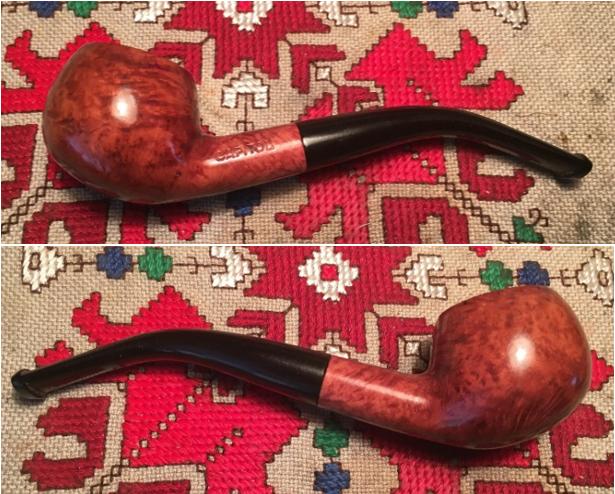
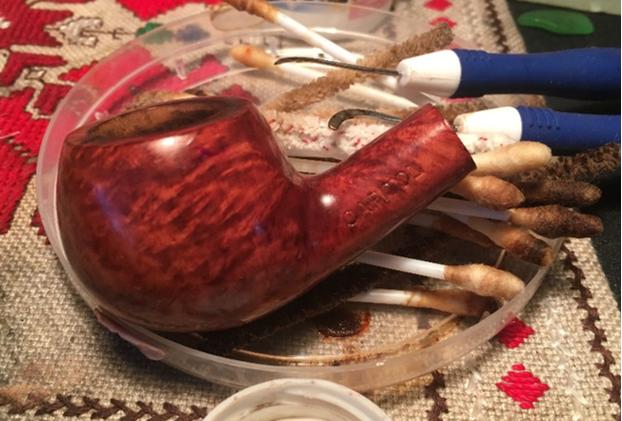
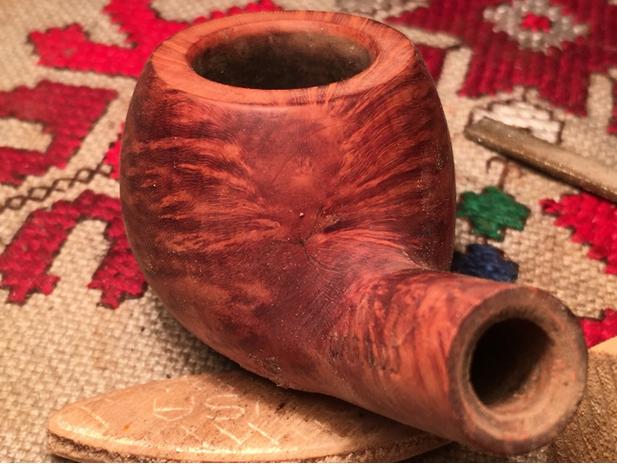
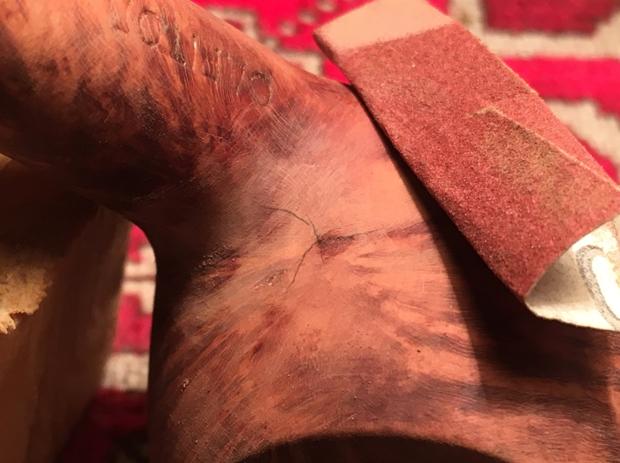
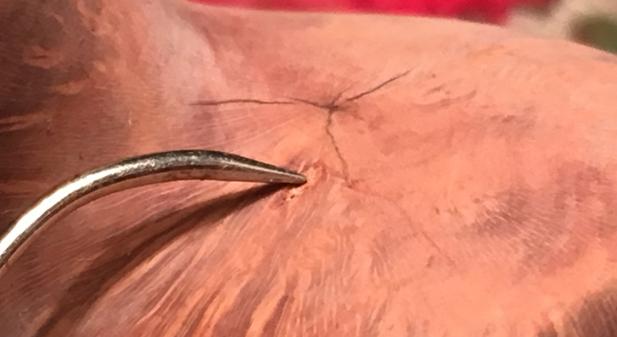
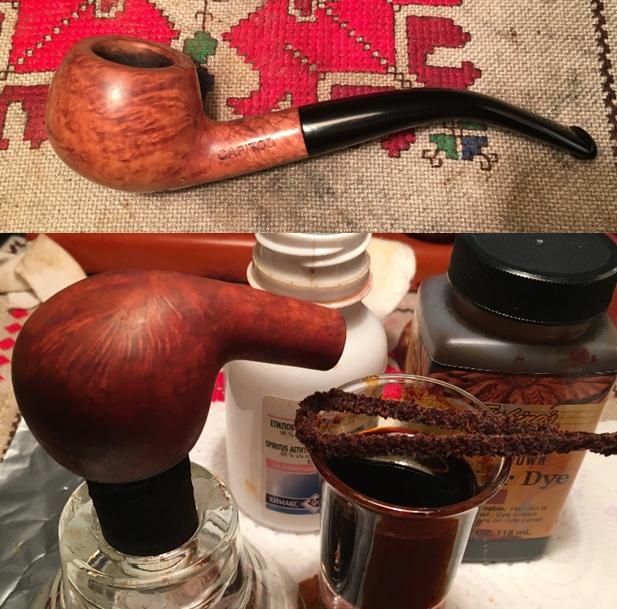
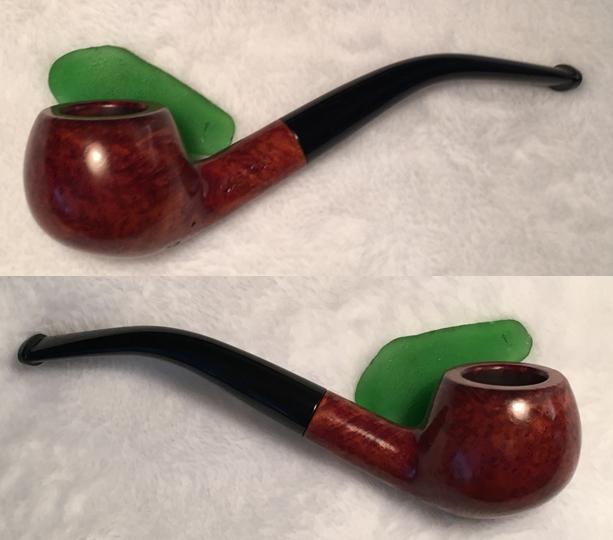
The grain on this small Prince bowl is captivating with larger bird’s eye on the front, splaying fans on the heel, and of course, a kitty with whiskers fanning out as he gazes up the shank and stem at his steward – or should I add, stewardess!  The diminutive size of the bowl along with the longer-than-expected sleek shank and stem, would make this Savinelli Capitol Prince – a preferred shape to at least one royal, a wonderful addition to any pipeman’s or pipelady’s collection.  Thank you for joining me!cap51 cap52 cap53 cap54 cap55 cap56 cap57
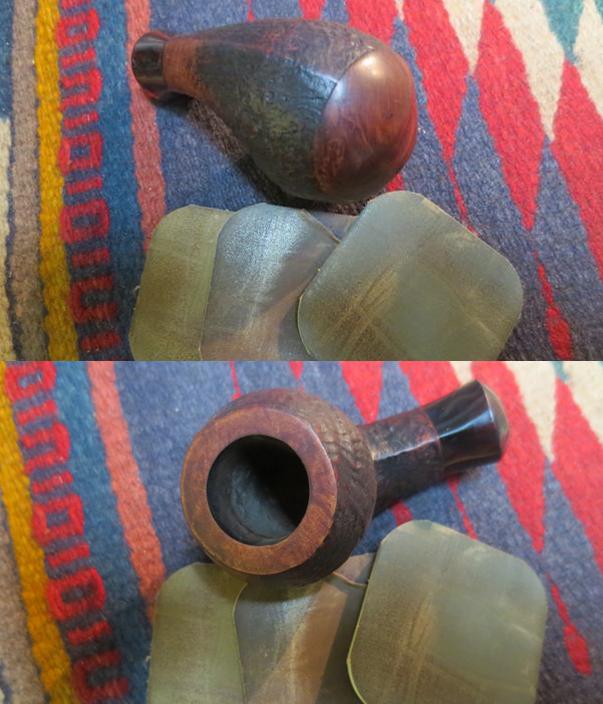
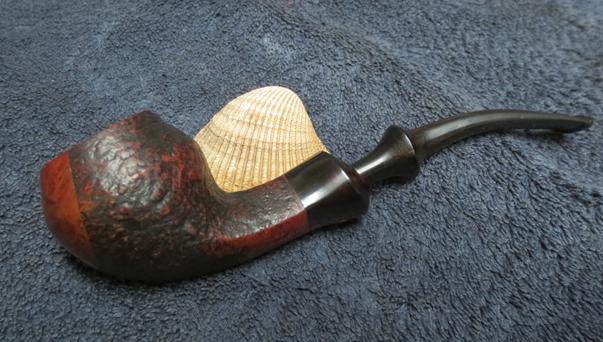
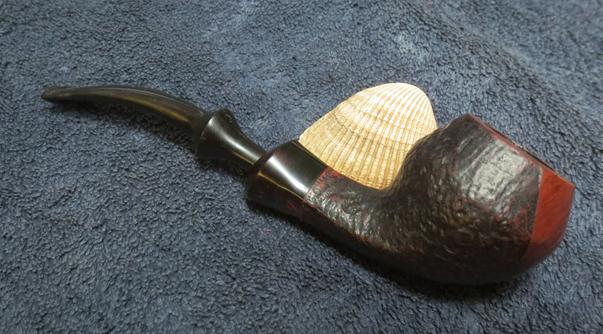
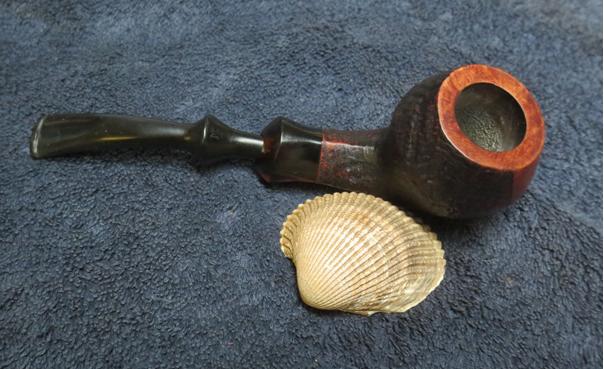
Short Snorter Imported Briar


Blog by Dal Stanton

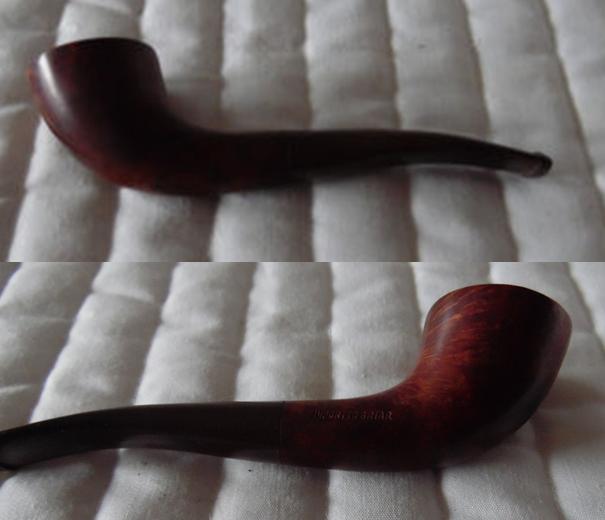
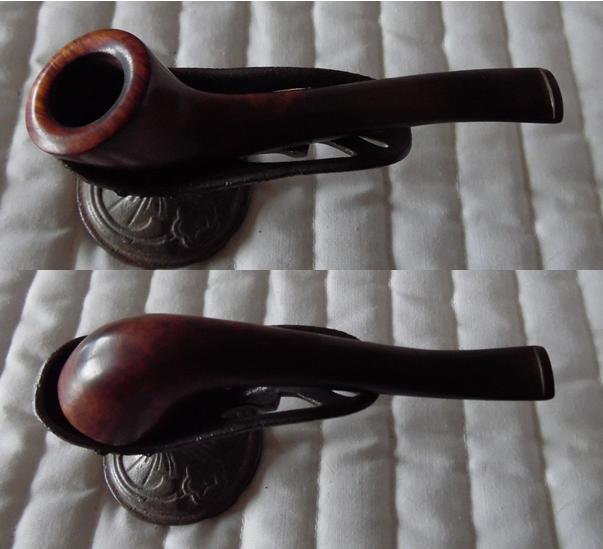
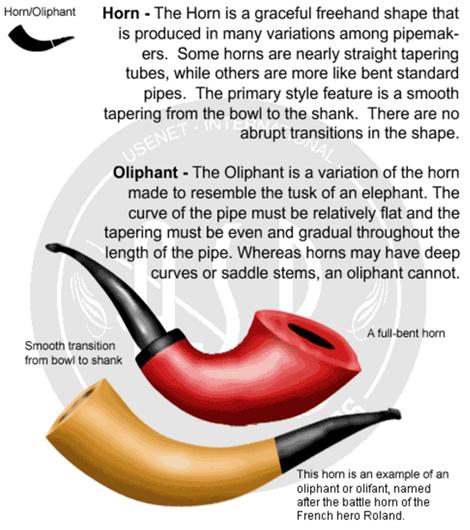
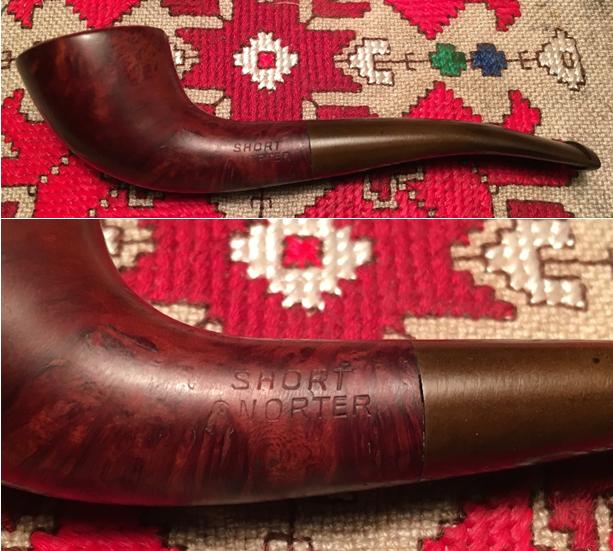
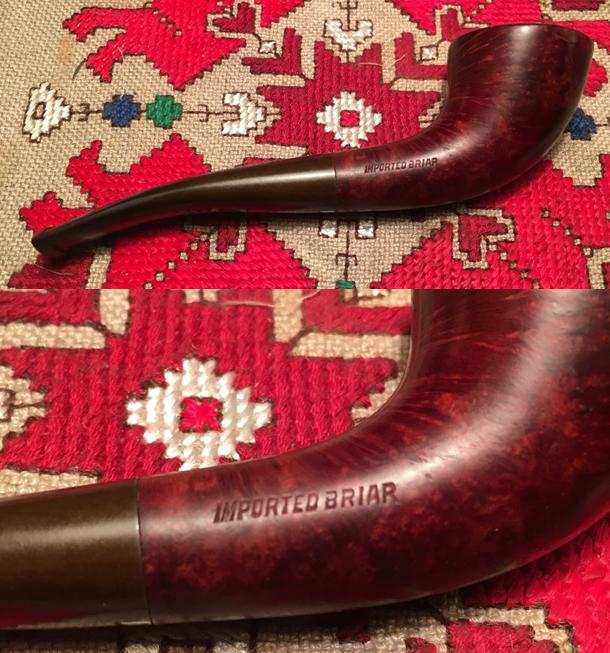
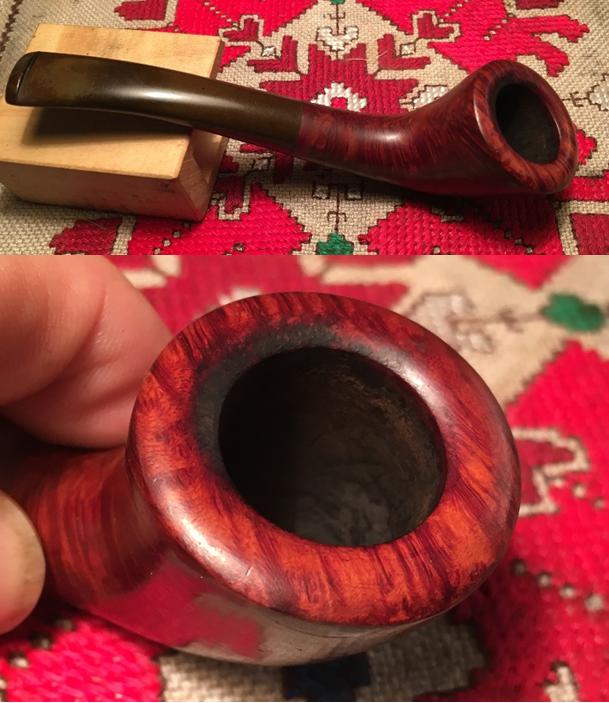
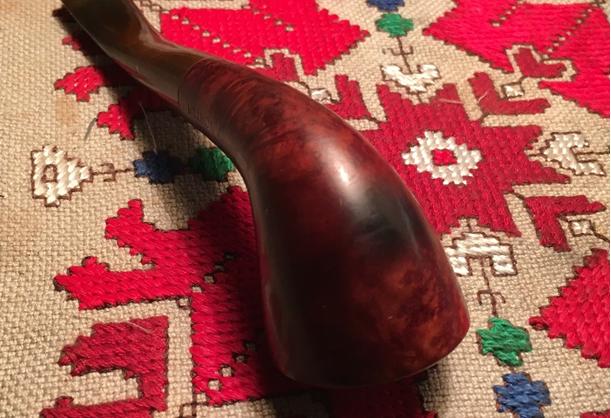
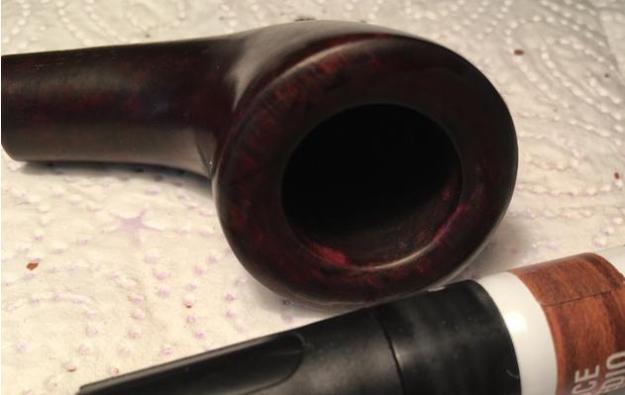
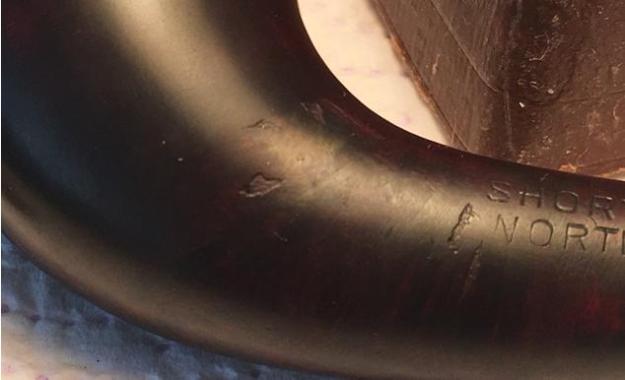
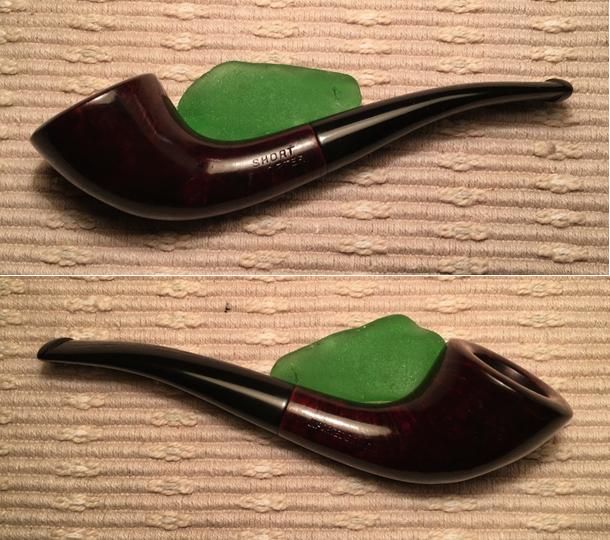
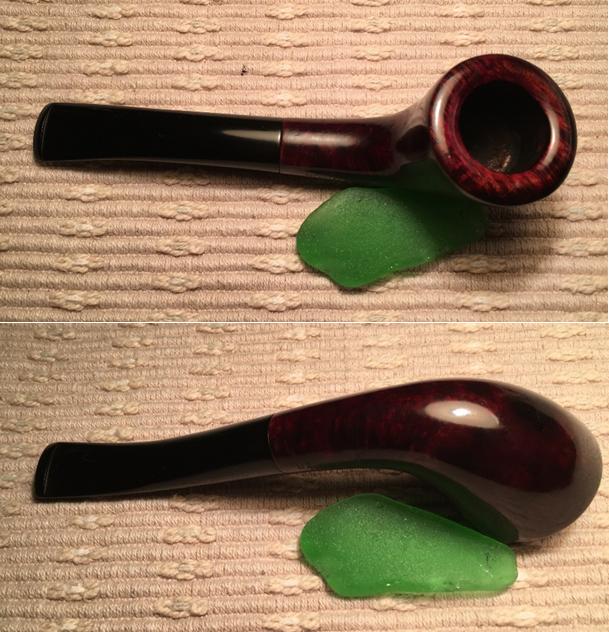
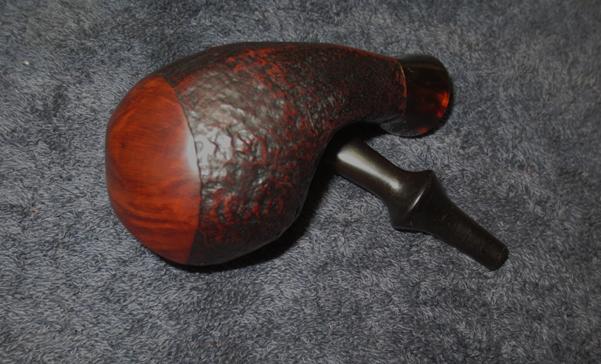
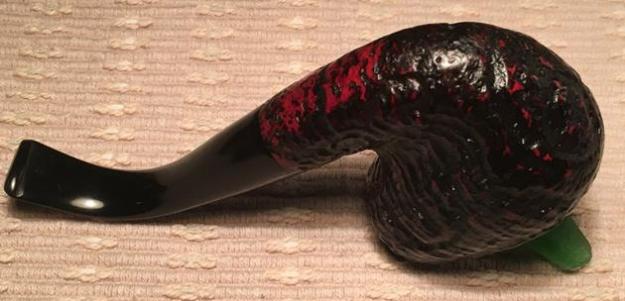
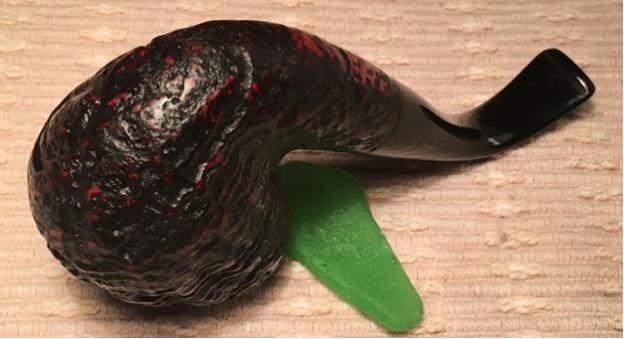
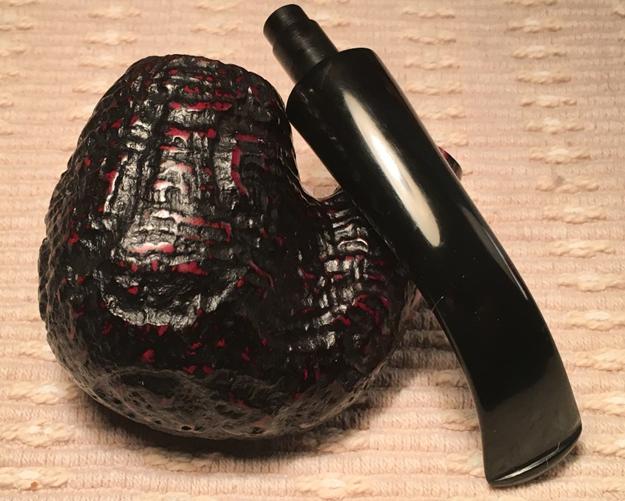
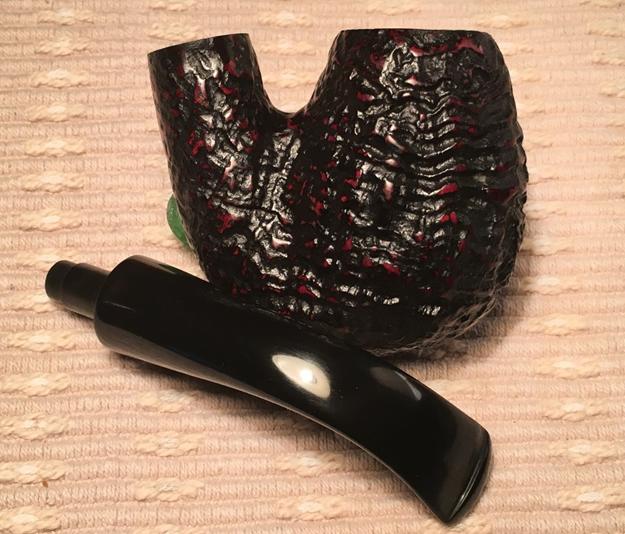
When I landed this little pipe last March, I rolled together 3 other pipes from the same seller, reducing postage costs – I’m always happy when I can save!  The eBay seller listed the pipe as a ‘Short Norter’ stamped on the left side of the shank.  The right side was stamped, Imported Briar.  The pipe’s petite size listed was 5 1/4″ long 1 1/4″ tall and 3/4″ bowl opening.  Even though she was so small, the shape was what drew me in.  This is what I saw.short1 short2Poor quality of photography notwithstanding, all the potential was there – the unique shape that I had yet to identify or collect, the rich briar grain peeking out here and there and the petite demeanor – perhaps this is a ladies’ pipe?  But then, the name?  Short Norter – the eBay nomenclature.  Despite the less than feminine name, I liked the pipe.  With a quick trip to Pipedia’s shape chart, I found what I believed matched the Short Norter – the Horn shape.short3When I took the Short ‘Norter’ Imported Briar out of the ‘Help me!’ basket now months later, I am still struck by the size and I really like the sleek contour of this Horn shape.  When I started research on the pipe in preparation for her restoring, I ran into a brick wall trying to find Short ‘Norter’ in all the usual places, but I did run across other references which were close.  One was, ‘Short Snorter’ and it was a pipe.  After taking another close look at the stamping, I discovered that the ‘S’ was almost totally obliterated by a divot in the briar.  Only a small peek remained of the top of the ‘S’. Finally, my beautifully shaped Horn ladies’ pipe is officially christened, Short Snorter – a pipe any high classed pipe woman would covet, or it would seem!  Here are pictures filling in the gaps from my work table here in Sofia, Bulgaria.short4 short5 short6 short7 short8 short9In the little I found on the internet about the Short Snorter, it is described as a nose burner or as a pocket pipe, but most often with other shapes than the horn.  Steve looked up the Short Snorter in the book, Who Made That Pipe, and it indicates that it was made by Weber or Wally Frank.  With that information, I looked at old Wally Frank catalogues, but did not see the Short Snorter.  I suppose the name is apropos, but I think a lady pipe smoker would give this pipe a look see.
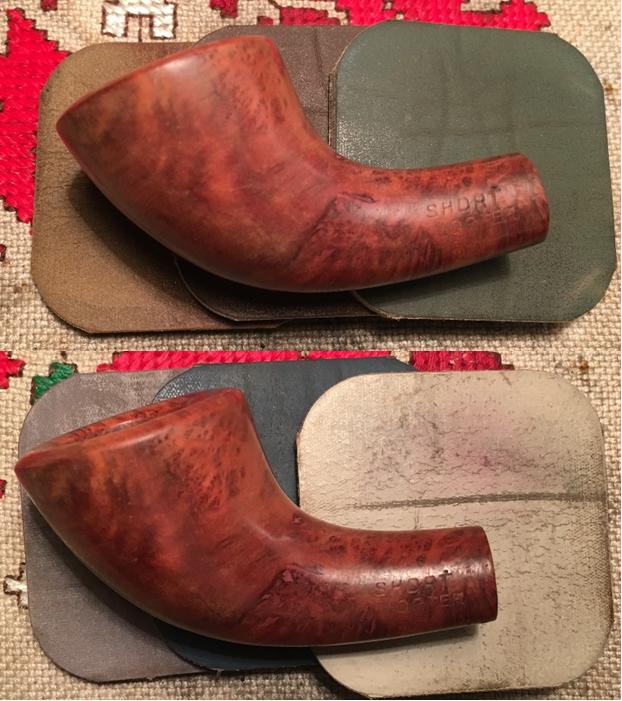
The stummel surface is generally in very good shape and the briar grain has much appeal for a smaller pipe.  The rim has an attractive oval bevel but a moderate burn area covers a portion where I presume the flame was drawn over the briar in lighting the tobacco.  The one troubling spot is the burn mark on the front of the bowl.  The last steward appears to have been a heavy puffer heating up the briar enough to cause the burn.  I’ll need to check the internal front fire chamber area to detect possible thinness and potential for a burn through.  To remove the scorched area the old finish needs to come off.  The stem is heavily oxidized but there is not much tooth chatter to speak of on the bit.  The button appears to be in good condition.

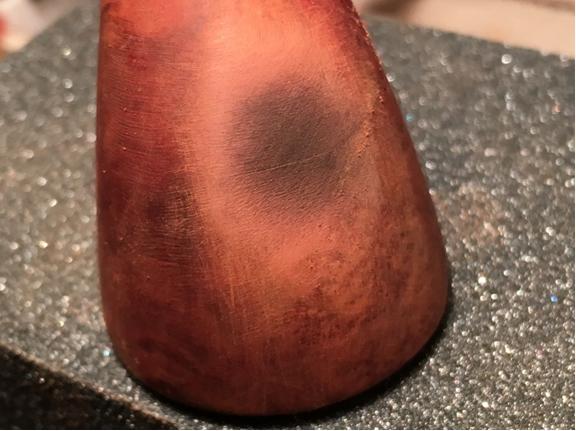
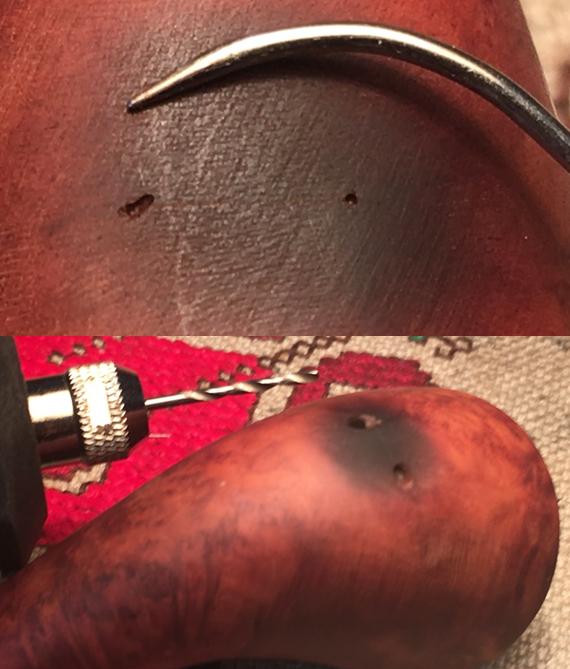
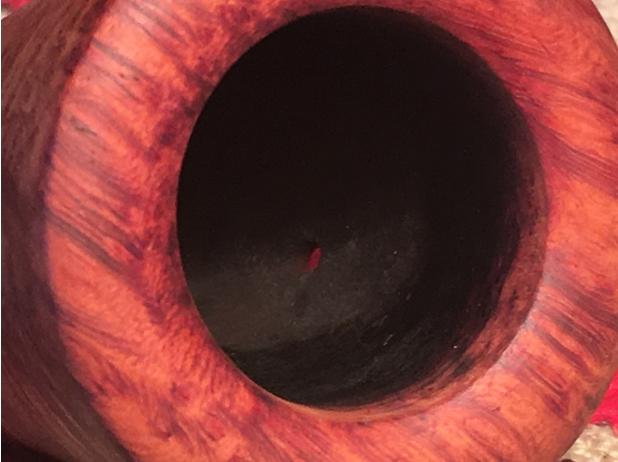
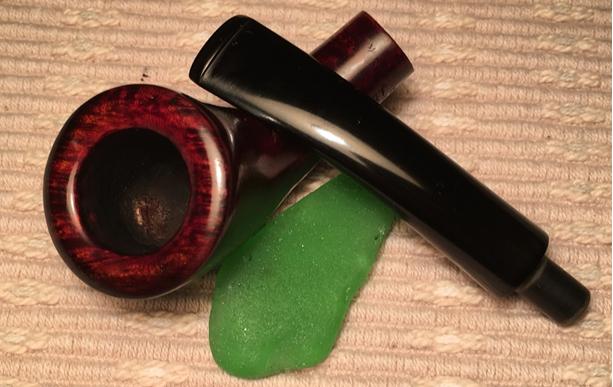
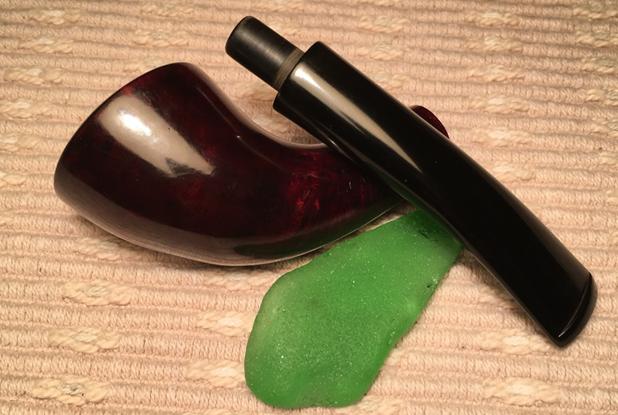
The first order of business in the rebirth of this Short Snorter Imported Briar Horn is to plop the stem into a bath of Oxiclean to begin the process of raising the oxidation out of the vulcanite.  Before I do this I try to remove the stinger, resembling the cupola of a Russian Orthodox Church.  I don’t much like stingers in general, but I’m not able to coax a pipe cleaner through it to help retrieve the stem from the Oxiclean bath.  I try pulling on the stinger but it doesn’t budge.  After a few failed attempts, I light a candle and warm the stinger which expands the stingy vulcanite holding it in place.  Whoa!  When I finally extract the stinger, it’s the longest stinger I’ve seen to date – especially in such a small pipe!  I’m not sure why it’s so long but I wonder if it has anything to do with the small design and the intent to restrict the airflow?   Perhaps, the burn was a result of poor movement of air and the steward had to puff harder therefore more heat???  Speculation, but the stem is now in the bath working on the oxidation and the stinger is official retired to the stinger bottle.short10 short11With the stem in the bath, I want to ream the fire chamber to bring it down to the briar for a fresh start but also to examine the front of the chamber corresponding to the external burn area.  Since there was almost no cake build up on the wall, I use the Savinelli Pipe Knife to clean what remains.  I then take 240 grit sanding paper rolled around a dowel rod to sand the fire chamber wall and to clean the remaining residue.  I finished with a quick wipe of the cotton pad with a bit of alcohol on it to remove the carbon dust.  The pictures show the progress.short12 short13With the fire chamber cleaned I take a few close-ups looking specifically at the integrity of the wall.  The second picture below is oriented to the front where the burn would be.  Using my pinky finger, I feel the texture of the wall and I don’t detect any internal burns or soft spots but there is a bit of a rounded area toward the external burn area – thinning wall?  The natural ‘horn’ curvature could potentially lean toward a thinning of the front of the stummel if the fire chamber expands – burns or excessive reaming?  I will need to add a protective layer with either Pipe Mud or a Sour Cream/Yogurt Charcoal mix to coat the fire chamber wall – especially in the front area. This will be necessary if this little pipe tends to overheat.  short14Cleaning the stummel’s external surface, I take a cotton pad with Murphy’s Oil Soap undiluted and scrub the stem surface. I also employ a brass brush to work on the tar deposit on the backside of the rim.  Following the scrub, I rinse the stummel with warm tap water, careful to not allow water in the enter the stummel.  The rim cleans up very nicely.  To address the burn blotch on the front of the stummel and I use a medium grade sanding sponge to remove the dark area.  After a time of working on the burn spot, a troubling question starts to dog me:  Does this burn spot go through to the fire chamber?  Or is it only on the external…  If it goes all the way through, then all I’m doing is further thinning an already thin patch of briar with sanding.  Steve confirmed that I was indeed making things worse.  The last picture in the set below I sent to Steve and it was he who identifies in that photo the crack crossing laterally in the middle of the burn spot.  Ugh.short15 short16 short17Another opportunity to hone in on the various skills necessary in restoring pipes!  I had the opportunity to fix a crack previously and it is necessary to drill holes on the far ends of the crack to stop the crack creep.  Armed with a magnifying glass to see the crack clearly, I use the sharp dental probe to mark the ends of the crack hopefully to provide a guide for the drill.  I use a 1.5mm bit in the Dremel and I need to drill the holes without going through into the fire chamber.  Well, it was going so well, until it wasn’t.  I suppose it was the combination of the texture of the briar being more crusty feeling, drilling free-hand, or the thin wall that I already suspected – one or any combination of all three….  The first hole is successful, but the second finds day-light.  The briar is much thinner than I had guessed.  The question now is the extent of the burn impact. Is this Short Snorter’s life about to be cut shorter than we all thought!  I use the dental probe to scratch around the holes and pressing to find soft charred briar to reveal more weakness.  I do not find anything other than the hole that I created. short18 short19So, the worst that can happen is that this beautiful little Short Snorter becomes a ‘technique pipe’.  I decide to proceed with filling the drill holes with a mixture of briar dust and super glue.  For the external surface, I’ll need to sand down the hole patch areas during the finishing process, then dark staining the stummel to blend and mask the burned area.  For the internal wall, I will mix a batch of the Charcoal and Sour Cream lining paste and apply it to the firewall.  Hopefully, this will provide enough additional heat buffer to protect the thin condition of the briar in the front.  The protective coating will also provide a basis for a protective cake to develop.
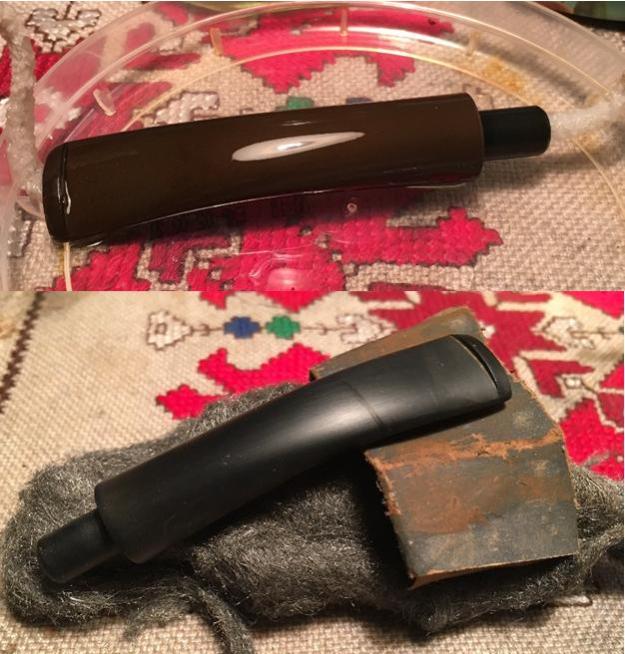
With the stummel on the mat, I need a change of scenery to think things through.  I retrieve the stem from the Oxiclean bath and take 600 grit paper, wet sanding the stem to remove the raised oxidation on the vulcanite stem.  I follow this with 0000 steel wool preparing the surface for moving to the micromesh polishing later.  Then I take pipe cleaners dipped in isopropyl 95% and clean the internal airway of the stem.  It was not very dirty.short20Ok, back to the stummel.  I use a cotton pad with isopropyl 95% to clean both the external surface as well as the fire chamber.  I take briar dust and mix it with super glue to form a putty.  I use a dental spatula and tooth pick to scoop some of the putty and apply it to the holes.  I’m not concerned that the putty goes through to the internal wall – I want to build a little protective mound of hardened briar putty.  Later it will be covered by the Charcoal/Sour Cream layer of insulation.  The pictures show the progress with the regress!short21 short22With the briar dust putty curing, I take up the stem and begin the micromesh process first by wet sanding the stem with pads 1500 to 2400.  When complete I apply a coat of Obsidian Oil to the stem to rejuvenate the vulcanite.  I follow this dry sanding with pads 3200 to 4000 and then 6000 to 12000 and I follow each set with an additional application of Obsidian Oil.  I put the stem aside to dry. I never tire witnessing the shiny pop of vulcanite after the micromesh process.  The pictures show the progress.short23 short24 short25With the briar dust superglue cured after a full 24 hours, I take another close-up of the work areas and then take a flat needle file and file strategically the fills in the two crack holes that were drilled – one well, the other one breaking through the firewall.  After bringing both fills almost to the briar surface level, I use 240 grit paper, rolling it into a very tight tube, I remove all the excess fill bringing the patch to the surface.  Then, turning to the Briar dust putty in the fire chamber, I use the flat needle file and reach into the bowl and take off most the overflow.  Then, with the 240 grit paper I smooth the patch but I leave a small briar dust patch over the internal wall breach.  I hope this adds protection underneath the insulation layer that I will do later.  The pictures tell the story.short26 short27 short28 short29With all the attention with the crack repair, I realize I have yet to clean the internals of the stummel.  I do that with Q-tips and pipe cleaners dipped in isopropyl 95%.  Thankfully, there was very little work to do.short30At this point the question that presents itself is, do I proceed with mixing up a charcoal and sour cream (or yogurt) insulation paste and coat the chamber or do I proceed with working on the external briar of the Short Snorter.  Since I will need to have a thumb and cork in fire chamber for all the external briar projects, I need to wait to do the fire chamber work near the end – probably before the final polishing phases.

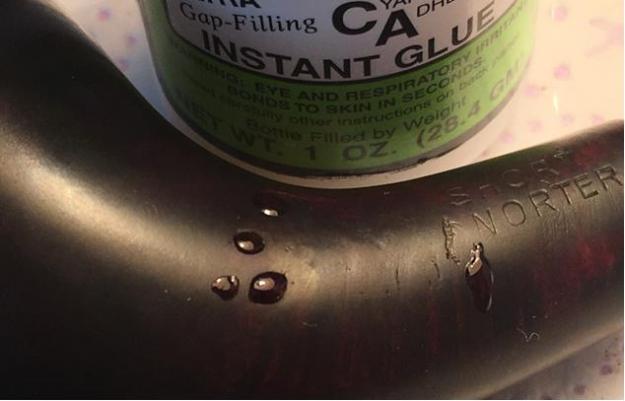
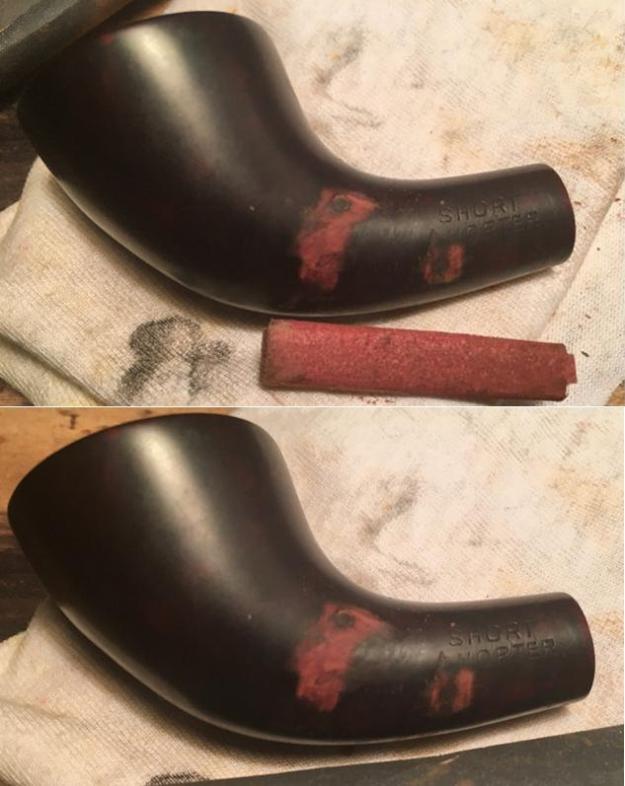
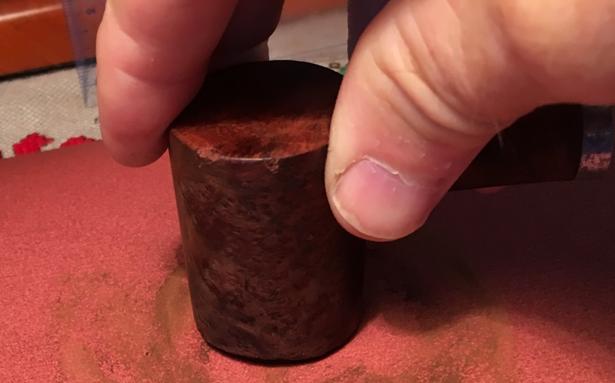
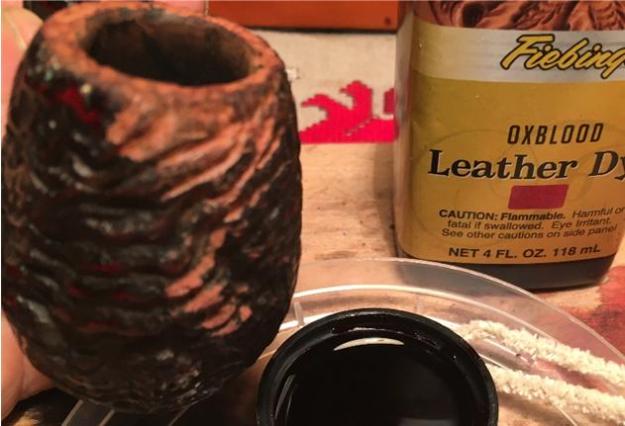
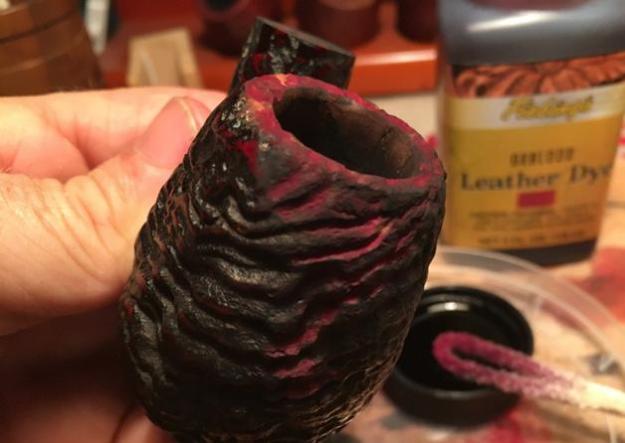
I take a close look at the stummel surface and detect some shiny spots revealing the presence of the old finish.   I want to remove all the old finish left behind by the Murphy Oil Soap cleaning.  Using the light sponge sand I sand down the surface followed by wet sanding with micromesh pads 1500 to 2400, then 3200 to 4000 and finishing with pads 6000 to 12000.  The pictures show the progress.short31 short32To mask and blend the burn spot on the front of the stummel, I use aniline-based Dark Brown Leather Dye hopefully to accomplish this.  With a cork stuck snuggly in the fire chamber to serve as a handle to rotate the stummel, using a bent non-bristled pipe cleaner, I apply the dye liberally around the stummel, rotating it to be sure the dye reaches the inverted rim.  After the application, I flame it using a lit candle waiting for that purpose. The alcohol in the dye burns off quickly setting the hue in the grain.  When cooled, I apply a second coat of dye to the stummel surface and again I flame it.  I let the dye set overnight.  The picture shows the flamed crusted state.short33The next morning, anxious to see the ‘unwrapped’ stummel and the results of Fiebing’s Dark Brown Leather Dye, I take the Dremel and mount the hand-held extender with a felt wheel and apply Tripoli to the stummel surface to remove the dye crust.  The dark stain did well in blending the burn spot on the stummel.  That is looking good.  Two problem areas emerge – the rim showed a gap in the coverage of the dye on the inner rim.  It must have been the overhang of the cork I was using….  An easy patch worked well as I use a dark walnut stain stick and paint the rim. short34 short35After the Tripoli buff with the Dremel felt wheel, I also detect pits in the briar surface in the upper left joint of the shank and stummel – not sure how I missed these but I see them now and I don’t like seeing them now.  Of course, it would have been easier addressing these during an earlier stage of restoration, but I’ll make a go at a patch now.  I take Hot Stuff Special ‘T’ CA Glue, a bit thicker than regular CA glue, and apply a dribble on the end of a toothpick then I dab a bit of the glue from the toothpick strategically on a pit.  The thicker glue beads up nicely on the pit and doesn’t run over the surface.  Using the toothpick, instead of applying glue straight from the bottle spout, allows a better control of the amount of glue in play.  I put the stummel aside to let the ‘T’ CA Glue cure and then later I’ll strategically sand these patches – hopefully keeping the patch area to a minimum. I didn’t do anything with the crevice obliterating the ‘S’NORTER’.  The pictures show the progress.short36 short37After the ‘T’ CA Glue cures, I use 240 grit paper to sand tightly on the glue mounds – trying to keep the patch area to a minimum.  After the 240 I use 600 grit paper on the area and then a very quick run through the complete set of 9 micromesh pads, 1500 to 12000.  I then apply Dark Walnut with a stain stick to the sanded areas.  After drying a bit, I use a cotton pad with isopropyl 95% to wipe down the stummel to blend the stain of the entire surface along with the patch area.  This helps but I’m wishing I would have done this earlier and not missed them!!!  The pictures show the progress.short38 short39 short40I want to apply one final coat of stain to the stummel to blend further the patches but also to tweak the hue toward the red ranges.  I mix Fiebing’s Dark Brown Leather Dye 1 part to 2 parts of Fiebing’s Oxblood.  As before, I apply the dye mixture with a folded pipe cleaner to the surface liberally and flame it.  After the surface is cool to the touch, I apply a second coat of Dark Brown Oxblood and flame it.  I set the stummel aside for the night and the next day clear the flamed crust with the Dremel felt wheel using Tripoli compound.  To blend the stained surface and give an even effect, I lightly wipe down the surface with a cotton pad with isopropyl 95%.  I’m pleased with the hue that is emerging.  The pictures show the progress!short41 short42Rejoining stummel and stem I use the Dremel with a felt wheel to buff them with Blue Diamond compound.  Following this, I mount the cotton wheel on the Dremel and increase the speed of the Dremel from the slowest RPM for the felt wheels and compounds, to the next higher speed.  I apply carnauba wax over stem and stummel several times to build up a shine as well as a protective layer.  I’m pleased with the transformation of this pipe.

After consulting with Steve, I decided that this Short Snorter’s one last challenge would be better addressed in the US.  The front fire chamber wall needs a better solution than what I can provide here in Bulgaria.  Steve recommended I consider the solution that Charles Lemon, of DadsPipes.com, has used with good success – applying JB Weld to the area in need of greater reinforcement.  Since JB Weld is not on the shelves here (yet!) and I can’t find a satisfactory alternative, this little pipe is going for a long ride in about a week to Denver, where my wife and I will be celebrating Christmas with our family!  I’ll add a Christmas Addendum later!

When I look at this Short Snorter Imported Briar Horn before me, I still think this is a beautiful ladies’ pipe!  Of course, with a name like ‘Short Snorter’, the pipe lady smoking this elegant, petite horn shaped pipe, packed with her preferred aromatic blend, will undoubtedly have a bit of attitude and spunk!  Or, at least as it would seem to me.  Thank you for joining me!short43 short44 short45 short46 short47 short48 short49

Replacing a Stem on a Stanwell Antique 156 Bulldog


Blog by Steve Laug

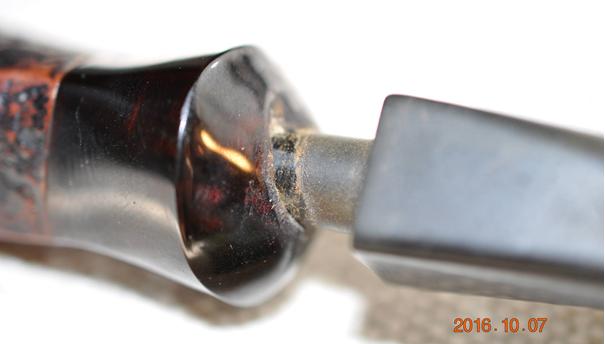
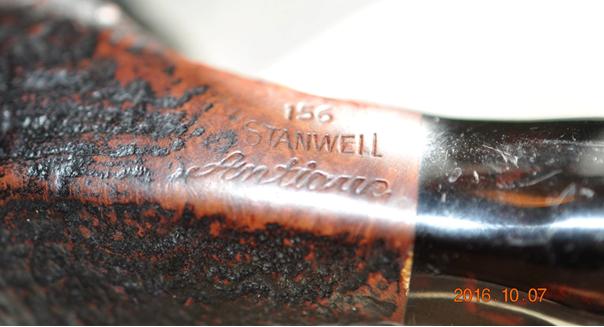
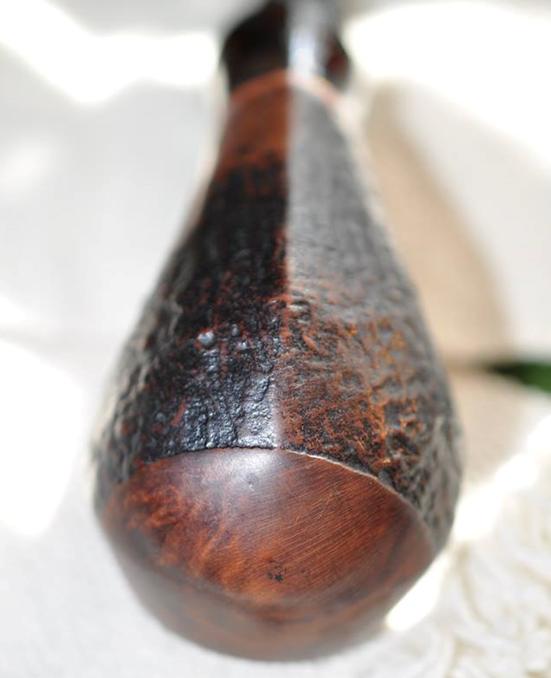
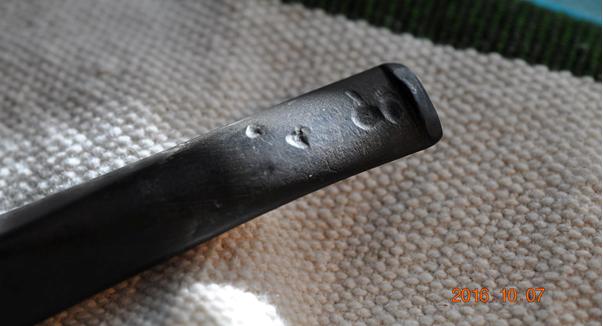
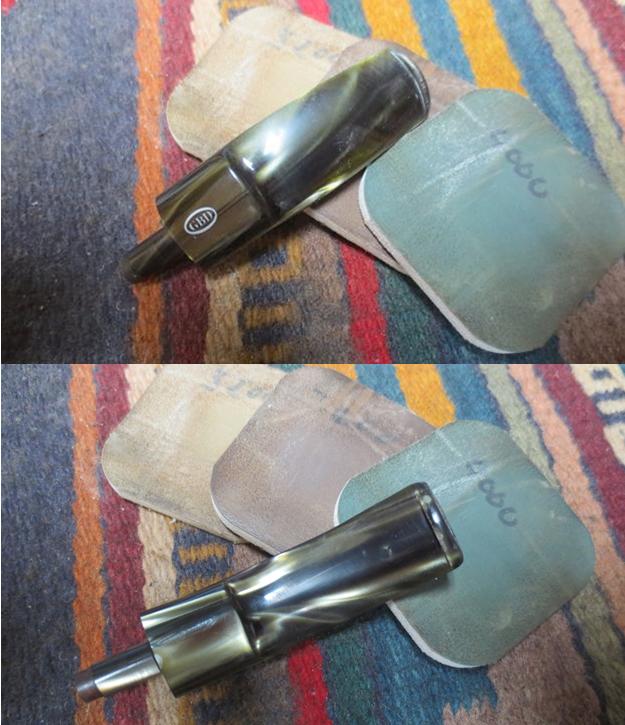
The next pipe I brought to my work table is another Stanwell Antique. This one is stamped on the underside of the shank with the words Stanwell over the script Antique and over the top of them both is the number 156 which is the shape number. This one came in the same lot as the two victims of Jaws that I have already written about on the blog – the Estella and the GBD Midnight (https://rebornpipes.com/2016/12/06/jaws-and-an-estella-non-pareil-%c2%bc-bent-9606-stack-by-savinelli/ and https://rebornpipes.com/2016/12/09/another-jaws-victim-a-gbd-midnight-788-oval-shank-apple/). This Stanwell Antique Bulldog had a poorly fit replacement stem – a diamond shaped stem from a classic bulldog shape. The stem had many deep tooth marks on both the top and the underside of the stem. anti1The finish on the bowl was in decent shape though the rim had some tarry buildup and there was a thick cake in the bowl. The first photo shows the mixture of sandblast and smooth on this pipe was a nice contrast. The front of the pipe was smooth and joined the smooth rim. The second photo shows that the front outer edge had nicks and dents in it as did the surface of the rim. The close up photo of the rim shows the condition of the pipe when my brother received it.anti2The Lucite shank extension is amber coloured. The thickness of the extension makes it hard for the light to shine through it. The mortise had been damaged – it is my thought that whoever put the new stem in place redrilled the mortise and damaged the inner edge and the bottom of the mortise. anti3The stamping on the underside of the shank is better than the stamping on the previous Antique I just finished. The shape number is very clear and sharp. The Stanwell logo is lighter on the left side and the Antique stamping is also very clear and sharp.anti4The next photo shows the transition from the smooth front of the bowl to the sandblast on the rest of the bowl. You can see some of the grit in the grooves and crevices of the blast and the grime on the smooth portion.anti5The last photo that my brother sent me shows the bite marks on the diamond stem. They are identical in pattern to the ones on the previous two “Jaws” pipes.anti6My brother cleaned up the pipe with his usual thoroughness. When the pipe arrived in Vancouver the finish was clean and the grooves and crevices clean. The rim was better though it show the damage to the front edge and the dents to the top of the rim. He had reamed and cleaned the mortise and the airway in the replacement stem so the pipe was very clean and ready for me to work on.

I cleaned up the shank extension end and used clear super glue to rebuild the damage portion of the Lucite. I sanded it with 180 grit sandpaper and also with 220 grit sandpaper to smooth out the repairs. I cleaned out the shank with a cotton swab and warm water to remove the debris in the shank. I took photos of the bowl after I cleaned it up and scrubbed it with Murphy’s Oil Soap.anti7 anti8The rim shows some damage to the top and the back edge in the photo below.anti9The stem was an obvious replacement so I put it in my can of stems and looked for a stem that would be a good candidate for a replacement. I had one in a lot of stems that my brother sent me. It was a Danish looking freehand stem that had a long tenon and a step up toward the ring in the middle. I forgot to take a photo of the stem before I worked on it but I had another example of one that was similarly shaped that is shown in the next photo.anti10I sanded the stem with a Dremel and sanding drum to shorten and remove the step down area. I wanted to have a smooth transition from the tenon end to the mid ring. I also wanted to make the slope to the ring more abrupt that it was in the one above. The stem was in pretty rough shape. There was deep tooth mark on the topside of the stem from the damaged button forward. There was also some tooth damage on the underside of the stem in the middle and on one side. The button was also damaged on the underside. There was a missing chunk of vulcanite on the button edge. I filled in the damaged areas with black superglue to build them up. I let the glue dry and once it was dry I sanded it smooth to match the surface of the rest of the stem. I filled in the damaged button and built up the edge on the top and bottom sides. I sanded the button as well once it had cured and reshaped it.anti11I sanded the diameter of the tenon area on the new stem until the fit in the mortise was correct. The stem still looked a little long but I would take care of that shortly. I put it in the mortise and took photos of the pipe with the new stem.anti12 anti13I sanded the stem with 180 grit and 220 grit sandpaper to smooth out the repairs and reshape the stem to match the rest of the stem.anti14I polished the stem with micromesh sanding pads – wet sanding with 1500-2400 grit sanding pads and rubbed it down with Obsidian Oil and dry sanding with 3200-12000 grit sanding pads and rubbing it down with the oil after each set of three pads. After the final set I gave it a final coat of the oil and set the stem aside to dry.anti15 anti16 anti17To remove the damage to the front edge and the top of the rim I topped the bowl with 220 grit sandpaper on the topping board. I sanded it with 1500-6000 grit micromesh sanding pads to sand out the scratches in the rim surface. I restained the rim to match the front of the bowl using a dark brown stain pen. I buffed it lightly with a microfibre cloth.anti18I sanded the smooth portions of the bowl face and the rim with 1500-6000 grit micromesh sanding pads to polish them.anti19 anti20I buffed the rim and smooth part of the bowl and the stem with Blue Diamond polish on the wheel. I gave the stem multiple coats of carnauba wax and gave the bowl several coats of Conservator’s Wax. I buffed the pipe with a clean buffing pad and hand buffed it with a microfibre cloth to deepen the shine. The finished pipe is shown in the photos below. The repairs on the stem show under the bright lights of the flash but in person they are pretty well blended into the surface of the stem. Thanks for walking through the restoration with me.anti21 anti22 anti23 anti24 anti25 anti26 anti27 anti28

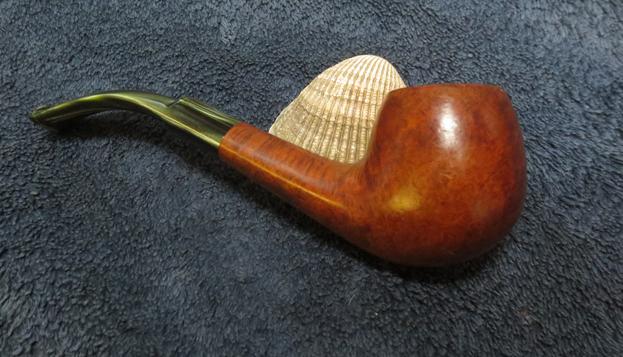
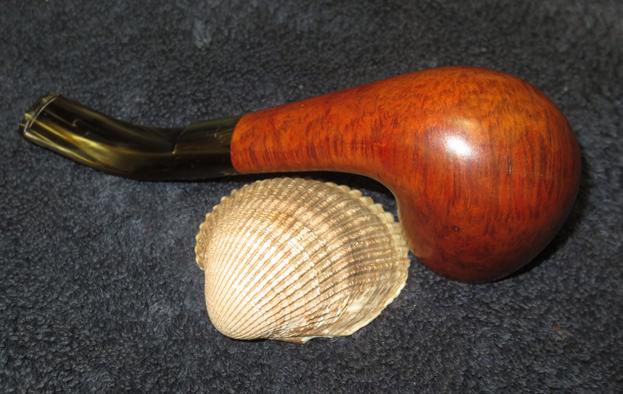
Another Jaws Victim – A GBD Midnight 788 Oval Shank Apple


Blog by Steve Laug

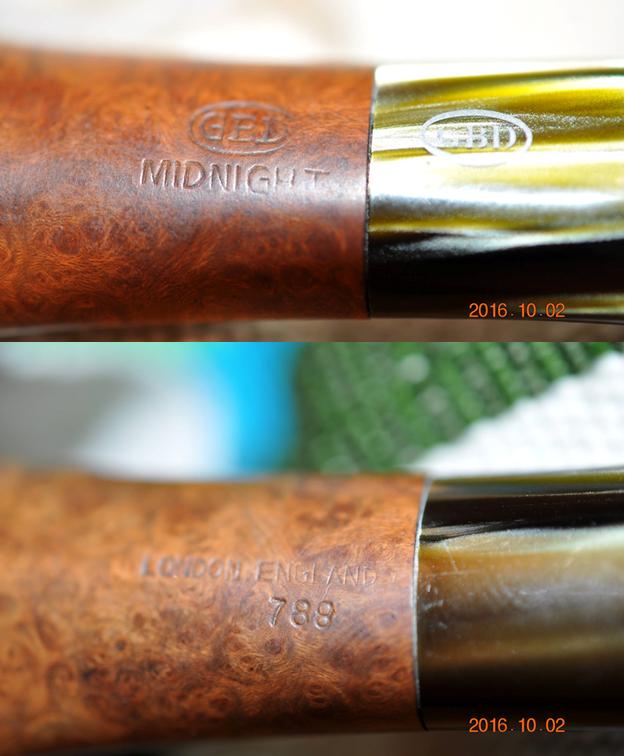
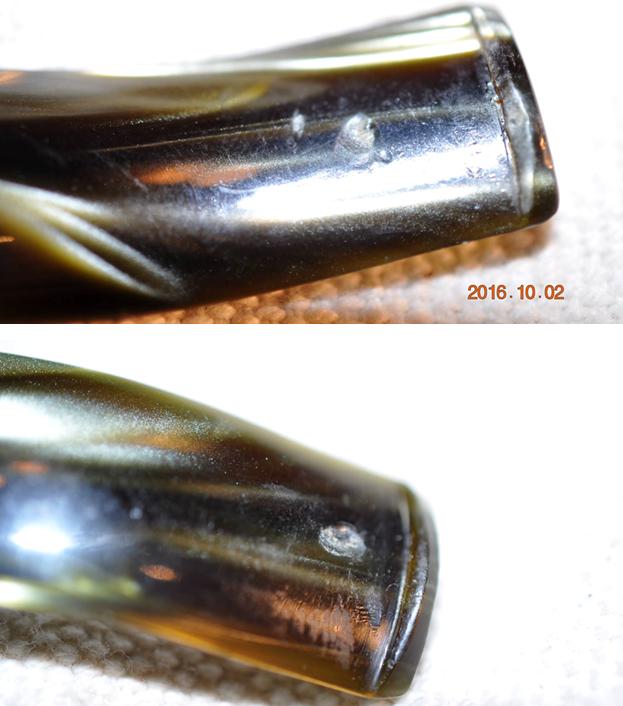
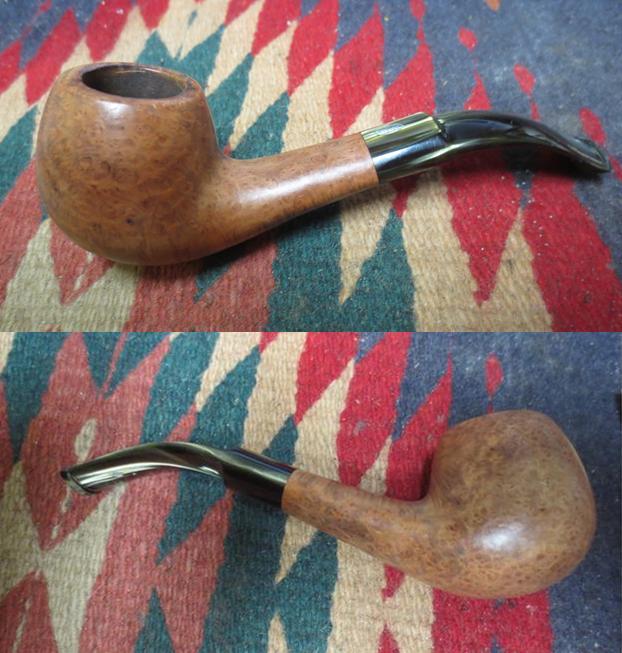
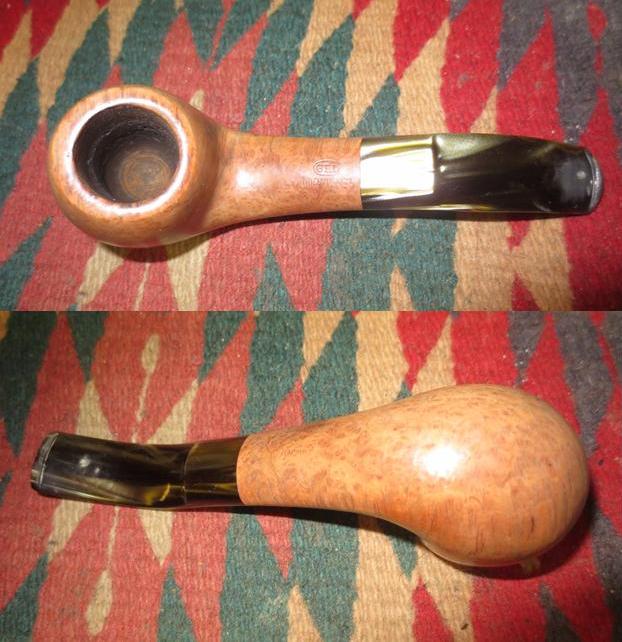
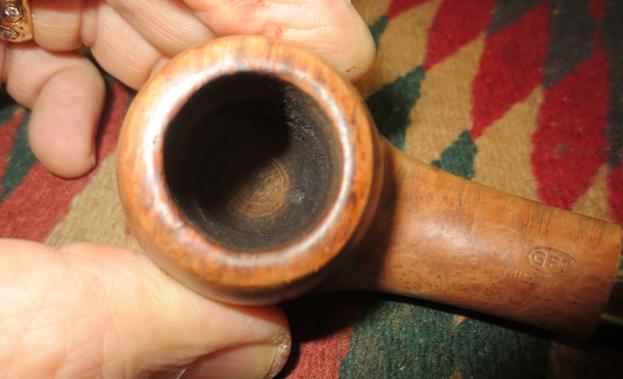
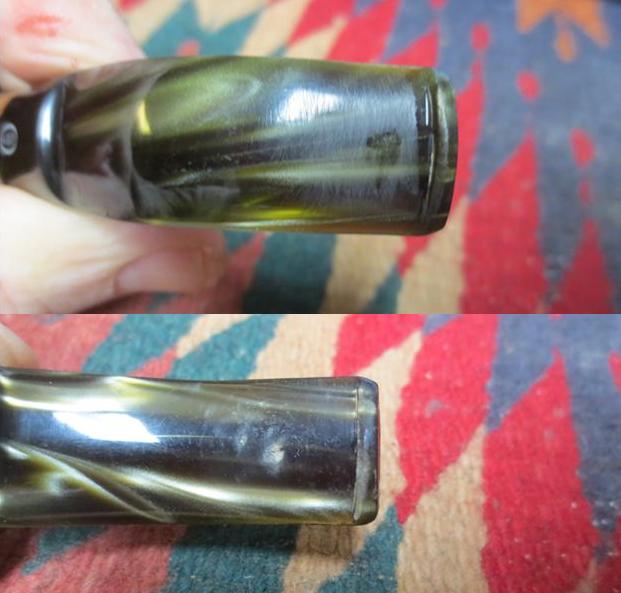
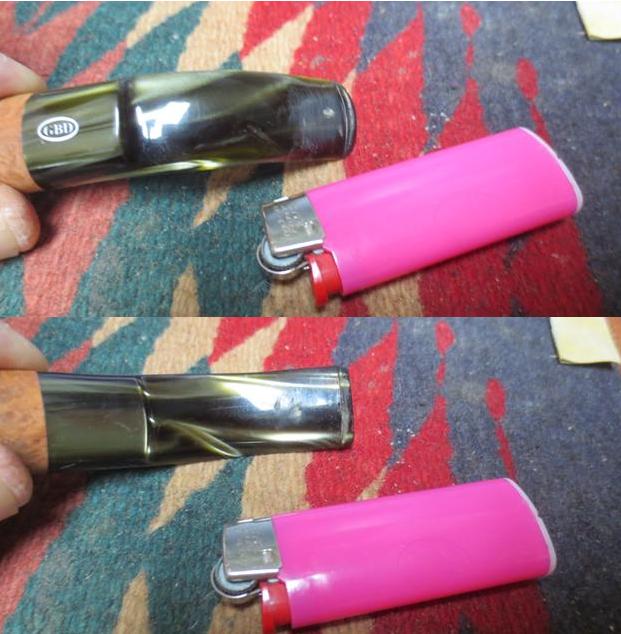
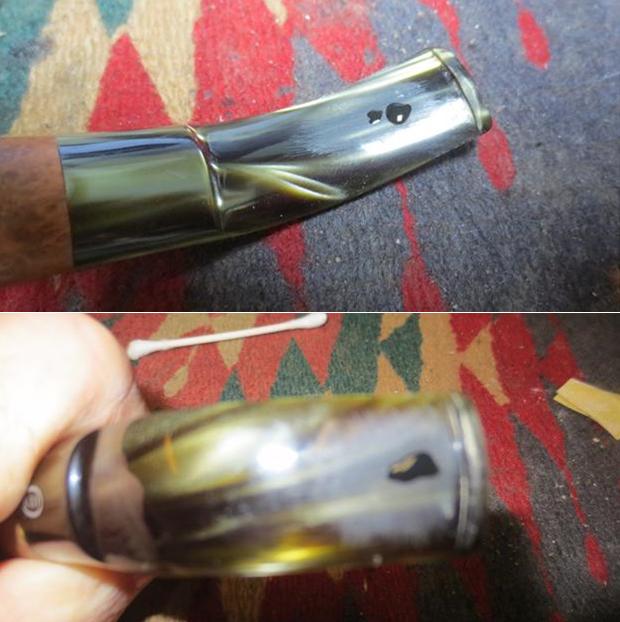
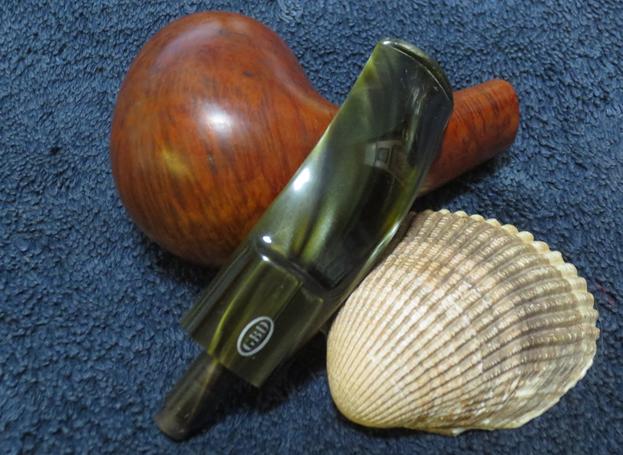
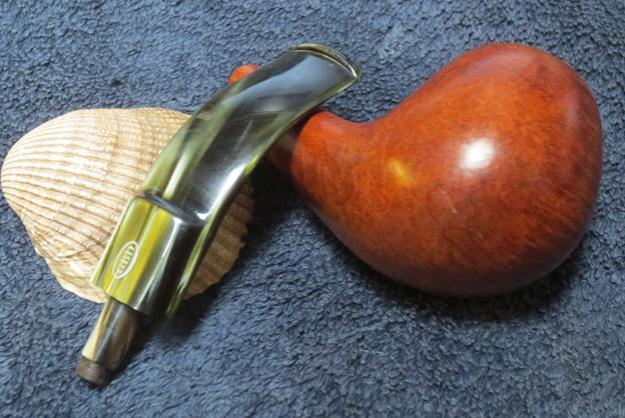
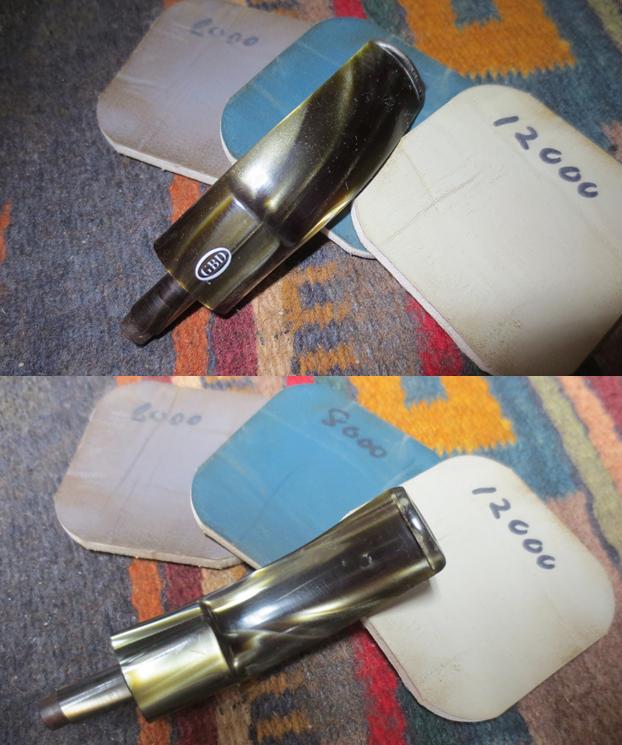
I love old GBD pipes no matter what era they come from. I gave my brother a list of pipes to keep an eye open for in his treasure hunts as he travels and on his eBay forays as well. GBD has been at the top of that list. He found a newer generation GBD recently and sent it my way. It is a nicely grained apple that is stamped GBD in the oval over MIDNIGHT on the top of the shank. On the underside it is stamped London England over 788 which is the shape number for an oval shank apple. The stem is a green swirled Lucite saddle shape with the GBD Oval stamped on the top of the saddle portion. The pipe was in decent shape. The finish was dirty and there was a buildup of cake in the bowl that had overflowed onto the rim. There were some dents in the outer edge of the rim on the back left side and some nicks and scratches on the left side of the bowl. The stem was another one that Jaws had gotten a hold of just like the Estella Non Pareil that I just finished and wrote about (https://rebornpipes.com/2016/12/06/jaws-and-an-estella-non-pareil-%c2%bc-bent-9606-stack-by-savinelli/). The top side had some deep dents and the underside had them as well. There were better situated in that they were in the blacker portion of the stem so blending in the repairs would be simpler.jaws1The photos my brother Jeff sent me really show the grain on the pipe. It has some stunning swirls of grain on the sides and some stunning birdseye on the top and the bottom of the shank and bowl.jaws2 jaws3The next photos show some close ups of the rim and the bowl bottom. The top of the rim was thickly coated with the overflowing cake in the bowl. The birdseye on the bowl bottom is stunning.jaws4The stamping on the shank and the stem was clear though lighter to the right edge on the topside of the shank. The fit of the stem to the shank was messy due to the build up of tars and oils in the shank and the mortise. I was pretty certain that once the pipe was cleaned up the fit would be back to normal.jaws5The next two photos show the work of Jaws on the Lucite. I can only say that I am thankful that the stem was not vulcanite or it would have been destroyed!jaws6My brother did his usual thorough clean up and was able to remove all of the tars and oils from the rim and the cake from the bowl. He scrubbed the grime and oils from the finish with Murphy’s Oil Soap and cleaned out the internals with alcohol, cotton swabs and pipe cleaners. The next four photos show the pipe when it arrived on my work table in Vancouver. I am getting spoiled by him doing all the grunt work of reaming and scrubbing. The pipes I get are all cleaned and reamed and ready to be restored. It is a great arrangement!jaws7 jaws8I took a close up photo of the bowl and rim to show how clean it was when it got to me.jaws9The tooth dents in the stem are shown in the next two photos. After the stem had been cleaned up they did not look as daunting as the ones in the Estella. The button had been worn down some as well by the chomper.jaws10I “painted” the dents in the stem with the flame from a Bic lighter. I was able to raise them quite a bit on this stem. On the top side only one deep tooth mark remained and on the underside there were three left.jaws11I sanded the dented areas with 220 grit sandpaper to smooth out the surface around the dents. I washed it down with alcohol on a cotton swab to make sure I did not leave any of the white sanding dust in the tooth marks. I decided to use black superglue to fill in the tooth dents as they were in the darker portion of the stem. I filled them in and let the glue dry.jaws12Once the glue had dried I sanded the patches smooth with 220 grit sandpaper to blend them into the surface of the stem. The patch on the topside disappeared into the dark green/black of the rest of the stem. The ones on the underside were a little more temperamental and showed some light areas on some small parts of the patches.jaws13I polished the stem with micromesh sanding pads – wet sanding with 1500-2400 grit pads and dry sanding with 3200-12000 grit pads. I wiped the stem down with a damp cotton pad after each set of three pads.jaws14 jaws15 jaws16I set the stem aside and worked on the bowl. I used 1500-2400 grit micromesh sanding pads to work over the nicks in the rim and on the left side of the bowl. I was able to minimise them so that they blended into the briar better. I stained the bowl with a dark brown aniline stain cut 50/50 with isopropyl alcohol and flamed it with a lighter. I repeated the process until the coverage was even on all sides of the bowl.jaws17I buffed the bowl and stem with Blue Diamond on the buffing wheel and gave the pipe multiple coats of carnauba wax to protect it. I buffed it with a clean buffing pad to polish the carnauba and give it a shine. I hand buffed the pipe with a microfibre cloth to deepen the shine. The finished pipe is shown in the photos below. The rich brown of the stain is a great contrast to the green of the Lucite stem. The overall look of the pipe is rich and the feel in the hand is perfect. This one will be available on the store in the days ahead. Thanks for journeying with me in this refurb.jaws18 jaws19 jaws20 jaws21 jaws22 jaws23 jaws24 jaws25

Jaws and an Estella Non Pareil ¼ bent 9606 Stack by Savinelli


Blog by Steve Laug

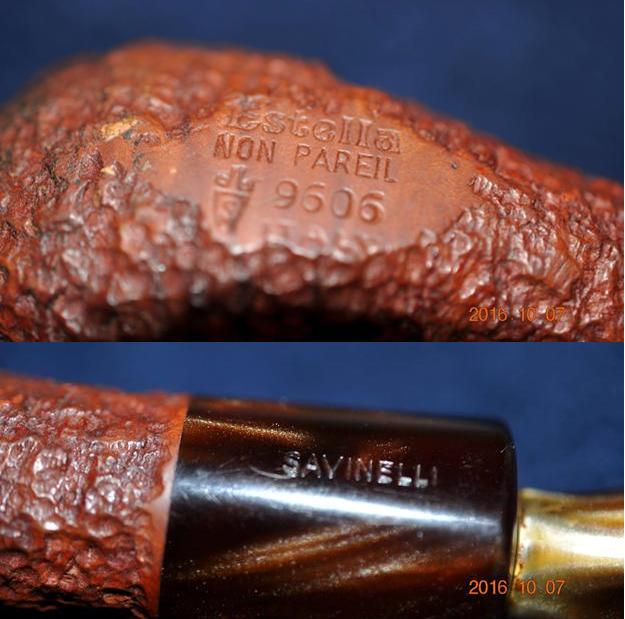
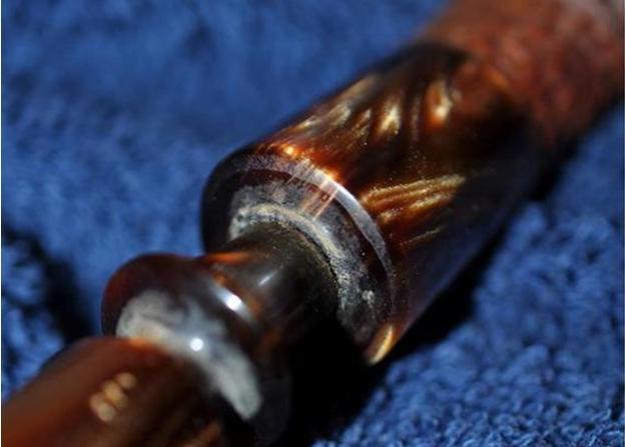
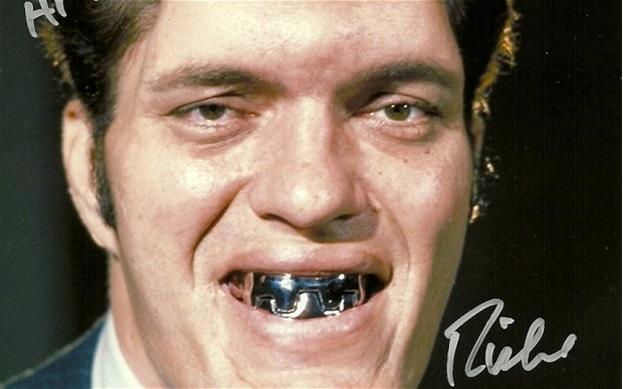
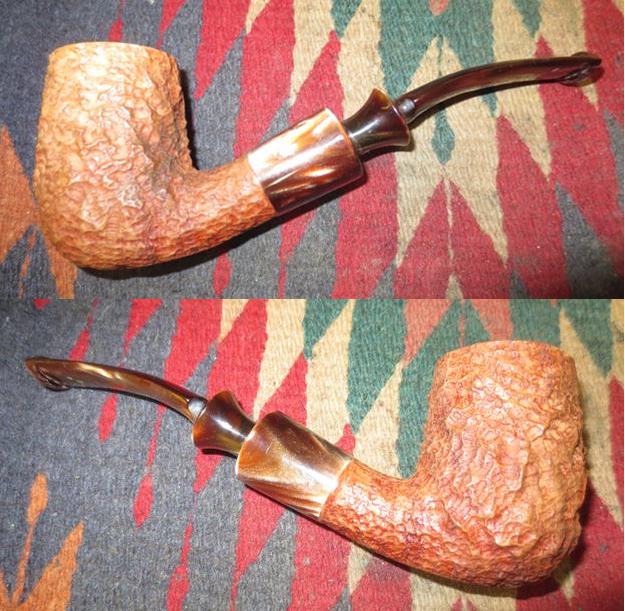
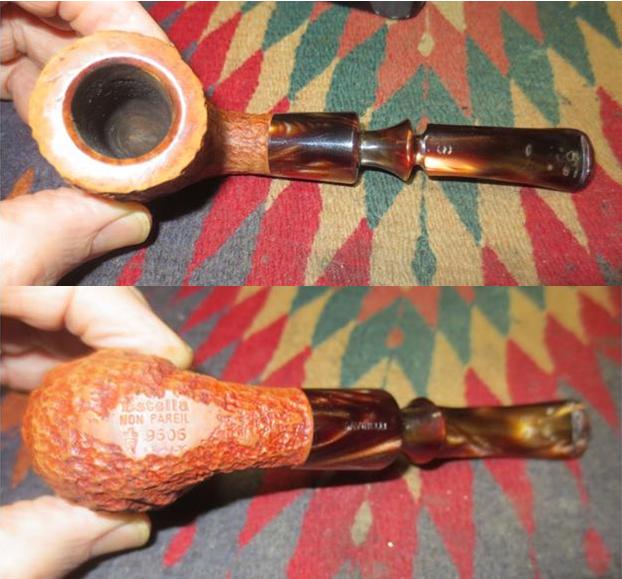
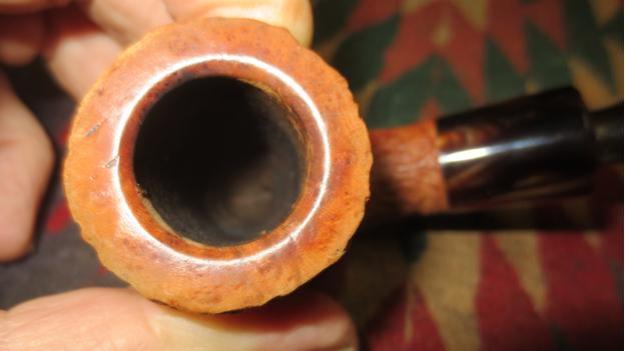
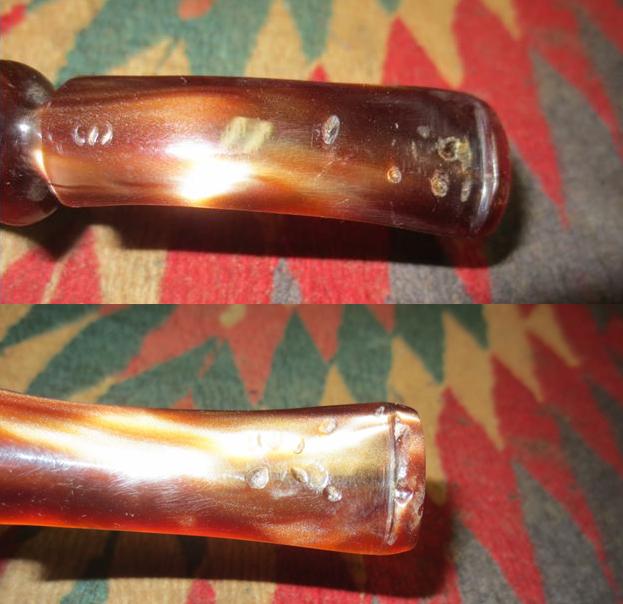
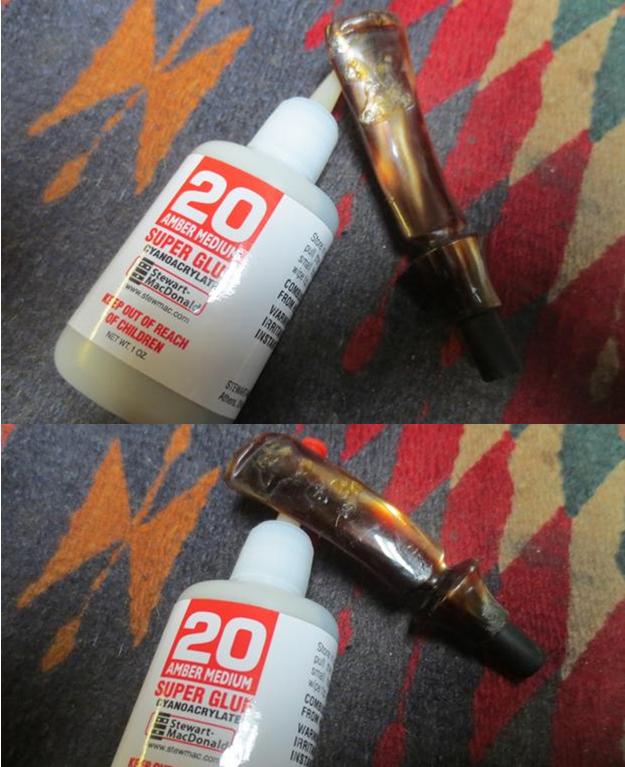
The next pipe on my work table is a Savinelli made Estella that my brother sent my way. It is stamped on the underside of the shank on a smooth oval – Estella over Non Pareil over 9606 with the Savinelli S shield next to that and Italy underneath. When my brother sent me the photos it appeared to be a good looking pipe. The rustication and the stain colour were very nicely done. The Lucite shank extension and the matching Lucite stem in brown and gold tones looked really good – from the side view. The finish on the bowl looked to be dirty or at least had darkening where the hand of the previous owner had wrapped around the bowl.estella1 estella2The cake in the bowl had overflowed on to the rim top and left behind a black and pitted mess. The right front outer edge of the bowl also had a large scrape from a drop or a badly chosen knock to remove the dottle. The close up photos of the rim and the side of the bowl show the condition of the pipe. In the last photo in this series you can see the darkening where the hand wrapped around the side of the bowl.estella3 estella4The next photo shows the stamping on the bottom of the bowl and the shank extension. Other than the S shield logo connecting the Estella and Savinelli the stamping on the Lucite certified the connection.estella5The mortise in the shank extension showed damage and wear as well. It appeared that the mortise was lined with a Delrin tube to go with the Delrin tenon on the stem.estella6Now I am ready to show you the meaning of the word Jaws in the title of this blog. The two photos after the portrait below show the tooth marks left behind by the “shark” who owned this pipe. Lucite stems are really hard material so for him to leave behind this kind of deep gouges in the stem he must have had quite a pair of choppers. Maybe the teeth were like those on one of the villains on James Bond known as Jaws.estella7Whatever then previous pipeman’s choppers were like they left behind a legacy of damage on both sides of this hard Lucite stem that needed a lot of work and would never really disappear.estella8My brother did his usual thorough clean up on the pipe. He reamed the bowl and scrubbed the externals with Murphy’s Oil Soap and a soft tooth brush. He was able to remove all of the buildup on the rim top. He cleaned the internals of the mortise and the airway in the shank and the stem with pipe cleaners and alcohol. He wiped down the stem so that when the pipe came to me it was ready to restore. The next four photos show the pipe when I brought it to my work table.estella9 estella10I took a close up photo of the rim top to show the pitting and the damage on the right front outer edge of the bowl.estella11I took close up photos of the chomped on stem. It was truly a mess and one that would be a challenge to blend in the repairs on the variegated browns and tans of the Lucite.estella12The stem had a partial stamp of an S on the topside near the saddle. Now the challenge began. I examined the tooth marks and saw clearly that they were sharp cuts in the material and not just dents. Heating the stem and trying to raise them would not work. I looked through my super glue options and I had clear and amber superglue that might work. My guess was that no matter what I used would stand out to some degree because of the striations in the browns of the Lucite. I cleaned out the divots with a cotton swab and alcohol to make sure there was no debris in them and put a drop of amber super glue in the divots on both sides of the stem.estella13Once the glue dried I sanded it with 220 grit sandpaper to smooth out the repairs to the surface of the stem. So far the topside was looking better than the underside.estella14I decided to see if I could remove more of the darkening around the spot where the hand of the previous owner clasped the bowl. I used some undiluted Murphy’s Oil Soap and scrubbed it with a tooth brush. I rinsed the pipe under running water avoiding getting water in the bowl. I was able to remove the remainder of the darkening.estella15 estella16To remove the nicks and gouges from the rim top and to remedy the rough outer edge on the front right I topped the bowl on a topping board until the damage was gone and the rough edge was minimized.estella17I cleaned off the exterior of the stem with a damp cotton pad and cleaned out the stem with a pipe cleaner. You can see the ghosts of the repairs in the variations of the colour in the stem material.estella18I polished the stem with micromesh sanding pads – wet sanding it with 1500-2400 grit pads and dry sanding it with 3200-12000 grit pads. After each set of three pads I wiped the stem down with the damp cotton pad to check the progress. The repairs certainly were smooth to the touch but nonetheless they were visible against the variations of the colour of the stem. I had been able to blend in the repairs on the upper portion of the stem but the closer I got to the button the more they seemed to stand out on both the top and the bottom sides.estella19 estella20 estella21I gave the bowl a coat of Conservator’s Wax and buffed it with a shoe brush. I buffed the stem with Blue Diamond on the wheel to see if I could further smooth and blend the repairs. I buffed the entire pipe with a clean buffing pad and then once again by hand with a microfibre cloth. The finished pipe is shown in the photos below. The bowl and rim look really good and the finish is clean and as good as new. The stem and shank extension have a rich glow and from the side they look amazing. The top and underside of the stem with the repairs is absolutely smooth to touch and has a glow. The repairs do show but only because of the swirls of the Lucite. It was a pain to repair but I am happy with the overall finished product. Thanks for journeying with me on this chomped stem and knocked about pipe.estella22 estella23 estella24 estella25 estella26 estella27 estella28 estella29


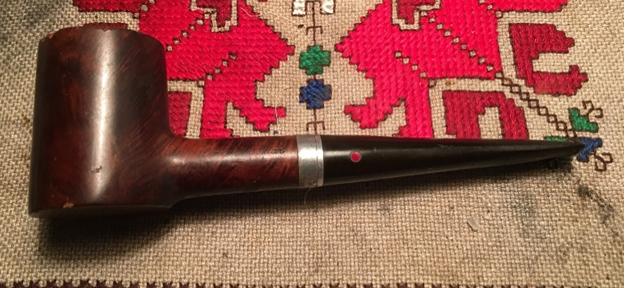
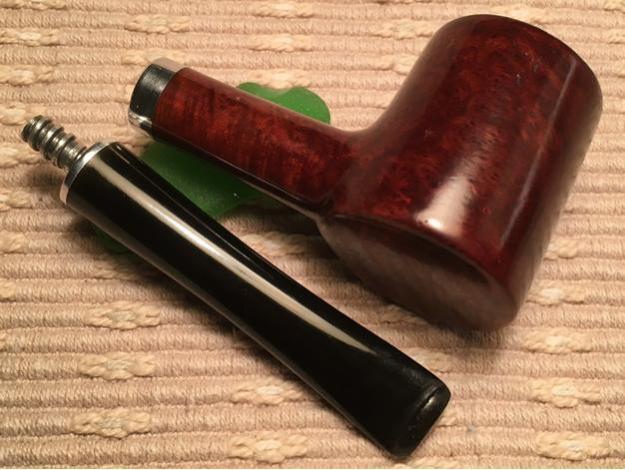
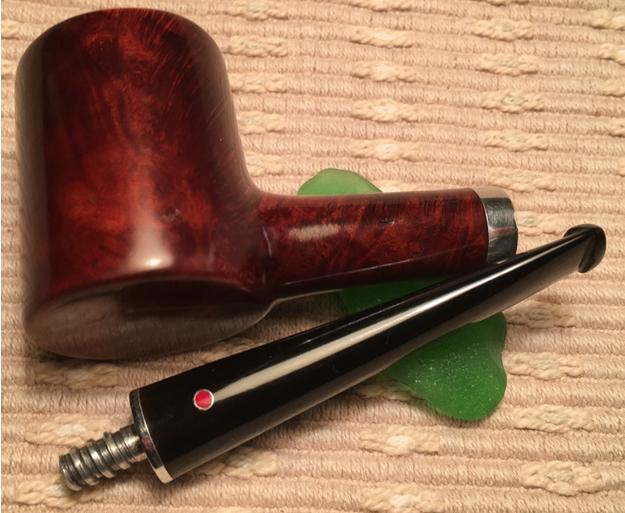
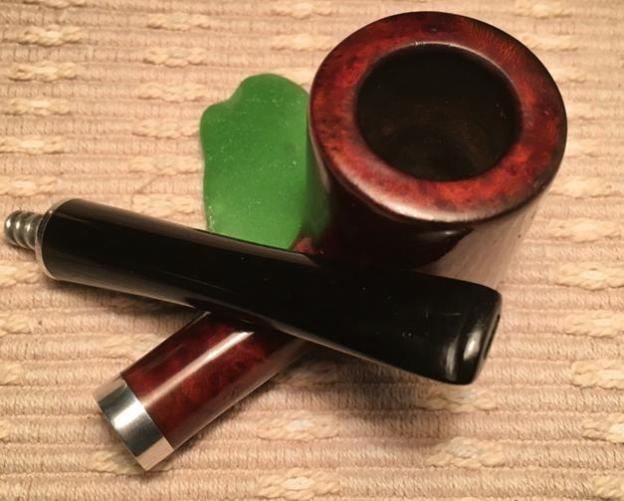
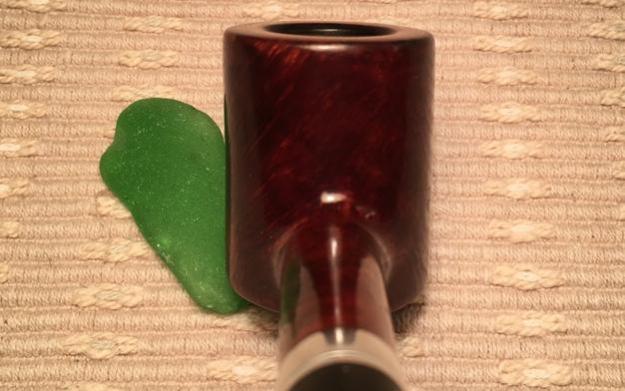
Aged Imported Briar Poker with Red Dot


Blog by Dal Stanton

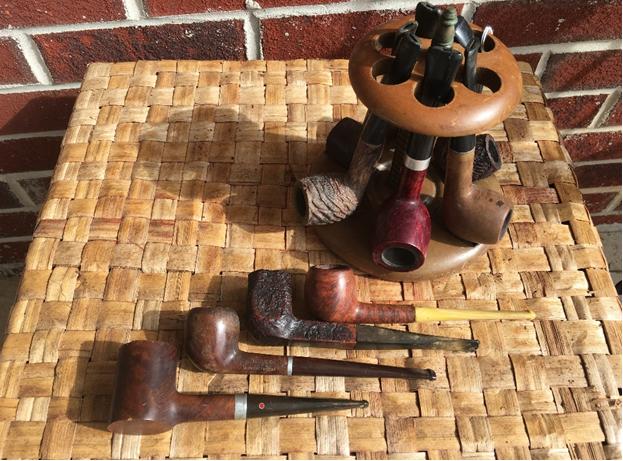
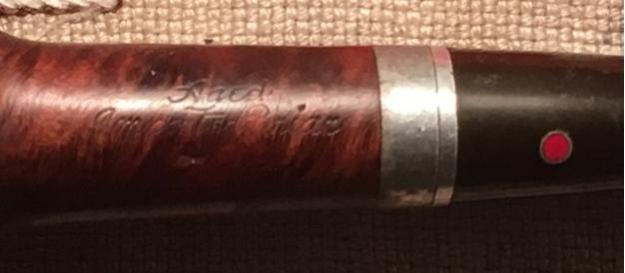
My wife and I were on Interstate 24 nearing Manchester, Tennessee, returning to the Atlanta area after the wedding of our daughter in Nashville.  The billboard beckoned and, of course, I responded by taking the next exit!  Madeline’s Antiques & Uniques had the look of a classic pipe picker’s paradise and I was not disappointed! I’m thankful for my wife’s patience and her eagle eye.  She helped ferret out hidden pipes in need of help and a new home.dal1 dal2 dal3In Palmetto, Georgia, I laid out the haul and recorded the picture above – including the six-pipe pipe stand!  The poker on the lower end is before me now on my work table back in Sofia, Bulgaria.  The left side of the shank has Aged over Imported Briar in a cursive script.  The other remarkable characteristics of this Poker are the red dot on the stem and the screw in tenon with a metal mortise receiver.  Always hopeful of identifying a pipe’s heritage I landed on a thread written in 2013 in Pipesmagazine.com (Link) of someone seeking information about a pipe with the exact nomenclature, dot and screw in stem, just a different shape, an Author shape instead of the Poker before me.  While pedigree is still inconclusive, one helpful comment in the thread summed up well the possibilities:

The “Aged Imported Briar” stamp suggests this is made in the U.S. The screw-in stem is typical of
Kaywoodie and perhaps Jobey which was made for a few years in the U.S. However the design and
shape of this pipe is not Jobey-like. I don’t know Reiss-Premier, but if it is a U.S. outfit, that could
be it. If I understand correctly, the “imported briar” stamp was typical of U.S. pipes at a certain period
when other woods were being used for pipe bowls and there was some misgiving about some of the
woods used. This was a reassurance that the pipe was good quality and safe.

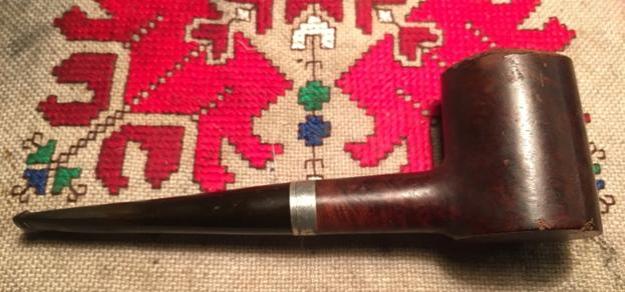
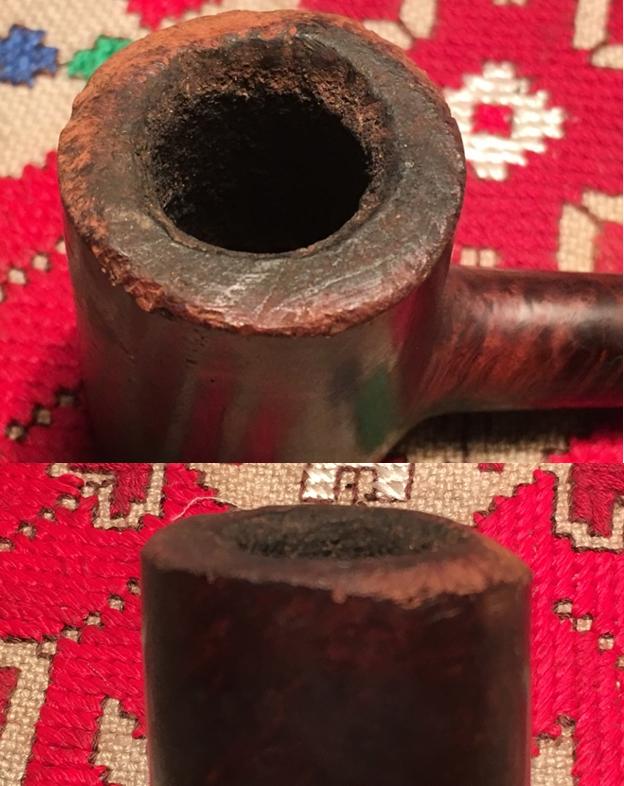
The best guess is the US company, Reiss-Premier, as the source of this Poker because of the dot (See Pipephil.eu) identification.  Reiss-Premier had a factory in Chicago from 1930-1959 and was responsible for the term “Drinkless” which was well known with many Kaywoodie pipes (See Pipedia) which Reiss-Premier also produced.  If the clue about the authenticity verification of briar stated above is accurate, this Poker possibly dates back to WW II days (40s and 50s) when briar supply from Europe was scarce.  Notwithstanding, there is little doubt that this Aged Imported Briar Poker has seen better days and those days are many days ago.  On my work table I take some additional pictures to get a better idea of the challenges with this pipe.dal4 dal5 dal6 dal7 dal9 dal10 dal11The poker is an iconic shape – the name comes from the flat bottomed cylindrical shape of the stummel.  While men dealt hands of poker they could put their pipes on the table without fear of dumping ash on the winnings.  This Poker has heavy cake in the bowl and the rim is in rough shape – I’ll need to remove some valuable briar real estate to reestablish a flat top look, hopefully the Poker won’t turn into a Poker Pot shape in the process!  The stummel heel has some dents and scratches from doing what it was intended to do – sit.  The briar is all but concealed by the old clouded finish – but there is nice looking briar underneath!  I detect a small root branch knot in the grain pattern that will add to the ‘old school’ quaintness of the Poker.  There are signs of wear on the stummel, but I’ll not remove them all – signs of the paths and stewards this Poker has served along the way!  The stem has oxidation and the upper button lip looks like a 9 iron took a divot out of it.  The button will need rebuilding.

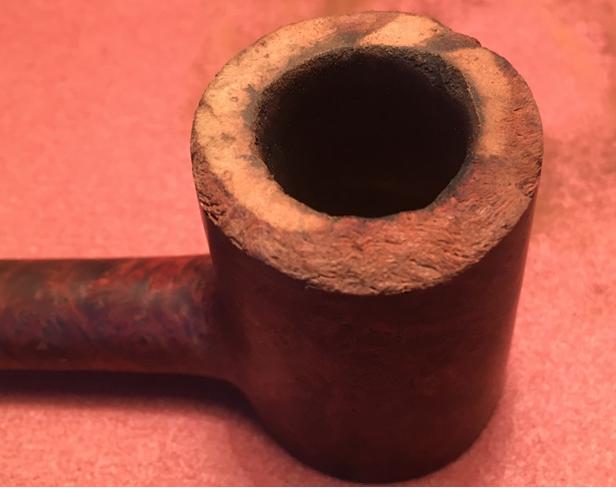
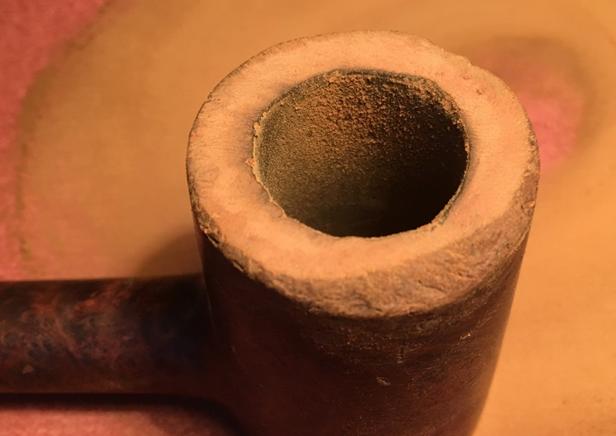
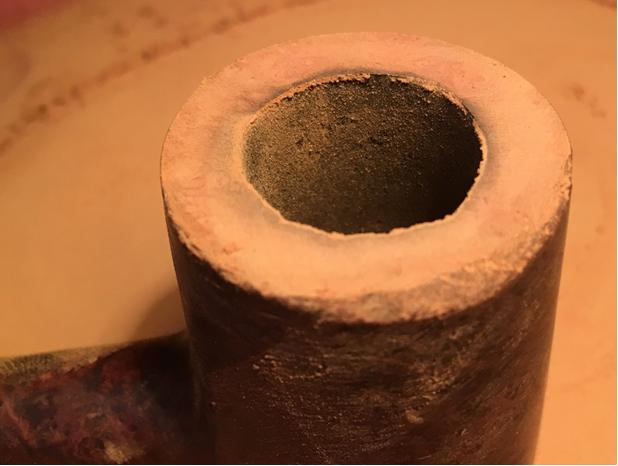
The first order of business is to clean the stummel starting with reaming the bowl and washing down the exterior with Murphy Soap to get a better perspective on the stummel condition.  I also plop the stem into an Oxi-Clean bath to start working on the oxidation.  I’m not sure what effects the bath will have on the red dot so I cover it with Vaseline before the plunge.  I take the Pipnet reaming kit and use 2 smaller of the 4 blades available.  I follow the reaming blades with the Savinelli pipe knife to fine-tune the ream and finish with wrapping 240 grit paper around a dowel rod and sand the chamber.  Using cotton pads and Murphy Oil Soap I scrub the exterior of the stummel and use a brass wire brush to work on the rim which loosens nicely the lava flow without scratching the wood.   The pictures show the progress. dal12 dal13 dal14 dal15I take another close-up of the rim damage from a lateral perspective to illustrate how much briar I will need to take off through topping to achieve a level lid to this Poker.  A bunch!  I take a chopping board covering it with 240 grit paper and carefully rotate the inverted stummel not leaning into the sloping angle of the damaged area.  I don’t want a slanted top!  I check the progress often and ‘free-stand’ the inverted stummel with the help of a right angle I try to keep things perpendicular.  The pictures show the progression of the topping. dal16 dal17 dal18 dal19 dal20When I arrive at a point where almost all damage is eradicated, I stop the topping with 240 grit paper and with 120 grit paper rolled up I shape a bevel on the inside and outside of the rim removing the remainder of rim damage.  After the 120 grit cuts the initial bevel I follow with 240 and 600 grit paper on the inside and outside of the rim.  Finally, I lightly top the stummel again but now with 600 grit paper over the chopping block.  I do this not only to smooth the rim surface, but it also serves to sharpen the circular bevel line around the circumference of the rim – inner and outer.  It gives the rim a very classy, finished look to me.  The pictures show the progress.dal21 dal22 dal23Since the heel of the stummel has scratches and edge damage as well, I repeat the process described above for the heel as well except for using only 600 grit paper to ‘top’ the bottom – not 240.  I only needed to clean and smooth the surface layer not remove real estate.  The bottom bevel utilized 120 then 240 then finally 600 grit sanding papers.  In the last picture of the set below, there remains a small damage spot that I fill with a superglue patch which I will smooth and blend later.  This Poker will be ready for any high-class card table!  The pictures tell the story!dal24 dal25 dal26 dal27 dal28With rim and heel repairs completed, I fish the stem out of the Oxi-Clean bath and it did the job of raising the oxidation out of the vulcanite.  I’ve started inserting a pipe cleaner into the stem before dropping it in the bath making it much easier to fish it out (picture 1 below).  I wet sand the stem with 600 grit sanding paper to take off the mother-load layer of oxidation raised on the stem, then I follow with 0000 steel wool.  After inspecting the stem, I see more oxidation around the button and shank areas – I use 240 grit paper on those more stubborn areas, then again 600, then 0000 steel wool.  In anticipation of doing the button rebuild, I want a clean stem so using pipe cleaners (bristled and non) dipped in isopropyl 95% I clean the stem internals.  It did not take much effort and now to the button repair.  The pictures show the progress.dal29 dal30 dal31I take a close-up of the upper button area to get another look.  It is apparent that the former steward of this Poker had a favorite hold to keep his (or her J) pipe in place while the cards were dealt and considered.  The dent on the button resembles compression damage more than biting or scissor action.  You can see just to the left of the button (up the stem) a bite mark.  My forensic opinion is that the bite is the eye tooth and the compression represents the work of the molar behind – the pipe being clamped on the side to keep the hands free for gathering new cards and tossing those less desirable aside.  I would guess the steward of this Poker was right handed, too – the compression being on the right side leaving most the stem toward the center of the mouth for puffing.  Nope, can’t tell how tall he was!  Yes, I do believe now it was a ‘he’ because a ‘she’ probably wouldn’t mouth-clamp the pipe but put in down on the table and then deal another round J.  Fun and forensics aside, I need to rebuild the upper button area.  First, I attempt to raise the ‘eye tooth’ bite with heat – I ‘paint’ the area with a candle flame.  It seems to have done the trick.  Then, taking 240 grit paper I rough up the button area and then clean the button area with a Q-tip dipped in alcohol.  I mix a batch of charcoal powder and ‘Extra Time Control’ super glue into a toothpaste thick consistency.  I put a mound of charcoal on an index card (so it can be tossed when done) and place a small puddle of super glue next to it and begin to mix – adding more charcoal a bit at a time until I reach the consistency needed to stay in place on the button.  I use a toothpick as a trowel and gradually build and mound over the button that later will be sanded and shaped with a needle file.dal32 dal33 dal34 dal35 dal36 dal37Setting the stem aside to allow the charcoal super glue putty to cure overnight, I turn back to the stummel.  I take medium and light weight sanding sponges and sand the surface, careful to avoid the Aged Imported Briar nomenclature on the shank.  The briar is beginning to emerge and the metal band/mortise is shining up nicely.  I realize that I was anxious to start on the external briar and forgot about the internal muck.  Taking pipe cleaners and Q-tips I clean the internals dipping them in isopropyl 95%.  Time to turn out the lights.dal38 dal39The next day has arrived and I’m anxious to work on the button rebuild that has cured overnight.  I take a picture to mark progress and using a flat needle file I file down the cured charcoal superglue gradually – patience.  The following pictures journal the shaping of the restored upper button that had the most compression damage.  I use the flat needle file to do the button shaping and then follow with 240 grit paper to fine tune and to remove the file marks from the vulcanite.  I’m pleased with the progress.dal40 dal41 dal42 dal43The lower button presented more challenges.  Pictured below I could detect two pockets in the charcoal superglue putty.  To avoid filing off too much of the new button build I elect to apply black superglue and charcoal mix to fill the pockets.  I’ll let these fills cure before sanding and finishing the button repair and then moving on to the stem restoration.dal44 dal45Putting the stem aside, I begin to micromesh the stummel in anticipation of applying a light brown stain.  I begin by wet sanding with micromesh pads 1500 to 2400.  I follow this with dry sanding using 3200 to 4000 then 6000 to 12000 – careful to avoid the Poker’s stampings on the side of the shank.  I enjoy watching the briar grain emerge.  The nickel (I think) band/mortise is shining up very well.  The pictures show the progress. dal46 dal47 dal48Oh my…here I go again.  I intended to apply Fiebing’s Light Brown Leather Dye to the Poker – I just brought it back to Bulgaria from the US and I wanted to give it a try.  The grain of this Poker bowl is very active with a mixture of dark and lighter grains.  I mentioned earlier a knot as well…. I’ll be thinking about this….  I thought and I will apply the light brown Leather Dye as originally planned.  I will see how it looks and I can use a cotton pad with alcohol to lighten the stain as needed.  This is one of the advantages of aniline stains and dyes – these I could not easily find here in Bulgaria.  I’m not sure if the staining will impact the metal band, but I decide to wrap it in masking tape just in case.  I wipe the stummel with a cotton pad and alcohol just to make sure the surface is clear of saw dust from sanding.  I use my air gun to warm the stummel before application of the dye.  I apply the dye with a folded pipe cleaner which I saw Steve do – it is much easier to use compared to a dauber that usually carries more dye than is needed and is messier.  At least this is my experience.  After applying the dye liberally over the entire bowl, I flame it by lighting it with a candle.  The alcohol base in the dye burns off very quickly and does not hurt the wood.  Then, I repeat the application again and flame it.  By doing this I assure that the entire surface has been covered.  I’ll wait until morning to unwrap the ‘package’ and look at the grain.  The picture shows the aftermath.dal49With the stain settling, the stem is ready for the home stretch.  The button super glue patch is cured, so I take 240 grip paper and finish smoothing and shaping the button.  I follow the 240 with 600 grit paper then 0000 steel wool over the entire surface of the stem.  Beginning with micromesh pads 1500 to 2400, I wet sand the stem and follow with an application of Obsidian Oil to the vulcanite.  Then with micromesh pads 3200 to 4000 then 6000 to 12000 I dry sand the stem following each set of 3 pads with an application of Obsidian Oil.  I like the polished vulcanite pop and the red dot stands out nicely.  The pictures show the progress.dal50 dal51 dal52 dal53 dal54Now to unwrap the stummel!  After staining the stummel with Light Brown Leather Dye I take a cotton pad with alcohol on it and wipe down the surface.  This smooths the stain and lightens it slightly.dal55 dal56Reattaching the stem and stummel, with the Dremel felt wheel set at the slowest speed (RPMs) I use Tripoli compound to begin fine tune polishing the surface.  I follow Tripoli with applying Blue Diamond with felt wheel, rotating it methodically over the surface, allowing the high speed of the wheel and the compounds to do the work.  Following the compounds, I wipe/buff the stummel with a cotton cloth to remove the powder residue from the compounds.  Switching to a cotton wheel, and increasing the speed of the Dremel by one number, I apply several coats of carnauba wax to both stummel and stem and finish the restoration of the Aged Imported Briar Poker with a brisk buff with a micromesh cloth.  This old Poker is looking great.  I’m pleased with the button work and the briar makes me smile – it is very active and I enjoy the root knots here and there.  This Poker will again make the card table a more enjoyable experience for some new steward who gives him a home.  Thank you for joining me!dal57 dal58 dal59 dal60 dal61 dal62 dal63 dal64 dal65


CPF Best Make Bulldog with a Silver Rim Cap and Ferrule


Blog by Steve Laug

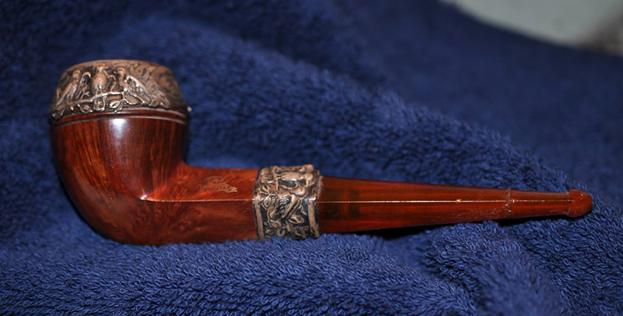
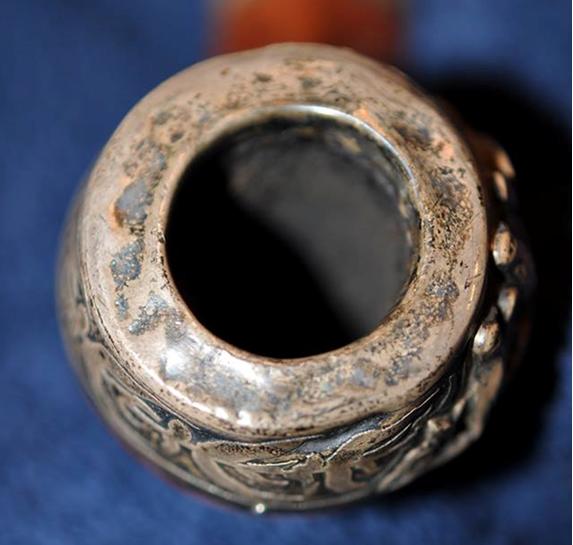
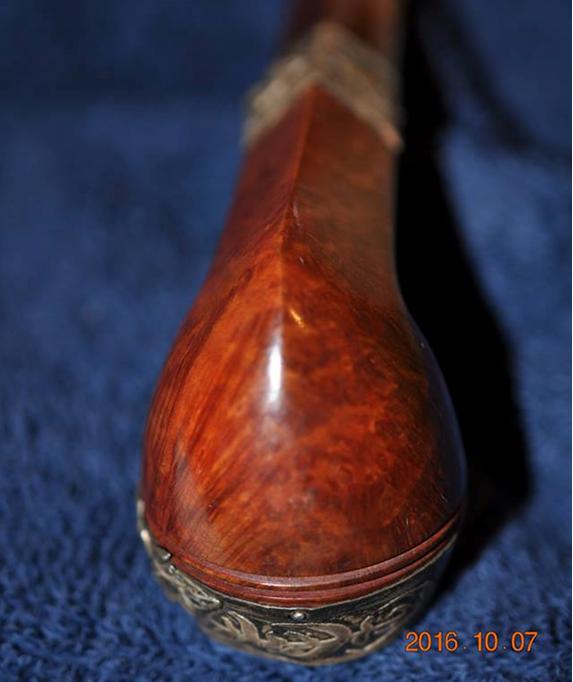
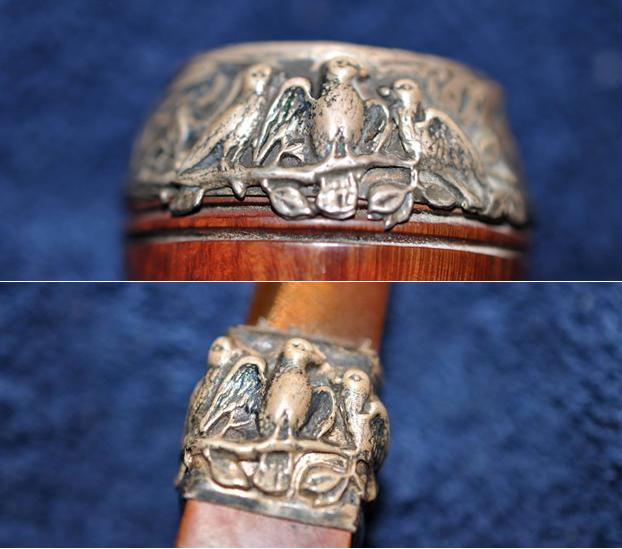
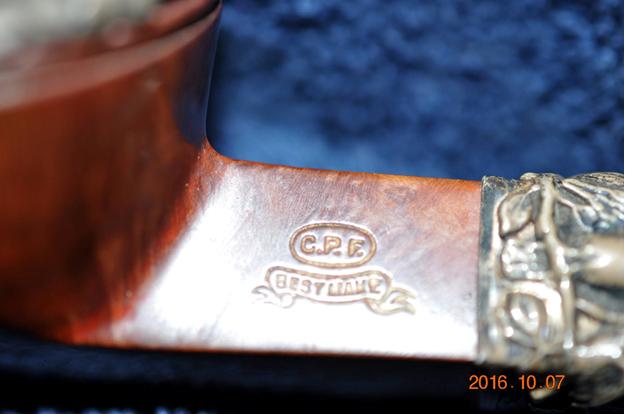
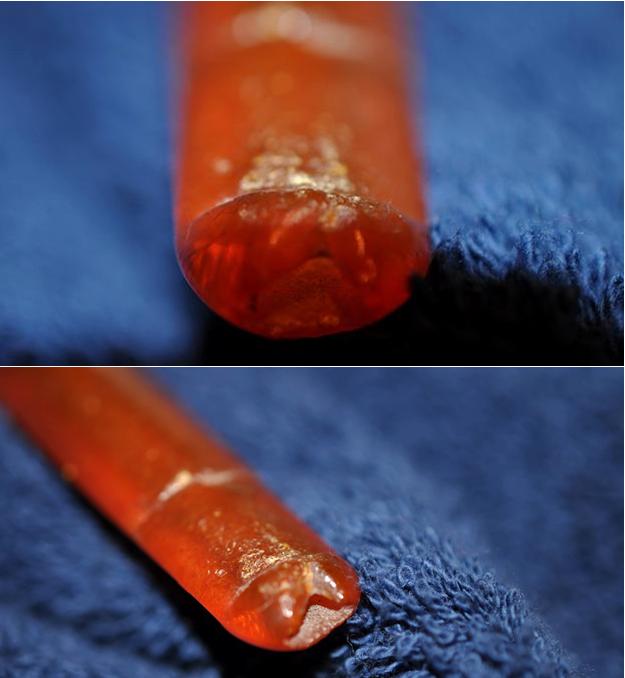
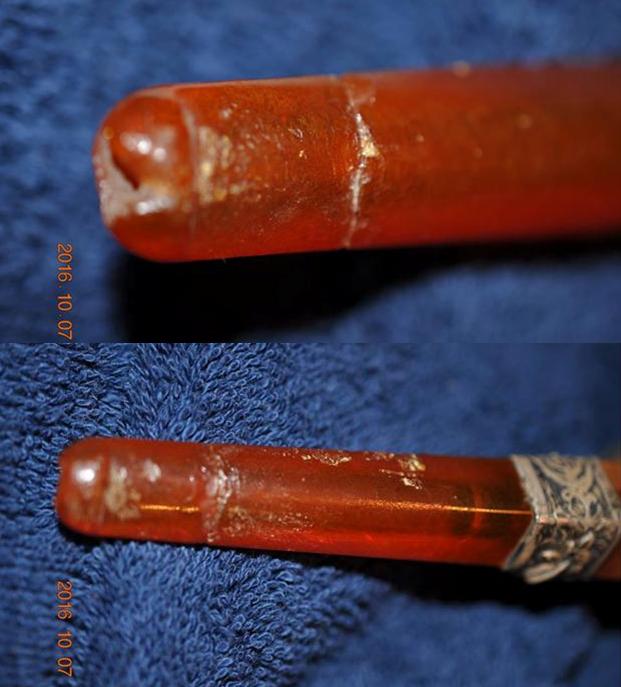
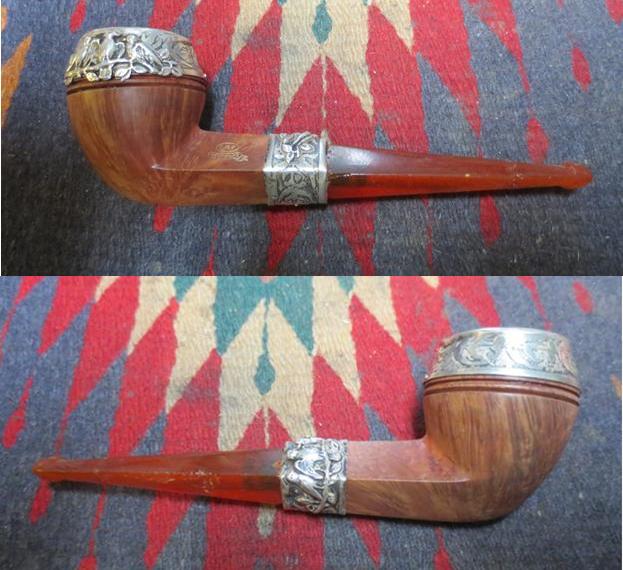
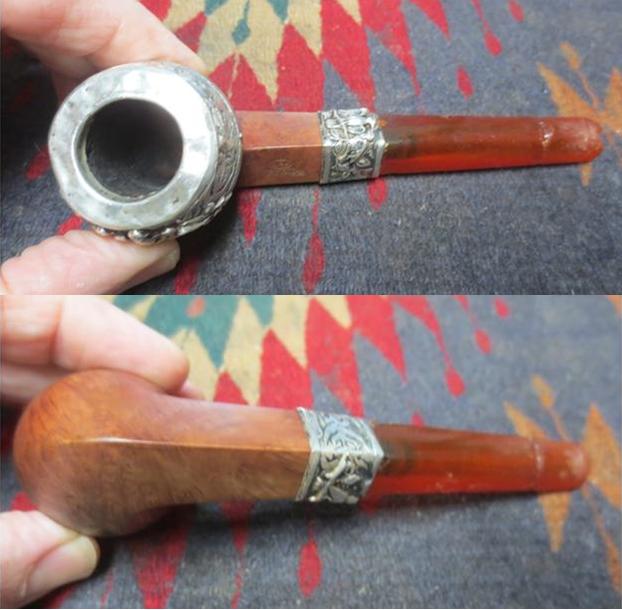
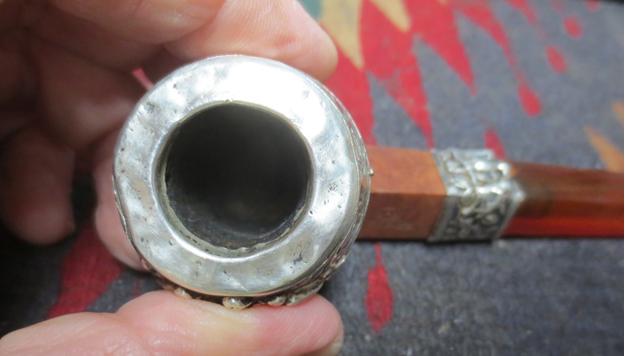
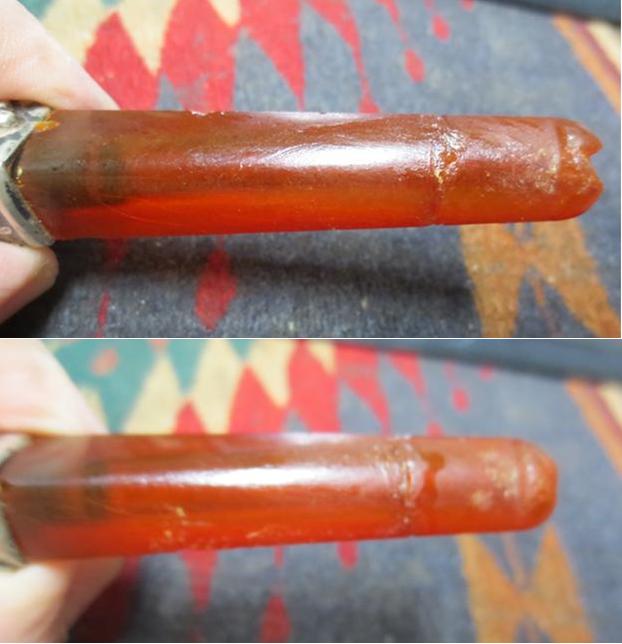
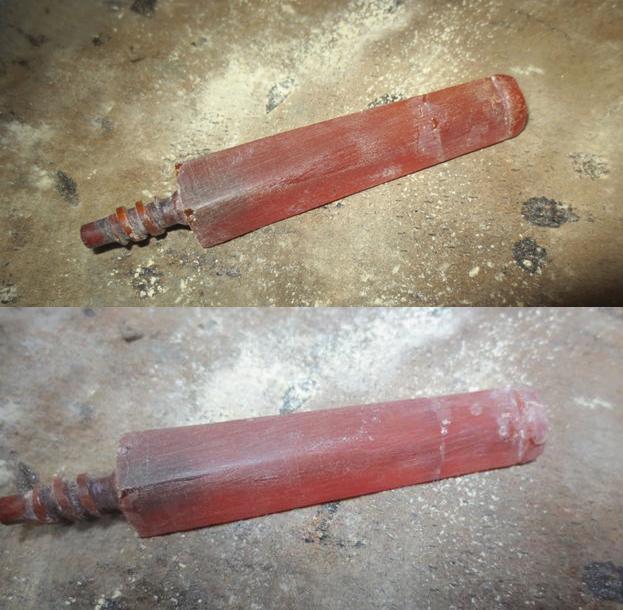
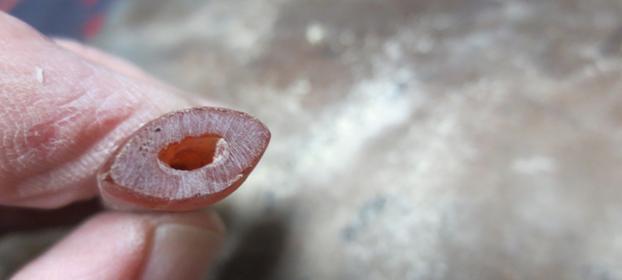
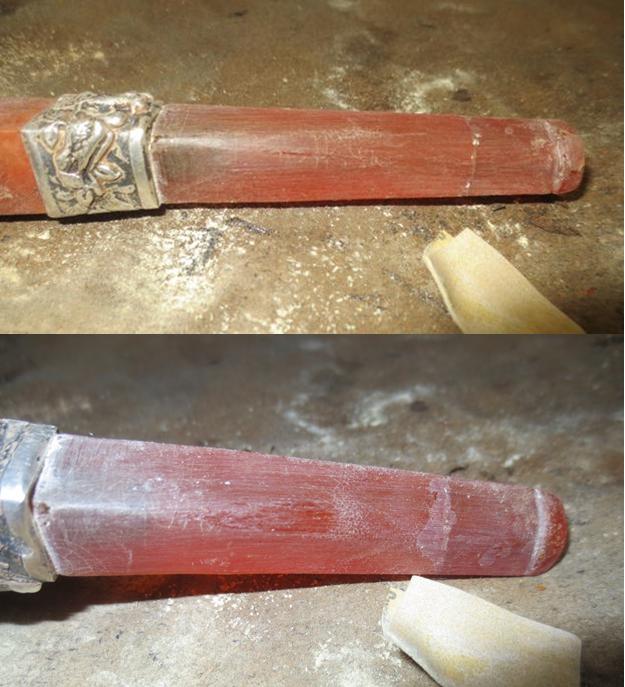
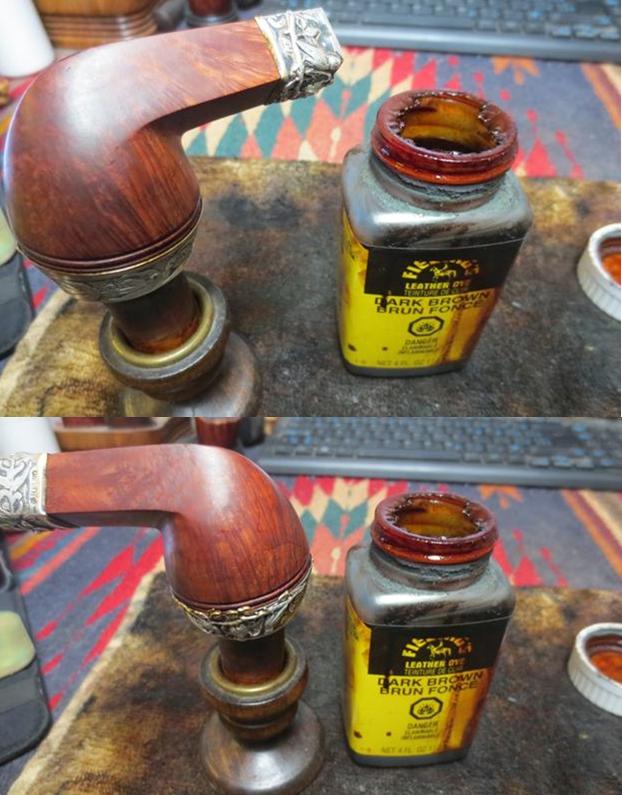
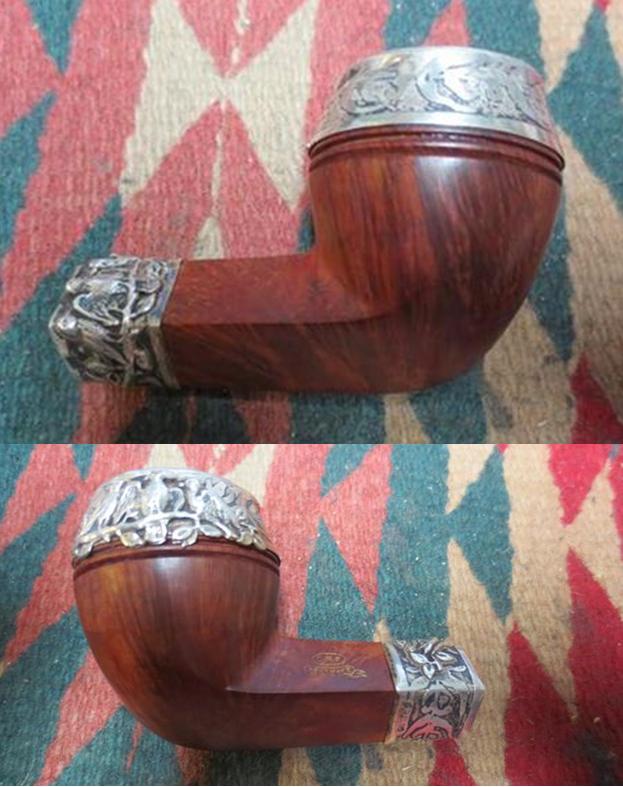
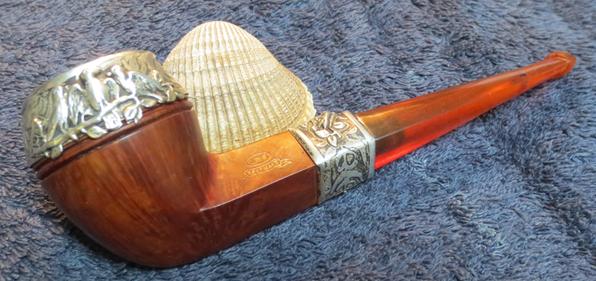
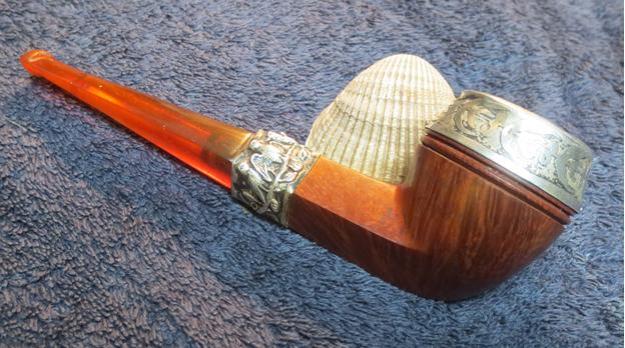
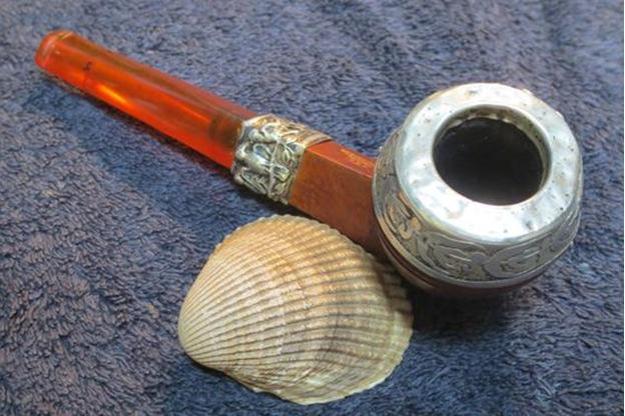
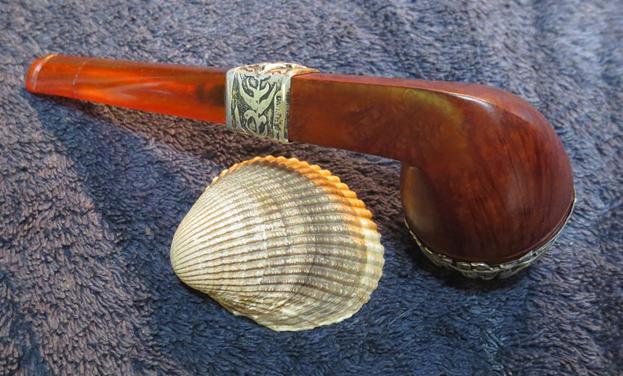
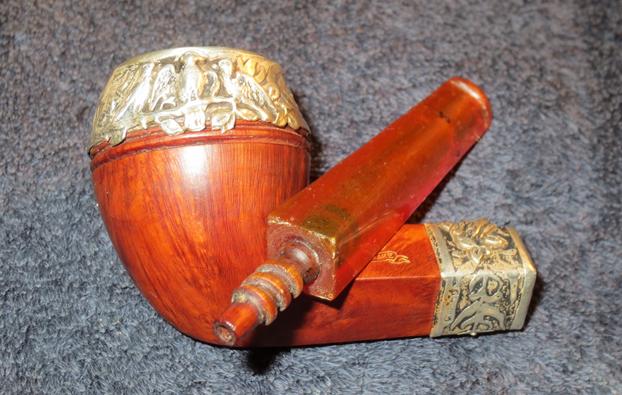
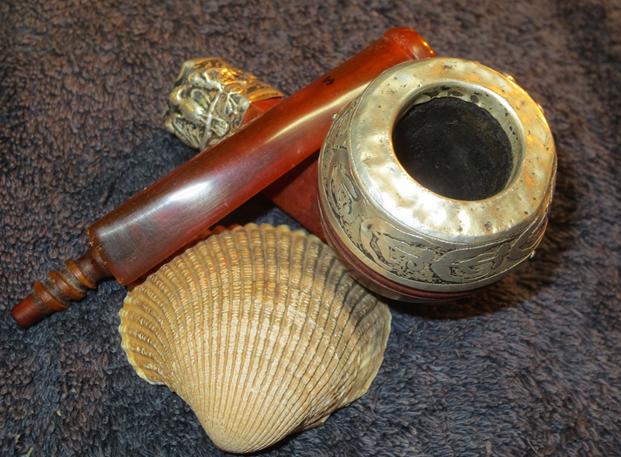
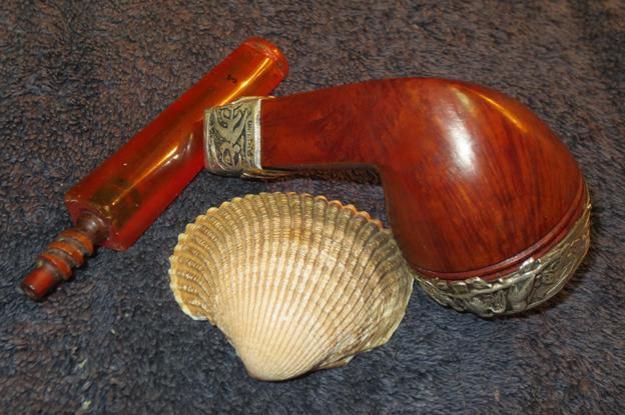
This is yet another great old pipe that my brother picked up on eBay. It is a classic CPF Best Make Bulldog with what I believed to be a Bakelite stem. It is stamped C.P.F. in an oval over Best Make in an unfurled banner on the left side of the shank in gold filigree. The silver rim cap and ferrule on the shank are ornate, both cast with birds and branches which seem to be doves and olive branches. The band and cap were tarnished and dirty. The top of the rim cap was dented, tarnished and had a buildup of tars and oils. The bowl had some great grain under the grime on the briar. The stem was had been broken off at some time in its long life and been repaired with a clear glue – epoxy maybe. The glue had hardened and was really a mess with it “globbed” all over all four sides of the diamond shaped stem. The button on the stem was missing a large chunk on the top side leaving the top of the airway exposed. There were also some chips missing on the stem at the joint of the shank and the stem. The tenon was a bone threaded tenon and screwed into the shank. The alignment was very good. My brother took the next set of photos to show the state of the pipe when it arrived in Idaho before he did the cleanup work on it.cpf1 cpf2My brother Jeff took a close up photo of the rim and the bowl. The photo shows the damage to the silver rim top as well as the cake that is in the bowl. The second photo shows the bowl of the bowl. The diamond shank carries through to the bottom of the bowl in classic bulldog fashion.cpf3 cpf4The next series of three photos show the cast birds and branches on the rim cap and the ferrule. You can see the look of the birds that I think are doves and the branches that I think are olive branches making this a bit of a “peace pipe”. The third photo shows the stamping on the left shank of the pipe.cpf5 cpf6The next series of photos show the repair to the stem and the damage to the button on the top side. It was a solid repair despite the ugliness of the finished look. The first two photos show the damage to the button top and the airway into the stem. You can also see the repair line where the stem was glued in the second photo. The third and fourth photos show the top and the underside of the stem and the repair can be clearly seen in both photos.cpf7 cpf8I have written about the CPF brand in previous blogs including a blog on the historical background of the brand. You can read the whole article at the link that follows. https://rebornpipes.com/2013/04/14/some-reflection-on-the-historical-background-on-cpf-pipes/. I have also included a short portion of the blog to give a brief summary of the brand.

CPF stands for Colossus Pipe Factory. There is not much known about the Colossus Pipe Factory. I learned that by the mid 1890’s CPF was owned by Kaufman Brothers & Bondy (KB&B). They operated the factory at 129 Grand Street, in New York City, New York. I had a faint memory of some connection between CPF and Kaufmann Brothers & Bondy. But was unsure where I had heard or read that. In the process of reading information I came across this post by Bill Feuerbach on the Kaywoodie Forum: “About 10 years ago I picked up two original invoices from KB&B. One is dated February 5, 1884 and the other December 9, 1898. Both have the address as 129-131 Grand Street, which is in Soho, adjacent to the Bowery in New York City. The 1898 invoice has in the upper left hand corner the initials CPF and Trademark. So by 1898 KB&B was making it known to the trade that they owned the CPF trademark. The 1884 invoice does not have CPF on it. Therefore I think we can assume KB&B acquired or started the CPF line sometime between 1884 and 1898.”

I have also included a link to the blog that shows and old CPF catalogue that links KB&B to CPF – or Kaufmann Brothers and Bondy with Colossus Pipe Factory. https://rebornpipes.com/2014/03/05/an-old-kaufman-brothers-bondy-cpf-catalogue/

My brother did his usual thorough clean up on the pipe. He scrubbed the silver with a tooth brush and some dish soap and was able to remove the tarnish in the deep grooves of the castings. He scrubbed the rim cap and removed the tars and oils in the dents on the surface of the cap. He cleaned the briar with soap and a brush and rinsed it off. He reamed the bowl and cleaned out the inside of the shank and the airway in the stem. He cleaned up the threaded tenon and the threads in the shank. When it arrived in Vancouver I took photos of the pipe before I started to restore it.cpf9 cpf10I took close up photos of the rim cap, bowl and the stem to show the condition of the pipe when it arrived at my work table. The rim cap is dented but clean. The stem repair is visible and you can see the buildup of glue on the stem surface and the damage to the button and airway on the stem.cpf11 cpf12I sanded the stem repairs and stem surface with 220 grit sandpaper to remove the buildup of glue all around the stem. It took quite a bit of sanding to remove all of the thick dabs of glue. I worked on the chipped areas of the stem as well on the tenon end of the stem.cpf13I built up the chipped area on the top of the button with clear super glue until it was even with the rest of the button. I sanded it with 220 grit sandpaper to remove the excess and shape it. I used the topping board to flatten the end of the stem and a needle file to smooth out and shape the slot in the button.cpf14I filled in the small pits and crevices in the stem surface and the chips at the tenon end with clear super glue. I sanded the repaired areas on the surface of the stem to smooth it out blend it in with the rest of the stem. I shaped the button and rounded the edges of the button to slope it toward the slot on the stem end.cpf15I stained the briar with a dark brown aniline stain mixed 50/50 with isopropyl alcohol using a folded pipe cleaner to apply it around the rim cap and shank ferrule. I flamed the stain with a lighter and set it aside to dry.cpf16I gave the bowl several coats of Conservator’s Wax and buffed the bowl with a shoe brush and then lightly with carnauba and a clean buffing pad to raise the shine.cpf17 cpf18I polished the stem with micromesh sanding pads – wet sanding it with 1500-2400 grit sanding pads and dry sanding it with 3200-12000 grit pads. I rubbed it down with Obsidian Oil after each set of three pads. I gave it a final coat of oil after the last set of three pads. I set the stem aside to dry.cpf19 cpf20 cpf21I buffed the pipe with Blue Diamond on the buffing wheel, carefully avoiding the rim cap and the ferrule on the shank. I buffed the stem with the Blue Diamond to shine the finish on the stem. I gave the stem and bowl several coats of carnauba wax and buffed it with a clean buffing pad. I hand buffed the pipe with a microfiber cloth to deepen the shine on the pipe. The finished pipe is shown in the photos below. The old pipe has been given new life. The repaired stem has been smoothed out and though it still shows it is a solid repair and smooth to the touch. I really enjoy the look and the feel of these older CPF pipes and this one is no exception. Thanks for journeying with me in the process.cpf22 cpf23 cpf24 cpf25 cpf26 cpf27 cpf28 cpf29

Ria_io Selection Italy Full Bent Billiard


Blog by Dal Stanton

The pipe before me now was acquired from an eBay seller in Arkansas.  The full bent shape (billiard or egg?) as well as the reddish, highlighted rustification drew my attention to this pipe – the rustified bowl reminded me of a bee hive – the tree hangers that Winnie the Pooh greatly coveted.  Undoubtedly, a good choice for those pipe wielders who enjoy the tactile and sensory connection with the briar.  Overall, it looked like it would fit well in a new steward’s palm.  Information about the pipe was scant from the eBay seller, as is usually the case: Selection from Italy, was all.  The eBay pictures describe some of the strengths and needs of this beehive rustified bent billiard:rialto1 rialto2 rialto3 rialto4When I retrieved the pipe from the ‘Help me!’ basket and put it on my work table here in Sofia, Bulgaria, I took some additional pictures to fill the gaps and show some problem areas.  The rim of the bee hive bowl shows significant wear and some chips out of the briar.  The immediate question in my mind is, can the chips be repaired to maintain the rustified rim and the tight bowl crown or will I need to top the rim and loose some valuable real estate in the process of its repair?  AND to re-rustify the rim – a first for me.  The inner bowl appears to be in good shape – mild cake but I will ream it and bring it down to briar for a fresh start.  The stummel needs a thorough cleaning of the rustified mountains and valleys.  The bent stem is in good shape – mild oxidation and tooth chatter around the bit.  With a closer look at the nomenclature on the lower shank I discover a marking that is barely perceptible and due to a rustification canyon dissecting the middle of the word, a letter is missing of what appears to be a 6-letter name: RIA_IO over SELECTION with ITALY off to the right side.  Since the pipe is from Italy, I searched Pipedia.com and Pipephil.eu and could not identify an origin.  I went to Google Translate’s Italian to English tool and inserted every potential letter in the #4 slot and only came up with two cogent, Italian words: 1) Riario: The name of a prominent Italian family in the 1400s from Savona, near Genoa, which had special ties with and enjoyed the favor of Pope sixtus iv.  This does not seem to be too helpful in establishing the credentials of this pipe.  The only other translate nibble was: 2) Riadio, English: Radio.  Therefore, Radio over Selection?  Maybe.  Does anyone recognize this name: RIA_IO??rialto5 rialto6 rialto7 rialto8I take a second and third look at the rim damage and put the brain in gear to come up with a plan.  The first order of business is to plop the stem in the Oxy-Clean bath to raise the oxidation in the vulcanite.  Following this I will ream the bowl down to the briar and then clean the exterior of the rim and stummel to get a better look at the briar surface – the canyons and crevices in the rustification can hide a lot of crud.  We need to clean things up.  Using the Pipnet reaming kit I use the two smallest blades to navigate the narrow fire chamber.  After these blades, I fine-tune the ream using the Savinelli pipe knife.  Then, I roll up 240 grit paper around a dowel rod and sand the bowl from top to bottom.  Finally, I wipe the bowl down with a cotton pad and a bit of alcohol.  The picture shows the reaming tools.rialto9With undiluted Murphy’s Soap I go to work cleaning the rim and stummel surface.  I use a bristle tooth brush to do the job.  I’m careful to keep the internals dry during the wash.  After scrubbed, I rinse the stummel in warm tap water.rialto10What the clean-up reveals is a lot of work I did not see before.  I’ve never tried my hand at the rustification process, but I will need to do that to bring this pipe back to its original condition.  The upper front of the stummel is almost completely flattened and void of the rustification patterns.  It looks as if this section was dragged across the pavement and skinned up.  This skinned up damage goes right up to the rim as chunks of the briar are missing.  This pipe has taken quite a beating.  Even though it wasn’t my desire, I’ll need to top the bowl to remove as much damage as possible while maintaining shape integrity.  I’ll need to read up on rustification techniques and give it a go.  The only redeeming aspect of the front bowl skin up is that shadows of the former patterns are detectable which can be followed.  Bringing a new finish to the skinned patch, blending the colors too, will be a challenge.  The next pictures show the damage but also serve to be a record of the appearance of the rim when I try to imitate it. rialto11 rialto12I begin this daunting project by topping the rim using a chopping board and 240 grit sanding paper.  I’m careful to let the inverted stummel ‘free stand’ to make sure I’m getting a level top.  I rotate the inverted stummel in a circular motion checking my progress often – I don’t want to take off more than is necessary. I’m careful to keep an eye on the full bend shank as well – there’s not a lot of clearance.  The rim does not need to be totally topped smooth because I will be re-applying rustification yet the topping restores a foundation of healthy briar.  rialto13 rialto14I need to reestablish the rustification patterns in the damaged area.  I’ve read about this but there’s nothing like doing….  I’ve chosen different Dremel wood chiseling tools which I hope will emulate the patterns already in place on the beehive bowl.  Easy does it!  Patience!  Prayer! The following pictures chronicle my slow, experimental approach reestablishing the rustification in this worthy pipe.rialto15 rialto16 rialto17 rialto18 rialto19 rialto20 rialto21 rialto22 rialto23Regarding the hurdle of refinishing the stummel surface in a way that hopefully blends with the native scheme, was a question that required a better mind than what I could bring to bear – an email off to Steve would hopefully remedy this novice’s paralysis.  While waiting for a reply from Steve in Canada, I went to work on the clean-up of the stem and stummel internals.  Fishing the stem out of the Oxy-Clean bath, I sanded the raised, classic olive green oxidation with 600 grit paper then with 0000 steel wool.  Now for the internals.  I use Q-tips and alcohol to run through the stem making sure that the primary gunk was moved.  I did the same with the stummel – it took some time to open the airway with pipe cleaners.  To loosen the clogging, I poured some isopropyl 95% down the mortise to let it soak.  I also gently employed a short piece of cut hanger to help push through the gunk.  With airway open, I reunite stummel and stem and utilize the retort to clean the internals.  After the retort did its work, I finish the internal cleaning job with Q-tips and pipe cleaners dipped in isopropyl.  The internals are clean!  The pictures show the progress.rialto24 rialto25 rialto26 rialto27The bit area of the stem is not in bad condition.  I use the heat of a candle to help raise the tooth dent on the lower bit and sand upper and lower with 240 grit paper to work out the very light chatter.  I redefine the button lips with a flat needle file. rialto28 rialto29 rialto30I continue with the micromesh phase of the stem restoration.  With micromesh pads 1500 to 2400 I wet sand followed by a coat of Obsidian Oil.  Then with micromesh pads 3200 to 4000 and 6000 to 12000 I dry sand, following each set with an application of Obsidian Oil. The pictures show the progress.  I love the wet ‘pop’ look on polished vulcanite!rialto31 rialto32Steve’s email arrived and the plan is set.  Using Oxblood Leather Dye, I first stain the peaks of the rustified bare briar.  I use a folded pipe cleaner to apply the dye.  I also apply it to the rim – a splotch there and a splotch there – trying to vary the application.  I lightly flame the Oxblood to set it in the grain.  Then, taking a Sharpie black pen point, I highlight the deep crevices of the rustification and mark here and there on the rim – seeking to be random.  After this, I used Fiebing’s Dark Brown Dye and applied it over the entire repair area and the rim.  I lightly flamed it and then lightly rubbed the surface with a cotton cloth to soften the look.  Finally, I took a cotton pad with some alcohol – not much, and lightly rubbed the peaks of the rustification to release the Oxblood.  The result was not exactly emulating the red flecks over the stummel, but I grew to like the subtler interpretation of the new finish in contrast with the original.  I’m pleased with the finish.  The pictures tell the story.rialto33 rialto34 rialto35 rialto36 rialto37 rialto38The home stretch.  I apply Museum Wax to the stummel and buff it with a shoe brush to protect the rustification and bring out a nice shine.  Reattaching the stem, I apply coats of carnauba wax with the Dremel wheel to shine and protect the stem.  I know that carnauba is usually not applied to a rustified bowl but since I was using the Dremel wheel, I gave it a go.  I really liked the results.  I could angle and maneuver the wheel to work the carnauba over the rustified surface and I could easily detect the movement of the wax as I pushed it around with the Dremel wheel. It shined the stummel nicely.  I completed this project with a rigorous buff with a micromesh cloth.

I like the rugged looks and feel of this large fully bent bee hive billiard from Italy.  It fits the palm well!  I hope that it finds a good home with someone soon!  Thanks for joining me!rialto39 rialto40 rialto41 rialto42 rialto43 rialto44 rialto45 rialto46 rialto47 rialto48 rialto49

A Barling’s Make ‘Ye Olde Wood’ Pre-transition 37


Blog by Kent Mosher

Kent and I both graduated from Multnomah in Portland, Oregon though a few decades apart. We connected on Facebook in one of the pipe smokers groups. I invited Kent to write up some of his restorations for us on rebornpipes. I also asked for a brief bio to introduce him to the readers. I include the bio below and immediately following that is his first restoration on rebornpipes. Thanks Kent for the blog and a warm welcome to rebornpipes.

I have been smoking a pipe since I was 18 years old. While pipe smoking was in my family history with my Grandfather, he died before I was born and my father smoked his dad’s pipes only a few times when I was a kid. So my journey into the pipe was completely unguided and self-taught (and a secret from my parents at the time). I had no mentor or club or YouTube to teach me how.

Being a young man when I began my journey into pipe smoking, I did not have much of a pipe-buying budget to speak of. I found that I could acquire higher quality pipes for my collection by buying vintage and used pipes (I only later learned these are known as estate pipes) instead of new pipes. My first real pipe was an Ebay purchase of a Savinelli 614 Silver, which I chose based on the little knowledge I had of quality pipe makers at the time (and the oom-paul shape made it easy to hide from my parents).

After that, I just always opted for estate pipes when shopping for an addition to my collection. In fact, I didn’t purchase a new, unsmoked pipe for 13 years. But it took me a decade before I learned how to properly clean up a used pipe. Once I started cleaning up my own collection using acceptable methods (mostly learned from rebornpipes) I realized how much I enjoyed breathing new life into derelict pipes that should otherwise last several lifetimes. So I keep learning ad experimenting, some ideas succeed and some fail. I’ve ruined a few pipes beyond repair. I saved a few from the grave. I am grateful to Steve and all the contributors to Reborn Pipes blog for teaching me the way into something I now deeply enjoy.

A good briar pipe, under the care of the sort of character that pipe smokers tend to be, should outlast its owner for several generations. When you invest in a pipe, you are folding in a piece of family lineage that will connect you to generations ahead of you.

To date, my most valuable pipe is not my most expensive one. It is the one given to me by my dad, who, as a young man bought it as a gift for his dad; a man who died before I was born. I never met my grandfather, but every time I smoke his pipe, I engage with him as a third generation owner of a piece of his daily life.

This is the sort of experience I hope to offer to those who receive pipes I have worked on. To give something upon which, after many years of enjoyment, you and those after you will not be able to put a price.

Here is his restoration of a Barling’s Make.

I buy lots of estate pipes on eBay. And lots at yard sales and antique shops. Though they are much harder to find in your own local antique stores, there is something much more satisfying about finding a great pipe buried among the shelves and bins of cluttered antique dealer booths. eBay pretty much offers anything you might want to add to your collection, if you have the money to spend and want it enough. Local estate pipes have to be found and you never know what you may or may not come across.

If estate pipe shopping on eBay is like following GPS directions to predetermined coordinates. Then local estate pipe shopping is like being on safari and making an unexpected discovery of buried treasure that others have been passing by.

For this reason, there are certain kinds of pipes I hope to add to my collection that I refuse to buy online because I want them to be one of those rare finds that I actually found.

I recently marked one of these off my list; A Barling’s Make ‘Ye Olde Wood’ pre-transition model 37. While at an antique mall, I picked up a common pipe stand for $29 (I see one just like this at almost every antique mall I visit, but I won’t buy them for more than $10) and looked inside the humidor and found a real diamond of a pipe find. Rustling around in the dusty corners of old shops doesn’t always pay off. But when it does, it sure feels amazing.barling1 barling2 barling3I was able to date this pipe, based on the stamp style and model number to the “Pre-transition” or “Family Era” between the years of 1941 and 1962. You can find the lengthy and near-scholarly article on the production history B. Barling and Sons pipes here: https://pipedia.org/wiki/Barling.

This is the resource I used to date this pipe.

Two of the basic markers are these:
1. The size category of “EL” began in 1941.
2. The word “Barling’s” arched over the word “Make” as well as the 2-digit model numbers was used until 1962, after which they changed to 4-digit models numbers, marking the beginning of the “Transition Era” for the company.barling4 barling5Since the rim of the bowl had a fair amount of buildup, I decided to clean that area up first and see what condition the rim was in under the gunk. I used a Mr. Clean Magic Eraser wetted with saliva to rub away the buildup. It only took a few minutes of scrubbing to clear the rim of the junk and reveal a very beautiful top of the bowl.barling6I was really torn about the next stage of restoration. On higher value pipes, I always try to leave a pipe as original as possible, only make changes to its form or appearance if they are not necessary to remediate damage or excessive wear. Two things happened that influenced my decision in this matter.

  1. Unfortunately for this pipe, the sides of the bowl were very badly scratched and dented beyond what I might otherwise call a reasonable level of “character.” These needed to be fixed to make the pipe look as good as its reputation.
  2. When the stem came out of the OxyClean bath, I discovered that the detergent had removed the color from the famous cross pattern “Barling’s” stamp. I switched to using OxyClean primarily because of its non-threatening effects of stamp coloring and inlays. But this was the first time I have seen OxyClean have this effect. I knew that classic white stamp had to be saved somehow. The stem was also still a bit oxidized in some areas after the bath.barling7 barling8 barling9 barling10barling11So, I made the decision to sand the damage out in order to fully restore the finish, including the stem stamp coloring. Before starting with any abrasives, I slowly ran all the dented areas, including the tooth chatter in the bit, over my heat gun to help lift out any impacted material in an effort to reduce the depth of everything that needed sanding. It helped a little, but still left much work to do. I started with the stem stamp. I stole some white nail polish from my wife’s bathroom drawer and used it to generously fill in the stamp, leaving extra over the top to sand down.barling12I set the stem aside to let the nail polish to harden and got to work on the stummel. I sanded the stummel in two parts. Since the bowl had all the damage, I began wet-sanding the bowl only (leaving the shank alone) with 220 grit sandpaper. I followed that with a 320 grit wet-sand, and didn’t do any sanding of the shank until I got to 400 grit. At this 400 grit point, I attached the stem to begin sanding it as well along with the shank.Even in sanding the shank, I did not sand the nomenclature at all at this point. I carefully avoided all stamps with the courser grits, only giving a light passover of the stamp markings with 600 and 800 grit, just enough to break the gloss finish so it would take new stain. Once I reached 600 grit wet sanding, I now sanded the entire pipe and stem uniformly. I followed that with 800 grit over the entire pipe and stem, still treading very softly over the stamp markings.With all the sanding complete out to 800 grit, the stem came out almost exactly like most Barling’s of this age look present-day. They always have slightly worn centers of the stem stamp with solid color in the ends. It doesn’t look like a new stem. It looks like an old stem in really good condition. I was pretty happy with the result.

    The whole pipe overall was looking really good, now scratch and dent free, sanded to 800 grit across the board (the dark areas on the stummel are just water that was on my thumb).barling13barling14barling15From here, I took the whole pipe and stem together to my first polishing wheel loaded up with Brown Tripoli compound. Brown Tripoli has proven, for me, adequate to remove 800 grit scratches, and most 600 grit, when polished perpendicular to the direction of sanding.barling16barling17barling18barling19 After insuring all the scratches were polished out, I was ready to stain the stummel. I went with PIMO Pipecraft’s Brown Mahogany dye, because, among the colors I had on hand, it looked closest to the original color. I flamed off two applications of the dye and left the pipe for several hours to dry. I came back after some time and polished out the new dye with brown Tripoli compound.

    Then I wiped the whole pipe of any residual deposits of Tripoli compound and put it to my second polishing wheel loaded with white diamond compound to help give it a lasting gloss finish.

    I hand applied two coats of Halcyon II pipe wax, let it dry a few minutes, and then buffed it out with a dry flannel wheel I have set up to turn at 55 rpm on a small drill press I modified to be solely used for slow speed buffing.barling20barling21barling22barling23barling24 The end result, I am really happy with. I hope that I have preserved this rare and great pipe in name and age. I won’t be selling this one, per the sentiments stated in my opening paragraph. I look forward to enjoying this pipe for years in my collection as one of those rare gems I discovered in the real world, away from eBay.

An interesting “The Nuvo” MLC Italian Briar hidden in a WDC Case


Blog by Steve Laug

When we saw this older case and pipe for sale on eBay we were under the assumption that the pipe in the case was an older WDC pipe. The age of the case and the pipe appeared to match in the photos posted by the eBay seller. The case was in decent shape on the left side and the right side had a ripped part missing near the stem end. The covering on the case was leather. The hinge and clasp mechanism were in good condition. The green velvet lining looked worn. The stamp on the inside the top of the case was readable but worn. It read WDC in the triangle and over Genuine Briar. mlc1The finish on the briar was worn looking and the stem looked like it was covered with white calcification over the length of the stem all the way around.mlc2 mlc3The bowl was thickly caked with a thick coat of lava overflowing onto the rim. It was so thick that it was hard to tell if the outer and the inner edges of the rim were in good condition. Underneath it may well have a lot of nicks and the bowl could easily be out of round.mlc4The seller included some close up photos of the stamp on the inside cover of the case. You can see the WDC triangle logo over Genuine Briar. They also included close up photos of the stamping on the left and right sides of the shank. It is very hard to read the lettering in the photos. It looks like the left side is stamped with something over Special Pat. On the right side what is readable is Italian Briar. The rest of the stamping was not readable in the photos.

mlc5 mlc6When the pipe arrived in Idaho my brother took photos of the pipe before he cleaned it up. The finish was certainly a mess and there was a lot of grime and build up on the bowl and the shank. There also appeared to be some nice grain peering through the grime.mlc7He took some close up photos of the rim and the front of the pipe. The overflow of lava and the cake in the bowl was very thick. The outer edge of the rim was rounded and showed some damage. The frontal photo shows a dent at the front top of the bowl that goes diagonally across the bowl. I have circled it in red to show the location of the dent.mlc8He also took photos of the stamping for me. On the right side of the shank there appeared to be an oval with the letters stamped MLC in the centre. On the left side it seems to read “The Nuvo” over Special Pat.mlc9The closes up photos of the white substance on the stem surface show the condition of the stem and looks almost crystalline.mlc10I took some photos of the pipe when it arrived in Vancouver and I brought it to the work table to begin the restoration. My brother had done an amazing job cleaning up the dirty finish and the white on the stem. He had reamed the bowl clean of the thick cake. He also removed the thick lava on the rim top.mlc11 mlc12 mlc13I took a close up photo of the bowl and rim to show the condition. My brother had been able to remove all of the cake and the tar. The outer edge of the rim was rounded and had dents. The inner edge was missing chunks and the bowl was out of round. The top of the rim had nicks and dents and was also in rough shape.mlc14The stem looked to be in decent condition. The high quality rubber of the stem was pitted and lightly oxidized. The style of the button added to my idea that I was dealing with an older pipe.mlc15I was able to clearly read the stamping on the pipe once I had it in hand. It read “The Nuvo” over Special Pat. on the left side of the shank. On the right side it was stamped with an MLC in an oval over Italian Briar. I was not familiar with th name on the pipe or the Oval MLC stamp. I looked my copy of “Who Made that Pipe” and found that The Nuvo was made by M. Linkman Company in 1914. The MLC logo in the oval stood for M. Linkman Company.

I looked the brand up on Pipedia (https://pipedia.org/wiki/M._Linkman_%26_Co) and found that M. Linkman Company name was said to stand for Mary Linkman & Company. Mary Linkman was the mother of Louis B. Linkman, originator of the Dr. Grabow pipe. This Chicago company produced both meerschaums and briars. I also looked on the PipePhil Logos and Stampings site (http://www.pipephil.eu/logos/en/logo-l4.html) and found that the M. Linkman and Co. was established by Louis B. Linkman and August Fisher in 1898. The company closed down in the 1950s and the Dr Grabow branch was sold to Henry Leonard and Thomas Inc. There was also a note that early Linkman’s pipes were stamped MLC in an oval.

I now knew that the pipe I had in hand was an early Linkman’s pipe rather than one made by WDC. That meant that the case and the pipe did not match.

I decided to try to clean up the inside edge of the bowl before I topped it. I wanted to remove as much of the damage to the inner rim as I could to better see how much of the rim top I would need to remove with the topping action. I used a rolled piece of 220 grit sandpaper wrapped around my finger to sand the inner edge of the bowl.mlc16When I finished sanding the edge there were still some deep gouges in the edge of the rim at the back and the front of the bowl. The bowl was also out of round and seemed to be thinner on the right side than the rest of the bowl.mlc17I topped the bowl rim on a topping board with 220 grit sandpaper. I worked on it until I had removed all of the damage to the rim top and also removed the damage to the outer edge of the rim and also what was on the inner edge. In the second photo you can see that much of the damage to the inner edge of the rim was removed. I still needed to bevel that edge to smooth out the damage.mlc18I used a folded piece of 220 grit sandpaper to sand the edge of the bowl. I worked it over until I had removed the damaged areas on the front and the back side of the rim edge. I also worked to make the bowl round once again.mlc19I sanded the rim edges and the top of the rim with 1500-4000 grit micromesh sanding pads once i had the bowl in round. I scraped the inside of the mortise with a dental pick to remove the hard chunks of tar that were collected on the inside walls of shank. Once I had removed all of the hardened buildup I scrubbed out the mortise and the airways in the shank and the stem with pipe cleaners, cotton swabs and alcohol until the oils and tars were gone.mlc20I wiped down the exterior of the briar with acetone on a cotton pad to remove all of the residual dirt and grime from the topping and cleaning. I wanted the surface to be clean and oil free in preparation for the new stain coat that I would give it.mlc21 mlc22I thinned some dark brown aniline stain by 50% with isopropyl alcohol (need to put in an order for more stain). I applied it to the bowl with a folded pipe cleaner. I flamed the stain to set it and repeated the process until the coverage on the bowl and shank were an even medium brown colour.mlc23 mlc24I set the bowl aside to let the stain cure and turned my attention to working on the stem. I sanded it with 220 grit sandpaper to remove the light oxidation and smooth out the pitted surface of the stem. I polished it with micromesh sanding pads – wet sanding it with 1500-2400 grit pads and dry sanding it with 3200-12000 grit pads. I rubbed the stem down with Obsidian Oil after each set of three sanding pads. I gave it a final coat of oil after the third set of pads and set it aside to dry.mlc25 mlc26 mlc27I put the stem back on the pipe and buffed it with Blue Diamond on the buffing wheel. I took precaution to not buff the stamping on the shank sides. I gave the bowl and stem multiple coats of carnauba wax to protect it. I buffed it with a clean buffing pad to raise a shine. I hand buffed it with a microfibre cloth to deepen the shine. The finished pipe is shown in the photos below. I am happy with the way it turned out. The look and finish of the pipe turned out very well. Thanks for walking with me through the process.mlc28 mlc29 mlc30 mlc31 mlc32 mlc33 mlc34 mlc35