Tag Archives: buffing

Restoring a Dunhill 156F/T Shell Briar Made in England 7 Bent Billiard and a Fishtail Stem


Steve Laug

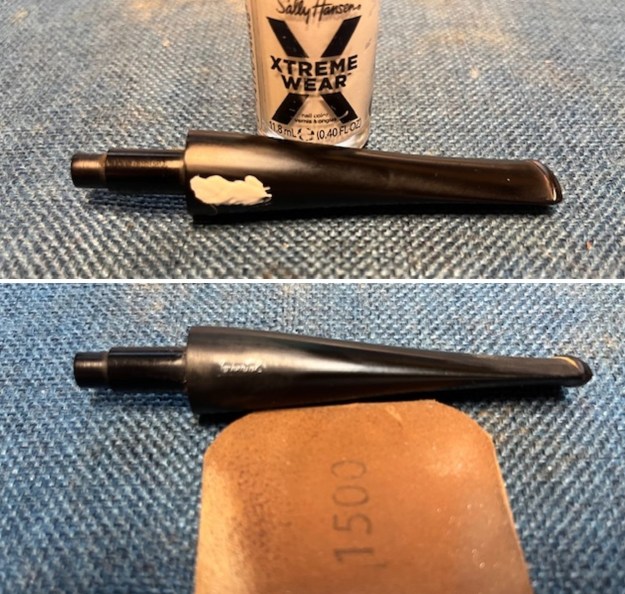
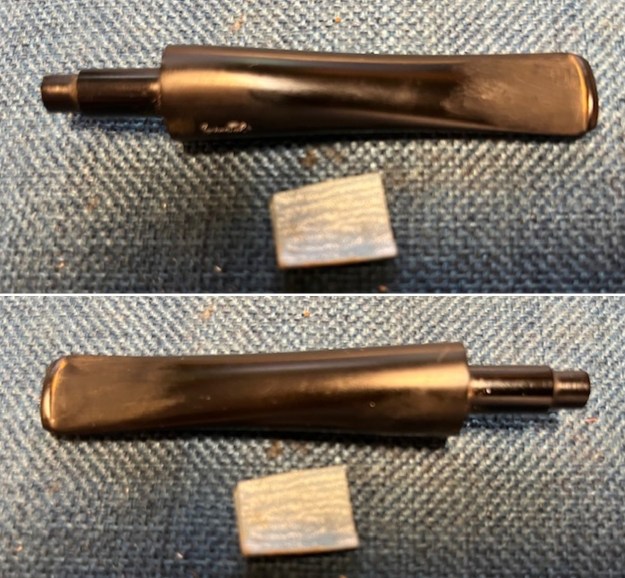
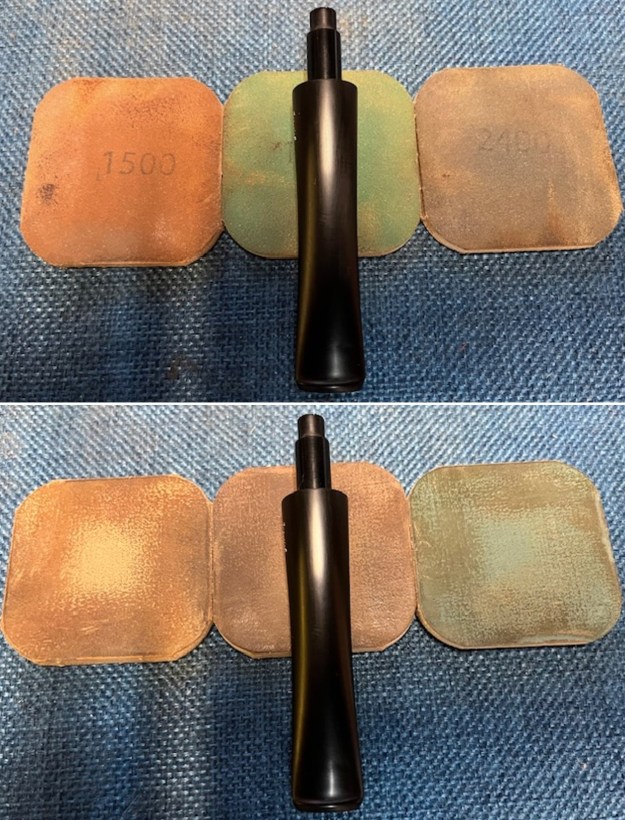
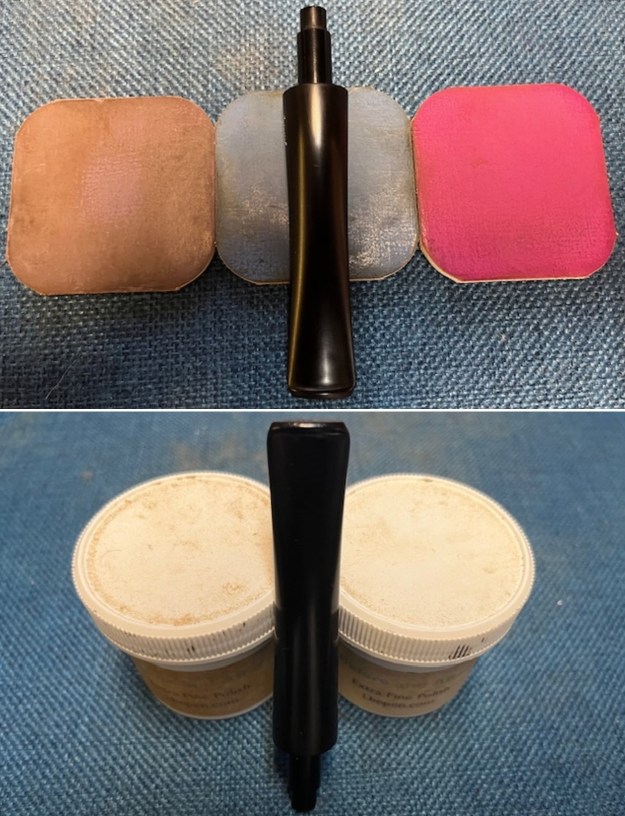
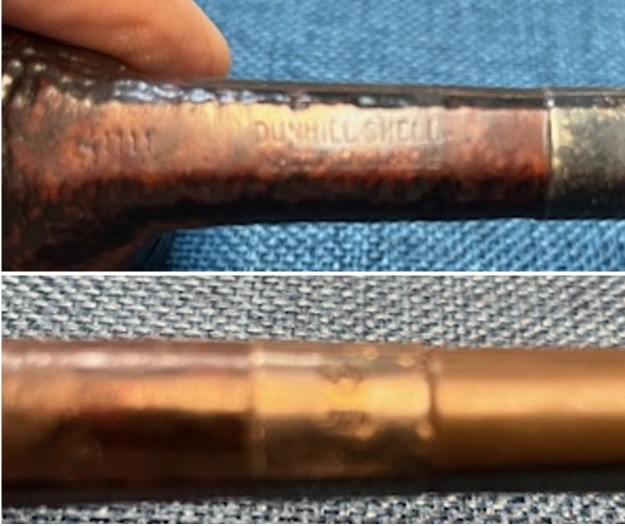
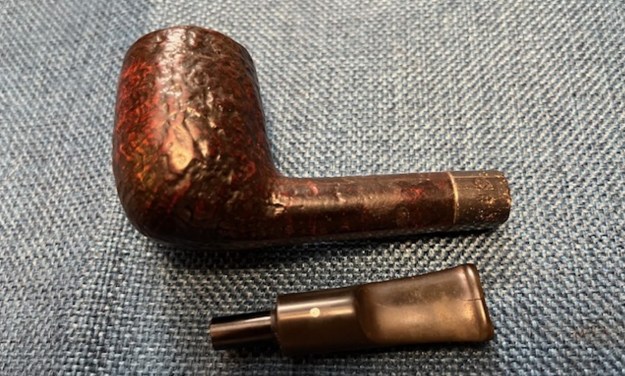
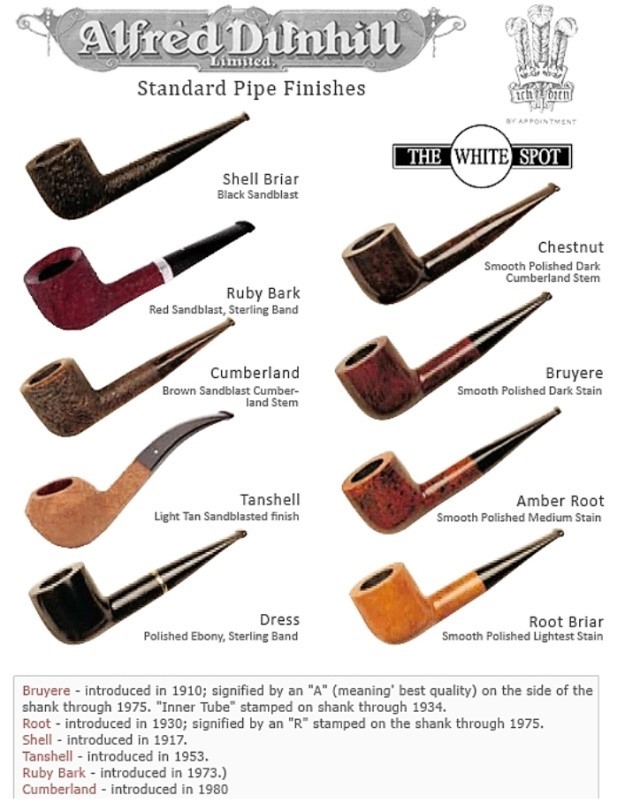
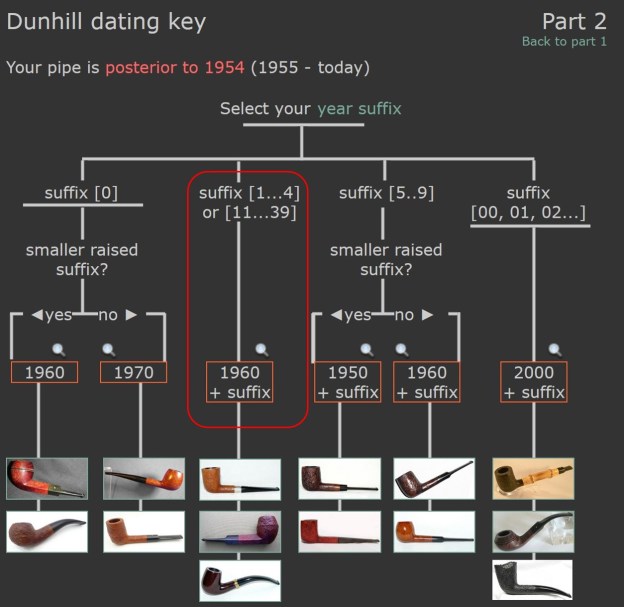
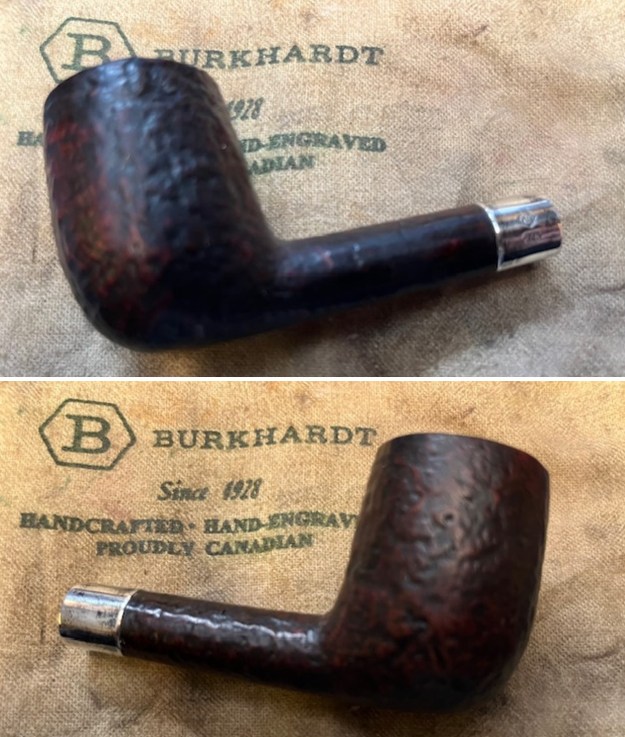
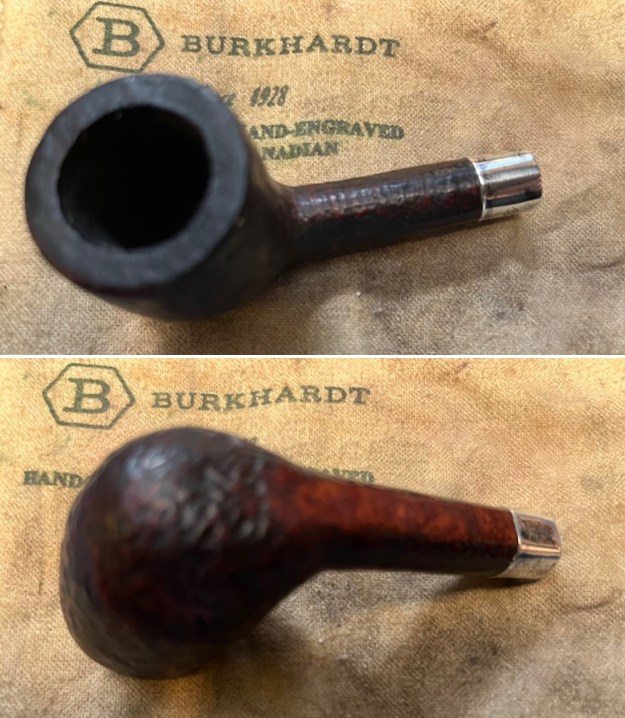
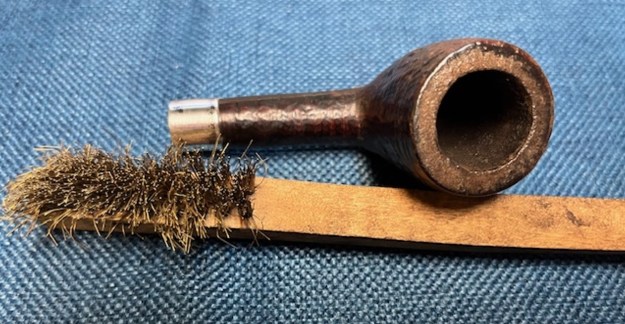
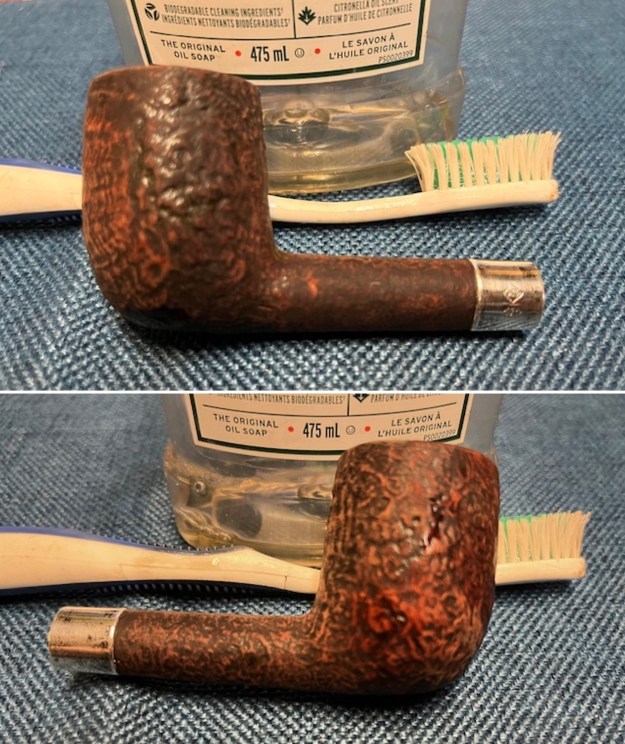
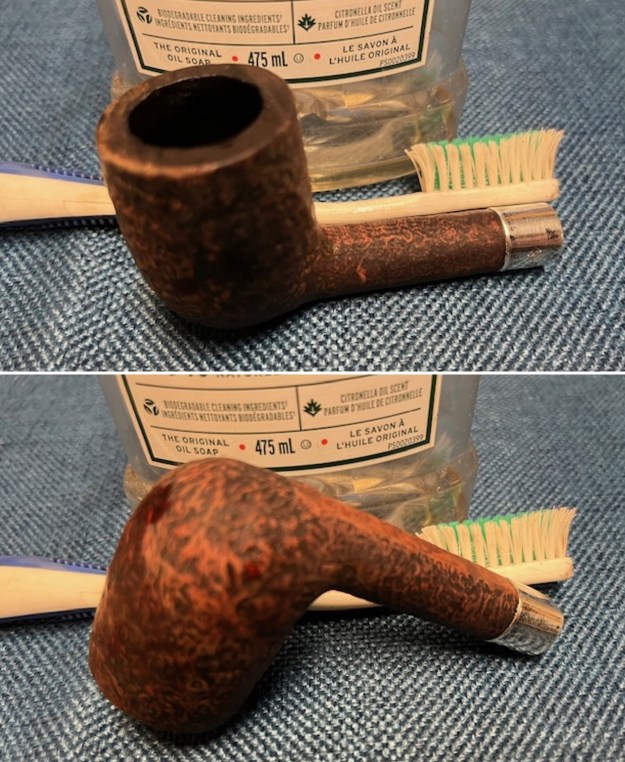
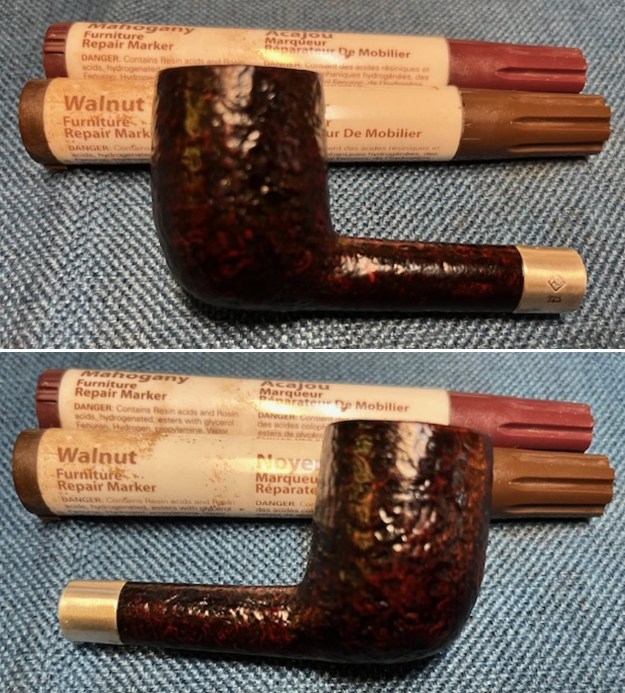
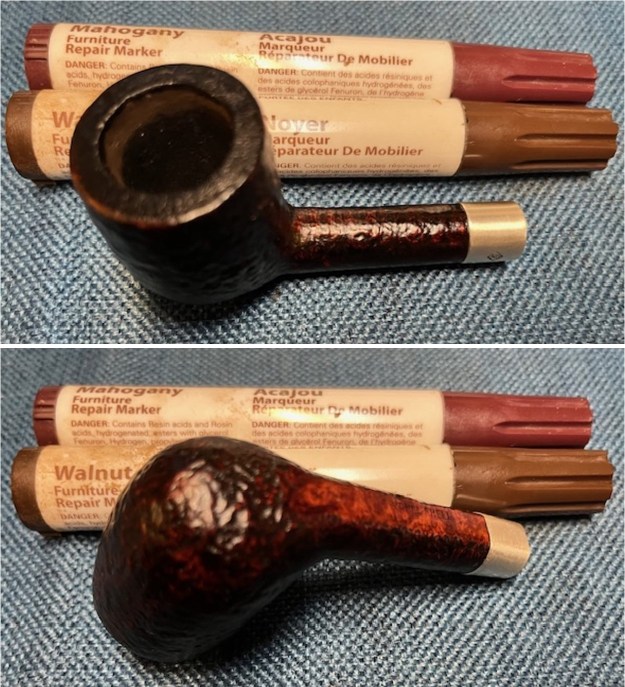
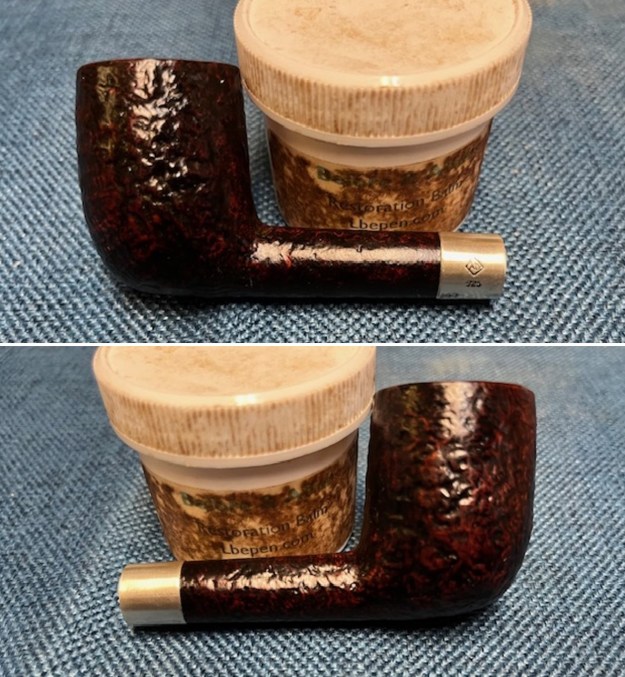
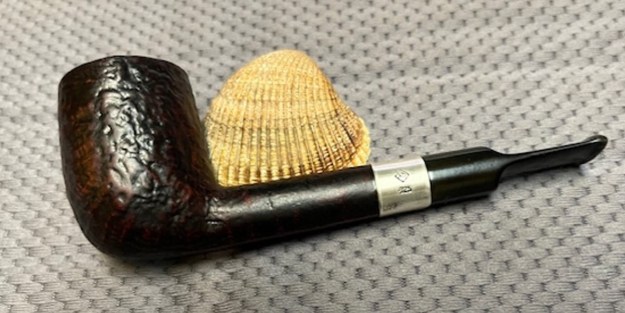
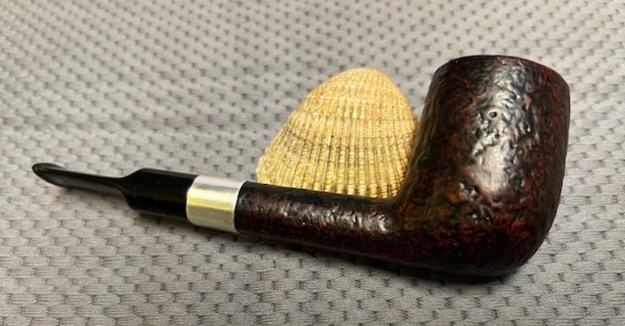
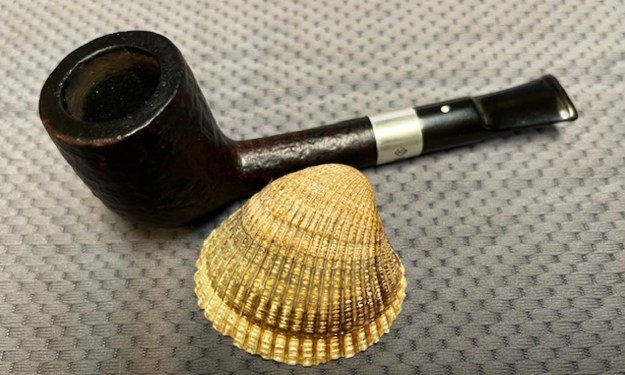
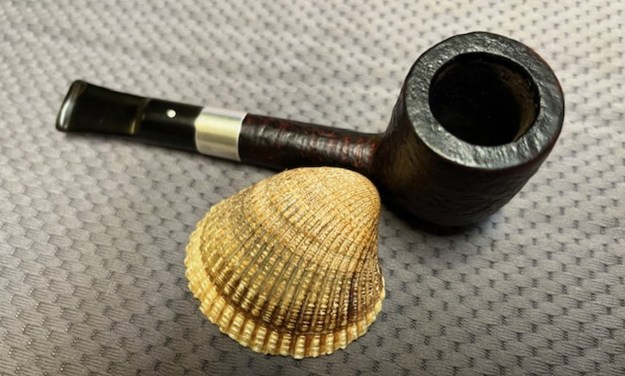
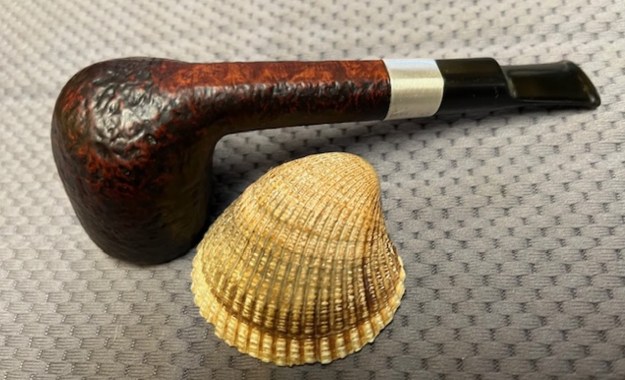
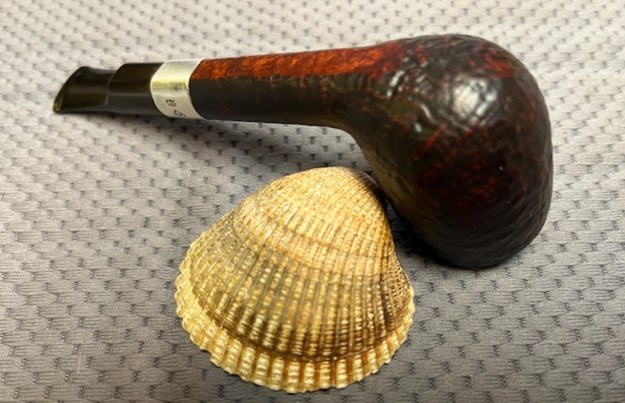
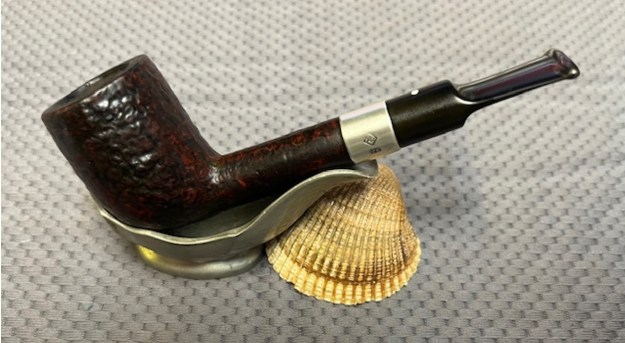
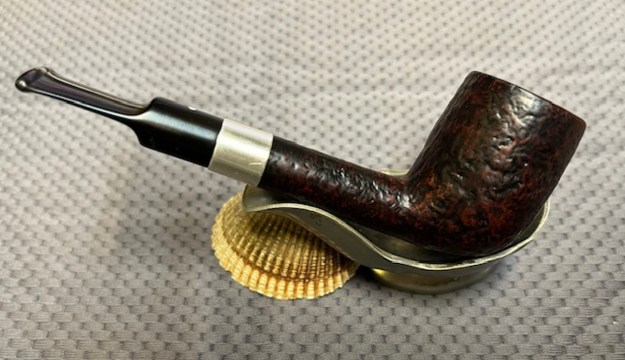
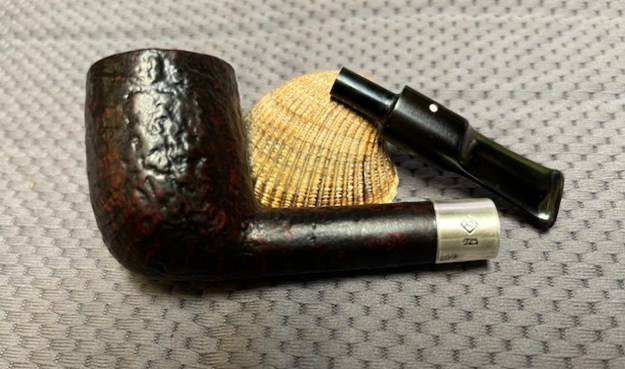
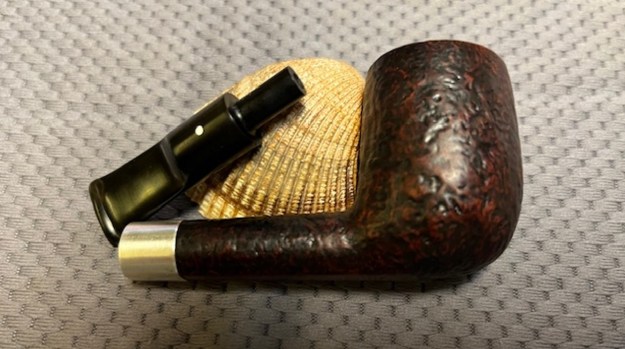
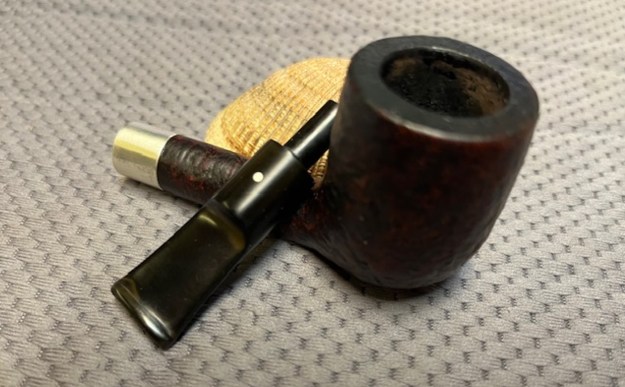
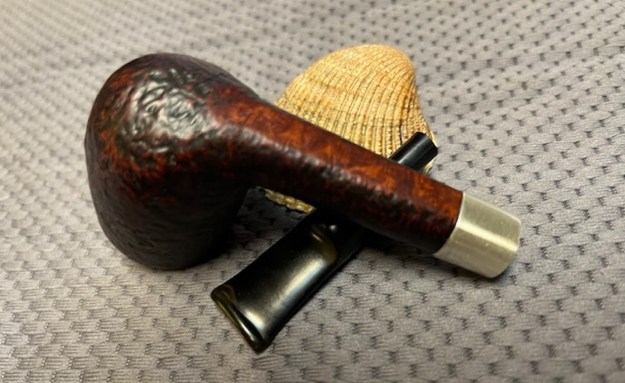
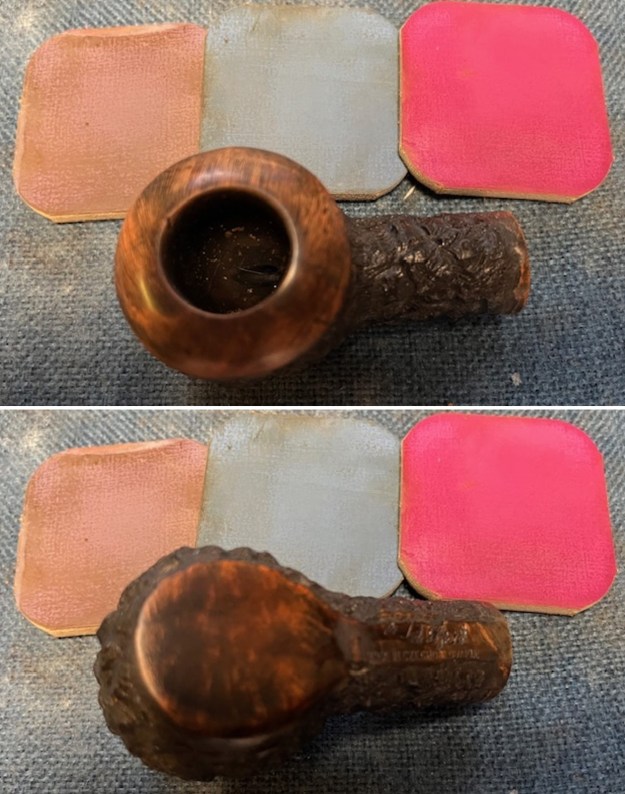
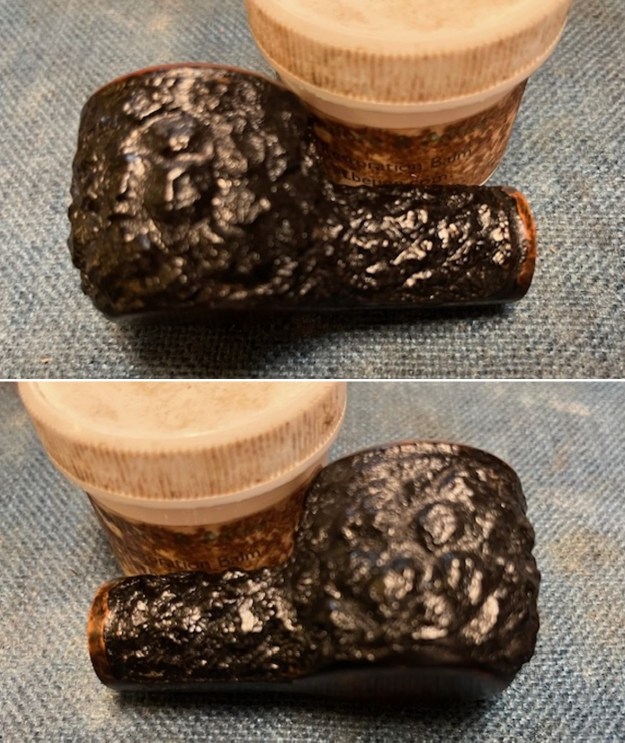
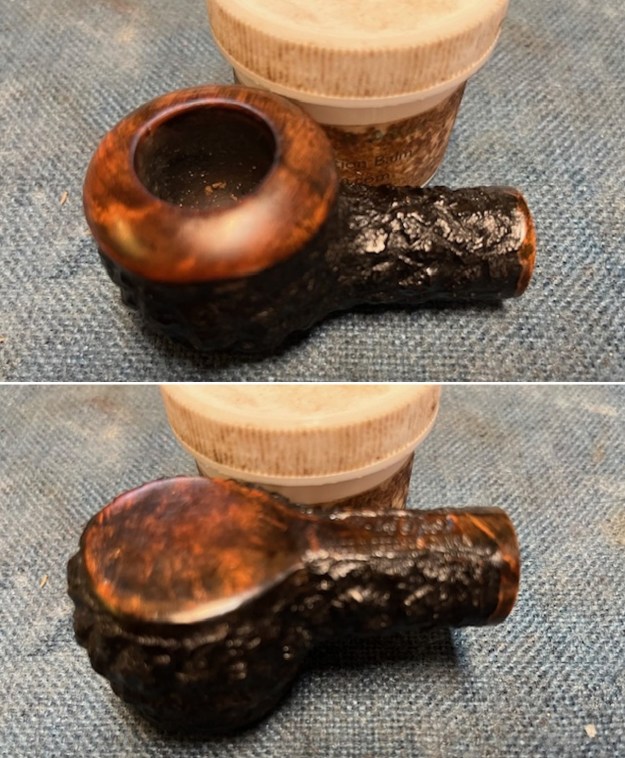
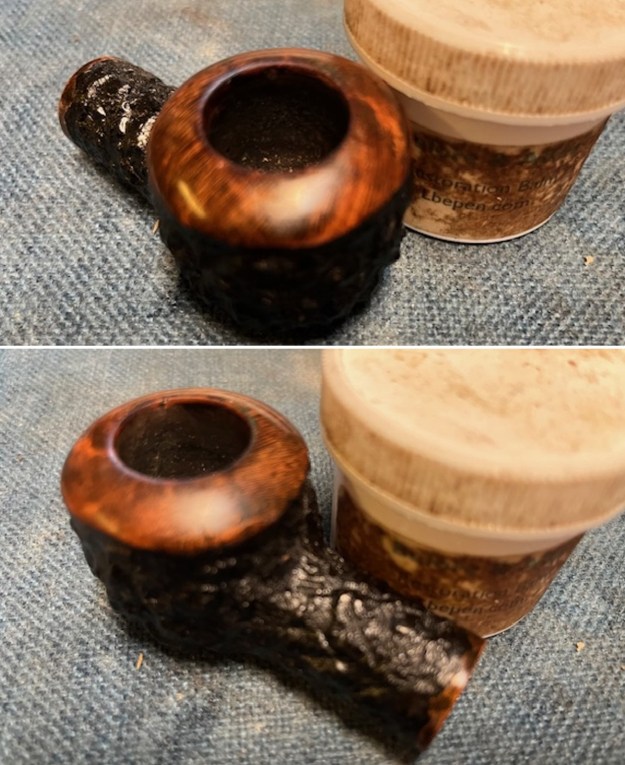
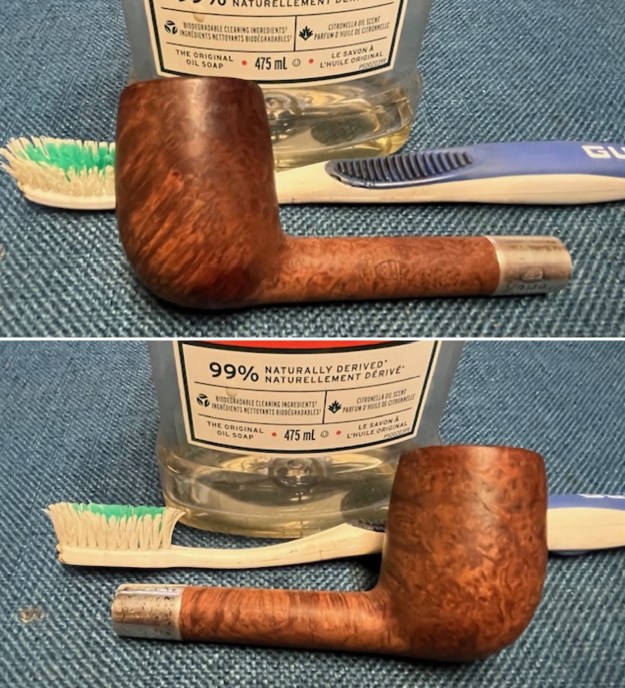
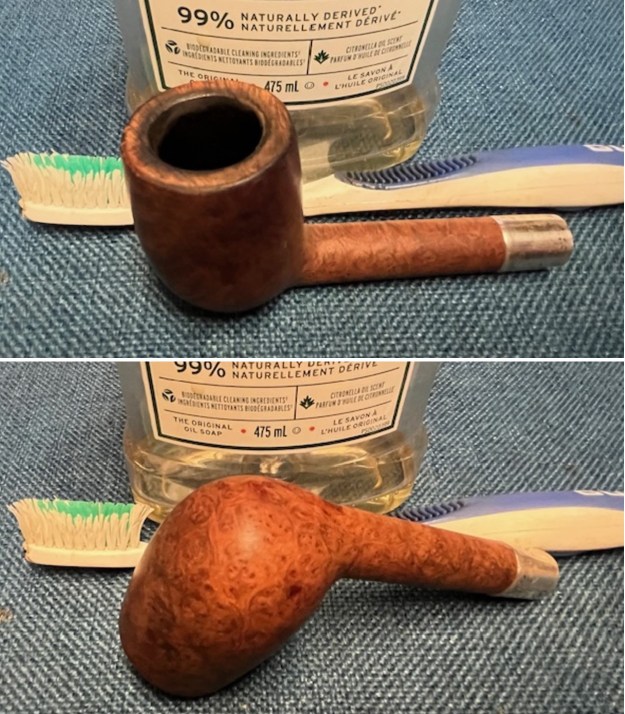
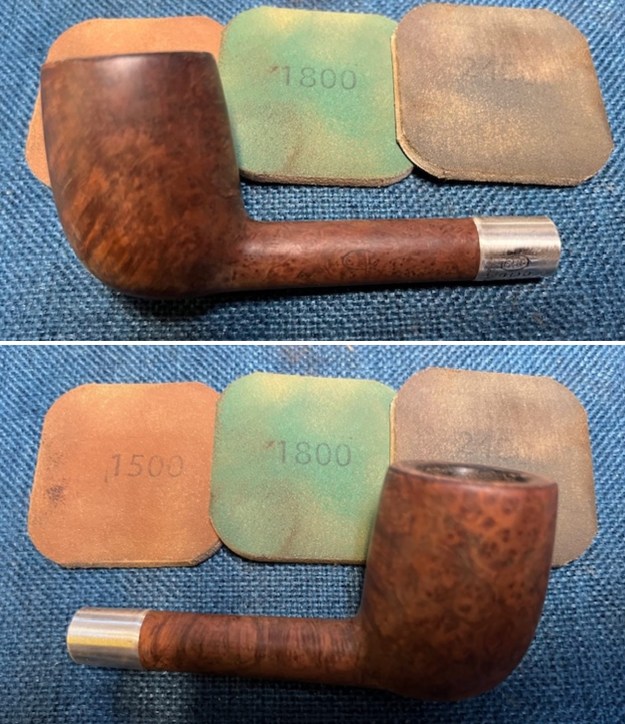
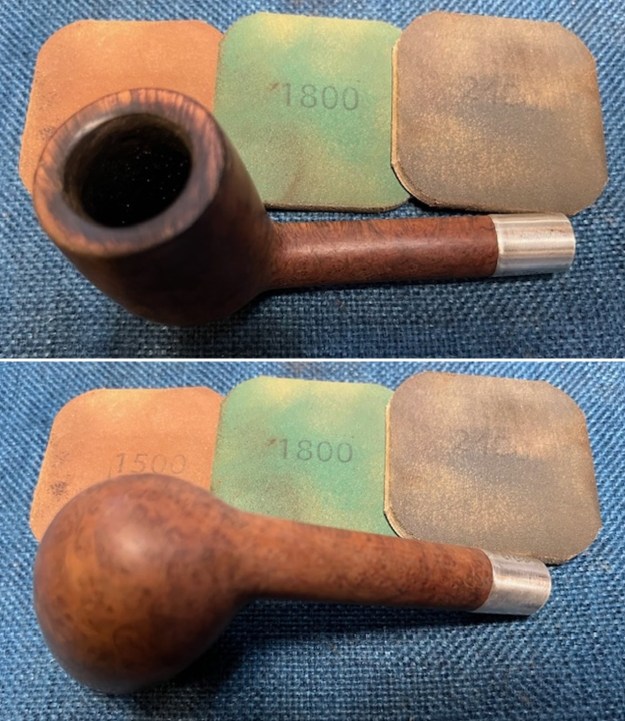
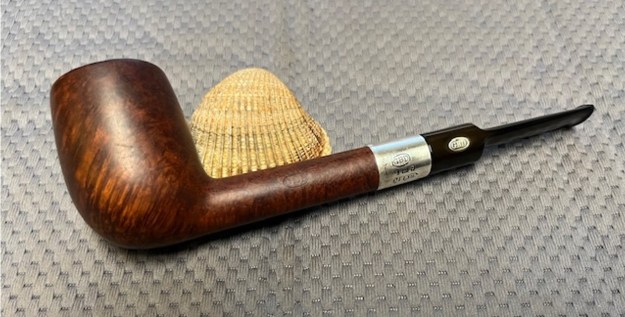
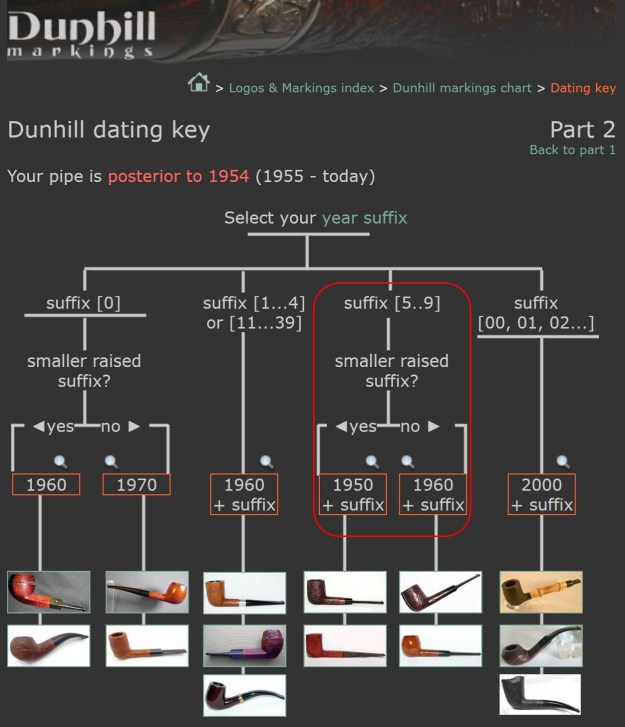
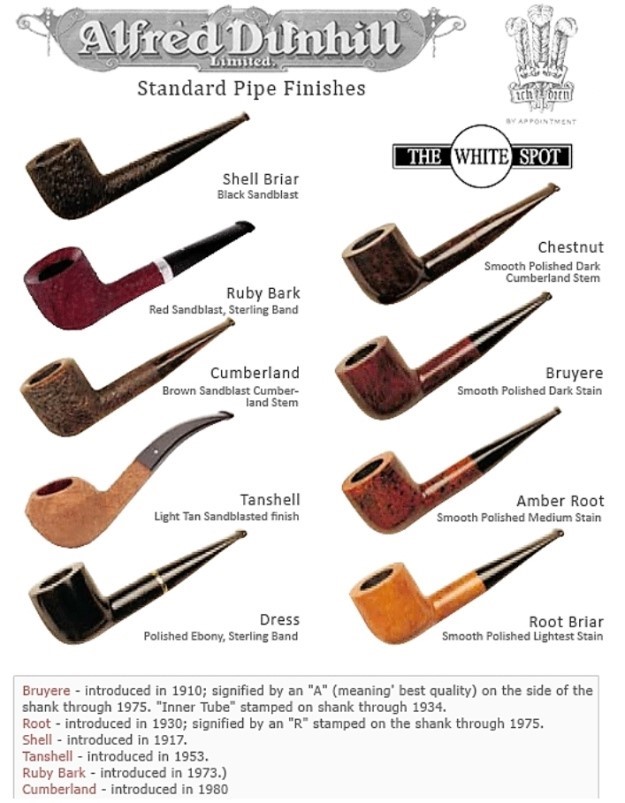
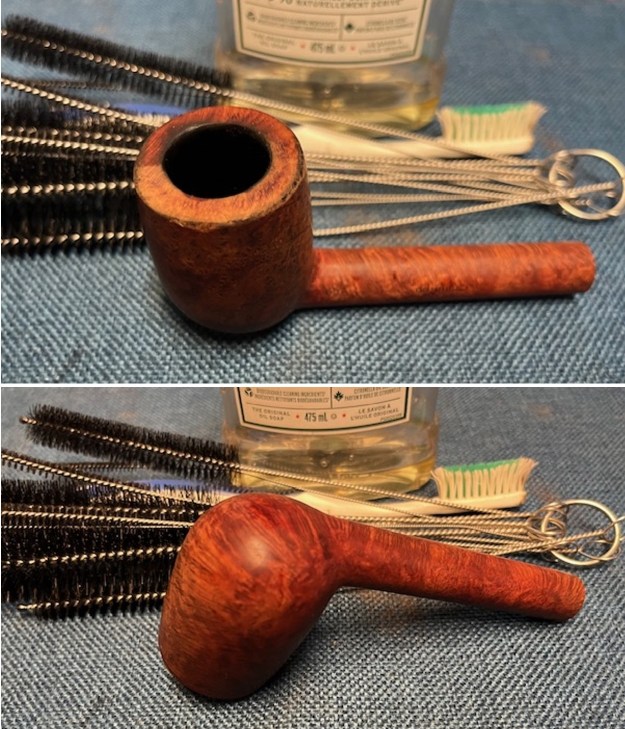
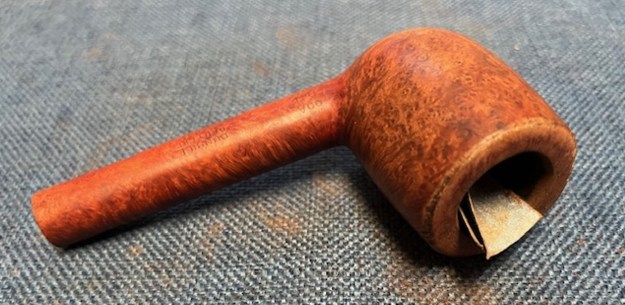
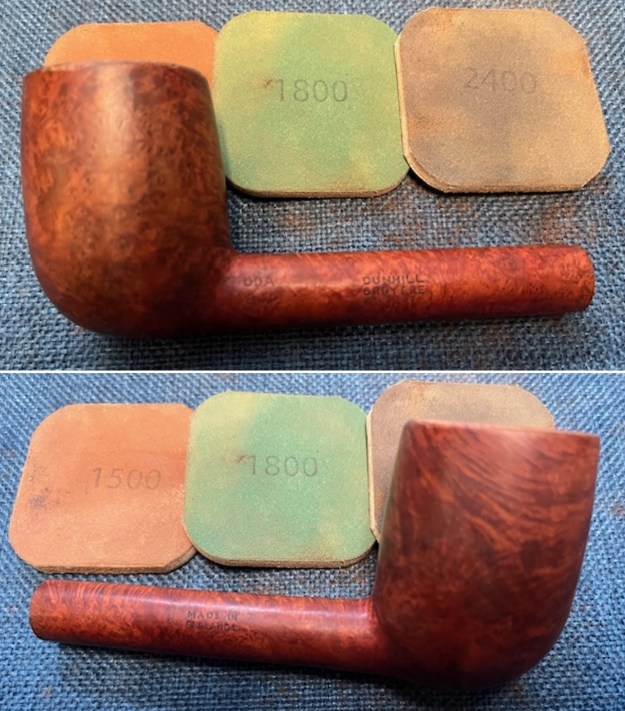
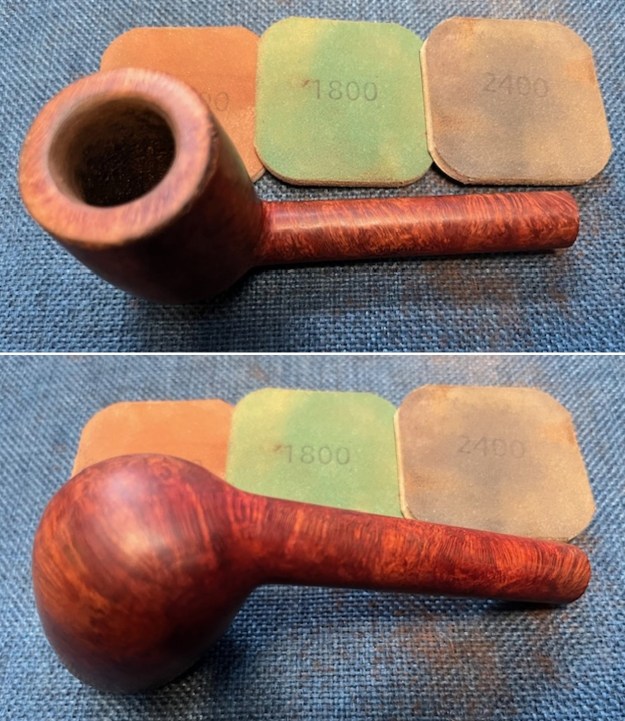
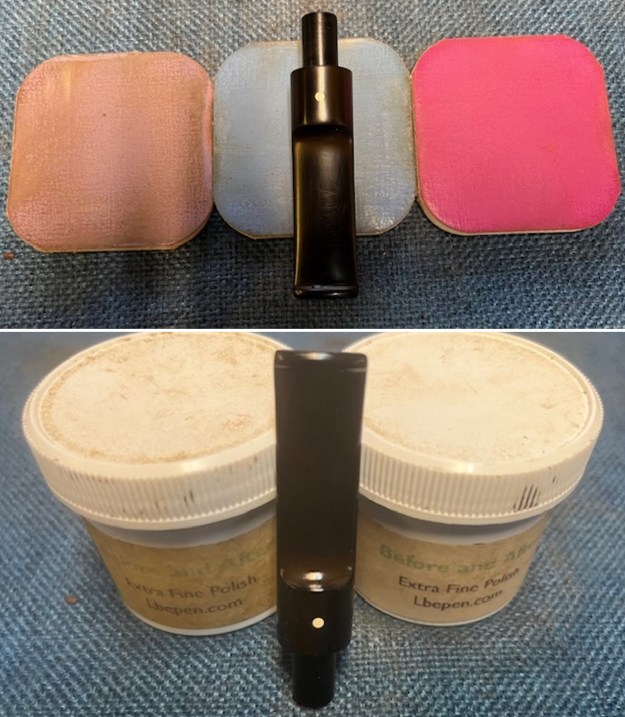
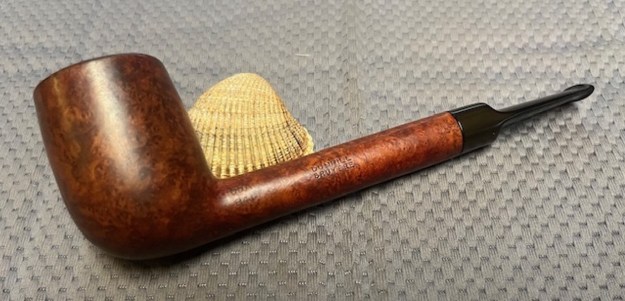
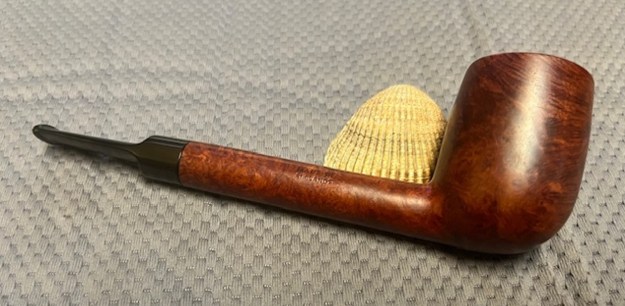
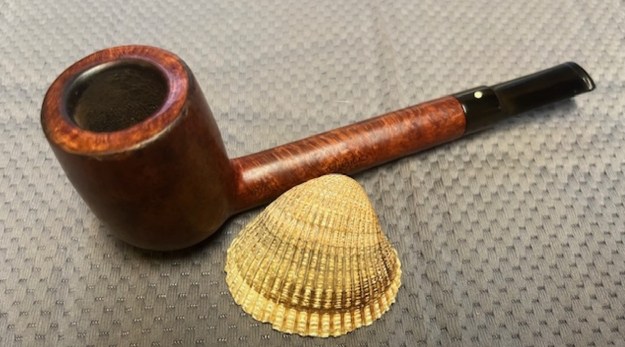
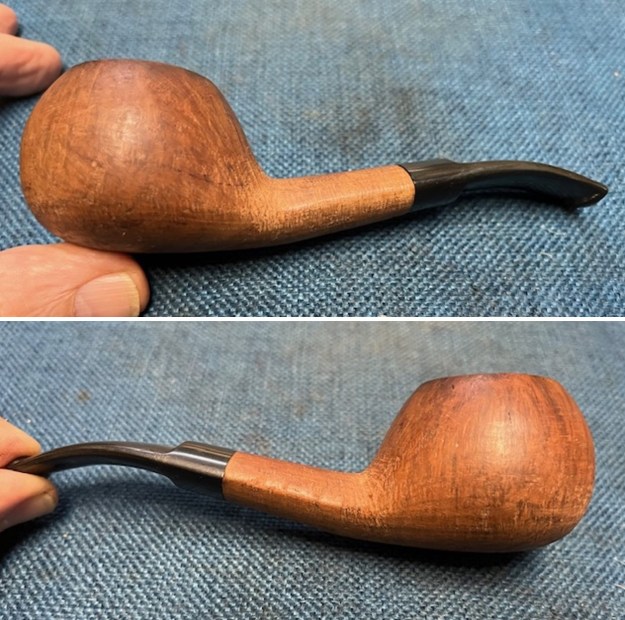
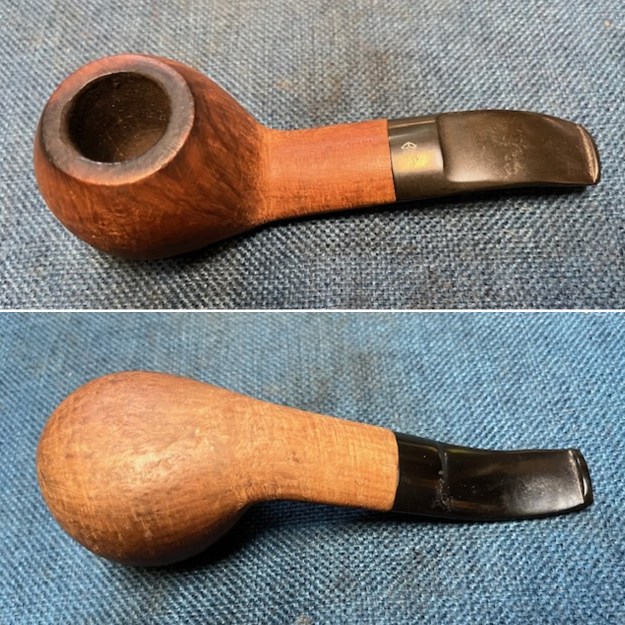
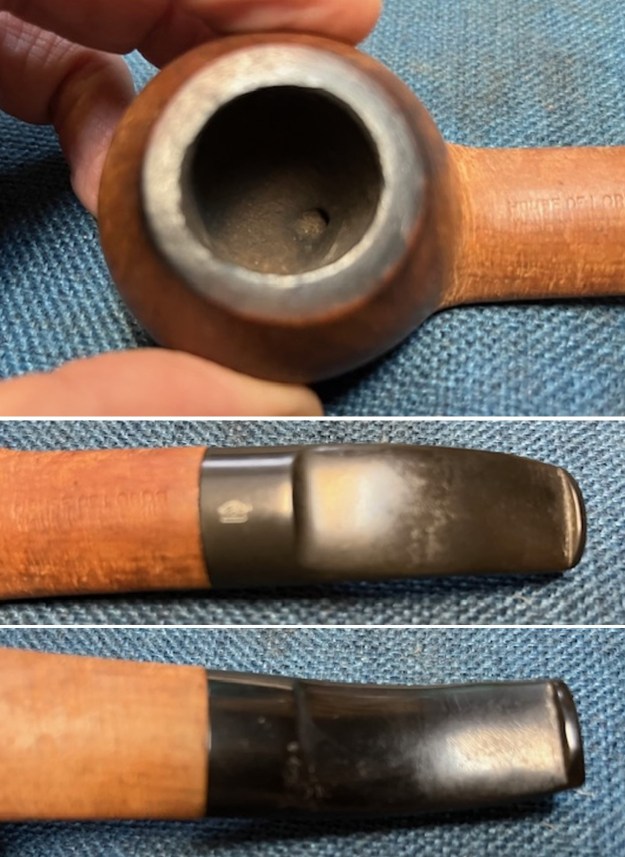
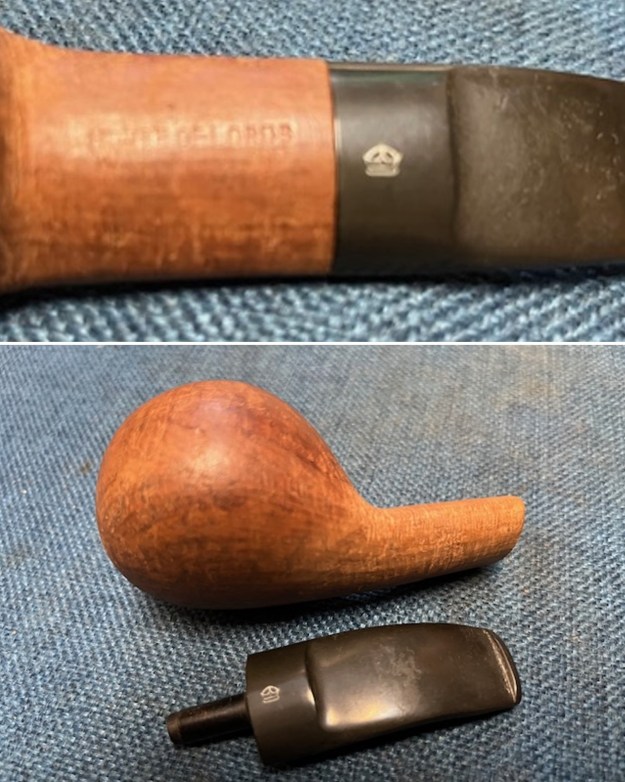
The next pipe on the table is a sandblast Dunhill Bent Billiard. It had a taper, vulcanite fishtail stem with a white spot. We purchased it from an estate sale in Oregon City, Oregon, USA on 03/21/2024. The pipe is stamped on the heel of the bowl and on the underside of the shank. On the heel of the bowl it is stamped with the shape number 156 F/T. That is followed with stamping on the shank Dunhill [over] Shell Briar. Next to that is stamped by Made in [over] England7. The pipe has a Sterling Silver repair band on the shank with a crack visible on the underside of the shank. The rim has a thick lava coat filling in the sandblast. It is from the overflowing cake in the bowl. It is hard to assess the condition of the inner edge of the rim due to the cake and lava overflow. There were oils and grime ground into the bowl sides gives the finish a flat look. There is a deep sandblast showing through the grime. The vulcanite stem is oxidized, calcified, and dirty with grime and grit on the surface. There were light tooth marks on both the top and underside of the stem just ahead of the button. Jeff took photos of the pipe before he started his clean up work. I have included them below. He took photos of the pipe’s bowl and rim top to show the cake in the bowl, the ream marks on the top portion of the bowl and the lava coat filling in the sandblast on the rim top. It is another dirty pipe. He also took photos to capture the tooth marks on the top and underside of the stem near the button. He took photos of the sides and heel of the bowl to show the rugged sandblast around the bowl and the amount of grime ground into the surface of the briar. He took photos of the stamping on the underside of the shank. It is faint in spots but still readable as noted above.I wanted to unpack the Dunhill stamping on the shank and work to understand each element of the stamp. I generally use the Pipephil site to gather as much initial information as possible (http://pipephil.eu/logos/en/dunhill/shell-briar1.html). The stamping is interpreted as follows: The number 156 the shape number for a taper stem Bent Billiard. The F/T stamp is used to designate Fish Tail stem. The Shell Briar stamp refers to the finish. The number 7 following the D of England would give the date the pipe. The Sterling Silver band is stamped Sterling Silver. The photo shows a pipe that is stamped similarly to the one that I am working on.Pipephil also has some helpful dating keys on the site that are basically flow charts that you can walk through to date your pipe (http://pipephil.eu/logos/en/dunhill/cledat-en1.html). I turned to Part 1 of the Dating Key and followed the chart. This pipe has a 7 following the D in England. There was no patent number so that took me to the section on the chart below (column one) which instructed me that the pipe could be dated as being made “posterior to 1954”. I followed the link under “Your pipe is posterior to 1954. Narrow down your dating”. That took me to Page 2 of the dating key (http://pipephil.eu/logos/en/dunhill/cledat-en1a.html). The third column (suffix 5…9) led me to the section with a 7 after the D in England. There was a directive for dating the pipe spelled out as follows: 1960 + suffix 7 which gives the pipe a date of 1967.I then turned to Pipedia’s section on Dunhill Shell Briar to get a bit of background on the Dunhill finishes (https://pipedia.org/wiki/Dunhill#Root_Briar). I quote:

Shell

A deep craggy sandblast with a black stain finish (usually made using Algerian briar) – the color of the stain used has varied over the years. Although there is some doubt as to them being the first to sandblast pipes, Dunhill’s Shell pipes, and the sandblasting techniques developed to create them are considered one of Dunhill’s greatest and most lasting contributions to the art of pipe making.

The documented history of Dunhill’s inception of the Shell is largely limited to patent applications — there are no catalog pages or advertisements promoting blasted pipes at the time. The preliminary work on the English patent (No. 1484/17) was submitted on October 13, 1917. The patent submission was completed half a year later, on April 12, 1918, followed by the granting of the English patent on October 14, 1918. This was less than a month before the end of The Great War on November 11th.

In 1986 Dunhill released a line of premium Shell finish pipes – “RING GRAIN”. These are high-quality straight grain pipes which are sandblasted. Initially only Ring Grain, but now in two different finishes. In 1995 the “Shilling” was introduced with Cumberland finish – it is an extremely rare series. These pipes exhibit a deeper blast characteristic of that of the 1930’s – mid-1960’s (and the limited ‘deep blast’ pipes of the early 1980s) and show a fine graining pattern. These are considered the best new Dunhills by many enthusiasts today and are very rare. The finish is sometimes described as tasting like vanilla at first, with the taste becoming more normal or good as the pipe breaks in.

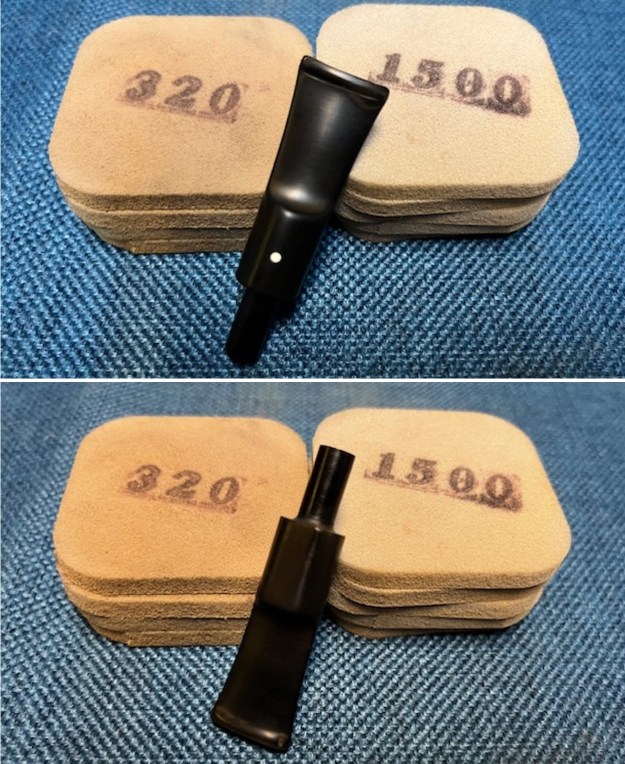
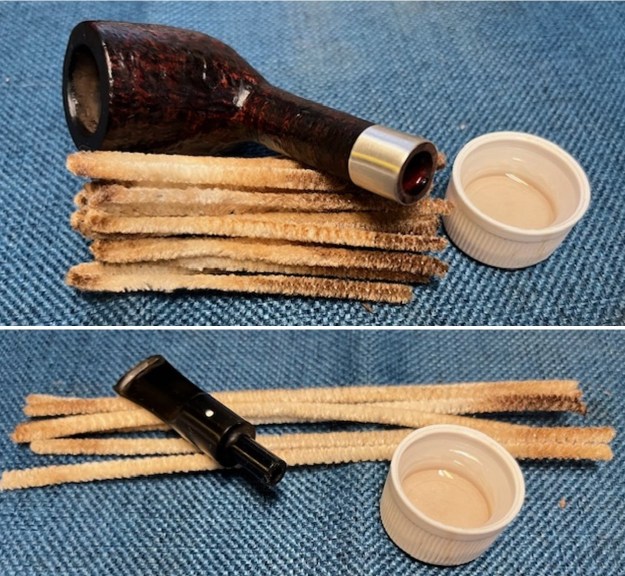
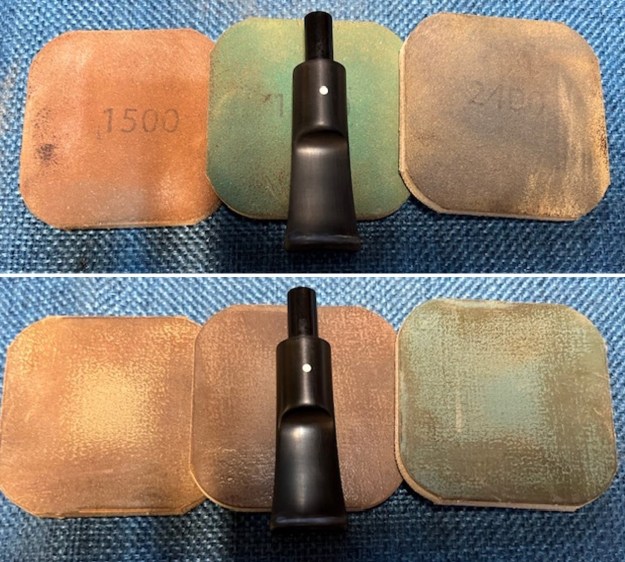
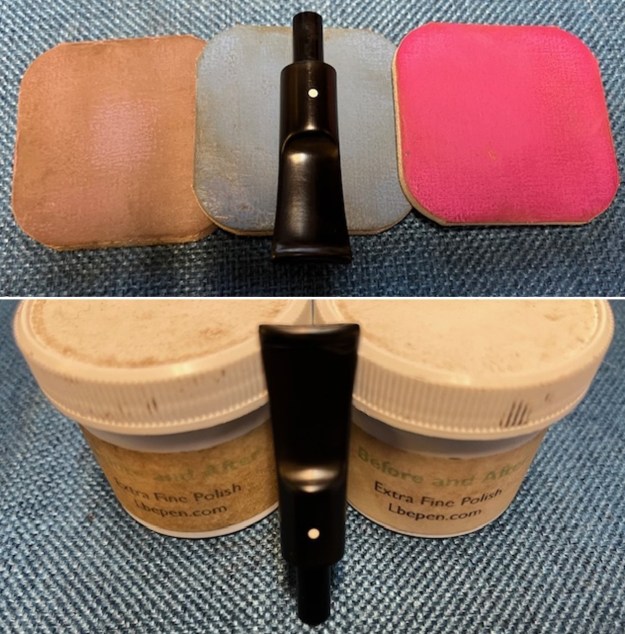
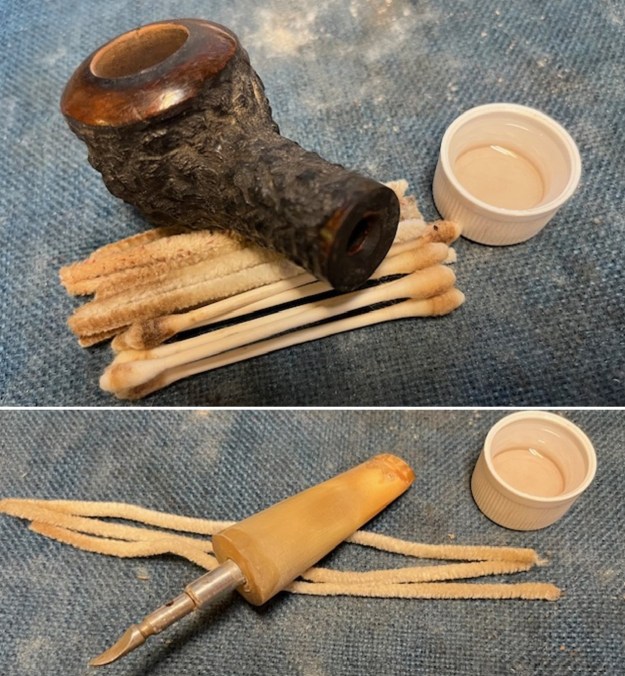
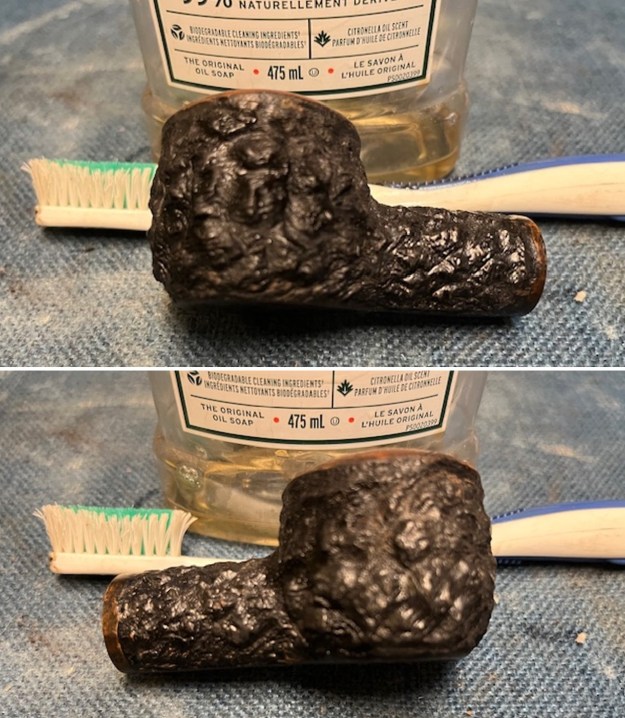
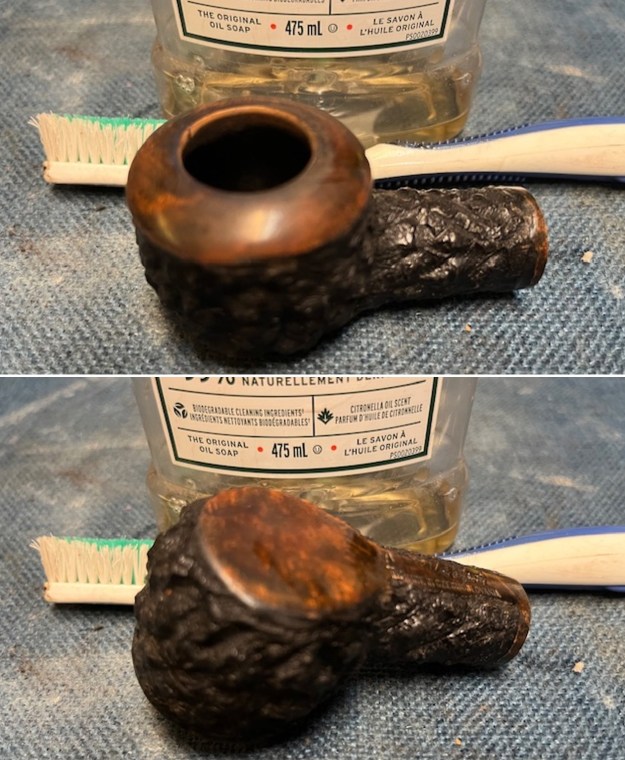
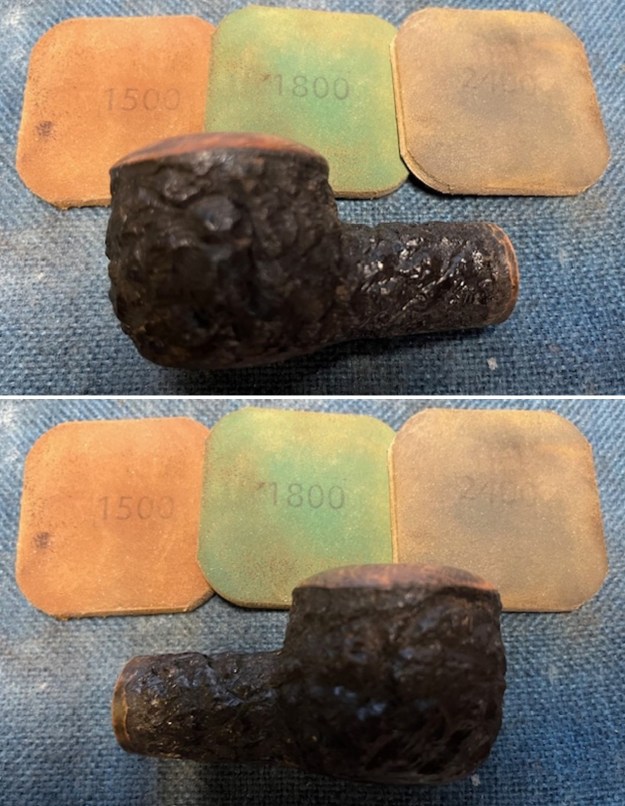
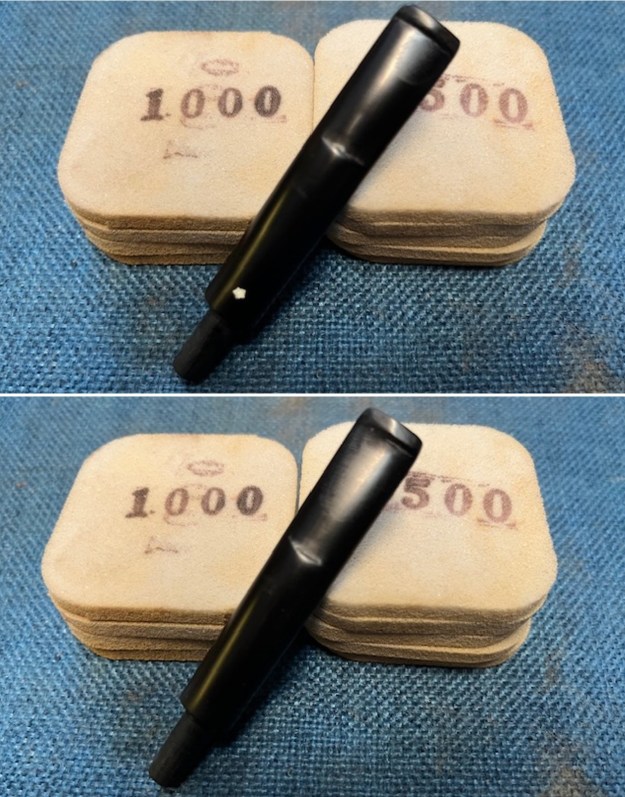
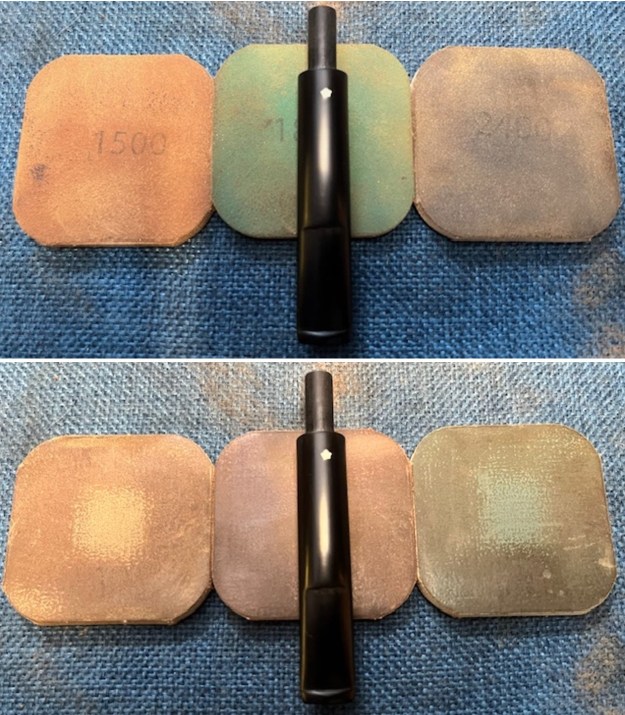
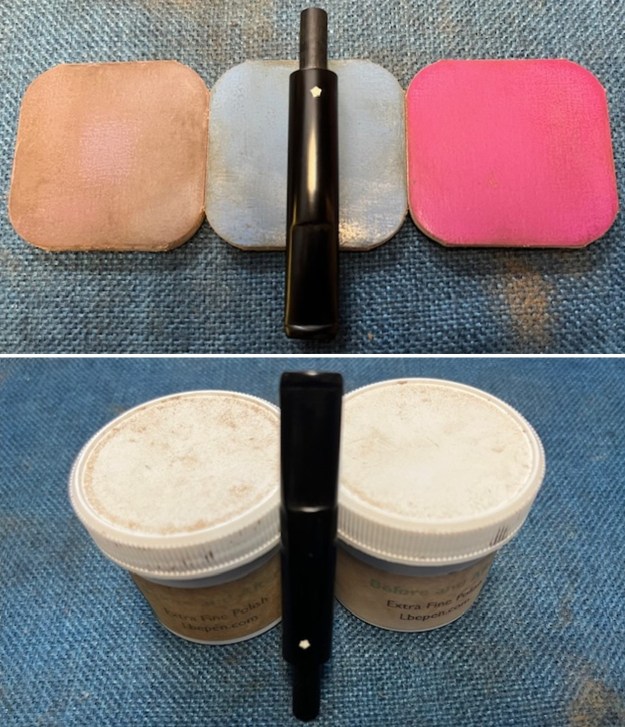
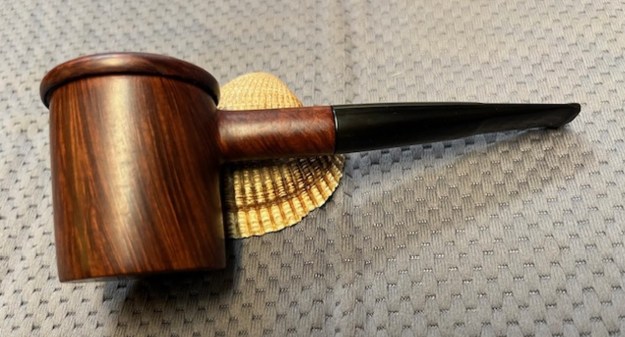
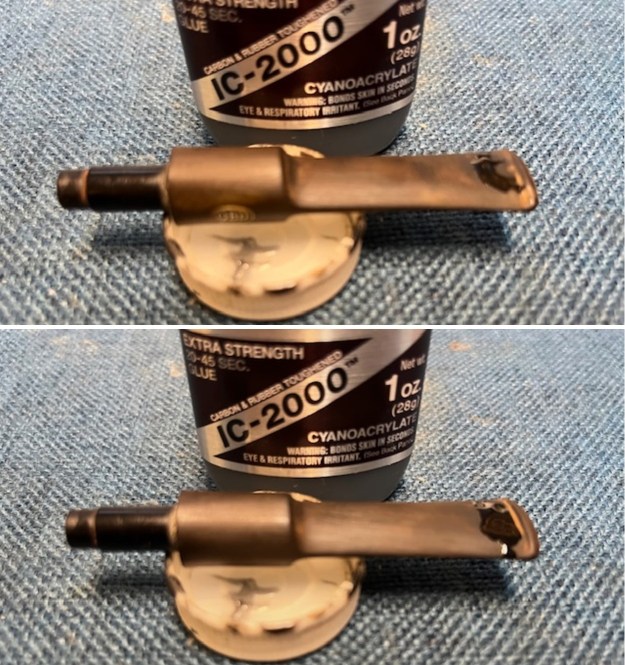
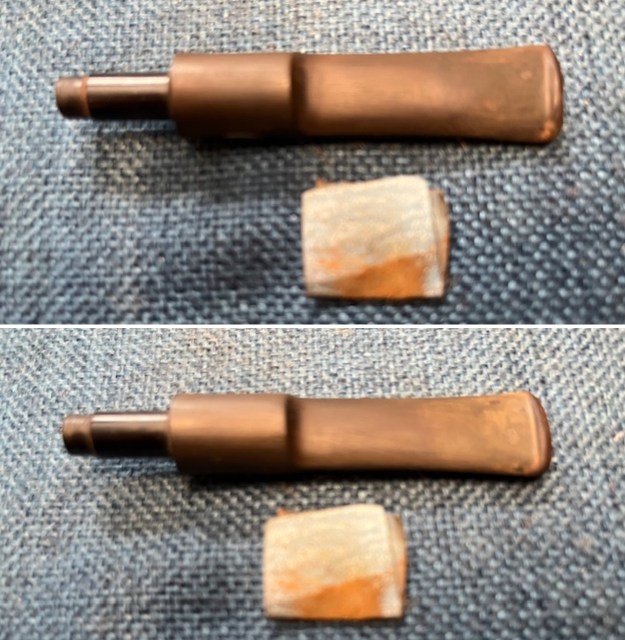
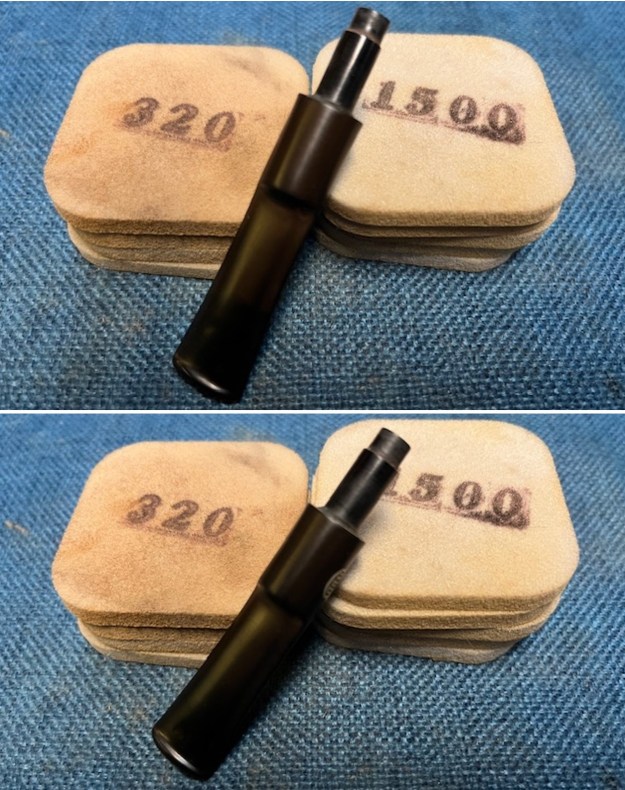
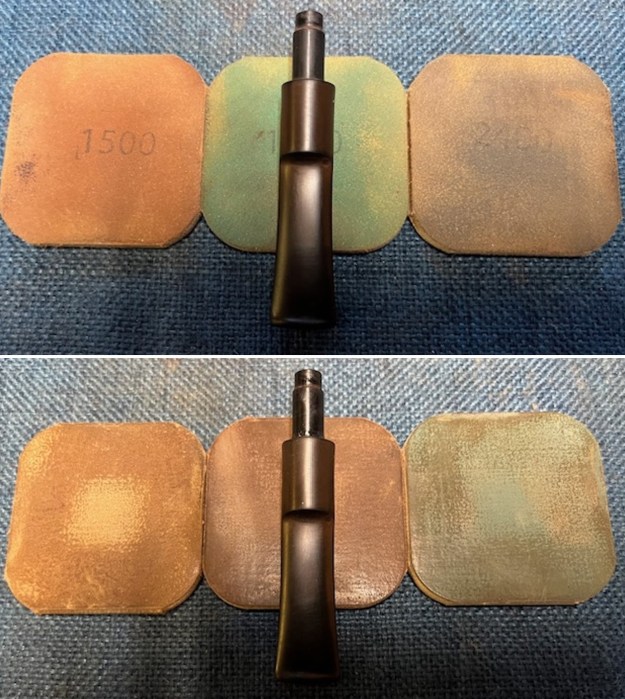
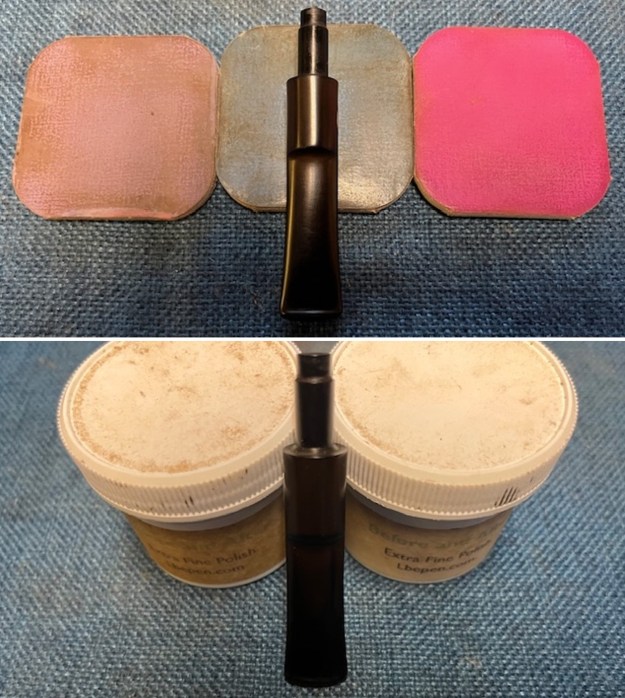
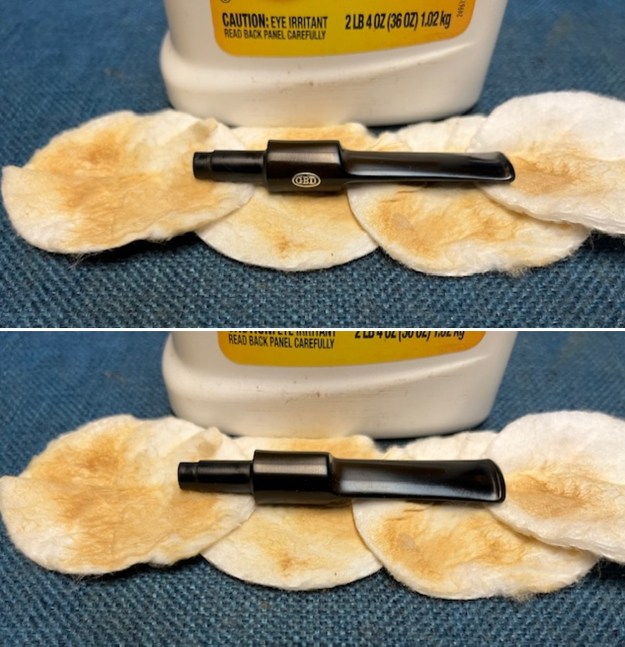
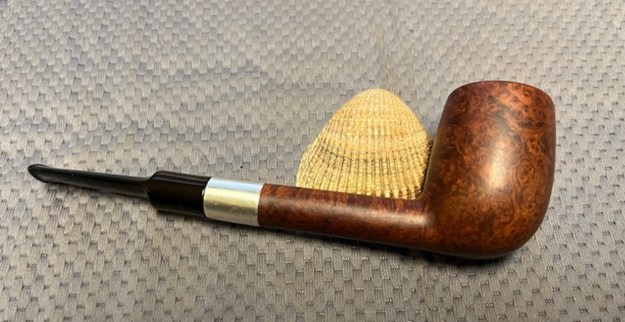
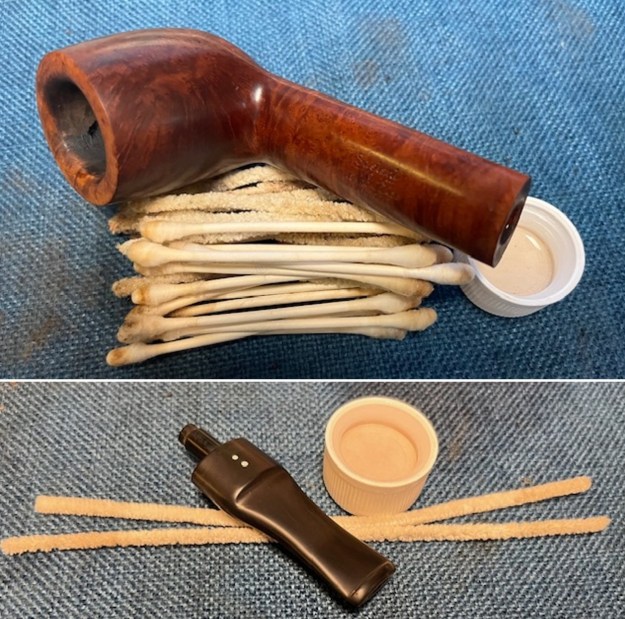
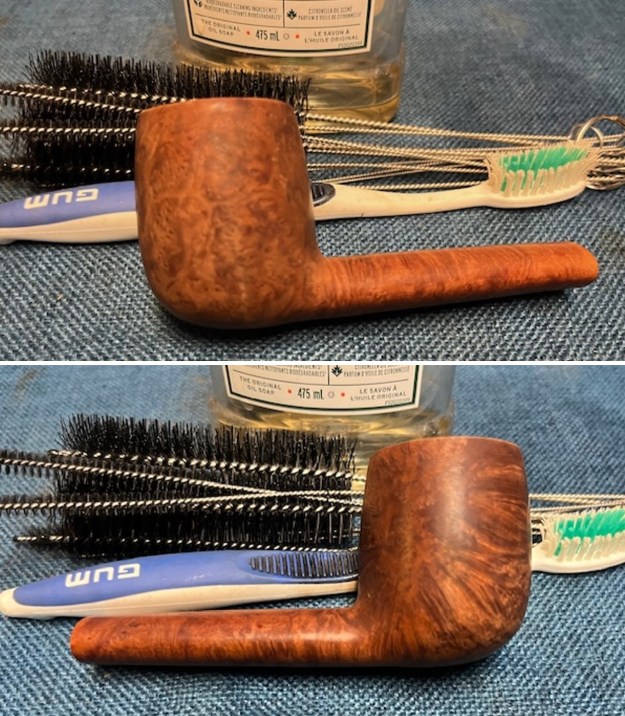
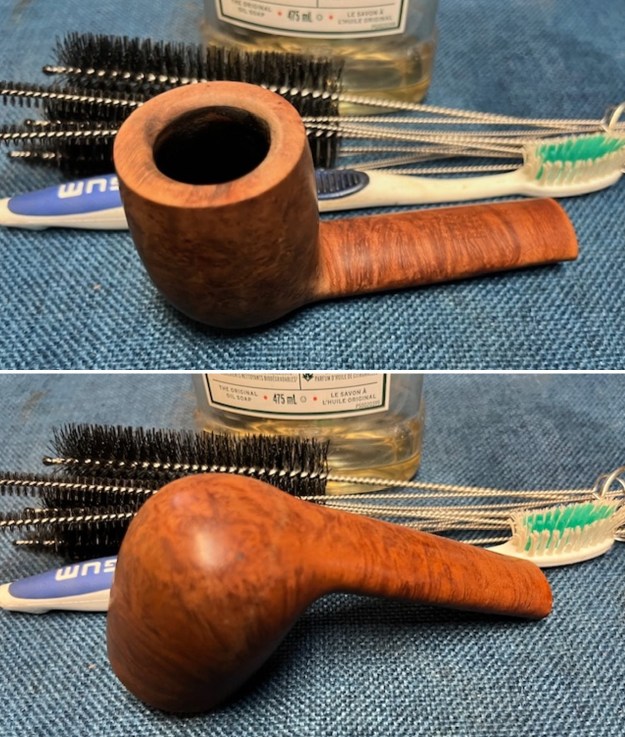
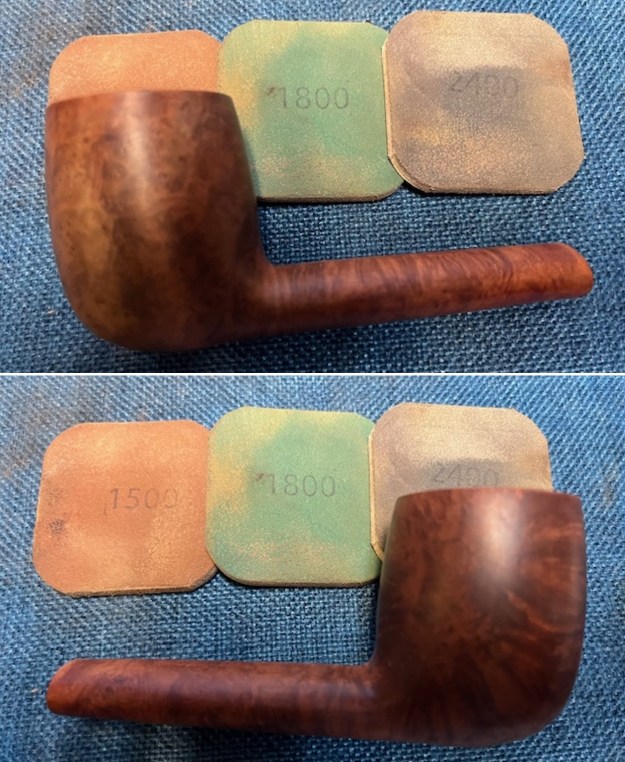
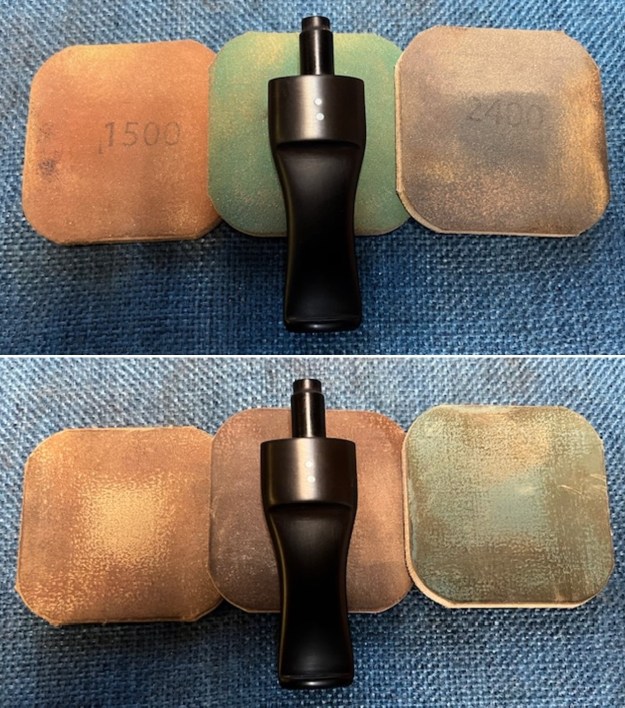
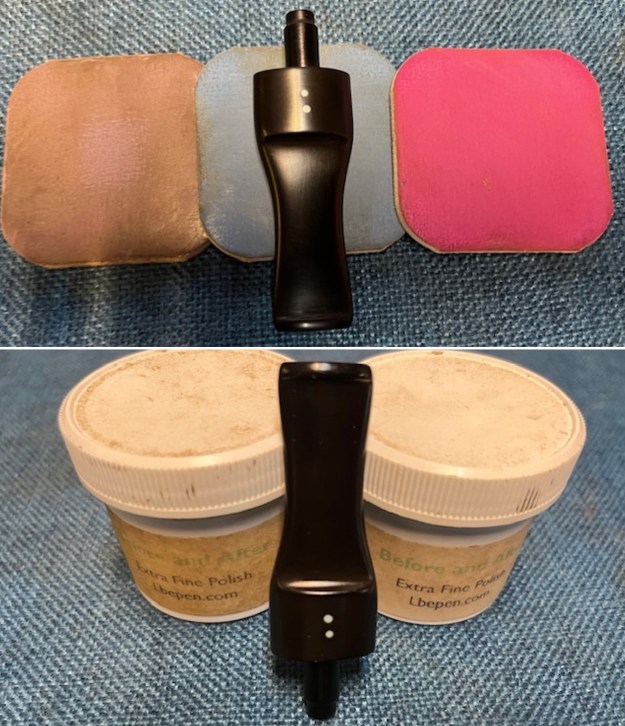
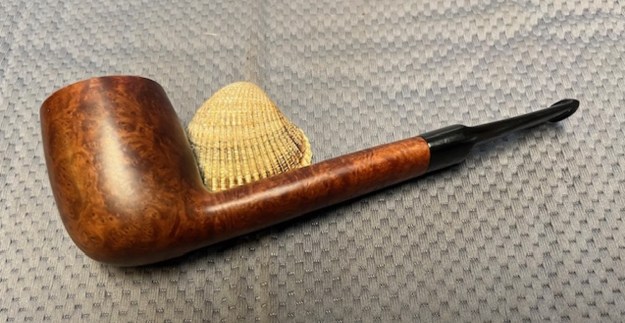
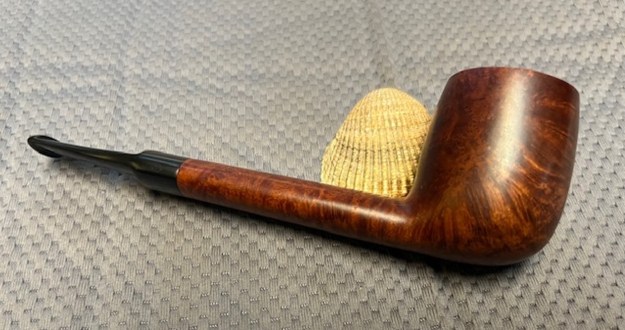
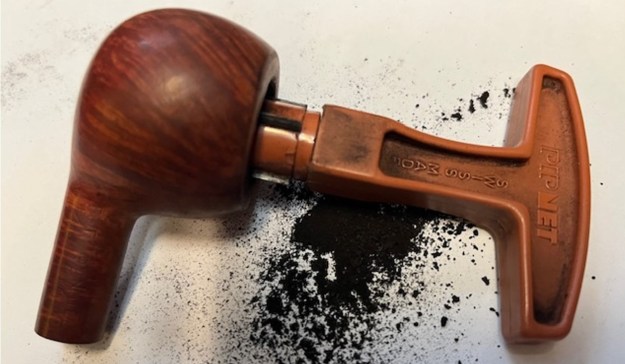
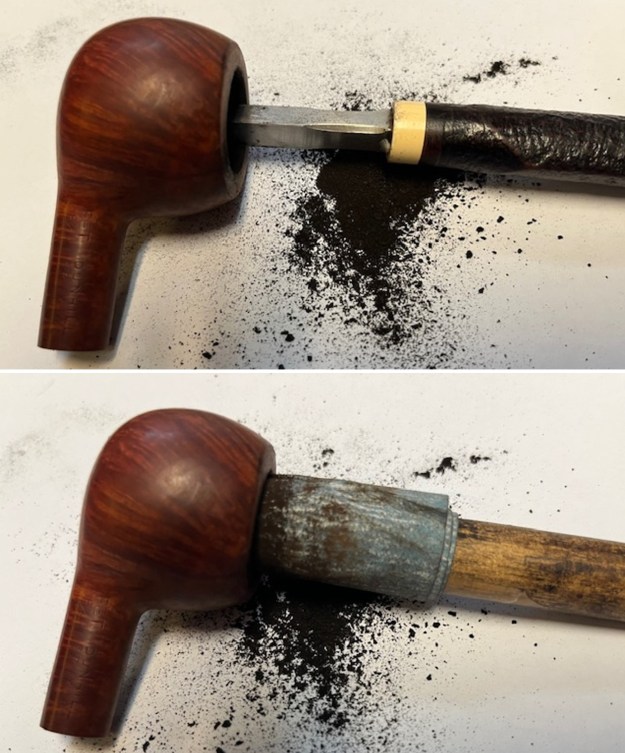
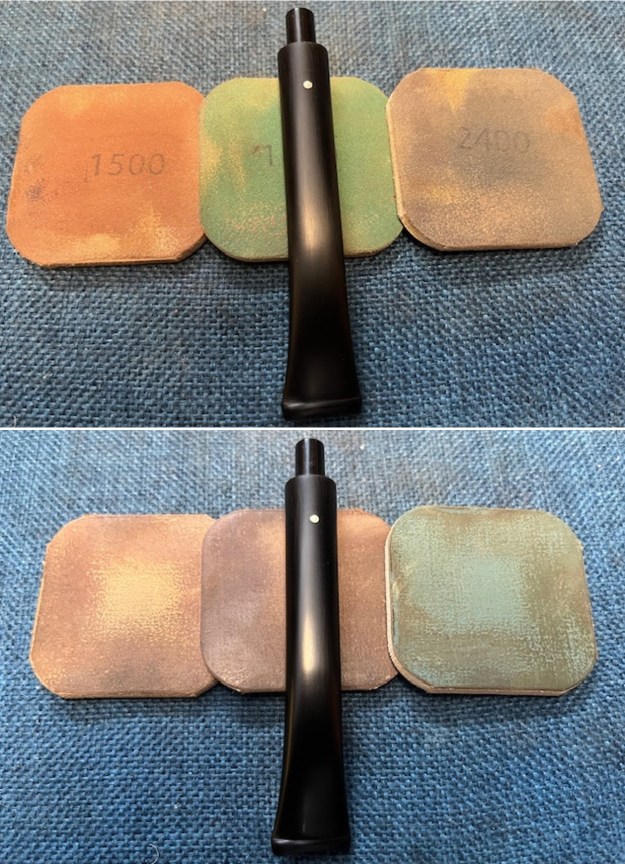
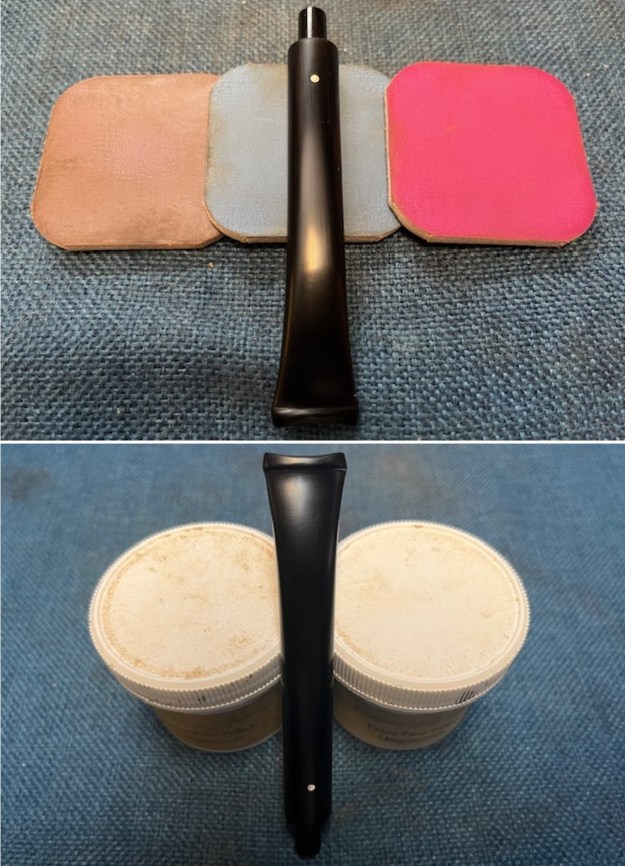
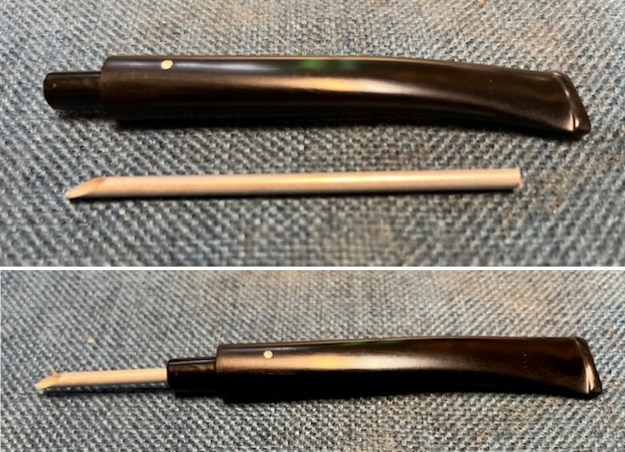
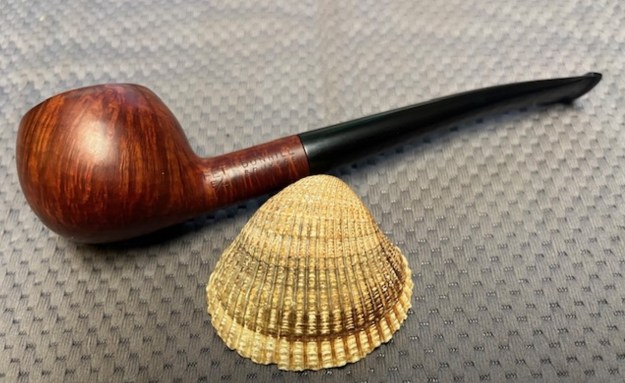
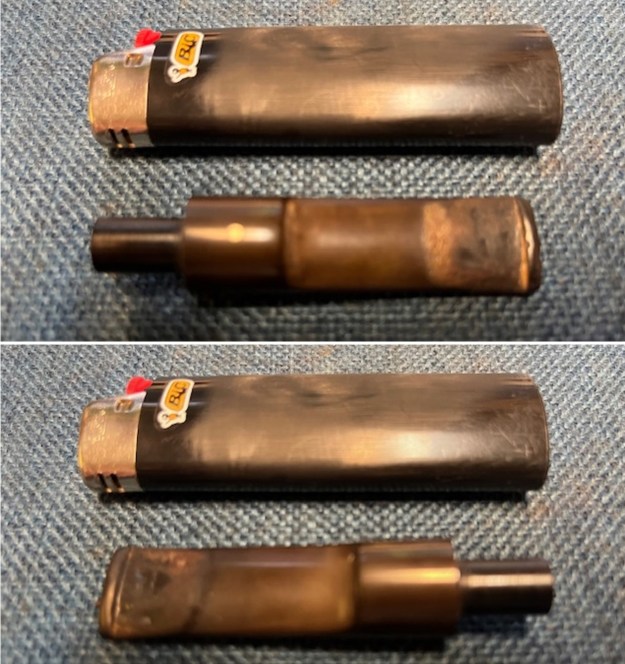
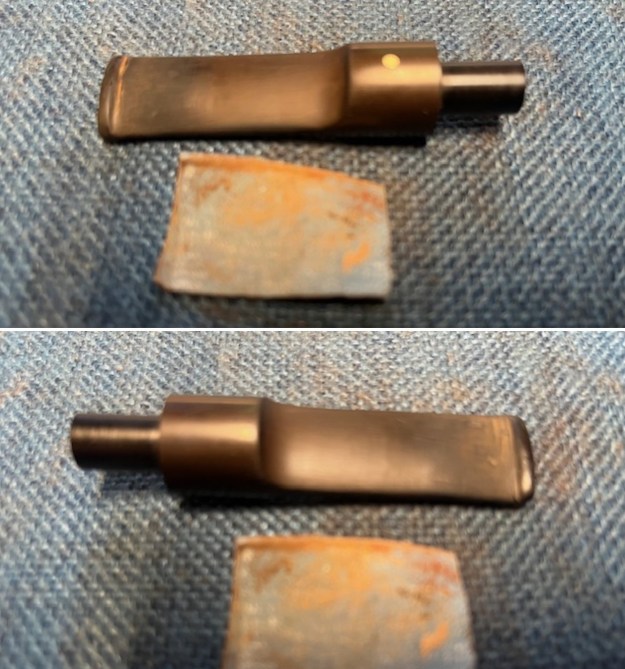
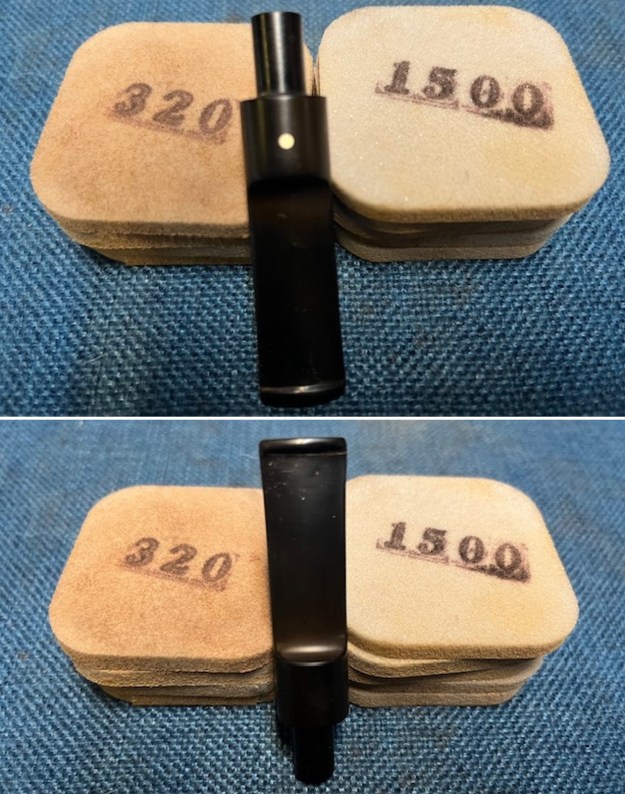
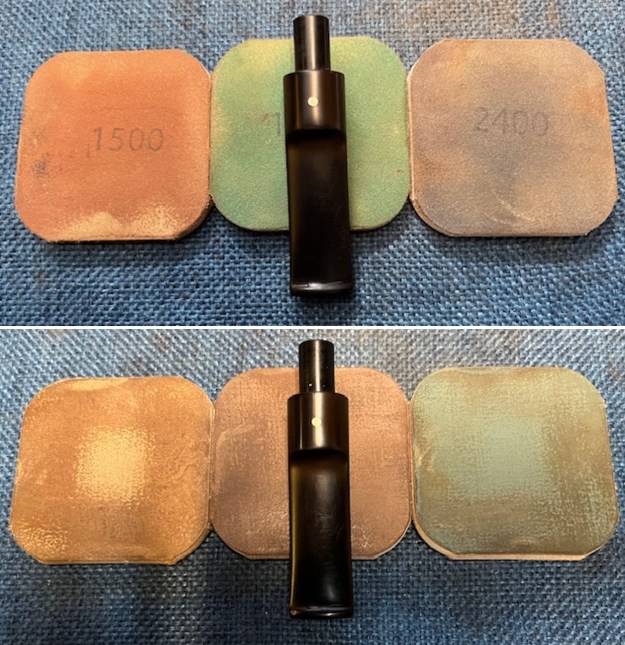
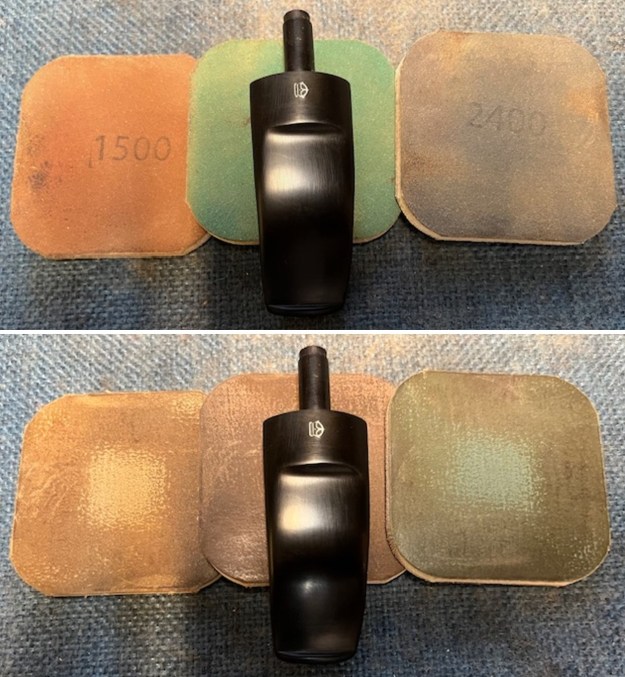
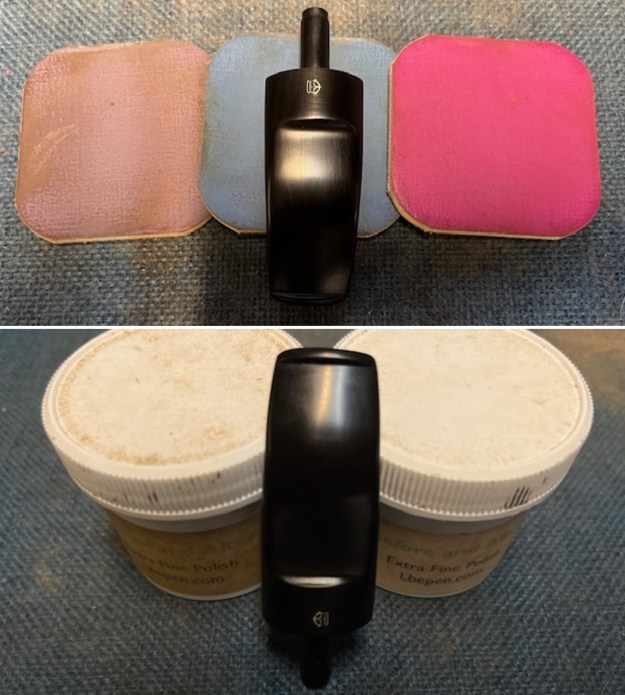
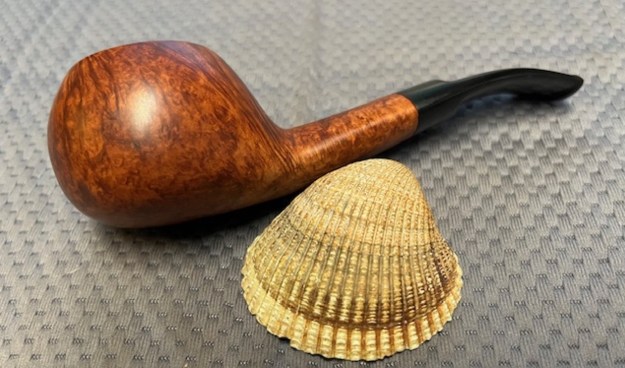
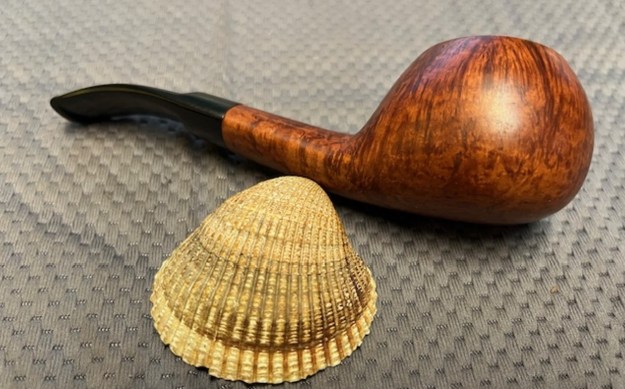
I turned to work on the pipe itself. Jeff had done an amazing cleanup of the pipe. He reamed the light cake with a PipNet reamer and cleaned up that with a Savinelli Fitsall Pipe Knife. He scrubbed the internals of the bowl and stem with alcohol, cotton swabs,pipe cleaners and shank brushes. He scrubbed the externals with undiluted Murphy’s Oil Soap and rinsed the bowl off with running water. He soaked the stem in Briarville’s Pipe stem Deoxidizer and once it had soaked rinsed it off with warm water to remove the residual solution. He dried it off and rubbed it down to remove any oxidation that was still on the stem. The pipe looked very good when I received it. I took a photo of the rim top to show the condition. It looks pretty good with the tars and oils removed from the rim top. The inner edge of the bowl was slightly damaged and out of round. The bowl itself was very clean. The stem came out looking quite good with light tooth marks and chatter on both sides ahead of the button. I took a photo of the underside of the shank to show the stamping. The photo shows the stamping and is actually more readable in person. I removed the stem from the shank and took a photo of the pipe parts to show what I was working with. It is a nice looking pipe. I sanded the inside of the rim top with a folded piece of 220 grit sandpaper to smooth out the damage to the edge. I stained the sanded edge with a Mahogany stain pen to blend it into the surrounding briar surface. It looked much better.I rubbed the briar down with Before & After Restoration Balm. I worked it into the briar with my fingertips and a horsehair shoe brush to work it into the nooks and crannies of the sandblast finish. The product works to clean, enliven and preserve the briar. I let it sit for 10 minutes then I buffed it with a cotton cloth to deepen the shine. The briar really comes alive with the balm. I set the bowl aside and turned to address the stem issues. I scrubbed the surface of the stem with Soft Scrub Cleanser and cotton pads to remove the remaining oxidation. It looked better once I finished.I sanded it with 320-3500 grit sanding pads to further remove the oxidation remaining and tooth chatter on the surface. I wiped it down after each sanding pad with Obsidian Oil on a cloth. By the final 3500 grit sanding pad the rim top had a shine.I polished the vulcanite with micromesh sanding pads – 1500-12000 grit pads. I wiped it down with Obsidian Oil after each sanding pad. I used Before & After Pipe Polish – both Fine and Extra Fine to further polish the stem. This 1967 Dunhill Shell Briar 156 F/T Bent Billiard Vulcanite taper stem has a beautiful, unique Dunhill Sandblast finish that is very deep and craggy. The Shell Briar mixed brown finish highlights some great grain around the bowl and shank. It has a unique sandblast that Dunhill specialized in making. The polished vulcanite taper stem adds to the mix. I put the stem back on the bowl and buffed the pipe with Blue Diamond on the buffing wheel being careful to not buff the stamping. I gave the bowl multiple coats of Conservator’s Wax and the stem multiple coats of carnauba wax on the buffing wheel and followed that by buffing it with a clean buffing pad. I hand buffed the pipe with a microfiber cloth to deepen the shine. The finished Dunhill Shell Briar 156 F/T Bent Billiard is quite nice and feels great in the hand. Give the finished pipe a look in the photos below. The dimensions of the pipe are Length: 5 ½ inches, Height: 1 ¾ inches, Outside diameter of the bowl: 1 ¼ inches, Chamber diameter: ¾ of an inch. The weight of the pipe is 1.38 ounces/40 grams. Thanks for walking through the restoration with me as I worked over another beautiful pipe. This one will be going on the rebornpipes store in the English Pipe Makers Section. Thanks for your time.

Cleaning up one of my restorations from many years ago


Blog by Steve Laug

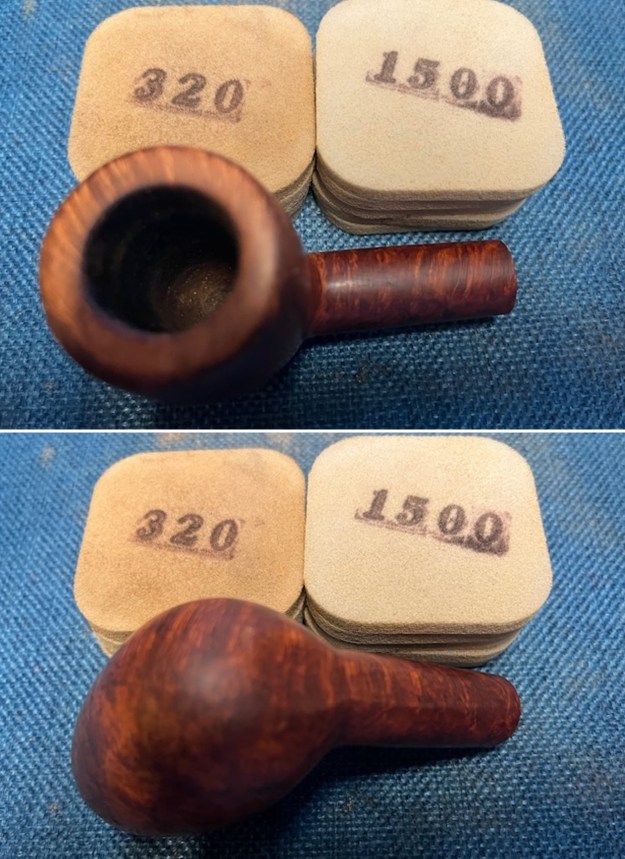
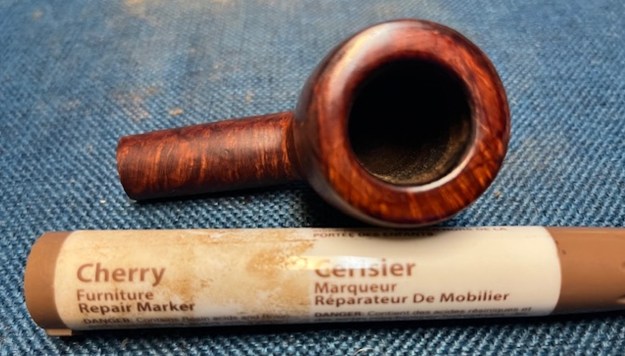
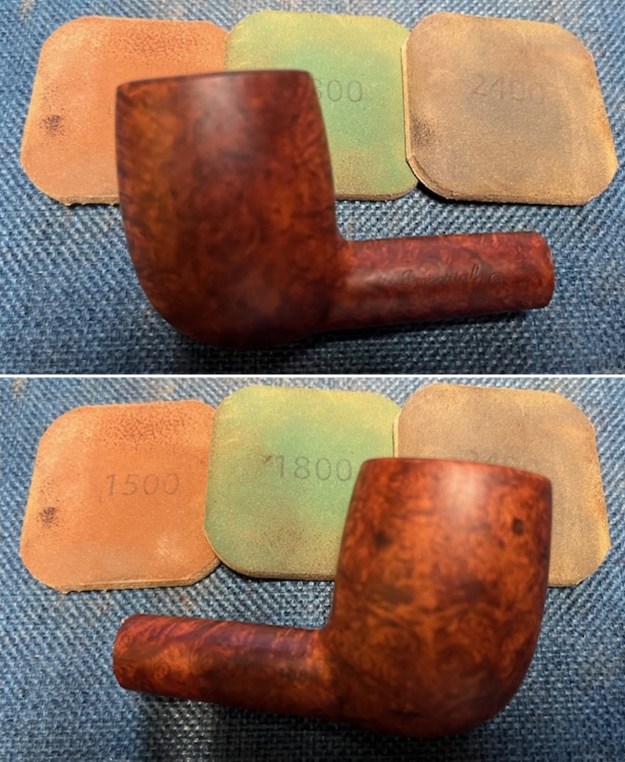
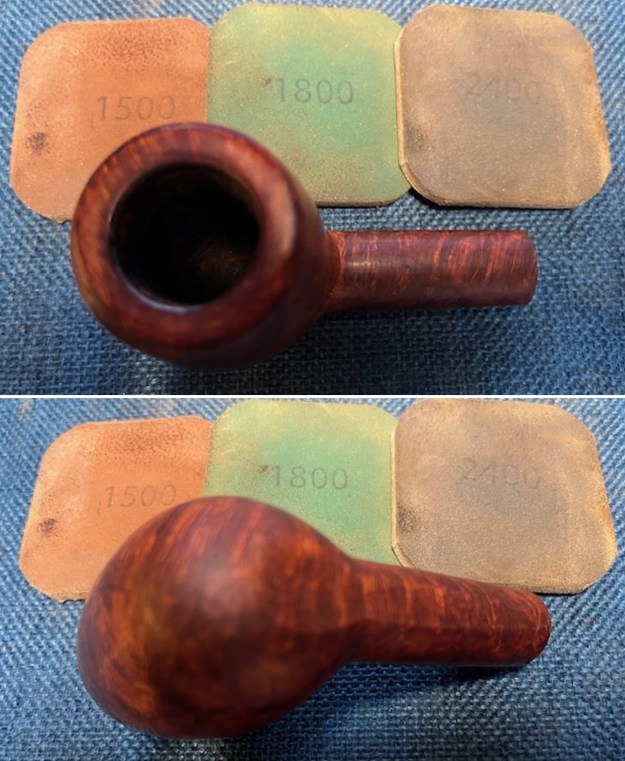
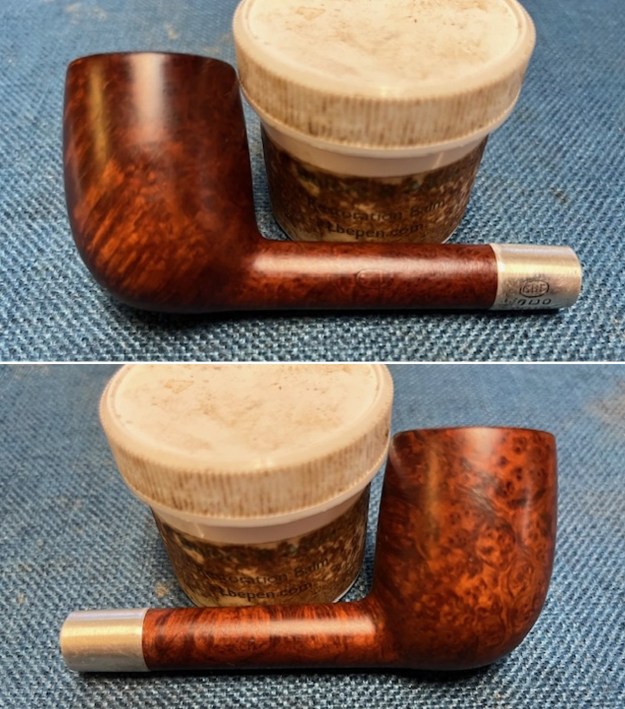
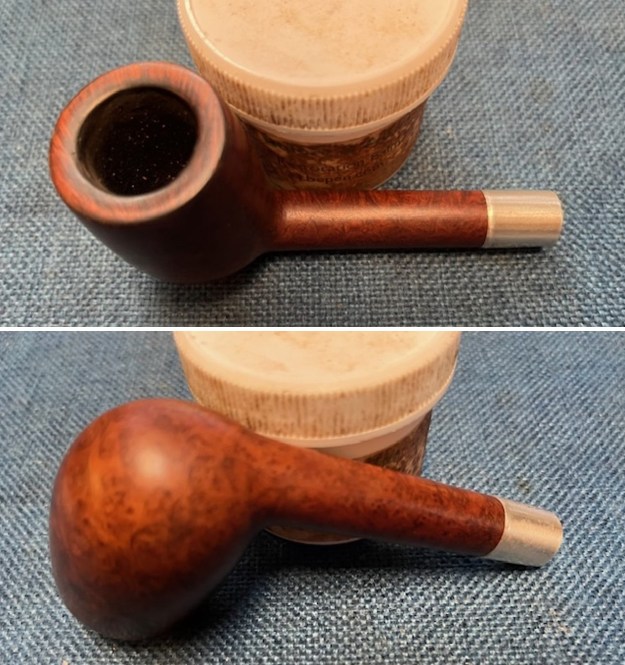
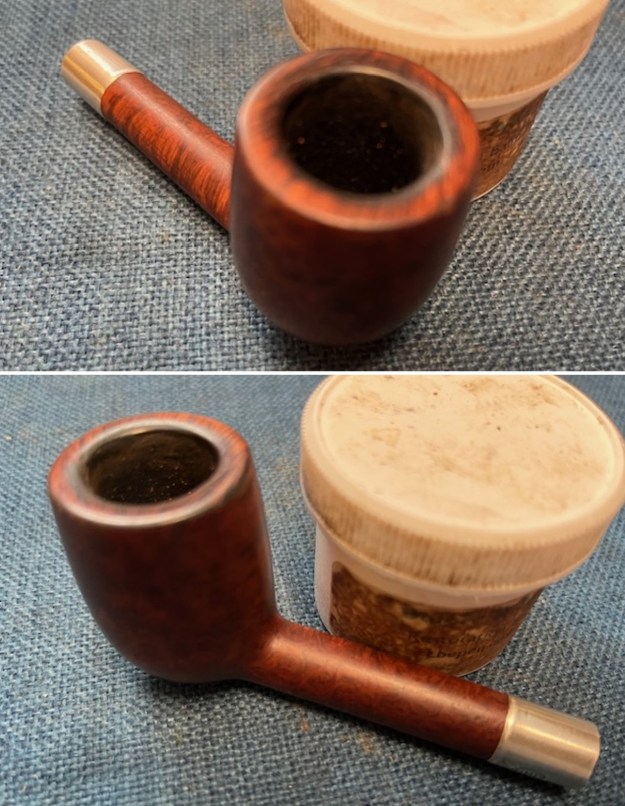
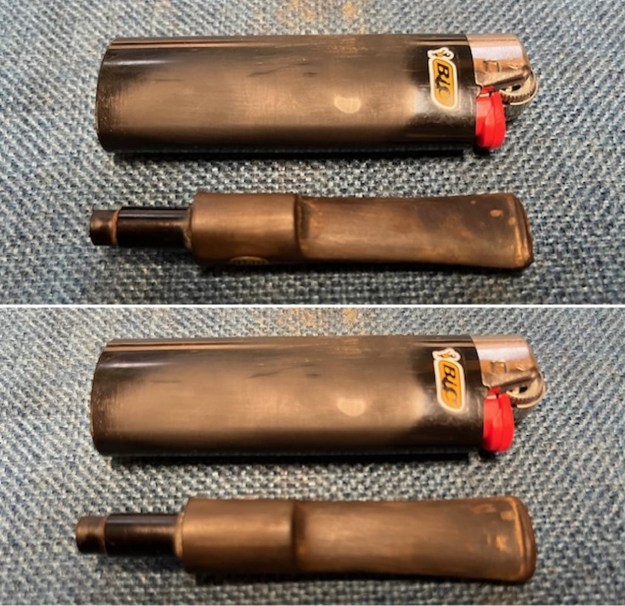
I have always liked the GBD 9438 shaped pipe and this one was one of the first that I picked up many years ago when I first started working on pipes. I found it at an antique shop. It was in the early days when I picked up most every pipe I found. I believe that like others I found in the early days this pipe cost me about $6CDN. Just remembering that reminds me how much things have changed over the years. It became a favourite shape of mine and over the years I have purchased many more 9438 pipes made by GBD for their main and their seconds lines such as Irwin and Dr. Plumb. I have added them to my collection. Here is a link to a blog I did on my collection back in 2013 (https://rebornpipes.com/2013/12/12/my-gbd-9438-saddle-stems-and-tapered-stem-rhodesians/). I have 12 – some were in rough shape and others not so bad. I have been sorting through my pipe collection and thinning out pipes that I am willing to part with. I have sold many already and others are currently on the store. For the most part these pipes have been early restorations and all need a bit of work to bring them up to my current standard. I have set aside three 9438 pipes that I decided to rework. The first of them is stamped on the left side Dr. Plumb [over] London Made. On the right side it is stamped London England [over] 943810. While it was very workable and I had actually smoked it quite a bit over the years I knew that original restoration on it was less rigorous than my current standards. So, before I listed it for sale I wanted to work it over again. I took photos of the pipe to give a sense of the beauty and the work that needed to be done. I took photos of the pipe’s bowl and rim top to show the moderate cake in the bowl and some damage to the inner edge of the bowl. There was also burn damage on the rim top and darkening on the rear and front right top of the bowl. I also took photos to capture the condition of the stem. You can see in the first photo below the dark dot on the top of the saddle. It was originally a Dr. Plumb style logo but over time it had darkened. Fortunately, I am not a biter or stem chewer so there were no deep tooth marks on the top and underside of the stem. There was some oxidation on the vulcanite stem and some chatter around the button.I took photos of the stamping on each side of the shank. It is readable and clear as noted above.I took the stem off the shank and took a photo of the look of the pipe. It really is a beauty.I decided to address the damage to the rim top and inner edge of the bowl. To deal with the burned inner edge of the rim and the rim top damage I lightly topped it on a piece of 220 grit sandpaper. I used a piece of 220 grit sandpaper on a wooden ball to give the rim top a light bevel. It took a bit of work to smooth out the damage and lightly bevel the inner edge of the bowl. I used a Cherry stain pen to restain the rim top and begin the process of blending it in. I reamed the bowl with a Savinelli Fitsall Pipe Knife to take out the cake. I removed ti back to bare briar. I sanded the bowl walls with a piece of 220 grit sandpaper wrapped around a dowel to smooth out the walls. It looked very good. No burn damage or checking on the bowl walls.I scrubbed out the shank and the stem with pipe cleaners, cotton swabs and alcohol to remove the tars and oils. The shank was dirty though the stem airway was not too bad. It cleaned up well. I sanded the bowl and rim top to clean up the damage and repairs to the edge and start the polishing of the bowl. I used 320-3500 grit sanding pads. I wiped the bowl down with a damp cloth after each pad. It really began to take on a shine. I polished the briar with micromesh sanding pads – dry sanding with 1500-12000 grit pads. I wiped it down after each sanding pad with a damp cloth to remove the sanding debris on the surface. I rubbed the bowl down with Before & After Restoration Balm. I worked it into the surface of the briar with my fingertips to clean, enliven and protect it. I let the balm sit for a little while and then buffed with a cotton cloth and shoe brush to raise the shine. I set the bowl aside and turned to address the stem. It was in good condition other than the light tooth chatter so I polished the vulcanite with micromesh sanding pads – 1500-12000 grit pads. I wiped it down with Obsidian Oil after each sanding pad. I used Before & After Pipe Polish – both Fine and Extra Fine to further polish the stem. I gave it a final coat of Obsidian Oil and set it aside to dry. This Dr. Plumb London Made 943810 Bent Rhodesian cleaned up much better this second time around and looks very good. The Before & After Restoration Balm brought the colours and grain out in the smooth finish on the pipe. It works well with the polished vulcanite saddle stem. I put the stem back on the bowl and carefully buffed the pipe with Blue Diamond on the buffing wheel using a light touch on the briar. I gave the bowl and the stem multiple coats of carnauba wax on the buffing wheel. I followed that by buffing the entire pipe with a clean buffing pad. I hand buffed the pipe with a microfiber cloth to deepen the shine. The finished Dr. Plumb London Made Rhodesian 943810 fits nicely in the hand and I think it will feel great as it heats up with a good tobacco. Give the finished pipe a look in the photos below. The dimensions of the pipe are Length: 5 ½ inches, Height: 1 ½ inches, Outside diameter of the bowl: 1 ¼ inches, Chamber diameter: ¾ of an inch. The weight of the pipe is 1.76 ounces/50 grams. I will be adding this one to the British Pipemakers Section of the rebornpipes store shortly. If you want to add it to your collection let me know. Thanks for reading this blog and my reflections on the pipe while I worked on it.

New Life for a 1961 Dunhill Shell Briar 252 Billiard 4S


Blog by Steve Laug

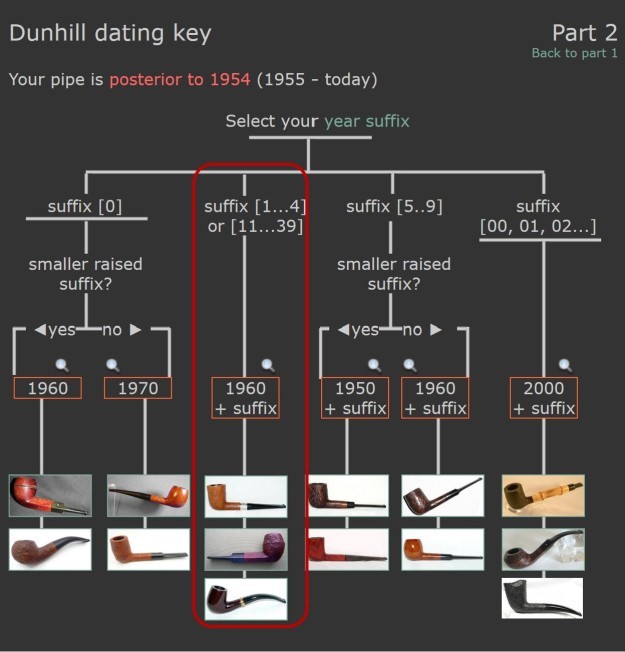
The next pipe on the table is a sandblast Dunhill Billiard. It had a taper, vulcanite stem with a white spot. We purchased it from a seller in Copenhagen, Denmark 02/02/2024. The pipe is stamped on the heel of the bowl and on the underside of the shank. On the heel of the bowl it is stamped with the shape number 252. That is followed with stamping on the shank Dunhill [over] Shell Briar. That is followed by Made in [over] England1. There is a 4 in a circle and an S which speak of the size of the pipe being a Group 4 and the finish S a Shell Briar. The rim has a thick lava coat filling in the sandblast. It is from the overflowing cake in the bowl. It is hard to assess the condition of the inner edge of the rim due to the cake and lava overflow. There were oils and grime ground into the bowl sides gives the finish a flat look. There is a deep sandblast showing through the grime. The vulcanite stem is oxidized, calcified, and dirty with grime and grit on the surface. There were scratches and some deep tooth marks on both the top and underside of the stem just ahead of the button. Jeff took photos of the pipe before he started his clean up work. I have included them below. He took photos of the pipe’s bowl and rim top to show the cake in the bowl and the lava coat overflowing onto the top. It is another dirty pipe. He also took photos to capture the tooth marks on the top and underside of the stem near the button. He took photos of the sides and heel of the bowl to show the rugged sandblast around the bowl and the amount of grime ground into the surface of the briar. He took photos of the stamping on the underside of the shank. It is faint in spots but still readable as noted above. I wanted to unpack the Dunhill stamping on the shank and work to understand each element of the stamp. I generally use the Pipephil site to gather as much initial information as possible (http://pipephil.eu/logos/en/dunhill/shell-briar1.html). The stamping is interpreted as follows: The number 252 is the shape number for a taper stem Billiard. The Shell Briar stamp refers to the finish. The superscript 1 following the D of England would give the date the pipe. The 4S is the size of the pipe and the finish. The photo below is of the stamping on a Don shape but the stamping is similar on this one.Pipephil also has some helpful dating keys on the site that are basically flow charts that you can walk through to date your pipe (http://pipephil.eu/logos/en/dunhill/cledat-en1.html). I turned to Part 1 of the Dating Key and followed the chart. This pipe has a superscript 30 following the D in England. There was no patent number so that took me to the section on the chart below (column one) which instructed me that the pipe could be dated as being made “posterior to 1954”. I followed the link under “Your pipe is posterior to 1954. Narrow down your dating”. That took me to Page 2 of the dating key (http://pipephil.eu/logos/en/dunhill/cledat-en1a.html). The second column (suffix 1…4) or (11…39) led me to the section with a 1 after the D in England. There was a directive for dating the pipe spelled out as follows: 1960 + suffix 1 which gives the pipe a date of 1961.I then turned to Pipedia’s section on Dunhill Shell Briar to get a bit of background on the Dunhill finishes (https://pipedia.org/wiki/Dunhill#Root_Briar). I quote:

Shell

A deep craggy sandblast with a black stain finish (usually made using Algerian briar) – the color of the stain used has varied over the years. Although there is some doubt as to them being the first to sandblast pipes, Dunhill’s Shell pipes, and the sandblasting techniques developed to create them are considered one of Dunhill’s greatest and most lasting contributions to the art of pipe making.

The documented history of Dunhill’s inception of the Shell is largely limited to patent applications — there are no catalog pages or advertisements promoting blasted pipes at the time. The preliminary work on the English patent (No. 1484/17) was submitted on October 13, 1917. The patent submission was completed half a year later, on April 12, 1918, followed by the granting of the English patent on October 14, 1918. This was less than a month before the end of The Great War on November 11th.

In 1986 Dunhill released a line of premium Shell finish pipes – “RING GRAIN”. These are high-quality straight grain pipes which are sandblasted. Initially only Ring Grain, but now in two different finishes. In 1995 the “Shilling” was introduced with Cumberland finish – it is an extremely rare series. These pipes exhibit a deeper blast characteristic of that of the 1930’s – mid-1960’s (and the limited ‘deep blast’ pipes of the early 1980s) and show a fine graining pattern. These are considered the best new Dunhills by many enthusiasts today and are very rare. The finish is sometimes described as tasting like vanilla at first, with the taste becoming more normal or good as the pipe breaks in.

I turned to work on the pipe itself. Jeff had done an amazing cleanup of the pipe. He reamed the light cake with a PipNet reamer and cleaned up that with a Savinelli Fitsall Pipe Knife. He scrubbed the internals of the bowl and stem with alcohol, cotton swabs,pipe cleaners and shank brushes. He scrubbed the externals with undiluted Murphy’s Oil Soap and rinsed the bowl off with running water. He soaked the stem in Briarville’s Pipe stem Deoxidizer and once it had soaked rinsed it off with warm water to remove the residual solution. He dried it off and rubbed it down to remove any oxidation that was still on the stem. The pipe looked very good when I received it. I took a photo of the rim top to show the condition. It looks pretty good with the tars and oils removed from the rim top. The inner edge of the bowl was slightly damaged and out of round. The bowl itself was very clean. The stem came out looking quite good with deep tooth marks and chatter on both sides ahead of the button. I took a photo of the underside of the shank to show the stamping. The photo shows the stamping and is actually more readable in person. I removed the stem from the shank and took a photo of the pipe parts to show what I was working with. It is a nice looking pipe.I sanded the inside of the rim top with a folded piece of 220 grit sandpaper to smooth out the damage to the edge. I stained the sanded edge with a Walnut stain pen to blend it into the surrounding briar surface. It looked much better. I rubbed the briar down with Before & After Restoration Balm. I worked it into the surface with my fingertips and a horsehair shoe brush to work it into the nooks and crannies of the sandblast finish. The product works to clean, enliven and preserve the briar. I let it sit for 10 minutes then I buffed it with a cotton cloth to deepen the shine. The pipe really comes alive with the balm. I set the bowl aside and turned to address the stem issues. I “painted” the surface of the stem with the flame of a Bic lighter. I was able to lift the marks on the stem top leaving light marks but the ones on the bottom side were much deeper and the flame lifted them slightly but they still remained. I filled in the marks that remained with clear CA glue. Once the repair cured I flattened the repair with a small file. It looked much better. I cleaned up the repairs with a folded piece of 220 grit sandpaper. I was able to flatten them and blend them in very well with the surface of the vulcanite. I sanded it with 320-3500 grit sanding pads. I wiped it down after each sanding pad with a damp cloth. By the final 3500 grit sanding pad the rim top had a shine.I polished the vulcanite with micromesh sanding pads – 1500-12000 grit pads. I wiped it down with Obsidian Oil after each sanding pad. I used Before & After Pipe Polish – both Fine and Extra Fine to further polish the stem. This 1961 Dunhill Shell Briar 252 Billiard Vulcanite taper stem has a beautiful, unique Dunhill Sandblast finish that is very deep and craggy. The Shell Briar mixed brown finish highlights some great grain around the bowl and shank. It has a unique sandblast that Dunhill specialized in making. The polished vulcanite taper stem adds to the mix. I put the stem back on the bowl and buffed the pipe with Blue Diamond on the buffing wheel being careful to not buff the stamping. I gave the bowl multiple coats of Conservator’s Wax and the stem multiple coats of carnauba wax on the buffing wheel and followed that by buffing it with a clean buffing pad. I hand buffed the pipe with a microfiber cloth to deepen the shine. The finished Dunhill Shell Briar 252 Billiard is quite nice and feels great in the hand. Give the finished pipe a look in the photos below. The dimensions of the pipe are Length: 5 ½ inches, Height: 1 ¾ inches, Outside diameter of the bowl: 1 ¼ inches, Chamber diameter: ¾ of an inch. The weight of the pipe is 1.23 ounces/.35 grams. Thanks for walking through the restoration with me as I worked over another beautiful pipe. This one will be going on the rebornpipes store in the English Pipe Makers Section. Thanks for your time.

Restoring a Nicely Grained Churchill 999 Imported Briar Pot


Blog by Steve Laug

Last week I received a text from Robert about restoring three pipes his brother had found in Eastern New York. There were two Kaywoodies and a Churchill. The Kaywoodies included a small apple stamped Campus and an octagonal pipe stamped Kaywoodie Standard. The Churchill was a 999 Pot shaped pipe. He sent along two photos of the pipes. You can see the condition of the three pipes. They are dirty and worn. The last pipe in the photo, the Campus has what appears to be a broken shank and a potential repair. It looks to be poorly done. Robert said that he was fairly certain that the stem was glued onto the shank with the repair. On Saturday he brought the pipes by for me to look at. I now had three more pipes to clean up and repair. The Churchill 999 Pot and the Kaywoodie Standard Oxagonal 44 Apple were dirty but were in good repair. I had finished the little KW Campus repair and the pipe looked good (https://rebornpipes.com/2024/04/21/repairing-and-restoring-a-kaywoodie-campus-apple/). I also cleaned up the second Kaywoodie, the Octagonal Apple and it looked good. Here is the link to that blog (https://rebornpipes.com/2024/04/22/restoring-a-kaywoodie-standard-octagonal-44-apple/). There was a moderate cake in the bowl with tobacco debris. There was a coat of lava on the rim top that was quite thick and the inner edge showed some damage. The outer edge looked very good. The finish was dirty but otherwise showed some nice grain underneath. The stamping on the pipe is very simple. On the left side of the shank it is stamped Churchill’s arched over 999 with Imported Briar underneath. The stem was very oxidized and there was light tooth chatter on both sides ahead of the button. The stem was also plugged with tars and debris in the slot and airway was narrowed down.

I have worked on several Churchill pipes over the years and have done research on the brand when I worked on them. Here is a link to one of them that I had worked on. Here is the link to the blog (https://rebornpipes.com/2013/09/08/churchills-bent-pot/). I am including that information below.I am fairly certain that the pipe came from Churchill’s Tobacco Shop in Norwich, England. I found the following information on the Pipes and Logos website http://pipephil.eu/logos/en/logo-c4.html On the site there is a small paragraph which I have copied as follows: “Churchill’s Tobacco shop is situated in St Andrew’s Street at the corner of Bridewell Alley in Norwich, England. The shop was next to a church and at the bottom of two hills, and that’s how it became “Churchill’s”. Former manager: John Elvin (retired on May, 31 2008). Current owner (2008): Keith Garrard.” I have included these pictures from that website as they show the stamping on both the shank and stem that is identical to the pipe that I have just refurbished.According to the Churchill’s website it is the last remaining specialist tobacconist in Norwich, originally standing at 32 St Andrews Street for over 23 years. http://www.churchillsofnorwich.com/index.php?_a=viewDoc&docId=1 The site also notifies the shop’s clients that Keith Garrard, who had a wealth of knowledge and was an avid pipe and cigar smoker himself, passed away on 23rd March 2012. His wife Coral continues to maintain the business in his honour.

I took photos of the pipe when I brought it to the worktable. I wanted to show the general condition of the pipe before I started my work on it. You can see the cake in the bowl and the lava on the rim top. The rim top appears to be good under the lava. The stem is dirty and heavily oxidized as noted and light tooth marks are on the top and underside ahead of the button. I took some close up photos of the rim top and the stem surface. I wanted to show the condition of both more closely. The rim top and the inner and outer edges of the bowl heavily cake in lava and you can see the marks on the inner bowl edge. I also took close up photos of the stem to show the oxidation and the light tooth marks on the stem surface. I took a photo of the stamping on the left side of the shank and it is clear and readable. It is stamped as noted above. I removed the stem for the shank and took a photo of the bowl and stem to give a picture of what it looked like. Now it is time to clean up the pipe. I reamed the bowl with a PipNet pipe reamer and the second cutting head. It cleaned up most of the cake. I used a Savinelli Fitsall Pipe Knife and cleaned up the remaining cake leaving bare briar. I sanded the bowl walls with 220 grip sandpaper wrapped around a piece of dowel. I smoothed out the bowl walls and they looked very good. There was no heat damage or checking on the walls. I scrubbed the exterior of the bowl and shank with a tooth brush and undiluted Murphy’s Oil Soap. It works exceptionally well to remove unwanted oils from the briar and also the grime on the rim and the bowl sides. I rinsed it in warm water while scrubbing with the tooth brush. The pipe looks very good at this point. The rim top is clean enough to know the condition it is in and what I need to do to deal with it. There are scratches and nicks on the rim top and they are very visible now that the lava has been removed. I scrubbed out the shank and the stem with pipe cleaners, cotton swabs and alcohol.
I gently topped the bowl to remove the damage on the rim top and to minimize it on the rear edge where the most damage was. I used a topping board and 220 grit sandpaper.There was some damage and wear on the front outer edge of the bowl. Built it up with CA glue and briar dust to fill in the damage. I smoothed out the damage with 220 grit sandpaper and reshaped it to follow the flow of the bowl. I sanded it further with 320 grit sandpaper to smooth out the repair. It really started to look very good.I touched up the stain on the rim top and on the front of the bowl with a Walnut stain pen. It is a little streaky at this point. It will work better when I finish the sanding and polishing of the rim and bowl.I sanded the bowl and rim top to clean up the damage and repairs to the edge and start the polishing of the bowl. I used 320-3500 grit sanding pads. I wiped the bowl down with a damp cloth after each pad. It really began to take on a shine. I polished the briar with micromesh sanding pads – dry sanding with 1500-12000 grit pads. I wiped it down after each sanding pad with a damp cloth to remove the sanding debris on the surface. I rubbed the bowl down with Before & After Restoration Balm. I worked it into the surface of the briar with my fingertips to clean, enliven and protect it. I let the balm sit for a little while and then buffed with a cotton cloth and shoe brush to raise the shine. I set the bowl aside and turned to address the stem issues. I scrubbed the stem oxidation with Soft Scrub and cotton pads. I was able to remove the majority of the oxidation. Then, I sanded it with a folded piece of 220 grit sandpaper. It looked much better at this point. To remove the remnants of oxidation from the vulcanite I sanded it with 320-3500 grit sanding pads. I wiped it down after each sanding pad with a damp cloth. By the final 3500 grit sanding pad the rim top had a shine.The stem was in good condition so I polished the vulcanite with micromesh sanding pads – 1500-12000 grit pads. I wiped it down with Obsidian Oil after each sanding pad. I used Before & After Pipe Polish – both Fine and Extra Fine to further polish the stem. I gave it a final coat of Obsidian Oil and set it aside to dry. This Churchill 999 Imported Briar Pot cleaned up really well and looks very good. The Before & After Restoration Balm brought the colours and grain out in the smooth finish on the pipe. It works well with the polished vulcanite taper stem. I put the stem back on the bowl and carefully buffed the pipe with Blue Diamond on the buffing wheel using a light touch on the briar. I gave the bowl and the stem multiple coats of carnauba wax on the buffing wheel. I followed that by buffing the entire pipe with a clean buffing pad. I hand buffed the pipe with a microfiber cloth to deepen the shine. The finished Churchill 999 Pot fits nicely in the hand and I think it will feel great as it heats up with a good tobacco. Give the finished pipe a look in the photos below. The dimensions of the pipe are Length: 5 ¼ inches, Height: 1 ½ inches, Outside diameter of the bowl: 1 ¼ inches, Chamber diameter: 7/8 of an inch. The weight of the pipe is 1.13 ounces/32 grams. I know Robert is going to enjoy this last pipe of the three once I return them to him. Thanks for reading this blog and my reflections on the pipe while I worked on it.

Restoring a Kaywoodie Standard Octagonal 44 Apple


Blog by Steve Laug

Last week I received a text from Robert about restoring three pipes his brother had found in Eastern New York. There were two Kaywoodies and a Churchill. The Kaywoodies included a small apple stamped Campus and an octagonal pipe stamped Kaywoodie Standard. The Churchill 999 Pot shaped pipe. He sent along two photos of the pipes. You can see the condition of the three pipes. They are dirty and worn. The last pipe in the photo, the Campus has what appears to be a broken shank and a potential repair. It looks to be poorly done. Robert said that he was fairly certain that the stem was glued onto the shank with the repair. On Saturday he brought the pipes by for me to look at. I now had three more pipes to clean up and repair. The Churchill 999 Pot and the Kaywoodie Standard Oxagonal 44 Apple were dirty but were in good repair. I had finished the little KW Campus repair and the pipe looked good (https://rebornpipes.com/2024/04/21/repairing-and-restoring-a-kaywoodie-campus-apple/). I looked second Kaywoodie, the Octagonal Apple over carefully and this is what I saw. There was a thick cake in the bowl with tobacco debris. There was a coat of lava on the rim top that was quite thick but the inner edge looked very good. The outer edge had some damage on the back side above the shank bowl union. The finish was dirty but otherwise showed some nice grain underneath. The stem was dirty with light tooth chatter on both sides ahead of the button.

Dal had worked on a Kaywoodie Standard, but shape 33 and done a fair bit of research on the pipe (https://rebornpipes.com/2020/03/23/new-life-for-a-kaywoodie-standard-apple-for-a-special-pipe-woman/). I have included the link above if you would like to read it. I have copied the pertinent portion on the 2 digit shape numbers and dating of the pipe below.

The next picture in this set shows the Kaywoodie shape number ‘33’ on the right flank of the shank which points to the designation of a ‘Large Apple’ from the US production of Kaywoodie pipes (LINK).  According to this discussion on Tapatalk.com, the 2-digit system, employed from 1927 to 1972 when the system was changed to a 3-digit system, was when pipe production (for Kaywoodie, Yello-Bole and Medico) was moved to the Medico factory in Richmond Hill Queens NY as plans for new plant were in process.  The 3-digit numbers was used during this period for all Kaywoodie and Medico pipes, from 1972 to 1980.  The same article indicated that the 2-digit numbers were only for Kaywoodies produced in the US – that Kaywoodie of London (Cadogan) had their own three-digit system.  Putting all the information together, this Kaywoodie Apple is most likely a 1960s vintage.  According to the Kaywoodie Discussion at MyFreeForum the ‘Standard’ line of Kaywoodie started in the 1950s, but with the 2 digit shape number and the 3 hole stinger, the evidence points to the 1960s dating.

I included a portion of the shape number chart from Pipedia and the link to the chart as well (https://pipedia.org/wiki/Kaywoodie_Shape_Numbers). I did a screen capture of the section with the shape 44 number. It is interesting in that the shape was available for only a few years – 1965 to 1970. That helps narrow down the date on the pipe I am working on. It also identifies it as an Octagon Apple.I also have included a portion of a chart with the pipe line names and the approximate date of manufacture below (https://pipedia.org/images/3/3d/Kaywoodie_Pipe_Names.pdf). It identifies the date of the Standard line production between 1950 and the present.I learned that the line was introduced in 1950 and the specific shape I had in hand was made between 1965 and 1970. The tenon/stinger was a typical Drinkless type and was threaded to screw into the fitment in the shank. From that I knew that I was working on an older pipe.

I took photos of the pipe when I brought it to the worktable. I wanted to show the general condition of the pipe before I started my work on it. You can see the cake in the bowl and the lava on the rim top. The damage on the back edge of the rim top is also visible. The stem is dirty and lightly oxidized as noted and light tooth marks are on the top and underside ahead of the button. I took some close up photos of the rim top and the stem surface. I wanted to show the condition of both more closely. The rim top and the inner and outer edges of the bowl heavily cake in lava and you can see the marks on the back outer edge. I also took close up photos of the stem to show the general dullness of the stem and the light tooth marks on the stem surface. I took a photo of the stamping on the left side of the shank and it is clear and readable. It is stamped as noted above. The right side has the shape number but it is almost filled in with dirt. It is still readable but I could not capture it in a photo. I removed the stem for the shank and took a photo of the bowl and stem to give a picture of what it looked like.Now it is time to clean up the pipe. I reamed the bowl with a PipNet pipe reamer and the second cutting head. It cleaned up most of the cake. I used a Savinelli Fitsall Pipe Knife and cleaned up the remaining cake leaving bare briar. I sanded the bowl walls with 220 grip sandpaper wrapped around a piece of dowel. I smoothed out the bowl walls and they looked very good. There was no heat damage or checking on the walls. I scrubbed out the shank and the stem with pipe cleaners, cotton swabs and alcohol. I cleaned up the stinger with pipe cleaners, cotton pads and alcohol.I scrubbed the exterior of the bowl and shank with a tooth brush and undiluted Murphy’s Oil Soap. It works exceptionally well to remove unwanted oils from the briar and also the grime on the rim and the bowl sides. I rinsed it in warm water while scrubbing with the tooth brush. The pipe looks very good at this point. The rim top is clean enough to know the condition it is in and what I need to do to deal with it. I gently topped the bowl to remove the damage on the rim top and to minimize it on the rear edge where the most damage was. I used a topping board and 220 grit sandpaper.I repaired the outer edge of the rim at the back with clear CA glue and briar dust. I sanded it smooth with a folded piece of 220 grit sandpaper to start blending the repair into the rest of the briar. It was smooth to touch and did not stand out as a dark repair.I sanded the bowl and rim top to clean up the damage and repairs to the edge using 320-3500 grit sanding pads. I wiped the bowl down with a damp cloth after each pad. It really began to take on a shine. I polished the briar with micromesh sanding pads – dry sanding with 1500-12000 grit pads. I wiped it down after each sanding pad with a damp cloth to remove the sanding debris on the surface. I rubbed the bowl down with Before & After Restoration Balm. I worked it into the surface of the briar with my fingertips to clean, enliven and protect it. I let the balm sit for a little while and then buffed with a cotton cloth and shoe brush to raise the shine. I set the bowl aside and turned to address the stem issues. I “painted” the stem surface with the flame of a lighter. I filled in the deep tooth marks with black CA glue. Once it cured I sanded it flat to the stem surface with a folded piece of 220 grit sandpaper. It looked much better at this point. To blend the repairs into the surface of the vulcanite I sanded it with 320-3500 grit sanding pads. I wiped it down after each sanding pad with a damp cloth. By the final 3500 grit sanding pad the rim top had a shine. The stem was in good condition so I polished the vulcanite with micromesh sanding pads – 1500-12000 grit pads. I wiped it down with Obsidian Oil after each sanding pad. I used Before & After Pipe Polish – both Fine and Extra Fine to further polish the stem. I gave it a final coat of Obsidian Oil and set it aside to dry. This Kaywoodie Standard Imported Briar 44 Octagonal Apple cleaned up really well and looks very good. The Before & After Restoration Balm brought the colours and grain out in the smooth finish on the pipe. It works well with the polished oval vulcanite taper stem. I put the stem back on the bowl and carefully buffed the pipe with Blue Diamond on the buffing wheel. I gave the bowl and the stem multiple coats of carnauba wax on the buffing wheel. I followed that by buffing the entire pipe with a clean buffing pad. I hand buffed the pipe with a microfiber cloth to deepen the shine. The finished Kaywoodie Standard 44 Octagonal Apple fits nicely in the hand and I think it will feel great as it heats up with a good tobacco. Give the finished pipe a look in the photos below. The dimensions of the pipe are Length: 5 ½ inches, Height: 1 ½ inches, Outside diameter of the bowl: 1 ¼ inches, Chamber diameter: ¾ of an inch. The weight of the pipe is 1.34 ounces/38 grams. I know Robert is going to enjoy this second pipe of the three once I return it to him with the other pipes he dropped off. Thanks for reading this blog and my reflections on the pipe while I worked on it.

Repairing and restoring a Kaywoodie Campus Apple


Blog by Steve Laug

Last week I received a text from Robert about restoring three pipes his brother had found in Eastern New York. There were two Kaywoodies and a Churchill. The Kaywoodies included a small apple stamped Campus and an octagonal pipe stamped Kaywoodie Standard. The Churchill 999 Pot shaped pipe. He sent along two photos of the pipes. You can see the condition of the three pipes. They are dirty and worn. The last pipe in the photo, the Campus has what appears to be a broken shank and a potential repair. It looks to be poorly done. Robert said that he was fairly certain that the stem was glued onto the shank with the repair. On Saturday he brought the pipes by for me to look at. The Churchill 999 Pot and the Kaywoodie Standard Oxagonal billiard were dirty but were in good repair. The one that got my attention was the little Campus with the cracked shank. I looked it over carefully and Robert was correct it appeared that the stem had been glued in the shank and it was overclocked. The repair was odd. It appeared that half of the shank that fit the depth of the metal threaded insert had cracked completely off. It had been repaired with what appeared to be white wood glue. It did not fit well and there were gaps on the top and bottom side as shown in the photos. There was also a moderated cake in the bowl with tobacco debris. There was some lava on the rim top that was quite thick but the inner and outer edge looked very good. The finish was dirty but otherwise showed some nice grain underneath. The stem was overclocked and dirty with light tooth chatter on both sides ahead of the button. I have seen other Kaywoodie Campus pipes but other than a faint memory was not clear where they fit in the line and when they were made. I turned to Pipephil’s site to refresh my memory and see what he had on the brand (http://www.pipephil.eu/logos/en/logo-kaywoodie-1.html). I did a screen capture of the pertinent section and have included the side bar information below the photo.The Campus Kaywoodie line was introduced in 1957 and these pipes do not bear the 2 digit shape code. Campus and Colt series are Kaywoodies smallest pipes (to be smoked between two classes). Although the Campus pipes have a Synchro Stem like screw-in attachment, the stinger itself is not of the Drinkless type (see enlarged view #2 – http://www.pipephil.eu/logos/en/lightbox/images/next.png)

I learned that the line was introduced in 1957 and did not have any shape numbers. The pipes were designed on the small side to give a quick smoke between classes on campus. The tenon/stinger was not a typical Drinkless type but the fit to the stem was the same threaded type of attachment. From that I knew that I was working on an older pipe.

Now it was time to work on the pipe. I started my work on the pipe by seeing if I could loosen the stem from the shank. I used a cotton swab to push acetone into the cracked area and the metal fitment on the shank. I repeated the process then soaked a cotton pad and wrapped it around the shank connection. I let it sit for 30 minutes while I worked on another pipe.I once again tried to turn the stem on the shank and it easily came free of the shank. The threads were very dirty but I could see no glue visible on the threads. I took some pictures of the shank repair at this point in the process. You can see how the white glue that filled in the cracks around the shank had begun to dissolve showing the damage clearly in the shank fit.I soaked the crack with more acetone using a q-tip. It did not take much for the broken piece to come free of the shank. I took a photo of the pipe at this point. You can see the cracked portion still glued to the metal insert in the shank. You can also see the grime in the threads of the tenon and in the ridges on the insert. It is dirty.I soaked the broken piece of briar in a small bowl of acetone to loosen the briar from the metal shank insert. It did not take long for the glue to soften on the shank piece and it floated free of the metal insert. I cleaned up the broken pieces of the briar and glued it in place on the shank. I pressed the parts together until the glue set. Once the repair cured I cleaned up the shank insert and painted the surface with wood glue then pressed it into the shank end. I let it sit until the glue hardened.I filled in the divots and cracked areas in the shank end with clear CA glue and briar dust to build up a smooth surface on the shank end. I sanded the repairs with 220 grit sandpaper to smooth out the surface.I used a rasp to reduce the size of the metal insert edge and the high spots on the briar of the shank in preparation for fitting it with a repair band to bind everything together. I sanded out the file marks on the briar. Once I had it smooth enough for fitting the band I fit the band on the shank end and heated it with the flame of a lighter. I pressed it against a hard surface to push it fully onto the shank end. I took photos of the newly fitted band on the shank and it looked very good. Now it is time to clean up the pipe. I reamed the bowl with a Savinelli Fitsall Pipe Knife and took the cake back to bare briar. I sanded the bowl walls with 220 grip sandpaper wrapped around a piece of dowel. I smoothed them out and the bowl walls looked very good. There was no heat damage or checking on the walls.I scrubbed out the shank with pipe cleaners, cotton swabs and alcohol. I had already done this to some degree when I had the pipe in parts earlier but I wanted to clean it up further. I also swabbed out the inside of the bowl with a folded pipe cleaner to remove the dust. I cleaned out the inside of the stem with pipe cleaners and alcohol.Quite awhile ago now, Mark Hoover of Before & After Restoration Balm fame sent me a sample of his briar cleaner. When it arrived it had leaked all over the package so there was very little left in the bottle. It was a mess to clean up so I just set it aside where it has been sitting for several years now. I thought I might as well scrub the briar with it. I scrubbed it down with a tooth brush and rinsed it off with some warm running water. I dried it off with a soft cloth. It looked much better. I touched up the stain on the rim top and around the end of the newly place band with a Cherry stain pen.I polished the briar with micromesh sanding pads – dry sanding with 1500-12000 grit pads. I wiped it down after each sanding pad with a damp cloth to remove the sanding debris on the surface. I rubbed the bowl down with Before & After Restoration Balm. I worked it into the surface of the briar with my fingertips to clean, enliven and protect it. I let the balm sit for a little while and then buffed with a cotton cloth and shoe brush to raise the shine. I set the bowl aside and turned to address the stem issues. To address the scratches and marks in the surface of the vulcanite as well as some residual oxidation. I sanded it with 320-3500 grit sanding pads. I wiped it down after each sanding pad with a damp cloth. By the final 3500 grit sanding pad the rim top had a shine.The stem was in good condition to I polished the vulcanite with micromesh sanding pads – 1500-12000 grit pads. I wiped it down with Obsidian Oil after each sanding pad. I used Before & After Pipe Polish – both Fine and Extra Fine to further polish the stem. This Kaywoodie Campus Saddle Stem Apple cleaned up really well and looks very good. The Before & After Restoration Balm brought the colours and grain out in the finish on the pipe. It works well with the polished vulcanite saddle stem. I put the stem back on the bowl and carefully buffed the pipe with Blue Diamond on the buffing wheel using a light touch on the briar. I gave the bowl and the stem multiple coats of carnauba wax on the buffing wheel. I followed that by buffing the entire pipe with a clean buffing pad. I hand buffed the pipe with a microfiber cloth to deepen the shine. The finished Kaywoodie Campus Saddle Stem Apple fits nicely in the hand and I think it will feel great as it heats up with a good tobacco. Give the finished pipe a look in the photos below. The dimensions of the pipe are Length: 5 ½ inches, Height: 1 ¼ inches, Outside diameter of the bowl: 1 inch, Chamber diameter: ¾ of an inch. The weight of the pipe is .81 ounces/23 grams. I know Robert is going to enjoy this pipe once I return it to him with the other pipes he dropped off. Thanks for reading this blog and my reflections on the pipe while I worked on it. m

Life for a Savinelli Italy Coral Finished Bing Billiard with a Specialty Sterling Band


Blog by Steve Laug

The next pipe on the table has one of my favourite finishes – a deeply rusticated one with what appears to have originally been a natural finished. We purchased this one from an estate on 03/21/2024 from a fellow in Oregon City, Oregon, USA. It is a Savinelli rustication that really looks like a classic Capri Root Briar. The coral like rustication around the bowl and shank was filled in with dust and debris. The natural finish was dirty and the high spots are darkened by hand oils and grime ground into briar. The pipe was stamped on underside of the shank. It is stamped Savinelli followed by Italy. There is no shape number on the shank but the style is much like a Bing Crosby Pipe. The Sterling Silver Band on the shank has 925 in an oval followed by SA113. On the topside it is etched Le Mie Pipe over AS underlined in script. There was a thick cake in the bowl and lava overflow on the inner edges and the rim top. The vulcanite stem was oxidized and had tooth marks and chatter ahead of the button on both sides. Jeff took photos of the pipe to show its general condition before he did his cleanup. As I mentioned above the exterior of the pipe was very dirty – grime and grit ground in from years of use and sitting. The rim top was covered with a thin coat of lava that overflowed from the thick cake in the bowl. The rim edges looked quite good with no damage. The stem was dirty, calcified and oxidized with tooth chatter and marks on the top and underside of the stem at the button. Jeff took photos of the sides and the heel of the bowl to give a better feel for the condition of the briar around the bowl. It is a great looking piece of briar with a deep coral style rustication. The next photo shows the stamping on the heel of the bowl and the underside of the shank. It is very readable and reads as noted above.Jeff also took photos of the stamping on the Sterling Silver band. The top of the band on the shank reads as noted above – Le Mie Pipe over AS signature line. The underside of the is stamped 925 in an oval followed by SA113. I wrote my brother Jeff to see if I had spelled what I read on the stamping correctly. He sent me a response to my question affirming that I had spelled it correctly and also included a link that he had found while Googling for Le Mei pipes. It took him to a listing on Smokingpipes.com that defined the stamping and gave some context for it pipes made by Savinelli (https://www.smokingpipes.com/pipes/estate/italy/moreinfo.cfm?product_id=370851). I quote below from Jeff’s email with the info he found on the site:

Le Mie means “mine” in Italian. On smoking pipes.com, it talks about Savinelli Le Mie pipes. According to this, it says that the favorite finish of Achille Savinelli was said to be a rugged, coral-like rustication, but his preferred pipe to wear such a finish was an understated, long-stemmed, straight billiard. That being the case, when the marque made a series of briars in his honor, Le Mie, meaning “mine” in Italian, that’s precisely what was made. This piece also wears a handsome, silver accent band that displays the founder’s signature. — Angela Robertson

Now I knew what the stamping on the band meant – it is a pipe made in honour of Achille Savinelli. It was made in his preferred shape and with his favourite coral finish and a silver band with his signature. Hence, it is stamped MY PIPE (Le Mie). Armed with that information I turned to work on the pipe itself. Jeff had done an amazing cleanup of the pipe. He reamed the light cake with a PipNet reamer and cleaned up that with a Savinelli Fitsall Pipe Knife. He scrubbed the internals of the bowl and stem with alcohol, cotton swabs and pipe cleaners. He scrubbed the externals with undiluted Murphy’s Oil Soap and rinsed the bowl off with running water. He soaked the stem in Briarville’s Pipe stem Deoxidizer and once it had soaked rinsed it off with warm water to remove the residual solution. He dried it off and rubbed it down to remove any oxidation that was still on the stem. The pipe looked very good when I received it. I took some close up photos of the rim top and the stem surface. I wanted to show what cleaned bowl and rim top looked like. The rim top and the inner and outer edges of the bowl were in excellent condition. The top of the bowl was in good condition. I also took close up photos of the stem to show the tooth marks and the remaining oxidation on the stem surface. I took a photo\s of the stamping on the underside of the shank and it is clear and readable. It is stamped as noted above. I removed the stem for the shank and took a photo of the bowl and stem to give a picture of what it looked like. The remaining oxidation is very visible.I rubbed the bowl down with Before & After Restoration Balm. I worked it into the surface of the briar with my fingertips and a horse hair shoe brush to clean, enliven and protect it. I let the balm sit for a little while and then buffed with a cotton cloth and shoe brush to raise the shine. I set the bowl aside and turned to work on the stem. I touched up the golf club and ball logo stamp on the left side of the taper stem with a white acrylic fingernail polish. Once it cured I scraped off the excess polish and polished around it with a worn micromesh 1500 grit sanding pad. I took a photo of the whitened stamp.    I wiped down the stem with some Soft Scrub to remove the remaining oxidation on the stem. I worked very well to remove what remained.The stem was in good condition to I polished the vulcanite with micromesh sanding pads – 1500-12000 grit pads. I wiped it down with Obsidian Oil after each sanding pad. I used Before & After Pipe Polish – both Fine and Extra Fine to further polish the stem. The stem was a filter stem drilled for 6mm filters. I fitted the tenon with a new Vauen 6mm filter so it is ready for the next owner to load and enjoy.This Savinelli Le Mie Pipe (My Pipe) Achilles Savinelli signed Crosby Billiard cleaned up really well and looks very good. The Before & After Restoration Balm brought the colours and grain out in the rusticated finish on the pipe. It works well with the polished vulcanite taper stem. I put the stem back on the bowl and carefully buffed the pipe with Blue Diamond on the buffing wheel using a light touch on the briar. I gave the bowl multiple coats of Conservator’s Wax and the stem multiple coats of carnauba wax on the buffing wheel. I followed that by buffing the entire pipe with a clean buffing pad. I hand buffed the pipe with a microfiber cloth to deepen the shine. The finished Savinellil Le Mie Pipe Crosby Billiard fits nicely in the hand and I think it will feel great as it heats up with a good tobacco. The tactile finish will add to the experience. Give the finished pipe a look in the photos below. The dimensions of the pipe are Length: 6 ½ inches, Height: 1 ¾ inches, Outside diameter of the bowl: 1 ¼ inches, Chamber diameter: ¾ of an inch. The weight of the pipe is 1.16 ounces/33 grams. If you are interested in carrying the previous pipeman’s legacy with this pipe send me a message or an email. I will be adding it to the rebornpipes store in the Italian Pipe Makers Section. Thanks for reading this blog and my reflections on the pipe while I worked on it.

Breathing New Life into a Large Dunhill Group 6 Shell Briar 6401 Bent Apple


Blog by Steve Laug

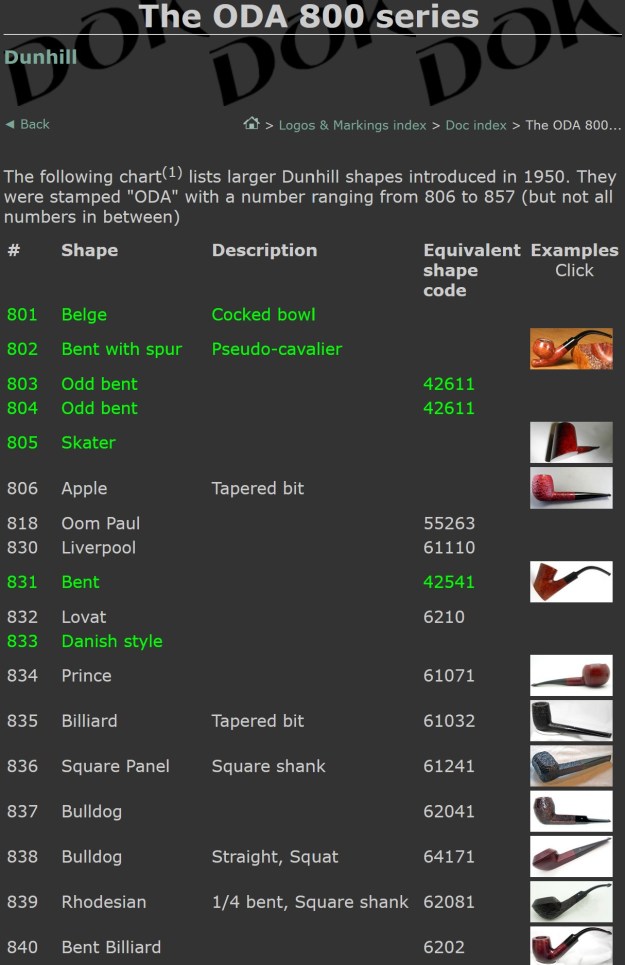
The next pipe on the table is a large sandblast Dunhill ¼ Bent Apple. It had a taper, vulcanite stem with a white spot. We purchased it from a seller who was selling an estate in Oregon City, Oregon, USA on 03/21/2024. The seller said that the pipe came from his father in Indiana, a long-time pipe dealer who had retired many years earlier. His father had originally purchased it from a friend of his who also was also a pipe dealer. The pipe is stamped on the heel of the bowl and on the underside of the shank. On the heel of the bowl it is stamped with the shape number 6401. That is followed with stamping on the shank that clearly reads Dunhill in an oval. Next to that it is stamped Shell Briar [over] Made in England30. The rim was in good condition other than lava overflowing from the thick cake in the bowl onto the sandblast rim top. It is hard to assess the condition of the inner edge of the rim due to the cake and lava overflow. There were oils and grime ground into the bowl sides gives the finish a flat look. The vulcanite stem is oxidized, calcified, and dirty with grime and grit on the surface. There was a Softee Bit on the stem when we got it. Once it was removed, there were also scratches and tooth marks on both the top and underside of the stem just ahead of the button. Jeff took photos of the pipe before he started his clean up work. I have included them below. He took photos of the pipe’s bowl and rim top to show the cake in the bowl and the lava coat overflowing onto the top. It is another dirty pipe. He also took photos to capture the tooth marks on the top and underside of the stem near the button. He took photos of the sides and heel of the bowl to show the sand blast around the bowl and the amount of grime ground into the surface of the briar. He took photos of the stamping on the underside of the shank. It is clear and very readable as noted above. I wanted to unpack the Dunhill stamping on the shank and work to understand each element of the stamp. I generally use the Pipephil site to gather as much initial information as possible (http://pipephil.eu/logos/en/dunhill/shell-briar1.html). The stamping is interpreted as follows: The number 6401 is the shape number that unpacks as follows: the 6 is the bowl size, 4 is the identifier for a taper stem, 01 is the shape designation – an Apple. The Shell Briar stamp refers to the finish. The superscript 30 following the D of England would give the date the pipe. Pipephil also has some helpful dating keys on the site that are basically flow charts that you can walk through to date your pipe (http://pipephil.eu/logos/en/dunhill/cledat-en1.html). I turned to Part 1 of the Dating Key and followed the chart. This pipe has a superscript 30 following the D in England. There was no patent number so that took me to the section on the chart below (column one) which instructed me that the pipe could be dated as being made “posterior to 1954”.I followed the link under “Your pipe is posterior to 1954. Narrow down your dating”. That took me to Page 2 of the dating key (http://pipephil.eu/logos/en/dunhill/cledat-en1a.html). The second column (suffix 1…4) or (11…39) led me to the section with a 30 after the D in England. There was a directive for dating the pipe spelled out as follows: 1960 + suffix which gives the pipe a date of 1990. From that I knew that the pipe was made in the 1990.I then turned to Pipedia’s section on Dunhill Shell Briar to get a bit of background on the Dunhill finishes (https://pipedia.org/wiki/Dunhill#Root_Briar). I quote:

Shell

A deep craggy sandblast with a black stain finish (usually made using Algerian briar) – the color of the stain used has varied over the years. Although there is some doubt as to them being the first to sandblast pipes, Dunhill’s Shell pipes, and the sandblasting techniques developed to create them are considered one of Dunhill’s greatest and most lasting contributions to the art of pipe making.

The documented history of Dunhill’s inception of the Shell is largely limited to patent applications — there are no catalog pages or advertisements promoting blasted pipes at the time. The preliminary work on the English patent (No. 1484/17) was submitted on October 13, 1917. The patent submission was completed half a year later, on April 12, 1918, followed by the granting of the English patent on October 14, 1918. This was less than a month before the end of The Great War on November 11th.

In 1986 Dunhill released a line of premium Shell finish pipes – “RING GRAIN”. These are high-quality straight grain pipes which are sandblasted. Initially only Ring Grain, but now in two different finishes. In 1995 the “Shilling” was introduced with Cumberland finish – it is an extremely rare series. These pipes exhibit a deeper blast characteristic of that of the 1930’s – mid-1960’s (and the limited ‘deep blast’ pipes of the early 1980s) and show a fine graining pattern. These are considered the best new Dunhills by many enthusiasts today and are very rare. The finish is sometimes described as tasting like vanilla at first, with the taste becoming more normal or good as the pipe breaks in.

I turned to work on the pipe itself. Jeff had done an amazing cleanup of the pipe. He reamed the light cake with a PipNet reamer and cleaned up that with a Savinelli Fitsall Pipe Knife. He scrubbed the internals of the bowl and stem with alcohol, cotton swabs and pipe cleaners. He scrubbed the externals with undiluted Murphy’s Oil Soap and rinsed the bowl off with running water. He soaked the stem in Briarville’s Pipe stem Deoxidizer and once it had soaked rinsed it off with warm water to remove the residual solution. He dried it off and rubbed it down to remove any oxidation that was still on the stem. The pipe looked very good when I received it. I took a photo of the rim top to show the condition. It looks pretty good with the tars and oils removed from the rim top. You can see the flat finish on the rim top and the debris in the sandblast. The bowl itself was very clean. The stem came out looking quite good with some slight remaining oxidation. There are some scratches, light tooth marks and chatter on both sides ahead of the button. I took a photo of the underside of the shank to show the stamping. The photo shows the stamping and is actually more readable in person. I removed the stem from the shank and took a photo of the pipe parts to show what I was working with. It is a nice looking pipe.I sanded the rim top with a brass bristle wire brush to knock off the debris in the sandblast finish. It looked much better at this point.I rubbed the briar down with Before & After Restoration Balm. I worked it into the briar with my fingertips and a horsehair shoe brush to work it into the nooks and crannies of the sandblast finish. The product works to clean, enliven and preserve the briar. I let it sit for 10 minutes then I buffed it with a cotton cloth to deepen the shine. The briar really comes alive with the balm. I set the bowl aside and turned to address the stem issues. To address the scratches and marks in the surface of the vulcanite as well as some residual oxidation. I sanded it with 320-3500 grit sanding pads. I wiped it down after each sanding pad with a damp cloth. By the final 3500 grit sanding pad the rim top had a shine.I polished the vulcanite with micromesh sanding pads – 1500-12000 grit pads. I wiped it down with Obsidian Oil after each sanding pad. I used Before & After Pipe Polish – both Fine and Extra Fine to further polish the stem. This 1990 Dunhill Shell Briar 6401 Apple with a ¼ Bent Vulcanite taper stem has a beautiful, unique Dunhill Sandblast finish that is very deep and craggy. The Shell Briar dark brown finish highlights some great grain around the bowl and shank. It has a unique sandblast that Dunhill specialized in making. The polished vulcanite taper stem adds to the mix. I put the stem back on the bowl and buffed the pipe with Blue Diamond on the buffing wheel being careful to not buff the stamping. I gave the bowl multiple coats of Conservator’s Wax and the stem multiple coats of carnauba wax on the buffing wheel and followed that by buffing it with a clean buffing pad. I hand buffed the pipe with a microfiber cloth to deepen the shine. The finished Dunhill Shell Briar 6401 Apple is quite nice and feels great in the hand. Give the finished pipe a look in the photos below. The dimensions of the pipe are Length: 6 ½ inches, Height: 2 inches, Outside diameter of the bowl: 1 ½ inches, Chamber diameter: ¾ of an inch. The weight of the pipe is 3.03 ounces/86 grams. Thanks for walking through the restoration with me as I worked over another beautiful pipe. This one will be going on the rebornpipes store in the English Pipe Makers Section. Thanks for your time.

Restoring a Danish Mystery Panel Plateau Freehand


Blog by Steve Laug

The next pipe on the table is a Danish looking Plateau Panel. We purchased it from fellow in Mount Pleasant, South Carolina, USA on 03/20/2024. He said that as far as he could tell it appeared to be unstamped. To me it looked like a Danish pipe but I could not identify it from the photos he sent me nor could he. There was a thick cake in the bowl with a heavy lava coat around the inner edge and deep in the valleys and crevices on the plateau top. There was grime ground into the rusticated finish around the bowl and shank. The plateau end on the shank end was also dirty. The pipe had been smoked heavily and was someone’s obvious favourite. It was hard to know the condition of the inner edge for certain because of the lava. The stamping on the shank is not visible in the photos and the seller could not read anything. The fancy turned saddle stem is oxidized and calcified. There appears to be some deep tooth marks and chatter on the top and underside of the stem ahead of the button. Jeff took photos of the pipe before he started his clean up work. I have included them below.Jeff took photos of the rim top, bowl and the surfaces of the stem to give a sense of the condition of the pipe. The walls of the bowl had a thick cake which overflowed over the rim edges and onto the rim top. The stem is oxidized, calcified and dirty. There are tooth marks on both sides ahead of the button. He took photos of the sides and heel of the bowl to give a clear picture of the way the shape follows the grain. The grain is really beautiful even showing through the grime filling in the valleys and low spots. The plateau on the rim top and shank end is beautiful but dirty. He took photos of the stamping on the smooth underside of the shank. It is faint but is partial readable. This finally is a lead for the brand on the pipe that was a mystery until this moment. It looks like it says Holtorp [over] Denmark.I did some digging to see what I could learn about the holtorp brand. I turned first to Pipephil’s site (http://www.pipephil.eu/logos/en/logo-h3.html). There was a listing and a photo of the stamping on the stamping on the shank. It matches the one I am working on. I have also included the side bar information below the screen capture.Artisan: P. Holtorp was one of the regular pipe carver at Pipe-Dan in Copenhagen during the 1960’s. Rather massive (sometimes heavy) and well grained flawless pipes.
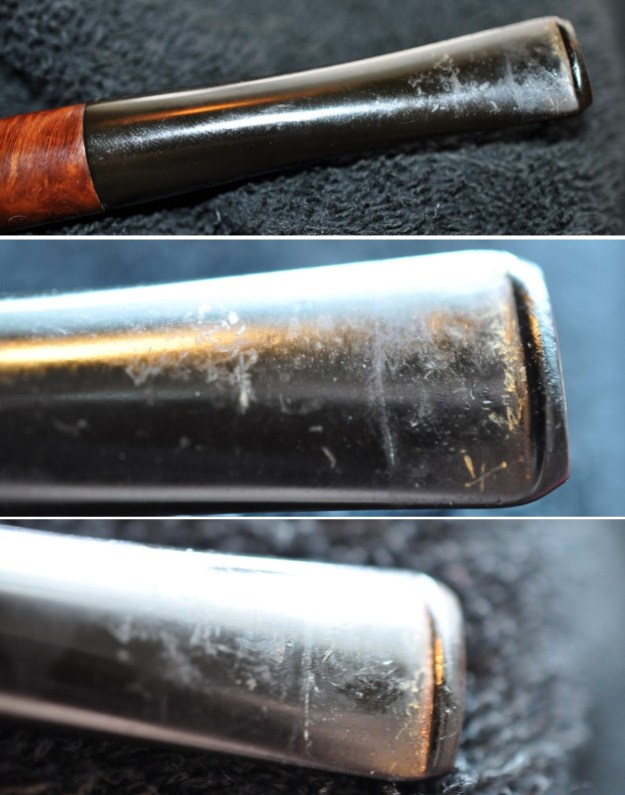
I turned to Pipedia and found more information that was helpful. It gave some history of the carver and the brand (https://pipedia.org/wiki/Holtorp). I have included it below.

H. Dan-Christensen’s shop Pipe-Dan at Vestergade 13 – just off Copenhagen’s Town Hall Square – was one of the most important turntables for upcoming as well as established pipemakers and pipe enthusiasts from all over the world from the 1960’s to the 1980’s.

P. Holtorp was one of the many artisanal carvers who worked in the periphery of Pipe-Dan. In the 1960’s – maybe up to the early 1970’s – he was one of the in-house pipemakers working together with Sven Knudsen, Gert Holbek, Axel Svend Celius, Tom Eltang – just to name a few. Later he worked from his own shop but still sold most of his pipes via Pipe-Dan.

Holtorp never became as famous as some of the names mentioned. Most probably, because the majority of his pipes was a bit different from the Danish “fancy freehands” and more striving for elegance. The typical Holtorp features bold lines and forms. Some are very manly pipes, so to say, rather made for stronger built pipesters. Accordingly the weight tended to be considerable – e.g. 118g the pipe shown below. Many were versions of earlier Holbek or Pipe-Dan designs. His “Bird” shape pipes for Pipe-Dan are clean simple shapes that have become Danish classics.
Holtorp’s craftsmanship and execution match very high standards. Straight grains from his hands are more than a rarity but the dense and flawless graining of his pipes is remarkable.

Estates by Holtorp don’t ask the prices of some other contemporaneous Danes by far – Thus an excellent buy for those who love a quality pipe if they can find them.

It also included a photo of the stamping and I can definitely confirm that my mystery on the brand is solved. The pipe is a Holtorp.

Now it was my turn to work on the pipe. Jeff had done an amazing cleanup of the pipe. He reamed the light cake with a PipNet reamer and cleaned up that with a Savinelli Fitsall Pipe Knife. He scrubbed the internals of the bowl and stem with alcohol, cotton swabs and pipe cleaners. He scrubbed the externals with undiluted Murphy’s Oil Soap and rinsed the bowl off with running water. There were a couple of spots on the front panel of the bowl that looked like flaws and the briar was concave a bit around them. I would need to see what the cause was for that. He soaked the stem in Briarville’s Pipe stem Deoxidizer and once it had soaked rinsed it off with warm water to remove the residual solution. He dried it off and rubbed it down to remove any oxidation that was still on the stem. The pipe looked very good when I received it. I took photos of the bowl and the rim top as well as both sides of the stem to show the condition of the pipe before I started my work. The rim top was very clean and the inner edge and plateau top look much better. The stem showed tooth marks on the top and underside of the stem near the button. I took the stem off the bowl and took a photo of the parts. It is an interesting pipe. I sanded the inside of the bowl to smooth out the walls with 220 grit sandpaper wrapped around a dowel. I was able to remove smooth the residual carbon on the front inner wall of the bowl. There was one small pit mid bowl in the wall at the front that I would need to fill in and repair.I sanded off the stain on the high points on the plateau with 220 grit sandpaper so there would be some contrast between the dark stain in the valleys and matching stain on the high points that is like the rest of the exterior. I did the same on the plateau shank end. It looks very good. I finished working over the plateau with a brass bristle wire brush to further clean it up. There was a divot or dent on the front of the bowl mid-bowl with two small flaws in it. I filled it in with clear CA glue. Once it cured I used the topping board and 220 grit sandpaper to flatten the repair and start the process of blending it into the surface. I further smoothed it out with 320-3500 grit sanding pads. It was looking much better. I sanded the entire bowl with 320-3500 grit sanding pads. I wiped it down with a damp cloth between each sanding pad. It really began to take on a shine. I heated the briar and stained it with a Cordovan stain. I fired it with a lighter to set the stain and burn off the alcohol. I repeated the process until I was happy with the coverage on the pipe. I wiped the bowl down with isopropyl alcohol on cotton pads to remove the excess stain on the briar. It began to look very good. I sanded the bowl with 600-3500 grit sanding pads to even out the stain and smooth the surface of the briar. I rubbed the briar down with Before & After Restoration Balm. I worked it into the plateau rim top surface with my fingertips and a shoebrush. The product works to clean, enliven and preserve the briar. I let it sit for 10 minutes then I buffed it with a cotton cloth to deepen the shine. The briar really comes alive with the balm. I repaired the damaged area on the inside of the bowl with a thin coating of JB Weld. I applied it in the bowl with a pipe cleaner and pushed it into the area with a tooth pick. Once it cured I sanded it smooth with sandpaper wrapped around a dowel leaving only the burned area with the repair. It looked much better and was very smooth. I mixed a batch of bowl coating made of sour cream and activated charcoal powder. I used a pipe cleaner to stir it up and also to apply it to the bowl walls. I wanted to give a coat to protect it until a new cake could be formed. It also covered the repair with the JB Weld and protected it. I set the bowl aside for the bowl coating to cure and turned my attention to the stem. I “painted” it with the flame of a lighter to lift the tooth marks. I was able to lift the majority of them. What remained I filled in with clear CA glue and set it aside to cure. I used a small file to flatten out the repair on the stem and recut the sharp edge of the stem. I sanded out the roughness and smoothed out repaired tooth damage with 320-3500 grit sanding pads. I wiped the stem down after each pad with Obsidian Oil. I was able to remove the roughness and damage and the stem looked better.I polished the vulcanite stem with micromesh sanding pads – 1500-12000 grit pads. I wiped it down with Obsidian Oil after each sanding pad. I used Before & After Pipe Polish – both Fine and Extra Fine to further polish the stem. This nice looking Holtorp Panel Plateau with a taper vulcanite stem is a great looking pipe now that it has been restored. The briar is clean and the grain really came alive. The rich brown stains gave the finish a sense of depth with the polishing and waxing. The grain really popped. I put the stem back on the bowl and buffed the pipe with Blue Diamond on the buffing wheel using a light touch on the briar. I gave the bowl and the stem multiple coats of carnauba wax on the buffing wheel. I buffed the pipe with a clean buffing pad to raise the shine. I hand buffed the pipe with a microfiber cloth to deepen the shine. The finished Holtrop Panel Plateau really is a beauty and feels great in the hand and looks very good. Give the finished pipe a look in the photos below. The dimensions of the pipe are Length: 6 inches, Height: 2 inches, Outside diameter of the bowl: 2 inches x 1 ¾ inches, Chamber diameter: 1 inch. The weight of the pipe is 62 grams/ 2.19 ounces. This beautiful Freehand pipe will soon be on the rebornpipes store in the Danish Pipemakers Secton. It should make a great smoker for the next trustee. Thanks for reading this blog and my reflections on the pipe while I worked on it. It was a fun one to work on.
Cleaning an El-Is Ferit Orersoy Black Meerschaum Rhodesian with a Yellow Acrylic Stem


Blog by Steve Laug

We purchased two of these El-Is Ferit Orersoy Black Meerschaum pipes from a seller in Vilas, North Carolina, USA on 12/01/23. The 2 pipes were both straight Rhodesian style pipes – one with black stem and one with yellow stem. One was smoked and one was clean and unsmoked. Both were boxed in their original cardboard box that is stamped on the top and reads El-Is [over] Ferit Orersoy [over] 1, Kordon 1382 So – 2/8 [over] Izmir. The boxes are light weight and include the original cotton piece the pipe sat on as well as a leaflet on the care of the black meerschaum. The unsmoked pipe will be looked at in the next blog but this one was smoked. It had a light cake in the bowl and some lava overflow on the rim top. The finish was a little spotty where the fingers held it. It would lessen when I cleaned and waxed it. The shank was very dirty as was the bone tenon that held the stem in place. The tenon was threaded into the shank of the pipe first and then the stem screwed onto it to allow for proper alignment. The tenon was lightly stained with tobacco as was the airway in the stem. There was some blackening at the airway’s entrance to the button slot. The pipe smelled dirty and would need to be cleaned up. When I examined it, I noticed a light build up of lava on the rim top. Because of the colour of the meer it is more noticeable to touch than sight. It is a dullness to site. When I was touching it I also felt the inner edge and noticed there was a light cake in the bowl and some tobacco debris. The stem had some darkening in the button area and in the first inch of the airway. There were light tooth marks and chatter on the stem surface. But I knew I would need to give this pipe a good cleaning. I removed the stem to give a sense of the parts and to showing the staining on the bone tenon.I thought I would include the information from the leaflet that is in each box. It is helpful information on the brand and the meerschaum.  I have left out the address on the leaflet as I have included it above. I quote:

THIS PIPE IS MADE FROM PURE BLOCK MEERSCHAUM

Meerschaum is a stone or block mostly found in the Asia Minor. It is imbedded in red clay and usually found 40 to 150 feet under the surface of the ground. Meerschaum is not a clay or mineral but is organic in origin, being fossilized remains of minute sea animals like coral. These little animals died many millions of years ago and the remains of their shells were compressed by earthquakes, washed over repeatedly by the ocean and by floods which deposited earth and rock on top of them, and were moved and shifted by floods and successive glacial movements.

Today, the meerschaum is found only in Asia Minor in sufficient quantity and of quality suitable for commercial use. Meerschaum is very light in weight and is one of the most porous substances found in nature. Consequently, it absorbs nicotine and tobacco is thus filtered in the meerschaum pipe. During the millions of years the outside part of the meerschaum stones or blocks has deteriorated so far that only the kernel of sound meerschaum is left in the middle. The decompose outer parts are 10 to 20 times as much as the sound kernel which is used for pipes.

HAND CARVED

Each pipe is deftly cut by hand and has its own character, and colours gradually as it is smoked, taking on a rich brown colour with the years. The meerschaum is impregnated with wax which helps to give it the beautiful velvety finish for which meerschaum pipes are famous. Each pipe has its own individual character given to it by the artisan who made it.

HOW TO BREAK IN YOUR PIPE

Meerschaum pipes should be broken in much in the same manner as a briar pipe. For the first few smoked, the pipe should be filled only half full and the tobacco packed lightly. This way the outside of the bowl will colour gradually from the bottom up taking on an even, rich brown tone with the years of smoking pleasure. The smoker is cautioned not to touch the warm bowl with his fingers as the moisture left there will affect the eventual colouring.

BLACK MEERSCHAUM PIPES

Not all of us may like a white pipe or some may have preference for the colour of black, so quite rightly they may like to have a black meerschaum pipe. El-Is proudly present black meerschaum pipes. An El-Is specialty, in order to meet its customers demands. These pipes are not painted but given their colour by way of pyrography and then polished. This way, the pipe does not lose its characteristics and retain its colour even after extended usage.

Now it was time to clean up the pipe itself. I carefully scraped the cake out of the bowl with a Savinelli Fitsall Pipe Knife. I took all the cake out then sanded the bowl walls with 220 grit sandpaper wrapped around a piece of dowel. Once I finished the bowl was clean and all cake was a thing of history.I cleaned out the dirty internals in the airway in the shank, the mortise and the airway in the stem with pipe cleaners, cotton swabs and 99% isopropyl alcohol. It took a few to get it cleaned but eventually the cleaners came out clean. I also wiped down the top of the rim with a cotton pad dampened with alcohol and was able to remove the lava coat.I lightly polished the rim top with micromesh sanding pads – dry sanding with 1500-1200 grit pads and lightly wiping the rim top down with a damp cloth after each pad. It cleaned up very well. I rubbed down the surface of the meerschaum with Before & After Restoration balm. I worked it into the surface of the meer to clean, polish and preserve the pipe. It looks good and the spottiness of the black finish looked much better. I applied several coats of Clapham’s Beeswax/Carnauba mix to the surface of the meerschaum. I set it aside to dry between coats and gave it a brisk buff with a soft cloth after each one dried. I set the bowl aside and turned my attention to the stem. There was a deep tooth divot on the underside of the stem ahead of the button. I filled it in with clear CA glue. Once it cured I sanded it smooth with 220 grit sandpaper.I polished the acrylic stem with micromesh sanding pads – dry sanding with 1500-12000 grit pads. I wiped the stem down after each pad with some Obsidian Oil. I finished polishing it with some Before & After Pipe Stem polish – both Fine and Extra Fine. I wiped the stem down with a final coat of Obsidian Oil. The stem took on a rich glow. This nice looking El–Is Black Meerschaum Bent Rhodesian with a yellow acrylic bent taper stem is a great looking pipe now that it has been restored. The black meerschaum is clean and the light weight bowl has a rich glow to it. I put the bone tenon in the shank and then attached the stem to align correctly. If the tenon is in the stem first it does not align with the shank correctly but in the shank it aligns correctly. I put the stem back on the bowl and carefully/lightly buffed the pipe with clean buffing wheel using a light touch on the meer. I gave the bowl and the stem multiple coats of Claphams Beeswax mixed with Carnauba and hand buffed the pipe with a microfiber cloth to deepen the shine. The finished El-Is Black Meerschaum Bent Rhodesian really is a beauty and feels great in the hand and looks very good. Give the finished pipe a look in the photos below. The dimensions of the pipe are Length: 5 ½ inches, Height: 1 ¾ inches, Outside diameter of the bowl: 1 ½ inches, Chamber diameter: ¾ of an inch. The weight of the pipe is 33 grams/21.16 ounces. This beautiful pipe will soon be on the rebornpipes store in the Ceramic & Meerschaum Pipes Section. It should make a great smoker for the next trustee. Thanks for reading this blog and my reflections on the pipe while I worked on it. It was a fun one to work on.