Tag Archives: buffing

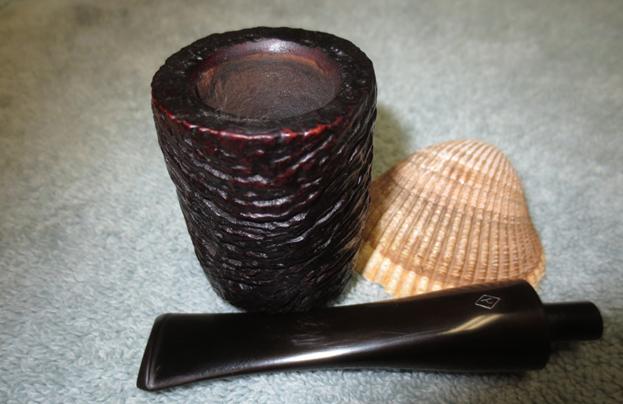
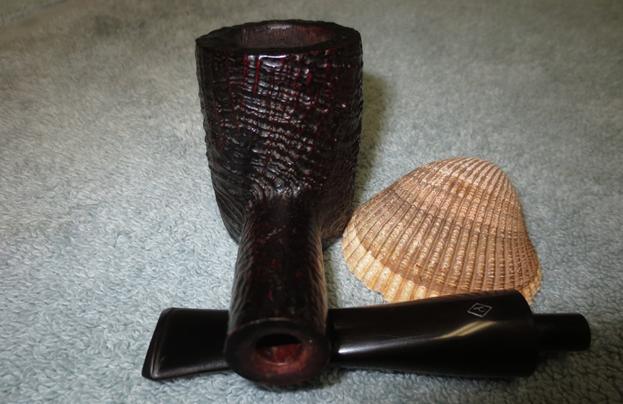
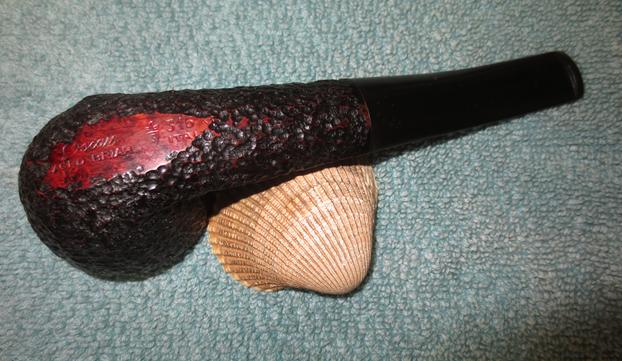
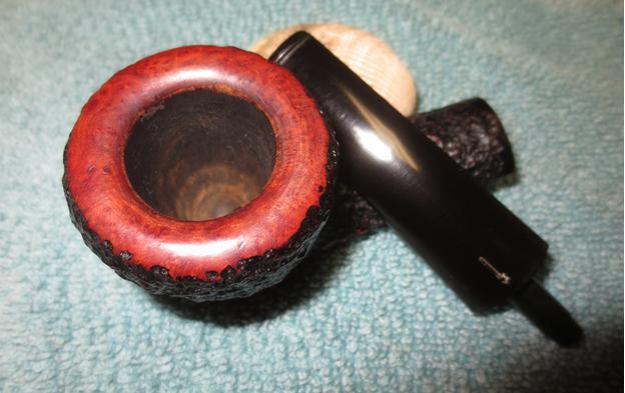
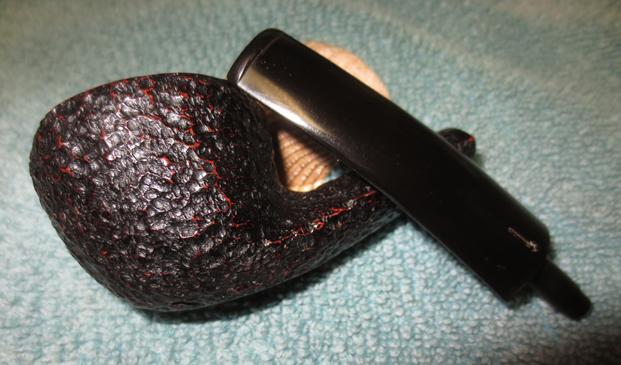
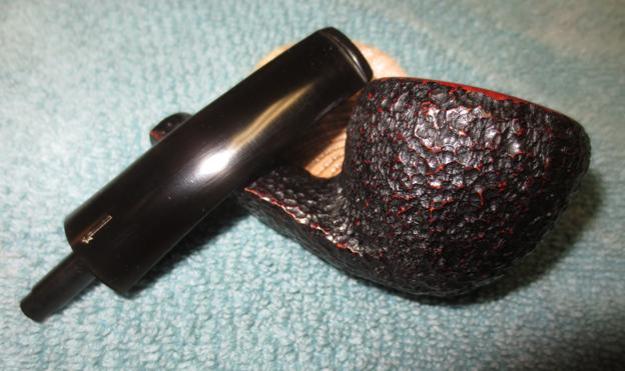
A unique old WDC Turin Rustic Volcano


Blog by Steve Laug

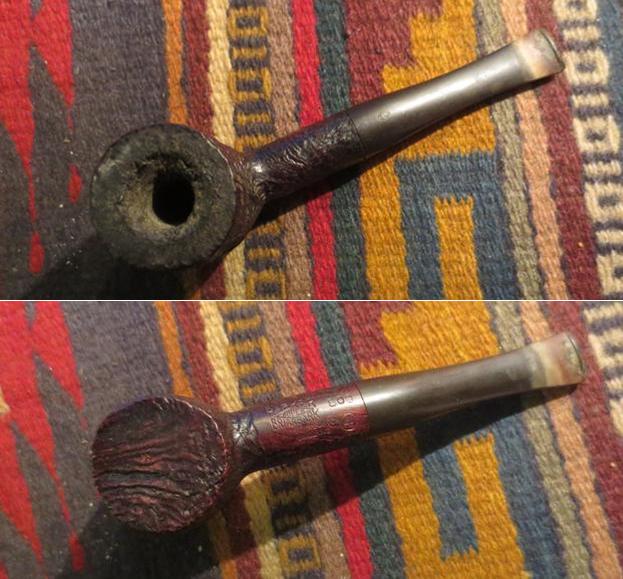
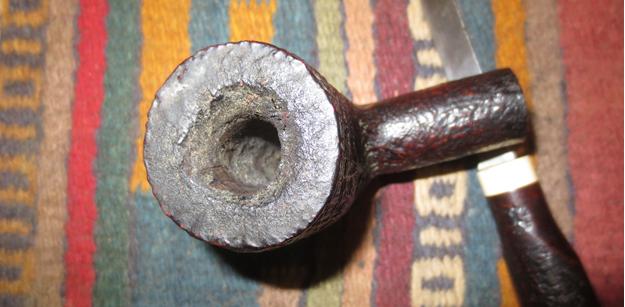
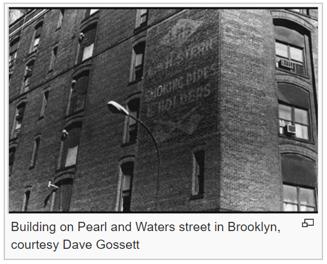
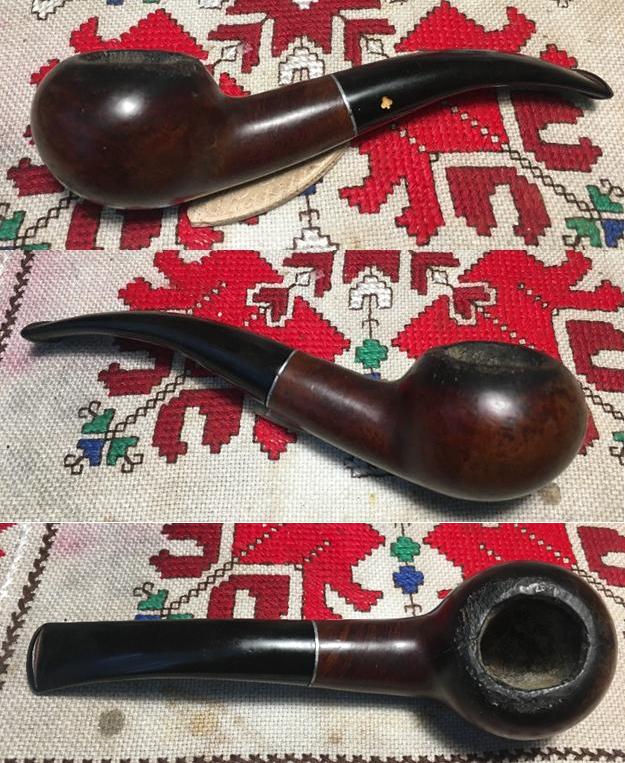
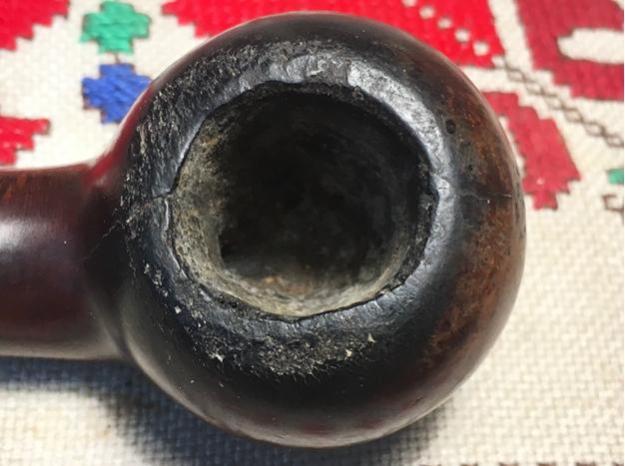
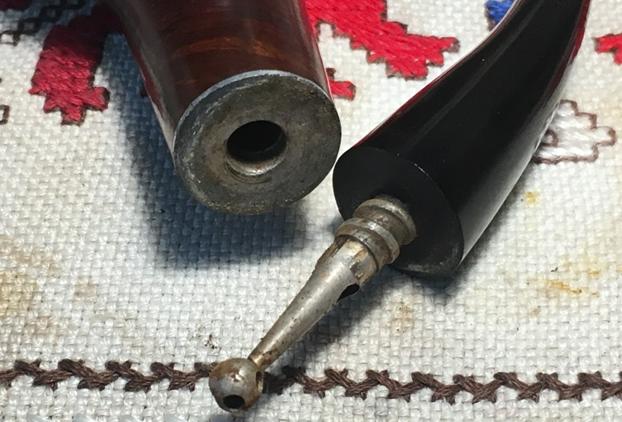
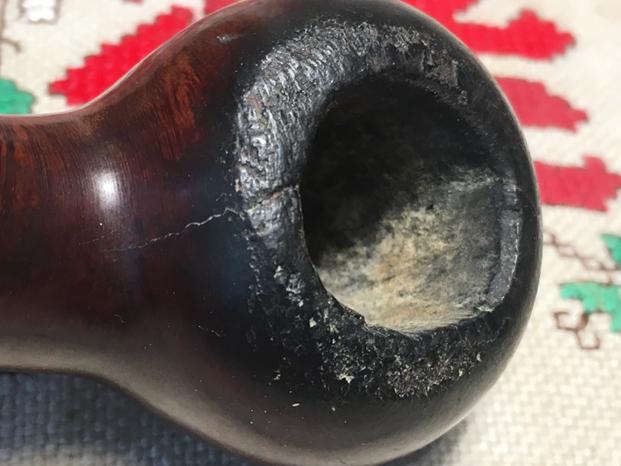
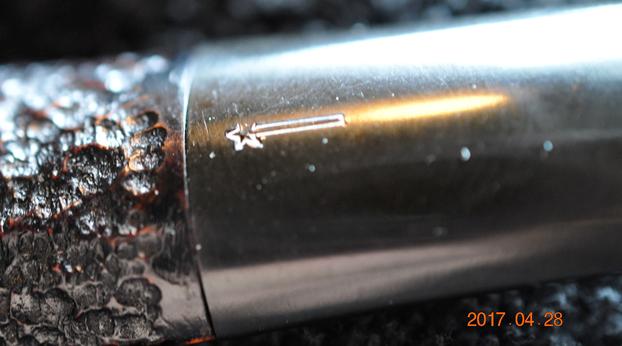
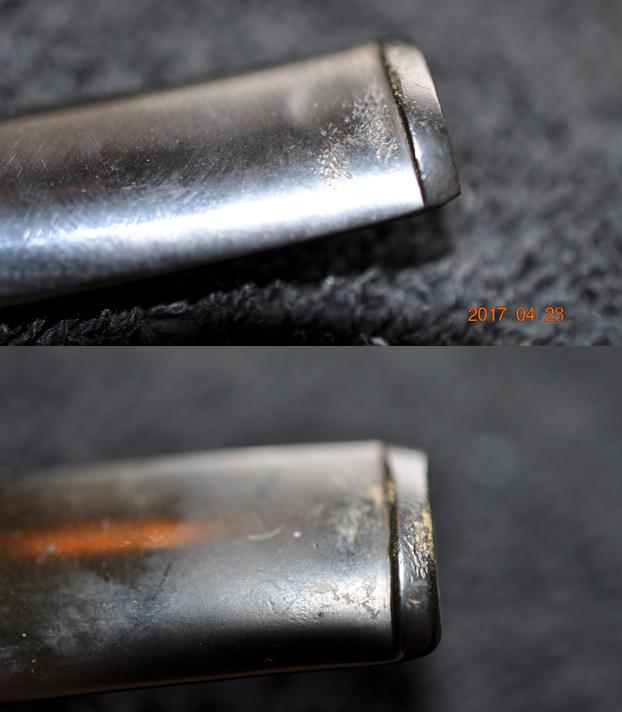
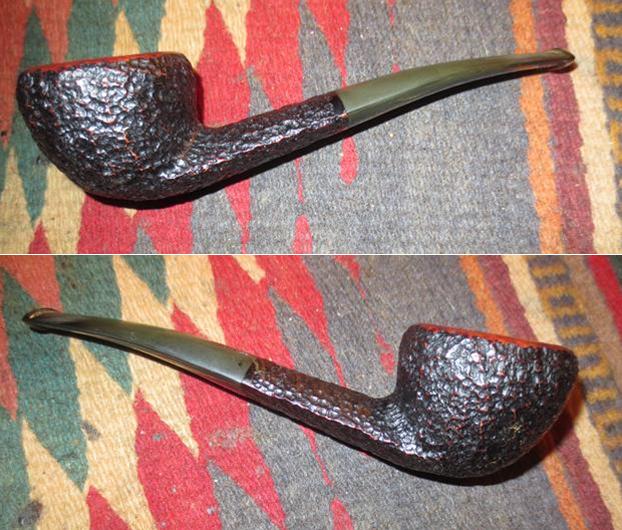
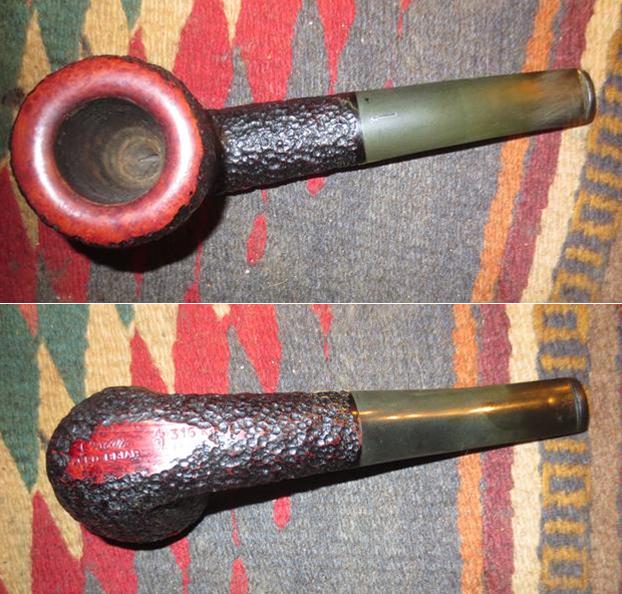
When I saw this one on eBay I sent a message to my brother and asked him to bid on it. He did and we got it. I love the rustication on the Turin Rustic series. It is rough and yet dignified at the same time. The seller billed it as restored/refurbished and clean. By and large that was true. The shank and the inside of the stem were very clean. The rim had been knocked about a bit and the inner edge of the rim was rough and uneven. The bowl had been reamed. The stem was polished though there were deep tooth marks on the top and underside of the stem next to the button.demuth1 demuth2My brother took the above photos and the following ones before he cleaned the pipe. You can see the damage to the rim top and the inner edge in the next photo. The second photo shows the stamping on the left side of the shank.demuth3Though I knew a bit about the WDC pipe maker and the William Demuth Company I thought it might be good to review the history before I started restoring the pipe. I googled the Turin Rustic to see what I could find. It immediately referred me to a post on the Kaywoodie Forum that in turn was an excerpt from pipedia.org. Here is the link.

http://kaywoodie.myfreeforum.org/archive/w.d.c.-master-list__o_t__t_191.html

William Demuth, a native of Germany, entered the United States at the age of 16 as a penniless immigrant. After a series of odd jobs he found work as a clerk in the import business of a tobacco tradesman in New York City. In 1862 William established his own company. The William Demuth Company specialized in pipes, smoker’s requisites, cigar-store figures, canes and other carved objects.

The Demuth Company is probably well known for the famous trademark, WDC in an inverted equilateral triangle. William commissioned the figurative meerschaum Presidential series, 29 precision-carved likenesses of John Adams, the second president of the United States (1797-1801) to Herbert Hoover, the 30th president (1929-1933), and “Columbus Landing in America,” a 32-inch-long centennial meerschaum masterpiece that took two years to complete and was exhibited at the World’s Columbian Exposition in Chicago in 1893.

The Presidential series was the result of Demuth’s friendship with President James A. Garfield, a connoisseur of meerschaum pipes. Demuth presented two pipes to Garfield at his inauguration in 1881, one in his likeness, the other in the likeness of the President’s wife. Later, Demuth arranged for another figurative matching the others to be added to the collection as each new president acceded to the White House, terminating with President Hoover.

In 1897 Ferdinand Feuerbach joined the Demuth Company and by 1903 had become the production manager. Feuerbach is credited with developing Demuth’s popular Royal Demuth and Hesson Guard Milano pipelines. He left in 1919, when Sam Frank Sr. needed an experienced pipe man to run his pipe factory, located at 168 Southern Blvd., in the Bronx. Feuerbach and Frank had been close friends since Frank started his own business in 1900 and was closely associated with the sales staff of WDC, selling their line of pipes.

In early 1937, the City of New York notified S.M. Frank & Co. of their intent to take by eminent domain, part of the land on which the companies pipe factory was located. This was being done to widen two of the adjacent streets. As a result of this, Frank entered into negotiations to purchase the Wm. Demuth Co.’s pipe factory in the Richmond Hill section of Queens. It was agreed upon that Demuth would become a subsidiary of S.M. Frank and all pipe production of the two companies would be moved to Demuth factory. New Corporate offices were located at 133 Fifth Avenue, NYC.

Demuth pipes continued to be made at the Richmond Hill plant till December 31. 1972. Then the Wm. Demuth Company met its official end as a subsidiary company by liquidation. Demuth’s mainstay pipe, the Wellington continued to be offered in the S.M. Frank catalog until 1976. In the mid-80’s, the Wellington even made a brief return as a direct to the consumer offer.

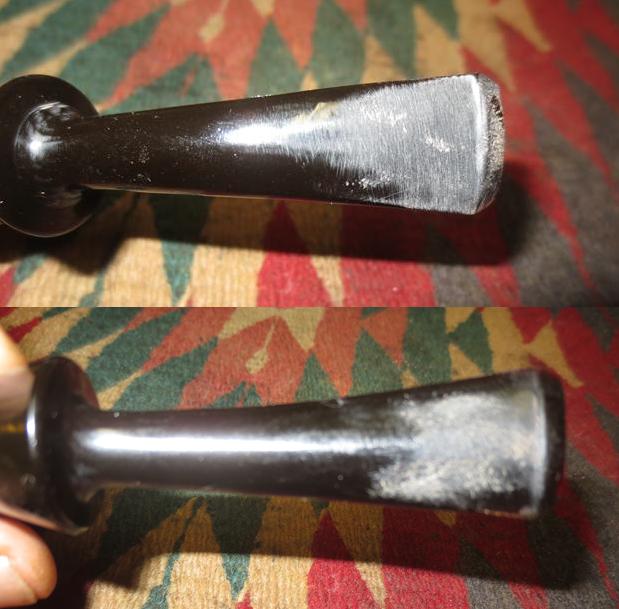
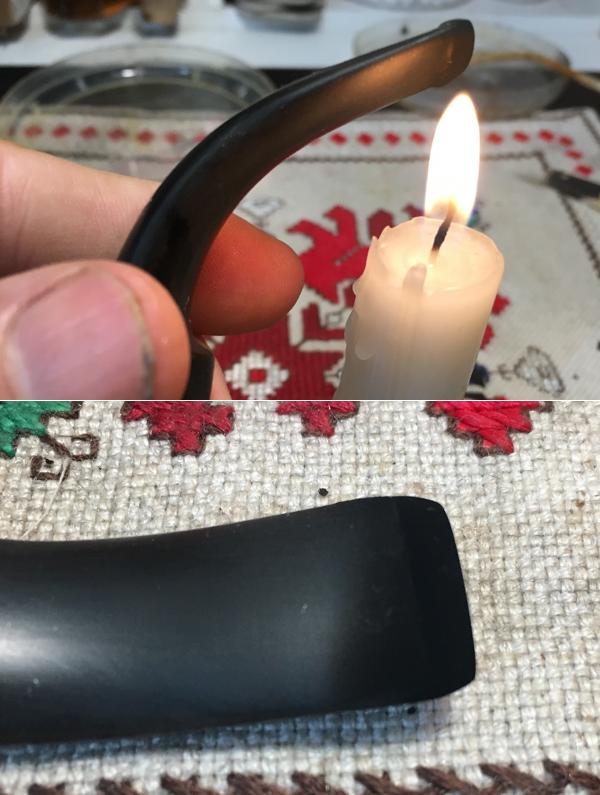
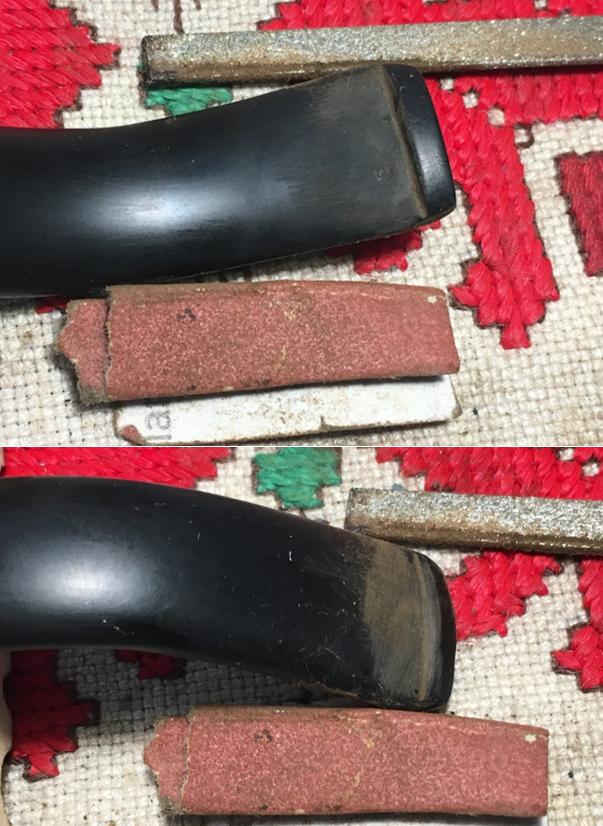
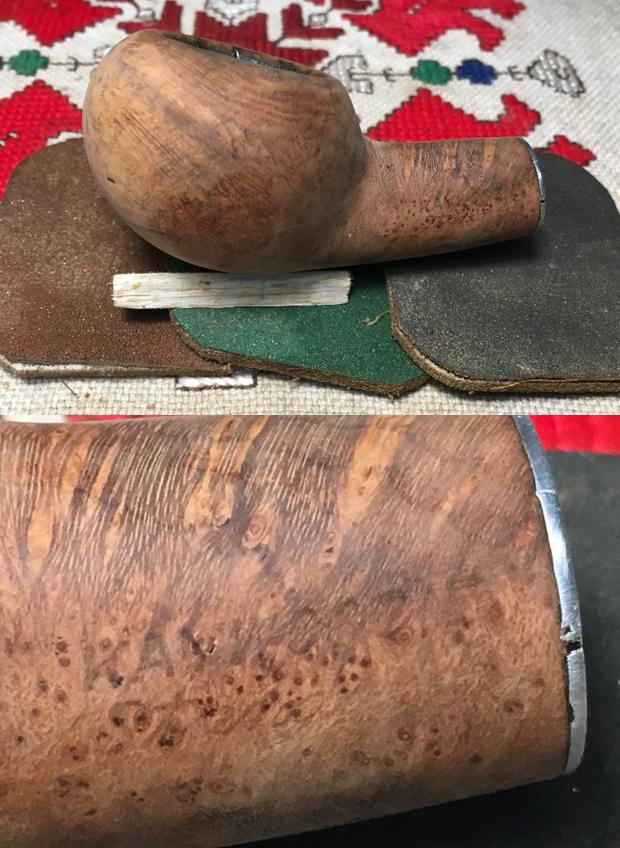
When the pipe arrived from Idaho it was quite clean and ready to work on. I took some photos of it before I started.demuth5 demuth6The next photo shows the rim and the damage to the surface. There were a lot of dents and dings as well as some roughness on the right side toward the front of the bowl. The inner edges was also worn and rough.demuth7The next photos show the condition of the stem – it had some deep tooth marks on the top and underside that are visible in the photo below.demuth8I “painted” the surface of the vulcanite with the flame of a Bic lighter to lift the dents and I was able to raise all but one of them completely. Even the worst one on the underside came up so that is only needed a little patch. The rest of them I was able to sand smooth with 220 grit sandpaper.demuth9I cleaned the sanded area on the underside of the stem with alcohol and then filled in the remaining tooth mark with a spot of clear super glue. Once it dried I sanded it smooth with 220 grit sandpaper and blended it into the surface of the stem.demuth10I rolled a piece of sandpaper and sanded out the inside of the bowl and the inner edge of the rim to smooth out the damage.demuth12

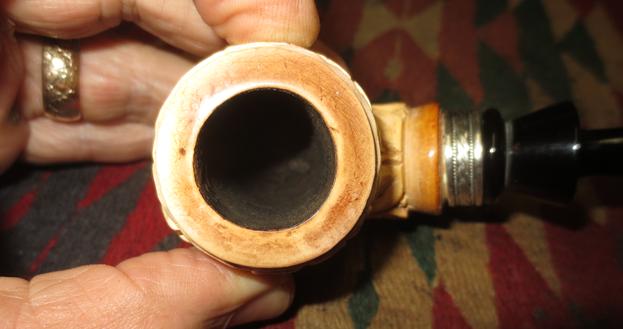
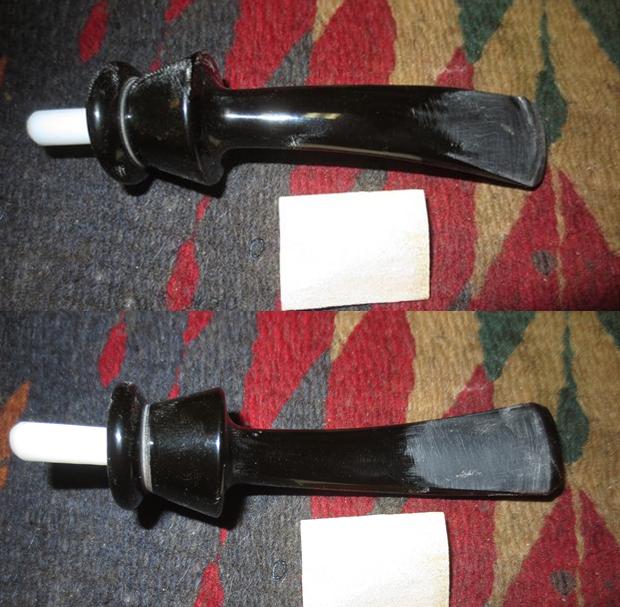
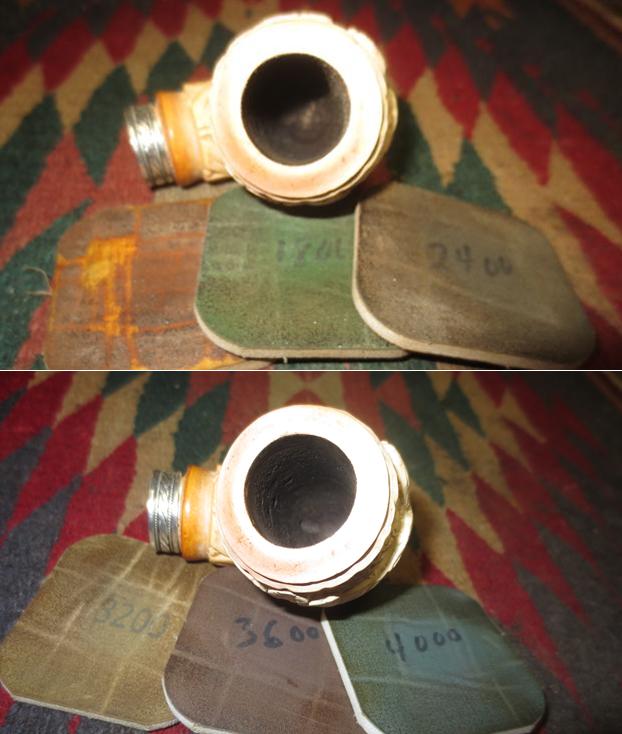
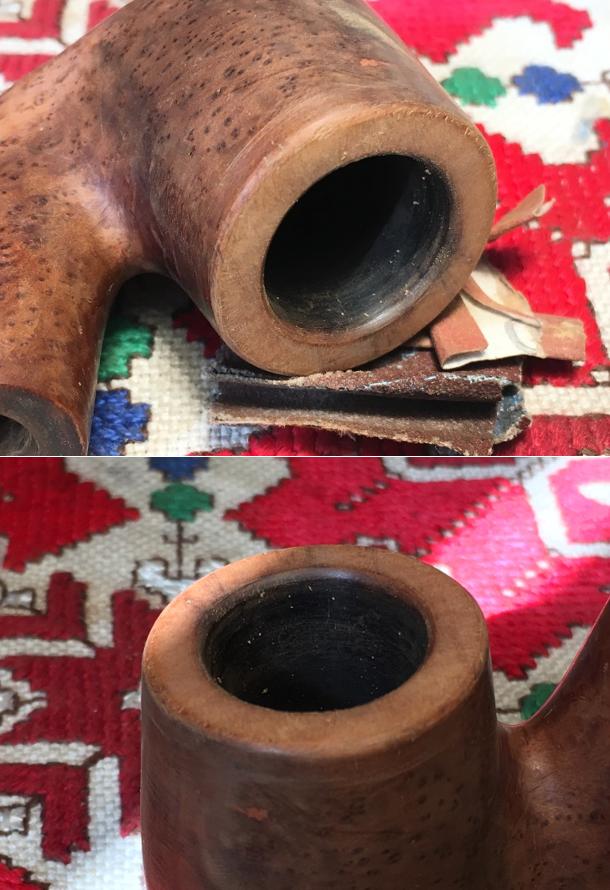
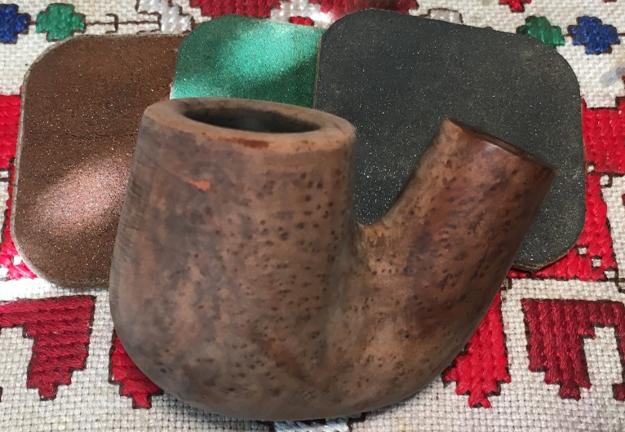
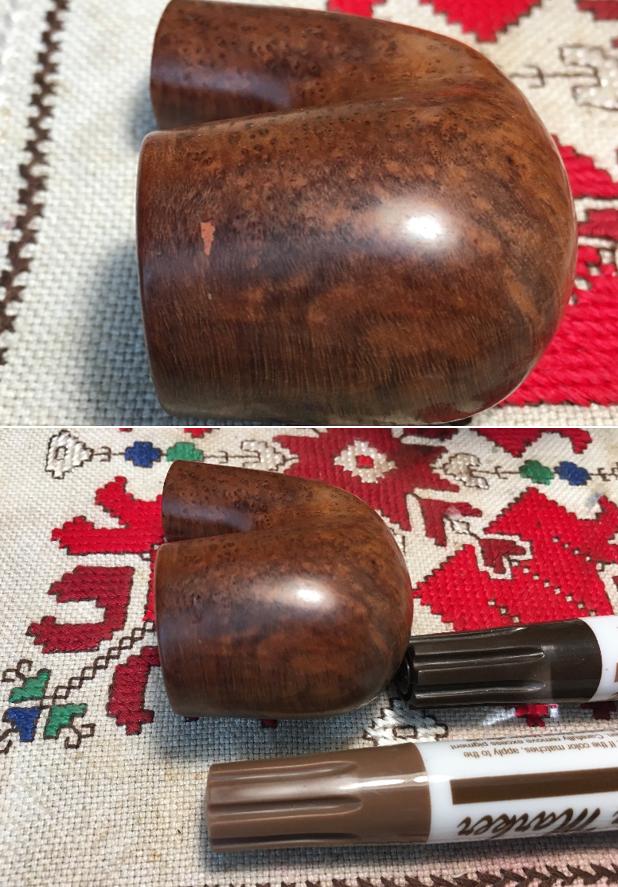
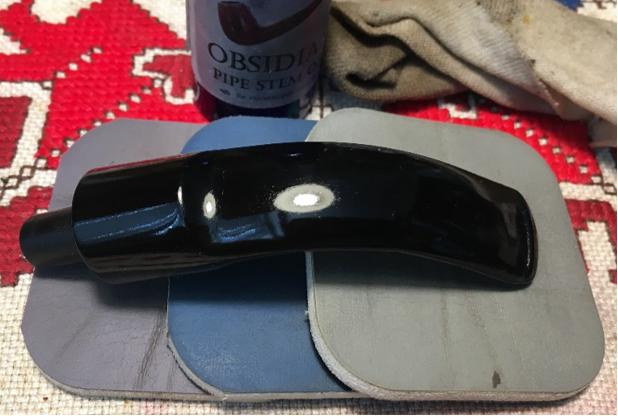
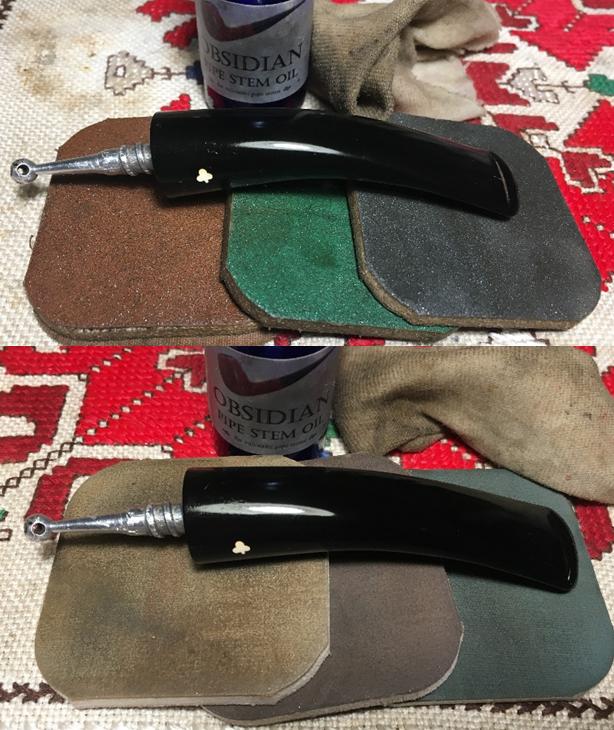
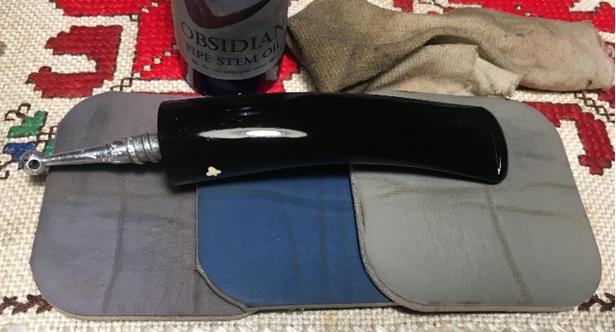
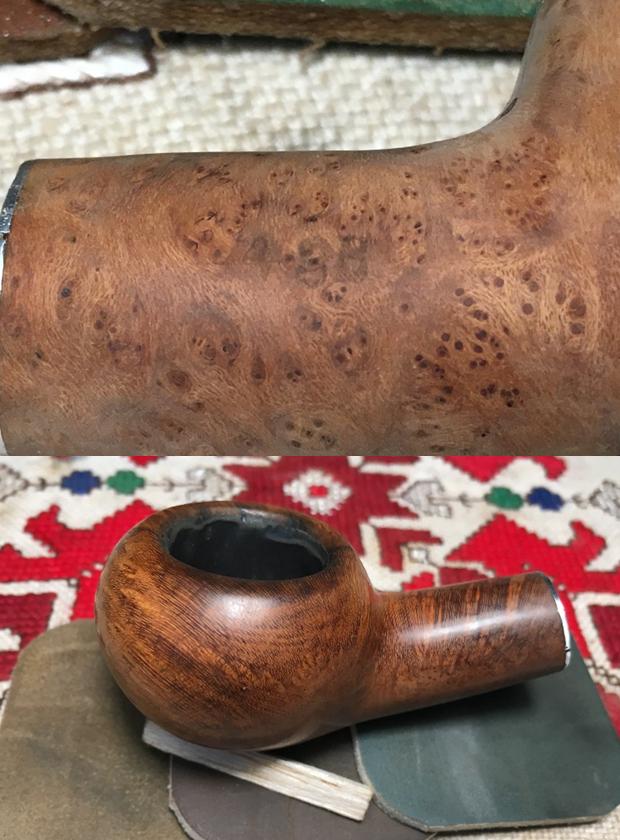
I touched up the rough spots on the inner edge with a piece of 220 grit sandpaper and smoothed out the edge until it was back in round. In the photo below you can see the damage to the top and outside edge of the bowl toward the front. It looked like it had been knocked out on concrete.demuth13I decided to lightly top the bowl on the topping board with 220 grit sandpaper until the rim top was smooth and clean of damage.demuth13aI sanded the rim top with micromesh sanding pads from 1500-12000 grit until the surface of the rim was clean and smoothly polished.demuth13bI used a light brown stain pen and touched up the rim top. The next four pictures show the bowl after I had rubbed it down with a light coat of olive oil. I love the rustication on the bowl sides and bottom. It really is a unique pattern.demuth13c demuth13dI polished the stem with micromesh sanding pads – wet sanding with 1500-2400 grit pads and dry sanding with 3200-12000 grit pads. I rubbed the stem down with Obsidian Oil after each set of three pads. After the final rub down I set the stem aside to dry.demuth14 demuth15 demuth16

I buffed the bowl and stem with Blue Diamond on the buffing wheel. I gave the stem multiple coats of carnauba wax and buffed it with a clean buffing pad to raise the shine. I hand wax the bowl with Conservator’s Wax and buffed it with a clean buffing pad. The finished pipe is shown in the photos below. The finish shines and the pipe belies its age. It is a beauty. Thanks for looking.demuth17 demuth18 demuth19 demuth20 demuth21 demuth22 demuth23 demuth24 demuth25


Bringing a Peterson’s Rhodesian Shaped Meerschaum back from the brink


Blog by Steve Laug

The next pipe on my “to do list” from the fellow in Dawson Creek is a Peterson Meerschaum that has some great colour to it. It is made of African Meerschaum which is denser than Turkish meerschaum and usually unevenly colour to the extent that they are stained to give the pipe a better look. This one is a mottled brown and cream coloured block. I am not sure how much of it is the aging patina and how much is the stain but I love the look of the pipe.

peteI did a bit of hunting on the internet to try to find a photo of the pipe. It was hard to find a Meerschaum Rhodesian picture and found one that is the close to same shape. It has a flumed dark top edge or cap. The shape of the stem is a little different at the shank union than the one I am working on. The one in the photo is more pinched at the shank. The one I am working on has a band of cream coloured meer that is rounded over and the stem sits against it.

I have been watching eBay for the Pete’s and have not found one this shape. I have read that African Block Meerschaums Peterson’s are getting harder to find since the Laxey meerschaum mines shut down in 2006. I have a few of the pipes in my collection and I have found that they are heavier than Turkish meerschaum due to the inclusion of minerals and aggregate material in the Block and the fact that they were ‘Calcinated’ after being carved, to give them greater strength and durability. They will color with smoking and the use of beeswax, but it will be more of a gradual process than high-grade Turkish meerschaums.

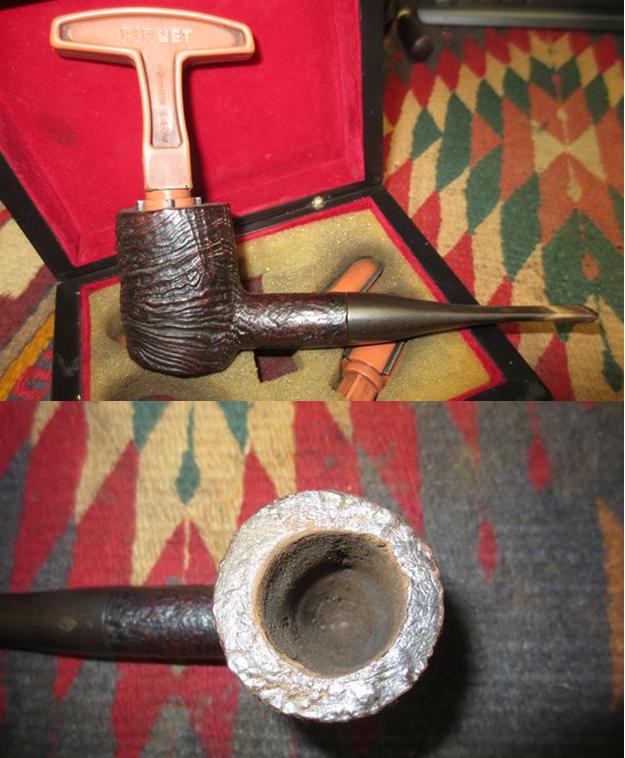
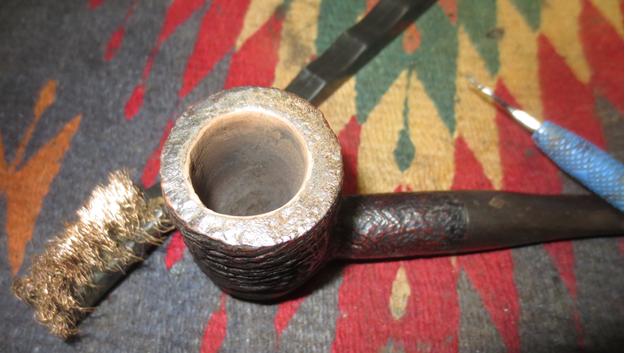
The pipe from Dawson Creek was heavily caked which bodes well for it being a great smoking pipe. The rustication on the rim was thickly cake with the overflow from the bowl. The rusticated finish on the bowl and shank was dirty. The stem was heavily oxidized and there was some tooth chatter on the top and underside near the button. The P stamp was faded though it still was deep enough for a touch up job. I was looking forward to seeing what the finished pipe would look like after the cleanup.pete1 pete2I took a close up photo of the rim and the bowl. It shows the thick cake that is slightly sticky and has picked up a lot of dust and debris. The rustication on the rim is filled in with tars and oils to the point you cannot really see the grooves and ridges.pete3The Delrin tenon is glued into the vulcanite stem and mortise is lined with a Delrin tube. The tenon was surprisingly small in diameter for a stem this large when I took the pipe apart. The photo below shows the pipe taken apart.pete4I took some close up photos of the stem to show the oxidation and tooth chatter on the stem. There was large tooth mark on the top of the stem. It is hard to see in the photos below but after the first cleaning it would be visible.pete5I used a brass bristle brush to scour the top of the rim to remove the thick cake and reveal the crevices and ridges below the grime. I reamed the bowl with a PipNet reamer to take out the majority of the cake. I would need to clean it further later.pete6I scrubbed the externals with a tooth brush and Murphy’s Oil Soap to remove the grime and oils in the grooves of the bow and shank. I rinsed the bowl off with warm running water to remove the soap and dirt. I scrubbed it more under the running water using the tooth brush.pete7I dried off the bowl and used Savinelli Pipe Knife to clean up the inside of the bowl and remove the last of the cake.pete8I cleaned the mortise and the airways in the shank and the stem with alcohol, pipe cleaners and cotton swabs until the internals were clean.pete9I put the stem in an Oxyclean bath and let it sit overnight. In the morning I took it out of the bath and rubbed it down with a coarse cloth to remove the loosened oxidation. I took the following photos to show the stem at this point. The second photo shows the deep tooth marks.pete10Because the dent was round and smooth I decided to try to lift it with heat. I used a Bic lighter and “painted” the dent with the heat. It took a couple of passes of the lighter before it was smooth. The dent rose up to meet the surface of the stem. I did not need to do a fill or repair on the stem.pete11I touched up the P stamp with white acrylic and a fine brush. I overfilled the P and let the paint dry. Once it was dry I carefully scraped it off with a sharp knife and sanded it smooth. The second photo shows the stem stamping.pete12I took photos of the bowl at this point to show how it looked after cleaning. pete13 pete14I polished the stem with micromesh sanding pads – wet sanding with 1500-2400 grit pads and dry sanding 3200-12000 grit pads. I rubbed it down with Obsidian Oil between each set of three pads. I set the stem aside to dry.pete15 pete16 pete17I buffed the stem with Blue Diamond on the buffing wheel. I avoided buffing the bowl with the Blue Diamond because it would collect in the grooves and ridges of the meerschaum. I gave the stem multiple coats of carnauba wax and buffed the pipe and stem with a clean buffing pad to polish the wax on the stem. I hand buffed the pipe with a microfibre cloth. The finished pipe is shown in the photos below. I think this one will be a good smoking pipe for Steve once I send it back to Dawson Creek. Thanks for looking.pete18 pete19 pete20 pete21 pete22 pete23 pete24 pete25 pete26


Restoring a Pair of Preben Holm Deluxe Walnut Pipes


Blog by Steve Laug

I picked up this pair in a trade for a pipe I was selling plus some restoration work credit. They are really an interesting pair of Preben Holm pipes. I have no idea of the age or where they fall in the line of Preben’s pipes but I liked the look of the two of them. Both of them are stamped Preben Holm over Deluxe Walnut over Hand Made in Denmark on the underside of the shank. Both had a matte finish dark reddish-brown stain with identical stems. Both pipes were sitters.

The first of them was a square long shanked Dublin freehand with rounded outer edges to the bowl. The grain looked quite good on the briar but it was dirty. The rim had some heavy cake buildup on it and the bowl was thickly caked. The stamping on the underside of the shank was very sharp and clear. The stem was lightly oxidized and there was lots of tooth chatter and tooth marks on the top and bottom sides near the button. The crown logo with the PH below it on the stem was faint but legible. Here are some pictures of the first pipe when it arrived.Deluxe1 Deluxe2I took a close up photo of the bowl rim to give you a clear picture of what the rim and the cake looked like. It would take some careful scrubbing to remove the build up without damaging the finish.Deluxe3The second of the pair had a more rounded edge semi-square shank and was also a more squat Dublin freehand with rounded outer edges to the bowl. The grain on the briar looked just as good as that on the first and was just as dirty. The rim on this one also had some heavy cake buildup on it and the bowl was thickly caked. The stamping on the underside of the shank was very sharp and clear. The stem was lightly oxidized and there was lots of tooth chatter and tooth marks on the top and bottom sides near the button. The crown logo on the stem was faint but legible. Here are some pictures of the second pipe when it arrived.Deluxe4 Deluxe5I took a close up photo of the bowl rim to give you a clear picture of what the rim and the cake looked like. It would take some careful scrubbing to remove the build up without damaging the finish.Deluxe6I reamed both pipe with a PipNet pipe reamer starting with the smallest cutting head and working up to the third head. I cleaned up the transitions with a Savinelli Pipe Knife.Deluxe7I scraped the tarry build up on the rims of the pipes with a pen knife I used for that. It is sharp and thin so with it I can carefully scrape the cake off the rim. I wiped the rims down with alcohol on cotton pads.Deluxe8I sanded the inside of the bowls with a rolled piece of sandpaper around my index finger. I was able to smooth out the inside of both of the bowls.Deluxe9I scrubbed out the mortises and airways in the bowls and stems with alcohol, cotton swabs and pipe cleaners.Deluxe10 Deluxe11I sanded the tooth chatter and tooth marks on both sides of both stems. All the marks were identical on both pipe stems so I am guessing that they belonged to the same smoker. The first two photos are of the first pipe’s stem and the next two are from the second pipe.Deluxe12 Deluxe13I used a small brush and some white acrylic paint to touch up the crowns on the top of each stem.Deluxe14I waxed both bowls and buffed them on the buffing wheel. The photos below show the bowls after the cleanup and buffing.Deluxe15 Deluxe16 Deluxe17I polished the stem on the first pipe with micromesh sanding pads – wet sanding it with 1500-2400 grit pads and dry sanding it with 3200-12000 grit pads. I rubbed down the stem with Obsidian Oil between each set of three pads. When I got through with the 12000 grit pads I gave it another coat of oil and set it aside to dry.Deluxe18 Deluxe19 Deluxe20I repeated the polishing practice spelled out above on the second stem. The photos below show the progress of the work.Deluxe21 Deluxe22 Deluxe23I buffed the pipes with Blue Diamond on the wheel and gave them both multiple coats of carnauba wax. I buffed it with a clean buffing pad to raise the shine. I hand buffed it with a microfibre cloth. The finished pipes are shown in the photos below. These two came out looking really nice. The shape and the finish of both are eye catching. Thanks for looking.Deluxe24 Deluxe25 Deluxe26 Deluxe27 Deluxe28 Deluxe29 Deluxe30 Deluxe31 Deluxe32 Deluxe33 Deluxe34 Deluxe35 Deluxe36 Deluxe37 Deluxe38 Deluxe39

Another Attempt at a Drier Smoke – a Vintage Dri-Bowl Rhodesian


Blog by Steve Laug

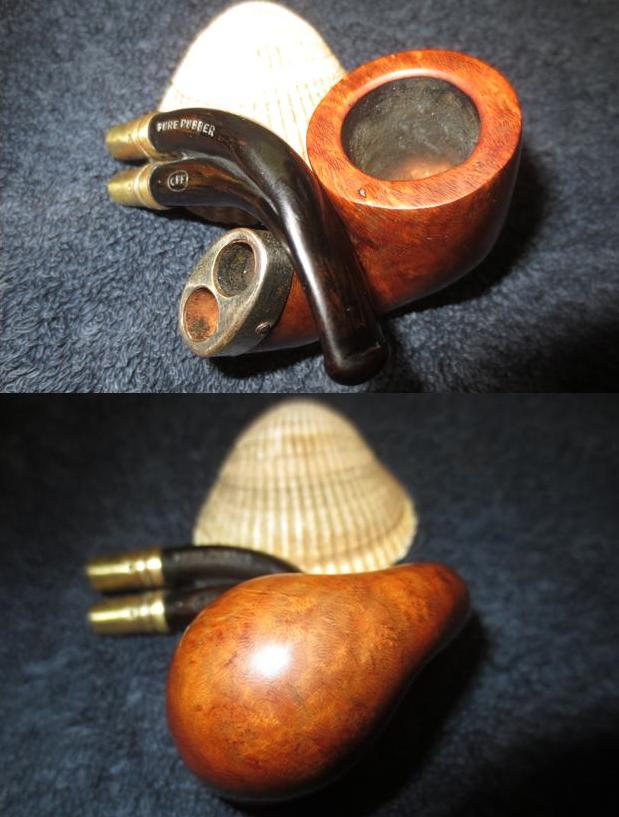
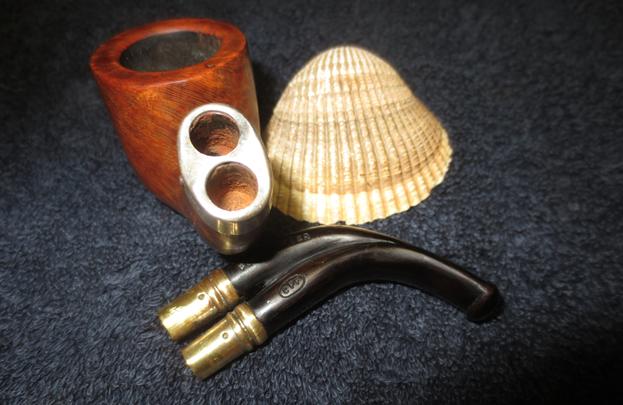
My brother sent me a link to this sale on eBay and I found it intriguing. In the first photo there is what appears to be the edge of a dial on the bottom of the bowl – it is peeking out at the bottom of the bowl. That was intriguing to me. I wanted to know more about the pipe but at this point I had not read the seller’s description of the pipe. I was still looking at the pictures and seeing all of the fills and rim damage on the pipe in the first three photos. It really was quite a mess. The bowl appeared to be reamed but the dings and dents added to the fills made me wonder if it was worth the effort. I still had no idea what the bottom looked like and what made this a dry bowl. Scrolling through the rest of the seller’s photos soon made that clear.Dri1Dri2

Dri3The fourth and fifth pictures remove the mystery of the knurled edge on the bottom of the bowl that showed in the first photo. You can see in that photo of the bowl bottom that the silver disk looks like it was made to be rotated. We talked and my brother bid and won the pipe (I can’t wait for the pipe to get here so I can check this out). The fifth photo shows the inside of the bowl. The top of the disk appears to be a cup intruding into the bowl bottom. It was really odd looking.

I dropped to the bottom of the eBay ad to read the seller’s description of the pipe. I wanted to get some information on the pipe. I had done some searching on Google but was unable to find any information on the brand. It is a bit mysterious. The seller writes:

“This French Briar Rhodesian Dri-bole has a 5/8″ diameter silver metal “sump”, with knurled edge, set into the bottom of the bowl. The “sump” may actually be an alloy of silver, such as coin or sterling; metal is untested, but has silver-like qualities.”

“According to advertisements, found in various 1911 magazines, this “sump” was used to hold a provided, removable “wad”. The throw away “wad” would absorb all of the nicotine and saliva as the tobacco burns. Thus the tobacco was kept dry, so that it would be fully burned.”

“This extra nice Dri-bole pipe has the same “wad” holder or “sump”, as those “silver mounted” pipes patented on Sept. 7, 1909 and shown in 1911 Saturday Evening Post and Literary Digest Magazine advertisements! That would make this pipe over 100 years old, if it is indeed the same Dri-bole pipe! There are not any “wads” with this one, but it should be a good smoker, with a nice look and make a great conversation piece!”Dri4Dri5 That information was helpful on many levels. He did not however have any photos or drawings of the pipe or pictures of the advertisements. I wanted to know if the bottom “sump” as he called it was pressure fit or threaded and screwed into the briar. I wanted to know if the bottom of the bowl was damaged or if the “sump” sat as it was supposed to flush with the bottom. It was hard to tell from the photos. I wanted to know was the “wads” were that sat in the sump. From the look of the bowl bottom it appeared that the “wads” may well have been lozenges that fit in the curved cup and then sat flat in the bottom of the bowl. But what did they look like? More research would be needed to answer these questions. But at least the mystery of the knurled edge peaking from the first photo was solved. It was a single unit with a cup on the inside of the bowl. I could not wait to see this in person and “fiddle” with it.

The seller also included a photo of the stamping on the pipe and briefly spelled out what it said. The left side of shank is stamped DRI-BOLE (in crescent) and below the crescent it reads REG. U.S. PAT. OFF. The right side of the shank is stamped Imported Briar leading me to believe that is it American made. The bottom of shank is stamped “266”. Dri6He gave the dimensions of the pipe as follows: overall length: 5 ½ inches, bowl height: 1 ½ inches, diameter of the bowl: 1 5/8 inches, bore diameter: 7/8 inches, bore depth: 1 1/8 inches and the weight: 44 grams or 1.6 ounces

When the pipe arrived in Vancouver I was looking forward to working on it. My brother had done a great job cleaning the interior and stripping the shiny coat that had been applied to the pipe. It was clean and ready for me to work on. I tried to turn the knurled silver disk on the bottom of the bowl and could not move it at all. The rim looked rough and needed topping. The stem was in decent shape with some pitting and dulling to the old rubber. I was so excited that I forgot to take photos of the pipe before starting my restoration. I put the bowl in an alcohol bath to see if I could loosen the tars that held the silver disk tightly in place. I was guessing it was threaded so I was thinking that if I could soak the bowl overnight things would soften up. Dri7I took it out of the alcohol bath and heated the disk with the flame of a lighter. I used a pair of pliers to hold tightly to the edge of the disk and I was able to twist it out of the bowl. Once it popped free I could undo it by hand. The first photo below shows the inside of the silver disk. The second shows the knurled outside.Dri8To remove the damage to the rim top and edges I topped the bowl on a topping board with 220 grit sandpaper.Dri9There were some nicks around the hole in the bottom of the bowl so I sanded those smooth with sandpaper and then cleaned out the threads in the briar with a cotton swab and alcohol.Dri10I used the brass bristle brush to scrub the threads and the cup on the disk. I cleaned it afterwards with cotton swabs and alcohol.Dri11I used a cotton swab to coat the threads on the disk with Vaseline and turned it into the bottom of the bowl. I wanted to make sure that I could easily turn the disk by hand.Dri12I cleaned out the internals with pipe cleaners, cotton swabs and alcohol. It was pretty clean thanks to my brother. It did not take too many to clean it out.Dri13I sanded the bowl and stem with a medium and a fine grit sanding block. The pipe is beginning to look really good. I had to make a decision how far to sand the bowl and how many of the original dings and dents to remove without changing the “story” and character of this old timer.Dri14I heated the briar and then stained it with dark brown aniline stain cut by 50% with isopropyl alcohol. I flamed it to set the stain and repeated the process.Dri15I wiped down the stain with alcohol dampened cotton pads to make it more transparent and make the grain stand out. At this point the fills stood out and I would need to address them a bit differently.Dri16Dri17I used a black Sharpie Permanent Marker to draw some lines across the fills and blend them into the grain on the pipe. I then chose to give the bowl a second contrast staining using a Cherry Danish Oil stain. I find that the combination of the black marker and the cherry stain blends the fills better than a brown stain. The combination of the brown and the cherry stains gives depth to the finish so I like using them together.Dri18Once the cherry Danish Oil stain dried (overnight) I buffed it lightly on the wheel with Blue Diamond and then gave the bowl a coat of carnauba wax. I hand buffed it with a microfibre cloth. You can see the small dings that I left in the bowl sides rather than change the look. I polished the silver disk with a silver polishing cloth. The next series of photos shows the bowl at this point in the process.Dri19Dri20I set the bowl aside and worked on the stem. The old hard rubber that was used on this stem was good quality. There was very little oxidation if any on it. The main issue was the pitting that covered the surface of the stem. I sanded it with 220 grit sandpaper to address the pitting and smooth out the surface and then began my normal sequence of micromesh sanding pads. Between each set of three grits (1500-2400, 3200-4000, 6000-12000) I rubbed the stem down with Obsidian Oil. I gave it a final coat of the oil and let it dry before I buffed the pipe.Dri21Dri22I buffed the pipe and stem with Blue Diamond and gave it several coats of carnauba wax. I buffed it with a clean buffing pad to raise the shine. I hand buffed it with a microfibre cloth to put the finishing touches on the pipe. The finished pipe is shown in the photos below. Thanks for looking.Dri23Dri24Dri25Dri26Dri27Dri27aDri28Dri29Dri30


Another ‘Hole in the Wall’ Find – BBB Banker Bent Volcano


Blog by Dal Stanton

Last April, during one of my earlier visits to what I have affectionately named, ‘The Hole in the Wall’ antique store near the Zhenski Pazar (Women’s Market) in downtown Sofia, Bulgaria, my eyes locked on to a very handsome pipe that called out to me resolutely – “Take me home!”  The pipe was a slightly bent volcano shape, brandishing a broad flattened oval shank and stem that drew my attention.  In my small collection of pipes then, and even today, I have nothing like it.  After taking in the unique shape, the briar grain, obscured by layers of grime and old wax, gave me an internal ‘wow!’ that I carefully kept hidden from the shop owner who would see my excitement as potential greater profit for him – so I played it cool.  I looked at how the grain moves horizontally across the bowl and shank giving the appearance of a tiger pattern looking down on the shank.  Looking straight at the bowl the grain looked like horizontal flames terminating on the sides of the bowl with Birdseye patterns – I was anxious to work on this pipe.  The top of the shank was imprinted with the classic BBB diamond mark over Banker.  Underneath the shank had London, England over 739.  The stem top also had the white diamond BBB mark.  I also spied another pipe in the basket that looked like a good candidate to bundle with the BBB Banker, a French Jeantet Fleuron 70-7 which helped me negotiate 30 Bulgarian Leva for the pair – about 16US.  Not a bad deal at $8 a pipe!  The first picture is the Jeantet followed by the BBB Banker after I arrived home from the ‘Hole in the Wall’ with my newest acquisitions:Bank1 Bank2 bank3 Bank4 Bank5 Bank6 Bank7 Bank8 Bank9I found a lot on the internet about the BBB name.  The small blurb in Pipehill describes the evolution of the BBB moniker:

BBB: ” Best British Briar” is now a brand of the Cadogan Company (Oppenheimer group). American rights to use the brand name were sold to Wally Frank in 1980.

Founder of the brand in 1847: Louis Blumfeld. The oldest pipe brand name in the UK has been registered in 1876 (Blumfeld Best Briar).

Steve also posted a blog on the history of BBB pipes a few years ago using the French article:

https://rebornpipes.com/2012/08/05/history-of-bbb-pipes/

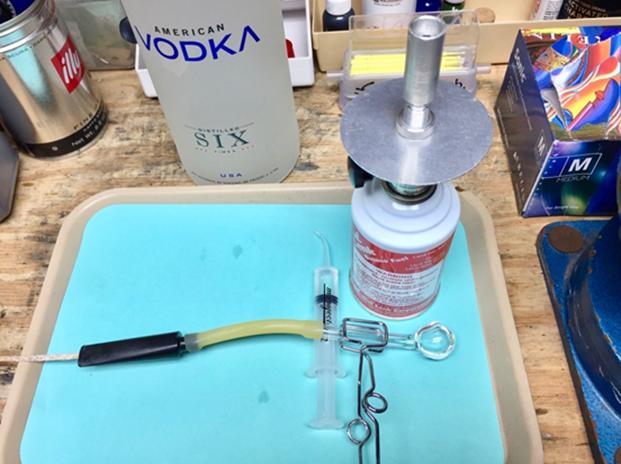
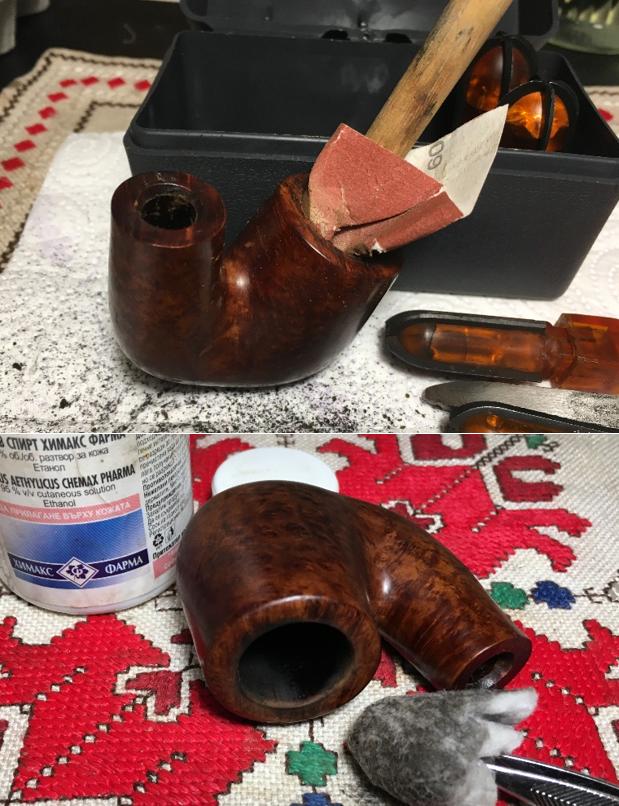
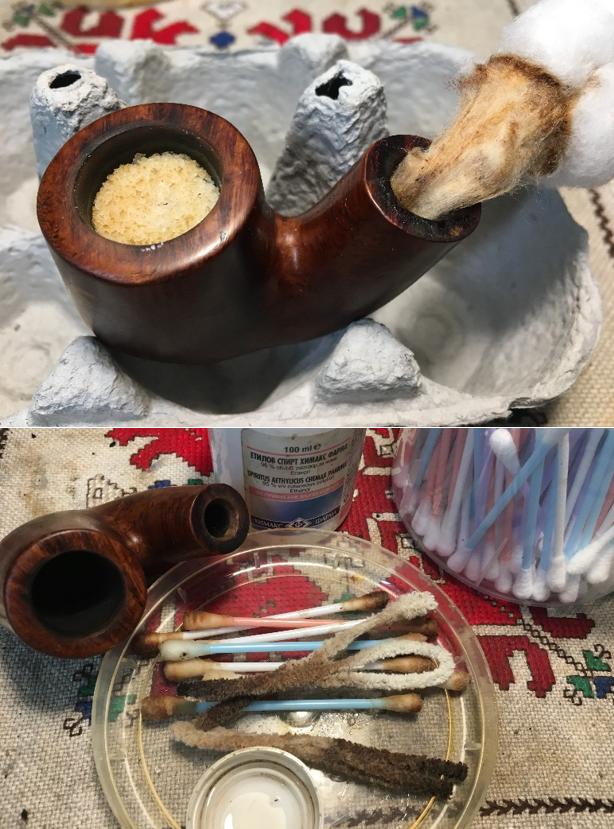
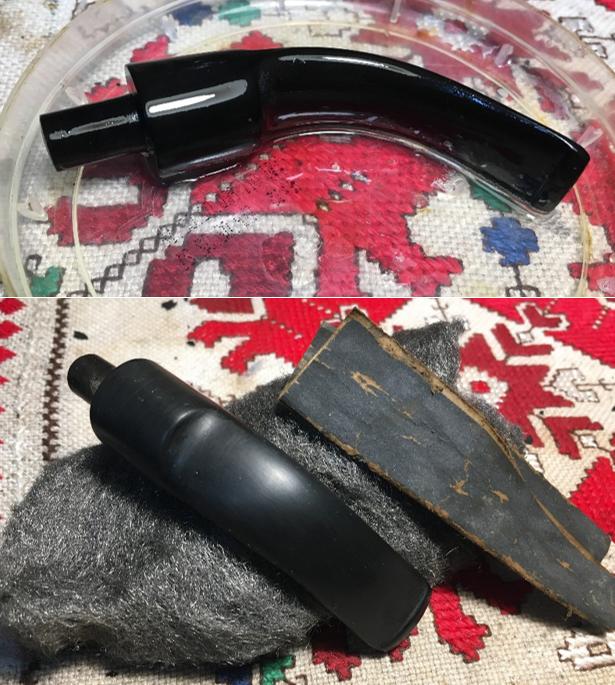
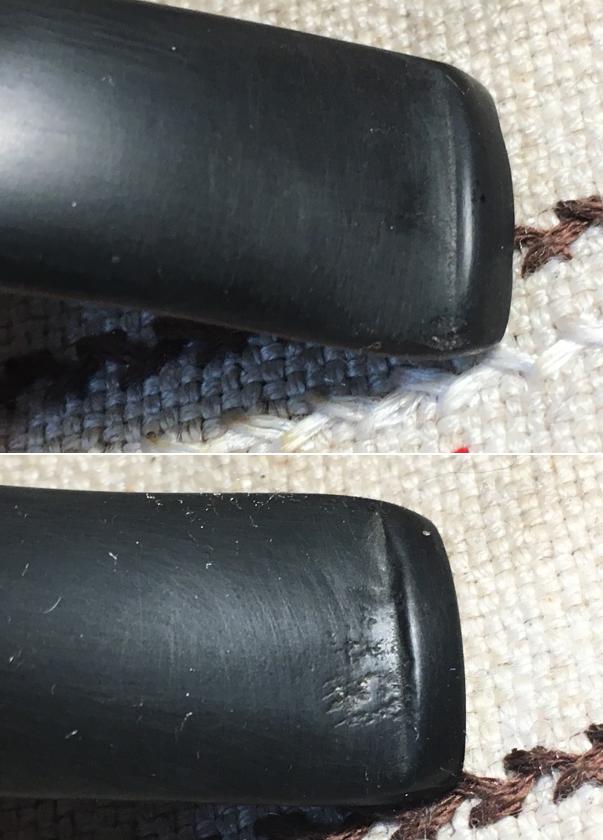
I discovered that there are many BBB collectors and enthusiasts in my research.  Unfortunately, I could find nothing helping me to date or place my BBB Banker except some informed guesses comparing to the BBB stamps (pictured below) depicted in the French article Steve posted above which would probably date the Banker at the earliest in 1989 when the Cadogan Company consolidated manufacturing its various pipe lines at Southend-on-the-Sea, but more likely in the 2000s – not a terribly old pipe (Can anyone help me on that?):Bank10The condition of the Banker is generally good.  There is some cake build up in the chamber but I still want to ream the bowl down to the briar for a fresh start and to be able to make sure there are no problems lurking beneath – which I really don’t expect.  The rim has light grime and lava on it, but a significant wearing down of the front lip so that bare briar is exposed.  The stummel looks to be in good shape – I detect one fill underneath but it looks to be solid and will blend well.  The stummel grain is dulled and obscured by grime and oil build up.  The stem is in good shape – showing almost no oxidation, but has a tooth dent on the lower side of the bit.  I take a fresh close up of the rim to mark the progress.  I begin with reaming the bowl with my Pipnet reaming kit.  As I’ve become accustomed, I try to do the dirtier part of the cleanup on the 10th floor balcony adjoining our bedroom where my work-station is here in Sofia, Bulgaria.  Sometimes I wish I had a basement work area, but we do what we must!  I use only the two smaller blades of the four blades available to ream the cake down to the briar.  I follow the use of the reaming blades with 120 grit sanding paper to clean the cake further and finish with 240 grit on the chamber wall.  The bowl looks good.  True confession – while I was reaming the bowl my thoughts drifted off to a Savinelli reaming knife – on the eBay block, that I’ve had my eye on – one like Steve often employs.  There are still a few days left in the auction and I’m hopeful that I might add it to the arsenal!  I’ll let you know!  In order to get a better idea of the rim’s condition, I clean the external stummel with Murphy Oil Soap and work on the grime covering the rim.  I use cotton pads with undiluted Murphy’s.  I also employ a brass brush to work on the rim.  After the cleaning, I take the stummel to the sink and rinse it with cool tap water.  The pictures show the progress.Bank11 Bank12 Bank13 bank14Ok, for you who have years of restorations under your belts, here are some newbie musings – your patience appreciated!  At this point I realize I need to top the bowl to repair the front lip of the rim – it won’t take much but it is needed.  When one takes the rim down to the bare briar, I’ve learned that one also must have a plan for matching the hue of the old stain if one desires to keep the old stain tone matching the bowl.  I like the color scheme of the BBB Banker and I desire to keep it.  To keep it, I need to match the rim color tone with the rest of the stummel AND I need to address the very minor scratches and wear marks on the stummel surface BUT NOT sand it aggressively to remove the stain.  It is in some ways much easier to take the briar down to the wood with acetone and sanding and then apply new stain and voila!  New surface and color all blended and ready to go.  I know this situation calls for use of polishing compounds and such, which is a more passive approach to dealing with the surface – more opportunity to learn new things!  So, I move forward with topping the bowl with the aim of maintaining the current rich, deep red tones – we’ll see how it goes.  I took the BBB Banker to the topping board – 240 grit paper on a chopping block and rotated it on the paper in a gentle clockwise circle not applying too much pressure – letting the grit do its work.  To make sure I wasn’t leaning into the damaged lip area as I rotated, I eyeballed that the damaged area was untouched during the early rotations which meant the topping was true – I took a picture at this point (second picture).  I took off only enough to clear out the front lip problems.  I think it went well and the bowl looks perfectly round.  As I often like to do, to add a classy touch to the rim I bevel the inside lip.  I make the initial cut of the bevel with 120 grit sanding paper followed by 240 grit.  I’m satisfied with the bevel – not too much but just an accent.  I use micromesh on the rim from 1500-12000 to complete the rim repair preparing it for stain later.Bank15 Bank16 Bank17 Bank18 Bank19Now, the stummel surface.  I have questions rolling through my mind regarding how aggressive I can be to remove small scratches and wear blemishes but maintain the original patina of the briar as it came to me.  I elect to micromesh the stummel surface and leave the small blemishes.  I do not start with the coarsest pad (1500) but at 2400 – gentle approach (though the first picture below shows the 1500 it was not used).  I’m not sure this is the best plan but I can always back up to a more aggressive posture if I’m not satisfied with the results.  After a quick email with Steve, I feel better about the course of action.  I continue on the stummel with micromesh pads 3200-4000 and 6000-12000.  I am loving the briar grain popping out through the micromesh process – one of God’s small creations each piece of briar.  The pictures show the progress:Bank20 Bank21 Bank22As I put the stummel aside to work on the stem, I realized that I was so involved in working on the externals that I forgot that I hadn’t cleaned the internal of the stummel nor stem.  Before working on finishing the stem I decide to use the retort to clean the internals.  Last time I used the retort, an alcohol saturated cotton ball was launched from the bowl during the process.  I was gun-shy of the retort to begin with when I first acquired it – the launch didn’t help.  Notwithstanding, I unwrap the retort, get out the vodka, and proceed to let the retort do its work.  The pipe was surprisingly clean.  After two retort cycles, I finished off with cleaning the internals of stummel and stem with Qtips and pipe cleaners dipped in alcohol.  I think it’s better to clean internals earlier in the process….Bank23 Bank24 Bank25Now to the stem externals.  Earlier, I applied black super glue to two significant tooth dents on the underside of the bit (visible in picture above).  I use 240 grit sanding paper to remove the excess super glue removing traces of the dents as  well as file marks after using a needle file to fine tune the shape of the button. There was very little oxidation on the stem or teeth chatter so I proceed to wet sand with micromesh 1500-2400 and apply Obsidian Oil to the stem.  I follow by dry sanding using 3200-4000 micromesh pads and then the same with 6000-12000 and apply Obsidian Oil and set the stem aside to dry.  I’m pleased with the vulcanite ‘pop’ – that wet reflective look is great.Bank26 Bank27 Bank28 Bank29Well, I mentioned earlier that I was hopeful to add a Savinelli pipe knife to my tool box.  Steve speaks highly of this tool and has increasingly put it to good use in his restoration work.  He also posted a blog describing it when it arrived on his work table in Vancouver.  When I saw one on the block in the eBay’s estate pipes in tobacciana listings a few days ago, I decided to watch the auction and see if I could snag it – it seemed to be calling out to me: “I want to live in Bulgaria!”  As you would guess, others were watching too.  I’m thankful that my bid was sufficient and my new Savinelli pipe knife will be delivered to my daughter and son-in-law who live in Denver.  They will carry it with them to Bulgaria (along with some other supplies I’ve ordered including 32 oz. of Lane BCA Cavendish tobacco which I discovered with great enjoyment on my last trip to the US) when they visit in September!  My son-in-law had no problem agreeing to find space in the suitcases when I bribed him with sharing bowls together of the Lane BCA!  So, I’ll look forward to their arrival for the additional reasons that they will be packing new supplies and my new pipe knife!Bank30The BBB Banker slightly bent volcano is now in the home stretch.  After topping and sanding the rim with micromesh, I left the rim the bare wood until I finished the sanding of the stummel. I did this so that the stain I would eventually apply to the rim would be more closely matched.  Using an Italian brand stick, I applied a dark Mahogany stain to the rim and before it dried, lightly wiped it with a dry cotton pad to remove uneven stain application – the first two pictures below show before and after application of the stick.  I’m very satisfied with the match up of stummel and rim and am anxious to finish the stummel.  Living on the 10th floor of a former Communist block apartment building and with my work station in my bedroom (shared with my gracious and understanding wife!) space is at a premium.  My Dremel high speed tool is my workhorse when it comes to the polishing wheel.  Starting with a felt wheel, I first purge the engaged wheel by using the flat edge of the Dremel’s metal tightening wrench against it.  This softens the wheel and rids it of residue Tripoli caking from previous jobs.  With the newly purged wheel, I begin the final polish of the BBB Banker applying Tripoli to the surface addressing the minor pits and scratches on the bowl surface that I did not sand out aggressively to guard the beautiful patina of this piece of briar.  Bank31 Bank32 Bank33Finished with the Tripoli and Blue Diamond, I change to a cotton cloth wheel for the Dremel and apply several coats of carnauba wax.  I use the slowest setting for the Dremel and keep a continuous circular rotation over the briar surface – oh my, does the grain pop!  I cannot say exactly when this pipe was made, but if it’s been since 1989, someone employed by Cadogan Company’s Southend-on-the-Sea pipe making plant did an amazing job with the choice of this piece of briar and the volcano shape it became.  The grain is beautifully showcased in horizontal movements laterally across the stummel so that one can see the horizontal flame grain facing the stummel straight on and then move to the sides of the stummel and see the grain emerge in Birdseye perspective and swirls.  In the beginning I described the top-down view of the broad, flattened oval shank as reminiscent of tiger fir to me – now as I look at it zebra also comes to mind.  Another example of the beautifully showcased briar grain in the Volcano shape is the broad landscape of its underside – from across the broad shank to the front lip of the volcano base, runs a robust dissecting flow of grain that is majestic from my vantage point.  Yes, I confess, I’m a briar grain junkie.  Its beauty reminds me of its Maker.  With my last application of carnauba wax on stem and stummel, I change to a clean cotton cloth wheel and buff the entire stummel and stem.  Then I give the BBB Banker bent volcano a brisk buffing with microfiber cloth to bring out the richness of this briar even more.  I’ve enjoyed this restoration and look forward to loading the BBB Banker with its first bowl of tobacco in my hands.  Thanks for joining me!Bank34 Bank35 Bank36 Bank37 Bank38 Bank39 Bank40 Bank41 Bank42
 

Restoring a Tom Howard Rhodesian Scoop


Blog by Steve Laug

This pipe is stamped Tom Howard on the left side of the shank and Imported Briar on the right side. A friend of mine emailed me and asked if I would clean it up for him and bring it back to life. He said the stem tasted awful. He said he had tried to clean it up a bit but was not happy with the results. He dropped it by the house before he left on a short trip. Here is what it looked like when it arrived.H1 H2There was a pretty thick cake in the bowl and the rim had overflow on the top. The grooves and worm trails were pretty much filled in with grime. The stem was badly oxidized and there were some deep scratches in the surface. There was tooth chatter on the top and bottom of the stem near the button.H3H4I reamed the bowl in stages. I began with a Savinelli Pipe Knife to take back the inner edge of the bowl.H5I used a brass bristle wire brush to clean off the top of the rim and get rid of the buildup.H6I scrubbed the bowl with a tooth brush and Murphy’s Oil Soap to remove the buildup of tars and oils that darkened the bowl and shank. It did not take too much to get the briar clean. I rinsed the bowl with running water and dried it off with a towel. The cleaned exterior is shown in the photos below.H7 H8I did the second stage of reaming the bowl with a PipNet Reamer and took the cake back to bare briar. I cleaned up that reaming with the Pipe Knife again.H9I used the dental spatula to scrape out the mortise and then scrubbed it with pipe cleaners, cotton swabs and alcohol until it was clean.H10I decided to scrub the surface some more with a cotton pad and acetone. I was able to remove more of the finish on the bowl and lighten it even more.H11 H12I used a folded piece of 220 grit sandpaper to clean up the inner edge of the rim and smooth out some of the damage that was there.H13I cleaned out the inside of the stem with pipe cleaners and alcohol.H14I sanded the stem with 220 grit sandpaper to remove the oxidation that was on the surface of the saddle, the groove where the saddle joined the bowl and the area around the button.H15Before continuing on the stem I stuffed a cotton ball in the bowl of the pipe and also the bowl of a second one I was working on and filled it with alcohol. The alcohol pulled the tars and residue from the bowl and shank into cotton ball.H16I let it sit in the bowl for several hours while I worked on the stem. You can see the oils and tars that are being drawn into the cotton ball in the next photo.H17The underside of the stem near the button had one deep tooth mark in the surface that I was unable to sand out. I cleaned it up and then filled it with some black super glue. Once the glue had dried I sanded the patch back to blend it into the surface of the stem.H18I wet sanded the stem with 1500-2400 grit micromesh sanding pads. I sanded and polished the stem. I rubbed it down with Obsidian Oil. I dry sanded it with 3200-4000 grit pads and gave it another coat of oil. I finished sanding it with 6000-12000 grit pads and gave it a final coat of Obsidian Oil. I set it aside to dry.H19 H20 H21I stained the bowl with some medium walnut Danish Oil and then buffed it with Blue Diamond on the wheel. I gave the bowl several coats of Conservator’s Wax and the stem several coats of carnauba wax. I buffed the pipe with a clean buffing pad and then hand buffed it with a microfibre cloth. The pipe is clean, the smell and bad taste are gone and to me the pipe looks better than when I started the process. The bowl smelled clean. The pipe is ready to go back to its owner once I get the second pipe finished. Thanks for looking. Theo if you see this – your first pipe is ready for you when you return.H22 H23 H24 H25 H26 H27 H28

Bringing a FILTO SYSTEM Pipe Back to Life


Blog by Steve Laug

I have had this pipe sitting in a parts box for a while now. It was missing a few parts – notably the end plug. It had a copper coloured barrel and a black vulcanite mouthpiece that was oxidized. There were no tooth marks on the stem. The bowl was painted with a dark brown paint and had a shine. The rim was dirty with lava from the overflow of the bowl. The bowl had a thin, uneven cake on the walls. There was a screw in the bottom of the bowl that was similar to Kirsten screws. It had a hole in the centre that allowed the air to be pulled from the bowl into the barrel. It was stuck in the bottom under the cake that held it in place. The inside of the barrel on the end that was missing the end plug was thickly caked with tars and oils. There appeared to be something in the barrel part way down that closed off the barrel. The side of the barrel is stamped FILTO over Burgaw, NC over PAT. MADE IN USA.Filto1Filto2

I took the pipe apart so that I could look at the pieces. The next photos show the barrel, bowl, stem and screw. The screw is interesting in that it had a collar that kept it lifted above the bottom of the bowl. There seemed to be a build-up of something on the top of the barrel where the bowl sat.Filto3

I did a bit of hunting on the web to see if I could figure out what was missing in the barrel. I knew that the end cap was missing and that it was a pressure fit. I also wanted to know what the card board piece was that seemed to be in the middle of the barrel. When I took the above photo I had not removed it from inside the barrel as I did not know what it was and did not want to damage it. I checked the Smoking Metal Website which is my first stop when seeking information on metal pipes. The site not only had the pipe listed but a variety of photos of the internals and of the models that were available. I have included the link and the short text that was included on the site.  http://www.smokingmetal.co.uk/pipe.php?page=213

“Made by Filto Pipes Inc. of Burgaw, North Carolina, inventor Robert L. Smith, US Patent #33170468 23rd Feb. 1965. The stem, sealing ring and filter holder design mentioned in design by Aristocob. The bowl and stem are in a great variety of colours, all interchangeable.The spring clip in the bit assists in holding the filter in place. There are two version of the stem one with a spun front end and more common with a plastic push fit end cap.”

The photo below shows the parts that are enumerated in the above quote. There are two different barrel designs shown as well. The top one seems to show that the end is rounded and closed like a cigar cap. The red pipe below shows a plastic ridged endcap. The close up of the two bowls at the bottom show both ends. It is obvious that the one I had was like the pipe on the left side. Filto4

The photo below shows many different models of the same pipe. There are obviously two different styles of stems – a saddle stem like the one I have and a tapered stem.Filto5

Now I understood the shape of the end cap and also what the cardboard in the barrel was. I took a photo of the stamping on the barrel. It is clear and easy to read.Filto6

I reamed the bowl with the PipNet reamer and took the cake back to bare briar. I cleaned up the reaming with the Savinelli Pipe Knife.Filto7

I pushed the cardboard out of the barrel and it was marked FILTO filter. The cardboard was a filter that allowed the air to flow around the edges and caught the tars and oils on the end of the filter. This one was unused.Filto8

I cleaned out the inside of the barrel by pushing rolled cotton pads soaked in alcohol through the shank. I also used cotton swabs and alcohol to further clean out the barrel. I scraped the cardboard gasket from the top of the barrel where the bowl sat using the dental spatula. I cleaned the outside of the barrel with alcohol and cotton pads.Filto9

I cleaned out the inside of the tenon on the mouthpiece insert with cotton swabs and alcohol. I ran alcohol soaked pipe cleaners through the mouth piece and tenon to clean out the tars and oils.Filto10

I decided to make and end cap or plug out of briar. I had a piece of briar that was next to the bowl. I had cut it off a while back to use for other purposes. Since it was drilled with an airway I needed to also make a round plug for the airway in the centre of the briar piece. I rounded out the shank piece and the small chip with a Dremel and sanding drum to make the end cap/plug. I round the chip until it fit perfectly into the drilled airway on the briar. I pushed it into the airway and glued it in place with super glue. I used the Dremel and sanding drum to smooth out the end that would go inside the barrel and the end that would stick out.Filto11

I used the Dremel and sanding drum to shape the end of the plug to be shaped like a cone. It continued to shape it until it would pressure fit into the end of the barrel.Filto12

I shaped it like a cone and rounded the end. I cut a small band around the diameter of the end that would sit in the barrel. There was a step down inside that the cap sat against. I pressed it into place and continue to shape it with 180 and 220 grit sandpaper.Filto13

Once I had it shaped correctly I stained it dark brown with a stain pen and buffed it until it shone. I sanded it with 3200-4000 grit micromesh to give it some polish and thin down the opacity of the stain.Filto14

Looking at the spring clip that held the filter in place in the shank I made one that was similarly shaped out of a paper clip. I bent it to fit into the cardboard filter and to sit in the metal tenon of the stem.Filto15

I sanded the stem with 220 grit sandpaper to remove the calcification that was built up on the mouth piece at the button. There was some light oxidation on the saddle portion as well. I wet sanded it with 1500-2400 grit micromesh sanding pads and gave it a coat of Obsidian Oil. I dry sanded it with 3200-4000 grit sanding pads and gave it another coat of oil. I finished sanding it with 6000-12000 grit pads and gave it a final coat of Obsidian Oil.Filto16Filto17Filto18

I buffed the stem with Blue Diamond on the wheel and gave it several coats of carnauba wax. I buffed it with a clean buffing pad to raise the shine and hand buffed it with a microfibre cloth. I put the bent paperclip in the filter and in the end of the tenon.Filto19

I lightly polished the bowl and barrel on the buffer using Blue Diamond. I gave both a coat of carnauba wax and buffed it with a clean pad to polish it. The bowl had a few dents and dings that I left as I found them because of the painted finish. I hand buffed the pipe with a microfibre cloth to deepen the shine. The finished pipe is shown in the photos below. The first four photos show the finished pipe as a whole. The last three show it in pieces.Filto20Filto21Filto22Filto23Filto24Filto25Filto26


A Rescue Dog – Restoring a Chadwick “Supreme” Rhodesian


Blog by Steve Laug

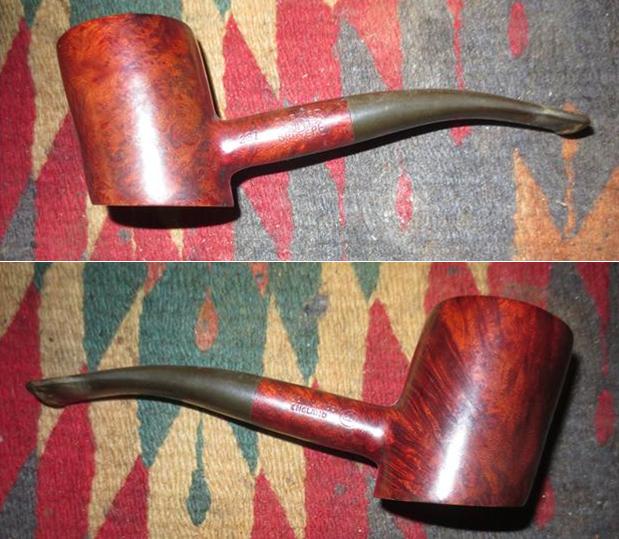
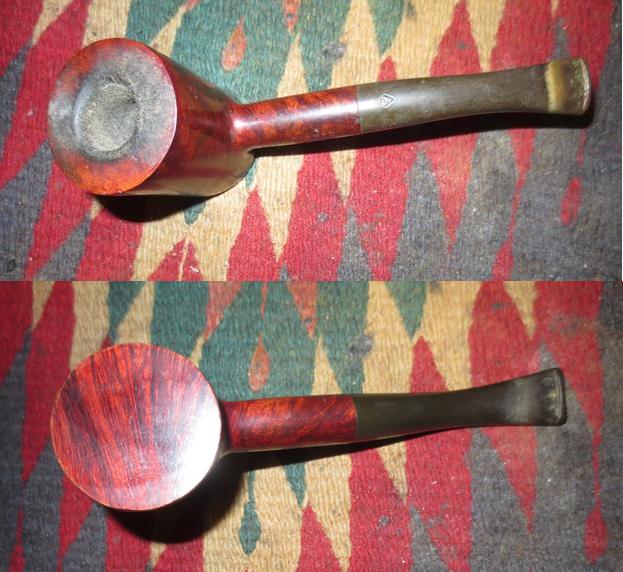
The third pipe my brother Jeff picked up in the lot from the Montana was one of my favourite shapes. In the photo below of the pipes at the seller’s antique shop it is the pipe on the far right of the picture. Looking at it in the photos I wondered if it was a Peterson 999 or a GBD 9438 two of my all time favourite pipe shapes. I was pretty excited to see what it was once he got the pipes. Everything about that pipe shape made me think that my guess was not far off. When the pipes arrived in Idaho my brother called and read me the stamping. The pipe was stamped on the left side of the shank Chadwick over “Supreme”. On the right side it was stamped Imported Briar. At that point I was scratching my head. It still looked like an English-made pipe to me but I had not heard of the Chadwick brand.Chadwick1 When the pipe arrived in Canada I looked it over and was still convinced it looked English-made. I looked in Who Made that Pipe and it was listed there as made by Wally Frank in the US and England. The next photos show what the pipe looked like when it arrived here. There is a lot of promise underneath all the grime. There was a thick cake in the bowl and the rim was covered with the overflow of tars and oils down the sides to the double ring. The finish was dirty and almost gone. I am not sure if the pipe had a natural finish or was stained but it was no longer clear what the original had been like. The double ring had a large chunk missing on the front of the bowl. There were two fills on the bowl front that were shrunken and looked like dents. The shank was dirty. The stem was chewed and gnawed on to the point that the button was virtually gone on the top side. There was a chunk missing from it on the top middle of the button. There were deep tooth marks on the top and bottom of the stem near the button. The stem was oxidized and scratched and had a build-up of calcification about an inch up the stem toward the shank. Inside the stem and shank was very dirty. The airway to the bowl was clogged and I was not able to blow air through it. It looked to me that there had originally been a stinger in the tenon but it was no longer present.Chadwick2

Chadwick3

Chadwick4

Chadwick5 I took some close up photos of the stamping and the condition of the bowl, rim and stem before I went to work on restoring it. You can clearly see the stamping on the left side of the shank – Chadwick Supreme. The rim is in nasty condition. I am not sure how the last pipe man had ever fit much tobacco in the bowl. All I know is that it must have smoked really well because it looked as if he had never laid it down. The stem condition is also clearly shown with tooth marks and gnawing on the button top and bottom.Chadwick6

Chadwick7

Chadwick8

Chadwick8a Before I started cleaning it up I wanted to learn a bit more about the brand. I have cleaned and used quite a few Wally Frank pipes over the years and knew that other companies in Europe often made their pipes for them. It was highly likely that this was a British made pipe. I checked on Chris Keene’s Pipe Pages and found the Chadwick name in the Wally Frank Catalogue for 1939. None of the other catalogues would open but at least I had the information that I needed. The first photo below is of the whole page. The second is of the right top corner where the Chadwick line is mentioned. The third is of a Chadwick Display Cabinet that was provided to tobacconists and stores that sold the line.Chadwick9

Chadwick10 Now I knew that the Chadwick line was indeed made in England. My guess was correct and I would go one step further and guess that they were made by Comoy’s or GBD. The advertisement says that the pipe was “custom-made in London with the deliberate precision of English master pipemakers. The Chadwick is our sincere effort to present a fine quality London made pipe from sweet smoking Algerian Briar Root at a modest price.”

What interested me was that the pipe came in three different finishes – Rough-Rugged, Natural and Dark. I am pretty sure that the one I had was originally dark finished as the dark finish would hide the fills on the bowl and they would be blended into the briar. That gave me the direction that I would go in restaining the pipe once I got to that point in the restoration process.

I love reading these old catalogues and seeing the life time warrantee on the pipes and the fact that the pipe originally cost $2.50 with postage paid from the Wally Frank factory.

Armed with that confirmation of British origin for this old pipe I went to work to restore it to its former glory. I worked on the bowl first. I wanted to ream back the cake to bare wood to see what I was dealing with in the bowl. I set up the PipNet reamer with the smallest head first and found that the cake was incredibly hard. The cutting head barely made a dent in the cake. I took the largest sized cutting head – same diameter as the bowl and work on it and with a lot of force was able to begin to make a dent on the cake. It was just too hard to go too deep with the tool. I used a pen knife to try to cut back the lower portion of the cake but could not even cut into it because it was so hard.Chadwick11

Chadwick12 I decided to soak the bowl and soften the cake in an alcohol bath. I dropped the bowl into the bath and left it overnight to soak and soften the cake.Chadwick13 In the morning I took it out of the bath and dried it off with a coarse cotton towel. The soak also had the effect of softening the lava on the rim and cap so that when I dried the bowl most of it came off in the process. I was able to ream it back to bare wood with the use of a PipNet reamer and a KLEENREEM reamer. I used the drill bit part of the KLEENREEM tool to open the airway into the bowl and remove the clog. With that gone I could freely blow air through the bowl. The final photo in this set shows the conical bowl on the reamed pipe.Chadwick14

Chadwick15

Chadwick16 I wiped the bowl down with acetone on a cotton pad to clean off the remaining finish and the grime left behind after the soak and the reaming process. The damaged rings on the front of the bowl are visible in the photos as is the damage to the rim top.Chadwick17

Chadwick18

Chadwick19

Chadwick20

Chadwick21 I lightly topped the bowl on a topping board using 220 grit sandpaper to flatten the rim top and to remove some of the rounding to the outer edge of the bowl.Chadwick22 I used a dental pick to remove the fills that had shrunk on the bottom front of the bowl in preparation for replacing them.Chadwick23 I packed briar dust into the holes and then dripped super glue onto the packed briar dust.Chadwick24 I packed briar dust into the missing section of the double rings on the front of the bowl. I put super glue on top of the briar dust fill to build up the repair. I added more briar dust on top of the fills on the bowl front and on the repair to the rings.Chadwick25 I sanded the patches on the bowl front with 220 grit sandpaper and smooth it out to match the surrounding briar.Chadwick26 I sanded the patch on the ring repair with 220 grit sandpaper to smooth it out. There were still some low spots on that repair so I refilled the area with some more super glue.Chadwick27

Chadwick28 I set the bowl aside to let the repair on the rings cure before I cut the new rings into the bowl front. While it was sitting I sanded the stem with 220 grit sandpaper to remove the oxidation and the calcification. I wanted to clean up the stem before I worked on repairing the tooth marks and gnawed button. I cleaned the stem with alcohol and pipe cleaners.Chadwick29

Chadwick30

Chadwick31 I scrubbed out the tooth marks on the stem and the button with a cotton swab and alcohol in preparation for the repair I would do there. I mixed the patching material using finely crushed charcoal capsules and black super glue. I mixed the two to blend the materials. I use super glue that gives me 45 seconds of time before it hardens so I have to work quickly.Chadwick32

Chadwick33 When I had the paste mixed well I applied it to the tooth marks and built up the button with a dental pick and dental spatula. The repair is anything but beautiful at this point but the mixture adds strength to the repair that the glue by itself does not give with tooth marks and damage of this magnitude.Chadwick34

Chadwick35

Chadwick36 I set the stem aside to cure and went back to the bowl. I used a Buck Knife, a pen knife and a sharp-edged needle file to cut the lines in the patch on the bowl front. I wanted the new lines to connect seamlessly to the lines on either side of the repair. These three blades always have worked for me to get a good straight line match.Chadwick37 When I had finished cleaning up the lines on the bowl the stem repair had cured enough to begin to shape the button and clean up the tooth repairs. I sanded them with 220 grit sandpaper to begin to shape and smooth out the repairs.Chadwick38

Chadwick39

Chadwick40

Chadwick41

Chadwick42 When I had the basic shape of the button set up the surface was quite porous on the button surface and in one spot on the tooth repair on top of the stem so I gave them a top coat of clear super glue to fill in the pores left behind by the super glue/charcoal mixture. I set that aside to dry.Chadwick43

Chadwick44 I cleaned the bowl and shank with pipe cleaners, cotton swabs and alcohol. It was one dirty shank. It took a lot of scrubbing to clean out the grime. I scrubbed until the cleaners came out clean and white.Chadwick45 I wiped the bowl down with alcohol to remove any last dust or grime in preparation for staining the briar.Chadwick46

Chadwick47

Chadwick48 I decided to stain the bowl with a dark brown aniline stain that I had thinned by half to give it a medium brown colour. I wanted to aim for the dark stain that was noted in the Wally Frank Catalogue above. I figured it would give me good coverage on the fills and the repair to the rings.Chadwick49 I applied the stain with a cotton swab and then flamed it with a lighter to set the colour in the grain.Chadwick50 I wiped down the freshly stained bowl with alcohol on cotton pads to even out the stain and to give it more transparency so that the grain shows through. When I was through I was happy with the colour and with the way it hid the fills on the bowl and the repair to the ring on the front of the bowl.Chadwick51

Chadwick52

Chadwick53

Chadwick54

Chadwick55 By that time the stem repair had dried and I sanded it with 220 grit sandpaper to smooth out the stem patch and do more shaping on the button.Chadwick56

Chadwick57

Chadwick58 I filed the slot in the stem to smooth it out and shape it. I also sanded the stem with a medium and a fine grit sanding sponge to further shape the button. I wet sanded the stem and button with 1500-2400 grit micromesh sanding pads and rubbed the stem down with Obsidian Oil. I dry sanded with 3200-4000 grit micromesh pads and gave it another coat of oil. I finished by sanding it with 6000-12000 grit pads and gave it a final coat of Obsidian Oil. I set it aside for the oil to dry.Chadwick59

Chadwick60

Chadwick61 I sanded the bowl with the micromesh sanding pads – 1500-12000 grit to polish the briar – bowl, shank and rim, to bring out the grain. When the grain began to pop I buffed the bowl and the stem with Blue Diamond on the wheel and then gave both multiple coats of carnauba wax. I buffed it with a clean flannel buff and then with a microfibre cloth. The finished pipe is shown in the photos below. It is a far cry better looking than when I started. This one is a keeper. Thanks for looking.Chadwick62

Chadwick63

Chadwick64

Chadwick65

Chadwick66

Chadwick67

Chadwick68

Carey Magic Inch Freehand Briar Pipe


Blog by Steve Laug

In the batch of pipes my brother purchased from an antique shop in Montana for me to clean up was the pipe pictured in the photo below – on its side on the pipe rack on the left of the photo bearing a $19 price tag. Turns out it is a Carey Magic Inch Freehand Pipe. It is stamped on the left side of the shank: Free Hand over Carey over Magic Inch. Underneath that is stamped a PAT. No. 3267941. On the right side it is stamped: Mediterranean over Briar Israel. The stem has three horizontal vents on the top and on the underside of the stem. There is a logo – a C in a box on the top of the stem behind the vents.Carey1 I did some research on the “Magic Inch” System and found out that it has been a Carey’s tradition for over 50 years. On their website they say that they have sold over 1,000,000 pipes. They describe the “Magic Inch” as: “an air chamber inserted between the imported briar bowl and the vented mouthpiece which allows cool outside air to enter and mix with the warm tobacco smoke inside the “Magic Inch” chamber. Tobacco tars, oils and moisture, are squeezed out of the smoke. The residue drops to the bottom of the chamber and is absorbed by the Papyrate sleeve.” http://www.eacarey.com/magicinchinfo.html

They provide the following diagram on their website and I have included it here to show the unique system.Carey2 I found a second diagram on the English Carey website. http://www.eacarey.co.uk/2010/10/the-carey-magic-inch/

I quote from their site as it gives some interesting history on the system: “A Carey pipe looks better and feels better than any ordinary pipe. It also smokes like no other pipe you’ve ever known, and that’s mostly thanks to the patented ‘Magic Inch’, an invention that revolutionised pipe smoking. Designed and patented by EA Carey in 1948 it was the result of a dedicated pipe smoker seeking a cooler, drier smoke whilst not detracting from the fulsome flavour of choice tobaccos. After years of research and the discarding of many ‘good ideas’ Carey settled on the basic design of the system and set about refining that design into the simple but highly effective device that is the basis of Carey Magic Inch pipes over 60 years later. Even today, more than 30 years after it was first introduced into Europe and particularly the UK, we have many seasoned pipesmokers who are still discovering the amazing difference and improvement in smoking pleasure they obtain from the Magic Inch system. It is not a trap or filter or other such sludge forming gadget. In fact, like all great discoveries and inventions, the secret is simple. By cooling, condensing and evaporating moisture with every puff, it prevents the tar, sludge, bite and bitterness that you may find in other pipes, ever reaching your mouth.”

They go on to describe the system in a classically English way: “The system has been designed to allow a precise amount of outside air into each puff of smoke. Unique moisture ports then dissipate wetness, tar and nicotine into the 2 ply Papyrate sleeve, protecting the smoker from unwanted materials. The Papyrate itself provides excellent absorbency for dryer smoking and increased durability. Subsequently the Magic Inch chamber releases moisture through evaporation during resting periods between smokes. Neither a filter nor a standard ‘push bit’, a true innovation.”Carey3 All Carey Magic Inch pipes are made from top quality Mediterranean briar designed, crafted and inspected by experts who take pride in their craft.

With this background information I started to work Carey Magic Inch Freehand that my brother had picked up for me. The bowl was quite clean on the inside – a light cake had formed. The rim had some darkening but was also very clean. The carved patterns on the pipe were very similar to some of the Alpha pipes that also had similar Frankenstein-like stitches on the worm trails carved into the sides and bottom of the bowl and shank. I would not be surprised if it was actually carved in the old Alpha Pipe Factory in Israel. The finish on the pipe was in very good shape and did not need to have anything done to it but clean it. The shank bears the stamping of Israel on the right side. The shape is a block/poker shape that never really was my cup of tea. I always look at them and feel like the carver stopped somewhere along the way and never finished carving the pipe. The rustication on the rim matched that on the shank end. The stem was typical Carey plastic and would be hard to work on. It had tooth chatter on the top and the bottom sides of the stem and some tooth marks that also went onto the button itself.Carey4

Carey5

Carey6

Carey7 The next close up photos show the rim and the cake in the bowl as well as the stamping on the sides of the shank.Carey8

Carey9

Carey10 I took the stem off the pipe to get a picture of the Carey Magic Inch system. The stem sits over a mortise insert with a one inch long perforated tube that extends into the stem when it is in place on the shank.Carey11 The stem was dirty on the inside and the tooth chatter and dents marred the top and bottom sides near the button.Carey13

Carey12 I scrubbed down the exterior of the bowl with a tooth brush and Murphy’s Oil Soap and rinsed it with lukewarm water. I dried off the bowl exterior with a soft cloth.Carey14

Carey15

Carey16

Carey17

Carey18 I scrubbed out the stem and the shank with cotton swabs, pipe cleaners and alcohol until the pipe cleaners and swabs came out clean.Carey19 I find the plastic material used on these stems to be a challenge to clean up and remove the damaged areas. Once it is sanded all of the polishing has to be done by hand. The heat of the buffer pads can seriously damage the stem by melting it. I sanded the tooth marks and chatter with 220 grit sandpaper to remove the damage. There was one spot on the top of the stem near the button that needed to be patched with clear super glue. It was a deep tooth mark that no amount of sanding would remove.Carey20

Carey21 When the patch cured I sanded it with the 220 grit sandpaper to smooth it out with the surface of the stem. I sanded it with a medium and a fine grit sanding sponge to remove the scratches.Carey22 Normally I wet sand the stem with 1500-2400 grit micromesh sanding pads but with this material it only gets muddy and makes a mess. I used some Obsidian Oil to rub down the stem between each pad and sanded it until the scratches began to disappear. I continue the process with 3200-4000 grit pads with the oil between each pad giving me some bite on the plastic stem. I forgot to take a picture of this step (I had already spent over 1 ½ hours on the stem at this point). I finished sanding it with 6000-12000 grit pads and the oil. When I had finished I rubbed it down with a final coat of Obsidian Oil and let it dry.Carey23

Carey24 I hand waxed the bowl and the stem with Conservators wax and buffed it with a shoe brush. I finished by buffing it with a microfibre cloth. The finished pipe is shown in the photos below. It is cleaned, restored and ready for whoever wishes to purchase it from me. It is not my style of pipe but I am sure it will make some pipe man very happy. Just email me if you are interested and make me an offer at slaug@uniserve.com Thanks for looking.Carey25

Carey26

Carey27

Carey28

Repairing Cracks in a Large WDC Wellington Bent


Blog by Steve Laug

Through Facebook I connected with a new friend Warren. He wrote me about how to repair a crack in a pipe that he was reworking for a friend of his. As I described the process he asked if he could send it to me to work on. At that point my refurbishing box was getting low as I had repaired and moved out a lot of the pipes that had been there. So I agreed. Last week it arrived here. A funny side note is that I have a stem for the same pipe and have been looking for a bowl for the stem for a while now. Now I get the opportunity to work on a pipe with the same stem. It is stamped WDC in a triangle on the stem with Wellington arced below the triangle. It is also stamped on the left side of the shank with the WDC triangle and Wellington in script to the right of the triangle. Underneath the script it reads Imported Briar. There is no other stamping on the pipe. It is a large pipe with a length of over 10 inches and a bowl height of 2 inches. The diameter of the bowl is 7/8 inches. The third picture below shows a comparison of a 5 ½ inch long pipe and average bowl so you can see how big this pipe truly is.Wellington1

Wellington2

Wellington3 The briar had some attractive grain in it but there were some issues as well. It had a lot of fills on the front left, front right and bowl front. There was some damage to the surface of the rim that looked as if the pipe had been dropped on concrete. The outer edge of the rim on the front had some damage and was rounded over and the inner back edge of the rim had burn damage that made that portion out of round. Fortunately it was not a deep burn and would be relatively easy to address. There was also a ¾ inch crack on the underside of the shank that had one ¼ inch branch going toward the left side of the shank.Wellington4

Wellington5 I took a series of close up photos to show the damaged areas of the pipe. The first shows the damage to the rim surface and edges. The second shows the crack in the shank. The third photo shows the missing fills and divots in the bowl sides.Wellington6

Wellington7

Wellington8 I decided to address the crack in the bottom of the shank first. I used a micro drill bit on my Dremel to drill some small holes at the end of the crack and the branches of the crack to stop the damage from spreading further. The bit is very tiny as can be seen from the holes that are left behind after drilling. I drill two holes on each end because after the first hole I examined it with a lens and could see that extended slightly beyond my first hole. I picked out the damaged putty fills with a dental pick and wiped the bowl down so that I could repair the crack and the fills. I used a clear super glue and fine briar dust to replace the fills and to fill in the drill holes on the shank bottom. In each case I over filled the holes so that as the glue and dust were sanded I would not need to repeat the process due to shrinkage.Wellington9

Wellington10

Wellington11

Wellington12 My intention was to restain the entire bowl so I sanded the bowl and the repairs with 220 grit sandpaper to smooth out the repairs. I followed that by sanding the bowl and repairs with a medium and a fine grit sanding sponge.Wellington13

Wellington14

Wellington15 I reamed the bowl with a PipNet reamer starting with the head that would fit and working up a head that took the cake back to bare briar. In looking at the back side of the bowl I could see a small hairline crack and I wanted to know if it went all the way through.wellington16

Wellington17 I topped the bowl with the topping board and took off all of the damage to the inside and outside rim as well as the rim surface. I sanded it with the medium and fine grit sanding sponge as well to smooth out the scratches.Wellington18

Wellington19 After sanding and topping the bowl I could see that indeed there was a hairline crack that went across the rim at 5 o’clock and went down the back side of the bowl about ¾ of an inch. It was small and did not separate. It looked like it went all the way through to the inside of the bowl but upon examination appeared to only extend about 1/16th of an inch into the bowl. I topped it a little bit more to take care of the internal crack. I drilled the back side of the bowl at the bottom of the crack to stop it from going further down the bowl.Wellington20 I wiped down the bowl side and then picked out the crack with a dental pick. I filled it with super glue and briar dust and sanded it down with 220 grit sandpaper and the medium and fine grit sanding sponges until it blended into the surface of the bowl. I picked out the rim crack as well and filled it with the same mix. I sanded it with the topping board once again and then with the medium and fine grit sanding sponge.Wellington21

Wellington22 I scrubbed the bowl with acetone on cotton pads to remove the remaining finish on the briar and to clean up the dust from all of the sanding of the fills. There was some beautiful grain that was showing through. The patches and fills actually looked much better.Wellington23

Wellington24

Wellington25

Wellington26

Wellington27 I cleaned out the shank, bowl and airway in the shank and stem with alcohol, cotton swabs and pipe cleaners.Wellington28

Wellington29 I sanded the stem with 220 grit sandpaper and a medium and fine grit sanding sponge being careful not to damage the stamping. I went over that area with a 1500 grit micromesh pad. I then use an antique gold oil based product called Rub and Buff to fill in the stamping. The next photo shows the finished rework of the gold in the stem stamp.Wellington30 I put the stem in place on the bowl to get an idea of the improvement that the repairs, fills and stem work had done. I wanted to see what the pipe would look like as I finished.Wellington31

Wellington32

Wellington33

Wellington34 I wiped the bowl down with a final wash of isopropyl alcohol and then heated it so that I could give it a stain coat. I stained it with a dark brown aniline stain thinned by 50% with isopropyl alcohol. I applied it and flamed it. I reapplied the stain and flamed it again and then set it aside to dry.Wellington35

Wellington36 When it had dried I gave it a light buff with a microfibre cloth to see what the colour looked like. It was still a bit dark to my liking but the coverage was good. The repairs and fills while visible looked far better than when I started.Wellington37

Wellington38

Wellington39

Wellington40

Wellington41 I wiped the bowl down with alcohol on a cotton pad to make it a bit more transparent and make the grain shine through. It did not take much to coax the grain to the surface and highlight the beauty of the pipe.Wellington42

Wellington43

Wellington44

Wellington45 I worked on the long stem. To clean it thoroughly I had to wrap pipe cleaners together to extend the length of the stem. I wet sanded it with 1500-2400 grit micromesh sanding pads to clean up the oxidation and scratches in the stem. I rubbed it down with Obsidian Oil afterwards and then dry sanded with 3200-4000 grit micromesh pads. I gave it another coat of oil and then finished sanding it with 6000-12000 grit pads. I gave it a final coat of the wax and set aside to dry.Wellington46

Wellington47

Wellington48 At this point I laid the pipe on top of the current issue of the Pipe Collector and took a series of photos to show it before I buffed it.Wellington49

Wellington50

Wellington51

Wellington52 I polished the nickel ferrule with a silver polishing cloth and gave it and the bowl several coats of carnauba wax. A light touch is imperative on the nickel as it will darken the buffing pad and then transfer to the bowl. I hand buffed the bowl and ferrule with a microfibre cloth. I buffed the stem with Blue Diamond polish on the wheel and then gave it several coats of carnauba as well. I buffed the stem with a clean flannel buff and then with the cloth as well. The finished pipe is shown below. It is repaired and serviceable for many years to come. Thanks for looking. Thanks for the challenge Warren.Wellington53

Wellington54

Wellington55

Wellington56

Wellington57

Wellington58

Wellington59

Wellington60