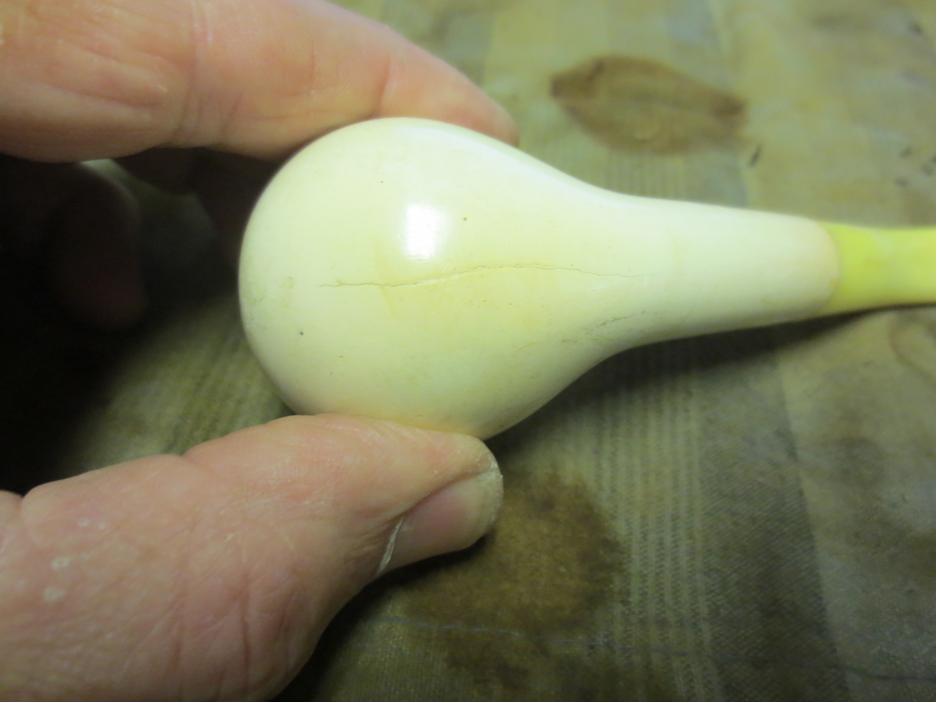
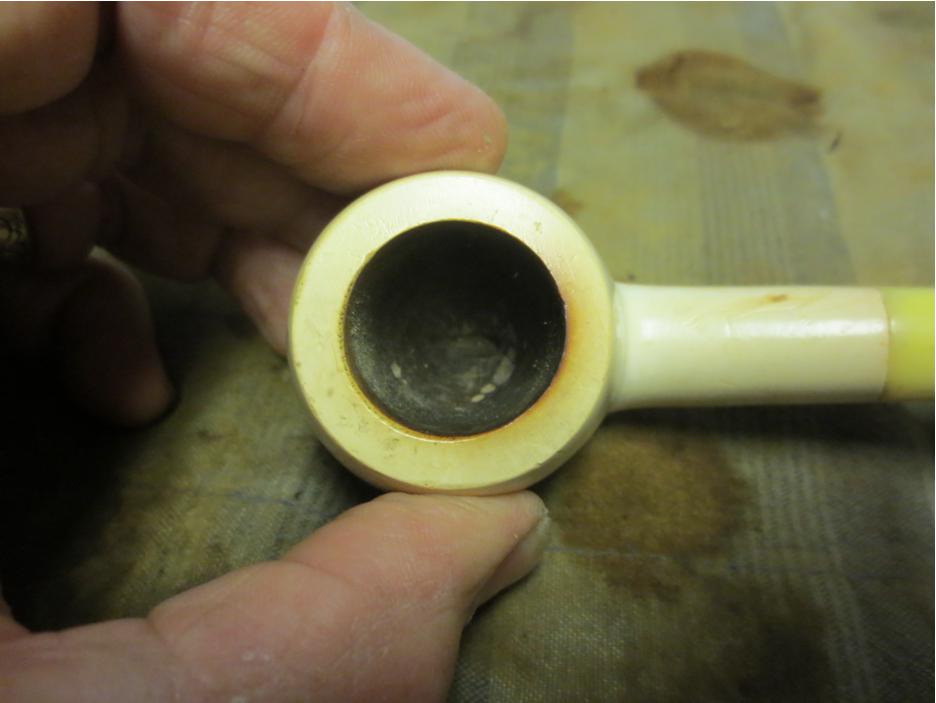
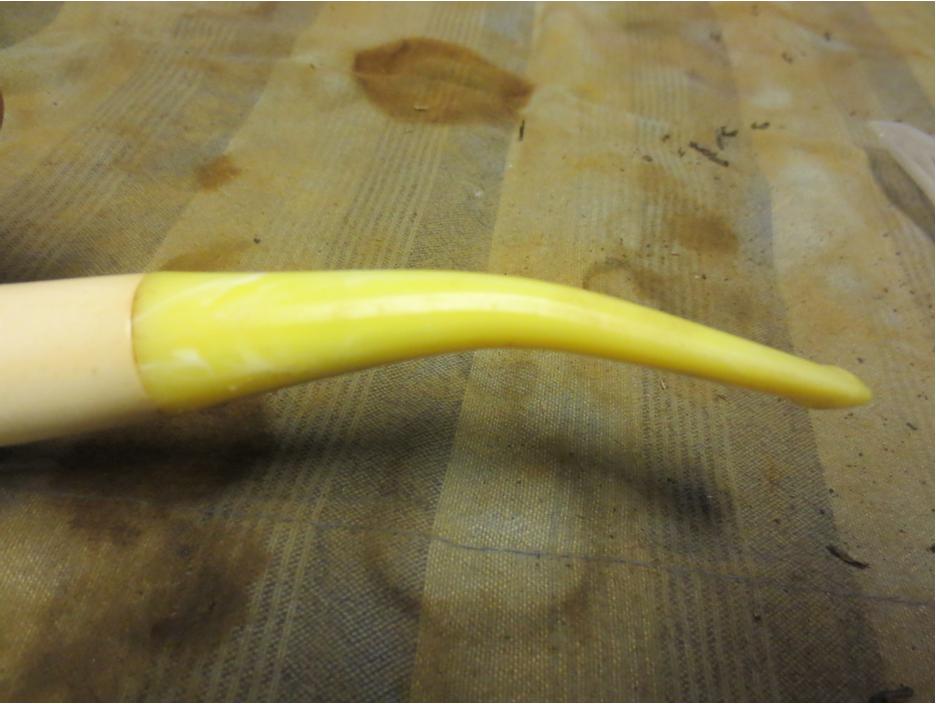
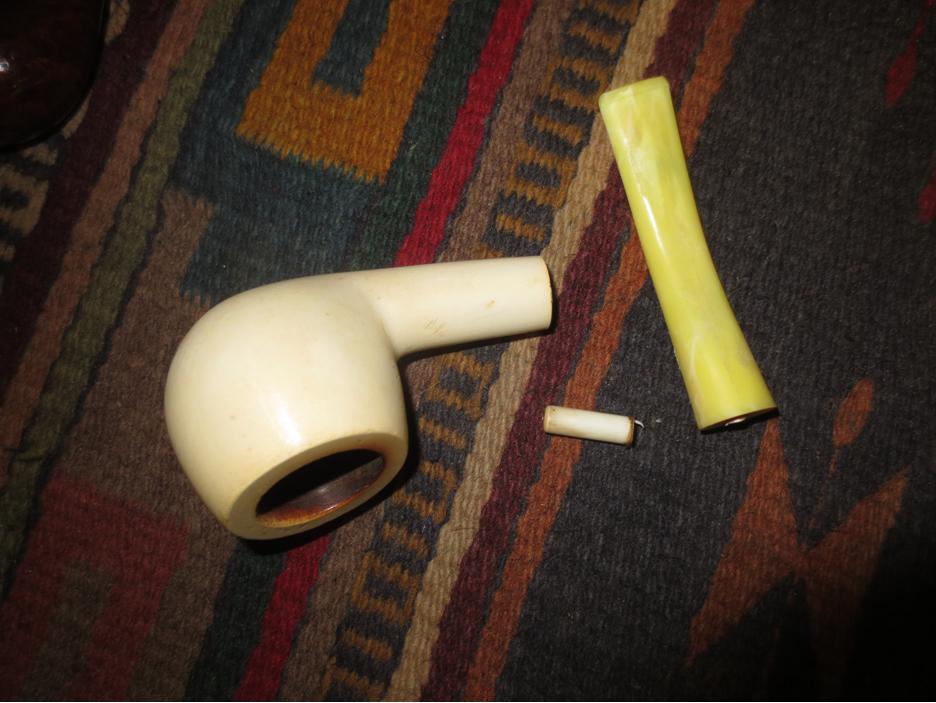
Tag Archives: Bowls – refinishing

The B(ew)itchin‘ Pipe – A Lost Episode of ‘The Twilight Zone’


Guest Blog by Robert M. Boughton
Member, North American Society of Pipe Collectors
http://www.naspc.org
http://www.roadrunnerpipes.com
http://about.me/boughtonrobert
Photos © the Author

“Every writer is a frustrated actor who recites his lines in the hidden auditorium of his skull.”
― Rodman Edward “Rod” Serling (1924-1975), U.S. TV/film writer, narrator, anti-war and –racism activist, in “Vogue” magazine [April 1957]

INTRODUCTION
Good evening. Imagine, if you will, a rather large college town in the heart of the American Southwest, population estimated at a little more than half a million. This sprawling urban area does not appear on any globe of the Earth, nor do its lights draw the attention of a satellite passing far overhead at night in the vacuum of outer space. Nevertheless, due to the proximity of two of the country’s three top nuclear weapons developers to this liberal college and arts metropolis, it is likely the target of hundreds if not thousands of such warheads from other, potentially hostile nations or terrorists, foreign and domestic.

In today’s episode, we are about to meet a 53-year-old man named Robert Boughton, who as a matter of record resides in this sprawling burg. Mr. Boughton knows the twin peaks that are, atop the one, success and hope, and the other, defeat and futility. At the moment, he is at the very zenith of the heap of that more and more common social malaise that people glibly call the harried man. He is finding his way through one of the more interesting times of his life, in the sense of the ancient Chinese curse. Honest, hard-working and trustworthy, he has had more jobs than he could ever recall to put down on a government security clearance application, from maintenance man to assistant manager in hotels; neighborhood delivery boy to photojournalist for newspapers, and, most recently, both caregiver and pipe restorer – tobacco pipes, he always adds to prospective new customers he doesn’t know as he offers them his card.

During the past seven years, Mr. Boughton has postponed his lifelong pursuit of a literary career to dedicate almost every waking hour as caregiver to a mentally unstable roommate with a slightly shorter list of physical disorders, one of them fatal; a shrewish man a few years over the hill who carries his misfortunes the way some brag about drug abuse or petty thievery, but in his case molded into the very form and execution of his tragic worldview by the madness of living day-to-day knowing he is deteriorating from the core of marrow of his brittle bones to the disappearing sheath around every nerve fiber and the corresponding loss of sight and voluntary movement, and finally to the thin skin of his failing frame.

Mr. Boughton’s roommate has no idea how close he has come to being granted his repeated if insincere request to be put out of his misery; to a drive far out onto a back road of the desert for a very long stay. He has pushed Mr. Boughton to the limits of his self-control – to the end of his wits and the edge of his sanity. But the downward spiral is about to change, as you will soon understand. For not long ago, Mr. Boughton caught sight of a pinhole of light in the abyss; a hobby that helped him survive the slings and arrows that another writer once called outrageous fortune.

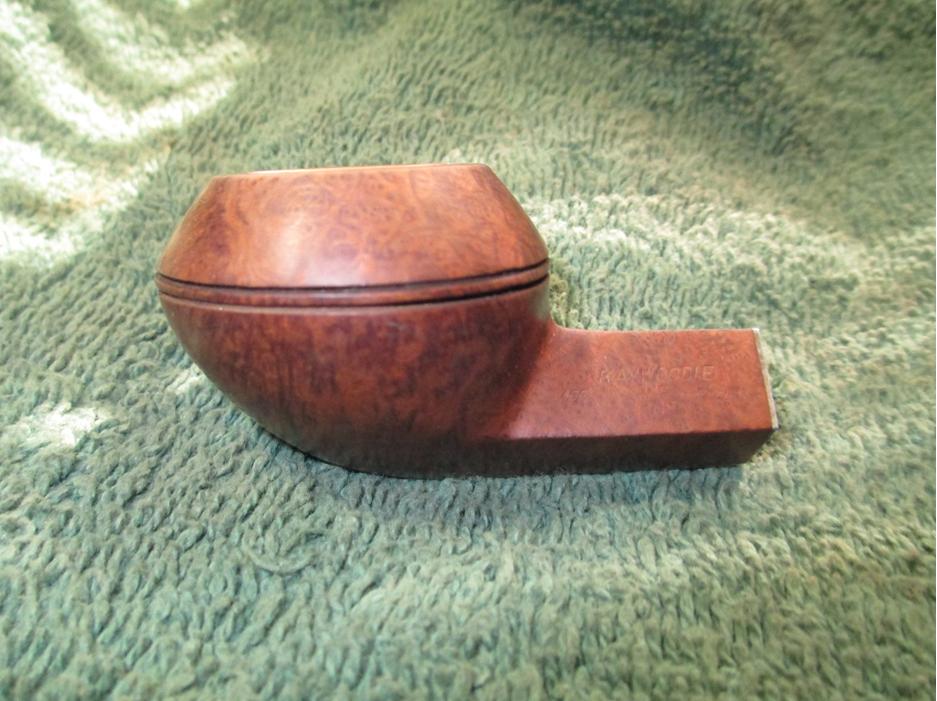
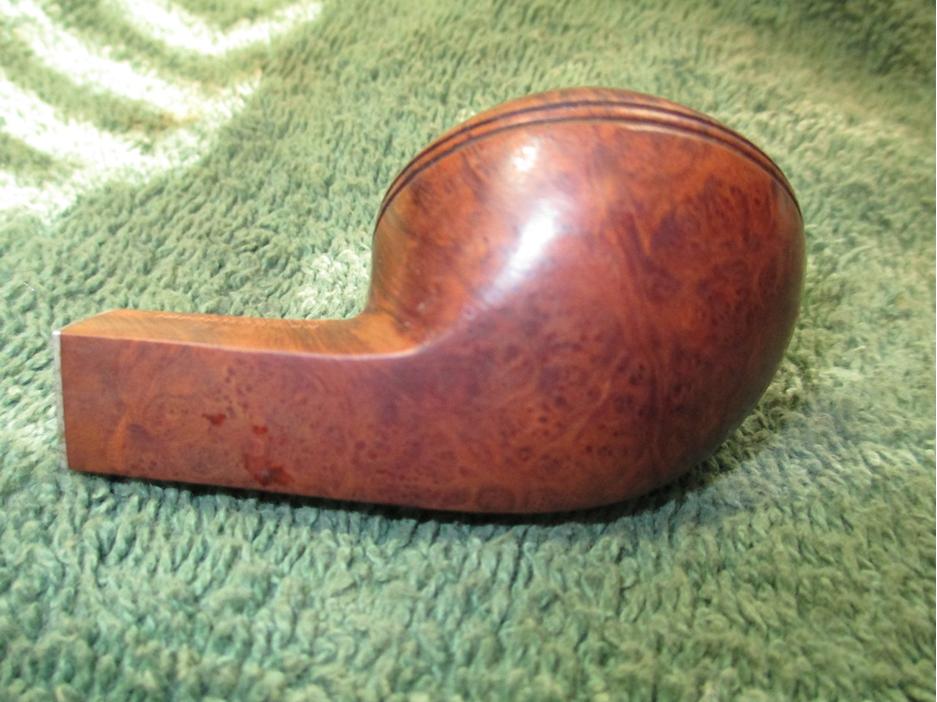
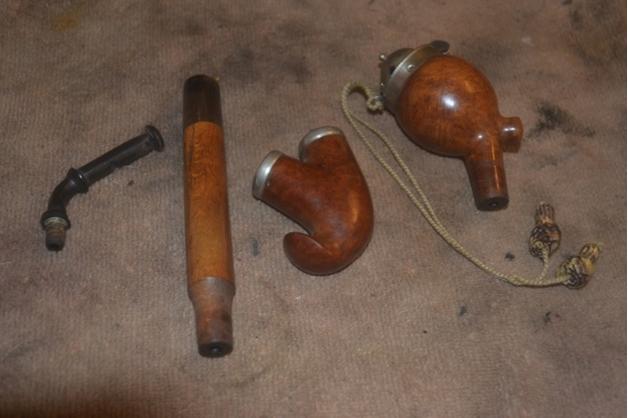
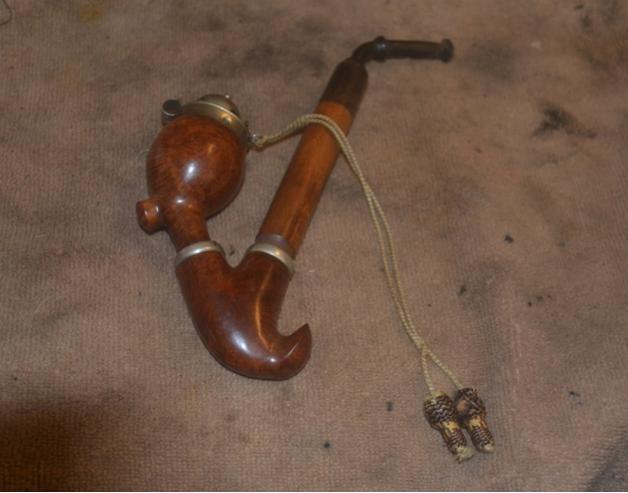
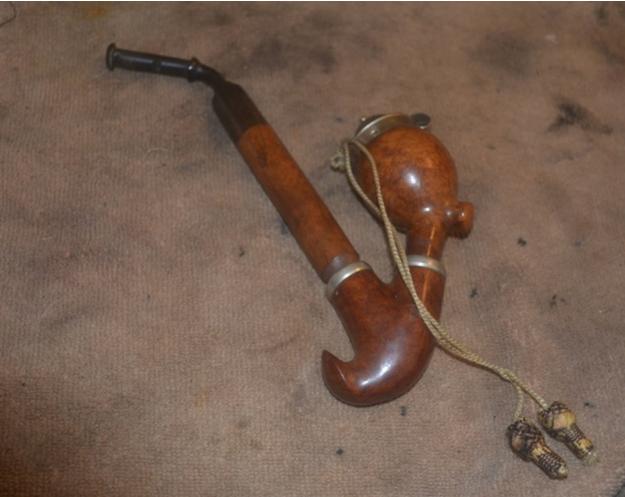
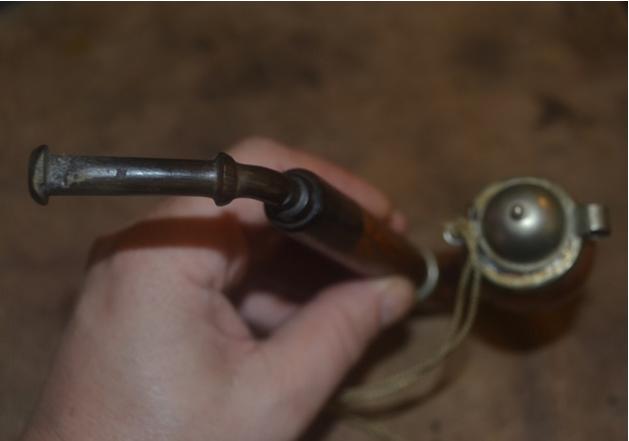
And now all of Mr. Boughton’s troubles are about to change for the better from the simple purchase of an estate lot of seven tobacco pipes in time to write off as an expense on last year’s business income taxes. All of them would have been finds for more than the $25 he paid for the lot – but at a glance, the real gem, in the eye of the restorer at any rate, first went unnoticed. See if you can spot it in the following picture from our gallery, which we call “Lot #7: Tobacco Pipes.” Robert1 If you correctly identified the L&H Stern Straight Billiard, on the right in the middle, as the object of Mr. Boughton’s growing obsession, shall we say, then you either have what is commonly referred to as the Sixth Sense or you are an astute collector of fine pipes.

The Park Lane, an invention of the company’s primary founder, is stamped with U.S. Patent № 1908630, issued May 9, 1933. Mr. Boughton has always appreciated the elegant – in expressions of poetry, law, logic and art, to name a few – and as for Patents, he considers this one, being only two pages including the obligatory illustration of parts, to be as brief and comprehensive as they come.Robert2

Robert3 L&H Stern Inc. was officially organized in 1911 by one Ludwig Stern (the L in the initials, which in the early days were fashioned L. & H. S.), with his older brother, Hugo (the H). Ludwig emigrated from Germany as a young man, after his brother, who was five years older.

(And now, if the audience will permit a brief side-bar, a point of interest: Ludwig worked for the largest supplier of tobacco products to the entire state of New York – somehow providing an estimated 90% of cigarettes, cigars, pipe tobacco and other related items to manufacturers and retailers in the area – as early as 1899, the year the behemoth tobacco supplier was spawned. Called the Metropolitan Tobacco Company, a corporation born of a cartel of others in the same business known to everyone who was anyone within the industry as the “Tobacco Trust,” became the object of a drawn-out restraint of trade civil complaint. The original trial and both appeals of said cause were decided, not surprisingly, in favor of the tobacco industry defendants. The small shops, banded together as plaintiffs, now collectively relegated to historical obscurity by a single last name and “et al.,” were forced to close. I submit for your consideration one question: could the wheels of justice have been greased in this case by the main product of the second of the Seven Deadly Sins? This is offered as food for thought – only available at your local diner in the Twilight Zone.) [See Link 2.)

The brothers moved the re-formed business in 1920 to Brooklyn. The new location, in a seven-story building, was – for the then-ubiquitous craft – in a convenient part of town now known by its acronym, D.U.M.B.O. (Down under the Manhattan Bridge Overpass). It remained there until closing in the mid-1960s. [See Link 3.] LHS was already so well respected in the business at the time that the company reorganization and move were news in those bygone days. [See Link 4.]

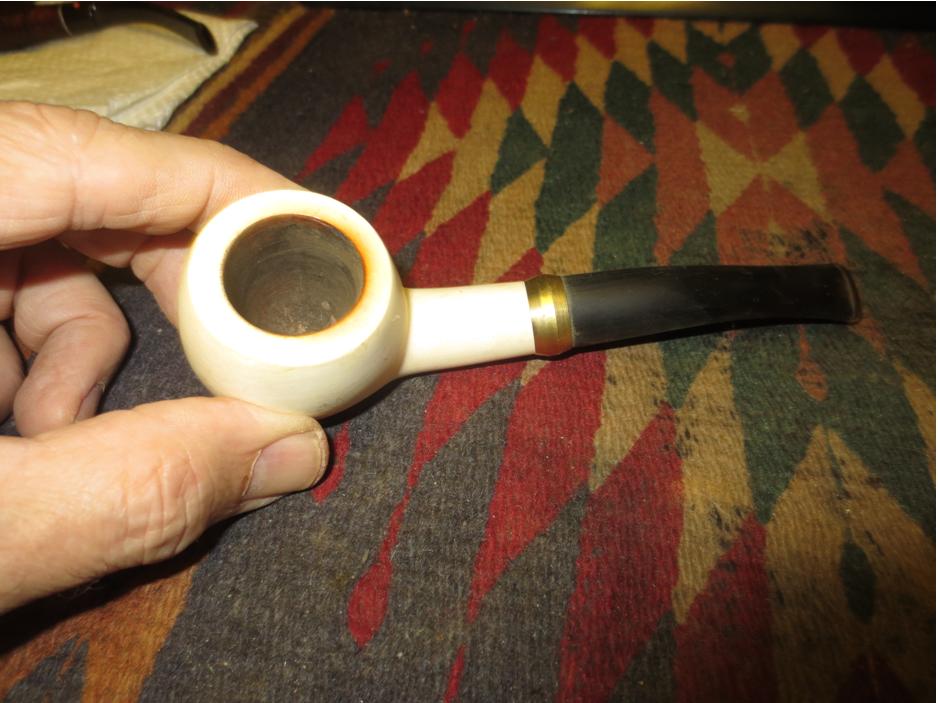
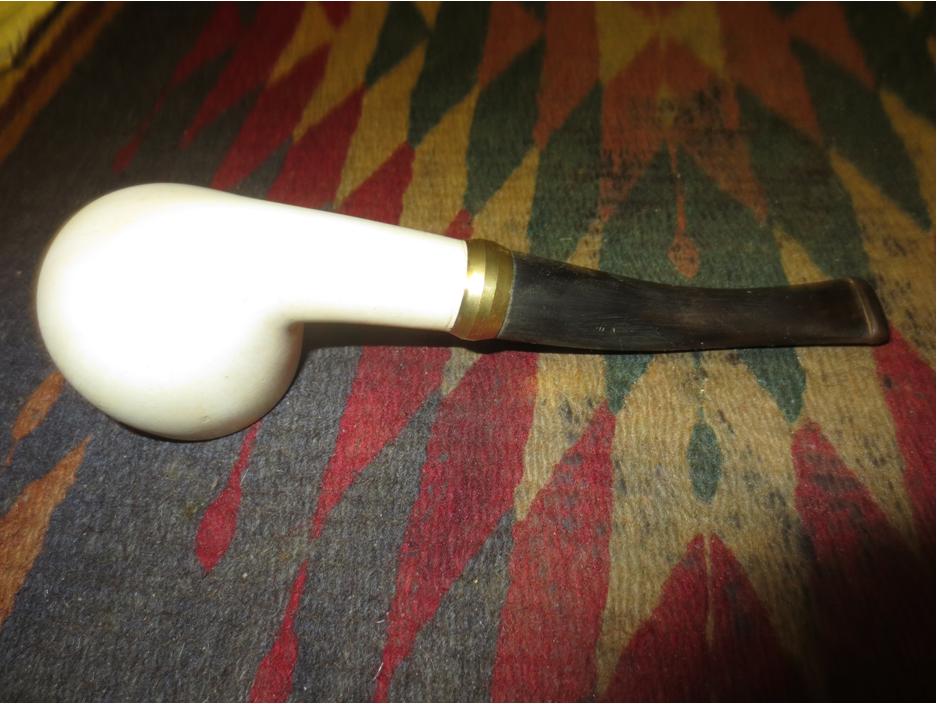
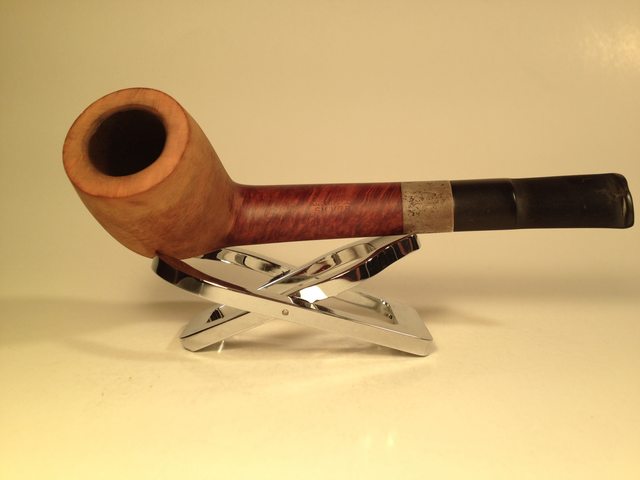
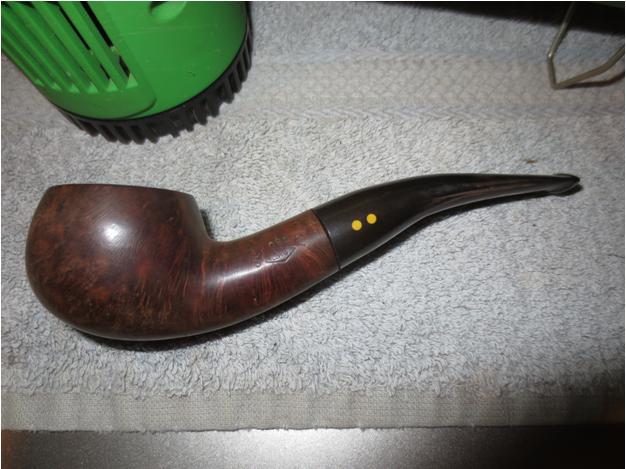
The LHS Park Lane Billiard included a brown and orange swirled Cumberland bit, handmade from Ebonite and fashioned in this case to look like wood. Mr. Boughton considered the task of restoring this pipe to be distinctly good fortune and a pleasure of restoring, in particular because of a certain aspect of the repair that was new to him. The line was made only in the 1930s. [See Link 5.]

At the present moment, Mr. Boughton is busy at work attempting to restore the WDC Park Lane to its original state. As noble as the endeavor may be, the only problem, with this peculiar specimen, is the invisible transformation the pipe has undergone during years of smoking by a single prior owner who had the good grace to love it. As Mr. William Shakespeare so aptly put it in “A Midsummer Night’s Dream”: “Love looks not with the eyes, but with the mind,/And therefore is wingèd Cupid painted blind.” Now, meet Mr. Boughton in his favorite activity – restoring tobacco pipes with every ounce of his love.

RESTORATION
Robert4

Robert5

Robert6

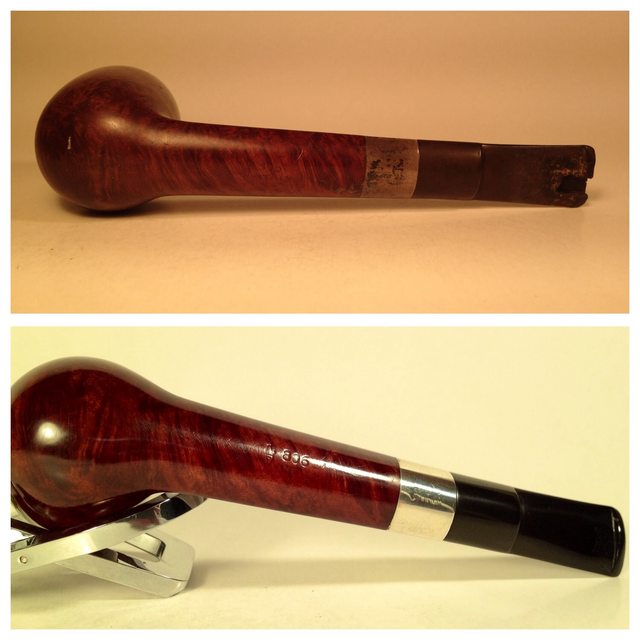
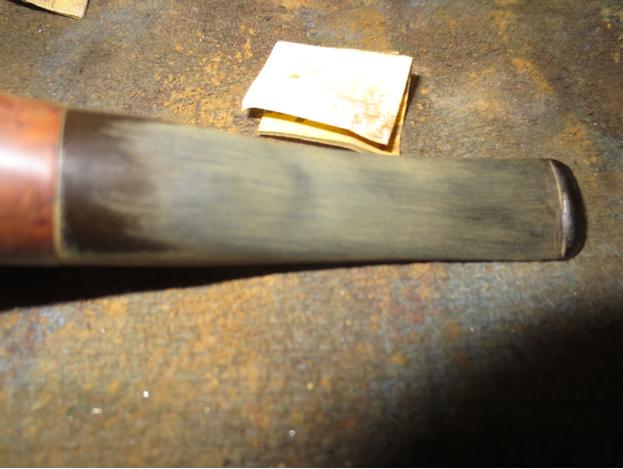
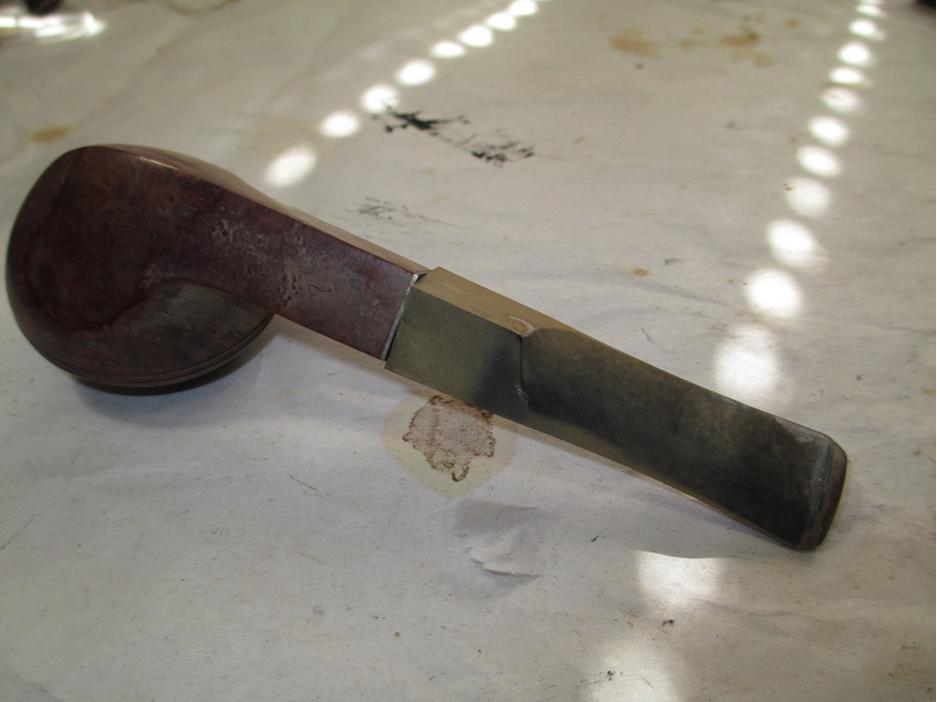
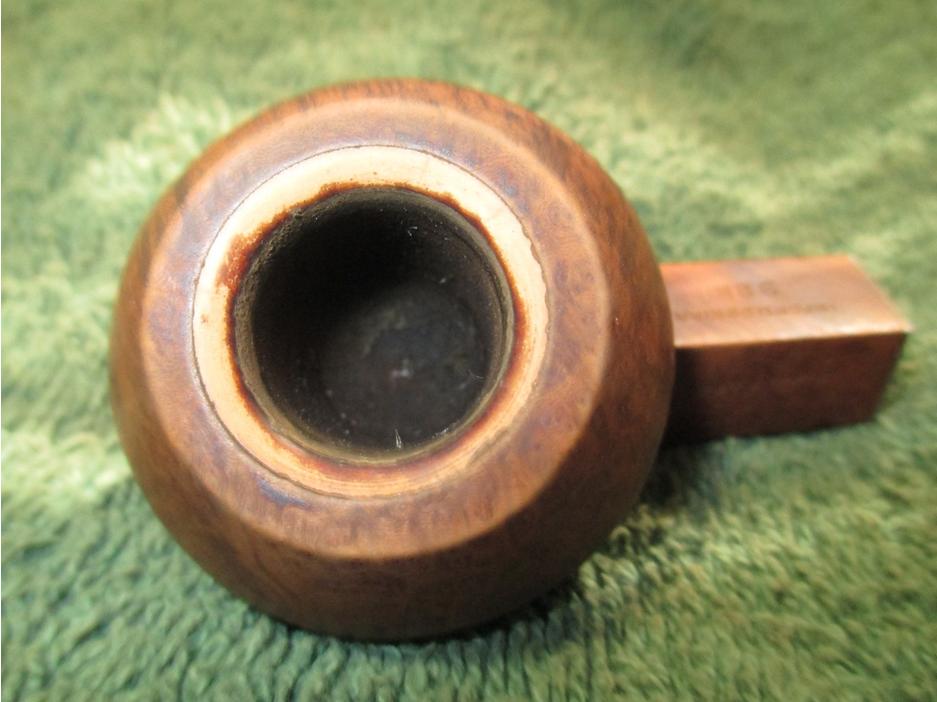
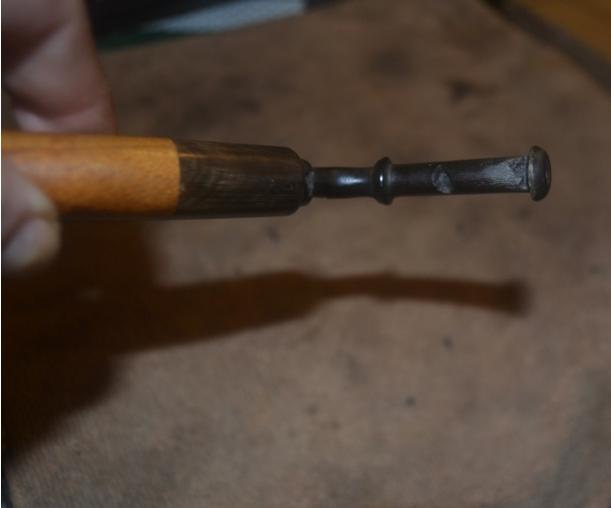
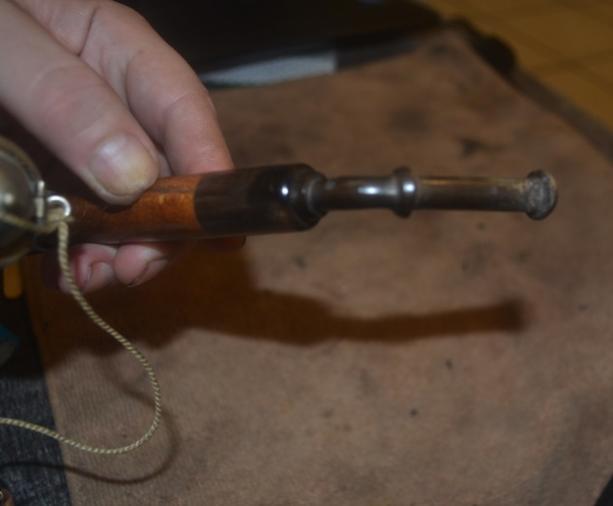
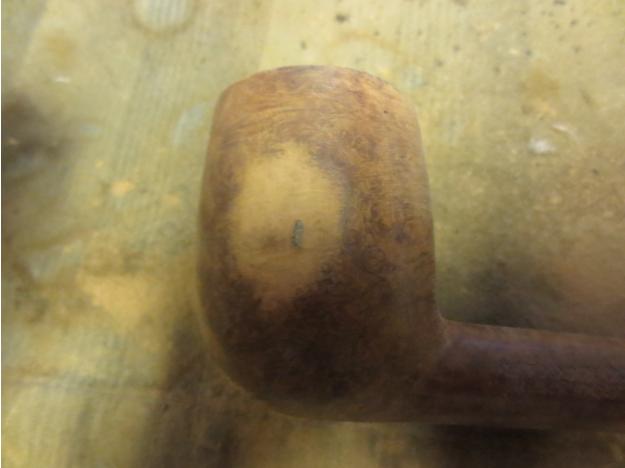
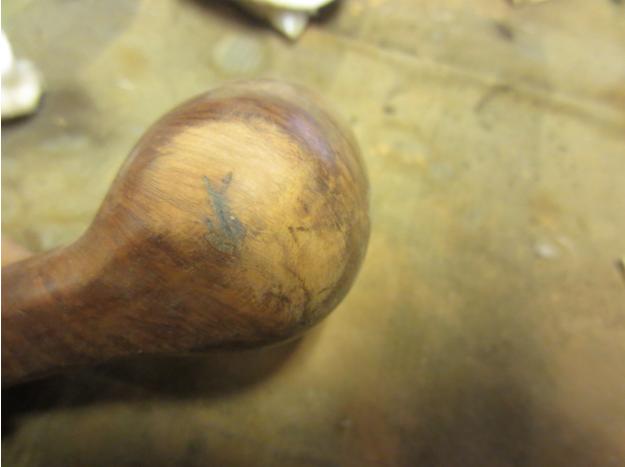
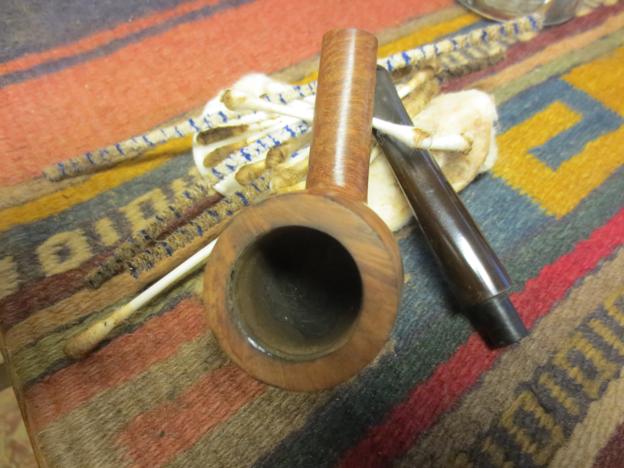
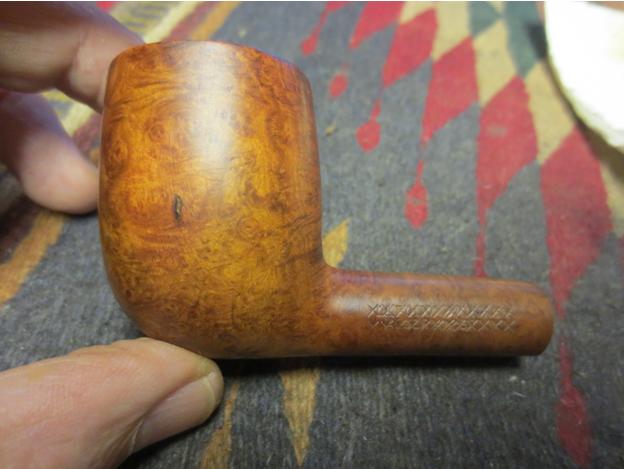
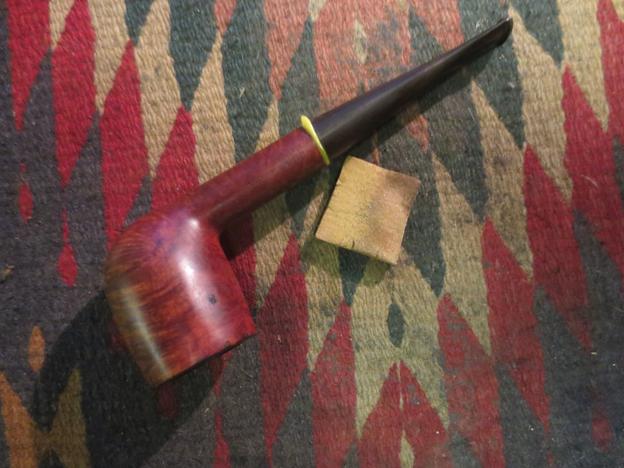
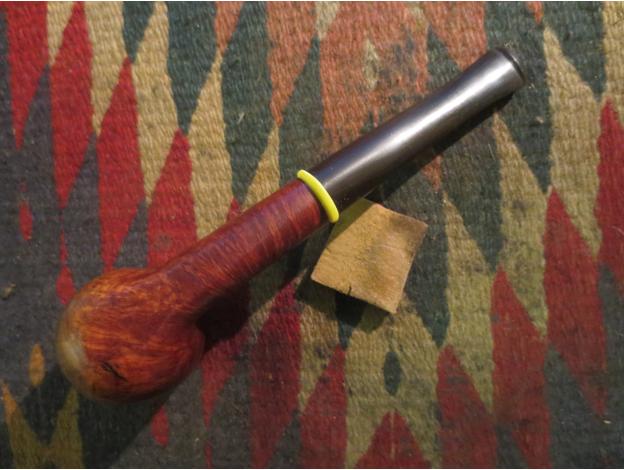
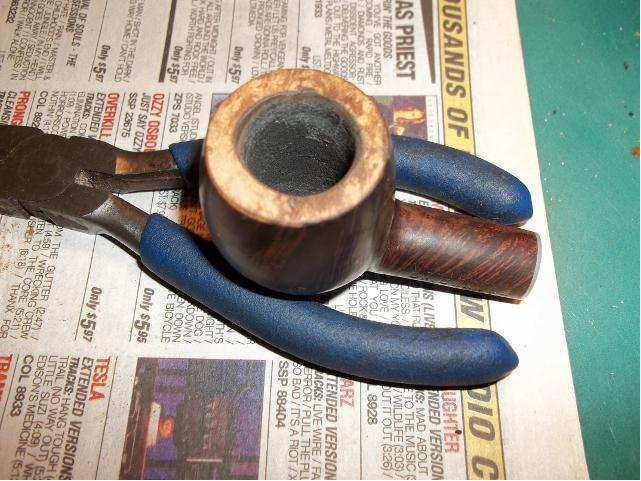
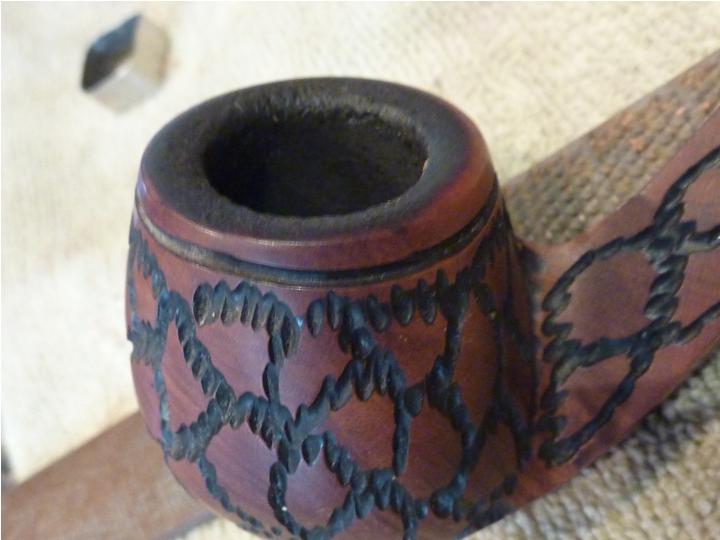
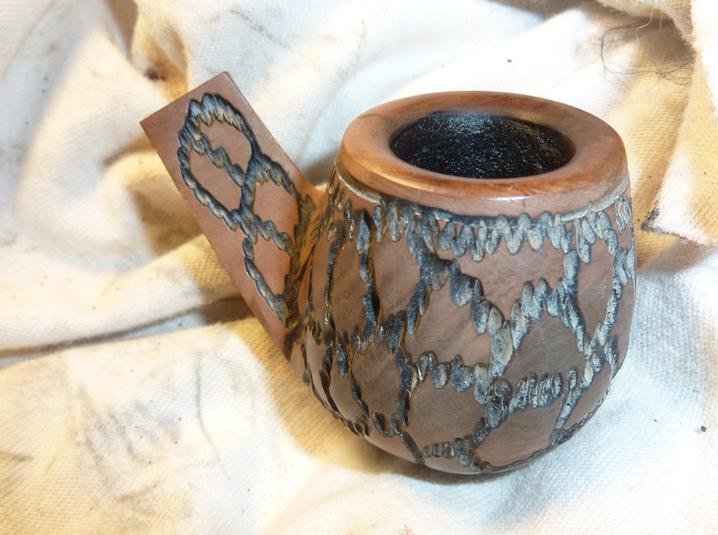
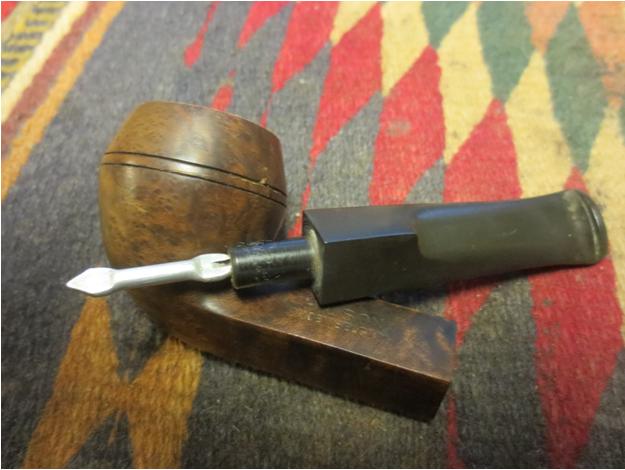
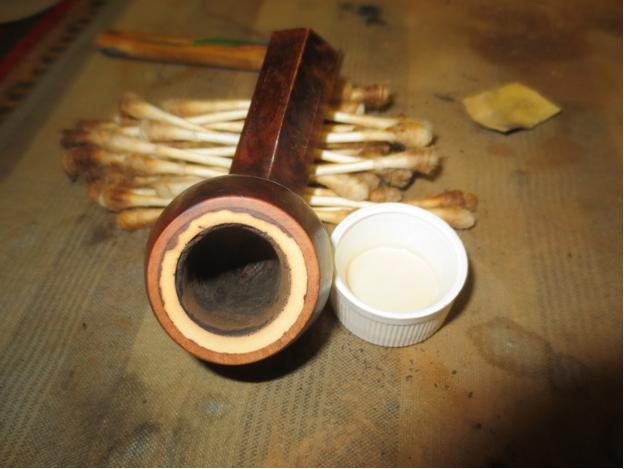
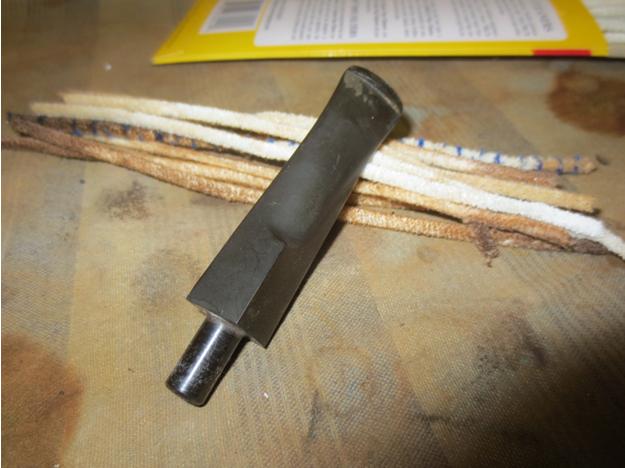
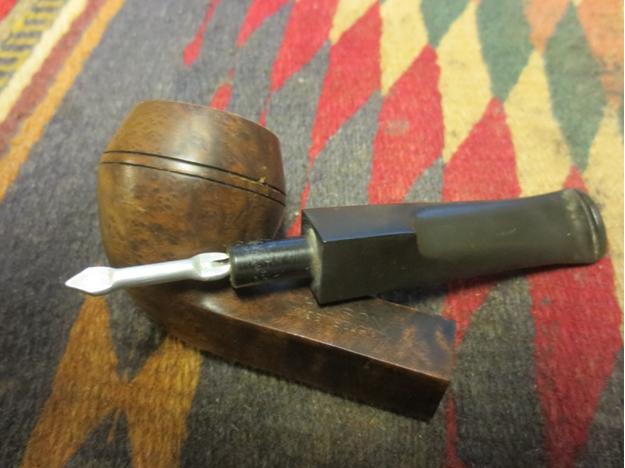
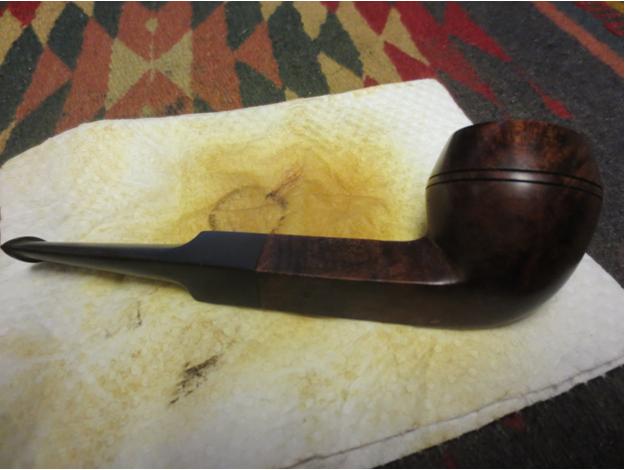
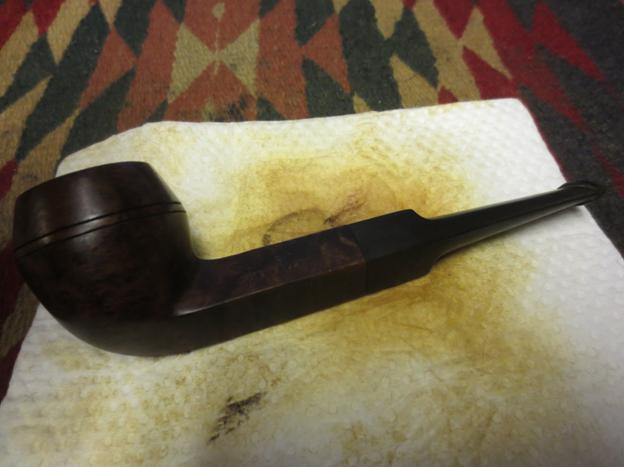
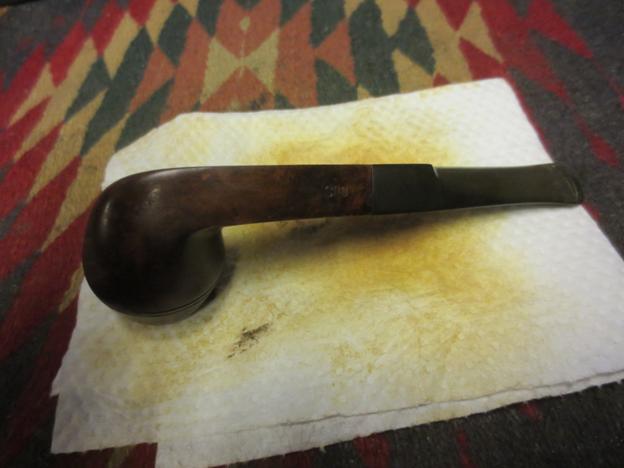
Robert7 The last shot of the Park Lane prior to restoration, above, makes the most serious problem I encountered apparent. The bit was off by about an eighth of a turn, which may seem negligible to one who has never enjoyed the ruminating quality of a fine pipe, but is in fact a microcosmic chasm along the lines of the Grand Canyon to the general viewer.

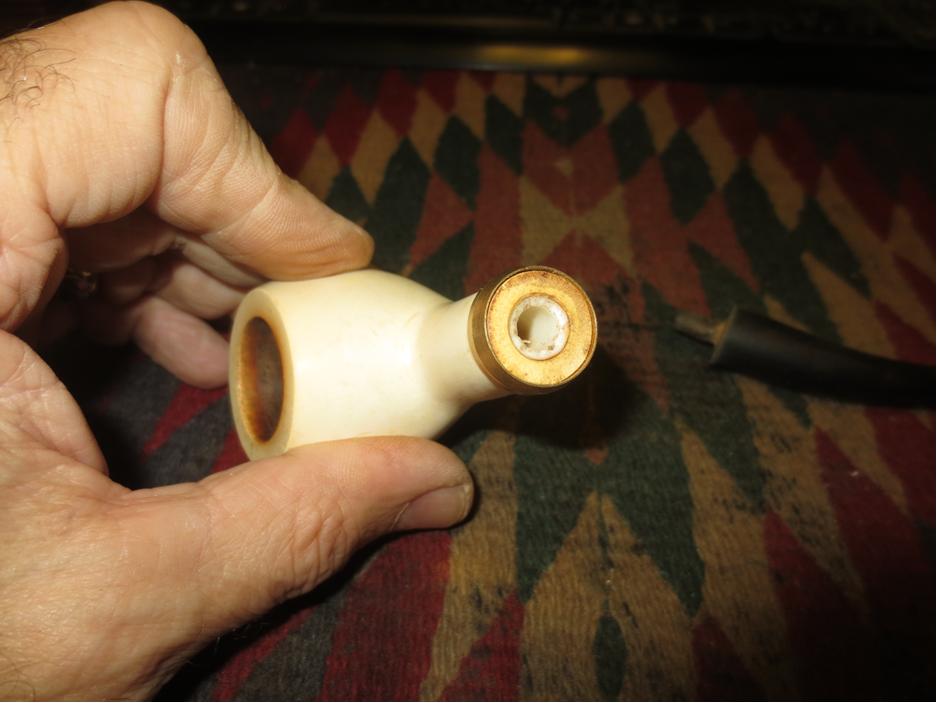
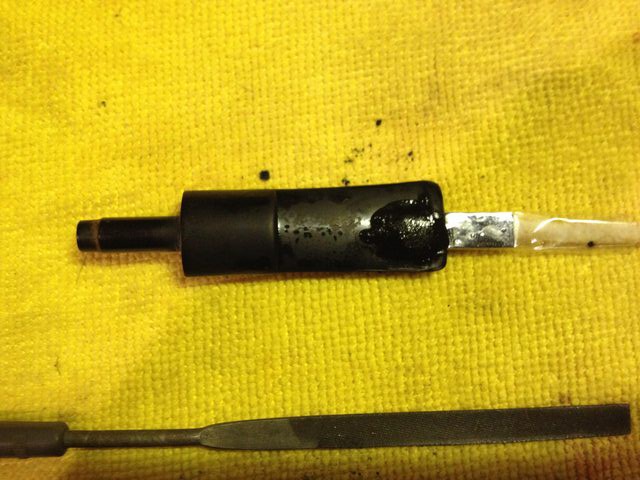
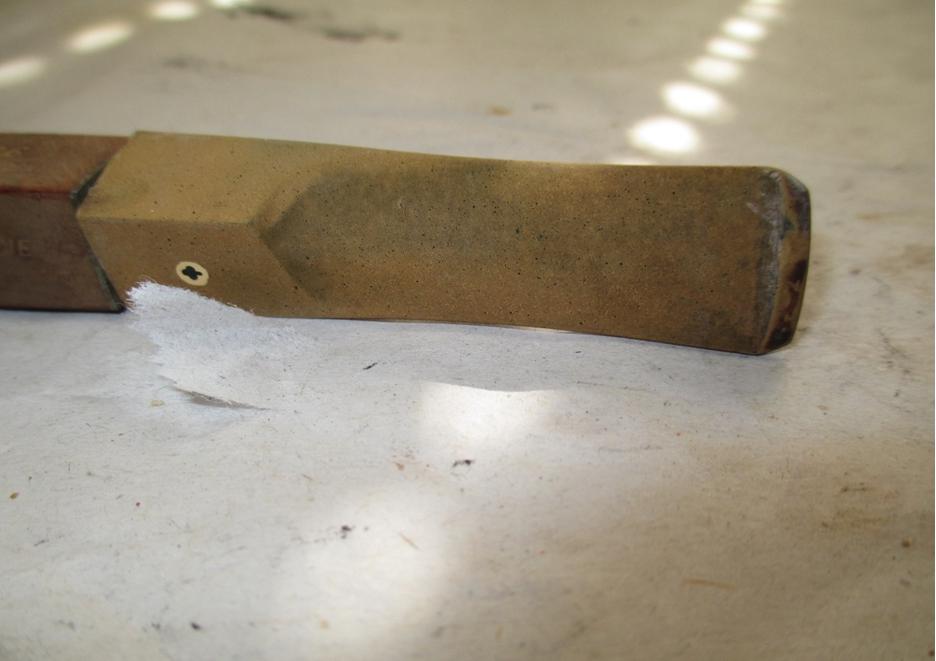
The flaw was masked by the seller of these estate pipes, who, with no small amount of duplicity, placed a piece of paper around the metal tenon screw built into the opening of the shank.Robert8

Robert9 The wily culpability of this particular ilk of seller is obvious from the freshness of the paper. Hence the conspicuous starting point for my restoration.

At this point of experience restoring pipes, I consider myself a journeyman in the craft. Although familiar with various ways to tighten Vulcanite, Ebonite, Lucite and other tenon materials, I was unable to locate any useful information on the Internet – the modern day Library of Alexandria, which was dedicated to the Muses, or nine gods and goddesses of the Arts – concerning the re-alignment of metal tenons fixed either to the bit or shank.

Nevertheless, finding myself without a clue how to proceed, I sent an email to Steve Laug, who soon replied with the suggestion that I read his recent online blog on the restoration of an LHS Purex Bulldog. This amused me, as the many notices of comments on the blog in question were forwarded to me, I wondered what all the hoopla was about and had intended to check it out.

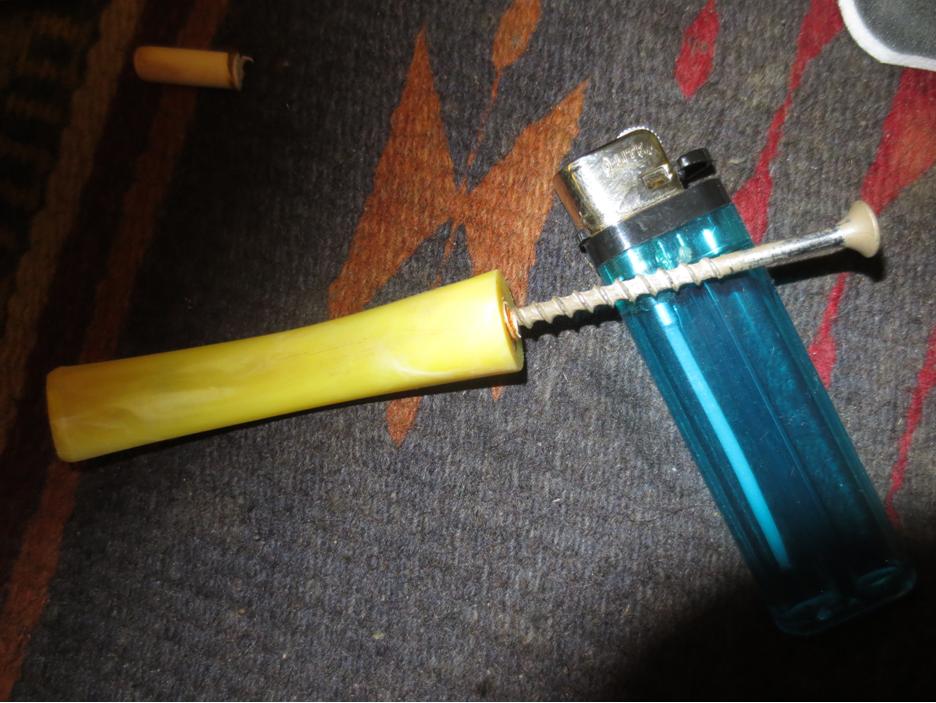
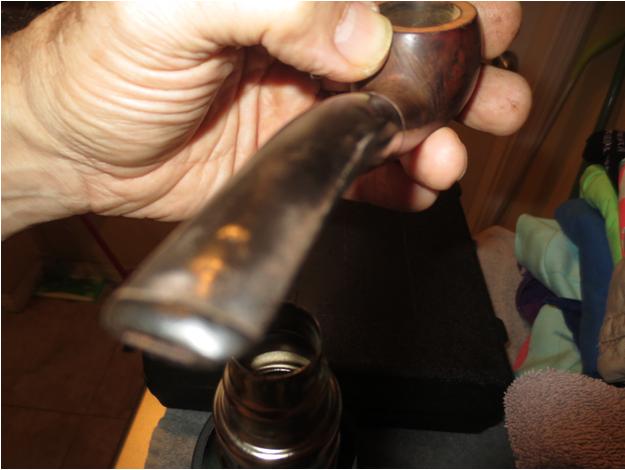
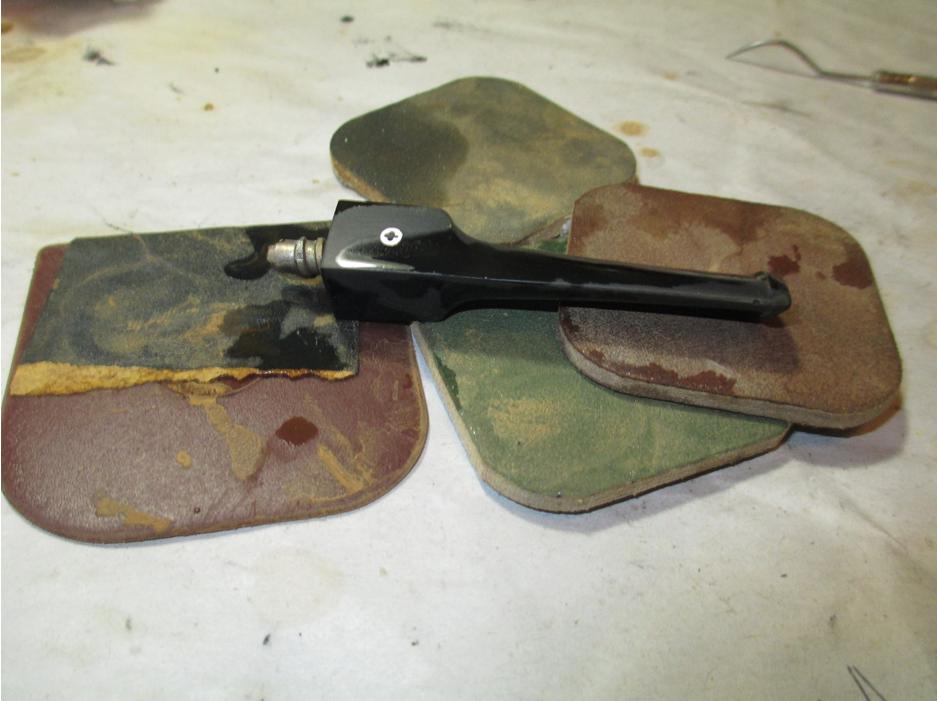
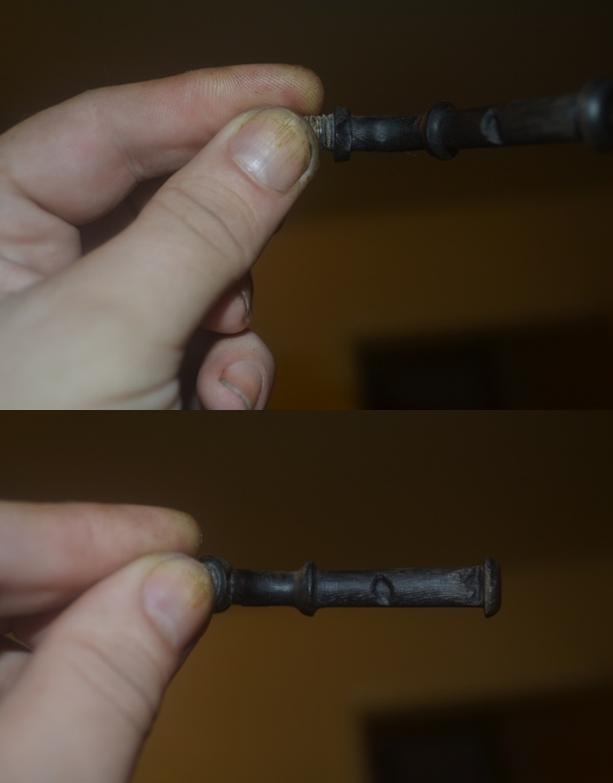
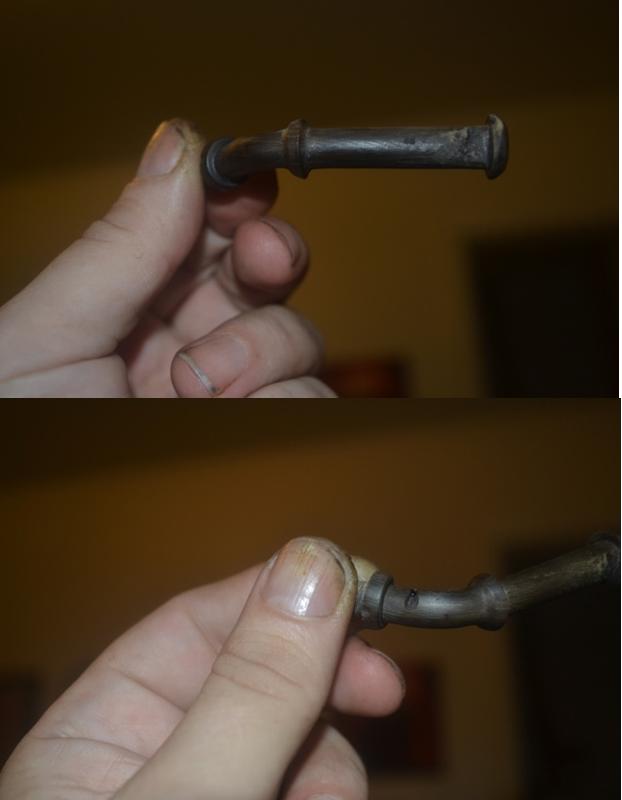
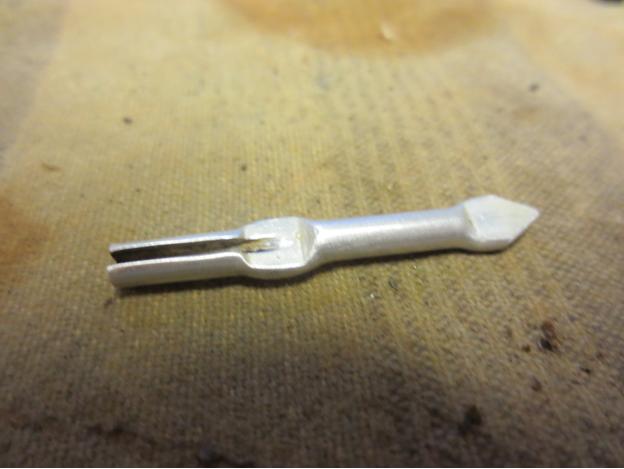
However, awaiting Steve’s reply did not hinder me from proceeding with certain steps I knew, such as the fact that the stinger extension of the tenon should come off. Thinking of that, I tried heating the entire aluminum tenon with the flame of a Bic, careful not to touch the shank opening beyond the part of the tenon Ludwig Stern referred to as the flange [see p. 1, Fig. 2, part 10 of the Patent]. Unfortunately, the tenon still would not budge. Even the stinger [illustrated as a whole as part 9, with parts 13, 14 and 15 forming its length and pushing into part 8] seemed to form a single piece. I was aware this would be odd, if not unprecedented, but after four attempts, I swear it would not come off.Robert10 One lesson I did manage to learn from my dad in his countless frustrated endeavors to teach me about mechanics was that if a part of a mechanism or machine would not come free using reasonable pressure, don’t force it. But, always believing that not all of his maxims were absolute, I suspected he meant it as a guideline that was not immutable under controlled conditions I might someday, by some miracle, learn to recognize. Therefore, I found a small wash rag and a pump plier that I feared might be overkill, but it was all I owned that had not been stolen by previous apartment owners. I also possess a wicked sense of adventure at moments like these. Adjusting the rivet to match the job, I then wrapped the small towel around the base of the tenon/stinger by the flange and loosely clamped the end of the plier over the tenon. As I applied pressure, I could feel the two sides of the mouth turn and clamp firmly down on the rag-covered metal. Gripping the bit in one hand, I turned the plier with my other and immediately felt it begin to move. Slowly, it came free and undamaged.Robert11 In the meantime, Steve replied with the suggestion that I read his recent online blog on the restoration of an LHS Purex Bulldog. This amused me, in a good way. As the many notices of comments on the blog in question were forwarded to me, I wondered what all the hoopla was about and had intended to check it out.

Reading through to the first mention of the difficulty encountered by Steve, my heartbeat quickened. Confident I was on the verge of making the discovery that would enlighten me, I continued, on the edge of my seat on the couch in my living room, as though I were reading a real page-turner of a book or watching an Alfred Hitchcock thriller or perhaps “The Twilight Zone.” Indeed, in my mind I envisioned the Canadian master at work in his studio, so vivid were the words and photographs flashing across his computer screen.

Nearing the expected moment of revelation, I was consumed with anticipation – only to come to a single photograph of Steve’s LHS shank that dashed my hopes in a nanosecond, as is the popular if peculiarly à propos phrase these days; for the illustration revealed the exact reverse of my predicament, one that could not be repaired in the same fashion.

Delayed but not daunted, I set out to do that which I knew I should have attempted in the first place: taking the Park Lane to my own friend and mentor, Chuck Richards, I humbly sought his advice.

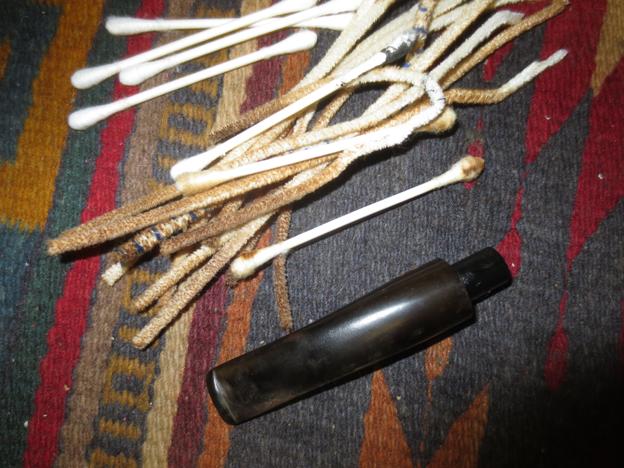
Before doing that, I continued where I had left off, cleaning the tenon and stinger inside and out, including the corroded threads that screwed into the bit, using a small square piece of cotton cloth soaked with Everclear and bristly cleaners that passed through the airways. To be done with it, I also ran a pipe cleaner with alcohol through the air hole of the bit, and when it came out filthy, recalled Steve’s words in his blog that this sort of pipe often needs considerable cleaning of the shank and bit. Quite a few cleaners later, I had the mess under control for the time. Known to my dad for having “a mind like a steel trap” and to my friends as being on the stubborn – or, as I prefer to think, confident side – I was by whatever label loathe to surrender to any challenge.Robert12

Robert13 When I arrived at the pipe shop and we exchanged pleasantries, I presented my distressed pipe. Chuck, pipe of the day in mouth, put on his eyeglasses and examined the LHS closely. Within a blurring handful of seconds, my older, more experienced mentor made his diagnosis, telling me with his typical certitude to heat the tenon before tightening it into the bit. A man who prefers to let people learn as much as they can on their own, Chuck then offered the rare treat of extra advice: “It will be counter-intuitive.”

Intrigued, I took a seat in the pipe shop and, starting a fresh bowl full of tobacco in a new pipe, mulled over the problem in my mind. In a flash, I thought of a comparison, and unfortunately blurted it to the complete perplexity of all of the cigar smokers present.

“Like turning into the skid on ice!”

Chuck, caught unawares by the outburst and not at first grasping the metaphor, at last smiled and said, “Yes, something like that.”

At home later, the first chance I had, I sat down with my movable feast of standard implements of construction, including quite a few that were improvised, to make my first attempt at the genuine repair of a loose bit.Robert14 Following Chuck’s advice, and keeping the counter-intuitive dog treat in mind, I was set to apply heat to the tenon stinger when the idea struck me to try removing the stinger again. Of course, then it came out with a simple turn of my fingers, apparently loosened by the work I did earlier and the passage of time.

And so I flicked my Bic and held it under the small tenon with even more care not to burn the precious Cumberland bit. (A Cumberland, by the way, is made from a special sort of Ebonite that can be colored with limits, which in turn is a particular variation of Vulcanite. This subject, I understand from research, is a matter of some hot debate.) With the tenon blackened, I quickly tossed a small rag over it and grabbed my pump pliers, clamping them firmly and remembering not to turn the small metal insert opposite from the direction the bit was off but toward it – as one would, if one hoped to avoid losing control of a vehicle and crashing or rolling, turn into the skid on black ice. Thus one particularly memorable experience on a bridge late one night in Colorado Springs, when my training and reflexes saved me, proved useful in this new endeavor. Each of several increasingly difficult rounds of this process brought the bit closer until it was aligned snugly.

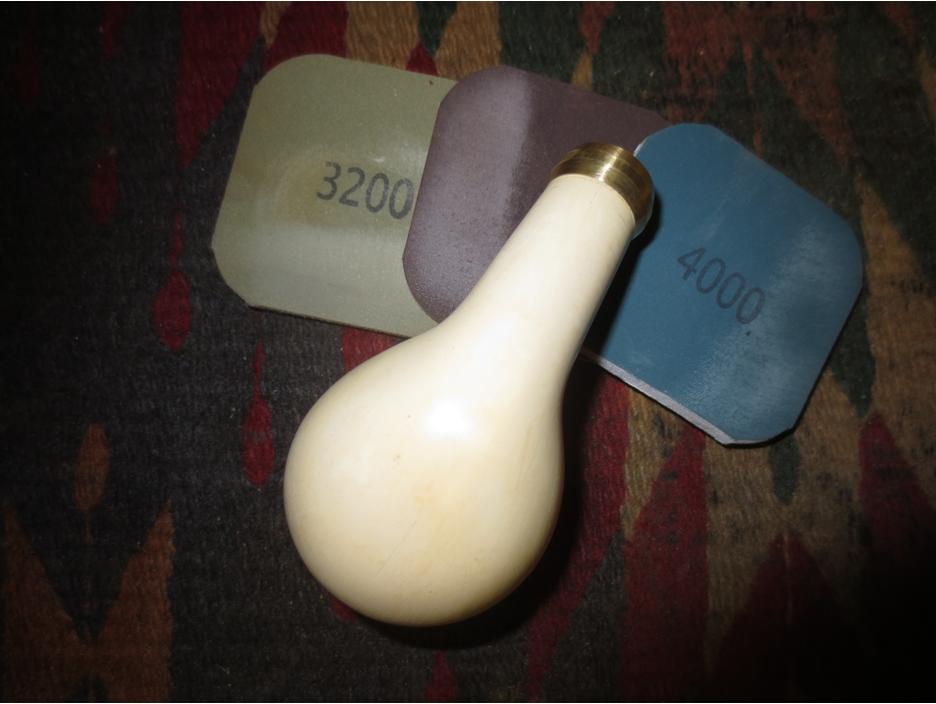
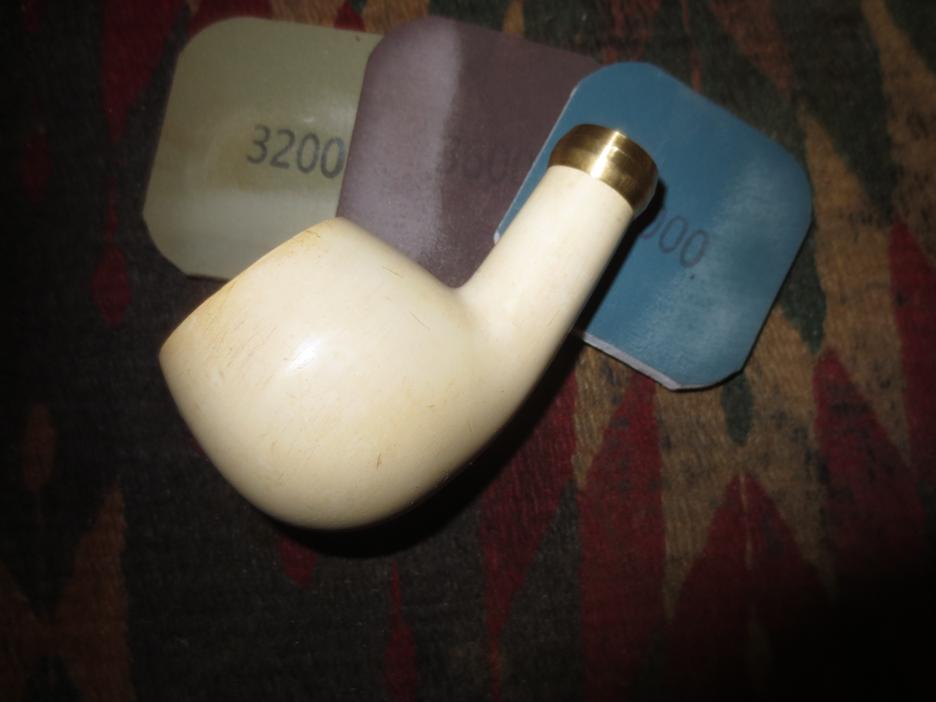
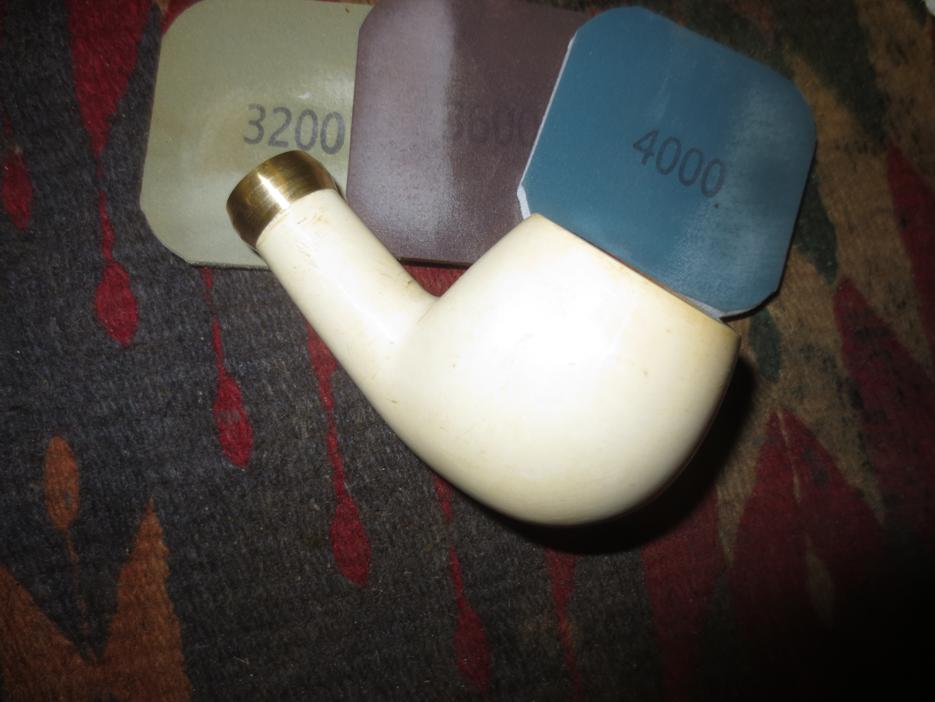
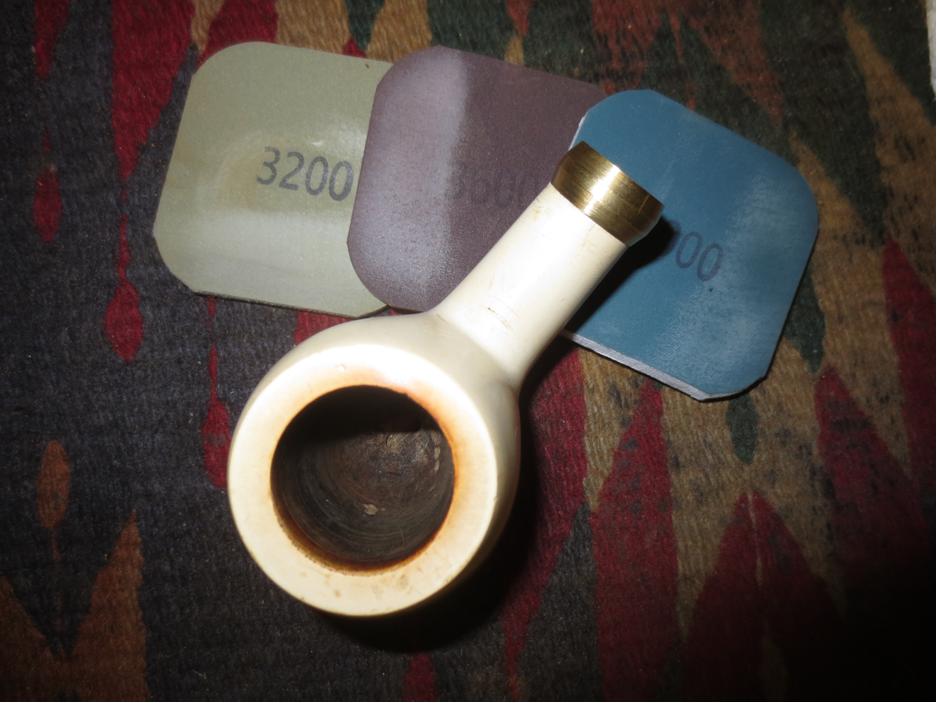
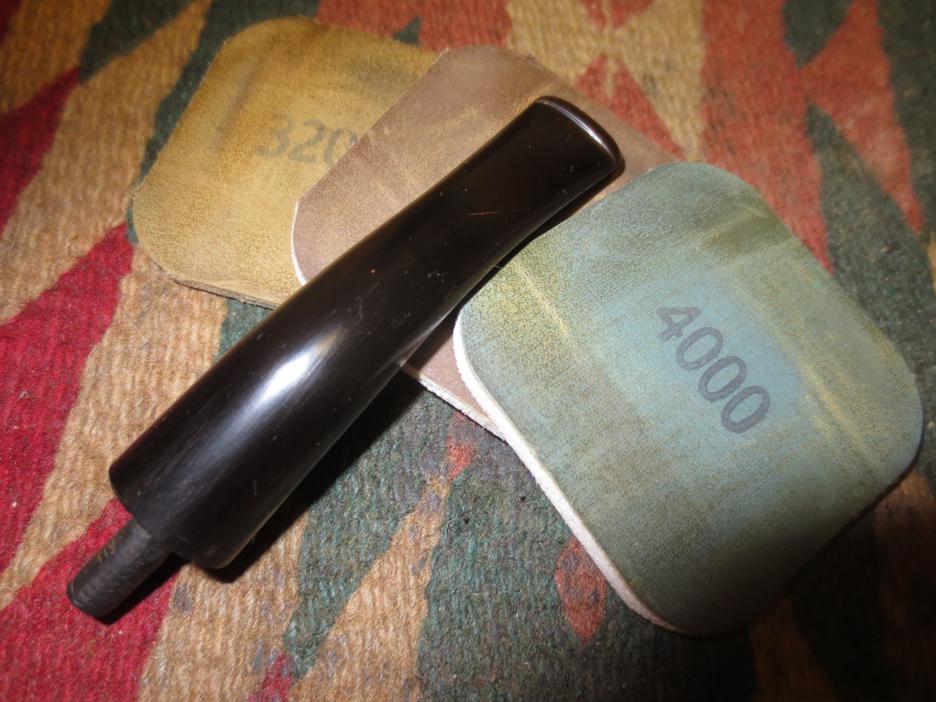
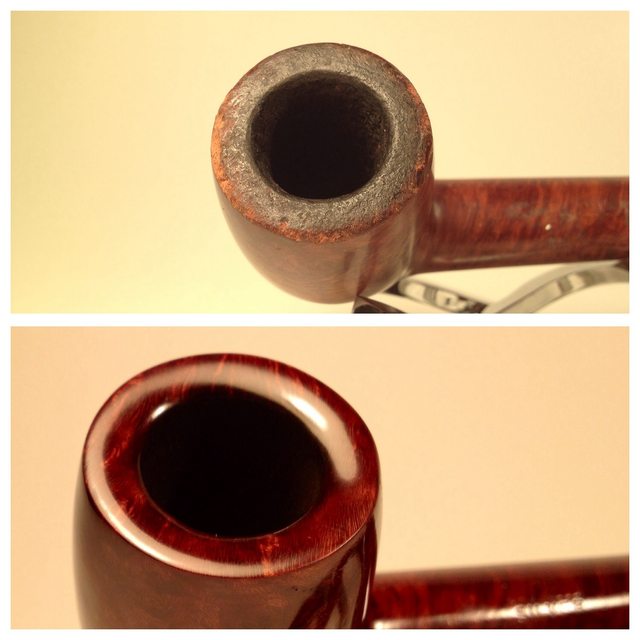
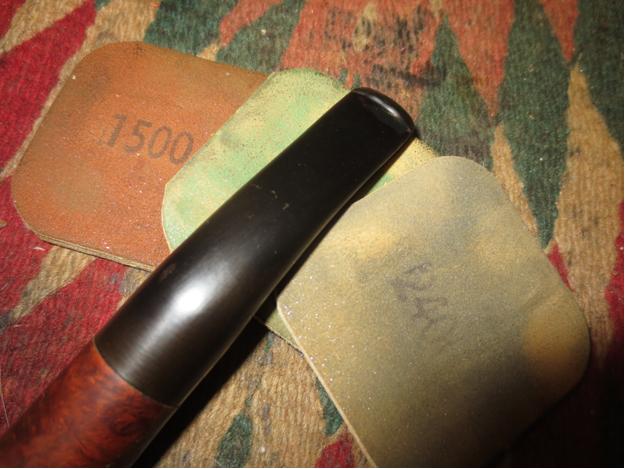
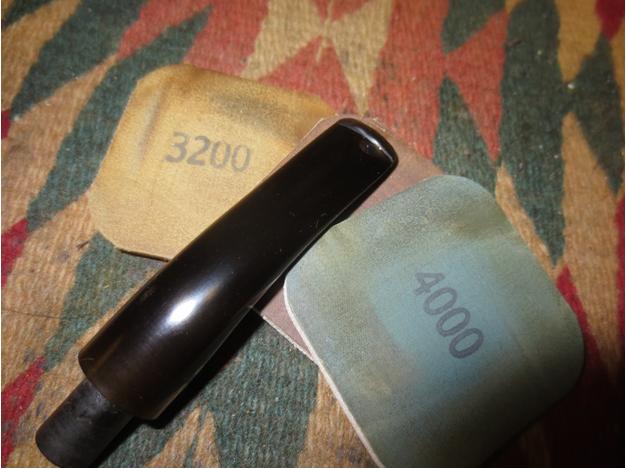
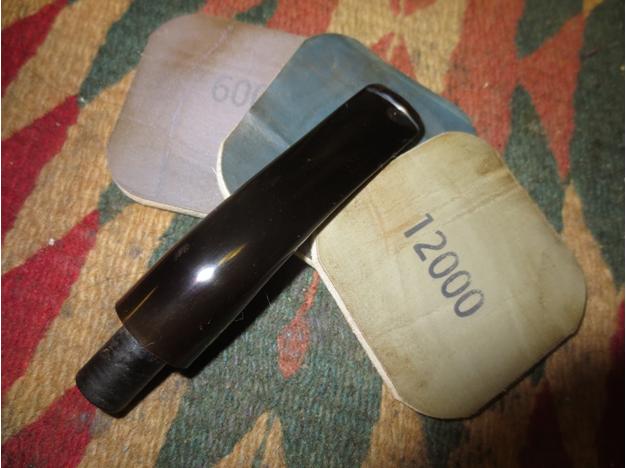
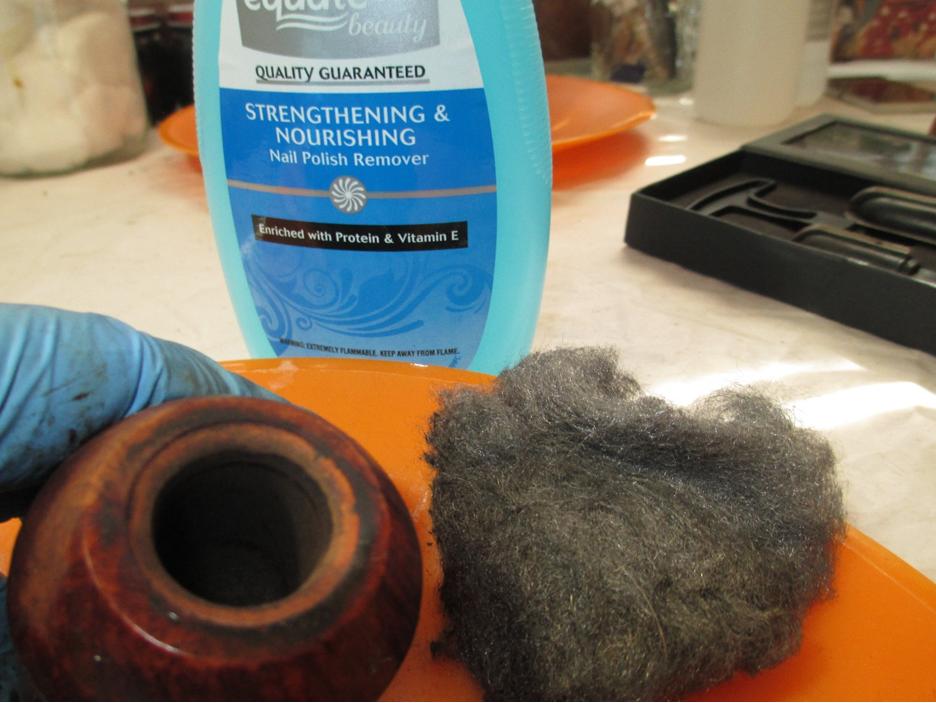
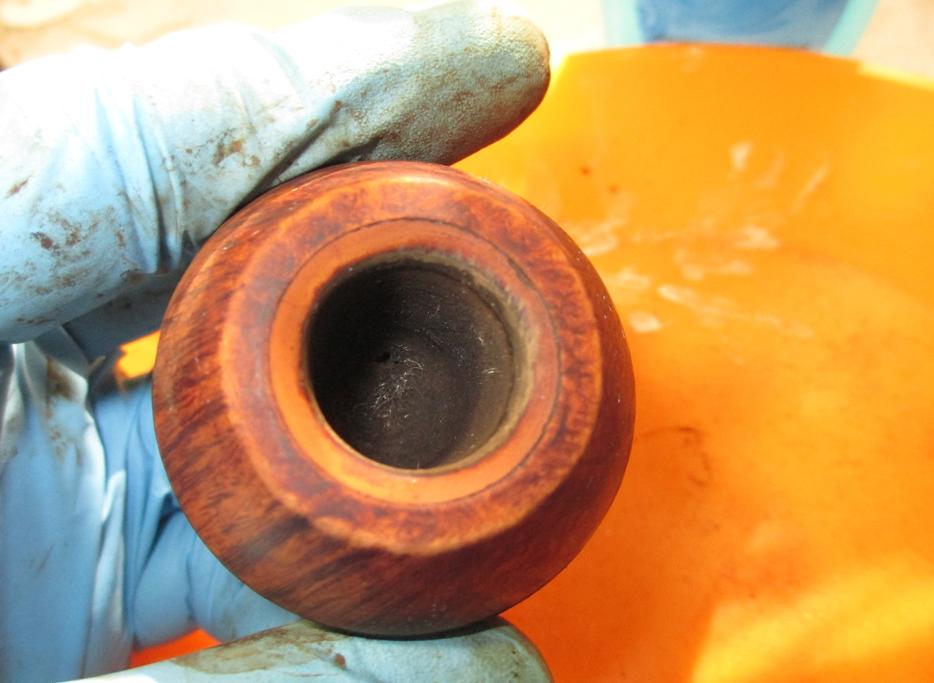
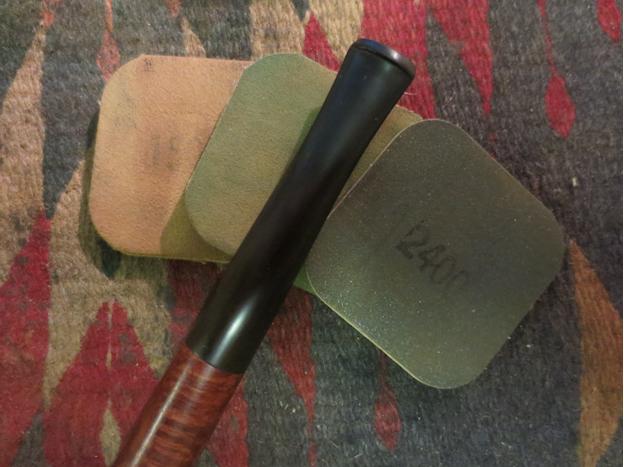
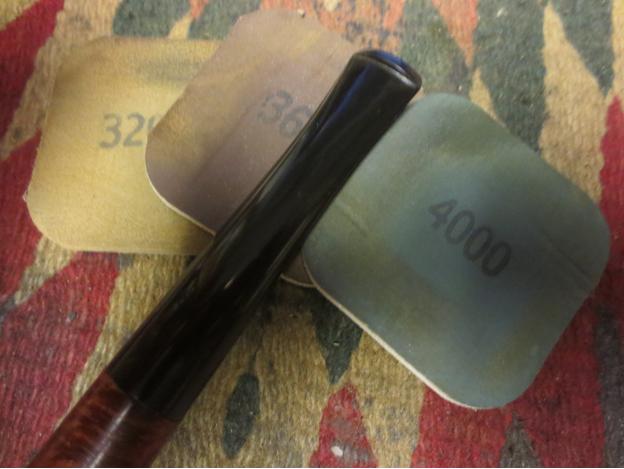
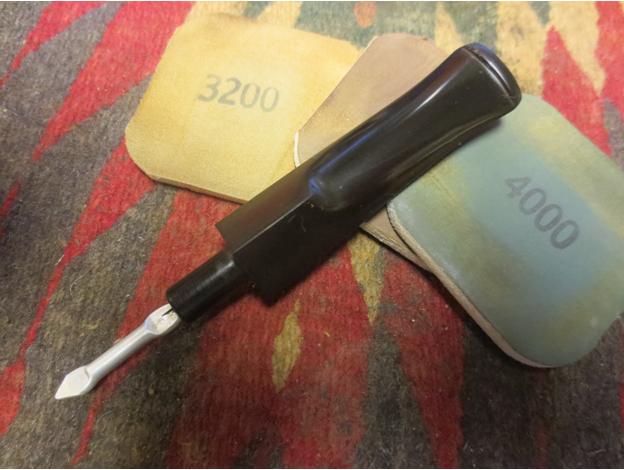
Reaming the chamber and sanding it with 150-grit paper before 200 and then 320 was an easy task, as was using super fine 0000 steel wool to remove the rim char and excess dark stain that was popular when the pipe was made somewhere around three-quarters of a century ago. The rim and bowl then only needed a progression of micromesh from 1500-4000.

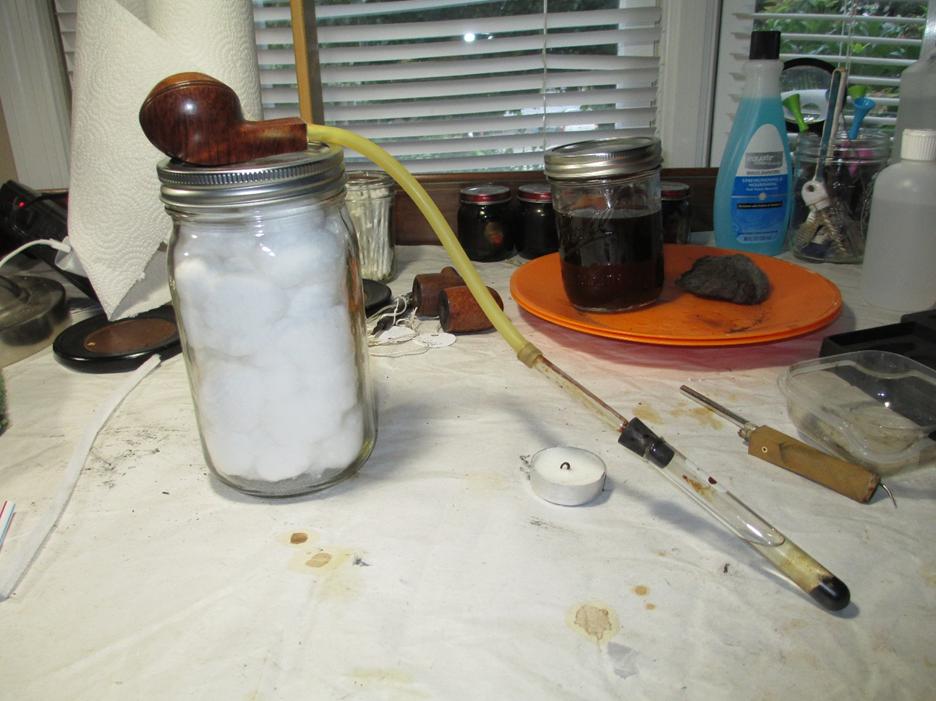
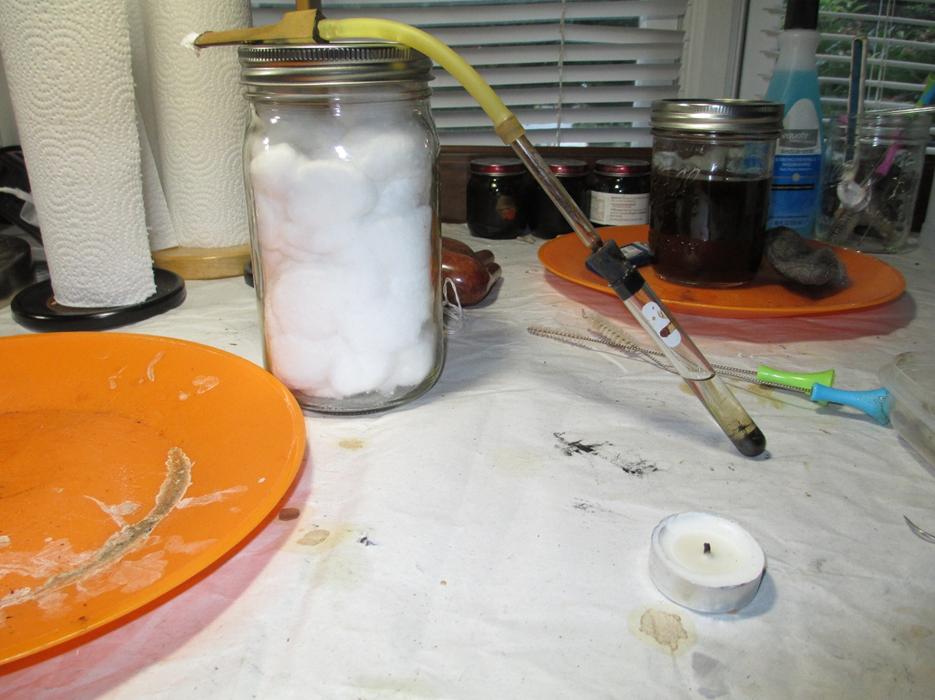
At this late stage of the restore, I retorted the pipe, again, unfortunately, with the tenon in place. I at least left the stinger aside for that process, which required about five Pyrex tubes of Everclear boiled through the pipe’s innards to clear out decades of crud and juices soaked into the briar from considerable use by someone who loved this pipe.

I stained the briar with Lincoln Brown boot stain, as opposed to Medium Brown which appears lighter, and flamed it before removing the thin layer of char with gentle rubbing using 3600 micromesh.Robert15

Robert16

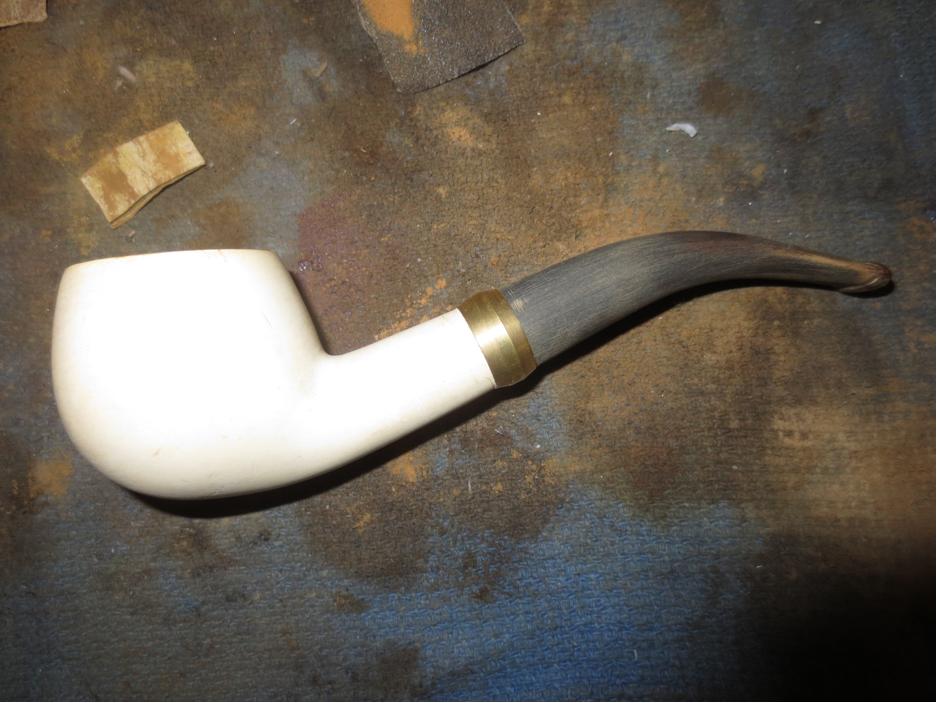
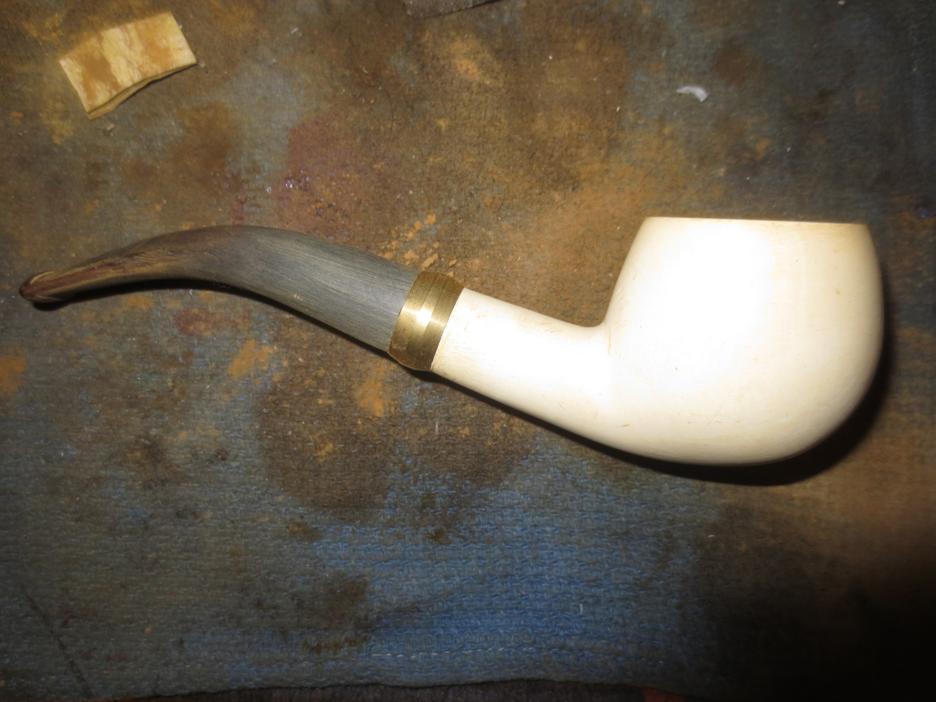
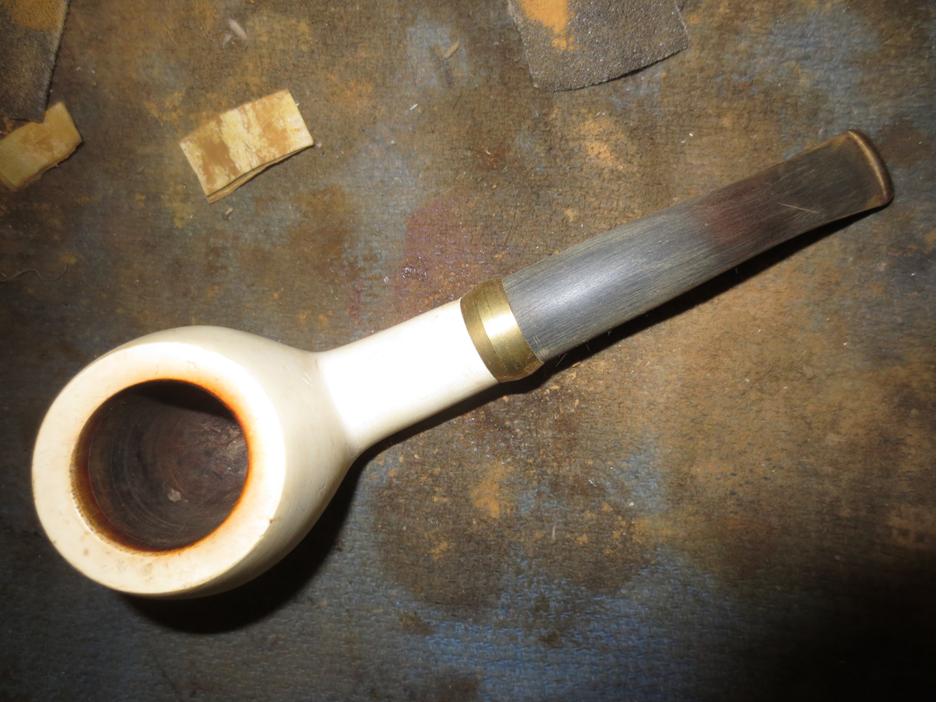
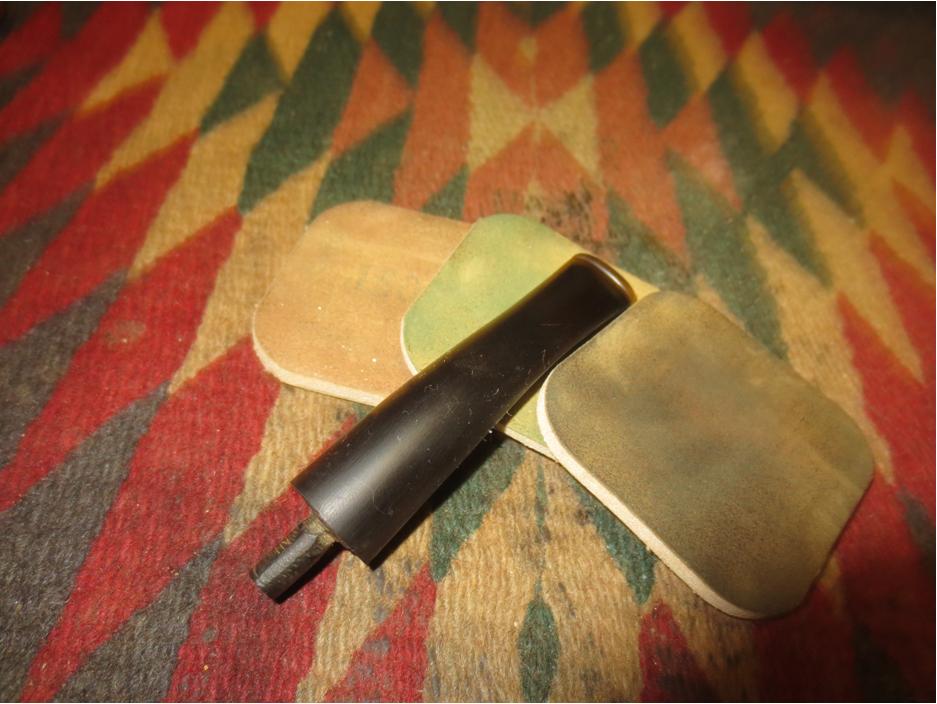
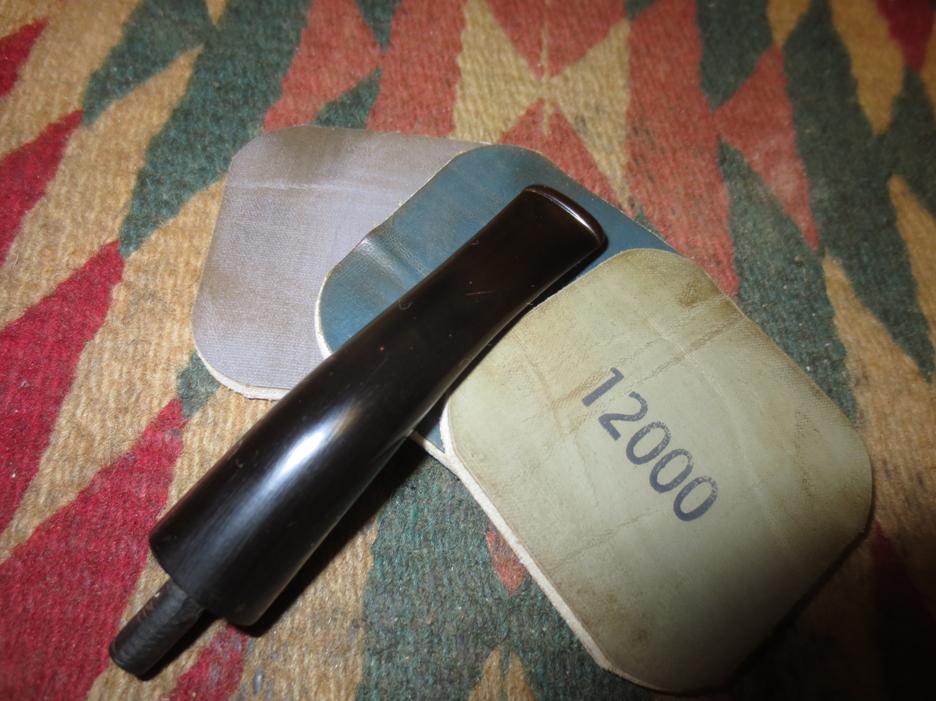
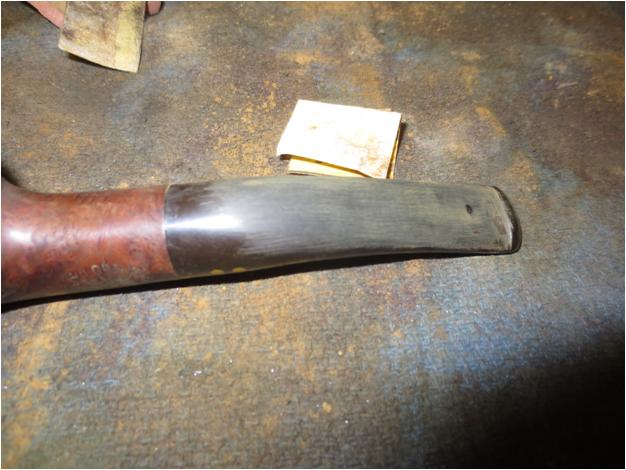
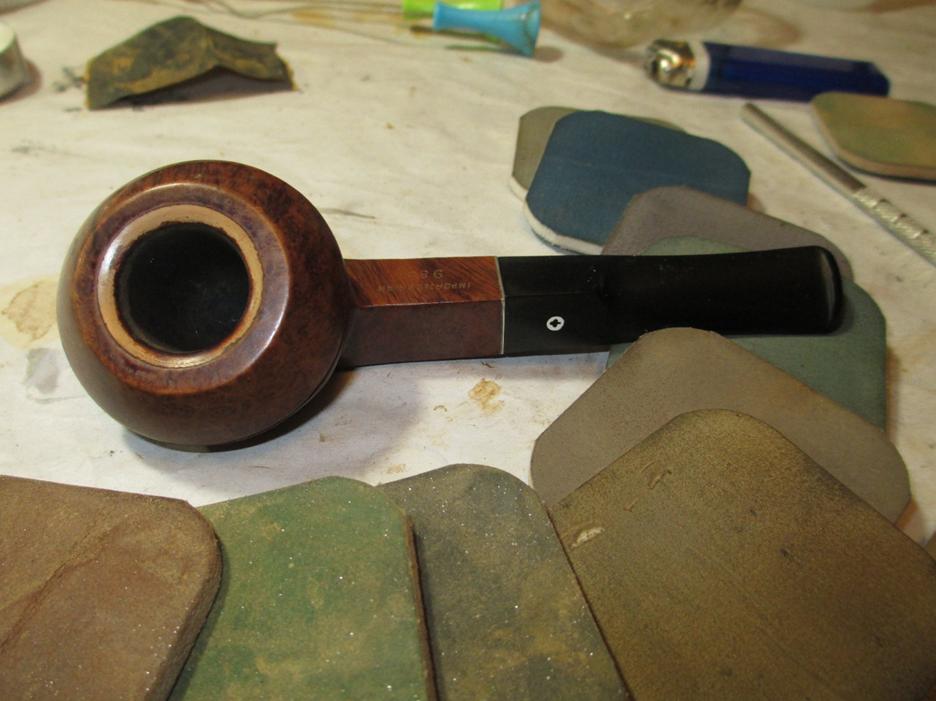
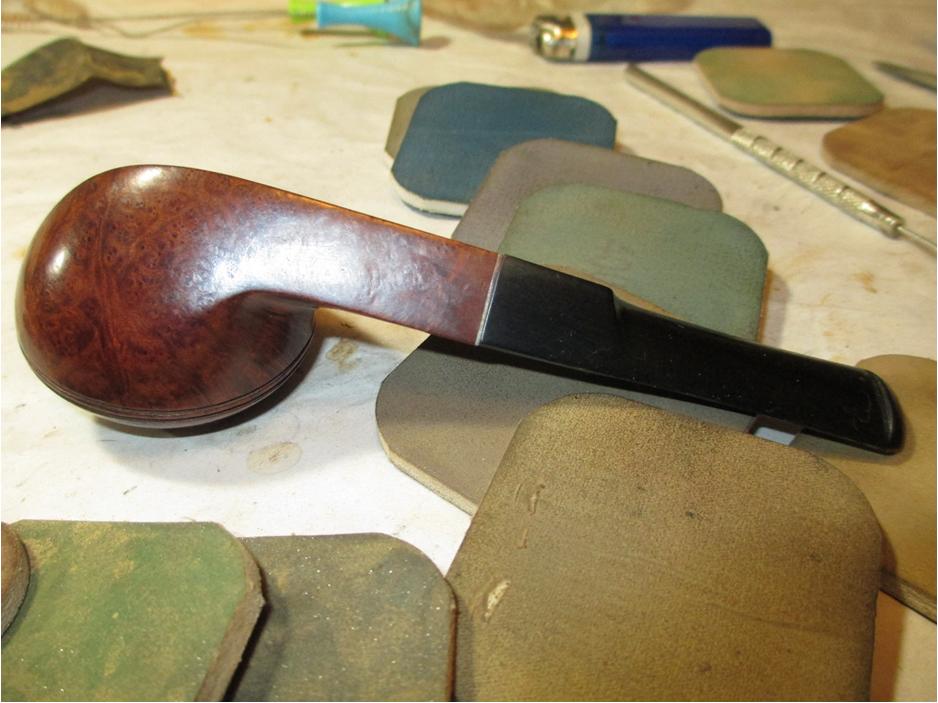
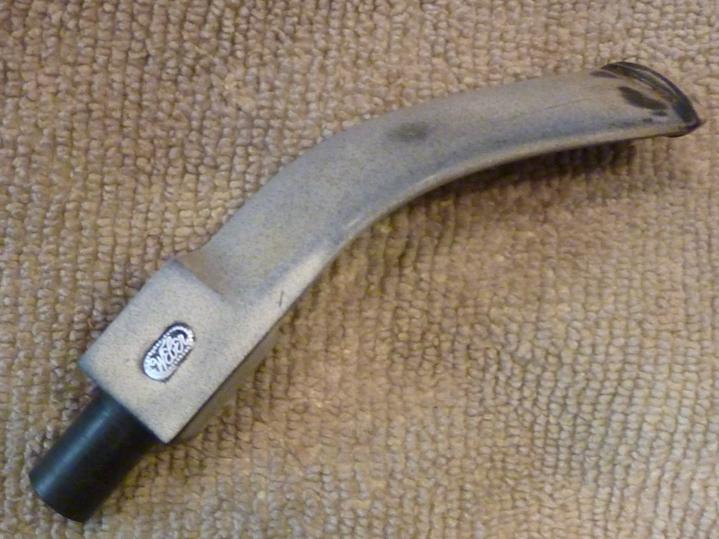
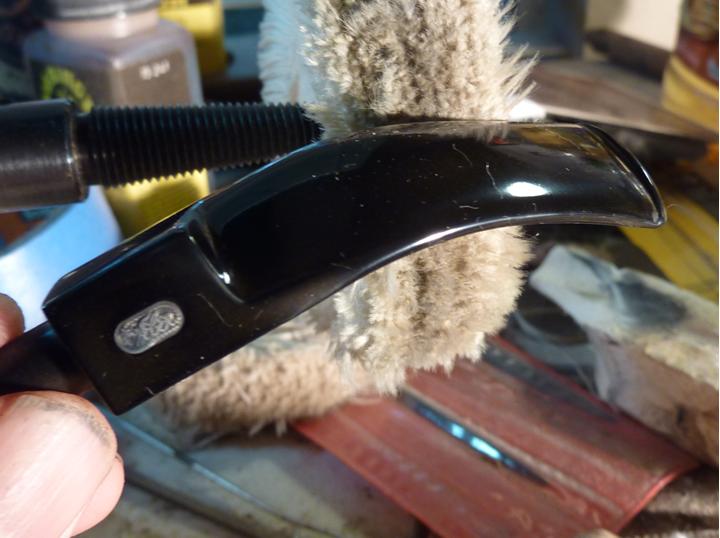
Robert17 At last I am at the end of this rather strange, I admit, blog. I buffed the stem with white and red Tripoli and White Diamond, using a soft cotton cloth and a clean wheel between each. Then I used white Tripoli, White Diamond and carnauba on the wood, with the same steps between each.Robert18

Robert19

Robert20

Robert21 CONCLUSION
Mr. Boughton had intended to offer this fine LHS pipe for sale at his online store. But following an odd impulse he could neither resist nor explain, he found himself loading a bowl of one of his best tobacco blends and, before he knew it, striking a match and placing the flame to the firm top layer.

The magical qualities of the pipe immediately became apparent. Where he had been tense to the point of explosive results, he was consumed with a sense that all was right in the world. Continuing to puff the mysterious pipe that had somehow found its way to him, he pondered the possible reasons behind the overwhelming sense of attraction to the diminutive pipe. Nothing he could imagine provided a satisfactory explanation, and Mr. Boughton also found he no longer cared.

Mr. Shakespeare also wrote, on the same subject and in the same play: “And yet, to say the truth, reason and love keep little company together nowadays.” Truer words may never have been written.

For at that very moment, although Mr. Boughton thought he was sitting on his sofa in his suddenly less dreary little apartment in the heart of the American Southwest, he was, in fact, still on the outskirts of the Twilight Zone.

SOURCES
1. “The Twilight Zone,” Introduction, Season 2, with thanks. http://www.imdb.com/title/tt0052520/quotes

2. Locker et al. v. American Tobacco Co. et al, NY Sup. Ct. (1907), pp. 115-124. https://books.google.com/books?id=34g7AAAAIAAJ&pg=PA117&lpg=PA117&dq=metropolitan+tobacco+company+brooklyn&source=bl&ots=hQ6aVa_tY8&sig=1uaY2AesgKT4mCKepaOyan9gB9I&hl=en&sa=X&ei=MIiQVZGuHYizoQSxsouAAg&ved=0CCgQ6AEwAg#v=onepage&q=metropolitan%20tobacco%20company%20brooklyn&f=false

3. L&H Stern background, including D.U.M.B.O.
Featured Fade – L & H Stern – Smoking Pipes & Holders – DUMBO – Fred King

4. Magazine story on L&H Stern 1920 move.
https://books.google.com/books?id=rpc7AQAAMAAJ&pg=RA1-PA22&lpg=RA1-PA22&dq=l%26h+stern+inc&source=bl&ots=cDWCX4gIom&sig=eLu9PUkd8JzfNPCZDb7df71R4Ic&hl=en&sa=X&ei=M5-MVbi1FM7IogThw5ToDg&ved=0CCsQ6AEwAg#v=onepage&q=l%26h%20stern%20inc&f=false

5. LHS Park Lane dating confirmation.
http://www.smokingpipes.com/pipes/estate/united-states/moreinfo.cfm? Product_ID=100458

Bringing New Life to a Weber Blackthorne 370 Poker


Blog by Troy Wilburn

I acquired this Weber Poker off Ebay with a “Best Offer” bid. Although I got other pokers made by Weber (Webco, Jobey, Wally Frank) I did not have one stamped Weber, so I added this to my American Poker Collection.Frank1

Frank2

Frank3 It had a crack on the bottom which in my “Best Offer” bid I noted my concern over it and got the pipe for much less than the amount they wanted.Frank4

Frank5 The pipe was pretty dirty and the cake was set like concrete.Frank6 After getting cake out and shank cleaned I stripped off the old wax and grime.Frank7 I dug out all the trash from the crack with a sewing needle. I was thinking this damage was from abuse from a smoker. I dug out old filler so I think it may have come from factory with it.Frank8 After cleaning out crack I taped it up with some packing tape.Frank9 I then filled it with glue and briar dust and hit it with a file when dried.Frank10

Frank11 I mixed up a thin color match to the factory color and applied a couple of coats.Frank12 After a soak in Oxy Clean I worked on stem. The owner had teeth like a house cat. All were small round and deep. What a pain they were. I haven’t done a Cherrywood Poker in a while and I had forgotten what a chore it was doing these thin little saddle bits.Frank13 I colored in the Weber emblem with black sharpie to be taken off when I buffed it.Frank14 After the dye dried I scuffed it with a Scotch Brite pad and mineral oil to highlight the blast.Frank15 Here is the finished pipe, buffed and waxed.Frank16

Frank17

Frank18

Frank19

Frank20

Frank21

Frank22

Frank23 I had a hard time getting a picture of stamping and repair on bottom of bowl with the glare. This was best out of several attempts.Frank24 Now it’s time to try this ol gal out with some Dark Strong Kentucky:). Frank25

Kaywoodie Fine Line


Blog by Aaron Henson

I was in the neighborhood of our second-hand stores a couple of months back so I thought I would stop into one that typically has estate pipes. While browsing the shelves I found three Kaywoodie pipes together in an old coffee cup. None of them were particularly eye-catching: a straight bulldog, a medium pot and this large apple – Fine Line carved. I didn’t have any Kaywoodie pipes in my collection and priced as they were ($11 for the three), I could not pass them up. Besides, I needed some more restoration practice.

The first of the three that I took on was the Fine Line. It reminded me of the Dr. Grabow Wire Carved pipes I had seen, just not as rustic – if you like that sort of thing.Aaron1 The flat bottom of the shank was stamped with: “Kaywoodie” over “Fine Line ®” and the left hand side of the stem had the black clover in a white dot.Aaron2 The stem was in great shape. There was some mild oxidation, a little build up of crud and just a minor amount of chatter around the button. The stinger was also in good shape with the expected build up of tars. The stem was over clocked by about 10 degrees and after a little research I came to understand that this is a common problem with Kaywoodie pipes. Fortunately, it is an easy problem to correct.Aaron3 It looked like someone had been rolling out paint on a wall or ceiling near the pipe because there were small droplets of white paint all over the stem and stummel (perhaps they were smoking while painting?). The stummel was dirty but there was no damage that I could see. A thick cake lined the bowl and the lines in the rim where full of char and other gunk, but otherwise it too was in good condition.Aaron4 I began by soaking the stem in an alcohol bath to loosen the tars inside and to help lift the crud and paint from the surface. While the stem soaked, I went to work on the stummel with Murphy’s Wood Soap and a soft bristled tooth brush. The dirt and grime came off easily as did most of the paint droplets. I had to employ a soft wood tooth pick to remove more stubborn droplets that were caught in the grooves of the carving.

After rinsing the stummel with fresh water – being careful to keep the water out of the bowl and shank – I started reaming out the bowl. Not having a reamer, I use a ½” dowel with a rounded tip wrapped in 40 grit sand paper. This method has worked reasonable well for me on several pipes, even with thick caking.Aaron5

Aaron6 Next, I cleaned the inside of the shank with cotton swaps and isopropyl alcohol. This was a laborious process. The metal sleeve that receives the stinger prevents good access to the inside of the shank. I wanted to preserve as much of the original stain as I could so I choose not to soak the whole stummel in an alcohol bath. So, in an effort to loosen the tar build up, I dripped alcohol into the shank between bouts of swabbing. Eventually the swabs started coming out clean.

The char around the rim of the bowl was not cleaning up well. I had hoped that I could keep the carved lines on the rim but I made the decision to top the bowl and finish the pipe with a smooth clean rim. I freshened up the stain with a coat of light brown Feibing’s leather stain and flamed the stain to set the color.

Returning to the stem, I found that the alcohol bath succeed in loosening the tars inside and few passes with pipe cleaners got it clean. I was able to pass a cleaner from the hole in the stinger and out through the button without and troubles. I lightly hit the outside of the stem with 220 grit sand paper to remove the remaining foreign material and then cleaned the stinger with 0000 steel wool. I addressed the minor tooth marks by lightly flaming them with a lighter to raise the vulcanite then finished them off with the 220 grit paper.

Everything was going quite smoothly up to this point. Little did I know that I was about to get a refresher course in chemistry. Wanting to clean up the oxidation I dropped the stem into a bath of 50/50 bleach and water. Fortunately, I had cause to check on the stem in about 30 minutes and I realized my error. Chlorine (Cl) and aluminum (Al) react to form aluminum chloride (AlCl3). I found a large growth of aluminum chloride crystals on the stinger.

I wish I had had the forethought to document the mistake with a picture or two. But in truth, I was so caught up in cleaning the bleach off the stem and removing the crystals that photos were very far from my mind. All in all there was no real harm done. The aluminum chloride cleaned up easily but left the stinger rough to the touch and it needed to be polished again. Heating up the stinger with a butane lighter melted any of the aluminum chloride that built up inside and it drained out of the stinger holes.

While I had the butane lighter out heating up the stinger, I thought I would take care of the over clocked stem. I wrapped the stem with some cloth tape and made a couple of reference marks to indicate which direction and how much to twist the stinger. I waited until the heat loosened the glue between the stinger and stem and then twisted the stinger with a pair of soft jawed pliers to align it with the stummel.Aaron7 Before I finished the stem and polished everything I thought I would run the pipe through the alcohol retort. I was not confident that I had thoroughly cleaned the inside of the shank and after the aluminum chloride incident, I thought that some hot alcohol vapor though the stinger would hurt. I use 95% isopropyl alcohol for my initial cleaning and soaking but I prefer using Everclear for final rinsing and retort. In my limited experience it seems that the Everclear leaves fewer ghosts in the finished pipe.

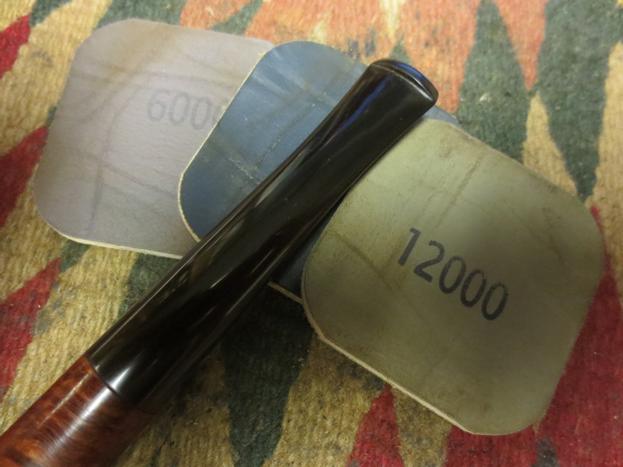
The remainder of the restoration was uneventful. I followed the typically stem polishing practices, wet sanding the stem with 400-4000 grit paper, stopping every few sets of paper to lightly coated the stem with mineral oil. I dry polished with 6000 and 12000 grit paper then took the pipe to the buffing wheel, applying red diamond compound, working the buffer with the carved lines of the pipe. I finished with 3 coats of carnauba wax buffing between each coat. I had to take a tooth pick to some of the wax that built up in the lines but the final product was a vast improvement from where I had started.Aaron8

Aaron9

Aaron10

Aaron11

Cleaned up a Small KBB Yello Bole Sandblast Billiard


Blog by Troy Wilburn

I know what you all of you are thinking ….another Yello Bole? lol

I was just telling a friend of mine that I most likely would not be going to go after anymore Yello Bole’s for a while unless I saw another sandblast I liked. Sure enough just after that this one popped up EBay. Here is the way it looked on EBay. I thought nice pipe but it has some stem chatter that won’t be too hard to get rid of. Yello1 Well when I got it in, come to find out it wasn’t stem chatter but just some glue residue. You can see in the picture where I wiped some off with my finger.Yello2 The pipe has not been smoked much at all.Yello3 There were a few nicks and spots around the rim.Yello4 All in all, I lucked out again and got a really nice excellent condition original Yello Bole. I wiped off glue with 91% alcohol and cleaned inside stem and stinger. I sanded the stem lightly with 2500 grit.Yello5 I touched up nicks with some black acrylic. Gave the inside a quick swab with a cleaner and 91% alcohol.Yello6 I gave the pipe a good scrubbing with mineral oil and toothbrush. I wiped it dry with cotton cloth.Yello7 Quick buff and wax ….Voila finished.Yello8

Yello9

Yello10

Yello11

Yello12

Yello13

Yello14

Yello15 Looking up the pipe on my Kaywoodie charts I believe this to be a shape #67 Small Billiard Long Shank.Yello16 Due to its small size this will be used mostly for flakes. I have smoked a bowl of Bold Kentucky in it already and it’s a great little smoker.Yello17 I have been thinking about doing a write up on why I like KBB Yello Boles so much and add some pictures of my Yello Bole collection. Steve has also mentioned this to me. So maybe in the near future I will post the article.

Bringing a Dunhill Bruyere Bent Rhodesian 08 Back From the Brink


Blog by Steve Laug

This Dunhill Bruyere was part of the gift lot for sale for Nepal. It was in very rough shape and one that would never be fit enough to grace a collection. The Dunhill stamping is only visible under bright light with a lens. The stamping on the left side of the shank is Dunhill over Bruyere. On the right side it is stamped with 4 in a circle and an A. The rest of the stamping is very faint and reads Made in London England (At least that is what it looks like). The shape number 08 is gone except for the 0. The finish was gone. The double ring around the bowl was virtually ruined and the bowl itself was in very rough shape. The rim was beat up and out of round. There were burn marks on the rim, the left side and bottom of the bowl and on the left side of the shank. To me it looks like the pipe was laid in an ashtray and the cigarette burned the bowl. It was in very rough shape. The stem was badly oxidized and upon examination there was a small split in the button on the underside and the stem was thin and the edges of the button were rounded down.Dunhill1

Dunhill2

Dunhill3

Dunhill4 I took some close up photos of the bowl to give a better picture of what I had to work with on this one. You can see from the photos the issues that I pointed out above. The ring was badly damaged and rough. The bowl was out of round and the rim was damaged. The finish was spotty and grimy.Dunhill5

Dunhill6

Dunhill7

Dunhill8

Dunhill9 I have one newer Bruyere in my rack so I kind of knew the colour this pipe should have been and it was not even close any more. I did a bit of searching on the web to see if I could find a finish chart and also one that would confirm the shape number that I was “speculating” on. I have included the next two charts for the information that I gleaned from them. The Bruyere was more dark/reddish coloured than this one was and the faint number was indeed 08 which was called a Bent Rhodesian.dunhill_pipe_finishes

dunhill_shape_size_chart The next two photos show the stem in some closeup photos. I wanted to show the oxidation and the split in the button on the bottom side of the stem. The fit in the shank was also worn. The tenon was sloppy fitting and could be wobbled side to side and up and down.Dunhill10

Dunhill11 I put off working on this one for a long time, choosing rather to work on pipes that I had some sense of what the finished product would look like. I had no idea if I could restore this one to any semblance of its original state let alone bringing back to “BEST QUALITY” which the Dunhill catalogue above said that Bruyere pipes stamped with the large “A” were supposed to be. This one was a challenge and I really drug my feet and postponed the test as long as possible. After looking at the photos above I hope that I have communicated the state of the pipe I was going to deal with. I have made no mention at all of the state of the inside of the shank and the stem. It was a mess as well – a thick black crud covered the inside of the airway in the stem and the shank and the mortise was almost clogged with the almost petrified tars of years of neglect.

So, yesterday I decided was the day to tackle this pipe. I had mowed the yard and done my weekend chores and needed some down time to relax. I suppose many of you would not call this relaxing but I still am under the illusion that it is restful…. Shhh don’t change my illusion please. I began with cleaning out the rings around the bowl. They were rough but they were also clogged with all kinds of debris. I used a sharp, thin blade pen knife that I have and use for this kind of thing. It works wonders and within a short time I had cleaned out the grime and the original red stain was showing in the bottom of the grooves.Dunhill12

Dunhill13 I scrubbed the bowl with cotton pads and acetone to remove the grime and the damaged finish. I also wanted to see the extent of the burn marks on the bowl, rim and shank. I wanted to see if they went deeper than the surface. Knowing that would help me decided what to do to address them.Dunhill14

Dunhill15

Dunhill16 With the grime cleaned off the rim I could see what I had to work with. The bowl was in rough shape. It was out of round but the inner edges did not have any char or burn. The rim had lots of dents and dings from someone using it as a hammer.Dunhill17 I decided to top the bowl to flatten out the rim and clean up as much of the damage as possible. I would then have to work on sanding the inner edge of the rim to smooth it out. I used the topping board with 220 grit sandpaper.Dunhill18

Dunhill19 With the rim flattened out once more and the outer edge more evenly set on the bowl top it was time to address the inner edge of the rim. I used a folded piece of 220 grit sandpaper to clean up the edge. I was able to greatly improve the “roundness” of the inner edge. While it was not perfect it was far better than when I started.Dunhill20 I cleaned out the shank and the airways with alcohol, cotton swabs and pipe cleaners. I scrubbed and scoured and scraped the airways clean of the “fossilized” tars until the pipe cleaners and cotton swabs came back white. Since I was probably going to smoke this one myself I decided to not use the retort at this point. If it smoked rough I could always set up the retort and let it do its magic.Dunhill21 I sanded the stem with 220 grit sandpaper, repaired the small split in the button on the bottom side and then sanded the stem with a medium and a fine grit sanding sponge. I rubbed it down with some Obsidian Oil and put the pipe back together. I took a few photos of the cleaned up look. If you are getting the idea that I was postponing working on the double ring and the heavy damage there you are correct in your assumption. I was not sure I would be able to work any redemption on that area of the bowl. Time would tell.Dunhill22

Dunhill23

Dunhill24

Dunhill25 I could not postpone dealing with the ring damage any longer if I was going to finish the pipe. I had read with interest Mark Domingues write up on restoring the rings on the Peterson 80 that he posted here recently. I spent time looking at how he rebuilt the centre briar ring between the two lines. I was ready to start. I cut a piece of note card the width of the back of the bowl and decided to address that damage first. I pressed briar dust into the damaged area of the ring and tamped it in with dental pick. When it was full I put some drops of clear super glue onto the briar dust. I did the same all around the bowl until I had a real mess on my hands. I was careful not to put the glue or dust on the places where the rings were in good shape. I would use these as guides to recut the lines later.Dunhill26

Dunhill27

Dunhill28 I used a flat, thin blade knife edge needle file to recut the grooves in the bowl. It took a lot of work to slowly and carefully recut them but it worked as the photos below show.Dunhill29

Dunhill30

Dunhill31

Dunhill32 After the initial cutting of the grooves with the needle file I continued to use it to smooth out the grooves and the edges on the top and bottom. They took a lot of work to smooth things out. I also folded 220 grit sandpaper and ran it through the grooves on the bowl. Once they were smooth and cleaner looking than before it was time to clean off the bowl and then restain it with the first coat of stain. I wiped the bowl down with alcohol on cotton pads to remove the excess briar dust and any remaining glue. I sanded the burn marks on the bowl and rim with a medium and a fine grit sanding sponge to minimize them. I sanded them again with 1500-2400 grit micromesh pads to smooth out the scratches. I then gave it a coat of oxblood aniline stain, flamed it and set it aside to dry.Dunhill33

Dunhill34 The burn marks still showed with this first coat of stain and it was a little too red to my liking. I buffed it with White Diamond and then brought it back to the table to do some more work. I took some photos of the pipe after the buffing. I find that a couple pics help me focus on what needs some more work. In this case I could see that a little dark brown stain would work to tone down the red and also blend the dark spots in a bit more.Dunhill35

Dunhill36

Dunhill37

Dunhill38 I used a dark brown stain pen to give it a top coat of stain. In the photos it looks streaky but I don’t worry too much about that as a buff once it is dry will take care of that.Dunhill39 I buffed the bowl with White Diamond and a light touch. It is looking better. The rings on the left side are better but are still a little rough. The rest of the way around the bowl they are looking really good. The dark brown stain did a better job of blending in the dark spots and toning down the red. I liked the colour and it seemed to match the chart photos of the Bruyere that I had found.Dunhill40

Dunhill41

Dunhill42

Dunhill43

Dunhill44 At this point it was time for a break. I put the stem on the bowl and loaded a bowl of Boswell’s North Woods and went to church with my daughters. I smoked a bowl as I walked with them and loaded another bowl on the way home. I sat on the porch and fired up a third bowl filled with Malthouse Reserve 12. This pipe really sang with English tobaccos. Even if it was still a bit ugly it smoked well!

When I finally went back to the shop I worked on polishing the stem. I put the plastic spacer/washer between the shank and the stem and worked on it with micromesh sanding pads. I wet sanded with 1500-2400 grit pads and then rubbed the stem down with Obsidian Oil. I dry sanded with 3200-4000 grit pads and rubbed it down again with the oil. I dry sanded with 6000-12,000 grit pads and then gave it a final coat of Obsidian Oil. I set it aside to dry.Dunhill45

Dunhill46

Dunhill47 The stem was looking really good. There was a rich glow to the vulcanite. These older Dunhill pipe stems really shine like glass when they are polished. I set the stem aside and did a bit more work on the bowl. I used a very small oval needle file to work on the rings on the left side and front of the bowl. I wanted to clean up the edges and sharpen the overall look of the rings.Dunhill48

Dunhill49 I followed the oval file with a flat rectangular blade needle file and cleaned up the edges of the rings some more. When I had finished with the flat file the rings looked far better than they were when I started.Dunhill50

Dunhill51 I gave the bowl another coat of stain with the dark brown stain pen and then buffed the bowl and stem with Blue Diamond Plastic polish. I gave them both multiple coats of carnauba wax. Then I buffed the pipe with a clean flannel buff and polished it. The finished pipe is shown below. I think this one will stay with me as the nomenclature is almost illegible and the dark marks all over the bowl still show. The pipe smokes well so it will be a work horse pipe for me. It was well worth the time to clean up and I learned much in the process of reworking the rings.Dunhill52

Dunhill53

Dunhill54

Dunhill55 Thanks for looking.

NEPAL PROJECT PIPE SALE 3 – Cleaning up and Restoring a GBD Bronze Velvet 548 Bulldog


Blog by Steve Laug

This is the third pipe from the box of pipes that I was gifted by a good friend of mine with the instructed purpose of cleaning them up and selling them with all of the proceeds going to the aid of earthquake victims in Nepal. The funds raised will all go to the SA Foundation, and organization that has worked in Nepal for over 15 years helping provide recovery, housing and job training for women who are victims of sexual exploitation and trafficking. The ongoing earthquakes (over 300) that continue to shake Nepal have left much in ruins. The SA Foundation Project there was able to find new housing for the women and help with staff as well. Every dollar raised from the sale of these pipes will go to the work in Nepal.

The third pipe I decided to clean up from the box of donated pipes is an interesting GBD Shape 548 – a shape I call an elongated bulldog. It is a unique shape that GBD made for quite a number of years. It is stamped GBD in an oval over Bronze Velvet on the left side of the shank. On the right side it is stamped with the shape number 548 and London over England. When it was introduced it had a natural finish and a swirled bronze acrylic bit. In a 1976 Catalogue it was billed by GBD as, “Our ultimate GBD! Only the choicest natural bowls are selected for this premium newcomer. The crowning touch is the handcut mottled Bronze Velvet mouthpiece blending in complementary contrast to the bowl.”

This one will also be sold and all the proceeds will go to the project in Kathmandu. It is a great looking piece of briar with no visible fills in the briar.GBD1

GBD2 I examined the pipe before I went to work on cleaning it up and restoring it. The briar was very dirty and had sticky spots on the bowl and diamond shank sides. The double ring around the bowl was in excellent shape but had debris in the grooves. The rim was in rough shape. Not only was it caked with a lot of tars and oils but it had been knocked out on the front edge of the rim and there was roughening and damage to the front and the top of the rim. There were also notches in the top outer edge of the rim all the way around the rim. The inner bevel on the rim was also caked and hardly visible but appeared to be in pretty decent shape under the grime.GBD3

GBD4 The stem was a marbled bronze as suggested in the catalogue. The sharp edge of the button had been worn down so that the button merely sloped into the end of the stem. The top side was clean and the underside had a well done repair to a bite through. It appeared to be made out of epoxy and was rock hard. There were slight dents in the surface of the repair but it was still solid.GBD5

GBD6

GBD7 I decided to work on the stem first. I used a flat edge needle file to sharpen the edge of the button and give it more definition from the rest of the stem surface. I worked on both sides of the stem to give it shape. I also used the file to scrape away some of the stem material in front of the edge to give depth to the button.GBD8

GBD9 Once the button was cleaned up and defined I worked on the inside of the stem. I scrubbed the interior of the stem with alcohol, pipe cleaners and cotton swabs. I was surprised to find that the tenon had a metal tube that ran from the end into the stem to give the Lucite tenon more strength in an area where I have seen many of them snap off.GBD10

GBD11 I also wiped down the surface of the stem and used a dental pick to clean up the epoxy repair on the underside. When I had the area cleaned up I used some clear super glue to fill the marks and dents in the epoxy repair and then sanded the stem in that area with 220 grit sandpaper and a medium and a fine grit sanding sponge to blend it into the surface of the stem and smooth it out. Once that was done I set the stem aside and worked on the bowl.
I used the PipNet reamer to clean up the bowl and remove the bits of carbon that were left behind. I also cleaned the airway and the mortise with pipe cleaners, cotton swabs and alcohol until they came out clean.GBD12

GBD13 The damage to the rim needed to be addressed so I topped the bowl with the topping board and 220 grit sandpaper until the damaged portion was gone. I did the topping in several steps. I took the top down until the major damage was gone and then did a little more to minimize the damage on the front of the bowl.GBD14

GBD15 I reworked the beveled inner edge with a folded piece of 220 grit sandpaper until it was the same angles it was before I topped it. When that was sanding was complete I worked on the damage to the outer rim with the same sandpaper and then sanded the entire rim with a medium and a fine grit sanding sponge.GBD16 I wiped the bowl and the rim down with alcohol on a cotton pad. When I had finished the bowl looked as it is shown in the next photo.GBD17

GBD18

GBD19

GBD20 The next two photos show the bowl after I had scrubbed the surface of the briar with alcohol on a cotton pad. The natural briar looks clean and bears a slight patina of age. But is looking pretty decent at this point in the process – and I had not even buffed it yet.GBD21

GBD22 I polished the stem with micromesh sanding pads – wet sanding with 1500-2400 grit pads and dry sanding with 3200-12,000 grit pads. I rubbed the stem down with Obsidian Oil between each set of three pads. When I finished I gave it a light buff with White Diamond.GBD23

GBD24

GBD25

GBD26

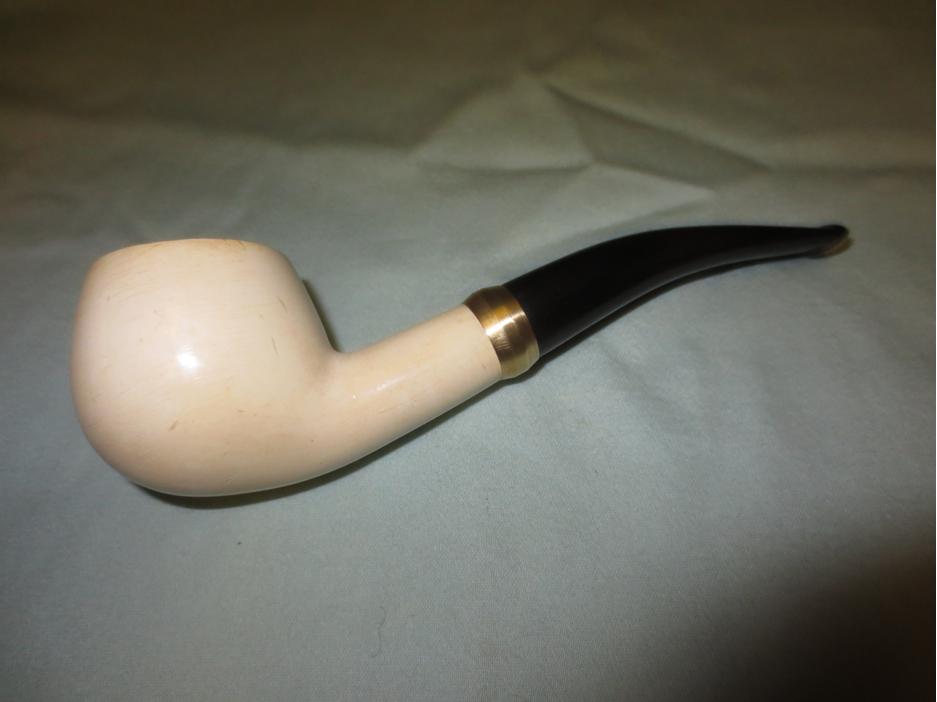
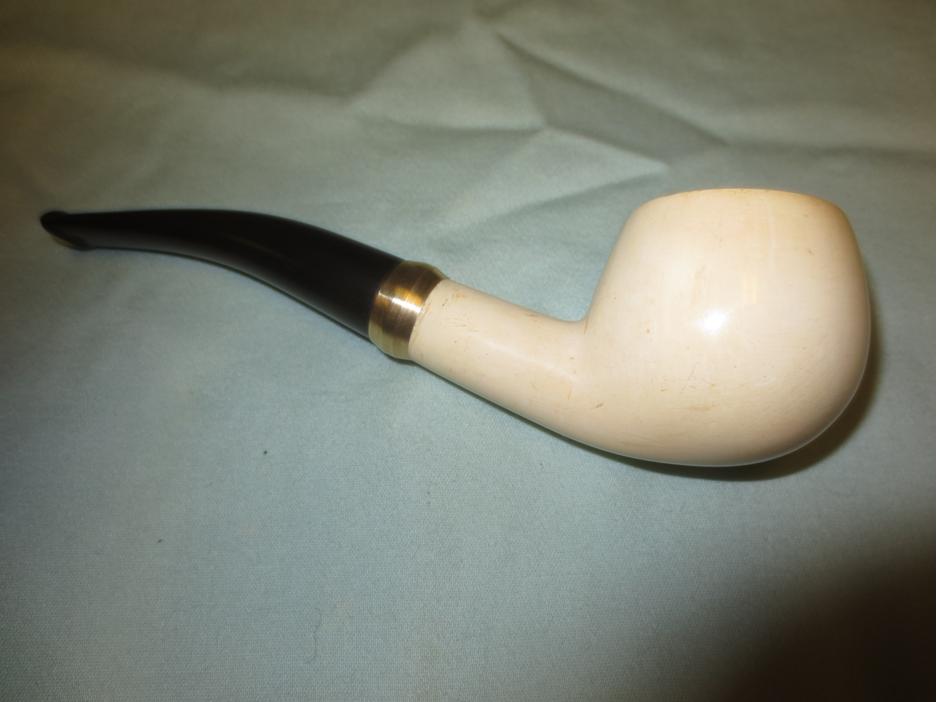
GBD27 I buffed the entire pipe with Blue Diamond Plastic polish on the wheel and then gave it multiple coats of carnauba wax. I finished by buffing the pipe with a clean, soft flannel buff to raise the shine. The finished pipe is shown in the photos below. It is ready for its next pipeman to bring it home and bring it back into rotation.GBD28
GBD29

GBD30

GBD31

GBD32 This GBD Bronze Velvet should make someone a great addition. If you are interested in this pipe email me at slaug@uniserve.com and we can discuss it. The entirety of the sale price will go to the Nepal project. I will pay the postage so that does not get taken off the proceeds. If you are interested in reading about the SA Foundation you can look at their website at http://www.safoundation.com.

Thanks for looking.

Midterm Exam #2: Repairing the Leaky Airway on a Champion Deluxe


Blog by Anthony Cook

It’s exam day again. I didn’t get much sleep, but I did have a good breakfast of Pop-Tarts and leftover ramen. So, let’s do this! This time, the exam is based on a bent brandy shaped Champion Deluxe.

PipePhil provides a little info on the Champion brand:Champ1 The pipe I’m working with has shank stamping and a stem logo that is identical to the middle pipe in the above graphic. The country of origin for the brand is listed as Switzerland, but there must be some French connection. The word “FRANCE” is stamped across the bottom of the shank-end of the stem on my pipe. You can see the pipe for yourself in the photos below, which were taken shortly after its arrival.Champ2 I was really pleased with this one when it arrived. I really liked the size, shape, and rustication pattern. As I turned it over in my hands, it seemed to be in pretty good condition. There were no major cracks or gouges, only a generous amount of grime on the stummel, one or two nicks on the rim, and a little oxidation on the stem. I thought it would clean up nicely and was beginning to look forward to working on it.

Then, I pulled the stem out to check the internals and cringed…Champ3 The airway was drilled so high that it actually penetrated the top of the mortise and only a very thin layer of briar remained between it and the surface of the shank. In fact, the wood was so thin that it had either cracked from heat/moisture expansion or had been punctured by the rustication tool. If you look closely, you can see in the second image that the alcohol from a dampened pipe cleaner would seep out of the airway to the surface of the shank.

I didn’t have the confidence at the time to attempt to repair something as essential and delicate as an airway. So, I reamed the bowl, scrubbed the inside of the shank and stem clean, and then dropped it back into the box where it’s been withering away for several months. So, today I pulled it back out for my second midterm exam.

The airway needed to be sealed before doing anything else. If that wasn’t successful any other work would be pointless. So, I clamped the stummel upside-down in my bench vise using a couple of foam strips to cushion it. I tried to make sure that the airway was as level to the ground as possible. Then, I applied super thin CA inside the airway with an applicator bulb. Since I couldn’t really see inside the shank and bowl, I had previously measured the length of the airway and marked it off on the applicator with a strip of tape. This, along with a slow and steady hand, kept me from dribbling the CA into the bowl.Champ4 Once I was sure that the glue was completely dry, I used 240-grit and 320-grit sanding needles to smooth out any lumps and bumps that the glue may have created in the airway. Then, I prepared my initial test of the patch. I dampened a pipe cleaner with alcohol and inserted it into the airway. I couldn’t see any seepage, but just to be sure I pulled out my jeweler’s loupe to give it a closer inspection. Still nothing. The patch had passed its first test.Champ5 I set up a retort for the next test. If there were any open fissures in the shank, the evaporation from the boiling alcohol would surely seep through. I flushed the shank 10-12 times before setting the pipe aside to cool. The color of the alcohol in the tube is a testament to the merits of a retort. It’s not filthy by any means, but remember, this is a pipe that I once thought was clean.

While the pipe rested, I closely inspected the shank to see if the patch had held. Success! I found no moisture seepage at all. The patch was doing its job and the worst part of the exam was over!Champ6 After another dozen or so flush with the retort the alcohol in the tube was almost completely clean. I let the pipe cool, and then gave it a final, quick scrub the wrap up the internal cleaning.Champ7 I placed the stem into a bath of warm water and Oxyclean and let soak for about an hour before I scrubbed it down with cubes cut from a Magic Eraser pad to remove the oxidation. Once the stem was clean, I applied a black CA glue patch to the remaining dents. I put a drop of activator on the patches to speed up the drying and they were ready to be worked again in about ten minutes. I sanded out the patches with 220-grit (the bottom image in the picture below), 320-grit, and 400-grit paper. Then, I gave the entire stem a light sanding with 600-grit paper to remove any minor scratches.Champ8 The paint in the stem logo was cracked and flaking. So, I picked out the loose paint, and then I began to fill in the area around the logo with a grout pen begin restoring the logo. I was a little worried about how well this was going to turn out since the recessed stamp was very narrow and shallow. I let the “paint” dry for about 20 minutes before carefully sanding it down with 1200-grit paper and I thought that it came out surprisingly well in the end. I finished up work on the stem by lightly sanding it with 1200-grit paper to even everything out, and then polished with micro-mesh pads 1500-12000.Champ9 The stem was finished and the clock on the wall was ticking. Some of the other guys were already turning in their papers. So, it was time to start wrapping things up. I mixed up a 3:1 stain solution of isopropyl alcohol and Fiebing’s black dye and applied it to the stummel. Then I buffed the entire stummel with red Tripoli before sanding out the scratches around the stamping with 400-grit, 600-grit, and 1200-grit sandpaper.Champ10 Then, I applied a 3:1 dilution of Fiebing’s cordovan before polishing the stamping area with micro-mesh pads 3200-12000. I reattached the stem and gave the entire pipe a light buff with white diamond, and waxed the pipe with Halcyon II for the stummel and a few coats of carnauba for the stem. Finally, I applied a bowl coating to promote cake growth, and then turned the exam in with my fingers crossed.

The photos below show how it finally turned out. For some reason, in these photos the cordovan and black blend together in the rusticated areas making them appear much darker. When you have the pipe in hand the cordovan is much more evident. I don’t know why that is. Man, I hope we aren’t being graded on our photography skills as well.Champ11

Champ12

Champ13

Champ14

Champ15 But, wait..!

Okay, I realize that this is a little unusual for an exam, but I’d like to make a bit of a revision. You see, when I ran my first bowl through this Champion the draw was extremely poor and it gurgled so badly that it sounded like an aquarium. To be honest, this wasn’t unexpected. The misalignment of the airway between the mortise was so extreme that it couldn’t help but create a lot of turbulence, and therefore a lot of moisture. I couldn’t let that stand. So, I took the stem back to the worktable to tweak it a little.

I clamped the stem in the vice and used a Dremel to cut off the stepped end of the tenon. You can see the piece I removed lying on top of the vice in the photo below.Champ16 After that, I sanded the face of the tenon smooth and level, and then used a tapered abrasive point in the Dremel to begin funneling the airway. I kept the airway lubricated with mineral oil to prevent the friction from burning or melting the vulcanite. The abrasive point opened up the end of the airway to a 3/16” diameter but transitioned it down to the 1/8” diameter of the original airway. Then, I used 240-grit and 320-grit sanding needles to make sure the transition was smooth. Finally, I used a round abrasive point to create a ¼” diameter chamfer on the tenon face around the airway and the sanding needles again to round off any of the sharp edges. In the picture below, the left image shows the step that I removed balanced on top of the stem for comparison; the right image shows the completed tenon after being reworked.Champ17 I was eager to try it out and the results were amazing for such a simple modification. The bowl smoked all the way to the bottom with no gurgle at all; even when I intentionally tried to build up steam by puffing rapidly (it was for the sake of science). After the pipe had cooled, I removed the stem and found a lot of moisture in the mortise. So, the extra space below the airway was acting like the sump/well of a system pipe. Very cool. The pipe was once again looking good and smoking well. My second exam was in the bag.

Cleaning and Restoring a Blatter of Montreal Bent Egg


Blog by Steve Laug

When I received this Blatter of Montreal Egg pipe I sat down and looked it over carefully to assess what would need to be done to restore it. The finish was very dirty and worn but underneath the dirt and oils there was some amazing grain. On the right side of the bowl, near the top there was a fill that had popped out and left a large divot in the briar. The size of the missing fill distracted from really seeing the beauty of the pipe. Looking at the top of the bowl I could see that the inner edge of the rim was slightly out of round and the rim had been previously topped. Both the stain and the topping were not even. The outer edge of the rim had been rounded from sanding and was no longer a clean sharp edge. Sometime ago the bowl had been reamed and a broken uneven cake left on the sides of the bowl. The airway at the bottom of the bowl had a groove carved from the opening across the bowl bottom that appeared to come from using too heavy a hand with a pipe cleaner over the years.

The stem was in good shape in terms of not having any tooth damage or chatter. The button was still quite sharp and distinct like the other Blatter pipes that I have cleaned. It was oxidized and somewhere along the way someone had sanded or buffed the stem with it removed from the pipe. The edges of the stem at the shank junction had rounded shoulders and because of that the fit against the shank was not perfect. The diameter of the shank was slightly larger than the stem due to the rounded shoulders. There would need to be some work done on that area to reduce the damage though I am not sure that it can all be removed. I find this kind of rounding of the shoulders on the stem or the shank on pipes that have been overbuffed or worked on by someone new to the refurbishing hobby.

I took the pipe apart to look at the internals of the stem and the shank. The shank has an interesting design. The mortise ends with a slight ridge and then the airway drops into a kind of sump/or chamber to capture the moisture – kind of like the Peterson system pipes. This chamber had the airway drilled toward the top end. It was filled with a lot of black sticky tar and oil. It would take a lot of scrubbing to clean that area. The mortise itself was pretty clean. The end of the tenon was almost clogged with the buildup around the end. The same was true of the slot in the end of the tenon. It was reduced in size by about half. The stem would also take some work to clean out the thick build up inside.Blatter1

Blatter2

Blatter3

Blatter4 The next photo shows a close up of the area of the missing fill. It is quite large and will need to be repaired.Blatter5 I scrubbed the bowl with cotton pads and isopropyl alcohol to remove the grime and prepare the missing fill for repair. I picked out the loose particles from the area and scrubbed it down again.Blatter6 I filled the hole with larger particles of briar dust and then filled it with superglue. I added more briar particles to the top of the repair.Blatter7 I sanded the repair with 220 grit sandpaper to remove the excess and smooth out the patch. The size of the patch can be seen in the next photo. The larger particles of briar dust worked differently than the fine dust I used in the past.Blatter8 I used a folded piece of sandpaper to bevel the inner edge of the rim to take care of the damage that had made it out of round. Beveling the rim inward took care of the damage and brought the rim back into round.Blatter9 I sanded the rim with a medium and a fine grit sanding sponge and also sanded the repaired area on the side of the bowl. Each successive grit of sanding sponge smoothed out the repair and blended it into the bowl.Blatter10 Once the patch was sanded smooth I scrubbed the bowl down with acetone on a cotton pad to remove the rest of the finis and the remaining wax buildup on the bowl. The birdseye briar was stunning on the left side of the bowl.Blatter11

Blatter12

Blatter13 I also scrubbed the top of the rim with the pads and found that the work on the rim had really cleaned up the look of the pipe from the top.Blatter14 I worked on the rounded shoulders of the stem. First I sanded it with 220 grit sandpaper blending the flow of the shank with the stem. The key was to reduce the shoulder rounding without changing the shape of the shank. Once I had the transition as smooth as I could make it I sanded it with a medium and a fine grit sanding sponge. The finished shank/stem transition can be seen in the next series of photos.Blatter15

Blatter16

Blatter17

Blatter18 With the repair finished on the side of the bowl and the transition smoothed out at the stem/shank junction it was time to give it a coat of stain to blend it in with the rest of the briar. I used a dark brown stain touch up pen to work on those two points on the bowl.Blatter19

Blatter20 I probably should have done this sooner, but I chose not to. The bowl had already been reamed but I wanted to clean up the reaming job and try to smooth it out. I used a PipNet reamer and chose a cutting head that fit the bowl tightly and removed the odds and ends of broken cake left in the bowl.Blatter21 I then set up the topping board to repair the round outer edges of the rim. It did not take too much topping to make that edge sharp and clean once again instead of rounded. I finished sanding the rim afterward with a medium and a fine grit sanding block to remove the scratches left behind by the 220 grit sandpaper.Blatter22

Blatter23 I used the same dark brown stain pen to stain the rim. I applied the stain until the coverage was acceptable. I lightly buffed the bowl with White Diamond to smooth out the stained areas and blend them into the rest of the bowl.Blatter24

Blatter25

Blatter26

Blatter27 With the externals finished on the bowl it was time to address the internals. The airway in the stem and shank and the sump in shank all were filthy. I decided to use a retort on the pipe. I set up the test tube and connector to the stem and then stuffed the bowl with a cotton ball before boiling the alcohol through the bowl and stem.Blatter28

Blatter29 I boiled the alcohol through the bowl and shank the first time and the alcohol came out a dark brown.Blatter30 I took the retort off the stem and ran pipe cleaners and cotton swabs and alcohol through the shank and stem. While they were definitely cleaner there was still a lot of “sludge” present.Blatter31 I set up the retort and boiled another tube of alcohol through the bowl. This time the alcohol was definitely lighter but still dark.Blatter32 I emptied the tube and boiled a fresh tube through for the third time. While it was definitely getting lighter it was still brown.Blatter33 I ran a fourth tube of alcohol through the stem and shank and finally it came out clear. This was one dirty pipe. I used pipe cleaners, cotton swabs and alcohol to finish cleaning the shank and stem. I used the dental pick to clean out the edges of the slot on the button. With the internals clean I turned my attention to the stem. I sanded it with 220 grit sandpaper and then with the medium and fine grit sanding sponges. Using those I was able to remove the oxidation on the surface.Blatter34

Blatter35

Blatter36 I switched to micromesh sanding pads. I wet sanded with 1500-2400 grit sanding pads and rubbed the stem down with Obsidian Oil.Blatter37 Afterwards I buffed it with White Diamond to polish the stem and lessen the scratches. I dry sanded the stem with 3200-12,000 grit micromesh sanding pads and rubbed the stem down with Obsidian Oil between the 4000 and 6000 grit pads. I also gave it a final rub down with Obsidian Oil after the 12,000 grit pad.Blatter38

Blatter39

Blatter40 I buffed the pipe with Blue Diamond Plastic Polish and then gave it several coats of carnauba wax. I buffed it to a shine and then used a clean flannel buff to raise the shine. The finished pipe is shown in the photos below. I have also included a photo of the repaired rim. Note the repaired fill on the right side of the bowl. The pipe is cleaned, polished, repaired and ready to smoke. I think it is a beautiful pipe in one of my favourite shapes. Blatter41
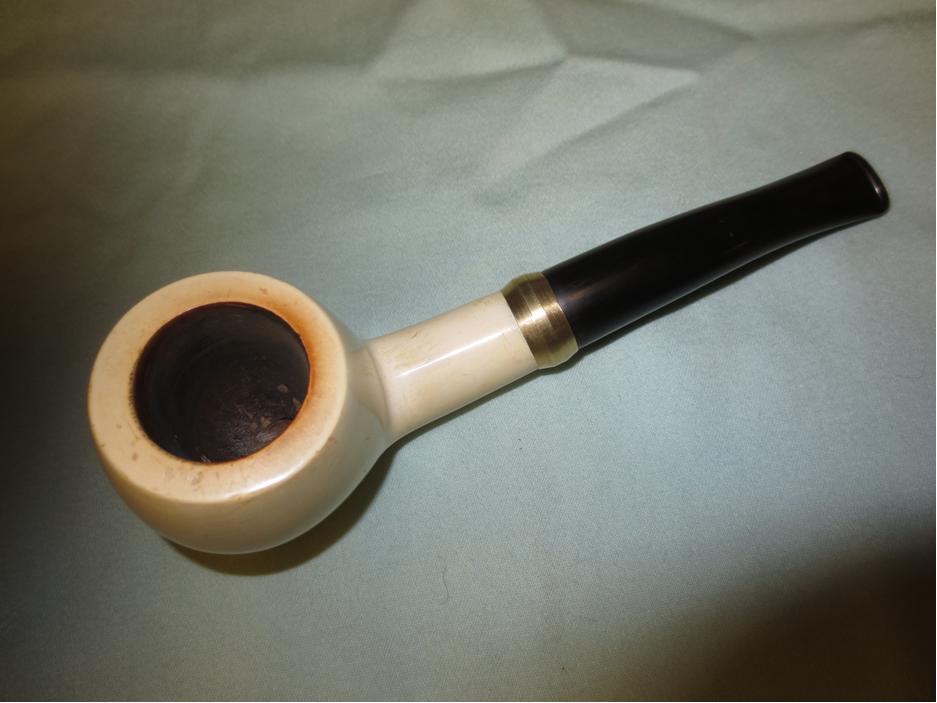
Blatter42

Blatter43

Blatter44

Blatter45 Thanks for looking.

Rejuvenating a Caminetto Business Long Shank Stack


Blog by Steve Laug

I just finished working on a long shank Caminetto Stack. It is stamped on the left side of the shank Caminetto Business. On the right side of the shank it is stamped Ascorti over Radice over Cucciago over Cantu Italy. Next to it is a shield. The finish is a rustication that looks very much like the older Castello Sea Rock finish. The bowl needed a thorough reaming to clean out the remnants of the old cake. The internals of the shank will also need a thorough cleaning. The pipe has a strong English smelling ghost that would need to be exorcised by a retort treatment. If that did not kill it then it would need to be given a cotton ball and alcohol treatment to further remove the ghost. The inner and out rim edges look really good. There is a build up tars and oils in the rustication on the top of the rim that will need to be scrubbed out. The deep rustication is also harbouring a lot of dust in the crevices that will also need to be scrubbed as well. Cam1

Cam2

Cam3

Cam4 The stem needs some work. It is loose in the shank and I will need to see what the fit is like once the shank is cleaned. There is a deep tooth mark on the underside of the stem next to the button. It is not quite broken through the surface of the stem but it is deep. There are also marks on the topside of the stem in the same place though nowhere near as deep. The stem was almost clogged and will need to be cleared. The slot is tight and hard to get a pipe cleaner through easily. It will need to be opened to make cleaning the pipe a simpler procedure. Between the semi-clogged stem and the tight slot the draw is constricted. Once the repairs are made to the stem it will need to be polished.Cam5

Cam6 I took a close-up photo of the rim for you to see clearly the build up on the rim. There were tars and oils deep in the grooves of the rustication on the surface of the rim. There was also a thin cake on the walls of the bowl that would need to be removed to address the heavy Latakia smell that was in the pipe.Cam7 I reamed the bowl with a PipNet reamer using the smallest cutting head and working up to the third head that was the same diameter as the bowl. I then scraped the inside lightly with a sharp pen knife.Cam8

Cam9 I scrubbed the inside of the shank with pipe cleaners and cotton swabs and isopropyl 99% alcohol before setting up a retort to boil alcohol through the inside of the pipe. I stuffed a cotton ball in the top of the bowl and then fit the rubber end of the test tube stopper over the stem. I place the bowl in a pipe rest and held the test tube over a candle. As the alcohol heated and boiled in the test tube it circulated into the bowl and when removed from the flame the alcohol would carry the tars and oils back to the test tube. I continued to boil the alcohol and remove it from the flame until the alcohol turned amber from the inside of the pipe.Cam10

Cam11

Cam12

Cam13 I changed the alcohol and boiled it through the pipe again. This second time the alcohol came out clean. I kept it boiling through for about 15 minutes and then removed it from the flame. The photo below shows the relatively clean alcohol after this retort.Cam14 Once I had removed the retort I cleaned out the bowl and the shank with isopropyl alcohol on cotton swabs and pipe cleaners. This time they came out relatively clean.Cam15 The problem was that the pipe still smelled strongly of Latakia. The ghost was stubborn and persistent. I decided to use a cotton ball and alcohol soak to see if I could draw out some more of the oils and smell. I stuff two cotton balls into the bowl and plugged the shank. I used an ear syringe to fill the bowl with alcohol and tipped it back and forth to run the alcohol through the shank. I unplugged the shank and set the bowl in an old ice cube tray over night to draw out the oils. The next three photos were taken over a 12 hour period and show what happened with the soak.Cam16

Cam17

Cam18 When I removed the cotton balls and let the pipe dry out the ghost still persisted. I cleaned out the bowl and shank again, then put some white vinegar and cotton in the bowl and shank and let it sit for 3 hours. I cleaned out the shank and the ghost still remained. I was beating it but it was still present. I then filled the bowl with Kosher rock salt and then used an ear syringe to fill it with alcohol. I set it aside in the ice cube tray to let the salt do its magic.Cam19

Cam20

Cam21 Once I removed the salt and alcohol and cleaned out the shank and bowl a final time the ghost is pretty well exorcised. There is a faint tobacco smell but the overpowering smell is gone.

I scrubbed the top of the rim with a brass bristle tire brush and then rescrubbed it with a tooth brush and Murphy’s Oil Soap. I scrubbed it hard enough to remove the dust and grime from the crevices of the rusticated finish.Cam22

Cam23 I rinsed the bowl under running water to remove the soap from the finish, being careful to not get any water in the bowl. I dried it off with a cotton cloth. The photos below show the cleaned bowl. The finish was dull and had lightened slightly.Cam24

Cam25

Cam26 I used a wash of brown aniline stain mixed 4 parts alcohol and one part stain to restain the bowl and shank. The next four photos show the pipe after it had been restained and buffed with Blue Diamond. I buffed it with a light touch and then rebuffed it with a shoe brush.Cam27

Cam28

Cam29

Cam30 With the bowl finished it was time to work on the stem. I decided to start with the narrow slot and airway on the end of the stem. I used three different needle files to open it up. I started with a flat file to widen the gap on the top and the bottom edge of the slot. I needed it open enough that I could use a flat oval file to smooth out the slot and open both the top, bottom and sides of the slot. I finished with a round file to taper the edges of the slot at an angle to the airway in the stem. While this was done to a slight degree I increased the angle and also opened up the end of the airway. I used the round file to also enter from the tenon end of the stem and smooth out what appeared to be rough transitions from the airway to the slot. I finished by sanding the inside of the slot with a folded piece of 220 grit sandpaper and then finishing with a bristle pipe cleaner and a little scrubbing powder.Cam31

Cam32

Cam33

Cam34 I still needed to clean up the end of the stem when I worked on the stem surface itself but the basic shape was finished and the slot was wide enough to easily handle a pipe cleaner. I sanded the stem with 220 grit sandpaper and also with a medium and fine grit sanding sponge to remove the tooth chatter on the top side of the stem and to clean up around the deep tooth mark on the surface of the stem. I picked out the debris from the tooth mark and then filled it with black super glue. I set the stem aside overnight to let the glue repair cure.Cam35

Cam36 The next morning I sanded the repaired area with 220 grit sandpaper and then the sanding sponges to remove the excess patch and to blend it into the surface of the stem.Cam37 Once the repair was smoothed out it was time to sand the stem with micromesh sanding pads. I wet sanded with 1500-2400 grit pads and rubbed it down with Obsidian Oil. Once it had dried I gave it a quick buff with White Diamond.Cam38 The tooth chatter was gone on the top of the stem and the repair on the underside blended in quite well. At this stage in the sanding it still showed but would begin to disappear into the stem with further sanding with micromesh. I dry sanded the stem with 3200-4000 grit pads and then rubbed it down again with Obsidian Oil. The first photo below shows the topside of the stem. The tooth chatter is gone. The second shows the underside of the stem. The tooth mark is repaired and the repair no longer shows. The next three grits of micromesh will make the patch disappear in the shine of the stem.Cam39

Cam40 I dry sanded with 6000-12,000 grit pads and then gave it a final buff with Blue Diamond. I rubbed in a final coat of Obsidian Oil and let it dry.Cam41

Cam42 The next two photos show the finished stem. The repair is blended into the vulcanite and it is polished and clean.Cam43

Cam44 I gave the pipe a light buff with Blue Diamond Plastic polish and then gave the stem several coats of carnauba wax. I lightly buffed the bowl with carnauba and then buffed the entire pipe with a clean flannel buff to raise the shine. Here is the finished pipe. Thanks for looking.Cam45

Cam46

Cam47

Cam48

Cam49

Restoring an Ed Burak Connoisseur Tall Stack


Blog by Steve Laug

The next pipe that came to my worktable was the shapely stack pictured below. It is stamped Connoisseur over N.Y.C. on the left side of the shank and then below that E. Burak in script. The majority of the stamping is very sharp. The N.Y.C. is a bit faint. There is no other stamping on the pipe or shank. The briar was natural and unstained. It had darkened slightly with age. The finish was dirty and there were a few dents and dings in the briar. The stem was badly oxidized and had several small tooth marks on the surface. It was over bent and the way it hung in the mouth would dump the ash in your lap. The rim had a tarry buildup on the back top surface. The inner and outer edges of the rim were in perfect shape. There were some small sandpits in the briar on the left side of the bowl and on the underside of the shank. The inside of the shank was dirty and black with tars and oils. The bowl inside was thickly caked with a crumbly soft cake that was flaking away in some parts of the bowl. The shank itself was interesting to me in that it looked perfectly round. Once the stem was removed the drilling of the mortise was centered but low on the shank. The drilling was perfectly aligned but the airway seemed constricted. My guess was that there were tars and oils clogging the airway in the shank and the over bent stem made the draught constricted.Con1
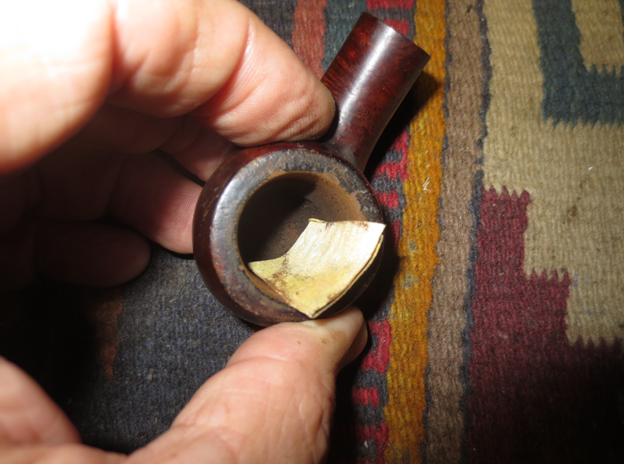
Con2

Con3

Con4 Over the years I have had several Connoisseur pipes but none of them were stamped like this one. I wondered about the stamping. It was my guess that it somehow helped with dating the pipe to a particular time in Ed Burak’s pipe making career but I did not know for sure. I decided that before working on this particular pipe I would do a little research on the brand and the maker on Google. I always check Pipedia to see what they might have on a maker. In this case I was not disappointed. There as a great article on the site. The link to that is: http://pipedia.org/wiki/Burak.

On that site I found not only some history on Ed Burak and the brand but also a photo of a pipe that was the same shape as the one I was working on. I was fortunate to find it because it confirmed my earlier assessment that the stem was over bent. With the photo and a second one that I found on another site I would be able to correct the bend on the stem and open the airflow from the bowl to the button.

I also found some great information on the site regarding Ed Burak. I quote from that article below. If you should wish to read it in its entirety click on the link noted above. The article is entitled, The Art of Edward F. Burak, Dean of American Pipe Designers.
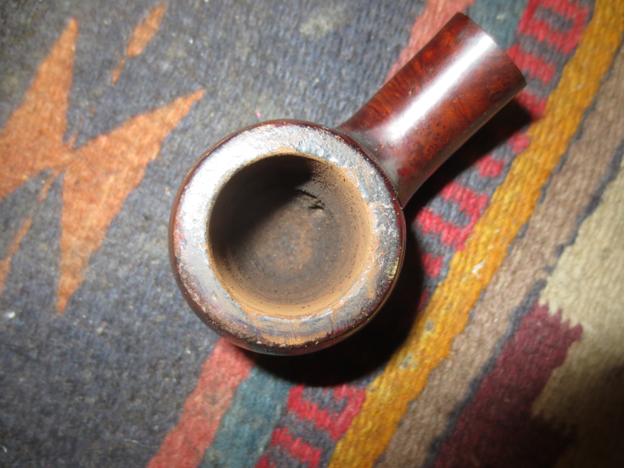
Con5“Ed Burak is the dean of American pipe designers whose work has had a worldwide influence on the thinking and the work of contemporary pipe makers.”

“…he met and subsequently began working with Meerschaum master Paul Fisher, with whom he stayed 5 years. During that time he produced a small number of Meerschaum pipes, a few of which are still extant in collections. He also worked for Wally Frank as a pipe designer. In 1968 he bought the Connoisseur Pipe Shop, where he was able to concentrate on his own designs. Burak’s pipes have been carved by a number of well-regarded pipe makers, among them Joe Corteggione and Tony Passante. Several of his freehands are in the Museum of Modern Art in New York and have been part of a traveling exhibit of the American Craft Museum.”

“Burak’s work is best known as pipe design as fine art. He admires pays tribute to the classic English designs of the old Barlings and Comoy’s and offers a line of “Classics” which begin with these traditional values yet reflect his own interpretations.”

“Because these pipes are different, so carefully crafted, they not only please the eye, but educate it. Most pipe makers will start with an idea and work the wood toward that goal, but will change their original design to accommodate the briar. Burak does not allow the medium to modify the intent. Minor surface flaws are left on the pipes. No staining is permitted; all Connoisseurs have a natural finish, with only carnauba was added.”

“As a significant footnote, the reader should note that Ed Burak’s pipes are NOT made by Paul Perri, nor Weber, nor Jobey, as erroneously stated in Lopes’s book “Pipes: Artisans and Trademarks.” Burak prefers not to disclose the name of his current pipe carver.”

I also learned on Pipephil’s website, http://www.pipephil.eu/logos/en/about-en.html that the stamping did indeed give some information that helped in identifying the period that a particular pipe was made. There I found that one may generally separate Connoisseur pipes date of manufacture into three periods.

From late 1960’s until 1974: no stampings
From 1974 until 1981: CONNOISSEUR over N.Y.C.
From 1981 on: CONNOISSEUR over N.Y.C. and Ed Burak’s signature

The pipe I was working on was stamped like the photo below. It had the Connoisseur over N.Y.C. stamp and Ed Burak’s signature. That dated the pipe to the time period from 1981 to the time that the Connoisseur Pipe Shop in Manhattan closed in 2009 on Ed’s retirement. Included with the photo of the stamp was a picture of a tall stack pipe that looked identical to the one that I was working on. Using the photo above and this photo gave me a clear picture of what the bend of the stem was like originally.Con6 I took a photo below of the stamping on the left side of the pipe that I am working on for comparison with the one above. You can see that they have the same stamping.Con7 On the Puff.com Pipe Forums I found a thread on Connoisseur pipes that confirmed how the pipes were finished when they were originally made. http://www.puff.com/forums/vb/general-pipe-forum/299824-ed-burak-pipes-man.html. There in the latter part of a post by a member identified as Mr. Rogers was the information that I was seeking confirmation about.
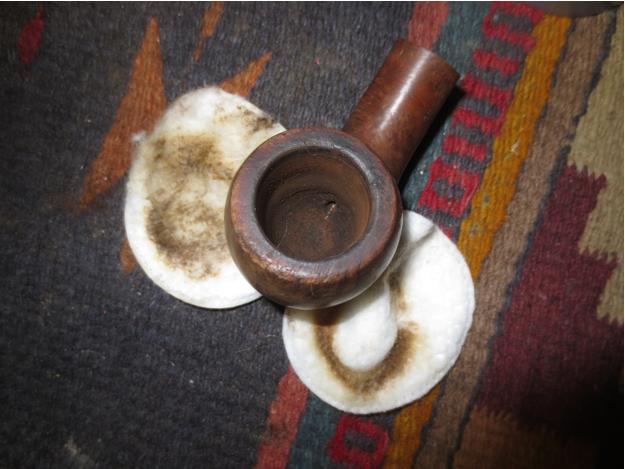
“His premium pipes were like nothing I had seen before. He finished all of his pieces with only wax, no stain. He incorporated blemishes into his designs and made no attempt to hide these flaws with fillers. I frequented the CPS (Connoisseur Pipe Shop) as a high school, college, then grad school student, never really having the funds to purchase his premium pieces. As luck would have it, once I became established in my work/field, the CPS was long gone…”

Now that I had a pretty good idea of when the pipe was made and what the stamping meant, it was time to go to work cleaning up this beauty. I took a close-up photo of the bowl to show the state of the uneven broken cake that was formed on the walls of the bowl. The cake had a fuzzy appearance that bothered me. So before I cut into it with the reamer I examined it with my lens to see if it was mold. I was glad to see that it was merely dust particles. I was able to blow them out before with a blast of air before I reamed back the cake. You can also see the flaw on the back side of the rim centered between the inner and outer edge of the rim.Con8 I reamed the bowl with a PipNet reamer. I started with the smallest cutting head and worked up to a cutting head the same diameter as the original bowl. The bowl was U-shaped but narrowed slightly half way down the bowl so I had to use the second cutting head to clean out the bottom half of the bowl and smoothed out the transition between the two cutting heads with a sharp pen knife. I took the cake completely back to the bare wood so that a good, clean, solid cake could be formed.Con9

Con10

Con11 I scrubbed the exterior of the natural briar with alcohol on cotton pads. It removed the grime, oils and ground in dirt from the finish and left the briar clean.Con12 I dropped the stem in a bath of Oxyclean. Almost as soon as it hit the water and I shook it the mixture turned amber coloured as the Oxy worked on the oxidation. I set the bath aside to let the stem soak and turned my attention to cleaning up the bowl.Con13 Before I could repair the flaw on the rim I needed to clean it up. I lightly topped the bowl on the topping board using 220 grit sandpaper. Once I had topped it lightly I washed it down with alcohol on a cotton pad to remove the sanding dust and blew out the dust in the bowl.Con14 I picked out the dust and grime in the flaw and used a drop of clear super glue and some briar dust from the topping of the bowl to fill in the flaw. Once it was hardened I sanded it with 220 grit sandpaper on the topping board and then with a medium and a fine grit sanding block to smooth out the scratches and polish the rim.Con15 The photo below shows the repair to the rim as well as the oils and tars on the cotton swabs and pipes cleaners that I used to clean out of the mortise and airway. I also wiped down the inside of the bowl with alcohol on cotton swabs to remove the dust and any remnants of the old cake.Con16 With the bowl cleaned and repaired I took the stem out of the Oxy bath. It had been soaking for about 2 hours and the oxidation was softened and brought to the surface enough that when I scrubbed stem to dry it off I was able to remove much of it.Con17

Con18

Con19 I put the stem in the shank and used a heat gun to heat the vulcanite and reduce the angle of the bend in the stem.Con21 I took it back to the work table and took the next four photos of the new angle of the stem to see how it looked from the comfortable distance of the computer screen. I took it back and heated it again to bend it slightly more. The angle was close but I would need to adjustments to get to what I wanted for the bend in the stem.Con22

Con23 While this photo was taken to show the stem it also gives a good picture of the repair to the rim on the pipe. It blended in very well and looks far better than the original crevice.Con24

Con25 I sanded the stem lightly with 220 grit sandpaper paying special attention to the tooth marks and tooth chatter near the button on both the top and bottom of the stem. Once I had removed the marks and chatter I sanded it with a medium and a fine grit sanding sponge to remove the scratches.Con26

Con27

Con28

Con29 The next four close-up photos show what the stem looked like at this point in the process of removing the oxidation and scratches.Con30

Con31

Con32

Con33 To highlight the beautiful mixed grain on this piece of briar I rubbed it down with a light coat of olive oil and let it soak into the briar.Con34

Con35

Con36

Con37 I sanded the stem with micromesh sanding pads – wet sanding with 1500-2400 grit pads. Once I finished with the 2400 grit pad I buffed it with White Diamond and then rubbed it down with Obsidian Oil.Con38 I dry sanded with 3200-4000 grit micromesh pads and again rubbed it down with Obsidian Oil. Once it dried I lightly buffed it again with White Diamond to give it a deeper polish. Then I continued sanding it with 6000-12,000 grit micromesh sanding pads.Con39

Con40 I gave it a final coat of the oil and took the pipe to the buffer and buffed it with Blue Diamond Plastic Polish.Con41

Con42

Con43

Con44 I buffed the whole pipe with Blue Diamond and gave it multiple coats of carnauba wax to protect the finish and the stem. I finished buffing it with a clean, soft flannel buff and no buffing compounds to raise the shine on the finish and the stem. The finished pipe is shown below. Thanks for looking.Con45
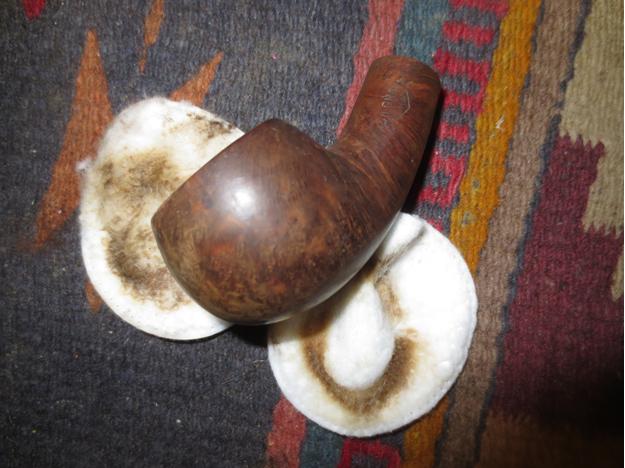
Con46

Con47

Con48