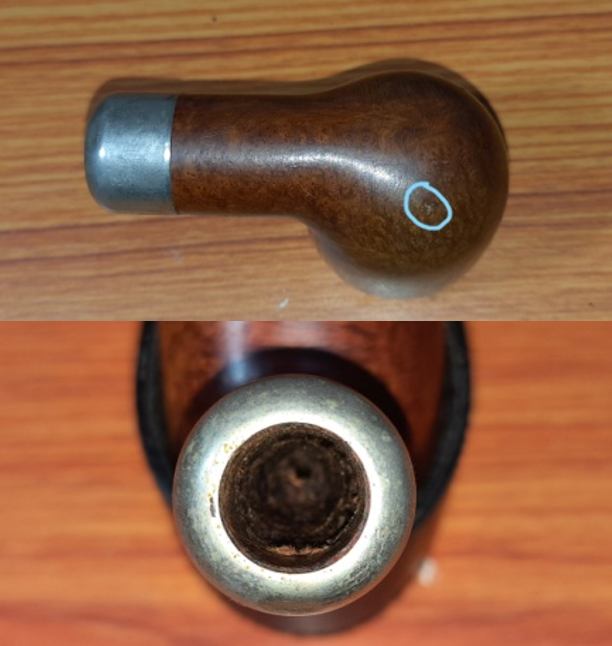
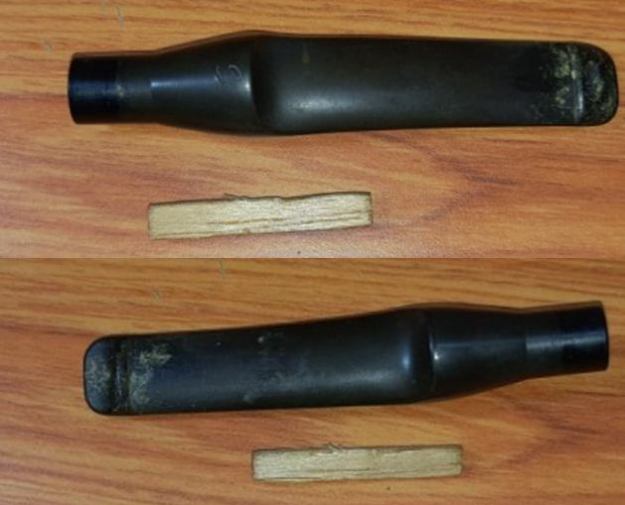
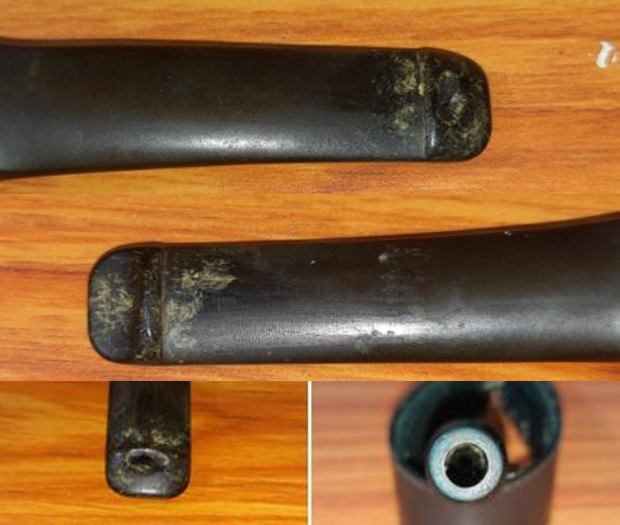
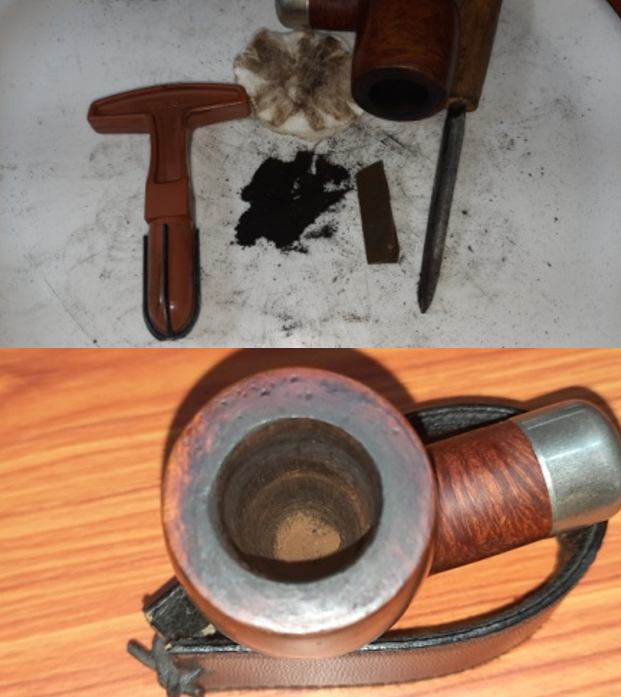
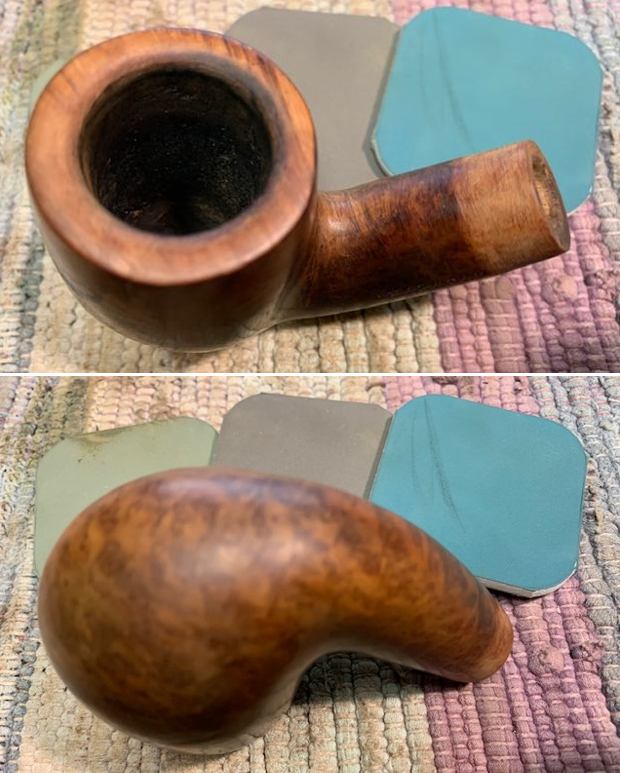
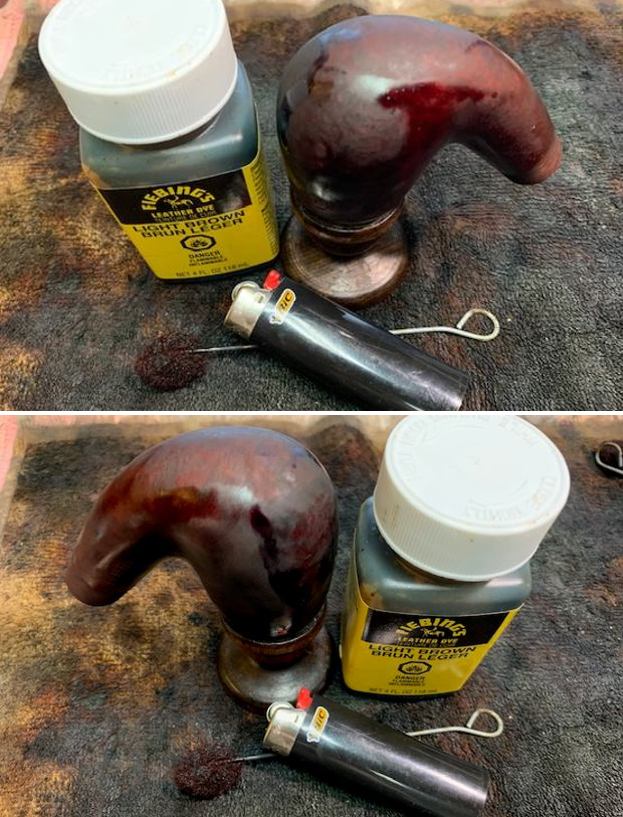
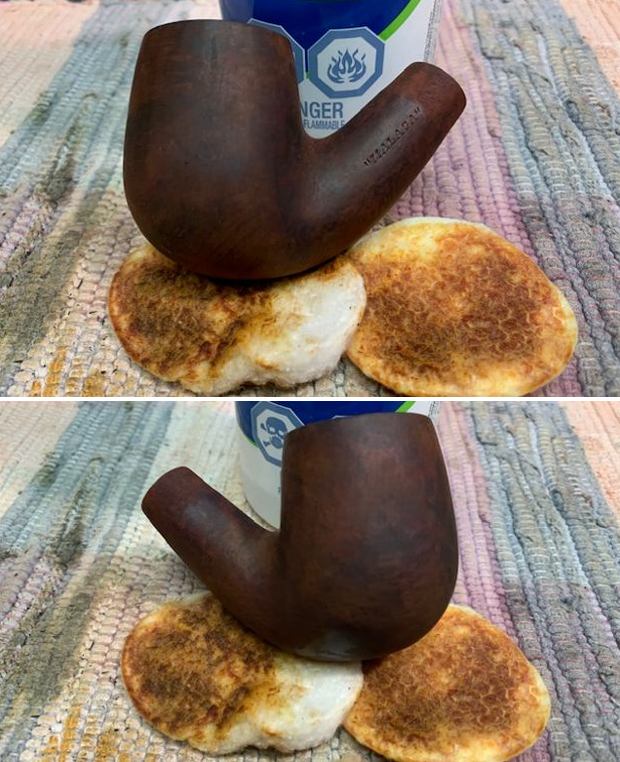
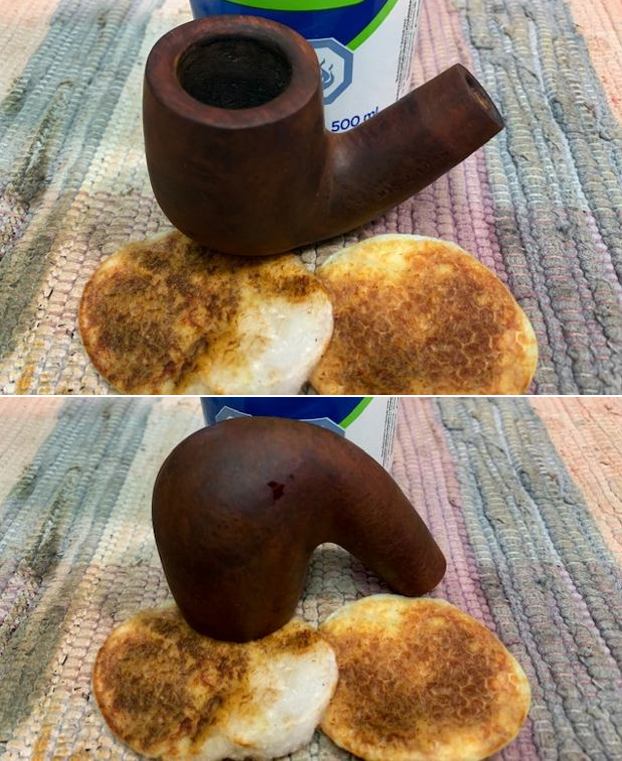
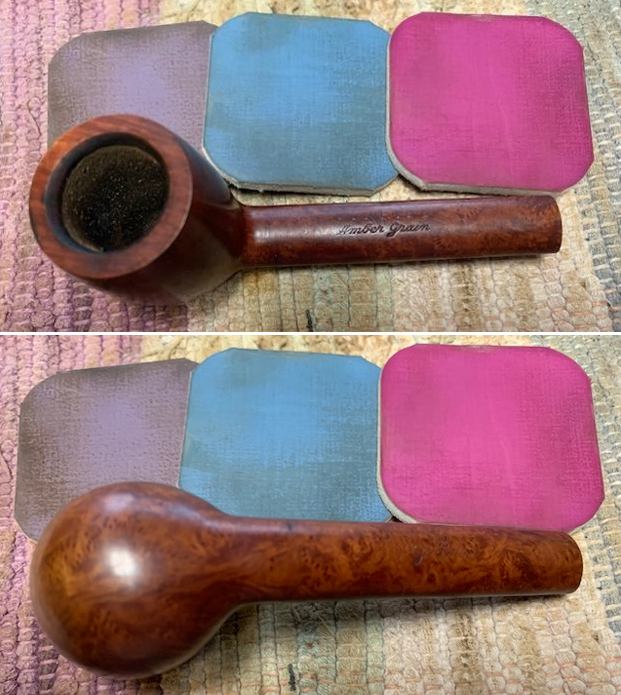
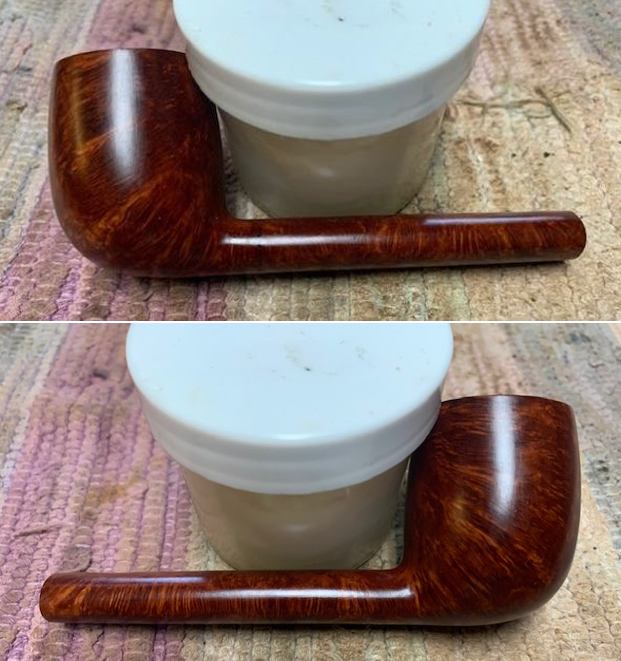
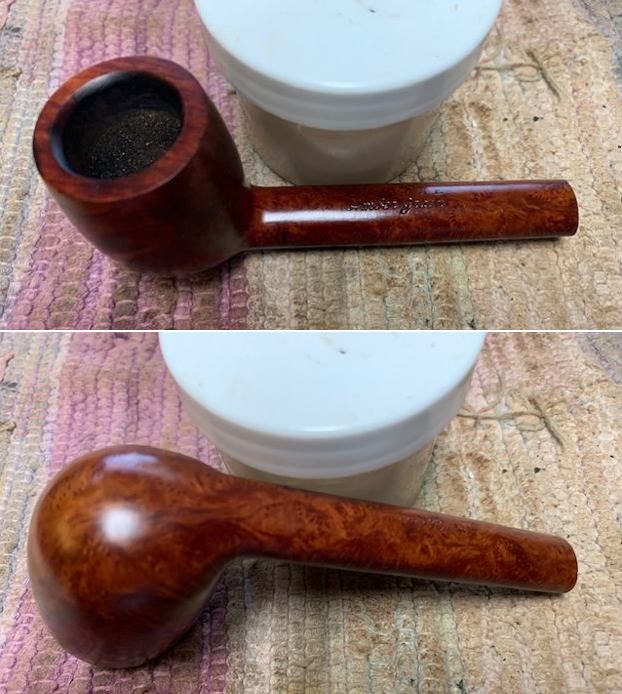
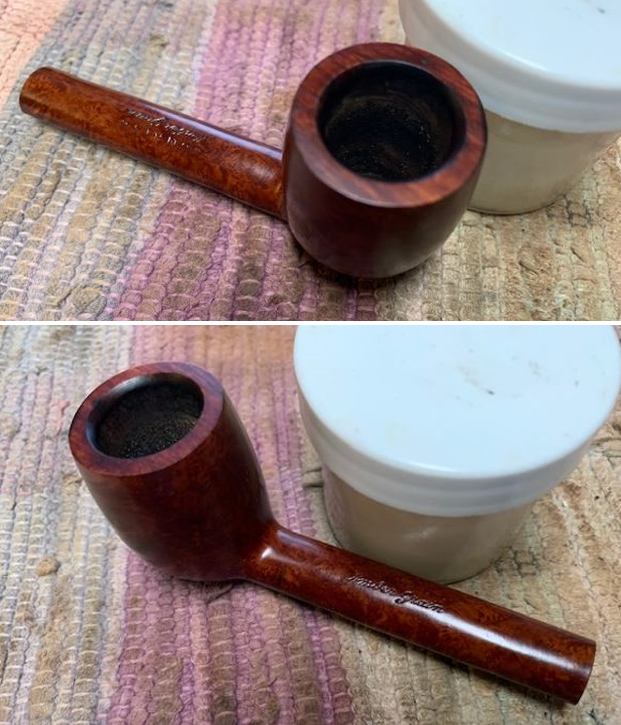
Tag Archives: bowl topping

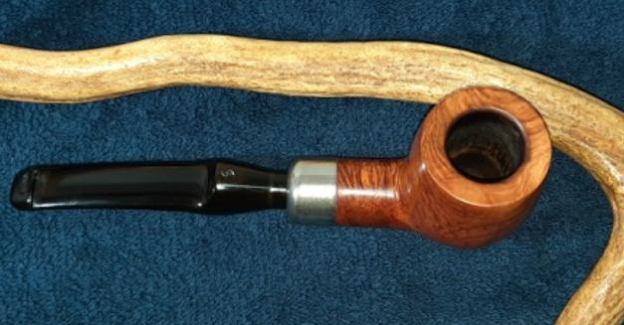
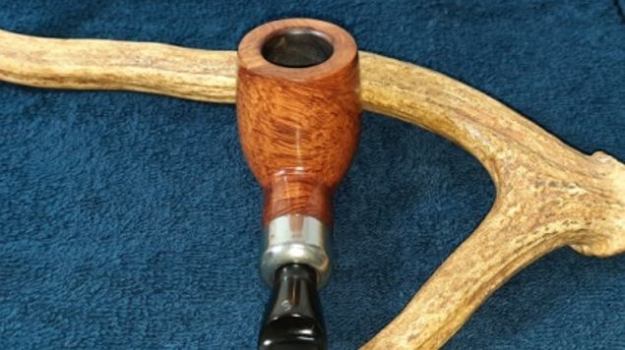
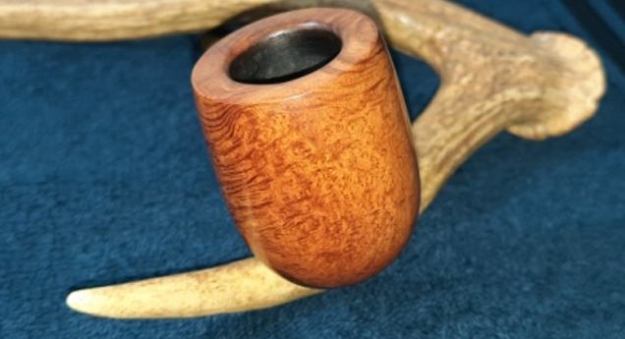
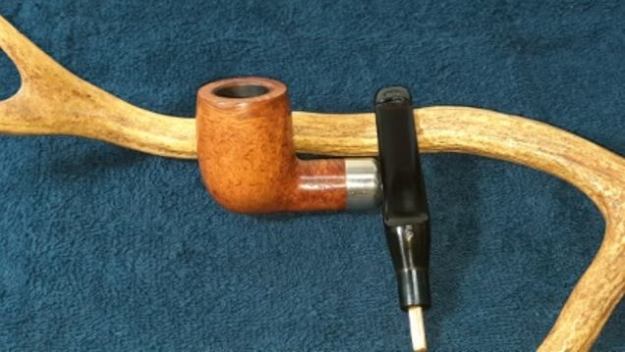
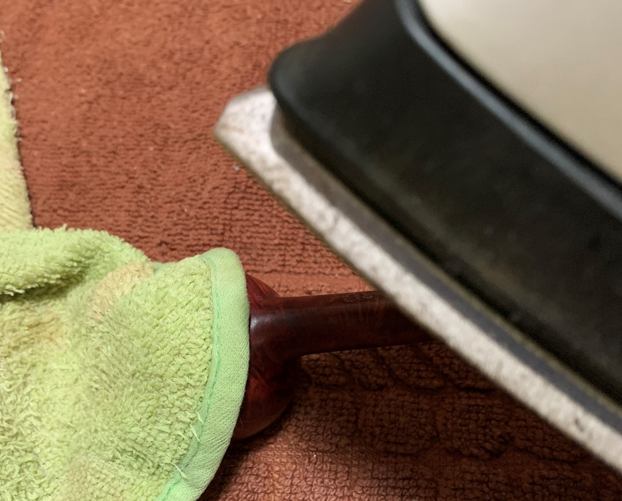
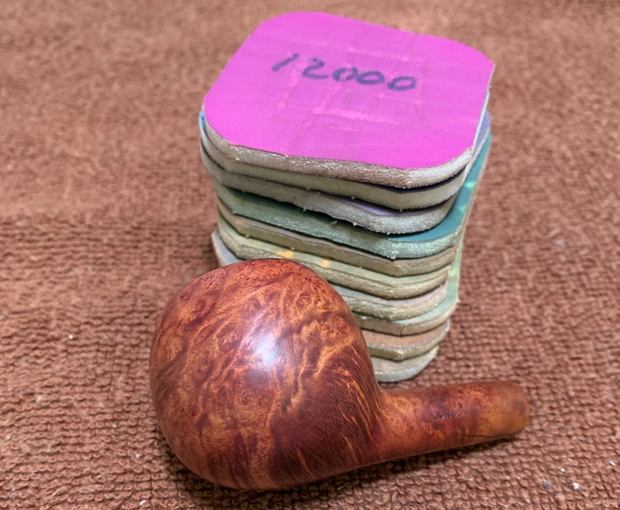
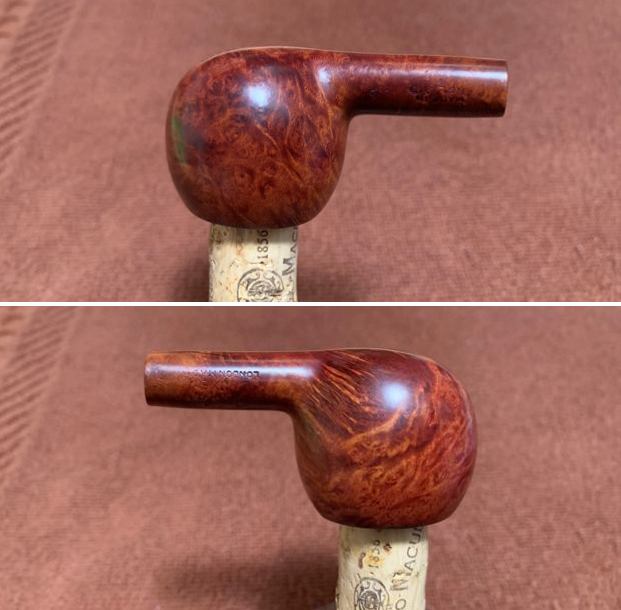
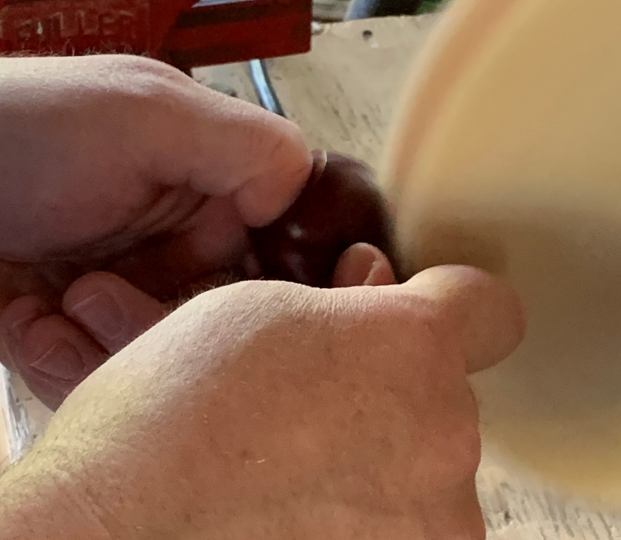
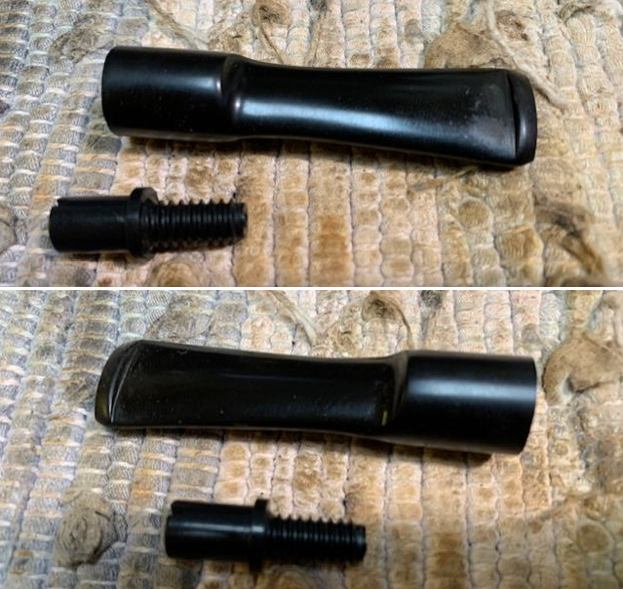
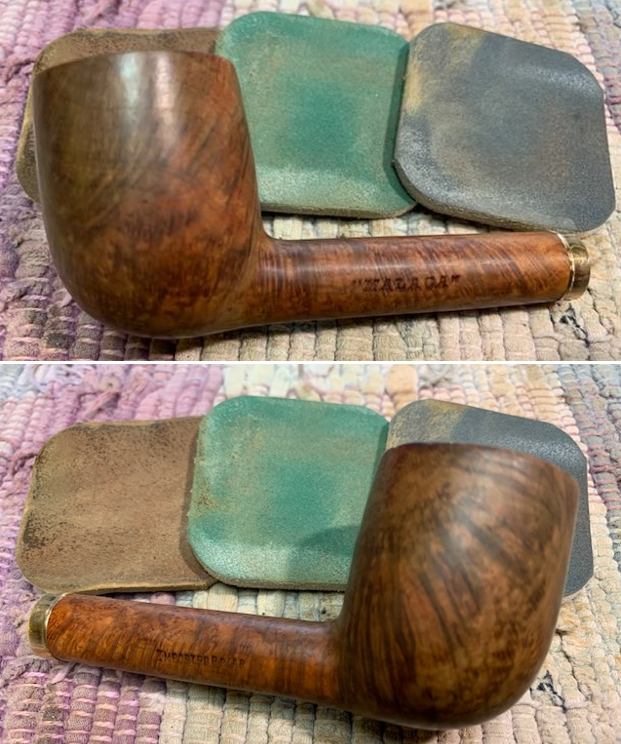
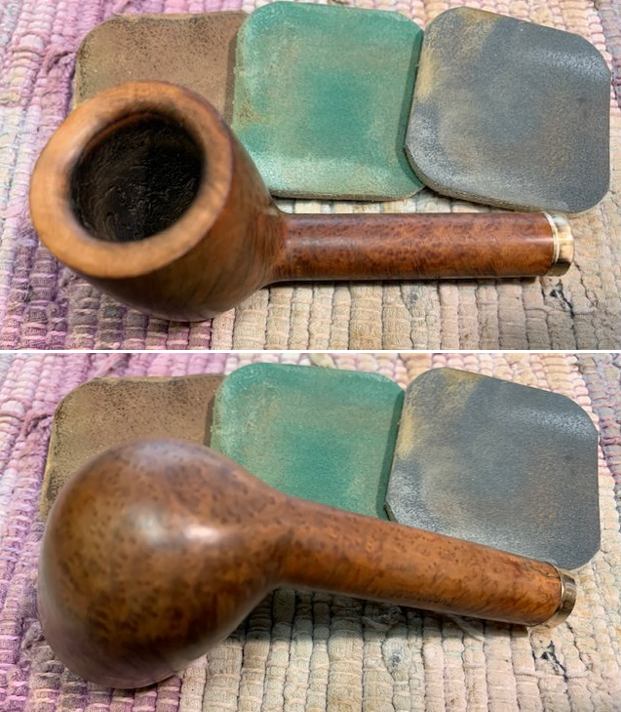
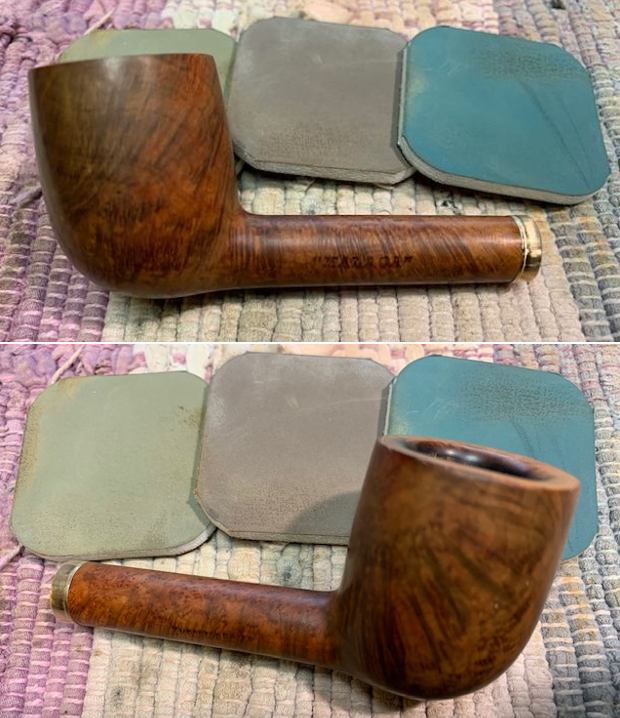
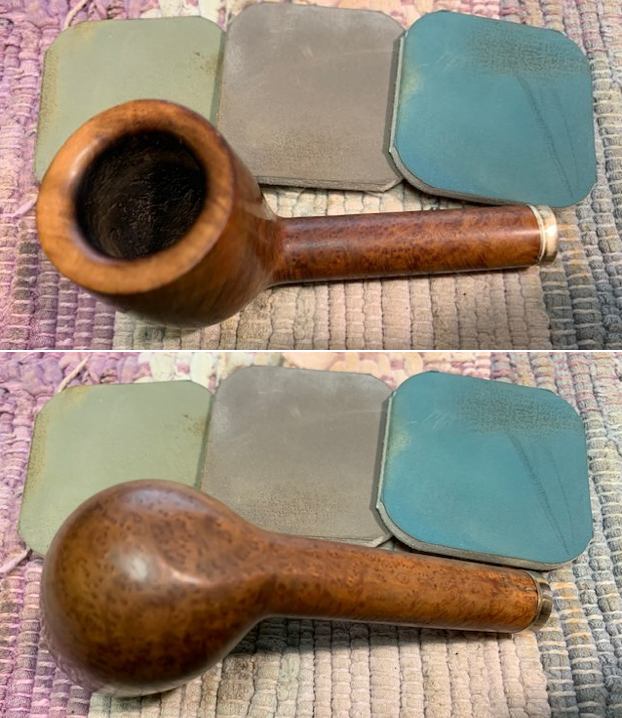
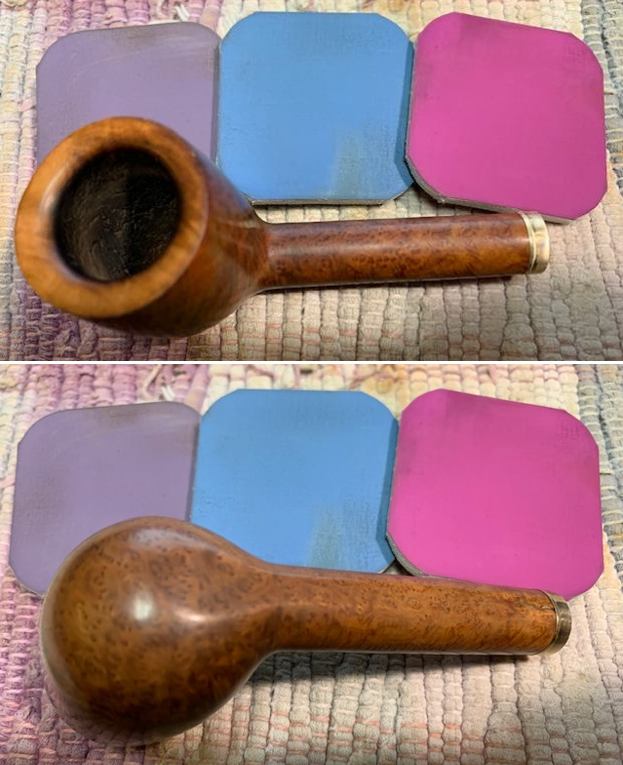
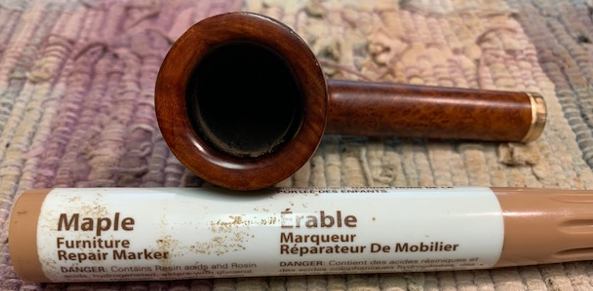
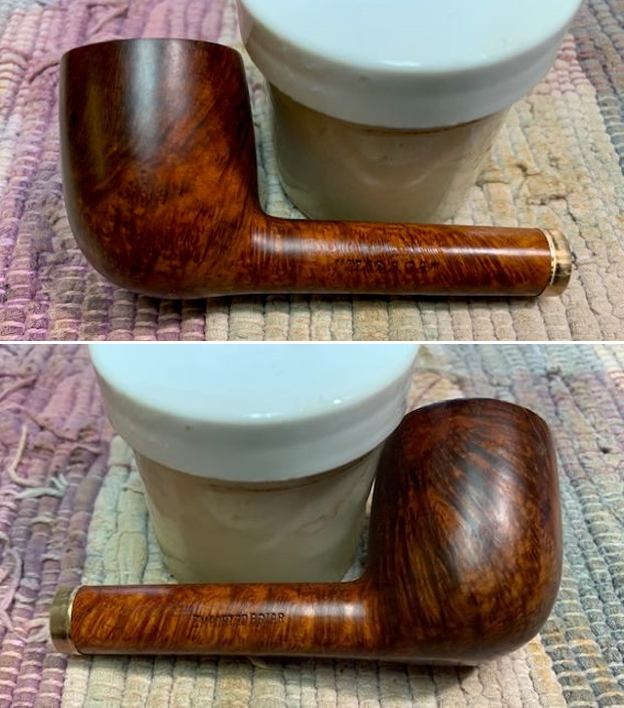
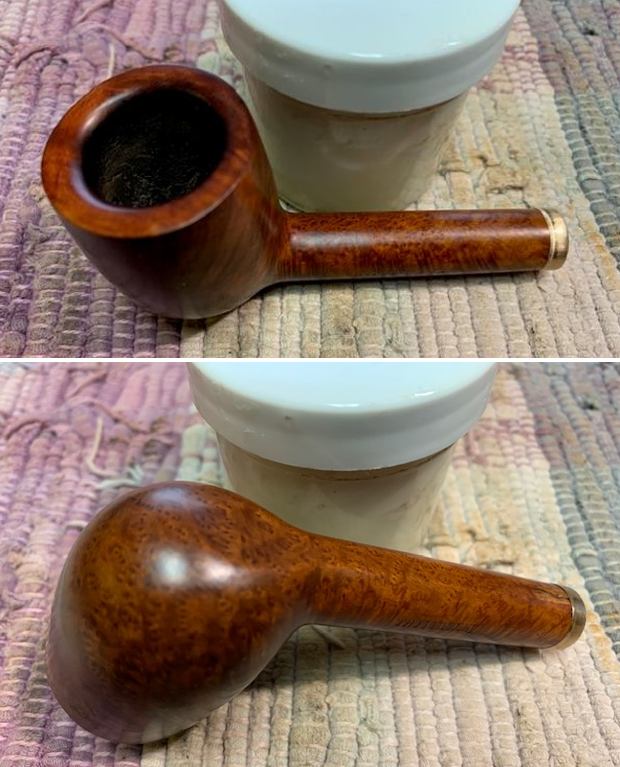
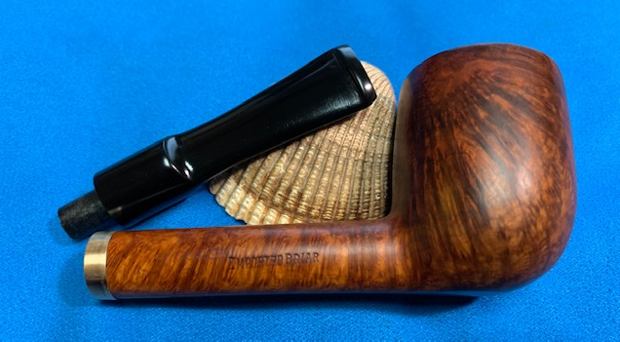
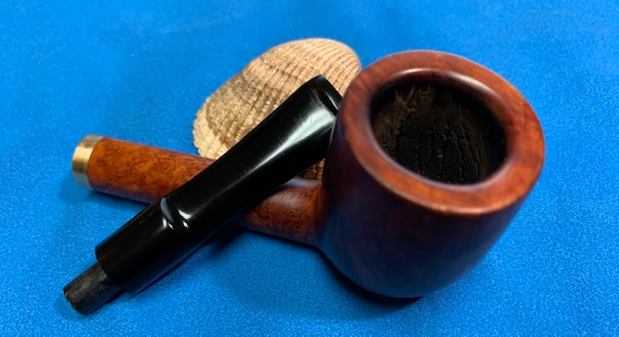
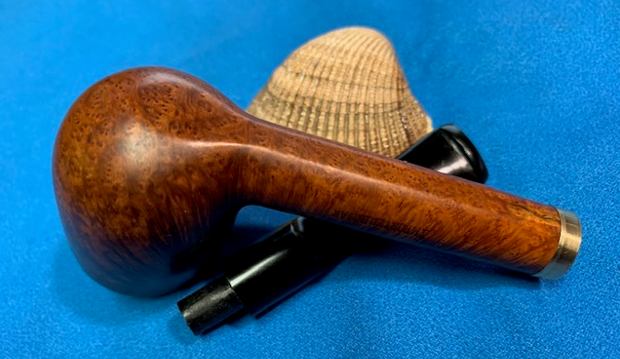
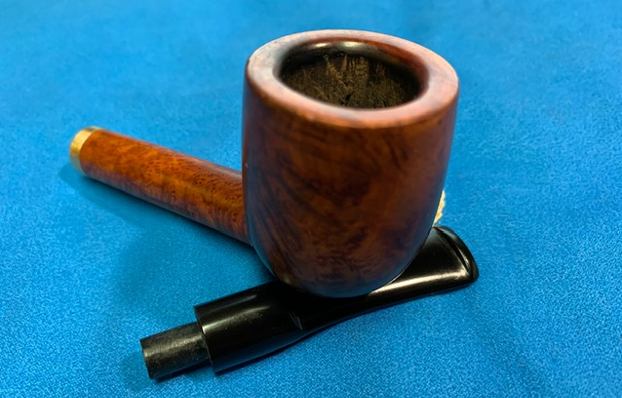
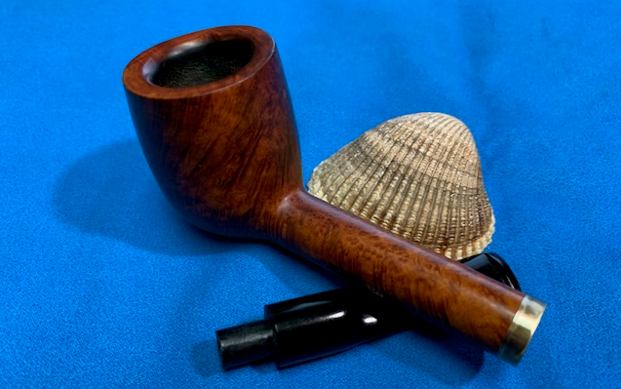
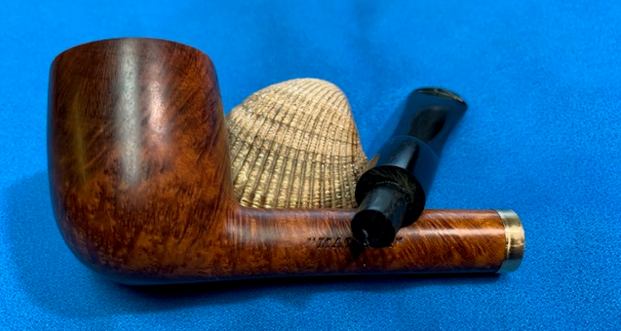
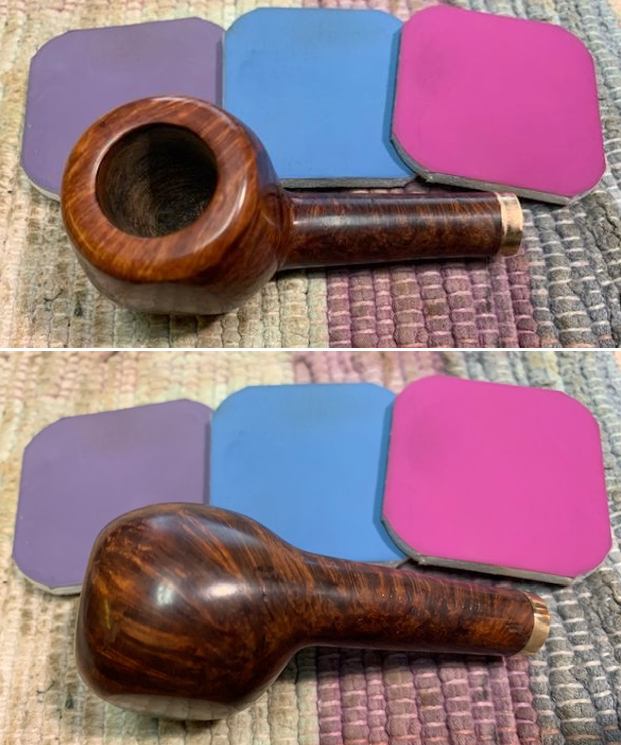
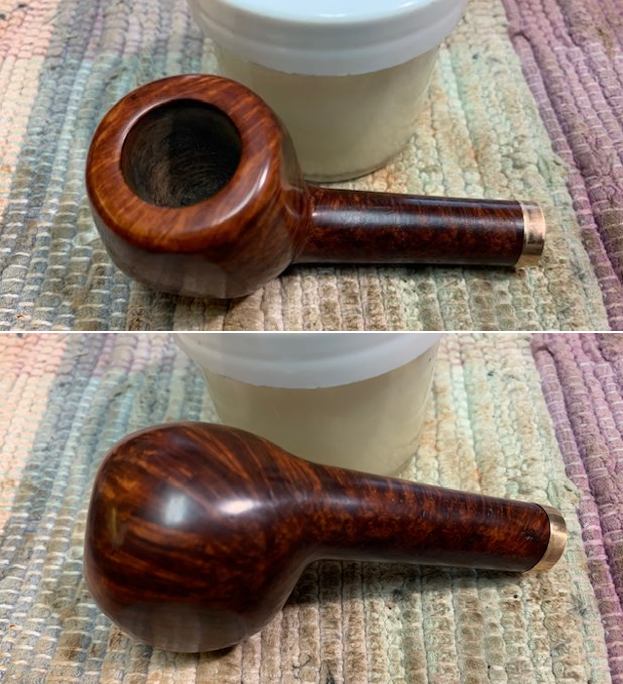
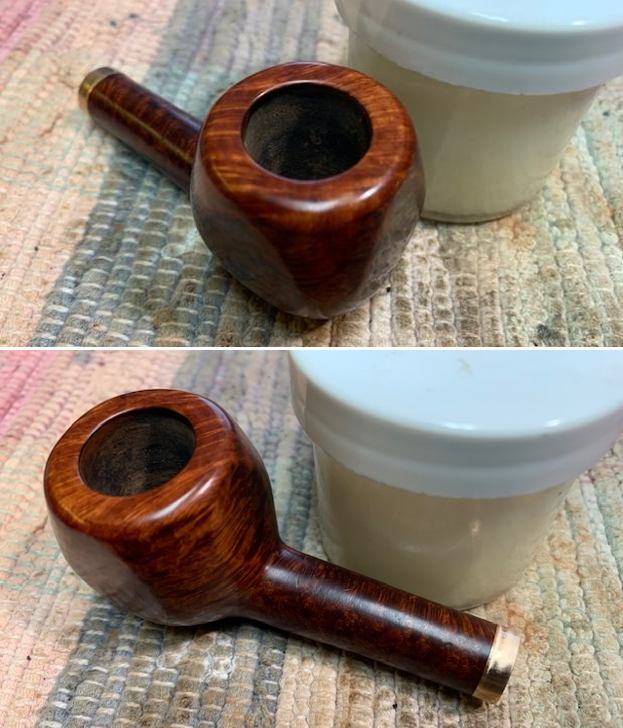
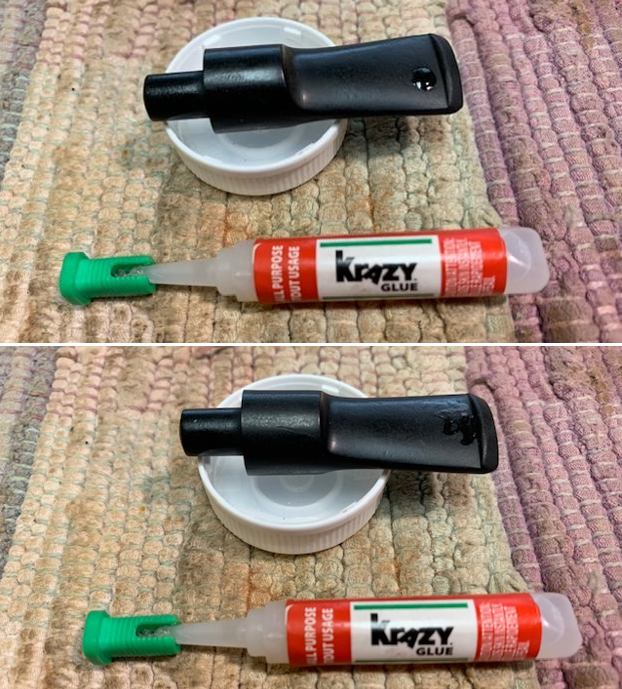
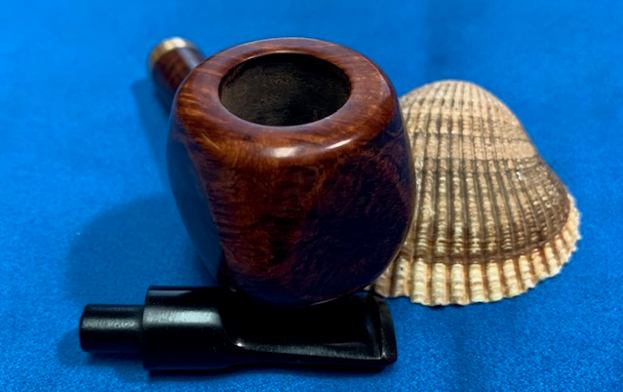
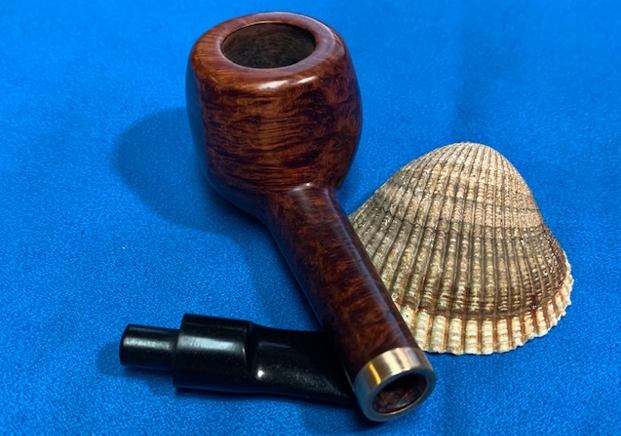
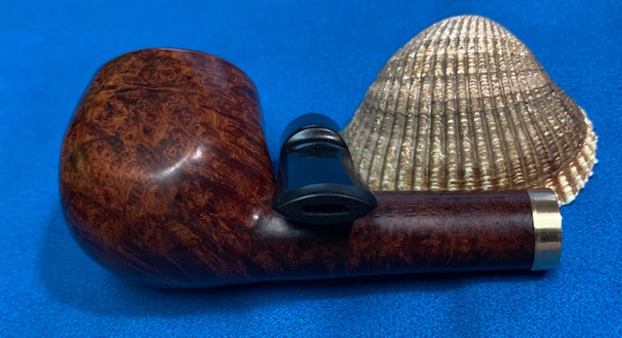
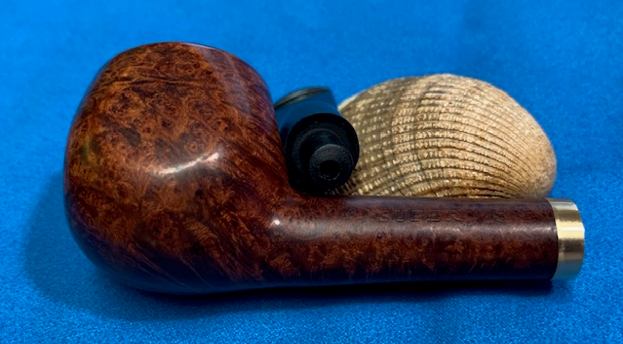
Restoring and Repairing a Cracked Shank on a John Surrey Ltd Super Panel Lovat


Blog by Steve Laug

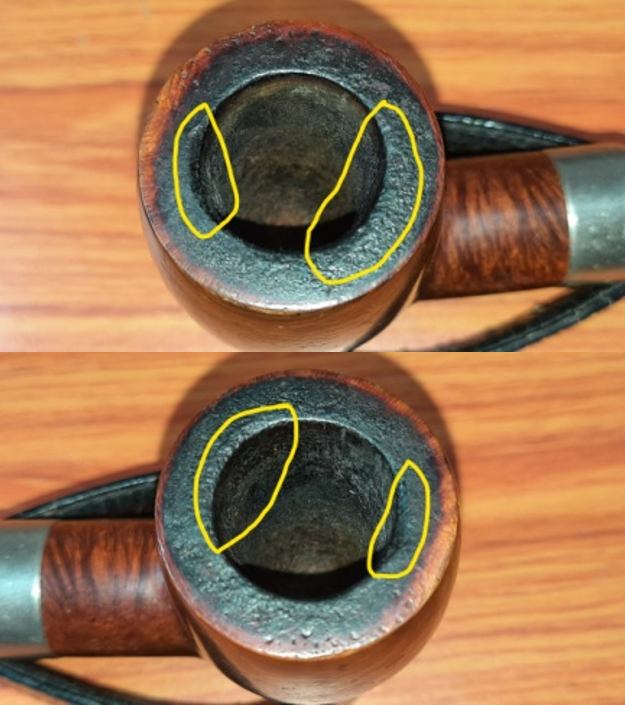
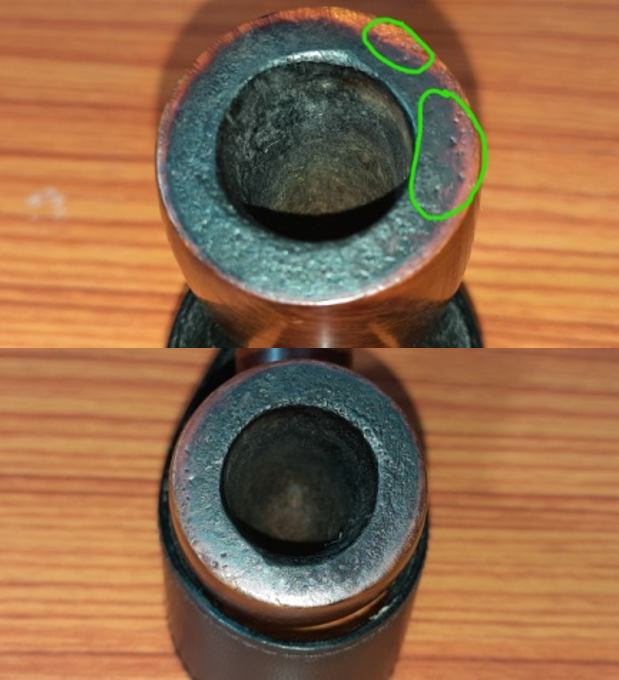
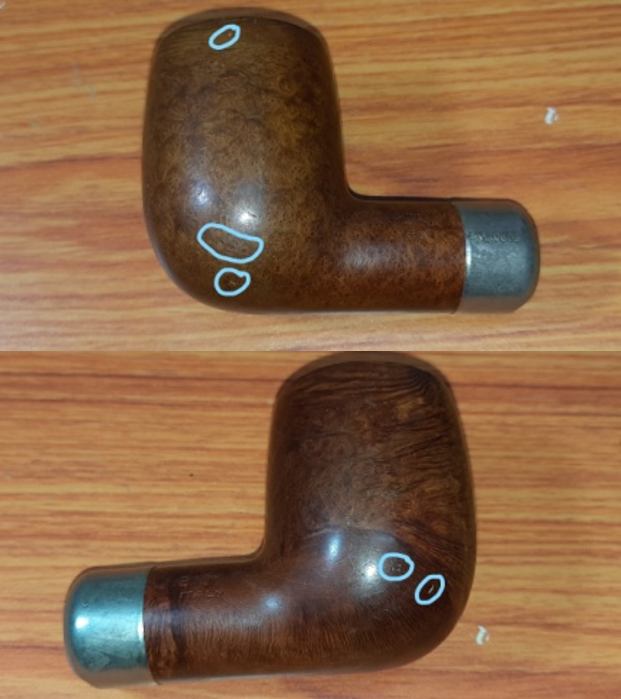
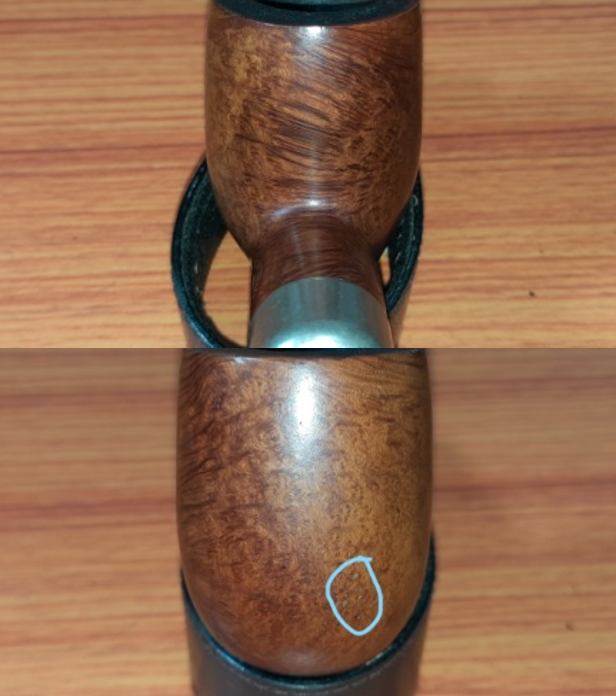
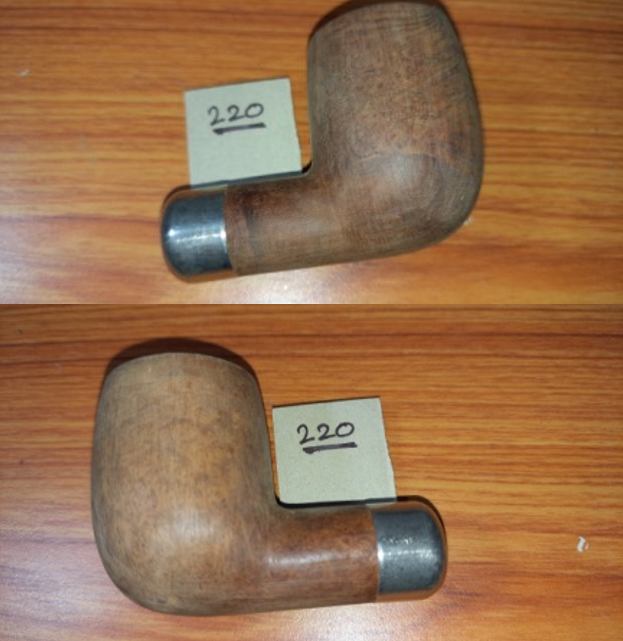
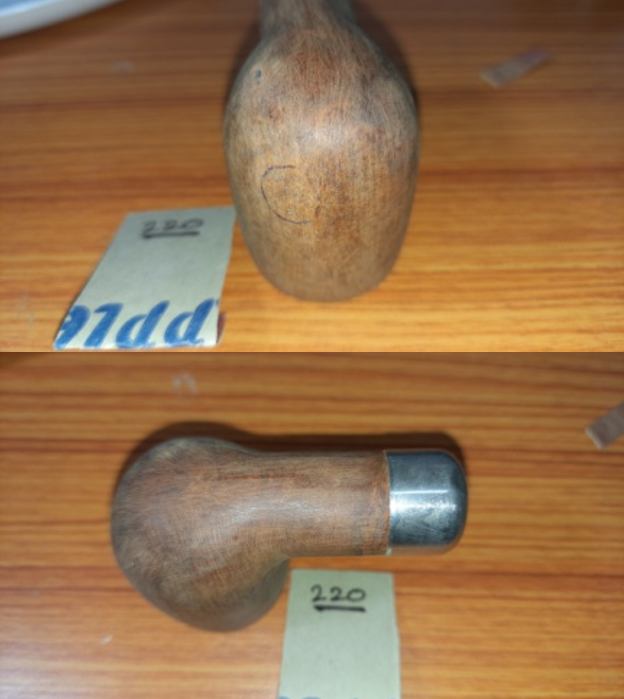
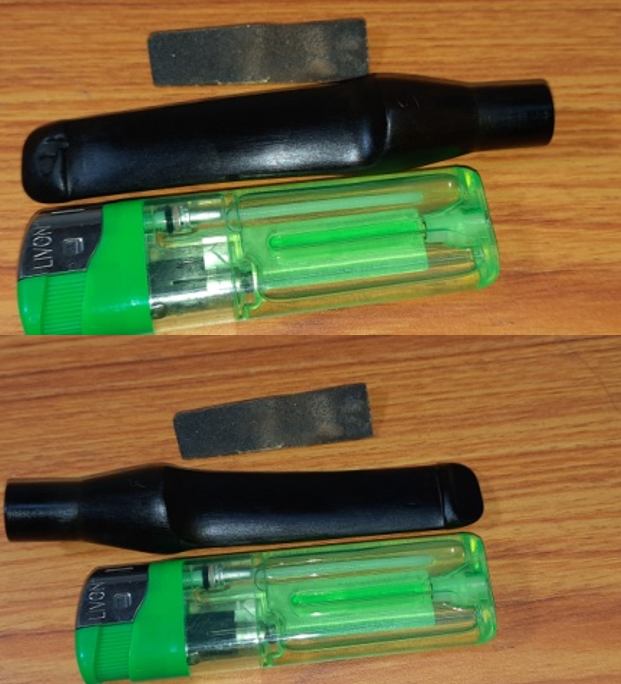
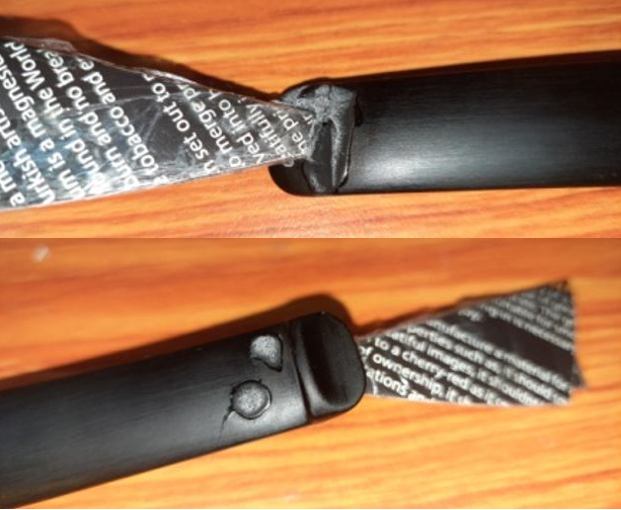
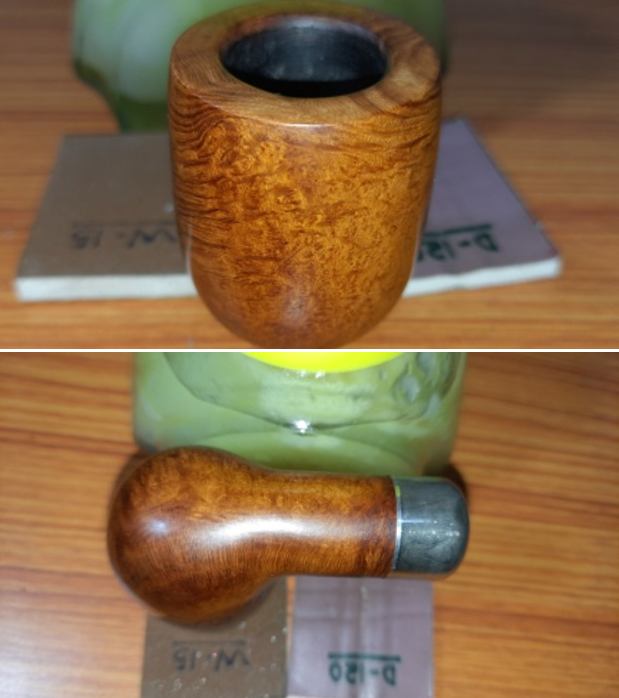
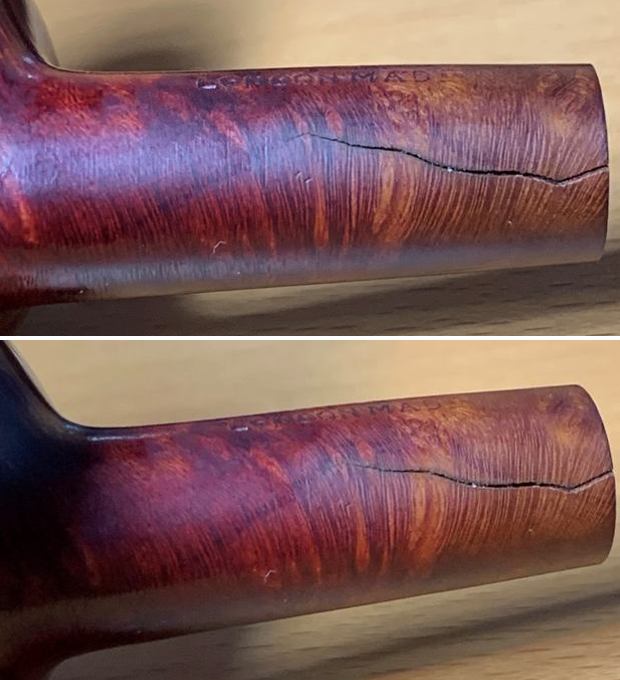
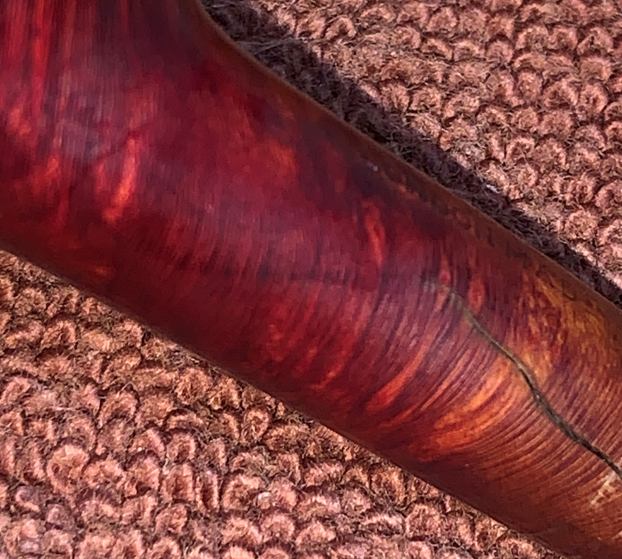
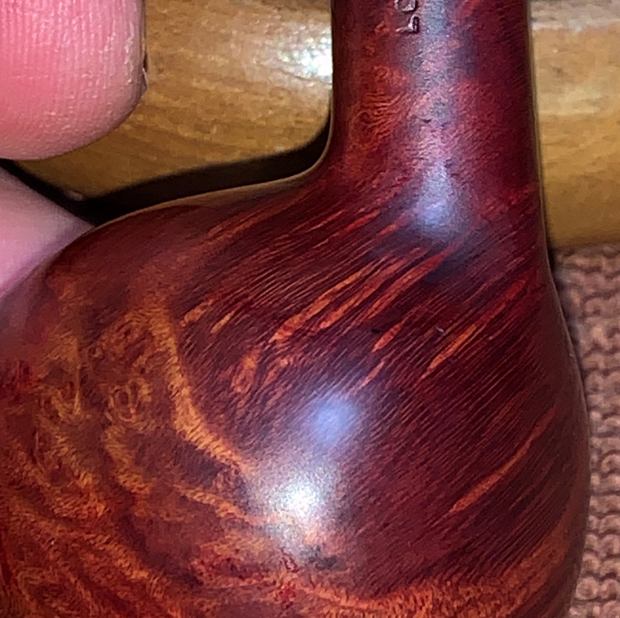
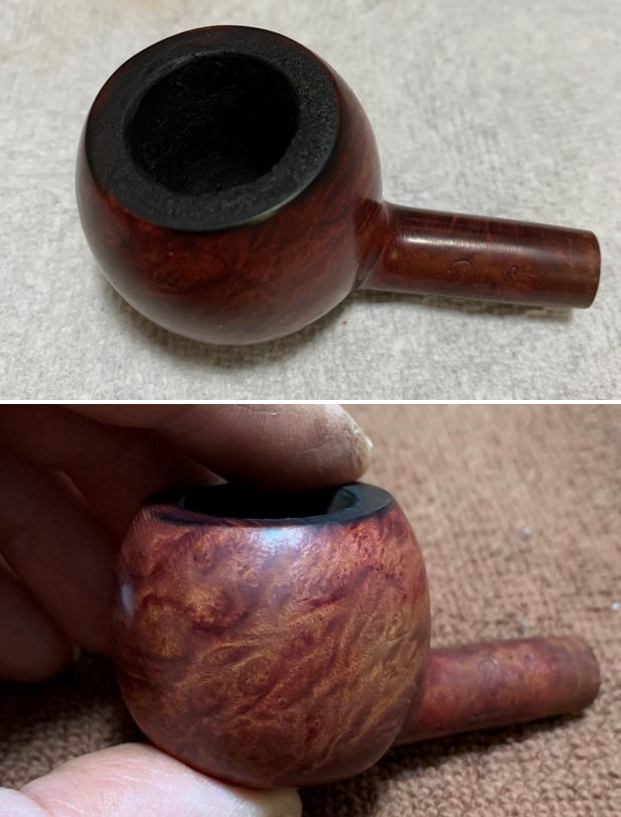
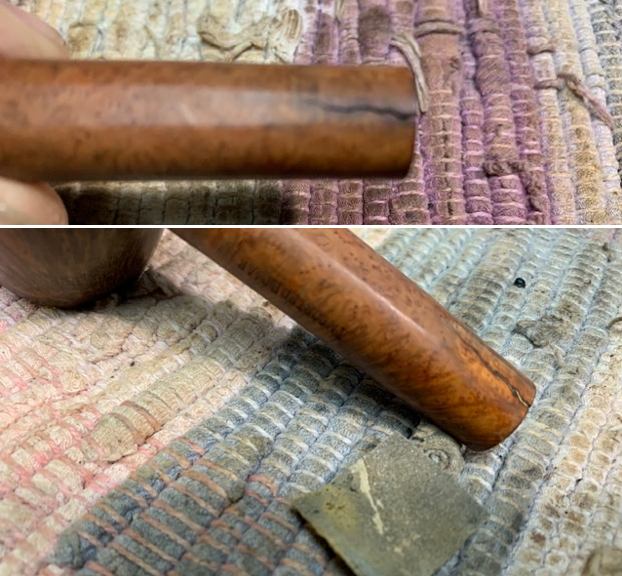
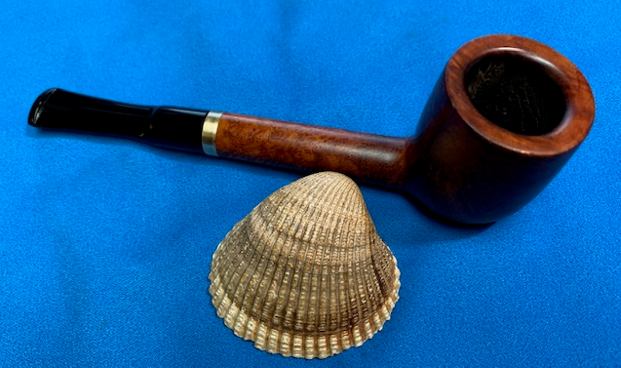
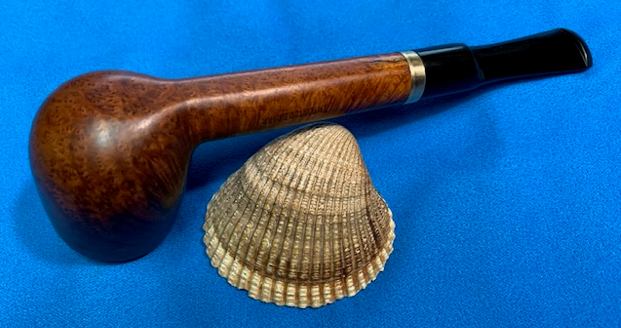
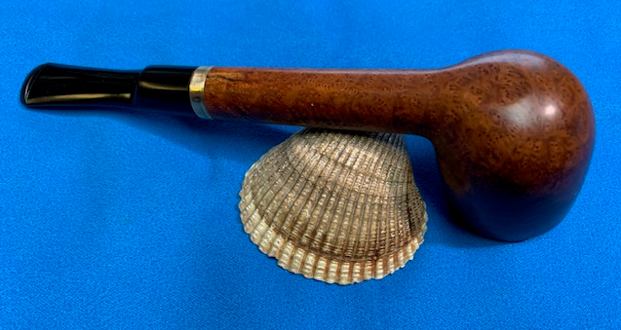
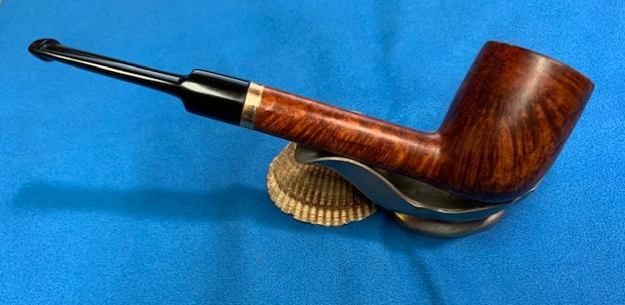
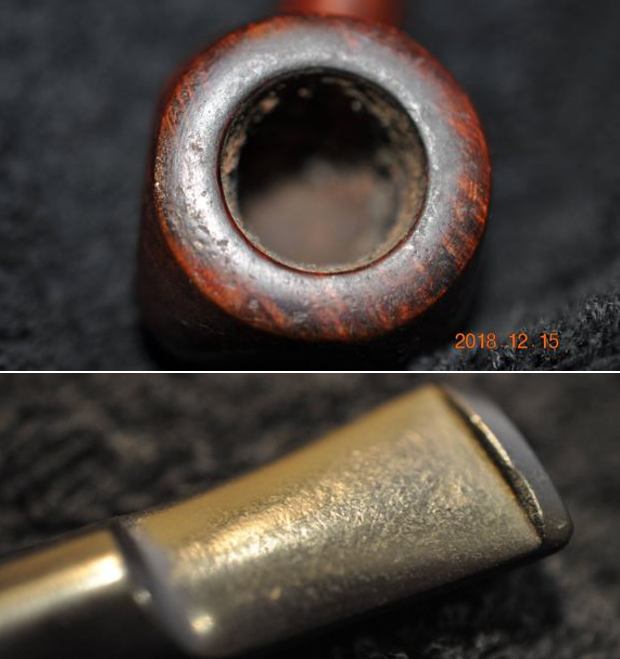
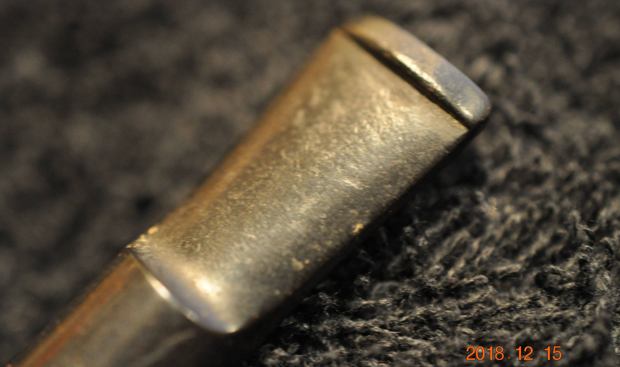
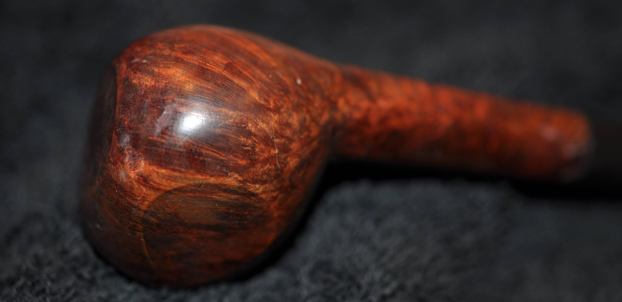
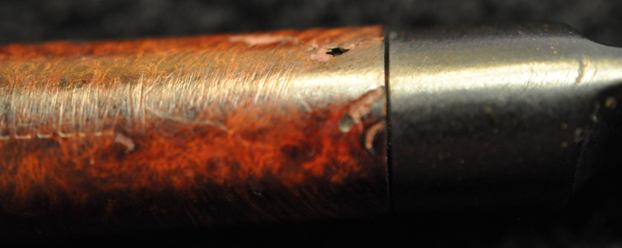
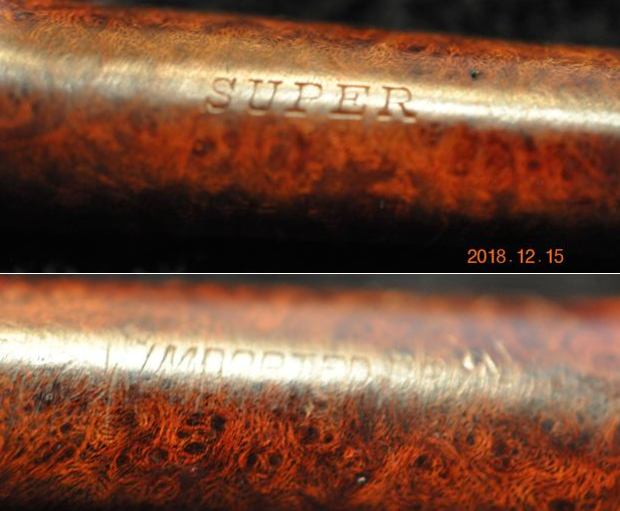
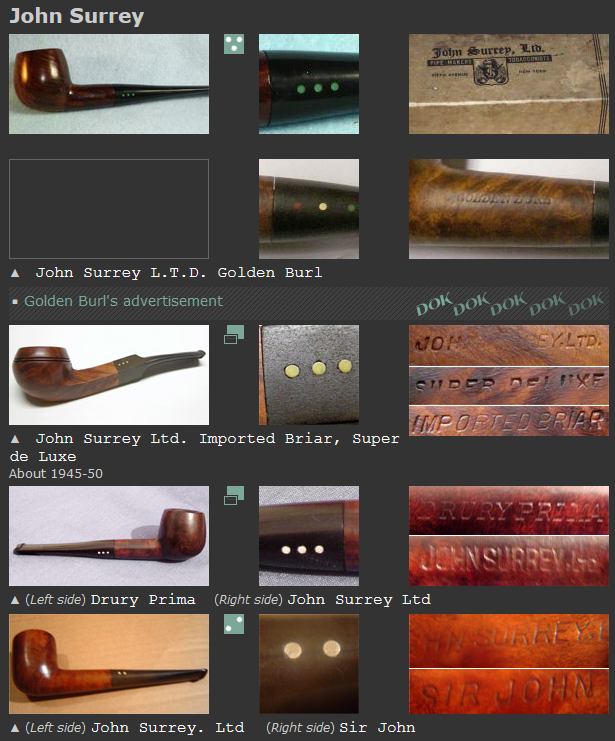
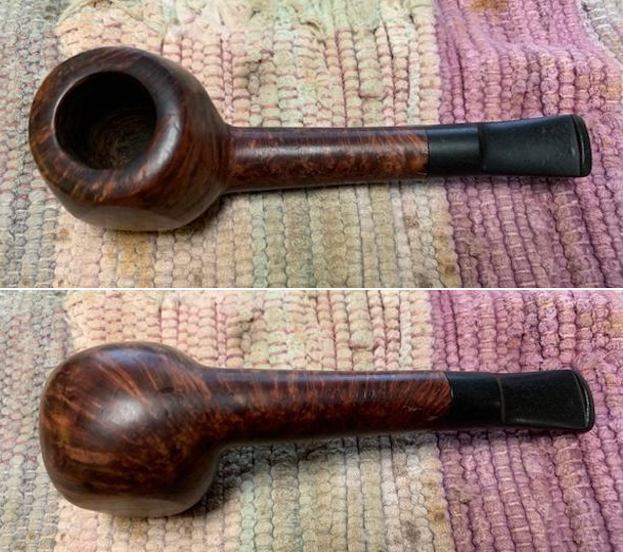
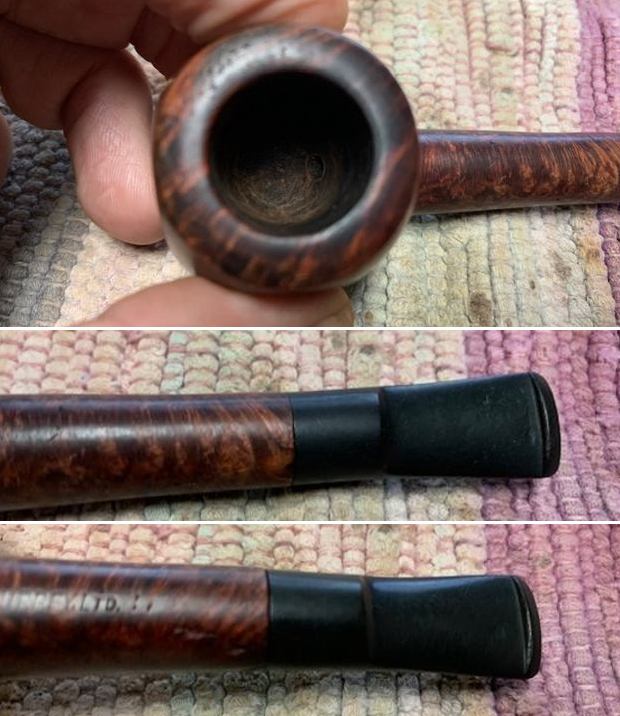
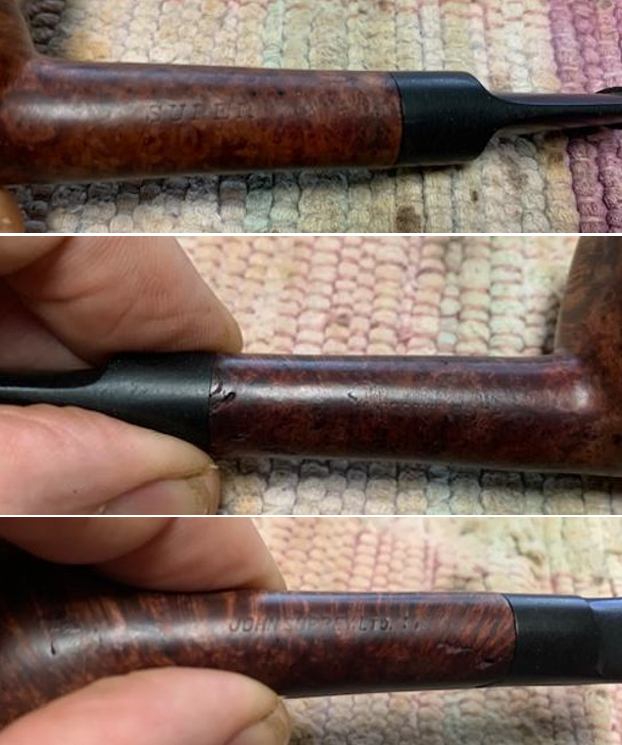
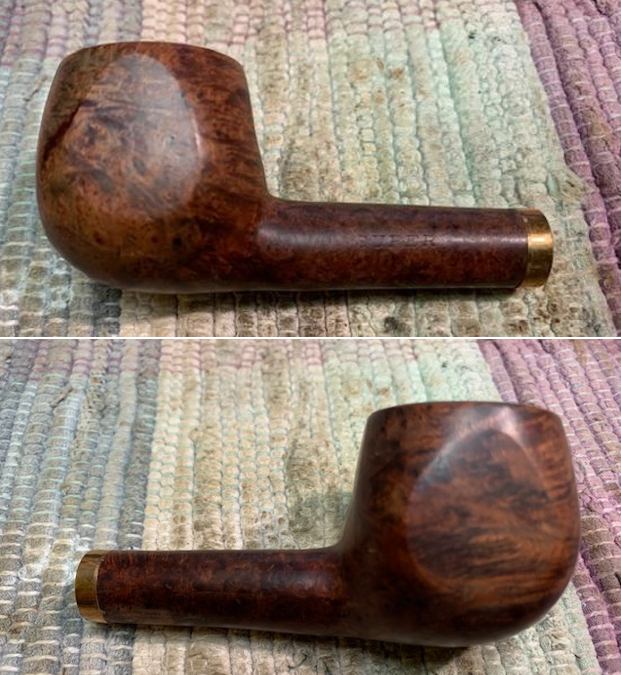
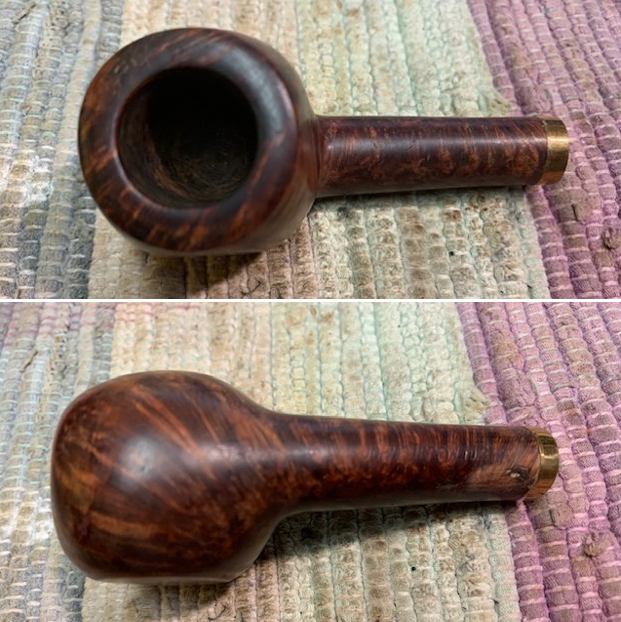
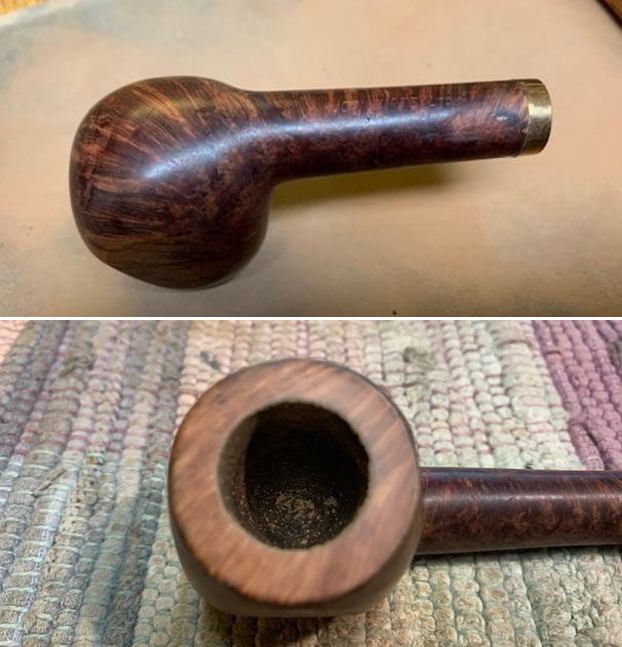
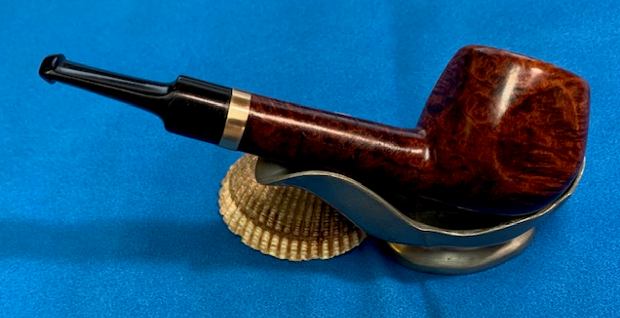
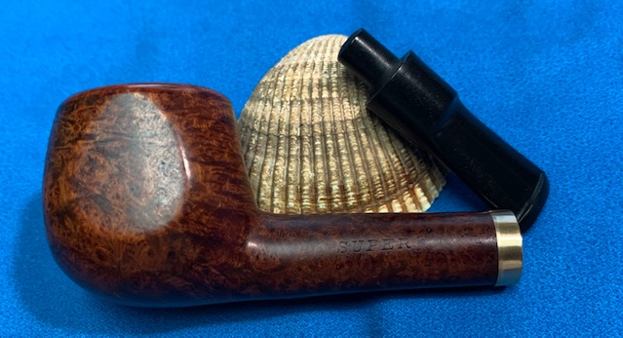
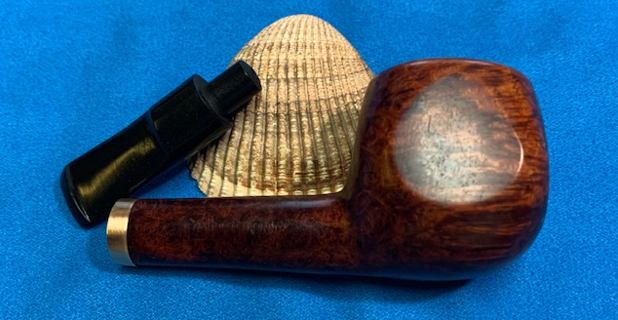
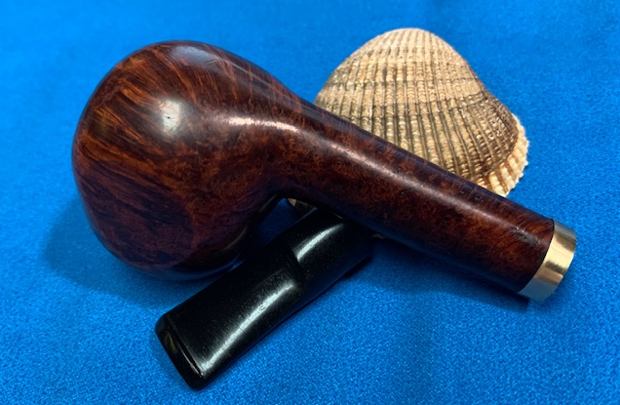
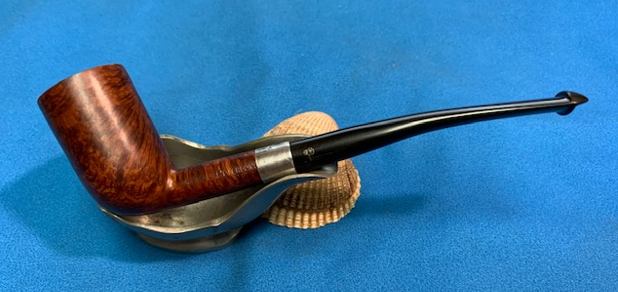
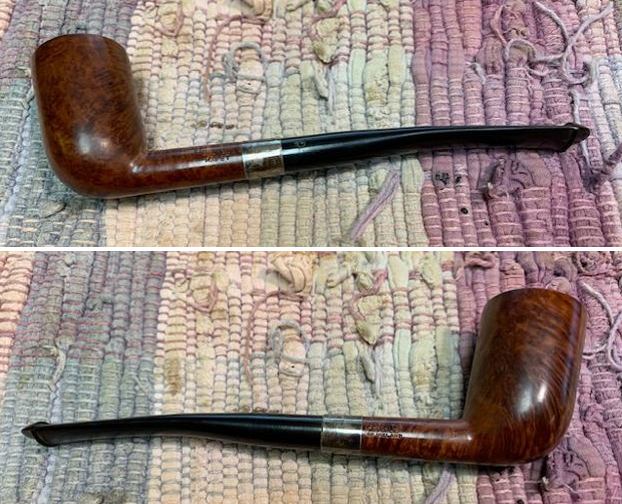
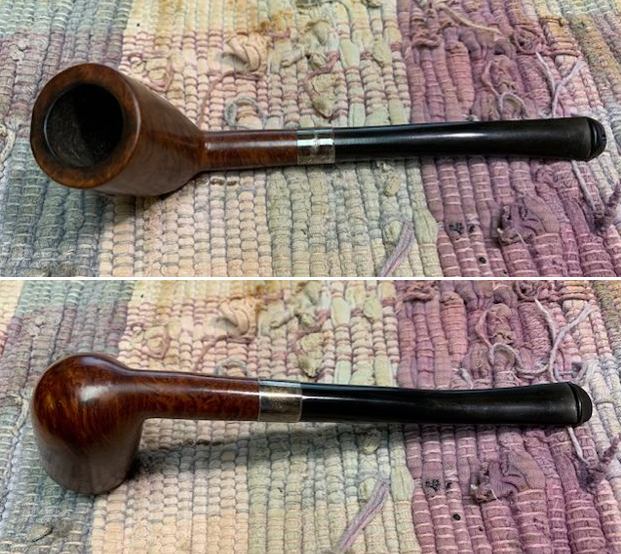
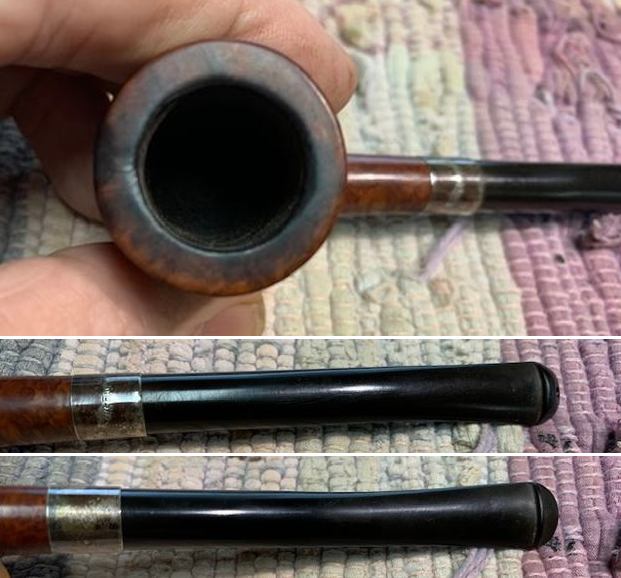
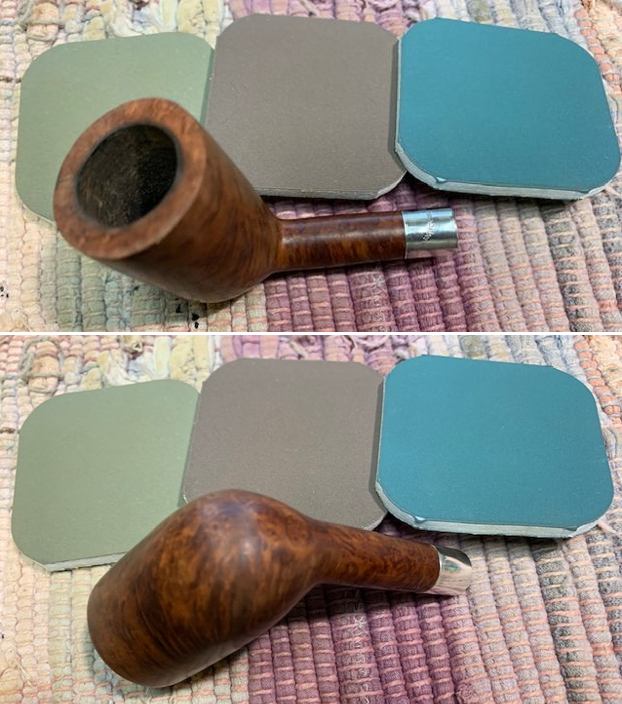
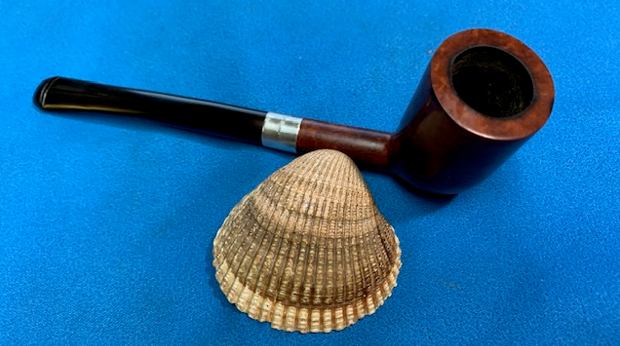
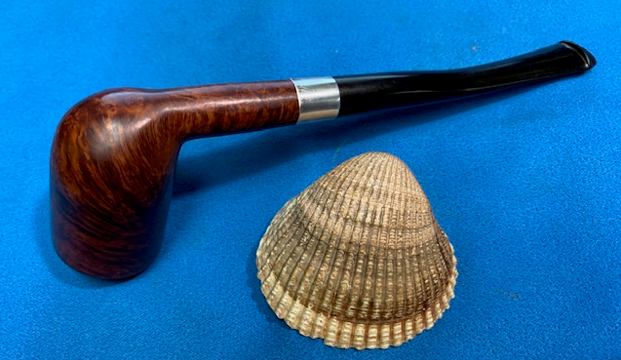
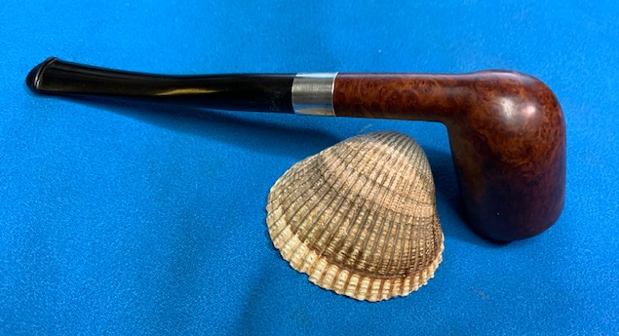
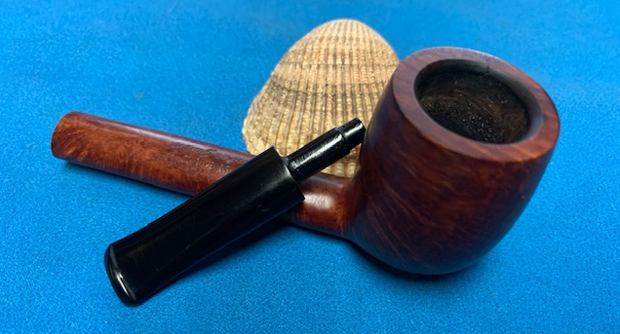
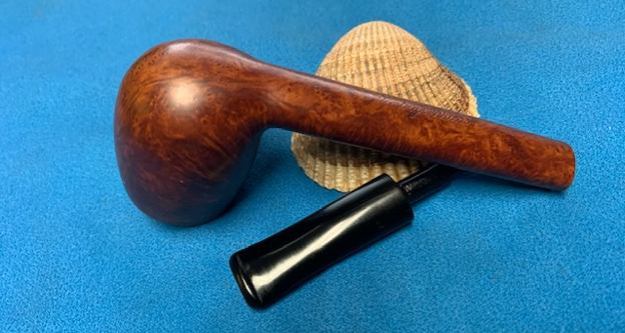
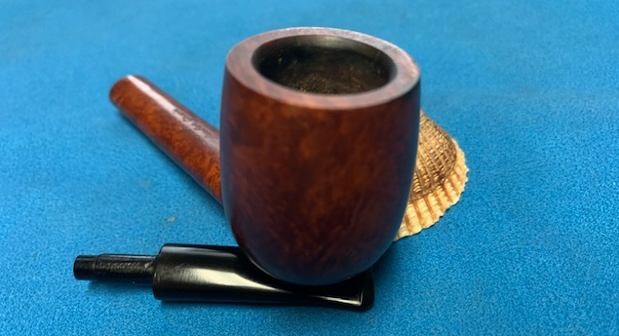
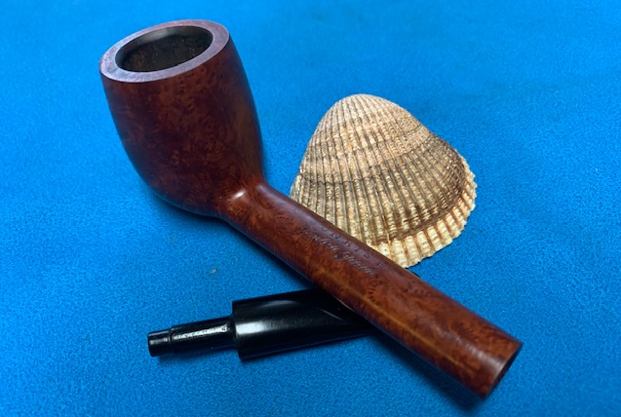
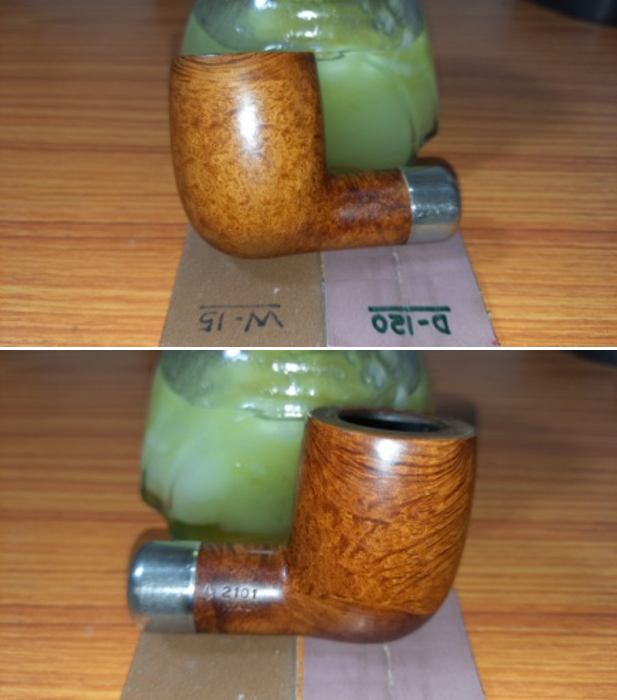
The next pipe on the table is one that we picked up back in 2018 and have no clear record of where and when we picked it up. The shape is what attracted us to the pipe. It is a unique shape with the panels on the bowl and the short Lovat style shank with a saddle stem. The finish was dirty with grime ground into the finish around the bowl sides. There were also some cracks in right side mid shank and on the lower part as well. The cracks were in the middle of some fills on that side of the bowl. There was a thick cake in the bowl and lava overflow on the top of the rim. There was also tobacco debris in the bowl. The stem was lightly oxidized and there were tooth marks and chatter on both sides near the button. The pipe is stamped on the left side of the shank and reads SUPER. On the right side it reads IMPORTED BRIAR. On the underside it is stamped John Surrey Ltd. The stamping is all clear and readable. He took photos of the rim top and bowl to give a clear picture of the thickness of the cake and well as the nicks, lava and darkening on the rim top. The inner and outer edges of the bowl were in great condition. He also took photos of the top and underside of the stem to show the light oxidation and the chatter and tooth marks.  Jeff took a photo the sides and heel of the bowl to give a picture of the beautiful grain around the bowl and shank. He also took a photo of the fills and damage to the right and underside of the shank – there were fills that had fallen out and there was a crack that needed attention.The stamping on the sides of the shank is clear and readable and read as noted above. Jeff did not take a photo of the John Surrey Ltd. stamp on the underside of the shank. I turned to Pipephil’s site and looked for information on the John Surrey Ltd pipe company (http://pipephil.eu/logos/en/logo-j3.html). I found that the company, John Surrey, Ltd. was originally located at 509 Fifth Avenue New York City, New York in the USA. I also did a screen capture of the section on the brand. Interestingly the Super line is not included in the list but all of the other pipes in the section are stamped with the same style stamping as the one I am working on. The closest one is the John Surrey Ltd. Imported Briar Super Deluxe. It is possible that the Deluxe stamp is worn off on this one but it is not clear.I turned to Pipedia in the US pipe makers section to see if I could find some more information on the brand (https://pipedia.org/wiki/John_Surrey_Ltd.). I found a short summary which I include below regarding the brand.

John Surrey Ltd. made John Surrey pipes. They were based at 509 Fifth Ave, New York. And in 1948 the company put a pipe on the market which sold very successfully: the Slugger Baseball Pipe (shank and stem like a baseball bat, and bowl similar to a baseball).

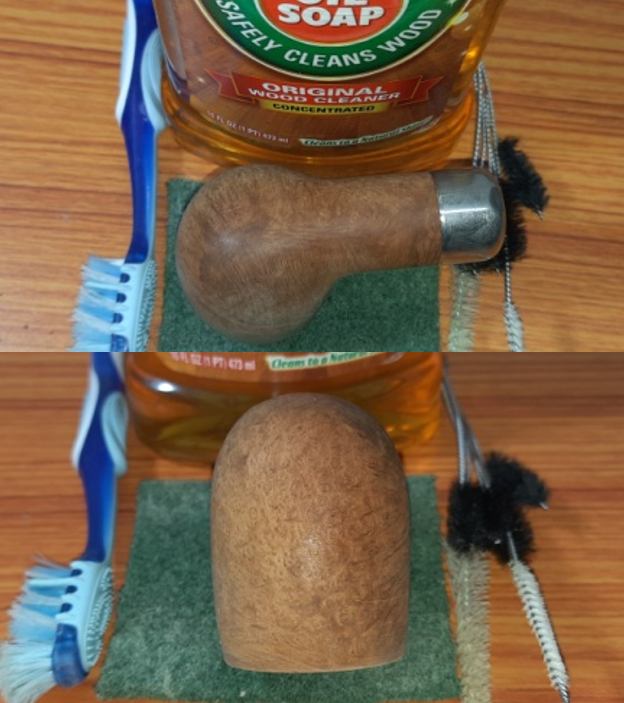
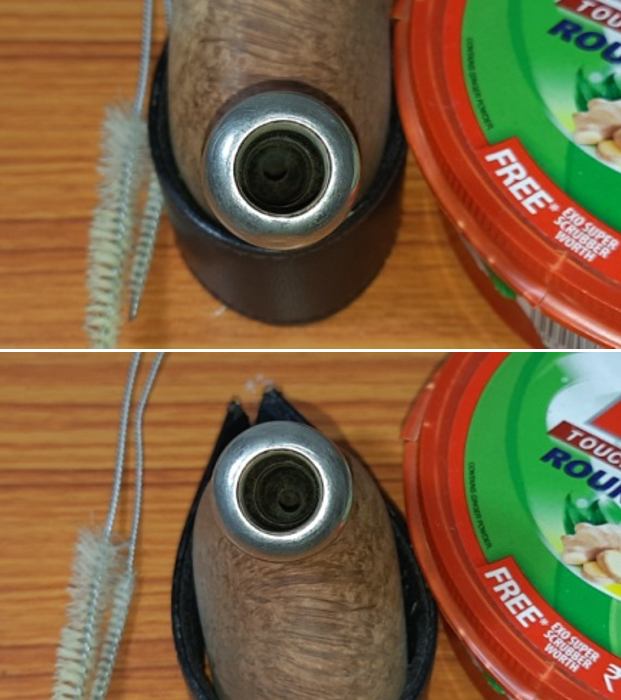
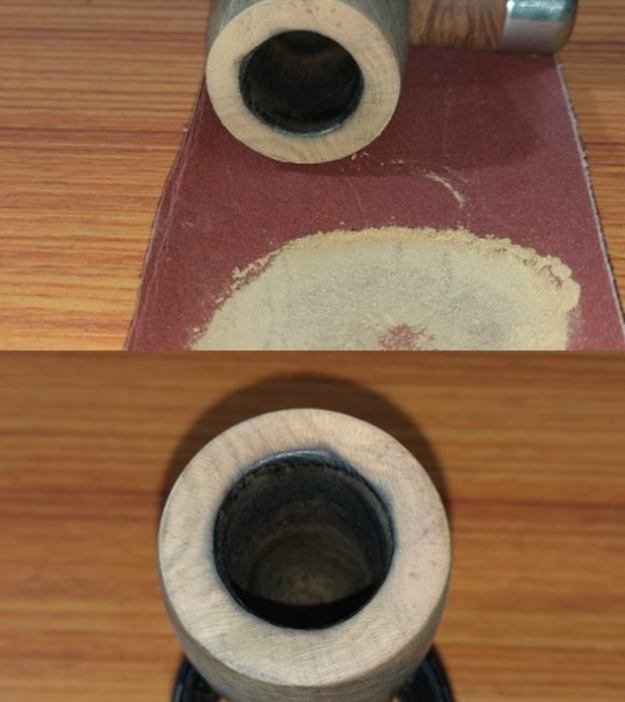
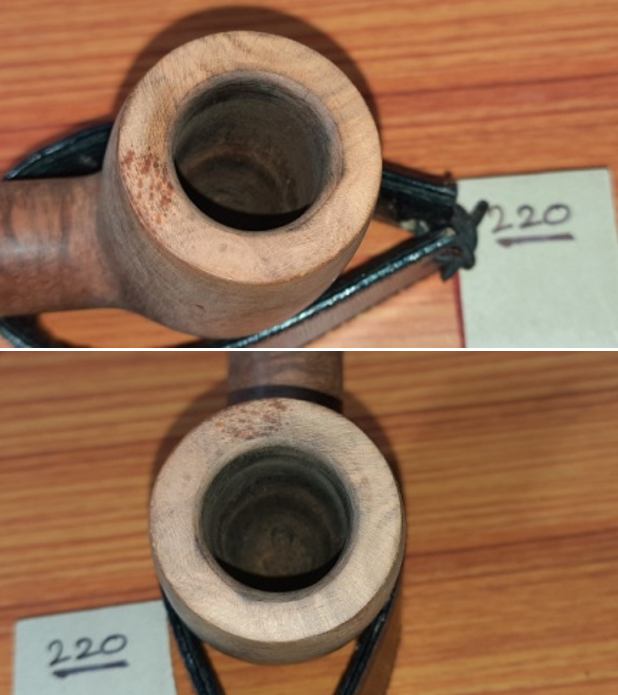
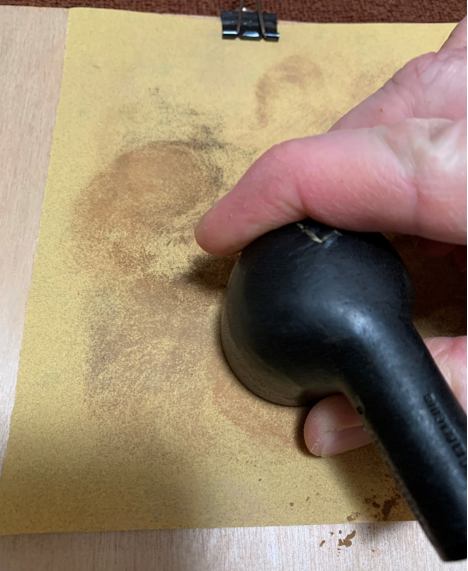
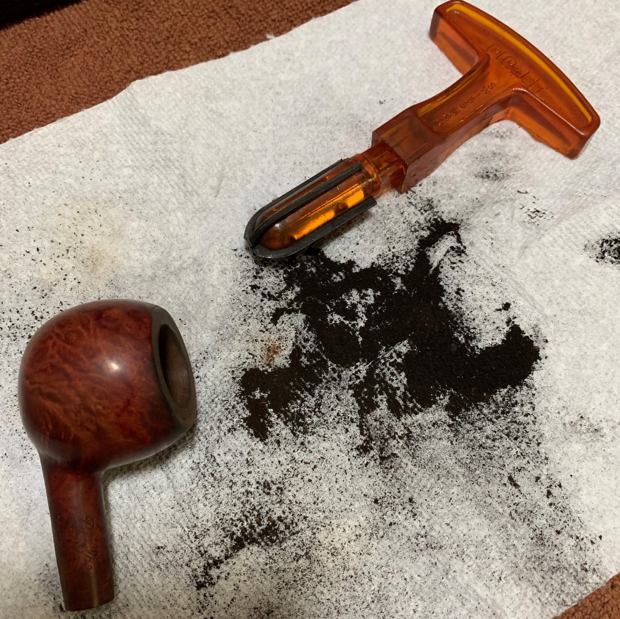
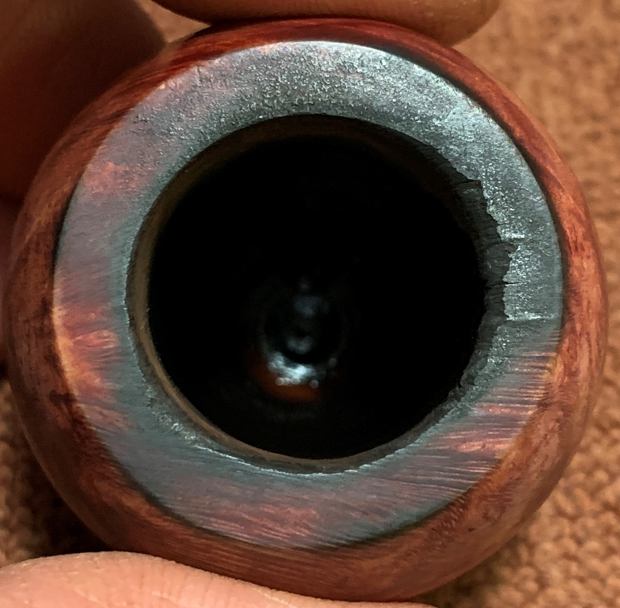
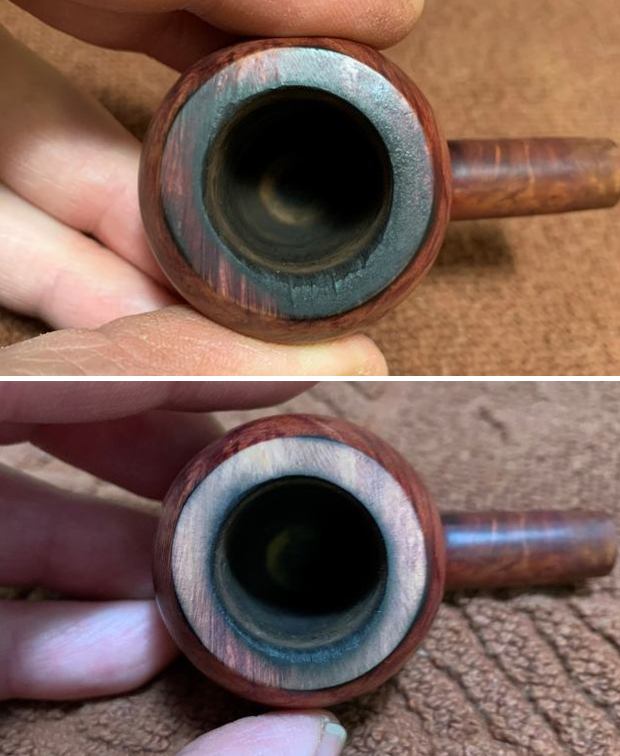
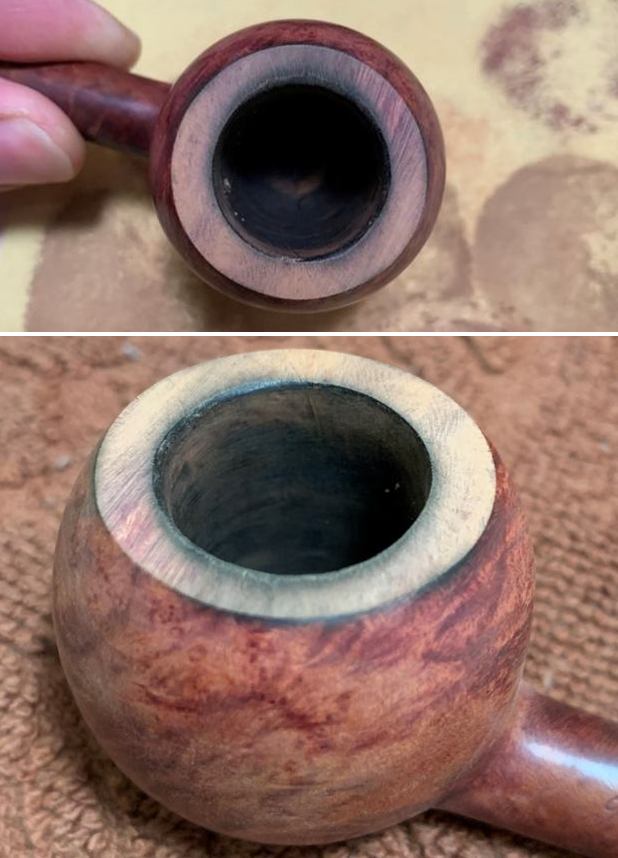
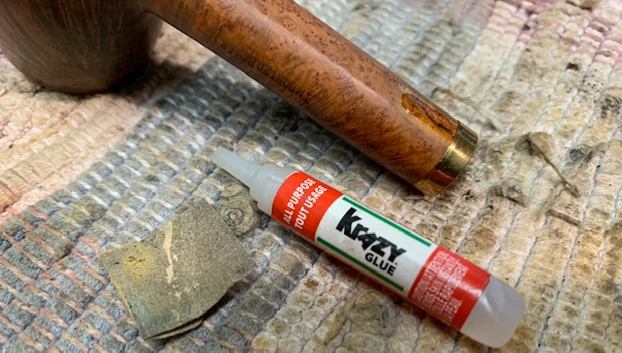
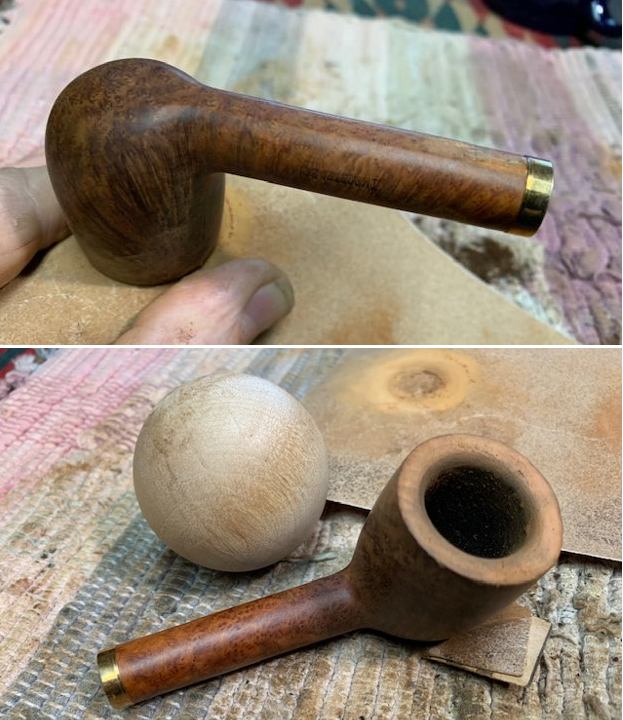
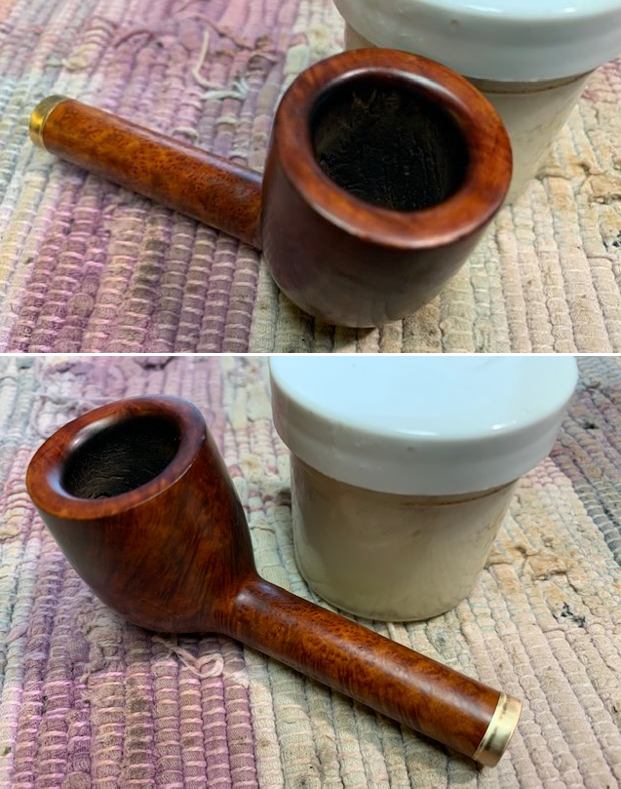
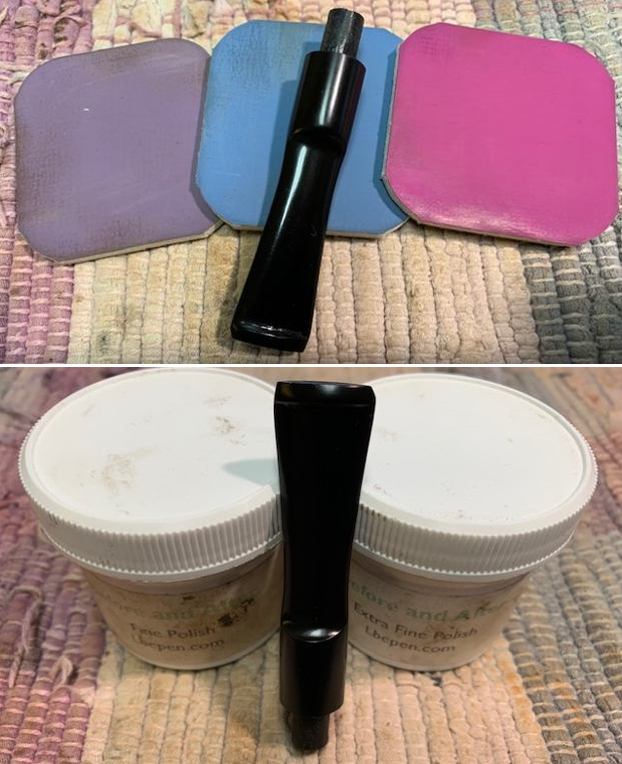
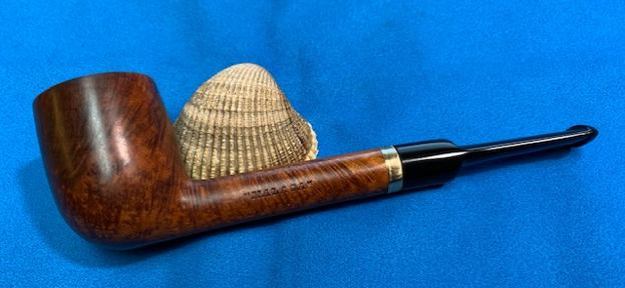
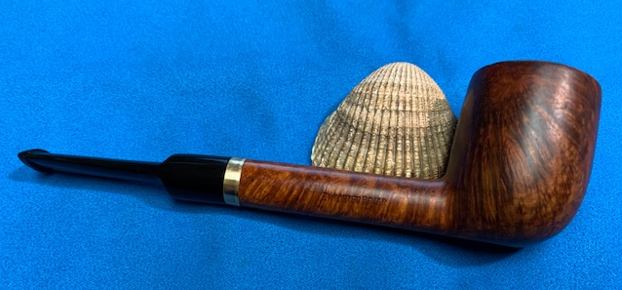
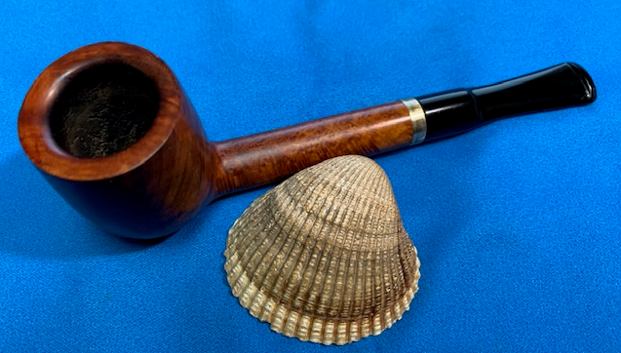
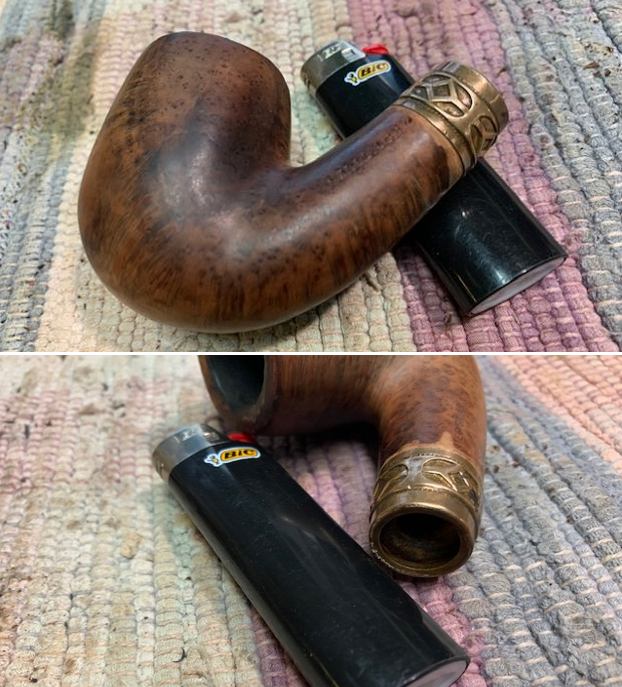
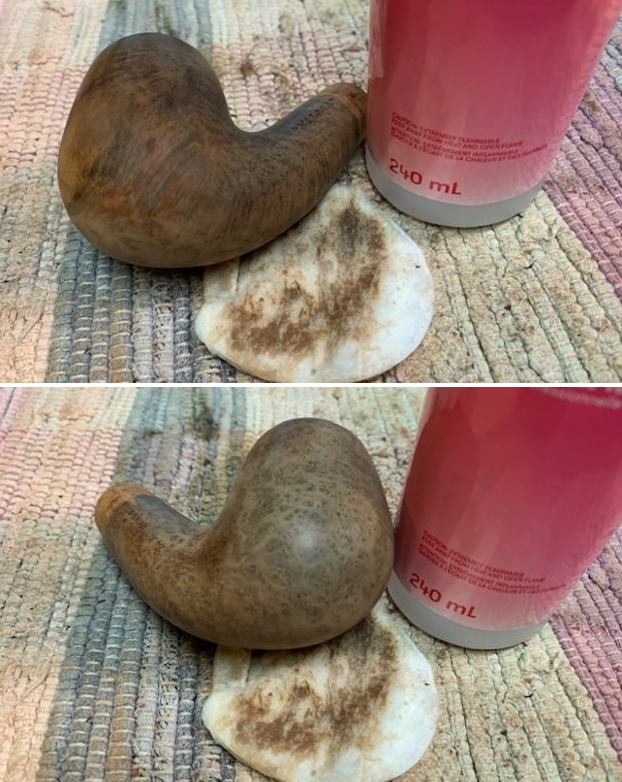
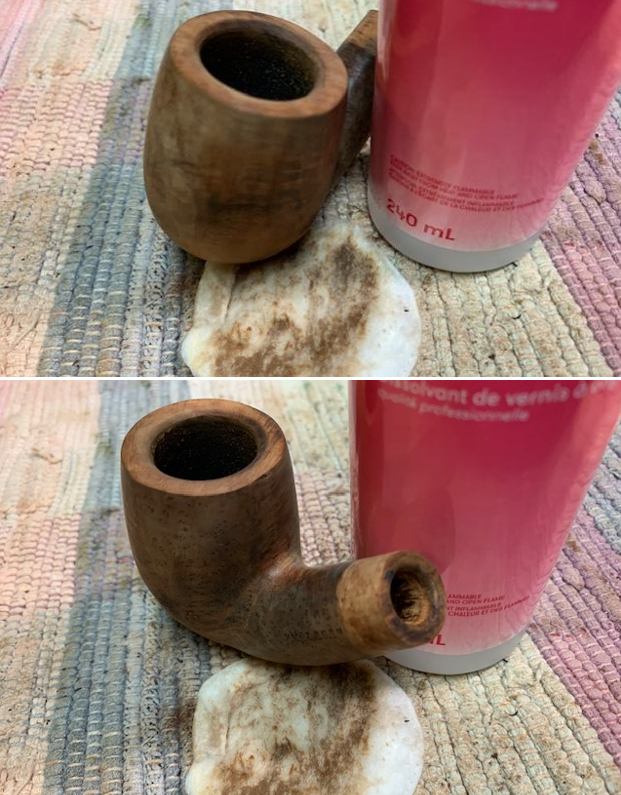
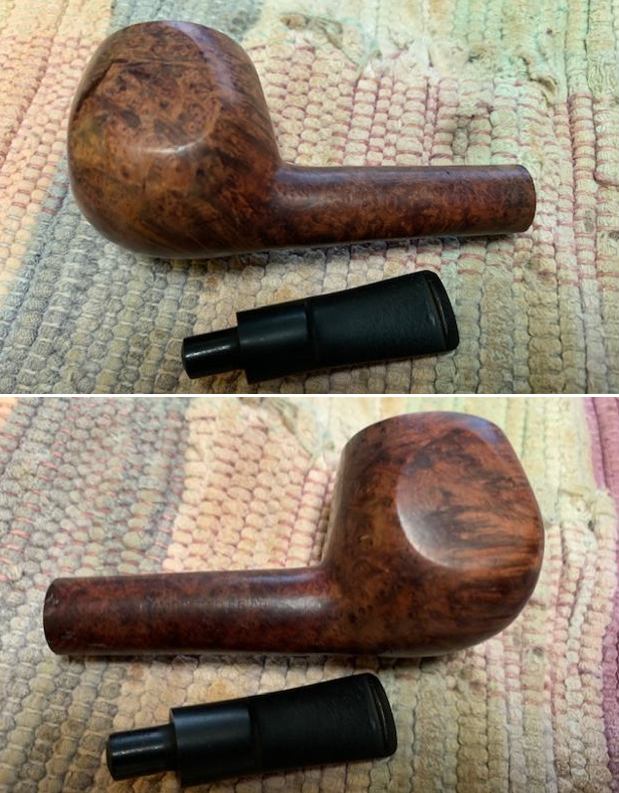
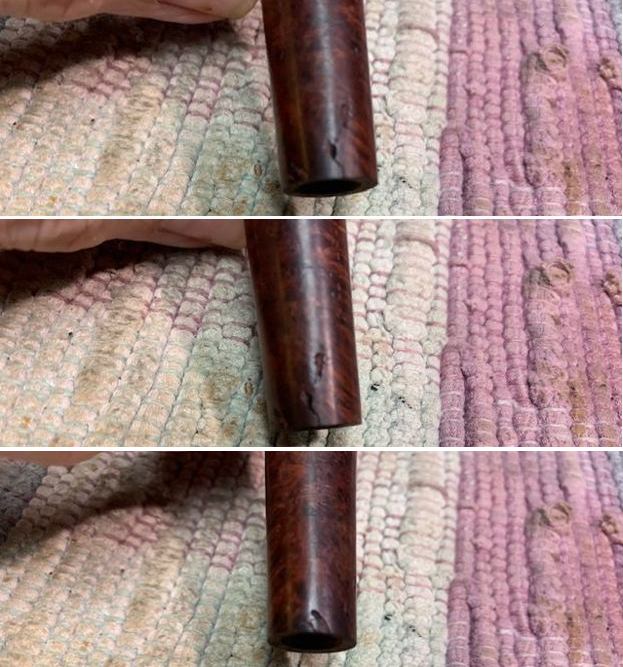
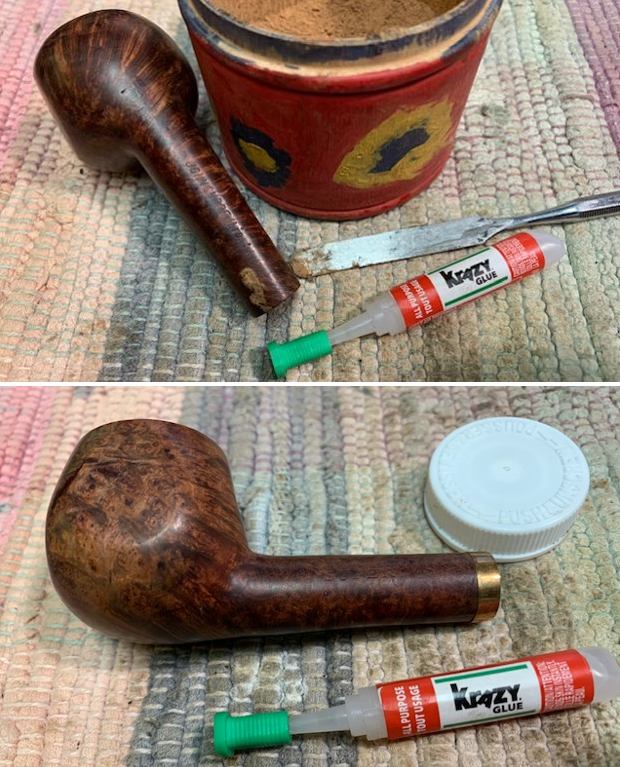
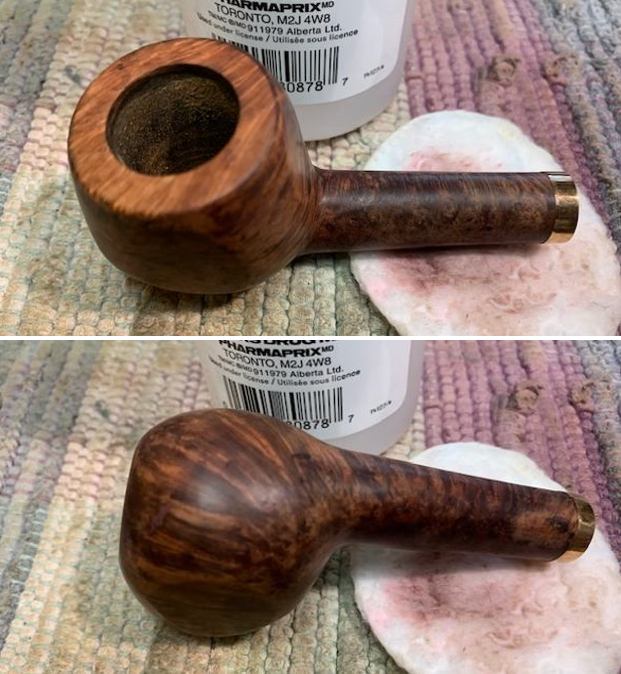
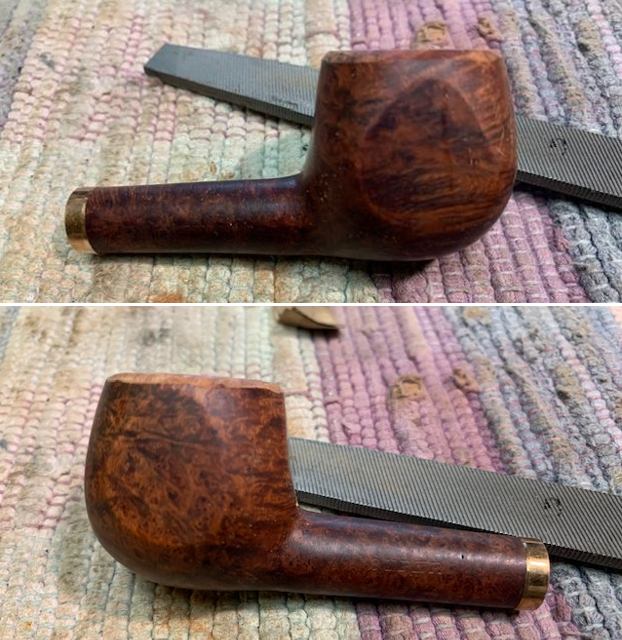
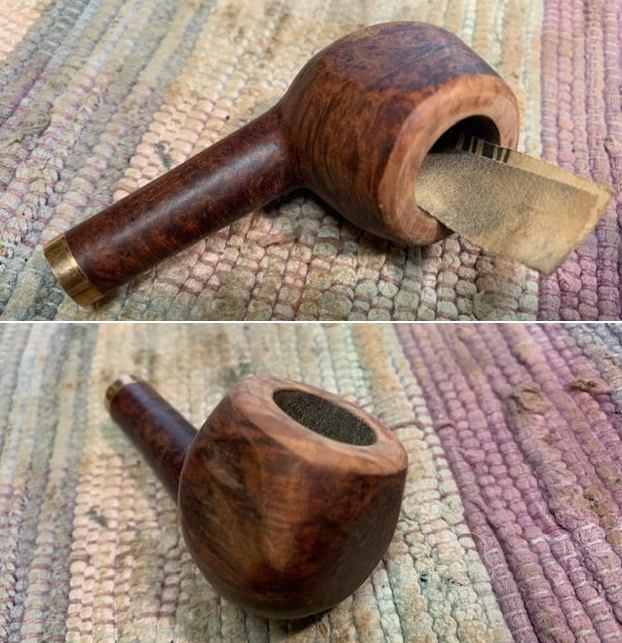
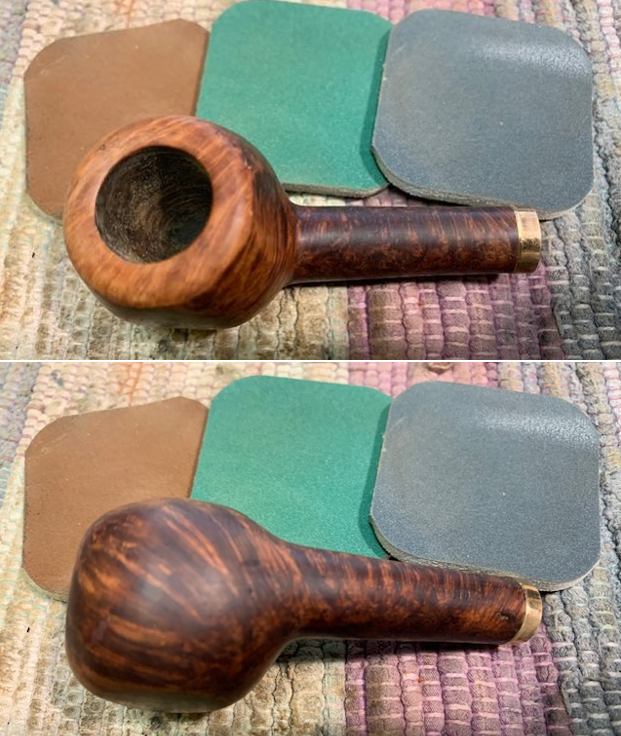
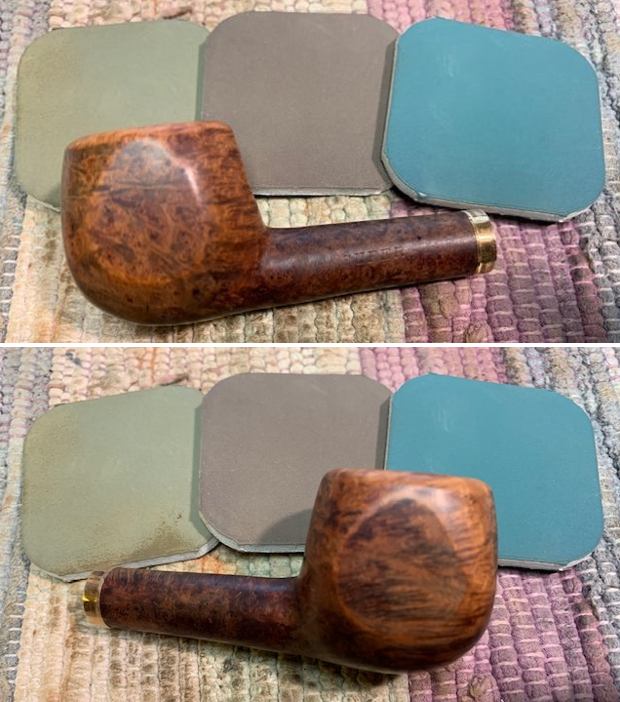
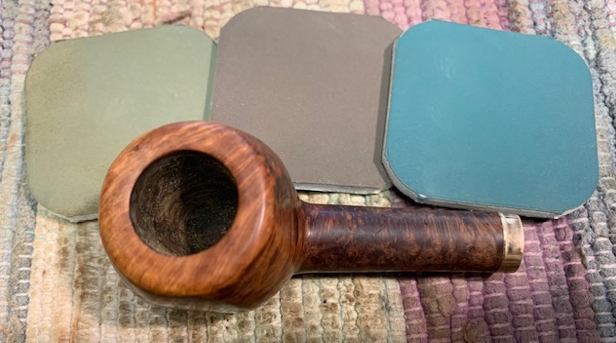
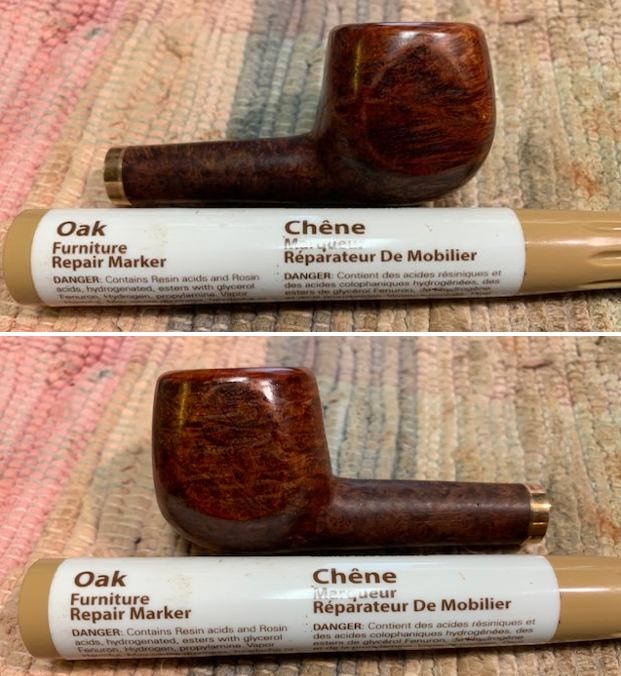
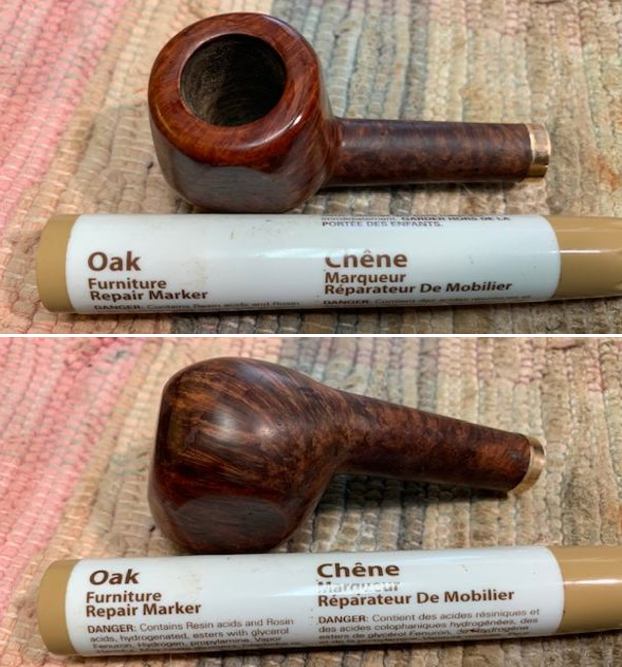
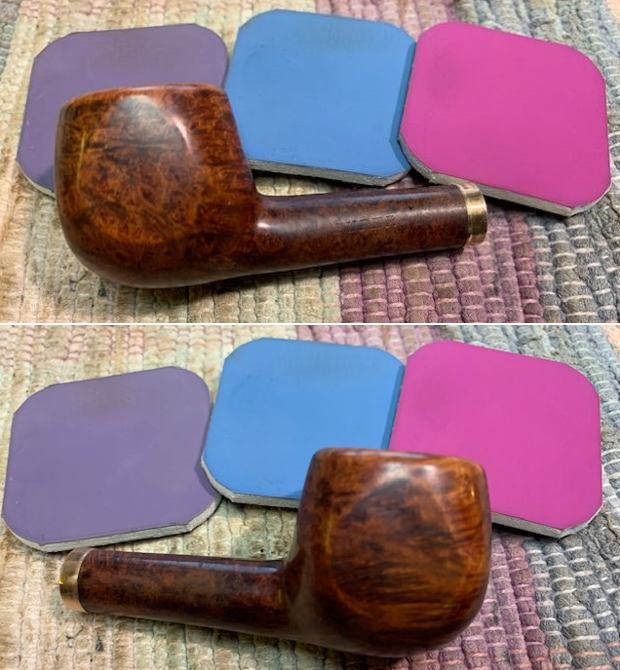
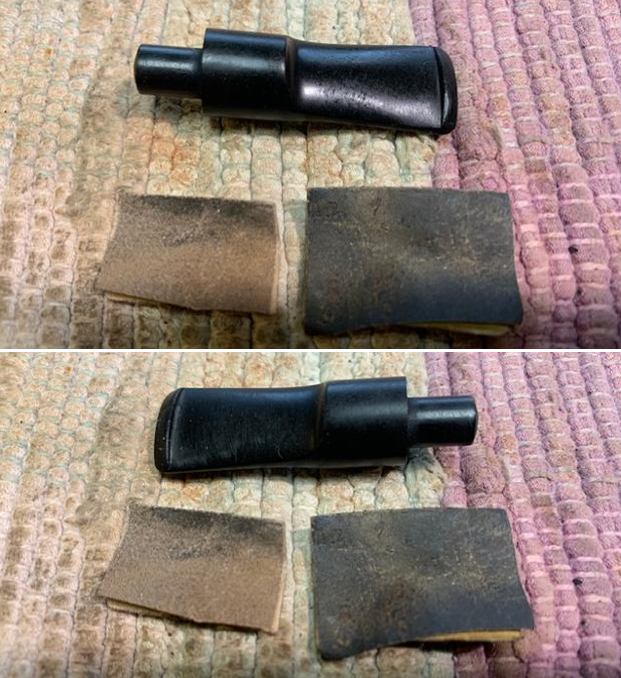
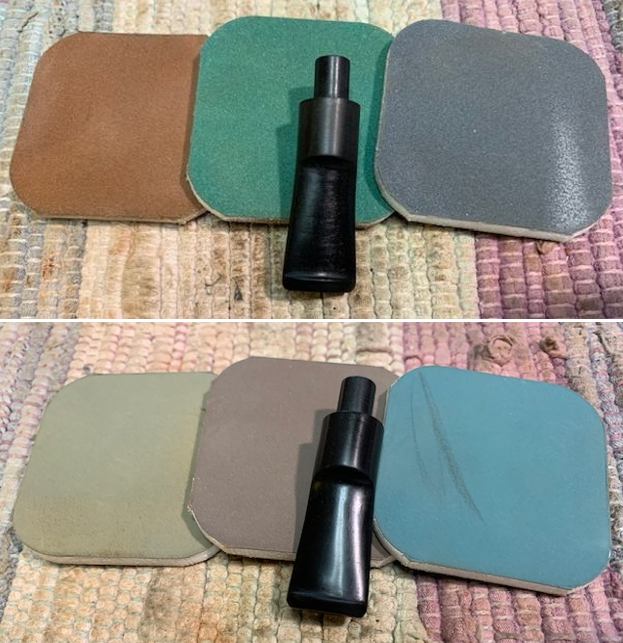
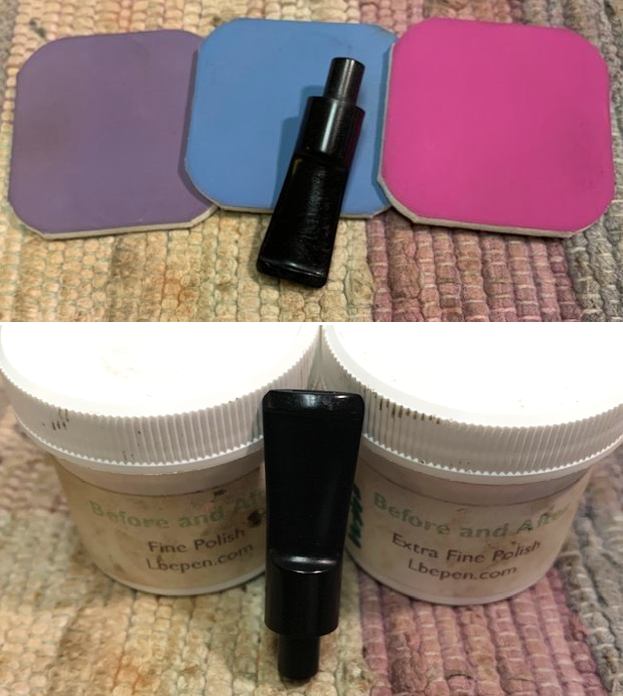
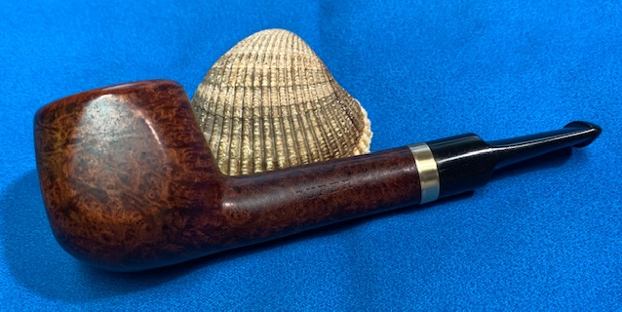
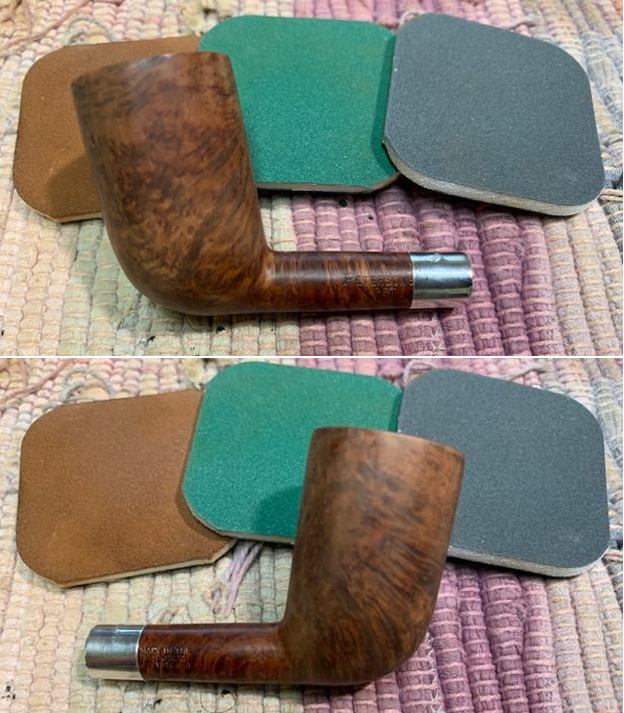
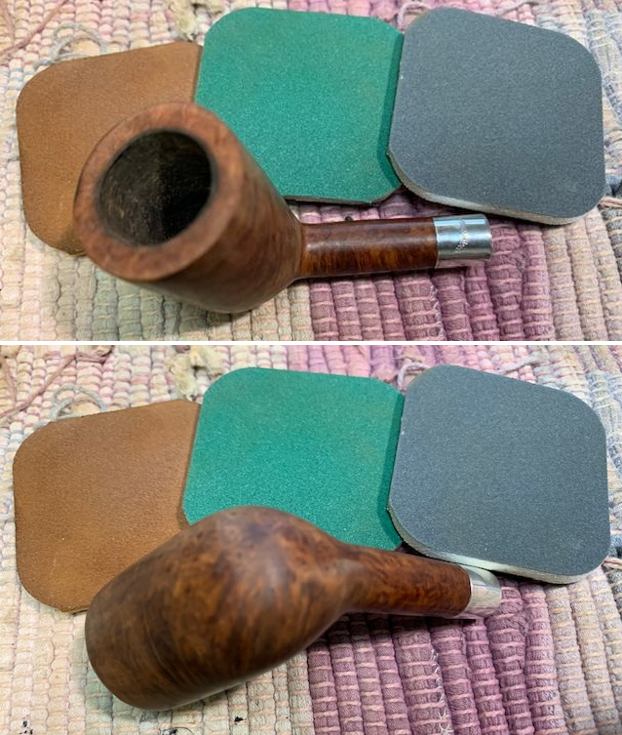
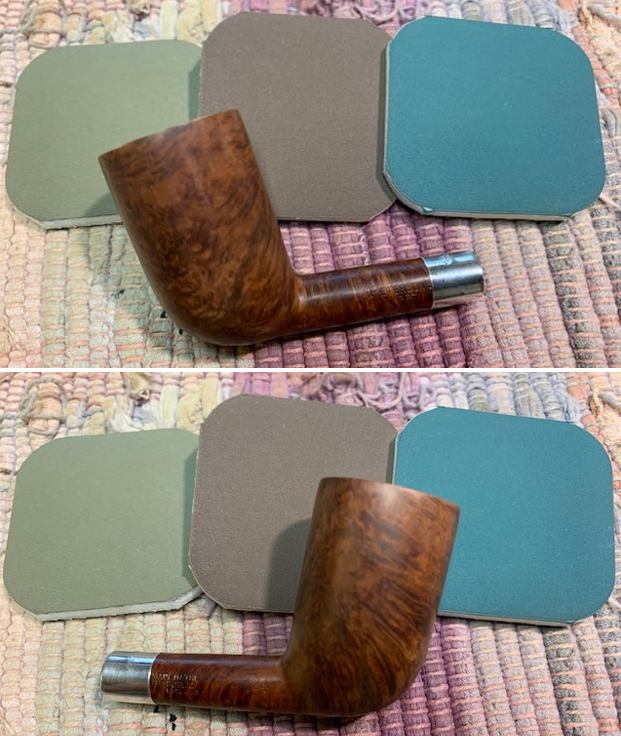
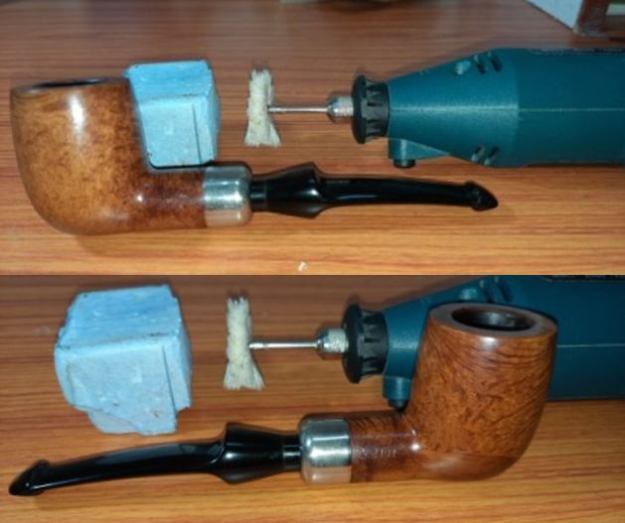
That was the extent of the information so it was not time to work on the pipe. Jeff had cleaned up the pipe following his usual procedures. He reamed the pipe with a PipNet pipe reamer and cleaned up the remnants with a Savinelli Fitsall Pipe Knife. He cleaned out the inside of the shank and the airway in the stem with 99% isopropyl alcohol, cotton swabs and pipe cleaners. He scrubbed the exterior of the bowl with undiluted Murphy’s Oil Soap and a tooth brush. He rinsed it under running warm water to remove the soap and grime. He soaked the stem in Before & After Deoxidizer and rinsed it off with warm water. I took photos of the pipe once I received it. The crowned rim top cleaned up really well. The rim top had a lot of nicks and deep gouges in it but the inner and outer edge of the bowl appeared to be in good condition. The stem surface looked very good and the tooth marks chatter on the stem on both sides near the button could probably be sanded out. The stamping on the sides of the shank is readable and reads as noted above.  I removed the stem and took two photos of the pipe to give a sense of the shape and the grain on the bowl and shank. It was a unique shape and would be a beautiful pipe when I was finished. I took a series of photos of the cracks on the shank and flaws where the putty fills had fallen out.I decided to start my work on the pipe by dealing with the damage on the shank end. I filled in the crack and the damaged fills with briar dust and clear CA glue. I found a thin brass band in my band collection that was a perfect fit on the shank so once the repair had cured and I sanded it down I fitted a band. I put a thin bead of glue around the shank end and pressed the band in place. It bound the repaired areas together and it gave the shank a touch of bling. I took some photos of the banded shank to give a picture of what I was seeing! I dealt with the damage to the rim top by topping it on a topping board with 220 grit sandpaper. Like so many other things in this process I also would need to redo the crowned rim top once I was finished.I wiped the bowl down with acetone on a cotton pad to remove the heavy stain around parts of the bowl sides. I wanted really be able to see the grain on the bowl. I also used this in preparation for reworking the bowl crown.I used a flat file to take down the outer edge and bevel it to bring the crowned rim back to the top of the bowl. I sanded the outer filed edge and the inner edge to give a slight inward bevel with 220 grit sandpaper to smooth out the file marks and fine tune the shape of the rim.I polished the newly shaped rim top and edges along with the rest of the bowl with micromesh sanding pads – 1500-12000 grit pads. I wiped it down with a damp cloth after each sanding pad. It was beginning to look good to my eyes. I forgot to take a photo of the underside at this point. I paused the polishing to stain the rim top and edges of the bowl with an Oak Stain Pen. I wanted to see if I could blend it into the bowl sides. I also touched up the light spots on the bowl sides at the same time. Once I finished that I buffed the bowl with Blue Diamond on the buffing wheel and returned to finish the polishing with 6000-12000 grit micromesh pads. I rubbed the bowl and shank down with Before & After Restoration Balm. I worked it into the surface of the bowl sides and shank with my fingertips to clean, enliven and protect the briar. I let the balm sit for ten minutes then buffed the bowl with a cotton cloth to raise the shine. I set the bowl aside and turned my attention to the stem. I “painted” both sides of the stem with the flame of a lighter to lift the tooth marks. It did a great job and left only one deep mark on the underside and some lighter tooth marks on the topside along the button. I filled them in with clear CA glue and once it cured I sanded the stem with 220 grit sandpaper to smooth out the repairs. I started polishing it with 400 grit sandpaper. I polished the stem with micromesh sanding pads – 1500-12000 grit pads. I wiped it down with Obsidian Oil after each sanding pad. I used Before & After Pipe Polish – both Fine and Extra Fine to further polish the stem.This John Surrey Ltd. Super Imported Briar Panel Lovat is a great looking pipe now that it has been restored. The combination of various brown stains around the bowl is quite beautiful and highlights grain very well. The finish works well with the thin brass band on the shank end and the polished vulcanite saddle stem. I put the stem back on the bowl and carefully buffed the pipe with Blue Diamond on the buffing wheel using a light touch on the briar. I gave the bowl and the stem multiple coats of carnauba wax on the buffing wheel and followed that by buffing the entire pipe with a clean buffing pad. I hand buffed the pipe with a microfiber cloth to deepen the shine. The finished John Surrey Ltd. Super Panel Lovat sits nicely in the hand and feels great. Give the finished pipe a look in the photos below. The dimensions of the pipe are Length: 4 ¾ inches, Height: 1 ½ inches, Outside diameter of the bowl: 1 ¼ inches, Chamber diameter: ¾ inch. The weight of the pipe is 38 grams/1.34 ounces. I will be putting it on the American (US) Pipemakers section of the rebornpipes store shortly. If you are interested in adding this pipe to your collection send me a message or an email. Thanks for reading this blog and my reflections on the pipe while I worked on it. There are many more to come!

Restoring a Republic Era Peterson’s Kapet 124


Blog by Steve Laug

A while back I received a small box of pipes from a fellow pipeman who wanted to donate them to support  the non-profit organization I work for – the SA Foundation (www.safoundation.com). The organization has been providing long term recovery, housing and job training for women who have escaped sexual exploitation and trafficking. For over thirty years the work has gone on and thousands of young women and their children have been empowered to start over with skills and options. The work is currently in 7 countries and 12 cities around the world. If you are interested give the website a look.

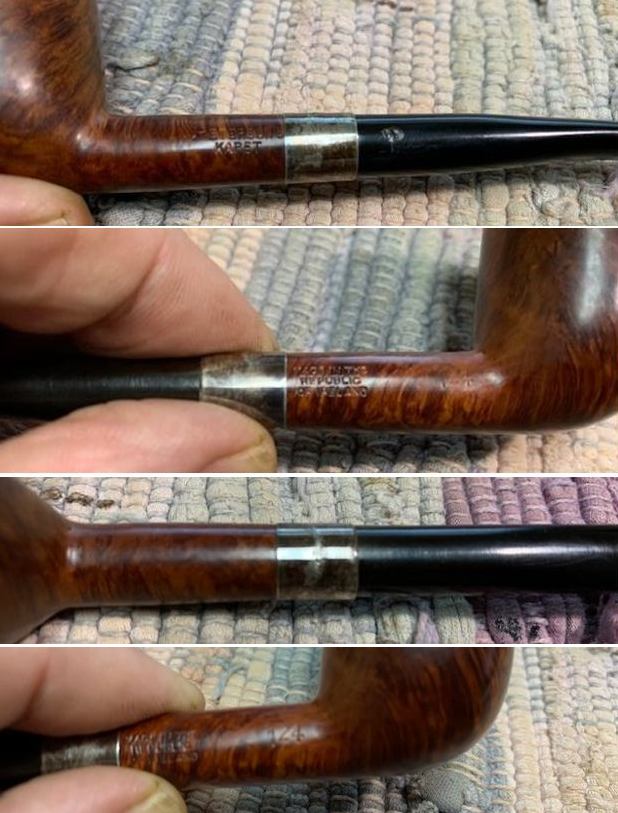
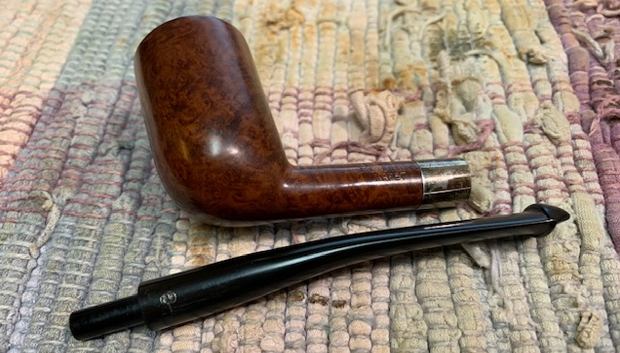
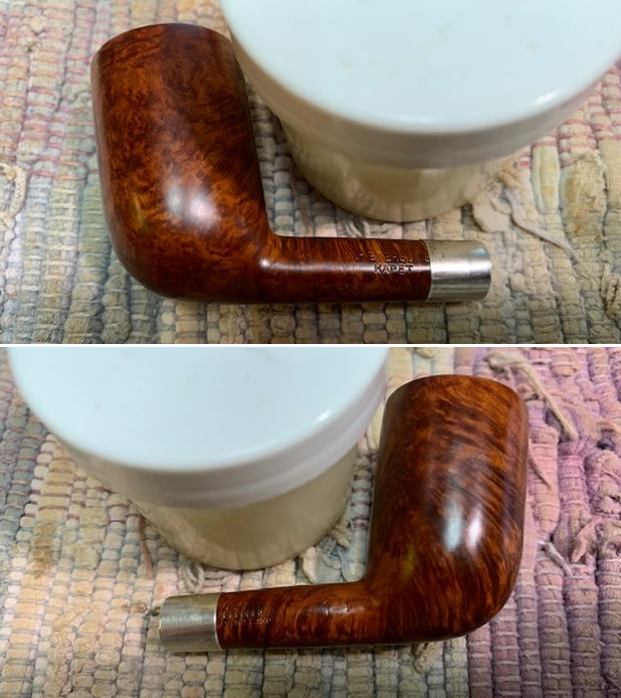
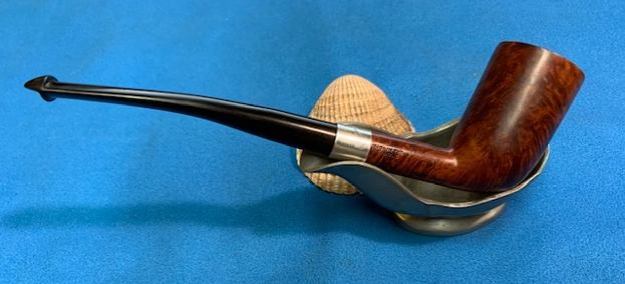
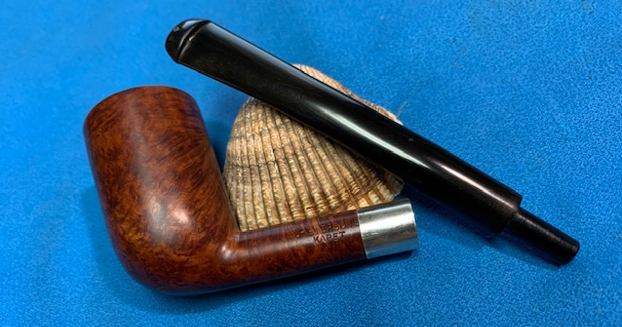
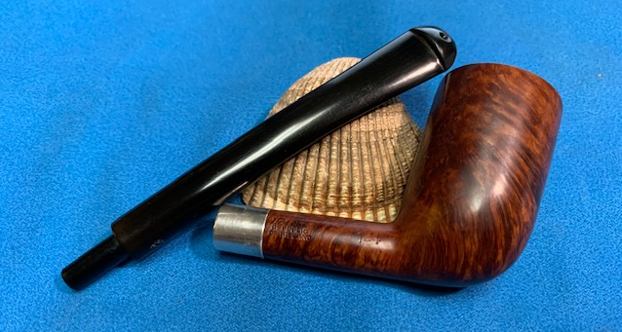
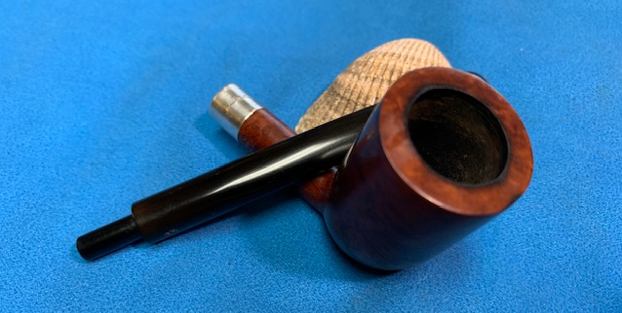
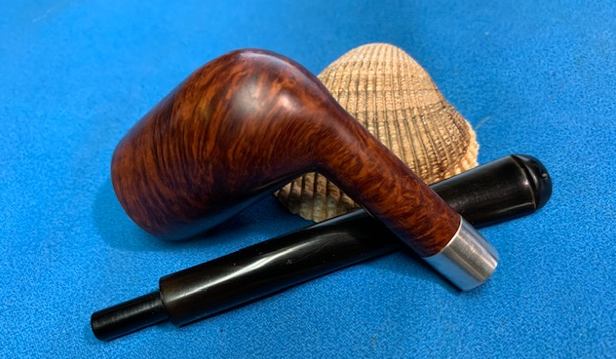
Now back to the pipes. The first one I restored was a large Irish Second 05 Calabash that will be going to the fellow I repaired the cracked one for. This will give him another option to smoke should that one give him further issues. Today I took on a second pipe from the lot. It is a very unique looking Peterson’s Kapet pipe in a shape 124 – a shape I have not seen or worked on before and one that I want to learn about as I worked on it. All of the pipes were in clean condition and had been reamed. This long canted looking pipe that is kind of a cutty had some burn marks on the front and back outer edge of the rim. The bowl was quite clean but I could smell the tobacco. The pipe was stamped on the left side and read Peterson’s [over] Kapet and on the right side it read Made in the Republic of Ireland. There was a silver band on the shank that was oxidized but otherwise in good condition and bears a Sterling Silver stamp on the top side. I think it is an after market band but I do not see any cracks in the shank that would say it was a repair. The stem was lightly oxidized and had tooth chatter on both sides ahead of the P-lip. The gold P stamp on the left side of the stem was faded.

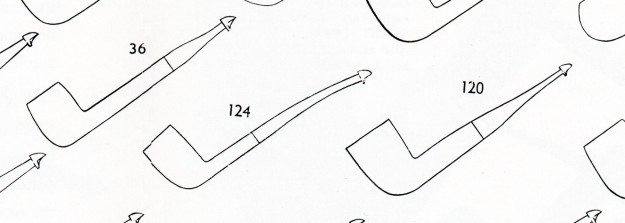
I took some photos of the pipe before I started my clean up work on it. It is a very unique and interesting looking pipe. The bowl is forward canted and has a pencil shank. It is similar in terms of shank and style to the line of Specialty Briars that Peterson put out – the Tankard, the Barrel, the Calabash and the Belgique. It could easily fit in that line of pipes but I would need to do a bit of research to see where it fit. I took photos of the bowl and rim top as well as the stem to show the condition of the pipe. The rim top had burn damage on the top and also damage on the inner and outer edge of the bowl. The stem itself were in good condition other than a few light tooth marks and some chatter.I took photos of the stamping on the sides of the shank. It was clear and readable as noted above. The photo of the silver band shows the Sterling Silver Stamp on the top of the band.I removed the stem from the shank and took photos of the look of the pipe. The long pencil stem and shank are really well done and quite stunning. The grain around the bowl is very nice.I turned to an article that Mark Irwin had written on his Petersonpipenotes.org blog on the shape number 124 (https://petersonpipenotes.org/tag/peterson-shape-124/). I have included the first few paragraphs from Mark’s site and encourage you to read it further. Mark also included a shape chart that I have also included below.

This is the short story of a small, pencil-shanked shape that’s peculiarly Irish yet rarely seen, even in the Peterson catalog. The shape’s name seems to depend on what type of stem is attached to the end of the bowl—zulu, churchwarden or dublin.

After World War II, or “The Emergency” as it was known in Ireland, Peterson re-established their trade ties and, like other pipe-makers, found the demand for their pipes even greater than it had been seven years before. At some level of consciousness in the Irish spirit there was a nostalgia for something older and more secure, something that spoke of home, stillness, and rest.

Charles Peterson’s favorite Oversize house pipes, with their 7 and 12-inch mouthpieces, were a thing of distant memory. The smaller-bowled straight “reading pipes” of the Patent Era, which also symbolized a leisurely evening’s smoke at home, were also forgotten.  But the ache for what they represented must have returned, eventuating in Peterson’s first batch of Specialty Briars “church wardens,” illustrated in the 1945 catalog and 1947 shape chart with the iconic 124, which Peterson dubbed a “dublin.”From Mark’s article it seemed that the shape came and went over the years. There were long periods where it was not made. Then periodically it came out in the mid 1960s, 1983, 1993-2018. I really think that this pipe is either the mid 1960s era or the 1983 period pipe. Both would fit in the Republic Era. Even the 1993-2018 would also fit that time frame. Now it was time to work on the pipe.

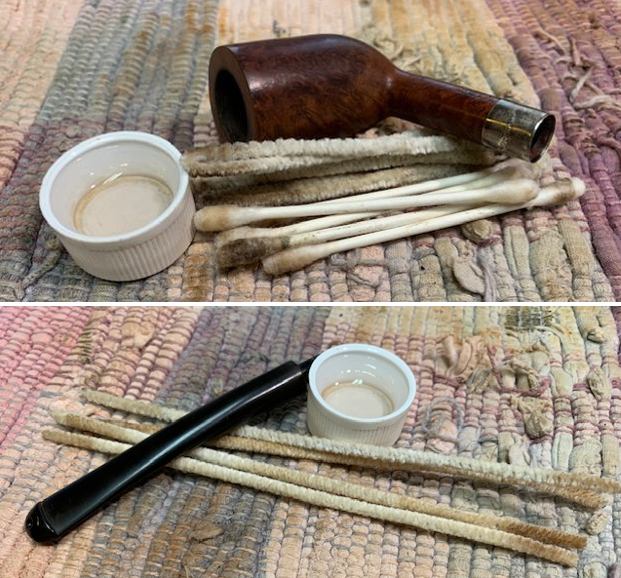
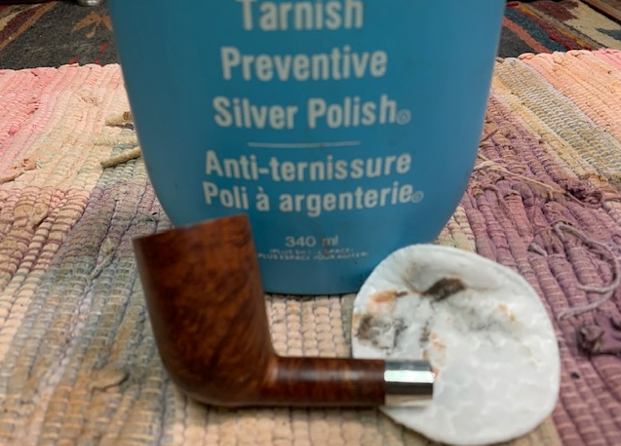
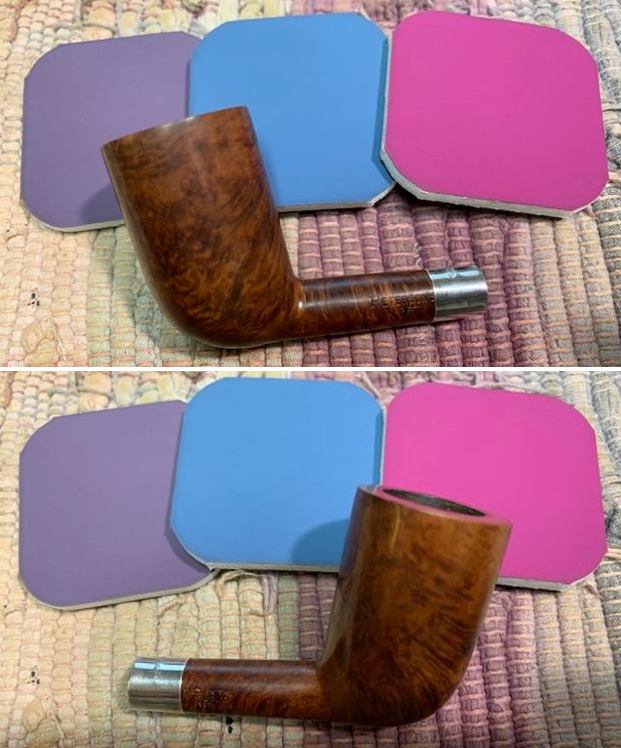
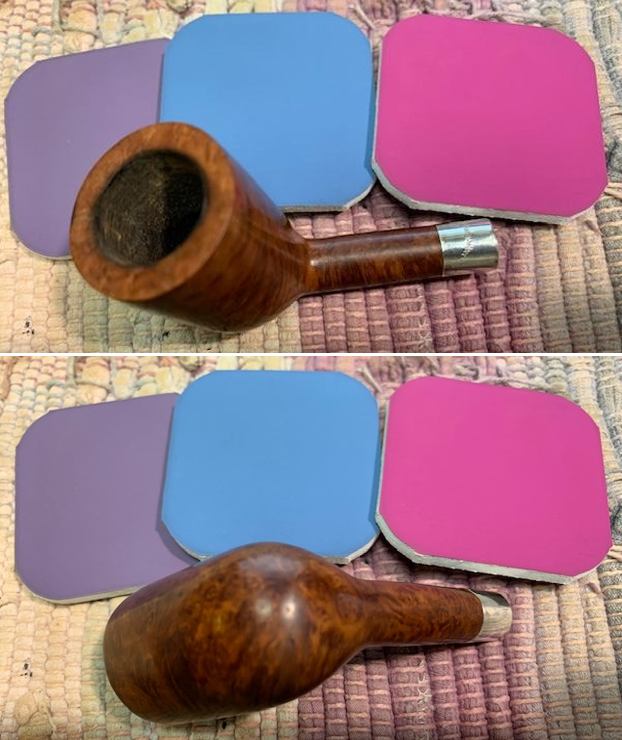
I started my work on the pipe with the interior of the pipe. I cleaned the bowl, the shank and the airway in both the stem and shank with alcohol, pipe cleaners and cotton swabs until the interior of the pipe was very clean.I polished the tarnished silver band with a tarnish preventive silver polish until the tarnish was gone and the band shone! It is a pretty addition to this charming pipe.I polished the briar with micromesh sanding pads – dry sanding with 1500-12000 grit pads. I wiped the briar down with a damp cloth after each sanding pad. The briar really began to take on a deep shine by the end of the cycle of pads. I rubbed the bowl and shank down with Before & After Restoration Balm. I worked it into the surface of the bowl sides and shank with my fingertips to clean, enliven and protect the briar. I let the balm sit for ten minutes then buffed the bowl with a cotton cloth to raise the shine. I used some Rub’n Buff Antique Gold to touch up the P stamp on the left side of the taper stem. The stamping is faint but still very readable and the gold made it stand out better. I rubbed it into the stamp with a piece of paper clip and then buffed it off with a cotton pad.I polished the stem with micromesh sanding pads – 1500-12000 grit pads. I wiped it down with Obsidian Oil after each sanding pad. I used Before & After Pipe Polish – both Fine and Extra Fine to further polish the stem. This Republic Era Peterson’s Kapet 124 is a great looking pipe now that it has been restored, whatever you call the shape. The rich, brown stained finish around the bowl is quite beautiful and highlights grain very well. The finish works well with the Sterling Silver shank band and the  polished vulcanite taper stem. I put the stem back on the bowl and carefully buffed the pipe with Blue Diamond on the buffing wheel using a light touch on the briar. I gave the bowl and the stem multiple coats of carnauba wax on the buffing wheel and followed that by buffing the entire pipe with a clean buffing pad. I hand buffed the pipe with a microfiber cloth to deepen the shine. The finished Peterson’s Kapet 124 is very light and sits nicely in the hand and feels great. Give the finished pipe a look in the photos below. The dimensions of the pipe are Length: 6 ¼ inches, Height: 1 ¾ inches, Outside diameter of the bowl: 1 1/8 inches, Chamber diameter: ¾ inch. The weight of the pipe is 24 grams/.85 ounces. I will be putting it on the rebornpipes store shortly in the Irish Pipe Makers Section. If you are interested in adding this pipe to your collection send me a message or an email. Thanks for reading this blog and my reflections on the pipe while I worked on it. There are many more to come!

This Gorgeous Sunrise Amber Grain 299 Vintage Briar Canadian Came Alive


Blog by Steve Laug

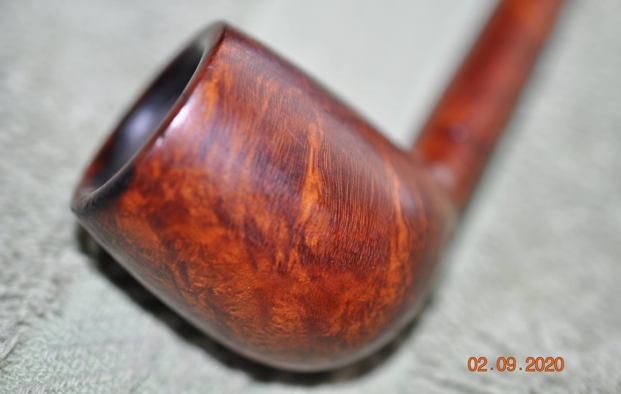
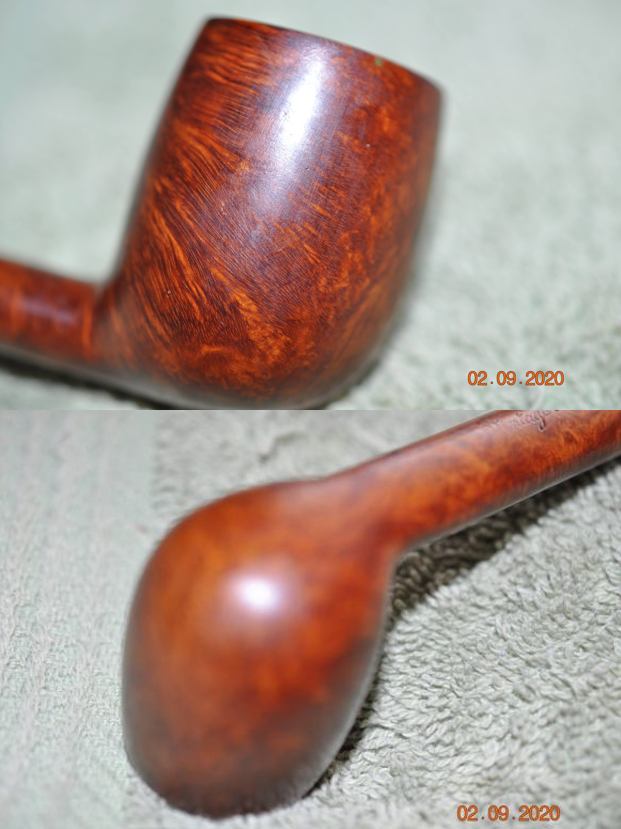
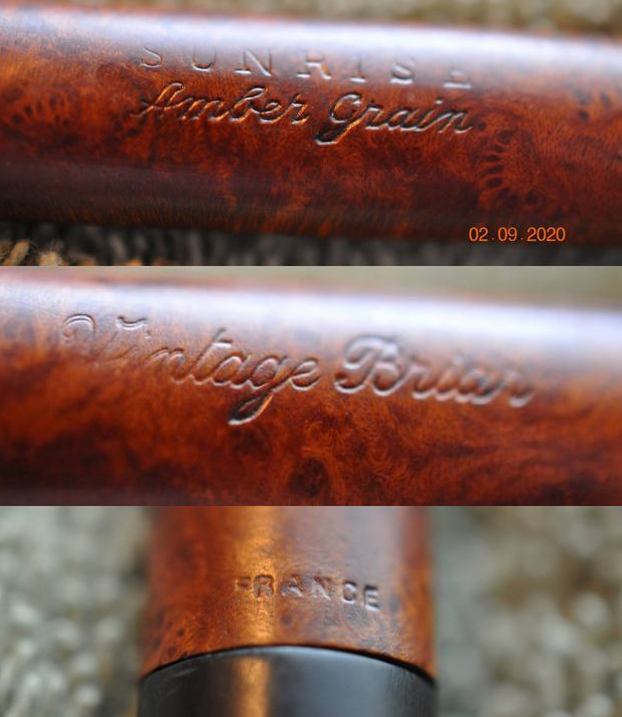
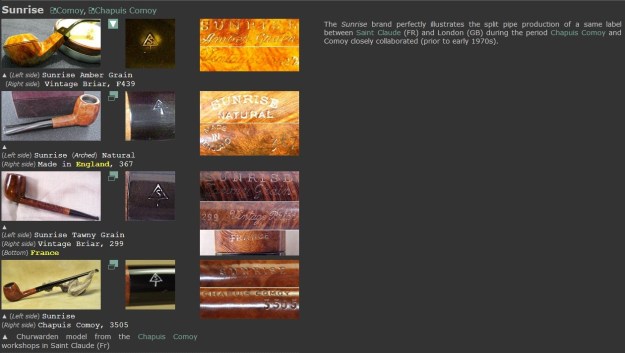
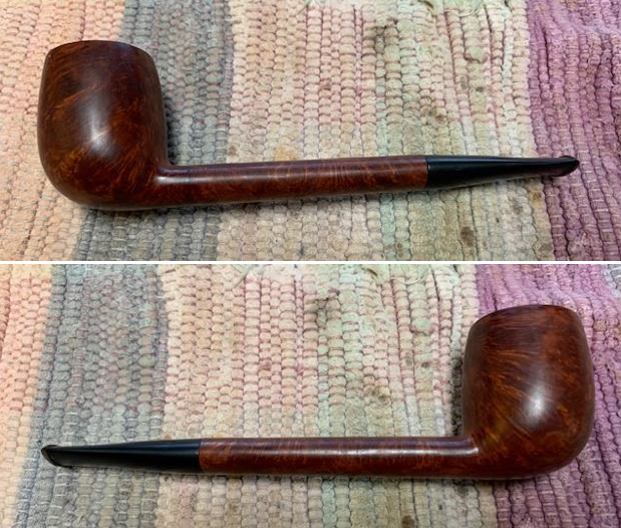
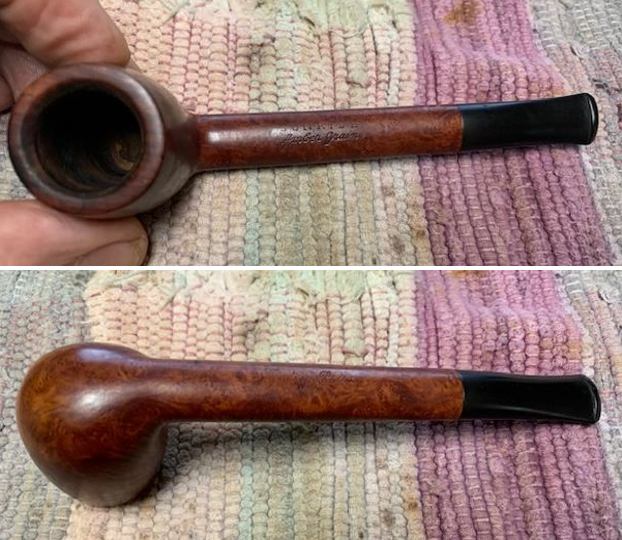
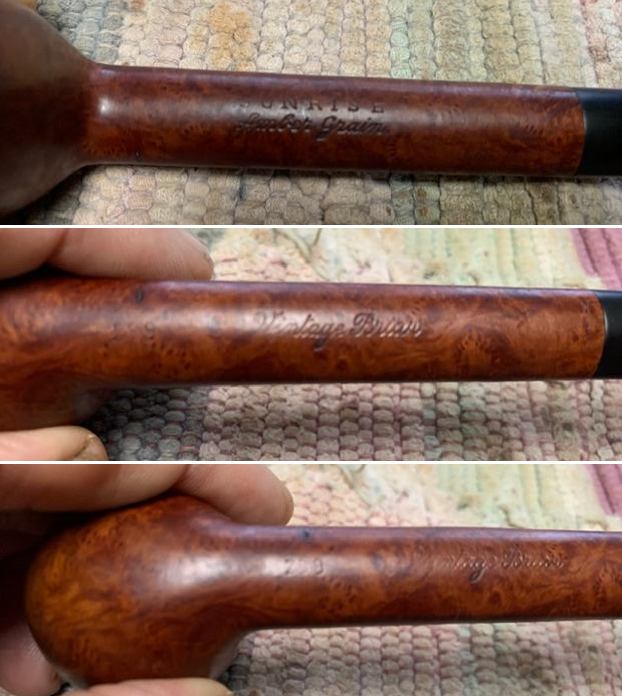
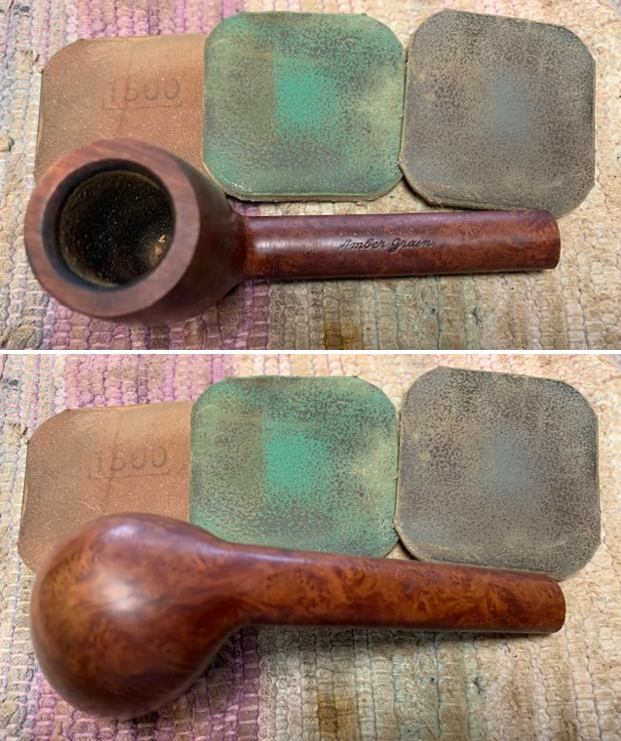
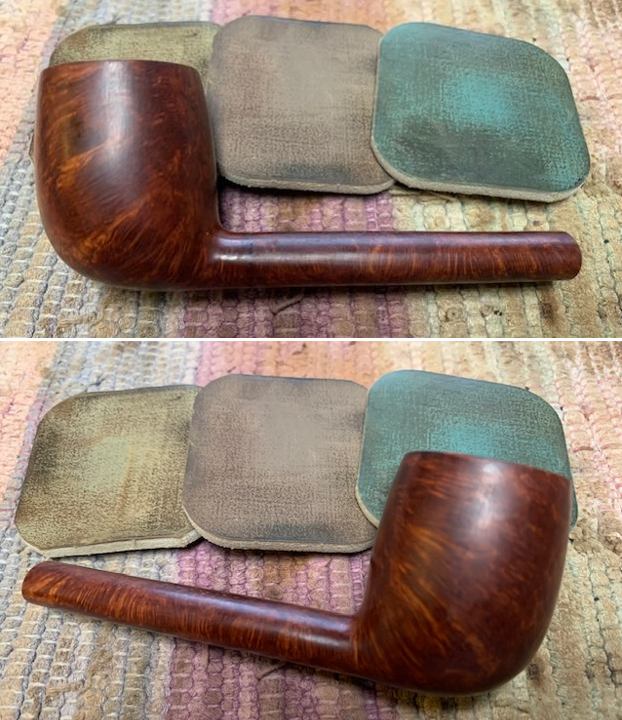
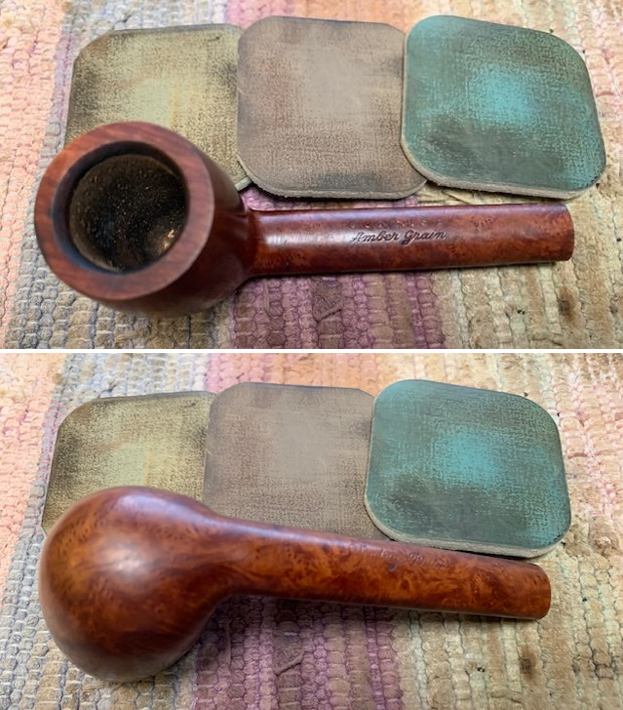
The next pipe on the work table came to us from a group of pipes that Jeff and I picked up from an auction from Wilkes Barre, Pennsylvania, USA. The pipe is beautifully grained Canadian shaped pipe with a mix of medium brown stains back in 2019. Jeff cleaned it up in 2020 and now I am finally getting to it is 2021. The pipe is stamped on the topside of the shank and reads Sunrise [over] Amber Grain. On the underside of the shank it reads Vintage Briar [over] the shape number 299 near the bowl end. The pipe was dirty with a lot of grime ground into the bowl but the grain was still visible. The bowl was moderately caked with a light lava coat flowing onto the rim top and beveled inner edge toward the left front of the bowl. The stem was lightly oxidized and dirty with light tooth chatter and marks on the top and underside near and on the button. It had promise but it was very dirty. Jeff took some photos of the pipe before he started his cleanup work. He took photos of the rim top and bowl to give a clear picture of the thickness of the cake and well as the lava and darkening on the front side of the rim top and inner edge. He also took photos of the top and underside of the stem to show the light oxidation and the chatter and tooth marks. Jeff took a photo the sides and heel of the bowl to give a picture of the beautiful grain around the bowl and shank. The stamping on the sides of the shank are clear and readable and read as noted above. The Sunrise pipe was a Comoy’s made pipe and the France stamp on the shank pointed me to the connection between London and St. Claude (England/France). I turned to Pipephil’s site (http://www.pipephil.eu/logos/en/logo-s13.html) to get some background information on this beauty. I have included a screen capture of the pertinent section. The first pipe listed bears the same stamping as the one I am working on.The side bar includes this interesting piece of information. I quote:

The Sunrise brand perfectly illustrates the split pipe production of a same label between Saint Claude (FR) and London (GB) during the period Chapuis Comoy and Comoy closely collaborated (prior to early 1970s).

I turned to Pipedia and looked under the French makers and the brand was not listed. Under the English makers it was listed as a Comoy’s Sub-brand or second. I turned to the Comoy’s listing and at the bottom of the article was a list of these pipes (https://pipedia.org/wiki/Comoy%27s). I have included the list in its entirety and highlighted the Sunrise in red.

Seconds made by Comoy’s

Ace of spades, Ancestor, Astor, Ayres, Britannia, Carlyle, Charles Cross, Claridge, Coronet?, Cromwell, Dorchester, Dunbar, Drury Lane, Emerson, Everyman, Festival of Britain, Golden Arrow, Grand Master, Gresham, Guildhall, Hamilton (according to Who Made That Pipe), Kingsway, Lion’s Head, Lord Clive, Lumberman, Hyde Park, Lloyds, Mc Gahey, Moorgate, Newcastle, Oxford, O’Gorman, Rosebery Extra, Royal Falcon, Royal Guard, Royal Lane, Scotland Yard, St James, Sunrise, Super Sports, Sussex, The Academy Award, The Golden Arrow, The Mansion House, The Exmoor Pipe, Throgmorton, Tinder Box Royal Coachman, Townhall, Trident, Trocadero, Westminster, Wilshire

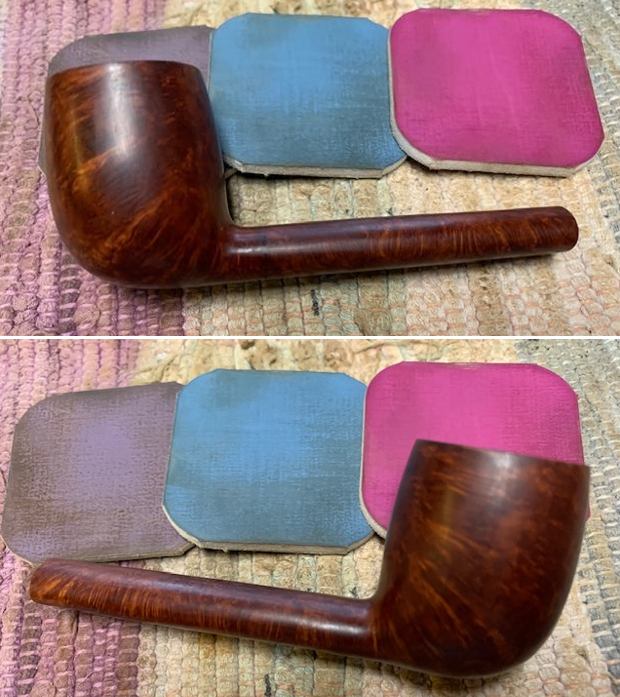
Now it was time to turn my attentions to the pipe itself. Jeff had cleaned up the pipe with his usual penchant for thoroughness. He reamed the pipe with a PipNet pipe reamer and removed the rest of it with a Savinelli Fitsall Pipe Knife.  He scrubbed the bowl with undiluted Murphy’s Oil Soap with a tooth brush. He rinsed it under running warm water to remove the soap and grime. He cleaned out the inside of the shank and the airway in the stem with alcohol, cotton swabs and pipe cleaners. He soaked the stem in Before & After Deoxidizer and rinsed it off with warm water. I took photos of the pipe once I received it.  The rim top cleaned up really well. The rim top and outer edge of the bowl appear to be in good condition other than some slight darkening on the front. The stem surface looked very good and the chatter on the stem on both sides near the button could easily be sanded out. The tooth marks on the button surface would need to be addressed. The stamping on the top and underside of the shank is readable and reads as noted above.      I removed the stem and took a photo of the pipe to give a sense of the whole. The bowl looked very good and once I cleaned up the stem the pipe would look very good.Now it was time to do my work on the pipe. I topped the bowl lightly and sanded the beveled inner edge and top of the rim with 200 grit sandpaper to lighten the darkening that was there. There was also a spot on the front outer edge of the bowl that I needed to sand. I stained it with a Maple stain pen to match the colour of the bowl. The finished product looked better. I polished the briar with micromesh sanding pads – 1500-12000 grit pads. I wiped it down with a damp cloth after each sanding pad.   The bowl was in such good condition that I rubbed the bowl and shank down with Before & After Restoration Balm. I worked it into the surface of the bowl sides and shank with my fingertips to clean, enliven and protect the briar. I let the balm sit for ten minutes then buffed the bowl with a cotton cloth to raise the shine.      I filled in the deep tooth marks on the button surface and the deeper ones on the stem itself with clear super glue. I let it cure and once it had hardened I reshaped the button and sanded the repairs smooth with 220 grit sandpaper. I started polishing the stem with 400 grit wet dry sandpaper. I polished the stem with micromesh sanding pads – 1500-12000 grit pads. I wiped it down with Obsidian Oil after each sanding pad. I used Before & After Pipe Polish – both Fine and Extra Fine to further polish the stem. This Comoy’s Made Sunrise Amber Grain Vintage Briar 299 Canadian is a great looking pipe now that it has been restored. The brown stained finish around the bowl is quite beautiful and highlights grain very well. The finish works well with the polished vulcanite oval taper stem. I put the stem back on the bowl and carefully buffed the pipe with Blue Diamond on the buffing wheel using a light touch on the briar. I gave the bowl and the stem multiple coats of carnauba wax on the buffing wheel and followed that by buffing the entire pipe with a clean buffing pad. I hand buffed the pipe with a microfiber cloth to deepen the shine. The finished Sunrise Amber Grain Vintage Briar Canadian sits nicely in the hand and feels great. Give the finished pipe a look in the photos below. The dimensions of the pipe are Length: 5 ¾ inches, Height: 1 ¾ inches, Outside diameter of the bowl: 1 1/8 inches, Chamber diameter: ¾ inch. The weight of the pipe is 31 grams/1.09 ounces. I will be putting it on the rebornpipes store shortly. If you are interested in adding this pipe to your collection send me a message or an email. Thanks for reading this blog and my reflections on the pipe while I worked on it. There are many more to come!

Breathing Life into a French Made Royal Ascot Deluxe Oom Paul


Blog by Steve Laug

The next pipe on the work table was purchased form an online auction in Columbia, Missouri, USA. It is an Oom Paul shape that is stamped Royal Ascot [over] Deluxe on the left side of the shank and Algerian Briar [over] France on the right side. The shape is well done but I was not familiar with the brand. Jeff and I took a risk in purchasing it based on the shape alone but it looked to be worth it. The briar was mixed grain with birdseye on the sides and cross grain on the front and back of the bowl and shank. The finish was quite dirty with grime ground into the bowl sides and bottom. There was a thick cake in the bowl and an overflow of lava on the rim top and inner edges. There appeared to be some burn damage on the top and inner edge toward the rear of the bowl but only clean up would determine that with certainty. The stem seemed to be older hard rubber and had some mild oxidation and tooth chatter and marks on both sides at the button. There was a faint Crown logo stamped on the left side of the taper. Jeff took photos of the pipe before his clean up work started. He took photos of the rim top and bowl to give a clear picture of the cake and the condition of the rim top and bowl. He included photos of the stem as well to capture what it looked like pre-cleanup. It is a very graceful looking piece. Jeff took photos of the sides of the bowl to capture some of the grain that is visible through the grime coat and what also looks like a varnish coat on the briar. The stamping on the sides of the shank was readable and read as noted above. You can also see what appears to be some varnish on the shank sides – kind of a crackly shine coat over the letters.To find out more about a brand which I was ignorant of I turned to Pipephil’s site for a quick overview (http://pipephil.eu/logos/en/logo-r6.html). The Algerian Briar stamp on the shank led me to believe I was dealing with a pipe made for the American Market. The France stamp seemed odd to me with the very British sounding brand name “Royal Ascot” so I was intrigued to find out what I could learn about it. I have included a screen capture of the section on the site on the brand. There seems to have been a link to Duncan pipes.The side bar on the site included some interesting information. I quote

Pipes with this brand were manufactured in France for Duncan (according to J.M. Lopes, op. cit. and Wilczak & Colwell, op. cit.). They were destined to US market and sold by Mastercraft.

So there was the French/British connection and the connection to the US market and Mastercraft. There seems to always be a tie to the British or French houses with these odd brands and often a link to Mastercraft!

I turned then to Pipedia to see if there was further information as there often is when I use the two sources (https://pipedia.org/wiki/Royal_Ascot). Interestingly Pipedia quotes Pipephil’s site. There is a bit of additional information and some photos on the article as well.

According to PipePhil pipes with this brand were manufactured in France for Duncan (according to J.M. Lopes, op. cit. and Wilczak & Colwell, op. cit.). They were destined to US market and sold by Mastercraft. They are made in France and many are marked Algerian Briar. The logo is a crown on the stem. Some pipes of the same name with a horseshoe logo also exist that were made in England, but may not be the same company.

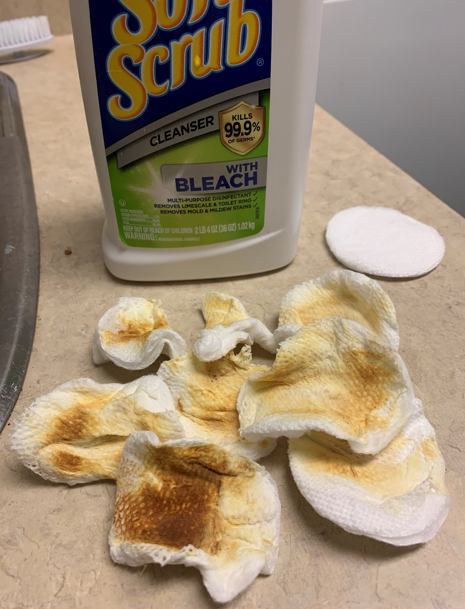
Jeff had done his usual clean up on the pipe – reaming it with a PipNet reamer and cleaning up the reaming with a Savinelli Fitsall Pipe Knife. He cleaned out the shank and the airway in the mortise and stem with isopropyl alcohol, cotton swabs and pipe cleaners. He scrubbed the exterior of the bowl with undiluted Murphy’s Oil Soap and a tooth brush to break through the grime. He was able to remove most of the varnish coat at the same time. He scrubbed the stem with Soft Scrub cleanser and cotton pads to remove the grime and light oxidation. He soaked it in Briarville’s Pipe Stem Deoxidizer. He rinsed it off and wiped the entire pipe down with a light rub of EVO to enliven both. When I received it I put it away for awhile. I am just getting to work on it now in the summer of 2021 almost a year later. Here is what I saw when I took it out of the box of pipes to work on. I took photos of the damage to the rim top and inner edges of the bowl. Fortunately it appeared to be on the surface and not to deep on the rim top. The inner edge showed more damage to the front of the bowl. The stem was clean but was pitted and had tooth marks on both sides ahead of and on the surface of the button.The stamping looked very good. It was clean and readable. The faint logo on the stem is visible with a lens but otherwise it is gone. It is a crown like the one shown in the photos from PipePhil.I removed the stem from the shank and took a photo of the parts to give a sense of the proportion of this Royal Ascot Oom Paul.I decided to start my work on the pipe by scrubbing it down with acetone on cotton pads to remove the remnants of the varnish coat. It was surprising how much came off and how much better the bowl looked once it was finished. I decided to deal with the inner edge of the rim and the rim top damage next. I used a folded piece of 220 grit sandpaper to clean up the slight bevel on the inner edge and remove the burn damage. I sanded the top as well and was able to make it look much better.There were a couple of rough spots – one on the right side at the shank/bowl junction and one on the heel – where the fills had shrunk. I filled them both in with clear super glue. When the repairs cured I sanded the smooth with 220 grit sandpaper to blend them into the surrounding briar. I polished the briar with micromesh sanding pads to further blend in the repairs and the sanded rim top. I dry sanded with 1500-12000 grit pads and wiped the briar down after each pad with a damp cloth to remove the debris. I paused the polishing to touch up the repaired areas and rim top with an Oak Stain Pen. The colour was the closest match to the rest of the bowl so once it was polished and buffed it would blend in well.I resumed the polishing with 6000-12000 grit micromesh and found that the areas on the bowl that I had stained blended in very well.I rubbed the bowl down with Before & After Restoration Balm and worked it into the briar. The product cleans, enlivens and protects the briar. I let it sit for 10 minutes to do its work then buffed it off with a soft cloth. The pipe is shown below as it looks at this point in the process. I set the bowl aside and turned my attention to the stem. I “painted” the surface of the hard rubber stem with the flame of a lighter to lift the tooth marks as much as possible. I was able to lift them significantly. I filled in the remaining one on the top side next to the button and on the underside in the same place with clear super glue. Once it cured I sanded it smooth with 220 grit sandpaper. I polished the stem with micromesh sanding pads – dry sanding with 1500-12000 grit pads and wiping the stem down after each pad with Obsidian Oil to help protect and preserve the rubber. I polished with Before & After Pipe Polish – both Fine and Extra Fine and gave it a final coat of Obsidian Oil to finish. I finished the stem and put the pipe back together again. I buffed the Royal Ascot Deluxe French Made Algerian Briar Oom Paul with Blue Diamond on the buffing wheel. I gave the bowl and stem multiple coats of carnauba wax and buffed the pipe with a clean buffing wheel. I hand buffed it with a microfiber cloth to deepen the shine. The pipe is a real beauty. The dimension of the pipe are  – Length: 5 ½ inches, Height: 2 inches, Outside diameter of the bowl: 1 ¼ inches, Chamber diameter: ¾ of an inch. The weight of the pipe is 60 grams/2.12 ounces. The pipe will be added to the rebornpipes store in the French Pipe Makers section soon. If you are interested in adding it to your collection let me know. Thanks for walking through the restoration with me. Cheers.

Refurbishing Karthik’s Second Selection – A Stacked Lattice Design Meerschaum


Blog by Paresh Deshpande

The second pipe that was selected by Karthik was this Meerschaum pipe that came to me in a lot of 40 pipes that Abha and I had purchased on Etsy in October 2019. The pipes in this lot that came to us were in a very sorry state of condition. All or rather 90% of the pipes had seen very heavy use and almost negligible care. Barring a few, none of the pipes attracted any attention at first glance. However, beneath all the grime and sorry condition that the pipes were in, as my friend Dal Stanton aka The Pipe Steward always says, each had great potential. There was something about this meerschaum pipe that called out to Karthik and it is now on my work table.

In November of 2020, I had restored the third pipe from this lot, a Meerschaum lined Orlik pipe that posed intimidating challenges during the restoration process. However, Dal and Steve helped me save this beautiful pipe. Given below is the link to the write up for those desirous to know; A Second Inning For A Meerschaum Lined Orlik Bent Brandy | rebornpipes

This then, is the fourth pipe from the lot of 40 and is indicated with a yellow arrow while the Meer lined Orlik is indicated in green.There is no stamping anywhere on either the shank or the stem to help with establishing the provenance of this pipe.

Before proceeding with the restoration of the pipes that were selected by Karthik, I had requested him to introduce himself to all the readers of Reborn pipes as a fellow piper and as one interested in pipe restoration. I am sanguine that we shall soon get to know and see his work. I have reproduced his mail here that I had received.

Hi Paresh sir,

Here’s my intro, hope it’s not too long:

Hello world! I’m Karthik, an engineer in India. I picked up pipe smoking last year as a way of staying off cigarettes, but have since fallen in love with the hobby itself. Living in India, I don’t have easy and immediate access to great pipes. So the idea of buying antiques and restoring them piqued my interest and I stumbled upon Reborn Pipes. As I read through post after post, I happened upon one of Paresh’s posts and both his name and his mention of Pune made me fall over myself in my rush to get in touch with him. I immediately emailed Steve, who graciously put me in touch with Paresh. Since then Paresh has been a great guide in my pipe smoking journey. Unfortunately I haven’t been able to start restoring any pipes myself, but I hope to get to that soon. In the meantime, Paresh generously showed me some of his collection and kept me in mind when he found something of interest. I hope to start down the path of restorations in the near future myself, with his guidance. 

 Regards,

Karthik

Definitely Karthik, together we shall learn and progress further.

With the introductions made, I move on to carry out initial inspection of the pipe.

Initial Visual Inspection
As with the other pipes from this lot, this one is also in a beat up condition. There is a thick layer of cake in the chamber with lava overflowing over the rim top surface. The rim top surface itself is badly damaged and is peppered with chips and dings/ dents. The stummel is covered in the grime of overflowing lava, dirt and dust. The perforations of the lattice design are filled with gunk from the lava overflow. A crack on the top surface at the shank end is easily discernible even to the naked eye. The stem airway appears black due to oils and tars but is devoid of any bite marks in the bite zone. Here are a few “Before” pictures of the pipe as it sits on the work table. Detailed Inspection
For me the detailed inspection is a deliberate act of great importance as it helps me understand the issues that needs to be addressed and formulate the sequence of steps in restoration.

The chamber is heavily caked with copious amounts of lava overflowing the rim top and over the stummel surface. The chamber even has remnants of unburned tobacco. The rim top is of a convex shape and is heavily damaged with numerous dents and chips, probably caused due to knocking against a hard surface, the most severe being in the 12 o’clock direction (encircled in red). This damage has resulted in the chamber being out of round and the rim top, uneven. The condition of the inner walls of the chamber can be ascertained only after the cake has been removed completely; however, no apparent cracks or damage to the stummel surface is seen from the outside. The stummel surface is covered in lava overflow which in turn has attracted a ton of dirt, dust and grime. The stummel surface feels sticky to the touch and appears blotchy due to the patches of grime and dirt. The perforations of the lattice design are filled with gunk from the lava overflow and are damaged / broken in a couple of places (encircled in green). The shank surface too is covered in dirt and grime and is cracked (indicated with red arrows) over the upper surface to boot! Preliminary check with a pipe cleaner revealed that the mortise is ENTIRELY clogged with accumulated oils, tars and remnants of old tobacco. The only silver lining to this stummel is the gorgeous coloration that it has acquired over the years due to heavy smoking but well hidden beneath all the filth over the surface. The following pictures will provide a better visual perspective when compared to words, as to the condition of the stummel. The sordid tale of heavy use and uncared for condition of the stummel and mortise continues with the tapered acrylic variegated stem. The stem airway seems never to have experienced a pipe cleaner passing through it during its entire period of existence to date! It is blocked (can say that with certainty as a pipe cleaner did not pass through even ¼ of an inch from either stem openings) and appears black through the stem surface. The horizontal slot opening and the tenon opening shows heavy accumulation of old dried tars and gunk. The only saving grace is that the bite zone is devoid of any deep tooth indentations and bite marks over the button. Save for some minor superficial scratches, the bite zone is pristine.Overall, this is easily one of the filthiest pipes to be passing over my work table to date, but having said that, this pipe also has great pedigree and stummel coloration to die for, under all that filth.

The Process
I decided to clean the stem first as I knew that it would take eons and tons of elbow grease to get the stem airway spotlessly clean. The first step towards achieving this goal was to get the screw- in tenon separated from the rest of the stem. I soaked the tenon end in isopropyl alcohol for a few minutes and once the dried oils and gunk had loosened, using nose pliers I unscrewed the threaded tenon from the stem. The now- gooey dirty, filthy mess that stared back from the tenon and stem made my stomach churn… I knew that we were in for some a haul on this stem. Here is what the stem and tenon looked like once they were separated.I launched a determined assault on the stem with a thin shank brush and anti-oil dish washing soap with the aim of cleaning the stem airway. Believe you me, the initial efforts in getting the shank brush out through the other end was beyond difficult. It took me the rest of the evening to get the shank brush moving through the airway with reduced resistance, a total of 6-7 hours. The next morning Abha, my wife, took over the cleaning of the stem from where I had left after she was done with her daily morning chores. Where, for a change, I had missed out on taking pictures for my last evening’s efforts, Abha did take a picture to show the gunk that was being cleaned from the stem airway. To further clean the threads at the tenon end of the stem, she placed a cotton ball soaked in lime juice for about 5 hours.While the tenon end of the stem was soaking in lime juice, I decided to clean up the stummel. I first removed the unburned tobacco and followed it by reaming the chamber with smallest head of the PipNet pipe reamer. I was extremely gentle and careful while using the reamer head since the centrifugal force generated by the rotation of the head inside the chamber may break the meerschaum, if the pressure applied is in excess or uneven. I followed it by scraping the walls of the chamber and the heel with my sharp fabricated knife to remove the residual cake. To smooth out the walls and completely rid the chamber of old cake, I sanded the chamber walls with a folded piece of 220 grit sand paper. It was heartening to note that the chamber walls were in pristine condition. I ran a sharp knife over the rim top surface with just about enough force to remove the lava overflow. It seems that I would have to top the rim surface to make it smooth and even, sacrificing the stummel profile to an extent. By the time I was through with the cleaning of the chamber, the stem had been soaking in the lime juice for about 6 hours since early afternoon and it was my turn to work on cleaning the stem. So I was back at the sink with a shank brush and anti oil dish washing soap as weapons of choice against the stubborn adversary in the form of a filthy stem. A few hours later, as if by magic, the foam turned white and I declared myself a winner! I ran a few pipe cleaners, both hard bristled and regular, to further clean and dry the airway and also clean the threaded end of the stem.I handed over the stem to Abha to clean the horizontal slot and for further sanding and polishing of the stem. Very painstakingly, with a dental tool she cleaned out the entire gunk from the slot end of the stem. It’s been two days that we had been battling the filthy stem and still the minor scratches in the bite zone and sanding/ polishing remains to be addressed!! Not to mention the threaded tenon!While Abha was cleaning the slot end of the stem, I next cleaned the tenon that was equally clogged up. The application of shank brush, anti- oil dish soap and tons of elbow grease spread over three hours cleaned out the tenon airway.Once I was through with the internal cleaning of the tenon, I cleaned the dried oils and tars from the exterior surface of the tenon with a Scotch Brite pad and anti- oil dish washing soap. I was very diligent while cleaning the exterior of the tenon and made sure that all the oils and gunk from the threads of the tenon were thoroughly cleaned. This will ensure smooth seating of the tenon threads into the stem and make its removal and subsequent cleaning a breeze. This piece of information and hint on cleaning is for you Karthik!With the tenon all cleaned up, it was time to clean the mortise and shank internals. Given the state that the stem internals and tenon were in, I had no doubts in my mind as to the condition that the shank internals would be like. And I was not disappointed to say the least. Using hard bristled and regular cleaners dipped in alcohol, I opened up the shank airway. Once the gunk had loosened a bit due to the alcohol, I scraped out the entire gunk with my fabricated curved tool. A few pipe cleaners dipped in alcohol passed through the shank again and I was satisfied with the cleaning job. The colored heap of pipe cleaners and the mound of gunk scraped out from the walls of the shank are proof enough of the filth that was in the shank.Now on to cleaning the exterior of the stummel surface! I wiped the exterior of the stummel with Murphy’s Oil soap on a cotton pad. For the most stubborn and deep seated gunk, I used a tooth brush with a dab of the oil soap. I used a soft wired brass wired brush to clean the rim top surface. I wiped the stummel surface with a soft moist cotton cloth to rid the stummel of the residual soap and cleaned out each and every perforation of the lattice design on the surface with my sharp and pointed dental tools. It was time consuming and laborious, but an essential part of cleaning the stummel surface. I was tempted a number of times to take the stummel to the sink and give it a thorough rinse under running water, but the fear of the meerschaum (not sure if it was solid block meerschaum or pressed meer) disintegrating in my hands prevented me from doing so. The stummel color is now amply evident and shows huge promise and potential. Micromesh pad polishing cycle and a dab of beeswax will further enhance the appearance of the stummel. While I was battling with cleaning the shank internals and exterior of the stummel, in her corner Abha was unobtrusively and quietly working on sanding and polishing the stem. She sanded the stem surface with 400, 600, 800 and 1000 grit sand papers to eliminate the scratches from the surface of the stem. Progressive use of finer grit sand papers helps in reducing the scratch marks left behind by the coarser grit sand papers. She finished the polishing cycle by going through the entire set of micromesh pads, wet sanding with 1500 through to 12000 grit pads. The polished stem looks amazing and should add a dash of sparkle to the entire pipe once the stummel is put through its paces of polishing and waxing. Continuing my battle with the stummel, I topped the rim over a piece of 220 grit sand paper by slowly rotating the rim over the sand paper to address the badly damaged and deformed rim top surface. Though the profile of the stummel was altered to an extent, it was a necessary evil that was inescapable to get the chamber in round and even. Even though the rim top is now clean and even, considerable darkening of the inner rim edge in 6 o’clock direction and to the outer edge in 11 o’clock direction (enclosed in yellow) is prominently visible and would need to be addressed. Also the rim top is thick towards the shank end as compared to the thickness of the rim at the front.To address both the above mentioned issues with the rim top, I created a nice bevel over both the inner and outer rim edges with a piece of 220 grit sand paper pinched between my fingers. I am pretty happy with the appearance of the entire stummel and the rim top in particular at this point.The only other issue that remained to be addressed before progressing to the polishing of the stummel was that of the deep crack at the shank end. I filled the crack with thick CA superglue and pressed the shank ends closer for a tight and seamless fit with my rubberized pliers. I held the shank end together (for a good 30 minutes!!) till the glue had hardened sufficiently and set it aside to cure overnight. The next afternoon, using a folded piece of 220 grit sand paper, I sanded away the excess glue to match the shank surface. The repairs are now solid and will be further strengthened by adding a brass ring over the shank end to prevent it from expanding and cracking open again at a later date.With stummel repairs all completed, I handed over the stummel to Abha for her to work her magic in polishing the stummel. She dry sanded the entire stummel with 1500 to 12000 grit micromesh pads preparing it for the beeswax polish.Before I moved ahead with treating the stummel to a beeswax polish, I attached a tight fitting brass ring over the shank end. This brass ring would provide additional structural rigidity to the shank end and prevent the opening of the seams of the crack on the shank end during its subsequent use.During the course of my journey through the wonderful world of pipe restorations, I have restored a few Meerschaums and each had turned out to be a beautiful pipe. However, none was ever treated to a polish using beeswax, not for any other reason but only because I did not and could not get any beeswax here in India. Recently, while surfing Amazon India, I came across slab of pure organic beeswax and promptly purchased it in sufficient quantity to last me for a very long time. To cut the ramblings short, before proceeding with the polishing of the stummel, I read through a number of blogs on Reborn pipes, The Pipe Steward and also the write ups posted by Charles Lemon of Dads Pipes to understand the nuances of the process of applying beeswax over meerschaum pipes. Once I had chalked out the process I would be following within the constraints faced, I proceeded with applying wax over the stummel of one of my personal meer pipes as a test piece.

Firstly, I assembled the equipment and materials that would be needed during the process viz heat gun, paper towels, q-tips and a Katori, a steel container graciously lent by Abha from the kitchen and of course, beeswax. I stuffed the chamber with paper towels and the mortise with a folded pipe cleaner to prevent inadvertent seepage of the melted beeswax into either. Next, I melted a sufficient quantity of beeswax in the katori using my heat gun and thereafter heated the stummel. Using the q- tip, I completely coated the stummel with the wax and continued the application till the surface was saturated and set the stummel aside. Having gained sufficient confidence, I applied the wax to Karthik’s meerschaum pipe and another of my expensive meerschaum pipes setting the three pipes aside for the stummel to absorb the wax. I reheated the stummel with the heat gun a few minutes later and let the excess wax either be absorbed or drip off from the stummel surface. The deep golden brown coloration that the meerschaum has taken is a visual treat, especially on the two older meerschaums. The lattice design pipe has taken on a beautiful color that is to die for, it’s really a beautiful pipe and Karthik has chosen well.I rubbed of the excess wax with a soft cotton cloth and brought a deep shine to the surface with a microfiber cloth. The deep dark chocolaty golden brown coloration to the stummel contrasts splendidly with the shining variegated colorful stem and makes for a better visual treat in person than what is seen in the pictures below. I hope Karthik likes it as much as I did and that he enjoys this pipe for years to come. P.S. – This was the last of the three pipes that Karthik had selected; a Pete System pipe which I had posted earlier, this stack Meerschaum pipe and the third was a chubby Comoy’s Monaco Rhodesian pipe that I had restored a couple of years earlier. These will soon be in the hands of this connoisseur of beautiful pipes and would love to see him smoke them filled with his favorite tobacco.

And yes, I take this opportunity to thank Karthik for seeing the beauty that lay hidden beneath all the dirt and selecting this pipe which otherwise would have been lying around at the bottom of the pile of pipes for restoration. Here is a picture of the three pipes that are on their way to Bangalore…Sincere gratitude to all the readers who have shared this part of my journey in to the world of pipe restoration…Cheers!!


Resurrecting a Tired Warrior – a Butz-Choquin Casino 1575 Spigot Billiard


Blog by Steve Laug

The next pipe on the table is a Butz-Choquin Spigot style pipe with a polished nickel ferrule and a polished nickel stem end. The pipe had classic shape and at first glance looked very good. We purchased this from an online auction late in 2020 in Elgin, South Carolina, USA. It had a rich finish somewhere underneath all of the debris, grime and damage to rim edges and sides. There was a thick cake in bowl and lava on the rim top. The rim top was uneven with dips and burns on the top. The front of the bowl had significant burn damage from the rim top down into the surface of the briar on the front. The left side had the same issue and had been worn away over time so that it was canted inward making that part of the bowl thinner on the side. The pipe is stamped on the left side of the shank Butz-Choquin at an angle [over] Casino and on the right side it was stamped St Claude in an arch over France [over] the shape number 1575. The nickel ferrule and stem end were oxidized and scratched. The stem was oxidized but had deep tooth marks on the top and underside near the button. The deepest marks were on the underside with one that was almost a bite through. The BC logo on the topside was faded and needed to be touched up. Jeff took photos of the pipe before he started his clean up work. I like to have an idea of how the pipe was smoked before we got it and what the bowl and rim top looked like. Jeff always takes some photos of the bowl and rim from various angles to show what it looked like. This bowl and rim top were in rough condition. The stem was a real mess with deep tooth marks and damage on both sides. He took a photo of the nickel ferrule and stem end to give a picture of their condition when we received the pipe. It definitely needs work. He took photos of the sides and heel of the bowl to give a sense of the grain on the pipe. You can also see the damage around the top front and sides in the photos. Jeff captured the burn damage on the front of the bowl in the next photo and some of the nicks and gouges in the sides of the bowl in the second photo. There is work to do on this one!The next photos show the stamping on the left and right side of the shank. It is clear and readable as noted above. Jeff also captured the BC stamp on the topside of the stem. I turned to Pipephil.eu and read through the listing on the brand. It is always a quick reminder to me of the basics of a brand. The Casino line was not listed there. I include the short summary of the history below.

The origin of the brand reaches back to 1858 when Jean-Baptiste Choquin in collaboration with his son-in-law Gustave Butz created their first pipe in Metz (France). Since 1951 Butz-Choquin  is a brand of the Berrod-Regad group (Saint-Claude, France).

Jean Paul Berrod managed the company from 1969 to 2002 when he retired and sold the corporate to Mr Fabien Gichon. Denis Blanc, already owner of EWA, took over the S.A. Berrod-Regad in 2006.

I could not find anything specific in Pipedia about the Casino line, but a simple search on the internet will show many different shapes available in the Casino line from Butz-Choquin.   Now it was time to work on the pipe.

Jeff had done a great cleanup on the pipe. He reamed the bowl with a PipNet pipe reamer and followed up with a Savinelli Fitsall pipe knife to remove the cake. He scrubbed out the mortise and the airway in the shank and the stem with alcohol, cotton swabs and pipe cleaners. He scrubbed the bowl exterior with a tooth brush and Murphy’s Oil Soap to remove the grime on the finish of the bowl and the lava from the rim top. He rinsed it under running water. One of the benefits of this scrub is that it also tends to lift some of the scratches and nicks in the surface of the briar. He dried it off with a soft cloth. He cleaned the internals and externals of the stem with alcohol, pipe cleaners and cotton swabs. He soaked the stem in Briarville’s Pipe Stem Deoxidizer and rinsed it off with warm water and cleaned out the airway in the stem with alcohol. When I received it the pipe looked very good.  I took a photo of the rim top and stem to show the condition. The rim top and the inner edge of the bowl were in rough shape. The outer edge had a lot of burn damage on the front and the left side. The rim top and inner edge also has significant burn damage and was not flat. The stem was vulcanite and there were some deep tooth marks and chatter on both sides ahead of the button. The stamping on the pipe is clear and readable as noted above. The BC logo on the stem is deep and needs to be repainted with white (as seen in the photo of the top of the stem above).I started my work on this pipe by dealing with the damage to the outer edge of the bowl and rim top. I topped the bowl first on a topping board with 220 grit sandpaper. I flattened out the rim top and made the top of the rim consistently flat. I removed much of the burn damage to the bowl top. I worked on the damaged areas on the left side and front of the bowl by building them up with briar dust and clear super glue. I built up the left side of the inner edge with super glue and briar dust as well. There the burn damage was shallow but it made the bowl out of round. I topped it once again to smooth out the repair on the rim top. I used a piece of dowel wrapped in sandpaper to sand the inner edge of the rim and smooth out the repair in that area. It worked well.I smoothed out the repairs on the left and front of the bowl with 220 grit sandpaper and blended them into the surrounding briar.I gave the inner edge of the bowl a slight bevel with 220 grit sandpaper to help reshape it and bring it back to round. The rim top and edges looked good at this point in the process.I restained the pipe with a light brown aniline stain. I applied it with a dauber and flamed it with a Bic lighter to set it in the grain. I repeated the process until I was happy with the coverage.Once the stain had dried I wiped the bowl down with 99% isopropyl alcohol to make it a bit more transparent. I find that doing a wipe down at this point evens the finish before I start polishing it with micromesh.I polished the briar with 1200-1500 micromesh sanding pads and wiping it down with damp cloth after each sanding pad. As I worked through the cycle of pads the shine developed with each change of pad. The damage on the rim sides looks better. I left some of the nicks and sandpits as they really are a part of the pipe’s story. I rubbed the bowl and shank down with Before & After Restoration Balm. I worked it into the surface of the bowl sides and shank with my fingertips to clean, enliven and protect the briar. I let the balm sit for 10 minutes, then buffed with a cotton cloth to raise the shine. The Balm did its magic and the grain stood out on the briar. I set the bowl aside and turned my attention to the stem. I decided to address the tooth marks on the stem. They were ragged, with sharp edges and heat did not lift them at all. I filled them in with clear super glue. I let the repairs cure and once they hardened I flattened and shaped them with a small file. I sanded them with 220 grit sandpaper to blend them into the surface of the stem. I started the polishing of the stem with 400 grit wet dry sandpaper. I touched up the BC stamp on the left side of the stem with white acrylic nail polish. I worked it into the stamp with a tooth pick and then sanded off the excess once it had dried with a 1500 micromesh sanding pad.I polished it with micromesh sanding pads – 1500-12000 grit pads. I wiped it down with Obsidian Oil after each sanding pad. I used Before & After Pipe Polish – both Fine and Extra Fine to further polish the stem. The photos below show the polished stem. This Butz-Choquin Casino 1575 Spigot Billiard with a polished nickel ferrule and stem cap on a vulcanite stem is a great looking pipe now that it has been restored. It was a lot of work and I took a decision to leave some of the journey of the pipe in the finish so it is far from flawless but it is a beauty. The rich browns of the stain made the grain come alive with the polishing and waxing. I put the stem back on the bowl and carefully buffed the pipe with Blue Diamond on the buffing wheel using a light touch on the briar. I gave the bowl and the stem multiple coats of carnauba wax on the buffing wheel and followed that by buffing the entire pipe with a clean buffing pad. I hand buffed the pipe with a microfiber cloth to deepen the shine. The finished BC Casino 1575 Spigot really is a beauty and fits nicely in the hand and looks very good. Give the finished pipe a look in the photos below. The dimensions of the pipe are Length: 6 ¼ inches, Height: 1 ¾ inches, Outside diameter of the bowl: 1 ¼ inches, Chamber diameter: ¾ of an inch. The weight of the pipe is 1.87oz./53grams. This beauty will be going off to its new trustee in Michigan along with several other nice pipes. Thanks for reading this blog and my reflections on the pipe while I worked on it. There are many more to come!

Helping A Fellow Piper With His Dream Pipe…A Peterson’s System Pipe


Blog by Paresh Deshpande

A very warm Namaste to all the followers of Reborn Pipes! It’s been a while since I posted any write up on rebornpipes.com and those that were posted have been projects which I had worked on prior to December 2020! The main reason being my relocation to a new place of work, numerous quarantine periods, waiting for allotment of house followed by shifting of family from Pune to my place of work, setting up the new house (only to up stake and move to a new place in 2 years!) and amidst these hectic activities, jostle with the kids and Abha, my wife, for a small corner where I could set up my work table. Thus, with everything well settled and having got back to our day to day routine, it was back to restoring pipes! Oh how I missed handling these pieces of art and history!

Through this time, I came to appreciate the reach of Reborn pipes and the yeoman service it provides in getting like minded pipers closer to each other. Now I am saying this because of the first hand experience I had when one fine day, I received a message from Steve that a gentleman piper from India wants to get in touch with me and that he had shared my email address. Soon enough, I received a mail from Karthik and since then our friendship has only been growing. Karthik was keen to start his own restoration work and was especially interested in a Peterson’s System pipe. Now, here in our part of the world, these are very difficult to come by and when they do, the cost is in INR five figures! When I told Karthik that the many Peterson’s System pipes that he read about on Reborn pipes were from my personal collection, I could sense his disappointment. Readers who have been following my write ups are well aware that one of my set goals has been to make available high quality restored pipes at reasonable price to fellow pipers from India and thus began my hunt for a Peterson’s System pipe in a reasonably good condition at an acceptable price point. A couple of months later, Chris from England (I have purchased a number of pipes from him earlier) had a Peterson’s System pipe that ticked all the right boxes and soon the pipe made its way to Pune and Abha, my wife, shared pictures of the received pipe. Karthik was mighty pleased with the way the pipe looked and so was I. Before I could get to work on this pipe, my move came about and the rest I have described above…

I had requested Karthik to introduce himself to all the readers of Reborn pipes and I am sanguine that we shall soon get to know and see his work. I received his mail and have reproduced it below (I have edited a very tiny portion of the mail though! Sorry Karthik, I too am still in the process of learning and hence the edit, hope you understand).

Hi Paresh sir,

Here’s my intro, hope it’s not too long:

Hello world! I’m Karthik, an engineer in India. I picked up pipe smoking last year as a way of staying off cigarettes, but have since fallen in love with the hobby itself. Living in India, I don’t have easy and immediate access to great pipes. So the idea of buying antiques and restoring them piqued my interest and I stumbled upon Reborn Pipes. As I read through post after post, I happened upon one of Paresh’s posts and both his name and his mention of Pune made me fall over myself in my rush to get in touch with him. I immediately emailed Steve, who graciously put me in touch with Paresh. Since then Paresh has been a great guide in my pipe smoking journey. Unfortunately I haven’t been able to start restoring any pipes myself, but I hope to get to that soon. In the meantime, Paresh generously showed me some of his collection and kept me in mind when he found something of interest. I hope to start down the path of restorations in the near future myself, with his guidance. 

Regards,

Karthik

Definitely Karthik, together we shall learn and progress further.

And Now On To Restoring Karthik’s Pipe…
I have researched and worked on a few vintage as well as new Peterson’s and at first glance I knew this pipe to be a new era Peterson’s. The stummel has a spread of mixed grains all around and a nice feel in the hand thanks to its medium sized bowl. It is stamped vertically on the left side of the shank as “PETERSON’S” without a forked ‘P’ over “SYSTEM” over “STANDARD”. The right side of the shank close to the edge of the ferrule bears the COM stamp “MADE IN THE” over “REPUBLIC” over “OF IRELAND” while model/ shape code “# 314” is stamped below the COM stamp. The nickel ferrule bears the trademark Kapp & Peterson’s official logo of “K&P” followed by “PETERSON’S” over the three usual cartouche with first having Shamrock, the second a Prone Fox and lastly a Stone Tower.While dating a Peterson’s pipe, I always fall back to my under mentioned favorite site; http://thepetersonpipeproject.blogspot.com/2007/07/dating-petersons-pipes.html

I quote from the above site:-

Stamping of Bowl:
During the years of Kapp and Peterson’s business operations, the country of Ireland has undergone several name changes and K&P’s stamping on their pipes reflects these changes. Knowing these changes, a Peterson pipe can be roughly dated and placed in “eras.”

  • The Republic Era is from 1949 until the present. The Republic of Ireland was formed on 17 April 1949. From 1949 to present the stamp for this era is “Made in the Republic of Ireland” in a block format generally in three lines but two lines have been used with or without Republic being abbreviated.

With the provenance of the pipe thus established, I moved ahead with the initial visual inspection of the pipe.

Initial Visual Inspection
The chamber has a thin layer of cake signifying either limited usage or that it had been recently cleaned. The rim top surface has several scratch marks and darkening which would need to be addressed. The inner edge of the rim is charred in 3 o’clock direction (encircled in yellow). Nicks and dings are also seen along the outer rim edge (indicated with green arrows) and deep gouges on the right (encircled in yellow). Chamber has strong odors of sweet smelling tobaccos. The condition of the inner walls of the chamber appears solid and also going by the solid feel of the external surface, I do not foresee any serious issues/ surprises with the chamber walls. The stummel surface is clean but appears dull and lackluster. A number of minor dents and scratches are seen over the stummel, notably towards the front, foot and the bottom of the shank. There is not a single fill over the entire stummel surface. The mortise and the sump shows traces of dried out oils and tars. The pipe smells are too strong. The bent P-lip vulcanite stem is in a relatively good condition with light tooth chatter on either surfaces of the stem. The bite zone of the upper surface has deep tooth indentations with the button edge nearly obliterated and bite marks over the upper P- lip portion causing the slot edges to deform. These will need to be rebuilt and sharpened. The lower surface of the P-lip has distinct deep bite marks and the button edge is completely deformed. The stem is heavily oxidized with minor scratches towards the tenon end. The Process
I decided to work the stummel first as I was keen to see how the stummel shaped up and so was Karthik on appreciating the grains on this piece of briar. I carefully and gently scrapped out the thin layer of cake with a sharp knife followed by sanding the chamber walls with a folded piece of 220 grit sand paper. I checked the chamber walls closely and was happy to note that the walls were pristine and without any issues. With the chamber now clean, I moved ahead with the internal cleaning of the shank and the sump. Using my sharp fabricated knife, I scraped out all the dried tars and gunk from the walls of the mortise. I used q-tips and pipe cleaners with alcohol to clean out the sump and the draught hole. I shall continue deep cleaning of the mortise and the sump when I will clean the internals using salt and alcohol treatment.Next I decided to address the issue of strong ghost smells in the chamber. To eliminate the ghost smells from the pipe, I decided to treat it with salt and alcohol. I packed the sump with cotton and drew out a wick from the cotton and along with a folded regular pipe cleaner, inserted it into the mortise and through the draught hole into the chamber. I tightly packed cotton balls in to the remaining portion of the mortise. Thereafter, I soaked the cotton balls with isopropyl alcohol up to the brim. About half an hour later, the level of alcohol had gone down, having being absorbed by the cotton. I topped it up once again and set it aside overnight. By next afternoon, the cotton and alcohol had drawn out all the remaining oils and tars from the chamber, sump and mortise. I removed the cotton balls and the dirt can be gauged by the appearance and coloration of the cotton balls and the pipe cleaner. With my fabricated knife and dental tools, I spent the next hour scrapping out the entire loosened gunk from the mortise and the sump. I ran pipe cleaners through the mortise and draught hole to clean out all the loosened tars and gunk that was lodged in the draught hole, sump and mortise. The chamber now smelled clean, fresh and looked it too. I set the stummel to dry out naturally. To clean the exterior of the stummel surface, I applied “Briar Cleaner”, a product that has been developed by my friend Mark Hoover, to the external surface of the bowl. It works similar to Murphy’s oil soap and needs to be applied to the stummel surface and set aside for 5- 10 minutes. The product pulls out all the dirt and grime to the surface making further cleaning easy. I am quite happy with this product. I used a hard bristled tooth brush to scrub the stummel with the gel like product, wiped it clean with a moist cloth and dried it using paper towels and a soft cotton cloth. I deliberately cleaned the rim with a piece of Scotch Brite. I thoroughly cleaned the mortise and draught hole with a shank brush. I set the stummel aside to dry out naturally. The clean stummel had revealed a few more scratches which would need to be erased. Once the stummel had dried, aided by the extreme hot weather conditions prevalent here, I addressed the issues of numerous scratches and nicks by sanding the stummel smooth with a folded piece of 220 grit sandpaper. The sanding marks that are visible in the pictures below were obliterated once the stummel was subjected to the complete cycle of micromesh sanding and subsequent polishing and waxing. Having addressed the issues of scratches and nicks over the stummel surface, I moved on to address the numerous dents and dings and charred edges over the rim top surface. I topped the rim over a piece of 220 grit sand paper by slowly rotating the rim over the sand paper. I hate to lose briar any more than absolutely necessary and so frequently checked the progress I was making. I was quite pleased with the appearance of the stummel at this stage in restoration.The time I was working on the stummel, my wife Abha was busy cleaning the stem. She cleaned the stem internals with q-tips, pipe cleaners and isopropyl alcohol. She further cleaned the stem airway with shank brush and dish washing soap. It feels really nice to have her around to help with the project. Once the stem internals were cleaned up to her exacting standards, she handed me the stem to address the issue of tooth indentations and chatter over the stem surface.The next stem issue to be addressed was that of the damage over the P-lip end of the stem. I heated both the surfaces with the flame of a lighter to raise the tooth chatter and bite marks to the surface and sanded the entire stem surface with a folded piece of 220 grit sandpaper to even out the surface as well as loosen the oxidation and handed over the stem to Abha for further process. She dropped the stem in to “Before and After Deoxidizer” solution developed by Mark Hoover. The solution helps to draw out heavy oxidation to the surface, making its further removal a breeze, while the minor oxidation is eliminated to a very great extent. The initial sanding helps to draw out the complete oxidation as the sanding opens up the stem surface that has been initially covered with oxidation. By next afternoon, the deoxidizer solution had worked its magic. Abha fished the stem out and cleaned it under warm while scrubbing the stem surface with a Scotch-Brite pad. She ran a couple of pipe cleaners through the stem’s airway to completely remove any remnants of the solution.I mixed clear superglue and activated charcoal and applied it over the both button edges, upper P-lip surface and lower surface of the P-lip. I set the stem aside for the fills to cure.Next afternoon, I worked the stem fills which had hardened considerably. With a flat head needle file, I sanded these fills to achieve a rough match. I further fine tuned the match by sanding the filled area with a folded piece of 220 grit sand paper pinched between my thumb and forefinger. I followed it up by sanding the entire stem surface using 320, 400, 600 and finally with a piece of 800 grit sand paper. This serves to remove the deep seated oxidation and also reduces the sanding marks of the more abrasive sand papers. I also sharpened the button edges while sanding. I wiped the stem with a cotton swab and alcohol to remove all the oxidation and sanding dust from the surface. I applied a little Extra Virgin Olive oil over the stem and set it aside to be absorbed by the vulcanite.Next, I wet sand the stem with 1500 to 12000 girt micromesh pads to bring a deep black shine to the vulcanite. I rub a small quantity of extra fine stem polish that I had got from Mark and set it aside to let the balm work its magic. After about 10 minutes, I hand buffed the stem with a microfiber cloth to a nice shine. I rubbed a small quantity of olive oil into the stem surface to hydrate it and set it aside.While I worked the stem, Abha polished the stummel with micromesh pads, wet sanding with 1500 to 12000 pads. She polished the freshly topped rim surface to a nice luster, wiping the surface with a soft cloth at the end of the micromesh cycle. The stummel looks amazing with a deep shine and beautiful grains popping over the stummel surface. I am surprised that the rim top surface has the same deep brown coloration as the rest of the stummel surface and that the use of a stain pen was not required.She massaged a small quantity of “Before and After Restoration Balm” with her fingers into the briar. The immediate and incredible transformation that takes place is a worthy reward for all the efforts!! She let the balm sit on the surface to be absorbed in to the briar for about 20 minutes. The bowl now looks fresh and attractive with the grains popping out any which way you look at the briar. She polished off the balm with a soft cloth to a lovely shine.Now on to the polishing cycle…I mounted a cotton cloth buffing wheel on to my hand held rotary tool and applied a coat of Blue Diamond to the stummel and the stem to polish out the minor scratches.With a cotton buffing wheel that I use for carnauba wax, I applied a coat of carnauba wax and continued to work on it till the complete coat of wax had been polished out. I mounted a clean cotton cloth buffing wheel and gave the pipe a once over buff. I finished the restoration by giving the entire pipe a rigorous hand buff using a microfiber cloth to raise the shine further. The finished pipe looks beautiful and will soon be on its way for Karthik to enjoy his dream pipe!!Sincere gratitude to all the readers who have shared this part of my journey in to the world of pipe restoration……Cheers!!!
Resurrecting a Beat up Warwick Sandblast Billiard


Blog by Steve Laug

We picked up this next pipe back in 2017 from an auction in Rochester, New York, USA. It has been around a long time. Jeff cleaned it up in 2017 and I have had it sitting here since then. I am finally getting around to working on it. It is stamped on the underside of the shank and reads Warwick [over] Made in London England. There is a shape number 1 next to the stem/shank junction. It is a sandblast billiard. The stamping and the shape name and number make me wonder about a connection to Sasieni but I am not certain of that. The bowl was heavily caked and the sandblast on the rim top was almost filled in with the lava overflow. It appeared that there was damage on the rim top as it was no longer flat looking. That would become more clear as it was cleaned up. The sandblast around the bowl and shank was dirty and filled with debris and dust. There was also darkening around the briar from hand oils. The stem was oxidized, calcified and had tooth marks on the top and underside near the button. Jeff took photos of the pipe before he started the clean up work. He took photos of the rim top and stem to give a feel for the overall condition of the pipe before he started. You can see the thick lava coat filling in the rim top but you can also see the unevenness of the top of the bowl and the edges. There is some definite damage under the grime. The stem is oxidized, calcified and has tooth chatter and marks on the top and the underside of the stem near the button. He took some photos of the sides and heel of the bowl to capture the deep and craggy sandblast around the bowl. It really has some beauty to the blast.He captured the stamping on the underside of the shank in the next photo. It is readable though the left side of the stamping is more faint that the rest of the stamping toward the right. It reads as noted above. Now we would need to make a connection to the maker. I turned to Pipephil’s site (http://pipephil.eu/logos/en/logo-w1.html) to see what I could learn about the brand. What I found was a pipe stamped Warwick but the font was slightly different. This one was made in Italy and said so. The one I was working on was stamped Made in London England.On the side bar it had a note that I copy as follows: A sub brand of Comoy or Singleton & Cole. Not to be confused with Warwyck. I turned to the section on Comoy’s to see if there was any note for this stamping. There was not. I also turned to the section on the site on Singleton & Cole (http://pipephil.eu/logos/en/logo-s7.html). I have included a screen capture of the section that shows a Singleton Warwick that is stamped Made in England. The Warwick stamp is similar but the one on the pipe I am working on is heavier. So the hunt continues.I searched on Google and found a link on a sale site The Collection Hero that linked Warwick to a BBB pipe. https://pipes.collectionhero.com/view_item.php?id=43025&ekeywords=BBB. I have included that photo as well. The sale site says that the pipe is stamped BBB Own Make “Warwick”. It has a deep rugged sandblast but the finish is quite different from the one that I am working on. There also were no photos showing the stamping on the shank so I had nothing to compare my pipe with.

I was not convinced. So far I have seen the name attached to Comoy’s, Cole & Singleton and now BBB and none of them are conclusive. I still needed to do some more digging.

I did a bit more digging and found the name Warwick attached to Sasieni on a  pipe on smokingpipes.com (https://www.smokingpipes.com/pipes/estate/england/moreinfo.cfm?product_id=89779). It is described as follows:

…An old Sasieni pipe like this on an update. Named after a town, Warwick, this piece is a true part of English charm, stained beautifully, and a lovely example of a Sasieni patent.

I looked up Sasieni seconds on Pipedia (https://pipedia.org/images/e/e4/Sasieni_Seconds.jpg) and found a chart that listed the various names. At the bottom of the alphabetical list is the name Warwick.Now I had all of the options in front of me and I was still no further ahead than when I started. I seemed to be able to link it to either Singleton & Cole or Sasieni. I would probably never know for certain but at least I knew it was an old English made pipe. Now it was time to work on the pipe.

Jeff had cleaned up the pipe very well as usual. He has detailed his process other places so I will summarize it here. He reamed the pipe with a PipNet Pipe Reamer and cleaned up the remnants with a Savinelli Fitsall Pipe Knife. He scrubbed the bowl and rim top with undiluted Murphy’s Oil Soap and a tooth brush. He rinsed it under running warm water to remove the soap and grime. He cleaned out the inside of the shank and the airway in the stem with alcohol, cotton swabs and pipe cleaners. He soaked the stem in Briarvilles Pipe Stem Deoxidizer and rinsed it off with warm water. I took photos of the pipe once I received it. The rim top had some damage and darkening on the top. The front right and left sides were almost smooth and the sandblast was gone. The sandblast on the back side was deeper and also had some damage. The inner edge of the bowl was damaged at the front. The stem surface looked good with light tooth marks and chatter on both sides near the button.   I took a photo of the stamping on the underside of the shank. The stamping was faint on the left side of the stamp and the stamping on the right side was more readable as noted above. You can see the shape number 1 near the shank/stem union. I removed the stem and took a photo of the pipe to give a sense of the whole. The stem is tapered. I started my work on the pipe by cleaning up the sandblast with a brass bristle wire brush. I worked it over the rim top and the blast on the sides and underside of the bowl until I cleaned up the blast. It looked much better once I finished with the brush. The rim top had other issues that I would need to address as well. I took some photos of the rim top to try and capture the damage to the rim top. It is no longer flat and the top from the back is at an angle and the sides have dips and valleys – it is a real mess.I would need to flatten the rim top on a topping board to get things flat again. Then I would need to try to duplicate the sandblast finish on the rim top. I topped the bowl on a topping board with 220 grit sandpaper. I started the rustication process with the tool for rustication that I made from a Philips screwdriver. I followed that up with a Dremel and burrs to rusticate the rim top and give it the appearance of a sandblast. I restained it with a Maple and Walnut stain pen to approximate the colour of the bowl.To deal with the darkened areas around the bowl sides and the washed out stain on the rest of the bowl I restained it with a light brown aniline stain. I applied it with a dauber and then flamed it with a lighter to set it in the briar. I repeated the process until I was happy with the coverage.I buffed the bowl with Blue Diamond on the buffing wheel and worked some Before & After Restoration Balm into the sandblast finish my fingertips and a horsehair shoe brush to clean, enliven and protect the briar. I let the balm sit for a little while and then buffed with a cotton cloth to raise the shine. The product brought the briar to life and gave some dimensionality to the sandblast. I set the bowl aside and turned my attention to the stem. I “painted” the tooth marks with the flame of a lighter and was able to lift them significantly. I filled in the remaining marks with clear CA glue. Once it cured I used a small file to recut the edge of the button and to flatten out the repairs. I sanded out the repairs with a folded piece of 220 grit sandpaper and then started polishing it with 400 grit wet dry sandpaper. I polished the stem with micromesh sanding pads – dry sanding with 1500-12000 grit pads. I rubbed the stem down between pads with Obsidian Oil. I finished polishing using Before & After Stem polish – both Fine and Extra Fine. I rubbed the stem down a final time with Obsidian Oil. The Warwick Sandblast 1 Sandblast Billiard is a beautiful pipe with an great looking, rugged sandblast finish. The blast is very nice and the rich brown stain on the briar goes amazingly well with the polished black vulcanite taper stem. The combination works to create a pipe that is a pleasure to look at and is comfortable in  the hand. The dimensions of the pipe are Length: 5 inches, Height: 1 ¾ inches, Bowl diameter: 1 ¼ inch, Chamber diameter: ¾ of an inch. The weight of the pipe is 1.13 ounces/35 grams. Considering what the pipe looked like when we started, the now resurrected pipe is quite amazing looking. I will be adding it to the British Pipe Makers section of the rebornpipes store shortly. If you are interested in adding it to your collection send me a message on Facebook or an email. Thanks for walking through the process with me. Cheers.

A New Solution to an Old Problem


Blog by Kenneth Lieblich

Welcome to my first meerschaum restoration! In fact, it is not just a meerschaum pipe, but it is also a Peterson pipe. This came out of lot of pipes from eBay some months ago, but it took me a while to get to it – I was a bit daunted. Even though it looked rough to start, it ended up as a very handsome pipe. Please read on… This is a rusticated, African block meerschaum, made on the Isle of Man. The stem has a push-style tenon. Like many of the meerschaum pipes of this era, this one has a factory-stained rim – to give it that sort of ‘broken in’ look. How do I know it is a Peterson? Because it has the distinctive, stylized ‘P’ on the left side of the stem, near the shank. Similar to other pipes that Steve has restored, this one seems likely to have been produced by Laxey Pipes Ltd. on the Isle of Man for Peterson Pipes. Here is the Pipedia article about them (I hasten to add that the various errors below are in the original text and are not mine):

Laxey Pipes Ltd. resided in a historical 19th century four-storey Man stone building at The Quay, Old Laxey, Isle of Man, which thankfully has been preserved.

The company specialised in the production of meerschaum pipes using the Meerschaum mined by the Tanganyika Meerschaum Corporation in the Amboseli basin in Tanganyika (since 1964 part of the United Republic of Tanzania). 

Please note: you may often find names like “Manx Pipes Ltd.”, “Man Pipe Co.” and others more, but there is no indication of another Isle of Man pipe producer other than Laxey Pipe Ltd. at any time! 

Laxey Pipes Ltd. marketed own brands like “Manxpipe”, “Manxman”, “Manxland” e.c. Names like “John Bull”, “White Knight” (unwaxed), “Domino” (black, or lined) indicated some shapes / colours of Laxey’s own series. The stems either showed the astronomical sign for “male” or “man” (circle + arrow), or the crest of the Isle of Man, the 3-legged X in a circle. Manxpipes and Laxey’s other brands were available through pipe retailers in general, but also were sold (mainly) to tourists through their own shop in Laxey. 

Furthermore Laxey Pipes Ltd. manufactured the meer bowls for Peterson, Barling, Nørding and others from the later 1960’s until 2001. Man Pipe e.g. was a brand distibuted by Comoy’s. The bowls usually showed no nomenclature indicating the orderer. “Genuine Block Meerschaum” was engraved frequently. Often, just the stems were different, while bowls were the same.

Supply of meerschaum from East Africa run out (Kenya / Tanzania exhausted, Somalia inaccessible), and thus the last Laxey meers were supplied to trade in May, 2001. Laxey Pipes Ltd. tried to survive continuing with briar pipes – mainly in the Danish style -, but to no success. It closed down business in July, 2002.

Anyway, on to the pipe – and what a mess it was. The stummel had the following problems: a nasty ghost, filth embedded in the rustication, a creepy and unnatural yellow tinge to the meerschaum, lots of lava on the rim, lots of cake in the bowl, and – worst of all – chunks missing from the rim. Meanwhile, the stem had its own set of problems: the ‘P’ logo was nearly obliterated, heavy oxidation and calcification, and tooth marks and dents. In fact, even my wife commented that this pipe might be the proverbial ‘bridge too far’ – but, like the stereotypical, stubborn husband, I was not to be deterred! I decided to start on them stem, as I still was not sure how to resolve the chunks missing from the rim. I broke out the isopropyl alcohol and pipe cleaners, and got to work on the inside of the stem. Predictably, it was pretty dirty and I went through a good number of pipe cleaners in order to clean it up. Then I had to tackle the overwhelming oxidation and calcification – yuck. I took a blade (an old butter knife, actually) and began gently scraping at all that build-up. Obviously, I took it easy, as I did not want to damage the stem’s vulcanite any further. The butter knife worked quite well and I got a good amount loose. I followed that up with some lemon-infused isopropyl alcohol on some cotton rounds to try and scrub the rest away. This worked quite well and I noted some improvement. There were quite a few dents in the stem. Some were obviously tooth marks, but other dents looked like blunt force trauma! Time to break out the BIC lighter to see if it could raise some of these dents. Quite frankly, it did not do much – this repair was going to require some considerable sanding etc. Before that, however, the stem went for an overnight soak in the Before & After Hard Rubber Deoxidizer. The following day, I cleaned all of the de-oxidizing sludge off with alcohol, pipe cleaners, et cetera. The oxidation had migrated to the surface and would be fairly straightforward to remove. I scrubbed vigorously with SoftScrub to remove the leftover oxidation.Before I moved on to the Micromesh pads, I built up the dent damage on the stem with cyanoacrylate adhesive and let it fully cure. It turned out that this was not as straightforward as I had hoped. It took more than one application of adhesive to sort this problem out. I then sanded it down with 220-, 400-, and 600-grit sandpapers to make the stem look normal. I then used all nine Micromesh pads (1,500 through 12,000 grit) to bring out the lovely black lustre on the stem. I also used Obsidian Pipe Stem Oil in between each pad scrubbing.

The stummel was next, and the usual cleaning procedures were in order for this pipe. I used both the PipNet Reamer and the KleenReem to remove the built-up cake and followed that with 220-grit sandpaper to remove as much as I could. The meerschaum cannot take the usual de-ghosting process of soaking cotton balls in isopropyl alcohol, so sanding was a way to reduce the old ghost in the pipe. I also wanted to ensure there were no hidden flaws in the interior walls of the meerschaum. Fortunately, there were none. Truth be told, I actually also tried to use a bit of ground coffee in the bowl to remove the ghost, but that was not very successful.I then proceeded to clean out the insides of the shank with Q-tips, pipe cleaners, and isopropyl alcohol. There was quite a bit of nastiness inside this stummel – it took a lot of pipe cleaners etc. to sort that out. I then moved on to cleaning the outside of the stummel with Murphy’s Oil Soap and some cotton pads. That worked very well at removing any latent dirt and that weird yellow tinge that I mentioned earlier. I followed that up by quickly cleaning the insides with some dish soap and tube brushes. The meerschaum cannot be left wet for long – it will turn to mush otherwise. Before & After Restoration Balm does not make the same kind of difference on meerschaum as it does on briar, but it still works – so light coating was applied, followed by my horsehair shoe-brush. On to the inevitable repairs: this is where the nightmares begin. Honestly, it was not immediately clear to me how I was going to make the stummel look decent. Sure, I had cleaned it, etc., but what about the obvious chunks missing from the side? I considered sanding it all down, but I feared this would alter the shape of the pipe beyond reason and repair. I figured that, at very least, this pipe needed to be topped. That is to say, the rim had to be inverted and sanded down on a piece of 220-grit sandpaper. By doing this, it would remove some of the lighter damage altogether and would improve the state of the heavier damage. But the old problem remained: how was I going to repair the chunks of missing meerschaum on this pipe?I then realized that the solution was as obvious as the nose on my face: I would take a piece of meerschaum from another pipe and fashion a repair. I grabbed one of my sacrificial meerschaum pipes (a dreadfully ugly horse’s head) and used a pair of end-cutting nippers to break off a couple of pieces. Having done that, I used cyanoacrylate adhesive to fix them in place on the stummel. I was feeling pretty good about this solution, but knew that there was still a long row to hoe. Obviously, I needed to sand down and shape the new pieces of meerschaum, but I also needed to make the rim as rusticated as the rest of the stummel. Enter the Dremel (with accompanying angelic voices). Yes, I first used a sanding drum on the Dremel to remove excess material from the repair (but not too much), then I used a high-speed engraving cutter to rough up the surface of both the rim and the repair. So far, so good. The engraving cutter had worked – to a point – but it had not really resulted in the sort of rustication I was looking for. My solution came from the Dremel again, but only indirectly. Steve reminded me of his trick of using an old Philips-head screwdriver as a rustication device (you can read about that here). Whereas Steve used Dremel grinding stones to make his rustication device, I used a metal cutting disc on the Dremel. As you can see, my screwdriver came out looking quite good and the stummel came out looking even better. I was definitely pleased with the roughened surface of the stummel, but I next needed to address the lack of colour. This, of course, was a direct result of my topping of the rim – it removed the patina. The solution must have come to me in the mid-afternoon: tea. Yes, I used black tea to provide a beautiful stain to the meerschaum that gave it a really good look. I went and added some more Before & After Restoration Balm and, once again, used my horsehair shoe-brush to work it in.Meerschaum does not really do well on a high-speed buffer, so I used a microfibre cloth to achieve the same effect. I did, however, take the stem to the buffer, where I applied White Diamond and some wax to give it that lovely shine.

In the end, what a beauty this pipe is! It is back to its old glory and ready to be enjoyed again by the next owner. I am pleased to announce that this pipe is for sale! If you are interested in acquiring it for your collection, please have a look in the ‘Irish’ pipe section of the store here on Steve’s website. You can also email me directly at kenneth@knightsofthepipe.com. The approximate dimensions of the pipe are as follows: length 154 mm; height 47 mm; bowl diameter 34 mm; chamber diameter 20 mm. The mass of the pipe is 40 grams. Thank you very much for reading and, as always, I welcome and encourage your comments.
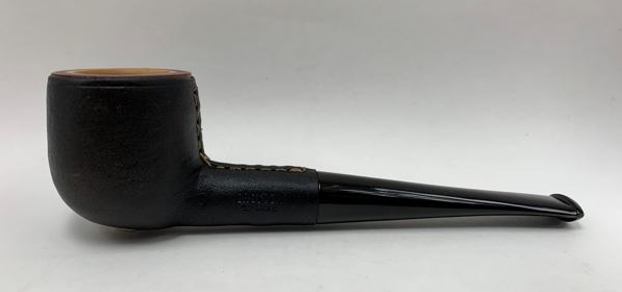
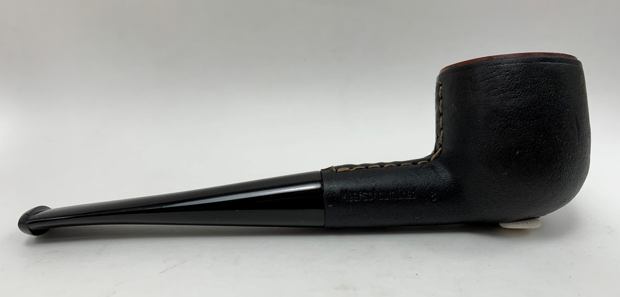
Reworking a Damaged French Made GBD Speciale Standard 9465 Liverpool


Blog by Steve Laug

Jeff and I purchased the lovely long shank GBD Liverpool from a fellow in Brazil, Indiana, USA. The grain on the pipe is a nice mix of flame, swirled and birdseye that works well with the brown stains of the briar and the black of the saddle stem. The rim top is crowned with a bevel inward and has some significant damage on the front right outer edge and top. The repeated burning of that area with a lighter flame has left behind a deep dip and burn that will need to be dealt with. It was hard to see with the thick cake in the bowl and the veritable eruption of lava over the top of the rim but it was very present. The finish was quite dirty with grit, grime and oils ground into the surface of the bowl and shank. The shank is stamped on both sides and on the left it reads GBD in an oval [over] Speciale [over] Standard. On the right side it reads France [over] the shape number 9465. The vulcanite stem was lightly oxidized and well dented with tooth marks and chatter on both sides near the button. The button area was worn as well. There is a GBD brass oval roundel on the left side of the saddle stem. Jeff took photos of the pipe to capture its condition when it arrived at his place. It was going to take some work to bring this one back to life. But both of us thought that it would be worth it. Jeff took photos of the rim top and bowl that show the cake and overflowing lava on the top and edges of the bowl. It is really hard to know what it looks like under all of that. We have learned that it with either be badly damaged or it will have been well protected. Only cleaning it off would reveal which result was on this pipe. You can also see the burn damage on the right front outer edge. The stem had a lot of tooth chatter and marks that are clear in the photos that follow. There is some oxidation and the calcification on the stem surface. He took photos of the sides and heel of the bowl to show condition of the briar. You can see the dust and debris ground into the bowl. The burn damage on the outer rim edge of the right front is more apparent from the side view in the first photo. The grain is still quite nice. He took photos of the stamping on the sides of the shank. It was faint but was still was clear and readable as noted above. The brass GBD roundel looked good as well. I always like to be able to set the pipe I am working on in its historical setting so I turn to Pipedia (https://pipedia.org/wiki/GBD) and read through the brand history. Toward the middle of the article I found what I was looking for. I quote below:

The Paris factory moved to Saint-Claude in 1952. Since 1981 the majority of GBD pipes come from the English factory.

The premium lines of GBD offered very good values, and are considered amongst the most affordable high end pipe of the 1960’s and earlier and a rival in quality, design, and price to Dunhill. Smokers’ Haven was the main retail supplier for GBD’s in the US until the early 1980’s.
GBD produced consistently well made pipes, almost entirely of Algerian or Grecian briar. In the late 1960’s to late 1970’s, they introduced the “Collector” and “Unique” lines, made primarily by Horry Jamieson, who had carved for Barling for many years, and was skilled in freehand design. Older GBD pieces are excellent smokers and unique in design. They did an excellent executions of classic pipe shapes, as well as some beautiful freehands in the “Unique” line. [2]
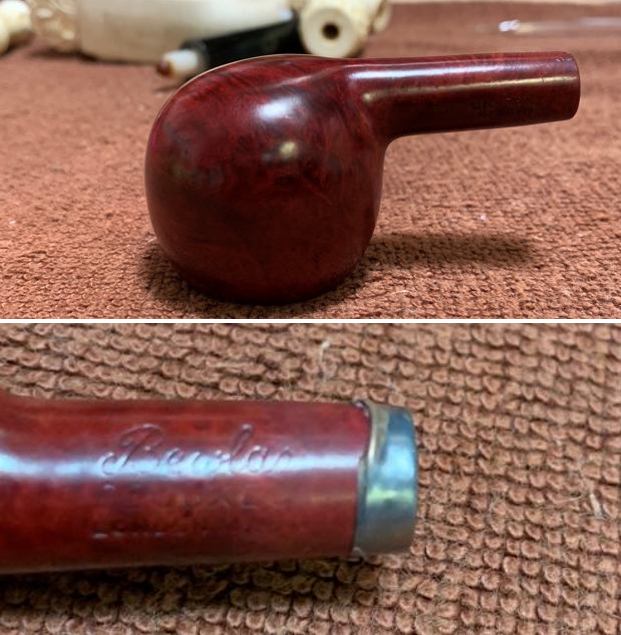
The following list comprises the better grades in descending order:

Pedigree, Pedigree I, Pedigree II, Straight Grain, Prodigy, Bronze Velvet, Virgin, Varichrome, Prestige, Jubilee, New Era, Prehistoric, International, Universe, Speciale Standard, Ebony, Tapestry, New Standard, Granitan, Sauvage, Sierra, Penthouse, Legacy, Concorde.

Since the pipe I was working on was made in France I knew that it was made either in Paris before 1952 or in St. Claude after that date and before 1981 when production moved to England. I also new that I was dealing with one of the better grade pipes with the Speciale Standard stamp.

I then followed the links included to a listing of the shapes and numbers on the GBD pipes (https://pipedia.org/wiki/GBD_Shapes/Numbers). The pipe I was working on was labeled by GBD as a 9465 which is a Liverpool with a round shank. Now it was time to work on the pipe itself. Jeff had cleaned up the pipe with his usual focus on detail. He reamed the pipe with a PipNet pipe reamer and removed the rest of the cake with a Savinelli Fitsall Pipe Knife. He scrubbed the exterior of the bowl with undiluted Murphy’s Oil Soap with a tooth brush and was able to remove the thick lava build up on the rim top. He rinsed it under running warm water to remove the soap and grime. He cleaned out the inside of the shank and the airway in the stem with alcohol, cotton swabs and pipe cleaners. He soaked the stem in Briarville’s Stem Deoxidizer and rinsed it off with warm water. I took photos of the pipe once I received it. The rim top cleaned up really well. The rim top, inner and outer edges of the bowl other than the burn damage on the front right were in good condition. The crowned inner edge also has some rim darkening and burn damage on the front right as well. The stem surface looked good with some large and deep tooth marks and chatter on both sides near the button.  He took photos of the stamping on the sides of the shank. It was faint but readable as noted above.I removed the stem and took a photo of the pipe to give a sense of the whole.  Now it was time to do my work on the pipe. I decided to begin by dealing with the damage on the front of the rim top and bowl. I sanded it slightly to give a clear picture of the damage in the photo below. I have marked it in red to help identify the damaged area.Now I had a decision to make on this repair. I could top the bowl and shorten the height of the entire bowl to accommodate the damage on the front of the rim. To me this would look awkward as the dip is quite deep. The other option to me was to build up the dip in the rim top and edge with briar dust and clear CA glue (super glue) to the same height as the rest of the bowl. I decided to build up the bowl top. To begin the process I topped the bowl to give me a flat surface and to remove the other damage to the rim top.I wiped off the burned area with alcohol on a cotton pad to clean off any debris. I layered on the first batch of CA glue and then used a dental spatula to put briar dust on top of the glue. I repeated the process until I had the rim top level. Once the repair cured I topped it once again to make sure that the repaired area matched the rest of the rim top. I used a topping board and 220 grit sandpaper.I took photos of the rim top and bowl front to show the repair. It is dark and still needs a lot of work but it is at least the right height and is smooth. You can also see the slight bevel that was on the inner edge of the rim on the rest of the bowl. I would need to continue that on the repaired area to match.I worked on the inner beveled edge with a folded piece of 220 grit sandpaper to give it a deep bevel. I also sanded the rim top repair to further smooth it out. The repair is starting to look good at this point.  I polished the briar with micromesh sanding pads – dry sanding with 1500-12000 grit sanding pads. I wiped it down after each pad with a damp cloth to remove the sanding debris and dust.   I restained the rim edge and top with a combination of Maple and Walnut stain pens to blend the colour to the rest of the bowl. The rim top looked darker but it looked much better than when I started the repair.I rubbed the bowl and shank down with Before & After Restoration Balm. I worked it into the surface of the bowl sides and shank with my fingertips to clean, enliven and protect the briar. I let the balm sit for a little while and then buffed with a cotton cloth to raise the shine.    I set the bowl aside and turned my attention to the stem. I “painted” the surface of the stem with the flame of a lighter to lift the tooth marks. It worked very well and many of the marks lifted. I filled in the remaining marks with clear CA glue and let the repairs cure. I used a small file to flatten out the repairs. I sanded the stem with 220 grit sandpaper to blend the repairs into the stem surface. I started the polishing with 400 grit sandpaper.     I polished the vulcanite stem with micromesh sanding pads – 1500-12000 grit pads. I wiped it down with Obsidian Oil after each sanding pad. I used Before & After Pipe Polish – both Fine and Extra Fine to further polish the stem.  This French Made GBD Speciale Standard 9465 Liverpool is a great looking pipe now that it has been restored. The rich contrasting brown stained finish around the bowl is quite beautiful and highlights the a finish that works well with the polished vulcanite stem. I put the stem back on the bowl and carefully buffed the pipe with Blue Diamond on the buffing wheel using a light touch on the briar. I gave the bowl and the stem multiple coats of Conservator’s Wax and buffed the entire pipe with a clean buffing pad. I hand buffed the pipe with a microfiber cloth to deepen the shine. The finished GBD Speciale Standard Liverpool sits nicely on the desk top and in the hand. Give the finished pipe a look in the photos below. The dimensions of the pipe are Length: 6 inches, Height: 1 ¾ of an inch, Outside diameter of the bowl: 1 ¼ inch, Chamber diameter: ¾ of an inch. The weight of the pipe is 35 grams/1.23 ounces. I will be putting it on the French Pipe Maker section of the rebornpipes store shortly. If you are interested in adding this pipe to your collection send me a message or an email. Thanks for reading this blog and my reflections on the pipe while I worked on it. There are many more to come!