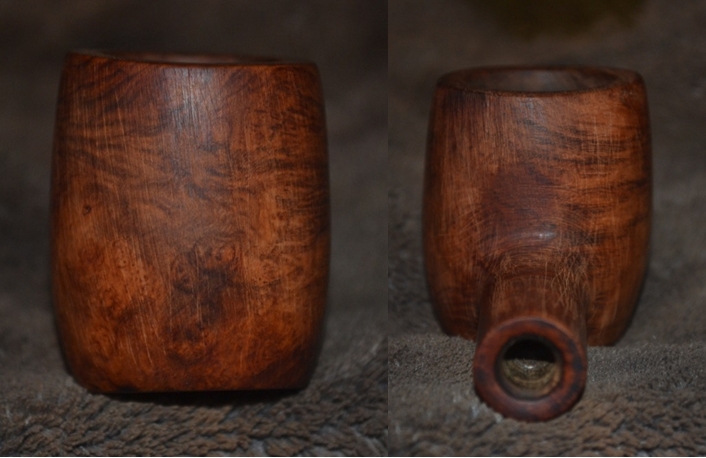
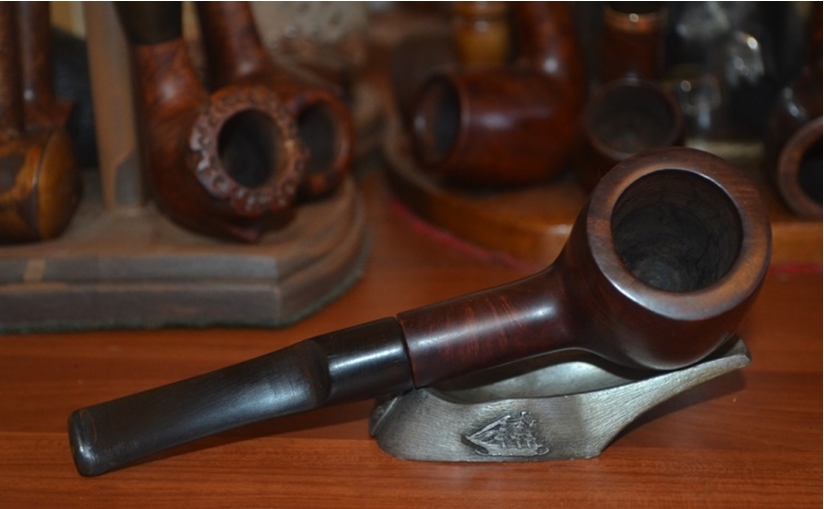
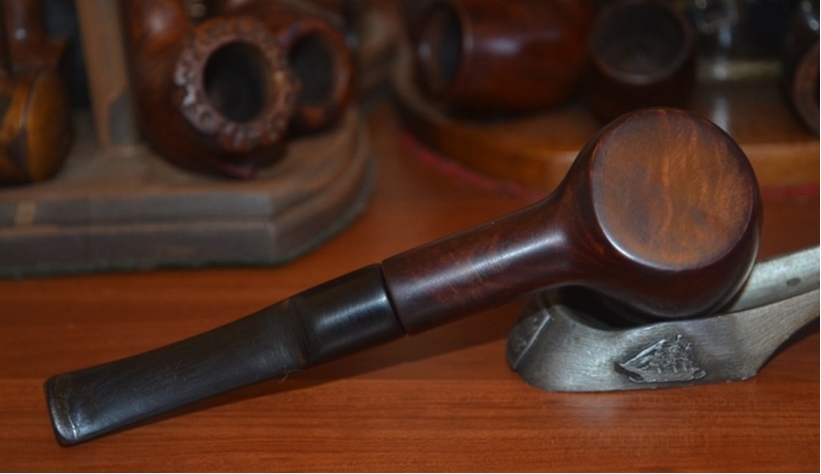
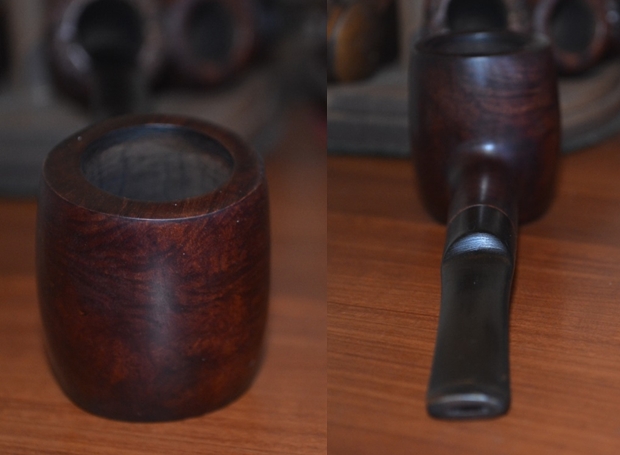
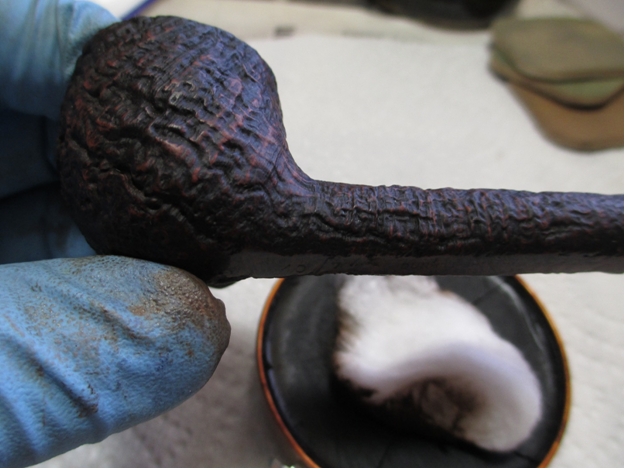
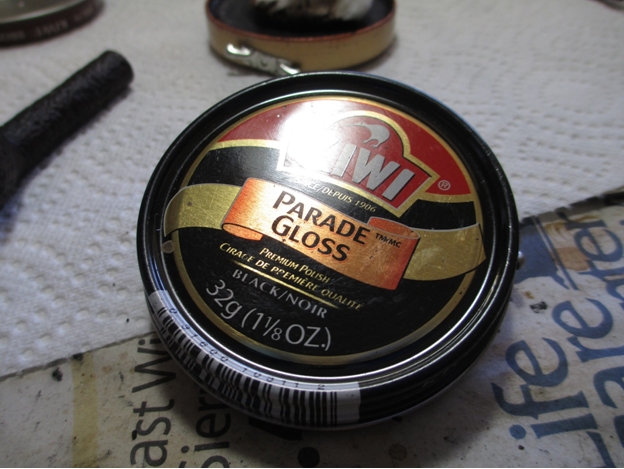
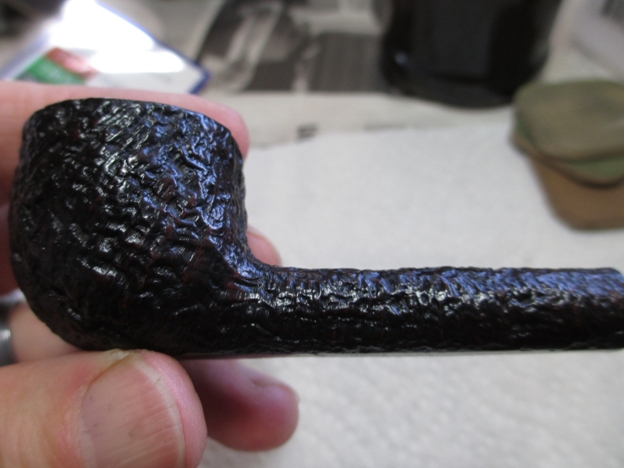
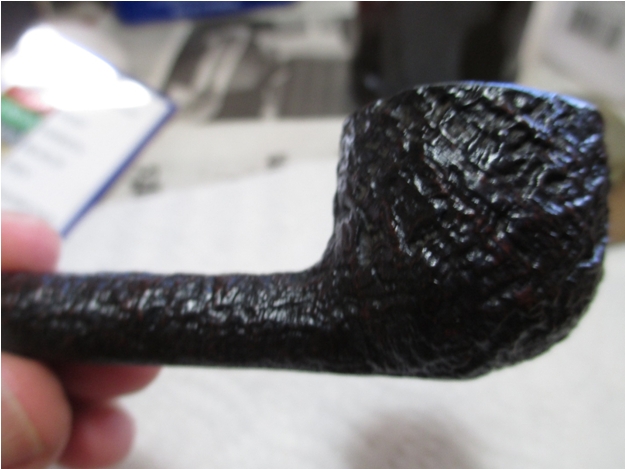
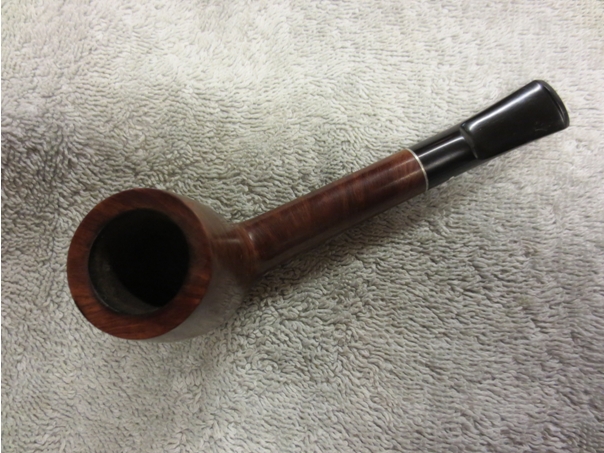
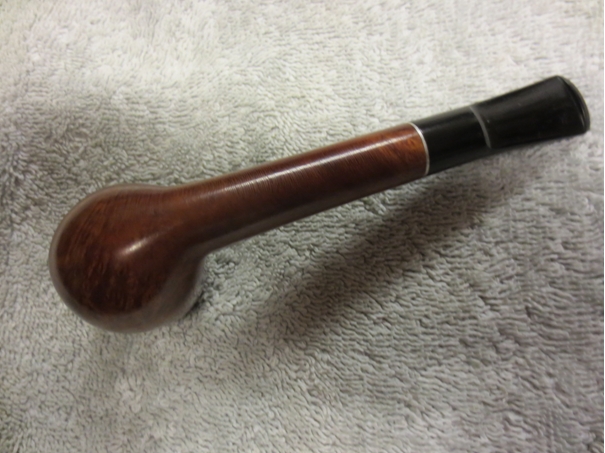
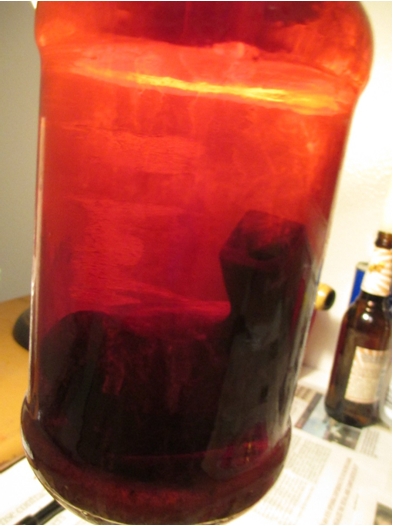
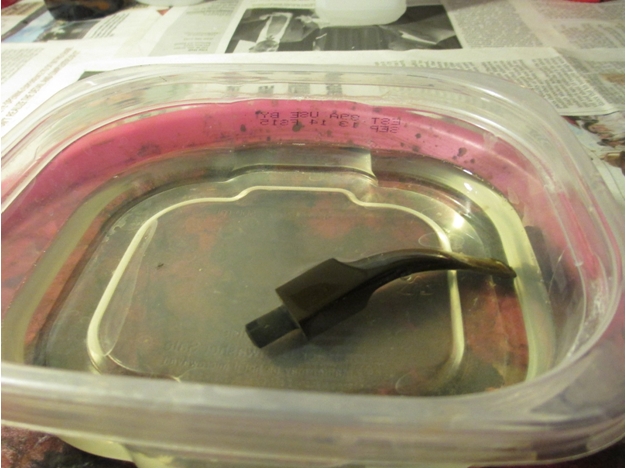
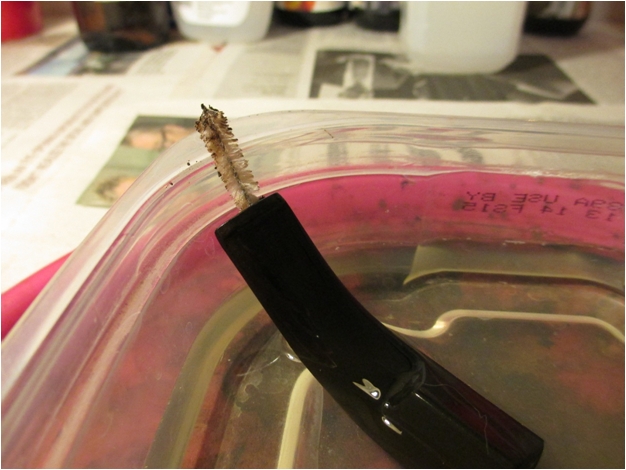
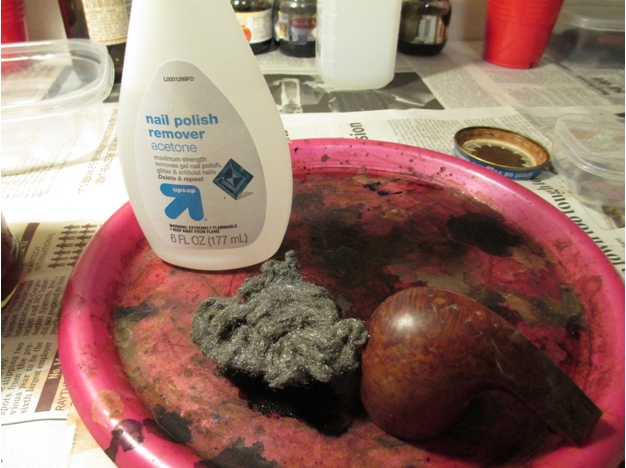
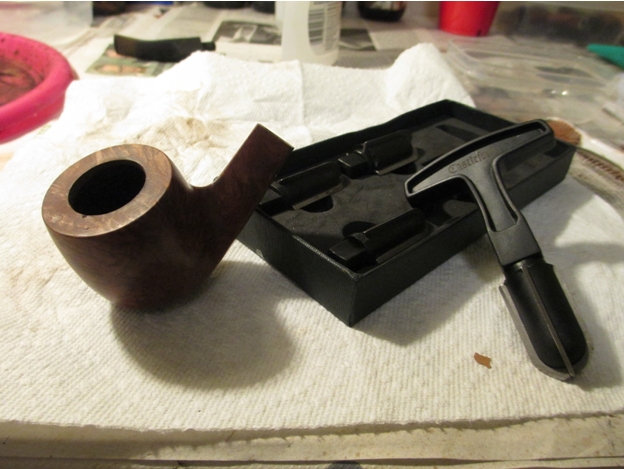
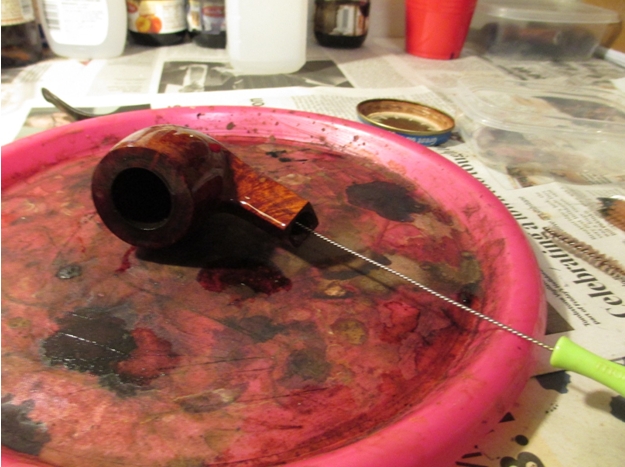
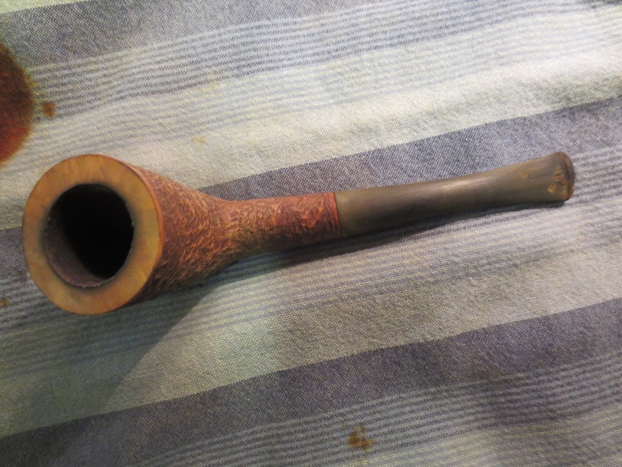
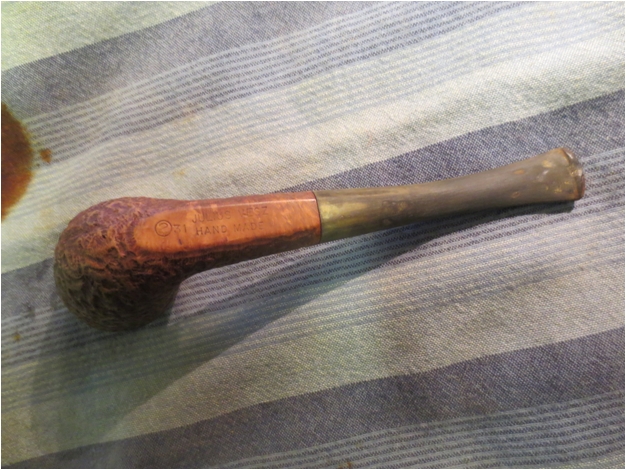
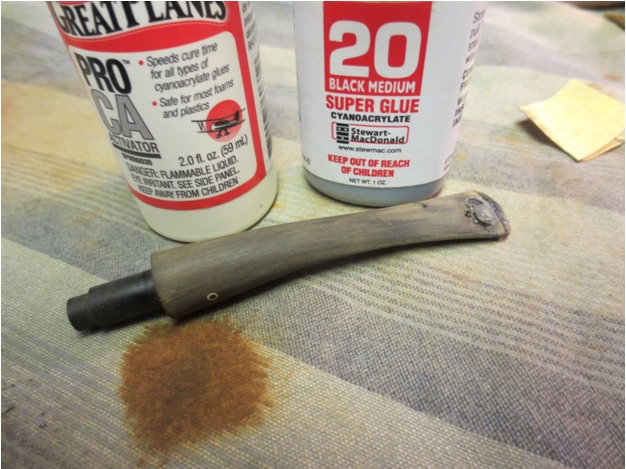
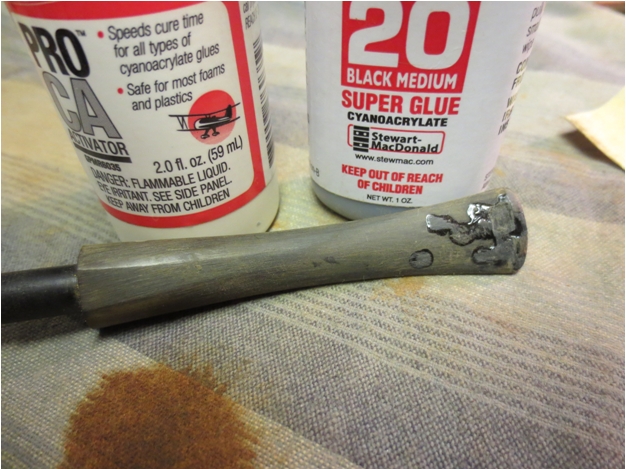
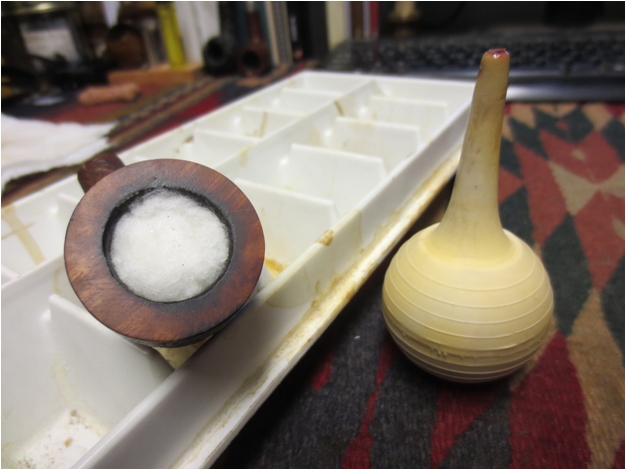
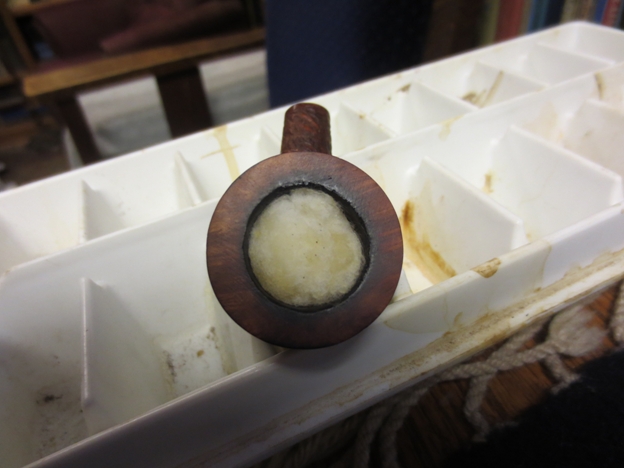
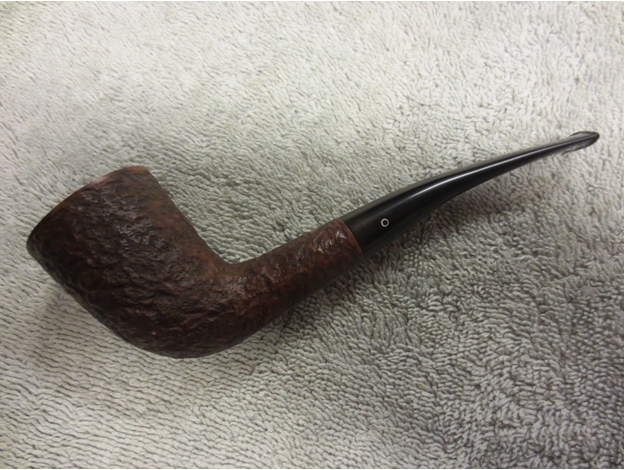
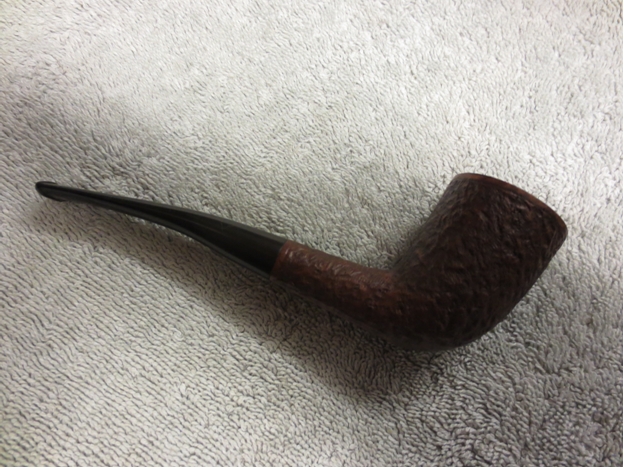
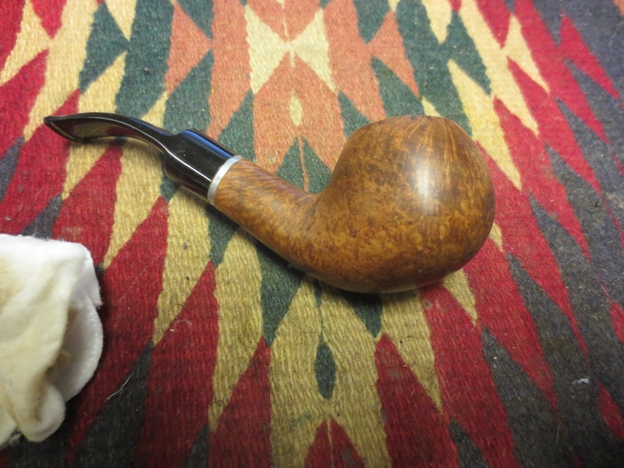
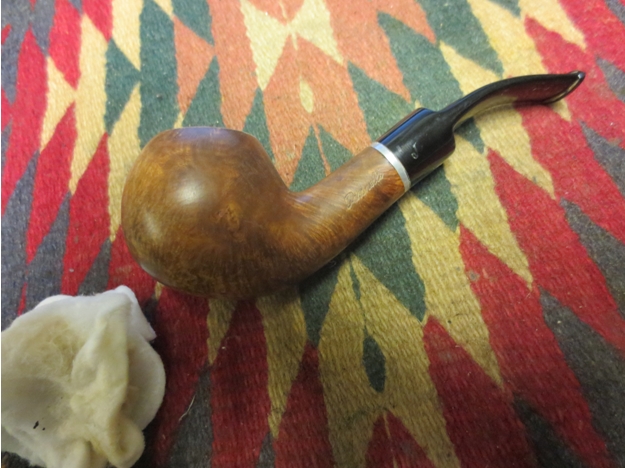
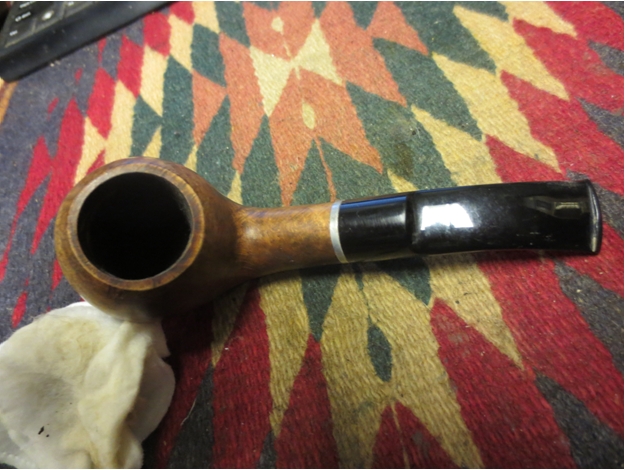
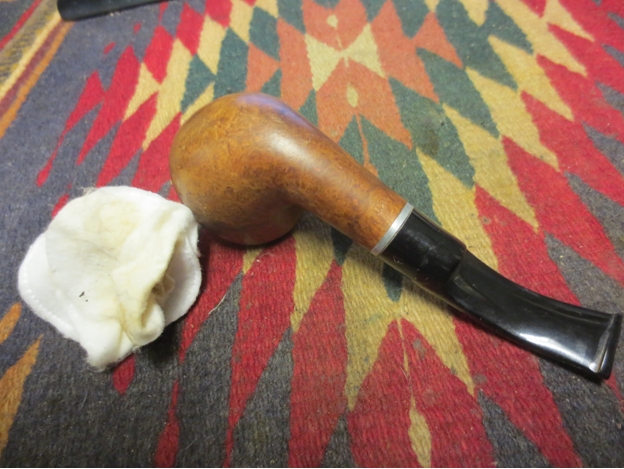
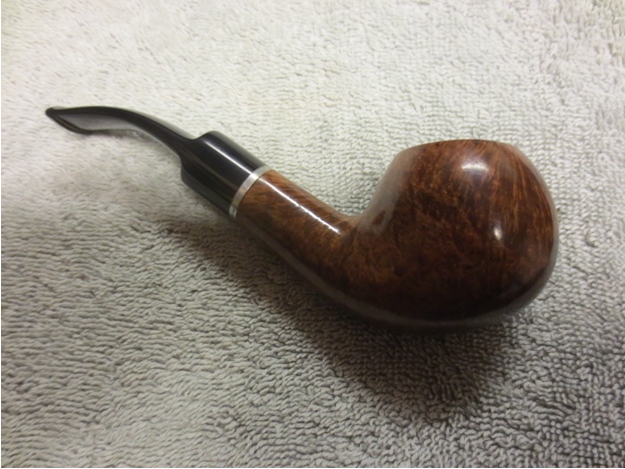
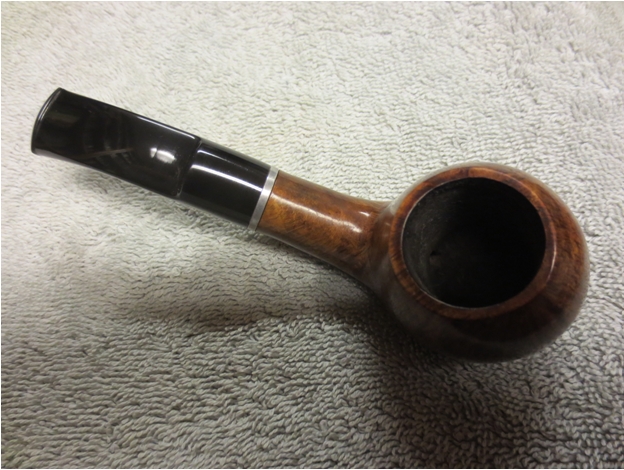
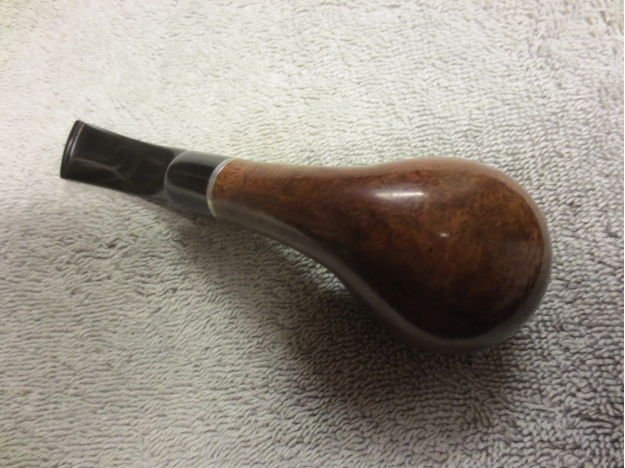
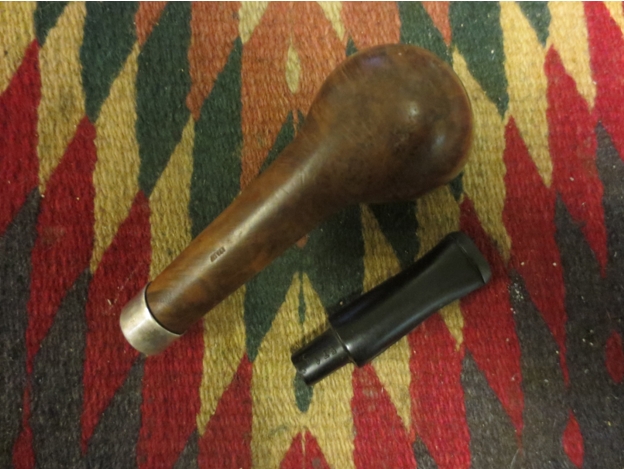
Tag Archives: Bowl – refinishing

Ben Wade and the Chamber of Horrors – Robert M. Boughton


Guest Blog by Robert M. Boughton
Member, North American Society of Pipe Collectors
http://www.naspc.org
http://www.roadrunnerpipes.com
http://about.me/boughtonrobert
Photos © the Author

“It is our choices, Harry, that show what we truly are, far more than our abilities.” —J.K. Rowling, “Harry Potter and the Chamber of Secrets” (1998 U.K.)

INTRODUCTION
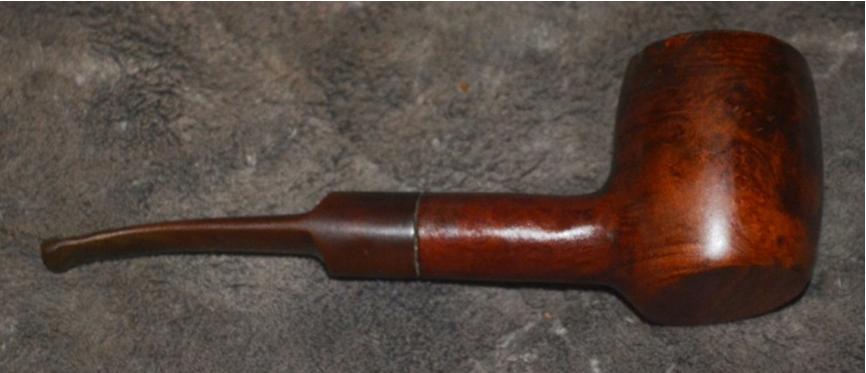
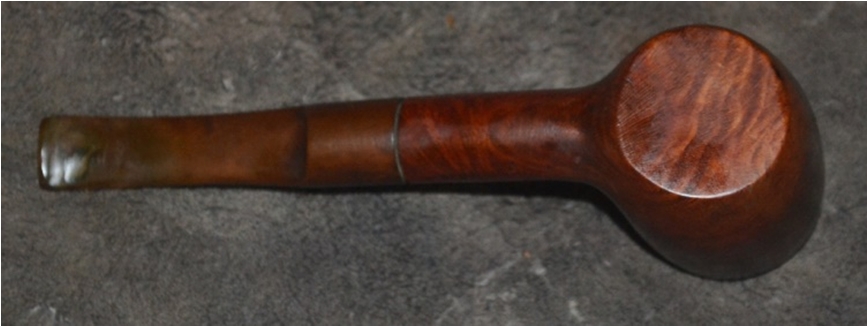
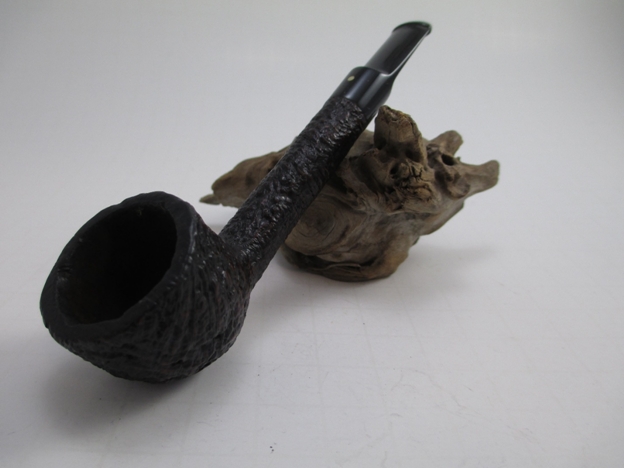
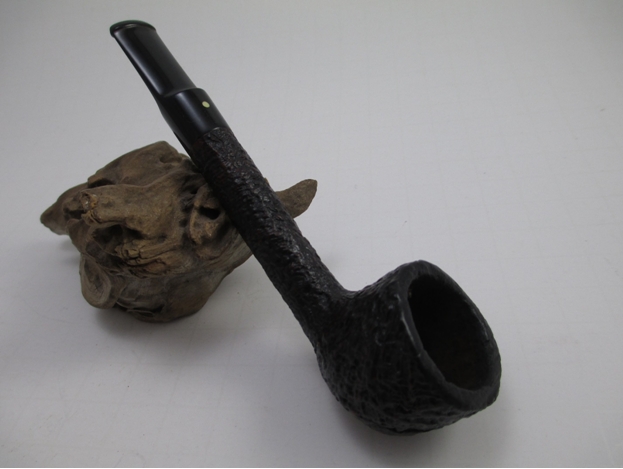
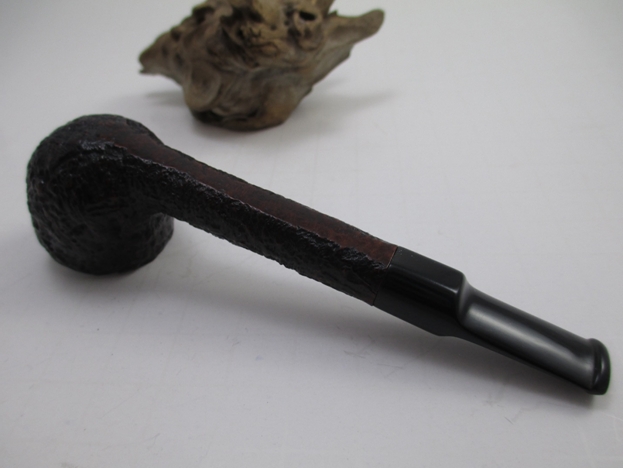
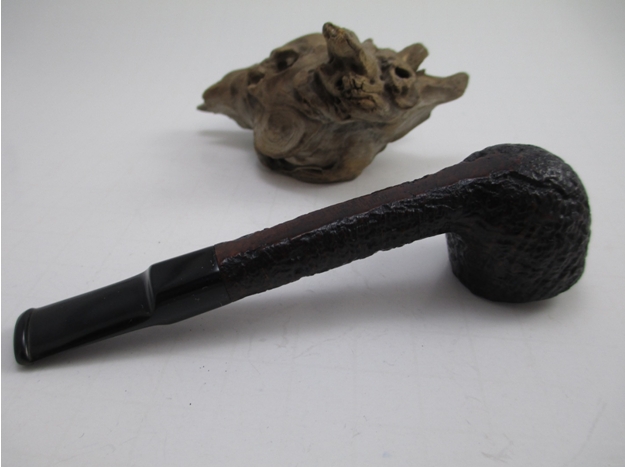
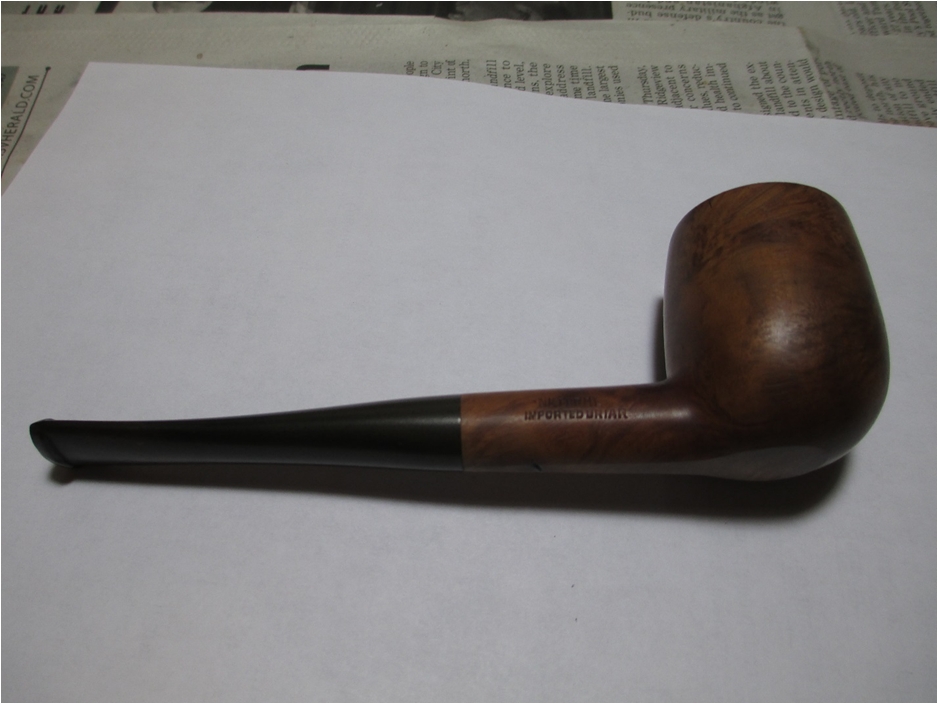
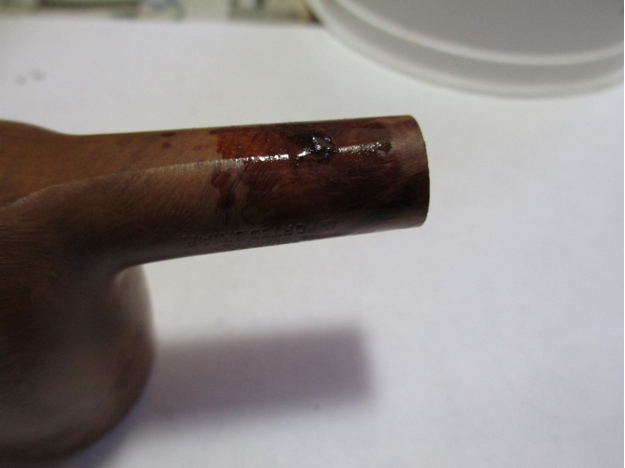
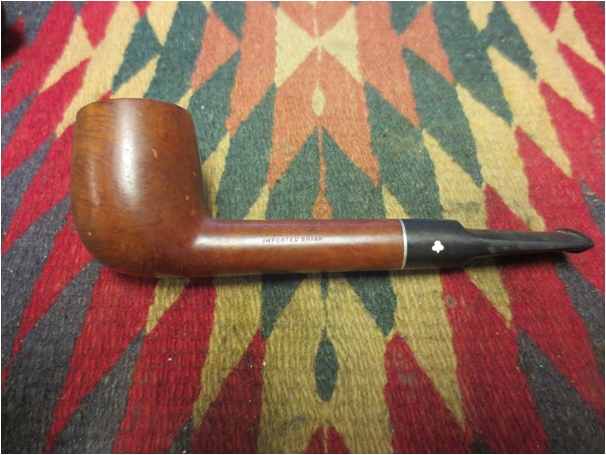
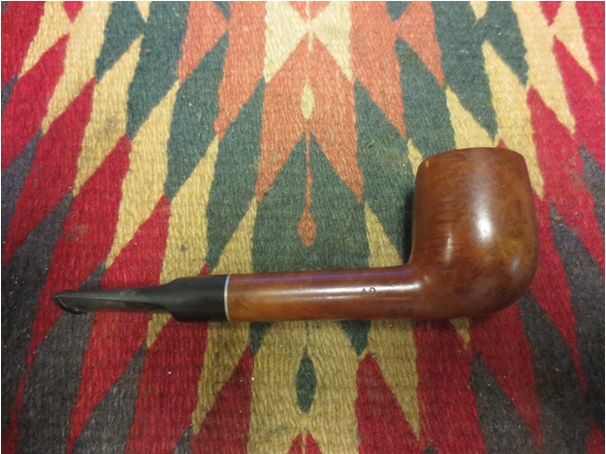
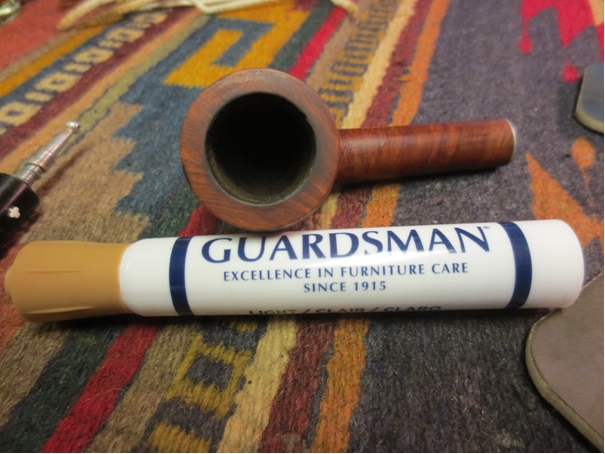
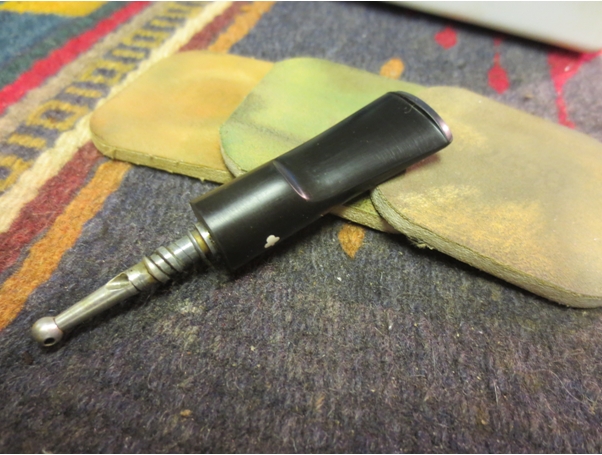
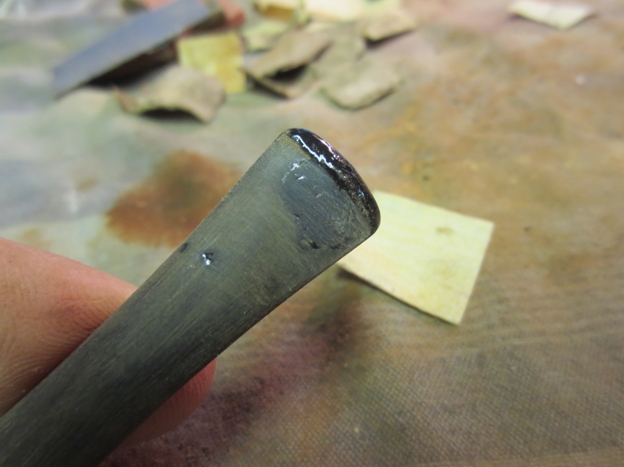
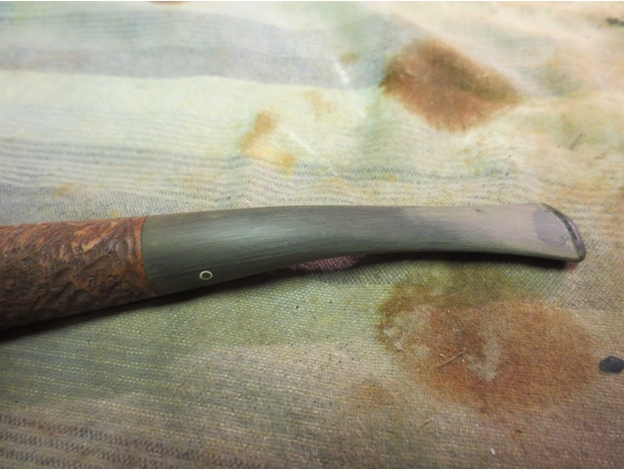
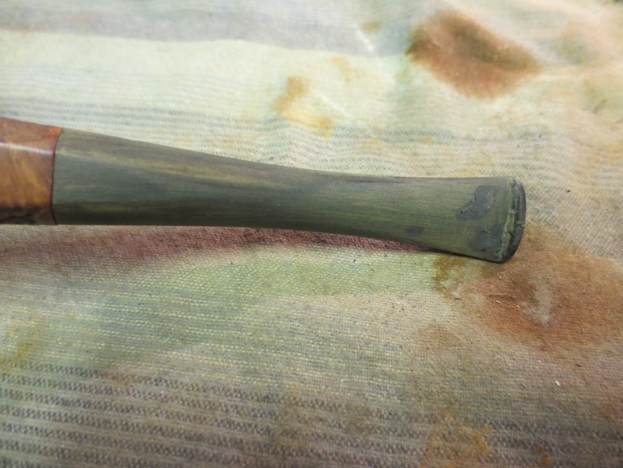
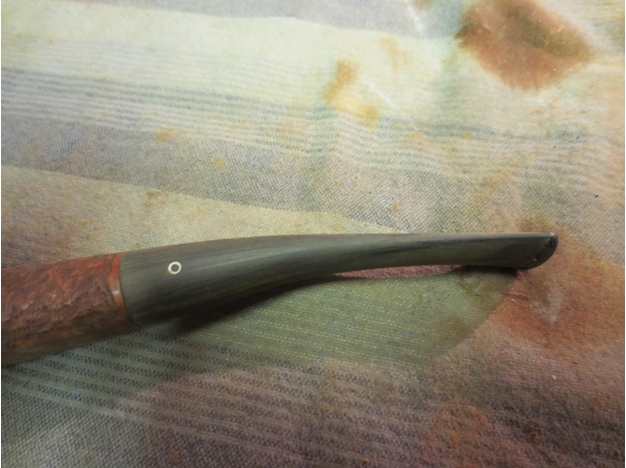
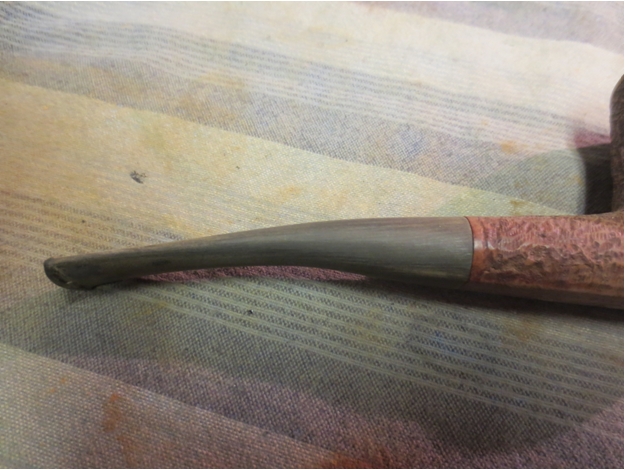
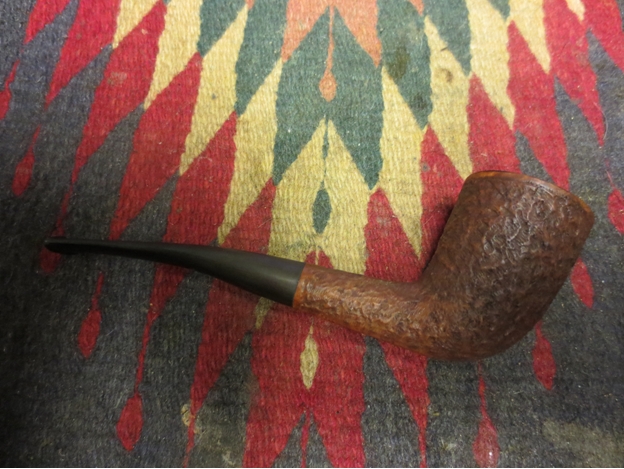
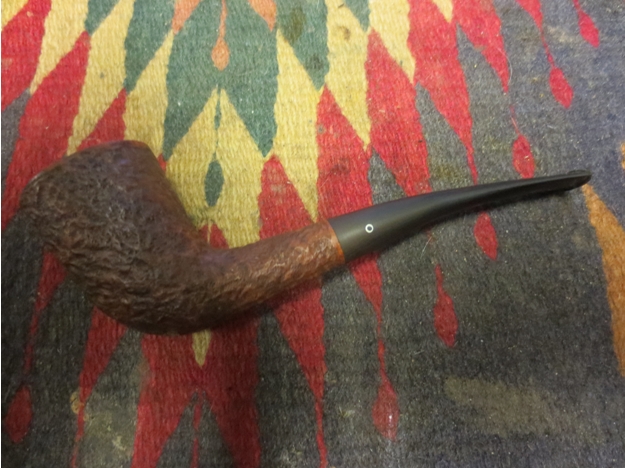
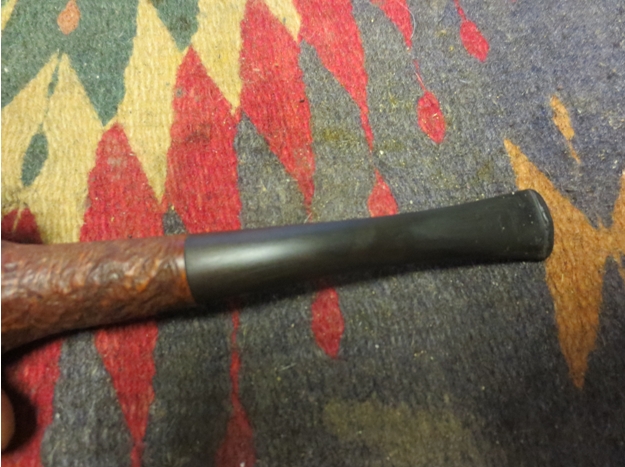
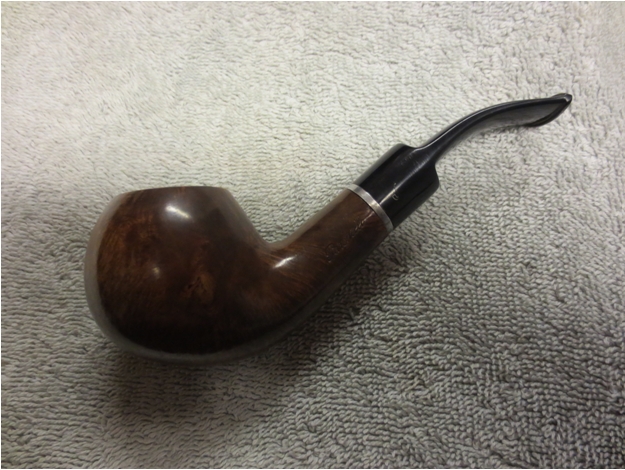
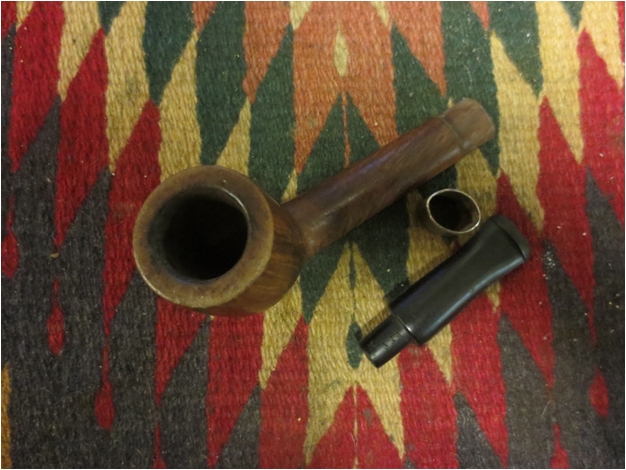
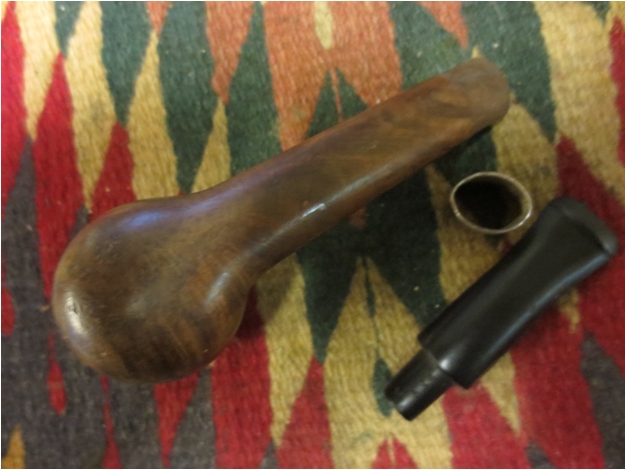
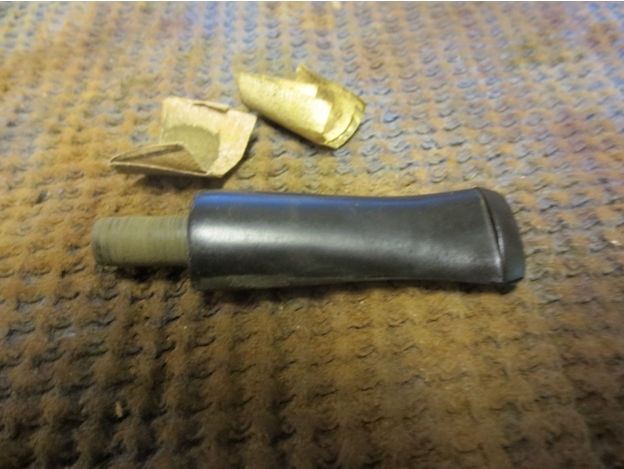
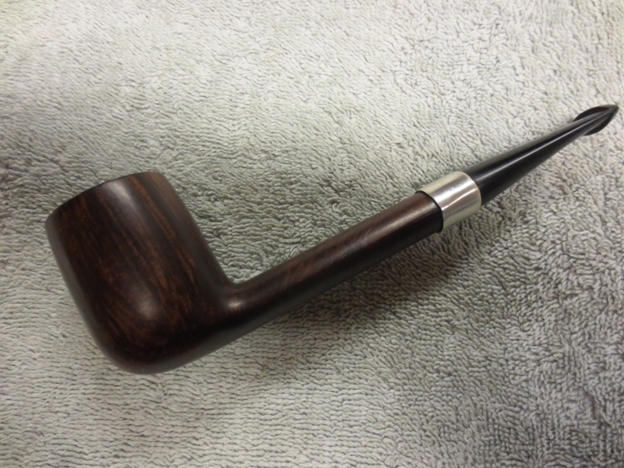
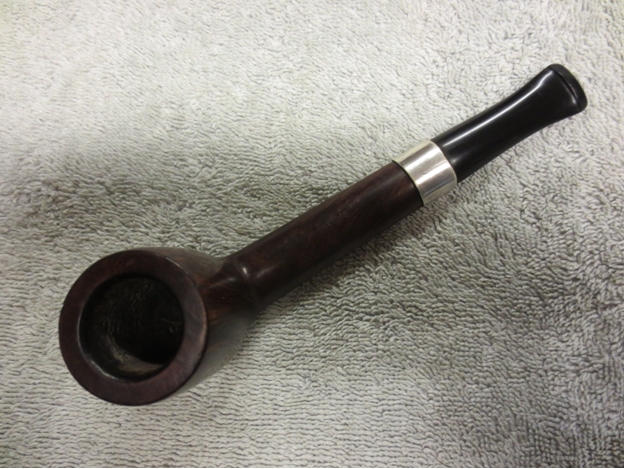
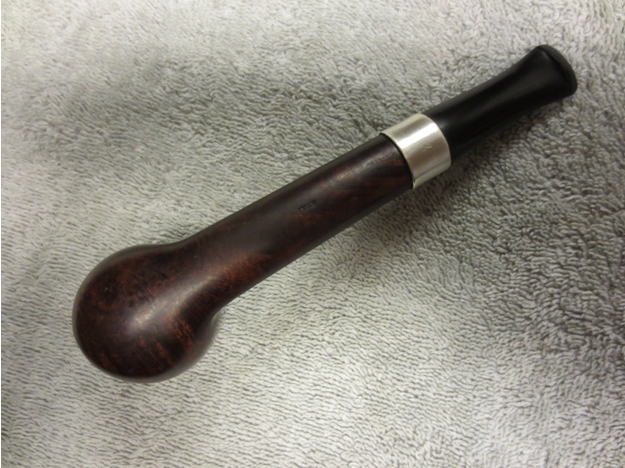
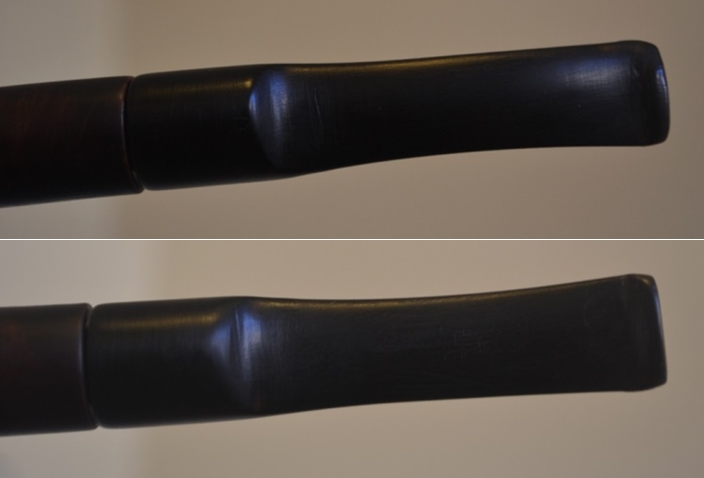
Never has one of the quotes with which I like to begin my blogs spoken with more directness to the heart of the matter at hand than the words of J.K. Rowling above. At the risk of kicking a dead horse, I must point out how the choices of the prior owner of the Ben Wade Tall Poker (Made in London England) effected this description of its harrowing restoration. I am sure the individual lacked not in ability, only decision-making. But where do I begin? Ah, the stem pops into mind.Rob1 Just try to take in the scope of the mauling the perp inflicted on the bit and downward, from these photos alone: the complete gnashing away of the bottom lip and the gash in the upper side as shown on the left, and the chips in the top of the bit and great flat plain below it on the right. The only true cure for this degree of chewing, like a single piranha in frenzy that has been chased away by a bigger fish with no interest in pipes, is total replacement.
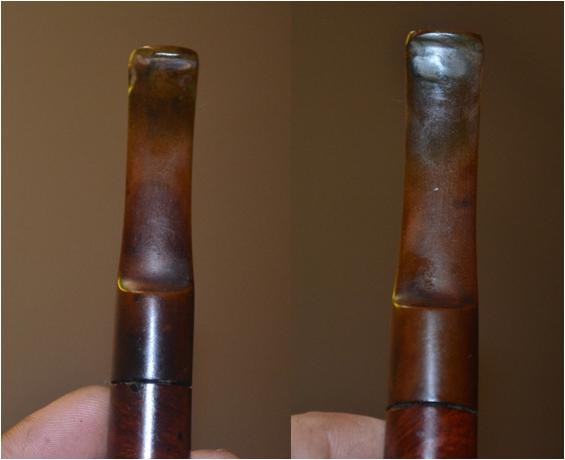
I believe someone even re-stemmed this pipe at some point during the old owner’s possession of it, as the bottom of the bowl is flat with ample room to stabilize it in a canted position yet the stem’s weight topples it. But that probability only serves to compound the undeserving person’s culpability. After all, imagine the debasement the original stem must have suffered. However, with another replacement in mind for the future, for now I took the mayhem as a challenge for some serious Black Super Glue practice.

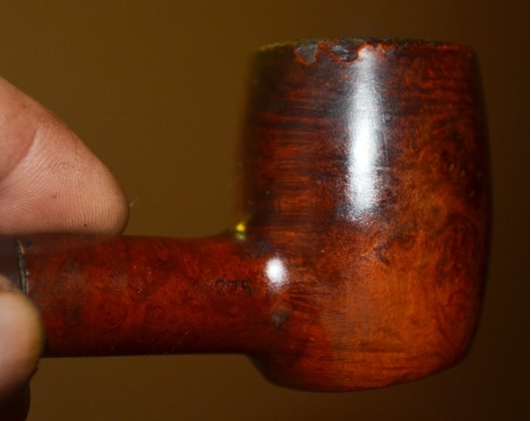
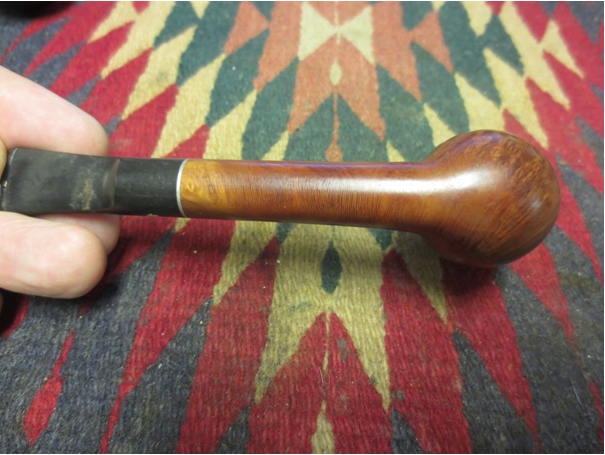
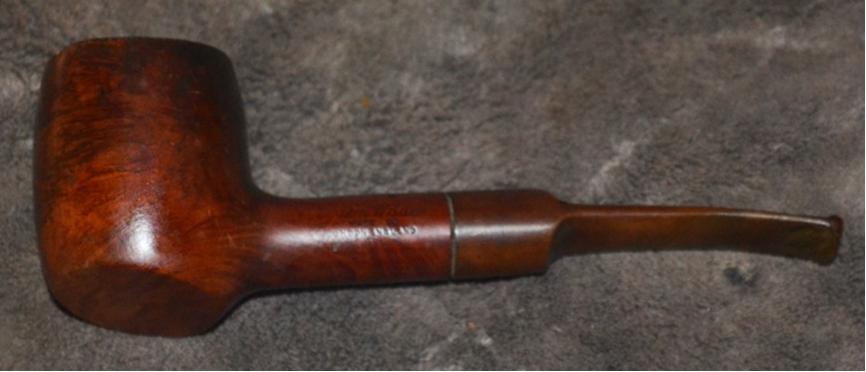
Then there was the liberal, to use a kind adjective, distribution of deep pits and scratches covering the bowl and shank.Rob2
Rob3

Rob4

Rob5

Rob6

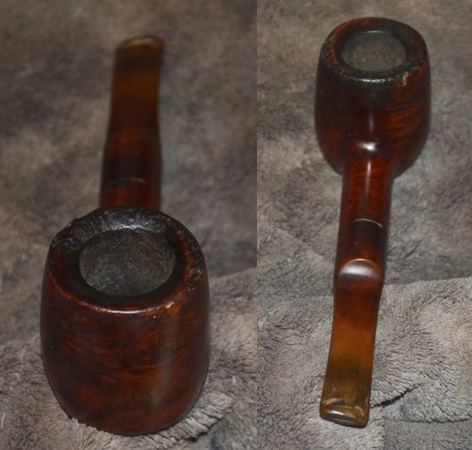
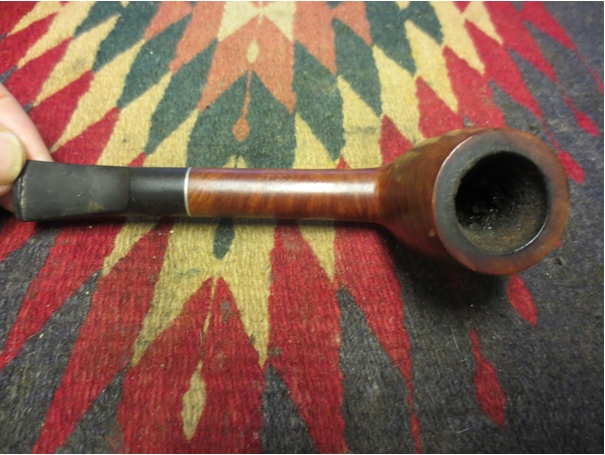
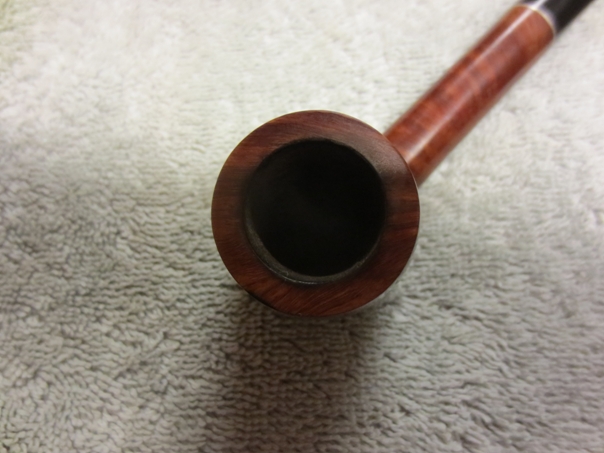
Rob7 And at last, I come to the reason for the name of this blog: the chamber and rim.Rob8 When I first saw this angle on the site where I ordered a three-pipe lot of Ben Wades (one of which, when it arrived, was a tall billiard with a huge crack extending down the side of the bowl that required amputation and is therefore now undergoing the trauma of drastic re-shaping, and the other a small apple, which I restored with success and already blogged), I thought the rim would be the biggest challenge of the project.
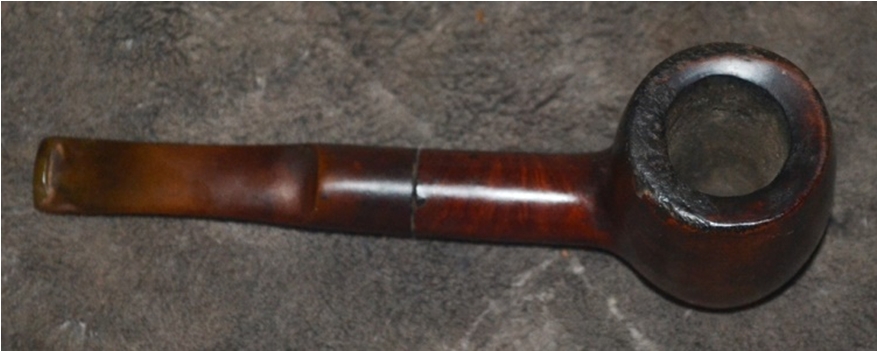
Although the rim did indeed present considerable obstacles to overcome, the greatest battle proved to be with the chamber of horrors itself, from which I emerged, torn and bleeding, but victorious – if there can be any genuine victory in war.

REFURBISH
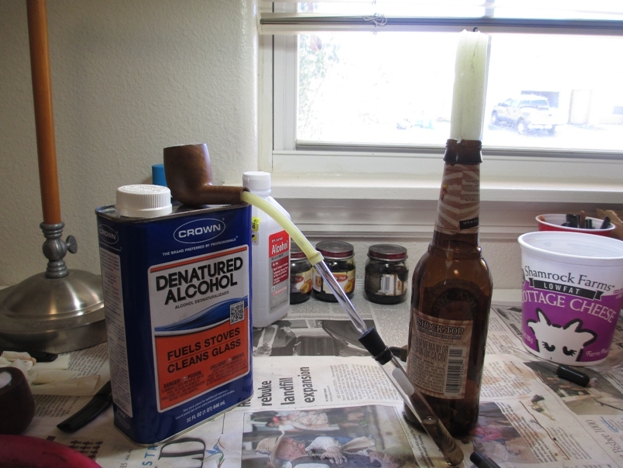
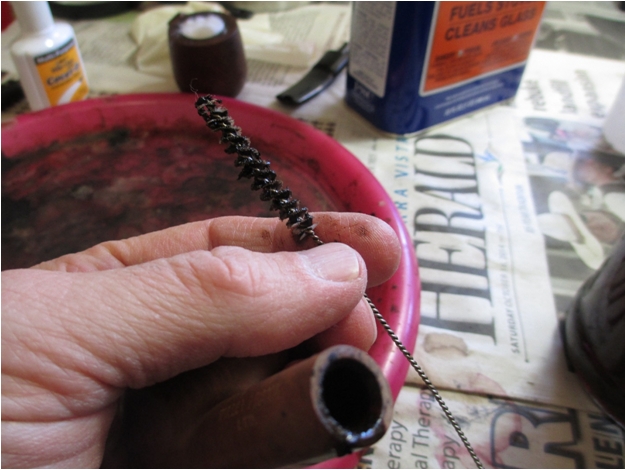
Following my initial structural inspection with a couple of bristly cleaners soaked in Everclear 190-proof that I ran through the stem and shank, I concluded the pipe somehow was intact but filthy almost to the point of total clogging with black resinous goop. In fact, when I looked at the shank opening as shown in the second to last photo above and then tried to blow through it only to meet extreme resistance, I got my first clue that many sturdy cleaners would make the ultimate sacrifice before this BW was fit to enjoy.

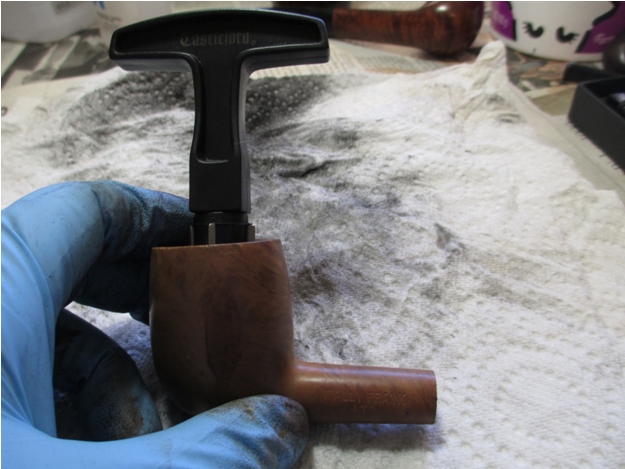
I proceeded with the part of the restoration that has always been my first step: reaming the chamber. But this time, after about an hour of sweaty, hand- and arm-weakening cranking, I only prevailed, with repeated efforts applying the reamer at different levels and angles of attack, in dislodging multiple layers of cake that slowly made a pile of fine carbon amounting to more than half a dozen bowls. Even sanding with 80-grit paper only added another few bowls of carbon to the growing heap. It’s too bad all the pipe cake out there waiting to be converted to powder by folks of my persuasion isn’t recyclable as tobacco, but then again, there seem to be plenty of another kind of folk who enjoy the taste of massive congestion from carbon and other nasty accretions.

Deciding, based on the horrible pocks and craters remaining in the chamber, that the hallowed space would take work throughout the restoration process, I launched a concerted offensive on the rim, at first believing with reason based on experience that I would be able to salvage the nice inward curve of the briar there. However, after another considerable chunk of time flew away with each level of char I banished, all that I had done was reveal wounds so deep and close-spaced along the inside curve of the rim and several bad wounds at the top of the bowl that I knew I would have to level the rim.
Drastic situations call for equal measures, and so, not having a power sander, I chose the best weapon I possessed, said tool being a metal rasp. Thus began another arduous labor removing the once elegant curve of the rim, with heavy mental protest. I was filled with sadness as I applied the rough edge of the rasp with slow care to the rim and watched the slope disappear more and more over time.

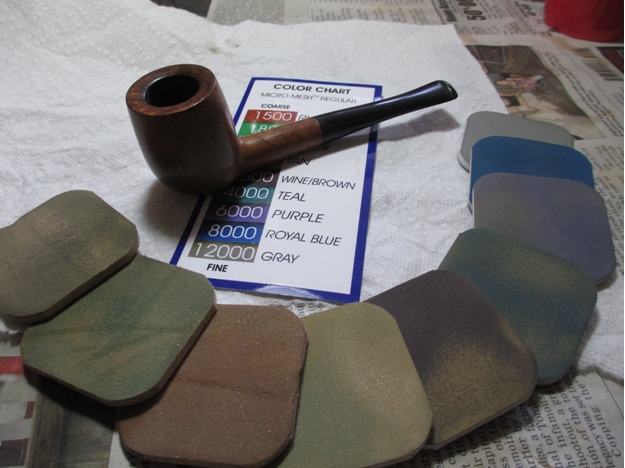
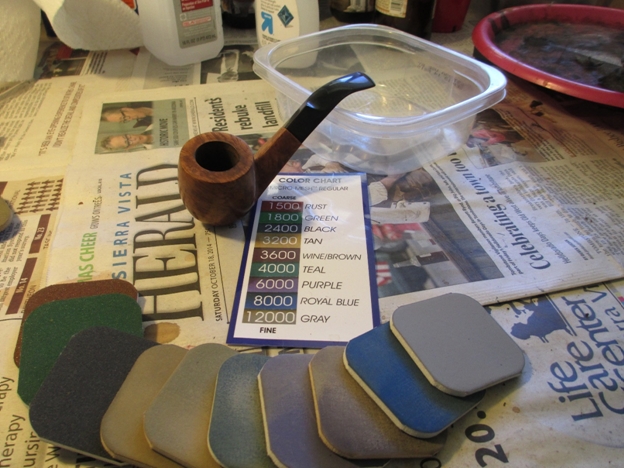
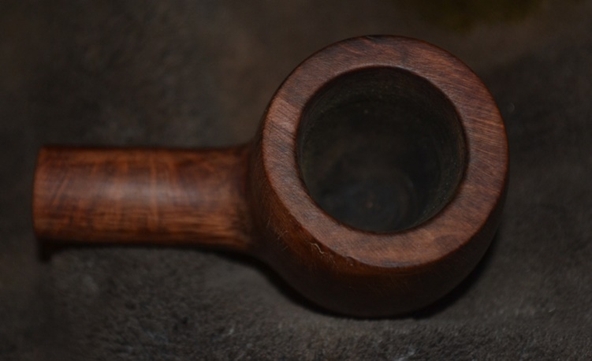
That stage finished and the rim flat, I sanded the well-grained wood with 220-grit paper followed by 400 and then micro-meshed using 600, then 800, 1000, 1500, 2400 and ending with 3600.Rob9 Even this view does not reveal the insidious nature of the cake buildup inside the chamber from hell. The ongoing task of removing all of the cake, every time I thought I achieved smoothness all around, only uncovered still more hidden holes, similar to microcosmic pits and craters on the moon, only black.
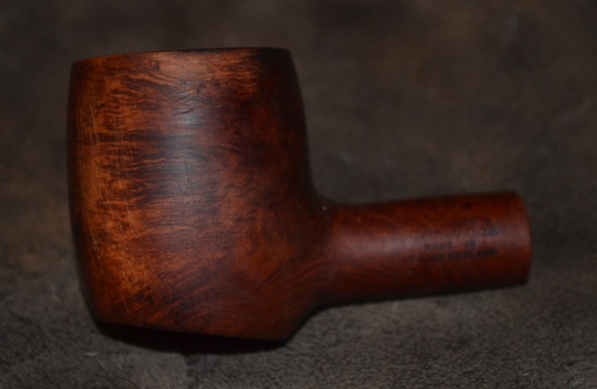
I decided the time had come to remove all of the dings and other rough spots in the bowl and shank and used 220 paper again for the worst areas, then 2400 micromesh followed by 3600.Rob10
Rob11

Rob12

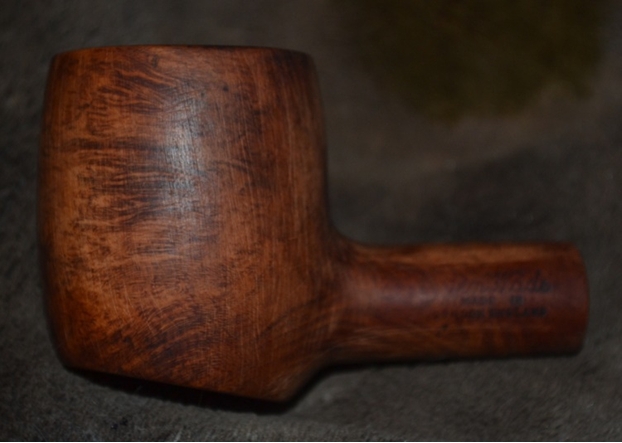
Rob13 Seeing the nice, lighter wood that lay beneath, but suspecting the dark stain was used for a reason (e.g., hiding fills), I nevertheless embarked on a removal of the original stain by hand using 400-grit paper.Rob14
Rob15

Rob16

Rob17 I know, I know! I see here and noted at the time the scratches left by my removal method, but careful, even sanding and then buffing with several levels of micromesh took them off quite well. Two important goals were accomplished by this roughness. One, I satisfied my curiosity about the potential for fills. Yes, as you can see, they are present, but nowhere near to the extent that I anticipated. Two, I removed the dings, divots, dents and most of the other defects. Of course, some might reverse the order of significance of these resolved issues.

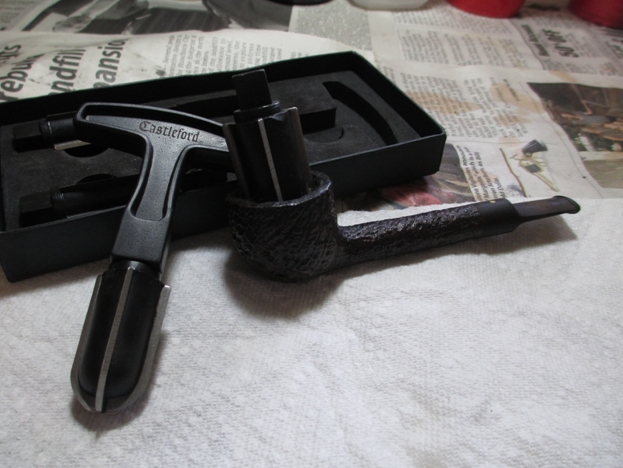
At this juncture, I became resolved to eradicate the stubborn, troublesome cake no matter what it might take. The determination was born not only of my own obdurate nature that exceeds that of any piece of wood, but from the fact that the Ben Wade Chamber of Horrors had managed to destroy my Senior Reamer – no joke. Not wanting to discard the fallen reamer, which had been so faithful to me until it met The Chamber That Must Not Be Named, by such callous means as tossing it in the garbage, I chose rather to retire it to a place of honor on my bench. But now I had to avenge my defeated brother in restoration, not to mention buy a replacement. I already ordered a new-in-box Castleford Five-Piece Multi-Fit Reamer Kit and a full set of micromesh pads (no more paper for me) online for just more than $30, postage included.

With no small sense of retribution fuelling me, I girded myself with an entire large sheet of the coarsest sandpaper I had and cut off a few small strips before bending one into the right shape to begin the ugly but necessary task with a vengeance. Unbelievable amounts of carbon spilling from the demon chamber every time I emptied it, and my fingers blackened with soot, I kept at it with gusto, thinking I must have made progress. My left index finger was developing scrapes and calluses.

Still, the evil chamber walls in spots felt like the bowels of a volcano. In desperation, I turned to a Dremel I borrowed for the amputated Ben Wade Billiard’s re-shaping. I changed the Dremel bit to a small, fine rounded piece of sandpaper and, at the slowest speed, began making circular turns around the chamber walls.

As some of you with more experience might imagine, this approach almost led to disaster, but instead turned the tables in my favor. Granted, the Dremel (not I) left several new chinked spots where none existed before. But these occurring after the power tool caught a scent of the pure briar, the cake crisis was solved with a bit more rapid sanding that also repaired the new nicks.

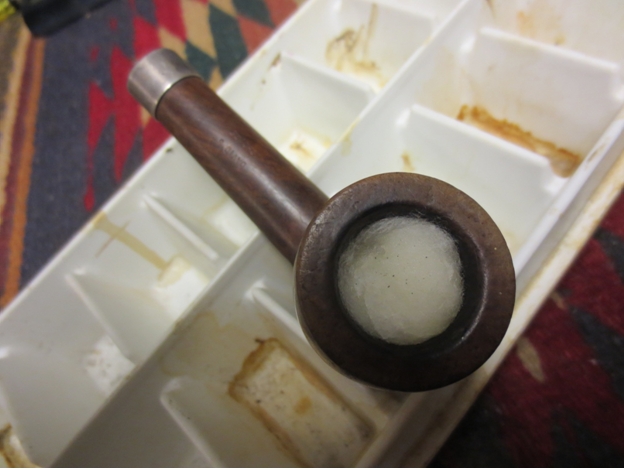
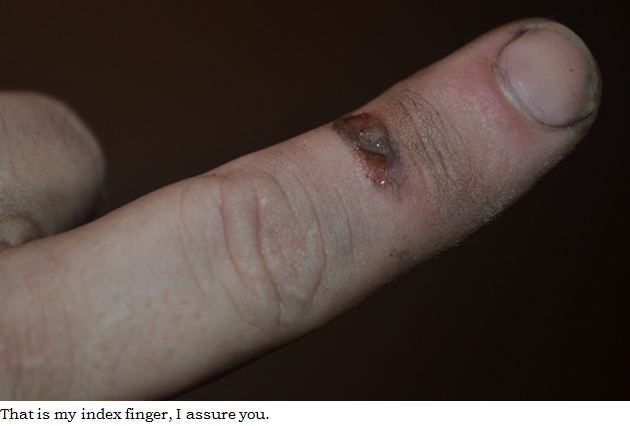
With the chamber vanquished of the dreadful cake as well as it ever would be, and the hollow area covered in blackness, and the shank still needing to be purged of its mess, I plugged the shank opening with several small squares of cotton and flooded the chamber with Everclear. I set the big chunk of briar aside for about 20 minutes.Rob18 In the meantime, I felt a keen sting in my right index finger and noticed that under the True Coat of soot there appeared to be some blood and loose skin. I thought it wise to scrub my hands forthwith, with soap and water as hot as I could stand, and this ordeal ended up lasting about 15 minutes. When I was done, I realized I had no hydrogen peroxide to sterilize the cut caused by so much sanding of the wicked chamber.
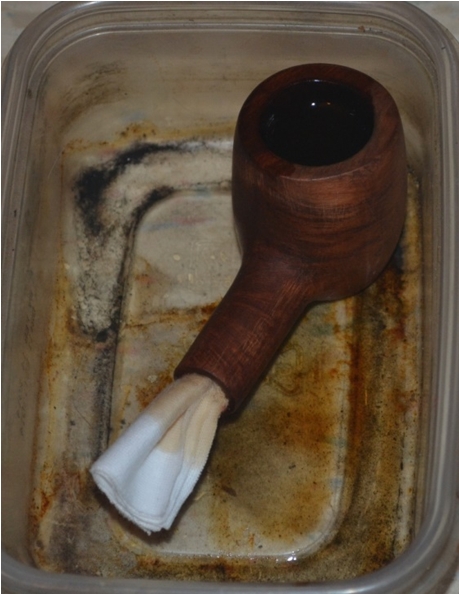
But I did have Everclear, the pouring of which onto my already burning sore did not excite me. Better safe than sorry, I just got it over with.

Oh, my gosh, did it burn!Rob19 I pulled the cotton plug from the shank and let the remaining coal-black liquid ooze from it like a suppurating wound, and began the still serious business of running both ends of so many bristly cleaners dipped in alcohol through the shank that I lost count. While the darker part of my brain, made meaner by the frequent sting of more Everclear running onto my exposed wound, whispered that the little hole would never come clean, the rational side assured me that before I knew it the job would be done.
But it wasn’t happening fast enough, and so I resorted to digging through my growing and a bit disordered supplies for the wire bristle brush I knew was there. At last I found it buried in the bottom of a drawer and at once started the repetitious but effective process of wetting it with alcohol, scrubbing the inner shank, rinsing it in a shallow bowl of alcohol that grew fouler each time, squeezing the bristles clean and dry, and repeating all of these steps over and over. Of course, my reward did come when I switched back to a normal cleaner soaked in alcohol and it came out clean.

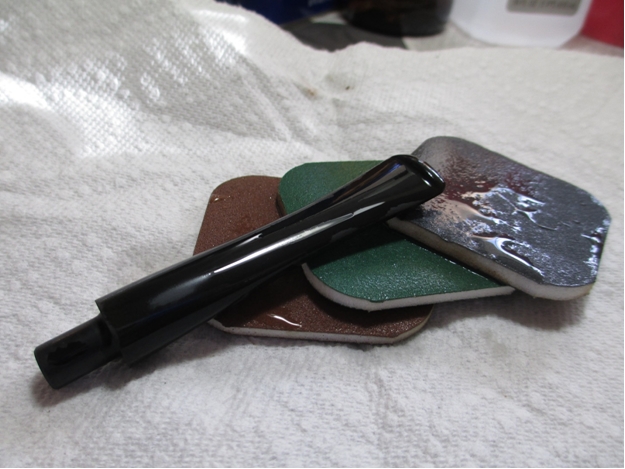
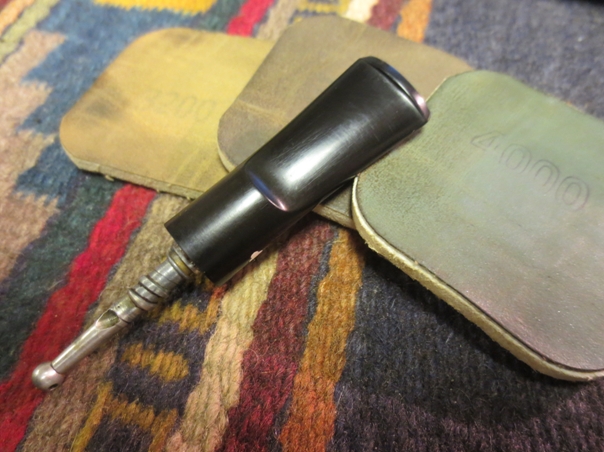
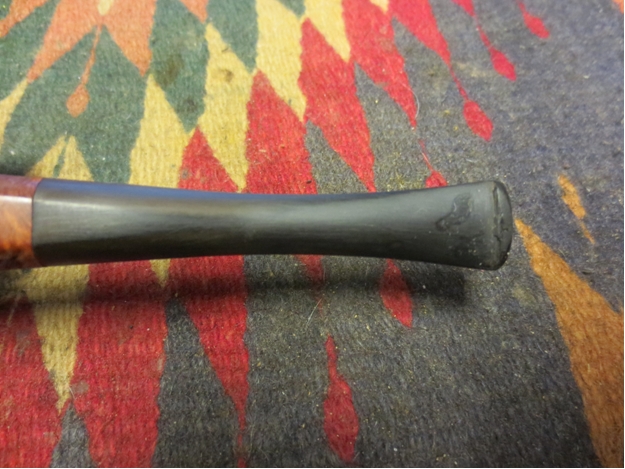
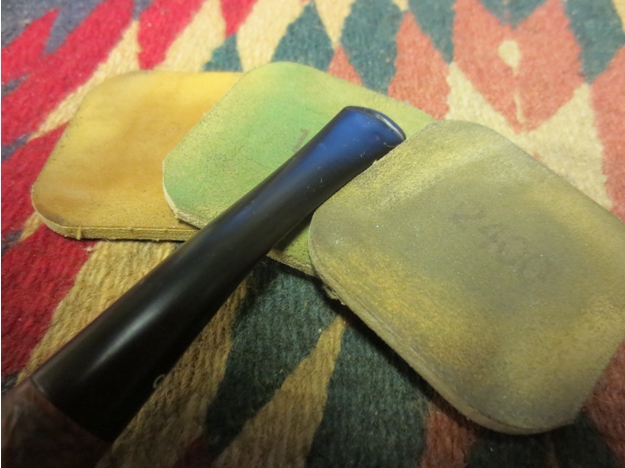
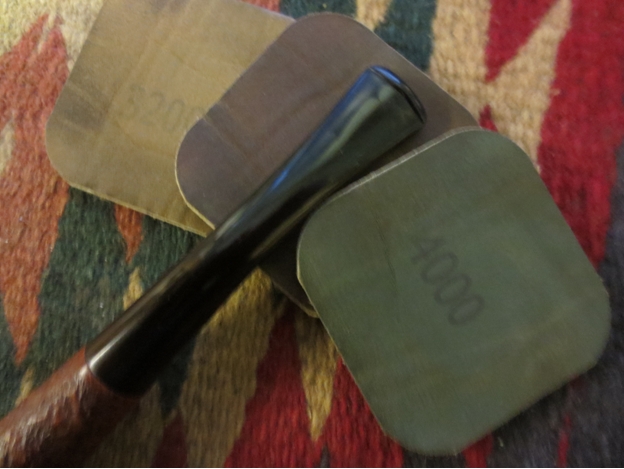
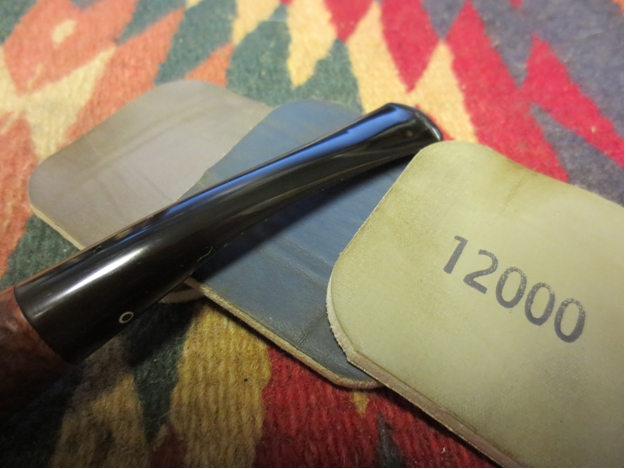
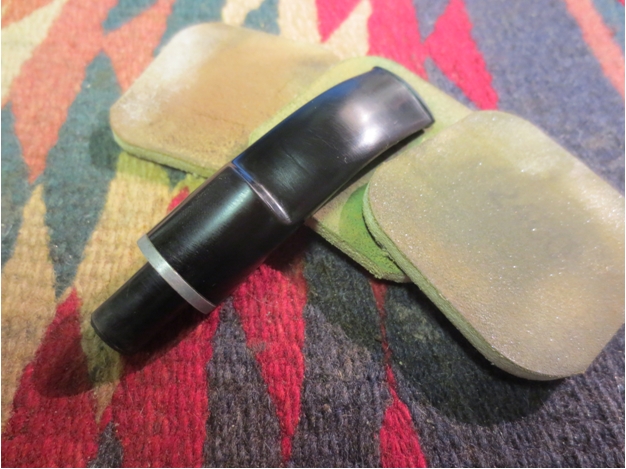
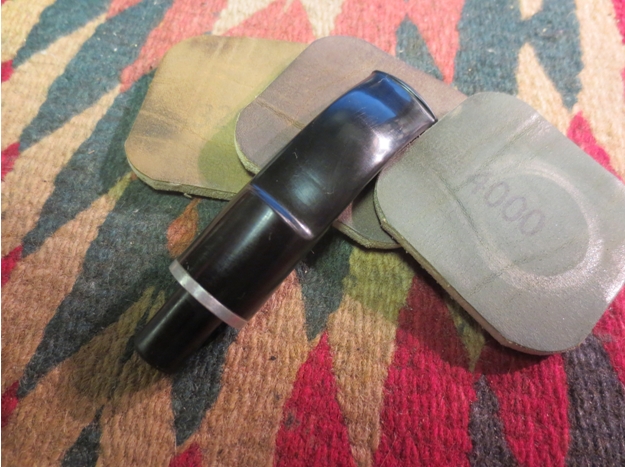
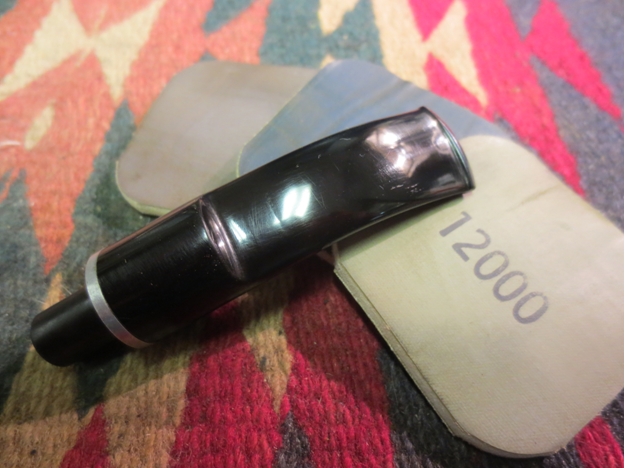
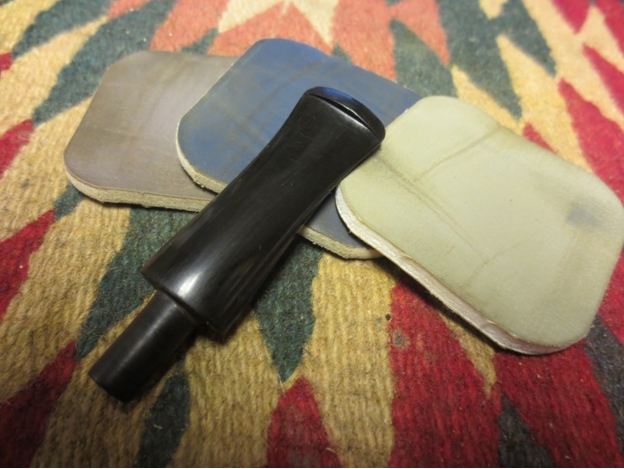
Somewhere along the line, I finished the stem work by sanding down the excess Black Super Glue and smoothing the Vulcanite with vigorous rubbings of three grades of micromesh.

After inspecting the briar for any missed flaws I could fix and finding none, I gave the bowl and shank a final purified water bath, which proved to be necessary from all of the black powder that had transferred from my formerly dirty fingers.

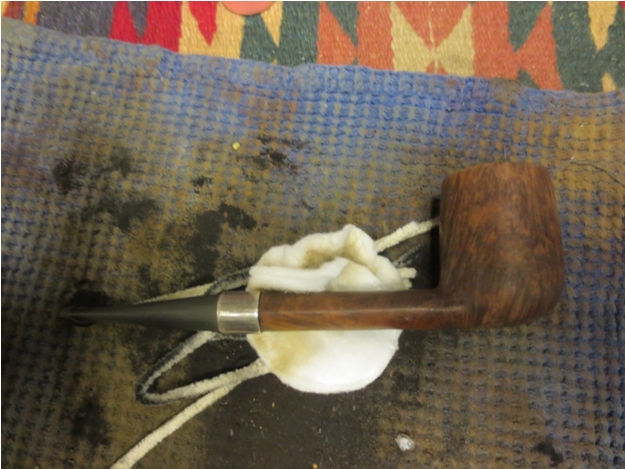
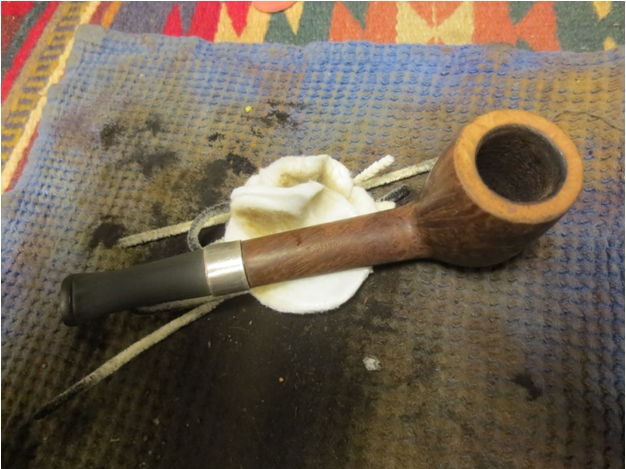
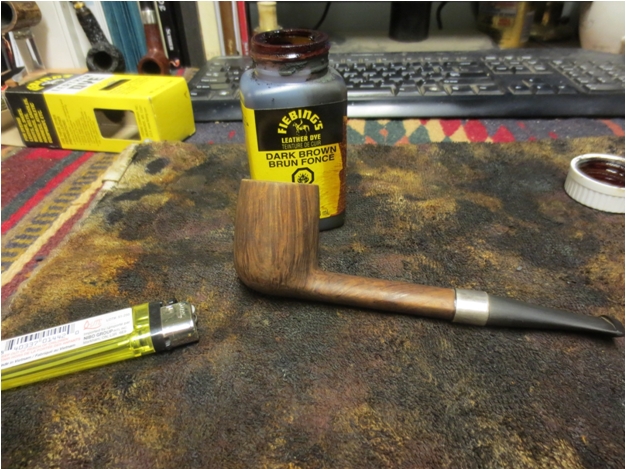
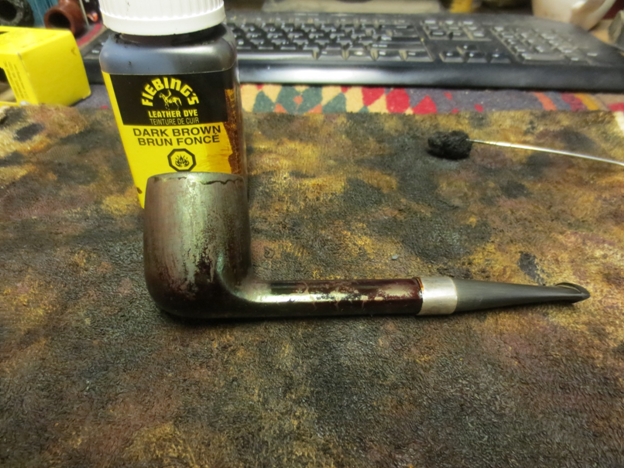
Ready for the final countdown, I opened a brand-new bottle of burgundy-colored Lincoln boot stain and coated the entire outer area of wood using the small, damp applicator. As fast as I could manage, I flamed it all over with my Bic, reveling in the great poofs of blue flame that rose and dissipated as the alcohol in the stain burned off.

I rubbed off the char with a piece of 2400 micromesh until I could see the good grain through the fresh, dark red stain and then put on my magnifier glasses to do the finish work with 3600. It looked good to me, so I put it aside with the stem on a thick cotton cloth for about a half-hour.

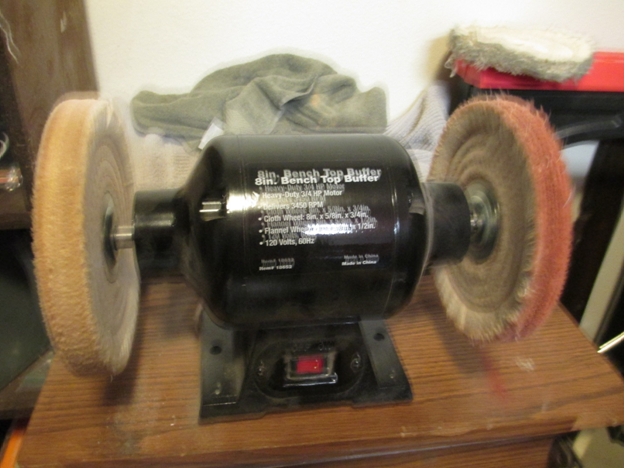
That was all I could stand before taking the pieces to my bedroom/office/shop and focusing on the two buffing wheels I use to bring out the ever-anticipated shine. Taking a deep breath to steady myself for the always risky business of touching anything fragile to the high speed wheels, I turned them both on.

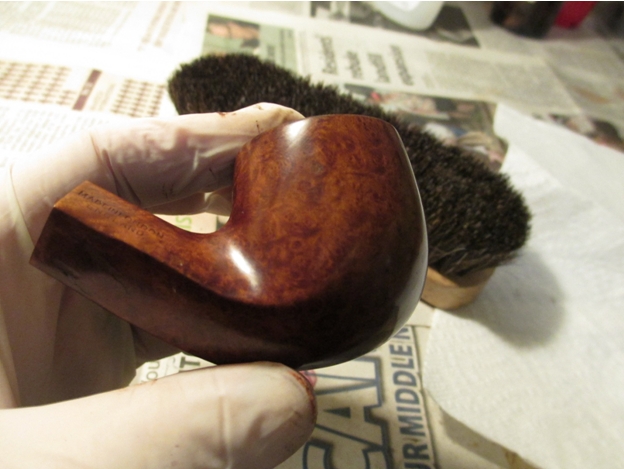
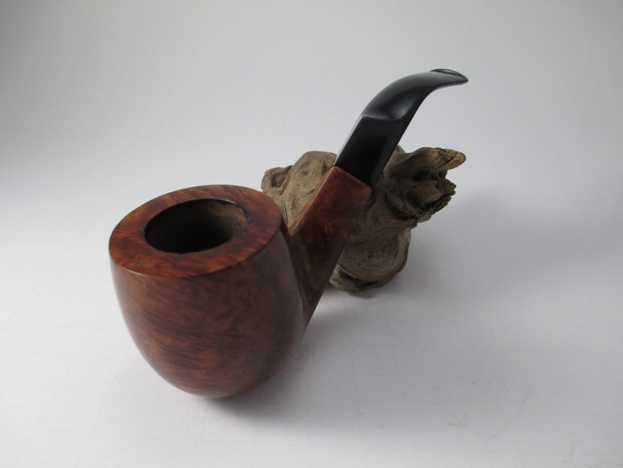
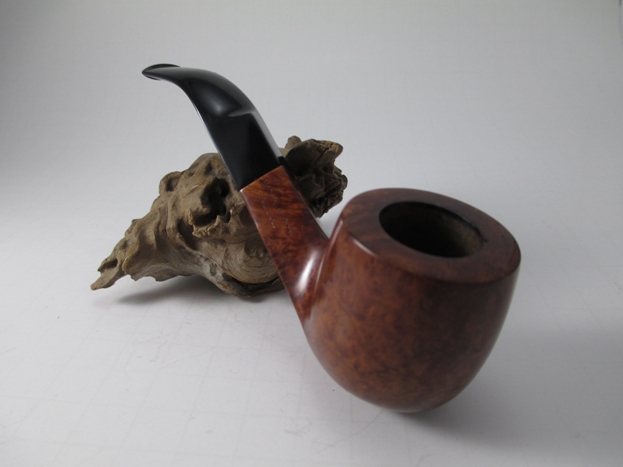
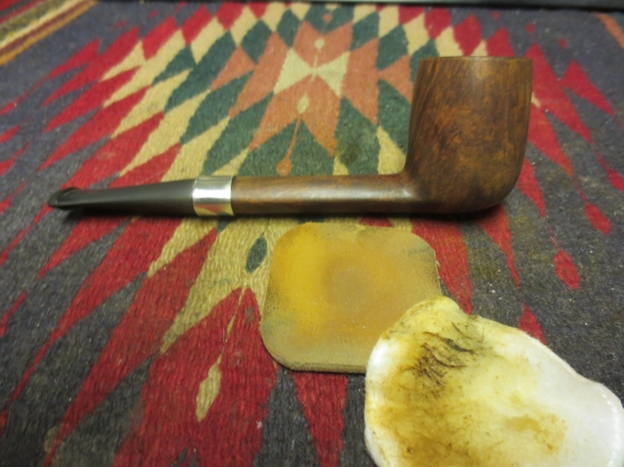
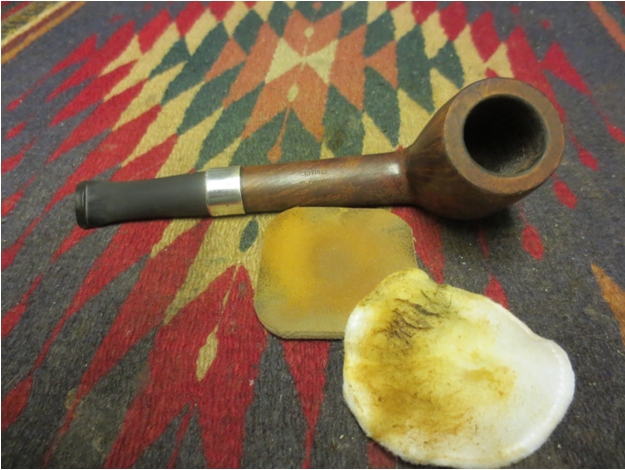
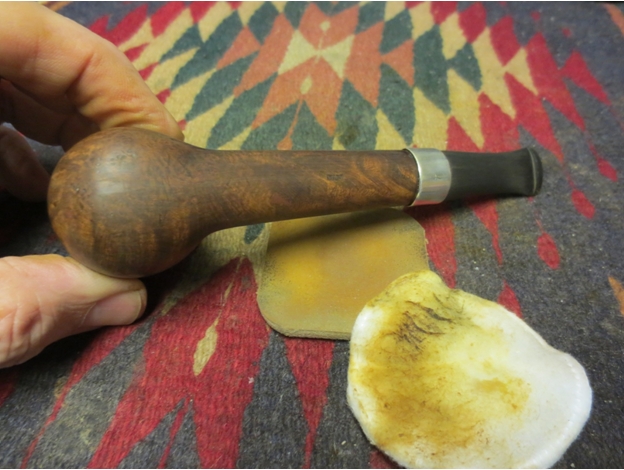
Starting with the stem, I turned it with all due respect and care first on the red Tripoli wheel and looked it over as I rubbed it with the cotton cloth, then the white Tripoli wheel on the other machine, and back to the first for the final coat of White Diamond. Much better, I thought and set it aside.Rob20 To the wood I applied quick, thorough coats of white Tripoli, White Diamond and carnauba.I looked it over, noticed a spot that was duller than the rest and repeated the process there.Rob21
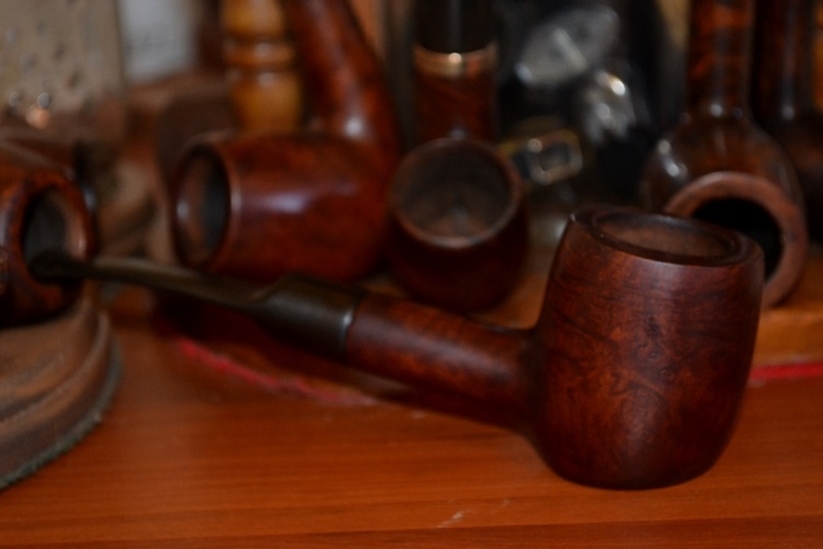
Rob22

Rob23

Rob24

Rob25 CONCLUSION
Fixing this pipe took me the greater part of a week, by far the longest I have spent on a project since my first real restoration two years ago. That is the reason why the concept of being finished with the Ben Wade Tall Poker is still taking time to sink in. After all the time I have spent with the BW – before the project began to make a plan of action I ended up throwing out the window, during the circuitous restoration itself and now afterward, writing about the experience – I have grown attached to the curious example of pipe craft. I would like to keep it to myself, to add it to my growing collection of Ben Wades. I have no doubt it will smoke at least as well as the others.

But I have decided to let someone else discover the accuracy of that prediction.
Restoring a 1935 Dunhill Shell – Andrew Selking


Blog by Andrew Selking

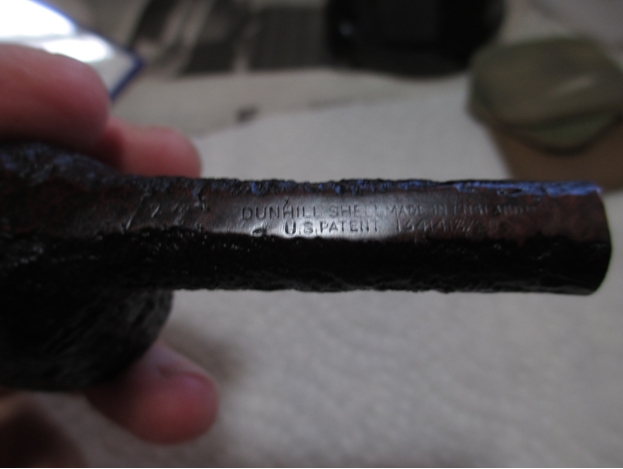
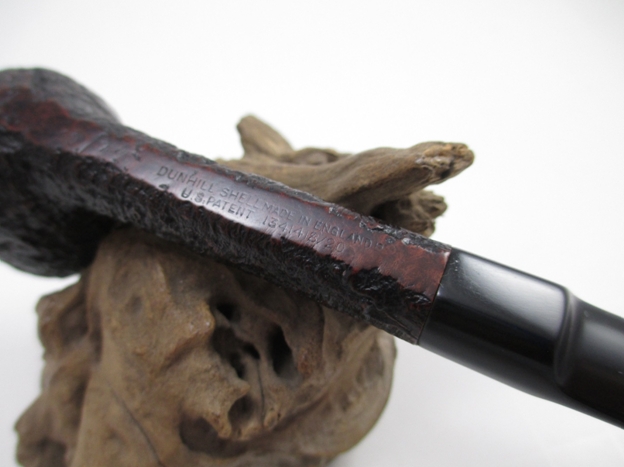
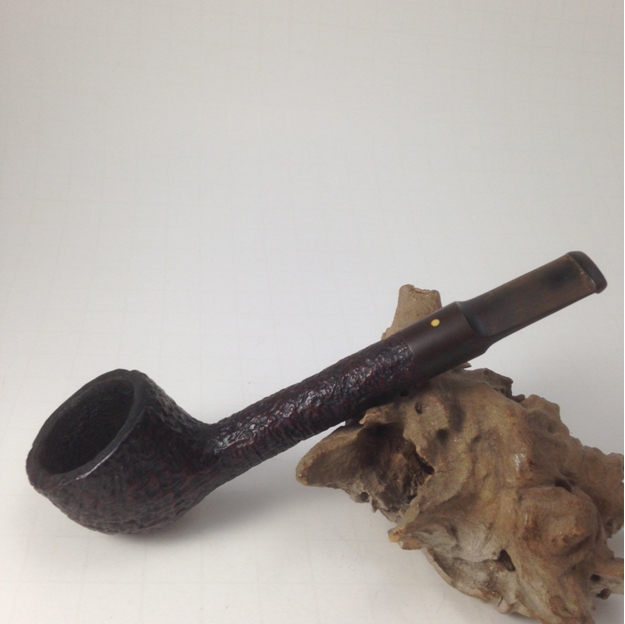
This is my second Dunhill Shell, but like everything it has been a learning experience. I saw this orphan about to expire on eBay without a single bid. As they say, a little knowledge can be a dangerous thing. I knew that it was a desirable patent-era Shell and from the markings it was made in 1935. I should have taken the time to look at a Dunhill shape chart, this pipe had been seriously topped. The good news is, I didn’t pay too much for it and it’s a handy little pipe, 4 15/16 inches long and .7 of an ounce! No wonder the stem didn’t have any tooth marks.

So here’s what the pipe looked like before the restoration.Dun1

Dun2

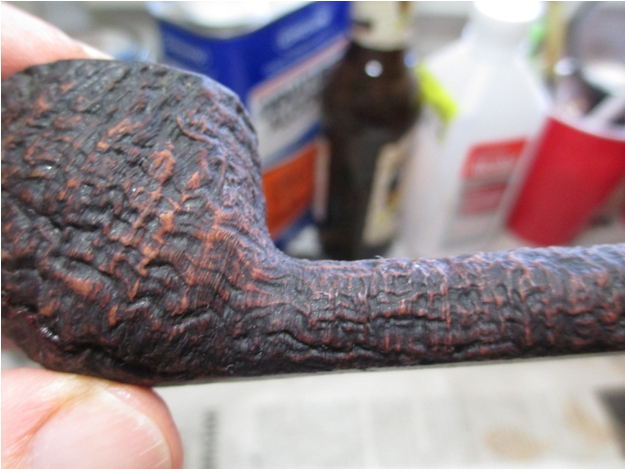
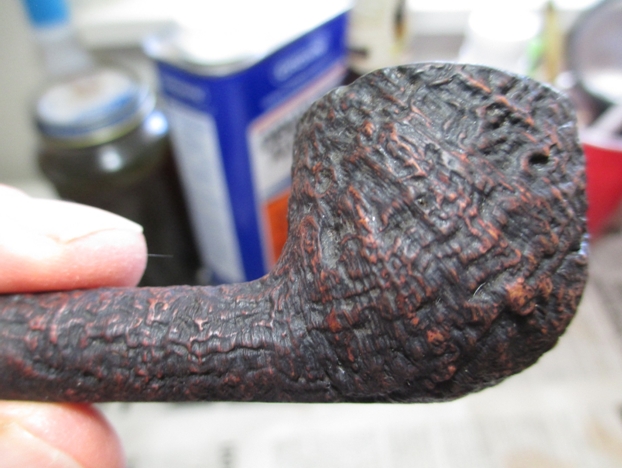
Dun3 The one thing that I really like about the Dunhill Shell pipes is the finish. The combination of deep reddish brown and darker brown/black is very pleasing to look at. That is why I treat rough finish pipes (rusticated, blast, fine line) differently than smooth finish pipes. I took a tip from Steve and use Murphy’s Oil Soap, which is made from vegetable oils and specifically formulated for wood. I took a small amount of the soap and applied it directly with a toothbrush.Dun4

Dun5 As you can see the Murphy’s Oil Soap did remove some of the finish, but not nearly as much as the alcohol bath would have. The soap also removed the decades of accumulated grime. If you don’t take care to clean the outside of the pipe no amount of wax will make it shine.Dun6

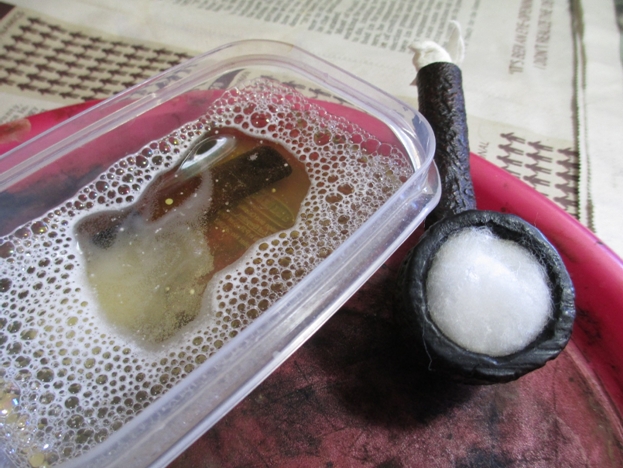
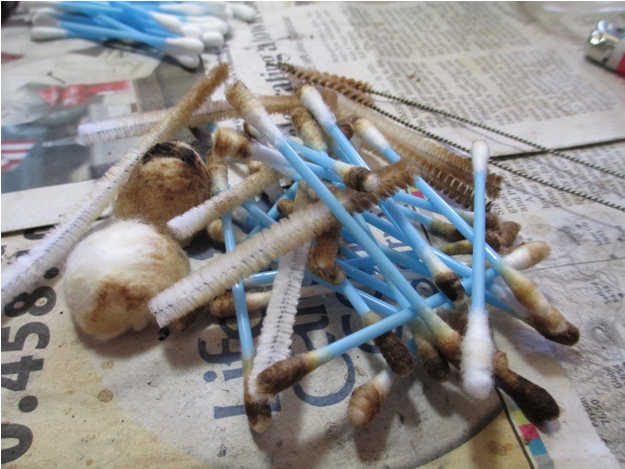
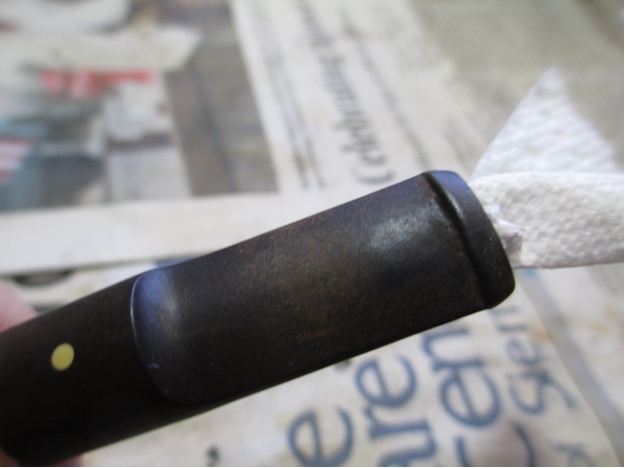
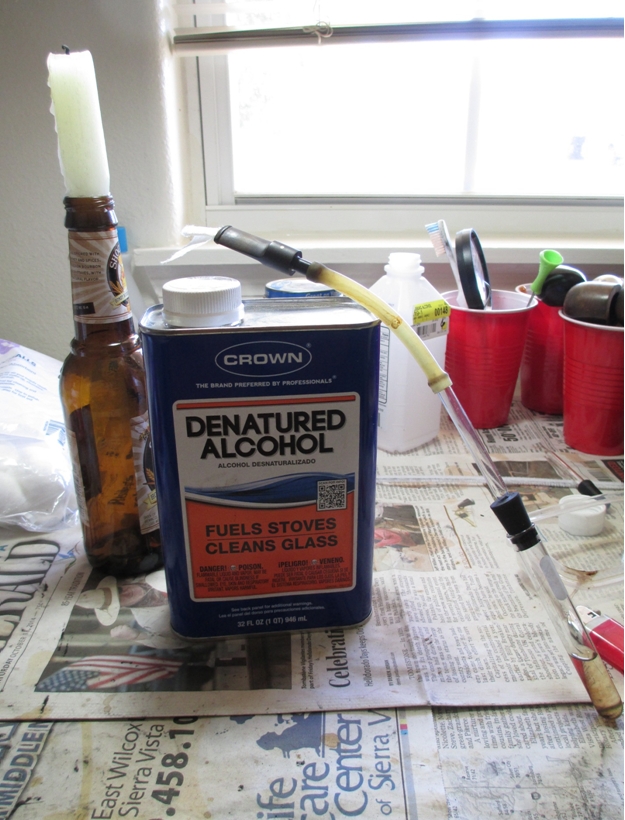
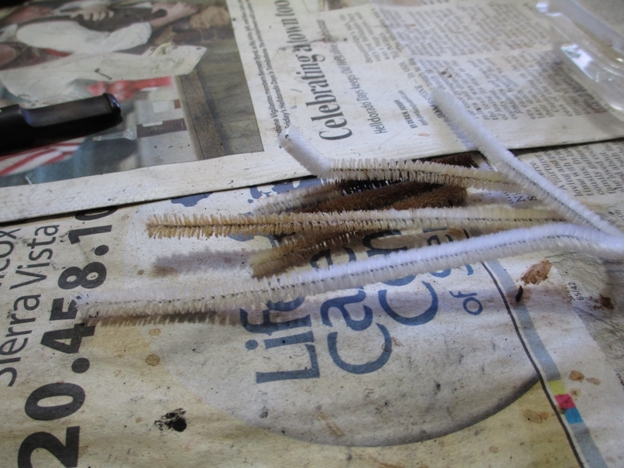
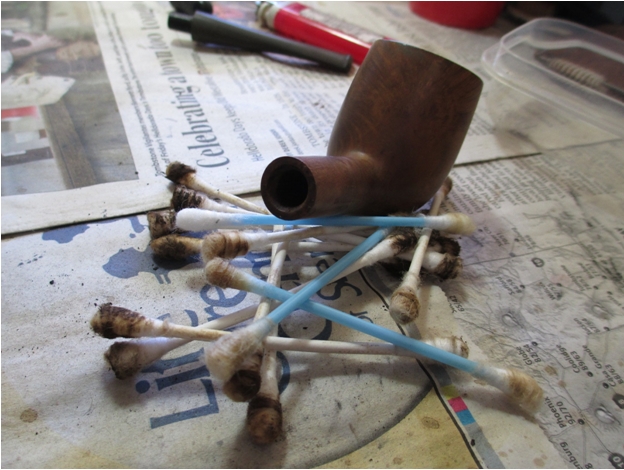
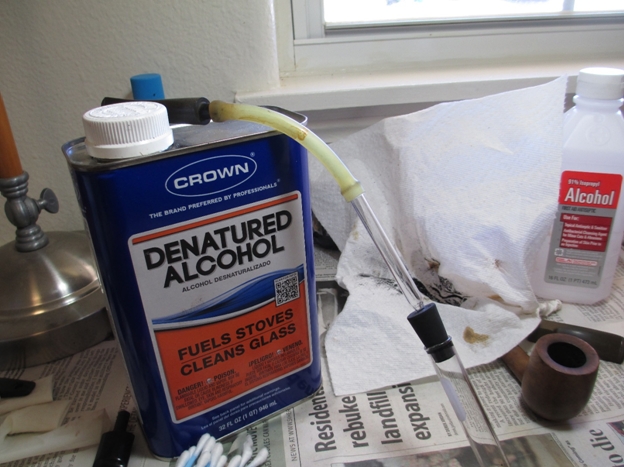
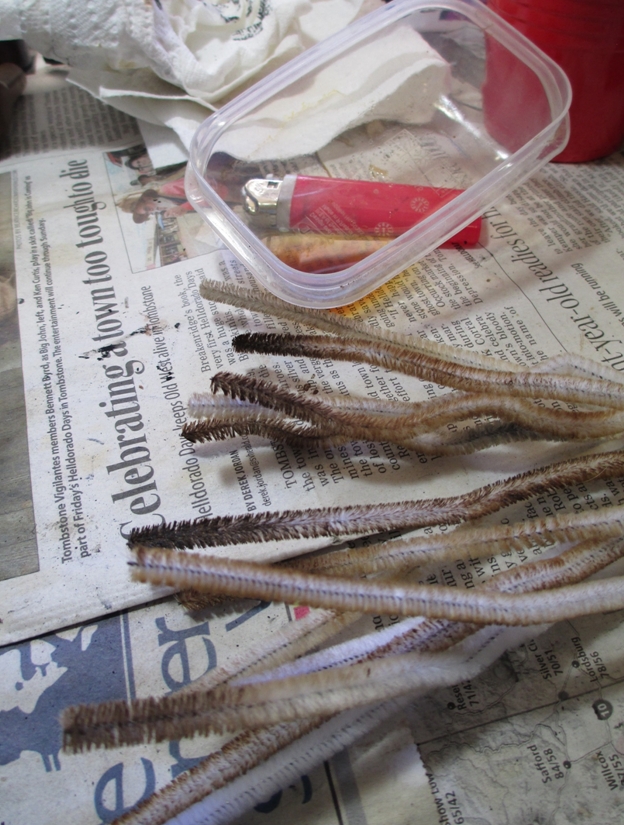
Dun7 My next step was to start the stem soaking in Oxyclean and soak the bowl with denatured alcohol. I packed the bowl with cotton balls, plugged the shank with some rolled up paper towel, and used an eye dropper to soak the cotton.Dun8 After the cake loosened up, I reamed the bowl. This bowl is huge, I used my two largest reaming heads to clean it out.Instead of doing the retort multiple times, I used q-tips dipped in denatured alcohol followed by pipe cleaners. (I don’t technically use pipe cleaners. I use “fuzzy sticks”. That’s the innocuous name given to pipe cleaners used for crafts.) To maximize each cleaner, I used scissors to cut the dirty section off. As you can see I ended up with a decent size pile of q-tips and fuzzy sticks.Dun12 Next I turned my attention to the stem. I did the retort first, then used pipe cleaners to finish the job. Fortunately since the stem is so short, it didn’t take long to clean. You will notice that I packed some paper towel into the end of the stem. Occasionally when you use the retort, the alcohol will boil over and spray everywhere. That does not endear you or your eccentric hobbies to your significant other, especially when the resulting mess makes the wall look like a Jackson Pollock painting.Dun13

Dun14

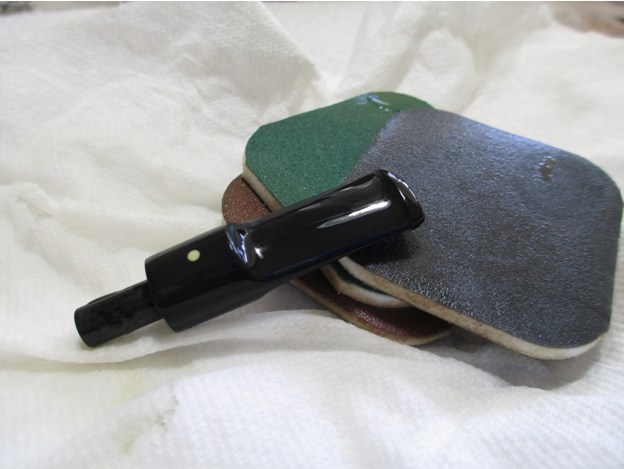
Dun15 I usually take extra time on stems as nice as this one. Instead of using 400 grit wet/dry I started out with 1000 grit wet/dry and water. It takes longer, but the last thing I want to do is change the profile of the stem or damage any of the details by using a lower grit sand paper. After the 1000 grit I used 1500-2400 grit micro mesh pads with water.Dun16 While the stem dried, I began the staining/waxing process. In an attempt to replicate the Dunhill finish, I used the brown shoe polish followed by a thin layer of black shoe polish. The heat gun helps melt the wax so that it gets into all of the crevices and the brush brings out a nice shine.Dun17

Dun18

Dun19 Here is what the bowl looked like after the application of the second coat of wax and buffing with the brush.Dun20

Dun21

Dun22

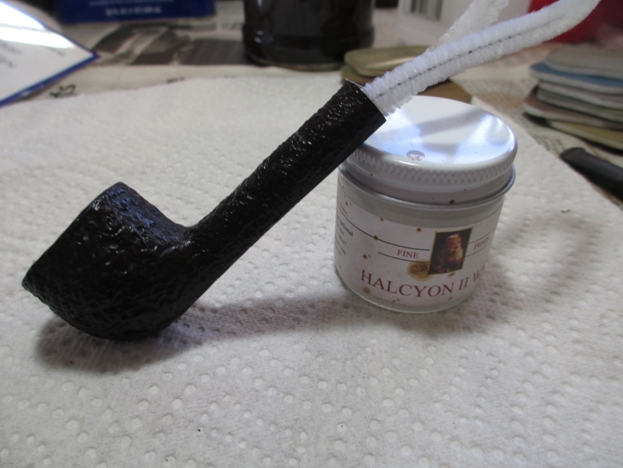
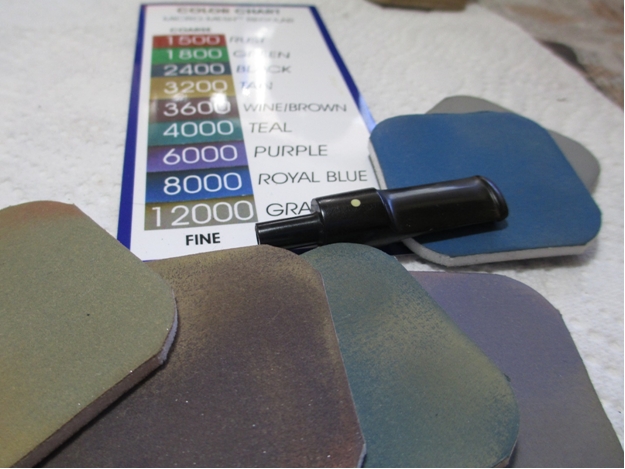
Dun23 Since shoe polish is a soft wax, I protect all of my rough finish pips with Halcyon II wax. I applied the wax with my finger tip (a little goes a long way) and let it dry for about 10 minutes. After the wax dried, I buffed it out with a soft cloth and applied a second coat. (The pipe cleaner is so I can hang the bowl up to dry.)Dun24 Finally I finished sanding the stem, using a progression of micro mesh pads from 3200-12000 grit followed by a quick spin on the buffing wheel with some carnauba wax.Dun25 Here is the finished pipe.Dun26

Dun27

Dun28

Dun29

Dun30

Dun31

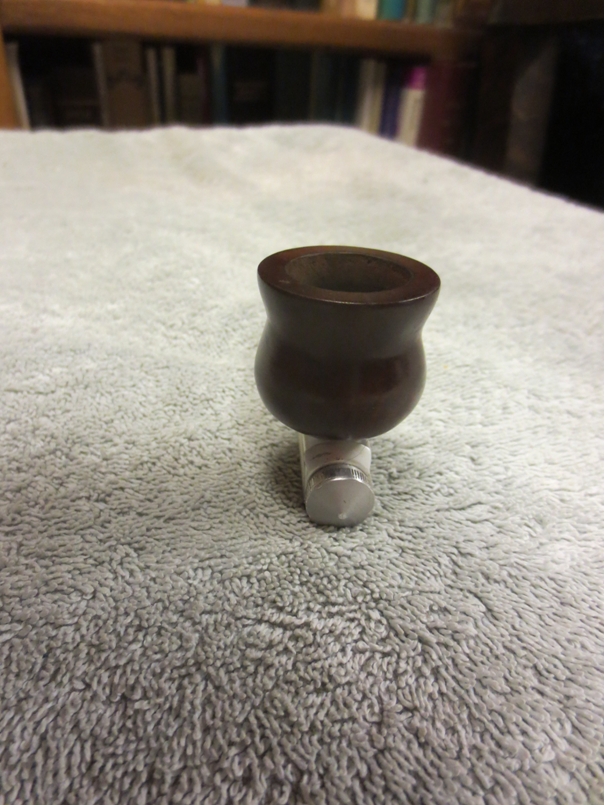
Converting an Old Briar Bowl to fit a Kirsten


Blog by Steve Laug

After I finished fitting the old Maplewood bowl for my son-in-law’s Kirsten I took another bowl from my pipe parts box. This was another old bowl with the airway drilled on the bottom of the bowl and having a nipple fitting. This bowl came from part of an old hookah type set up. I had picked it up in the same bag of parts as the maple bowl. It had a rubber fitting that the bowl sat in and a glass pipette that extended from the bottom of the fitting. I removed the bowl from the rubber and then stripped it with acetone on a cotton pad and wiped it down until the finish was gone. I sanded the surface of the bowl with 220 grit sandpaper to remove the remnants of the finish.Kir1 There were also fills in the bowl on two sides. Some of them had shrunken and needed to be refilled. I sanded the surface to clean up around the fills. I filled them with super glue and briar dust and sanded them flush against the surface of the bowl.Kir2

Kir3 The underside of the bowl also had several fills. The nipple actually was not part of the briar bowl but was made out of maple. It was inserted in the bottom of the bowl. I wiped it clean to show the connections. I also topped the bowl on a topping board with 220 grit sandpaper to smooth out the surface.Kir4

Kir5

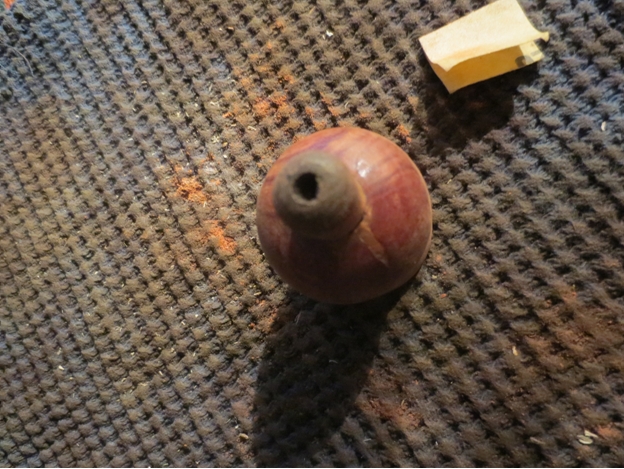
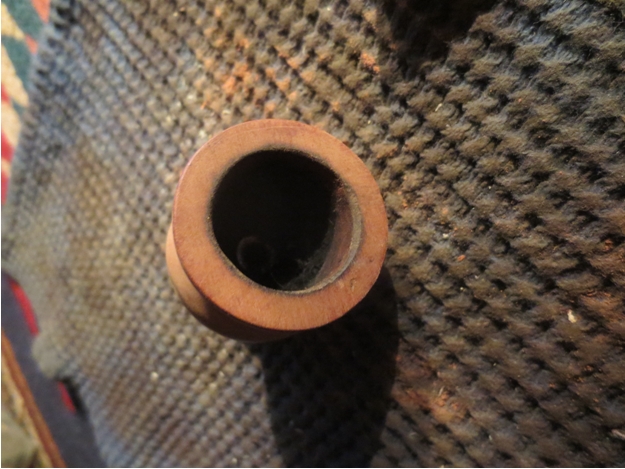
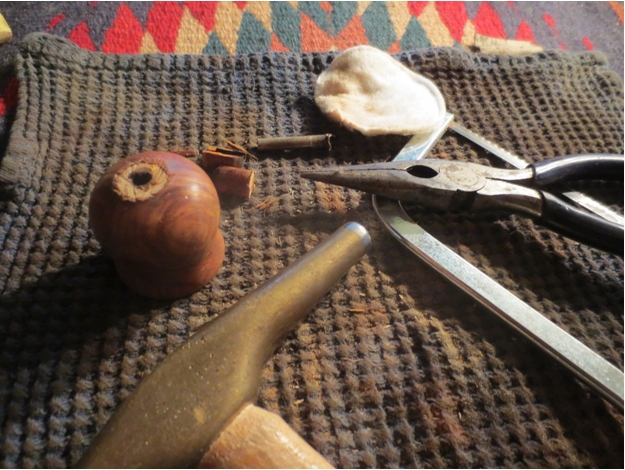
Kir6 I used a hacksaw to cut the nipple off the bottom of the bowl. Once I had the wood portion of the nipple cut all the way through it came off the bowl. In the middle was a brass tube that ran the length of the nipple and went into the bottom of the bowl where it was flared against the inside bottom. I used a small hammer to drive the tube into the bowl.Kir7

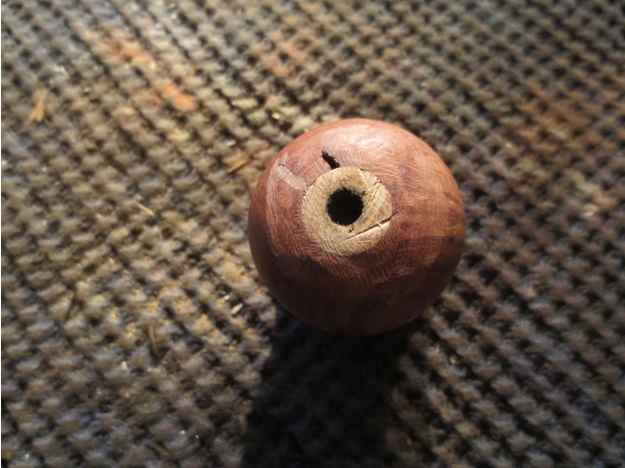
Kir8 When I had removed the tube I sanded the bottom of the bowl to smooth out the surface. Once it was clean I could see that the maple was inset into the bottom of the bowl. It is distinguishable in that it is white in the photos below. On one side of the white maple insert were two flaws in the briar that had originally been filled. One of the fills fell out of the bowl bottom when I drove out the metal tube.Kir9 I drilled the airway in the bottom of the bowl larger with a drill bit the same size as the metal bottom cap that is part of the Kirsten bowl system. The cap would sit in the hole and a drilled screw would be inserted into the cap from inside the bowl. When I drilled out the hole the maple insert came out of the bottom. It left an inset area on the bottom that would be removed when I sanded the bottom of the bowl for the cap to sit flush against the bottom.Kir10 I used super glue and briar dust to repair the two flaws in the bottom of the bowl. I dripped the glue into the holes and then pushed super glue into the flaws with a dental pick.Kir11 I sanded the bottom of the bowl with a Dremel and sanding drum to shape the bottom edges of the bowl to fit on the Kirsten shank. I sanded the bottom edges of the bowl at a sharper angle to give it a more defined shape.Kir12

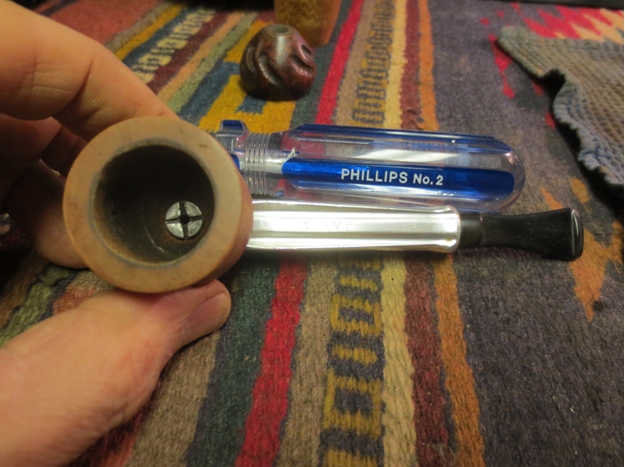
Kir13 I used the Dremel and sanding drum to deepen the bottom of the bowl and give the internal screw a flat surface to seat against. I also used a PipNet reamer with the largest cutting head to flatten out the bottom of the bowl and smooth out the surface. Once it was smooth I inserted the screw into the bowl bottom and threaded it onto the bottom cap. Once I had the cap inserted and tightened with a Philips screwdriver I screwed it onto the Kirsten shank. The next four photos show the newly shaped cauldron bowl on the Kirsten.Kir14

Kir15

Kir16

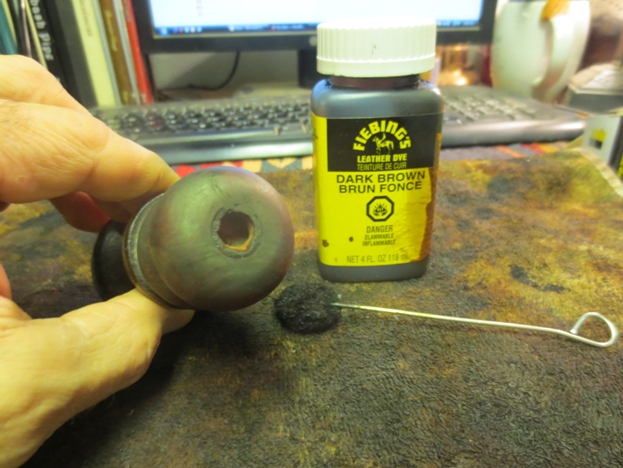
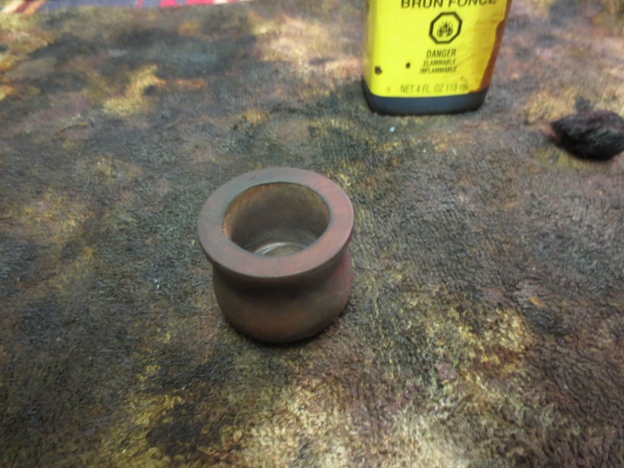
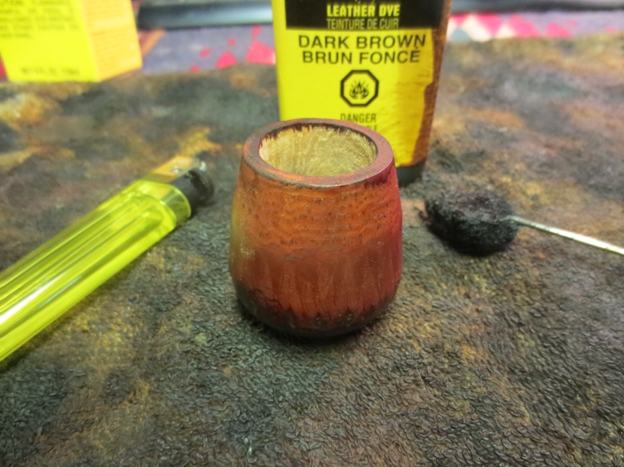
Kir17 I took the cap and screw off the bowl and wiped it down a final time before staining it with a dark brown aniline stain. I applied the stain and then flamed it to set it in the briar. I restained and reflamed it until the coverage was even.Kir18

Kir19

Kir20 I buffed the bowl with red Tripoli and White Diamond to polish the stain and give it a shine. In doing so the fills were highlighted. I used a permanent marker to cover the fills and then gave the bowl multiple coats of carnauba wax and buffed it with a soft flannel buff. I put the cap and screw in place and tightened it down. The photos below show the finished bowl.Kir21

Kir22

Kir23

Kir24

Kir25

Kir26 I buffed the bowl with several new coats of carnauba wax and polished it to a shine with a soft flannel buffing pad. The finished cauldron bowl is shown in place on the pipe below. It looks really good on the Kirsten stem. It provides a second bowl for one of my other Kirsten pipes. I like the overall look of the piece and it is great to have a repurposed bowl to use. I look forward to loading it up and giving it an inaugural smoke.Kir27

Kir28

Kir29

Kir30

Kir31

Kir32

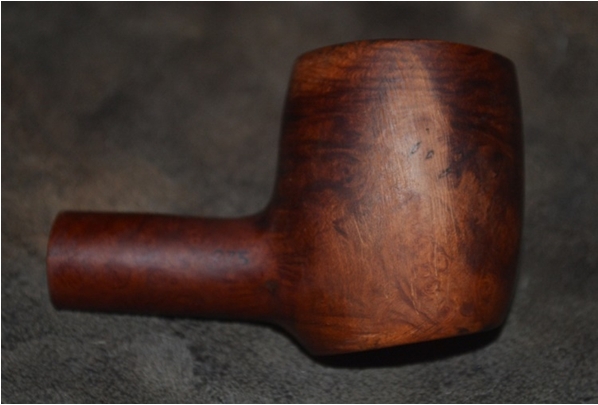
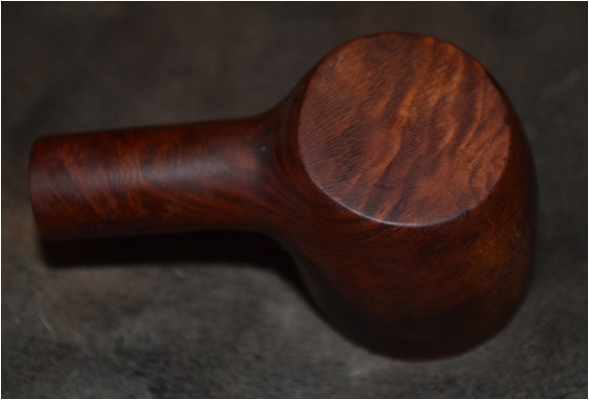
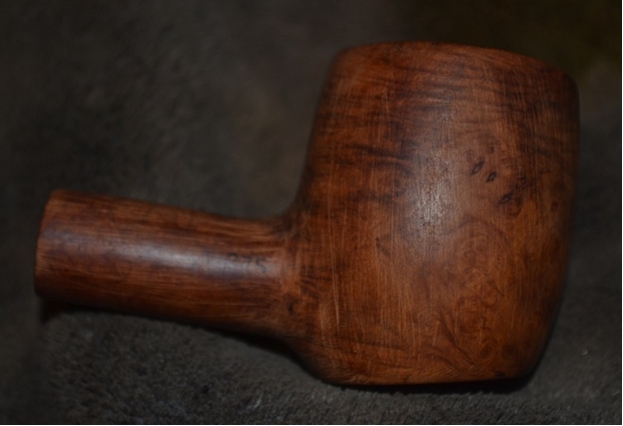
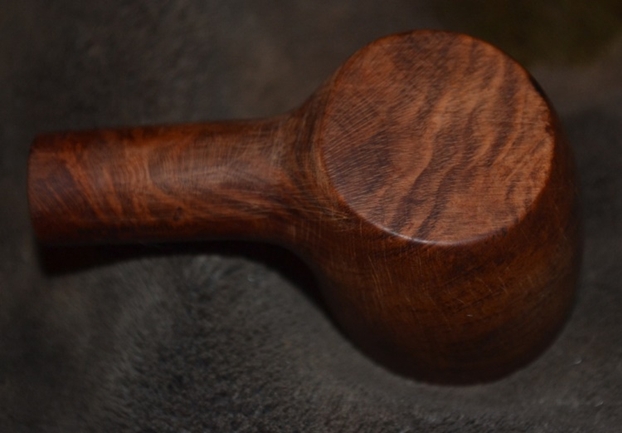
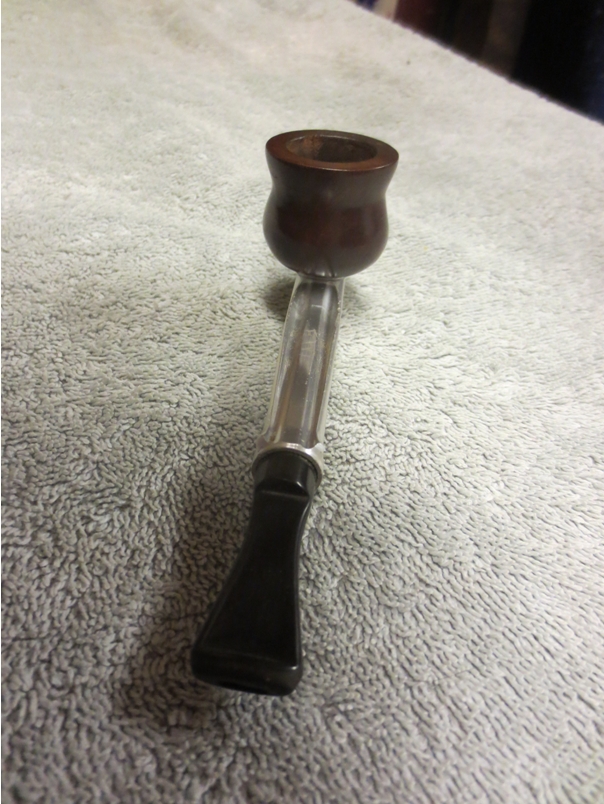
Fitting a Maplewood Bowl to fit a Kirsten Pipe Shank


Blog by Steve Laug

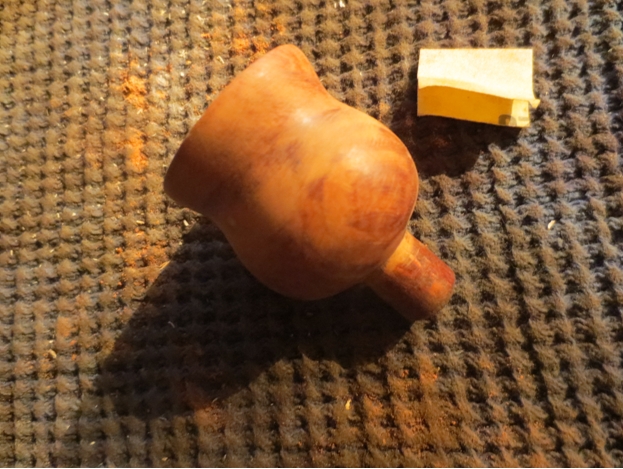
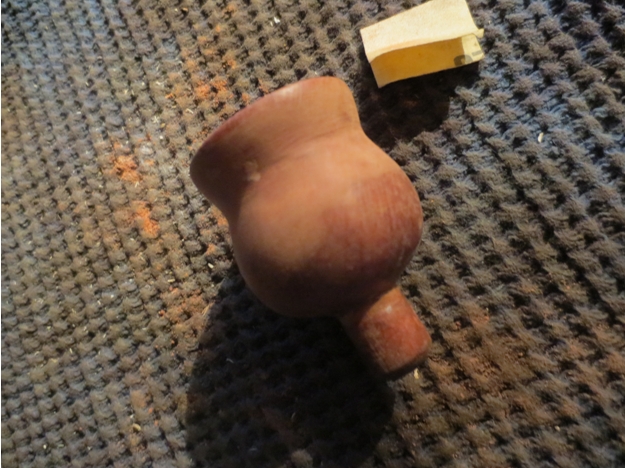
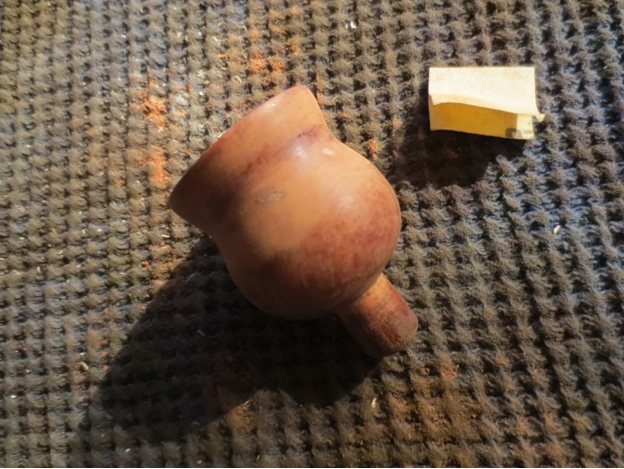
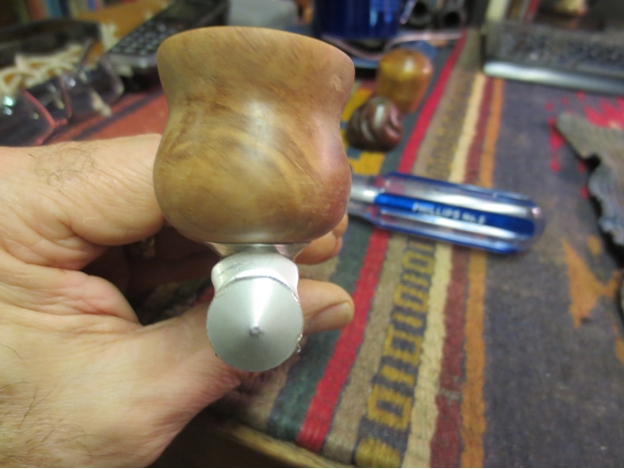
My son-in-law brought his Kirsten with him on the pipe hunt we went on recently and mentioned that the bowl was too small to his liking. We were talking about hunting for a bowl that had a airway drilled in the bottom of the bowl that could be modified to accept the fitting – screw and cap – on a Kirsten bowl. These fittings hold the bowl on the shank. I remembered that I had a Maplewood bowl in my box of pipe parts that could work really well. It had a nipple on the bottom of the bowl. The nipple ended at a rounded cap and then steps up to the bowl. The original bowl can be seen in the photo below. The bowl was clean and unsmoked. There was a varnish finish on the bowl and the wood was quite rough. Around the hip at the base of the bowl there was a rough band around one side of the bowl. The bowl had some really interesting grain on it. Around the top third of the bowl the grain went around the bowl horizontally. Below that there was some vertical grain. The combination was attractive. This bowl would work well once I modified it to fit the pipe.Bowl1 I sawed the nipple off the bottom of the bowl with a hacksaw. I sawed it flat against the bottom of the bowl to make that surface flush.Bowl2 With the nipple removed it was clear that the airway was slightly off centre and would need to be adjusted once I drilled it to open it up to hold the bottom cap from the Kirsten.Bowl3 I measure the diameter and the length of the insert to figure out how much of the bottom of the bowl I would need to remove. I drilled it out with a drill bit the same size as the insert on the Kirsten cap. I used a knife to open the air hole and move it more toward the centre of the bottom of the bowl.Bowl4 I used the Dremel with a sanding drum to shape the bottom of the bowl. I had to remove about ¼ of an inch or more from the bottom of the bowl. I sanded it bring it down and begin to round the edges. The next three photos show the progress of shaping the bowl bottom. The third photo shows the bowl after I also sanded it with 180 and 220 grit sandpaper.Bowl5

Bowl6

Bowl7 I sanded it with a medium grit sanding sponge to smooth out the scratches. I fitted the bottom cap to the bowl to see what more I would need to remove for a proper fit between the bowl and the shank. I fit the screw into the bottom cap and used a Philips screwdriver to tighten it in place.Bowl8

Bowl9 I sanded the bowl more to remove the finish and fine tune the shaping the bottom of the bowl. I wanted the finished bowl to look like a brandy glass shape.Bowl10

Bowl11 When I had fine tuned the bowl shape and the bottom of the bowl I fit it on a Kirsten shank from one of my pipes. The fit was pretty accurate and the look of the shape worked well with the pipe. I would need to sand the bowl some more, remove the remaining varnish and then stain the bowl once finished. I topped the bowl on a topping board with 220 grit sandpaper to smooth out the rim. Though the pipe was unsmoked the rim was roughly finished.Bowl12

Bowl13

Bowl14 I took the bowl apart and prepared it for staining. I wiped it down with acetone to remove the remaining varnish and dust from the bowl. I used a dark brown aniline stain to colour the bowl. I stained it and flamed it with a lighter. I reapplied and reflamed the bowl several more times until the coverage was even.Bowl15

Bowl16

Bowl17 I wanted the finish to be light brown in colour with dark grain patterns on the bowl. I wiped it down with alcohol on cotton pads to thin down the finish. I continued to wipe it until the underlying maple showed through and the grain patterns were darkened.Bowl18 I buffed the bowl with red Tripoli and also White Diamond. Once it was finished I sanded it with 1500-3200 grit micromesh sanding pads to smooth it out. I rubbed it down with a light coat of olive oil and rubbed it into the finish. The bowl was complete at this point – I fit it back on the shank and took the next set of photos to show the look I was aiming for.Bowl19

Bowl20

Bowl21

Bowl22 I took the bowl off the shank and buffed it with White Diamond once more. I gave it multiple coats of carnauba wax and buffed it with a soft flannel buff. The dark brown aniline stain had brought out the grain and contrasted nicely with the rest of the bowl. The horizontal and vertical graining makes this a nice looking pipe bowl.Bowl23

Bowl24

Bowl25

Bowl26

Bowl27I put the bowl back on the Kirsten shank and took the next set of photos to show the finished bowl and shank. It certainly fit the shank well and the larger bowl should meet my son-in-laws request for a longer smoking bowl for his Kirsten. He is away with my daughter for the weekend but when he returns home I look forward to seeing what he thinks of his new bowl.Bowl28

Bowl29

Bowl30

Bowl31

Addendum: I was working my way through Ebay UK when I found a pipe that had the same bowl as the one used in this article. It is a tourist pipe from the Smokey Mountains National Park. It looks to be the same pipe bowl and looks identical to the one I used.$_57

$_58

Restoring a Wally Frank Natural – Andrew Selking


Blog by Andrew Selking

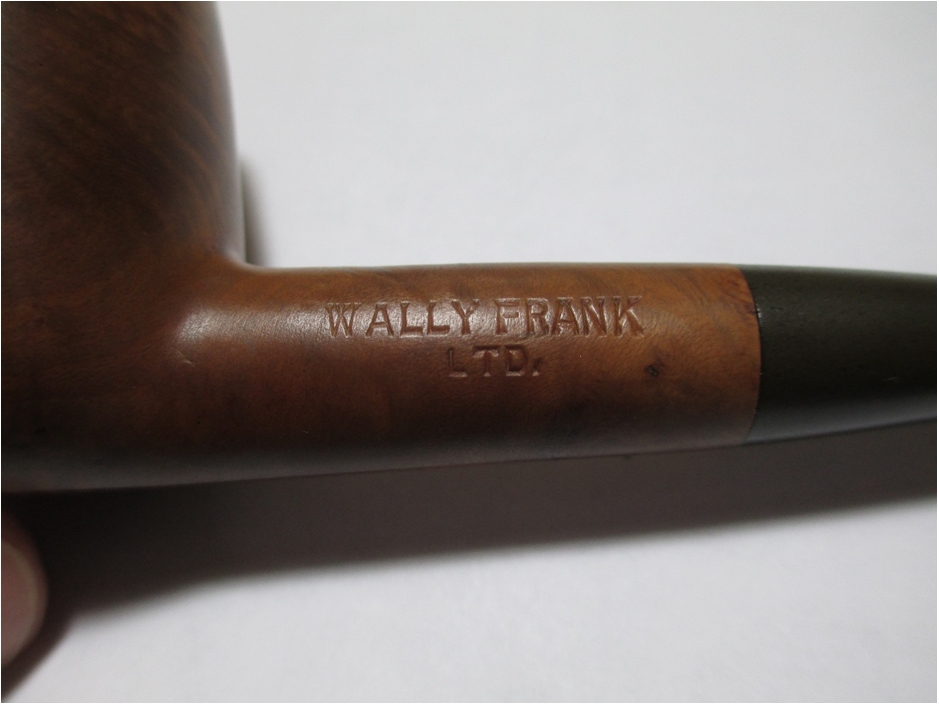
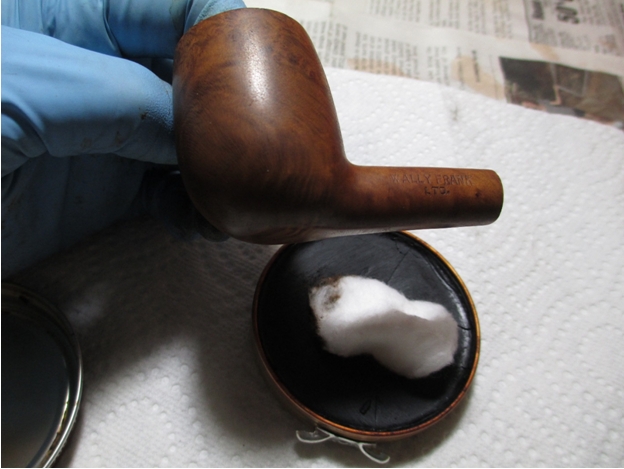
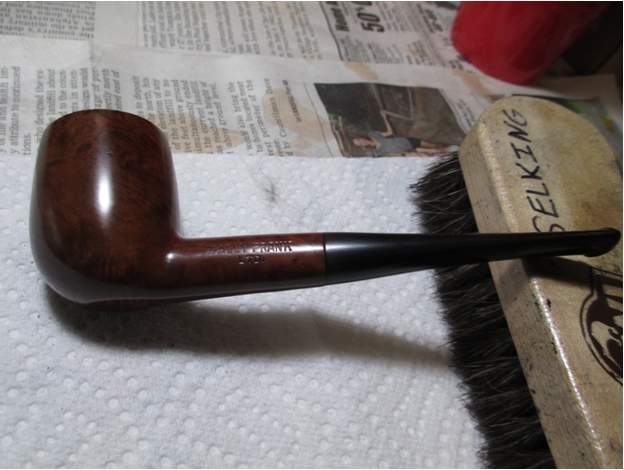
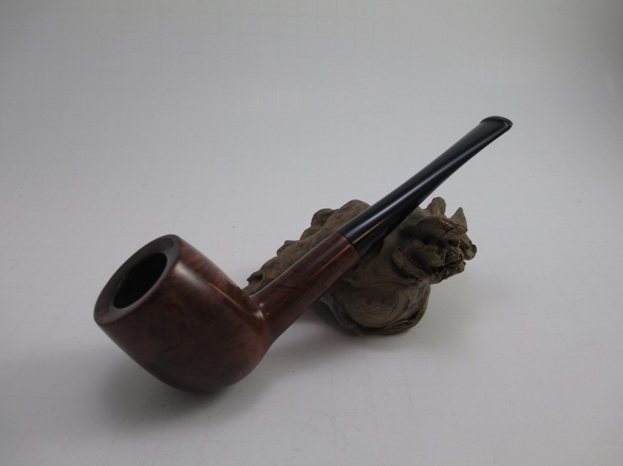
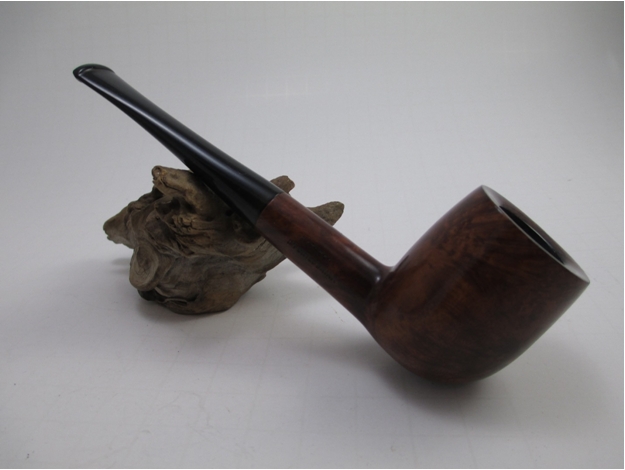
I promised Steve that my next restoration would not be another chunky diamond shank pipe, so I decided to do a Wally Frank Natural. Wally Frank was a New York tobacco shop that sourced its pipes from Charatan’s, Sasieni, Weber, and other European pipe makers. This is my second Wally Frank Natural and like the first, it is very well made. The briar is not very exciting and it has a small fill on the bottom, but the pipe is very light weight (1.3 ounces) and the lines are elegant.

When I received the pipe, it looked fairly clean. It had some tar build up on the rim, slight oxidation of the stem, but not chatter and the bowl was well reamed.Frank1

Frank2

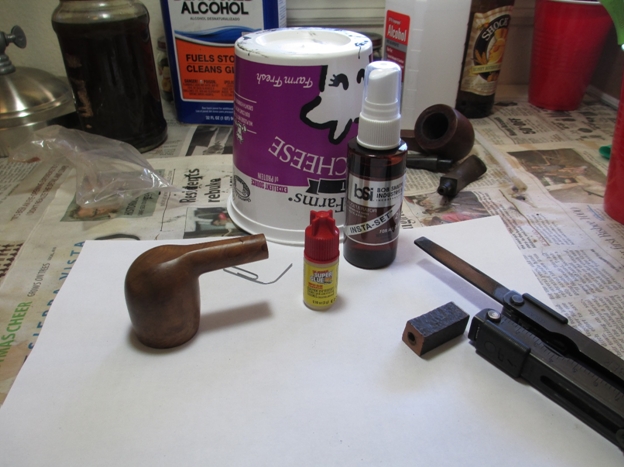
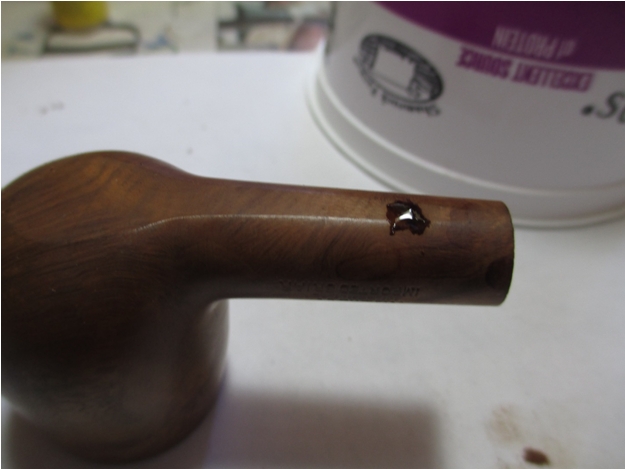
Frank3 I dropped the bowl in the alcohol bath and placed the stem in a Oxyclean solution. The only challenge I anticipated with this pipe was the fill on the bottom, but I had a new secret weapon; CA glue accelerator.Frank4 After soaking, I used a pipe cleaner and the Oxyclean solution to get the worst of the gunk out of the stem.Frank5 Next I reamed the bowl with my T-net reamer.Frank6 Everything looked pretty good to that point and I figured this would be an easy clean up. Boy was I wrong! I did a retort on the bowl first.Frank7 The pipe cleaning brush (available in the baby section at Walmart) came out loaded with gunk.Frank8 I did the retort four additional times, using the brush after each try, before finally moving on to pipe cleaners. Then I used a pile of q-tips. The only thing I can think is the previous owner smoked a goopy aromatic and didn’t use pipe cleaners afterwards.Frank9 Next up, retort the stem.Frank10 The stem was just as nasty as the shank, and I repeated the process four times. After numerous pipe cleaners, it finally came clean.Frank11 My next challenge was the fill on the bottom of the bowl. I have an old shank (a past victim of the buffing wheel) that I use for briar dust. I use a file to grind off the dust.Frank12 I put a drop of super glue on the bottom of the cottage cheese container and applied it to the fill area with the tip of the paper clip. I then packed the briar dust on top and sprayed it with the accelerator.Frank13

Frank14 I’m going to work on refining that technique, it was a little messier than I like and the resulting lump of briar dust took more sanding than would have been necessary if had made the fill only as much as was needed.

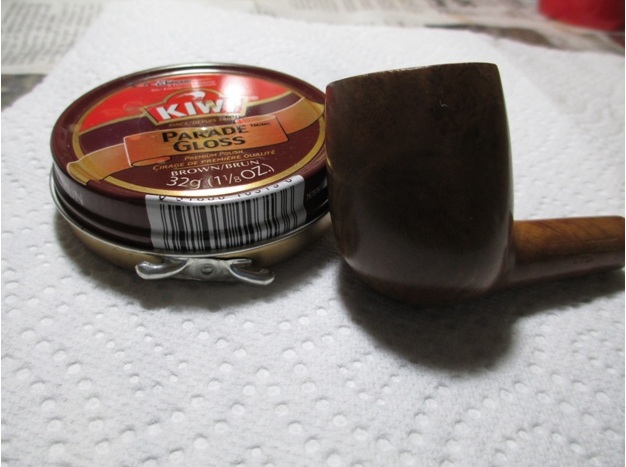
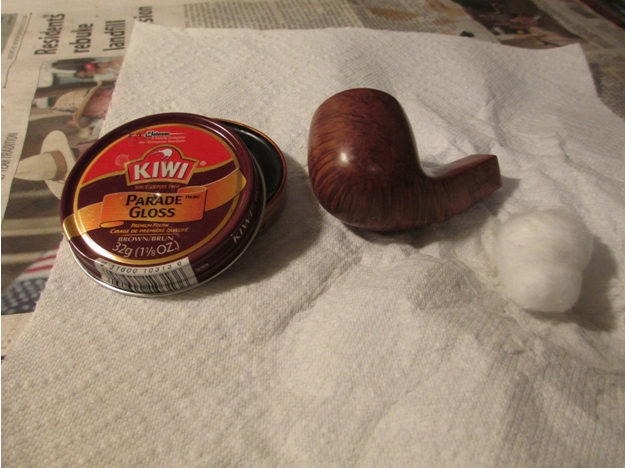
Next I turned my attention to the stem. I did the usual progression of 400 grit wet/dry with water, followed by 1500-2400 grit micro mesh with water.Frank15 I then used a progression of 1500-12000 grit micro mesh on both the bowl and stem.Frank16 Although the pipe had a natural finish on it, I decided to darken it slightly to help cover the fill. To do this I used Kiwi Parade Gloss brown shoe polish.Frank17

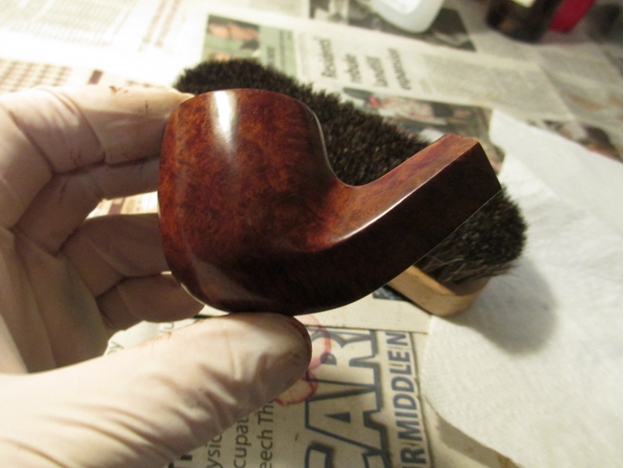
Frank18 After applying the shoe polish I used a heat gun to briefly heat it up then buffed it out with a shoe brush. Here is the results after using the brush.Frank19 I had an uneventful trip to the buffing wheel, and here is the end result.Frank20

Frank21

Frank22 Here is a close up of the fill.Frank23

Frank24

Frank25 I hope you enjoyed this write up. If you happen to stumble across a Wally Frank Natural, I would encourage you to buy it. They are a good value for the money.

Restoring a Kaywoodie Super Grain 40 Lovat


Blog by Steve Laug

My son-in-law and I went pipe hunting a few weeks ago and this was one of the finds that day. I picked it up in an antique shop in Bellingham, Washington. I think I paid $15 for it. The stem was slightly overturned and would need to be fixed. The stem was clean of bite marks or tooth chatter. The stinger was intact and was a three-hole one so the pipe was newer rather than older. The finish was not ruined. The rim was caked with tars and oils. The buildup was only back side and went to the left side of the rim. The briar had quite a few fills on the sides and back of the bowl. The stamping on the left side was clean and easily read – Kaywoodie over Super Grain over Imported Briar. On the right side of the shank was stamped the shape number 40.KW1 KW2 The inside of the bowl had a light cake that was soft and crumbling. It would need to be reamed back to the bare wood in order to build a hard carbon cake.KW3 KW4 I reamed the bowl with a PipNet reamer and used the smallest cutting head first and then the second cutting head to finish the job.KW5 I removed the stem from the shank so that I could heat the stinger apparatus with a lighter. The black buildup of tars and oils on the stinger was hardened and not easily removed. Once I heated the stinger with the lighter I was able to wipe down the surface with a cotton pad and alcohol. I heated the stinger until the glue in the stem softened and then screwed the stem back into the shank and turned it until the stem lined up with the bowl.KW6 I cleaned the inside of the shank and stem with pipe cleaners, cotton swabs and isopropyl alcohol. The shank behind the metal insert was very dirty. I used the cotton swabs to clear out that area. I scrubbed it out until it was clean. I also cleaned out the airway in the stem the same way until it was clean.KW7 I scrubbed the top of the bowl with isopropyl alcohol on cotton pads to remove the buildup. It was thick so it took quite a bit of scrubbing. To finish removing it I used 1500 grit micromesh sanding pad and water. I was able to get the rim clean and then used a staining pen to touch up the rim.KW8 KW9 KW10 The lightest colour staining pen matched the finish of the bowl perfectly. I gave the bowl and rim a quick buff with White Diamond and then gave it multiple coats of carnauba wax and buffed it to a shine.KW11 I was fortunate that the stem was not damaged with bite marks or tooth chatter. I use micromesh sanding pads to clean up the stem. I wet sanded with 1500-2400 grit pads and dry sanded with 3200-12,000 grit pads until the finish of the stem was smooth. I buffed it with White Diamond to finish the process and then gave it a coat of carnauba.KW12 KW13 KW14 I put the stem back on the shank and then buffed the entire pipe with White Diamond a final time. I gave the stem and bowl multiple coats of carnauba wax and buffed it with a soft flannel buffing pad to raise the shine.KW15 KW16 I touched up the fills with the stain pen and then buffed the pipe bowl with White Diamond yet again. The results were acceptable. I gave the pipe several more coats of carnauba wax and buffed it with a soft flannel buffing pad. The finished pipe is shown in the next series of photos. It is ready to be loaded and smoked – clean and waiting for the next pipe man who will carry the trust to the next generation of pipe smokers.KW17 KW18 KW19 KW20

Restoring a Diamond Shank Bent – Andrew Selking


Blog by Andrew Selking

I have been following Andrew’s refurbishing work on Pipe Smoker Unlimited Forum for quite some time now and decided it was time to ask him if he would be willing to write some of his work up with photos for the blog. I sent him a message and he responded that he was glad to do so. I am happy to be able to present him to the readers here. He has been doing some great work in restoring pipes and has some great adaptations and innovations in terms of tools and equipment used to restore pipes. Besides he also takes amazing photos compared to me! Thanks Andrew for being willing to write for us here. So without further words from me I turn it over to Andrew.

It was a great honor when Steve asked me to write up a restoration for his blog. This pipe came in a lot of three. It’s a very chunky, diamond shank pipe marked Made in London England. It has a couple large fills near the end of the shank, one on the bottom of the bowl, and one on the rim. It also has an amazing feel in your hand and some very pretty cross grain. I decided to do this one for myself.

The first thing I do with all of my pipes is soak the bowl in isopropyl alcohol, usually for at least 24 hours. This serves multiple purpose; loosens the gunk inside the pipe (especially in the shank), makes the cake easier to remove, and usually takes of the exterior finish and softens any fills. Here is the bowl taking a bath.Sel1While the bowl marinated, I soaked the stem in a solution of hot water and Oxyclean. After sitting for several hours, I rinsed the stem under running water, this removes some of the oxidation. Next I took a pipe cleaner and used the Oxyclean solution to remove the built up tar and tobacco from inside the stem.Sel2 Sel3 I set the stem aside and turned my attention to the bowl. In the case of this pipe, the alcohol was not enough to remove all of the finish. When this happens, I use 0000 steel wool soaked in acetone. The steel wool is fine enough that it doesn’t damage the stampings on the shank, but aggressive enough to make short work of any remaining finish.Sel4Next I turned my attention to the bowl. I use a Castleford reamer (available on eBay for around $20.00) to remove the cake.Sel5I usually go down to the wood. I’ve found it’s better to use a reamer that is slightly smaller than the inside of the bowl to prevent damage to the wood.

Next I worked on the shank. I have some small brushes that I bought in the baby section at Walmart (normal people use them to clean baby bottles, but I find they work great for the shank of a pipe).Sel6 Sel7 Although the brush gets most of the gunk out, I use a retort to really clean the inside of the shank and the stem. I started using this method when I couldn’t fit the end of the rubber tube over the wide button on a pipe. The tenon was a perfect fit and the tube also fits perfectly into the shank. This saves a lot of time and pipe cleaners. After doing the retort, I run one pipe cleaner through the stem and a pipe cleaner and q-tip through the shank and it’s done.Sel8 Sel9 Sel10 Now that the inside of the pipe is clean, it’s time to start working on the outside.Sel11 For the stem, I used 400 grit wet/dry sandpaper with water. This gets the majority of the oxidation out, the wet sand paper also makes it easier to get the underside of the button. Next I used micro-mesh pads (1500-2400 grit) with water.Sel12 I wiped the stem dry and turned my attention to the bowl. I used a progression of micromesh pads, 1500-12000 grit. I also used the same progression on the stem.Sel13 Now the pipe was ready for stain. This next part might be kind of controversial (I have never seen this method anywhere else). I use shoe polish for stain. Now before you dismiss this as crazy talk, consider this. It is very simple. I apply the polish, heat it with a heat gun, and buff it out with a shoe brush. I also protect the finish with carnauba wax and have never had any issues with the polish melting or coming off in my hand.Sel14 Polish applied.Sel15 After melting with the heat gun and buffing with a shoe brush.Sel16 It is also very simple to even out the stain.Sel17Next up the heart breaker (also known as the buffing wheel). This little gem makes the difference between a really nice application of carnauba wax and an average looking pipe. It will also grab what you’re working on and fling it to the four winds and shatter the pipe you’ve just spent the last few hours working on. Hold what you’re working on with both hands, place as much padding as you can under and behind the buffer, and work on the stem and bowl separately. Sorry about the quality of the picture.Sel18 I didn’t lose the pipe to the buffer and here’s the results.Sel19 Sel20 Sel21 Sel22 Sel23 Sel24 Sel25 I anticipate that this pipe will pass on to my kids, or be part of the estate sale. I can’t wait to smoke it.

Rode Hard Put Away Wet – A Tired Julius Vesz shape 31 Zulu/Canted Dublin


Blog by Steve Laug

When I walked by the display case in the antique mall and saw the classic Vesz finish and the O logo on the stem I knew I was looking at one of Julius’ pipes. It was in very rough shape. The stem was covered on the topside and underside from the button forward for about an inch with a lot of dents and bite marks. On the topside there was a bite through – not large, more of a pinhole sized hole. There was also a lot of calcified buildup on the stem. The stem was over bent and the flat bottom of the bowl and shank did not rest on the desk top when laid down. The stem arch kept it from happening. The button and crease had were also worn. The rest of the stem was oxidized. The bowl finish was dirty and worn with white paint spots on the bowl. The stem was very tight and hard to remove but when I did remove it the tars on the end of the tenon were thick. The inside of the stem was so filled that the airway was virtually clogged. The slot on the end of the stem was plugged but for a hole the size of a pencil lead.Vesz1 Vesz2 The rim was damaged and worn from tapping it out on hard surfaces. There were large dents and worn areas. The inner edge was blackened and on first glance looked to have burned damage. It was hard to tell for sure but it also looked to be slightly out of round due to the damage to the inside edge. The bowl was heavily caked with a concrete like carbon build up. I tried to ream it and found it too hard to cut as it stood. The inside of the shank had heavy carbon and tar buildup.Vesz3 The pipe is stamped on the flattened bottom of the shank. Toward the front of the bowl it is stamped Circle 3 which denotes the price point of the pipes. Julius stamped them 1-6 to denote the price. That is followed by the shape number – in this case 31. The final stamping is Julius Vesz over Hand Made.Vesz4 To soften the concrete like cake so that I could ream it more easily without damaging the briar I put the bowl into an alcohol bath to soak for a while. I also wanted to remove the grime from the rustication on the bowl and the soak would facilitate that.Vesz5 While the bowl soaked I worked on the stem. I cleaned the inside of the stem with cotton swabs, pipe cleaners and isopropyl alcohol. I also sanded the calcification with 180 grit sandpaper and 220 grit sandpaper to remove the build up from the surface of the stem. The tooth marks are very evident in the photos below.Vesz6 Vesz7 I took the bowl out of the alcohol bath to ream it and found that indeed the alcohol had softened the cake enough to make reaming a very easy task. I reamed it with a PipNet reamer starting with the smallest cutting head and working up to the size of the diameter of the bowl.Vesz8 I topped the bowl and removed the damaged surface of the rim. I set up a topping board and used 220 grit sandpaper to gently and carefully remove the damage. I sanded the bowl in a circular pattern on the board as I find that doing so does not leave as deep scratches in the finish. Once I had removed the damage I could see the state of the inner edge of the rim. It had some darkening but it was still solid. There were no deep burned areas that needed to be removed.Vesz9 Vesz10 Vesz11 I set up a heat gun and heated the bent stem to reduce the bend to a point where the pipe would sit up right on the flat bottom of the shank and bowl. I also heated the tooth dents to raise them as much as possible before I sanded them.Vesz12 Vesz13 Once the stem was heated and flexible I inserted it in the shank and pressed down on the bend to adjust the bend to allow the bowl to sit without falling over. The tooth marks did lift quite a bit and are visible in the last two photos of the foursome below.Vesz14 Vesz15 Vesz16 I sanded the stem with 220 grit sandpaper and then with medium and fine grit sanding sponges to clean up the dents as much as possible. The surface needed to be cleaned and prepped for the work of filling the dents with black super glue. I washed down the dents with alcohol to remove the sanding dust. I filled the holes and built up the dents in the button lip with black super glue until they were overfilled, then sprayed them with the accelerator to harden the glue. I sanded the fills with 180 grit sandpaper and then with 220 grit sandpaper to begin the process of smoothing them and blending them into the surface of the vulcanite.Vesz17 Vesz18 I continued to sand with the 220 grit sandpaper to shape the crease and the button as well as the surface of the patches until they were at the same level as the surface of the stem.Vesz19 Vesz20 I sanded the stem after that with a medium and a fine grit sanding sponge to further blend it into the stem surface. It took a lot of sanding to blend it into the surrounding vulcanite.Vesz21 Vesz22Vesz23 Vesz24 I rubbed down the stem with Obsidian Oil to make the scratches and trouble areas very visible. I also rubbed down the bowl with olive oil and wiped it off and set it aside overnight to let the oil be absorbed into the wood. In the morning I took the following set of two photos to show the state of the pipe when I began to do the finishing work on it. Vesz25 Vesz26 I sanded the stem with fine grit sanding sponges to clean it up further and remove the deeper scratches. I then sanded it with micromesh sanding pads – wet sanding with 1500-2400 grit pads and dry sanding with 3200-12,000 grit pads. I rubbed it down with Obsidian Oil between each set of three pads. I finished the stem work by buffing the stem with White Diamond on the wheel to finish the polish. I gave it several coats of carnauba wax and buffed it with a soft flannel buff to raise the shine.Vesz27 Vesz28 Vesz29 Vesz30 Vesz31 The bowl had a heavy ghosting of aromatics – it was overwhelming and no matter how many times I cleaned it the smell remained. I filled the bowl with cotton balls, pressed them down and then filled the bowl with isopropyl alcohol with an ear syringe until the cotton was soaked. I set the pipe bowl in an old ice-cube tray that holds it upright and let the alcohol and cotton do their work to pull out the oils from the briar and sweeten it. I have moved more and more toward using cotton instead of coarse salt. It seems to work just as well and is less of a mess in the clean up stage.Vesz32 I let the pipe sit with the alcohol and cotton balls for about three hours. The photo below shows the oils that were drawn out of the bowl. The cotton turned a yellow-brown and was almost dry.Vesz33 I took the cotton balls out of the bowl and cleaned the shank and bowl with pipe cleaners. I put the stem back in place on the pipe and gave the pipe a hand polish with some Halcyon II Wax. I hand buffed it with a shoe brush to raise the shine. The finished pipe is shown below. The look and feel of the pipe is far better than when I started. The repairs to the stem and button worked well and blended in nicely to the stem. The topping of the bowl removed the damaged portion and the blackening of the inner edge of the rim is merely a character trait. This is one that will stay in my collection. It smells sweet and is ready to smoke.Vesz34 Vesz35 Vesz36 Vesz37

Restoring a Paronelli Bent Apple


Blog by Steve Laug

I picked up a large bent apple-shaped pipe from one of the antique shops I visited on my journey in Alberta. It is a filter pipe with a Lucite stem and a metal spacer between the shank and stem. The spacer was loose and would need to be glued in place. The stem had sticky gum on it from the sales tags that were on the pipe. There is a stylized pipe stamped on the left side of the saddle portion of the stem. The bowl had a light cake on the top 1/3 of the bowl and some darkening on the rim itself. There was no damage to the rim or the briar of the bowl. The piece of briar used had some great grain on the right side and the back and front of the bowl. The left side had a bald spot but overall the pipe had some nice grain. There is one fill on the back side of the bowl midway between the top edge and the junction of the bowl and shank. The finish was covered with a glossy varnish coat that was dirty, worn and had darkened in some spots on the bowl. The stamping was quite simple – Paronelli on the left side of the shank in script and on the underside of the shank next to the stem is ITALY. I was drawn to the shape as I had not heard of the brand before.Par1 par2 Par3 Par4 Before I started working on it I did a bit of digging on the web to see what I could find out about the brand. I found quite a few oddly painted Paronelli pipes and quite a few in wild colours with appliqués. But I did not immediately find anything on just simple briar pipes. Finally I found Paronelli pipes listed on http://www.theitalianpipe.com/artisans/paronelli.htm

Par5I copied the picture of Alberto Paronelli to put a name with the face for this pipe. The following is adapted from the site.

“Alberto Paronelli, now in his eighties, is undoubtedly one of the true fathers of the art of pipe design and craft. He continues to design and make briar and clay pipes. Many world-famous pipe makers, such as Tommaso Spanu, are indebted to him for their knowledge and fame. Among his endless achievements are the founding of the International Pipe Academy, the Pipe Museum in Gavirate (Italy), and the publication of the now out of print magazine called “La Pipa” (The Pipe).”

I reamed the bowl with a PipNet reamer and took back the cake on the top 1/3 of the bowl back to bare wood. I cleaned out the shank and the tenon/filter area with cotton swabs, pipe cleaners and alcohol. I scrubbed until they came out clean. I cleaned the metal spacer and reglued it to the stem. I wiped down the bowl and stem with alcohol to remove the gummy substance on the stem and on the sides of the bowl.Par6 Par7 Once I had the inside of the bowl, shank and stem clean I worked on the finish of the bowl. I decided to try to remove the shiny varnish finish so that I could clean off the dirty and worn areas. I wiped it down with acetone on cotton pads until I had cut through the finish. I sanded it with a medium grit sanding sponge to further break up the varnish and then wiped it again with the acetone.Par8 Par9 Par10 Par11I worked on the stem with micromesh sanding pads – wet sanding with 1500-2400 grit pads and dry sanding with 3200-12,000 grit pads. I rubbed the stem down with Obsidian Oil between each set of three sanding pads. Fortunately the Lucite stem was in excellent shape other than some minor scratching so it cleaned up quite easily. I reapplied the logo on the side of the stem with white out and lightly buffed the pipe stem with White Diamond when I had finished. I gave the stem multiple coats of carnauba wax and set it aside while I worked on the bowl.Par12 Par13 Par14 I buffed the bowl with White Diamond and then rubbed it down with a light coat of olive oil. I wiped the oil on and then off again and let it sit overnight. In the morning I buffed the bowl with White Diamond once again and then gave the pipe several coats of carnauba wax and buffed it with a soft flannel buff. The finished pipe is shown below. I will either have to get a 9mm converter to fill the open tenon or put a filter in place. I have some filters that I picked up in Europe when I was there that fit perfectly so that may well do the trick with this one.Par15 Par16 Par17 Par18

UPDATE: The pipe is on its way as a gift to a young pipeman to add to his growing rotation. Hope you enjoy this one Justin.

Giving new life to a Savinelli Product – a David’s Choice Canadian


Blog by Steve Laug

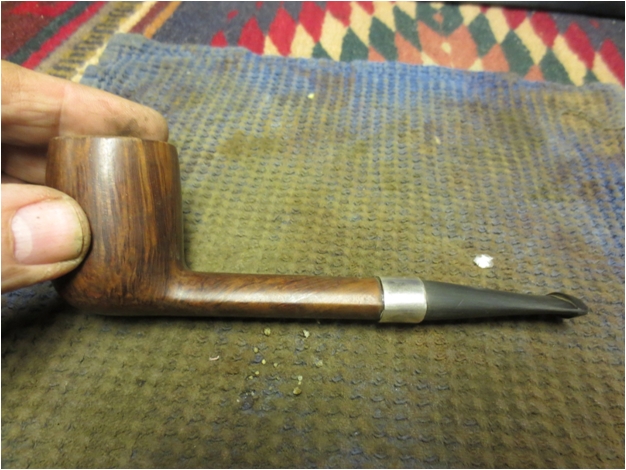
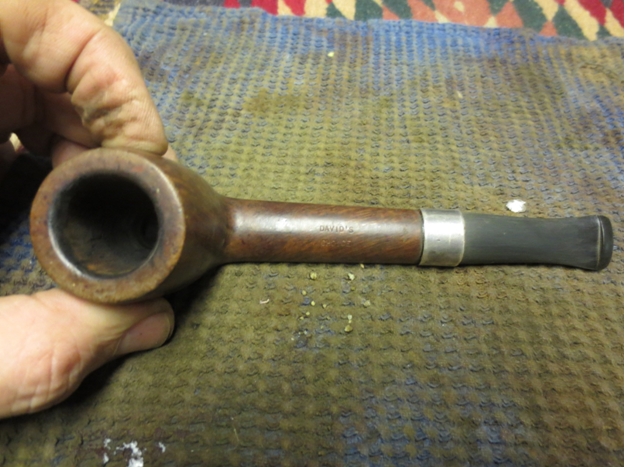
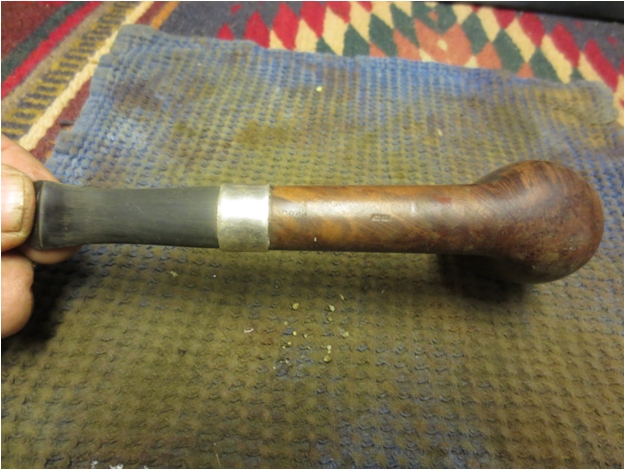
I have written about the restoration and restemming of the first pipe bowl I picked up while on a recent trip. It was found in an antique shop in Nanton, Alberta. It was an old AF Billiard from 1923. The second pipe bowl I found at the same shop is the focus of this refurbishing article. It is stamped on top of the shank with the words David’s Choice and stamped on the underside Italy and barely visible under the repair band Savinelli Product. The repair band was loose and when it was removed the shank had a crack on the bottom side. At the bowl shank junction there is also a small crack that extends back along the shank for almost an inch. It does not appear to go through the shank to the airway but it is visible. The rim of the pipe was clean but the outer edge was damaged and the top edge was badly dented. The finish on the bowl was gone and the briar, though it had stunning grain, was lifeless looking. The bowl was clean in the top ½ inch – looking to have been reamed. The rest of the bowl was badly caked to the point that a pencil would stand in the bottom half unaided. There was no room for additional tobacco. Surprisingly the shank was clean. The stem was long since gone but I found a stem blank in my stem can that would work very well with the pipe.Sav1 Sav2 Sav3 Sav4 Sav5 Sav6 The cake was like concrete in the bottom half of the bowl. I could not cut through it with either the PipNet or the KleenReem pipe reaming tools. I filled the bowl with cotton balls and then used an ear syringe to fill the bowl with isopropyl alcohol. I let it sit for several hours while I worked on fitting the stem.Sav7 Sav8 I used the Pimo Pipe Turning tool to reduce the diameter of the tenon and cut a clean edge against the stem. I sanded it by hand to get it to the proper diameter to fit the shank. I still needed to fit the stem to the angles of the shank and make the lines straight and clean from shank to button. I fit it on the pipe and took some photos to get an idea of what I needed to sand.Sav9 Sav10 I took the cotton balls out of the bowl and then reamed the bowl. The alcohol softened the hard cake and it came out more easily. I finished scraping the bowl with a sharp knife to take out the remnant of cake. I sanded the stem with 220 grit sandpaper to reduce the stem to fit the shank. I glued the band in place on the shank with an all-purpose wood glue.Sav11 Sav12 Sav13 Sav14 Sav15 I wiped down the bowl with acetone on cotton pads to remove the remaining finish from the briar. I would eventually stain the briar – not sure at this point what colour I would use but I wanted to have a clean surface for the stain. I also lightly topped the bowl with a topping board and 220 grit sandpaper to remove the damaged top and edges of the rim.Sav16 Sav17 Sav18 I heated the briar with a heat gun to open the pores in the briar to receive the stain and then used a dark brown aniline stain. I applied it and flamed and repeated the process until I had an even coverage over the surface of the bowl. In the past I have thinned the stain to lighten it but have lately just applied it and then wiped it down with alcohol and cotton pads to lighten it after staining.Sav19 Sav20 Sav21 I sanded the bowl and shank with a 1500 grit micromesh sanding pad to further lighten the finish and then wiped it down a further time with the alcohol wet pads.Sav22 Sav23 Sav24 Sav25 I sanded the stem with 220 grit sandpaper and medium and fine grit sanding sponges. I wet sanded with 1500-2400 grit micromesh sanding pads and dry sanding with 3200-12,000 grit pads. I rubbed the stem down with Obsidian Oil after each set of three pads. Once I had finished sanding I buffed the stem with White Diamond. I polished the band with silver polish and gave it a light buff with White Diamond as well.Sav26 Sav27 Sav28 I put the stem back on the pipe and buffed it all again with White Diamond and gave it a several coats of carnauba wax. I buffed it with a soft flannel buff to raise the shine. Though this old warhorse of a pipe has seen much use, the new finish and restored, rebanded and restemmed pipe should give many more years of service. It is cleaned and ready to load with its inaugural bowl. Though the pictures do not show it the pipe is a large one – it is 6 inches long with a bowl that is 2 inches tall. The diameter of the bore is 7/8 inches. It will certainly be a long smoke – and if the build of cake left behind by the previous owner tells any tales it will be a good smoking pipe.Sav29 Sav30 Sav31 Sav32