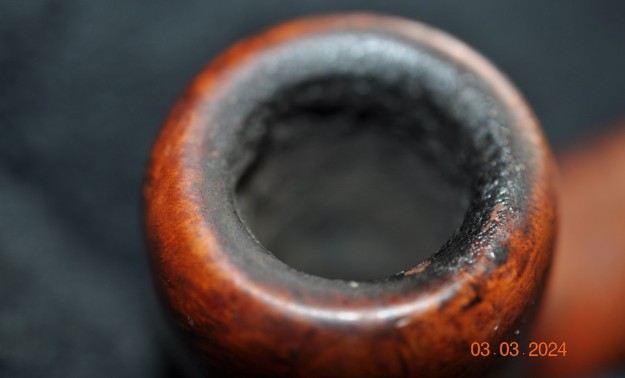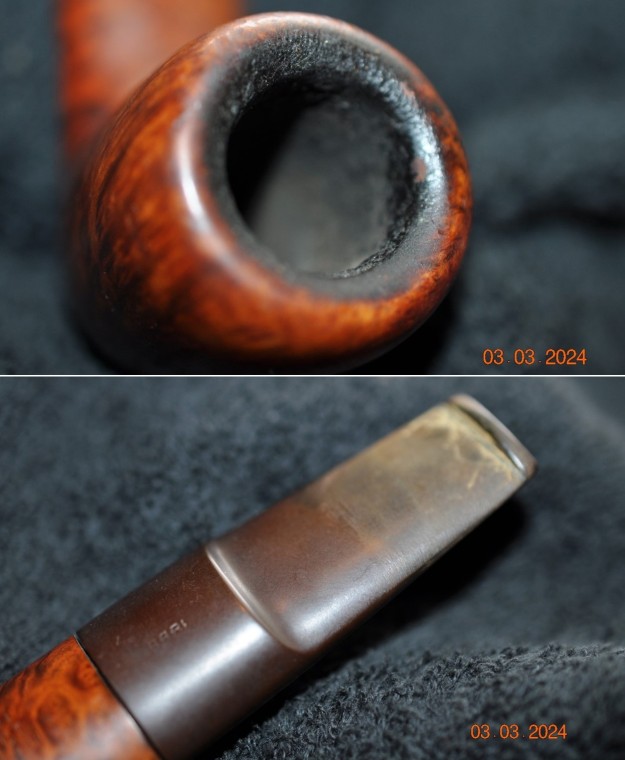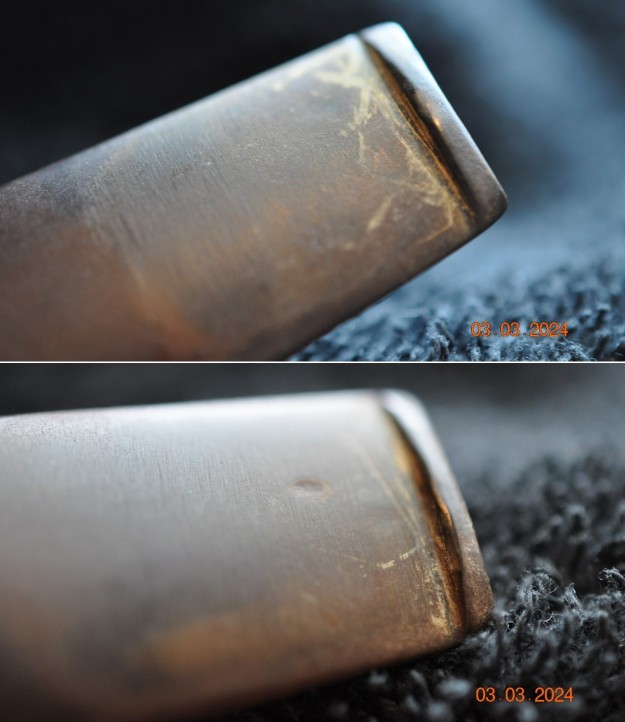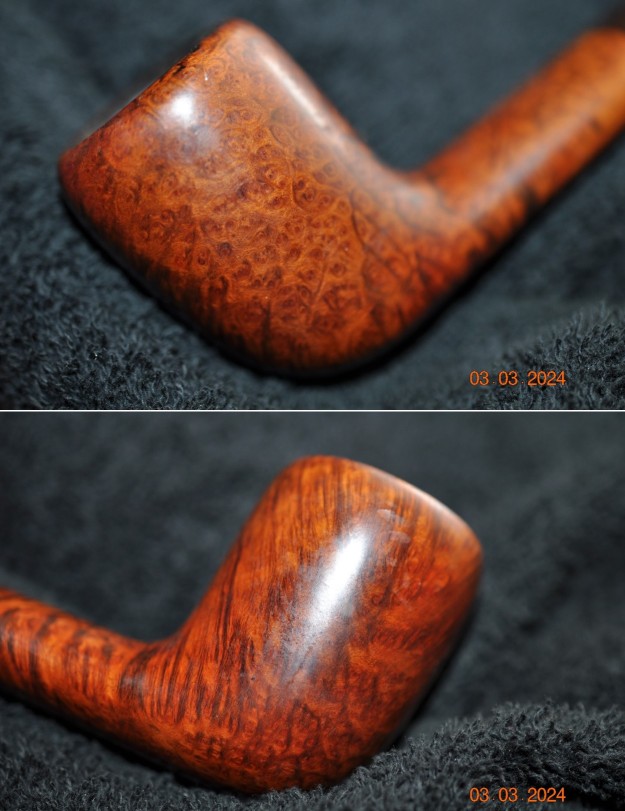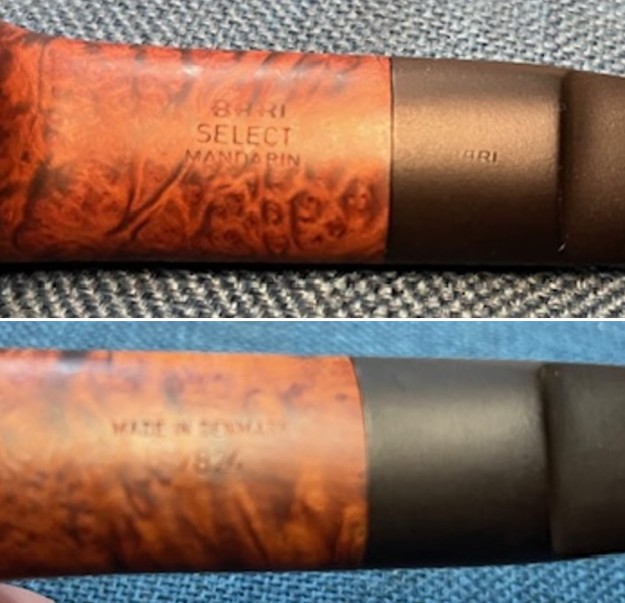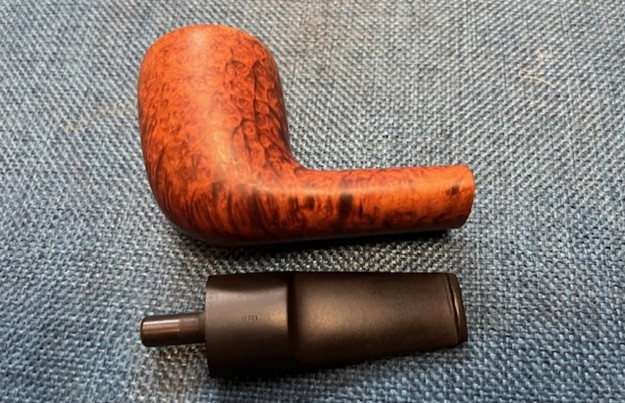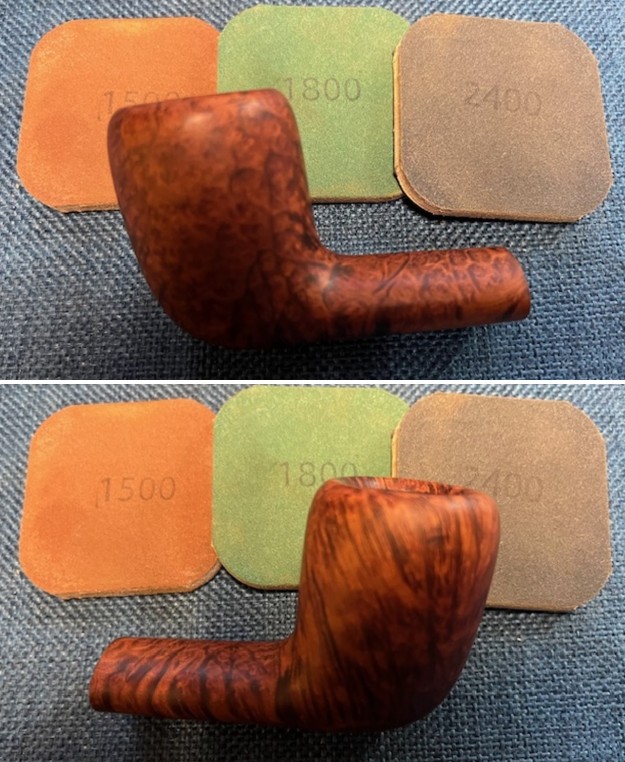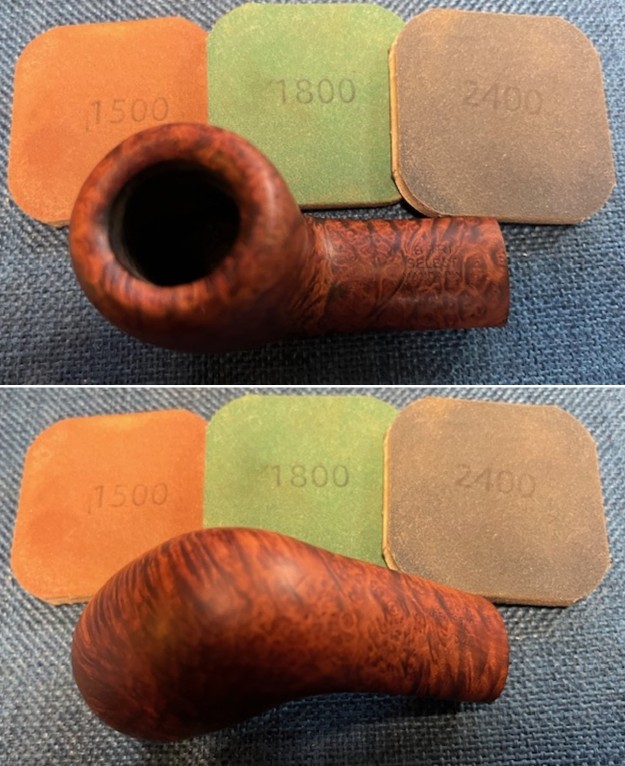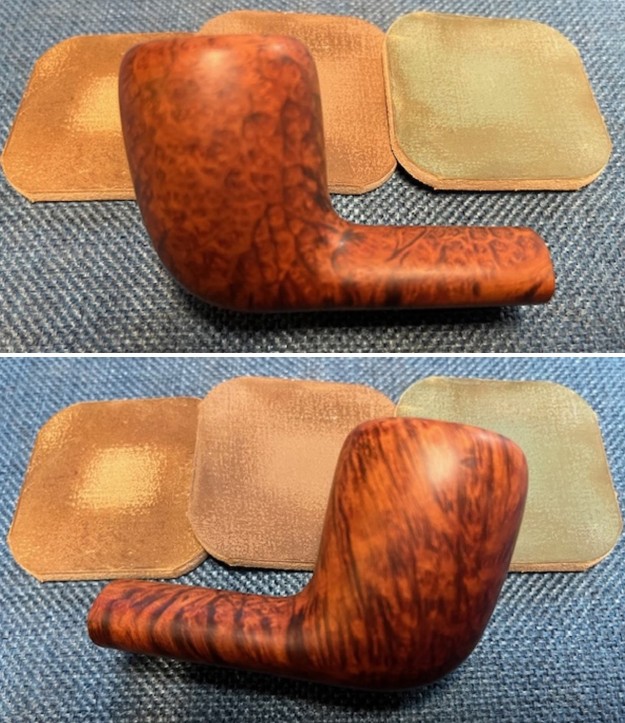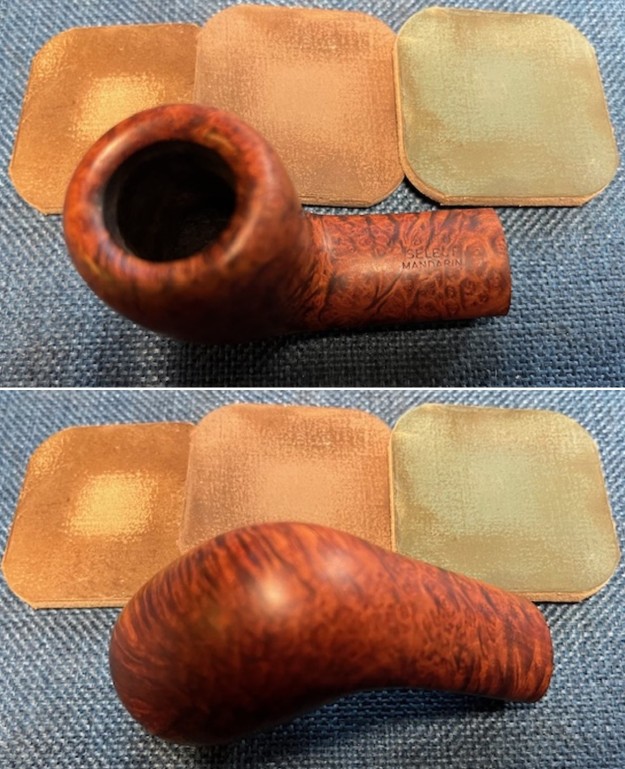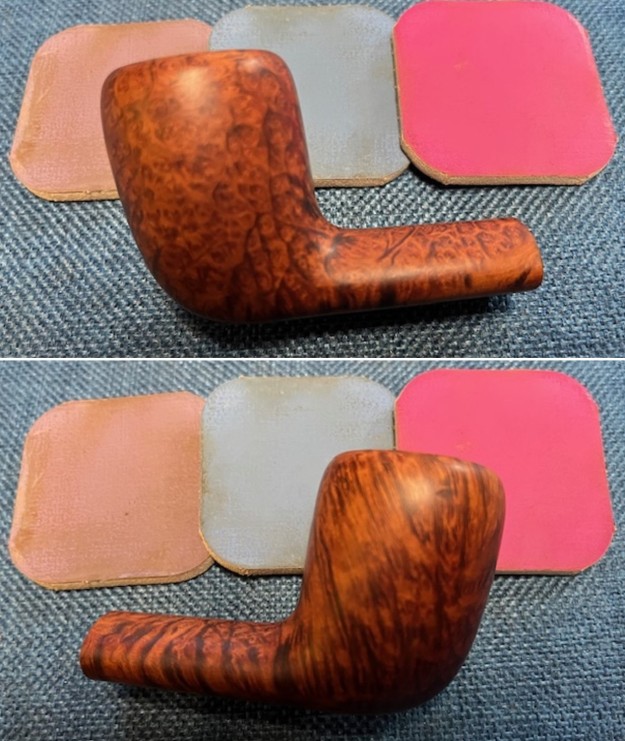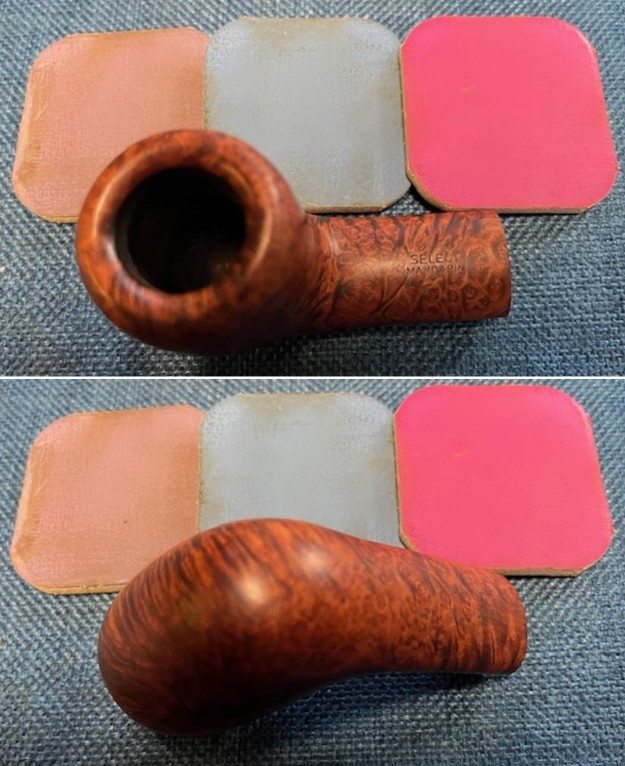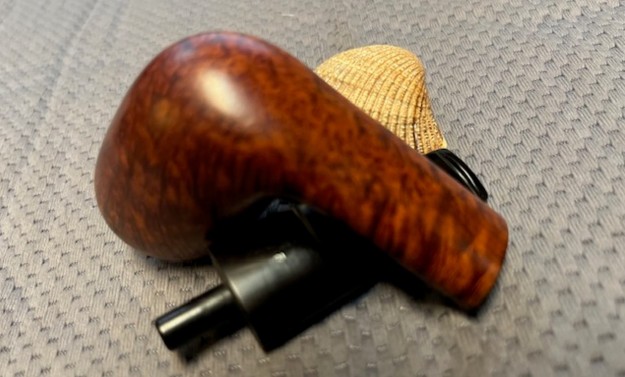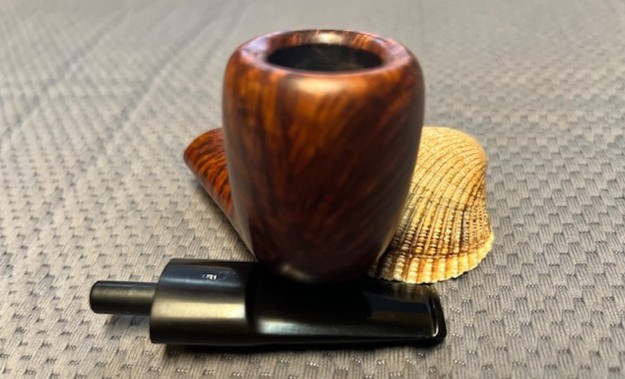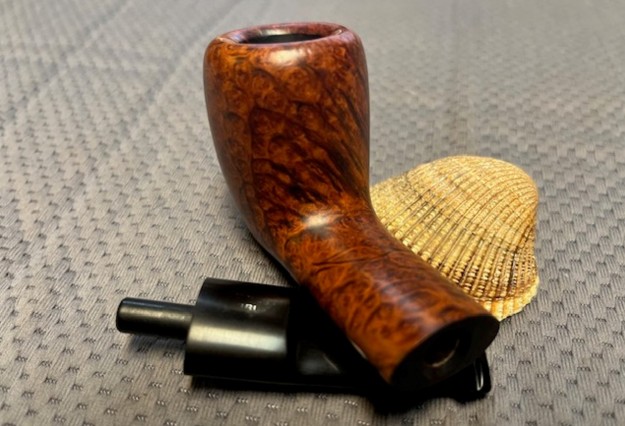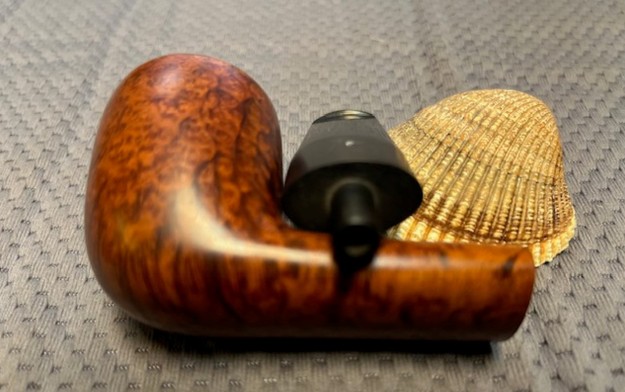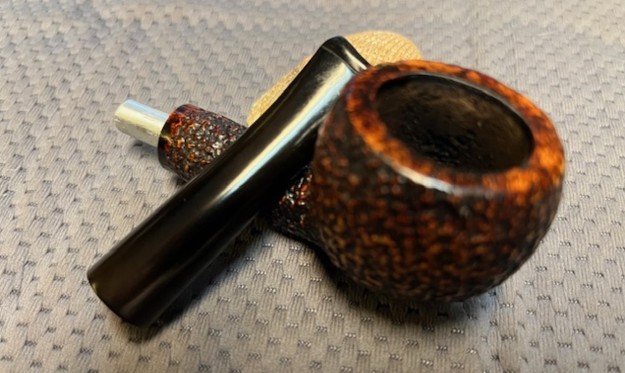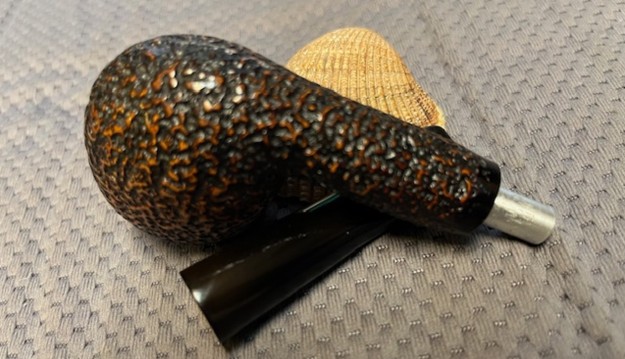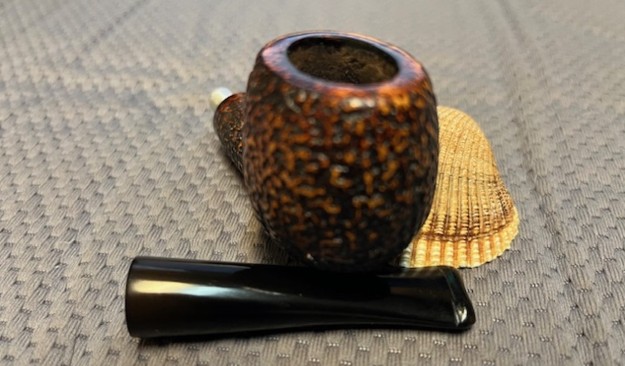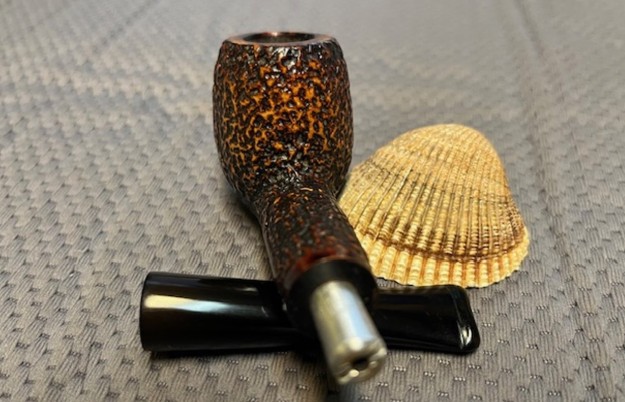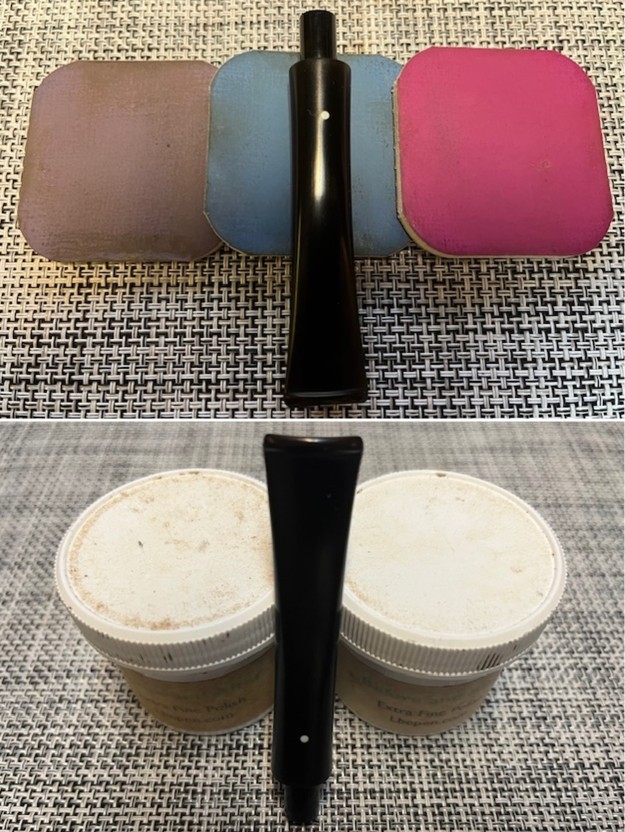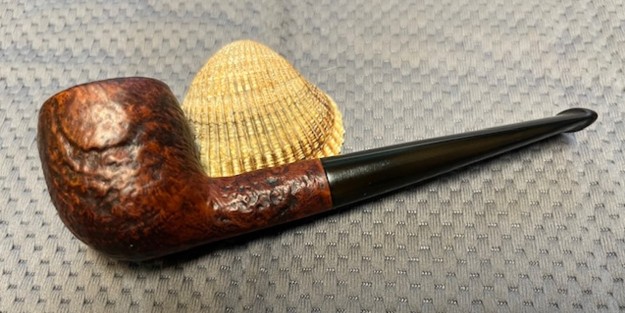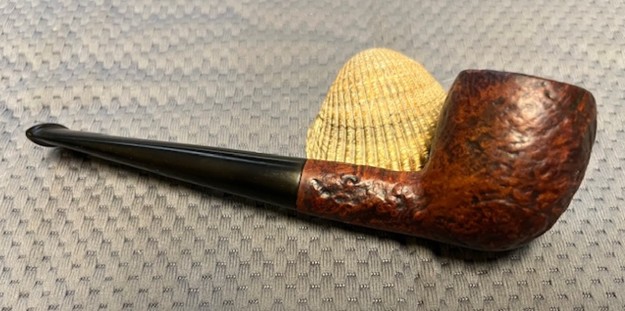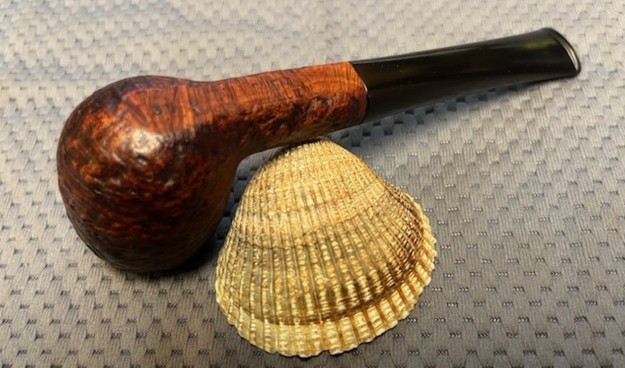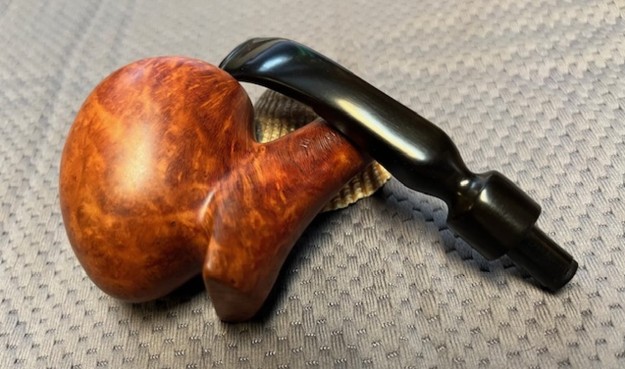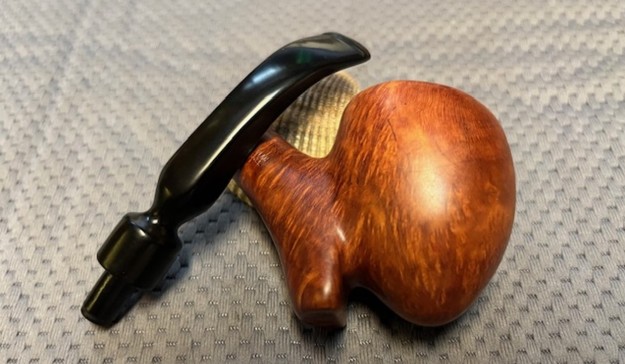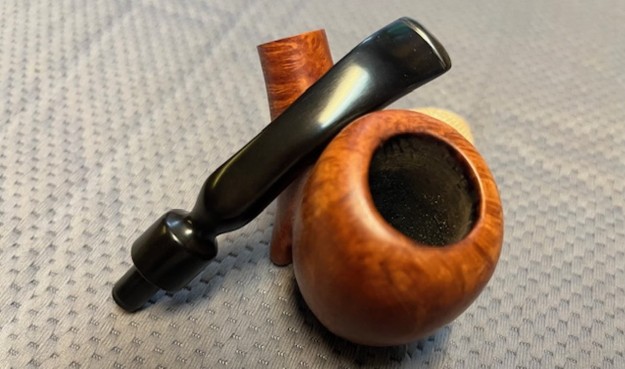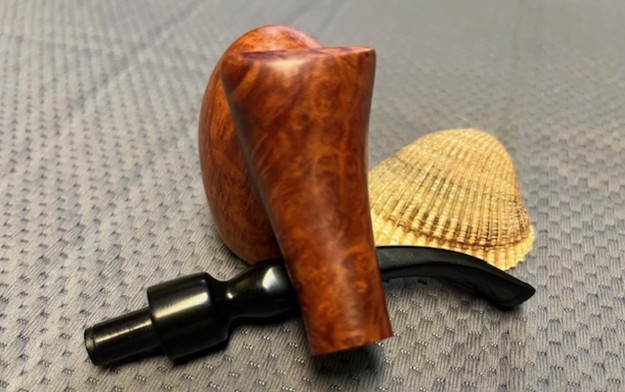
Tag Archives: bite marks

Resurrecting a Brigham Made in Canada 625 Bulldog with a Frozen Stem


Blog by Steve Laug

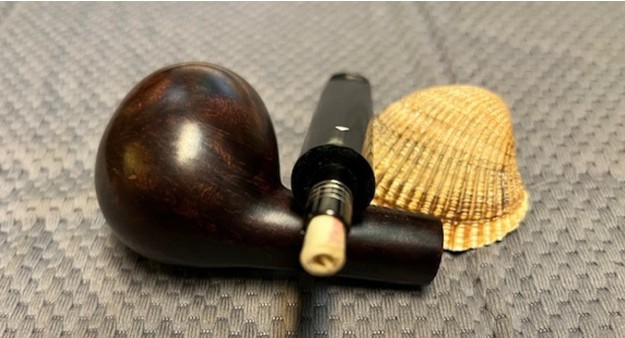
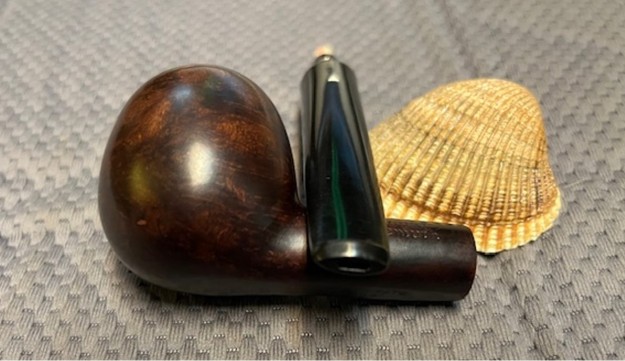
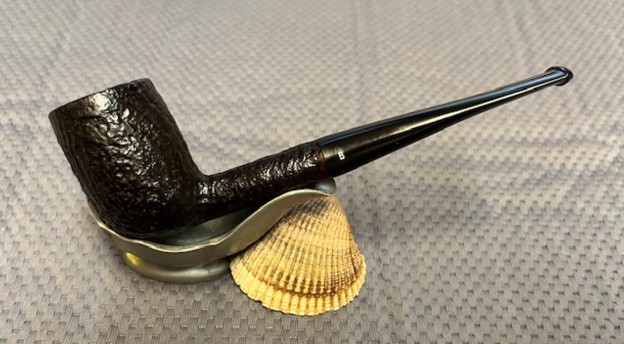
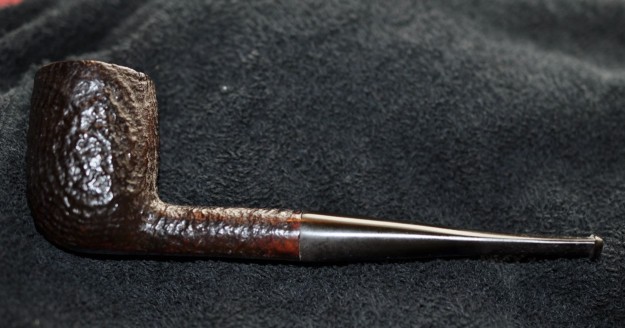
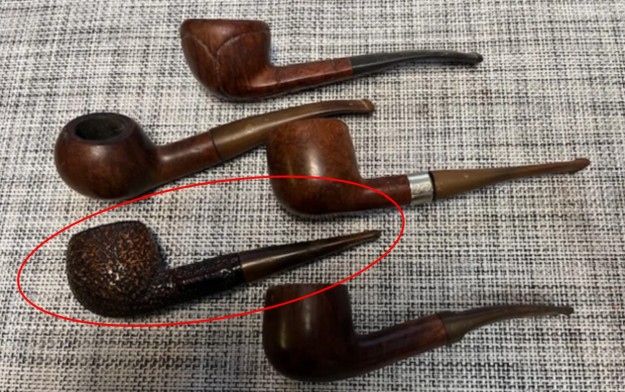
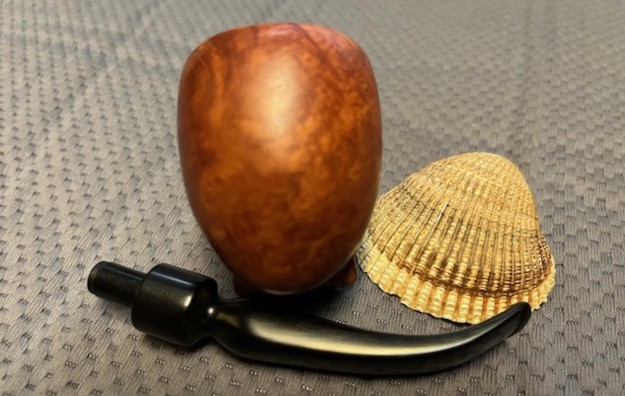
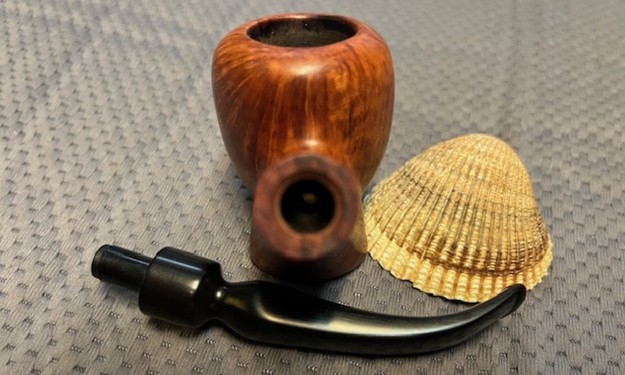
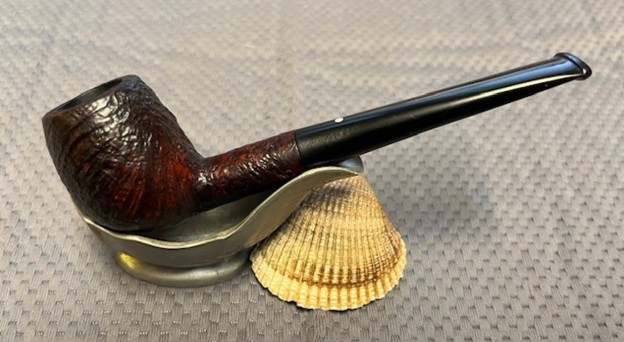
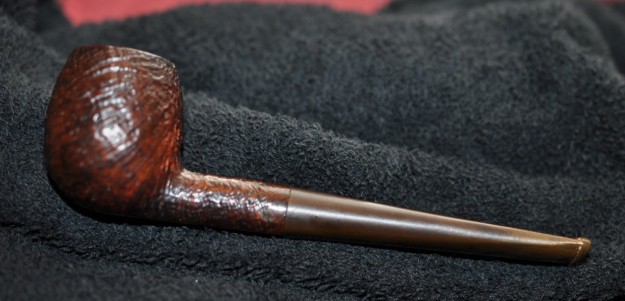
On Saturday, April 27 Kenneth and I went to an antique and collectible sale at an arena in New Westminster, BC, Canada. I wrote about the adventure and posted it in a previous blog last weekend (https://rebornpipes.com/2024/04/28/you-have-to-join-kenneth-and-me-on-a-great-morning-pipe-hunt/). On the hunt I picked up four pipes that I have listed below:

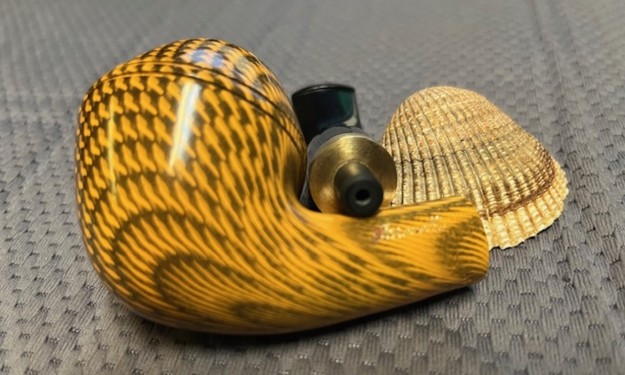
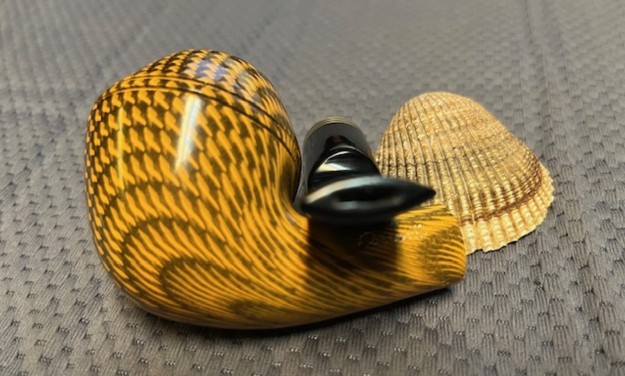
  1. Jeantet Fait Main Bent Freehand Dublin 4 with a diamond shank
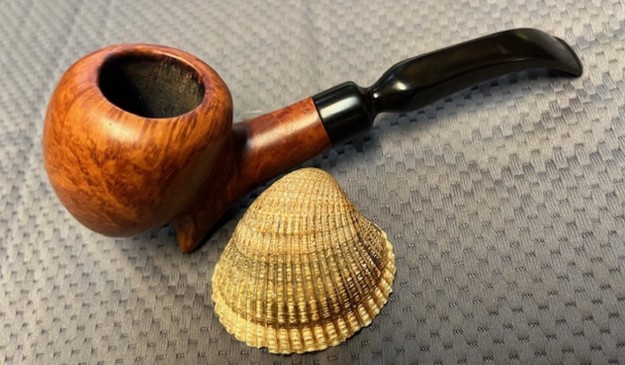
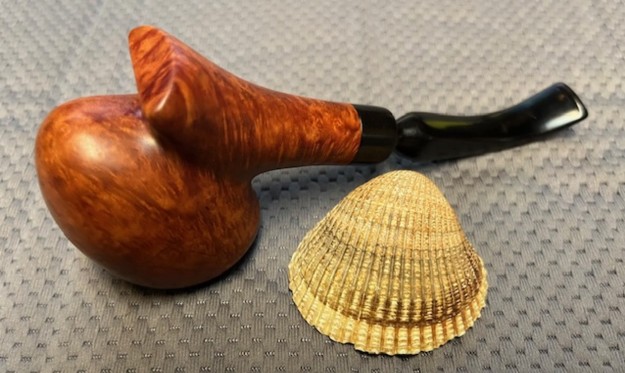
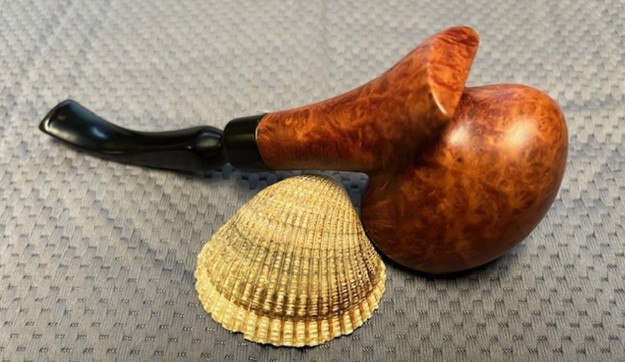
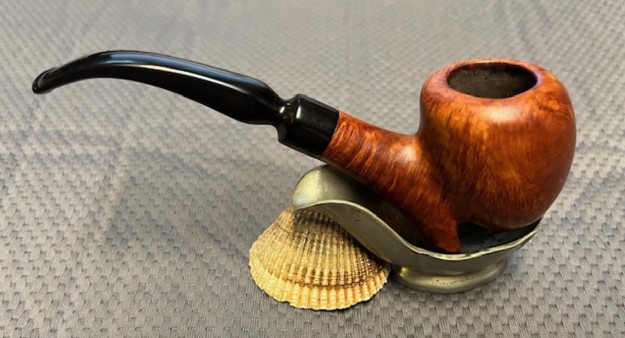
  2. Jeantet Fait Main Bent Apple 9 with a uniquely shaped shank and stem
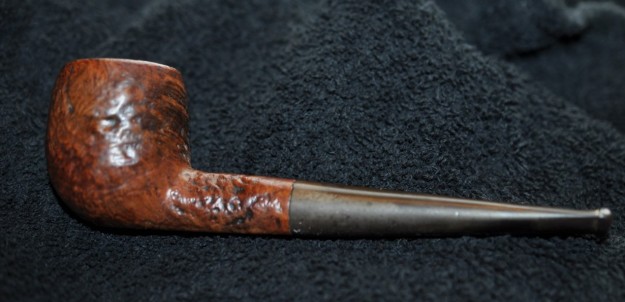
  3. Republic Era Peterson’s System Pipe 1307 Bowl sans stem
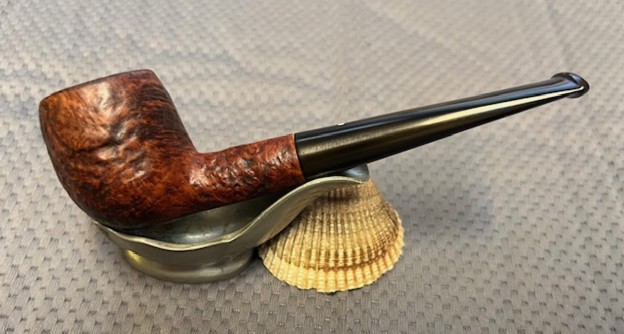
  4. Brigham Made in Canada 625 Squat Straight Bulldog

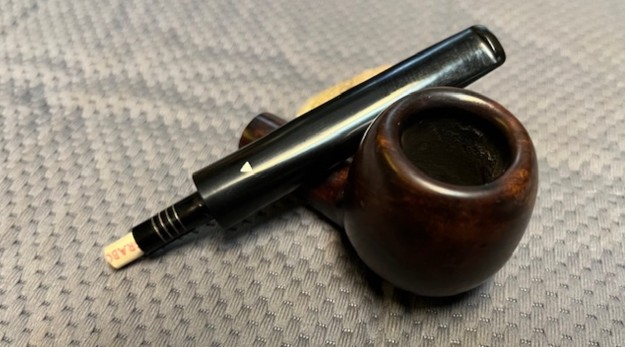
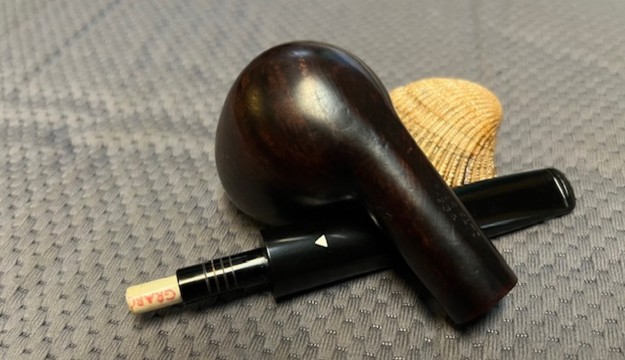
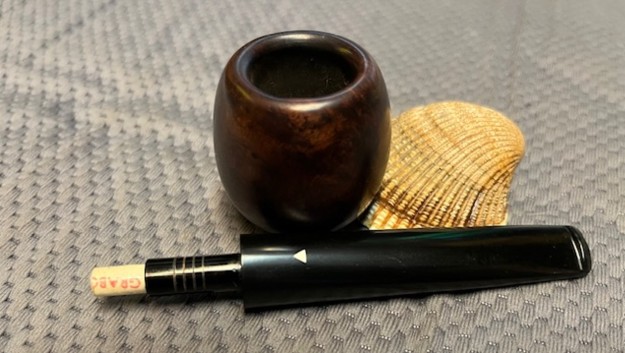
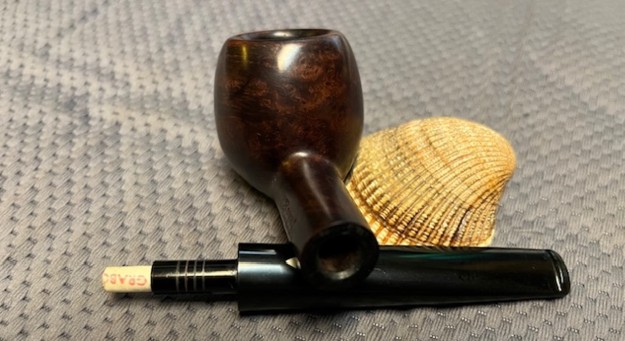
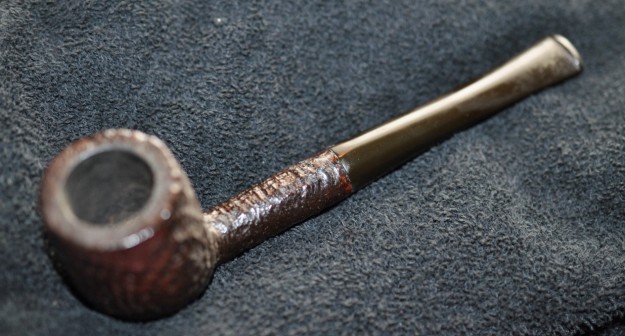
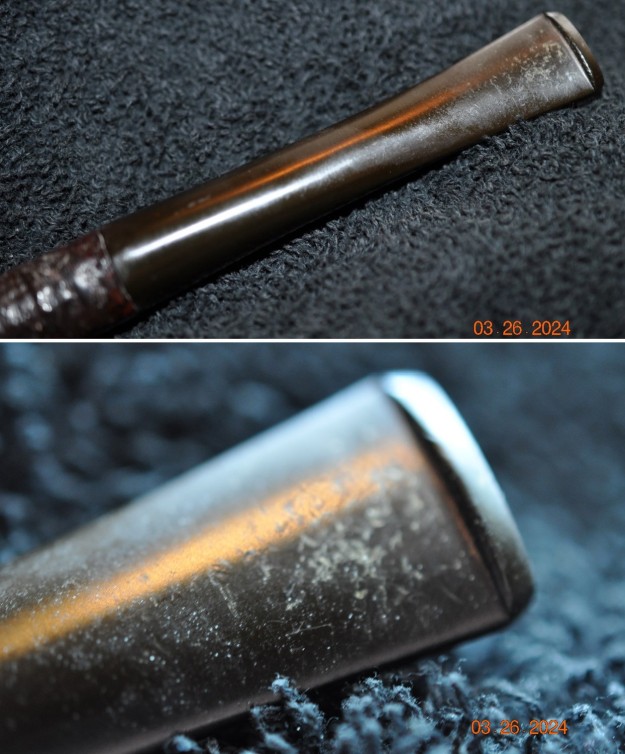
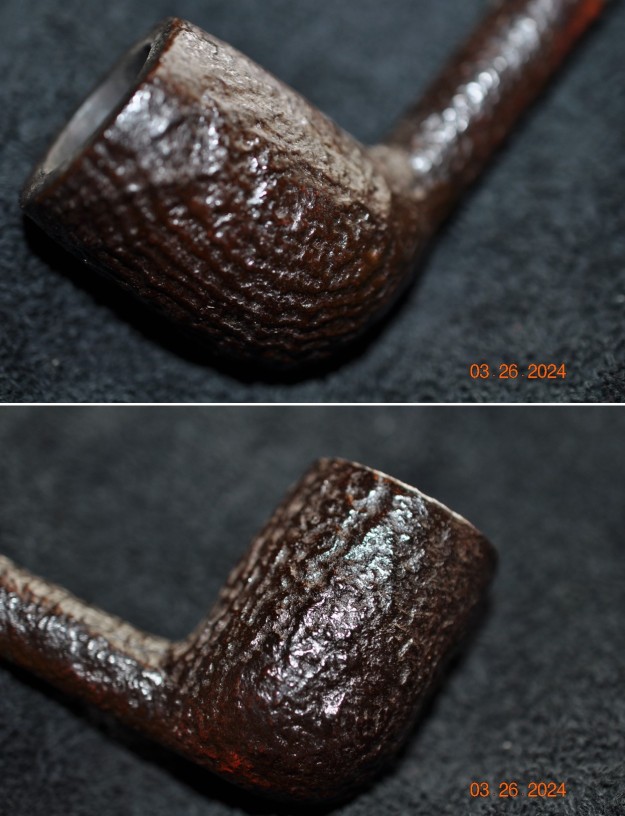
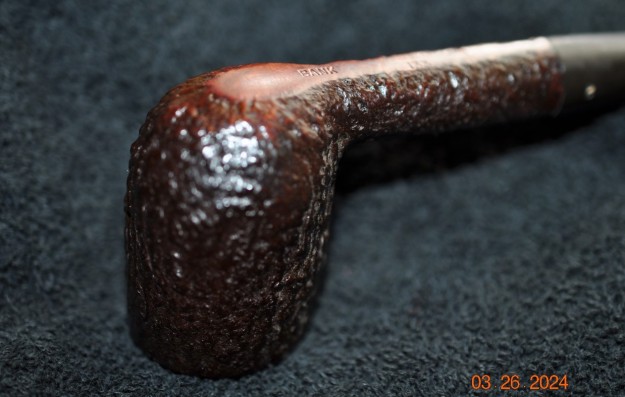
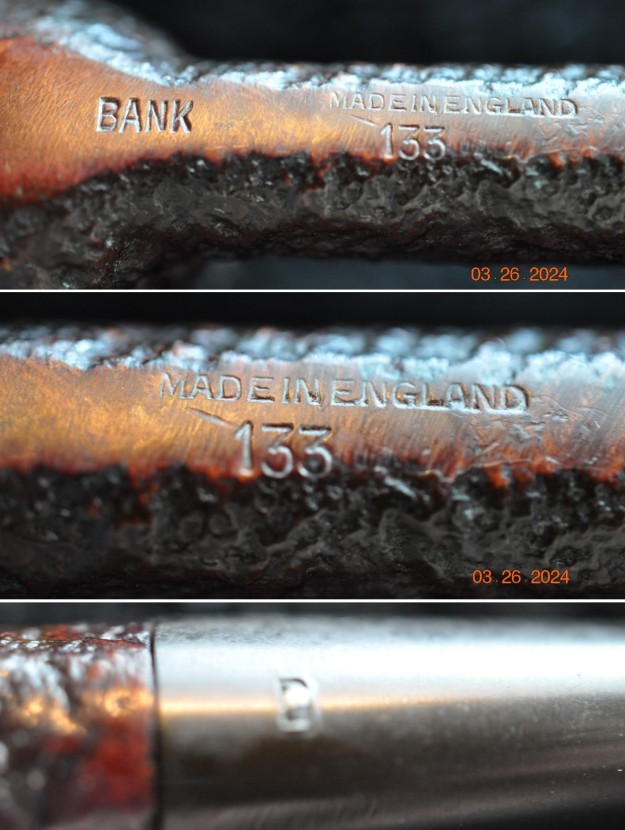
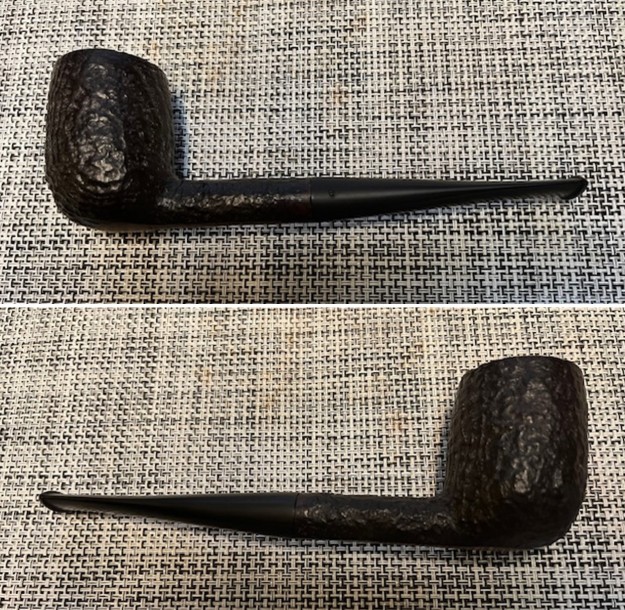
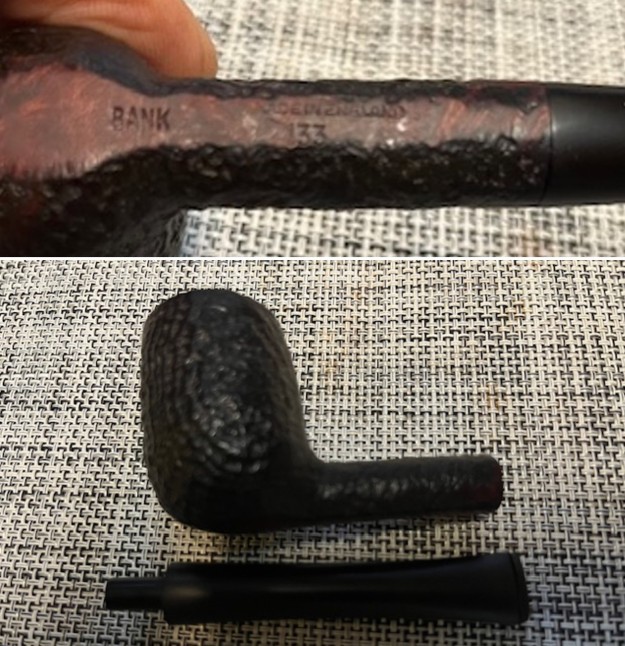
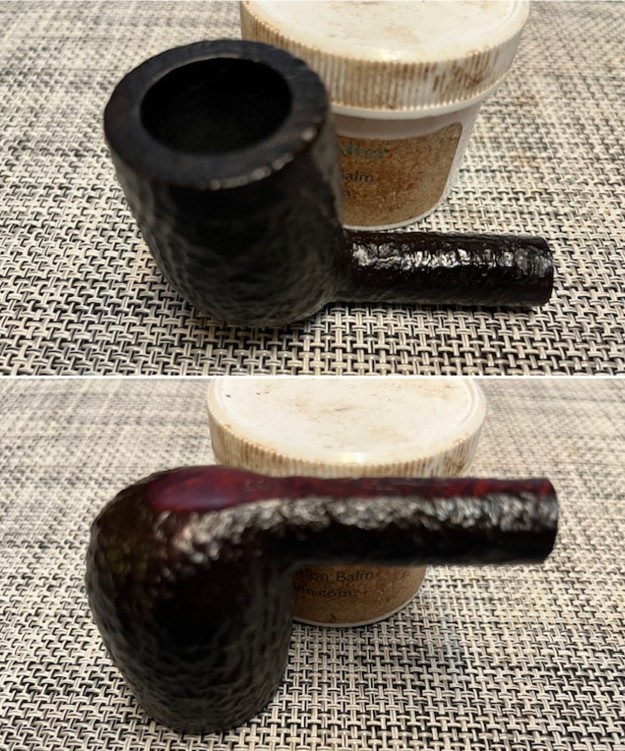
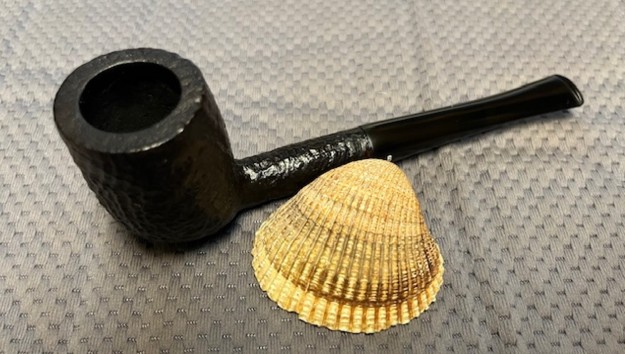
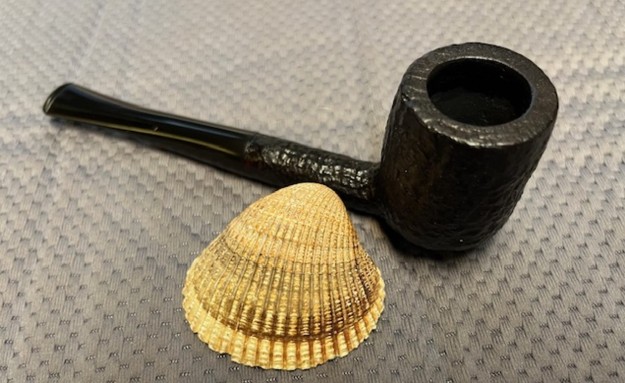
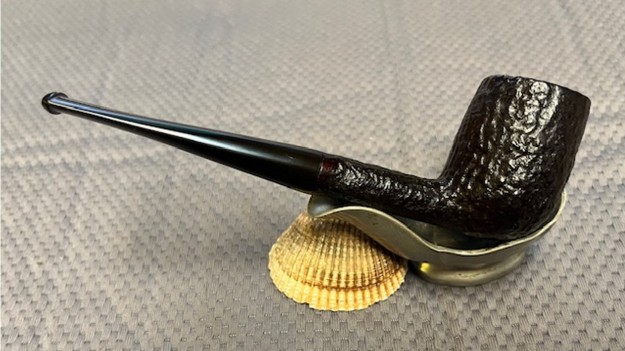
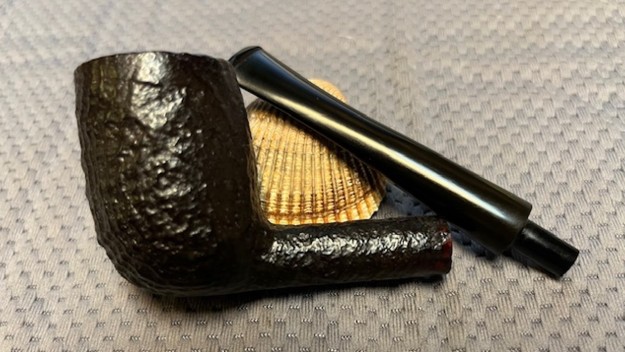
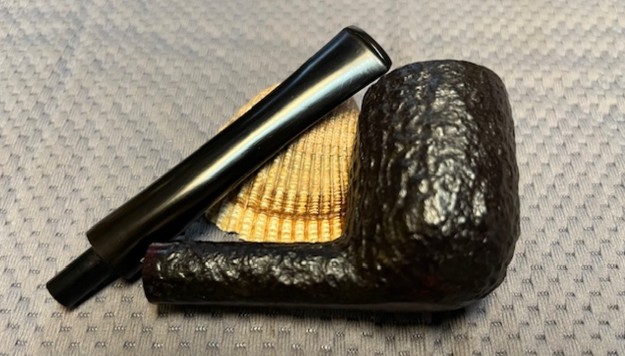
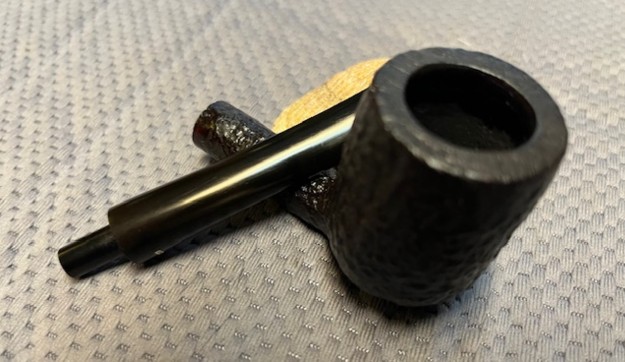
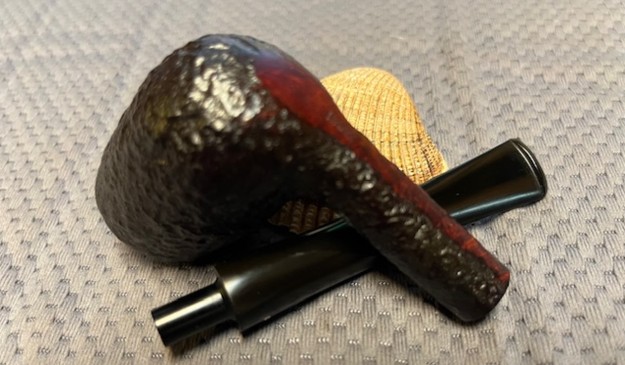
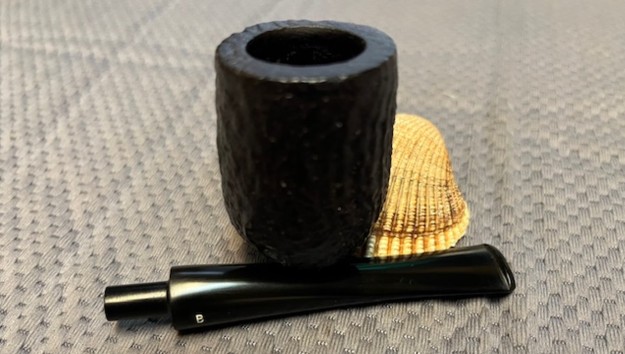
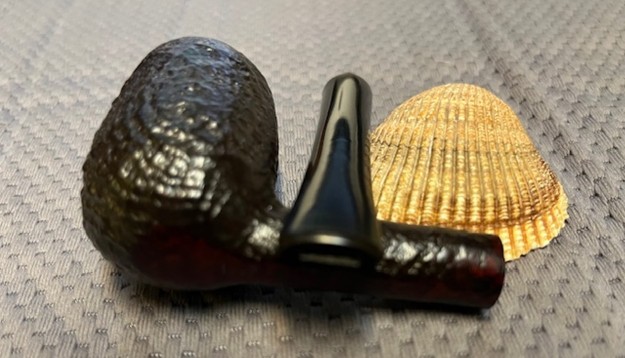
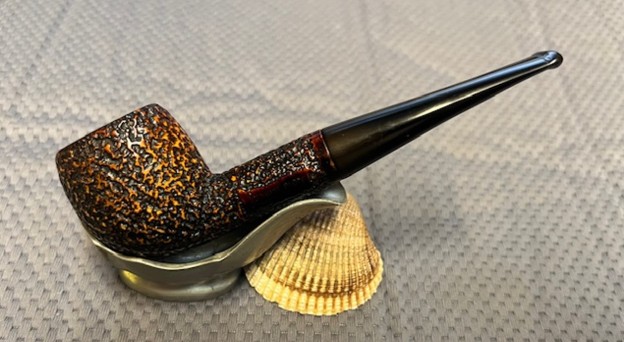
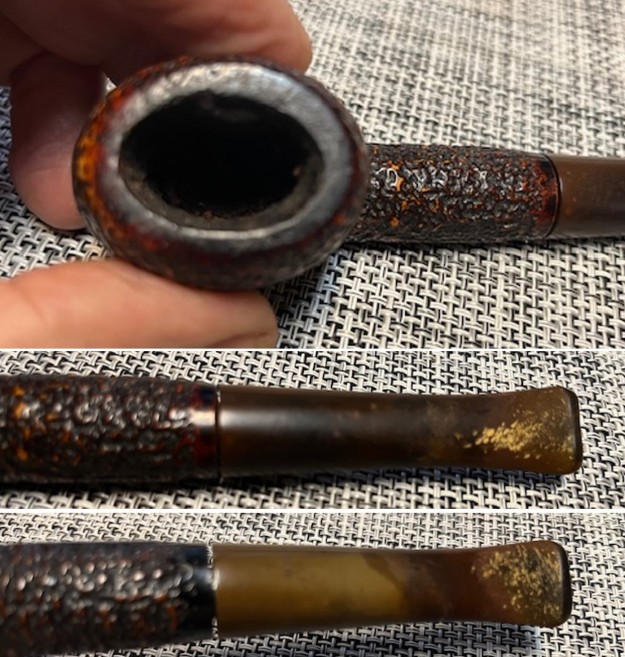
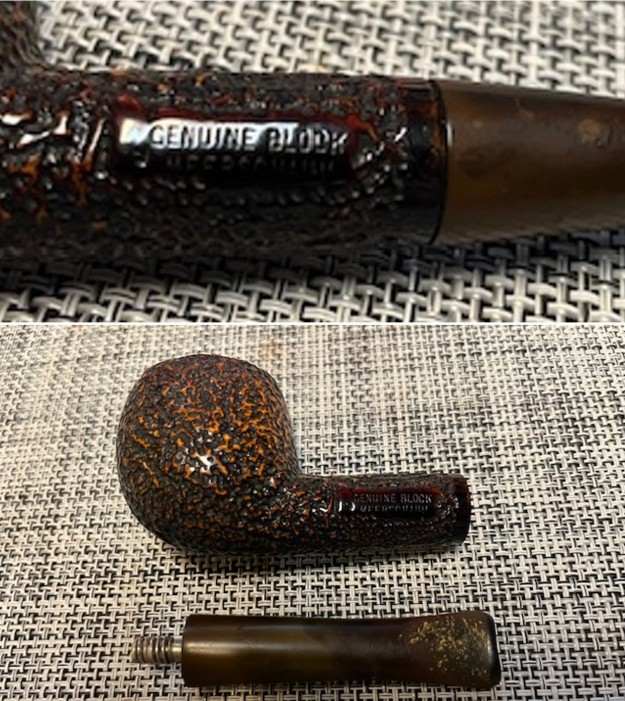
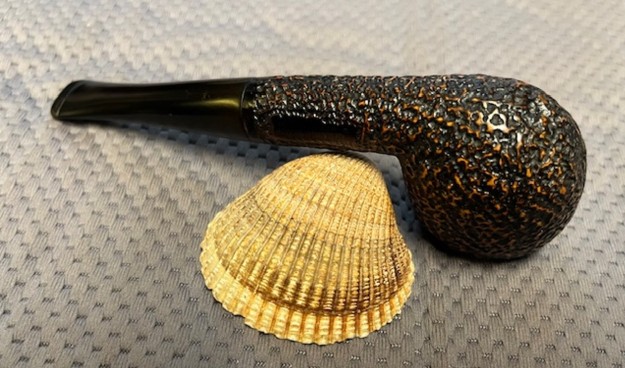
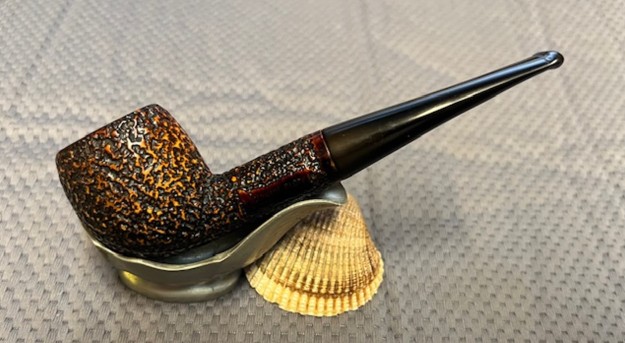
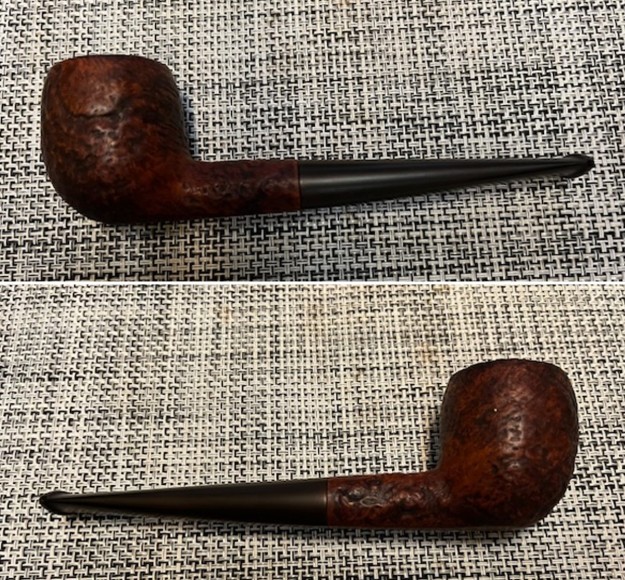
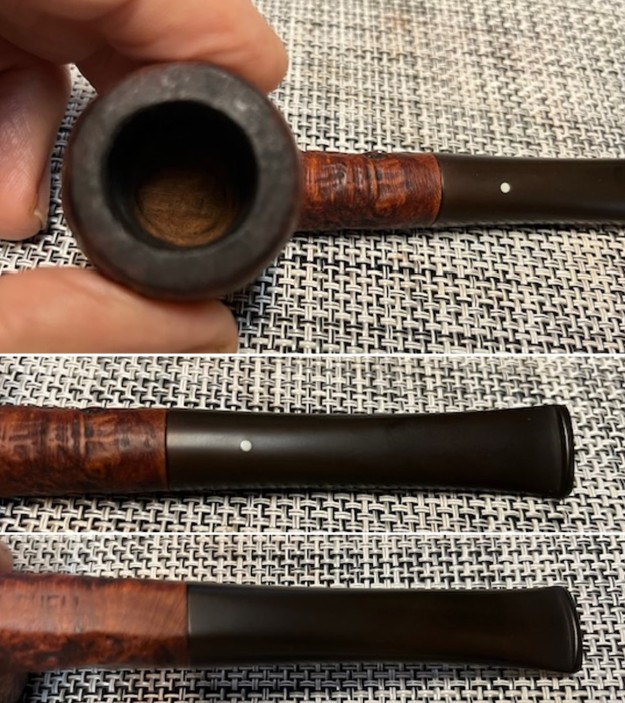
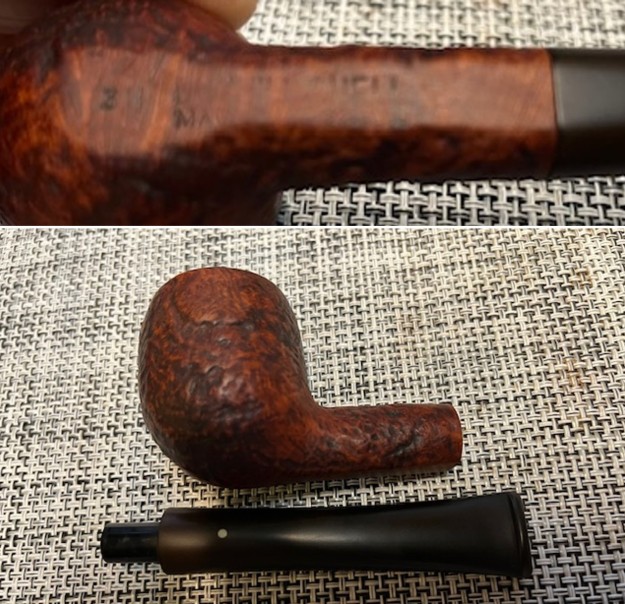
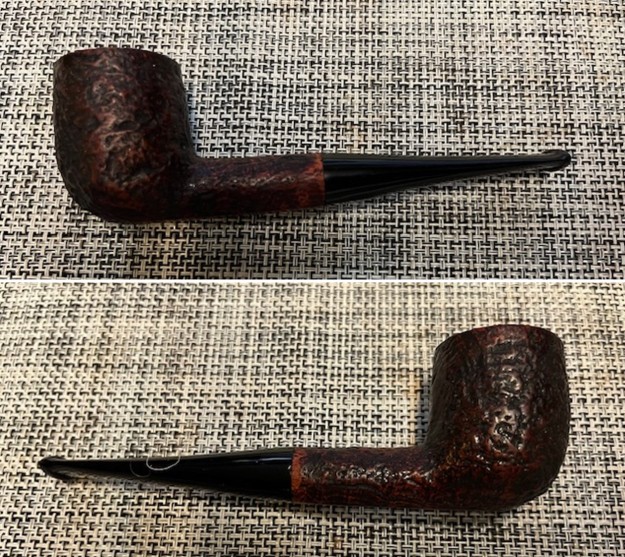
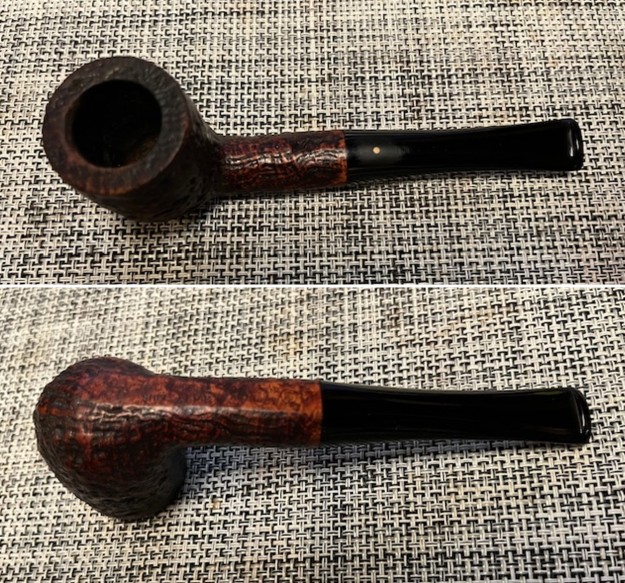
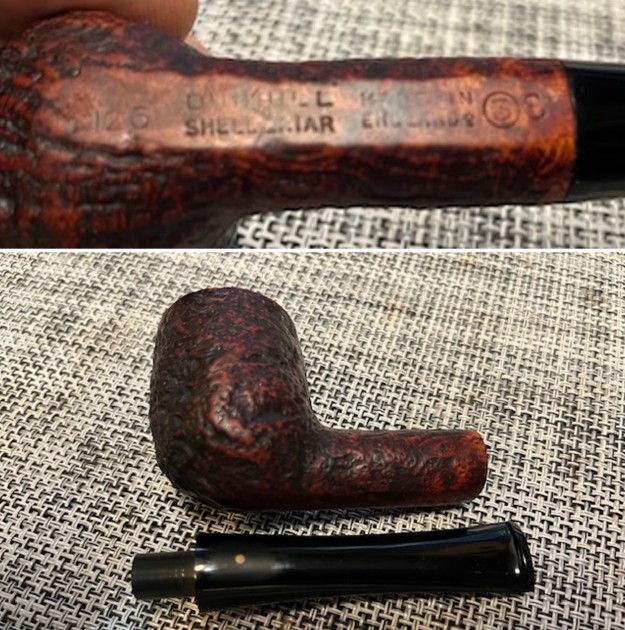
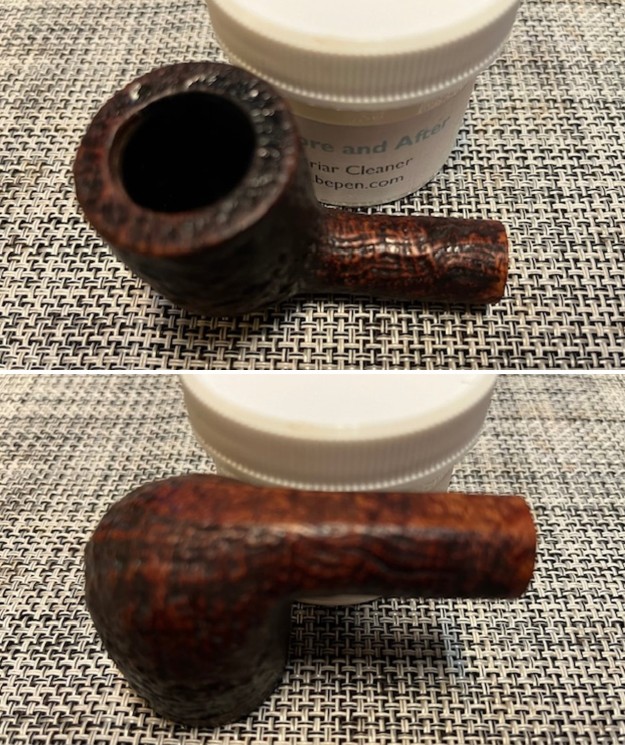
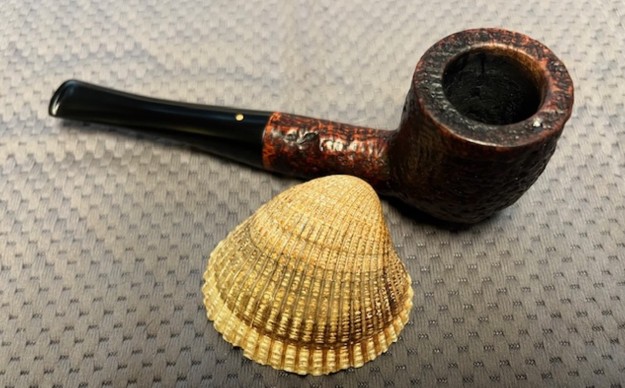
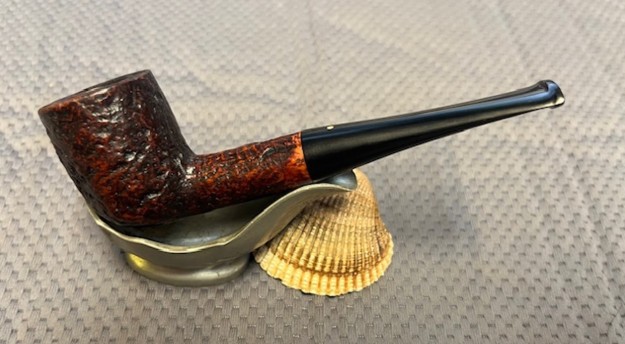
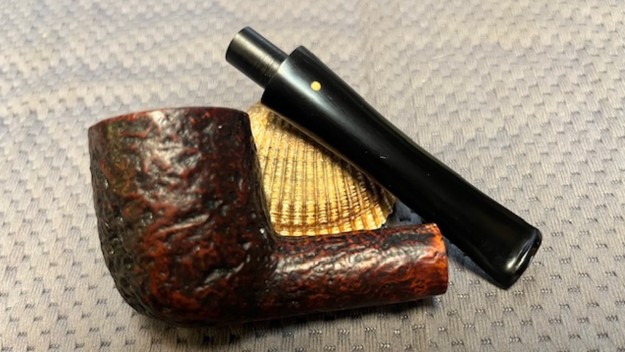
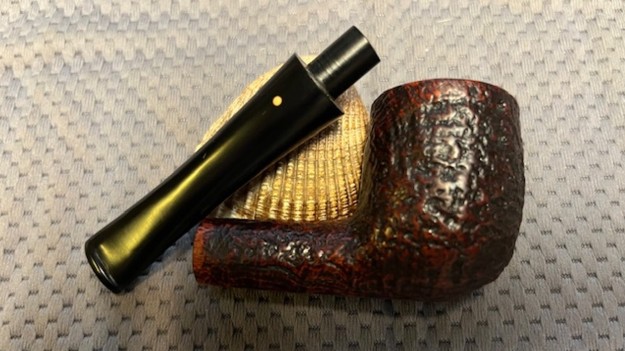
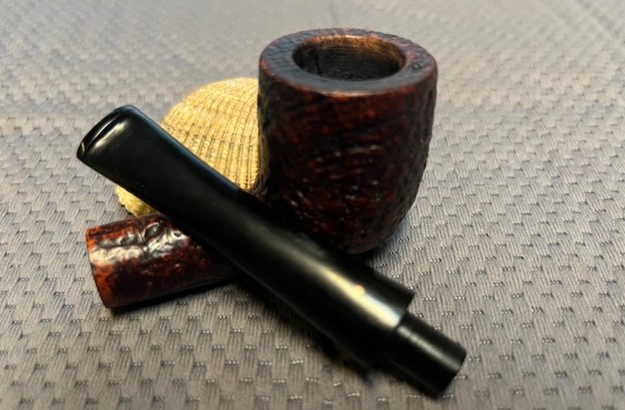
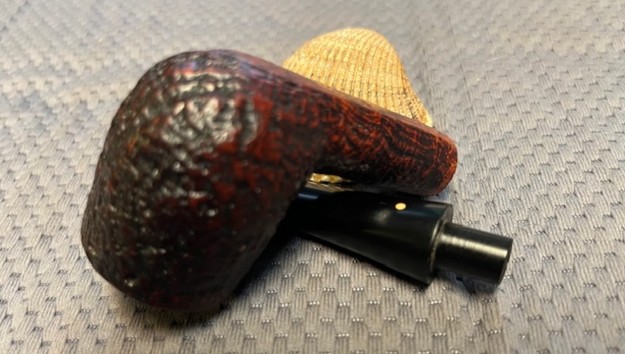
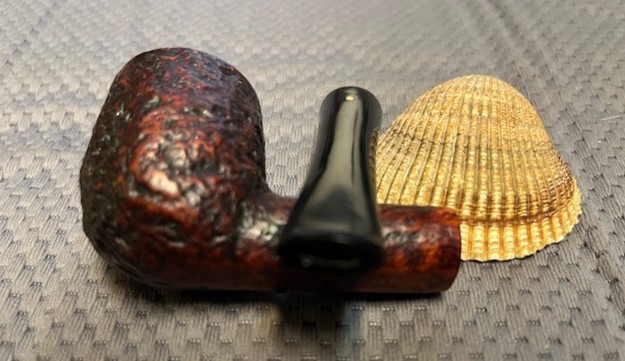
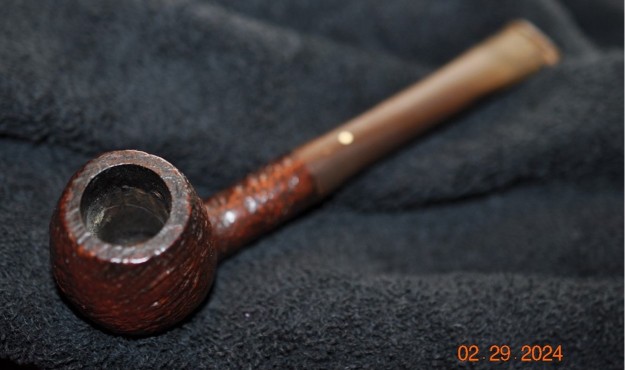
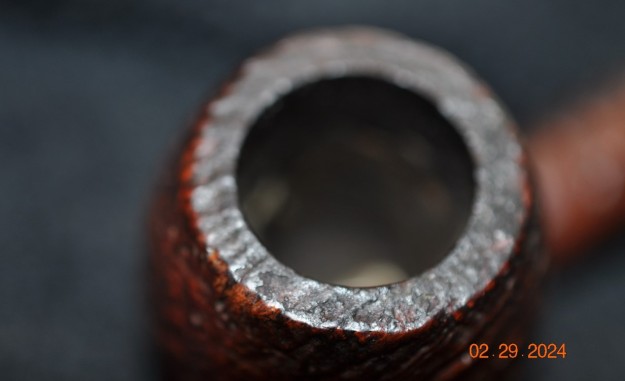
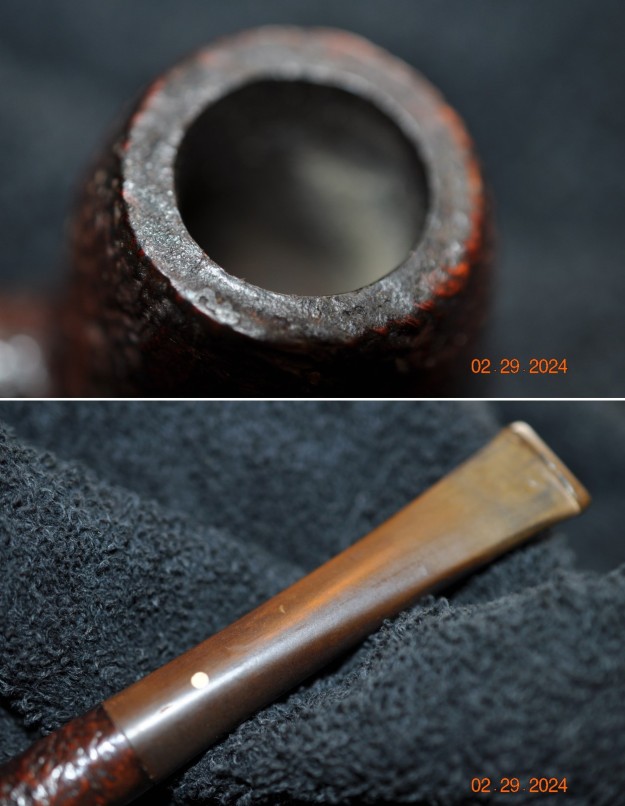
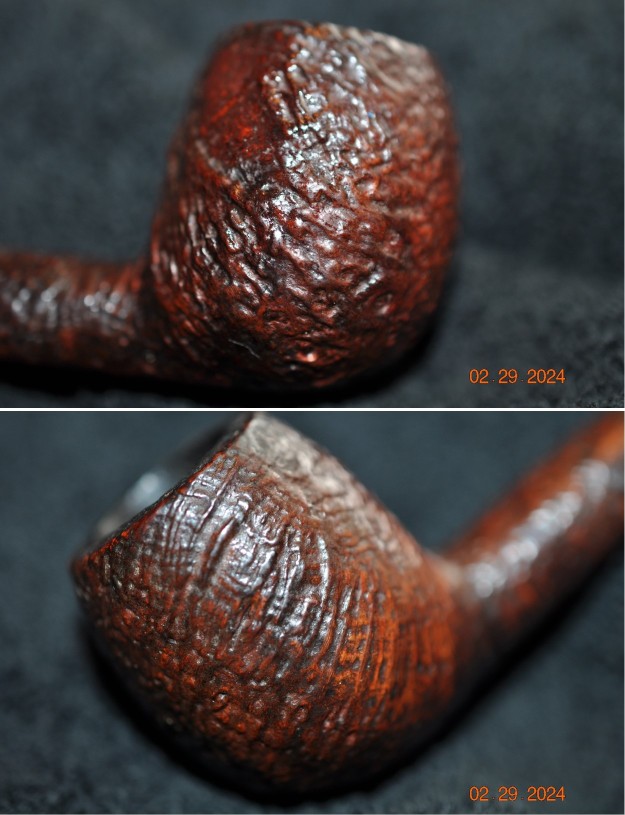
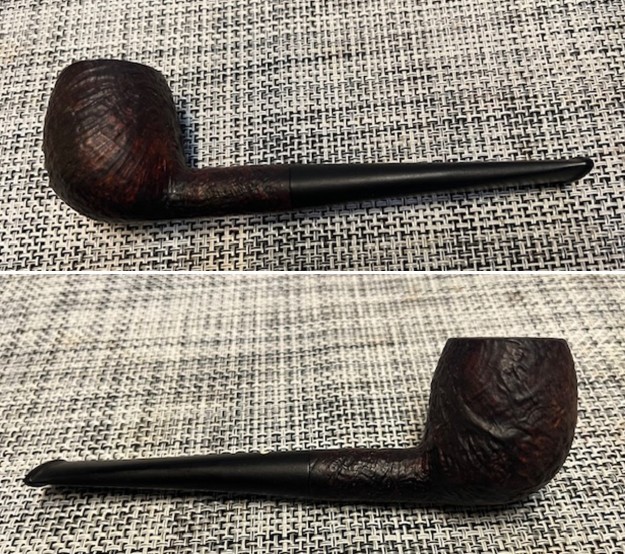
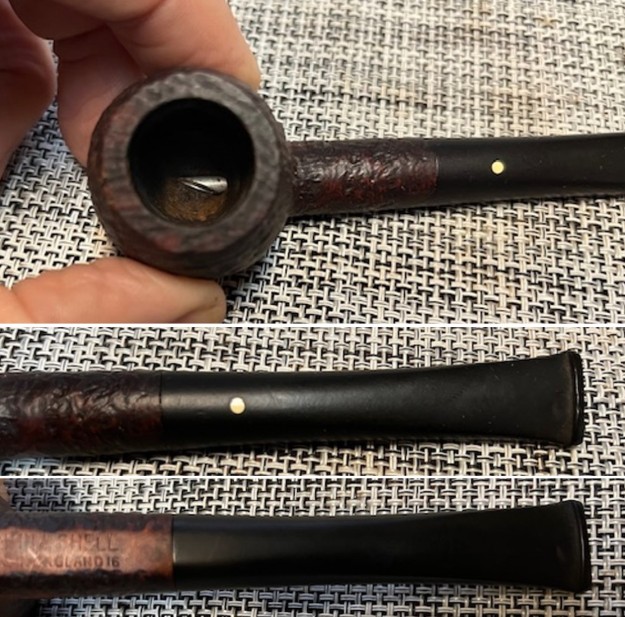
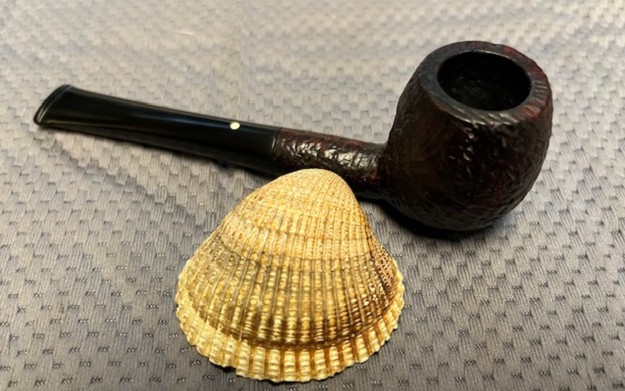
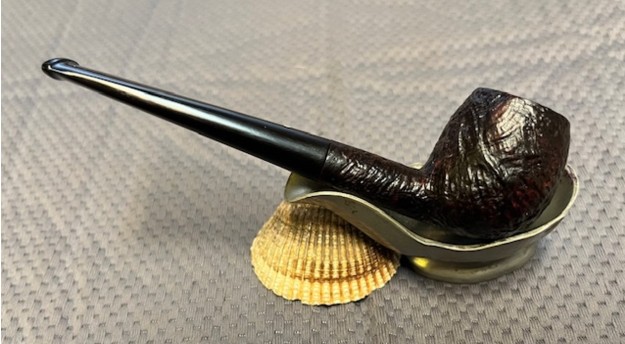
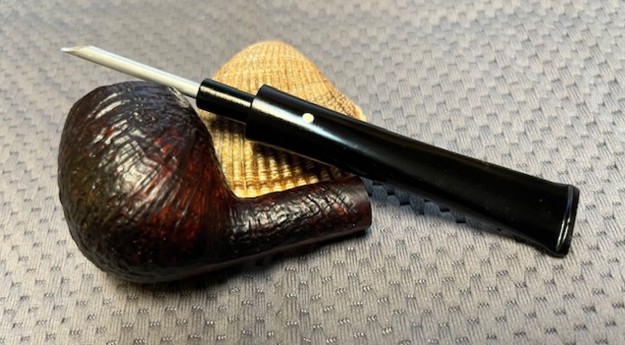
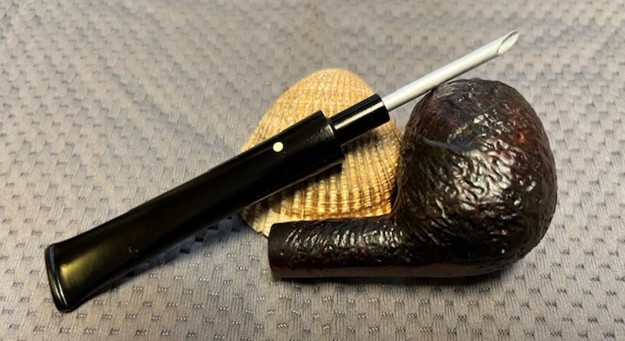
I have included photos of the foursome below. They are in the order of the list above. I chose to work on the final pipe in the above photos. It is shown in the photos below and is stamped 625 next to Brigham [over] Made in Canada on a smooth panel on the left underside of the diamond shank. There are three vertical brass dots that are corroded and dark on the left topside of the diamond stem. It is squat straight Bulldog shape with a smooth cap, twin rings below the cap and a rusticated bowl and shank. The pipe has some great grain around the rim cap. The rim top is clean and shows some darkening on the back topside. The inner edge of the bowl is damaged and slightly out of round. The bowl had a light to moderate cake on the walls and some spots of lava on the rim top. The briar is dry and lifeless with some grime and grit ground into the briar. The stem was oxidized and had some tooth marks on the top and underside ahead of the button. The stem was frozen in place in the shank and was not removable. From my experience I would guess that the aluminum tube in the shank had begun to oxidize and that combined with the tars and oils had bound the tenon apparatus to the briar in the shank. I had a feeling it was going to be a real pain to separate the stem and the shank. The photos below show what I saw when I examined the pipe. I took photos of the bowl and rim top to show the condition of the bowl. The rim top has some darkening and scratches in the smooth surface. There was some damage around the inner edge of the bowl and there is a moderate cake in the bowl. The stem is oxidized and is very dirty from the shank to the button. There are tooth marks and chatter on the stem on both sides ahead of the button. Remember the stem is not removable at this point.I took photos of the stamping on the topsides of the shank. It reads as noted above. It is faint in spots but is still very readable. There are three brass dots stacked vertically on the top left side of the diamond stem. They are oxidized but are present.The next best thing to talking with Charles Lemon of Dad’s Pipes is to read the article he wrote on dating Brigham pipes on Pipedia. Charles has done a magnificent job of collating the material on the brand into this article and giving a historical flow of the eras of the Brigham pipe since its beginning in 1906. Thank you Charles for you work on this as it is a one of a kind resource. (https://pipedia.org/wiki/Brigham_Pipes_%E2%80%93_A_Closer_Look_at_Dots,_Dates_and_Markings).

Around the late 1960s or early 1970s, at the beginning of what I’ve called the Canadian Era (roughly 1970 – 1980), the stampings changed again as Brigham moved to modernize its logo. Pipes are stamped with the 3-digit shape number and “Brigham” over “Made in Canada”. Note these two variants of this stamping.

Canadian Era StampsI then turned to Charles Lemon’s book, “Brigham Pipes A Century of Canadian Briar” to confirm the meaning of the 625 shape number and the placement of the three dots on the stem side. I have collated the information I found there below.

The shape # 625 indicates a 600-series shape 25. The shape 25 is a Medium Squat Bulldog. The text in the list of shapes in the back of the book says it has a taper stem but the photo shows the same pipe I have with a saddle stem. The saddle stem on this one is the original stem so I believe the photo in the list is correct rather than the description. The block letter “Made in Canada” stamp was used in the Canadian Era, approximately 1970 through 1979. The stamp on the pipe I am working on is like the first one above so I believe it was made in 1978. The stem carries the vertical 3-Dot pattern of the Brigham Executive grade, which pairs with the 600-series shape number.

Armed with that information I turned to work on the pipe. I decided to tackle the stuck stem first. It was actually the first of the four pipes that I worked on. I used all the tried and true methods for removing stuck stems and I have to tell you that none of them worked. I left it in the freezer for increasingly longer times – starting with 15 minutes and finally leaving it in overnight. Nothing worked. It did not budge at all. I heated the shank and stem with a heat gun working it carefully over the surface so as not to burn either the briar or the vulcanite. Again, no amount of heat or time made any difference at all. I put the pipe in the microwave and heated it carefully with no success. I was not going to give up on it. I would beat this stuck stem one way or another. But, do understand that all of these procedures took me from the day I found the pipe on April 27 until May 10th. In between all the other methods I used a pipe cleaner to apply alcohol at the joint of the stem and shank with no success. I used the same method with acetone and again no success.

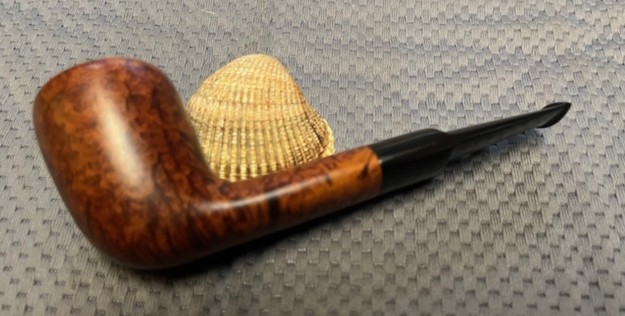
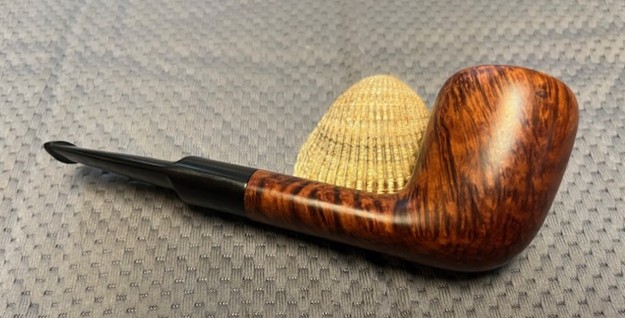
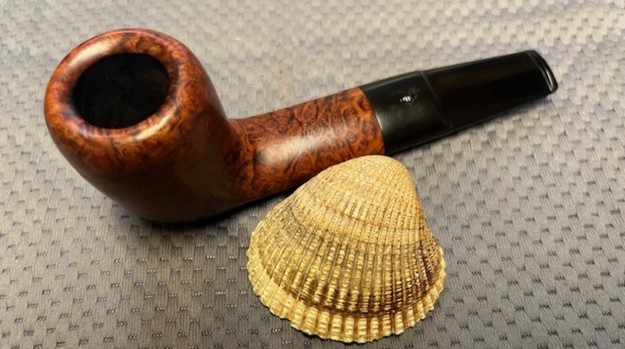
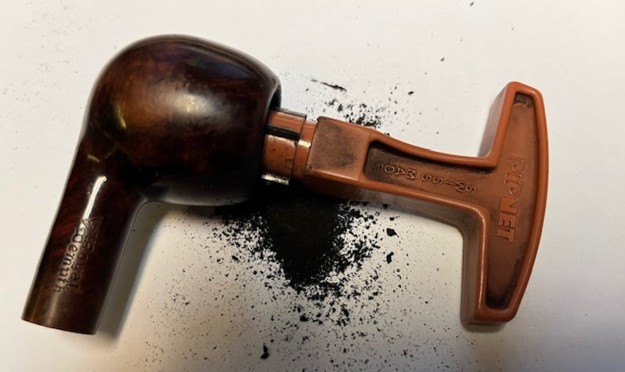
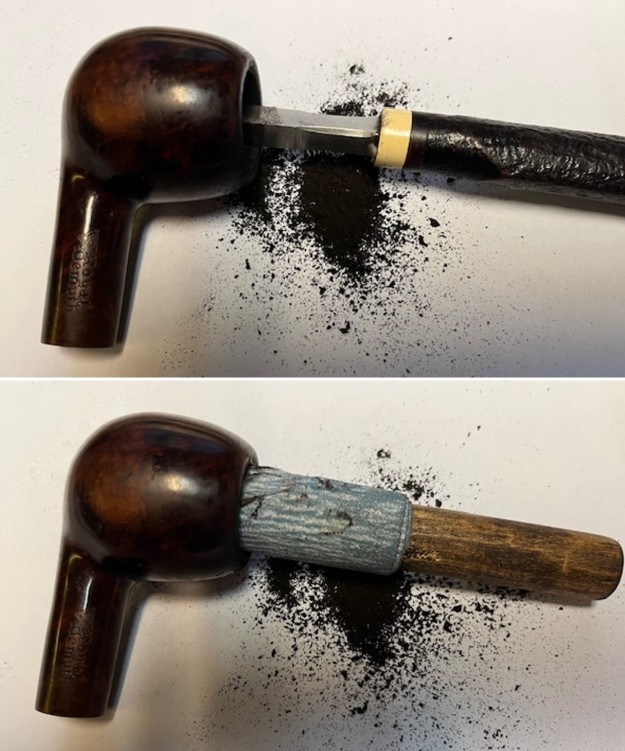
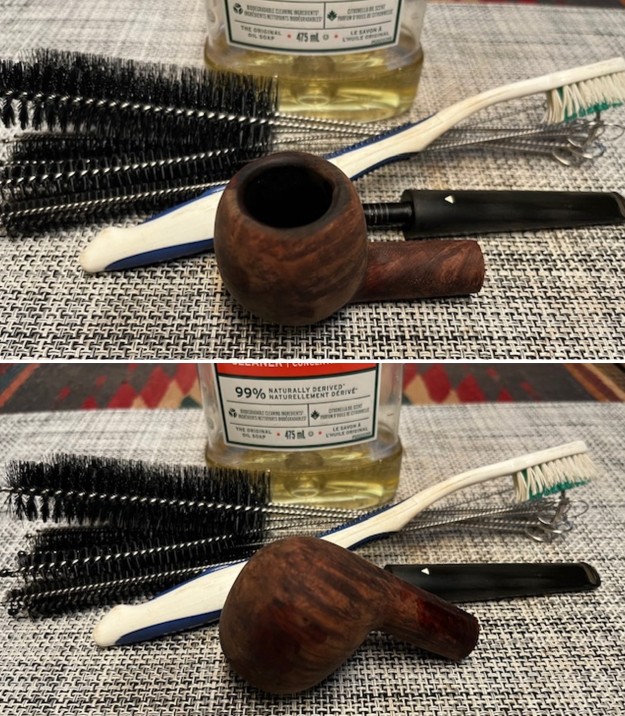
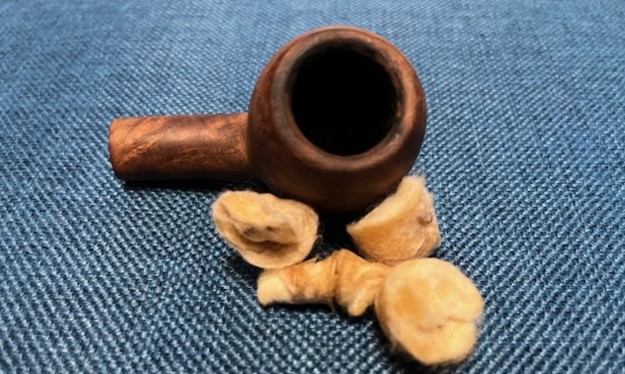
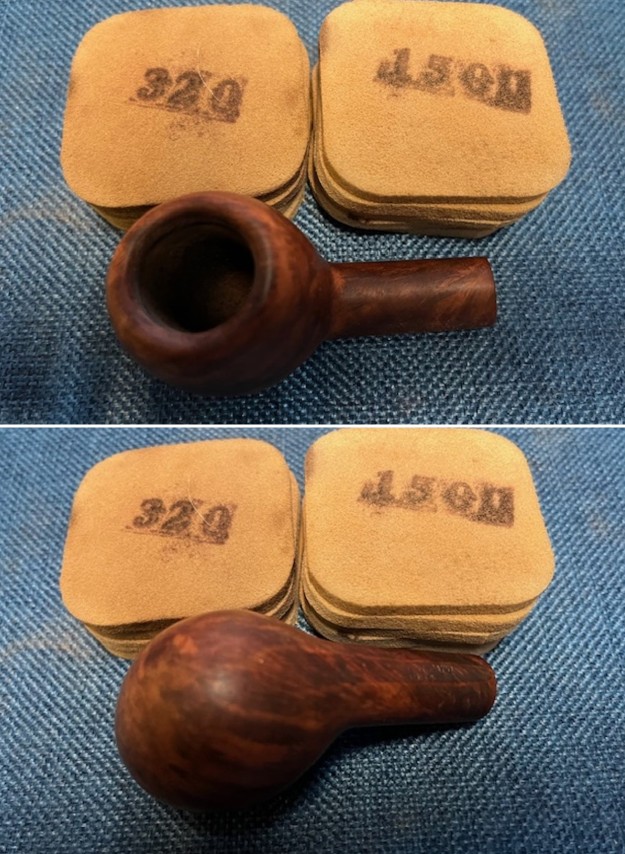
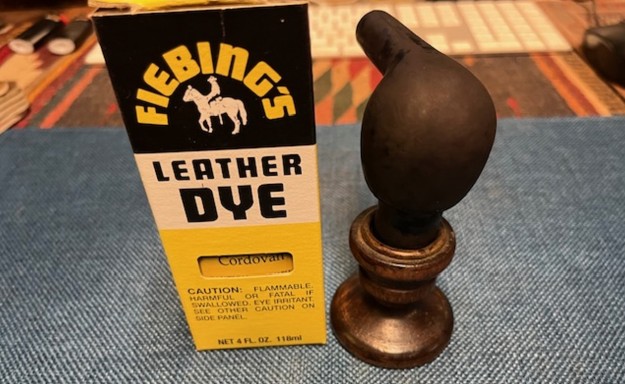
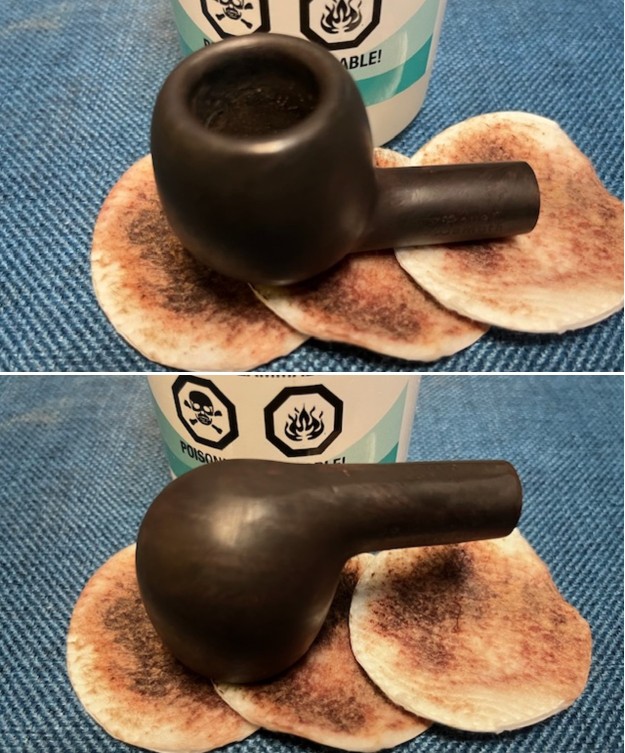
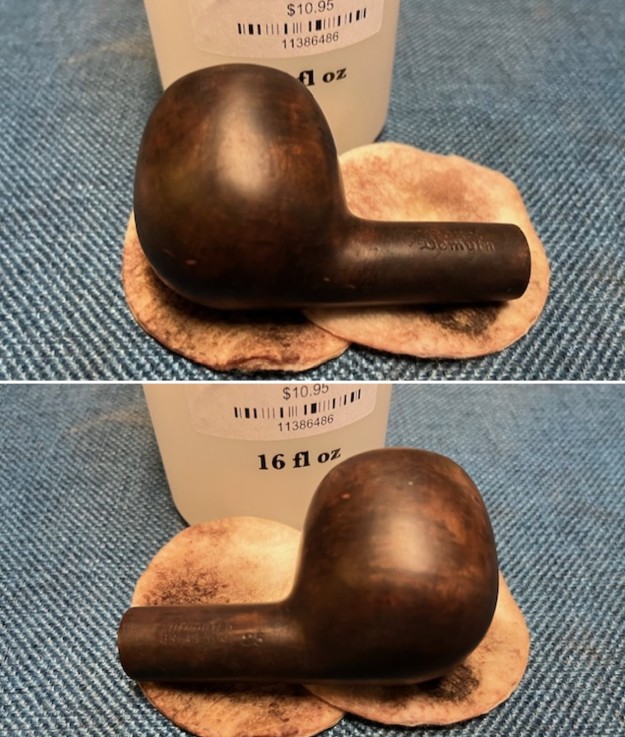
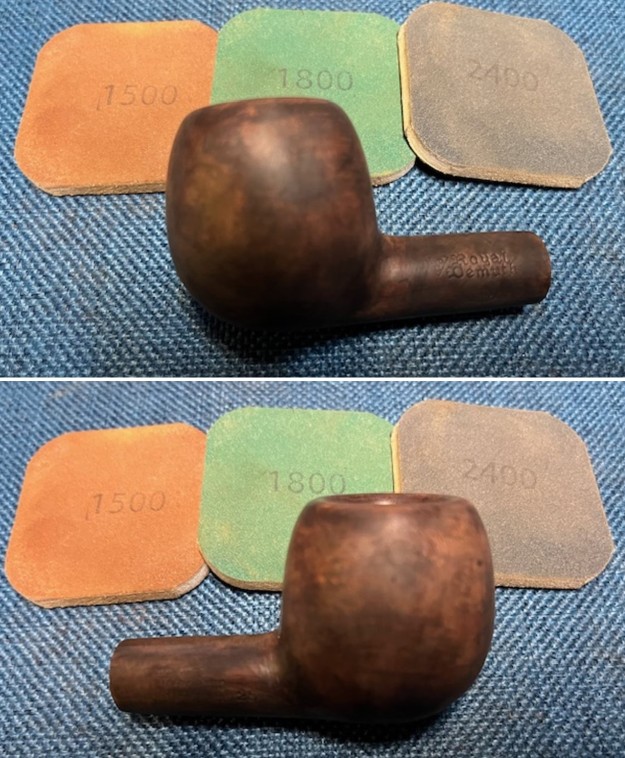
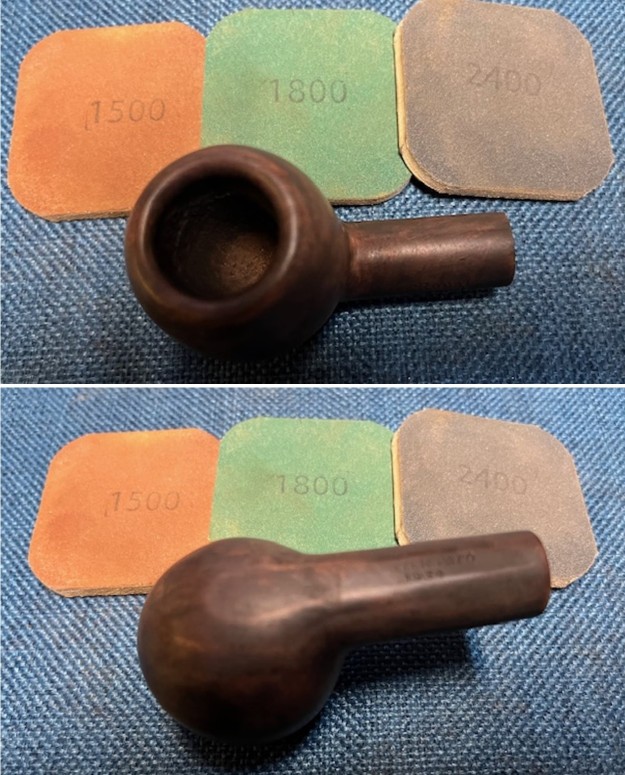
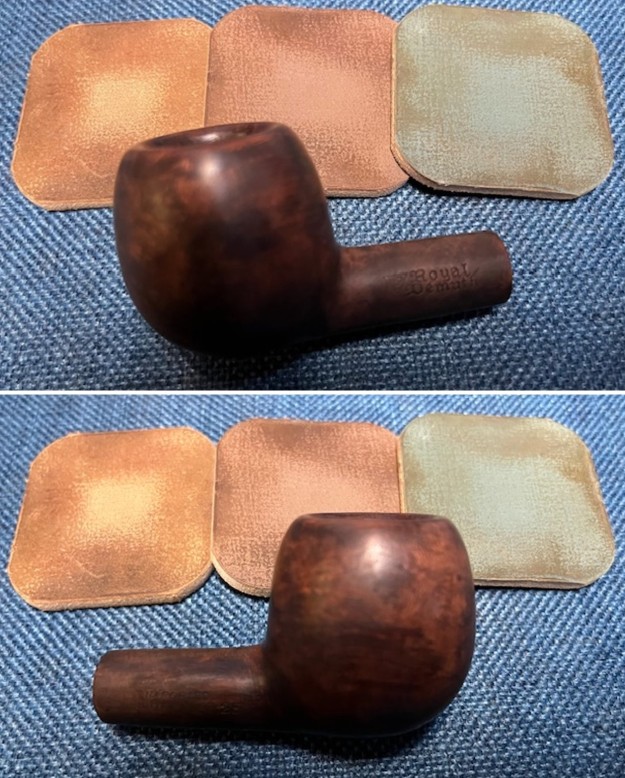
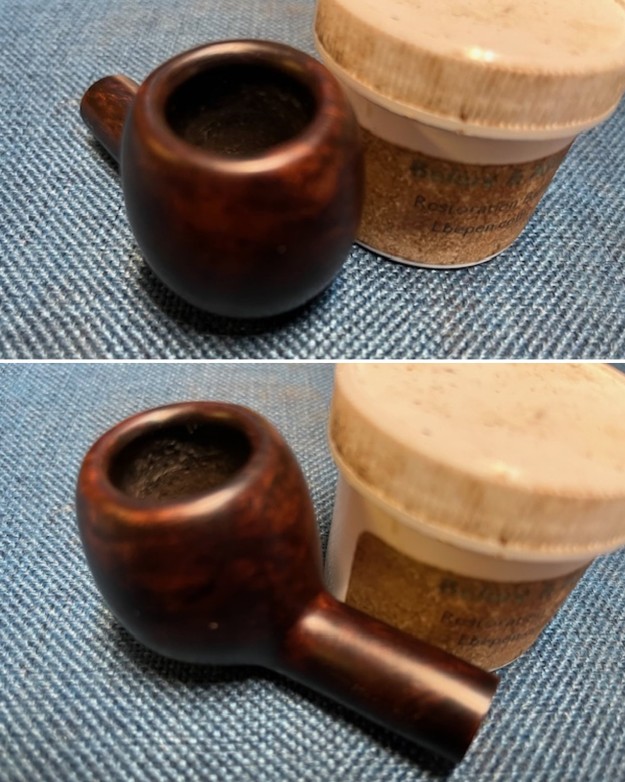
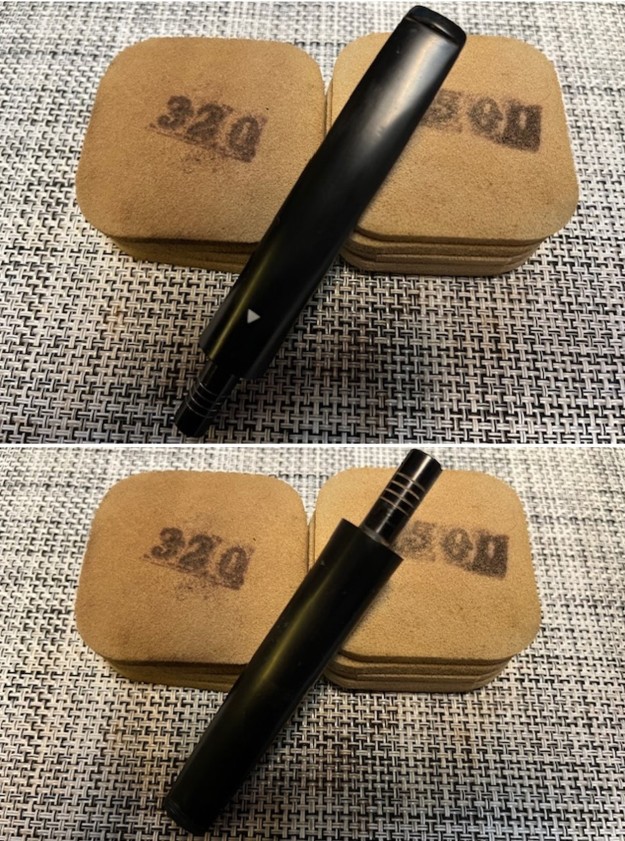
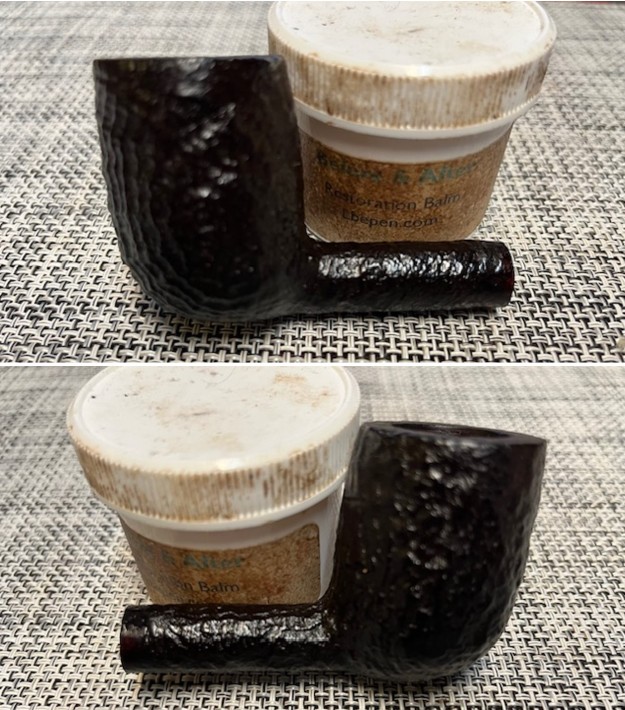
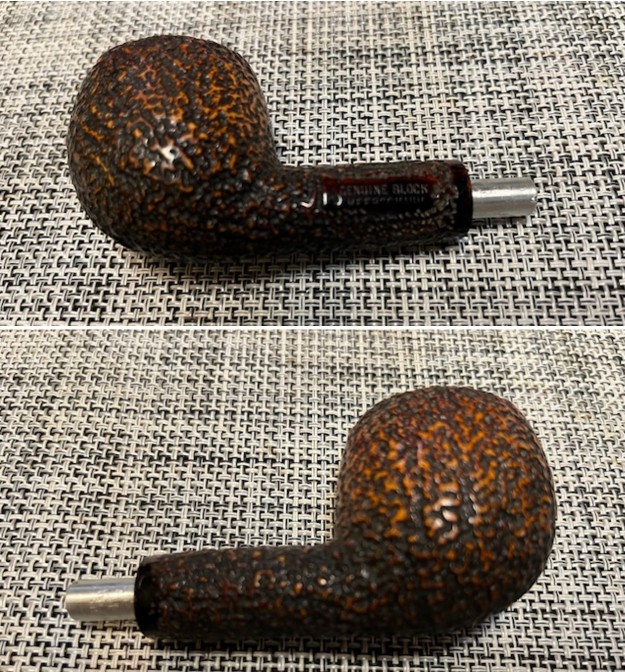
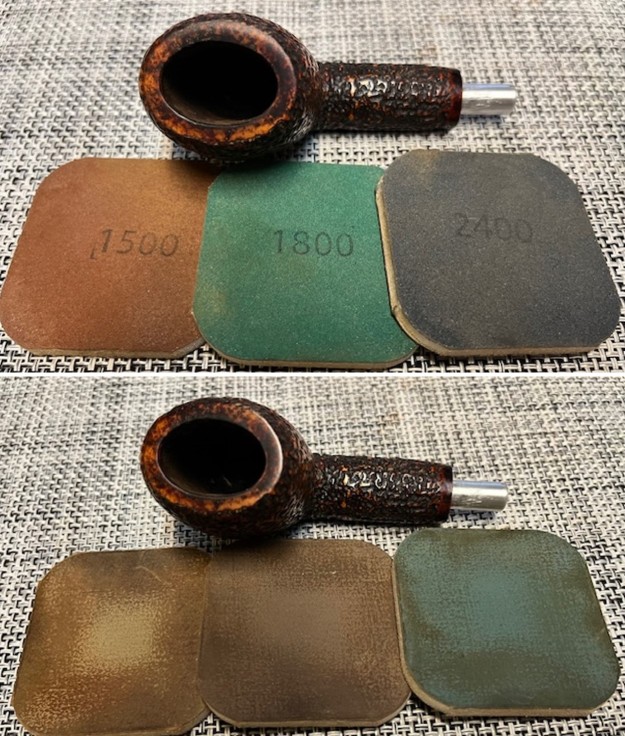
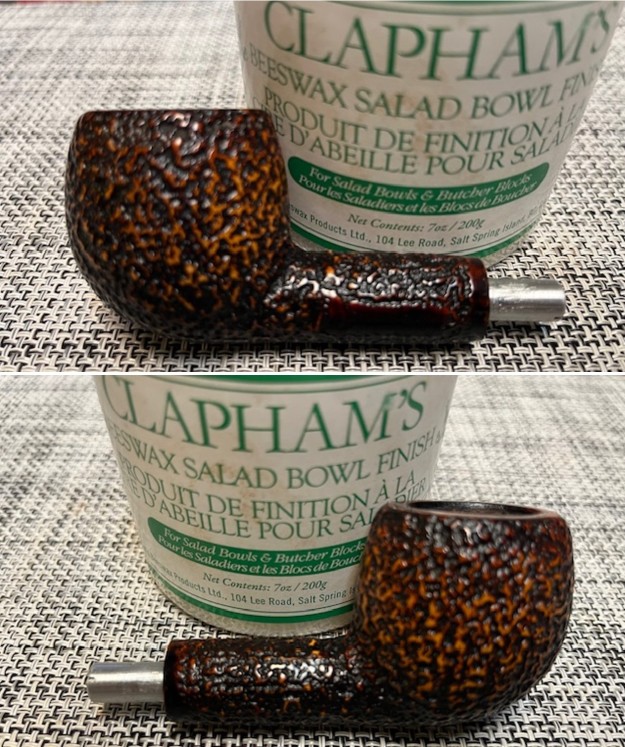
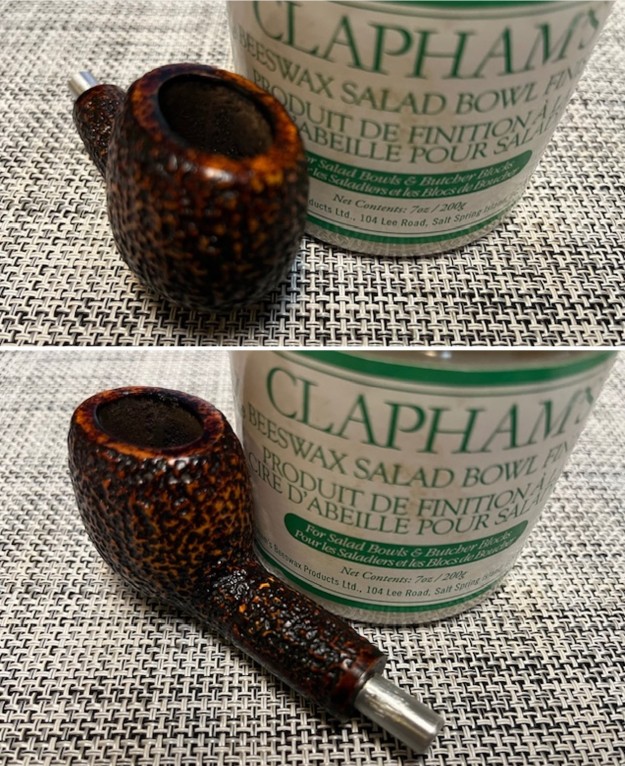
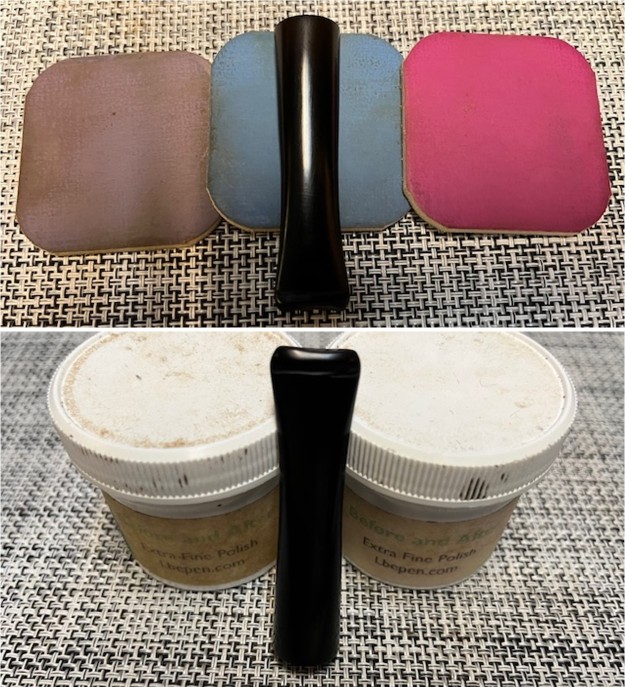
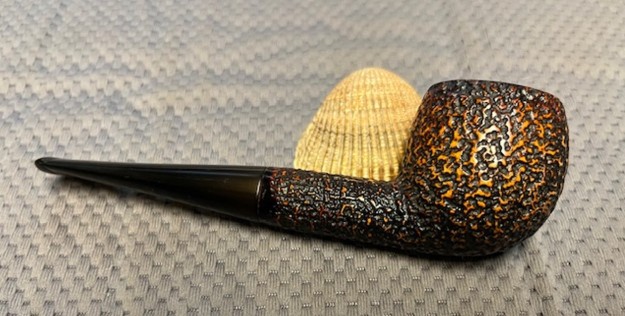
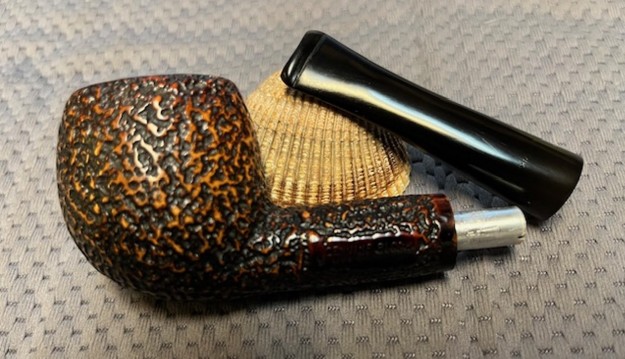
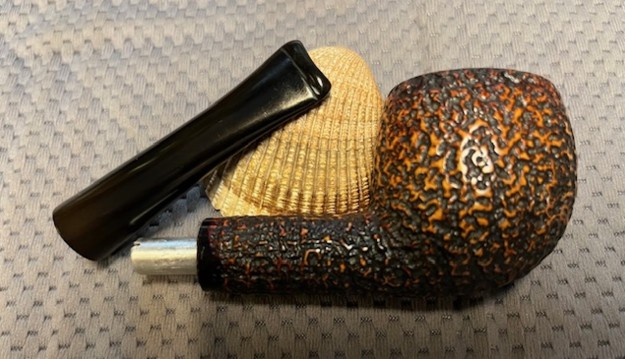
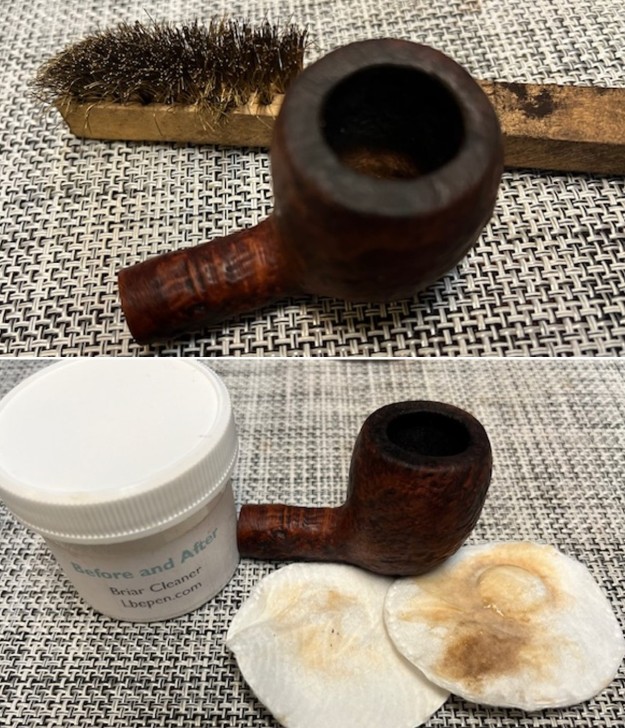
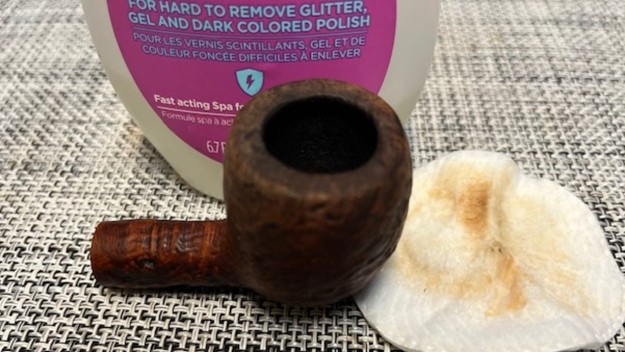
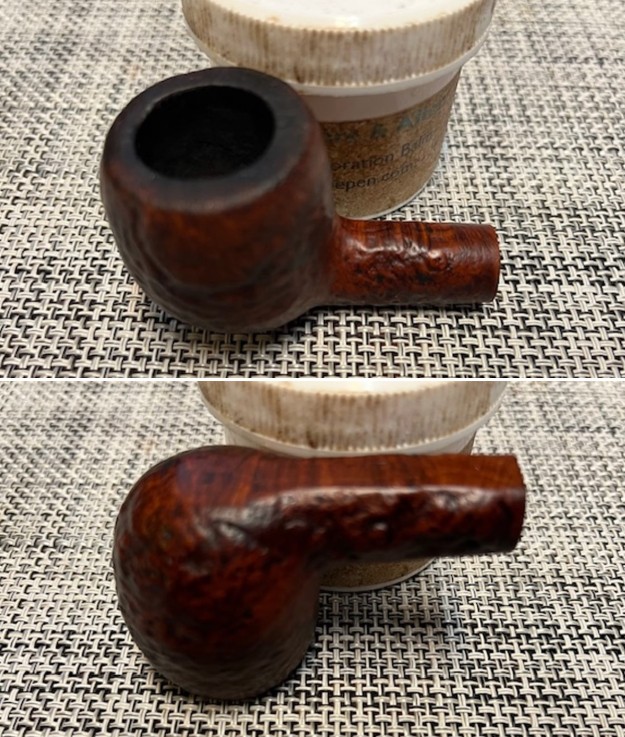
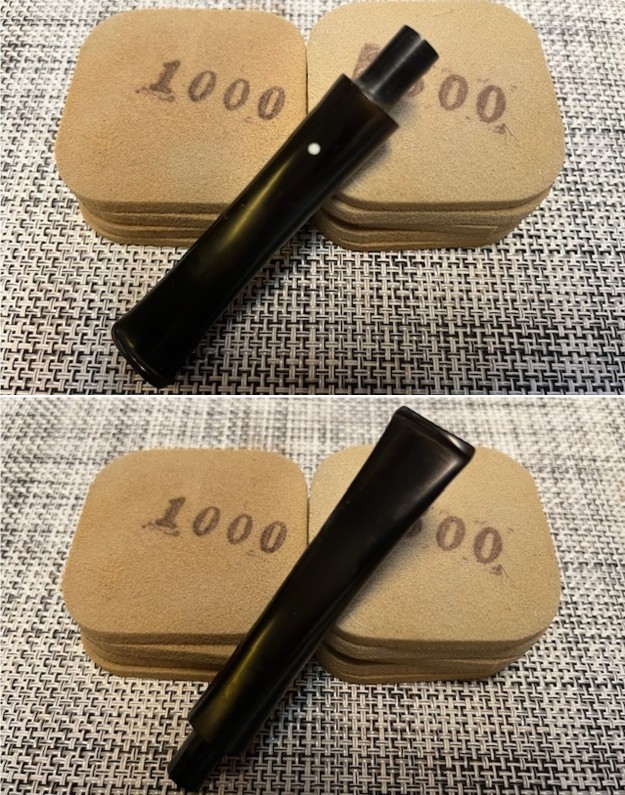
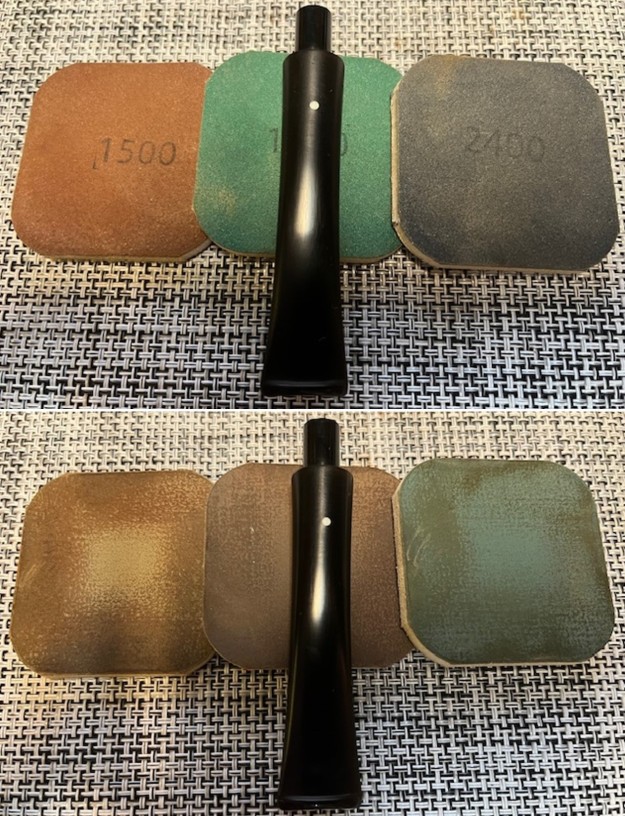
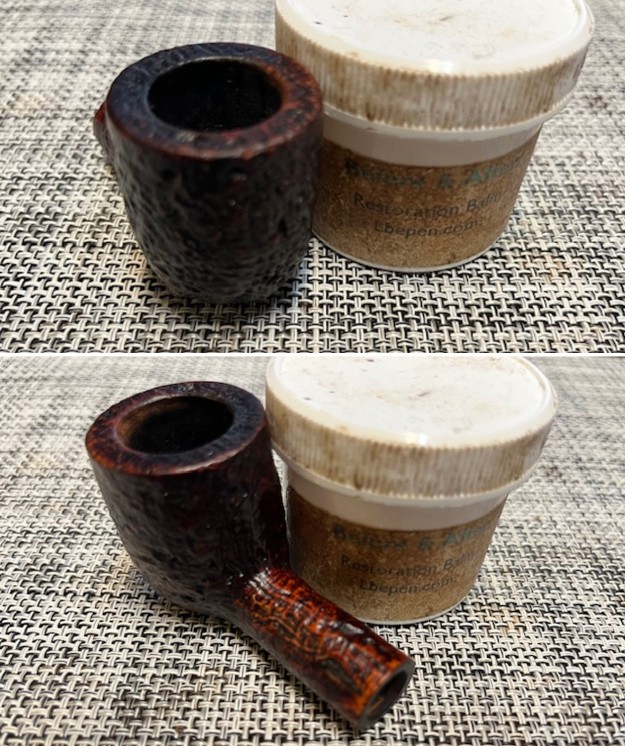
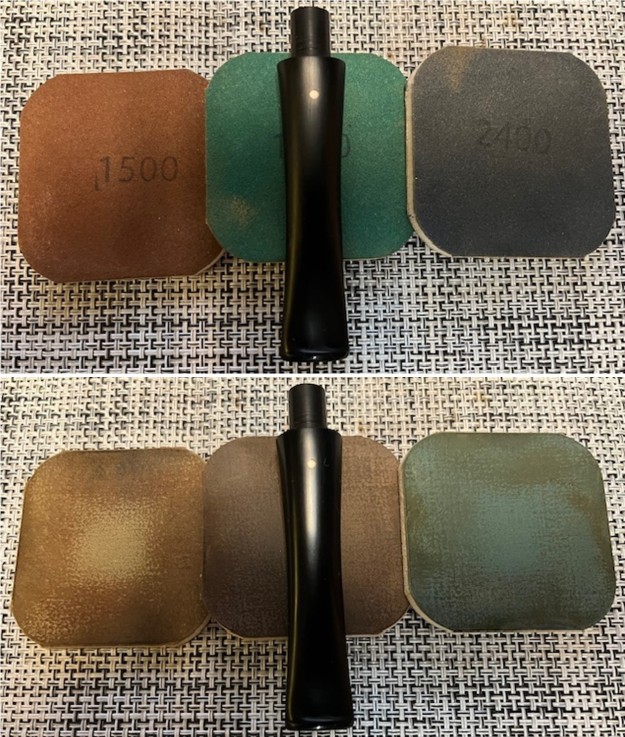
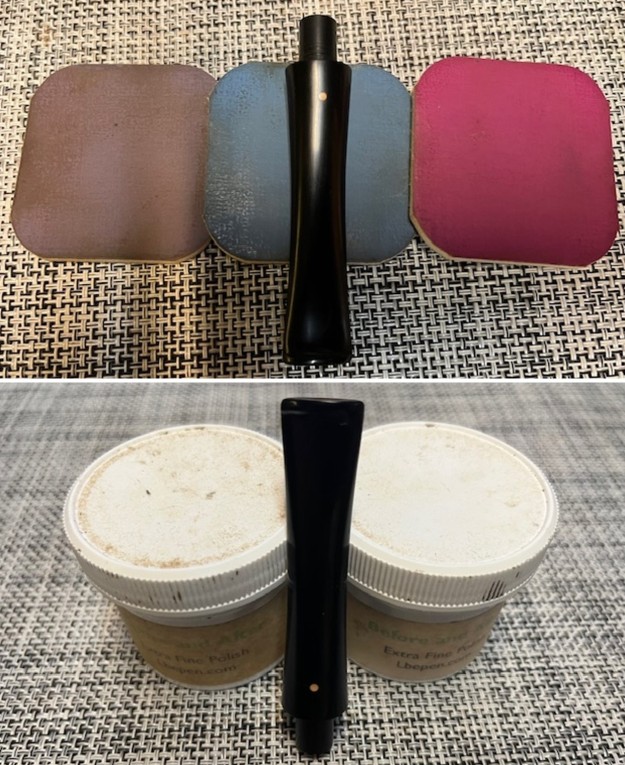
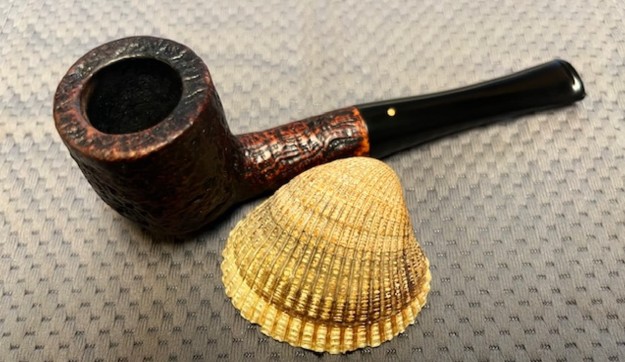
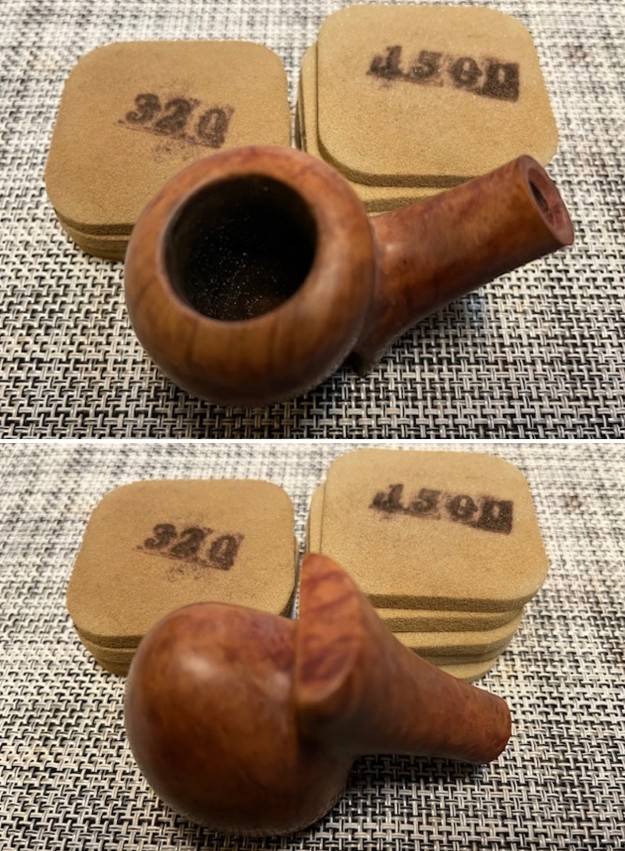
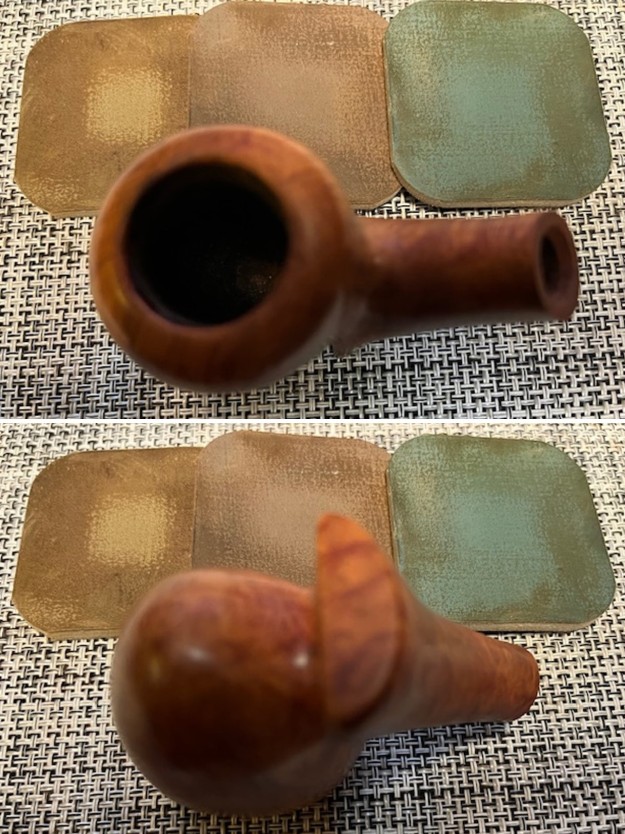
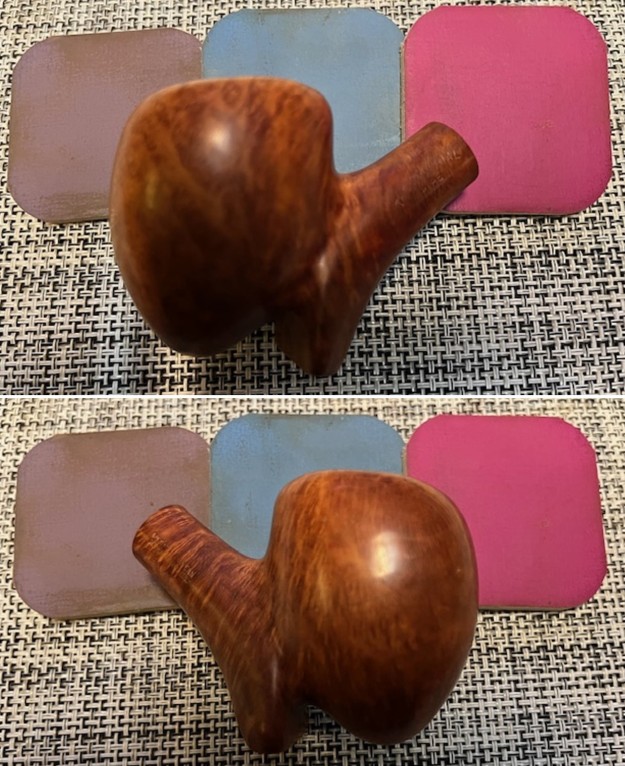
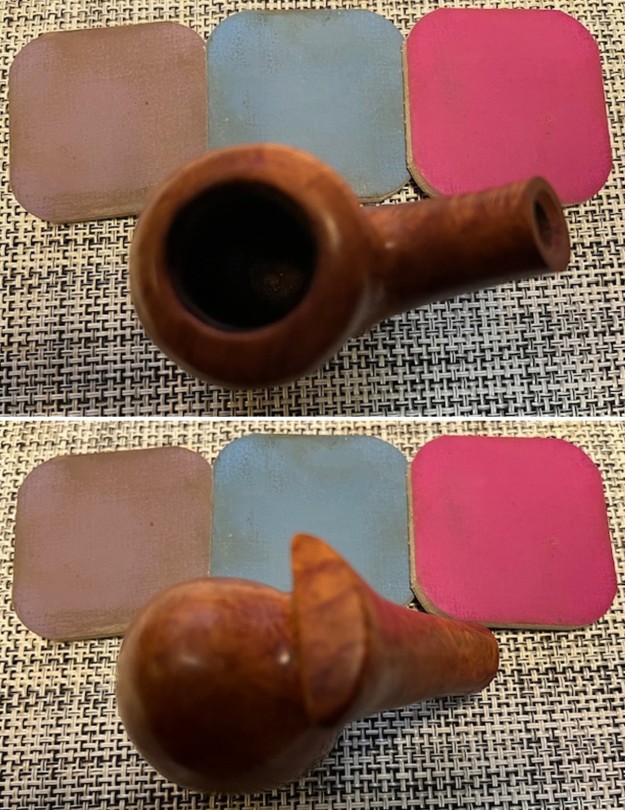
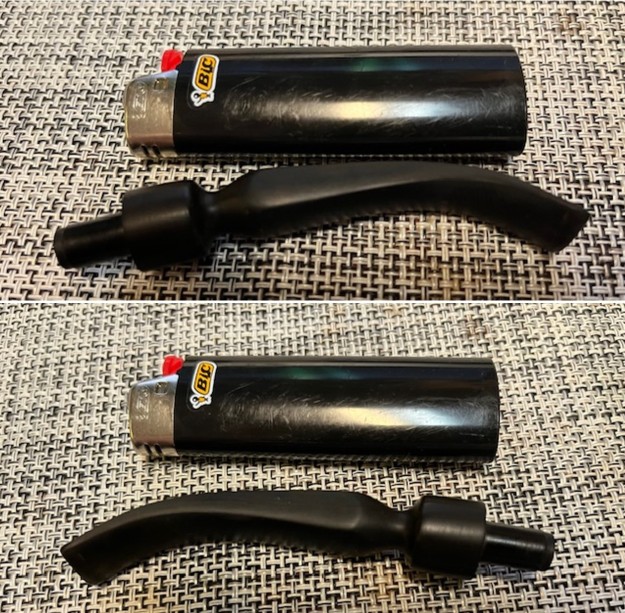
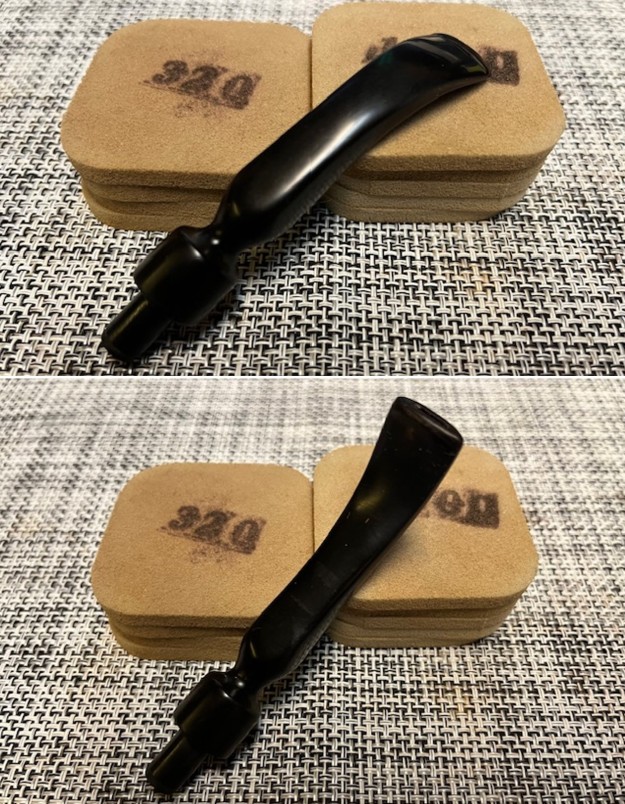
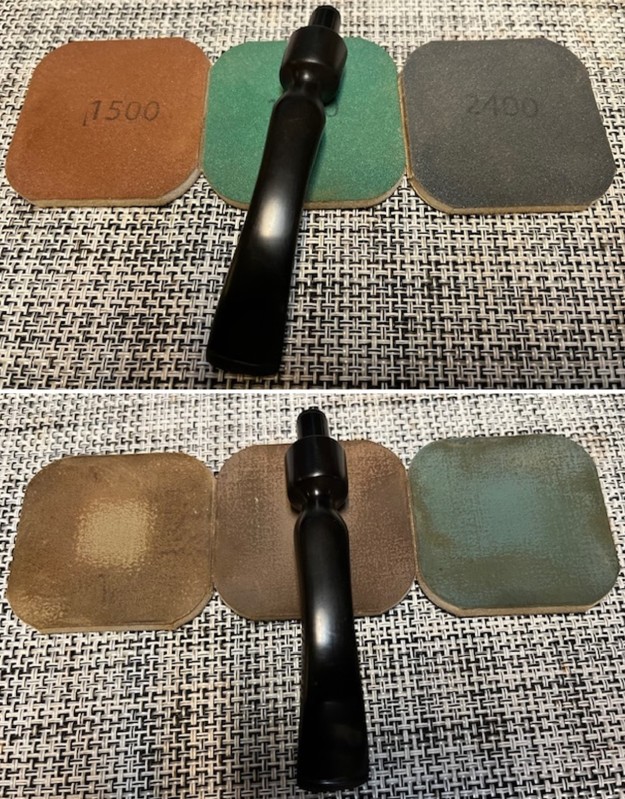
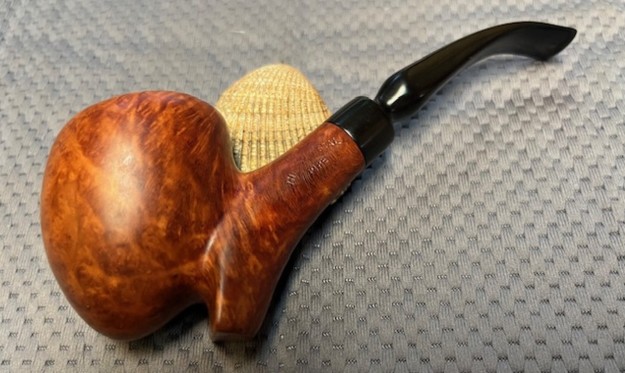
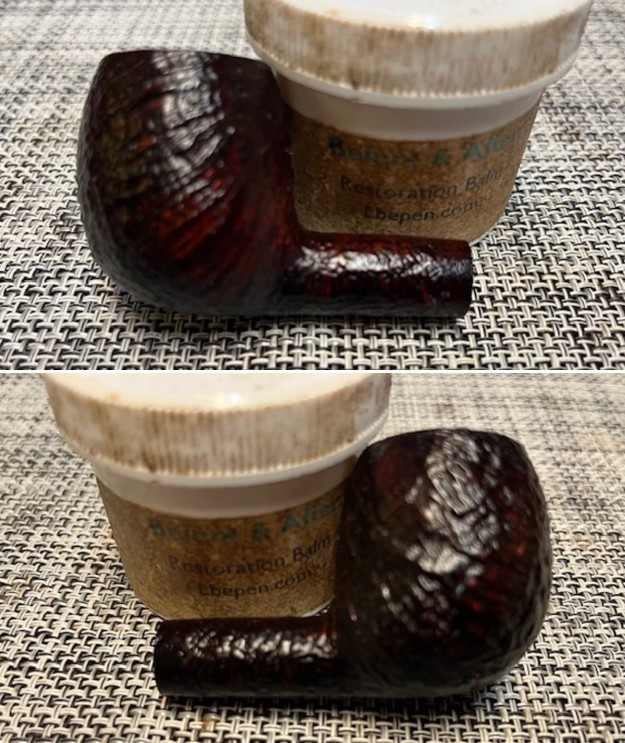
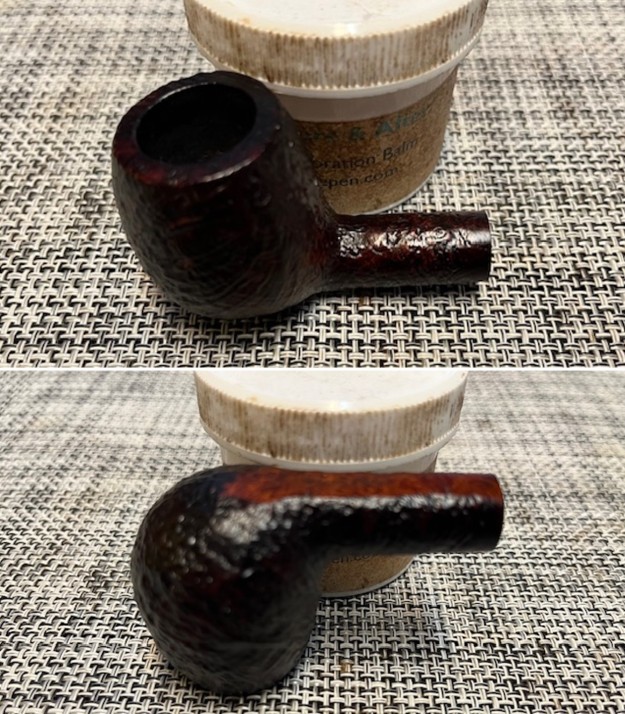
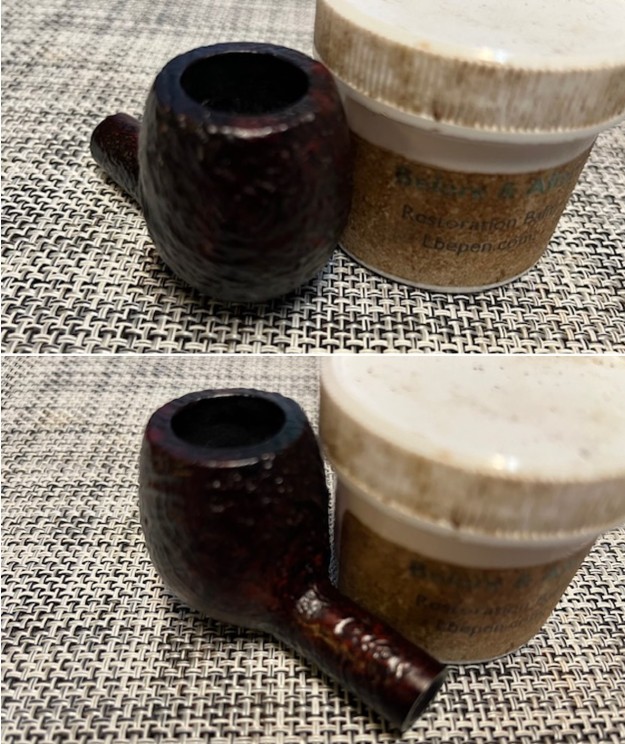
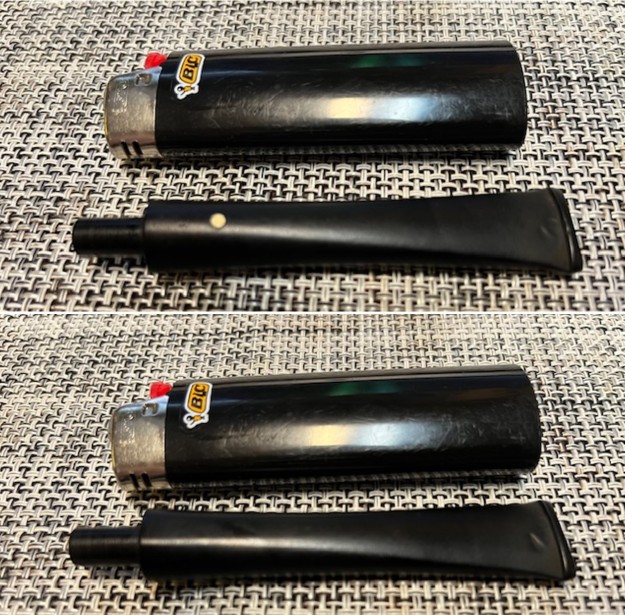
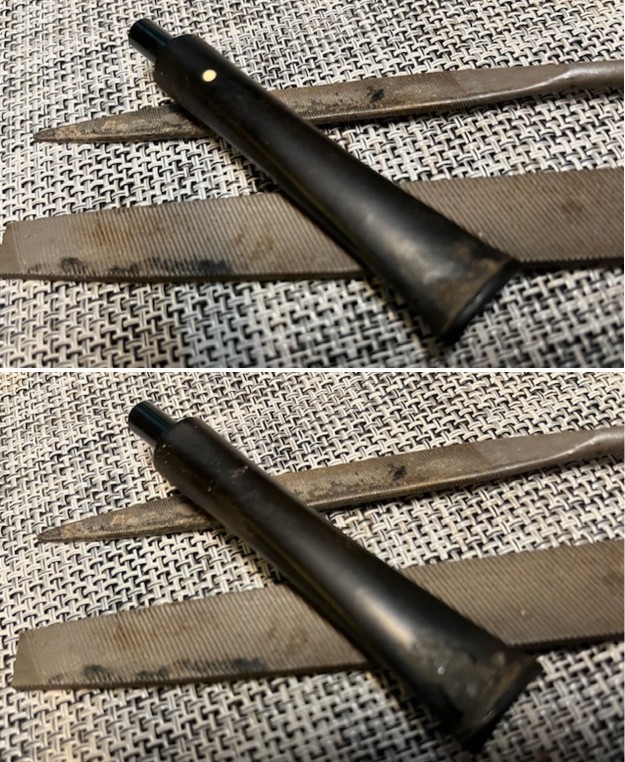
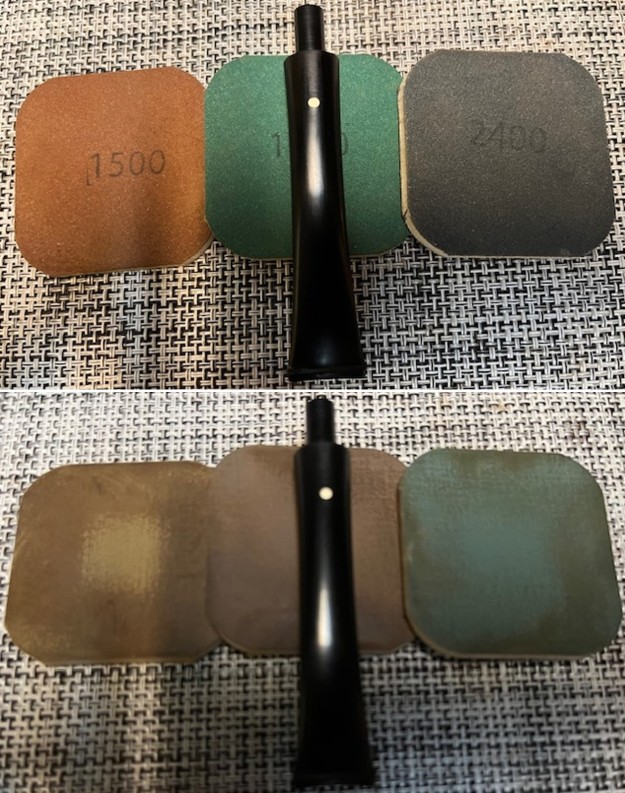
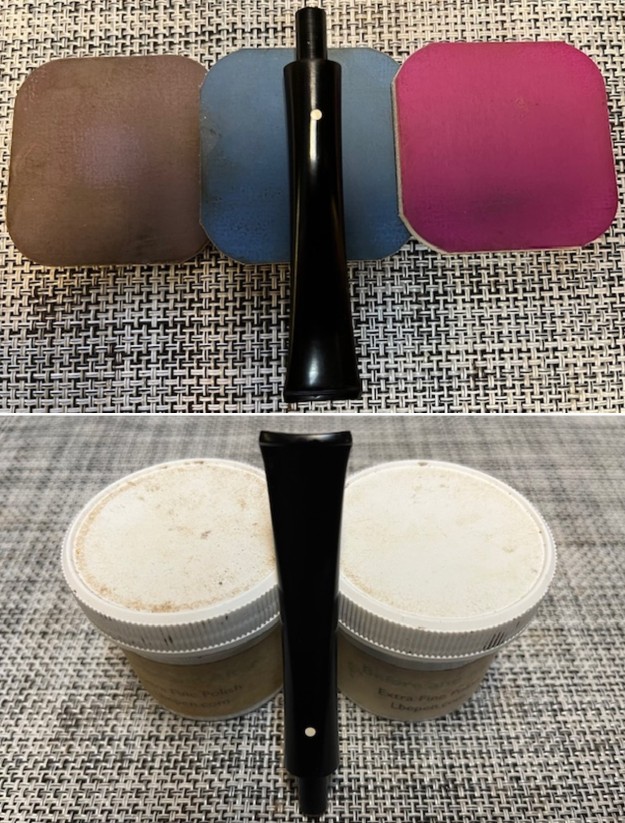
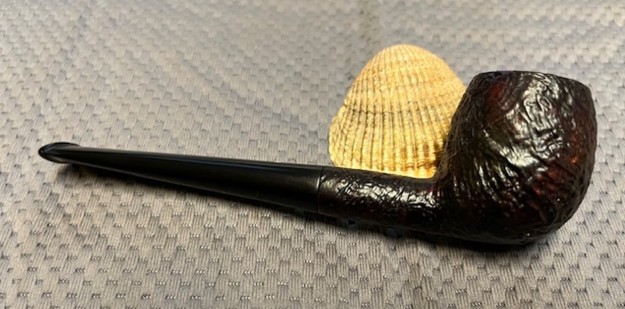
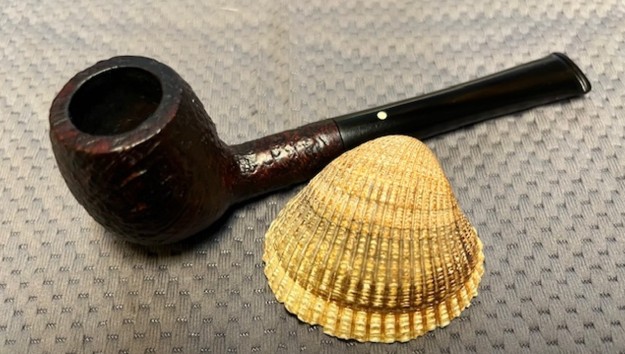
Finally, I inserted a folded pipe cleaner in the slot and pushed it as far as it would go into the stem. I wanted to block off the button and the inside of the hard maple filter that Brighams have in the elongated aluminum tenon. Once it was inserted I filled the bowl with acetone (fingernail polish remover) and let it sit until it evaporated. I repeated the process morning, noon and night before bed. Nothing was working to beat the frozen stem. Finally, this morning I was on the phone with my brother and the fill of acetone had evaporated so I decided to wiggle it while we talked. Low and behold, shiver me timbers, be still my beating heart, whatever phrase you want to you it moved just slightly! With a cry of exhilaration, I knew I was going to beat this stuck stem situation. I wiggled the stem all the way through the conversation and just before we closed the Facetime call the stem turned and was able to turn it free. The amount of sludge (I don’t know what else to call all the white build up in the shank and on the tube) was absolutely awful. I don’t know if I have ever seen it this thick. It was pitting the aluminum and the inside of the briar had a thick coat that filled in the gap between the tube and the walls. It was a huge mess.But that was not the end of the stuck tenon and parts! The maple hard wood filter with an aluminum cap was absolutely stuck in the tube. I could not remove it with pliers. I heated it with a lighter and tried it once more with no success. So… I resorted to an old alcohol bath I have here and have not used for over a year or more. I took the cap off the container that held the darkened alcohol and dropped the stem into the mix tenon down. It sat in the mix for at least and hour before I got back to it. I removed it from the container and used the pliers to grab the aluminum end and turn it. Sounds easy right? Wrong… I have had these aluminum tips snap off and leave the hardwood stuck in the tenon. I gingerly wiggled the end while carefully pulling on it and low and behold it let loose and the entire tube and tip was free! Once again the inside of the tube was a mess but the acetone had done a bit of work softening the goop on the aluminum walls.I was excited to say the least. It took literally 10 days short of a month to get this stem removed from the shank. You don’t even know how many times I was tempted to pitch the pipe in the trash and move on to other pipes. I even buried it on a corner of the desk that I don’t use much for daily work but it had a bit of a siren call and I could not ignore it. Today I beat it! Today I won this seemingly insignificant battle. But to me it felt epic to win. I took photos of the parts in celebration of the win. You can see the corrosion on the aluminum tip of the hard wood insert. You can also see the slight thinning of the tube just ahead of the tip – it could easily have snapped leaving me with yet another mess! The aluminum tenon is also corroded and has some of the white “aluminum oxide” build up around the length. The inside of the mortise is also thickly coated with a furry white insulation. Now that it was apart it was time to do a bit of cleaning before I could even begin working on it. I wanted to remove as much of the white fuzzy oxide on the inside of both the shank and the aluminum tenon tube as possible before going further. I pitched the hard wood filter in the garbage as it would be replaced when the work was finished. I cleaned out the shank with a pen knife to scrape away the debris then clean it with cotton swabs, pipe cleaners and alcohol until they came out significantly cleaner. I did the same with the aluminum tube tenon. Remember this was step one of the clean! I would do much more before this pipe was actually finished.I guess one of the benefits of the bowl soaking with acetone for two weeks is that the cake absolutely dissolved and I was able to wipe it out after each evaporation and refill of the bowl. It was surprisingly clean. I cleaned up the remnants of the cake on the walls with a Savinelli Fitsall Pipe Knife. I sanded the bowl sides with 220 grit sandpaper wrapped around a piece of dowel. The bowl walls showed no heat damage or checking and were almost bare briar in the bottom half of the bowl.I used a folded piece of 220 grit sandpaper to clean up the inner edge to remove the damage and nicks in the surface. It did not take too much to smooth out the damage on the inner edge and make it look much better.I scrubbed the externals bowl and shank with Murphy’s Oil Soap and a tooth brush. I rinsed it off with warm water to remove the grime and debris from the scrubbing. I scrubbed the inside of the shank and the aluminum tenon tube with Murphy’s as well using a set of shank brushes. The white is all gone and the pipe actually smells amazing!I cleaned out the internals of the bowl, mortise and the airway in the shank and the stem a second time with alcohol, pipe cleaners and cotton swabs to make sure it was clean inside. I was not expecting a lot of dirt and debris after the double scrubbing it had already received but I wanted to make sure. Because of the length of the tube I had to strategically fold the pipe cleaners to scrub the tube. Shining a light through it now shows it just shines… whew.I sanded the surface of the briar with 320-3500 grit sanding pads. It took on a real shine on the briar as I worked through the pads. I wiped it down after each sanding pad with a damp cloth to remove the sanding dust and debris left behind. The pipe had cleaned up so well that I turned to polish the briar with micromesh sanding pads. I dry sanded it with 1500-12000 grit sanding pads and wiped the bowl down after each pad with a damp cloth. By the final pads the briar really had a shine.  I rubbed the briar down with Before & After Restoration Balm. I worked it into the briar with my fingertips and a shoe brush. The product works to clean, enliven and preserve the briar. I let it sit for 10 minutes then I buffed it with a cotton cloth to deepen the shine. The briar really came alive with the balm. I set aside the bowl and turned my attention to the stem. To help remove the oxidation I scrubbed the stem with Soft Scrub Cleanser and cotton pads. It took some elbow work but the stem definitely looked better and the sulphur smell of the oxidation is gone!I “painted” the tooth marks on the stem with the flame of a Bic lighter to lift them. I was able raise them some. I filled in what remained with some clear CA glue and set it aside to cure. In the morning I used some small files to flatten the repairs into the surrounding surface of the stem. I sanded the repaired areas with 220 grit sandpaper to further flatten them. The stem was beginning to look good. I sanded the surface with 320-3500 grit sanding pads to further clean up the spots of oxidation on the surface of the stem. I wiped it down with a soft damp cloth following each sanding pad to remove the sanding debris. I also worked on the aluminum tube tenon with the pads. I was able to remove debris and smooth out the pits in the aluminum. There is some staining on the tube that I was not able to remove.I polished out the scratches with micromesh sanding pads – dry sanding with 1500-12000 grit pads. I wiped the stem down after each sanding pad with Obsidian Oil. I polished it with Before & After Pipe Stem Polish – both Fine and Extra Fine. Once I had finished the polishing I gave it a final coat of oil and set it aside to dry. I also used the pads on the aluminum as well and made some more progress. I found my box of Brigham Rock Maple Distillators and took a clean one from the box to replace the one that was stuck in the pipe when I received it. The beauty of these is that they can easily be rinsed out with alcohol or warm water to remove the tars and oils and reused. I put the bowl and stem back together. I buffed the bowl and stem with Blue Diamond to polish out the scratches in the briar and the vulcanite. I gave the bowl and the stem multiple coats of carnauba wax. I buffed the pipe with a clean buffing pad to raise the shine. I hand buffed it with a microfiber cloth to deepen the shine. The pipe polished up pretty nicely. The Brigham Squat Bulldog with the rusticated bowl and shank and smooth bull cap is quite beautiful and it has some beautiful grain around the rim cap. The contrast of swirling grain looked good with the polished black vulcanite. This Brigham Squat Bulldog 625 is really a beauty. The finished pipe is shown in the photos below. The dimensions of the pipe are Length: 5 ½ inches, Height: 1 ½ inches, Outside diameter of the bowl: 1 ¾ inches, Chamber diameter: 7/8 of an inch. The weight of the pipe is 1.27 ounces/36 grams. Thanks for reading this blog and my reflections on the pipe while I worked on it. With it I have finished the Antique Show finds and am on to other pipes in the queue.

Restoring a Peterson’s Sherlock Holmes Baker Street Rusticated Bulldog with a fishtail stem


Blog by Steve Laug

The next pipe that I am working on came from an estate sale in Oregon City, Oregon, USA we purchased on 03/21/24. It was very dirty and was a reddish, brown coloured pipe when it started. The finish around the bowl was dirty and had hand oils ground into the rustication and the beads and twin rings around the bowl cap. The bowl had a moderate cake and a thick coat of lava onto the rustication on the rim top and edges of the bowl. The fishtail stem was acrylic and was very dirty and had tooth marks on both sides ahead of the button. There was not a silver inset P logo on the stem sides. The fit of the stem to the shank is very well done so I am assuming that it is either an original fishtail from Peterson or a well-made replacement stem. Either way it is a real beauty. The pipe is stamped on the left underside of the diamond shank and read Peterson’s [over] Sherlock Holmes. That is followed by Made in the Republic of Ireland (in three lines). There is a Sterling Silver band on the shank end that is stamped with the Sherlock Holmes Series Logo – the outline bust of Sherlock with Peterson ‘s arched above and Sterling Silver arched below. It is clean but oxidized. Jeff took photos of the pipe so I could have a sense of what it looked like before he started his work on it. Jeff took photos of the bowl and rim top to show the thick, hard cake in the bowl with remnants of tobacco stuck on the walls of the bowl. There was a lava build up on the rusticated top of the rim and the edges of the bowl. The rim top looked pretty good but it was hard to know for sure if there was damage under the thick lava. Only clean up would tell the full story. Jeff took photos of the top and underside of the fishtail stem showing the tooth chatter, scratching and oxidation on the stem surface and wear on the edges of the button. Jeff took photos of the sides and heel of the bowl to show the condition of the finish. You can see the grime in the rustication around the sides of the bowl and shank. The twin cap rings with the bead work in the middle is quite stunning. Even under the dirt and debris of the years it looked very good. Jeff took photos of the stamping on the left underside of the diamond shank. The stamping was faint in spots but readable as you can see from the photos. It read as noted above. The Sterling Silver Band is stamped as noted above and is very readable under the oxidation.  I wanted to know more about the Peterson’s Sherlock Holmes Line so I turned to the Pipedia article on the line and read it carefully to see where this pipe fit in the line of pipes making up the line. (https://pipedia.org/wiki/Peterson#1950_-_1989_The_Republic_Era). I quote what I found out below.

1987 saw the introduction and Issue of the first Sherlock Holmes ‘Original’ Series of pipes. The Sherlock Holmes series is probably the most successful series of pipes ever introduced by Peterson in terms of numbers. It was first issued to honour Sir Arthur Conan Doyle’s famous fictitious detective character, Sherlock Holmes. Holmes is perhaps the most famous pipe smoking character in fiction…

The Sherlock Holmes Series: Probably the most popular and successful series of pipes ever produced by Peterson. Including the Meerschaum version of the seven day sets. Both briar and Meers can be purchased either as individual pipes or complete seven day sets and stands. Expect to pay around $250 for briars and $300 for individual Meerschaums. The Adventures of Sherlock Holmes runs around $1000 for a 4 pipe boxed set. Complete 7 day sets and stands can be up to $1500 – $2000.

At this point I knew that the original line was introduced in 1987. I did not know the sequence of pipes after the Original first pipe. More work was necessary. So, I followed the links included to another article call the Pete Sherlockiana Group. There was photo there of the full collection of various Sherlock Holmes lines that were issue. I have included the link and the information include with the group photo that shown of the collection below.

Here is the link (https://pipedia.org/wiki/File:Pete_SherlockianaGroup.JPG). The description under the photo read as found below:

Sherlockiana Group, which includes: The ‘Original’ 7 day set w/stand, The ‘Return’ 7day set w/stand, The Meerschaum 7 day set w/stand, The ‘Adventures of’ 4 pipe collection, and Various ‘Silver Specials’. I still wanted to know where it fit in the order of release so I did a bit more digging into the pipe. I wanted to know the name of the pipe and what line of the Sherlock Holmes series it was in when it was released. I Googled and came across a link to an advertising brochure on Smokingpipes.com. (https://www.smokingpipes.com/smokingpipesblog/single.cfm/post/closer-look-petersons-sherlock-holmes-pipes-infographic). I have included it below. From that I knew that I was dealing with a Pipe from the Original release of the line from 1987, 1989-1991. It was called a Baker Street after the home address of Sherlock Holmes 221B Baker Street. It was basically a tall, straight Bulldog.

I also found a link to a chart on Tobaccopipes.com that was an exploration the Sherlock Series. Here is the link (https://www.tobaccopipes.com/blog/exploring-the-peterson-sherlock-holmes-series/). Each name on the original list on the site can be clicked on for a description of the pipe that is named.I clicked on the Baker Street name in the chart above and it took me to the following link and information (https://www.tobaccopipes.com/blog/exploring-the-peterson-sherlock-holmes-series/#baker_street). It states that the pipe was in the Original Collection and came out between 1989-1991.The text below the photos reads as follows:

Between 1989 and 1991, six more Peterson Sherlock Holmes Pipes would be added to the range, each named for a significant aspect of the Holmes legacy. Baker Street of cours reference the London address of the detective, 221B Baker Street. In the Baker Street shape we have a stout, flinty Bulldog. The ridges are sharp and muscular. The bold underside brings to mind the vee-bottom hull of a ship, sound and sturdy. The bowl sits up straight from  strong heel, widening up toward the two fine bead lines , where it then tapers in toward the rim. The stem briefly adopts the broadness of the shank before a quick narrowing to the bit. An interesting aspect of this shape is the softer appearance from above with less say from it chiseled lines and more input from the round P-lip.

With that information in hand I knew what I was dealing with in terms of the stamping and the age of this pipe. I knew from the information that the pipe was made during the Republic Era between 1950 and 1989. The Baker Street pipe came out as part of the Original Sherlock Holmes Series and was specifically made between 1989 and 1991. Now it was time to work on the pipe.

Jeff cleaned this filthy pipe with his usual clean up process. This one was a real mess and I did not know what to expect when I unwrapped it from his box. He reamed it with a PipNet pipe reamer and cleaned up the reaming with a Savinelli Fitsall Pipe Knife. He scrubbed out the internals with alcohol, pipe cleaners, shank brushes and cotton swabs until the pipe was clean. He scrubbed the exterior of the bowl with Murphy’s Oil Soap and a tooth brush to remove the grime and grit on the briar and the lava on the rim top. The finish looks very good with great looking grain showing through the deep rustication around the bowl and shank. Jeff soaked the stem in Briarville’s Pipe Stem Deoxidizer to remove the debris on the acrylic surface. When the pipe arrived here in Vancouver for the second stop of its restoration tour I was amazed it looked so good. I took some close up photos of the rim top and also of the stem surface. I wanted to show what an amazing job Jeff did in the cleanup of the rim top. The rim top was and inner edge were in excellent condition. I also took close up photos of the stem to show the condition of the acrylic. It was quite clean other than the light tooth marks and chatter on both sides of the stem ahead of the button.One of the things I appreciate about Jeff’s cleanup is that he works to protect and preserve the nomenclature on the shank of the pipes that he works on. The stamping on this one was faint in spots to start with so I was worried that it would disappear altogether with the cleanup. He was able to preserve and maintain its condition in the process. I took some photos to show the clarity of the stamping. I have noticed that many restorers are not careful to protect the stamping in their cleaning process and often by the end of the restoration the nomenclature is almost destroyed. I would like to encourage all of us to be careful in our work to preserve this as it is a critical piece of pipe restoration! I took the stem off the shank and took a photo of the pipe. I decided to start my work on the pipe by restaining the rustication on the rim top. I touched it up with a Walnut Stain Pen to blend it into the rest of the rustication around the bowl and shank. The photo shows the look at this point.I rubbed the bowl and rim down with Before & After Restoration Balm. I worked it into the rusticated surface of the briar with my fingertips and a horse hair shoe brush to clean, enliven and protect it. I let the balm sit for 10 minutes and then buffed with a cotton cloth to raise the shine. I really like watching the Balm do its magic and bring the briar alive. I wiped down the Sterling Silver shank band with a jeweller’s cloth to remove the tarnish and also to preserve and protect the silver. It looks much better with the shine. I set the bowl aside and turned my attention to the stem. I sanded the surface of the acrylic stem with 320-3500 grit sanding pads to remove the light tooth marks on the top and underside near the button. It looked much better once I finished it.I polished the stem with micromesh sanding pads – wet sanding with 1500-12000 grit pads. I wiped the stem down after each sanding pad with Obsidian Oil. I polished it with Before & After Pipe Stem Polish – both Fine and Extra Fine. I gave it a coat of Obsidian Pipe Stem Oil. It works to protect the stem from oxidizing. I set it aside to dry. I am excited to be on the homestretch and look forward to seeing the Republic Era Sherlock Holmes Baker Street Straight Bulldog put back together, polished and waxed. I put the bowl and stem back together and lightly polished the bowl and stem with Blue Diamond to polish them. I gave the bowl multiple coats of Conservator’s Wax and the stem multiple coats of carnauba wax. I buffed the pipe on the wheel with a clean buffing pad to raise the shine. I hand buffed it with a microfiber cloth to deepen the shine. The depths of the rustication really pop with the wax and polish. The shiny black acrylic stem is a beautiful contrast to the red and browns of the bowl, thick shank and Sterling Silver Band. This Peterson’s Sherlock Holmes Baker Street Bulldog was a fun pipe to work on. The pipe is tactile in the hand and should feel great as it is warmed up when smoking. The finished pipe is shown in the photos below. The dimensions of the pipe are Length: 6 inches, Height: 2 inches, Outside diameter of the bowl: 1 ¼ inches, Chamber diameter: ¾ of an inch. The weight of the pipe is 1.94 ounces/ 55 grams. I am hanging onto the pipe to enjoy looking at it and possibly firing up a bowl. Not sure if I will hang on to so one day it may end up on the store in the Irish Pipemakers Section if I choose to pass it on. I am a Sherlock Holmes reader and this kind of gives me pause.

As always, I encourage your questions and comments as you read the blog. Thanks to each of you who are reading this blog. Remember we are not pipe owners; we are pipe men and women who hold our pipes in trust until they pass on into the trust of those who follow us.

Breathing Fresh Life into a Peterson’s System Standard 307 Rusticated


Blog by Steve Laug

The next pipe on the work table is Rusticated Peterson’s System pipe that we purchased from our contact in Copenhagen, Denmark on 01/08/2024. It was stamped Peterson’s System Standard on the underside side of the shank in a smooth panel. It was stamped Peterson’s [arched over] System [over] Standard. That is followed by Made in the Republic of Ireland (in three lines). After that stamping is the shape number 307. It has a rugged, tactile rustication around the bowl and shank that is filled with a lot of oils, debris and grime. There was a thick cake in the bowl with remnants of tobacco stuck on the walls. There was a lava overflow on the rim top that was heavier toward the back side. The top and edges of the rim were well hidden under the tars and lava. There was a very beautiful pipe underneath all of the buildup of years of use. The nickel ferrule on the shank end was oxidized and is stamped on the left side K&P [over] three faux hallmarks. That is followed by Peterson’s. It is not dented or damaged. The stem was oxidized and calcified toward the end with some tooth chatter and marks ahead of the button on both sides. Jeff took photos of the pipe before he started his cleanup work on it. Jeff took photos of the bowl and rim top to show the thick, hard cake in the bowl with remnants of tobacco stuck on the walls of the bowl. There was a lava build up on the top of the rim and the edges of the bowl. The rim top looked pretty good but it was hard to know for sure if there was damage under the thick lava. Only clean up would tell the full story. Jeff took photos of the top and underside of the stem showing the tooth chatter, scratching and oxidation on the stem surface and wear on the edges of the button. Jeff took photos of the sides and heel of the bowl to show the condition of the finish. You can see the grime in the rustication around the sides of the bowl and shank. Even under the dirt and debris of the years it looked very good. Jeff took photos of the stamping on the underside of the bowl and shank. The stamping was faint but readable as you can see from the photos. It read as noted above. The nickel ferrule on the shank end is stamped on the left side K&P Peterson’s over three Peterson marks used on nickel ferrules.I have included the information on the shape number on this pipe that I picked up on researching the previous pipes with the 307 shape number. I have included a page from a Petersons Catalogue that I have on rebornpipes (https://rebornpipes.com/tag/peterson-hallmark-chart/). I have put a red box around the 307 shown in the catalogue page shown below. That should give a clear picture of the size and shape of the pipe.I am also including the information from Pipedia’s article on Peterson pipes. It is a great read in terms of the history of the brand (https://pipedia.org/wiki/Peterson). I have included a bit of the pertinent history here.

1950 – 1989 The Republic Era  – From 1950 to the present time, the stamp for this era is “Made in the Republic of Ireland” in a block format generally in three lines but two lines have been used with or without Republic being abbreviated.

During the 1950’s and 60’s the Kapp & Peterson company was still in the ownership of the Kapp family. However 1964 saw the retiral of the company Managing Director Frederick Henry(Harry) Kapp.

Pipedia also included a section of information on the System pipes including a diagram of the systems look (https://pipedia.org/wiki/Peterson#Republic_Era_Pipes). I quote a section of the article in part and include a link to another article on Pipedia on the System pipe.

The Peterson System pipes are the standard bearers of the Peterson pipe family, famous for the excellent smoking pleasure they provide. Often imitated but never equaled, the Peterson System smokes dry, cool and sweet, thanks to the scientific effectiveness of the original design. The heart of the System is the unique graduated bore in the mouthpiece. This makes the suction applied by the smoker 15 times weaker by the time it reaches the tobacco chamber. The result is that all the moisture flows into the reservoir and, thus cannot reach the smoker’s mouth. The Peterson Lip further enhances the effectiveness of the graduated bore by directing the flow of smoke upwards and away from the tongue. This achieves a uniquely even distribution of smoke and virtually eliminates any chance of tonguebite or bitterness. Furthermore, the shape is contoured so that the tongue rests comfortably in the depression under the opening. Each “PLip” mouthpiece is made from Vulcanite. For the Peterson System pipes to work properly, the stem/tenon has to have an extension, the tip of which will pass by the draft hole from the bowl and into the sump. Upon the smoker drawing in smoke, this extension then directs the smoke down and around the sump to dispense a lot of the moisture before the smoke enters the extension and stem. On the System Standards and other less expensive systems, this extension with be made of Vulcanite turned integrally with the stem. On the more expensive System pipes this extension will be made of metal which screws into the Vulcanite stem. This extension on the earlier pipes will be of brass and the newer pipes will be of aluminium. Most smokers not knowing this function of the metal extension, assumes that it is a condenser/stinger and will remove it as they do with the metal condensers of Kaywoodie, etc. Should you have a System pipe with this metal extension, do not remove it for it will make the System function properly and give you a dryer smoke (https://pipedia.org/wiki/A_closer_look_at_the_famous_Peterson_Standard_System_Pipe).

With that information in hand I knew what I was dealing with in terms of the stamping and the age of this pipe. I knew from the information that the pipe was made during the Republic Era between 1950 and 1989. My guess is that the pipes is a 1960s era System pipe. Now it was time to work on the pipe.

Jeff cleaned this filthy pipe with his usual clean up process. This one was a real mess and I did not know what to expect when I unwrapped it from his box. He reamed it with a PipNet pipe reamer and cleaned up the reaming with a Savinelli Fitsall Pipe Knife. He scrubbed out the internals with alcohol, pipe cleaners, shank brushes and cotton swabs until the pipe was clean. He scrubbed the exterior of the bowl with Murphy’s Oil Soap and a tooth brush to remove the grime and grit on the briar and the lava on the rim top. The finish looks very good with great looking grain around the bowl and shank. Jeff soaked the stem in Briarville’s Pipe Stem Deoxidizer to remove the oxidation on the vulcanite. When the pipe arrived here in Vancouver for the second stop of its restoration tour I was amazed it looked so good. I took some close up photos of the rim top and also of the stem surface. I wanted to show what an amazing job Jeff did in the cleanup of the rim top. The rim top was and inner edge were in excellent condition. I also took close up photos of the stem to show the condition of the vulcanite. It was quite clean other than some slight oxidation at the edges of the button. There were tooth marks and chatter on both sides of the stem ahead of the button.One of the things I appreciate about Jeff’s cleanup is that he works to protect and preserve the nomenclature on the shank of the pipes that he works on. The stamping on this one was faint to start with so I was worried that it would disappear altogether with the cleanup. He was not only able to preserve and maintain its condition in the process. I took some photos to show the clarity of the stamping. I have noticed that many restorers are not careful to protect the stamping in their cleaning process and often by the end of the restoration the nomenclature is almost destroyed. I would like to encourage all of us to be careful in our work to preserve this as it is a critical piece of pipe restoration! I took the stem off the shank and took a photo of the pipe.I decided to start my work on the pipe by cleaning up the debris left in the rustication on the rim top. I worked it over with a brass bristle wire brush to remove the crud in the finish. The photo shows the progress.I rubbed the bowl and rim down with Before & After Restoration Balm. I worked it into the rusticated surface of the briar with my fingertips and a horse hair shoe brush to clean, enliven and protect it. I let the balm sit for 10 minutes and then buffed with a cotton cloth to raise the shine. I really like watching the Balm do its magic and bring the briar alive. With briar polished with the Restoration Balm I moved onto the metal. I polished the nickel ferrule with a jeweller’s cloth to raise the shine and to protect the ferrule from further oxidation. I set the bowl aside to address the issues with the stem. I painted the surface of the stem with the flame of a lighter to lift them. I was able to lift them quite a bit. I filled in the remaining tooth marks with clear CA glue. Once it had cured I used a file to smooth out the repairs and blend them into the surface. I sanded repairs with 220 grit sandpaper. I sanded the stem with 320-3500 grit sanding pads to remove the oxidation that remained in the vulcanite and also the light tooth marks on the top and underside near the button. It looked much better once I finished it.I polished the stem with micromesh sanding pads – wet sanding with 1500-12000 grit pads. I wiped the stem down after each sanding pad with Obsidian Oil. I polished it with Before & After Pipe Stem Polish – both Fine and Extra Fine. I gave it a coat of Obsidian Pipe Stem Oil. It works to protect the stem from oxidizing. I set it aside to dry. Once again at this point in the restoration process I am excited to be on the homestretch. I look forward to the final look when the Republic Era Rusticated Peterson System 307 is put back together, polished and waxed. I put the bowl and stem back together. I lightly polished the bowl and stem with Blue Diamond to polish out the scratches in the briar and the vulcanite. I gave the bowl multiple coats of Conservator’s Wax and the stem multiple coats of carnauba wax. I buffed the pipe with a clean buffing pad to raise the shine. I hand buffed it with a microfiber cloth to deepen the shine. The pipe polished up pretty nicely. The depths of the rustication really pop with the wax and polish. The shiny black vulcanite stem is a beautiful contrast to the browns of the bowl and thick shank and nickel ferrule. This Peterson’s System Standard 307 Bent Billiard was another fun pipe to work on. It really is a quite stunning piece of briar whose shape follows the flow of the briar. The pipe is tactile in the hand and should feel great as it is warmed up when smoking. The finished pipe is shown in the photos below. The dimensions of the pipe are Length: 6 inches, Height: 2 inches, Outside diameter of the bowl: 1 ¼ inches, Chamber diameter: ¾ of an inch. The weight of the pipe is 2.19 ounces/62 grams. I will be putting it on the rebornpipes store in the Irish Pipemakers Section if you would like to add it to your rack and carry on the previous pipeman’s legacy. This is an interesting estate to bring back to life.

As always, I encourage your questions and comments as you read the blog. Thanks to each of you who are reading this blog. Remember we are not pipe owners; we are pipe men and women who hold our pipes in trust until they pass on into the trust of those who follow us.

Restoring a Republic Era Peterson’s System Standard 302 Apple


Blog by Steve Laug

The next pipe I have chosen is another smooth finished Peterson’s System – this time a System Standard shape 302. It came to us from our source in Copenhagen, Denmark on 01/29/24. It had fishtail stem rather than a P-lip stem. The finish was smooth with some nice grain around the sides and shank. It was stamped on the left side of the shank and read Peterson’s [arched over] System [over] Standard. On the right side of the shank it was stamped Made in the Republic of Ireland (three lines) over the shape number 302. It was dirty with grime ground into the finish around the bowl and shank. There was a moderate cake in the bowl and some light lava spots on the rim top. The nickel ferrule was in good shape but had some scratches that would need to be polished. It is stamped as well and reads K & P [over] Peterson on the left. The vulcanite fishtail stem was unstamped and there was some oxidation, calcification and light chatter near the button that would polish out. Jeff took photos of the pipe before he started my work. He took photos of the rim top and stem to show the general condition of the pipe. The bowl is moderately caked and the rim top and edges have a spotty lava overflow. The stem looks good but it has light tooth marks on the top and underside near the button. He took photos of the sides and heel of the bowl to show the grain that was very visible around the bowl and shank. He took photos of the stamping on the shank sides and the ferrule. It read as noted above and was clear and readable. I am including the information from Pipedia’s article on Peterson pipes. It is a great read in terms of the history of the brand (https://pipedia.org/wiki/Peterson). I have included a bit of the pertinent history here.

1950 – 1989 The Republic Era – From 1950 to the present time, the stamp for this era is “Made in the Republic of Ireland” in a block format generally in three lines but two lines have been used with or without Republic being abbreviated.

During the 1950’s and 60’s the Kapp & Peterson company was still in the ownership of the Kapp family. However 1964 saw the retiral of the company Managing Director Frederick Henry(Harry) Kapp.

Pipedia also included a section of information on the System pipes including a diagram of the sytems look (https://pipedia.org/wiki/Peterson#Republic_Era_Pipes). I quote a section of the article in part and include a link to another article on Pipedia on the System pipe.

The Peterson System pipes are the standard bearers of the Peterson pipe family, famous for the excellent smoking pleasure they provide. Often imitated but never equalled, the Peterson System smokes dry, cool and sweet, thanks to the scientific effectiveness of the original design. The heart of the System is the unique graduated bore in the mouthpiece. This makes the suction applied by the smoker 15 times weaker by the time it reaches the tobacco chamber. The result is that all the moisture flows into the reservoir and, thus cannot reach the smoker’s mouth. The Peterson Lip further enhances the effectiveness of the graduated bore by directing the flow of smoke upwards and away from the tongue. This achieves a uniquely even distribution of smoke and virtually eliminates any chance of tonguebite or bitterness. Furthermore, the shape is contoured so that the tongue rests comfortably in the depression under the opening. Each “PLip” mouthpiece is made from Vulcanite. For the Peterson System pipes to work properly, the stem/tenon has to have an extension, the tip of which will pass by the draft hole from the bowl and into the sump. Upon the smoker drawing in smoke, this extension then directs the smoke down and around the sump to dispense a lot of the moisture before the smoke enters the extension and stem. On the System Standards and other less expensive systems, this extension with be made of Vulcanite turned integrally with the stem. On the more expensive System pipes this extension will be made of metal which screws into the Vulcanite stem. This extension on the earlier pipes will be of brass and the newer pipes will be of aluminium. Most smokers not knowing this function of the metal extension, assumes that it is a condenser/stinger and will remove it as they do with the metal condensers of Kaywoodie, etc. Should you have a System pipe with this metal extension, do not remove it for it will make the System function properly and give you a dryer smoke (https://pipedia.org/wiki/A_closer_look_at_the_famous_Peterson_Standard_System_Pipe).

With that information in hand I knew what I was dealing with in terms of the stamping and the age of this pipe. I knew from the information that the pipe was made during the Late Republic Era between 1950 and the present day. Personally I think this is probably a 60s-70s pipe. Now it was time to work on the pipe.

Jeff had cleaned up the pipe with his usual thoroughness. He reamed the pipe with a PipNet Pipe Reamer and cleaned up the remnants with a Savinelli Fitsall Pipe Knife.  He scrubbed the bowl with undiluted Murphy’s Oil Soap with a tooth brush. He rinsed it under running warm water to remove the soap and grime. He cleaned out the inside of the shank and the airway in the stem with alcohol, cotton swabs and pipe cleaners. He soaked the stem in Before & After Deoxidizer and rinsed it off with warm water. Somewhere along the way as it sat here it picked up some stickiness on the top of the stem that looks a lot like what is left behind by a gummed label. I took photos of the pipe 3 years later when I finally got around to working on it. As you can see it is another beautiful looking pipe. I took photos of the rim top and bowl as well as the stem to give a sense of the condition of both. The rim top and the inner edge had some darkening and burn damage on the inner edge on the back of the bowl. The stem was clean but had light tooth marks and chatter on the top and underside ahead of the button.I took photos of the stamping on the sides of the shank. They are clear and readable as noted above. I took the stem out of the shank and took a photo of the overall look of the pipe. It is another beauty. There are a few small dings from the journey of the pipe that will remain as a part of its story. I started my work on the pipe by working on the damage to the top and inner edge of the rim with a folded piece of 220 grit sandpaper. I was able to remove the darkening on the top completely but I also took care of the burn damage on the inner edge to give it a slight bevel. It looks much better. I worked the top and edge over with a 320 grit sanding sponge and wiped it down with a damp cloth. It looked much better. I polished the briar with micromesh sanding pads – wet sanding with 1500-12000 grit pads. I wiped the bowl down after each pad with a damp cloth. I rubbed the bowl down with Before & After Restoration Balm. I worked it into the surface of the bowl sides and shank with my fingertips. The product works to clean, enliven and protect the briar. I let the balm sit for a little while and then buffed with a cotton cloth to raise the shine. I polished the nickel ferrule with a jeweller’s cloth to protect and polish the metal. It really adds a sparkle to the metal ferrule. I set the bowl aside and turned to work on the stem. I polished the stem with micromesh sanding pads – 1500-12000 grit pads. I wiped it down with Obsidian Oil after each sanding pad. I used Before & After Pipe Polish – both Fine and Extra Fine to further polish the stem. I gave it a final coat of Obsidian Oil and set it aside to dry. This Republic Era Peterson’s System Standard 302 Bent Apple with a vulcanite, fish tail,  saddle stem is a great looking pipe now that it has been restored. The beautiful grain that shines through the polished finish is stunning. I put the stem back on the bowl and carefully buffed the pipe with Blue Diamond on the buffing wheel. I gave the bowl and the stem multiple coats of carnauba wax on the buffing wheel and followed that by buffing the entire pipe with a clean buffing pad. I hand buffed the pipe with a microfiber cloth to deepen the shine. The finished Peterson’s System Standard 302 fits nicely in the hand and feels great. Give the finished pipe a look in the photos below. The dimensions of the pipe are Length: 5 ½ inches, Height: 1 ½ inches, Outside diameter of the bowl: 1 ¼ inches, Chamber diameter: ¾ of an inch. The weight of the pipe is 69 grams/2.43 ounces. This pipe has been spoken for so it will soon be heading out with a couple of others that have been set aside for their new trustee. Thanks for reading this blog and my reflections on the pipe while I worked on it. There are many more to come!

Peterson’s Emerald Republic Era 03


Blog by Steve Laug

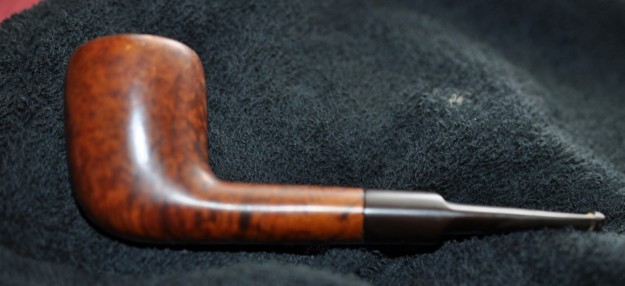
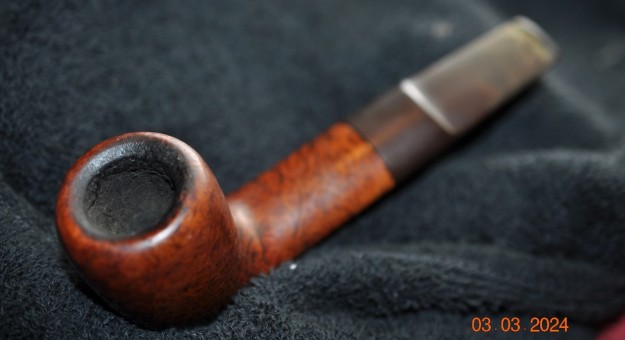
The next pipe on the work table is a lovely Peterson’s style briar pipe. We purchased it from a seller in Spring Branch, Texas, USA on 02/29/2024. It is a classic Peterson’s 03 shaped bowl. It has a smooth, rich brown stained bowl that really highlights the grain in the briar. The bowl is dirty with grime in the finish. There is a moderate cake in the bowl and a light lava overflow on the rim top and edges. The stamping on the pipe is clear and readable and on the left side it reads Peterson’s [over] Emerald. On the right side it reads Made in the Republic of Ireland (three lines) [followed by] the shape number 03. There is an interesting light green shank band sandwiched between two brass bands that adds distinguishing Emerald line touch to the pipe. The stem had a P logo stamped on the left side of the taper. It is oxidized, calcified and has tooth chatter and marks on both sides ahead of the P-lip button. Jeff took photos of the pipe before he started his cleanup. Jeff took photos of the rim top and stem to show the general condition of the pipe. The bowl is moderately caked and the rim top and edges have a light coat of lava overflowing on to them. The stem is oxidized, calcified and has tooth chatter and tooth marks on the top and underside near the button. Jeff took photos of the bowl sides and heel to show the condition of the finish around this bowl. It has some great grain. He took photos of the stamping on the shank sides. You can see that it is clear and reads as noted above. The P logo is also clear on the left side of the stem.I am including the information from Pipedia’s article on Peterson pipes. It is a great read in terms of the history of the brand (https://pipedia.org/wiki/Peterson). I have included a bit of the pertinent history here.
1950 – 1989 The Republic Era – From 1950 to the present time, the stamp for this era is “Made in the Republic of Ireland” in a block format generally in three lines but two lines have been used with or without Republic being abbreviated.

During the 1950’s and 60’s the Kapp & Peterson Company was still in the ownership of the Kapp family. However 1964 saw the retiral of the company Managing Director Frederick Henry (Harry) Kapp.

I knew that I was dealing with a Republic Era pipe made between 1950 and the present.

I turned to The Peterson Pipe book by Mark Irwin and Gary Malmberg for more information. On page 299 there was a summary of the Emerald Pipe. I quote

Emerald (1987-) Moderate-priced line in Bordeaux and black rustic finish with a shank band of green acrylic between brass rings, P-lip mouthpiece; smooth walnut version added in ’91. Fishtail mouthpiece added in ’97. Identical line and finishes named Jade from early eighties until ’87.

This information narrowed down the date even further. The smooth walnut finish was added in 1991 so this one came out after 1991 and has a P-lip style mouth piece. Now it was time to work on the pipe.

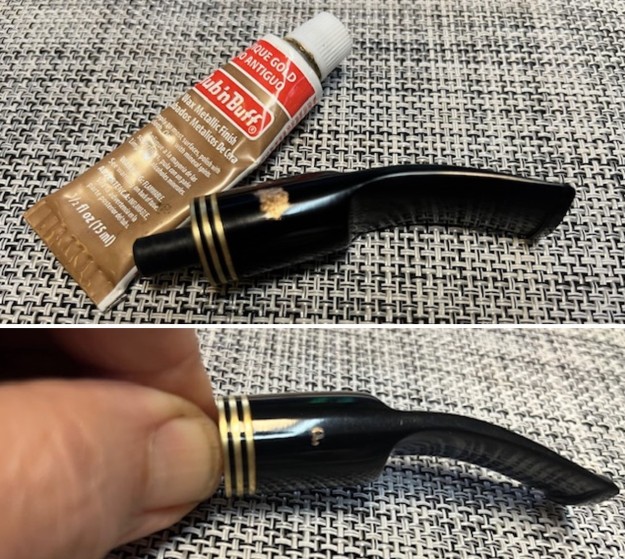
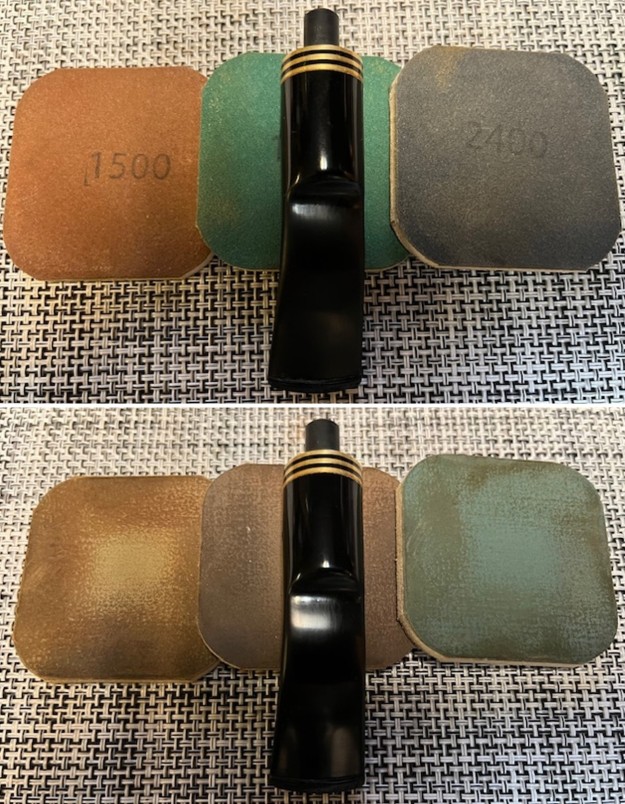
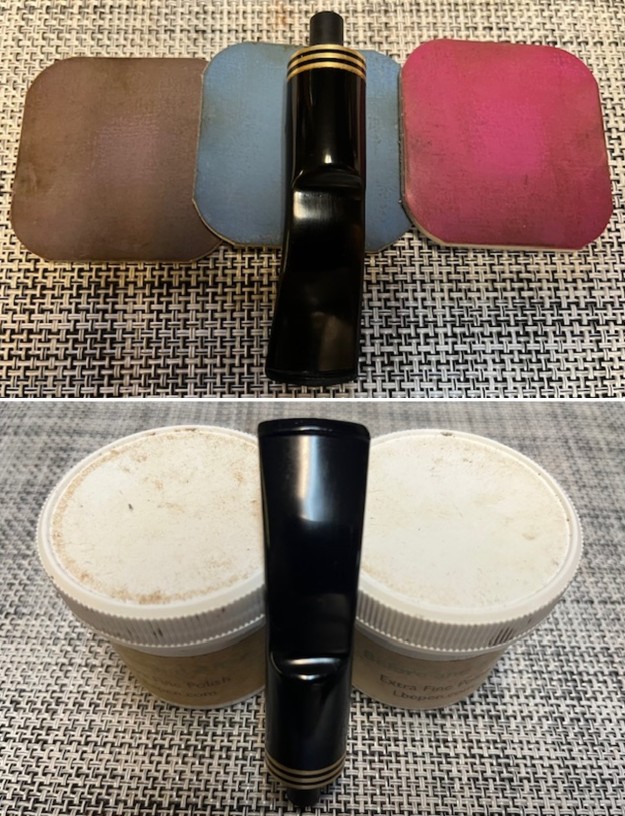
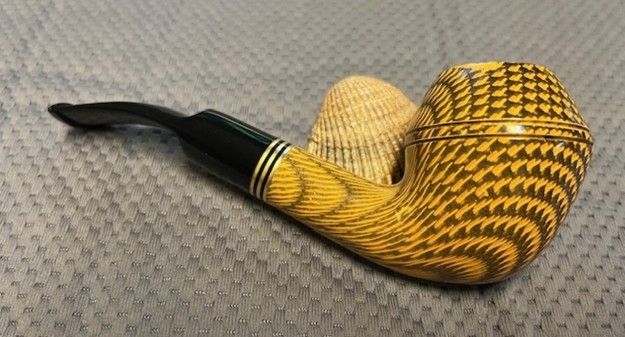
Jeff had done a great job cleaning up the pipe as usual. He reamed the pipe with a PipNet reamer and cut back the cake back to the bare briar. He cleaned up the walls with a Savinelli Fitsall Pipe Knife. He scrubbed the interior of the bowl and shank with pipe cleaners, shank brushes, cotton swabs and alcohol to remove the tars and oils. He scrubbed the exterior of the pipe with Murphy’s Oil Soap and a tooth brush to remove the grime from the finish. He worked on the rim top lava and darkening with the soap and tooth brush. He scrubbed the inside of the stem with alcohol and pipe cleaners. He scrubbed the exterior with Soft Scrub and then soaked it in Briarville’s Pipe Stem Deoxidizer. He washed it off with warm water to remove the Deoxidizer. The pipe looked very good when it arrived. I took close up photos of the rim top and the stem surface. I wanted to show how well it had cleaned up. The rim top looked very good. The bevelled inner edge was in excellent condition. I took photos of the stem to show the light chatter and tooth marks on the surface ahead of the button.I took photos of the stamping on the sides of the shank. You can see that it is stamped as noted above. It is clear and readable. I took the pipe apart and took a photo of the pipe. It is a good looking pipe and has some great grain around the bowl and shank. I polished the briar with micromesh sanding pads – dry sanding with 1500-12000 grit pads and wiping the bowl down after each sanding pad. The grain really began to shine through. It is a beautiful pipe. I worked some Before & After Restoration Balm into the surface of the briar with my fingertips to clean, enliven and protect the briar. I let the balm sit for 15 minutes and then buffed with a cotton cloth to raise the shine. The photos show the bowl at this point in the restoration process. I set the bowl aside and worked on the stem. I touched up the gold P stamp on the left side of the stem with some Rub’n Buff Antique Gold. I pressed it into the stamp with a tooth pick and wiped it off with a soft cotton pad.I sanded out the light tooth marks and chatter in the surface and the button edges with 320-3500 grit sanding pads. I wiped it down after each pad with a cloth impregnated with Obsidian Oil to preserve and remove debris. I polished the stem with micromesh sanding pads – wet sanding with 1500-12000 grit sanding pads. I wiped it down after each sanding pad with Obsidian Oil. I polished it with Before & After Pipe Stem Polish – both Fine and Extra Fine. I am excited to finish this Republic Era Peterson’s Emerald 03 Bent Apple.  I put the pipe back together and buffed it with Blue Diamond on the buffing wheel. I gave the bowl and the stem multiple coats of carnauba wax. I buffed the pipe with a clean buffing pad to raise the shine and hand buffed it with a microfibre cloth to deepen the shine. It is fun to see what the polished bowl looks like with the polished triple brass and emerald acrylic band and the black vulcanite stem. It is a real beauty. This Classic Peterson’s Emerald 03 feels great in my hand. It is light and well balanced. Have a look at it with the photos below. The dimensions are Length: 5 inches, Height: 1 ½ inches, Outside diameter of the bowl: 1 ¼ inches, Chamber diameter: ¾ of an inch. The weight of the pipe is 53 grams/1.83 ounces. It is a beautiful pipe and one that will be on the Irish Pipe Makers Section of the rebornpipes store soon. If you are interested in adding it to your collection let me know. Thanks for walking through the restoration with me as I worked over this pipe. Thanks to each of you who are reading this blog.

Restoring Five Pipes at Once


Blog by Kenneth Lieblich

One of my customers very kindly sent me five pipes to clean up for him. I had the pleasure of working on some beauties and I thought I would share the results with all of you. I was sent two Jobeys and three Peterson Sherlock Holmes pipes. On this occasion, I did something different than I usually do: I restored all five at once, rather than one at a time. The results on the pipes were as good as usual, but the results on your author’s sanity were perhaps less good. This blog is more of a show-and-tell than my usual restoration stories. Onward ho!

Let’s examine the five pipes. First is a Jobey Band E79 partially rusticated bullmoose with a variegated, acrylic, fishtail, saddle stem. Second is a Jobey Hand-Rubbed 680 smooth bent egg with a black, vulcanite, fishtail, saddle stem. Third is a Peterson’s Sherlock Holmes Professor large bent billiard with a sterling silver band and a black, vulcanite, P-lip, tapered stem. Dated 1998. Fourth is a Peterson Sherlock Holmes Hansom large (and very tall) bent bulldog with a sterling silver band and a black, vulcanite, P-lip, tapered stem. Dated 1997. And fifth is a Peterson Sherlock Holmes (without a specific name) large bent Rhodesian with a sterling silver band and a black, vulcanite, P-lip, tapered stem. Dated 1987. I cleaned the outside of all of the stems with Murphy’s and the insides with pipe cleaners and Q-tips dipped in isopropyl alcohol. The vulcanite stems were tossed into the oxidation removal fluid for a good soak. I later cleaned off the oxidation and went to fill in the tooth dents with black cyanoacrylate adhesive. I worked off the high points with my needle files and sanded them all with Micromesh pads and Obsidian Oil. On to the stummels. I reamed out all the bowls and removed all of that old cake. Some bowls had lava on the rim, so I carefully removed that without damaging anything further. I also cleaned the outside of the stummels with Murphy’s. These stummels had been quite well maintained over the years, so there wasn’t much difficulty in cleaning out the gunk inside – with one exception. The Jobey bent egg had a hidden trap of debris inside that had evidently never been noticed. As the photos show, there was some dreadful goo to remove from there! I set all five pipes up for a de-ghosting session and, since I was doing them all at once, an egg carton made an excellent holder for multiple pipes at once.Again, four of the five stummels were in great condition and didn’t really need much work to the outside briar. The exception was that same Jobey egg – it had a couple of significant blemishes which I repaired with briar dust and cyanoacrylate adhesive. After this, all of the stummels were sanded down with Micromesh pads and then left to sit with a coat of Before and After Balm. It sort of moisturizes the wood and gives it a lovely gloss. I took the pipes to my bench buffer and spiffed them all up with some White Diamond and carnauba wax. My last stem was to polish the sterling silver ands with my jewellery cloth. And voilà! These beauties are already on their way back to their owner. I trust that he will enjoy their new and improved status. I hope you enjoyed reading this quick write-up of this lovely bunch of pipes. If you are interested in my work, please follow me here on Steve’s website or email me directly at kenneth@knightsofthepipe.com. Thank you very much for reading and, as always, I welcome and encourage your comments.

Restoring the third of the Antique Collectible Finds – a Jeantet Fait Main 9 Bent Freehand Apple


Blog by Steve Laug

Last weekend on April 27 Kenneth and I went to an antique and collectible sale at an arena in New Westminster, BC, Canada. I wrote about the adventure and posted it in a previous blog last weekend (https://rebornpipes.com/2024/04/28/you-have-to-join-kenneth-and-me-on-a-great-morning-pipe-hunt/). On the hunt I picked up four pipes that I have listed below:

  1. Jeantet Fait Main Bent Freehand Dublin 4 with a diamond shank
  2. Jeantet Fait Main Bent Apple 9 with a uniquely shaped shank and stem
  3. Republic Era Peterson’s System Pipe 1307 Bowl sans stem
  4. Brigham Made in Canada 625 Squat Straight Bulldog

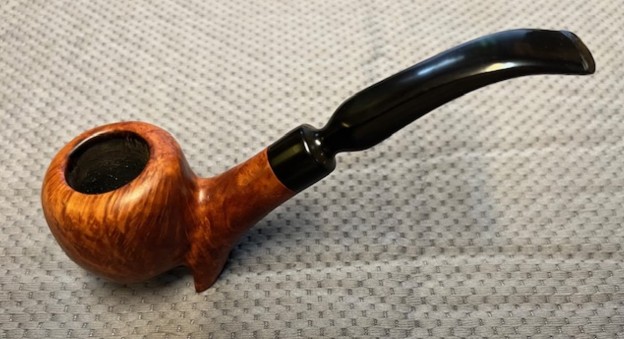
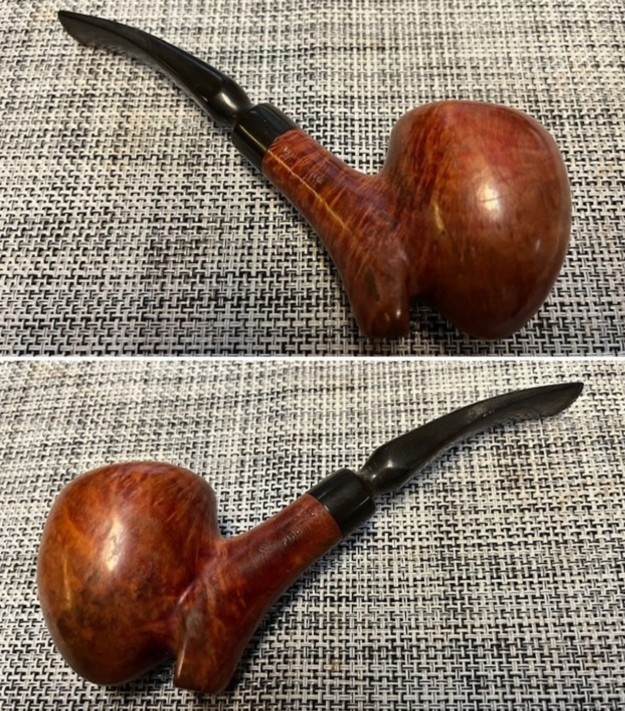
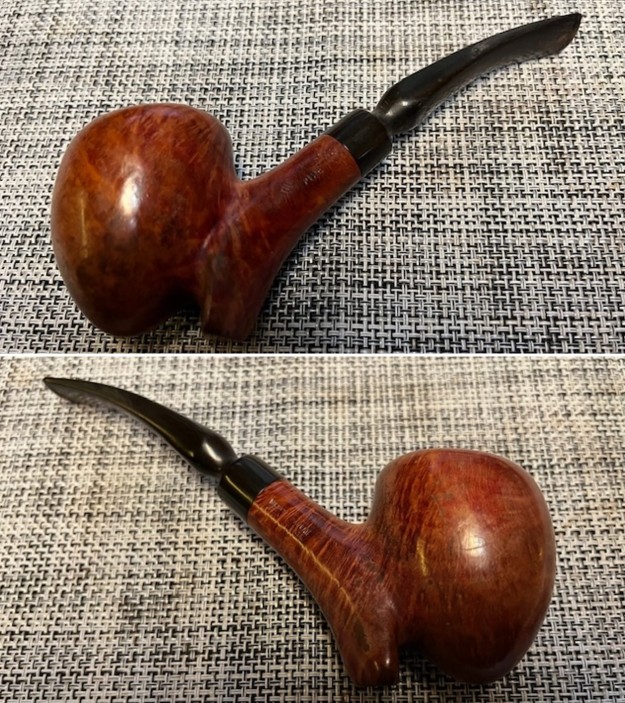
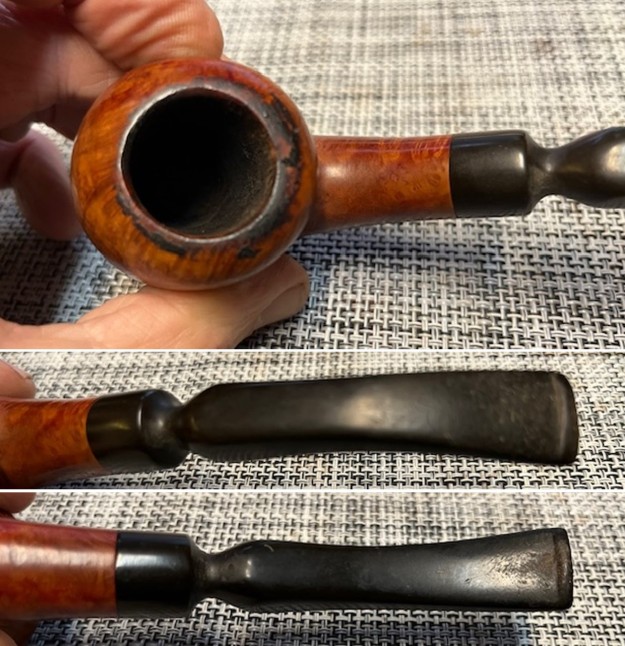
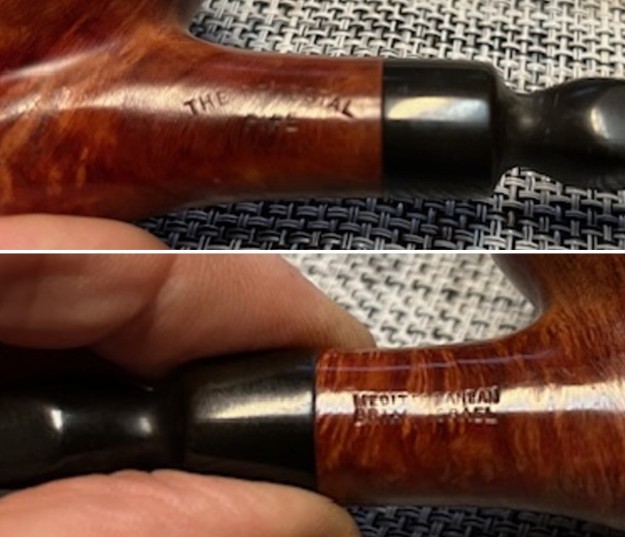
I have included photos of the foursome below. They are in the order of the list above. I chose to work on the second pipe in the above photos. It is shown in the photos below and is stamped Jeantet [over] Fait Main (Hand Made) on the left topside of the shank. On the right side of the shank it is stamped with the number 9 (shape number perhaps) [over] Made in France. There is a Jeantet logo J in a silver oval on the left topside of the diamond stem. It is kind of a Freehand Bent Apple with a unique panelled shank. The pipe has some great grain around the bowl sides and shank. The rim top is bevelled inward and slightly oval. The bowl had a moderate cake on the walls and some lava on the rim top or edges of the bowl. The briar is dry and lifeless with some grime and grit ground into the briar. The stem was oxidized and had light toothmarks on the top and underside ahead of the button. The photos below show what I saw when I examined the pipe. I took photos of the bowl and rim top to show the condition of the bowl. The rim top has some heavy lava around the back half. There was some darkening around the inner edge of the bowl and there is a moderate cake in the bowl. The stem is lightly oxidized and is very dirty from the shank to the button. There are light tooth marks and chatter on the stem on both sides ahead of the button.I took photos of the stamping on the topsides of the shank. It reads as noted above. It is faint in spots but is still very readable. I took the stem off and took a photo of the parts to give a sense of the size of the bowl. Before I started my work on this pipe I turned to Pipephil’s site to see what I could learn about Jeantet pipes (http://pipephil.eu/logos/en/logo-jeantet.html). There was nothing specific about Hand Made line though was a brief summary of the history. I quote from the top bar below:

The company joined the Cuty-Fort Entreprises group (Chacom, Ropp, Vuillard, Jean Lacroix…) in 1992. In 2010 it dropped out and the brand isn’t part of the group any more. The label is owned by the Jeantet family (Dominique Jeantet) again. The pipe production is discontinued. Dominique Jeantet retired in 2000. See also: Antidote, Duke of Kent, Grand Duke, Hermes, Sir Bruce, Sir Duke

I turned to Pipedia to get a more detailed history of the brand (https://pipedia.org/wiki/Jeantet). There as a short history there that I have reproduced below.

The firm of the Jeantet family in Saint-Claude is first mentioned as early as 1775. By 1807 the Jeantets operated a turnery producing in particular wooden shanks for porcelain pipes and wild cherry wood pipes. The firm was named Jeantet-David in 1816, and in 1837 the enterprise was transformed into a corporation as collective name for numerous workshops scattered all over the city.

The manufacturing of briar pipes and began in 1858. 51 persons were employed by 1890. Desirous to concentrate the workers at a single site, the corporation began to construct a factory edifying integrated buildings about 1891 at Rue de Bonneville 12 – 14. This took several years. In 1898 Maurice Jeantet restructured the business. He is also presumed to enlarge Jeantet factory purchasing a workshop adjoining southerly. It belonged to the family Genoud, who were specialized in rough shaping of stummels and polishing finished pipes. (In these times it was a most common procedure to carry goods from here to there and back again often for certain steps of the production executed by dependant family based subcontractors. Manpower was cheap.)

Jeantet was transformed to a corporation with limited liability in 1938. By that time a branch workshop was operated in Montréal-la-Cluse (Ain), where mainly the less expensive pipes were finished. 107 employees – 26 of them working from their homes – were counted in Saint-Claude in 1948 and 18 in the Ain facility.

The Saint-Claude factory was considerably modernized by ca. 1950 installing (e.g.) freight elevators. In 1952 the southern workshop was elevated. 80 workers were employed in 1958. The factory covered an area of 2831 m²; 1447 m² of the surface were buildings.

The climax of the pipe production was reached around 1969, when thirty to thirty five thousand dozens of pipes were made by 72 workers (1969). But then the production continuously dwindled to only six or seven thousand dozens in 1987 and only 22 workers were still there. Even though, around 1979 a very modern steam powered facility for drying the briar had been installed in the factory’s roofed yard.

Yves Grenard, formerly Jeantet’s chief designer and a great cousin of Pierre Comoy, had taken over the management of Chapuis-Comoy in 1971. Now, to preserve the brand, the Jeantet family went into negotiations with him, and resulting from that Jeantet was merged in the Cuty Fort Group (est. 1987 and headed by Chacom) in 1988 along with the pipe brands of John Lacroix and Emile Vuillard. Chacom closed the Jeantet plant, and the City of Saint-Claude purchased it in 1989. After alternative plans failed, the buildings were devoted to wrecking. The southerly workshop was wrecked before 1992.

Today Jeantet pipes were produced as a sub-brand by Chapuis-Comoy who’s mainstay is Chacom of course.

I reamed the bowl with a PipNet pipe reamer and then cleaned up the reaming with a Savinelli Fitsall Pipe Knife. I sanded the bowl sides with 220 grit sandpaper wrapped around a piece of dowel. The bowl walls showed no heat damage or checking. I used a folded piece of 220 grit sandpaper to clean up the top of the rim and the inner edge to make it look better.I scrubbed the externals bowl and shank with Murphy’s Oil Soap and a tooth brush. I rinsed it off with warm water to remove the grime and debris from the scrubbing. I scrubbed the internals of the airway and mortise in the shank and the airway in the stem with pipe cleaners, cotton swabs and alcohol until the airways were clean and the pipe smelled fresh. I took a photo of the shank end to give a sense of the shape of the stem and shank. The top half of the stem and shank are three panels. The bottom half of the shank is half of an oval. Together they form a unique shape.I sanded the surface of the briar with 320-3500 grit sanding pads. It took on a real shine on the briar as I worked through the pads. I wiped it down after each sanding pad with a damp cloth to remove the sanding dust and debris left behind. The pipe had cleaned up so well that I turned to polish the briar with micromesh sanding pads. I dry sanded it with 1500-12000 grit sanding pads and wiped the bowl down after each pad with a damp cloth. By the final pads the briar really had a shine. I rubbed the briar down with Before & After Restoration Balm. I worked it into the briar with my fingertips. The product works to clean, enliven and preserve the briar. I let it sit for 10 minutes then I buffed it with a cotton cloth to deepen the shine. The briar really came alive with the balm. I set aside the bowl and turned my attention to the stem. To help remove the oxidation I scrubbed the stem with Soft Scrub Cleanser and cotton pads. It took some elbow work but the stem definitely looked better and the sulphur smell of the oxidation is gone!I sanded the surface with 320-3500 grit sanding pads to further clean up the spots of oxidation on the surface of the stem. I wiped it down with a soft damp cloth following each sanding pad to remove the sanding debris.I polished the vulcanite with micromesh sanding pads – 1500-12000 grit pads. I wiped it down with Obsidian Oil after each sanding pad. I used Before & After Pipe Polish – both Fine and Extra Fine to further polish the stem. It really took on a shine and I knew that once it was buffed it would look amazing. This Jeantet Fait Main Freehand Bent Apple 9 with a vulcanite stem is a great looking pipe now that it has been restored. The beautiful grain around the bowl sides stands out very well with the contrast of the polished vulcanite stem. I carefully buffed the pipe with Blue Diamond on the buffing wheel. I gave the bowl and the stem multiple coats of carnauba wax on the buffing wheel. I followed that by buffing the entire pipe with a clean buffing pad. I hand buffed the pipe with a microfiber cloth to deepen the shine. The finished Jeantet Fait Main Freehand fits nicely in the hand and feels great. Give the finished pipe a look in the photos below. The dimensions of the pipe are Length: 5 ½ inches, Height: 1 ½ inches, Outside diameter of the bowl: 1 ½ inches, Chamber diameter: ¾ of an inch. The weight of the pipe is 52 grams/1.83 ounces. I will be adding this one to the French Pipe Makers Section of the rebornpipes store. If you are interested in adding it to your collection send me a message or an email. Thanks for reading this blog and my reflections on the pipe while I worked on it. There are many more to come!

Restoring an old timer 1912 BBB Own Make Silver Band England Billiard


Blog by Steve Laug

The next pipe that I am working on came from an estate sale in Oregon City, Oregon, USA we purchased on 03/21/24. It was very dirty and was a reddish, brown coloured pipe when it started. The smooth finish around the bowl was dirty and had hand oils ground into the grooves. The bowl had a thick cake a spotty coat of lava on the rim edge and top of the bowl. The outer edge and top of the bowl were battered and damaged with chips and nicks deep in the briar. It was a mess. The stem was oxidized, very dirty and had light tooth marks on both sides ahead of the button. The pipe was stamped on the left side of the shank with the BBB logo in a diamond and underneath and to the side of the point it read Own Make. On the underside of the shank it was stamped England and had been double stamped. The Sterling Silver band on the shank was oxidized but was also stamped with the BBB in a diamond logo and to the left of it was stamped AF&Co in a rectangular stamp [over] three hallmarks – an Anchor, a Rampant Lion and the letter “n”. All were in shield style cartouches. The Anchor is the mark for Birmingham, the Lion is the mark for .925 Silver and the “n” is the date stamp. Jeff took photos of the pipe so I could have a sense of what it looked like before he started his work on it. Jeff took photos of the bowl and rim top to show the condition of the bowl. The rim top is dirty with lava and deep nicks in the surface of the rim. There is a thick cake in the bowl. The silver band on the shank is oxidized and stamped as noted above. The stem is oxidized and is very dirty from the shank to the button. There are light tooth marks and chatter on the stem on both sides ahead of the button. He took photos of the sides and the heel of the bowl to show the condition of the finish and the grain around the pipe. It has some great grain showing through the grime. He took photos of the stamping on the sides of the shank and on the silver band on the shank. It reads as noted above. It is faint in spots but is still very readable. The Sterling Silver band on the shank was oxidized but was also stamped as noted above. The BBB in a diamond logo identifies the pipe brand of this pipe. The AF&Co in a rectangular stamp to the left of the BBB logo identifies the silversmith as Adolf Frankau and Company who was the owner of the BBB brand. Underneath that stamp there were three hallmarks – an Anchor, a Rampant Lion and the letter “n”. All were in shield style cartouches. The Anchor is the mark for the city of Birmingham where the silver was assayed. The Lion is the mark for the quality of silver used – in this case .925 Silver. The letter “n” is the date stamp. I turned to a link on a British Hallmark site to look for the date code. I found a listing for Birmingham silver dates (https://www.925-1000.com/dlc_birmingham.html). I did a screen capture of the chart and have included it below. The letter “n” is in the same shape cartouche as the section I have marked in the picture below. That identifies the pipe as having been made in 1912.Now it was my turn to work on the pipe. Jeff had done an amazing cleanup of the pipe. He reamed the cake with a PipNet reamer and cleaned up that with a Savinelli Fitsall Pipe Knife. He scrubbed the internals of the bowl and stem with alcohol, cotton swabs and pipe cleaners. He scrubbed the externals with undiluted Murphy’s Oil Soap and rinsed the bowl off with running water. He soaked the stem in Briarville’s Pipe stem Deoxidizer and once it had soaked, rinsed it off with warm water to remove the residual solution. He dried it off and rubbed it down to remove any oxidation that was still on the stem. The pipe looked very good when I received it. I took a photo of the rim top to show the condition. You can see the clean bowl. The bowl is in excellent condition and is clean. The rim top and the inner edge showed damage with nicks and scratches on the top and roughness to both the inner and outer edges. The stem came out looking clean. There were some light tooth marks and chatter on both sides ahead of the button. I took photos of the stamping on the shank. It is faint but still very readable. There was also a very faint stamp on the stem but I am still not certain it is the correct stem because of the fit and shape of the stem. I removed the stem from the shank and took a photo of the pipe parts to show what I was working with. I began my work on the pipe by addressing the issues with the rim top and the rim edges both inner and outer. I used a folded piece of 220 grit sandpaper to smooth out the inner edge and work to bring it back to round.The rim looked much better at this point thought there was still damage at the front of the inner edge of the bowl. I used a piece of 220 grit sandpaper and a wooden ball to give the inner edge and rim top a slight bevel. It looked much better.I built up the large chip in the outer edge of the bowl at the front with clear CA glue and briar dust. I put a spot of glue on the area and dipped the bowl into the briar dust. It stuck to the glue and came of the rest of the bowl. Once it dried I sanded it smooth with a 320 grit sanding pad to smooth out the repair on the top and the front of the bowl. It looked very good. I used a Cherry stain pen to touch up the repaired areas of the bowl. I stained the rim top with the same pen at the same time. It looked much better.I sanded the briar with 320-3500 grit sanding pads to smooth out the nicks and scratches in the bowl sides, rim and heel of the bowl. I wiped it down after each sanding pad with a damp cloth to remove the sanding dust and debris. The pipe had cleaned up so well that I turned to polish the briar with micromesh sanding pads. I dry sanded it with 1500-12000 grit sanding pads and wiped the bowl down after each pad with a damp cloth. By the final pads the briar really had a shine. I rubbed the briar down with Before & After Restoration Balm. I worked it into the briar with my fingertips. The product works to clean, enliven and preserve the briar. I let it sit for 10 minutes then I buffed it with a cotton cloth to deepen the shine. The briar really comes alive with the balm. Next, I moved on to further smooth out the surface of the vulcanite. I sanded it with 320-3500 grit sanding pads to further clean up the scratches and file marks on the surface of the stem.I polished the vulcanite with micromesh sanding pads – 1500-12000 grit pads. I wiped it down with Obsidian Oil after each sanding pad. I used Before & After Pipe Polish – both Fine and Extra Fine to further polish the stem. It really took on a shine and I knew that once it was buffed it would look amazing. I put the stem back on the 1912 BBB Own Make Billiard with a Vulcanite Stem and took it to the buffer. I worked it over with Blue Diamond to polish out the remaining small scratches. I gave the bowl and the stem several coats of carnauba wax and buffed the pipe with a clean buffing pad to raise the shine. I hand buffed it with a microfiber cloth to deepen the shine. The pipe polished up really well and the rim top looked good. I was happy with the look of the finished pipe. The photos below show what the pipe looks like after the restoration. The 1912 BBB Own Make Billiard is a beautiful and unique take on a classic shape. The polished, hard rubber taper stem looks really good with the browns of the briar. The dimensions of the pipe are Length: 5 ½ inches, Height: 1 ¾ inches, Outside diameter of the bowl: 1 ¼ inches, Chamber diameter: ¾ of an inch. The weight of the pipe is 1.45 ounces/41 grams. This is another old time BBB pipe that I will be adding to my BBB Collection. I love these old time English Pipes by BBB as they are a real pleasure to smoke. Thanks for walking through the restoration with me.

Restoring the first of the Antique Collectible Finds – a Jeantet Fait Main Bent Freehand Dublin


Blog by Steve Laug

Last weekend on April 27 Kenneth and I went to an antique and collectible sale at an arena in New Westminster, BC, Canada. I wrote about the adventure and posted it in a previous blog last weekend (https://rebornpipes.com/2024/04/28/you-have-to-join-kenneth-and-me-on-a-great-morning-pipe-hunt/). On the hunt I picked up four pipes that I have listed below:

  1. Jeantet Fait Main Bent Freehand Dublin 4 with a diamond shank
  2. Jeantet Fait Main Bent Apple 9 with a uniquely shaped shank and stem
  3. Republic Era Peterson’s System Pipe 1307 Bowl sans stem
  4. Brigham Made in Canada 625 Squat Straight Bulldog

I have included photos of the foursome below. They are in the order of the list above. I chose to work on the first pipe in the above photos. It is shown in the photos below and is stamped Jeantet [over] Fait Main (Hand Made) on the left underside of the shank. On the right underside of the shank it is stamped with the number 4 (shape number perhaps) and with Made in France along the shank/stem junction. There is a Jeantet logo J in a silver oval on the left topside of the diamond stem. It is kind of a Freehand Bent Dublin with a Diamond shank. The pipe has some great grain around the bowl sides and shank. The rim top is flat and slightly oval. The bowl had a moderate cake on the walls and thankfully no lava on the rim top or edges of the bowl. The briar is dry and lifeless with some grime and grit ground into the briar. The stem was oxidized and had light toothmarks on the top and underside ahead of the button. The photos below show what I saw when I examined the pipe.  I took photos of the bowl and rim top to show the condition of the bowl. The rim top is clean with no lava and there is a moderate cake in the bowl. The stem is lightly oxidized and is very dirty from the shank to the button. There are light tooth marks and chatter on the stem on both sides ahead of the button.I took photos of the stamping on the undersides of the shank. It reads as noted above. It is faint in spots but is still very readable. I took the stem off and took a photo of the parts to give a sense of the size of the bowl. I turned to Pipephil’s site to see what I could learn about Jeantet pipes (http://pipephil.eu/logos/en/logo-jeantet.html). There was nothing specific about that line though was a brief summary of the history. I quote from the top bar below:

The company joined the Cuty-Fort Entreprises group (Chacom, Ropp, Vuillard, Jean Lacroix…) in 1992. In 2010 it dropped out and the brand isn’t part of the group any more. The label is owned by the Jeantet family (Dominique Jeantet) again. The pipe production is discontinued. Dominique Jeantet retired in 2000. See also: Antidote, Duke of Kent, Grand Duke, Hermes, Sir Bruce, Sir Duke

I turned to Pipedia to get a more detailed history of the brand (https://pipedia.org/wiki/Jeantet). There as a short history there that I have reproduced below.

The firm of the Jeantet family in Saint-Claude is first mentioned as early as 1775. By 1807 the Jeantets operated a turnery producing in particular wooden shanks for porcelain pipes and wild cherry wood pipes. The firm was named Jeantet-David in 1816, and in 1837 the enterprise was transformed into a corporation as collective name for numerous workshops scattered all over the city.

The manufacturing of briar pipes and began in 1858. 51 persons were employed by 1890. Desirous to concentrate the workers at a single site, the corporation began to construct a factory edifying integrated buildings about 1891 at Rue de Bonneville 12 – 14. This took several years. In 1898 Maurice Jeantet restructured the business. He is also presumed to enlarge Jeantet factory purchasing a workshop adjoining southerly. It belonged to the family Genoud, who were specialized in rough shaping of stummels and polishing finished pipes. (In these times it was a most common procedure to carry goods from here to there and back again often for certain steps of the production executed by dependant family based subcontractors. Manpower was cheap.)

Jeantet was transformed to a corporation with limited liability in 1938. By that time a branch workshop was operated in Montréal-la-Cluse (Ain), where mainly the less expensive pipes were finished. 107 employees – 26 of them working from their homes – were counted in Saint-Claude in 1948 and 18 in the Ain facility.

The Saint-Claude factory was considerably modernized by ca. 1950 installing (e.g.) freight elevators. In 1952 the southern workshop was elevated. 80 workers were employed in 1958. The factory covered an area of 2831 m²; 1447 m² of the surface were buildings.

The climax of the pipe production was reached around 1969, when thirty to thirty five thousand dozens of pipes were made by 72 workers (1969). But then the production continuously dwindled to only six or seven thousand dozens in 1987 and only 22 workers were still there. Even though, around 1979 a very modern steam powered facility for drying the briar had been installed in the factory’s roofed yard.

Yves Grenard, formerly Jeantet’s chief designer and a great cousin of Pierre Comoy, had taken over the management of Chapuis-Comoy in 1971. Now, to preserve the brand, the Jeantet family went into negotiations with him, and resulting from that Jeantet was merged in the Cuty Fort Group (est. 1987 and headed by Chacom) in 1988 along with the pipe brands of John Lacroix and Emile Vuillard. Chacom closed the Jeantet plant, and the City of Saint-Claude purchased it in 1989. After alternative plans failed, the buildings were devoted to wrecking. The southerly workshop was wrecked before 1992.

Today Jeantet pipes were produced as a sub-brand by Chapuis-Comoy who’s mainstay is Chacom of course.

I reamed the bowl with a PipNet pipe reamer and then cleaned up the reaming with a Savinelli Fitsall Pipe Knife. I sanded the bowl sides with 220 grit sandpaper wrapped around a piece of dowel. The bowl walls showed no heat damage or checking. I scrubbed the internals of the airway and mortise in the shank and the airway in the stem with pipe cleaners, cotton swabs and alcohol until the airways were clean and the pipe smelled fresh. I scrubbed the externals bowl and shank with Murphy’s Oil Soap and a tooth brush. I rinsed it off with warm water to remove the grime and debris from the scrubbing. The pipe had cleaned up so well that I turned to polish the briar with micromesh sanding pads. I dry sanded it with 1500-12000 grit sanding pads and wiped the bowl down after each pad with a damp cloth. By the final pads the briar really had a shine. I rubbed the briar down with Before & After Restoration Balm. I worked it into the briar with my fingertips. The product works to clean, enliven and preserve the briar. I let it sit for 10 minutes then I buffed it with a cotton cloth to deepen the shine. The briar really comes alive with the balm. I set aside the bowl and turned my attention to the stem. To help remove the oxidation I scrubbed the stem with Soft Scrub Cleanser and cotton pads. It took some elbow work but the stem definitely looked better and the sulphur smell of the oxidation is gone!I sanded the surface with 320-3500 grit sanding pads to further clean up the spots of oxidation on the surface of the stem. I wiped it down with a soft damp cloth following each sanding pad to remove the sanding debris.I polished the vulcanite with micromesh sanding pads – 1500-12000 grit pads. I wiped it down with Obsidian Oil after each sanding pad. I used Before & After Pipe Polish – both Fine and Extra Fine to further polish the stem. It really took on a shine and I knew that once it was buffed it would look amazing. This Jeantet Fait Main Freehand Bent Dublin 4 with a vulcanite stem is a great looking pipe now that it has been restored. The beautiful grain around the bowl sides stands out very well with the contrast of the polished vulcanite stem. I carefully buffed the pipe with Blue Diamond on the buffing wheel. I gave the bowl and the stem multiple coats of carnauba wax on the buffing wheel. I followed that by buffing the entire pipe with a clean buffing pad. I hand buffed the pipe with a microfiber cloth to deepen the shine. The finished Jeantet Fait Main Freehand fits nicely in the hand and feels great. Give the finished pipe a look in the photos below. The dimensions of the pipe are Length: 5 ¾ inches, Height: 2 inches, Outside diameter of the bowl: 1 ¾ inches, Chamber diameter: ¾ of an inch. The weight of the pipe is 61grams/2.15 ounces. I will be adding this one to the French Pipe Makers Section of the rebornpipes store. If you are interested in adding it to your collection send me a message or an email. Thanks for reading this blog and my reflections on the pipe while I worked on it. There are many more to come!

Cleaning up a Wayward Republic Era K&P Peterson’s System Standard 314


Blog by Steve Laug

Sometimes there is benefit to being a pipe rescue location. Although I am not sure my wife and daughters would agree with that. But I have to say it does keep this old guy busy rejuvenating old pipes and giving them life. If you were to come into my basement office/workshop (but mind you few do) I think you would be surprised by two things – the number of books on the shelves and the number of pipes in the storage bins behind my desk! There are a lot of pipes that still need attention. Most have been reamed and cleaned so that part is finished. But many still need a lot of attention to make them smokable again. Ah well, enough of that. This post is about a pipe I received in the mail today. Several weeks ago I received an email from a friend, Dave in Nova Scotia regarding a pipe he had that he thought I might enjoy having. I have included a portion of his email as it sets the stage for this interesting old Peterson’s System Standard 314.

Hi Steve,

Dave in Nova Scotia. Hope you’re enjoying the spring!

If you’re interested and want to send postage for a Canada Post small box, I’ll send you this Peterson system standard, 314.

Was my brother-in-law’s. He bought it Ireland many years ago. Needs some TLC. 

Yours is the home for wayward pipes!

So, I knew that the pipe was a Peterson’s System Standard 314 that had originally belonged to his brother-in-law who had purchased it directly from Peterson’s in Ireland. He included two photos of the Peterson for me to have a look at. I have included them below. The pipe was in desperate need of a restoration that is for sure. But I have truly worked on pipes in worse condition than this one. The box arrived on Friday this past week and I unpacked it to examine it carefully. The pipe was very dirty and tired looking. The finish was dirty and the nickel ferrule on the shank end was very corroded in spots on the left and underside and covered in thick grime. There were some dark spots on the left and right side toward the bottom of the bowl. The rim top had a thick lava coat that flowed up from the thick cake in the bowl. It was stamped on the left side vertically under the ferrule and read Peterson’s with the forked leg on the P [arched over] System [over] Standard. On the right side of the shank the stamping is horizontal and reads Made in the Republic of Ireland [in three lines] with the 314 shape number underneath that. The nickel ferrule was stamped under the grime and read K&P over Peterson’s. The stem is covered in a thick build up of dirt and oils. There is some oxidation on the stem surface and surprisingly there are no tooth marks. I took photos of the pipe before I started my work on it. I took photos of the bowl and rim top to show the condition of the bowl. You can also see the condition of the nickel ferrule with all of the corrosion and grime completely removing the shine of the nickel ferrule. The stem is dirty around the insert in the ferrule. It is lightly oxidized and is very dirty on the stem and the button. There are light tooth marks and chatter on the stem service on both sides ahead of the p-lip.I took photos of the stamping on the shank sides. It is faint but still very readable as noted above. I removed the stem from the shank and took a photo of the pipe parts to show what I was working with. You can also see the dark spot on the right side of the bowl ahead of the stamping. I started my working on the pipe by addressing the corrosion and oxidation on the nickel ferrule. I sanded it with 320 grit sanding pads to remove the corrosion. I was utterly surprised that the nickel ferrule cleaned up and had a rich shine to it. I reamed the bowl with a PipNet pipe reamer and took the cake back to bare briar. I cleaned up the reaming with Savinelli Fitsall Pipe Knife to remove remnants of cake. I sanded the walls of the bowl with 220 grit sandpaper wrapped around a piece of dowel. I scrubbed the externals bowl and shank with Murphy’s Oil Soap and a tooth brush. I rinsed it off with warm water to remove the grime and debris from the scrubbing. I scrubbed out the internals with alcohol, cotton swabs and pipe cleaners to remove the grime in the shank and sump of the Pete. I also scrubbed the airway on the inside of the stem at the same time. The pipe was very dirty but it cleaned up well.I cleaned off the remaining darkening on the rim top with a folded piece of 220 grit sandpaper. It cleaned up very well and looked good. There was no damage to the inner or outer rim edges.I worked over the briar bowl sides and rim top with 320-3500 grit sanding pads. I sanded down the dark spots on the surface and was able to remove the damage. Thankfully they were not burn marks. I wiped the bowl down after each sanding pad with a damp cloth to remove the dust and sanding debris left behind. The pipe had cleaned up so well that I turned to polish the briar with micromesh sanding pads. I dry sanded it with 1500-12000 grit sanding pads and wiped the bowl down after each pad with a damp cloth. By the final pads the briar really had a shine. I rubbed the briar down with Before & After Restoration Balm. I worked it into the briar with my fingertips. The product works to clean, enliven and preserve the briar. I let it sit for 10 minutes then I buffed it with a cotton cloth to deepen the shine. The briar really comes alive with the balm. I set aside the bowl and turned my attention to the stem. To help remove the oxidation I scrubbed the stem with Soft Scrub Cleanser and cotton pads. It took some elbow work but the stem definitely looked better and the sulphur smell of the oxidation is gone!I sanded the surface with 320-3500 grit sanding pads to further clean up the spots of oxidation on the surface of the stem. I wiped it down with a soft damp cloth following each sanding pad to remove the sanding debris.I polished the vulcanite with micromesh sanding pads – 1500-12000 grit pads. I wiped it down with Obsidian Oil after each sanding pad. I used Before & After Pipe Polish – both Fine and Extra Fine to further polish the stem. It really took on a shine and I knew that once it was buffed it would look amazing. This Republic Era Peterson’s System Standard 314 Bent Billiard with a vulcanite stem is a great looking pipe now that it has been restored. The beautiful grain around the bowl sides stands out very well with the contrast of the polished nickel ferrule. The polished finish is stunning. I put the stem back on the bowl and carefully buffed the pipe with Blue Diamond on the buffing wheel. I gave the bowl and the stem multiple coats of carnauba wax on the buffing wheel. I followed that by buffing the entire pipe with a clean buffing pad. I hand buffed the pipe with a microfiber cloth to deepen the shine. The finished Peterson’s System Standard 314 fits nicely in the hand and feels great. Give the finished pipe a look in the photos below. The dimensions of the pipe are Length: 5 inches, Height: 1 ¾ inches, Outside diameter of the bowl: 1 1/8 inches, Chamber diameter: ¾ of an inch. The weight of the pipe is 45grams/1.59oz. This one has been reserved for first refusal. If you are interested in being in the queue for this pipe send me a message or an email. Thanks for reading this blog and my reflections on the pipe while I worked on it. There are many more to come!