Tag Archives: polish a vulcanite stem

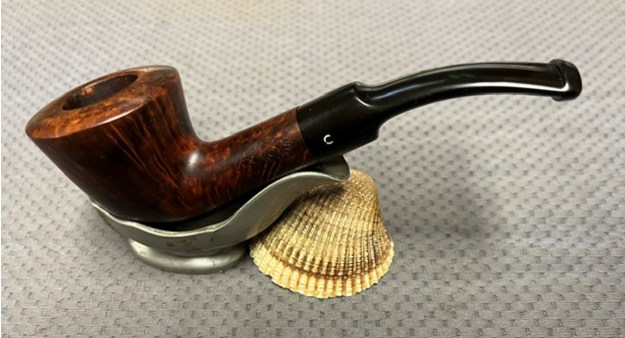
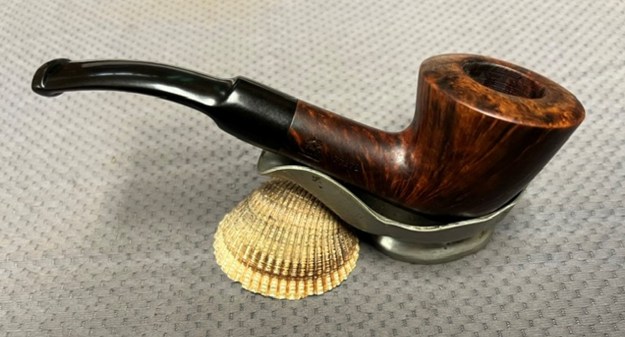
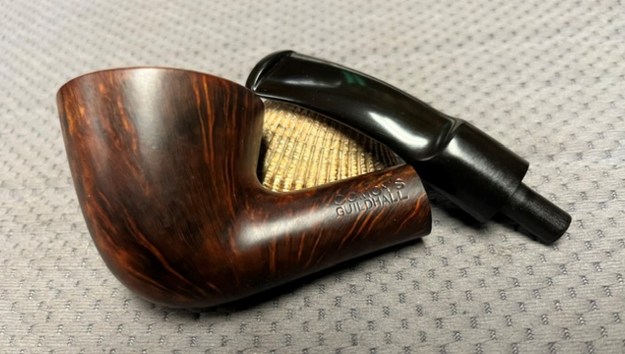
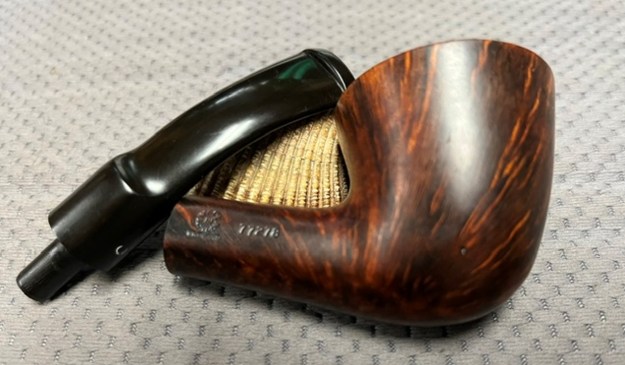
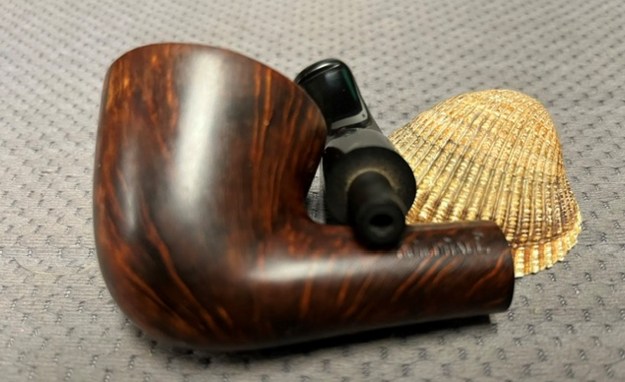
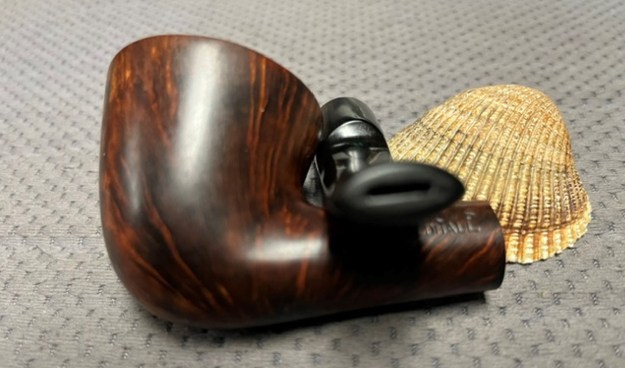
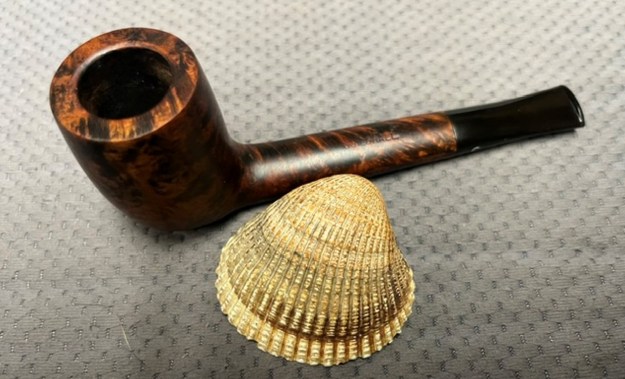
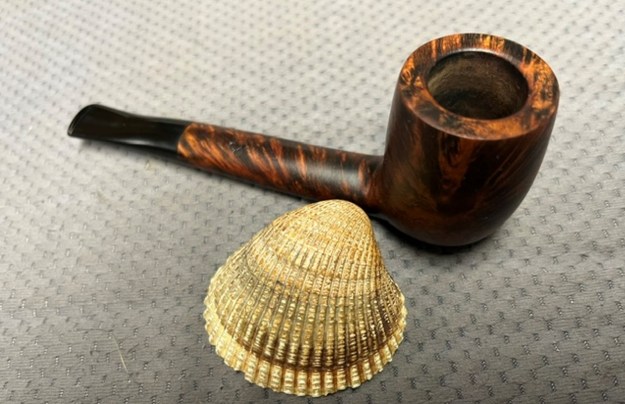
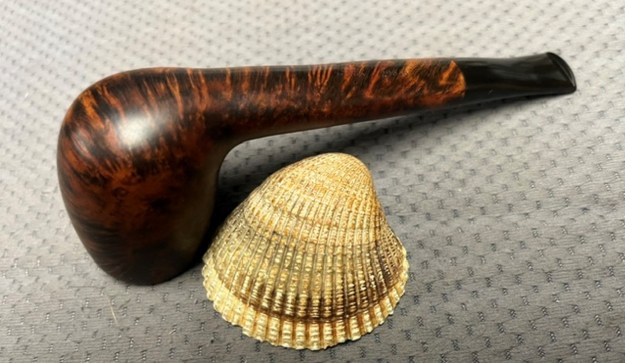
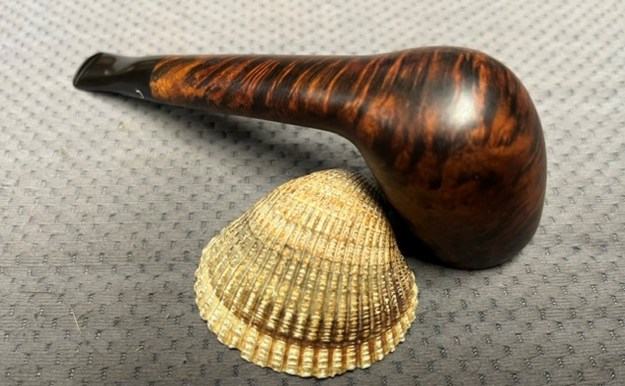
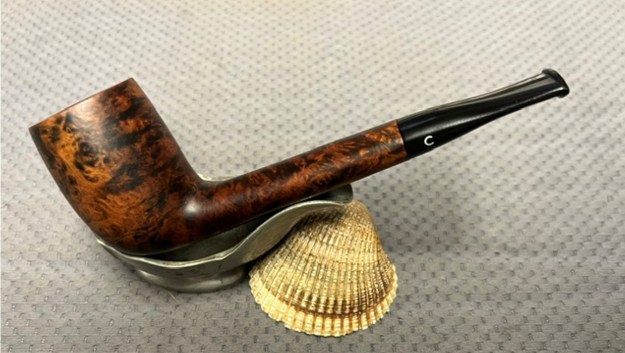
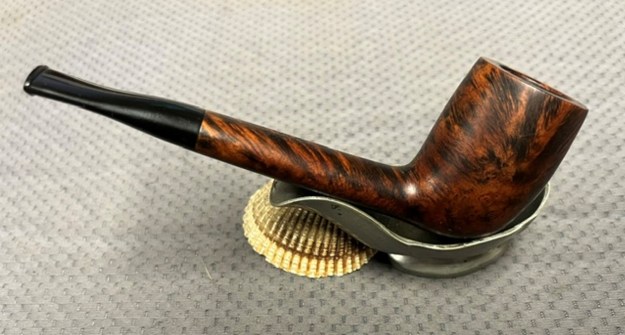
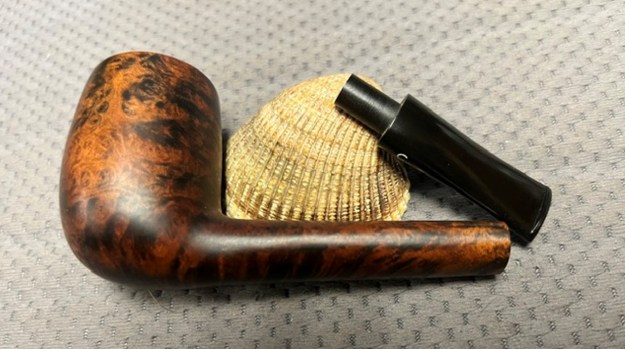
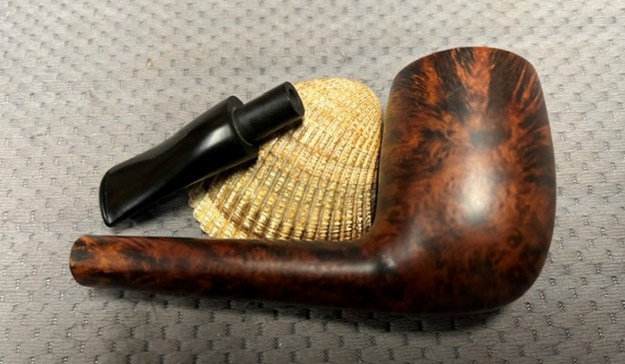
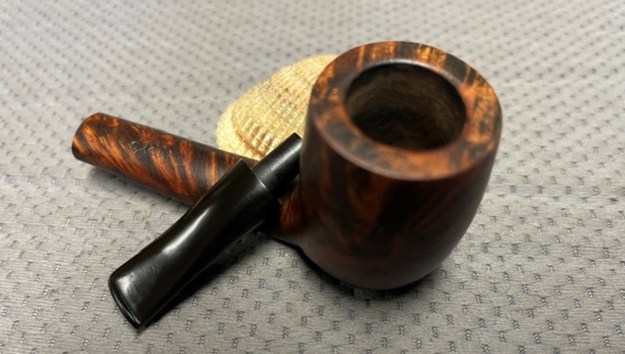
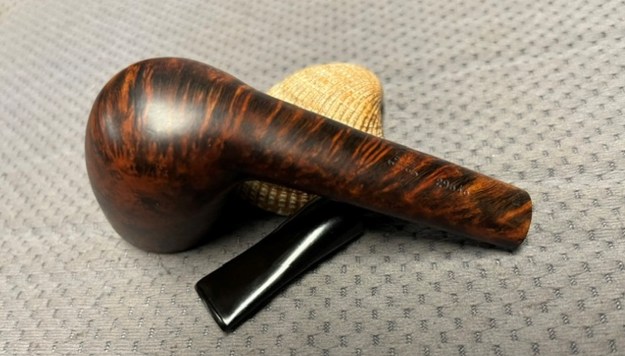
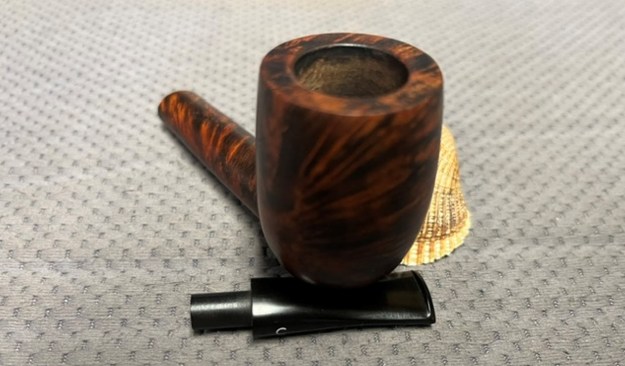
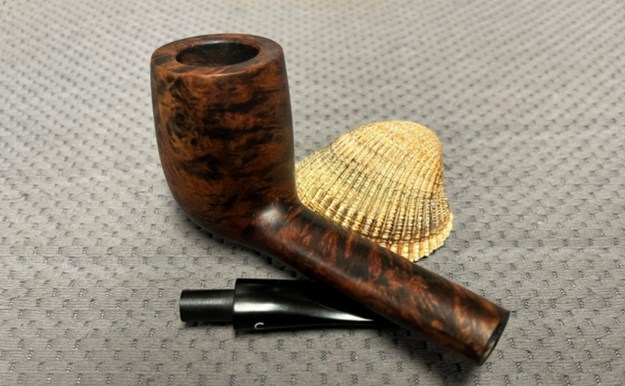
Rebirth of a Comoy’s Guildhall Made in London in a circle over England 77278 Dublin


by Steve Laug

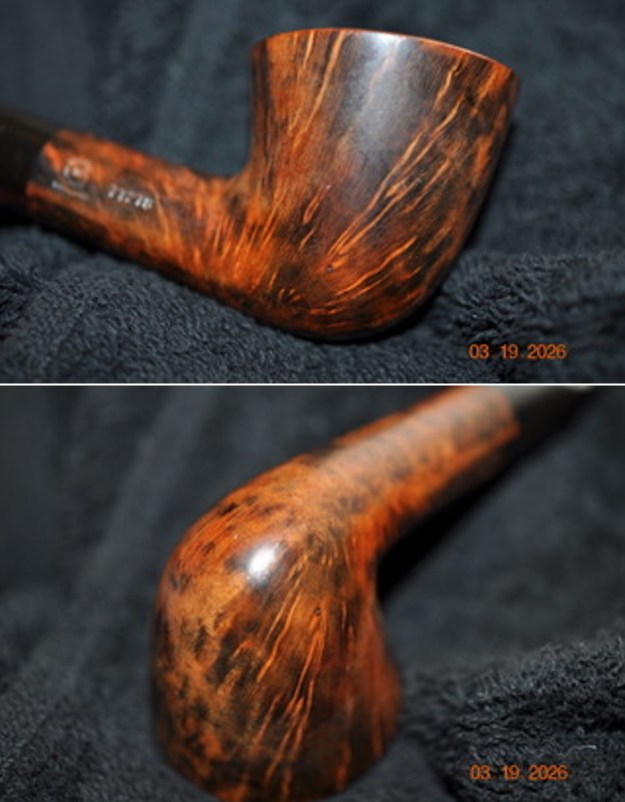
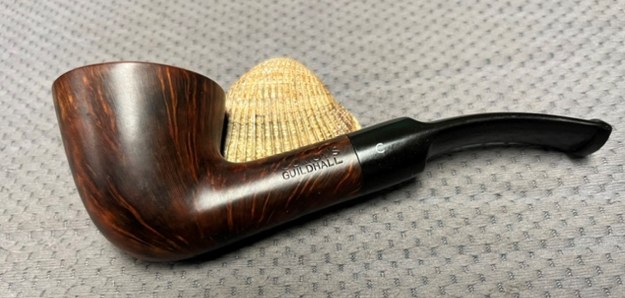
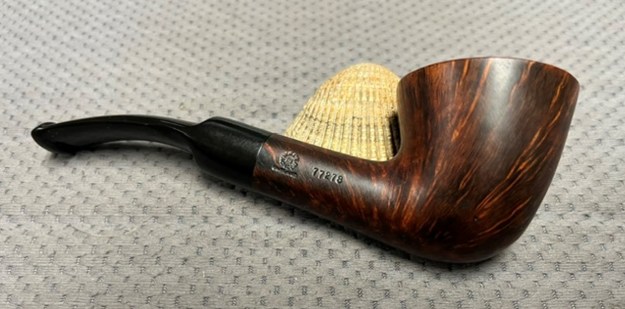
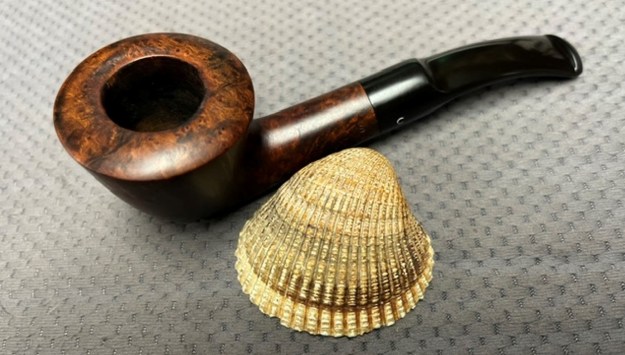
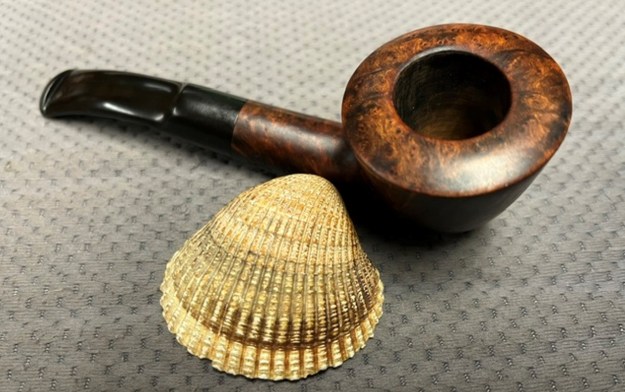
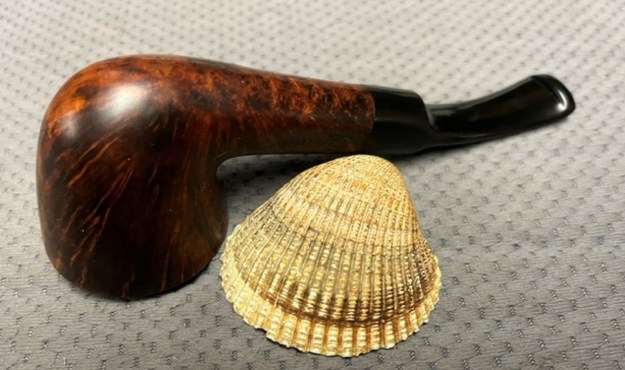
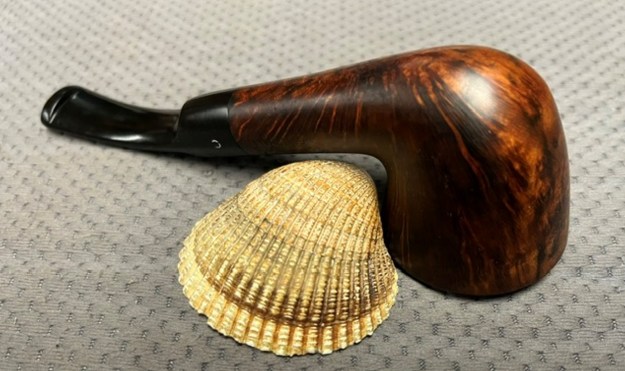
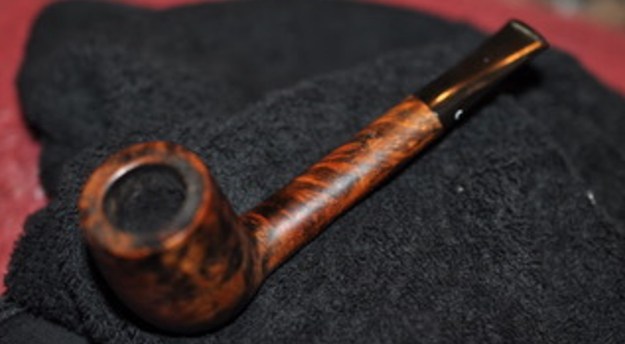
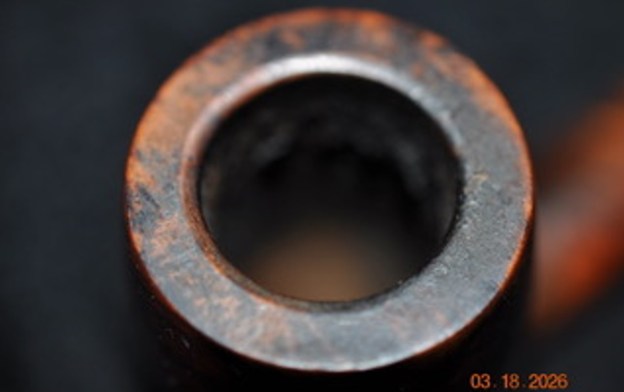
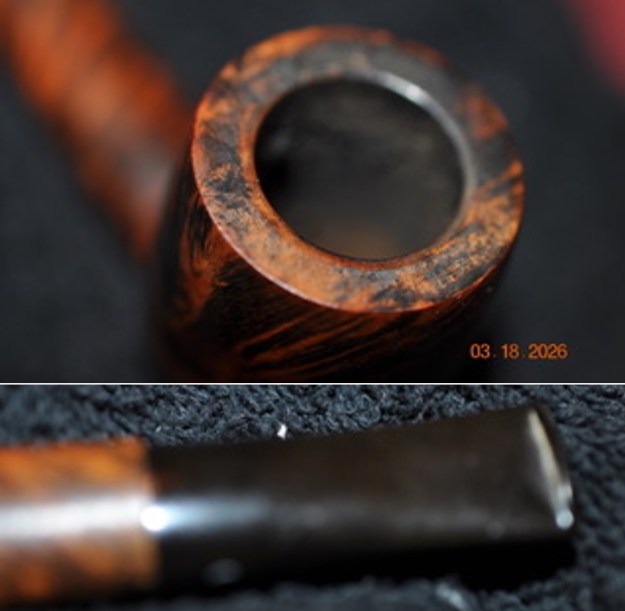
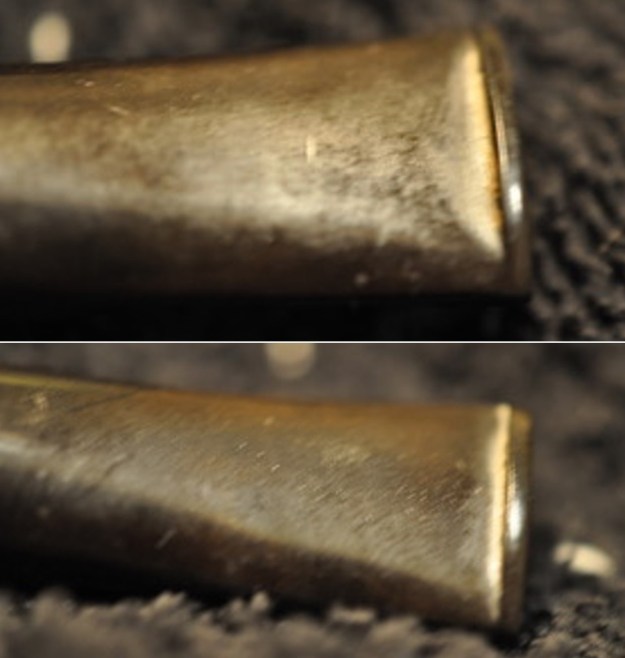
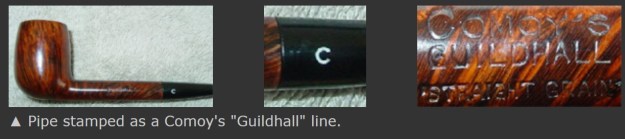
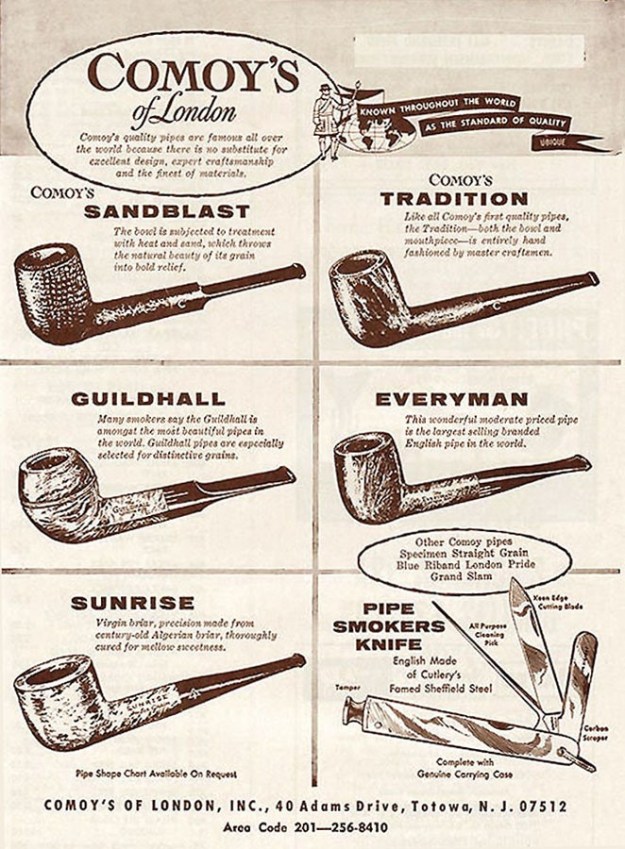
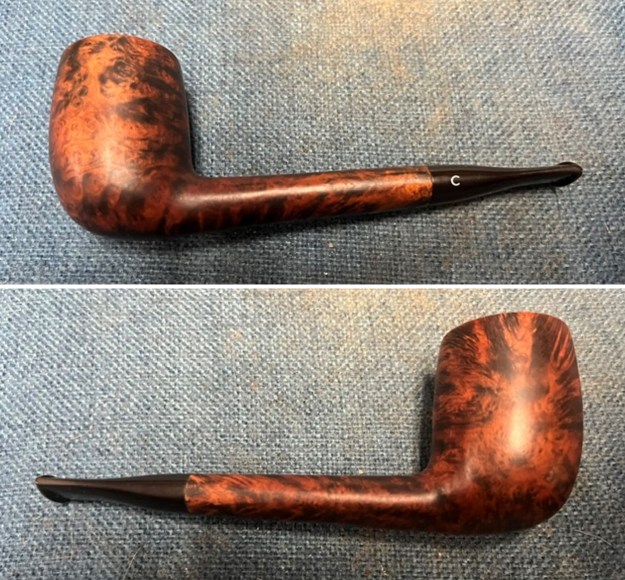
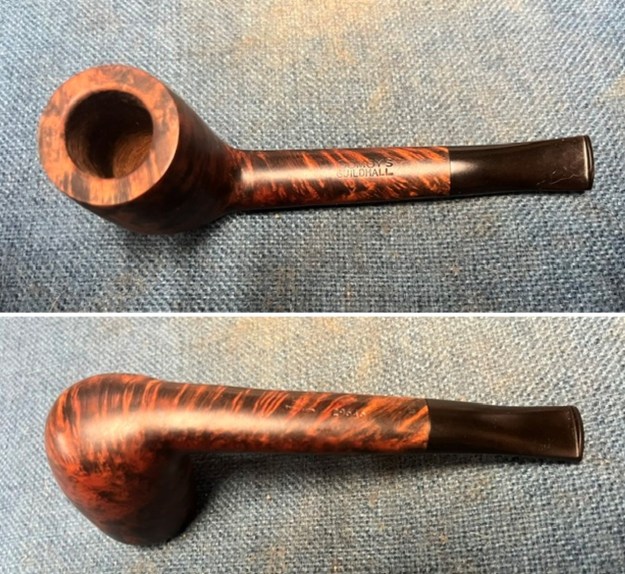
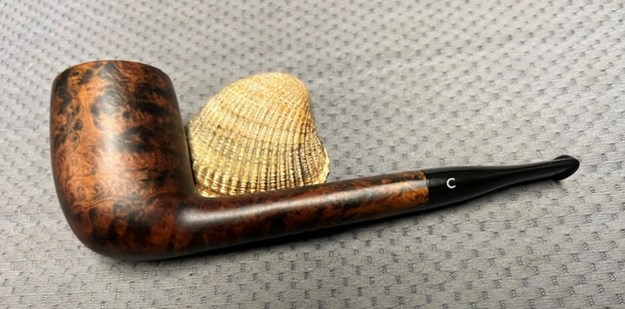
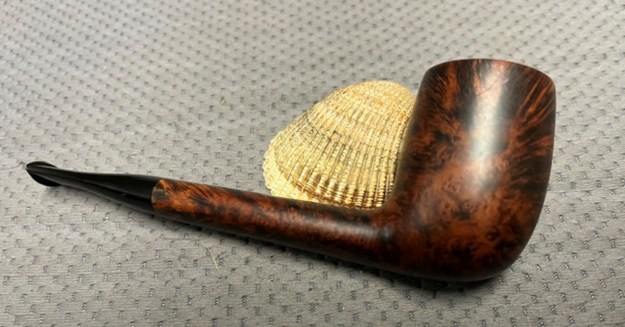
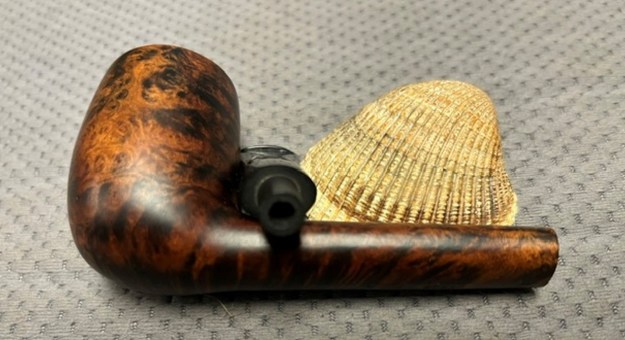
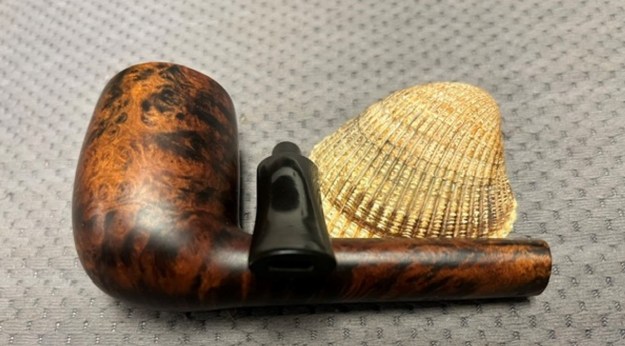
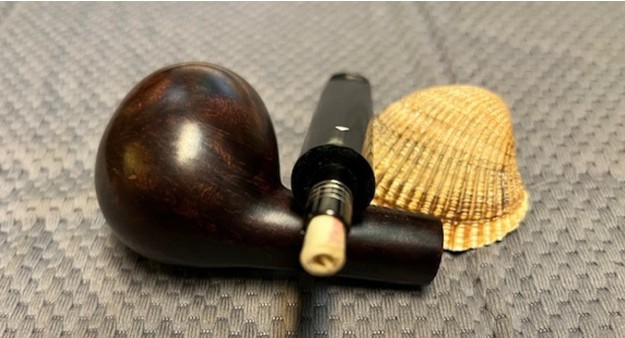
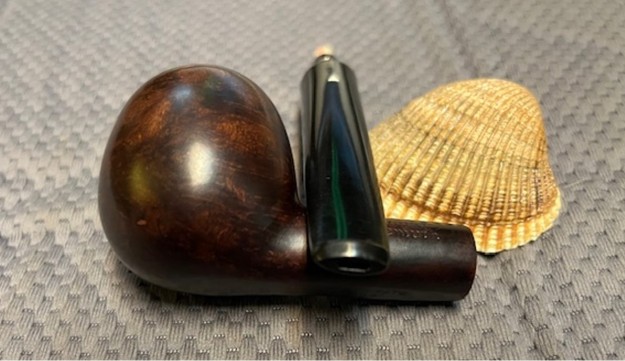
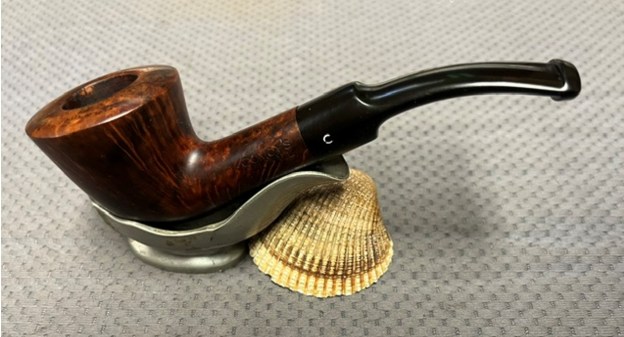
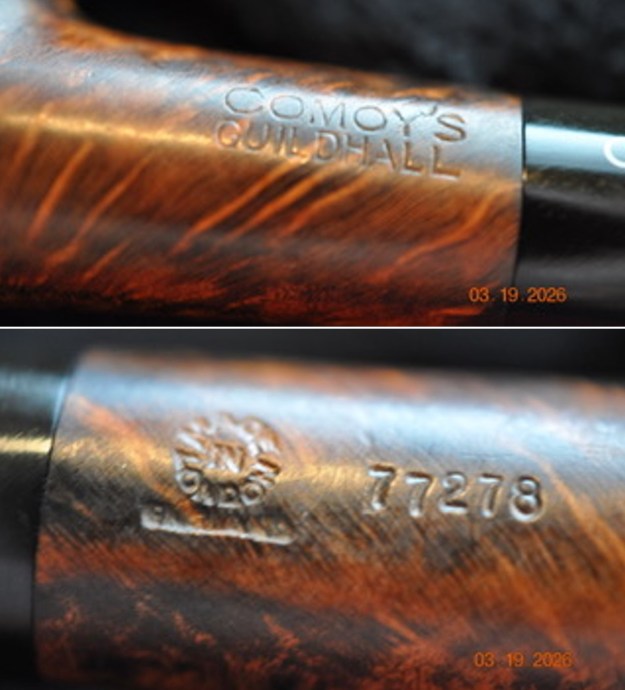
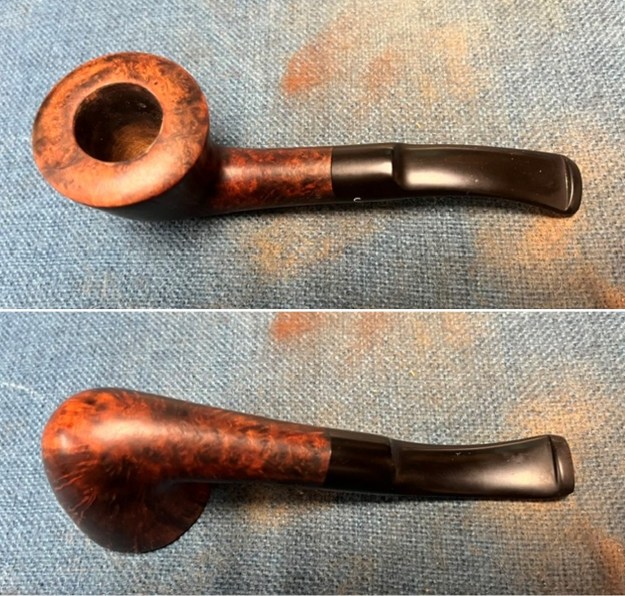
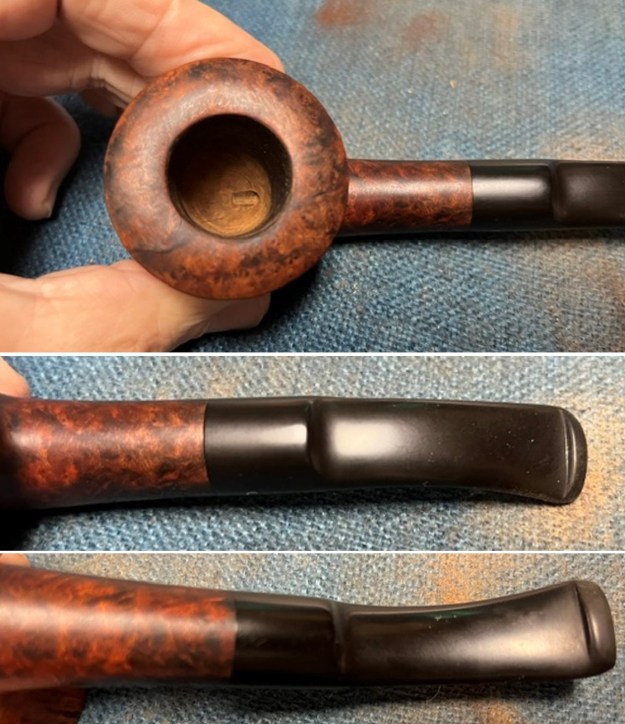
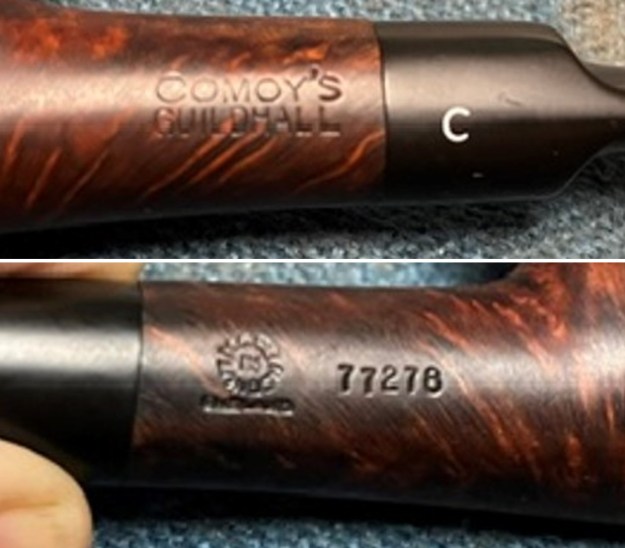
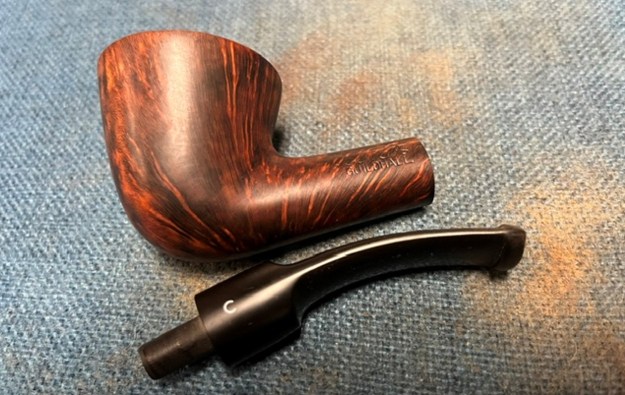
This darker smooth Dublin was purchased on 01/20/2026 from a Facebook seller in Quaker Town, Pennsylvania, USA. It is a great looking Dublin with a dark, smooth finish.  The stem is a vulcanite saddle stem. The bowl is stained with a contrast of blacks and browns that highlight the grain around the bowl and shank. It is stamped on the left side of the shank and reads Comoy’s [over] Guildhall, both in upper case letters. This is distinct from a line of seconds that Comoy’s put out called The Guildhall. The right side of the shank is stamped with Made in London in a circle over England followed by the shape number 77278. The bowl had a thick cake and some tobacco debris on the walls. There was an overflow of lava on the rim top that was heavier toward the back of the bowl. There was grime ground into the finish which left the finish looking quite dull. The vulcanite saddle stem has a thin Comoy’s C logo on the left side. It is hard to tell if it is the three part C. There are light tooth marks and chatter on both sides of the stem ahead of the button. Jeff took photos of the pipe before he started his work on it.   He took photos of the rim top to show the condition of the top and edges of the bowl. It is dull and has the lava on the rim top and bevelled edge of the rim. It is uniquely a beautiful pipe. The stem had light tooth marks and chatter on both sides ahead of the button. He took photos of the sides and heel of the bowl to show the finish around the bowl and the condition of the pipe. You can see the grime ground into the surface of the briar. The stain combination really makes the grain stand out. I look forward to seeing it once it is clean and polished. He took photos of the stamping on the sides of the shank. It is clear and readable as noted above. The inlaid C stamp on the left side of the stem is also clear and readable.Before I started work on the pipe I wanted to try to understand the stamping. I have worked on many Comoy’s Made “The Guildhall” pipes but this is the first one I have worked on that is stamped Comoy’s Guildhall. I have worked on many that have the circular COM stamp so I knew this one was a pre-Cadogan made pipe by that stamp. The shape number also was a bit a anomaly to me. I am used to two and three digit shape number stamps but I am unfamiliar with the five digit stamp. I knew that 772 was the shape number for a ¼ Bent Dublin. I was not clear what the final two numbers meant. I turned first two Pipephil’s site to see if I could find information o the pipe in hand (http://www.pipephil.eu/logos/en/logo-g6.html#guildhall). I found a pipe pictured that is similar and has the same stamping. It has the same stamp Comoy’s Guildhall. The C on the stem is identical as well. It identifies that the pipe is from the Comoy’s Guildhall line. There was no further information. I have included the screen capture below.From there I turned to Pipedia to see if there was any information listed on the Comoy’s article (https://pipedia.org/wiki/Comoy%27s). There was a flyer on the site that has Guildhall listed on it and gives a brief description of the pipe. Have a look. Besides other information it says that Guildhall pipes are “especially selected for distinctive grains.” The pipe I am working on certainly has distinctive grain. I have included a screen capture of the flyer below.I did a bit more digging on Google and found that Charles Lemon of dadspipes had written a blog on his restoration of a Guildhall 28 Billiard (https://dadspipes.com/2018/12/14/freshening-a-pre-cadogan-comoys-guildhall-28-billiard/). I quote from that blog below. I have highlighted some pertinent portions.
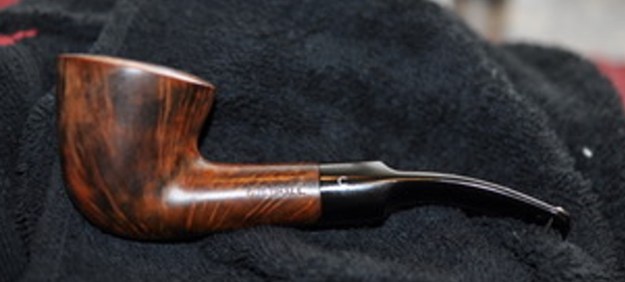
The pipe is marked “COMOY’S” over “GUILDHALL” on the left flank, and “28” on the right flank along with a circular “MADE IN LONDON” over “ENGLAND” Country of Manufacture (COM) stamp. There is also an “F” stamped on the underside of the shank near the junction with the stem, which bears the classic Comoy’s three-piece C logo inset on its left flank.

These stamps tell me that this Guildhall was made sometime after World War II and before Comoy’s merged with Cadogan in 1980. The “F” stamp indicates a Fishtail bit.

One side note here – Do not confuse this Comoy’s Guildhall with the seconds line of similar name. “Comoy’s Guildhall” was a bona fide series within the Comoy’s lineup for a time, while the “Guildhall” seconds line was distinguished by a lack of the Comoy’s name and three parallel silver bars inset in the stem, similar to those of “The Everyman” seconds pipes.

I knew that Guildhall was a higher grade early pipe and was made after WWII and prior to the merger with Cadogan in 1980. It is also clear that it is a separate line from the Comoy’s The Guildhall pipes.

I also found a link to vkpipes that gave a little more information. I have included the link below as well as short quote on the line (https://vkpipes.com/pipeline/comoys-guildhall-giant-309/).

An amazing Comoy’s product made during the last pre-Cadogan period (1950-70’s). Among others Comoy’s brands and subbrands Guildhalls are always an object of a special interest and attraction of collectors from many countries – who knows, because of the glory and authority of the manufacturer or because of a mysterious aura of the three metallic stripes?

I now knew that Guildhall was a line of Comoy’s pipes put out that was made at the latest the late 1970s. I could not find any information on the five digit shape number.

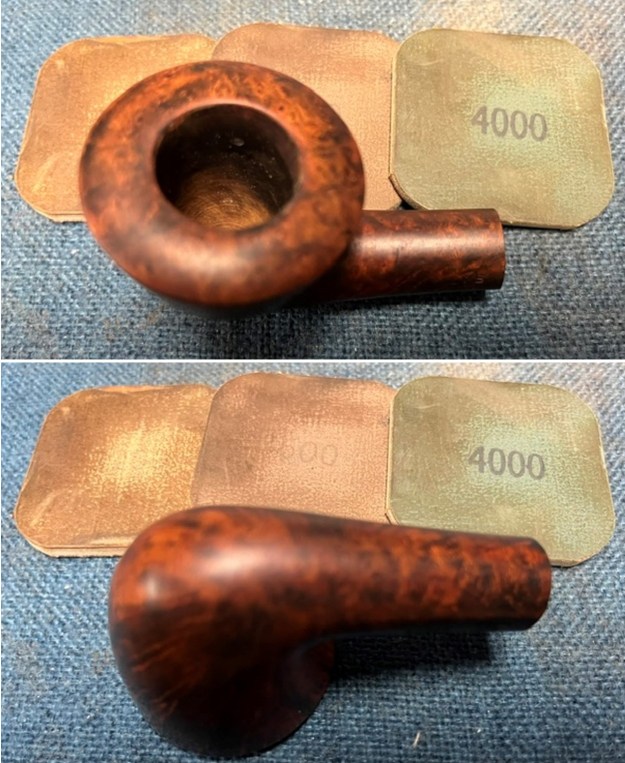
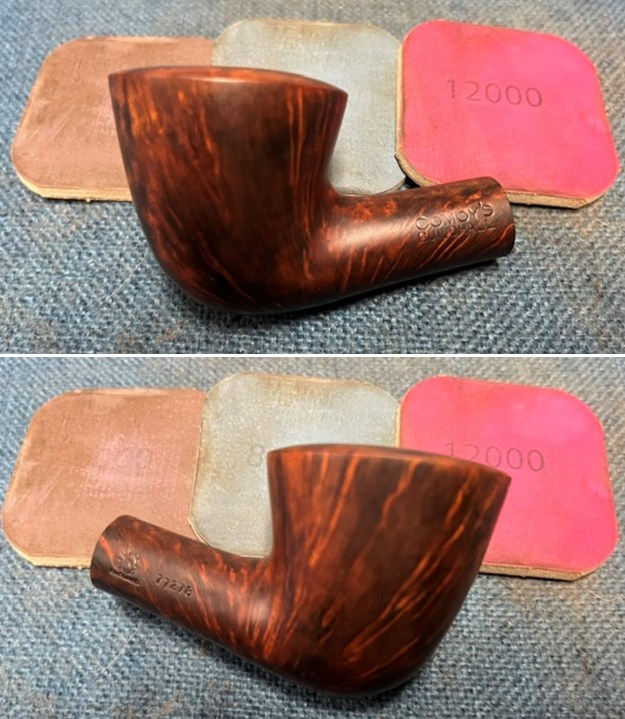
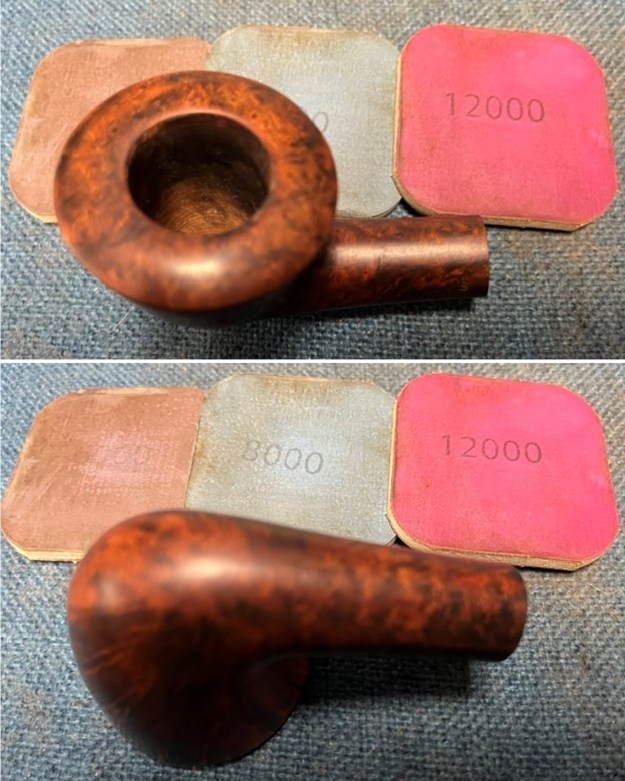
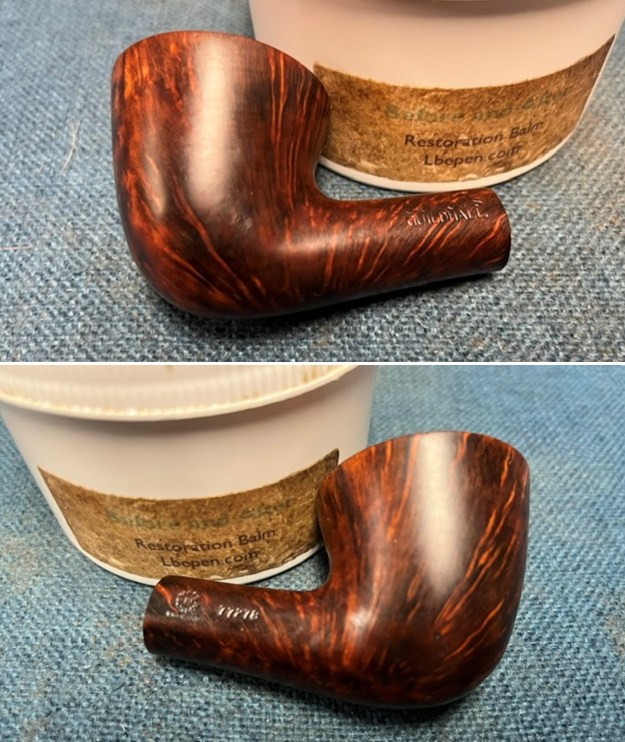
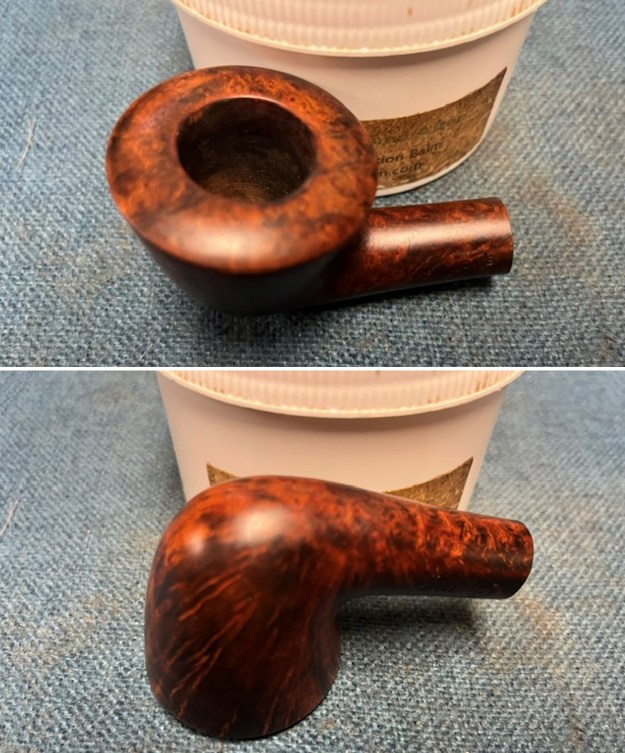
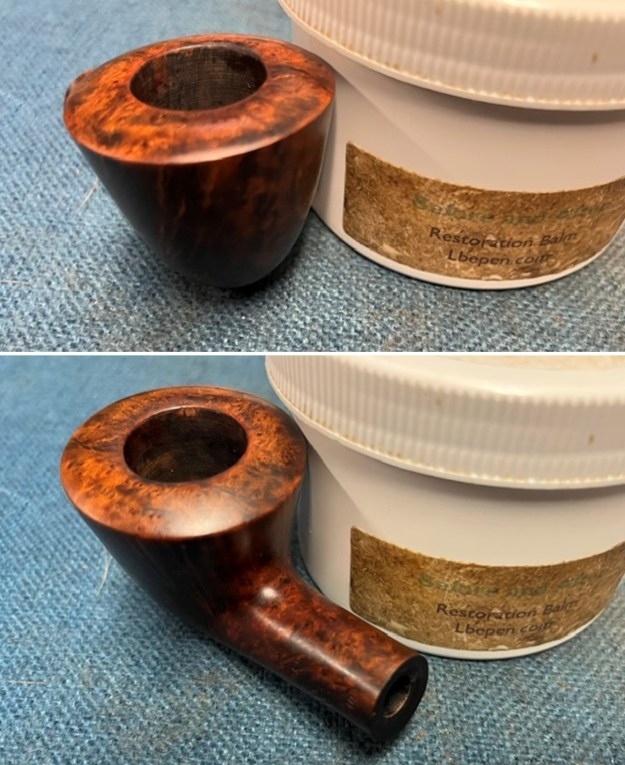
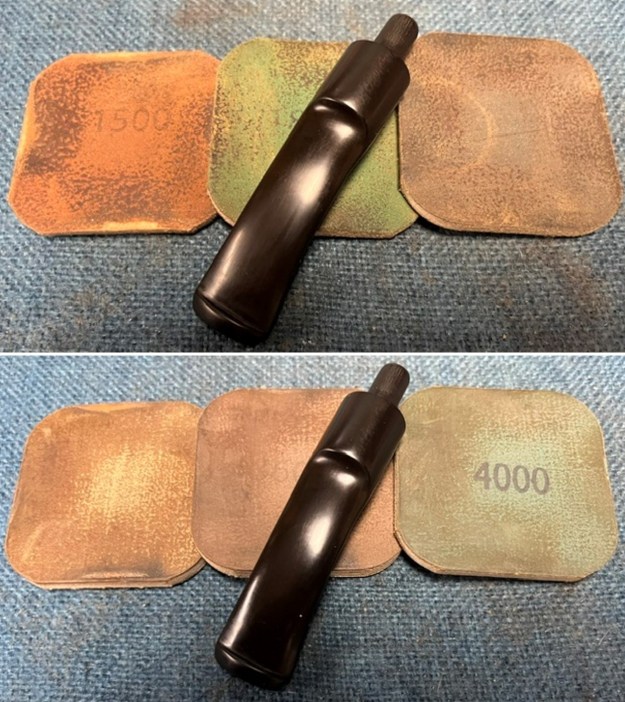
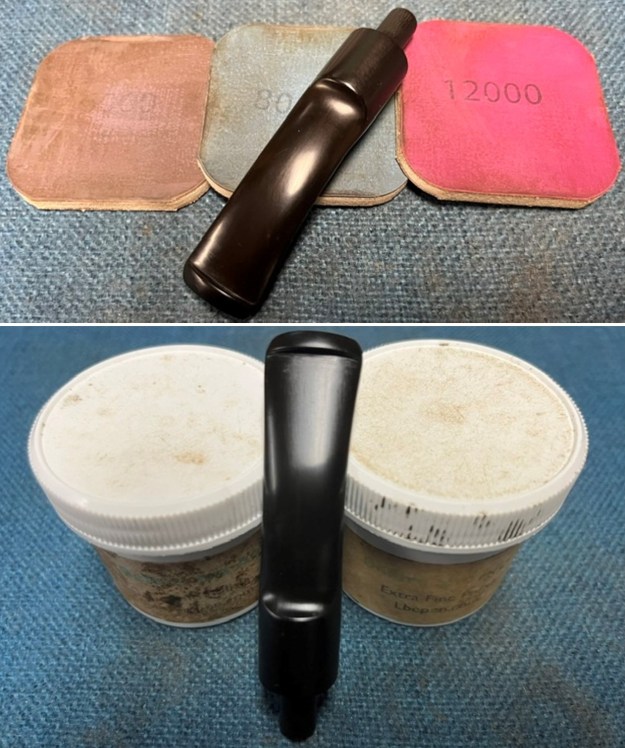
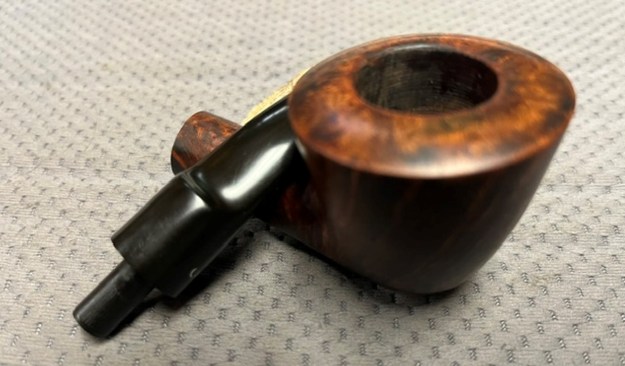
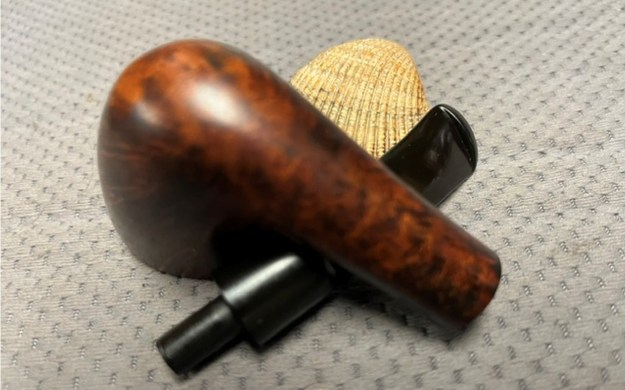
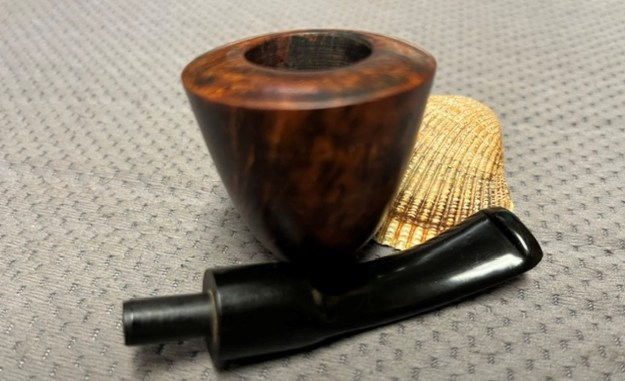
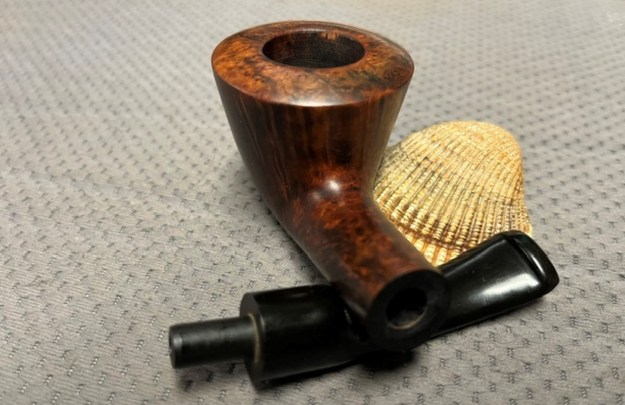
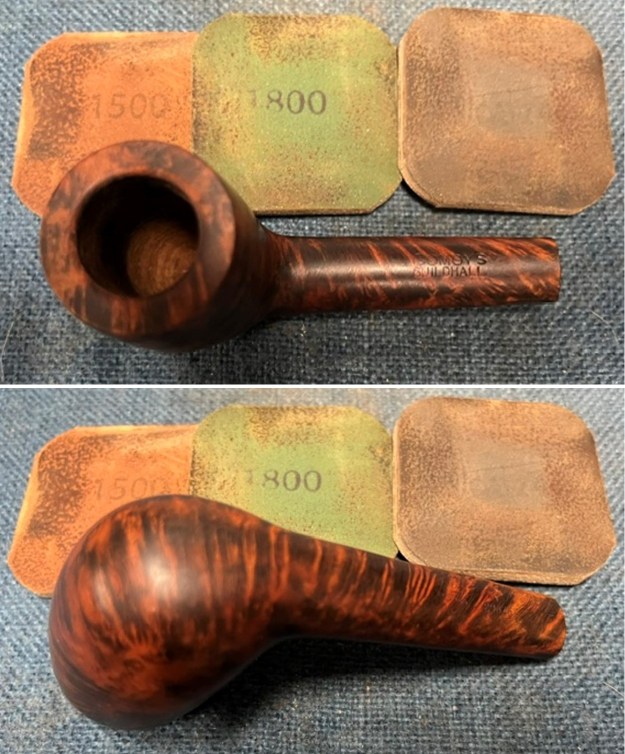
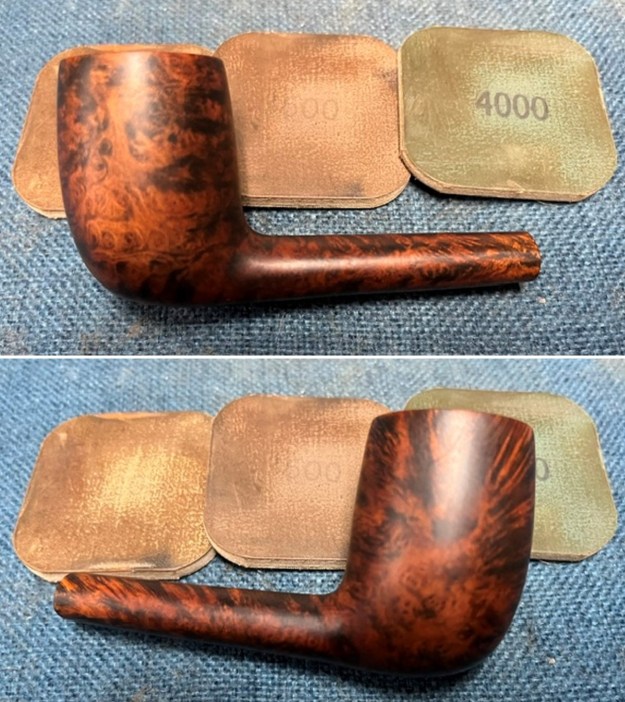
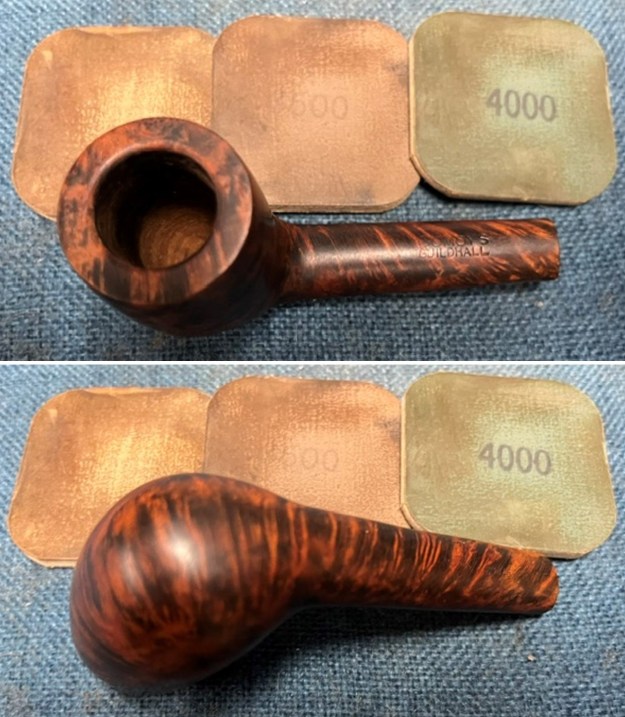
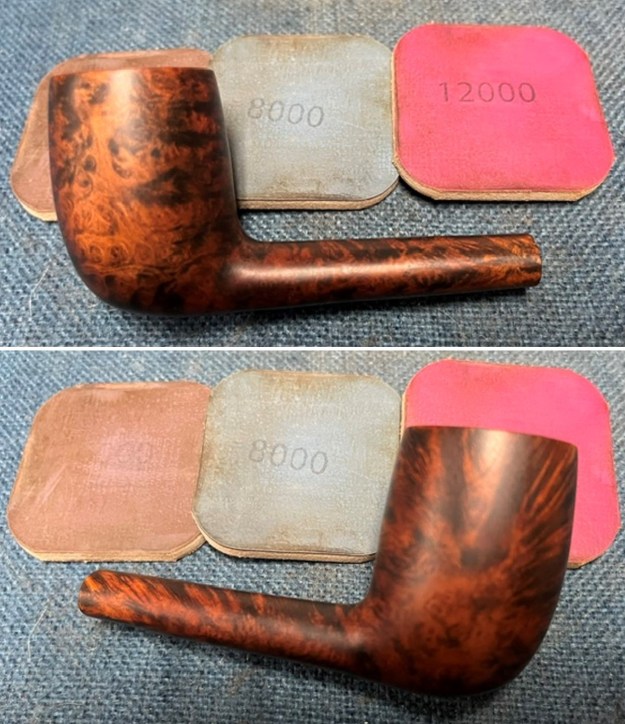
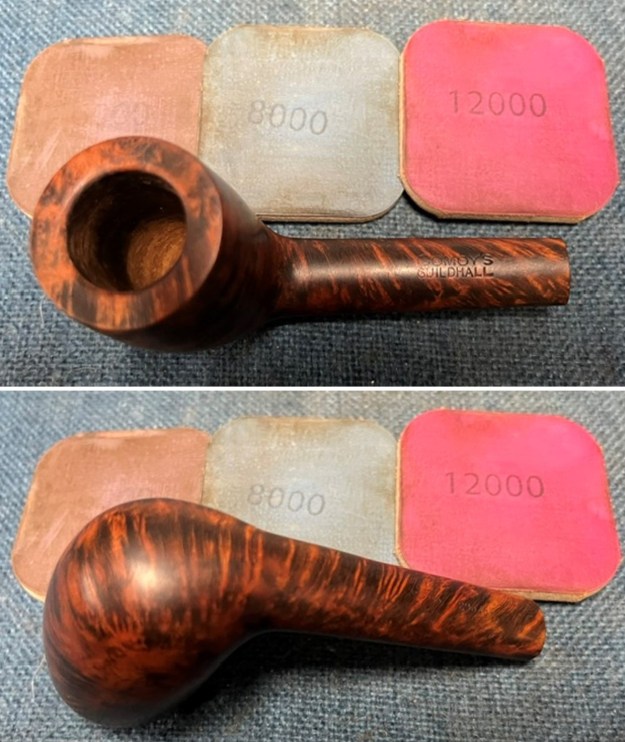
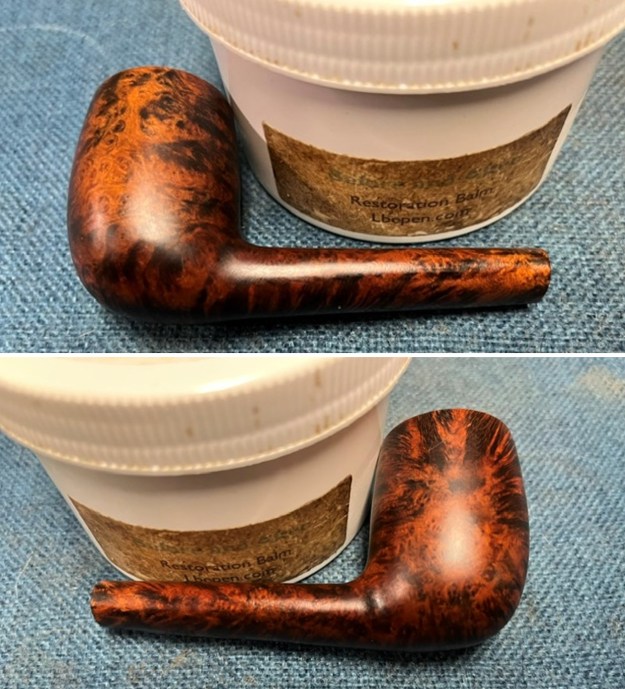
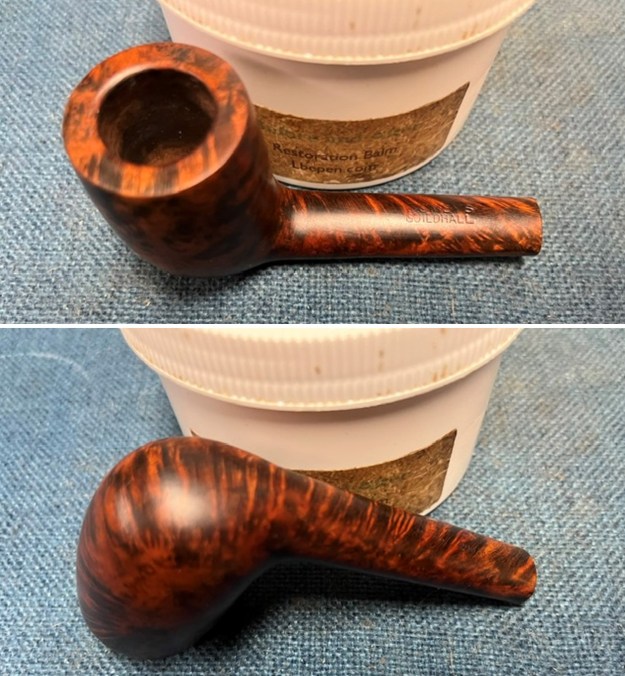
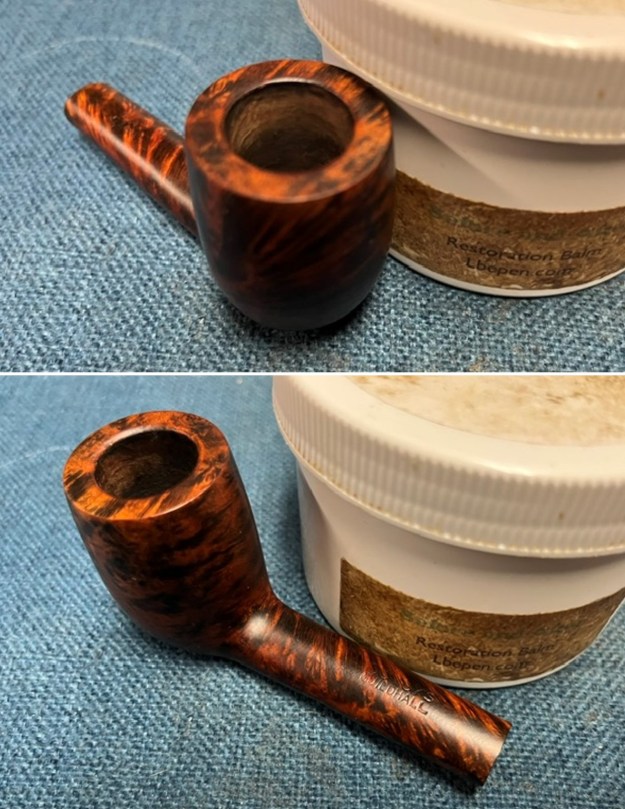
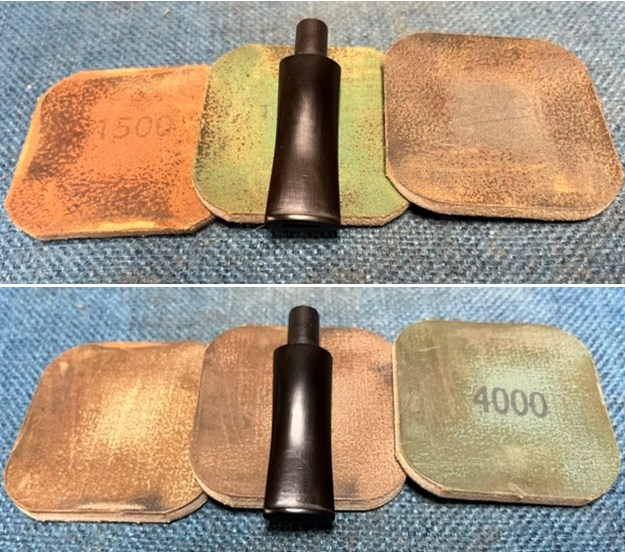
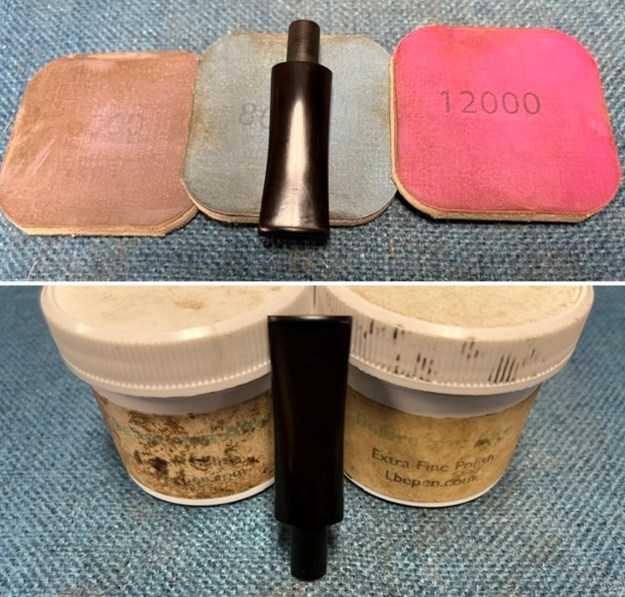
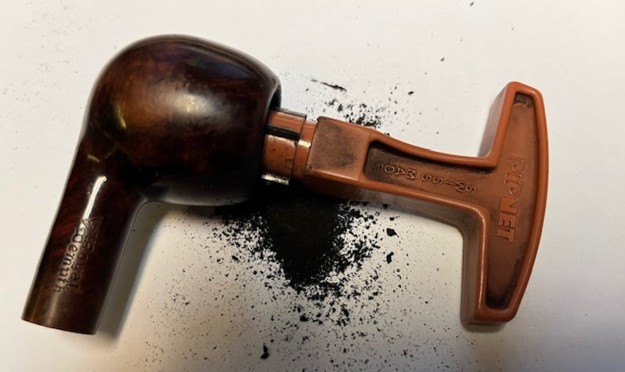
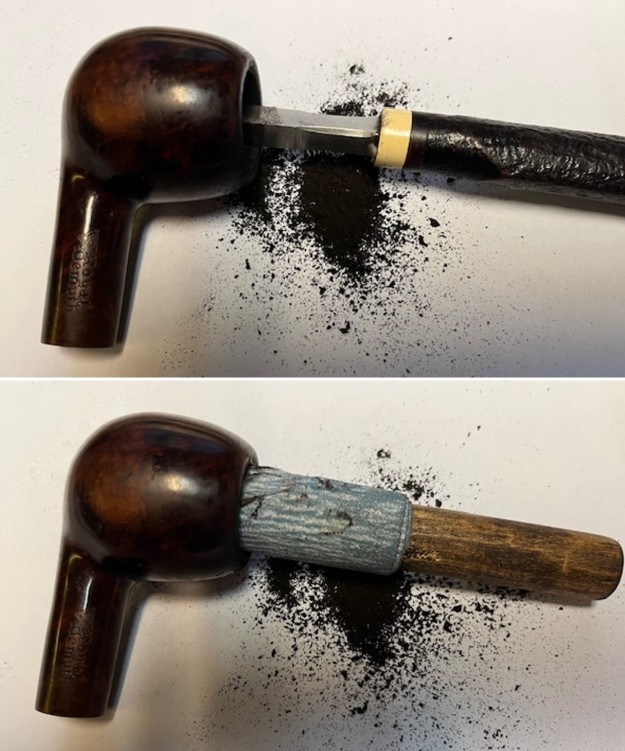
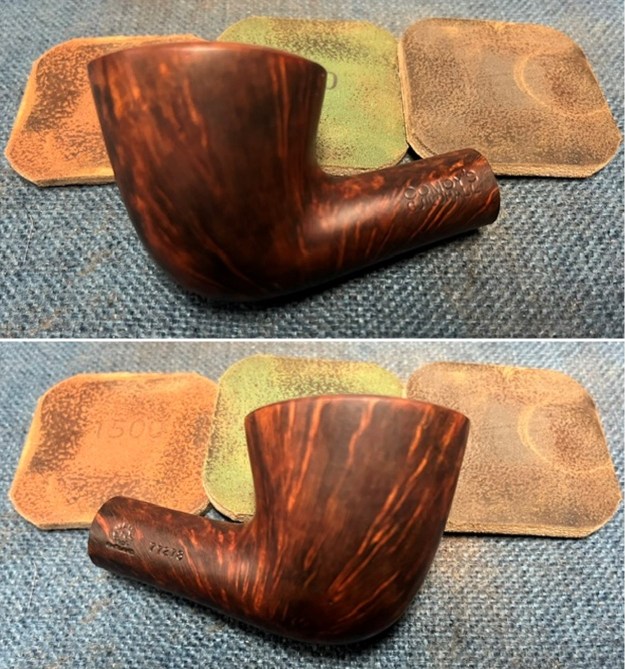
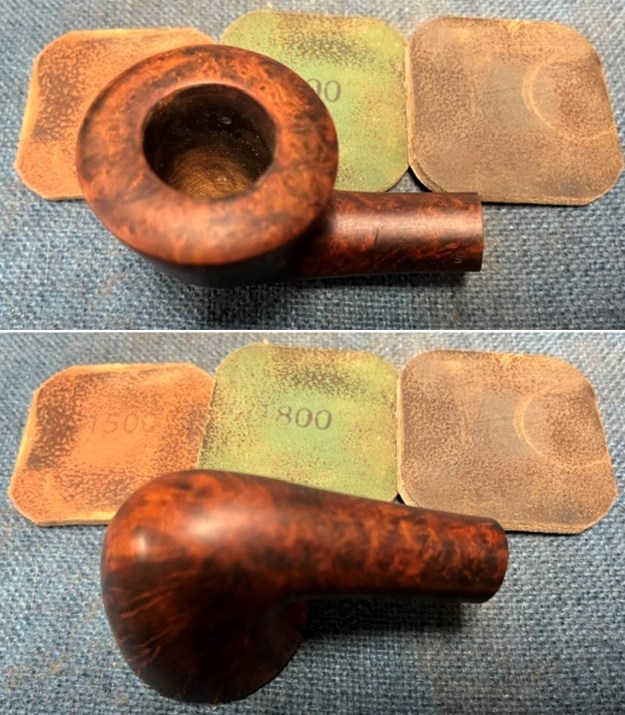
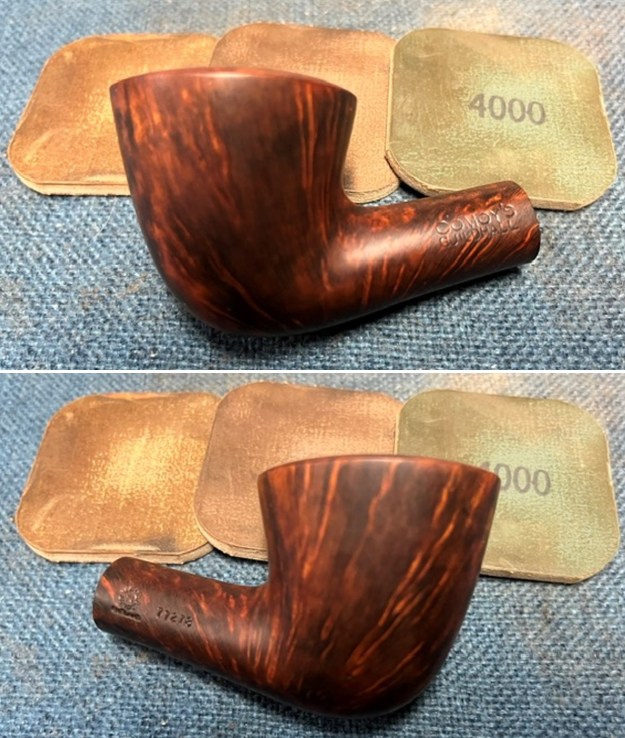
Jeff carefully reamed this Comoy’s Guildhall Dublin with a PipNet pipe reamer and then cleaned up the inside of the bowl with a Savinelli Fitsall Pipe Knife. He scrubbed the briar with undiluted Murphy’s Oil Soap and a tooth brush to remove the grime on the rim top and bowl sides. He scrubbed the internals of the shank and stem with pipe cleaners, cotton swabs, shank brushes and alcohol until the airways were clean and the pipe smelled fresh. He scrubbed the stem with Soft Scrub to remove the oxidation and then let it soak in Briarville’s Pipe Stem Deoxidizer. He rinsed it with warm water when he took out of the soak. The pipe looked much better once the bowl and stem were clean. Before I started my part of the work I took photos of the pipe. It is a pretty pipe. I took close up photos of the bowl and the rim top to show the condition. It looked better and the inner edge and top were in very good condition. I also took photos of both sides of the stem to give a sense of the condition of both sides at the button. There were light tooth marks on both sides ahead of the button.I took photos of the stamping on the sides of the shank and stem. It reads as noted above and is very clear and readable. The C logo on the stem is in excellent condition. I took the stem off the shank and took photos of the pipe to give a sense of its beauty and proportions. I polished the bowl and rim top with micromesh sanding pads – dry sanding with 1500-12000 grit pads and wiped down the bowl down with a damp cloth after each sanding pad. I rubbed the bowl and shank down with Before & After Restoration Balm. I worked it into the surface of the bowl sides and shank with my fingertips to get it into the grain. The product works to clean, enliven and protect the briar. I let the balm sit for a little while and then buffed with a cotton cloth to raise the shine. The Balm did its magic and the grain stood out. I set the bowl aside and turned to the stem. I polished it with micromesh sanding pads – dry sanding with 1500-12000 grit sanding pads. I wiped it down after each sanding pad with Obsidian Oil. I polished it with Before & After Pipe Stem Polish – both Fine and Extra Fine. I gave it another coat of Obsidian Oil and set it aside to dry. I am excited to put the final touches on this interesting piece of Comoy’s Pipe History. It is a beautiful Comoy’s Guildhall 77278 Dublin shaped pipe. I put the pipe back together and buffed it with Blue Diamond on the buffing wheel. I gave the bowl and the stem multiple coats of carnauba wax. I hand buffed the pipe with a clean buffing pad to raise the shine. It is fun to see what the polished bowl looks like with beautiful grain on the bowl sides, top and bottom. The polished black vulcanite stem combined with the bowl to make a stunning pipe. This older Comoy’s Guildhall 77278 Dublin is great looking and the pipe feels great in my hand. It is light and well balanced. Have a look at it with the photos below. The dimensions are Length: 5 ½ inches, Height: 1 ¾ inches, Outside diameter of the bowl: 1 ¾ inches, Chamber diameter: ¾ of an inch. The weight of the pipe is 47 grams/1.66 ounces. I will be adding it to the British Pipemakers Section of the rebornpipes store shortly. If you want to add it to your collection let me know. Thanks for walking through the restoration with me as I worked over this pipe. Thanks to each of you who are reading this blog.

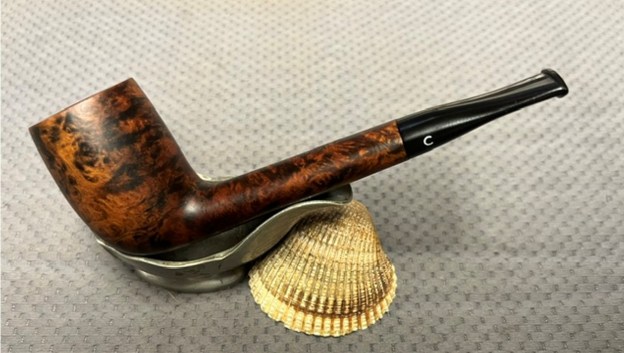
Breathing New Life into a Comoy’s Guildhall 29646 Canadian E


by Steve Laug

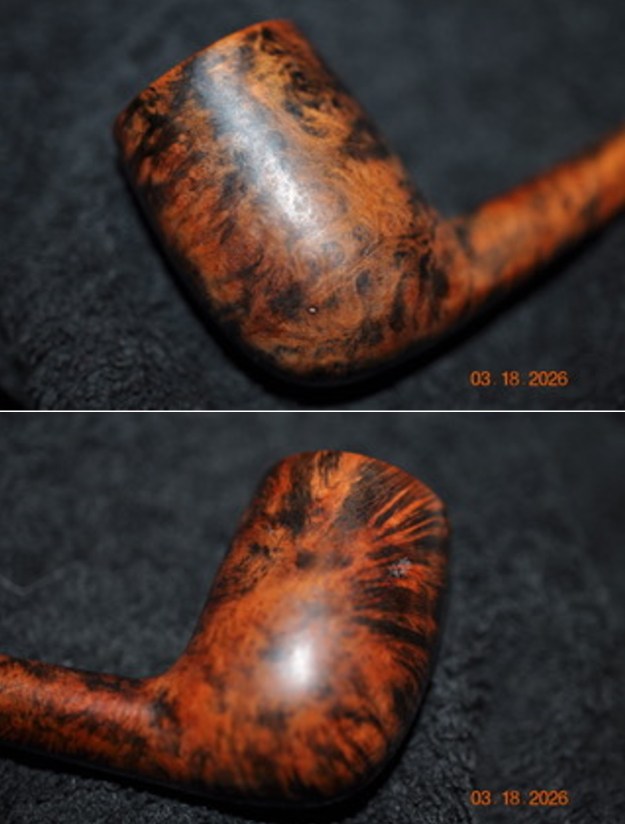
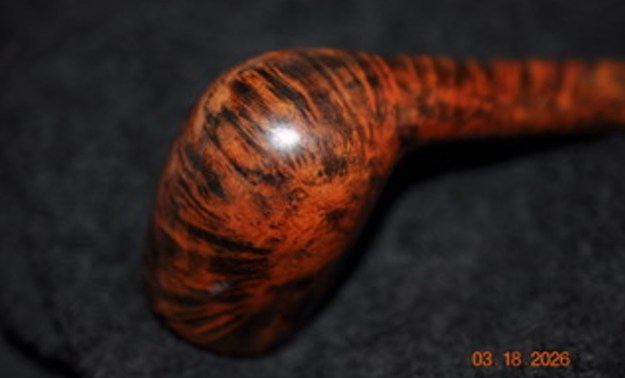
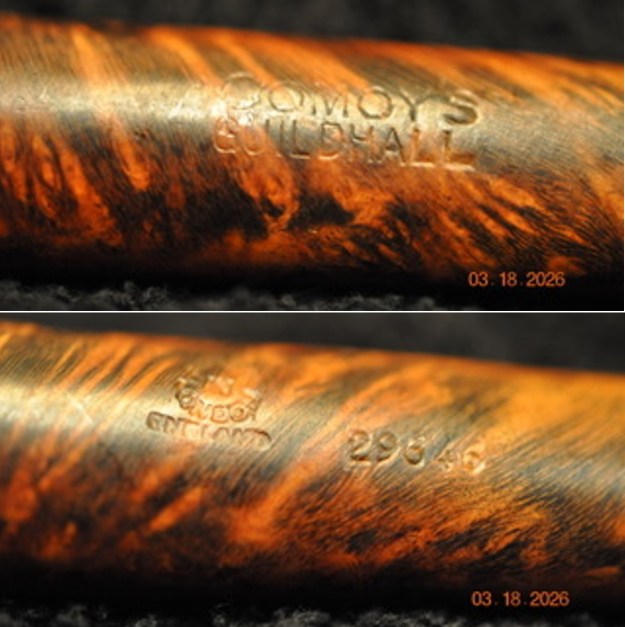
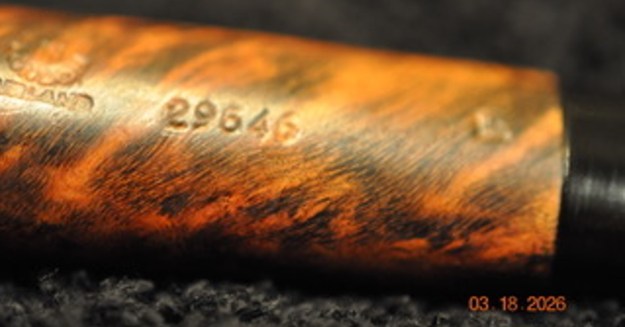
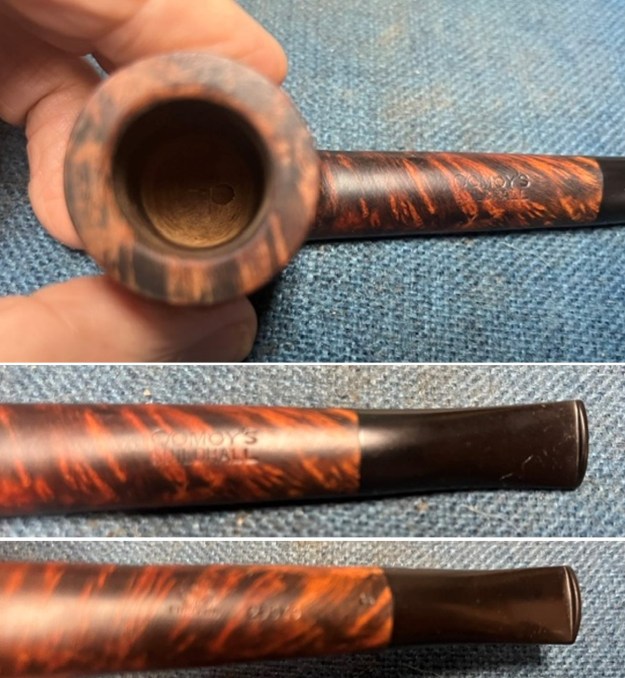
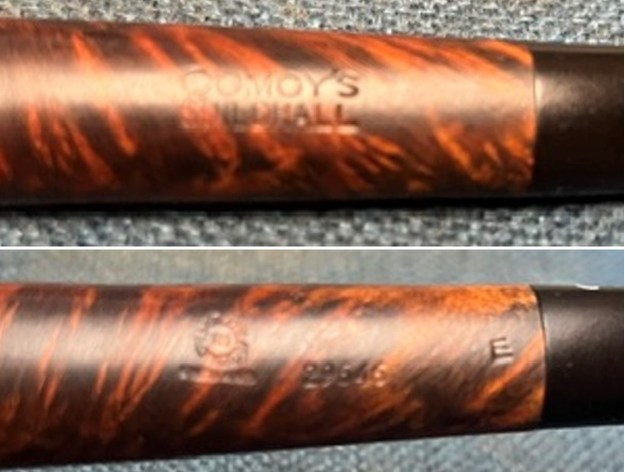
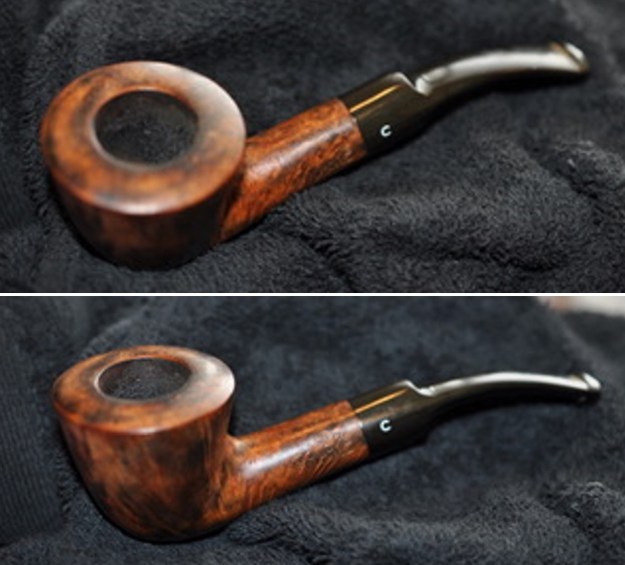
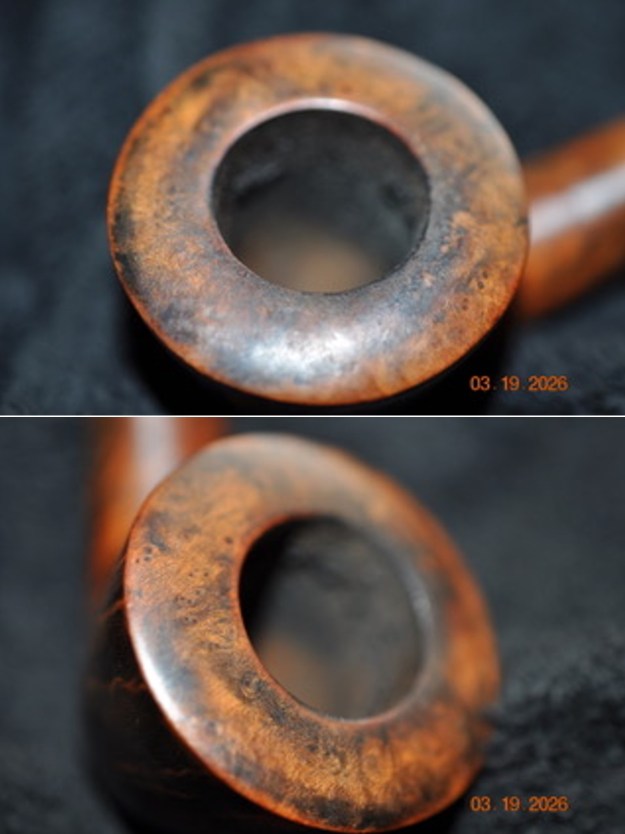
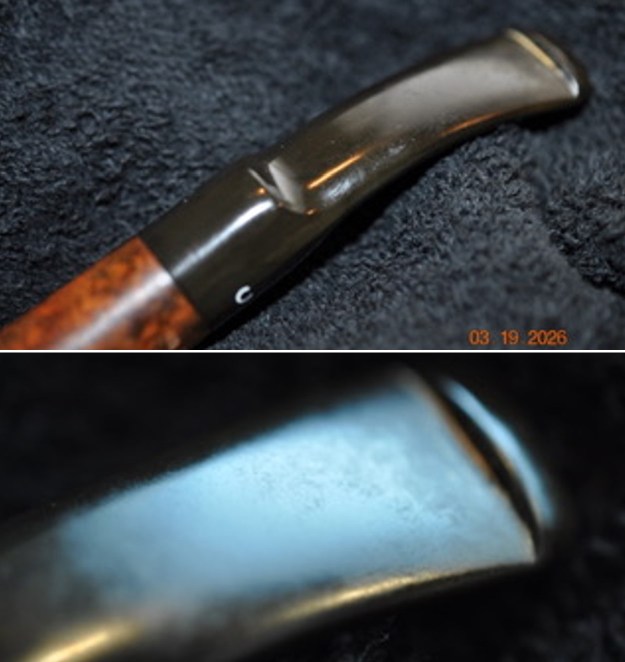
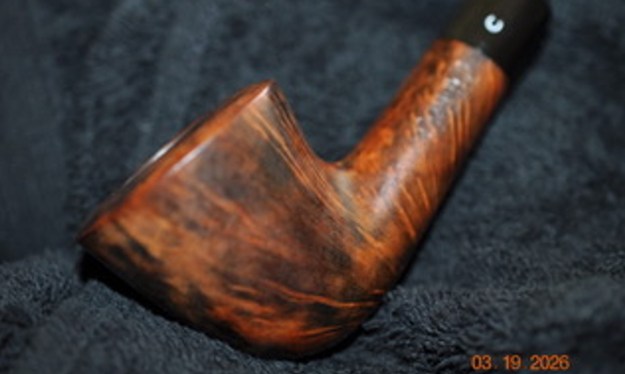
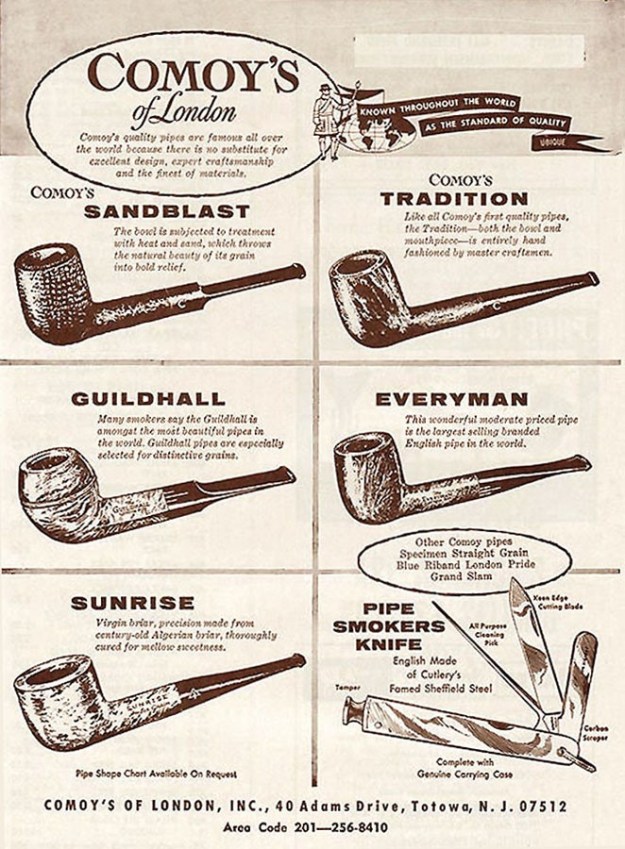
This darker smooth Canadian an oval taper stem was purchased on 01/20/2026 from a Facebook seller in Quaker Town, Pennsylvania, USA. It is a great looking Short Canadian with a dark, smooth finish.  The stem is a vulcanite oval taper stem. The bowl is stained with a contrast of blacks and browns that highlight the grain around the bowl and shank. It is stamped on the top side of the shank and reads Comoy’s [over] Guildhall, both in upper case letters. This is distinct from a line of seconds that Comoy’s put out called The Guildhall. The underside of the shank is stamped with Made in London in a circle over England followed by the shape number 29646. There is an upper case E next to the shank/stem junction. The bowl had a thick cake and some tobacco debris on the walls. There was an overflow of lava on the rim toop that was heavier toward the back of the bowl. There was grime ground into the finish which left the finish looking quite dull. The oval, taper vulcanite stem has a Comoy’s C logo on the left side. There are light tooth marks and chatter on both sides of the stem ahead of the button. Jeff took photos of the pipe before he started his work on it.  He took photos of the rim top to show the condition of the top and edges of the bowl. It is dull and has the lava on the rim top and bevelled edge of the rim. It is uniquely a beautiful pipe. The stem had light tooth marks and chatter on both sides ahead of the button. He took photos of the sides and heel of the bowl to show the finish around the bowl and the condition of the pipe. You can see the grime ground into the surface of the briar. The stain combination really makes the grain stand out. I look forward to seeing it once it is clean and polished. He took photos of the stamping on the sides of the shank. It is clear and readable as noted above. The inlaid C stamp on the left side of the stem is also clear and readable. Before I started work on the pipe I wanted to try to understand the stamping. I have worked on many Comoy’s Made “The Guildhall” pipes but this is the first one I have worked on that is stamped Comoy’s Guildhall. I have worked on many that have the circular COM stamp so I knew this one was a pre-Cadogan made pipe by that stamp. The shape number also was a bit a anomaly to me. I am used to two and three digit shape number stamps but I am unfamiliar with the five digit stamp. I knew that 296 was the shape number for a Canadian I was not clear what the final two numbers meant. I turned first two Pipephil’s site to see if I could find information o the pipe in hand (http://www.pipephil.eu/logos/en/logo-g6.html#guildhall). I found a pipe pictured that is similar and has the same stamping. It has the same stamp Comoy’s Guildhall. The C on the stem is identical as well. It identifies that the pipe is from the Comoy’s Guildhall line. There was no further information. I have included the screen capture below.From there I turned to Pipedia to see if there was any information listed on the Comoy’s article (https://pipedia.org/wiki/Comoy%27s). There was a flyer on the site that has Guildhall listed on it and gives a brief description of the pipe. Have a look. Besides other information it says that Guildhall pipes are “especially selected for distinctive grains.” The pipe I am working on certainly has distinctive grain. I have included a screen capture of the flyer below.I did a bit more digging on Google and found that Charles Lemon of dadspipes had written a blog on his restoration of a Guildhall 28 Billiard (https://dadspipes.com/2018/12/14/freshening-a-pre-cadogan-comoys-guildhall-28-billiard/). I quote from that blog below. I have highlighted some pertinent portions.
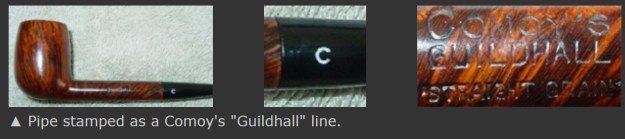
The pipe is marked “COMOY’S” over “GUILDHALL” on the left flank, and “28” on the right flank along with a circular “MADE IN LONDON” over “ENGLAND” Country of Manufacture (COM) stamp. There is also an “F” stamped on the underside of the shank near the junction with the stem, which bears the classic Comoy’s three-piece C logo inset on its left flank.

These stamps tell me that this Guildhall was made sometime after World War II and before Comoy’s merged with Cadogan in 1980. The “F” stamp indicates a Fishtail bit.

One side note here – Do not confuse this Comoy’s Guildhall with the seconds line of similar name. “Comoy’s Guildhall” was a bona fide series within the Comoy’s lineup for a time, while the “Guildhall” seconds line was distinguished by a lack of the Comoy’s name and three parallel silver bars inset in the stem, similar to those of “The Everyman” seconds pipes.

I knew that Guildhall was a higher grade early pipe and was made after WWII and prior to the merger with Cadogan in 1980. It is also clear that it is a separate line from the Comoy’s The Guildhall pipes.

I also found a link to vkpipes that gave a little more information. I have included the link below as well as short quote on the line (https://vkpipes.com/pipeline/comoys-guildhall-giant-309/).

An amazing Comoy’s product made during the last pre-Cadogan period (1950-70’s). Among others Comoy’s brands and subbrands Guildhalls are always an object of a special interest and attraction of collectors from many countries – who knows, because of the glory and authority of the manufacturer or because of a mysterious aura of the three metallic stripes?

I now knew that Guildhall was a line of Comoy’s pipes put out that was made at the latest the late 1970s. I could not find any information on the five digit shape number or the letter E on the underside of the shank.

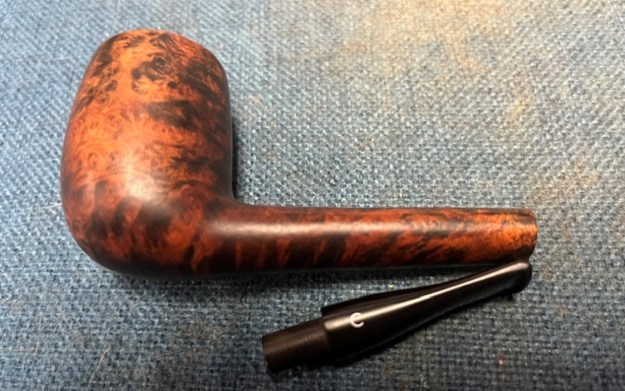
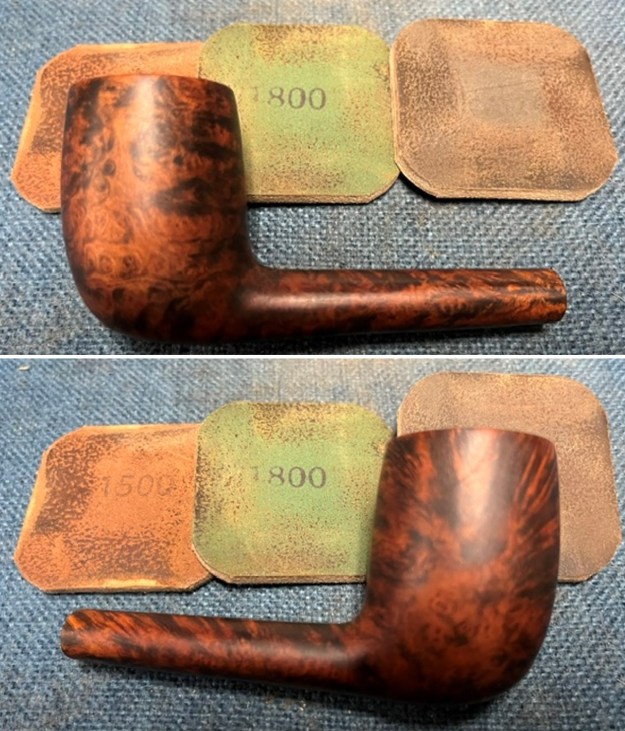
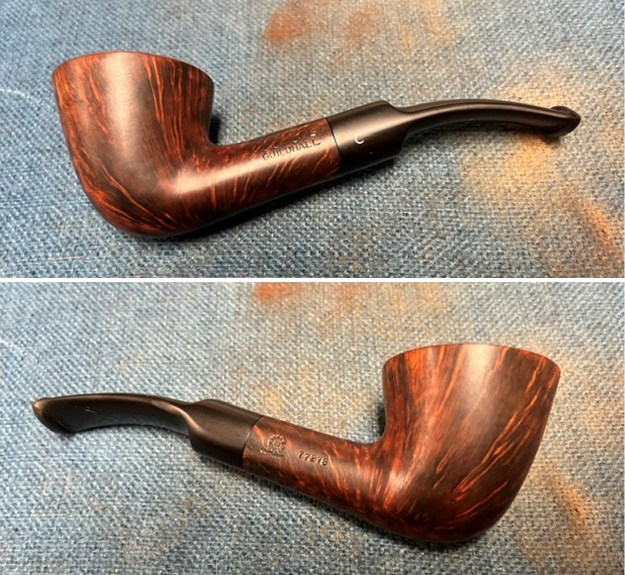
Jeff carefully reamed this Comoy’s Guildhall Canadian with a PipNet pipe reamer and then cleaned up the inside of the bowl with a Savinelli Fitsall Pipe Knife. He scrubbed the briar with undiluted Murphy’s Oil Soap and a tooth brush to remove the grime on the rim top and bowl sides. He scrubbed the internals of the shank and stem with pipe cleaners, cotton swabs, shank brushes and alcohol until the airways were clean and the pipe smelled fresh. He scrubbed the stem with Soft Scrub to remove the oxidation and then let it soak in Briarville’s Pipe Stem Deoxidizer. He rinsed it with warm water when he took out of the soak. The pipe looked much better once the bowl and stem were clean. Before I started my part of the work I took photos of the pipe. It is a pretty pipe. I took close up photos of the bowl and the rim top to show the condition. It looked better and the inner edge and top were in very good condition. I also took photos of both sides of the stem to give a sense of the condition of both sides at the button. There were light tooth marks on both sides ahead of the button.I took a photo of the stamping on the left side of the shank and stem. It reads as noted above and is very clear and readable. The stamping on the shank is faint but readable. I took the stem off the shank and took photos of the pipe to give a sense of its beauty and proportions. I polished the smooth patches on the bowl and rim top with micromesh sanding pads – dry sanding with 1500-12000 grit pads and wiped down the bowl down with a damp cloth after each sanding pad. I rubbed the bowl and shank down with Before & After Restoration Balm. I worked it into the surface of the bowl sides and shank with my fingertips to get it into the grain. The product works to clean, enliven and protect the briar. I let the balm sit for a little while and then buffed with a cotton cloth to raise the shine. The Balm did its magic and the grain stood out. I set the bowl aside and turned to the stem. I polished it with micromesh sanding pads – dry sanding with 1500-12000 grit sanding pads. I wiped it down after each sanding pad with Obsidian Oil. I polished it with Before & After Pipe Stem Polish – both Fine and Extra Fine. I gave it another coat of Obsidian Oil and set it aside to dry. I am excited to put the final touches on this interesting piece of Comoy’s Pipe History. It is a beautiful Comoy’s Guildhall 29646 Canadian E shaped pipe. I put the pipe back together and buffed it with Blue Diamond on the buffing wheel. I gave the bowl and the stem multiple coats of carnauba wax. I hand buffed the pipe with a clean buffing pad to raise the shine. It is fun to see what the polished bowl looks like with beautiful grain on the bowl sides, top and bottom. The polished black vulcanite stem combined with the bowl to make a stunning pipe. This older Comoy’s Guildhall 29646 Canadian is great looking and the pipe feels great in my hand. It is light and well balanced. Have a look at it with the photos below. The dimensions are Length: 5 ¼ inches, Height: 1 ¾ inches, Outside diameter of the bowl: 1 ¼ inches, Chamber diameter: ¾ of an inch. The weight of the pipe is 37 grams/1.27 ounces. I will be adding it to the British Pipemakers Section of the rebornpipes store shortly. If you want to add it to your collection let me know. Thanks for walking through the restoration with me as I worked over this pipe. Thanks to each of you who are reading this blog.
New Life for a WDC Royal Demuth Imported Root Briar 60 Apple Filter Pipe


by Steve Laug

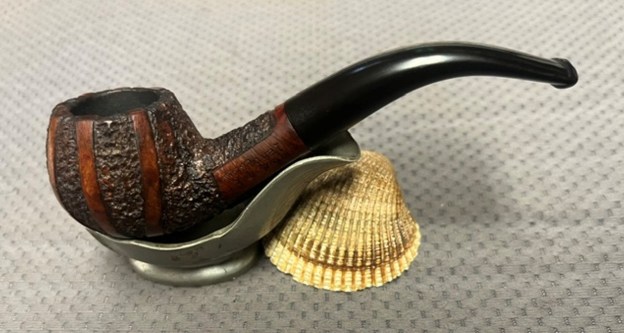
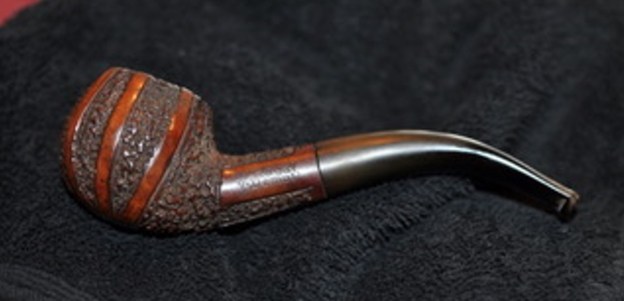
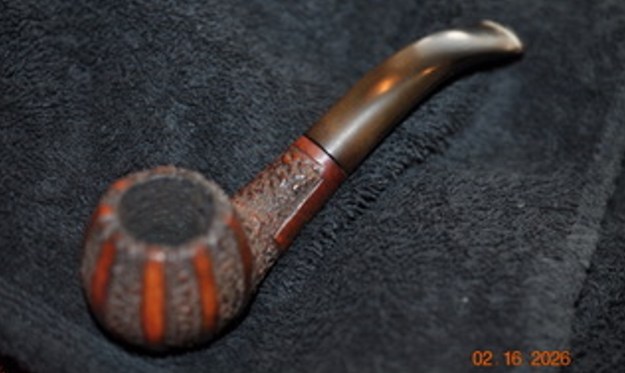
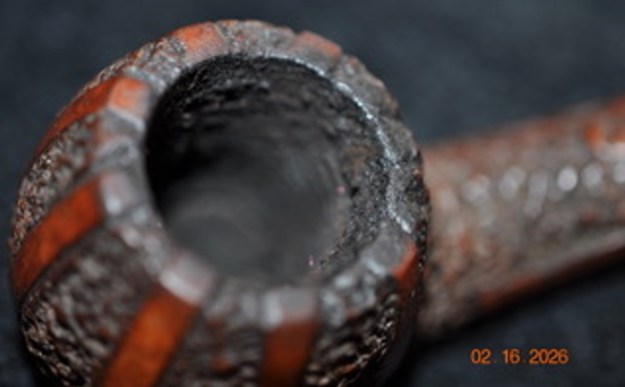
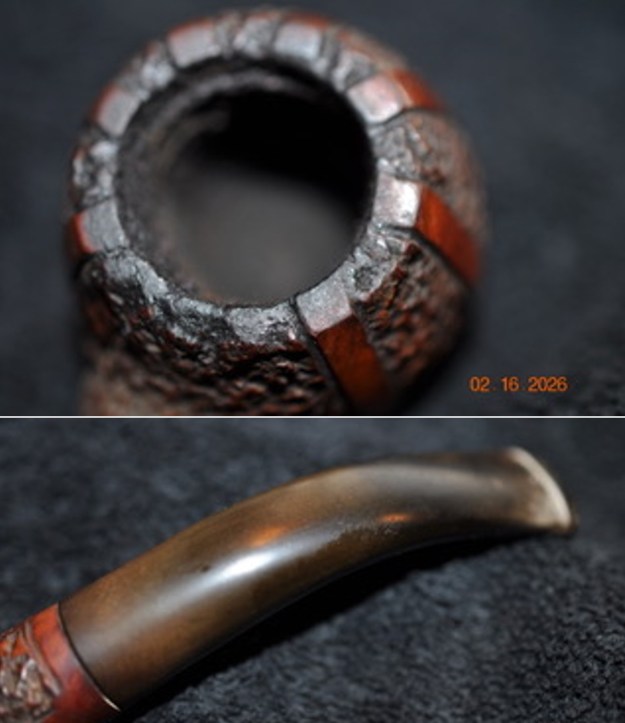
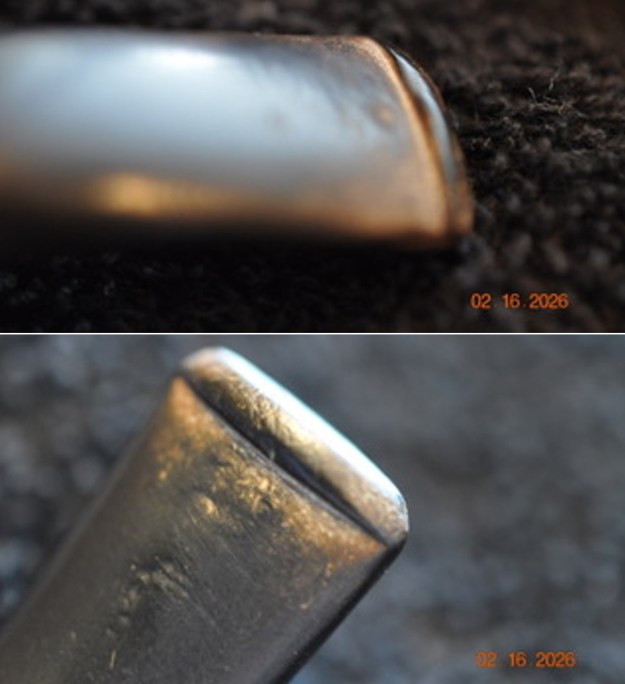
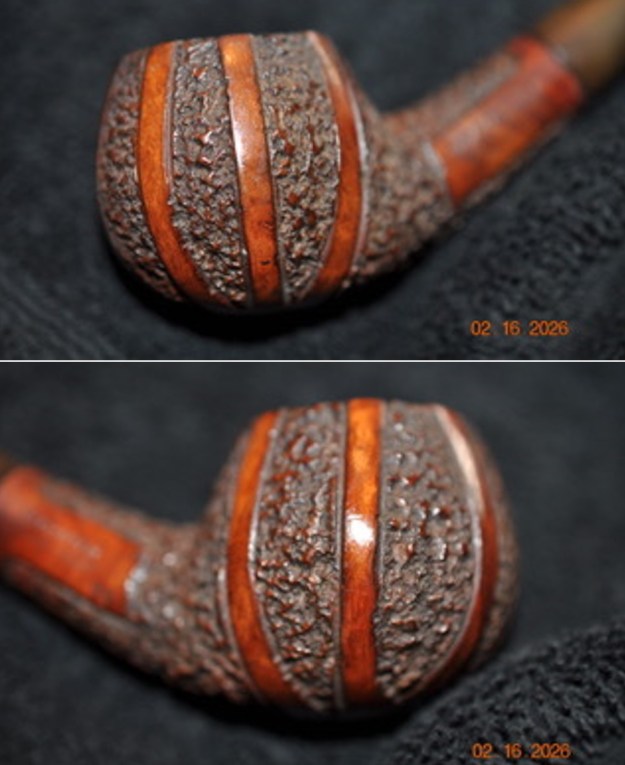
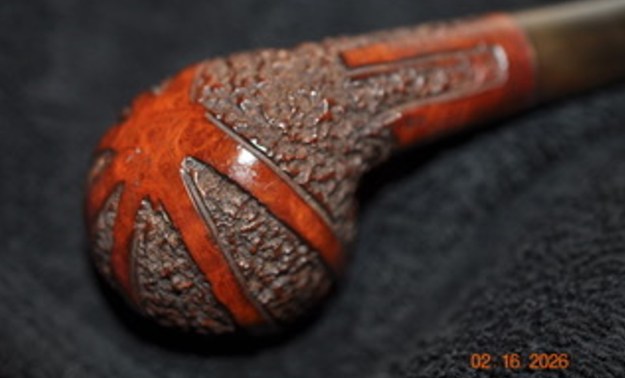
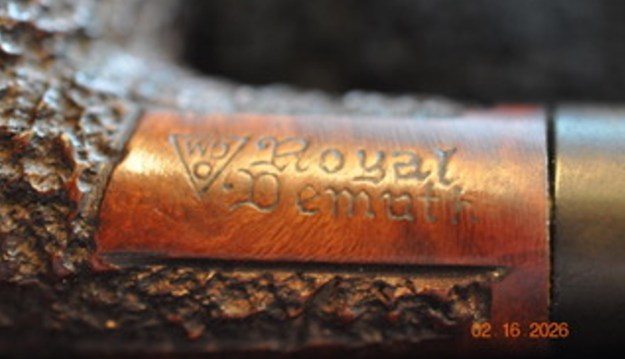
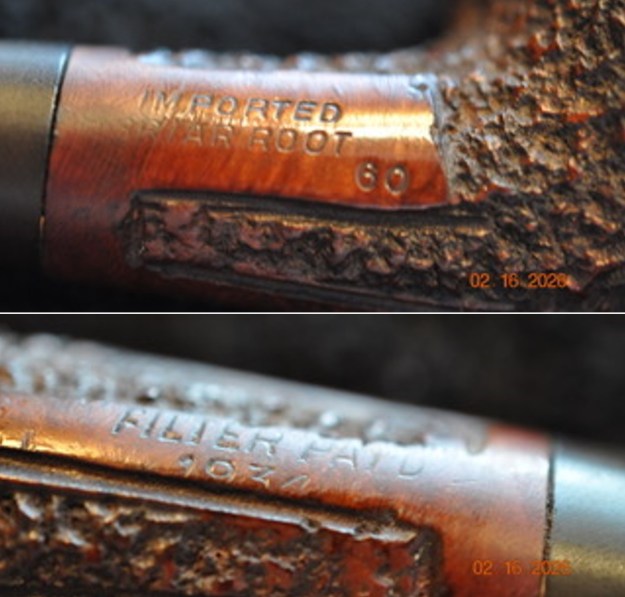
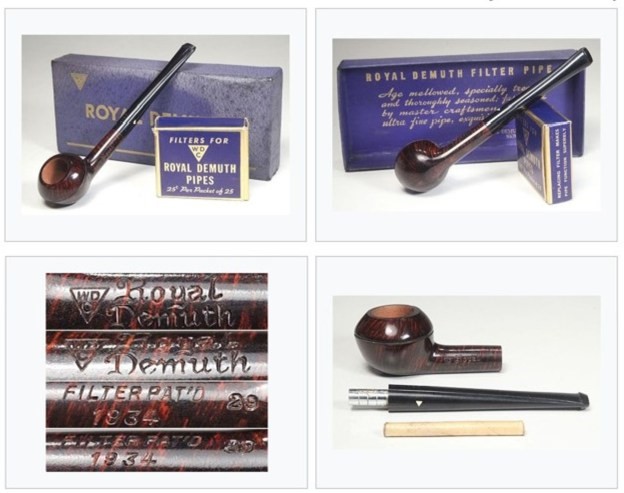
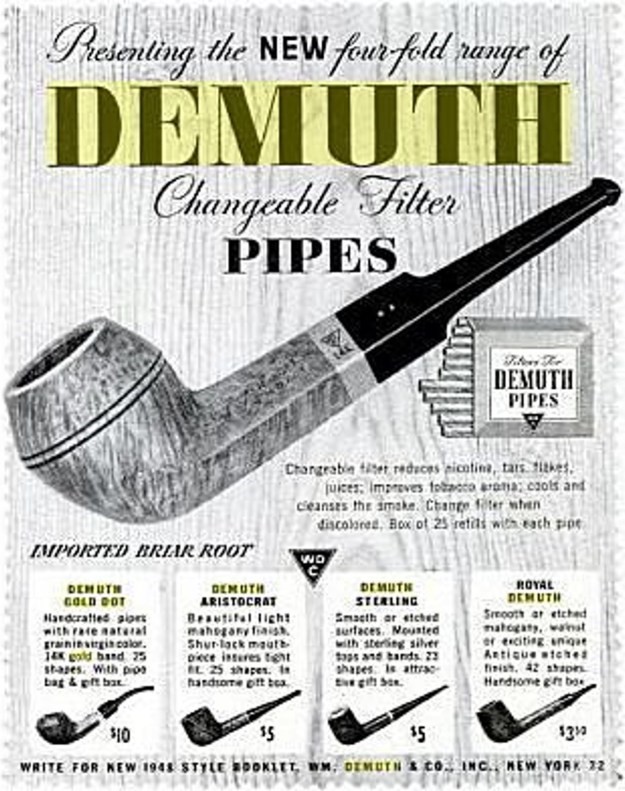
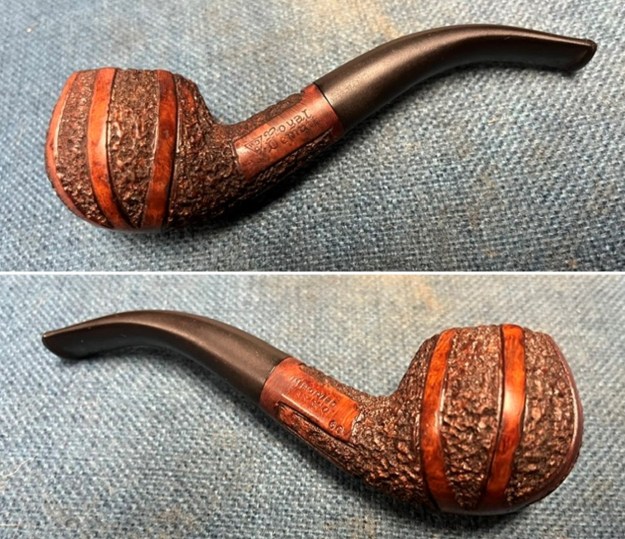
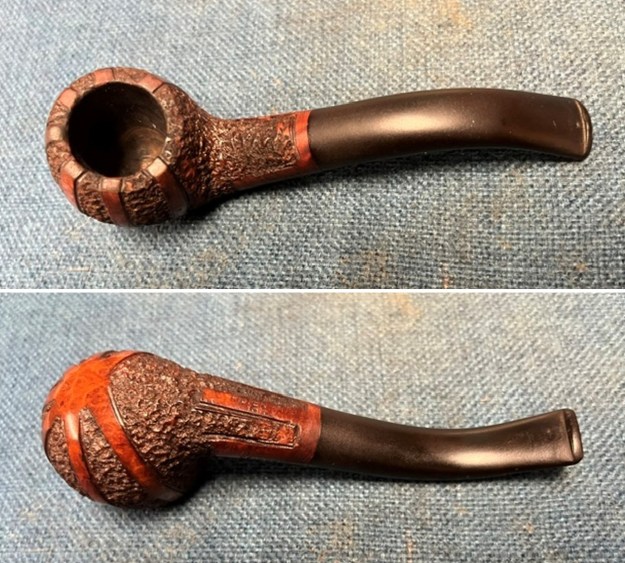
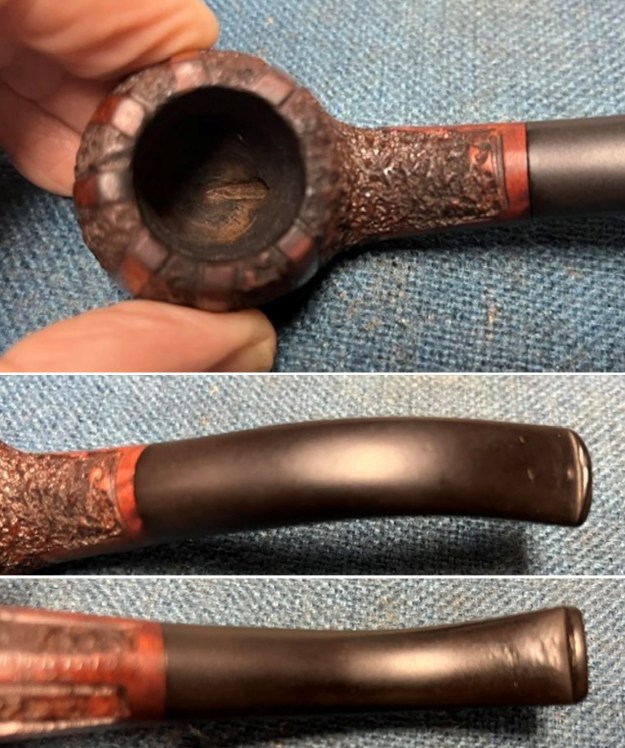
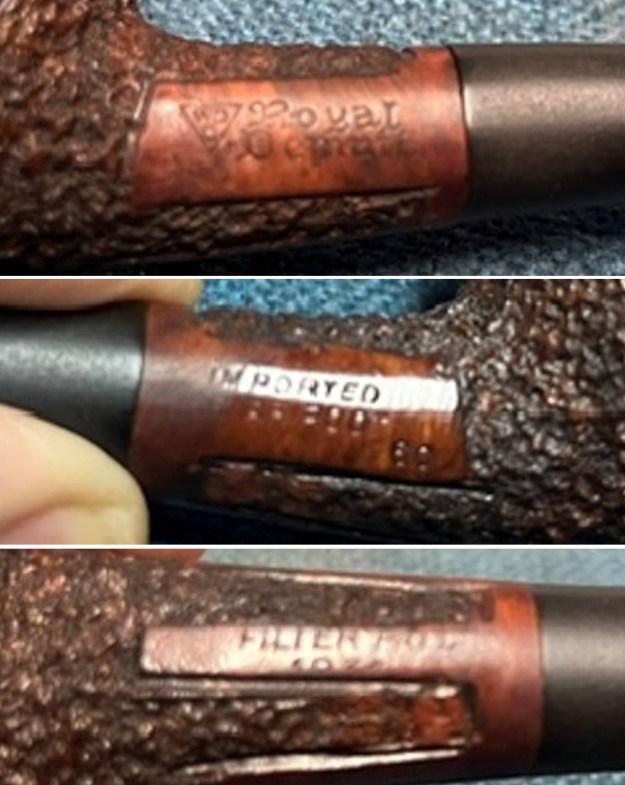
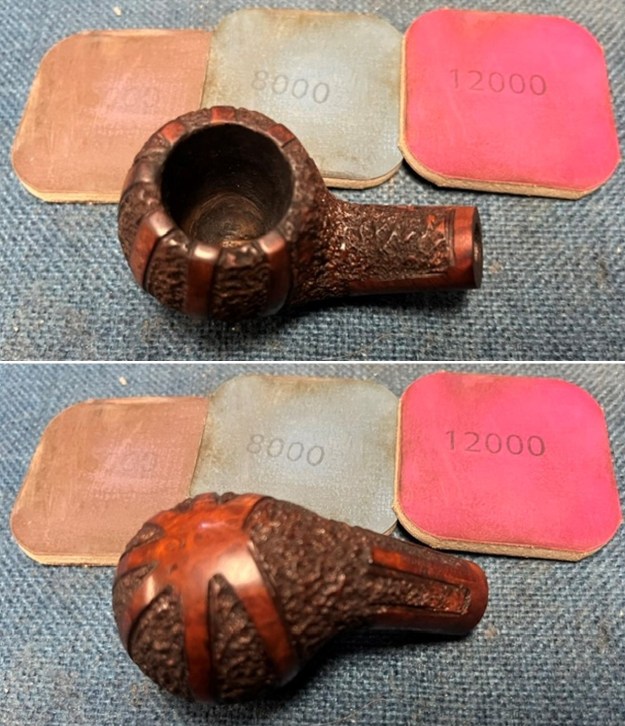
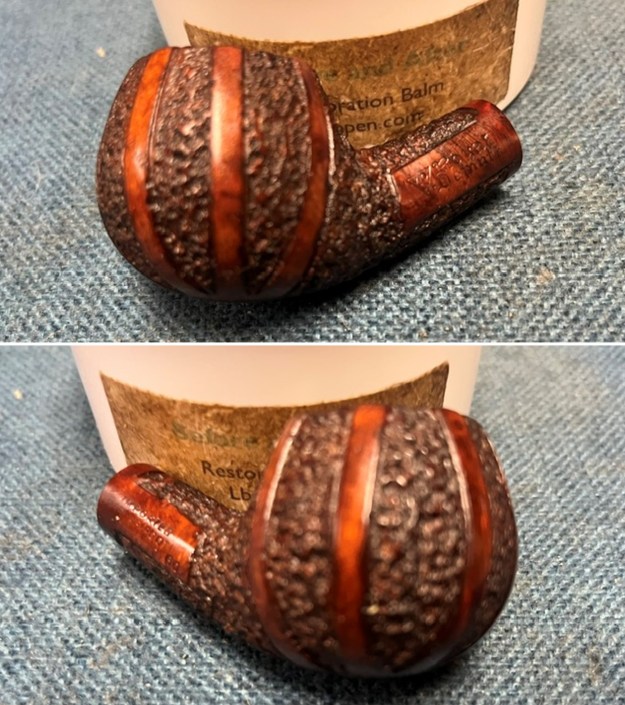
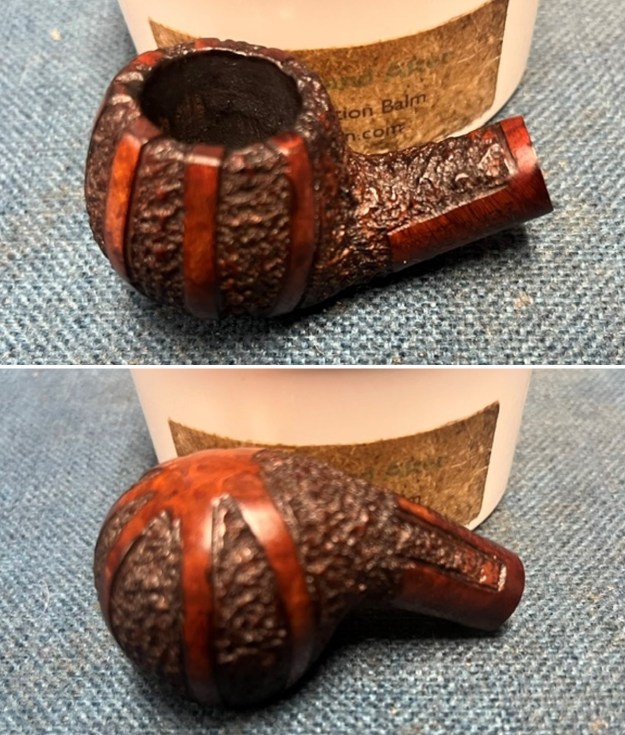
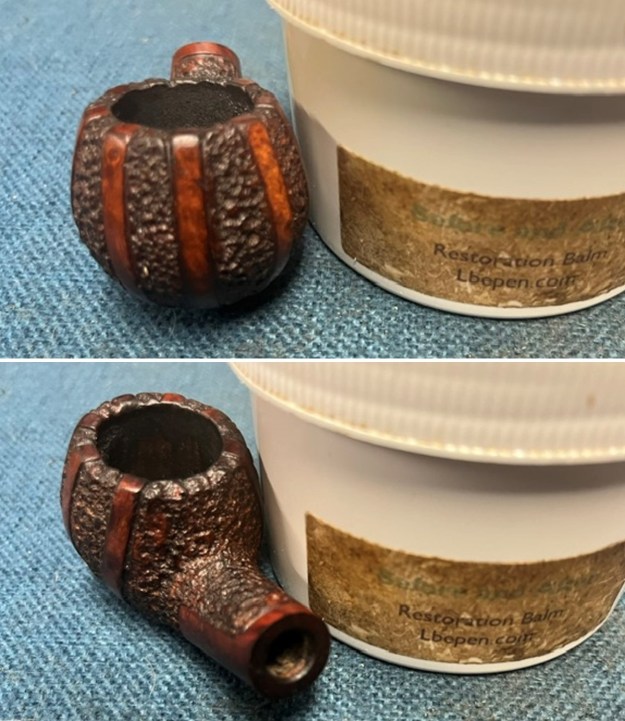
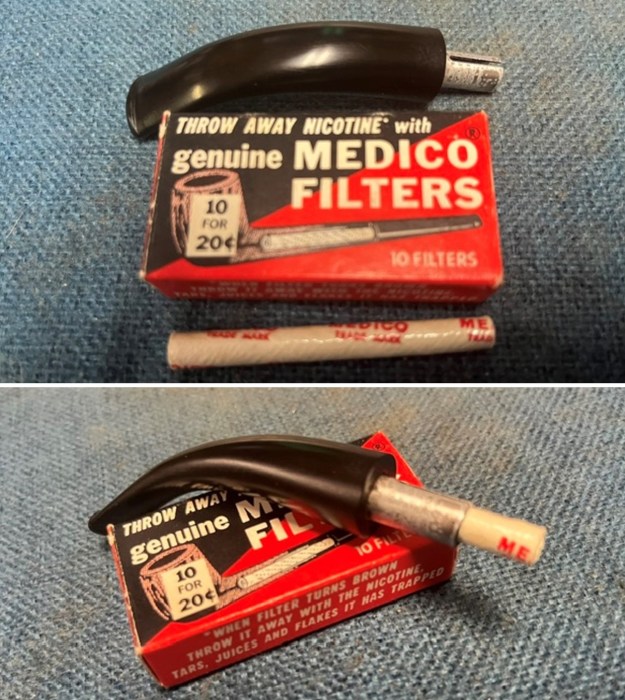
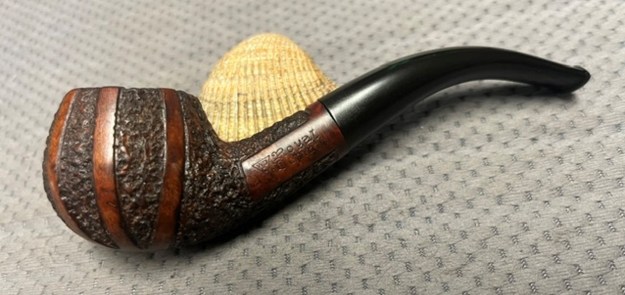
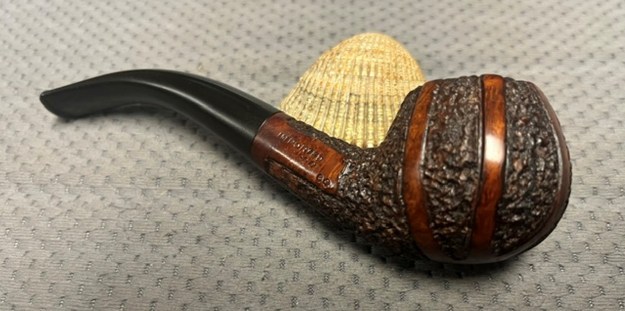
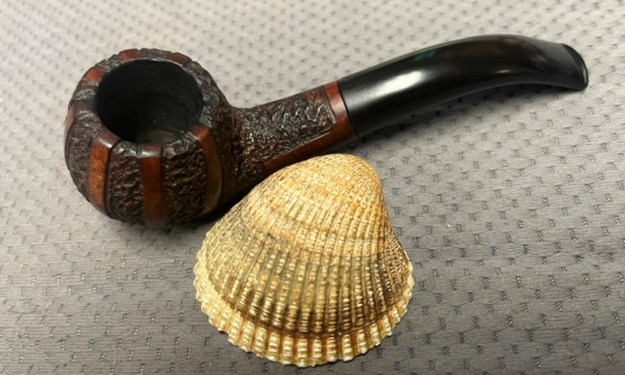
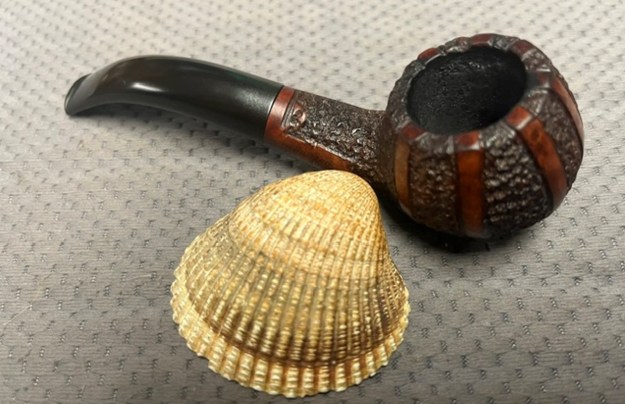
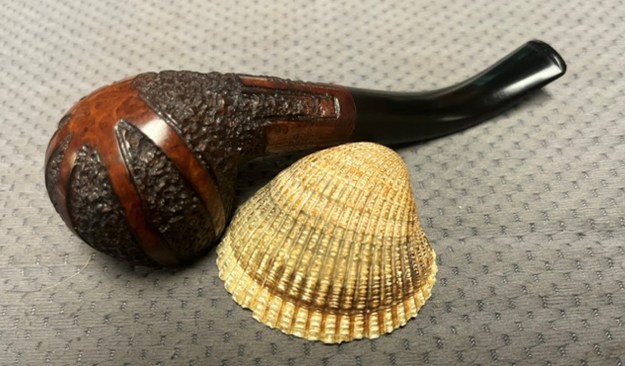
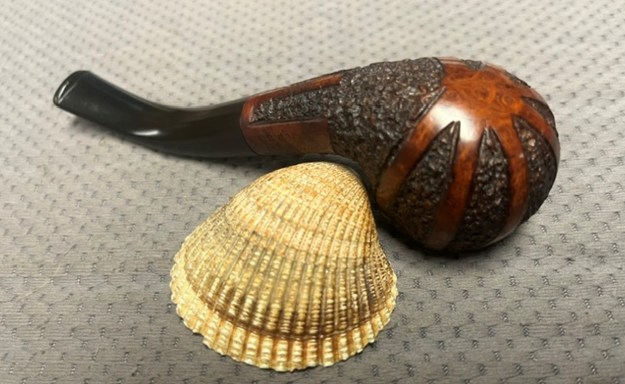
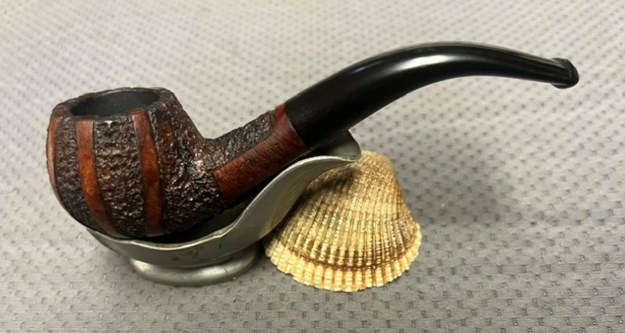
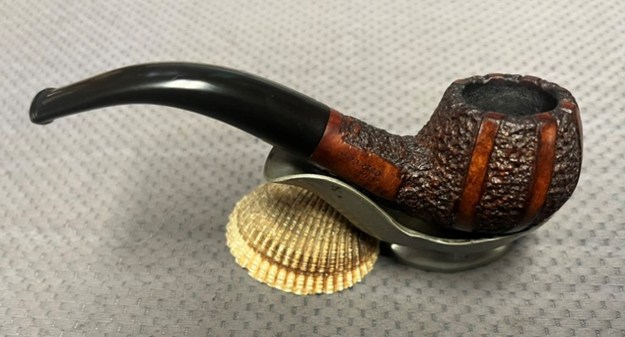
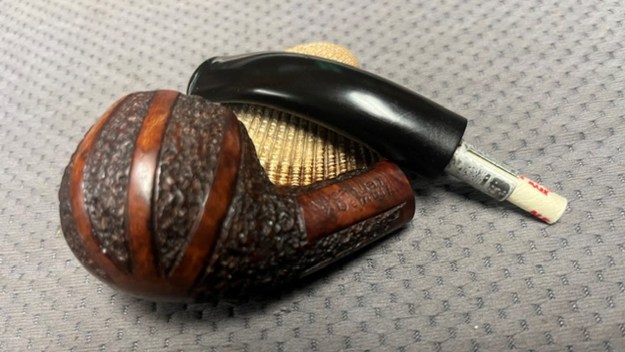
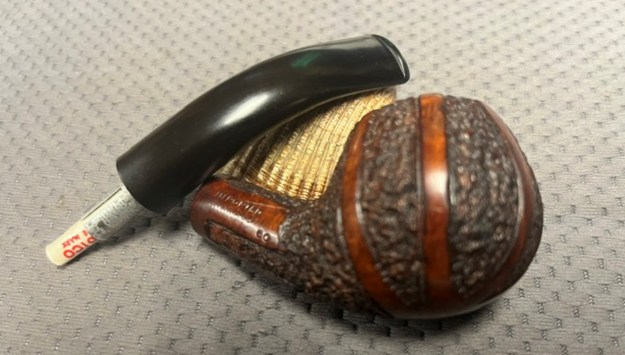
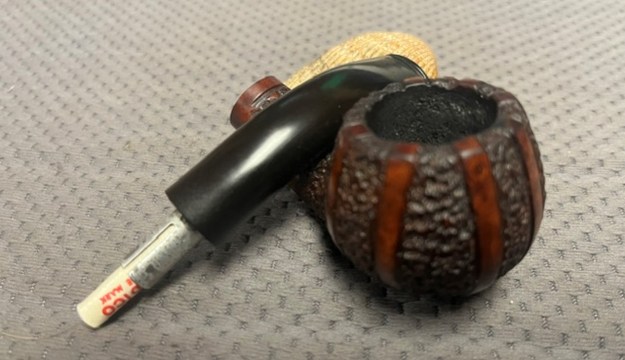
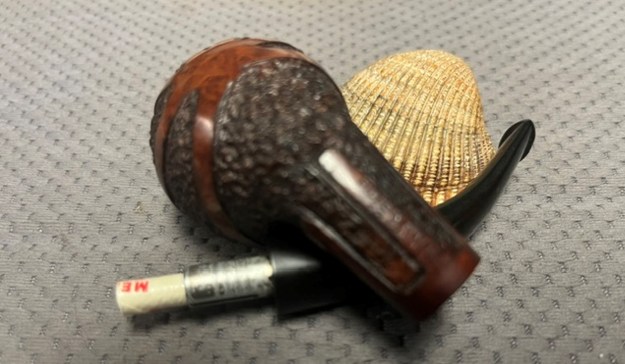
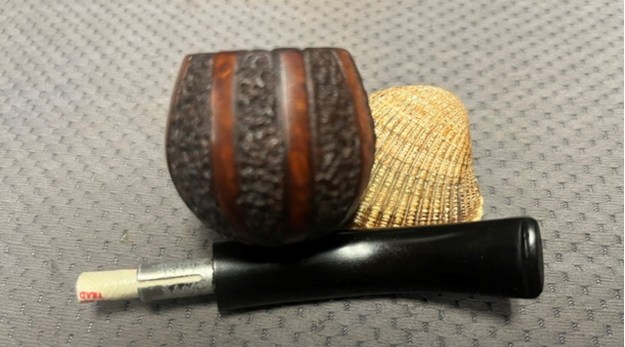
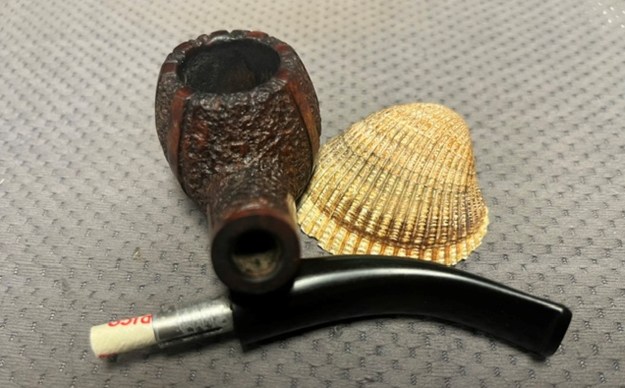
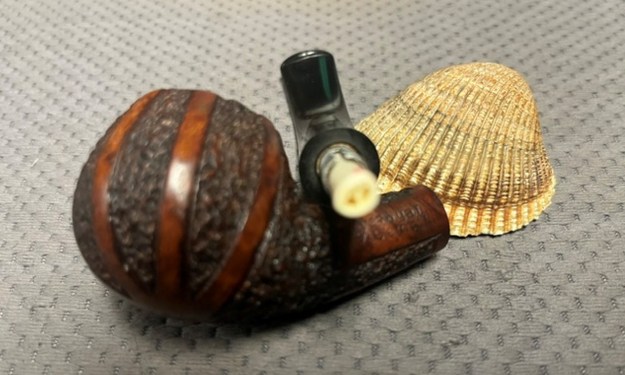
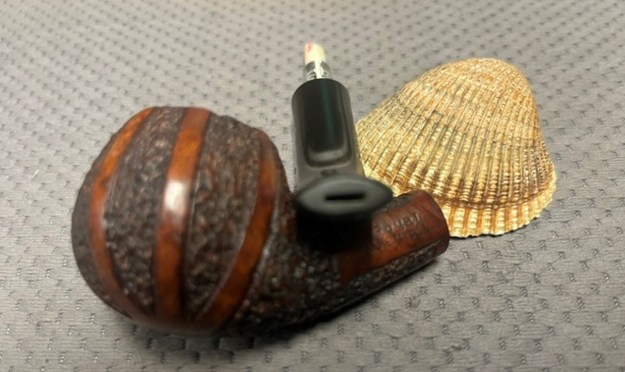
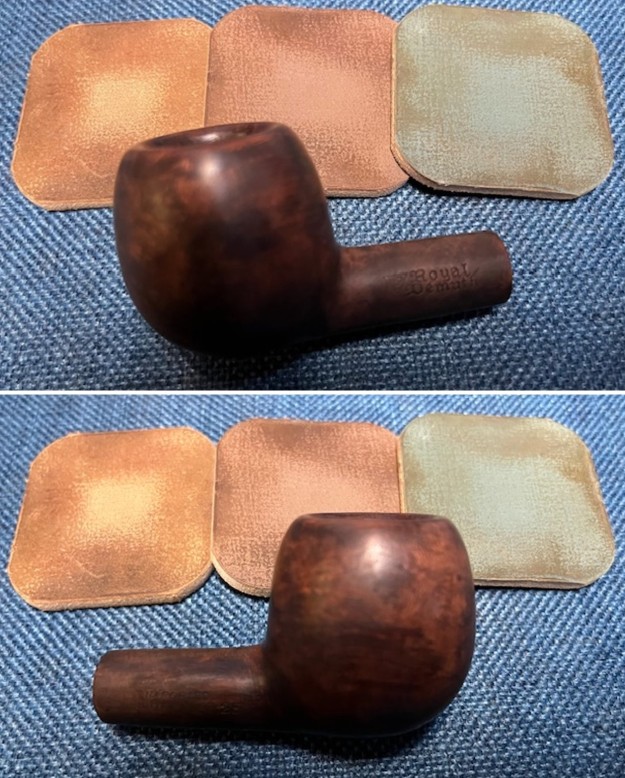
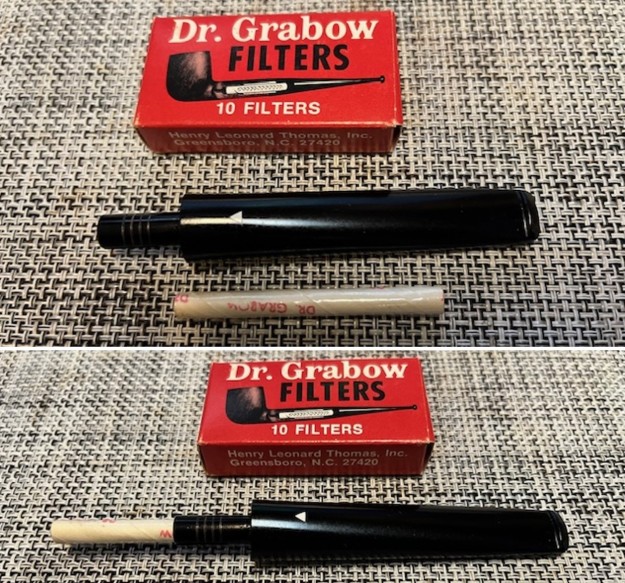
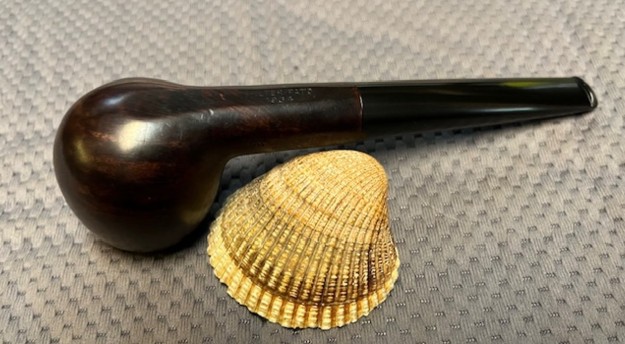
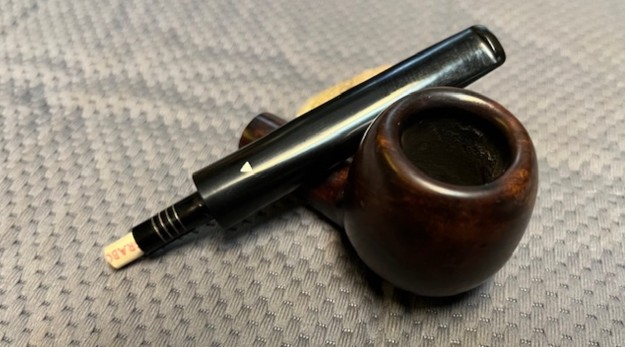
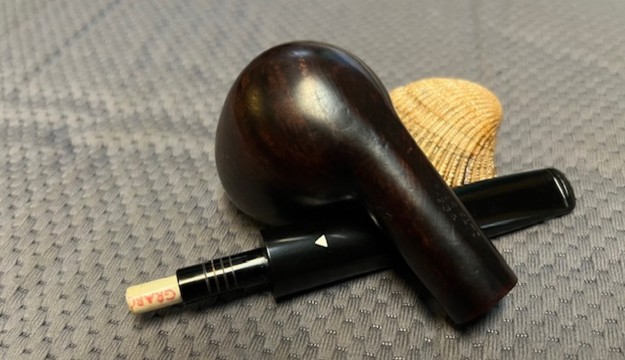
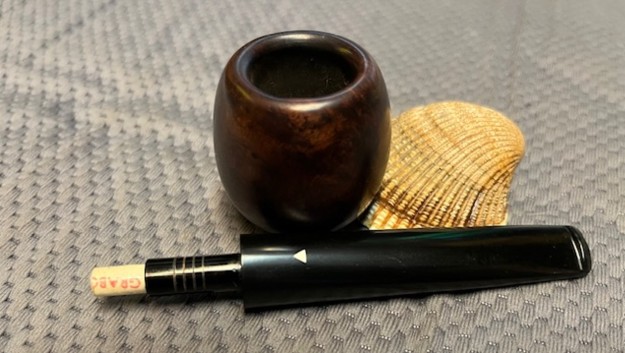
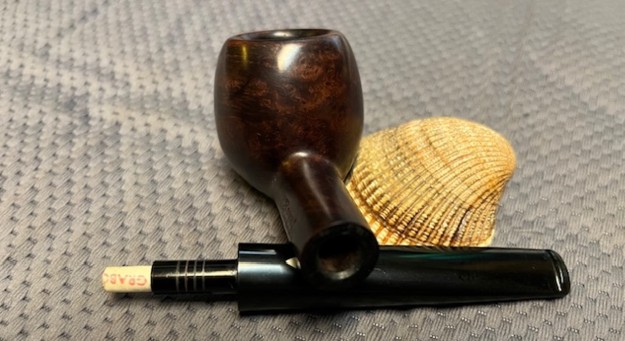
The next pipe on the table is a great looking mixed finish Bent Apple with a vulcanite bit. It was one purchased on 01/20/2026 from a Facebook seller in Quaker Town, Pennsylvania, USA. The bowl and the shank are rusticated with smooth bands vertical around the bowl sides and smooth panels on the shank sides and round the shank end. The smooth bands extend up the sides and onto the rim top of the bowl. It is a great looking pipe. It is stamped on the sides of the shank. On the left side it reads WDC in an inverted triangle [followed by] Royal [over] Demuth. On the right side it reads Imported [over] Briar Root and under it and toward the bowl is the shape number 60. On the underside it is stamped Filter Pat’d. [over] 1934. The finish was dirty and had a lot of grime and grit ground into the rustication and the smooth portions. The rim top and inner edge of the bowl is dirty with a light lava flow on the edge and the top that was heavier toward the back of the bowl. There is a thick cake in the bowl. The stem is oxidized and has tooth marks and chatter on the surface. Jeff took photos of the pipe before he started his clean up work. It showed a lot of promise. Jeff took photos of the bowl and rim top to show the cake in the bowl and the lava on the inner edge of the top. The lava is quite thick on the inner edge. He also took photos of the stem to show the oxidation and the tooth marks and chatter on the stem. He took photos of the bowl and heel to show the condition of the finish. The combination of rustication – tight pattern – and smooth portions look very good and are a great contrast to the polished vulcanite stem. Jeff took photos of the stamping on the shank sides and the logo on the stem. They read as noted above and were in excellent condition. Before I work on a pipe I always want to know about the background to it. I looked on Pipephil’s site and though there were many WDC pipes there was nothing stamped Royal Demuth and nothing with any of the other stamping on the shank sides of this pipe. I turned then to Pipedia (https://pipedia.org/wiki/William_Demuth_Company). As always there is a great history of this American brand. If you are interested be sure to turn there and take time to read about it.Royal Demuth example with box and filters, courtesy of Doug Valitchka

There was an interesting example of the Royal Demuth provided by Doug Valitchka that has identical stamping to the one that I am working on. It is a different shape but it identical in terms of the stamping. It also looks like it takes a filter that is similar to the Medico filter but I will doulbe check that once it is thoroughly cleaned.There was also an advertisement for the WDC Changeable Filter Pipes that included the Royal Demuth. I have included that below.There is also a great article by Ben Rappaport on the Demuth – Dunhill Connection that is an enjoyable read (https://pipedia.org/wiki/A_Demuth%E2%80%94Dunhill_Connection%3F).

I now knew that the pipe was part of a line of Filter Pipes that WDC put out and that the filter system was patented in 1934. The stamping that the Filter was Pat’d 1934 tells that it came out after the patent was granted. However, I could not fine tune the date more than that. I also knew that the pipe I was working on was an older one because of the style of the stem – straight taper and smaller profile at the button ends.

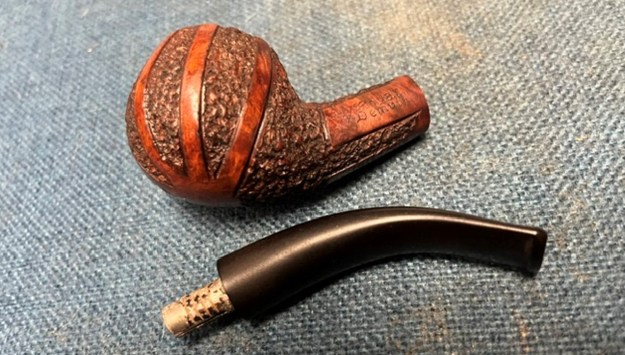
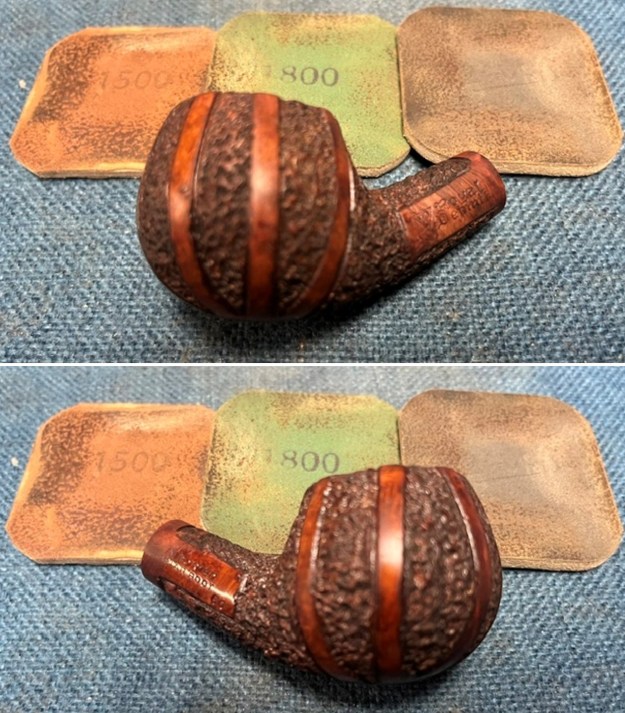
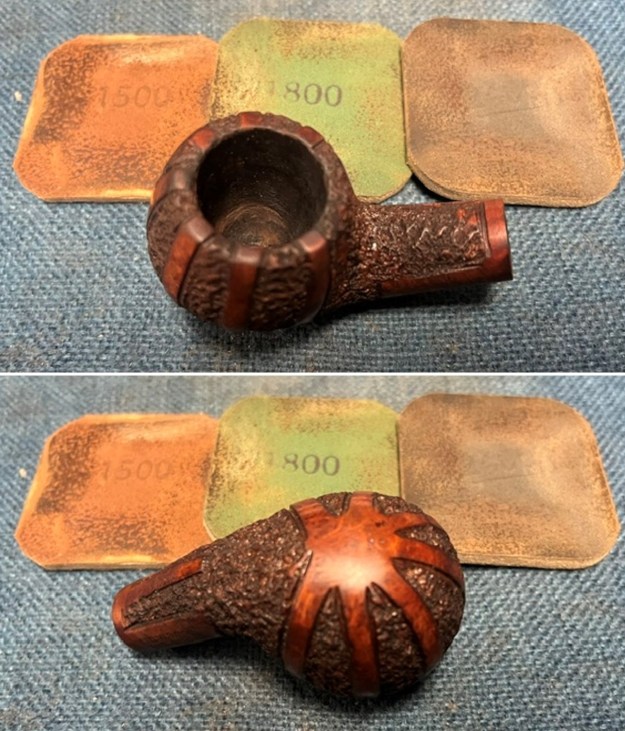
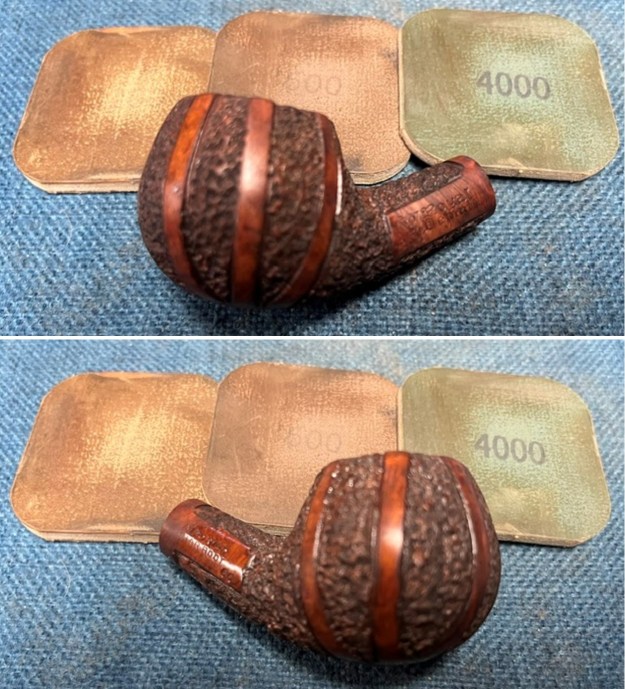
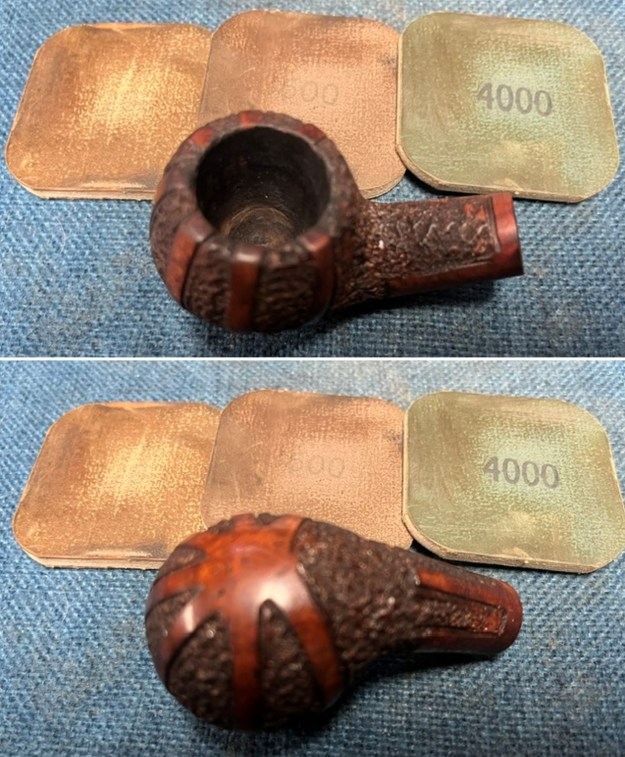
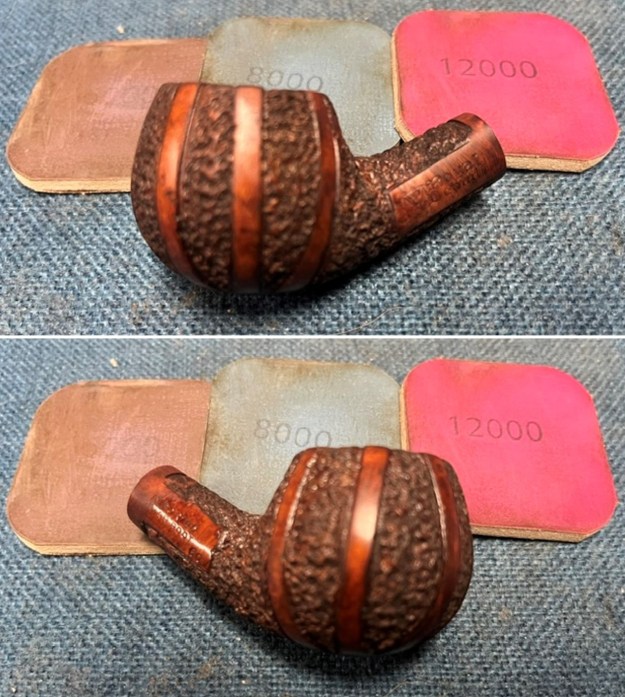
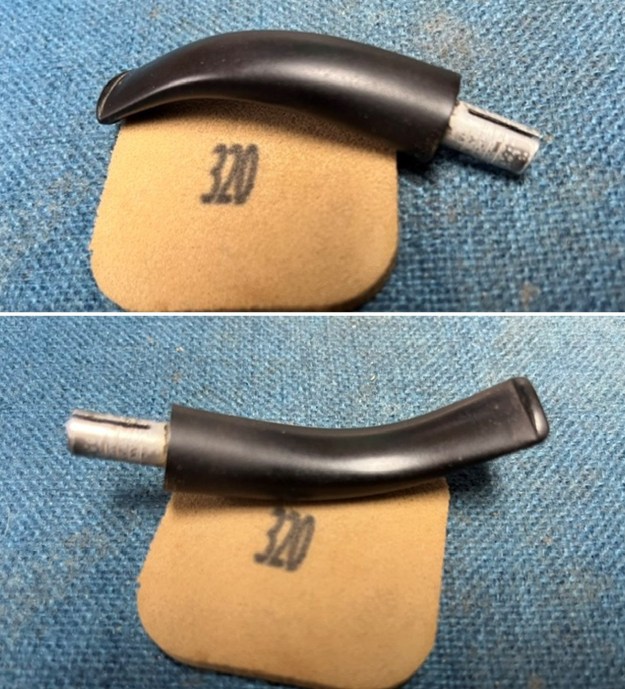
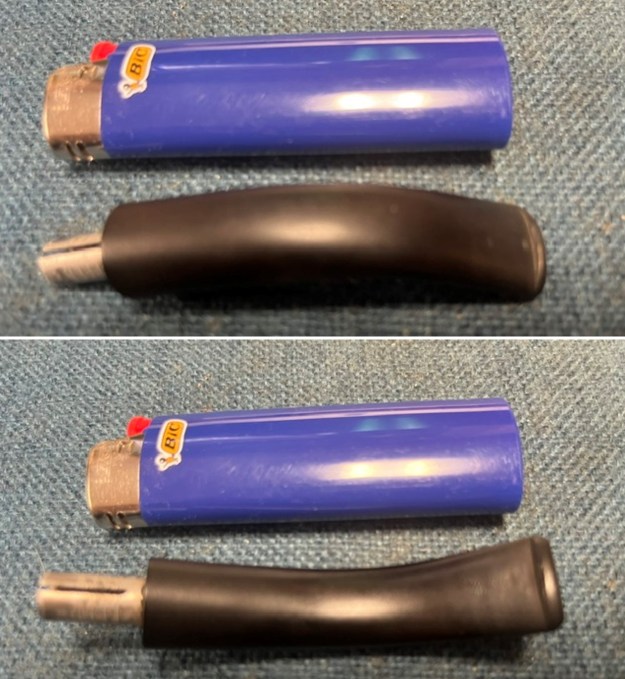
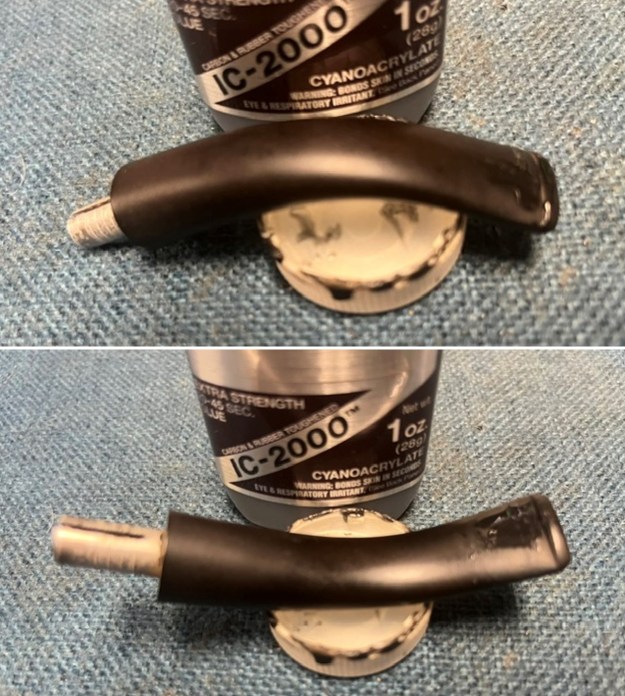
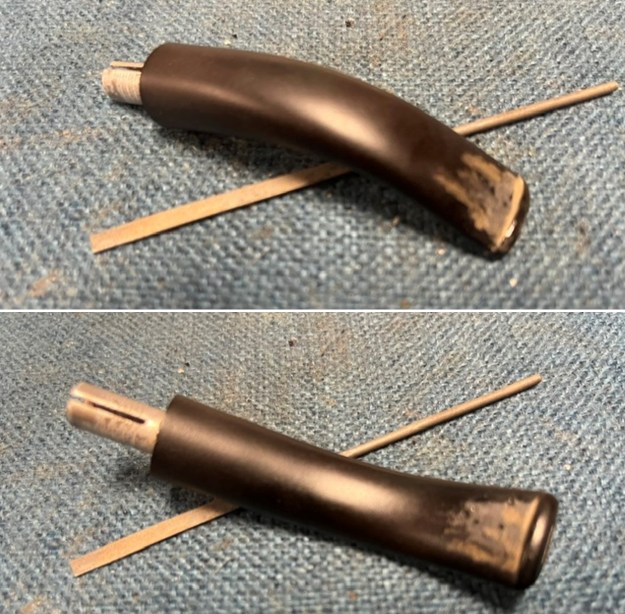
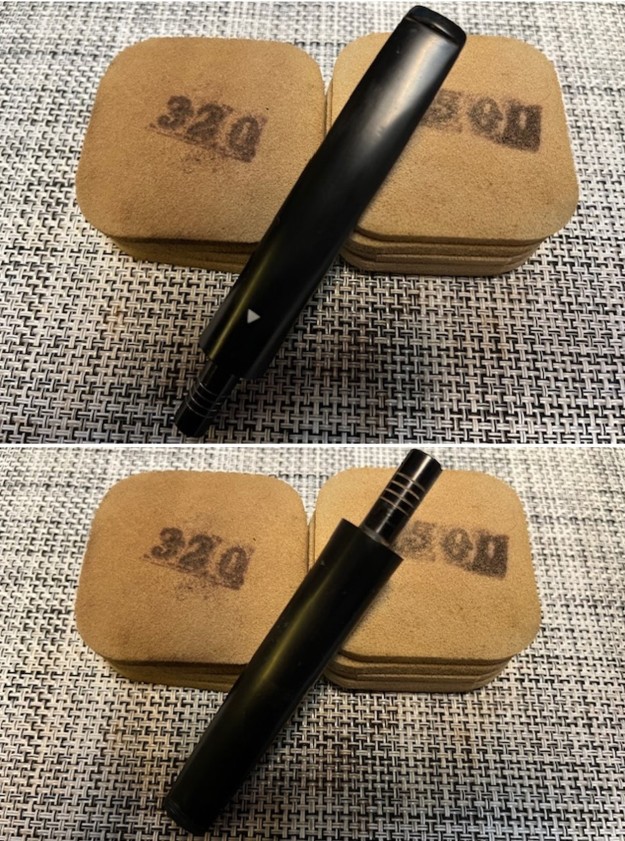
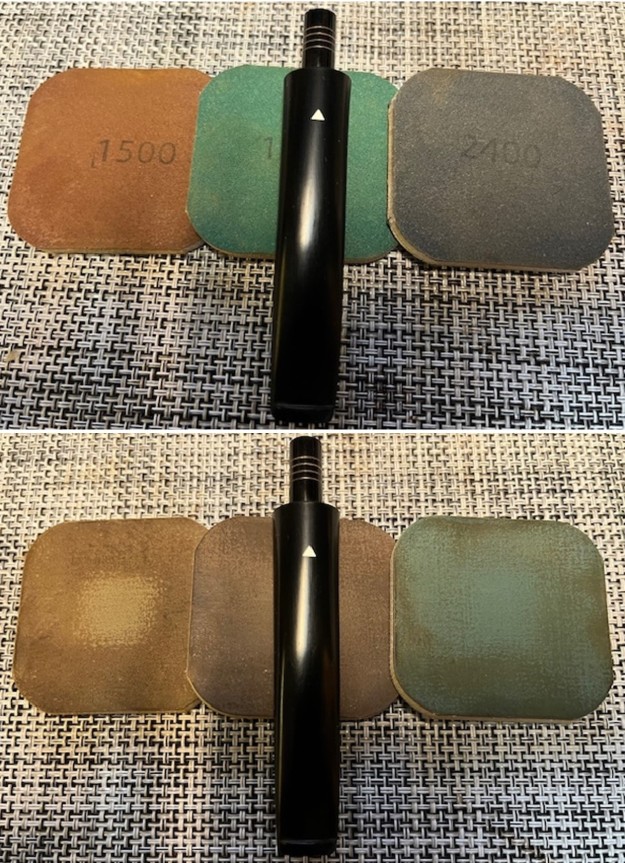
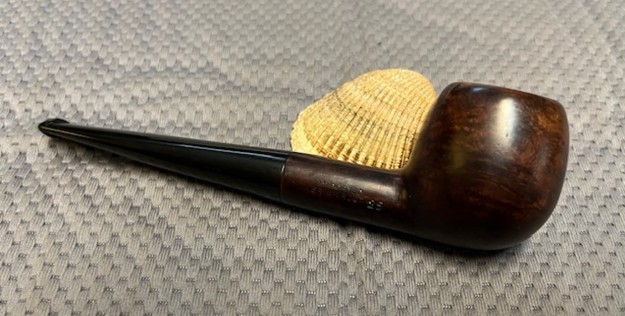
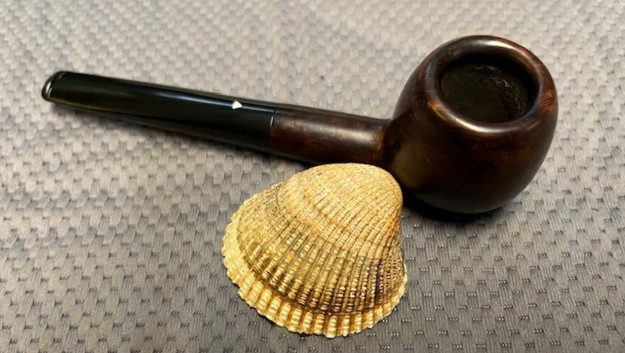
Jeff carefully reamed this older striped WDC Royal Demuth Apple with a PipNet pipe reamer and then cleaned up the inside of the bowl with a Savinelli Fitsall Pipe Knife. He scrubbed the briar with undiluted Murphy’s Oil Soap and a tooth brush to remove the grime on the rim top and bowl sides. He scrubbed the internals of the shank and stem with pipe cleaners, cotton swabs, shank brushes and alcohol until the airways were clean and the pipe smelled fresh. He scrubbed the stem with Soft Scrub to remove the oxidation and then let it soak in Briarville’s Pipe Stem Deoxidizer. He rinsed it with warm water when he took out of the soak. The pipe looked much better once the bowl and stem were clean. Before I started my part of the work I took photos of the pipe. It is a pretty pipe. I took close up photos of the bowl and the rim top to show the condition. It looked better and the inner edge and top were in very good condition. I also took photos of both sides of the stem to give a sense of the condition of both sides at the button. There were deep tooth marks on both sides ahead of the button.I took a photo of the stamping on the left side of the shank and stem. It reads as noted above and is very clear and readable. The stamping on the shank is faint but readable. I took the stem off the shank and took photos of the pipe to give a sense of its beauty and proportions. I polished the smooth patches on the bowl and rim top with micromesh sanding pads – dry sanding with 1500-12000 grit pads and wiped down the bowl down with a damp cloth after each sanding pad. I rubbed the bowl and shank down with Before & After Restoration Balm. I worked it into the surface of the bowl sides and shank with my fingertips and a shoe brush to work it into the rustication. The product works to clean, enliven and protect the briar. I let the balm sit for a little while and then buffed with a cotton cloth to raise the shine. The Balm did its magic and the grain stood out. I cleaned up the aluminum tenon with 320 grit sanding pads to remove the oxidation and darkening on the surface. It was badly scratched so I would continue sanding it when I worked on the stem surface.I “painted” the surface of the stem with the flame of a Bic lighter to lift the tooth marks. I filled in those that remained with Extra Strength CA glue – strengthened with rubber. Once it cured I used a small flat file to flatten the repairs and recut the button. I blended the repairs further with a folded piece of 220 grit sandpaper. I sanded the stem with 320-3500 grit 2×2 inch sanding pads. I wiped the stem down with a damp cloth after each pad. By the last sanding pad it began to take on a deep shine.I polished the stem with micromesh sanding pads – dry sanding with 1500-12000 grit sanding pads. I wiped it down after each sanding pad with Obsidian Oil. I polished it with Before & After Pipe Stem Polish – both Fine and Extra Fine. With the pipe cleaned up and ready to go I fitted the filter stem with a Medico Paper Filter and it fit precisely like the original WDC paper filters.I am excited to put the final touches on this interesting piece of American Pipe History found in Bellingham, Washington. It is a beautiful WDC Royal Demuth Imported Root Briar Filter Pat’d 1934 Shape 60 Bent Apple shaped pipe. I put the pipe back together and buffed it with Blue Diamond on the buffing wheel. I gave the bowl and the stem multiple coats of carnauba wax. I hand buffed the pipe with a clean buffing pad to raise the shine. It is fun to see what the polished bowl looks like with beautiful grain on the bowl sides, top and bottom. The polished black vulcanite stem combined with the bowl to make a stunning pipe. This older WDC Royal Demuth Imported Root Briar 60 Filter Pipe is great looking and the pipe feels great in my hand. It is light and well balanced. Have a look at it with the photos below. The dimensions are Length: 5 inches, Height: 1 ½ inches, Outside diameter of the bowl: 1 ¼ inches, Chamber diameter: ¾ of an inch. The weight of the pipe is 34 grams/1.20 ounces. I will be adding it to the American Pipemakers Section of the rebornpipes store shortly. If you want to add it to your collection let me know. Thanks for walking through the restoration with me as I worked over this pipe. Thanks to each of you who are reading this blog.
A Pipe Hunt Find in Bellingham – A WDC Royal Demuth Imported Briar Root 25 Apple


Blog by Steve Laug

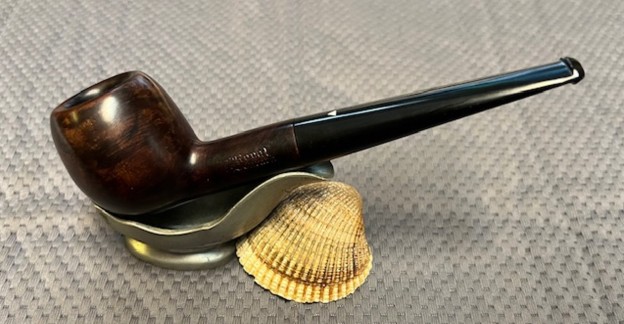
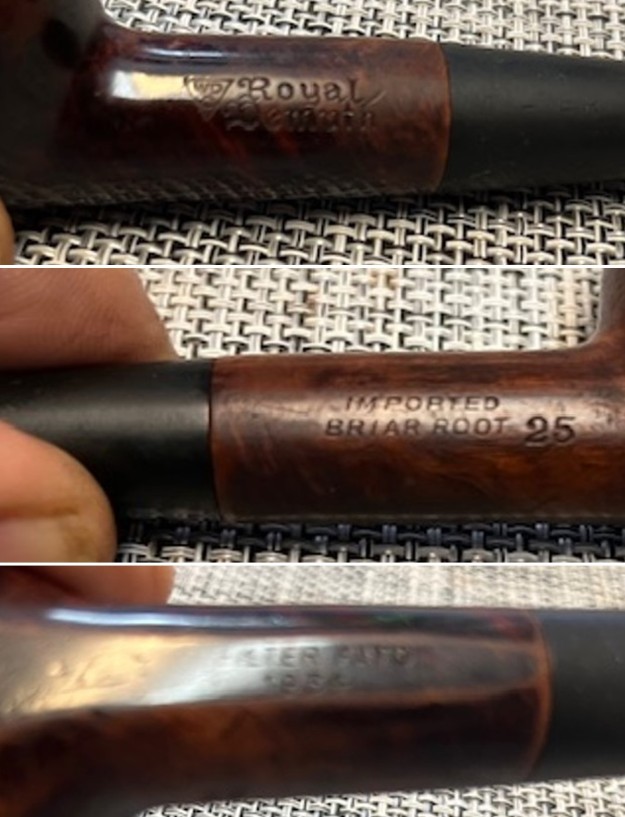
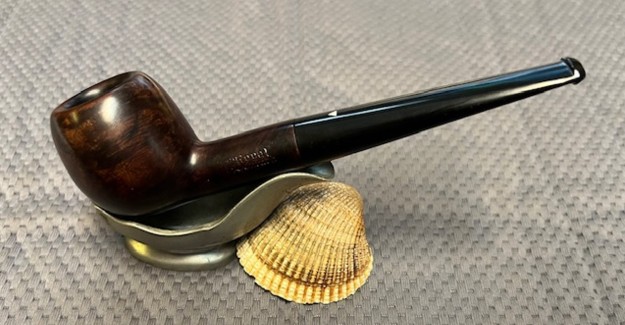
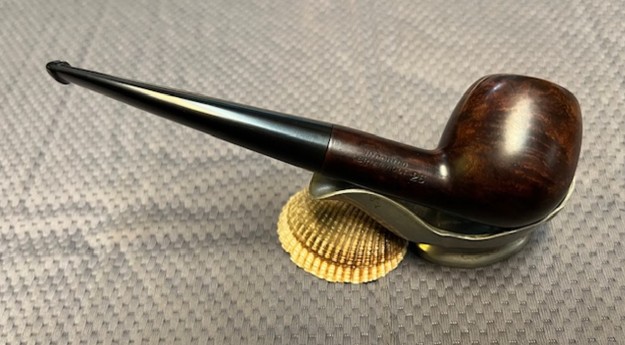
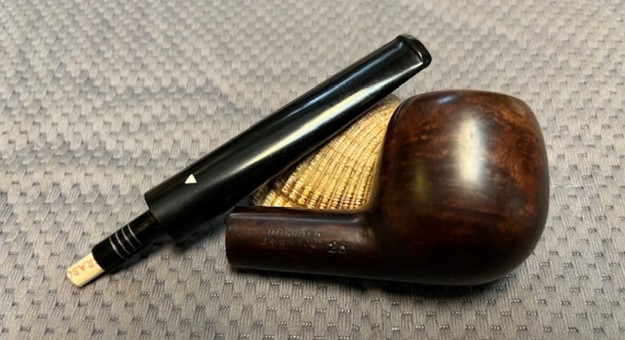
On our recent Victoria Day Weekend (5/18/24) my family met Jeff and his wife in Bellingham for breakfast, a visit and a bit of pipe hunting. We visited three of my favourite antique malls and worked out way through the aisles of wares for sale. Jeff and I tend to divide and conquer, each walking through the aisles of the shop looking for pipes. The rest of the family moves through looking for their own treasures. We left the second shop and using Google maps worked our way to a new shop that I had not visited before. We walked into a nicely laid out shop and I asked the clerk if there were any pipes available. He walked us back to a display case and took out a circular pipe rack. There in the rack were two pipes remaining in it. The first was a square shank Irwin’s (GBD made) London Made London England 9487 shape and the second was an older WDC Royal Demuth Imported Briar Root 25. Both were great and were added to the hunt bag. Here is the link to the blog on the hunt and a photo of the pipes we added (https://rebornpipes.com/tag/bellingham-pipe-hunt/). I decided to take a break from the pipes in my queue of pipes to work on and deal with the Royal Demuth 25 Apple. It is the bottom pipe in the two photos above. It was an interesting shape that has some great grain under the grime on the bowl and shank. It is stamped on the left side of the shank and reads WDC in a triangle [followed by] Royal [over] Demuth. On the right side it is stamped Imported Briar [over] Briar Root [followed by] the shape number 25. On the underside of the shank it is stamped FILTER PAT’D [over] 1934. The stem has the WDC white triangle on the left side of the taper. The stem was an older style vulcanite with a narrow taper from shank to button. It was lightly oxidized and has some tooth marks on the top and underside of the stem near the button. The bowl had a thick cake in it and some bits and bobs of tobacco stuck to the walls. There was a thick lava coat on the rim top and edges. The finish had been varnished sometime in its life and it was peeling and there was a lot tars ground into the surface of the bowl. I took some photos of the pipe before I started working on it. I took photos of the rim top and stem to show the general condition of the pipe. The bowl is heavily caked and the rim top and edges have a heavy coat of lava overflowing on to them. It is hard to know with certainty the condition of the bowl at this point but clean up will reveal all. The stem is lightly oxidized and has light tooth chatter and marks on both sides ahead of the button end. I took photos of the stamping on the sides of the shank. You can see that it is faint in spots but it is still very readable. It reads as noted above. I removed the stem from the shank and took a photo of the parts to show how the pipe looks. I looked on Pipephil’s site and though there were many WDC pipes there was nothing stamped Royal Demuth and nothing with any of the other stamping on the shank sides of this pipe. I turned then to Pipedia (https://pipedia.org/wiki/William_Demuth_Company). As always there is a great history of this American brand. If you are interested be sure to turn there and take time to read about it.

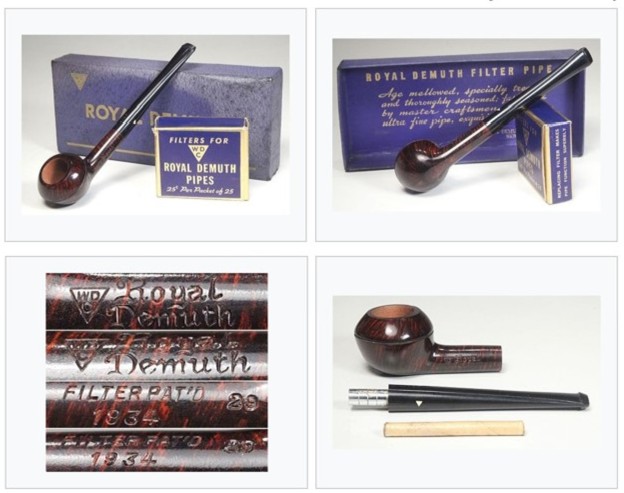
Royal Demuth example with box and filters, courtesy of Doug Valitchka

There was an interesting example of the Royal Demuth provided by Doug Valitchka that has identical stamping to the one that I am working on. It is a different shape but it identical in terms of the stamping. It also looks like it takes a filter that is similar to the Medico filter but I will doulbe check that once it is thoroughly cleaned.There was also an advertisement for the WDC Changeable Filter Pipes that included the Royal Demuth. I have included that below.There is also a great article by Ben Rappaport on the Demuth – Dunhill Connection that is an enjoyable read (https://pipedia.org/wiki/A_Demuth%E2%80%94Dunhill_Connection%3F).

I now knew that the pipe was part of a line of Filter Pipes that WDC put out and that the filter system was patented in 1934. The stamping that the Filter was Pat’d 1934 tells that it came out after the patent was granted. However, I could not fine tune the date more than that. I also knew that the pipe I was working on was an older one because of the style of the stem – straight taper and smaller profile at the button ends.

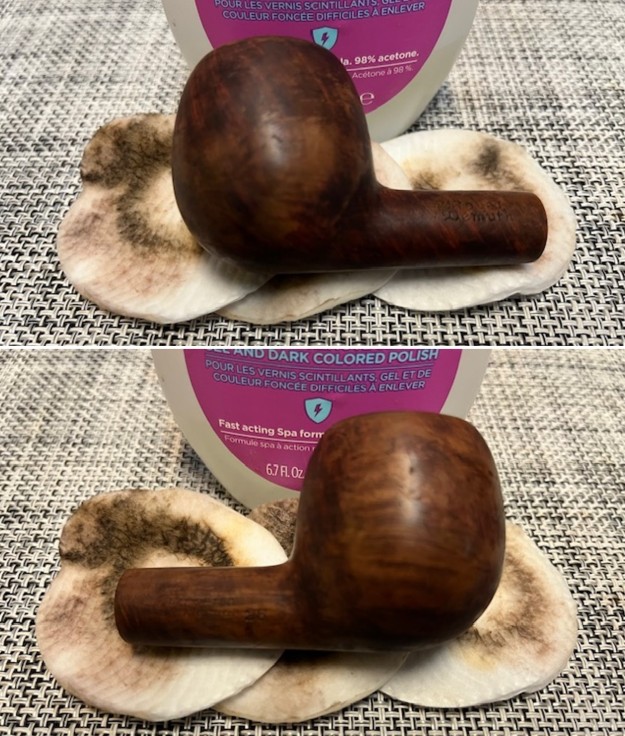
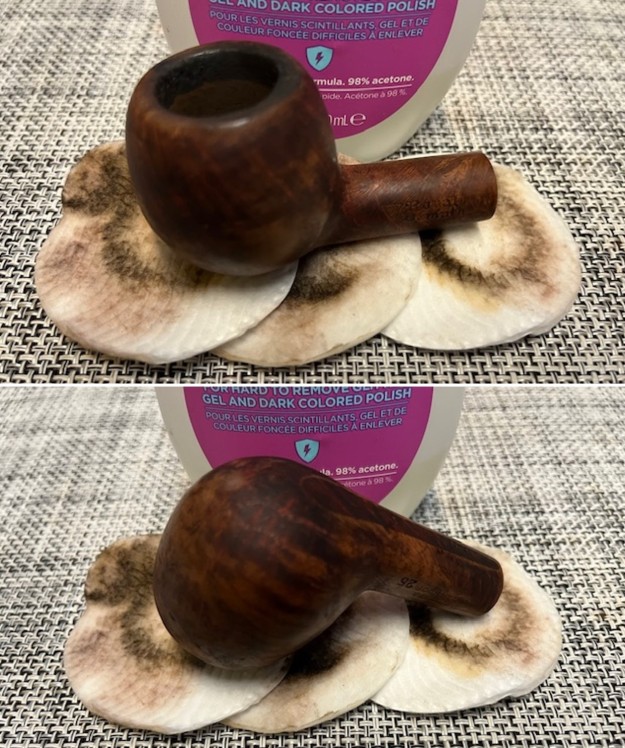
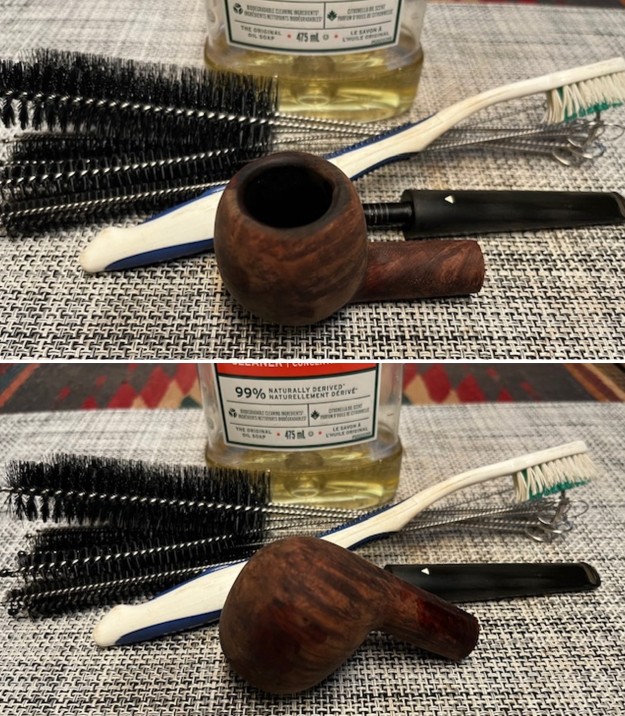
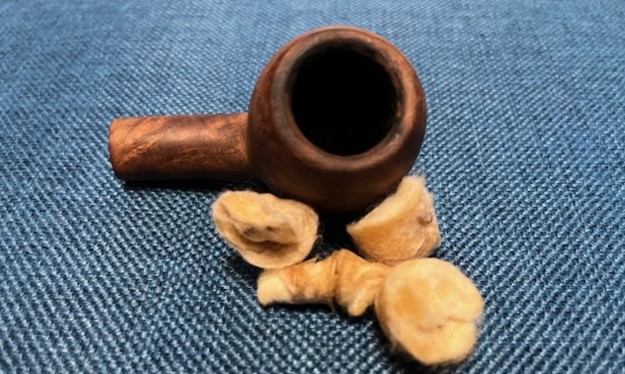
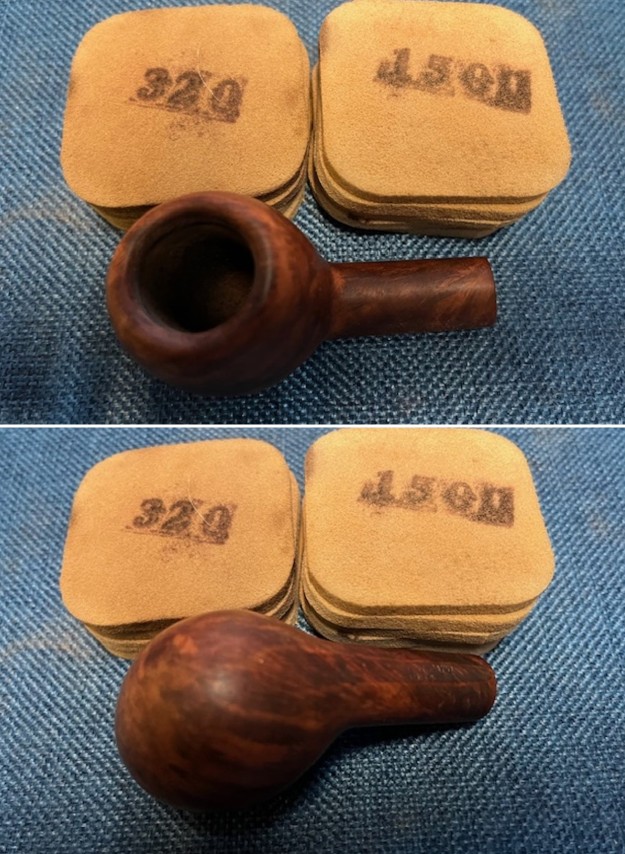
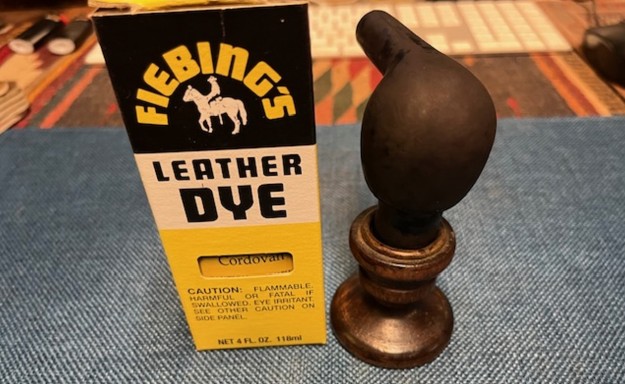
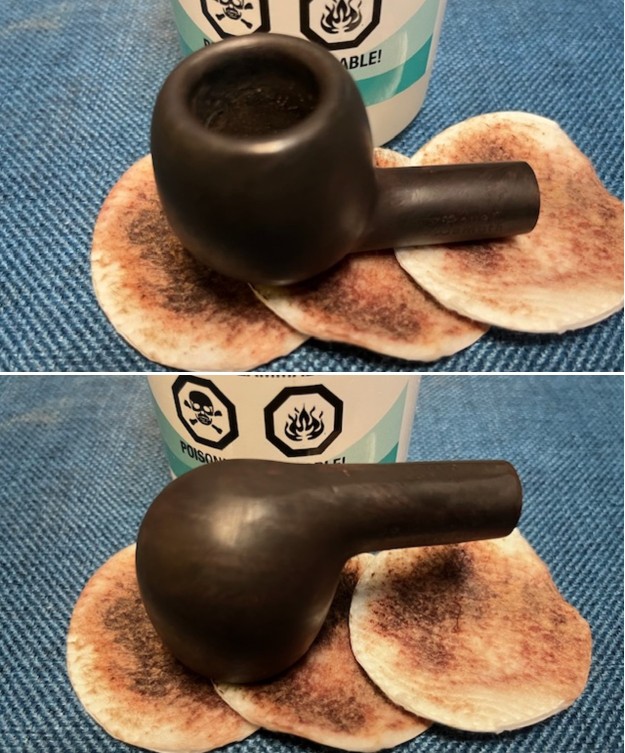
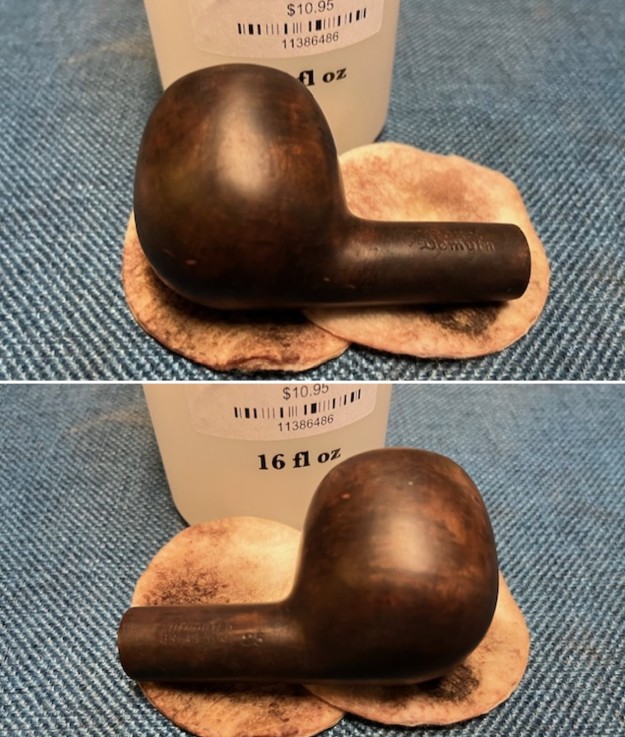
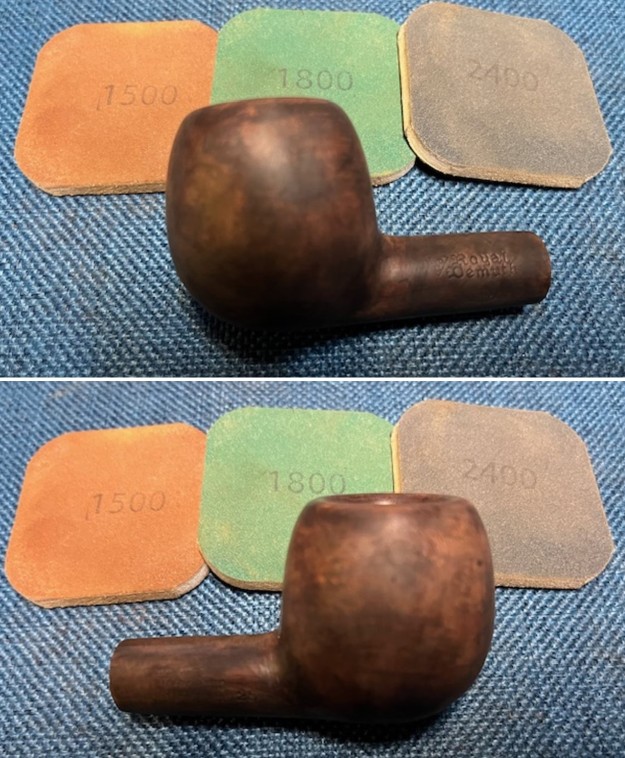
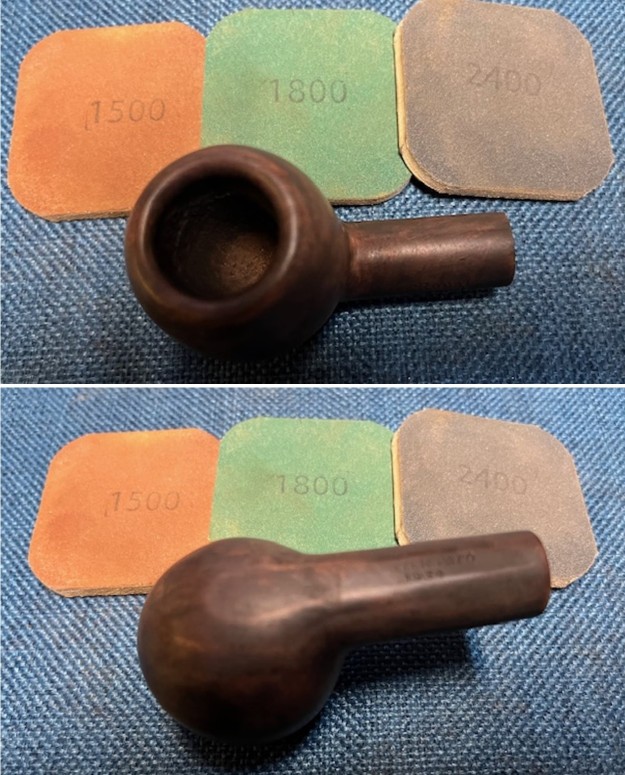
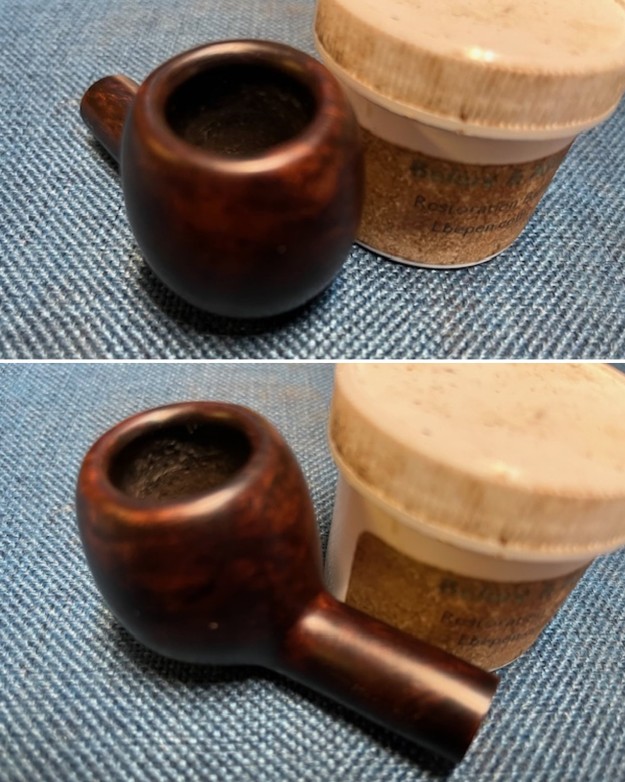
I started my work on the pipe cleaning up the bowl and the shank. I reamed the bowl with a PipNet pipe reamer to take the cake back to bare briar. I cleaned up the remnants of the cake with a Savinelli Fitsall Pipe Knife. I sanded the bowl walls with sandpaper wrapped around a piece of briar to smooth them out. The inside walls were clean and there was no sign of burning or checking on them. Note the spotty varnish coat peeling on the bowl sides that would need to be removed. I decided to clean the internals before scrubbing the externals. I scrubbed the shank and the airway in the shank and the stem with pipe cleaners, cotton swabs and isopropyl alcohol. Once it was clean it smelled much better. To get rid of the peeling and spotty varnish coat on the bowl I wiped it down with some acetone (fingernail polish remover) on cotton pads until the shine was gone and the finish was quite smooth and clean. I scrubbed the externals of the bowl and shank with undiluted Murphy’s Oil Soap and a tooth brush to remove the grime in the finish. I rinsed the bowl off with warm water. I scrubbed the internals with a shank brush and soap to remove the remaining tars and oils inside both the stem and the shank. I was able to remove a lot of the lava on the rim top as well. The bowl was beginning to look much better at this point. The pipe really smelled strongly of the aromatic tobacco (perhaps Half & Half) that had been smoked in it before so it needed some work. I deghosted the bowl with 99% isopropyl alcohol and cotton bolls. I stuffed it and twisted a plug for the shank. I used an ear syringe to load it with alcohol and set it in a pipe rest to let it do its job. I would let it sit for several hours while I was at work today. In the evening I removed it and it was dark with tars and oils. I recleaned the bowl and shank afterwards and the pipe is smelling better! I sanded the bowl (rim top and shank) with sanding pads – sanding with 320-3500 grit pads and wiped down with a damp cloth after each sanding pad. The bowl began to take on a real shine. It was going to be a beautiful pipe. I wiped down the sanding dust with a damp cloth and restained the pipe with some Fiebing’s Cordovan alcohol based stain. I applied the stain and flamed it with a lighter to set the stain deep in the grain. It was a rich colour that I knew would look better with a little more work and buffing. I wiped the bowl down with alcohol on cotton pads to make the stain more transparent. I wanted to be able to see the grain. I wiped it down further with some 100% acetone to get even more transparency. It is beginning to look very good at this point. I followed that by polishing the briar with micromesh sanding pads – dry sanding with 1500-12000 grit pads and wiping the bowl down after each sanding pad. The grain really began to shine through. It is a beautiful pipe. I rubbed the bowl down with Before & After Restoration Balm. I worked it into the surface of the briar to clean, preserve and polish the wood. The product works to really give new life to the briar and in this case the briar looked much better. I sanded out the scratches and marks in the stem surface with 320-3500 grit sanding pads. I wiped the stem down with a damp cloth after each sanding pad. It looked much better and really started to take on a shine.I polished the stem with micromesh sanding pads – wet sanding with 1500-12000 grit sanding pads. I wiped it down after each sanding pad with Obsidian Oil. I polished it with Before & After Pipe Stem Polish – both Fine and Extra Fine. With the pipe cleaned up and ready to go I fitted the filter stem with a Medico Paper Filter and it fit precisely like the original WDC paper filters. I am excited to put the final touches on this interesting piece of American Pipe History found in Bellingham, Washington. It is a beautiful WDC Royal Demuth Filter Pat’d 1934 Shape 25 Apple shaped pipe. I put the pipe back together and buffed it with Blue Diamond on the buffing wheel. I gave the bowl and the stem multiple coats of carnauba wax. I hand buffed the pipe with a clean buffing pad to raise the shine. It is fun to see what the polished bowl looks like with beautiful grain on the bowl sides, top and bottom. The polished black vulcanite stem combined with the bowl to make a stunning pipe. This older WDC Royal Demuth Filter Pipe is great looking and the pipe feels great in my hand. It is light and well balanced. Have a look at it with the photos below. The dimensions are Length: 5 ¾ inches, Height: 1 ½ inches, Outside diameter of the bowl: 1 ¼ inches, Chamber diameter: ¾ of an inch. The weight of the pipe is 40 grams/1.41 ounces. I will be adding it to the American Pipemakers Section of the rebornpipes store shortly. If you want to add it to your collection let me know. Thanks for walking through the restoration with me as I worked over this pipe. Thanks to each of you who are reading this blog. Bowl – finishing, Bowl – refinishing, bowl topping, Bowls – refinishing, buffing, finishing, fitting a new stem, micromesh sanding pads, WDC Pipes, WDC Royal Demuth apple 25, Royal Demuth Filter Apple 25 Pipe, pipe refurbishing, polishing, polishing a stem, polishing stems, refinishing, refurbishingstem work, vulcanite, waxing, waxing a stem, removing tooth marks, repairing bite marks, sanding a stem, stem work, polish a vulcanite stem, waxing, waxing a stem