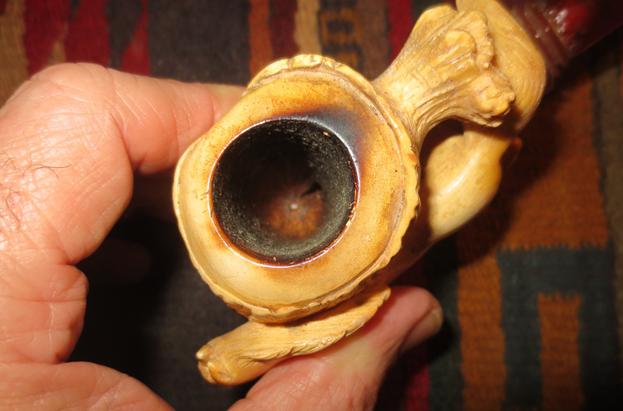
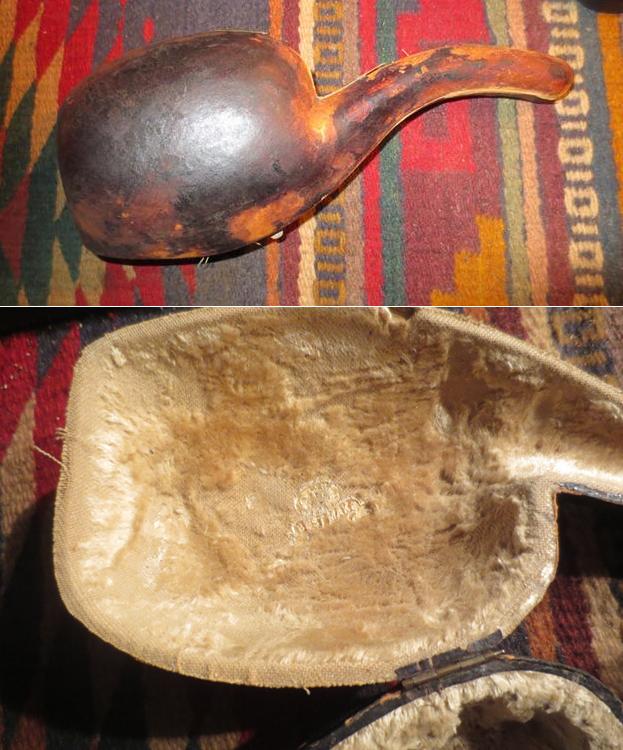
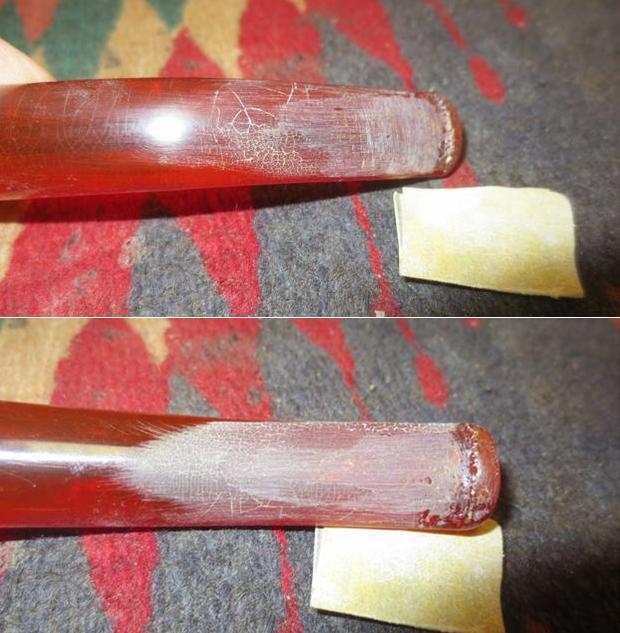
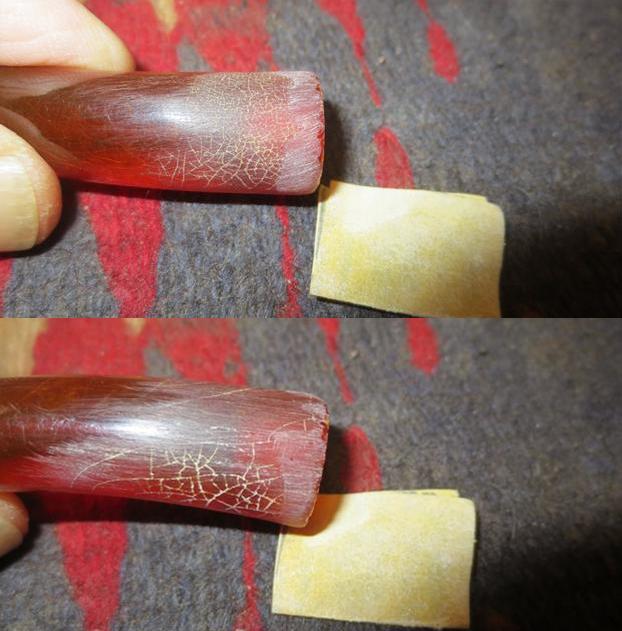
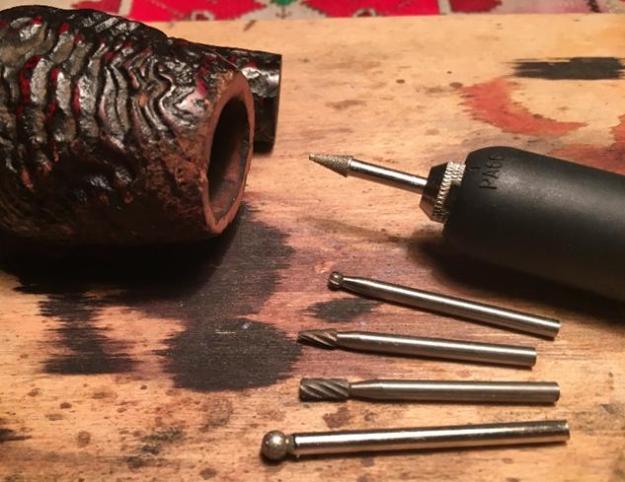
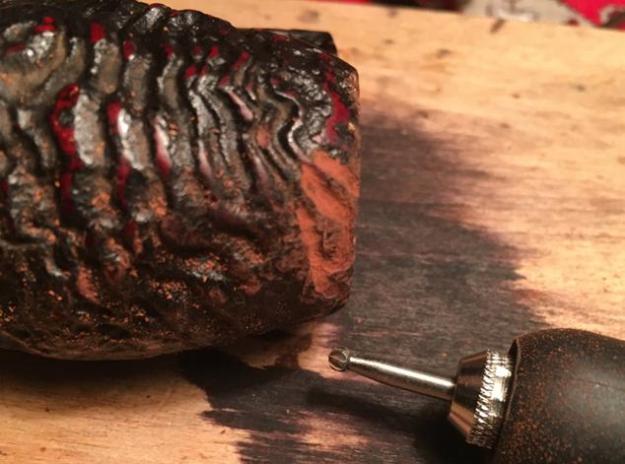
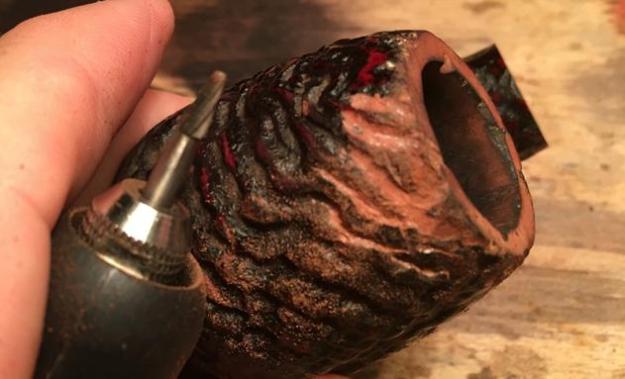
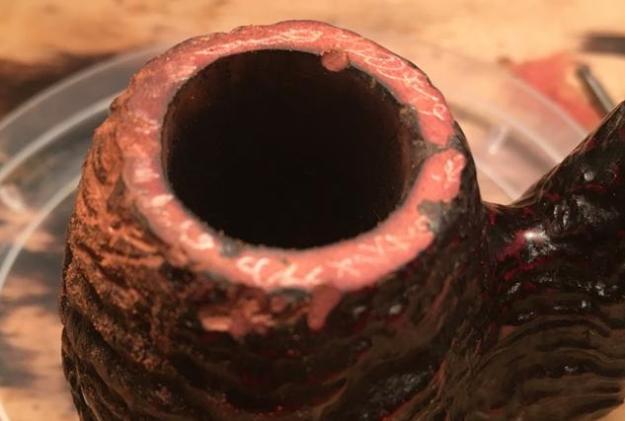
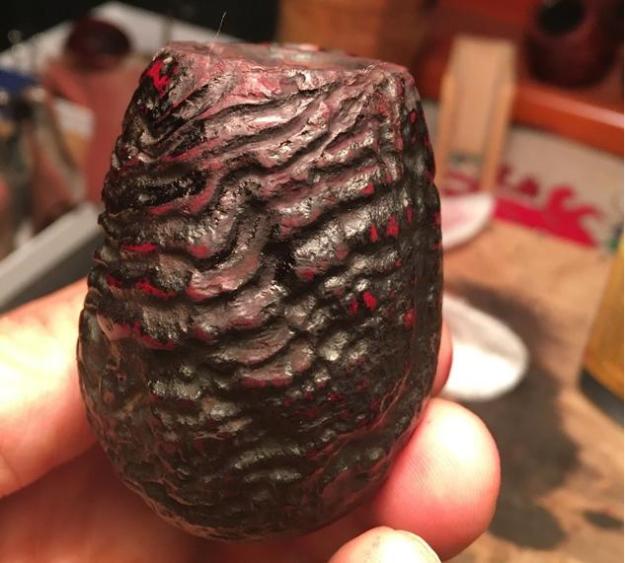
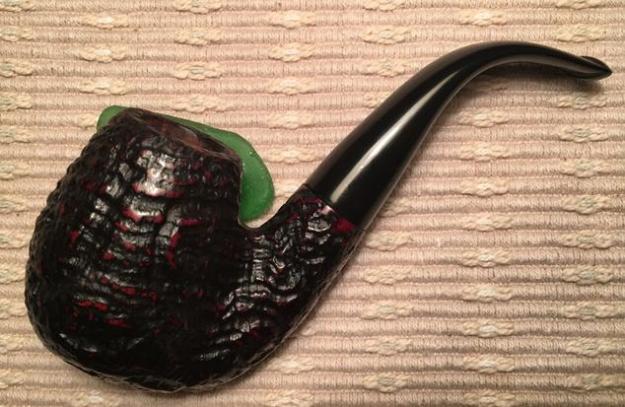
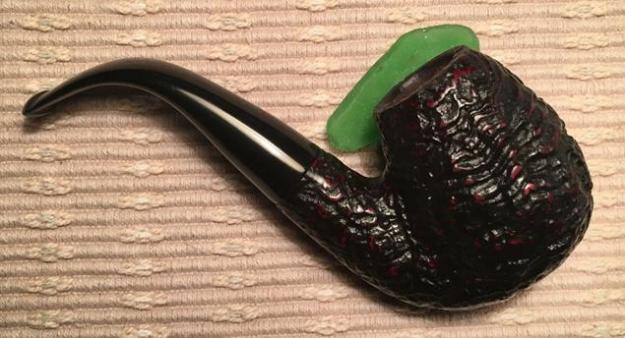
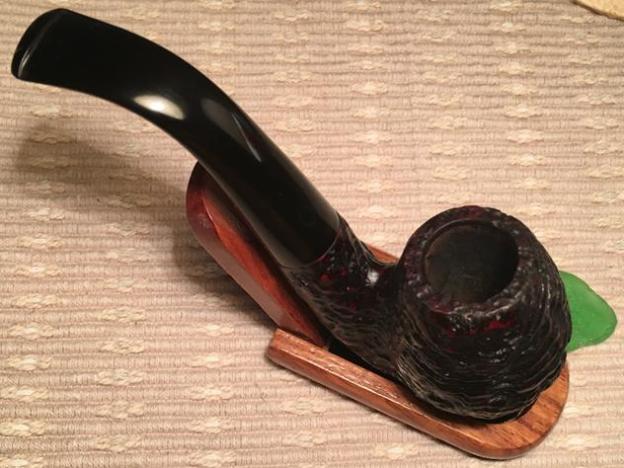
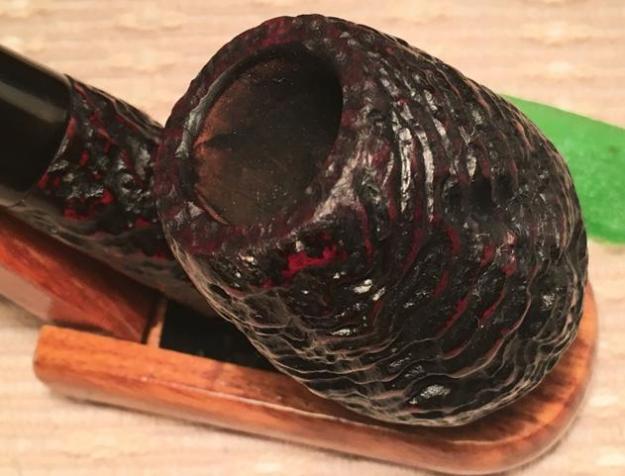
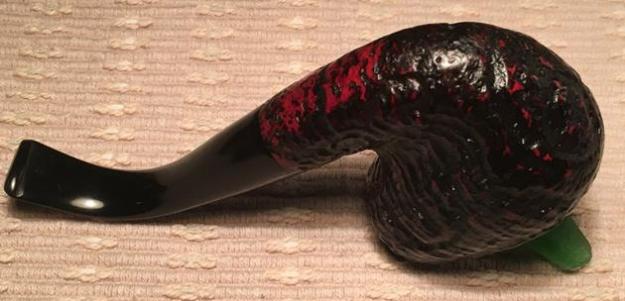
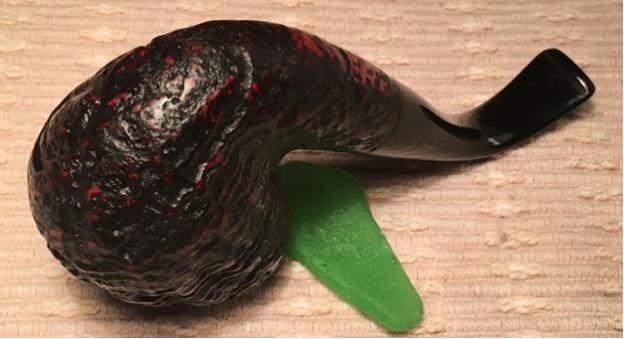
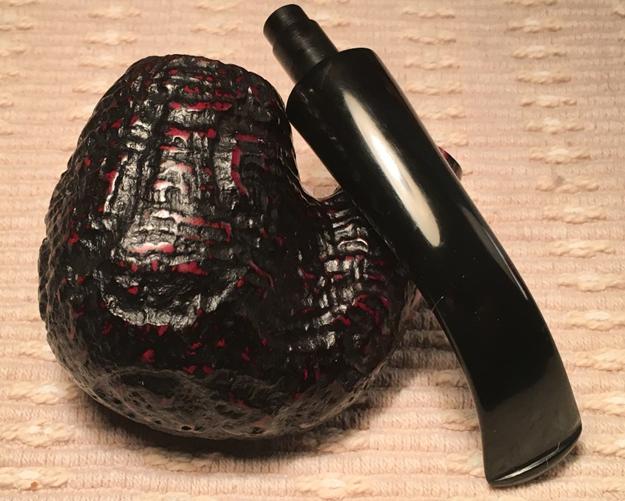
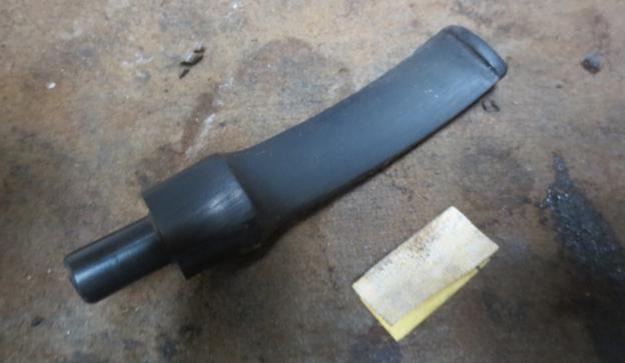
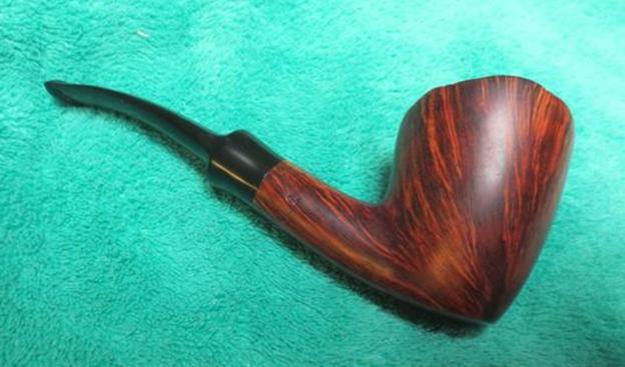
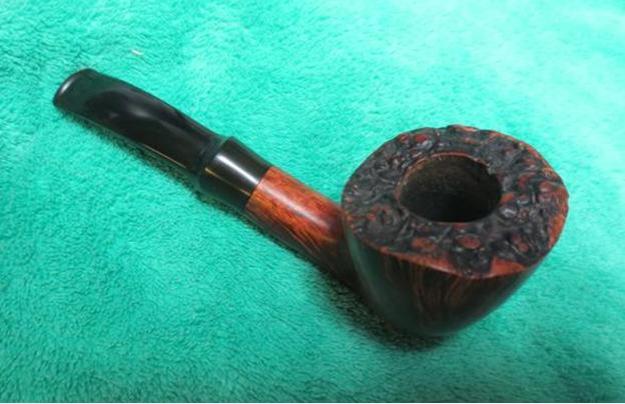
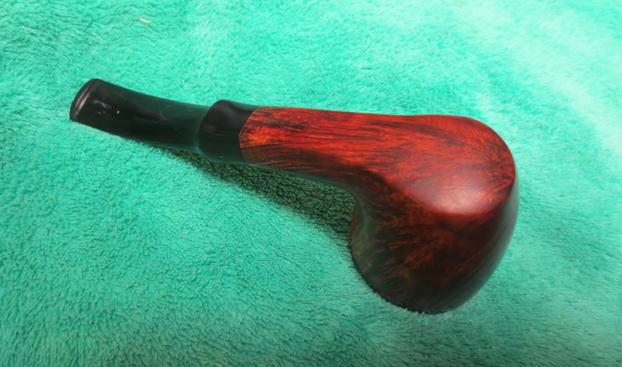
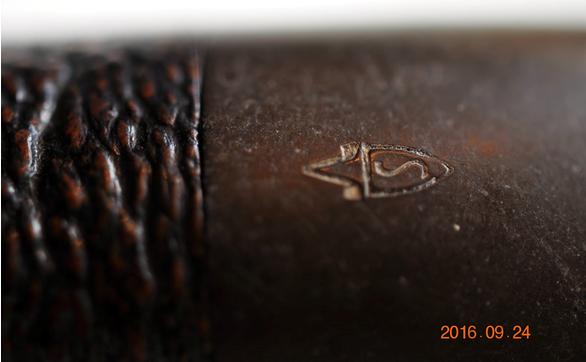
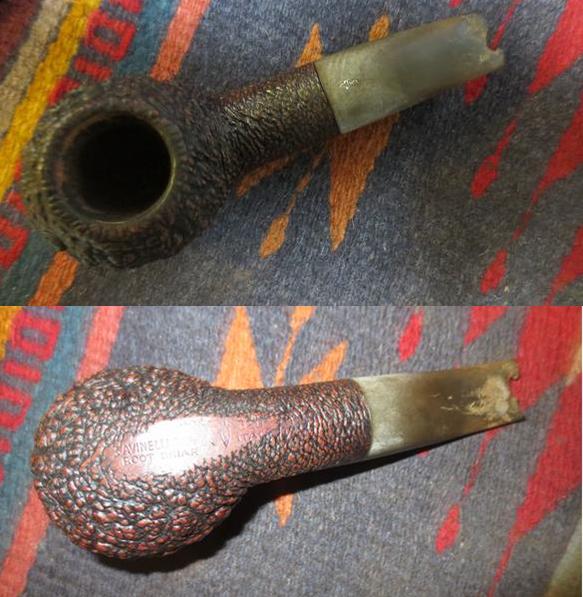
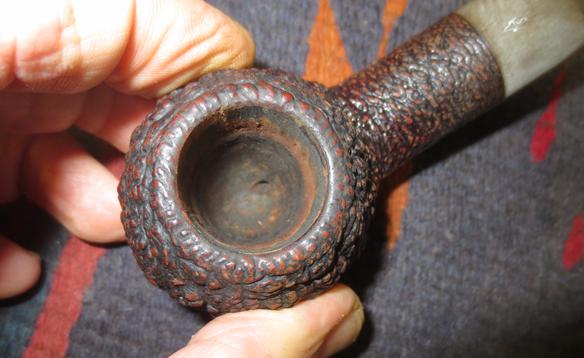
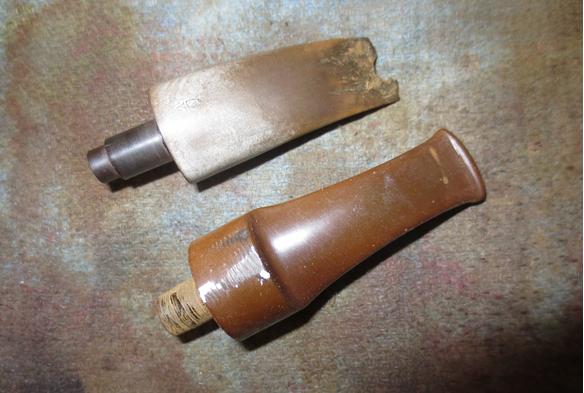
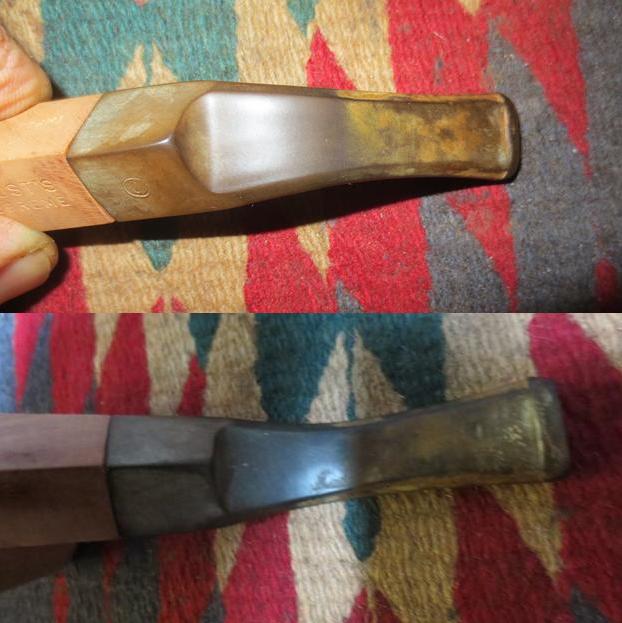
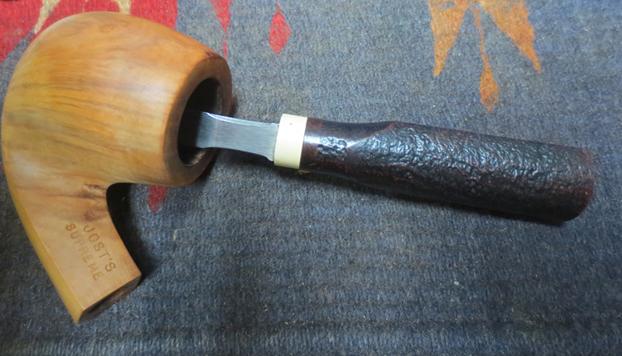
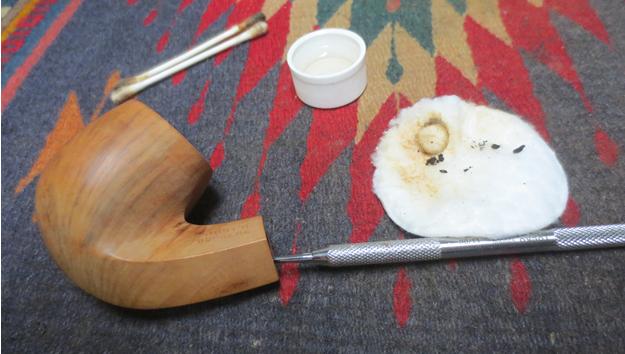
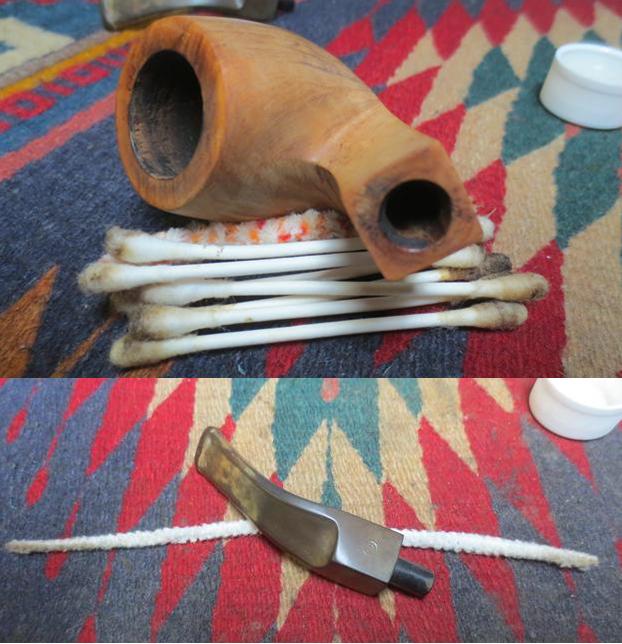
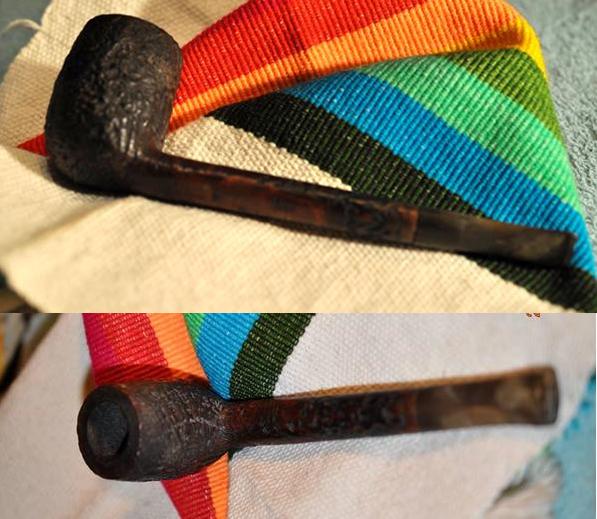
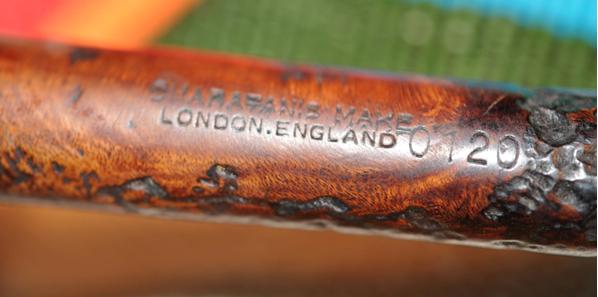
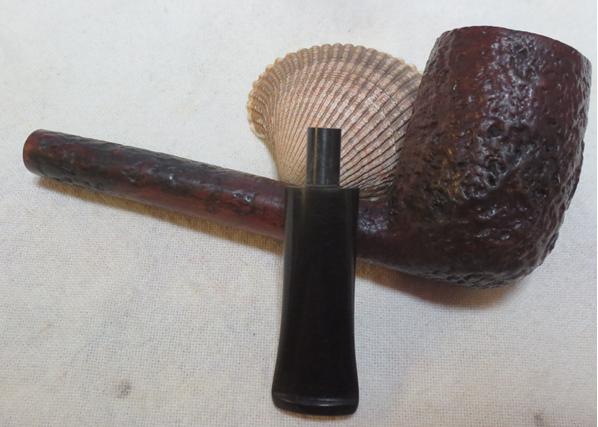
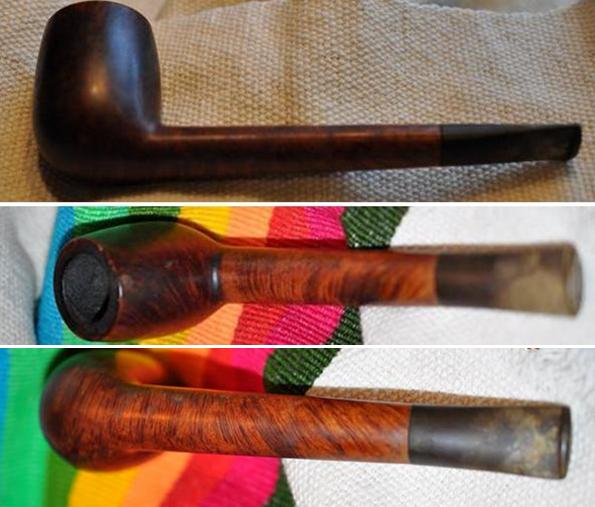
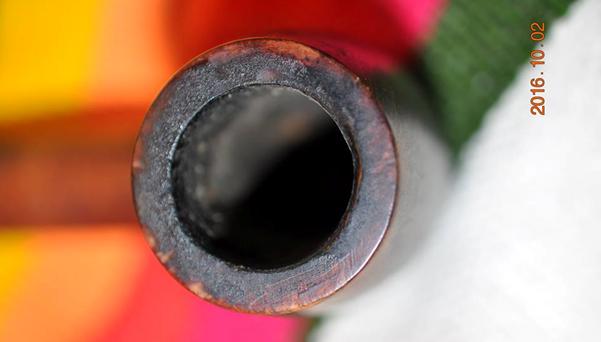
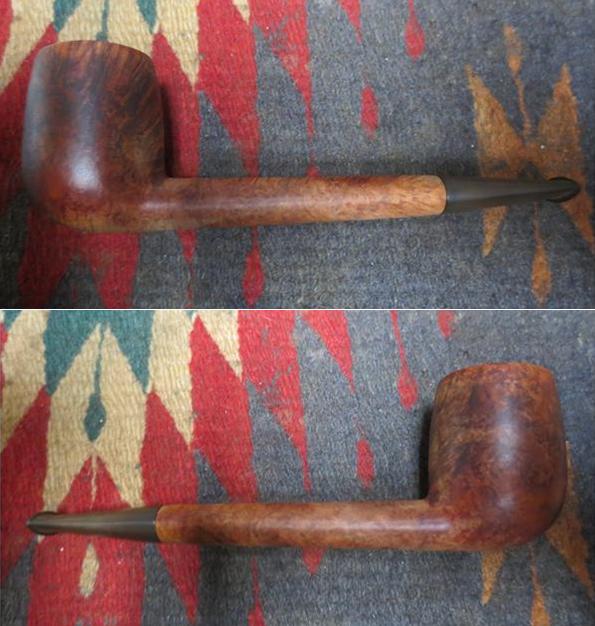
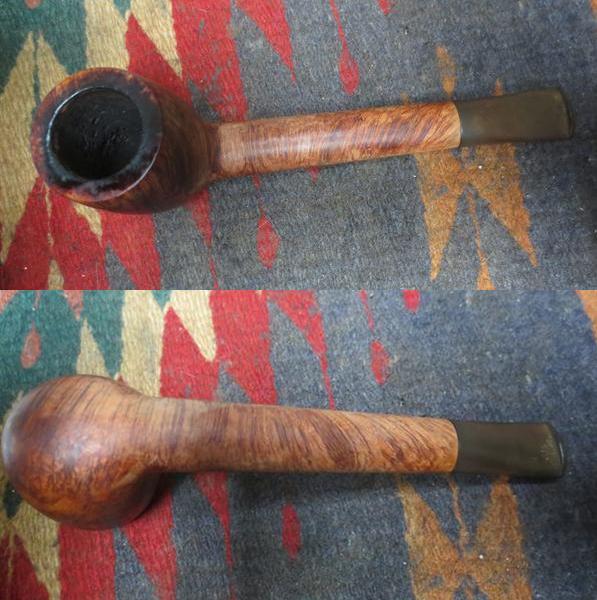
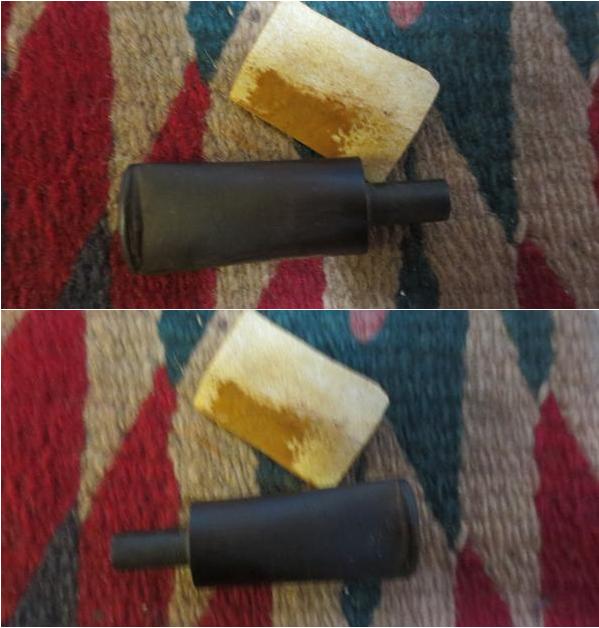
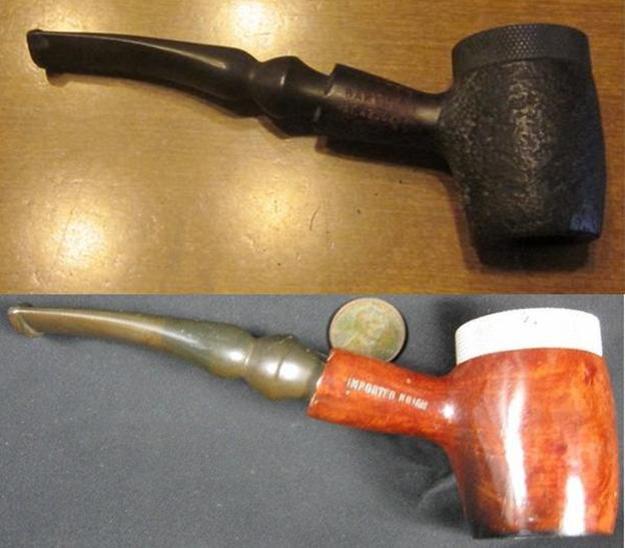
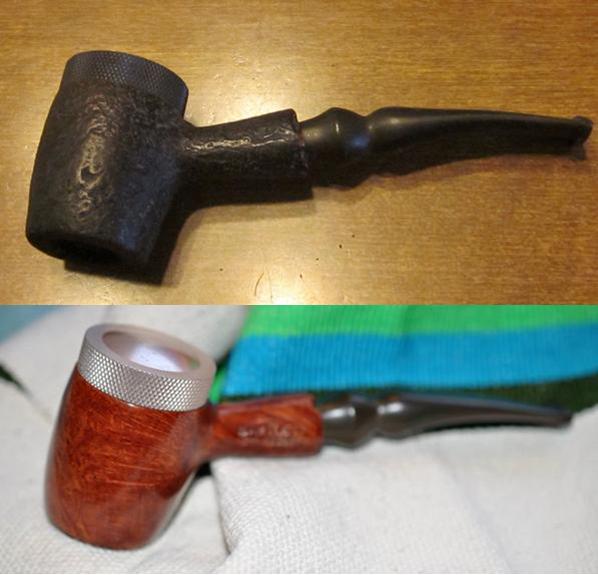
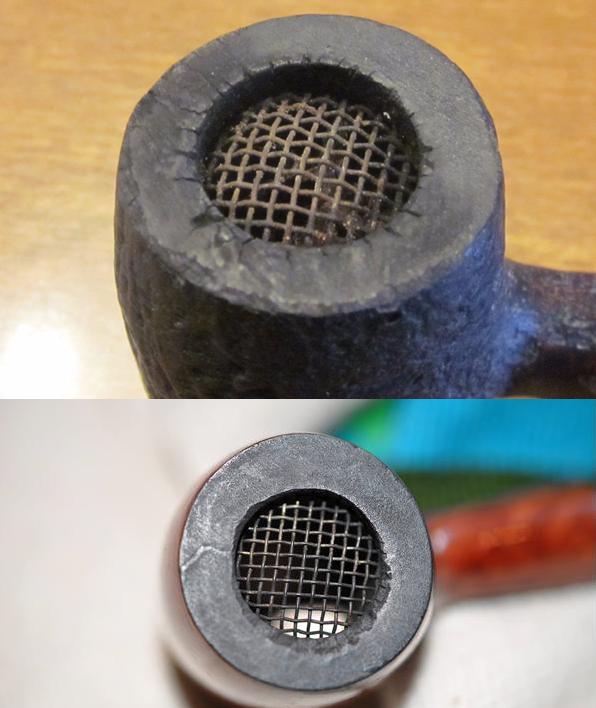
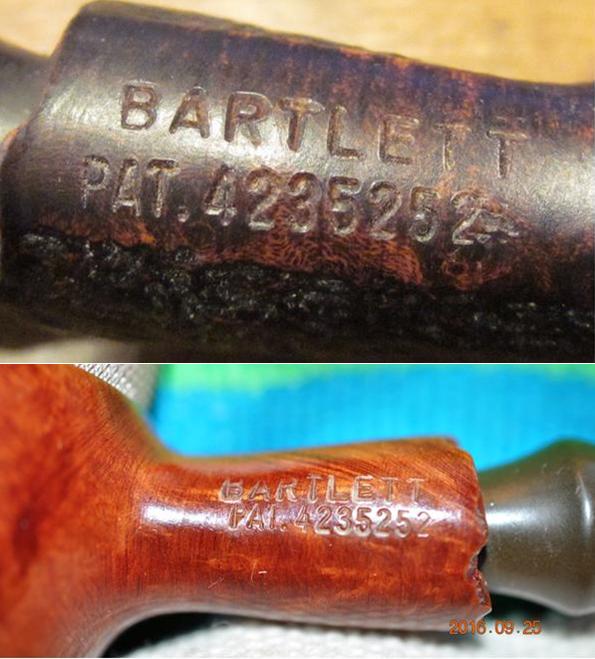
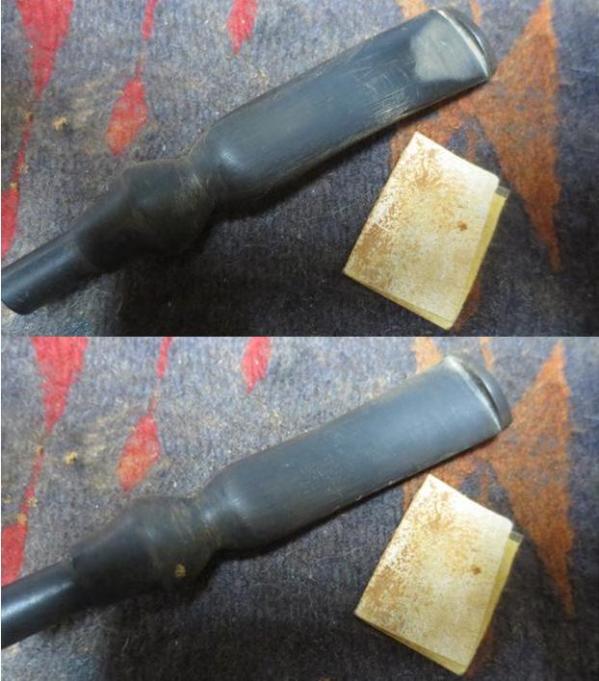
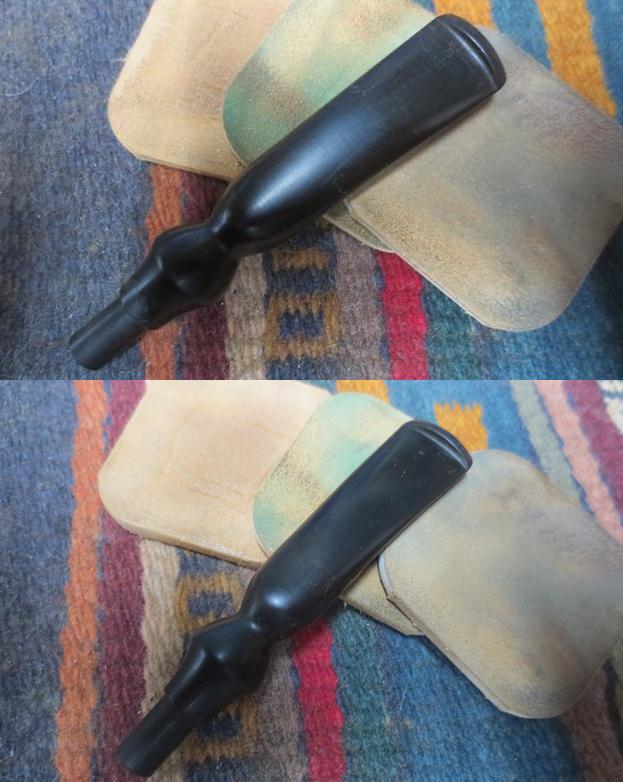
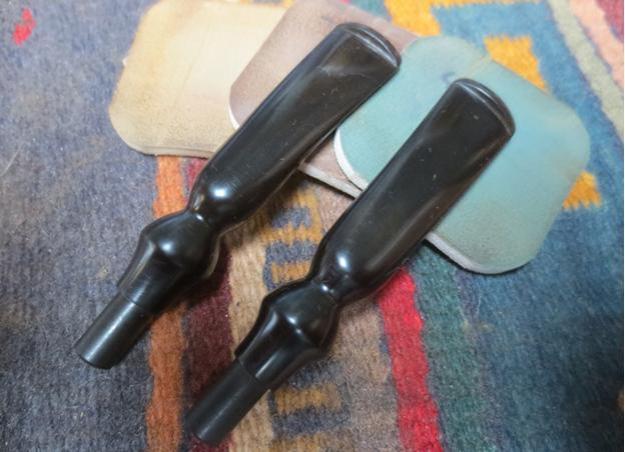
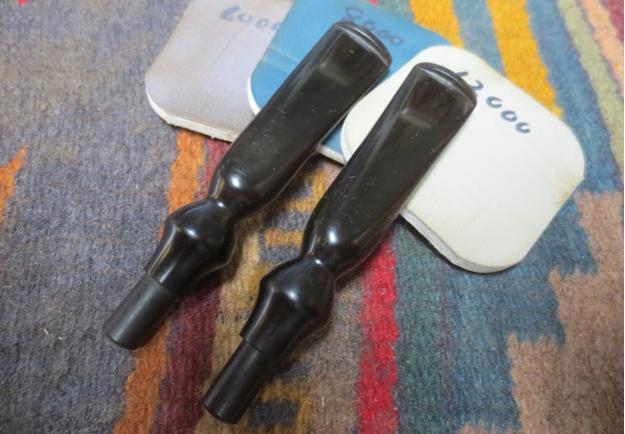
Tag Archives: bite marks

Another Denicotea – a tough one from Plovdiv, Bulgaria


Blog by Dal Stanton

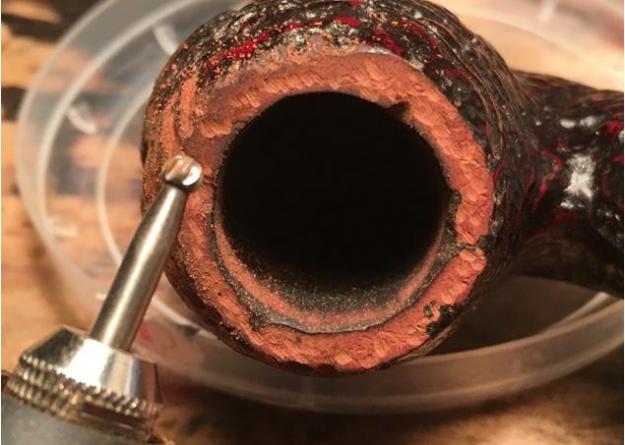
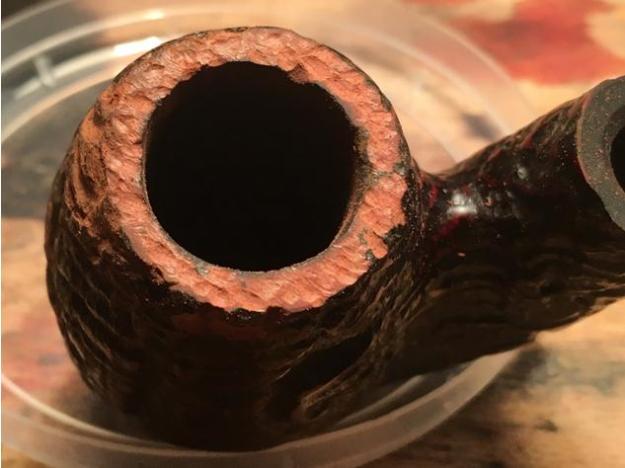
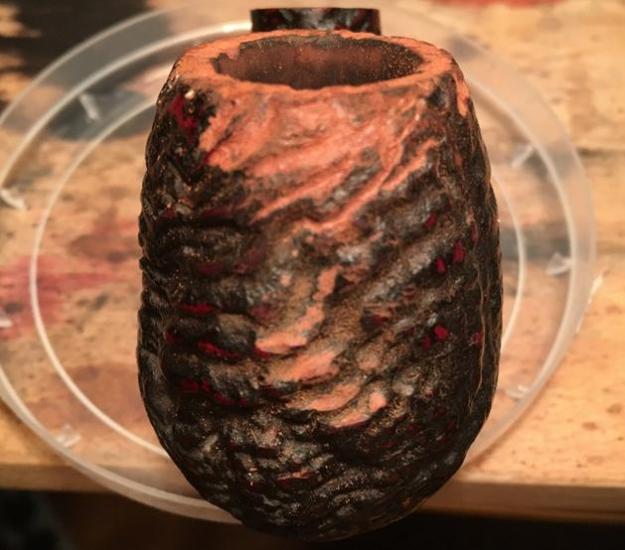
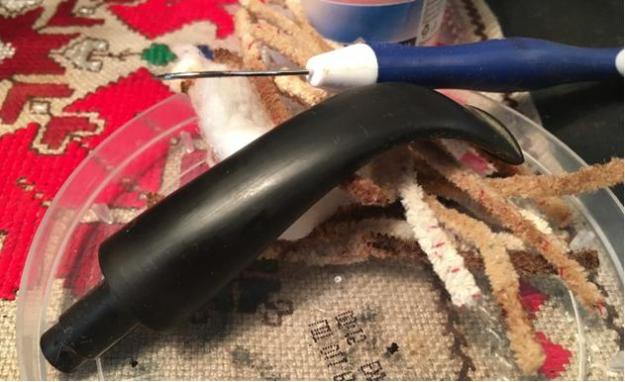
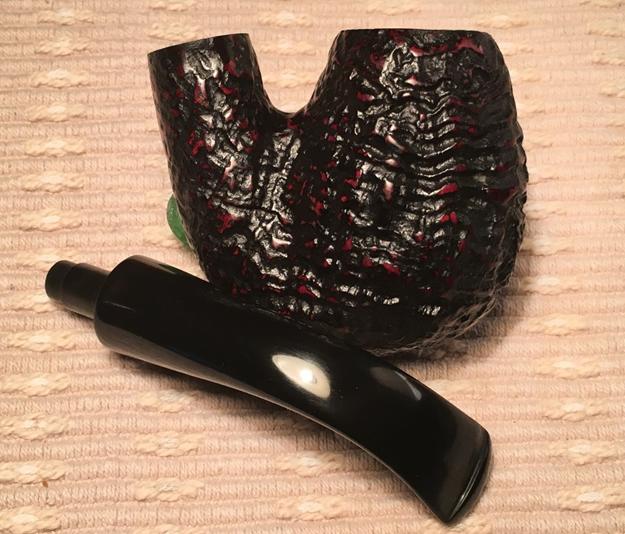
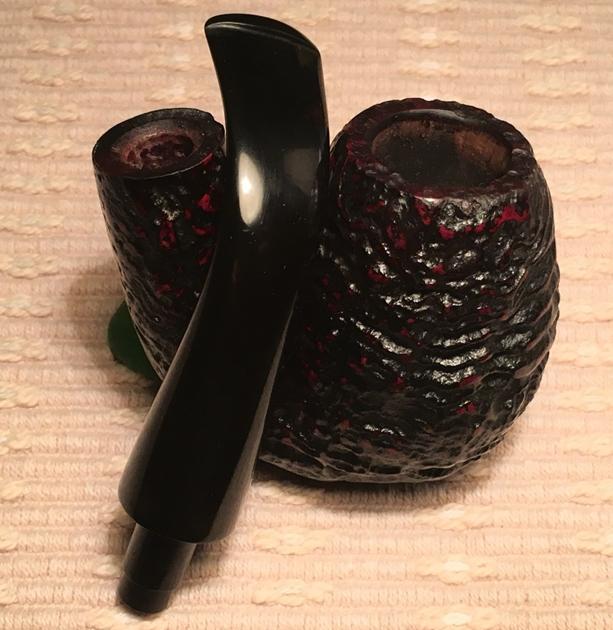
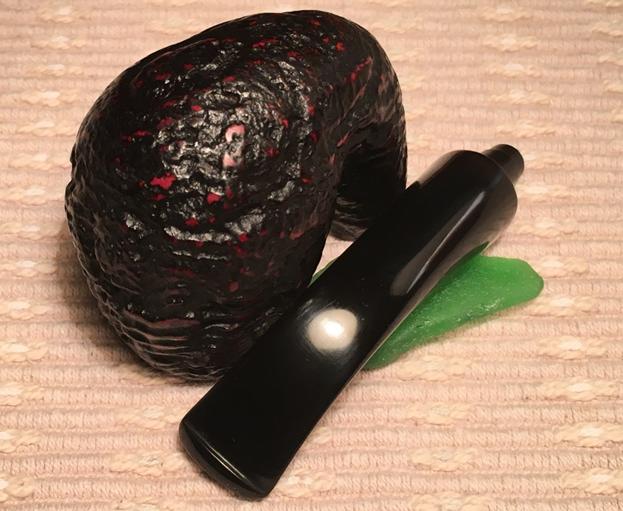
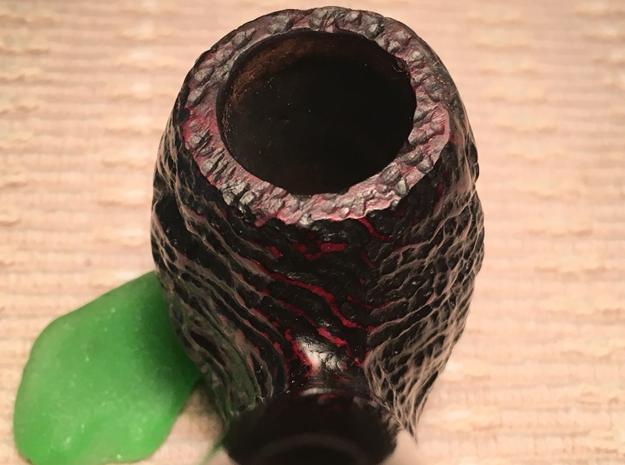
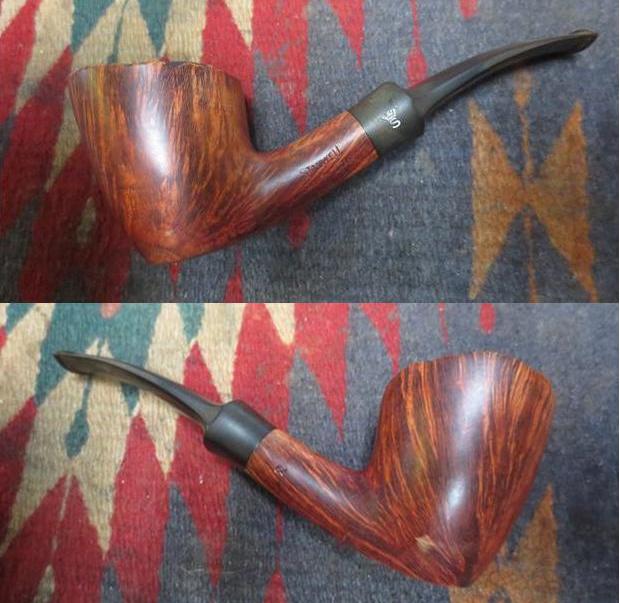
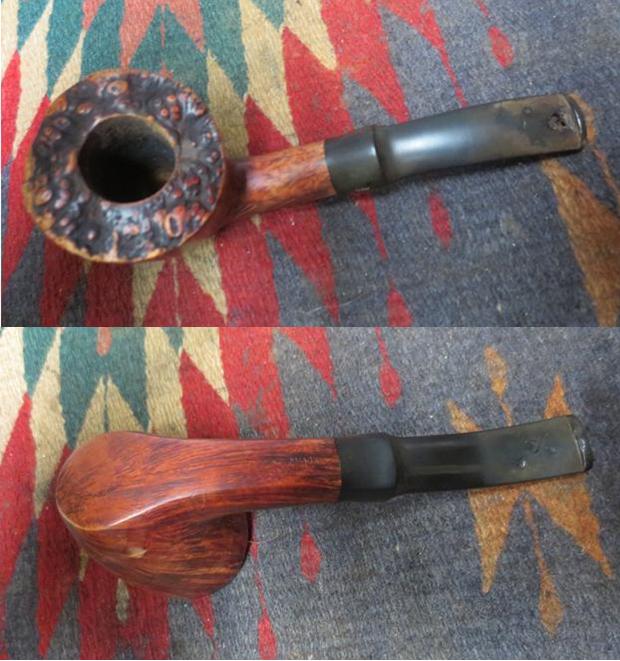
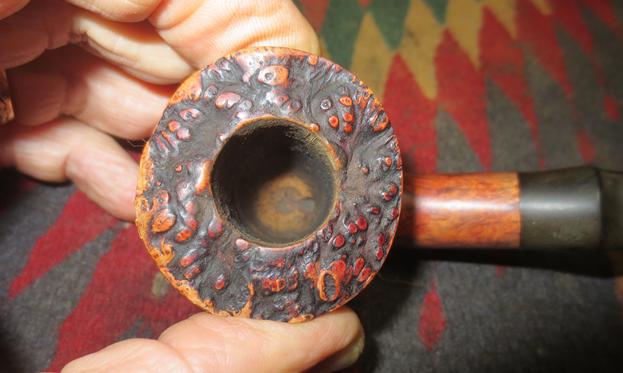
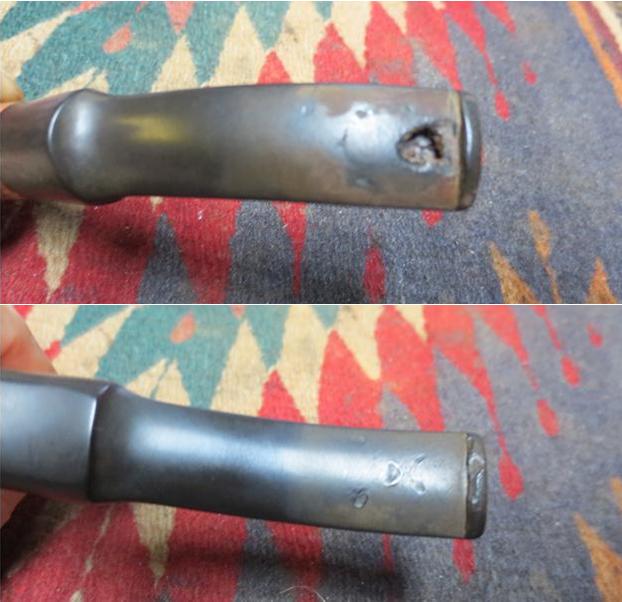
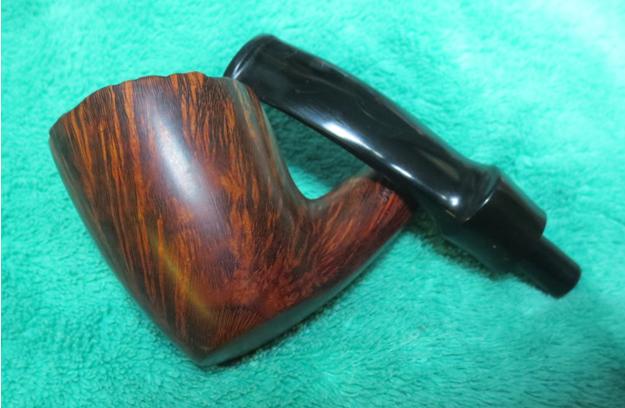
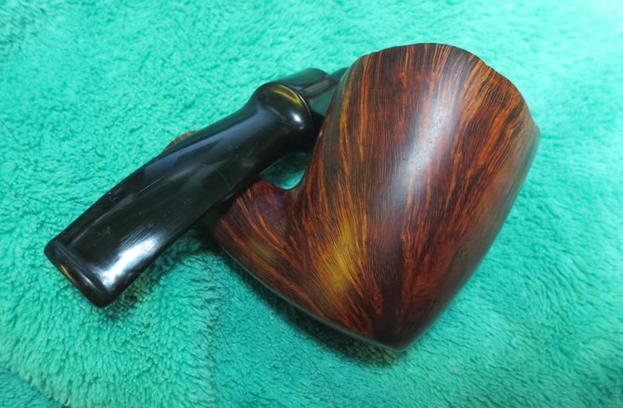
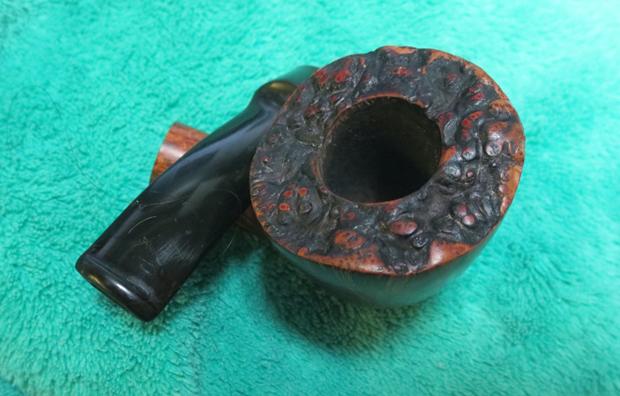
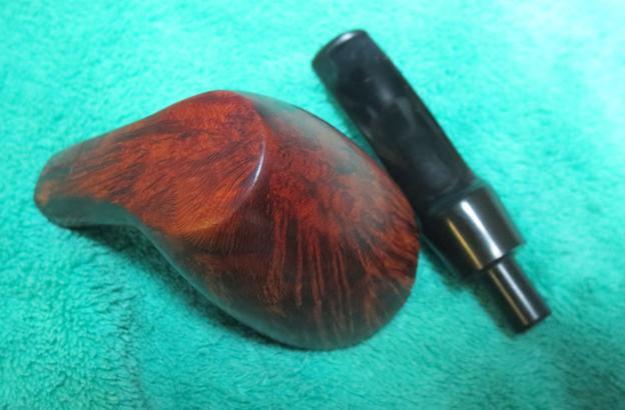
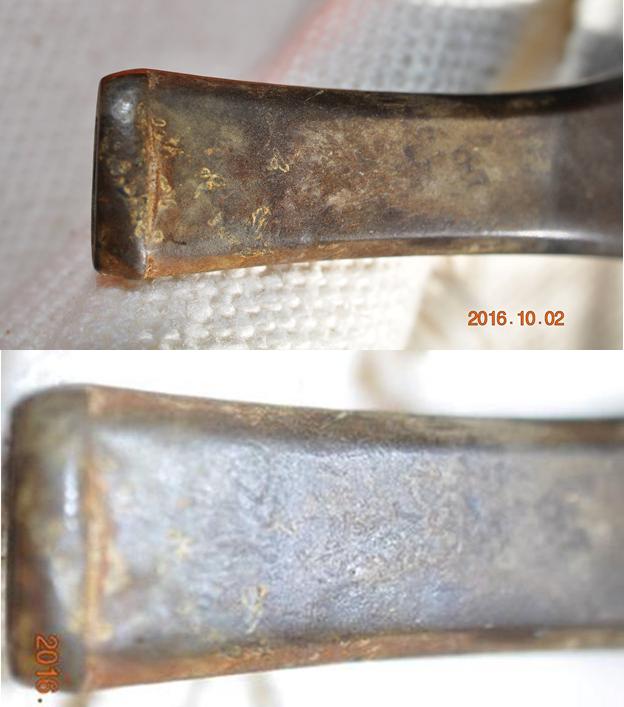
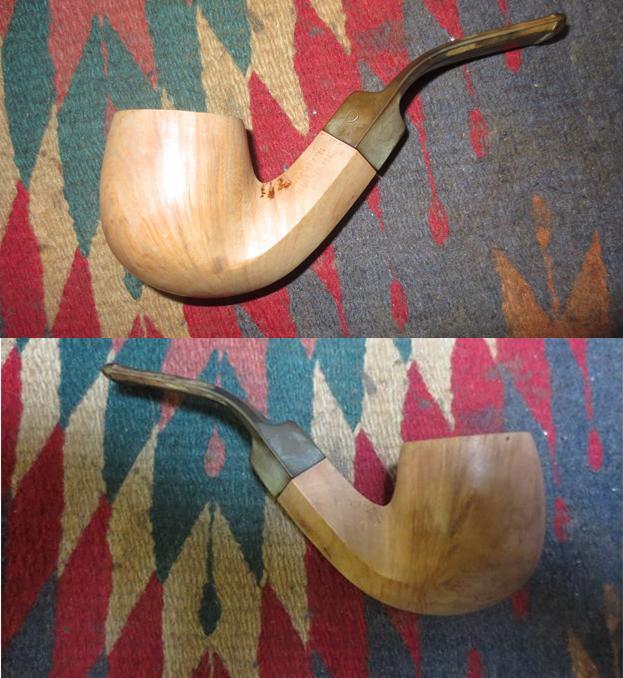
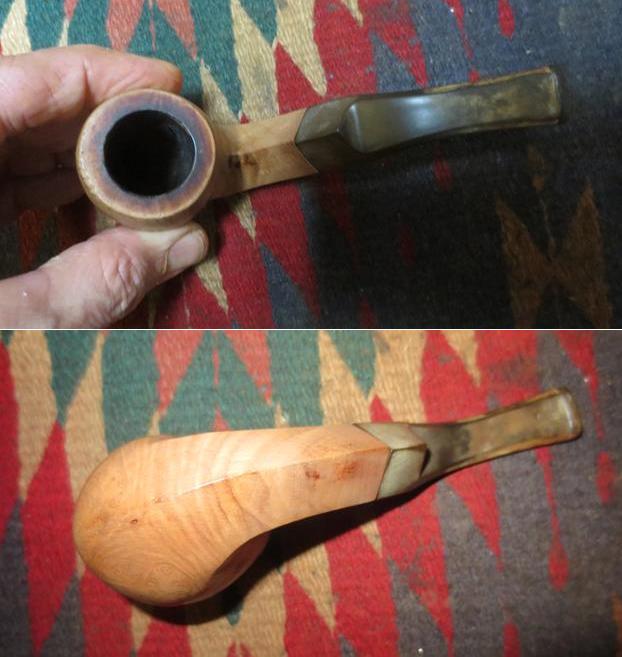
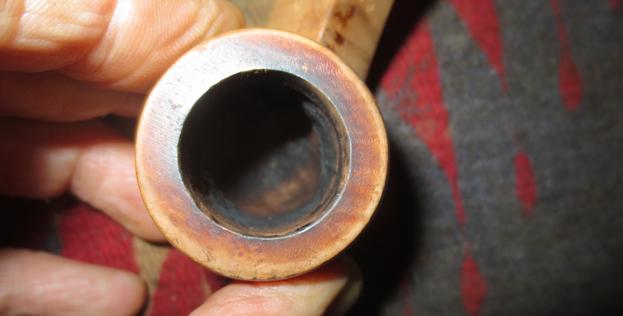
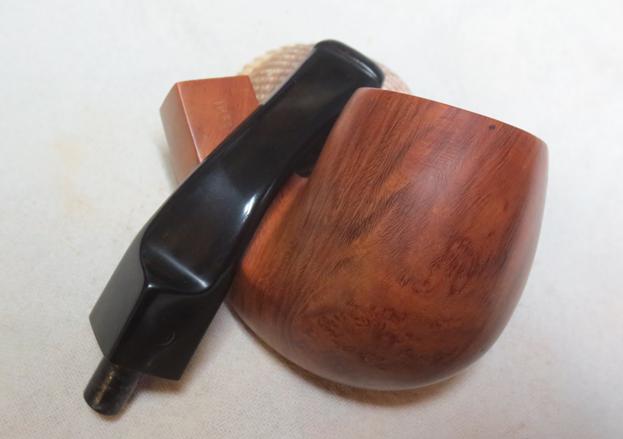
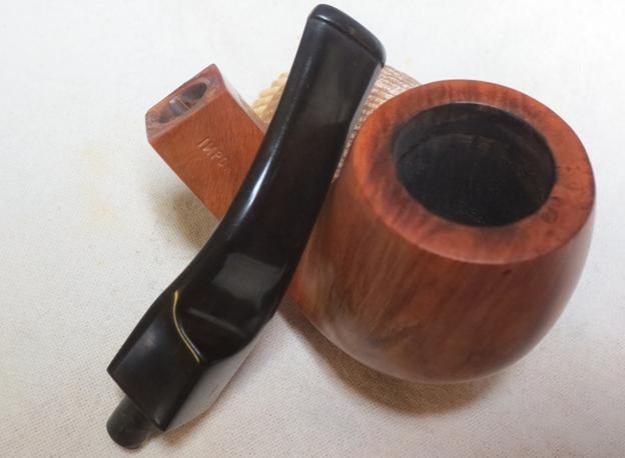
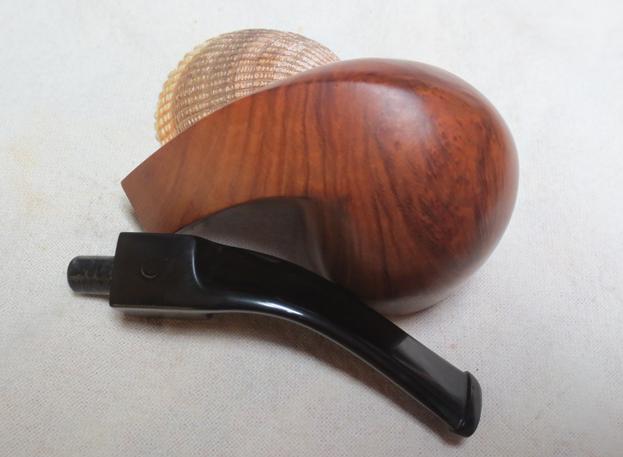
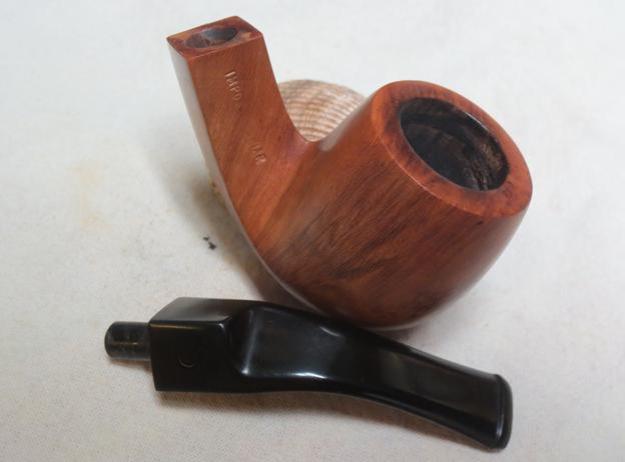
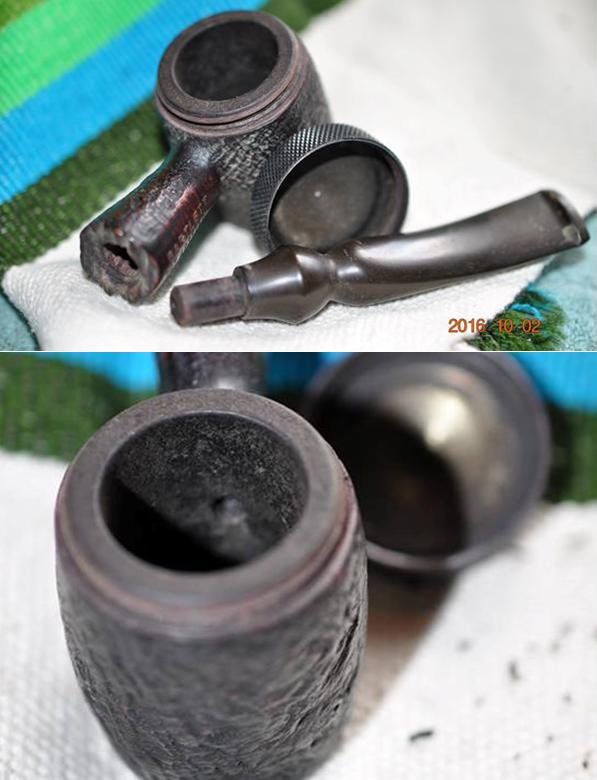
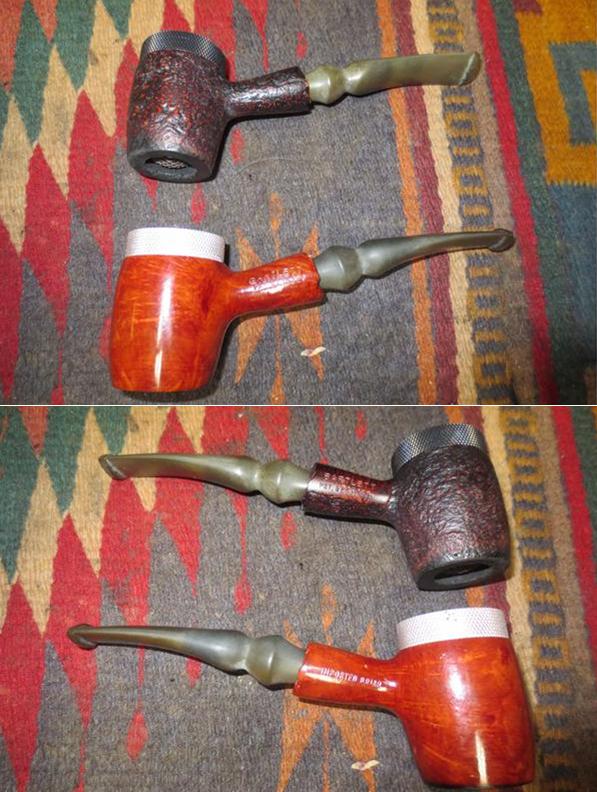
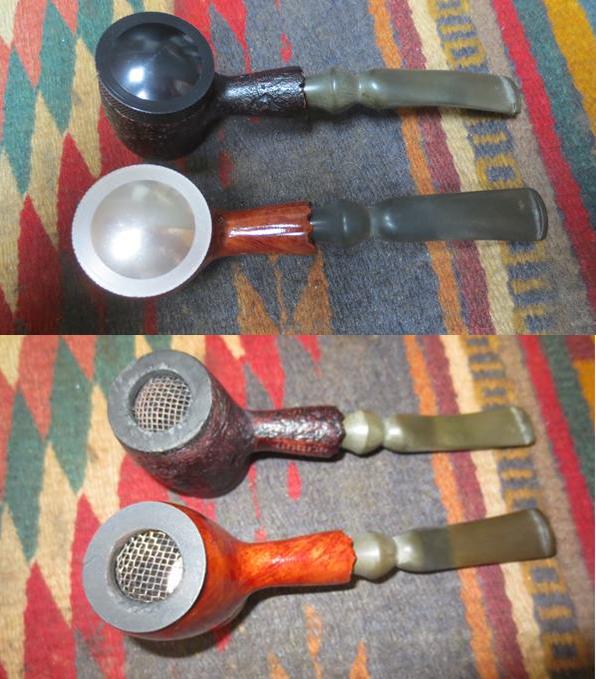
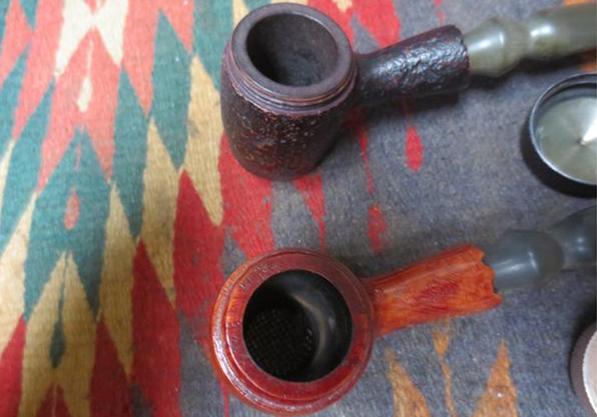
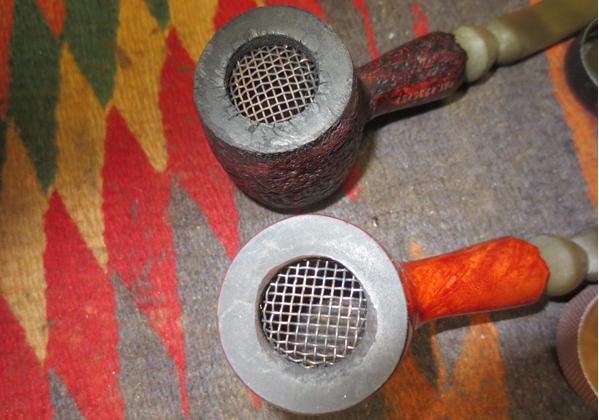
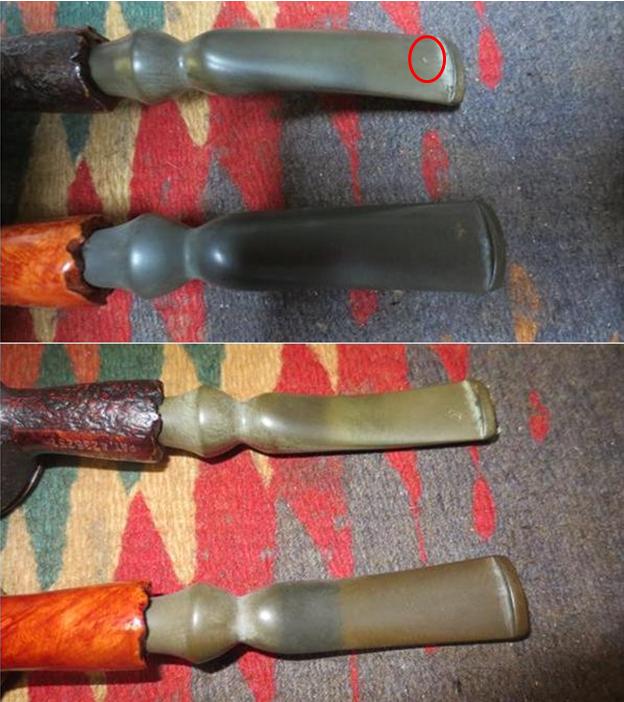
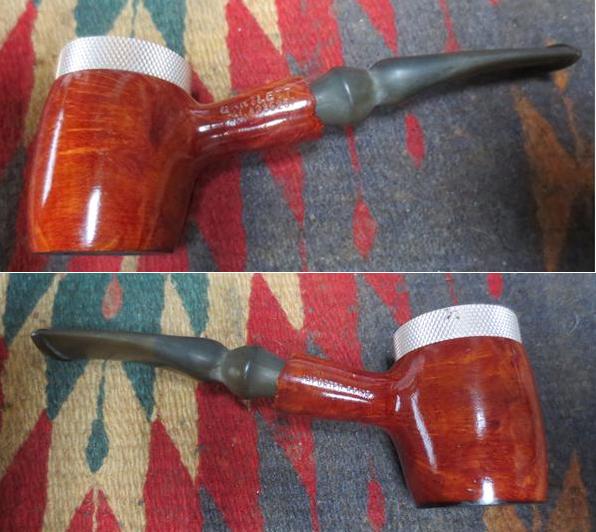
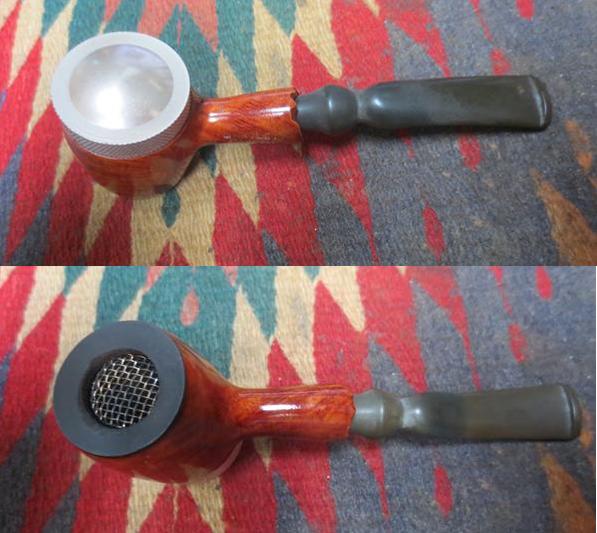
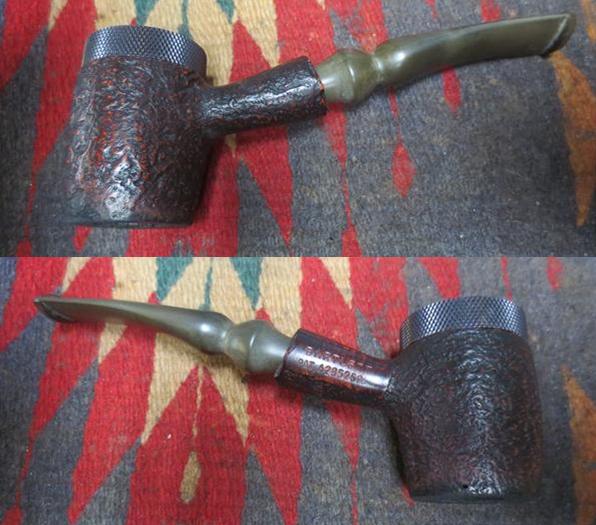
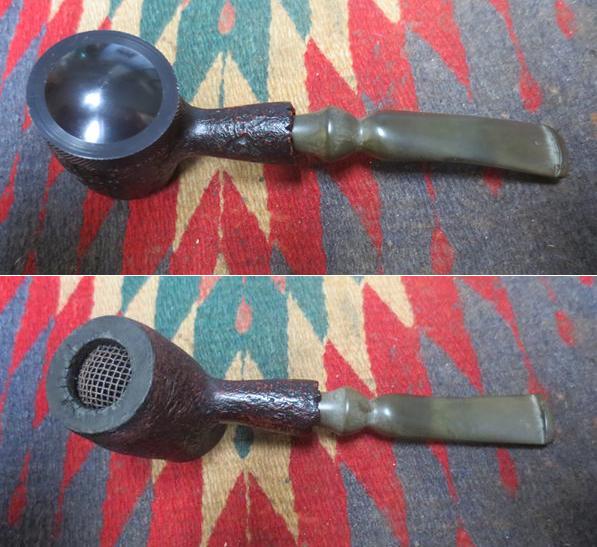
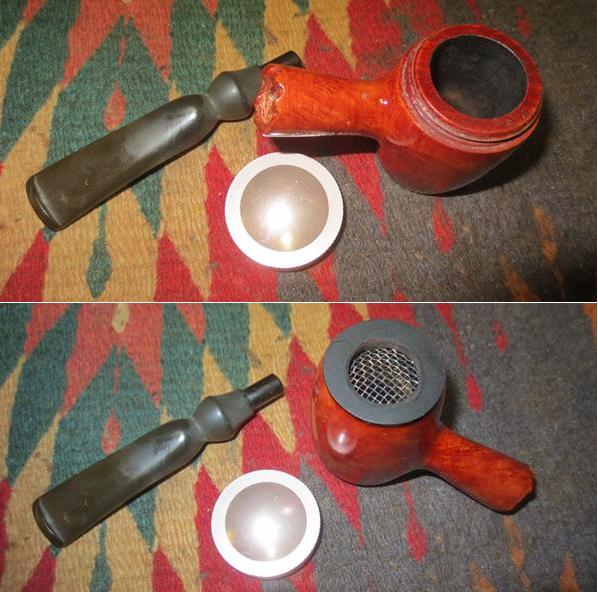
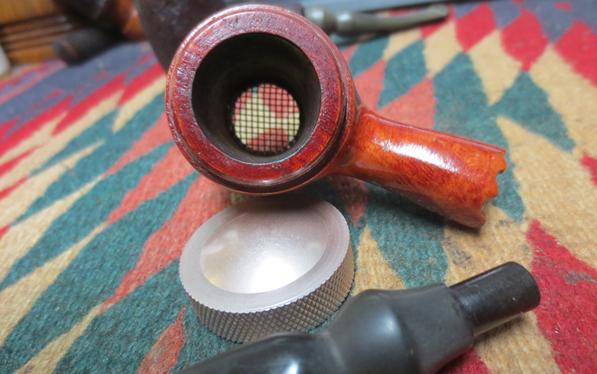
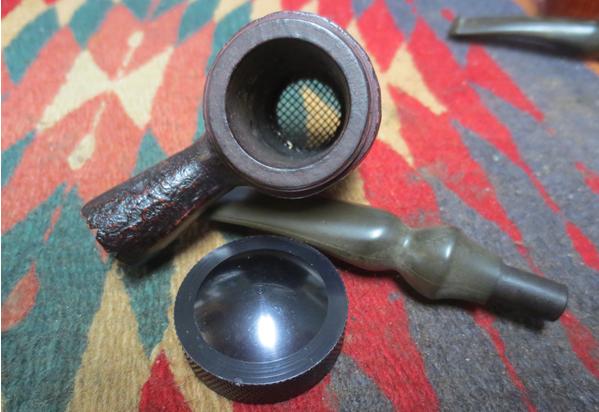
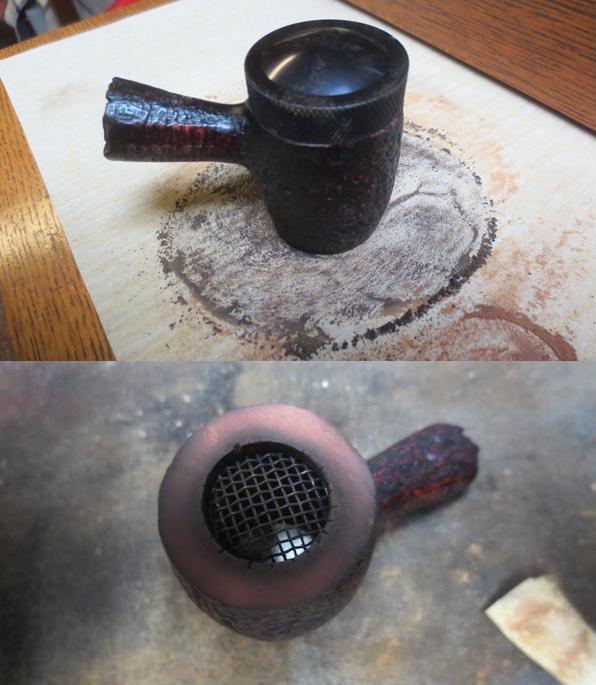
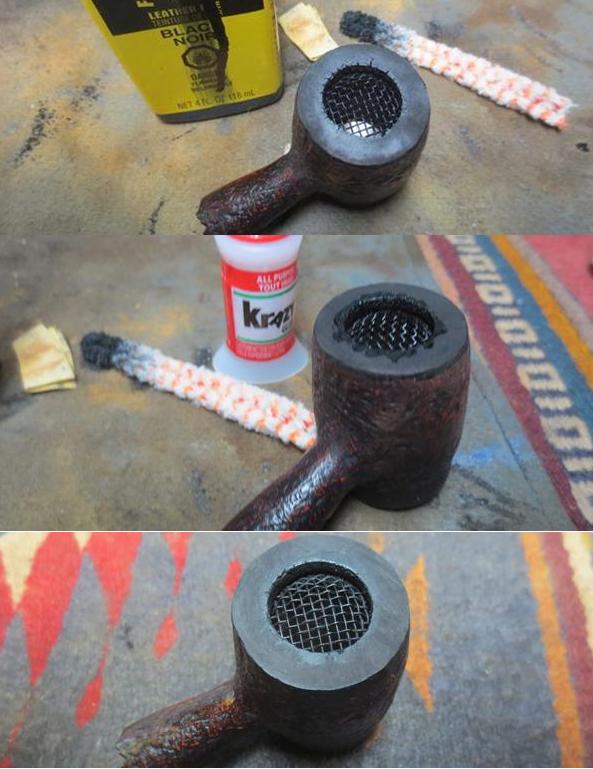
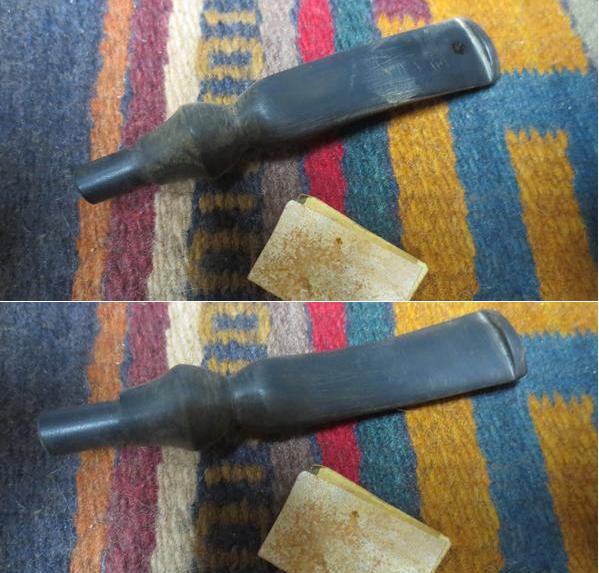
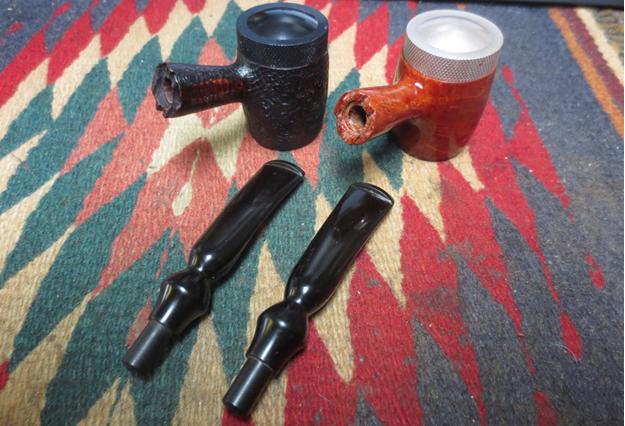
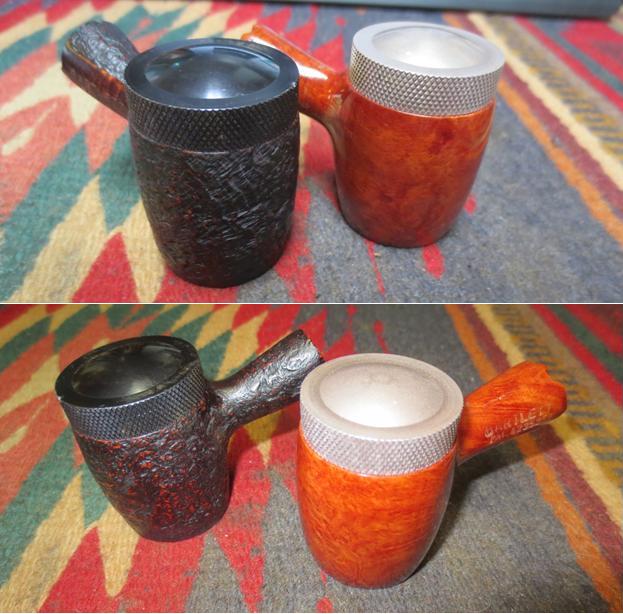
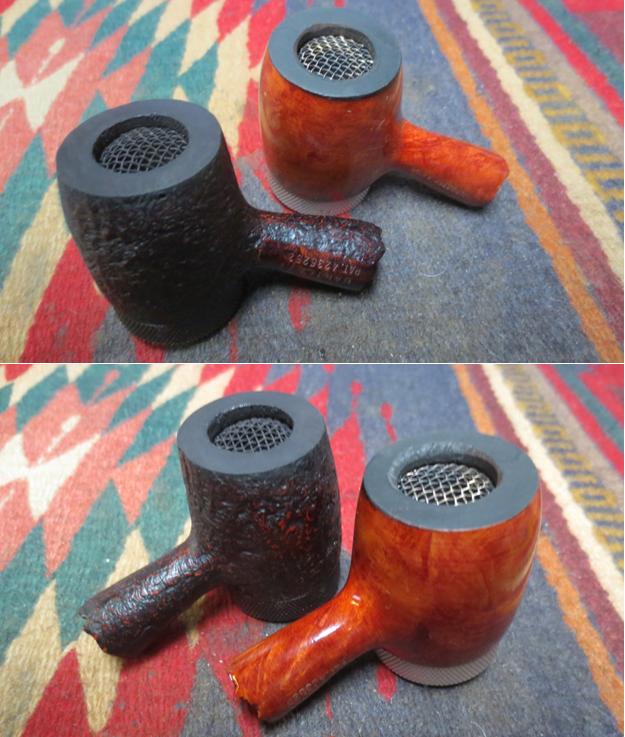
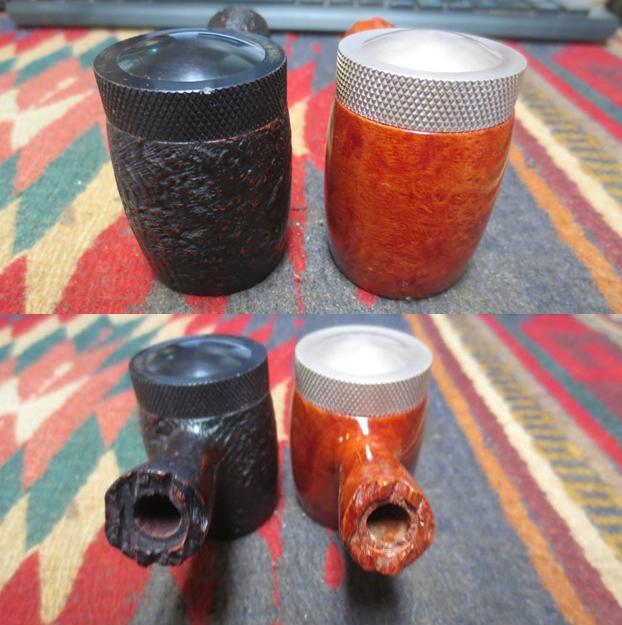
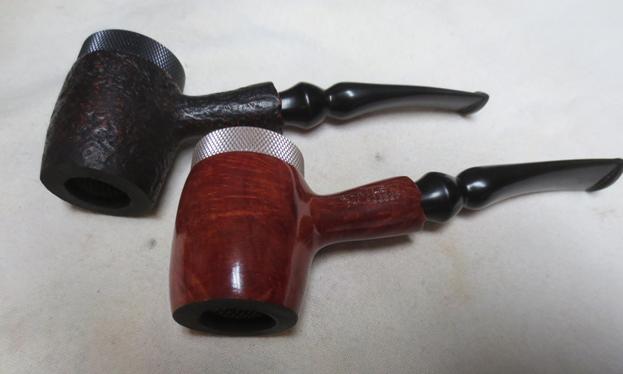
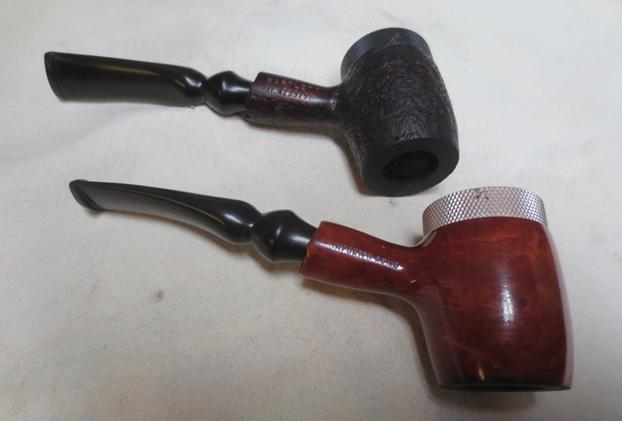
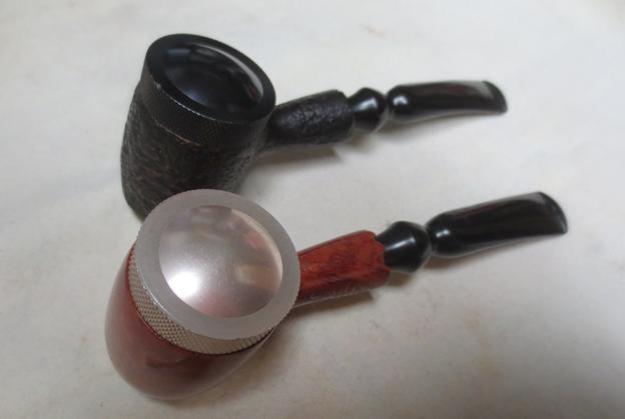
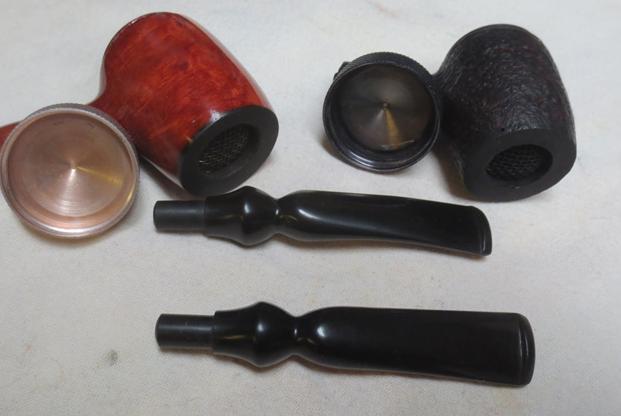
When southerners in the US invoke the phrase, “Bless his heart….”, I’ve learned that it usually means that there is some problem or abnormality associated with the person that usually isn’t something he can control, or can’t be explained, or perhaps, even better, should be left without too much comment.  When I received these emailed pictures from Gary, my colleague in Plovdiv, and set my gaze on the two pipes he had purchased at a local antique shop and was gifting me, my reaction was to invoke, “Bless their hearts….”  Here are Gary’s finds that summoned forth my southern invocations.denicotea1 denicotea2I would like to say how much I appreciate Gary – the stories we have shared and life we’ve experienced together – he with a choice cigar, I with a favorite blend and a named pipe – all my rotation pipes have names!  I also appreciate how he has kept his eyes alert to possible pipe reclamations and restorations for me on the Plovdiv front, about 2 hours away from Sofia.  After he sent me these pictures, I emailed back saying that I wasn’t sure how much I could do to help the little brother, but the big boy had potential.  How much?  I couldn’t say, but I was indeed attracted to what appeared to be a meerschaum lined, large volcano shaped stummel which seemed to be hopeful of again being nestled in someone’s palm! A week or so later, I found the gifted pipes waiting for me in my office in Sofia.  When they made it to my work desk at home, I added these pictures of the Denicotea volcano to fill in the gaps.denicotea3 denicotea4 denicotea5 denicotea6 denicotea7This is the second Denicotea I’ve worked on in as many weeks!  The Denicotea Curling turned out to be a beautifully detailed grained pipe but the filtration internals were interesting.  I’m wondering what filtering wonders this one holds!  The left side of the shank has what appears to be a newer script of Denicotea stamped over Trend.  The right side of the shank has a very worn stamp Bruyere Extra over shape number 1152.  Bless its heart…the bowl finish is in bad, bad shape.  It appears to have had a thick shellac varnish on it that has simply worn away and chipping presenting shiny spots of the haggard finish hanging on.  I’ll need to clean the surface thoroughly to see fills that might need attention. The rim is majorly scraped and dented yet, for what I can see of the meerlining, it looks like it might be intact, not having any cracks.  I’m hopeful!  The bowl itself is heavily caked and I’ll need to clean it carefully.  This will be my first meerschaum to work on so I’ll be reading up on other blogs’ meerlined clean-ups and restores.  The stem has some oxidation but only minor teeth chatter.  The button has some tooth bites/dents that need attention.  Most interesting about the stem is that it is comprised of two pieces.  When I disassemble the stem for the first time, I discover that the main slightly bent stem, has an interlocking twist mechanism connecting it to the stem’s filter extension.  The shorter vulcanite filter extension inserts normally into the mortise and has a normal looking air restricting tenon.  Nice – you  can use the pipe with or without filters.  My first impression of the interlocking twist action of the stem is that it is ingenious and seems to work quite well.  I took some pictures to show the stem assembly.denicotea8While playing with and admiring the stem interlocking mechanism, which I discovered would only engage at the correct alignment between stem and filter insert, I looked down the vacated mortise.  Denicotea did not disappoint – had I any doubt?  I could see a deeply implanted metal insert.  Again, as with the Denicotea Curling I had just finished, is this a rogue stinger of sorts that dropped out of the filter insert tenon or is this another filtration machination?  At first glance I’m guessing, rogue stinger, but….  By palm thumping the mortise and a little help from my handy dental probe and tweezers the stinger is extracted.  The end of the stinger appears to have broken off shortening the inserted portion that would grip the vulcanite tenon.  This stinger becomes history.denicotea9With this being my first meerlined project, I read different entries to make sure I was moving through the learning curve.  Unlike briar, I know that a cake is not needed with meerschaum which is a stone (German for ‘sea foam’).  I found Steve’s essay (Link) helpful as he dealt with the two major questions I have about this Denicotea: First, how to approach cleaning out the cake?  Secondly, how to approach the rim surface which combines/intermingles the repairs of both briar and meerschaum?  Can I top meer as I would a briar rim?  How do I approach applying stain later with the meerschaum in the mix – sharing the rim surface?  These are some of the questions as I approach the Denicotea Trend, ‘Bless his heart’, I don’t want to make things worse than they already are!  Attacking the cake, with the cake as thick as it is, I could employ my Pipnet blades to start the reaming and finish up with the Savinelli pipe knife for the fine tuning, but on the maiden voyage with ‘sea foam’ I resolve to take a slower voyage with the Savinelli knife.  Also, since it is a new tool in my chest, I’m anxious to hone in on the techniques of its use. I take another close-up of the bowl to mark the progress.  After taking the picture and taking a closer look, I decide first to clean the rim area with Murphy Oil Soap using the brass brush.  I want to see the meer more clearly to inform the reaming process of possible cracks.  I also decide to wash the entire stummel with Murphy while I was at it. Using cotton pads, I apply Murphy Soap undiluted and scrub the stummel surface and rim.  With a brass brush, I work at loosening and cleaning up the lava and cake build up to see the rim better.  The Murphy Soap doesn’t make much of a dent on the stummel – it is looking more like residue varnish left over on the surface.  But, progress is made on the rim and I can see the meerlining much better.  It seems to be in good shape, but the rim will need topping to restore clean, healthy briar to the rim. denicotea10 denicotea11Satisfied with my improved perspective, I take the stummel with Savinelli pipe knife in hand to the 10th floor ‘Man Cave’ balcony to ream the pipe.  The additional sunlight helps me see the internal bowl surface as I bring the knife into contact with the cake.  The technique that develops is that I start from the rim, where the actual meerschaum surface is more evident, and work down gradually into the bowl where the cake thickens.  As I work with the knife, I also can detect a difference in the sound and feel of the knife as it has contact with the cake or with the meerschaum surface.  Using the knife, it became more difficult to judge what was going on when I was at the floor of the fire chamber around the draft hole.  I take a picture at the completion of the knife reaming.  I then take 240 sanding paper rolled around my finger as well as around the thinner end of a plastic toothbrush handle and continue to clean the meer surface of cake residue.  Even though the meerschaum is dark colored, it is smooth to the touch and the cake is eliminated!  I wipe out the chamber with a damp cotton pad.  I’m pleased and relieved.  The pictures show the progress.denicotea12 denicotea13 denicotea14With the bowl reamed and cleaned, I take Q-tips and pipe cleaners and clean the internals of the stummel using isopropyl 95%.  As I work on the internals with the Q-tips and pipe cleaners I watch the growing pile of used Q-tips and pipe cleaners change from being a hopeful small pile to a frustrated virtual Mt. Everest of expended Q-tips and pipe cleaners with no ‘gunkless’ end in sight.  From what I can see with my iPhone light down the mortise and what I can detect from the touch of the many Q-tips that have made the plunge, there seems to be a cavity of sorts between where the meerschaum lining terminates with the draft hole (as it transitions into the shank) and a tightening or closing of the mortise about ¾ in from the tenon side formed when the shank was factory bored.  This cavity seems to be a natural gunk reservoir that Q-tips pass over.  denicotea15

My first thought is to pull out the retort, but after a quick email to Charles Lemon (Dad’spipes.com) my concerns that the meerlining might not stand up to the boiling alcohol were confirmed.  Instead Charles recommended:

Without using the retort, I would suggest using a flat-ended tool (the square end of a flat needle file?) or an appropriately sized drill bit turned by hand to scrape out as much of the old tars and gunk as possible and then going at it again with swabs and cleaners dipped in alcohol. 

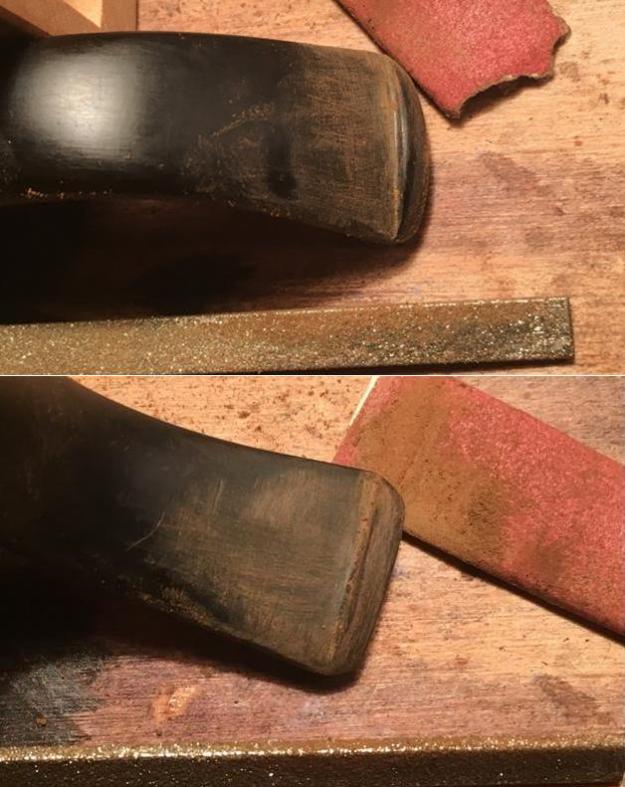
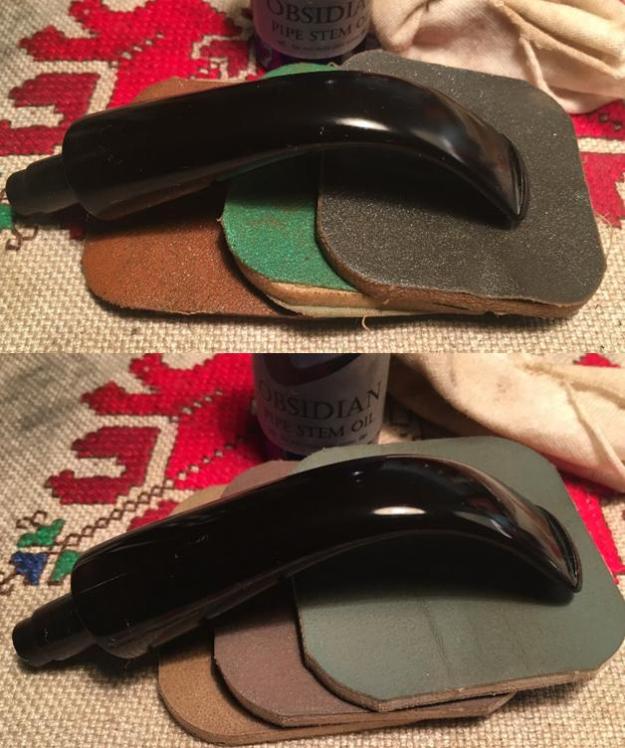
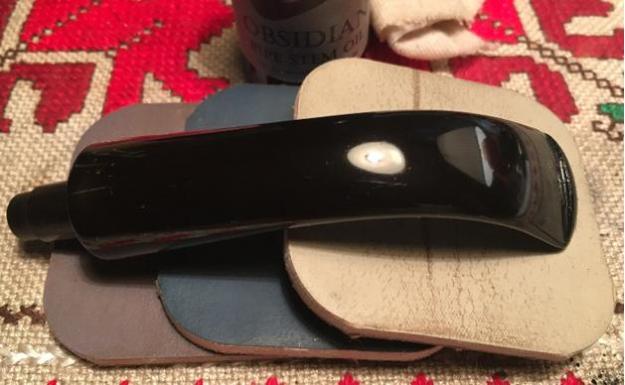
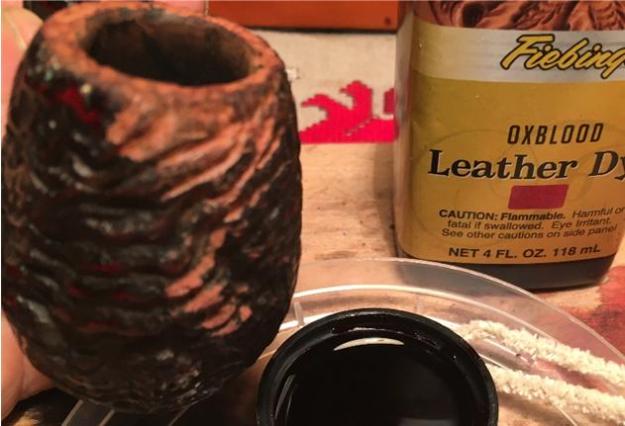
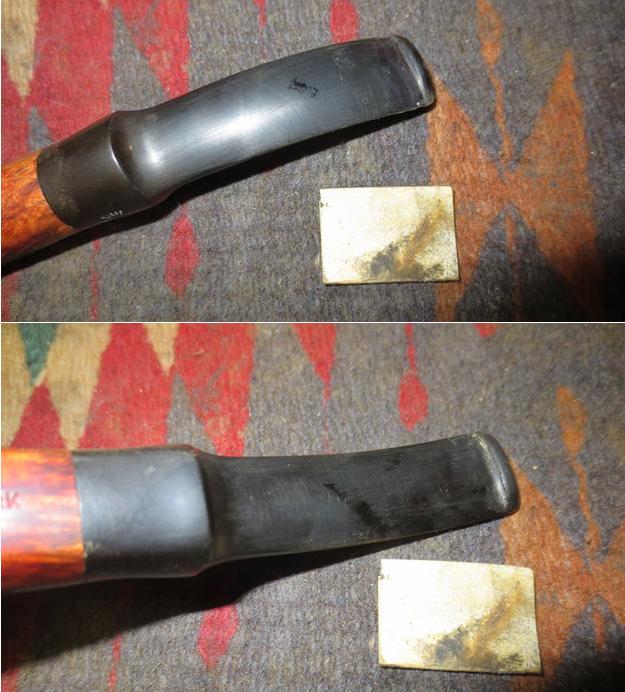
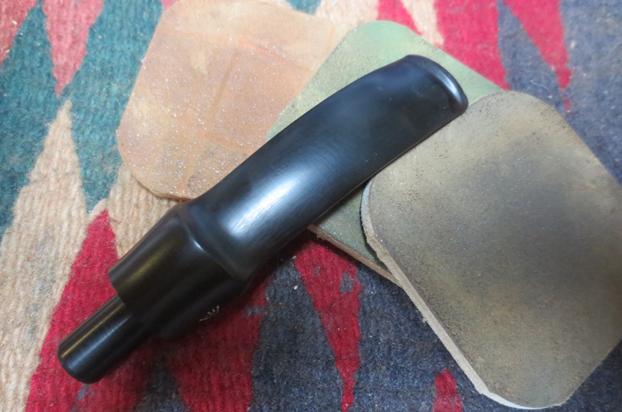
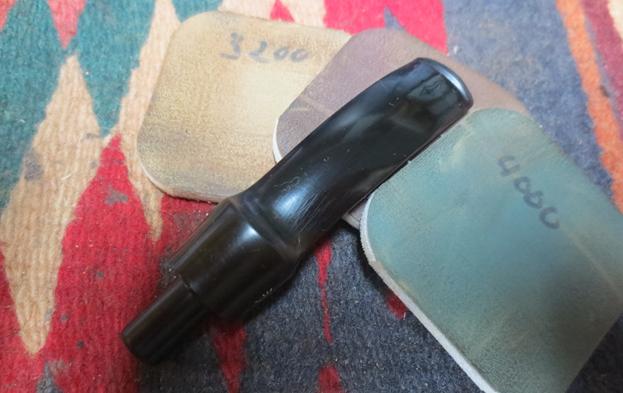
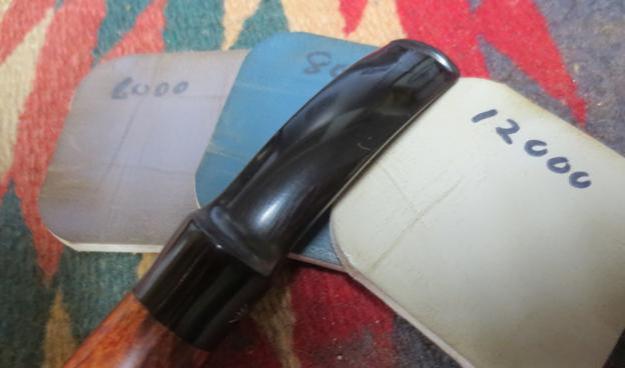
I grab my flat spoon and pointed dental probes and reach in over the ‘hump’ in the mortise to scratch up the muck cavity and it does stir things up – following again with Q-tips which are saturated with fresh, loose muckness that had been scraped up by the dental probes.  As I scrape and Q-tip plunge repeatedly, the reality of what I believe is a design flaw with this Denicotea Trend forms in my mind.  It will be nigh impossible to keep this pipe clean with normal use and cleaning with the cavity existing deep within the mortise.  Therefore, a plan starts formulating, using the drill approach that Charles recommended above, I decide to take it one step further and attempt to re-engineer the internals of the mortise by removing the ‘hump’ in the mortise as much as I am able.  Since it is beyond (deeper) the reach of the tenon’s full insertion point within the mortise, widening the mortise by removing the hump (or some of it) should not impact the tenon’s fit.  My goal would be to create a straightened mortise that would expose a more uniform interior for cleaning.  I put down the dental probes and Q-tips and put the stummel aside to give more consideration to this plan.  The pictures below show the lack of progress with the cleaning job and a diagram I couldn’t resist creating to conceptualize the obstacle (yellow line) and solution (white dashed line)!denicotea16 denicotea17While reflecting on the emerging stummel game plan, I fish the multi-pieced stem out of the Oxi-clean bath and remove the oxidation that has emerged on the vulcanite surface with 320 sanding paper followed by 000 steel wool.  The stem surfaces look good so I turn to cleaning the internals of the two stem pieces.  I use Q-tips, cotton balls and pipe cleaners dipped in isopropyl 95%.  Not nearly as much resistance as the stummel is putting up.  The final picture shows more clearly tooth dents and button biting work that need to be tackled.denicotea18 denicotea19Back to the stummel, I decide to take a drill bit just at the size needed to match the narrow hole created by the tapered factory bore in the mortise – creating the ‘hump’ forming the cavity beyond it collecting the gunk.  I turn it by hand without impacting the mortise wall.  It’s not easy maintaining a straight approach with the bit by hand.  I turn the bit only at the hump not going deeper and potentially impacting the meer.  That seems to work as briar ‘saw dust’ drops out of the mortise.  I then take the next larger bit and do the same thing – not as easy as it bites into the briar hump more.  After doing this a few minutes I realize that this approach is not going to work to the degree I had hoped. To do this properly, I need a stationary drill press and a secure way to position the stummel and re-bore or deepen the mortise.  So, I take a semi-circular needle file and with nerves of steel, attack the hump without touching the mortise walls.  This was helpful in bringing the hump down a bit, but my hope for a straightened mortise was evaporating.  Putting away the file, I return to the scape and clean technique I began with and I make some progress!  The partial hump removal did help with the cleaning angles.  Finally, clean Q-tips start emerging and I take a final picture of ‘Cleaning Job Done!’  Then I recalled Charles’ suggestion of using a ‘flat’ edged file to scrape. Hmm.  So, I take my flat end needle file and scrape – unbelievable!  More muck!  Thankfully, not too many more Q-tips were expended and I can say, to the best of my ability and understanding: Clean!  When I put this pipe on eBay to find it a new home, I do not want to put forward a ‘hypocrite pipe’ – looking good on the outside but nasty on the inside!  Pipes often remind me of people and how God’s work starts on the ‘internals’ and then moves to the ‘externals’!denicotea20 denicotea21With ‘internals’ of both stummel and stem now in good shape, I move to the externals.  The next step is to work on the rim. When I look at the rim I discover a place in the meerschaum that has cracked (ugh!) at about 6:35 o’clock in the picture below and what might be a hairline crack running from in.  Even though I plan to top the rim, I apply some superglue to the chipped area hopefully to add a bit of strength.  It’s late, I’m tired from the longest muck cleaning contest in my record book, so I put the stummel down to allow the superglue to cure overnight.denicotea22 denicotea23The next day, I take a picture of the rim to show the spot on the rim where I applied superglue the night before and to show the progress as I top the rim.  I have not topped a meerlined pipe before, so I proceed cautiously and I want to see how it turns out before moving to the stummel external finishing (Thought: “O ye of little faith!”).  With 240 grit sanding paper on a chop block I go out on the 10th floor Man Cave balcony and begin the topping process.  I move the stummel around in a circular motion for a few rotations and stop to check to make sure I’m staying true – not dipping into soft spots and checking out the meerlining.  I take pictures along the way to show the progress. denicotea24 denicotea25 denicotea26As they say, all was going so well until it wasn’t!  The chipped area in the meerschaum that I reinforced with superglue crumbled under the stress of the topping.  In the last picture above you can see the fault line developing.  What to do?  After looking at the new damage, I decide to continue to top the rim a bit more to increase the solid meer bordering the briar and to reduce the area in need of repair (3rd picture below).  I’m thankful that the volcano cone stummel has some space to give up to the topping process!denicotea27 denicotea28 denicotea29Another email is sent with the pictures above to Steve for his input.  So far, a ‘Two Email’ restoration…another record.  I’m thankful for willing mentors!  With Steve’s response in hand describing plaster of Paris and superglue options, I elect to rebuild the chipped area using superglue.  I apply it to the area and balance the stummel to allow the superglue to settle in place and I go to bed.  The next morning, I look at the patch and realize another layer of superglue is needed to build up the surface further.  After lightly sanding the patched area to smooth the first layer of glue I carefully apply another coat to the needed patch area.  Again, I balance the stummel allowing the second application of superglue to cure is the desired place.  My goal is to rebuild the meerschaum rim chip enough to be able to sand the wall side of the patch smooth, hopefully blending the patch with the meerlining.  I will probably again lightly top the stummel with a finer grit sand paper to bring the rim surface in sync with the patched area.  Finally, I will carefully cut a bevel on the meerschaum lining to minimize the patched area.  From earlier pictures, it appears that the pipe had a light bevel texturing the meerschaum lining look – I like it. denicotea30 denicotea31After several hours, I return to the Denicotea Trend anxious to make some progress.  The superglue patch has hardened to touch but I want to give it more time to cure thoroughly.  I decide to start a thorough removal of the old finish to coax the hidden briar grain into the light – I like this part!  I take another look at the stummel surface.  The old finish looks very much like the ‘shellacy’ candy apple varnish sheen which often is a bear to remove.  With cotton pads and acetone, I scrub down the stummel to loosen up the old finish careful to avoid the ongoing rim repair.  After a lot of elbow grease and cotton pads as expected, the old finish is not giving up easily.  I decide to use 000 steel wool with acetone and lightly rub the surface with the wool and that does the trick.  Utilizing the spittle test to moisten the bare wood, I get a sneak peak of the briar’s potential.denicotea32 denicotea33Now to the complete the rim.  The picture directly above and below show the superglue patch for the chip in the meerschaum lining of the bowl.  With 240 grit sanding paper, I sand the patch down to the meer surface rounding it to blend with the curvature of the bowl.  I concentrate only on the wall area of the patch leaving the rim surface for later.  When the surface of the patch wall is smooth and blends with the curvature, I sand the patch on the rim surface to bring it down to blend.  I had intended to return to the topping board for a few revolutions, but decide that it would be better to work directly on the patch instead of removing more of the bowl on the topping board and stressing the patch more than needed.  It didn’t take long to sand the patch bump down to the rim surface.  At this point, also with 240 grit sanding paper, I cut a bevel on the inside of the meer rim to help blend the patch but also simply to soften the meer’s rim edge.  I’m satisfied with the patch even though the patch has a different hue from the surrounding meer.  It’s the best I can do and I’m thankful it seems strong and I’m hopeful it will hold up well for many bowlfuls of tobacco to come.denicotea34 denicotea35 denicotea36Turning back to the stem, I take close-up of the repair needed with a tooth dent and a bite on the button lip.  I decide to try the heating technique to address these problems.  Another first for me on the restore!  With a butane lighter, I gingerly place the flame over the areas – remembering Steve’s description when he did this – ‘painting the surface’ with the flame.  Well, I’m not sure if it was a success or not.  After the flame, I use 240 grit sanding paper and finish removing the tooth dent and smooth out the button lip.  I also refine the button lip above and below with the straight edge of a needle file.  Pictures show the progress. denicotea37denicotea38Satisfied with how the repairs look, I begin the micromesh sanding/polishing cycles on the stem.  Reattaching the reassembled stem to the stummel, using micromesh pads 1500-2400 I wet sand the stem follow with applying Obsidian Oil.  Following the wet sand, I dry sand using micromesh pads 3200-4000 and then 6000-12000, following each cycle with an application of Obsidian Oil.  I love the vulcanite pop after the micromesh polishing.  The pictures show the progress on the stem polishing.denicotea39 denicotea40 denicotea41With the stem work completed, I return to the stummel and take a medium sanding sponge and use it to lightly top the rim rotating it in a circular motion over the sponge.  I do this to finish the sanding of the rim preparing for the micromesh polishing.  With a light grade sanding sponge, I sand the rim as well as the stummel removing small nicks on the briar surface.  Using micromesh pads 1500 to 2400 I wet sand the stummel and rim followed by dry sanding with pads 3200-4000.  After completing this cycle, I notice two small pits that looked like they had been fills on the front bottom of the volcano shape.  I didn’t notice them before and the question in my mind is, do I fill them and then spot sand the area and repeat the micromesh process?  My answer was, ‘Yes’.  I applied a couple drops of super glue to the pits and set the project aside and because its late, I go to bed!  Pictures show the stummel progress and stoppage of progress!denicotea42 denicotea43 denicotea44 denicotea45 denicotea46The next morning, I played patch catchup!  Folding a small piece of 240 grit sanding paper into a knife edge, I strategically sanded the patch bumps down to the briar surface (pictured).  Then, repeating use of the light weight sanding sponge, followed by repeating the micromesh cycles 1500-4000, I can then bring the patched area back in pace with the rest of the stummel.  I complete the micromesh polishing process using pads 6000 to 12000.  I notice a few other fill areas that simply need to be darkened with a stain stick.  The pictures show the catch up and completion!denicotea47 denicotea48 denicotea49Decision time.  Do I stain this Denicotea Trend or simply bring the briar up to full glow directly with the polishing process?  The question that I had since the beginning with the meerschaum lining was how to approach staining the briar that shared the rim surface with the meer?  With input from Steve (Oh my, a 3-email restoration!), patience, a steady hand and a Q-tip was the advice.  After this, still unsure of a direction, I pulled in the ultimate authority and did a ‘Wife Taste Test’.  I explained to her that if I did stain, I wanted to use Fiebing’s Dark Brown and cut it by half with alcohol to lighten it.  With options spelled out, her choice was to leave the Denicotea as is. Rationale: “Most all my pipes have a dark hue – you need a lighter one.”  Good enough for me!  After applying Dark Walnut to a fill on the shank with an Italian brand stain stick, I take my Dremel tool with a felt wheel and I apply Tripoli compound to the stummel surface.  I use the slowest speed available and keep the wheel moving across the surface.  I don’t apply much pressure on the wheel allowing the speed of the Dremel and the compound to do the work.  Most blogs I’ve read that describe the use of polishing compounds warn against loading the wheel up on too much compound.  So, when I reload the wheel, I lightly touch the compound block.  After completing the Tripoli, I apply Blue Diamond compound with its own felt wheel, same speed and technique as with Tripoli.  Then, switching to a cotton cloth wheel and increasing the speed of the Dremel by one number, I apply several coats of carnauba wax on both stummel and stem, watching the wax as it liquefies and spread it evenly over the surface.  Following the carnauba application, I Dremel buff the entire pipe with a clean cloth wheel.  Completing the restoration, I hand buff the pipe vigorously with a microfiber cloth. denicotea50I started this restoration with, “Bless his heart….”  Now, this old boy stands on his own and though he has some scars of battle in the form of a meerschaum patch, he looks good.  My wife’s input to maintain the natural briar hue was spot on.  The beautiful caramel coloring blends well with the meerschaum lining and the depth of grain on this Denicotea has been liberated from being encased under the nasty shellac varnish.  I’m very pleased – especially with the last view below – the steward’s perspective.  The lateral fire grain will be a great view for the pipe man that adds this rescued Denicotea to his collection.  I couldn’t help starting off with pictures before (“Bless his heart….”) and after (“Dang!”).  If you would like to add this pipe to your collection, leave me a note in the comments.  Thanks for joining me!denicotea51 denicotea52 denicotea53 denicotea54 denicotea55 denicotea56 denicotea57 denicotea58


Cleaning up an Erik Nording Freehand


Blog by Steve Laug

This is yet another interesting pipe from the latest box of pipes that my brother Jeff sent to me. It is a hand carved Erik Nording Freehand. It has a hand rusticated rough finish on the shank and the bowl. In looking at Erik’s website I am pretty sure that the pipe is from the Vahalla series as it has the same rustication. The difference is in the small bit of plateau left behind on the rim and the shank.The rim has some plateau with smooth areas around the edges and top of the bowl. The shank end was also smooth with a tiny spot of plateau there as well. There is a contrast stain on the bowl and shank with dark reddish undertones and a light/medium brown top stain. The stem is turned with a ring and ball after it insert into the shank. There is a cursive N on the stem that is the Nording stamp. erik1 erik2The stamping on the underside of the shank is readable but double stamped on the smooth portion of the flared shank. It reads Handmade by Erik Nording.erik3The rim is quite dirty with tars and oils built up in the plateau. It is heavily clogged with tars and oils and there are some burn marks on the inner edge of the rim top. The inner edge was originally smooth tapering into the bowl and rising to a ring of plateau on the top. The outer edge also flows from the plateau toward the bowl edge and is shaped like a cap. The underside of the bowl and shank shows the rustication pattern. The finish is in very good shape.erik4My brother cleaned the bowl and the internals of the pipe. He scrubbed the finish with Murphy’s Oil Soap and reamed the bowl with a PipNet reamer. He cleaned out the shank and airways with alcohol and pipe cleaners and cotton swabs. I took the next photos when the pipe arrived at my work table.erik5 erik6I took a close up photo of the rim top to show the caking and damage that had filled in the grooves in the plateau and darkened the inner edge of the bowl.erik7I took photos of the stem to show the tooth marks and chatter on both sides of the stem near the button. The stem was otherwise quite clean.erik8I sanded out the tooth marks and chatter with 220 grit sandpaper until they were gone. With the surface of the stem smooth it was ready to polish with the micromesh sanding pads.erik9I wet sanded the stem with 1500-2400 grit pads and dry sanded it with 3200-12000 grit pads. I wiped it down with a damp cloth after sanding it with each pad.erik10 erik11 erik12I did a quick clean on the mortise, airway in the shank and the stem with pipe cleaners, cotton swabs and alcohol. It was pretty clean.erik13The bowl top was actually quite a mess. I used a brass bristle wire brush to clean out the grooves. As I cleaned it I noticed that the inner edge of the rim was originally smooth. I sanded it with 220 grit sandpaper to remove the damaged areas and smooth it out. I worked to blend it into the plateau areas.erik14I polished the rim edge with micromesh sanding pads – wet sanding with 1500-2400 grit pads and dry sanding with 3200-12000 grit pads. I wanted to get the inner edge of the rim smooth and clean. I bleached it using a cotton swab and bleach to remove some of the darkening. I sanded it until it was smooth and polished and looked like it must have when the pipe was new.erik15 erik16 erik17I buffed the pipe and stem with Blue Diamond on the buffing wheel. I gave the bowl and stem multiple coats of carnauba wax. I buffed it with a clean buffing pad to polish it. I hand buffed it with a microfibre cloth. The finished pipe is shown in the photos below. This one will certainly be on the store soon. If you are interested in purchasing it ahead of time send me an email at slaug@uniserve.com or send me a message on Facebook or here. Thanks for looking.erik18 erik19 erik20 erik21 erik22 erik23 erik24 erik25
Rejuvenating a GBD Colossus Fantasy 9552 Bell Dublin


Blog by Steve Laug

When I first took this one out of the box I figured it was an Italian made pipe. Something about the look led me to think that way. But I was way off. My brother had told me he was sending along a pipe that might surprise me. This was it. The bent Bell Dublin look did not give me a clue to the stamping that was on the pipe. Here is how it is stamped. Surprised? Maybe not but I sure was. The stamping is really clear (lighter in some spots than others). It reads Colossus over the GBD oval over Fantasy. Next to that it is stamped London, England and the shape number 9552. I had no idea that the pipe was a GBD, a Colossus or a Fantasy. But it is.colossus1Here are some of the photos that my brother sent me to give me a hint. Once I had seen the stamping the combination of smooth panels and sandblast finish fit well. The brown swirled Lucite stem also fit into the GBD Fantasy look. Okay so I should have known it was a GBD but I did not.colossus2 colossus3 colossus4 colossus5 colossus6 colossus7My brother scrubbed the grime off the pipe. When it arrived it was very clean and the rich brown stain was dull and light. The black understain in the pits and crevices still showed through. It would not take too much to bring it back. The bowl and rim were clean and the shank and the inside of the stem were also clean.colossus8 colossus9I took a close up photo of the rim. You can see a little more grime and tar deep in the grooves in the crevices of the rim particularly toward the back of the rim. I used a brass bristle tire brush to clean up the rim. I scrubbed it back and forth until the sandblast was clean.colossus11I took photos of the tooth marks and the tooth chatter on the top and the underside of the stem near the button. None of the marks were deep but they were very present.colossus12I stained the bowl with a dark brown aniline based stain that I mixed 50/50 with isopropyl alcohol. I flamed the stain and repeated the process until the briar was equally covered.colossus13I sanded out the tooth marks and chatter with 220 grit sandpaper.colossus14I wet sanded the stem with 1500-2400 grit micromesh sanding pads. I wiped it down with a damp cotton pad. I dry sanded it with 3200-12000 grit sanding pads and wiped it down once again to remove the sanding dust.colossus15 colossus16 colossus17I gave the bowl several coats of Conservator’s Wax (micro-crystalline wax) and buffed it once it had dried with a shoe brush to raise the shine.colossus18 colossus19I buffed the bowl and stem with Blue Diamond on the buffing wheel. I gave the pipe a light coat of carnauba wax (a very light touch on the bowl). I buffed it with a clean buffing pad to raise the shine. I hand buffed it with a microfibre cloth. The finished pipe is shown in the photos below. The finish is quite nice with the contrast between the medium looking brown stain and the black undercoat. The contrast between the stains on the bowl and the striations of brown on the Lucite stem is amazing and the pipe looks new. Thanks for looking.colossus20 colossus21 colossus22 colossus23 colossus24 colossus25 colossus26 colossus27 colossus28
A Living Tiny KBB Yello-Bole Salesman’s Pipe


Blog by Steve Laug

I have always been fascinated with miniature copies of larger items. When my daughters were younger we used to buy them brass miniature stoves and household items that were surprisingly real. All of them had working parts and were small copies of the larger counterparts. I found out that Salesmen’s samples were similar to these items I bought my daughters. They were a common item in the early 20th century. Salesmen needed a smaller version of their product to show off to retailers, and retailers in turn needed a way to demonstrate the features of larger items, which might need to be ordered from the manufacturer, to their customers. Many salesmen’s samples were highly detailed, with additional marketing copy pointing out important features of the product. http://www.collectorsweekly.com/advertising/salesmans-samples I have cleaned up a few tiny salesmen’s pipes over the years that were working models of larger pipes. They have all been smokeable.

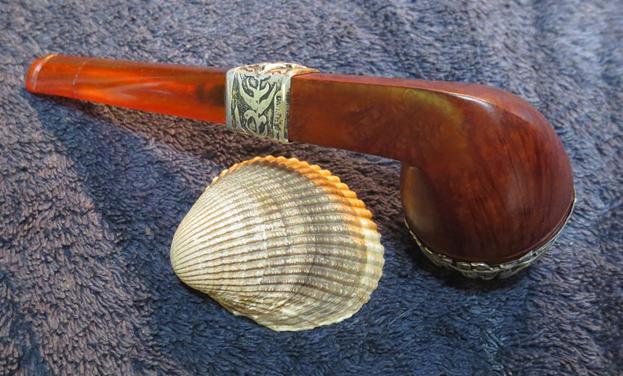
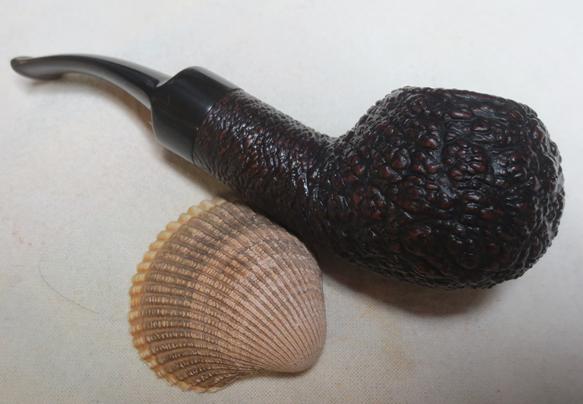
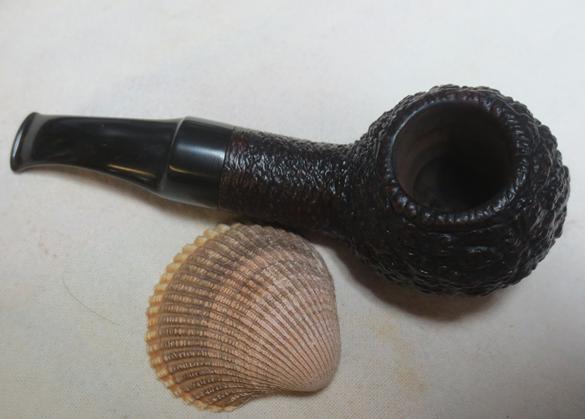
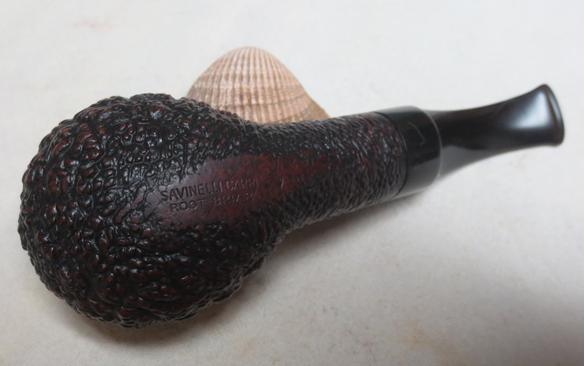
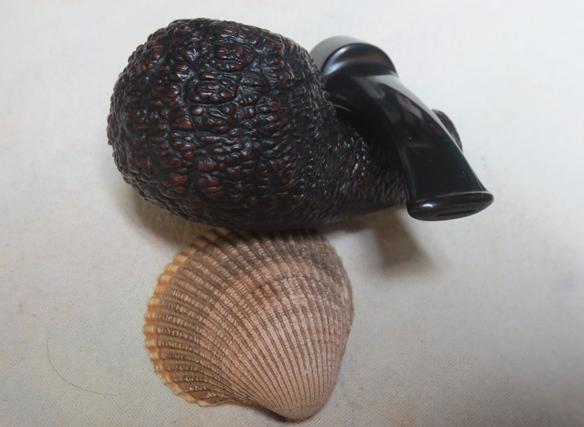
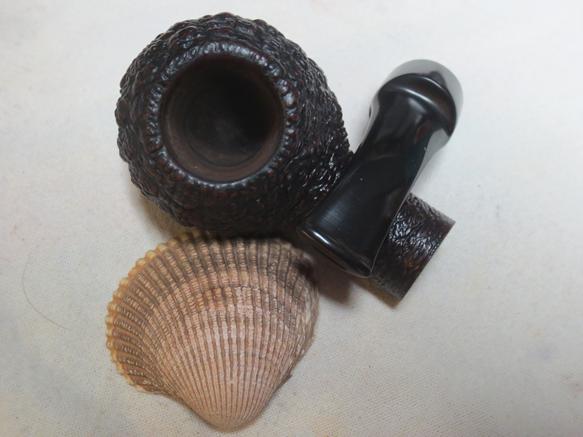
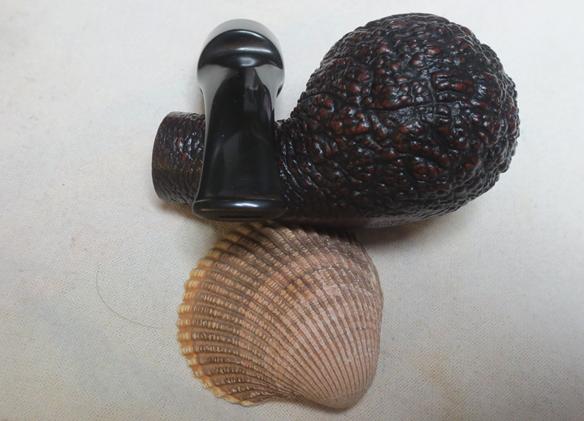
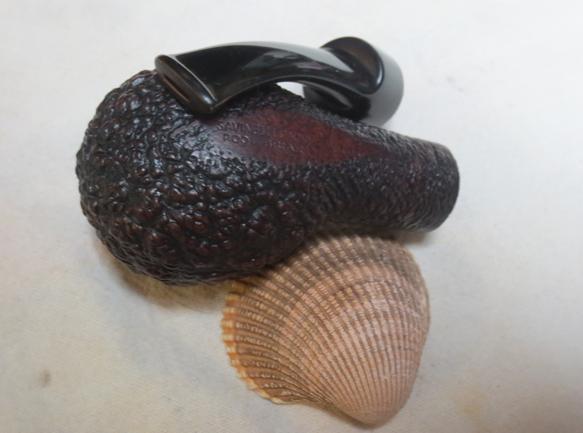
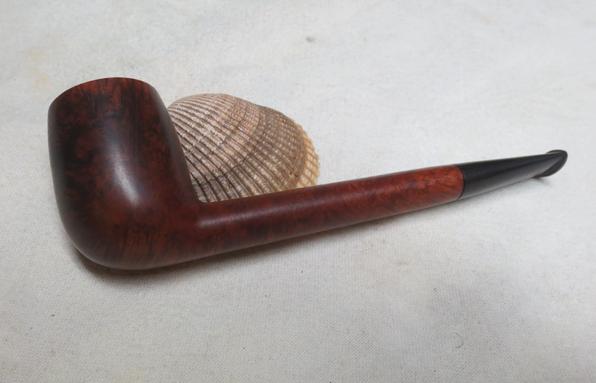
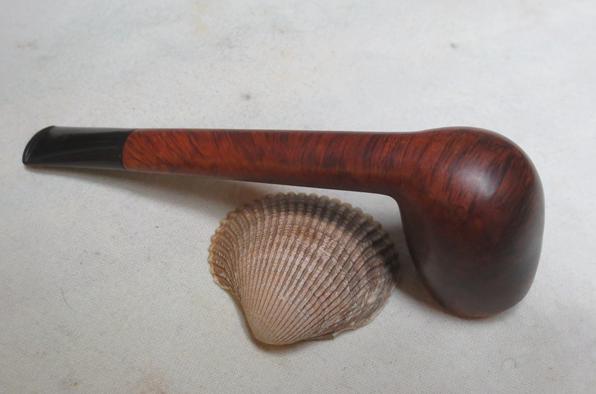
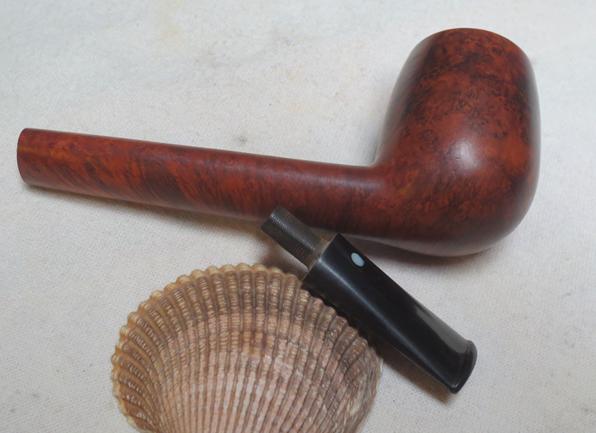
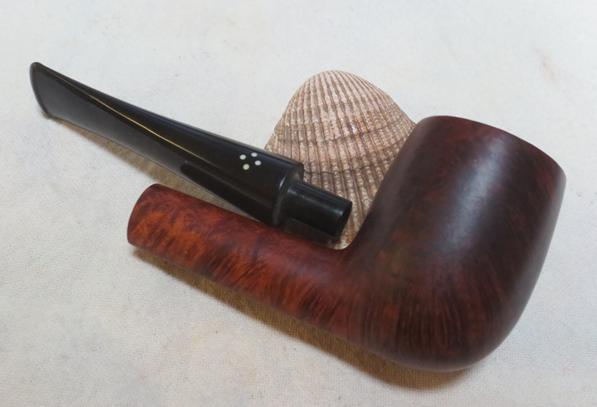
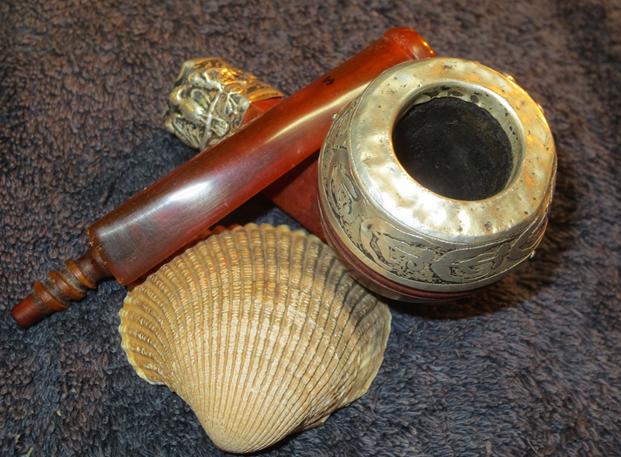
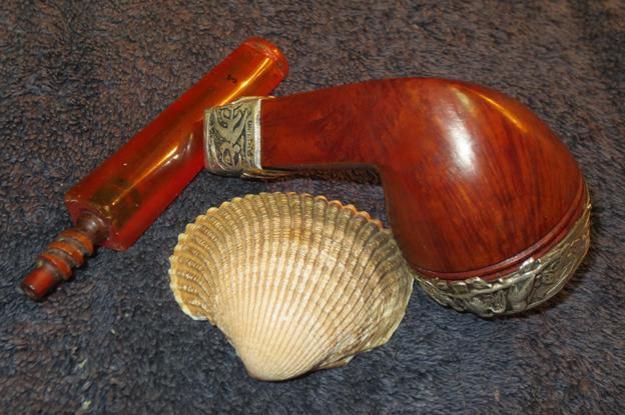
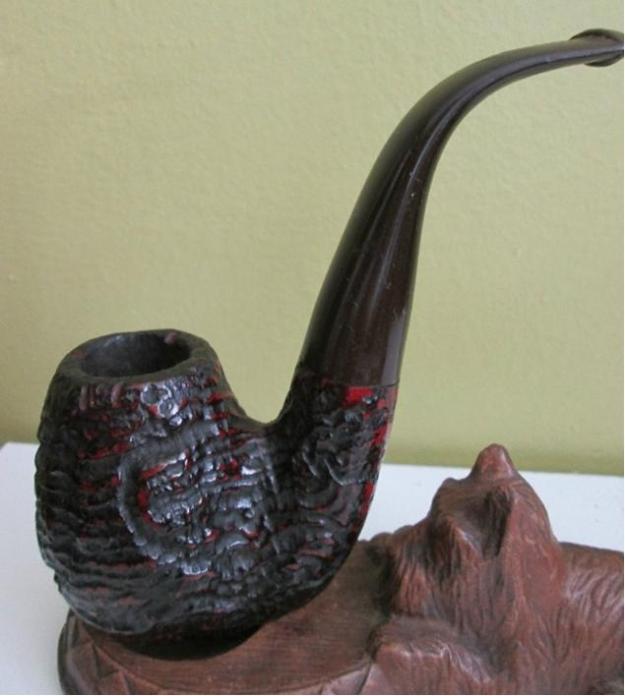
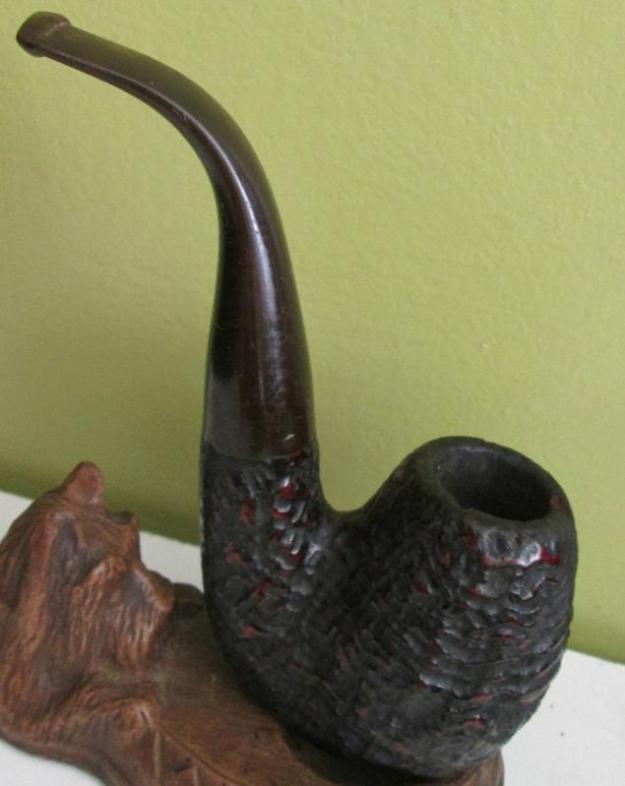
Today I worked on one that came in my brother’s box of pipes. It is stamped KBB in a cloverleaf and next to that Yello-Bole over Imported Briar. The stem is vulcanite and the pipe bowl is briar. It had been smoked and there was a light cake in the bowl.yb1None of the reamers that my brother had would fit the tiny bowl of the pipe. My little finger is still too big to fit into the bowl. The bowl had a light cake in it and the rim was damaged both with tars and with dents from tapping the pipe out. The stem was lightly oxidized and there were tooth marks and chatter on the top and the bottom sides near the button. The finish on the bowl sides was peeling and flaky. The pipe was tiny but well used. I took the next four photos to show what the pipe looked like when I started to work on it. I put the pipe next to the seashell that I have been using for all my photos to give an idea of its diminutive size. I reamed the bowl with the Savinelli Pipe Knife but forgot to take photos of it before and after.yb2 yb3When I took the stem off the pipe it had the standard Yello-Bole shovel like stinger. It was pressure fit in the tenon. The tenon on this tiny pipe was metal which was different from previous Yello-Bole Salesmen’s pipes I have refurbished.yb4I carefully removed the stinger from the tenon with a pair of pliers. While the pipe was apart I cleaned out the shank and the airway in the shank and the stem with pipe cleaners, cotton swabs and alcohol.yb5I cleaned the spoon shaped stinger with a brass bristle wire brush, cotton swabs, pipe cleaners and alcohol to remove the tars and oils. Once it was clean and the stem was clean I pushed it back in place in the shank.yb6I took off the peeling varnish coat on the bowl with acetone and cotton pads. It did not take a lot of scrubbing to take off all of the finish. The acetone took off the varnish coat and some of the opaque stain on the bowl. Once it was gone I could see some nice grain showing through. The cotton pads give an idea of how small this pipe is.yb7 yb8I sanded the bowl with 1500-12000 grit micromesh sanding pads to even out the finish and smooth out some of the dings and dents on the briar. There was a dark spot on the bottom of the shank where it joined the bowl that appeared to be a burned area. I sanded it and was able to remove most of it. Each successive grit of micromesh sanding pad brought more shine to the surface of the briar. By the end of the progression, the 12000 grit pad the bowl had a shine to it that looked really good and showed off the nice grain on the bowl.yb9 yb10 yb11 yb12I sanded out the tooth chatter with 220 grit sandpaper and then wet sanded the stem with 1500-2400 grit micromesh sanding pads. I dry sanded the stem with 3200-12000 grit pads. I rubbed the stem down with Obsidian Oil after each set of three pads. I set the stem aside to dry after sanding it with the 12000 grit pad.yb13 yb14 yb15I put the stem on the bowl and buffed the pipe with Blue Diamond on the buffing wheel. The polish made the bowl and the stem shine. I was careful around the stamping so as not to damage it. I gave the pipe multiple coats of carnauba wax and buffed it with a clean buffing pad to raise the shine. The finished pipe is shown in the photos below. To give an idea of the size of the pipe I took the photos with a Canadian dime or 10 cent piece next to it. The Canadian dime is the same size as the American dime. Thanks for looking.yb16 yb17 yb18 yb19 yb20 yb21 yb22 yb23

Breathing New Life into a Gold Star Giant 8597


Blog by Steve Laug

I have a lot of pipes to work on so making a decision which one to work on it a bit interesting. Several months ago now Steve in Dawson Creek sent me a box of pipes for restoration as allowed. He sent me a list of priorities regarding which pipes he wanted restored in the order of importance to him. So I decided to work on one of the pipes that he sent me for restoration. The next one on his list of priorities was a bulldog that was in pretty rough shape. It is stamped Gold Star on the left side of the shank and Giant on the right side. On the underside of the left side of the diamond shank it is the shape number 8597. I can’t much information about the brand. It is a bit of a mystery pipe but under the grime and the peeling finish there was nice looking grain. gold1The pipe was dirty and the finish was very rough. The varnish coat was peeling away. There was a large chip out of the ring on the right side of the bowl. The rim was darkened and caked under tars. The cake was thick and overflowing the bowl. The stem was oxidized and there were tooth marks on the top and underside of the stem next to the button.gold2I took a close up photo of the rim and the bowl to show you what I was working on in dealing with this pipe. The bowl was a mess. I also took close up photos of the stem to show the bite marks on the top and underside of the stem.gold3 gold4I reamed the bowl with a PipNet reamer and a Savinelli Pipe Knife to take the cake back to bare briar on the bowl walls. There was a lot of cake so it took some time. I used the largest cutting head and the cutting head just below that one.gold5I topped the bowl on a topping board with 220 grit sandpaper. I worked the rim against the sandpaper until the damaged bowl top was removed and the bowl was once again smooth and round.gold6I repaired the damaged portion of the ring around the bowl with briar dust and super glue. I mixed the two together and made putty and pressed it into the damaged area of the ring. In the photo below you can see the repaired area on the ring.gold6aI used the Dremel and sanding drum to remove the excess patch and sanded it back until it was smooth against the rest of the bowl.gold7I sanded it with 220 grit sandpaper until the ring blended in with the rest of the pipe. I used a hack saw blade to recut the grooves on each side of the ring repair. The photo below shows the recut grooves and the repaired ring. It still needs to be cleaned up but it is looking better.gold8I used a knife blade needle file to clean up the grooves. I was able to match the grooves on the rest of the bowl. I sanded the ring with 220 grit sandpaper.gold9I wiped the bowl down with acetone (fingernail polish remover) on cotton pads. I broke up the peeling varnish with sandpaper and wiped it down again.gold10I scraped the inside of the mortise with a dental spatula to remove the hardened tars. It scraped away all of the buildup and then I scrubbed it down with pipe cleaners, cotton swabs and alcohol until it was clean. I cleaned the airway in the stem until it was clean.gold11 gold12I sanded the tooth marks out the top and underside of the stem with 220 grit sandpaper until they were minimized.gold13I wet sanded the stem with 1500-2400 grit micromesh sanding pads to smooth out the scratches in the vulcanite.gold15I scrubbed the stem with Before & After Pipe Stem Deoxidizer to remove the oxidation. It took some elbow grease but I was able to remove all of the oxidation with the new product. I am starting to really like this stuff.gold14I polished the stem with the Before & After Pipe Polish using the fine and the extra fine polishing compound. I rubbed it on by hand using a finger and then scrubbed it off with a cotton pad until the polish was gone and the stem shone.gold16 gold17I stained the bowl with a medium brown aniline stain and flamed it to set it in the grain. I repeated the process until the stain was evenly spread on the bowl.gold18I buffed the bowl on the buffing wheel to see what the new stain coat looked like. I liked the new look of the old Gold Star Giant. What do you think?gold19 gold20I buffed the pipe and stem with Blue Diamond on the wheel to bring a shine to the bowl and gave it multiple coats of carnauba wax. I buffed it with a clean buffing pad and then with a microfibre cloth. The finished pipe is shown in the photos below. Steve, this one turned out to be another beauty. I am looking forward to hearing what you think about it once you get it back to Dawson Creek.gold21 gold22 gold23 gold24 gold25 gold26 gold27 gold28


Restoring an Older KBB Yellow-Bole 2094 Churchwarden with absolutely stunning grain.


Blog by Steve Laug

My most recent box of pipes that came from my brother had this Yello-Bole Churchwarden in it for restoration. It is a long pipe – 12 inches from bowl to button. The next seven photos were the ones provided by the eBay seller. They don’t really show the grain in the pipe or the peeling shellac coat on the bowl but they give a clear picture of the shape and carriage of the pipe. It really is a beauty in terms of overall appearance. It is graceful with a gentle bend to the stem ending in a button that is not flared from the end of the stem but is straight-edged with a small slot in the end. The stem also had the inset yellow circle on the top of the stem.yb1The third and fourth photos provided in the seller’s photos show the damage to the finish and the build up and damage to the rim. You can also see some of the peeling of the finish and the way that it obscures the grain of the briar. The rim is dirty in the photo below and at first glance it looks like the bowl may have been meerschaum lined. I was pretty sure that this was not the case but would know better once it arrived in Vancouver. It appears that the bowl had a light cake but was not in bad shape. It would not take too much to ream the bowl. The stem was lightly oxidized and had tooth chatter on the top and underside near the button.yb2The stamping on the shank is very clear. The shape number on the right side of the shank is 2094 and the brand stamp on the left KBB in a cloverleaf next to Yello-Bole over Honey Cured Briar.yb3My brother scrubbed the externals of the pipe with Murphy’s Oil Soap and was able to loosen some of the flaking varnish or shellac. He reamed the light cake back to the yellow bowl coating. He cleaned out the shank and the airway in the stem with pipe cleaners and alcohol.yb4 yb5The next two close-up photos of the bowl sides shows what the finish looked like once he had done his work. You can see the interesting grain showing through the damaged finish.yb6 yb7I took photos of the pipe when I received it in Vancouver. You can see the condition of the finish in the photos. In the cleaning process oxidation came to the surface of the stem.yb8 yb9The internals of the pipe are interesting. The first photo below shows the yellow bowl coating that still remained in the bowl. This one was certainly lightly smoked to be in this condition. The second photo shows the standard Yello-Bole stinger apparatus that is screwed into the tenon.yb10There was light tooth chatter and tooth marks on the top and underside of the stem but the button was in excellent shape with minimal tooth marks or bites.yb11I removed the remaining varnish/shellac coat with acetone (fingernail polish remover) on cotton pads. It also removed some of the stain and brought the grain to the surface of the bowl. I liked the look of the pipe once the varnish was removed.yb12 yb13The stamping looked even clearer once the top coat had been removed. In the first photo below there is a line under the number that looks like a crack or a fill. It is not but rather it is debris left behind by the cotton pad and acetone wash.yb14I ran pipe cleaners, cottons swabs and alcohol through the mortise and the airway in the shank and the stem remove any remaining oils. The red colour on the cotton swabs is actually some of the red stain that was inside of the shank. I was able to remove all of stain from the shank and mortise.yb15I unscrewed the stinger from the tenon and cleaned it with 0000 steel wool. I am not sure whether I will put it in or not. I may do so and let the new owner decided whether to keep it in place or remove it.yb16I lightly sanded the stem with 220 grit sandpaper to remove the tooth chatter and bite marks. I sanded it with 1500-2400 micromesh sanding pads then tried a new product that I picked up from Mark Hoover of La Belle Epoque Vintage & Modern Fountain Pens. I follow Mark on Facebook and have been reading about his restorations and cleanup or estate pipes. He developed a product for pens that deoxidizes and polishes vulcanite. He also uses it on vulcanite stem with great results. I have seen his before and after pictures of pipes that he has restored so I thought I would order some and try it out. The photo below shows what came with the kit.

Mark wrote on his site that the product was specifically designed for hard rubber and celluloid but that it does work well on other types of plastics. He also sells the same product relabeled for pipe stems. The line is called Before and After. He states on the website that “All of our polishes are made using the highest quality products.  These products are designed to not only recondition your pen (or in this case stem) but also to provide a layer of protection. All of the products used in these polishes are none-toxic and environmentally friendly.”

“There are two different polishes.  Fine and Extra Fine.  We recommend both as some pens will show more wear then others.  Often one will work on a pen using the Fine polish and finish with the Extra Fine. The polishes are sold in 2 oz jars.  The cost is 12.00 per jar. The number of pens one can restore will of course vary depending on the wear that each pen shows.  I have restored from 75-150 pens per jar.”

Here is the link to his site with the prices for the product: http://www.lbepen.com/apps/webstore/products/category/1185536?page=1. The product can be ordered onsite. It is shipped in a well wrapped package and I had no issues with it coming across the border through the post office.yb18The Deoxidizer is a thick gel that I rubbed onto the stem with a cotton pad. I let it sit for a short time before rubbing it off with another pad. It removed the oxidation quite nicely. I repeated the process until the stem was once again black. After using the Deoxidizer I polished the stem with the Fine and the Extra Fine Pipe Polish. It quickly shined up the vulcanite. Both of the stem polishes are quite thick and sticky. The fine is grittier than the extra fine. It took some time to rub each of them onto the stem surface and then polish it with a soft cotton pad. The second photo below shows the stem after using the Extra Fine Polish.yb17I buffed the pipe with Blue Diamond on the buffer and then gave the bowl and stem several coats of carnauba wax. I buffed it with a clean buffing pad and hand buffed it with a microfibre cloth to deepen the shine. The finished pipe is shown in the photos below. I left the stinger out of the tenon for these photos but it is easily screwed into place. The grain shines through beautifully with the oxblood coloured stain. The polished stem is smooth and shiny with a lot less effort than other products I have used. Thanks for looking.yb19 yb20 yb21 yb22 yb23 yb24 yb25 yb26


 An easy restore on a smooth Jobey Extra Underslung Pipe


Blog by Steve Laug

I think that the shape of this one is what caught my brother’s eye when he saw this Jobey. He has introduced me to some neat looking Jobey’s that have great grain, shape and stem work. The Jobey Link tenon system is a breeze to replace and repair as it screws into the shank and is pressure fit into the stem. This one has some great grain on it all the way around – birdseye on the sides and cross grain on the front, back and the top and bottom of the shank. It was in decent shape with just a few dings in the left side of the bowl. The rim was lightly tarred and the cake in the bowl was not very thick. The finish was faded in spots. The stem was in great shape other than the usual tooth chatter on the top and underside near the button. There were no deep tooth marks. The link system was undamaged.  extra1 extra2The next two close up photos show the stamping and the condition of the rim. The stamping is simply Jobey in script over Extra. The E on Extra is faint. The Jobey medallion on the stem is in great shape. The inner edge of the rim shows some buildup of tars and oils.extra3As usual my brother cleaned up the pipe before sending it to me. I am getting spoiled as he is doing a lot of the hard clean up. He reamed the bowl with the PipNet reamer and scrubbed the exterior with Murphy’s Oil Soap and a soft tooth brush. He rinsed of the soap with running water. He cleaned out the airway in the stem and the shank and the mortise with cotton swabs, pipe cleaners and alcohol. When it arrived in Vancouver I took the following photos.extra4 extra5The next photo shows the bowl and the rim after he had cleaned it up. It was in excellent shape.extra6The next two photos show the tooth chatter on the stem and a light oxidation that was over the surface of the stem.extra7I tried to steam the dents out of the side of the bowl with a damp cloth and a hot knife and was able to lift quite a few. There were three of them with rough edges that I lifted some but was not able to smooth them out with steam. I used some drops of clear super glue to fill in the spots on the bowl side. Once the glue dried I sanded it with 220 grit sandpaper and then with 1500-4000 grit micromesh sanding pads.extra8I restained the areas on the bowl that had lightened from sanding with a combination of light, medium and dark stain pens and a little bit of black Sharpie pen. I gave the entire bowl several coats of dark brown aniline stain mixed 50/50 with isopropyl alcohol. I flamed it and repeated the process until I had an even coverage. I set the bowl aside to dry. I was sure that I would need to do some more touch ups to blend the stain well but I wanted the stain to set.extra9 extra11 extra12I sanded the tooth chatter off the stem with 220 grit sandpaper and was able to smooth out all of the tooth marks.extra10I polished the stem with micromesh sanding pads – wet sanding with 1500-2400 grit pads and dry sanding with 3200-12000 grit pads. I rubbed the stem down with Obsidian Oil after each set of three pads. After the final rub down I let the stem dry.extra13 extra14 extra15I buffed the pipe with Blue Diamond after the stain had cured and gave it multiple coats of carnauba wax. I buffed it with a clean buffing pad to raise the shine and then by hand with a microfiber cloth to deepen the shine. The pipe is really a beauty and the stain and shine make the grain stand out. This one will also be going on the store so if you are interested in adding it to your collection let me know via email, message or a comment on the blog. Thanks for looking.extra16 extra17 extra18 extra19 extra20 extra21 extra22 extra23
Another nice find at the ‘Hole in the Wall’ – Jeantet Fleuron 70-7


Blog by Dal Stanton

The Jeantet Fleuron before me was mentioned when I posted the restoration of a beautiful BBB Banker Bent Volcano.  I found both pipes last April, during a visit to ‘The Hole in the Wall’ antique store near the Zhenski Pazar (Women’s Market) in downtown Sofia, Bulgaria.  In order to achieve a better bargain for the BBB Banker I grabbed the Jeantet out of the basket as a good candidate for a bundled deal, which helped me negotiate 30 Bulgarian Leva for the pair – not a bad deal!  When I arrived home from the Hole in the Wall I took these pictures:dal1 dal2 dal3 dal4 dal5 dal6 dal7 dal8The bent egg shape is in pretty good condition with an attractive elongated bowl that fits well in the hand.  The left side of the shank is marked with Jeantet (pronounced, ‘Zhawn-Te’) over Fleuron and on the right what I assume is the shape number 70-7.  The stem has the nice Jeantet J stamp.  Looking at Pipedia to do a little research on this name led me to Sainte Claude, France, considered to be the birthplace of the serious production of briar pipes and scores of French made pipe names claim Saint Claude as home. My curiosity piqued, I wanted to know why St. Claude, France?  Was the briar in good supply there?  I looked to the history of the city itself to see what I could find.  I unearthed an archived New York Times article written March 20, 1983, in the ‘Shoppers World’ travel section entitled, THE PIPE CAPITAL OF FRANCE – very interesting and worth reading.  I found the answer to the question, ‘Why Saint Claude and pipes?’ with this article I found posted on Fumerchic.com with these informative excerpts:
In the 15th Century, Saint-Claude was canonised by Pope Louis XI, the city took on the name Saint-Claude alone and remained a favoured site for pilgrims.

Since Saint-Claude was one of the stops on the Way of Saint James, the monks, who had been turning wood since the 7th century, began crafting wooden religious objects like crucifixes and rosaries. These monks slowly began training craftsmen, which lead to the establishment of the first wood turning workshop in Saint-Claude.
The craftsmen developed the manufacture of wooden items and widened the scope of their operation by making toys (spinning tops, whistles and rattles), so children and pilgrims could play during their pilgrimages. The number of turning workshops then grew. The main materials they used were wood, bone and ivory.
But with the introduction of tobacco to France, of smoking tobacco in particular, the wood turning workshops adapted by making snuff boxes and pipes made from local boxwood. The pipe craftsmen of Saint-Claude gradually forged themselves a reputation for an unparalleled level of manual skill and expertise.

So, it wasn’t the plentiful supply of briar that put Sainte Claude on the pipe-makers’ map but industrious wood-turning monks who passed their wood working skills on to local craftsman.  The story went on with the discovery of a non-burning pipe made from our beloved briar:

During the 19th Century, pipes from Saint-Claude underwent a profound change. Boxwood had been the wood used to make the pipes until then, but it produced a bitter taste when smoked. Around 1855, a businessman passing through Saint-Claude presented a Saint-Claude wood turner with a pipe, the bowl of which did not burn, carved from a heavy wood in dark shades. It was the first pipe made from briar. The arborescent briar pipe is highly resistant to heat and fire, giving the smoker the greatest possible pleasure from the plumes of tobacco smoke. The craftsmen of Saint-Claude therefore began using briar instead of boxwood, ensuring the Saint-Claude pipe caused excitement in the pipe smoking community. The number of workshops grew, with names like Chacom and Butz-Choquin appearing for the first time, while the craftsmen began producing more and more high-quality pipes thanks to their expertise that became globally renowned among pipe smokers.

Considered to be the capital of briar wood pipes, EoleChacomBayard,Butz-ChoquinDenicoteaJeantet and Ropp are well-known names all originally claimed by Saint Claude, France. The works of Saint Claude’s craftsmen are also present, for example, in the unique handmade pipes created by Pierre Morel (link).

One more factoid about Saint Claude’s history caught my attention.  In 1966, Saint Claude established the Confrérie des Maîtres-Pipiers de Saint-Claude (The Brotherhood of Master Pipe-Makers in Saint-Claude) to promote the expertise of the many masters that have historically resided and worked in Saint Claude.  Famous personalities are inducted as the “Premier Pipe-Smoker of the Year’ to serve as ambassadors for the pipe industry in Saint Claude.   For every personality chosen, Paul Lanier (awarded the prestigious meilleur ouvrier de France title in 1991), crafts a pipe that includes a portrait of the inductee, thus perpetuating the tradition of the sculpted briar pipe.  I think this is a very cool tradition and found it very interesting that the first likeness below strongly resembles the master pipe restorer who oversees Rebornpipes.com!dal9According to Pipedia, the Jeantet name came on to the scene in 1775.  The 1800s saw great expansion of production of Jeantet pipes primarily through the development of local cottage industry – farming out different aspects of the pipe production to small shops in Saint Claude.  Consolidated production grew in the 1900s but in the 1960s sales dwindled in spite of attempts to modernize.  This final part of my research comes from Pipehill:

1988
The company was taken over by S.A. Cuty Fort Entreprises(1) while keeping its label. It established in the group beside Chapuis-Comoy (Chacom), Jean Lacroix and Emile Vuillard.  Today (2010) the brand isn’t part of the group any more. The label owned by Dominique Jeantet still exists but pipe production is discontinued.dal10When I take this product of Sainte Claude, France, the Jeantet Fleuron, out of the ‘Rescue Me’ basket, I take a closer and more appreciative look at the pipe.  First impressions mark the nice shape of the stummel – I like the tapered egg shape that culminates in a tightly circled rim beveled on the inner chamber side.  The bowl shows minor cake and appears to have been cleaned before but I will bring it down to the briar and clean it well.  The stummel surface has minor dents and ‘blemishes’ on the finish.  A significant ‘scab’ is evident where the shank and bowl converge on the topside.  It doesn’t appear to be a burn through but this will need attention after cleaning the exterior surface.  The rim has minor dent marks on the blade edge of the beveled rim.  When I take off the stem, I notice that in the mortise is a metal cylinder – some sort of a metal airway or a stinger that got loose?  With a few thumps on my palm, the rogue stinger shakes loose (pictured below).  After attempting to insert it into the end of the tenon, I have questions as to whether this stinger is original – the fit is very loose which explains why it slipped down into the stummel airway.  I decide the stinger is history and it goes in the spare parts bucket.  Minor teeth dents are on the underside of the bit. I take some close up shots for a better look at problem areas.dal11 dal12 dal13 dal14 dal15 dal16I begin by putting the stem in an OxiClean bath to soak in order to raise the oxidation out of the vulcanite.  Then I take my Pipnet Reaming Kit and work on the light cake build up in the bowl.  I use the two smaller blades of the four blades available to me to ream the bowl.  After this I use 240 grit sanding paper to further clean and smooth the chamber wall.  I like working on a clean pipe so I take pipe cleaners and Q-tips dipped in isopropyl 95% and work the mortise and stummel airway.  The internals were surprisingly clean so it didn’t take long.

Now to the external surface.  I use undiluted Murphy Oil Soap on the stummel with cotton pads to remove the grime and hopefully to eradicate some of the blemishes I detect on the surface.  After cleaning with Murphy Soap I rinse the stummel with cool tap water avoiding water entering the fire chamber or mortise.  The ‘scab’ at the upper junction of the shank and bowl is starting to look like a botched superglue repair job.  I’ll need to give some thought as to how to address this eyesore on an otherwise attractive piece of briar – I’m starting to see the briar’s potential.  The pictures show the progress. dal17 dal18 dal19 dal20I put the stummel aside and turn to the clean-up of the stem.  I fish the stem out of the Oxyclean bath.  It did the job of ‘surfacing’ the dull greenish oxidation and I initially attack it with 000 steel wool.  I then clean the internal airway with bristled and smooth pipe cleaners dipped in isopropyl 95%.  The stem put up more resistance than the stummel.  After several pipe cleaners I’m satisfied that the airway is ready for service.dal21 dal22Next, the ‘scab’ on the bowl surface.  I take 240 grit sanding paper rolled as close to a blade as I could make it and sanded the gummed up super glue patch – at least I believe that is what it is – at the junction between the upper shank and bowl.  I sand the super glue or epoxy down to the surface.  When I remove the buildup bump it appears to be a patch – I don’t believe it’s a burn through, but it’s definitely a fill.  It appears to be solid so I leave it as is and hope to blend it when I finish the stummel.  Next I prepare a batch of briar dust super glue putty to fill in two holes just below the rim at about 1 o’clock (picture below).  I use a toothpick as a trowel to pack the holes well and to leave an overflow so that it will sand out smoothly with the surface.  The final repair is to apply black super glue to two small tooth dents on the underside of the bit.  When cured, it will sand smooth and polish well.  The pictures show the progress of the patch work.dal23 dal24 dal25 dal26After the KE-150 Black super glue patch on the underside of the bit cures, I take 240 grit sanding paper to smooth out the patch bumps bringing them down to the stem surface level.  I do the same to remove light tooth chatter on the upper side.  To redefine the button, I use the needle file to shape the contours of the button lip top and bottom.  I again use 240 grit to remove the file marks and remove light tooth chatter.  With micromesh pads grit from 1500 to 2400 I wet sand the stem and apply Obsidian Oil.  Unfortunately, after admiring the shine beginning to move to the surface, I also saw some small ‘patches’ of oxidation remained visible – a bit near the button and on both upper and lower parts of the saddle stem that tapers from shank level down to button level.  If this part of the saddle stem has a special name, I’m not sure what it is!  I was frustrated and therefore forgot to picture this!  I put the stem back in the Oxyclean bath for another baptism.  The pictures below represent the micromesh process after the second bath, which raised the residue oxidation to the surface and I remove it beginning with the 1500 grit micromesh pad.  Following the 1500 to 2400 micromesh wet sand cycle (again!) I apply Obsidian Oil.  With pads from 3200 to 4000 grit I dry sand and follow again with applying Obsidian Oil to the stem.  I complete the micromesh polishing with pads 6000 to 12000, apply Obsidian Oil and put the stem aside to dry.  I’m pleased with the results even though I had a detour.  The pictures show the progress on the stem repairs and polishing.dal27 dal28 dal29 dal30 dal31With the stem ready for a stummel, I start working on completing the Jeantet’s re-commissioning by using 240 grit sanding paper to remove the cured briar dust super glue putty patch on the holes just below the rim.  I’m careful to sand strategically by folding the paper and using it like a blade directly on the patch so I don’t unintentionally sand into the rim’s sharp beveled top edge – that would not be good to deface the rim!  I take a before and after picture to show the progress.  The rim already has a very nice bevel, but to remove the dents and pitting on the rim I use 240 grit paper folded and work on the rim.  I pinch the paper with my thumb on the beveled contour as I rotate the stummel.  I find that this method allows for an even movement and a consistent bevel angle to develop.  With the bevel already in place, I simply go with the contour that is already present but remove the damage producing a fresh beveled surface.dal32 dal33 dal34Well, all work on the Jeantet came to a halt for about 3 weeks as my wife and I enjoyed our annual R&R on the Black Sea coast near the fishing town of Sozopol.  Reading books and enjoying the beach is one of our favorite things to do to relax and decompress from the work we do in Bulgaria.  A special joy to us during these weeks was the visit of our daughter and her husband from Denver, Colorado.  They joined us at the Black Sea for our last few days on the beach and from there we took them to see different sights in Bulgaria as well as spending the last week of their visit on the beautiful Greek island of Santorini!  Another great part about their visit was that they brought supplies and pipes I had ordered and purchased from eBay.  They also brought another prize – the Savinelli pipe knife to add to my tool box that I won in a fierce bid on eBay!  During this time of R&R I also visited several antique shops in different Bulgarian towns and secured some future restorations – it was a good time but now, back to life and the Jeantet Fleuron!

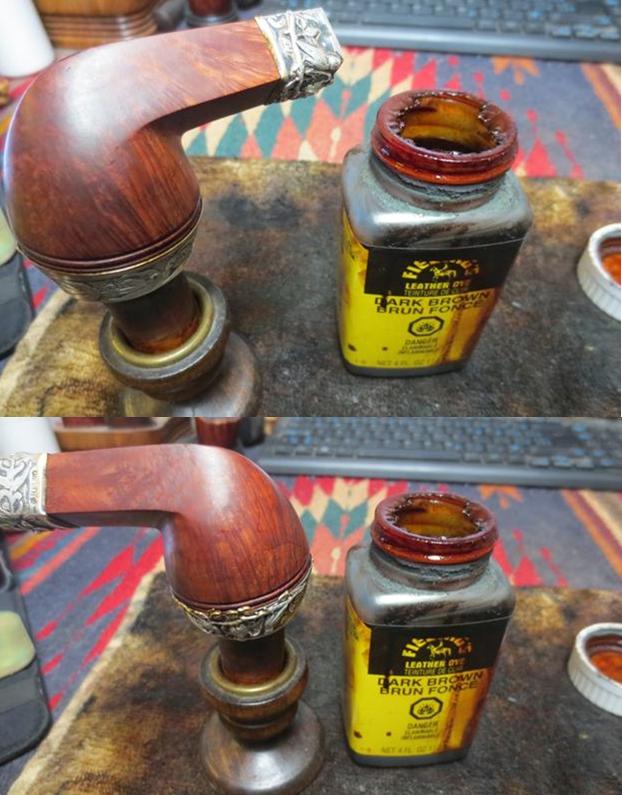
With stem reattached to the stummel I use a medium grade sanding sponge on the bowl.  Following this, I utilized all 9 micro-mesh sanding pads, 1500 to 12000 to sand/polish the bowl preparing it for staining. I’m liking the briar grains beginning to make an appearance on the Jeantet.  The pictures show the progress on the stummel surface.dal35 dal36I’m anxious to try out one of the supply items that my daughter and son in law brought from the US – Fiebing’s Leather Dye.  They brought dark brown and oxblood colors and I decide to try the dark brown on the Jeantet.  One of the challenges that I have finding supplies in Bulgaria is not having good selection of aniline (alcohol based) dyes or stains that would readily ‘flame’ helping to set the stain in the wood. I remove the stem and give the bowl a cleaning with alcohol with a cotton pad to make sure it is clean from the residue left over from sanding.  I set the bowl up on the cork and candle stand, inverted to apply the dark brown dye that I have chosen.  Using a cotton dauber, also a new arrival from the US, I apply the dye liberally over the inverted bottom of the bowl allowing the dye to saturate the briar surface.  I’m able to rotate the bowl with the cork in hand to make sure dye reaches the rim beveled surface on the bottom. When the surface is covered I flame it with a butane lighter which evaporates the alcohol from the dye and sets the color more deeply in the grain.  After it cools to the touch, I repeat the process above a second time, applying dye and flaming.  The pictures below show the progress but also the fact that I need to figure out a better way of pouring the dye into the lid so I’m not wasting so much on my work board missing the briar!  After cooled, I use cotton pads with isopropyl 95% and wipe down the newly stained bowl to lighten it and even out the dye application.  This allows the grain to jump out more it seems to me.dal37 dal38 dal39I let the bowl sit overnight to thoroughly dry and set the newly stained surface.  I turn to my Dremel using a felt wheel with Tripoli compound on the bowl surface and stem to begin the polishing process.  I utilize the slowest RPM speed and keep the wheel moving over the briar surface – not pressing too much allowing the wheel and compound to do the work.  I follow the Tripoli with Blue Diamond – also with its own dedicated felt wheel (each compound has dedicated wheels) and again, allow the RPMs, wheel and compound to do the work, keeping the movement of the wheel moving on the stummel surface.  For the carnauba wax application, I switch from a felt wheel to a cotton cloth wheel and also increase the RPM speed on the Dremel by one number.  I have discovered that the carnauba needs a bit more ‘heat’ to spread evenly over the surface.  I apply several coats of carnauba wax over the bowl surface and stem.  I love to watch how the briar grain increasingly pops with each step of the polishing process.  The beauty of the grain on the Jeantet Fleuron is living up to its name – Fleuron.  Since I didn’t study French in school, Google translate provided the English meaning of Fleuron – ‘finial’, which is, according to Dictionary.com, “a relatively small, ornamental, terminal feature at the top of a gable, pinnacle, etc.”  Or, simply, a nice finishing touch!  I complete the Jeantet Fleuron with a clean cotton cloth wheel buff with the Dremel and then a rigorous buffing by hand with a microfiber cloth to bring out the grain even more and deepen the shine.

Since my wife has lovingly started to put her foot down regarding my growing collection of pipes (I’m sure some of you have faced this as well!) this Jeantet Fleuron 70-7 will make a debut on eBay Europe and US to find a good home! I am considering how to sell more restored pipes and giving the profits to help further the work we do here, with the Daughters of Bulgaria – Bulgarian women who are sexually exploited and trafficked.  If you’re interested in adding the Jeantet to your collection, leave a comment below.  Thanks for joining me!dal40 dal41 dal42 dal43 dal44 dal45 dal46 dal47


This BBB Tiger Grain Bulldog was in rough shape


Blog by Steve Laug

I have always liked older BBB pipes. I used to buy them on eBay when no one was hunting for them for almost nothing. The prices they are today they are generally untouchable for me. Once in a while though one slips under the radar. This Tiger Grain with a Lucite stem was one my brother caught in his ongoing prowl of eBay. He got it for a decent price. It is either a newer BBB or it has a replacement stem on it. My thinking tends toward the previous – a newer pipe from when Cadogan took over the line. The pipe is stamped on the left side of the shank with BBB in a Diamond and underneath it reads Tiger Grain. The right side of the shank reads London England and the number 4. The next two photos show the condition of the pipe when it arrived in Idaho. The bowl finish on the bowl was dirty and there were rough spots. The rim had burn marks on the outer and inner edges on the front side. The beveled rim was thickly caked with the overflow from the cake in the bowl. The Lucite stem had tooth marks and was covered with sticky debris. The airway in the stem was darkened with tars and oils. The mix of bright yellows, white and greys looked good underneath the grime. The dark black/brown airway stood out like a sore. With the exterior that dirty I could only guess that the inside was also very dirty.bbb1My brother once again did the major clean up on this pipe. He reamed the bowl with a PipNet reamer and took the cake back to bare briar. He scrubbed the exterior with Murphy’s Oil Soap to remove all of the grime and grit. He was able to scrub away much of the rim build up and the surface of the stem. He scrubbed the internals with pipe cleaners and cotton swabs. When the pipe arrived in Vancouver it was pretty clean. I took the following photos of the pipe before I began to work on it.bbb2 bbb3I took a close up photo of the rim to show the small amount of cake on the rim and the burn marks on the front of the pipe on both the inner and outer edge of the rim. I circled the burned spot with a red circle in the photo below.bbb4There was a red tone to the briar. I rubbed it down with a light coat of olive oil and brought out the red. I wanted to see what the bowl and rim looked like when it had been oiled.bbb5I sanded the rim and bevel with a folded piece of 220 grit sandpaper to remove the remaining cake and clean up the bevel on the rim. When I finished the rim was clean but it still showed the burn marks and the inner bevel on the rim was also darkened.bbb6I decided to top the bowl on the topping board to remove the damaged rim top and the burn marks. I sanded it until the rim top was smooth and the outer edge was clean.bbb7I polished the topped bowl with micromesh sanding pads – wet sanding with 1500-2400 grit pads and dry sanding with 3200-12000 grit pads. When I finished the rim was smooth and polished.bbb8I worked on the mortise and shank with pipe cleaners, cotton swabs and alcohol. I used a dental spatula to scrape out the mortise. Once I was finished cleaning it the shank and airway was clean. I also scrubbed out the airway in the stem with pipe cleaners and alcohol. I used bristle pipe cleaners- both thin and thicker to scrub out the tars and dark stains.bbb9 bbb10I sanded out the tooth marks on the top and underside of the stem to remove them and blend them into the surface of the Lucite.bbb11aI polished the stem with micromesh sanding pads – wet sanding it with 1500-2400 grit pads and dry sanding it with 3200-12000 grit pads. I wiped it down with a damp cloth between each grit of micromesh pads.bbb12 bbb13 bbb14I buffed the pipe and stem with Blue Diamond on the buffing wheel to polish the pipe. I carefully avoided the stamping. I gave the bowl and stem several coats of carnauba wax and buffed it with a clean buffing pad. I hand buffed it with a microfibre cloth to deepen the shine. The finished pipe is shown in the photo below. It is a nice looking pipe. The bowl and rings are in perfect shape. The new rim top looks like it has always been there. Thanks for looking.bbb15 bbb16 bbb17 bbb18 bbb19 bbb20 bbb21 bbb22

A unique old WDC Turin Rustic Volcano


Blog by Steve Laug

When I saw this one on eBay I sent a message to my brother and asked him to bid on it. He did and we got it. I love the rustication on the Turin Rustic series. It is rough and yet dignified at the same time. The seller billed it as restored/refurbished and clean. By and large that was true. The shank and the inside of the stem were very clean. The rim had been knocked about a bit and the inner edge of the rim was rough and uneven. The bowl had been reamed. The stem was polished though there were deep tooth marks on the top and underside of the stem next to the button.demuth1 demuth2My brother took the above photos and the following ones before he cleaned the pipe. You can see the damage to the rim top and the inner edge in the next photo. The second photo shows the stamping on the left side of the shank.demuth3Though I knew a bit about the WDC pipe maker and the William Demuth Company I thought it might be good to review the history before I started restoring the pipe. I googled the Turin Rustic to see what I could find. It immediately referred me to a post on the Kaywoodie Forum that in turn was an excerpt from pipedia.org. Here is the link.

http://kaywoodie.myfreeforum.org/archive/w.d.c.-master-list__o_t__t_191.html

William Demuth, a native of Germany, entered the United States at the age of 16 as a penniless immigrant. After a series of odd jobs he found work as a clerk in the import business of a tobacco tradesman in New York City. In 1862 William established his own company. The William Demuth Company specialized in pipes, smoker’s requisites, cigar-store figures, canes and other carved objects.

The Demuth Company is probably well known for the famous trademark, WDC in an inverted equilateral triangle. William commissioned the figurative meerschaum Presidential series, 29 precision-carved likenesses of John Adams, the second president of the United States (1797-1801) to Herbert Hoover, the 30th president (1929-1933), and “Columbus Landing in America,” a 32-inch-long centennial meerschaum masterpiece that took two years to complete and was exhibited at the World’s Columbian Exposition in Chicago in 1893.

The Presidential series was the result of Demuth’s friendship with President James A. Garfield, a connoisseur of meerschaum pipes. Demuth presented two pipes to Garfield at his inauguration in 1881, one in his likeness, the other in the likeness of the President’s wife. Later, Demuth arranged for another figurative matching the others to be added to the collection as each new president acceded to the White House, terminating with President Hoover.

In 1897 Ferdinand Feuerbach joined the Demuth Company and by 1903 had become the production manager. Feuerbach is credited with developing Demuth’s popular Royal Demuth and Hesson Guard Milano pipelines. He left in 1919, when Sam Frank Sr. needed an experienced pipe man to run his pipe factory, located at 168 Southern Blvd., in the Bronx. Feuerbach and Frank had been close friends since Frank started his own business in 1900 and was closely associated with the sales staff of WDC, selling their line of pipes.

In early 1937, the City of New York notified S.M. Frank & Co. of their intent to take by eminent domain, part of the land on which the companies pipe factory was located. This was being done to widen two of the adjacent streets. As a result of this, Frank entered into negotiations to purchase the Wm. Demuth Co.’s pipe factory in the Richmond Hill section of Queens. It was agreed upon that Demuth would become a subsidiary of S.M. Frank and all pipe production of the two companies would be moved to Demuth factory. New Corporate offices were located at 133 Fifth Avenue, NYC.

Demuth pipes continued to be made at the Richmond Hill plant till December 31. 1972. Then the Wm. Demuth Company met its official end as a subsidiary company by liquidation. Demuth’s mainstay pipe, the Wellington continued to be offered in the S.M. Frank catalog until 1976. In the mid-80’s, the Wellington even made a brief return as a direct to the consumer offer.

When the pipe arrived from Idaho it was quite clean and ready to work on. I took some photos of it before I started.demuth5 demuth6The next photo shows the rim and the damage to the surface. There were a lot of dents and dings as well as some roughness on the right side toward the front of the bowl. The inner edges was also worn and rough.demuth7The next photos show the condition of the stem – it had some deep tooth marks on the top and underside that are visible in the photo below.demuth8I “painted” the surface of the vulcanite with the flame of a Bic lighter to lift the dents and I was able to raise all but one of them completely. Even the worst one on the underside came up so that is only needed a little patch. The rest of them I was able to sand smooth with 220 grit sandpaper.demuth9I cleaned the sanded area on the underside of the stem with alcohol and then filled in the remaining tooth mark with a spot of clear super glue. Once it dried I sanded it smooth with 220 grit sandpaper and blended it into the surface of the stem.demuth10I rolled a piece of sandpaper and sanded out the inside of the bowl and the inner edge of the rim to smooth out the damage.demuth12

I touched up the rough spots on the inner edge with a piece of 220 grit sandpaper and smoothed out the edge until it was back in round. In the photo below you can see the damage to the top and outside edge of the bowl toward the front. It looked like it had been knocked out on concrete.demuth13I decided to lightly top the bowl on the topping board with 220 grit sandpaper until the rim top was smooth and clean of damage.demuth13aI sanded the rim top with micromesh sanding pads from 1500-12000 grit until the surface of the rim was clean and smoothly polished.demuth13bI used a light brown stain pen and touched up the rim top. The next four pictures show the bowl after I had rubbed it down with a light coat of olive oil. I love the rustication on the bowl sides and bottom. It really is a unique pattern.demuth13c demuth13dI polished the stem with micromesh sanding pads – wet sanding with 1500-2400 grit pads and dry sanding with 3200-12000 grit pads. I rubbed the stem down with Obsidian Oil after each set of three pads. After the final rub down I set the stem aside to dry.demuth14 demuth15 demuth16

I buffed the bowl and stem with Blue Diamond on the buffing wheel. I gave the stem multiple coats of carnauba wax and buffed it with a clean buffing pad to raise the shine. I hand wax the bowl with Conservator’s Wax and buffed it with a clean buffing pad. The finished pipe is shown in the photos below. The finish shines and the pipe belies its age. It is a beauty. Thanks for looking.demuth17 demuth18 demuth19 demuth20 demuth21 demuth22 demuth23 demuth24 demuth25