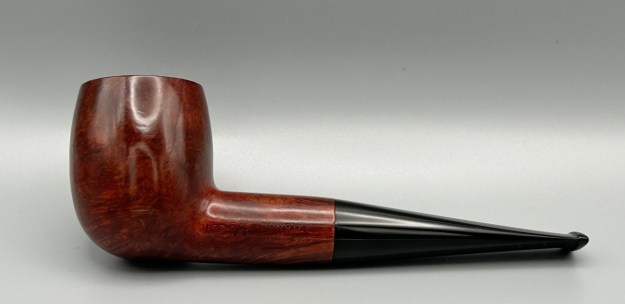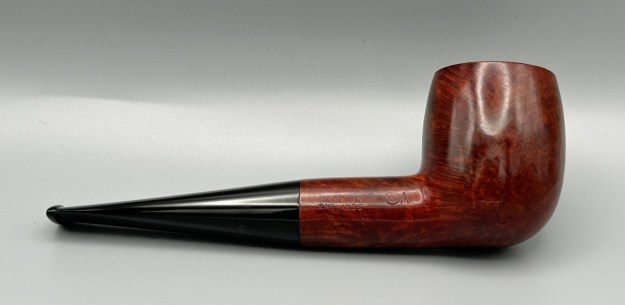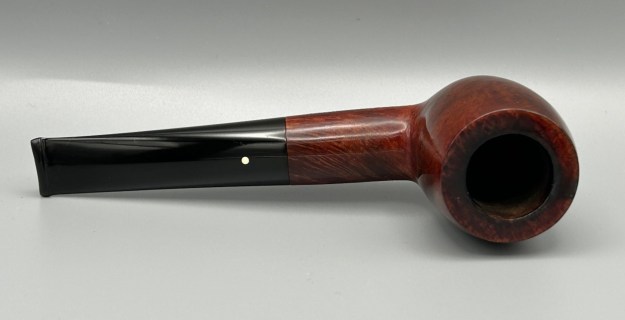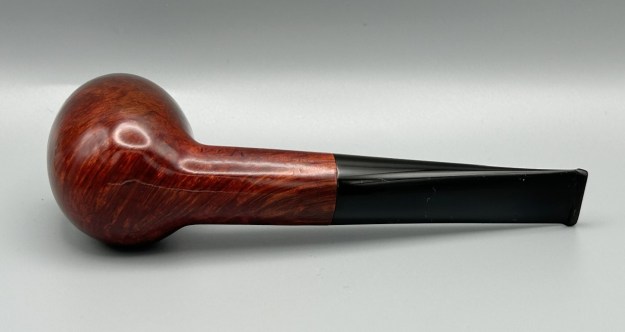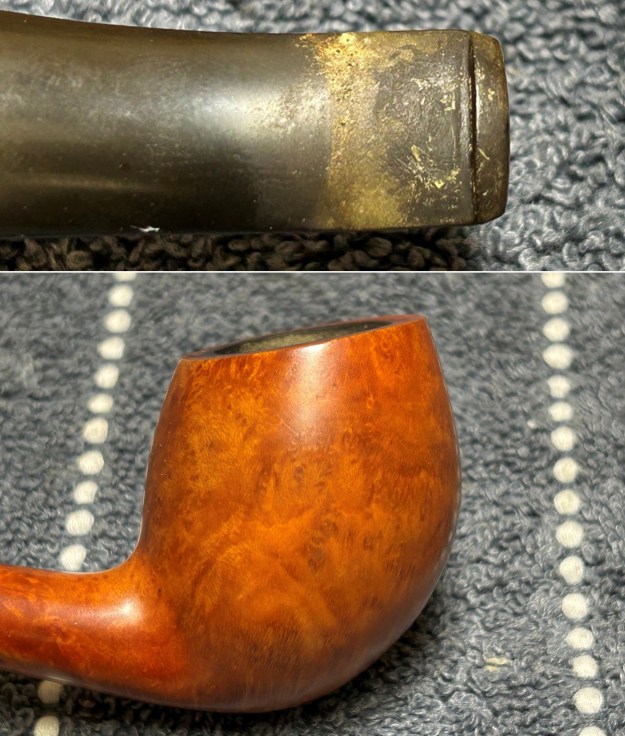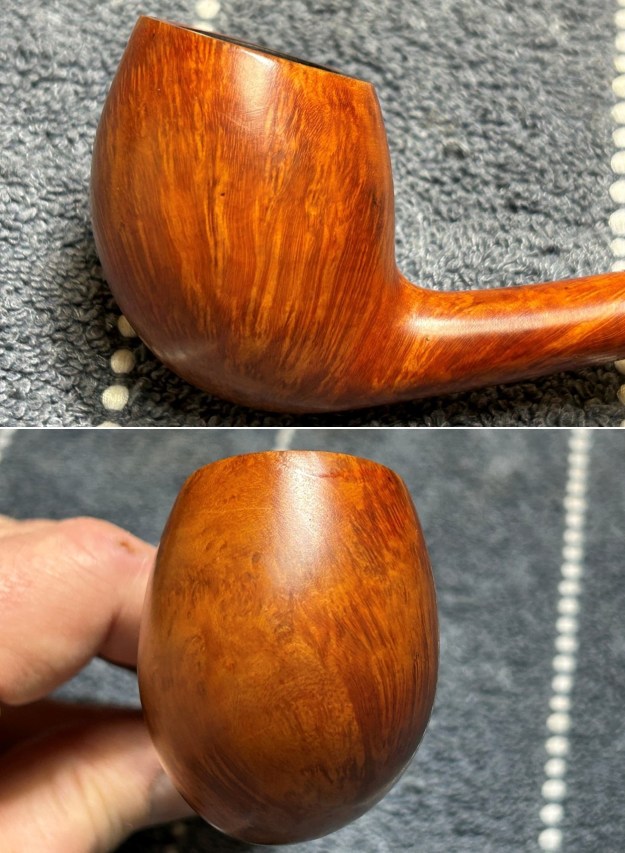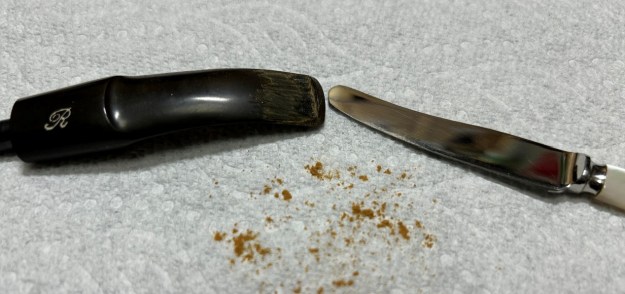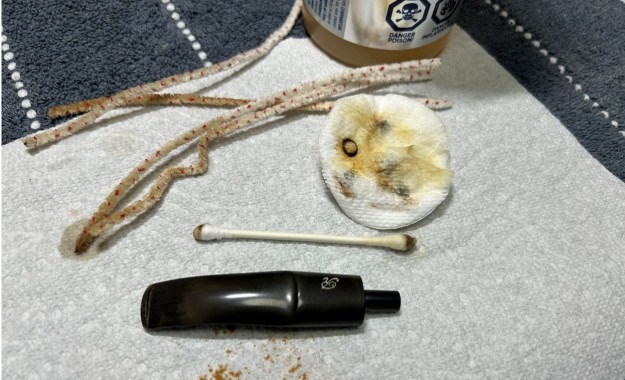
Tag Archives: article by Kenneth Lieblich

Restoring a Terrific GBD-made Dr Plumb 753 Author


by Kenneth Lieblich

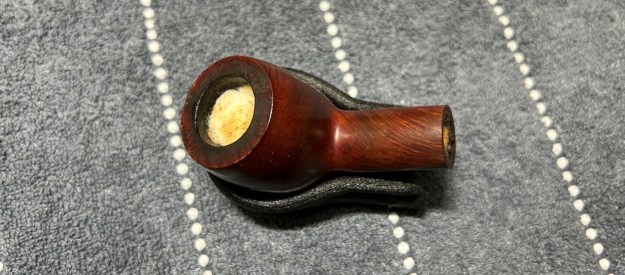
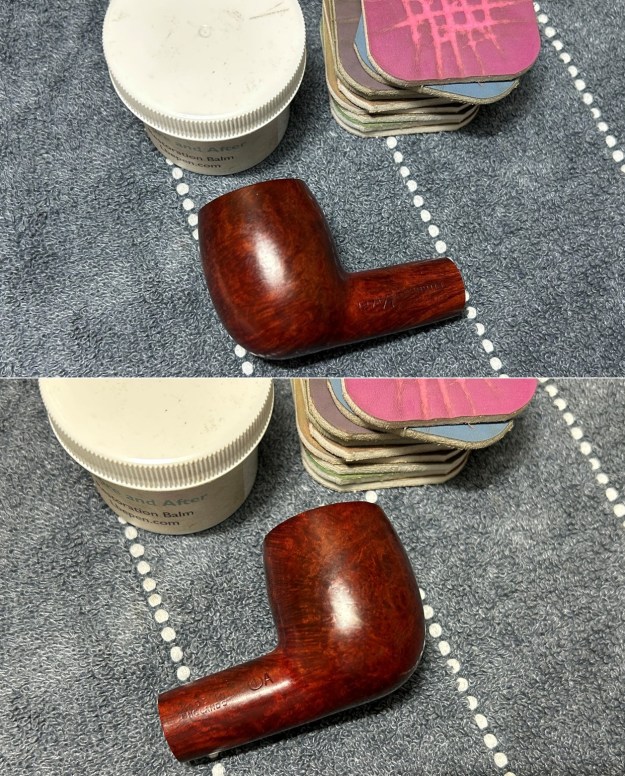
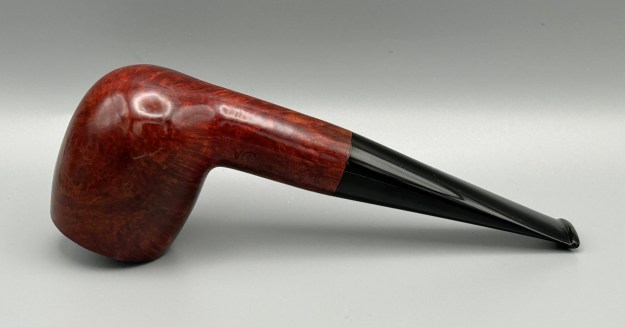
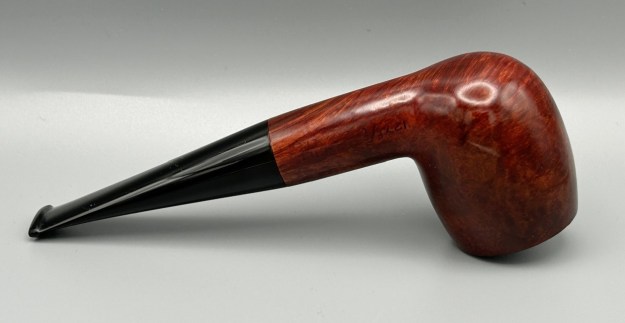
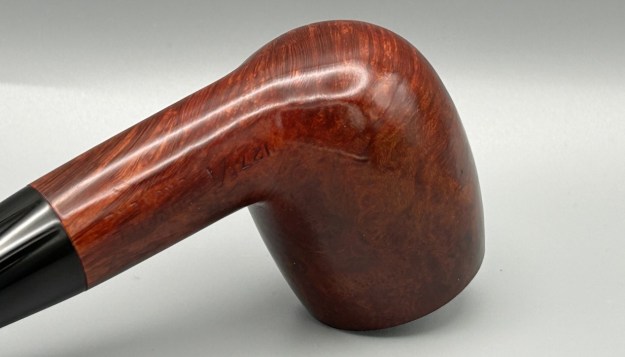
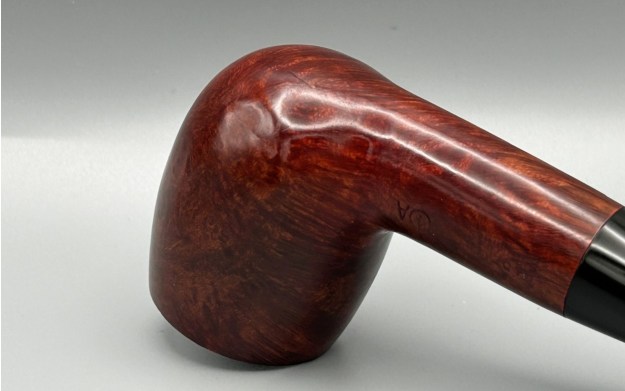
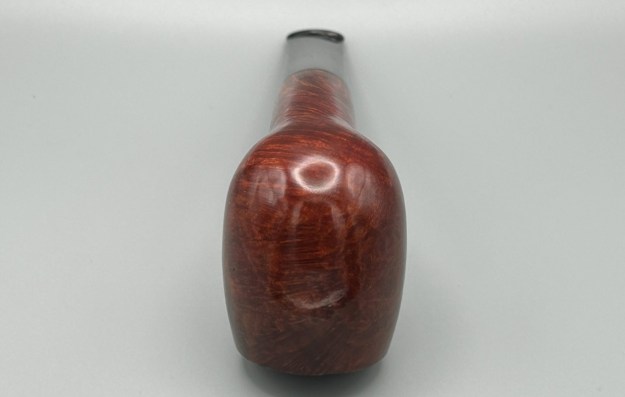
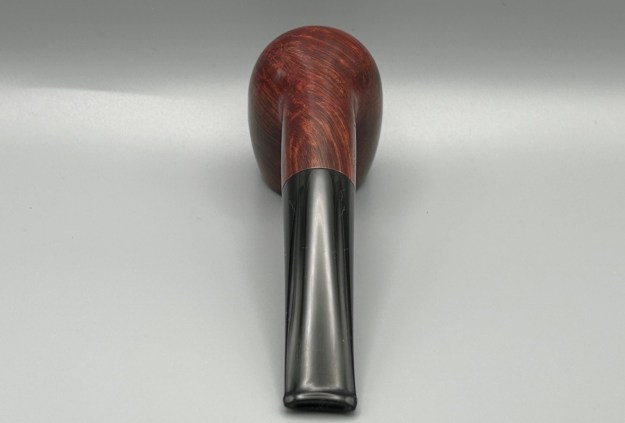
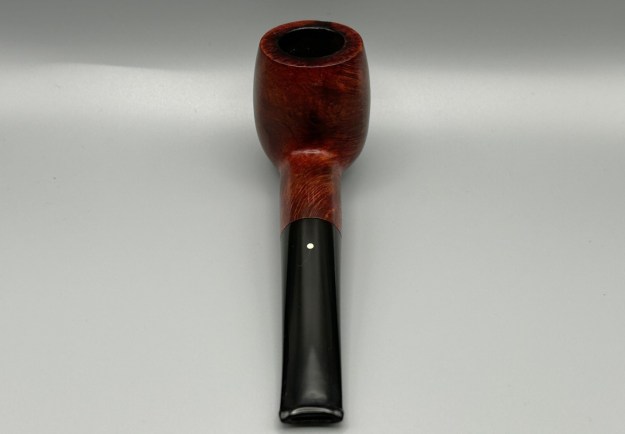
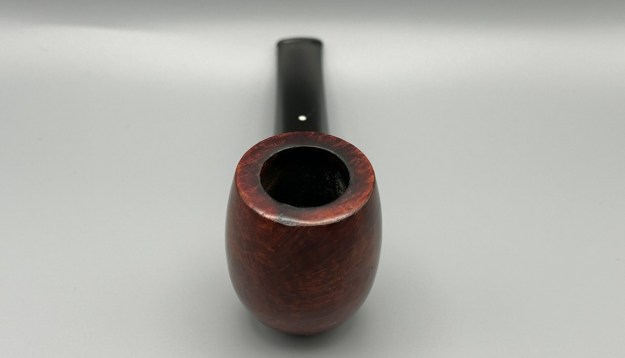
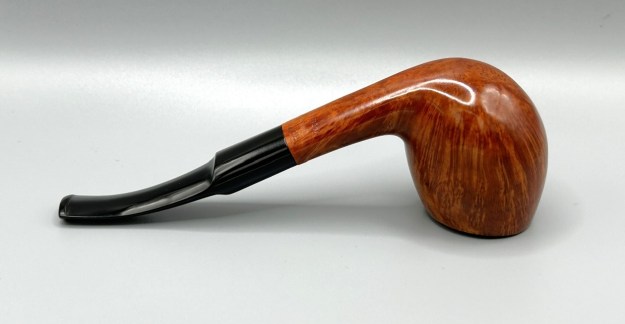
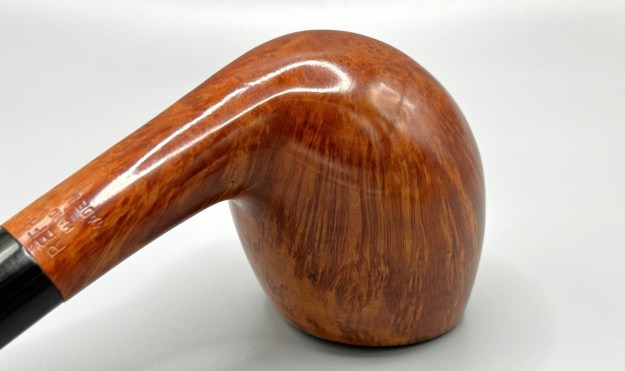
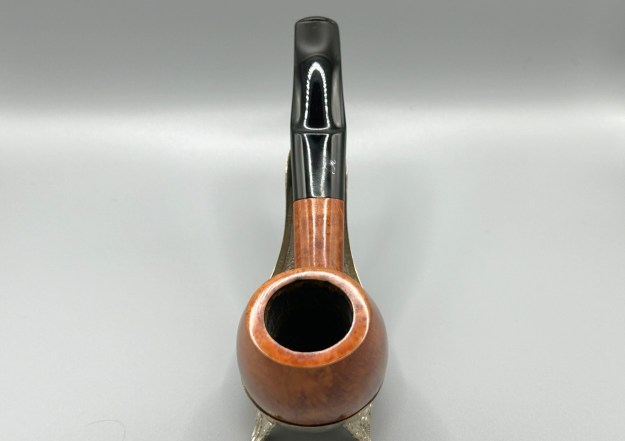
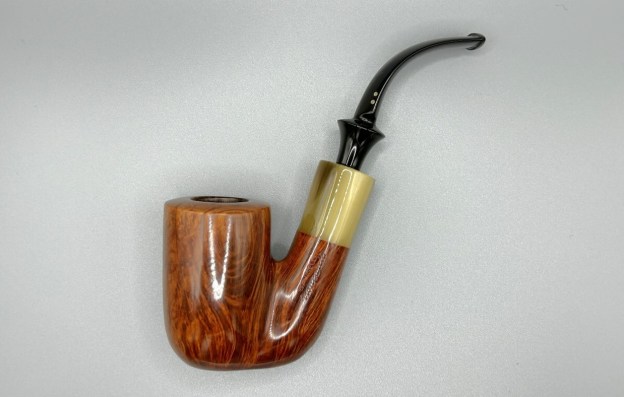
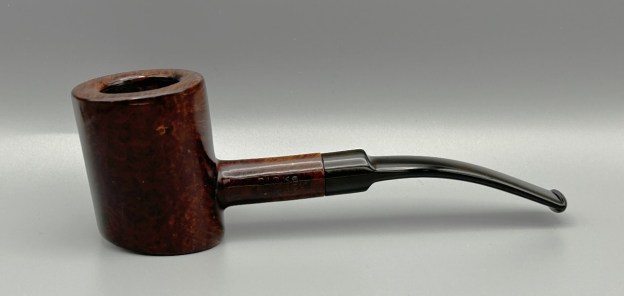
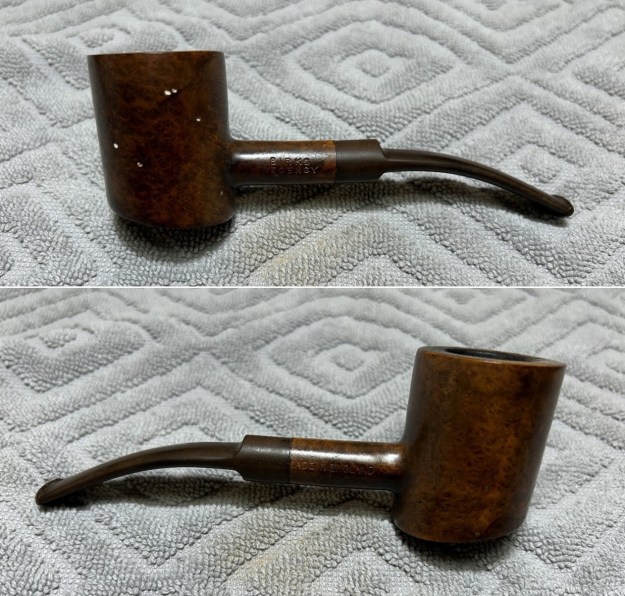
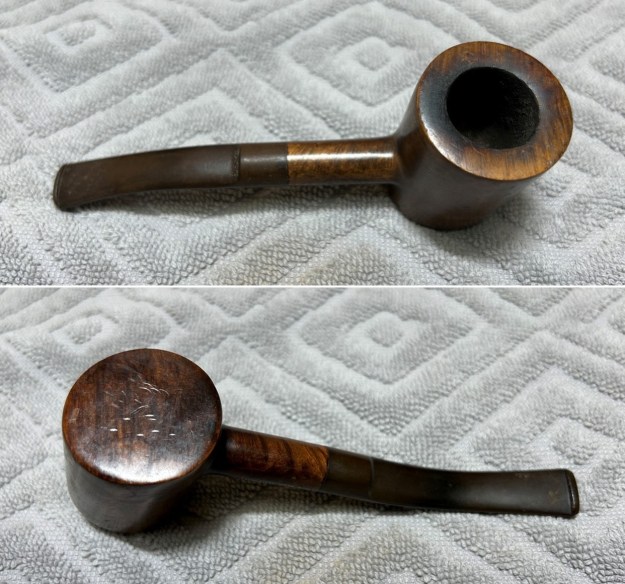
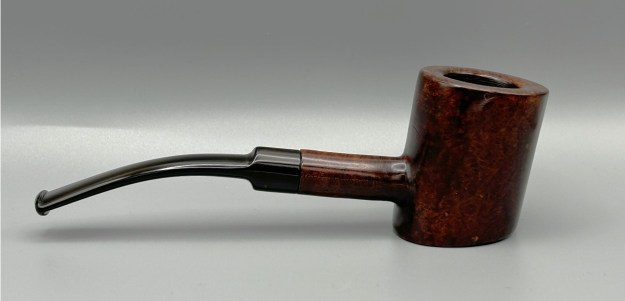
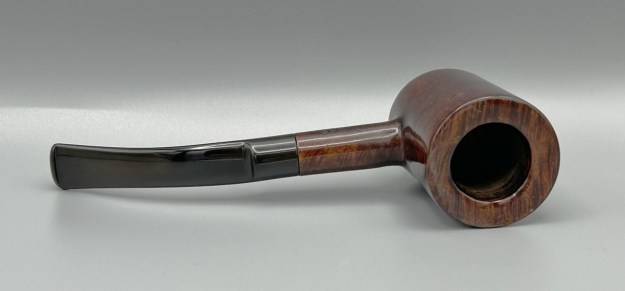
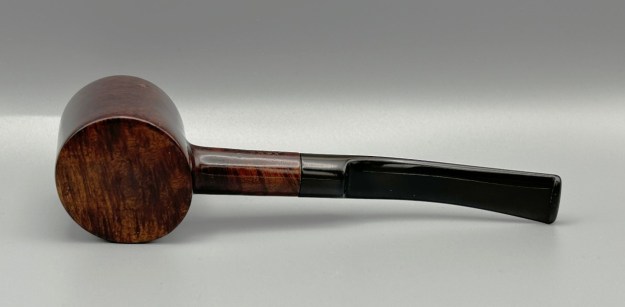
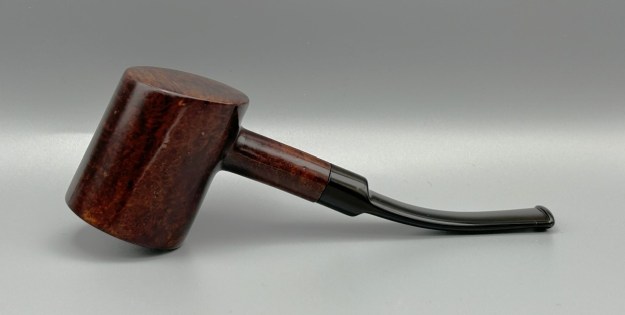
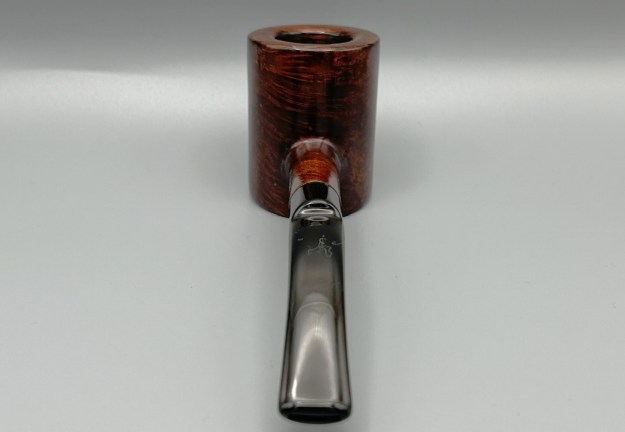
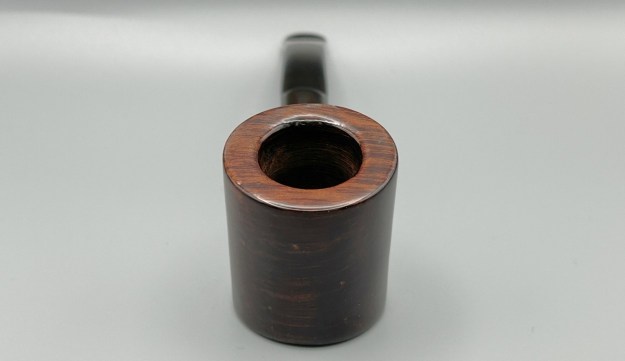
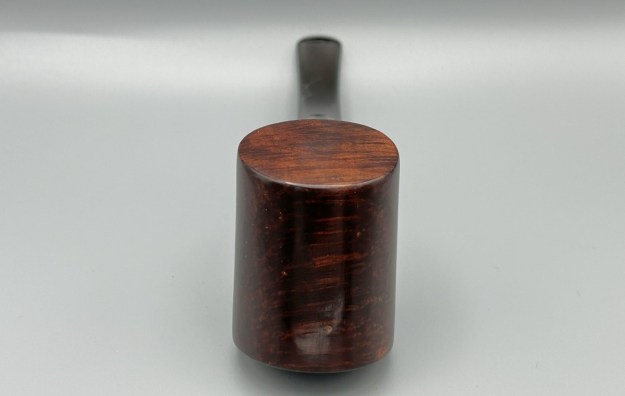
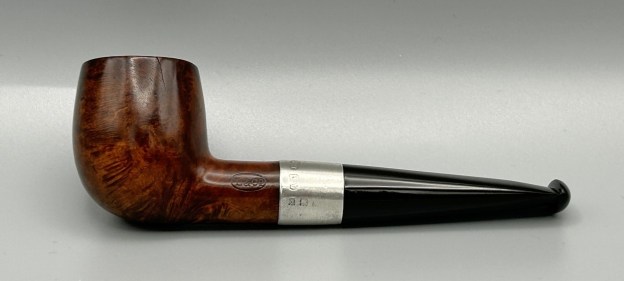
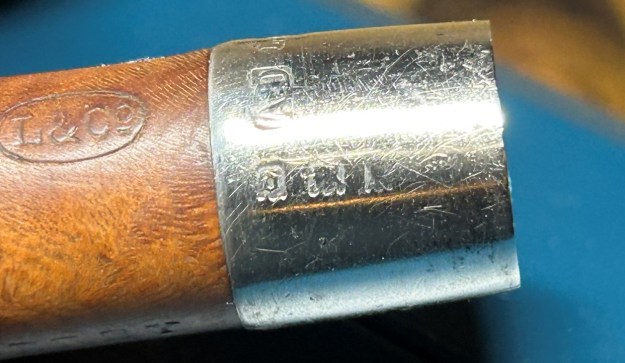
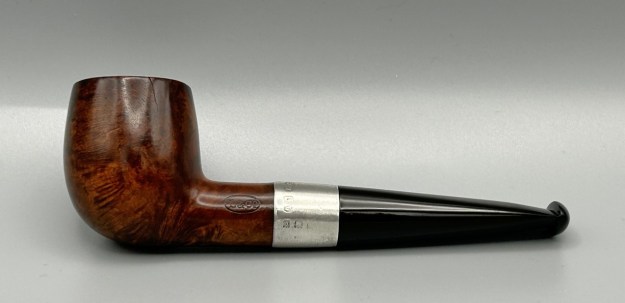
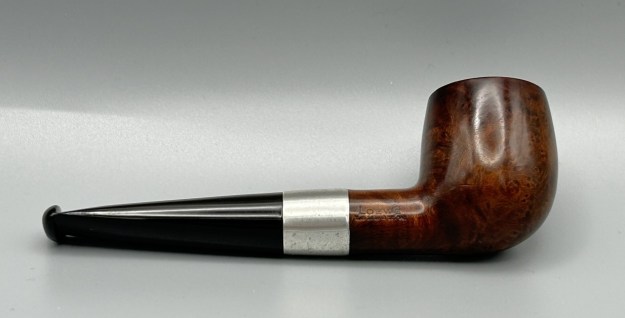
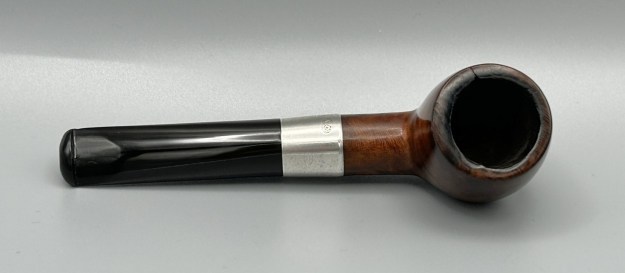
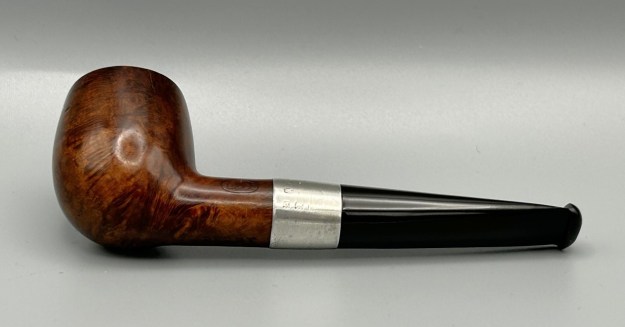
Here is a handsome and unusually-shaped pipe, which caught my eye as soon as I saw it. It is solid and chunky and thick – and feels so satisfying in the hand. It is a Dr Plumb 753 author, made by GBD. Although Dr Plumb was a sub-brand of GBD, it is a fantastic pipe and is looking for a new home. When I took possession of it, it looked rather worse-for-wear, but I managed to recapture its beauty. Read on and learn more about this nifty pipe. The markings are clear and (mostly) understandable. On the stem, we read the word Plumb above the traditional red dot logo seen on their pipes. On top of the shank, we read Dr Plumb [over] Saint-Claude. On the underside of the shank, we see France [over] 753 – and, to the right, an image of an airplane. I have no idea what the airplane represents, as it is not associated with either Dr Plumb or GBD. It reminds me of the airplane seen on tins of Hi-Plane Tobacco – similar but not the same. It might be connected to whichever pipe shop sold it (in an airport, perchance?). Anyway, the last of the following photos shows the airplane after I’d cleaned off the dirt. If you have any idea of what this airplane represents, please let me know in the comments below. Let’s learn a bit about the brand. The man, Dr Plumb, wasn’t a doctor at all! Leslie Watts Plumb was a chartered accountant and a director of Maréchal-Ruchon, one of the most venerable pipe companies of France. The history of Dr Plumb is quite interesting. I encourage you to read the article at Pipedia here and at Pipephil on this page. Here is an extract from the Pipedia article:

The Dr. Plumb’s brand name is owned by A. Oppenheimer & Co., Limited, owners of Cadogan Investments, Ltd. J.B. Rubinovich, GBD’s Parisian sales manager, created this brand in 1925. The pipes was produced by the Ruchon & Verguet and also Ropp factories (Saint-Claude, France). These pipes have long been advertised as Dr. Plumb’s Perfect Pipe, that name coming from an aluminum tube system designed to keep the smoke cool and dry while at the same time permitting the “cooling chamber” to be cleaned by simply twisting the stem. While Dr. Plumb’s pipes were long made in France and stamped accordingly, they are now British made.

Here are some photos of old Leslie Watts Plumb:In that article, they quote from a letter by John Edward Plumb, son of the eponymous Dr Plumb:

I am the son of the late Leslie Watts Plumb, FCA. Before World War II, he managed the business affairs of a smoking pipe factory Verguet Freres/ Marechal Ruchon at St Claude in the French Jura Mountains… where his Plumb Family lived in a flat adjacent to the factory premises. He lent his name to the Dr Plumb Smoking Pipe & I had always understood that he played a part in its promotion & design of the pipe’s unique aluminum cooling filter system.

This pipe is an earlier, French-made, Dr Plumb, coming before Cadogan took over the works. Based on the information I gleaned from an article that Steve wrote on a GBD Coronet 753, I date this pipe to between 1951 and 1976. You can read Steve’s article here. His was exactly the same shape of pipe, albeit with a slightly different stem from mine. Steve’s article has lots of good information, and I quote just a brief passage:

From all of that information I had learned that the pipe was a French Made GBD Coronet made in St. Claude France between 1951-1976. It was made with a matte finish and a recessed platform style stem. I also learned that it was an AUTHOR shape with a 1/8th bend to the stem. Now it was time to work on the pipe.

I did look up the shape number 753 on a GBD pipe shape chart and found (as Steve did) that the 753 is described as

753   author   one-eighth bend   round stem shape

Well, ‘author’ I can understand, ‘one-eighth’ is certainly accurate, but I can’t help wondering if ‘round’ is a typo – as neither Steve’s nor my pipe have round stems. They are decidedly oval.

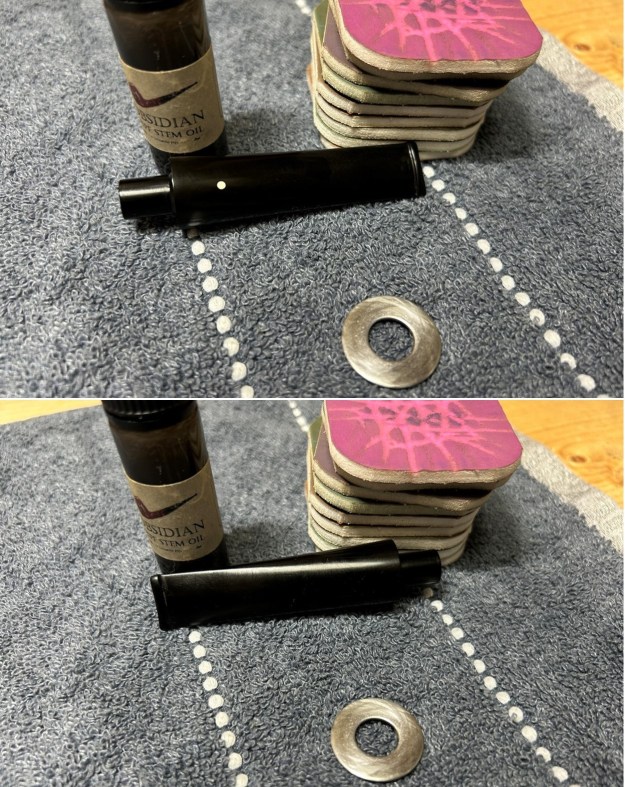
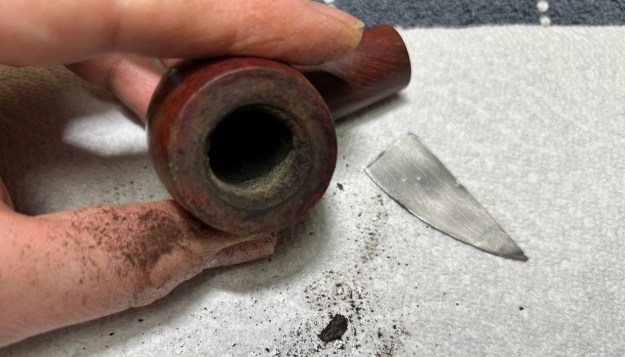
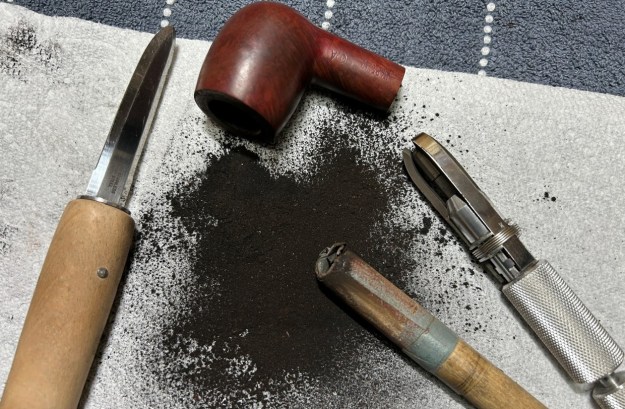
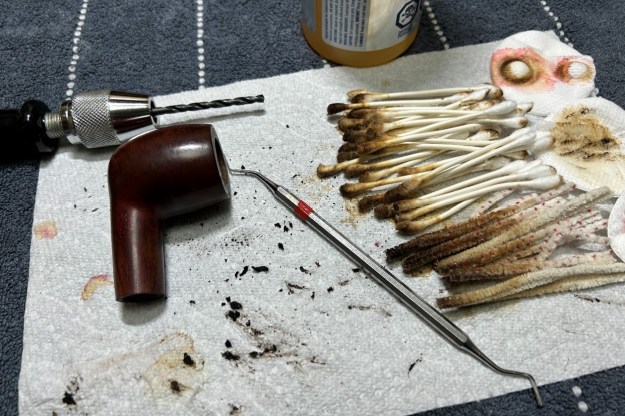
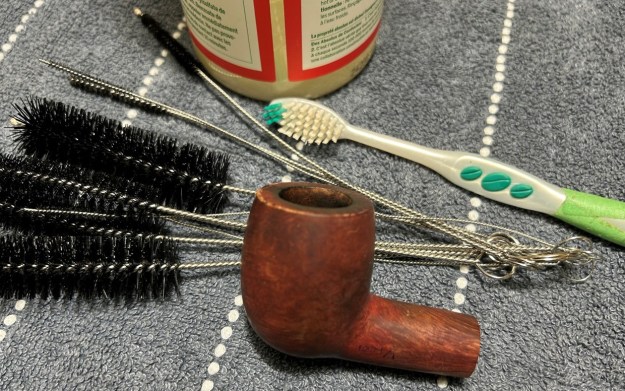
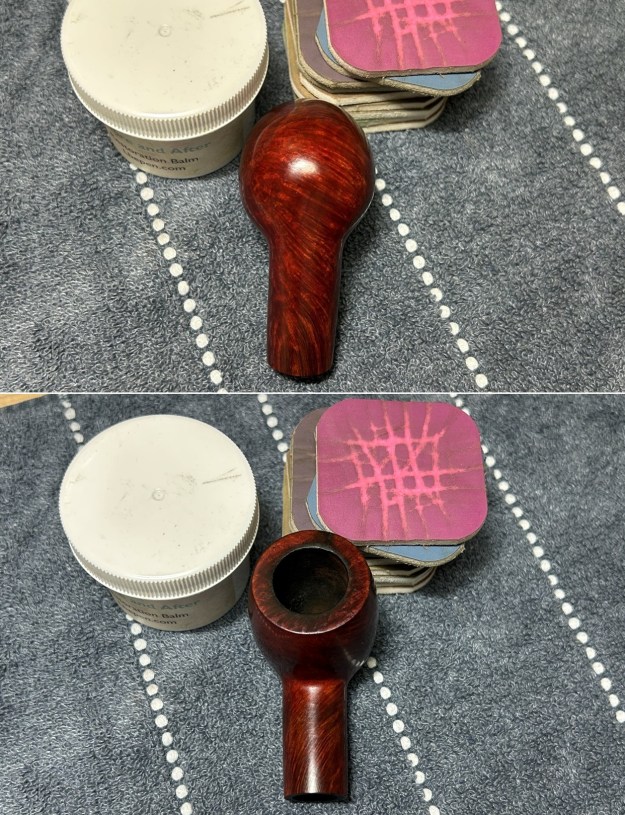
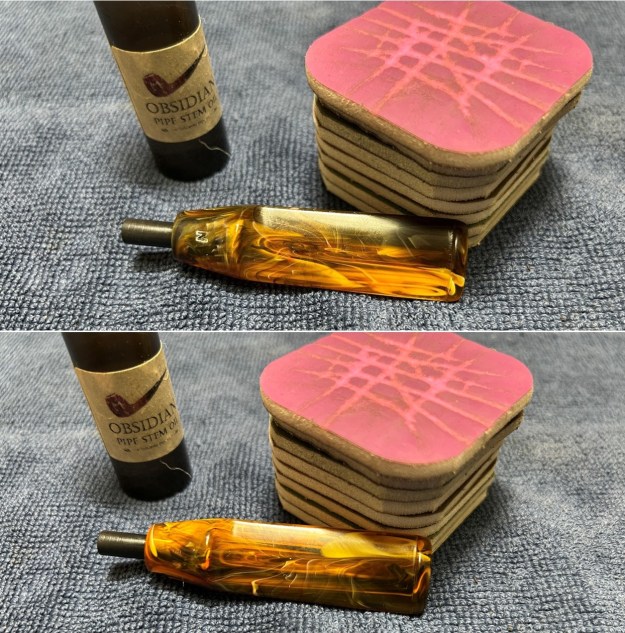
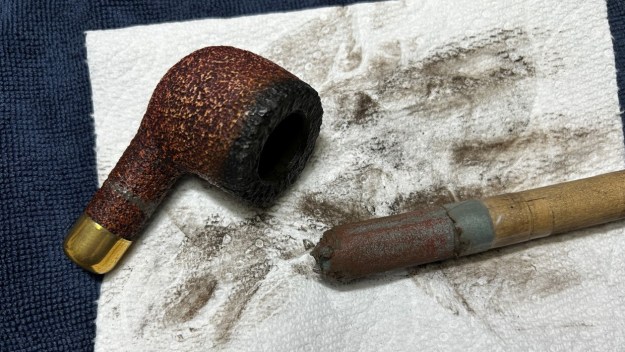
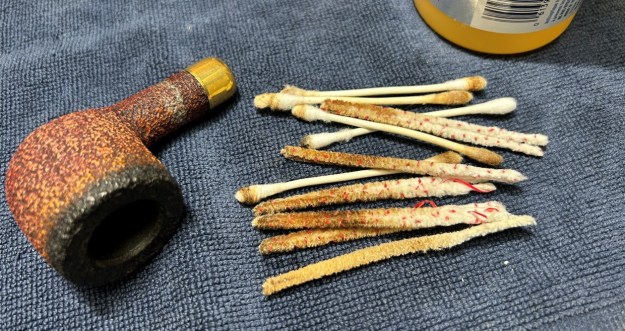
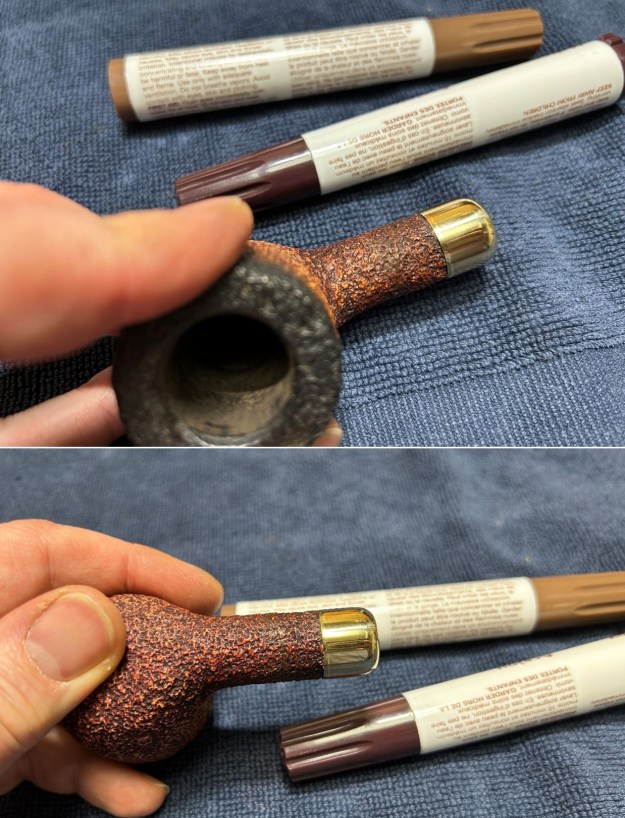
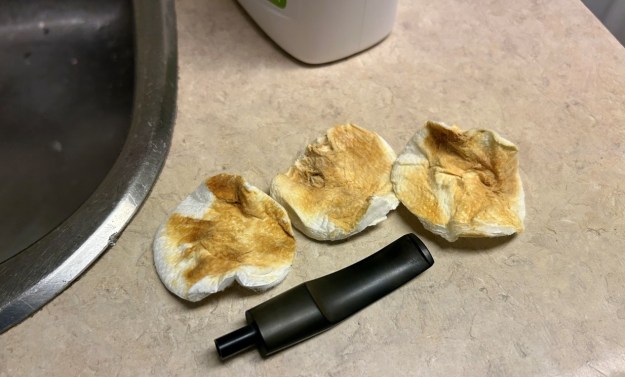
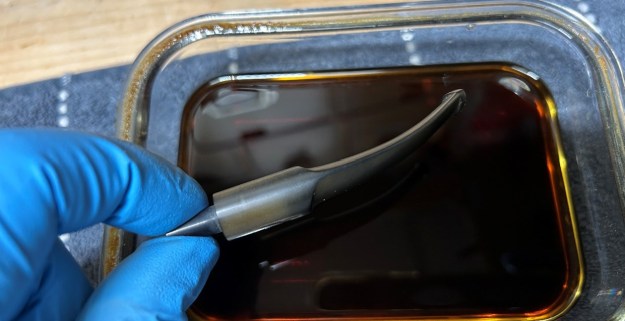
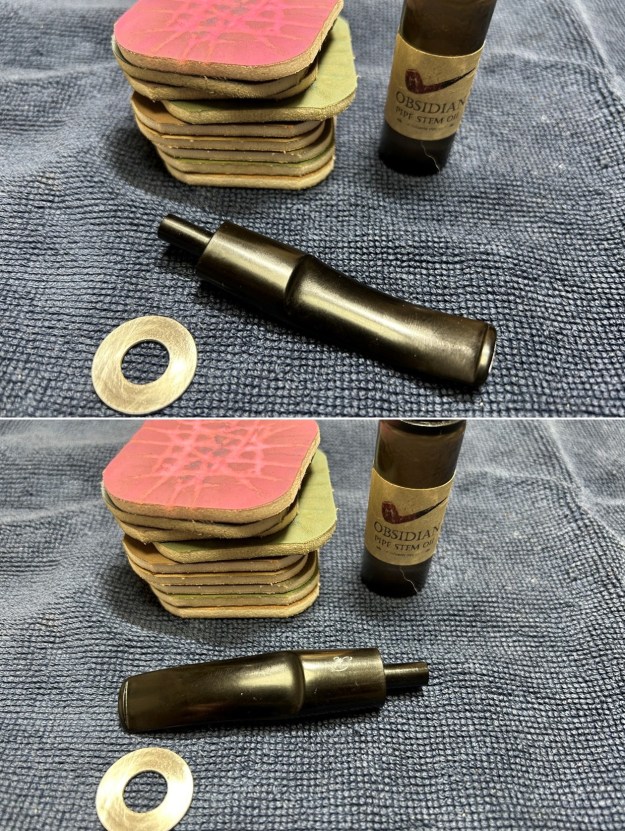
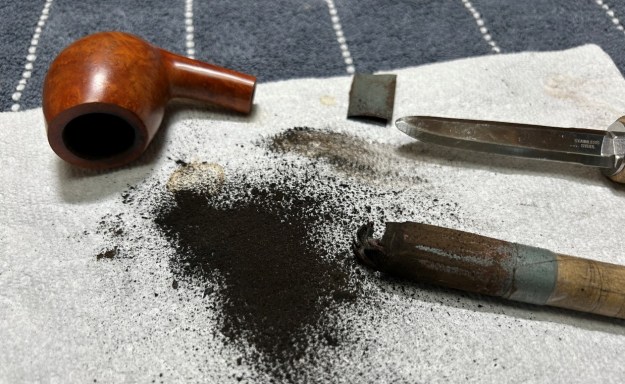
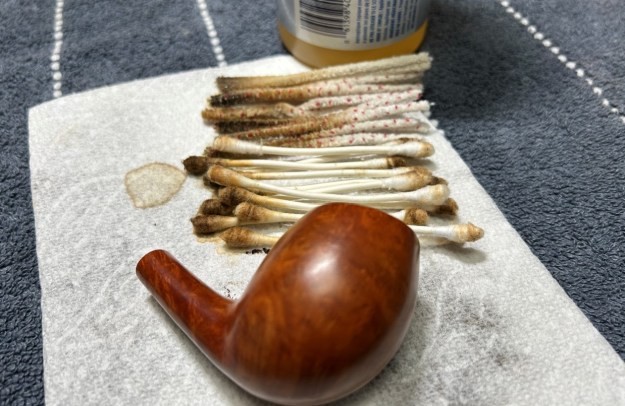
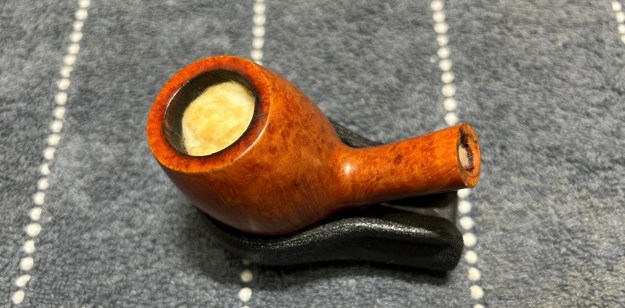
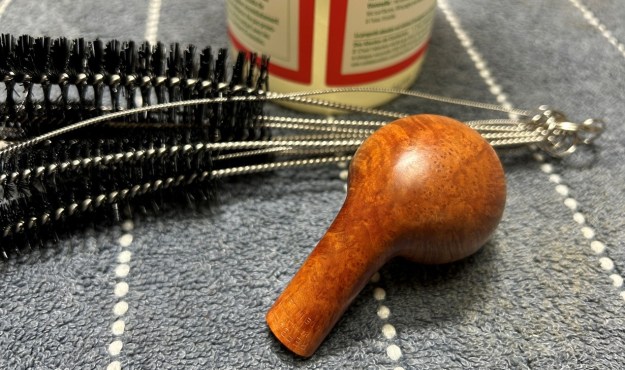
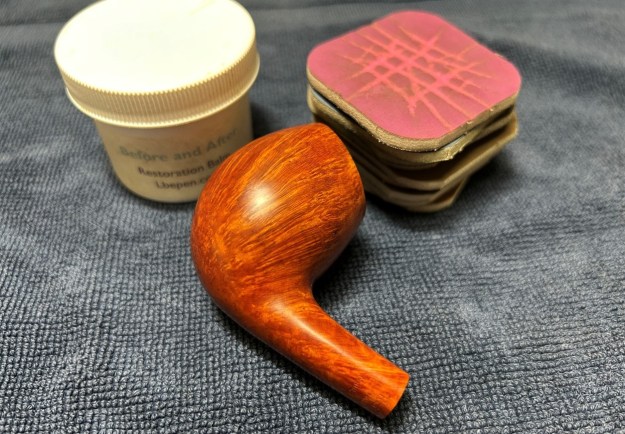
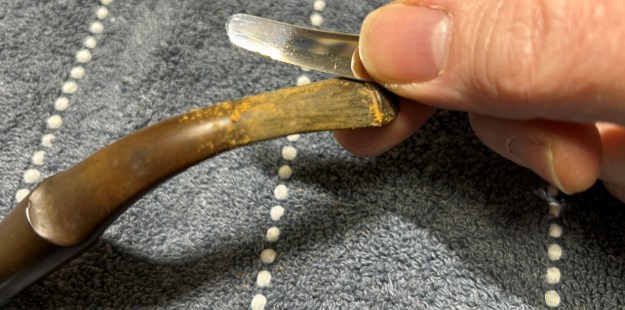
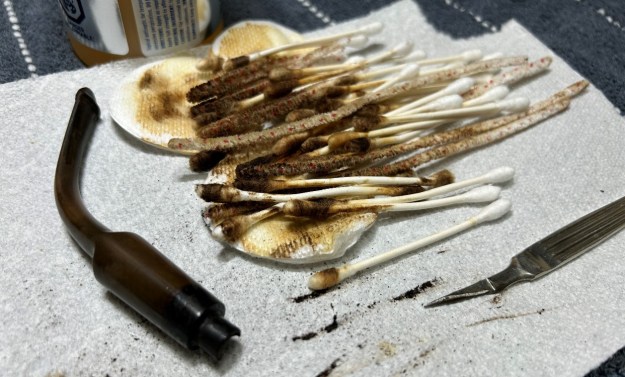
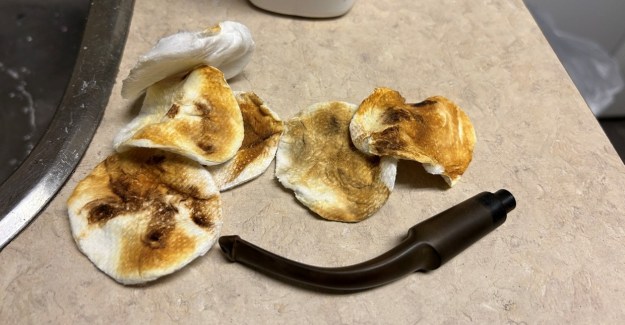
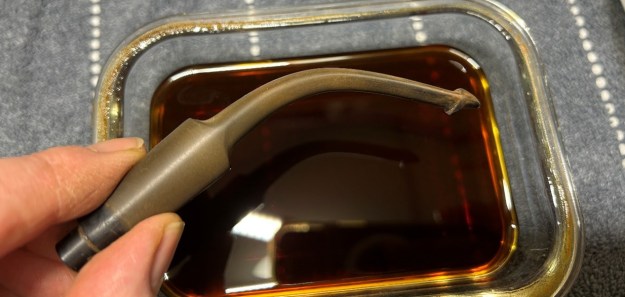
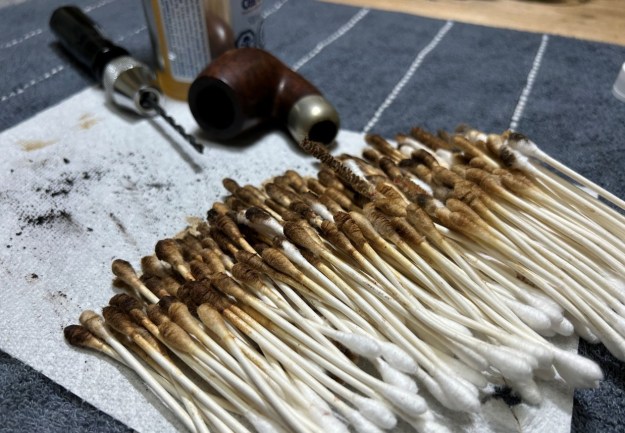
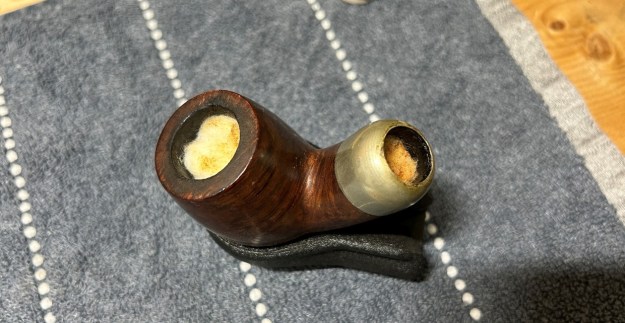
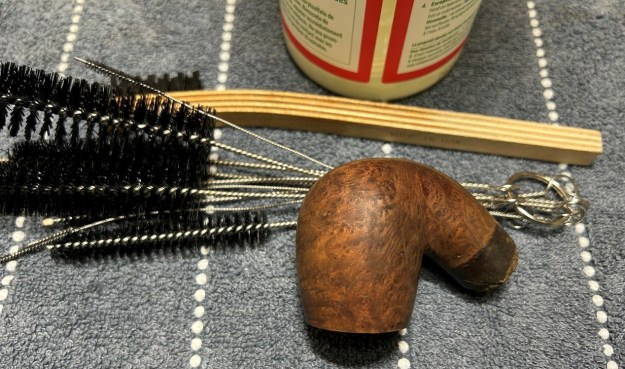
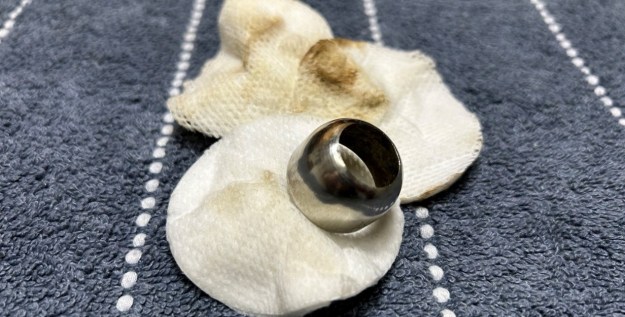
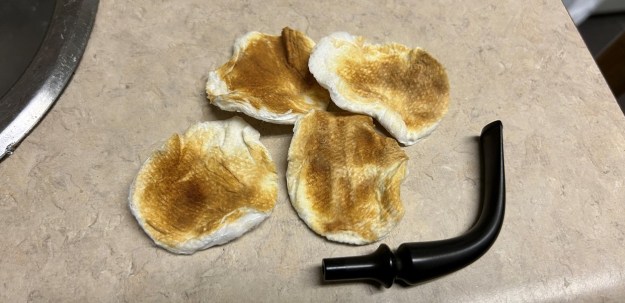
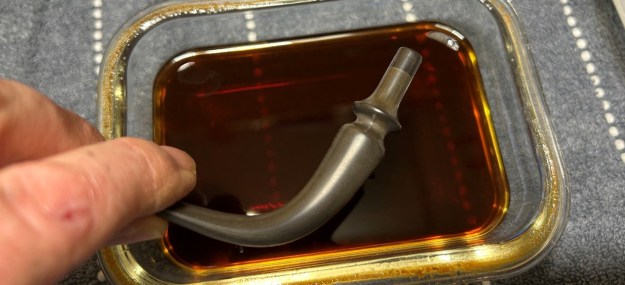
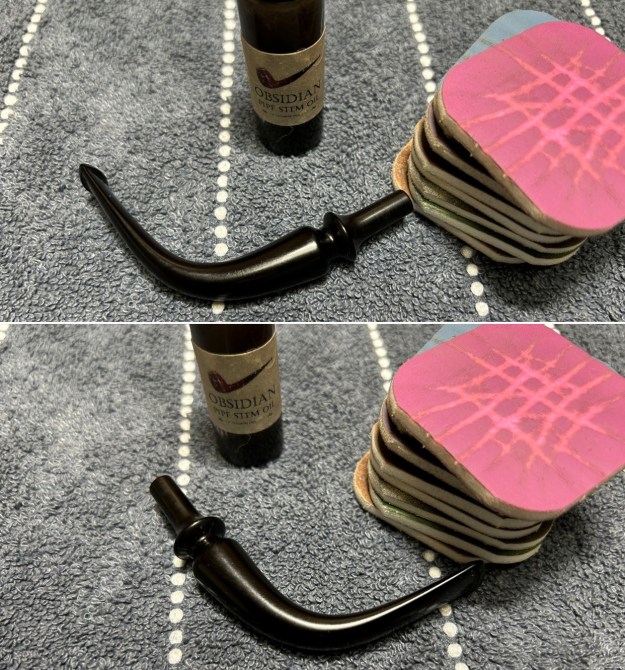
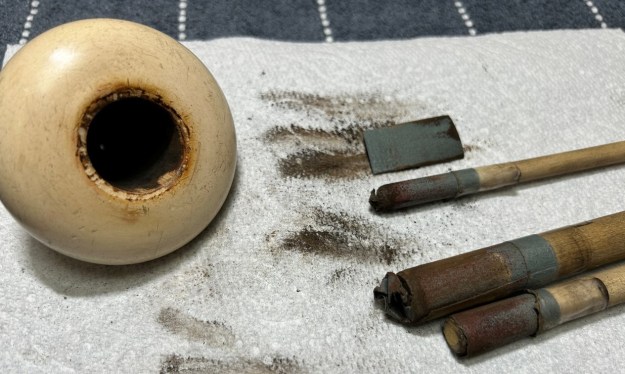
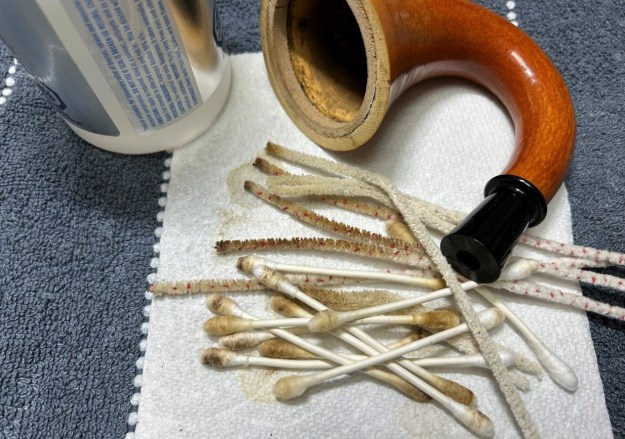
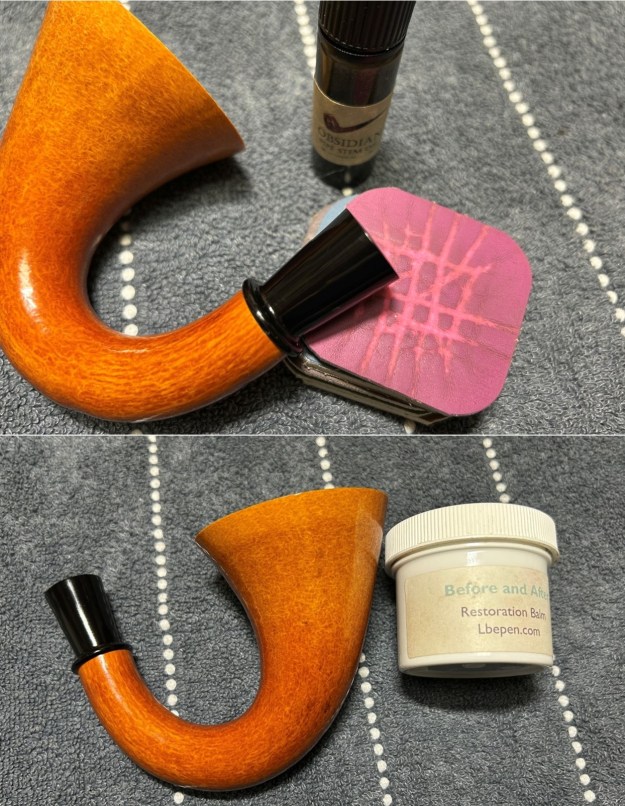
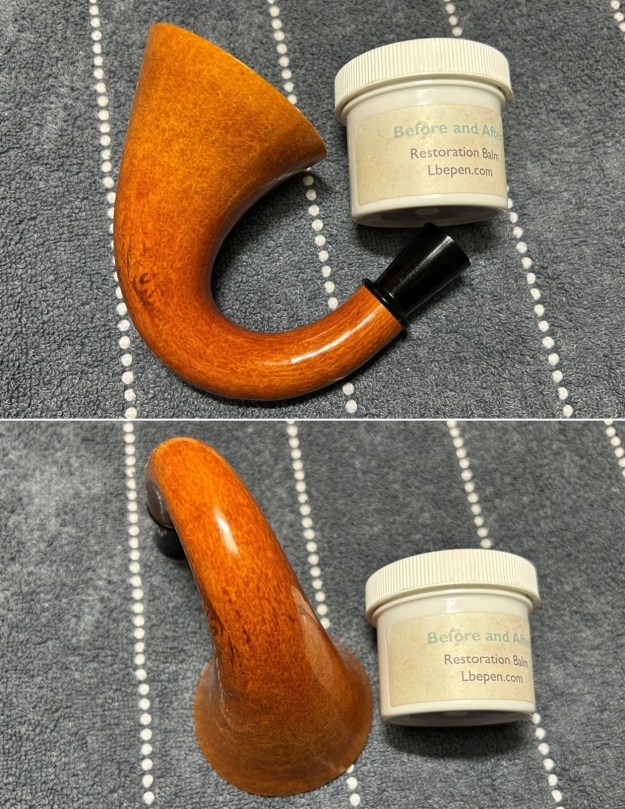
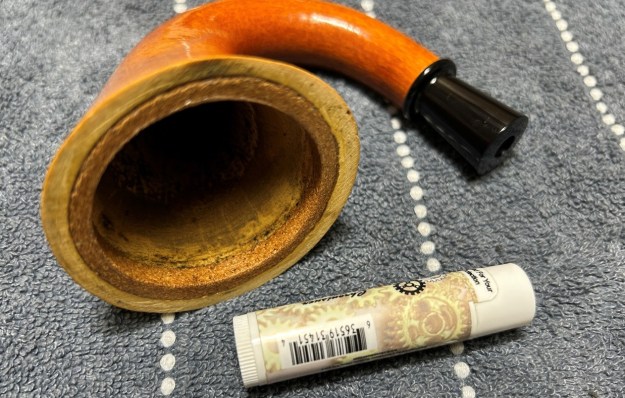
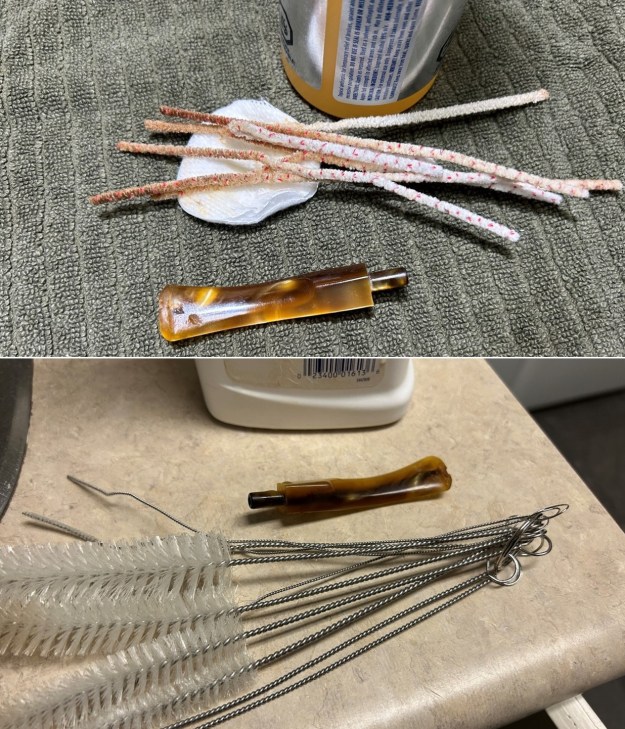
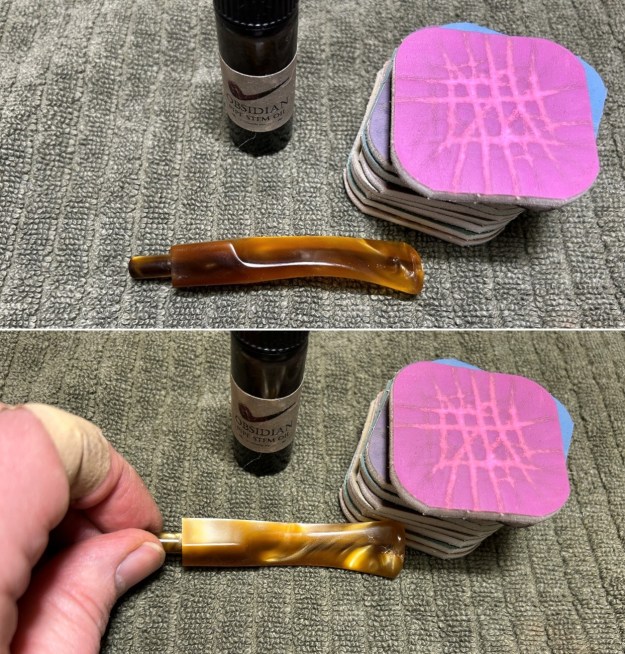
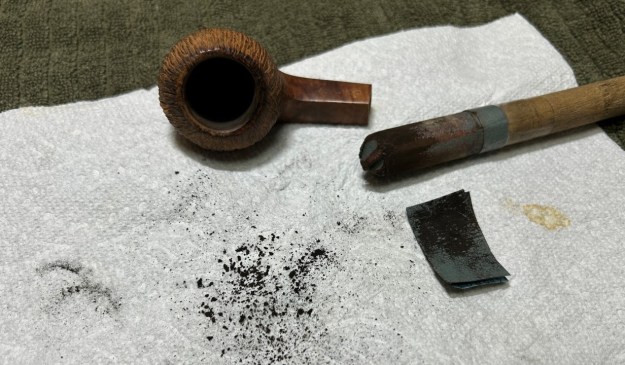
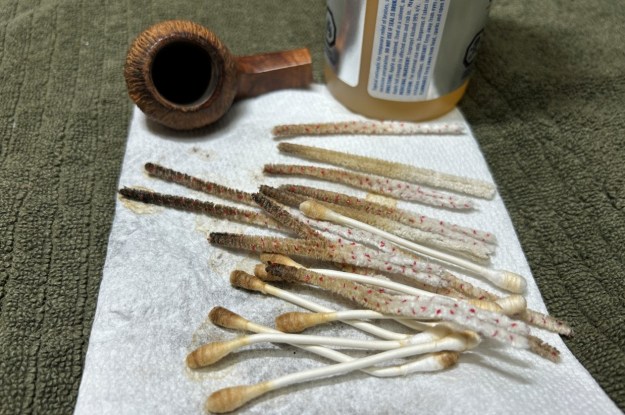
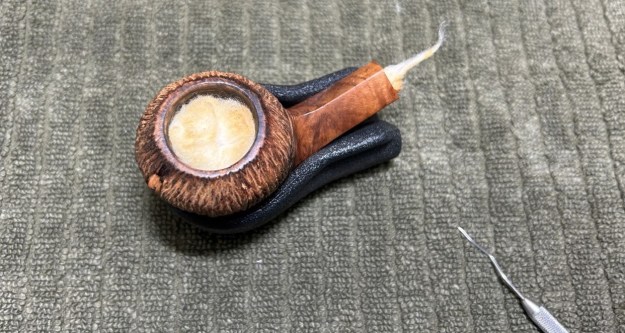
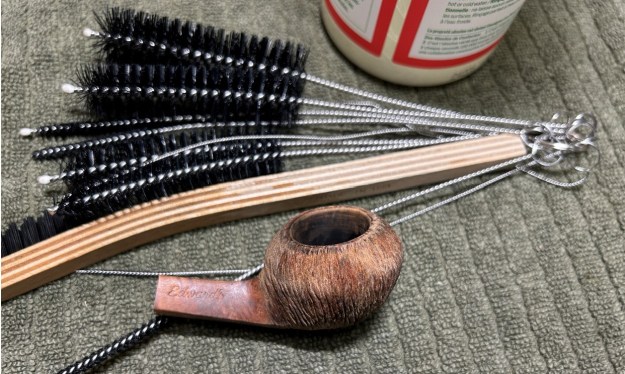
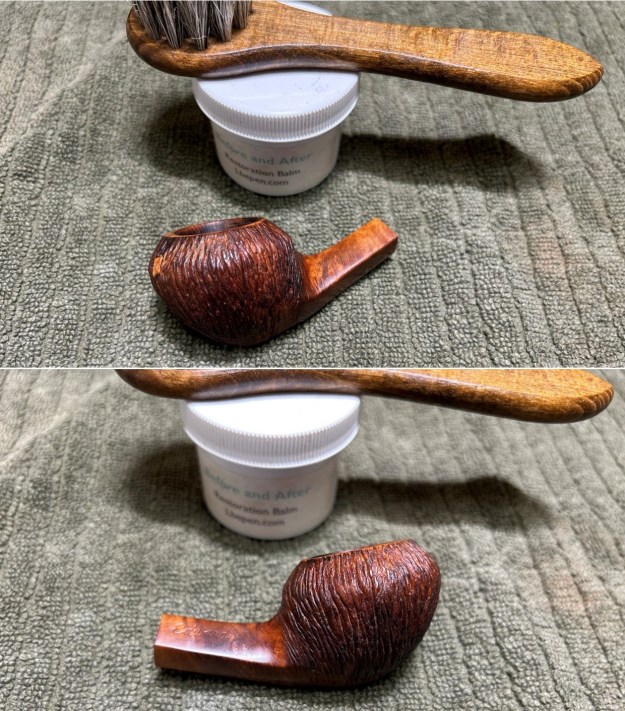
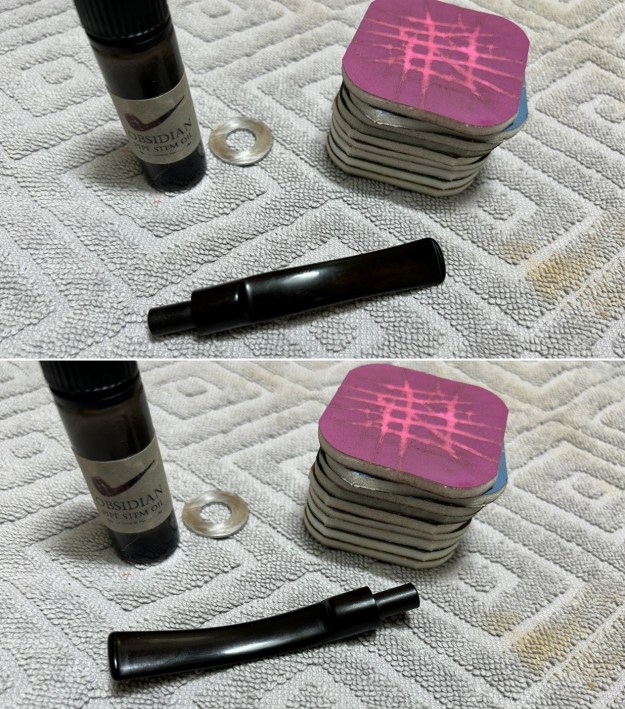
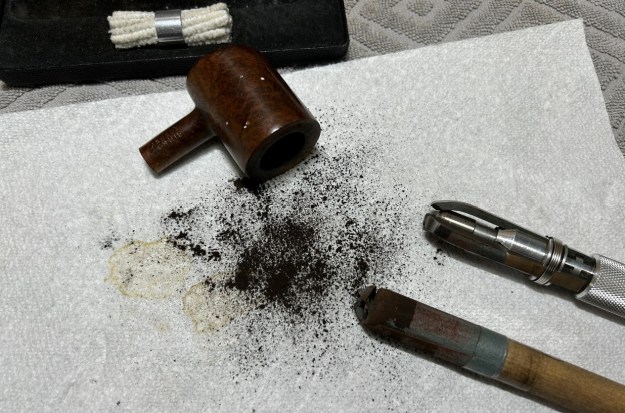
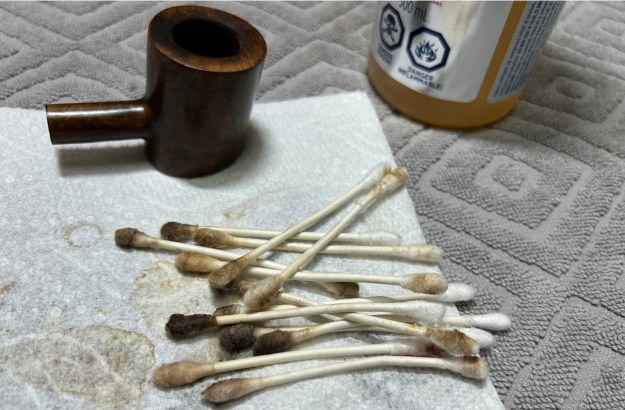
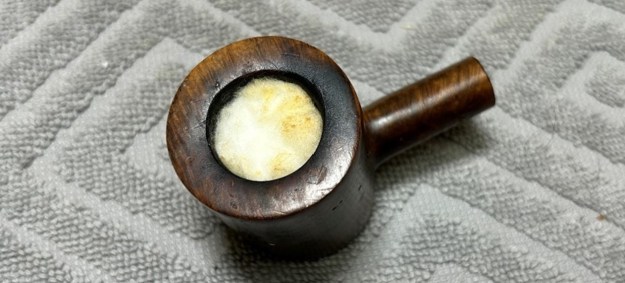
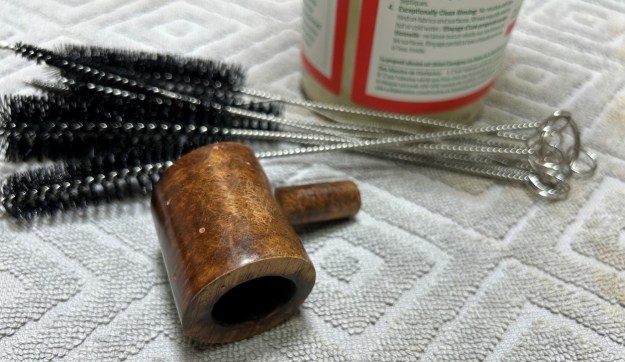
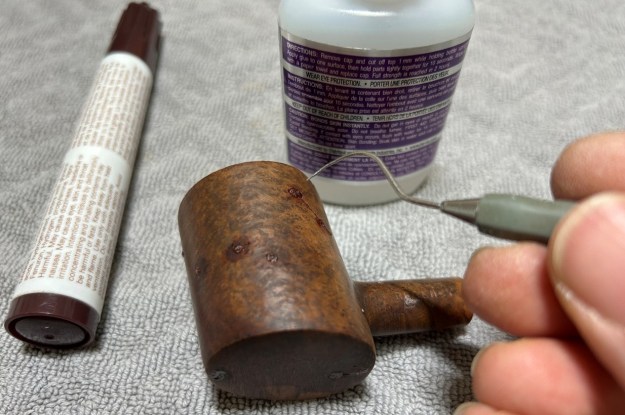
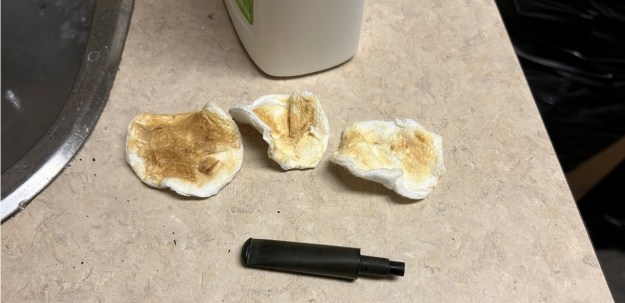
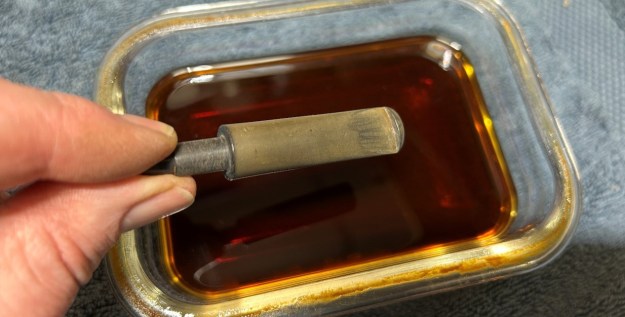
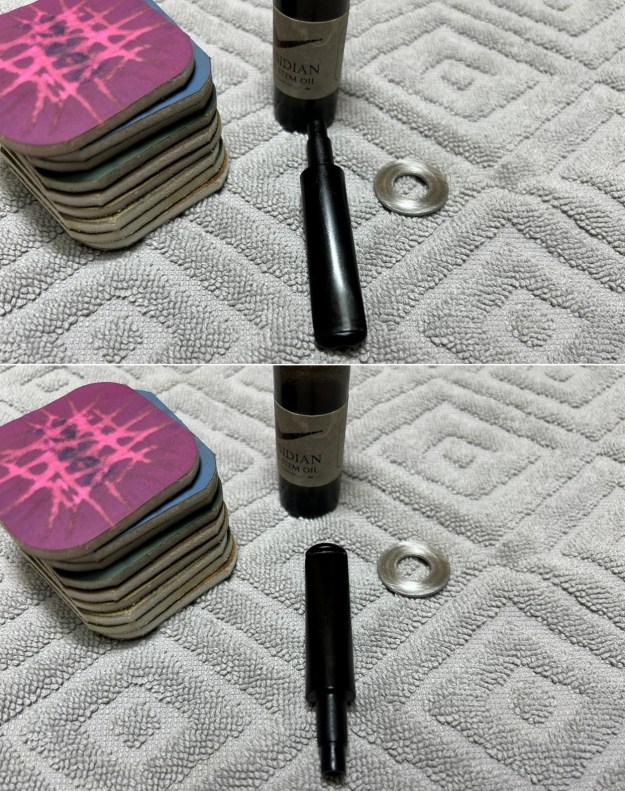
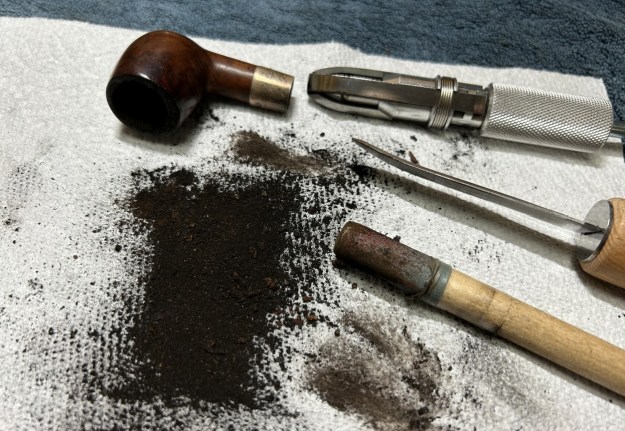
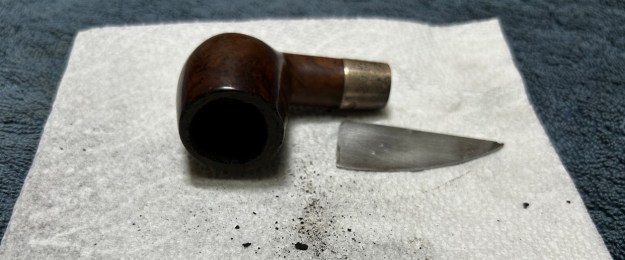
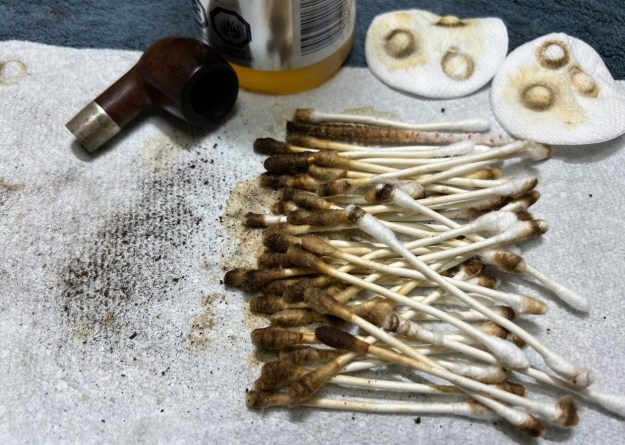
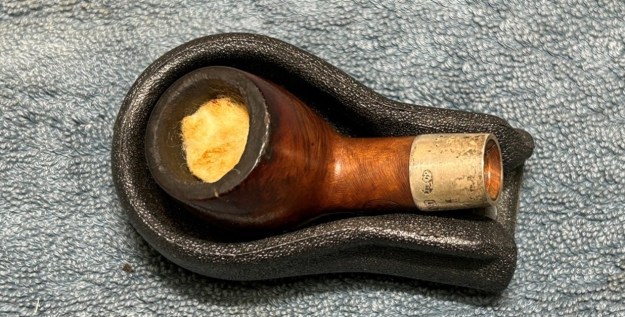
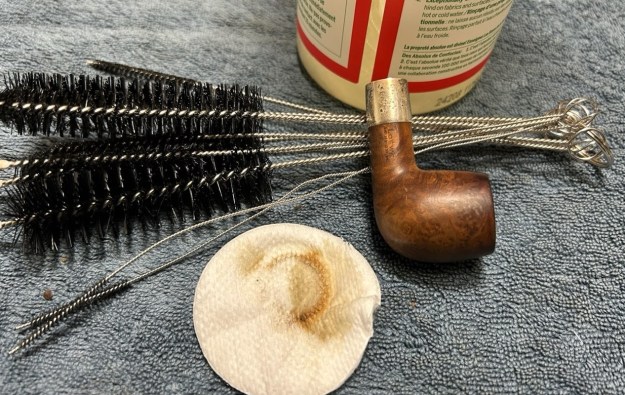
Let’s have a look at the condition of the pipe. Overall, the condition was good – just remarkably dirty! The stem was well-chewed and had lots of tooth scratches. It was oxidized and calcified, and had a haze of dust on it. Meanwhile, the stummel was sound – it had only a few minor nicks and lots of dirt and grime. There was also a large, hideous stain on the bottom. Only time would tell if I could get rid of that stain. This stem had a stinger in it – and it was being quite stubborn about coming out of the tenon! I opted to warm the stem and stinger with my heat gun and this provided just enough softening of the internal goo to allow me to extract it. It then went for a soak in some lemon-infused 99% isopropyl alcohol. I let it sit for several hours and then cleaned it off and it looked much improved. I then finished it with some 0000-grit steel wool and moved on.I used isopropyl alcohol on a few cotton rounds and wiped down the stem to provide an initial cleaning of filth before moving on to the next steps. The primary cleaning came next. I disinfected the inside of the stem with both pipe cleaners and cotton swabs dipped in lemon-infused 99% isopropyl alcohol. I scrubbed thoroughly to make sure the interior was very clean.The goal of the next step is the removal (or minimization) of oxidation. Going to my sink, I used cream cleanser, cotton rounds, and a toothbrush, and scoured the stem to remove as much surface oxidation as possible. As the photos show, the result was a hideous, ochre-coloured mess – but better off the stem than on it.While I was cleaning the stem, the red dot logo popped out! Thank goodness that it landed on my work cloth and didn’t disappear into nothingness. Later, once the stem was fully clean, I glued it carefully back in place.Once the stem was reasonably clean, I soaked it overnight in some Briarville Stem Oxidation Remover. This solution works to draw oxidation in the stem to the surface of the vulcanite. This is a major aid and an important step in ensuring a clean stem. The following day, I drew out the stem from its bath and scrubbed the lingering fluid with a toothbrush. After this, I painted the logo on the stem with some enamel nail polish. I restored the logo carefully and let it fully set before proceeding.The penultimate step for the stem is sanding. First, with my set of needle files, I reduced the bulk of the cyanoacrylate repairs. I removed the excess adhesive as near to the surface as possible, without cutting into the vulcanite. Following that, I used all nine of the micromesh sanding pads (1,500 through 12,000 grit) to sand out flaws, even out the vulcanite, and provide gentle polishing of the finished surface. I also applied pipe-stem oil while using the last five micromesh pads. There was a wonderful, deep black shine to the stem when I was done.As the stem was (nearly) complete, I moved on to the stummel. The first step was to ream out the bowl – that is to say, remove all the cake inside the bowl. This accomplished a couple of things. First (and most obviously), it cleaned the bowl and provided a refurbished chamber for future smoking. Second, when the old cake was removed, I could inspect the interior walls of the bowl and determine if there was damage or not. Since this bowl was not too dirty inside, I only used a pipe knife and a piece of sandpaper taped to a wooden dowel. Collectively, these ensured that all the debris was removed.My next step was to remove the lava on the rim. For this, I took a piece of machine steel and gently scraped the lava away. The metal’s edge is sharp enough to remove what I need, but not so sharp that it damages the rim.Similar to the stem, I then cleaned the stummel with both pipe cleaners and cotton swabs dipped in lemon-infused 99% isopropyl alcohol. It took quite a while and much cotton to clean.I then decided to ‘de-ghost’ the pipe – that is to say, exorcize the remaining filth from the briar. I filled the bowl and the shank with cotton balls, then saturated them with 99% isopropyl alcohol. I let the stummel sit overnight. This caused the remaining oils, tars and smells to leach out into the cotton.To tidy up the briar, I wiped down the outside, using a solution of a pH-neutral detergent and some distilled water, with cotton rounds. I also used a toothbrush in the crevices. This did a good job of cleaning any latent dirt on the surface of the briar. The last step of the cleaning process was to scour the inside of the stummel with the same mild detergent and tube brushes. This was the culmination of a lot of hard work in getting the pipe clean. However, it would take sanding for all of the large stain to be removed.Having completed that, I was able to address the nicks on the underside of the bowl. I dug out my iron and a damp cotton flannel cloth. By laying the cloth over the affected areas and applying the iron to it, the hot and moist steam can cause the wood to swell slightly and return to shape. I was pleasantly surprised at how well it worked in this case. I used all nine micromesh pads (1,500 through 12,000 grit) to sand the outside of the stummel and finish it off. This sanding minimizes flaws in the briar and provides a beautiful smoothness to the wood. It also removed the stain once and for all. I rubbed some LBE Before & After Restoration Balm into the briar and let it sit for 30 minutes or so. The balm moisturizes the wood and gives a beautiful depth to the briar. I then buffed the stummel with a microfibre cloth. For the final step, I took the pipe to my bench polisher and carefully buffed it – first with a blue diamond compound, then with three coats of carnauba wax. This procedure makes the pipe look its best – the stummel sings and the stem glows.All done! This handsome Dr Plumb 753 author looks fantastic again and is ready to be enjoyed by its next owner. I am pleased to announce that this pipe is for sale! If you are interested in acquiring it for your collection, please have a look in the ‘French’ section of the store here on Steve’s website. You can also email me directly at kenneth@knightsofthepipe.com. The approximate dimensions of the pipe are as follows: length 5¾ in. (146 mm); height 1⅜ in. (35 mm); bowl diameter 2 in. (51 mm); chamber diameter ⅞ in. (22 mm). The weight of the pipe is 1⅞ oz. (54 g). I hope you enjoyed reading the story of this pipe’s restoration as much as I enjoyed restoring it. If you are interested in more of my work, please follow me here on Steve’s website or send me an email. Thank you very much for reading and, as always, I welcome and encourage your comments.

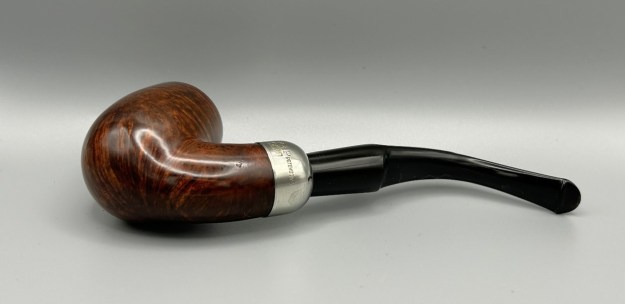
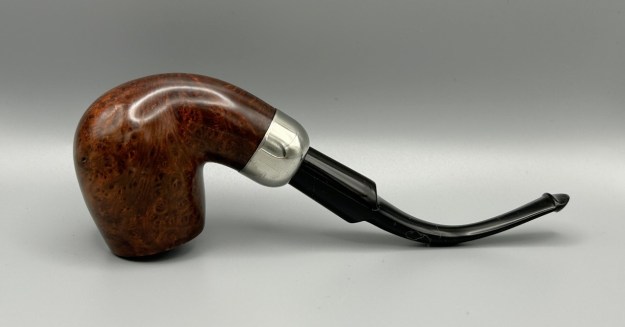
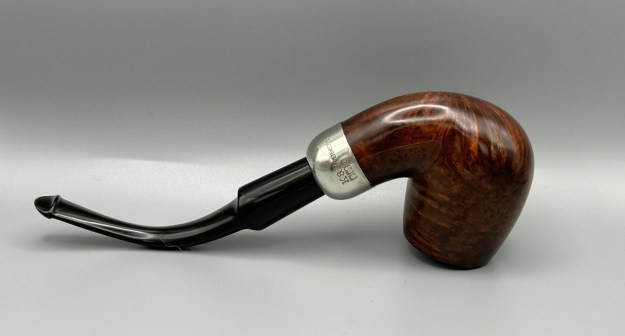
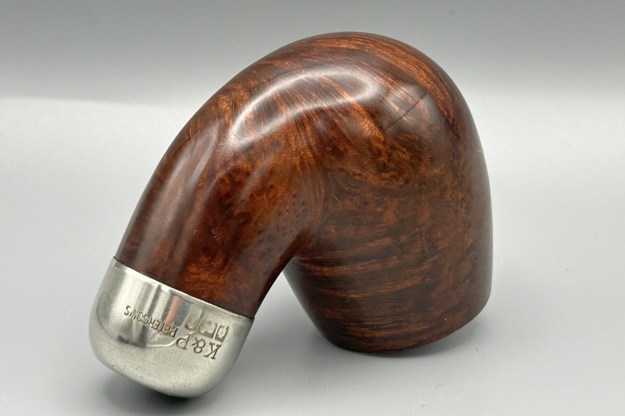
New Life for a Hard Life Peterson System 301


by Kenneth Lieblich

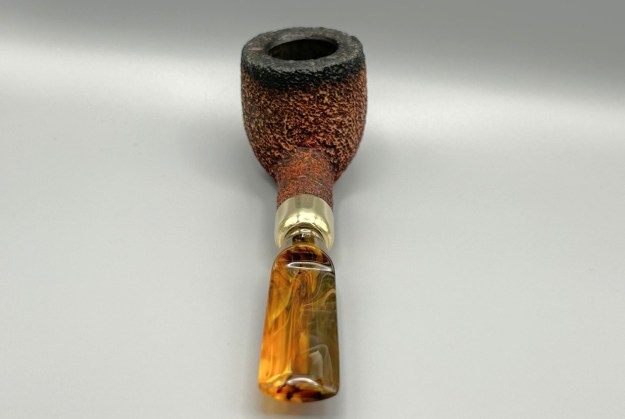
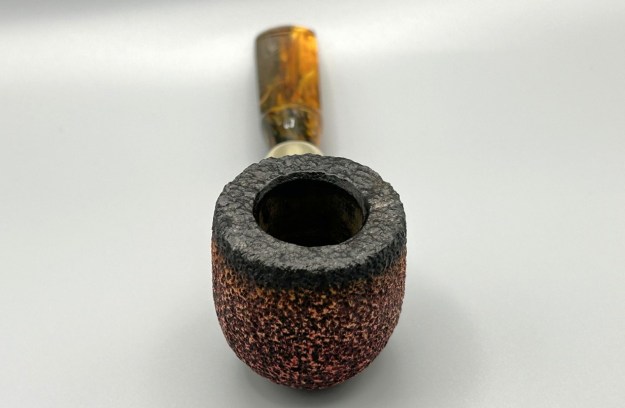
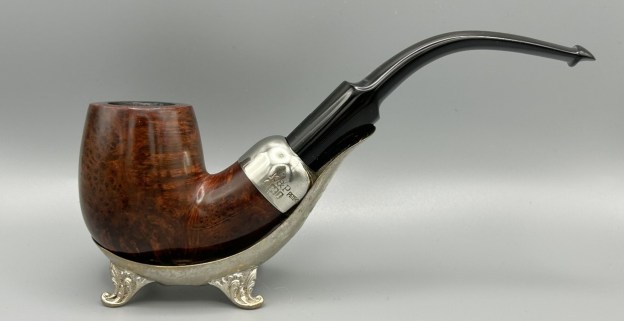
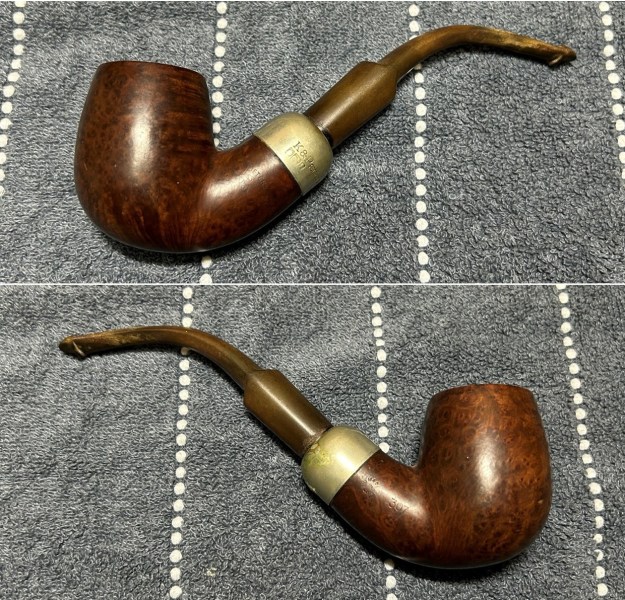
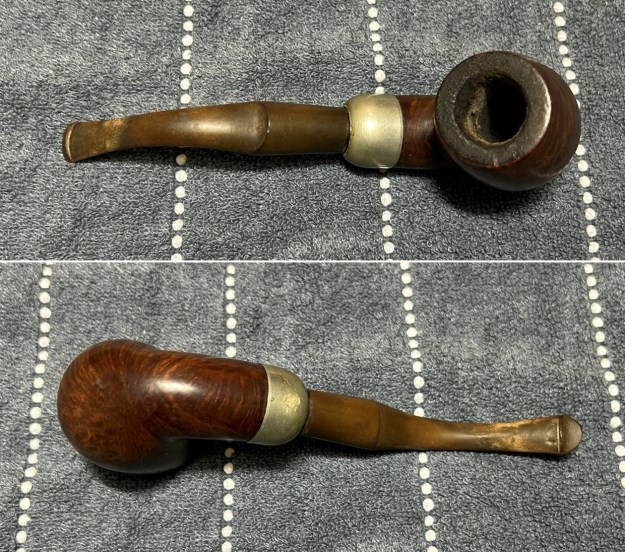
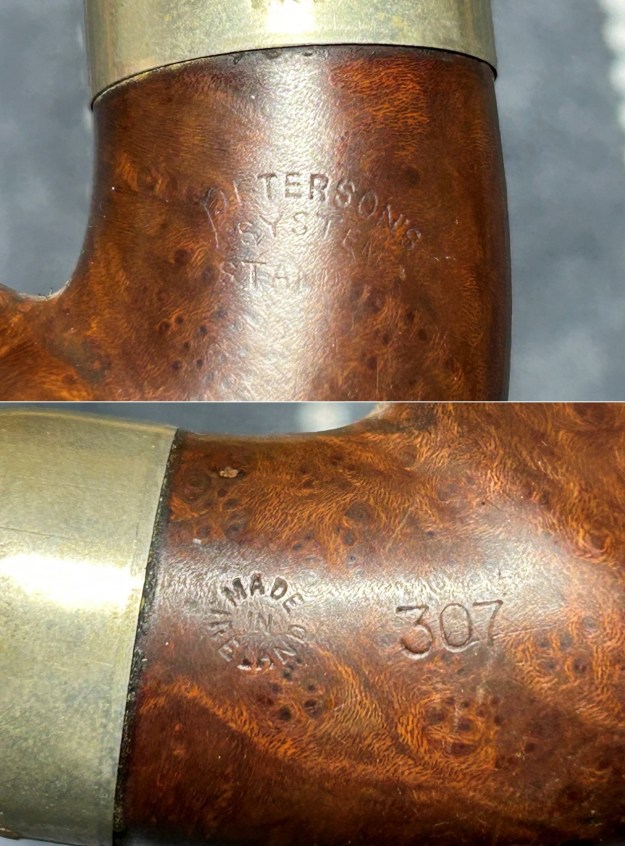
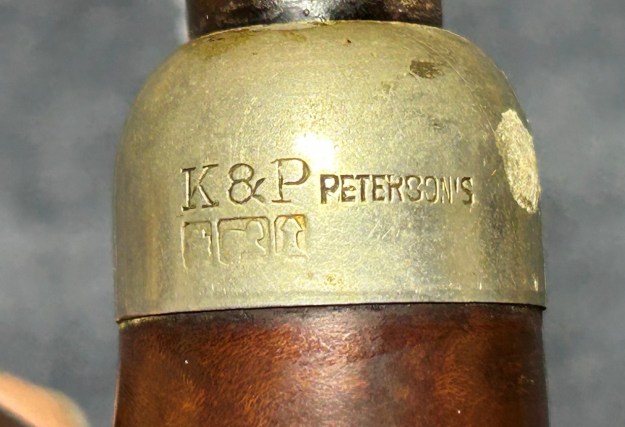
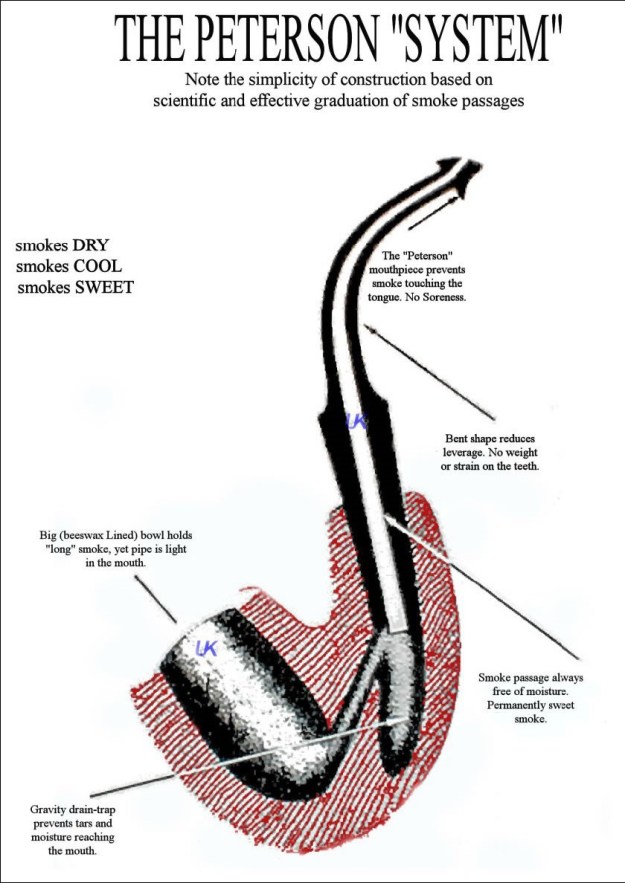
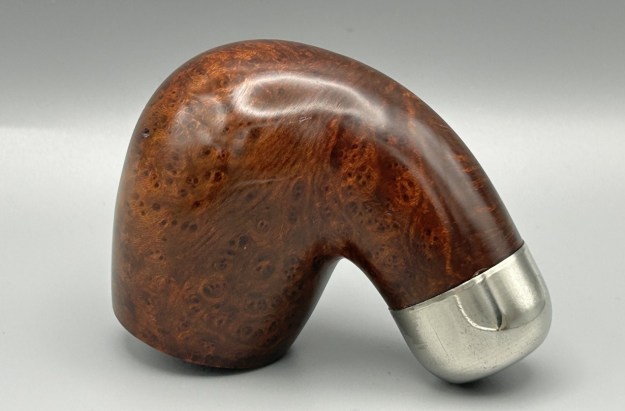
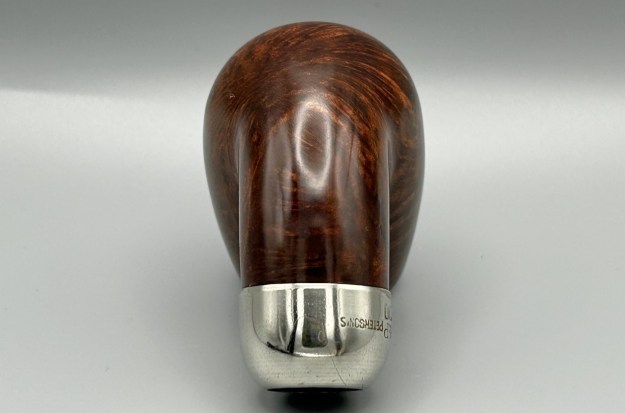
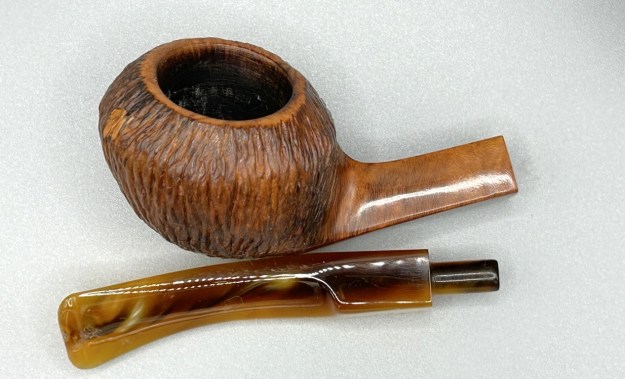
Perhaps this pipe has seen better days in its past, but I think its best days are still ahead. It’s a handsome, rugged Peterson 301 System Standard rusticated bent pot with a P-lip. This pipe came from an old gentleman, now deceased, who lived on Vancouver Island. I have no idea what he did with this pipe, but boy-oh-boy, it is pretty rough. No problem – it’s my job to sort things out. The only markings to be found on this pipe are the 301 found on the underside of the stummel and the K&P [over] Peterson on the nickel ferrule.Mark Irwin of Peterson Pipe Notes has written a few good articles about the 301s on his blog and I recommend reading one here and another one here. Of course, Steve has also written restoration blogs about the 301, including this one and it contained an important tidbit of information that I quote here:

I learned previously that the shape 301 was not introduced until 1975. Considering the Republic stamp, this one would likely date between 1975 and 2000.

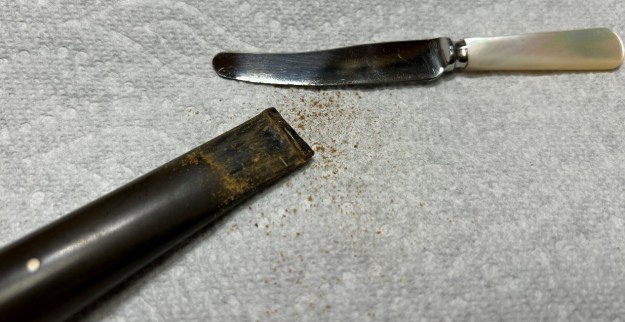
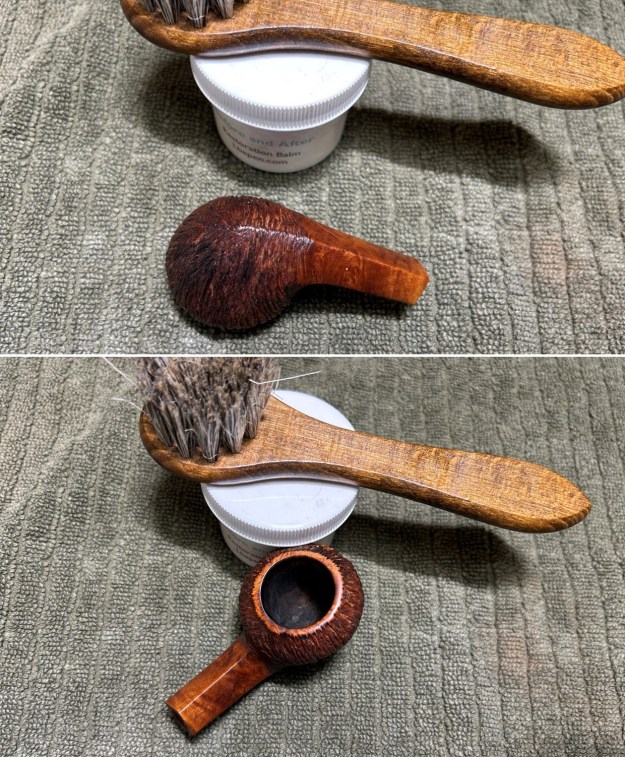
This was significant because, due to the markings being almost entirely worn on this pipe, there was nothing on the wood other than the number 301 – and I couldn’t tell an age from that. Charles Lemon from Dad’s Pipes also has a post about a 301, which he describes as coming from the “1970’s era”. Now, what’s interesting about Steve and Charles’ pipes is that the patch of briar which shows the marks is quite different from mine. Below are Steve’s, Charles’, and my pipes, respectively. The first two are sort of freeform oval-ish shapes. Third (mine) is a rectangle and I wonder if that indicates a different era. I don’t know, but if any of you reading this do, please let me know! This pipe is filthy beyond description – but must have been smoked frequently and with great affection. The stem has dirt everywhere, severe toothmarks aplenty, and calcification as I have seldom seen. Meanwhile, the stummel looks as though dirt has been ground into the grooves of the rustication. The rim is coated in lava and the bowl is clogged with cake. The old fellow must have really loved his pipe. I began by cleaning some of the calcification on the outside of the stem. I took a blade (an old butter knife, actually) and began gently scraping at all that build-up. Obviously, I took it easy, as I did not want to damage the stem’s vulcanite any further. The butter knife worked quite well and I got a good amount loose. I followed that up with some oil soap on some cotton rounds to try and scrub the rest away.I broke out the isopropyl alcohol and pipe cleaners, and got to work on the inside of the stem. Predictably, it was unbelievably dirty and I went through a good number of pipe cleaners in order to clean it up.As I mentioned, there were quite a few dents in the stem. Some were obviously tooth marks, but other dents looked like blunt force trauma! Time to break out the BIC lighter to see if it could raise some of them. Quite frankly, it did not do much – this repair was going to require some considerable sanding etc. Before that, however, the stem went for an overnight soak in the deoxidizer. The following day, the oxidation had migrated to the surface and would be fairly straightforward to remove. I scrubbed vigorously with some cream cleanser to remove the leftover oxidation.Once clean, I set about repairing the dents. Before I moved on to the Micromesh pads, I built up the dent damage on the stem with black cyanoacrylate adhesive and let it fully cure. I sanded the lumps down with my needle files and my grey pads, to make the stem look sort of normal. I then used all nine Micromesh pads (1,500 through 12,000 grit) to bring out the lovely black lustre on the stem. I also used Obsidian Pipe Stem Oil in between each of the last five pads. On to the stummel – this is where the lion’s share of the work was. The insides (both bowl and shank) were overwhelmed with cake and tar and anything else you’d care to mention. The bowl really needed to be reamed, so I used a reamer to scrape off as much built-up cake as possible. Generally, I prefer to sand the chamber down to bare briar. When restoring, it is important to ensure that there is no damage to the briar under the cake. There are a few situations when I might leave some cake in the bowl, but not today. There were definitely some craze lines in the interior walls of the briar. I’ll come back to that later.Just like the bowl, the shank was absolutely disgusting. It had never been cleaned – or, not for many decades. I started cleaning the inside with isopropyl alcohol, cotton swabs, and pipe cleaners. This took a while. The inside was very dirty and required an extraordinary number of cotton swabs and pipe cleaners. Eventually some cleanliness came to it.I decided to de-ghost the pipe. I thrust cotton balls into the bowl and the shank and saturated them with 99% isopropyl alcohol. I let the stummel sit overnight. This caused even more oils, tars and smells to leach out into the cotton. The bowl was nice and clean after this.I scrubbed the stummel with some pH-neutral soap and a toothbrush. This made things much better, but it’s a case of two steps forward and one step back: sure, it’s clean, but a bit of colour has faded. No problem – I can bring that back with wood balm.On to the ferrule – which was bashed and discoloured from years of mistreatment. Somewhat to my surprise, the ferrule came off very easily and required no special effort. I began by cleaning the metal with some cleanser on cotton rounds. This was quite good at removing the unsightly bits. I used my finer MicroMesh pads to eliminate some of the minor scratches on the metal. It also gave a nice shine which clearly hadn’t been seen for decades. I used a jewelry cloth to give the final polish to the nickel. This ferrule will always retain some small dents etc. from its hard life, but it looks much improved.I now wanted to address the heat crazes inside the bowl. I prepared some heat-resistant epoxy and filled the cracks and gouges, ensuring that the epoxy was thinly and evenly spread throughout the bowl. Of course, I did plug the draught hole with a folded pipe cleaner (coated in petroleum jelly) to make sure none of the epoxy made its way up there. Once done, a good 24 hours was needed to ensure that the epoxy was properly cured. The next day, I roughened up the epoxy’s surface with 220-grit sandpaper for the next step. I thinly coated the inside of the bowl with a mixture of my wife’s homemade yogurt and activated charcoal. Once hardened, this provided a good, faintly rough surface for a new cake to build. I rubbed some LBE Before & After Restoration Balm into the briar and let it sit for 30 minutes or so. The balm moisturizes the wood and gives a beautiful depth to the briar. I then buffed the stummel with a microfibre cloth. It was at this point that something funny happened. The P-lip stem, which fit when this project began, no longer fit! All of the filth and goo was holding it in place. Now that the yuckiness was gone, I realized that the stem was actually not right – it had been replaced at some point in the past. Annoyingly, it was clearly not the right size. Fortunately, Steve had another Peterson factory stem (a fishtail, this time) and donated it to make this pipe look wonderful again. Unfortunately, I don’t have photos of the old stem looking loose, but the new stem is a Peterson original and looks so good in place.

At long last, I was off to my bench buffer to put the final touches on this pipe. Several coats of conservator’s wax created a beautiful, glossy seal on the pipe and moved closer to closure for this long and involved repair. At this point, I glued the ferrule back in place.All done! This handsome Peterson System Standard 301 rusticated bent pot looks fantastic again and is ready to be enjoyed by its next owner. I am pleased to announce that this pipe is for sale! If you are interested in acquiring it for your collection, please have a look in the ‘Irish’ section of the store here on Steve’s website. You can also email me directly at kenneth@knightsofthepipe.com. The approximate dimensions of the pipe are as follows: length 5⅓ in. (136 mm); height 1⅞ in. (46 mm); bowl diameter 1½ in. (37 mm); chamber diameter ⅞ in. (22 mm). The weight of the pipe is 1½ oz. (46 g). I hope you enjoyed reading the story of this pipe’s restoration as much as I enjoyed restoring it. If you are interested in more of my work, please follow me here on Steve’s website or send me an email. Thank you very much for reading and, as always, I welcome and encourage your comments.

The Interesting History of a Borkum Riff Bent Billiard


by Kenneth Lieblich

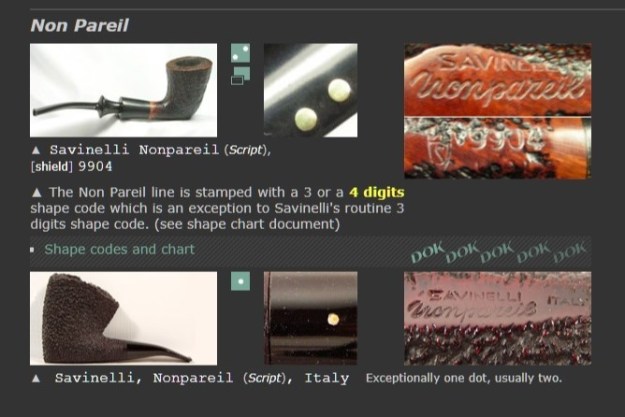
Rummaging through a bucket full of pipes resulted in finding some interesting odds and sods. This handsome bent billiard caught my eye because of the attractive shape and some amazing grain. It was very dirty, to be sure, but I could see the potential it held. Indeed, it turned out to be a beautiful pipe and I am happy to make it available to you. The markings were, shall we say, not immediately helpful, but they resulted in an interesting history. On the left side of the shank were the letters BR. These initials had a very particular look to them. On the underside of the shank, right near the end, was the word Israel. In fact, the pipe was so dirty that I only discovered the word Israel after cleaning the stummel. There were no other marks. There was a very attractive band around the stem: two rings of brass sandwiching a bright red acrylic ring. In order to determine what the ‘BR’ referred to, I went to Pipephil and found the exact same ‘BR’ on a pipe there. That led me to this entry:Aha! So, there were pipes made under the Borkum Riff name. To be clear: the reference to Savinelli above is specifically related to the pipe in the photos – not to all Borkum Riff-branded pipes (as we will soon see). Unfortunately, there was no mention of Israel.

The connection between Borkum Riff and tobacco is obvious, but less so the connection between Borkum Riff and pipes themselves. I went and looked up the Pipedia article on Borkum Riff and found that, in fact, the Wikipedia article is slightly more thorough:

Borkum Riff is a brand of pipe tobacco manufactured in Denmark for the Scandinavian Tobacco Group. ‘Borkum Riff’ tobacco was launched in Sweden in 1962, named after a lighthouse of the same name, located at 53° 58′ N, and 6° 22′ E in Heligoland Bight off the Dutch coast in the North Sea. It was a landmark for seafarers and was well-known to Swedish radio listeners, as weather reports mentioned Borkum Riff several times a day. The former lightship was used from 1960 to 1964 as the first radio ship of Radio Veronica, which became the first offshore radio station in the Netherlands.

The tobacco was a rough-cut blend of Virginia and Burley and had been developed by Bertil Sandegård with an eye on the US pipe tobacco market. Initial sales were slow-moving, but when Borkum Riff’s Bourbon Whiskey blend was successfully introduced in the US in 1969, sales increased. Since then, new flavours and new packaging have been introduced. Today, Borkum Riff is also sold in India, Canada, Australia, Switzerland, Norway, Spain, New Zealand, Japan, France, Italy, and Germany as well as in several other markets around the world. Borkum Riff’s biggest market, however, is still the United States.

Today, the Borkum Riff, which is manufactured in Denmark for Swedish Match, is the third-largest tobacco producer on the Swedish market. In 2011, Borkum Riff’s ownership changed to Scandinavian Tobacco Group. The ship in the Borkum Riff’s company logo originates from a 17th-century engraving made by Johann Baptist Homann.

The tobacco is manufactured on behalf of Swedish Match at the Scandinavian Tobacco Group’s Orlik factory in Assens, Denmark. Formerly, it had been produced by Mac Baren on a dedicated production line.This article had interesting information, but none of it directly related to pipes, per se. I was immediately reminded of a blog post I wrote about a year ago on an ‘Old Port’-branded pipe (made by Brigham). I wondered if it was a similar situation: could it be that when you bought a tin of Borkum Riff tobacco, you received a coupon and when you collected a sufficient number, you could redeem them for a pipe? It’s a reasonable assumption, given how many tobacco companies did similar things. You can read that article here. If you have any Borkum Riff brochures, etc. that describe this, I would love to hear from you.

So, I started searching. Not much was coming up in my searches until I found a tiny nugget that connects things together. Back in 2022, Steve wrote a blog post on a Burl King freehand pipe (you can read that post here). In that article, Steve quotes from the Pipedia post on Burl King:

We can confirm that it was at one time a pipe used for promotion of Borkum Riff tobacco, as reported by Bob Taylor of the Seattle Pipe Club, who mailed in a coupon and received the pipe with a postmark of Jan. 11, ’78, and a return address of Sparta, N.C., which indicates it may have come from the Dr. Grabow / Sparta Industries plant. Bob recently noticed his “Burl King” was also marked, made in Israel, so it was likely made by the Shalom Pipe Factory, though apparently distributed through Sparta Industries. The box shipped for 50 cents and the return address said “After 5 days return to P. O. Box 21882 Greensboro, N. CC. 27240.” So apparently these pipes were made by Shalom, but distributed for Borkum Riff by Sparta Industries.

If further confirmation was needed that Borkum Riff offered coupon pipes, then it can be found at the Baccy Pipes blog. In 2017, Troy posted an entry on Borkum Riff pipes (named Wimbledon) made by the Dr Grabow/Sparta Industries plant. I encourage you to read that post here. Thanks to Troy also for the photo below.

Eureka! Now the thread seemingly runs through everything. This information lends itself to what I suspected: Borkum Riff had coupon pipes that were made by the Shalom Pipe Factory in Israel and this is a particularly nice example of such a pipe. I’m not able to date it accurately, but an educated guess would be that it comes from the 1970s or 80s.

Let’s look at the condition. Yikes! This was one dirty pipe. Who knows where it’s been living for the past few decades? The stem was a bit scraped and dented. It had quite a bit of oxidation and the band seemed to be a bit corroded. The stummel was incredibly filthy. There was cake inside the bowl and a bit of lava on the rim. However, one side of the stummel had the most unsightly stain all over it. It wasn’t immediately apparent what the stain was, but I did wonder if I could get it off. I used isopropyl alcohol on a few cotton rounds and wiped down the stem to provide an initial cleaning of filth before moving on to the next steps. The primary cleaning came next. I disinfected the inside of the stem with pipe cleaners dipped in lemon-infused 99% isopropyl alcohol. I scrubbed thoroughly to make sure the interior was very clean. I used a lot of pipe cleaners – it was so dirty.As I was disassembling the pipe, the band came off the stem and then promptly separated into pieces. This wasn’t such a bad thing, as it simplified my restoration. I wiped the pieces down with alcohol, then sanded them with some 0000-grit steel wool. This served to both clean the pieces and slightly roughen them for gluing back together. This I did with some regular white glue. I also (eventually) glued the whole thing back in place on the tenon of the stem.The goal of the next step is the removal (or minimization) of oxidation. Going to my sink, I used cream cleanser, cotton rounds, and a toothbrush, and scoured the stem to remove as much surface oxidation as possible. As the photos show, the result was a hideous, ochre-coloured mess – but better off the stem than on it.Once the stem was reasonably clean, I soaked it overnight in some Briarville Stem Oxidation Remover. This solution works to draw oxidation in the stem to the surface of the vulcanite. This is a major aid and an important step in ensuring a clean stem. The following day, I drew out the stem from its bath and scrubbed the lingering fluid with a toothbrush. Due to the severity of the oxidation, I then repeated the scrubbing with the cream cleanser for maximum effect.As the stem was now clean and dry, I set about fixing the marks and dents in the vulcanite. This was done by filling those divots with black cyanoacrylate adhesive, impregnated with carbon and rubber. I left this to cure and moved on.The penultimate step for the stem is sanding. First, with my set of needle files, I reduced the bulk of the cyanoacrylate repairs. I removed the excess adhesive as near to the surface as possible, without cutting into the vulcanite. Following that, I used all nine of the micromesh sanding pads (1,500 through 12,000 grit) to sand out flaws, even out the vulcanite, and provide gentle polishing of the finished surface. I also applied pipe-stem oil while using the last five micromesh pads. There was a wonderful, deep black shine to the stem when I was done. And doesn’t the band complement the stem beautifully?As the stem was (nearly) complete, I moved on to the stummel. The first step was to ream out the bowl – that is to say, remove all the cake inside the bowl. This accomplished a couple of things. First (and most obviously), it cleaned the bowl and provided a refurbished chamber for future smoking. Second, when the old cake was removed, I could inspect the interior walls of the bowl and determine if there was damage or not. I used a reamer, a pipe knife, and a piece of sandpaper taped to a wooden dowel. Collectively, these ensured that all the debris was removed.My next step was to remove the lava on the rim. For this, I took a piece of machine steel and gently scraped the lava away. The metal’s edge is sharp enough to remove what I need, but not so sharp that it damages the rim.The inside of the stummel needed to be cleaned thoroughly. However, this pipe was so clogged, that I first needed to open the horribly occluded airway. So, I took a long drill bit, held in a drill chuck, and hand-cranked it to dislodge the dreadful detritus inside. Hand cranking is essential because it provides a precision and caution that a power drill cannot provide.Similar to the stem, I then cleaned the stummel with both pipe cleaners and cotton swabs dipped in lemon-infused 99% isopropyl alcohol. With a pipe this dirty, it took quite a while and much cotton to clean.I then decided to ‘de-ghost’ the pipe – that is to say, exorcize the remaining filth from the briar. I filled the bowl and the shank with cotton balls, then saturated them with 99% isopropyl alcohol. I let the stummel sit overnight. This caused the remaining oils, tars and smells to leach out into the cotton.To tidy up the briar, I wiped down the outside, using a solution of a pH-neutral detergent and some distilled water, with cotton rounds. I also used a toothbrush in the crevices. This did a good job of cleaning any latent dirt on the surface of the briar – but it most certainly didn’t affect the ugly stain on the bowl. So, I used some acetone to wipe the area down. This worked a bit, but not much – I would have to sand this area down. The last step of the cleaning process was to scour the inside of the stummel with the same mild detergent and tube brushes. This was the culmination of a lot of hard work in getting the pipe clean.I used all nine micromesh pads (1,500 through 12,000 grit) to sand the outside of the stummel and finish it off. It also removed the dreadful stain and the pipe looks terrific now. This sanding minimizes flaws in the briar and provides a beautiful smoothness to the wood. I rubbed some LBE Before & After Restoration Balm into the briar and let it sit for 30 minutes or so. The balm moisturizes the wood and gives a beautiful depth to the briar. I then buffed the stummel with a microfibre cloth. For the final step, I took the pipe to my bench polisher and carefully buffed it – first with a blue diamond compound, then with three coats of carnauba wax. This procedure makes the pipe look its best – the stummel sings and the stem glows.All done! This handsome Borkum Riff bent billiard looks fantastic again and is ready to be enjoyed by its next owner. I am pleased to announce that this pipe is for sale! If you are interested in acquiring it for your collection, please have a look in the ‘Various Makers’ section of the store here on Steve’s website. You can also email me directly at kenneth@knightsofthepipe.com. The approximate dimensions of the pipe are as follows: length 5¼ in. (133 mm); height 2 in. (51 mm); bowl diameter 1⅝ in. (40 mm); chamber diameter ⅞ in. (21 mm). The weight of the pipe is 1¾ oz. (52 g). I hope you enjoyed reading the story of this pipe’s restoration as much as I enjoyed restoring it. If you are interested in more of my work, please follow me here on Steve’s website or send me an email. Thank you very much for reading and, as always, I welcome and encourage your comments.

A Special Gift for Christmas


by Kenneth Lieblich

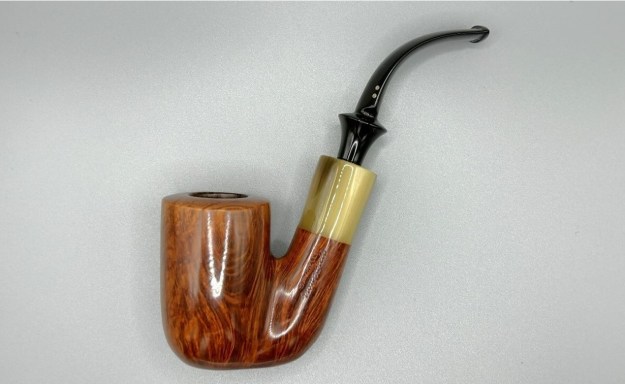
I have been restoring pipes for more than five years now, and I have learned everything at the feet of the master: Steve Laug. And, because of him, there is a pipe I have dreamt of finding since I started. Recently, I acquired a large lot of pipes and, as these things often are, the box contained everything from the absurd to the sublime. Quite a few pipes in the box were Danish, so that’s always a delight. When I took the box of pipes home, I didn’t realize it, but the pipe of my dreams was inside.

Perhaps I should be more explicit in what I’m talking about. In essence, I have always wanted to find a pipe that Steve really wanted – so I could give it to him. In the world of pipes, Steve has really been-there, done-that. Steve has seen it all (or just about all), and it was always going to be a tall order to find a pipe he wanted that he hadn’t owned before or seen before. This box of pipes had it! Steve told me that he always wanted a pipe from Danish master carver Åge Bøgelund. Turns out, there was one in this box. I grabbed it, restored it, and presented it to him as a gift. It seemed the least I could do in thanks for all he’s done for me. Let me take a moment to tell you a little bit about the pipe maker, Åge Bøgelund. There isn’t much information available, but here’s what I found. From Pipedia:

Åge Bogelund was in charge of the Bari factory after Viggo Nielsen. During factory operation and after the factory closed he made some handmade pipes stamped with his name, some are quite large and some are very unique. They are scarce and have become collectible.

From 1978 to 1993 Åge Bogelund and Helmer Thomsen headed Bari’s pipe production. Helmer Thomson bought the company in 1993 re-naming it to “Bari Piber Helmer Thomsen”. The workshop moved to more convenient buildings in Vejen. Bogelund created very fine freehands of his own during the time at Bari.

Next, from MBSD Pipes:

Age (or rather, Åge) Bogelund is a somewhat less known carver from the 20th century Danish pipe-making tradition – though he was no less a master than his contemporaries. Originally, he worked for Viggo Nielsen’s Bari pipe company, being charged with making some of its higher-grade freehands. Later, Bogelund made pipes under his own name, each displaying a distinct style and talent, even among his celebrated Danish peers. Bogelund’s pipes have for a long time been coveted by collectors, though in more recent years, these creations have attracted a more popular enthusiasm.

Next, from SmokingPipes:

We haven’t seen many Åge Bogelund pipes come through our estate department, so this intricate Freehand makes for a rare and welcomed sight. The Danish carver was in charge of Bari at one point, having headed up the marque’s pipe production alongside Helmer Thomsen before Thomsen bought the company in 1993. During his time there, though, Bogelund fashioned his own pipes as well, which have since become quite collectible. Many are large and quite unique, as Åge rendered many Freehands.

You get the idea: his pipes are well-regarded and rare.

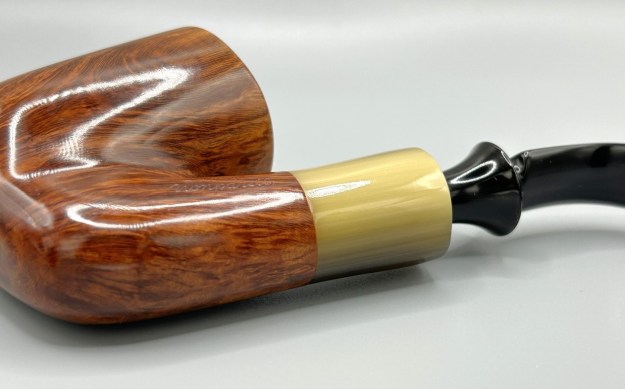
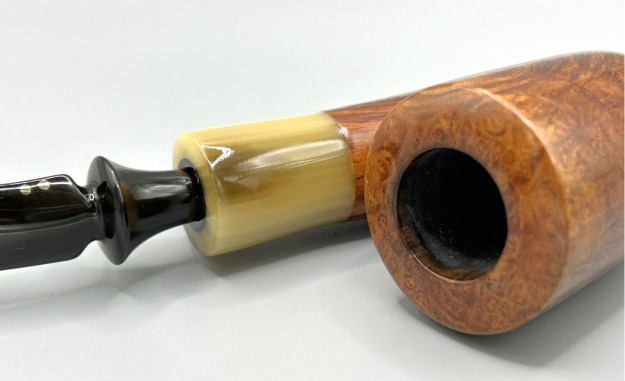
So, let’s take a closer look at this pipe. It really is a beauty and, if Steve hadn’t wanted it, I would certainly have kept it for myself. What would you call this shape? It’s probably a freehand brandy.

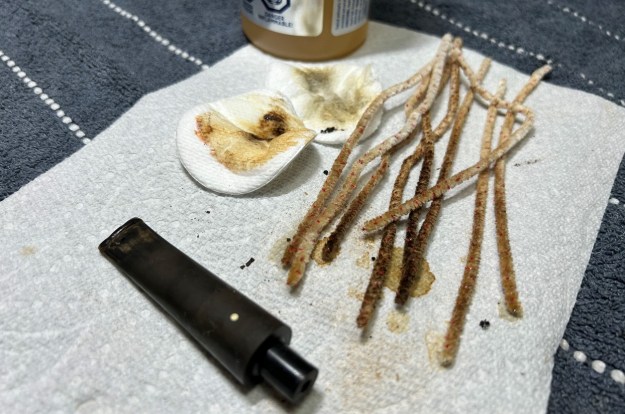
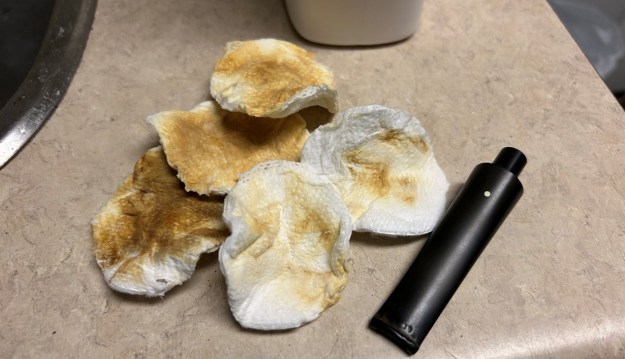
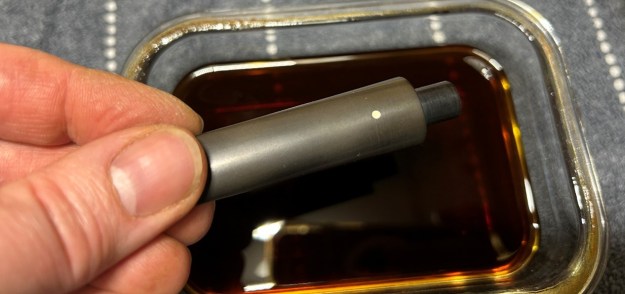
The markings are very clear. On the left side of the shank, we see Åge [over] Bøgelund – written in a semi-circle. To the right of that, are the initials DB. On the right side of the shank, we see Handmade [over] in Denmark. Finally, on the underside of the shank, we see the initials EN. Despite much investigation, I cannot determine what the initials DB or EN are meant to represent. I wondered if DB was meant to signify Design Berlin – the connection is possible but tenuous. Google’s AI function suggested that there was a connection (without any source references), which makes me think this info from Google AI represents another pair of letters: the first being a B and the second being an S. I am pleased to report that the condition of the pipe is good. The stem obviously had a Softy Bit on it (Deo gratias). I’m pleased because it protected the bit from too much damage. The stem has quite a bit of calcification on it, but not too much oxidation. The stummel is dirty, but sound. There is plenty of cake in the bowl, and a good amount of lava on the rim. There is minor wear to the briar for the most part – except for a small cut on one side. The stem’s calcification was notable. I used an old butter knife and gently scraped some of the thicker accretion off. Doing this now helps later in removing the oxidation. I used isopropyl alcohol on a few cotton rounds and wiped down the stem to provide an initial cleaning of filth before moving on to the next steps. The primary cleaning came next. I disinfected the inside of the stem with both pipe cleaners and cotton swabs dipped in lemon-infused 99% isopropyl alcohol. I scrubbed thoroughly to make sure the interior was very clean.The goal of the next step is the removal (or minimization) of oxidation. Going to my sink, I used cream cleanser, cotton rounds, and a toothbrush, and scoured the stem to remove as much surface oxidation as possible. As the photos show, the result was a hideous, ochre-coloured mess – but better off the stem than on it.Once the stem was reasonably clean, I soaked it overnight in some Briarville Stem Oxidation Remover. This solution works to draw oxidation in the stem to the surface of the vulcanite. This is a major aid and an important step in ensuring a clean stem. The following day, I drew out the stem from its bath and scrubbed the lingering fluid with a toothbrush.As the stem was now clean and dry, I set about fixing the marks and dents in the vulcanite. This was done by filling those divots with black cyanoacrylate adhesive, impregnated with carbon and rubber. I left this to cure and moved on.The penultimate step for the stem is sanding. First, with my set of needle files, I reduced the bulk of the cyanoacrylate repairs. I removed the excess adhesive as near to the surface as possible, without cutting into the vulcanite. Following that, I used all nine of the micromesh sanding pads (1,500 through 12,000 grit) to sand out flaws, even out the vulcanite, and provide gentle polishing of the finished surface. I also applied pipe-stem oil while using the last five micromesh pads. There was a wonderful, deep black shine to the stem when I was done.As the stem was (nearly) complete, I moved on to the stummel. The first step was to ream out the bowl – that is to say, remove all the cake inside the bowl. This accomplished a couple of things. First (and most obviously), it cleaned the bowl and provided a refurbished chamber for future smoking. Second, when the old cake was removed, I could inspect the interior walls of the bowl and determine if there was damage or not. I used a reamer, a pipe knife, and a piece of sandpaper taped to a wooden dowel. Collectively, these ensured that all the debris was removed.My next step was to remove the lava on the rim. For this, I took a piece of machine steel and gently scraped the lava away. The metal’s edge is sharp enough to remove what I need, but not so sharp that it damages the rim.Similar to the stem, I then cleaned the stummel with both pipe cleaners and cotton swabs dipped in lemon-infused 99% isopropyl alcohol. With a pipe this dirty, it took quite a while and much cotton to clean.I then decided to ‘de-ghost’ the pipe – that is to say, exorcize the remaining filth from the briar. I filled the bowl and the shank with cotton balls, then saturated them with 99% isopropyl alcohol. I let the stummel sit overnight. This caused the remaining oils, tars and smells to leach out into the cotton.To tidy up the briar, I wiped down the outside, using a solution of a pH-neutral detergent and some distilled water, with cotton rounds. I also used a toothbrush in the crevices. This did a good job of cleaning any latent dirt on the surface of the briar. The last step of the cleaning process was to scour the inside of the stummel with the same mild detergent and tube brushes. This was the culmination of a lot of hard work in getting the pipe clean.Having completed that, I was able to address the nicks on the rim and the bowl. I dug out my iron and a damp cotton flannel cloth. By laying the cloth over the affected areas and applying the iron to it, the hot and moist steam can cause the wood to swell slightly and return to shape. There was some improvement – not a lot, but it was better than doing nothing. I forgot to take a photo, however.

I used all nine micromesh pads (1,500 through 12,000 grit) to sand the outside of the stummel and finish it off. This sanding minimizes flaws in the briar and provides a beautiful smoothness to the wood. I rubbed some LBE Before & After Restoration Balm into the briar and let it sit for 30 minutes or so. The balm moisturizes the wood and gives a beautiful depth to the briar. I then buffed the stummel with a microfibre cloth. For the final step, I took the pipe to my bench polisher and carefully buffed it – first with a blue diamond compound, then with three coats of carnauba wax. This procedure makes the pipe look its best – the stummel sings and the stem glows.All done! This Åge Bøgelund freehand brandy pipe looks fantastic again and is ready to be given to Steve. It was a pleasure to work on. It’s a gorgeous pipe. The approximate dimensions of the pipe are as follows: length 6 in. (153 mm); height 2⅛ in. (53 mm); bowl diameter 1¾ in. (44 mm); chamber diameter ¾ in. (19 mm). The weight of the pipe is 2⅛ oz. (61 g). I hope you enjoyed reading the story of this pipe’s restoration as much as I enjoyed restoring it. If you are interested in more of my work, please follow me here on Steve’s website or send me an email at kenneth@knightsofthepipe.com. Thank you very much for reading and, as always, I welcome and encourage your comments.
Restoring an Unlisted Brigham 3-Dot Scoop


by Kenneth Lieblich

What a charming pipe this is! I got it in auction with a few other pipes, and I liked the shape of it immediately. This is a Brigham 3-dot scoop, with a handsome and rugged rustication. It really feels good in the hand. It has that look – no one could mistake it for anything but a Brigham. The tenon (which holds the maple distillator) on this pipe is made of aluminum – so it’s an older one. Curiously, it doesn’t have any shape number marked on it, nor is it listed in the book on Brigham pipes. Let’s examine what marks it does have. On the underside of the stummel, we read Brigham [over] Made in Canada. Of course, how those words are marked is what matters in dating Brigham pipes. I’ll get back to that. To the left of the aforementioned markings is the solitary digit 3. I can only assume that this refers to the three brass pins found on the stem. Thanks to Charles Lemon’s book, Brigham Pipes: A Century of Canadian Briar, dating this pipe was quite straightforward. On page 40, Lemon writes,

The Brigham Country of Manufacture (COM) stamp was modernized in about 1970 to consist of an upwardly-slanted Brigham logo over “Made in Canada” in small block letters. This stamp was used until approximately 1980.

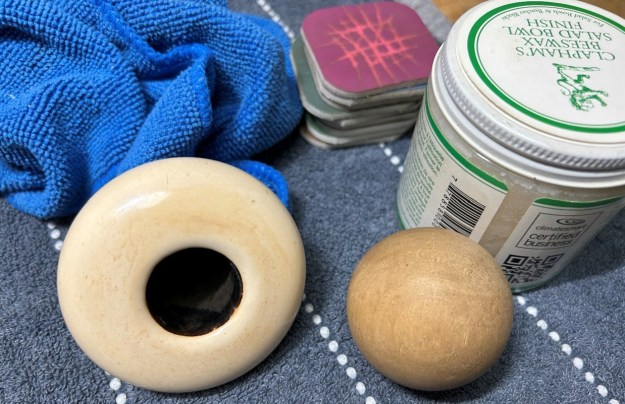
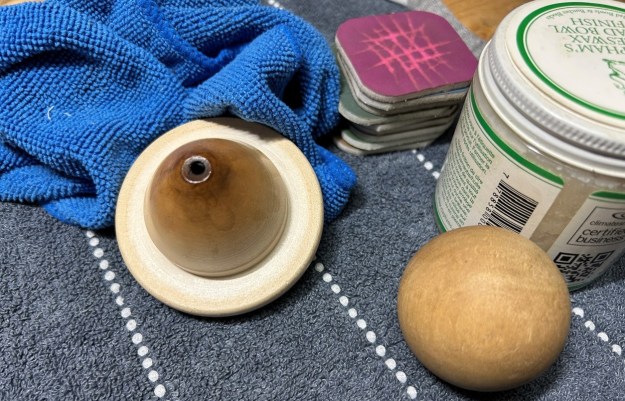
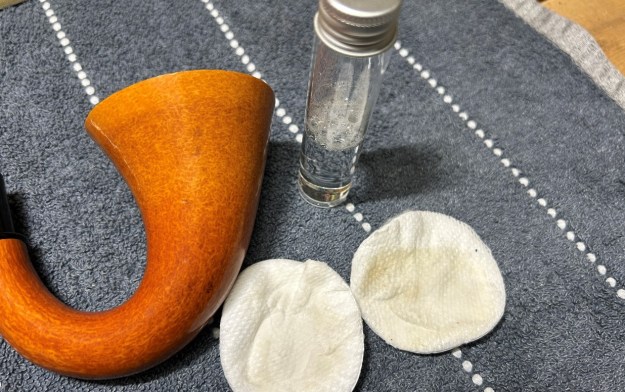
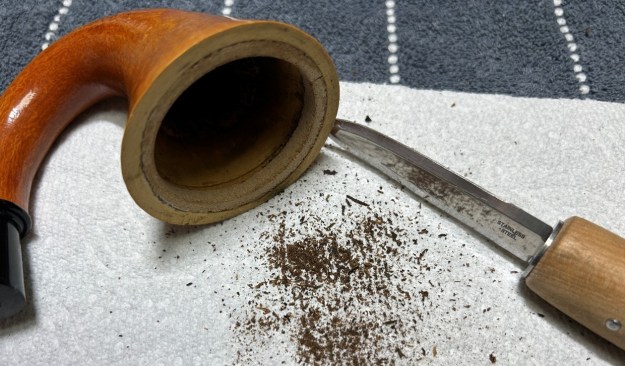
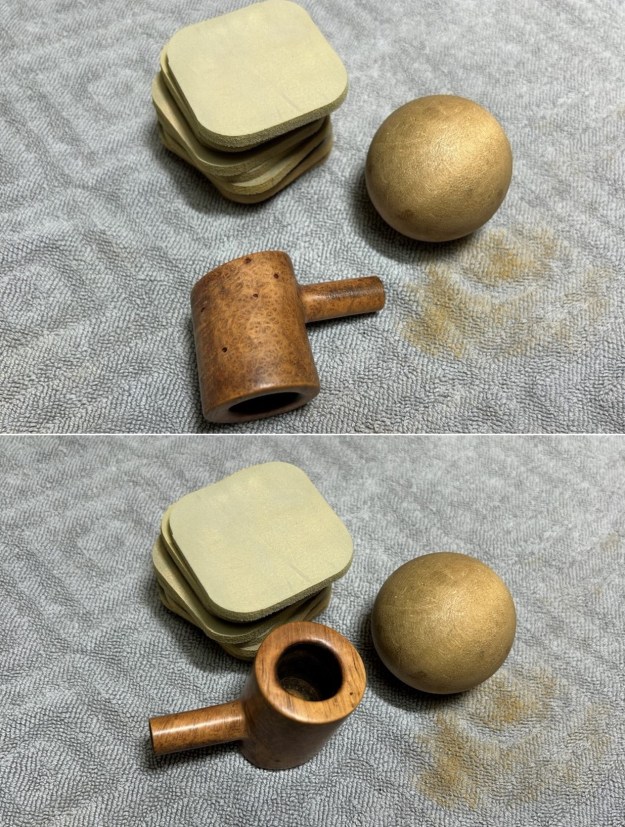
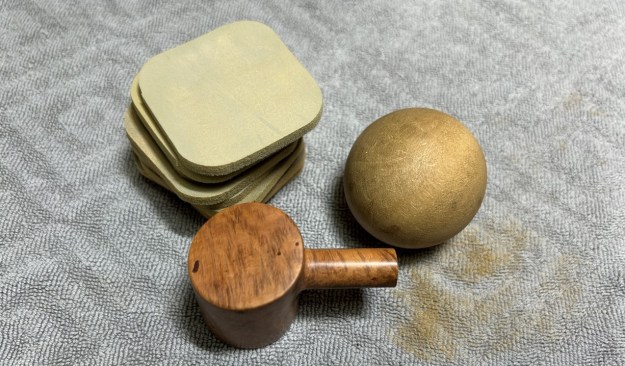
I can confidently date this pipe to the 1970s. I looked thoroughly in the book’s Unofficial Brigham Shape Chart and this pipe was nowhere to be found. I know that Brigham experimented with many shapes over the years, so this must have been one of those. Charles, if you’re reading this, please let us know in the comments below!I read through the article on Pipedia on Brigham Pipes. You can read it here. It’s a good article and contains lots of helpful information. I have included the chart below from the site as it shows the Brigham System and how it works.This is a beautiful pipe, but it did have some issues. The stem, however, was in good shape. Very dirty, to be sure, but not damaged. The stummel looks great – a bit dirty, some cake in the bowl and quite a bit of lava on the rim. I didn’t know it yet, but the lava hid some damage to the rim. This would be revealed later. I used a disposable lighter and ‘painted’ the stem with its flame. The gentle heat of the flame can cause the dents in the vulcanite of the stem to expand back into shape. In this case, the vulcanite did move – which was great – but it didn’t move fully. No problem.I used isopropyl alcohol on a few cotton rounds and wiped down the stem to provide an initial cleaning of filth before moving on to the next steps. The primary cleaning came next. I disinfected the inside of the stem with both pipe cleaners and cotton swabs dipped in lemon-infused 99% isopropyl alcohol. I scrubbed thoroughly to make sure the interior was very clean. I used a lot of pipe cleaners and cotton swabs – it was surprisingly dirty in there.The goal of the next step is the removal (or minimization) of oxidation. Going to my sink, I used cream cleanser, cotton rounds, and a toothbrush, and scoured the stem to remove as much surface oxidation as possible. As the photos show, the result was a hideous, ochre-coloured mess – but better off the stem than on it.Once the stem was reasonably clean, I soaked it overnight in some Briarville Stem Oxidation Remover. This solution works to draw oxidation in the stem to the surface of the vulcanite. This is a major aid and an important step in ensuring a clean stem. The following day, I drew out the stem from its bath and scrubbed the lingering fluid with a toothbrush.As the stem was now clean and dry, I set about fixing the marks and dents in the vulcanite. This was done by filling those divots with black cyanoacrylate adhesive, impregnated with carbon and rubber. I left this to cure and moved on.The penultimate step for the stem is sanding. First, with my set of needle files, I reduced the bulk of the cyanoacrylate repairs. I removed the excess adhesive as near to the surface as possible, without cutting into the vulcanite. Following that, I used all nine of the micromesh sanding pads (1,500 through 12,000 grit) to sand out flaws, even out the vulcanite, and provide gentle polishing of the finished surface. I also applied pipe-stem oil while using the last five micromesh pads. There was a wonderful, deep black shine to the stem when I was done.As the stem was (nearly) complete, I moved on to the stummel. The first step was to ream out the bowl – that is to say, remove all the cake inside the bowl. This accomplished a couple of things. First (and most obviously), it cleaned the bowl and provided a refurbished chamber for future smoking. Second, when the old cake was removed, I could inspect the interior walls of the bowl and determine if there was damage or not. I used a reamer, a pipe knife, and a piece of sandpaper taped to a wooden dowel. Collectively, these ensured that all the debris was removed.Similar to the stem, I then cleaned the stummel with both pipe cleaners and cotton swabs dipped in lemon-infused 99% isopropyl alcohol. With a pipe this dirty, it took quite a while and much cotton to clean. It was very dirty.My next step was to remove the lava on the rim. For this, I took a piece of machine steel and gently scraped the lava away. The metal’s edge is sharp enough to remove what I need, but not so sharp that it damages the rim. This work revealed some significant burn damage to the rim. Unfortunate and annoying, but not catastrophic. I then decided to ‘de-ghost’ the pipe – that is to say, exorcize the remaining filth from the briar. I filled the bowl and the shank with cotton balls, then saturated them with 99% isopropyl alcohol. I let the stummel sit overnight. This caused the remaining oils, tars and smells to leach out into the cotton.To tidy up the briar, I wiped down the outside, using a solution of a pH-neutral detergent and some distilled water, with cotton rounds. I also used a toothbrush in the crevices. This did a good job of cleaning any latent dirt on the surface of the briar. The last step of the cleaning process was to scour the inside of the stummel with the same mild detergent and tube brushes. This was the culmination of a lot of hard work in getting the pipe clean.In order to lessen the burns damage on the rim, I ‘topped’ the pipe – that is to say, I gently and evenly sanded the rim on a piece of 400-grit sandpaper. This effectively minimized the damage, without altering the look of the pipe. Fortunately, this required only minimal topping.I took a solid wooden sphere, wrapped with my micromesh pads, and lightly sanded the inner edge of the rim. This achieved two things: first, it removed some of the burn marks; and second (and more importantly), the circular shape and motion of the sphere gradually returned the edge to a circle shape.I used all nine micromesh pads (1,500 through 12,000 grit) to sand the rim and the underside of the shank. This sanding minimizes flaws in the briar and provides a beautiful smoothness to the wood. I rubbed some LBE Before & After Restoration Balm into the briar and let it sit for 30 minutes or so. The balm moisturizes the wood and gives a beautiful depth to the briar. I then buffed the stummel with a microfibre cloth. For the final step, I took the pipe to my bench polisher and carefully buffed it – first with a blue diamond compound, then with three coats of conservator’s wax. This procedure makes the pipe look its best – the stummel sings and the stem glows.All done! This unlisted Brigham 3-dot scoop looks fantastic again and is ready to be enjoyed by its next owner. I am pleased to announce that this pipe is for sale! If you are interested in acquiring it for your collection, please have a look in the ‘Canadian’ section of the store here on Steve’s website. You can also email me directly at kenneth@knightsofthepipe.com. The approximate dimensions of the pipe are as follows: length 6⅛ in. (155 mm); height 1¾ in. (45 mm); bowl diameter 1⅓ in. (34 mm); chamber diameter ¾ in. (20 mm). The weight of the pipe is ⅞ oz. (27 g). I hope you enjoyed reading the story of this pipe’s restoration as much as I enjoyed restoring it. If you are interested in more of my work, please follow me here on Steve’s website or send me an email. Thank you very much for reading and, as always, I welcome and encourage your comments.

Rethinking the Repair of Damaged Stems


by Kenneth Lieblich

Welcome to another installment of my Pipe Incident Reports. The idea, in general, is to provide a brief write-up – focusing on a particular pipe-restoration-related issue – rather than an entire restoration story. I’ve been blessed by a precious few God-given talents in my life, but innovation is not among them. I’m not usually able to come up with groundbreaking ideas to do things differently. Having said that, I do try and improve my repair/restoration skills, techniques, and procedures wherever I can. One can call it kaizen or whatever, but I try to find better ways of restoring pipes.Today, I am attempting to improve the process of repairing stem bite-throughs by incorporating steel mesh. Now, you might be thinking, ‘That’s not a sentence I ever expected to read’, and you are justified in that thought.

Many pipe repairmen have used various methods for repairing bite-throughs (holes) in vulcanite. Normally, this involves mixing cyanoacrylate adhesive with activated charcoal or powdered vulcanite. Some fellows have also tried some sort of epoxy to bring the stem back to life. In fact, when I started doing pipe repairs, I used that mixture of cyanoacrylate adhesive and activated charcoal. Then I discovered a black-tinted cyanoacrylate adhesive that came pre-mixed with rubber and charcoal. I introduced this product to Steve and it’s what he and I have been using ever since. However, I have always wondered about the durability of these repairs – especially against the bite of a man’s jaw. I wondered, could there be a better way?

Maybe. Read on, but please note: what I am proposing is NOT a complete solution. This is an idea that I hope someone will take and turn into a workable method.

I decided to test a pipe-stem repair with the aforementioned adhesive built around a stainless-steel wire-mesh structure. My thinking is that this would enhance the strength and durability of said repairs. For any engineers or scientists reading this article, please know that I have no scientific background and I am not equipped to conduct accurate tests of compressive or tensile strength. I am merely running an idea up the proverbial flagpole and seeing who salutes it. I hope that someone reading this will take the idea and, either, discredit it or expand upon it. The experiment I describe below is just that: an experiment. It is, possibly, a proof of concept – but certainly not the final step.

The idea came to me one day as I saw some sort of wire mesh being used in a concrete foundation. This mesh is used in construction to control cracking, to distribute stress, and add tensile strength. Perhaps it can be used, in like manner, where a large vulcanite repair is needed. My encounter with the concrete was providential because I had recently acquired a large lot of pipes, many of which had damaged stems. There was one stem in particular that stood out as a candidate for this experiment. Here it is: This is a stem that I would normally likely toss in the garbage, unless a customer specifically asked me to repair it. The damage is obviously serious. Ironically, this brutal damage actually makes this stem the perfect patient for this type of surgery.

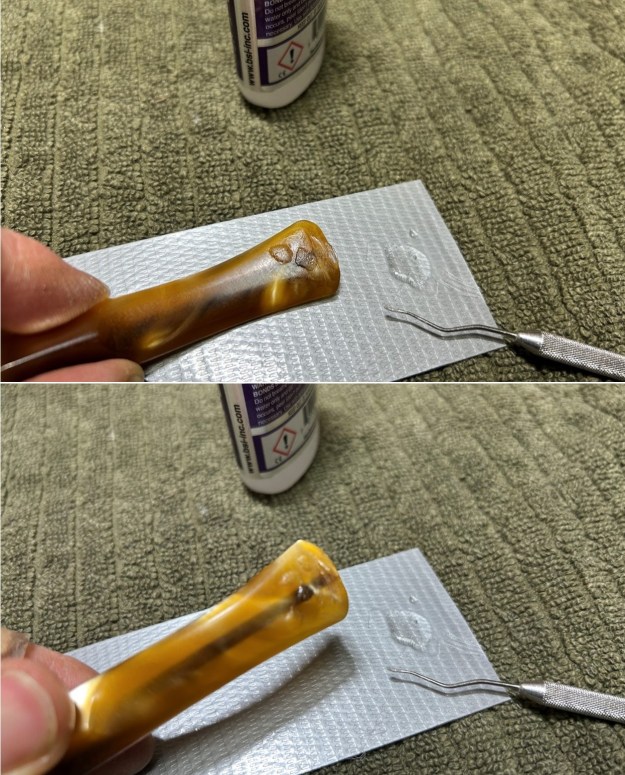
Here is the stainless-steel woven wire mesh. For those of you who know such things, this mesh has a mesh number of 200. It can be acquired inexpensively and comes in various mesh numbers. The larger the number, the finer the holes in the mesh. To be frank, my selection of 200 was pure guesswork. I didn’t really have a sense of what would be best – other than to say that it needed to be fine enough to prevent the adhesive from pouring straight through.On with the work! I first needed to create a platform upon which the adhesive and mesh could rest. This was obviously essential in order to maintain the draught hole in the bit. In the first photo below, you’ll see that I used cardboard, but I immediately abandoned that idea (I’ll explain why momentarily). I am displaying this photo in order to demonstrate my use of a pencil to scribe the precise shape of the missing section of vulcanite.I quickly eliminated the cardboard idea because it just isn’t as useful a material for this purpose. Instead, I used several layers of duct tape as my substrate. I can still scribe a line on the duct tape, but – more importantly – cyanoacrylate adhesive doesn’t stick to it. In other words, once the work had fully cured, I could readily remove the duct tape without affecting the repair.

With my scribed line, I was able to transfer the pattern of the absent vulcanite on to the wire mesh and cut it to shape. Truth be told, it would probably be better to use welded wire mesh, but I have no idea where you acquire that in such a small mesh number. Anyway, before cutting the wire mesh, I took the critical steps of (1) gently sanding the mesh with sandpaper to provide a slightly rough surface to maximize the adhesive bond, and (2) cleaning the mesh thoroughly with acetone, to remove any sanding grit and any other substance that would inhibit a good adhesive bond.

And away we go! It is important to apply the cyanoacrylate adhesive in thin layers, rather than one thick blob. I chose to apply a layer, spray it with an accelerator, apply another layer, etc. – until I was satisfied. Once complete, I left it to sit overnight and came back the next day. I freely admit that I am still concerned about the brittleness of this repair, but I think this is definitely a step in the right direction. Naturally, shaping and sanding was the next step – and this took a while. I should emphasise at this point that I didn’t employ the same attention to detail on this stem, as I would on a stem for a customer. I just wanted to get this done and see if it would work. As I sanded with needle files and sanding pads, I shaped the button and melded the repair into the surrounding vulcanite. You can see the results below. It’s pretty good and I’m sure it would look even better if I was doing it for sale or for a customer.

Some final thoughts: I think there is a rudimentary idea here. I feel confident in saying that the repair itself is likely stronger and more resilient with the mesh than without. However, I am apprehensive about whether the brittleness of the cyanoacrylate adhesive is improved or not – and I’m not sure how to reasonably overcome that issue (other than trying epoxy). Another problem that still exists is that there is no direct connection between the mesh and the pre-existing vulcanite. This surely isn’t helpful. It is at the edges – where the adhesive meets the vulcanite – that the bond must be weakest. Next steps might include (1) embedding the wire mesh in an epoxy – this might be the best way of addressing brittleness; (2) overlaying the wire mesh on the original vulcanite to create a bridge structure (although this creates its own big problems); (3) developing a way of affixing the mesh to the vulcanite.

Now, over to you! What do you think of this idea? How would you improve it? What are the next steps? What colossal errors have I made? Please let me know what you think in the comments below. If you make use of the ideas from this experiment in your pipe work, please let me know how it goes. I hope you enjoyed reading this installment of my Pipe Incident Reports – I look forward to writing more. If you are interested in my work, please follow me here on Steve’s website or email me directly at kenneth@knightsofthepipe.com. Thank you very much for reading and, as always, I welcome and encourage your comments.
A Peterson Donegal 264 Canadian with an Unusual History


by Kenneth Lieblich

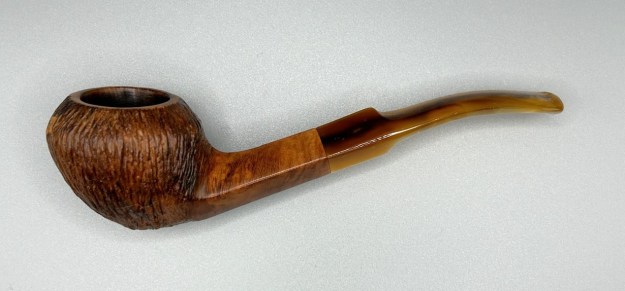
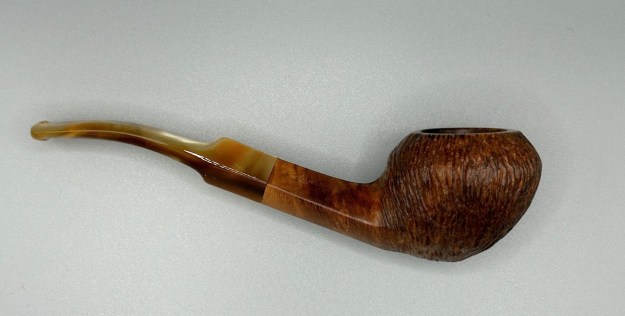
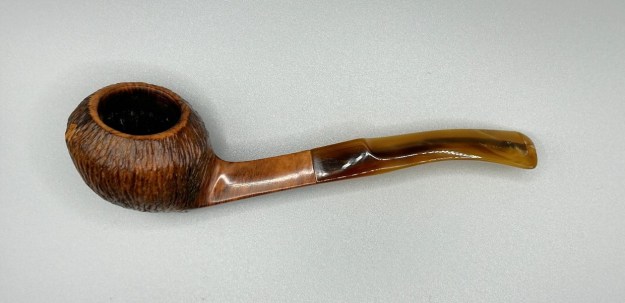
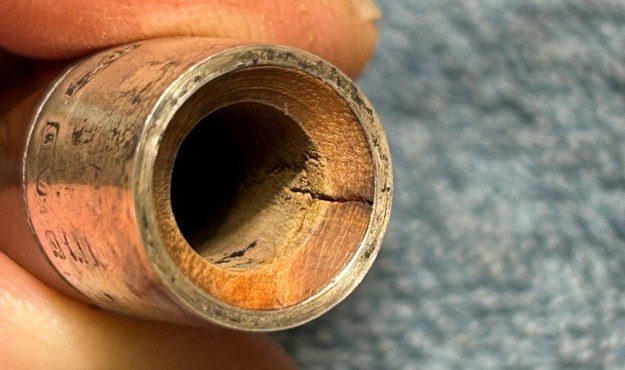
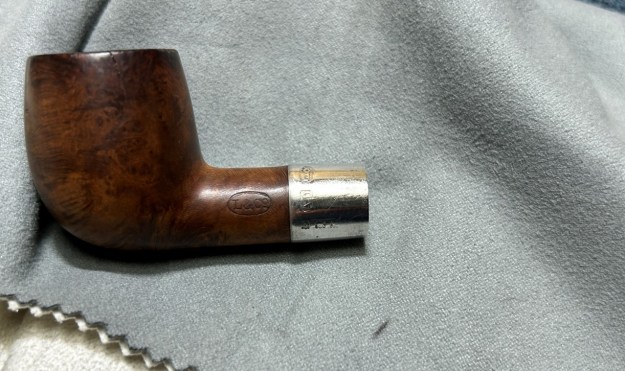
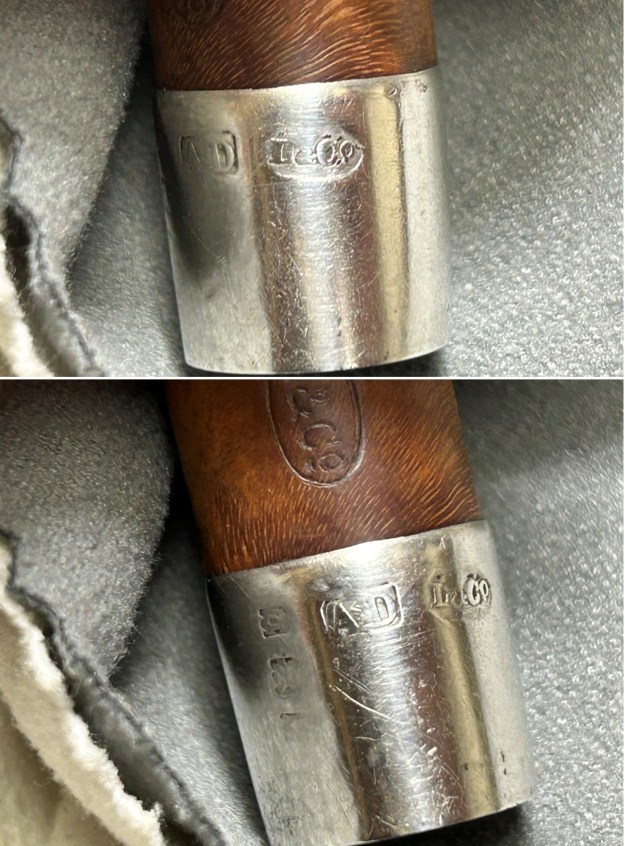
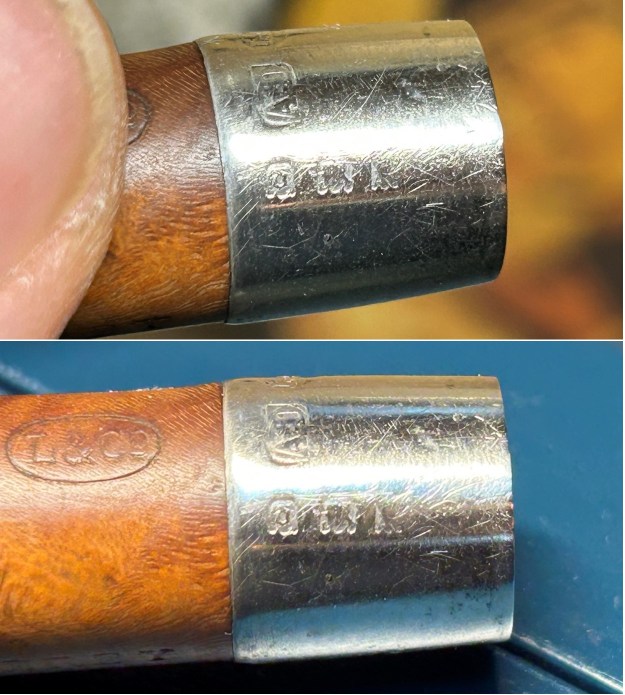
If you’re interested in acquiring a Peterson unlike any other, have I got the pipe for you! I unearthed this pipe a couple of years ago at an antique fair and I found it quite peculiar. The shape seemed perfectly normal, the components were in good (albeit, used) condition – but the finish was something I’d never seen before from an old Pete. I was definitely curious about what it might be. The pipe turned out very well, all things considered, and, like I said, if you want a pipe that no one else has – this is your pipe. I’m sure it’ll be a good smoker. Neither Steve nor I were clear on how this pipe ended up the way it did. I initially wondered if this was an odd finish that Peterson tried years ago – but that didn’t seem likely. I had another theory, but Steve suggested that I contact Peterson expert, Mark Irwin, to ask him about it. Mark basically confirmed what I suspected: this Donegal has had its rustication (mostly) removed. In other words, it’s been sanded down. This is strange, but there’s no way of determining why this was done. Thanks for your help, Mark. Regardless, we’ve ended up with an interesting finish and a pipe that I need to make beautiful.The markings on this pipe were a problem, since they had suffered a bit during the sanding process. However, I did manage to figure them out. On the underside of the shank, we can see the word Peterson’s. There is something marked underneath that, but I’ll come back to that as it’s somewhat unreadable. Next to Peterson’s is the shape number, 264. And next to that are the words Made in the [over] Republic [over] of Ireland. It took me quite a while to determine what was marked underneath of Peterson’s, but, of course, it is the word Donegal. This is the Peterson line. You will have noticed that the stem is the traditional Peterson P-lip, and it has the classic letter P. Most importantly, there is a sterling silver band on the end of the shank. On the sterling silver band is displayed three shields each containing the three marks K&P [over] Sterling [over] Silver. These are not silver hallmarks – they are simply Peterson’s marks. However, it does have a set of proper hallmarks (which are very difficult to see): Hibernia, which indicated that it was made in Dublin. Next is the Harp Crowned, which indicates sterling silver. Third is the date letter. In this case, it’s a stylized M. Checking the Irish hallmarks chart tells me that this pipe dates from 1978. So, what is the state of the pipe? Well, it’s a mixed bag, as these things tend to be. The stem is in surprisingly good shape – not too dirty or oxidized. It does have a notable cut into the vulcanite, near the tenon end, but that’s not a problem to repair. The stummel is, for the most part, also quite nice. It has a few unsurprising scratches, but it’s fairly clean inside. The silver band is heavily tarnished and has a few bumps and knocks. On with the restoration! This pipe had an inner tube, so I cleaned that first. I wiped it with some alcohol and ran a pipe cleaner or two through it. Much improved.The primary cleaning came next. I disinfected the inside of the stem with both pipe cleaners and cotton swabs dipped in lemon-infused 99% isopropyl alcohol. I scrubbed thoroughly to make sure the interior was very clean.The goal of the next step is the removal (or minimization) of oxidation. Going to my sink, I used cream cleanser, cotton rounds, and a toothbrush, and scoured the stem to remove as much surface oxidation as possible. This one wasn’t too bad at all.Once the stem was reasonably clean, I soaked it overnight in some Briarville Stem Oxidation Remover. This solution works to draw oxidation in the stem to the surface of the vulcanite. This is a major aid and an important step in ensuring a clean stem. The following day, I drew out the stem from its bath and scrubbed the lingering fluid with a toothbrush.As the stem was now clean and dry, I set about fixing the nasty cut in the vulcanite. This was done by filling it with black cyanoacrylate adhesive, impregnated with carbon and rubber. I left this to cure and moved on.After this, I painted the logo on the stem with some enamel nail polish. I restored the logo carefully and let it fully set before proceeding. Most of the logo has gone with the passage of time, but at least a bit of it still shows.The penultimate step for the stem is sanding. First, with my set of needle files, I reduced the bulk of the cyanoacrylate repairs. I removed the excess adhesive as near to the surface as possible, without cutting into the vulcanite. Following that, I used all nine of the micromesh sanding pads (1,500 through 12,000 grit) to sand out flaws, even out the vulcanite, and provide gentle polishing of the finished surface. I also applied pipe-stem oil while using the last five micromesh pads. There was a wonderful, deep black shine to the stem when I was done.As the stem was (nearly) complete, I moved on to the stummel. The first step was to clean out the bowl – that is to say, remove all the cake inside the bowl. This accomplished a couple of things. First (and most obviously), it cleaned the bowl and provided a refurbished chamber for future smoking. Second, when the old cake was removed, I could inspect the interior walls of the bowl and determine if there was damage or not. I didn’t need a reamer this time, so a pipe knife and a piece of sandpaper taped to a wooden dowel did the trick. Collectively, these ensured that all the debris was removed.Similar to the stem, I then cleaned the stummel with both pipe cleaners and cotton swabs dipped in lemon-infused 99% isopropyl alcohol. Since the pipe wasn’t too dirty, it didn’t take long to clean it.I then decided to ‘de-ghost’ the pipe – that is to say, exorcize the remaining filth from the briar. I filled the bowl and the shank with cotton balls, then saturated them with 99% isopropyl alcohol. I let the stummel sit overnight. This caused the remaining oils, tars and smells to leach out into the cotton.To tidy up the briar, I wiped down the outside, using a solution of a pH-neutral detergent and some distilled water, with cotton rounds. I also used a toothbrush in the crevices. This did a good job of cleaning any latent dirt on the surface of the briar. The last step of the cleaning process was to scour the inside of the stummel with the same mild detergent and tube brushes.I used all nine micromesh pads (1,500 through 12,000 grit) to sand the outside of the stummel and finish it off. This sanding minimizes flaws in the briar and provides a beautiful smoothness to the wood. I had to be especially careful this time, to avoid losing any more of the markings on the underside of the shank. To clean the silver band, I gently removed the tarnish with a soak in a bath of aluminum foil, baking soda, and hot water. Worked like a charm! I polished it up and glued it back in place. There are still some bumps and bashes, but it looks so much better. I rubbed some LBE Before & After Restoration Balm into the briar and let it sit for 30 minutes or so. The balm moisturizes the wood and gives a beautiful depth to the briar. I then buffed the stummel with a microfibre cloth. For the final step, I took the pipe to my bench polisher and carefully buffed it – first with a blue diamond compound, then with three coats of conservator’s wax. This procedure makes the pipe look its best – the stummel sings and the stem glows.

This Peterson Donegal 264 Canadian looks fantastic again and is ready to be enjoyed by its next owner. I am pleased to announce that this pipe is for sale! If you are interested in acquiring it for your collection, please have a look in the ‘Irish’ pipe section of the store here on Steve’s website. You can also email me directly at kenneth@knightsofthepipe.com. The approximate dimensions of the pipe are as follows: length 5½ in. (138 mm); height 1¾ in. (45 mm); bowl diameter 1¼ in. (33 mm); chamber diameter ¾ in. (20 mm). The weight of the pipe is 1 oz. (32 g). I hope you enjoyed reading the story of this pipe’s restoration as much as I did restoring it. If you are interested in more of my work, please follow me here on Steve’s website or send me an email. Thank you very much for reading and, as always, I welcome and encourage your comments.

Cleaning Up a Stylish Jobey Shellmoor Extra Hawkbill


by Kenneth Lieblich

This good-looking pipe came from the great state of Washington and I’ve been meaning to clean it up for some time. This is a Jobey Shellmoor Extra pipe, in the hawkbill shape, and, although this particular pipe doesn’t show any shape number, it is identical to a Jobey Shellmoor Extra E527 that Steve restored last year. You can read that restoration here. It’s not immediately clear to me why this one doesn’t have a number, but no matter! Let’s look at the markings that do appear on this pipe. On top of the shank, we see Jobey [over] Shellmoor [over] Extra. On the stem, we see the Jobey logo inlaid in brass.Regarding the Jobey company itself, there is precious little background information. The Pipedia article on Jobey (which I encourage you to read here) begins with this tidbit:

English – American – Danish – French… Sadly, solid information about Jobey is scant. Probably established in England around 1920(?) the brand hiked into the USA later.

And Pipephil adds this note:

These pipes are made in St Claude (France) by Butz-Choquin (Berrod-Regad group) since 1987. Before this date some were manufactured in England and Denmark (Jobey Dansk).So? Not much history to learn, sadly. Let’s clean this pipe up. Fortunately, this pipe was in good condition and didn’t require too much labour. The stummel is dirty but sound. The rim is coated in lava. The bowl has a decent amount of cake in it. The stem is also dirty, oxidized, and shows signs of calcification. There are lots of tooth scratches and some minor dents. I used isopropyl alcohol on a few cotton rounds and wiped down the stem to provide an initial cleaning of filth before moving on to the next steps. The primary cleaning came next. I disinfected the inside of the stem with both pipe cleaners and cotton swabs dipped in lemon-infused 99% isopropyl alcohol. I scrubbed thoroughly to make sure the interior was very clean. Actually, it wasn’t too bad inside.The goal of the next step is the removal (or minimization) of oxidation. Going to my sink, I used cream cleanser, cotton rounds, and a toothbrush, and scoured the stem to remove as much surface oxidation as possible. As the photos show, the result was a hideous, ochre-coloured mess – but better off the stem than on it.Once the stem was reasonably clean, I soaked it overnight in some Briarville Stem Oxidation Remover. This solution works to draw oxidation in the stem to the surface of the vulcanite. This is a major aid and an important step in ensuring a clean stem. The following day, I drew out the stem from its bath and scrubbed the lingering fluid with a toothbrush.As the stem was now clean and dry, I set about fixing the marks and dents in the vulcanite. This was done by filling those divots with black cyanoacrylate adhesive, impregnated with carbon and rubber. I left this to cure and moved on.

The penultimate step for the stem is sanding. First, with my set of needle files, I reduced the bulk of the cyanoacrylate repairs. I removed the excess adhesive as near to the surface as possible, without cutting into the vulcanite. Following that, I used all nine of the micromesh sanding pads (1,500 through 12,000 grit) to sand out flaws, even out the vulcanite, and provide gentle polishing of the finished surface. I also applied pipe-stem oil while using the last five micromesh pads. There was a wonderful, deep black shine to the stem when I was done.As the stem was (nearly) complete, I moved on to the stummel. The first step was to ream out the bowl – that is to say, remove all the cake inside the bowl. This accomplished a couple of things. First (and most obviously), it cleaned the bowl and provided a refurbished chamber for future smoking. Second, when the old cake was removed, I could inspect the interior walls of the bowl and determine if there was damage or not. I used a reamer, a pipe knife, and a piece of sandpaper taped to a wooden dowel. Collectively, these ensured that all the debris was removed.My next step was to remove the lava on the rim. For this, I took a piece of machine steel and gently scraped the lava away. The metal’s edge is sharp enough to remove what I need, but not so sharp that it damages the rim. Similar to the stem, I then cleaned the stummel with both pipe cleaners and cotton swabs dipped in lemon-infused 99% isopropyl alcohol. With a pipe this dirty, it took quite a while and much cotton to clean.I then decided to ‘de-ghost’ the pipe – that is to say, exorcize the remaining filth from the briar. I filled the bowl and the shank with cotton balls, then saturated them with 99% isopropyl alcohol. I let the stummel sit overnight. This caused the remaining oils, tars and smells to leach out into the cotton.To tidy up the briar, I wiped down the outside, using a solution of a pH-neutral detergent and some distilled water, with cotton rounds. I also used a toothbrush in the crevices. This did a good job of cleaning any latent dirt on the surface of the briar. The last step of the cleaning process was to scour the inside of the stummel with the same mild detergent and tube brushes. This was the culmination of a lot of hard work in getting the pipe clean.I rubbed some LBE Before & After Restoration Balm into the briar and let it sit for 30 minutes or so. The balm moisturizes the wood and gives a beautiful depth to the briar. I then buffed the stummel with a microfibre cloth. For the final step, I took the pipe to my bench polisher and carefully buffed it – first with a blue diamond compound, then with three coats of carnauba wax. This procedure makes the pipe look its best – the stummel sings and the stem glows.This Jobey Shellmoor Extra hawkbill pipe looks fantastic again and is ready to be enjoyed by its next owner. I am pleased to announce that this pipe is for sale! If you are interested in acquiring it for your collection, please have a look in the ‘American’ pipe section of the store here on Steve’s website. You can also email me directly at kenneth@knightsofthepipe.com. The approximate dimensions of the pipe are as follows: length 5⅓ in. (135 mm); height 1⅞ in. (48 mm); bowl diameter 1⅞ in. (47 mm); chamber diameter ⅞ in. (22 mm). The weight of the pipe is 2⅛ oz. (62 g). I hope you enjoyed reading the story of this pipe’s restoration as much as I did restoring it. If you are interested in more of my work, please follow me here on Steve’s website or send me an email. Thank you very much for reading and, as always, I welcome and encourage your comments.

Restoring a Handsome Patent-Era Brigham 226 Bent Squatty


by Kenneth Lieblich

Last Sunday, a gentleman at my church approached me about restoring some pipes that he recently found at the local Sally Ann. He found some nice things and I happily restored three of his pipes – one of which ended up as this blog post! This is a very handsome Brigham 2-dot bulldog and, from first viewing, I could tell that this one was a bit older than the usual Brighams I see. This Brigham had the patented ‘Rock Maple Distillator’ filter system in it. Even though this one had been through the ringer, I was keen to get this it shining and bright again. A quick look at the markings told me a lot of information. First of all, the stem showed two dots (or, to be more precise, two brass pins). This is typical of Brigham’s marking system and, in this case and in this era, two dots means the ‘Select’ level of briar. As Charles Lemon wrote in his book, Brigham Pipes: A Century of Canadian Briar,

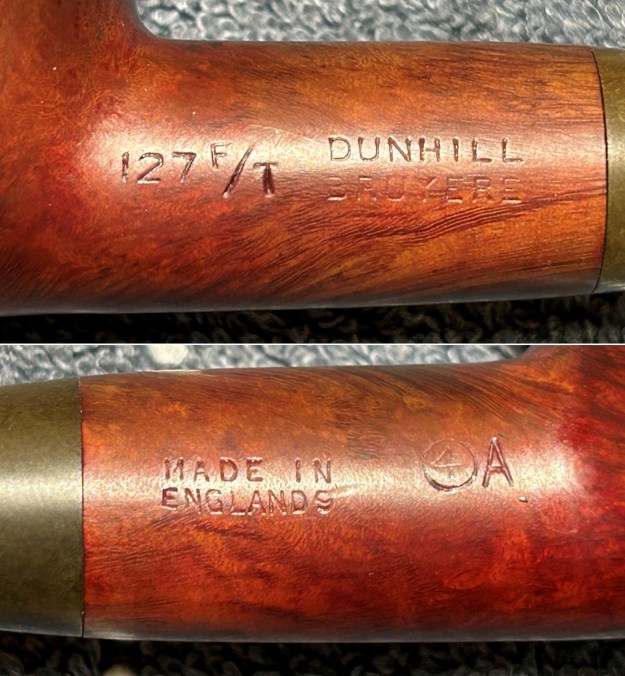
A single brass pin inserted in the left flank of the stem near the shank was originally used as a physical anchor to hold the press-fit aluminum tenon/filter holder securely in the stem. Brigham built on this manufacturing necessity by setting additional pins or Dots as they came to be known to denote the quality level of his pipes.On the underside of the shank, we can see the word Brigham [over] Can Pat 372982. To the left of that is the shape number 226,

where the first digit refers to the pipe’s grade and the second and third digits to the pipe shape itself.The markings have been somewhat worn over time, but they are still readable. Crucially, they told me that this pipe was made during the patent era of Brigham pipes – that is to say, between 1938 and 1955. The Brigham logo is the variety that Lemon describes as the thin-script logo with a long tail on the “m” wrapping back under the name. The patent in question is the Canadian patent number for the filter system. Finally, the initial 2 in the three-digit shape number obviously connects to the two brass dots. Referring back to Lemon’s book, I found that shape 26 was called the ‘Bent Squatty’, with the description: Medium, ¼ Bent Bulldog, Diamond Taper Stem. Yep, that describes this pipe, alright. Anyway, for a more thorough view of Brigham’s history, please visit Pipedia’s article here. Meanwhile, here is a view of Brigham’s patented filter system:On with the restoration! The pipe is in good condition for its age – just particularly grungy. I was fairly impressed with the condition of the stummel. There was no notable damage, just a lot of grime – especially on the rim, where the grime was really ground in. The stem was heavily oxidized and had quite a bit of tooth chatter. There were some significant dents in the vulcanite and the button was somewhat squashed. First things first. I used a disposable lighter and ‘painted’ the stem with its flame. The gentle heat of the flame can often cause the dents in the vulcanite of the stem to expand back into shape. In this case, there was perhaps a bit of movement – but not much. I used isopropyl alcohol on a few cotton rounds and wiped down the stem to provide an initial cleaning of filth before moving on to the next steps.The primary cleaning came next. I disinfected the inside of the stem with both pipe cleaners and cotton swabs dipped in lemon-infused 99% isopropyl alcohol. I scrubbed thoroughly to make sure the interior was very clean. I used a huge number of pipe cleaners and cotton swabs – more than shown in the photo. In addition, the aluminum filter chamber was so heavily choked with debris, that I used a drill bit to break down and remove all of this detritus. Amazing. The goal of the next step is the removal (or minimization) of oxidation. In this case, it was only minimization – the photos simply do not communicate how badly oxidized this stem was. Going to my sink, I used cream cleanser, cotton rounds, and a toothbrush, and scoured the stem to remove as much surface oxidation as possible. As the photos show, the result was a hideous, ochre-coloured mess – but better off the stem than on it.Once the stem was reasonably clean, I soaked it overnight in some Briarville Stem Oxidation Remover. This solution works to draw oxidation in the stem to the surface of the vulcanite. This is a major aid and an important step in ensuring a clean stem. The following day, I drew out the stem from its bath and scrubbed the lingering fluid with a toothbrush. Due to the severity of the oxidation, I then repeated the scrubbing with the cream cleanser for maximum effect. It turns out that even that wasn’t good enough. I actually used red Tripoli on my buffing wheel to remove even more oxidation.As the stem was now clean and dry, I set about fixing the marks and dents in the vulcanite. This was done by filling those divots with black cyanoacrylate adhesive, impregnated with carbon and rubber. I left this to cure and moved on.The penultimate step for the stem is sanding. First, with my set of needle files, I reduced the bulk of the cyanoacrylate repairs. I removed the excess adhesive as near to the surface as possible, without cutting into the vulcanite. Following that, I used all nine of the micromesh sanding pads (1,500 through 12,000 grit) to sand out flaws, even out the vulcanite, and provide gentle polishing of the finished surface. I also applied pipe-stem oil while using the last five micromesh pads. There was a wonderful, deep black shine to the stem when I was done.As the stem was (nearly) complete, I moved on to the stummel. The first step was to ream out the bowl – that is to say, remove all the cake inside the bowl. This accomplished a couple of things. First (and most obviously), it cleaned the bowl and provided a refurbished chamber for future smoking. Second, when the old cake was removed, I could inspect the interior walls of the bowl and determine if there was damage or not. I used a reamer, a pipe knife, and a piece of sandpaper taped to a wooden dowel. Collectively, these ensured that all the debris was removed.Similar to the stem, I then cleaned the stummel with both pipe cleaners and cotton swabs dipped in lemon-infused 99% isopropyl alcohol. With a pipe this dirty, it took quite a while and much cotton to clean. Although, it was easy compared to the stem!I then decided to ‘de-ghost’ the pipe – that is to say, exorcize the remaining filth from the briar. I filled the bowl and the shank with cotton balls, then saturated them with 99% isopropyl alcohol. I let the stummel sit overnight. This caused the remaining oils, tars and smells to leach out into the cotton.To tidy up the briar, I wiped down the outside, using a solution of a pH-neutral detergent and some distilled water, with cotton rounds. I also used a toothbrush in the crevices. This did a good job of cleaning any latent dirt on the surface of the briar. The last step of the cleaning process was to scour the inside of the stummel with the same mild detergent and tube brushes. This was the culmination of a lot of hard work in getting the pipe clean.I rubbed some LBE Before & After Restoration Balm into the briar and let it sit for 30 minutes or so. The balm moisturizes the wood and gives a beautiful depth to the briar. I then buffed the stummel with a microfibre cloth. For the final step, I took the pipe to my bench polisher and carefully buffed it with three coats of conservator’s wax. This procedure makes the pipe look its best – the stummel sings and the stem glows. All done! This Brigham 226 Bent Squatty looks fantastic again and is ready to be enjoyed by my friend at church. It was a pleasure to work on and such a treat to see an older Brigham come back to life. The approximate dimensions of the pipe are as follows: length 5¾ in. (146 mm); height 1½ in. (38 mm); bowl diameter 1⅔ in. (42 mm); chamber diameter ¾ in. (20 mm). The weight of the pipe is 1¼ oz. (38 g). I hope you enjoyed reading the story of this pipe’s restoration as much as I enjoyed restoring it. If you are interested in more of my work, please follow me here on Steve’s website or send me an email at kenneth@knightsofthepipe.com. Thank you very much for reading and, as always, I welcome and encourage your comments.

Spiffing Up a Rare Dunhill Bruyere 32 from 1959


by Kenneth Lieblich

This very handsome pipe came to me from a local gentleman who was letting go of his pipes. I was charmed by this one right away. This is a Dunhill Bruyere 32 billiard pipe, with an attractive tapered, vulcanite stem. It has been stained in the Dunhill version of oxblood – and it sets off the pipe very nicely. Let’s have a look at the markings. On the left side of the shank, we see 32. Further along to the right, we see Dunhill [over] Bruyere. On the right side of the shank, we see Made in [over] England9. And further along we also see ① A.What do all these markings mean? John Loring’s book, The Dunhill Briar Pipe, provides many of the answers. The number 32 indicates the shape number – in this case, a billiard with a tapered bit. The word bruyere, of course, means briar, and, in this case, refers to a classic line of Dunhill pipes that dates back to 1910. The 9 found at the end of the word England is slightly raised and this indicates that the pipe was made in 1959 (see below). The encircled number one indicates that this pipe is from Group 1 – the smallest of the pipe sizes. With such a small size, these pipes tend to get damaged, over-smoked, and lost more easily. They have historically been less likely to survive intact over the years, making them uncommon. The letter A is an indication that this is from the smooth, bruyere line. As Loring writes,
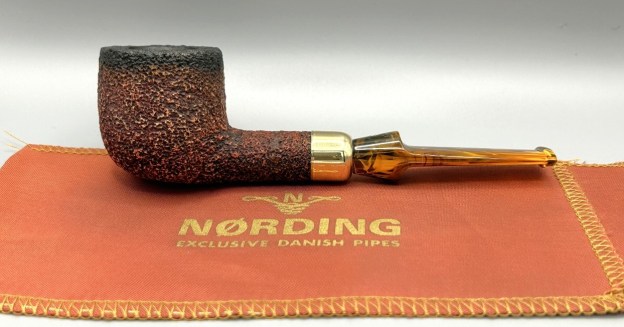
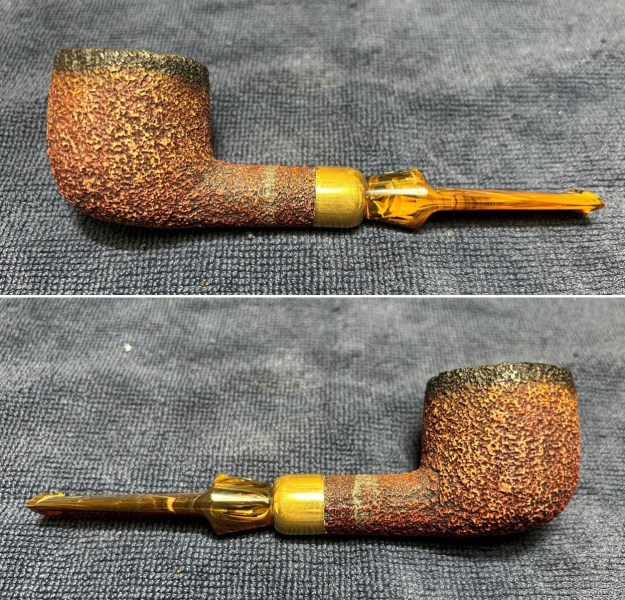
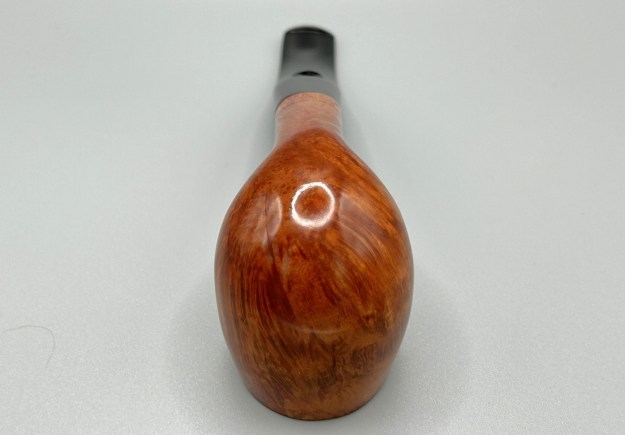
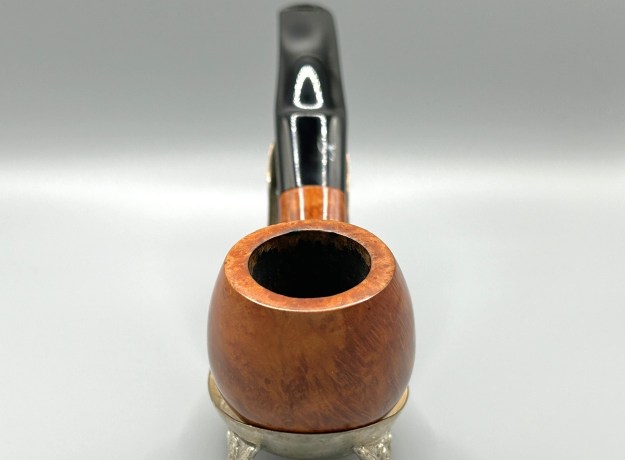
1955-1960: the code is a raised, smaller then [sic] the preceding “D” and normally [but not always] underlined 5 through 0.

Most Bruyeres of the patent period will be found with an “A” stamped on the side of the shank near where the shank meets the bowl. When the Root finish was introduced in 1931 the “A” came to mean Bruyere but initially the “A” probably denoted that the pipe was of first quality.

Here is a visual representation of the dating process from Pipephil: Let’s take a closer look at the pipe’s condition. It was in surprisingly good condition, considering its age and size. The stem had only light tooth chatter and scratches – nothing major at all. Also, the oxidation was minimal. The stummel was also great. There were a few small nicks in the briar, but I was sure I could correct those. There was also some lava and/or charring on the rim top, but nothing too bad. I used isopropyl alcohol on a few cotton rounds and wiped down the stem to provide an initial cleaning of filth before moving on to the next steps. The primary cleaning came next. I disinfected the inside of the stem with both pipe cleaners and cotton swabs dipped in lemon-infused 99% isopropyl alcohol. I scrubbed thoroughly to make sure the interior was very clean.The goal of the next step is the removal (or minimization) of oxidation. Going to my sink, I used cream cleanser, cotton rounds, and a toothbrush, and scoured the stem to remove as much surface oxidation as possible. As the photos show, the result was a hideous, ochre-coloured mess – but better off the stem than on it.Once the stem was reasonably clean, I soaked it overnight in some Briarville Stem Oxidation Remover. This solution works to draw oxidation in the stem to the surface of the vulcanite. This is a major aid and an important step in ensuring a clean stem. The following day, I drew out the stem from its bath and scrubbed the lingering fluid with a toothbrush.The penultimate step for the stem is sanding. First, with my set of needle files, I reduced the bulk of the cyanoacrylate repairs. I removed the excess adhesive as near to the surface as possible, without cutting into the vulcanite. Following that, I used all nine of the micromesh sanding pads (1,500 through 12,000 grit) to sand out flaws, even out the vulcanite, and provide gentle polishing of the finished surface. I also applied pipe-stem oil while using the last five micromesh pads. There was a wonderful, deep black shine to the stem when I was done.As the stem was (nearly) complete, I moved on to the stummel. The first step was to ream out the bowl – that is to say, remove all the cake inside the bowl. This accomplished a couple of things. First (and most obviously), it cleaned the bowl and provided a refurbished chamber for future smoking. Second, when the old cake was removed, I could inspect the interior walls of the bowl and determine if there was damage or not. I used a reamer, a pipe knife, and a piece of sandpaper taped to a wooden dowel. Collectively, these ensured that all the debris was removed.Similar to the stem, I then cleaned the stummel with both pipe cleaners and cotton swabs dipped in lemon-infused 99% isopropyl alcohol. Fortunately, it wasn’t too dirty.My next step was to remove the lava on the rim. For this, I took a piece of machine steel and gently scraped the lava away. The metal’s edge is sharp enough to remove what I need, but not so sharp that it damages the rim. This work revealed that there was a bit of charring, but very mild. I then decided to ‘de-ghost’ the pipe – that is to say, exorcize the remaining filth from the briar. I filled the bowl and the shank with cotton balls, then saturated them with 99% isopropyl alcohol. I let the stummel sit overnight. This caused the remaining oils, tars and smells to leach out into the cotton.To tidy up the briar, I wiped down the outside, using a solution of a pH-neutral detergent and some distilled water, with cotton rounds. I also used a toothbrush in the crevices. This did a good job of cleaning any latent dirt on the surface of the briar. The last step of the cleaning process was to scour the inside of the stummel with the same mild detergent and tube brushes. This was the culmination of a lot of hard work in getting the pipe clean.Having completed that, I was able to address the small nicks on the bowl. I dug out my iron and a damp cotton flannel cloth. By laying the cloth over the affected areas and applying the iron to it, the hot and moist steam can cause the wood to swell slightly and return to shape. There was some considerable improvement. It didn’t remove every dent, but it looks much better.I used all nine micromesh pads (1,500 through 12,000 grit) to sand the outside of the stummel and finish it off. This sanding minimizes flaws in the briar and provides a beautiful smoothness to the wood. After that, the tiny spots of bare wood on the rim needed to be tinted in the same colour as the rest of the stummel. I used some of my furniture pens (which is simply dye in pen form) to match the colours. I rubbed some LBE Before & After Restoration Balm into the briar and let it sit for 30 minutes or so. The balm moisturizes the wood and gives a beautiful depth to the briar. I then buffed the stummel with a microfibre cloth. For the final step, I took the pipe to my bench polisher and carefully buffed it – first with a blue diamond compound, then with three coats of carnauba wax. This procedure makes the pipe look its best – the stummel sings and the stem glows.

This Dunhill Bruyere 32 billiard is a beauty and I have decided to add it to my collection. It was a pleasure to work on. The approximate dimensions of the pipe are as follows: length 4⅞ in. (124 mm); height 1⅝ in. (41 mm); bowl diameter 1¼ in. (31 mm); chamber diameter ¾ in. (19 mm). The weight of the pipe is ¾ oz. (23 g). I hope you enjoyed reading the story of this pipe’s restoration as much as I enjoyed restoring it. If you are interested in more of my work, please follow me here on Steve’s website or send me an email at kenneth@knightsofthepipe.com. Thank you very much for reading and, as always, I welcome and encourage your comments.