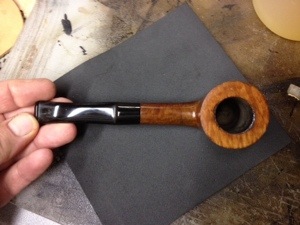
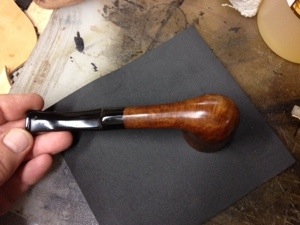
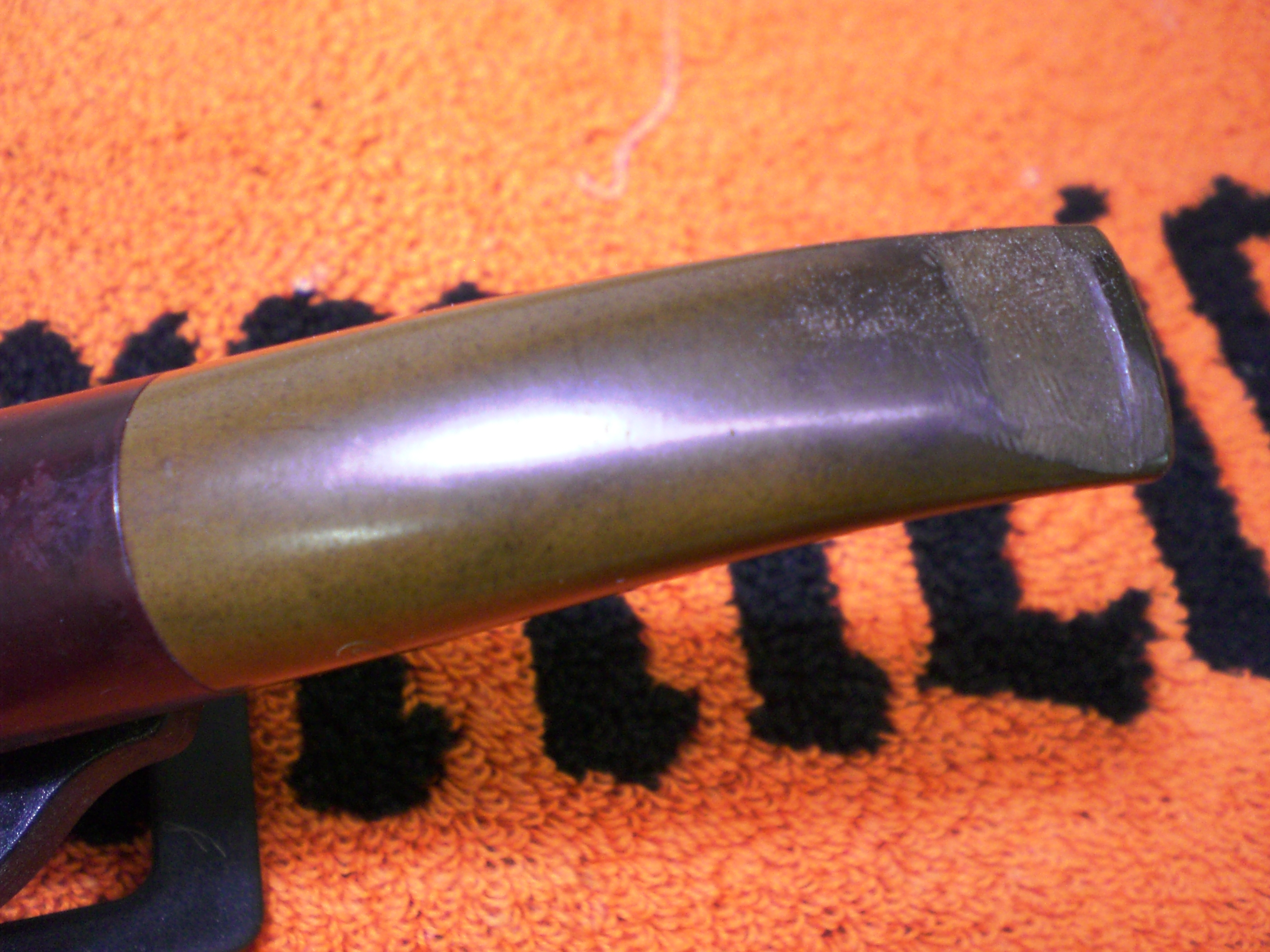
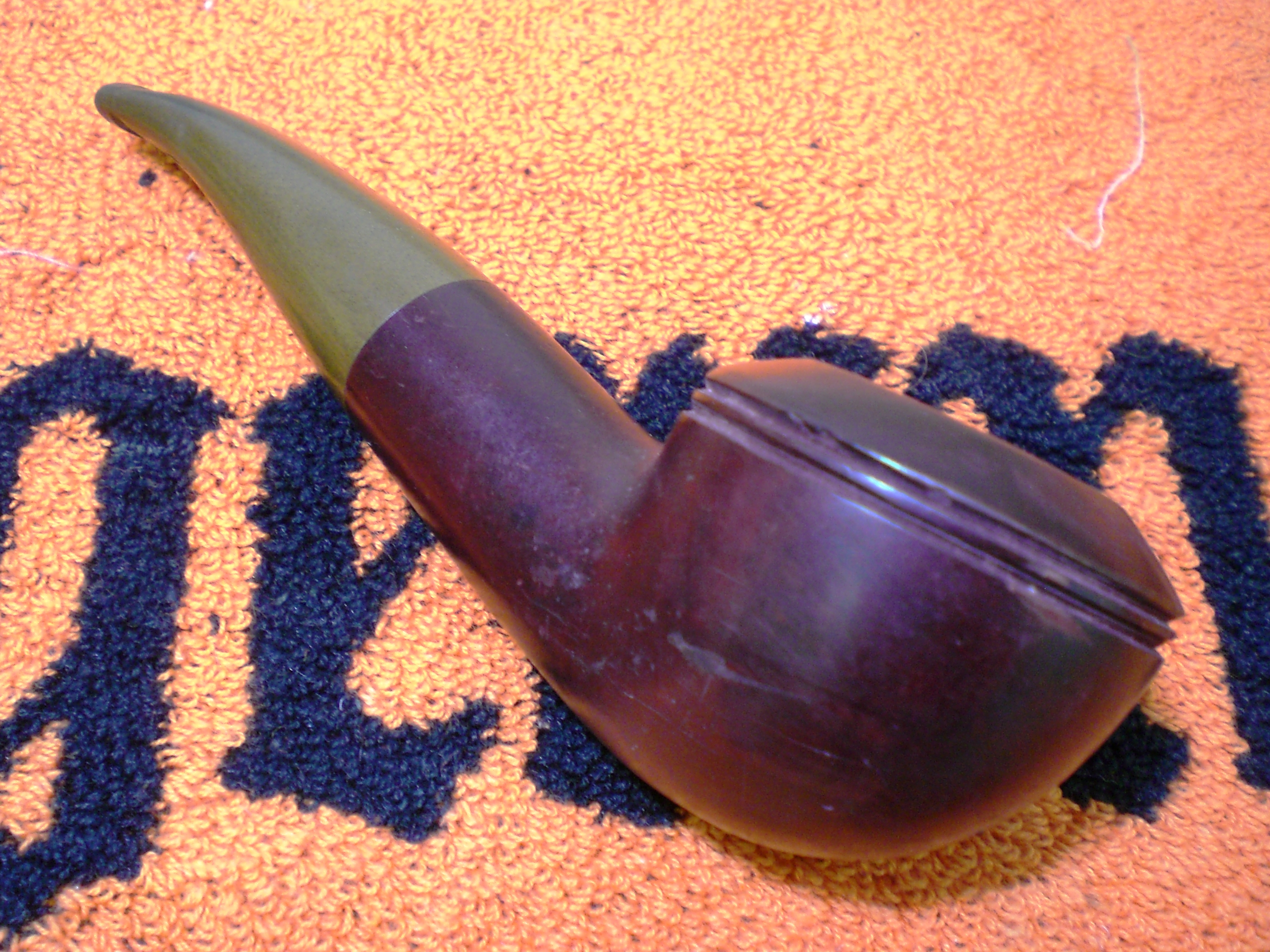
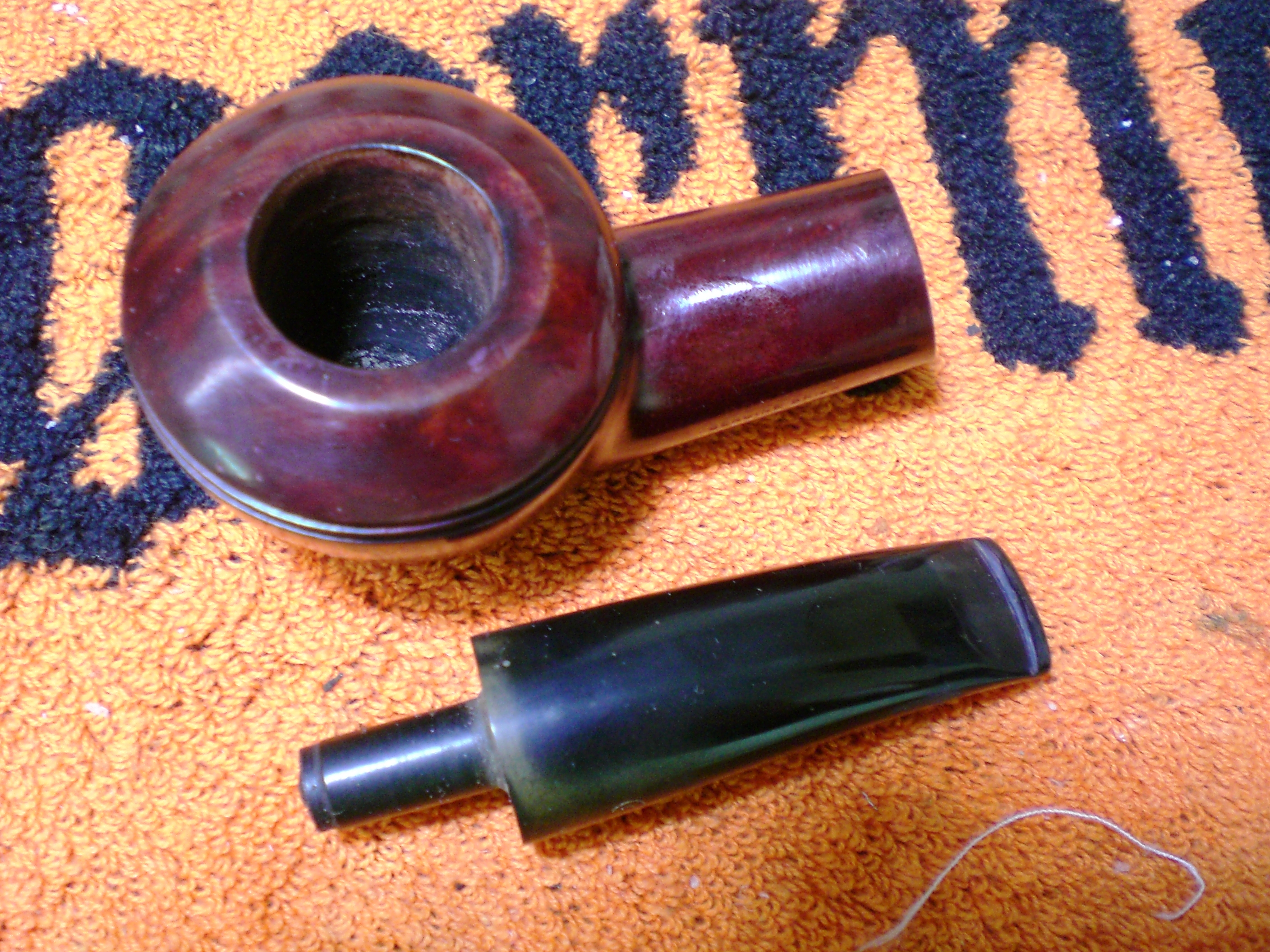
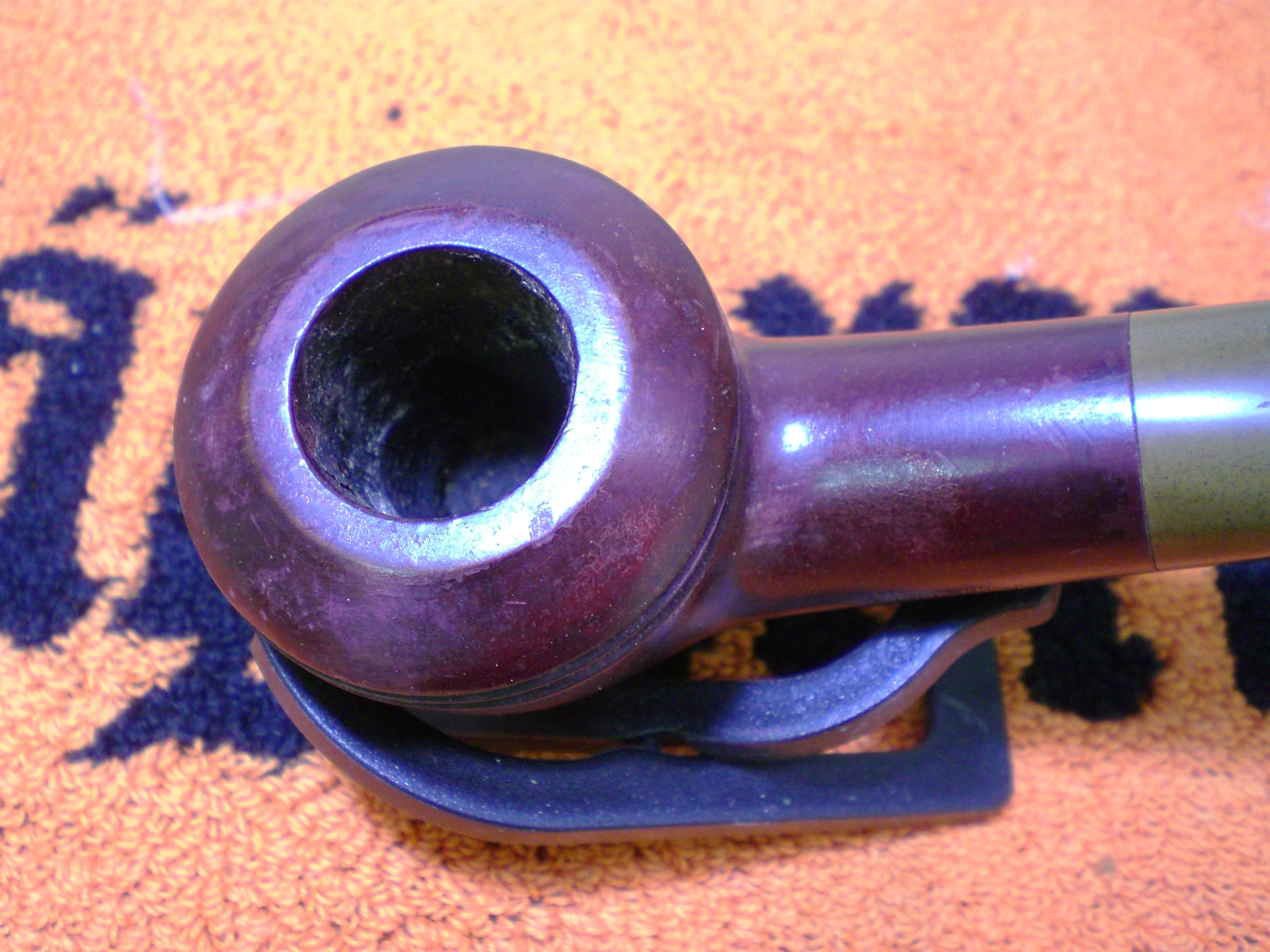
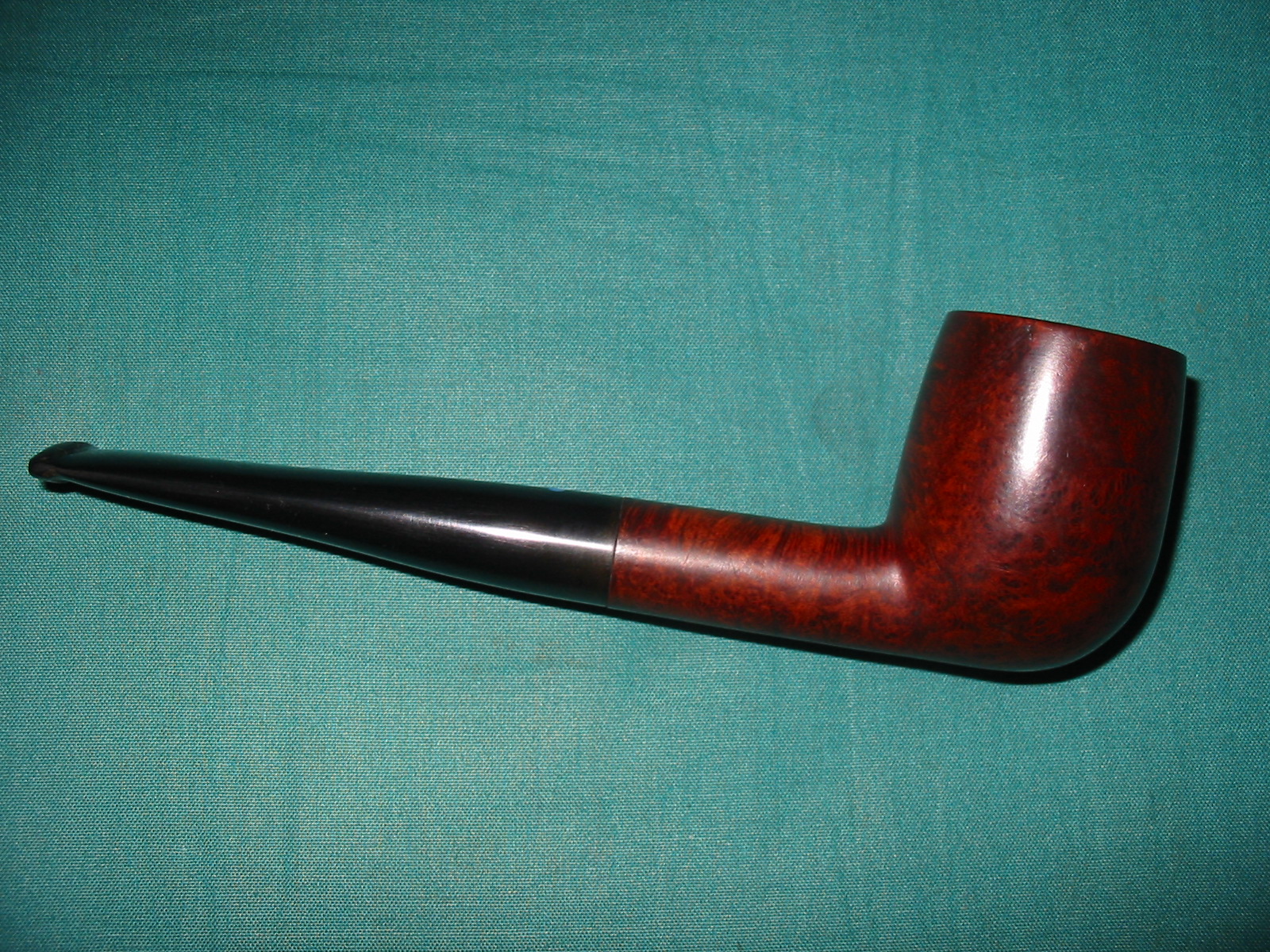
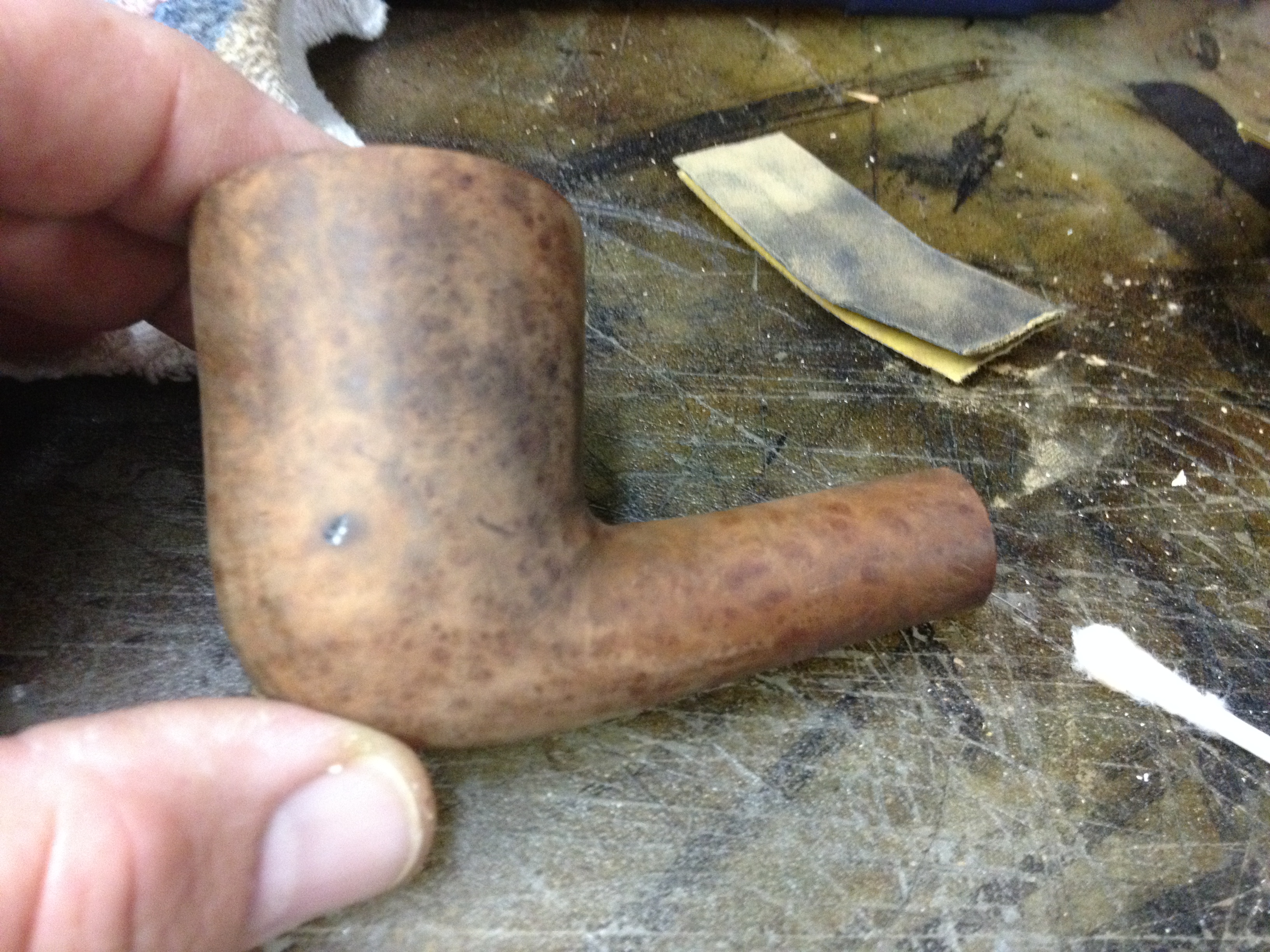
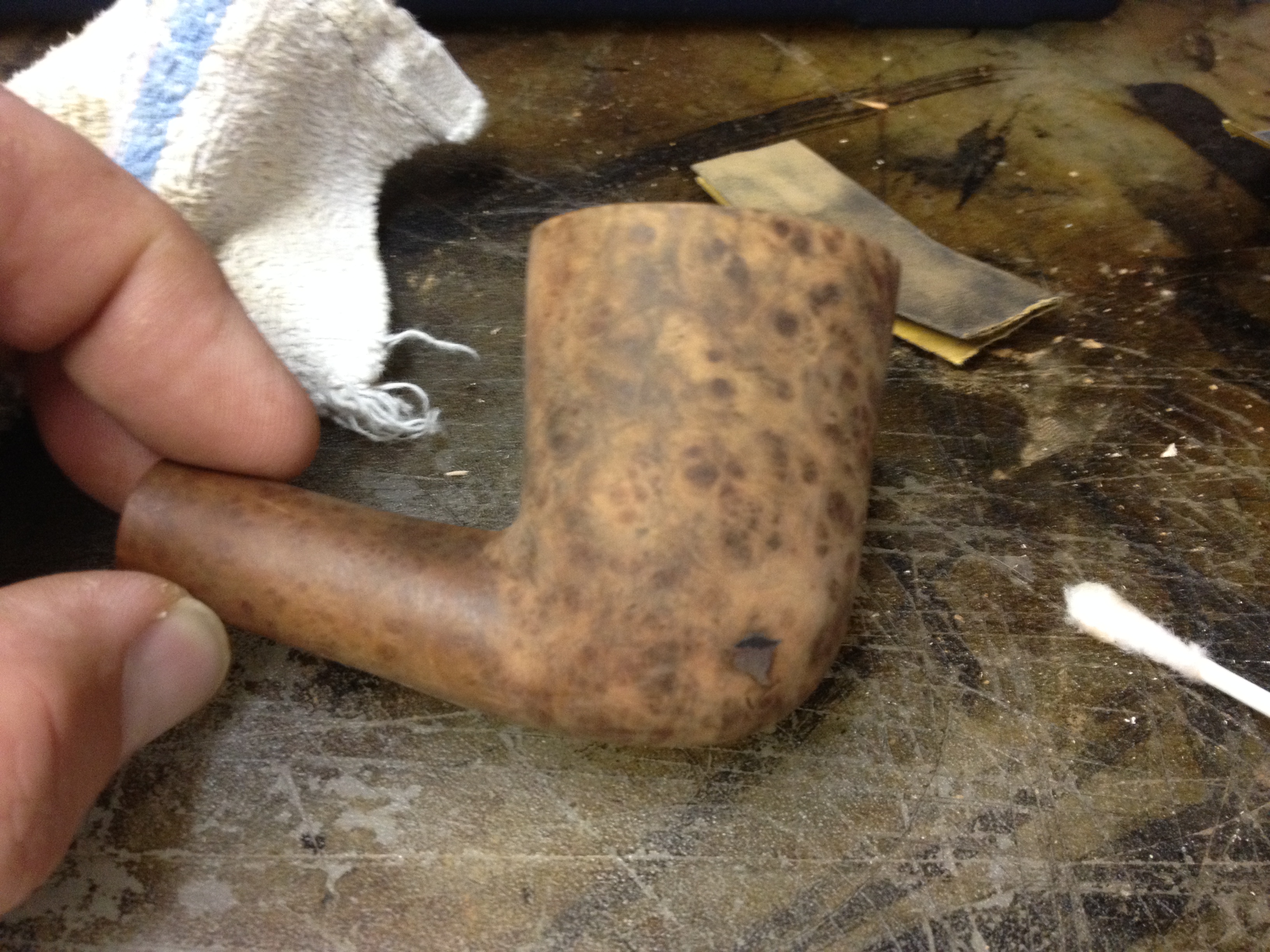
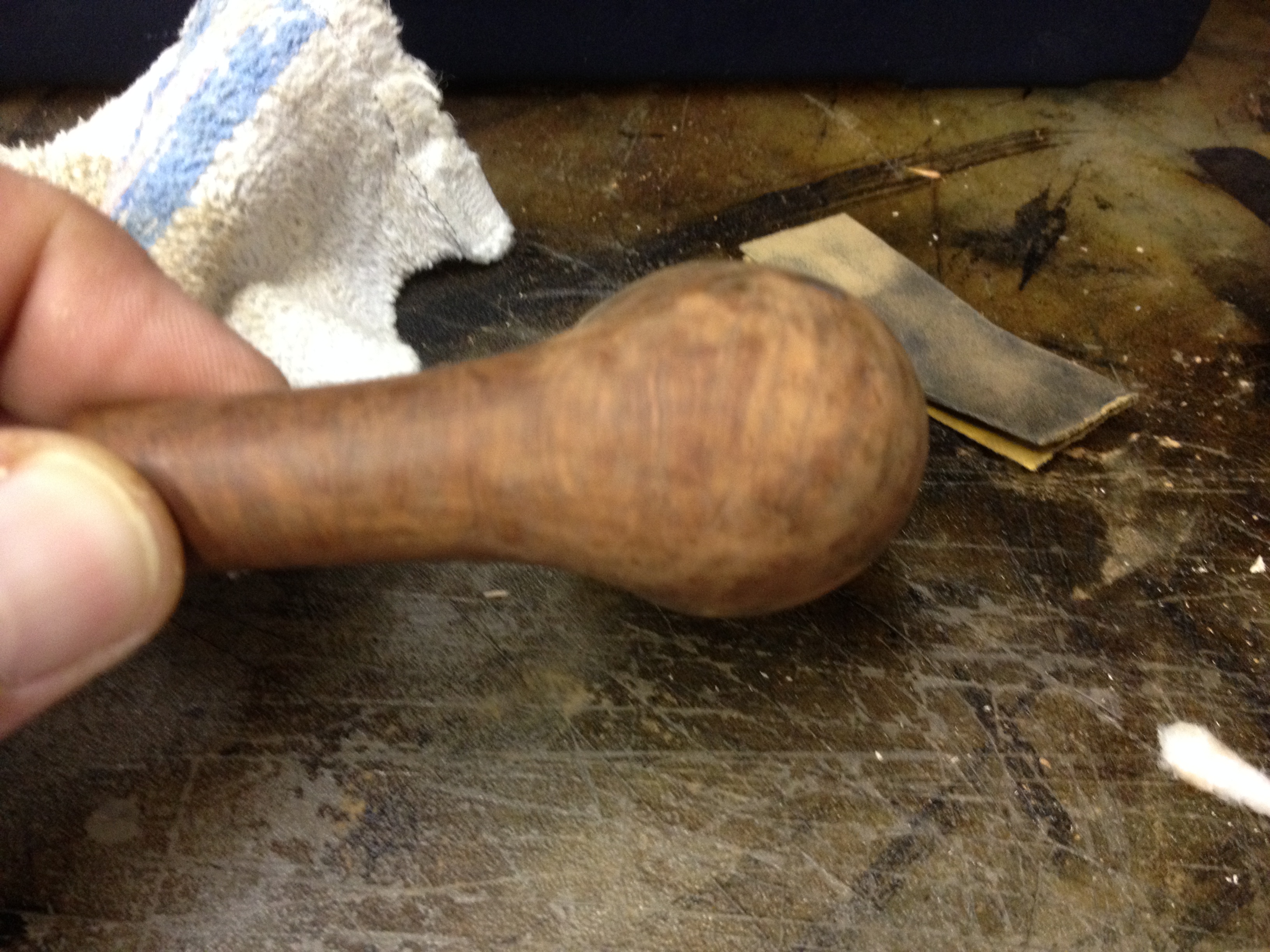
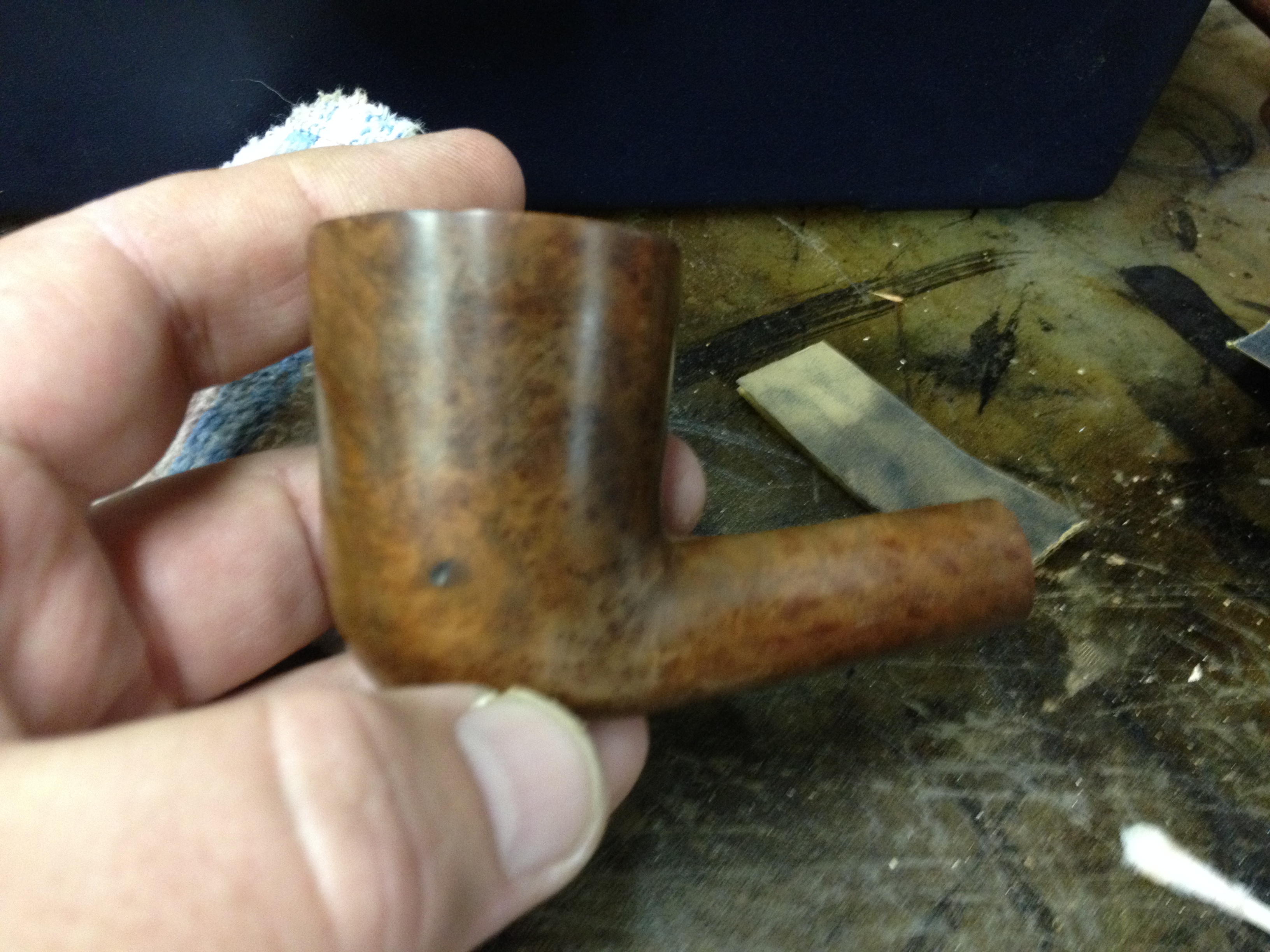
Repairing Deep Tooth Marks and Bite Throughs on Vulcanite Stems – AJ Verstraten


Blog by AJ Verstraten

It is with pleasure that I post AJ’s second post on rebornpipes. AJ is known to the online community as Bananabox-Ninja.

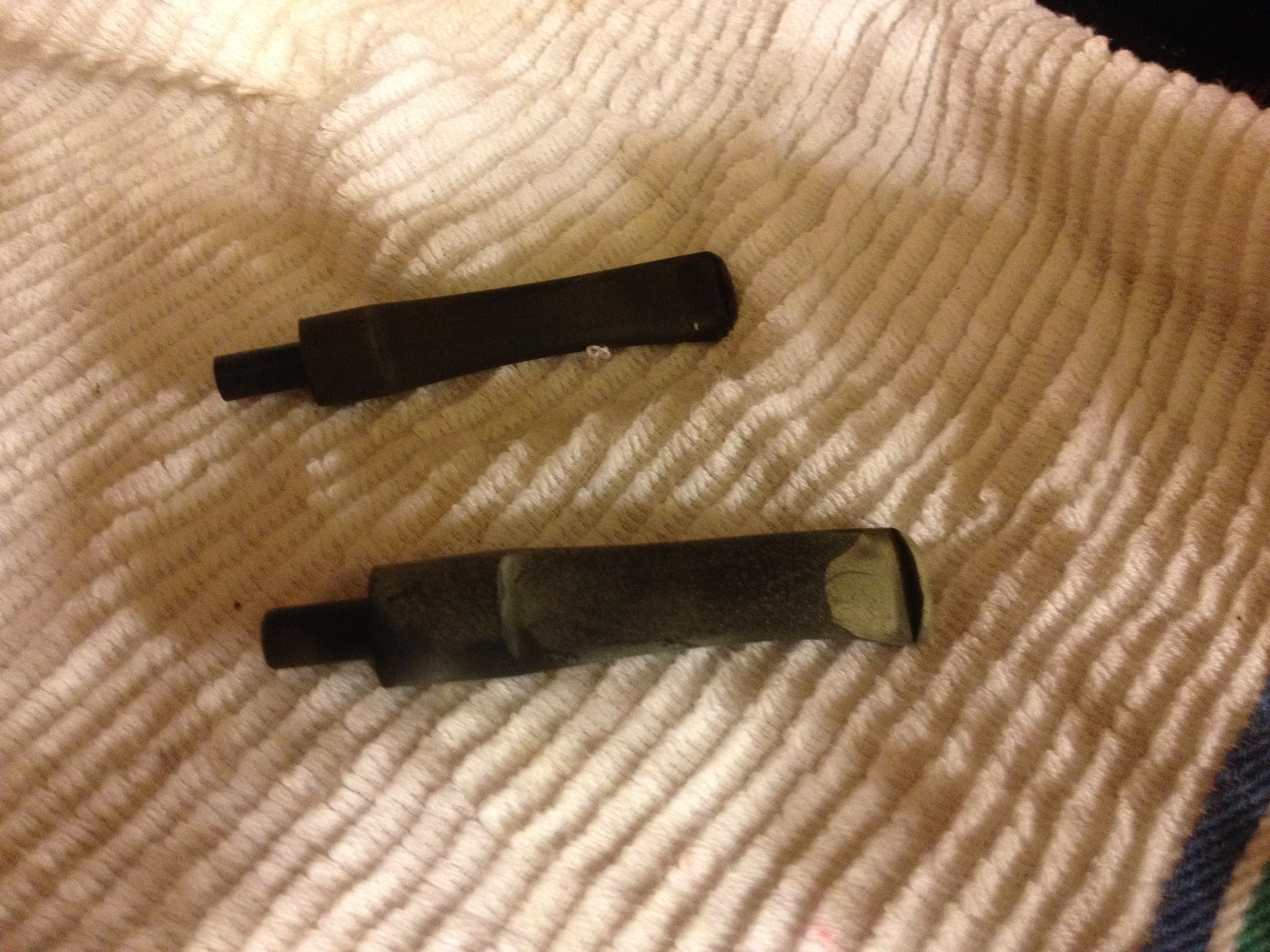
Greetings, today a small post about the use of black super glue on a few pipes I had previously cleaned and refurbished; before I found Rebornpipes. This did give me a small problem as I did not extensively take pictures of the process as I had no reason to share the process at that moment and as such I am missing a few ‘before’ pictures.

The pipes I revisited for this project were:
– 11 Wahl Filtro
– Lorenzo Elba
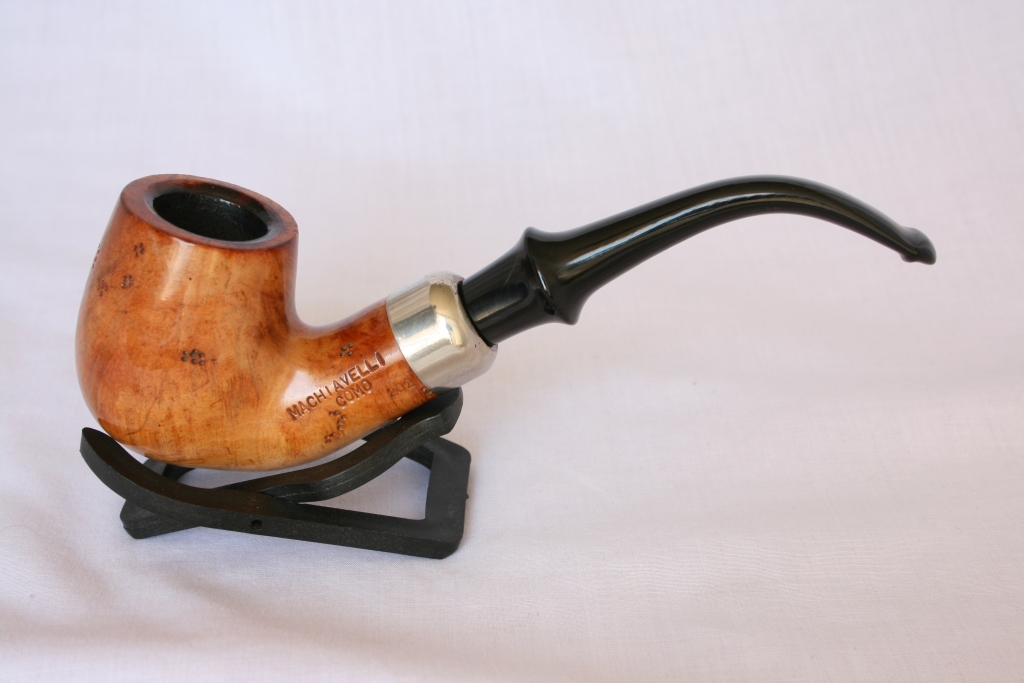
– Machiavelli Como
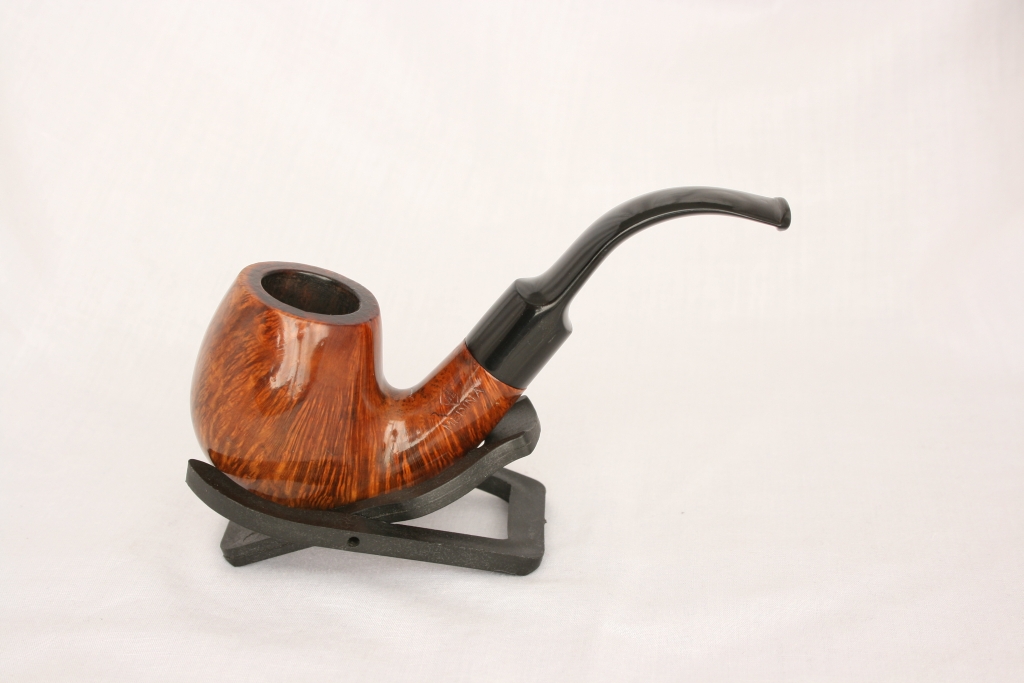
– BBB Medina
– Spitfire by Lorenzo Riviera
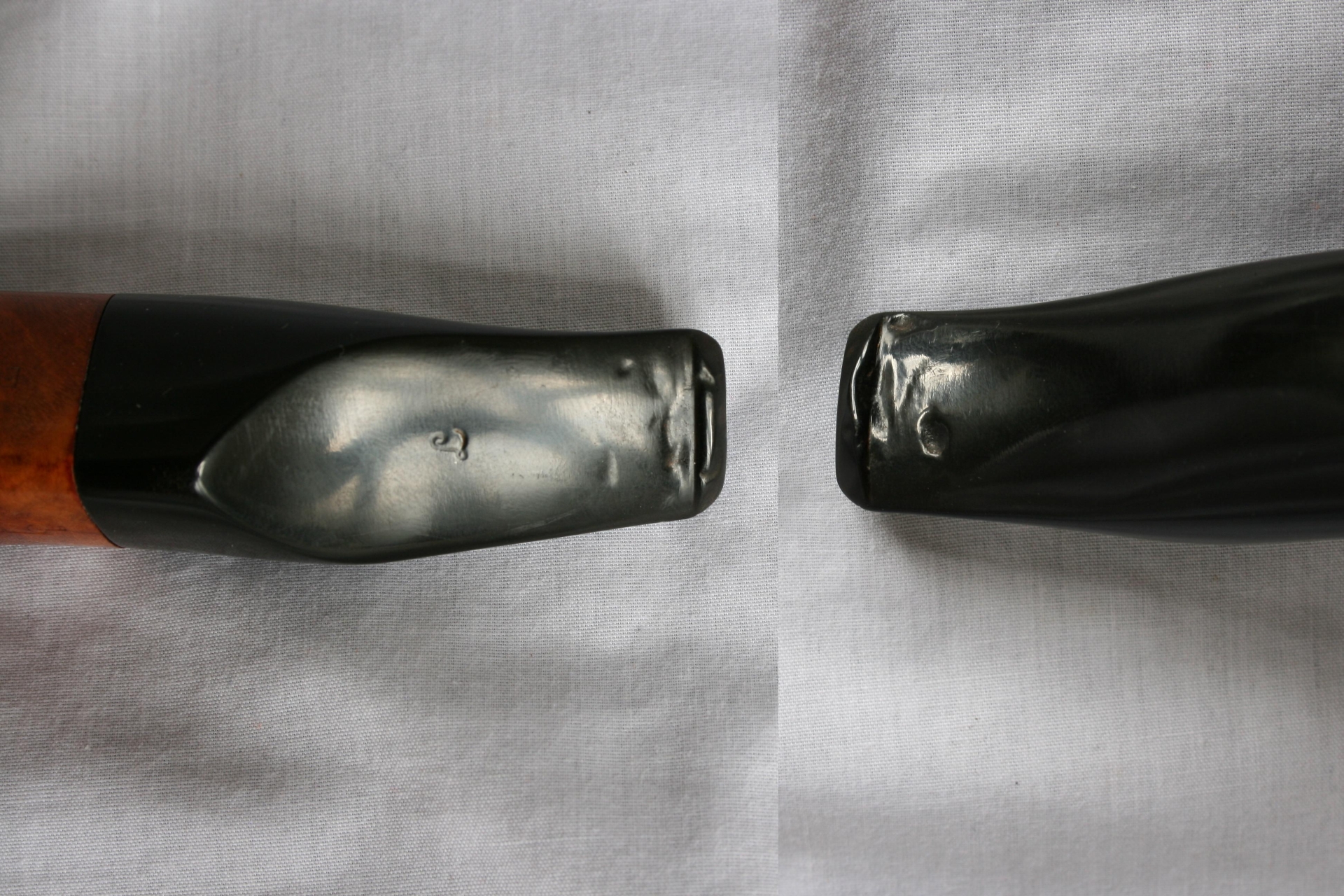
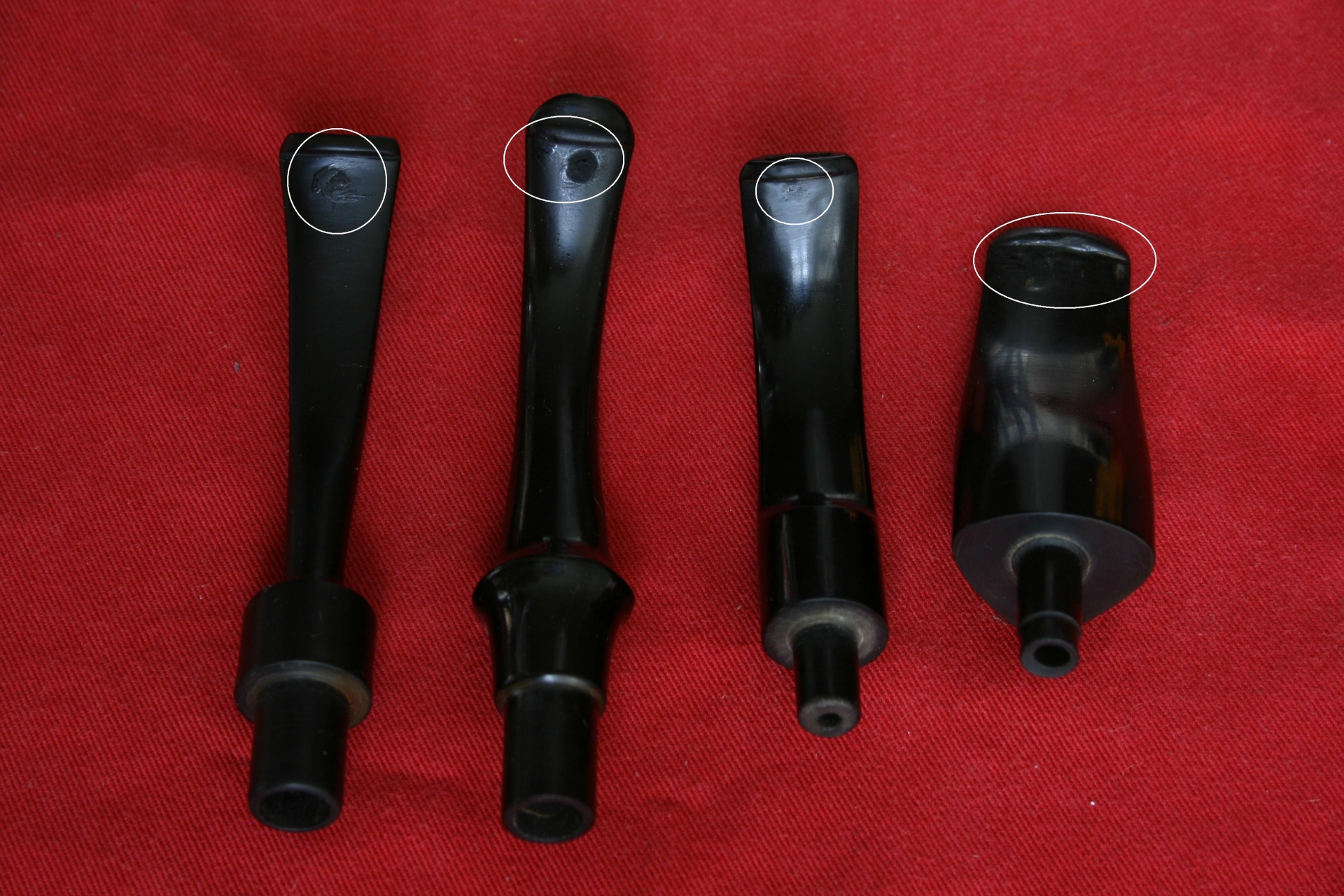
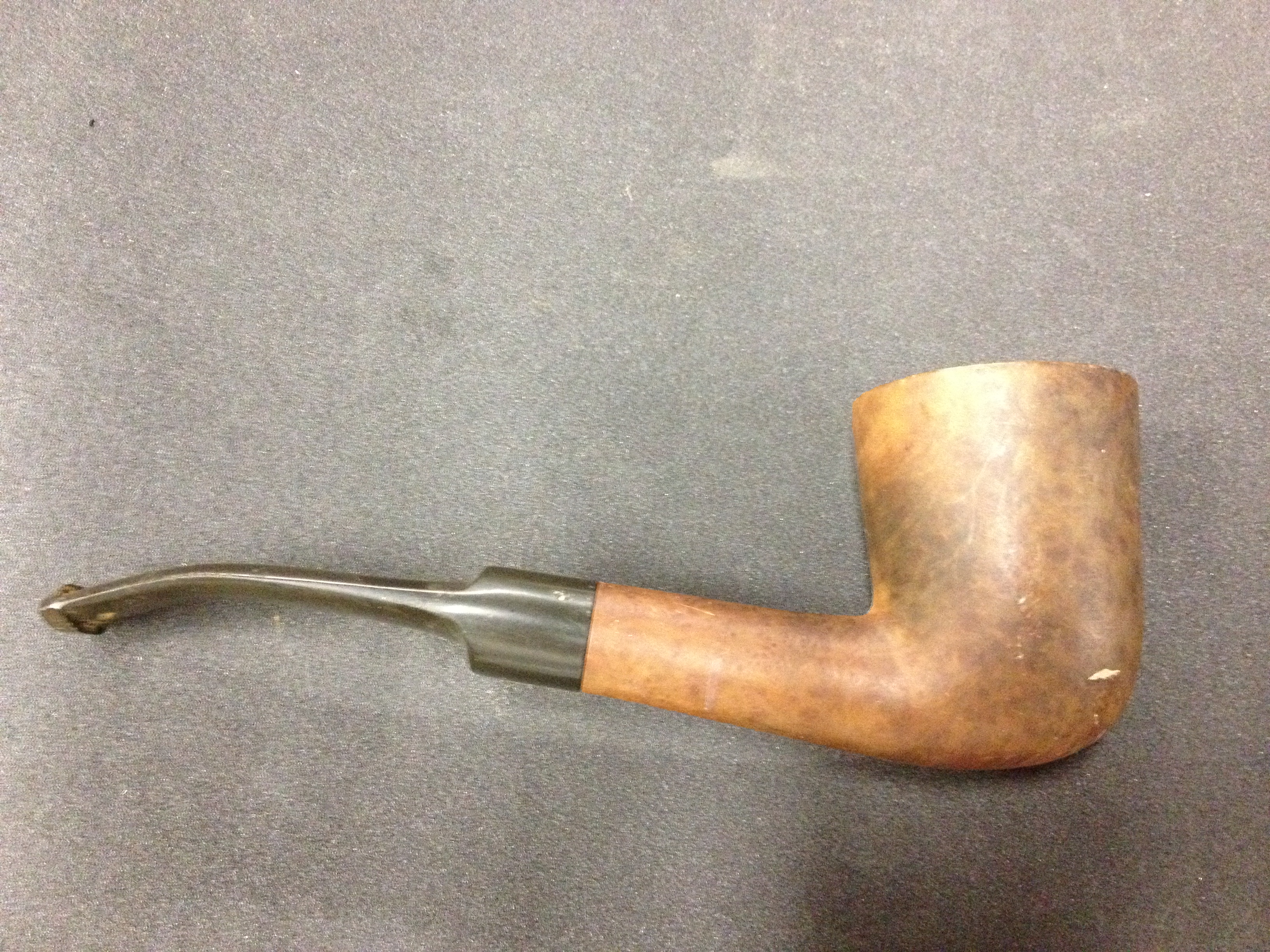
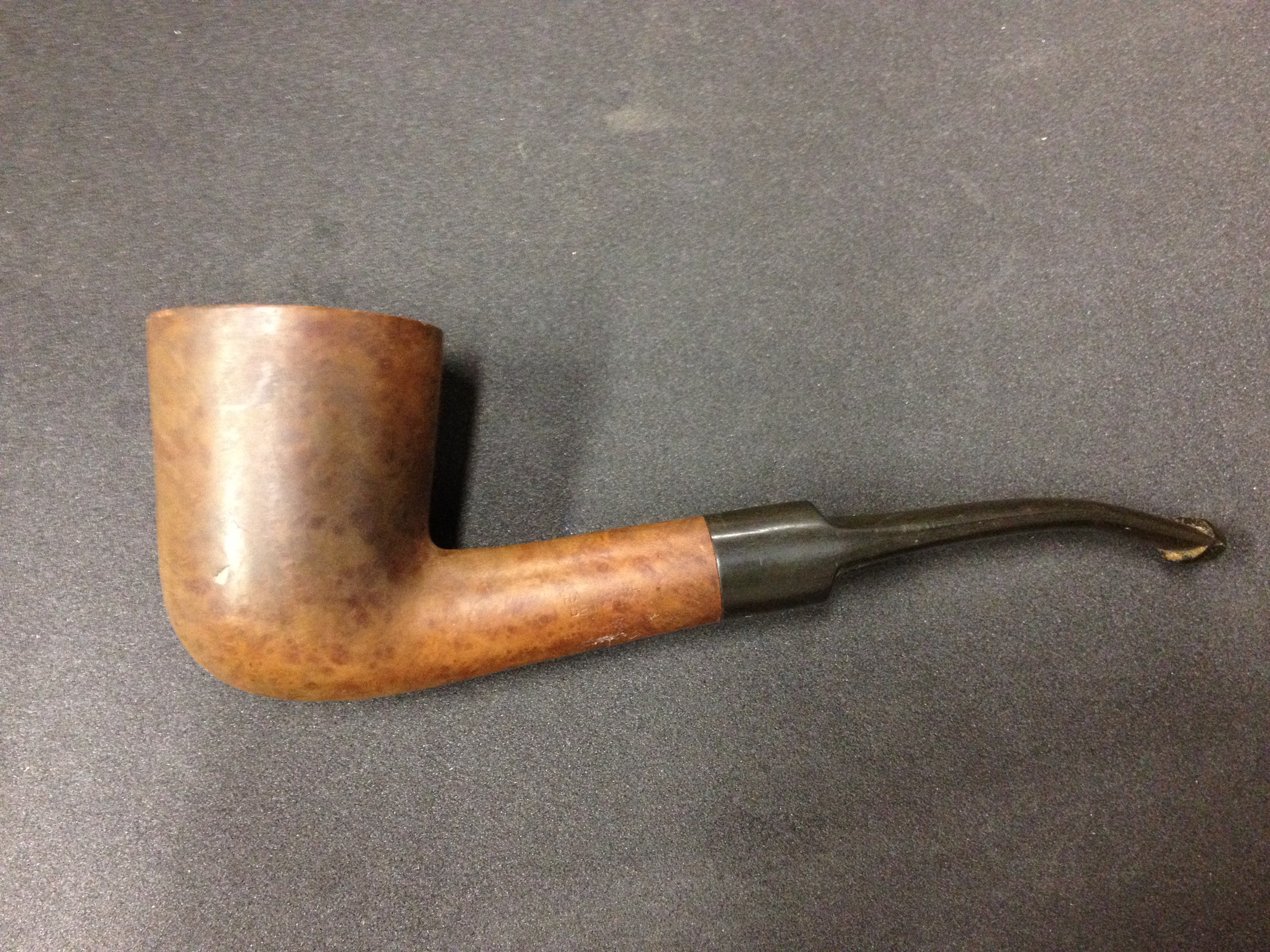
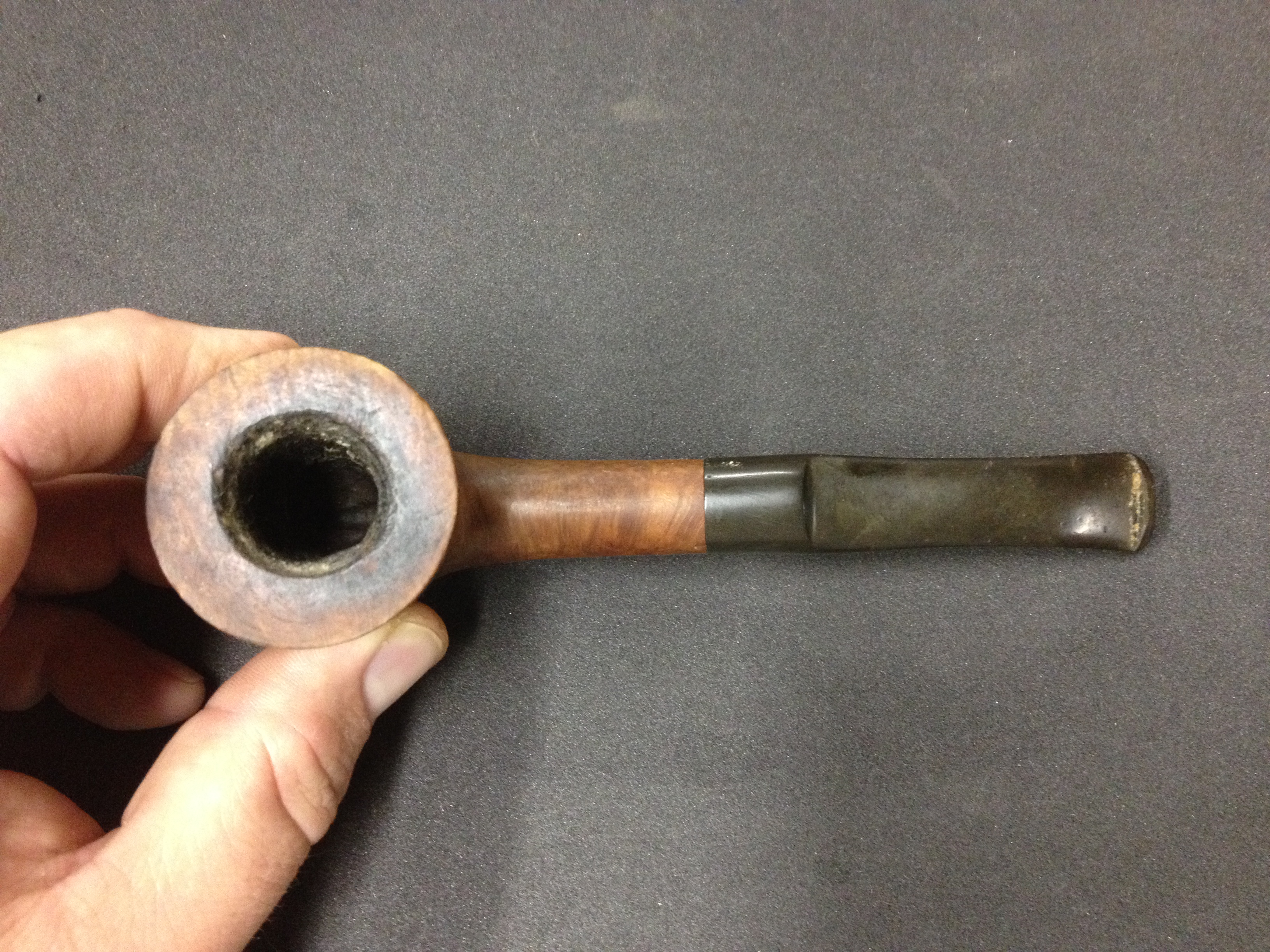
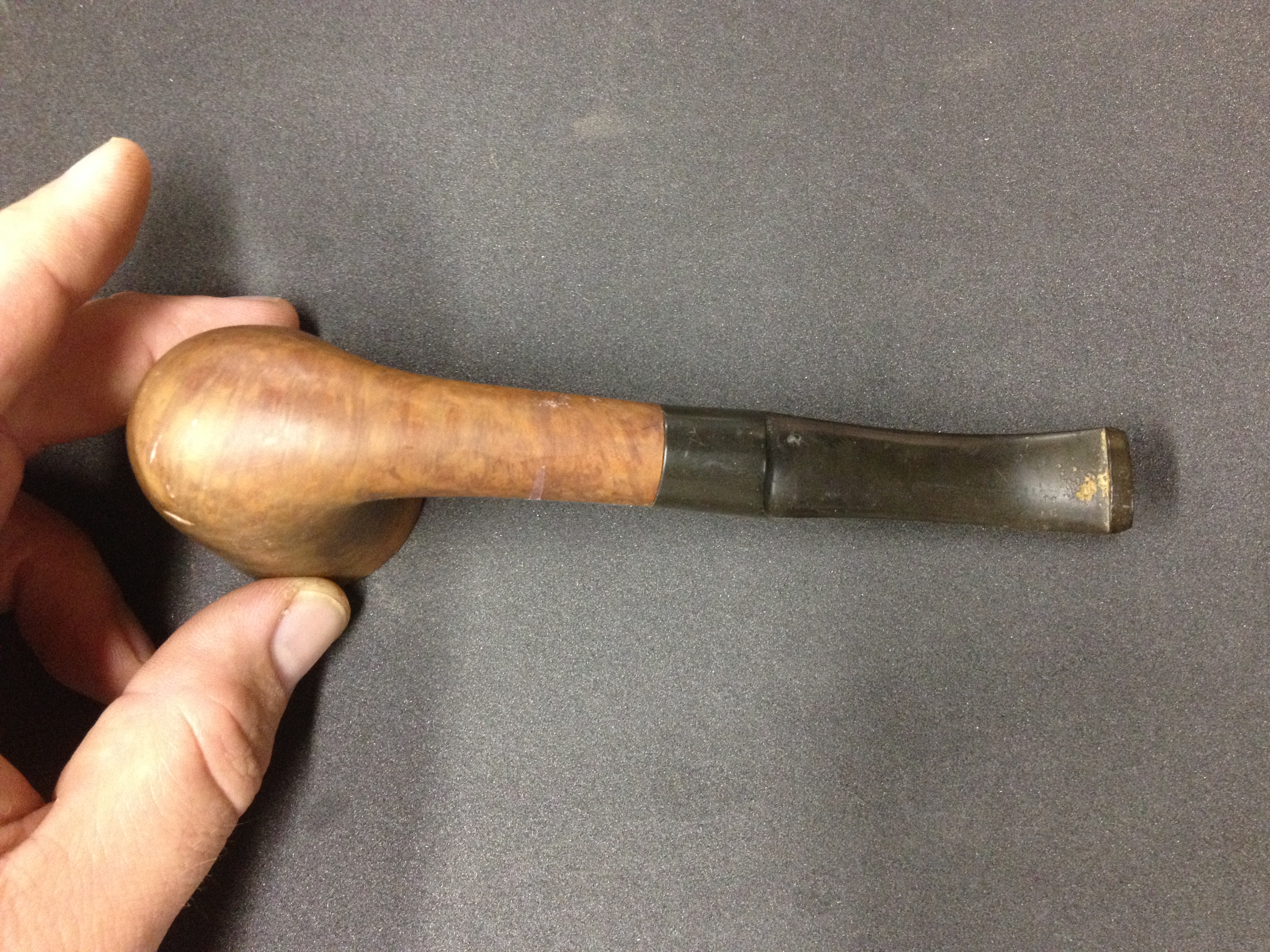
All of them had bite marks on the mouthpiece and the Riviera had even been bitten clean through.

Lorenzo is a good Italian brand that is quite popular in Germany. The BBB Medina is an old English made pipe that has a good reputation here in the Dutchlands. The Wahl and the Machiavelli pipes are a mystery to me. I can find some eBay listings for them but I cannot pinpoint their true origin.

First up the pictures I did have of the before process.

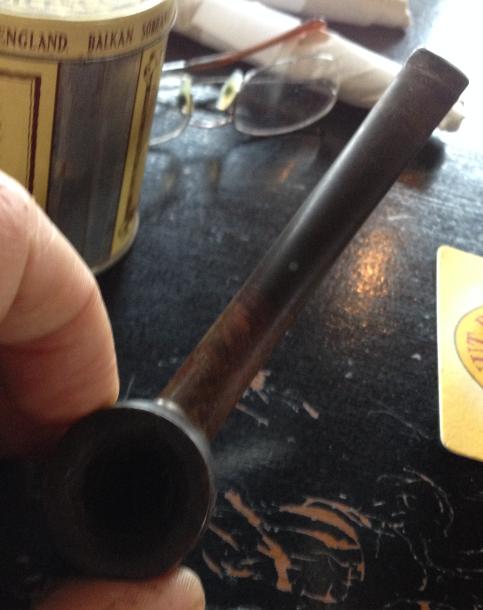
BBB Medina
001 BBB Before

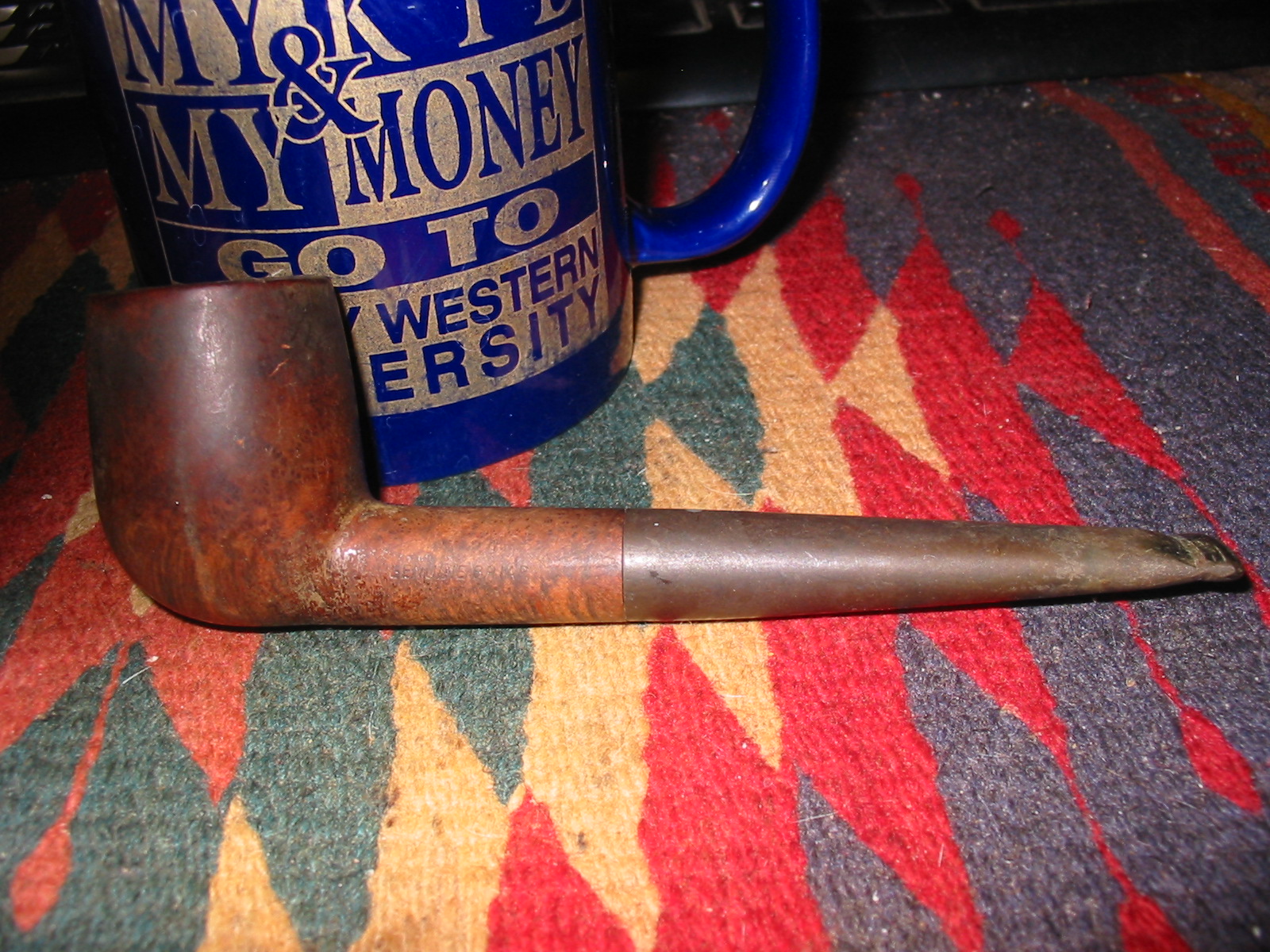
Lorenzo Elba
002 Lorenzo before

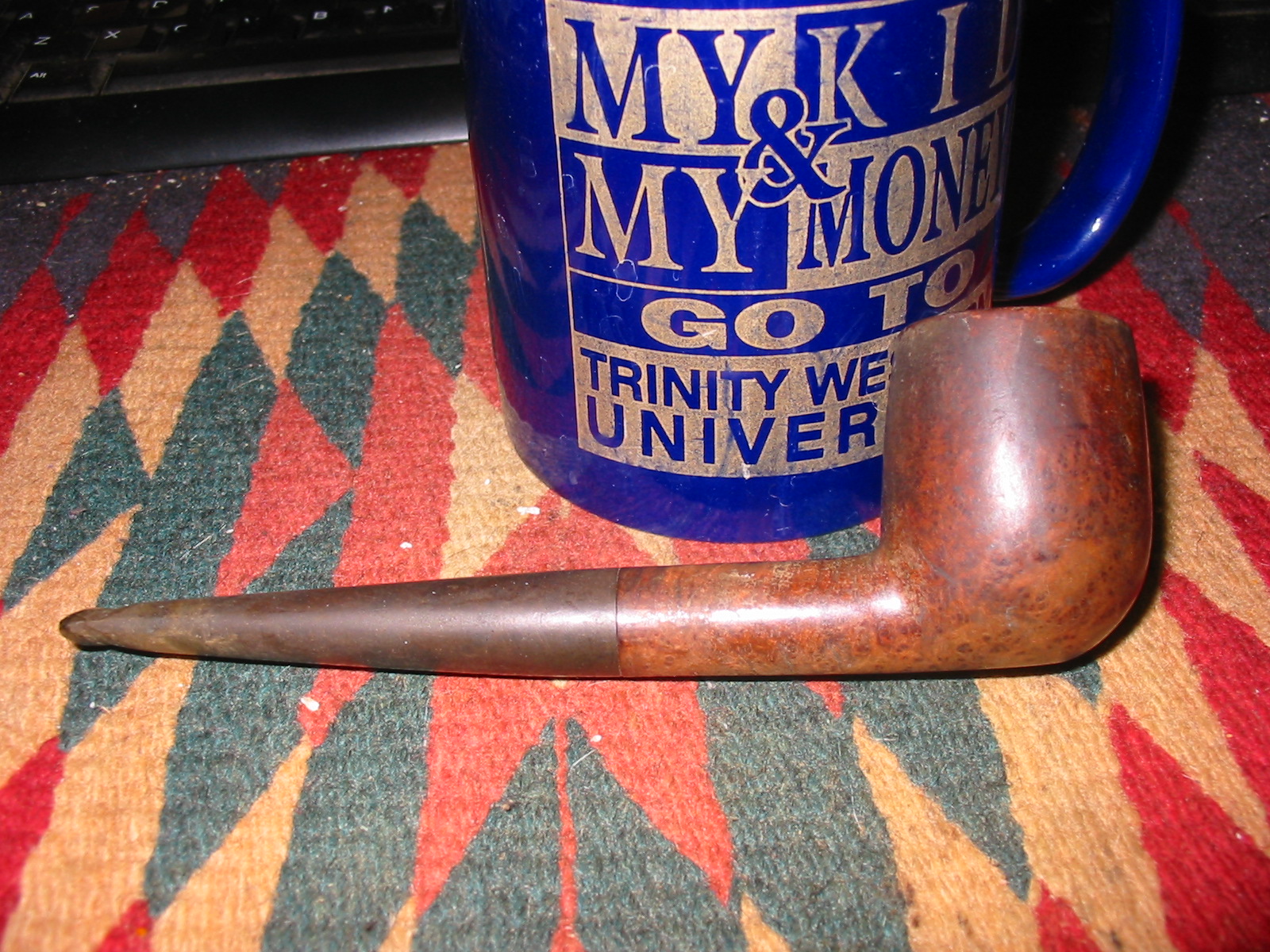
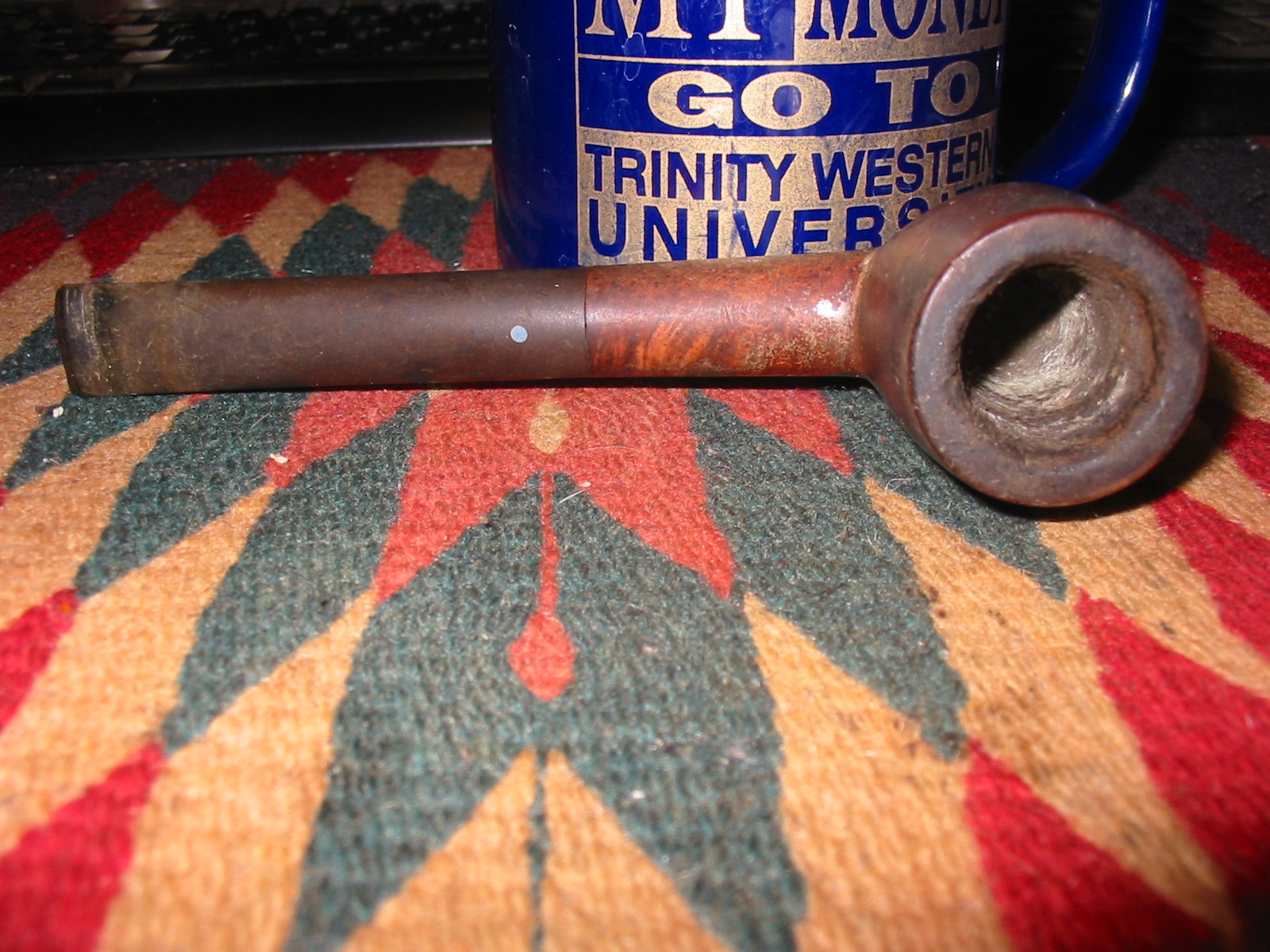
11 Wahl
003 11 Wahl Filtro before

As these pipes had already been waxed I first removed the wax layer using my motor, water and grinding wheel. This only took a few moments, after which I used a cotton swab and some alcohol to really clean the surface of the mouthpiece.
004 Wax removed

The following steps I repeated a few times as I found I was a little impatient in the drying process, I advise to let the glue set for a night just to be sure it is dry to the core.

Using a piece of cardboard dipped in Vaseline (sorry no pictures) I closed the hole in the Riviera mouthpiece and with cotton swabs and toothpicks applied the glue to the bite marks on all the other mouthpieces.
005 Glue applied

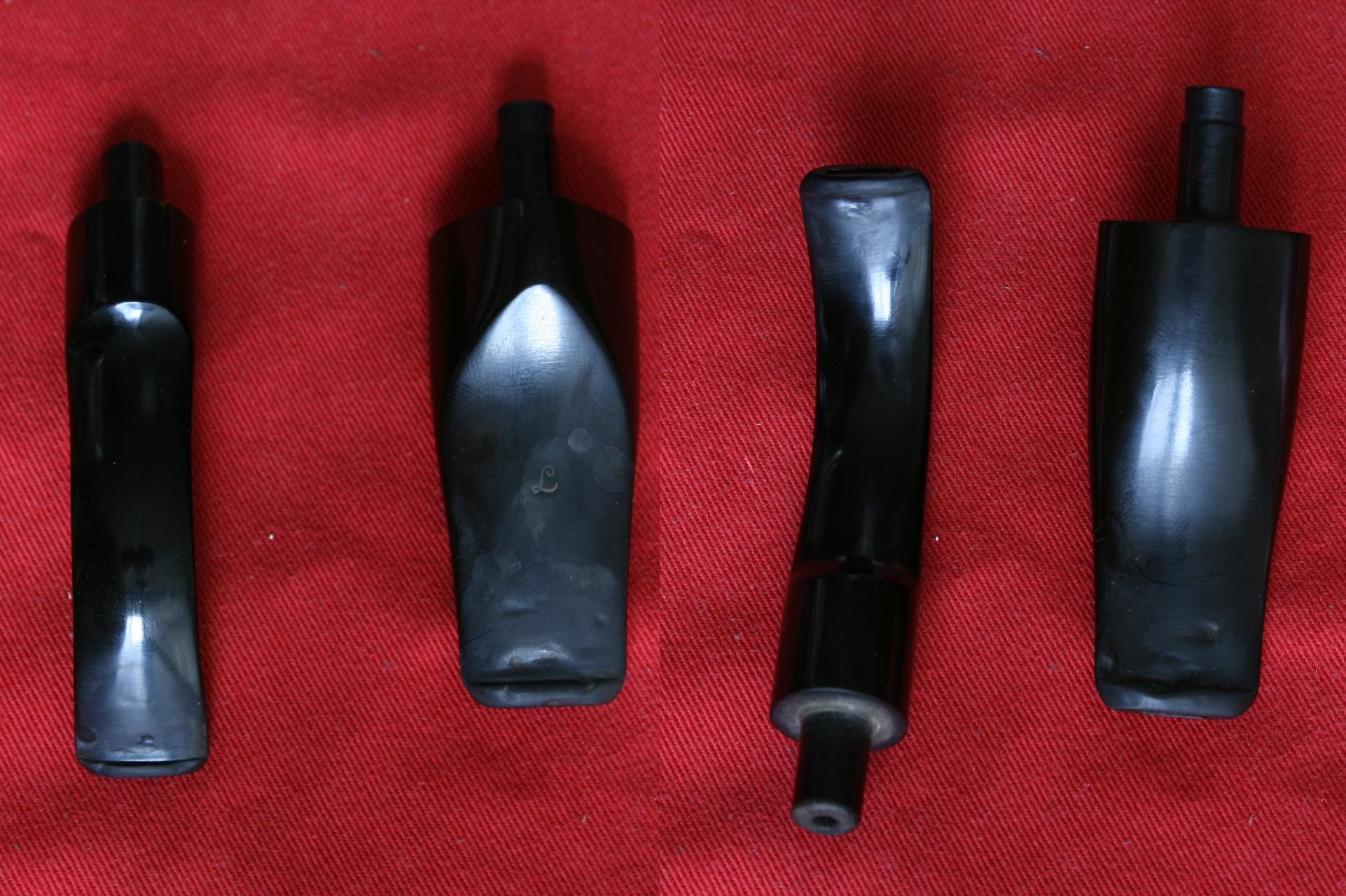
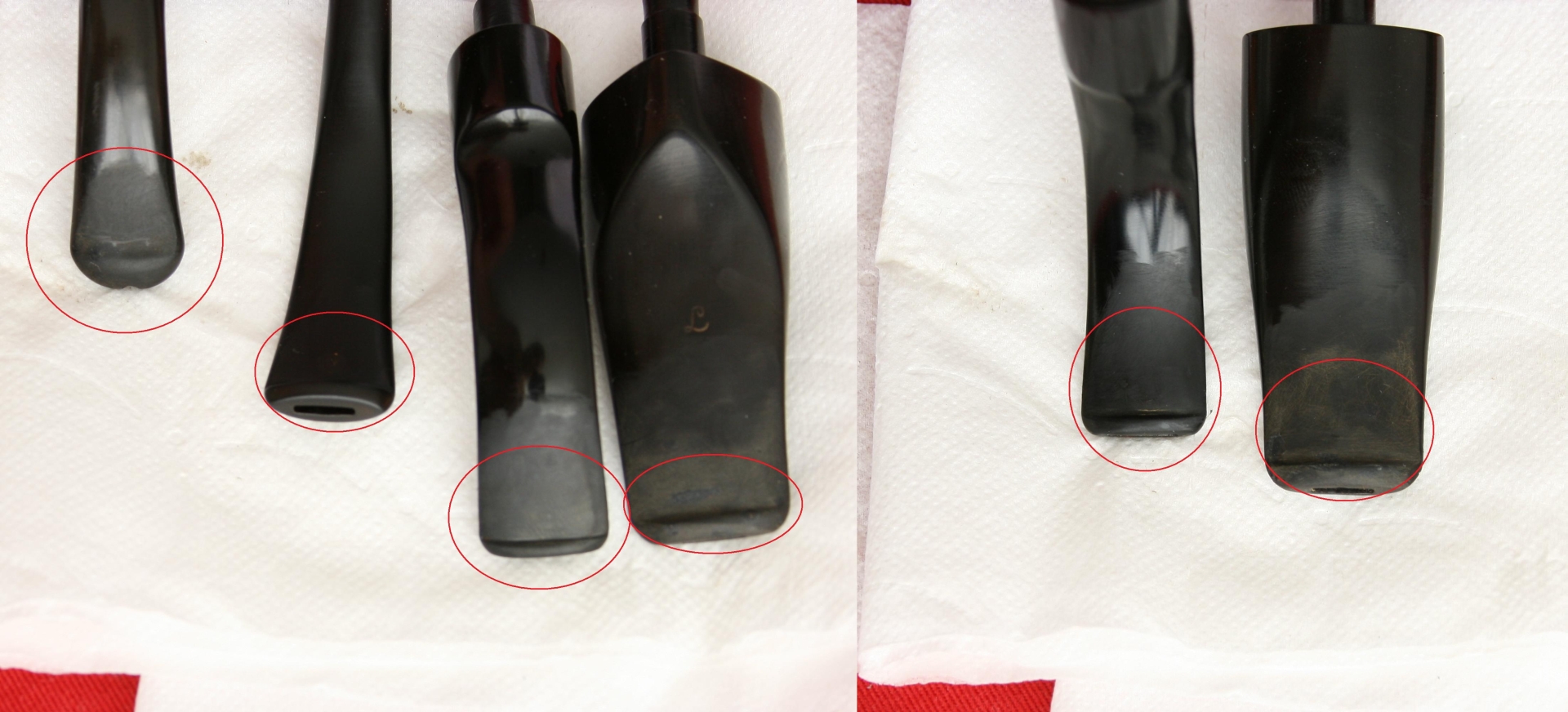
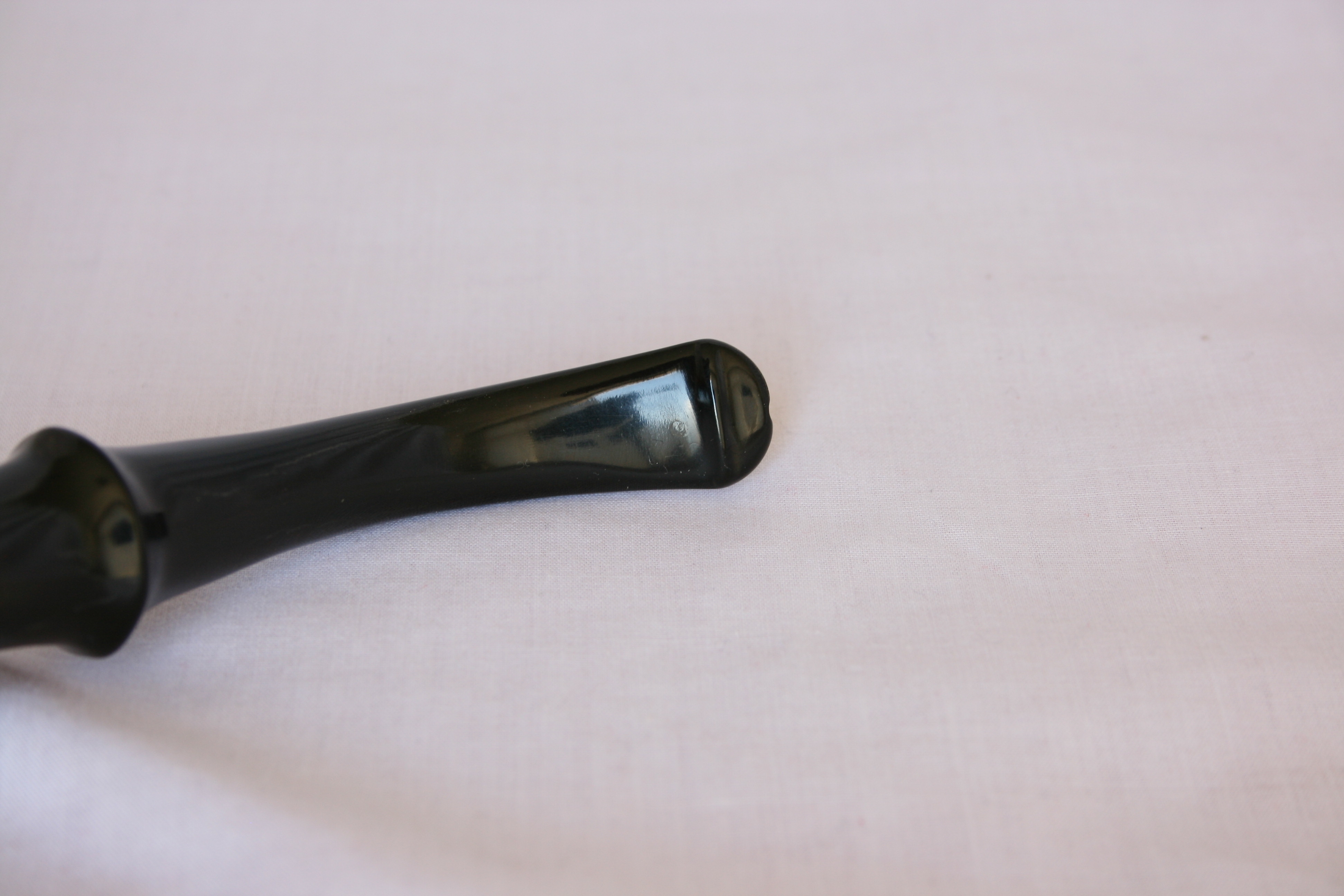
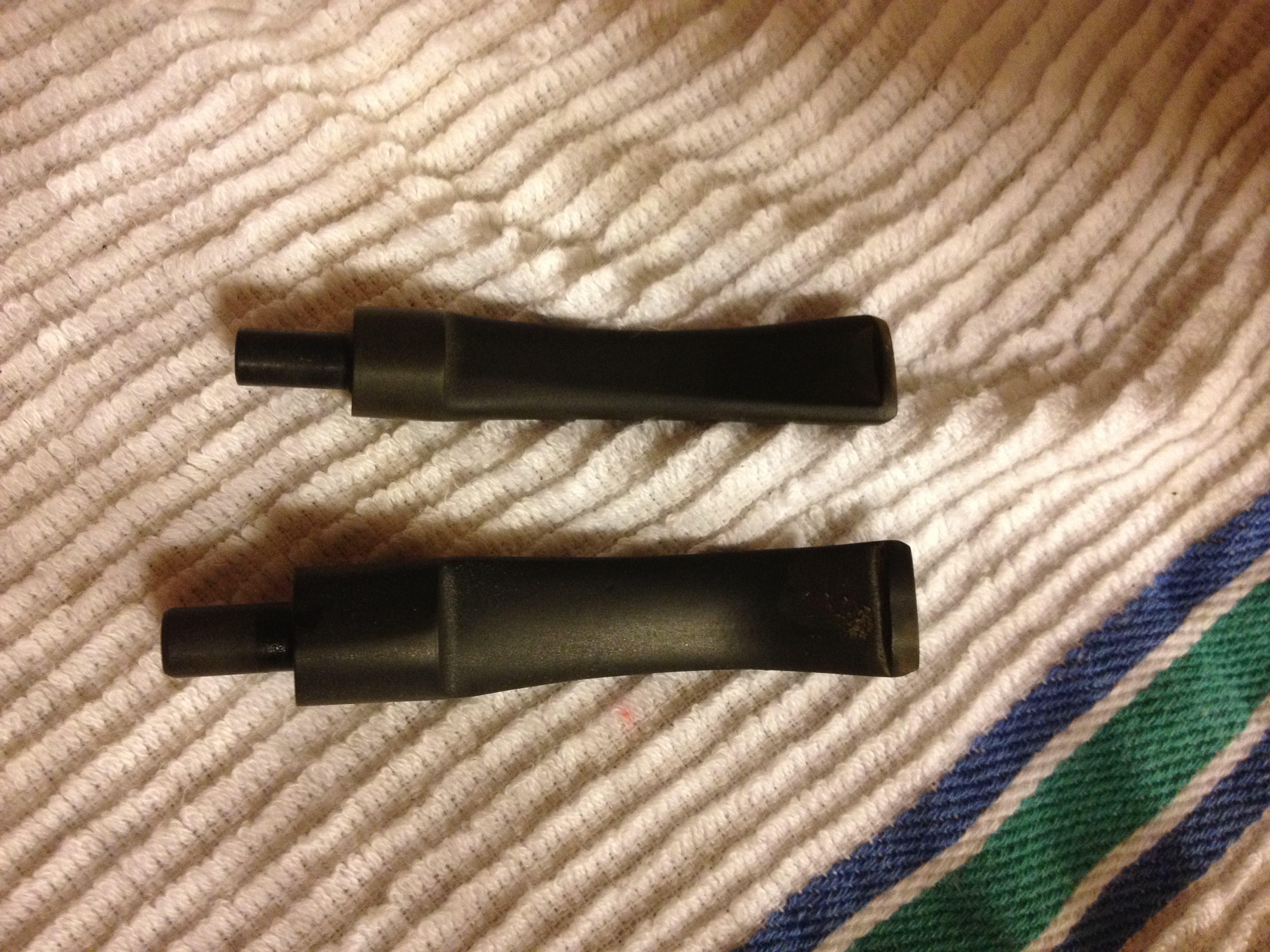
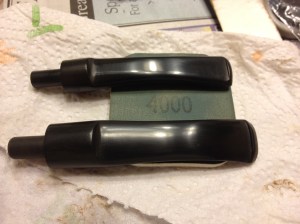
When the glue had dried I used 600 and 1000 grit sanding paper wrapped around a model file to sand off the excess glue and smooth the mouthpiece.
006 Top and bottom after sanding

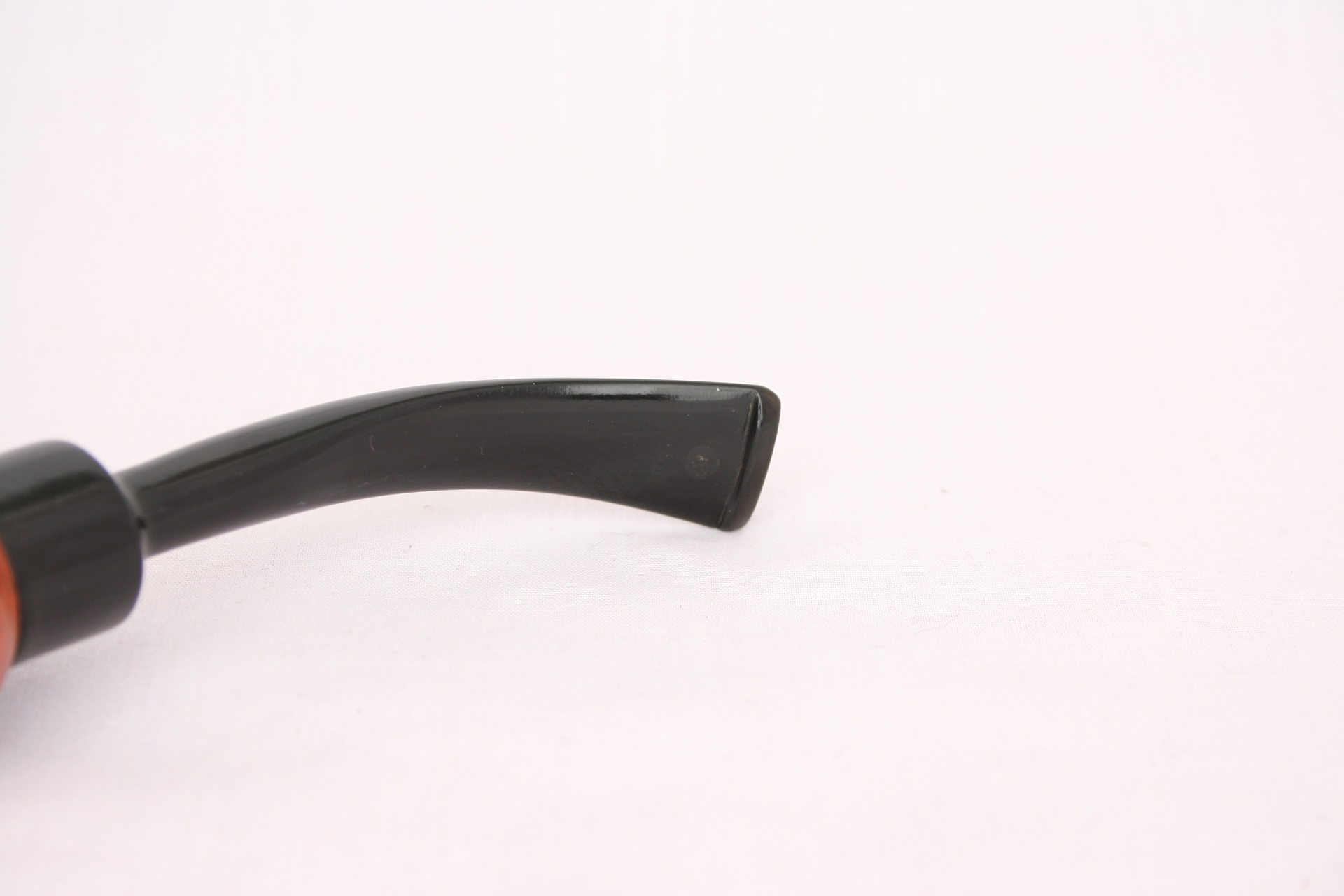
I checked the smoothness using my mouth and tongue and although in all cases it felt smooth I noticed that in taking the pictures of the finished product the glue spots are visible. This bothered me, like when I sand a round shoulder or edge on the stem. A casual observer will not notice this, but I know it is there and it will bother me. However I decided against re-sanding them in the hopes of getting them perfect. Because in the end it is my lips and tongue that are handling the mouthpiece the most, not my eyes 

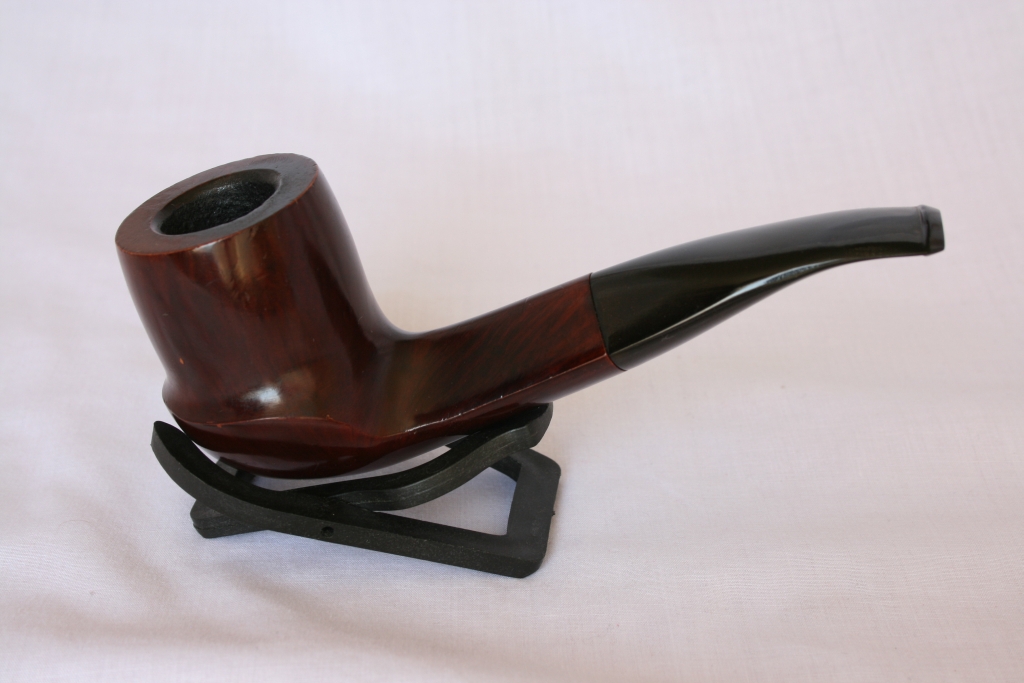
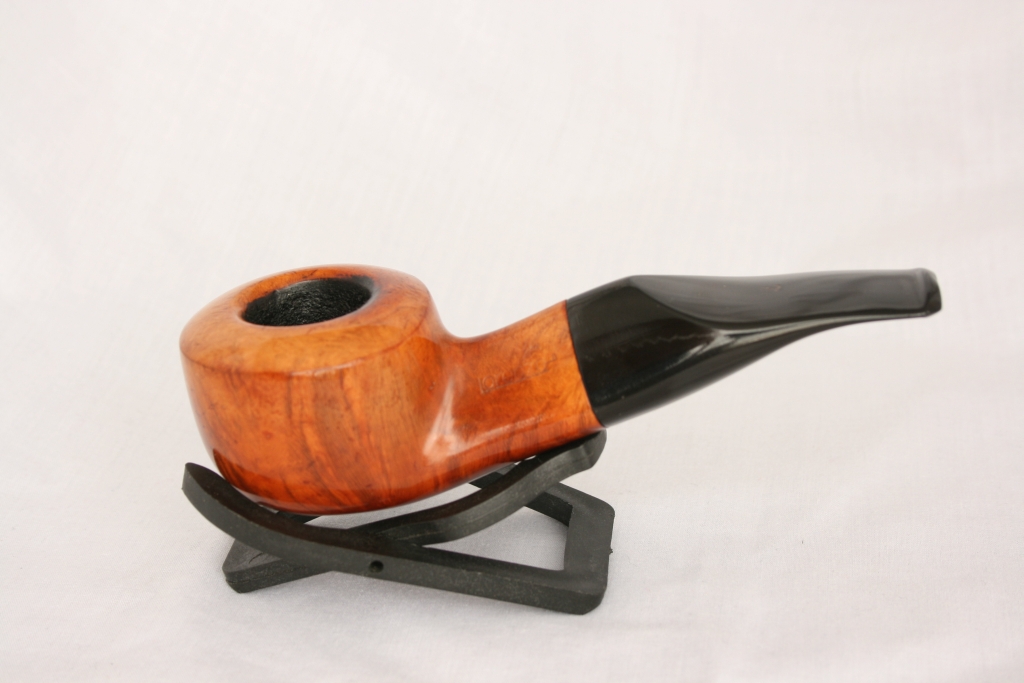
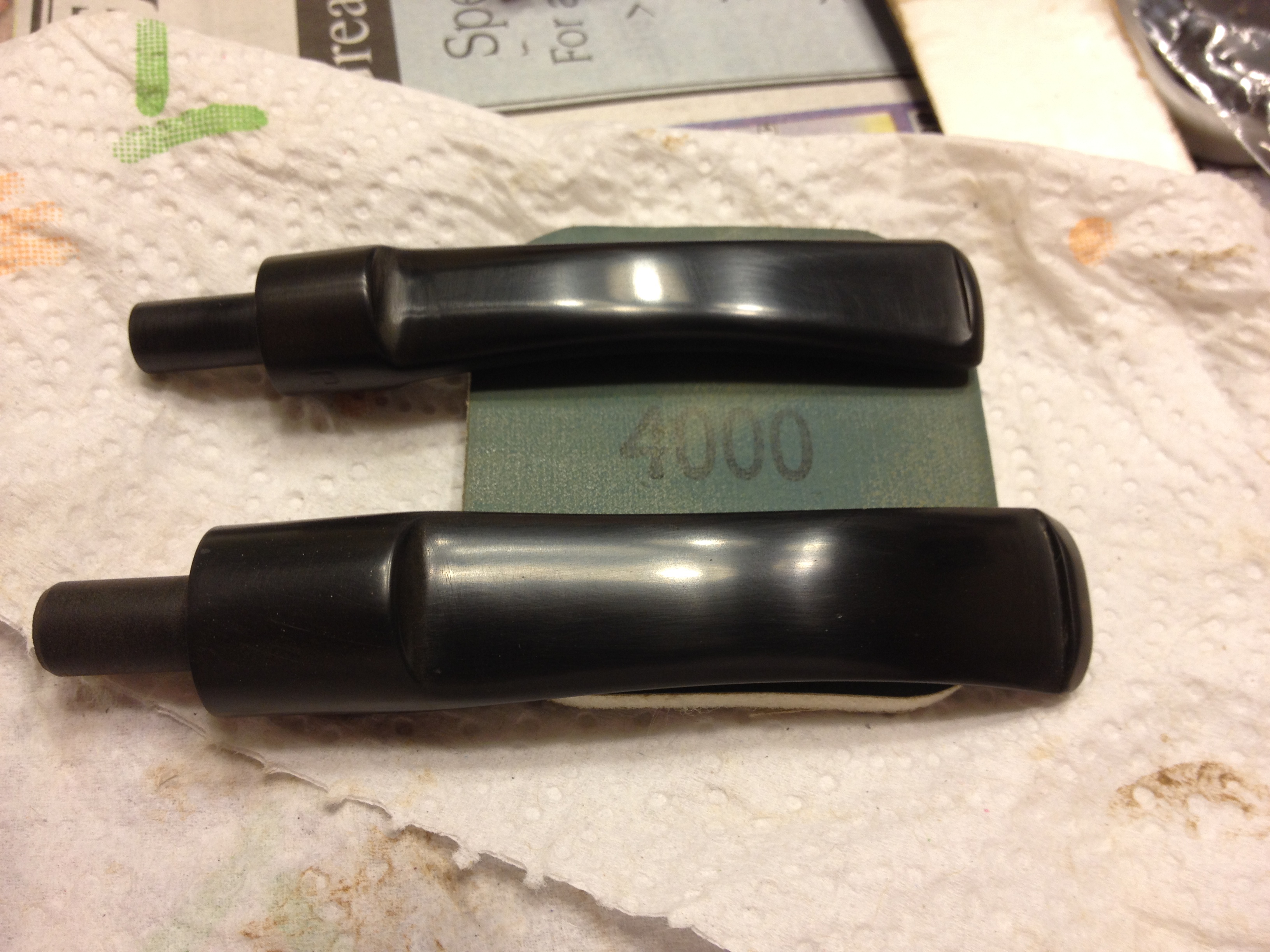
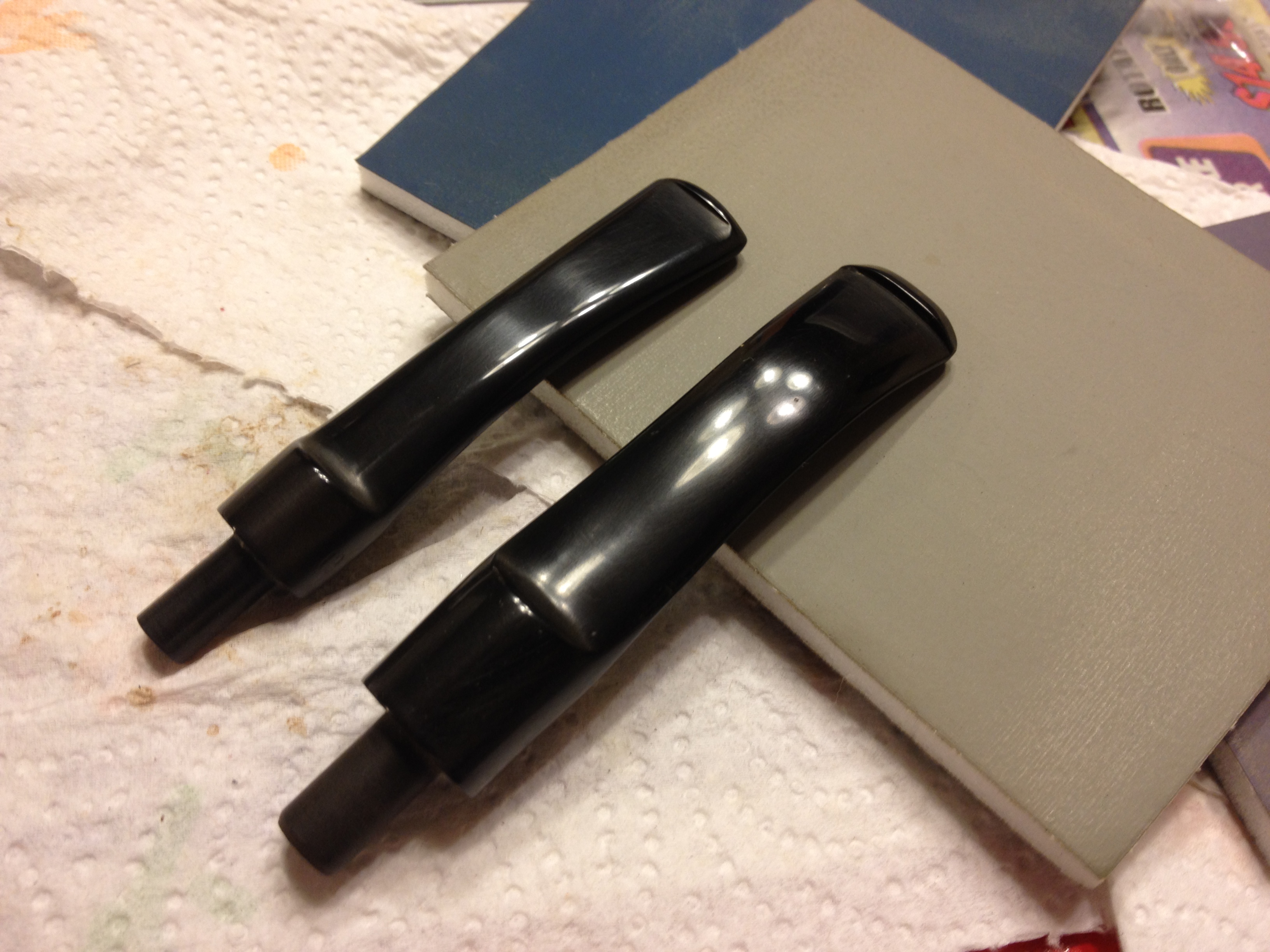
To finalize this short post here are the finished mouthpieces, pipes and the tools I used for this project.

11 Wahl Filtro
007 11 Wahl Filtro

008 11 Wahl Filtro

Lorenzo Elba
009 Elba mouthpice finished

010 Lorenzo Elba

Machiavelli Como
011 MAchiavelli Como finished mouthpiece

012 Machiavelli Como

BBB Medina
013 BBB Mouthpiece finished

014 BBB Medina

Spitfire by Lorenzo Riviera
015 Spitfire by Lorenzo Riviera Mouthpiece

016 Spitfire by Lorenzo Riviera

Tools used during this project
017 Tools used

Restoring an Old Amphora X-tra 509 Pot


Blog by Steve Laug

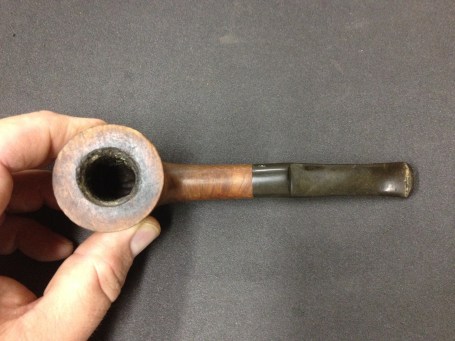
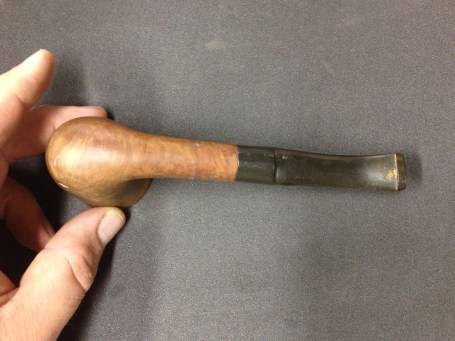
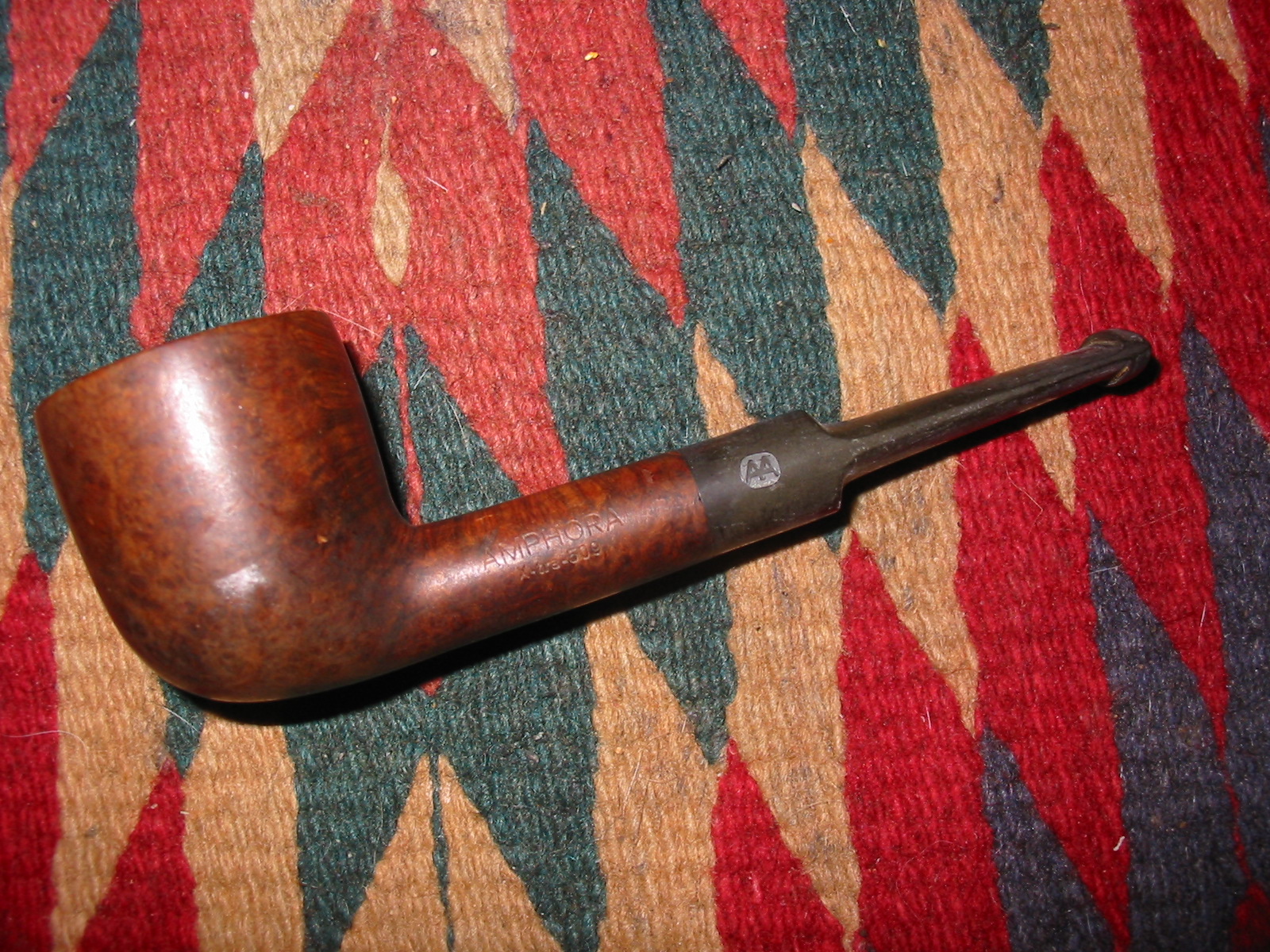
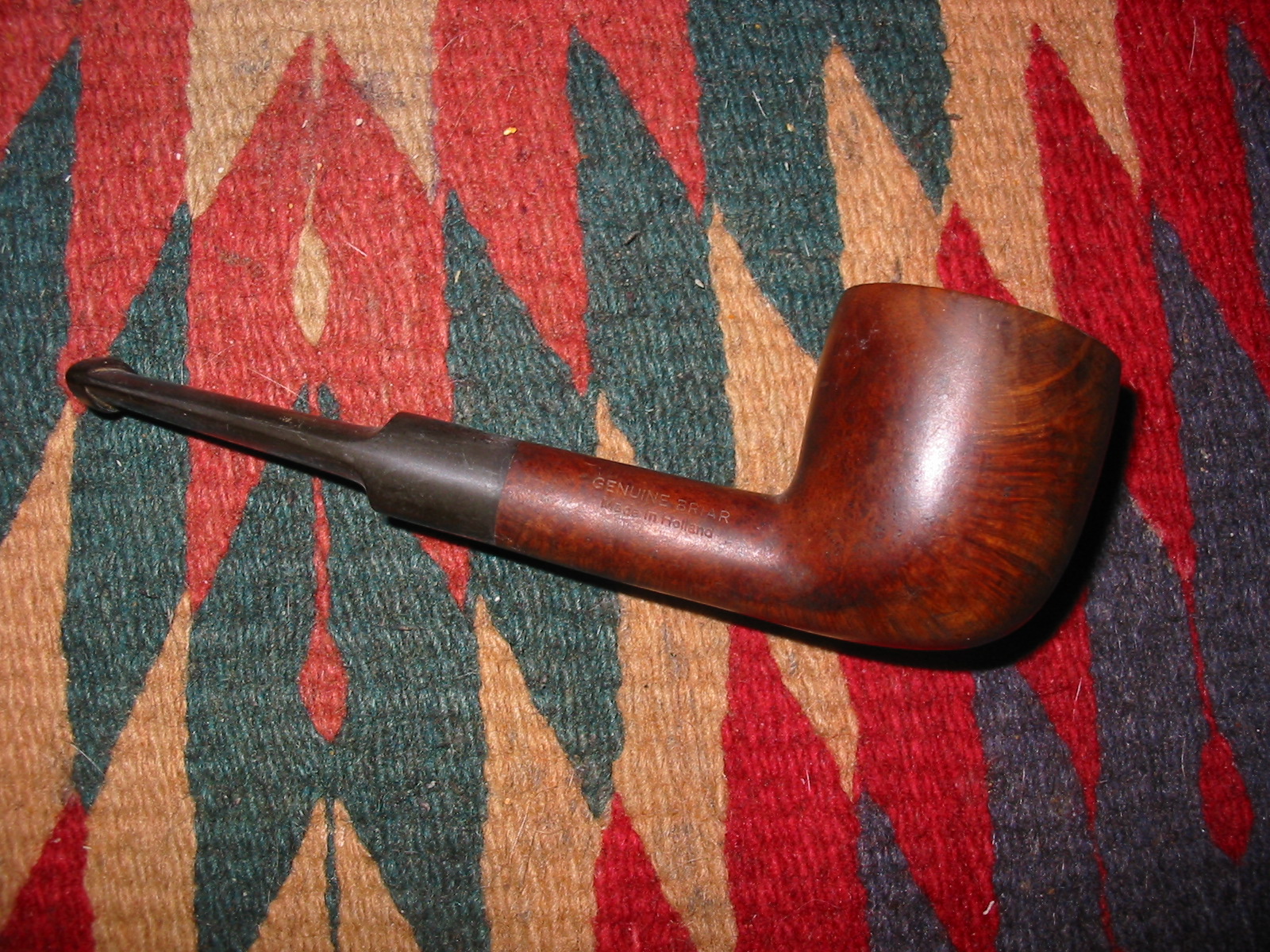
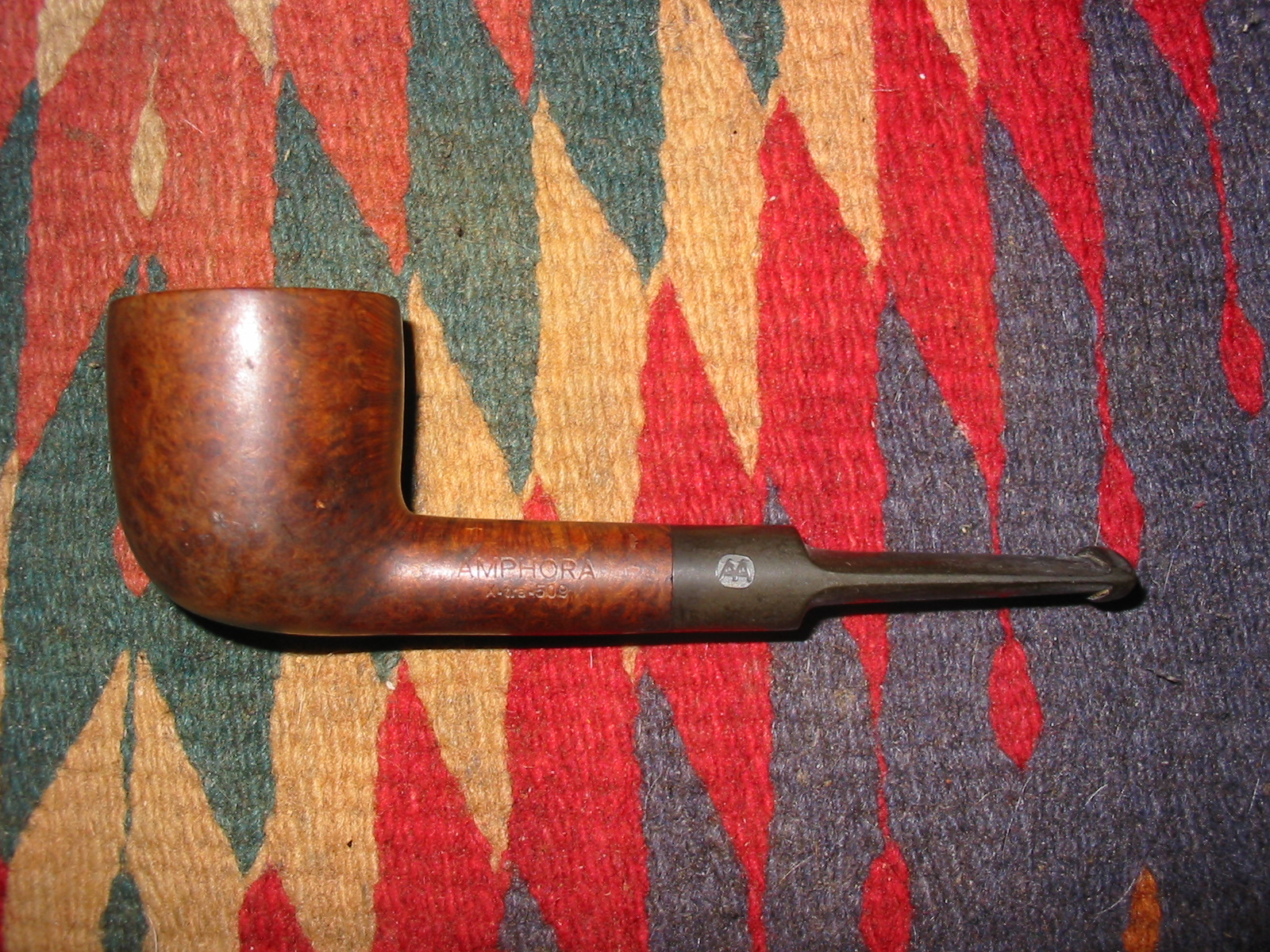
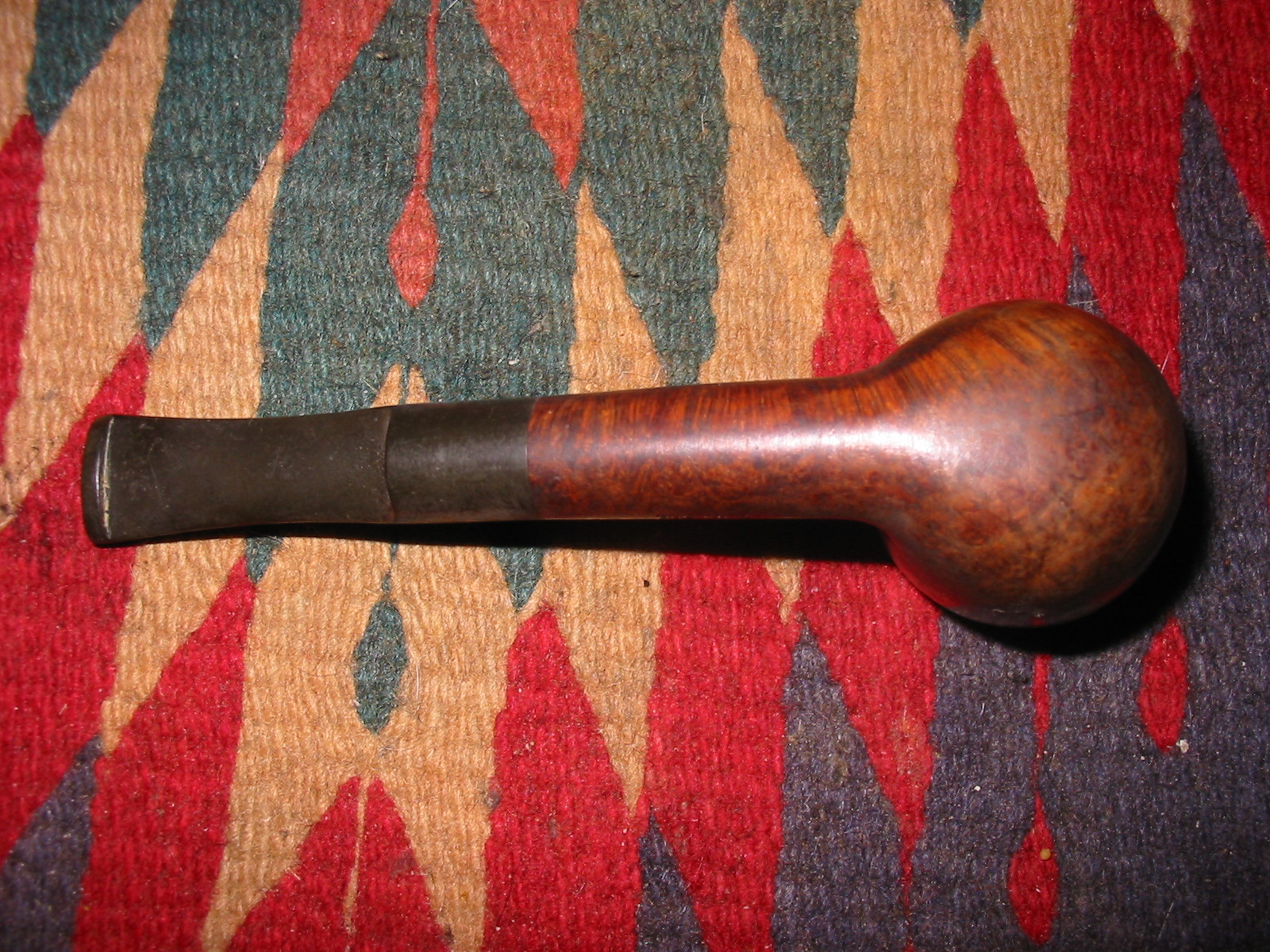
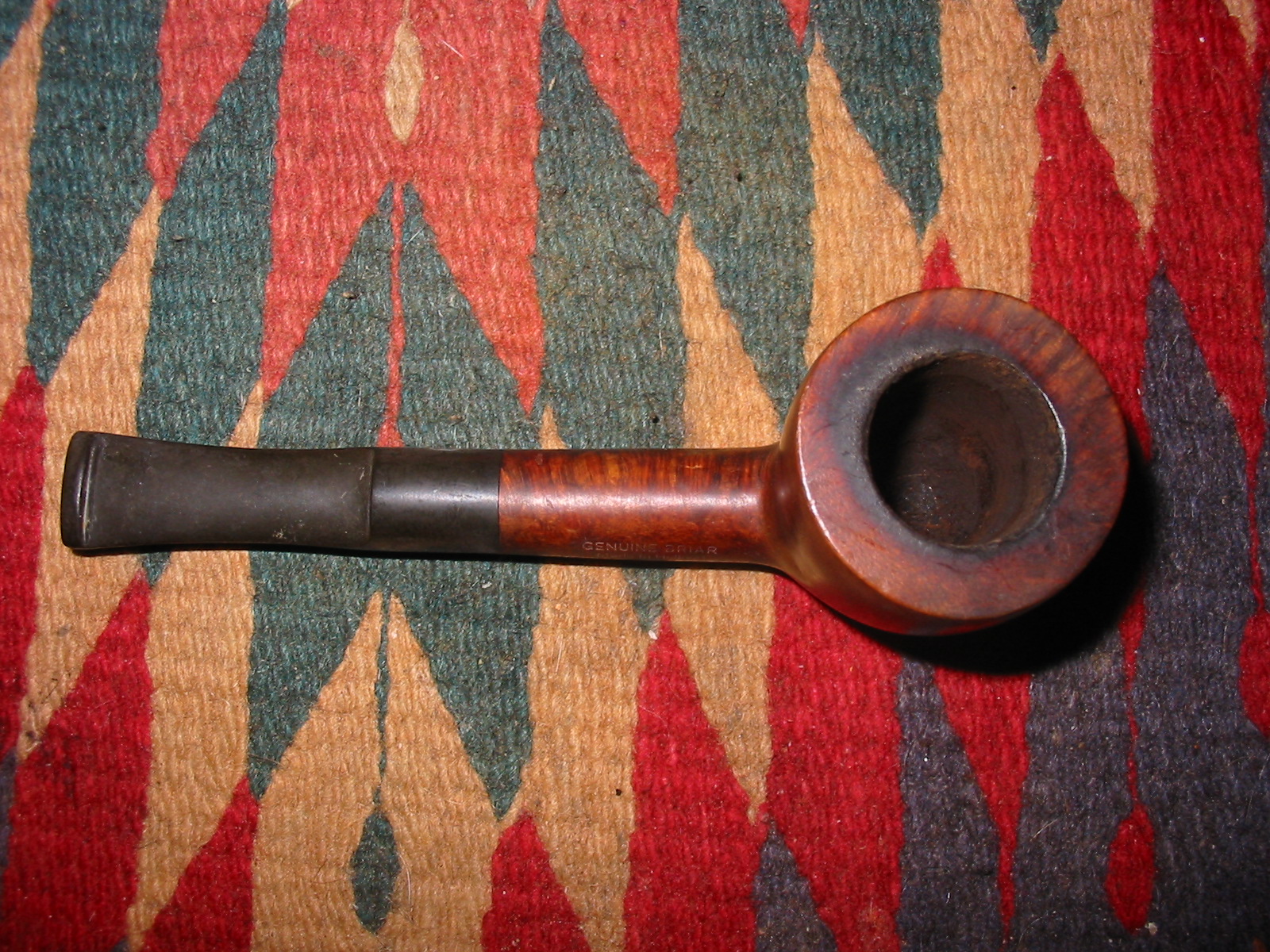
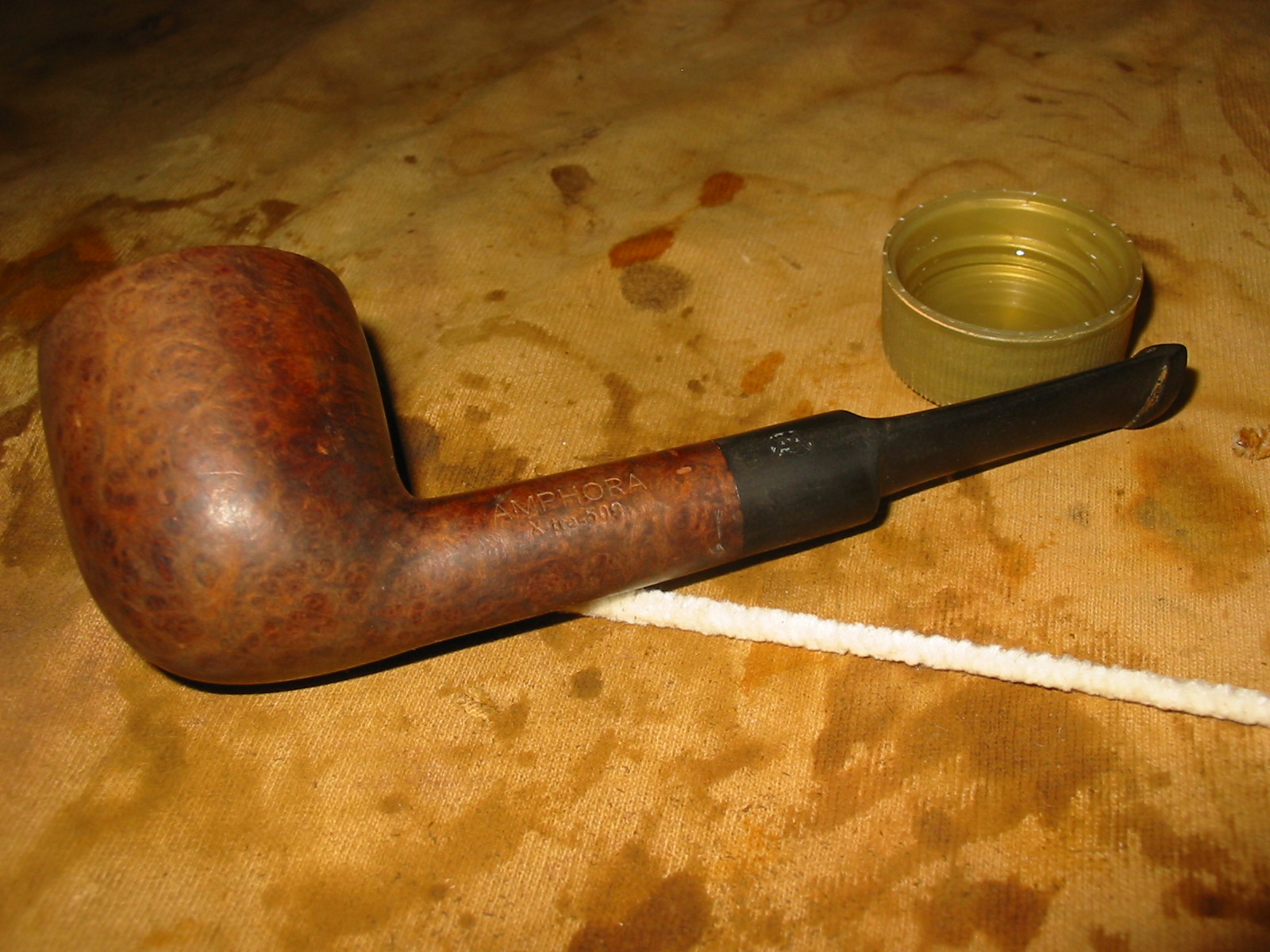
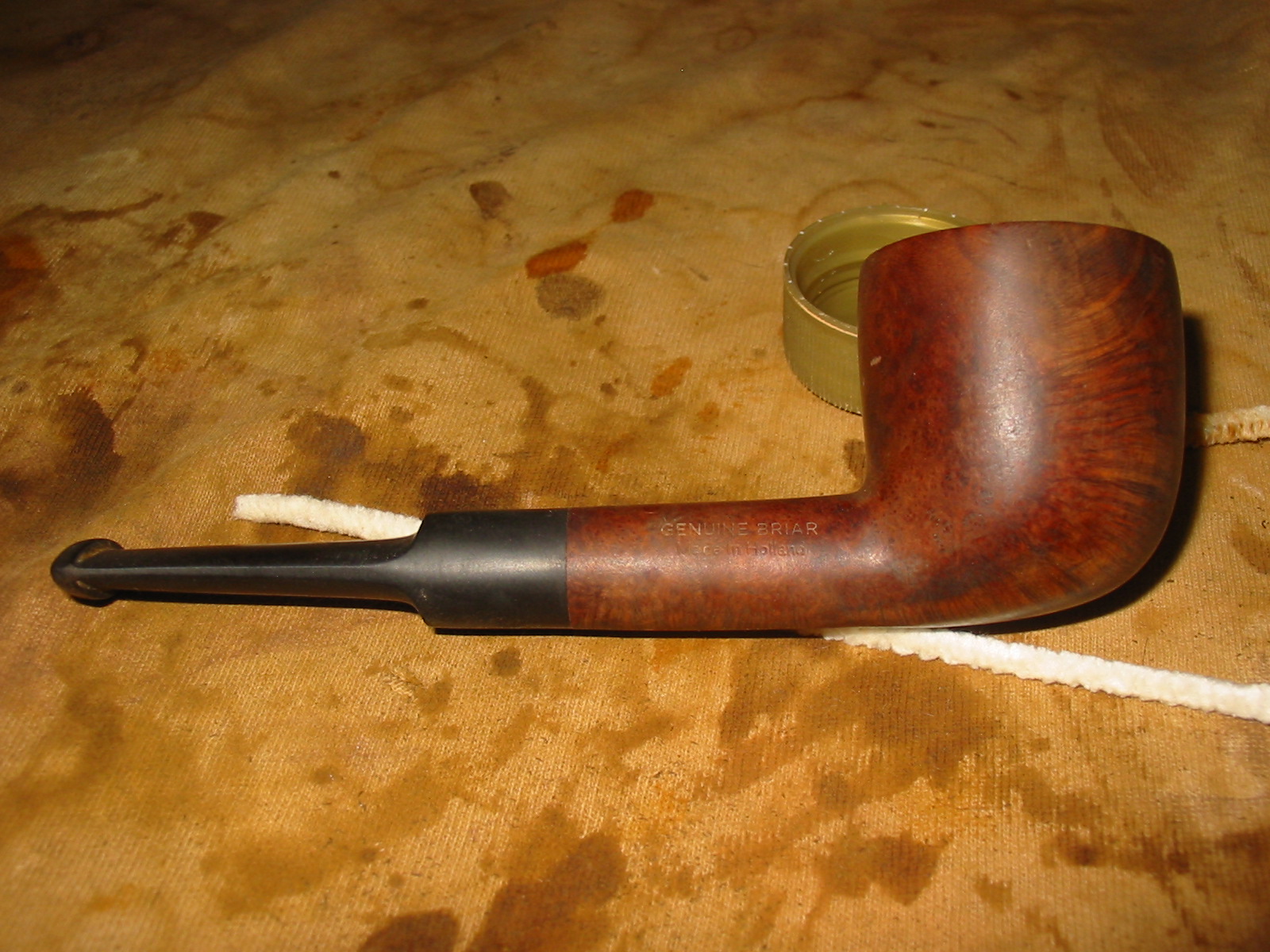
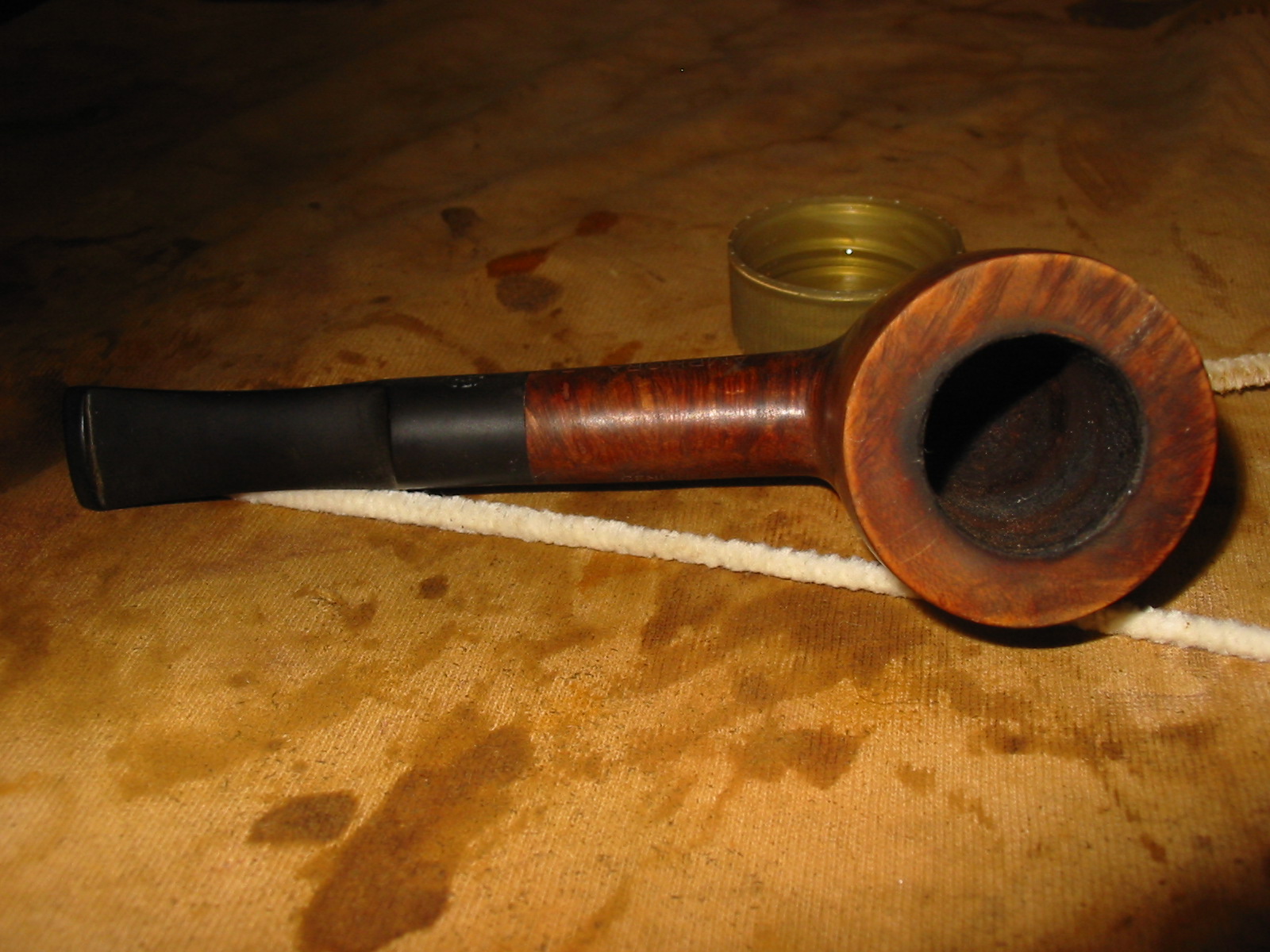
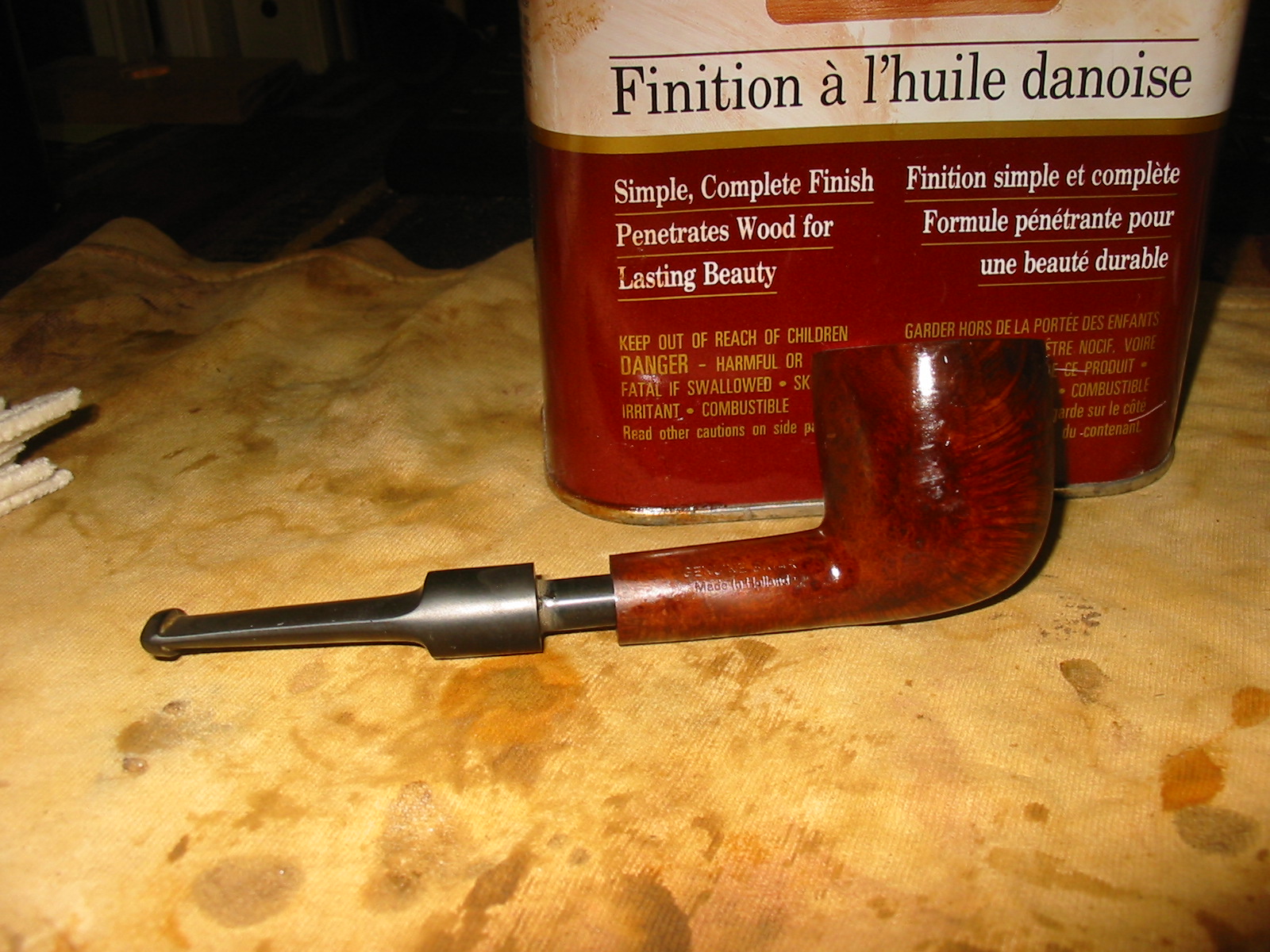
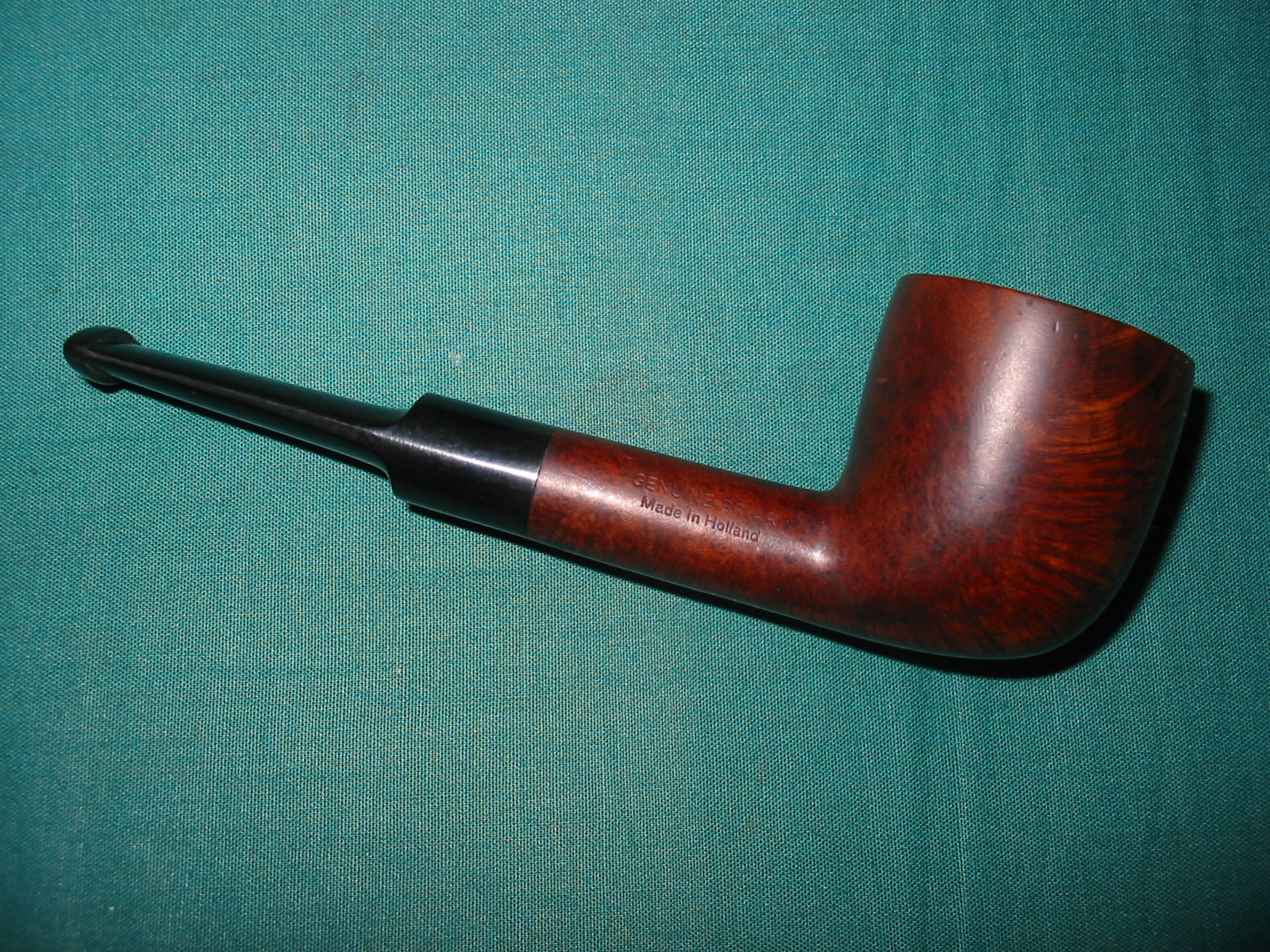
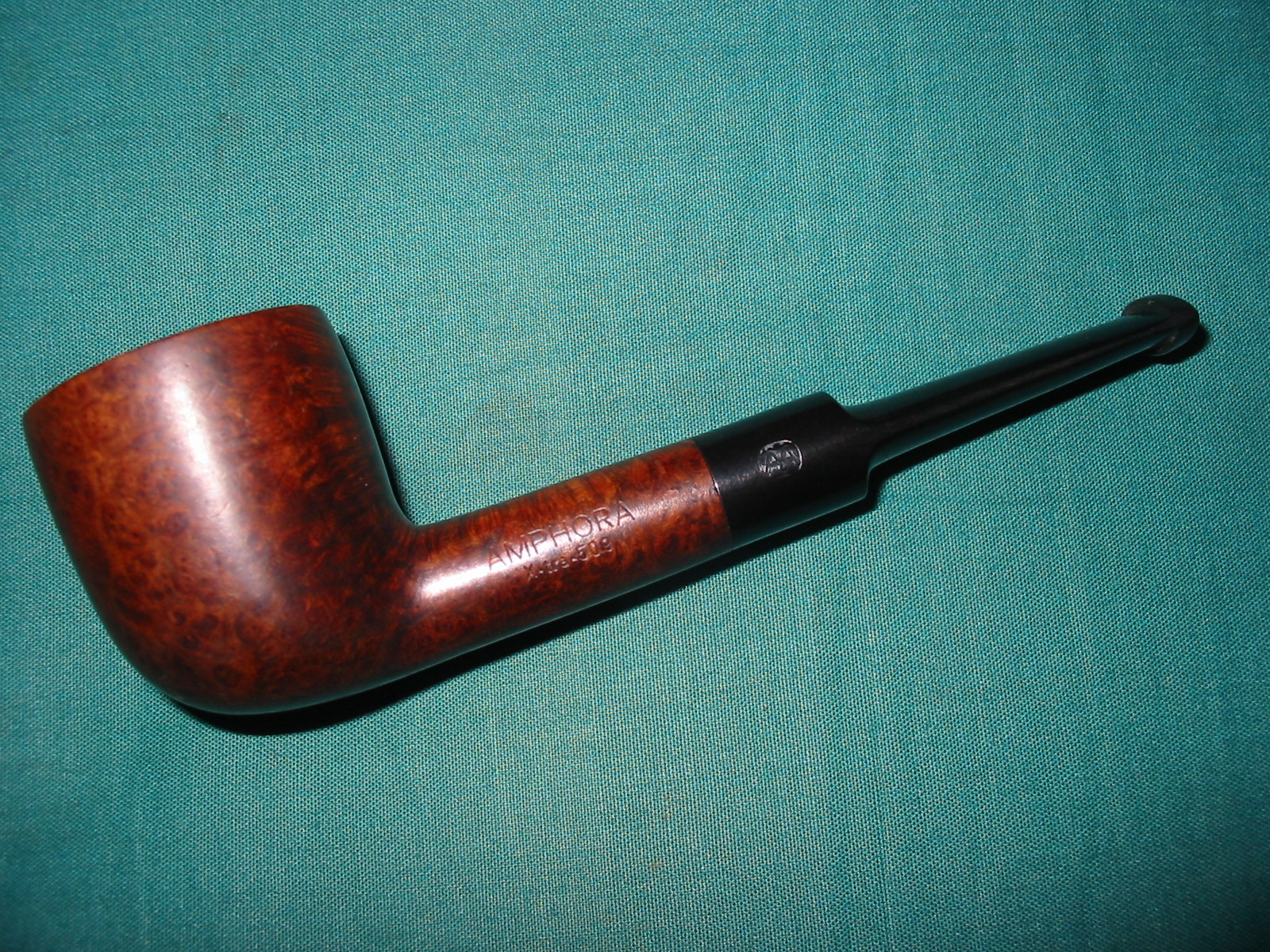
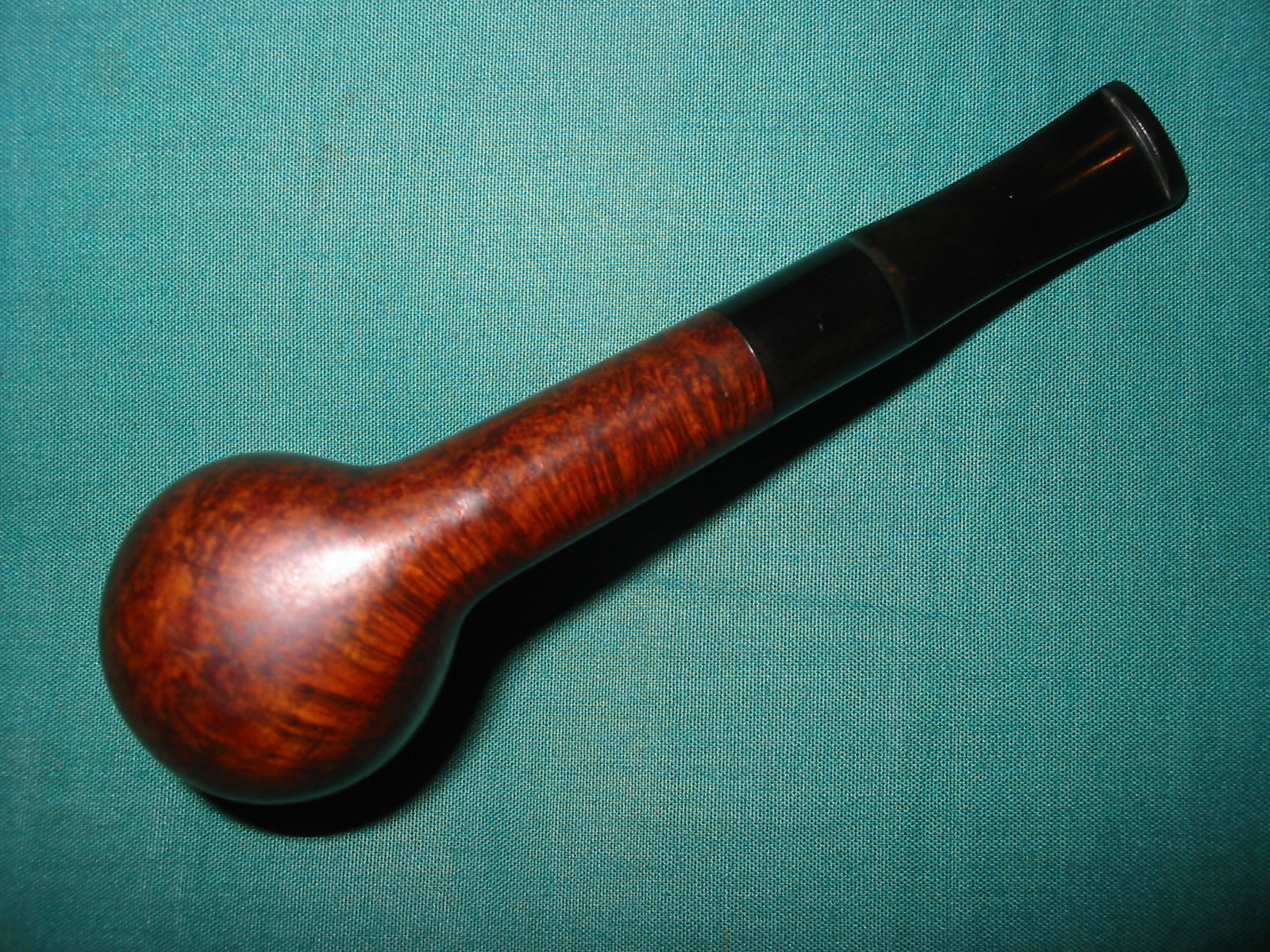
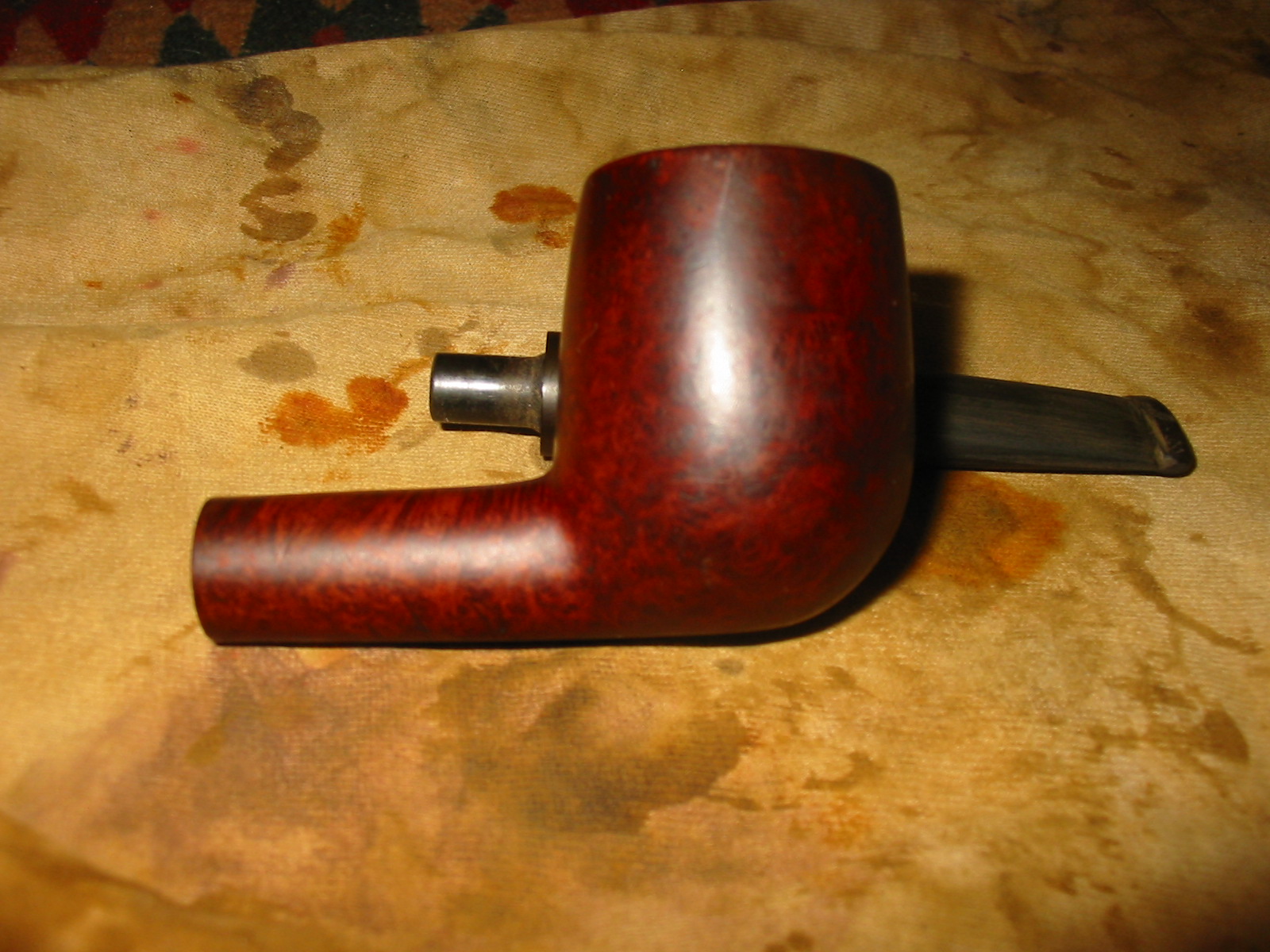
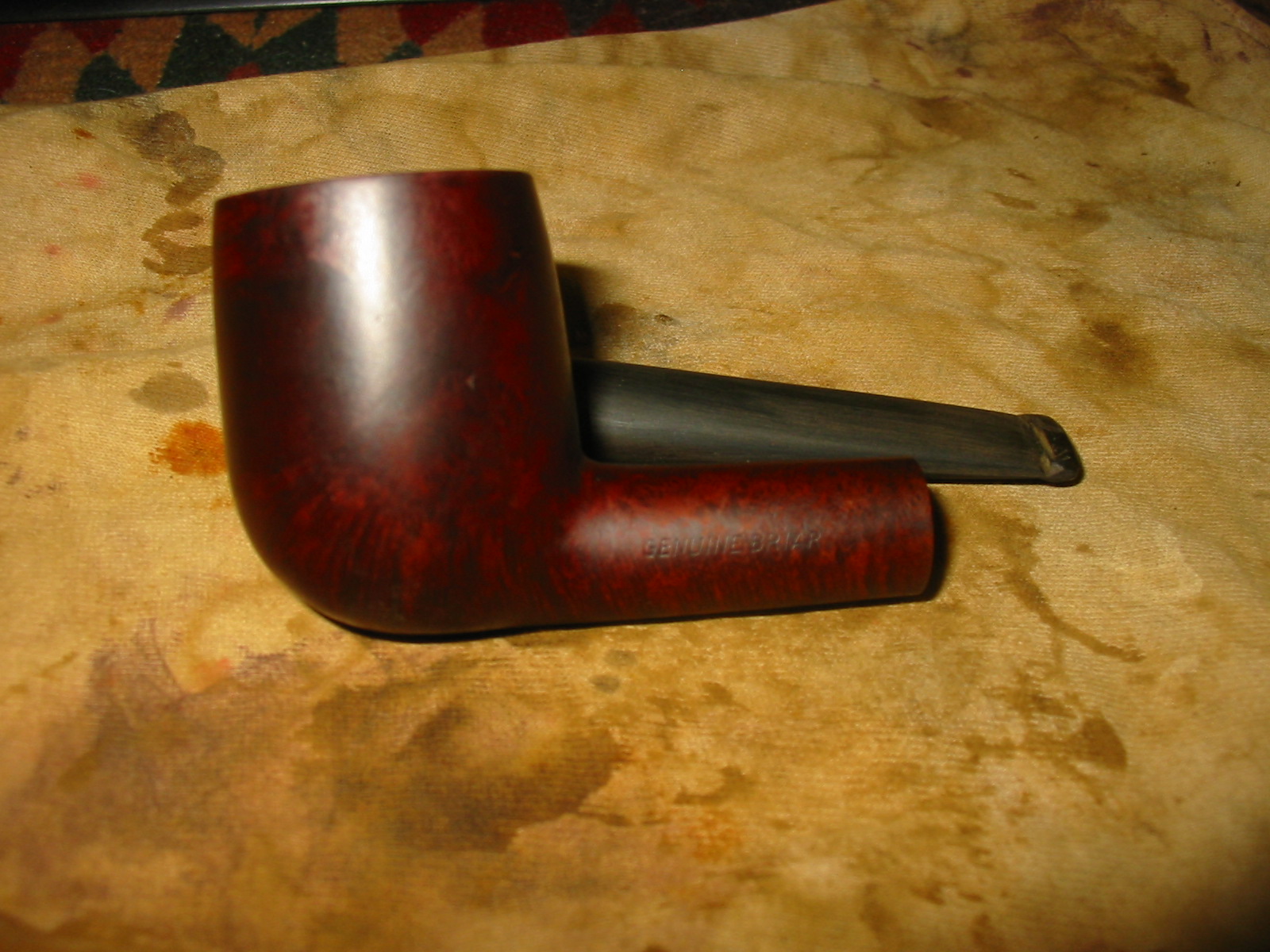
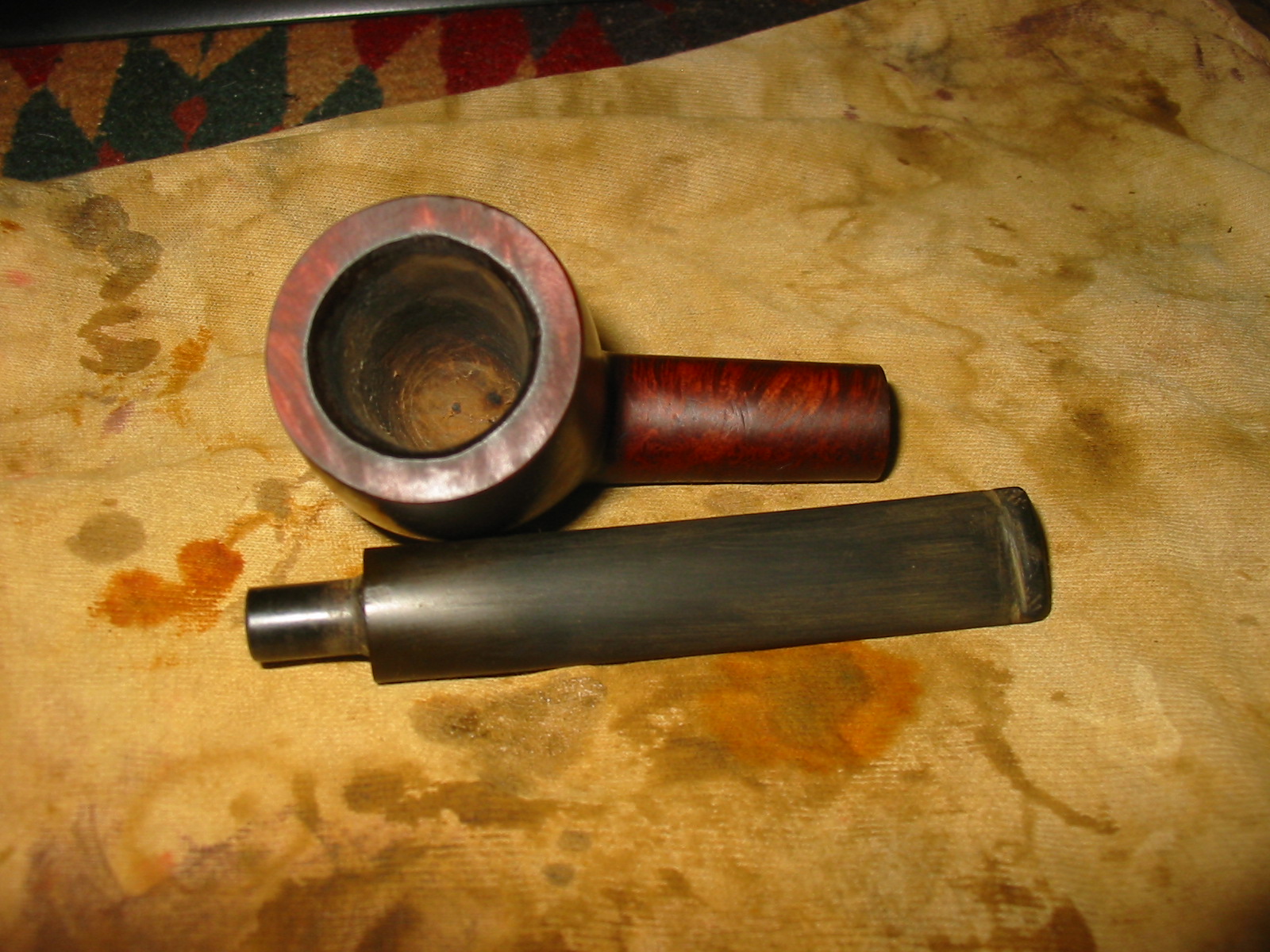
This is the last of the lot I found while on a recent trip in Northern Alberta, Canada. It is stamped Amphora X-tra 509 on the left side of the shank and on the right side it is stamped Genuine Briar over Made in Holland. The stem has an AA in a circle stamped on it (not a stamping for Amphora pipes I was familiar with). The pipe was in good shape. The rim was dirty and had a slight bit of build up on the surface. The bowl had a thin cake that was crumbly. The outside of the bowl was soiled and had some white paint on the surface. The stem was dirty and very slightly oxidized. There were no teeth marks on it so it was just dirty. The insides were also dirty. The inside of the shank and the stem were caked with a tarry buildup. There was an inner tube inserted in the tenon that extended into the shank almost as far as the airway at the bottom of the bowl.
IMG_1889

IMG_1890

IMG_1891

I used a PipNet reamer and started with the smallest cutting head and took back the cake. I followed that with the next size of cutting head and took the cake back to the bare wood in the bowl. The bottom of the bowl had some gouges in it and looked like someone had done a reaming with a knife.
IMG_2067

IMG_2054

IMG_2057

IMG_2056

IMG_2055

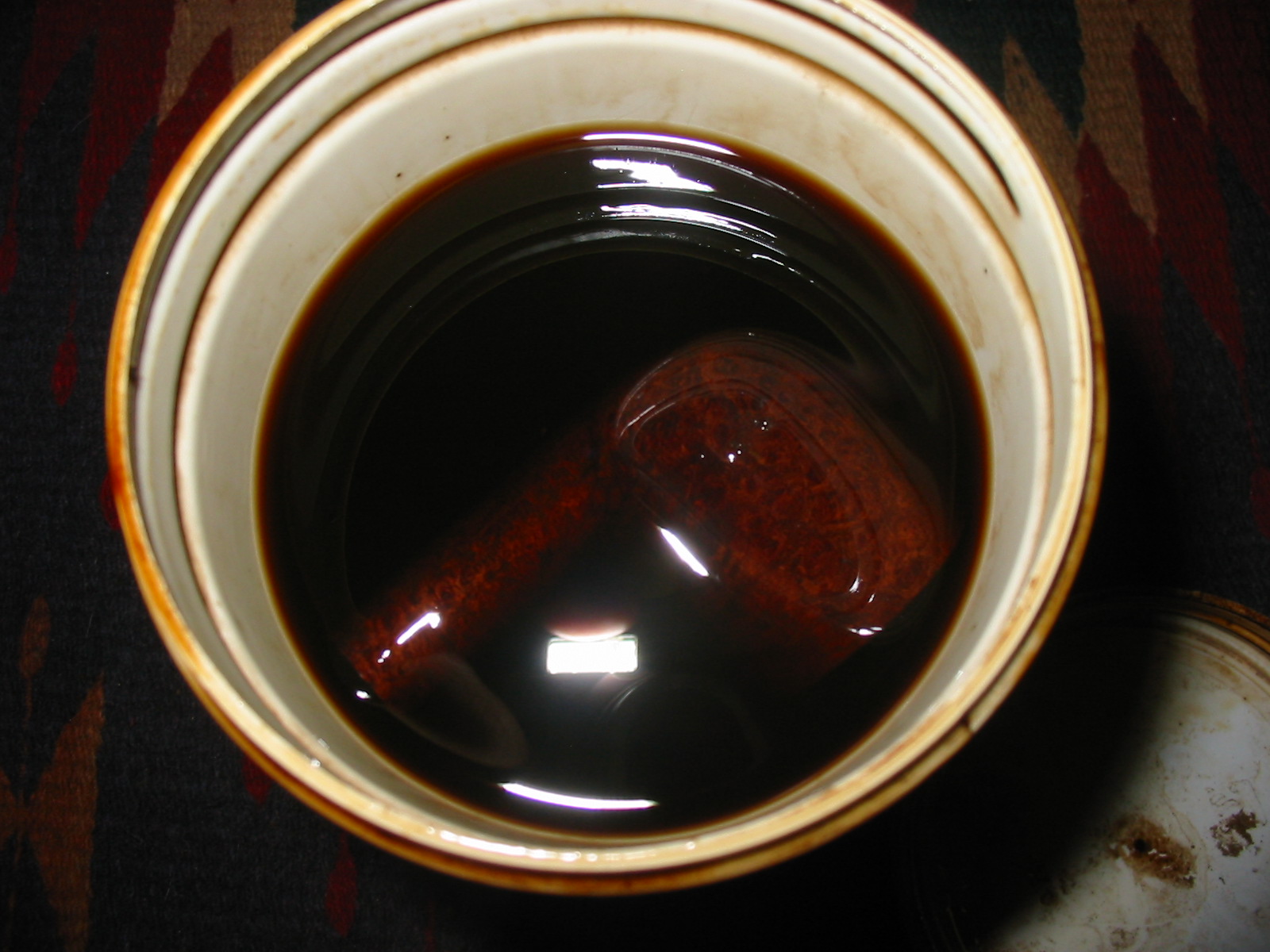
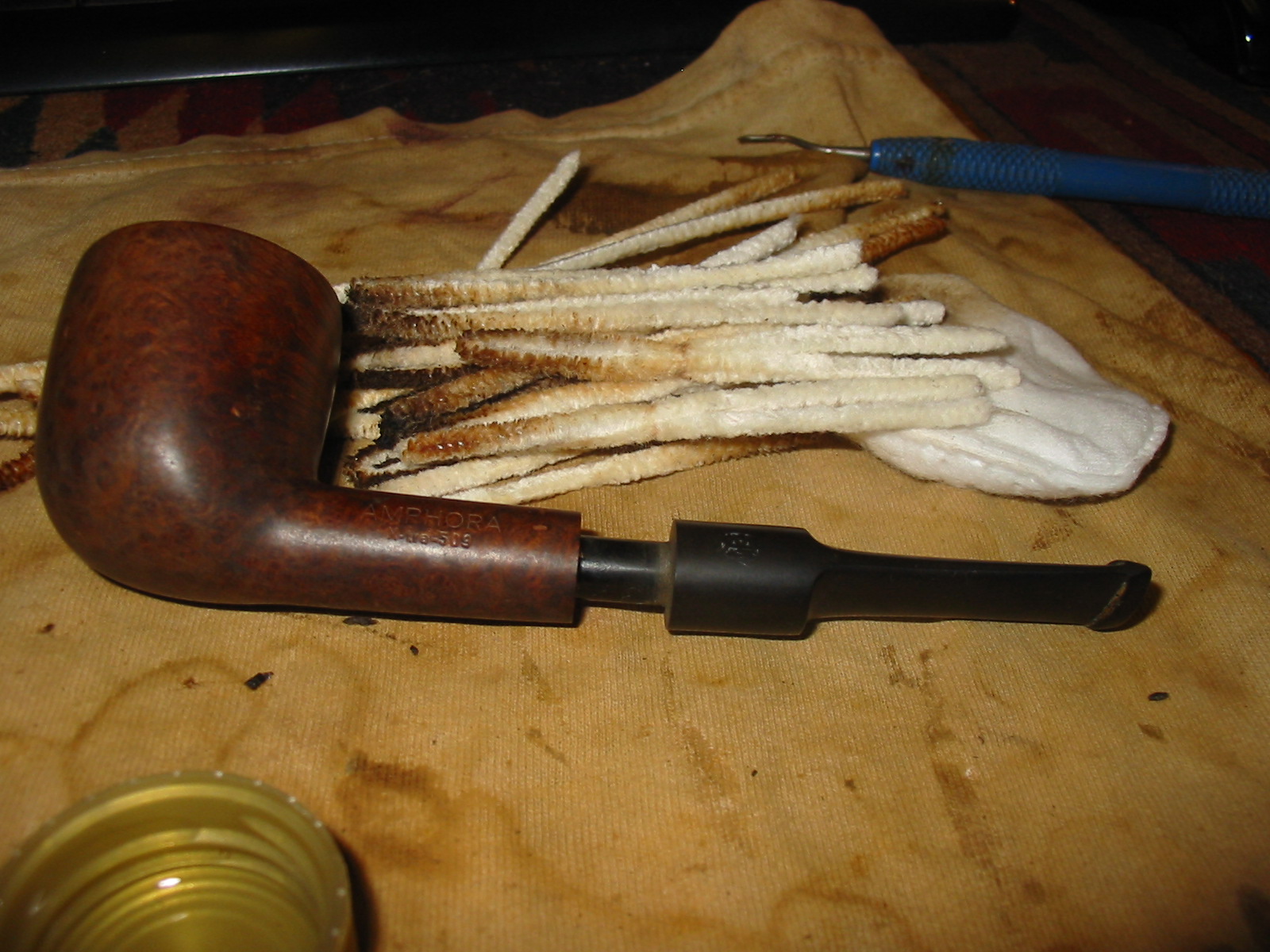
I removed the stem and dropped the bowl into an alcohol bath to soak overnight.
IMG_2066

I mixed a batch of Oxyclean and put the stem together with others I was working on into the bath of Oxy clean to soak at the same time.
IMG_2068

In the morning I took out the bowl and dried it off with a soft cloth. The finish was clean and the surface of the bowl free of the paint and grime that was present when I placed them in the bath. I took the stems out of the bath of Oxyclean and dried them off as well. The oxidation on the stem was softened and the stem was dark (it is the top stem in the second photo below).
IMG_2071

IMG_2080

I wiped down the bowl with acetone on a cotton pad to clean off the remaining finish. In the photo above of the bowl it appeared to have a fill on the bowl side. As I scrubbed it the surface cleaned up and the area was not a fill. The piece of briar has some great birdseye grain and a some cross grain on the front right side and the top of the bowl and shank. I also cleaned out the shank and the stem with pipe cleaners and Everclear. I scrubbed the rim to remove the tars and buildup.
IMG_2260

IMG_2261

IMG_2262

IMG_2264

I wanted to highlight the grain on this one so I decided to stain it using some Cherry Danish Oil which is Linseed oil and stain. I rubbed on the stain, rubbed it off and rubbed it on a second time. I set it aside to dry. Once it was dry I buffed it with White Diamond.
IMG_2265

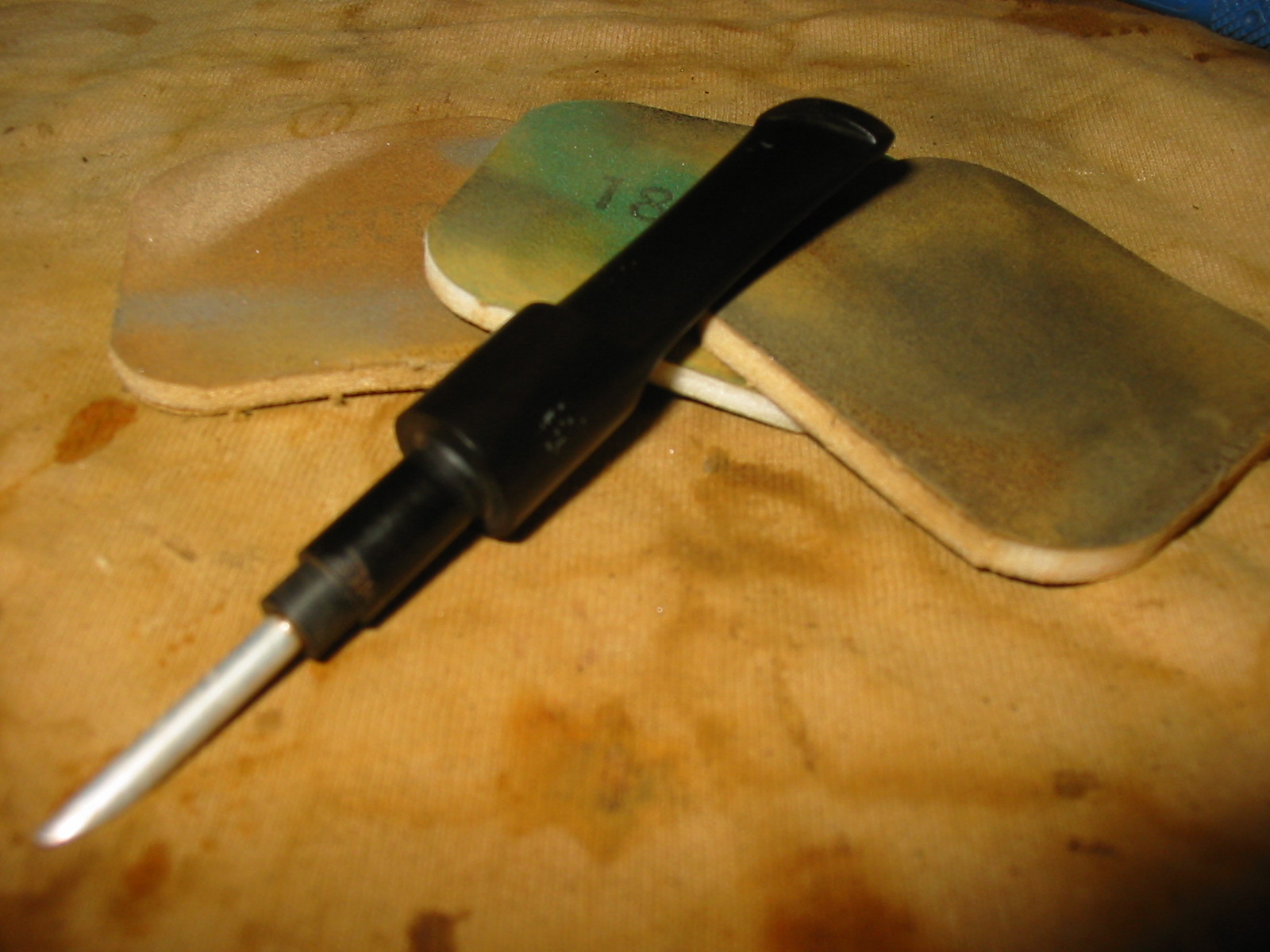
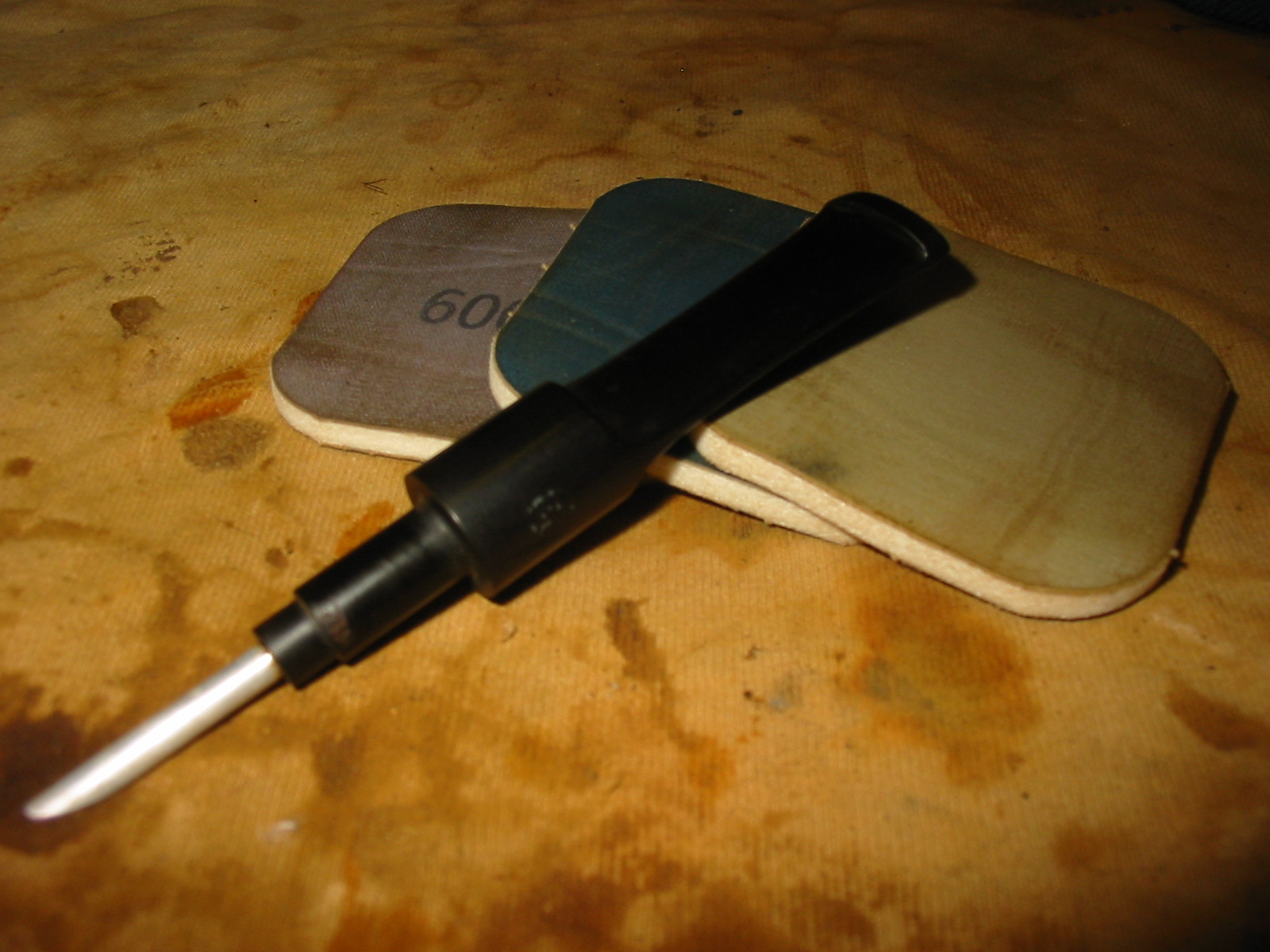
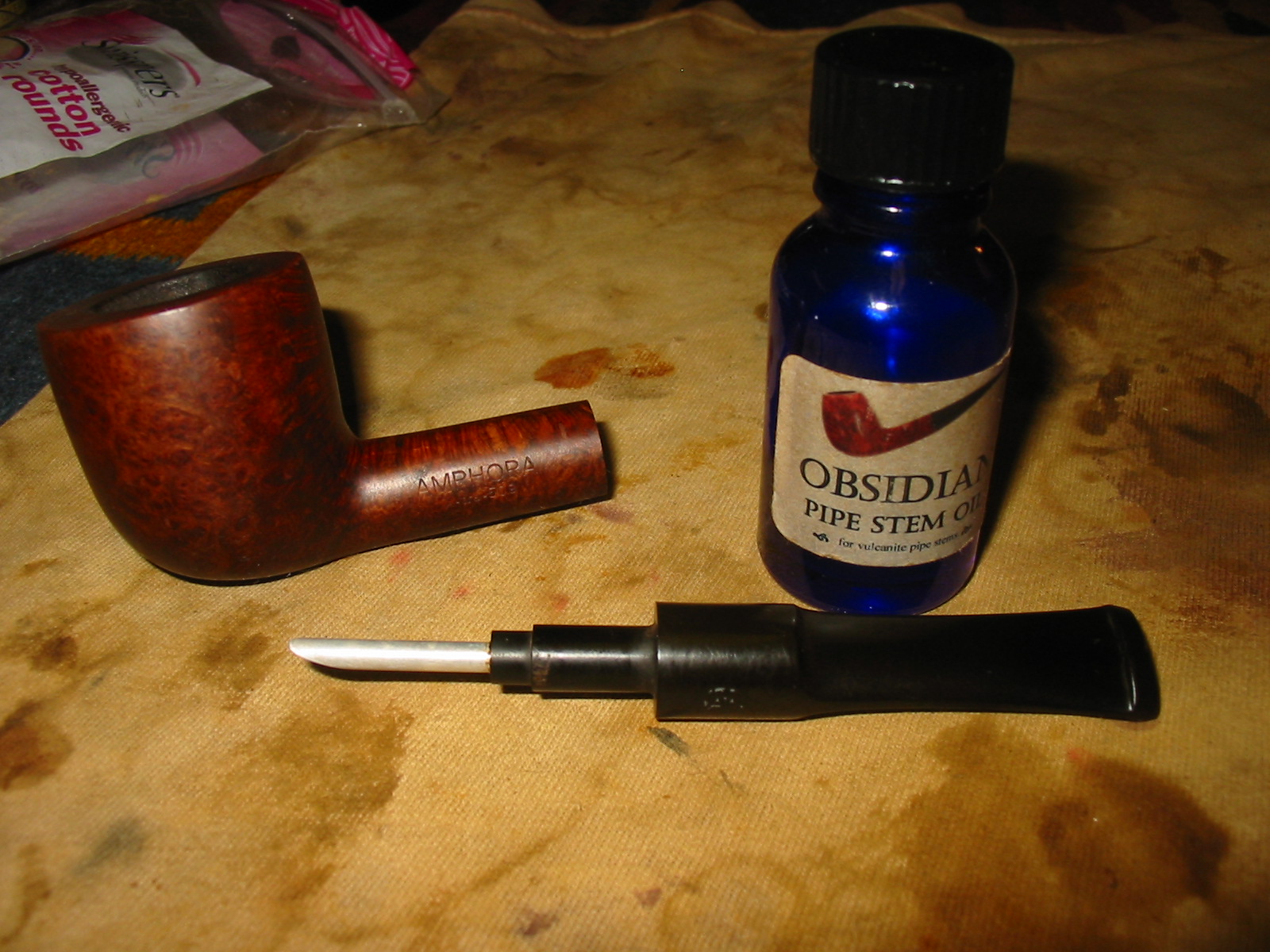
While it was drying I used micromesh sanding pads from 1500-12,000 grit to work on the stem. I worked around the double AA on the stem logo. It is faint but still visible. Once I had finished sanding I rubbed it down with Obsidian Oil and let it dry. When it was dry I rubbed it with a soft cloth to buff it by hand.
IMG_2266

IMG_2267

IMG_2268

IMG_2269

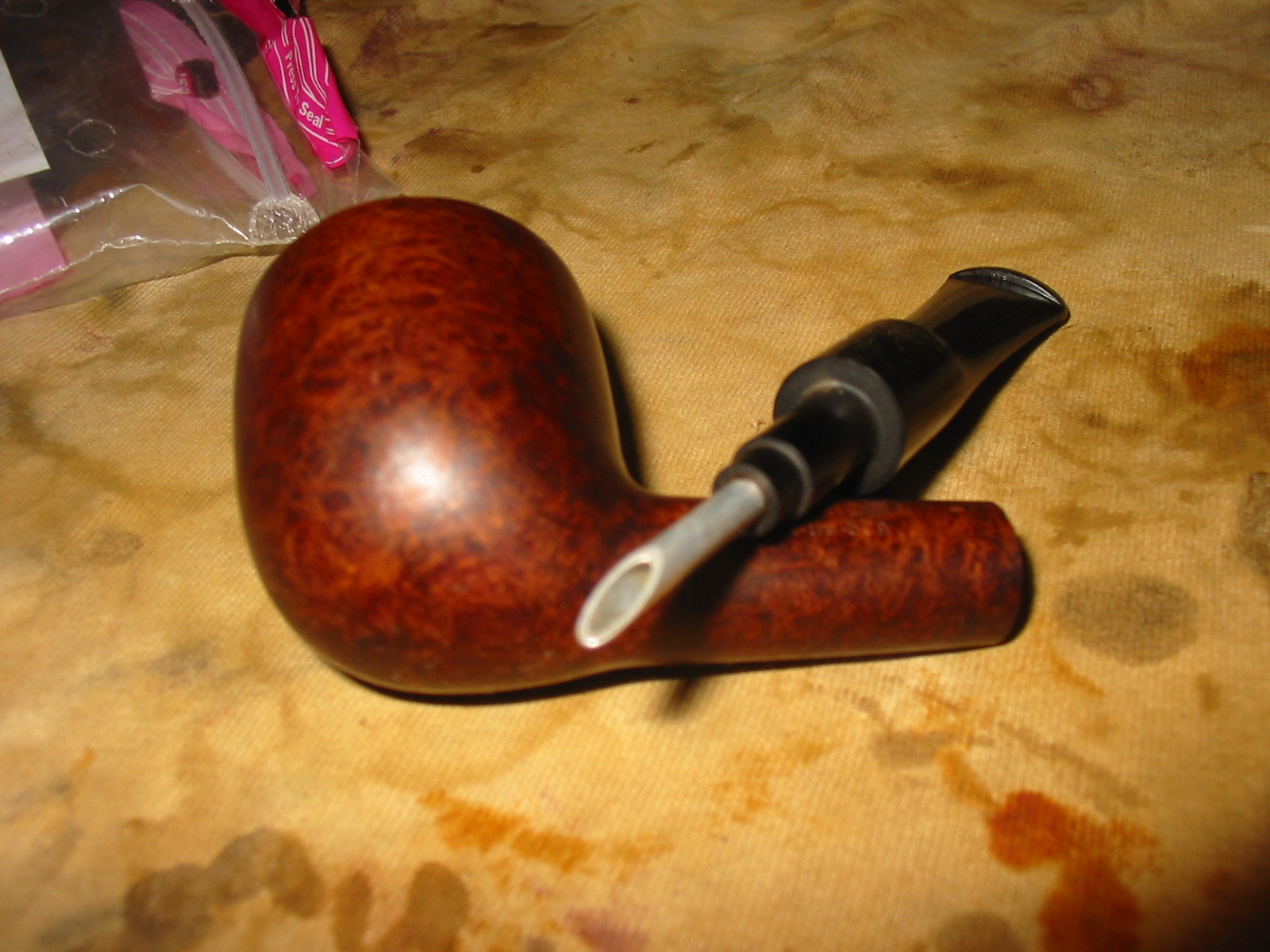
I polished the aluminum inner tube with 0000 steel wool to remove all grime that was remaining on the aluminum. I gave it a coat of wax and polished it off with a clean soft cloth.
IMG_2270

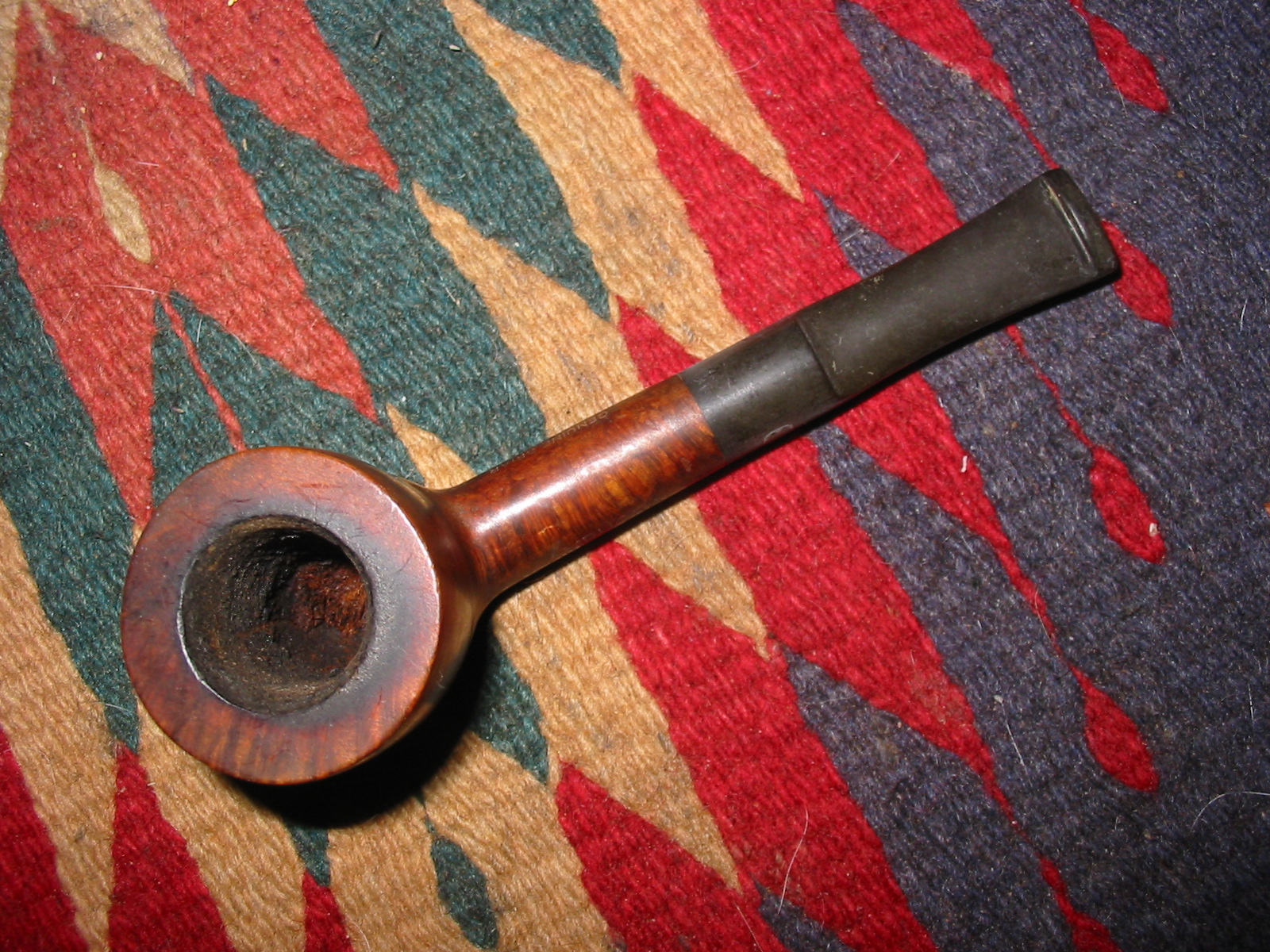
I buffed the pipe and stem with White Diamond and then gave it multiple coats of carnauba wax and then with a soft flannel buff to give it a shine. The final photos below show the finished pipe.
IMG_2272

IMG_2273

IMG_2274

IMG_2275

Dorset “Genuine Briar” Rhodesian


By Al Jones (aka “Upshallfan”)

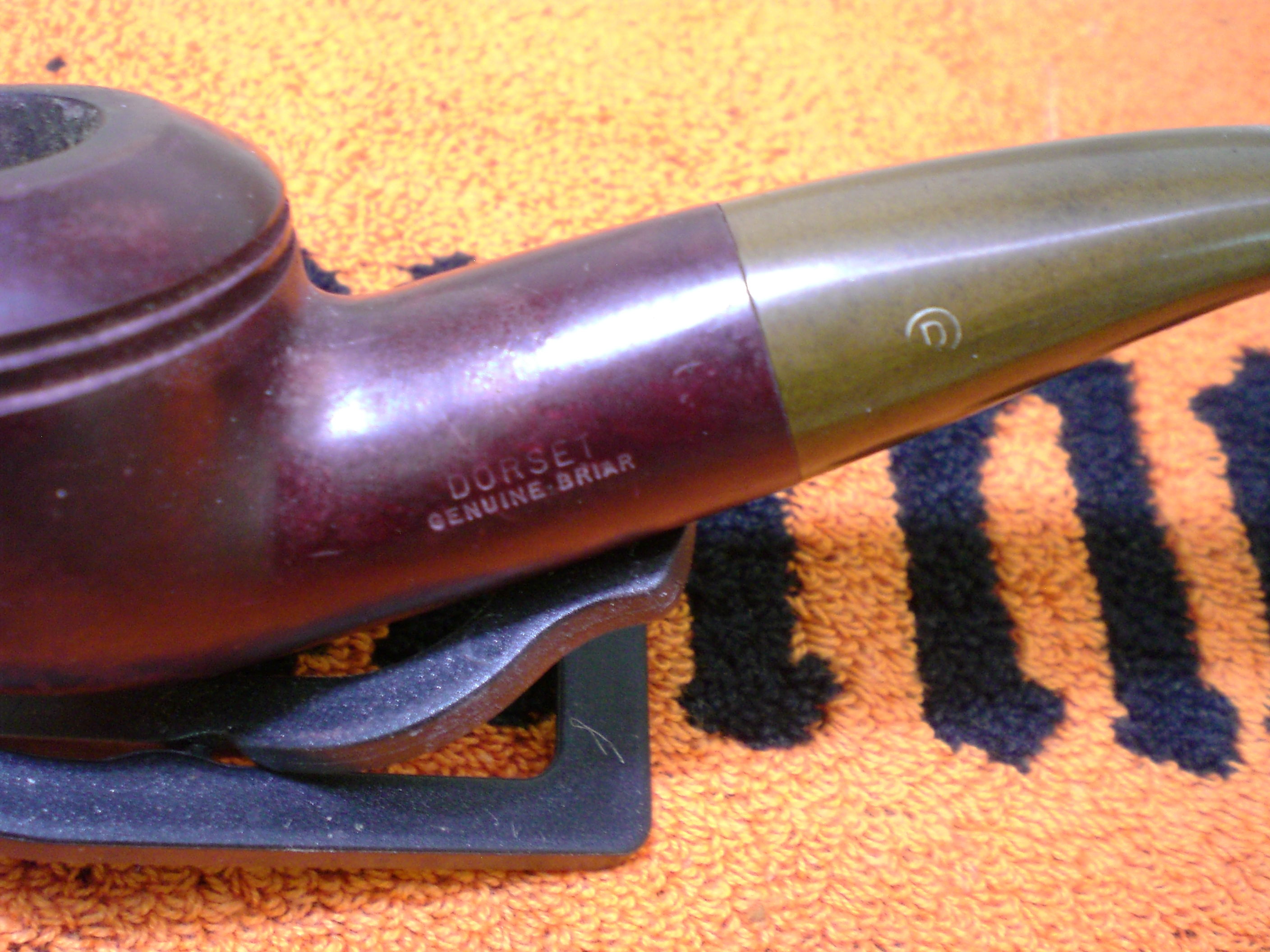
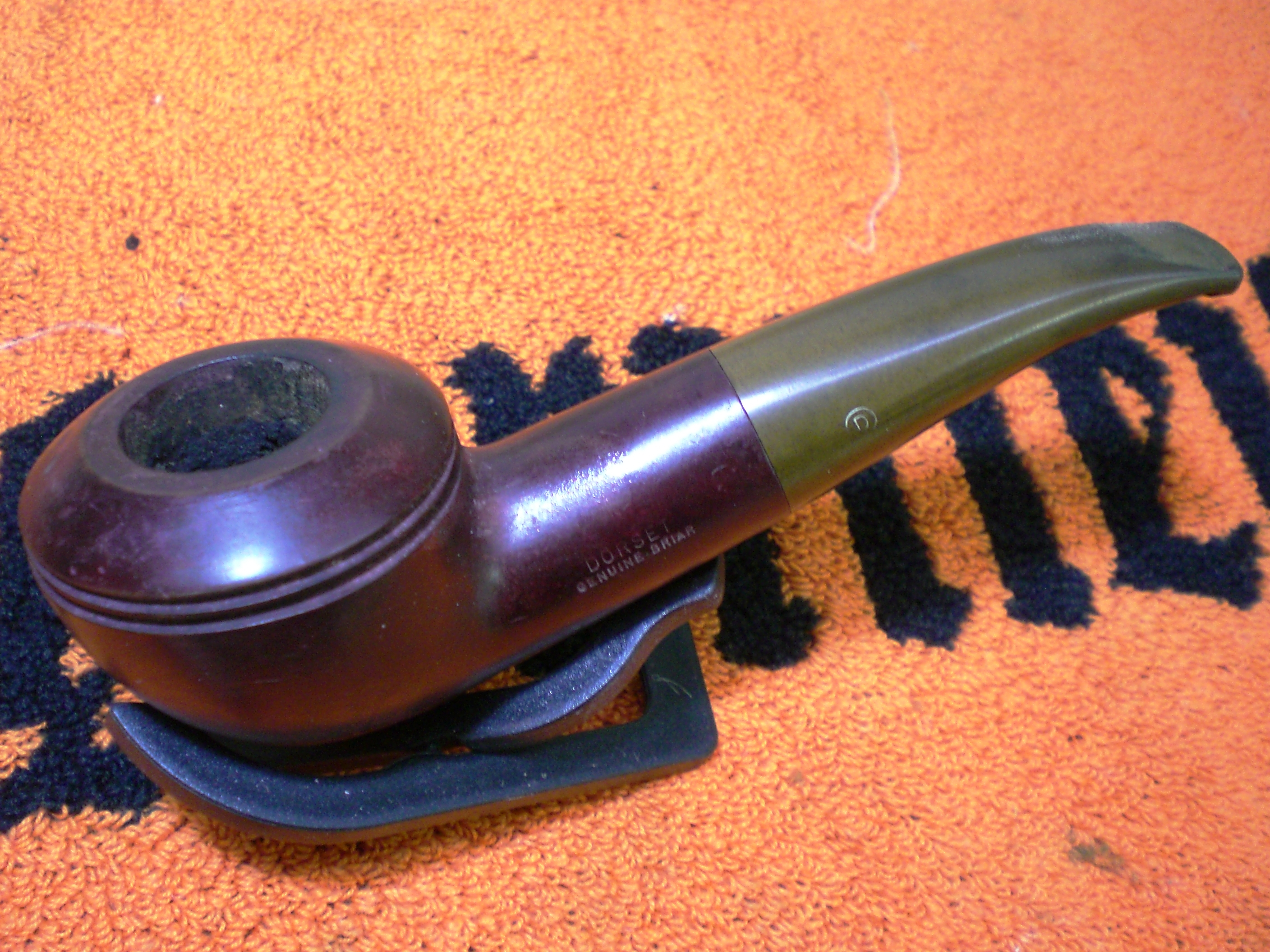
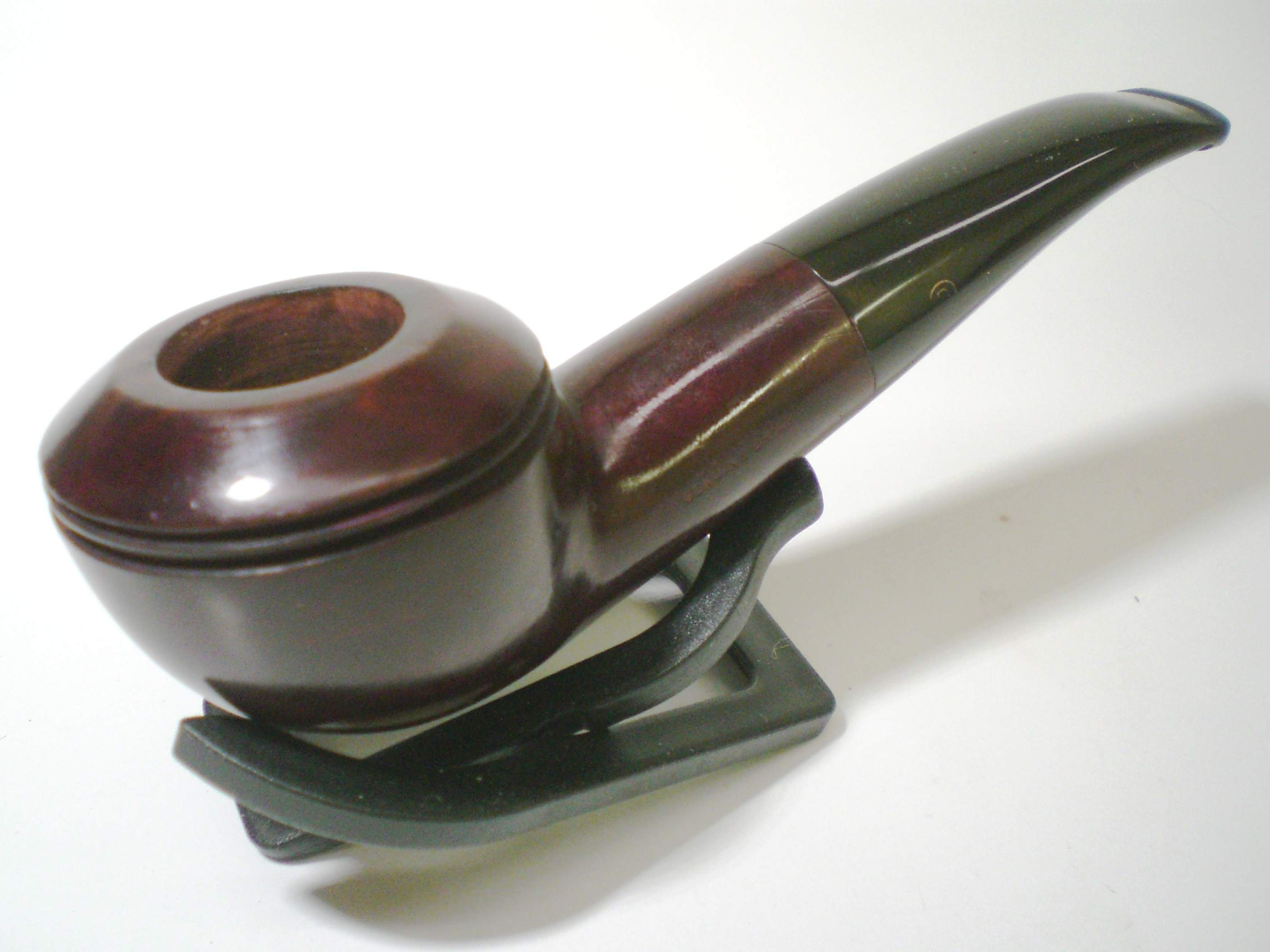
I found this unknown to me pipe on Ebay. It looked to be in decent condition and it is a shape that I love (tapered stem Rhodesian). The pipe had a dark red finish, with a few fills but they were covered up nicely. The stem fitment was excellent and also in overall very good condition. I was hoping that this would be a relatively easy restoration.

Dorset_Rhodesian (1)

Dorset_Rhodesian

Dorset_Rhodesian (3)

Dorset_Rhodesian (5)

Dorset_Rhodesian (6)

Dorset_Rhodesian (2)

Dorset_Rhodesian (8)

I reamed the light cake from the bowl and soaked it for several hours with isopropyl alcohol and sea salt. The bowl only required a light buff with white diamond to bring back the shine, after which I applied several coats of carnuba wax. The bowl had some scuff marks but they came out nicely. The beading around the bowl was in excellent condition.

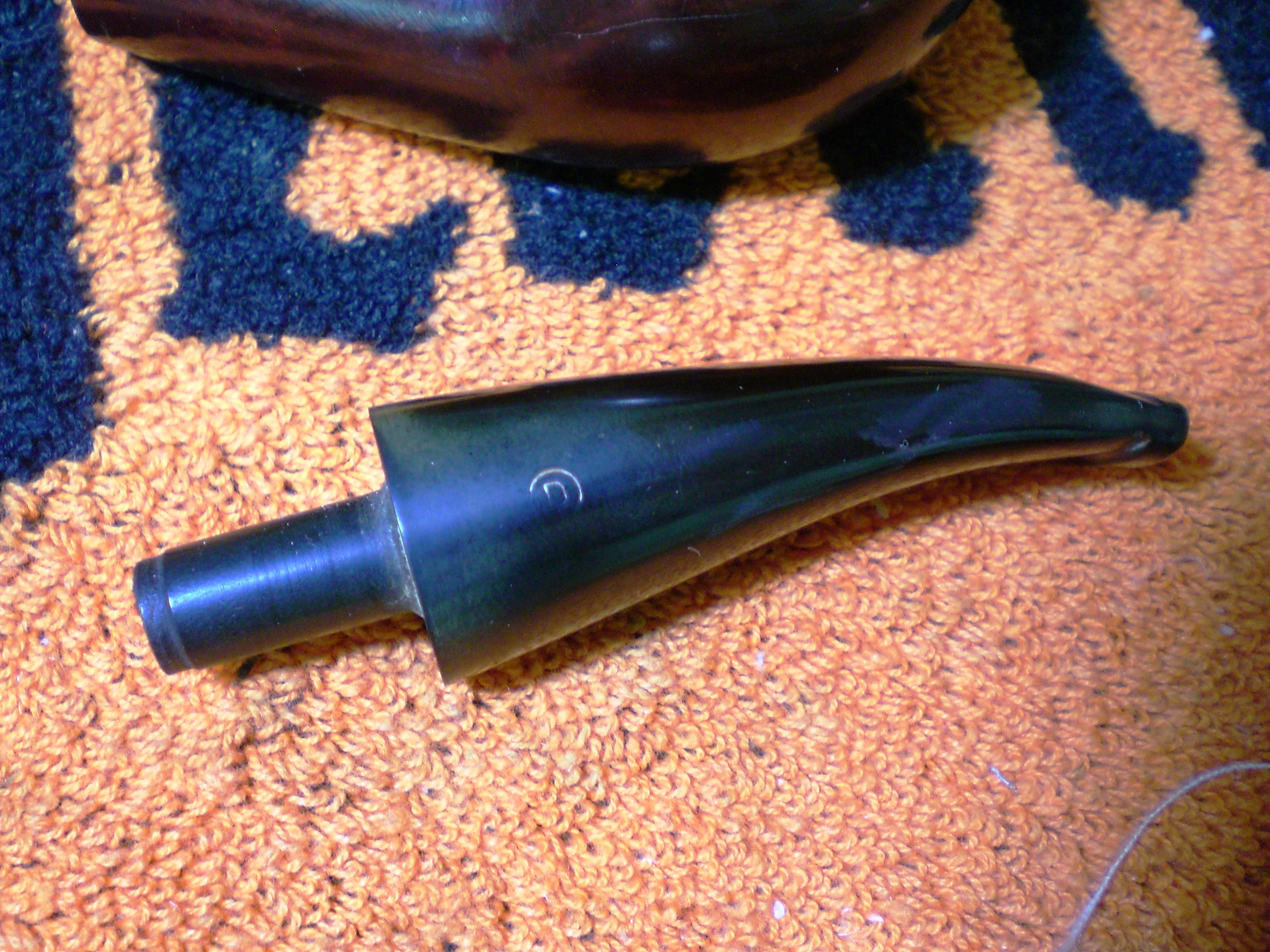
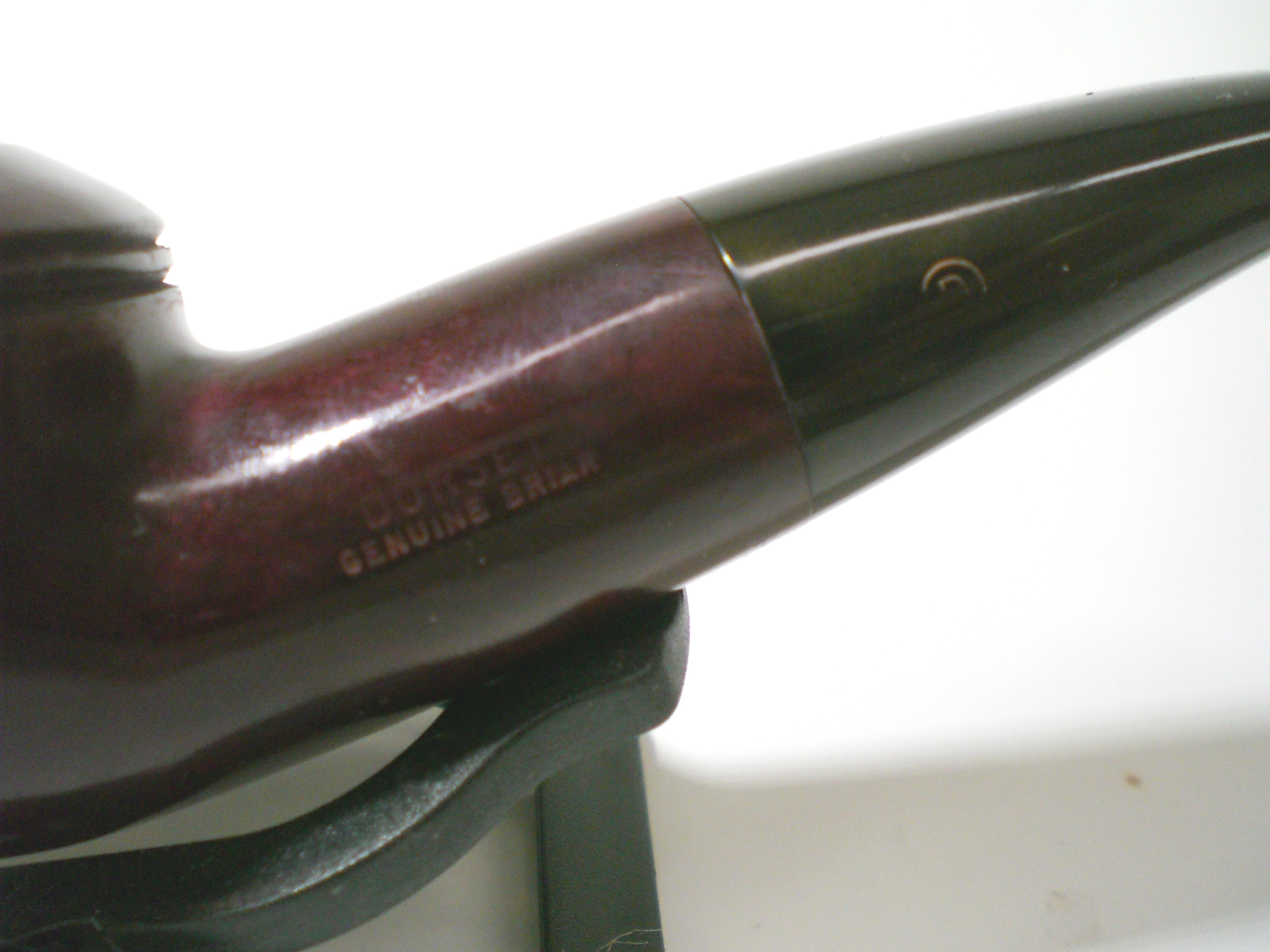
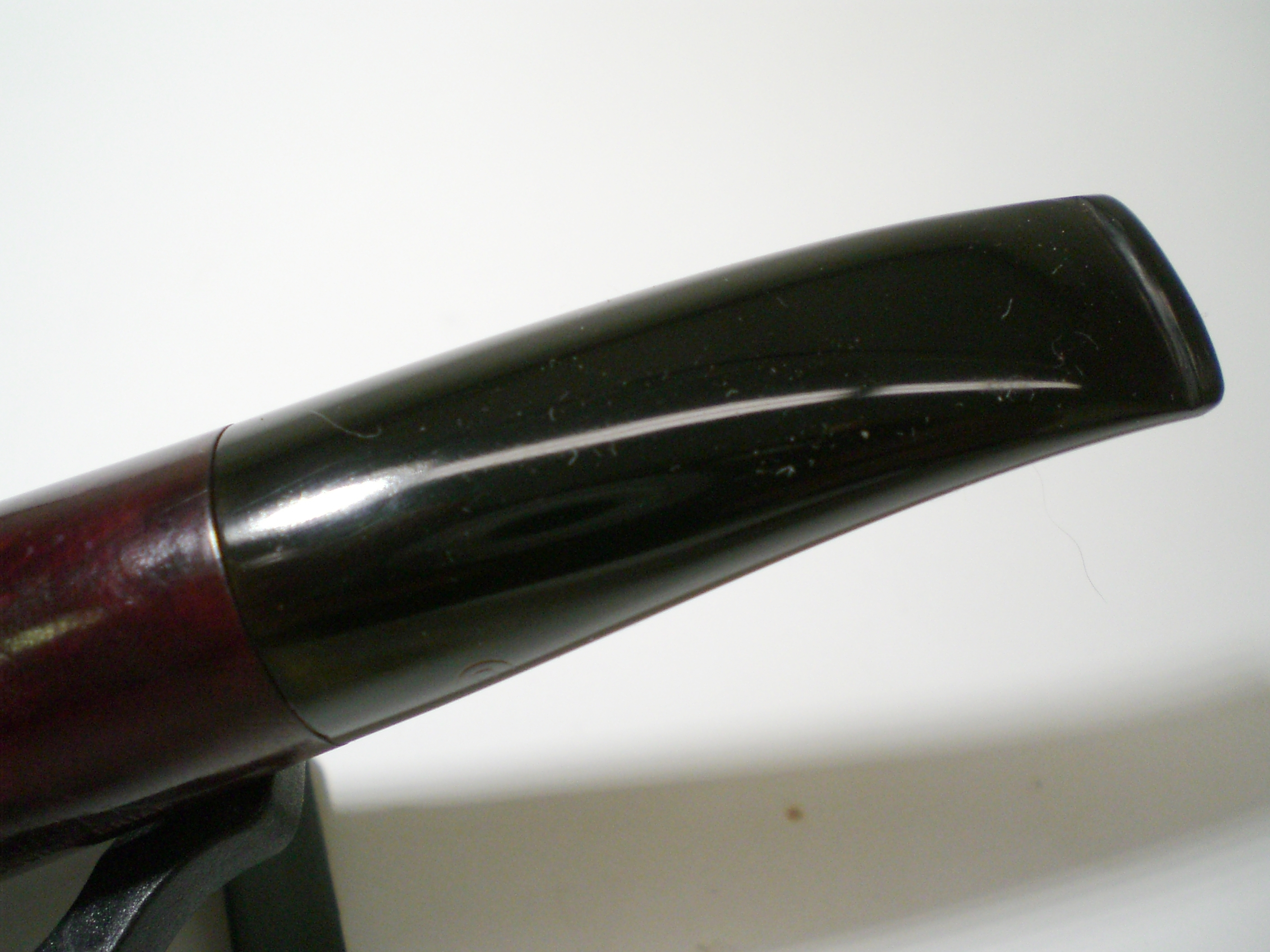
The stem was badly oxidized, but in great shape. I soaked it in a mild oxyclean solution, then used first 800 then 1500 and 2000 grit wet sandpaper to remove the oxidation. After which I sanded it with 8000 and 12000 grade micromesh paper. The stem was inserted back onto the bowl for work around the shank end and I was careful not to damage the “D” stem stamp. I then buffed the stem with white diamond and red rouge, followed by a buff using automotive plastic polish. The stem came back quite nicely. Here is the stem before moving to the buffing wheel.

Dorset_Rhodesian (9)

Overall, I was very pleased with the finish of the pipe. It was delivered to the new owner this weekend, and they were also pleased with the appearance and how it smoked.

Dorset_Rhodesian (10)

Dorset_Rhodesian (11)

Dorset_Rhodesian (12)

Dorset_Rhodesian (13)

Dorset_Rhodesian (14)

Dorset_Rhodesian (15)

Dorset_Rhodesian (16)

When I saw it I thought it was a Sasieni one dot billiard


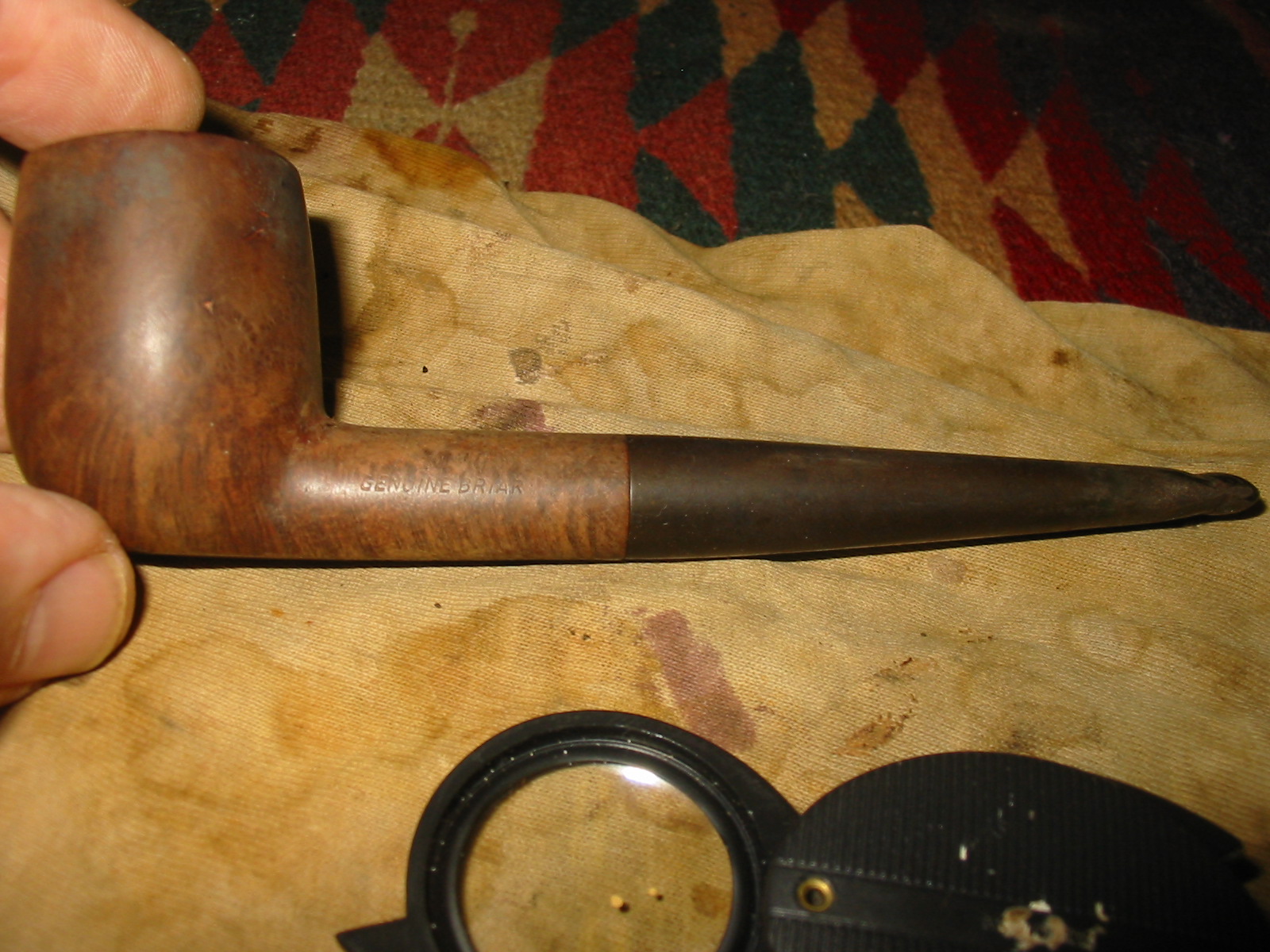
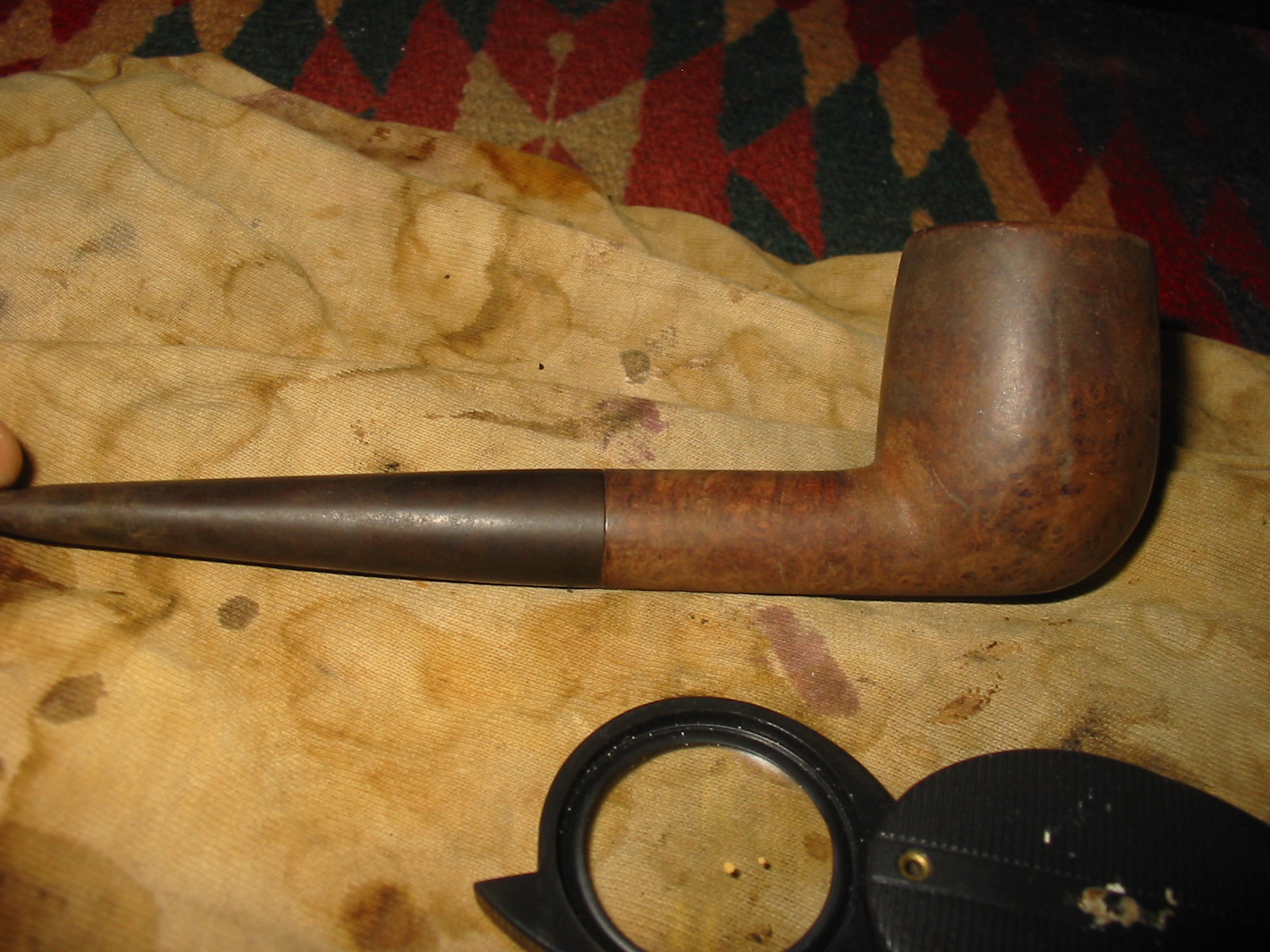
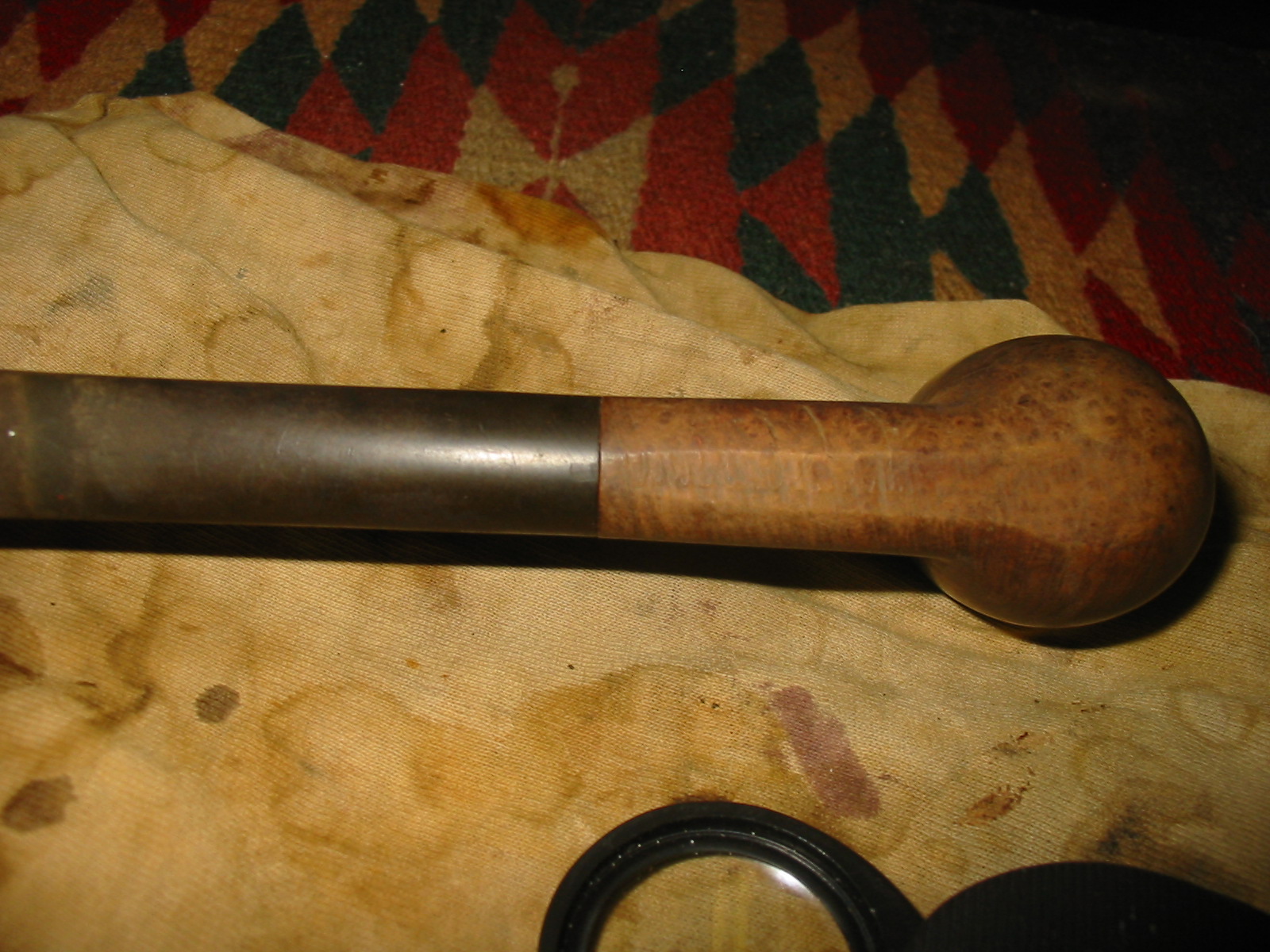
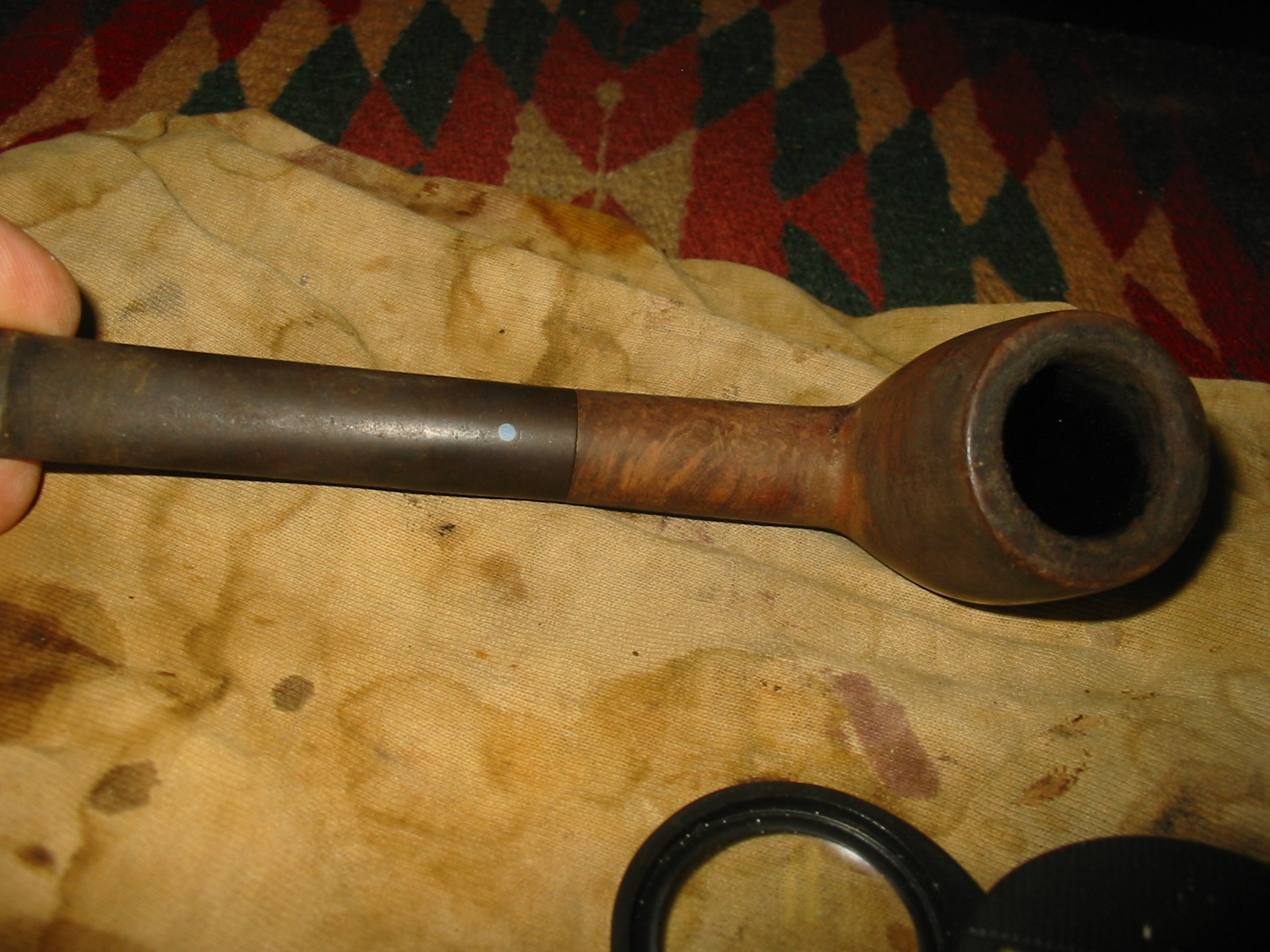
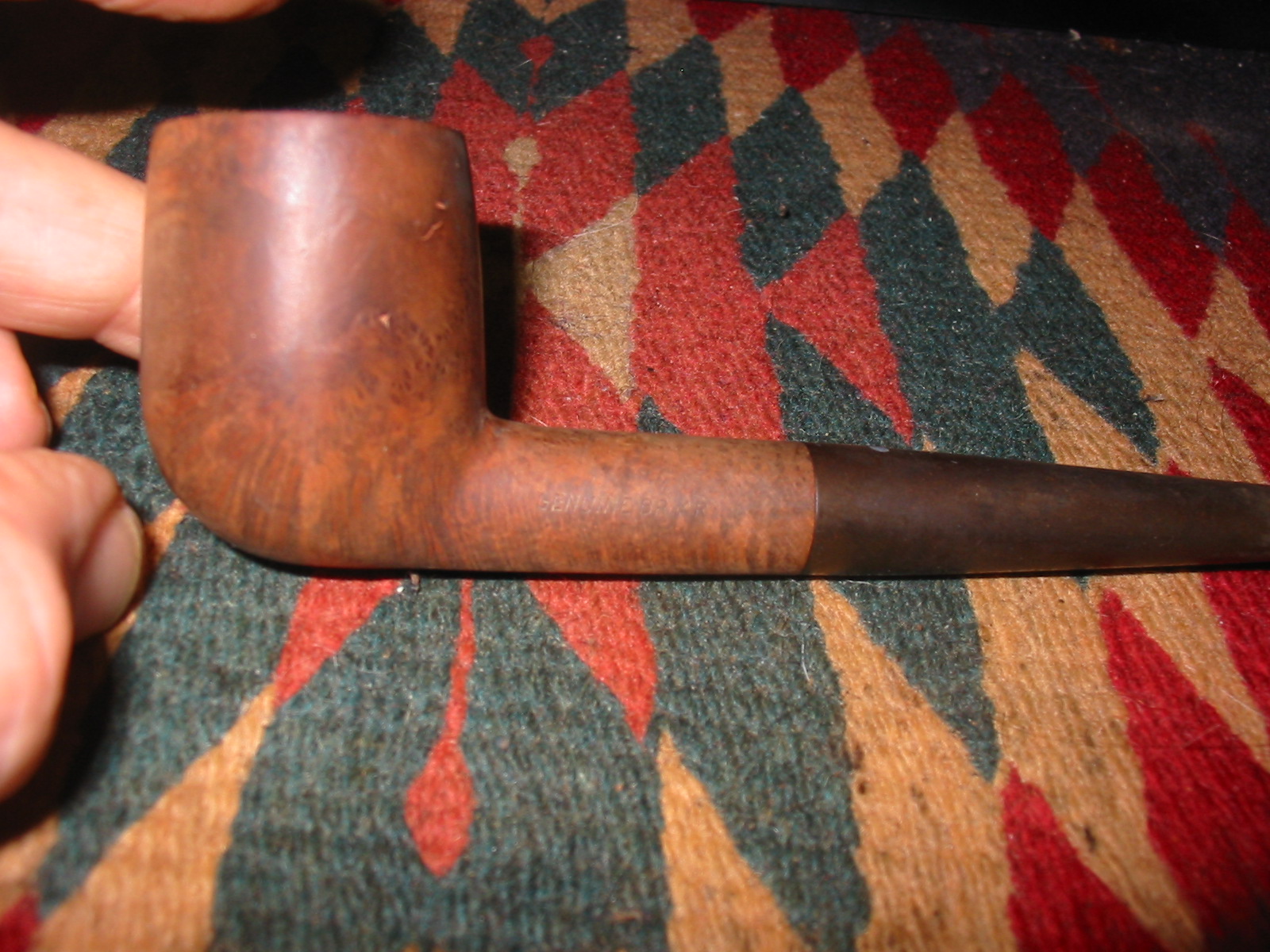
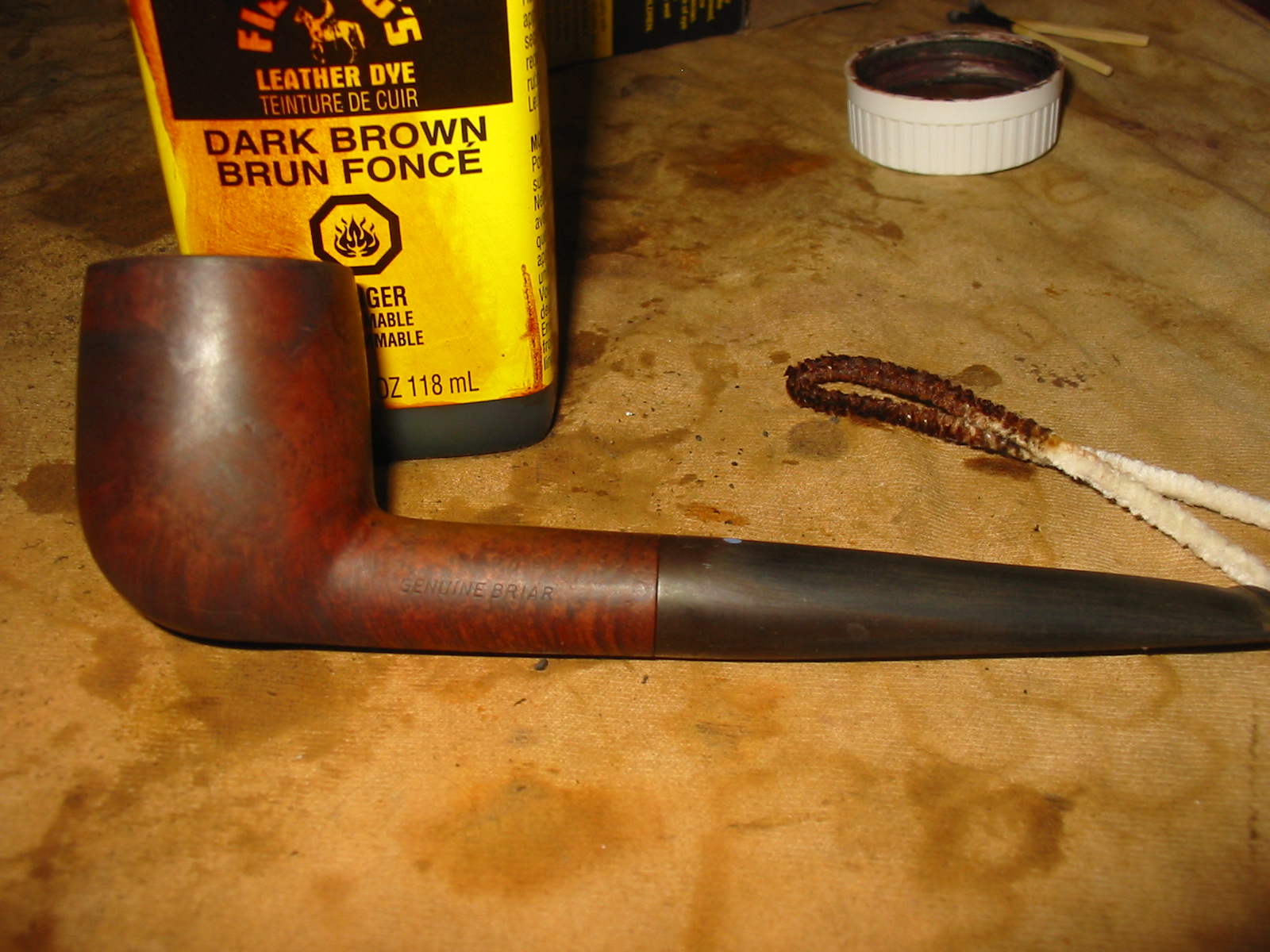
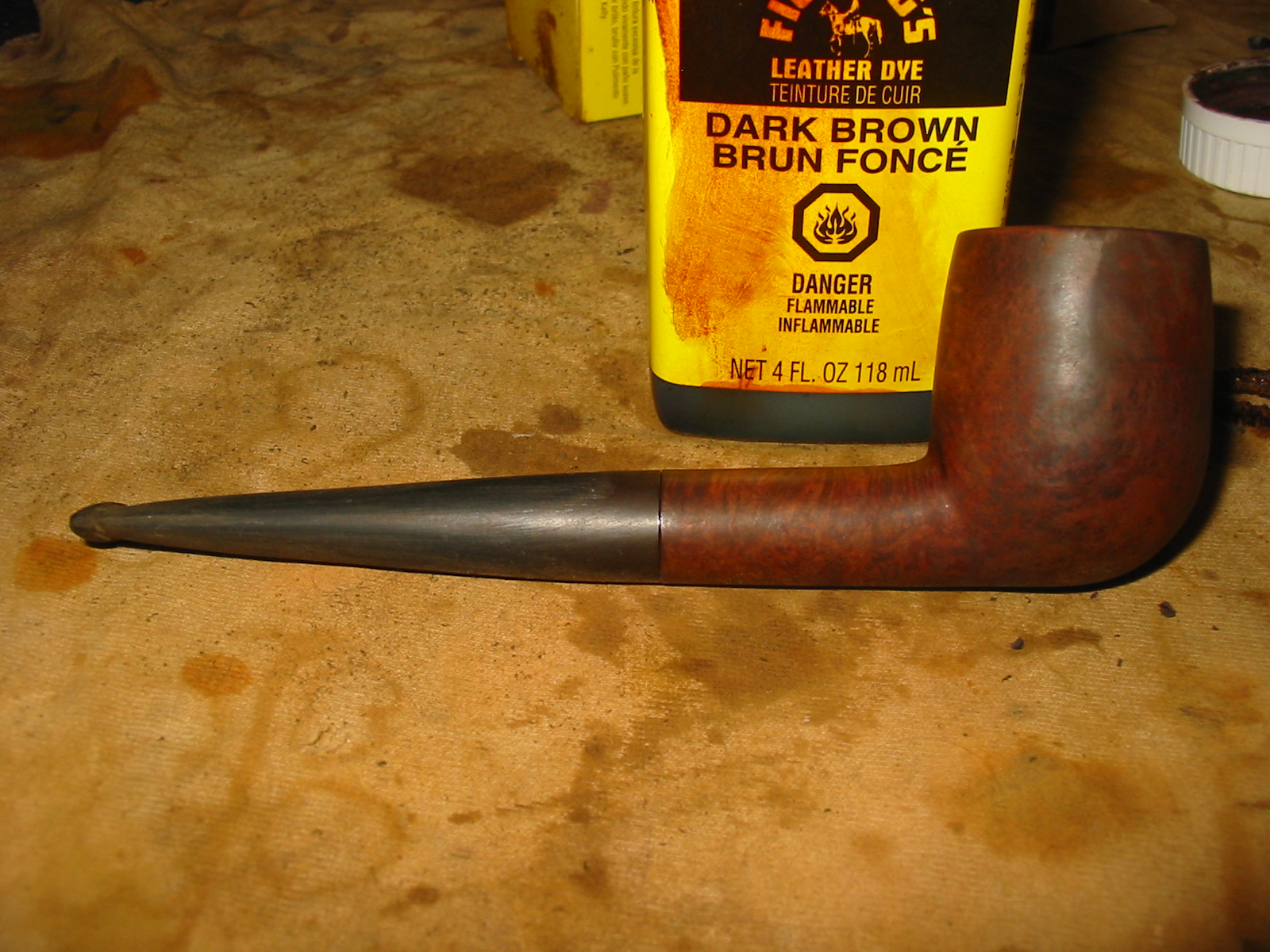
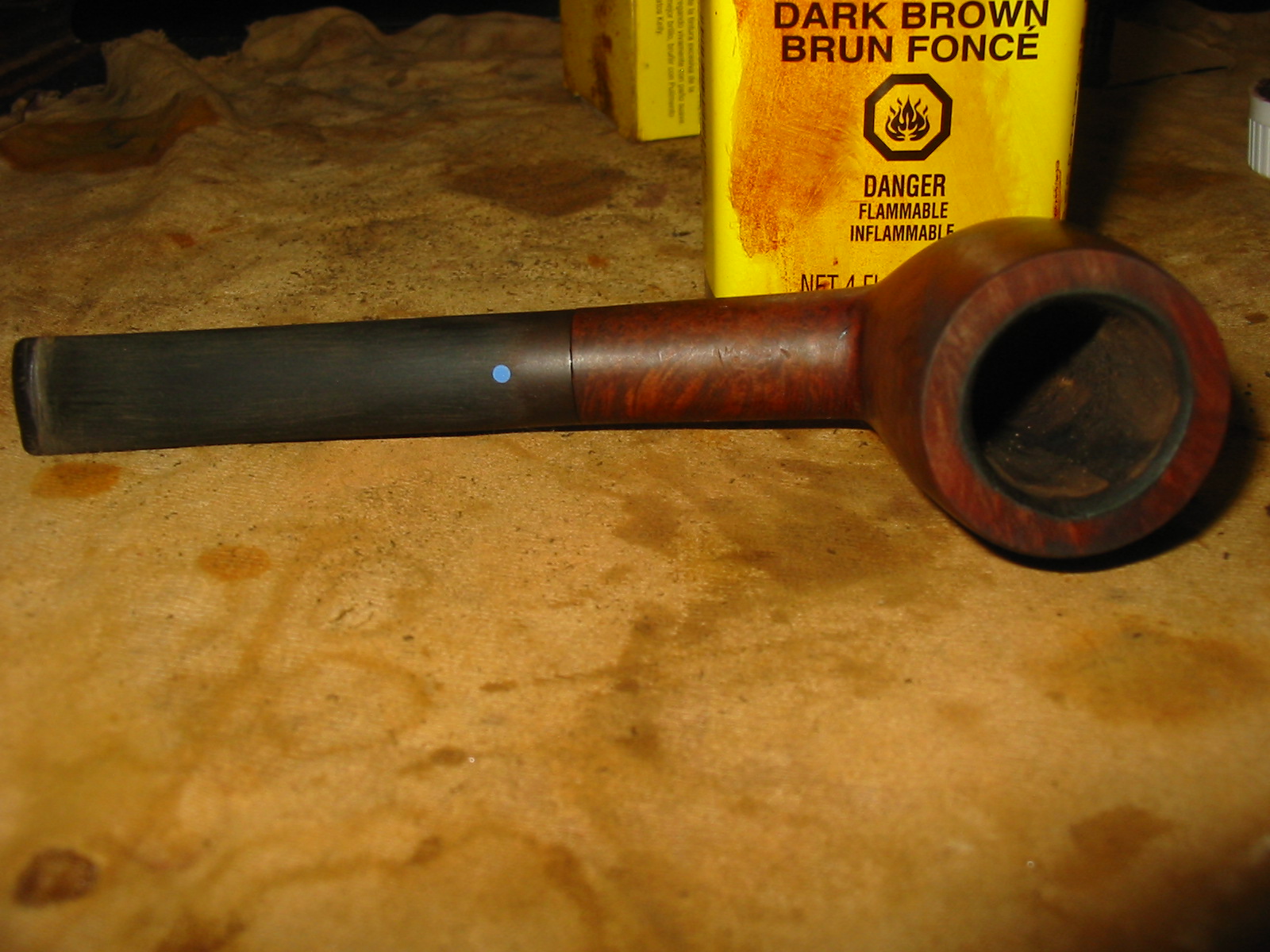
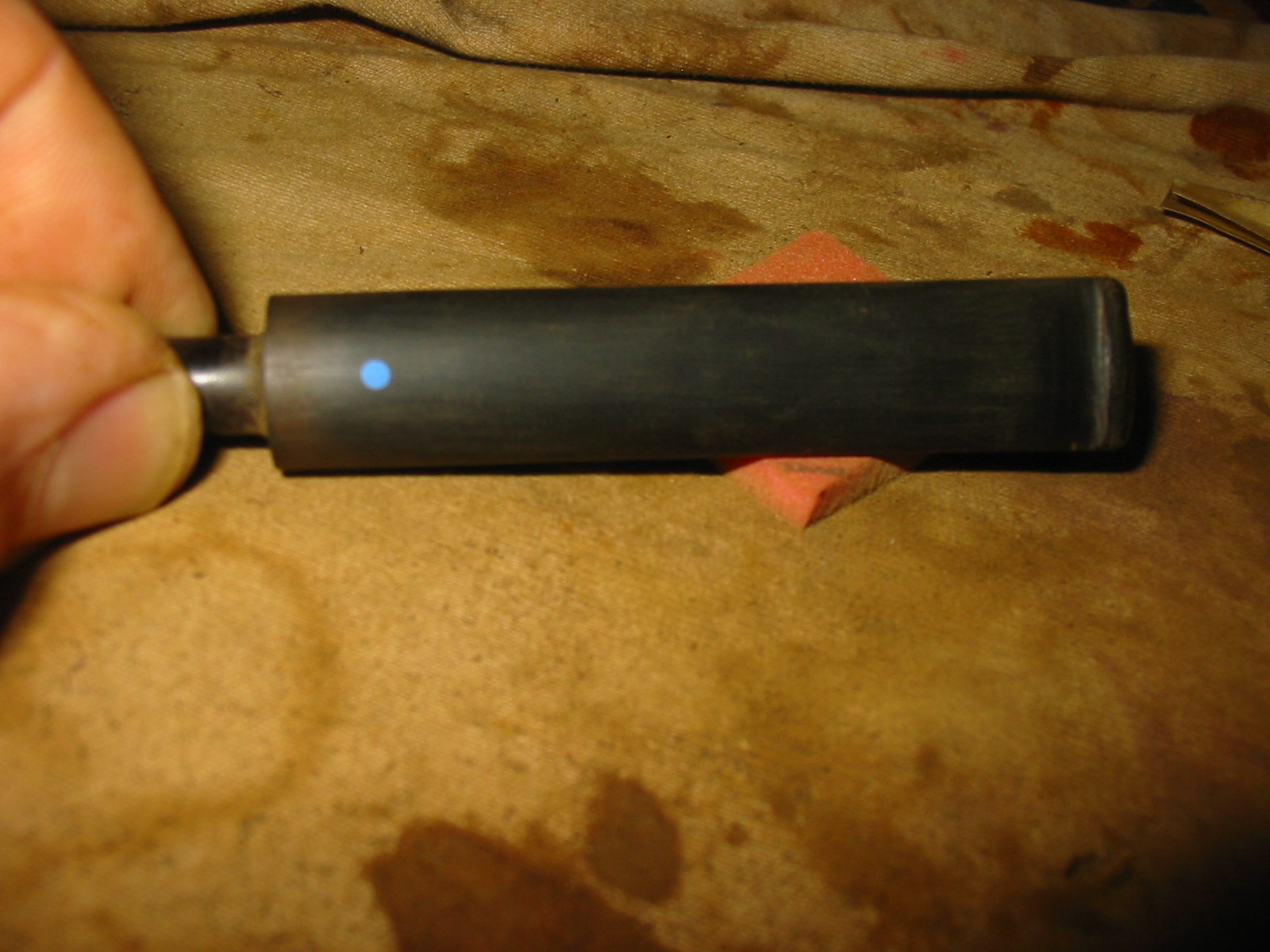
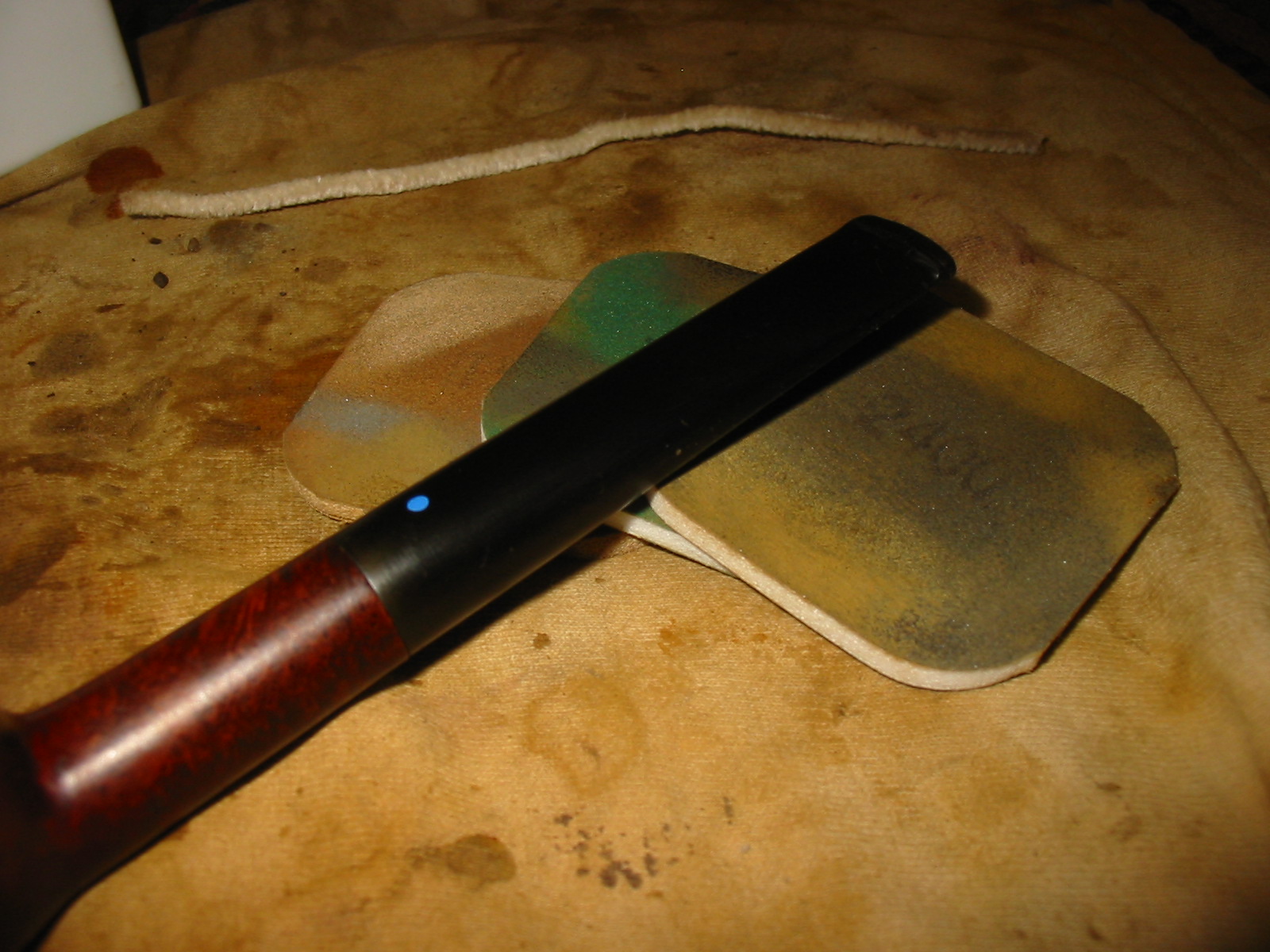
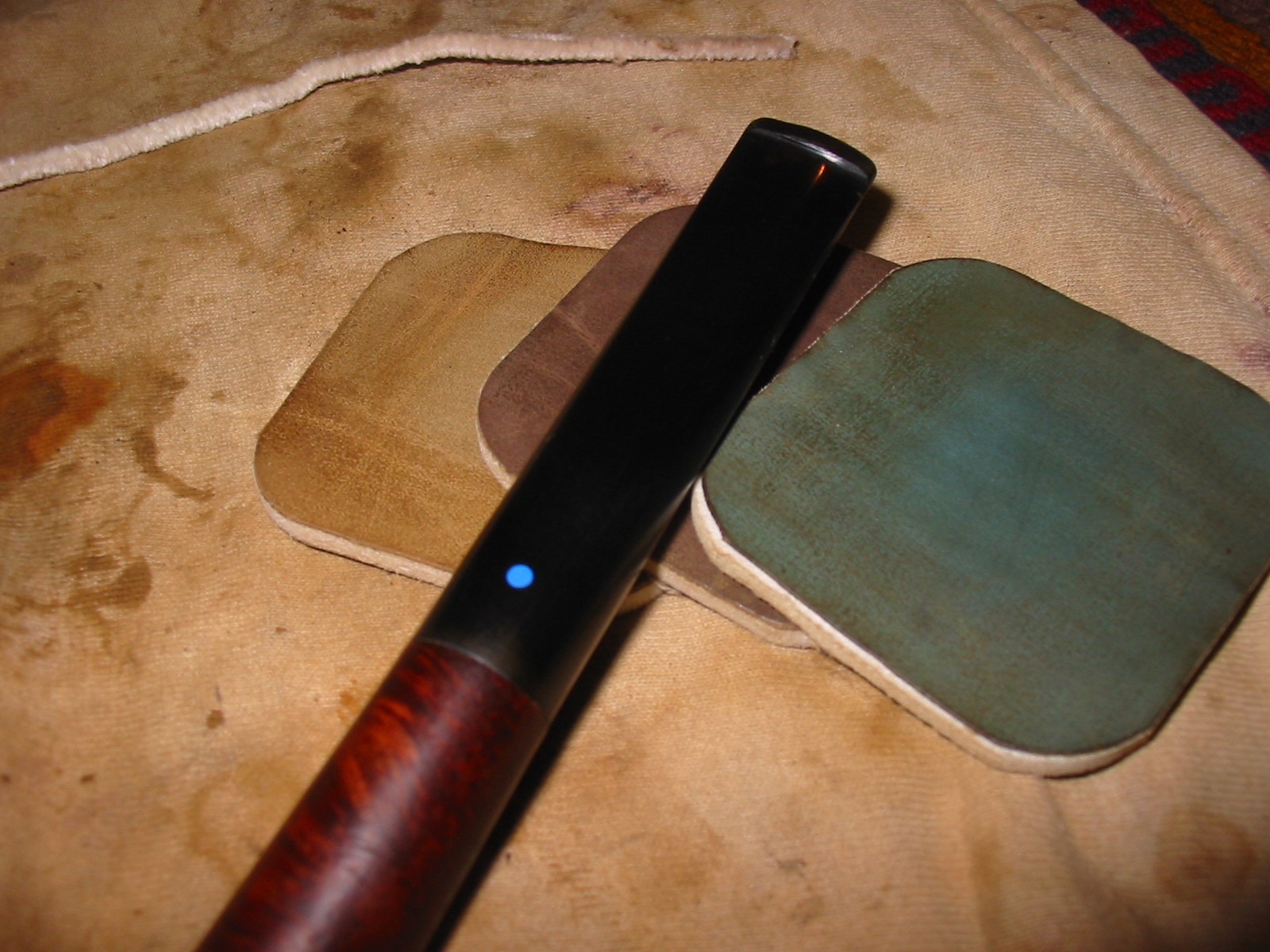
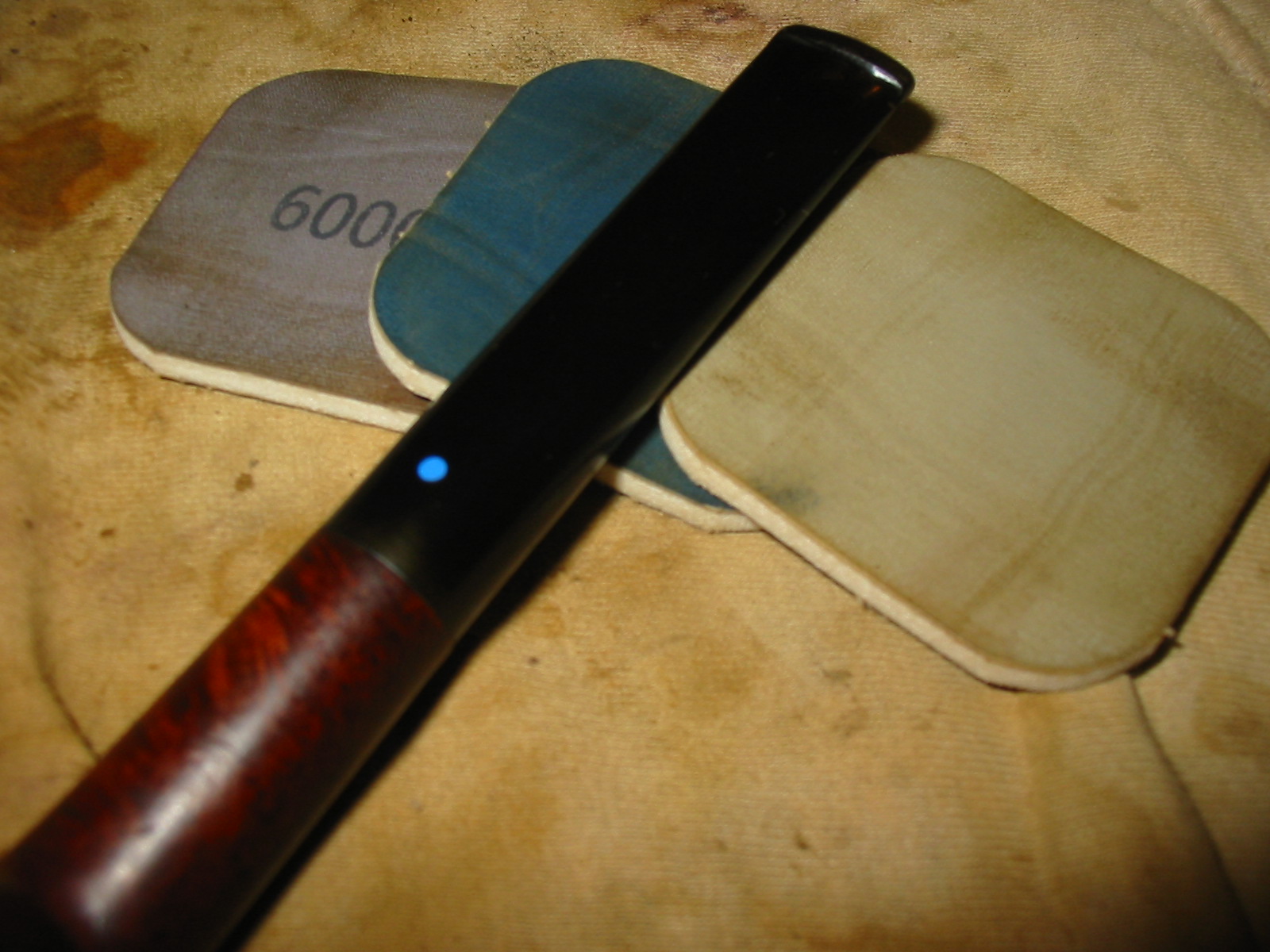
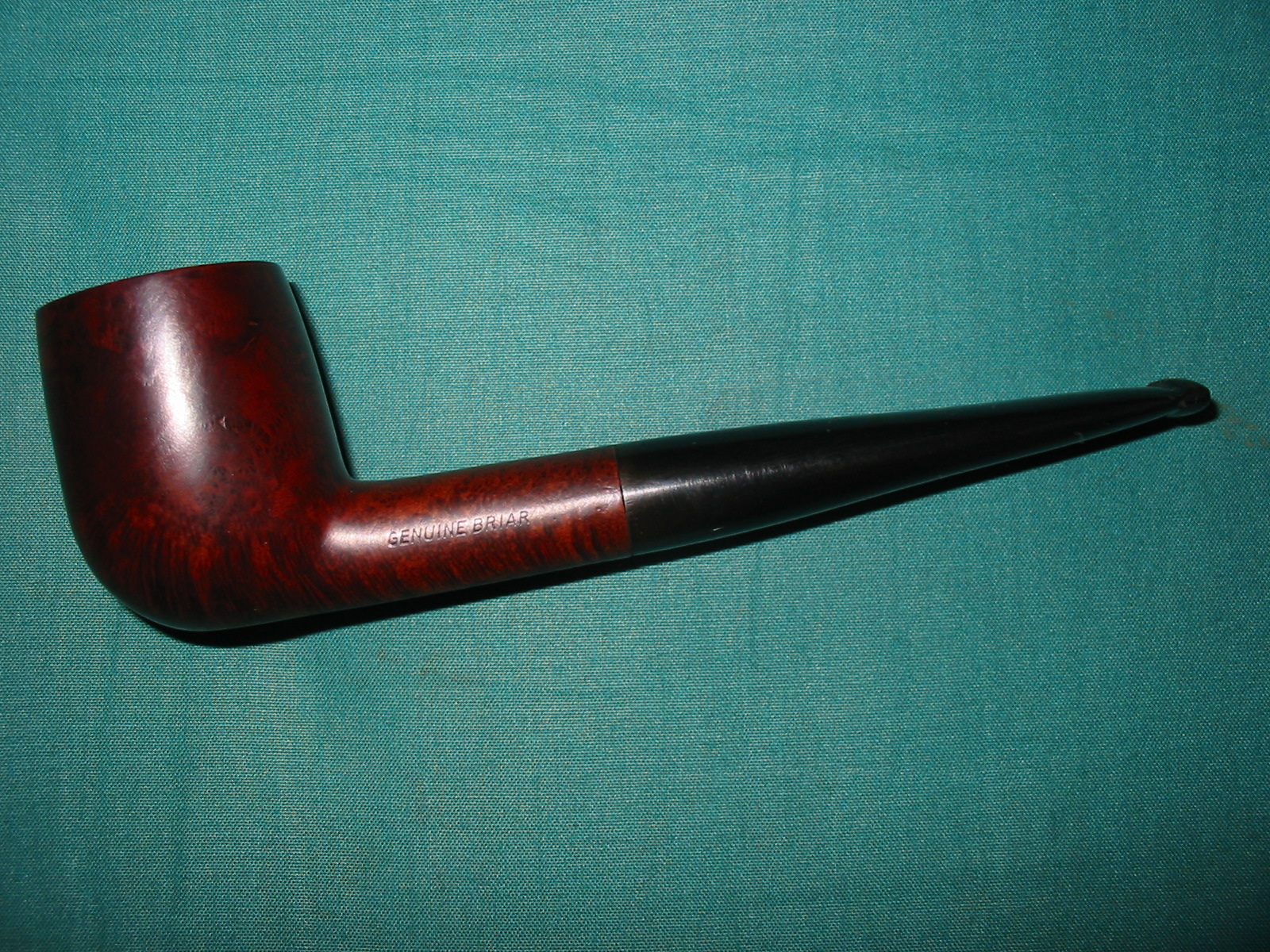
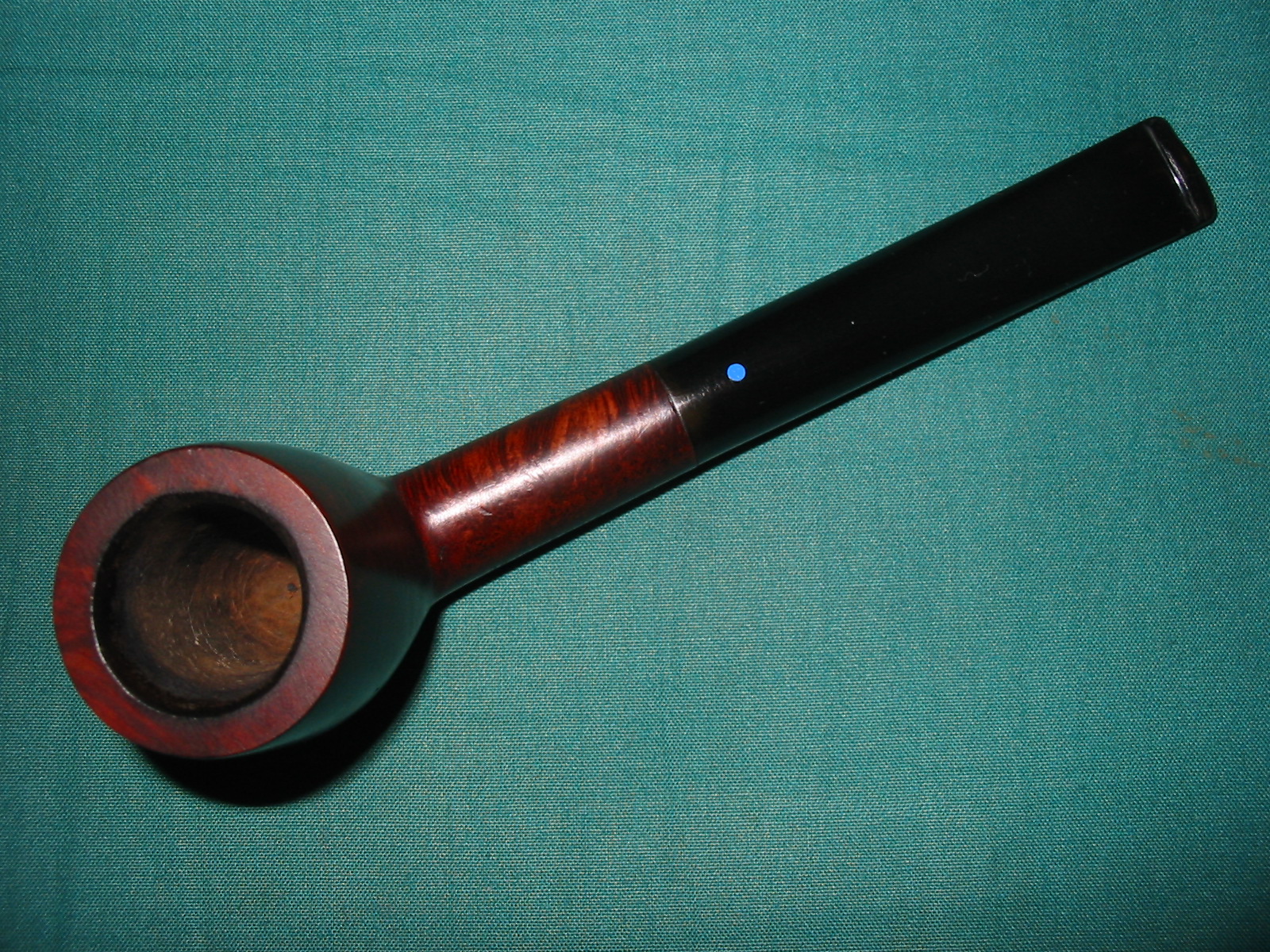
I came across this little billiard in an antique shop last weekend and when I saw the blue dot on the stem and saw the classic English shape of the bowl I truly thought I had found an elusive Sasieni one dot pipe. Lots of things about it seemed to signal that is what I had. The stamping was hard to see under the grime but there were i’s and an e. I was hopeful and I guess also wishful in my thinking. The pipe was dirty as can be seen below. The stem had obviously been damaged and cut off by the previous owner and a new button filed into the stem. The bowl was badly caked and the rim was damaged with dents and chips. I took the picture below while I was relaxing in a pub near the shop and looking over the finds of the afternoon.
IMG_0489

When I got home I took it to the basement and wiped down the bowl with acetone on a cotton pad to remove some of the grime. Once the outside was wiped down I tried to read the stamping with a magnifying lens. I could not make out the stamping – it was too faint. There was no stamping on the right side of the shank. On the underside it appeared that there had been stamping but it was no longer visible. The next three photos give a good idea of what the pipe looked like before I did a cleanup on the bowl and stem.
IMG_2192

IMG_2193

IMG_2194

I reamed the bowl with a PipNet reamer and took it back to bare wood. I picked at the inside of the bowl to check out the solidity of the walls and to check for potential burns. Everything looked and felt like it was solid so I dropped the bowl in an alcohol bath to soak over night.
IMG_2066

The next day I took it out of the bath and dried it off. The bath had removed the old finish for the most part. I finished by once again wiping it down with acetone on a cotton pad. After soaking part of the stamping had become visible. I was disappointed that it appeared that the pipe was not a Sasieni. The stamping that showed up after it was dry read Genuine Briar, which seemed to point to an American made pipe post WW2. I believe it is post war as that is when it became necessary to identify genuine imported briar in contrast to the Manzanita and other alternatives used by American manufacturers during the war years due to a shortage in briar. The briar was a nice piece – birdseye on one side, nice grain on other parts of the pipe and a clean shape to the bowl. I knew it would clean up nicely.
IMG_2217

IMG_2218

IMG_2219

IMG_2220

I topped the bowl using my normal method of anchoring a piece of sandpaper on a flat board and twisting the top of the bowl into the sandpaper until the top is smooth. I started with 220 grit sandpaper and then used a medium and fine grit sanding block to smooth out the rim.
IMG_2221

IMG_2222

When I had finished topping the bowl I wiped it down with acetone and a soft cotton pad to remove the sanding dust and the grime from the topping process.
IMG_2223

IMG_2224

IMG_2225

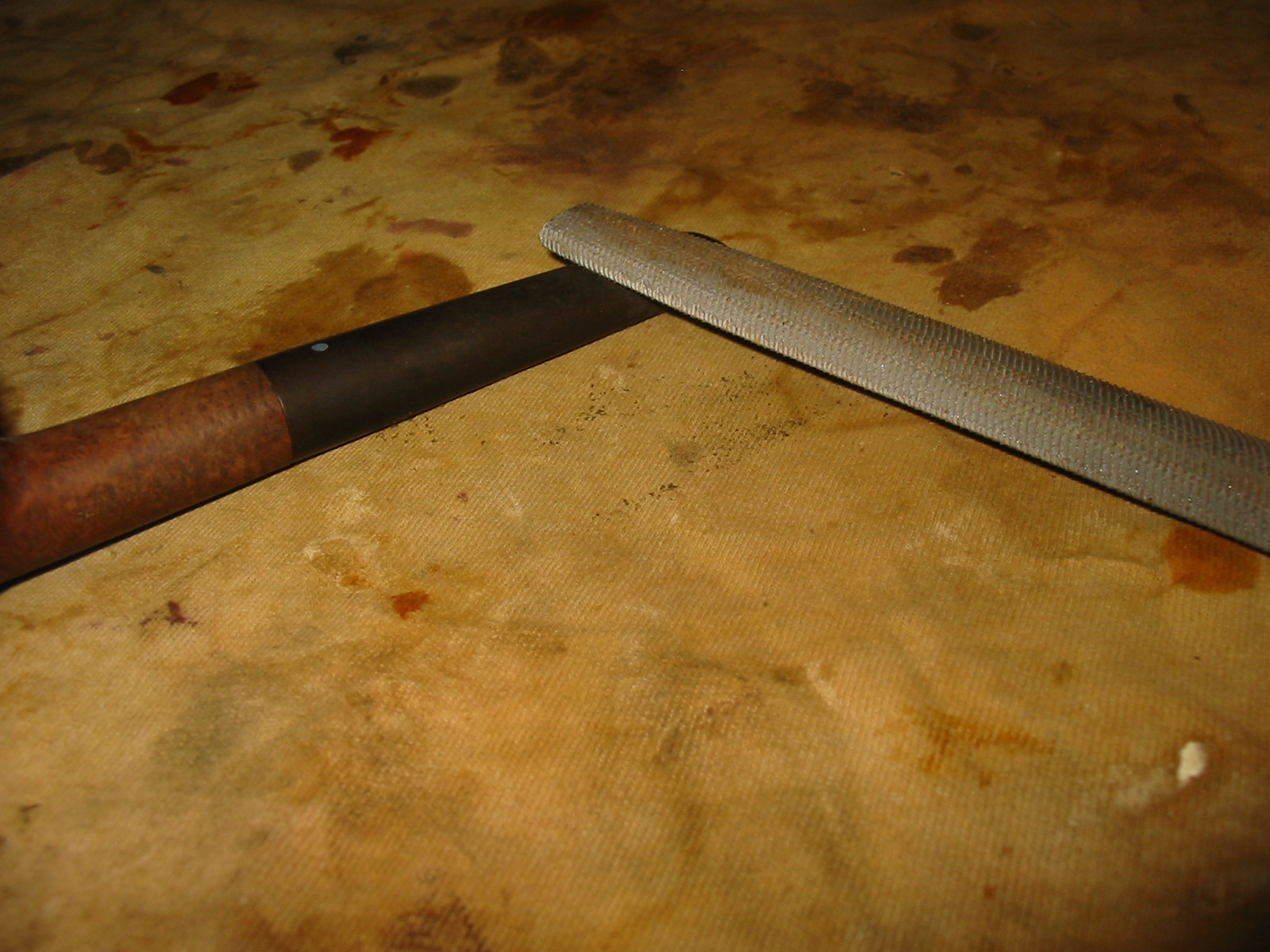
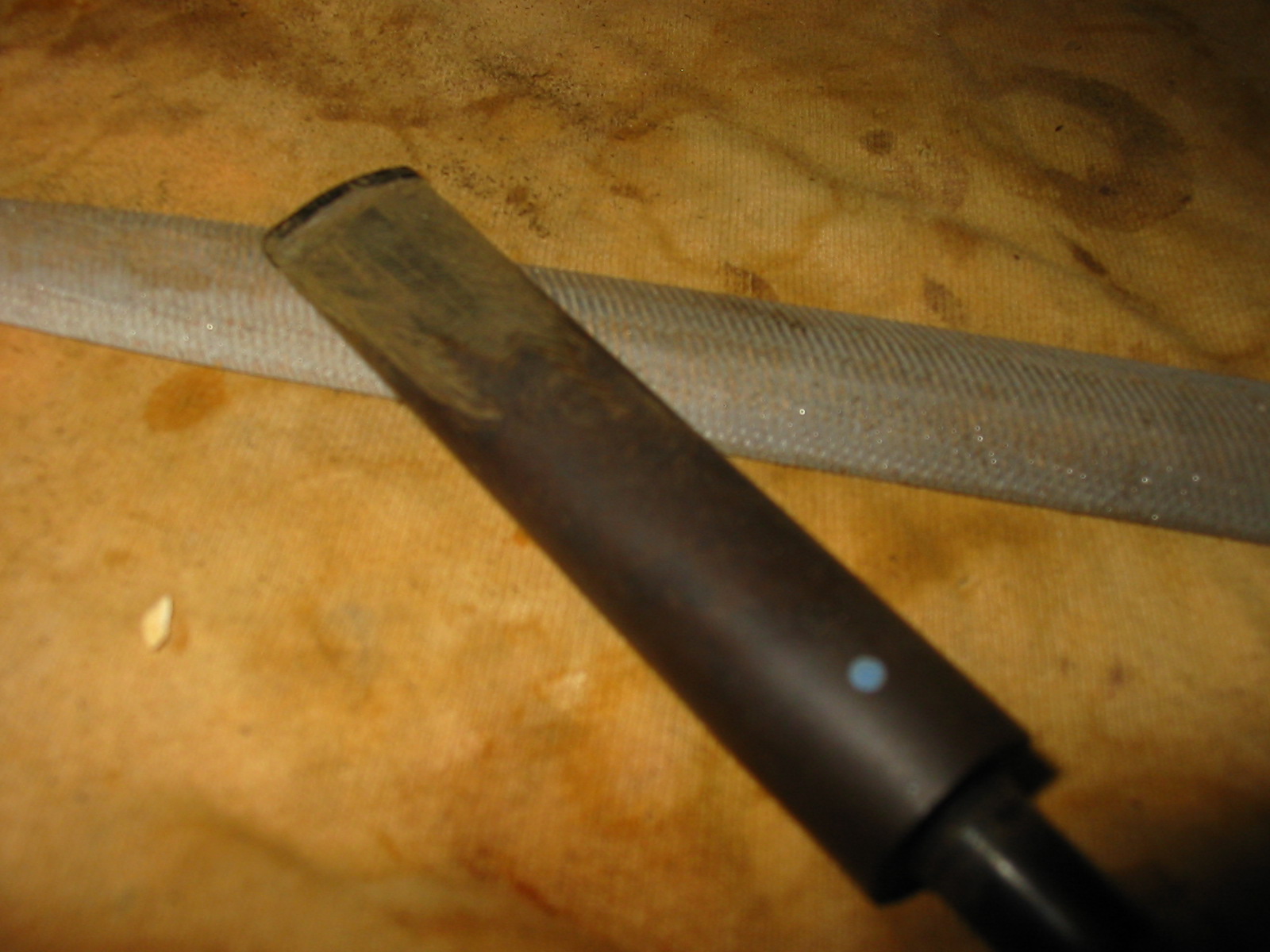
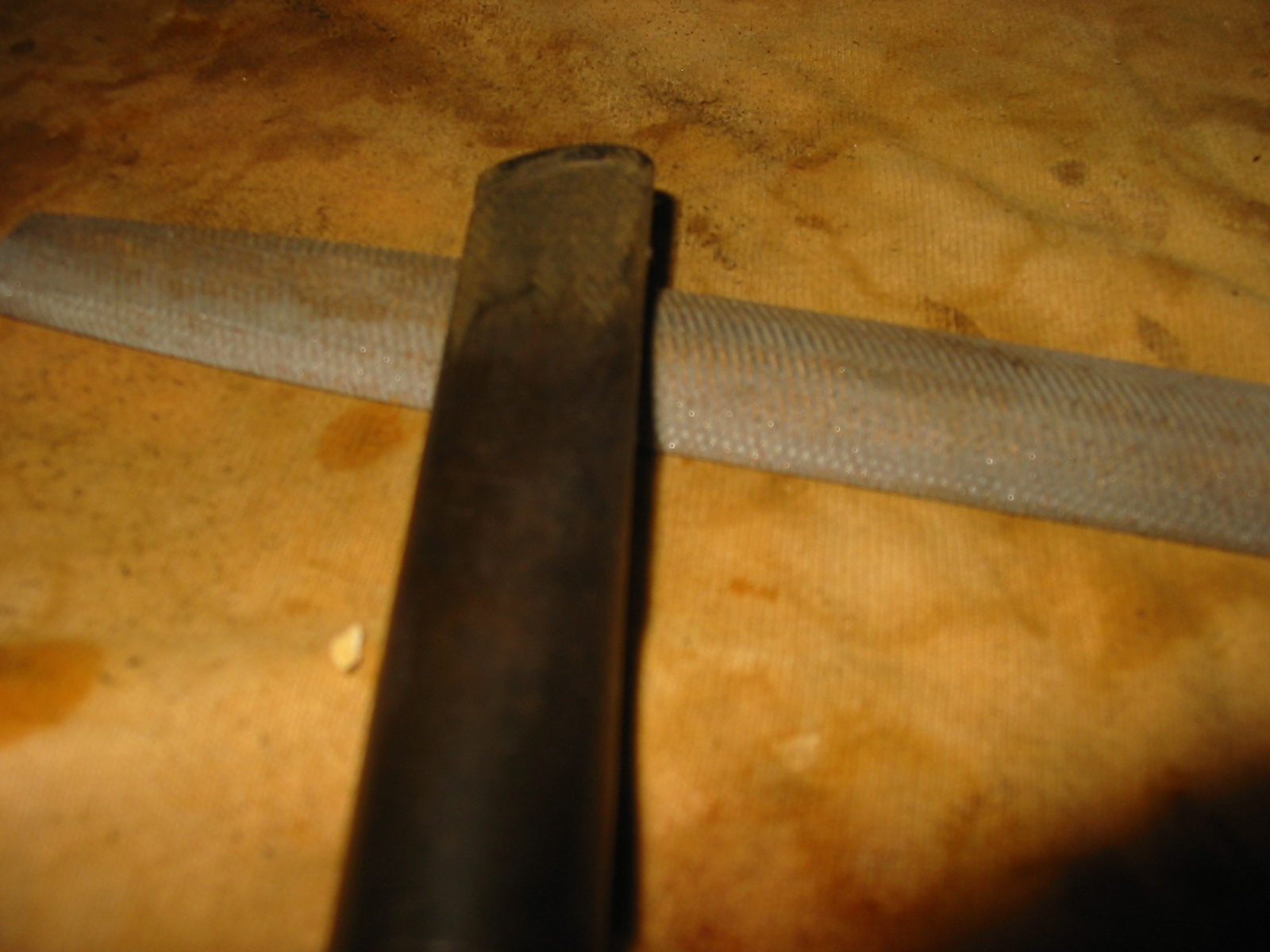
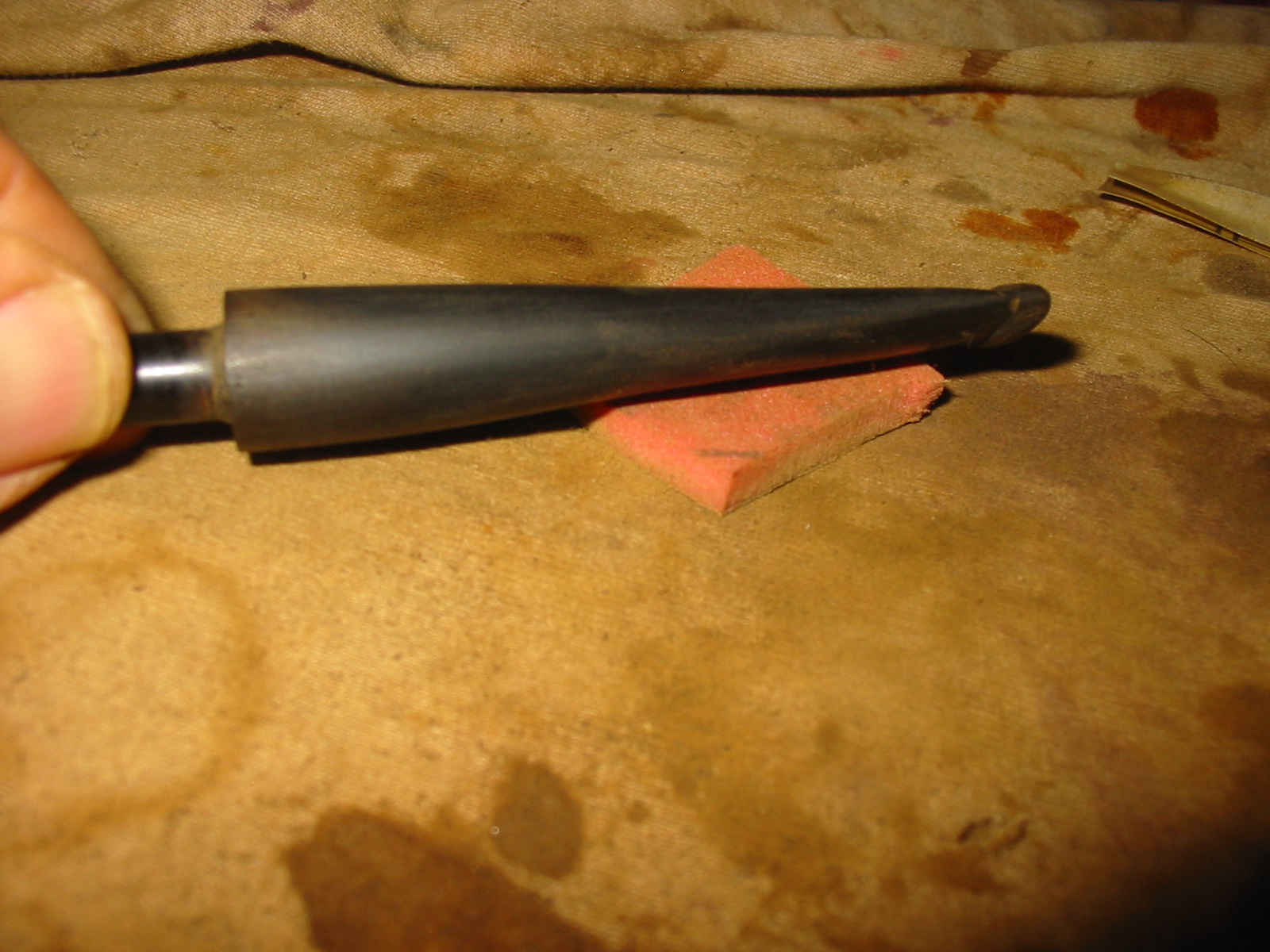
The stem had a poorly cut button on the end and the button as well as the taper on the stem needed to be reworked. I used a rasp and file to shape the taper on the stem and to take out the pinched look of the angle to the 90 degree cut on the button. The button was also not straight and not squarely cut so I also straightened out the flat edge of the button while I worked with the rasp and files. The next three photos show only the initial work on the stem and not the finished work. I removed quite a bit of the material and smooth out the slope of the taper so that it flowed evenly into the button on both the top and the bottom of the stem.
IMG_2226

IMG_2227

IMG_2228

I sanded the newly shaped stem with 220 grit sandpaper and a medium grit sanding sponge to remove the scratches left by the rasp and files. Once I had the basic shape in place I decided to restain the bowl. I warmed the briar and then gave it several coats of a dark brown aniline stain thinned 1:1 with isopropyl alcohol. I flamed it between each coats to set the stain. The rim took extra coats to match the colour of the rest of the bowl.
IMG_2240

IMG_2241

IMG_2242

IMG_2244

I buffed the newly stained bowl lightly with White Diamond and then gave it a coat of a light cherry coloured Danish Oil. Once dry I buffed it by hand and then also gave it a light buff with White Diamond to polish it.
IMG_2245

IMG_2246

IMG_2247

I then removed the stem and worked on the slot in the button. When the end of the stem had been cut off some of the flair of the original airway remained leaving the end of the button with a small rectangular opening. I used needle files to open the flair and widen the slot into more of an oval that extended the width and height of the button end.
IMG_2248

IMG_2251

IMG_2252

Once I had the slot opened the way I like it I sanded the inner edges with a folded piece of sandpaper to smooth it out. I also did some more shaping with files to the taper of the stems. I sanded it with 220 grit sandpaper until I had the slope well-defined from the tenon back to the button. I also shaped the externals of the button to clean up the angle at the point the button and stem taper met. I also sanded it with a medium grit sanding sponge to remove the scratches left behind and to also remove the oxidation at the stem shank junction.
IMG_2249

IMG_2250

When I had the scratches removed as far as possible with the sanding sponge I went on to sand the stem with micromesh sanding pads. I wet sanded the stem with 1500, 1800 and 2400 grit sanding pads and the dry sanded with the remaining grits.
IMG_2253

IMG_2254

IMG_2255

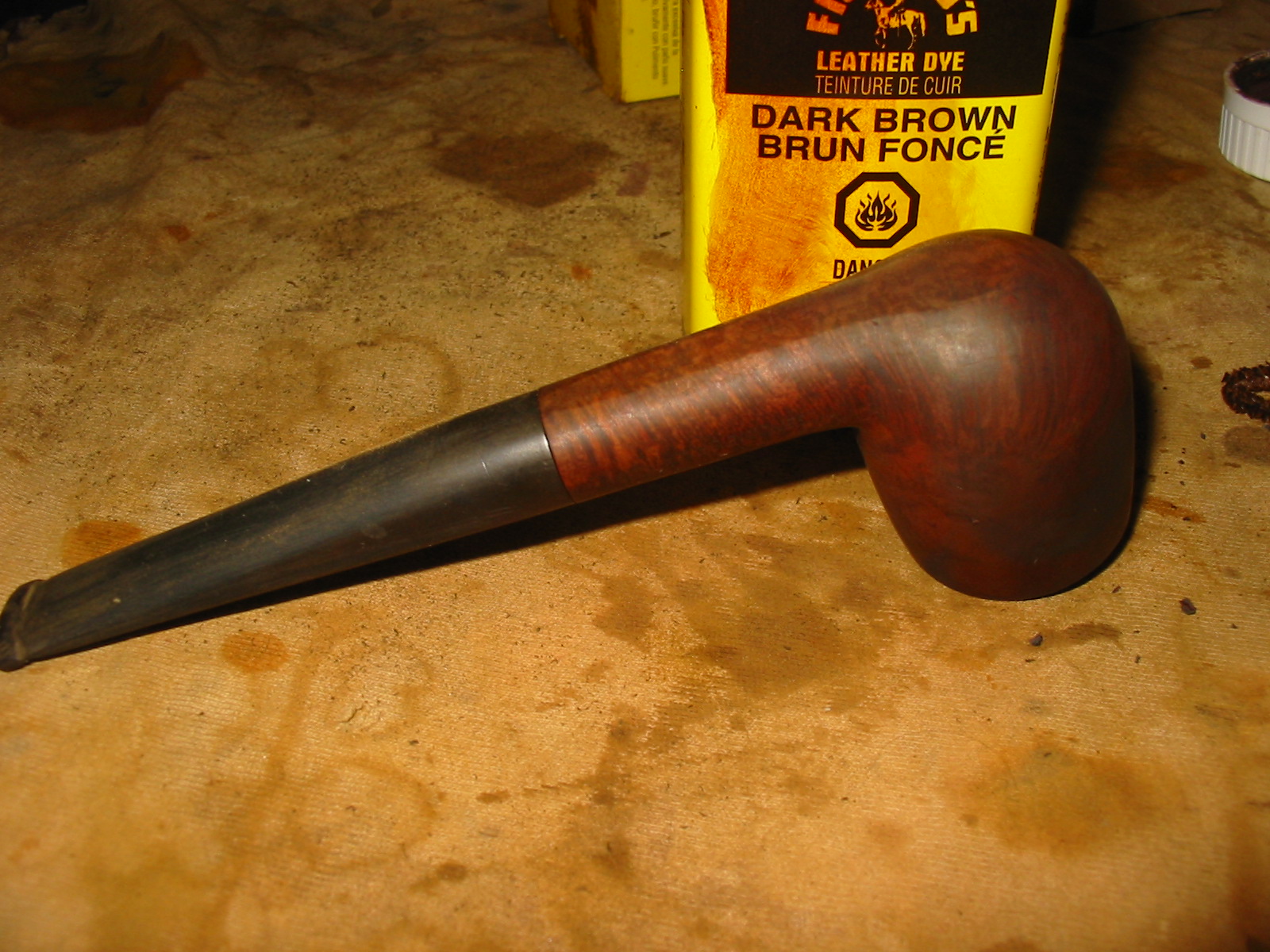
I rubbed the stem down with Obsidian Oil and rubbed it into the surface of the vulcanite. I took it to the buffer and buffed the stem with White Diamond. I gave the bowl and the stem multiple coats of carnauba wax and polished the pipe with a clean flannel buff to bring up the shine. The finished pipe is pictured below. I still wish I knew what the stamping says in full. That blue dot certainly is a symbol of some unknown to me brand of pipe. The mystery remains but in the mean time I have a great little billiard to enjoy.
IMG_2256

IMG_2257

IMG_2258

IMG_2259

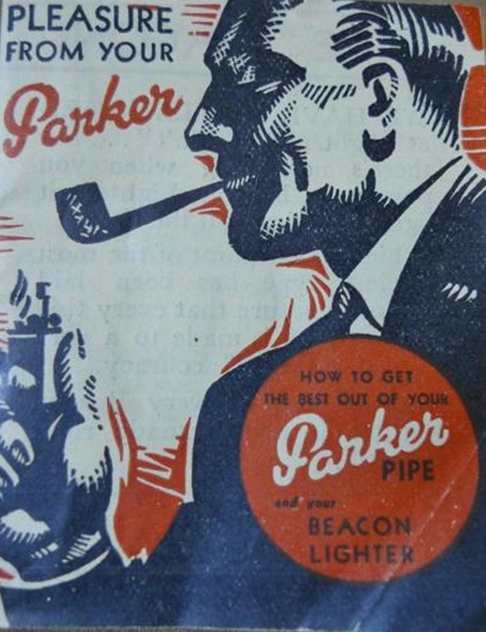
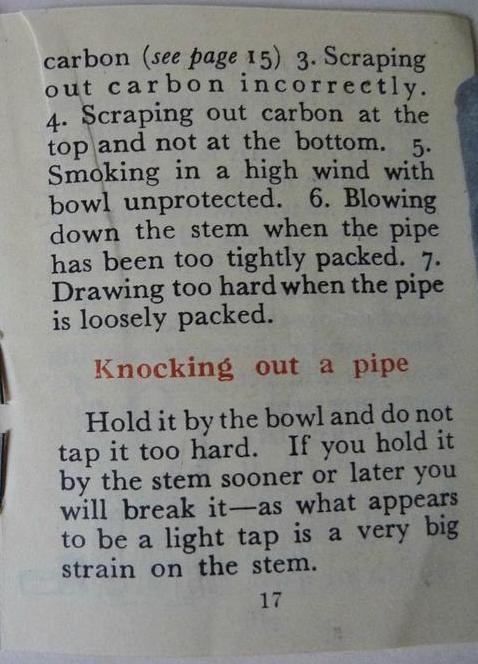
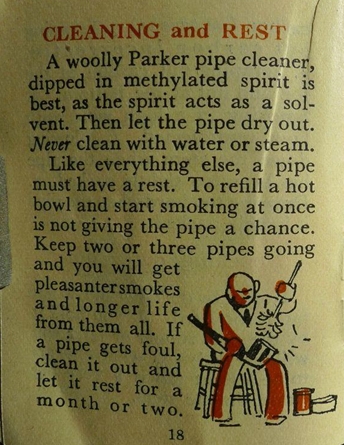
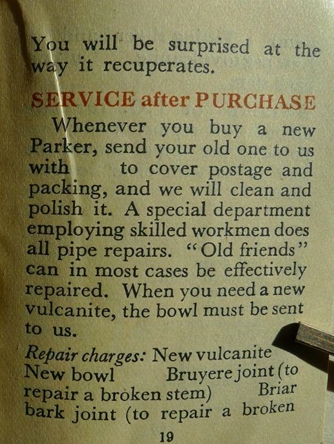
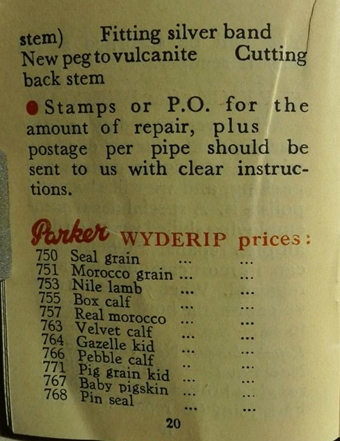
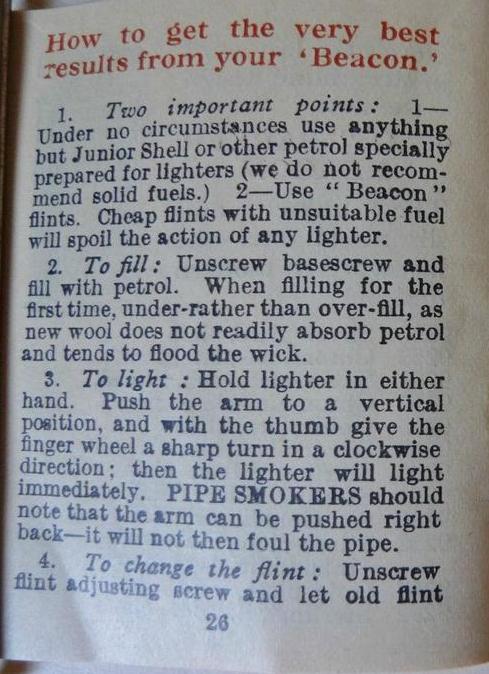
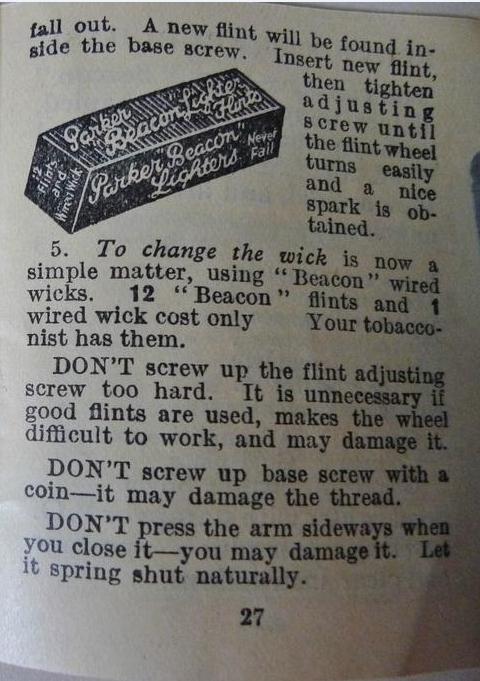
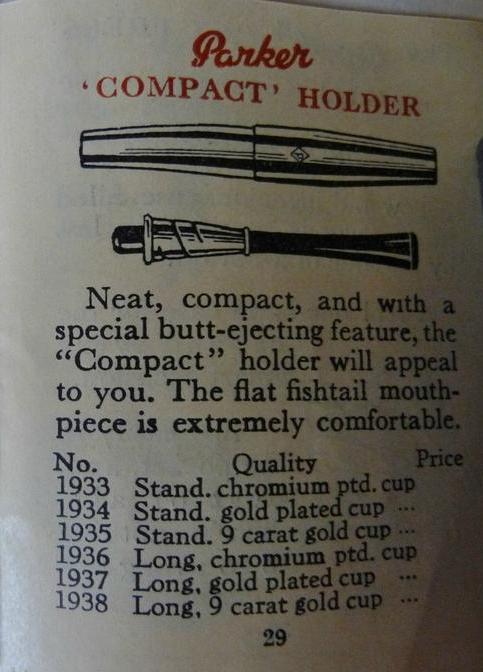
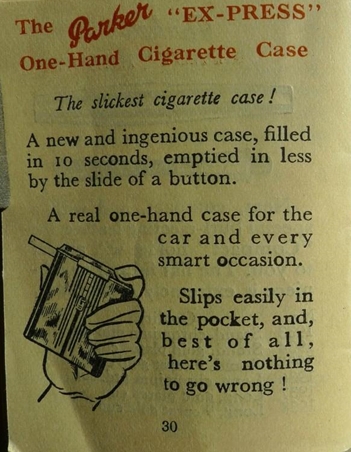
Pleasure From Your Parker – How to get the most from your Parker pipe


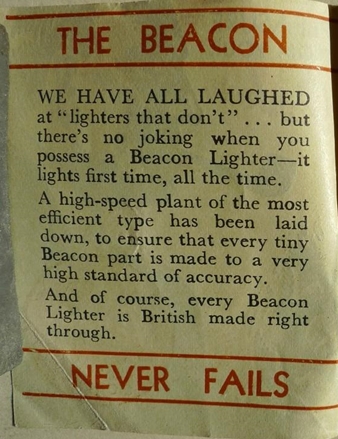
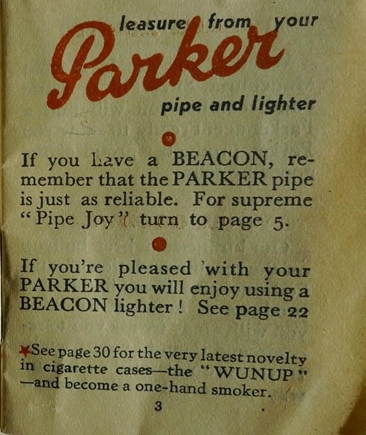
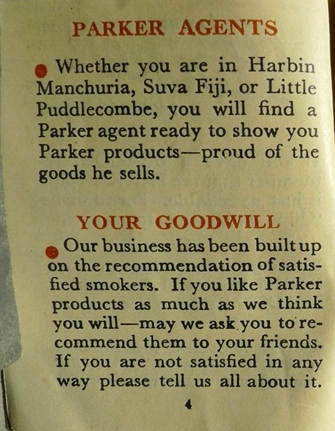
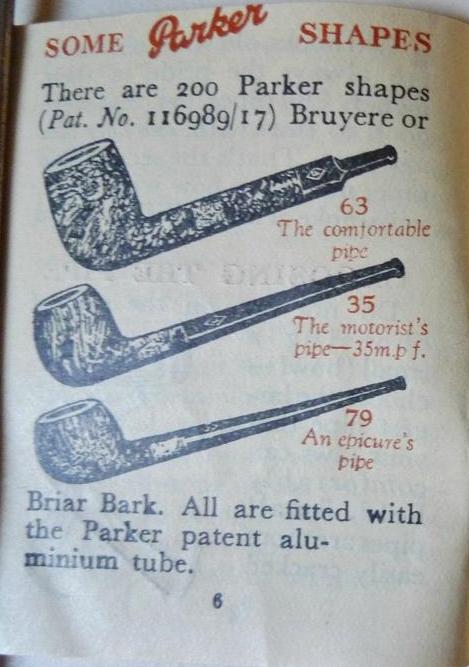
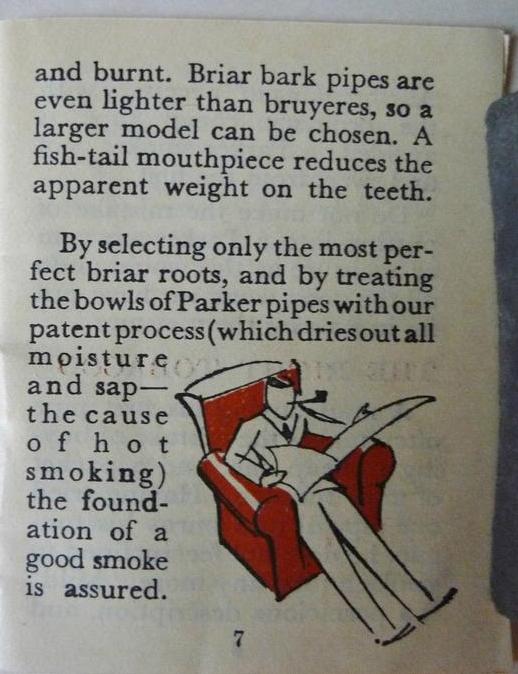
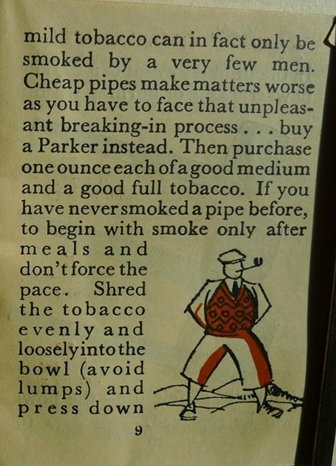
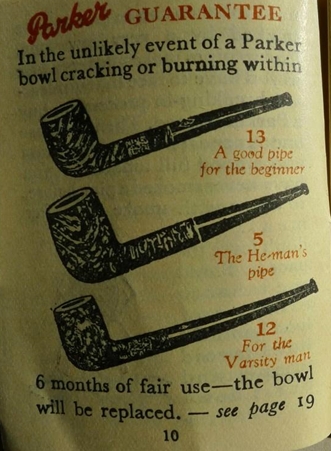
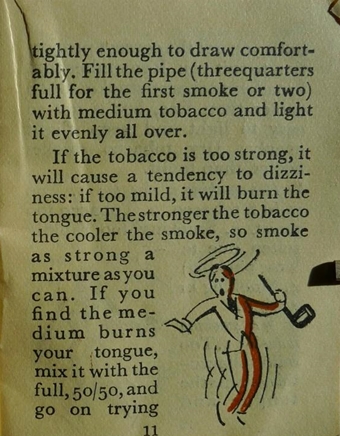
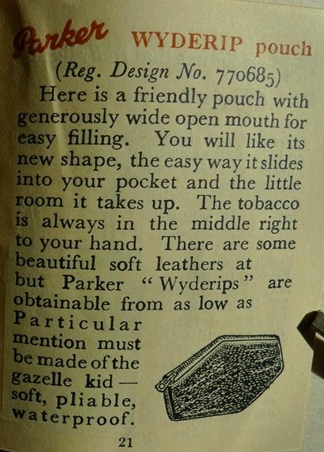
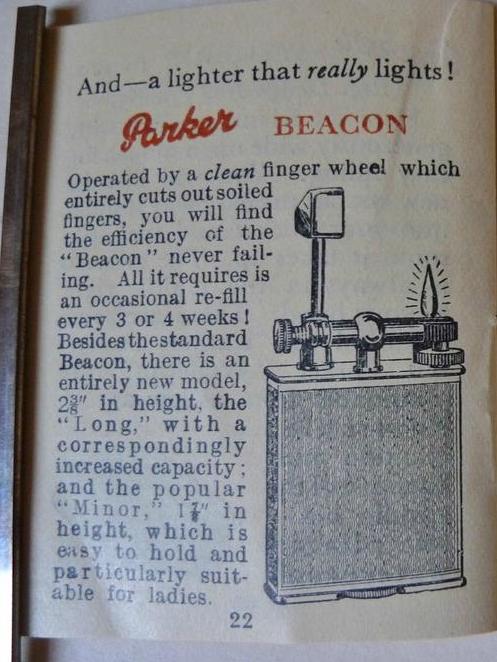
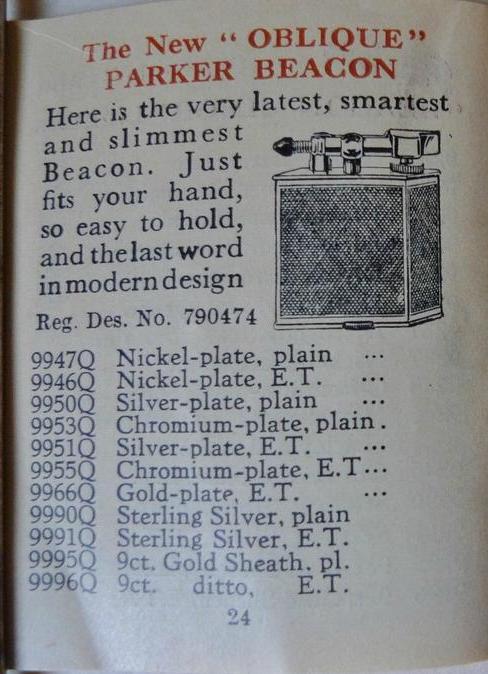
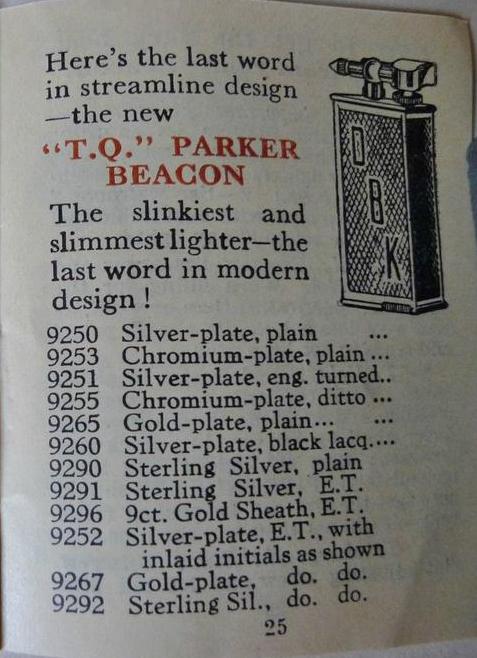
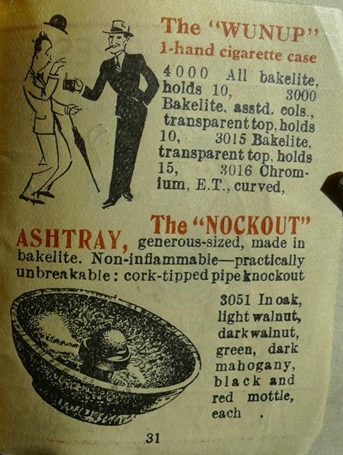
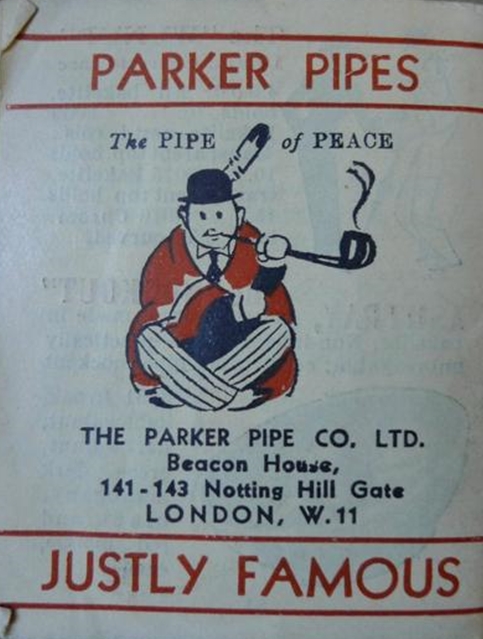
This booklet was originally posted on Pipe Smoker Unlimited by philofumo (Troy) http://pipesmokerunlimited.com/showthread.php?3616-1949-Parker-Patent-Super-Briar-Bark-from-Alan . I am always on the lookout for old tobacciana items like this; so when I saw it I thought it was an interesting piece of pipe and tobacco history that I would like to post here on rebornpipes. I always enjoy reading these old factory booklets that came with new pipes. They give a flavour of times past that I find both fascinating and enjoyable.
Parker1

Parker2

Parker3

Parker4

Parker5

Parker6

Parker7

Parker8

Parker9

Parker10

Parker11

Parker12

Parker13

Parker14

Parker15

Parker16

Parker17

Parker18

Parker19

Parker20

Parker21

Parker22

Parker23

Parker24

Parker25

Parker26

Parker27

Parker28

Parker29

Parker30

Parker31

Parker end

A Hardcastle Billiard – All is not as it appears on the surface


Blog by Steve Laug

You can’t imagine the disappointment that I experienced when I began to ream this old Hardcastles Jack O’ London billiard; unless of course you have had the same experience or one like it. On the outside it looked like a pipe that would clean up very nicely. The stem was in excellent shape other than the normal oxidation. It did not have any tooth marks in the stem. The finish was in pretty good shape with no dents or divots in the briar. The bowl was caked with a heavy coat of carbon all the way to the bottom. The inner edge of the bowl was slightly out of round but repairable. The top of the rim was not too bad under the light buildup of tars and lava. A light sanding would bring it back to smooth. The outer edge was not dented or damaged. Yes, it was a great find from all appearances.

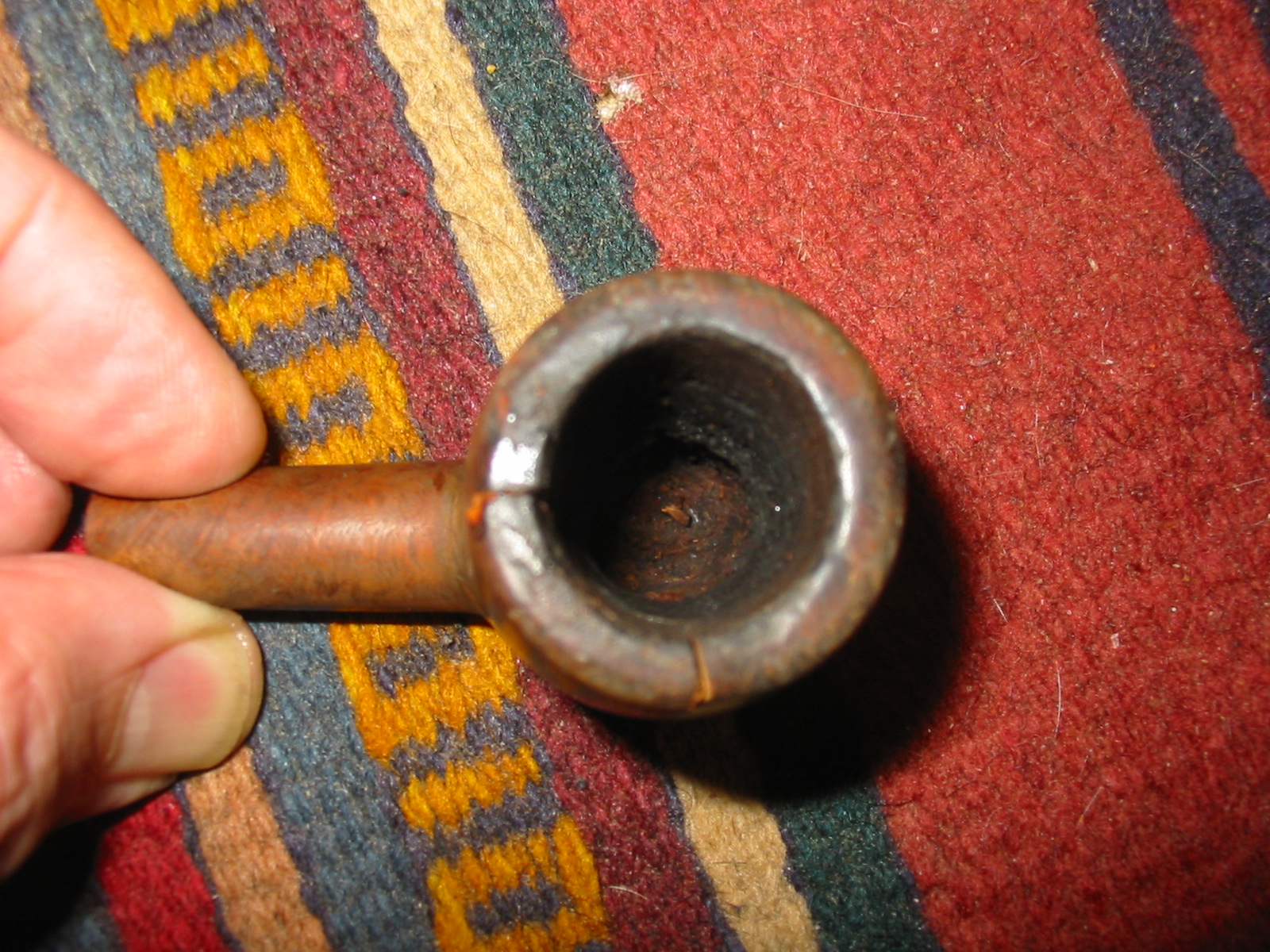
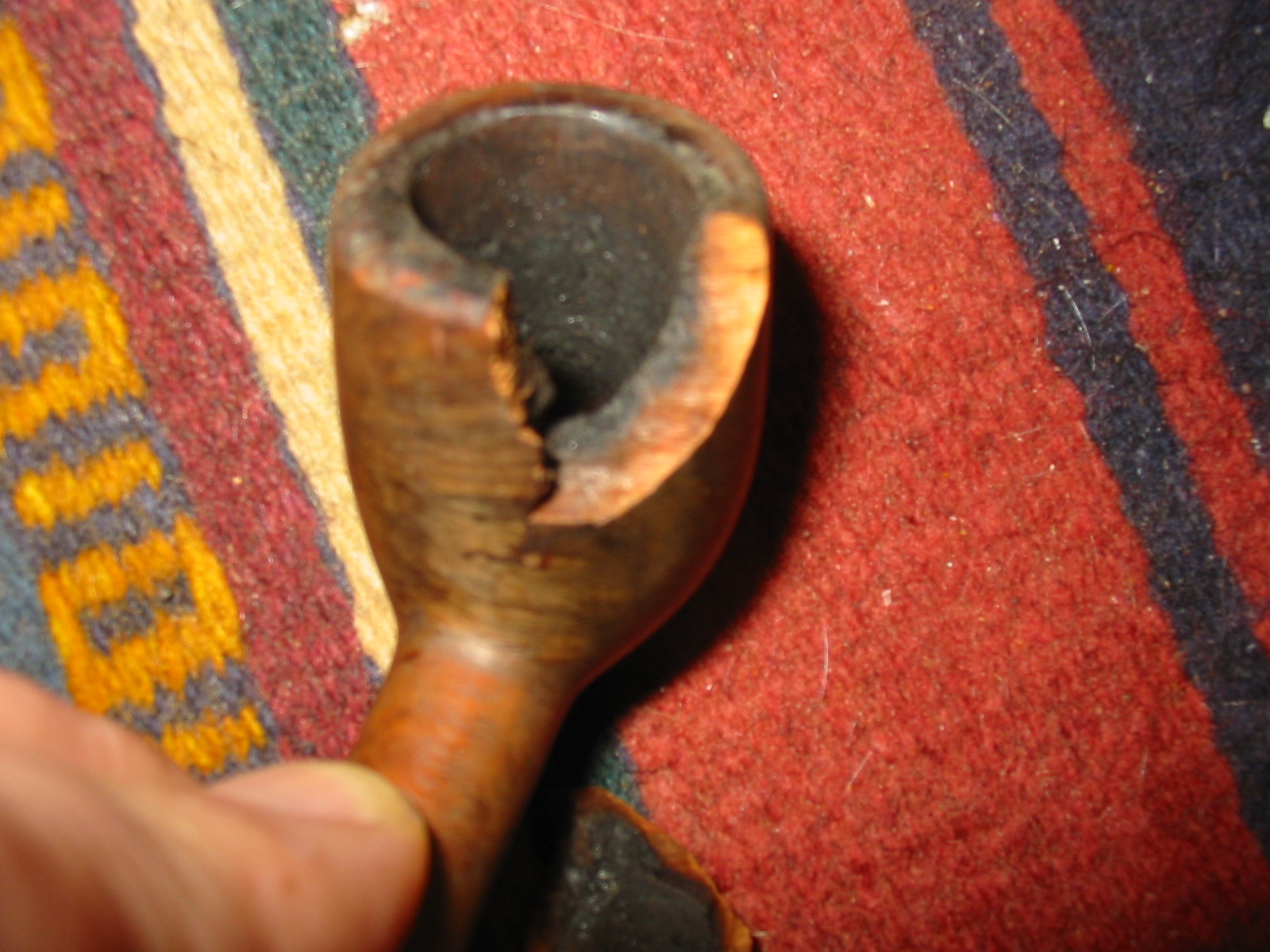
But that was not to be the case with this old pipe. Things were not as they appeared on the surface. When I begin refurbishing a pipe I always begin with a light reaming. In a pipe like this I start with the smallest reaming head on the PipNet reamer and work my way up to the proper size to take back the cake to the thinness of a dime or back to bare wood. I put the smallest cutting head in the handle and inserted it in the bowl. No problem. The head cut back the cake without any effort. Once it was trimmed to the bottom of the bowl I used the nest larger cutting head on the handle. I put it in the bowl and slowly turned reamer. As I did I heard and felt a small crack. I stopped turning the reamer and a chunk of briar dropped free of the bowl. You can’t imagine the surprise… and frustration at having that happen. I have never had a bowl do that when I am reaming and all things considered it should not have done it this time if all things were the same as usual.

But they were not the same. I examined the bowl with the chunk out on the table and also examined the chunk. The depth of the char on that portion of the bowl went half way through in most spots and in some was just under the surface of the outside of the bowl. In the first top view photo below you can see how far the reamer went down in the bowl and the cracks on the top of the rim – looking at it like a clock face the cracks are at half past and quarter of on the circle of the bowl. The second photo below is a side view of the cracked portion of the bowl wall with the piece of briar inserted for the photo.
IMG_2230

IMG_2231

For the next two photos I lifted the chunk out of the side of the bowl to show the extent of the damage to the briar. In the first photo below I show the angle right side of the cracked area. Note how deeply the char had gone into the side of the bowl. The depth of the burned area grows as you move down the bowl to the point at the bottom of the cracked area. At the bottom of the photo you can see that it is charred at least half way through. For the second photo below I turned the bowl to show the other side of the cracked area. At the bottom point just before the crack goes straight upward on the left side of the area, the depth of the burn is just below the surface of the briar. This area was due for a burnout in a very short time. From these photos you can see the amount of damage that occurred in this old pipe. Too me it was smoked hard and not properly cared for in break in period. In examining the rest of the bowl it is clear that the damage goes all the way around the bowl. I used a dental pick to poke at the inside walls of the remaining bowl and found that they were also soft and charred to a similar depth.
IMG_2233

IMG_2236

This bowl was as good as history. But the bowl is also a great demonstration of why I ream an old estate back to the bare wood and then examine it for burned or charred areas. I explore the bowl surface with a pick to see what I am dealing with before I finish the rest of the refurbishing.

I have also included two photos that show the piece of briar that broke free from the pipe bowl. These also show the extent of the damage to this old bowl. In the first photo you can see that the burn/char is all the way through the piece on that side. The second photo shows the other side of the piece and shows that on that side of the briar the burn is not as deep as the other side.
IMG_2237

IMG_2238

I took a final photo showing a top down view of the bowl with the broken piece of briar removed. Examine it closely and you can see the depth of the burn into the inner surface of the briar.
IMG_2239

While this pipe is lost and not redeemable all is not a waste. I will part out everything that is usable and it will find purpose in other pipes that will cross the work table. Nothing will be wasted. The stem will be scavenged for use on another pipe. The shank will be cut off and used for something. Only the bowl itself will be assigned to the fire. Nothing is totally wasted and the old pipe also served an educational purpose. The photos of the burned and broken briar show the extent of damage into the interior of the walls of this old pipe. It was one that had been smoked hard and abused.

A Short Story: A Blend of Tobacco at the Root of a Friendship


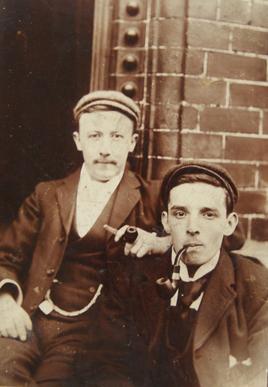
One of my side hobbies is to collect old photos of pipemen (both hard copies and electronic versions) and try to craft a story from them. I love to try and imagine the lives of the men and women in the photo and then write a short story from there. This particular story came to me from a photo I have had on my hard drive for quite a while. One day this past week I sat down and looked at it and the story came to me. You might imagine a totally different story and so might I on a different day. That is the fun of the process for me. As for this version of the story I am sure it will be revised over time but I thought I would share it as it currently stands. Thanks for taking time to read it.

2friends Henry and Paul first met at the local pipe shop in Gastown. Henry had come in to replenish his supply of his favourite tobacco and Paul was behind the counter working as a clerk. They were close to the same age and both had a love for their pipes. Being young they did not have a large collection of pipes. In fact if you had followed them home from the shop and seen where they each lived you would understand that like many young men renting a room in the city and working long hours they did not have much more than a change of clothes, a few books and a pair of boots. These two each had the pipe in their mouth, a pouch of tobacco and a match safe full of dry matches in the pocket of his coat. They both had a nail with a large head that served as a tamper as they smoked.

The day they met it was a rainy Vancouver day – normal for November. Henry was on a lunch break from his office on Cordova Street and had run over to the shop to pick up some tobacco. As he came through the door he was surprised to see that Richard was not working that day – or at least he was not out front. Rather, behind the counter stood a dapper young fellow with a waistcoat and watch fob. His sandy coloured moustache matched his hair perfectly. Henry had always wanted to grow a moustache but just did not have much luck with it. Once the young man had finished with his customer he introduced himself to Henry.

“Good afternoon sir, my name is Paul. I am new in the shop so I have not met many of the regulars yet. By new, I don’t mean I am new to the trade. I have been working in Victoria for several years at the Old Morris Shop and just moved to Vancouver. I stopped by and introduced myself to Richard and he hired me. What can I help you with?”

Henry replied, “Good to meet you Paul. I just came to pick up a couple of tins of my regular tobacco. I am quite taken with Dunhill Nightcap and I am just about out. I will take two tins of that if you have them. I am also interested in trying one of Richard’s blends that is kind of like Nightcap. Do you have any recommendations?”

They both made their way to the tobacco counter to see what Richard had available. Henry looked and smelled a few of the blends but nothing quite caught his fancy. So instead of one of the regular blends Paul decided he would custom blend a batch for Henry. He took down the recipe book and found the blend he was looking for. It would provide a base for the mixture he had in mind. He had a few additions of his own that he would put in the new blend. He took down the jars of tobaccos that he would blend to make the batch for Henry. He mixed the components noted on the card on the blending board, added his contributions and then tossed them together to mix the pieces. All the while Henry was watching the “chef” at work. He was amused at the drama of the production in front of him. Paul was so intent on his work that he almost forgot that Henry was there. He just mixed and checked the recipe and when he was done looked up. He had to laugh at himself.

“Sorry about that old chap. I was so intent on the mix that I totally lost sight of the customer. Have a whiff of this. Do you have your pipe with you? Dumb question, I know but it has happened so often that I always ask. Load a bowl of this and see what you think.”

So Henry did just that, he took his pipe from his coat pocket tamped out the dottle and then loaded a bowl of the “recipe”. He took his time packing the bowl – mind you it did not take too long. The whole thing from the question, to the mixing to the filling a bowl had taken a few minutes. When he had a bowl packed he lit a match and drew on his pipe. The smoke curled around his head as he breathed out. He was quiet for a while as he tasted the new blend.

“Hmmm, this is good stuff. I can taste the Orientals, the Latakia, the Virginia and is that a bit of cigar leaf?” He contentedly puffed on his pipe. This was a good blend.

Paul answered, “Yes I put a dab of cigar leaf in – my addition to the recipe. I always have liked the added taste that it brings to a blend. What do you think? Remember it will only deepen in flavour as it sits in your pouch.”

Henry silently puffed his pipe, drawing the smoke into his mouth, sipping the flavour and letting it curl out around the mouthpiece. This was truly a good smoke.
“Excuse me Paul, what time is it? I need to get back to the office before I am late. Can you pack that up for me and I will settle up. I will continue to smoke it over the weekend and be back in on Monday at noon. I am thinking I will need to get some more of this if it continues to smoke this well.”

With that Paul picked a small tin from under the counter, packed in the 4 ounces of his recipe and sealed the tin. He wrote the mixture components on a card and put it on file with Henry’s name and a date. Next time around it would be just a matter of following the recipe – kind of a My Mixture Gastown style. He handed the newly tinned batch to Henry with the words, “Enjoy the new blend my friend. I am sure I will see you Monday and we will adjust things as necessary.”

Henry went out the door, saying over his shoulder, “Talk soon Paul. I am pretty sure this one will be a keeper. I just have a good feeling about it.”

The door bounced closed and once the chime over it was stilled Paul went back to work, cleaning up the remnants off the blending table and putting them in a jar that Richard kept under the counter. The jar was beginning fill up with a good bunch of tobacco and would soon go into the leavings bags that were sold at a great price to the daring pipemen who came through the door.

by Steve Laug 10/21/13

Falcon Restored


Blog by Al Jones (aka “upshallfan”)

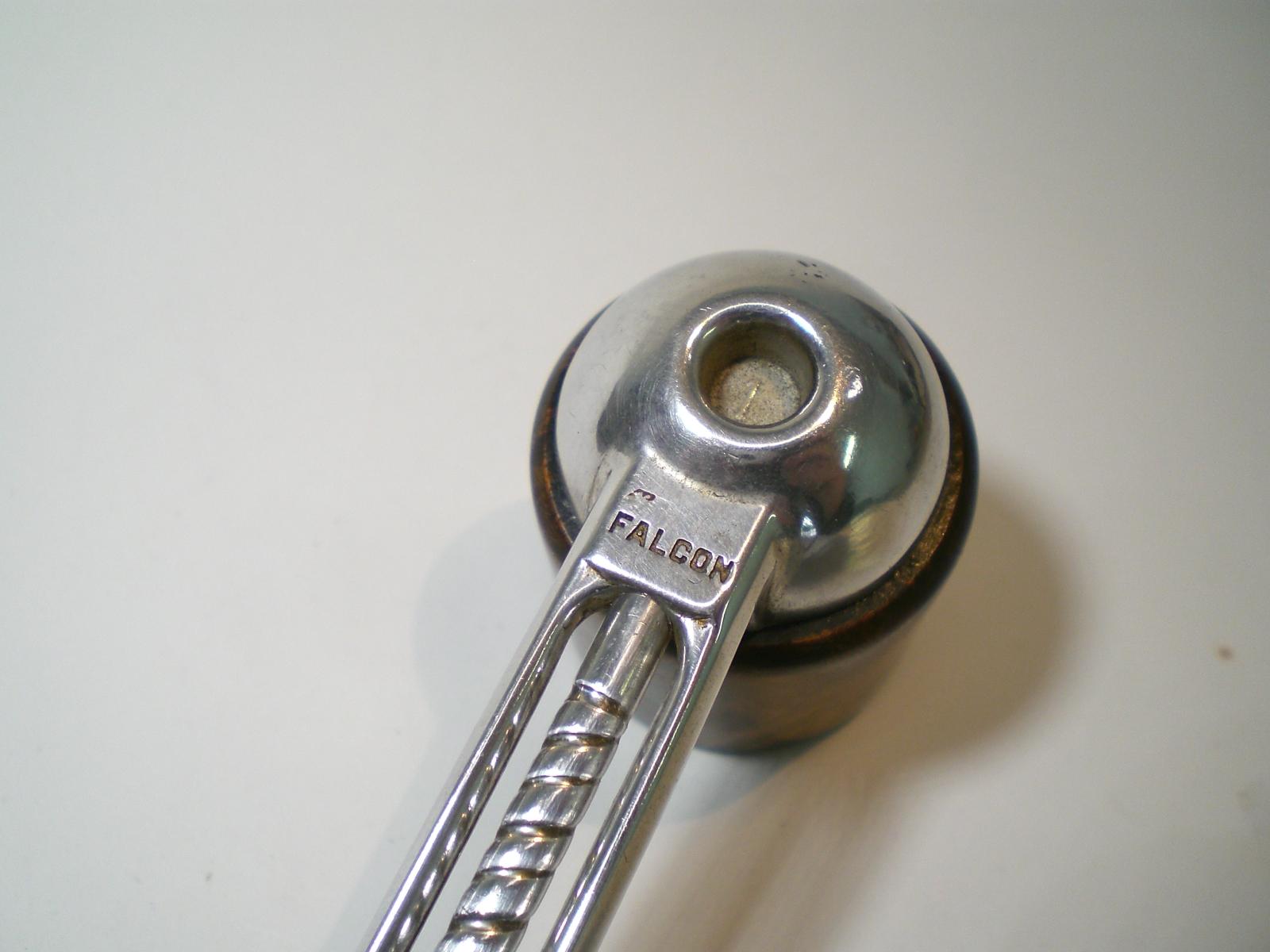
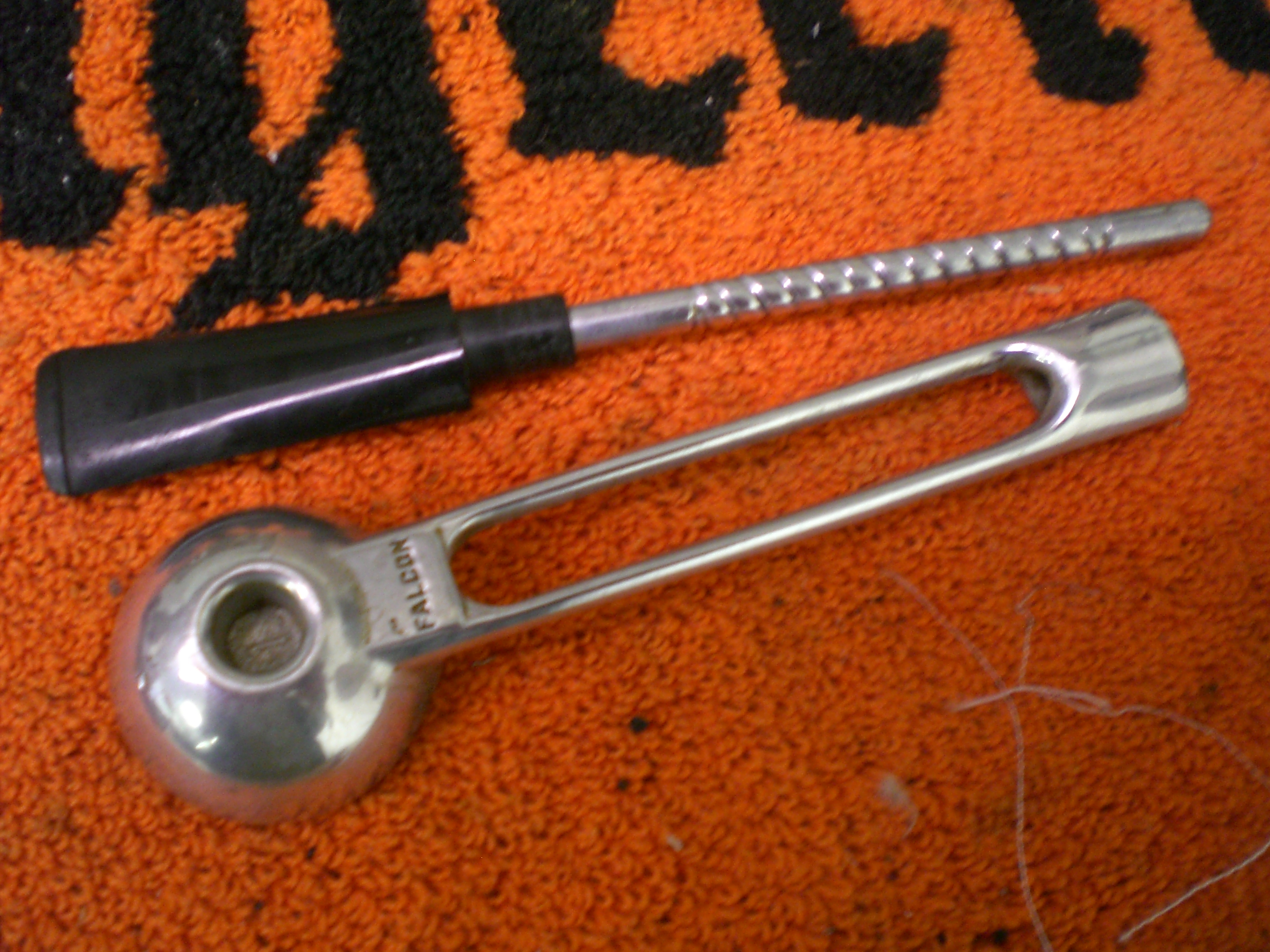
We had some glorious weather in the Maryland/Virgina area in September and one beautiful Sunday, the wife and I drove down to Winchester, VA in the MGB. We toured Patsy Cline’s home (that has been on our list). Winchester is also home to JB Hayes Tobacconist, a fine pipe shop. I didn’t find anything there, but we also made several antique/junk shop stops as I was on the hunt for an old cabinet to re-purpose for my pipe collection. I didn’t have any luck with a cabinet, but did spy this old Falcon in a case. For a few bucks, it was mine ($3 from memory).

The bowl top was pretty beat up and scorched, but the rest of the pipe and stem looked in decent shape. I had never seen a metal pipe in person to this point and was curious as to how it was assembled or if it held any restoration challenges. Here are some pictures of the pipe as I found it.

Falcon_Before

Falcon_Before (1)

Falcon_Before (2)

Falcon_Before (3)

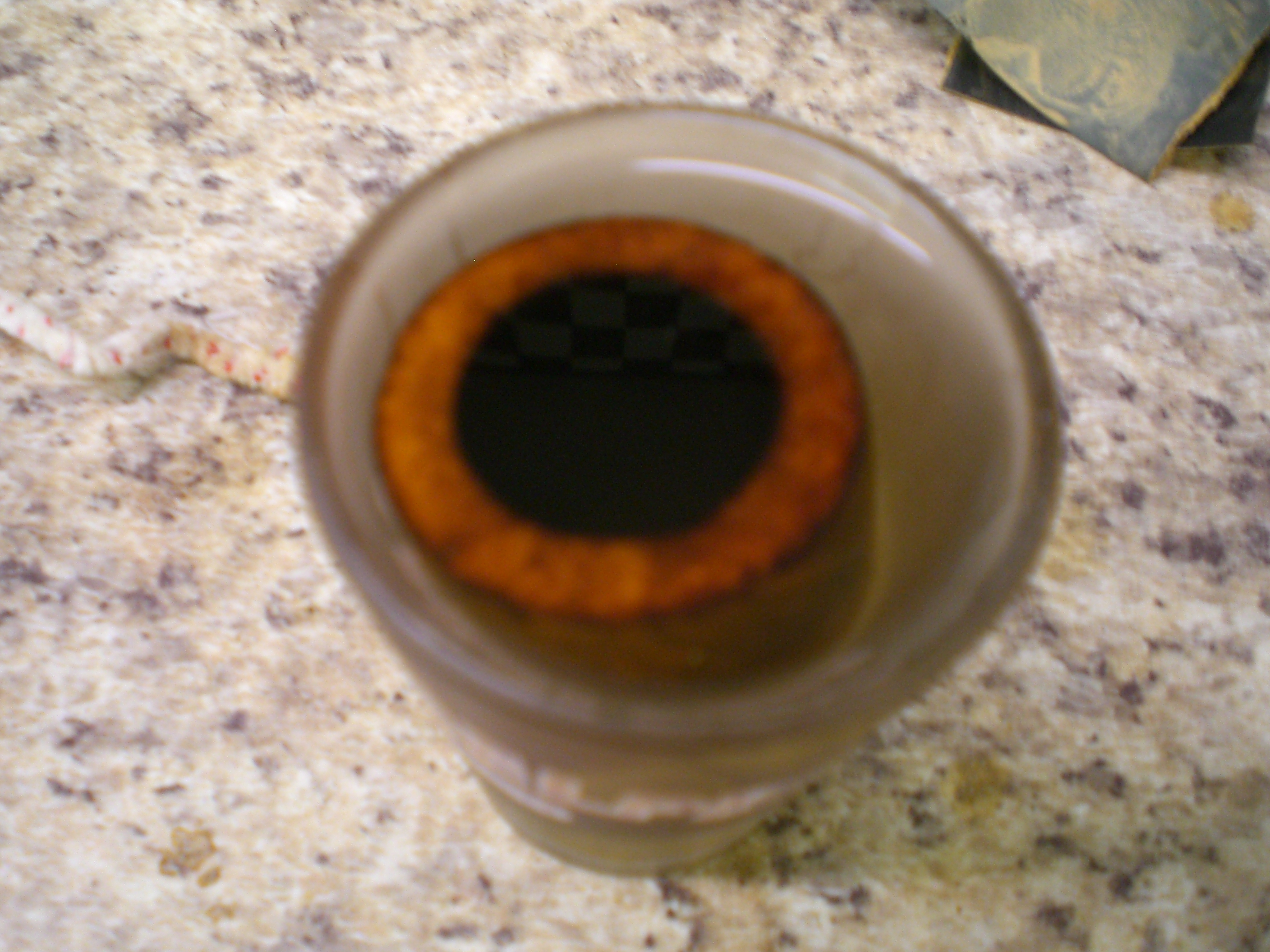
The pipe broke down without drama and the bowl top screwed off nicely, but the threads were just about perfect. I reamed the bowl, which has a fairly thick cake. The bowl was quite tall and I thought it would look best topped and refinished. I sanded the bowl top smooth with some 320 grit paper flat on my workbench, followed by 800 grit wet paper, using water. I immersed the bowl in a shot glass full of isopropyl alcohol, you can’t do that with a briar pipe!

Falcon_Progress (2)

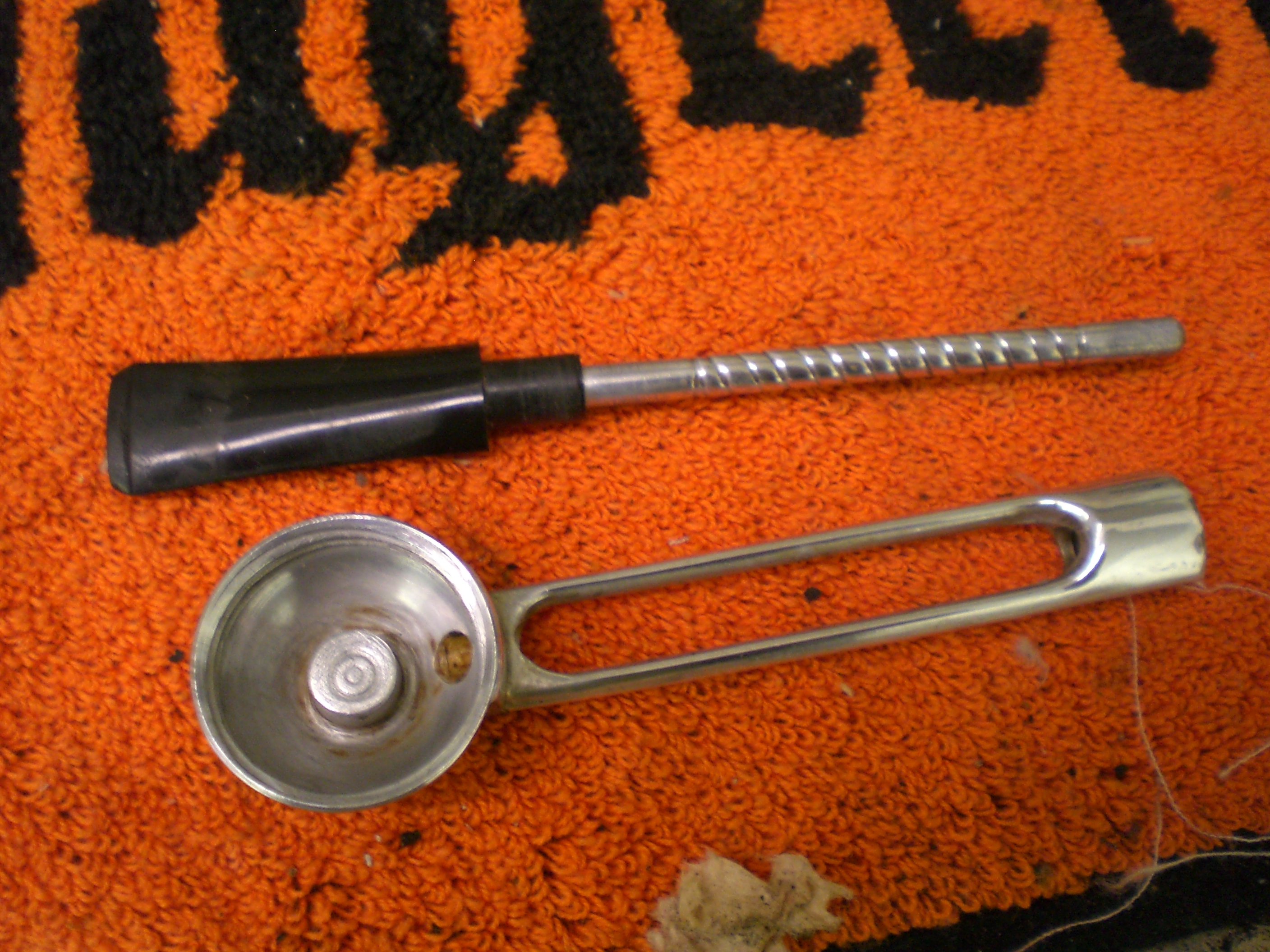
While the pipe bowl was soaking, I turned my attention to the metal bowl and stem. The stem had some teeth abrasions but no real dents. To me, the stem was somewhat “plasticky” but the fellow who ended up purchasing this one said they are quite durable and clenching doesn’t seem to harm them. The bottom of the metal bowl had some mild build-up, which I removed with some fine steel wool. I buffed the metal parts with white diamond and then red rouge. The metal shined up nicely, but I suspect will dull quickly over time.

Falcon_Progress

Falcon_Finished (6)

Falcon_Progress (1)

I used 1500 and then 2000 grit wet sandpaper on the stem and was able to remove most of the abrasions. I then polished it with 8000 and 12000 grit micromesh cloth. It was also buffed with white diamond.

Falcon_Finished (1)

Once the bowl was soaked, the stain sanded off nicely with 800 grit paper. This revealed a number of fills. I decided a two-stage stain would cover up those fills nicely. I warmed the bowl with a hair dryer, then applied a full coat of black stain. I lit the stain with flame to “set” it into the grain. After it dried, I sanded the stain off with alcohol and 800 grit paper. I then removed more of the black stain with tripoli on the buffer. A very light, almost transparent coat of brown stain was applied over the black.

Falcon_Progress (3)

Falcon_Progress (5)

Once dry, the bowl was buffed with white diamond and then several coats of carnuba wax. I’m very pleased with the finish and the two stage stain hid the fills nicely.

Falcon_Bowl_Pix (2)

Falcon_Bowl_Pix (1)

Falcon_Bowl_Pix

Falcon_Finished (2)

And finally the finished pipe.

Falcon_Finished

A Handmade Denmark Dublin Reborn


Blog by Greg Wolford

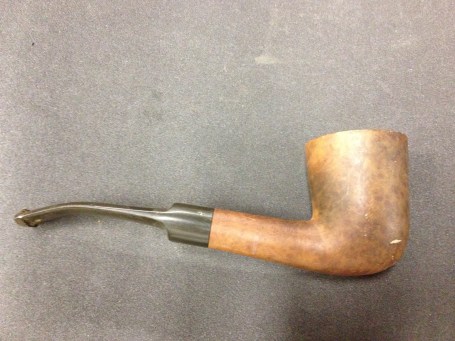
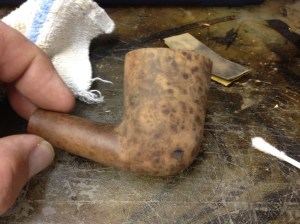
A week or so ago I went into a local antique shop that houses a variety of vendors. In the past I have found a few decent pipes here so I always have high hopes when I go there. This trip yielded a nice little haul of four pipes which I plan to restore over the next few weeks as i have time. The first two have already been started one: one completed and one still in the process. This post will mainly focus on a Dublin shape that is stamped on the shank Handmade over Denmark, with no other information on the pipe or stem. This is the pipe as it looked when I got it home:
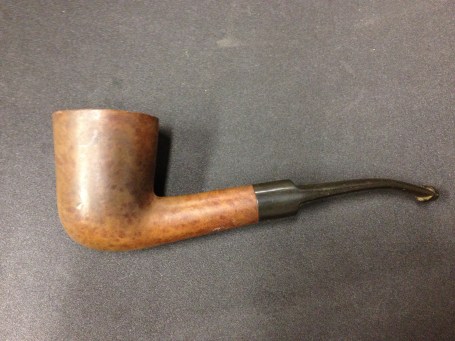
Image

ImageImageImage

As you can see, it was heavily caked and had what I thought were some deep scratches on it, the rim was charred and damaged from knocking out the dottle, the finish was gone, and the stem was oxidized but had little chatter on it. I decided to start with reaming the back the cake. This bowl is a tapered one, as many Dublins are, and required the use of all four of the bits on my Castleford reamer. After reaming the cake back considerably, to an even, thin layer, I decided to sanitize it with my retort. And since one of the other of the lot I picked up needed very little work other than cleaning (or so I thought at the time) I decided to go ahead and retort it (no reaming needed on this one) while I had the equipment out and also do both stems at this time, too. The Dublin took several “runs” with the retort to produce a clean tube of alcohol at the end; the cherrywood that I was also doing only took two tubes, but I knew it hadn’t been used much and wouldn’t be very dirty.

After I finished the work with the retort I dropped the stems in a OxyClean bath and left them to soak while I cleaned the shanks out. The retort had done a nice job of taking out most of the gunk in the shank of the Dublin; it took comparatively fewer pipe cleaners and cotton swabs than most restorations. I expected the shank from the cherrywood to be all but clean with one or two passes and it sort of was; instead of tar I found the alcohol had “raised” a mahogany-like stain inside the shank – and a lot of it. I then noticed that there was some of this same color on the outside, bottom edge of the shank. The pipe itself wasn’t a reddish color but a more maple, orange-ish one and I hadn’t planned on refinishing it since the color was nice and I didn’t really see a need – until now. Once I noticed the red color it had to come off the outside and out of the shank. Now the entire finish was going to have to be removed so both pipes got wiped down several time with acetone and then put into the alcohol bath overnight.

Several hours later I removed the stems from their soak to begin to make them look new again. I was disappointed to see that the thin layer of petroleum jelly I’d put over the logo on the cherrywood’s stem had washed away and the “white” which had been there was now gone; the stem logo had only been about 60% colored and I’d have had to apply more white anyway so I suppose it wasn’t that big of a deal. I washed the stem well with dish soap and then sprayed them with some liquid Bar Keeper’s Friend, a new product to me (I’ve tried the powdered form before but not the spray). I scrubbed them off with a Miracle Eraser hoping for the good results I had gotten last time I used the eraser but they weren’t as good, though a lot of the oxidation had softened and been removed.
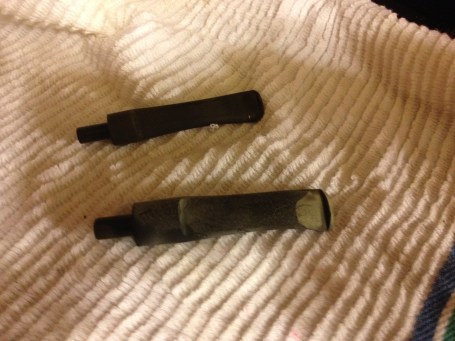
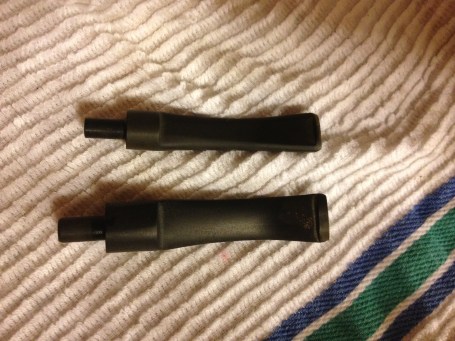
ImageImage

I now moved onto using the micro mesh pads, wet sanding them with 1500 & 1800 grit. At this point I noticed there was some oxidation that hadn’t come out well so I took some 400 grit wet/dry paper to the stems, then “painted” them with a Bic lighter, and then back to the 400 grit paper until the oxidation spots were gone. I then went back to wet sanding with the micro mesh 1500-3200 grits. After the 3200 grit I polished the stems with plastic polish and then dry sanded with the remaining grits through 12,000. Here are a few photos of the shine progression:
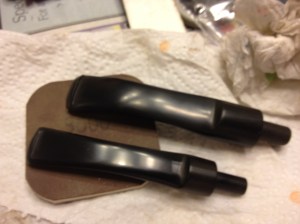
IMG_7744  IMG_7745IMG_7746

I now set the stems aside until the next day when the stummels would come out of their bath.

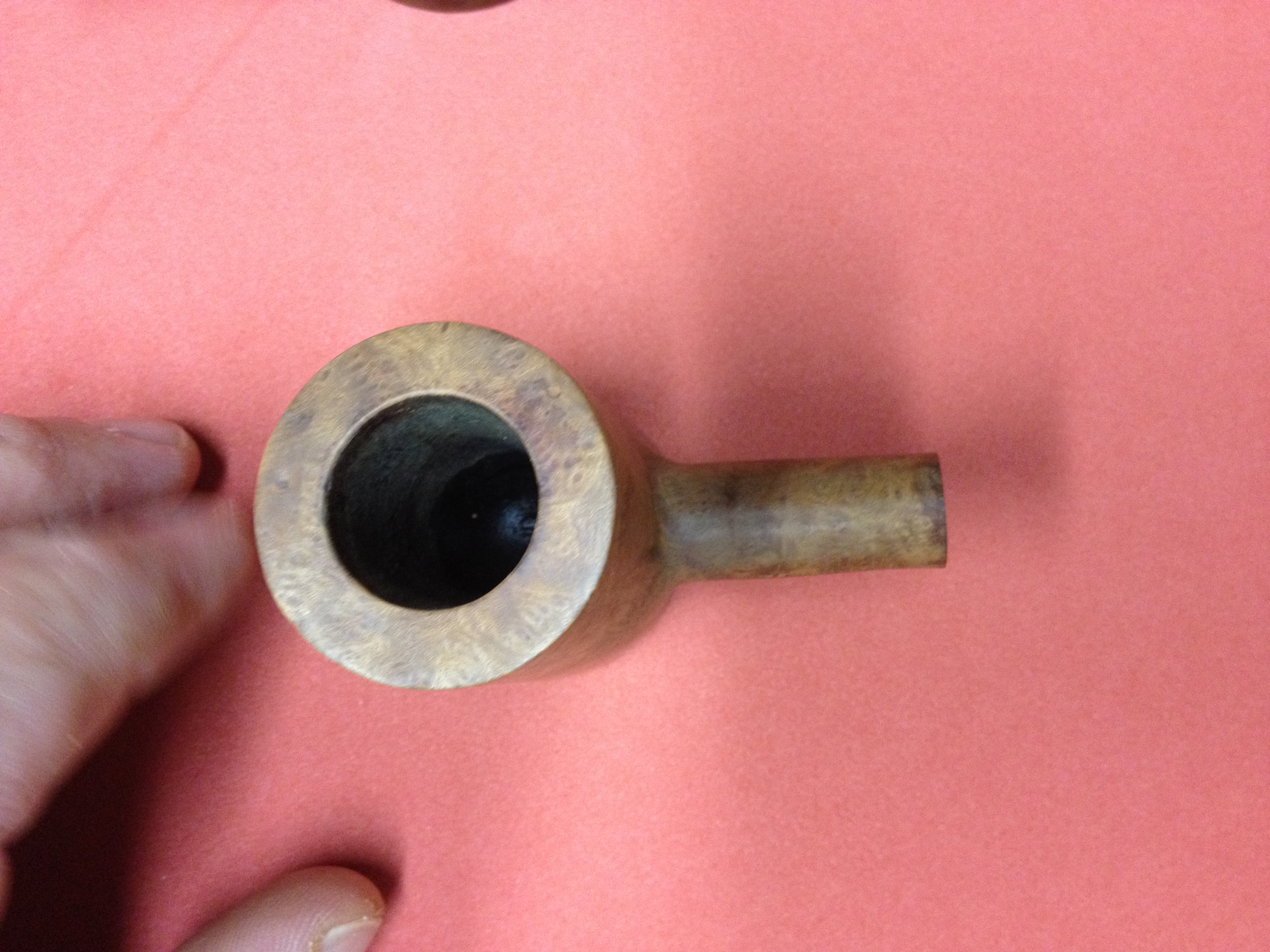
After removing the stummels from the alcohol bath I wiped them down and them dry a bit. Then I began cleaning the shanks again to make sure all the tar, gunk, and stain were gone.  I also cleaned as much gunk off the rims as I could so I could see what their condition really was; fair on the cherrywood and poor on the Dublin.  I decided to top the bowl of the Dublin and set the cherrywood aside to finish later. This what the Dublin looked like at this point:
IMG_7748 IMG_7749 IMG_7750 IMG_7751

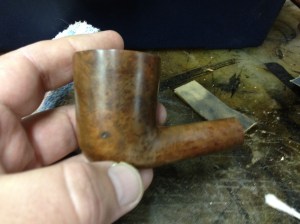
You can see much better the condition of the rim here. You can also see that the “scratches” I referred to earlier are in reality fills that have fallen out; I scraped them with my dental pick to be 100% certain. These would have to be dealt with after I topped the bowl.

I used 400 girt wet.dry paper to top the bowl, checking it often to see how it progressed. The char marks wouldn’t come out completely but were reduced substantially. And the dings in the rim were nearly sanded out, in good enough shape that I was happy with them; the one on the outside edge would require me to sand at least another 1/16″ off the entire bowl and I didn’t want to remove anymore material than I already had.
IMG_7752

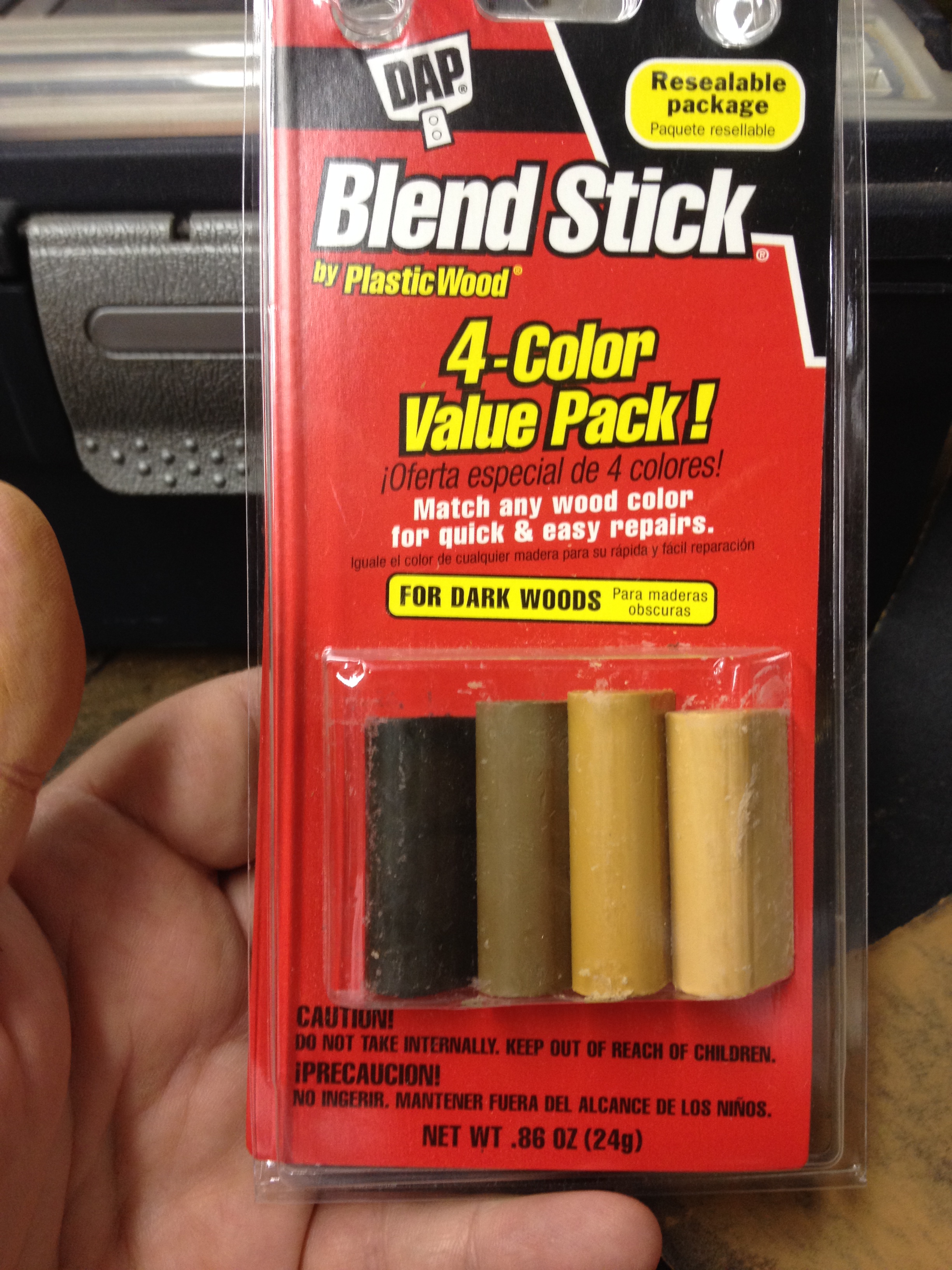
Now I turned my attention back to the fills. Taking the dental pick, I picked out the remaining fill material. I recently picked up a new product that I wanted to try on fills made by DAP and I thought this would be a good opportunity.IMG_7757
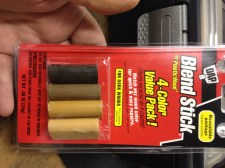
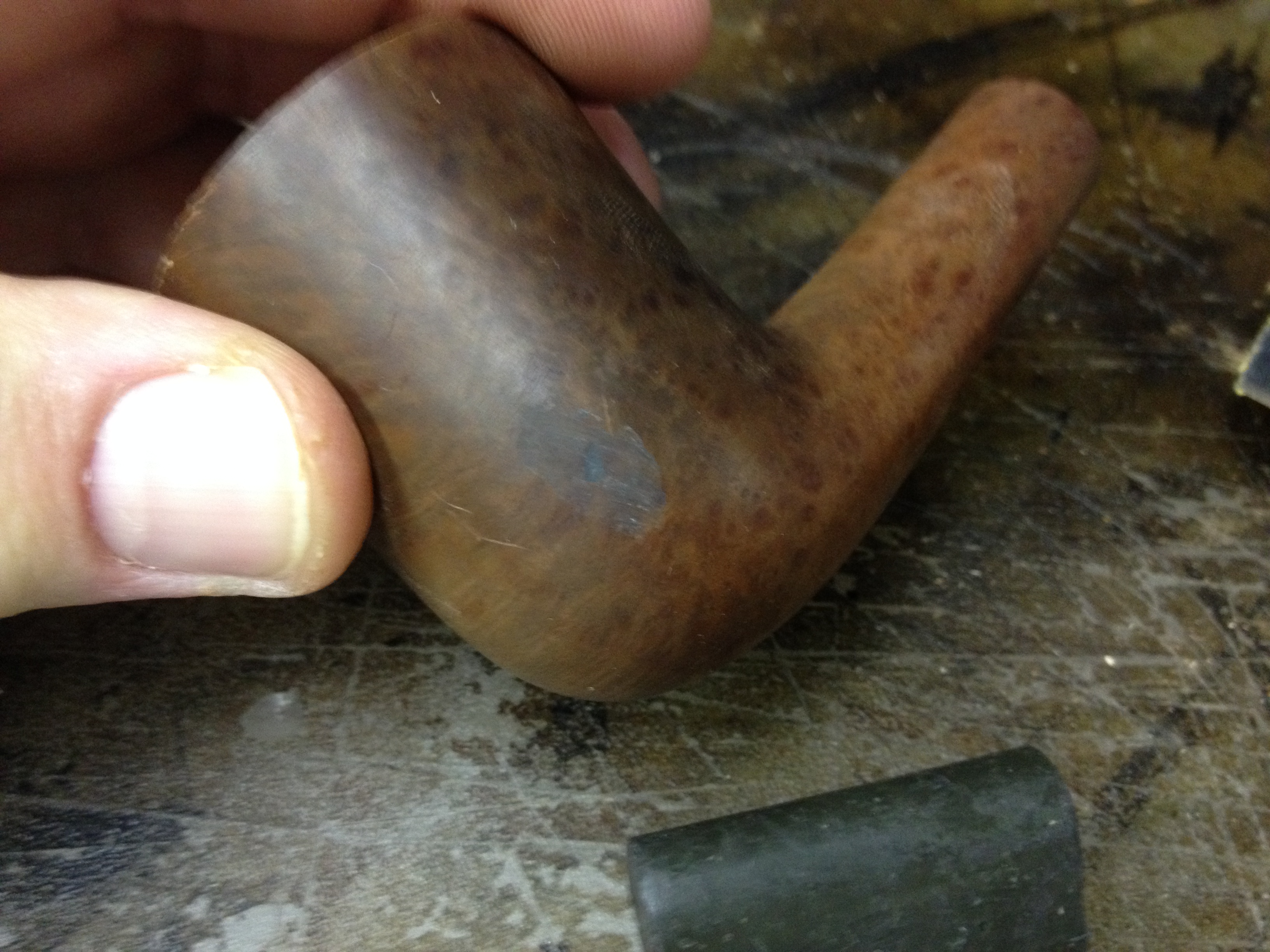
These sticks are a wax-like substance that softens with heat/friction. I chose the darkest of the four sticks and rubbed it into the two largest fill areas. The sticks worked easily into the areas that needed filled:
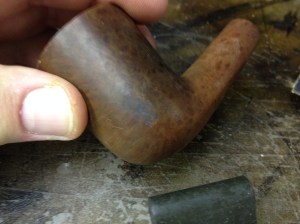
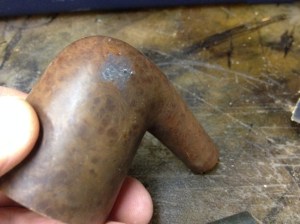
IMG_7758 IMG_7759

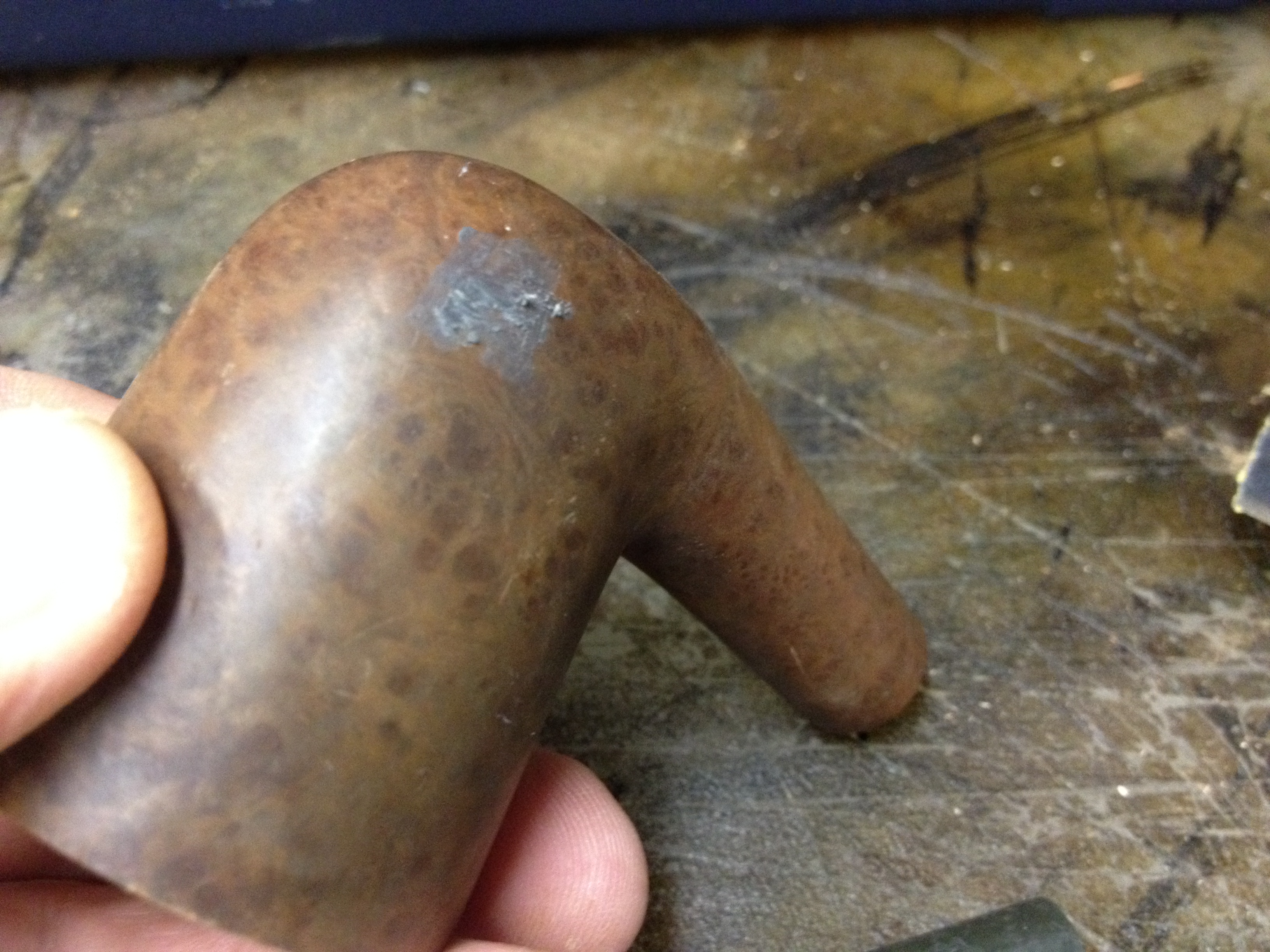
I buffed the excess off lightly with an old cotton rag, getting it into the fill well and just below the surface. I then put a bit of super glue over the new fills and let it dry. After it dried I sanded the fills back down to flush. There were also some areas that needed small scratches/marks sanded out on the bottom of the stummel so I did that at this time, too.
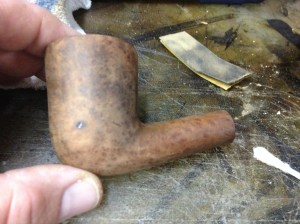
IMG_7764 IMG_7765 IMG_7766

I avoided sanding around the nomenclature and the shank in general. As you can see, the spot sanding left some obvious differences in the finish. But I didn’t want to sand any more than I needed to and knew that as it was I’d have to blend the stain. I decided to use the new-to-me wood stain markers for this job as well as the bowl’s rim. I applied the stain from the marker in small sections and blended it immediately with my finger after I put it on; I did this with all of the fills, spot sanding and the rim. The stain from the markers is very easy to apply in just the area you want it and blending by “finger” was very smooth and didn’t take long at all. I think that the pens did a great job and they have earned a permanent place in my restoration arsenal!
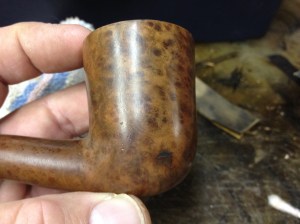
IMG_7767 IMG_7768 IMG_7773

I know took the entire pipe to the buffer and buffed the stummel with Tripoli and then the pipe with white diamond and carnauba wax, finishing with a few passes on a clean soft buff. This is the finished pipe:
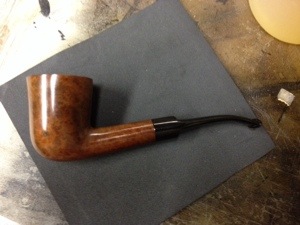
20131023-160821.jpg20131023-160835.jpg

20131023-160848.jpg  20131023-160901.jpg

The DAP fill sticks did a pretty good job I think. In retrospect, I should have, perhaps, used a lighter color; the fills were so near the grain I thought darker would be better. I do think that they are something that I will explore using further and believe they have potential for some good results.

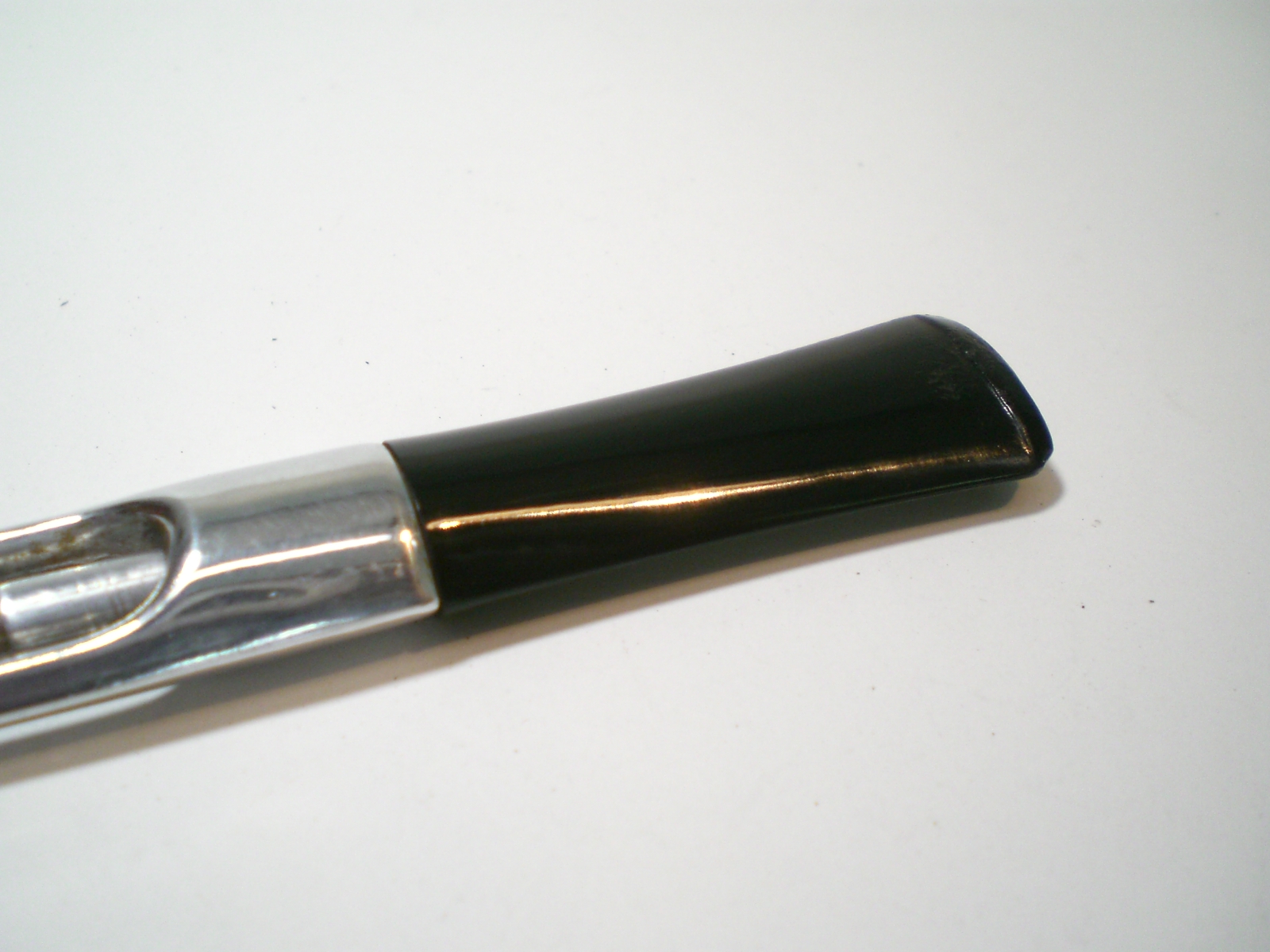
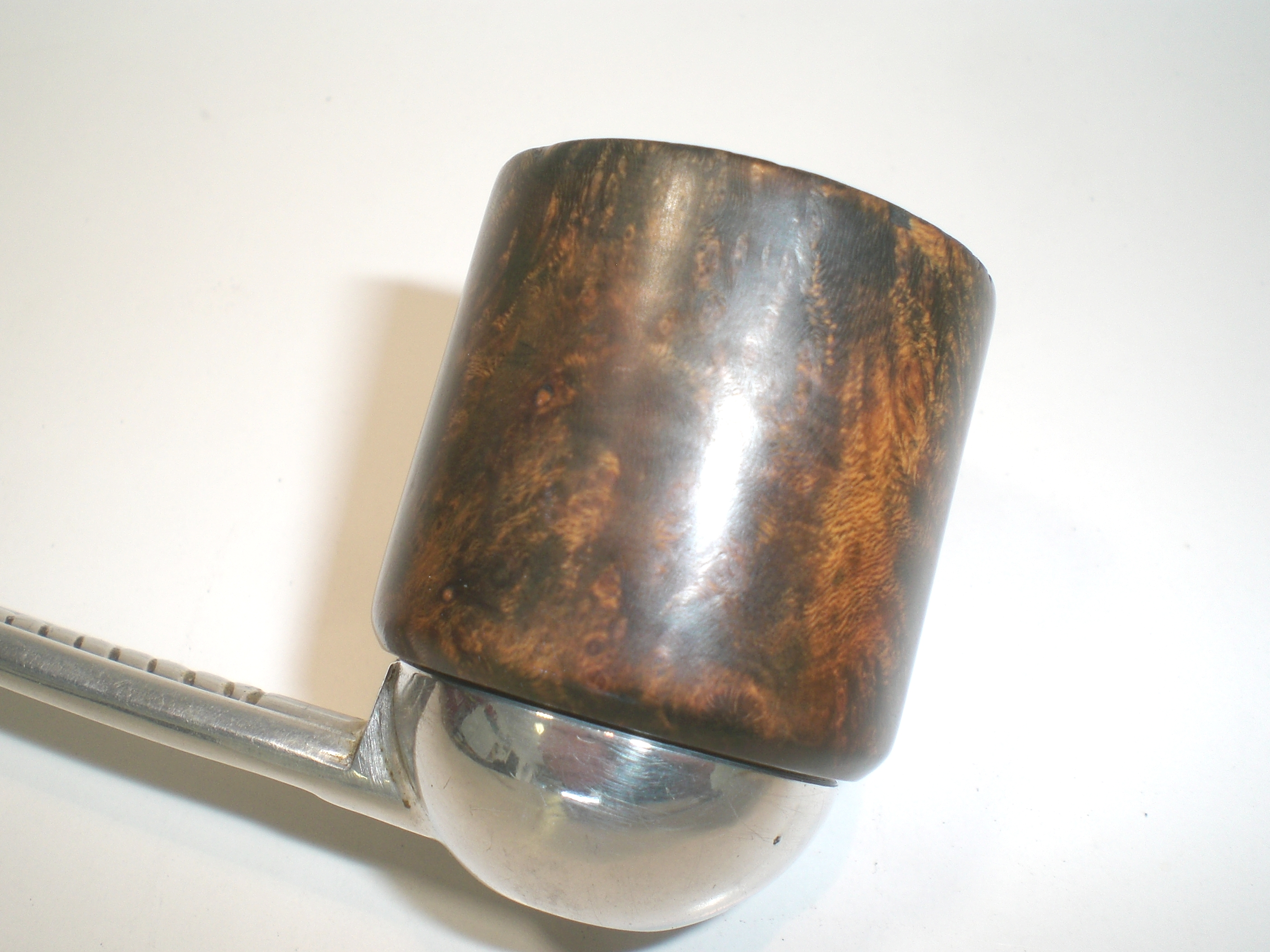
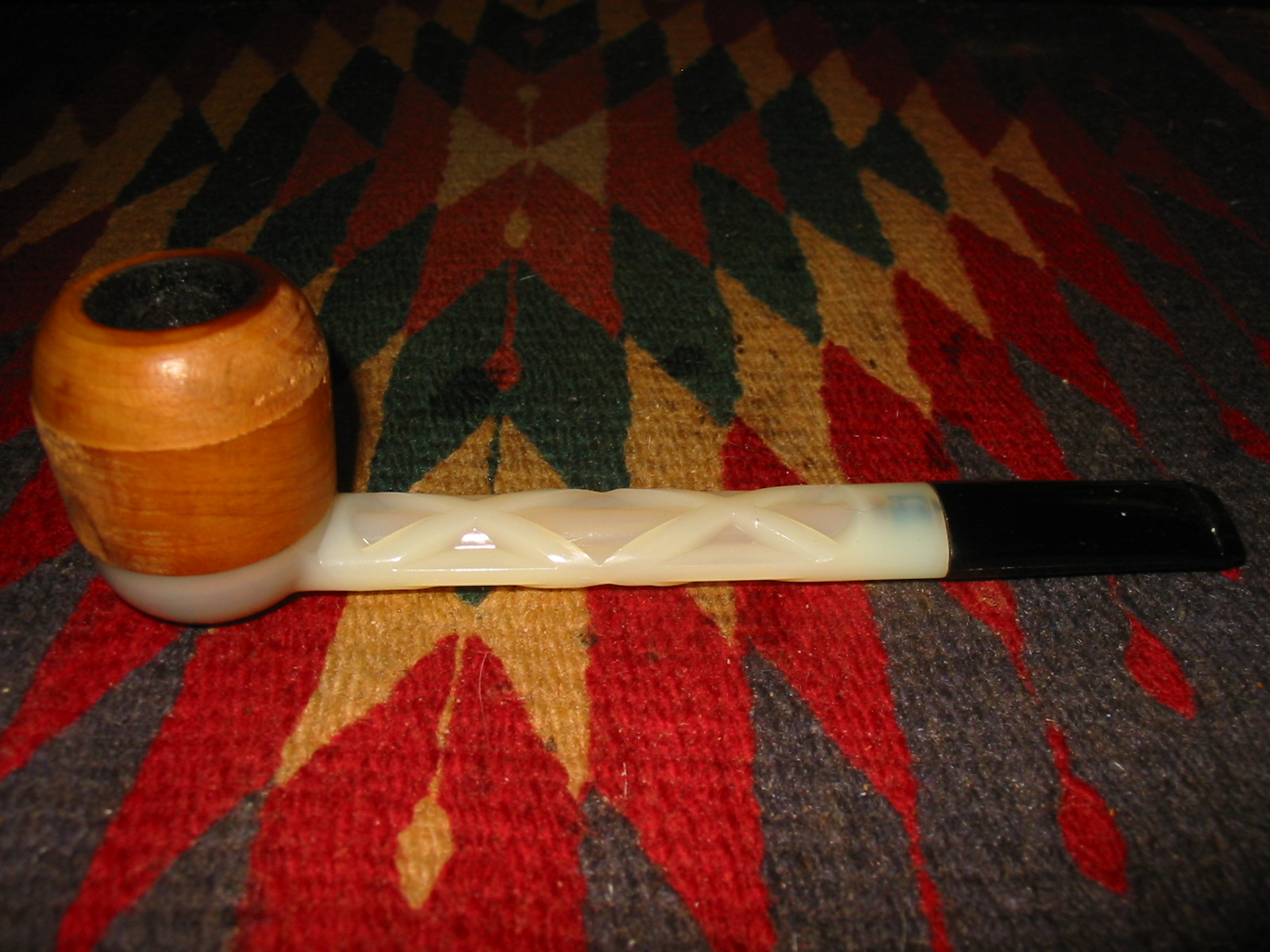
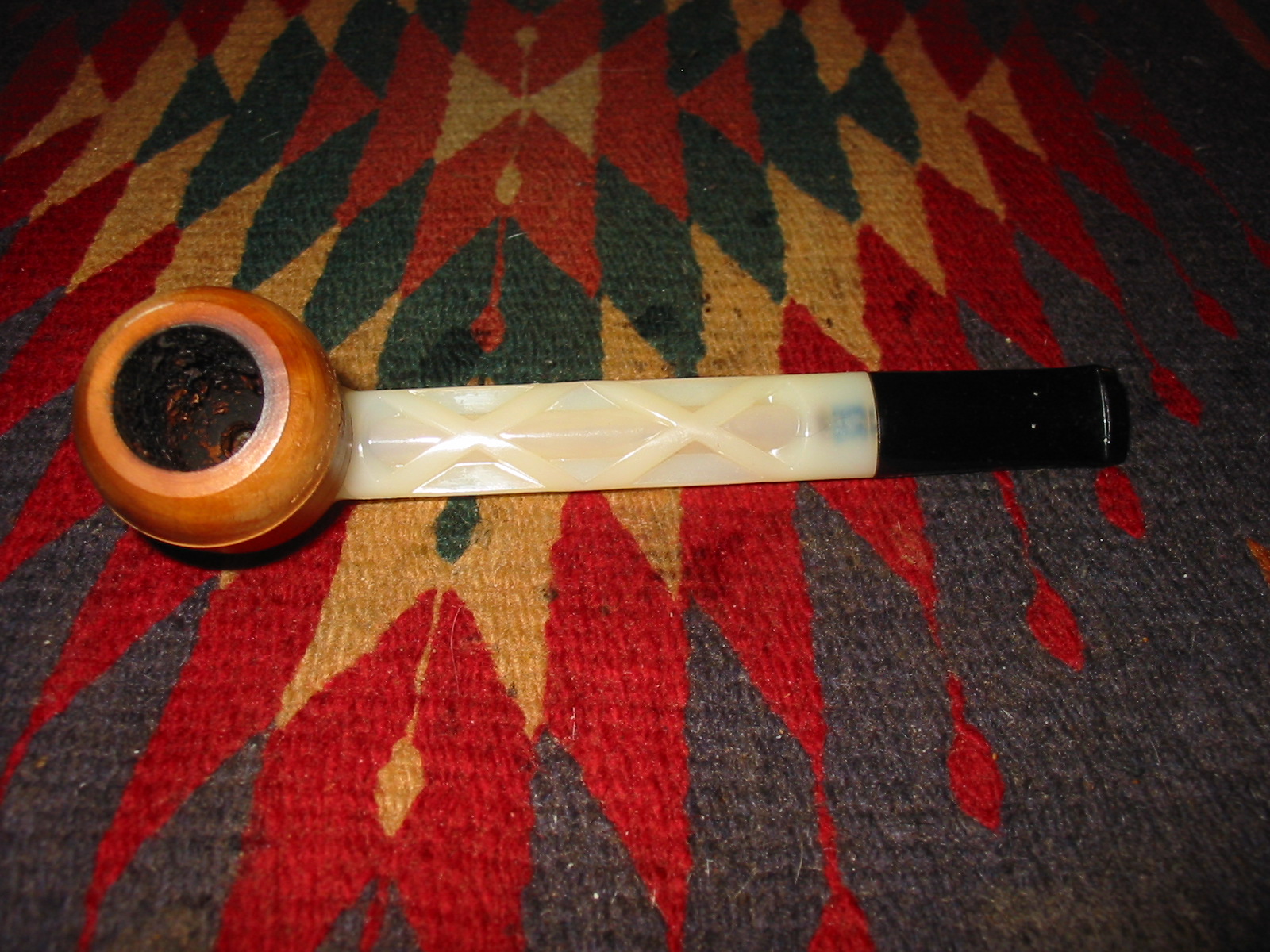
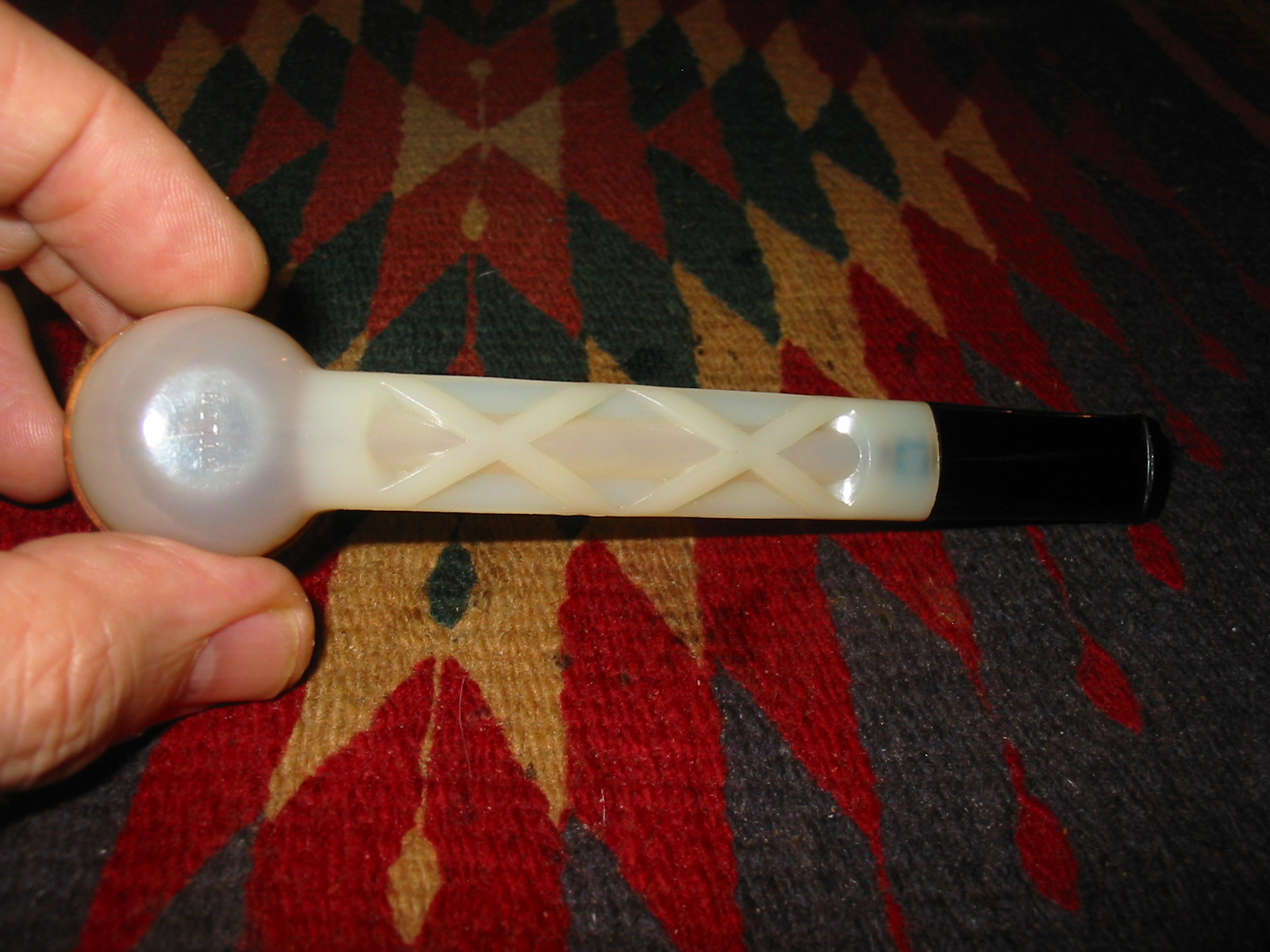
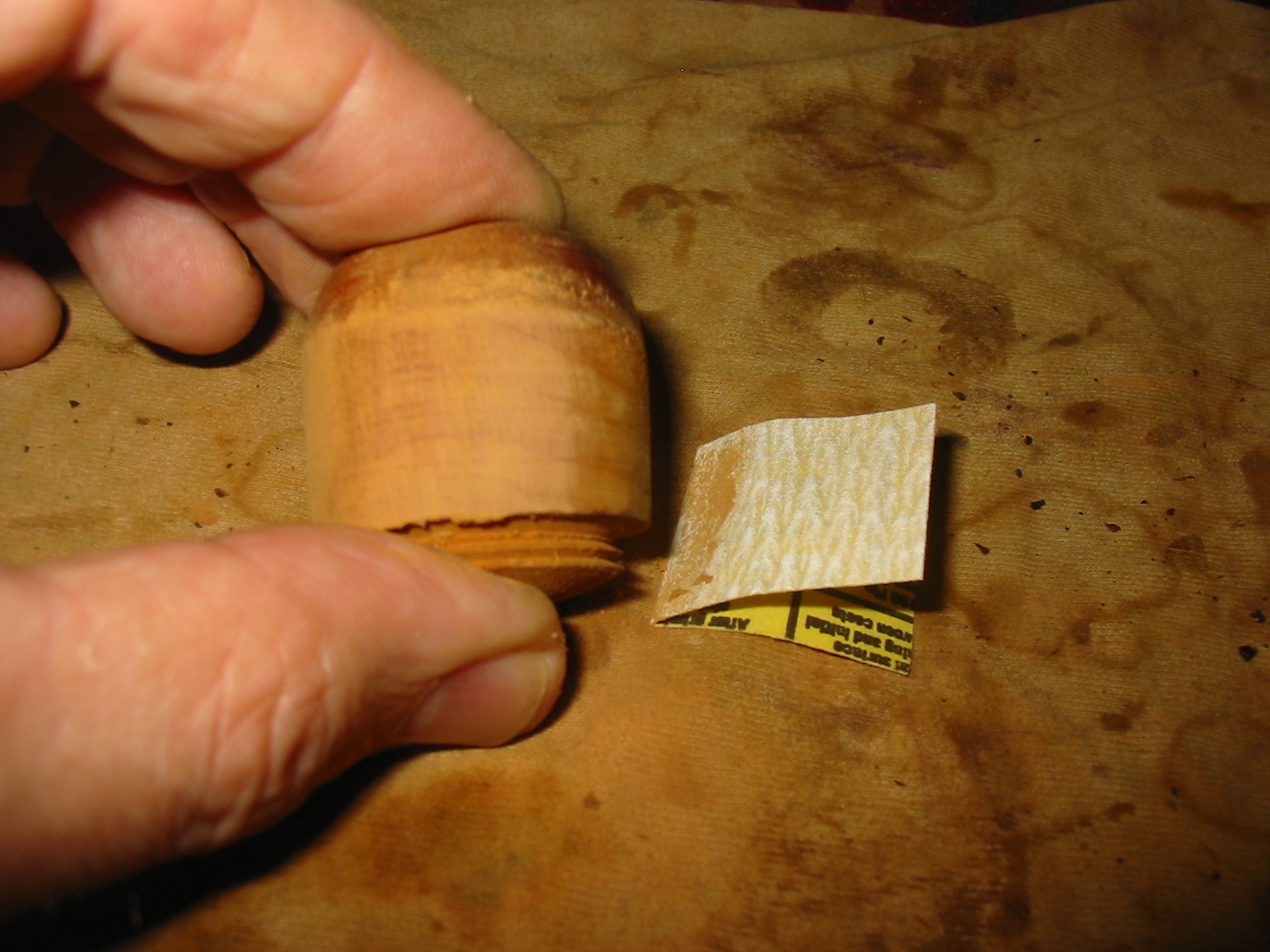
Reworking a Unique Nylon “Vikingish” Pipe


Blog by Steve Laug

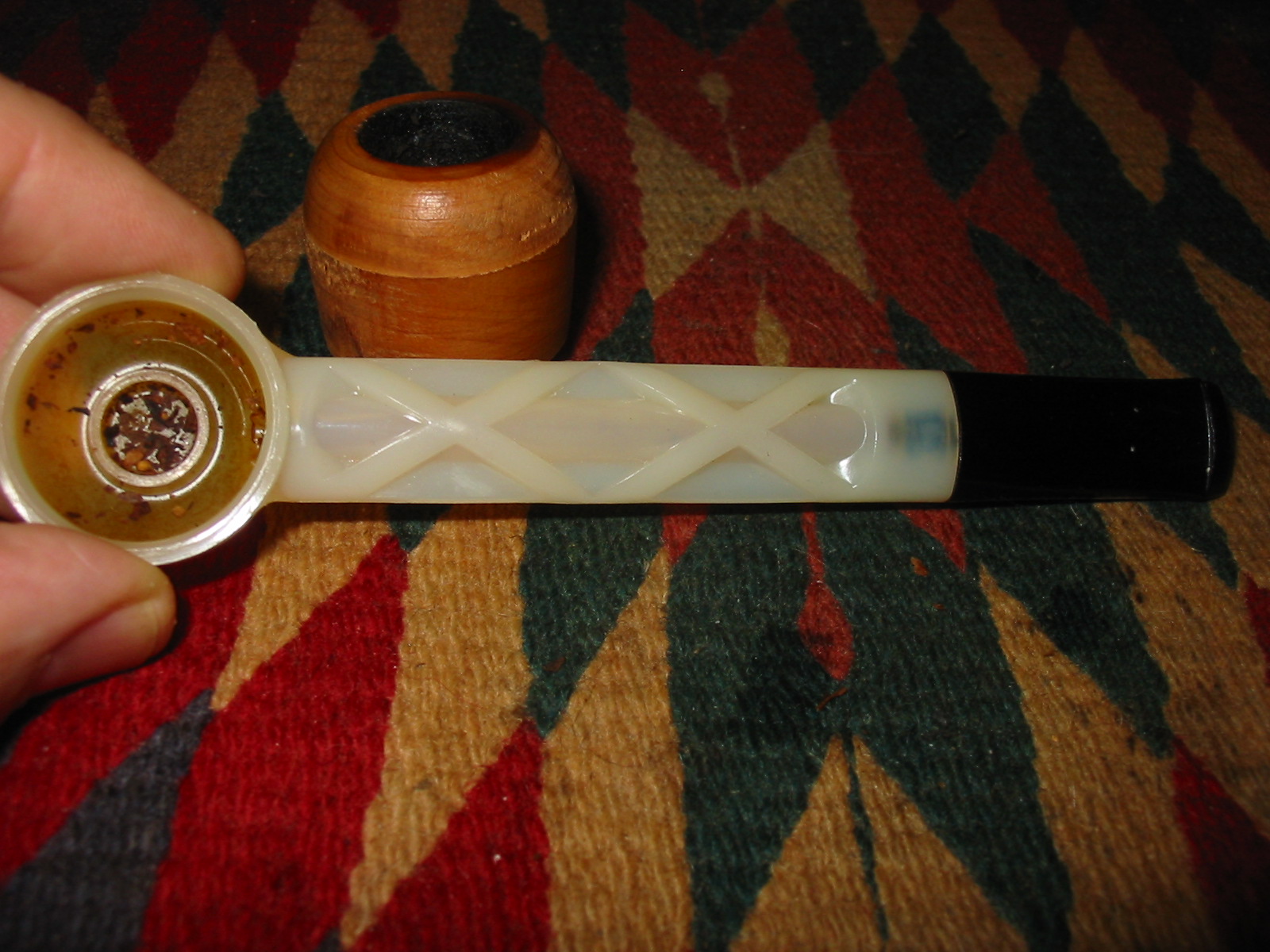
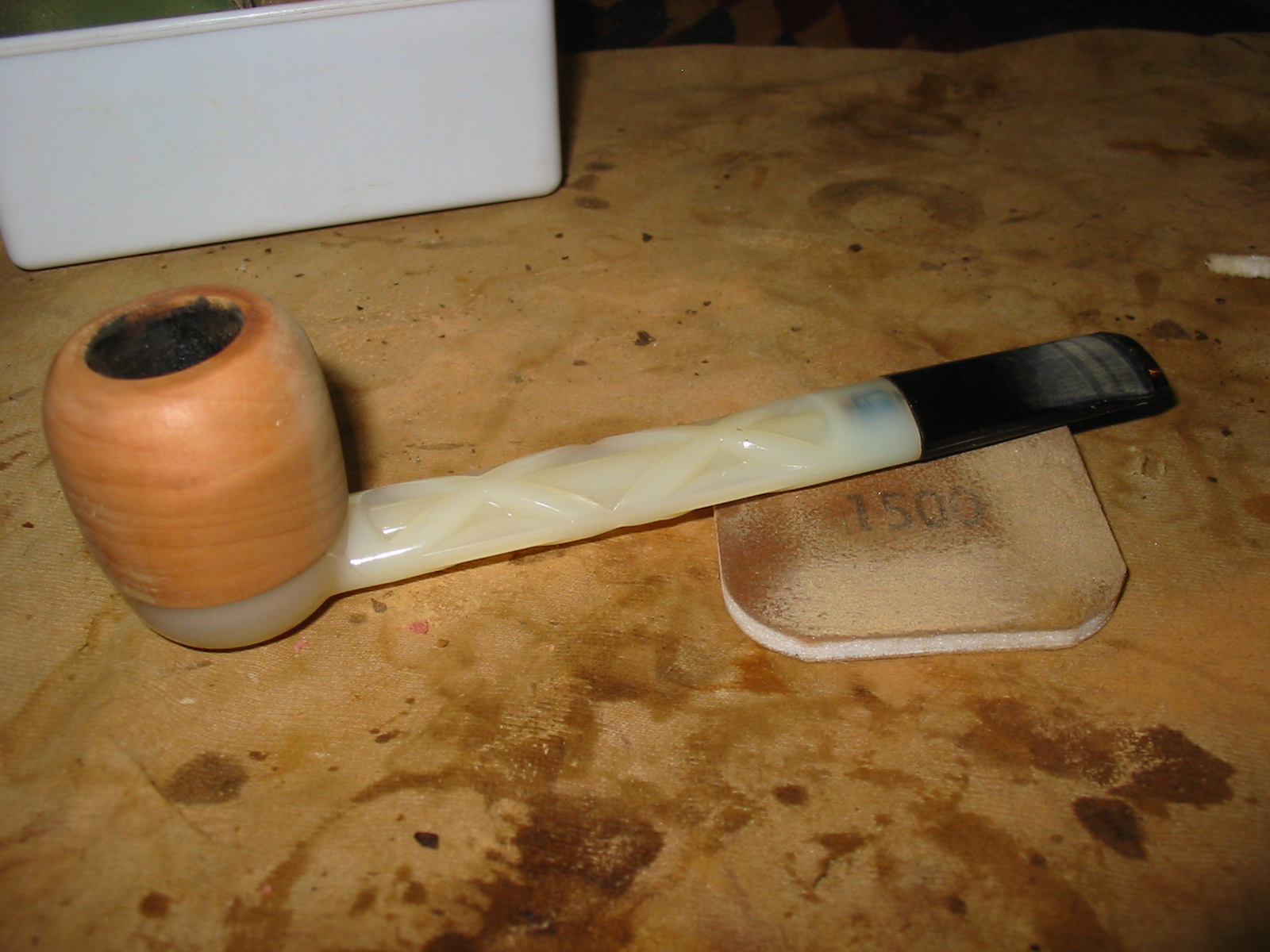
When I saw this old pipe in the rack at the antique mall I wanted it because of its uniqueness. The price was also good – $9.95. I figured at that price it was like buying a corn cob pipe and certainly would function in the same capacity for me. This one had a nylon base and stem with a briar bowl that screwed into the base. Dr. Grabow bowls fit this pipe base perfectly but Falcon bowls do not fit. The only stamping on the pipe is on the bottom of the base where it reads Nylon. In researching this pipe on the net I was unable to find any pertinent information. When I posted it on Pipe Smoker Unlimited Forums I got a suggestion and a link to the Smoking Metals site. Low and behold the link took me to the exact pipe base as the one I had found. Here is the link: http://www.smokingmetal.co.uk/pipe.php?page=60 The pipe pictured has a far better bowl than the one that I found. What I found interesting was the information that was on the site regarding this pipe. I am copying it verbatim:

“No makers name, simply the word ‘NYLON’ on the base of the stem under the bowl. The briar bowl is Viking style, accepting all Dr Grabow Viking and Koolsmoke bowls. The bit can be varying colours and not always vulcanite so often severely damaged. The stems can be silvered or in gilt, or even painted, but it is not known if this is how they left the manufacturer. Among names sold under is Forecaster Superline. US Patent# 179,373 Inventor Berenson would seem to apply.”

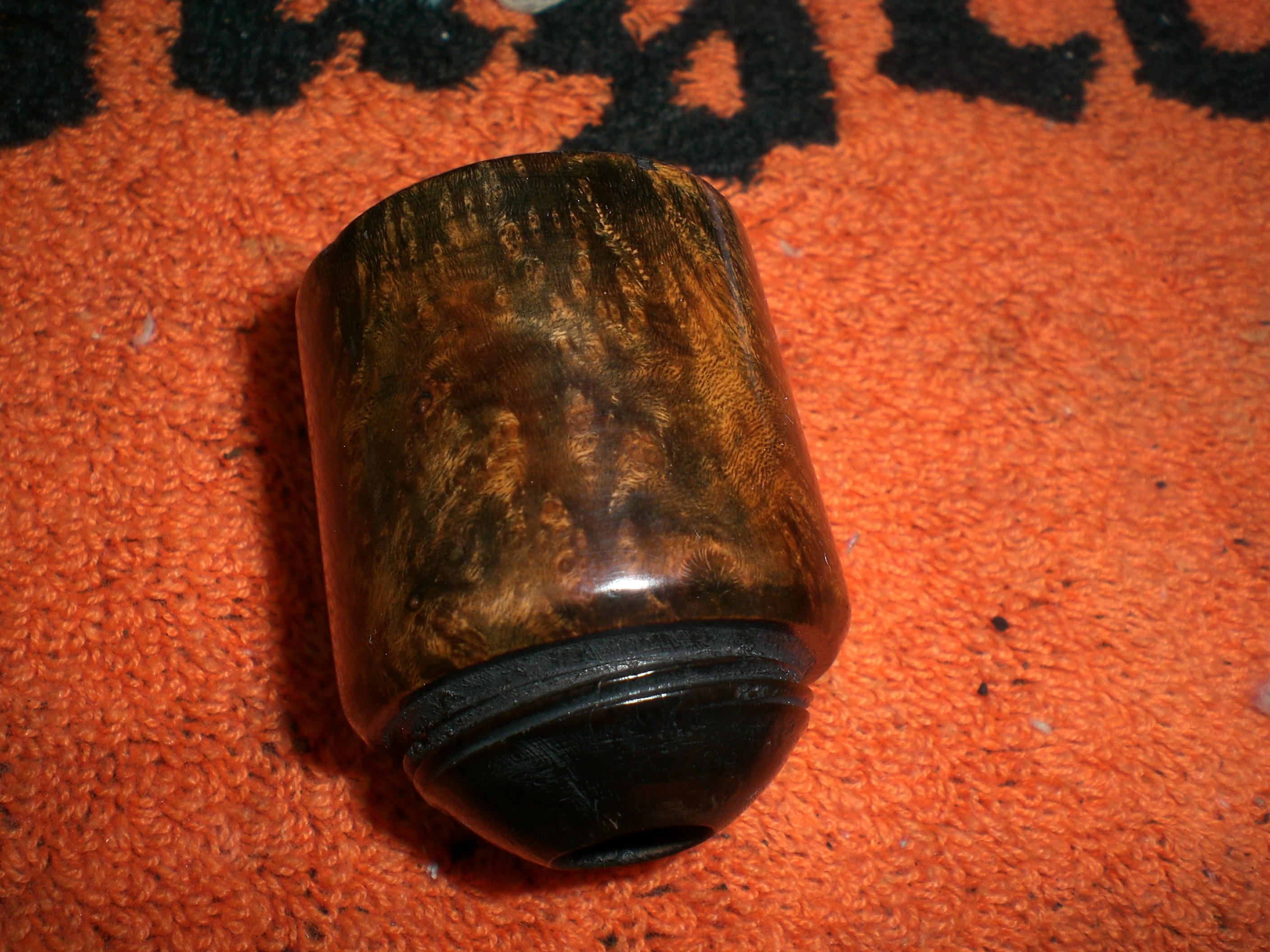
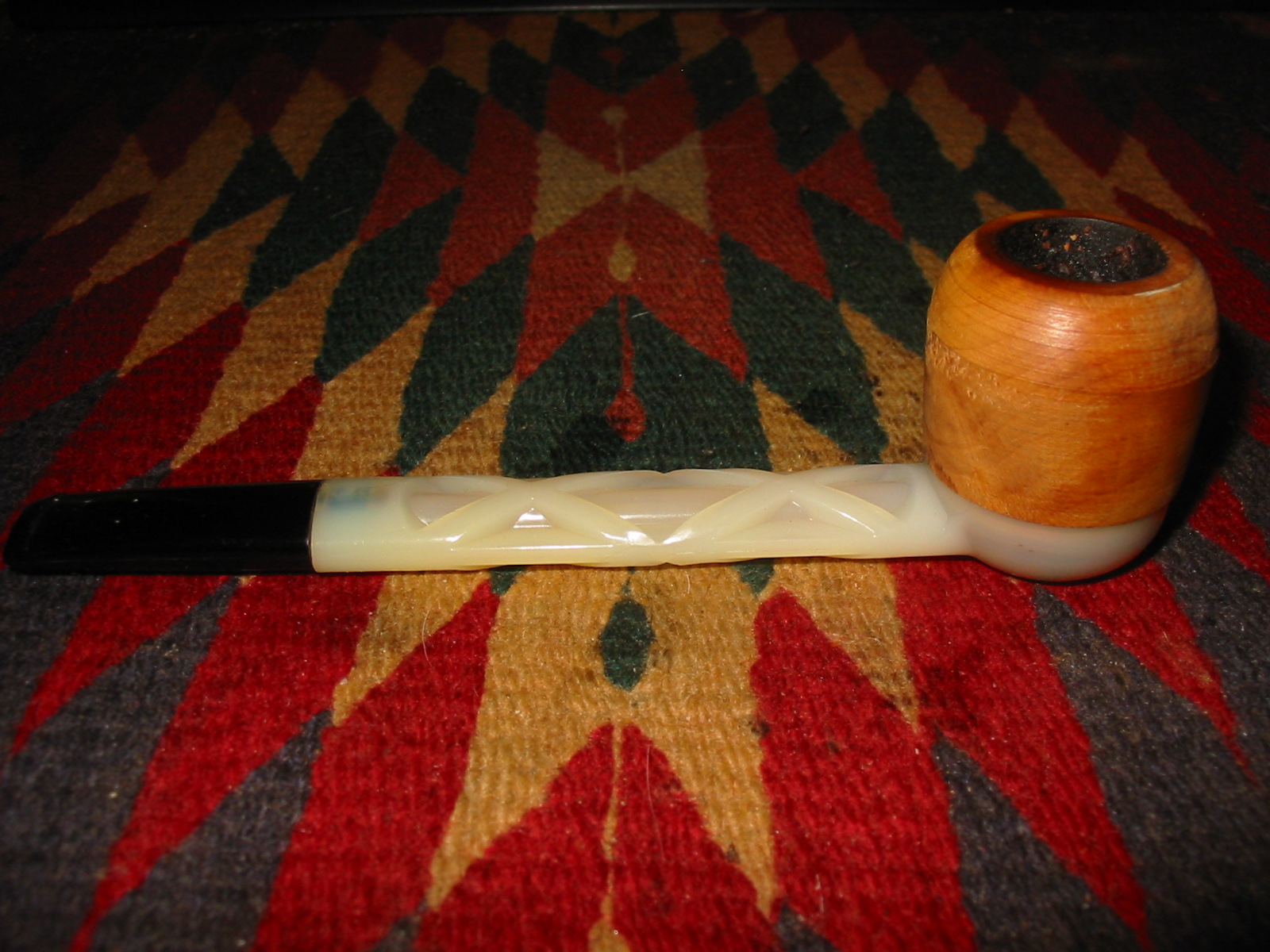
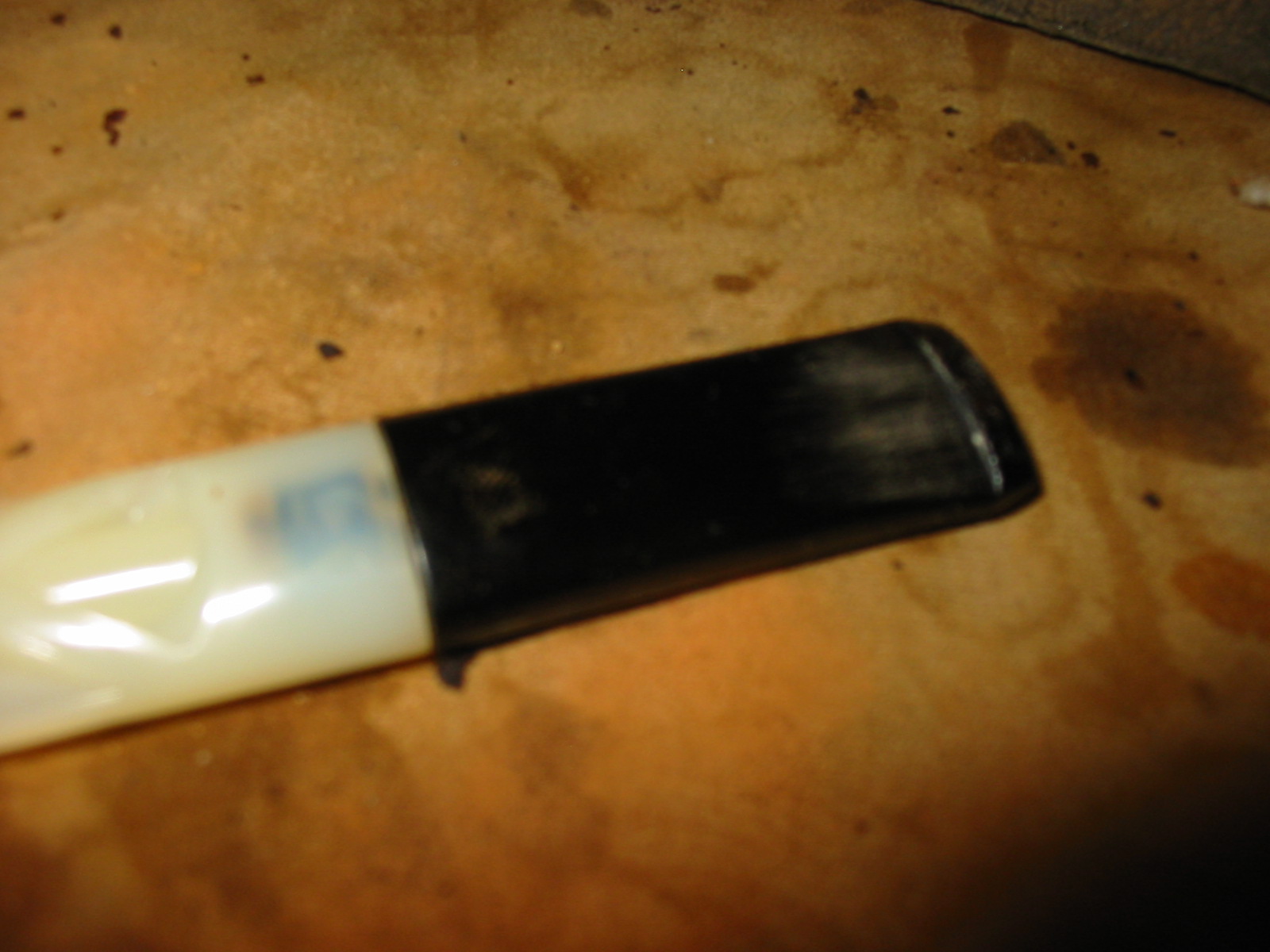
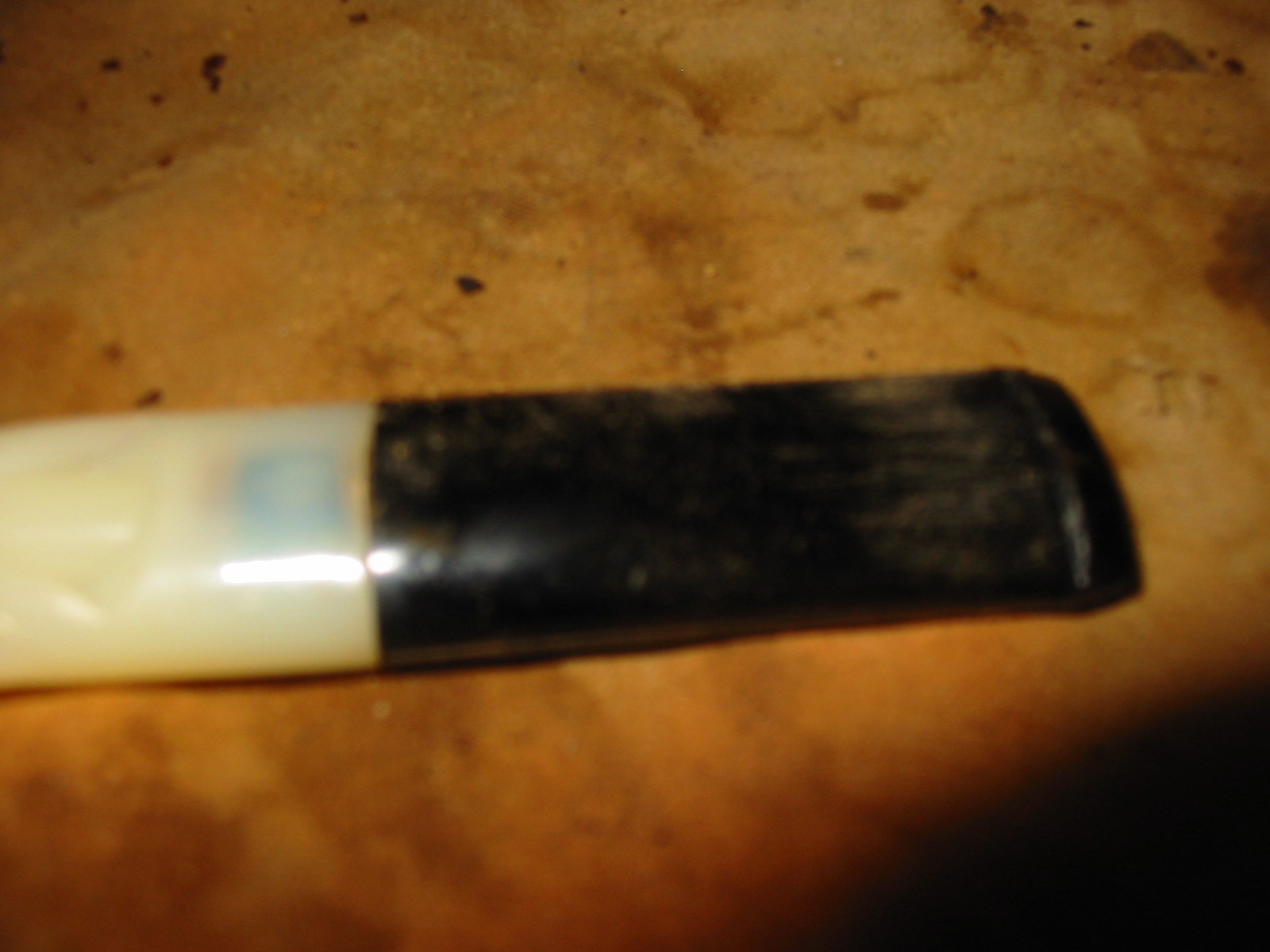
This pipe was in good shape. The stem is attached and not removable. It had some tooth chatter but no tooth marks or bites. It was made of nylon and not vulcanite even though it is black. The base itself is an opalescent white colour and showed tobacco stains in the base and the shank. The bowl was unfinished and showed tooling marks from the turning on the lathe. There was a slight uneven ridge on one side where the top of the bowl curved upward. There were rough spots all around the bowl and the finish was unsanded. The wood is not briar and seems more like the maple or hickory bowls that come from Missouri Meerschaum. The inside of the bowl has a slight uneven carbon build up in the top of the bowl and dried and hardened pieces of dottle stuck to the sides in the bottom half of the bowl. The reservoir in the base also had a buildup of tars and shreds of tobacco stuck to the base. The first photo below was taken the day I found the pipe. Photos two through five show the bowl when I began working on it at my work table.
IMG_0490

IMG_2195

IMG_2196

IMG_2197

IMG_2198

I unscrewed the bowl from the base and set it aside while I worked on the base to begin with. I cleaned out the stained reservoir with cotton swabs dipped in Everclear and used bristle and fluffy pipe cleaners on the inside of the stem and the shank. The dried tobacco shreds were stuck to the base so it took some scrubbing to remove the dried materials. The next three photos give an idea of the state of the reservoir and the slight tooth chatter on the stem. The fourth photo shows the cleaned but stained base of nylon.

IMG_2199

IMG_2200

IMG_2201

IMG_2204

Once the base was clean and the tars and buildup removed I worked on the finish of the bowl. I sanded it with 220 grit sandpaper to remove the marks from the lathe and the rough spots. I wanted to remove as much of the marking on the bowl as possible without changing the shape. As I sanded it I was impressed by the grain on the particular piece. I sanded the stem at the same time with the 220 grit sandpaper to remove the tooth chatter. Interestingly the nylon stem sanded out greyish white. The sanding dust was light grey in colour.
IMG_2202

IMG_2203

IMG_2205

IMG_2206

The next step in the sanding process was to use a medium grit sanding sponge and also with a fine grit sanding block to remove the marks and scratches left behind by the 220 grit sandpaper on both the bowl and the stem. I followed that by wet sanding the bowl and the stem with 1500, 1800 and 2400 grit micromesh sanding pads.
IMG_2207

IMG_2208

IMG_2209

I then dry sanded with the remaining grits of micromesh sanding pads from 3200-12,000 grit. I used the micromesh pads on both the bowl and the stem. I did not include pictures of all of the sanding process but chose the one below as representative.
IMG_2211

When I had finished sanding the stem and the bowl I buffed them lightly with White Diamond and then gave both a coat of carnauba wax. I chose for this bowl to not stain it but leave it natural as I like the look of the grain in the wood. The photos below show the finished pipe. Any ideas on what the wood might be?
IMG_2213

IMG_2214

IMG_2215

IMG_2216