Prom Night – Dressing up a Cheap Meerschaum Apple


Blog by Steve Laug

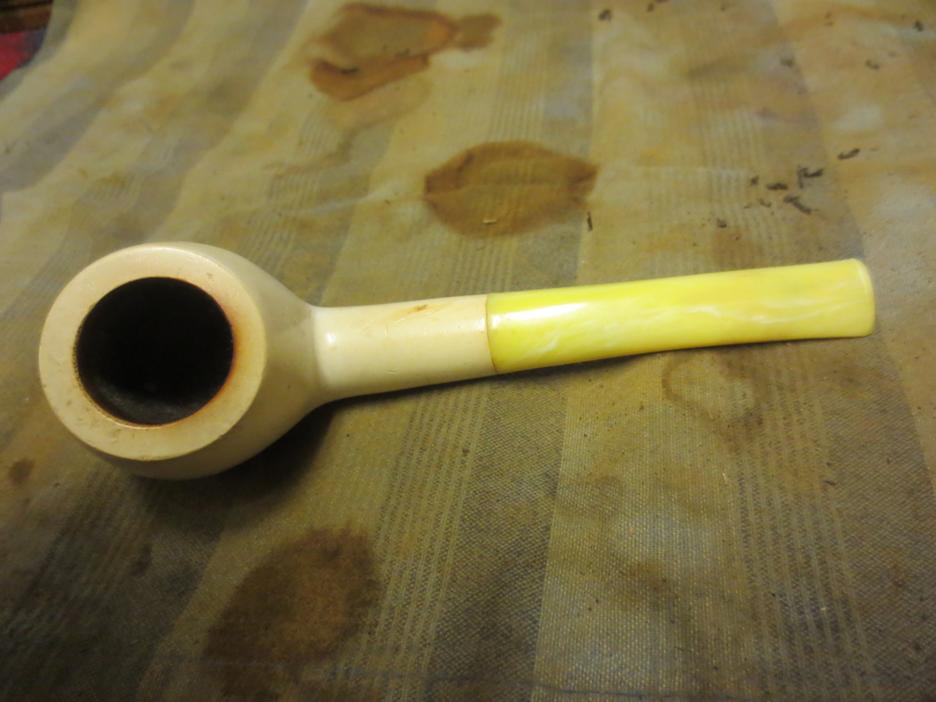
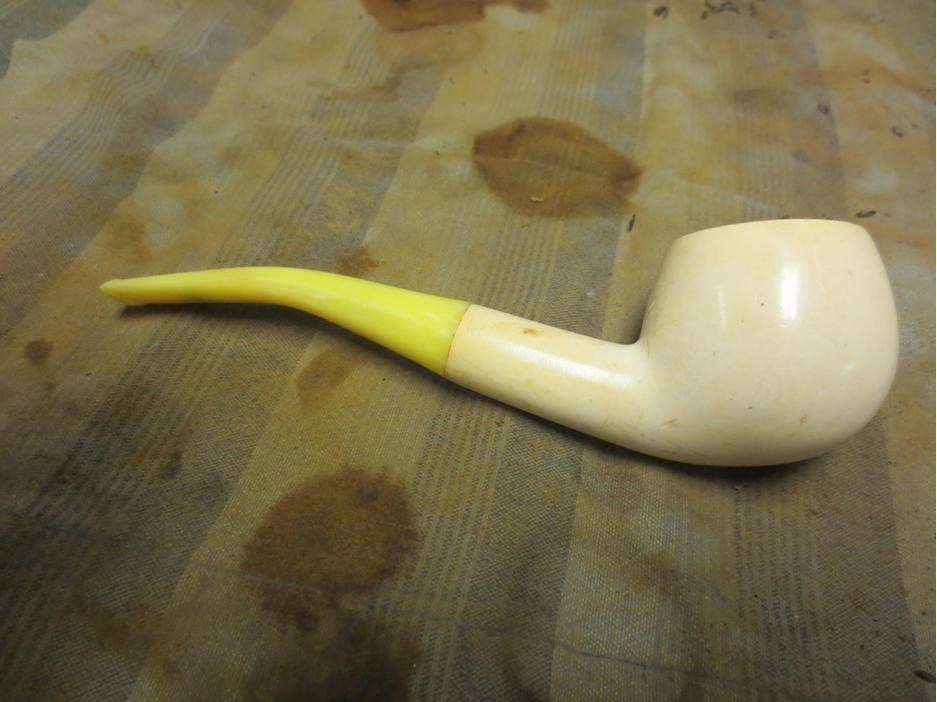
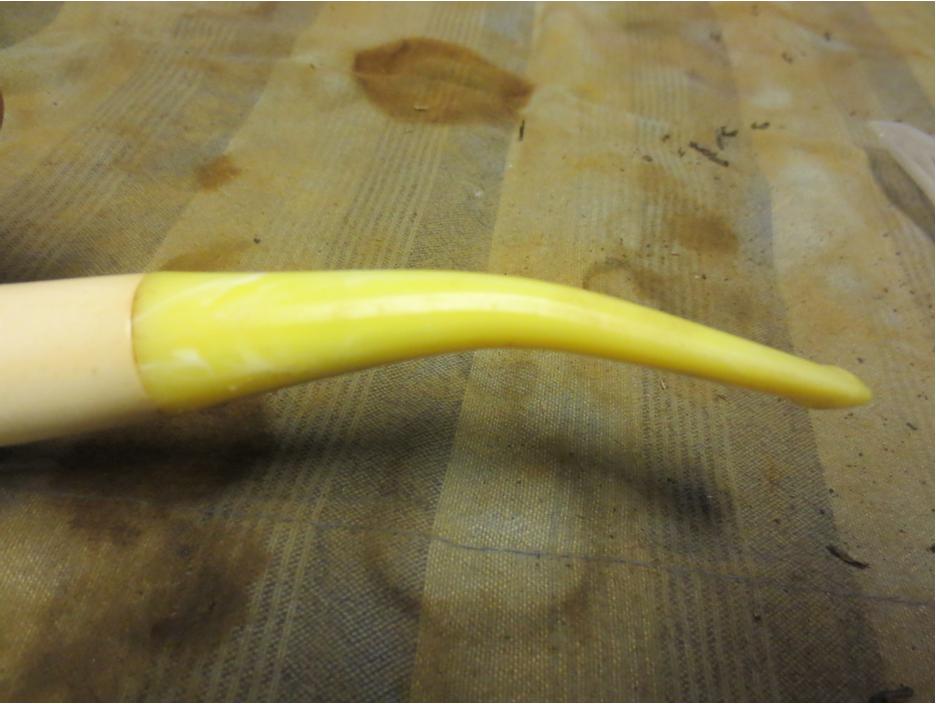
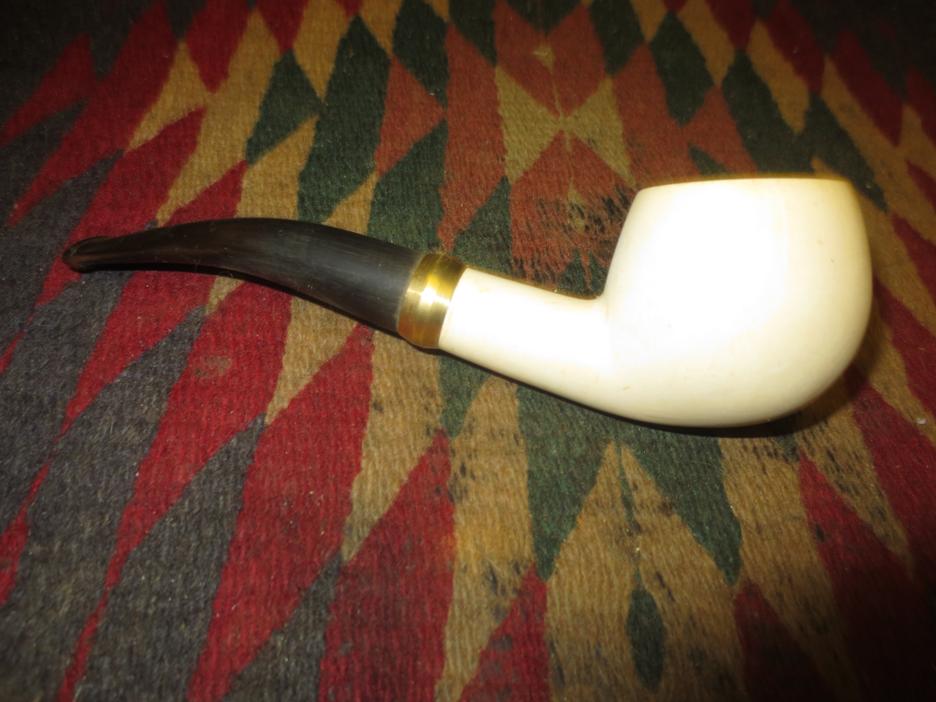
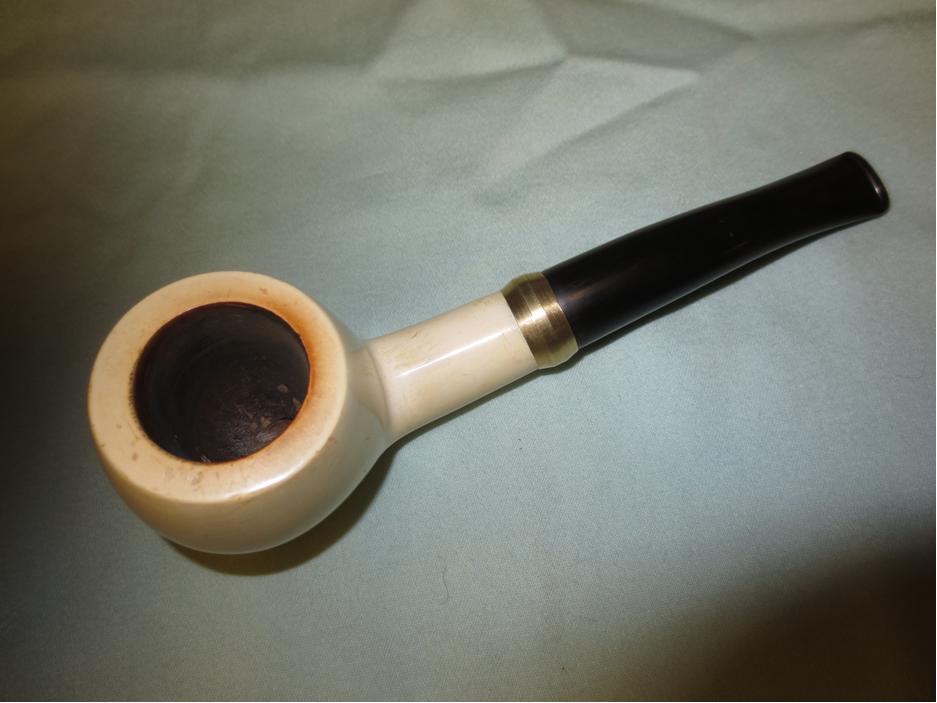
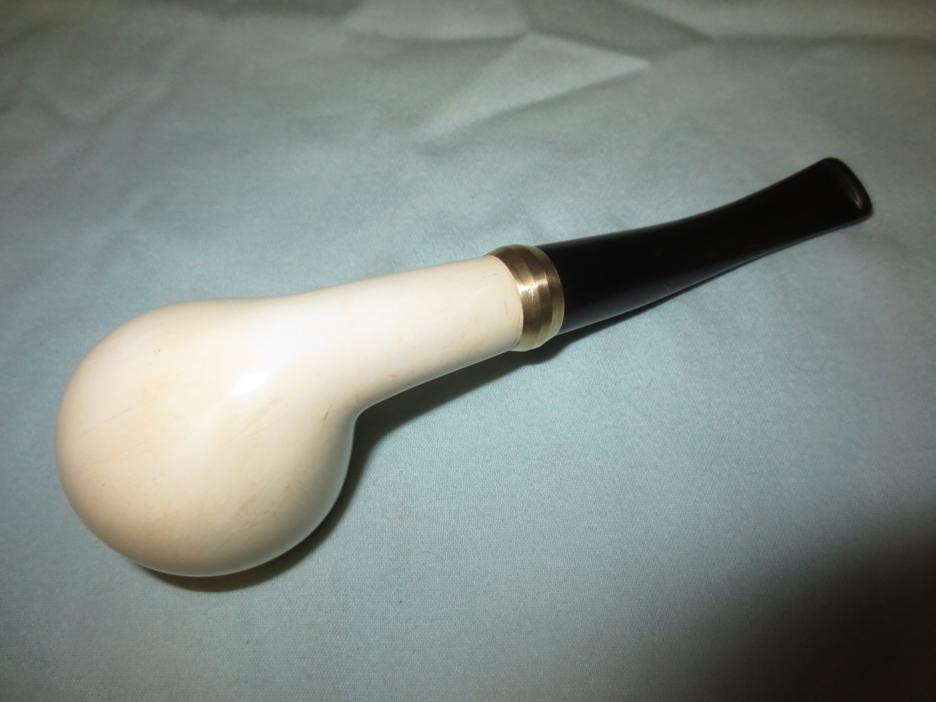
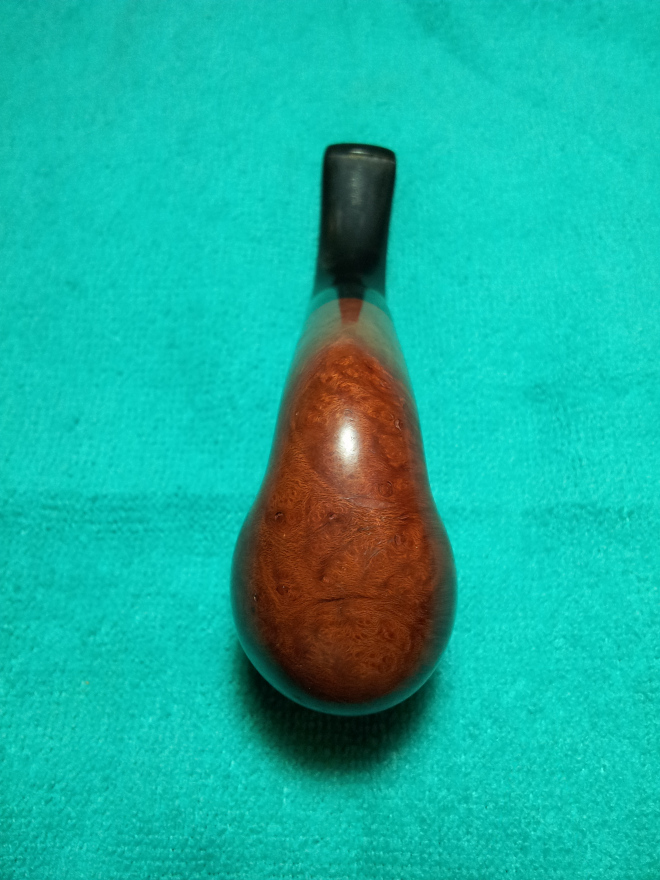
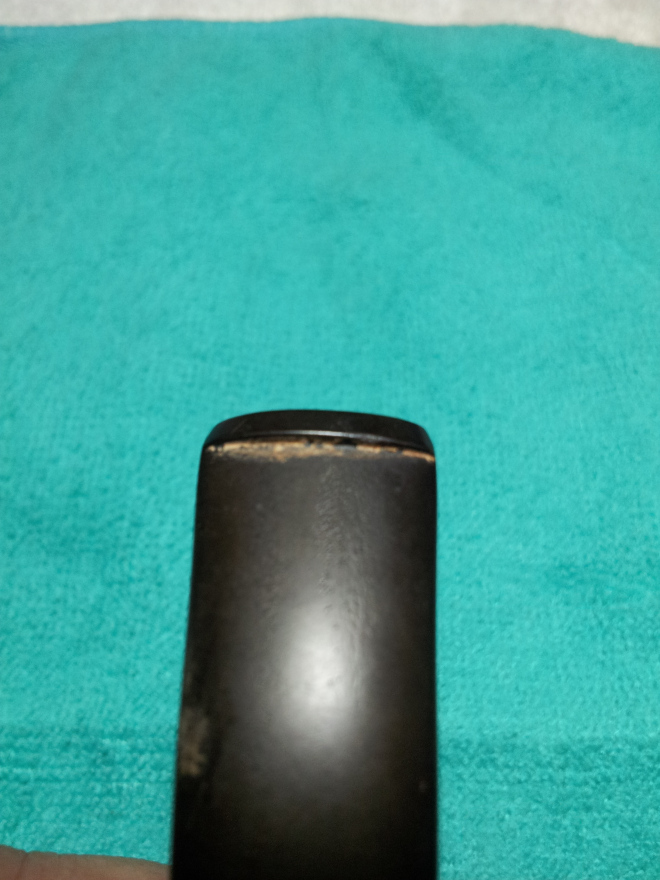
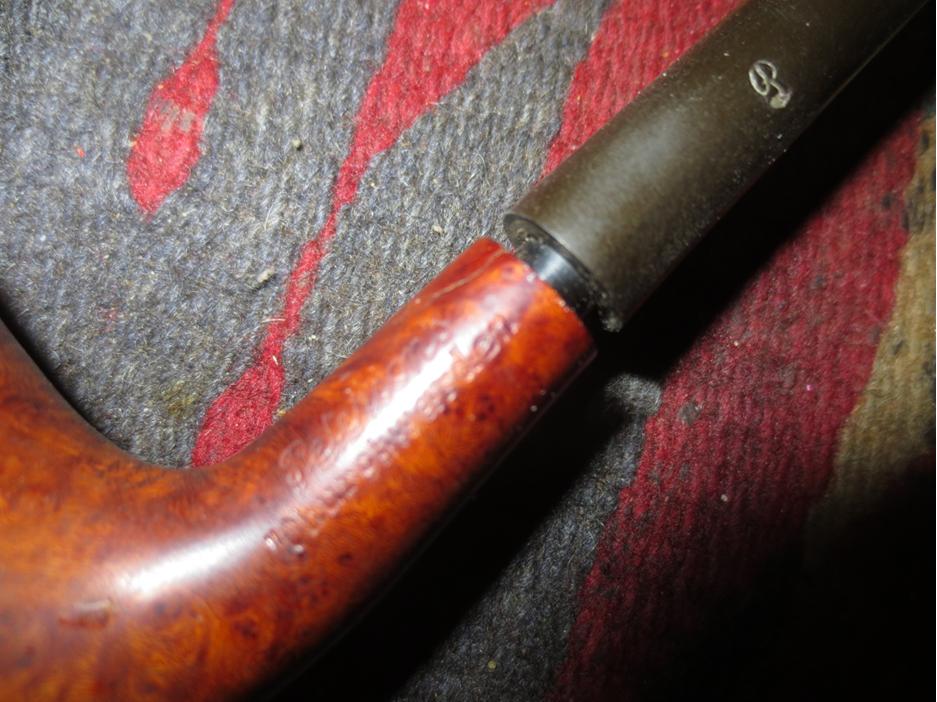
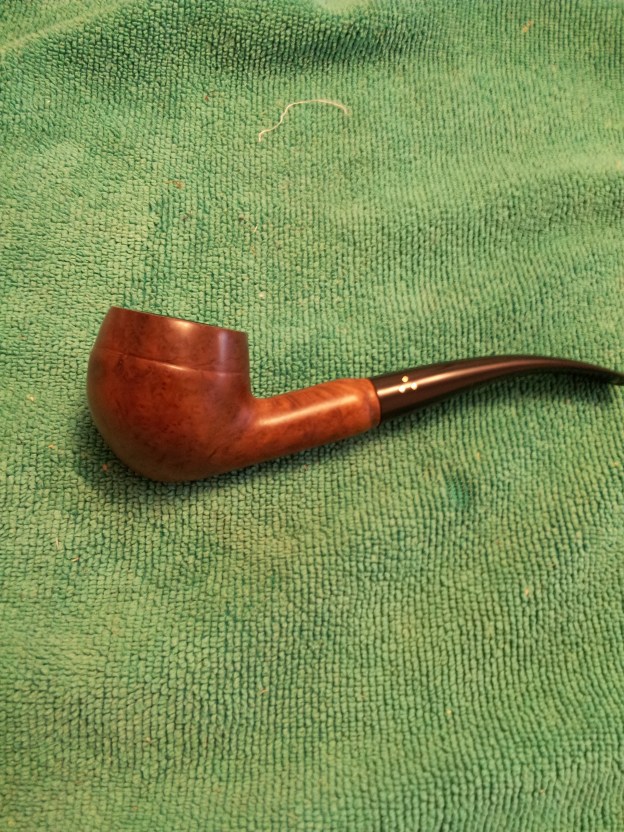
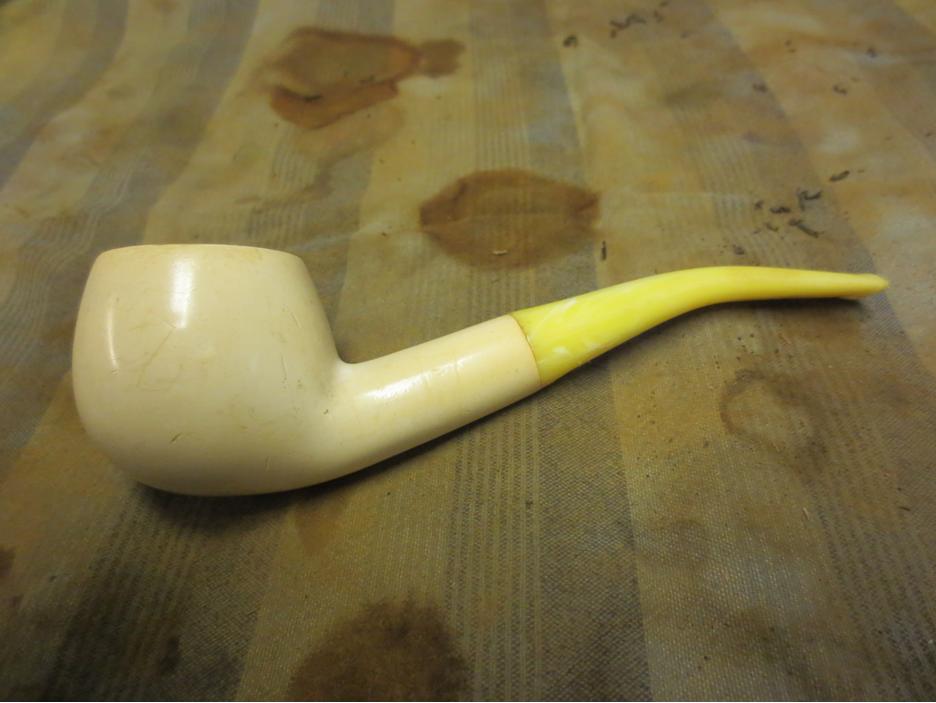
I was given a batch of pipes from a friend on one of the forums that he had lying around a long time. He was pretty certain that they were not worth much but he thought they might be fun for me to fiddle with. One of them was a meerschaum apple-shaped pipe with a plastic stem. The draw on it was awful, like sucking air through a coffee stirrer. The bowl had a few issues at first glance. There were some gouges in the meer on the sides of the bowl and the shank. There were some small cracks in the shank from the end forward near the top. There was a Delrin sleeve so these may or may not be a problem. The tenon itself was small and rough. The stem had some damage from what appeared to be melting at some point in its life. But it was barely smoked and there was something about it that caught my eye. I could see some promise in it so it would be worth the fiddle.band1
band2

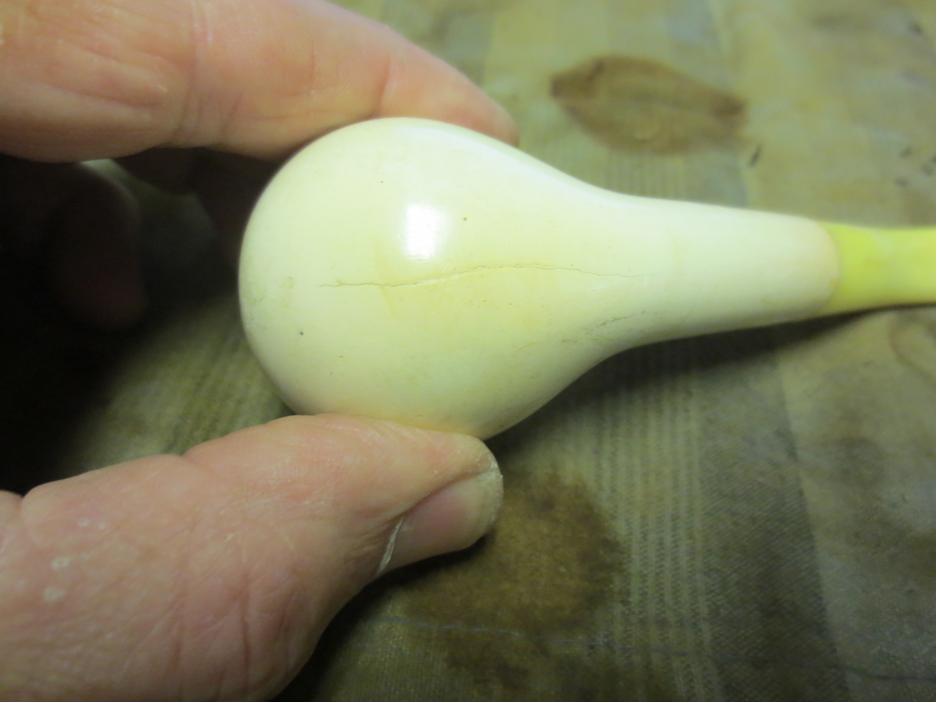
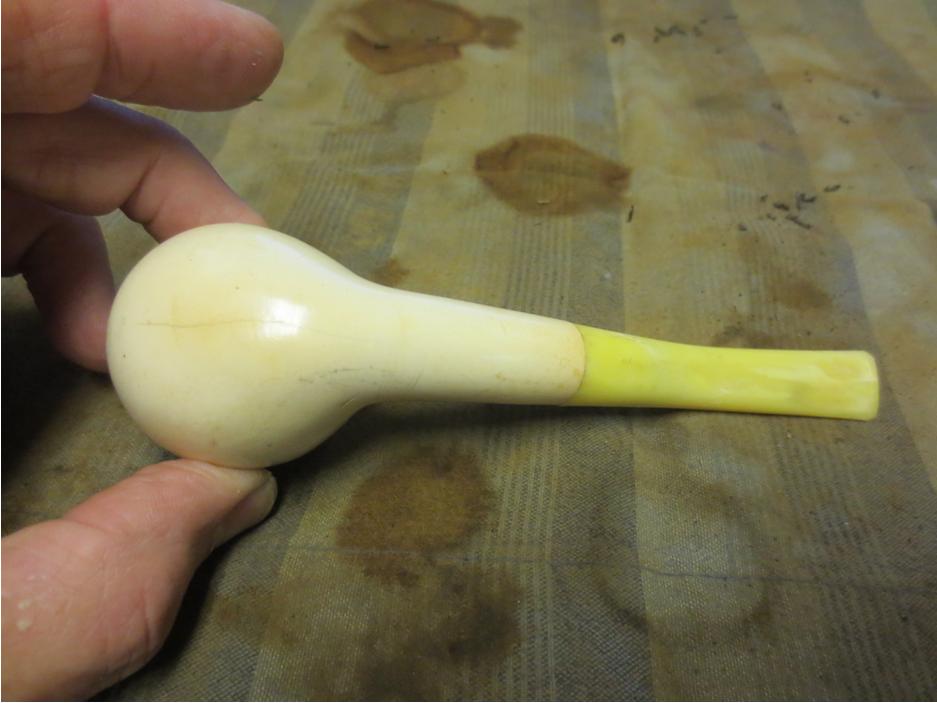
band3 On the bottom of the exterior of the bowl there looked like there was a crack that ran for the length of the bowl. I examined it with a lens and it turned out to be a gouge in the surface of the meerschaum. It may be a crack but it did not go deep in the material so it was salvageable.band4
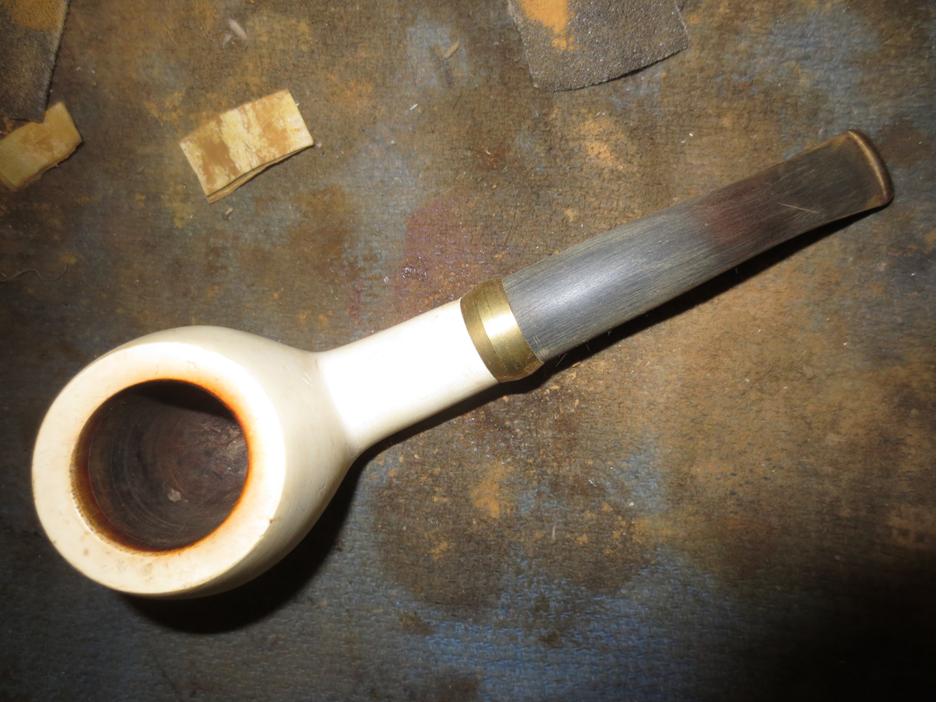
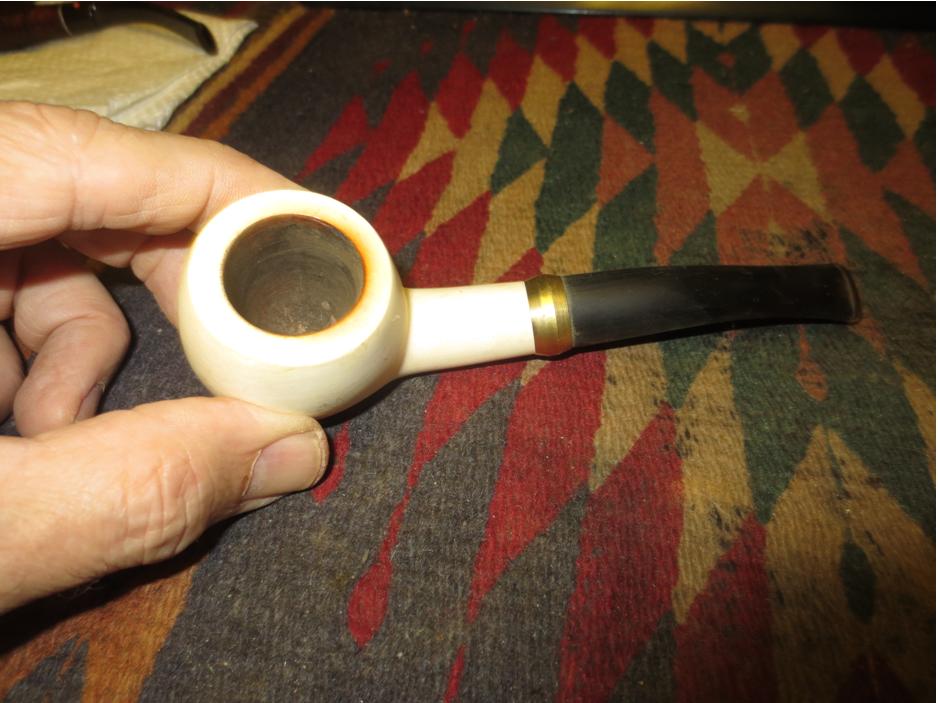
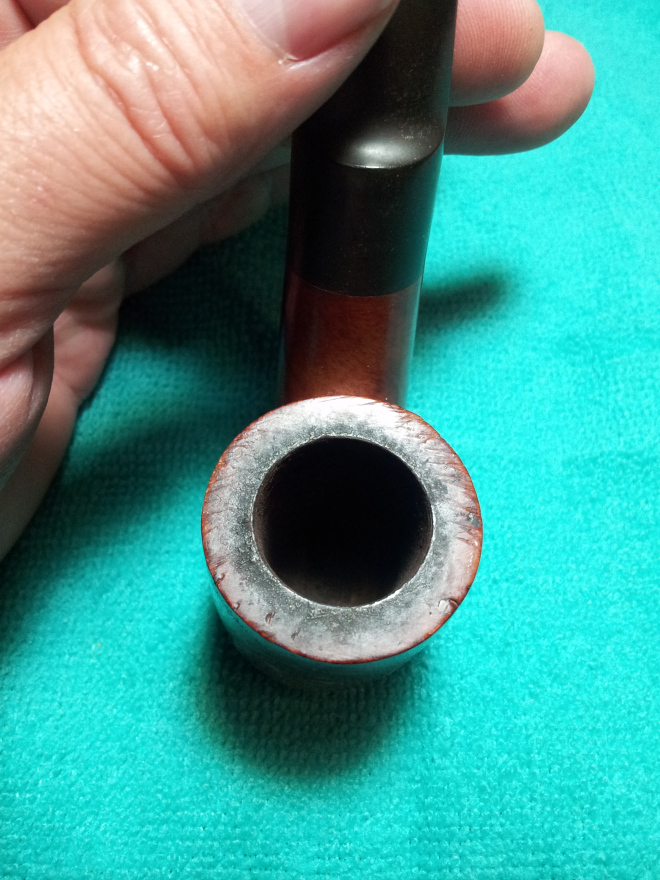
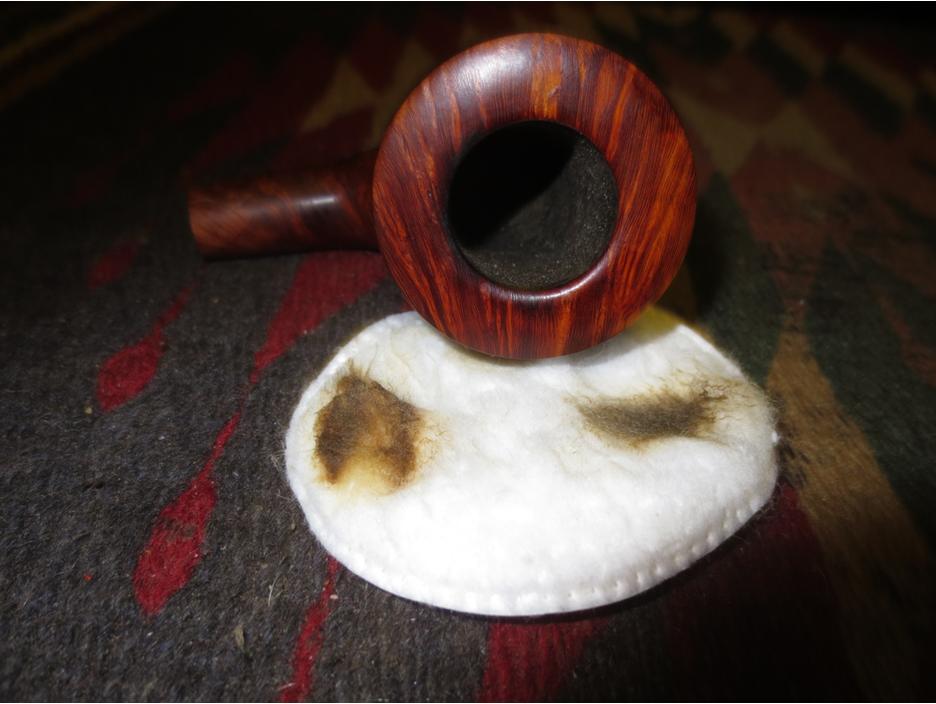
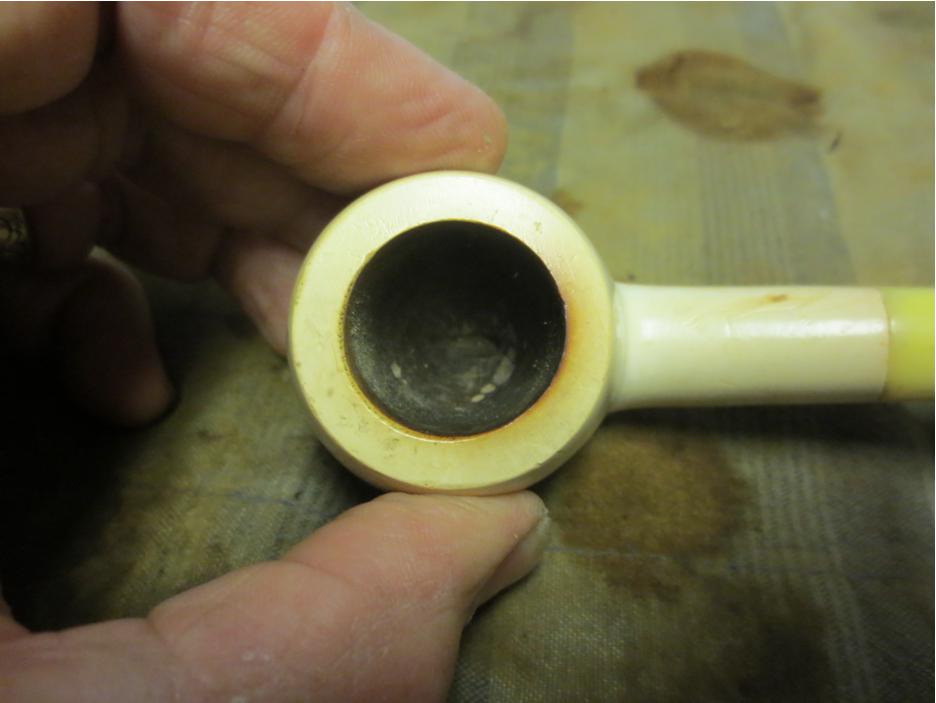
band5 I took a close-up photo of top and inside of the bowl. You can see that it is barely smoked and the crack does not appear to go into the bowl.band6 The plastic stem just bugged me. I could find nothing redeeming in the shape of it at all. The taper was wrong and it was pinched at the shank joint. The faux amber look of it was really fake looking. The material was very soft and I could scratch it with a fingernail.band7
band8 Everything about the way the pipe looked when it arrived made me think it would be one that I would clean up, polish and turn around and get rid of. I probably would not sell it but would pass it on to someone wanting a meerschaum pipe. I cleaned the inside of the bowl with a cotton swab and water. I cleaned out the airway in the shank and stem with cotton swabs, pipe cleaners and alcohol. I had finished the cleaning and had lightly sanded the bowl with 400 and 600 grit sandpaper to minimize the scratches and dings in it. I was done with the pipe and took it to the buffer to lightly polish the stem and bowl.

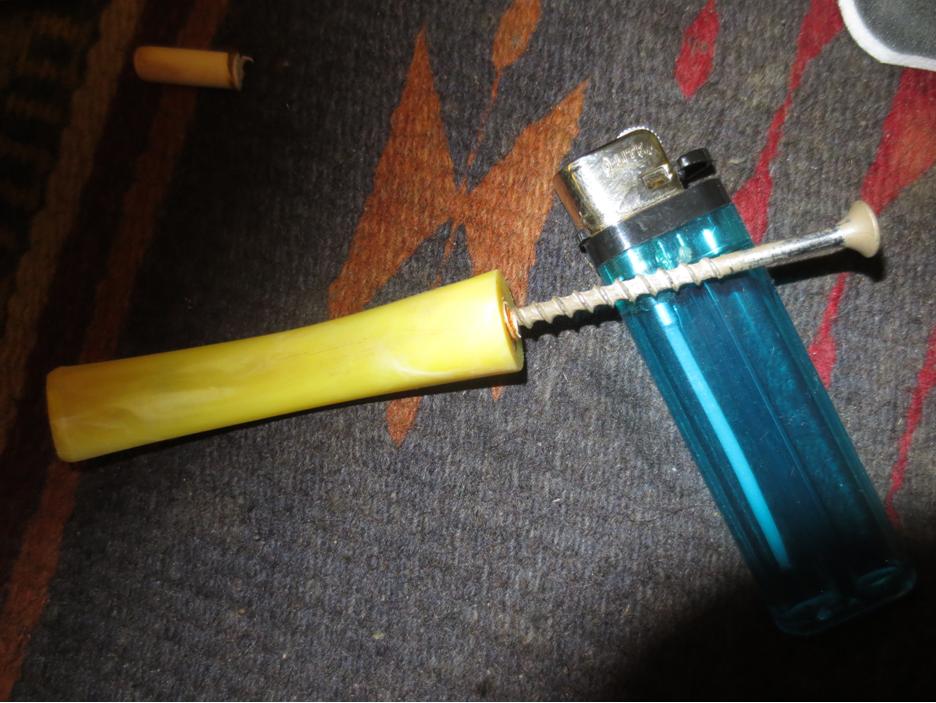
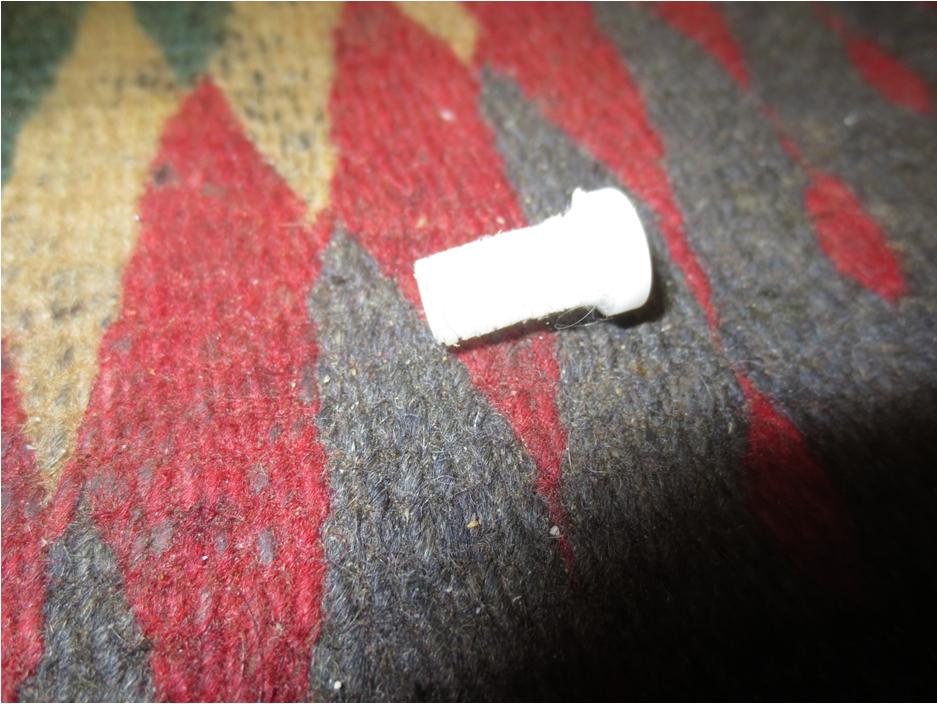
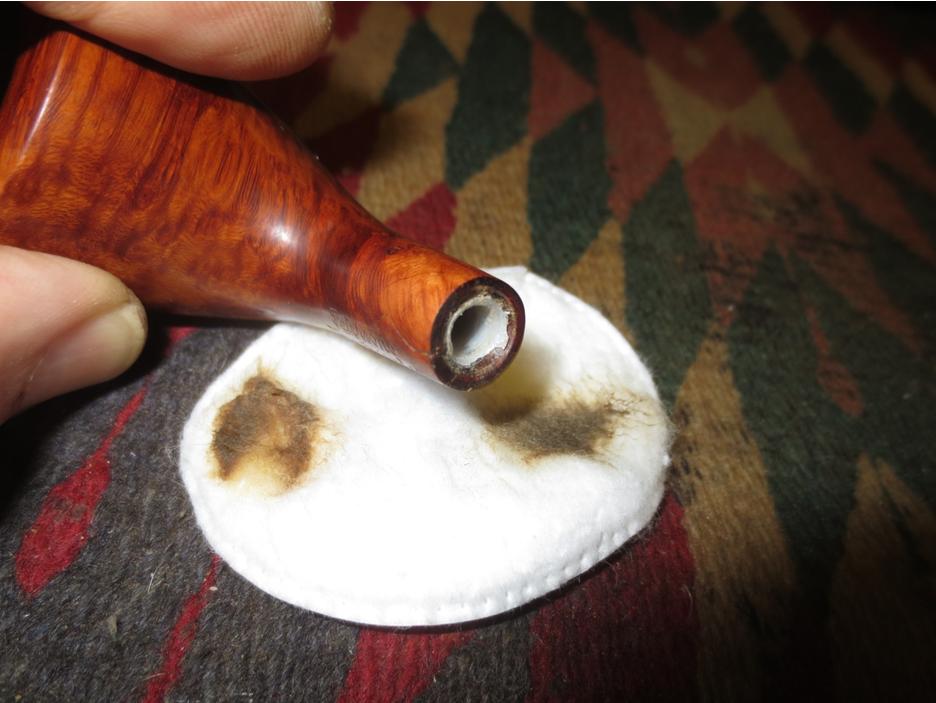
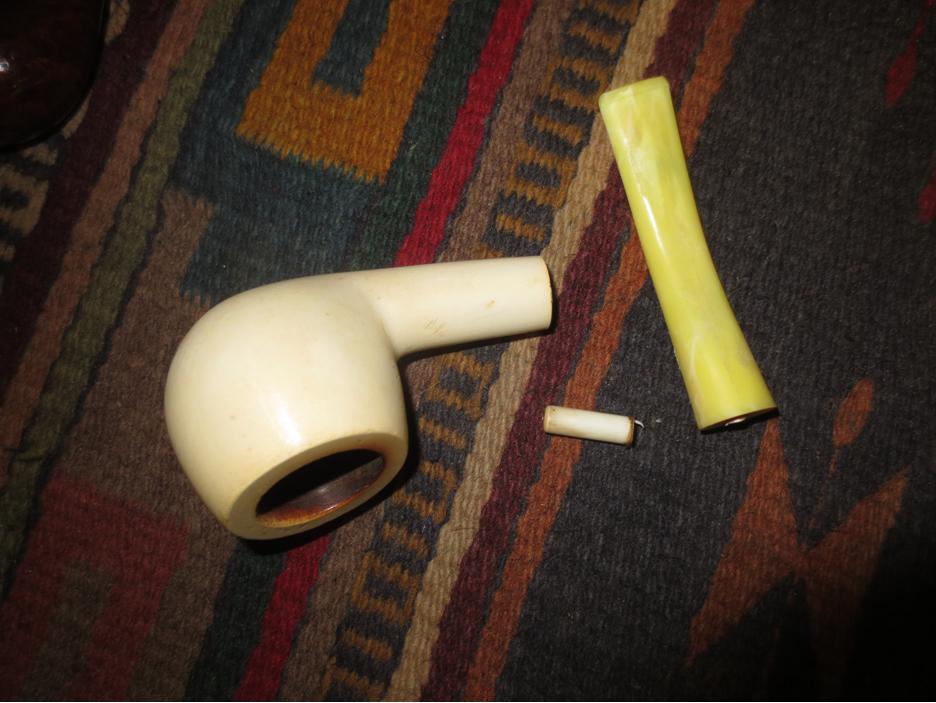
It has been a long time since a pipe got away from me when buffing but this one did. The Blue Diamond polishing wheel is a bit touchy and it grabbed the plastic stem and took the pipe out of my hand. It hit the tile floor right in front of the buffer and the stem snapped off at the shank. The tenon was stuck in the shank and the other end was glued in the stem. I was very fortunate as the pipe hit directly on the stem and not on the meer bowl or it might have been ruined. As it was it meant I had a good excuse to throw away the plastic stem and make a vulcanite one. I pulled the tenon out of the shank with a screw. It came out easily. I tried to pull the glued end out of the stem but putting in a screw and heating the screw but the glue held. I put the stem away and went on a hunt in my stem can for a suitable vulcanite stem for the pipe.band9
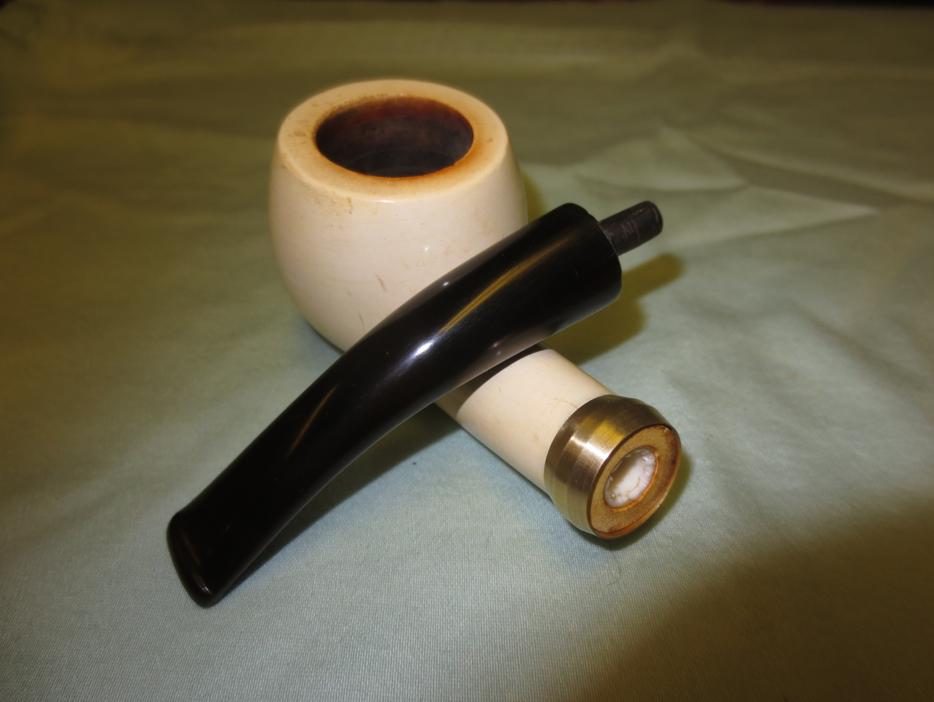
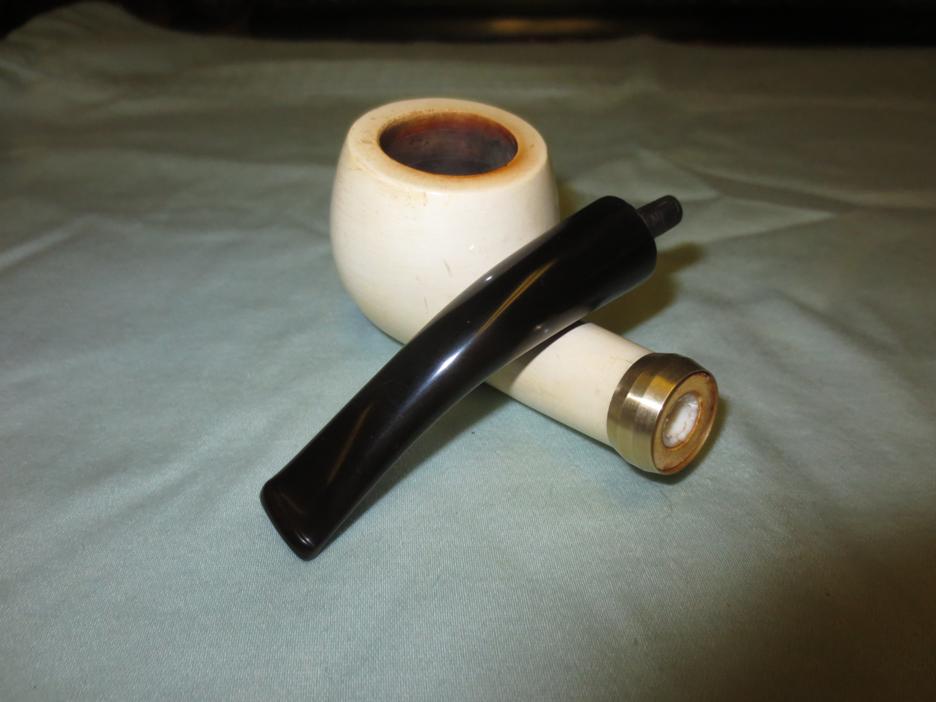
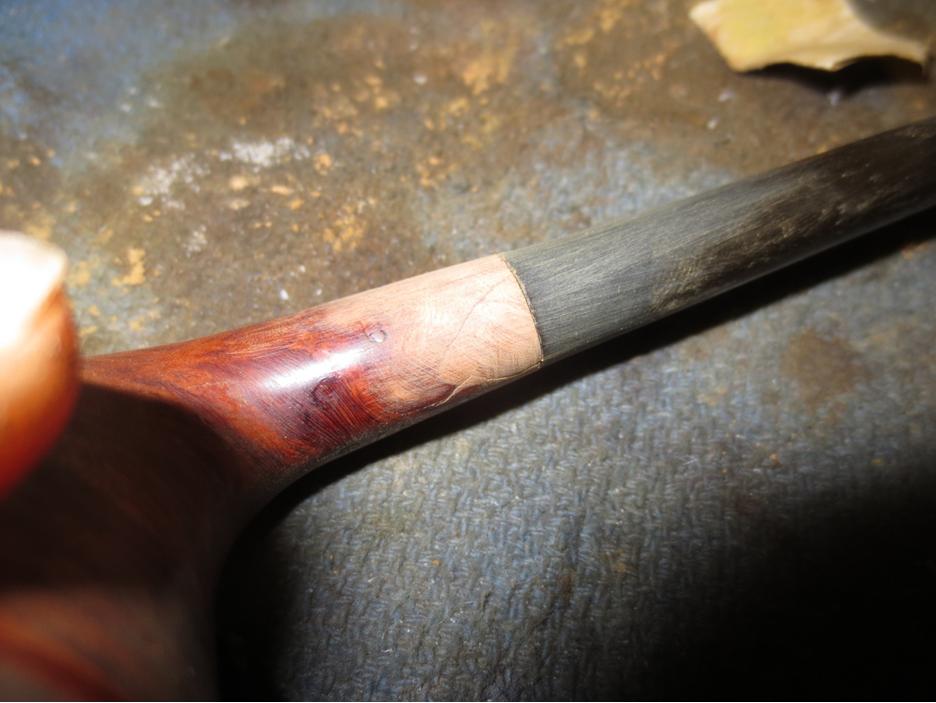
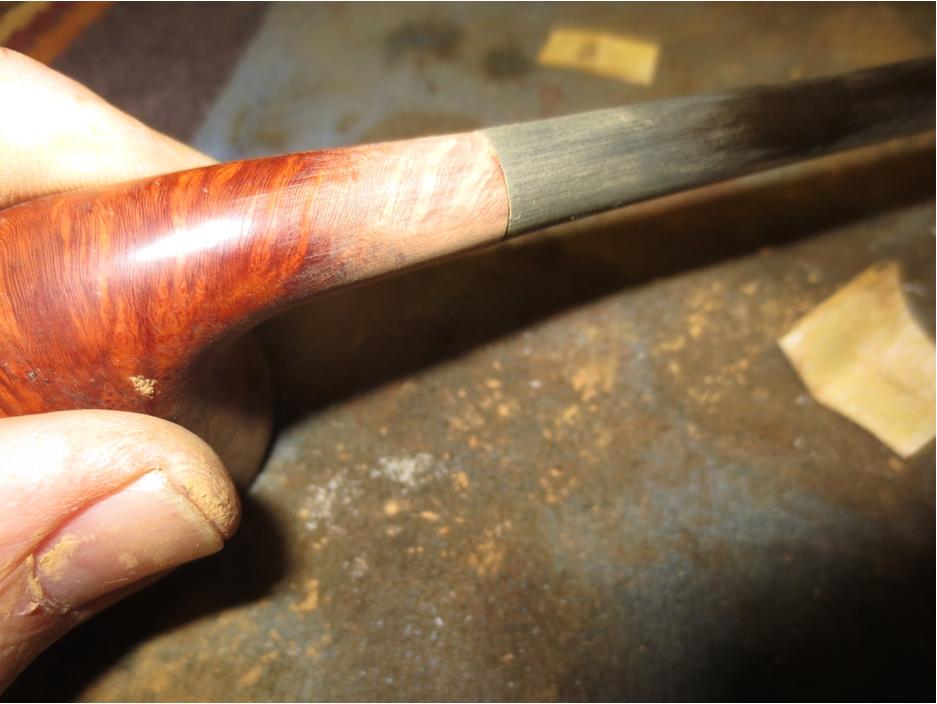
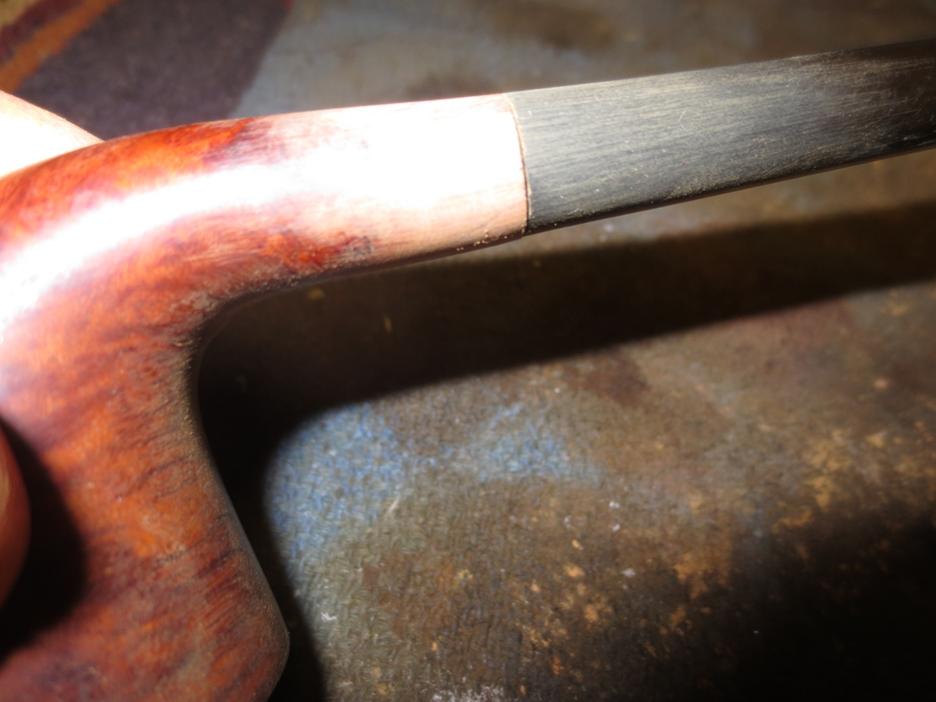
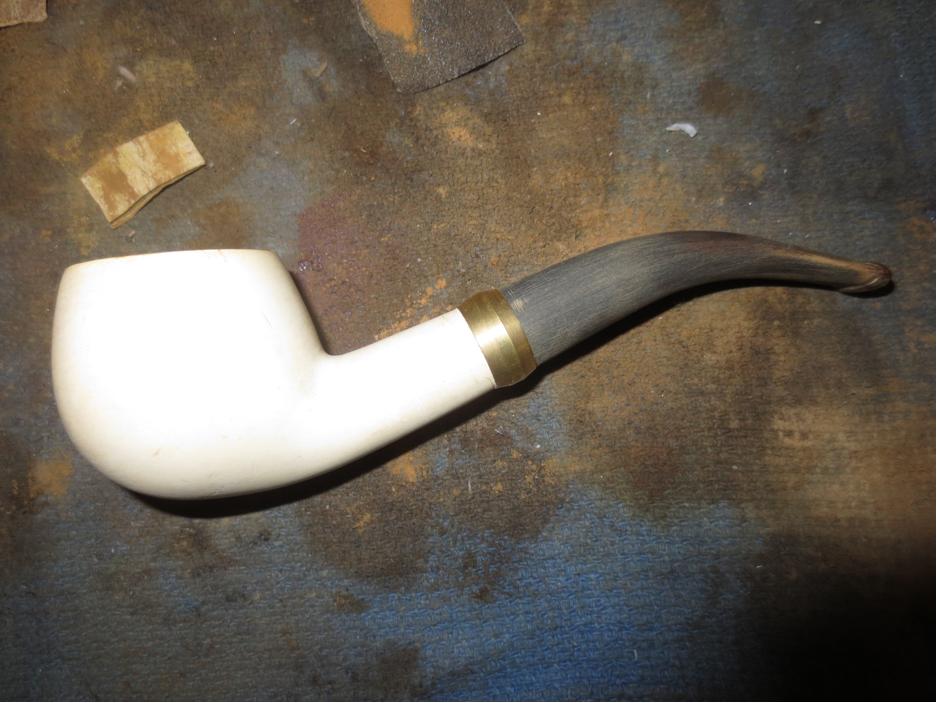
band10 I found just the right donor stem. It was a bent round stem that came from an old-timer somewhere along the way. It was thick and the diameter was close to that of the shank. I took the tenon down with the Dremel and sanding drum and finish it by hand with sandpaper to make a snug fit in the Delrin sleeve in the shank. I used the Dremel and sanding drum to take off the excess diameter of the stem and then hand sanded it with 220 grit sandpaper to make the shank and stem match. While I was working on it I examined the two small cracks in the shank. They bothered me. While they would not go anywhere as the Delrin sleeve was glued and held them together, they still bothered me. I used a small micro drill bit on the Dremel and put a hole in the end of both cracks on the shank. I put a drop of super glue in the holes to seal them. I then remembered that I had some brass plumbing pressure fittings that make interesting bands. I heated the brass with a lighter and pressed it onto the shank to cover the cracks and give the pipe a little more bling.

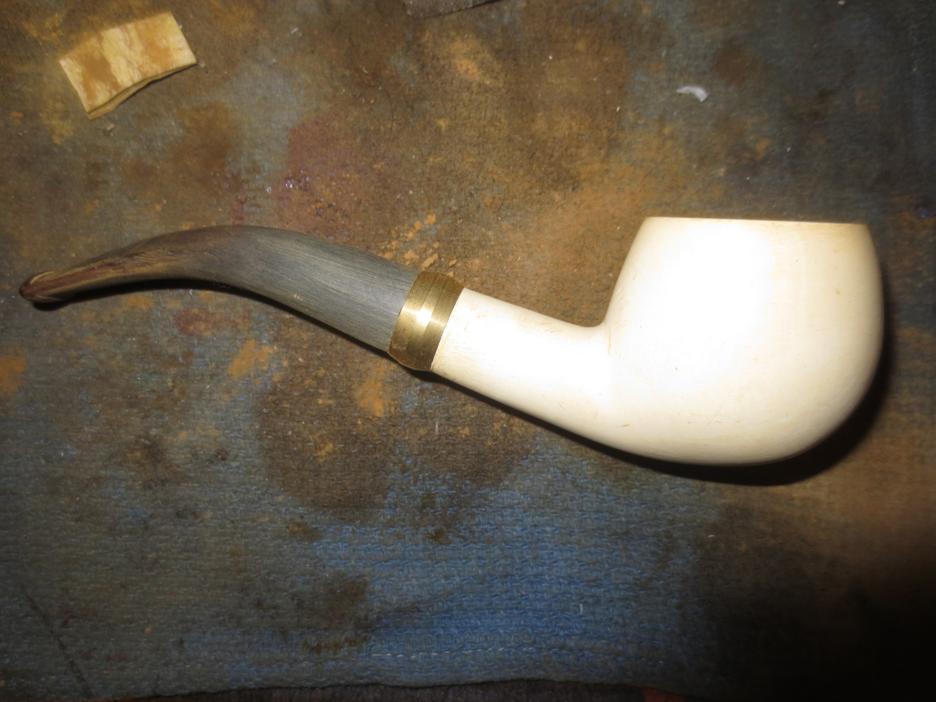
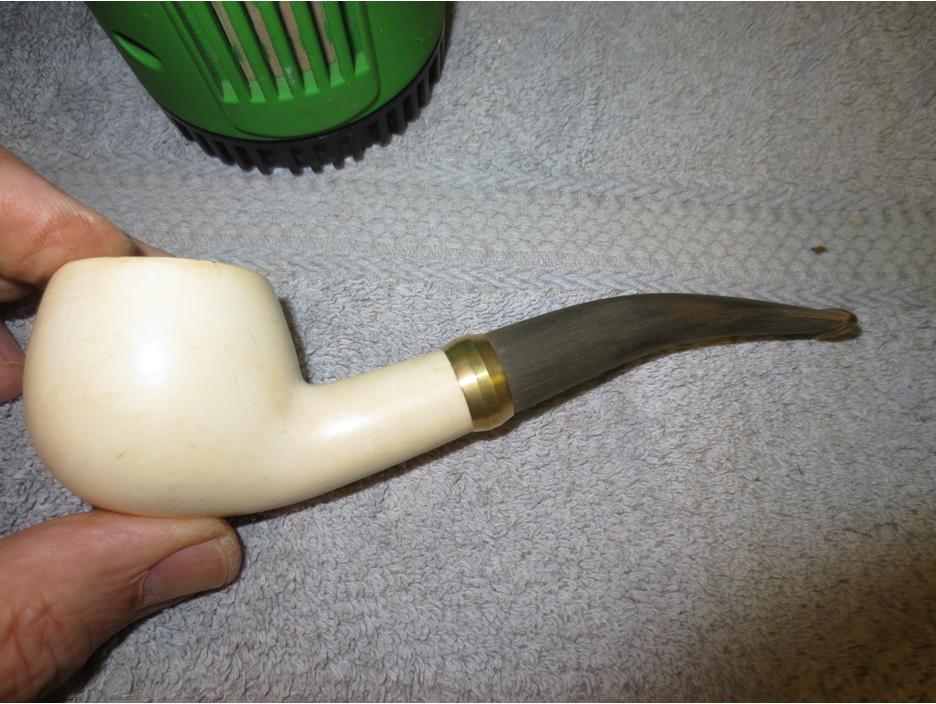
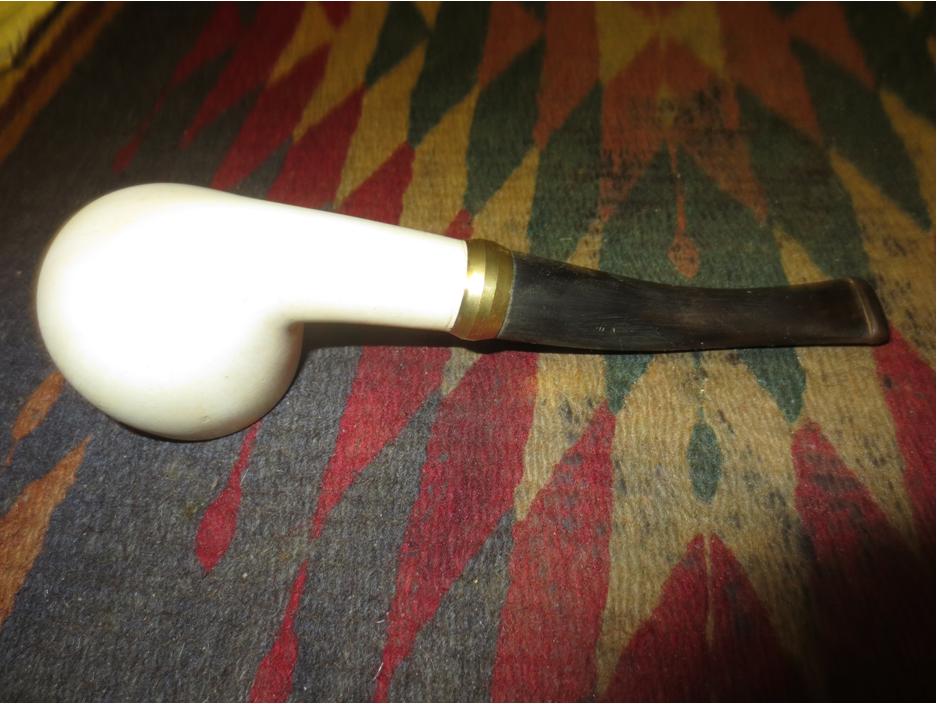
I finished shaping and fitting the stem and took the photos below to give an idea of what the pipe would look like when finished. The bend in the stem is a little too much at this point and I would need to take some of the bend out. The bowl looks good with the brass fitting and the stem length works with this bowl.band11
band12

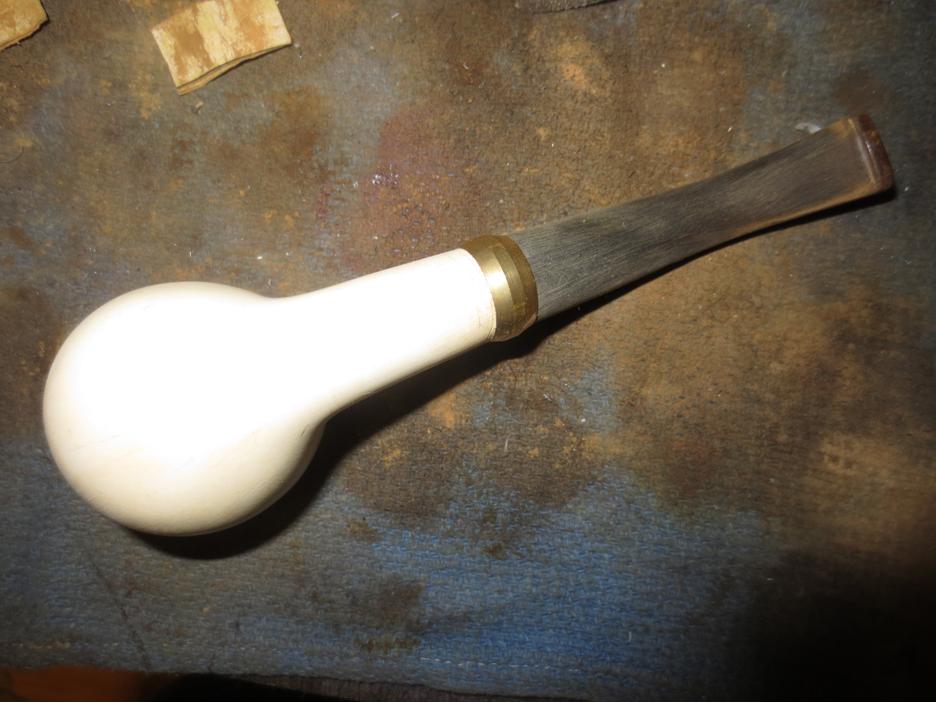
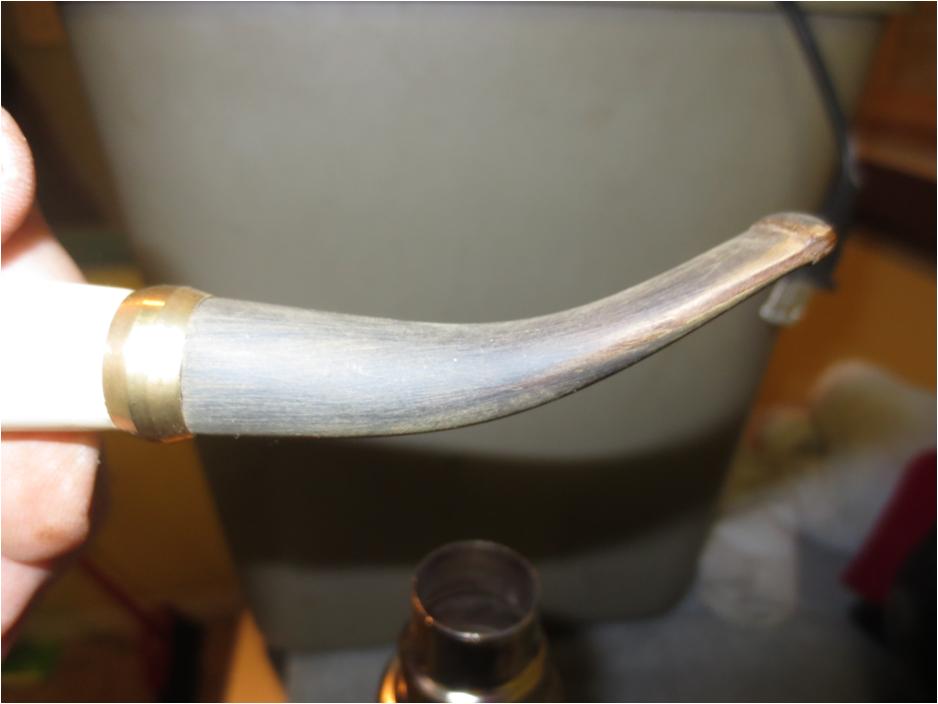
band13 I was able to sand out the gouge on the bottom of the bowl and it looks smooth and fresh now. I will need to sand the entire bowl with micromesh to polish the meerschaum and give it a shine.band14 I heated the stem with a heat gun to take out some of the bend. When the stem was flexible I pressed it against table surface with a towel to take out some of the bend. I cooled it with water to set the new bend. The second photo below shows the newly bent stem.band15
band16 I sanded the stem with a medium and a fine grit sanding sponge to take out the scratches and work on the oxidation that was deep in the edges of the button.band17

band18

band19

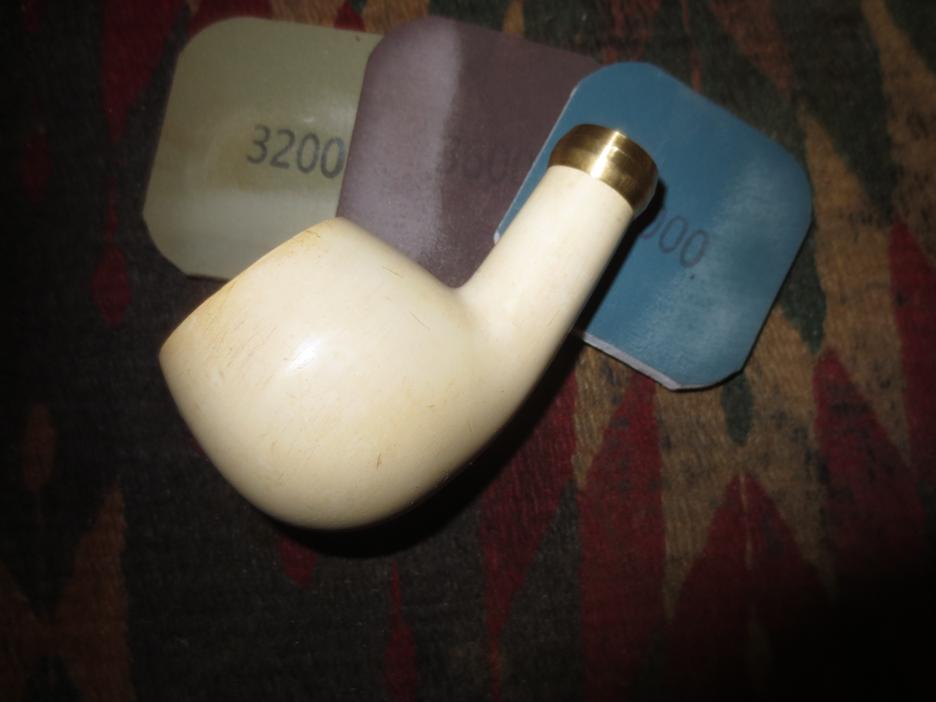
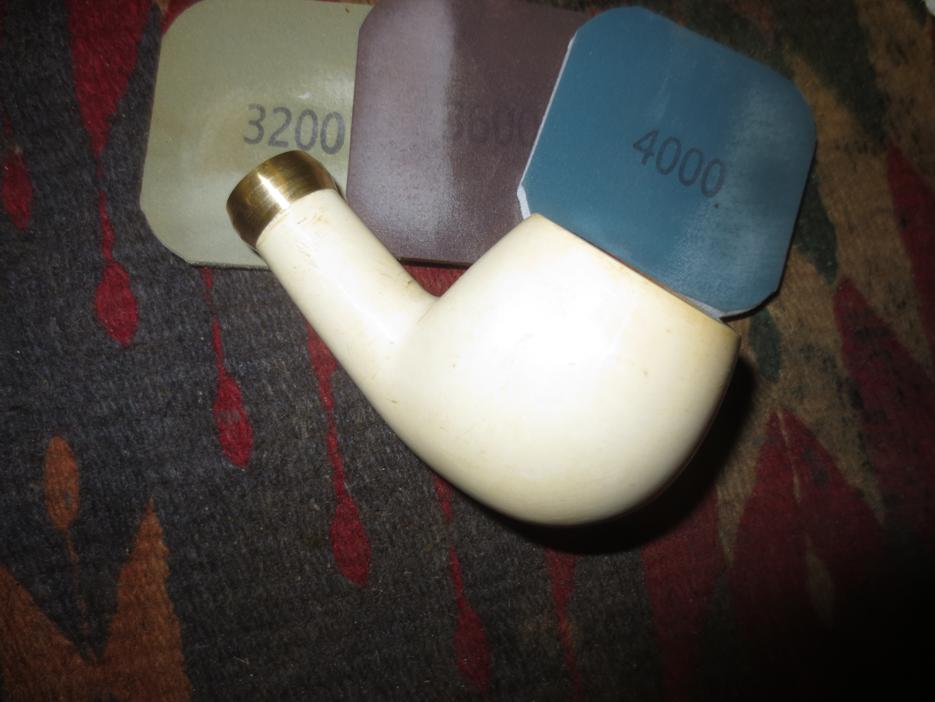
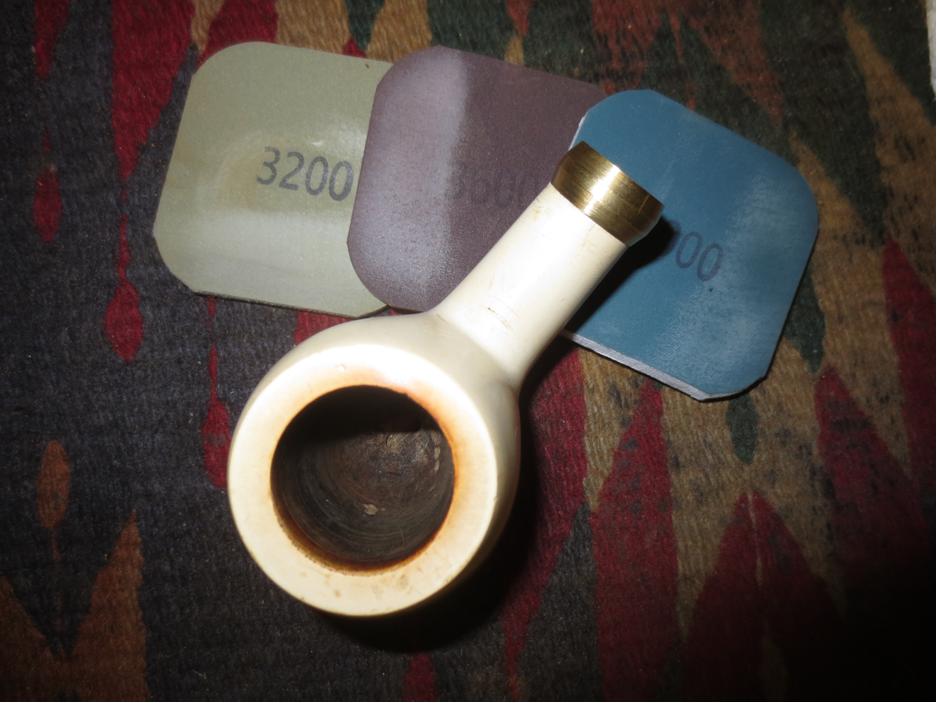
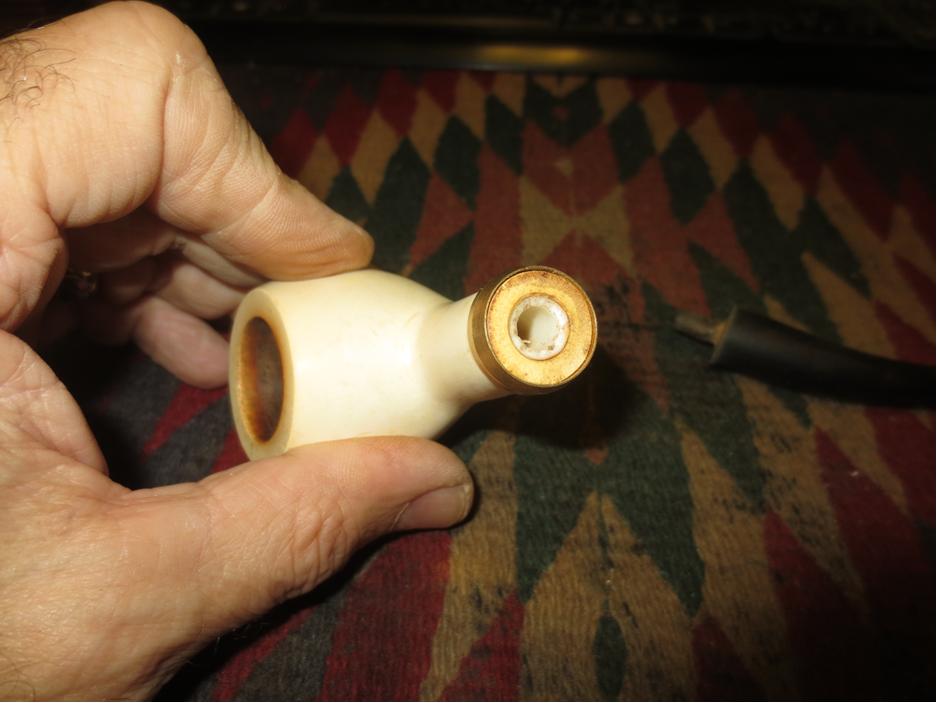
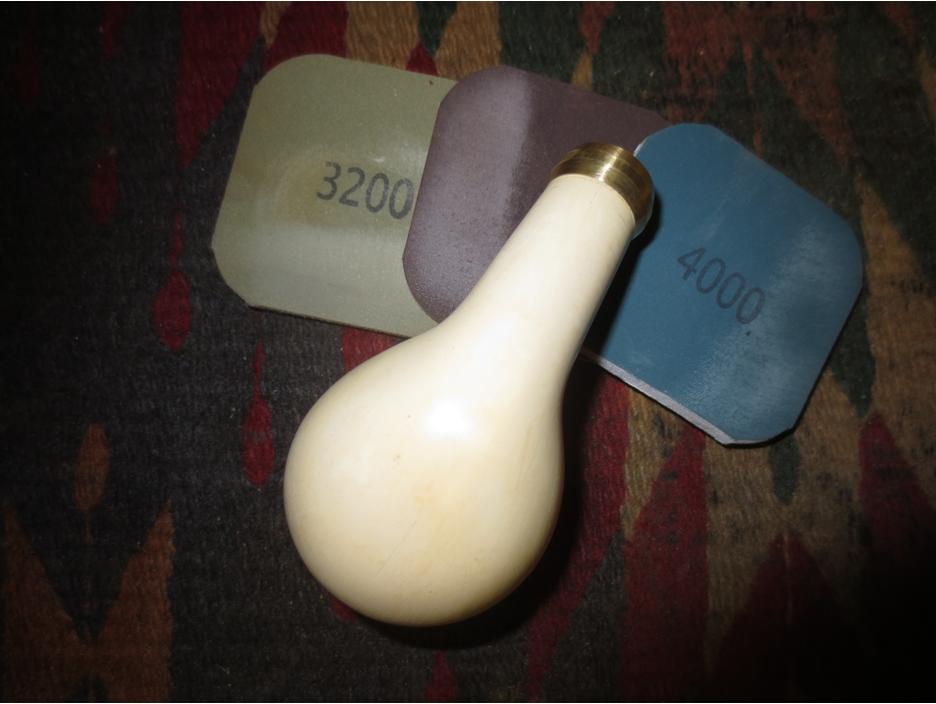
band20 You can see in the photos above that the stem did not quite seat properly in the shank. I used a sharp knife to bevel the inner edge of the mortise so that the stem would sit properly against the shank.band21 I sanded the bowl and shank with 3200-4000 grit micromesh sanding pads to minimize the scratches.band22
band23

band24

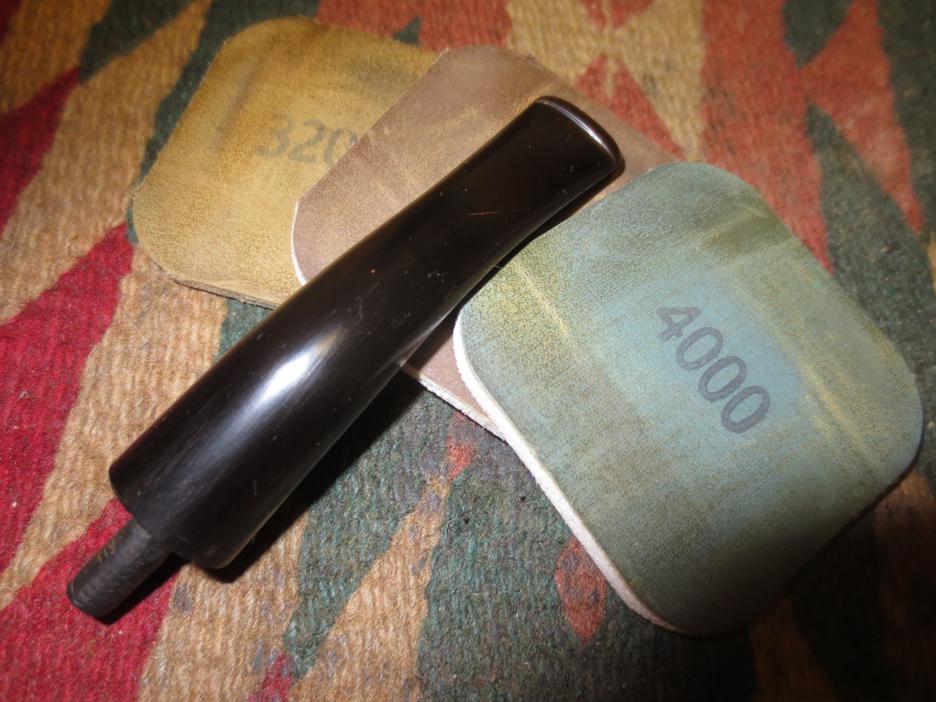
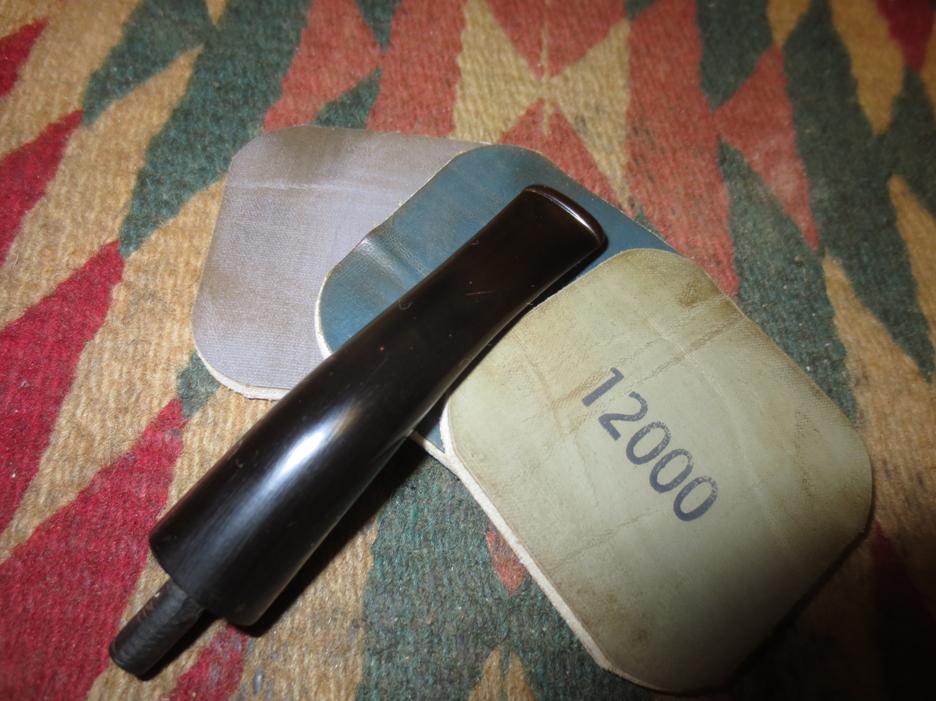
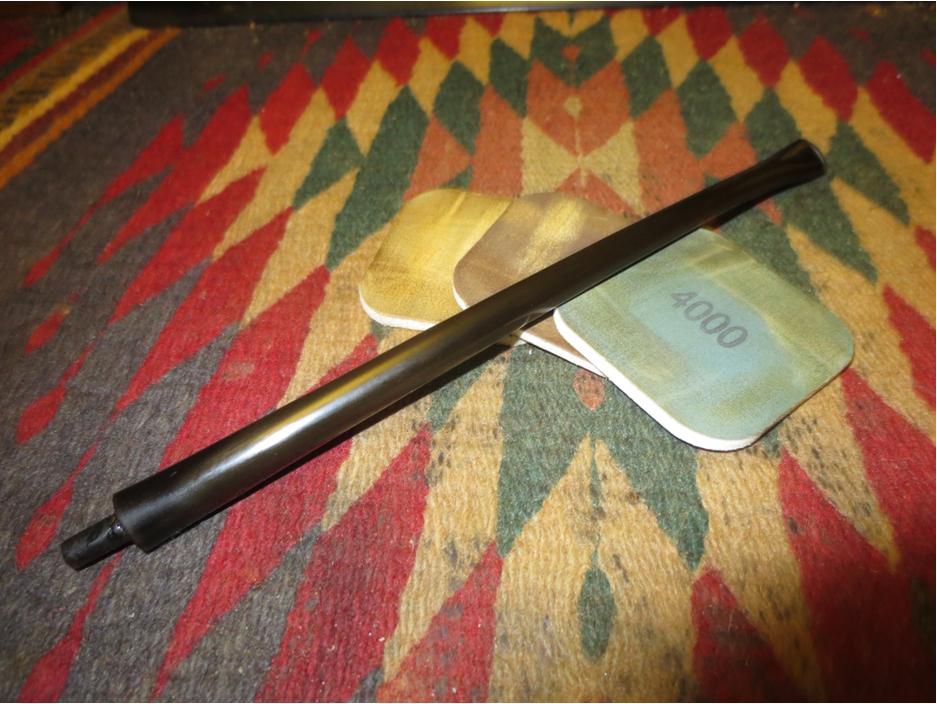
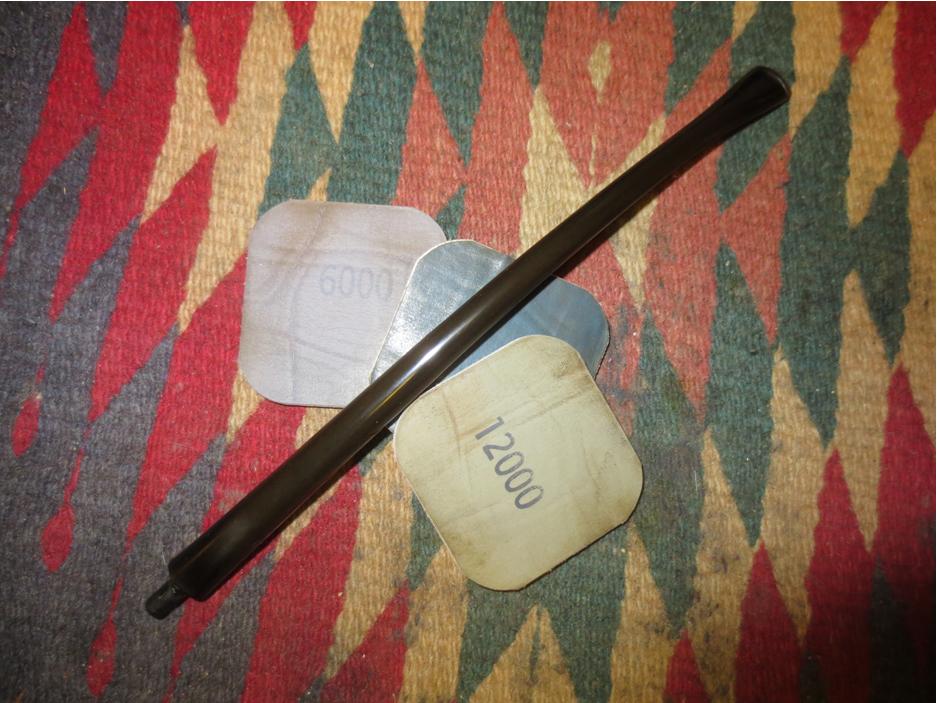
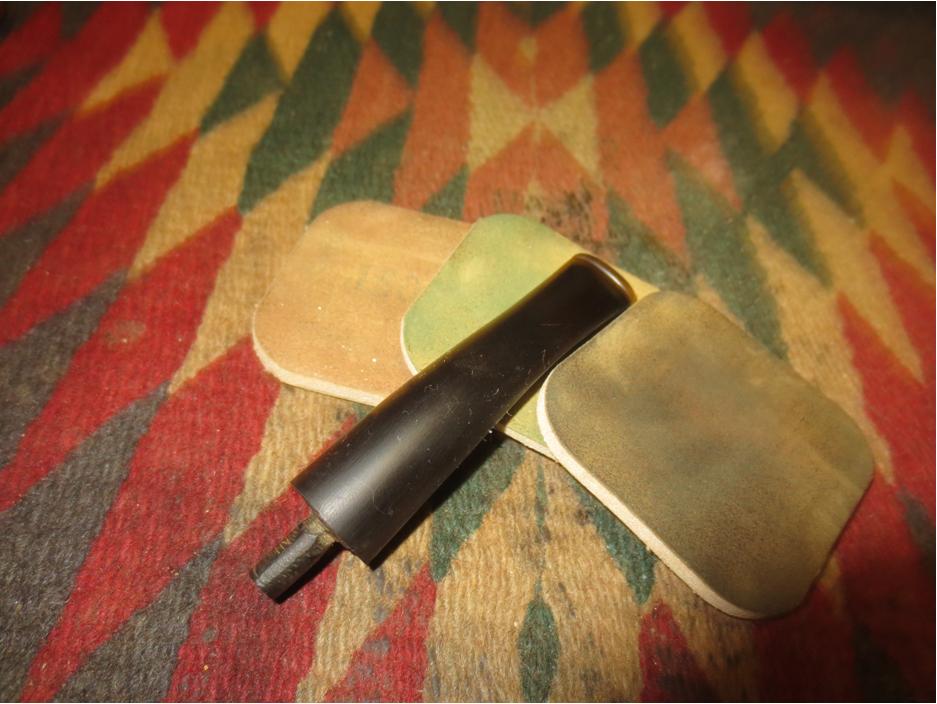
band25 I wet sanded the stem and the tenon with 1500-2400 grit micromesh pads and then rubbed them down with Obsidian Oil. I continued by dry sanding the stem with 3200-4000 grit micromesh pads and the giving it another coat of oil. I finished by sanding with 6000-12000 grit pads and gave it a final coat of Obsidian Oil. When it dried it was ready to buff.band26
band27

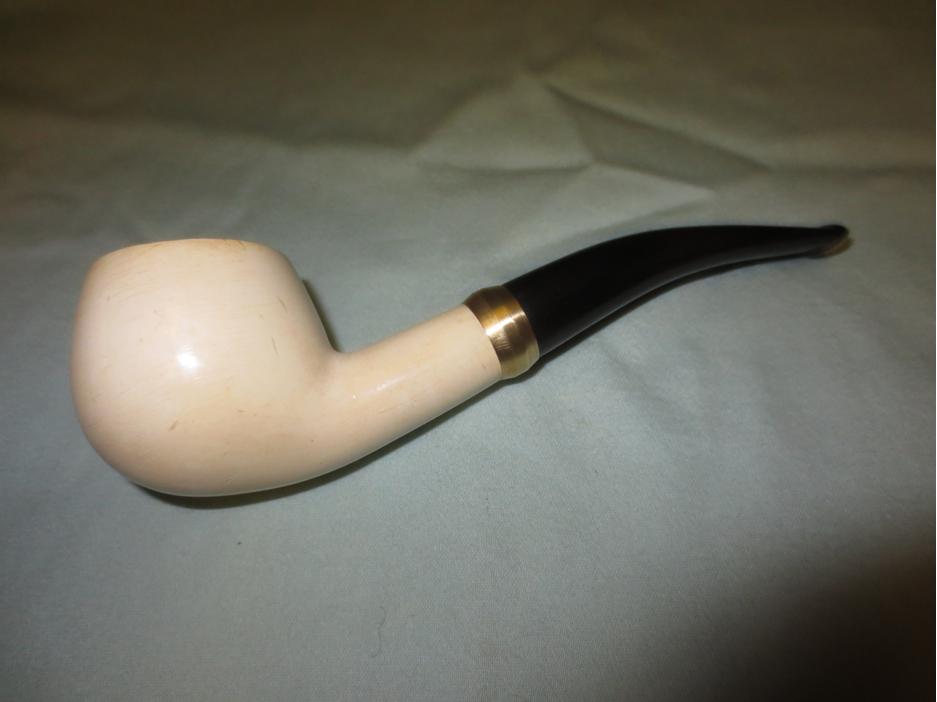
band28 I buffed the bowl and stem with Blue Diamond Plastic polish on the wheel and then gave the stem several coats of carnauba wax. I gave the bowl two coats of white beeswax and the buffed it as well. I buffed both with a clean flannel buff and then by hand with a microfibre cloth. The finished pipe is shown in the photos below.band29
band30

band31

band32

band33

band34

band35

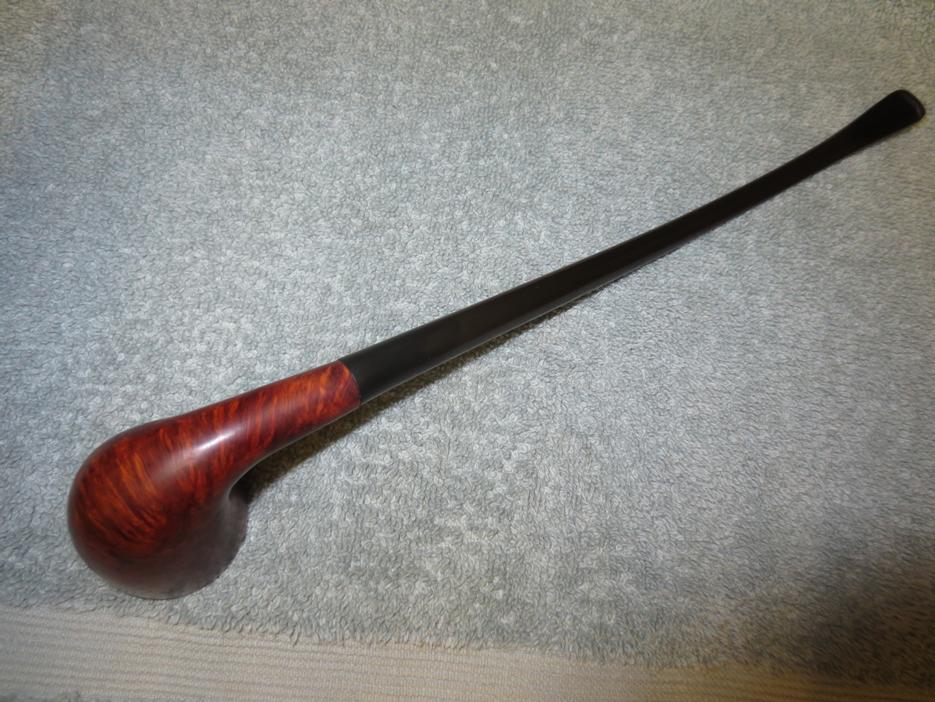
A Straight Forward Rejuvenation on a Butz Choquin Calabash Churchwarden


Blog by Steve Laug

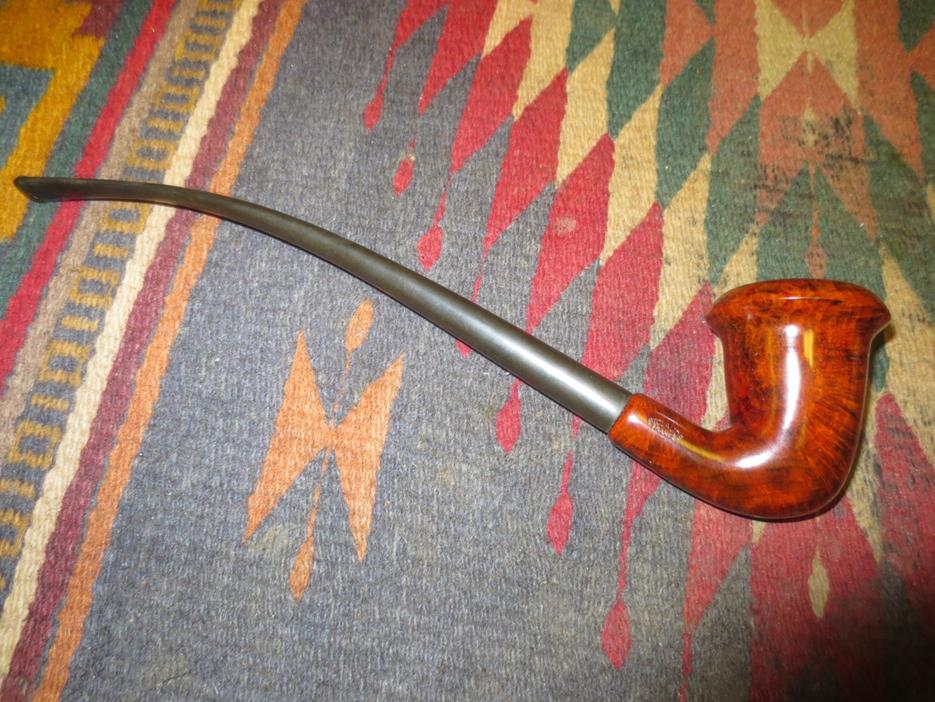
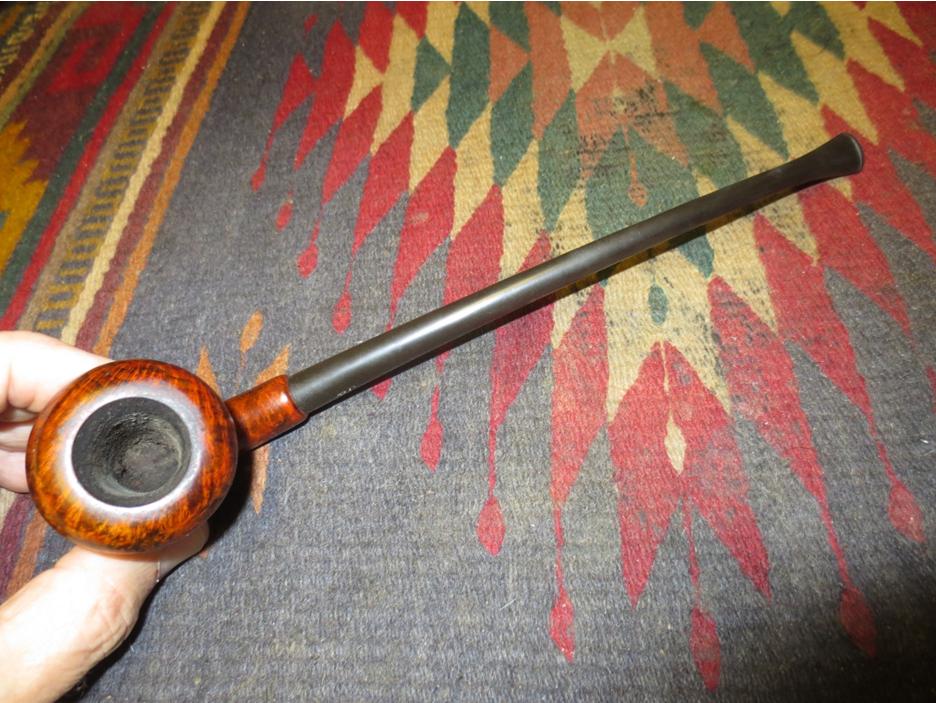
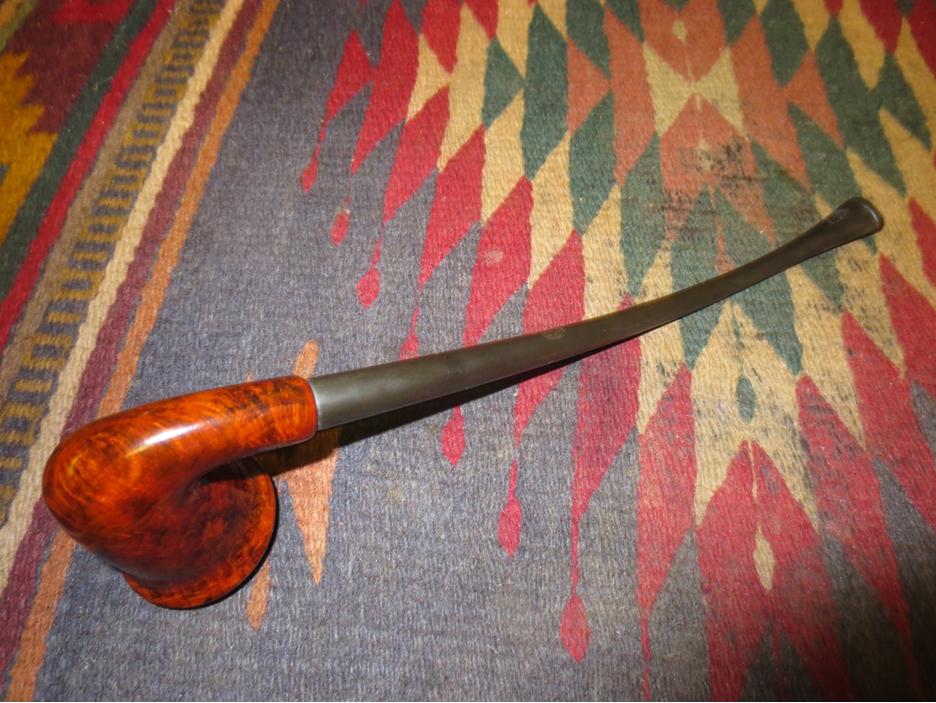
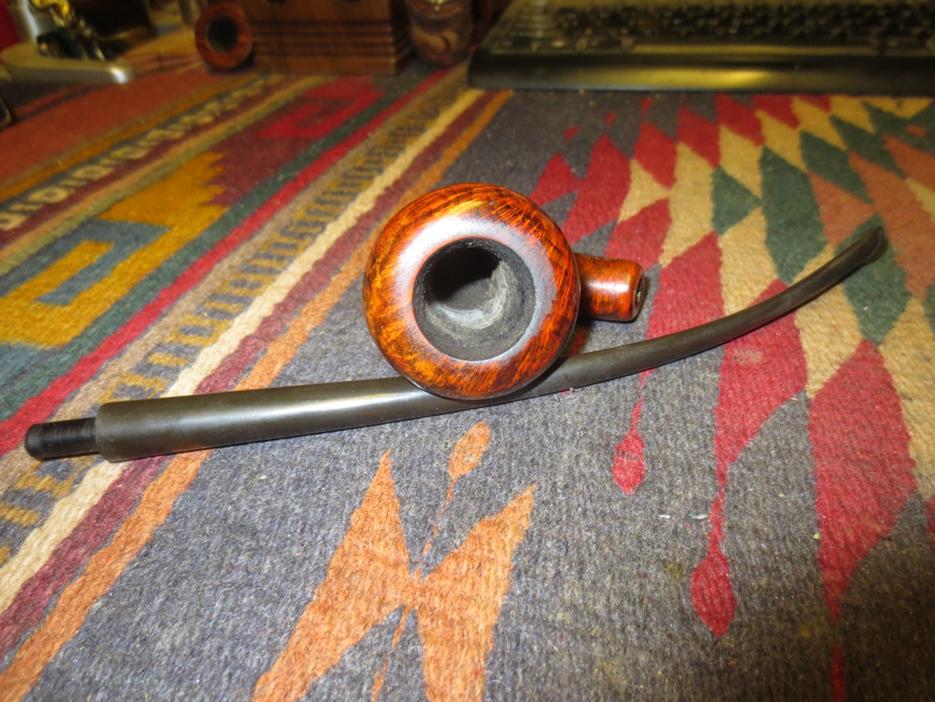
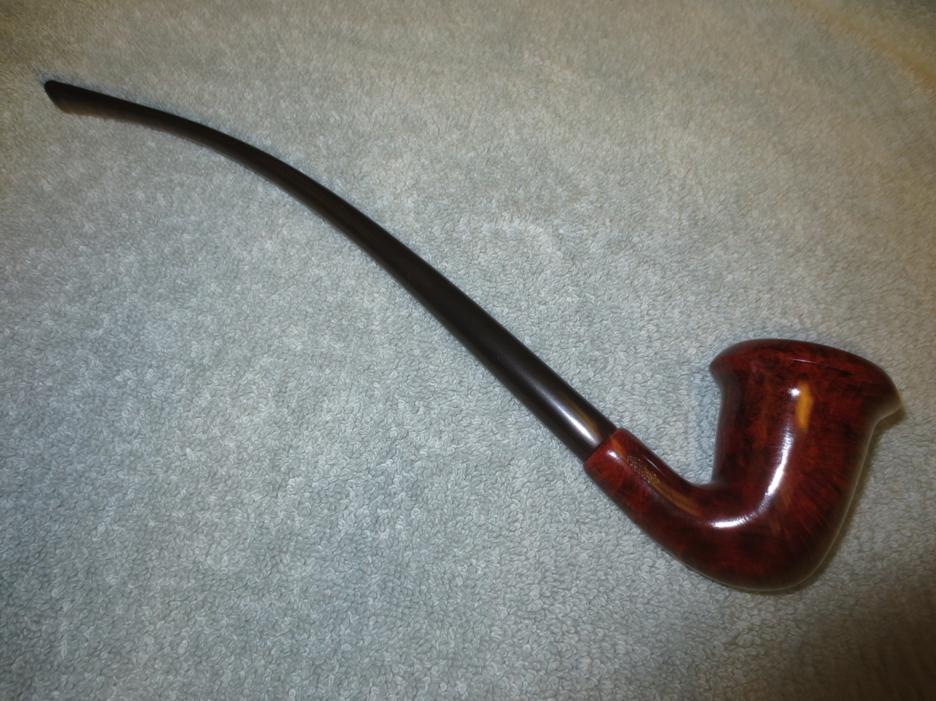
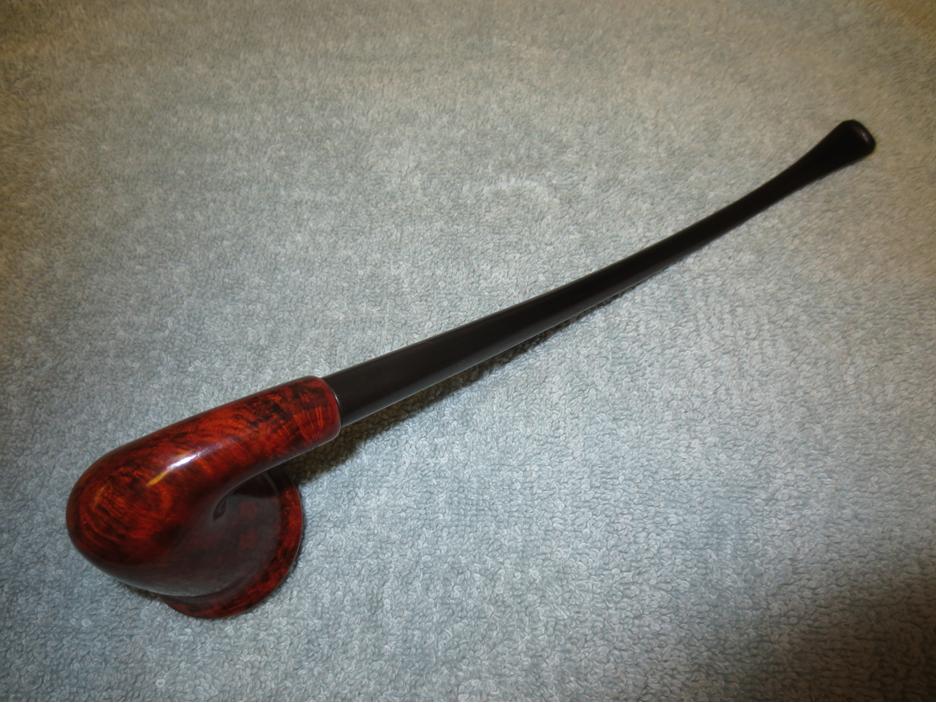
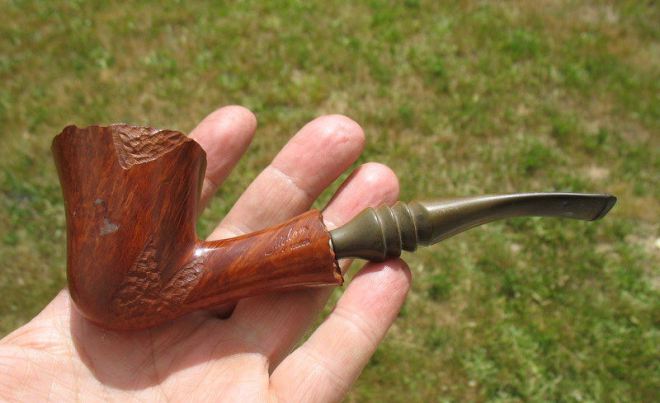
This pipe came to me from a friend who wanted me to sell it for him and give a donation to the SA Foundation’s work in Kathmandu, Nepal. Having just come home from there I thought it was time to work on this one. I have a buyer for it already so it is just a matter of cleaning it up and then sending it off. It is a Butz-Choquin Calabash Churchwarden and it is in pretty decent shape. It is stamped Butz-Choquin over Calabash on the left side of the shank and St Claude arched over France on the right side. The finish was quite nice and just had some build up and oils on the surface. The bowl had a thin cake that was running over the rim. The finish while dirty was in decent shape. The stem was stamped with the BC logo and was lightly oxidized. It would not take a lot of time or energy to clean up and get it ready for its new owner.BC1

BC2

BC3

BC4

BC5

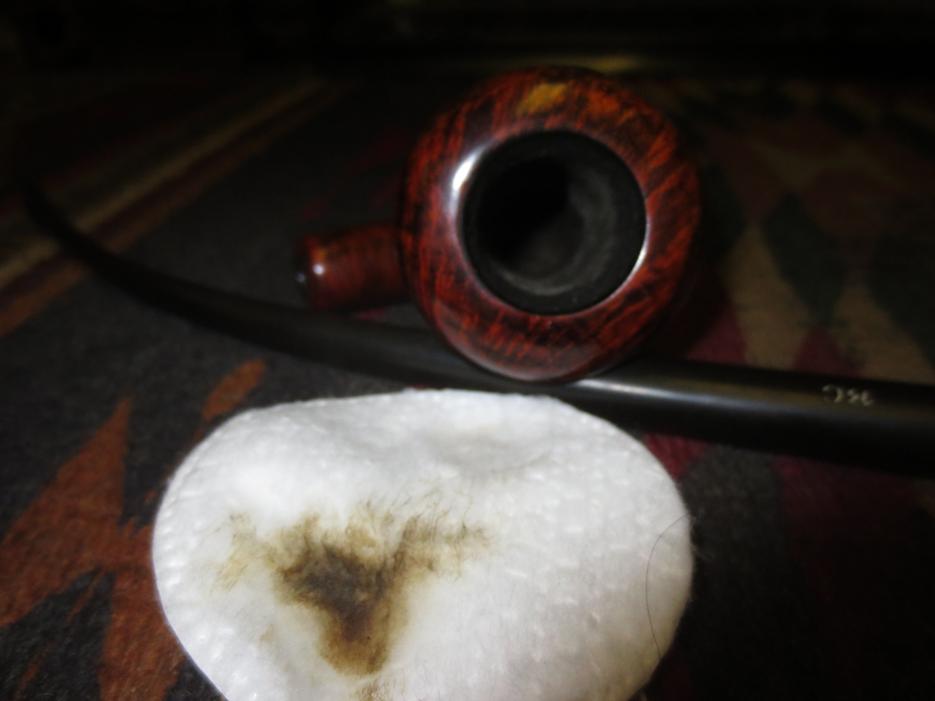
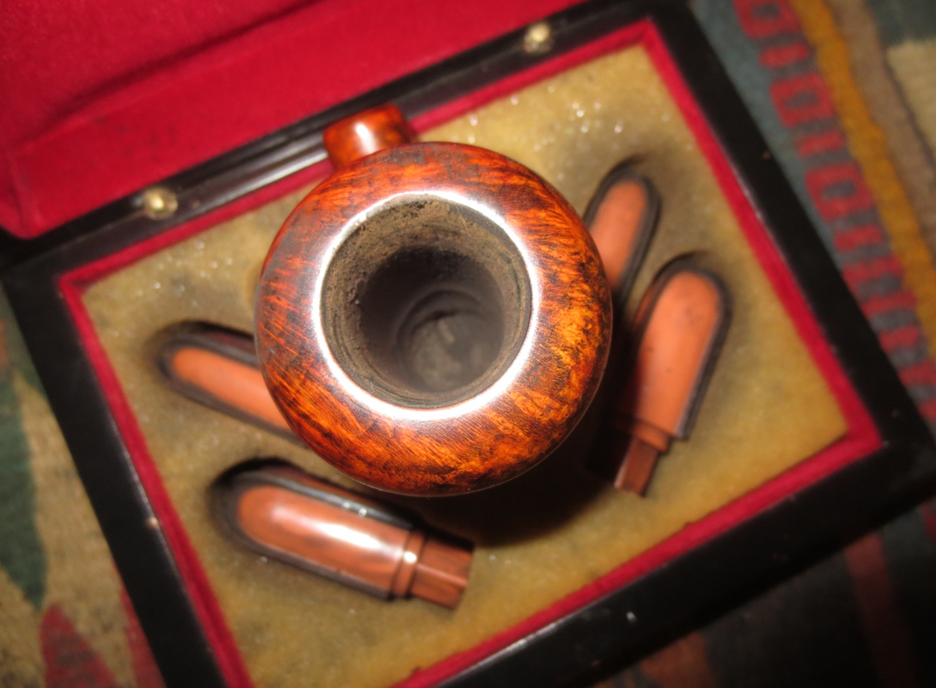
BC6 I scrubbed down the rim with saliva and cotton pads until it all came off and left the surface fresh. I gave the bowl a coat of carnauba wax and buffed it lightly by hand.BC7 I reamed the bowl with a PipNet reamer and took the cake back to a very thin coat (almost nothing) as it will give the new owner the opportunity to build his own cake.BC8

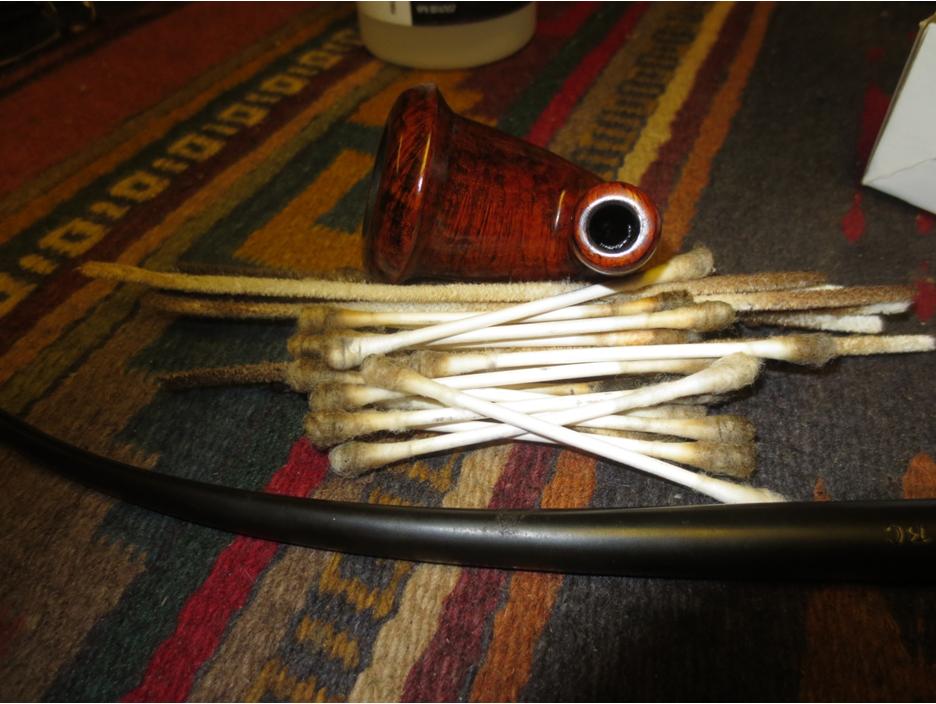
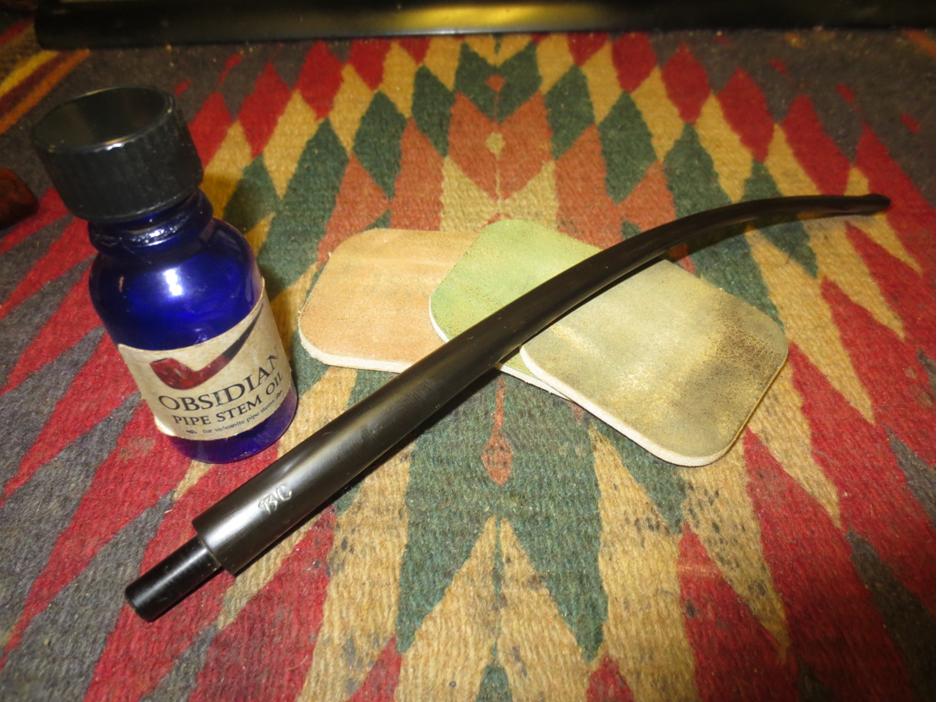
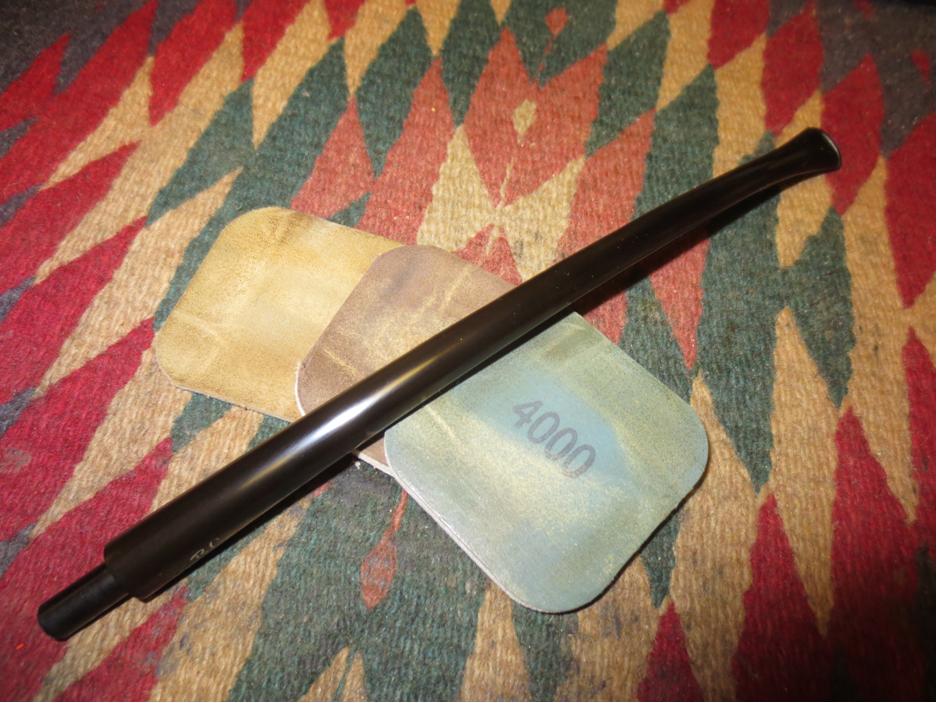
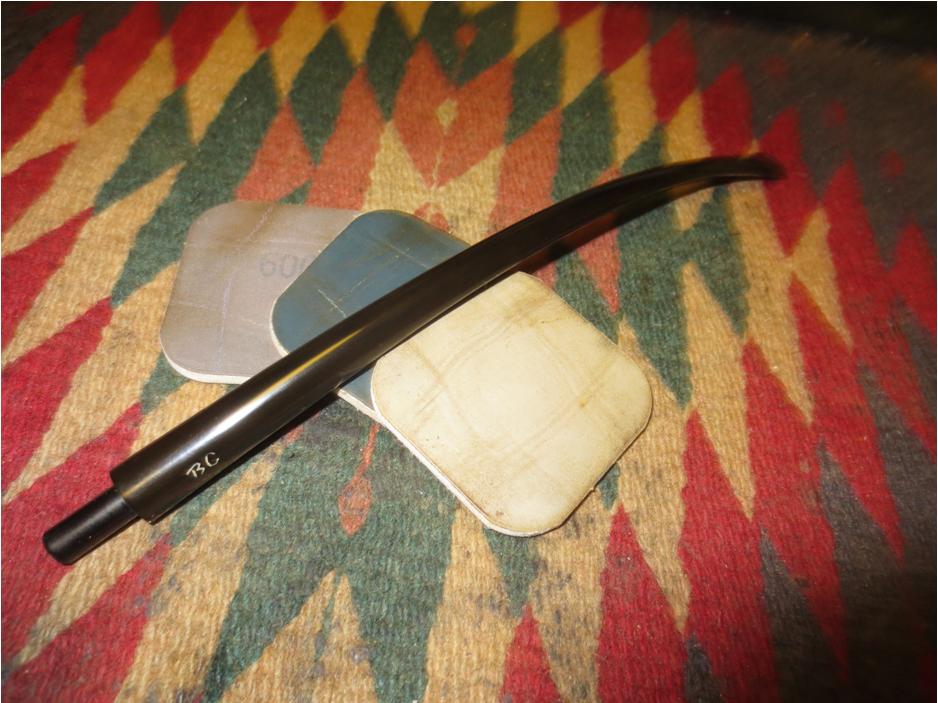
BC9 I cleaned out the bowl and shank with pipe cleaners, cotton swabs and alcohol to remove carbon from the wall of the bowl and the tars and oils that were trapped in the shank and airway. I also cleaned out the airway in the stem at the same time.BC10 I sanded the stem down with a medium and a fine grit sanding sponge and then wet sanded it with 1500-2400 grit micromesh sanding pads. I rubbed it down with Obsidian Oil before progressing to dry sanding with 3200-4000 grit pads. I gave it another coat of oil and then finished with 6000-12,000 grit micromesh pads. I gave it a final coat of Obsidian Oil and let it dry.BC11

BC12

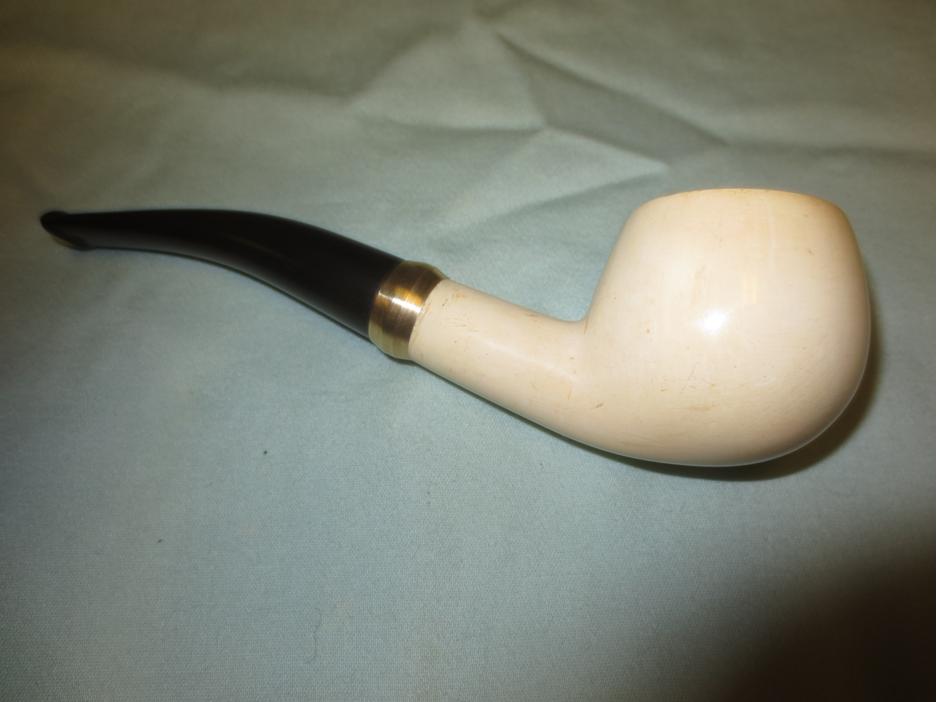
BC13 Once it was absorbed into the vulcanite I buffed it with White Diamond and then Blue Diamond to polish it and remove any remaining oxidation. I gave it several coats of carnauba wax and then buffed with a clean flannel buff. I finished by hand buffing the pipe with a microfibre cloth to raise the shine. The finished pipe is shown in the photos below. Tomorrow it will be mailed out to the new owner. I think he will enjoy this long stemmed pipe. It is truly a beauty.BC14
BC15

BC16

BC17

1930’s To Early 1940’s KB&B Yello Bole Premier Propeller Refinish


Nice gift to that friend Troy. Well done.

Troy W's avatarBaccy Pipes

I have been looking for a older pot shape for a very good online friend of mine that hails from Kentucky ( hes a ol Hillbilly like me ) as a present for him . He likes pot shapes quite a bit and smokes them often .I wanted to find him one that wasn’t too fancy and would make a good daily smoker . Something that he can throw in his shirt pocket and take with him when hes out puttering around his property or maybe messing with his hunting dogs.

I found this 1930’s to early 1940’s Yello Bole Pot Propeller (nothing smokes like old briar ) on Ebay as a “Buy It Now ” for a few bucks.


Even came with some tobacco….. free of charge!

The finish was flaking and showing the fills that was hide behind it .One thing i’ve learned from working on old Yello…

View original post 433 more words

Dressing up a Drab Imported Briar Oom Paul


Excellent step by step facelift for an Oom Paul. Well done

Charles Lemon's avatar

I thought I’d squeeze in another post before heading out for a late-summer camping trip before back-to-school activities take over.

Estate Pipe Lot

This no-name Oom Paul pipe came to me in a recent auction lot purchase (second row from the bottom, centre column in the pic). It was in pretty good shape when it arrived. Compared to many pipes in the lot, this one had not seen a great deal of use. There was a light cake in the bowl, and only a small amount of oxidation on the stem. Even the original stinger was intact. The only real issue was a scraped up rim; it looked almost as if someone had attempted to clean tars from the rim with a dull knife, and had taken off more rim than tars.

20150816_11105720150816_11110420150816_11111620150816_11112920150816_111248

After reaming what little cake there was in the bowl and confirming that the briar was in very good shape inside…

View original post 789 more words

King of the Brighams – Identifying a Presidential Series A Grade Freehand!


Another great Brigham Restoration by Dadspipes

Charles Lemon's avatar

I’ve found most of my estate Brigham pipes on eBay so far. This one caught my eye for two reasons – it was a model/shape that I hadn’t seen before and it was a bit of a mystery! The listing pics were not of the best quality, so it was nearly impossible to make out the telltale Brigham Dots on the pipe stem. So hard in fact, that other potential buyers had asked if the stem was original to the pipe. Here’s the pic from the listing -can you spot the dots??

brigha14

This risk factor, I think, affected the bids and I came away the winner at only $40CAD. But would the gamble pay off? In due time, a pipe-shaped package arrived at my door. I eagerly opened it up and had a good look at the pipe for the first time. My eyes aren’t what they used to be…

View original post 1,053 more words

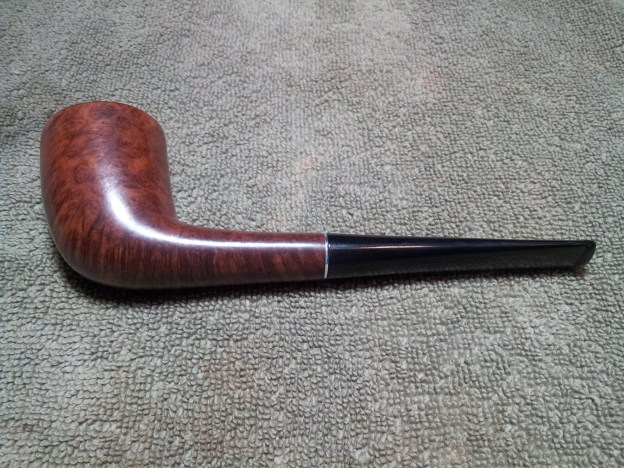
Refurbished KB&B Yello Bole Imperial Large Billiard


Yet another refurb by Troy that is stellar. If you have not visited his blog yet follow the links and have a look. He is doing a great job.

Troy W's avatarBaccy Pipes

Since my last  KB&B Yello Bole 07 Billiard ended up being a odd and unique prototype ( i know whoa is me ) i ended up looking for another for my regular smoking rotation. I really like the Kaywoodie/Yello Bole 07 shape and size of the classic billiard .Every one i own is a great smoking pipe and can be found for a song most of the time .To me its a American classic.

I was able to pick this pre 1955 Imperial 07 up. It looked like it was a good example and had very decent grain.

Other than a rim being banged up slightly and a few teeth marks on the button , it just needed a good cleaning and some elbow grease .


After a slight reaming and cleaning of the shank i put the stem in for a good soak in 91% alcohol .
I then…

View original post 272 more words

Crafting a Interior Shank Repair for a Cracked Shank Peterson Churchwarden


Blog by Steve Laug

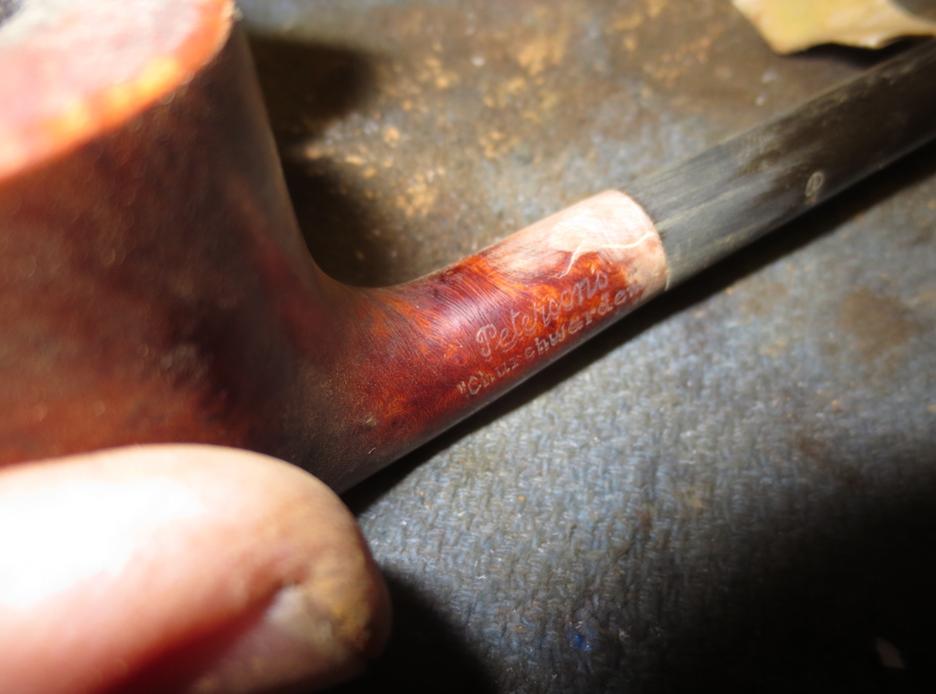
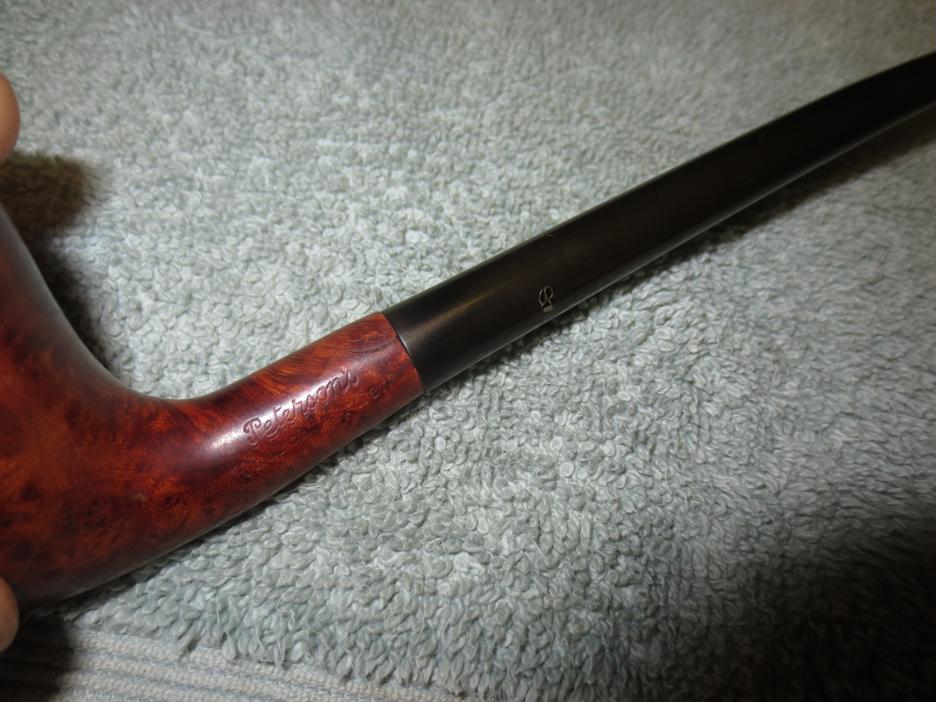
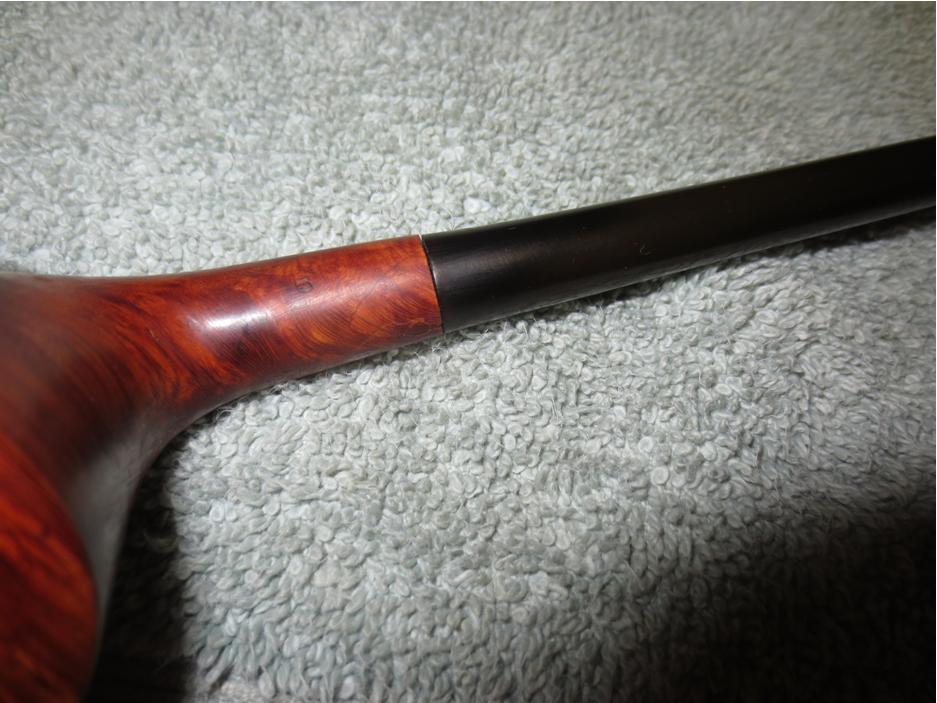
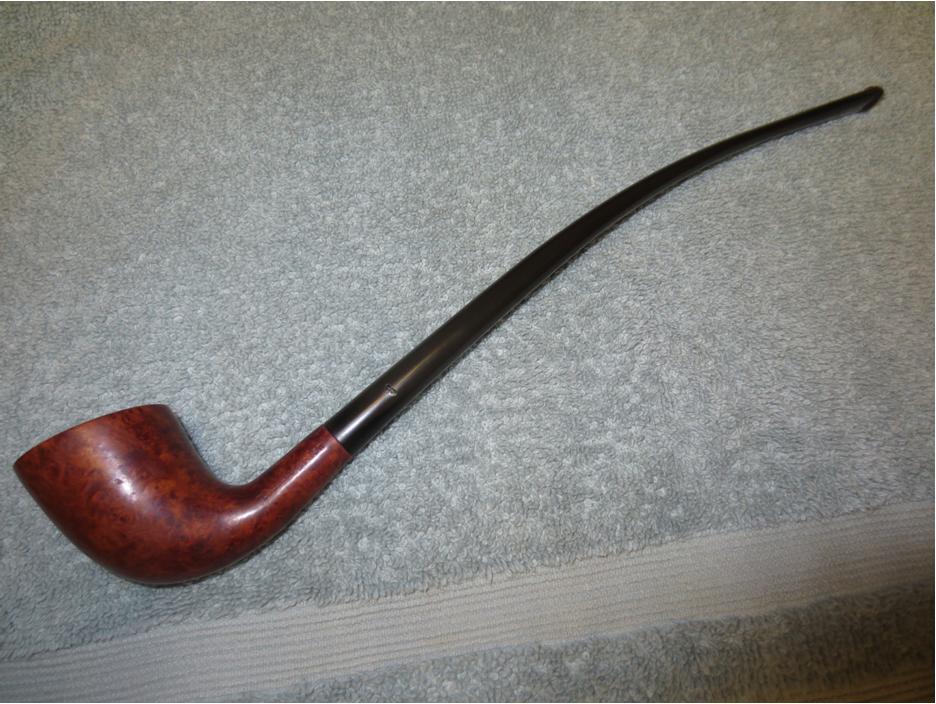
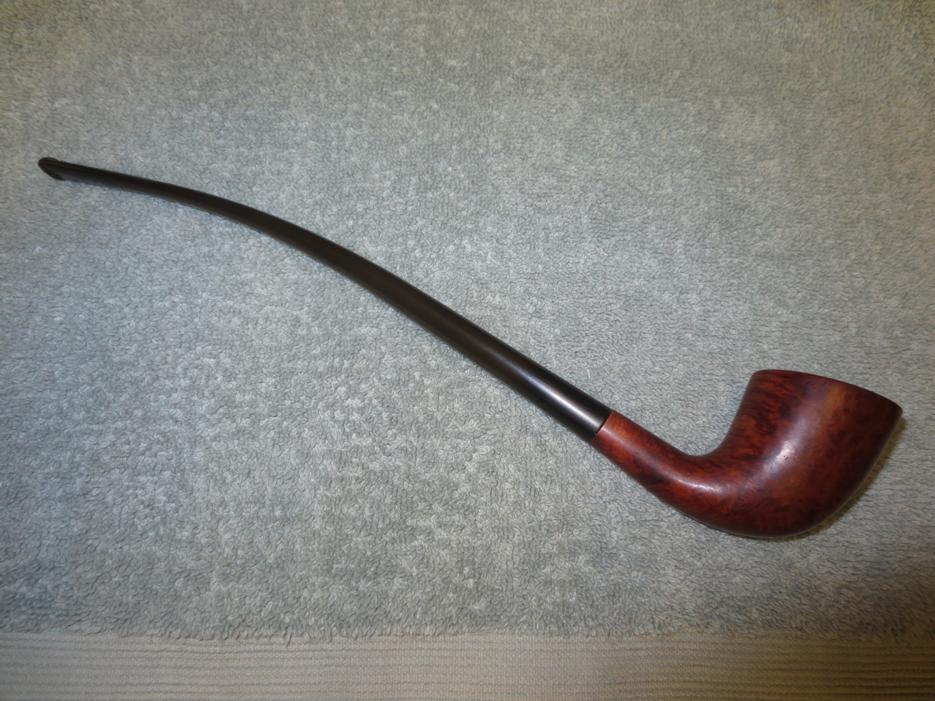
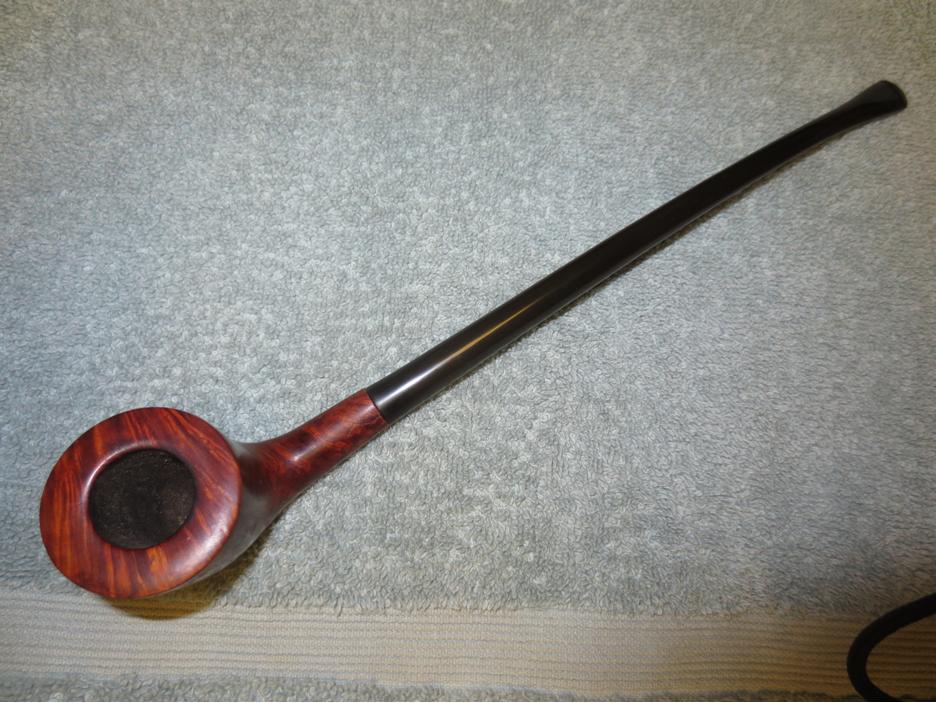
A friend of mine stopped by with a pipe he wanted me to take a look at. It was a beautiful Peterson Churchwarden with a shapely long bent stem. The Dublin shaped bowl was perfect for this pipe. He showed me the issue – a cracked shank. Now that is typically an easy repair – just drill a pin hole at the end of the crack, glue and band the shank. But John being who he is does not like bands or bling on his pipes so he wanted me to see if I could band it from the inside! I thought it would be worth a try as I had done it before using a Delrin tube glued inside the shank to stabilize the cracks and then super glue into the cracked area and clamp until it sets. The issue with this crack was not as straight forward as the two photos below show. It was actually cracked in two places on the top of the shank – about a half-inch apart. The two cracks joined and if I had wanted to I could have removed a triangular piece of briar from the shank. The good news with this was that the joining of the two cracks had stopped the crack from going further up the shank so a repair would be straightforward.CW1
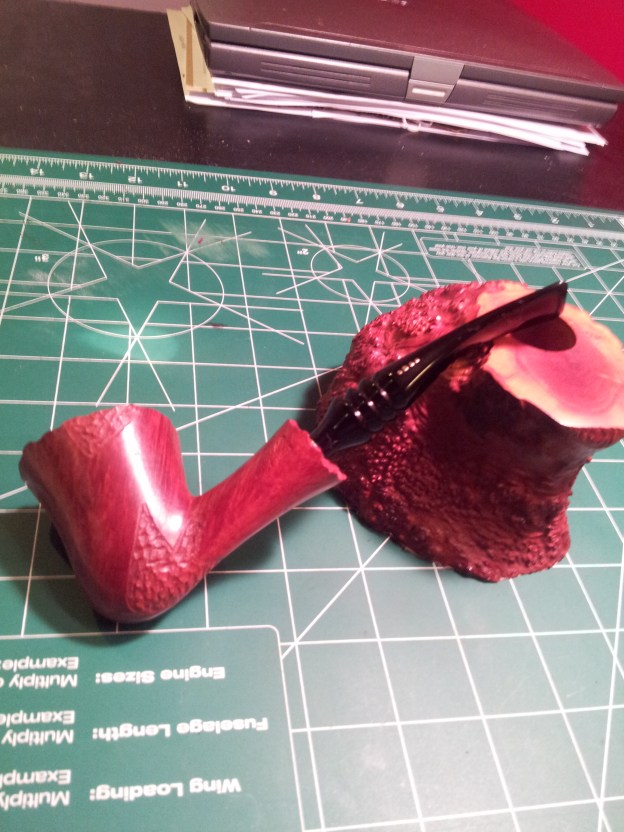
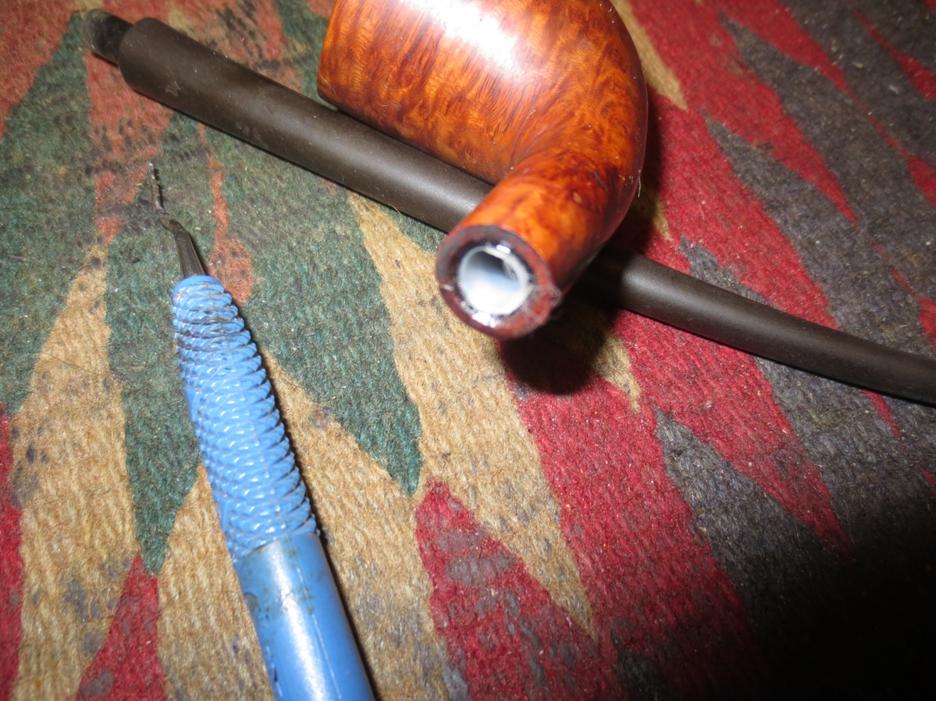
CW2 Now the challenge begins. I did not have any Delrin tenons that I could repurpose so I looked in my parts box and found the shank end of a replacement push tenon insert for meerschaum pipe repairs. Long ago I had used the stem end for something else and saved the shank insert knowing that one day I would be able to use it. Today was the day. I used my Dremel and sanding drum to sand off the edges of the thick end and to take down the threads on the insert. When I was finished sanding I had a rough surfaced tube insert that would sit in the shank of the Peterson with little effort.CW3 I opened the crack in the shank and put clear super glue into the opening. I pressed it together until it set. Then I coated the exterior of the tube with viscous super glue that was slow drying and pressed it into the shank. I set it aside to dry while I worked on the diameter of the tenon to reduce it enough to fit in the repaired shank. To me this is always the tricky part. I was sure I could take the tenon down some without weakening the strength of the tenon too much. With the size of the airway I only had one chance to get it right.CW4 When the insert was set, I used a drill bit and turned it into the shank to remove excess thickness and maximize the room for the tenon. I also used a knife to bevel the end of the tube insert and flare it to fit the bevel of the briar. I put the stem in place and the fit was good! I sanded the shank to clean up the repair glue. I sanded carefully around the nomenclature so as not to harm it but I wanted it to blend with the rest of the shank.CW5

CW6

CW7

CW8 Once I had the shank/stem fit the way I wanted it I stained it with a medium and dark stain pen to blend it in with the rest of the briar. I also scrubbed the rim with saliva and a cotton pad to remove the tars on the surface. I buffed the bowl with Blue Diamond and then gave the bowl several coats of carnauba wax.CW9

CW10 Though still visible on the exterior of the shank the crack is sealed and repaired. I worked on the stem to give it a polish. I sanded it with micromesh sanding pads – wet sanding with 1500-2400 grit pads and dry sanding with 3200-12,000 grit pads. In between each set of three pads I rubbed the stem down with Obsidian Oil. After the final sanding with the 12,000 grit pad I let the oil soak into the vulcanite before buffing the stem with Blue Diamond.CW11

CW12

CW13 I buffed the stem with Blue Diamond polish on the wheel and then gave the bowl and stem multiple coats of carnauba wax. I polished it with a clean flannel buff and then rubbed it down by hand with a microfibre cloth to give it a final shine. The finished pipe is shown below.CW14

CW15

CW16

CW17

CW18

CW19

Salvaging a Sorely Mistreated Brigham 3-Dot Acorn


I have always appreciated Brigham Pipes. I have restored a fair number of them. This one had a lot of challenges and it came out great.

Charles Lemon's avatar

Here is my latest pipe refurb project – a 1970’s vintage, Made in Canada, Brigham 3-Dot Acorn I found at a local antiques mall. I paid the princely sum of $14CAD for this poor old pipe. I have a soft spot for Brigham pipes – they were my Dad’s pipe of choice – so I hoped I could bring this one back to a useful, if not original, condition.

20150715_133533

The pipe as purchased was in a sorry state. The previous owner obviously loved the pipe – it was well used – but by the same token obviously didn’t care about preserving the pipe. It was clearly the original owner’s habit to knock the dottle out of the pipe by bashing the rim against whatever object happened to be nearby – a brick wall? Concrete curb? Steel fence? In any case, most of the front right rim was significantly worn away…

View original post 577 more words

Refreshing a Whitehall Washington Park Zulu, with a Little Help From an Erstwhile Apprentice.


Great work and even better to have help with it. I was touched by the father daughter work on this one being a dad with four daughters it is always great to have them join in the work. Well done.

Charles Lemon's avatar

This restoration is a bit special for me, not for the pipe, but rather for the refurbishing apprentice I gained on this project – my daughter. Interested to know more about a subject that obviously captures my attention, my daughter asked if she could help with a refurb. Naturally, I gave her free pick of the pipes remaining in my box.

She selected this Whitehall Washington Park Zulu. It is the pipe second from the bottom on the far right of the picture of my recent estate lot purchase.

Estate Pipe Lot

It was in fair condition when received – dirty and grimy to the touch like all the other pipes in the lot, with tars on the rim, lost fills on the bowl, and uneven ridges on the front edge where the harder grain seems to have risen, giving the front a washboard texture and appearance. The stem suffered from oxidation and…

View original post 675 more words

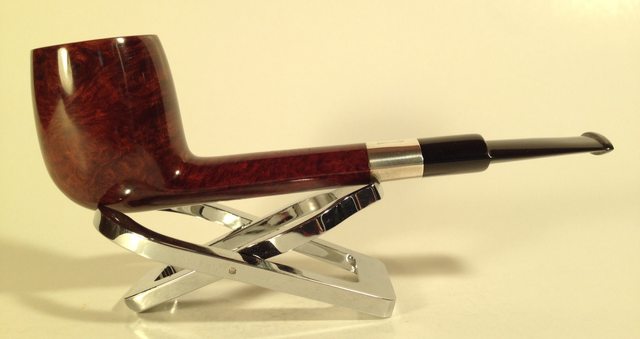
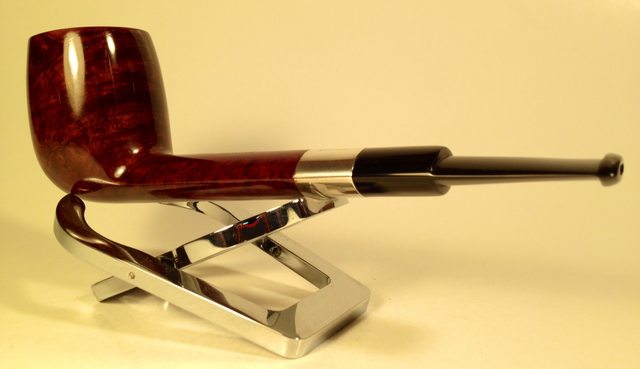
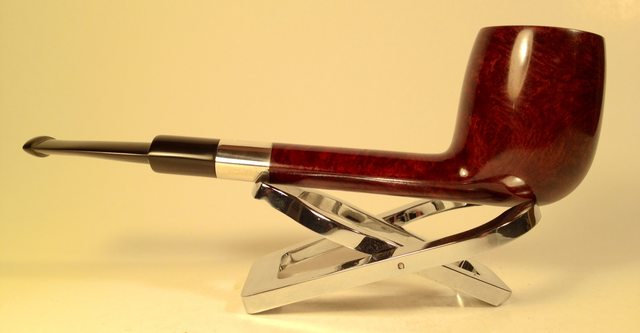
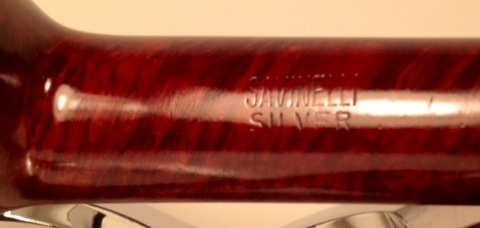
Reviving a Savinelli Silver 806


Blog by Dave Gossett
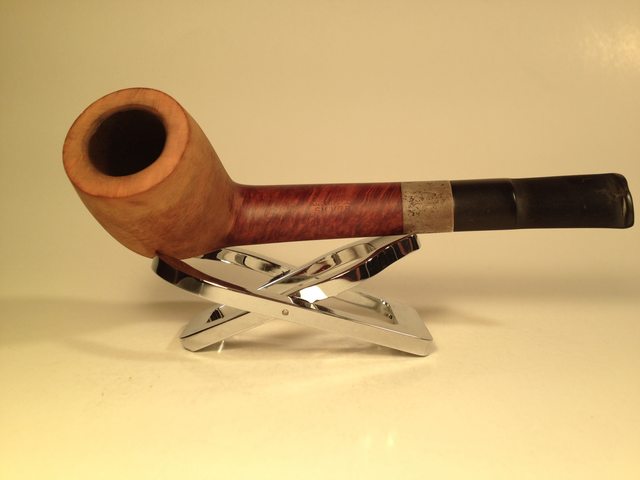
Dave1 My Army cousin stationed in Italy came to the states recently bearing gifts. He bought me 9 pipes at a swap meet in Vencenza – 5 Savinelli’s, 2 Brebbia’s, 1 Rossi, and 1 lesser known Italian briar. I’m a sucker for silver bands, long shanks, and Sav’s, so naturally this is the first one out of the batch I cleaned up.

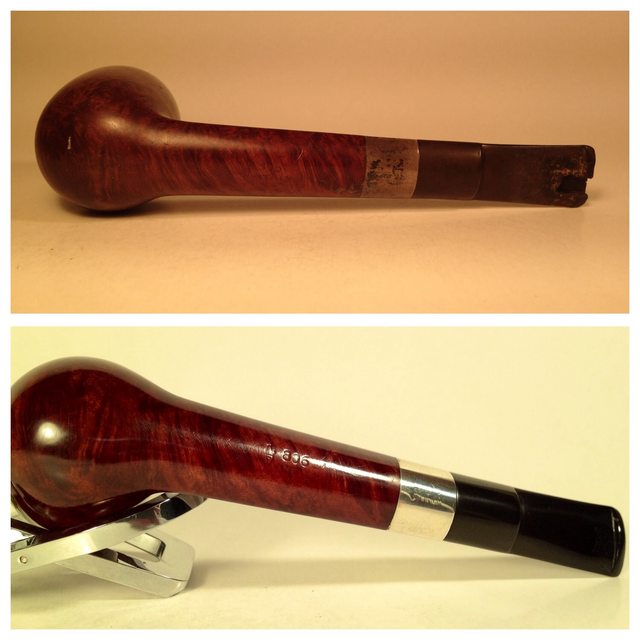
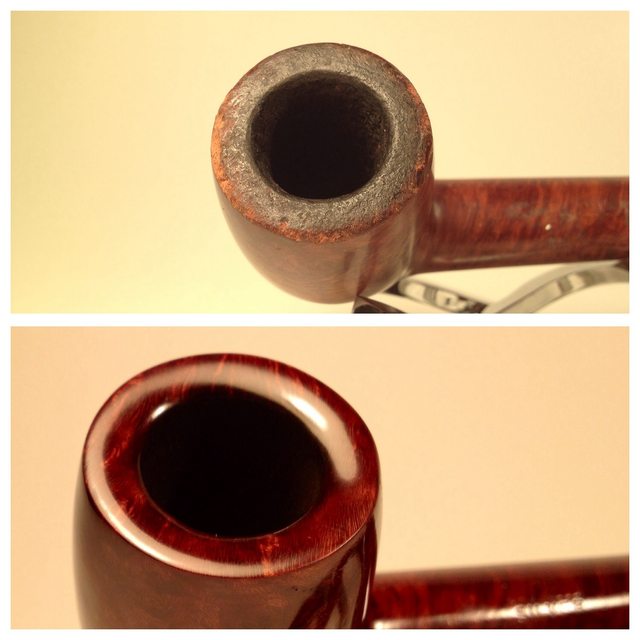
This one had not been “smoked lightly” as the saying goes. The rim was beat up, the stummel had plenty of scratches, and the stem had a hefty chunk missing.Dave2

Dave3

Dave4 I started out by reaming and cleaning the airways. Then I topped the bowl and beveled it, and sanded the scratches from the exterior.Dave5 After removing the damage from the stummel, I gave it a light alcohol scrub to remove the rest of the stain.

I gave it a dark contrast stain starting with Fiebings dark brown and a hint of oxblood, then after drying for 24 hours I sanded it to lighten it up and make the grain pop. A cloth dampened with alcohol can be used around the stampings to lighten the stain a bit without compromising the nomenclature.

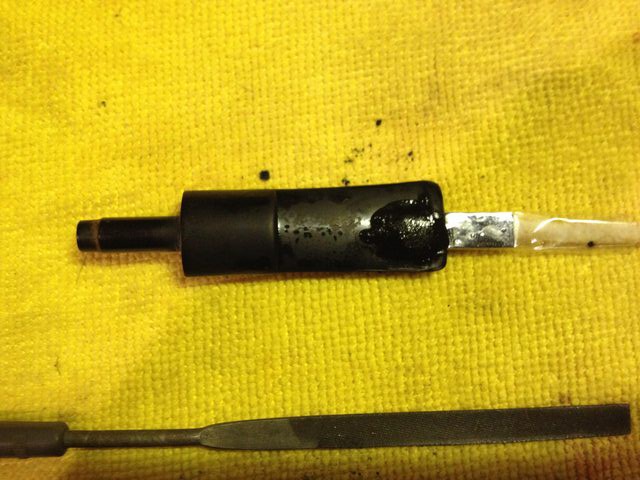
Next up, the stem. I removed the oxidation and scored the area around the repair site. Patched up the missing vulcanite with CA and charcoal, then filed it down and wet sanded smooth, followed by a light run on the wheel with compound.Dave6 I’ve already put a few bowls of Syrian Reserve through it since the pictures were taken. Great smoker. This one’s a keeper.Dave7

Dave8

Dave9

Dave10

Dave11

Dave12

Dave13