Monthly Archives: April 2023

Restoring a Rusticated House of Robertson Bulldog with a Clear Acrylic Stem


Blog by Steve Laug

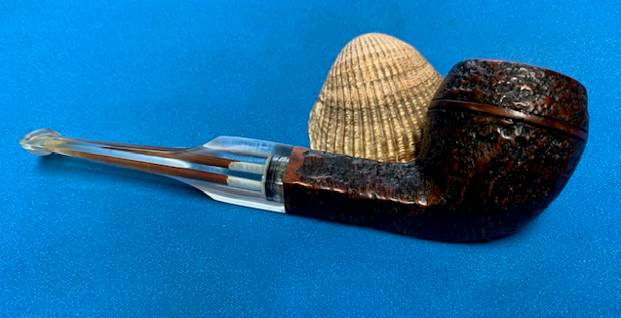
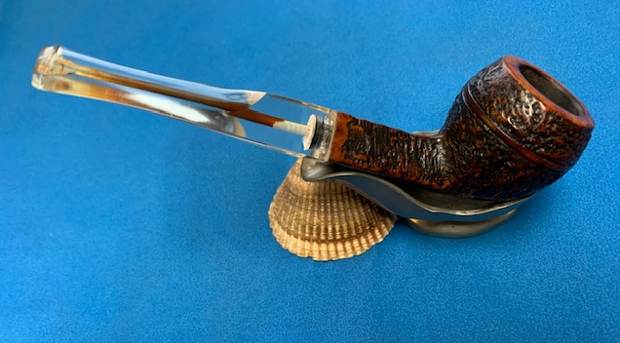
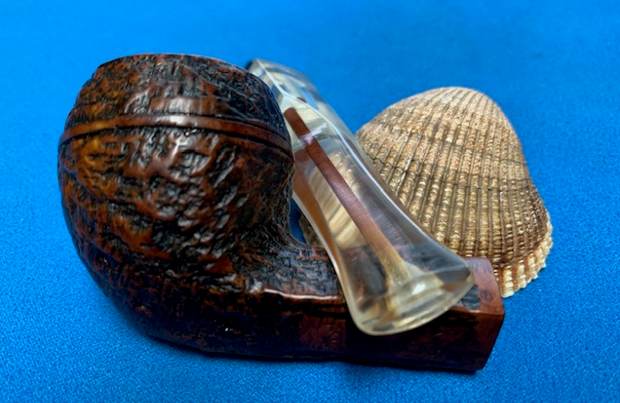
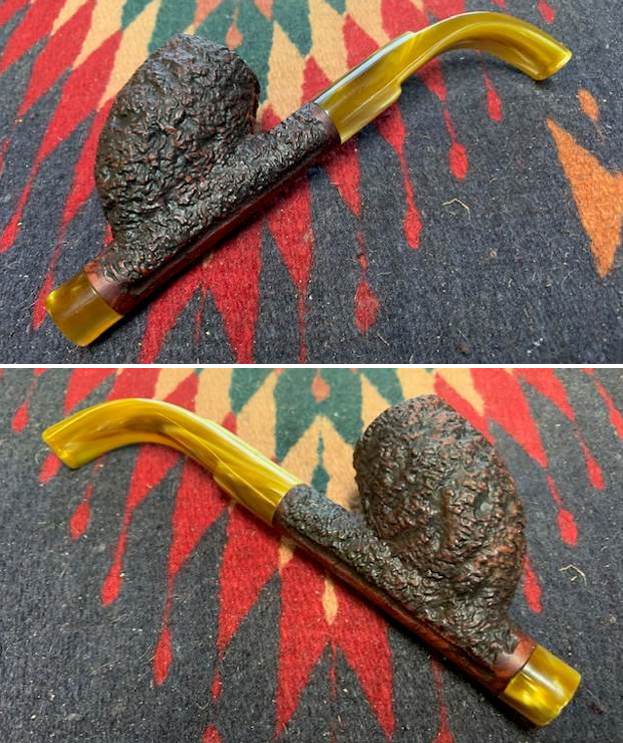
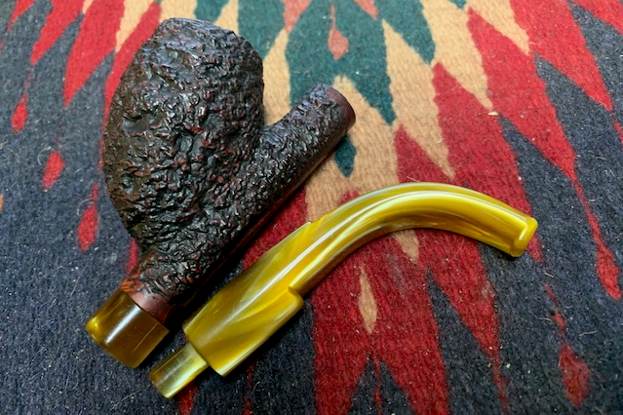
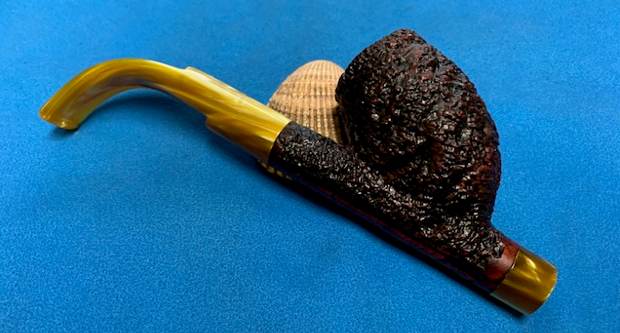
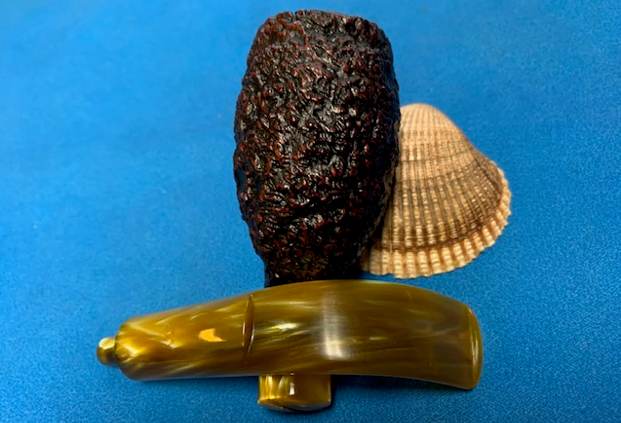
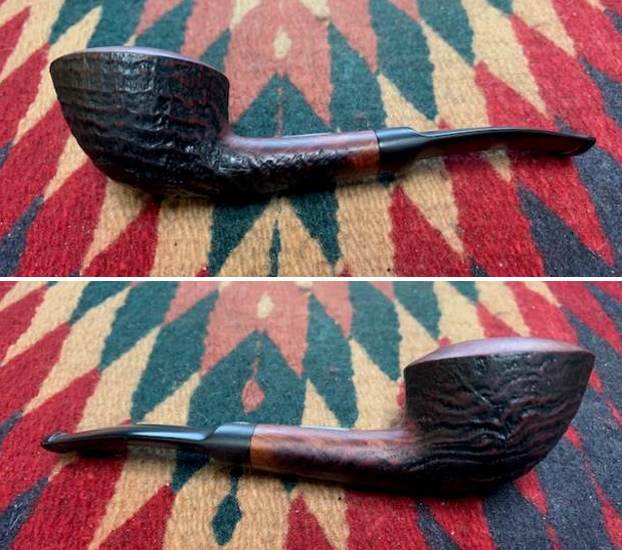
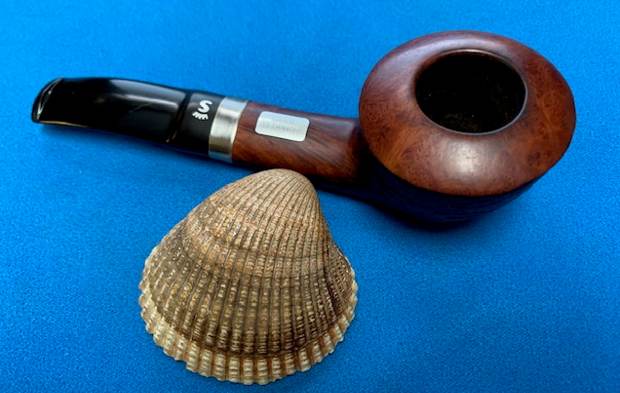
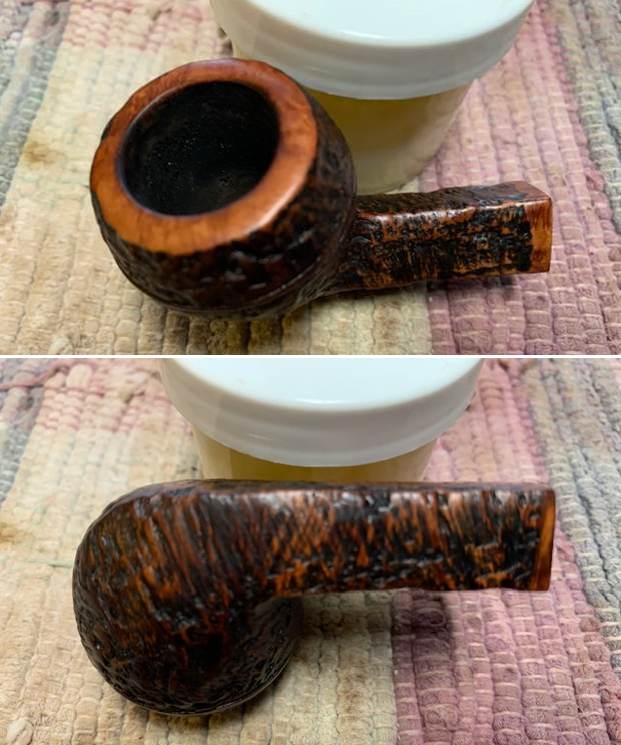
My brother Jeff and I visited an older gentleman near Vancouver, Washington recently and enjoyed a few bowls with him and views many of his pipes. After some viewing and conversation he showed me this House of Robertson Bulldog with a clear acrylic stem and gave it to me as a gift. It is a great looking pipe with a smooth rim top and shank end band. When Jeff and I returned to his home I took photos of it to capture what it looked like when I received it. The finish on the pipe was quite clean and had a great rustication around the bowl and shank. The smooth rim top and edges of the bowl had some wear and tear but was redeemable. There were scratches and nicks around the top and edges on the bowl. The pipe had been topped somewhere in its journey and the front of the cap was lower than the back side of the cap. There was a thin cake in the bowl and the inside was dirty with tobacco debris. The pipe had the House of Robertson etching on the left underside of the diamond shank. The clear acrylic stem fit to the shank very well. The tenon fit well in the mortise. There was some tobacco staining in the airway that would need to be dealt with. There were tooth marks and chatter on both sides of the stem ahead of the button. I took the following photos of the pipe to show its condition before I started my clean up. I took a photo of the House of Robertson etched on the left underside of the diamond shank. It is clear and readable.The pipe has the name House of Robertson roughly hand-etched on the left underside of the diamond shank with an engraving tool. I am including the information that I found when I received my first House of Robertson Pipes a few years ago now. I found a link on Pipedia (https://pipedia.org/wiki/Robertson) that gave me the only information I could find on the brand. I include that in total as it is interesting to read.

“House of Robertson” was in business for many years, but alas, closed their doors in 1999. They were located in Boise, Idaho. They are noted for making rather large and interesting pipes. Thayne Robertson was a Master Mason, AF & AM, and started the shop about 1947 and his son Jon started working there in 1970 when he finished college, along with Thayne’s daughter. Thayne and his son started making the big pipes at that time, and made them together until 1987 when Thayne passed away. Jon kept the store and his sister moved on to other things. The House of Robertson appears to have closed around 1999.

If you would like to read more about the carver, Thayne Robertson I am including a link to a blog I have included on the site. It is fascinating to read and gives some information on the brand.

https://rebornpipes.com/2021/10/31/house-of-robertson-pipes-boise-pipe-carver-thayne-robertson/

I am also including a scanned version of a House of Robertson catalogue that I have in my collection. Give it a read for more information.

https://rebornpipes.com/2022/12/11/a-house-of-robertson-catalogue-filled-with-great-examples-of-thayne-robertsons-work/

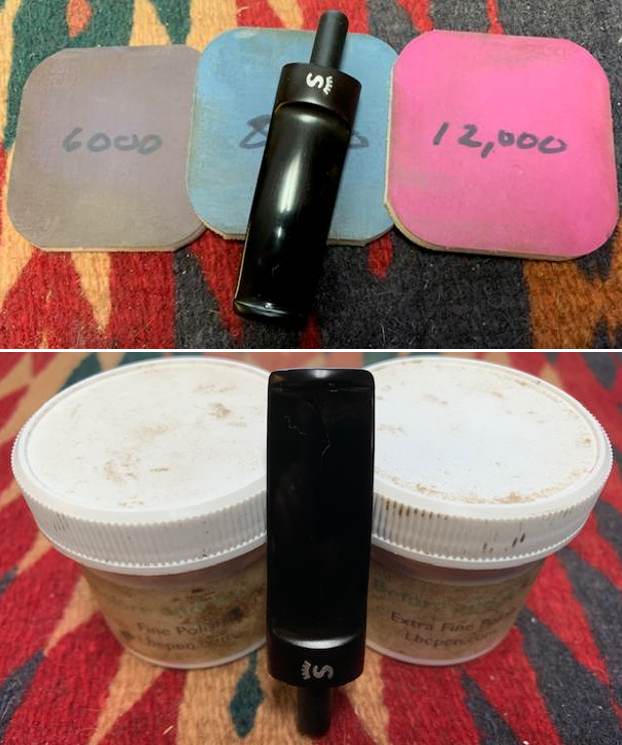
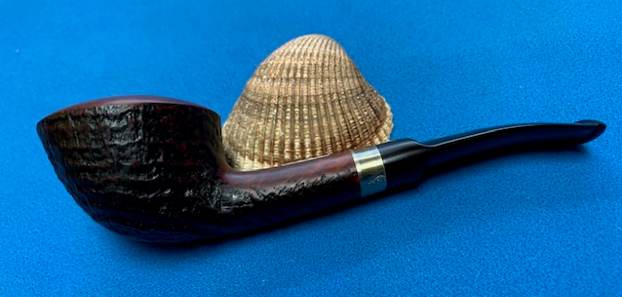
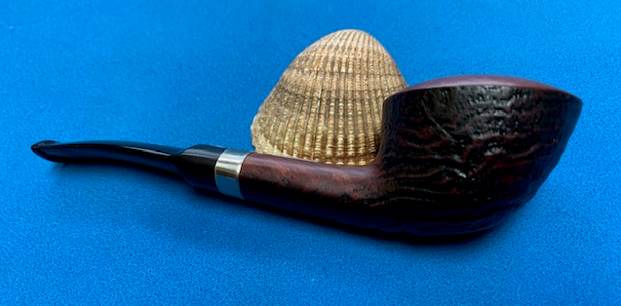
I thoroughly cleaned up the pipe. I reamed it with a PipNet Pipe Reamer and cleaned up the remnants with a Savinelli Fitsall Pipe Knife. I sanded the inside of the bowl with 220 grit sandpaper wrapped around a dowel. The bowl was clean. I cleaned up the damage to the inner edge of the bowl with a folded piece of 220 grit sandpaper. Once finished it was better. I worked on the back side of the rim top with 220 grit sandpaper followed by a medium and fine grit sanding sponge. I wanted to bring the back of the rim cap down to the same thickness as the front of the rim cap to level out the top. Once it was even it looked much better.I scrubbed the exterior of the bowl with undiluted Murphy’s Oil Soap with a tooth brush. He rinsed it under running warm water to remove the soap and grime. I cleaned out the inside of the shank and the airway in the stem with alcohol, cotton swabs and pipe cleaners. I was able to remove a lot of tars and oils from the shank and some of the darkening in the stem and slot.I polished the smooth rim top with micromesh sanding pads – dry sanding with 1500-12000 grit pads. I wiped the top down with a damp cloth after each sanding pad. It had a rich shine once I had finished. I rubbed the bowl down with Before & After Restoration Balm to deep clean the nooks and crannies of the rusticated finish, enliven and protect the briar. I hand rubbed it with my fingers, worked it into the rings with a cotton swab and into the finish with a horsehair shoe brush. I let it sit for 10 minutes to let it do its work. I wiped it off with a soft cloth. I buffed the bowl with a cotton cloth. It really began to have a deep shine in the briar. I took some photos of the bowl at this point to mark the progress in the restoration. I set the bowl aside and turned my attention to the stem. I sanded out the tooth marks with 220 grit sandpaper and started the polishing of the stem with 600 grit wet dry sandpaper.I polished out the sanding scratches and marks in the clear acrylic with micromesh sanding pads – dry sanding it with 1500-12000 grit pads. I wiped the stem down with Obsidian Oil after each sanding pad. I polished it further with Before & After Pipe Polish – using both the Fine and Extra Fine Polishes. I gave it a rubdown with Obsidian Oil one last time and set it aside to dry. I put the House of Robertson Bulldog back together and worked the pipe over on the buffing wheel using Blue Diamond to lightly polish the stem. I buffed the bowl with a light touch so as not to get any of the buffing compounds in the grooves of the rustication. I buffed the stem to raise the gloss on the vulcanite. I gave the bowl multiple coats of Conservator’s Wax and gave the stem multiple coats of carnauba wax. I buffed the entire pipe with a clean buffing pad to raise the shine. I hand buffed it with a microfiber cloth to deepen the shine. The finished HOR Bulldog pipe is shown in the photos below. The medium brown stains on the rusticated Straight Bulldog with a smooth rim top works well with the clear acrylic stem. The dimensions of the pipe are: Length: 5 ½ inches, Height: 1 ¾ inches, Outside Diameter: 1 ¼ inches, Diameter of the chamber: ¾ of an inch. The weight of the pipe is 36 grams/1.27 ounces. This one will be joining my pipe rack as yet another example of House of Robertson Pipes. I thank my friend in Vancouver, Washington for the gift and will certainly enjoy smoking it very soon. Thanks for following my work on this blog.
Sprucing Up a Classy Savinelli Silver 111 KS Italy Billiard


Dal did a great job on this Savinelli Silver. Give the blog a read.

It’s fitting that the next pipe on the worktable is another well-known Italian pipe name, Savinelli.  Pipe man Gary from North Carolina added this …

Sprucing Up a Classy Savinelli Silver 111 KS Italy Billiard

Cleaning Up and Restoring A “Caminetto Business” 185 Cavalier KS1


Blog by Steve Laug

The next pipe on my worktable is a Caminetto Business Pipe was purchased on 03/30/22 from Plano, Texas, USA. It is a beautiful rusticated Cavalier with an acrylic end cap on the shank and an acrylic saddle stem. It was a good looking pipe but it was filthy with grime and oils ground into the rusticated finish on the bowl. The pipe had some rustic beauty shining through the dust and debris in the valleys of the rough finish. The rustication covered the rim top, bowl and shank with a smooth panel on the underside of the shank. The finish was dull and lifeless and dirty from sitting around. There was a very thick cake in the bowl with lava flowing out of the bowl and over the rim top. The lava had filled in the deeper grooves of the rusticated finish on the rim top. The inner edge of the rim appeared to be in good condition but it was hard to tell under the thick lava. The stamping on the underside of the shank read “CAMINETTO [over] BUSINESS”. To the right of that toward the stem it was stamped HAND MADE IN ITALY [over] CUCCIAGO (CO). That was followed by the shape number 185 and KS1. The golden variegated acrylic saddle stem had light tooth chatter and a few deeper tooth marks on both sides near the button. Jeff took the following photos before he started his cleanup work on the pipe.He took close-up photos of the bowl and rim top from various angles to capture the condition of the bowl and rim top edges. You can see the lava overflow and debris in the rustication of the rim top. You can see the cake in the bowl. This was a dirty pipe but it was the finish was in great condition. The next photos show the overview of the stem and the fit in the rusticated shank end as well as the light tooth chatter and a few deeper marks on the top and underside of the stem. He took photos of the sides and heel of the bowl to show the beautiful incredibly deep rustication around the bowl. It is the same kind of rough rusticated finish that I really like on Castello Sea Rock pipes. You can see the oil, dust and debris in the finish on both sides of the bowl. Jeff took photos of the stamping on the shank. It reads as noted above. The stamping is clear and readable. I turned to Pipephil (http://www.pipephil.eu/logos/en/logo-c1.html) to see if he included not only information on this Caminetto Business 182. He gave some interesting information about the brand. It was created in 1986 by Guiseppe Ascorti, Luigi Radice and Gianni Davoli as the distributor. It states that in 1979 the first Caminetto period ended with Luigi Radic leaving the company. Guiseppe Ascorti continued making the pipe with his son Roberto. In 1986 the New Caminetto period began by Roberto Ascorti.I turned to Pipedia for more information on the Caminetto and how to date the pipe I had in hand (https://pipedia.org/wiki/The_History_of_Caminetto_(shapes,_stamping,_articles,_etc.). I quote a pertinent paragraph:

Stampings and dating: First off, dating earlier Caminetto’s is nearly impossible. Nevertheless, there were three phases, some in which were much earlier, of development that occurred in the stamping process of Caminetto. Before that though, every pipe had the stamp of Caminetto in one of two ways: Caminetto in script or Caminetto within quotation marks in block letters (I do not know how it was decided which pipe got which stamp, as I have had EARLY Caminetto’s with both)…

The stampings are shown in the photo to the left. The stamping on this pipe is like #2.

…Now, the question is which stamps are earlier and more likely to have been made by Ascorti and/or Radice. The answer is #1. The differences in #2 and #3 seem to be minute, as Cucciago is simply a suburb of Cantu. Pipes stamped like #1 are the most valuable Caminetto’s as they are the earliest production of the brand, as well as what some would claim the most perfect of Ascorti and Radice’s work. The last tidbit is, of course, debatable…

There is also another factor in stamping, that is, which series the pipe falls in. The majority of Caminetto’s one sees are those of the “Business” series, which are stamped such with their collective shape (see photo of shapes below). Another stamp that sometimes follows the “Business” one is “KS,” which from what I know means “King-size” (this could be wrong, as there are pipes stamped with KS1, KS2, and KS3).

Now it was time to look at it up close and personal. Jeff had done an amazing job in removing all of the cake and the lava on the rim top. He had reamed the bowl with a PipNet Pipe Reamer and cleaned up the remnants with a Savinelli Fitsall Pipe Knife. He took the cake back to bare briar so we could check the walls for damage. He scrubbed the exterior of the bowl with Murphy’s Oil Soap and a tooth brush to remove the grime on the bowl and rim and was able to remove the lava and dirt. He cleaned out the interior of the bowl and shank with pipe cleaners, cotton swabs and alcohol until they came out clean. He cleaned the stem and the trap at the end of the shank with Soft Scrub to remove the grime on the exterior and cleaned out the airway with alcohol, cotton swabs and pipe cleaners. I took photos of the pipe before I started my part of the restoration. To show how clean the rim top and stem really was I took a close-up photo of the rim and stem. The bowl was clean and cake free. The rim top is very clean with no residual lava buildup in the rusticated finish. The inner edges of the bowl look good. The golden acrylic saddle stem cleaned up nicely. The surface had some light tooth marks but the button edge looked really good. I took a photo of the stamping on the underside of the shank. You can see that is clear and readable as noted above.I removed the stem from the shank and took a photo of the parts of the pipe to show the overall sized of the pipe. It is a great piece that combines the gold acrylic on the shank end cap and the stem with the rusticated finish on the bowl and shank.I started my work on the pipe by staining the areas on the rim top and rusticated finish were worn and faded. I used a Walnut stain pen to touch up the rim and around the top edge. The bowl looked very good so I did not need to do any further work on it. I rubbed the bowl and shank down with Before & After Restoration Balm to deep clean the finish on the bowl and shank. The product works to clean, enliven and protect the briar. I worked it in with my fingers and with a horse hair shoe brush to get it into the nooks and crannies of the deep rustication of the finish on the bowl and shank. I let it sit for about 20 minutes to let it do its magic. I buffed it with a soft cloth. The briar really began to have a rich shine. I took some photos of the bowl at this point to mark the progress in the restoration. I set the bowl aside and turned my attention to the stem. I filled in the deep tooth marks with clear CA glue. I sanded the repaired tooth marks and chatter smooth with 220 grit. I started polishing the whole stem with 600 grit sandpaper until the sanding marks were gone. I touched up the mustache stamp on the stem with Rub’n Buff Antique Gold. I applied it with a toothpick working it into the stamp. There were places on the sides of the stamp that were faint. I buffed it off with a soft cotton pad. It looked better. I polished the stem on both sides using micromesh sanding pads. I dry sanded the stem with the 1500-12000 grit pads, then wiped it down with a cloth impregnated with Obsidian Oil. I finished polishing it with Before & After stem polish – both Fine and Extra Fine. I gave it a final coat of Obsidian Oil and set it aside to dry. I put the Caminetto bowl and stem back together again and buffed them with Blue Diamond on the buffing wheel. I used a soft touch on the rusticated bowl so as not to fill it in with the polishing product. I gave the bowl several coats of Conservator’s Wax and the stem several coats of carnauba wax. I carefully buffed the entire pipe with a clean buffing pad to raise the shine. I finished buffing with a microfiber cloth to deepen the shine. The finished pipe looks very good. The rustication is very tactile and feels great in the hand. It is comfortable and light weight. The finished Caminetto Business 185 Cavalier is shown in the photos below. The dimensions of the pipe are Length: 7 inches, Height: 3 1/2 inches, Outside diameter of the bowl: 1 ¼ inches, Chamber diameter: 1 inch. The weight of the pipe is 63 grams/2.26 ounces. This great looking rusticated Caminetto turned out very well. It should be a great pipe. It will be going on the rebornpipes store in the Italian Pipe Makers Section shortly if you are interested in adding it to your collection. Thanks for reading this blog and my reflections on the pipe while I worked on it.


Rebirthing a Stanwell 1985 POY Sandblast Dublin with a smooth Rim Top


Blog by Steve Laug

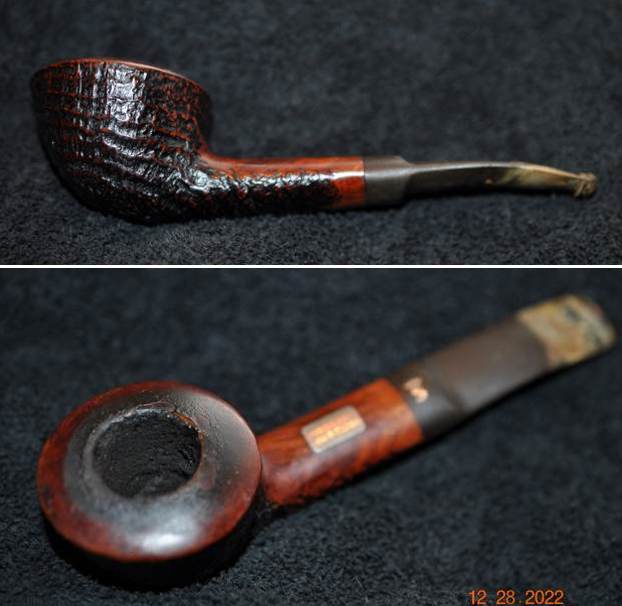
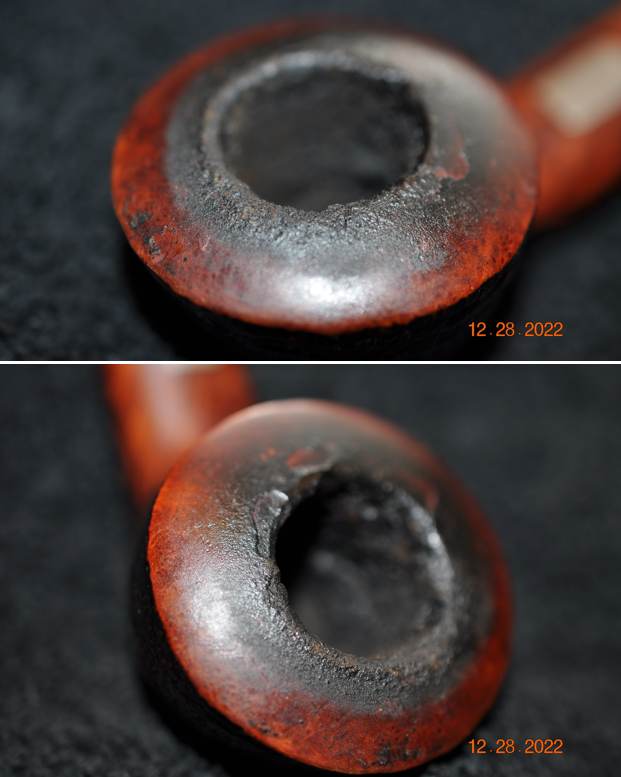
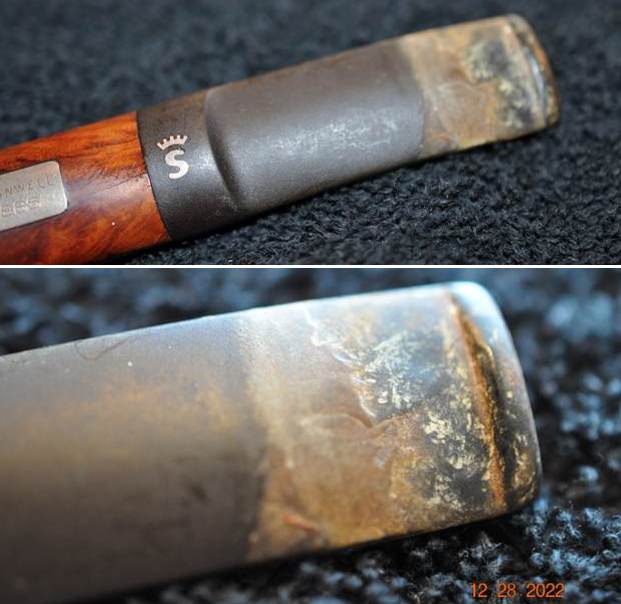
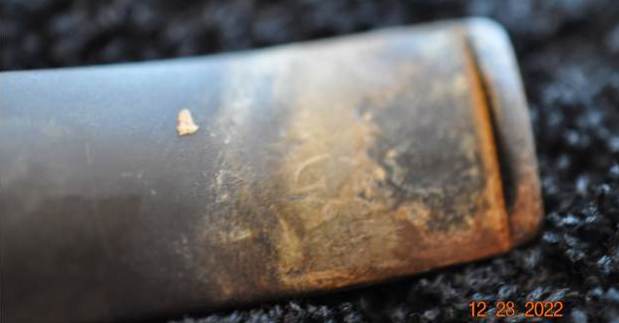
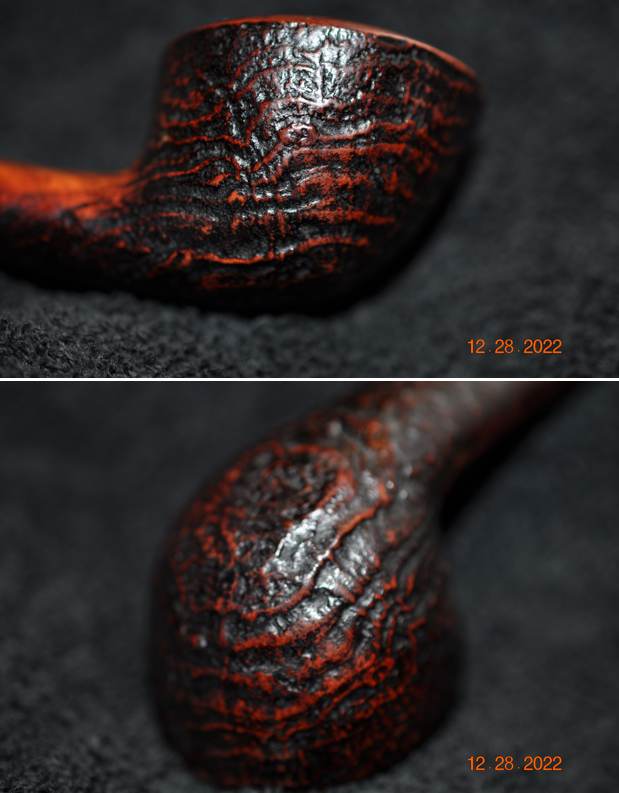
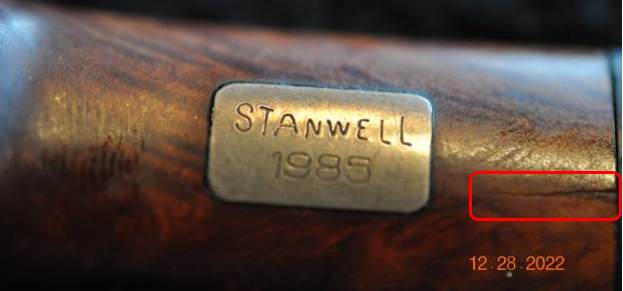
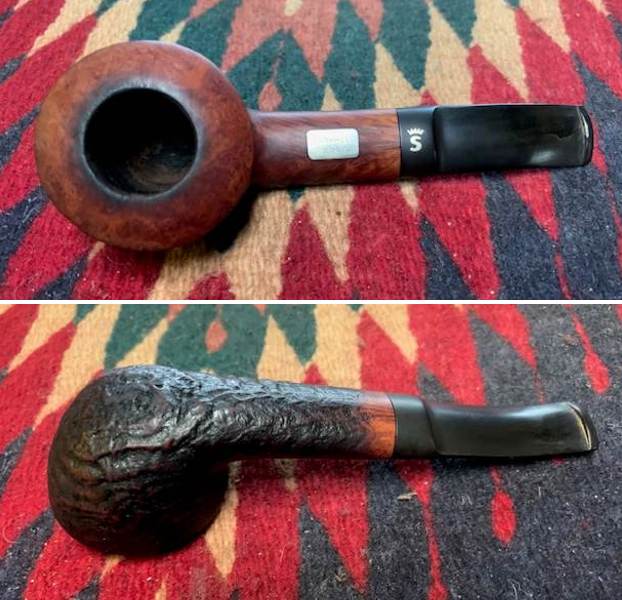
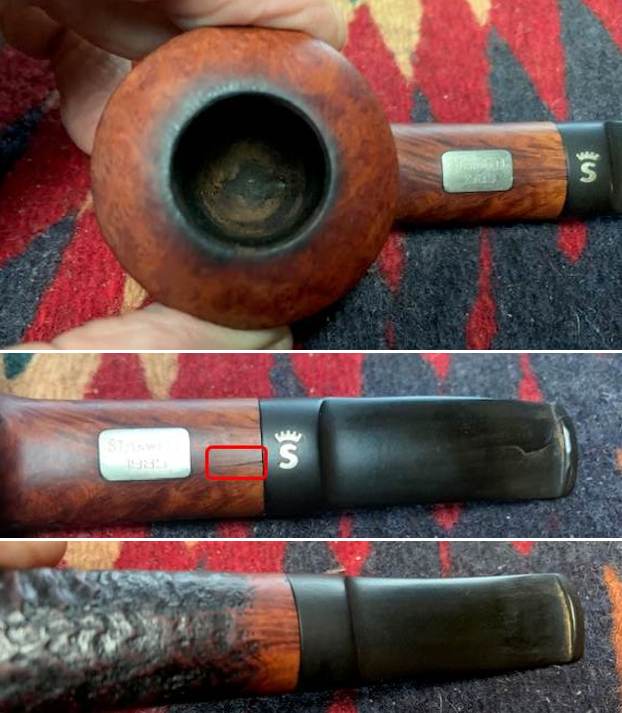
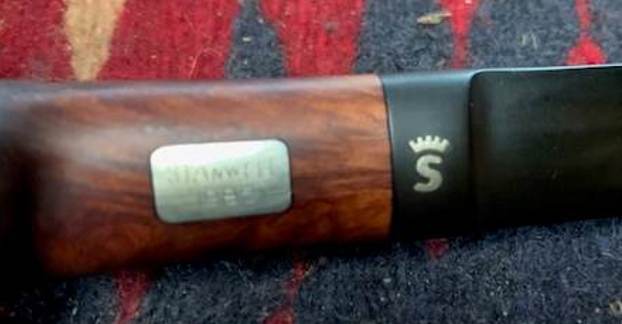
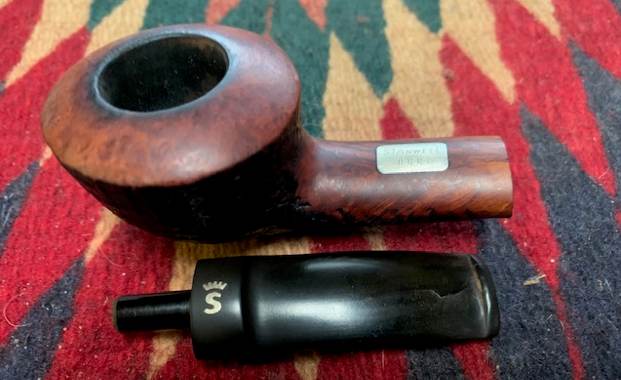
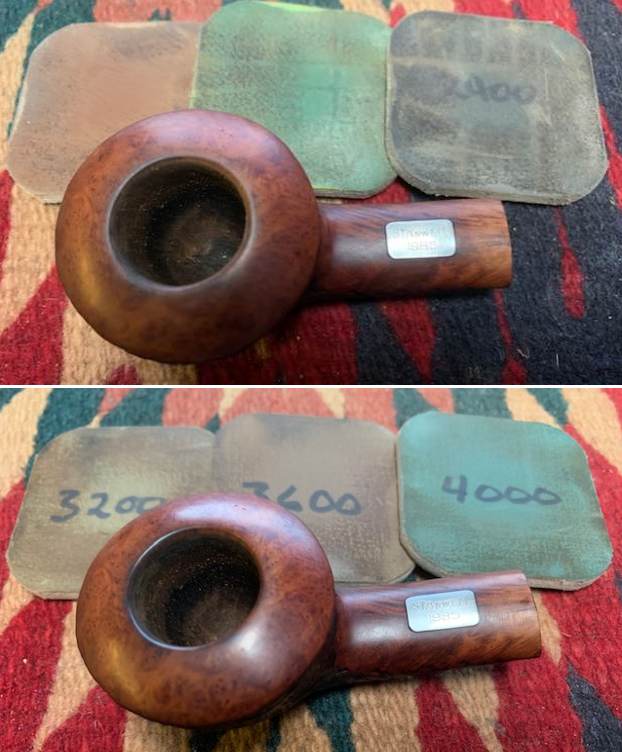
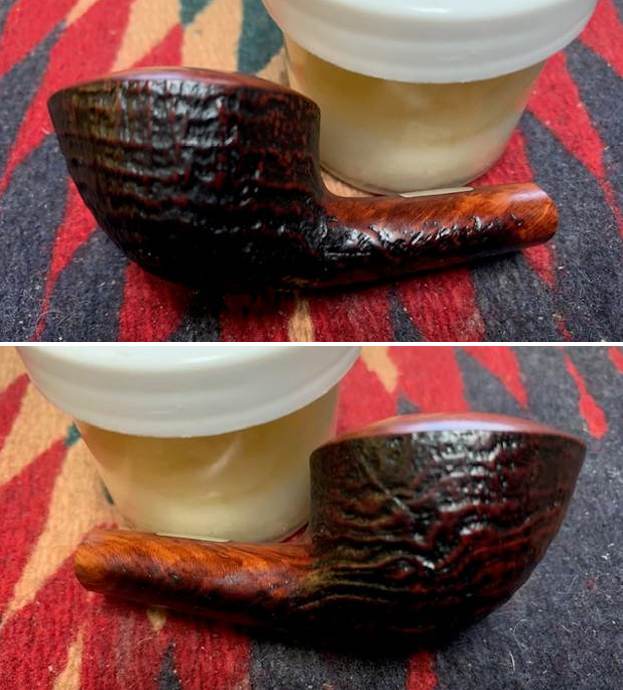
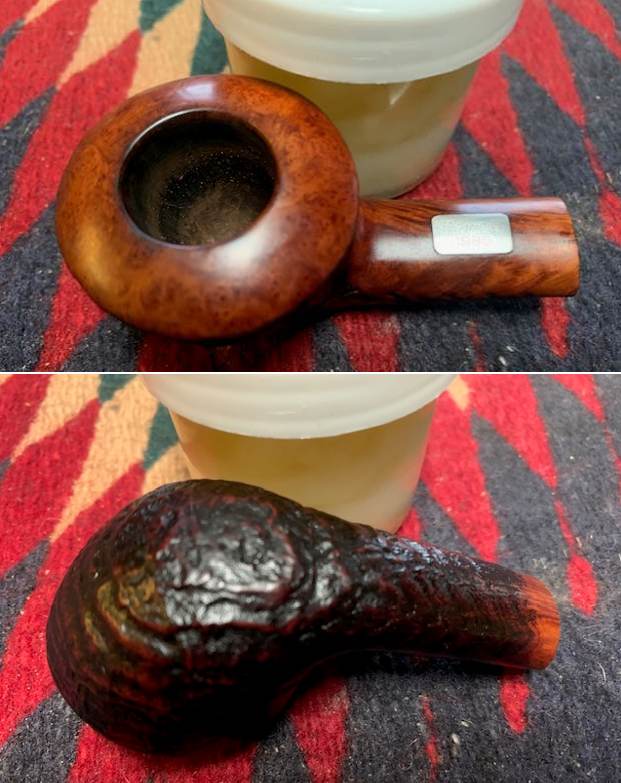
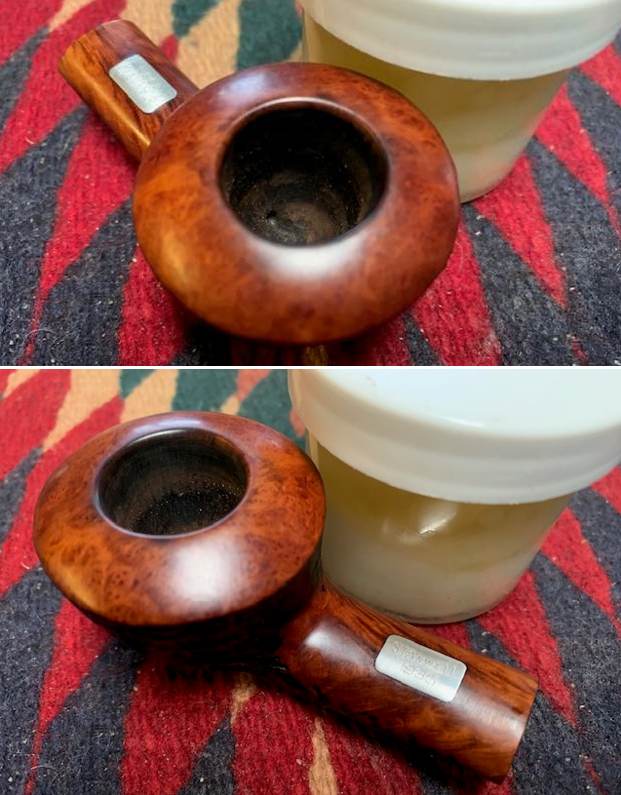
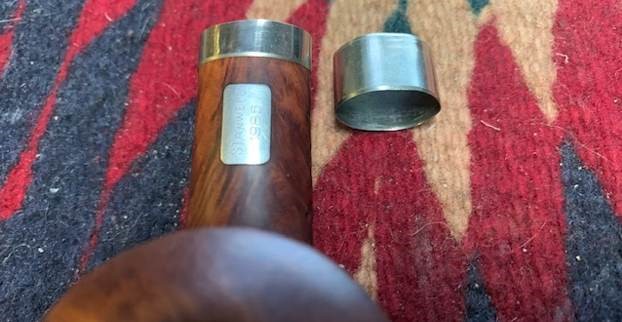
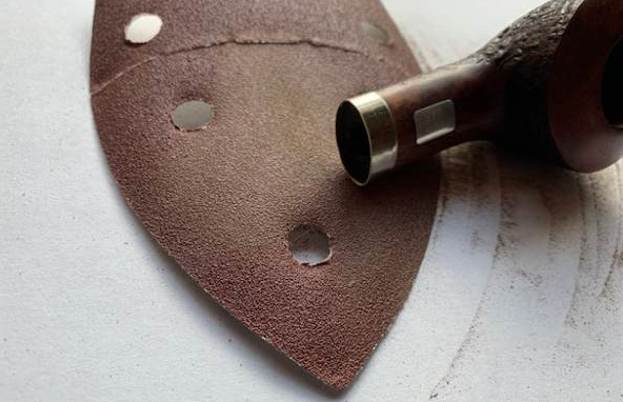
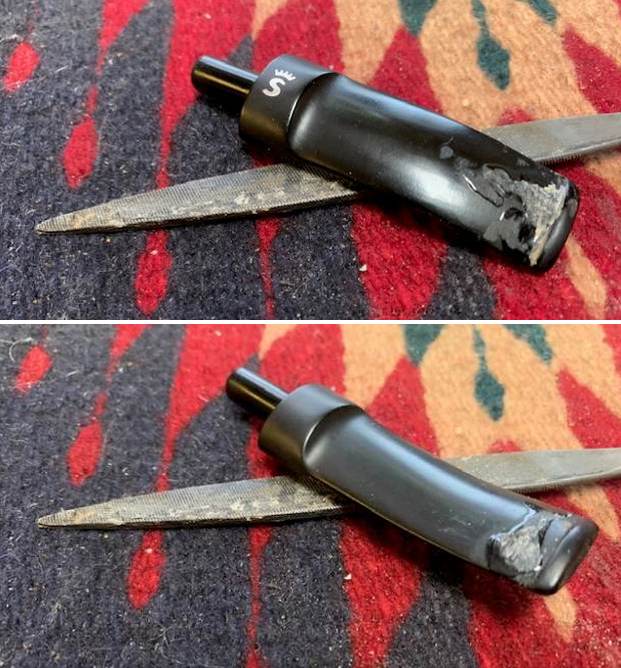
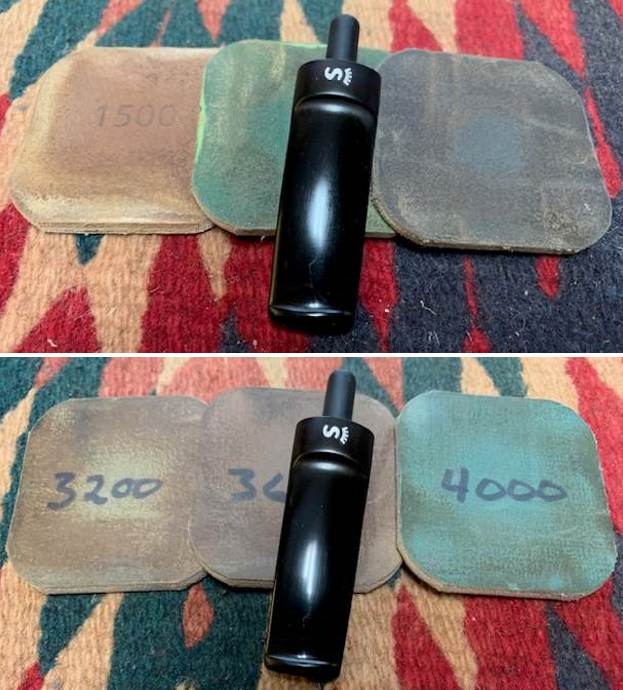
The next pipe I am working on was purchased on 12/13/2022 as part of a group of pipes from a fellow in Copenhagen, Denmark. This was another horribly tired and dirty pipe with a lot of wear and tear and obviously it had been someone’s favourite smoker. The pipe has an identifying silver plate on the topside of the shank that reads Stanwell [over] 1985. There was no other stamping on the shank and the silver plate confirmed for me that it was a Stanwell Pipe of the Year. The dirty sandblast finish on this was worn and tired looking. There were tars and oils ground into the surface of the briar. The shank had a hairline crack on the left side of the top that would need to be dealt with. The sandblast showed some nice grain around the bowl and shank and though it was a little dirty it was a nice looking pipe. The bowl had a thick cake that flowed over the top of the lightly crowned rim in a thick coat of a lava and showed potential damage on the top and the inner edge. The stem was a black vulcanite saddle stem with a silver Crown S on the topside of the saddle. It had some deep and wide tooth marks and chatter on both sides ahead of the button. There was also some oxidation and calcification on both sides of the stem. Jeff took photos of the pipe before he started his clean up work.  He took photos of the rim and bowl to show the heavy cake and thick lava coat covering the rim top. It really was filthy and a mess. He also took photos of the stem surfaces to show its overall condition when it arrived. The photos of the sides and heel of the bowls show beautiful grain around the bowl and shank sides. The sandblast is nicely done and highlights the grain. The brown stain on the briar adds depth finish on the pipe and makes the grain really stand out. It shows some promise. He also took a photo of the stamped silver plate on the left underside of the shanks. It reads as noted above. I have also boxed the hairline crack on the top of the shank in red in the photo below.Jeff cleaned up the pipe for me. He reamed the bowl with a PipNet pipe reamer and cleaned it up with a Savinelli Fitsall Pipe Knife. He scrubbed the exterior with Murphy’s Oil Soap and a tooth brush to clean off the grime off the finish and the heavy overflow of lava on the rim top. The cleaning had removed the thick coat on the rim top. He cleaned up the internals of the shank, mortise and stem with pipe cleaners, cotton swabs and alcohol to remove all of the oils and tars in the pipe. He soaked the stem in Before & After Deoxidizer and was able to remove much of the oxidation, calcification. When it arrived here in Vancouver it was a clean pipe and I knew what I had to work with. I took photos of it before I started my part of the restoration. I took a photo of the rim top and the stem to show their condition once it arrived in Canada. Jeff was able to clean up the incredibly thick cake and the lava overflow that was shown in the rim and bowl photos above. The rim top showed damage on the surface and the inner edge of the bowl. He was also able to get rid of the grime and grit in the surface of the briar around the sandblast. The second photo of the three below shows the crack in the shank (once again boxed in red). The stem looked better, though there were deep tooth marks and chatter on both sides near the button.I took a photo of the stamping on the silver plate on the topside of the shank to show that it was readable and undamaged by the cleanup work.I removed the stem from the shank and took a photo of the parts to give a sense of what the pipe looks like.I started my work on the inner edge and rim top with a folded piece of 220 grit sandpaper. I was able to remove that damage on the rim top and bring the inner edge back into round. It looked much better. I repaired the hairline crack in the shank with a dab of clear CA glue. I clamped the shank together to let the repair cure. Once it had cured I sanded it smooth with 220 grit sandpaper to blend in the repair. It looked much better. To stabilize it further I will need to put a thin band on the shank end so that with the addition and removal of the stem does not rebreak the crack.I started polishing the rim top and smooth portions of the briar (including the repaired hairline crack) with micromesh sanding pads. I wet sanded it with 1500-12000 grit pads. I wiped the bowl down after each pad with a damp cloth. The bowl began to take on a rich shine and grain was beginning to stand out. I rubbed the bowl and shank down with Before & After Restoration Balm to deep clean the finish on the bowl and shank. The product works to clean, enliven and protect the briar. I worked it in with my fingers to get it into the briar. I used a horsehair shoe brush to work it into the sand blast areas. I let it sit for 10 minutes then I wiped it off and buffed it with a soft cloth. The briar really began to have a rich shine. I took some photos of the bowl at this point to mark the progress in the restoration. It is a beautiful bowl. To stabilize the crack further and stop it from reoccurring each time the stem was removed I banded it. I had a band that would work on the shank but it needed to be reduced by half to get the depth more aesthetically pleasing to my eye. I used a coarse 180 grit sanding pad and worked the band against it until I have removed approximately half of the width. I heated it with a lighter and pressed it on the shank. The fit was perfect and to me it looked very good. I polished the band with a jeweler’s cloth to protect and give it a shine. I gave it another coat of Restoration Balm and buffed it off with a clean cloth. I set the bowl aside and worked on the stem. I filled in the deep tooth marks with clear CA glue. I flattened the repairs with a small file. And sanded the smooth with 220 grit. I started polishing the whole stem with 600 grit sandpaper until the sanding marks were gone. I polished the stem with micromesh sanding pads – dry sanding with 1500-12000 grit pads. I wiped the stem down after each pad with a damp cloth to remove the sanding dust. I gave it a further polish with Before & After Stem Polish – both Fine and Extra Fine. I finished by wiping the stem down with a final coat of Obsidian Oil and set it aside to dry. I put the stem back on the Stanwell Pipe of the Year 1985 Dublin pipe and took the pipe to the buffer. I buffed the bowl and stem with Blue Diamond to polish the briar and the vulcanite stem. Blue Diamond does a great job on the smaller scratches that remain in both. I gave the bowl and the stem several coats of carnauba wax and buffed the pipe with a clean buffing pad to raise the shine. I hand buffed it with a microfiber cloth to deepen the shine. The finished pipe is shown in the photos below. This is a beautiful Stanwell POY 1985 – the vulcanite saddle stem and crowned rim top and sandblast finish combine to give the pipe a great look. The polished black, vulcanite stem looks really good with the rich browns standing out in the sandblast. The dimensions of the pipe are Length: 5 inches, Height: 1 ½ inches, Outside diameter of the bowl: 1 ¾ inches, Chamber diameter: ¾ of an inch. The weight of the pipe is 1.38 ounces/39 grams. This pipe has already been spoken for as an Anniversary present. It will soon be going to the fellow who ordered it. Thanks for walking through the restoration with me on this beauty!

A Pipe Smokers’ Guide To Pleasure – Sir Walter Raleigh


Blog by Steve Laug

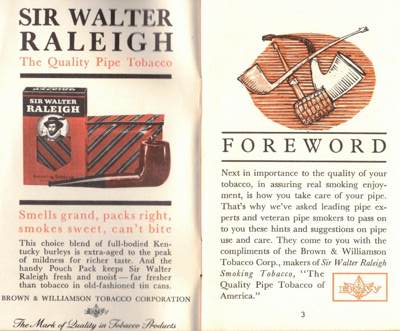
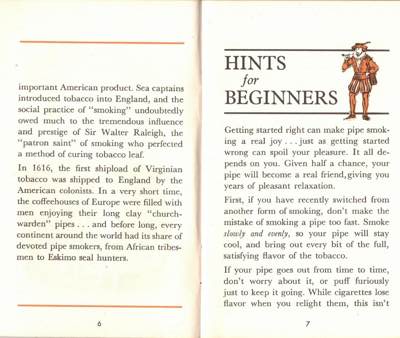
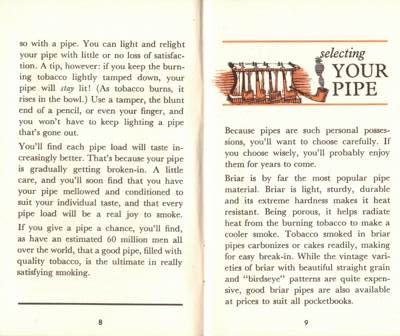
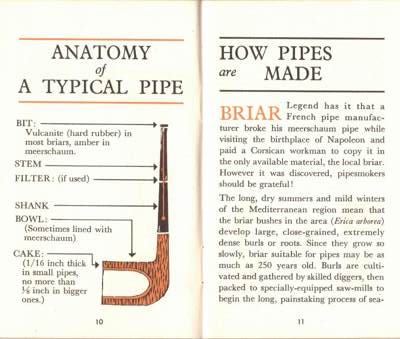
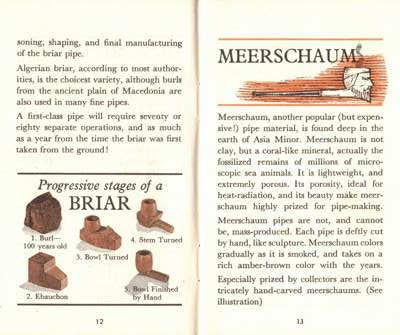
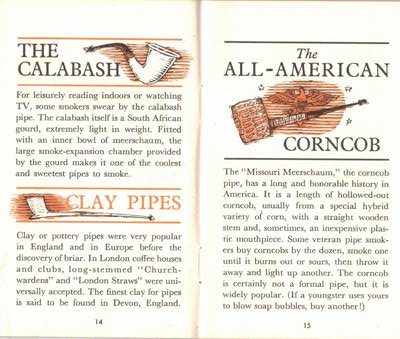
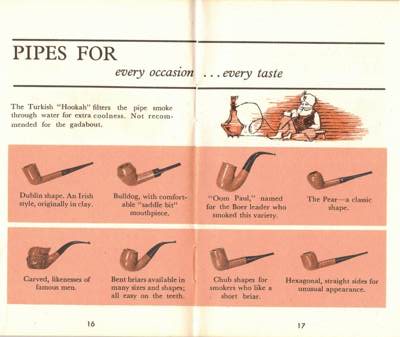
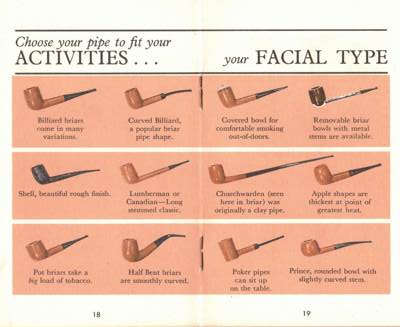
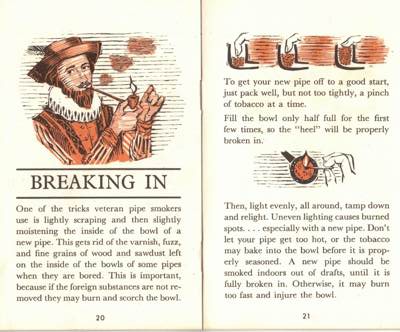
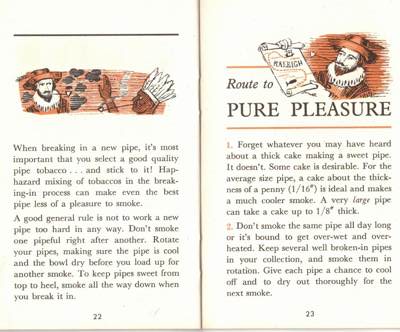
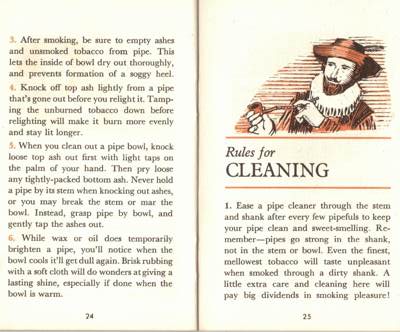
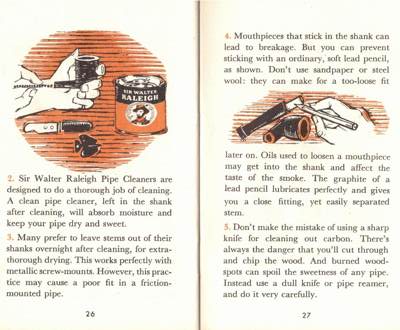
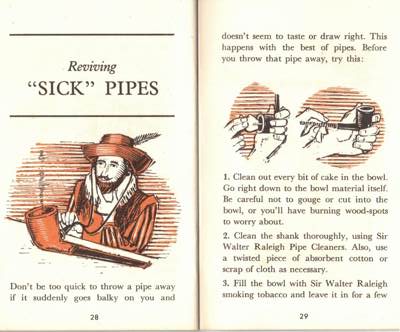
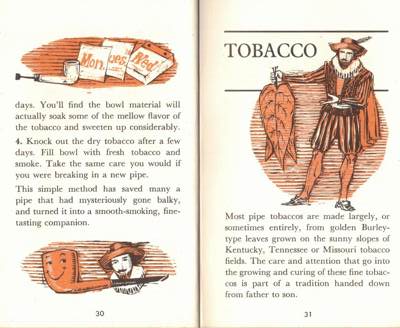
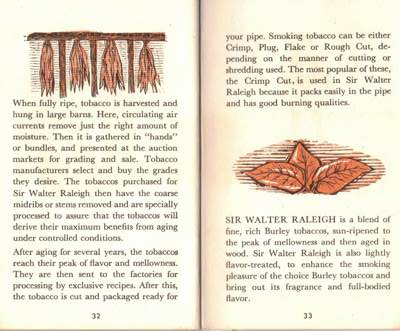
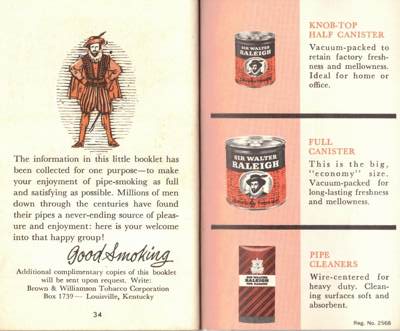
I received this booklet in a box of pipe parts and tobacciana that I brought home with me while on my visit with Jeff and Sherry in Oregon. It is a neat little piece of tobacco history in the form of a guide to pipe smoking that came with boxed Sir Walter Raleigh Pipe Tobacco. It is a great read and a great piece of pipe history. Give the text a read as is a delightfully worded piece of Pipe Advertising. Thanks.