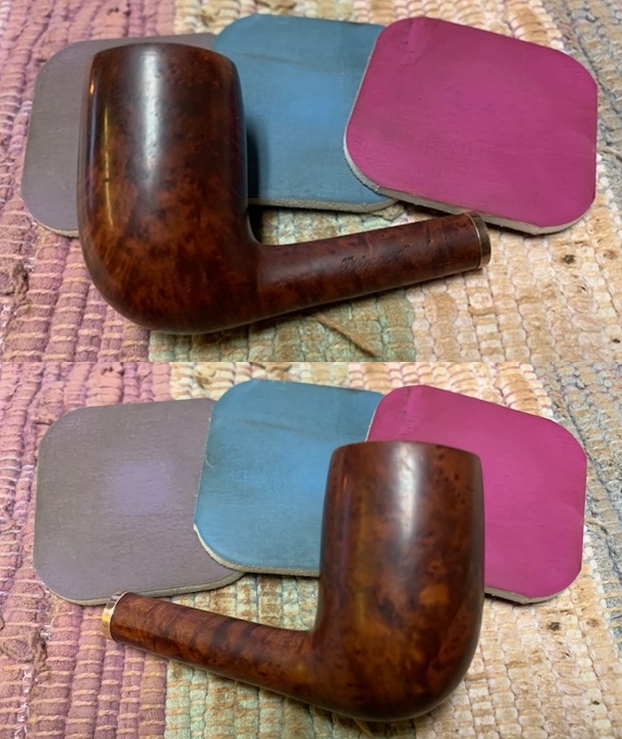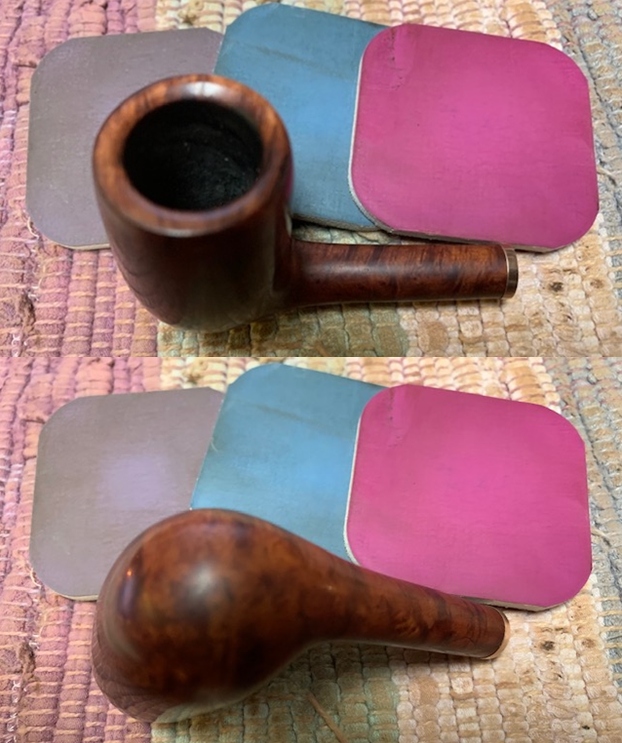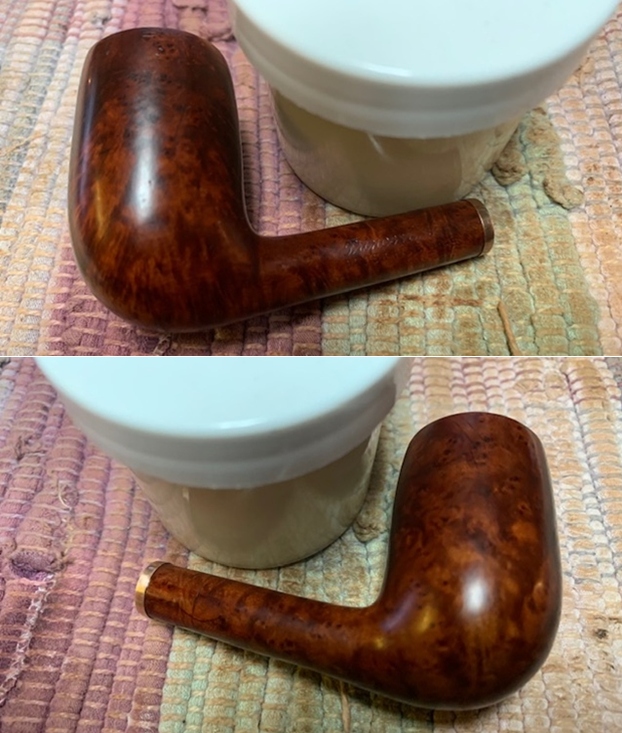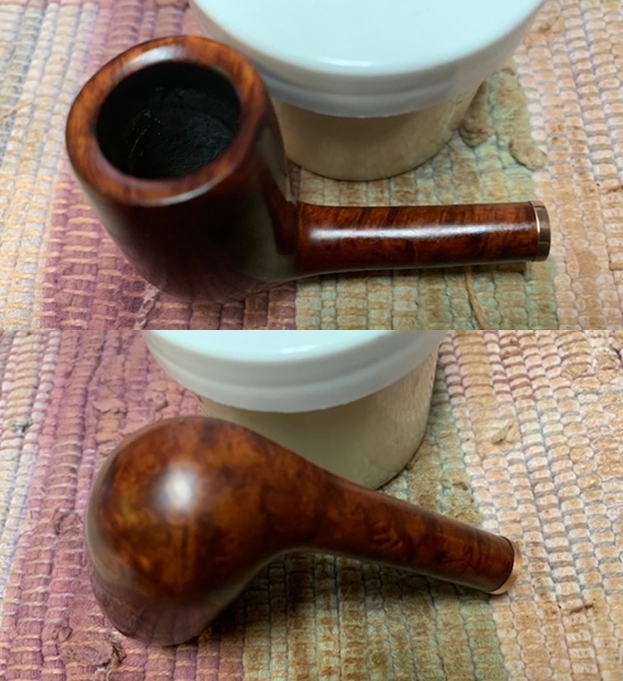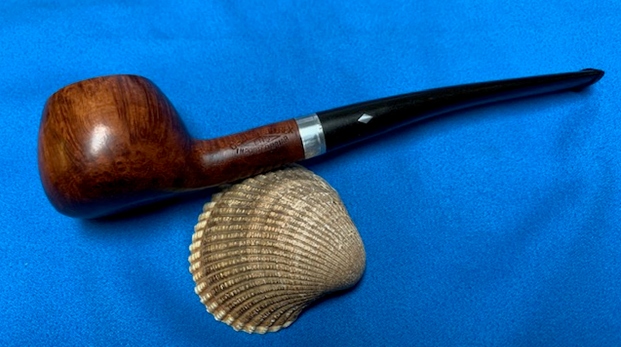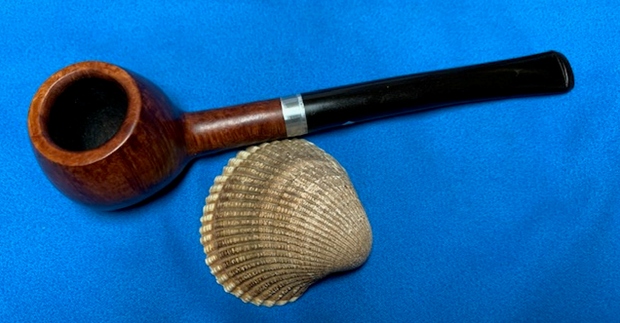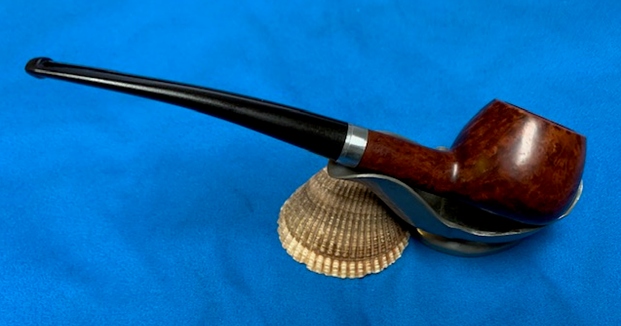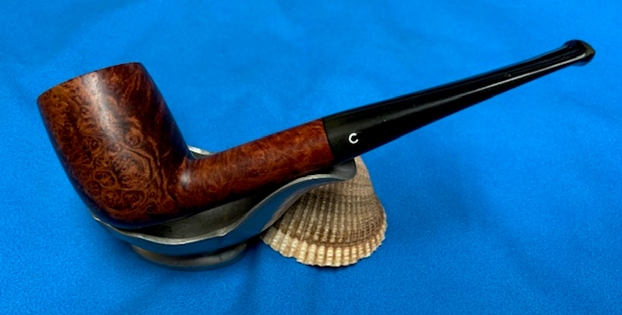
Monthly Archives: September 2020

A Tale of the Rebirth of 3 Pipes – Pipe #1 – a Comoy’s Grand Slam Pipe 64 Billiard


Blog by Steve Laug

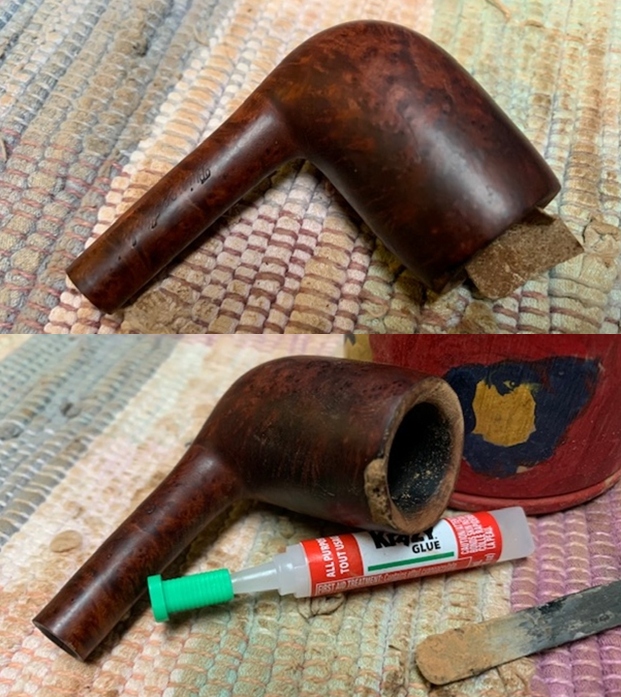
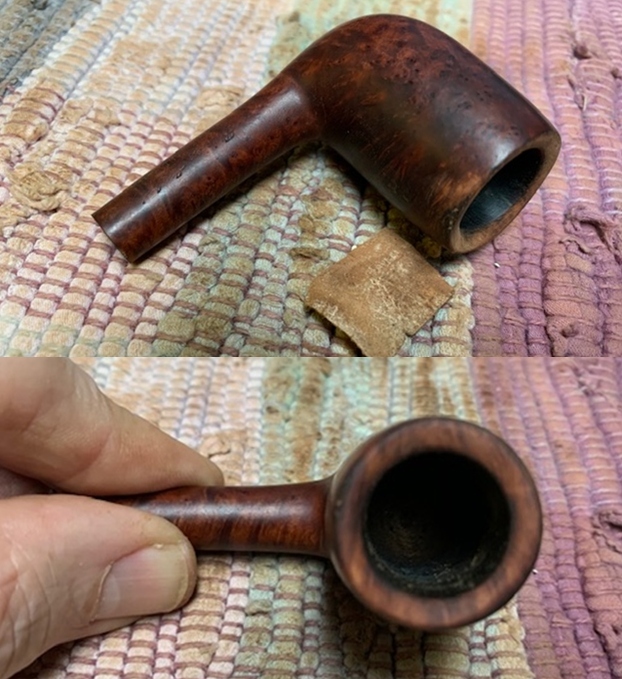
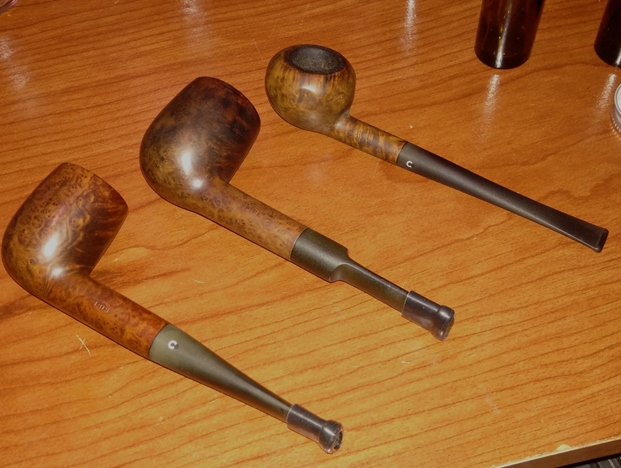
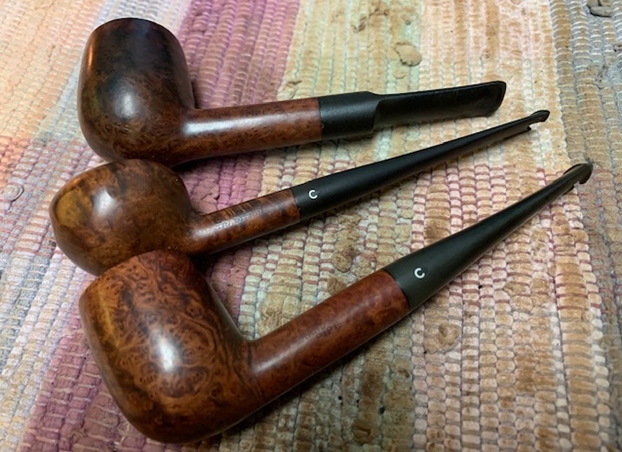
Last week I received an email from a fellow named Stanley who had gotten my info from the local Pipe and Cigar shop. He wrote that he had a trio of Comoy’s pipes that needed to be worked on. Two of them were Grand Slam Pipes and one was a Tradition. We connected via email and he said he would drop them off this week for me to work on. I am including part of his email so you have a sense of what I would be working on. I am also including the two photos that he attached to the email for me to see.

Hey Steve,

I had recently the chance to talk to a very kind and excellent gentleman over at City Cigar, I unfortunately was never able to get his name. However I mentioned I was looking for some replacement stems and he gave me your info…

…The pipes in question are attached in photos, I’ve never done any sort of pipe restoration in my life but I have attempted to take the cake down with a pocket knife. If you’d do it, would you be able to do a ream/clean on the three, as well as deal with the stems?

If possible, I’d prefer to save the original stems by repairing them, but it seems to me that most people remedy this problem with a replacement stem. Whatever you think is best I will go with.

If you think that I’d be better off without the stinger insert in the shape 64, then would you be able to remove it? I’m afraid I’d break the stem if I tried haha.

The 484b also seems to have a crack starting near the “Comoy’s Grand Slam” part of the shank, where it meets the stem. Is it possible to deal with this?

That is all! Please let me know what you think!

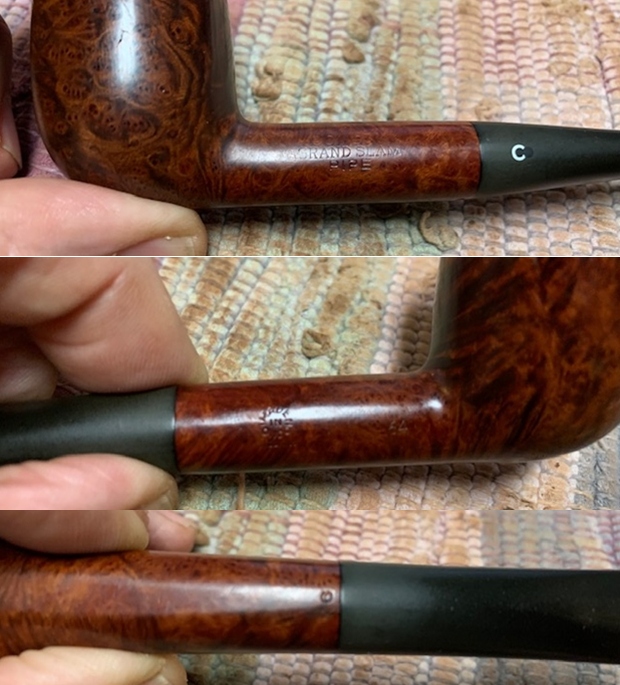
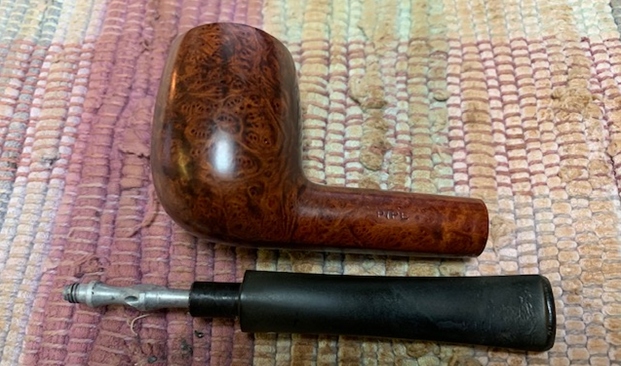
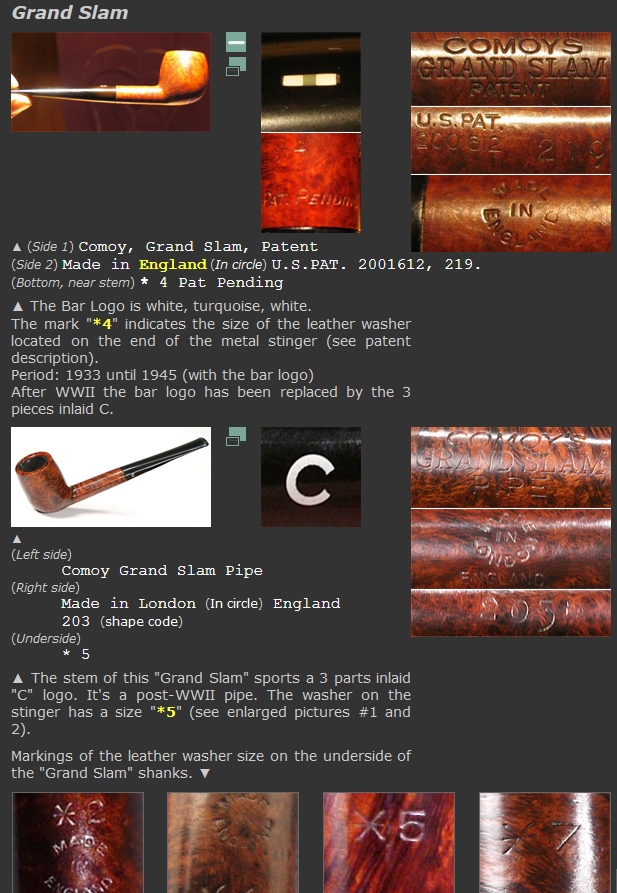
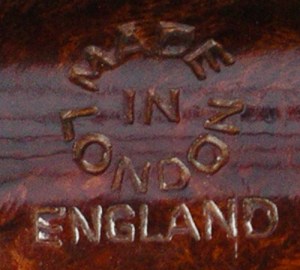
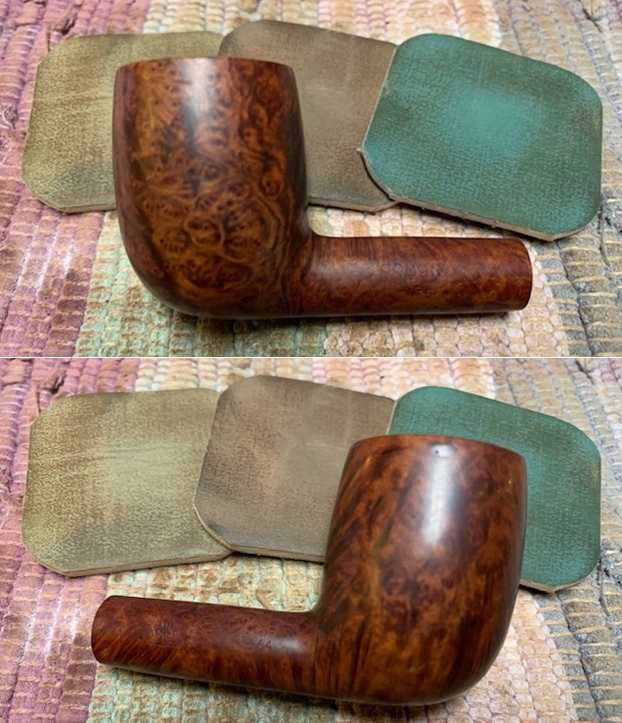
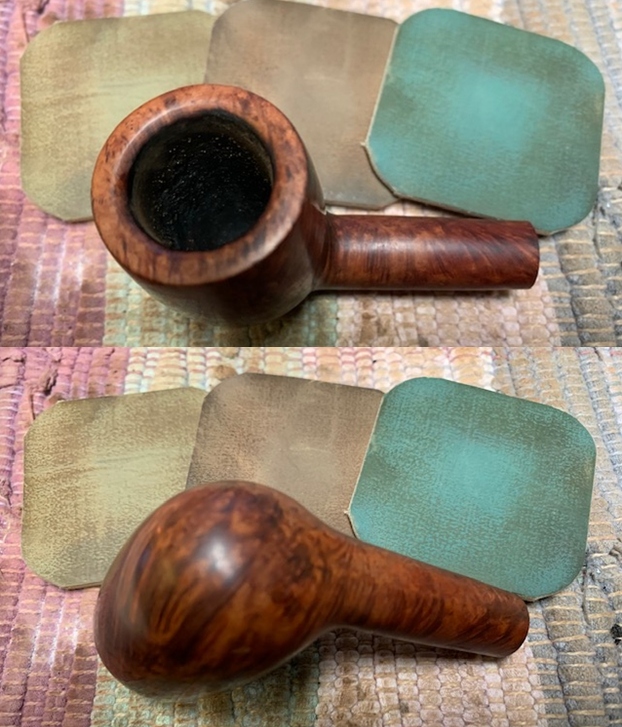
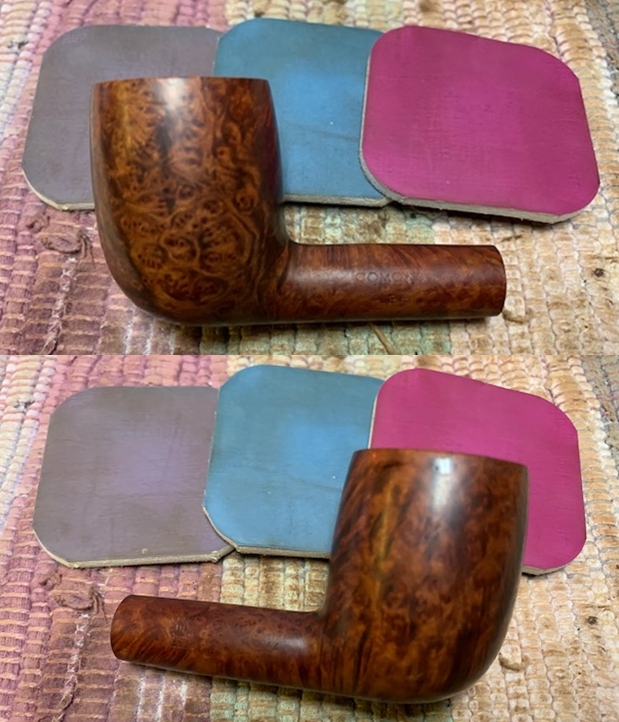
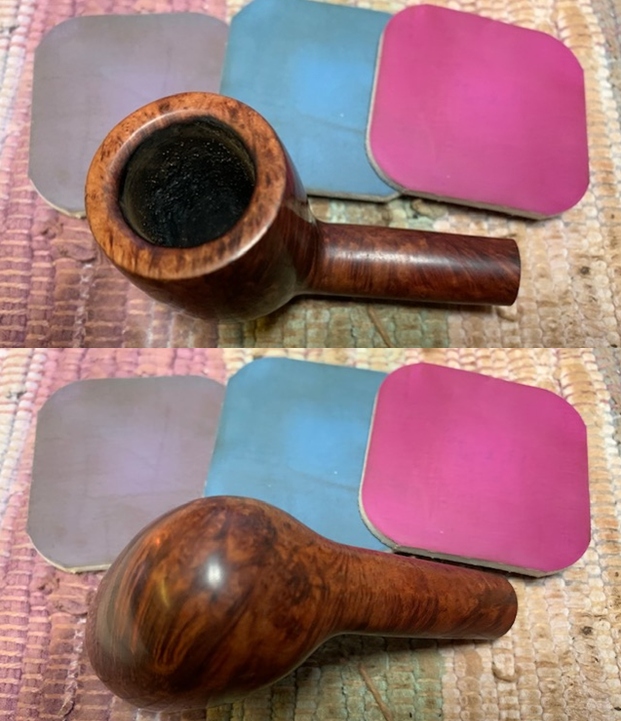
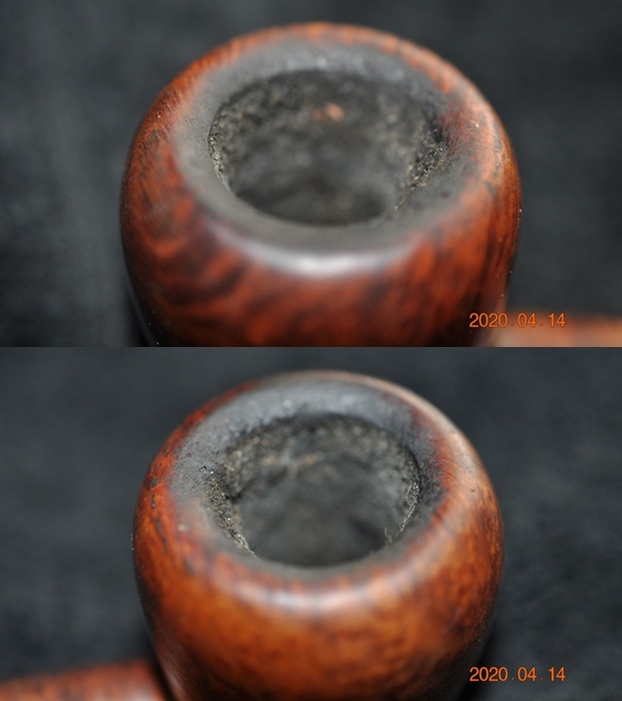
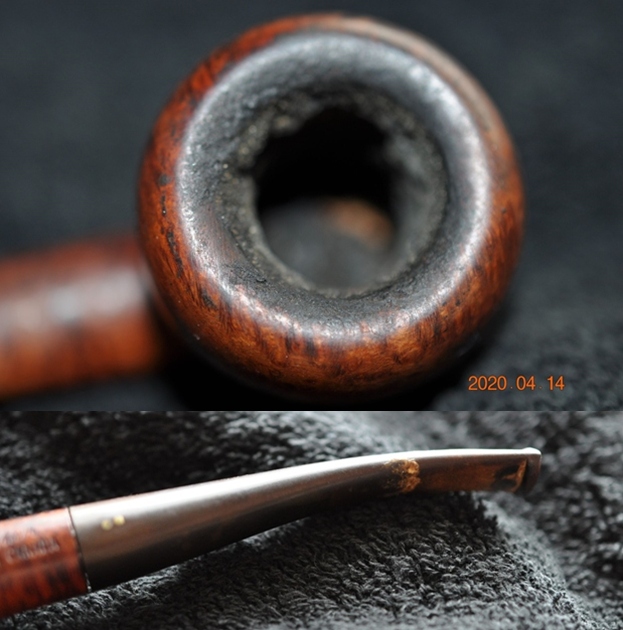
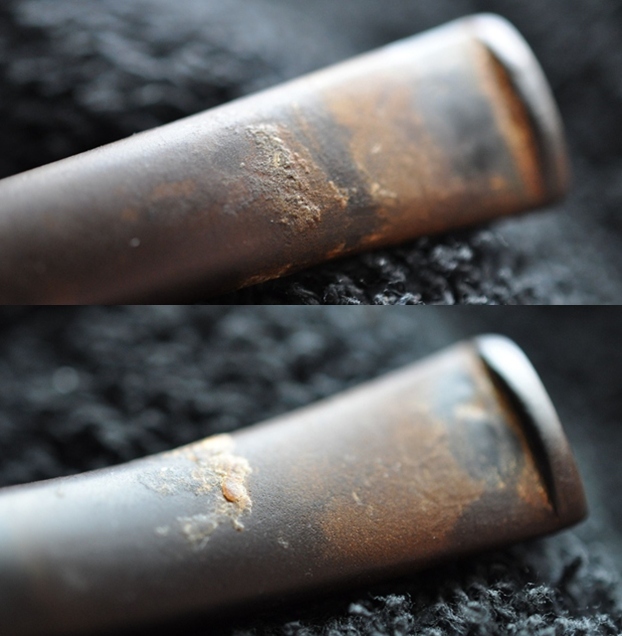
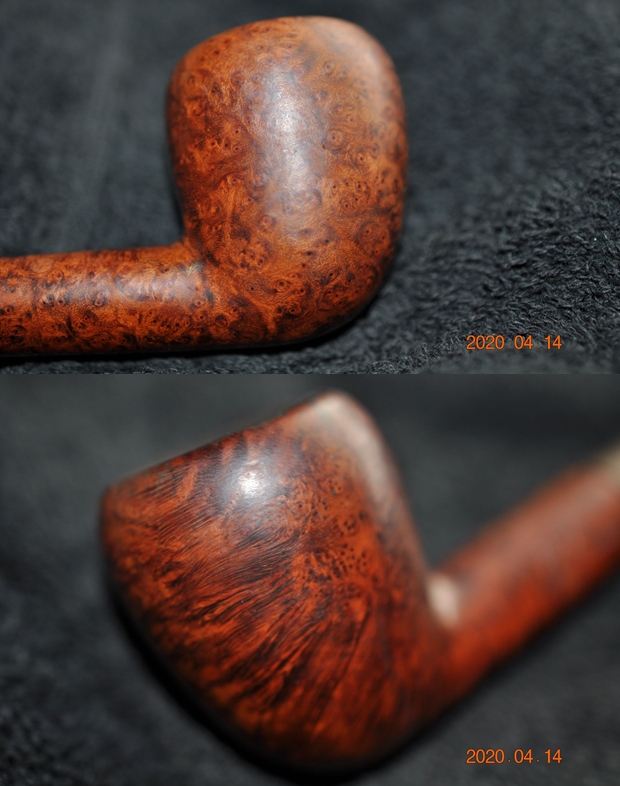
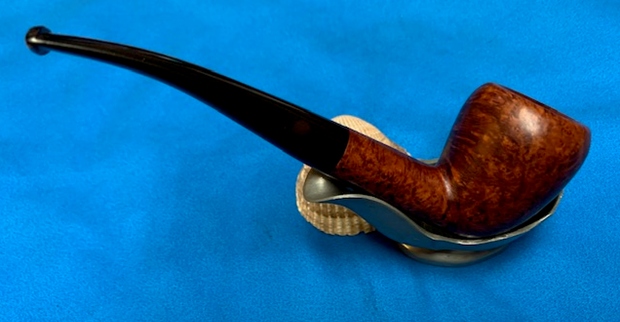
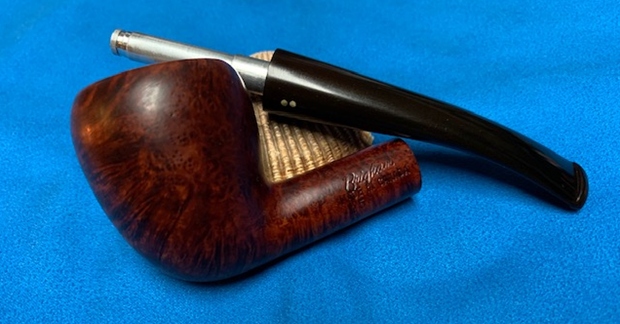
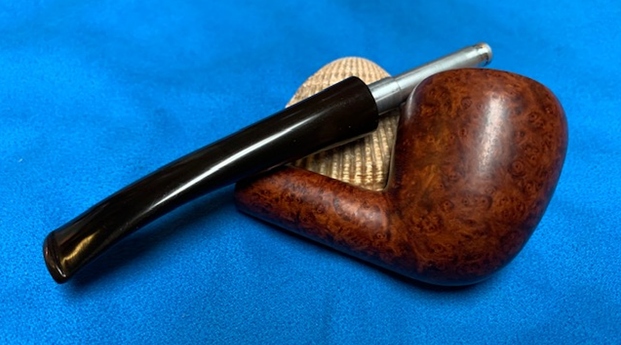
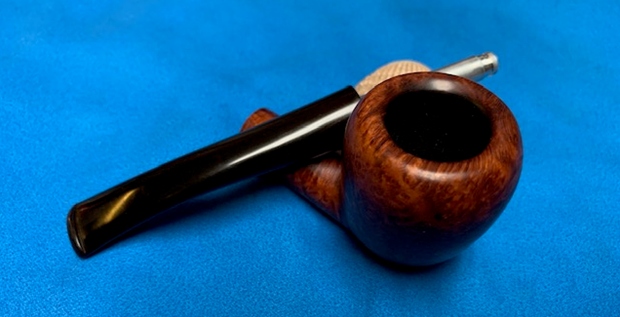
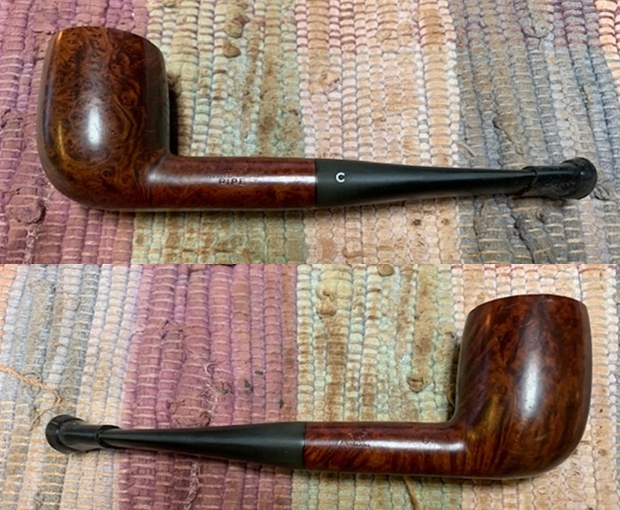
Thanks!  Stanley Last night Stanley stopped by and dropped off the three pipes. I took photos of pipes as there were when I opened the bag they were in. All three pipes were very dirty but the reaming had been started as noted in his email. The stems all had bite throughs on the underside. The bottom pipe in the photo below is a Grand Slam Pipe shape 64 Billiard. The stem has a 3 part C on the left side. The middle pipe is a Tradition 3591 Prince with 8 flattened panels on the bowl near the top. The stem also has a bite through and a missing divot. It also has a 3 part C on the left side. The top pipe in the photo is also Grand Slam Pipe 484B with a replacement stem that also has a bite through. The shank is also cracked on the left side.I decided to work on the Grand Slam Pipe 64 Billiard. It is a beautifully grained Comoy’s Billiard that really is a pipe of Pipe Smoking History. The stamping is the significant marker that points this out for me. It is stamped on the left side of the shank and reads COMOY’S [over] Grand Slam [over] Pipe. On the right side it has the shape number 64 next to the bowl/shank junction and that is followed by a Comoy’s COM stamp that reads Made in London in a circle [over] England. On the underside there was a *6 stamped at the stem/shank junction. The finish had a lot of grime ground into the smooth finish on the bowl and some darkening around the sides of the bowl. The bowl had been scraped but there was still a moderately heavy cake. There was an overflow of thick lava on the top of the rim and on the inner bevel of the bowl. It was hard to know what the rim top and inner edge of the bowl looked like under the grime. The stem was lightly oxidized and there was a large bite through on the underside. There was a three part inlaid C on the left of the taper stem. When the pipe arrived it had a Softee Bit over the damaged stem. The pipe had promise but it was very dirty. I took photos of the pipe before he started his cleanup work. I took photos of the rim top and bowl to give a clear picture of the thickness of the cake and the overflow of lava on the rim top. It is hard to know if there is damage to the inner edge of the bowl because of the lava coat. I also took photos of the top and underside of the stem to show the condition of the stem surface and the bite through on the underside.I took photos of the stamping on both sides and underside of the shank. They read as noted above. I also included a photo of the 3 part C logo on the left side of the taper stem.   I removed the stem and took a photo of the pipe to give a sense of the whole. It is a well shaped billiard. Once the stem was off I noted that tenon had a Comoy’s Grand Slam metallic stinger threaded in the stem. It was missing the cap on the end that held the leather washer in place the apparatus was damaged and I would not be able to fit a new cap on the end. I would remove it from the tenon so that I could clean the stem and do the repairs.I looked on Pipephil’s site for information on the Comoy’s Grand Slam Pipe and found the following information I have included a screen capture (http://www.pipephil.eu/logos/en/logo-comoy.html). The one I am working on is like the second one in the screen capture below. It has the three part C which dated it to 1946 and following. The stamping is the same as the one I am working on. The *6 is the size of the washer on the end of the stinger.I turned to the article on Pipedia about dating Comoy’s pipes but the style of the stamping (https://pipedia.org/index.php?title=Comoy%27s_Dating_Guide#1917_to_the_end_of_the_1930.27s_.28at_least_1938.29). I have include the section in the screen capture below that date this pipe to the 1950s.
Now the Comoy’s stamp can be found in three variants in the 1950s

  1. A simple block-letter style without serifs but with the C larger than the other letters and the apostrophe before the “S”.
  2. A return to the slightly more fancy block letters with serifs and the apostrophe. (It seems that some grades carried different stamps, or at least that the stamping changed in different years for some grades.)
  3. A simple block-letter style without serifs and without the apostrophe and with the “C” the same size as the rest of the letters. This stamp was probably not used very long.
  4. A simple block-letter style without serifs but with the apostrophe before the “S” and with the “C” the same size as the rest of the letters.

Made in London England

Appears in two versions. This is again stamped in a circle with “MADE” at the top, “IN” in the middle, and “LONDON” at the bottom, with “ENGLAND” in a straight line beneath. It can be assumed that this stamp was first used in the export drive in the early 1950s. On a Bulldog Sandblast from the early 50s the Comoy name no. 2 above was used together with “MADE IN LONDON” over “ENGLAND”. There are no known examples of pre-WW II Comoy’s stamped in this way. The second version is the same as above but in a “rugby ball ” shape. This shape is verified on Comoy´s “Extraordinaire” pipes.

Inlaid “C”

C” was first inlaid in the side of the mouthpiece around 1919. This was a complex inlay needing three drillings. First, a round white inlay was inserted, then the centre of the white was drilled out, and a smaller round black inlay was inserted. Finally, another drilling was made to remove the open part of the “C,” and an even smaller black inlay was inserted. This inlaid “C,” known as the “three-piece C,” was continued until the Cadogan era in the 1980s. However, the “C” in the 1920s and early 30s is much thinner and more delicate than the one post-WW II.

That article gave me some helpful information regarding the pipe that I was working on. I knew that the stamping and logos identified the pipe as having been made in following WW2 and from what I can see from the above information it is a 1950s era pipe.

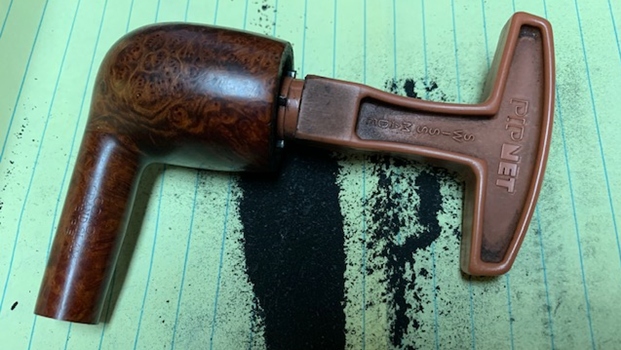
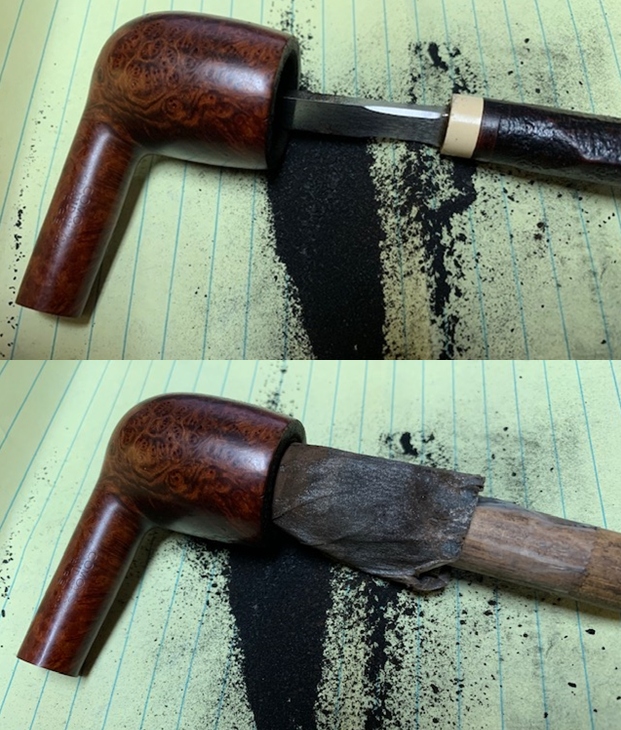
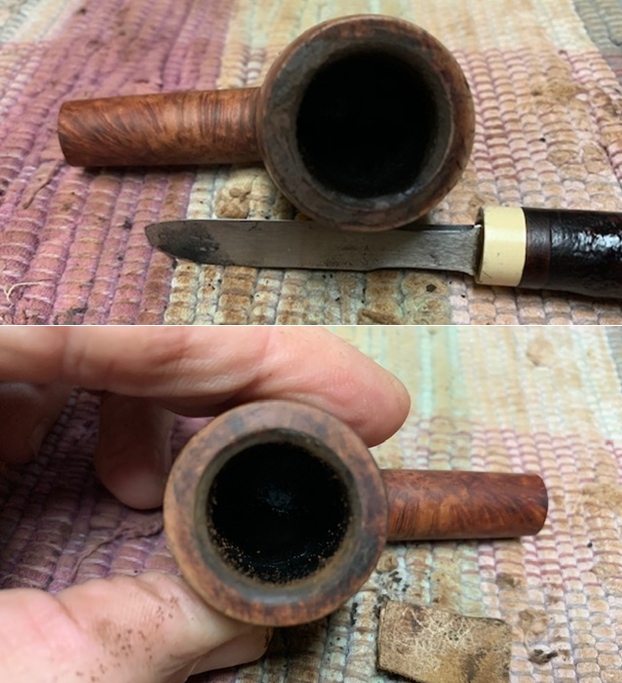
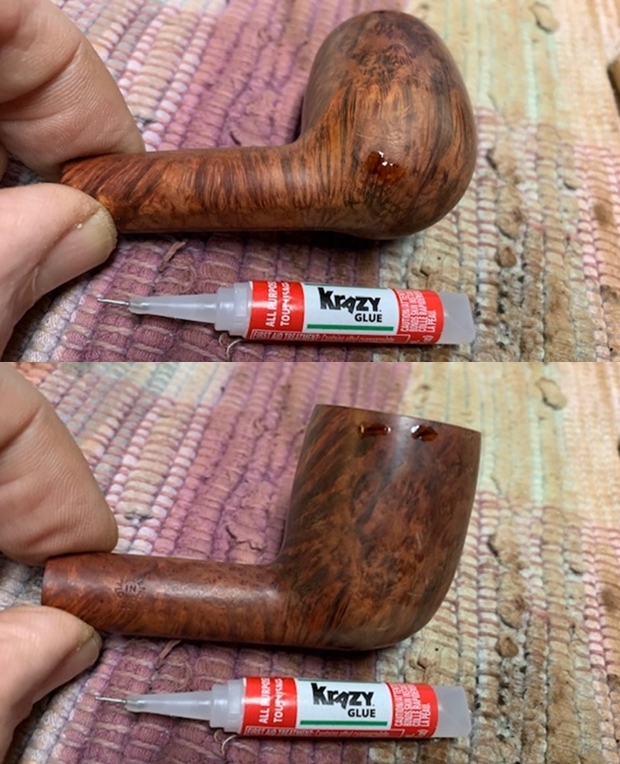
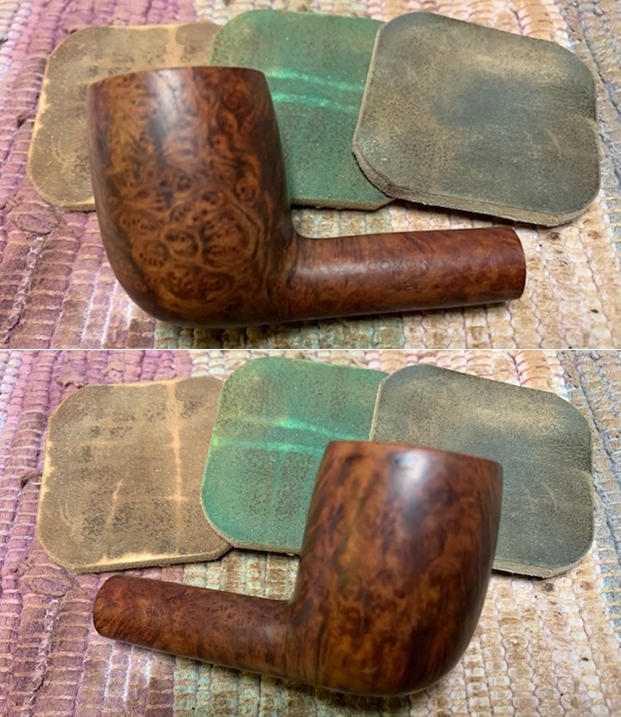
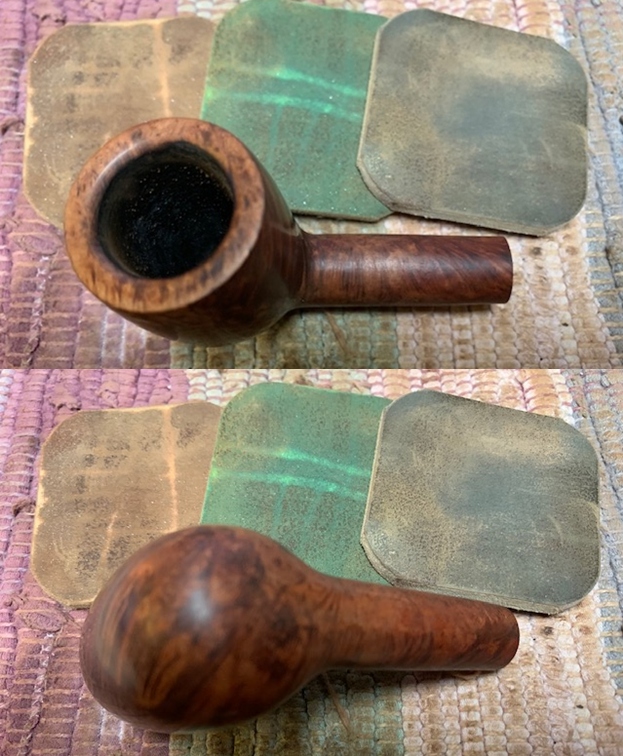
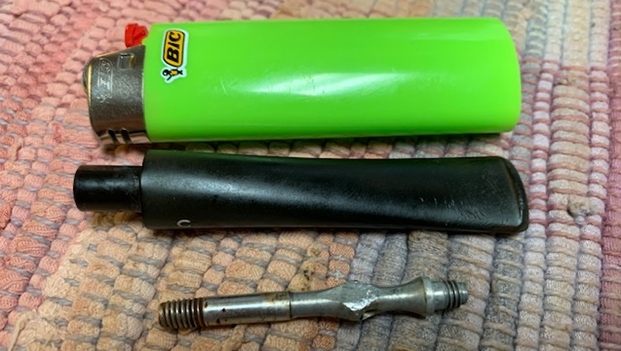
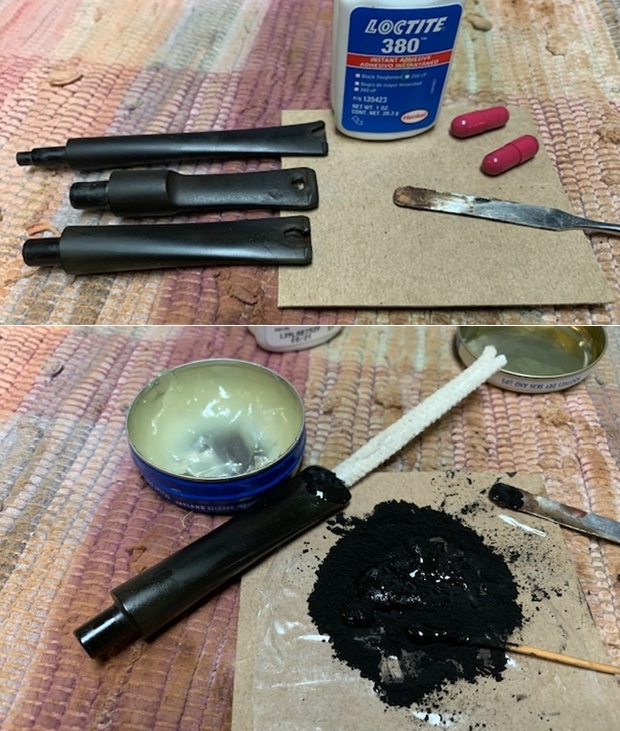
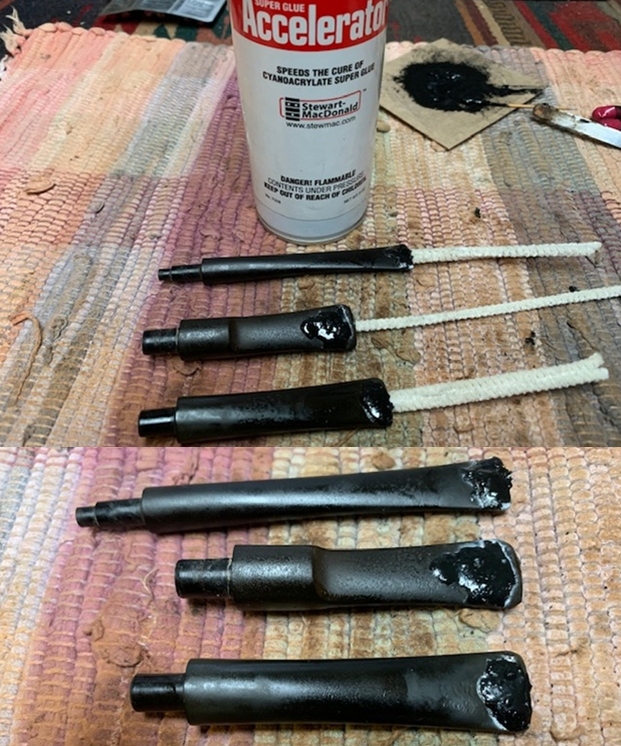
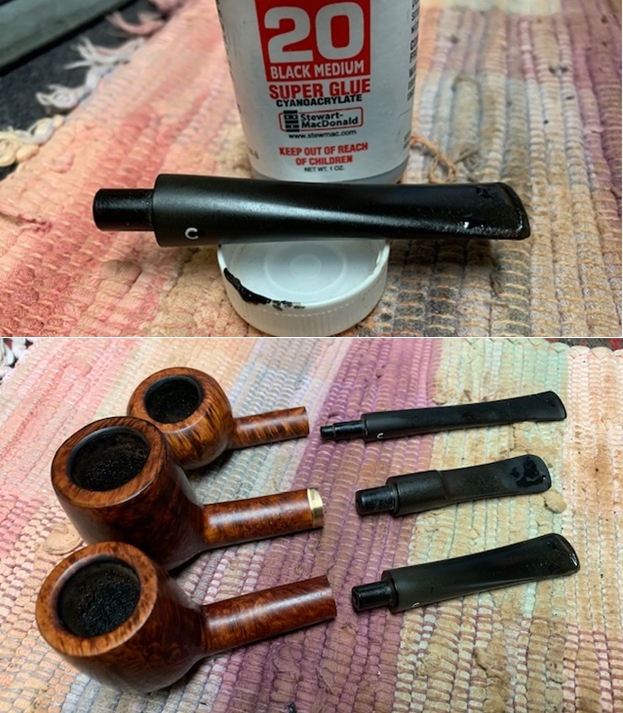
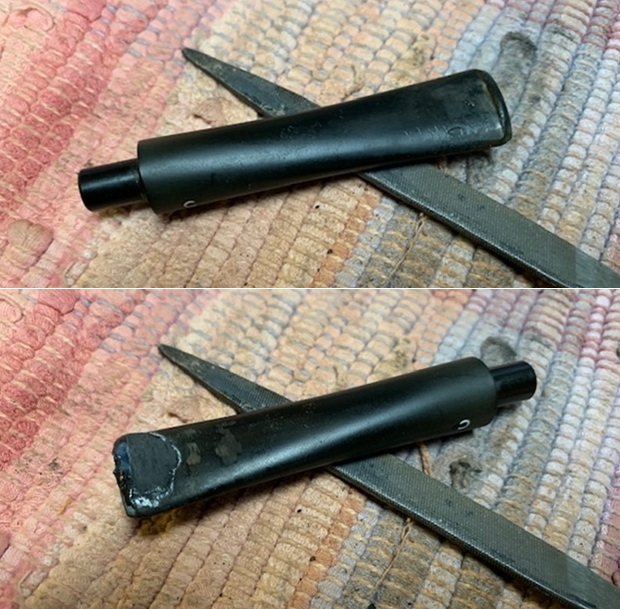
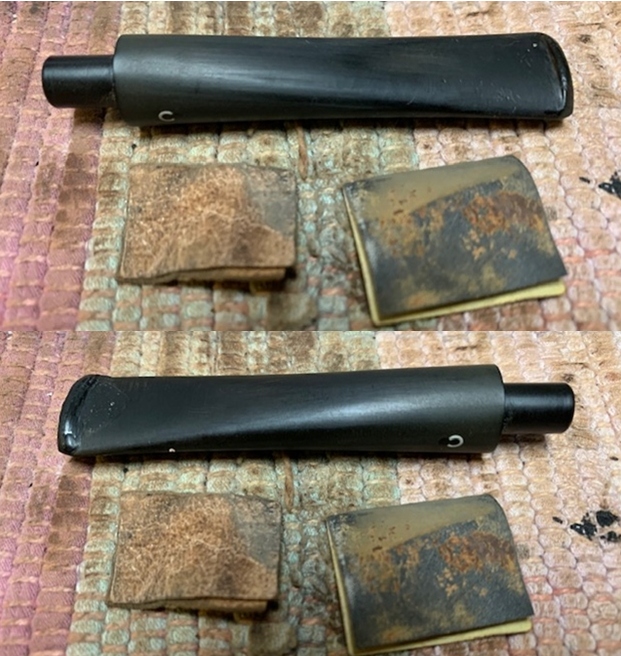
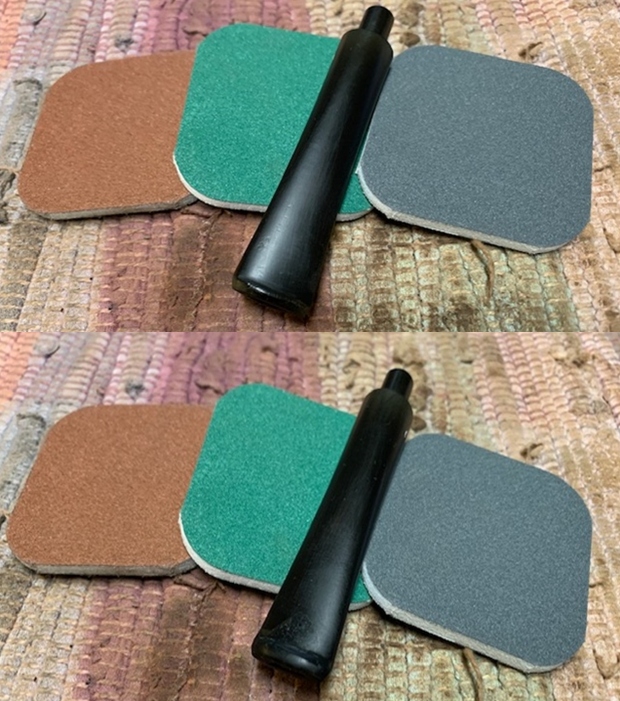
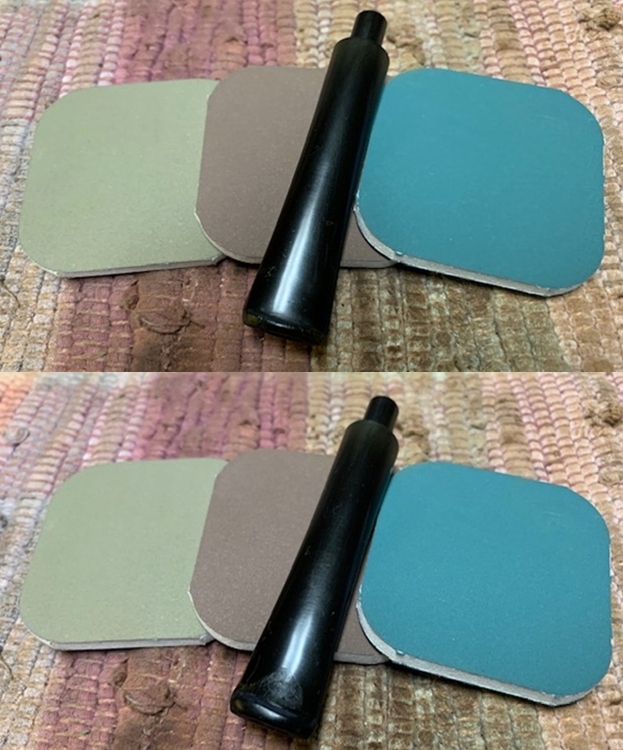
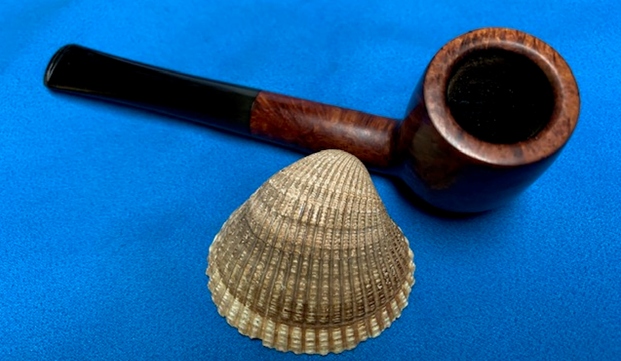
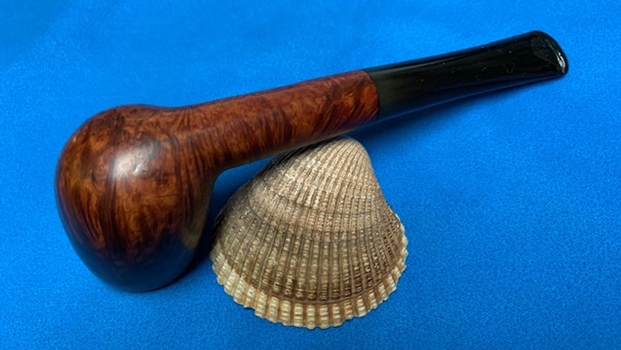
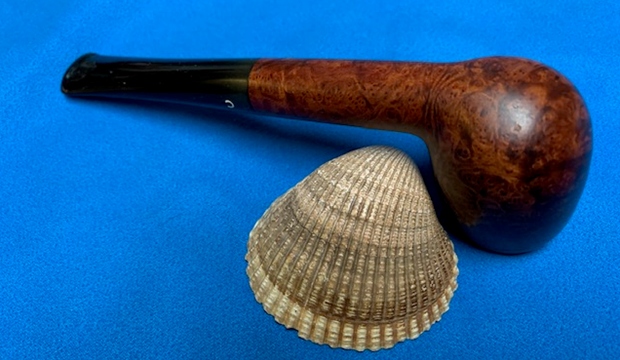
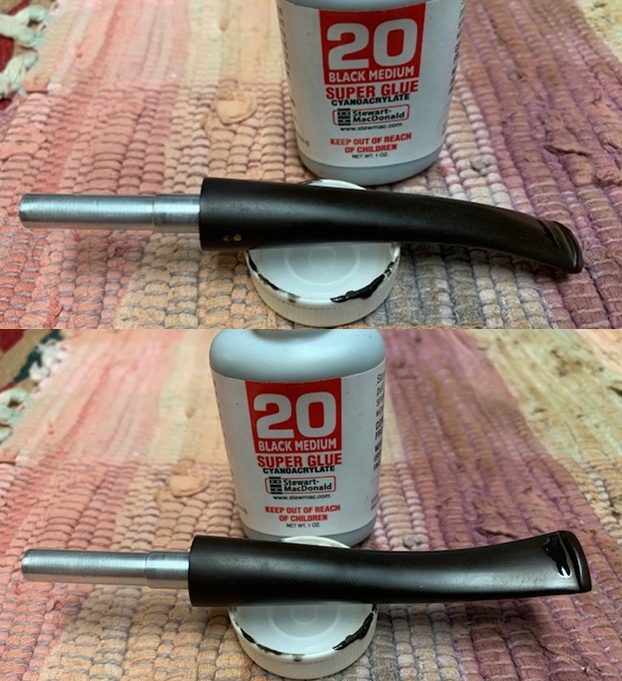
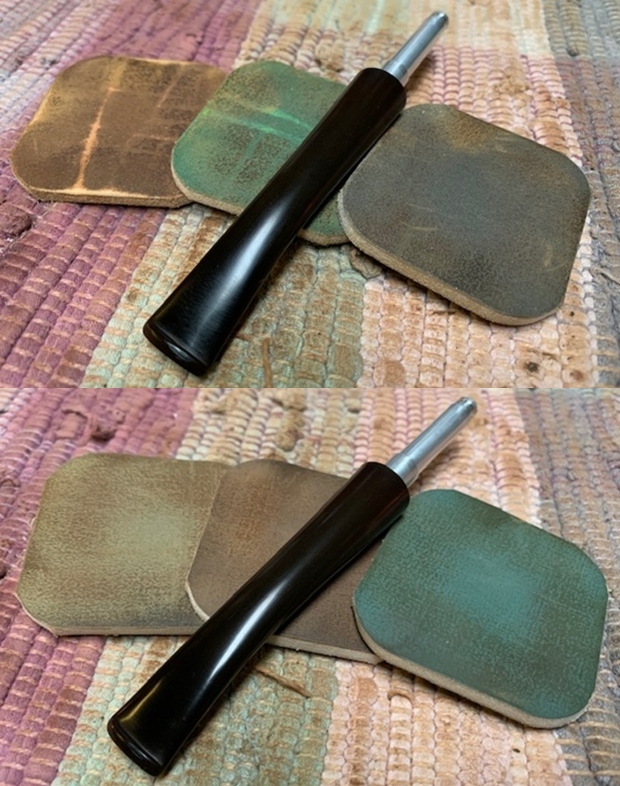
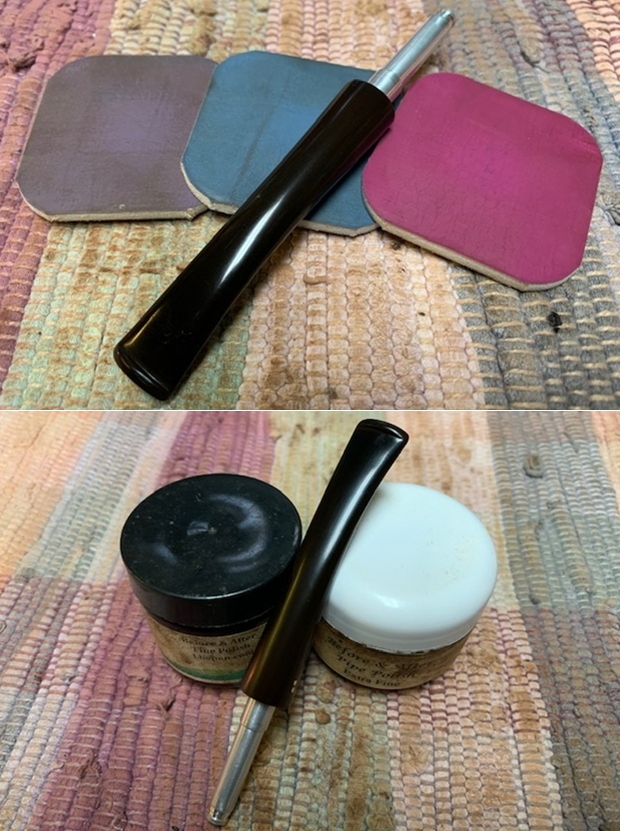
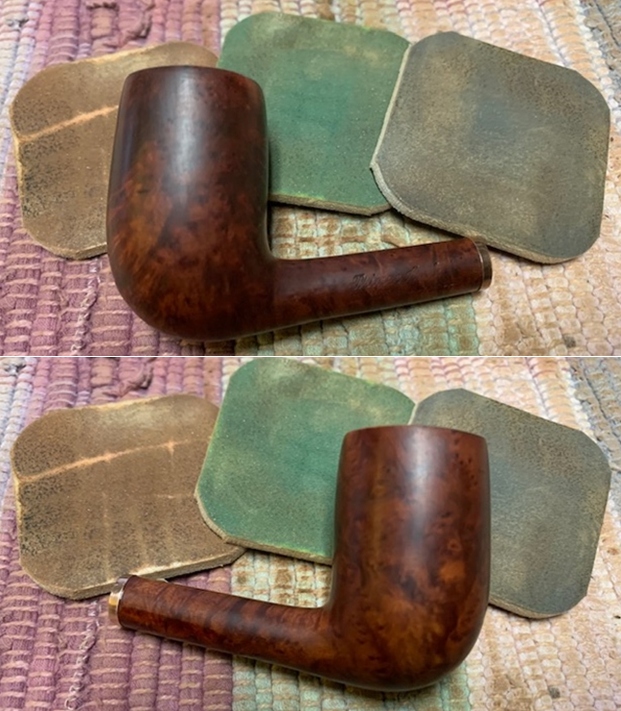
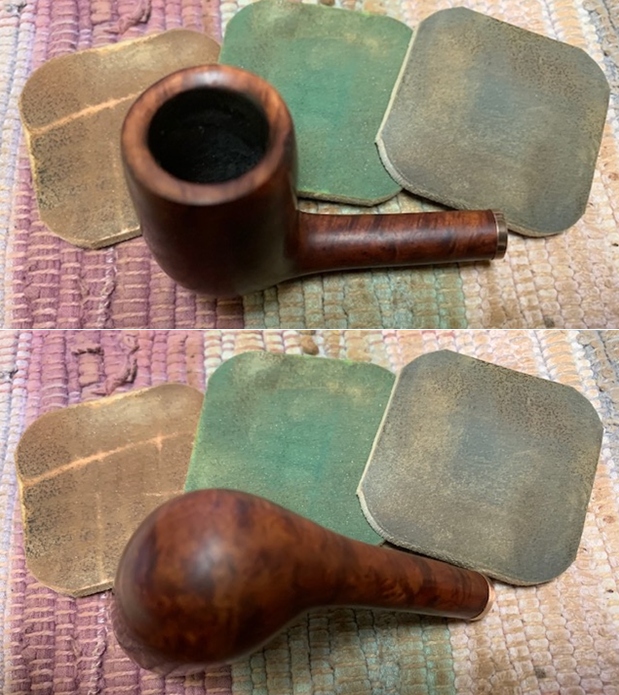
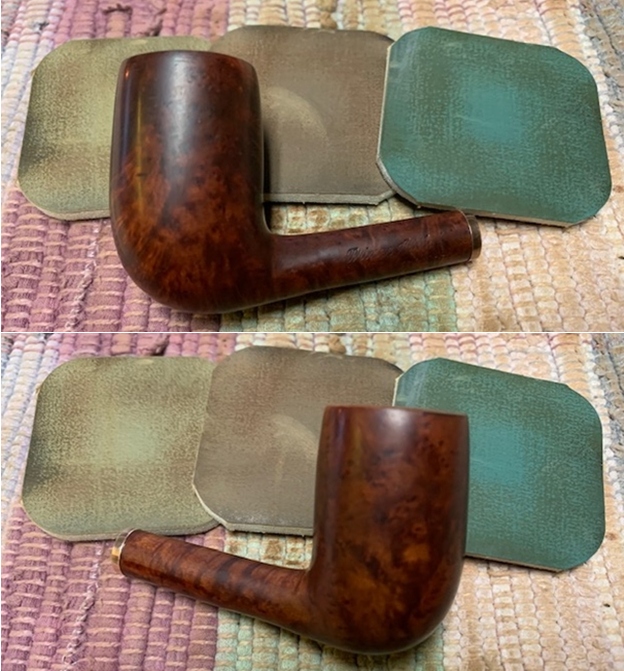
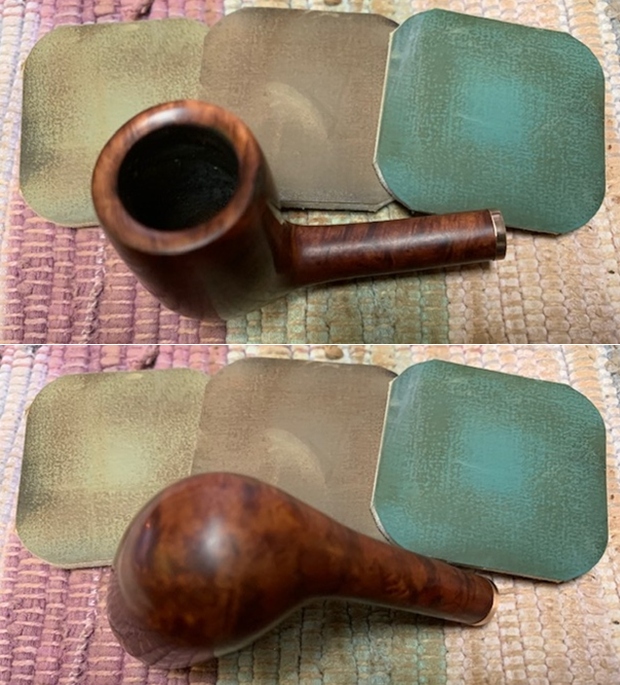
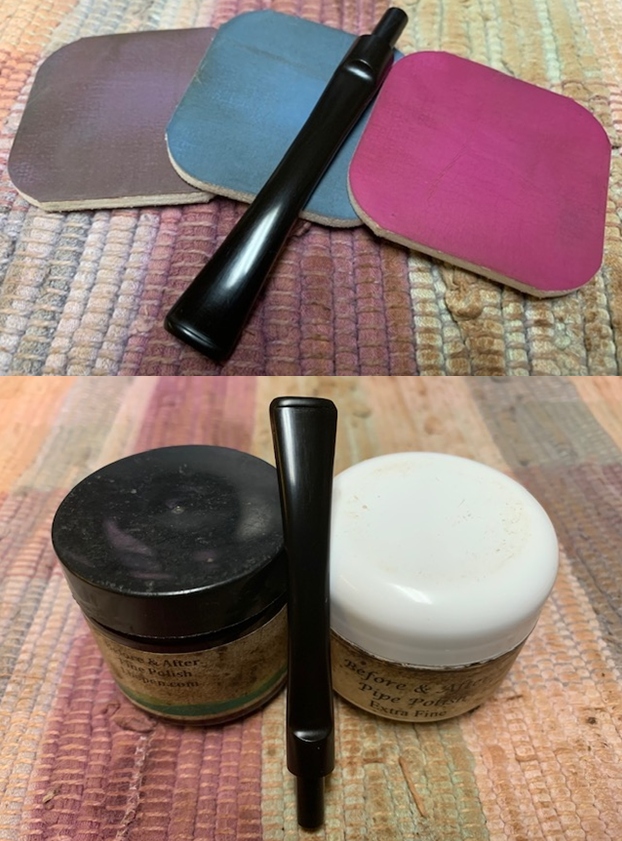
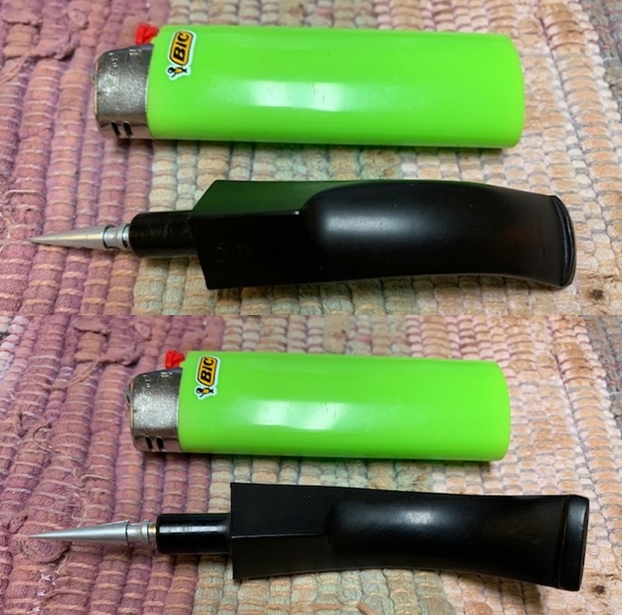
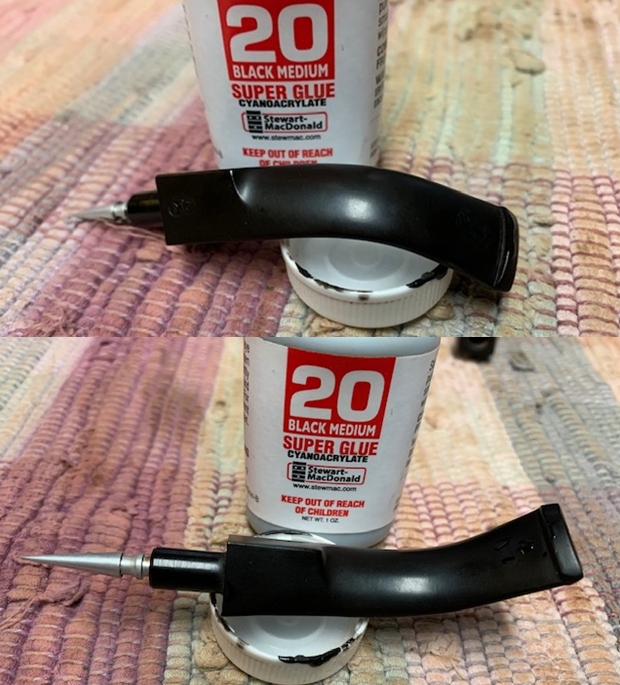
I reamed the bowl with a PipNet pipe reamer using the 2nd and 3rd cutting head to remove the remaining cake back to briar. I followed up with a Savinelli Fitsall pipe knife to remove the remnants of cake. I sanded the walls of the bowl with a piece of 220 grit sandpaper wrapped around a piece of dowel. I scrubbed out the mortise and the airway in the shank and the stem with alcohol, cotton swabs and pipe cleaners. I scrubbed the exterior of the bowl, rim, shank and stem with a tooth brush and Murphy’s Oil Soap to remove the oils and tars on the rim and the grime on the finish of the bowl. I rinsed it under running water and dried it off with a soft cloth.    I was able to remove some of the lava build up on the rim top and finished by scraping it with the Fitsall knife and then a piece of 220 grit sandpaper. There were some deep cuts on the bottom right side of the bowl and on the top right side near the edge. I filled these in with a spot of clear super glue.   I polished the bowl and the rim top, sides and shank with micromesh sanding pads – wet sanding with 1500-12000 grit pads and wiping it down after each pad with a damp cloth. I carefully avoided the stamping on the shank so as not to damage the stamping.   I rubbed the bowl and shank down with Before & After Restoration Balm. I worked it into the surface of the bowl sides and shank with my fingertips to clean, enliven and protect the briar. I let the balm sit for a little while and then buffed with a cotton cloth to raise the shine.    I set the bowl aside and turned my attention to the stem. I heated the stinger with a Bic lighter and unscrewed it with a pair of pliers.I set aside the bowl and turned my attention to the stem repairs. I cut a piece of cardboard for a pallet, put aside two charcoal capsules, and set out the spatula and the Loctite 380 black CA glue. I greased a pipe cleaner with Vaseline and inserted it in the stem. I filled in the hole in the stem with a mixture of charcoal powder and Loctite. I used the spatula to fill in the bite throughs on all of the stems. I sprayed the repair with an accelerator to set the glue and removed the pipe cleaners from the stems.  I filled in the deep tooth marks on the top side of the stem with black super glue and set the stems aside to let the repairs cure. I took a photo of the three pipes at this point to give a feel for where things stood.   I smoothed out the repairs with a needle file and started blending them into the surface of the stem. I sanded the remaining repairs with 220 grit sandpaper to further blend it into the stem surface. I started polishing it with 400 grit wet dry sandpaper. I polished the vulcanite stem with micromesh sanding pads – 1500-12000 grit pads. I wiped it down with a damp cloth after each sanding pad. I took photos of both sides of the stem to show the repair work on both sides.     This 50s era Comoy’s Grand Slam Pipe 64 Billiard with a vulcanite taper stem is a great looking pipe now that it has been restored. I did a lot of work on the bowl and repaired the bite through on the stem. The rich browns and blacks of the contrasting stains came alive with the polishing and waxing. I put the stem back on the bowl and carefully buffed the pipe with Blue Diamond on the buffing wheel using a light touch on the briar. I gave the bowl and the stem multiple coats of carnauba wax on the buffing wheel and followed that by buffing the entire pipe with a clean buffing pad. I hand buffed the pipe with a microfiber cloth to deepen the shine. The finished Comoy’s Medium Billiard is a beauty and fits nicely in the hand and looks very good. Give the finished pipe a look in the photos below. The dimensions of the pipe are Length: 5 ½ inches, Height: 1 ¾ inches, Outside diameter of the bowl: 1 ¼ inches, Chamber diameter: ¾ of an inch. I am looking forward to what Stanley thinks of his repaired pipe. He had said the threesome were his favourite pipes. This is the first of  the three. Thanks for reading this blog and my reflections on the pipe while I worked on it. There are many more to come!

Restoring a Brigham 2 Dot Crowned Rim 259 Acorn


Blog by Steve Laug

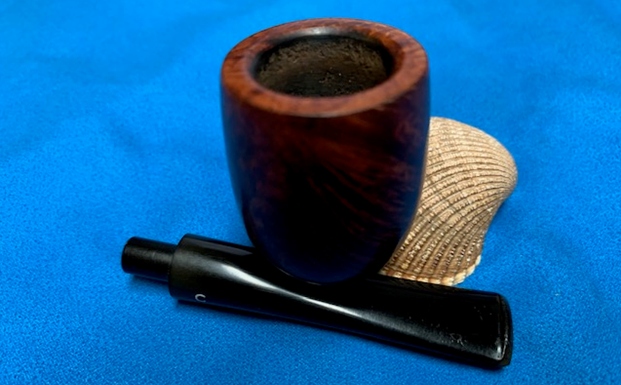
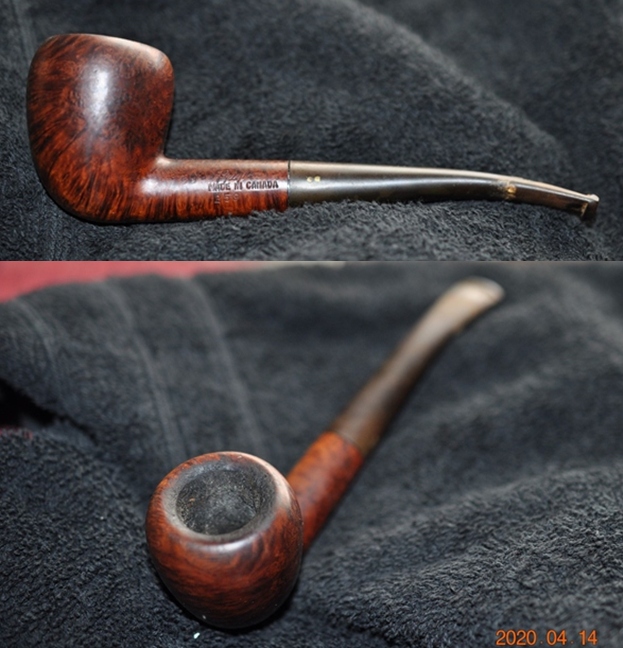
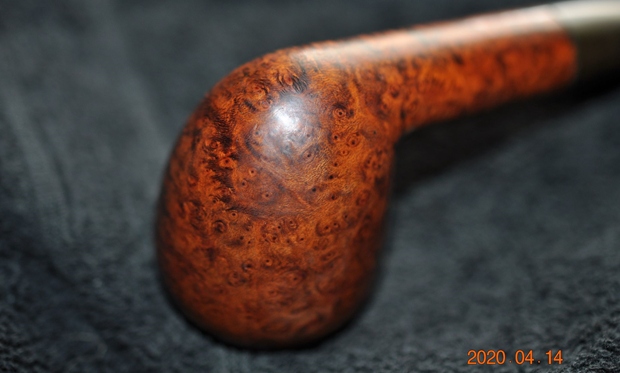
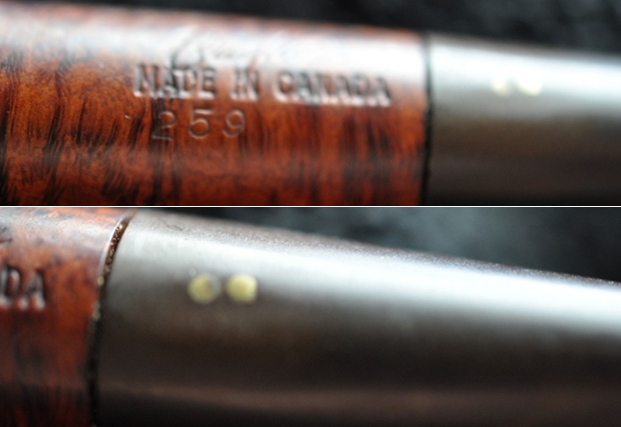
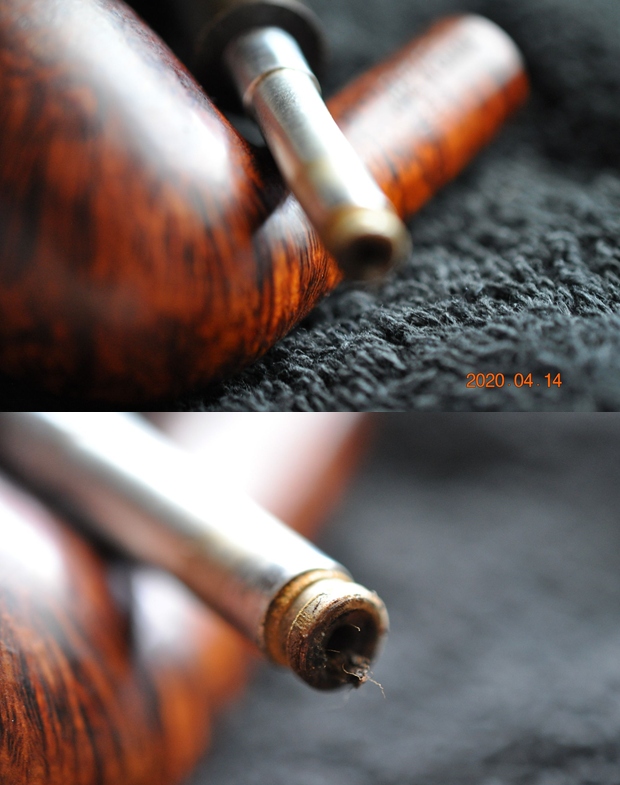
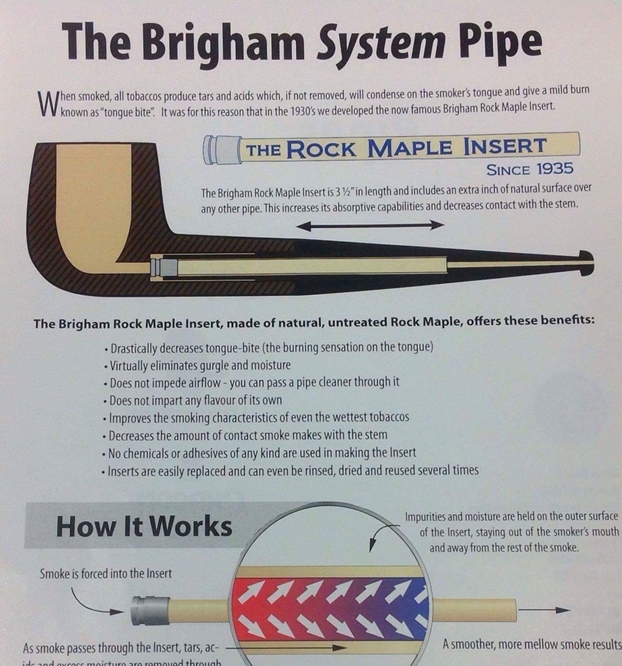
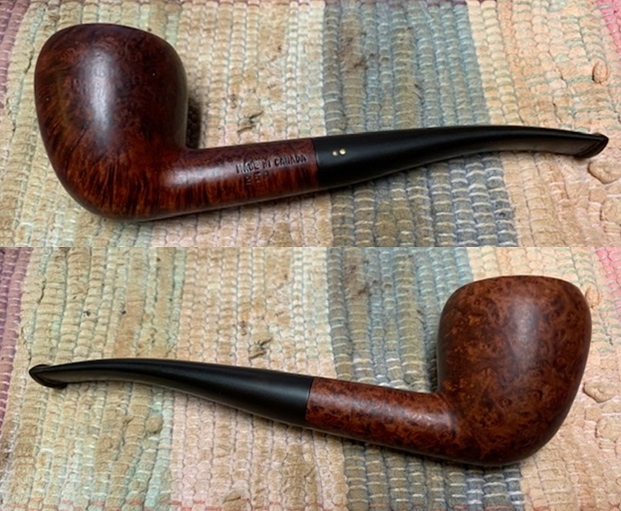
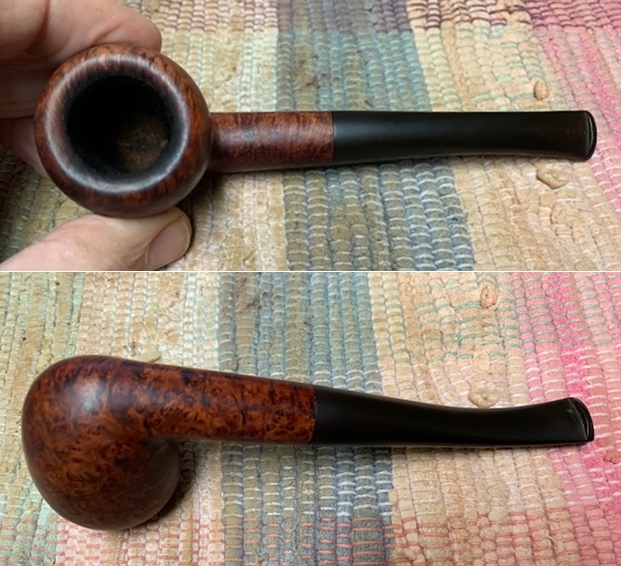
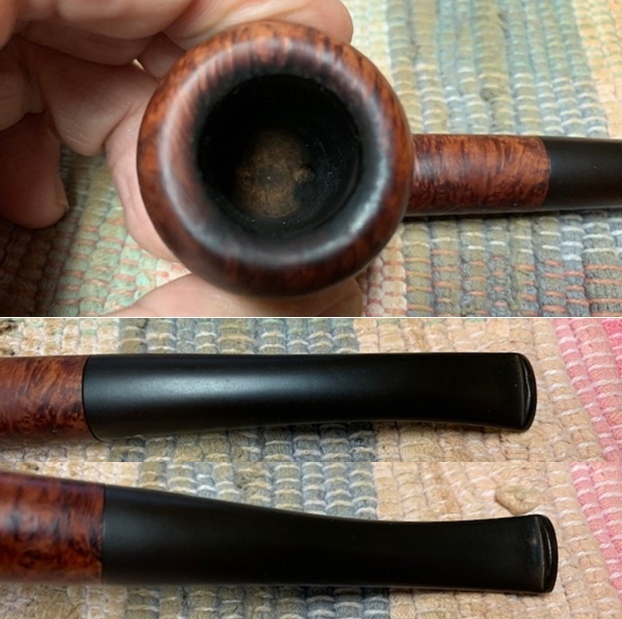
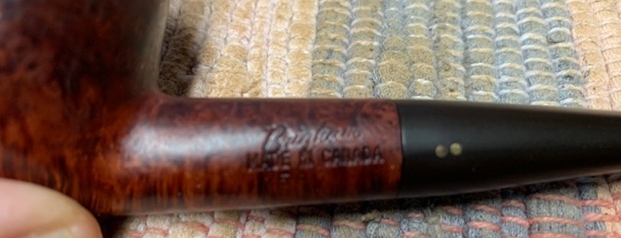
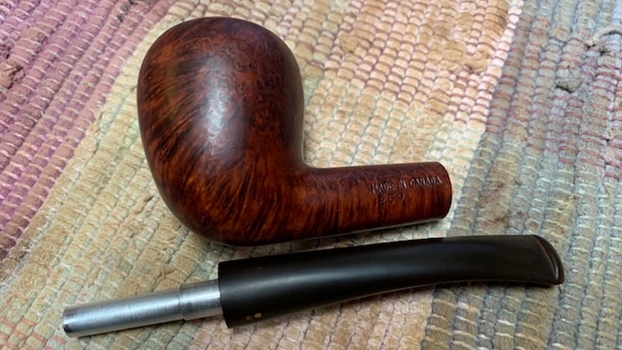
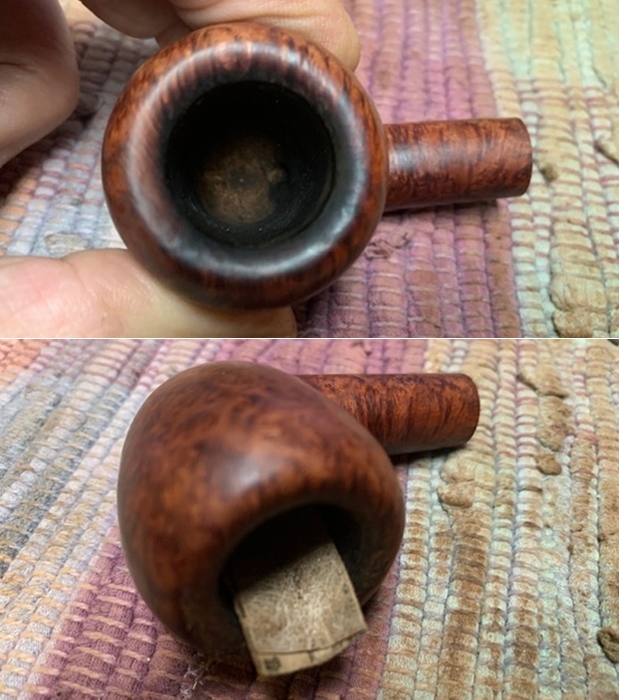
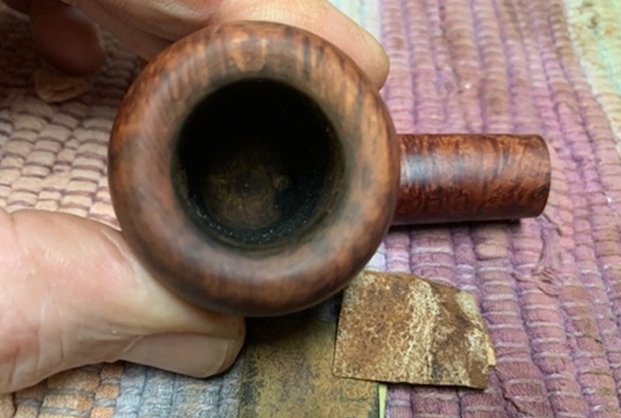
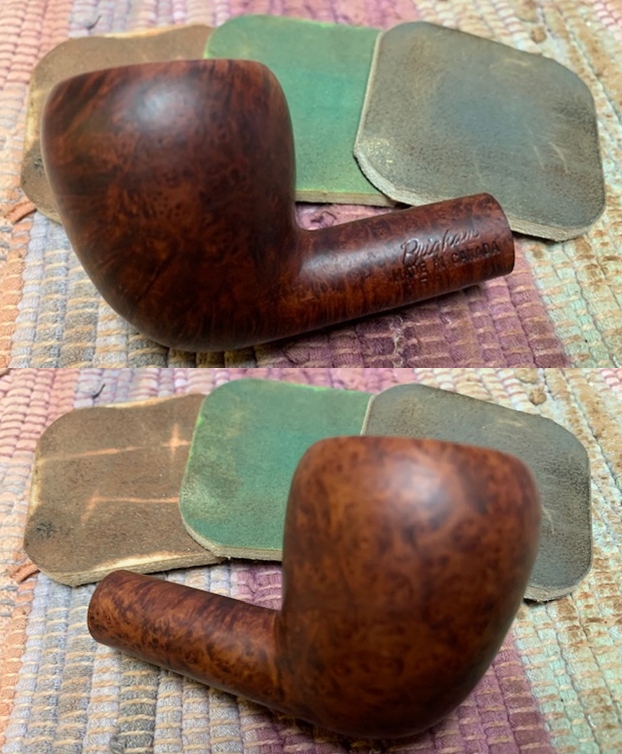
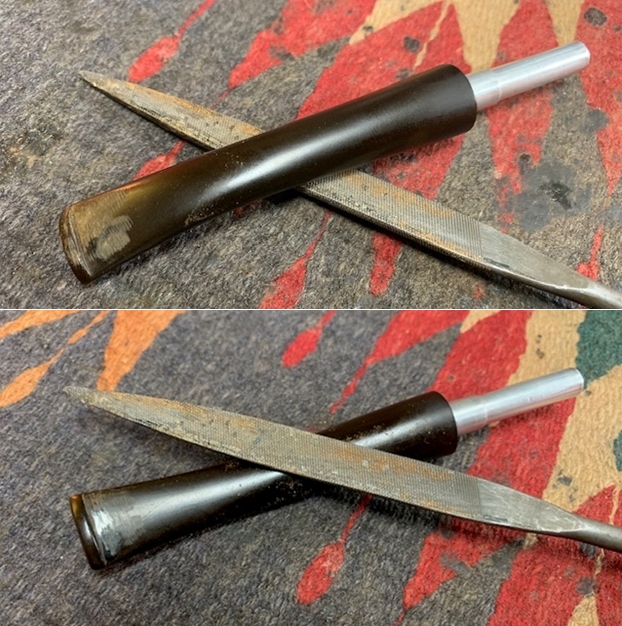
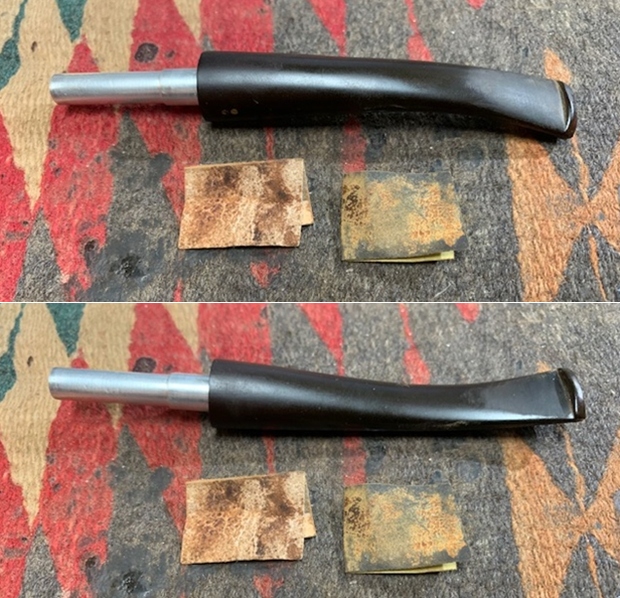
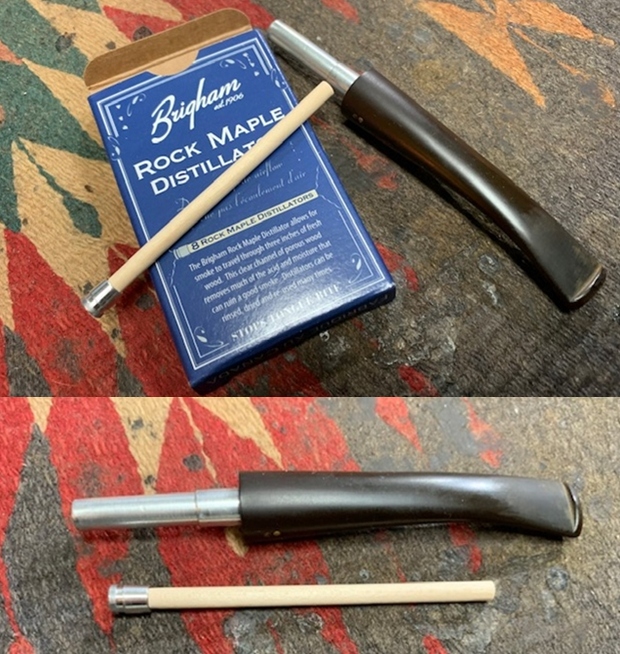
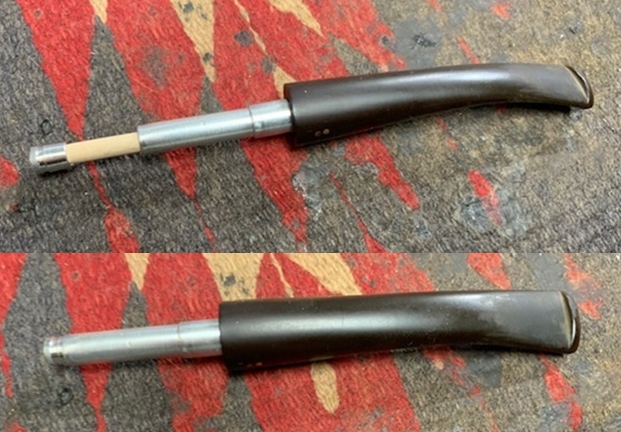
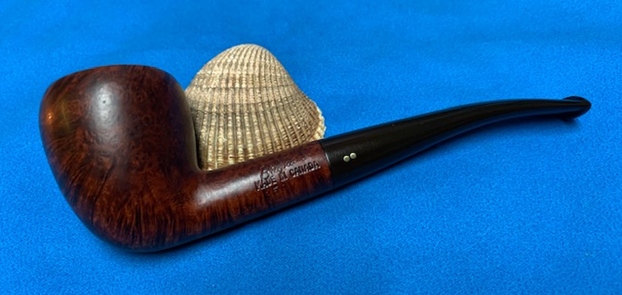
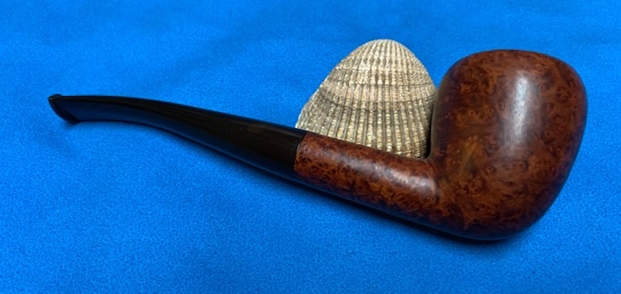
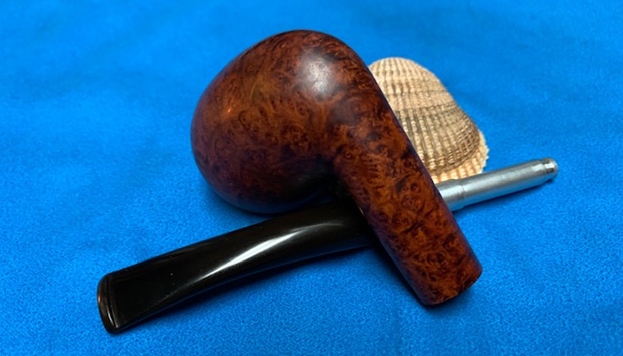
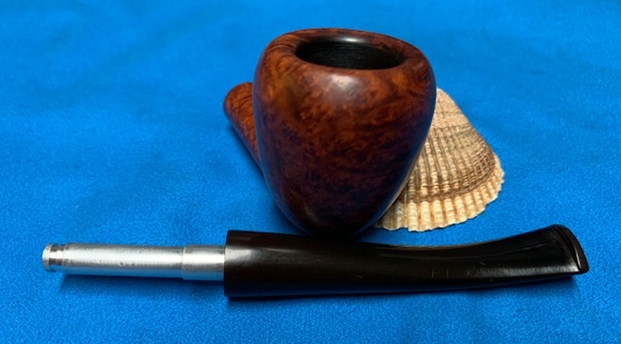
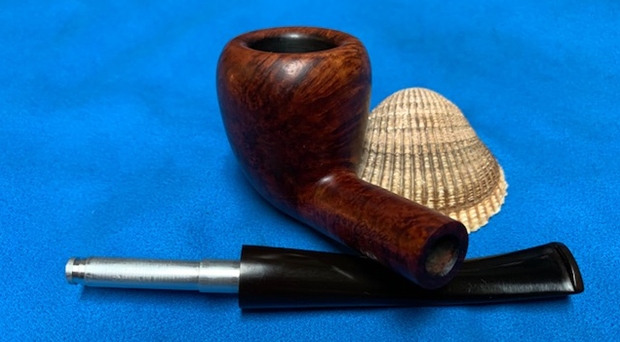
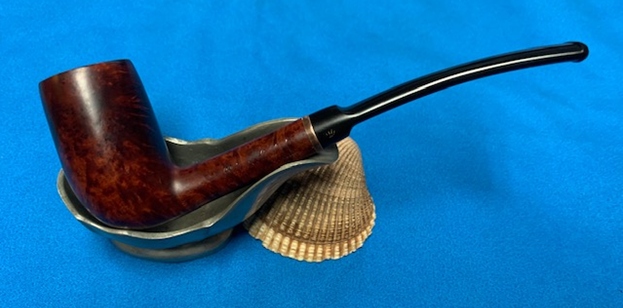
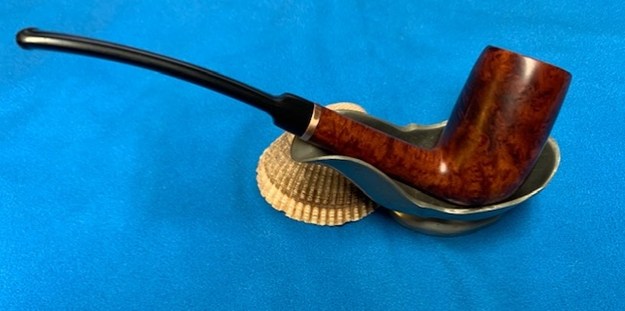
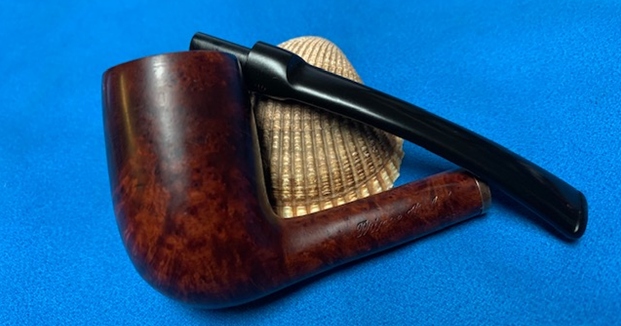
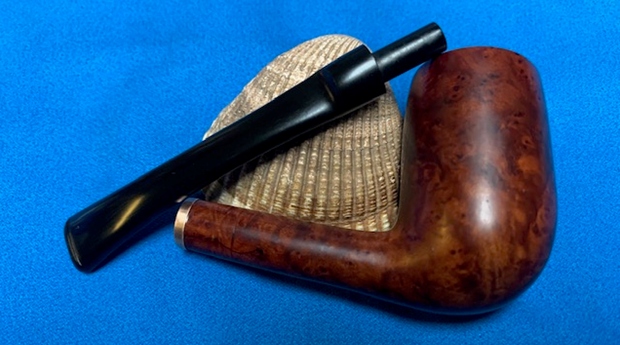
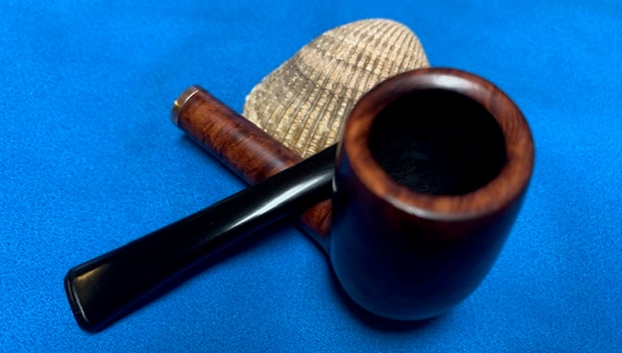
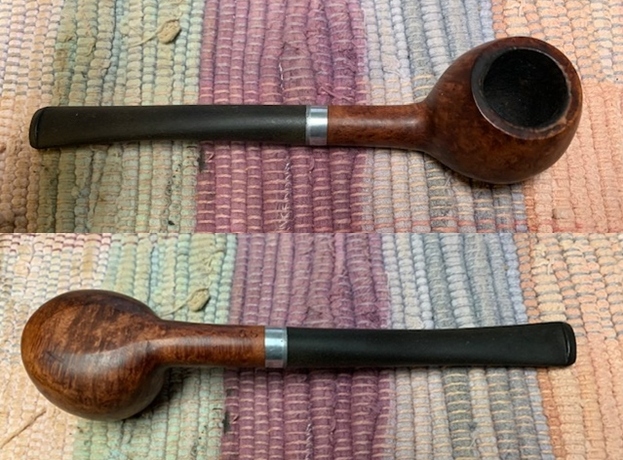
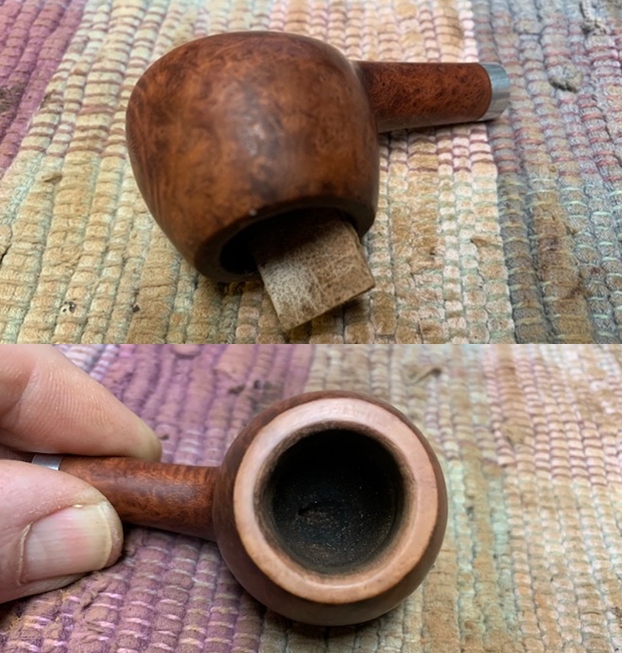
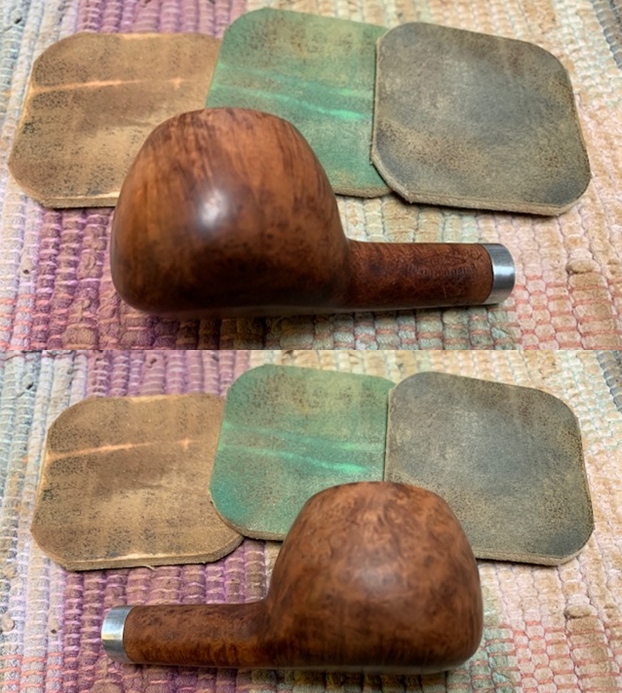
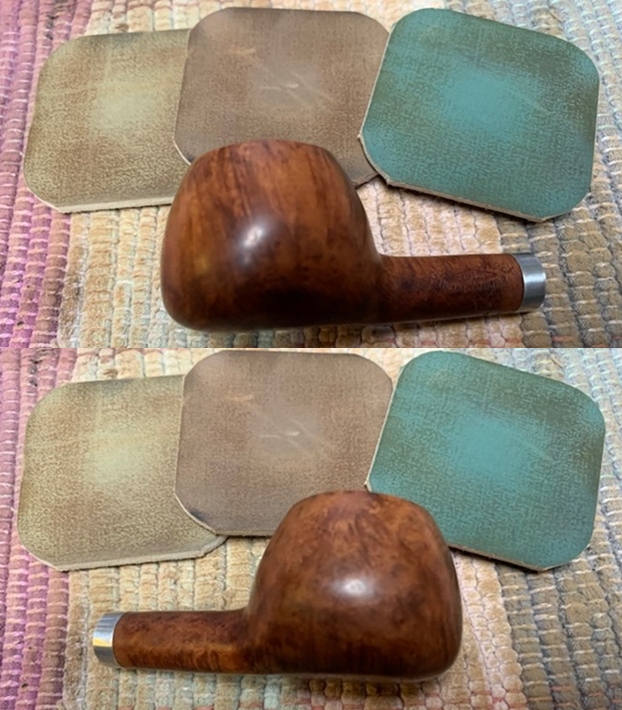
The next pipe I have chosen is a nice looking smooth acorn shaped pipe that was stained with a rich brown colour. The stain made the grain really pop under the grime on the finish. The contrast of the dark stain made the grain stand out clearly. Jeff and I picked it up as part of group of pipes we traded for from Hermann, Missouri, USA. It was stamped on the left side of the shank. The stamping was readable. It read Brigham [over] Made in Canada [over] the shape number 259. It was in decent condition when he brought it to the table. The finish was dirty with grime ground into the briar sides and rim. There was a thick cake in the bowl and an overflow of lava on the crowned rim top and the inner edge of the bowl. The stem was oxidized, calcified and had tooth marks and chatter on the top and underside on and near the button. The Maple Distillator was stuck in the aluminum tube and was thickly caked with oils and grimes. It appeared to never have been changed. Jeff took photos of the pipe before his cleanup work. They tell the story and give a glimpse of the promise that we see in this pipe.   Jeff took photos of the rim top to show the interior the bowl and the rim top and inner edge. It is heavily caked with a thick lava overflow. The stem is oxidized, calcified and has tooth marks on the top and underside near the button. Jeff took some photos of the bowl sides and heel to show grain that was around this bowl. It is a nice looking pipe.  He took a photo of the underside of the shank to show the stamping. The stamping is readable in the photos below and is as noted above – it reads Brigham in script [over] Made in Canada [over] 259. The stem has two dots in a row on the left side. Jeff took the stem off the bowl and took a picture of the aluminum tube tenon with the Maple Distillator in place and out of the tenon on top of the tube.  It is a real mess.Before I get into the restoration part of this pipe I decided to include a poster I picked up that shows the filtration system of the patented Brigham Distillator. Give the poster a read. It also helps to understand the internals of these older Canadian Made pipes. Jeff had done a great job cleaning up the pipe as usual. He reamed the pipe with a PipNet reamer and cut back the cake back to the bare briar. He cleaned up the walls with a Savinelli Fitsall Pipe Knife. He scrubbed the interior of the bowl and shank with pipe cleaners, cotton swabs and alcohol to remove the tars and oils. He scrubbed the exterior of the pipe with Murphy’s Oil Soap and a tooth brush to remove the grime from the finish. He worked on the rim top lava and darkening with the soap and tooth brush. He scrubbed the inside of the stem with alcohol and pipe cleaners. He scrubbed the exterior with Soft Scrub and then soaked it in Before & After Deoxidizer. He washed it off with warm water to remove the Deoxidizer. The pipe looked far better. The stamping on the side of the stem was very light and the white that had remained was gone. I took some close up photos of the rim top and also of the stem surface. I wanted to show how well it had cleaned up. The rim top and edges show a darkening but are not damaged. It should clean up really well. I also took close up photos of the stem to show the tooth marks on the surface and on the button.  I took a photo of the stamping on the left side of the shank. You can see that it is stamped as noted above. It is clear and readable.  I took the pipe apart and took a photo of the pipe. It is a good looking pipe and has some great grain around the bowl and shank.I decided to start my restoration work on this one by dealing with the damaged crown rim top. I sanded the crown and the inner edge of the bowl and rim top with 220 grit sandpaper to remove the darkening and damage.  I started polishing it with 400 grit wet dry sandpaper. I polished the smooth portions of the briar with micromesh sanding pads – wet sanding it with 1500-12000 grit pads. After each pad I wiped the briar down with a damp cloth. I worked some Before & After Restoration Balm into the surface of the briar with my fingertips to clean, enliven and protect the briar. I let the balm sit for a little while and then buffed with a cotton cloth to raise the shine. The photos show the bowl at this point in the restoration process. With that done the bowl was finished other than the final buffing. I set it aside and turned my attention to the stem. I filled in the tooth damage with black CA glue and set the stem aside to cure. Once it had cured I used a needle file to recut the button edge and flatten out the repaired spots. I sanded out the repaired tooth marks and chatter with 220 grit sand paper to blend them into the rest of the stem surface. I started to polish it with a folded piece of 400 wet dry sandpaper. Once it was finished it had begun to shine. Before I finished the polishing stem I decided to fit it with the Rock Maple Distillator.  I polished the stem with micromesh sanding pads – wet sanding with 1500-12000 grit sanding pads. I wiped it down after each sanding pad with Obsidian Oil. I polished it with Before & After Pipe Stem Polish – both Fine and Extra Fine.   I am excited to finish this Brigham Acorn. I put the pipe back together and buffed it with Blue Diamond on the buffing wheel. I gave the bowl and the stem multiple coats of carnauba wax. I hand buffed the pipe with a clean buffing pad to raise the shine. It is fun to see what the polished bowl looks like with the grain popping through on the bowls sides and rim top. Added to that the polished black vulcanite stem with the shining brass pins was beautiful. This mixed grain on the smooth finish Brigham 2 Dot Acorn is nice looking and the pipe feels great in my hand. It is light and well balanced. Have a look at it with the photos below. The dimensions are Length: 6 inches, Height: 1 ¾ inches, Outside diameter of the bowl: 1 ½ inches, Chamber diameter: ¾ of an inch. It is a beautiful pipe and one that will be on the rebornpipes store soon. If you are interested in adding it to your collection let me know. Thanks for walking through the restoration with me as I worked over this pipe. Thanks to each of you who are reading this blog. Remember we are not pipe owners; we are pipemen and women who hold our pipes in trust until they pass on into the trust of the next pipeman or woman.

New Life for a Prince Amled Danish Hand Made 15 Stack


Blog by Steve Laug

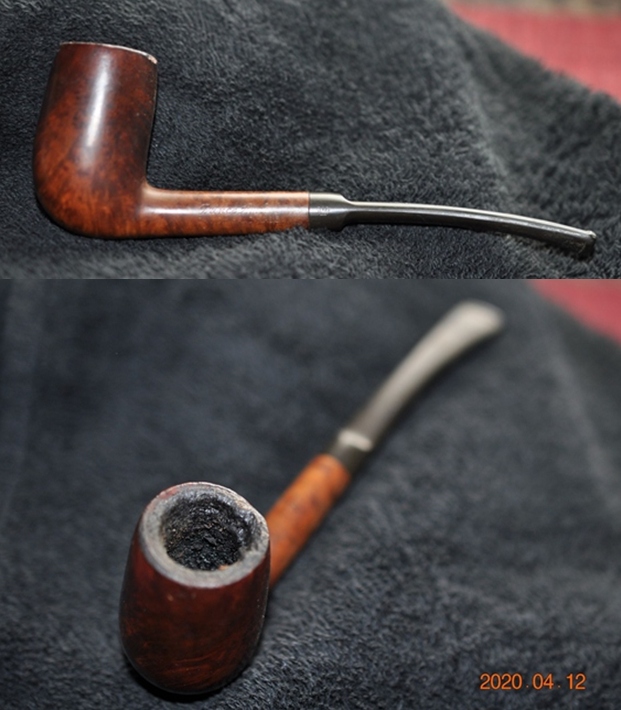
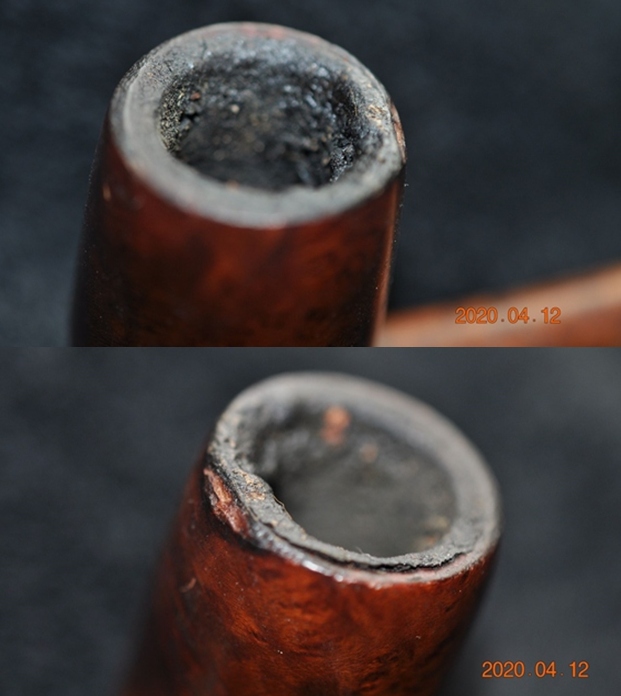
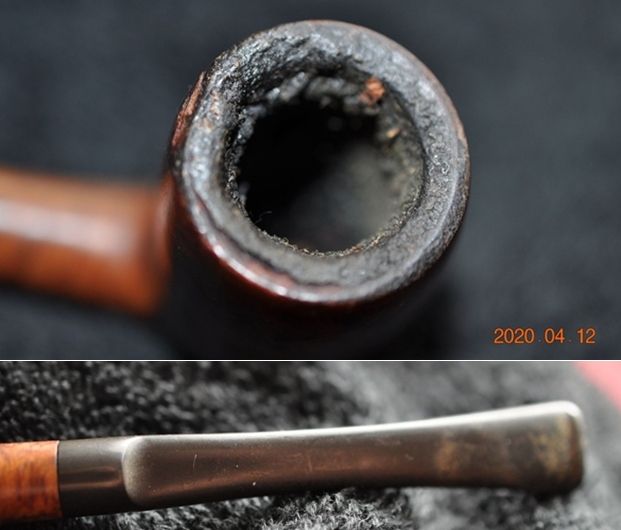
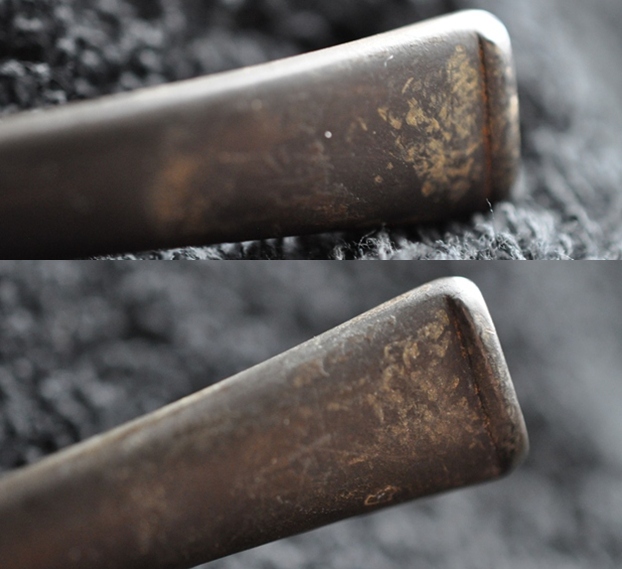
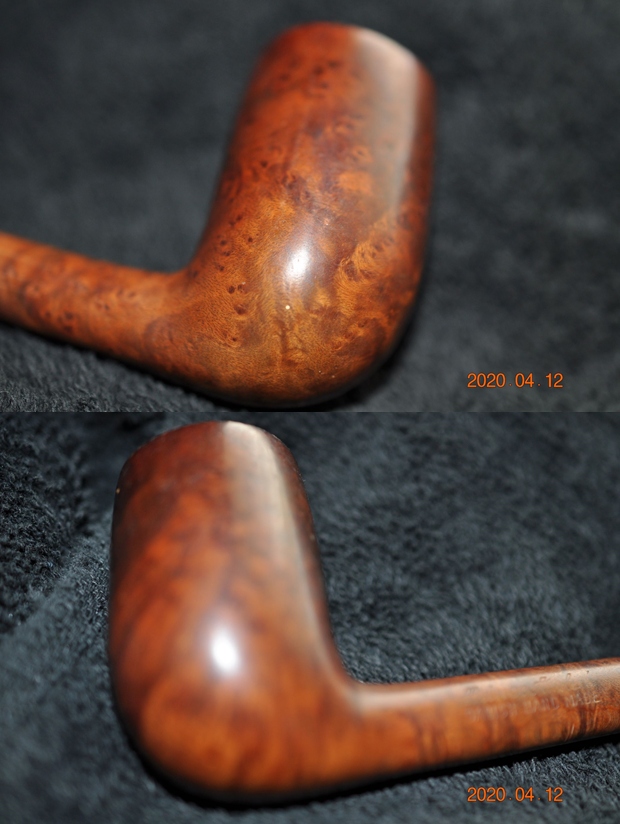
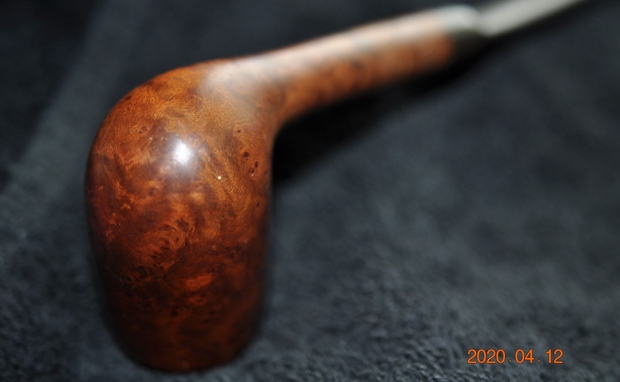
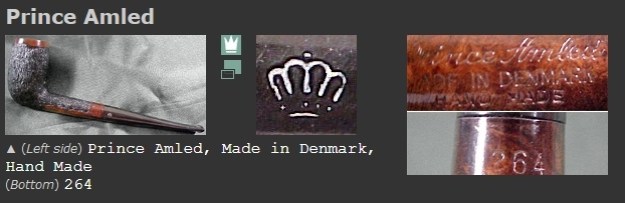
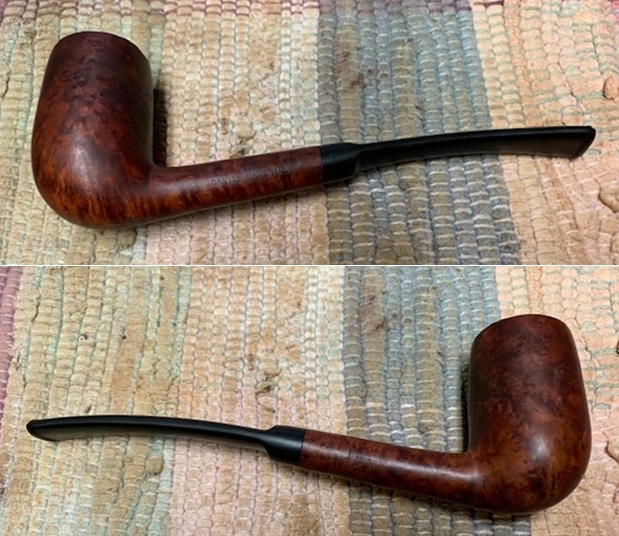
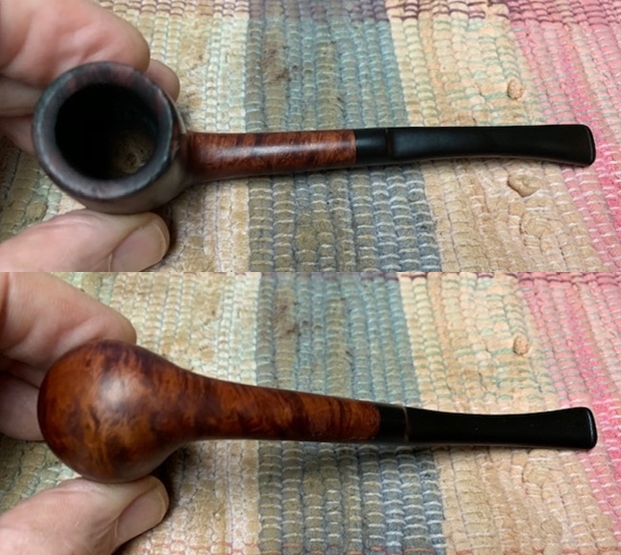
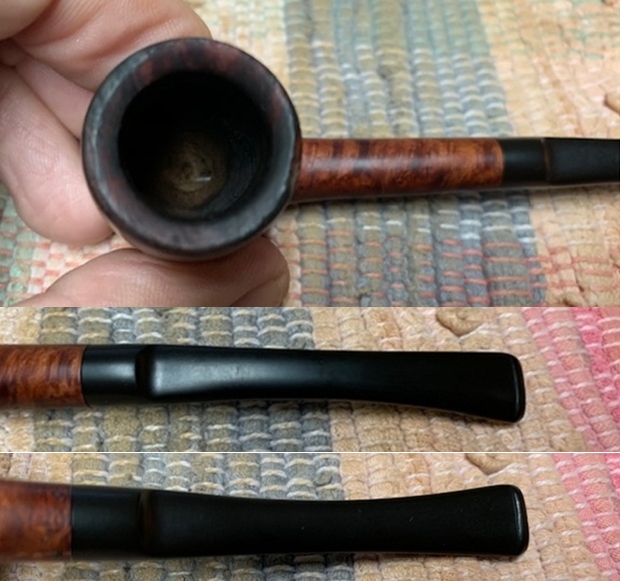
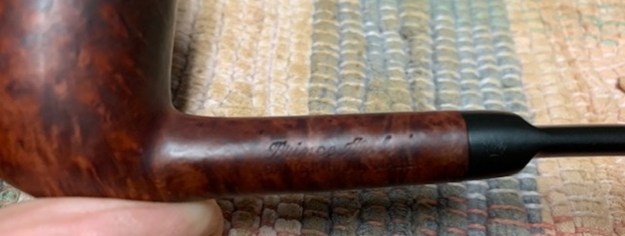
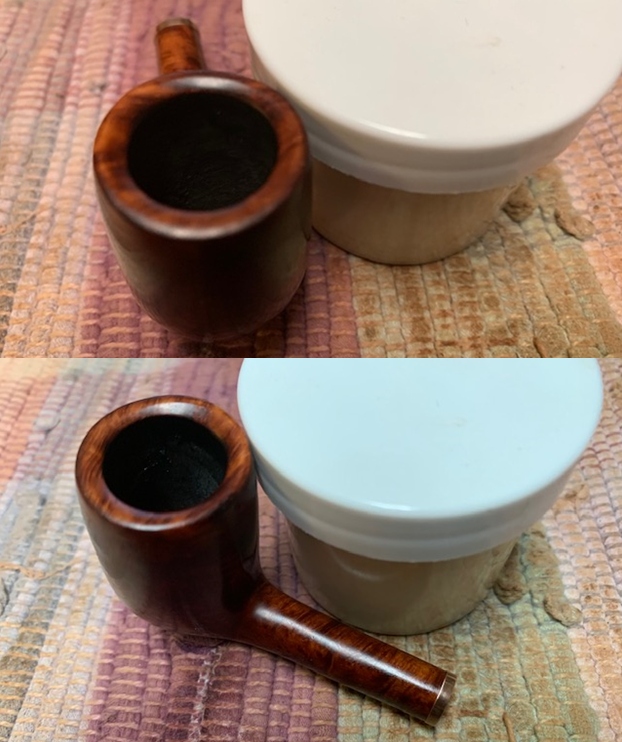
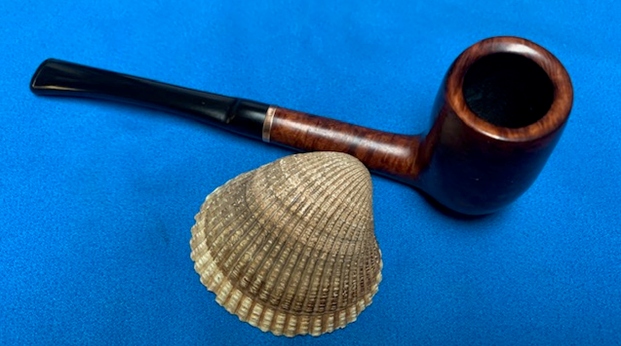
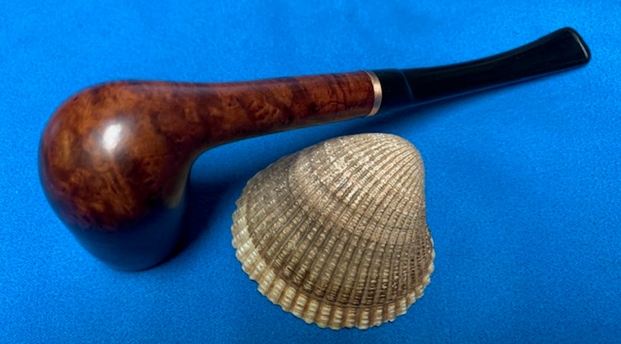
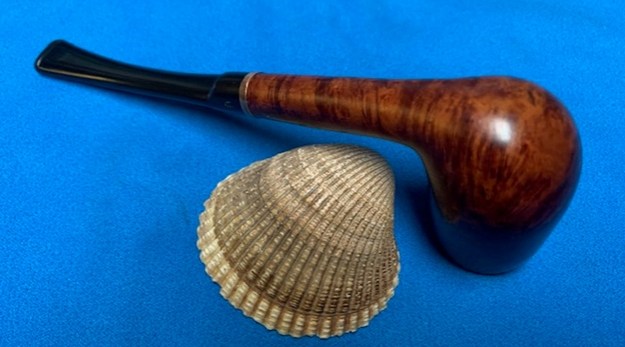
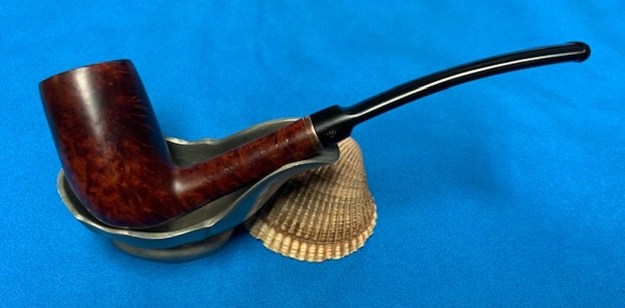
The next pipe on the worktable is a Danish Hand Made Stack. It has that classic tall bowled look that I have come to appreciate in these handmade pipes. It has some nice mixed grain around the bowl and shank that was dirty but visible. Jeff and I picked this pipe up an antique store on the Oregon Coast. The pipe is stamped on the left side of the shank and reads Prince Amled [over] Danish Hand Made. On the underside of the shank at the stem/shank junction it is stamped with the shape number 15. The left side of the saddle stem also has faintly stamped crown stamped into the vulcanite. The pipe is dirty with a thick cake in the bowl and a lava overflow and dusty in the rustication of the rim top. The inner edge of the rim is rough with damage to the beveled edge on the back side. The outside rim is missing a large chunk of briar on the back edge. There was an inch long crack on the lower right side of the shank from the shank end forward. The finish was dusty with grime ground into the finish around the sides of the bowl. The black vulcanite saddle stem is oxidized, calcified and has tooth marks and chatter on the top and underside near the button. Jeff took some photos of the pipe before he started his cleanup work. He took a photo of the bowl and rim top to show their general condition. You can see the thick lava on the rim top and the thick cake in the bowl. The damage on the rear inner edge of the bowl and the rear outside edge of the rim is very visible. The stem is oxidized, calcified and has tooth marks and chatter on both sides near the button and on the button surface.   Jeff took some photos of the sides and heel of the bowl to give an idea of the grain around the bowl. I cannot wait to see what it looks like once it is cleaned and polished.      He took a photo of the stamping on the stem but the stamping on the shank was faint and only readable through a lens. With the light and magnification the stamping was readable. There was also a stamp on the underside of the shank that read 15. You can also see the crack in the shank on the right side visible in the second photo.    Before I started to work on the pipe I wanted to learn about the brand. I remembered finding some information on Pipephil when I had worked on an earlier Prince Amled restoration. I turned to Pipephils site to read over the information on the Danish Hand Made Prince Amled brand (http://www.pipephil.eu/logos/en/logo-p5.html). I did a screen capture of what was on the site and I have included that below. It was another of those pipes with little information included.I turned to Pipedia see if there was any further information to help me with hunt for this pipe manufacturer (https://pipedia.org/wiki/Prince_Amled). The listing for that pipe company had some great photos but also an appeal for information on the brand. It looks like I had as much information as I could find online.
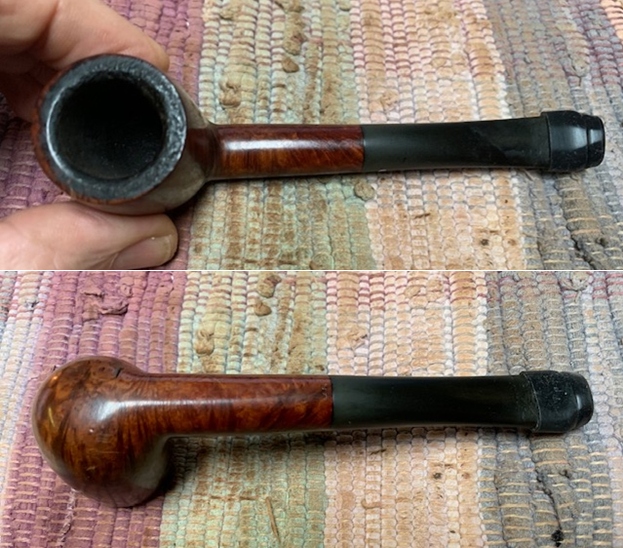
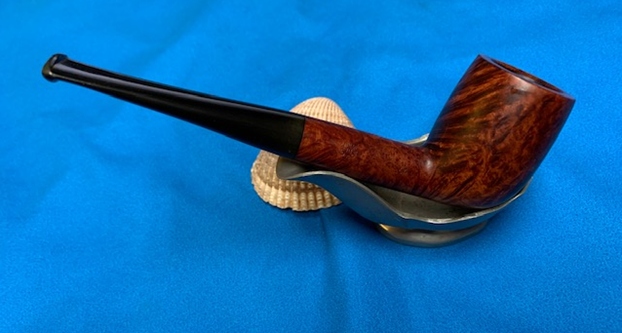
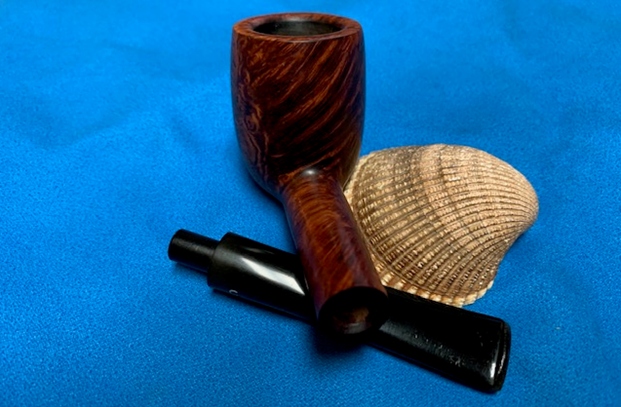
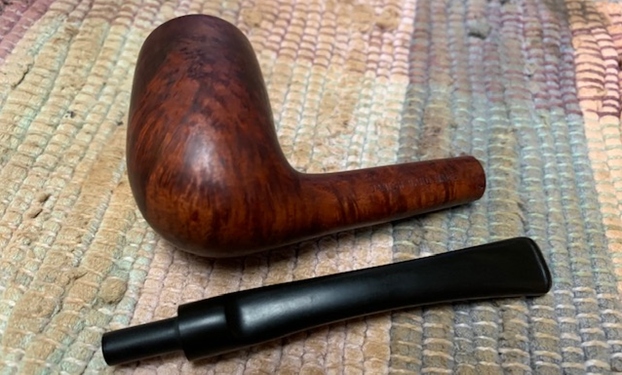
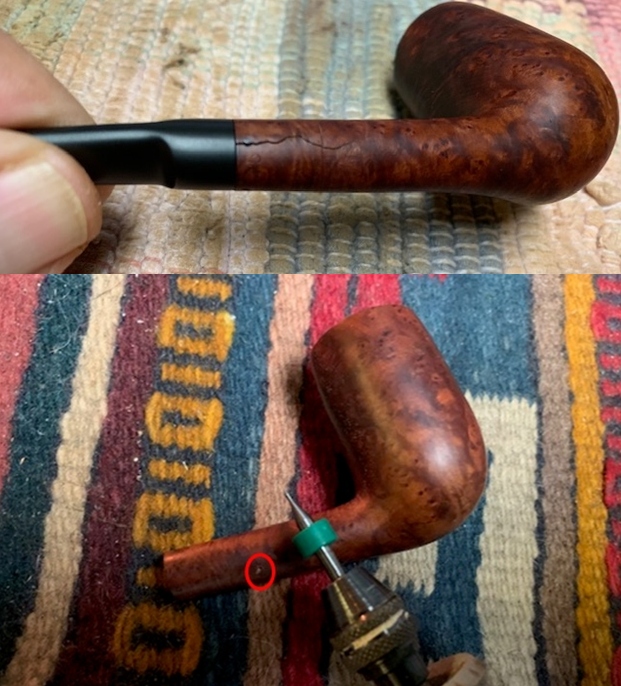
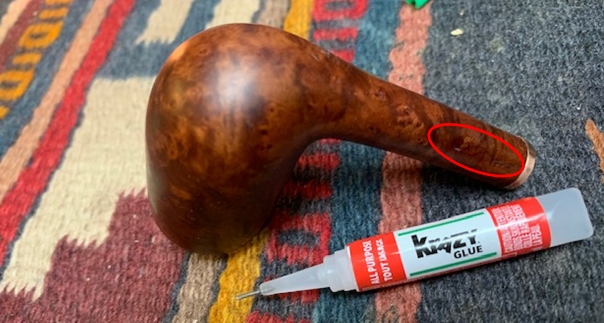
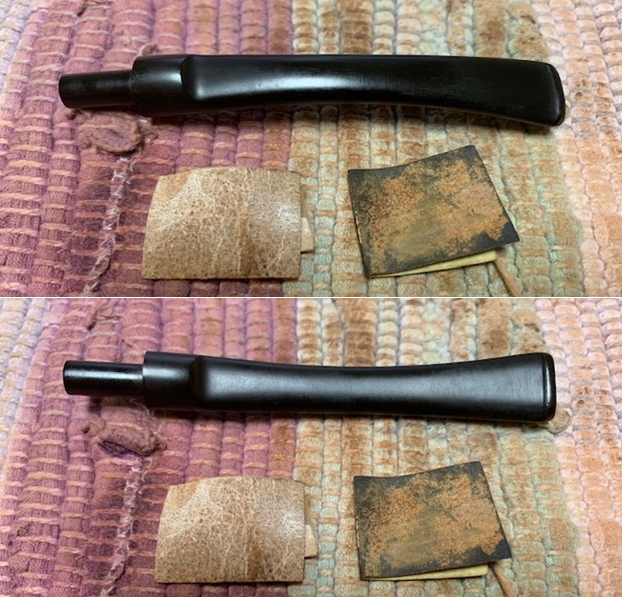
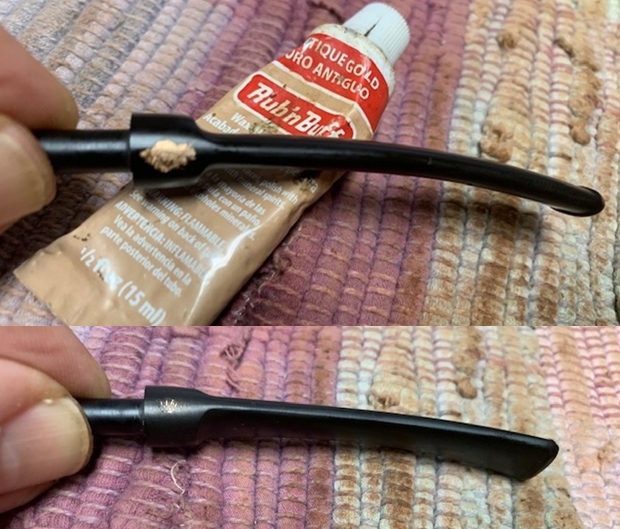
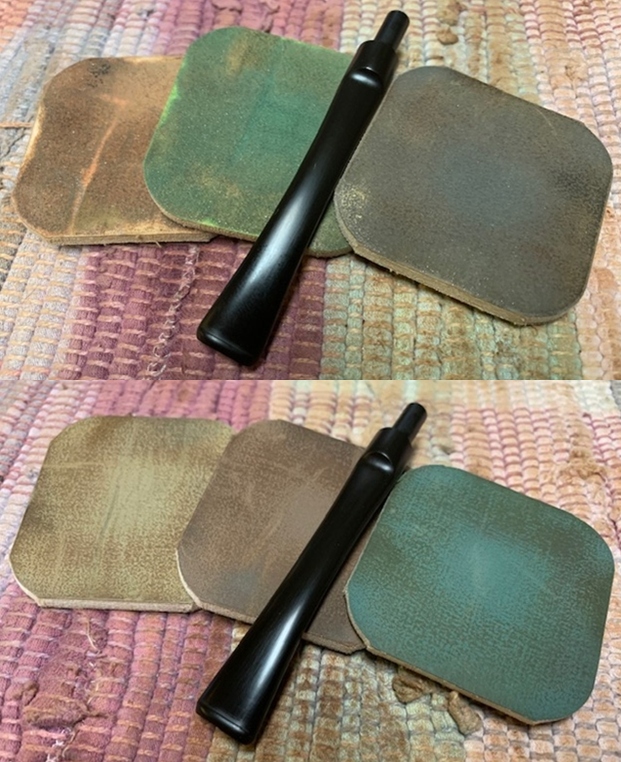
Now I had a pretty good idea of how the pipe was stamped and made. With that information I moved forward to work on the pipe itself and see what I had to do with it. Jeff had done an amazing job in removing all of the cake and the lava on the rim top. He had reamed the bowl with a PipNet Pipe Reamer and cleaned up the remnants with a Savinelli Fitsall Pipe Knife. He took the cake back to bare briar so we could check the walls for damage. He scrubbed the exterior of the bowl with Murphy’s Oil Soap and a tooth brush to remove the grime on the bowl and rim and was able to remove the lava and dirt. He cleaned out the interior of the bowl and shank with pipe cleaners, cotton swabs and alcohol until they came out clean. He cleaned the stem with Soft Scrub to remove the grime on the exterior and cleaned out the airway with alcohol, cotton swabs and pipe cleaners. He soaked the stem in Before & After Deoxidizer and rinsed if off and recleaned the inside of the stem with alcohol and pipe cleaners. I took photos of the pipe before I started my part of the restoration. I took some photos of the rim top and stem. You can see damage to the rim top and back outer edge of the bowl. The lava on the rim top cleaned up very well but the inner beveled edge. The close up photos of the stem shows that there are light tooth marks and chatter on the top and underside of the stem near the button. I took a photo of the stamping on the left side of the shank to show the condition. It is faint but it was readable. I removed the stem from the shank and took a photo of the pipe at this point. You can clearly see the condition, size and shape of the pipe.I used a folded piece of 220 grit sandpaper to smooth out the inner edge of the bowl and the beveled rim top. I filled in the chipped area on the outer edge of the back side of the bowl. Once the repair had cured I smoothed out the repair with the sandpaper. I took a photo of the finished rim repair.  With the rim repair finished it was time to repair the cracked shank. I traced it back to the terminal end of the crack and drilled a small pilot hole to keep the crack from spreading. I filled in the crack and the pilot hole with clear super glue. (I circled the pilot hole and the crack in the shank with a red circle in the photos below). I but a small bead of glue around the shank end and pressed a thin brass band onto the end of the shank to press the crack back together.  Once the glue cured I polished it and the rest of the bowl with micromesh sanding pads. I sanded the outside of the briar with micromesh sanding pads to polish the finish. I wet sanded with 1500-12000 grit sanding pads and wiped it down with a damp pad after each pad.  The bowl was in excellent condition as was the finish of the bowl after Jeff’s cleanup. I started my cleanup by working some Before & After Restoration Balm into the surface of the briar with my fingertips to clean, enliven and protect the briar. I let the balm sit for about ten minutes and then buffed with a cotton cloth to raise the shine. The photos show the bowl at this point in the restoration process.   I set the bowl aside and turned my attention to the stem. I sanded out the tooth marks and chatter on the stem surface with 220 grit sandpaper and started the polishing with 400 grit wet dry sandpaper.   I used some Rub’n Buff Antique Gold to touch up what remained of the stamp on the saddle stem. The crown came out clearly even though some of the edges were damaged. I polished the stem with micromesh sanding pads – dry sanding with 1500-12000 grit sanding pads. I wiped it down after each sanding pad with a cloth containing some Obsidian Oil. I finished polishing it with Before & After Pipe Stem Polish – both Fine and Extra Fine and buffed it off with a cotton cloth.    This Prince Amled Danish Hand Made Stack is a nice looking pipe. The finish looks very good and the thin brass band on the shank is also a great addition and gives the pipe a touch of class. I put the stem back on the bowl and buffed the pipe lightly with Blue Diamond on the buffing wheel. I carefully avoided the stamping on the shank sides during the process. I gave the bowl and the stem multiple coats of carnauba wax on the buffing wheel. I buffed it with a clean buffing pad on the buffer. I hand buffed the pipe with a microfiber cloth to deepen the shine. The finished pipe is an excellent example of a Hand Made Danish pipe. The grain follows the shape very well. Give the finished pipe a look in the photos below. I can only tell you that it is much prettier in person than the photos capture. The dimensions of the pipe are Length: 5 ½ inches, Height: 1 ¾ inches, Outside diameter of the bowl: 1 inch, Chamber diameter: 5/8 of an inch. This interesting Prince Amled Danish Stack is a great looking pipe in excellent condition. Thanks for walking through the restoration with me as I worked over this beautiful Danish Hand Made pipe. I will be adding it to the rebornpipes store soon. If you want to add it to your collection send me an email or a message! Thanks for your time.
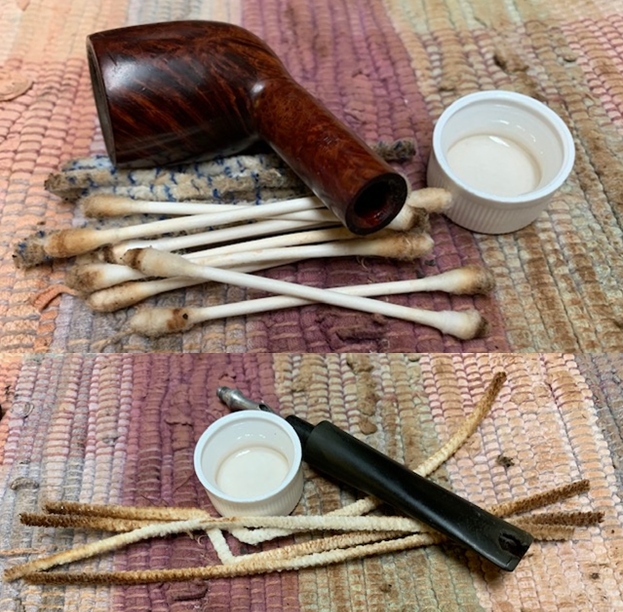
New Life for a Mastercraft French Made Birdseye Grain Bent Bulldog


Blog by Steve Laug

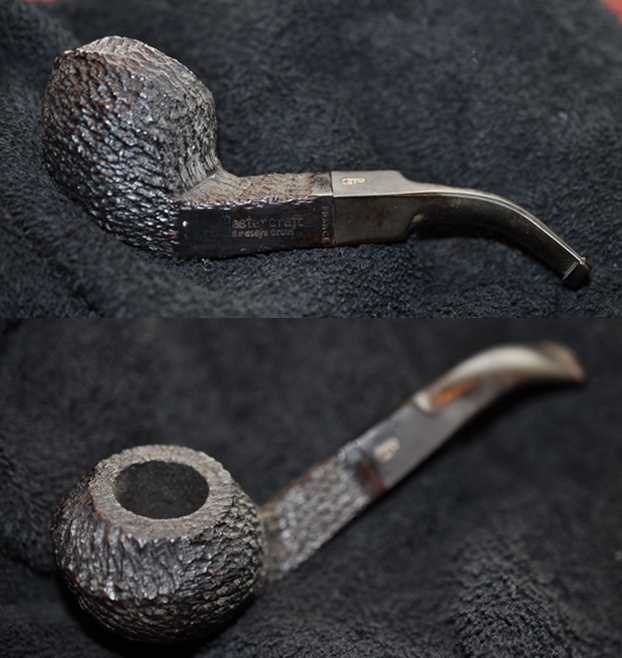
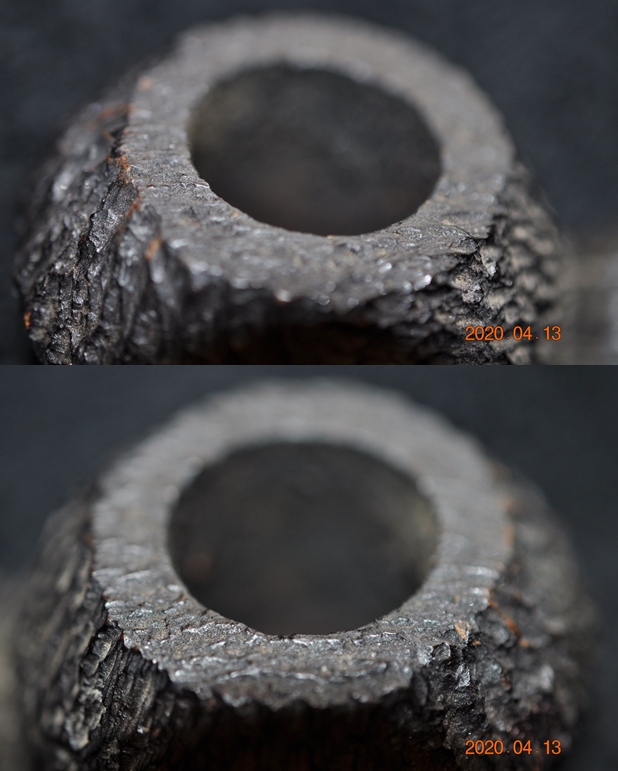
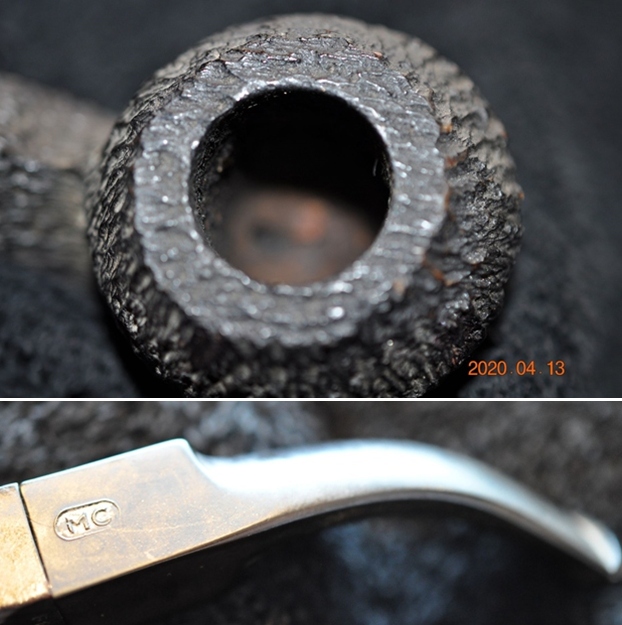
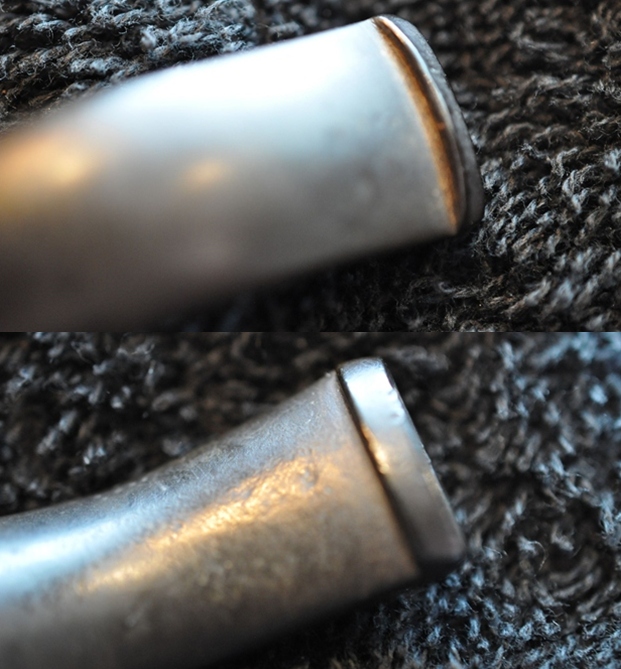
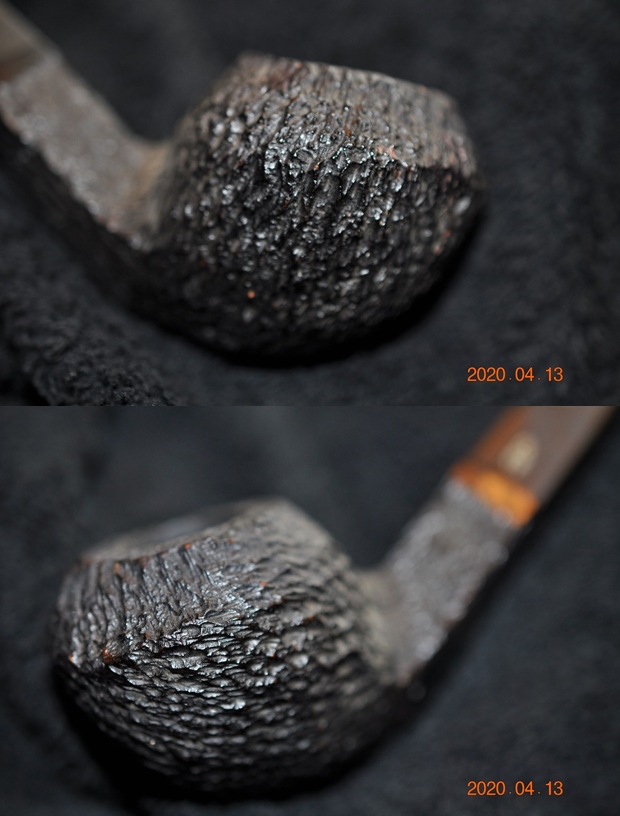
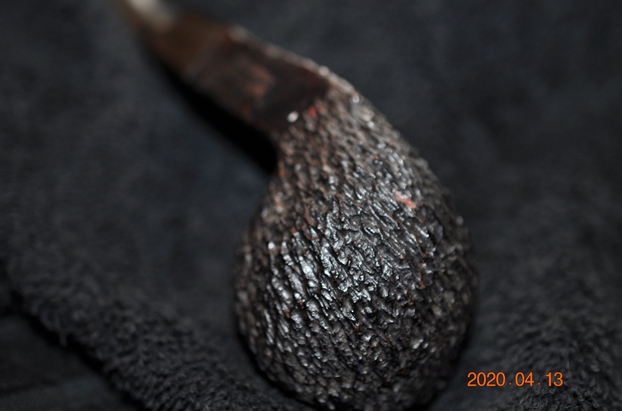
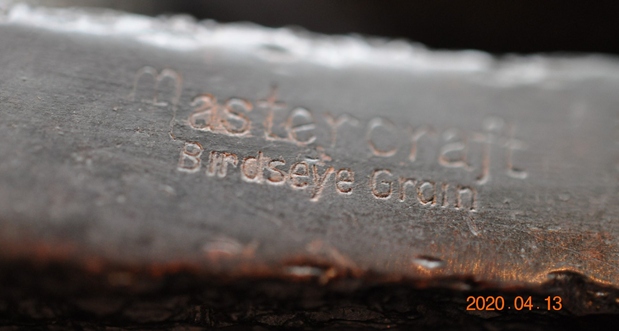
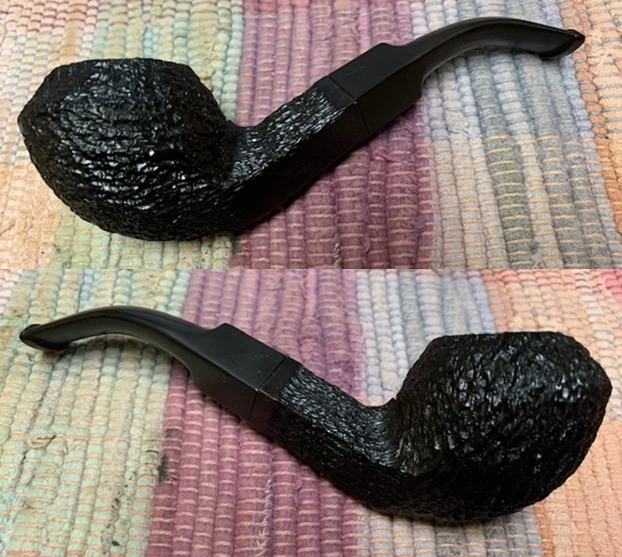
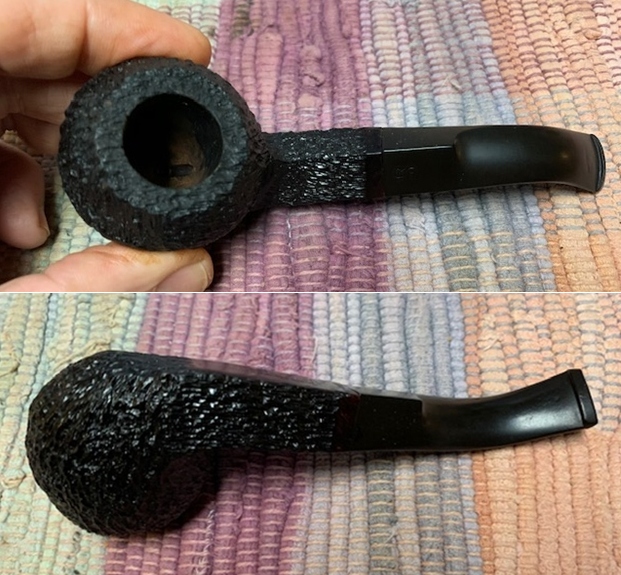
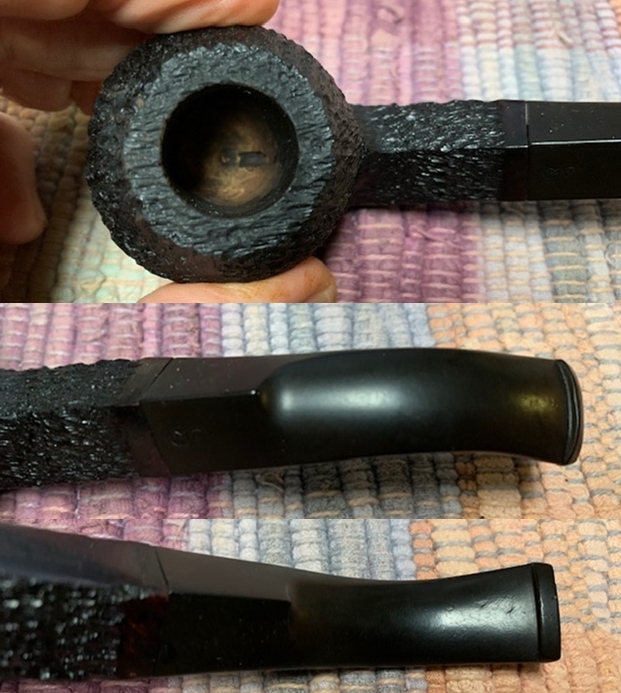
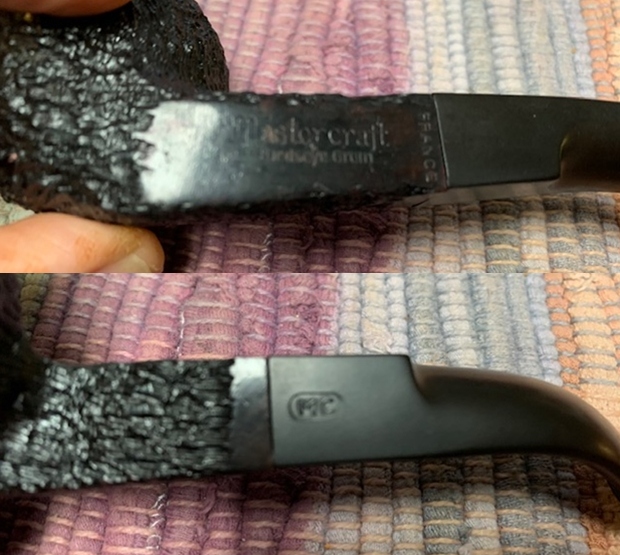
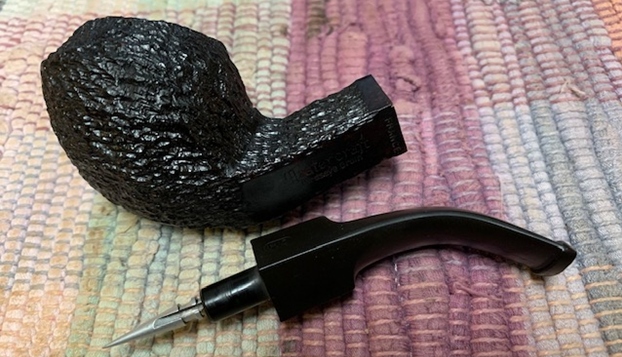
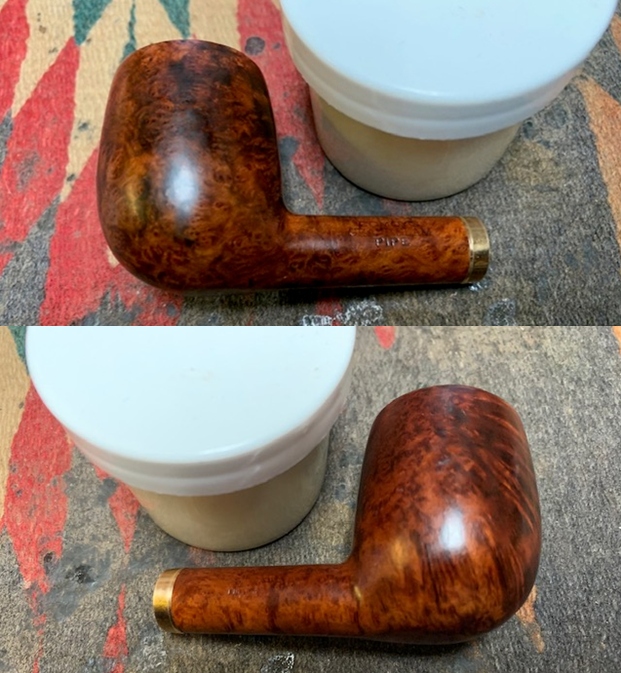
The next pipe on the worktable is from an American Importer and Distributor called Mastercraft. I will give more information on the brand later in the blog. This one is a classic rusticated finish Bulldog with a diamond shaped vulcanite saddle stem. It has a tight rustication pattern all the way around the bowl and shank. There is a smooth panel on the left underside of the shank. Jeff purchased from an antique store in Centerville, Iowa, USA. The pipe is stamped on the left underside of the shank and reads Mastercraft [over] Birdseye Grain. On the end of the shank on that smooth panel it is also stamped France. The left side of the saddle stem also has MC in and oval stamped into the vulcanite. The pipe is dirty with a thick cake in the bowl and a lava overflow and dusty in the rustication of the rim top. The inner edge of the rim looks very good. The finish was dusty with grime ground into the finish around the sides of the bowl. The black vulcanite stem is oxidized, calcified and has tooth marks and chatter on the top and underside near the button. Jeff took some photos of the pipe before he started his cleanup work. He took a photo of the bowl and rim top to show their general condition. You can see the lava on the rim top and the thick cake in the bowl. There is damage on the rear inner edge of the bowl. The stem is oxidized, calcified and has tooth marks and chatter on both sides near the button. Jeff took some photos of the sides and heel of the bowl to give an idea of the tight rusticated finish around the bowl. I cannot wait to see what it looks like once it is cleaned and polished.   He took a photo of the stamping on the sides of the shank to capture it for me. It is clear and readable. I turned to Pipephil to get a feel for the history of the brand and have included a screen capture of the pertinent section on the site below (http://www.pipephil.eu/logos/en/logo-m3.html). I quote: Mastercraft started in 1941 and belongs to Lane Ltd. Group.I turned to Pipedia for any additional information (https://pipedia.org/wiki/Mastercraft). The article gave and expanded history of the brand. For all intents and purposes Mastercraft was an importer of pipes and pipe related merchandise rather than a maker. I know that the stamping on the pipe identifies it as French made but I am not sure of the manufacturer.

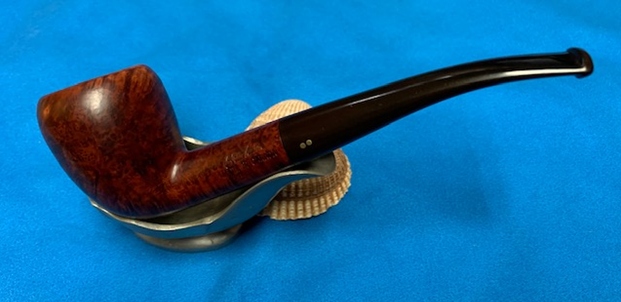
Now I had a pretty good idea of how the pipe was stamped and made. With that information I moved forward to work on the pipe itself and see what I had to do with it. Jeff had done an amazing job in removing all of the cake and the lava on the rim top. He had reamed the bowl with a PipNet Pipe Reamer and cleaned up the remnants with a Savinelli Fitsall Pipe Knife. He took the cake back to bare briar so we could check the walls for damage. He scrubbed the exterior of the bowl with Murphy’s Oil Soap and a tooth brush to remove the grime on the bowl and rim and was able to remove the lava and dirt. He cleaned out the interior of the bowl and shank with pipe cleaners, cotton swabs and alcohol until they came out clean. He cleaned the stem with Soft Scrub to remove the grime on the exterior and cleaned out the airway with alcohol, cotton swabs and pipe cleaners. He soaked the stem in Before & After Deoxidizer and rinsed if off and recleaned the inside of the stem with alcohol and pipe cleaners. I took photos of the pipe before I started my part of the restoration. I took some photos of the rim top and stem. The rim top and inner edge of the bowl looks very good. The close up photos of the stem shows that there are tooth marks and chatter on the top and underside of the stem near the button.  I took a photo of the stamping on the underside of the shank to show the stamping. It is clear and readable. The second photo shows the MC logo on the left side of the saddle stem.  I removed the stem from the shank and took a photo of the pipe at this point. You can clearly see the condition, size and shape of the pipe.The bowl was in excellent condition as was the finish of the bowl after Jeff’s cleanup. I started my cleanup by working some Before & After Restoration Balm into the surface of the briar with my fingertips and a horsehair shoe brush to clean, enliven and protect the briar. I let the balm sit for about ten minutes and then buffed with a cotton cloth to raise the shine. The photos show the bowl at this point in the restoration process.   I set the bowl aside and turned my attention to the stem.  I “painted” the surface of the vulcanite with the flame to lift the tooth marks in the top and underside. I was able to lift many of them. I filled the remaining tooth marks with black super glue and set it aside to cure.    I used a needle file to smooth out the repairs. I blended it into the surface of the vulcanite beginning with the file. I followed that up with 220 grit sandpaper and started the polishing with 400 grit wet dry sandpaper. I used some liquid paper to touch up what remained of the stamp on the saddle stem. The MC was readable though the oval surrounding it was damaged.I polished the stem with micromesh sanding pads – dry sanding with 1500-12000 grit sanding pads. I wiped it down after each sanding pad with a cloth containing some Obsidian Oil. I finished polishing it with Before & After Pipe Stem Polish – both Fine and Extra Fine and buffed it off with a cotton cloth.   This Mastercraft Birdseye Grain Rusticated Bulldog is a nice looking pipe. The finish looks very good and the rustication is tight and sharp. I put the stem back on the bowl and buffed the pipe lightly with Blue Diamond on the buffing wheel. I carefully avoided the stamping on the shank sides during the process. I gave the bowl multiple coats of Conservator’s Wax and the stem multiple coats of carnauba wax on the buffing wheel. I buffed it with a clean buffing pad on the buffer. I hand buffed the pipe with a microfiber cloth to deepen the shine. The finished pipe is an excellent example of the tightly rusticated Mastercraft pipes from France that was distributed by Mastercraft. The rustication follows the shape very well. Give the finished pipe a look in the photos below. I can only tell you that it is much prettier in person than the photos capture. The dimensions of the pipe are Length: 5 ½ inches, Height: 1 ¾ inches, Outside diameter of the bowl: 1 ½ Chamber diameter: ¾ of an inch. This interesting MasterCraft Bent Bulldog that is stamped Birdseye Grain is a great looking pipe in excellent condition. Thanks for walking through the restoration with me as I worked over another beautiful pipe. I will be adding it to the rebornpipes store soon. If you want to add it to your collection send me an email or a message! Thanks for your time.
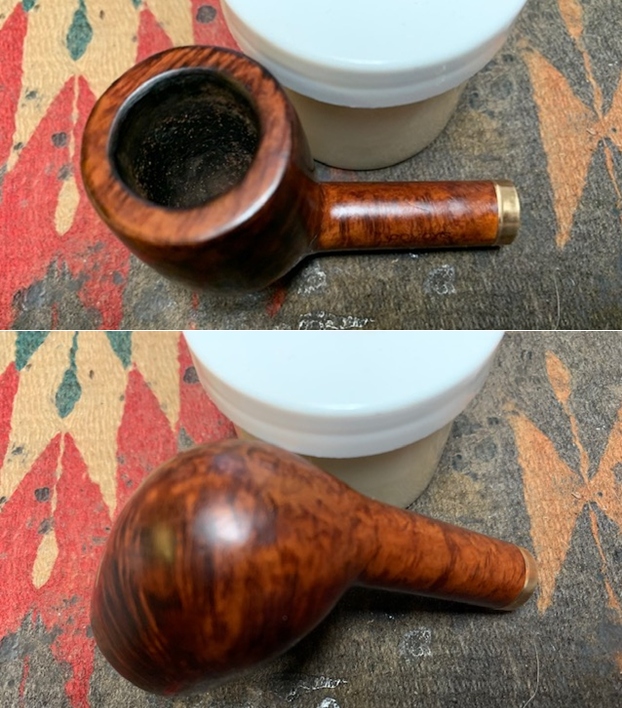
New Life for an American Made LHS Certified Purex Pencil Shank Prince


Blog by Steve Laug

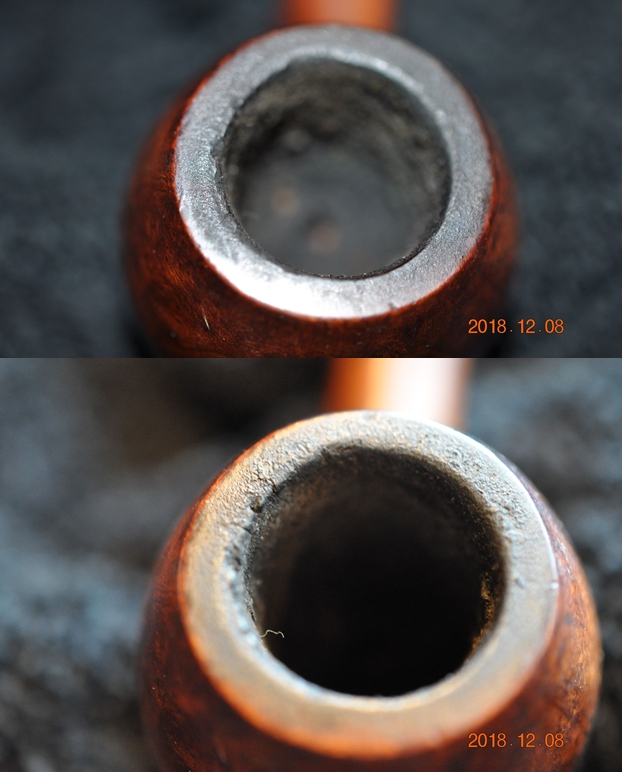
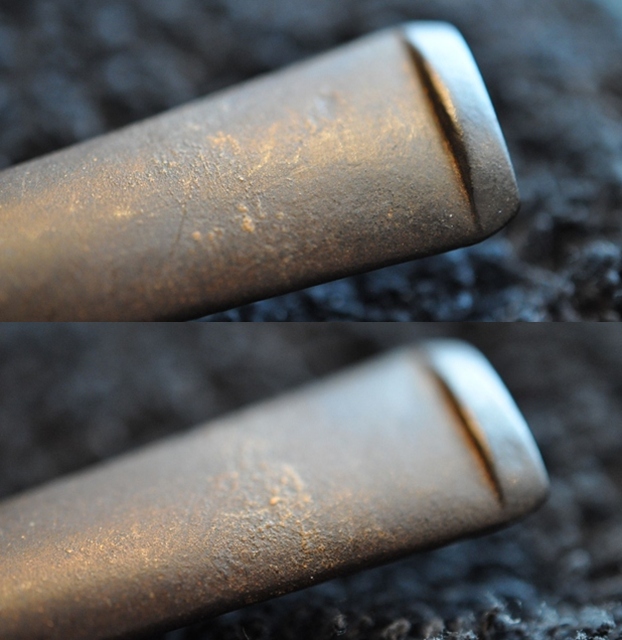
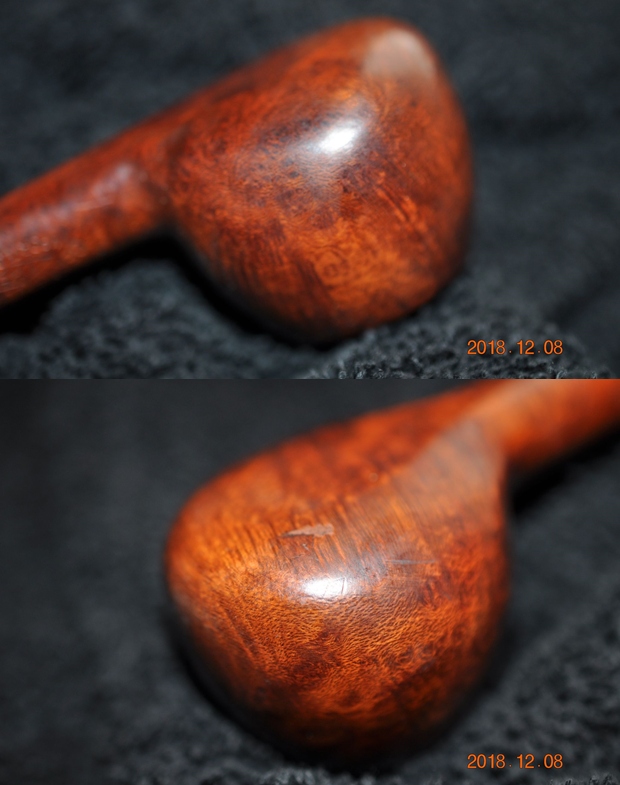
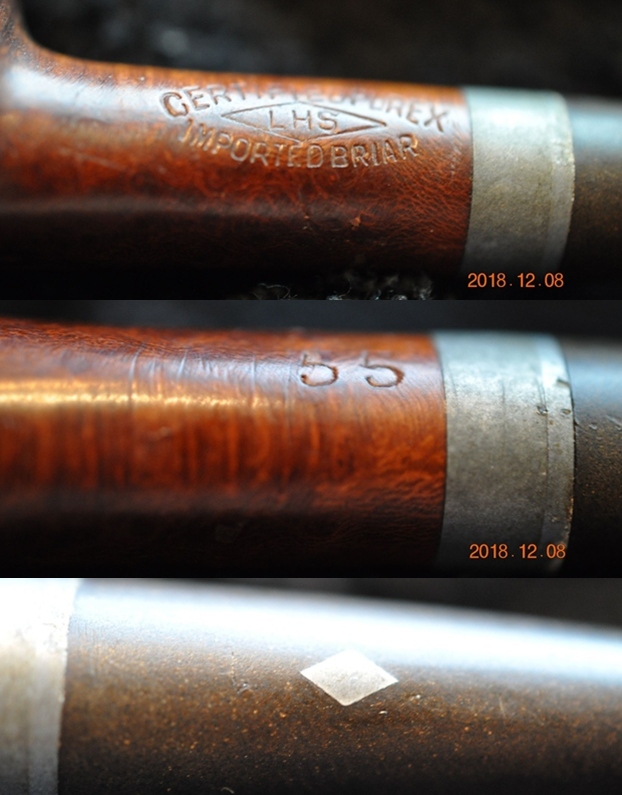
The next pipe on the worktable is another American made pipe from LH Stern of Brooklyn, New York. I will give more information on the brand later in the blog. This one is a classic smooth finished, grained flat bottom Prince with a thin taper vulcanite stem. It has a mix of grain around the bowl and shank sides. Jeff purchased it from an online auction on 03/06/18 from Nampa, Idaho, USA so it has been around the shop for a while. The pipe is stamped on the left side of the shank and reads Certified Purex [over] LHS in a diamond [over] Imported Briar. On the underside of the shank it is stamped with the shape number 55. The pipe is dirty with a thick cake in the bowl and a thick lava overflow on the rim top. It looks like the inner edge of the rim is damaged on the back side of the bowl. The finish was dusty with grime ground into the finish around the sides of the bowl. The black vulcanite stem is oxidized, calcified and has tooth marks and chatter on the top and underside near the button. Jeff took some photos of the pipe before he started his cleanup work. He took a photo of the bowl and rim top to show their general condition. You can see the lava on the rim top and the thick cake in the bowl. There is damage on the rear inner edge of the bowl. The stem is oxidized, calcified and has tooth marks and chatter on both sides near the button.      Jeff took some photos of the sides and heel of the bowl to give an idea of the grain around the bowl. I cannot wait to see what it looks like once it is cleaned and polished. He took a photo of the stamping on the sides of the shank to capture it for me. It is clear and readable. I turned to Pipephil to get a feel for the history of the brand and have included a screen capture of the pertinent section on the site below (http://www.pipephil.eu/logos/en/logo-lhs.html). I quote:

The L&H Stern Inc. was established by Ludwig Stern (1877-1942) in 1911. His brother Hugo (1872-?) acted as vice-president & secretary. The firm moved to 56 Pearl St. Brooklyn in 1920. It closed down in the 1960s. LHS was one of the main pipe supplier for US soldiers during WWII.I turned to Pipedia for any additional information (https://pipedia.org/wiki/LHS). The article gave and expanded history of the brand and a list of the grades of pipes in 1944. I have included that below.

The brand had 8 pipe grades listed in the 1944 issue of Outdoor Magazine.

Sterncrest Ultrafine $ 10

Sterncrest 14K $ 7.50

Sterncrest Sterling $ 5

Certified Purex $3.50

Select Grain $2.50

Sivercrest $ 2

Superfine Purex $1.50

Sculpted Purex $1.50

 In addition to the above grades, a 1944 catalog also listed the following lines and models:

Barrister

Marwyn

Park Lane

Radmanol

Warwick

Additional notes: Some models were made before, during, and after WWII. LHS was one of the main pipe supplier for US soldiers during WWII.

Pre-war pipes were stamped Real Briar Root, or Briar Root. Some war time pipes were made from domestic briar, or “American” briar and were void of any briar stampings. Many American pipe makers lost their over seas supply of Mediterranean briar shortly before and during the war. Post war pipes were stamped Imported Briar to assure customers that they were buying premium briar once again.

Now I had a pretty good idea of how the pipe was stamped and made. With that information I moved forward to work on the pipe itself and see what I had to do with it. Jeff had done an amazing job in removing all of the cake and the lava on the rim top. He had reamed the bowl with a PipNet Pipe Reamer and cleaned up the remnants with a Savinelli Fitsall Pipe Knife. He took the cake back to bare briar so we could check the walls for damage. He scrubbed the exterior of the bowl with Murphy’s Oil Soap and a tooth brush to remove the grime on the bowl and rim and was able to remove the lava and dirt. He cleaned out the interior of the bowl and shank with pipe cleaners, cotton swabs and alcohol until they came out clean. He cleaned the stem with Soft Scrub to remove the grime on the exterior and cleaned out the airway with alcohol, cotton swabs and pipe cleaners. He soaked the stem in Before & After Deoxidizer and rinsed if off and recleaned the inside of the stem with alcohol and pipe cleaners. I took photos of the pipe before I started my part of the restoration. I took some photos of the rim top and stem. The rim top and inner edge of the bowl shows damage and burned areas. It is out of round and will need some work. The close up photos of the stem shows that the surface of the stem is pitted. There are tooth marks and chatter on the top and underside of the stem near the button.  I took a photo of the stamping on the side and the underside of the shank to show the condition after the cleanup. This stamping is readable and looks good.  I removed the stem from the shank and took a photo of the pipe at this point. You can clearly see the condition, size and shape of the pipe.I started my part of the restoration work on this pipe by addressing the damage and darkening on the edge of the rim, particularly on the front and rear of the inner edge. I used a folded piece of 220 grit sandpaper to remove the damage to the bowl.  I started polishing the edge with 400 grit wet dry sandpaper.  I sanded the outside of the briar with micromesh sanding pads to polish the finish. I wet sanded with 1500-12000 grit sanding pads and wiped it down with a damp pad after each pad.     I worked some Before & After Restoration Balm into the surface of the briar with my fingertips to clean, enliven and protect the briar. I let the balm sit for about ten minutes and then buffed with a cotton cloth to raise the shine. The photos show the bowl at this point in the restoration process.  I set the bowl aside and turned my attention to the stem. I polished the stem with micromesh sanding pads – dry sanding with 1500-12000 grit sanding pads. I wiped it down after each sanding pad with a cloth containing some Obsidian Oil. I finished polishing it with Before & After Pipe Stem Polish – both Fine and Extra Fine and buffed it off with a cotton cloth.   This LHS Certified Purex Prince with a pencil shank and stem is a nice looking pipe. The finish looks very good and the grain stands out. I put the stem back on the bowl and buffed the pipe with Blue Diamond on the buffing wheel. I carefully avoided the stamping on the shank sides during the process. I gave the bowl and the stem multiple coats of carnauba wax on the buffing wheel and followed that by buffing it with a clean buffing pad on the buffer. I hand buffed the pipe with a microfiber cloth to deepen the shine. The finished pipe is an excellent example of the Purex line of pipes that were made by LHS Stern. The flow of the grain and the way the shape follows it is very well done. Give the finished pipe a look in the photos below. I can only tell you that it is much prettier in person than the photos capture. The dimensions of the pipe are Length: 6 inches, Height: 1 ¼ inches, Outside diameter of the bowl: 1 ¼ Chamber diameter: ¾ of an inch. This interesting LHS Certified Purex Prince is a great looking pipe in excellent condition. Thanks for walking through the restoration with me as I worked over another beautiful pipe. I will be adding it to the rebornpipes store soon. If you want to add it to your collection send me an email or a message! Thanks for your time.
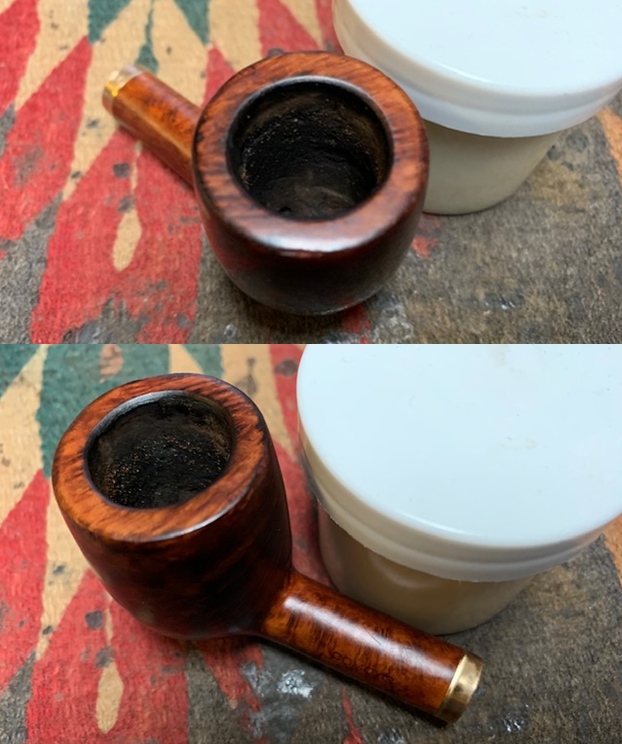
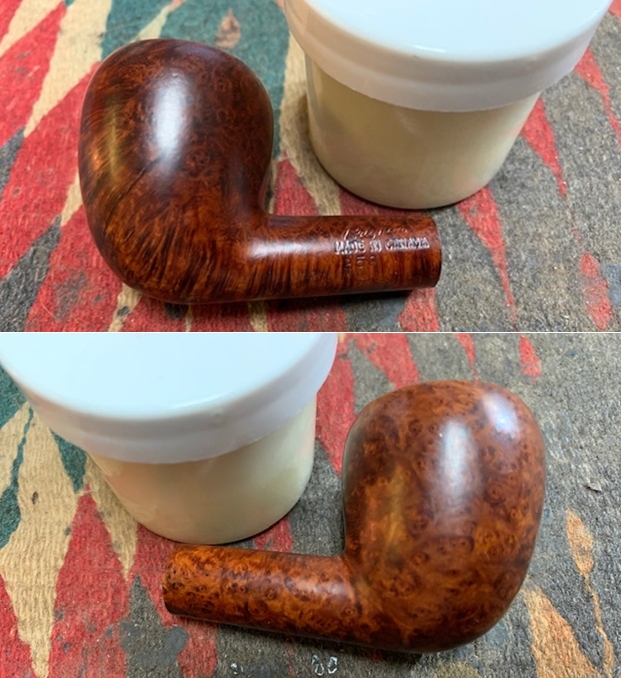
New Life for an American Made Pipes By Lee Limited Edition 3 Star Rhodesian


Blog by Steve Laug

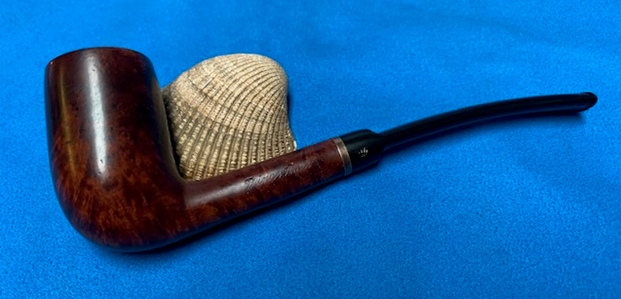
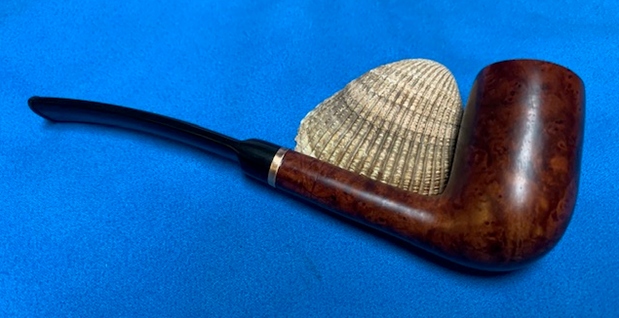
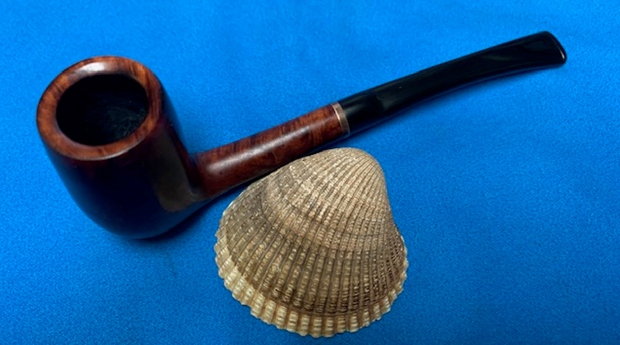
The next pipe on the worktable is another American made pipe from Pipe by Lee out of New York City. I will give more information on the brand later in the blog. This one is a classic smooth finished, beautifully grained Rhodesian with a vulcanite saddle stem. It has some great flame grain around the bowl and shank sides with birdseye on the rim and shank top and heel of the bowl. Jeff and I purchased it along with other pipes from a fellow in Cornwall, Pennsylvania. The pipe is stamped on the left side of the shank and reads Pipes by Lee [over] Limited Edition. On the right side it is stamped and reads An Authentic Imported Briar. On the underside of the shank is carved ’51 [over] Rochester with an underline. Jeff and I were speaking about the pipe and we remembered that the fellow we bought it from in Pennsylvania went to Rochester Institute of Technology, New York and he bought the pipe at that time – 1951. The pipe is dirty with a thick cake in the bowl and some light lava on the rim top. The finish was dusty and there was dust in the twin rings around the rim cap. It was also ground into the finish around the sides of the bowl. The vulcanite saddle stem is oxidized, calcified and has tooth marks and chatter on the top and underside near the button. Jeff took some photos of the pipe before he started his cleanup work. He took a photo of the bowl and rim top to show their general condition. You can see the light lava on the rim top and the thick cake in the bowl. The stem is oxidized, calcified and has tooth marks and chatter on both sides near the button.      Jeff took some photos of the sides and heel of the bowl to give an idea of the grain around the bowl and shank. It has some great grain around the bowl sides and bottom – a mix of birdseye, straight and flame grain. I cannot wait to see what it looks like once it is cleaned and polished.   He took a photo of the stamping on the sides of the shank to capture it for me. It is clear and readable. Aaron Henson written about the restoration of a Pipes By Lee 3 Star Rhodesian similar to this on in the past so I turned there first to read about it. I am including the link to the blog if you wish to check it out on your own. (https://rebornpipes.wordpress.com/wp-admin/post.php?post=37004&action=edit&classic-editor).

Aaron had included pic of the flyer to the left that gives a sense of the hierarchy of  the brand. I know that even though the flyer says it goes up to 5 stars I have seen 7 star pipes in the past.

I turned to Pipephil to get a feel for the history of the brand and have included a screen capture of the pertinent section on the site below (http://www.pipephil.eu/logos/en/logo-l3.html). I am also including the side bar information that was on the site.

This brand was distributed by Stewart-Allen Co, Inc. NY. Grading (ascending): 1 to 5 stars Early pipes have seven pointed brass stars, middle run have five points and later pipes are stamped with coloured gold stars. Lee seconds: Briar Lee , Gold Coast.

I turned to Pipedia for any additional information as did not find anything new. I have included the link in case some of you might want to check it out (https://pipedia.org/wiki/Lee).Now I had a pretty good idea of how the pipe was stamped and made. With that information I moved forward to work on the pipe itself and see what I had to do with it. Jeff had done an amazing job in removing all of the cake and the lava on the rim top. He had reamed the bowl with a PipNet Pipe Reamer and cleaned up the remnants with a Savinelli Fitsall Pipe Knife. He took the cake back to bare briar so we could check the walls for damage. He scrubbed the exterior of the bowl with Murphy’s Oil Soap and a tooth brush to remove the grime on the bowl and rim and was able to remove the lava and dirt. He cleaned out the interior of the bowl and shank with pipe cleaners, cotton swabs and alcohol until they came out clean. He cleaned the stem with Soft Scrub to remove the grime on the exterior and cleaned out the airway with alcohol, cotton swabs and pipe cleaners. He soaked the stem in Before & After Deoxidizer and rinsed if off and recleaned the inside of the stem with alcohol and pipe cleaners. I took photos of the pipe before I started my part of the restoration. I took some photos of the rim top and stem. The rim top and bowl looked very good. The damage to the front left inner edge and right rear inner edge of the bowl are visible in the photo. The close up photos of the stem shows the tooth marks and chatter on the top and underside of the stem near the button.  The stem is also slightly overclocked to the right.I took a photo of the stamping on the sides and underside of the shank to show the condition after the cleanup. It looks good.  I removed the stem from the shank and took a photo of the pipe at this point. You can clearly see the condition, size and shape of the pipe.I started my part of the restoration work on this pipe by addressing the overclocked stem. I heat the tenon in the stem to loosen the glue that holds it and then twisted the stem into position and aligned it on the shank. I let the pipe cool and the glue reset before removing the stem.I addressed the damage and darkening on the edge of the rim, particularly on the front and rear of the inner edge. I used a folded piece of 220 grit sandpaper to remove the damage to the bowl.  I started polishing the edge with 400 grit wet dry sandpaper.  I sanded the outside of the briar with micromesh sanding pads to polish the finish. I wet sanded with 1500-12000 grit sanding pads and wiped it down with a damp pad after each pad.   I worked some Before & After Restoration Balm into the surface of the briar with my fingertips to clean, enliven and protect the briar. I let the balm sit for about ten minutes and then buffed with a cotton cloth to raise the shine. The photos show the bowl at this point in the restoration process.  I set the bowl aside and turned my attention to the stem. I “painted” the stem surface with the flame of a lighter to lift the tooth marks. I was able to lift most of them using this method. I filled in the remaining marks with black super glue and set the stem aside while the repairs cured. I sanded the stem with 220 grit sandpaper and 400 grit wet dry sandpaper to remove the scratching in the vulcanite.  I polished the stem with micromesh sanding pads – dry sanding with 1500-12000 grit sanding pads. I wiped it down after each sanding pad with a cloth containing some Obsidian Oil. I finished polishing it with Before & After Pipe Stem Polish – both Fine and Extra Fine and buffed it off with a cotton cloth.   This Pipes by Lee Limited Edition 3 Star Rhodesian is a nice looking pipe. The finish looks very good and the grain stands out. I put the stem back on the bowl and buffed the pipe with Blue Diamond on the buffing wheel. I carefully avoided the stamping on the shank sides during the process. I gave the bowl and the stem multiple coats of carnauba wax on the buffing wheel and followed that by buffing it with a clean buffing pad on the buffer. I hand buffed the pipe with a microfiber cloth to deepen the shine. The finished pipe is an excellent example of the pipes that were made by Pipes by Lee. The flow of the grain and the way the shape follows it is very well done. Give the finished pipe a look in the photos below. I can only tell you that it is much prettier in person than the photos capture. The dimensions of the pipe are Length: 5 ½ inches, Height: 1 ½ inches, Outside diameter of the bowl: 1 ¾ Chamber diameter: 7/8 of an inch. This interesting Pipes by Lee Rhodesian is a great looking pipe in excellent condition. Thanks for walking through the restoration with me as I worked over another beautiful pipe. I will be adding it to the rebornpipes store soon. If you want to add it to your collection send me an email or a message! Thanks for your time.