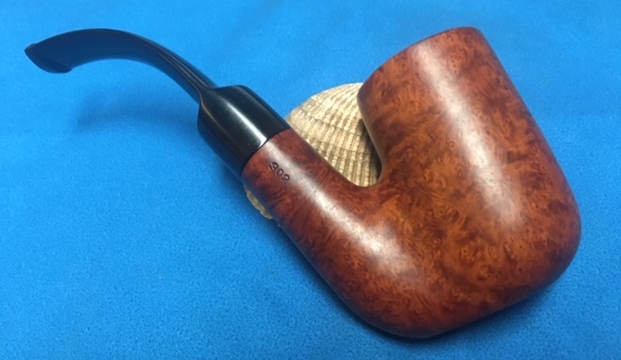
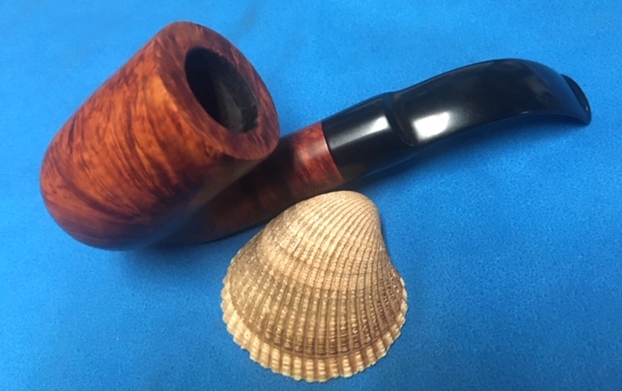
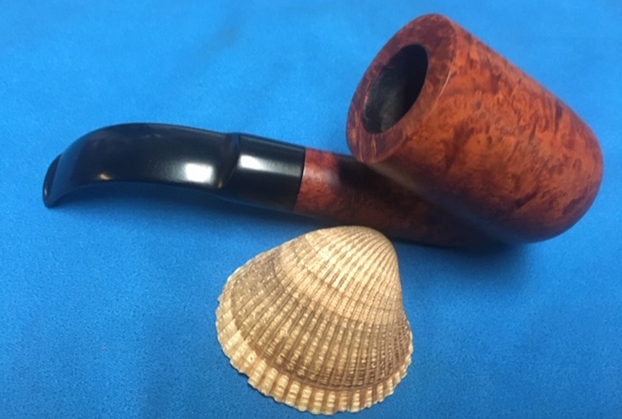
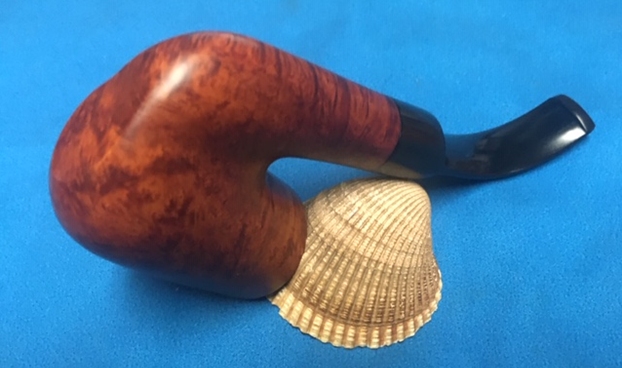
Monthly Archives: March 2020

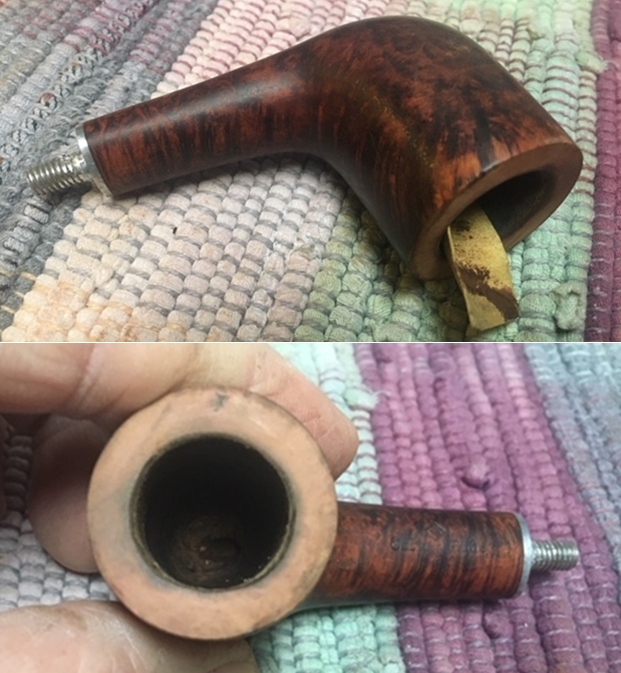
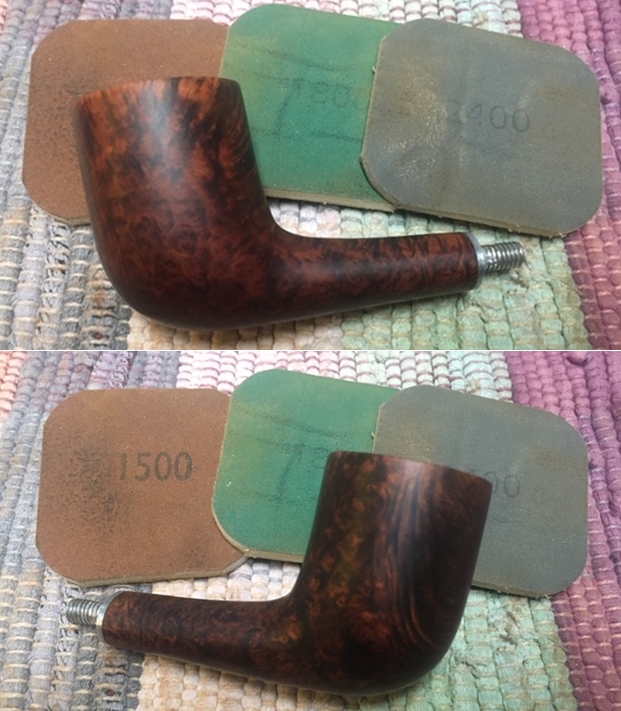
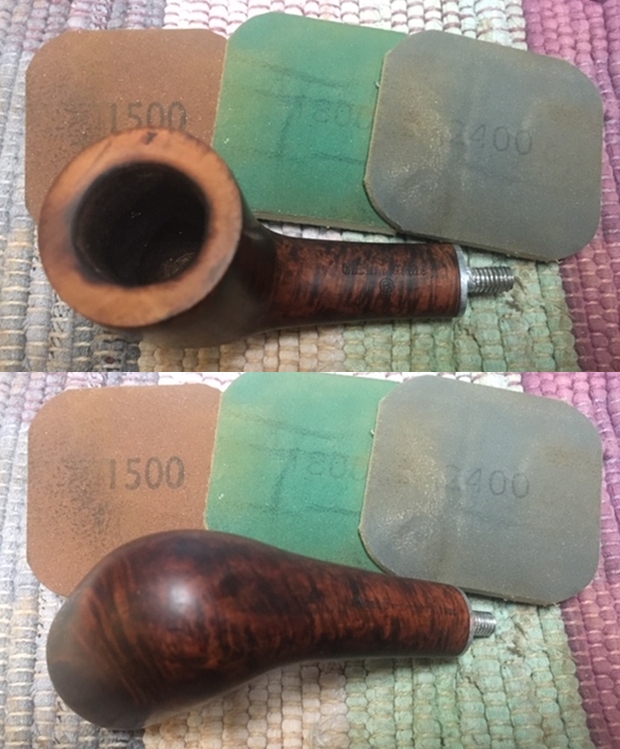
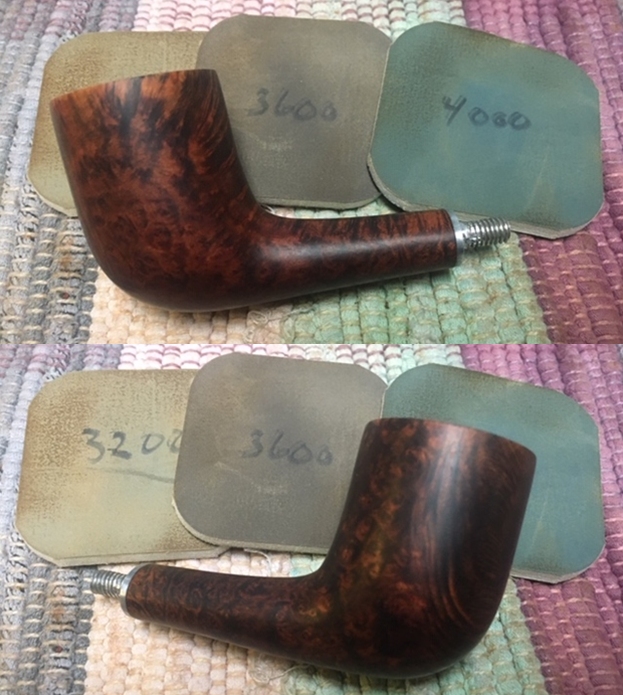
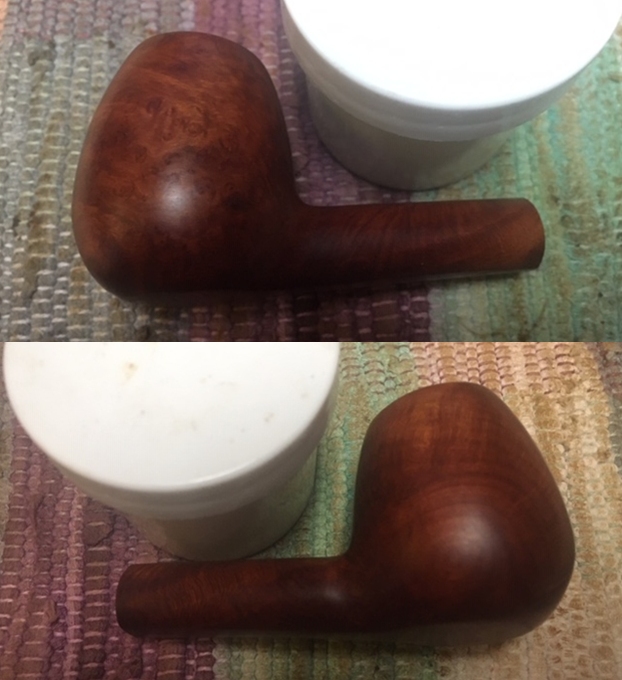
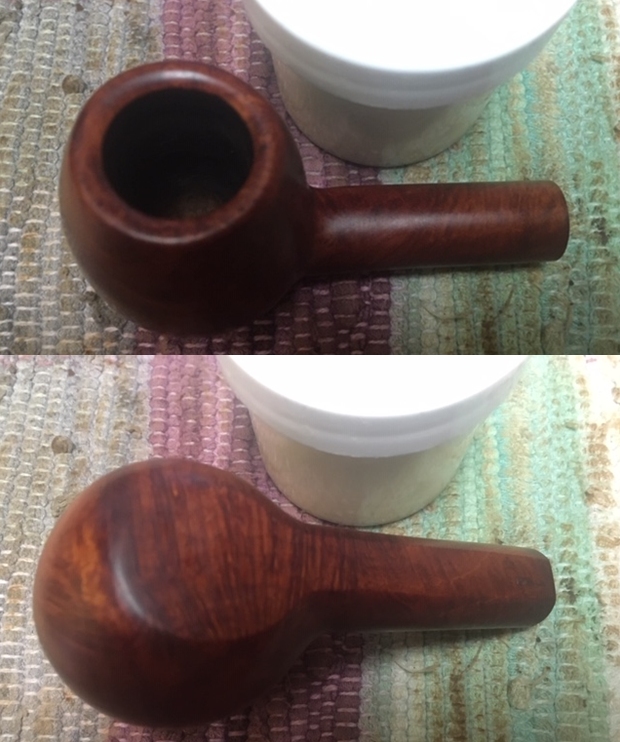
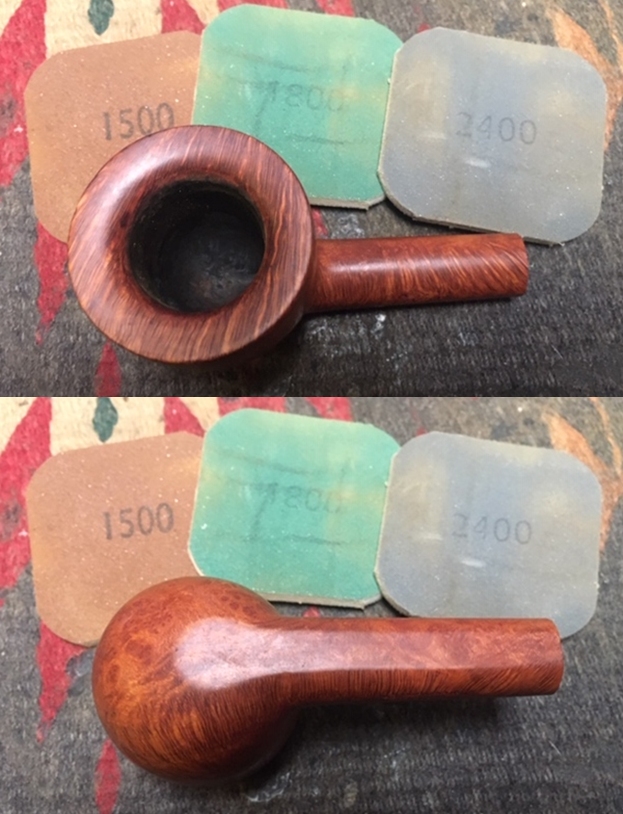
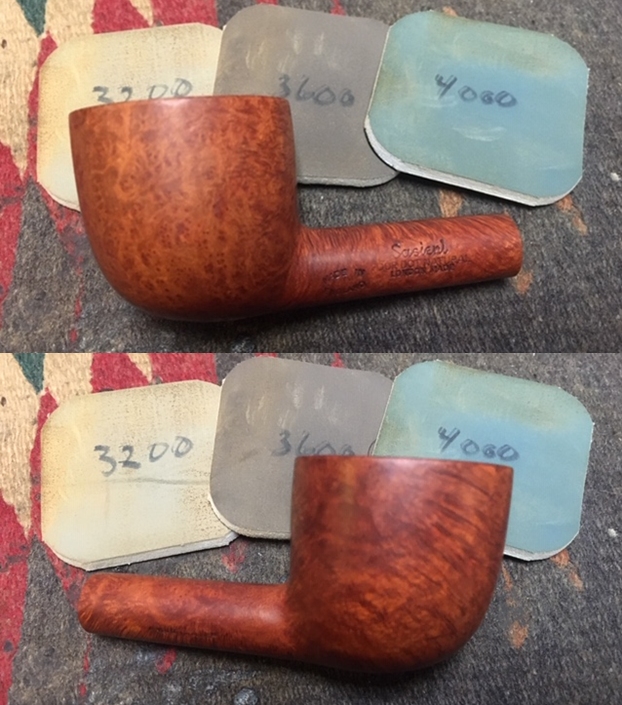
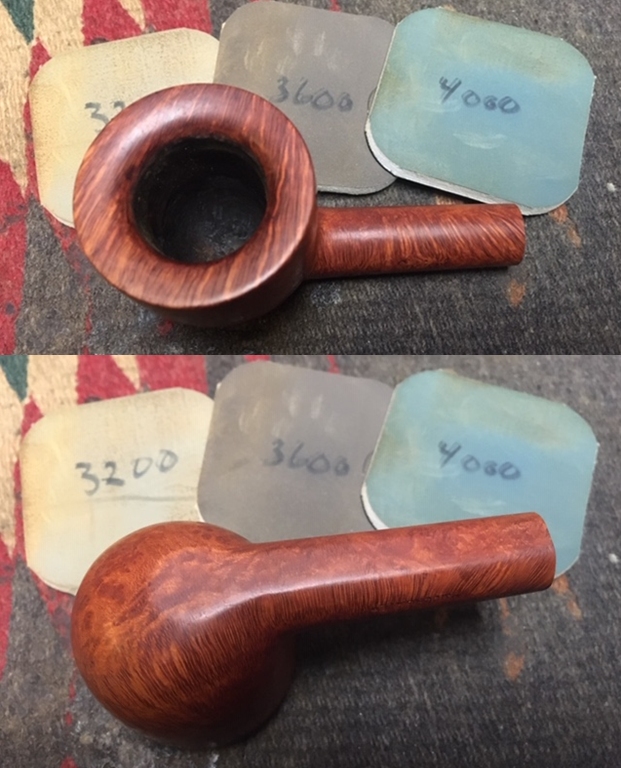
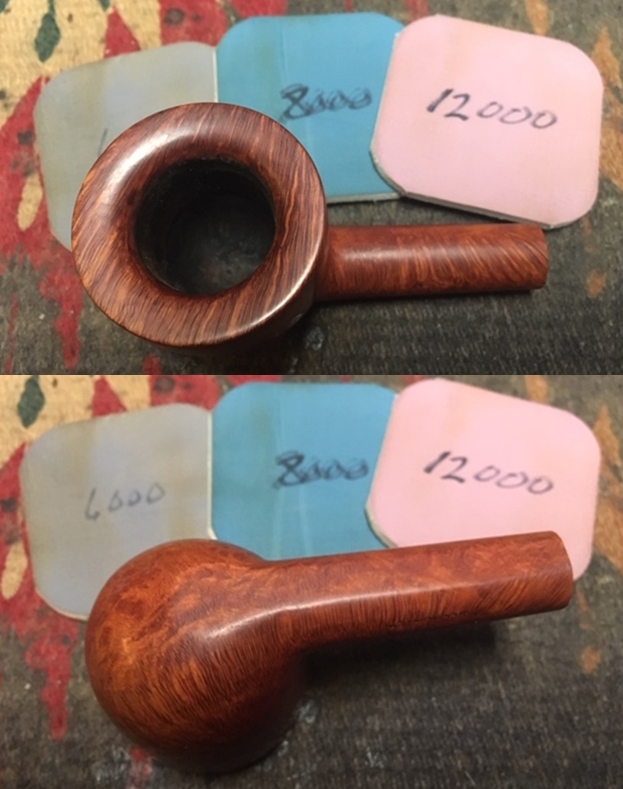
Repairing a Burned Rim Edge and Chewed Stem on an English Ben Wade 76 Canadian


Blog by Steve Laug

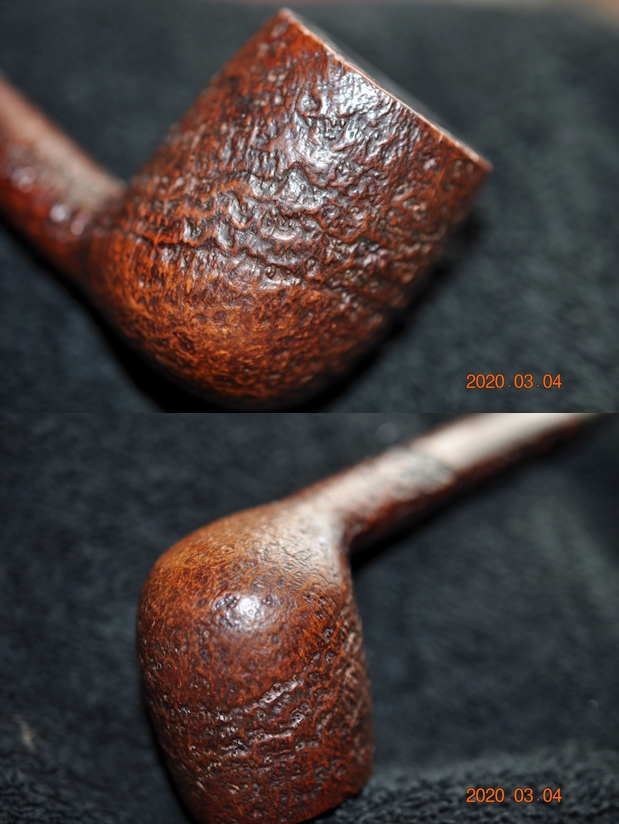
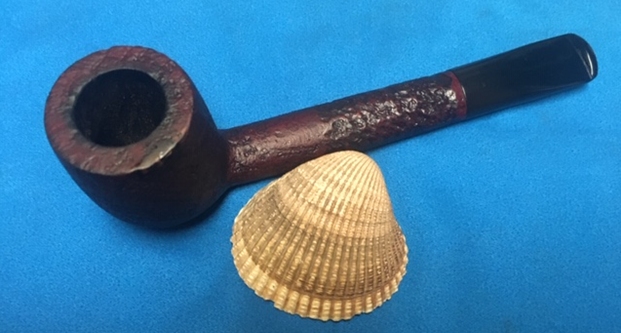
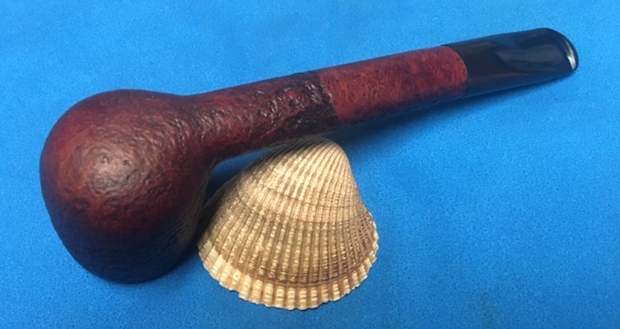
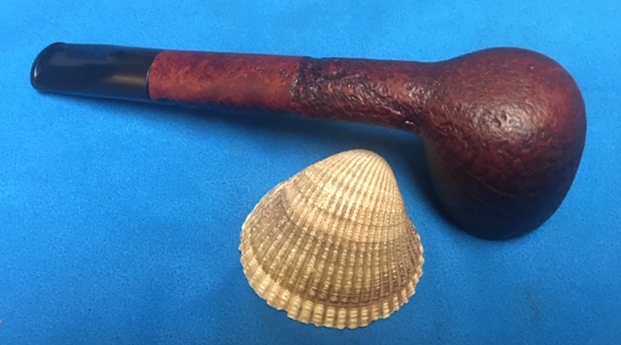
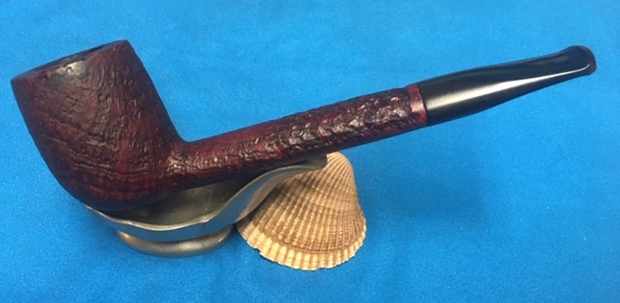
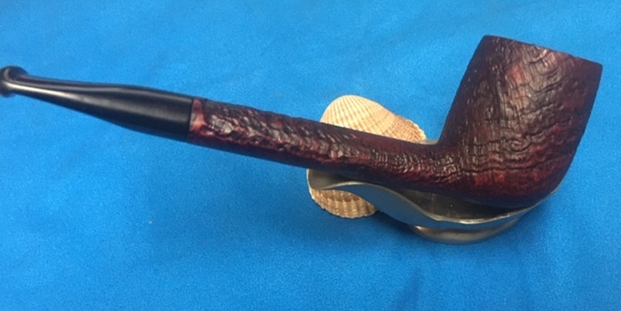
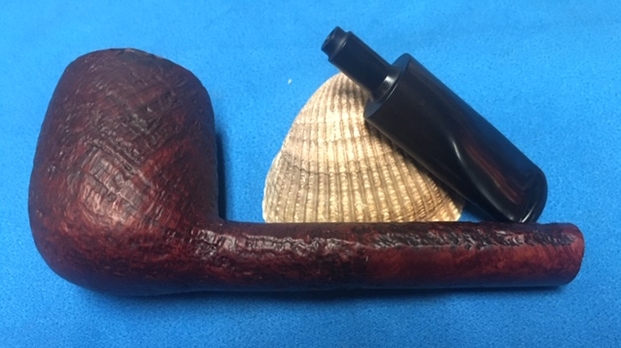
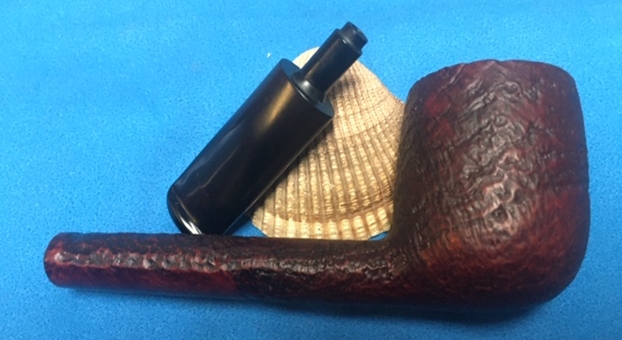
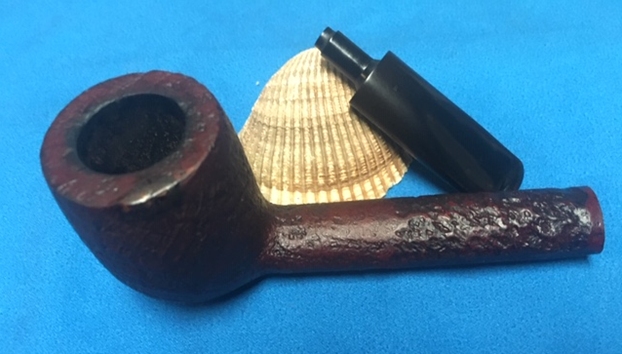
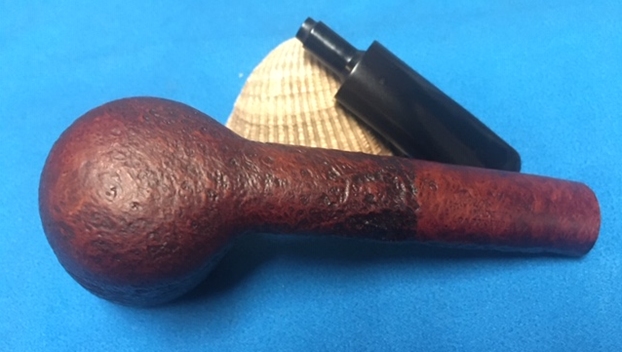
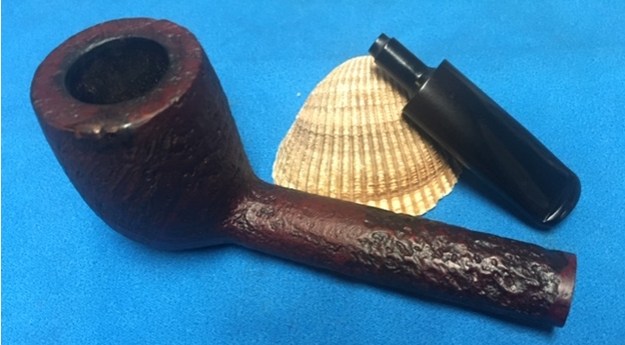
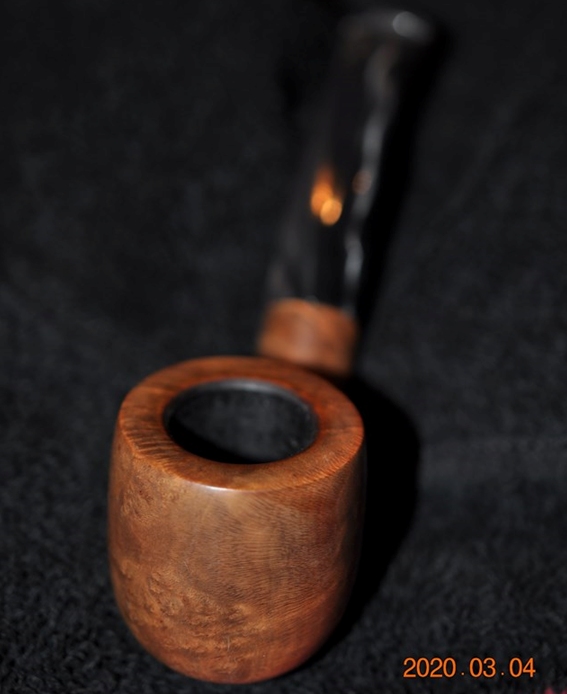
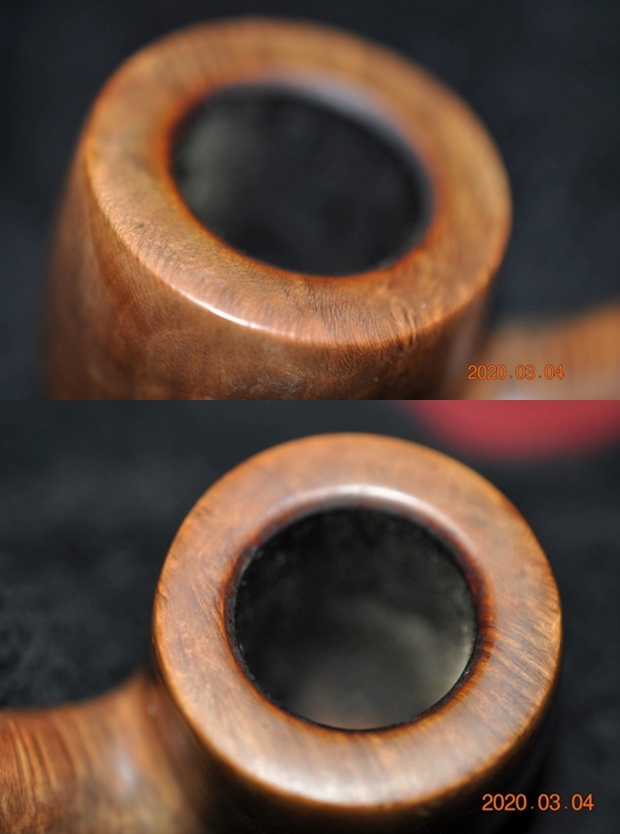
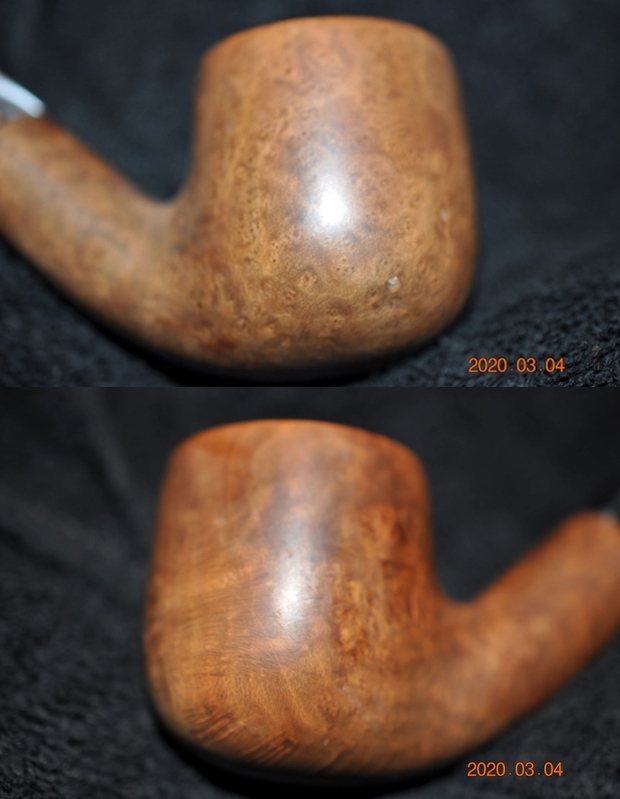
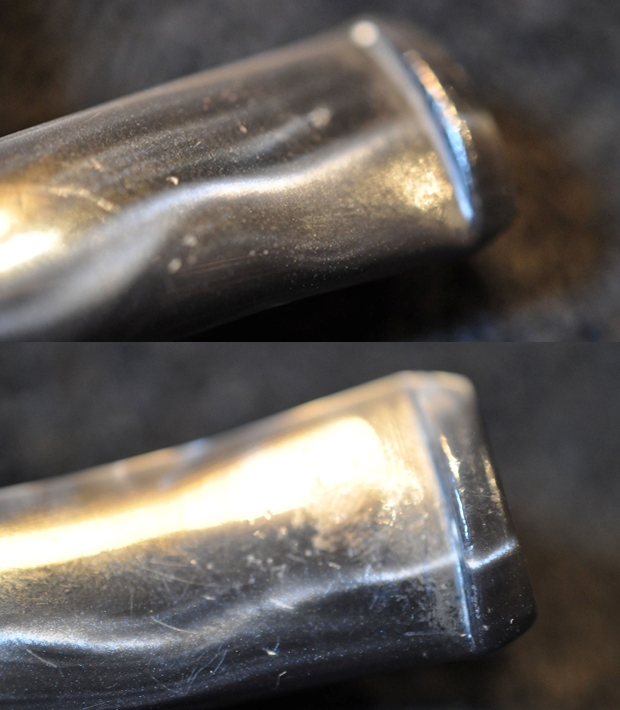
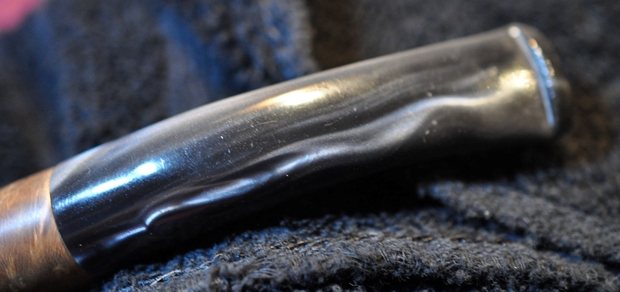
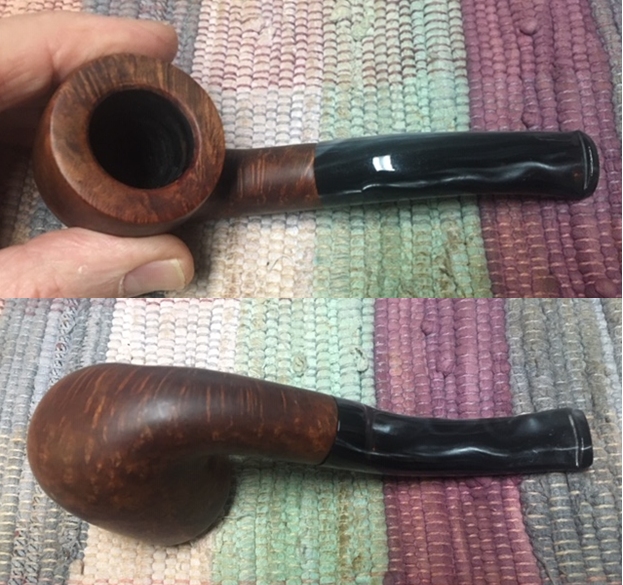
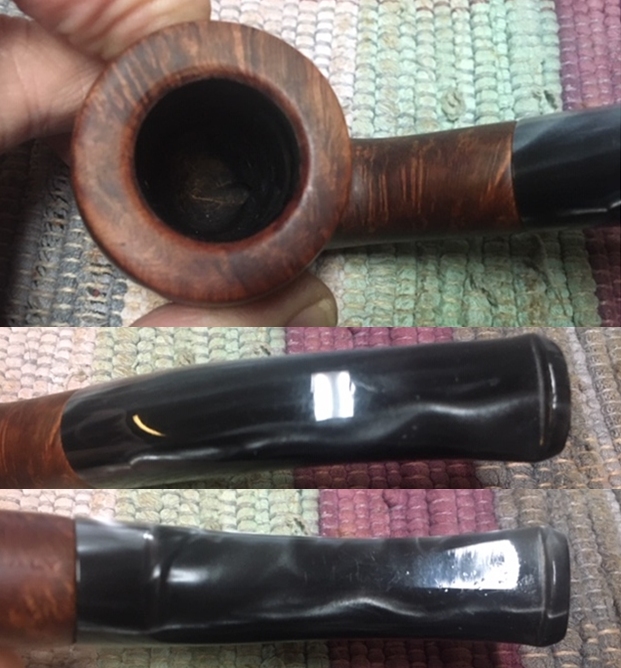
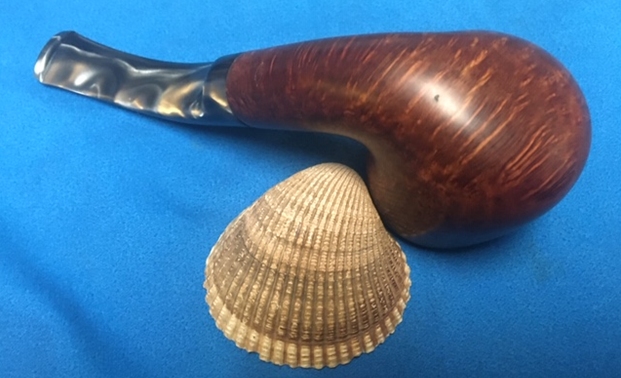
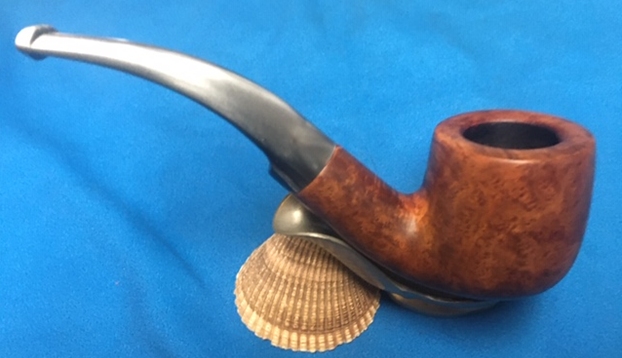
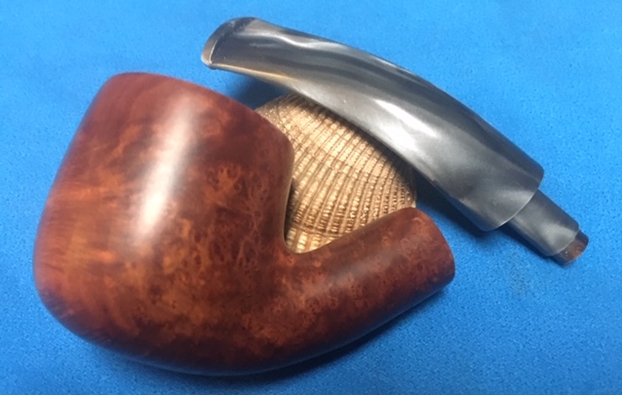
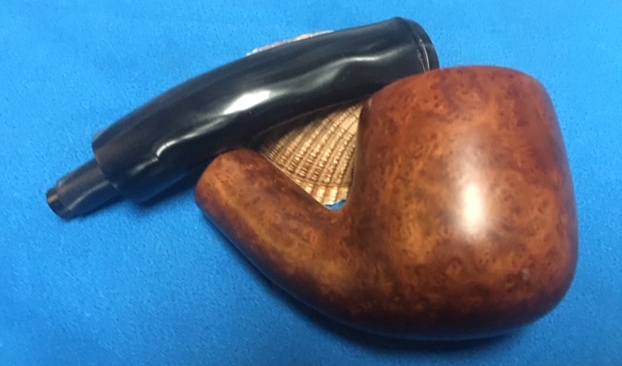
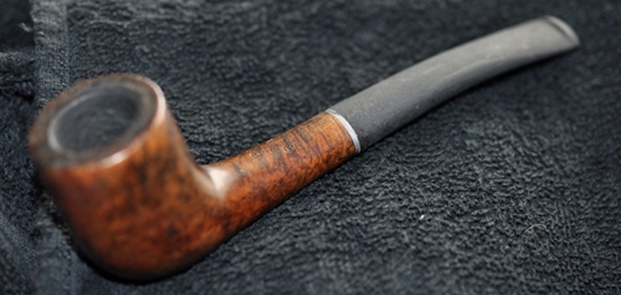
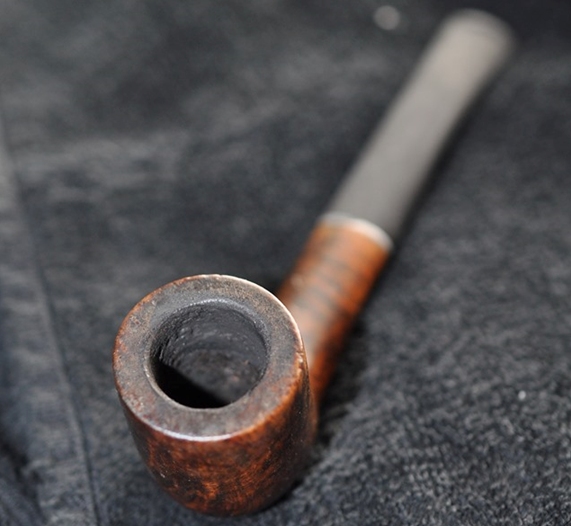
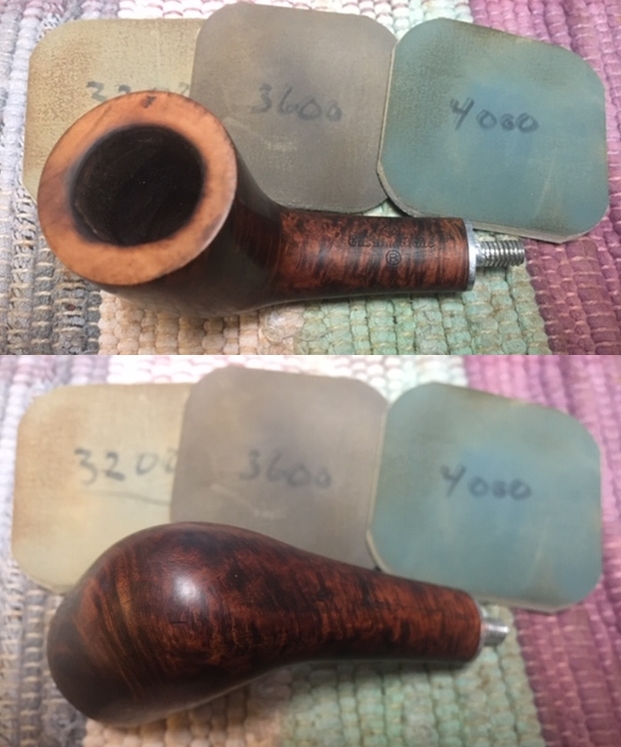
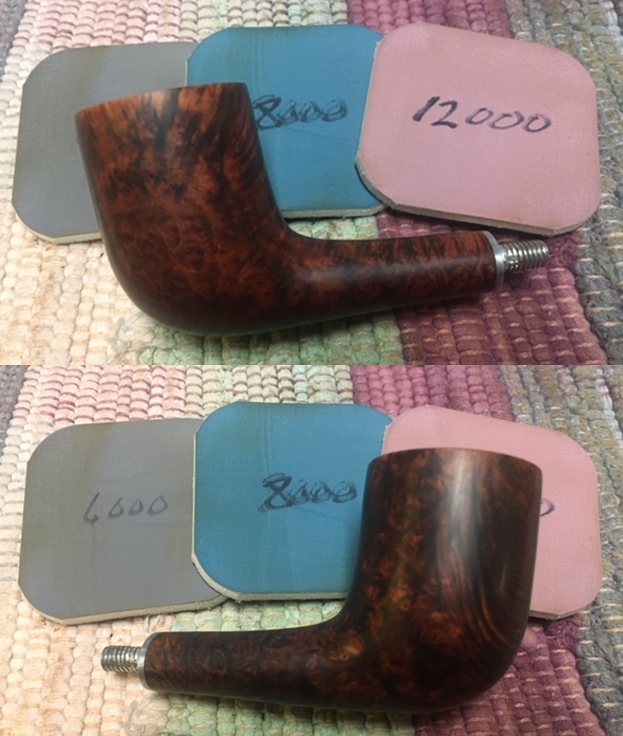
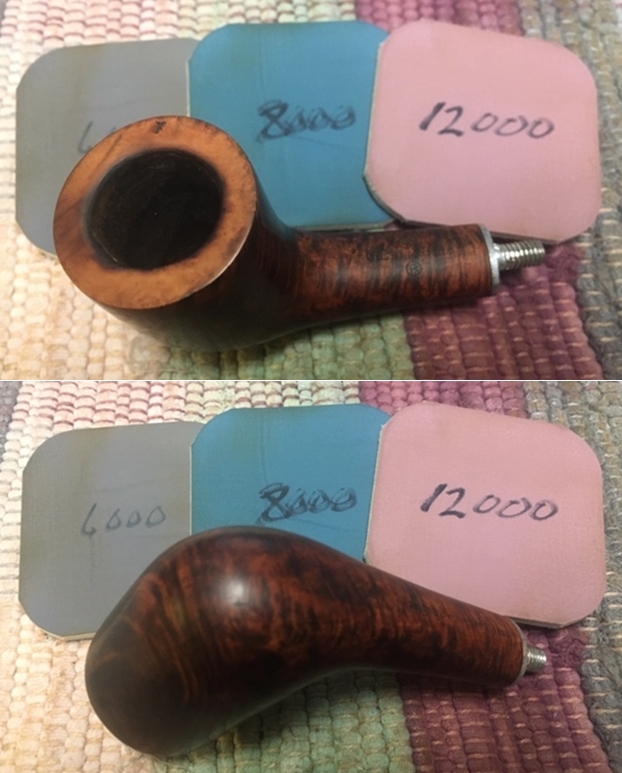
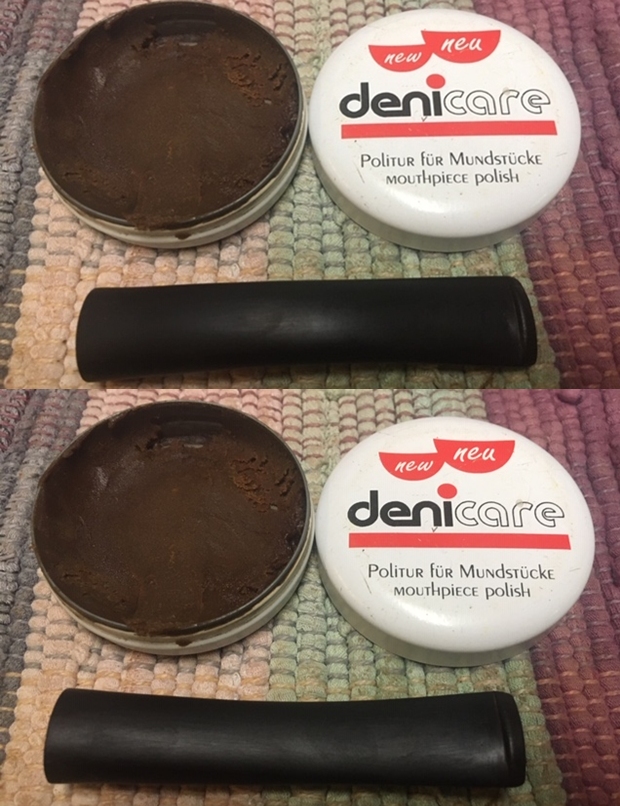
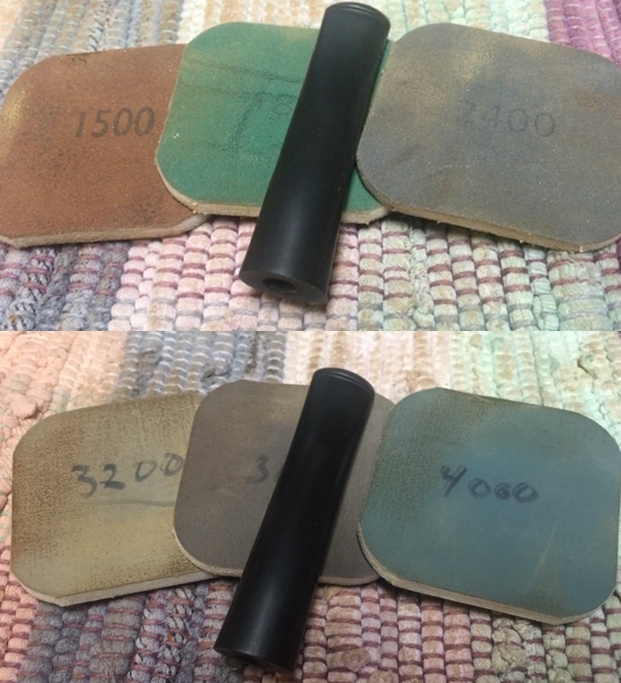
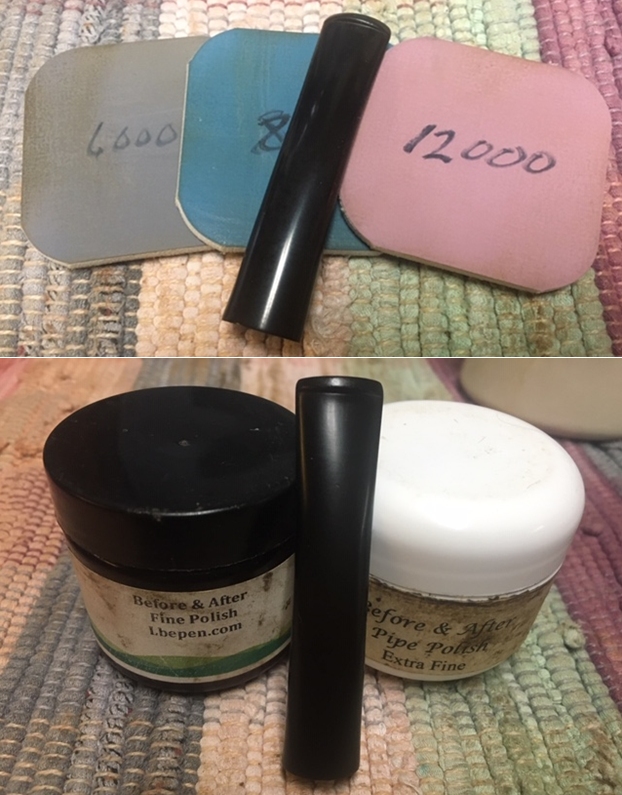
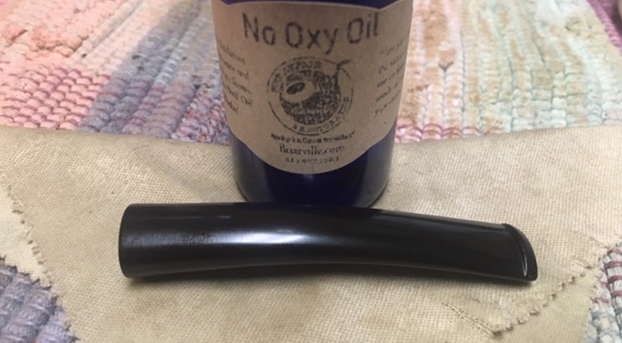
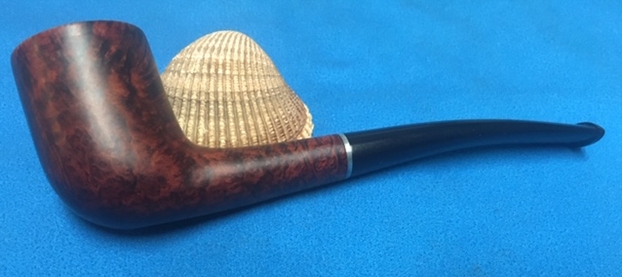
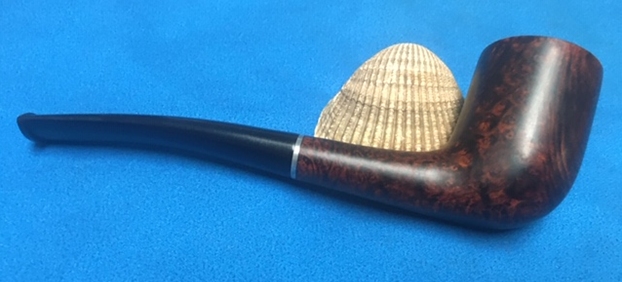
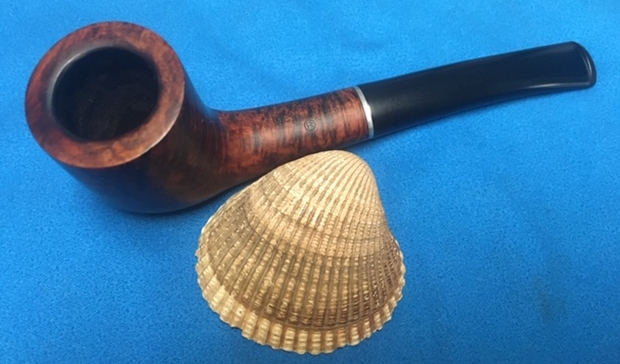
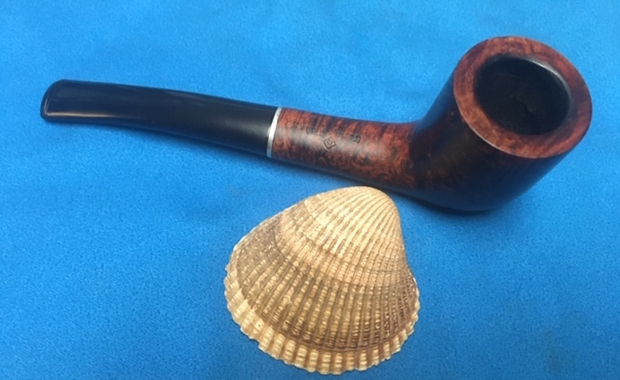
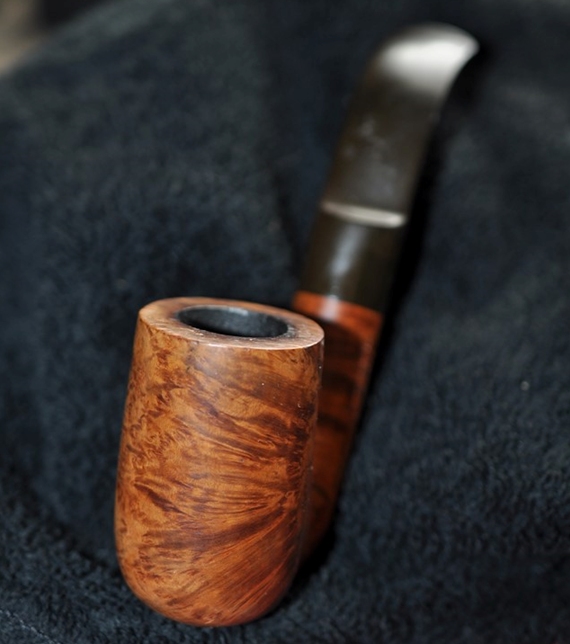
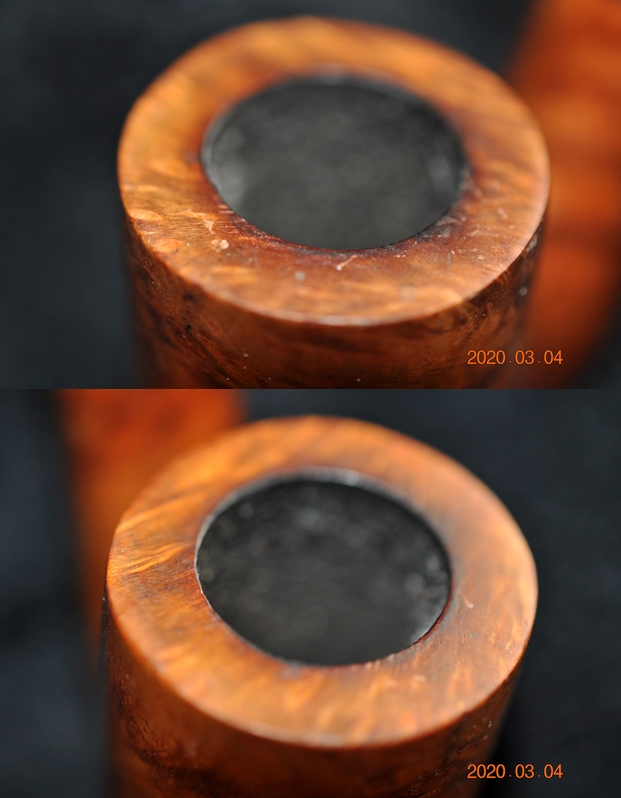
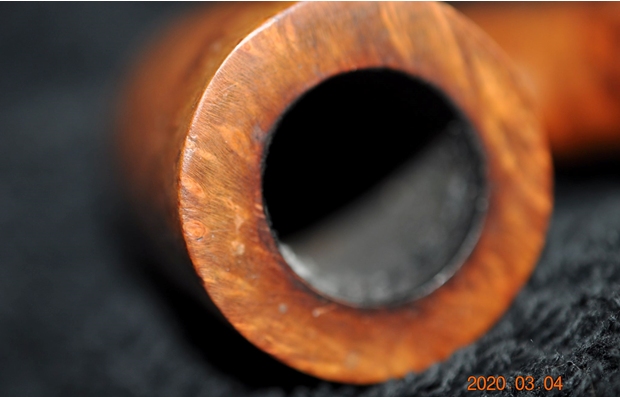
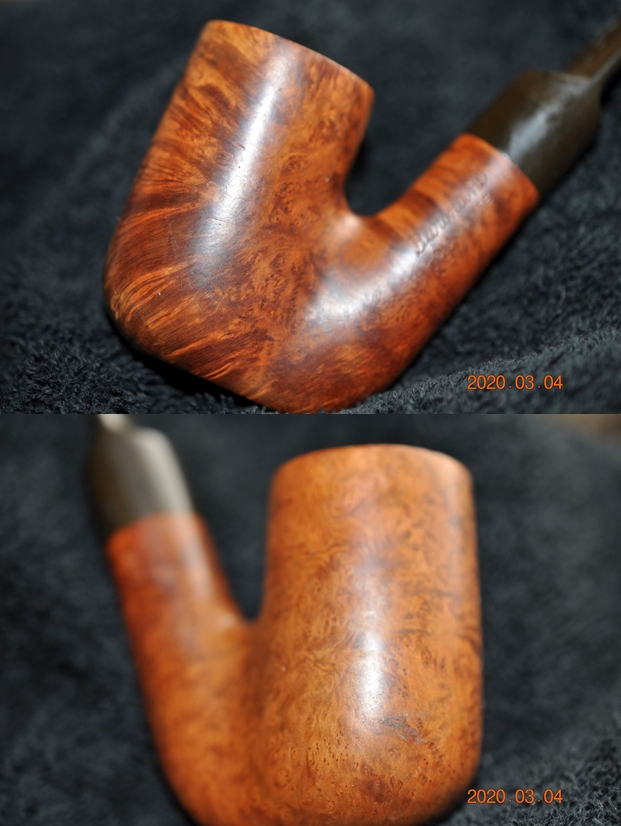
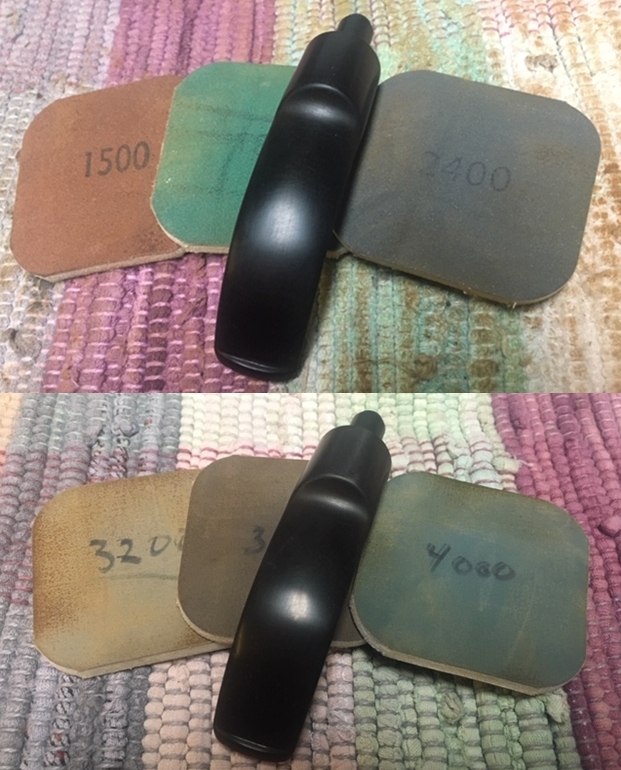
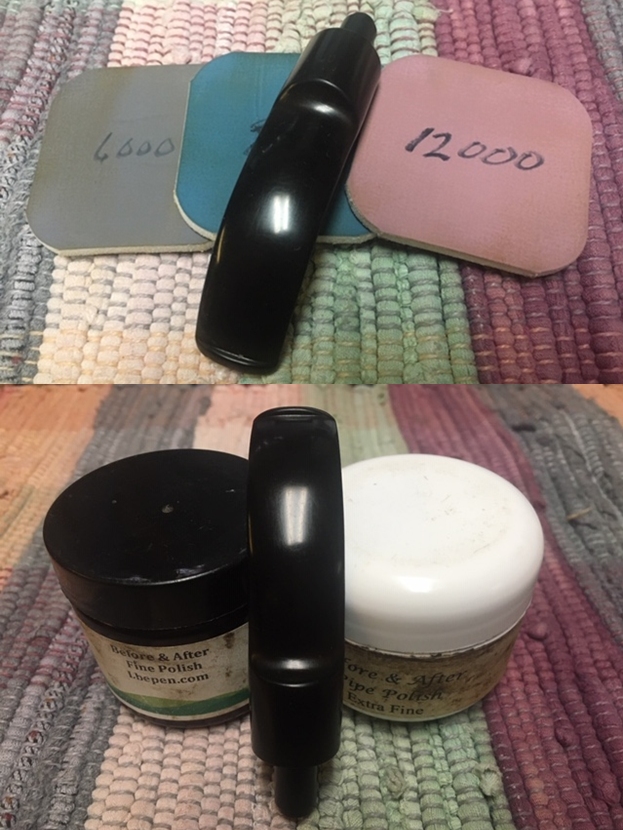
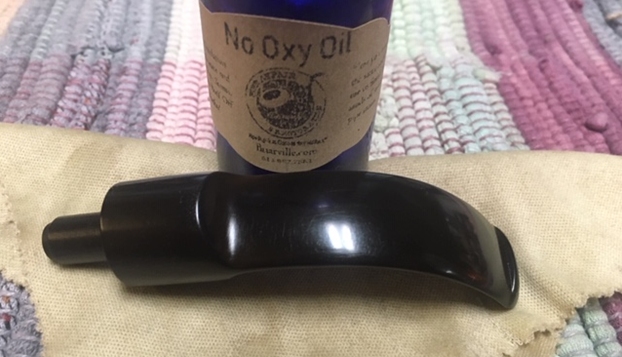
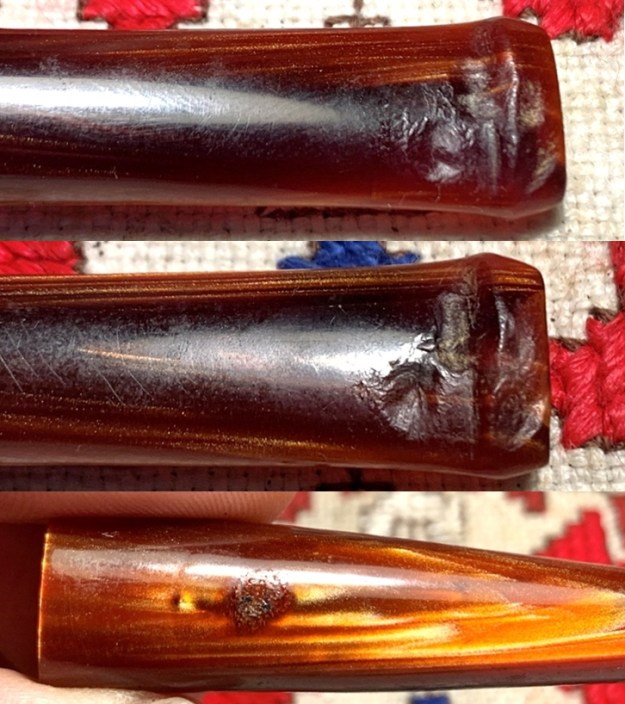
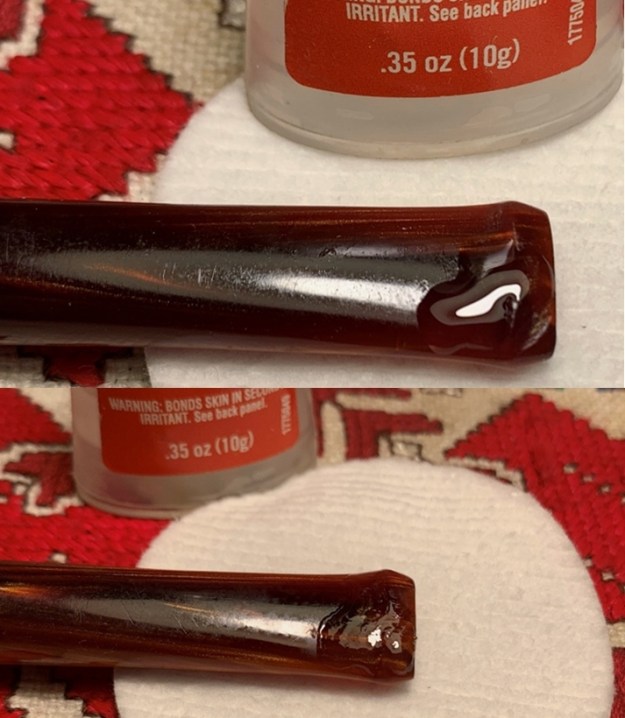
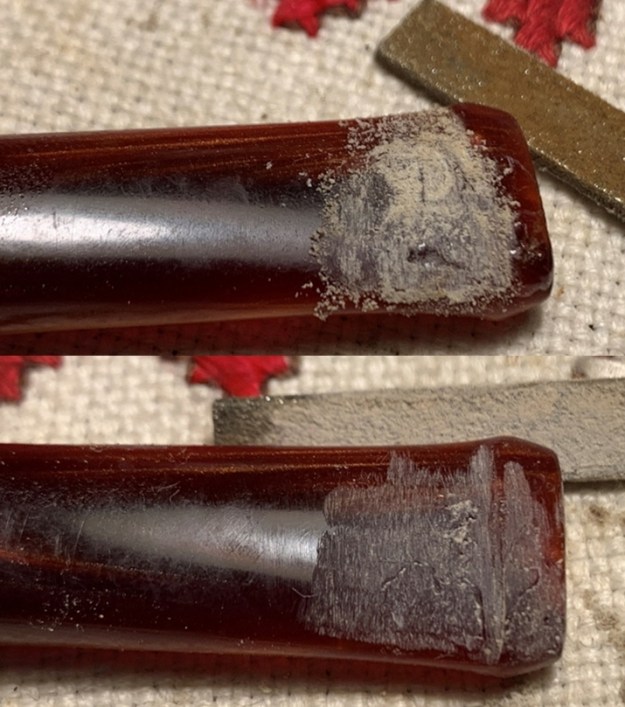
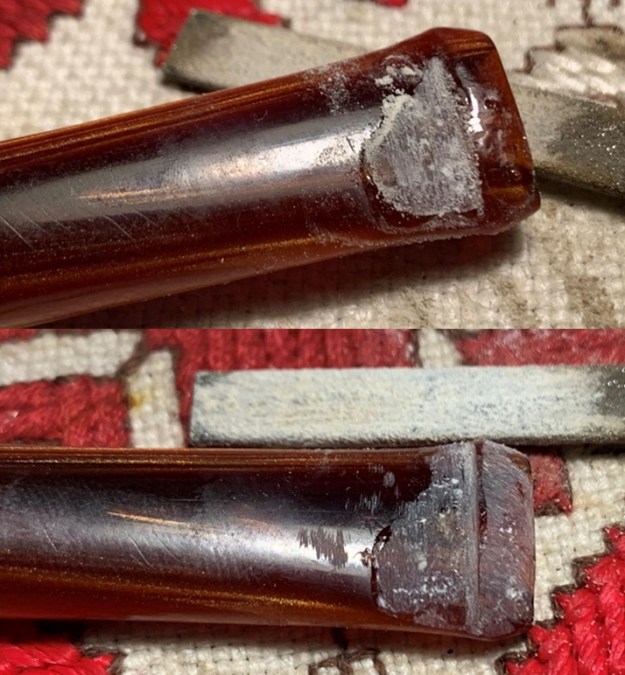
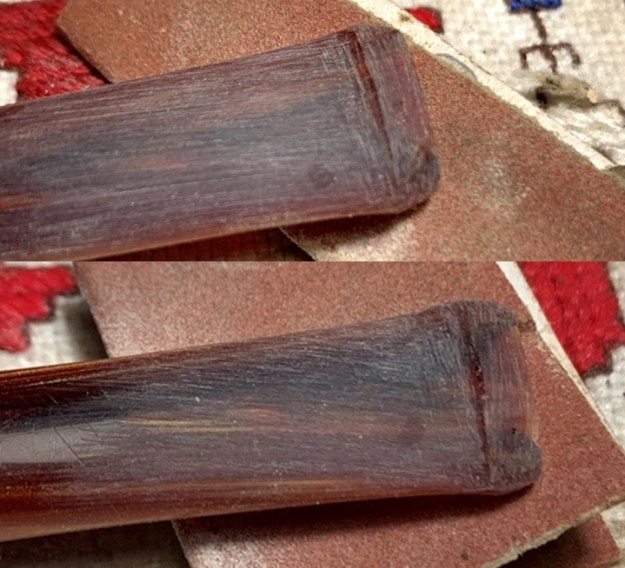
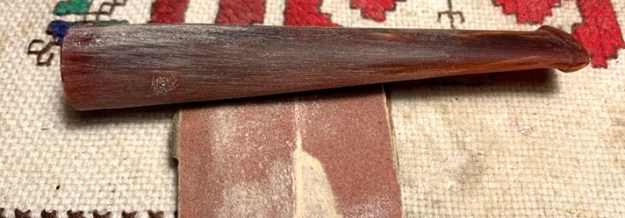
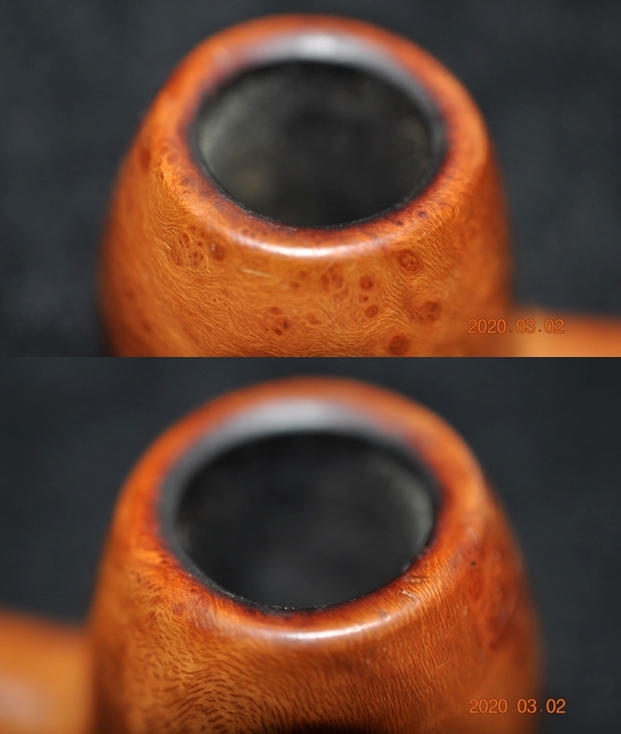
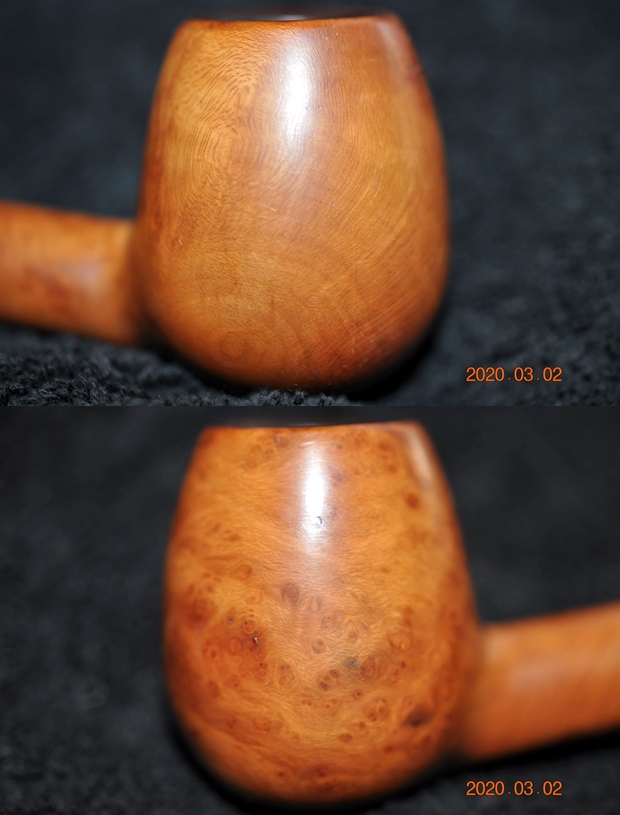
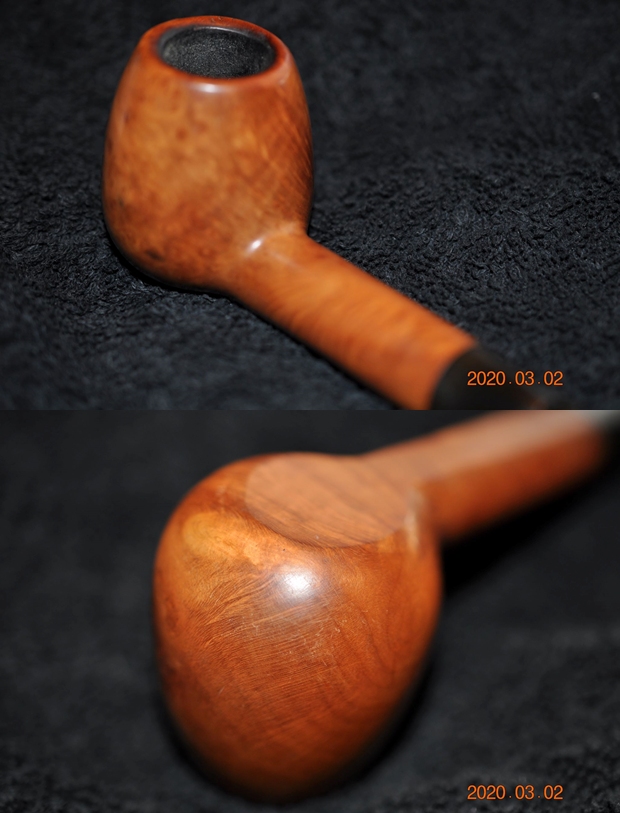
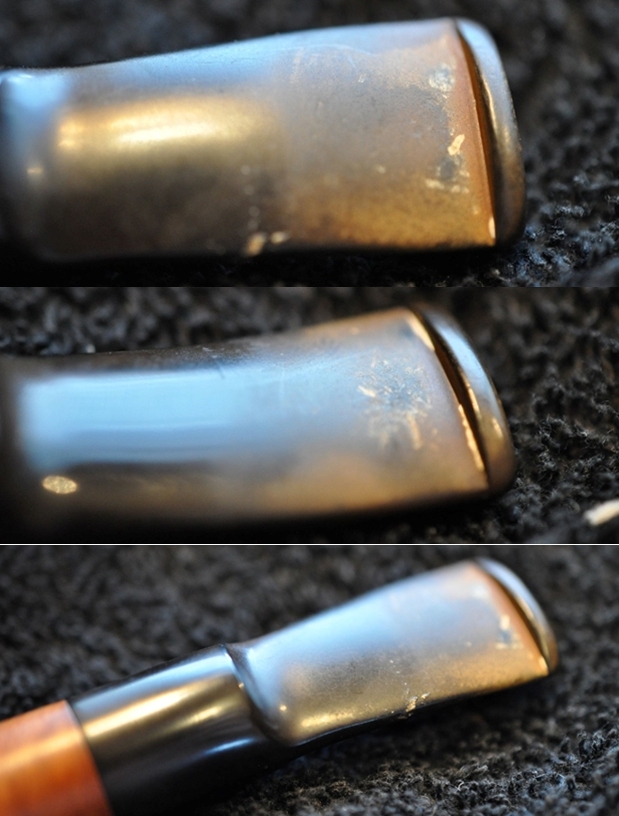
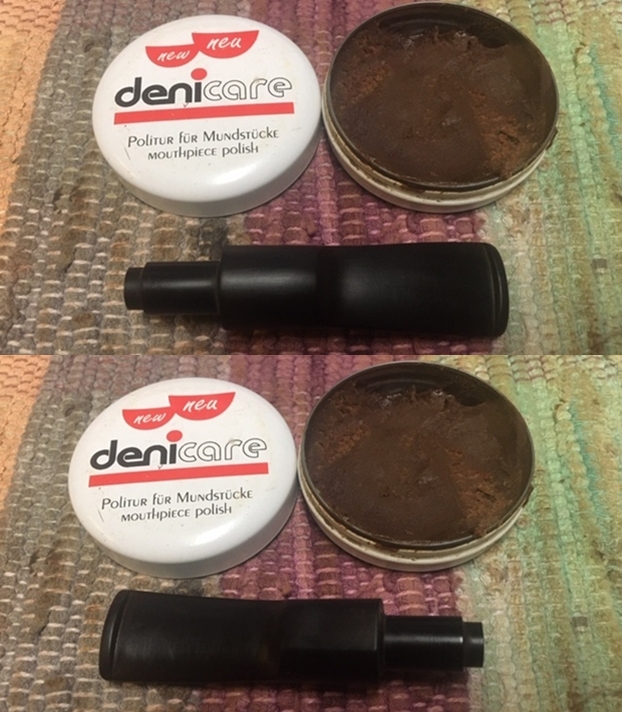
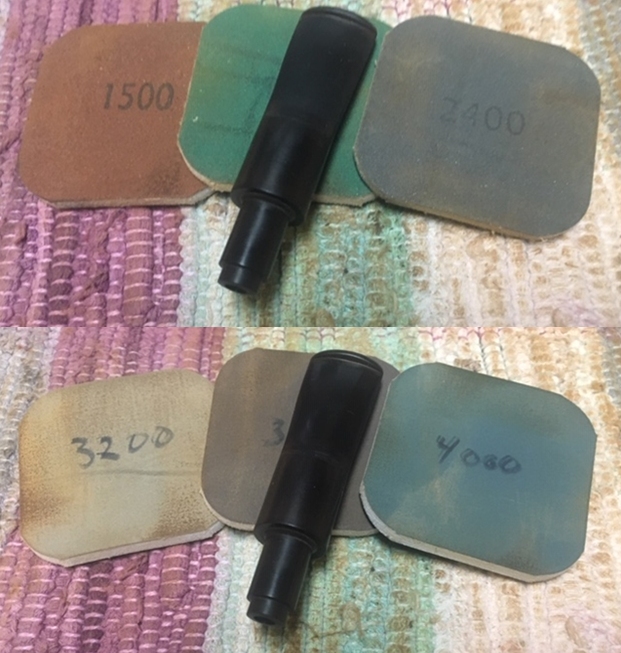
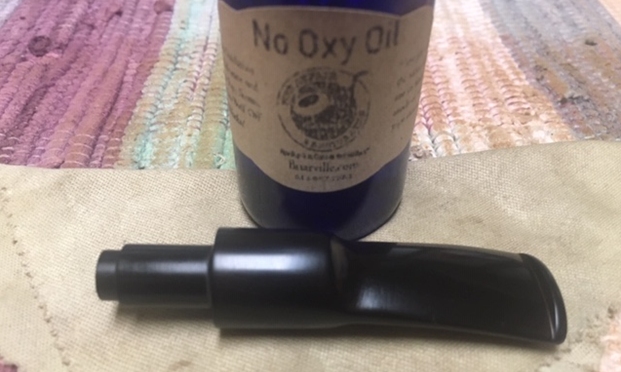
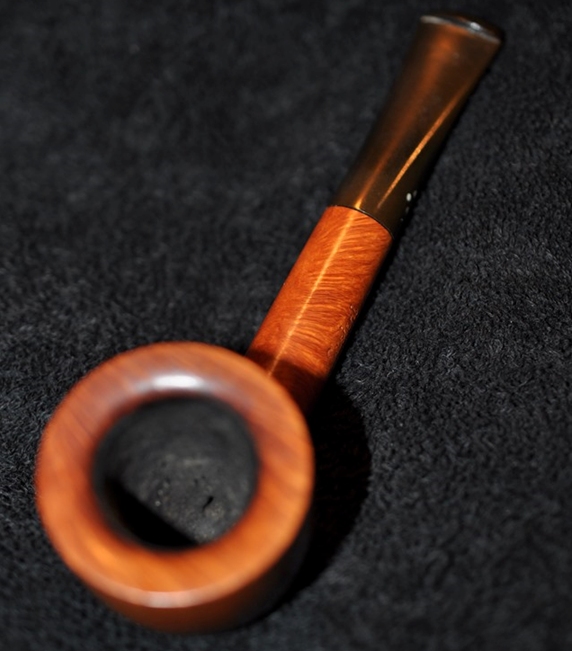
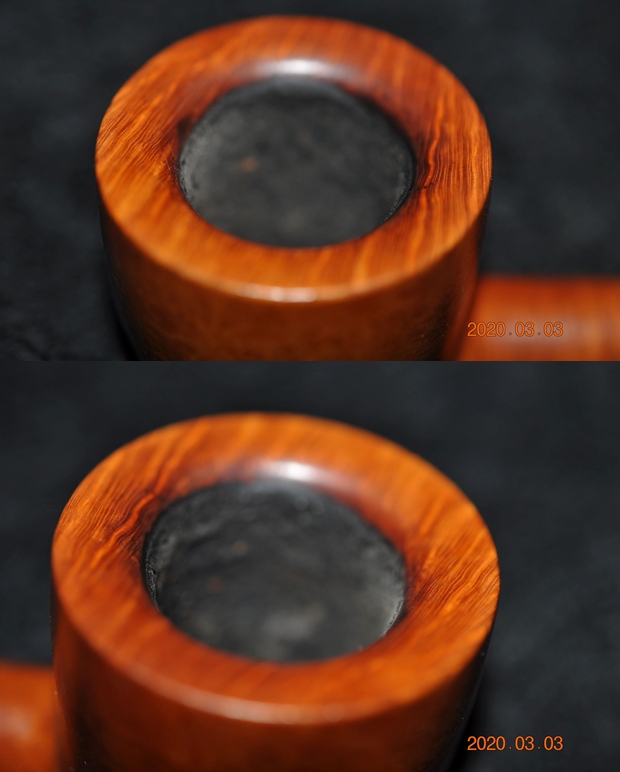
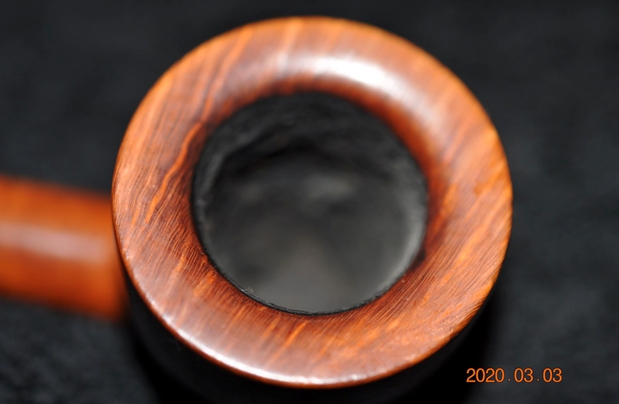
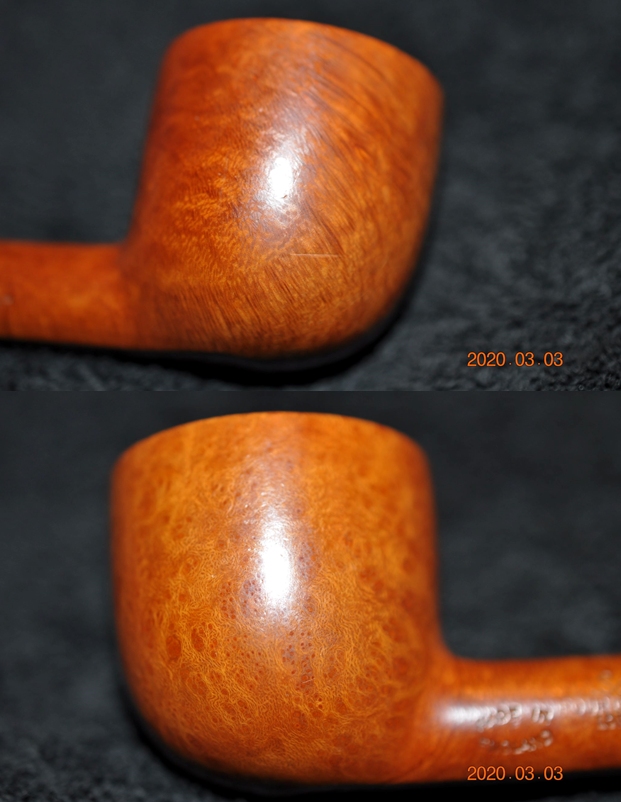
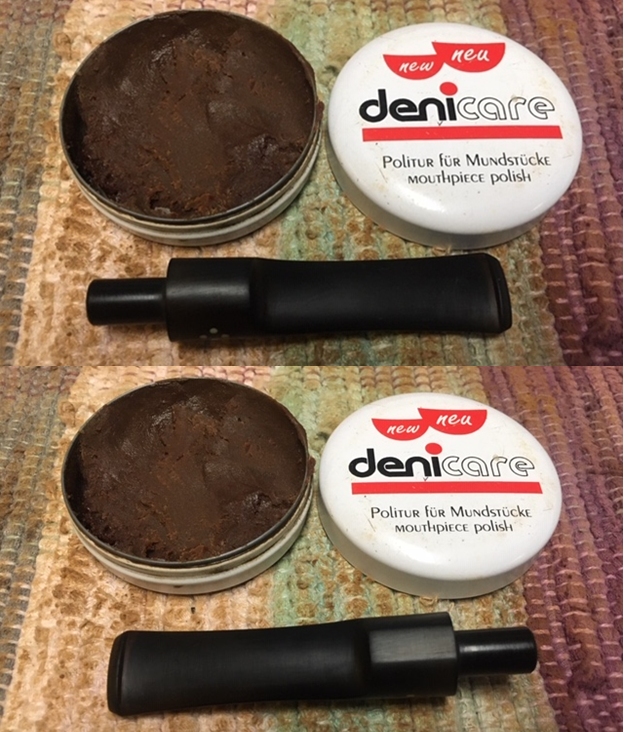
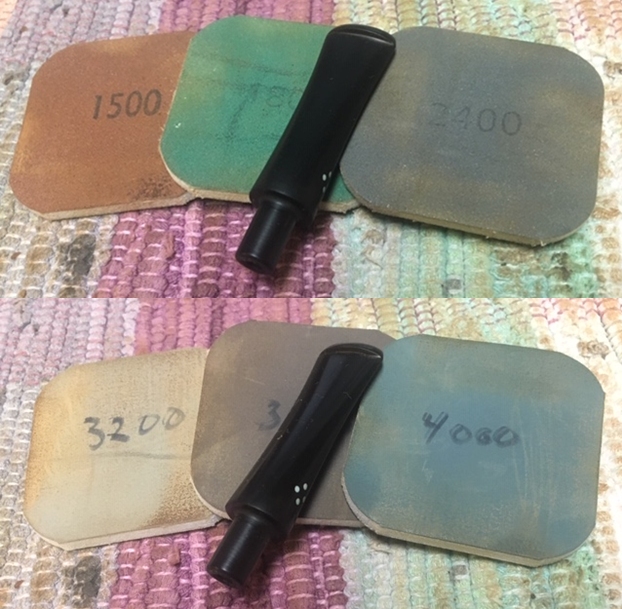
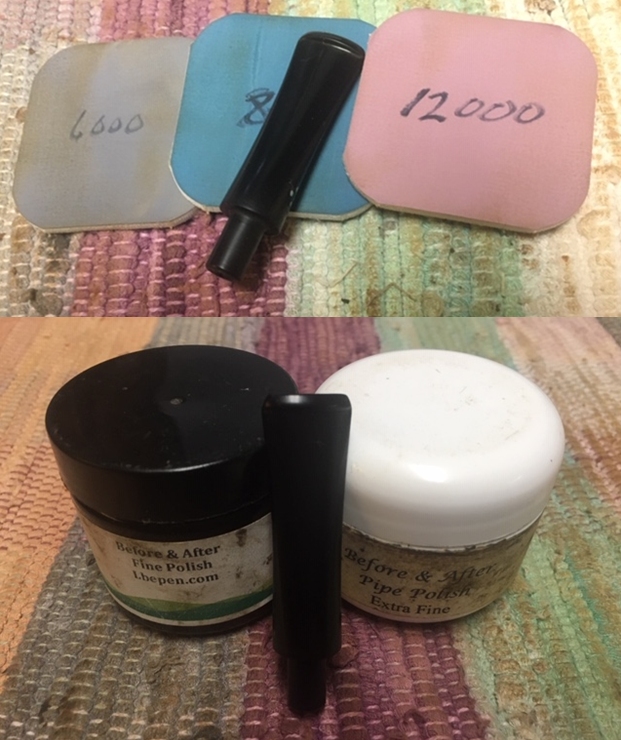
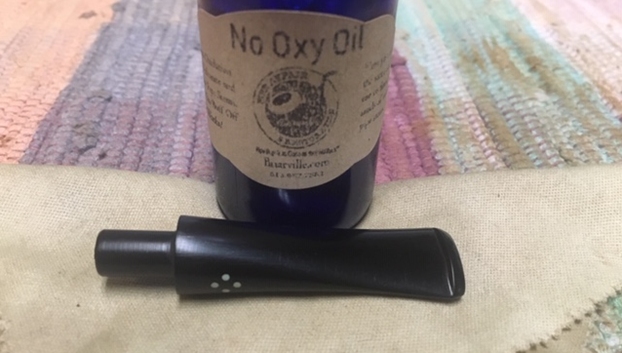
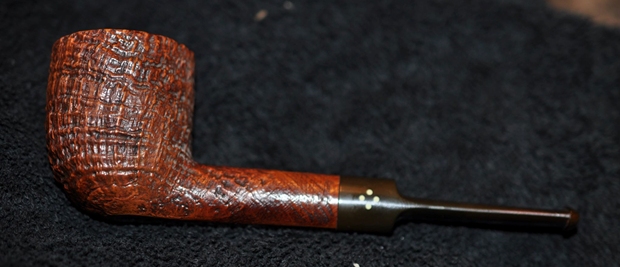
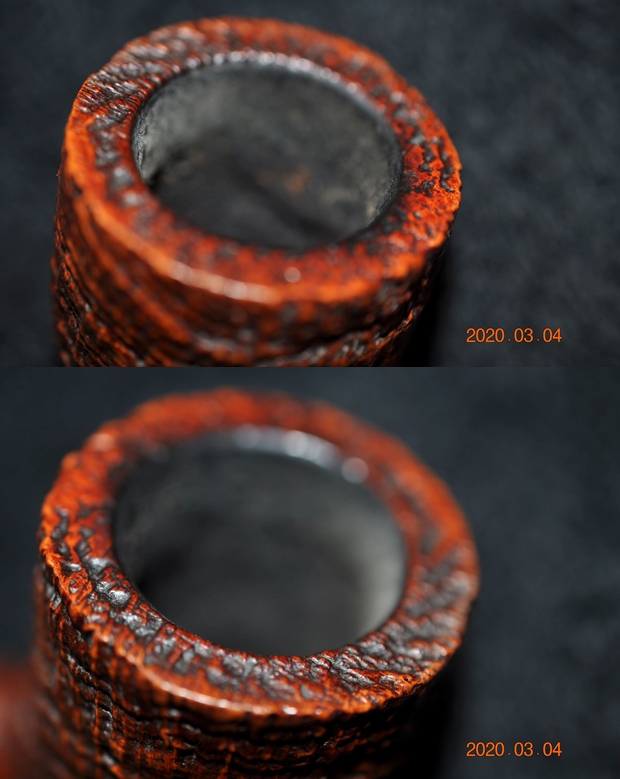
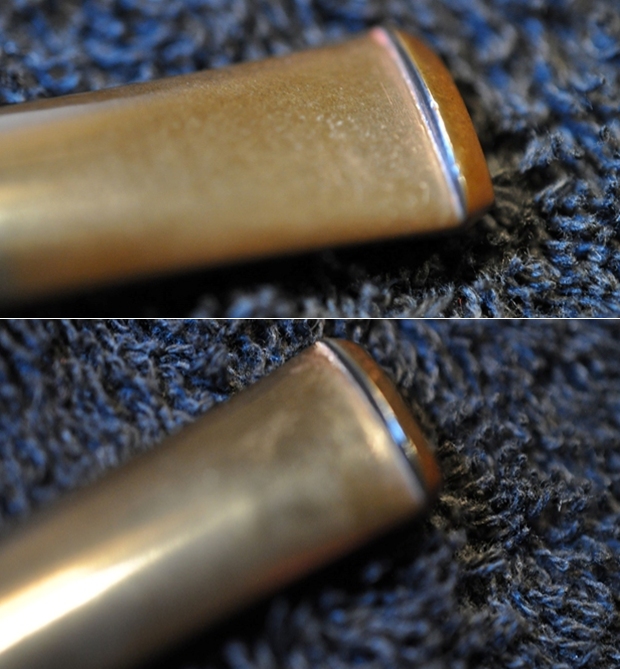
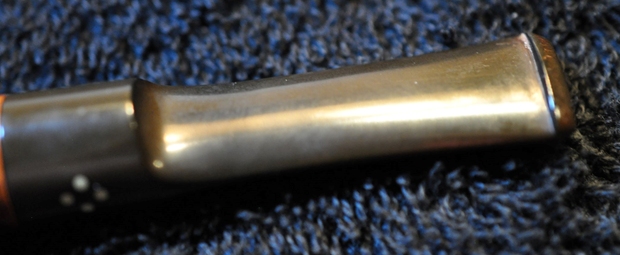
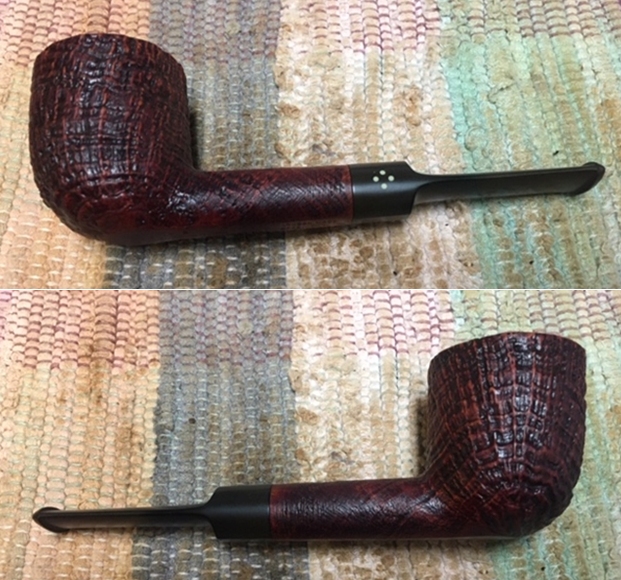
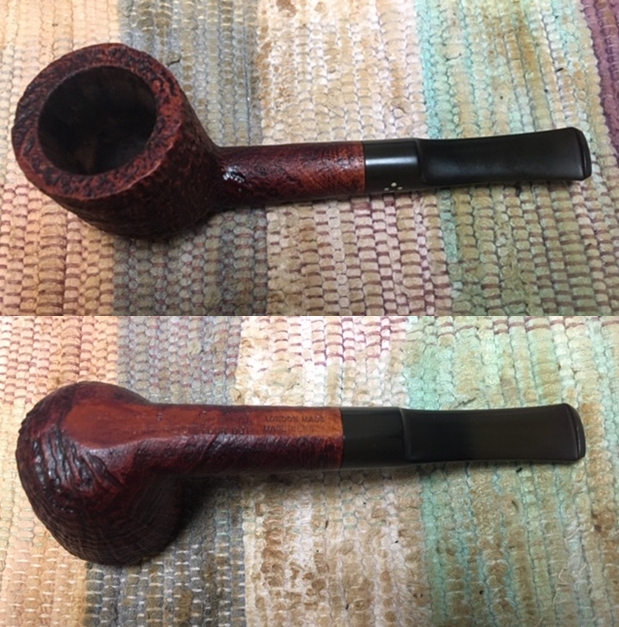
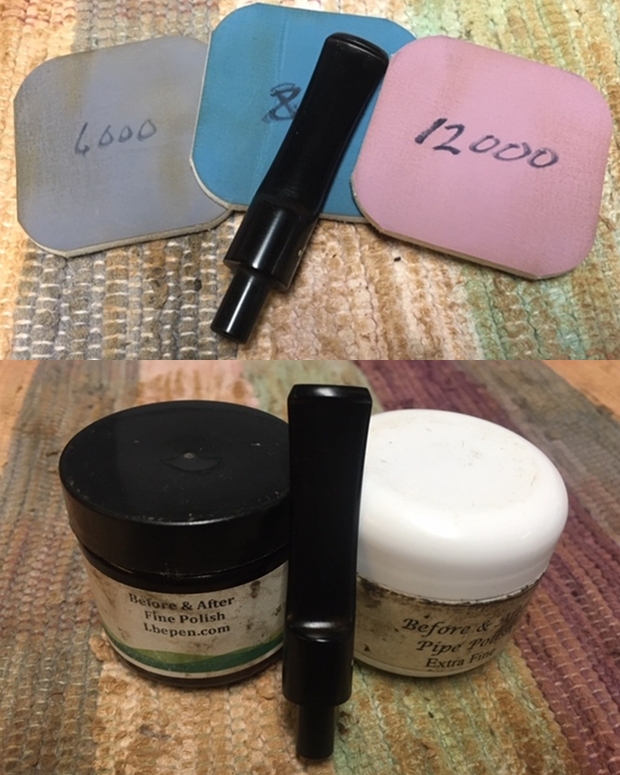
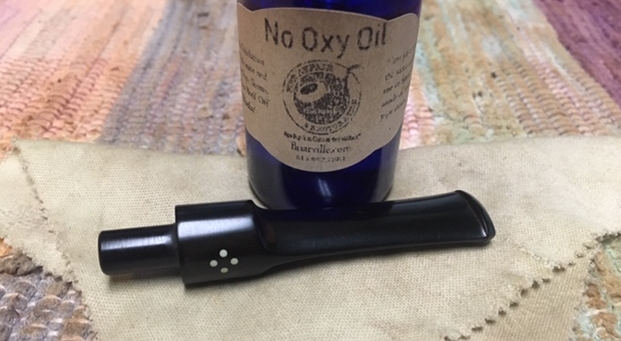
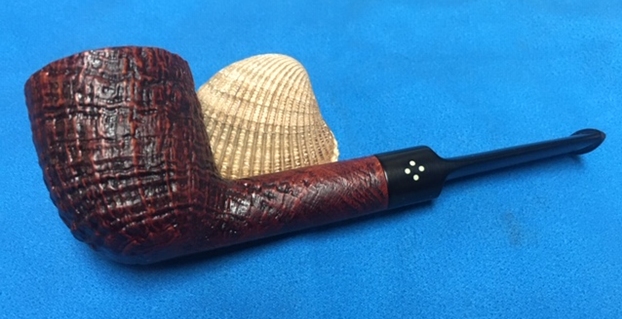
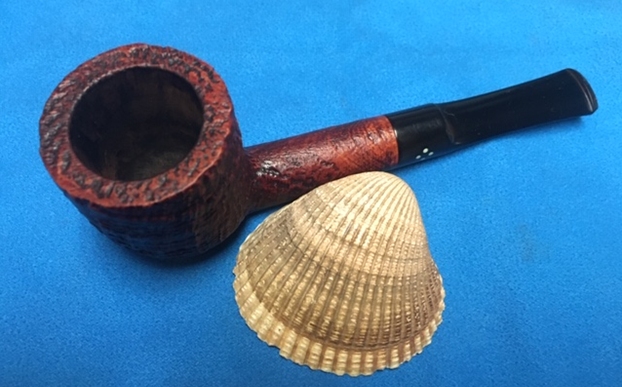
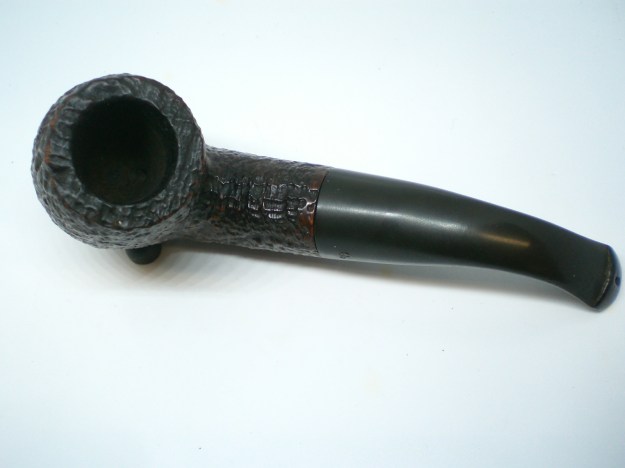
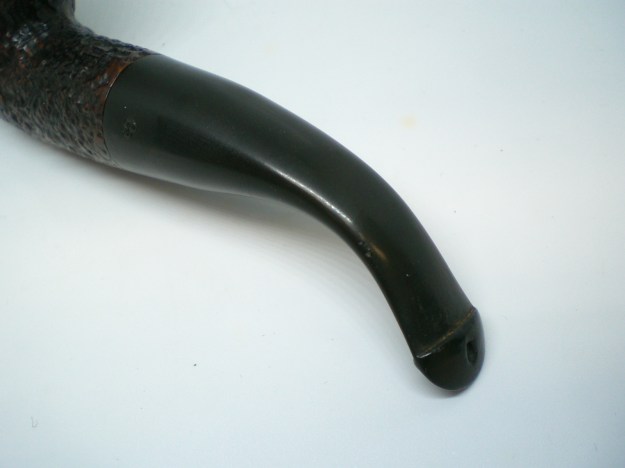
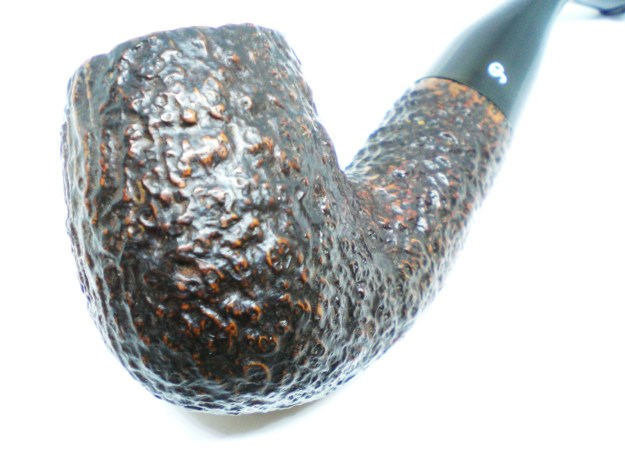
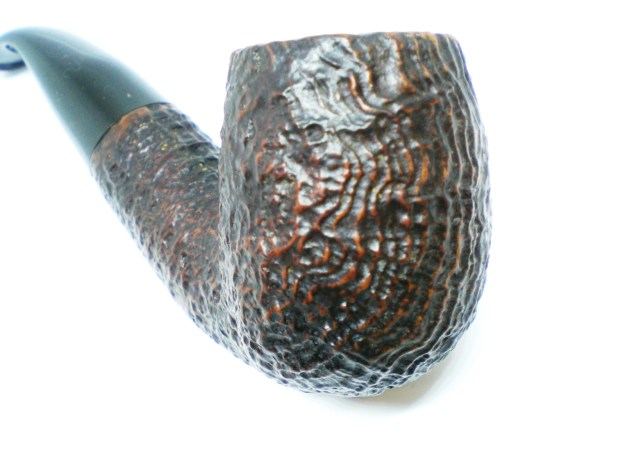
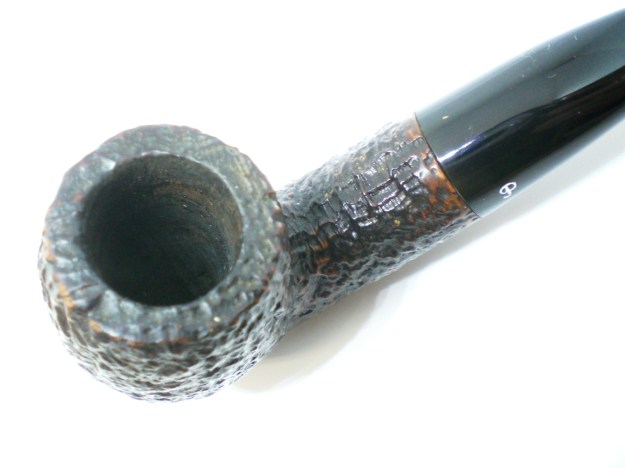
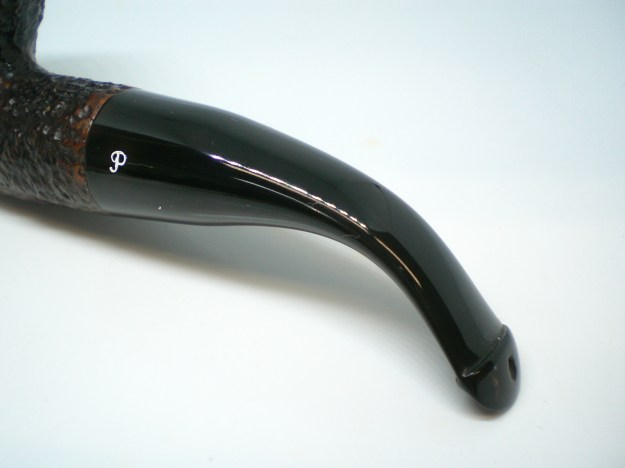
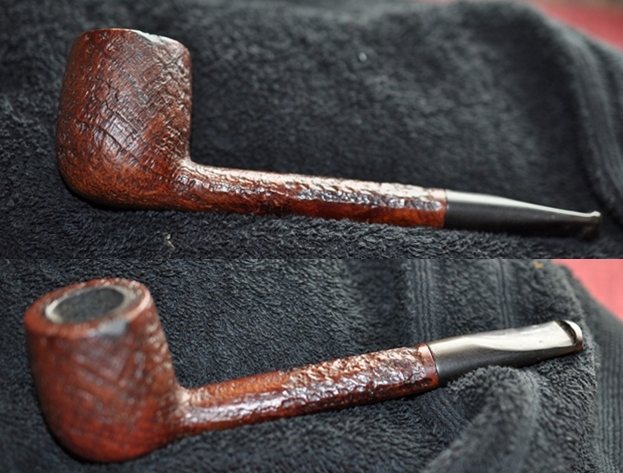
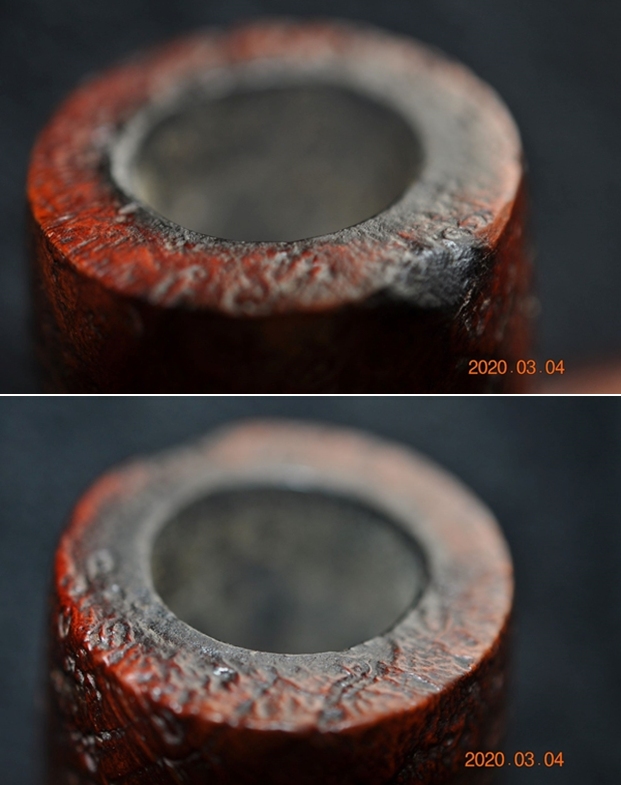
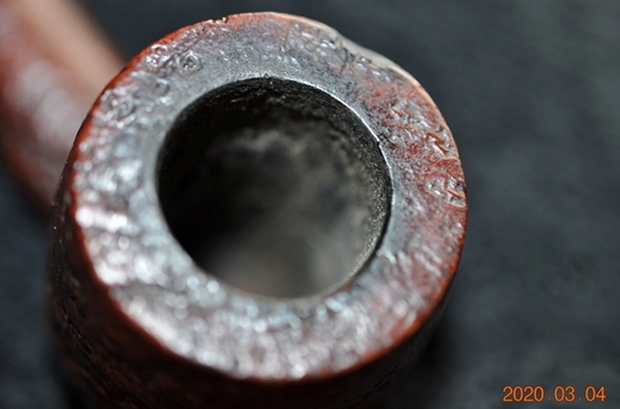
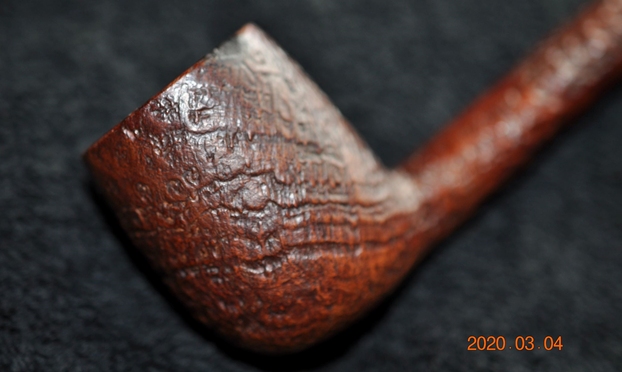
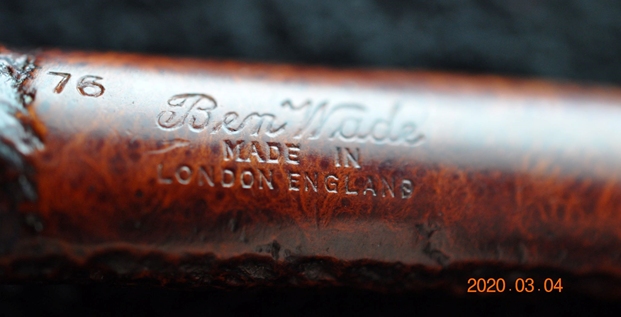
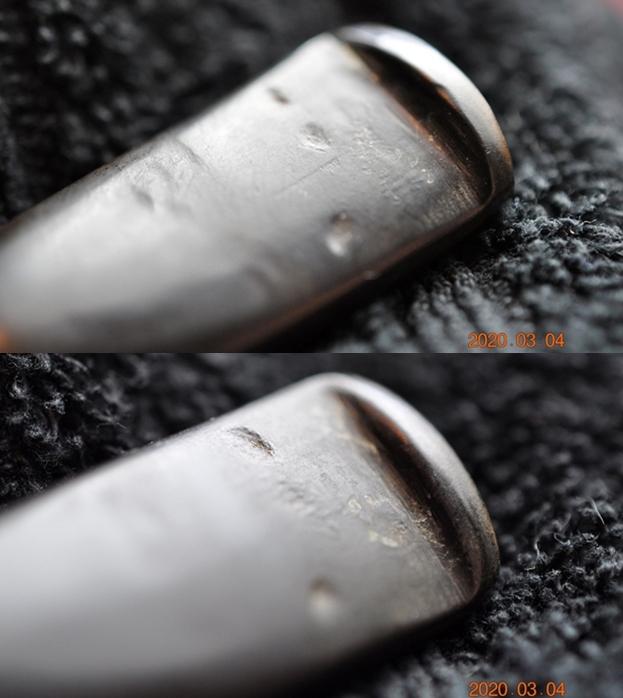
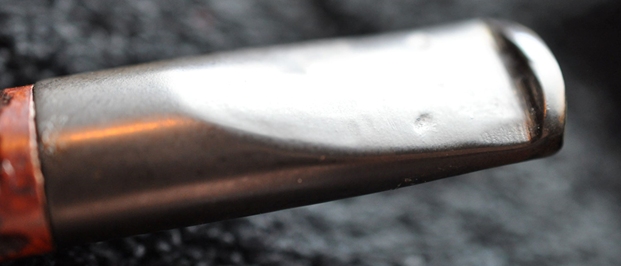
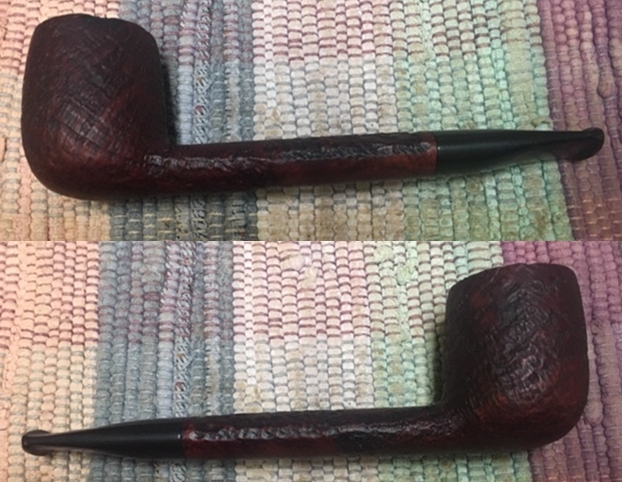
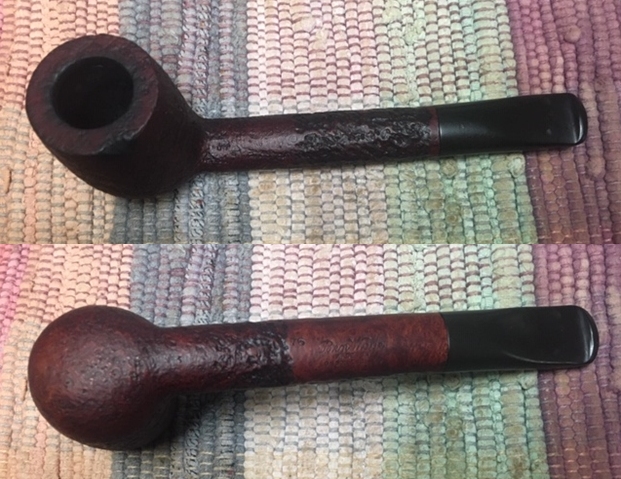
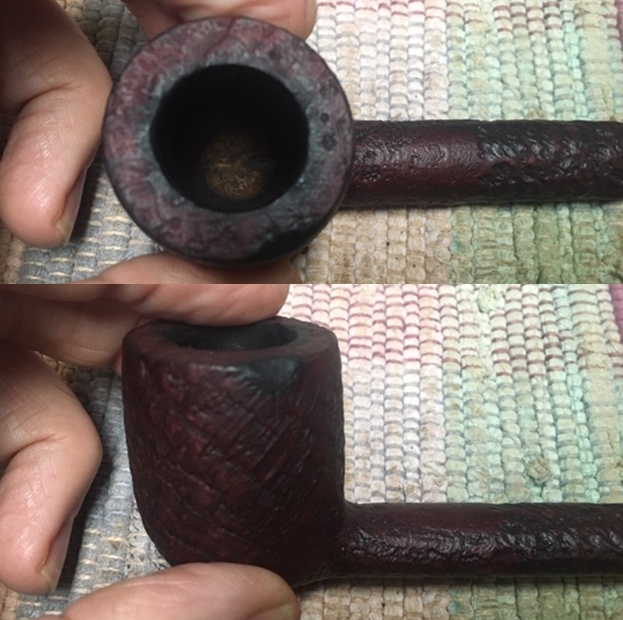
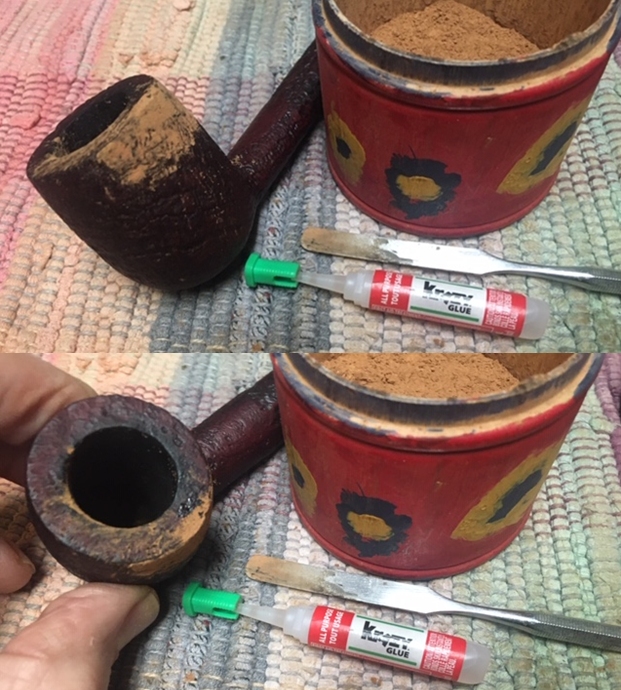
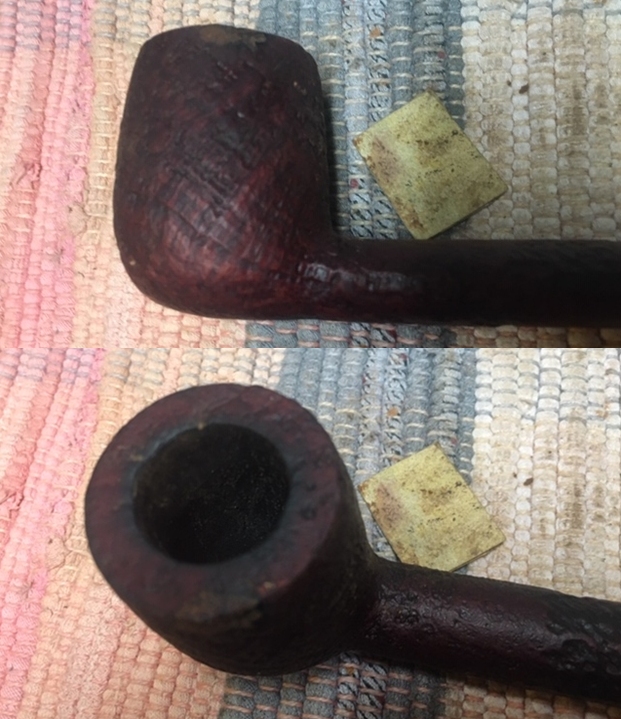
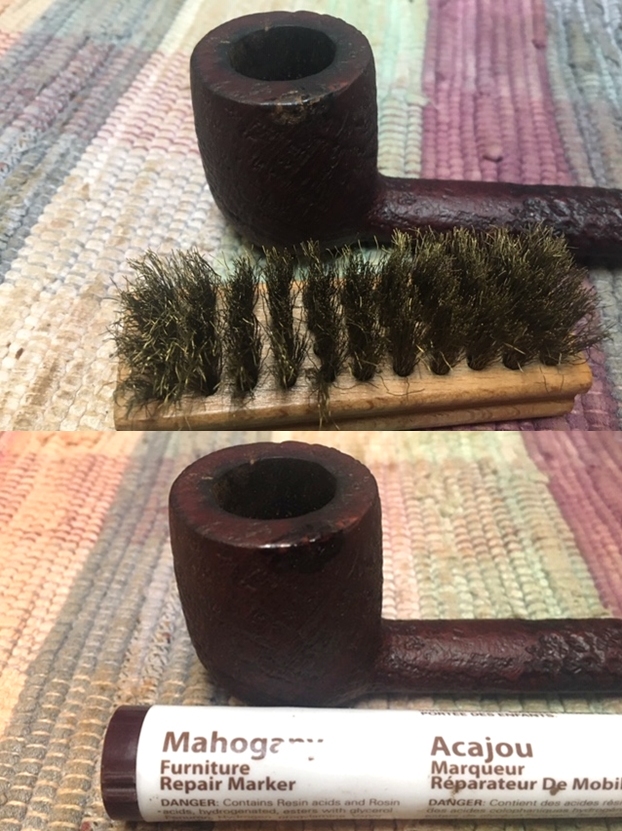
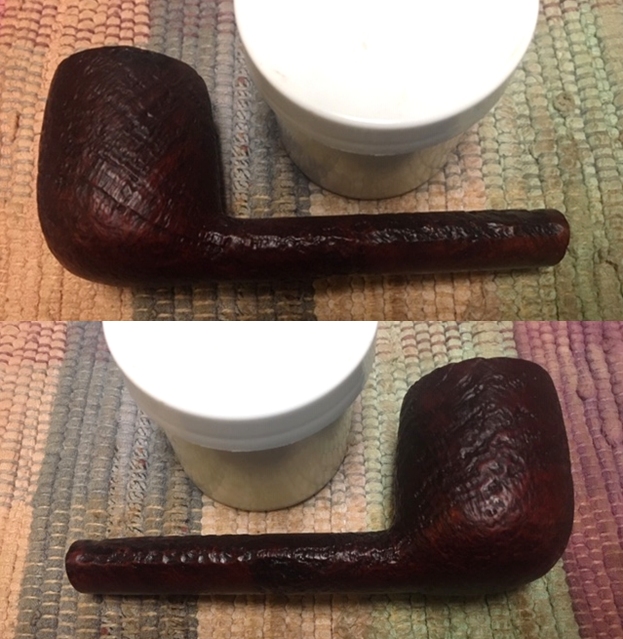
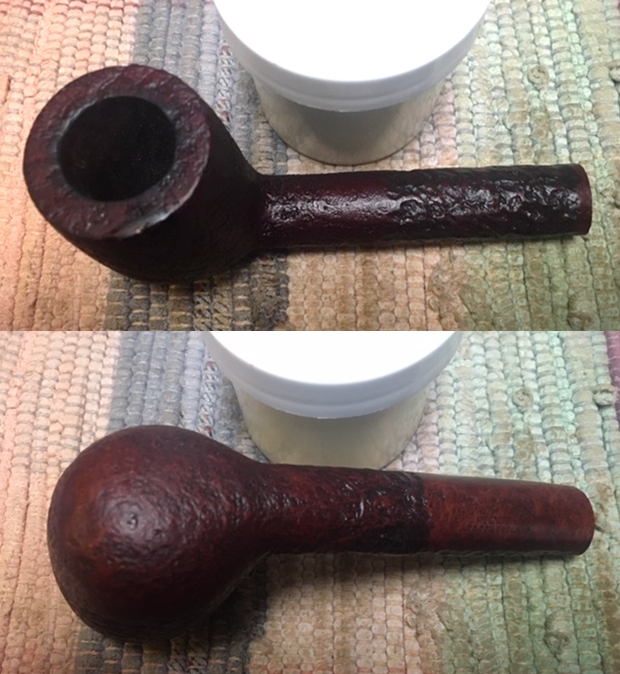
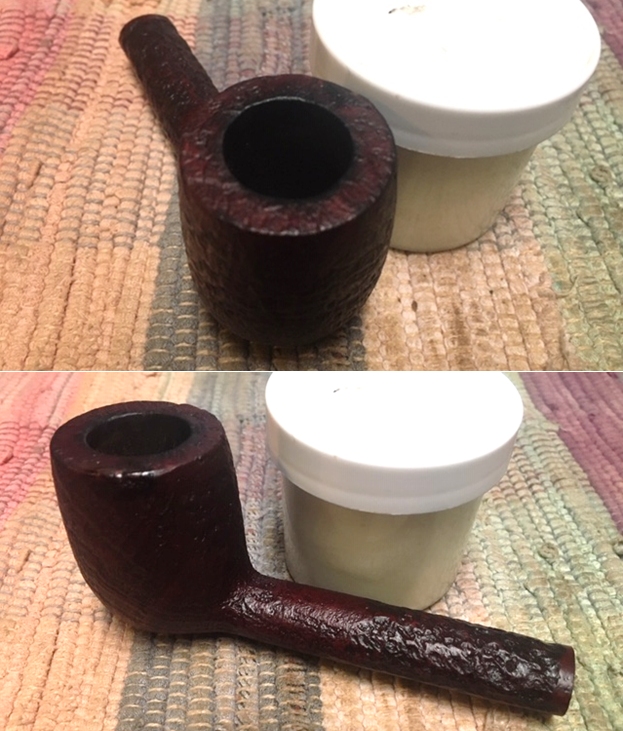
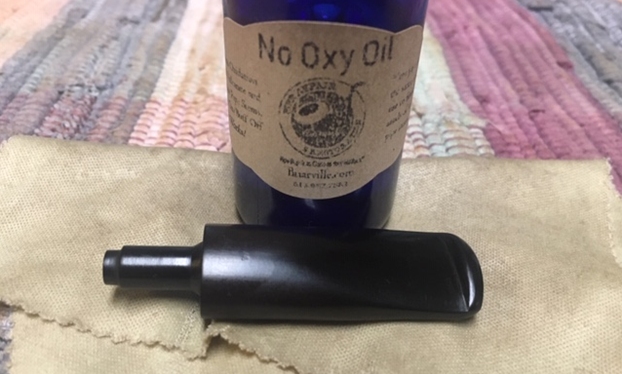
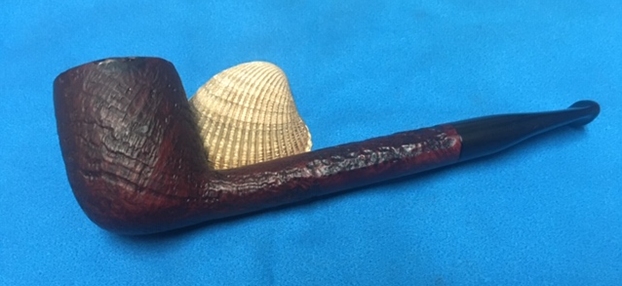
The next pipe on my table is nice sandblast thick shank Canadian. It is stamped on the underside of the shank with the Ben Wade over Made in London England. It also has the shape number 76 just ahead of the Ben Wade stamping. It has a nice sandblast finish that is in good shape under the dirt and even the rim top looks good. The inner edge of the rim is darkened but the bowl is in good shape. There was burn damage on the left outer edge and darkening on the inner edge of the bowl. There is a thick cake in the bowl and light lava build up on the rim top and inner edge. The taper vulcanite stem was oxidized and had some deep tooth marks and chatter on both sides ahead of the button. Jeff took these photos before he cleaned the pipe.He took photos of the rim top from various angles to give a clear picture of the condition of the bowl and rim. It is dirty but there is a light lava coat on the top and the rim edges have some darkening and buildup. There is also a deep burn mark on the left out edge toward the rear of the bowl. Jeff also took a closer photo of the burned area on the outer edge of the rim. It is visible in the photo below.The sandblast finish around the sides and heel of the bowl is quite interesting and reveals some different underlying grain. The stamping on the underside of the shank is very readable as can be seen in the next photo.The next two photos show the deep tooth marks on the surface of the stem. They are actually quite high up the stem from the button. This pipeman had been a bit of a chomper. There is some wear on the edge of the button as well. The stem shows a great profile. I moved forward to work on the pipe itself and see what I had to do with it. It had come back amazingly clean. Jeff had done his normal thorough clean up – reaming, scrubbing, soaking and the result was evident in the pipe when I unpacked it. I took photos of the pipe before I started my work on it. I took some photos of the rim top to show the condition of the edges and the bowl. It looked very good. There is some darkening to the inner edge of the bowl. The second photo shows the damage from the burn on the left side of the rim top and side of the bowl. The stem had some deep tooth marks ahead of the button on both sides. The bowl was going to be straightforward to work on so I started with it. The burned spot on the left side of the bowl edge needed to be addressed. Since the bowl was clean I wiped off the damaged spot with alcohol on a cotton pad. I dried it of with a cloth. I then filled it in with layers of super glue and briar dust – repeating the process until the surface of the rim top and the side of the bowl were even. When the repair had cured I sanded it with a folded piece of 220 grit sandpaper to blend it into the surrounding briar. I used a brass bristle brush to roughen up the surface of the rim top and side of the bowl. I worked it over to achieve a similar pattern to the surround sandblast. I stained the repaired area with a Mahogany stain pen and blended it into the surrounding stained briar. I am pretty happy with the match. At this point in the process the bowl definitely looks better.I worked some Before & After Restoration Balm into the briar with my fingertips. I let the balm sit on the briar for 10 minutes the buffed it off with a soft cloth. The balm enlivens, enriches and protects the briar while giving it a deep glow. I set the bowl aside and turned my attention to the stem. The stem was very clean so I filled in the tooth marks with clear super glue and set it aside to cure. Once it had cured I flattened out the repairs and sharpened the edge of the button with a needle file. I sanded the stem with 220 grit sandpaper to blend in the repairs with the rest of the stem surface.  I started the polishing with 400 grit wet dry sandpaper.I polished the stem with Denicare Mouthpiece Polish. It is a gritty red paste (similar in grit to red Tripoli) that I rub on with my finger tips and work it into the surface of the stem and button and buff it off with a cotton pad. It gives me a bit of a head start on the polishing work.I polished the stem with micromesh sanding pads – wet sanding with 1500-12000 grit sanding pads. I wiped it down after each sanding pad with Obsidian Oil. I polished it with Before & After Pipe Stem Polish – both Fine and Extra Fine. I buffed the stem with a soft cloth to raise the shine. I wiped the stem down with Briarville’s No Oxy Oil to preserve and protect the stem surface. Ahhhh…once again I am at my favourite part of a restoration – finishing up a pipe! This Ben Wade English made Canadian 76 came out really well considering the issues with the burned area on the side of the bowl and rim when I started. I put the pipe back together and buffed it with Blue Diamond polish on the buffing wheel. I polished the bowl with multiple coats of Conservator’s Wax and the stem with multiple coats of carnauba wax. I buffed it with a clean buffing pad and with a hand buff with a microfibre cloth. The mix of colours and the buffing made the sandblast stand out when it was waxed. The mixed grain is quite stunning. Thick oval shank and taper stem stands out in great contrast to the briar. It is a nice looking pipe. Have a look at the photos below of the finished pipe. Its dimensions are Length: 6 ¼ inches, Height: 2 inches, Outside Diameter of the Bowl: 1 3/8 inches, Diameter of the Chamber: ¾ of an inch. The long shank Canadian feels great in the hand. This one will be going on the rebornpipes store later today. You can add it to your collection and carry on the trust. Let me know if you are interested in adding it. Thanks for your time.  
A Few Adjustments to a Lightly Smoked Savinelli Product Bent Pot


Blog by Steve Laug

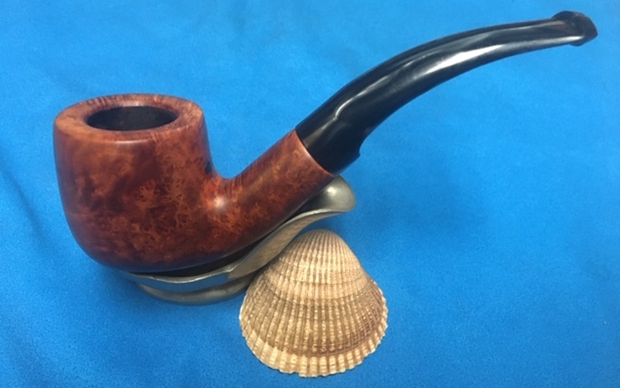
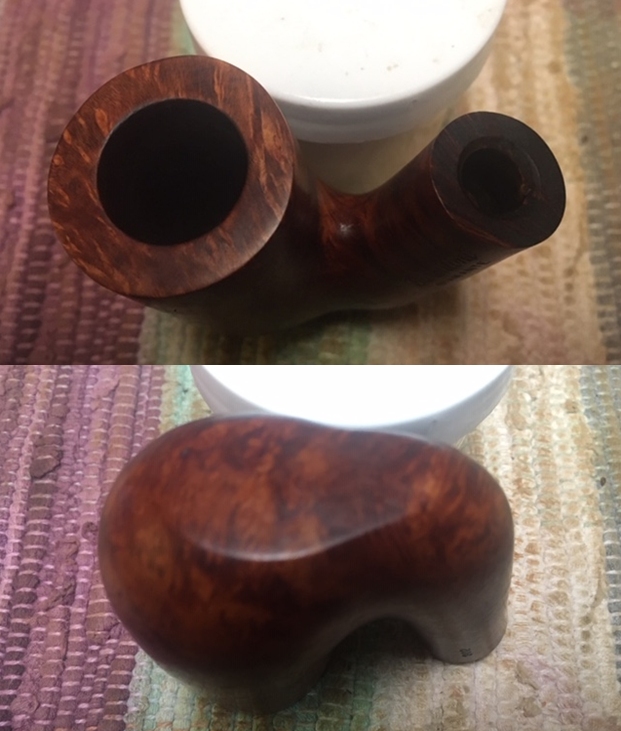
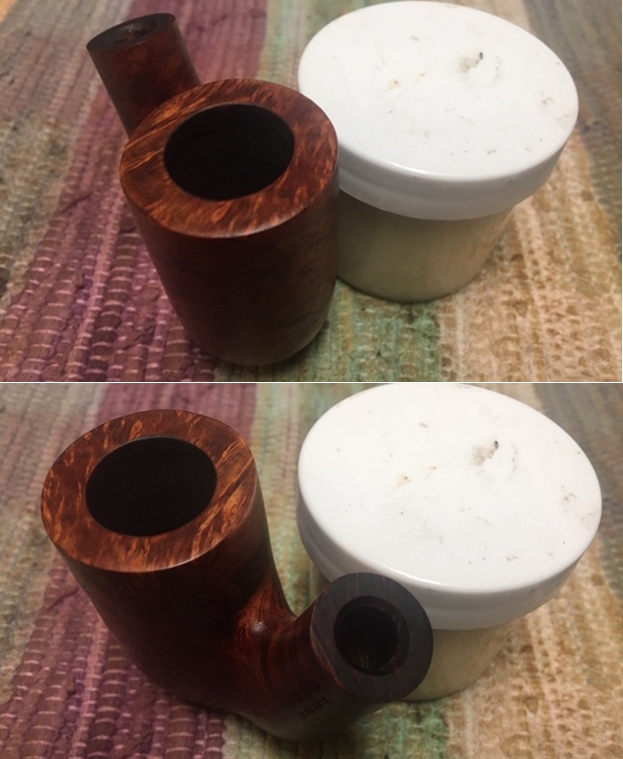
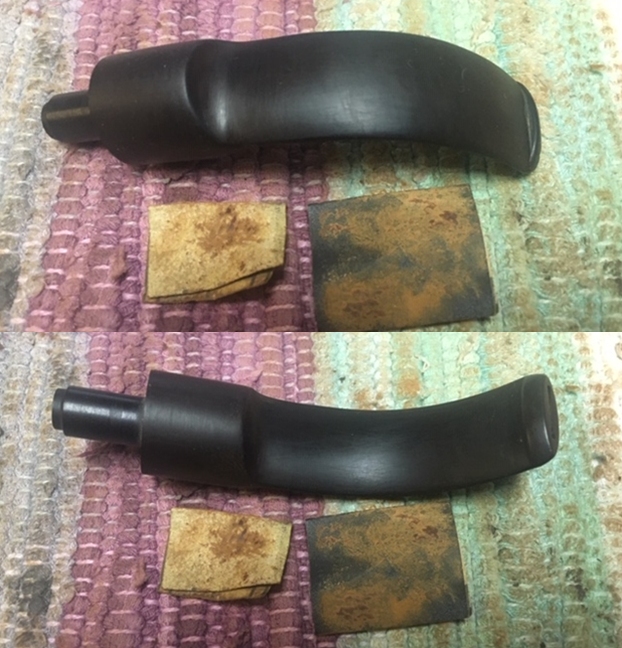
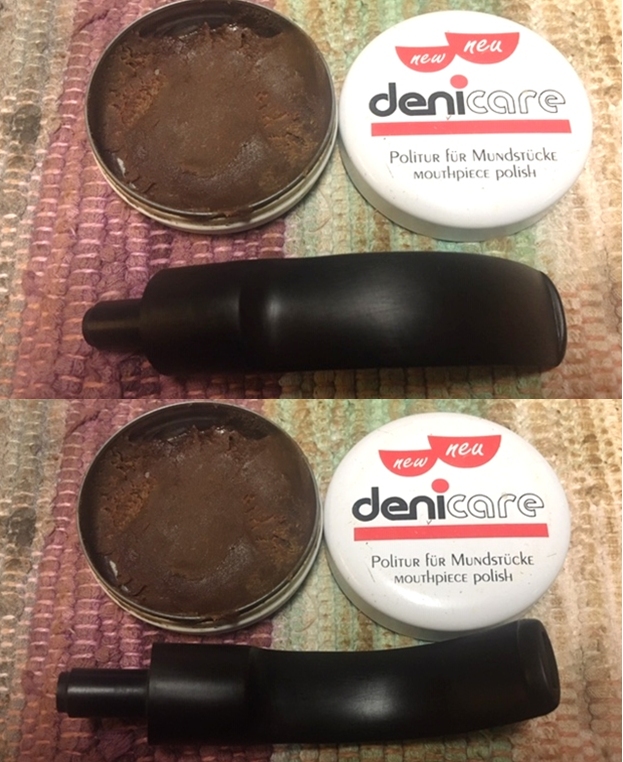
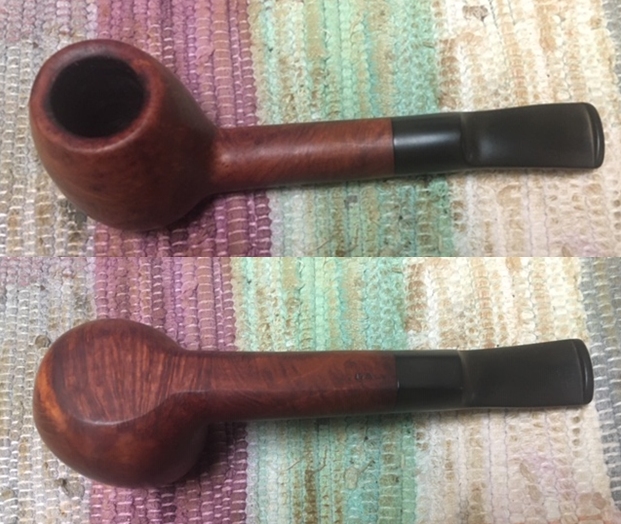
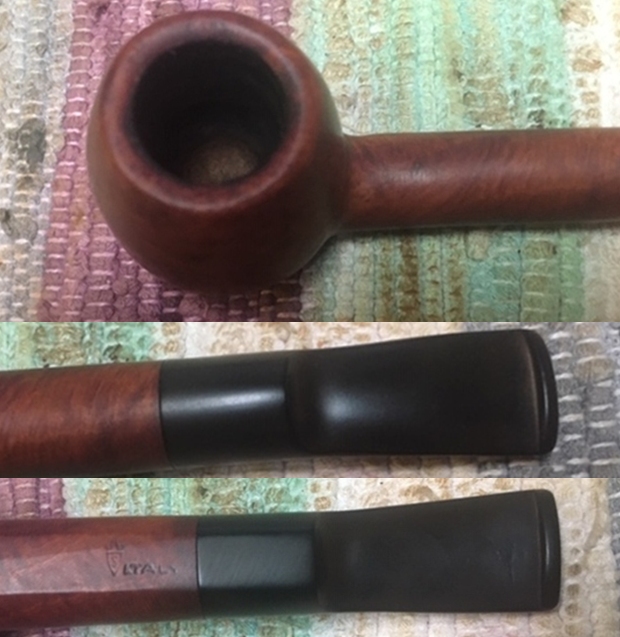
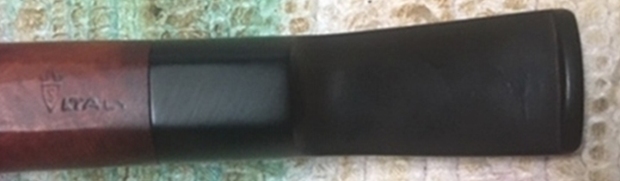
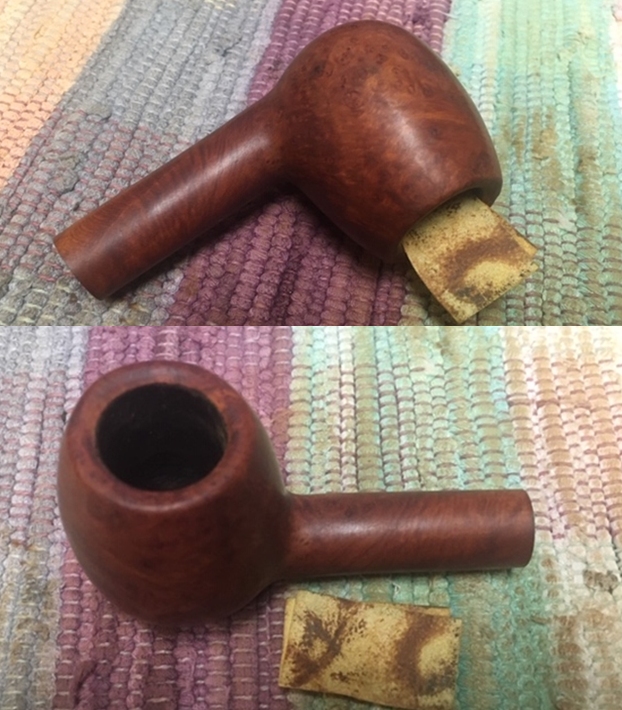
The next pipe on my table is another Savinelli Product pipe. It is stamped on the underside of the shank with the Savinelli “S” Shield and Italy. It is a dirty pipe but has some great grain that the carver built the shape around. It has a natural finish that is in good shape under the dirt and even the rim top looks good. The inner edge of the rim is darkened but the bowl is in good shape. There was no burn damage to the inner edge. There is a medium cake in the bowl but no lava coat on the rim top. The variegated silver/grey acrylic stem was not well fitted to the shank. It is the original stem but it is a pretty sloppy fit. There were light tooth marks and chatter on both sides ahead of the button. Jeff took these photos before he cleaned the pipe. Jeff took photos of the rim top from various angles to give a clear picture of the condition of the bowl and rim. It is dirty but there is no lava coat on the top and the rim edges look very good.The grain around the sides and heel of the bowl is quite interesting. It is a combination of cross grain, swirled and birdseye grain. There are some small fills on the sides and back of the bowl. Most of them seem to be solid.  The stamping on the shank is very readable as can be seen in the next photo.The acrylic stem shows tooth marks and chatter on both sides near the button. There is some wear on the edge of the button as well. The stem shows a great profile. It was time to get working on the pipe itself and see what I had to do with it. It had come back amazingly clean. Jeff had done his normal thorough clean up – reaming, scrubbing, soaking and the result was evident in the pipe when I unpacked it. I took photos of the pipe before I started my work on it. I took some photos of the rim top to show the condition of the edges and the bowl. It looked very good. The stem actually looked much better than I expected and the tooth chatter seemed to have disappeared. There were some light tooth marks just next to the button edge on both sides. I would also need to fit the stem to the shank by reduce the diameter of the stem to match the shank and adjust the fit.I took photos of the stem shank junction to show the difference in diameter. The stem is significantly wider than the shank. It fit tight to the shank but the rest of the fit was very poorly done.The bowl was going to be quite easy to work on so I started with it. The fills on the right side of the bowl were sound and tight fitting. There was a damaged fill that was pitted on the back of the bowl just above the shank bowl junction. I cleaned it out with a cotton swab and alcohol and filled it in with super glue and briar dust. When the repair had cured I sanded it smooth with a folded piece of 220 grit sandpaper. Once it was smooth I stained it with an oak stain pen to blend it into the surrounding briar.I polished the briar with micromesh sanding pads – wet sanding with 1500-12000 grit pads. I wiped the bowl down after each pad with a damp cloth to remove the dust.     I worked some Before & After Restoration Balm into the briar with my fingertips. I let the balm sit on the briar for 10 minutes the buffed it off with a soft cloth. The balm enlivens, enriches and protects the briar while giving it a deep glow. I set the bowl aside and turned my attention to the stem. I used the Dremel and a sanding drum to take off as much of the excess diameter of the stem as possible while it was on the shank. I then removed the stem and worked on it with a rasp and file to remove the rest of the excess material.I sanded the stem with 220 grit sandpaper to remove the file marks and Dremel marks on the reduced shank. I also sanded out the tooth marks and the remaining chatter on the button end of the stem. I started the polishing with 400 grit wet dry sandpaper.I polished the stem with micromesh sanding pads – wet sanding with 1500-12000 grit sanding pads. I wiped it down after each sanding pad with a damp cloth. I polished it with Before & After Pipe Stem Polish – both Fine and Extra Fine. I buffed the stem with a soft cloth to raise the shine. Once again I am at my favourite part of a restoration – finishing up a pipe! This Savinelli Made Bent Pot came out really well considering the issues with the fit of the stem when I started. I put the pipe back together and buffed it with Blue Diamond polish on the buffing wheel. I polished it with multiple coats of carnauba wax on both the bowl and stem. I buffed it with a clean buffing pad and with a hand buff with a microfibre cloth. The mix of colours and the buffing made the grain really pop once it was waxed. The mixed grain is quite stunning. The variegated silver acrylic half-saddle stem stands out in great contrast to the briar. It is a nice looking pipe. Have a look at the photos below of the finished pipe. Its dimensions are Length: 6 inches, Height: 2 inches, Outside Diameter of the Bowl: 1¼ inches, Diameter of the Chamber: ¾ of an inch. The bent pot feels great in the hand. This one will be going on the rebornpipes store later today. You can add it to your collection and carry on the trust. Let me know if you are interested in adding it. Thanks for your time.
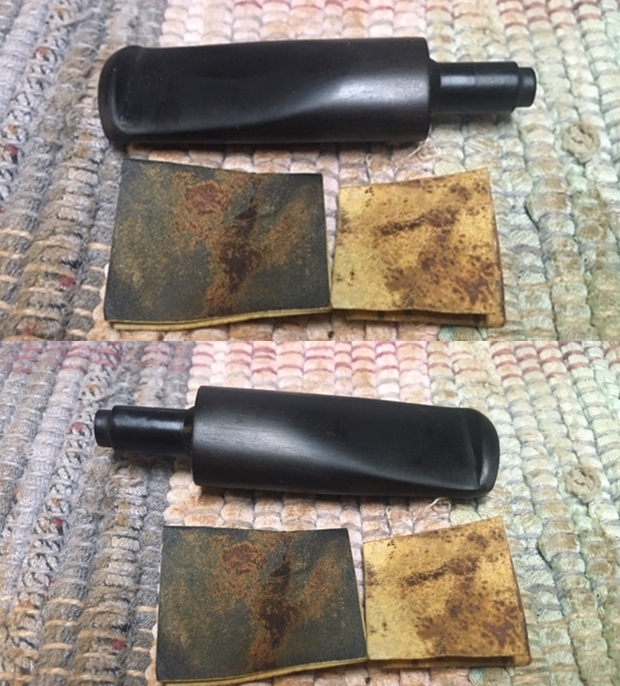
New Life for a Mystery BBB Custom Made Zulu


Blog by Steve Laug

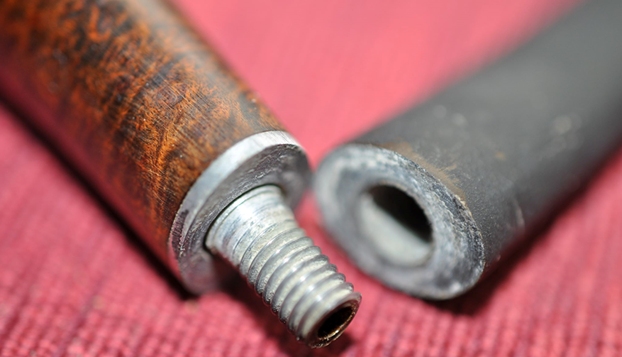
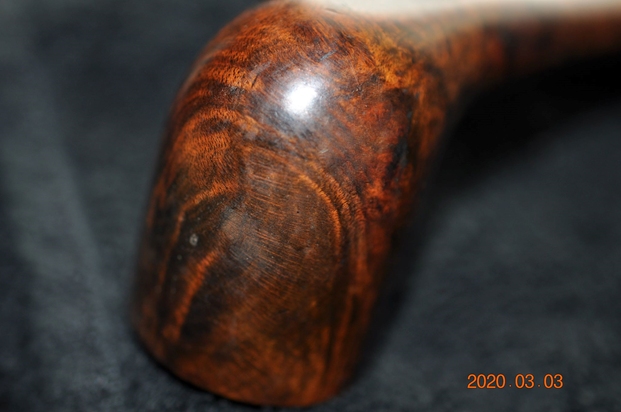
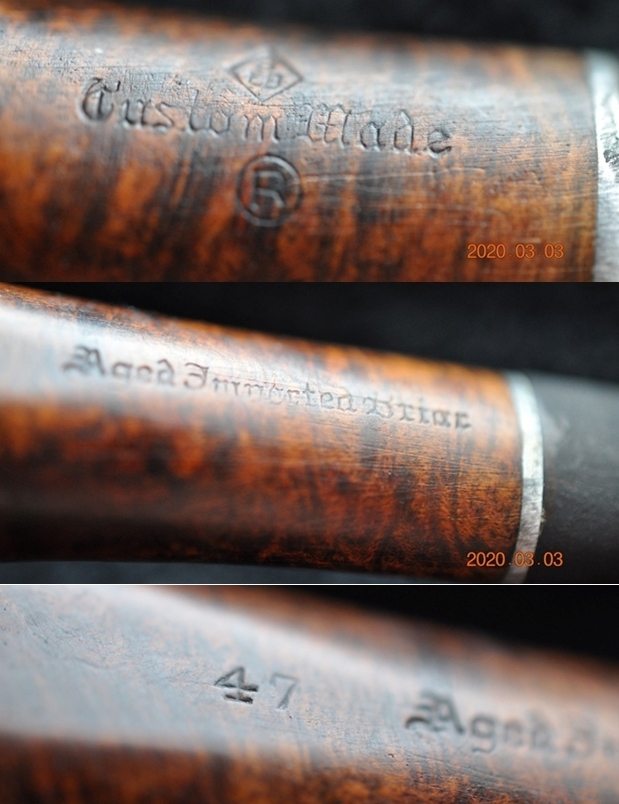
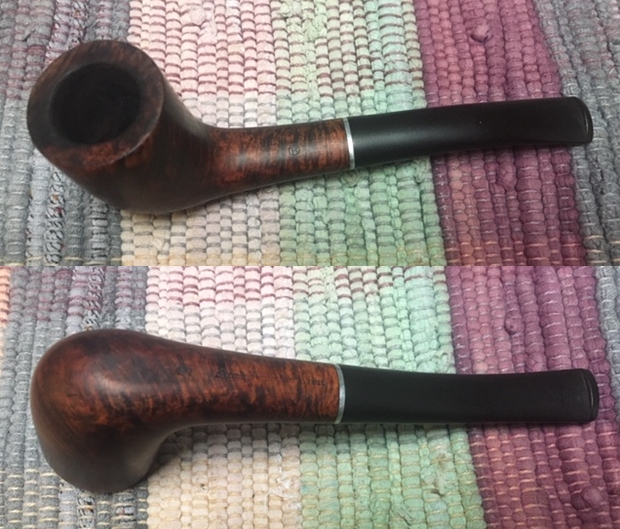
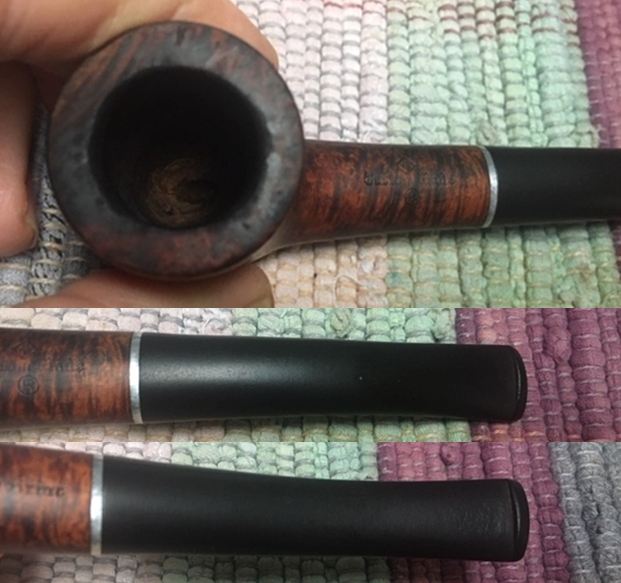
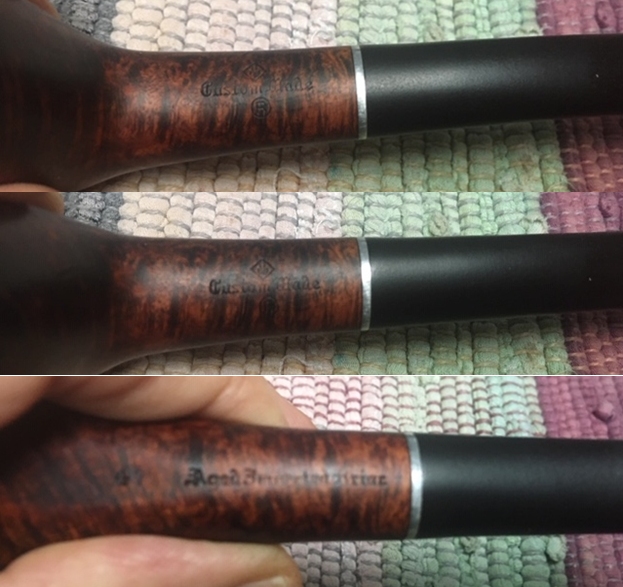
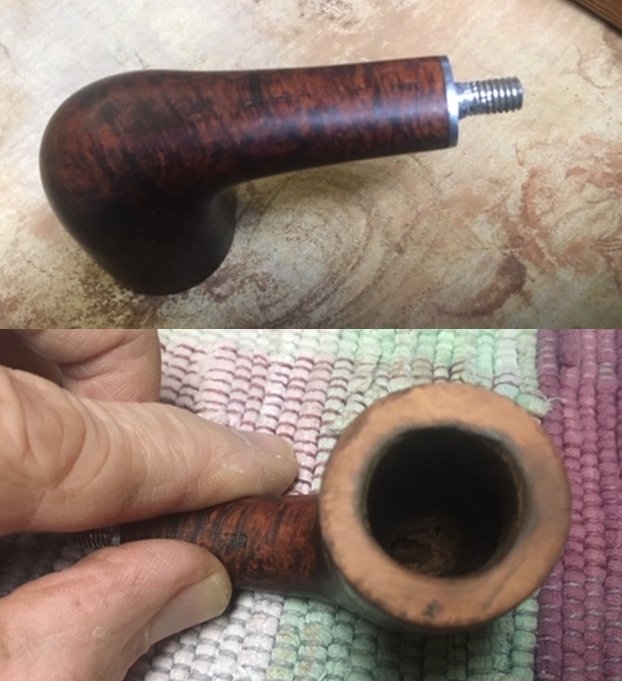
The next pipe on my table is actually a strange one and a bit of a mystery to me. It is a nicely shaped and grained Zulu. The mystery does not come in the shape but in the composition of the pipe and the stamping on the shank. The stem is threaded onto an inset metal tenon that is a part of the spacer on the shank end. The tenon is unmovable and the stem screws onto it. I have never seen that on a British made BBB pipe. Then the stamping, other than the BBB Diamond on the topside of the shank looks like every other American made pipe of that time period. The stamping reads on the topside of the shank as follows: a BBB Diamond over Custom Made in a Germanic script and underneath that is R in a circle (there are pictures of the stamping below). On the underside of the shank it is stamped with the shape number 47 on the flat heel of the bowl followed by Aged Imported Briar in the same Germanic Script. The Imported Briar has always been a sign of an American Made pipe to me so therein laid the mystery. Is it really a BBB from England or is it another BBB brand that is American? I am hoping to demystify it a bit in the process of this restoration

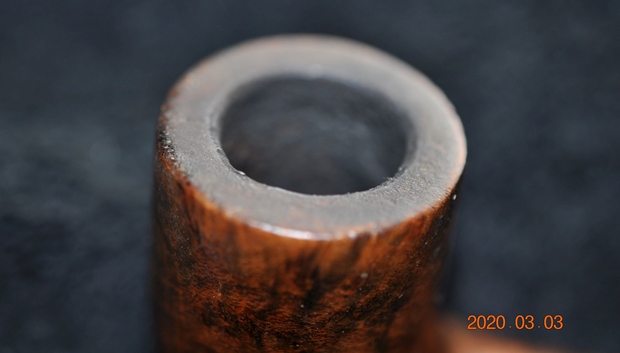
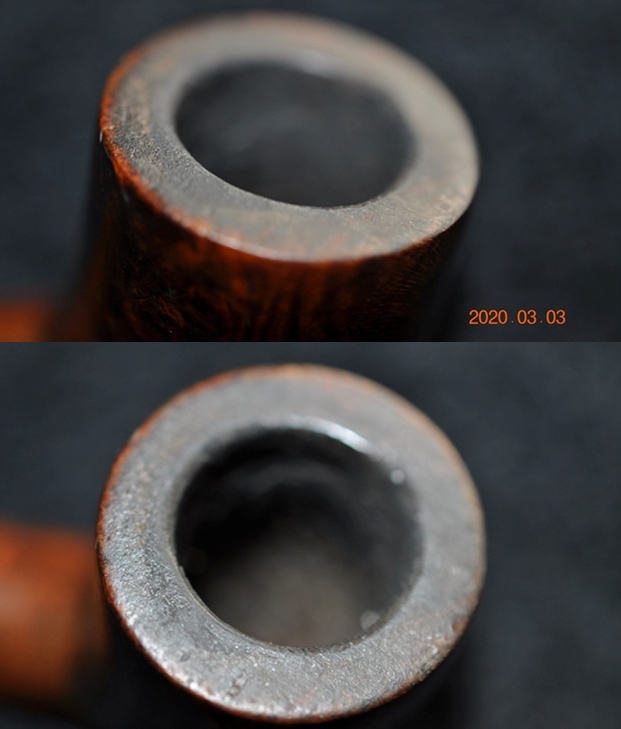
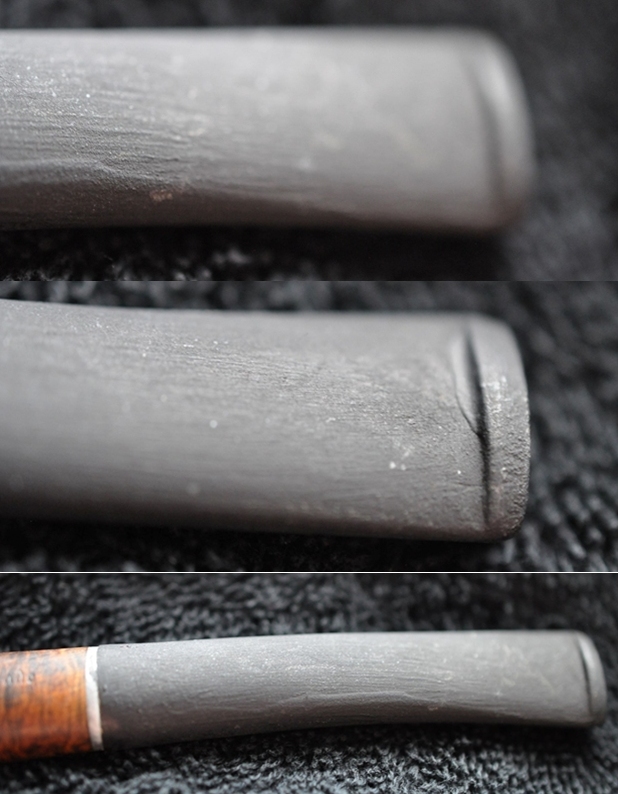
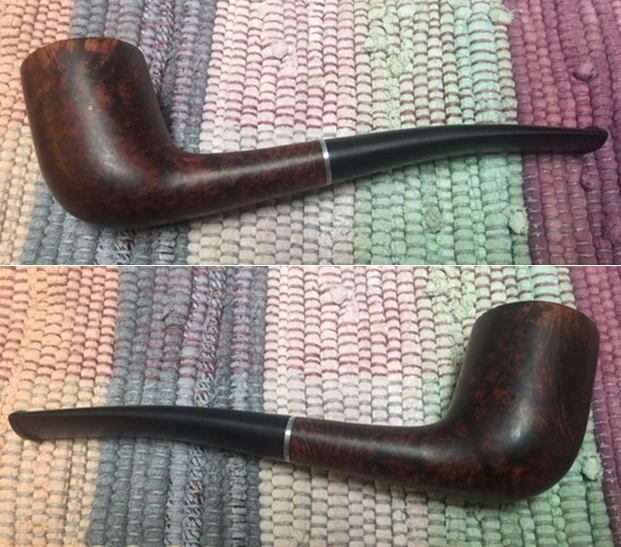
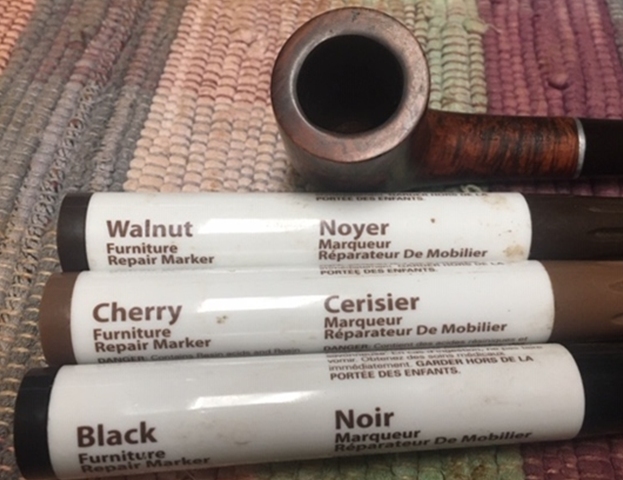
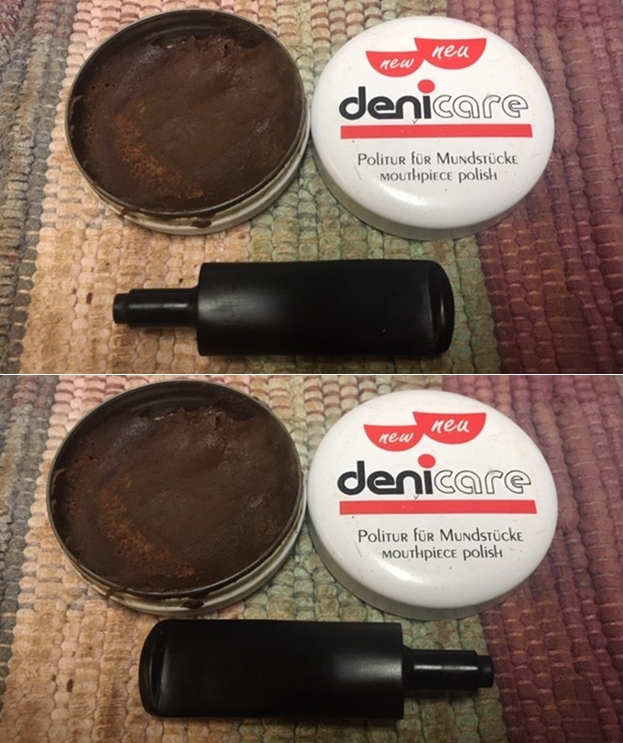
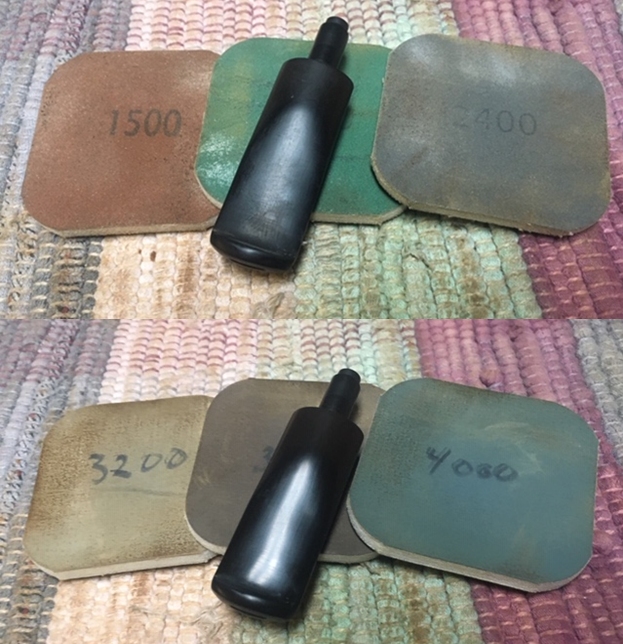
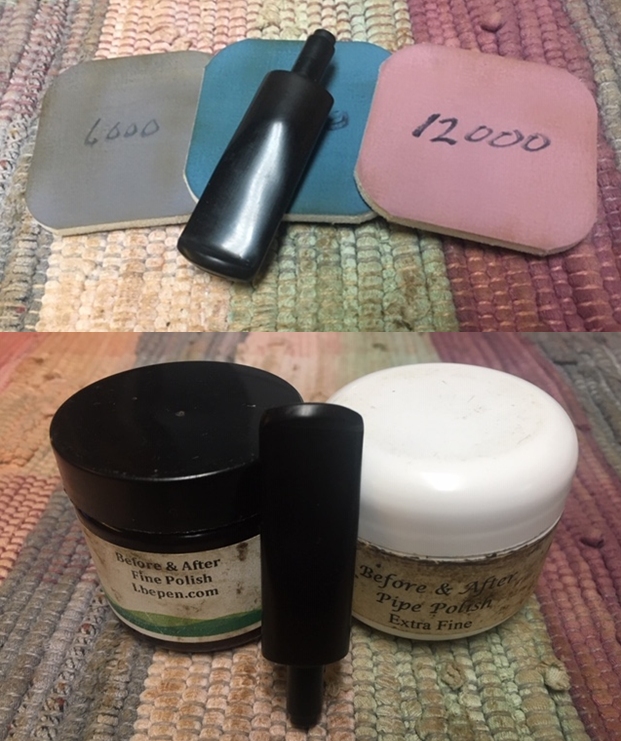
It is a dirty pipe but has some great grain that the carver built the shape around. The finish is in good shape under the dirt and even the rim top looks good. The inner edge of the rim is darkened the bowl is out of round. There was burn damage to the inner edge. There is a thick cake in the bowl and a thick lava coat on the rim top. The rim top also appeared to have some pitting and nicks in the surface. The stem is pitted and oxidized. It has light tooth marks and chatter on both sides ahead of the button. Jeff took these photos before he cleaned the pipe.Jeff unscrewed the stem from the shank so that I could see the tenon set up and it is pretty clear that it was set in the shank.Jeff took photos of the rim top from various angles to give a clear picture of the condition of the bowl and rim. It is dirty but there is no lava coat on the top and the rim edges look very good. The grain around the sides and heel of the bowl is quite interesting. It is a combination of cross grain, swirled and birdseye grain. The stamping on both sides of the shank is very readable as can be seen in the next three photos.The stem shows pitting and oxidation on the surface as well as light tooth marks and chatter on both sides. There is some wear on the edge of the button as well. The stem shows a great profile.I looked through all of my resources for BBB pipes and could find nothing even remotely like this pipe. I looked on both Pipephil and Pipedia for other brands with similar stamping and again found nothing. Even with the lack of information it was time to get working on the pipe itself and see what I had to do with it. It had come back amazingly clean. Jeff had done his normal thorough clean up – reaming, scrubbing, soaking and the result was evident in the pipe when I unpacked it. I took photos of the pipe before I started my work on it. I took some photos of the rim top to show the condition of the edges and the bowl. It looked very good. The stem actually looked much better than I expected and the tooth chatter seemed to have disappeared. There were some light tooth marks just next to the button edge on both sides.I am including photos of the stamping to show how Jeff preserved it during the cleanup and it did not fade or show damage.I decided to address the damage to the rim top and inner edge first. I topped the bowl with 220 grit sandpaper on a hard topping board I use. I followed up by working over the inner edge of the rim with a folded piece of 220 grit sandpaper to give the edge a light bevel and minimize as much of the damage as I could. With the inner edge and top cleaned up the bowl looked significantly better. I polished the briar with micromesh sanding pads – wet sanding with 1500-12000 grit pads. I wiped the bowl down after each pad with a damp cloth to remove the dust.     I blended three stain pens together to get a match to the colour of the bowl – Walnut, Cherry and Black. The colour combination worked very well to make it look original. I worked some Before & After Restoration Balm into the briar with my fingertips. I let the balm sit on the briar for 10 minutes the buffed it off with a soft cloth. The balm enlivens, enriches and protects the briar while giving it a deep glow. I set the bowl aside and turned my attention to the stem. I sanded the stem with 220 grit sandpaper to remove the tooth marks and the remnants of oxidation especially in the saddle area. I started the polishing with 400 grit wet dry sandpaper.I polished the stem with Denicare Mouthpiece Polish. It is a gritty red paste (similar in grit to red Tripoli) that I rub on with my finger tips and work it into the surface of the stem and button and buff it off with a cotton pad. It gives me a bit of a head start on the polishing work.I polished the stem with micromesh sanding pads – wet sanding with 1500-12000 grit sanding pads. I wiped it down after each sanding pad with Obsidian Oil. I polished it with Before & After Pipe Stem Polish – both Fine and Extra Fine. I buffed the stem with a soft cloth to raise the shine. I wiped the stem down with Briarville’s No Oxy Oil to preserve and protect the stem surface. Once again I am at my favourite part of a restoration – finishing up a pipe! This BBB Custom Made Zulu came out really well considering the condition it was in when I started. I put the pipe back together and buffed it with Blue Diamond polish on the buffing wheel. I polished it with multiple coats of carnauba wax on both the bowl and stem. I buffed it with a clean buffing pad and with a hand buff with a microfibre cloth. The mix of colours and the buffing made the grain really pop once it was waxed. The cross grain, swirled and birdseye grain are quite stunning. The silver coloured spacer and the polished black vulcanite saddle stem stands out in great contrast to the briar. It is really a beautiful pipe. Have a look at the photos below of the finished pipe. Its dimensions are Length: 5 ½ inches, Height: 1 ¾ inches, Outside Diameter of the Bowl: 1¼ inches, Diameter of the Chamber: ¾ of an inch. The Mystery brand pipe is comfortable handful and feels great in the hand. This one will be going on the rebornpipes store later today. You can add it to your collection and carry on the trust. Let me know if you are interested in adding it. Thanks for your time.
Breathing Life into Barontini Diamante 302 Oom Paul


Blog by Steve Laug

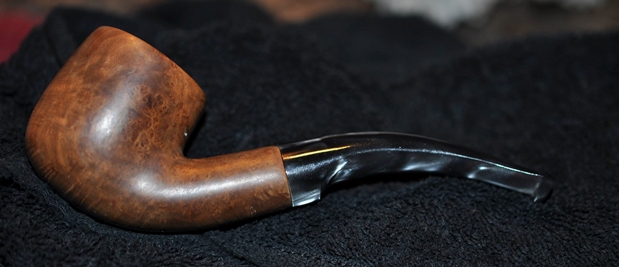
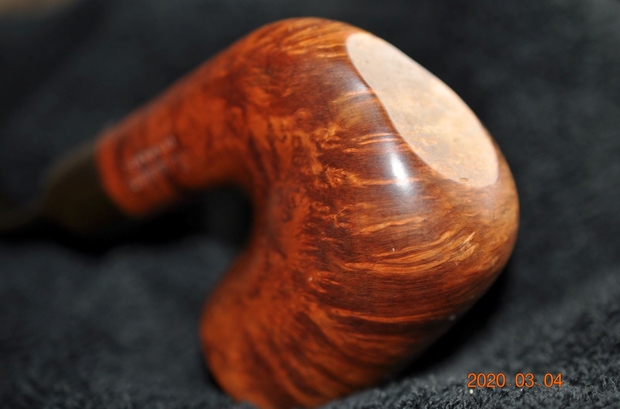
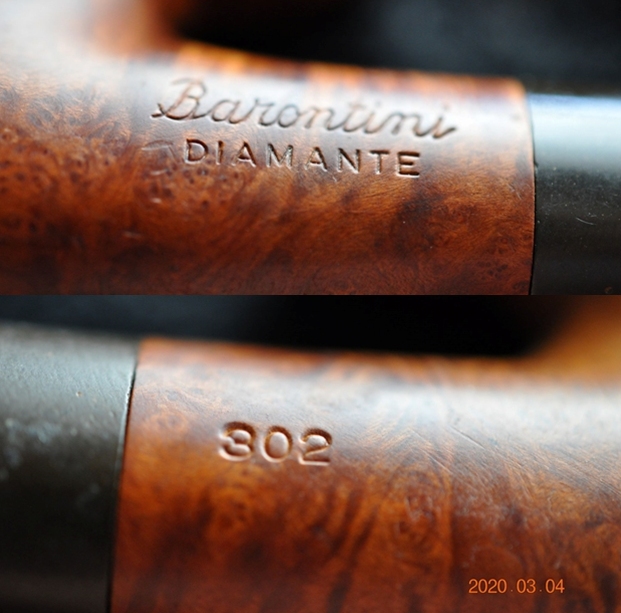
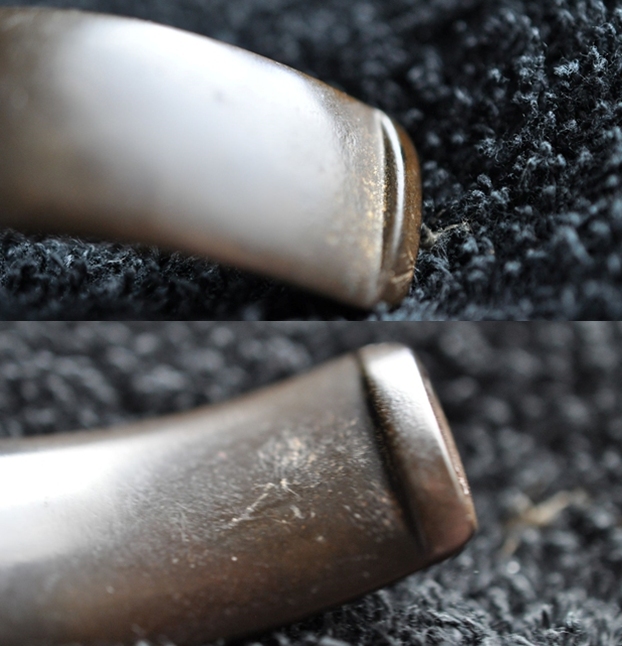
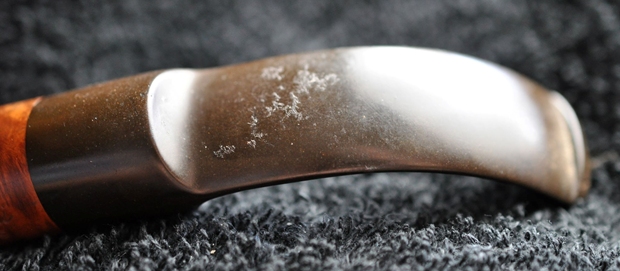
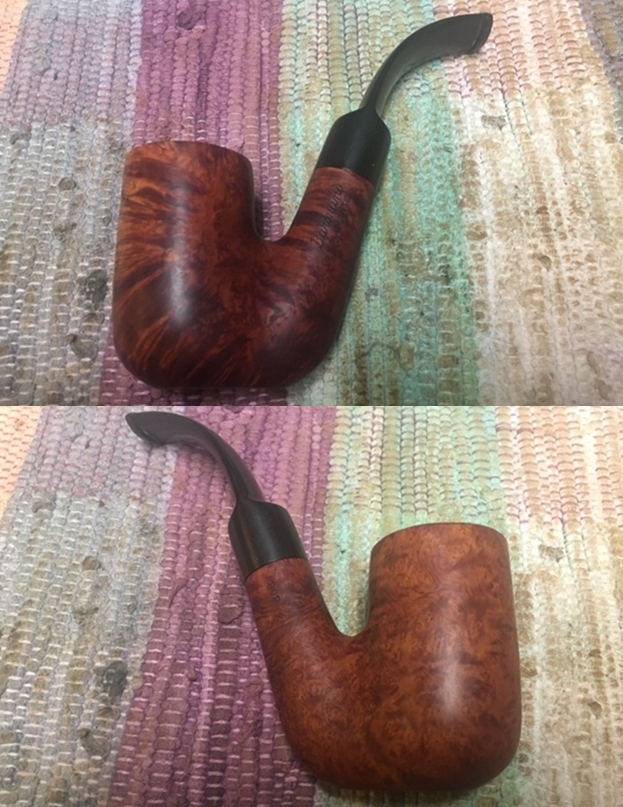
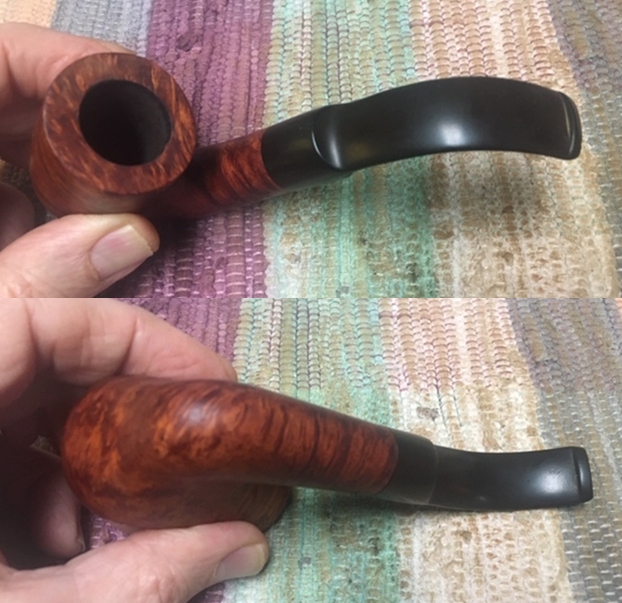
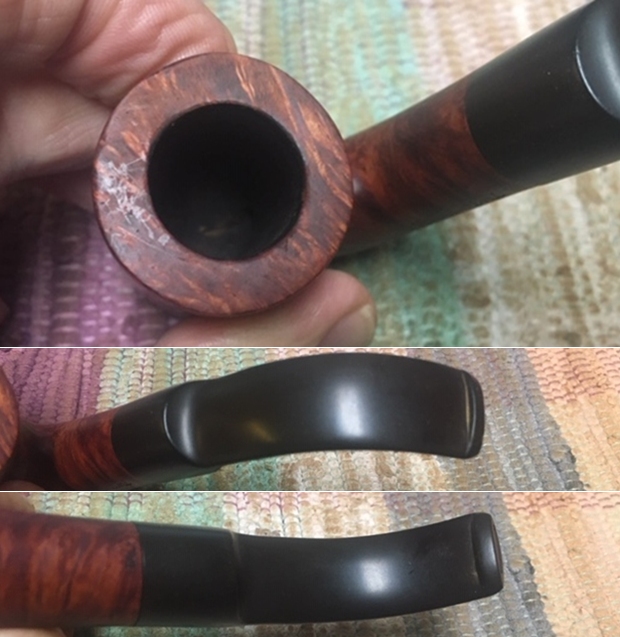
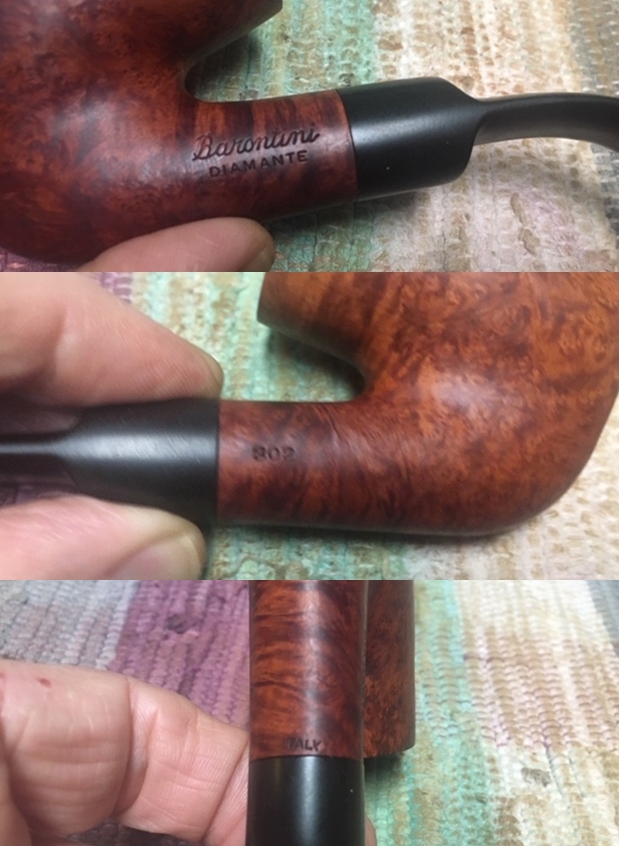
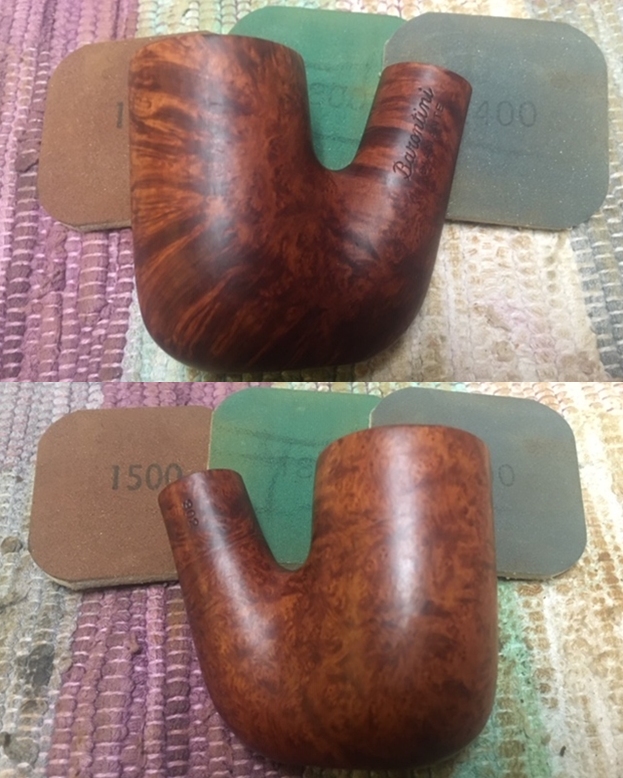
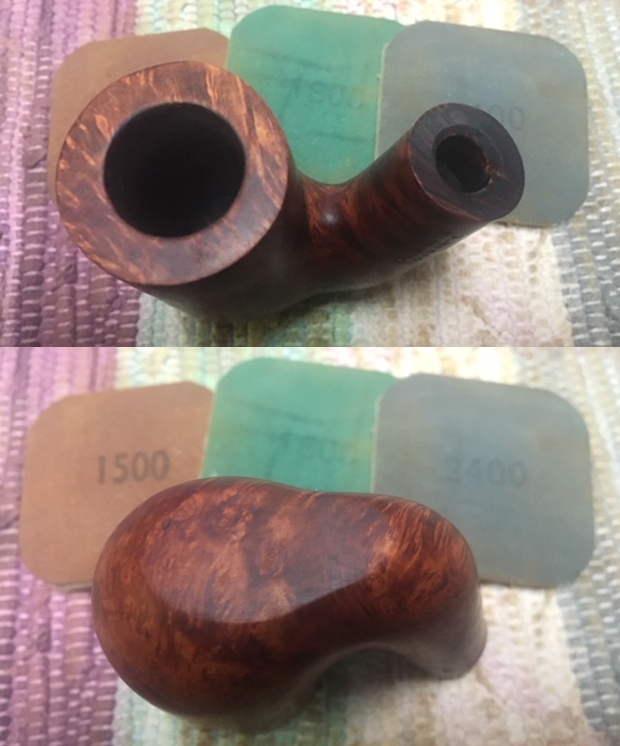
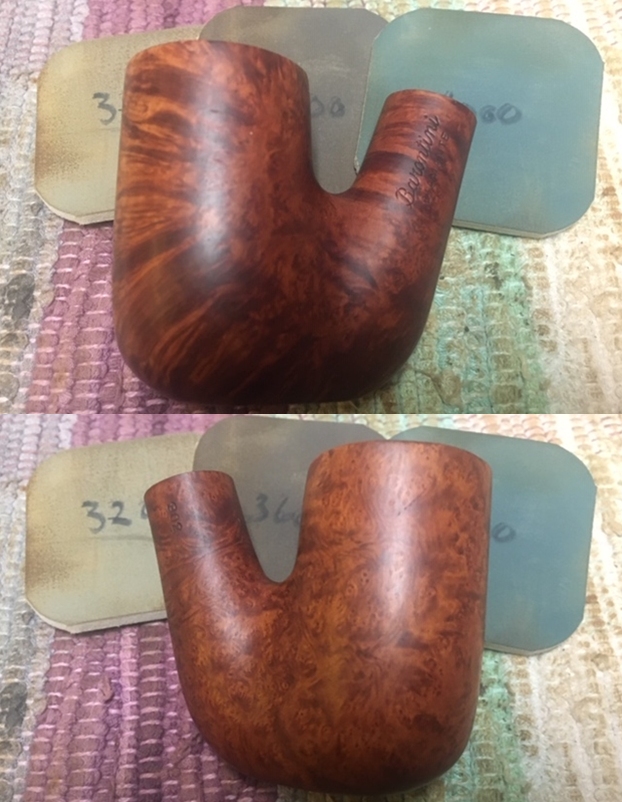
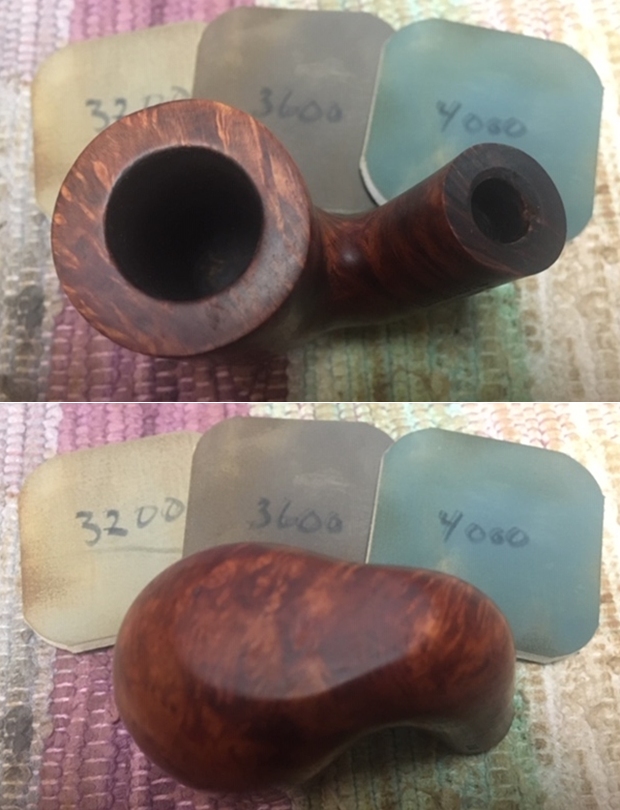
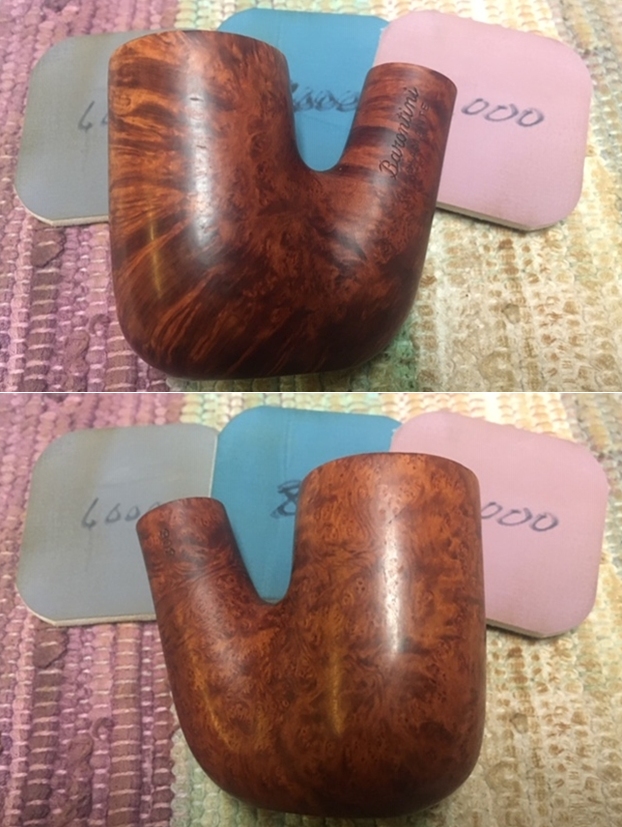
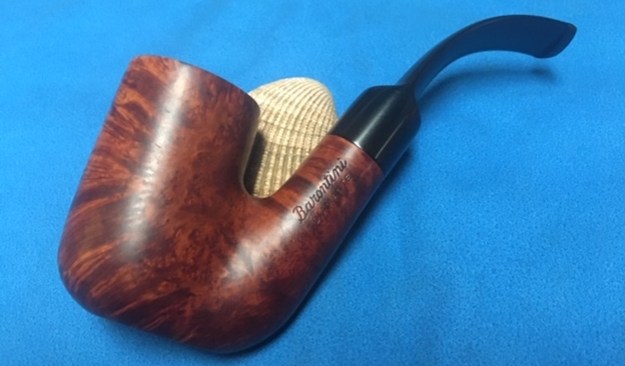
The next pipe on my table is a Barontini Oom Paul. It is a beautifully grained piece of briar. It is stamped on the left side of the shank Barontini over Diamante. On the right side it has the shape number 302. On the underside of the shank it is stamped Italy. It is a dirty pipe but has some great grain that the carver built the shape around. The finis is in good shape under the dirt and even the rim top looks good. The inner edge of the rim is darkened but appears to be undamaged. There is a medium cake in the bowl – thicker toward the bottom half of the bowl. The stem is oxidized and has light tooth marks and chatter on both sides ahead of the button. Jeff took these photos before he cleaned the pipe. Jeff took photos of the rim top from various angles to give a clear picture of the condition of the bowl and rim. It is dirty but there is no lava coat on the top and the rim edges look very good. The grain around the sides and heel of the bowl is quite stunning. It is a combination of cross grain and birdseye grain. The stamping on both sides of the shank is very readable as can be seen in the next two photos.The stem shows some calcification and oxidation on the surface as well as light tooth marks and chatter on both sides. There is some wear on the edge of the button as well. The stem shows a great profile and the bend is perfect for the Oom Paul shape. I have worked on a few Barontini pipes in the past and have always found that they are well made and quite stunning. I turned to a previous blog I wrote on a Barontini DeLuxe Brandy. I had done a bit of research on the brand and will include that information here as well (https://rebornpipes.com/2018/09/08/70642/).

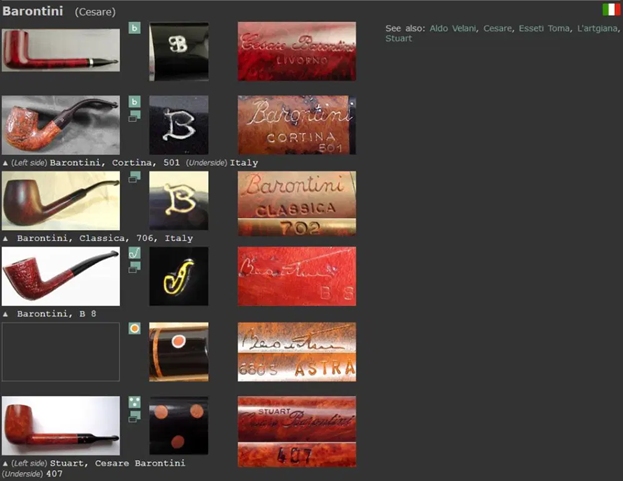
I looked up some information on the brand on the Pipephil website to get a quick overview of the history (http://www.pipephil.eu/logos/en/logo-b2.html).  I did a screen capture of the listing for the brand. The fascinating thing that I learned in this quick overview was the connection to the entire Barontini family and to other companies like Aldo Velani. It is interesting to see the breadth of the brand in the following screen capture…Pipedia gives further history of the brand (https://pipedia.org/wiki/Barontini,_Ilio) under the listing for Ilio Barontini. I quote that article in full as it has the connection to the De Luxe pipe that I am working on.

Cesare Barontini, who was in charge of the Barontini Company since 1955, helped his cousin Ilio Barontini to establish a pipe production of his own.

Ilio started to produce machine-made series pipes of the lower to the middle price categories. Fatly 80% of the pipes went to foreign countries, the bulk being produced for various private label brands. Some of the own lines like “de Luxe”, “Etna” or “Vesuvio” gained a certain popularity. Citation: “Next to excellent craftsmanship Ilio Barontini pipes offer a wood quality, that is almost unrivalled in this price category!”.

The pipes being around still there were some unconfirmed utterances that Ilio Barontini brand has been absorbed by Cesare Barontini or even Savinelli. Who knows?

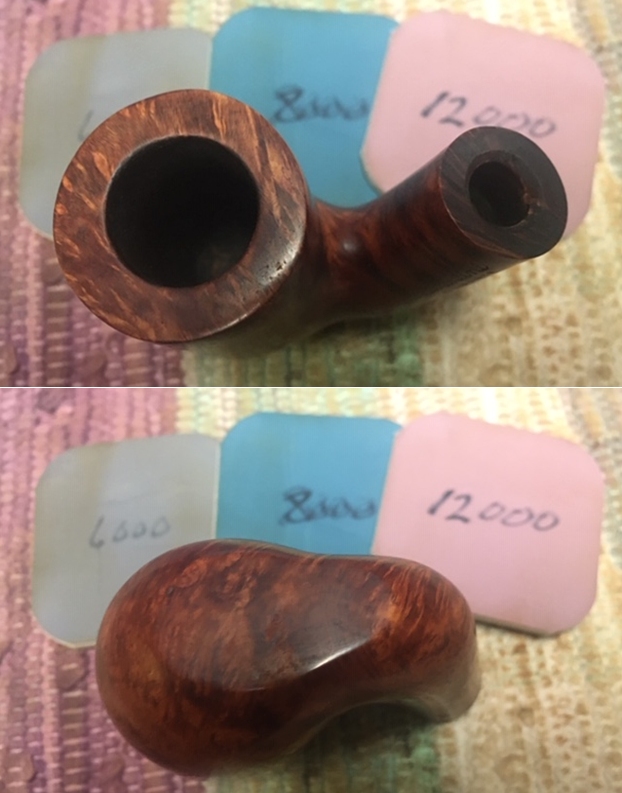
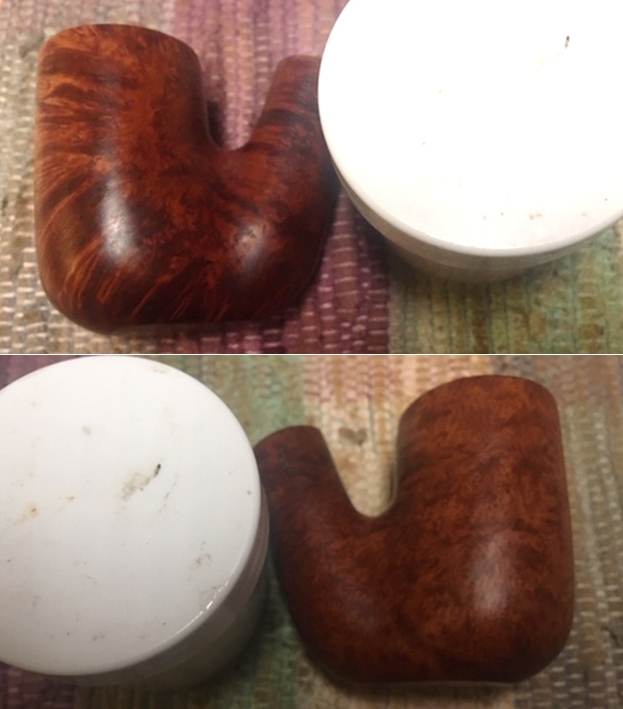
Fueled by that information it was time to get working on the pipe itself and see what I had to do with it. It had come back amazingly clean. Jeff had done his normal thorough clean up – reaming, scrubbing, soaking and the result was evident in the pipe when I unpacked it. I took photos of the pipe before I started my work on it. I took some photos of the rim top to show the condition of the edges and the bowl. It looked very good. The stem actually looked much better than I expected and the tooth chatter seemed to have disappeared. There were some light tooth marks just next to the button edge on both sides.I am including photos of the stamping to show how Jeff preserved it during the cleanup and it did not fade or show damage.I polished the briar with micromesh sanding pads – wet sanding with 1500-12000 grit pads. I wiped the bowl down after each pad with a damp cloth to remove the dust. I worked some Before & After Restoration Balm into the briar with my fingertips. I let the balm sit on the briar for 10 minutes the buffed it off with a soft cloth. The balm enlivens, enriches and protects the briar while giving it a deep glow. I set the bowl aside and turned my attention to the stem. I sanded the stem with 220 grit sandpaper to remove the tooth marks and the remnants of oxidation especially in the saddle area. I started the polishing with 400 grit wet dry sandpaper.I polished the stem with Denicare Mouthpiece Polish. It is a gritty red paste (similar in grit to red Tripoli) that I rub on with my finger tips and work it into the surface of the stem and button and buff it off with a cotton pad. It gives me a bit of a head start on the polishing work. I polished the stem with micromesh sanding pads – wet sanding with 1500-12000 grit sanding pads. I wiped it down after each sanding pad with Obsidian Oil. I polished it with Before & After Pipe Stem Polish – both Fine and Extra Fine. I buffed the stem with a soft cloth to raise the shine. I wiped the stem down with Briarville’s No Oxy Oil to preserve and protect the stem surface. Once again I am at my favourite part of a restoration – finishing up a pipe! This one came out really well. I put the pipe back together and buffed it with Blue Diamond polish on the buffing wheel. I polished it with multiple coats of carnauba wax on both the bowl and stem. I buffed it with a clean buffing pad and with a hand buff with a microfibre cloth. The grain really popped when I buffed it and waxed it. The cross grain and birdseye grain are quite stunning. The polished black vulcanite saddle stem stands out in great contrast to the briar. It is really a beautiful pipe. Have a look at the photos below of the finished pipe. Its dimensions are Length: 6 inches, Height: 2 ¼ inches, Outside Diameter of the Bowl: 1¼ inches, Diameter of the Chamber: ¾ of an inch. The pipe is comfortable handful and feels great in the hand. This one will be going on the rebornpipes store later today. You can add it to your collection and carry on the trust. Let me know if you are interested in adding it. Thanks for your time.


Sprucing Up a Meerschaum Teardrop Lattice Billiard


Blog Dal Stanton

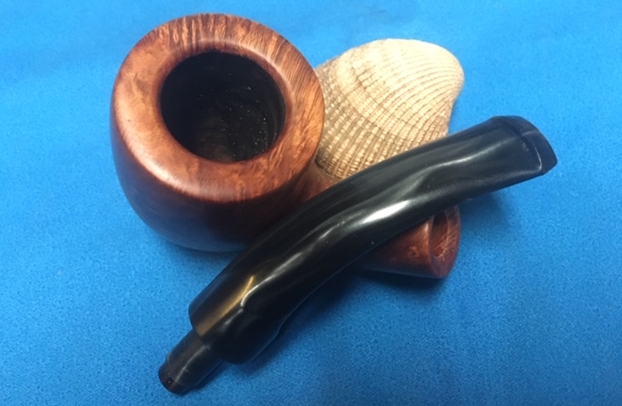
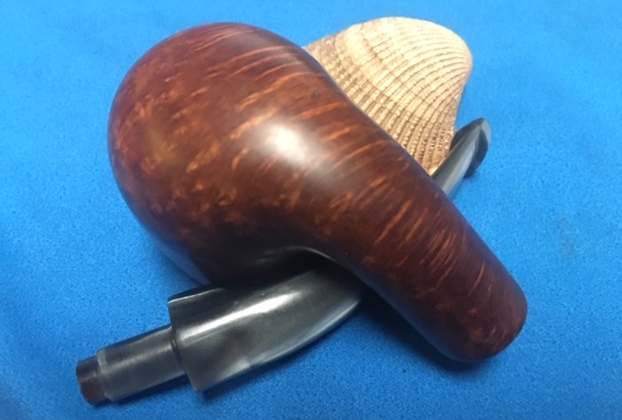
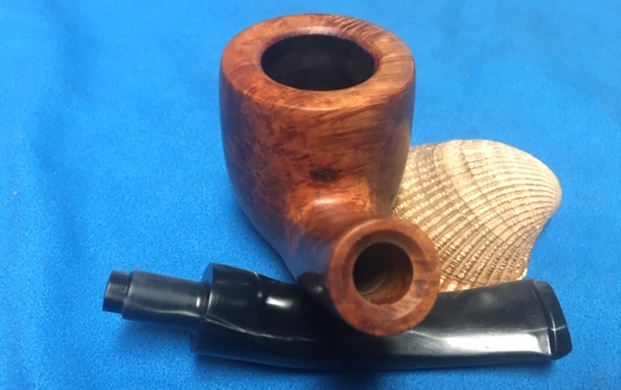
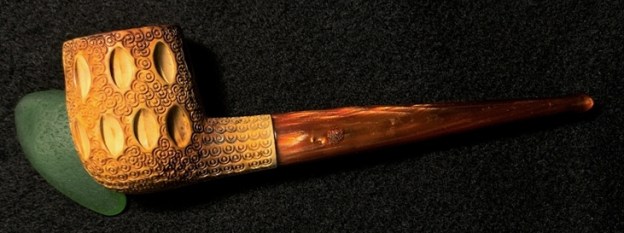
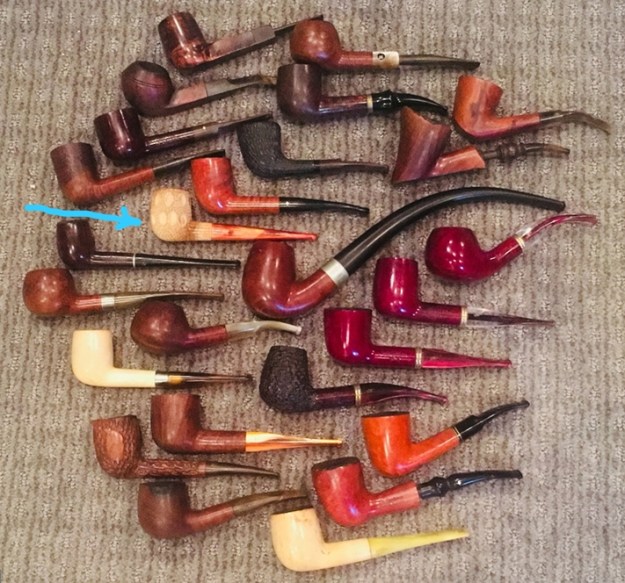
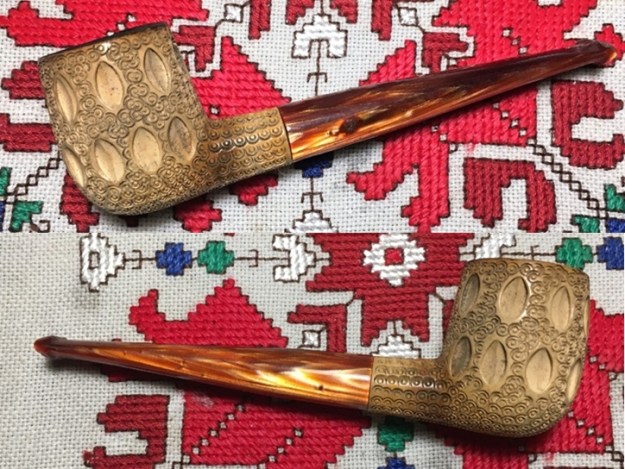
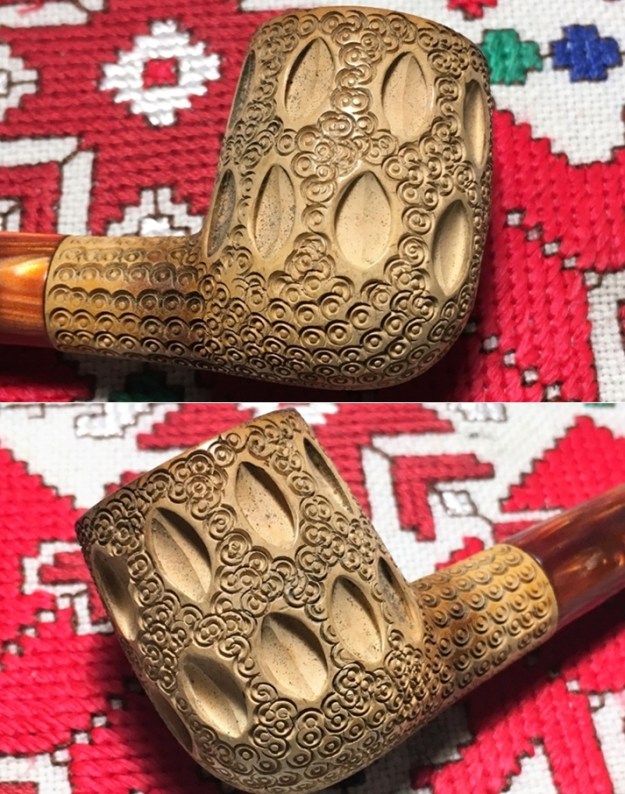
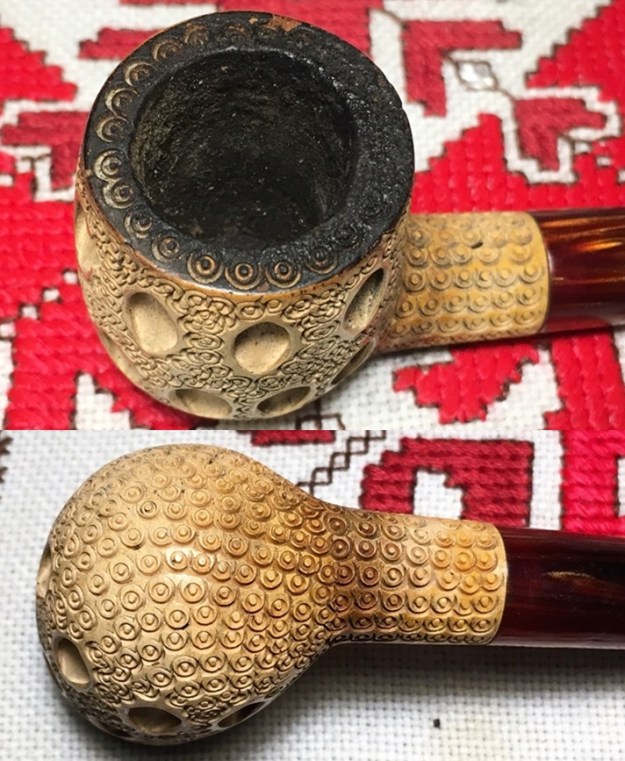
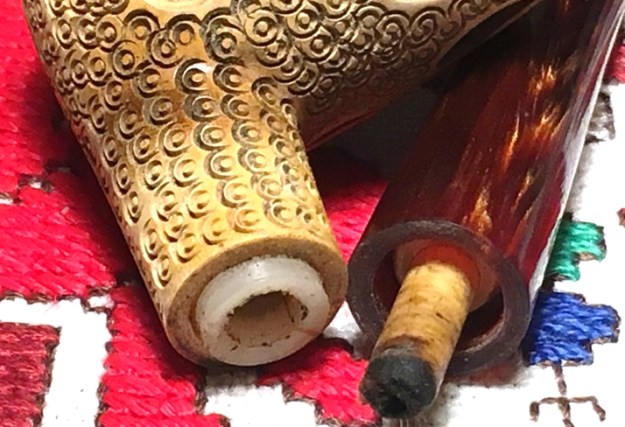
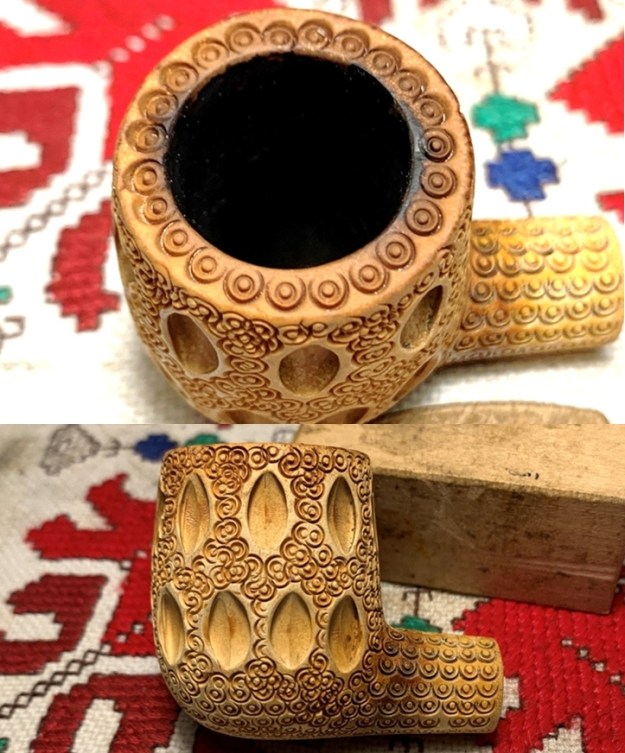
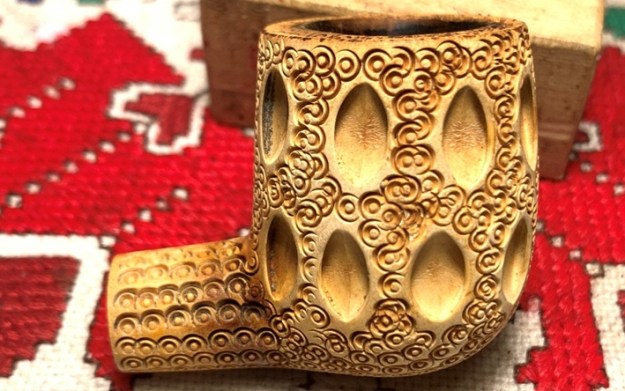
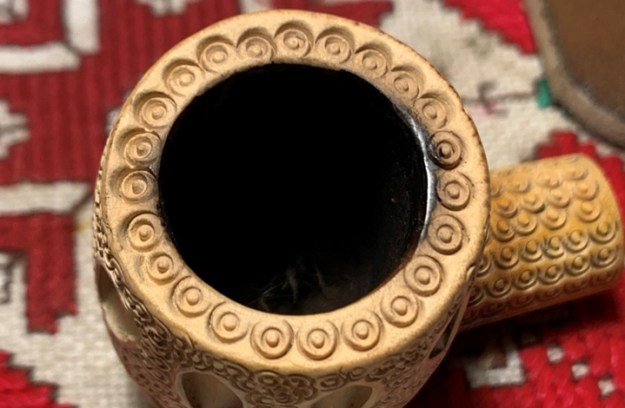
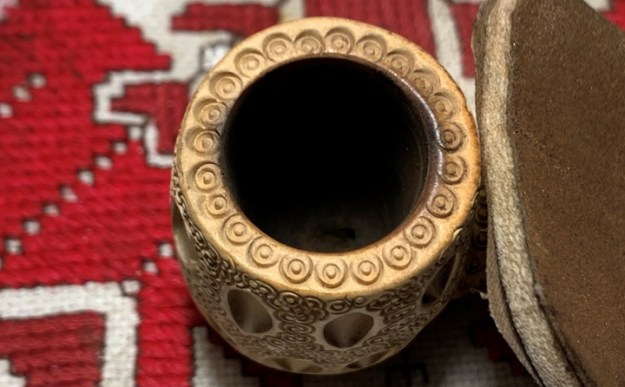
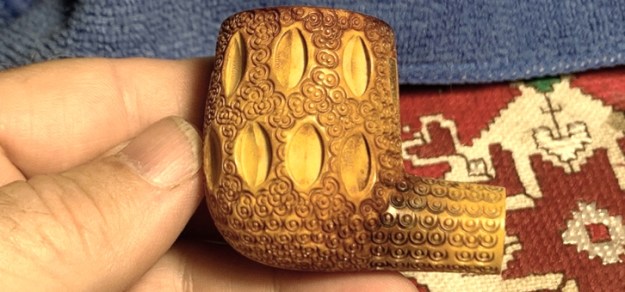
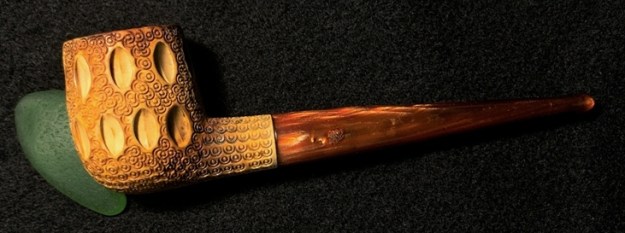
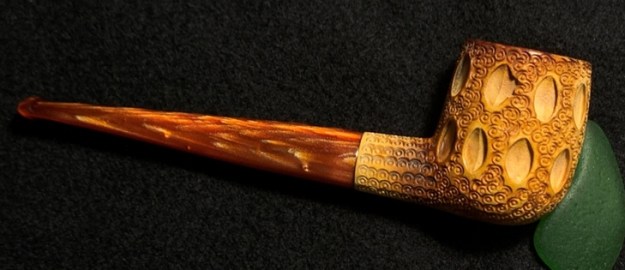
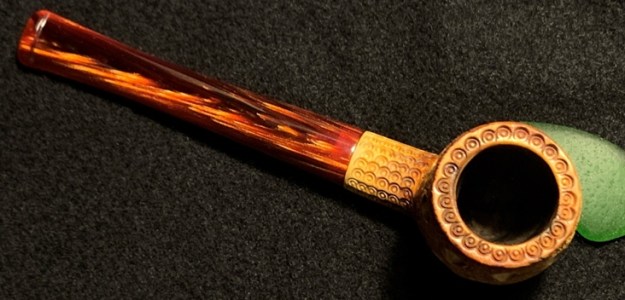
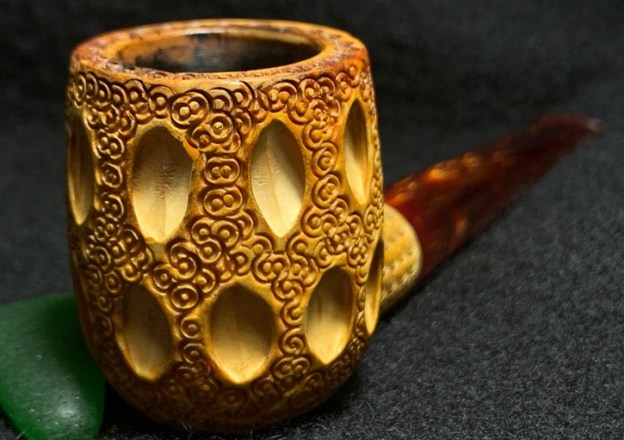
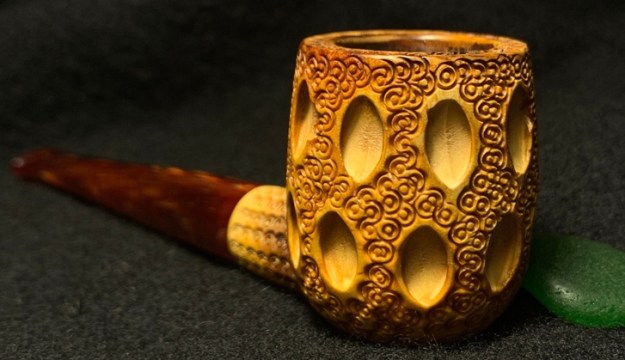
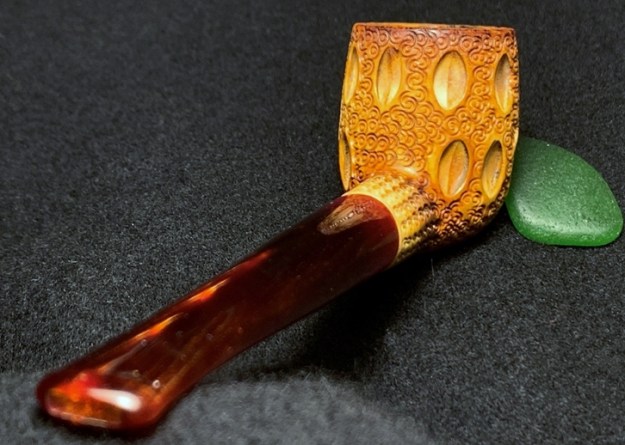
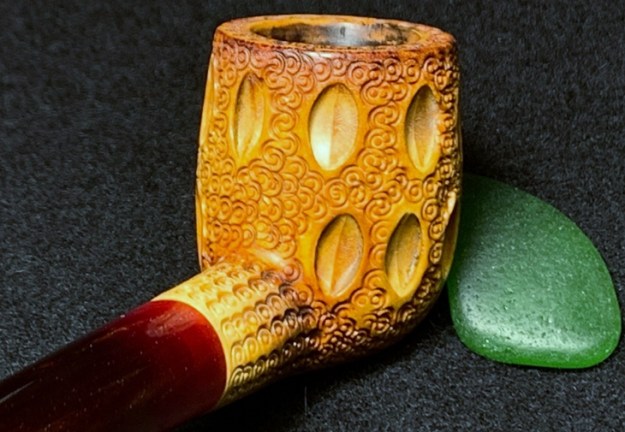
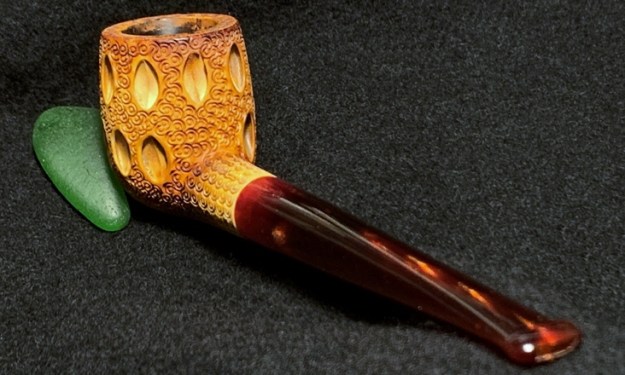
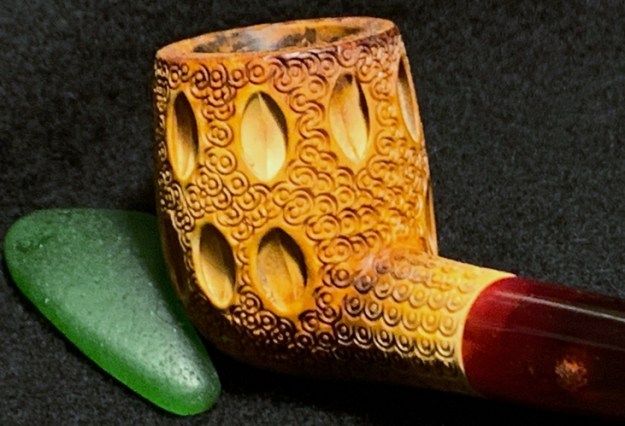
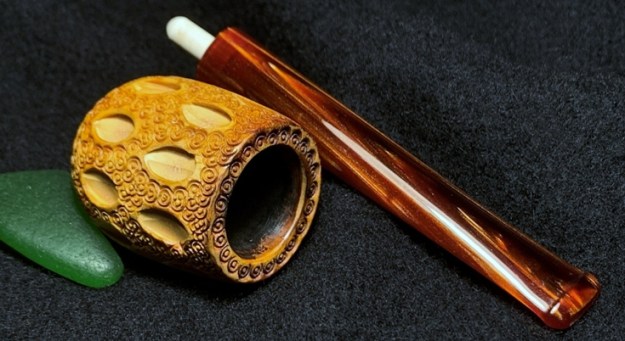
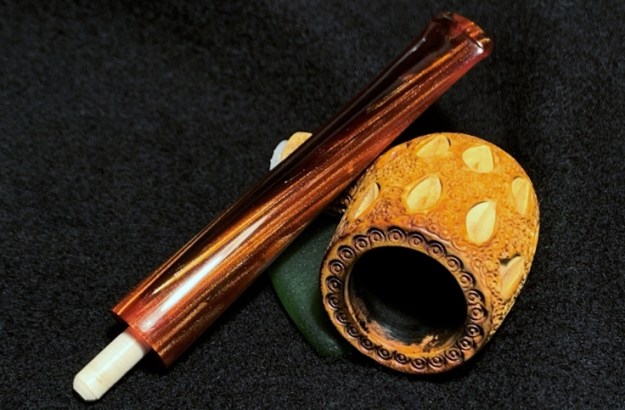
I just completed an Aldo Velani from what I’ve called the St. Louis Lot of 26 (See: Refreshing a Saucy Italian Aldo Velani Trio Bent Apple) and the next pipe in queue is also from this Lot.  The Meerschaum just above the giant Champion Churchwarden’s bowl is on the worktable now.  My son, Josiah found this lot in an antique shop in St. Louis where he was studying.  He sent me a text here in Bulgaria about his find with pictures.  We went in together to purchase the lot with the provision that my son’s part of the purchase would be for me to pick a pipe out of the lot as a Christmas present from him.  I chose the giant Champion Churchwarden!  Other pipe men and women have chosen other pipes from this lot of treasures which are posted in the online collection, For “Pipe Dreamers” Only! .This is where Jeremiah, from the state of California, saw the Meerschaum and commissioned him back when my wife and I were enjoying the Black Sea during our summer R&R.  I appreciate Jeremiah’s patience as his pipe worked up the queue!  Here are more pictures taking a closer look at the Meerschaum Teardrop Lattice Billiard. There are no markings on the pipe.  The size of the Billiard shape is Length 5 5/16 inches, Height 1 5/8 inches, Rim width 1 1/8 inches, Chamber width 3/4 inches, Chamber depth 1 3/8 inches. What is unique about this Meerschaum Teardrop Lattice design are the size of the tear drops, or the egg-shaped carvings – they are large.  The fine circular scallop carvings are in comparison, small and tight.  The Meer is set-up with a basic push/pull tenon which appears to have a crack in the mortise insert (pictured above).  The tenon insert is worn and discolored.  The pipe itself appears to be in great shape in need of cleaning.  The chamber has some carbon build up which is not needed or desired in a Meer chamber.  One of the great things about Meerschaums is that they do not need to rest between uses as with briars.  There is a bit of the coveted patina developing around the scalloped shank and climbing toward the back of the bowl.  This is good.  This brief description from Meerschaum.com that I’ve previously cited is helpful to understand the nature of Meerschaum:

Meerschaum is a very rare mineral, a kind of hard white clay. Light and porous structure of the pipe keeps the smoke cool and soft. The pipe itself is a natural filter which absorbs the nicotine. Because of this peculiarity, meerschaum pipes slowly change their colors to different tones of gold and dark brown. This adds an esthetic enjoyment to its great smoking pleasure. The longer a pipe is smoked the more valuable it becomes due to the color change. Today many old and rare meerschaums have found a permanent place in museums and private collections.

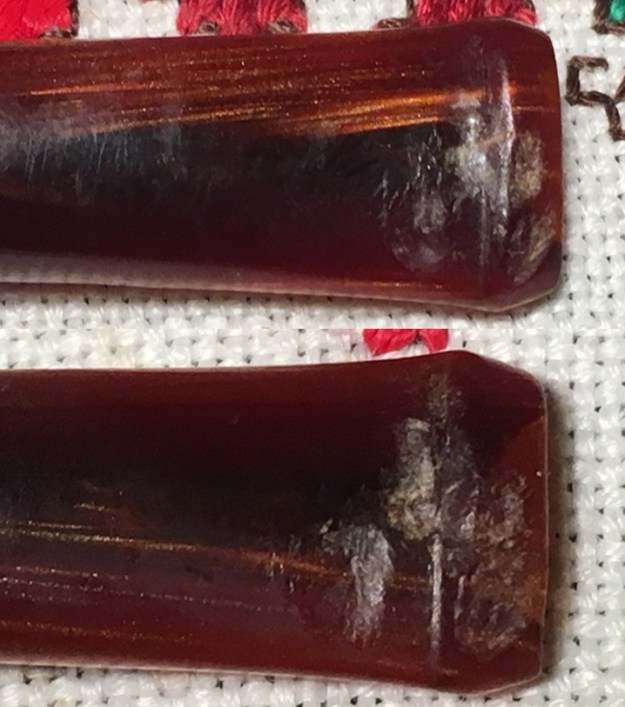
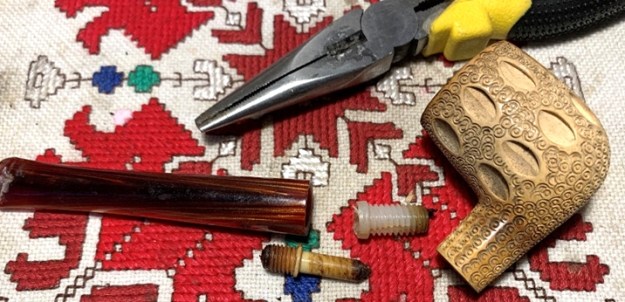
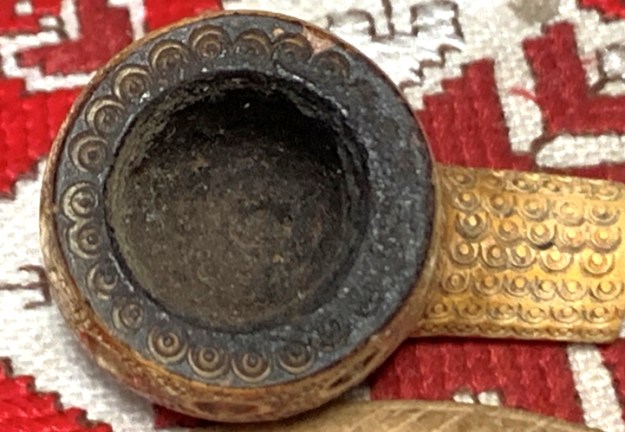
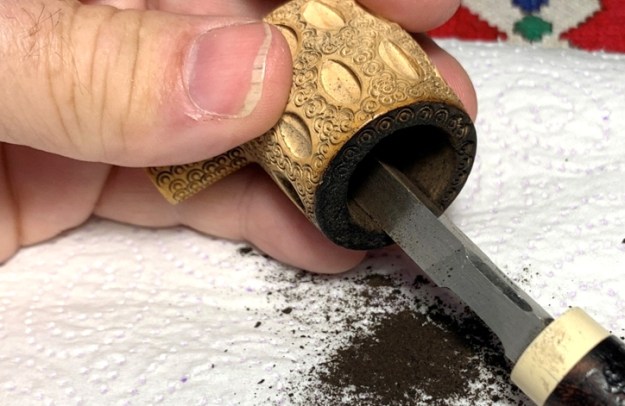
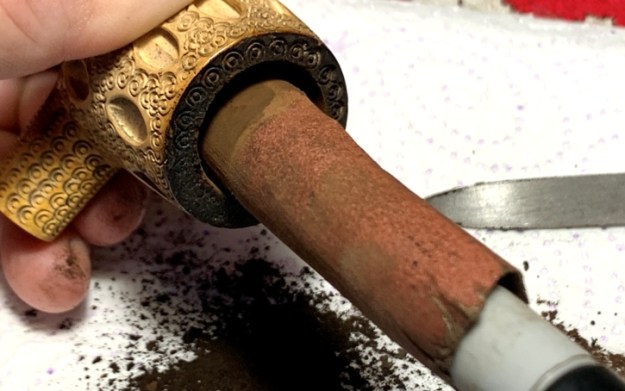
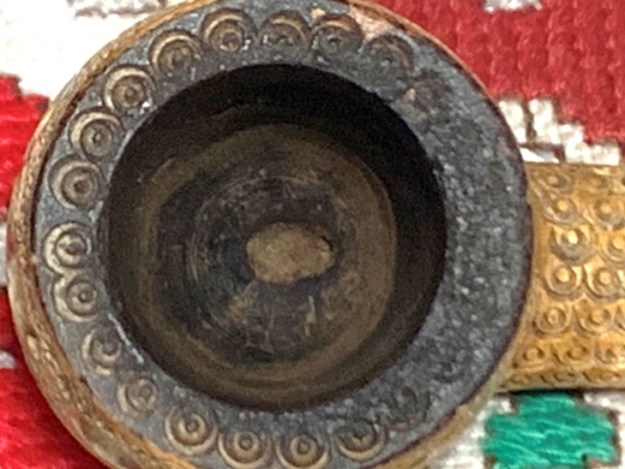
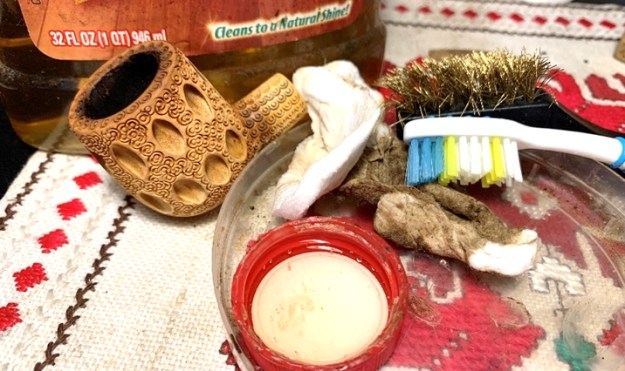
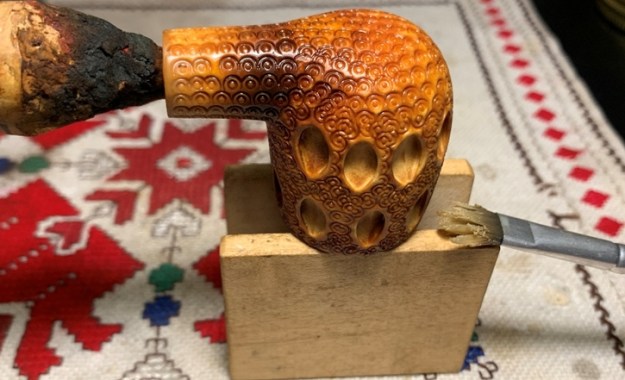
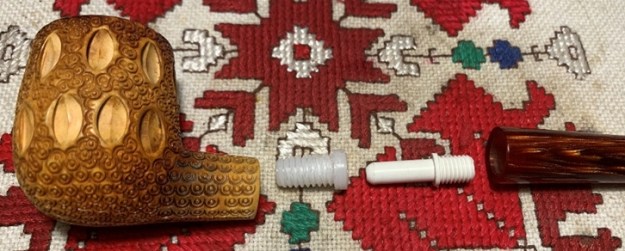
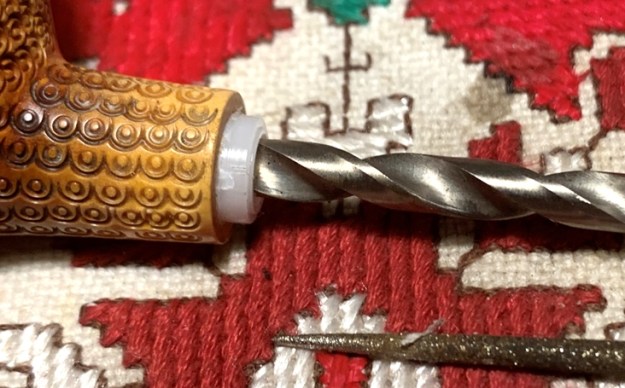
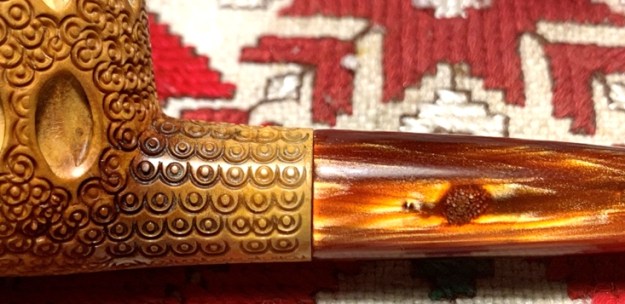
I begin the restoration of this Meerschaum by disassembling the component parts.  This helps with the cleaning.  I also plan to replace the push/pull tenon.  With the help of a pair of needle nose pliers, the push/pull components are easily removed.Taking the stummel in hand, the chamber has moderate carbon cake build up which will be removed.I don’t use the reaming kit with Meerschaum because it produces too much indiscriminate torque on the Meer chamber wall.  A more gentle and strategic approach is the use of the Savinelli Fitsall tool.  I’m able to scrape the chamber walls with the tool in a way that removes carbon buildup but is mindful of the Meerschaum.Following the wall scraping, the chamber wall is sanded with 240 grade paper wrapped around a Sharpie Pen.  This does a good job of removing the last vestiges of carbon build up.  A Meerschaum chamber does not need a cake protection like a briar chamber.An inspection of the chamber after cleaning looks good.  The Meer is still colored but it is clean and smooth to the touch.Cleaning the external surface of the Meerschaum starts with the rim which has lava caked on it, especially on the aft quadrant where most of the lighting occurred.  Using undiluted Murphy’s Oil Soap, I begin on the rim to soften and break up the lava without damaging the scalloped rim carvings.  I am patient to allow the solvents to break up the cake on the rim.  I also gently utilize a brass wired brush on the rim but most of the scrubbing is done with a bristled toothbrush.  I use the toothbrush to clean the rim as well as work into all the carvings of the bowl.  I take the bowl to the kitchen sink and continue cleaning with a cotton pad and toothbrush under warm water.  Not pictured is something I tried for the first time.  I have a Soft-Scrub product here in Bulgaria called CIT which has a gentle bleach and abrasion composition.  I put a small amount on a cotton pad and continue to work on the rim’s darkened condition.  After a thorough rinsing with warm water, the stummel returns to the worktable.I’m very pleased with the cleaning results. The stummel will lighten more because it’s still damp from the cleaning. The rim cleaned up very nicely.  One blackened area remains on the extreme edge of the aft rim quadrant.  Later, I may be able to clean this with very strategic sanding. The patina gathering at the bowl/shank crook remains through the cleaning. Moving now to cleaning the internals, I use cotton buds and pipe cleaners dipped in isopropyl 95%.  I also employ a small dental spoon to scrape the internal walls of old oils and tars.  The more excavated, the faster the cotton buds can clean.  In time the buds emerge in a lightened state and the job is completed.It took no time to dispatch the internal cleaning of the acrylic stem.Focusing now on the stem repairs, I like the brown tone acrylic.  It will clean up well.  The stem bit has significant biting damage to both upper and lower bit that will require patches from the start.  The button is damaged as well.  It appears this stem was the victim of mauling, not just biting.  There is also what appears to be a burn on the side of the stem – that’s the only thing I can think it would be. It is rough to the touch so sanding should help this blemish later.I use regular CA glue to fill the compressions on one side first.  An accelerator is also used to hold the glue in place and to quicken the curing process.After the CA glue cures, I use the flat needle file to remove the excess patch material and to shape and refresh the button lips – both upper and lower.  The first two pictures are the upper.Next the lower.Next, with the filing completed, I continue to sand with 240 grade paper on the upper and lower bit.From the bit, I also sand the entire stem and focus on the burn or blemish on the side of the stem.As I look at the mark on the side of the stem, I believe now it’s simply a blemish in the acrylic.  It is not just surface but seems to go deeper.  I can only sand it out as much as possible.After sanding with 240 paper, I transition to wet sanding the entire stem with 600 grade paper then the 000 grade steel wool fine tunes the acrylic stem – it’s looking great.Transitioning now to the full regimen of micromesh pads, I wet sand with pads 1500 to 2400 and follow with dry sanding with pads 3200 to 4000 and 6000 to 12000.  Between each set of 3 pads Obsidian Oil is applied.  I like the fire in this acrylic stem. I want to strategically sand the burn spot on the extreme back of the inner rim edge.  I use a very light 240 grade paper and follow with a dry 1500 micromesh pad.I think it looks good.  The darkness is not erased but it is reduced.  To enrich and encourage the coveted patina in the Meerschaum, the age-old approach is a beeswax treatment.  Using a hot air gun, the beeswax in the Mason jar is heated until it liquefies.  I also heat the Meer bowl with the gun and then apply the liquefied beeswax to the stummel – painting thoroughly all the nooks and crannies of the sculpting.  During the painting process, I have the hot air gun propped in such a way as to continue to blow hot air on the stummel as I’m painting it.  This helps to keep the wax thin and it is more easily absorbed into the porous Meerschaum.After the stummel is thoroughly coated in beeswax, I put it aside for the stummel to cool.After cooling, I buff the stummel with a microfiber cloth to remove excess wax and to raise the shine.  The Meerschaum literally drank in the beeswax!I decided earlier to replace the old push/pull tenon system with a new set.  The shank acrylic fitment and the stem tenon both screwed in with no problem. When I tried inserting the tenon into the shank receptor, the fit was very tight – too tight to fit without me being nervous about cracking something.  To remedy this, I hand turn a drill bit just a bit larger than the hole and it bores out a slightly more comfortable fit.  This works like a charm. With the stem and stummel reunited, after mounting a cotton cloth buffing wheel to the Dremel and set the speed at 40% full power and Blue Diamond compound is applied only to the acrylic stem.  Following the compound, after wiping the stem with a felt cloth to clean it of compound dust, the same procedure is followed with another cotton cloth buffing wheel and carnauba wax is applied to the acrylic stem.  After this, the entire Meerschaum Teardrop Lattice Billiard is hand buffed to raise the shine.
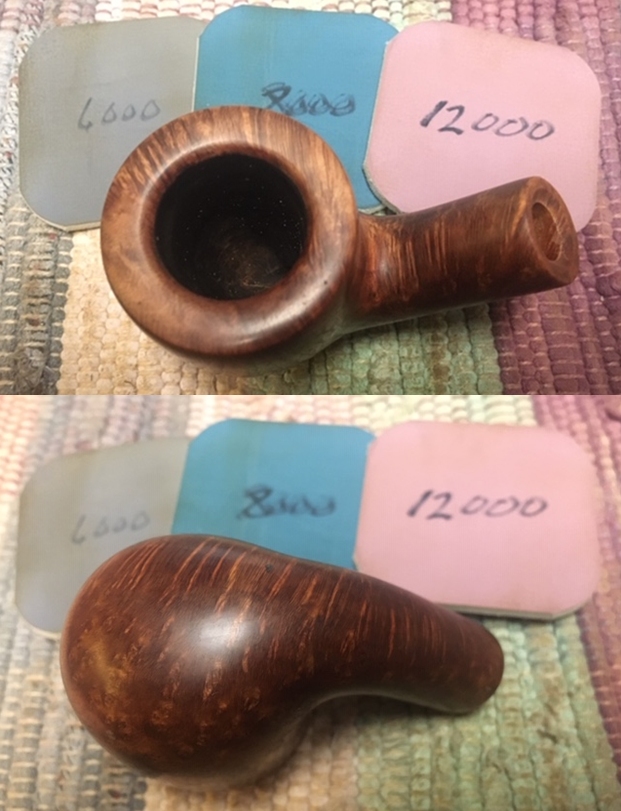
The design of this Meerschaum is a classic carvers’ template in this genre of pipe.  The patina on the Meerschaum has a good start with the honey honed hues which complement beautifully the fire waves of the acrylic stem.  Jeremiah wanted to add a Meerschaum to his growing collection, and he will have the first opportunity to add this Teardrop Lattice Billiard from The Pipe Steward Store benefiting the Daughters of Bulgaria – women and girls who have been trafficked and sexually exploited.  Thanks for joining me!

Freshening up a Savinelli Made Egg Sitter with a Saddle Stem


Blog by Steve Laug

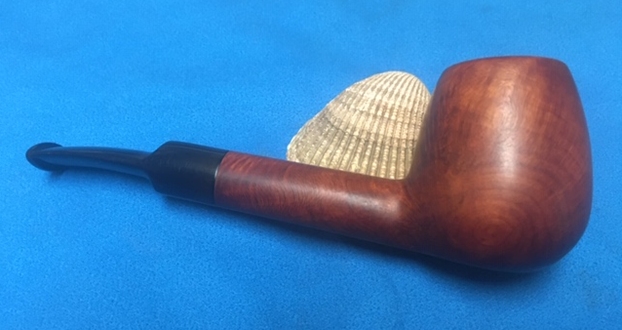
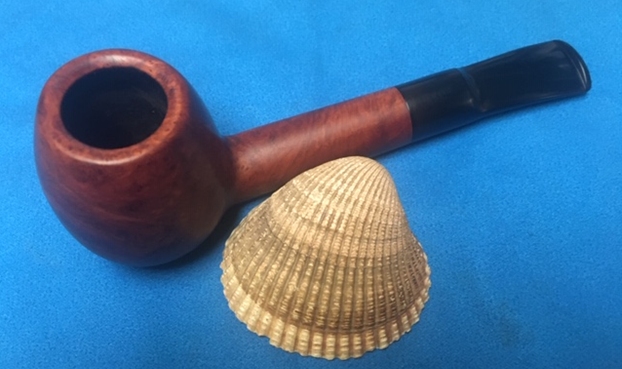
One thing that can be said for staying home and indoors is that I am able to work through the large backlog of pipes in my queue and maybe make a dent. The next pipe on the work table is an interesting egg shaped sitter with a long shank. The only stamping it bears is the Savinell “S” shield and Italy on the underside of the shank. Otherwise there is nothing else. It has a natural smooth finish on the bowl and shank. The grain is mixed but very interesting and flows up and around the bowl and shank. The round shank flows well into saddle stem. The rim top is smooth and crowned inward. There was a thick cake in the bowl and some lava on the inner edge. There was also some darkening. The pipe was dirty and tired looking. The saddle stem was vulcanite and had a slight bend in the blade. There were light tooth marks and chatter on both sides near the button. It was oxidized and spotty. Jeff took some photos of the pipe to show the general condition of the pipe before he started his clean up.Jeff took some close-up photos of the rim top and bowl from various angles to show the overall condition. It looked pretty good. There is light coat of lava around the inner edge of the bevel and some rim darkening. There were a few rough spots on the rim top on the front right. You can also see the cake in the bowl. It was a well-loved pipe and smoked a lot by the previous pipe man. Jeff took some photos of the sides and heel of the bowl to show the condition of the finish on the pipe. The photos show the beautifully grained bowl. Under the dust and grime it was a nice looking bowl. I think it will be another beautiful pipe once it is restored. He took a photo of the stamping on the underside of the shank. It was very readable and matches what was spelled out above. The next two photos show the top and underside of the stem. It is dirty, oxidized and has some tooth chatter and some tooth marks with some damage to the button edge on both sides. The third photo shows the flow of the stem and shank.This is a nice Savinelli pipe and it is fun to work on a shape I have not seen before. When I received it Jeff had once again done his usual thorough job cleaning the pipe. He reamed it with a PipNet pipe reamer and got rid of the cake. He cleaned up the reaming with a Savinelli Fitsall Pipe Knife so that we could see the walls of the bowl and assess for damage. He cleaned the internals of the shank and stem with alcohol, pipe cleaners and alcohol. He scrubbed the exterior with undiluted Murphy’s Oil Soap and a tooth brush. He rinsed the pipe under warm water. He dried it off with a cloth and then let it air dry. The stem was scrubbed with Soft Scrub and soaked in Before & After Deoxidizer. It came out looking very good. The finish on the bowl and the rim top cleaned up beyond my expectations. I took pictures of the pipe to show how it looked when I unpacked it. I took a close up photo of the rim top to show how clean it was. Jeff had been able to clean out the dust and grime on the edges of the rim top and it looked very good. The stem looked good just some light tooth chatter and several tooth marks on the button.Even the stamping cleaned up well and is still very clear and readable.The pipe was in really good shape so it was a matter of cleaning up the edges and polishing the briar. I started the work by dealing with the darkening of the inner edge and part of the bevel. I used a folded piece of 220 grit sandpaper to clean up the edge and then polished it with 400 grit wet dry sandpaper.I polished the briar with micromesh sanding pads. I wet sanded it with 1500-12000 grit pads and wiped the bowl down with a damp cloth after each pad. I worked some Before & After Restoration Balm into the briar with my fingertips. I let the balm sit on the briar for 10 minutes the buffed it off with a soft cloth. The product is a great addition to the restoration work. It enlivens, enriches and protects the briar while giving it a deep glow. I appreciate Mark Hoover’s work in developing this product. I set the bowl aside and turned my attention to addressing the issues with the stem. I sanded the surface of the stem with 220 grit sandpaper to remove the remaining oxidation and tooth chatter. I started the polishing process with 400 grit wet dry sandpaper.I polished the stem with Denicare Mouthpiece Polish from a tin of it I have in the drawer here. It is a gritty red paste (similar in grit to red Tripoli) that I rub on with my finger tips and work it into the surface of the stem and button and buff it off with a cotton pad. It gives me a bit of a head start on the polishing work.I polished the stem with micromesh sanding pads – wet sanding with 1500-12000 grit sanding pads. I wiped it down after each sanding pad with Obsidian Oil. I polished it with Before & After Pipe Stem Polish – both Fine and Extra Fine. I buffed the stem with a soft cloth to raise the shine. I wiped the stem down with Briarville’s No Oxy Oil to preserve and protect the stem surface. I am on the homestretch with this Savinelli Egg shaped sitter! Once again I am excited to finish a pipe that I am working on. I put the pipe back together and buffed it with Blue Diamond on the buffing wheel. I used a gentle touch to keep the polish from building up in the blast of the bowl. I gave the bowl and the stem multiple coats of carnauba wax. I buffed the pipe with a clean buffing pad and hand buffed it to raise the shine. It is fun to see what the polished briar bowl looks like along with the polished vulcanite stem. This Savinelli made pipe is a beautiful pipe. It is quite comfortable in hand and should be so when smoking. It is quite light and well balanced. The flat base provides the option of sitting the pipe down on a desk top. Have a look at it with the photos below. The dimensions are Length: 5 ½ inches, Height: 2 inches, Outside diameter of the bowl: 1 ¼ inches, Chamber diameter: ¾ of an inch. It is another beautiful pipe and one that will be on the rebornpipes store soon. You can find it in the section of Pipes by Italian Pipe Makers. If you are interested in adding it to your collection let me know. Thanks for walking through the restoration with me as I worked over this pipe. Thanks to each of you who are reading this blog.

Cleaning up another Sasieni Four Dot Natural Moorgate Pot


Blog by Steve Laug

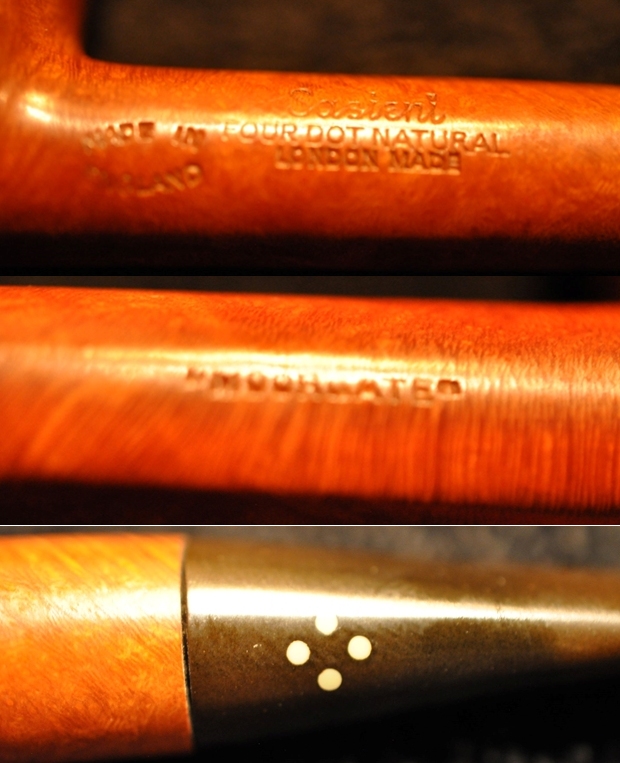
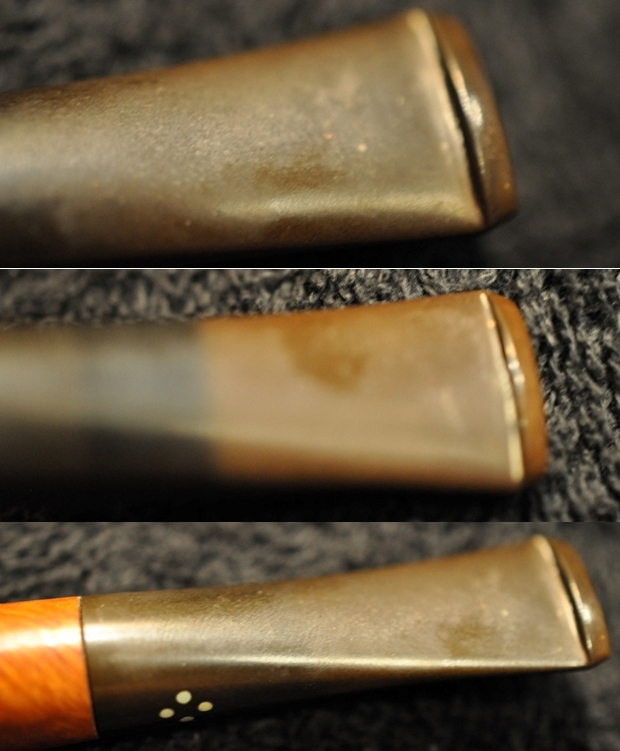
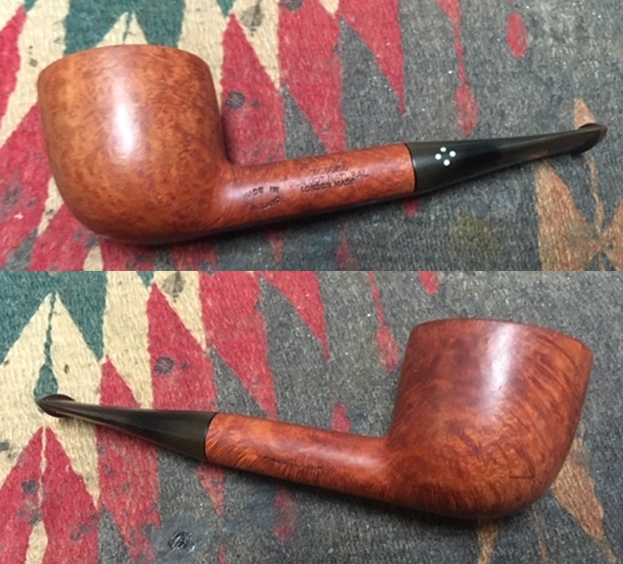
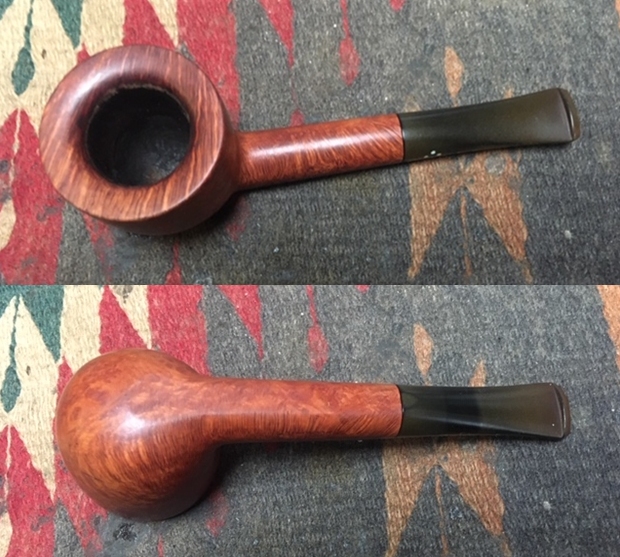
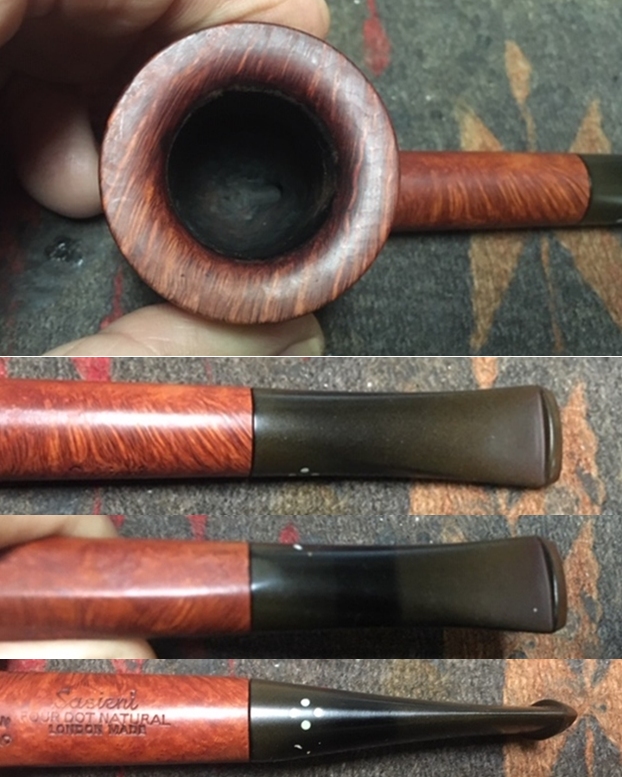
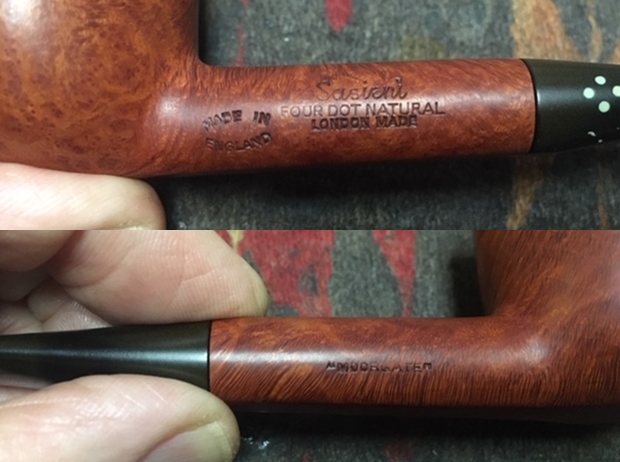
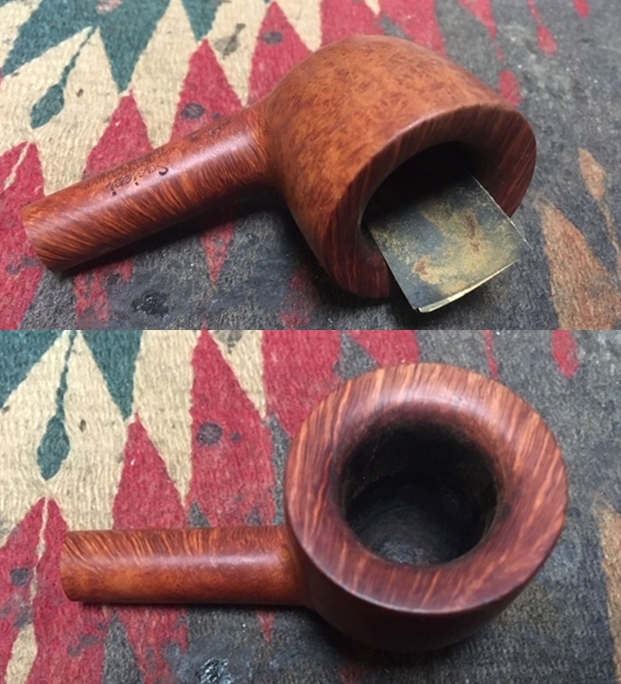
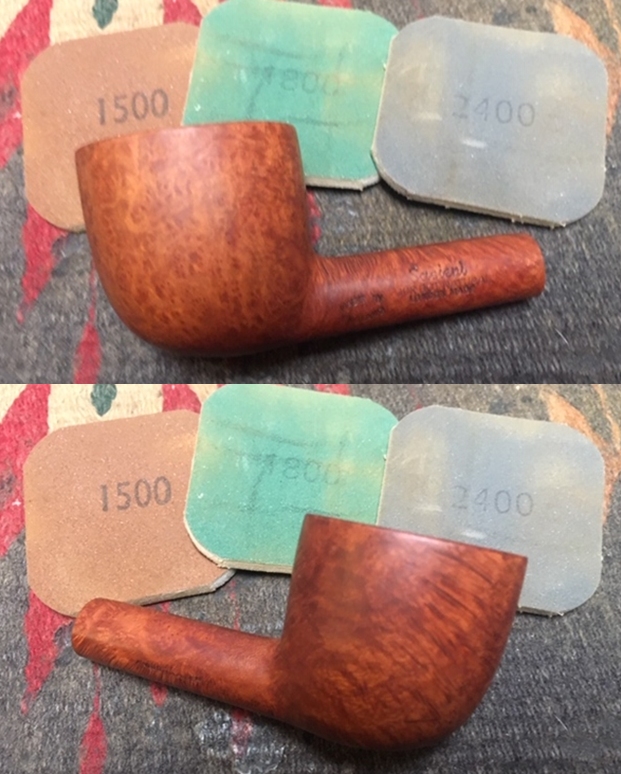
The next pipe on the work table is another Sasieni Four Dot Natural Pot. This Sasieni has a natural smooth finish on the bowl and shank. The grain flows up and around the bowl and shank. The round shank flows well into Four Dot taper stem. The pipe is stamped on the left side of the shank and reads Made in England in an oval at the shank/bowl junction. That is followed by Sasieni over Four Dot Natural over London Made. The right side of the shank is stamped “Moorgate”. The rim top is smooth and beveled inward. There was a thick cake in the bowl and some lava on the inner edge. There was also some darkening. The pipe was dirty and tired looking. The taper stem was vulcanite and had four dots on the left side of the taper. There were light tooth marks and chatter on both sides near the button. It was oxidized and spotty. Jeff took some photos of the pipe to show the general condition of the pipe before he started his clean up. Jeff took some close-up photos of the rim top and bowl from various angles to show the overall condition. It looked pretty good. There is light coat of lava around the inner edge of the bevel and some rim darkening. You can also see the cake in the bowl. It was a well loved pipe and smoked a lot by the previous pipe man. Jeff took some photos of the sides and heel of the bowl to show the condition of the finish on the pipe. The photos show the beautifully grained bowl. Under the dust and grime it was a nice looking bowl. I think it will be a beautiful pipe once it is restored. He took photos of the stamping on the sides of the shank. It was very readable and matches what was spelled out above.  He also took a photo of the four dots on the left side of the saddle stem.The next two photos show the top and underside of the stem. It is dirty, oxidized and has some tooth chatter and some tooth marks with some damage to the button edge on both sides. The third photo shows the flow of the stem and shank.I enjoy working on well-made Sasieni pipes and I find that their shapes and finishes are very well done. I was glad to be working on this one. When I received it Jeff had once again done an amazing job cleaning the pipe. He reamed it with a PipNet pipe reamer and got rid of the cake. He cleaned up the reaming with a Savinelli Fitsall Pipe Knife so that we could see the walls of the bowl and assess for damage. He cleaned the internals of the shank and stem with alcohol, pipe cleaners and alcohol. He scrubbed the exterior with undiluted Murphy’s Oil Soap and a tooth brush. He rinsed the pipe under warm water. He dried it off with a cloth and then let it air dry. The stem was scrubbed with Soft Scrub and soaked in Before & After Deoxidizer. It came out looking very good. The finish on the bowl and the rim top cleaned up beyond my expectations. I took pictures of the pipe to show how it looked when I unpacked it. I took a close up photo of the rim top to show how clean it was. Jeff had been able to clean out the dust and grime in the rim top and it looked very good. The inner edge of the rim and the ridges and valleys of the plateau looked good. The stem looked good just some light tooth chatter and several tooth marks on the button.Even the stamping cleaned up well and is still very clear and readable.The pipe was in really good shape so it was a matter of cleaning up the edges and polishing the briar. I started the work by dealing with the darkening of the inner edge and part of the bevel. I used a folded piece of 220 grit sandpaper to clean up the edge and then polished it with 400 grit wet dry sandpaper.I polished the briar with micromesh sanding pads. I wet sanded it with 1500-12000 grit pads and wiped the bowl down with a damp cloth after each pad. I worked some Before & After Restoration Balm into the briar with my fingertips. I let the balm sit on the briar for 10 minutes the buffed it off with a soft cloth. The product is a great addition to the restoration work. It enlivens, enriches and protects the briar while giving it a deep glow. I appreciate Mark Hoover’s work in developing this product. I set the bowl aside and turned my attention to addressing the issues with the stem. I sanded the surface of the stem with 220 grit sandpaper to remove the remaining oxidation and tooth chatter. I started the polishing process with 400 grit wet dry sandpaper.I polished the stem with Denicare Mouthpiece Polish from a tin of it I have in the drawer here. It is a gritty red paste (similar in grit to red Tripoli) that I rub on with my finger tips and work it into the surface of the stem and button and buff it off with a cotton pad. It gives me a bit of a head start on the polishing work.I polished the stem with micromesh sanding pads – wet sanding with 1500-12000 grit sanding pads. I wiped it down after each sanding pad with Obsidian Oil. I polished it with Before & After Pipe Stem Polish – both Fine and Extra Fine. I buffed the stem with a soft cloth to raise the shine. I wiped the stem down with Briarville’s No Oxy Oil to preserve and protect the stem surface. I am on the homestretch with this Sasieni Four Dot Natural Moorgate Pot! As always I am excited to finish a pipe that I am working on. I put the pipe back together and buffed it with Blue Diamond on the buffing wheel. I used a gentle touch to keep the polish from building up in the blast of the bowl. I gave the bowl and the stem multiple coats of carnauba wax. I buffed the pipe with a clean buffing pad and hand buffed it to raise the shine. It is fun to see what the polished Natural briar bowl looks like along with the polished vulcanite stem. This Sasieni Moorgate is a beautiful pipe. It is quite comfortable in hand and should be so when smoking. It is quite light and well balanced. Have a look at it with the photos below. The dimensions are Length: 5 ¼ inches, Height: 1 ½ inches, Outside diameter of the bowl: 1 3/8 inches, Chamber diameter: 7/8 of an inch. It is another beautiful pipe and one that will be on the rebornpipes store soon. You can find it in the section of Pipes by English Pipe Makers. If you are interested in adding it to your collection let me know. Thanks for walking through the restoration with me as I worked over this pipe. Thanks to each of you who are reading this blog.

Cleaning up a Sasieni Four Dot Moorgate S Ruff Root Pot


Blog by Steve Laug

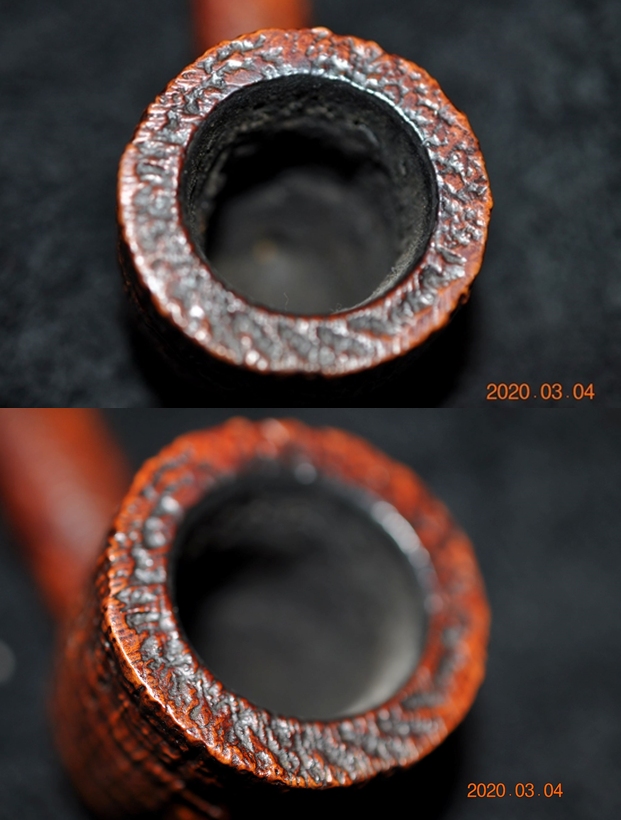
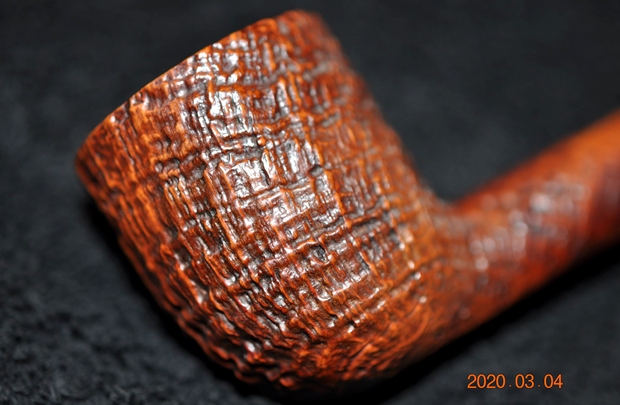
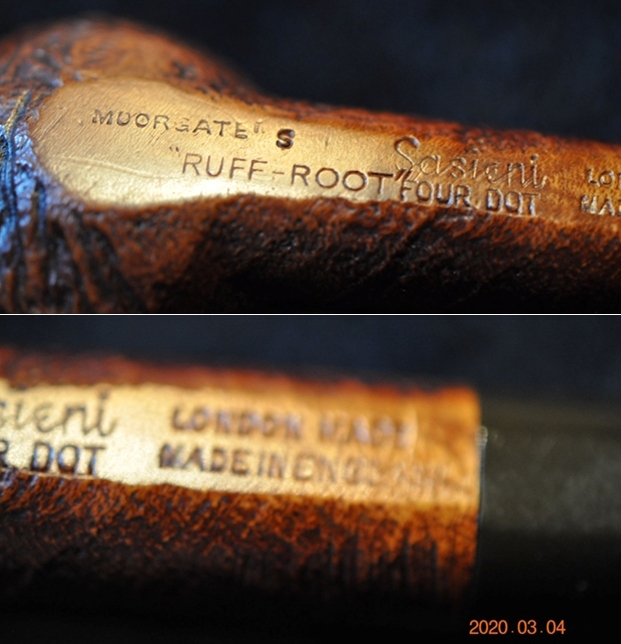
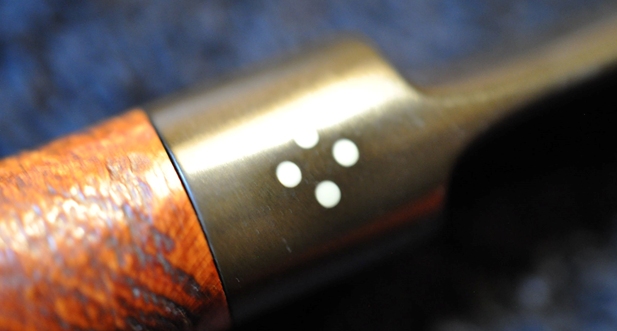
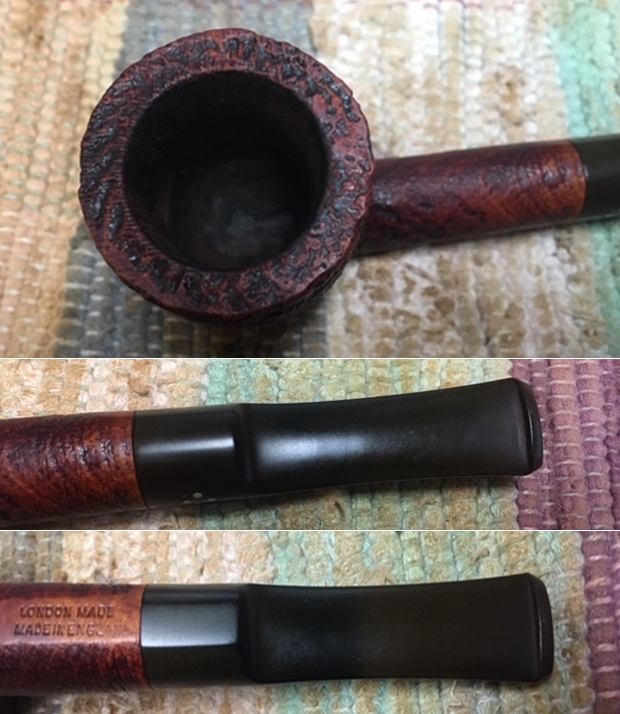
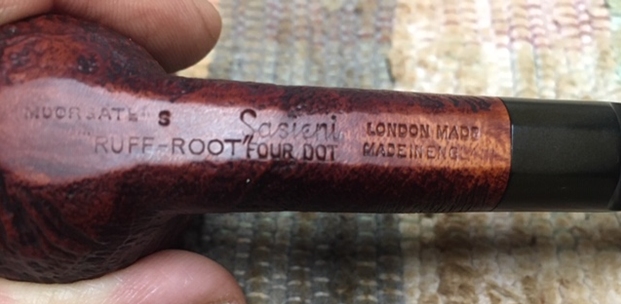
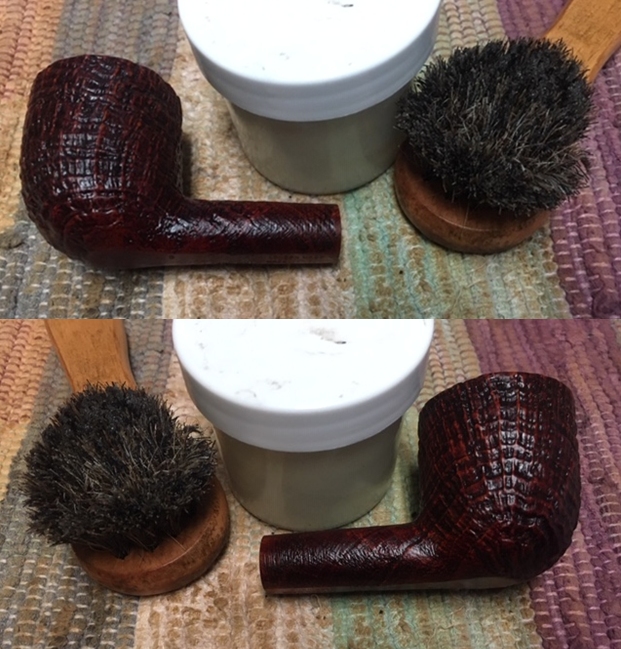
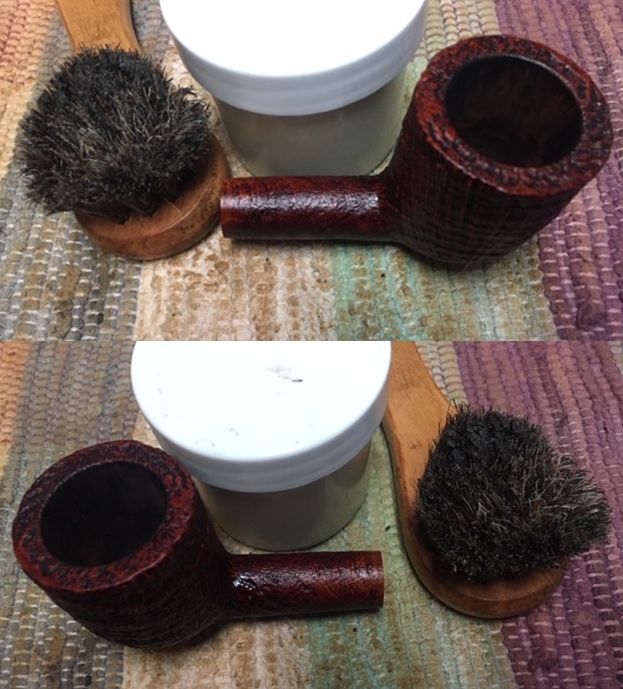
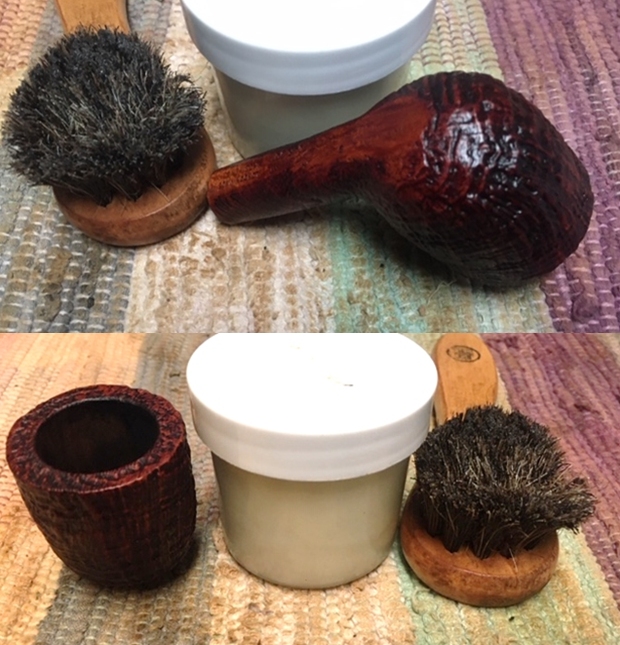
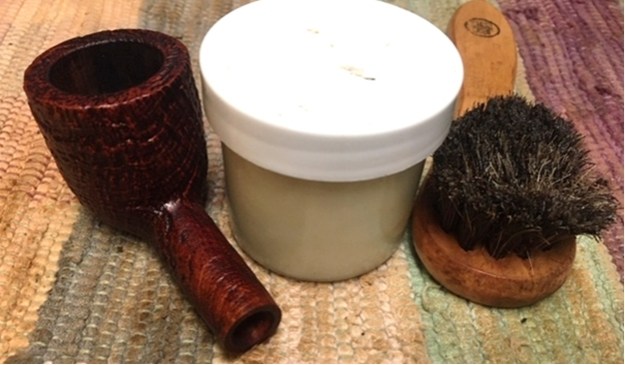
The next pipe on the work table is a Sasieni Four Dot Sandblast Pot. This Sasieni has a sandblast finish on the bowl and shank. The blast flows up and around the bowl and shank. The round shank flows well into Four Dot saddle stem. The pipe is stamped on a smooth panel on the underside of the shank and reads Moorgate S over Ruff Root on the heel of the bowl. That is followed by Sasieni over “Four Dot” followed by London Made over Made in England. The rim top is sandblasted and it is filled in with dust and light lava. There was a thick cake in the bowl. The pipe was dirty and dusty in all of the nooks and crannies of the sandblast. The saddle stem was vulcanite and had four dots on the left side of the saddle. There were tooth marks and chatter on both sides near the button. It was oxidized and had some calcification on the end. Jeff took some photos of the pipe to show the general condition of the pipe before he started his clean up. Jeff took some close-up photos of the rim top and bowl from various angles to show the overall condition. There is thick coat of lava in the grooves and valleys of the sandblast. You can also see the cake in the bowl. It was a well loved pipe and smoked a lot by the previous pipe man. Jeff took some photos of the sides and heel of the bowl to show the condition of the finish on the pipe. The photos show the beautiful deep sandblast around the bowl. Under the dust and grime it was a nice looking bowl. I think it will be a beautiful pipe once it is restored. He took photos of the stamping on the underside of the shank. It took two photos to capture the stamping from the heel to the shank stem junction. It was very readable and matches what was spelled out above.  He also took a photo of the four dots on the left side of the saddle stem. The next two photos show the top and underside of the stem. It is dirty, oxidized and has calcification on both sides at the button. There is also some tooth chatter and some tooth marks with some damage to the button edge on both sides. The third photo shows the flow of the stem and shank. I enjoy working on well-made Sasieni pipes and I find that their shapes and finishes are very well done. I was glad to be working on this one. When I received it Jeff had once again done an amazing job cleaning the pipe. He reamed it with a PipNet pipe reamer and got rid of the cake. He cleaned up the reaming with a Savinelli Fitsall Pipe Knife so that we could see the walls of the bowl and assess for damage. He cleaned the internals of the shank and stem with alcohol, pipe cleaners and alcohol. He scrubbed the exterior with undiluted Murphy’s Oil Soap and a tooth brush. He rinsed the pipe under warm water. He dried it off with a cloth and then let it air dry. The stem was scrubbed with Soft Scrub and soaked in Before & After Deoxidizer. It came out looking very good. The finish on the bowl and the rim top cleaned up beyond my expectations. I took pictures of the pipe to show how it looked when I unpacked it. I took a close up photo of the rim top to show how clean it was. Jeff had been able to clean out the dust and grime in the rim top and it looked very good. The inner edge of the rim and the ridges and valleys of the plateau looked good. The stem looked good just some light tooth chatter and several tooth marks on the button.Even the stamping cleaned up well and is still very clear and readable.Because the pipe was sandblast and so clean my work on the bowl was pretty minimal. I worked some Before & After Restoration Balm into the briar with my fingertips and a horsehair shoe brush. The product is a great addition to the restoration work. It enlivens, enriches and protects the briar while giving it a deep glow. I appreciate Mark Hoover’s work in developing this product. I set the bowl aside and turned my attention to addressing the issues with the stem. I sanded the surface of the stem with 220 grit sandpaper to remove the remaining oxidation and tooth chatter. I started the polishing process with 400 grit wet dry sandpaper.I polished the stem with Denicare Mouthpiece Polish from a tin of it I have in the drawer here. It is a gritty red paste (similar in grit to red Tripoli) that I rub on with my finger tips and work it into the surface of the stem and button and buff it off with a cotton pad. It gives me a bit of a head start on the polishing work.I polished the stem with micromesh sanding pads – wet sanding with 1500-12000 grit sanding pads. I wiped it down after each sanding pad with Obsidian Oil. I polished it with Before & After Pipe Stem Polish – both Fine and Extra Fine. I buffed the stem with a soft cloth to raise the shine. I wiped the stem down with Briarville’s No Oxy Oil to preserve and protect the stem surface. I am on the homestretch with this Sasieni Moorgate Ruff Root Four Dot sandblast Pot! As always I am excited to finish a pipe that I am working on. I put the pipe back together and buffed it with Blue Diamond on the buffing wheel. I used a gentle touch to keep the polish from building up in the blast of the bowl. I gave the bowl multiple coats of Conservator’s Wax and the stem multiple coats of carnauba wax. I buffed the pipe with a clean buffing pad and hand buffed it to raise the shine. It is fun to see what the polished bowl looks like along with the polished vulcanite stem. This Sasieni Moorgate is a nice looking pipe. It is quite comfortable in hand and should be so when smoking. It is quite light and well balanced. Have a look at it with the photos below. The dimensions are Length: 5 ¼ inches, Height: 1 ¾ inches, Outside diameter of the bowl: 1 ½ inches, Chamber diameter: 7/8 of an inch. It is another beautiful pipe and one that will be on the rebornpipes store soon. You can find it in the section of Pipes by English Pipe Makers. If you are interested in adding it to your collection let me know. Thanks for walking through the restoration with me as I worked over this pipe. Thanks to each of you who are reading this blog.


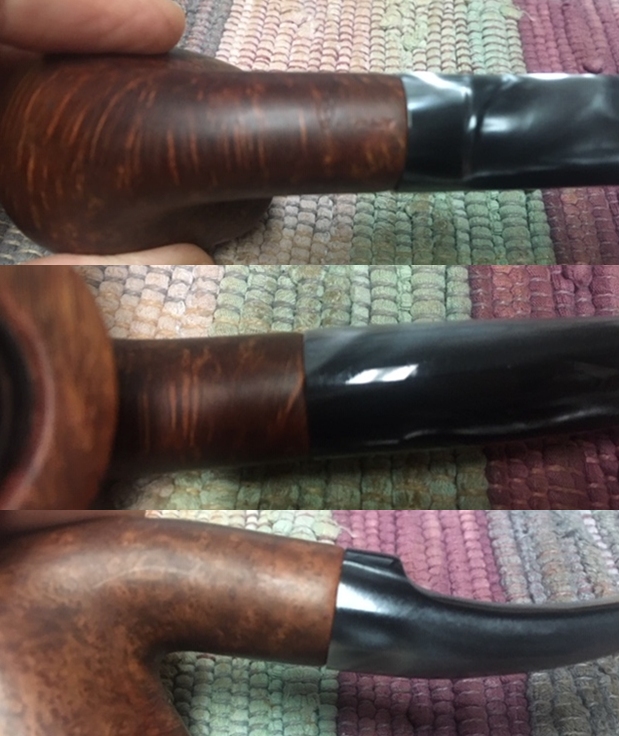
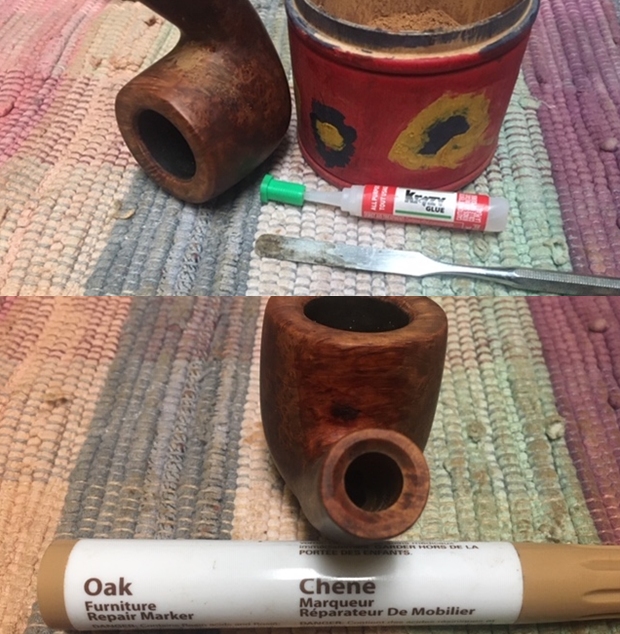
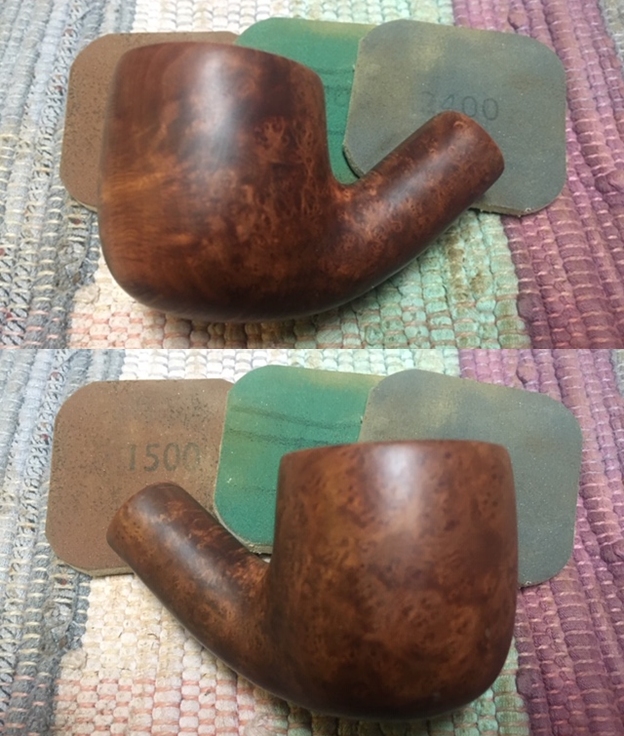
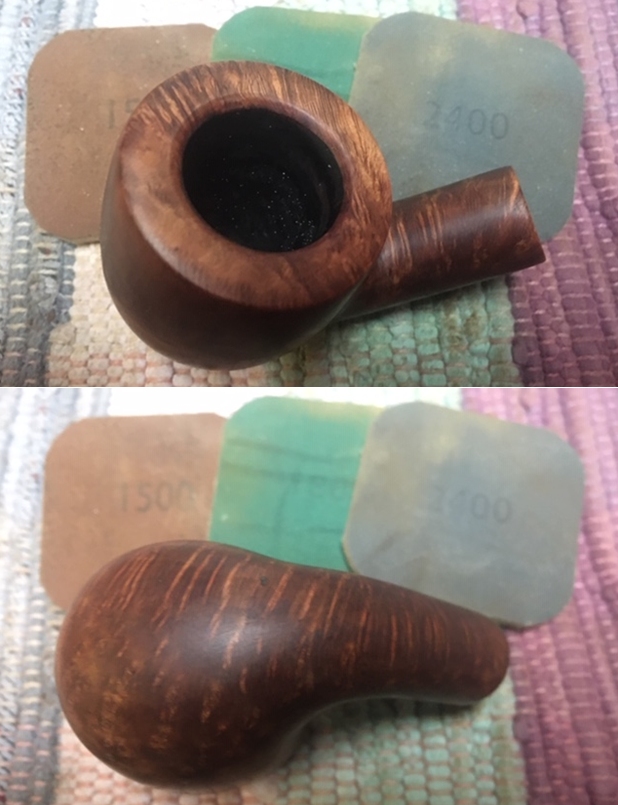
Another Peterson Shape 56 (9BC)


By Al Jones

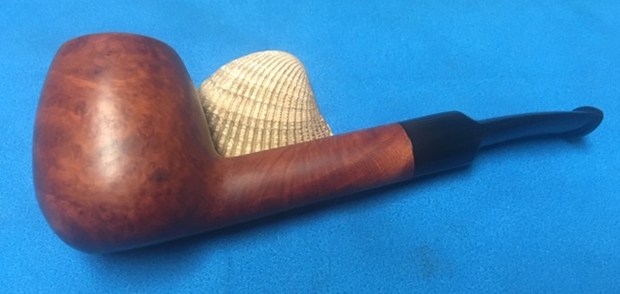
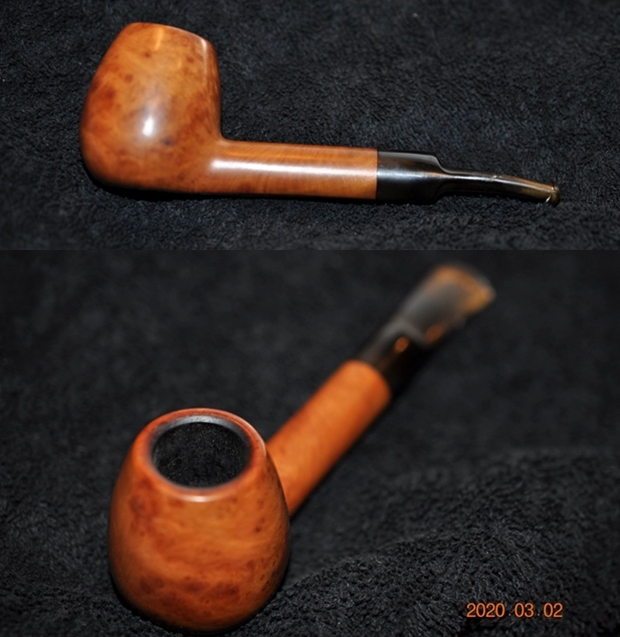
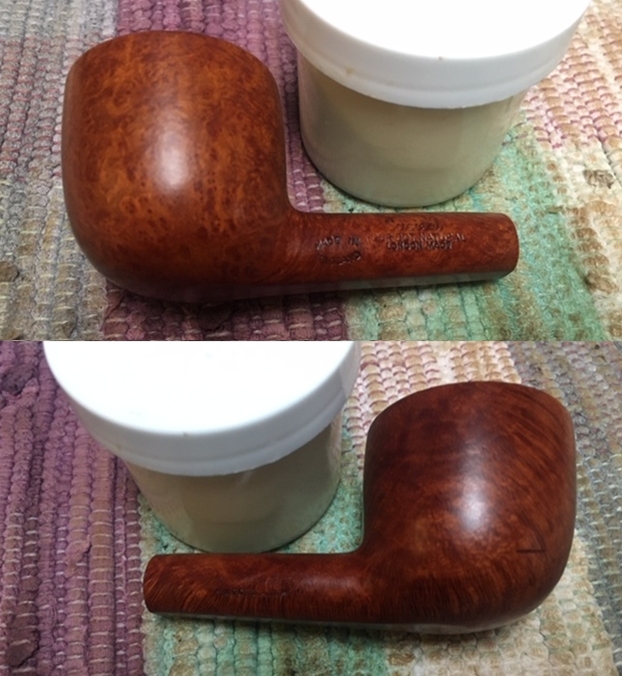
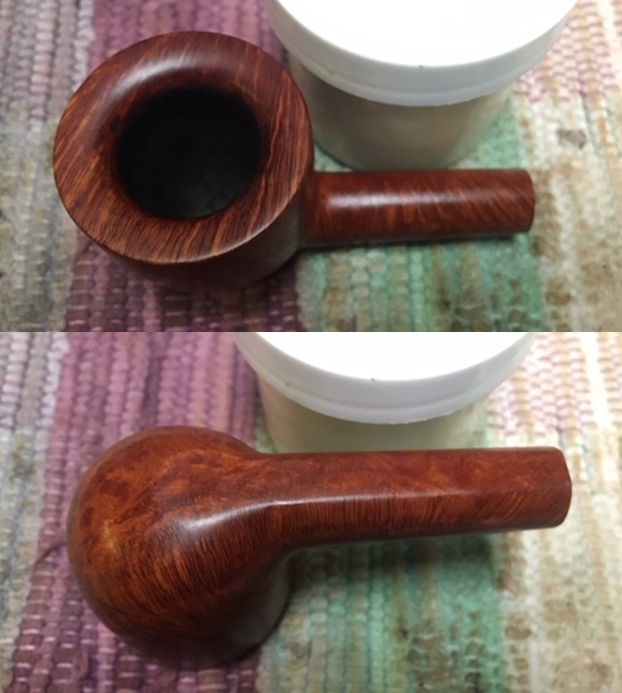
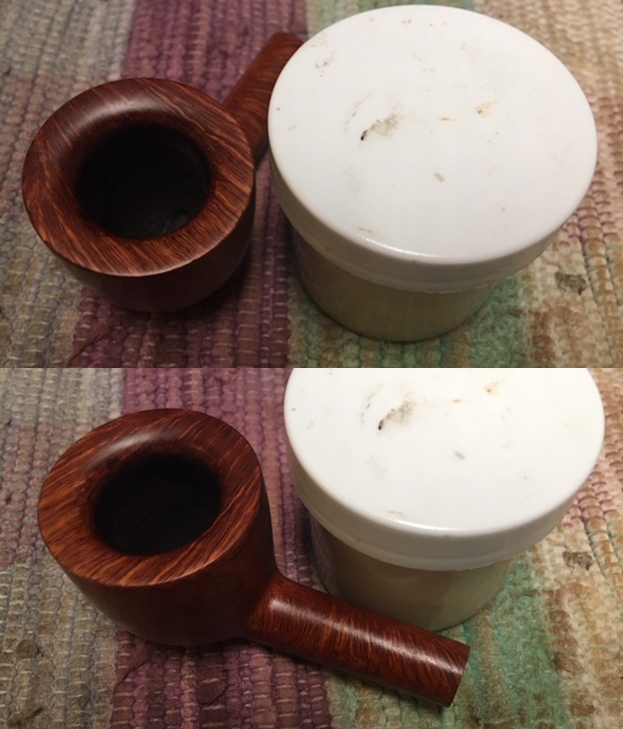
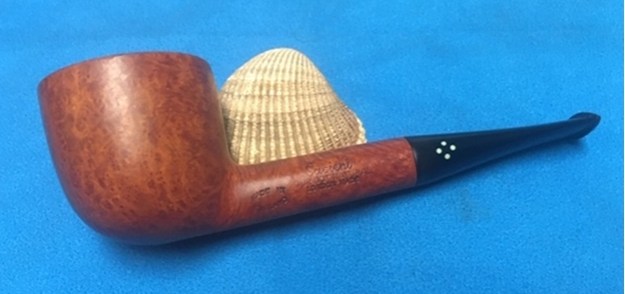
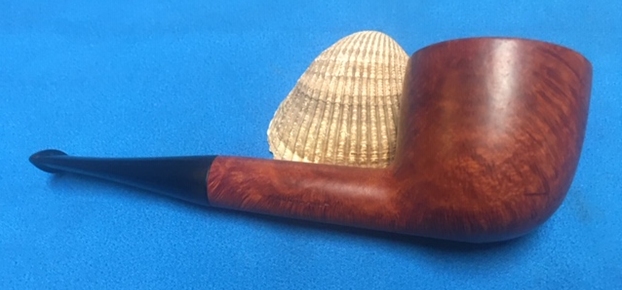
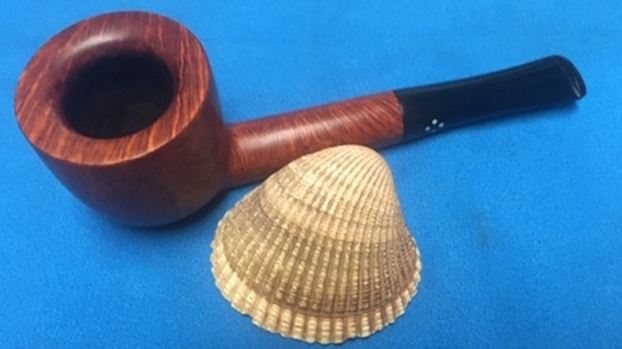
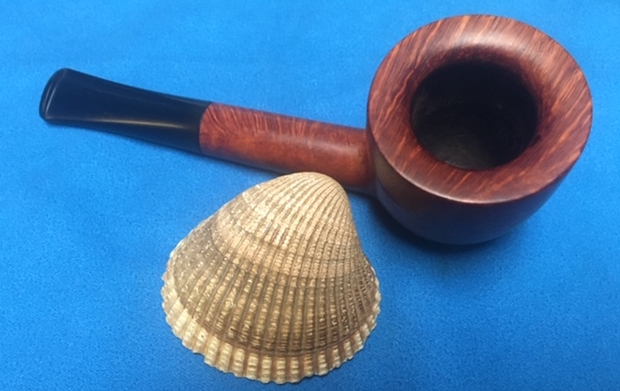
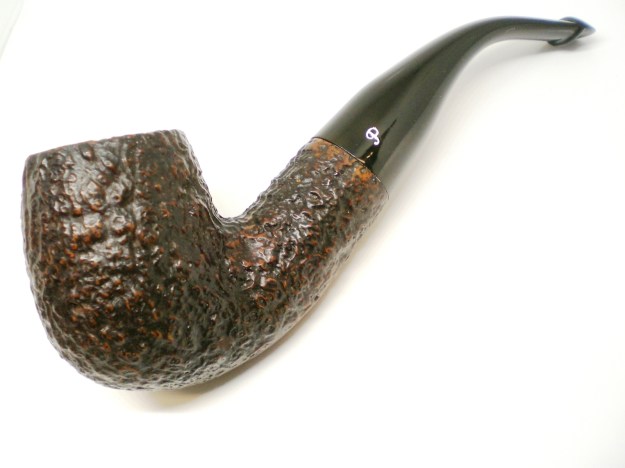
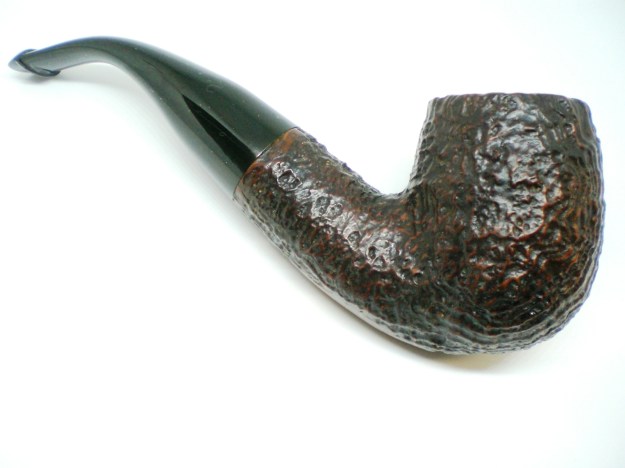
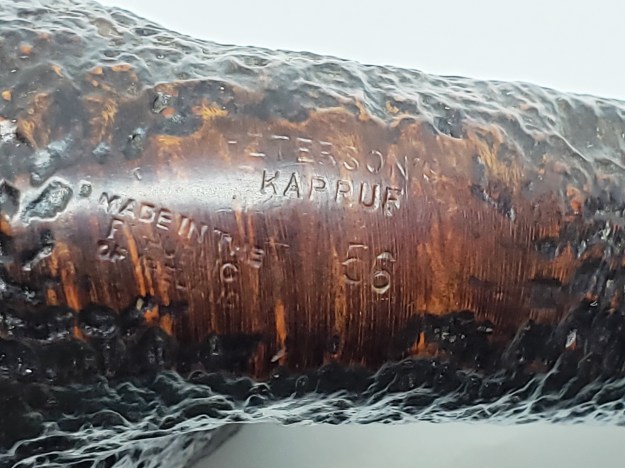
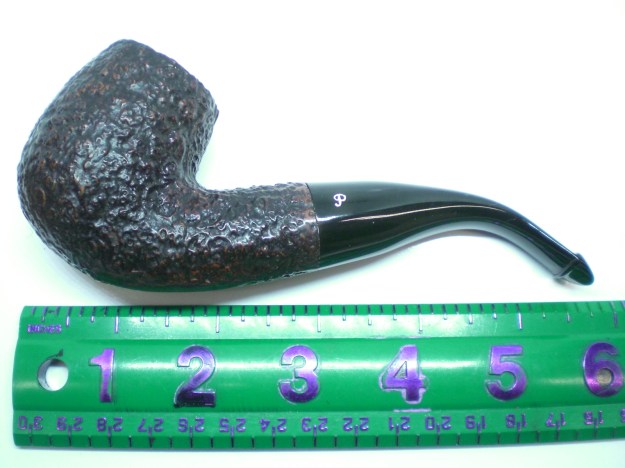
For the 2nd time in less than one year, I found yet another Peterson Shape 56.  Last year, I discovered this shape, which was a bit of a puzzle.  It looked nearly identical to my favorite Peterson shape, the 9BC.  Thanks to some pipe sleuthing by Steve Laug, we learned that the shape 56 was indeed the Canadian version of the 9BC.  The Canadian importer, Genin, Trudeau & Co. used their own unique numbering system.   Full details for that first Shape 56 can be found at this blog entry:

https://rebornpipes.com/2019/07/25/peterson-shape-56-mystery/

One definite point of difference between the two shapes is that the shape 56 has a more slender profile of the stem near the button.  I’ve learned to prefer this slimmer profile.

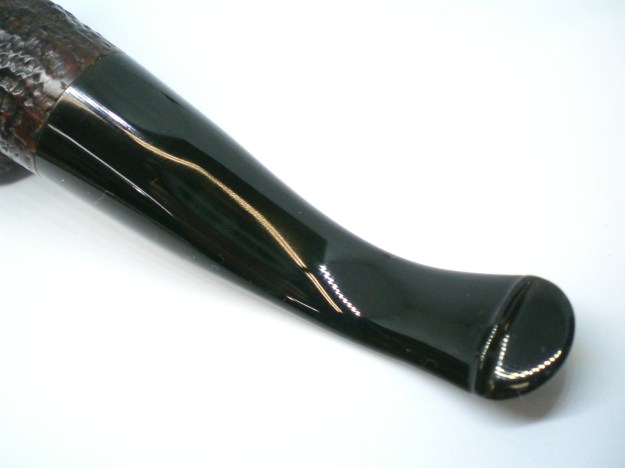
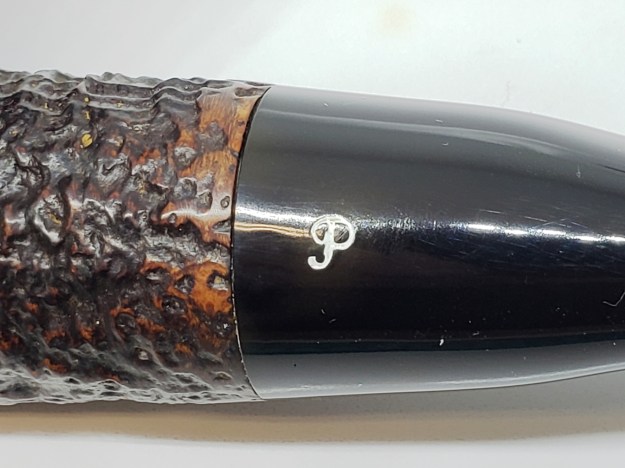
This one was also a Kapruff and it had a splash of grain on one side.  The pipe was in very good shape.  The stem had light oxidation, the P stamp was deeply impressed and it was nearly bite free.  The briar was unblemised, including the bowl top and nomenclature.  There was only a slight hint of tobacco in the chamber and it looked well cared for.

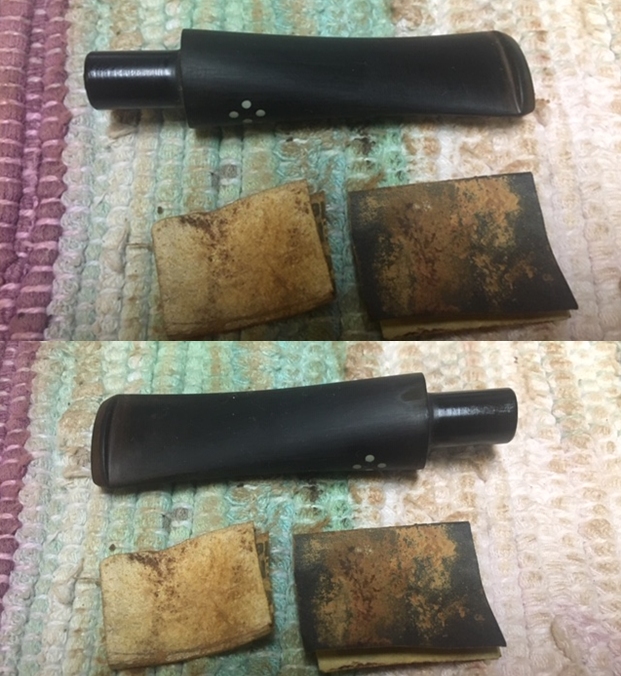
The first step was to apply some white Gel nail polish to the P and the stem was set aside to dry for a day.  I used a piece of Micromesh to remove the excess nail polish.

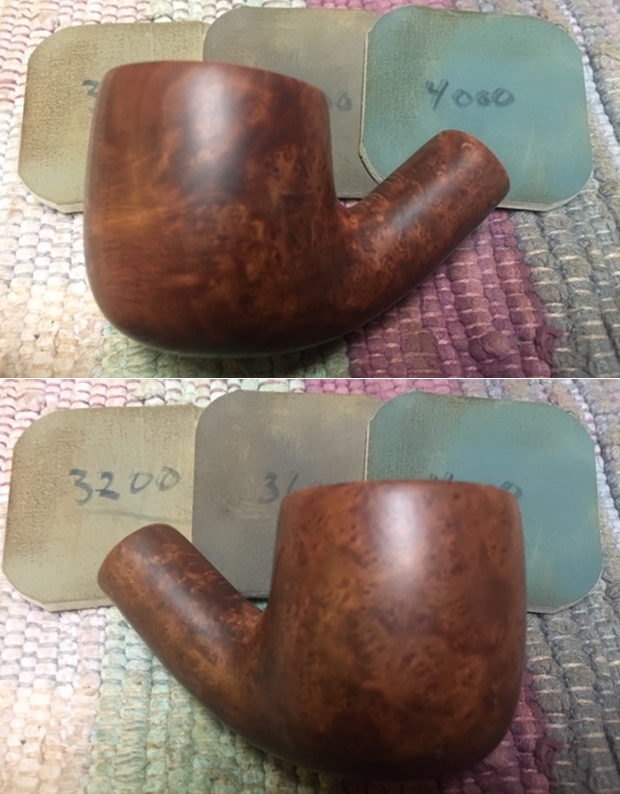
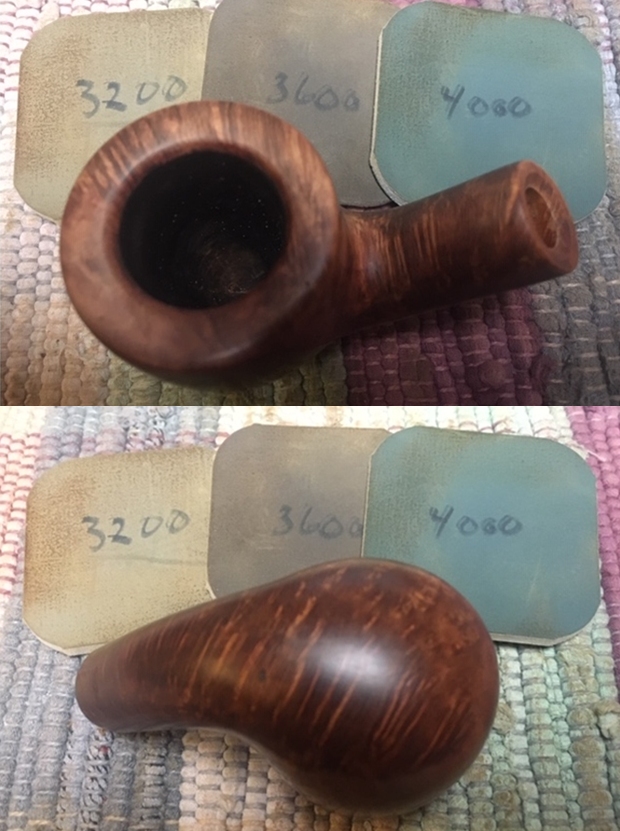
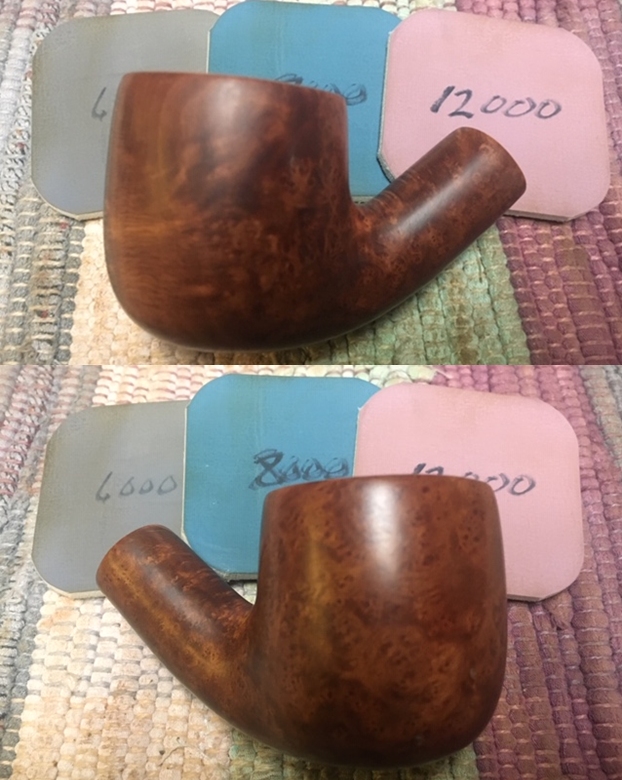
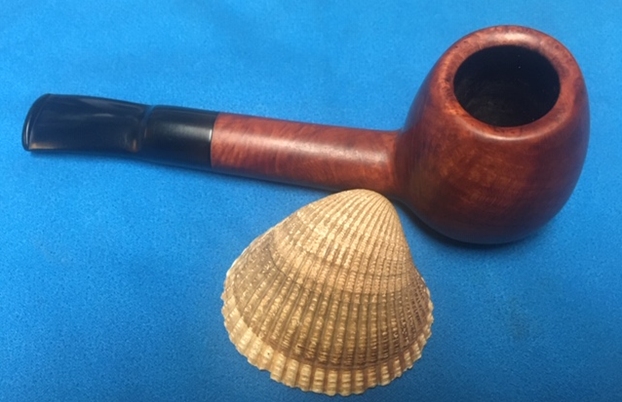
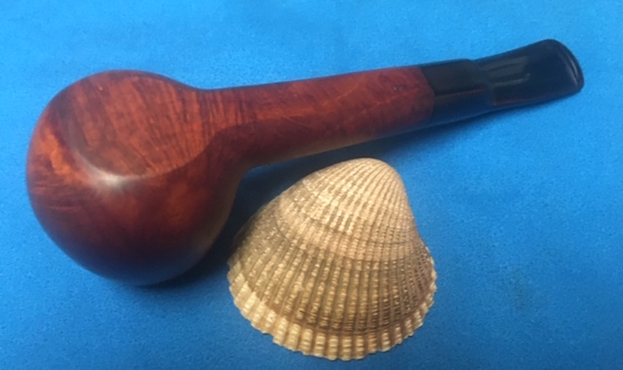
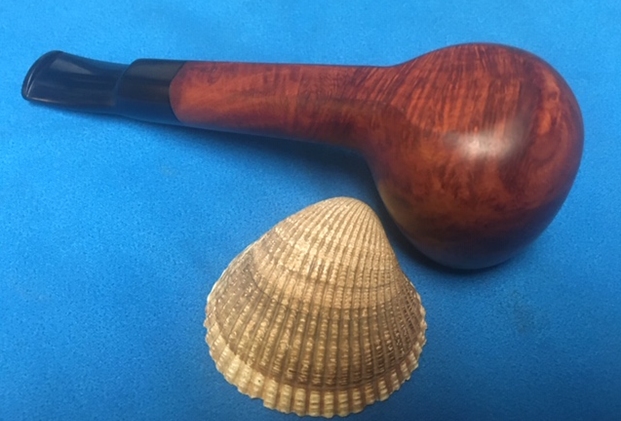
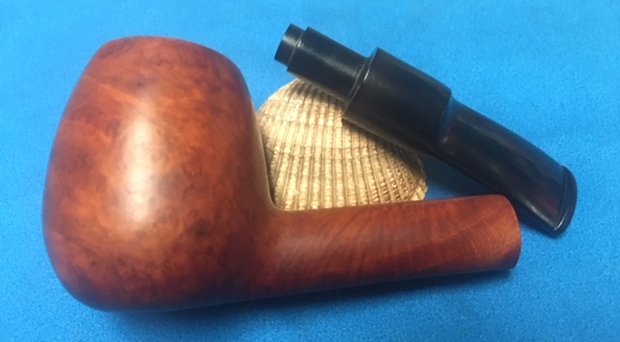
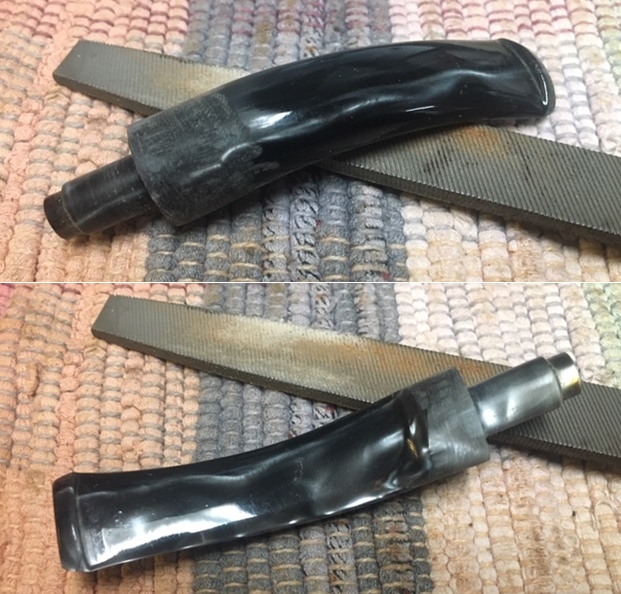
There was no need to ream the pipe, so I used a piece of 320 grit paper on a reamer bit to clean up the bowl.  The pipe was soaked with alcohol and sea salt.  Following the soak, the stem was mounted and I started to remove the oxidation.  There was a small tooth indention on the underside of the button, which raised nicely with heat from a lighter flame.  The oxidation was removed with 800, 400, 1500 and 2000 grit wet paper.  The stem was buffed with White Diamond and Meguiars Plastic polish.

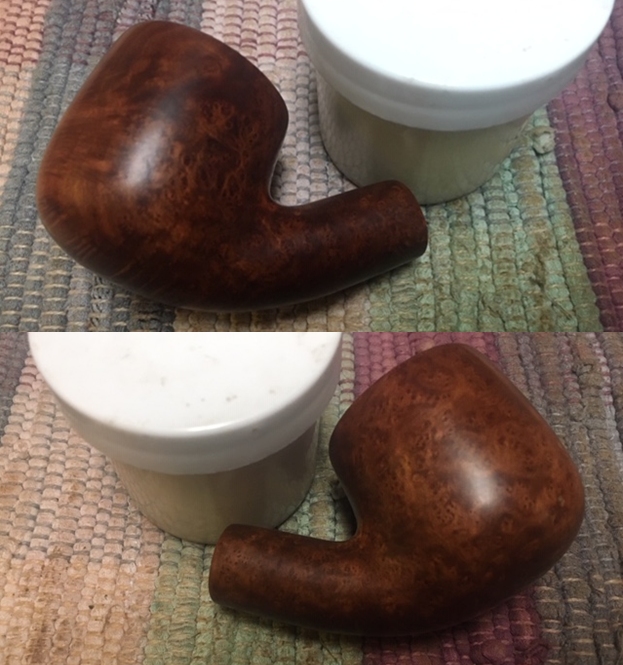
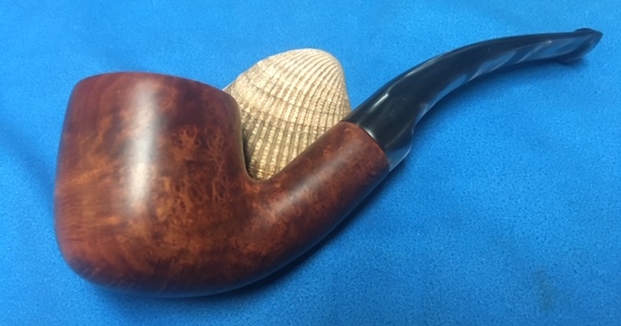
Below is the finished pipe.
 

Refreshing a Saucy Italian Aldo Velani Trio Bent Apple


Blog by Dal Stanton

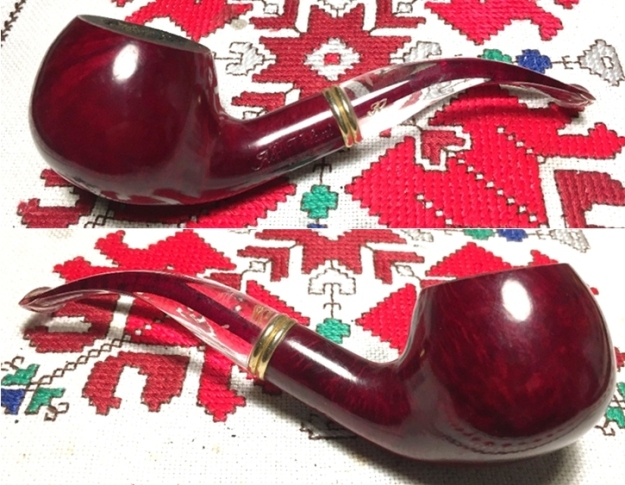
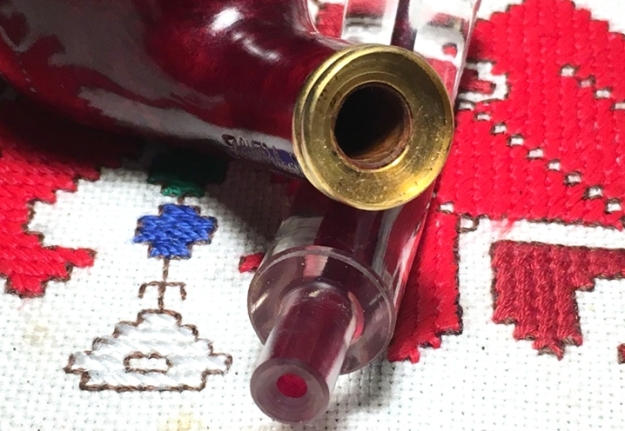
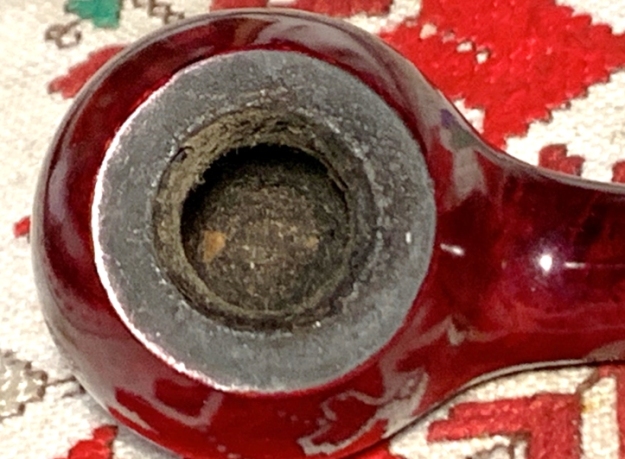
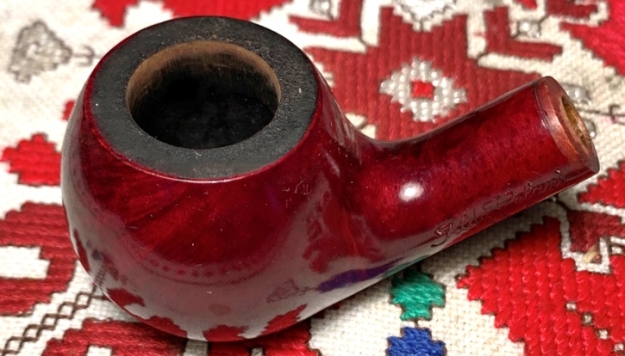
The St. Louis Lot of 26 that my son, Josiah, found in an antique shop before last Christmas is where I landed the Aldo Velani now before me. He was impressed by the quality of pipes in the Lot and emailed me in Bulgaria with a proposition of going in together for the Lot of 26.  His business proposal would be that his part would be his Christmas present to me – I would choose a pipe for my own from the Lot.  My part of the purchase would be to acquire this Lot and posting them in my online collection, For “Pipe Dreamers” Only! for pipe men and women to commission to add to their collections benefiting the Daughters of Bulgaria.  It was a proposal hard to refuse and some weeks later I unwrapped the St. Louis Lot of 26 in Denver where our family had gathered for Christmas.  I chose as my gift from Josiah an unbelievable find in the picture below, a huge Champion Churchwarden.  The Aldo Velani Trio Bent Apple is situated on the right just under the Churchwarden stem.Pipe man Michael saw the Aldo Velani in the Dreamers collection.  Originally in the Lot, there were 4 pipes in the Aldo Velani Trio set.  A Rusticated Volcano already found a home with a new steward (See: Rebuilding a Rim and Chamber for an Aldo Velani Trio Rusticated Volcano).  The common characteristics of the set is the bright burgundy/reddish hue, the double-bumped gold banding and an assortment of acrylic stems.  The set is attractive.Michael was drawn to the Bent Apple and after communicating back and forth, he decided to commission it.  Here are more pictures taking a closer look at the Aldo Velani Bent Apple.  This line is a ‘bling’ line of pipes.  The fancy acrylic stems with the double-bumped gold-plated ring, and the shine of the finish – all together give a bling, after dinner pipe feel.  The Apple has an elegant presentation. The chamber shows moderate buildup of cake and some lava flow over the rim. The clear acrylic stem has a burgundy airway that through the stem some build up is detected.  I’m assuming that it’s burgundy colored and that its not supposed to be clear as well!  We’ll see.  Whenever I see a clear acrylic stem, the question is whether it’s a Perspex acrylic, an earlier more temperamental material that will not tolerate cleaning with alcohol and may craze or even shatter.  I don’t think I need to worry about this because Perspex would be on older GBD pipes and early acrylic.   The bit is in great shape – almost no detectable tooth chatter.The gold band I’m assuming is nickel plated as there are no markings showing a gold metal content.  The double-bumped ring or shank facing is attractive and adds a touch of class as it joins the acrylic stem and Apple bowl.  The ring will shine up nicely.The nomenclature on the left shank side is cursive script, ‘Aldo Velani’ [over] ‘TRIO’.  On the underside of the shank is the COM ‘ITALY’ and to the immediate right, the shape number ‘56’.The stem is stamped with a unique mark which I was able to figure out the last Aldo Velani I restored.The Aldo Velani stem stamp is interesting and takes a closer look to figure out.  I found in Pipedia’s Aldo Velani article, an example and details of the stamping on an original Aldo Velani box, courtesy of Doug Valitchka.  The stamp depicts a pipe as the front leg of the ‘A’ for Aldo and the back leg of the ‘A’ forms the front riser of the ‘V’ of Velani.From my earlier Aldo Velani post, the article cited from Pipedia provides helpful information understanding the provenance of the Aldo Velani name:
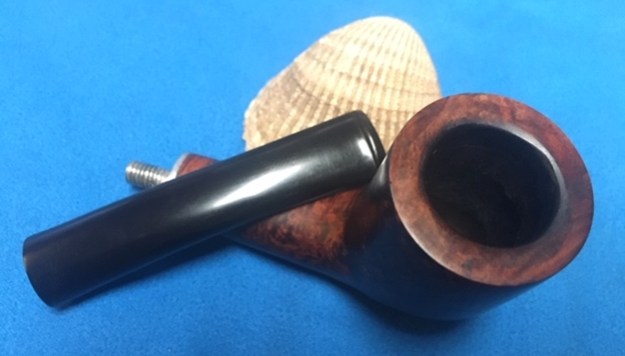
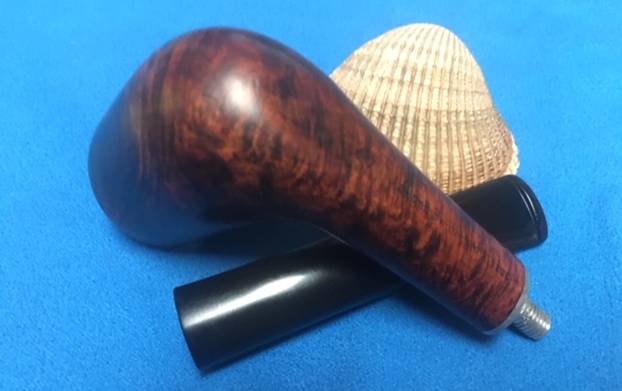
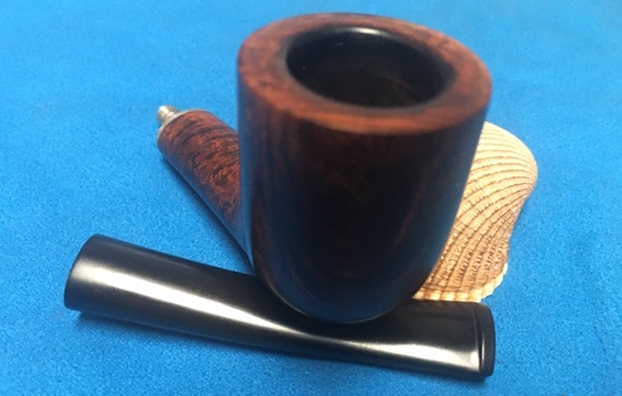
Most Aldo Velani pipes are made in Livorno, Italy, for the USA market by Cesare Barontini. They were previously imported by Lane Limited. Lane spokesman Frank Blews once described Velani’s stylish, intrinsically Italian designs as “Billiards with more ball, bulldogs with more jaw.” The name “Aldo Velani” is actually fictional.

Another Barontini 2nd is named “Cesare”.

I learn two interesting things from this information.  First, Aldo Velani is a faux name that does not describe an Italian pipe house but a specific pipe line.  Secondly, the Aldo Velani line is made by the Casare Barontini name based in Livorno, Italy.   Further information is available cross referencing to Casare Barontini in Pipedia:

In 1890 Turildo Barontini opened a factory for the production of briar. In 1925 his son Bruno began to produce the first pipes. Cesare Barontini, son of Bruno, started direction of the factory in 1955, and still runs it together with his daughters Barbara and Silvia.

Sub-brands & Seconds: Aldo Velani. Cesare, L’artigiana, Stuart, Cortina

Pipephil’s site has several examples of the Aldo Velani line depicted which tend to be very stylish and nice-looking pipes which confirms the Pipedia assertion that Casare Brontini produced the Aldo Velani lines primarily for export.  It is evident that there was not a consistency in the stem stamping or name style for Aldo Velani as different examples are given.  Here are the stem stamping variations provided by Pipephil:With a better understanding of the Aldo Velani Trio Bent Apple before me, I begin his refreshing by cleaning.  I start by disassembling the parts – I find that the gold ring easily is removed which will allow cleaning of each element to be easier.I then take the stummel and ream the chamber using the Pipnet reaming kit.  I use the 2 smaller blade heads then switch to the Savinelli Fitsall tool.  Then sanding the chamber wall is done with 240 grade paper wrapped around a Sharpie Pen to further clean away the remaining vestiges of carbon.  I wipe the chamber with a cotton pad wetted with isopropyl 95% and after inspection of the chamber, all appears to be healthy briar – I forgot to take a picture! Next, to clean the external surface undiluted Murphy’s Oil soap is used with a cotton pad.  The smooth surface is easily cleaned.  Using a brass wire brush and a little help from my thumb’s fingernail the remaining lava is cleared. The stummel is then transferred to the kitchen sink where the internal mortise is cleaned with shank brushes and anti-oil dish liquid soap.  After scrubbing, the bowl is thoroughly rinsed and returned to the worktable. Continuing with the internal cleaning, I use two pipe cleaners and one cotton bud wetted with isopropyl 95% to discover that the internals are essentially clean.  Nice for a change!Switching now to the acrylic stem, the shady areas inside the translucent airway I assume is build up which should be able to be cleaned.  I use a combination starting with isopropyl 95% and followed by a Soft-Scrub-like product I can find here in Bulgaria along with both bristled and soft pipe cleaners to clean the airway.  With the bristled pipe cleaners, after wetting them with the CIT, I insert it into the stem and then ‘crank it’ to rotate in the airway.  This does a good job.You can see that some of the burgundy color came off on the pipe cleaner as it cleaned.  There is still some coloration in the airway, but it seems to be clean.After the cleaning of both the stummel and the stem, it is apparent that they are in good condition and for both I move directly to applying Blue Diamond compound, a mild abrasive, to both the acrylic stem and stummel.  The compound will clear very small imperfections on both the stummel and acrylic surfaces.  At this point, the gold-plated ring is kept off the shank for the application of compound.  With a cotton cloth buffing wheel mounted to the Dremel and speed at about 40% full power, compound is applied to both stem and stummel.After the compound and after I wipe the pipe down with a felt cloth to clear the compound dust from the pipe, another cotton cloth buffing wheel is mounted with the same speed and carnauba wax is applied to only the stummel.  The acrylic stem cannot be improved with wax!  Following the application of wax, I use a microfiber cloth to give the pipe a vigorous hand buffing to raise the shine.A few more small projects are left.  The ‘AV’ stamping on the acrylic needs refreshing.  To match the gold ring, which is gold – the stamping in gold is a very nice touch.Using European Gold Rub’n Buff I apply a small amount of gold over the stamping.  And as the name says, I rub and buff!  The results are very nice. Before reattaching the double-bump ring to the shank, I clean it using 000 steel wool.Then, placing a small amount of Extra Thick CA glue to the inside of the ring, I attach it to the shank. I use thick CA glue and only a small amount so that it doesn’t run over the confines of the ring.With the ring reattached, the Aldo Velani Trio Bent Apple stummel and fancy acrylic stem are rejoined and enjoy another hand buffing with a microfiber cloth to raise the shine.

Wow – what a party pipe!  This pipe certainly has flare and bling and it’s the type of pipe that one wears matching cuff links!  The Bent Apple shape provides a touch of elegance and the ensemble works well with the striking burgundy – reddish finish, the gold double-bumped ring and acrylic stem – with its matching airway running the length.  Michael commissioned this Aldo Velani Trio Bent Apple and he will have the first opportunity to acquire it from The Pipe Steward Store benefiting the Daughters of Bulgaria.  Thanks for joining me!