Monthly Archives: August 2018

Breathing New Life into a Kriswill “Chief” # 20


Blog by Paresh Deshpande

I had completed the refurbishing of LANE ERA CHARATAN’S MAKE “SPECIAL” and thoroughly enjoyed the process. Apart from preserving memories, the thing that I enjoy the most while refurbishing/ restoring my inherited (and some purchased) pipe collection, is the transformation of the pipe that unfolds before your eyes as you progress. It is something akin to a flower bud that gradually blooms and opens itself in all its beauty for you to feast your eyes upon. This is what I love when I work on a pipe.

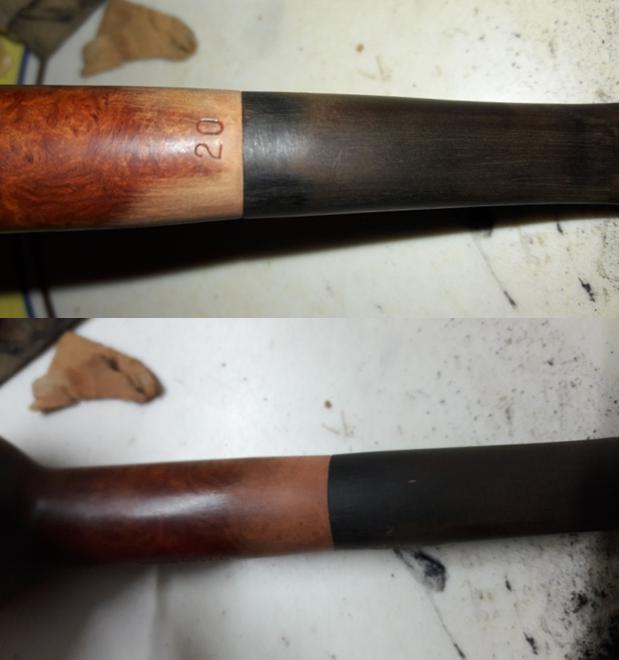
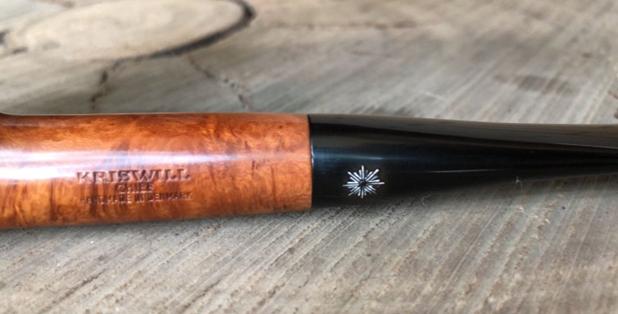
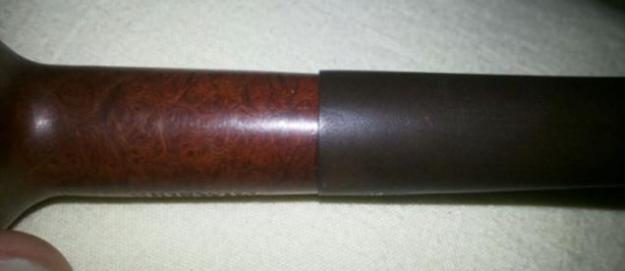
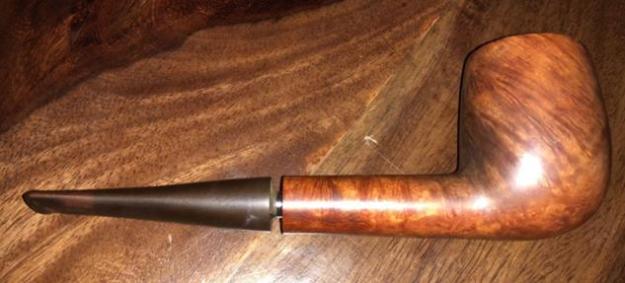
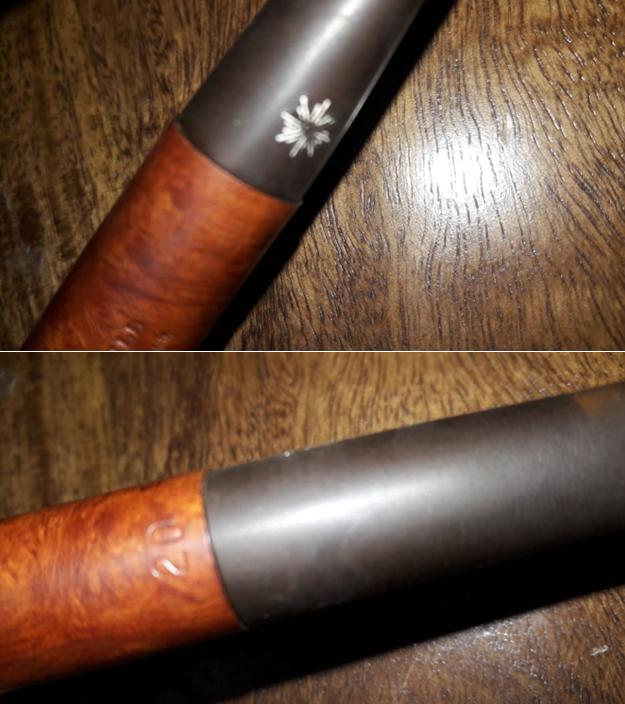
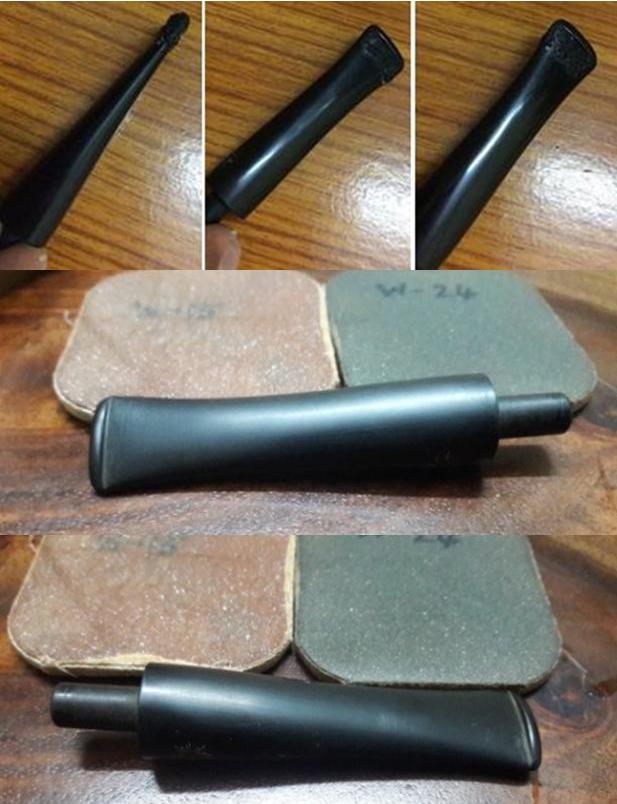
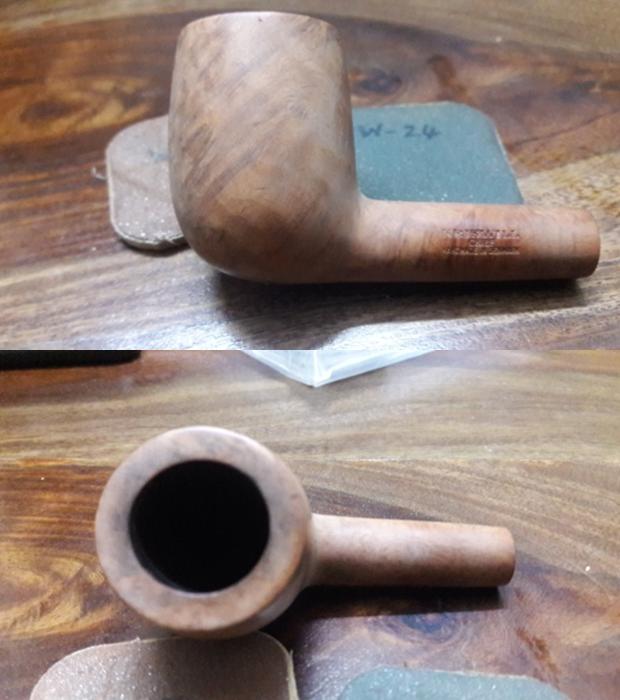
While rummaging through the large box with an equally large number of my inherited pipes with my younger 10 year old daughter, she laid her hands on a pair of pipes with “SHINING SUN”, as she liked to call it, on its stem. With the selection of next two projects decided by her, I had a closer look at these pipes. These were a pair of KRISWILLS, one stamped as “CHIEF” and the other as “GOLDEN CLIPPER”. The first thing that struck me was that there was something amiss with the way the stems sat into the shank of each pipe. The “CHIEF” did not have its stem sitting flush with the shank. Also, the shank’s outer diameter appeared larger than that of the stem. The “GOLDEN CLIPPER” had its stem flush with the shank; however the diameter of the stem was larger than that of the shank. The following picture will clarify what exactly I was faced with……
CLIPPER
CHIEF

As I was wondering what could be done to address this issue and surfing the net for buying new/ used original stems for these pipes, Abha, my wife who was having a closer look at both these pipes simply interchanged the stems and surprise of all surprises, the stem that was on the “CHIEF”, sat flushed and perfectly matching with the shank of the “CLIPPER”. However after considerable effort, though the stem that was on the “CLIPPER” sat flushed with the shank of the “CHIEF”, the diameter of the shank was larger than that of the stem. So now what we have is a KRISWILL “GOLDEN CLIPPER” with a perfectly matching and fitting original stem and a KRISWILL “CHIEF” with a fitting, but mismatched stem diameter.
KRISWILL “CHIEF”
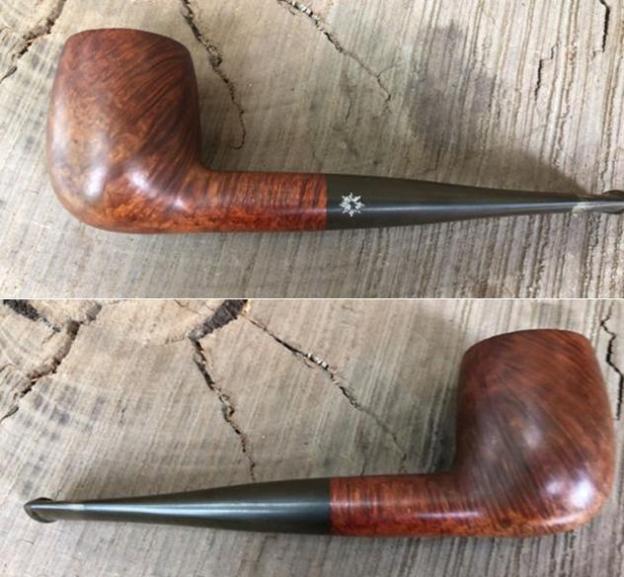
KRISWILL “GOLDEN CLIPPER”

I discussed with Abha and it was decided that since the “CLIPPER” has a perfect stem match, I would work on the “CHIEF” and make the shank match the stem. With this decision made, I kept the CLIPPER aside and took the “CHIEF” into my hands.

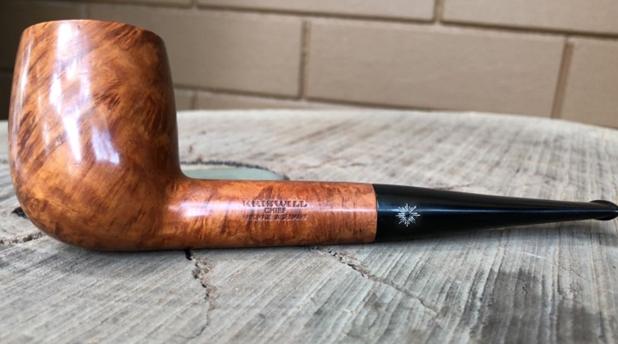
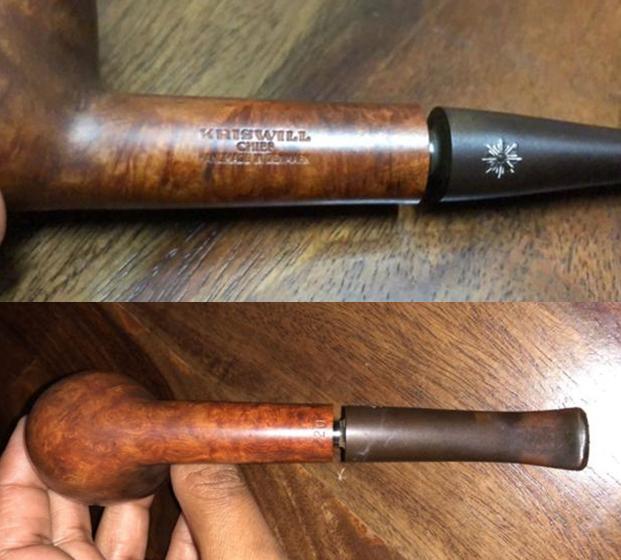
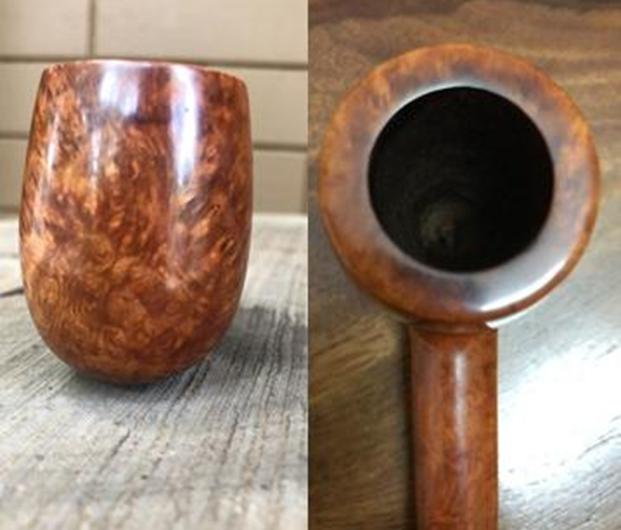
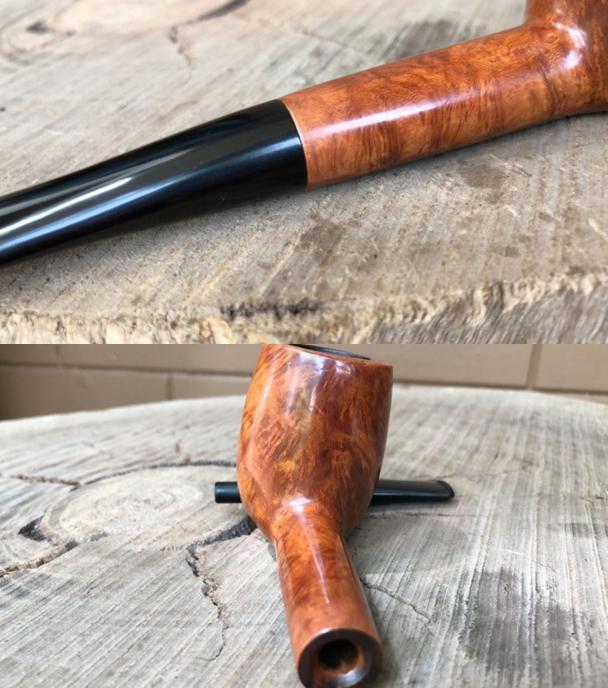
The CHIEF has a nice, deep bowl and nicely fills the hand. The size, weight and heft of the pipe is just beautiful. Beautiful cross grains adorn the sides and the back of the bowl while the front of the bowl boasts lovely mixed grains of swirls, flame and Birdseye. It is stamped “KRISWILL” over “CHIEF” over “HANDMADE IN DENMARK”. At the bottom of the shank where it meets the stem, is the numeral “20” and yes…. this positioning of the number did cause me a great deal of grief during the process of sanding!!! All the stamps are crisp and clear.I was curious to know about the history, geography and carvers for Kriswill while attempting to date this pipe. While referring to “Pipephil” I came across this information which I have reproduced below verbatim (http://www.pipephil.eu/logos/en/logo-k3.html)
“Kriswill is a brand of Kriswork Briar Trading, in Kolding (Denmark) established about 1955. Some of Kriswill pipes were designed by Sigvard Bernadotte, Swedish prince and brother to the late Queen Ingrid of Denmark. He collaborated with his Danish partner Acton Bjørn. When the company went bankrupt in the late 1970s it was on a level with Stanwell. Dan Pipe Cigar & Company (Hafenstrasse 30 D-21481 Lauenburg/Elbe, Ge) bought the rights to use the name and it is Holmer Knudsen and/or Poul Winsløw who make the Kriswill line. Nørding, on its side, bought the plant and introduced a Kriswell line”.

Prior to 1970 the stampings are in script letters on the shank and on the mouthpiece. The star on the stem and block letters on the shank were introduced from that date on.

While researching for more information on Kriswill pipes on “Pipedia”, I came across this additional information which is reproduced below:

Kriswill was one of the large pipe manufacturers in Denmark during the 1960s and 1970s, and I believe closed around 20 years ago. Their catalog cover read “By Appointment to the Royal Danish Court, KRISWILL, Kriswork Briar Trading, Briar Pipes Hand Made in Denmark.”

Thus, from the above information, it is safe to assume that this pipe is post 1970.

INITIAL VISUAL INSPECTION
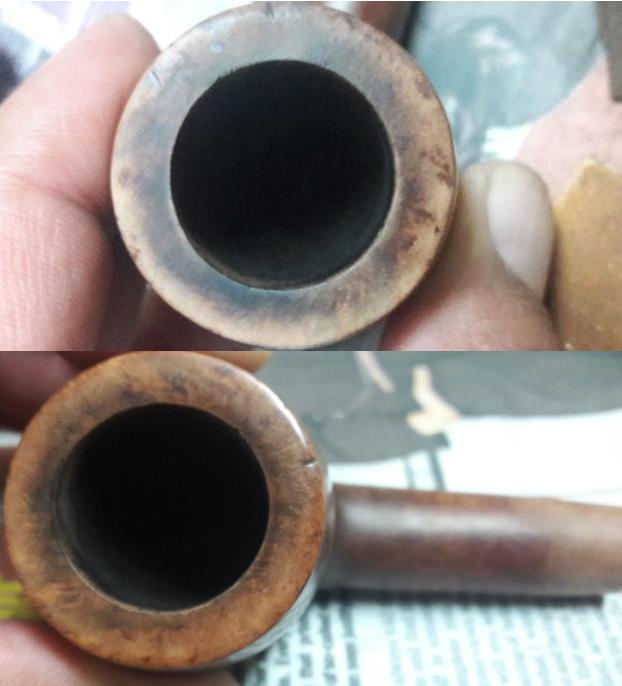
As with all other pipes, the CHIEF, too is covered in dust, oils and grime of all past years, though comparatively to a lesser extent. The chamber is heavily caked with lava overflowing on to the top of the rim. A few small dents and dings, though minor, are visible on the outer edge of the bowl. The condition of the inner edge and that of the inner surface of the chamber will be ascertained once the bowl has been reamed and the lava removed from the rim top.The airway in the shank is blocked and air does not flow through the shank. Close observation of the shank revealed presence of debris in the mortise. This needs to be cleared and cleaned. Maybe this will also help in a smooth and snug fit of the stem into the mortise.The stem shows calcification near the button and deep oxidation all along the stem. There are bite marks near the button and some deep tooth chatter. The button has been bitten and will need to be reconstructed.THE PROCESS
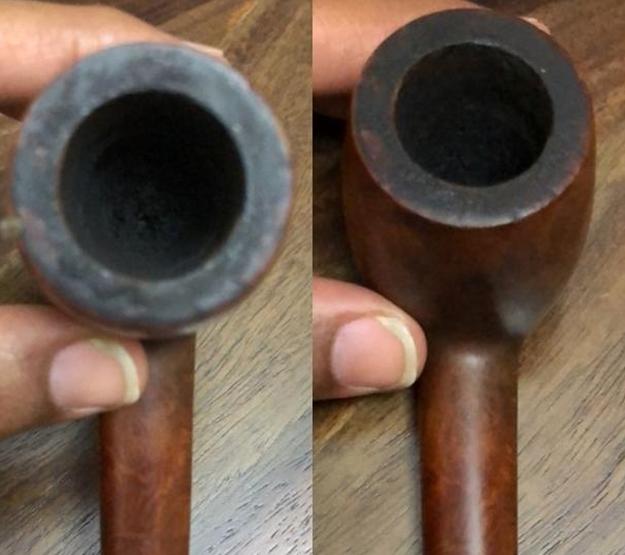
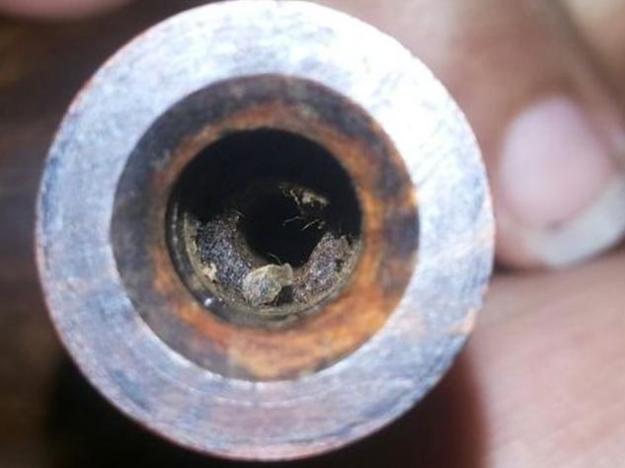
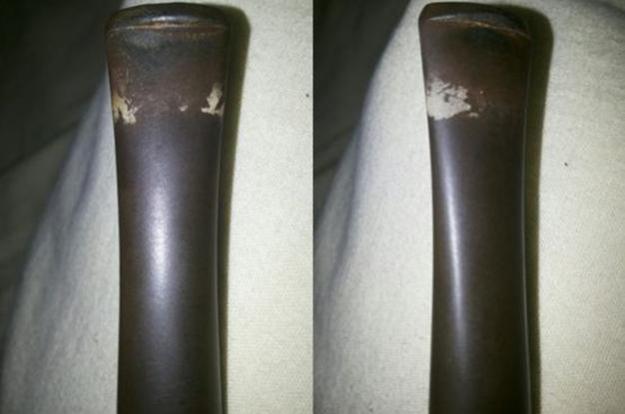
Since this would be the first time I would be attempting to undertake the process of adjusting the fit of the tenon and matching the diameter of the shank with that of the stem, I Face timed with Mr. Steve who advised me to, firstly, be very careful during the sanding of the shank so as not to lose too much briar making the shank diameter too small, secondly, he told me to ensure that the entire shank should be sanded such that the taper at the shank end is not abrupt and blends well into the overall shape of the pipe. Thirdly, it is most important to exercise a lot of patience and diligence while working and check very frequently the fit, finish and shape of the shank and the stem.

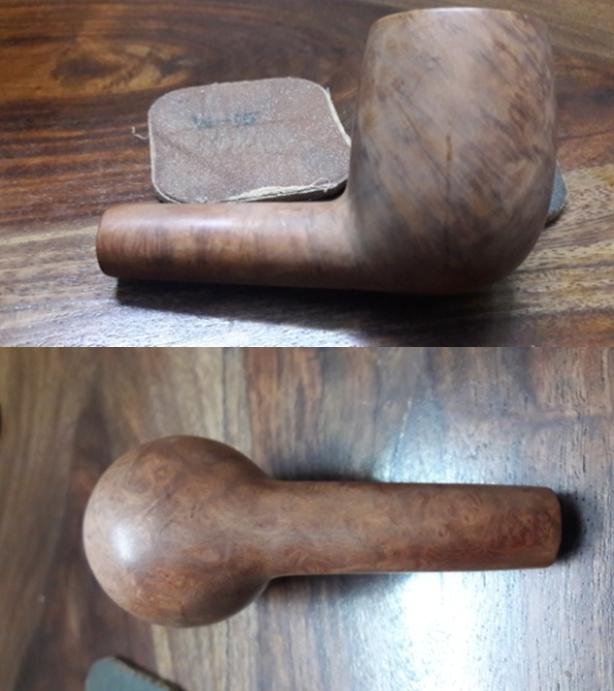
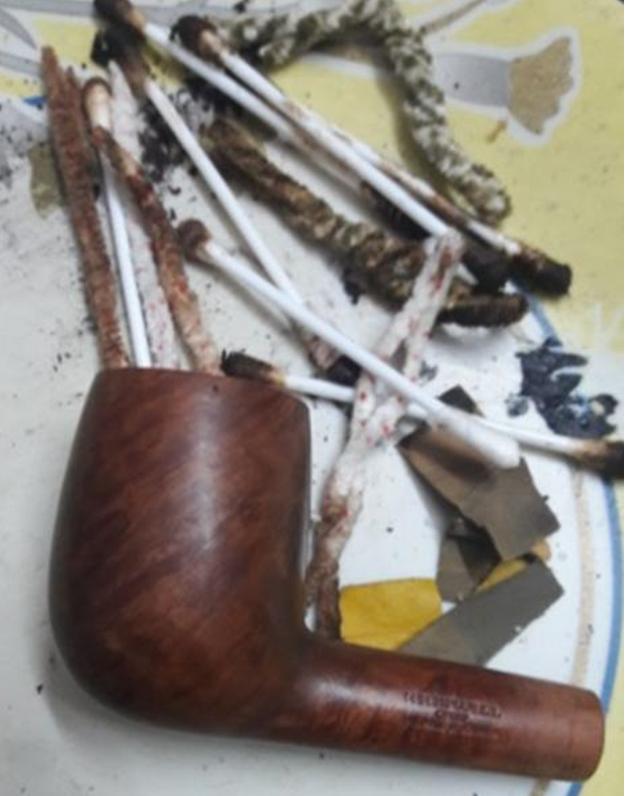
I started with cleaning the shank of all debris using a dental spatula, pipe cleaners, cue tips and isopropyl alcohol. I was surprised to see the amount of gunk that was removed from the shank. I tried to fit the stem on to the shank. Though the tenon has inched further in to the mortise, a prominent gap is clearly visible between the shank end and the stem.Using a 220 grit sand paper, I very carefully began the process of sanding down the tenon, checking ever so frequently for the fit of the tenon into the mortise. Finally I was able to achieve a perfect fit of the stem and the shank with all the right noises!!!!Now that the issue of fit of the stem into the shank has been addressed, I turned my attention to match the size of the diameter of the shank with that of the stem by sanding down the shank. I started this sanding using a 220 grit sand paper. This process was made difficult and uneven at the bottom of the shank due to the stamped number “20” being very close to the shank end.I took care so as not to sand off the stampings on the shank and stem by masking them. Once I was satisfied with the results of sanding with 220 grit paper, I switched to sanding with a 440 grit sand paper to further blend the shank and stem. Mr. Steve’s advice of being very diligent and frequent checking was always ringing in my ears as I progressed towards the goal of matching the shank with that of the stem. A word of caution for first timers like!!!!!!!! During the process of sanding you may notice a considerable dip at the shank end.This signifies that the sanding of the shank end is excessive and thus sanding needs to be done from further up the shank and a bit over the stem too. This will ensure a seamless joint between the shank and the stem.
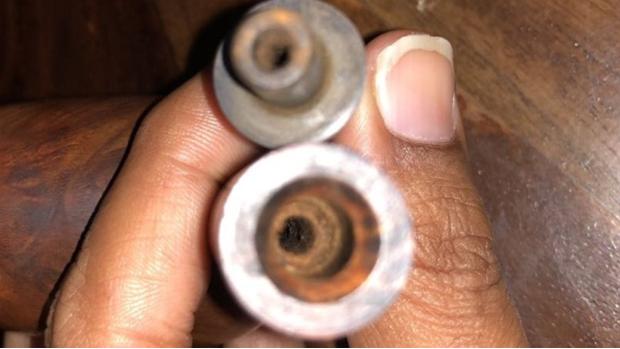
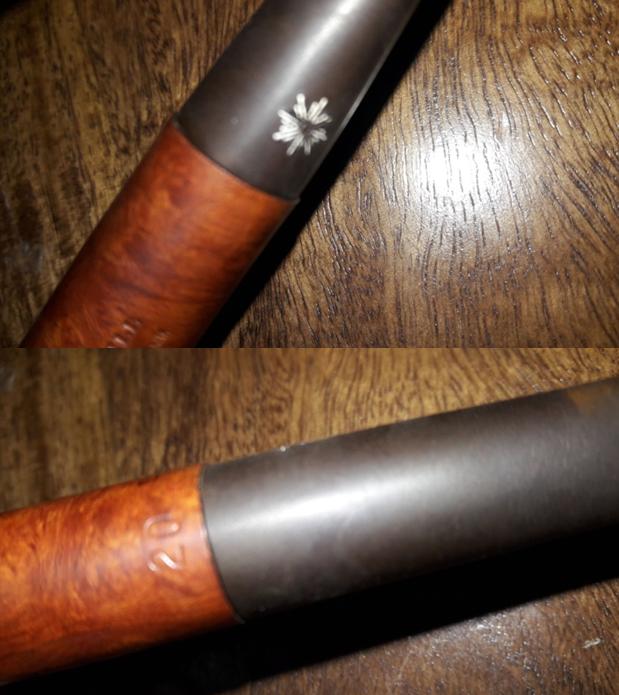
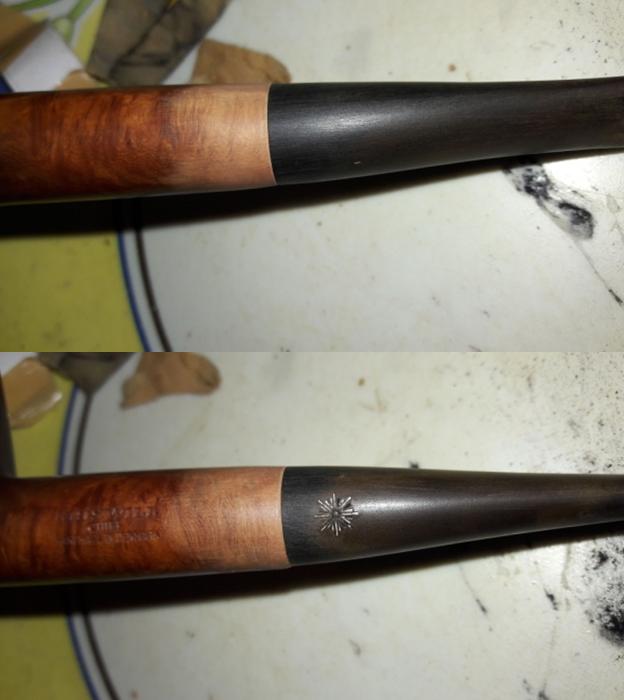
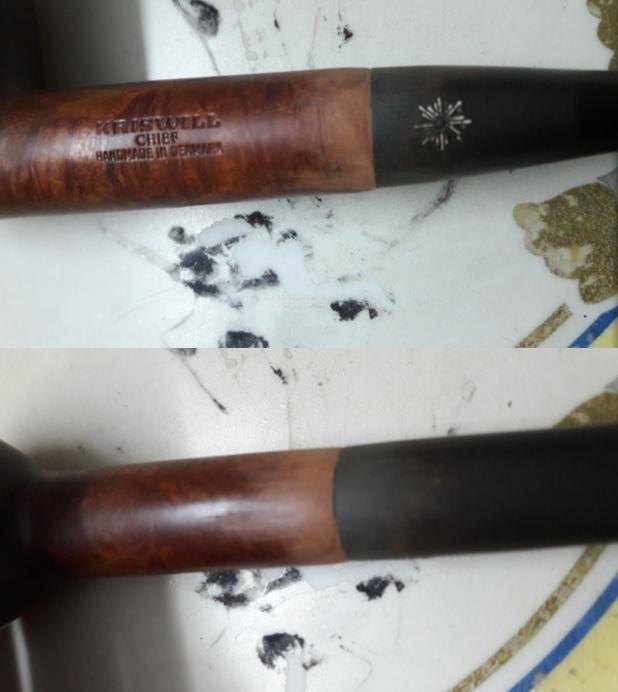
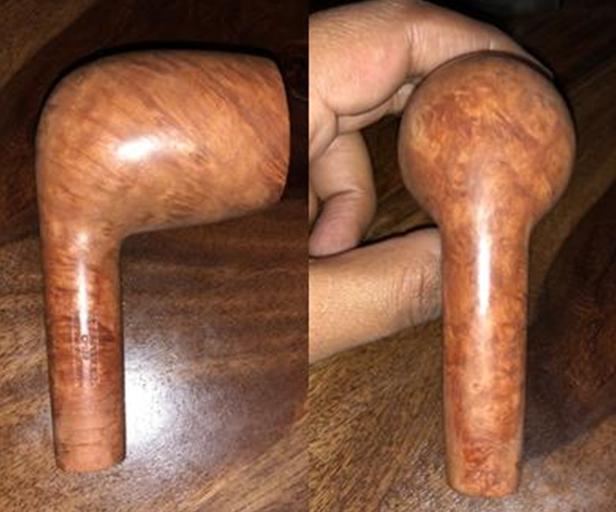
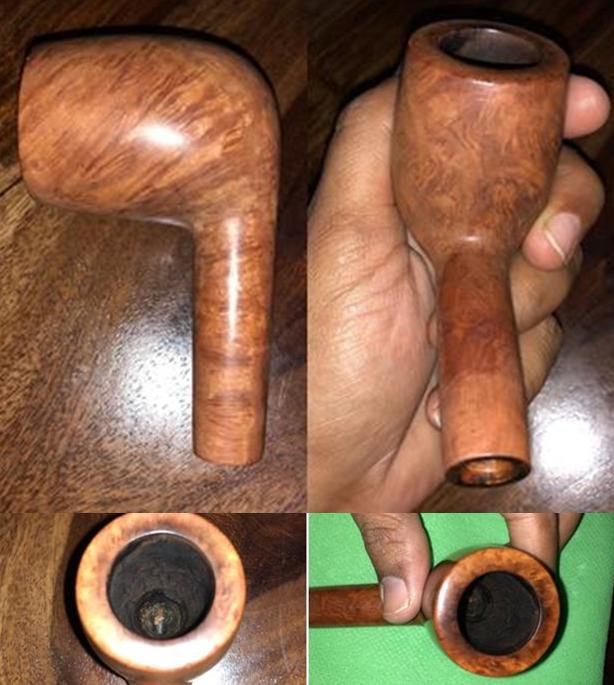
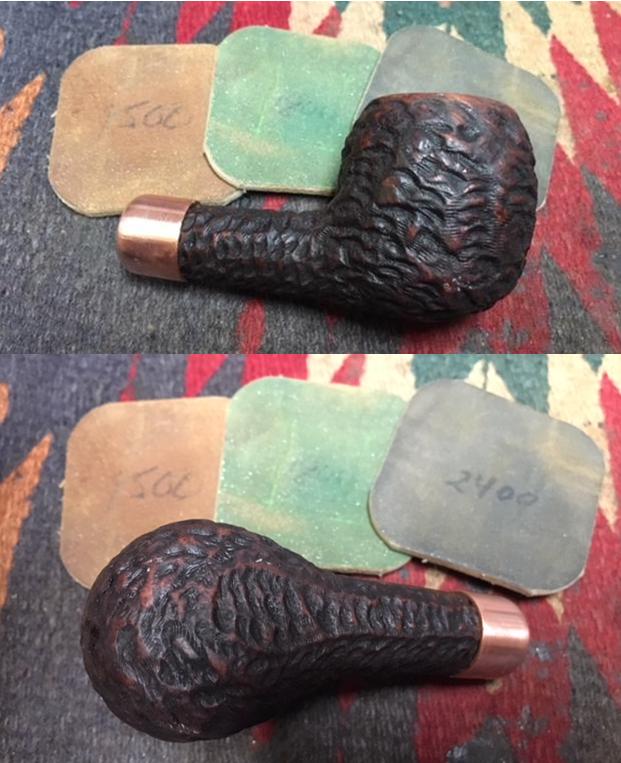
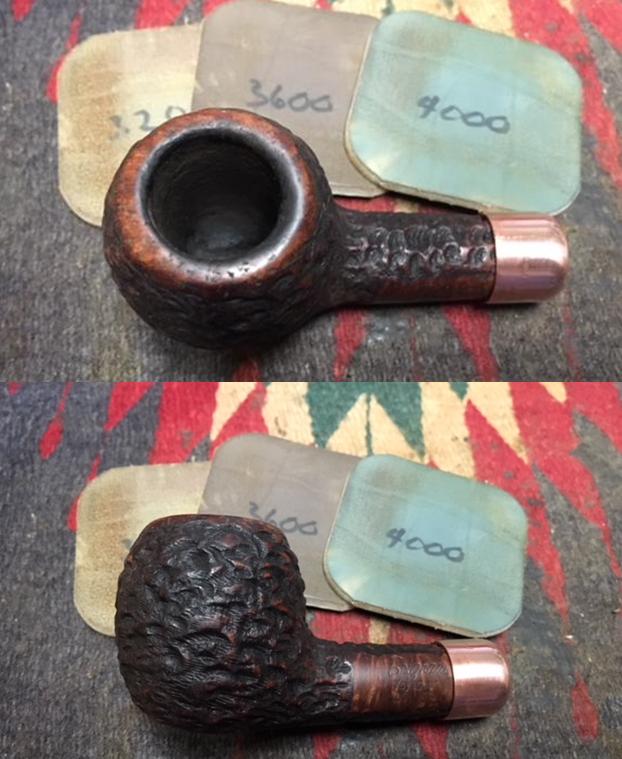
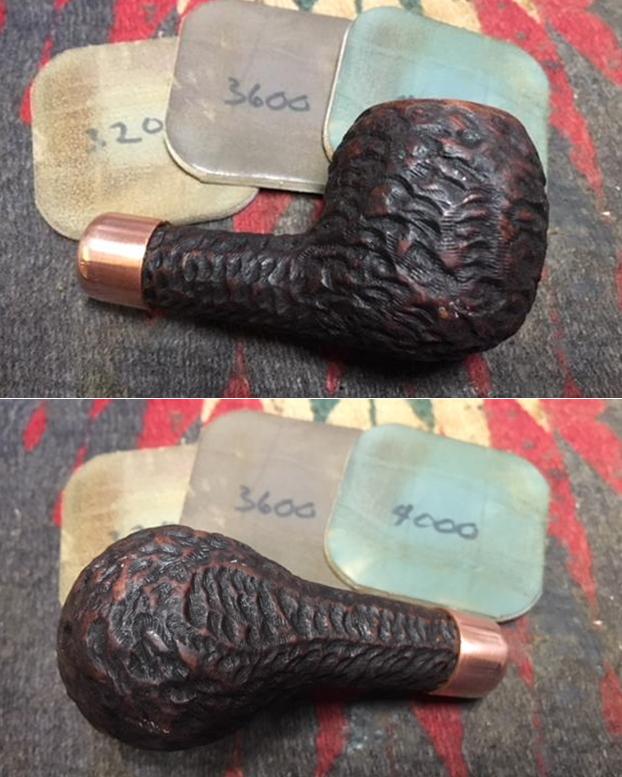
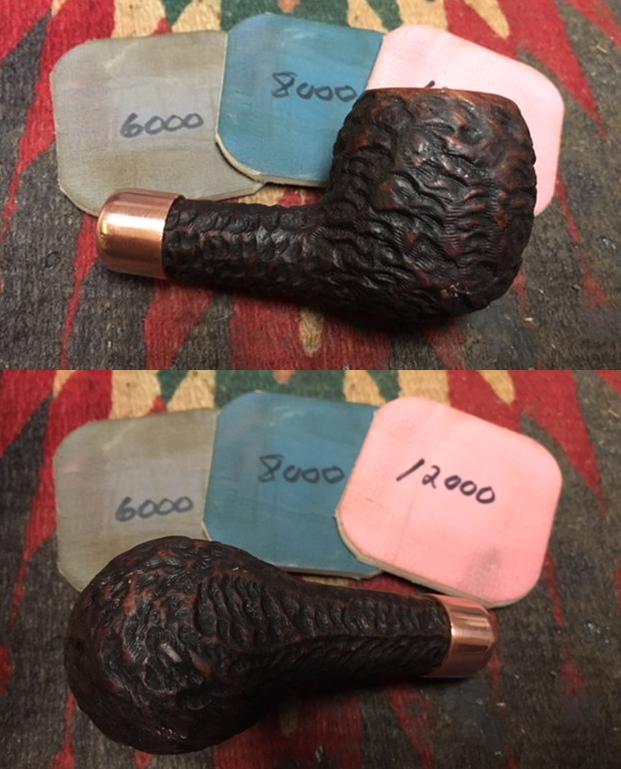
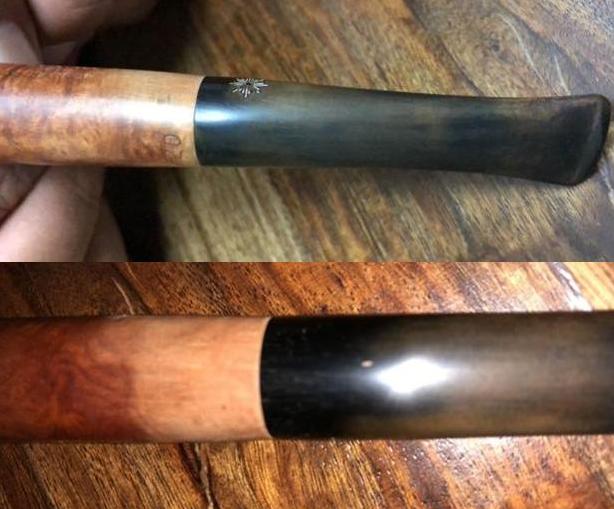
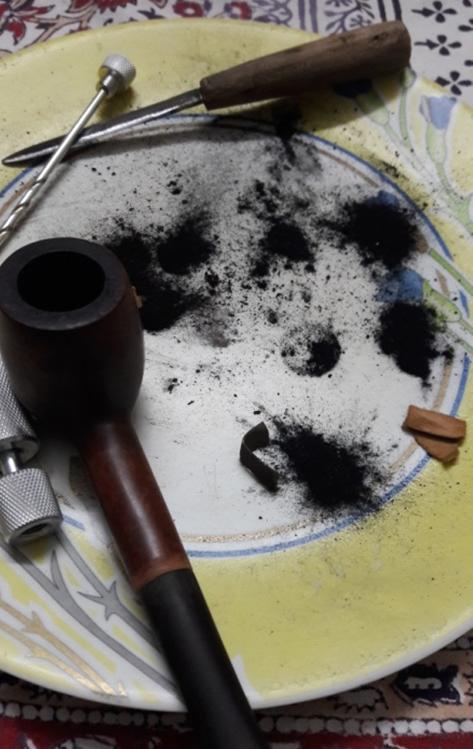
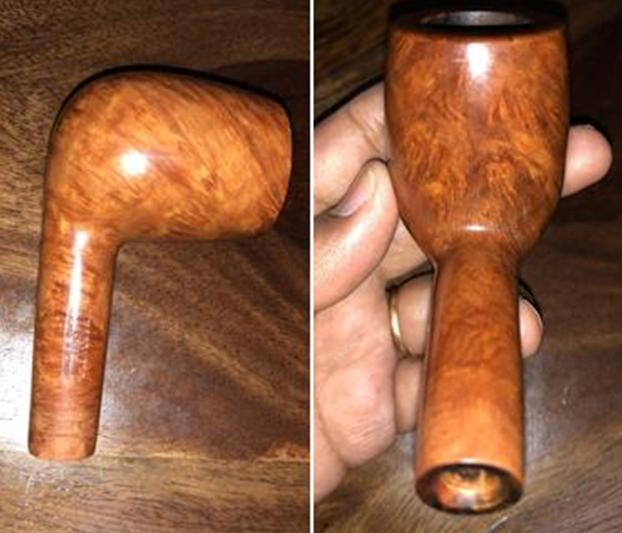
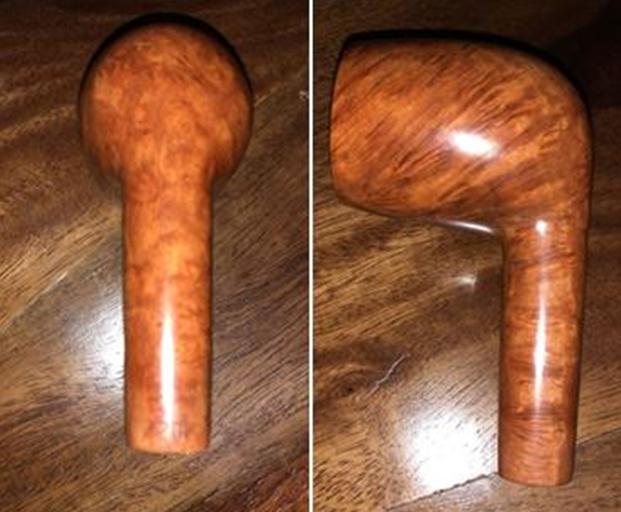
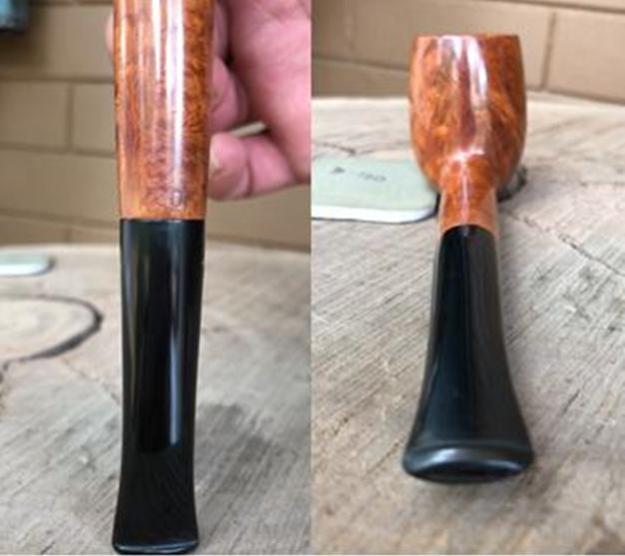
Using a 220 grit sand paper, I sanded the shank to match the dip at the shank end and also a little of the stem end, all through taking care of the stampings on the shank and stem. I further evened out the shank and the joint with 600 and 800 grit sand paper. Once I was satisfied with the seamlessness of the joint, I showed it to Abha, my wife and she too approved of the job done. Thereafter, I further blended and merged the entire shank and the stem through the joint using micromesh pads, wet sanding with 1500 to 2400 pads and dry sanding with 3200 through to 12000 pads. I wiped the sanded area with alcohol after each pad to remove the sanding dust. Boy!! Was I pleased with the results, hell YEAH!!!! I shared pictures of the end result with Mr. Steve on What’sApp and he too approved of the seamless joint. Next I turned my attention to the stem and painted the surface of the stem with the flame of a Bic lighter to raise the tooth chatter and minor bite marks. The deeper tooth bites with a mixture of activated charcoal and clear CA superglue and let it cure for 24 hours. Using a flat head file needle, these fills were blended into the surface of the stem. For a better blending of the fill, I further sanded the entire stem with 220 followed by 400 and 800 grit sand paper. This helps to reduce the sanding marks left behind by the more abrasive 220 grit paper. To bring a deep shine to the vulcanite stem, I went through the complete set of micromesh pads, wet sanding with 1500 to 2400 grit pads and dry sanding with 3200 to 12000 grit pads. I wiped the stem with alcohol after each pad and rubbed it down with Extra Virgin Olive oil. The internals of the stem was cleaned out using alcohol and pipe cleaners. The finished stem is shown below.With the stem taken care of, I once again turned my attention to the stummel. The sanded shank was lighter hued as compared to the rest of the stummel. Since I was still awaiting my stain pens, which have been held back in custom clearance for the last 50 odd days and also since I have not yet graduated to use of aniline stains/ dyes, I was contemplating what could be done to blend the finish of the shank with that of the stummel. Being the intelligent of the two, Abha suggested that the bowl could be sanded using micromesh pads to match the finish of the shank.  That decided, Abha reamed the chamber using Kleen Reem pipe tool and with the fabricated pipe, she removed the remaining cake from the chamber.With the same knife, she gently removed all the overflow of lava, oils and tars from the rim surface. She further sanded the interiors of the chamber with a 220 grit sand paper to get rid of the last traces of the remaining cake. She also topped the rim on 220 grit sand paper and evened out all the remaining lava and minor dings and dents that were revealed after the lava was removed.  Using isopropyl alcohol, hard bristle and normal pipe cleaners, she completely cleaned out the internals of the shank.I cleaned the external surface of the bowl with undiluted Murphy’s Oil soap and tooth brush to remove all the grime and dirt and rinsed it under running water. I took care that no water enters the chamber and the shank. Using paper napkins and soft cotton cloth, I completely dried the surface. Thereafter began the entire process of sanding down with micromesh pads as enumerated while working on the shank. I also worked on the rim top to match it with the rest of the bowl. The bowl has some interesting grains and patterns.   I rubbed in some Before and After Restoration balm in to the briar to bring out the shine and enliven the briar. After a few minutes, I rubbed and polished the bowl with a soft cloth. Finally, I finished the pipe by rubbing a small quantity of Paragon wax and polishing it using raw and undiluted muscle power and a microfiber cloth. I am very pleased and happy with the way the complete project has turned out. It was an exhilarating experience to be able to appreciate the transformation and a sense of accomplishment that accompanied it. I must thank Abha and Mr. Steve for walking with me through this project. Here are the pictures of the finished pipe.
Converting a Brigham Voyageur 109 into a Churchwarden


Blog by Steve Laug

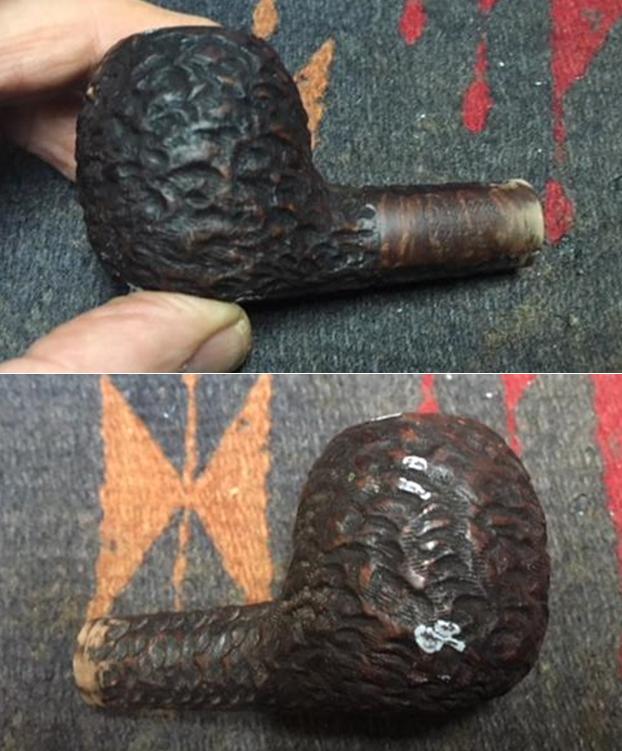
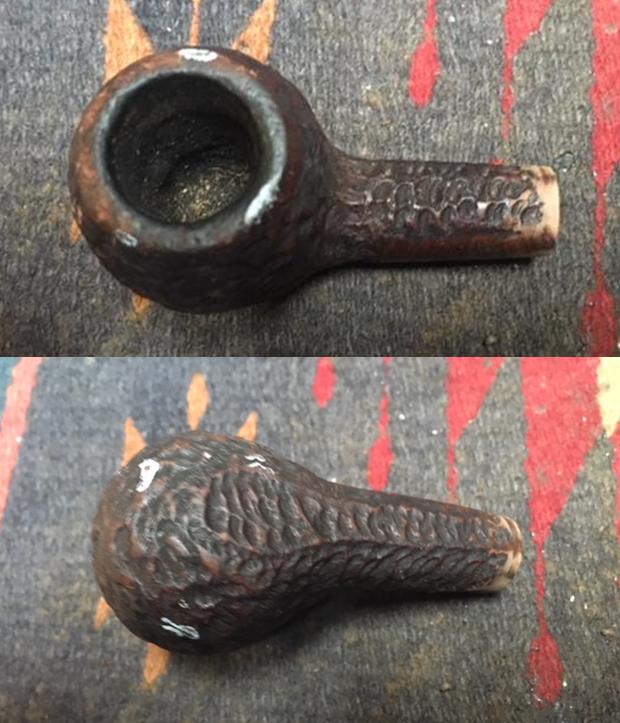
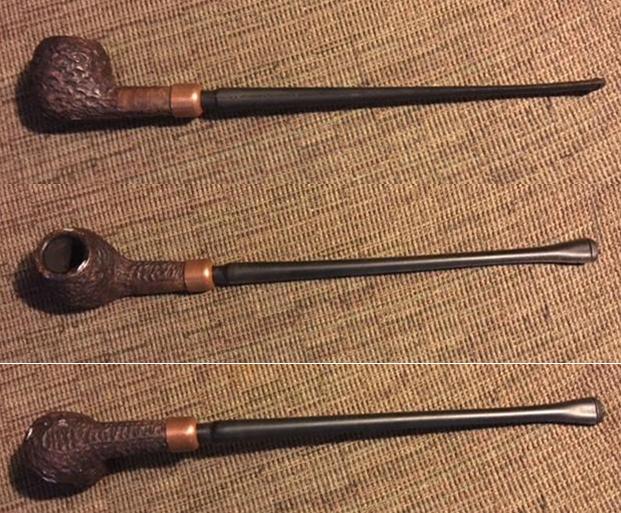
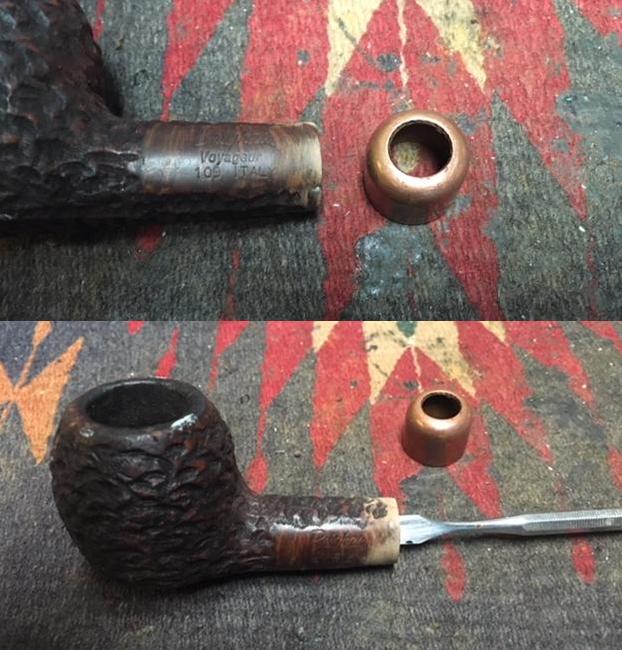
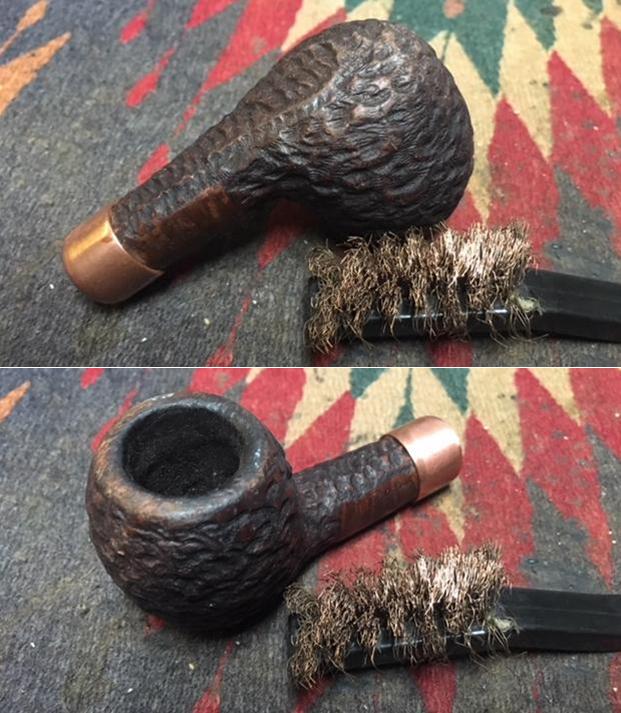
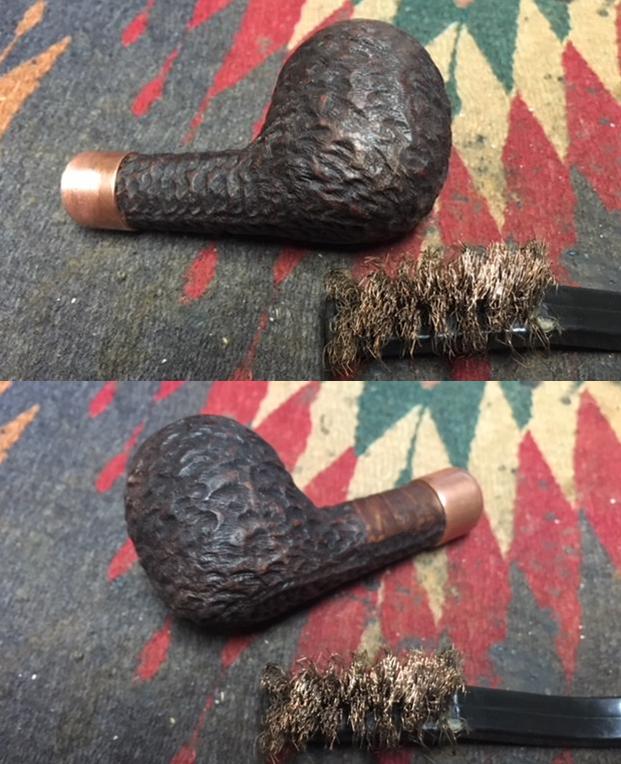
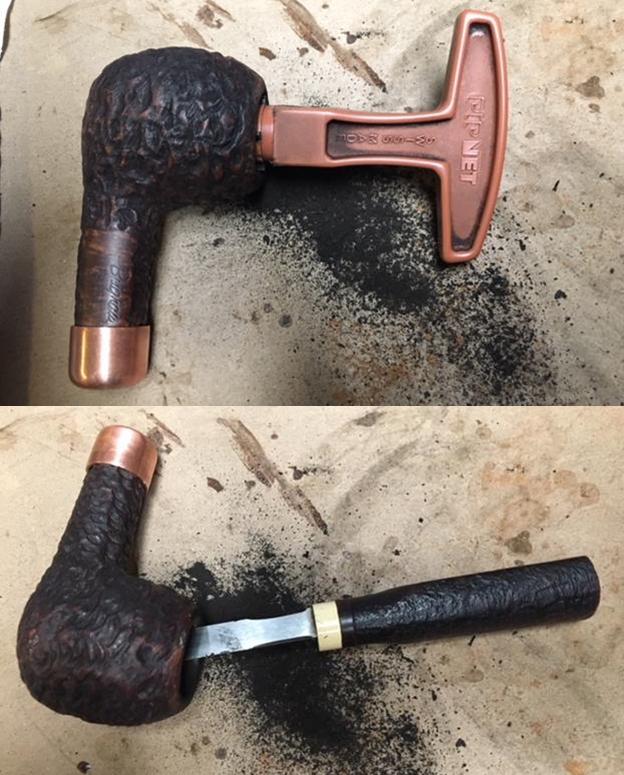
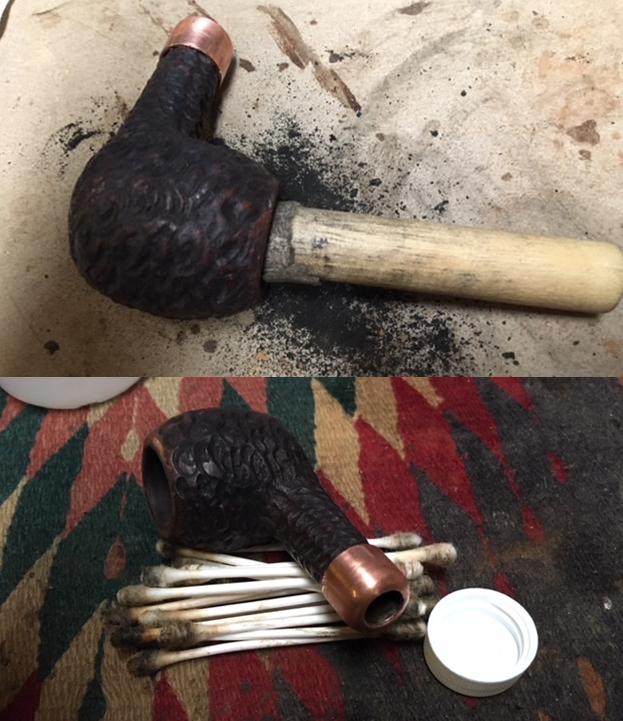
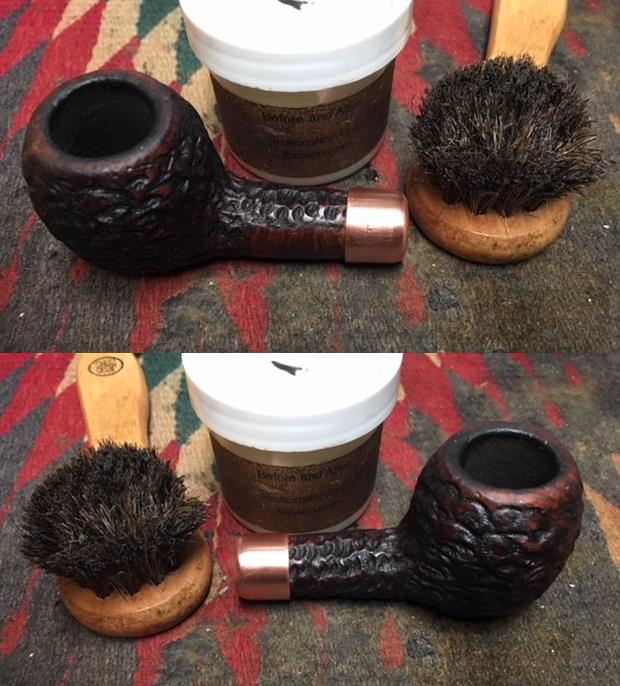
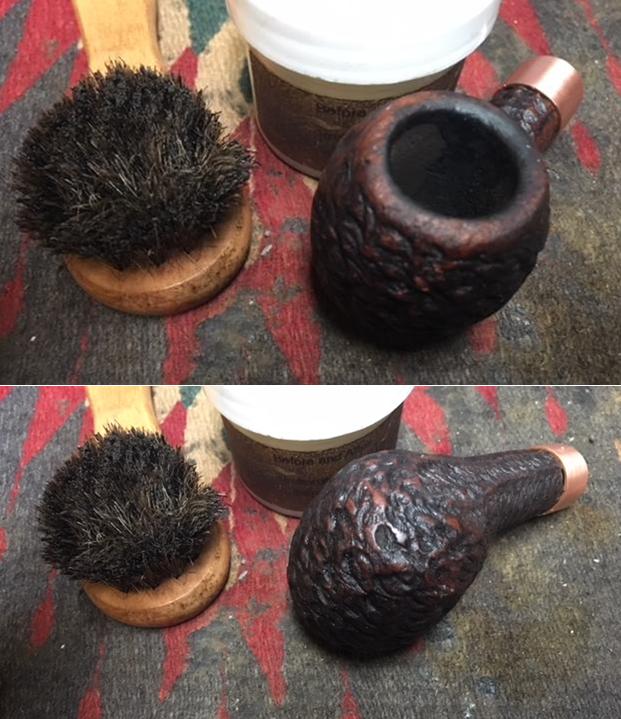
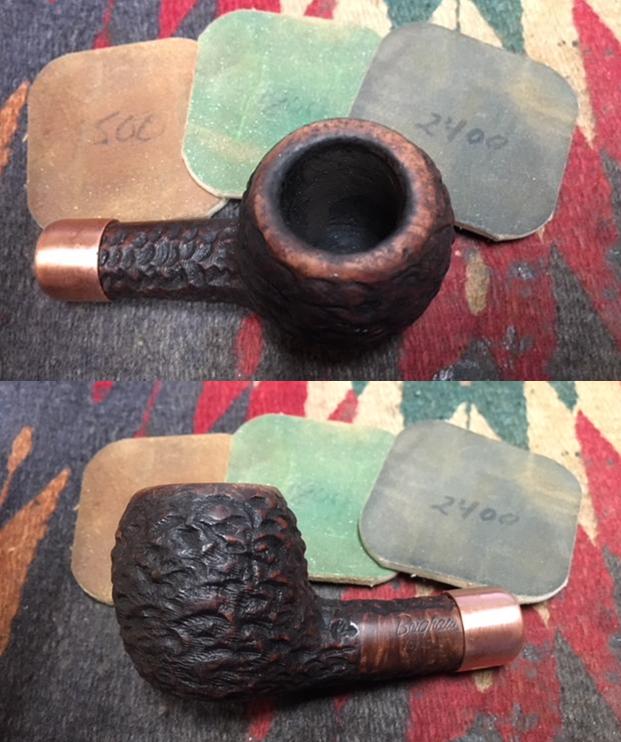
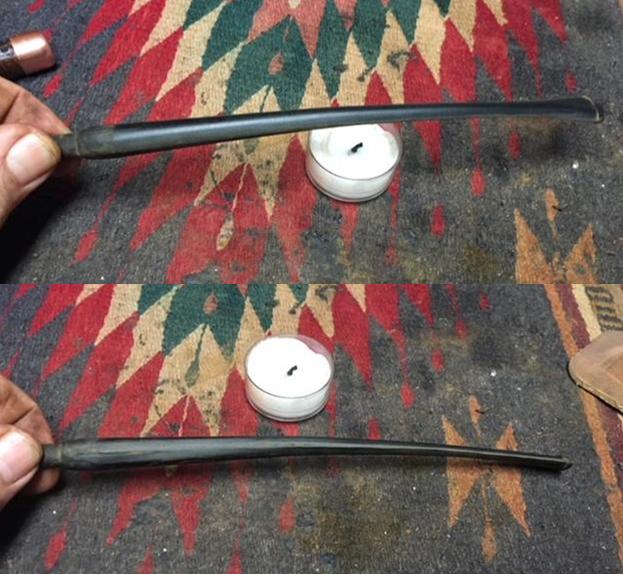
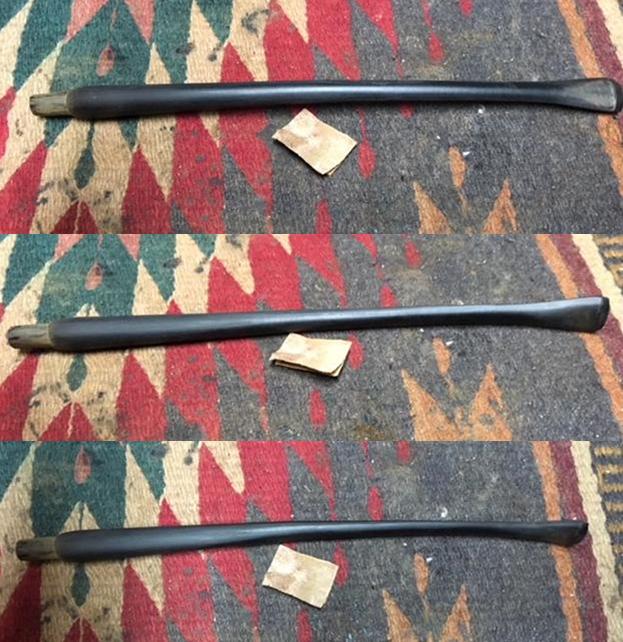
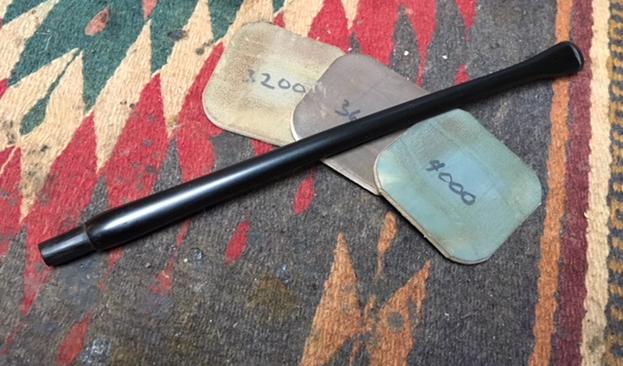
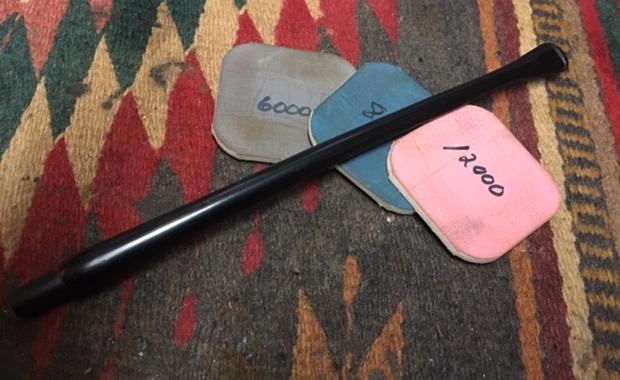
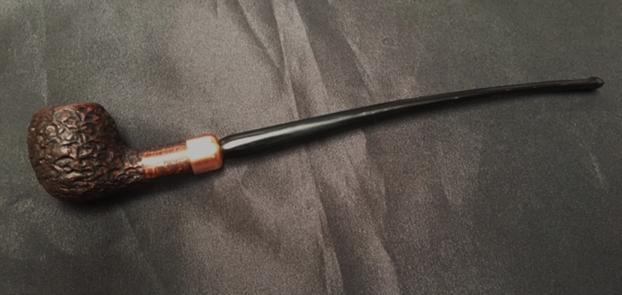
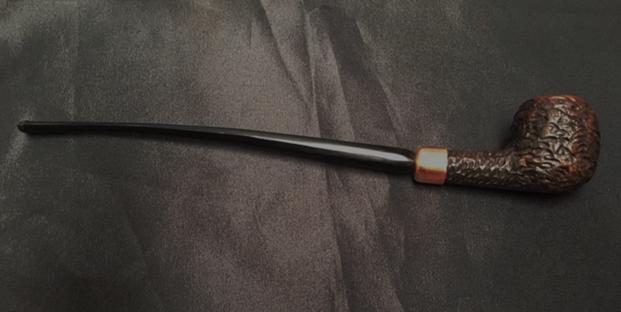
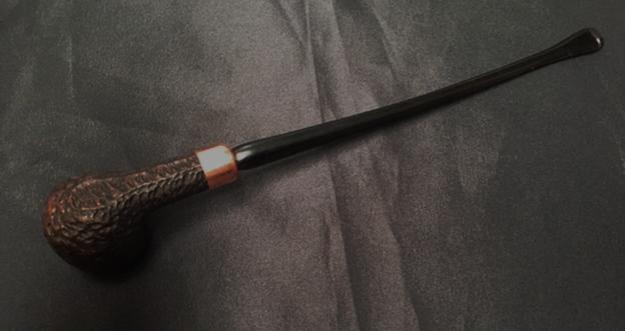
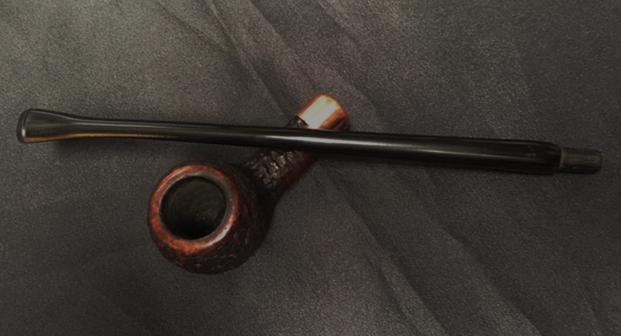
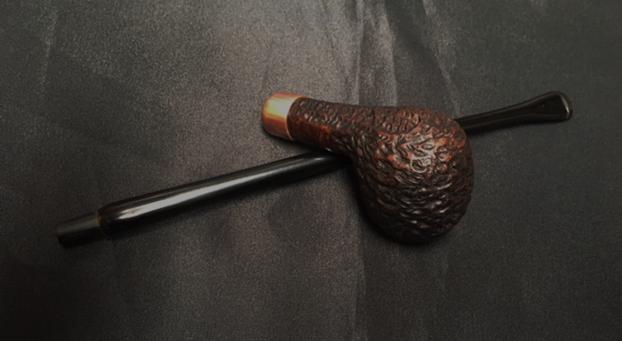
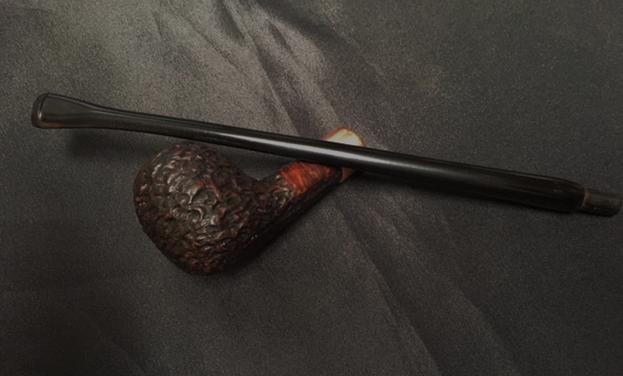
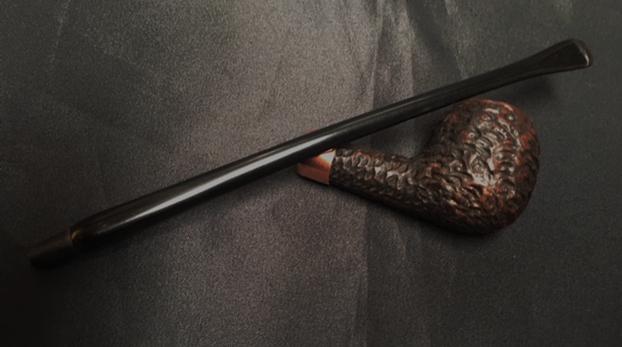
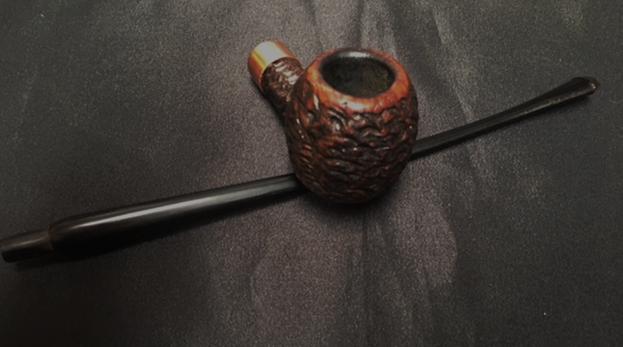
This is the last pipe I am working on from the fellow here in Vancouver that he dropped off. There were 8 pipes in the lot – I have all eight of them now. This one is a Brigham bowl without the stem or other parts. The pipe is an apple shaped bowl that is stamped on the left side of the shank and reads Brigham over Voyageur over 109 Italy in a smooth panel on the rusticated bowl. The shank end had nicks and chips but was in fair condition. There was no stem with the bowl. The stem would have had the lighter weight nylon system tenon since the pipe is one of the Italian made Brighams. It was another one of his pipe finds on a recent pipe hunt in Vancouver. The rusticated finish had almost a scale like rustication pattern with flecks of paint in the finish. The rim top was damaged and was darkened toward the back of the bowl. The finish was very dirty and there was a thick cake in the bowl.  When we had first spoken about this pipe we had talked about replacing the stem with a Brigham stem. I talked with Charles Lemon and he sent me a stem blank and an aluminum system shank for the Brigham. When it arrived I talked with the Vancouver fellow about that and together we came to the conclusion that a churchwarden stem might look good on it. I ordered some from JH Lowe and found that they only have one diameter size stem. I ordered it and when it arrived it was significantly smaller in diameter than the shank. I had an interesting copper ferrule that I thought might work to provide a different look to the pipe and provide a way of using the smaller diameter churchwarden stem. I slipped the ferrule on the shank and put the stem partially in place in the mortise and took the following photos to send to the fellow to see what he thought. He liked it so I moved forward.I slipped the ferrule off the shank and took a photo of the stamping on the left side of the shank. It is very clear and readable. I sanded the outside of the shank to provide a smooth seat for the ferrule. I cleaned out the inside of the shank with a dental spatula to remove the heavy tar buildup on the shank walls. I heated the metal ferrule with a heat gun and pressed it onto the shank against a solid board.I heated the copper ferrule over a heat gun and pressed the ferrule onto the shank end. I repeated the process until it was set on the shank as far as I wanted it to be. To remove the paint flecks on the rusticated finish on the bowl I scrubbed it with a brass bristle wire brush and used a dental pick to remove the flecks. I wiped down the bowl with alcohol on a cotton pad to remove the dust and debris from the finish. I reamed the bowl with a PipNet Piper Reamer using the first two cutting heads to remove the majority of the cake. I cleaned up the remnants on the walls of the bowl with a Savinelli Fitsall Pipe Knife. I used a dowel wrapped with sandpaper to sand down the walls on the bowl. I cleaned out the airway in both the bowl and stem with alcohol (99% isopropyl), pipe cleaners and cotton swabs until they were clean on the inside. I rubbed down the briar with Before & After Restoration Balm. I worked it into the finish with my fingertips and finished working it in with a shoe brush. The balm worked to clean, preserve and enliven the surface of the finish on the small bowl. The briar was coming alive so I took some photos of the pipe at this point. I polished the rim top with micromesh sanding pads – wet sanding with 1500-2400 grit pads and dry sanding with 3200-12000 grit pads. I also polished the smooth portions of the rustication with the micromesh pads at the same time. I wiped the rim top down after each sanding pad with a damp cloth. I gave the bowl multiple coats of Conservator’s Wax and buffed the bowl with a shoe brush. I buffed it with a clean buffing pad and took the photos that follow. I set the bowl aside and worked on the stem. I turned the tenon down on the churchwarden stem with a PIMO tenon turning tool. I took it down to about the diameter it needed to be for the shank. I used a Dremel and sanding drum to round down the edges of the stem above the tenon and also the casting marks on the stem. I wanted to make the stem more like a military mount stem.  I heated the vulcanite with a votive candle until it was flexible and put a slight bend in it that fit the look I was going for with the pipe.  I sanded the Dremel marks out of the tapered end of the stem and shaped the tenon some more with 220 grit sandpaper. I worked on the casting marks on the stem sides and around the button. I worked over the end of the stem to smooth out the area around the slot.I polished the stem with micromesh sanding pads – wet sanding with 1500-2400 grit pads and dry sanding with 3200-12000 grit pads. I wiped the stem down with Obsidian Oil after each sanding pad. After the final pad I gave it a final coat of Obsidian Oil and set the stem aside to dry. I put the stem back on the bowl and buffed the pipe with Blue Diamond polish on the buffing wheel. I used a light touch to keep the polishing compound from filling in the grooves in the rustication. I carefully avoided the stamping on the left side of the shank. I gave both the bowl multiple coats of Conservator’s Wax and the stem multiple coats of carnauba wax and buffed the pipe with a clean buffing pad to raise the shine. I hand buffed it with a microfiber cloth to deepen the shine. The finished pipe is shown in the photos below. This is the last of his pipes that I have to work on. This has been a fun bunch of pipes to work on. Thanks for looking. 
A Pair of Manhattan Pipe Advertisements


Blog by Steve Laug

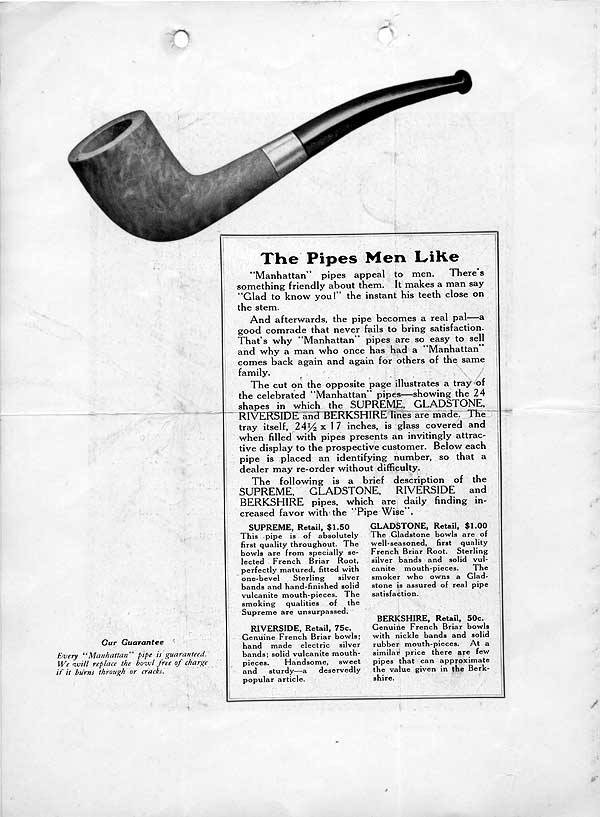
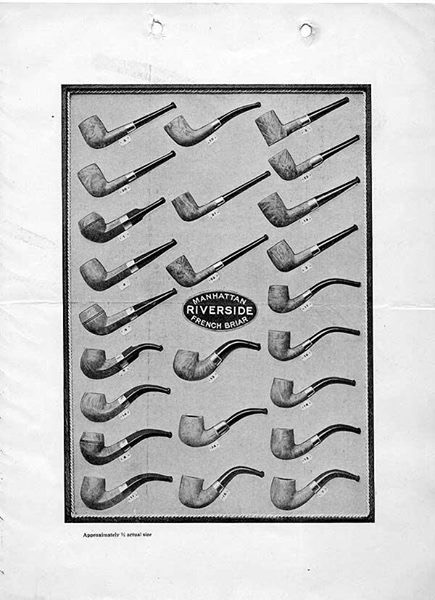
Over the years I have collected Manhattan Pipes. I think I have 4-5 of them in my collection. They are well made and have a lot of charm to them. The shaping and finishing is almost European in its craftsmanship. Some of the pipes have Bakelite stems and some have vulcanite but all are good smoking pipes. When these leaflets were posted on the Pipe Club of Brasil Facebook Group by Victor C. Naddeo who is the Administrator of that group I snagged a copy of them. They provide some of the background history that is hard to find on these pipes so I wanted to preserve it on rebornpipes. The advertisement and the shape chart are great additions to my historical documents section on the blog. I enjoy reading the descriptions that are used in these old pipe advertisement pieces. The descriptions and prices take me back in time and give me a surge of nostalgia. Thank you Victor for posting this and the other booklets that you have been sharing. I am really enjoying the current batch of posts that you are putting on the Pipe Club Brasil Group. I invite others to check out the group on Facebook. Here is the link: https://www.facebook.com/groups/1001391469961131/

KB&B Kaufmann Bros. & Bondy Inc. – The Truth About Briar Pipes Booklet


Blog by Steve Laug

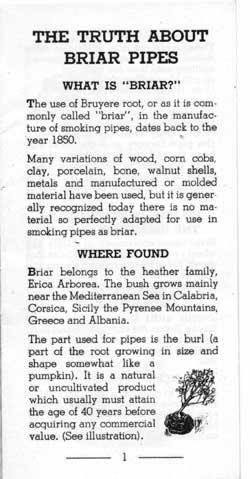
This is another booklet that was posted on the Pipe Club of Brasil Facebook Group by Victor C. Naddeo who is the Administrator of that group. Over the past month he has posted some interesting pieces of pipe memorabilia. He posted this KB&B Truth About Briar Pipes booklet yesterday and I had to share with you all and preserve it on rebornpipes. In this case not only do I like old documents but I also really like old KB&B pipes and have quite a number in my own collection. I enjoy reading the descriptions that are used in these old pipe advertisement pieces. The descriptions and prices take me back in time and give me a surge of nostalgia. Thank you Victor for posting this and the other booklets that you have been sharing. I am really enjoying the current batch of posts that you are putting on the Pipe Club Brasil Group. I invite others to check out the group on Facebook. Here is the link: https://www.facebook.com/groups/1001391469961131/

A Charatan Pipe Booklet


Blog by Steve Laug

This booklet was also posted on the Pipe Club of Brasil Facebook Group by Victor C. Naddeo who is the Administrator of that group. Over the past month he has posted some interesting pieces of pipe memorabilia. He posted this older Charatan booklet yesterday and I had to share with you all and preserve it on rebornpipes. As I have said repeatedly, I enjoy reading the descriptions that are used in these old pipe advertisement pieces. The descriptions and prices take me back in time and give me a surge of nostalgia. Thank you Victor for sending me these photos. I am really enjoying the current batch of posts that you are putting on the Pipe Club Brasil Group. I invite others to check out the group on Facebook. Here is the link: https://www.facebook.com/groups/1001391469961131/

The BBB English Pipe Book


Blog by Steve Laug

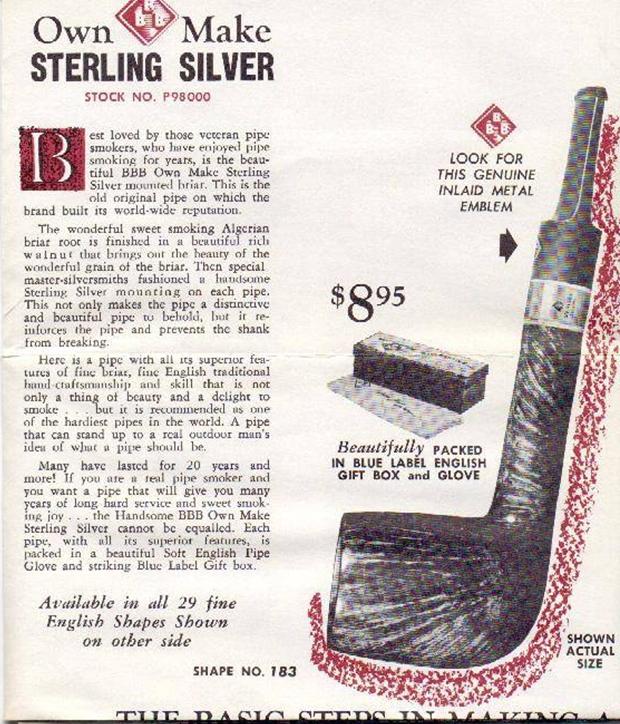
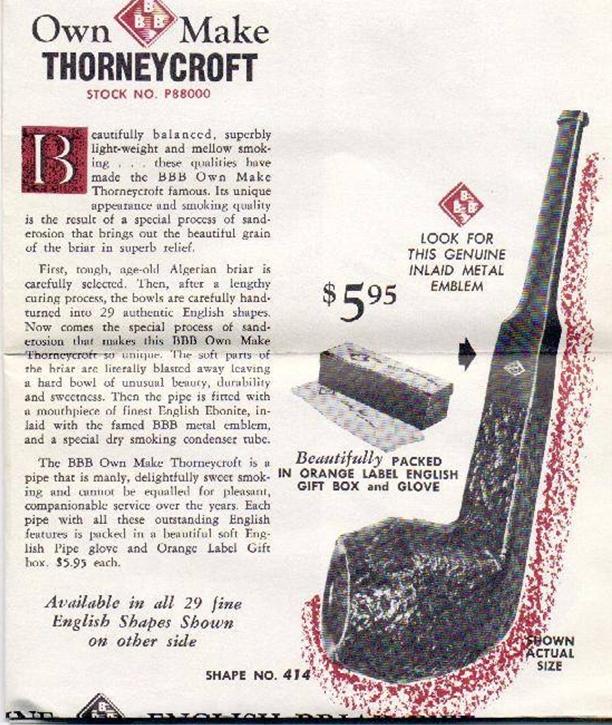
I have followed several of the pipe groups on Facebook for some time now. One of the groups I follow is the Pipe Club of Brasil. Victor C. Naddeo is the Administrator of that group and often posts some interesting pieces of pipe memorabilia. Over the past several days he has been posting some older pipe brochures and catalogues pages that he has found. Last evening we were chatting on Messenger and found that we share a common love for BBB pipes and pipe restoration as well. He sent me some photos of another BBB brochure and I had to share with you all and preserve it on rebornpipes. Once again, I enjoy reading the descriptions that are used in these old pipe advertisement pieces. The descriptions and prices take me back in time and give me a surge of nostalgia. Thank you Victor for sending me these photos. I am really enjoying the current batch of posts that you are putting on the Pipe Club Brasil Group. I invite others to check out the group on Facebook. Here is the link: https://www.facebook.com/groups/1001391469961131/


Recommissioning a Monarch Pat. 1989069 – 1074H Bent Ball


Blog by Dal Stanton

This nice-looking Monarch Bent Ball shape came to me along with 65 pipes in an eBay acquisition which I’ve called the Lot of 66.  The Bowl shape has a very nice feel in the palm with the dimensions an adequate: Length: 6 1/4 inches, Height: 1 1/4 inches, Bowl width: 1 3/4 inches, Bowl depth: 1 3/8 inches, Chamber width: 15/16 inches.  This pipe got Andy’s attention in the special section on my blog site called “For ‘Pipe Dreamers’ Only!” where pipe men and women (and their significant others looking for special gifts!) can commission pipes.  Andy is from the state of Maryland in the US and he and his wife attend church where I used to be the pastor – in a former life many, many years ago!  Andy reached out to me via Facebook Messenger:

I really enjoy your posts with the restored pipes, and I’m wondering what might be available now and what the costs are. I really like the Oom Paul’s (and some of the other Peretti’s), and the Savinelli from May 29. Many years ago, I had a small collection which included a Comoy, and, if I recall correctly, a Peretti and a Savinelli. Sadly, they were lost somewhere along the way. Thanks for reigniting my interest (no pun intended). I looked at your website and found the answers I needed. What can you tell me about the Monarch Pat. 1989069 – 1074H Bent Ball shape on the Pipedreamer’s page? It looks very similar to one I had many years ago, and I might be interested in commissioning it if it’s still available. Thanks!

It’s amazing how pipes become so much a part of memories and associations in our lives!  Andy and I dialogued, and he commissioned the Monarch and will have the first opportunity to acquire the Bent Ball when it is restored and placed in The Pipe Steward Store, benefiting the Daughters of Bulgaria.  Here are the pictures that caught Andy’s attention. The stampings on the pipe are distinctive: on the left side of the shank is stamped ‘Monarch’ in cursive script with swirly tail, over ‘PAT. 1989069’.  The right side of the shank has ‘1074H’ stamped which I assume is a shape number.  The stem has a dot marked on the top which I notice actually appears to be a vent – the black center of the dot is not solid but a hole.  Interesting. A quick trip to Pipedia in search of ‘Monarch’ turns up useful information.

Monarch Pipe Co. was established in Hartford Con, most likely in the late 1930 by Fred Warnke, who obtained a patent on the system pipe on January 22 1935. The company moved to Tulsa Oklahoma at some point in the 1950s, after which Monarch Pipe Co was moved to Bristow, Oklahoma. The Monarch Pipe Co. also makes E.A.Carey Magic Inch and Duncan Hill Aerosphere Pipes.

So, the question in my mind was, are pipes still being produced by the Monarch Pipe Co. in Bristow, Oklahoma?  After searching the internet, I found an interesting newspaper article from the The Oklahoman, published January 15, 1995, entitled, ‘Bristow Manufacturer Lives on Pipe Dreams Pipe Fitting As Fragile as a Smoke Ring, The Art Still Burns in Bristow’ (LINK).   Excerpts from the article are enlightening and interesting:

Monarch has manufactured pipes in Bristow for 32 years. Once it employed 12 workers and produced 5,000 pipes a month; now the workforce is four, including Austin (a manager mentioned earlier).

Monarch was founded in 1929 in Connecticut. In 1962, a Tulsa businessman who ordered his pipes from Monarch discovered his source might close down, so he bought it. He and his partners moved it to Bristow…. Some 15 years ago, Carey bought the little enterprise.

This excerpt mentions Monarch’s parent company was the E.A. Carey of Ohio, company most well known for the ‘Carey Magic Inch’ pipes which boasts of a system that produces a drier, cooler smoke.  Still wondering if Monarch currently was producing pipes, I search again, “Monarch Pipe Co.” and found an old business link from Buzzfile.com that gave information and a ,mailing address – no email or website.  I plugged the Bristow, OK, mailing address in Google Maps and found this picture of the Monarch Pipe Co.  The date of the photograph from Google is July 2012 – now six years ago. Still desiring to know if Monarch pipes were being manufactured, I decided to try one more angle.  The 1995 Oklahoman Newspaper article above said that E. A. Carey bought out the small Monarch enterprise 15 years earlier, in 1980.  I searched for the Magic Inch E. A. Carey of Ohio name and found a website: http://www.eacarey.com.  As I’ve successfully done many times in the past, I went to the sites ‘Contact Us’ page and used the email provided to see if anyone there knew anything about the Monarch Pipe Company?  I received a reply from Danielle: 

Thank you for the email.  We are sorry, but the Monarch pipe company closed a few years ago.  The woman who ran it has retired.  We do still sell magic inch pipes, they can all be found on our website: www.eacarey.com   Any pipes she made for us, we no longer have.

In reply, I went out on a limb asking if they had a Monarch Shapes Chart…. We’ll see what happens! (Addendum: Danielle responded in a few days to say that they had no information on Monarch pipes.  Oh well!)

The closing lines in the 1995 Oklahoman article proved to be prophetic.  The former manager of Monarch Pipe Co., Francis Austin was quoted:

Still, he said, Carey “realizes the stability of the smoking industry” is as fragile as a smoke ring, and is diversifying into such areas as children’s safety toys and goose down products.

Someday, concedes Austin, who’s 60, his artful pipes will be collectors’ items.

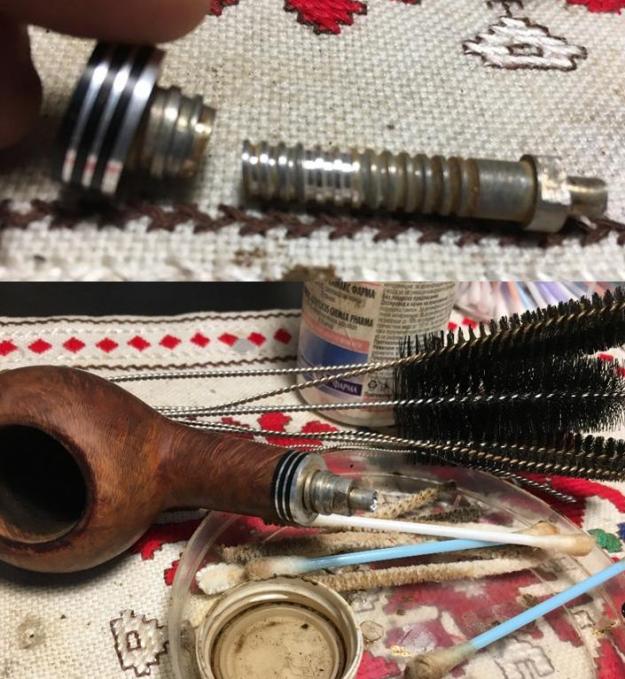
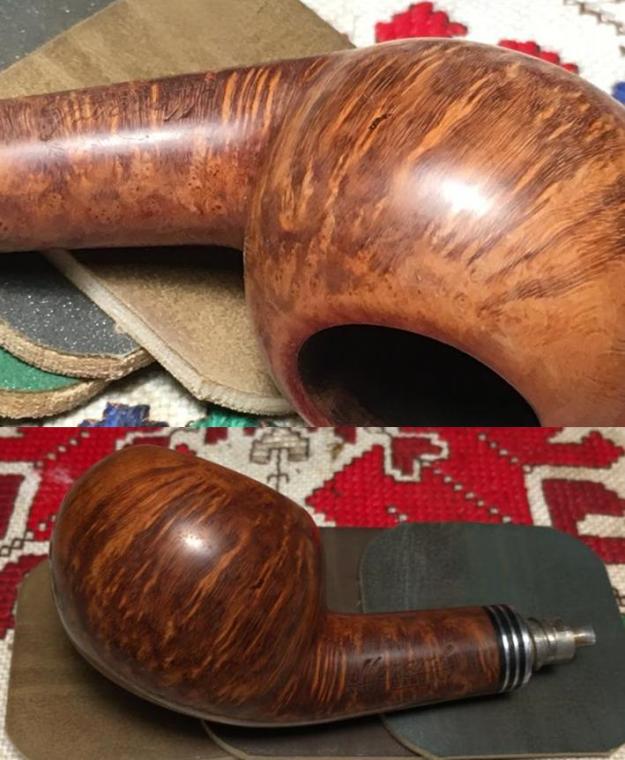
This Monarch Bent Ball is now a collectible!  The other interesting aspect of the Monarch nomenclature is the patent number given: ‘PAT. 1989069’ which is for the system evident in the fittings of the Monarch ‘System’ pipe.  I took the patent number to the United States Patent and Trademark Office site searched the patent number.  I found that the patent was approved January 22, 1935 and a diagram that is also referenced by Pipedia, showing a cutout of a pipe with the system that remains in the Monarch on my worktable. I was also intrigued by reading the full patent document submitted by Fred L. Warnke in 1931.  I clipped the header from that document and placed it below.  The first several paragraphs describes how the system would provide the holy grail of pipe technology – a cooler and dryer smoke! One last interesting item to note which I referenced earlier.  The dot on the top of the stem is a hole or a vent air regulator which is labeled #25 in the Fig. 1 1931 patent diagram.  I found this caption that I clipped from the patent document interesting as it describes the purpose of the vent and how it contributes to a ‘dryer and cooler’ smoking experience as it regulates the introduction of fresh air to the to the smoke.  I really wish I could try out some of the pipes I restore to experience these inventions in practice!As I take a close look at the Monarch Bent Ball, the chamber has light cake buildup with some lava flow on the rim, but light.  The stummel looks to be in good shape. I see no fills and only the normal grime that builds on the surface.  I’m not quite sure how the internals of this system pipe work, I’ll have to experiment to see how to clean it.  The stem has mild oxidation and some tooth chatter.  So, with a better understanding of the provenance of this Monarch Bent Ball and the technology of the patent, I begin the restoration by cleaning the internal airway and air chamber of the stem with pipe cleaners and cotton buds then I add the Monarch stem to Before & After Deoxidizer along with five other pipes’ stems to address the oxidation.After some hours, I fish the stem out of the Deoxidizer and wipe off the Deoxidizer and oxidation with a cotton pad and light paraffin oil (mineral oil).  I also clear the airway of Deoxidizer using a pipe cleaner dipped in isopropyl 95%.  The Before & After Deoxidizer did a good job – the stem’s oxidation is removed.Turning to the stummel, I begin to clear the light cake using the Pipnet Reaming Kit.  I take a picture to mark the start and spread paper towel to minimize cleaning. I jump over the smallest blade head with this large chamber and use the next blade to the largest blade head.  I then use the Savinelli Fitsall Pipe Tool to fine tune the reaming by scraping the chamber walls where the blade heads missed.  To get down to fresher briar, I then sand the chamber by wrapping a piece of 240 grade paper around a Sharpie Pen.  Finally, to clean the chamber removing the carbon dust, I wet a cotton pad and wipe the chamber.  Looking at the chamber wall – I see no problems.  The pictures chronicle the progress. Turning to the external surface, I use undiluted Murphy’s Oil Soap to scrub with cotton pads and I also utilize a brass brush on the rim.  After cleaning I rinse the bowl under tap water.  The rim came out well with most of the lava removed.
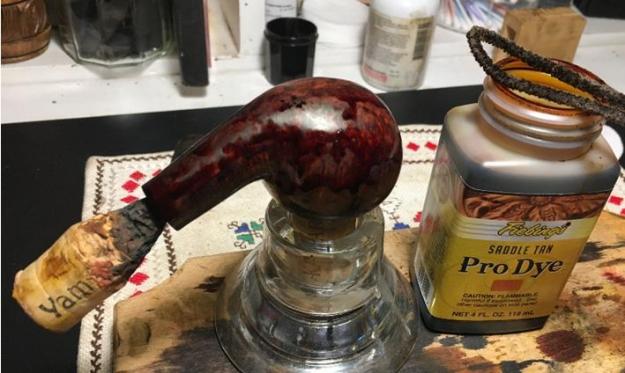
I decide to explore the internals of the Monarch’s mortise.  I first clean the nickel mortise airway tube with pipe cleaners and shank brushes.  The tube was easily cleaned.  After looking at the patent diagram again, mainly at figure five which shows the mortise fitting, I decide to see if it will come out.  The base appears to be threaded.  Carefully, I clamp down on the flat sided flange shown as #26, and gently rotate the stummel holding the mortise fitting stationary.  It starts a bit sticky but then gradually loosens up until it is removed.  What I’m looking at looks close to the 1935 patent diagram.  I find that #15 is loose and comes off of the main threaded insert.  I read in the patent document that this hardware was designed to enable an exact adjustment to position the stem with the stummel.  We’ll see after I clean everything and reassemble how this works.  I wanted to see if there was a crud trap at the end of the tubing near the draft hole.  I am pleased to see that there wasn’t after plunging a few cotton buds down through the opened mortise.  After cleaning and reassembling the mortise insert, it did take a bit to figure out how to work the adjustment mechanism. It was a combination of rotating the threaded insert (#14) so that the flange (#15) was loosened and could rotate a degree or so and tightened to change the alignment of the stem that would then be screwed on….  After a few tightenings and loosenings, I was able to align the stem as it should be!  The new steward will have to figure this out!  I take a picture to show the alignment. To address the stem’s tooth chatter, I first use the heating method to expand the vulcanite, thus reducing the severity of the indentations.  I use a Bic lighter and paint both the upper and lower bit.  I follow that by using a flat needle file to re-shape the button lips, both upper and lower, then I sand using 240 grit paper to erase the file scratches and to sand out the tooth chatter.  Following the 240 grit paper, I use 600 grit paper to erase the scratches of the 240.  Then, over the entire stem, I sand/buff using 0000 grade steel wool.  The tooth chatter is removed, and the button’s new lines look good. The stem is ready for the micromesh process.  Using micromesh pads 1500 to 2400, I wet sand the stem.  Following this, I dry sand using pads 3200 to 4000 and 6000 to 12000.  After each set of 3 pads, I apply a coat of Obsidian Oil to rejuvenate the vulcanite.  The stem looks good – the glossy pop is what we aim for! The stem is waiting in the wings and I now look to the stummel.  To begin, I decide to do a very light topping using 600 grade paper on the chopping board to refresh the rim lines and to remove the remaining lava traces. Inverting the stummel onto the board I only go a few rotations and I’m satisfied with the results. To remove the minor cuts and nicks on the stummel from normal wear, I use micromesh pads 1500 to 2400 and wet sand the stummel.  Following this, I dry sand using pads 3200 to 4000 then 6000 to 12000.  Well, at the beginning of the second set of micromesh pads while sanding, I spied a blemish in the briar that I hadn’t seen before (second picture below).  It was a bit too large for me to be happy with the finished restoration, so I take a little detour.  I apply a drop of clear CA glue on the spot.  I spray it with an accelerator to instantly cure the patch.  I keep the drop as small as possible so not to impact the surrounding briar.  Surgically, I file and sand the patch down with a flat needle file, then use 240 and 600 grade papers and then play catchup with the spot with the first 3 micromesh pads.  Finally, I then complete the micromesh process with the final six pads.  The grain is looking good on this Monarch Bent Ball! At this point I decide to add a stain to darken the stummel, but to give it a nudge in a reddish direction. I decide to use Fiebing’s Saddle Tan Pro Dye to do this.  For the staining process, I remove the Monarch System insert in the mortise.  I then wipe the stummel with a cotton pad and alcohol to clean the surface.  Using a hot air gun, I warm the bowl causing the briar to expand.  This helps the grain be more receptive to the dye.  After the bowl is heated, I use a folded pipe cleaner to apply the Saddle Tan dye to the briar.  After I coat the stummel thoroughly, I flame the stain with a lit candle.  This causes the alcohol in the dye to combust and to set the pigment in the briar.  After a few minutes, I repeat the process of applying dye and flaming.  I set the stummel aside to rest through the night.  It’s a good idea, and I turn out the lights. The next morning has arrived and I’m anxious to ‘unwrap’ the flamed Saddle Tan crust encasing the stummel.  I mount a felt buffing wheel on the Dremel and set the speed at the slowest and I use Tripoli compound to remove the layer.  The felt wheel, coupled with the Tripoli, a coarser compound, removes the leftover stain as well as finely buffs the briar surface.  I work the Tripoli compound methodically ‘sweeping’ the briar surface revealing the grain beneath.  With my wife’s help, I include a picture of the process.  At the end of the application of Tripoli compound, I give the stummel a light wipe with a cotton cloth wetted with isopropyl 95% to blend the new stain. Next, I rejoin stem and stummel and I mount a cotton cloth buffing wheel on the Dremel, turn up the speed to about 40% and apply Blue Diamond compound, a less abrasive compound.  Completing this, I use a felt cloth and wipe the pipe removing the compound dust in preparation for applying wax.  I mount another cotton cloth wheel to the Dremel, maintain the 40% speed and apply a few applications of carnauba wax to both stem and stummel.  I complete the waxing with a rigorous hand buffing using a microfiber cloth.

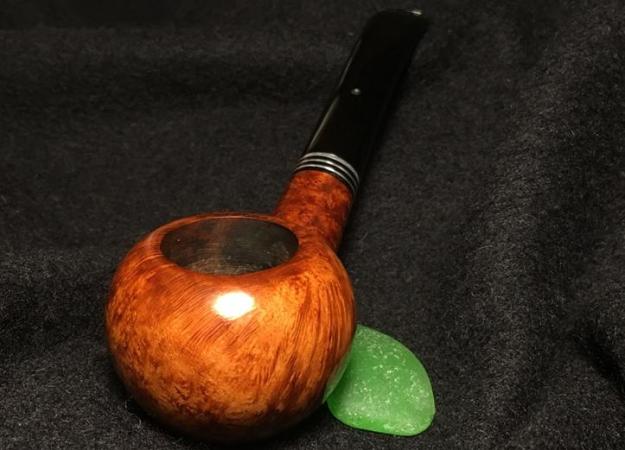
My goodness!  The grain on this Monarch Bent Ball just stands up and shouts!  As one traces the patterns around the Ball’s bowl, there’s flame grain, some bird’s eye and a rippled stream of grain that reminds me tiger fur – a landscape of grain pleasing to the eye.  The Monarch Ball shape fits naturally in the palm.  Andy from Maryland commissioned this Monarch Bent Ball and he will have first dibs on it when it’s placed in The Pipe Steward Store.  This pipe benefits the Daughters of Bulgaria – helping women and girls who have been trafficked and sexually exploited.  Thanks for joining me!

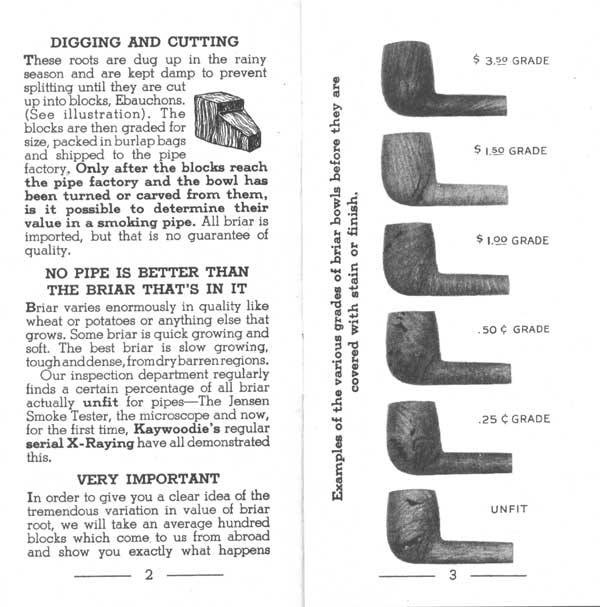
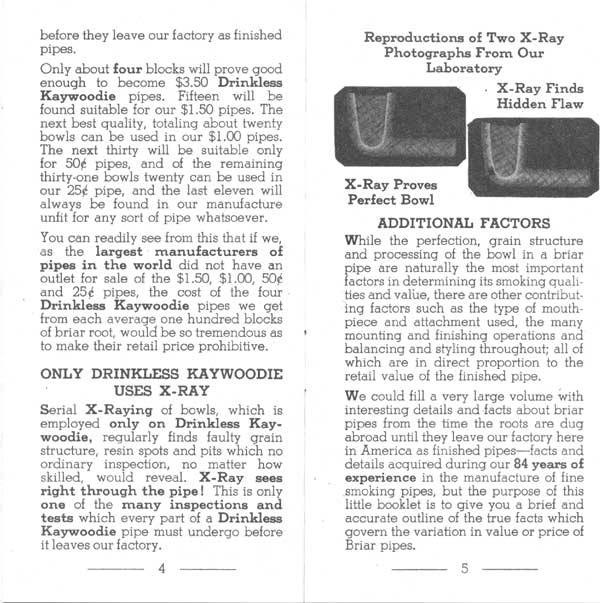
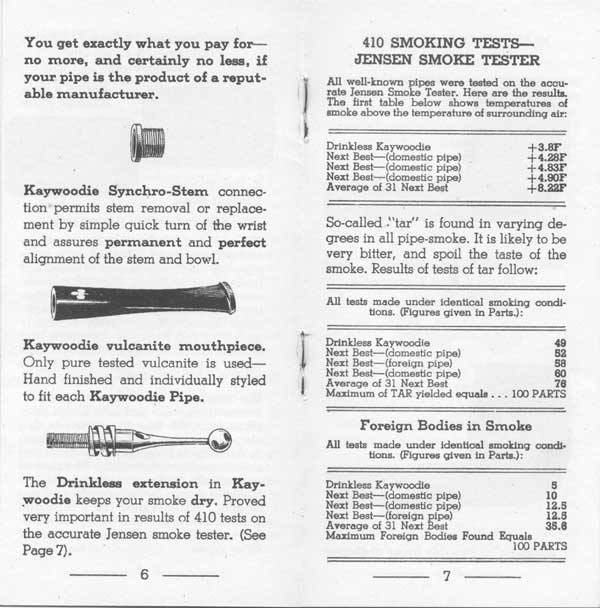
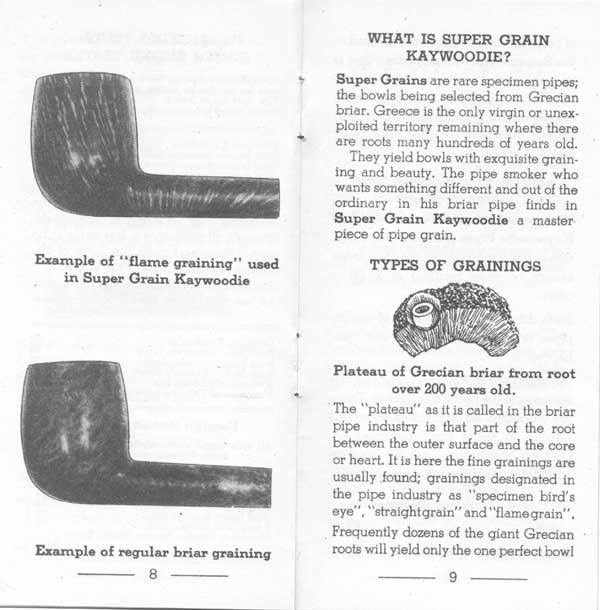
Kaywoodie Pipe Almanac


Blog by Steve Laug

I have followed several of the pipe groups on Facebook for some time now. One of the groups I follow is the Pipe Club of Brasil. Victor C. Naddeo is the Administrator of that group and often posts some interesting pieces of pipe memorabilia. Over the past several days he has been posting some older pipe brochures and catalogues pages that he has found. Yesterday he posted older Kaywoodie Booklet entitled Kaywoodie Pipe Almanac. When I saw it I knew I wanted to preserve it on rebornpipes. I enjoy reading the descriptions that are used in these old pipe advertisement pieces. The descriptions and prices take me back in time and give me a surge of nostalgia. I saved the photos that he posted so I could share them here. Thank you Victor for posting these on the Pipe Club Brasil Group. If you would like to check out the group on Facebook here is the link: https://www.facebook.com/groups/1001391469961131/

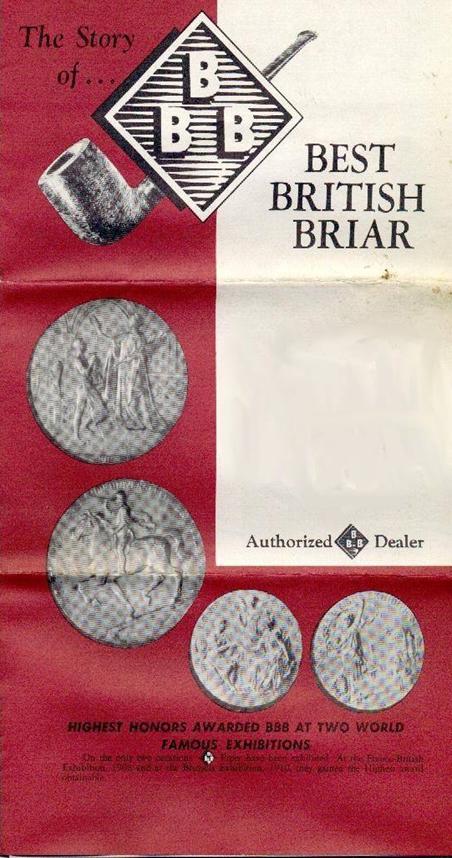
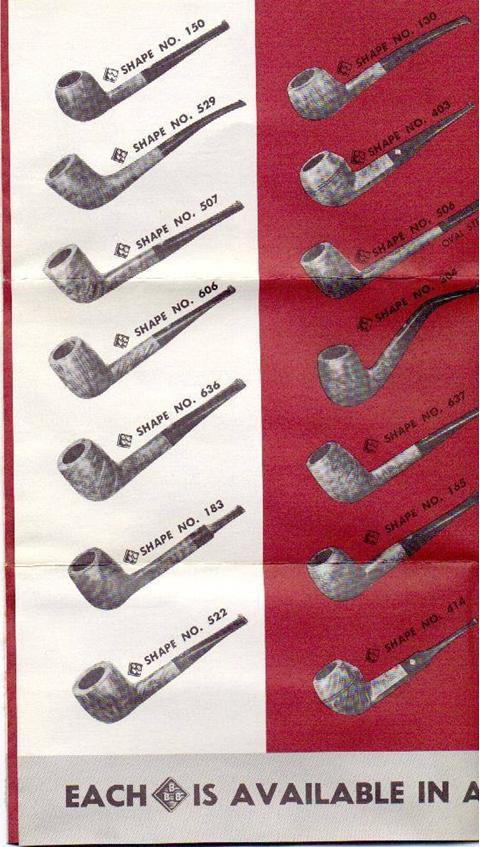
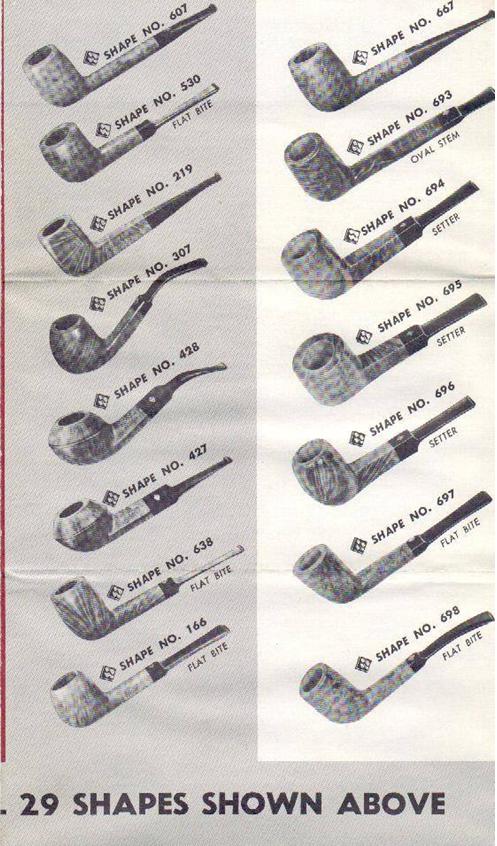
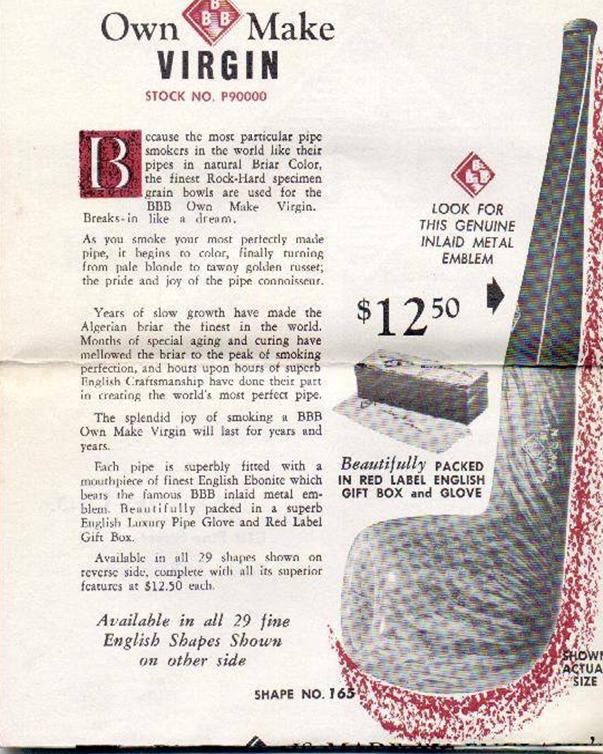
BBB BROCHURE (Best British Briar) dated about 1960.


Blog by Steve Laug

I have followed several of the pipe groups on Facebook for some time now. One of the groups I follow is the Pipe Club of Brasil. Victor C. Naddeo is the Administrator of that group and often posts some interesting pieces of pipe memorabilia. Over the past several days he has been posting some older pipe brochures and catalogues pages that he has found. Yesterday he posted an older BBB Brochure from the 1960s. When I saw it I knew I wanted to preserve it on rebornpipes. I am a long time collector and smoker of BBB pipes and enjoy the classic shapes and great finishes on these pipes. I saved the photos that he posted so I could share them here. Thank you Victor for posting these on the Pipe Club Brasil Group. If you would like to check out the group on Facebook here is the link: https://www.facebook.com/groups/1001391469961131/