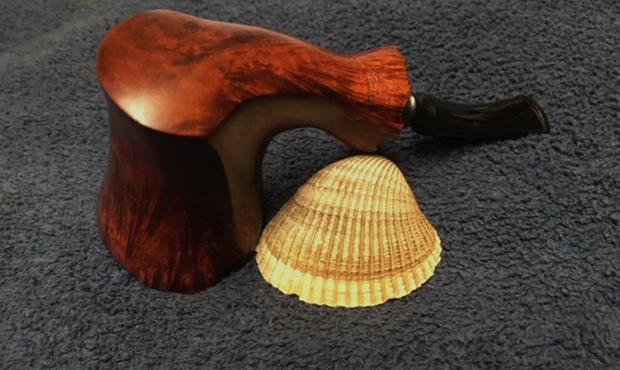
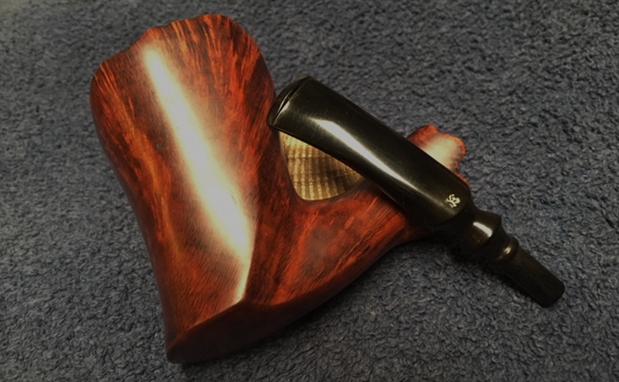
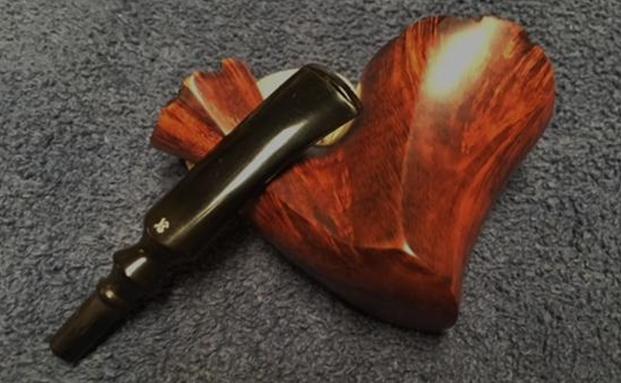
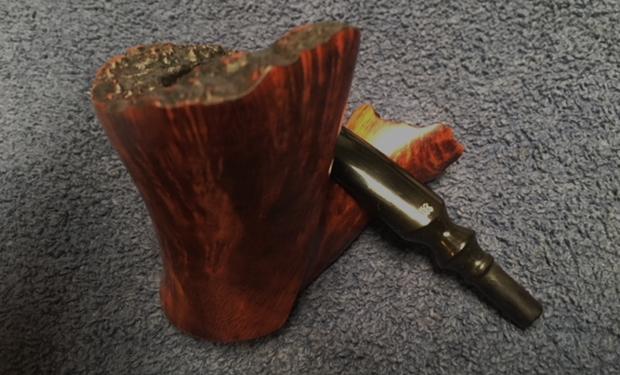
Monthly Archives: August 2018

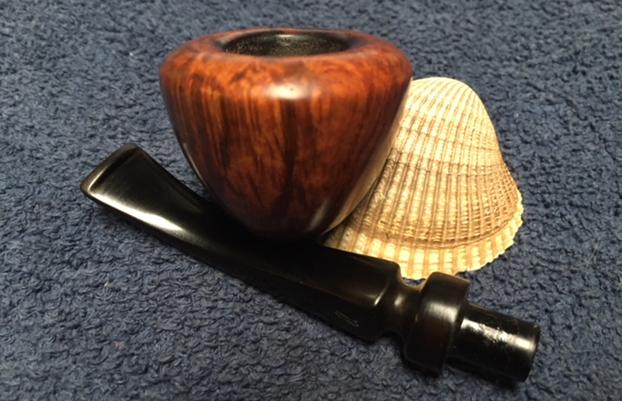
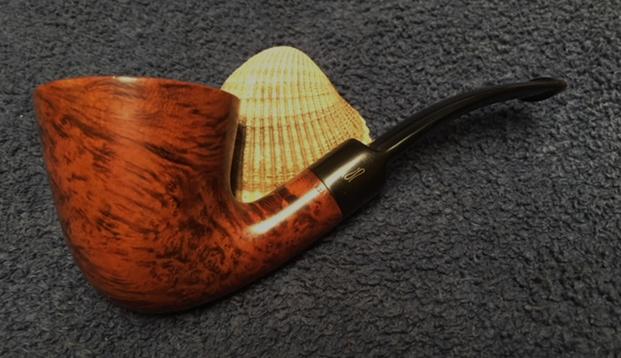
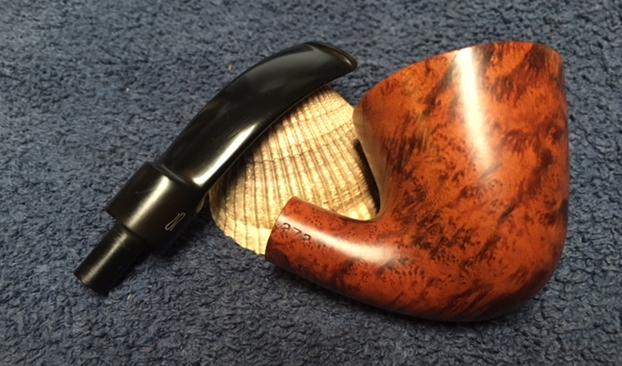
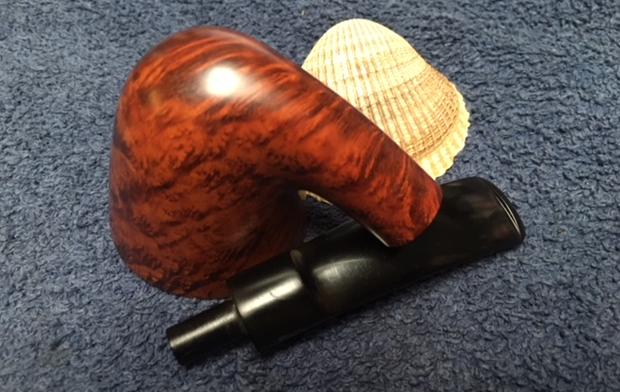
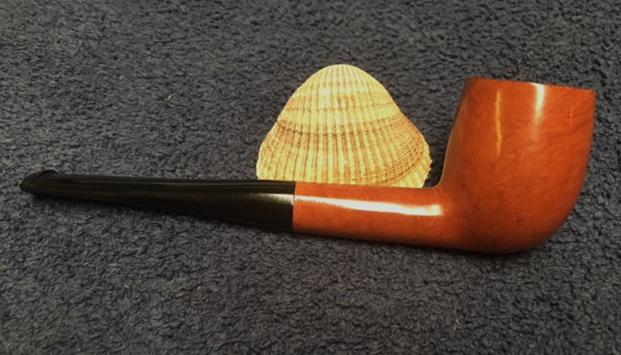
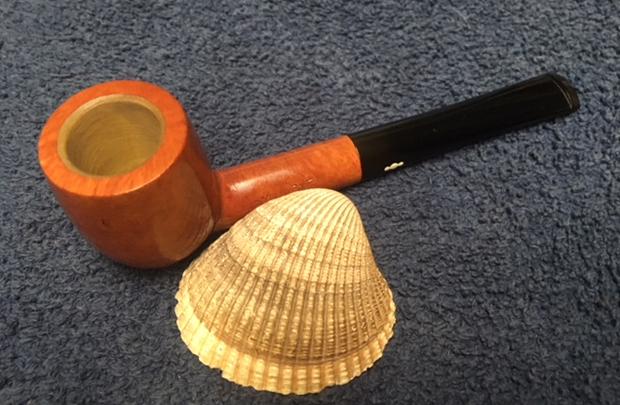
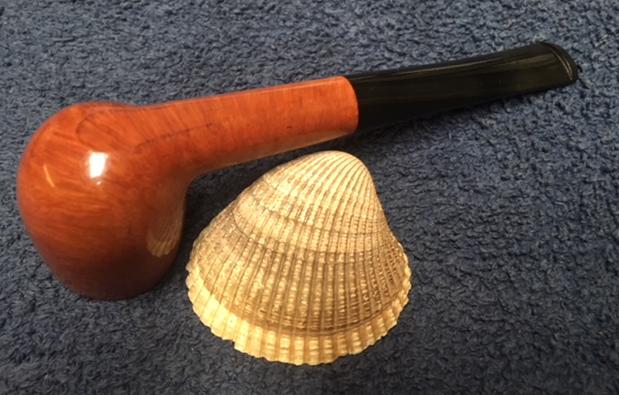
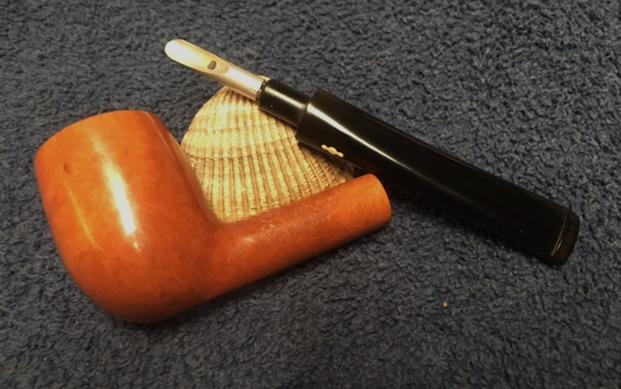
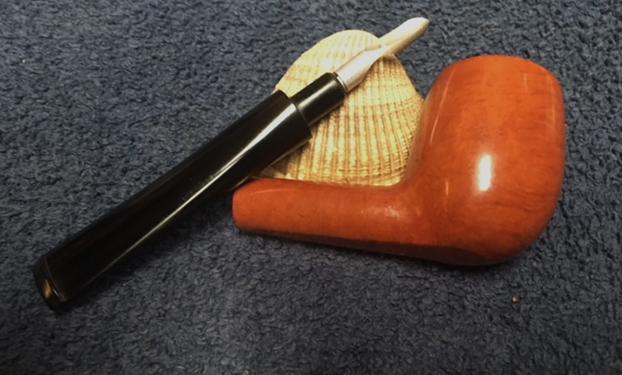
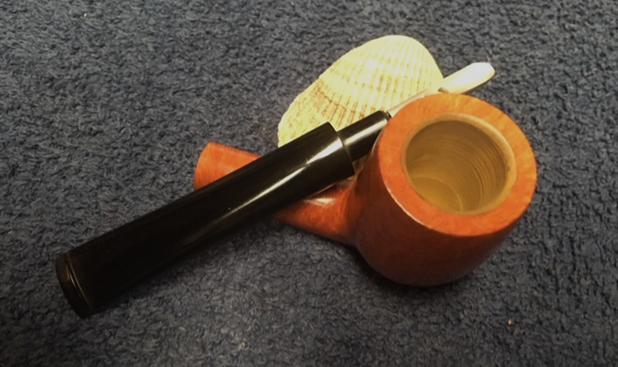
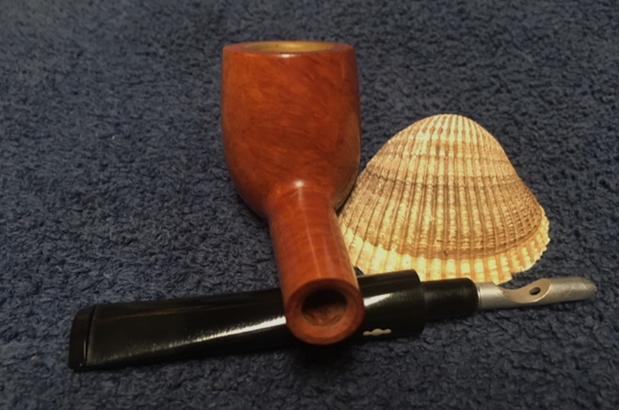
Rejuvenating a Svendborg Danish Hand Made Dublin 06 Barkentine


Blog by Steve Laug

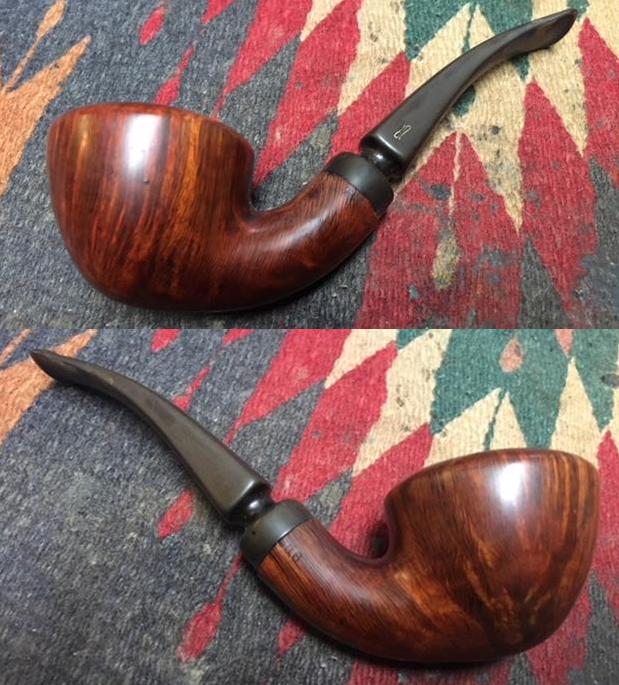
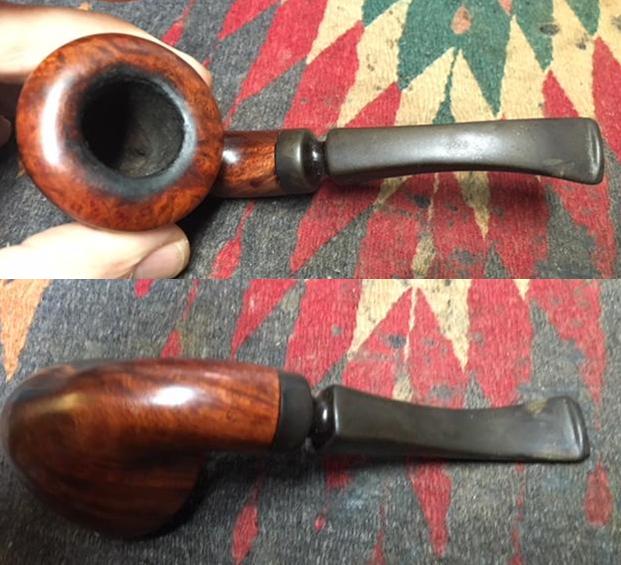
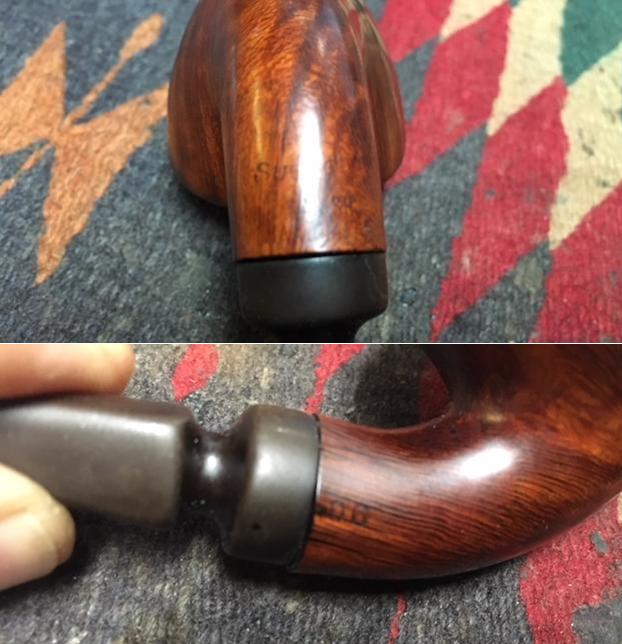
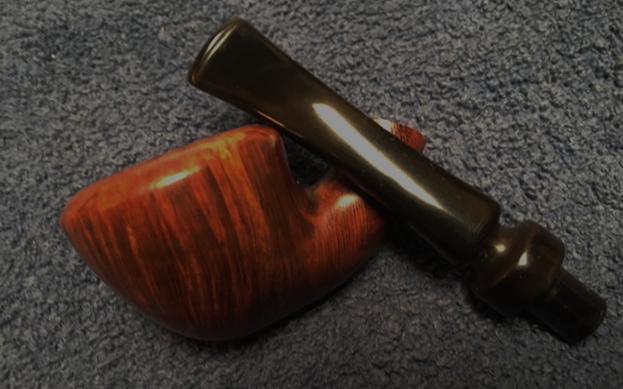
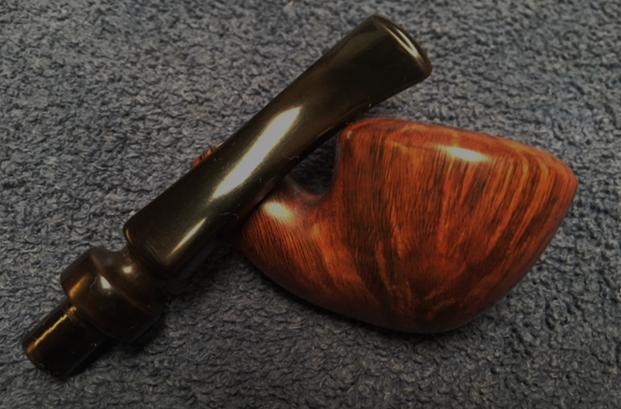
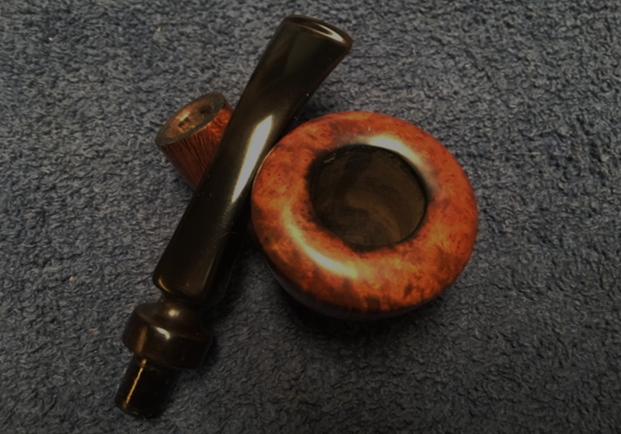
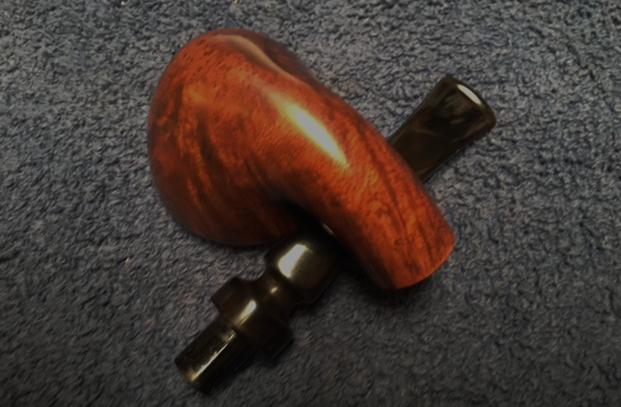
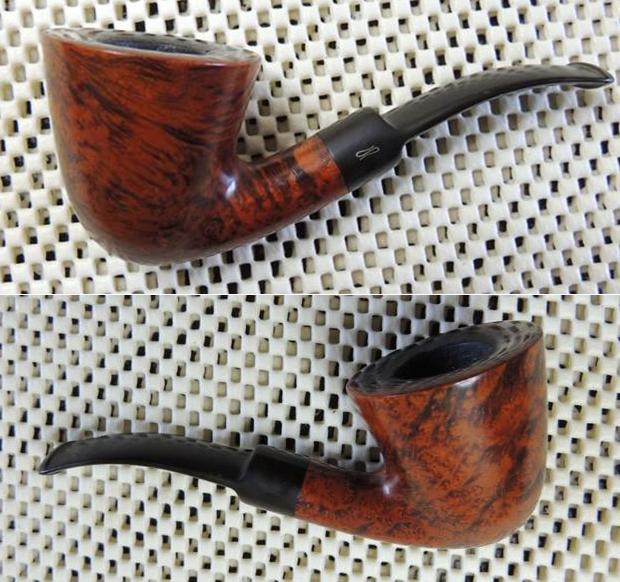
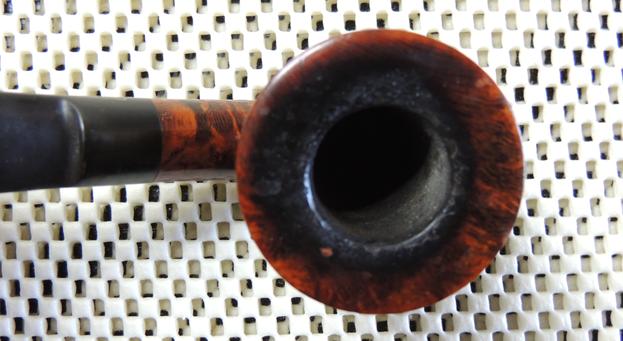
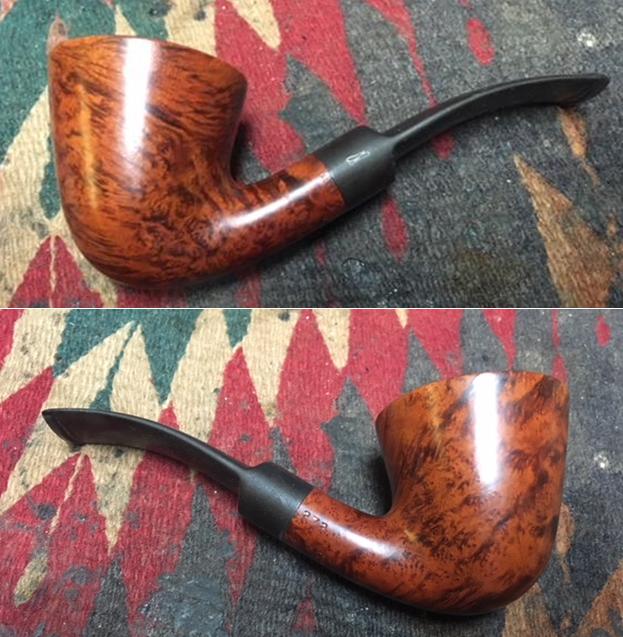
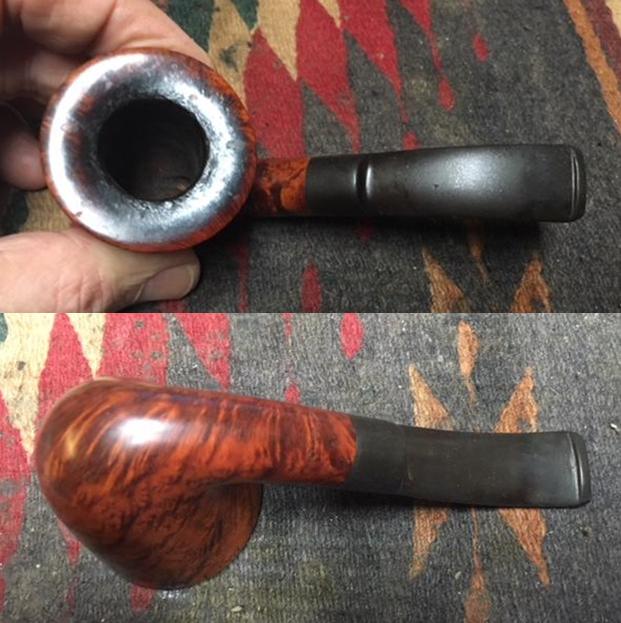
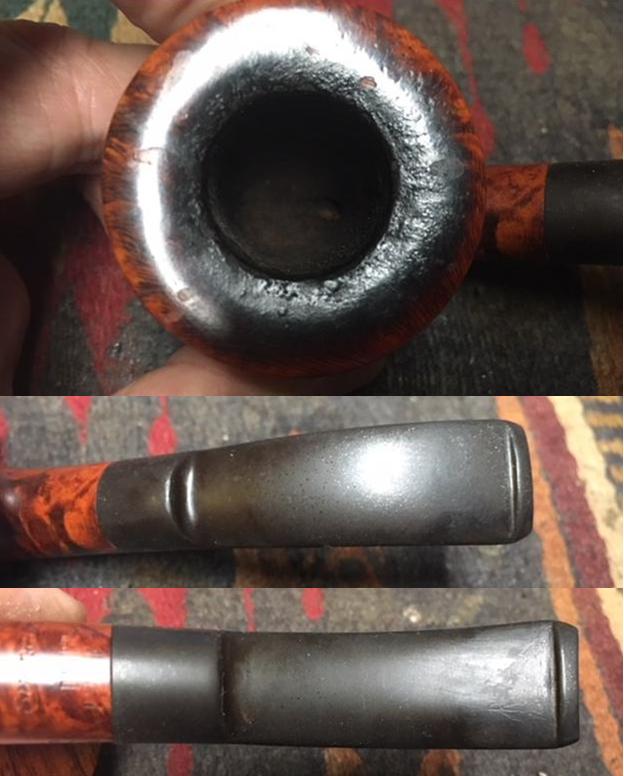
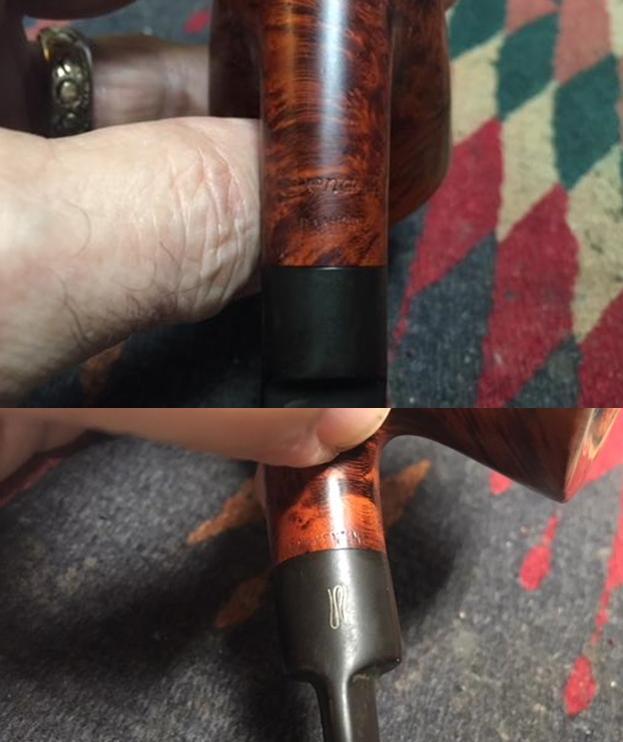
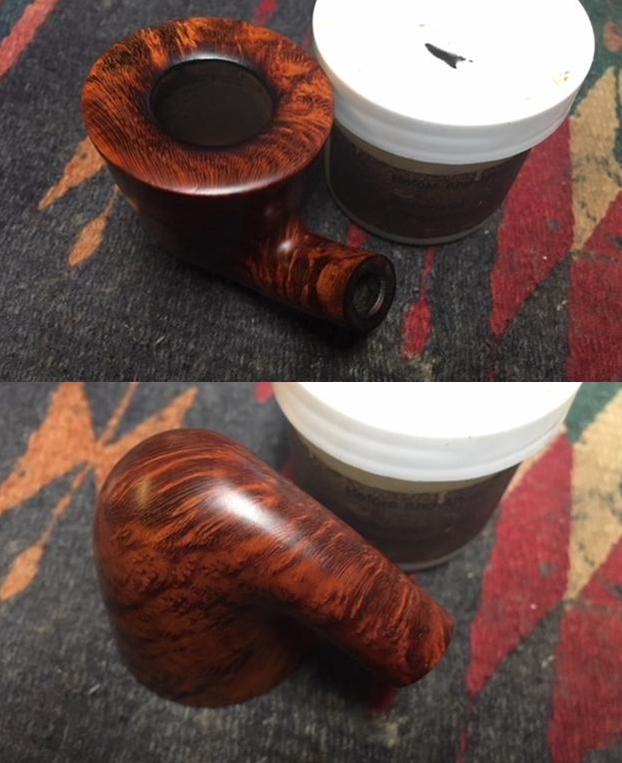
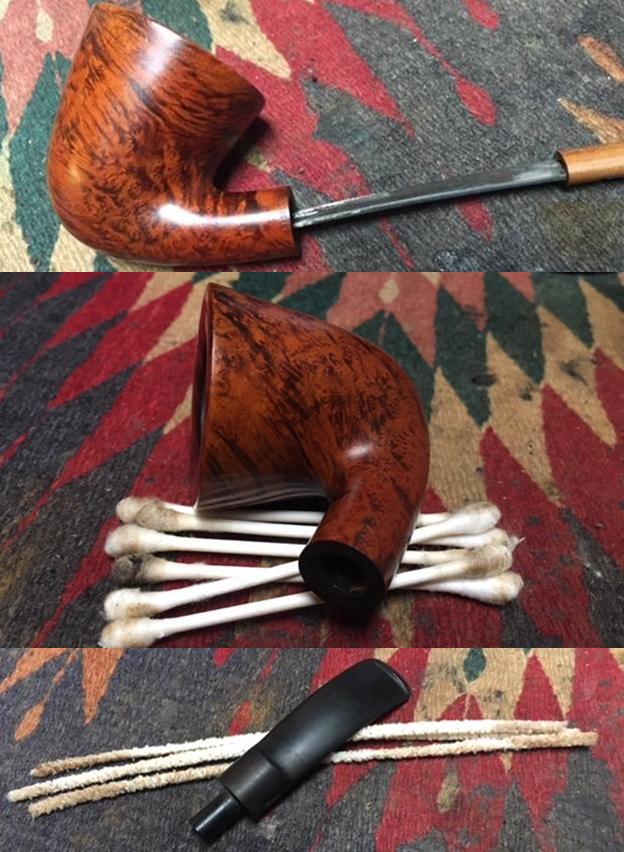
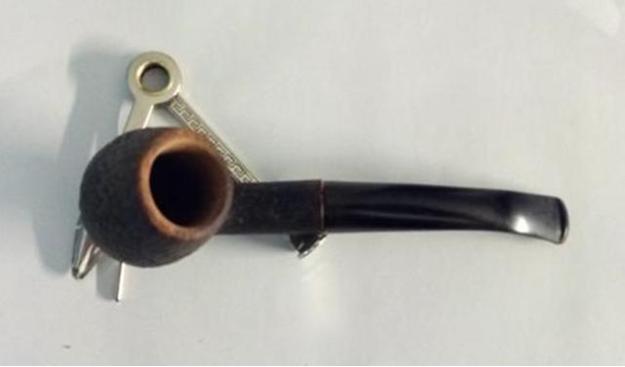
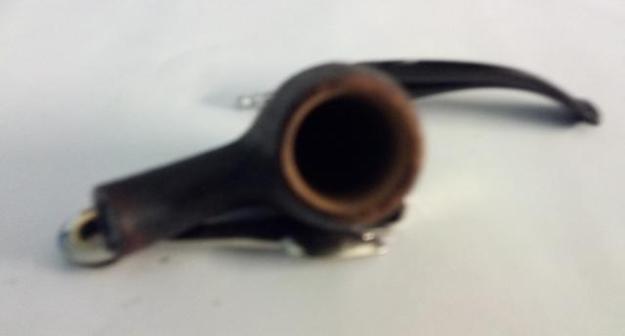
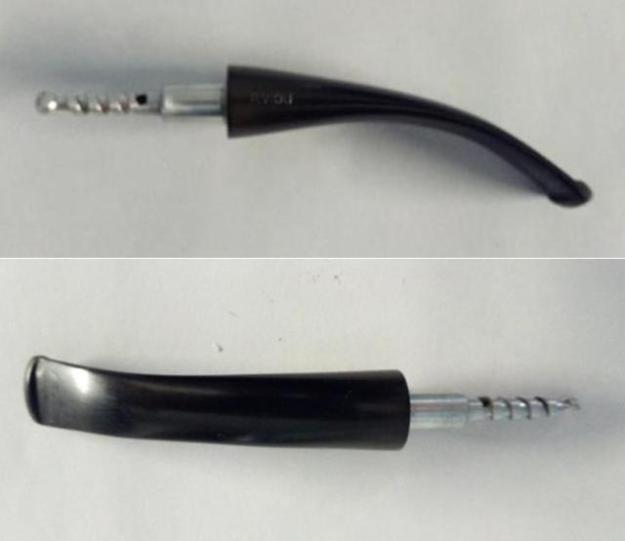
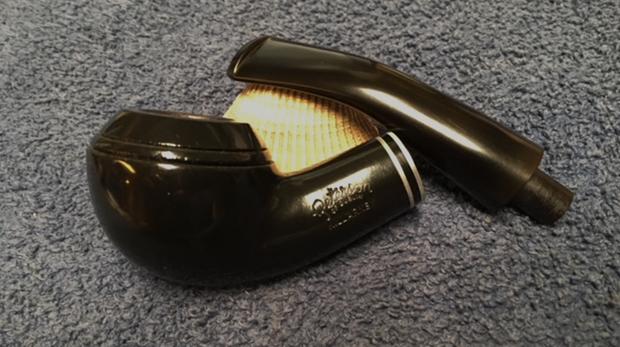
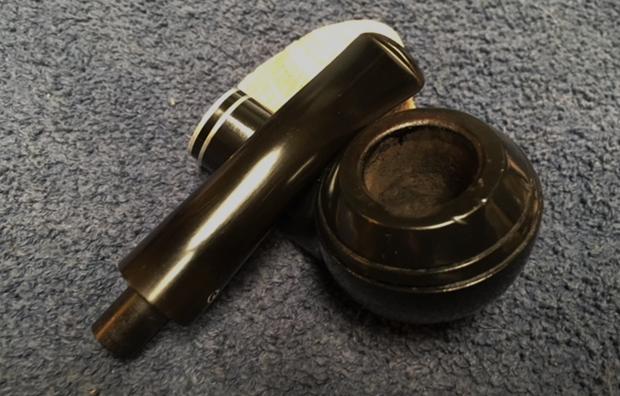
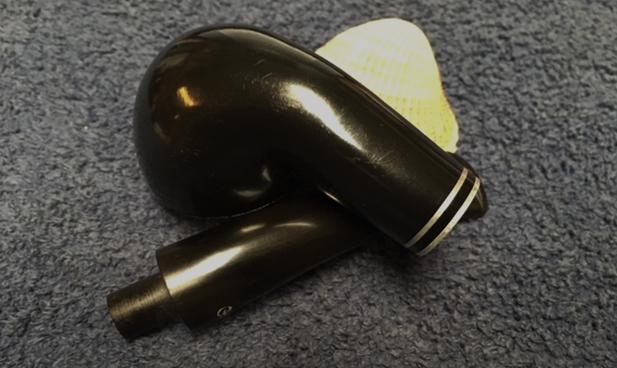
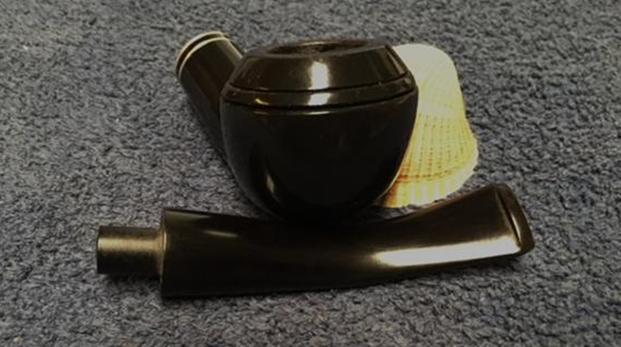
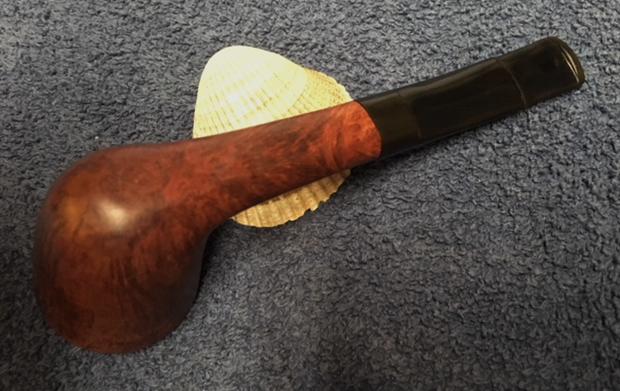
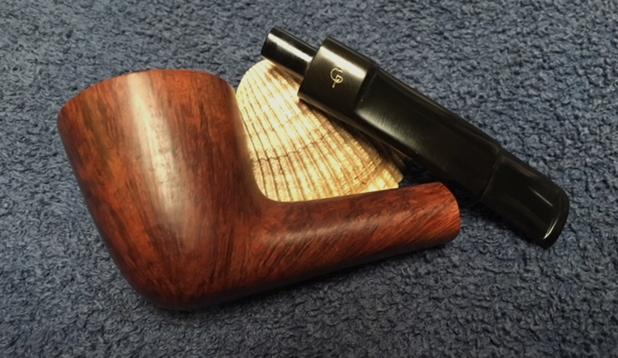
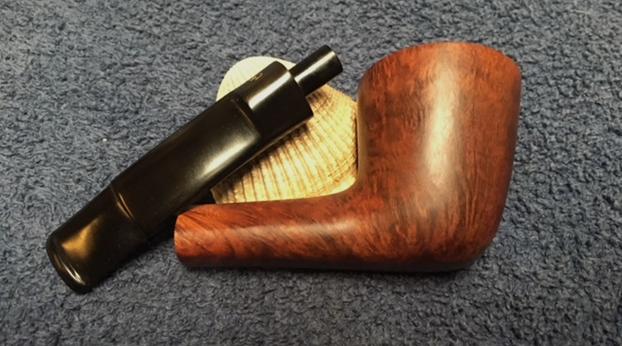
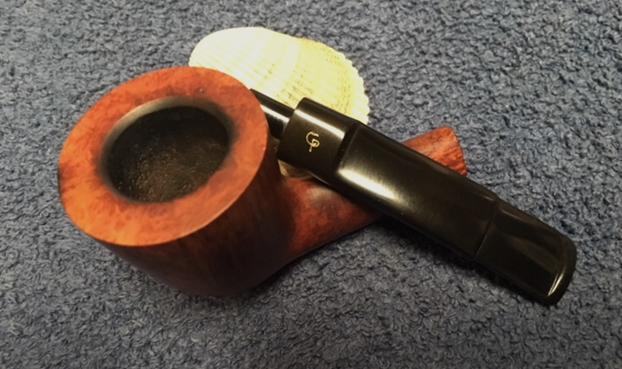
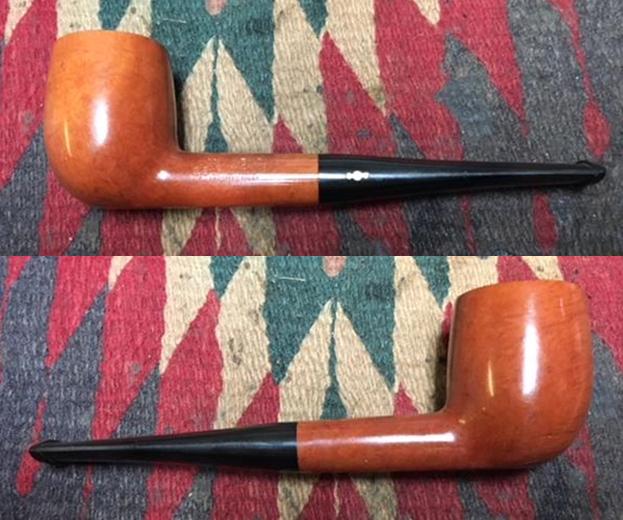
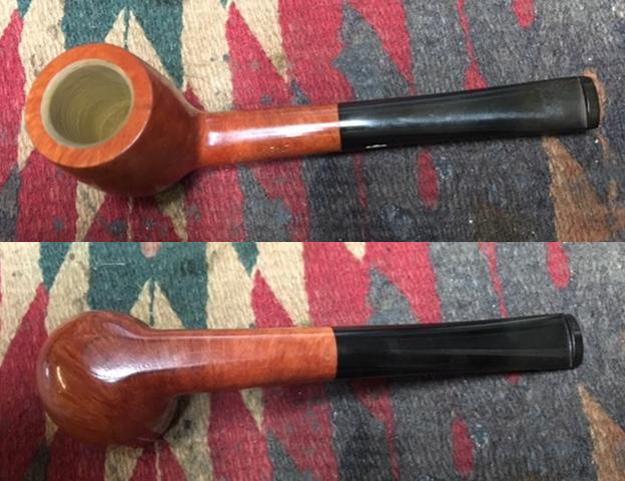
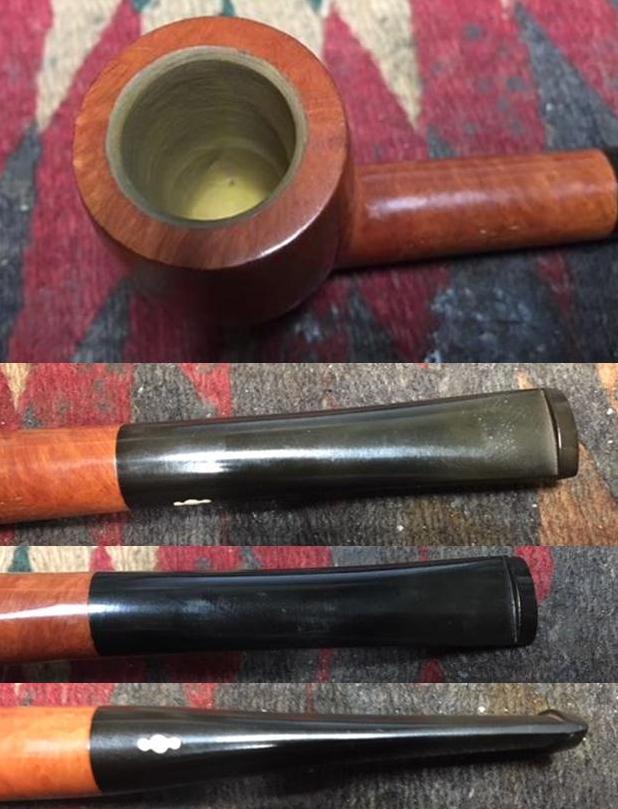
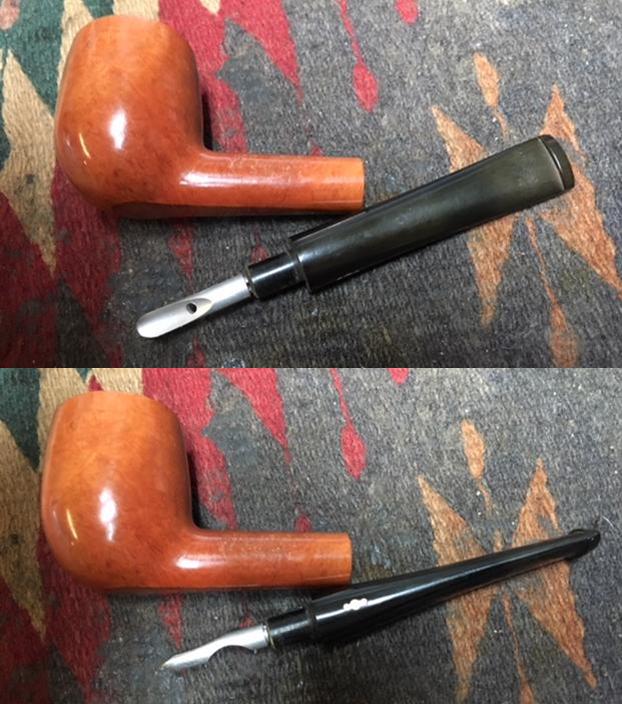
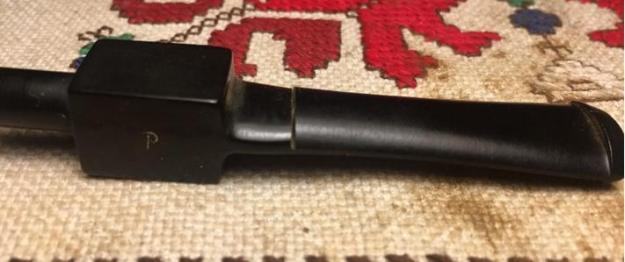
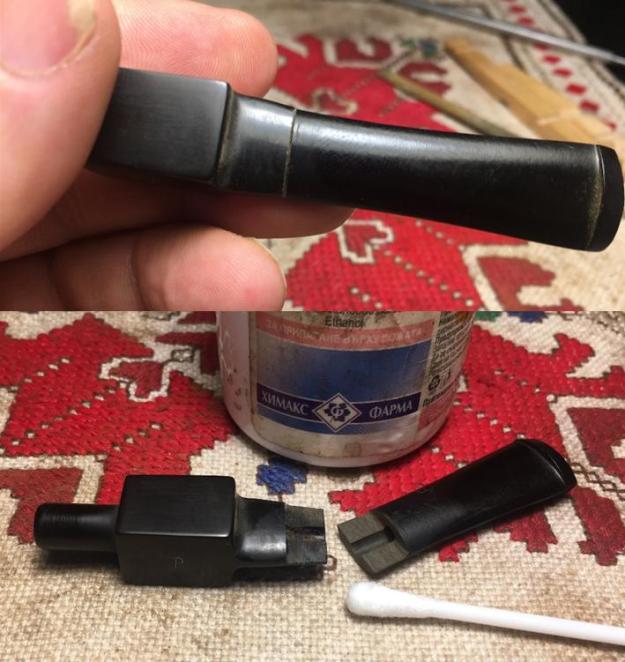
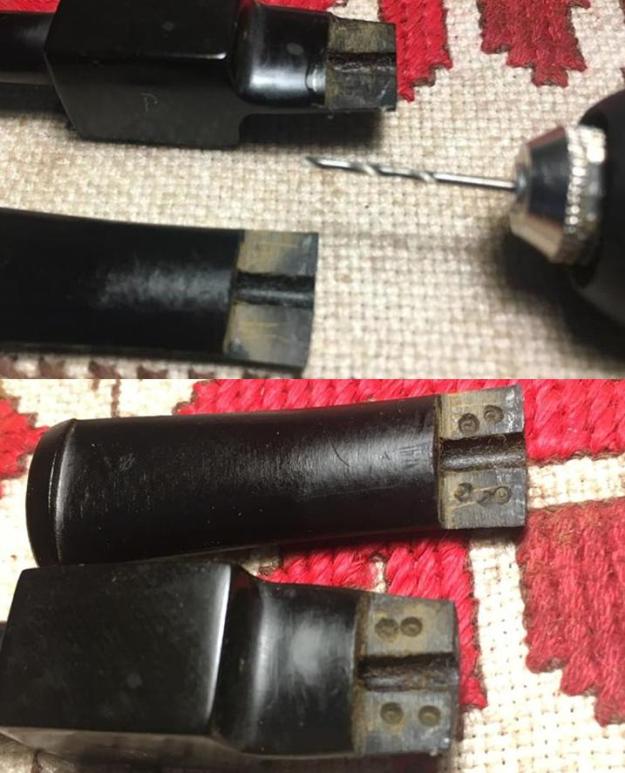
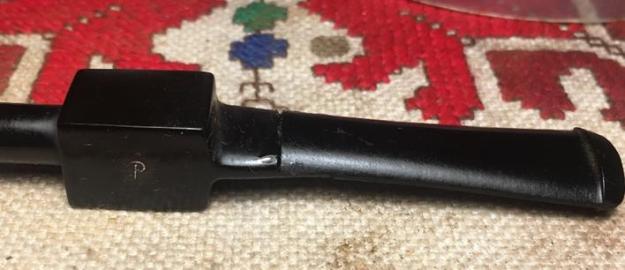
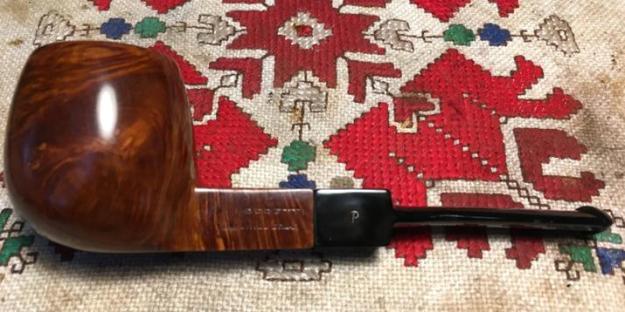
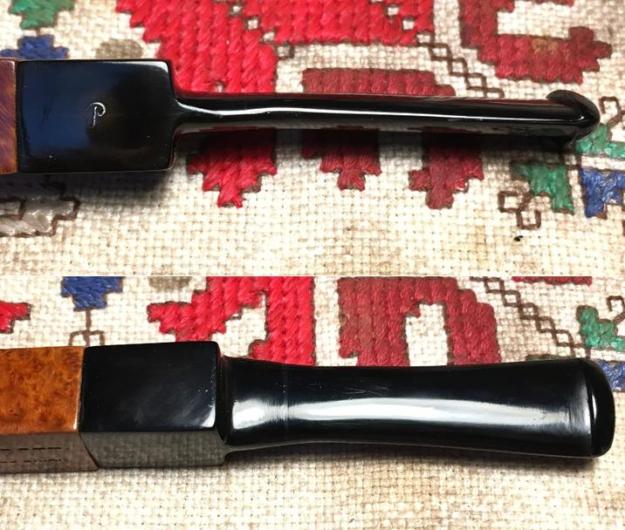
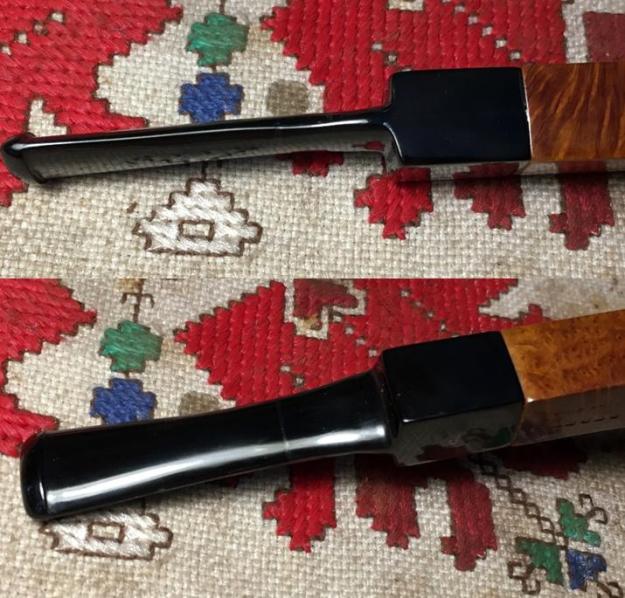
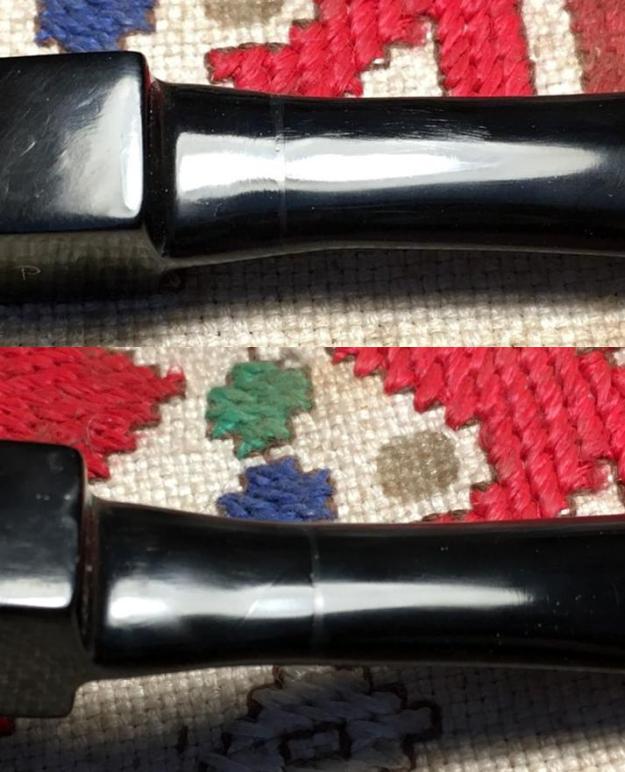
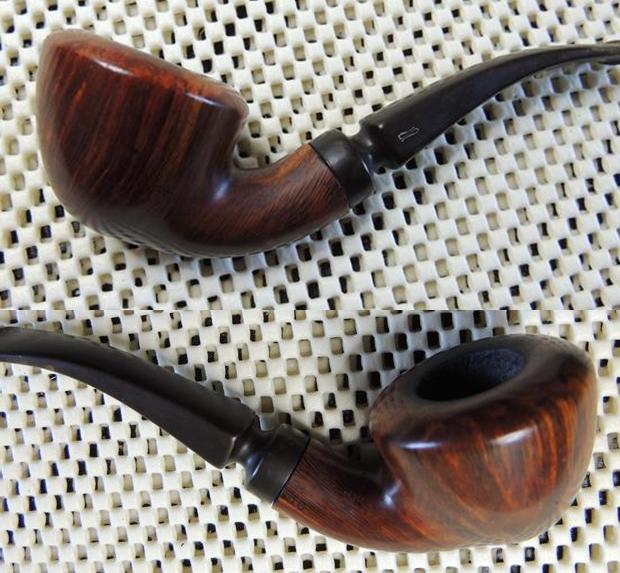
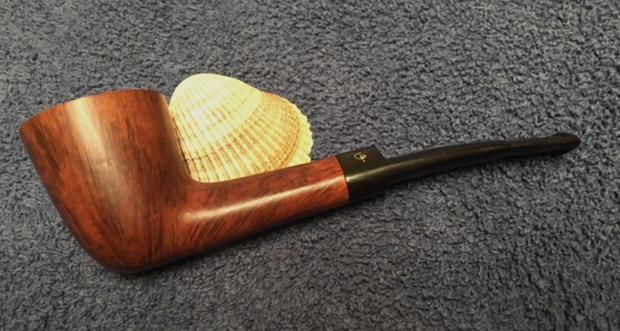
I was emailing back and forth with John, a pipeman in Edmonton who wanted to sell of his pipes. He was cleaning up things and thought he would see if I was interested in them. He said that he had several Baris and a couple of Svendborgs that were in the lot and he wanted to move those out. He sent me photos of the pipes he had and we soon struck a deal. Since we were both in Canada it did not take long for the package to make its way to me. I opened it and went through his pipes to see what I had to work on. There were some pipe racks and accessories in the box as well. I went through the pipes and set them aside. Today I decided it was time to do some more work on the lot. I chose to work on the second of the Svendborg Hand Made Pipes – this one a squat Dublin. I have included the photos of the pipe that he sent to me before I purchased the lot. You can see that this was also a well-loved pipe and one that he smoked often. The finish on the sides and shank was in good condition but dirty. The rim top had an over flow of lava on the top but otherwise looked undamaged on the inner and outer edge. Under the tar and lava it looked like the rim top was in good condition. The contrast stain highlighted the beautiful grain on the briar. The bowl was caked and would need to be reamed but otherwise good condition. The stem was loose in the shank and I was able to move it side to side and up and down. The diameter of the shank and the diameter of the saddle on the stem were slightly different and there is not much that can be done due to the stamping on the underside and around the edge. I will need to tighten it up as much as possible and work on the alignment. The stem was oxidized and lightly pitted from the oxidation. There was tooth chatter on the underside of the stem near the button. I took the following photos of the pipe before I began the cleanup. (The two pipes came in an original Svendborg box that is marked Svendborg Bark. I learned from my work on the first pipe that it was the correct box for the pipe.) I took some close up photos of the rim top and the stem to show the condition of the pipe when I started. The rim top shows a thick buildup of tars and oils – lava from the inner edge of the bowl outward over most of the rim top. Other than the tar around the inner edge of the bowl the rim shows some nice grain. The stem surface is in good condition other than some oxidation and pitting on the surface of the blade. There was some tooth chatter on the underside of the stem near the button.I took photos of the stamping on the underside of the shank and around the stem/shank junction. On the underside it was stamped Svendborg over Danish over Hand Made. Like the previous Svendborg this one was stamped around the shank from the left side across the top edge it reads Barkentine. (Perhaps this is what the Bark name on the box that came with the pipe refers to.) On the right side it was stamped 06. The stamping was faint on the curves of the shank but was still readable. The left side of the saddle stem has a stylized squashed S stamp. You can see the stem alignment issue I mentioned above in the photos below.I am requoting the information I found when researching the previous Svendborg pipe.
When I am working on interesting old pipes (even sometimes those not so interesting) I like to know a bit about the background of the brand. I like to “meet” the carver to get a feel for their work and style. I don’t think I have worked on Svendborg pipes before so I felt compelled to do a bit of reading before I started the cleanup of the pipe.

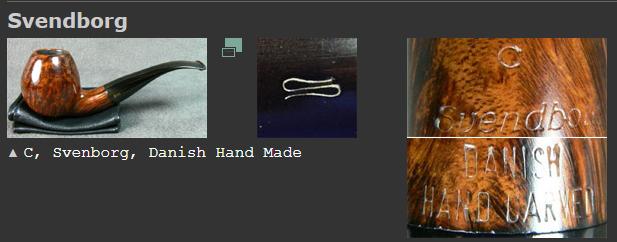
I looked first on the Pipephil website (http://www.pipephil.eu/logos/en/logo-s14.html) to see what I could find. I have found through the years that it gives me a good summary of the information available and some pictures of some of the pipes from the brand. I have included a screen capture of the first pipe in the listing as it shows the logo on the stem and a bit of the stamping that is on the underside of the shank. From the site I learned that the “Brand founded in 1970s by Henrik Jørgensen, Poul Ilsted and Tao Nielsen. They bought an old factory (Nordisc Pibefabriker) in Svendborg on Funen Island. Poul and Tao gradually bowed out from machine manufactured pipes (1982) and Henrik Jørgensen manages the brand until its takeover by Design Berlin (D) in the late 90ies. Kaj C. Rasmussen jointed the firm for several years. 17 employees worked for this brand under Henrik Jørgensen direction.

That link gave me a bit of information on the brand – a joint venture of Henrik Jorgensen, Poul Ilsted and Tao Nielsen. I could see from the information that usually the carvers stamped their names on the shank of the pipe. In the case of the one I have there is no name stamp. My assumption is that the pipe was made after Ilsted and Nielsen bowed out which would put the date of the carving between 1982 and the late 90’s when Design Berlin took over. The Danish Hand Made stamping also confirms that assumption.

Next I turn to Pipedia for more information and detail (https://pipedia.org/wiki/Svendborg). I find that the articles there fill in some interesting information on the relationships and history of a given brand. In this case I found that also true. I quote pertinent pieces of the article.

Jens Tao Nielsen and Poul Ilsted Bech met each other when working together for Erik Nørding and soon became close friends. Both felt a bit tired to make nothing but bizarre fancy shapes and agreed they wanted to produce pipes of more style and more classicism. They decided to establish their own brand “Tao & Ilsted” – But how to do it?

A good fortune brought them in contact with Henrik Jørgensen, a passionate pipe lover and a wealthy Copenhagen banker who was willing to retire from bank business and change his career to become a pipemaker. The trio joined in 1969 and decided to start a new pipe brand together. Nielsen and Ilsted started to search for a suitable workshop while Jørgensen took care of the finances. In early 1970 the partners found an old, closed down pipe factory in Svendborg on Funen, and bought it shortly after for a mere 16.500 Danish Kroner. It was the earlier Nordic Pipe Factory – Nordisc Pibefabriker – maybe the oldest Danish pipe factory. And now it became the home of Svendborg Piber.

The young team started with the common difficulties but success came quite rapidly after they travelled Germany in search of a distributor and met Detlef Seiffert, senior partner of Seiffert Import Co., a major German wholesaler in Kassel. Seiffert, insisting on high quality standards, started placing considerable orders with the new factory and began to market the brand very successfully in Germany. Of course Seiffert – a relative of Harry Kapp, partner of Charles Peterson of the famous Dublin pipe house – used his international contacts to promote Svendborg furthermore.

The Funen crew designed many new models for him and after a couple of month (!) they employed up to 17 people. Tao Nielsen later gratefully remembered “the big chief’s whip”: “Without him we wouldn’t have made it, he gave us decisive support. He was like an engine – something that our business lacks today.”

But in spite of it’s magnificent success the trio fell apart after less than two years, when wilful Poul Ilsted stepped out declaring he didn’t want to make serial pipes anymore, but wanted to make individual specimens… Strange enough, he approached this aim returning to Nørding!

Ilsted’s argumentation doesn’t seem to be absolutely fair: even though Svendborg turned to produce mainly serial pipes under Seiffert’s influence each of the three partners was free to work on his very own one of a kind pieces as well! Since it was Seiffert’s basic idea to profit from – especially – Tao ‘s and Ilsted’s creativity to design new shapes. There are many knowledgeable collectors who confirm that these early Svendsborg pipes class among the most individual, innovating and exiting designs Danish pipecrafters created at that time…

The firm developed well and prospered throughout the 1970’s but around 1980 dissensions between Tao and Jørgensen occured. Tao: “Most pipes were delivered to the United States and whereby the Americans tried to dictate us the conditions. It was not only so that their taste and their view on aesthetics were simply horrible – no, moreover they wanted that the pipes should be as cheap as possible. That did not suit my plans at all, for I strove for high quality and artistic freedom in the end.”

Tao and Jørgensen, who tended to accommodate the US customers’ wishes, could not find a compromise on their different opinions, and so Tao left the firm in 1981 and opened his own pipe workshop near the harbour of Svendborg.

…Henrik Jørgensen continued Svendborg Piber bravely for more than a decade on his own until he finally sold the brand to Seiffert around the midst of the 1990’s. Seiffert, focusing on their mainstay brand Sillem’s, sold Svendborg – a ghost brand now – again before 2000 and the current owner is Planta’s Design Berlin.

That gives a good picture of the history and development of the Svendborg brand and the connection to some of the great carvers of Danish pipe history. Armed with that information I turned to work on the pipe in hand.

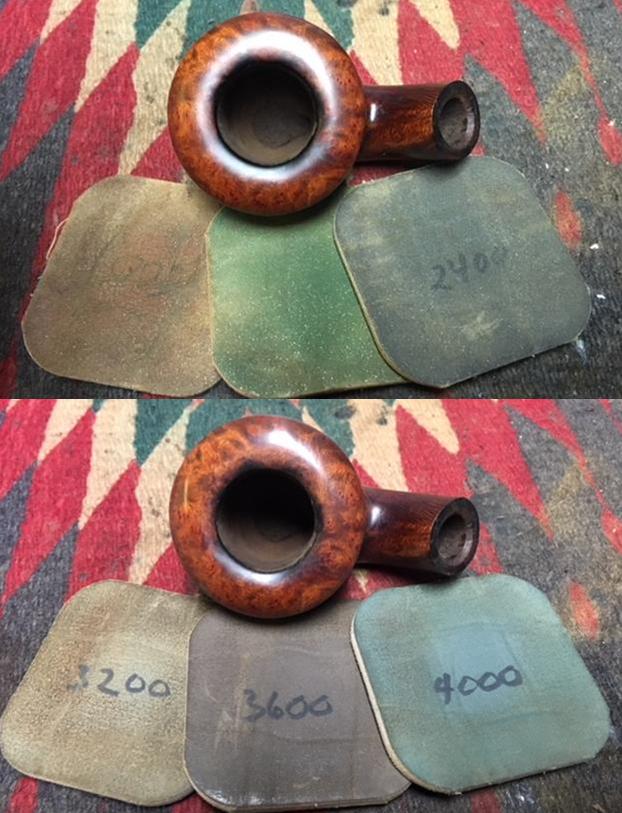
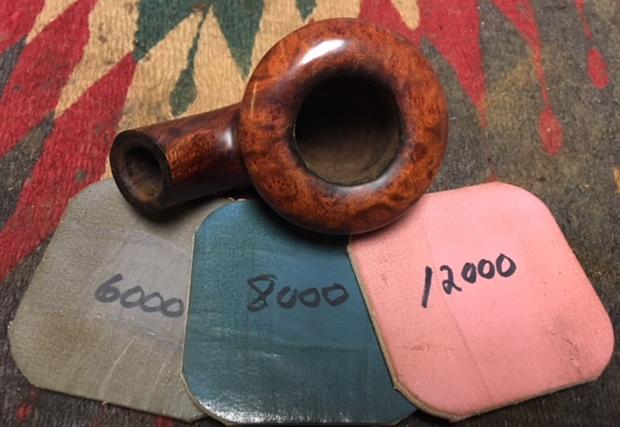
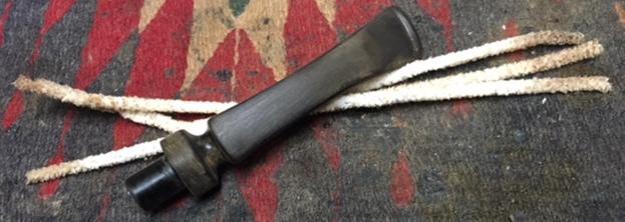
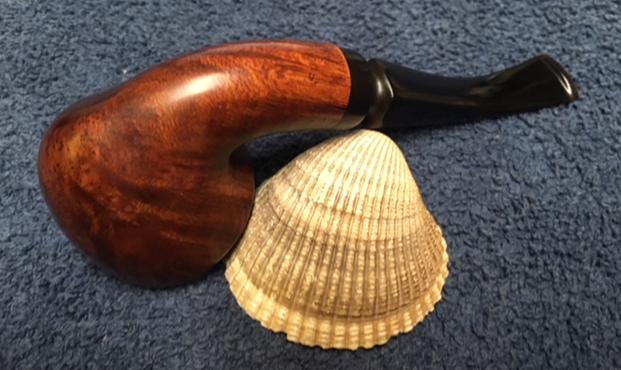
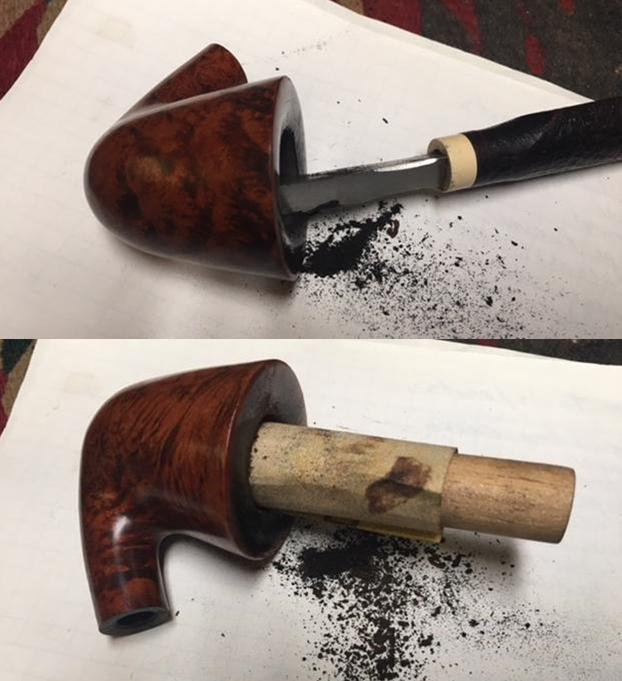
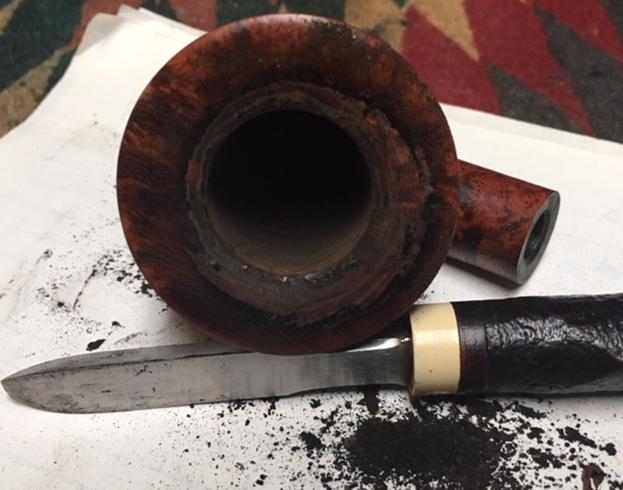
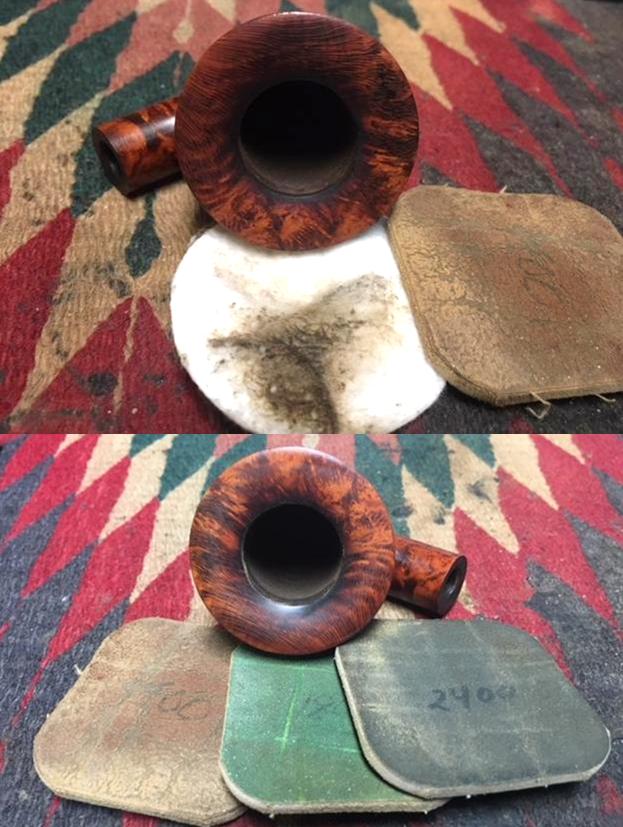
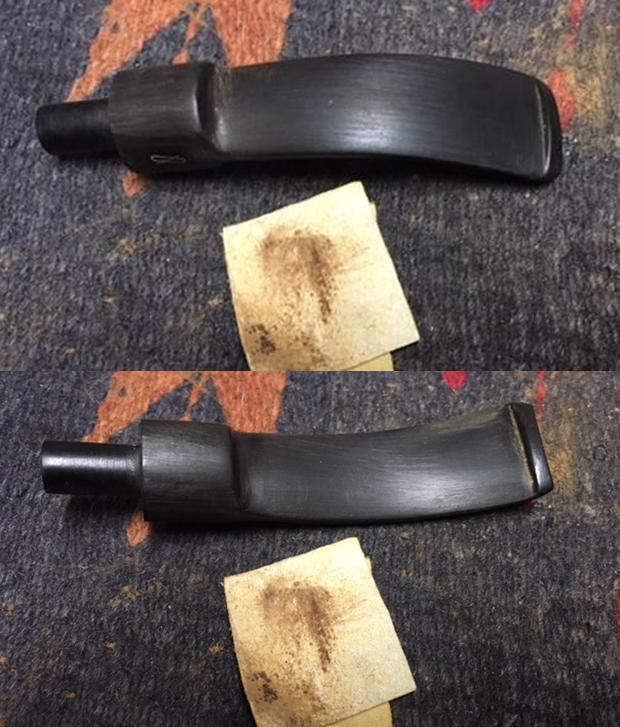
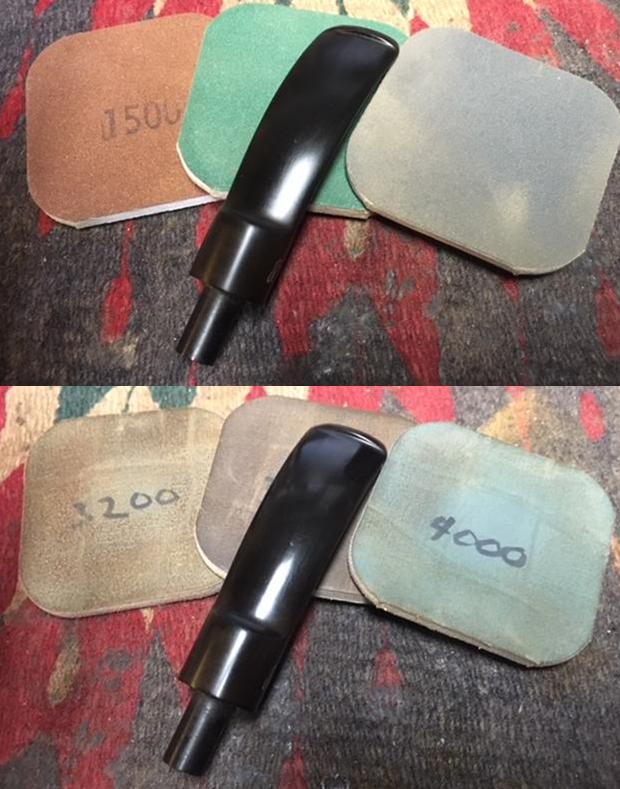
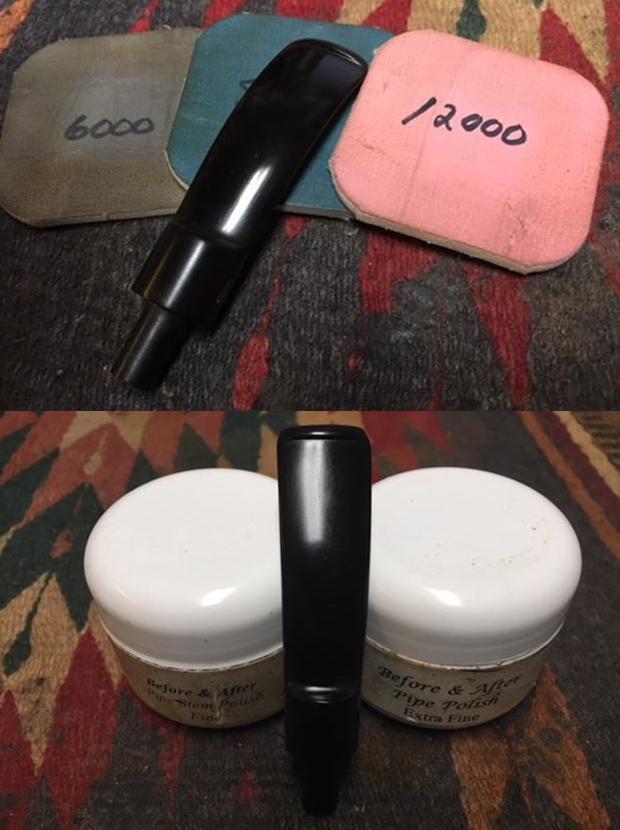
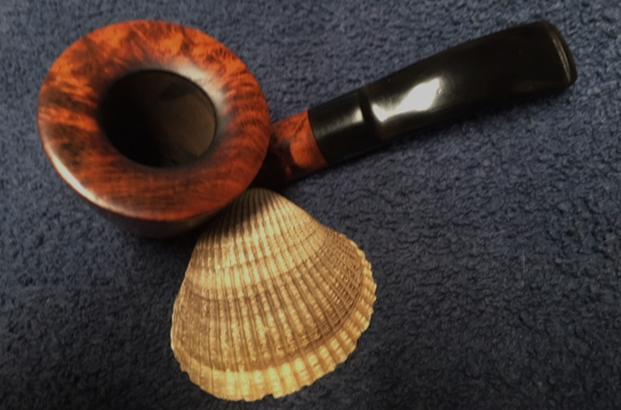
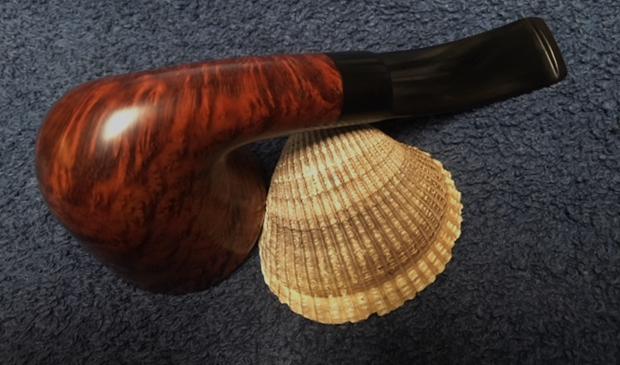
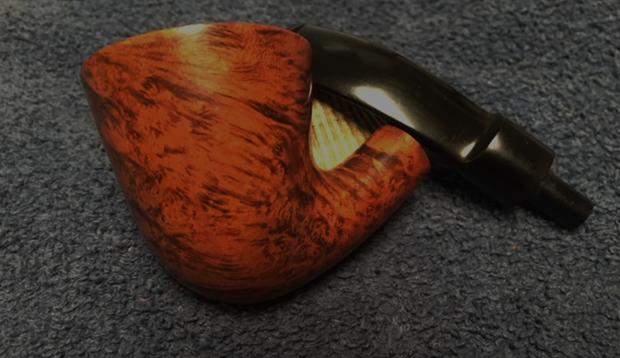
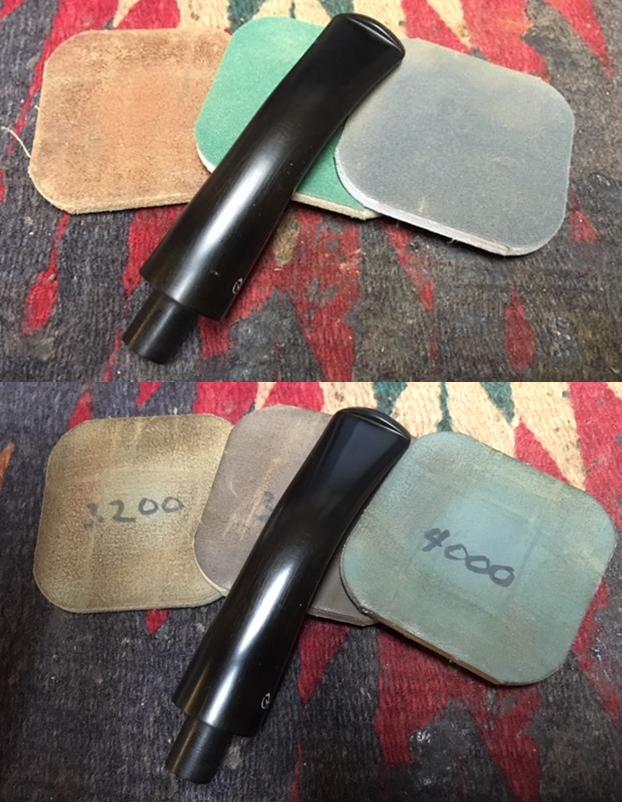
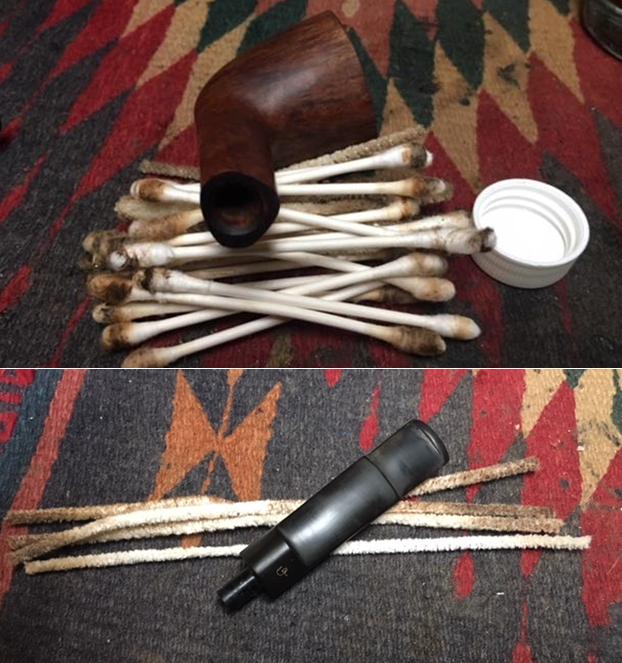
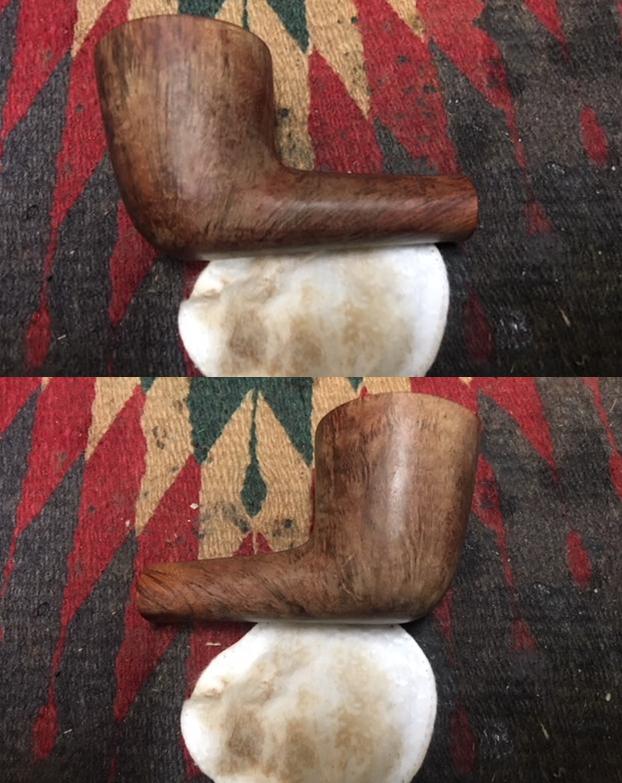
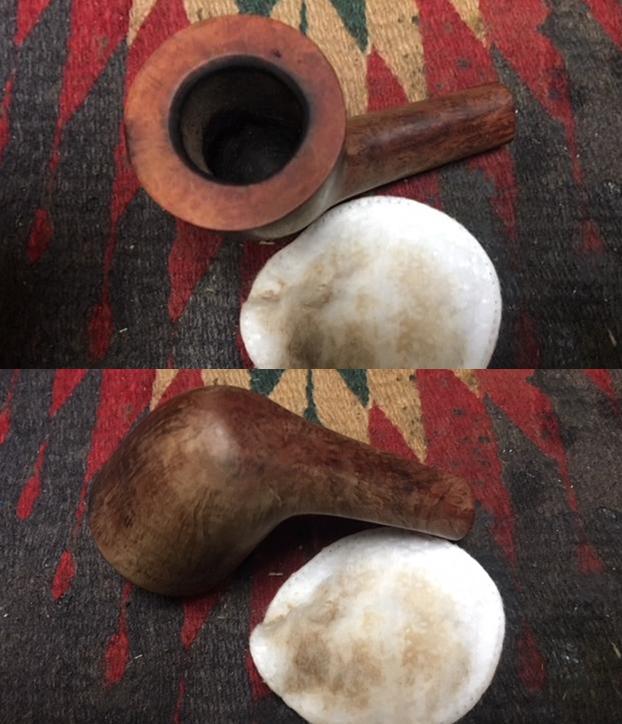
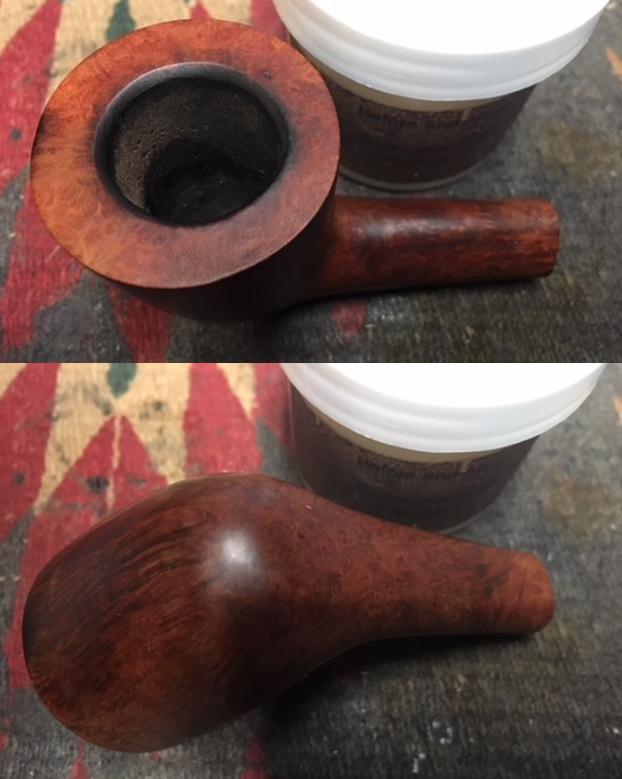
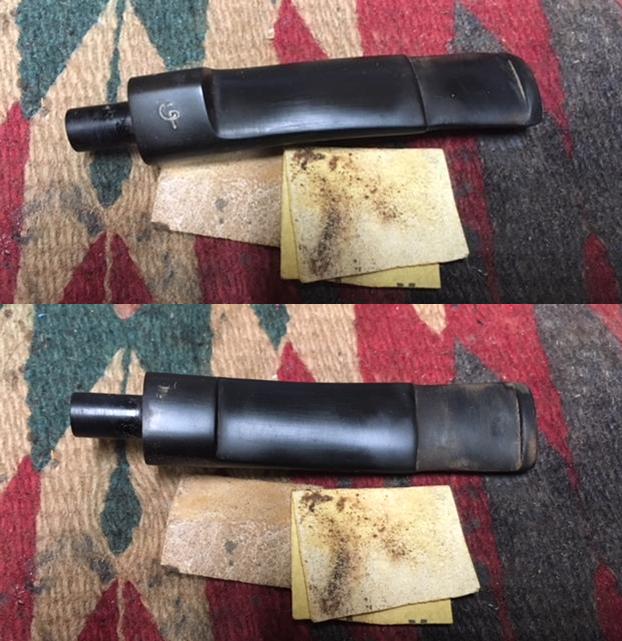
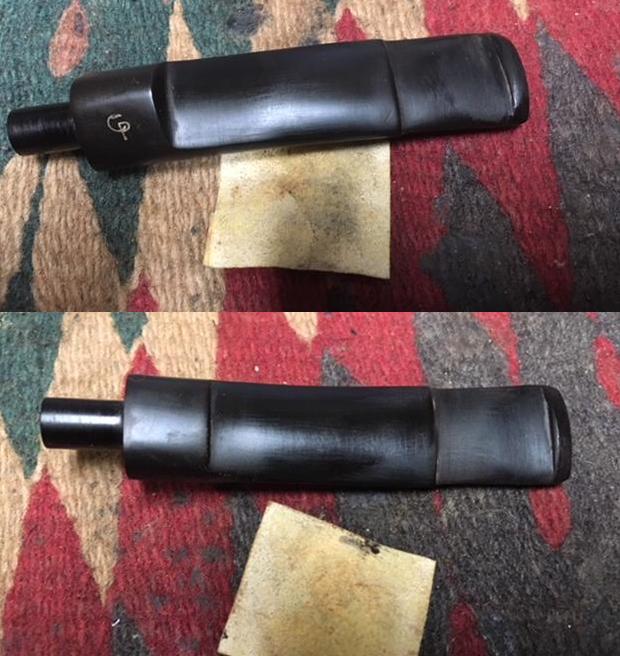
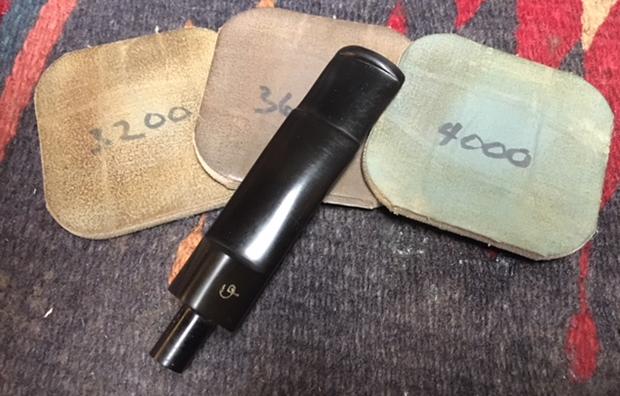
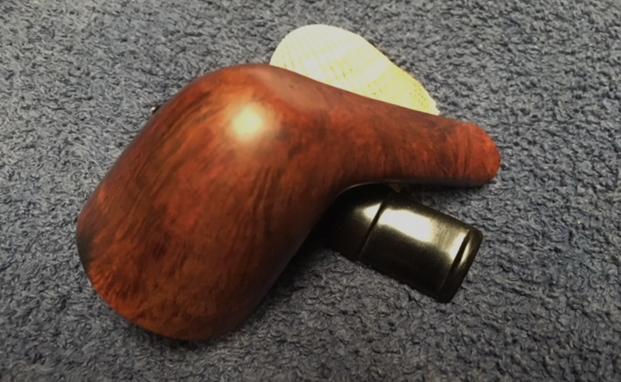
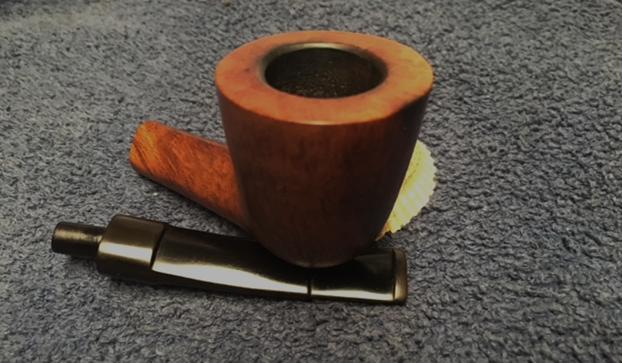
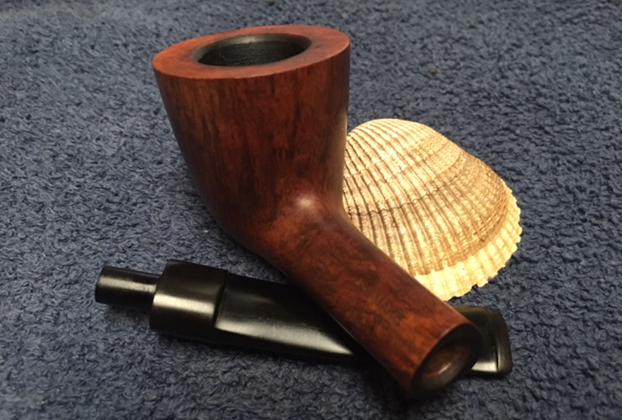
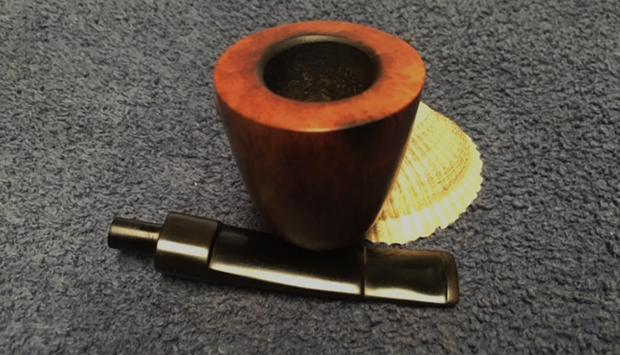
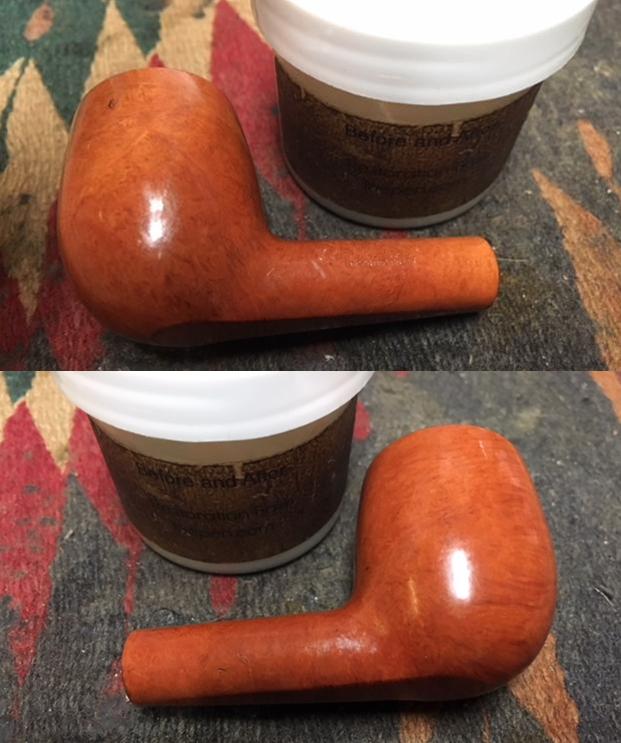
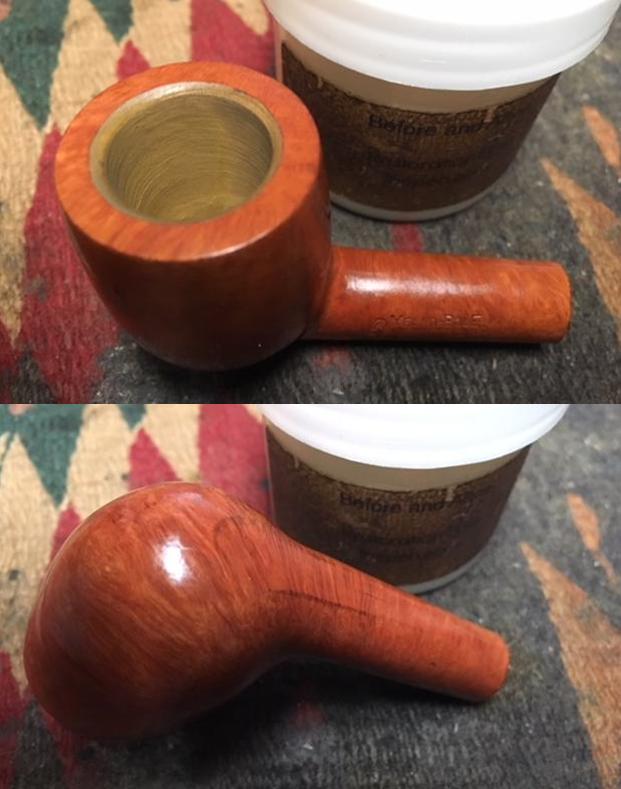
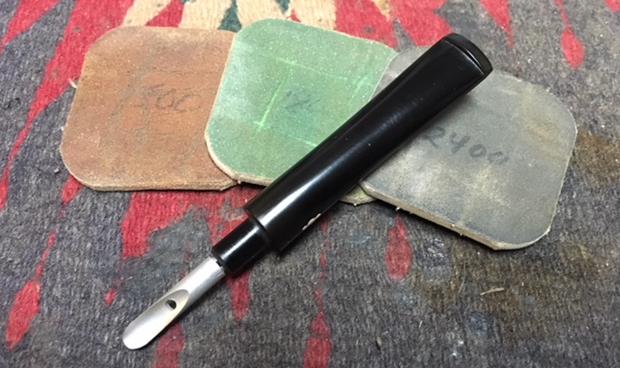
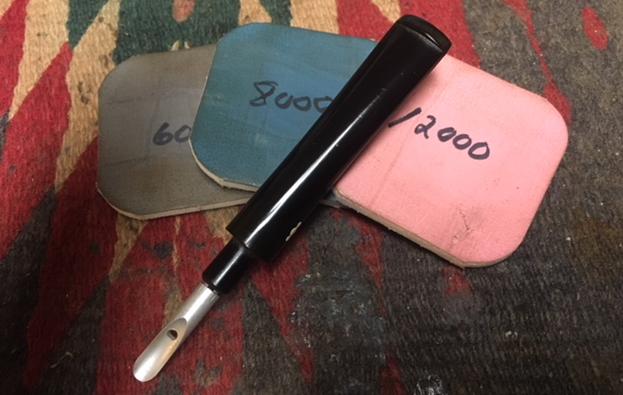
I started my cleanup of this pipe by working on the internals. I reamed out the cake with a Savinelli Fitsall Pipe Knife and took the cake back to the bare briar. I sanded the walls in the bowl with a piece of dowel wrapped with 220 grit sandpaper to smooth the walls.I used the edge of the Savinelli Fitsall knife to scrape away the lava from the top of the rim. It was quite thick so I proceeded cautiously so as not to damage the gentle crown of the rim top. Once I had it scraped away as much as possible I wiped down the surface of the rim with alcohol on a cotton pad and then sanded the rim top with 1500 grit micromesh sanding pads to remove the last vestige of the lava coat. I polished the rim top with micromesh sanding pads – wet sanding with 1500-2400 grit pads and wiping the rim down with a damp cloth after each pad. I continued polishing with micromesh pads – dry sanding with 3200-12000 grit pads, wiping down he rim after each pad. The rim really began to shine. I rubbed some Before & After Restoration Balm into the surface of the briar to enliven, clean and preserve it. I set it aside for a little while to let the balm do its work. I buffed it off with a cotton cloth and then buffed it with a microfiber cloth. The photos below show the pipe at this point in the restoration process. I scraped the mortise walls with a sharp pen knife to remove the lacquer build up from tobacco juices and oils. It was thickly coated. Once I had that finished I cleaned out the mortise and the airway in the shank with cotton swabs, pipe cleaners and alcohol. It was dirty but I was surprised it was as clean as it was all things considered. I cleaned the airway in the stem the same way as the shank. I set the bowl aside and turned my attention to the stem. I sanded the surface of the stem with 220 grit sandpaper to remove the pitting on the top surface of the stem and the light tooth chatter on the underside stem. I wiped the stem down with Obsidian Oil to get a clear picture of how the stem looked at this point. Once again under the watchful eye of my shop supervisor, Spencer (my 14 year old Cocker Spaniel) I polished the stem using micromesh sanding pads – wet sanding with 1500-2400 grit pads dry sanding with 3200-12000 grit pads. After each pad I wiped it down with Obsidian Oil to protect and enliven the stem. Spencer sits next to my desk/work table whenever I am working on pipes. Periodically he will knock me on the leg for a treat I keep on top of the desk just for these occasions. Mostly though he just watches me work and when I get up for a break follows me like a shadow. I will miss his presence once he is gone but for now he continues to go strong. Back to the pipe, I polished it further with Before & After Pipe Polish – both Fine and Extra Fine. When I finished with the polish I gave it a final coat of oil and set it aside to dry. This second Svendborg Danish Hand Made Dublin is another beauty with swirling, straight and flame grain all around the bowl. As with the other pipe there are spots where birdseye peeks through and highlights the complexity of the grain. The smooth rim is quite nice and has some swirls of grain undulating in the briar. The contrast browns of the bowl look really good with the black of the polished square vulcanite saddle stem. I buffed the bowl and the stem with Blue Diamond polish to raise the shine on the briar and the vulcanite. I was careful to not buff the stamping and damage it. I gave the bowl and stem multiple coats of carnauba wax. I buffed the entire pipe with a clean buffing pad to raise the shine. I hand buffed it with a microfiber cloth to deepen the shine. The finished pipe is shown in the photos below. The dimensions of the pipe are: Length: 5 1/2 inches, Height: 1 1/2 inches, Outside Diameter: 1 3/4 inches, Diameter of the chamber: ¾ of an inch. This is the second of the two Svendborg pipes that I am working on. It is a well-made pipe with interesting finishing and a comfortable stem. I will be adding it to the rebornpipes store shortly if you are interested in adding it to your rack. Thanks for walking through the restoration with me.


Restoring a Svendborg Danish Hand Made Dublin 272 Barkentine


Blog by Steve Laug

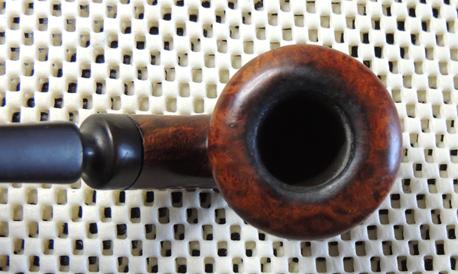
I was emailing back and forth with John, a pipeman in Edmonton who wanted to sell of his pipes. He was cleaning up things and thought he would see if I was interested in them. He said that he had several Baris and a couple of Svendborgs that were in the lot and he wanted to move those out. He sent me photos of the pipes he had and we soon struck a deal. Since we were both in Canada it did not take long for the package to make its way to me. I opened it and went through his pipes to see what I had to work on. There were some pipe racks and accessories in the box as well. I went through the pipes and set them aside. Today I decided it was time to do some more work on the lot. I chose to work on the first of the Svendborg Hand Made Pipes – this one a Dublin. I have included the photos of the pipe that he sent to me before I purchased the lot. You can see that it was a well-loved pipe and one that he smoked often. The finish on the sides and shank was in good condition but dirty. The rim top had an over flow of lava on the top but otherwise looked undamaged on the inner and outer edge. Under the tar and lava it looked like the rim top was in good condition. The contrast stain highlighted the beautiful grain on the briar. The bowl was caked and would need to be reamed but otherwise good condition. The stem was oxidized and lightly pitted from the oxidation. There was a light tooth mark and some tooth chatter on the underside of the stem near the button. I took the following photos of the pipe before I began the cleanup. (The pipe came in an original Svendborg box that is marked Svendborg Bark. I assumed that it was the incorrect box but I may find out differently once I work on the pipe.) I took some close up photos of the rim top and the stem to show the condition of the pipe when I started. The rim top shows a thick buildup of tars and oils – lava from the inner edge of the bowl outward over most of the rim top. Other than the tar around the inner edge of the bowl the rim shows some nice grain. The stem surface is in good condition other than some oxidation and pitting on the surface of the blade. There are also some tooth marks on the underside of the stem near the button.I took photos of the stamping on the underside of the shank and around the stem/shank junction. On the underside it was stamped Svendborg over Danish over Hand Made. Stamped around the shank from the left side across the top edge it reads Barkentine. (Perhaps this is what the Bark name on the box that came with the pipe refers to.) The stamping was faint on the curves of the shank but was still readable. The left side of the saddle stem has a stylized squashed S stamp.When I am working on interesting old pipes (even sometimes those not so interesting) I like to know a bit about the background of the brand. I like to “meet” the carver to get a feel for their work and style. I don’t think I have worked on Svendborg pipes before so I felt compelled to do a bit of reading before I started the cleanup of the pipe.
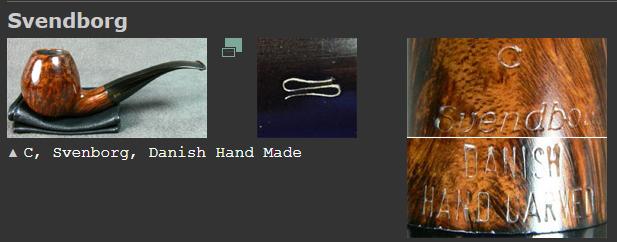
I looked first on the Pipephil website (http://www.pipephil.eu/logos/en/logo-s14.html) to see what I could find. I have found through the years that it gives me a good summary of the information available and some pictures of some of the pipes from the brand. I have included a screen capture of the first pipe in the listing as it shows the logo on the stem and a bit of the stamping that is on the underside of the shank. From the site I learned that the “Brand founded in 1970s by Henrik Jørgensen, Poul Ilsted and Tao Nielsen. They bought an old factory (Nordisc Pibefabriker) in Svendborg on Funen Island. Poul and Tao gradually bowed out from machine manufactured pipes (1982) and Henrik Jørgensen manages the brand until its takeover by Design Berlin (D) in the late 90ies. Kaj C. Rasmussen jointed the firm for several years. 17 employees worked for this brand under Henrik Jørgensen direction.
That link gave me a bit of information on the brand – a joint venture of Henrik Jorgensen, Poul Ilsted and Tao Nielsen. I could see from the information that usually the carvers stamped their names on the shank of the pipe. In the case of the one I have there is no name stamp. My assumption is that the pipe was made after Ilsted and Nielsen bowed out which would put the date of the carving between 1982 and the late 90’s when Design Berlin took over. The Danish Hand Made stamping also confirms that assumption.

Next I turn to Pipedia for more information and detail (https://pipedia.org/wiki/Svendborg). I find that the articles there fill in some interesting information on the relationships and history of a given brand. In this case I found that also true. I quote pertinent pieces of the article.

Jens Tao Nielsen and Poul Ilsted Bech met each other when working together for Erik Nørding and soon became close friends. Both felt a bit tired to make nothing but bizarre fancy shapes and agreed they wanted to produce pipes of more style and more classicism. They decided to establish their own brand “Tao & Ilsted” – But how to do it?

A good fortune brought them in contact with Henrik Jørgensen, a passionate pipe lover and a wealthy Copenhagen banker who was willing to retire from bank business and change his career to become a pipemaker. The trio joined in 1969 and decided to start a new pipe brand together. Nielsen and Ilsted started to search for a suitable workshop while Jørgensen took care of the finances. In early 1970 the partners found an old, closed down pipe factory in Svendborg on Funen, and bought it shortly after for a mere 16.500 Danish Kroner. It was the earlier Nordic Pipe Factory – Nordisc Pibefabriker – maybe the oldest Danish pipe factory. And now it became the home of Svendborg Piber.

The young team started with the common difficulties but success came quite rapidly after they travelled Germany in search of a distributor and met Detlef Seiffert, senior partner of Seiffert Import Co., a major German wholesaler in Kassel. Seiffert, insisting on high quality standards, started placing considerable orders with the new factory and began to market the brand very successfully in Germany. Of course Seiffert – a relative of Harry Kapp, partner of Charles Peterson of the famous Dublin pipe house – used his international contacts to promote Svendborg furthermore.

The Funen crew designed many new models for him and after a couple of month (!) they employed up to 17 people. Tao Nielsen later gratefully remembered “the big chief’s whip”: “Without him we wouldn’t have made it, he gave us decisive support. He was like an engine – something that our business lacks today.”

But in spite of it’s magnificent success the trio fell apart after less than two years, when wilful Poul Ilsted stepped out declaring he didn’t want to make serial pipes anymore, but wanted to make individual specimens… Strange enough, he approached this aim returning to Nørding!

Ilsted’s argumentation doesn’t seem to be absolutely fair: even though Svendborg turned to produce mainly serial pipes under Seiffert’s influence each of the three partners was free to work on his very own one of a kind pieces as well! Since it was Seiffert’s basic idea to profit from – especially – Tao ‘s and Ilsted’s creativity to design new shapes. There are many knowledgeable collectors who confirm that these early Svendsborg pipes class among the most individual, innovating and exiting designs Danish pipecrafters created at that time…

The firm developed well and prospered throughout the 1970’s but around 1980 dissensions between Tao and Jørgensen occured. Tao: “Most pipes were delivered to the United States and whereby the Americans tried to dictate us the conditions. It was not only so that their taste and their view on aesthetics were simply horrible – no, moreover they wanted that the pipes should be as cheap as possible. That did not suit my plans at all, for I strove for high quality and artistic freedom in the end.”

Tao and Jørgensen, who tended to accommodate the US customers’ wishes, could not find a compromise on their different opinions, and so Tao left the firm in 1981 and opened his own pipe workshop near the harbour of Svendborg.

…Henrik Jørgensen continued Svendborg Piber bravely for more than a decade on his own until he finally sold the brand to Seiffert around the midst of the 1990’s. Seiffert, focusing on their mainstay brand Sillem’s, sold Svendborg – a ghost brand now – again before 2000 and the current owner is Planta’s Design Berlin.

That gives a good picture of the history and development of the Svendborg brand and the connection to some of the great carvers of Danish pipe history. Armed with that information I turned to work on the pipe in hand.

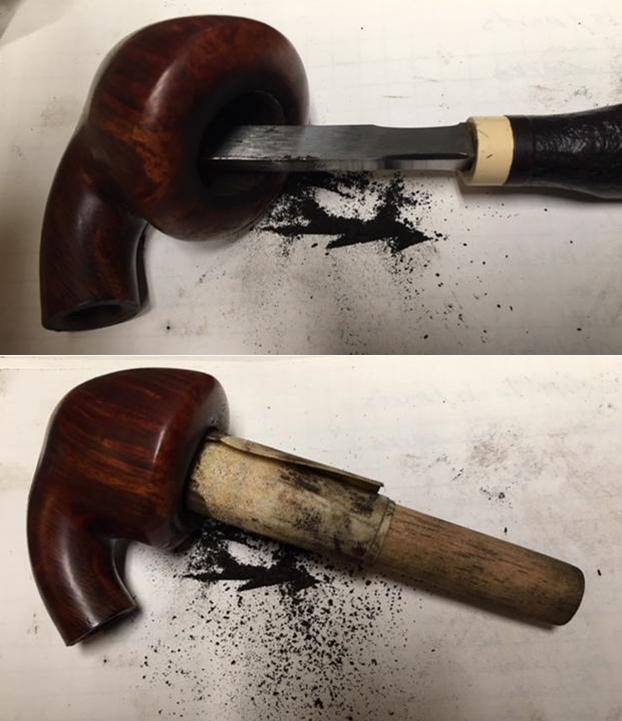
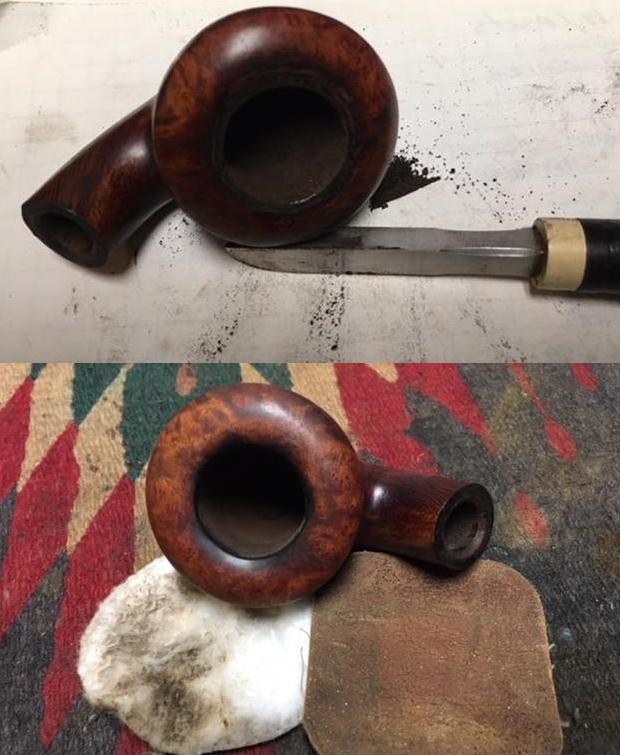
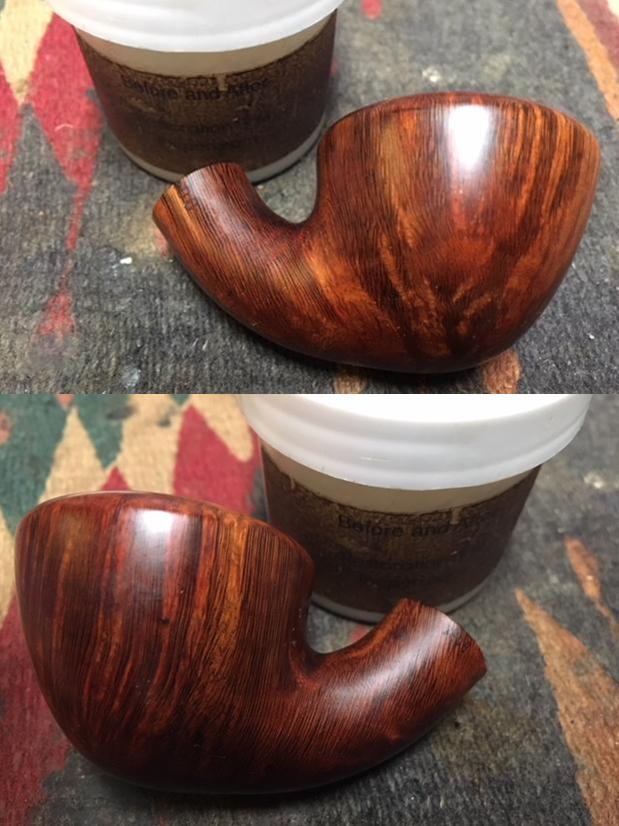
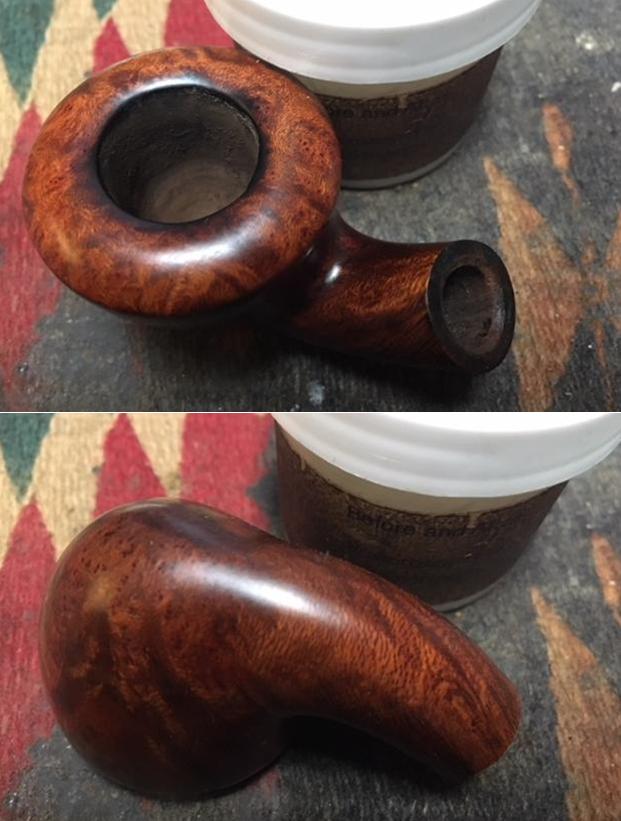
I started my cleanup of this pipe by working on the internals. I reamed out the cake with a Savinelli Fitsall Pipe Knife and took the cake back to the bare briar. I sanded the walls in the bowl with a piece of dowel wrapped with 220 grit sandpaper to smooth the walls. I used the edge of the Savinelli Fitsall knife to scrape away the lava from the top of the rim. It was quite thick so I proceeded cautiously so as not to damage the gentle crown of the rim top. Once I had it scraped away as much as possible I wiped down the surface of the rim with alcohol on a cotton pad and then sanded the rim top with 1500 grit micromesh sanding pads to remove the last vestige of the lava coat. I polished the rim top with micromesh sanding pads – wet sanding with 1500-2400 grit pads and wiping the rim down with a damp cloth after each pad. I continued polishing with micromesh pads – dry sanding with 3200-12000 grit pads, wiping down the rim after each pad. The rim really began to shine. I rubbed some Before & After Restoration Balm into the surface of the briar to enliven, clean and preserve it. I rubbed it in with my fingertips working it into the briar. I set it aside for a little while to let the balm do its work. I buffed it off with a cotton cloth and then buffed it with a microfiber cloth. The photos below show the pipe at this point in the restoration process. I scraped the mortise walls with a sharp pen knife to remove the lacquer build up from tobacco juices and oils. It was thickly coated. Once I had that finished I cleaned out the mortise and the airway in the shank with cotton swabs, pipe cleaners and alcohol. It was dirty but I was surprised it was as clean as it was all things considered. I cleaned the airway in the stem the same way as the shank.I set the bowl aside and turned my attention to the stem. I sanded the surface of the stem with 220 grit sandpaper to remove the pitting on the top surface of the stem and the light tooth chatter on the underside stem. I wiped the stem down with Obsidian Oil to get a clear picture of how the stem looked at this point.
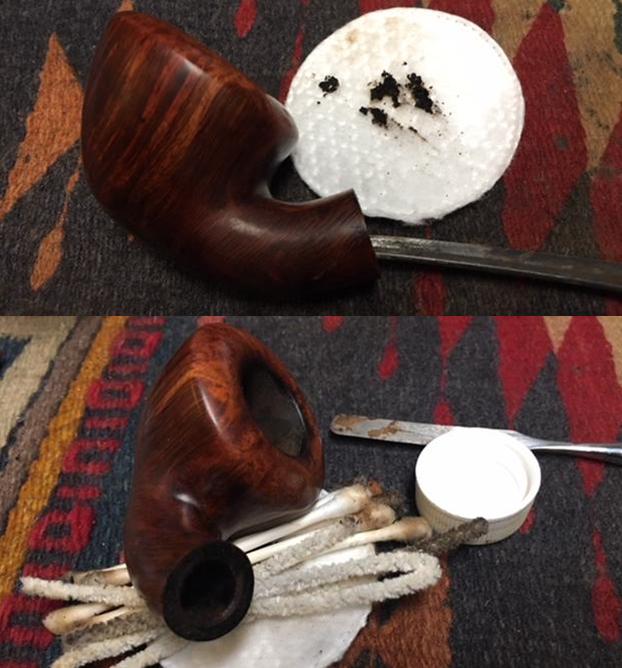
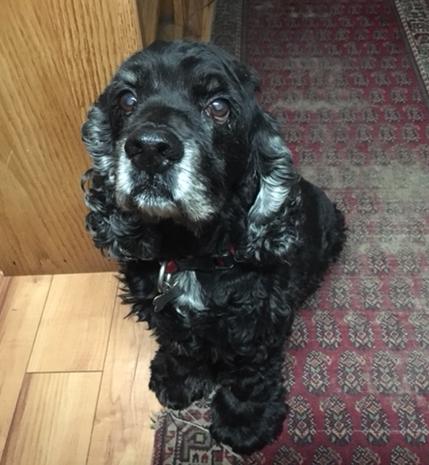
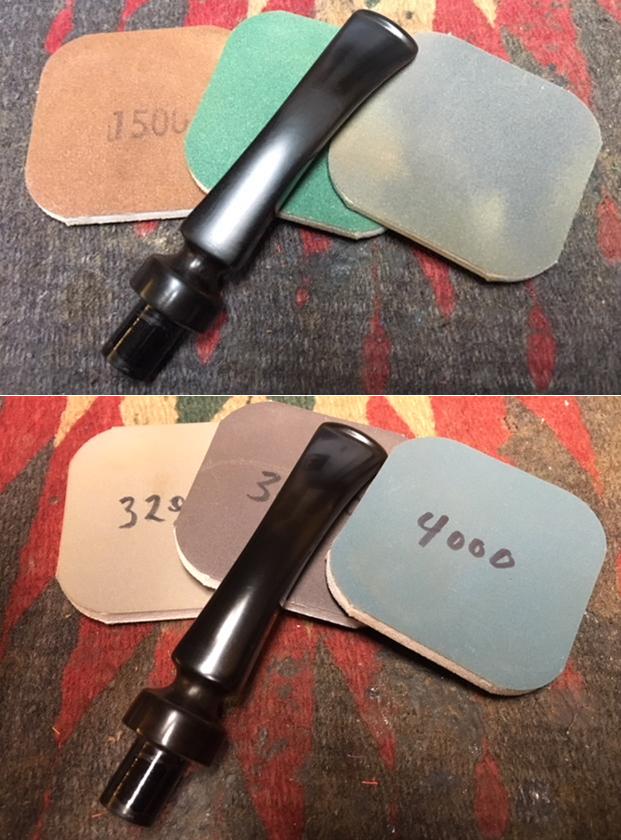
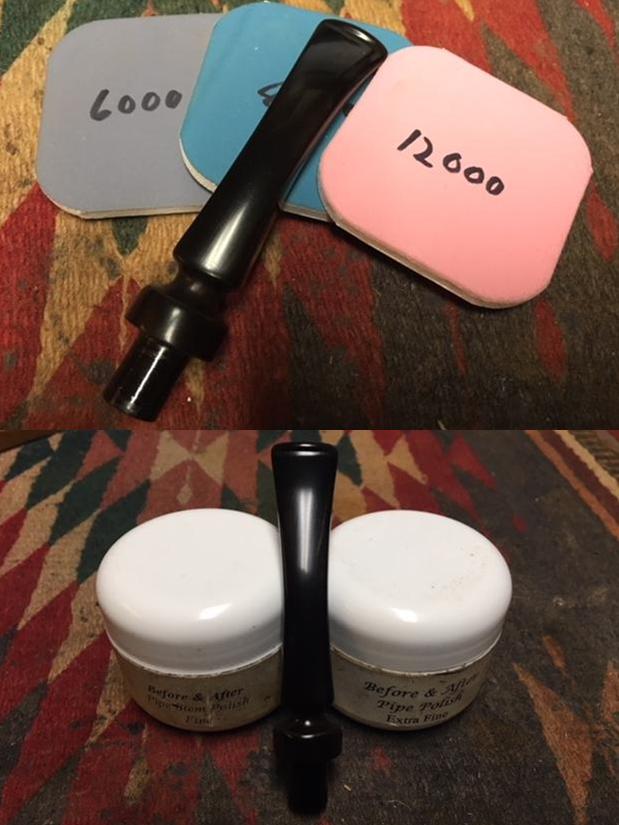
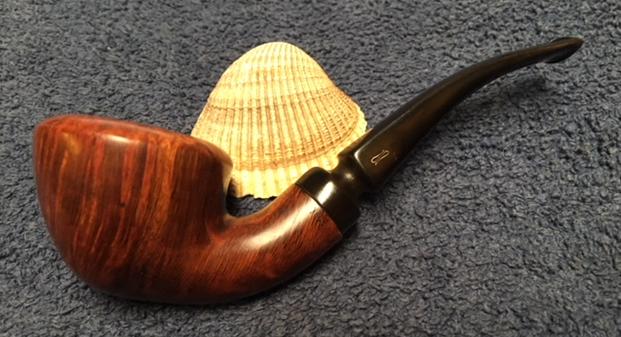
Under the watchful eye of my shop supervisor, Spencer (my 14 year old Cocker Spaniel) I polished the stem using micromesh sanding pads – wet sanding with 1500-2400 grit pads dry sanding with 3200-12000 grit pads. After each pad I wiped it down with Obsidian Oil to protect and enliven the stem. Spencer sits next to my desk/work table whenever I am working on pipes. Periodically he will knock me on the leg for a treat I keep on top of the desk just for these occasions. Mostly though he just watches me work and when I get up for a break follows me like a shadow. I will miss his presence once he is gone but for now he continues to go strong. Back to the pipe, I polished it further with Before & After Pipe Polish – both Fine and Extra Fine. When I finished with the polish I gave it a final coat of oil and set it aside to dry. This first Svendborg Danish Hand Made Dublin is a beauty with swirling, straight and flame grain all around the bowl. There are spots where birdseye peeks through and highlights the complexity of the grain. The smooth rim is quite nice and has some swirls of grain undulating in the briar. The contrast browns of the bowl look really good with the black of the polished vulcanite stem. I buffed the bowl and the stem with Blue Diamond polish to raise the shine on the briar and the vulcanite. I was careful to not buff the stamping and damage it. I gave the bowl and stem multiple coats of carnauba wax. I buffed the entire pipe with a clean buffing pad to raise the shine. I hand buffed it with a microfiber cloth to deepen the shine. The finished pipe is shown in the photos below. The dimensions of the pipe are: Length: 5 1/4 inches, Height: 2 inches, Outside Diameter: 1 3/4 inches, Diameter of the chamber: ¾ of an inch. This is the first of two Svendborg pipes that I am working on. It is a well-made pipe with interesting finishing and a comfortable stem. I will be adding it to the rebornpipes store shortly if you are interested in adding it to your rack. Thanks for walking through the restoration with me.
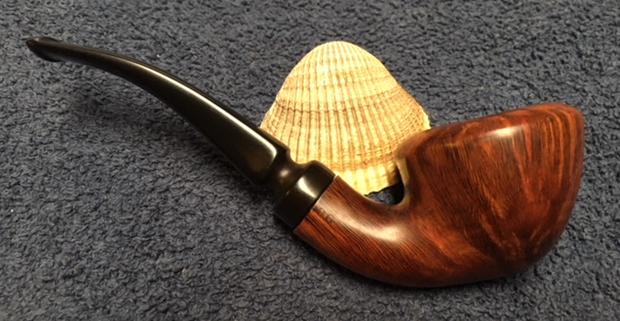
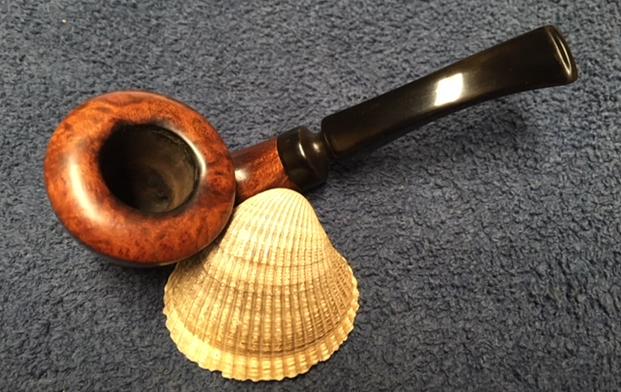
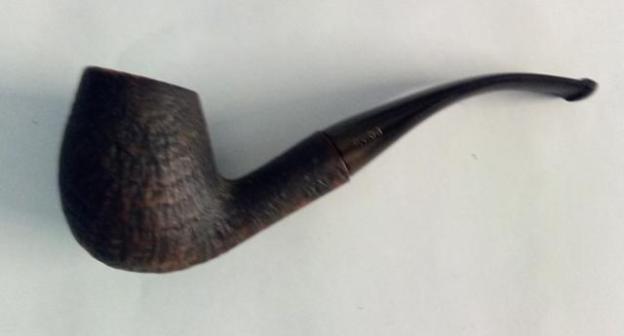
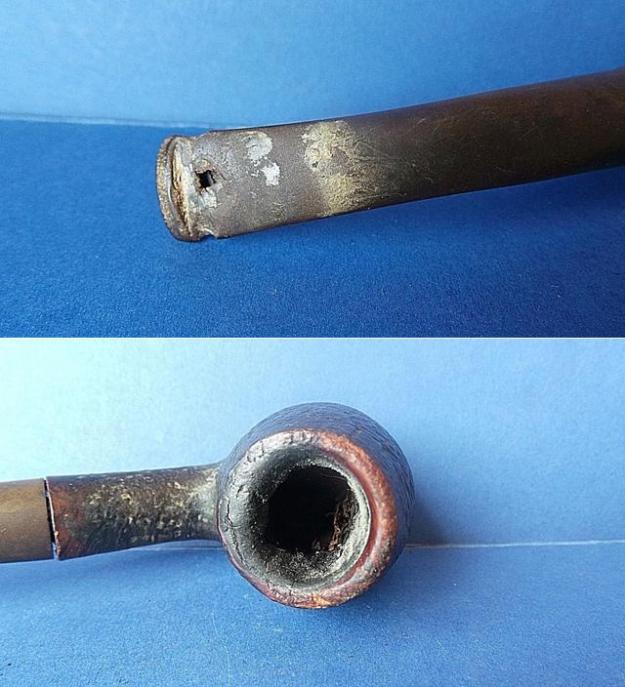
Restoration of a deeply loved Chacom Rallye


Blog by Roberto Castiglioni

Over the past month I have corresponded with Rob about a variety of things about restoration processes and procedures. He is a great guy! When he sent me photos of his work on this pipe I wrote and asked him to write it up for rebornpipes. Without further words on my part his is Rob. Welcome to rebornpipes. — Steve

Bizarre hobbies like these prove that nothing is too arcane for humans. Fortunately, the insane have valiantly stepped up to plug that gap.

Seeing a dirty and damaged pipe come back to life makes me extremely happy. That happiness comes from fact that I am handling something that is old and has a long history. The more dirty they are more interested I am. Sometimes I ask to myself how the previous pipe smoker could smoke them. Sometimes I get a stem with double hole, a tobacco chamber with a very limited space. It is then that I remember when my father told me when I was younger that my great-grandparent’s pipe needed maintenance .

This is a very amazing hobby where I can practice applying all my knowledge of Mechanical Engineering. I can use even what I learned  high school about adjusting a piece of steel manually by means of files and other tools without using machine tools.

I am very thankful to those gents of rebornpipes for their willingness to post and teach others. They have shown how experience and manual work still has value in this modern society .

For a beginner, who most of the time is a dummy, reading all the posts in different forums to learn a general procedure how to do the work is extremely important. In rebornpipes I found a lot of information and suggestions on how to proceed.

With many thanks I have enclosed my first important restoration on Chacom Rallye …

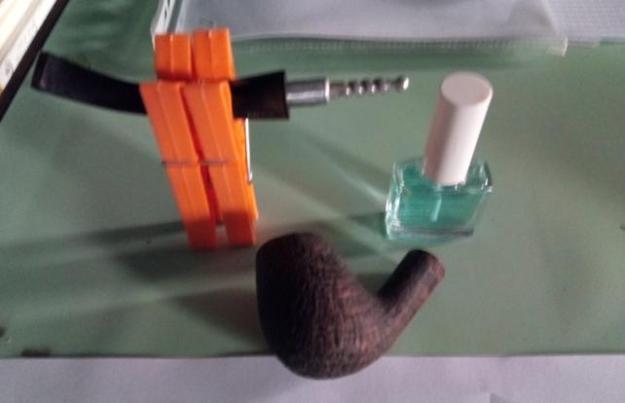
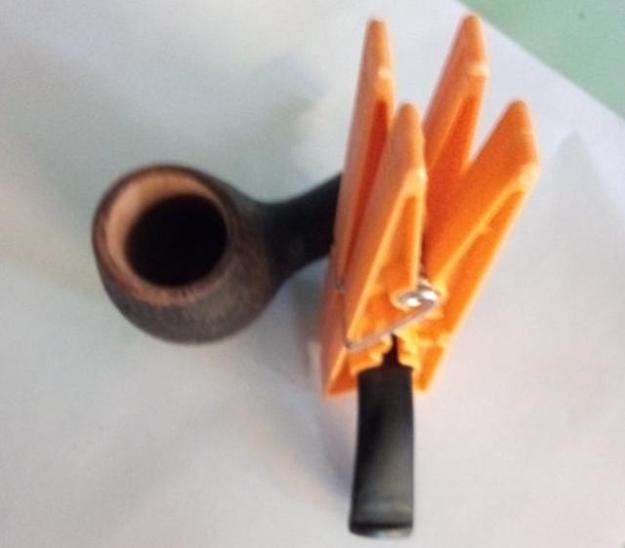
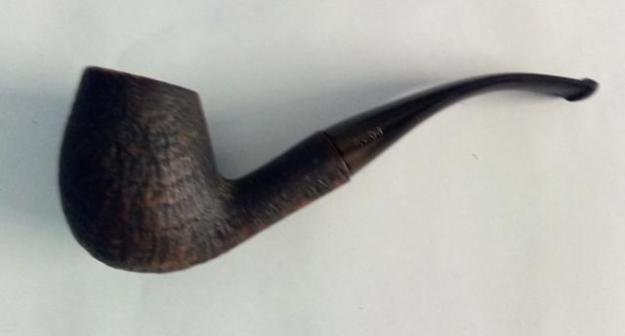
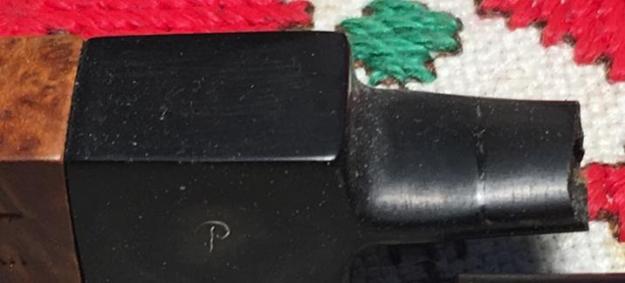
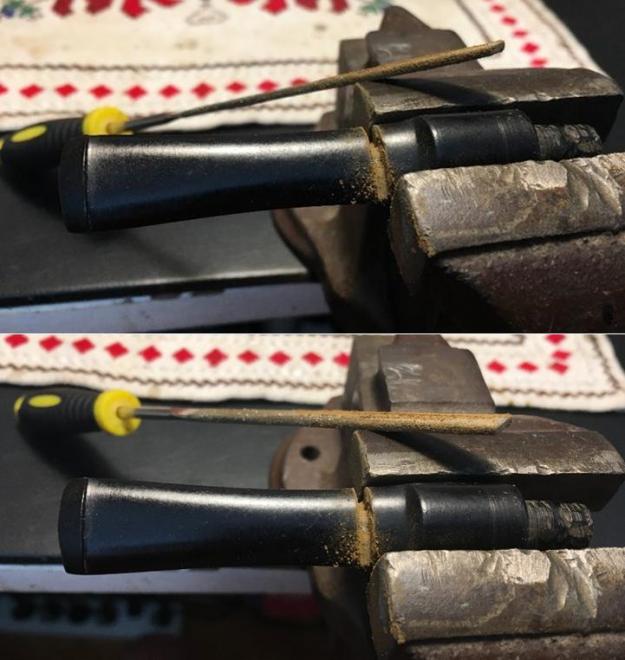
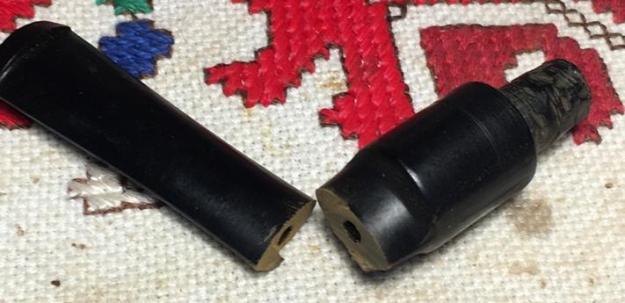
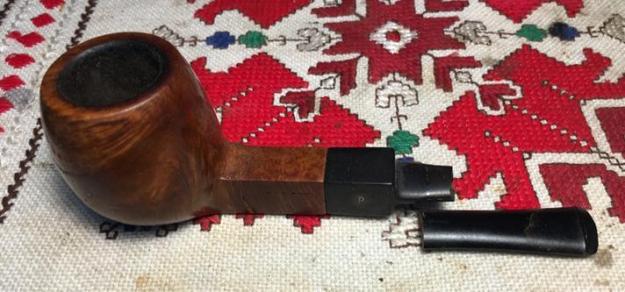
Here are the before photos of the pipe. The stem was very damaged with a bite through on the top side and much chewing around the edges of the stem. The fit of the stem in the shank is also not good. The bowl is very dirty with little room in the bowl – thick cake and lots of overflow on to the back side of the rim.I reamed the bowl with reamers. I sanded out the bowl to remove the remants of cake. I cleaned the mortise, and the airway in the shank and stem with pipe cleaners and alcohol. I patched the chewed through stem and cleaned and polished the stem.Once the pipe was clean the metal tenon was loose in the mortise so I painted it with a coat of clear fingernail polish and let it dry in my improvised clothespin vise. You can see what the bowl looks like now in the next two photos. It is quite a change. Here are some photos of the completed pipe. Thanks Rob from Italy.

Cleaning up a Peterson of Dublin Killarney Ebony 999 Rhodesian


Blog by Steve Laug

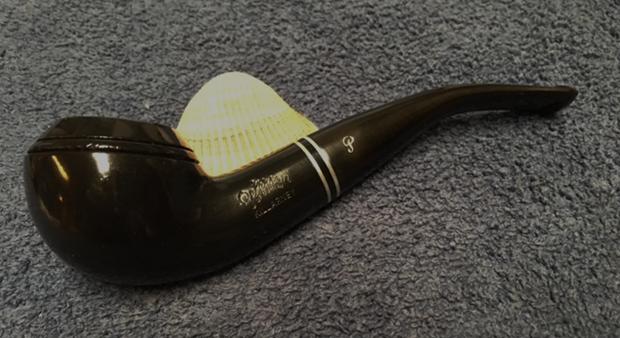
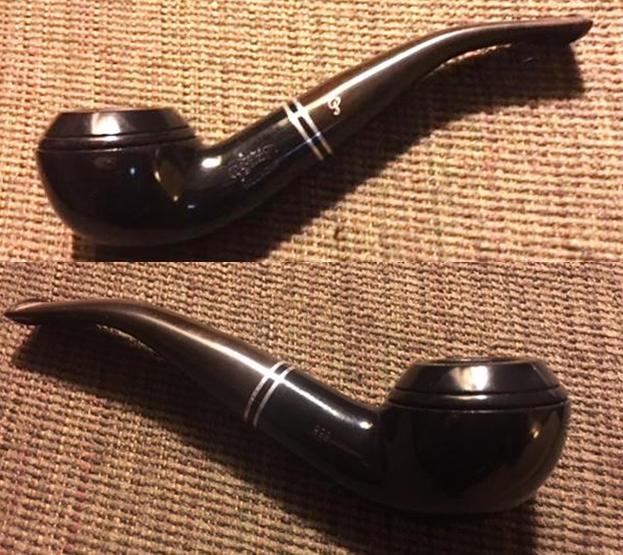
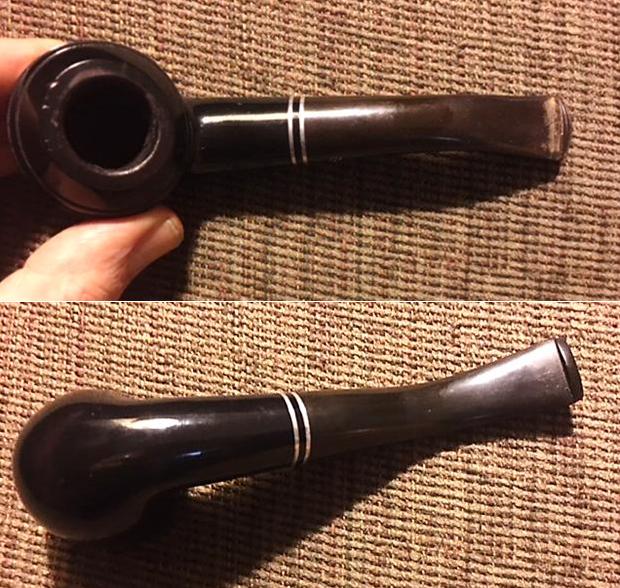
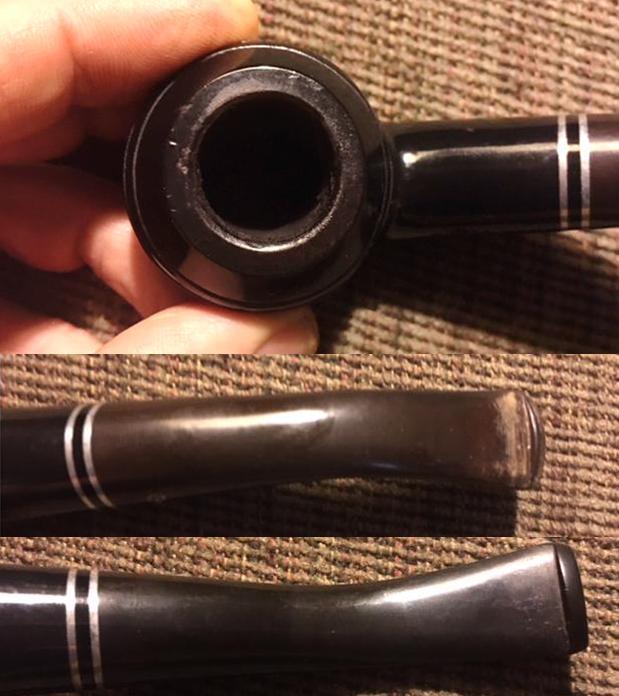
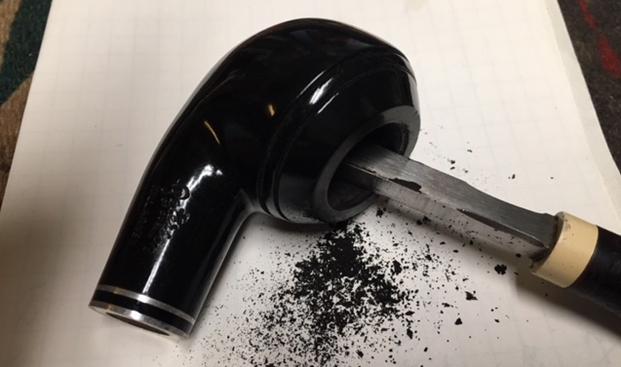
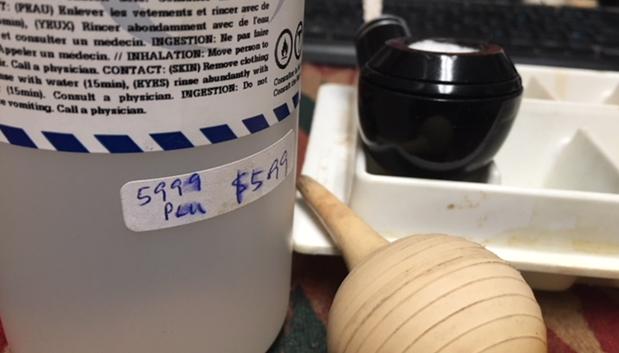
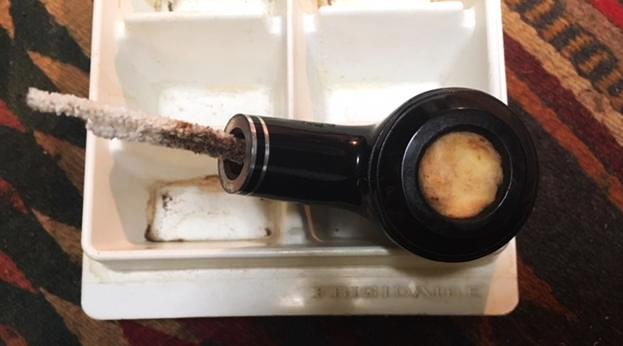
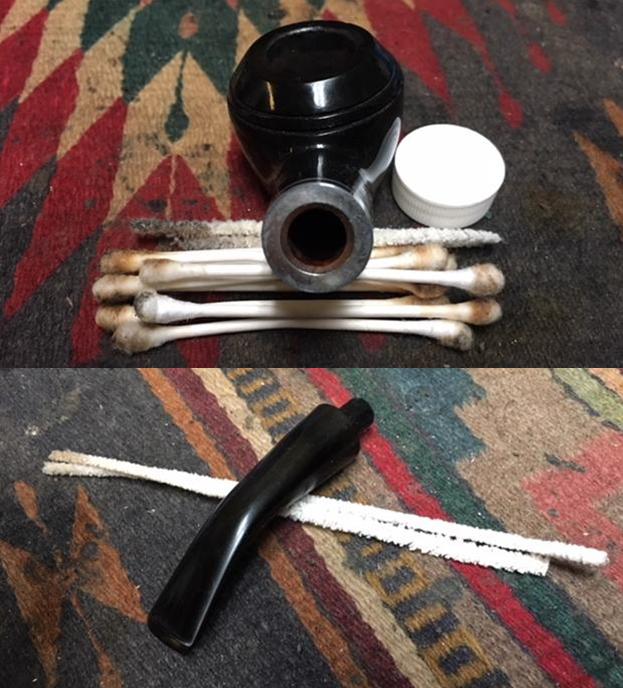
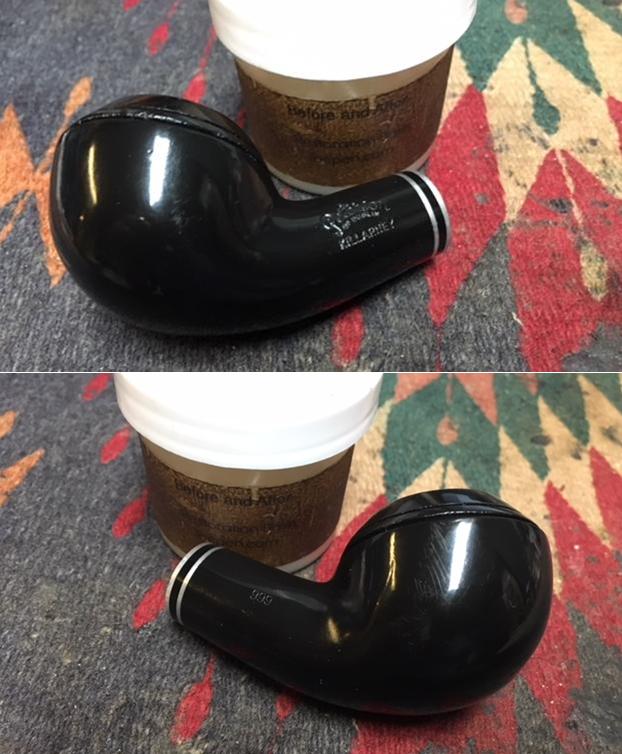
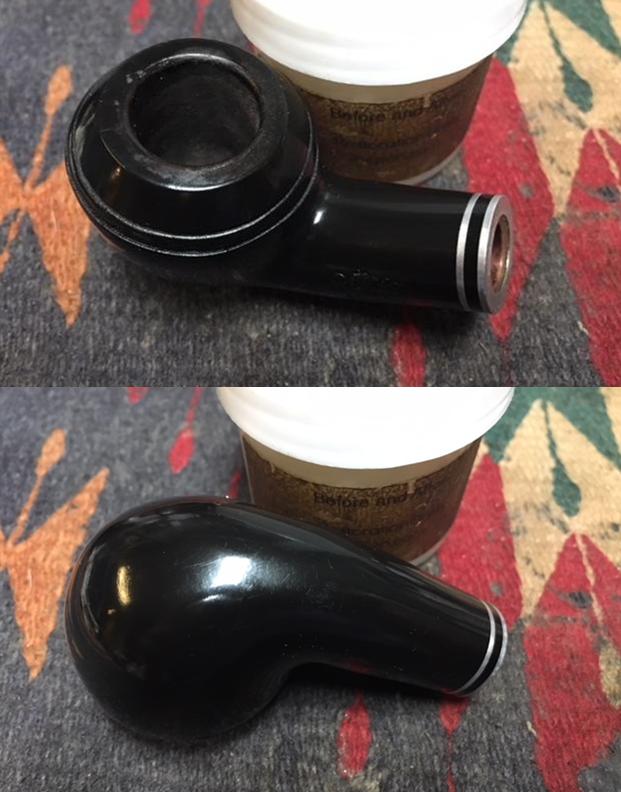
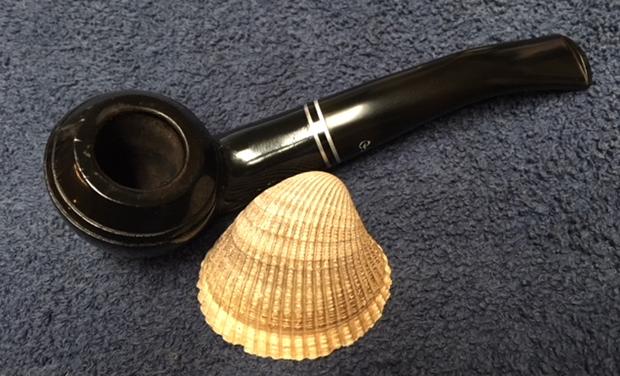
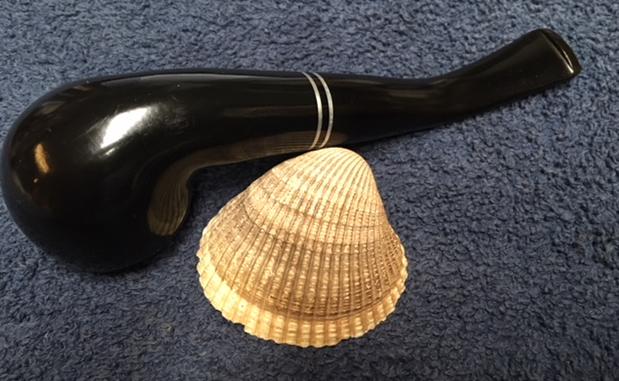
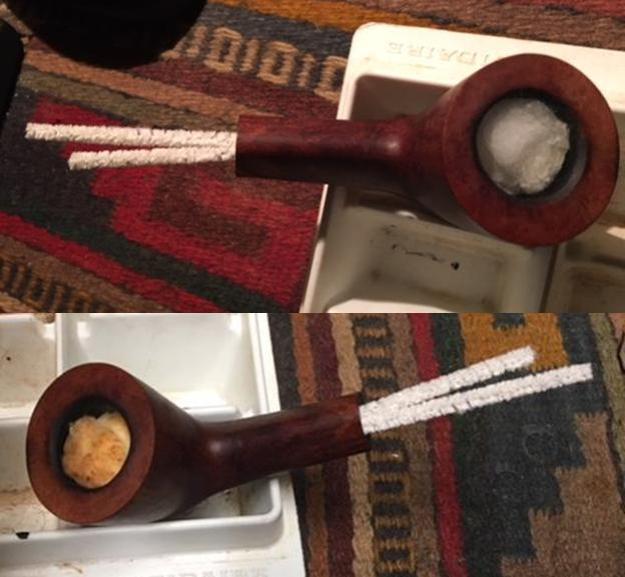
The next pipe on the work table was a Peterson of Dublin 999 – one of my favourite shapes. This one is a dress edition (coated with a shiny black paint). In researching the pipe a bit I found that it was part of what was called the Killarney Ebony Series. Where the typical Killarney sported a rich red stain, this one had a shiny black finish. There were a few very small dings but none breaking through the finish. The top of the bowl was a little dirty but nothing significant. The end of the shank had a silver band with a black acrylic insert. The pipe was a classic 999 Peterson’s Rhodesian with a thicker shank. The left side of the shank was stamped Peterson over of Dublin in an arc over Killarney. The right side was stamped with the shape number 999. The outside of the pipe was clean. There was a thin cake in the bowl, a slight buildup of grime on the top of the rim. The tapered fishtail stem was oxidized but the Peterson P logo on the left side was perfect. There were not any tooth marks and only light tooth chatter on the stem. I took photos of the pipe before I cleaned it up. I took a close up photo of the bowl and rim to show the condition of the pipe before I started to work on it. The top was dirty with some tarry residue but no damage to the surface of the rim. The bowl had a thin cake but looked to be solid. There was a very sweet smelling aromatic tobacco scent to the entire pipe. The finish of the bowl was in good condition. The second and third photos show the condition of the stem.I cleaned off the buildup on the top of the rim with a cotton pad and saliva until the rim top was clean. It would need to be polished but it was clean and undamaged. I reamed the bowl with a Savinelli Fitsall Pipe Knife and scraped the cake back to bare briar.Because of the overwhelming sweet aromatic smell I stuffed cotton balls into the bowl and filled it with 99% isopropyl alcohol to leach out the oils in the briar. I put a folded pipe cleaner in the shank to wick out the oils in the shank. I use an ear syringe (bulb) to put the alcohol in the bowl and keep it off of the finish. I did not want to damage the painted shiny black finish with the alcohol. The P logo on the stem was in perfect condition so I worked around that so as not to damage it. I lightly sanded the stem down with 220 grit sandpaper to remove the oxidation and tooth chatter on both sides of the stem at the button. I polished the stem with micromesh sanding pads – wet sanding with 1500-2400 grit pads and dry sanding with 3200-12000 grit pads. I wiped the stem down after each pad with Obsidian Oil to preserve and protect the rubber. I finished polishing the stem with Before & After Pipe Stem Polish – both Fine and Extra Fine polish. I polished it and afterward I gave it a final coat and set it aside to dry. After the bowl had been sitting with the alcohol and cotton balls overnight I took the following photo to show how much of the tars and oils leached out into the cotton. I removed them and threw them away. I scrubbed out the bowl with a cotton pad to remove the remaining debris from the cotton. I scrubbed out the shank – working on the mortise with pipe cleaners, cotton swabs and alcohol until it was clean. I cleaned the airway in the shank and stem with alcohol and pipe cleaners as well. I always use 99% isopropyl alcohol because of the low percentage of water in it and the quick evaporation rate.With the interior and exterior of the pipe clean I rubbed down the briar with Before & After Restoration Balm. I worked it into the plateau on the rim top and shank end as well as into the smooth briar on the rest of the bowl and shank. The Balm works to clean, enliven and protect the briar. I worked it into the briar with my fingertips and the help of a horsehair shoe brush. I let the balm sit for a little wall and then buffed with a cotton cloth to raise the shine. The briar came alive with the balm. I took the following photos to give a picture of the pipe at this point in the process. I the polished the bowl and stem on the buffing wheel with Blue Diamond to remove the remaining small scratches and raise the shine. I gave the bowl and stem multiple coats of carnauba wax and buffed the pipe with a clean buffing pad to raise the shine. I hand buffed it with a microfiber cloth to deepen the shine. The pipe polished up pretty nicely. This turned out to be a beautiful pipe in terms of shape and finish. The finished pipe is shown in the photos below. The dimensions are Length: 6 inches, Height: 1 1/2 inches, Outside diameter of the bowl: 1 3/4 inches, Chamber diameter: 3/4 of an inch. Thanks for walking through the restoration with me as I worked over the Peterson’s Killarney Ebony. I will be adding it to the rebornpipes store shortly so if you are interested in adding it to your collection send me an email or a message on Facebook. Thanks for looking. 

Charatan Models & Shape Information for the Collector.


In my hunt for information on the Charatan’s Make Distinction Dublin that I worked on recently I came across this helpful list of models and shapes of Charatan’s Make pipes. It was listed on reddit and it is actually the first list I have seen presenting the shapes and models available. I thought it would be worth posting here for quick reference. Here is the link to the original post. https://www.reddit.com/r/PipeTobacco/comments/z9knr/charatan_models_shape_information_for_the/ Thanks to the original poster of this on reddit. — Steve

Charatan Models & Shape Information for the Collector.

Charatan Models Lane Era
DC Stands for Double Comfort Bit / Stem, This is a Step Down Style Stem, it is easily distinguished from a standard Saddle bit, or Fishtail.

Charatan’s make freehand straight grains
Summa Cum Laude
Crown Achievement
Royal Achievement
Achievement
Coronation
Supreme 200
Supreme 150
Supreme 100
Supreme S
Supreme
Selected XLG
Selected
Executive XLG
Executive
Distinction XLG
Distinction
After Hours
Free hand Relief

Charatan’s make “Apprenticeship” standard shape grades
Special
Relief Grain (tan)
Relief Grain (dark)
Belvedere
Perfection

Charatan Shape Numbers
8 Large bulldog / saddle bulldog
11 bent 1/2 bent billiard
12 Large billiard
33 Bell Dublin
47 Ritz heavy shank pot
48 Large pot
58 Newmarket 1/16 bent long shank Dublin
61 Huntsman horn
63 Zulu
72 Burlington 1/4 bent stack
73 Salisbury pointed heel 1/4 bent apple
80 Large Dublin
81 Gilpin Dublin-bowl poker
83 Cavalier round rim calabash
84 The Ton barrel bowl poker
89 Bent pot diamond shank 1/4 bent pot
91 Medium Dublin
101 Diamond billiard / diamond shank billiard
102 Extra large billiard
109 Rhodesian 1/4 bent Rhodesian
122 Apple
148 Outsize pot
211 Outsize bent 1/2 bent billiard
402 Outsize lumberman / Canadian
420 Outsize billiard / heavy shank billiard
502 Prince prince
651 Banker diplomat
652 Panel billiard
654 Skater skater
655 Pot royal pot
0104 Medium lumberman / Canadian
0120 Large lumberman / Canadian

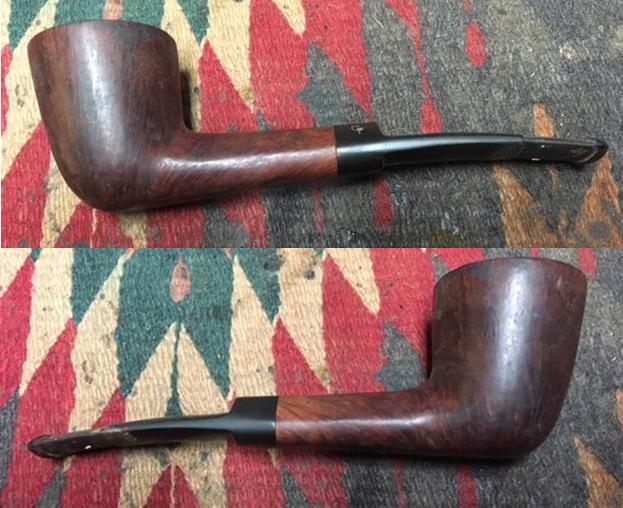
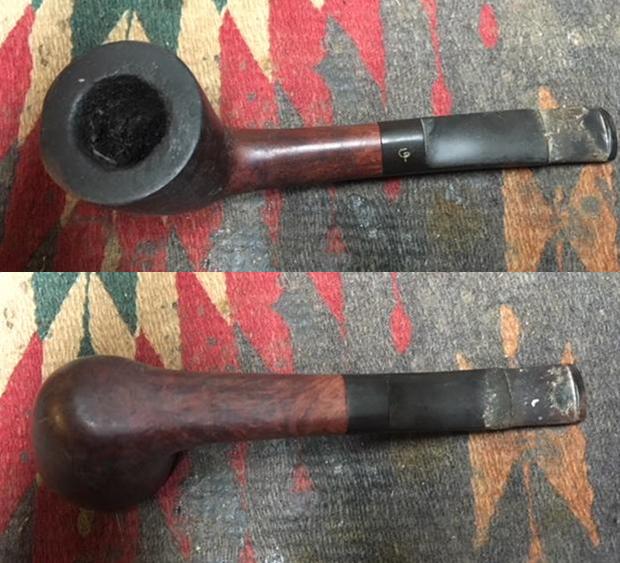
Farida’s Dad’s Pipes #6 – Restoring a Charatan Make Distinction


Blog by Steve Laug

I am back working on one of the pipes that came from the estate of an elderly gentleman here in Vancouver. I met with his daughter Farida a year ago and we looked at his pipes and talked about them then. Over the Christmas 2017 holiday she brought them by for me to work on, restore and then sell for her. There are 10 pipes in all – 7 Dunhills (one of them, a Shell Bulldog, has a burned out bowl), 2 Charatan Makes, and a Savinelli Autograph. I have restored all but three of them – a Dunhill Shell and the two Charatan’s Makes. His pipes are worn and dirty and for some folks they have a lot of damage and wear that reduce their value. To me each one tells a story. I only wish they could speak and talk about the travels they have had with Farida’s Dad.

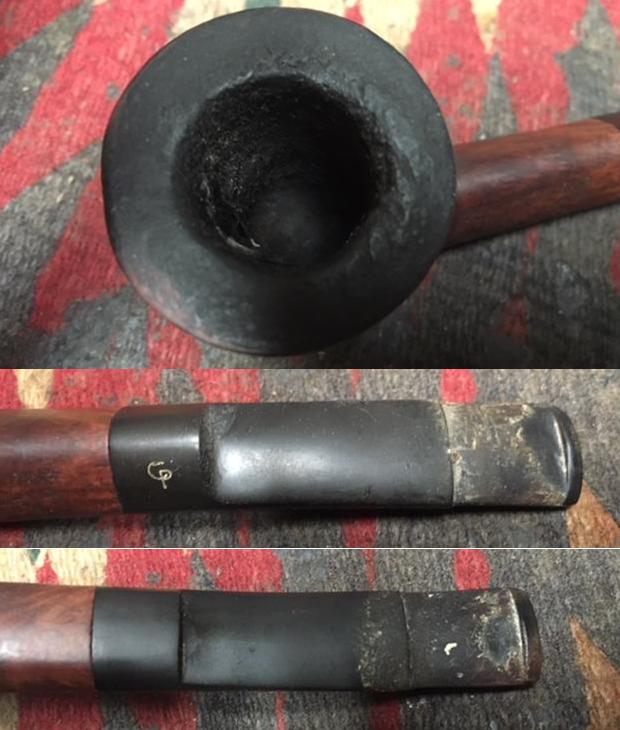
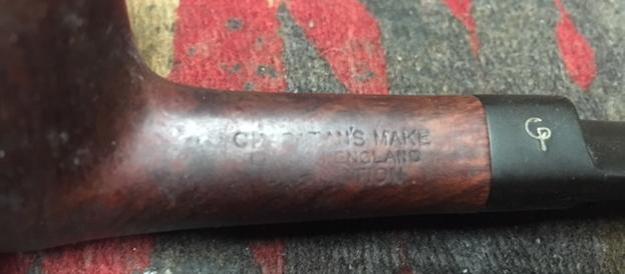
The bowl was thickly caked and the cake had flowed over onto the smooth finish on the rim top forming hard lava that made the top uneven. The inner and outer edges of the rim were both damaged. On the right front of the bowl the rim had a burned area – it was not a deep burn but it had darkened. On the back of the bowl there was damage on the inner edge of the bowl and it looked like it might be slightly out of round. The stem was oxidized but otherwise in good condition. There was a thick sticky, oily substance on the surface of the stem that I could scrape with my fingernail. There were tooth marks and chatter on both sides in front of the button. I took photos of the pipe to show what it looked like before I started the cleanup work. I took close up photos of the bowl and rim top as well as the stem. You can see the condition of the rim top and bowl in the first photo. The outer edge has damage on the front right – burn damage and wear that comes from lighting a pipe repeatedly in the same spot. The inner edge at the back middle also shows damage but I won’t know until I remove the thick lava overflow on the surface. The stem had tooth chatter and some bite marks on the top and the underside of the stem just ahead of the button.I took a photo of the left side shank stamping – it is readable but faint on the left side.It has been a while since I have worked on the remaining pipes that belonged to Farida’s Dad. I thought it might be helpful to remind us all of the background story of these pipes. Here is the material that I quoted in previous blogs. I have included both the written material and the photo that Farida included of her Dad.

When I wrote the blog on the Classic Series Dunhill and thinking about its travels, Farida sent me an email with a short write up on her Dad. She remembered that I had asked her for it so that I could have a sense of the stories of her Dad’s pipes. Here is what she wrote: My dad, John Barber, loved his pipes. He was a huge fan of Dunhill and his favourite smoke was St. Bruno. No one ever complained of the smell of St. Bruno, we all loved it. I see the bowls and they’re large because he had big hands. When he was finished with his couple of puffs, he would grasp the bowl in the palm of his hand, holding the warmth as the embers faded. The rough bowled pipes were for daytime and especially if he was fixing something. The smooth bowled pipes were for an evening with a glass of brandy and a good movie. In his 20s, he was an adventurer travelling the world on ships as their radio operator. He spent a year in the Antarctic, a year in the Arctic and stopped in most ports in all the other continents. He immigrated to Canada in the mid-fifties, working on the BC Ferries earning money to pay for his education. He graduated from UBC as an engineer and spent the rest of his working life as a consultant, mostly to the mining companies. Whatever he was doing though, his pipe was always close by. 

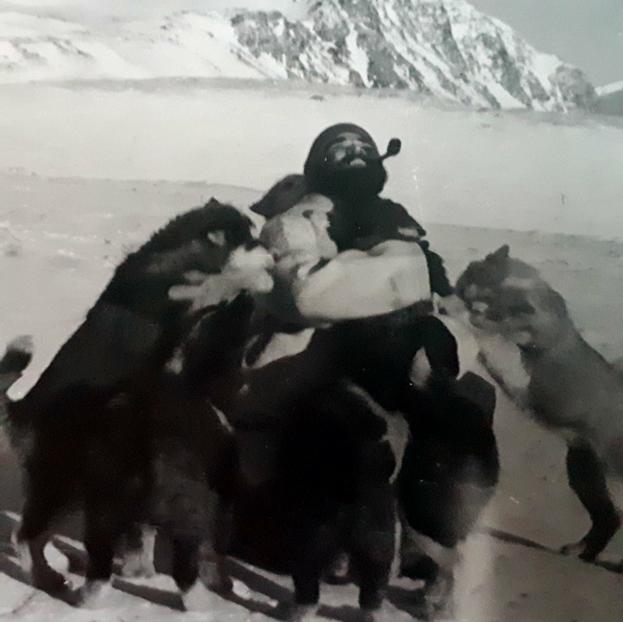
She sent along this photo of him with his sled dogs in the Antarctic sometime in 1953-1954. It is a fascinating photo showing him with a pipe in his mouth. He is happily rough housing with his dogs. As a true pipeman the cold does not seem to bother him at all. Thank you Farida for sending the photo and the background story on your Dad for me to use on the blog. I find that it really explains a lot about their condition and gives me a sense of who Dad was. If your Dad was rarely without a pipe I can certainly tell which pipes were his favourites.As I looked over the pipes I noted that each of them had extensive rim damage and some had deeply burned gouges in the rim tops. The bowls seemed to have been reamed not too long ago because they did not show the amount of cake I would have expected. The stems were all covered with deep tooth marks and chatter and were oxidized and dirty. The internals of the mortise, the airway in the shank and stem were filled with tars and oils. These were nice looking pipes when her Dad bought them and they would be nice looking one more when I finished.

Here are the links to the previous five blogs that I wrote on the five pipes that I have finished. The first was a Dunhill Shell oval shank pot (https://rebornpipes.com/2018/02/04/restoring-a-1983-dunhill-shell-41009-oval-shank-pot/). The second was a Dunhill Classic Series Shell Billiard (https://rebornpipes.com/2018/02/08/faridas-dads-pipes-2-restoring-a-1990-lbs-classic-series-dunhill-shell-billiard/). The third pipe was a Savinelli Autograph (https://rebornpipes.com/2018/02/15/faridas-dads-pipes-3-restoring-a-savinelli-autograph-4/). The fourth pipe was a Dunhill Red Bark Pot that was in rough shape (https://rebornpipes.com/2018/03/10/faridas-dads-pipes-4-restoring-a-dunhill-red-bark-pot-43061/). The fifth pipe was a Dunhill Root Briar Bent Billiard https://rebornpipes.com/2018/07/07/faridas-dads-pipes-5-restoring-a-dunhill-root-briar-56-bent-billiard/

Today, I went back to the remaining three pipes in the collection today and chose to work on one of the Charatans – a triangular shank Dublin. It was dirty but I was able to read the stamping. On the top left side of the triangular shank it is stamped Charatan’s Make, over London, England over Distinction. On the right side it was stamped Made By Hand in the City of London. I cannot see any shape number on the shank as it is pretty worn. The smooth finish was sticky with oils and thick grime. The bowl felt oily to touch.

To try and figure out the era of the Charatan’s pipe I was working on I turned to the pipephil website on Logos and Stampings. There is some really helpful information on each of the lines of Charatan’s Make pipes that entered the market. Here is the link to the section of the site that I turned to, http://www.pipephil.eu/logos/en/logo-charatan.html. There is an alphabetical listing of the lines but unfortunately they did not list the Distinction. The site did give a short history of the brand. I quote the portion that is most pertinent.

The brand was founded in 1863 by Frederik Charatan. When his father retired in 1910, Reuben Charatan took over the family business. All the pipes were handmade until 1973. The brand name has been overtaken by Dunhill in 1978 and sold in 1988 to James B. Russell Inc.(NJ, USA). During the period 1988-2002 Charatans were crafted by Butz Choquin in St Claude (France). Dunhill re-purchased Charatan brand name in 2002 and Colin Fromm (Invicta Briars, Castleford) followed up on freehand production.

I turned to Pipedia to see if I could find more information on the brand and possibly a link to the Distinction line (https://pipedia.org/wiki/Charatan) but once again in the general article it was not listed.  It did give a little more historical information. I quote the pertinent parts and have highlighted in bold the sections that give information on this particular pipe.

In 1863 Frederick Charatan, a Russian/Jewish immigrant, opened a shop in Mansell Street, located in the borough of Tower Hamlets, London E1, where he began to carve Meerschaum pipes. These pipes got very popular soon, and thus Charatan moved to a bigger workshop in Prescot Street, just around the corner. Here he began to make briar pipes which should make the name famous the world over. Charatan was the first brand to make entirely hand-made briars from the rough block to the finished pipe including the stems. The nomenclature “Charatan’s Make” refers to this method of production and was meant to differ Charatan from other brands who “assembled” pipes from pre-drilled bowls and delivered mouthpieces.

Being the undisputed No. 1 in English pipemaking, Charatan was approached by Alfred Dunhill who was unsatisfied with the quality of the pipes he imported from France. During 1908 – 1910 Dunhill bought pipes from Charatan paying exorbitant prices to ensure he had some of the very best pipes for sale in England. In 1910 he lured away Joel Sasieni, one of Charatan’s best carvers, and opened his own small pipe workshop on 28 Duke Street. On the retirement of his father in 1910 Reuben Charatan took over the family business…

…The pre-Lane period (prior to 1955) and the Lane era pipes (1955 to until sometime between 1979 – 1984) are of primary interest the collector. The Lane era is often quoted as beginning about 1950… Charatan records are almost non-existent before Lane due to a factory fire, making it difficult to date pre-Lane pipes. Charatan used 4 basic grades prior to 1950: Supreme, Selected, Executive, and Belvedere. After 1950 Herman Lane’s influence began, and the grades started to expand. In 1955 Lane took over sole distributorship of Charatan in the US. In 1957 he introduced the Supreme S. Most of his other introductions were from the 60’s and early 70’s…

The section called Miscellaneous Notes had some interesting information.

Charatan records indicate the DC (Double Comfort) bit was introduced in the 50’s, but some report seeing them in earlier production. Still others indicate they were introduced by Lane in 1960. Regardless, the DC bit is not an accurate way to date a pipe because many Charatan’s were made with regular and saddle type bits throughout the “Lane Era”…

…The Lane Trademark serif and circled L indicates the pipe is from the “Lane Era” (approx. 1955 to 1979 -1984?), however it appears that both the English factory or Lane themselves sometimes, or perhaps even often forget to stamp the L on a pipe. The Charatan factory was known for inconsistencies, especially in stampings. Therefore, although an L on the pipe definitely defines it as a Lane Era pipe, the lack of it could simply mean the pipe missed receiving the stamp from the factory. The lack of the trademark could also mean the pipe was destined for the European market.

…Generally, when the pipe is stamped with the BLOCK letters “MADE BY HAND” it means the pipe was probably made between 1958 and 1965”

Generally, block letters “MADE BY HAND” and some of the other nomenclature in script (i.e. City of London or Extra Large next to the MADE BY HAND) means the pipe was made sometime between 1965 and the mid 1970’s. The total script nomenclature “Made by Hand in City of London” evolved over this period of time, so many pipes had variants, such as Made By Hand in block letters and City of London in script, or some other variation of the terms or stampings. The Charatan Logo (CP) on the pipe bit was changed over the years.

I found an interesting Russian site on the various lines of Charatan. Here is the link to that site – http://brbpipe.ru/wp-content/uploads/2012/06/T-shop_1-2011-12_56-69_3.pdf. I did a google translation of the section on the DISTINCTION line.

The first of two medium sized factories. Neutral flame grain under contrast stain. Sometimes, however, there is a completely fantastic, almost perfectly smooth cross cut, sometimes – inclined to the side of the smoker flame. The most important thing: in this and the next grade begins a serious predominance of freehand over cataloged shapes.

The reason for this predominance lies in the strategy of educating carvers. Both medium grades are the launch pad for those who sought the right to work with top grades. Where the freaks have become the rule. The master had to work out a sufficient number of freehands and show a personal fantasy, so that he was allowed to work with the best, selective locks. And if at this “school of life” you could make extra profits … well, you remember that in this regard, there was a little iron Hermann.

I also found a description of the Distinction on VKpipes. Here is the link to that site, https://www.vkpipes.com/pipeline/charatans-make-distinction. I quote from that site.

Distinction was one of the most successful and valued lines of Charatan’s pipes from the “first Lane era” (1961-95). These years the old good Charatan’s family manufactory turned into the brightest star of the pipe making by means of new investments, a successful management and a creative approach of the Charatan’s artisans. There’s no shape number on the pipe: it was made by one of the leading carvers at this factory regardless any catalogues…

I also found a list of the various lines of Charatan’s Make Pipes that helps to place the Distinction in the hierarchy of pipes. Here is the link to the list https://www.reddit.com/r/PipeTobacco/comments/z9knr/charatan_models_shape_information_for_the/. I will be posting it as a separate blog shortly. The Distinction line is just below the Executive line and just ahead of the After Hours line – both Charatan’s Make Freehand Straight Grains.

From all of the historical data I could work through this Charatan’s Make Distinction was one of the higher grade pipe from the mid 1970’s Lane era. I continue digging further into the dating of the pipe, but what I had found was a good start for me. If some of you would like to try your hand at dating it more accurately as to the time period it came out you might want to check out the article on Pipedia on Dating Charatans (https://pipedia.org/wiki/Dating_of_Charatans). I had enough for me to start working on the pipe itself and see what lay beneath the heavy tars and oils.
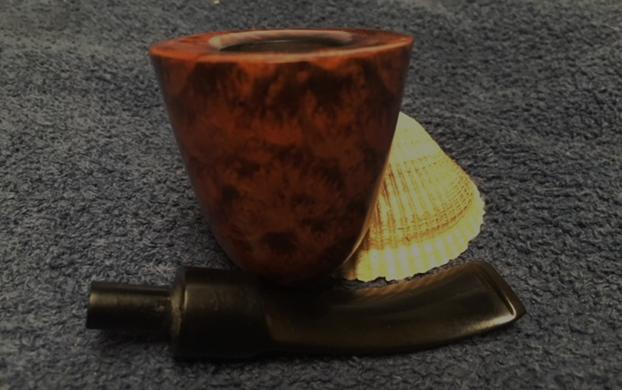
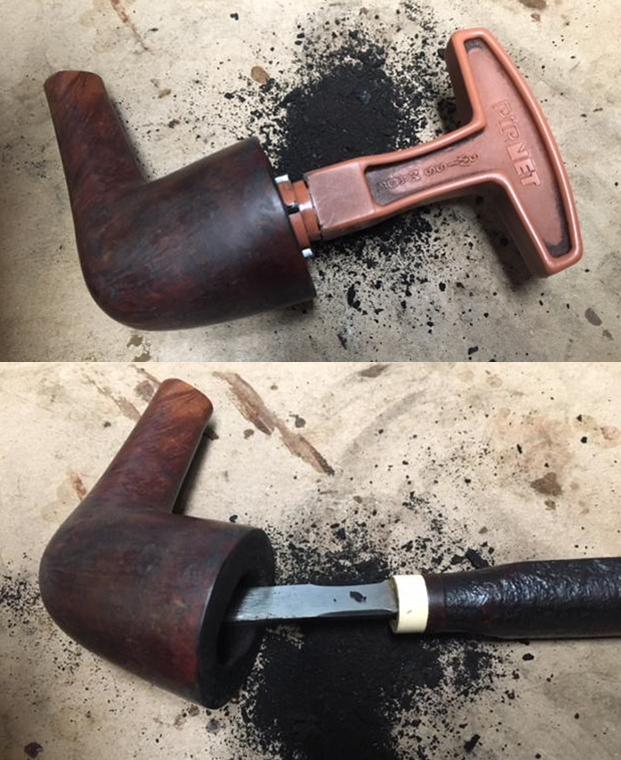
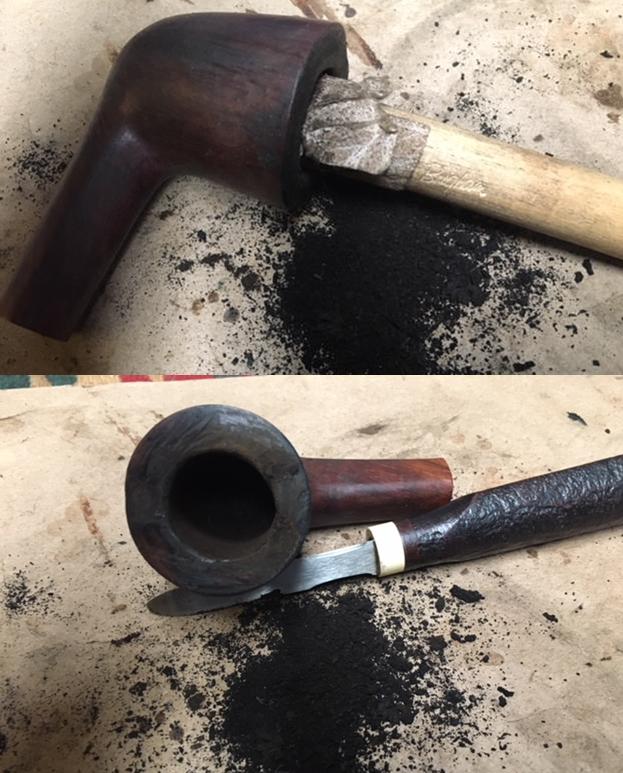
I began working on the pipe by reaming the bowl with a PipNet reamer. I used two of the four cutting heads to clean out the cake. The bowl was thickly caked so I started with the smaller of the two and worked my way up to the second one which was about the same size as the bowl diameter. I cleaned up what remained in the bowl with a Savinelli Fitsall Pipe Knife and scraped it back to bare briar. I finished by sanding the inside of the bowl with a dowel wrapped in sandpaper. I worked on the top of the rim with the edge of the Savinelli Fitsall Pipe Knife. I scraped the heavy buildup that was there. I topped the bowl on a topping board with 220 grit sandpaper to remove the damage to the top surface of the rim and clean up the damage to the edges. I did not have to remove a lot and repeatedly checked it to make sure that I had removed enough but not too much. I wanted to take the rim top down until the burn damaged area was smooth and minimized. The second photo shows the burned and damaged areas clearly. I continued to top the bowl until I had removed the damage. I wiped down the rim top with alcohol and cotton pads to remove the sanding dust. I scrubbed the exterior of the bowl and shank with a tooth brush and Murphy’s Oil Soap to break through all the grime. I rinsed the bowl under running water to remove the grime and grit. I repeated the process until I had the bowl clean. I took photos of the cleaned exterior of the bowl to show where things stood at this point in the process. I used a folded piece of 180 and 220 grit sandpaper to bevel the inner edge of the rim until I had removed most of the damage on the back inner edge.With the externals clean it was time to clean out the mortise and shank and airway into the bowl and the airway in the stem with alcohol, cotton swabs and pipe cleaners. I scraped the mortise with a dental spatula and a pen knife to loosen the tars before cleaning. I worked on the bowl and stem until the insides were clean. I wiped down the exterior of the bowl with alcohol on a cotton pad to remove any remaining oils and grimes from my cleaning of the bowl and rim. Once the alcohol evaporated the briar was very dry but also very clean. I rubbed down the briar with Before & After Restoration Balm. I worked it into the smooth finish to clean, enliven and protect the new finish. It also evened out the stain coat and gave the stain a dimensional feel. I let the balm sit for a little wall and then buffed it with a horsehair shoe brush. I buffed the bowl with a cotton cloth to raise the shine. There was some darkening on the rim top on the right front and around the inner edge of the bowl but the briar was solid all around the bowl. The bowl looked really good at this point in the process. I set it aside and turned my attention to the stem. I sanded out the tooth chatter on both sides with a folded piece of 220 grit sandpaper. I cleaned the surface of the stem with alcohol on a cotton pad and filled in the tooth marks with black super glue and set the stem aside to let the repair cure.While the stem repair was curing I stuffed the bowl with cotton balls and put a folded pipe cleaner in the shank. I filled the bowl with alcohol to leech out the oils and tars in the bowl. I set the bowl in an old ice cube tray and let it sit throughout the day while I was at work. I find that cotton balls work as well as kosher salt and the folded pipe cleaner leeches tars out of the shank as well. The first photo shows the pipe when I set it up early in the morning. The second shows it after it sat all day. The cotton balls were dark brown with the oils that had wicked out of the briar. The pipe smells fresh and new now!When the repair had cured I used a needle fill to clean up the sharp edge of the button. I sanded the repairs on the stem with 220 grit sandpaper to blend them into the rest of the surface of the vulcanite.I polished the stem with micromesh sanding pads – wet sanding with 1500-2400 grit micromesh sanding pads and dry sanding it with 3200-12000 grit pads. I rubbed the stem down with Obsidian Oil after each pad. I polished it further with Before & After Pipe Polish, using both the Fine and Extra Fine polishes to further protect and polish out the scratches. When I finished with those I gave it a final rub down with the oil and set it aside to dry.  With the stem polished I put it back on the pipe and lightly buffed the bowl with Blue Diamond. I buffed the stem with a more aggressive buff of Blue Diamond. I gave the bowl several coats of Conservator’s Wax and the stem several coats of carnauba wax and buffed the pipe with a clean buffing pad to raise the shine. I hand buffed it with a microfiber cloth to deepen the shine. The pipe polished up pretty nicely. The finished pipe is shown in the photos below. This is the sixth of Farida’s Dad’s pipes that I am restoring from his collection. I am looking forward to hearing what Farida thinks once she sees the finished pipe on the blog. This Charatan Distinction will soon be on the rebornpipes store if you want to add it to your rack. The dimensions are Length: 6 inches, Height: 1 3/4 inches, Outside diameter of the bowl: 1 1/2 inches, Chamber diameter: 7/8 inches. Thanks for walking through the restoration with me as I worked over another of the her Dad’s pipes. I have two more of his pipes to work on – one more Dunhill and one Charatan’s Make.
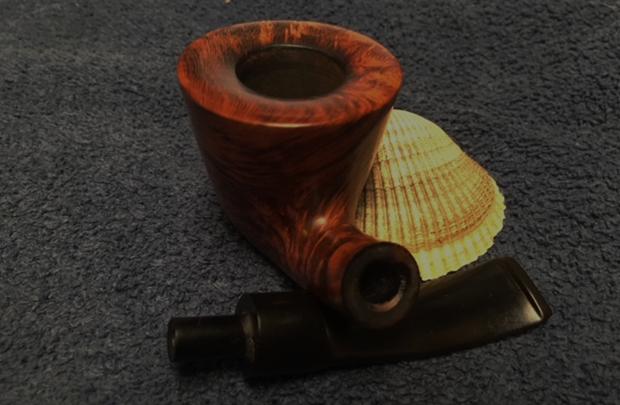
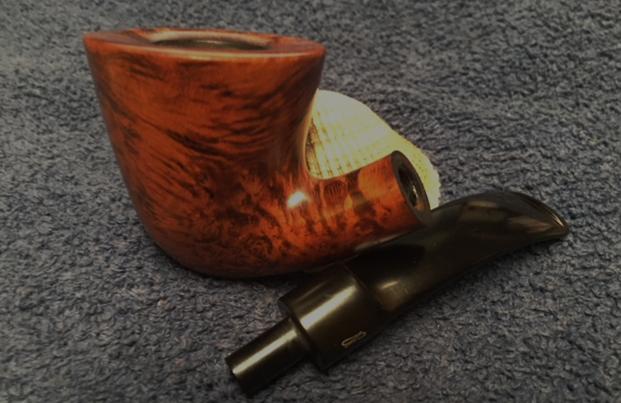
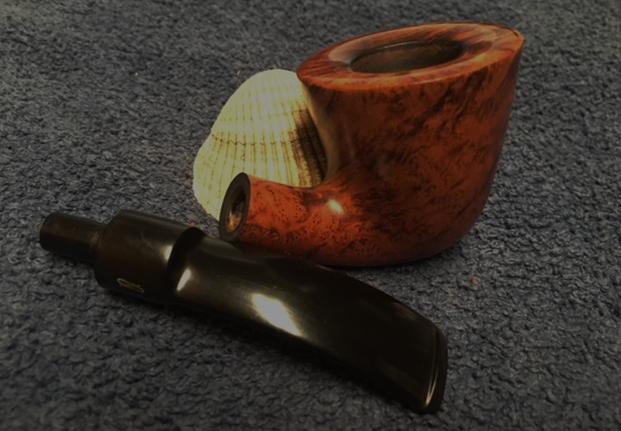
New Life for a Karl Erik Made in Denmark 5A Freehand


Blog by Steve Laug

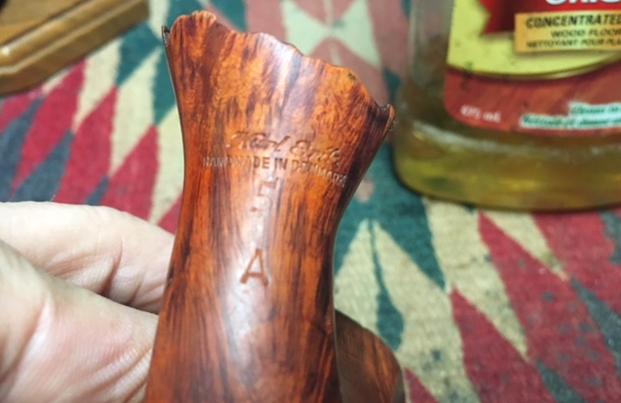
The next pipe on the work table was a beautifully grained Freehand. The bowl and shank had a smooth finish with mixed grain. The top of the bowl and the end of the shank was plateau. The shape of the bowl top was oval. The walls of the bowl are scooped on the sides and front of the bowl. Toward the back of each side there is a ridge running from the top to the bottom of the bowl. The bottom of the bowl is shaped almost like a spade. The shank is quite thick and the underside is stamped toward the shank end. It reads Karl Erik over Hand Made in Denmark over 5 over A. The bowl had a dull and dirty finish. There was a thin cake in the bowl and lava overflow and grime in the plateau on both the top and the end of the shank. The stem was oxidized but the Karl Erik KE logo was in perfect condition on top. There was tooth chatter on the top side and some deep tooth marks and chatter on the underside. I took photos of the pipe before I cleaned it up. I took a close up photo of the bowl and rim to show the condition of the pipe before I started to work on it. The plateau rim top was dirty and cake with lava overflow. The bowl had a thin cake but looked to be solid. The finish of the bowl was dull and looked tired. The second photo shows both the plateau top and the shank end. I reread the blog that Robert M. Boughton did for us on his “Grade O” Karl Erik to refresh my memory on the brand and the grading system (https://rebornpipes.com/2018/07/28/a-three-card-draw-for-an-inside-straight-with-an-old-karl-erik-hand-made-grade-o-freehand/). It was enlightening and from there I went on and looked up the brand on both Pipephil’s site and Pipedia to add some details to my knowledge.

Photo courtesy of Pipedia

From the Pipephil site I got a quick overview of the history of the brand. I quote: Brand created in 1965-66 by Karl Erik Ottendahl (1942 – 2004 †). In the best years he employed up to 15 craftsmen among which Bent Nielsen (see Benner) and Peder Christian Jeppesen. Former grading (ascending): from 4 to 1, and “Ekstravagant” (entirely handmade).  http://www.pipephil.eu/logos/en/logo-k1.html

From Pipedia here is a bit more detailed history of the brand.

Karl Erik Ottendahl (1942 – 2004) was born in Aalborg (Jutland), just a few miles from the very northernmost tip of Denmark. He began smoking a pipe when he was 14 and upon leaving school he started an apprenticeship…as a lithographer at the age of 16.

While working as an apprentice he began hand carving pipes as a hobby. Many were given as gifts to his more senior colleagues. Upon completion of his apprenticeship he moved to Nairobi, Kenya to work as a lithographer during the 1962 war. While in that war torn country, he was unable to procure pipes for himself. In the face of such a predicament, he chose to continue to make pipes for his own use rather than go without.

Returning to Denmark after three years he couldn’t find a well paid… job, and so he began making a few pipes on the side to boost his income choosing his prenames “Karl Erik” – logo “KE” – for his label. When he managed to find some major Copenhagen pipe stores willing to sell his pieces his reputation grew little by little and he was finally able to purchase more and better machinery and began working full time as a pipe maker. https://pipedia.org/wiki/Karl_Erik

Pipedia also included a short description of the grading system that was used. From what I can discern the numbers ascended (6-1) and the letters ascended as well.

KE’s new grading used numbers ascending from D to A. The unique “Ekstravagant” pipes C, B, A, AA to AAA. These superb pieces of remarkable quality were, almost certainly, the least expensive high- quality hand made pipes coming from Denmark today! https://pipedia.org/wiki/Karl_Erik

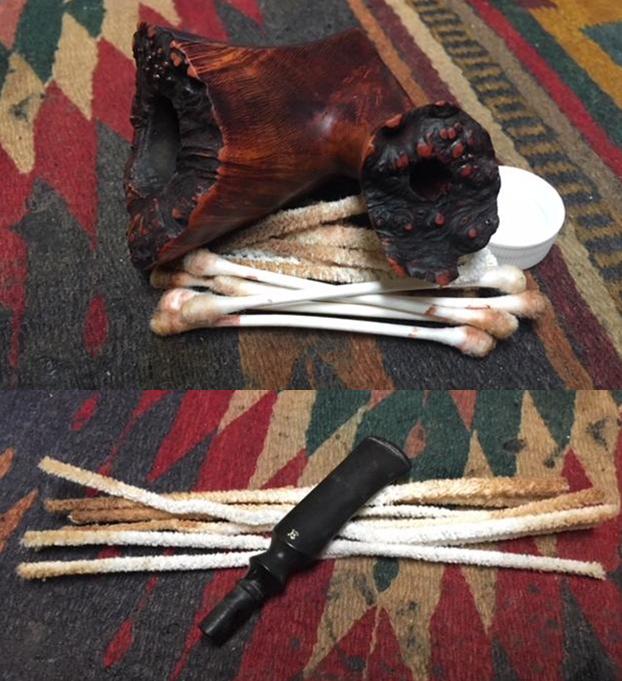
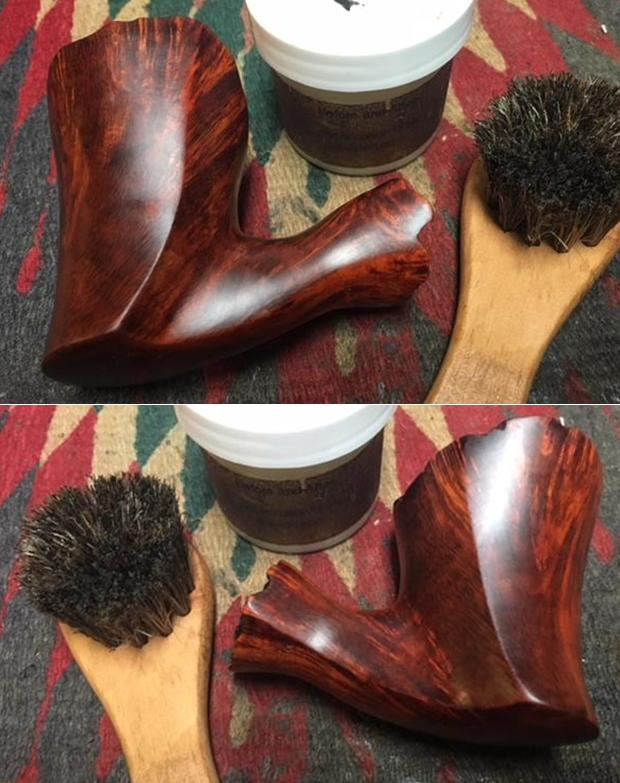
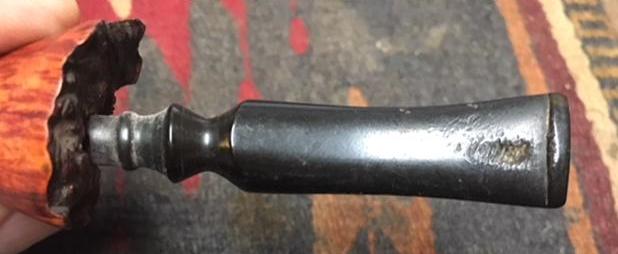
I used a brass bristle brush to clean up the plateau on the rim top and shank end. I scrubbed it dry to remove the buildup of grime and tars on both surface. The bristles are hard enough to remove the grime and soft enough not to scratch the surface. It is a tool I always have close at hand when working on Freehand pipes.Once the buildup was gone from the top and shank end I scrubbed the entire exterior with a tooth brush and Murphy’s Oil Soap to remove the dirt on the surface of the briar and the remaining dust in the plateau. I rinsed it under running water to remove the soap and debris from the pipe. I dried it off with paper towels and twisted the paper towels into the bowl to remove the light cake that was there. The pipe was starting to look really good. The grain stood out and the contrast was nice. I took a photo of the underside of the shank to show the stamping. You can read the stamp easily and the grade markings though more faint are still readable.I scrubbed out the shank – working on the mortise with pipe cleaners, cotton swabs and alcohol until it was clean. I cleaned the airway in the shank and stem with alcohol and pipe cleaners as well. I always use 99% isopropyl alcohol because of the low percentage of water in it and the quick evaporation rate.With the interior and exterior of the pipe clean I rubbed down the briar with Before & After Restoration Balm. I worked it into the plateau on the rim top and shank end as well as into the smooth briar on the rest of the bowl and shank. The Balm works to clean, enliven and protect the briar. I worked it into the briar with my fingertips and the help of a horsehair shoe brush. I let the balm sit for a little wall and then buffed with a cotton cloth to raise the shine. The briar came alive with the balm. I took the following photos to give a picture of the pipe at this point in the process. With the bowl finished at this point (other than the final buffing and waxing) I set it aside and turned my attention to the stem. I painted the deep tooth mark on the underside of the stem with the flame of a Bic lighter to raise the dent. It worked better than I expected and reduced the size of the bite mark significantly. (The first photo below is the stem prior to heating with the flame).The KE logo on the stem was in perfect condition so I worked around that so as not to damage it. I lightly sanded the stem down with 220 grit sandpaper to remove the oxidation and cleaned out the debris from the tooth marks with a cotton swab and alcohol. Once the stem was cleaned up I filled in the tooth mark with black super glue and set the stem aside to let the glue cure. Later in the afternoon when the glue had hardened I sanded the repair smooth with 180 and 220 grit sandpaper to blend it into the rest of the stem surface.I polished the stem with micromesh sanding pads – wet sanding with 1500-2400 grit pads and dry sanding with 3200-12000 grit pads. I wiped the stem down after each pad with Obsidian Oil to preserve and protect the rubber. After the final pad I gave it a final coat and set it aside to dry. I the polished the bowl and stem on the buffing wheel with Blue Diamond to remove the remaining small scratches and raise the shine. I gave the bowl and stem multiple coats of carnauba wax and buffed the pipe with a clean buffing pad to raise the shine. I hand buffed it with a microfiber cloth to deepen the shine. The pipe polished up pretty nicely. This turned out to be a beautiful pipe in terms of shape and finish. The finished pipe is shown in the photos below. The dimensions are Length: 6 inches, Height: 3 inches, Outside diameter of the bowl: 2 1/4 inches, Chamber diameter: 7/8 of an inch. Thanks for walking through the restoration with me as I worked over another beautiful Karl Erik Freehand. I will be adding it to the rebornpipes store shortly so if you are interested in adding it to your collection send me an email or a message on Facebook. Thanks for looking.

A New Old Stock, Unsmoked KBB Yello-Bole Billiard


Blog by Steve Laug

My brother has picked up quite a few older, unsmoked, NOS (New Old Stock) pipes recently. This one is a nice older KBB Yello-Bole Billiard. It has the KBB in a cloverleaf and next to that it reads Yello-Bole over Cured with Real Honey. Next to that is the symbol for a registered trademark ® (R in a circle). Underneath it reads Premier over Imported Briar. On the stem is the propeller inset logo that appeared on older Yello-Bole pipes. There is no other stamping on the shank. The finish is in perfect condition with a light varnish coat as it was when it left the factory. The bowl has the Yello-Bole Honey Coating. This pipe is new and unsmoked – New Old Stock. The finish is a light brown or tan stain. The propellered logo tapered stem is in excellent condition with some light oxidation on the topside and just needs a quick polish. The tenon holds the classic Yello-Bole spade stinger. It is removable and is pressure fit in the tenon. I took some photos of the pipe before I did a quick refresh of the bowl and stem. I took some close up photos of the rim top, bowl and stem to show the new condition of the pipe. I also took some photos of the bowl from the top down to show the Yello-Bole honey coating. The stem photos also show the propeller logo on the left side of the taper stem and the light oxidation on the top side.I took a photo of the stem with the classic Yello-Bole spade style stinger in place. It is a push fit stinger and is easily removed should the new owner wants to remove it. I recently restored a Yello-Bole Bulldog so I went back and read that blog again (https://rebornpipes.com/2018/08/12/cleaning-up-a-fascinating-kbb-yello-bole-premier-bulldog/). On that blog I quoted a section from a previous blog that I turned to try to narrow down a date for the pipe (https://rebornpipes.com/2013/01/25/yello-bole-logos-from-my-collection-of-old-yello-bole-pipes/).

There was a comment on that blog that came from Troy who I consider my go to guy for Yello-Bole information (he has written on rebornpipes and also has a blog of his own). Troy wrote as follows on dating Yello-Bole pipes by the stamping and logos.

“I have a large KBB Yello-Bole collection. They are some of my most favorite pipes and the best smokers for the money (briar wise) you can find in my opinion. I have restored and researched them quite a bit. I have several listed on my blog that I have cleaned or restored. I own about 30-40 KBB Yello-Boles now.”

“Here is a little guide to dating KBB Yello-Boles. If it has the KBB stamped in the clover leaf it was made 1955 or earlier as they stopped the stamping after being acquired by S.M. Frank. From 1933-1936 they were stamped Honey Cured Briar. Pipes stems stamped with the propeller logo they were made in the 30s or 40s no propellers were used after the 40s. Yello-Bole also used a 4 digit code stamped on the pipe in the 30s. If the pipe had the Yello-Bole circle stamped on the shank it was made in the 30s this stopped after 1939. If the pipe was stamped BRUYERE rather than briar it was made in the 30s.” (NB. The portions above in bold and underlined were highlighted as they pertain to the present pipe.)

From that information I ascertained the following. The NOS Premier billiard that I had was stamped with KBB in the cloverleaf on the left side of the shank which told me that the pipe was made before 1955. It had a propeller logo on the stem which further placed it in the period of the 30s and 40s. With all of that collected I knew the pipe was made between 1930 and 1949 which means that this NOS Premier Billiard has been sitting unsmoked for a very long time. I wish it could tell its story.
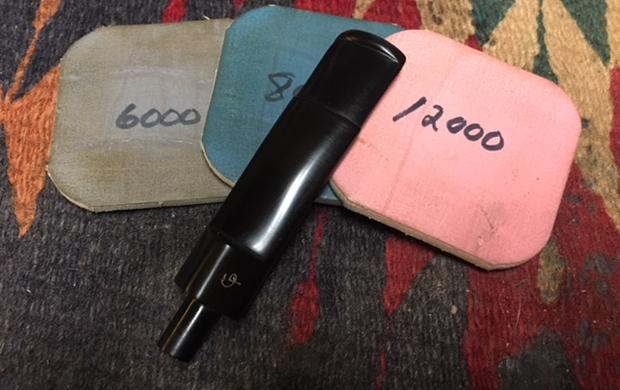
Ah well… I don’t know for sure where it came from or what previous pipeman had purchased this pipe and then decided not to smoke it but I was glad to have a look at it. Since it was an unsmoked pipe it did not need a lot of cleanup. I rubbed down the briar with Before & After Restoration Balm. I worked it into the smooth finish with my fingertips. The Balm works to clean, enliven and protect the briar. I let the balm sit for a little while and then buffed with a cotton cloth to raise the shine. I took the following photos to give a picture of the pipe at this point in the process. I worked on the top side of the vulcanite stem to remove the oxidation. I figured that the oxidation came from sitting in sunlight in a display case or board. It did not take too much work to remove it. I polished the stem with micromesh sanding pads, wet sanding it with 1500-2400 grit pads and dry sanding it with 3200-12000 grit pads. I wiped it down with Obsidian Oil after each sanding pad. After the final pad I gave it a final rub down of oil. I put the stem back on the shank and polished the bowl and stem on the buffing wheel using Blue Diamond polish to raise the shine. I gave the bowl and stem multiple coats of carnauba wax and buffed the entire pipe with a clean buffing pad to raise the shine. I hand buffed it with a microfiber cloth to deepen the shine. The pipe polished up pretty nicely. It is a beautiful pipe in terms of shape and finish. The finished pipe is shown in the photos below. The dimensions are Length: 5 1/4 inches, Height: 1 3/4 inches, Outside diameter of the bowl: 1 1/4 inches, Chamber diameter: 3/4 of an inch. Thanks for walking through the quick refresh on this one. If you are looking for an older piece of pipe history that you can break in and make your own then this might be the pipe for you. I will be adding it to the rebornpipes store shortly so if you are interested in adding it to your collection send me an email or a message on Facebook. Thanks for looking. 
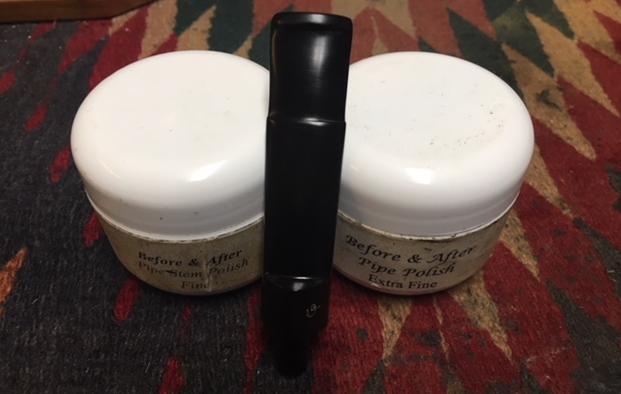
A New, Unsmoked Wild Honey Bent Billiard 1976 Birth Year Pipe


Blog by Steve Laug

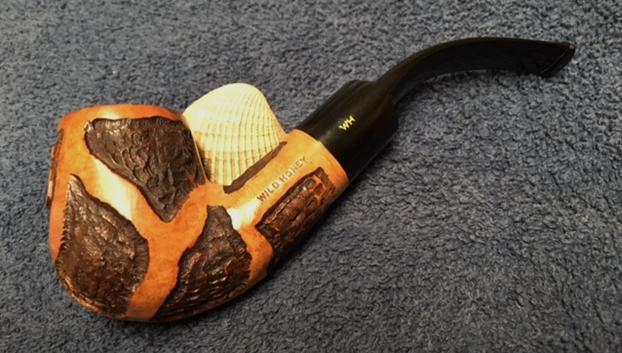
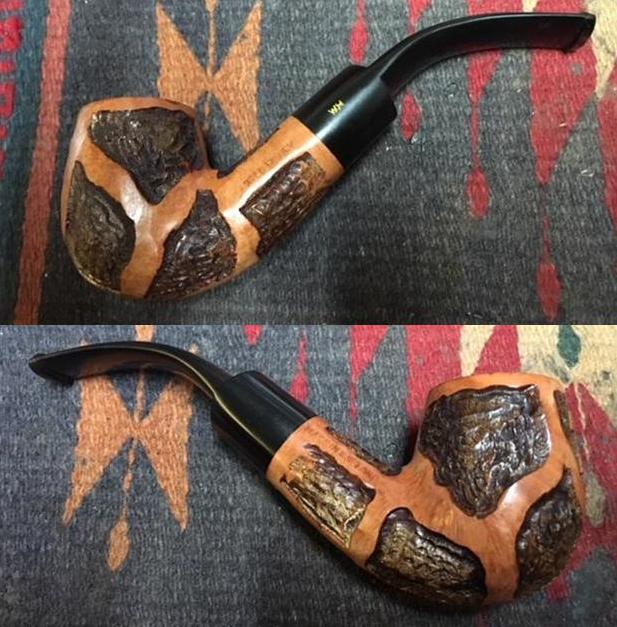
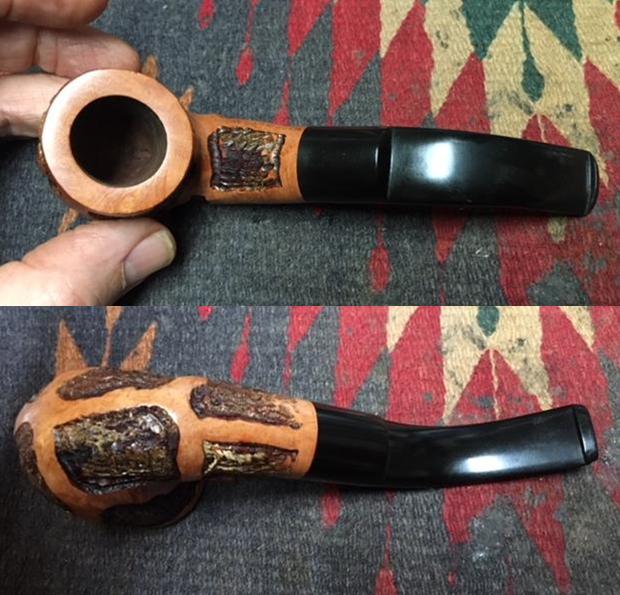
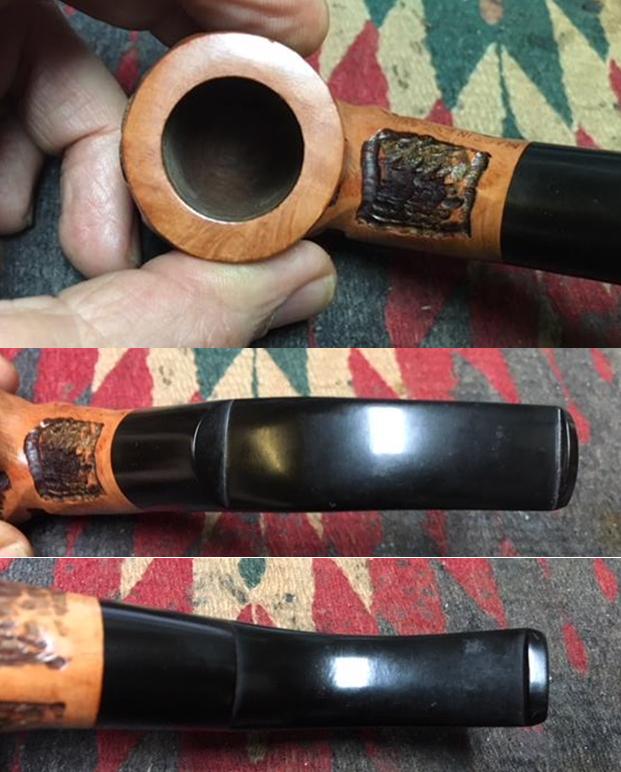
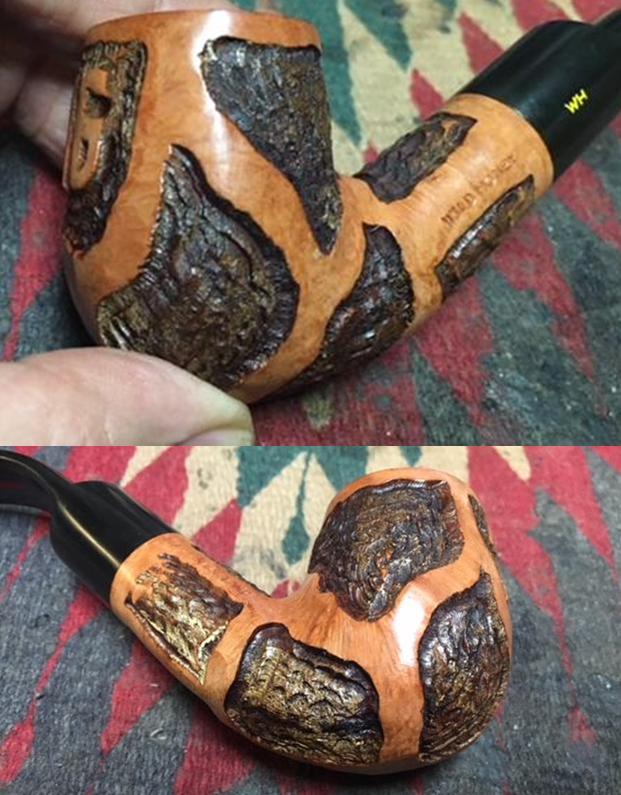
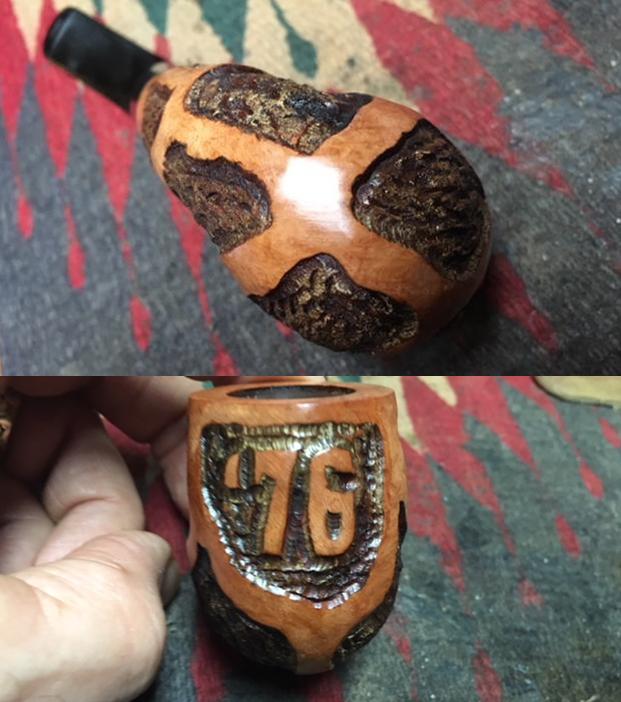
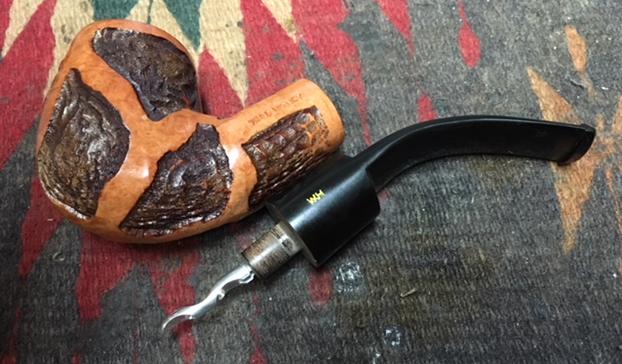
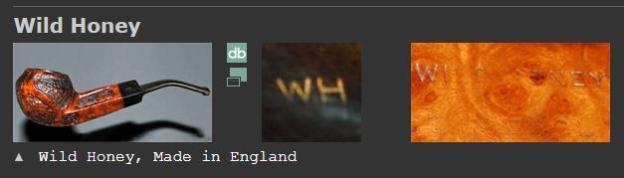
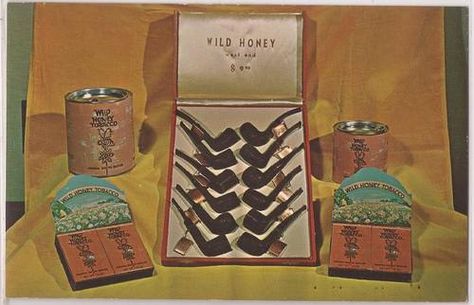
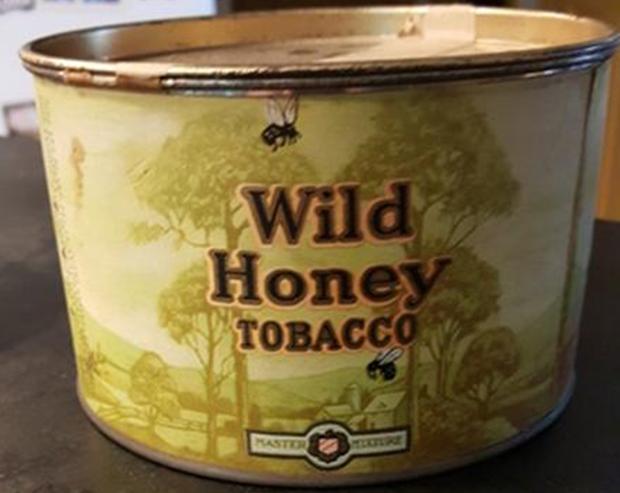
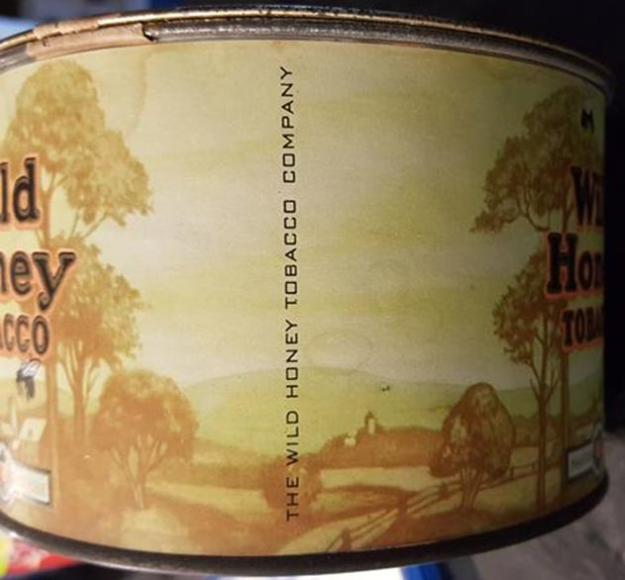
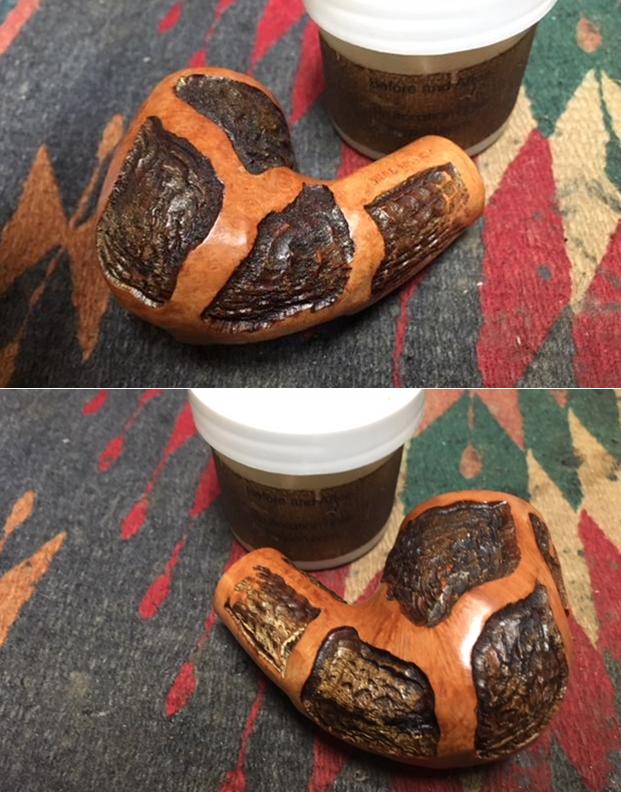
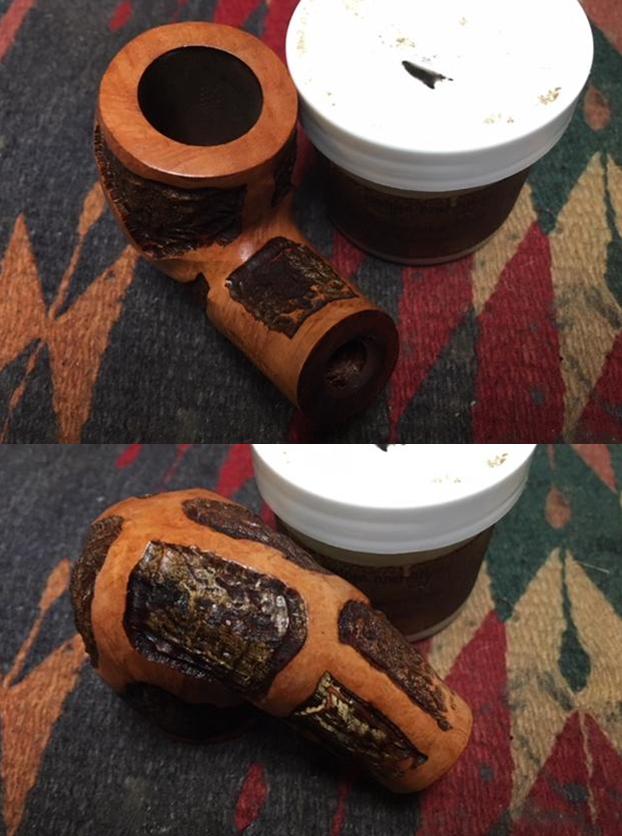
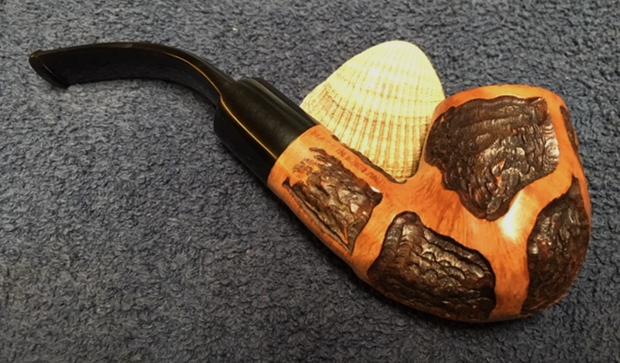
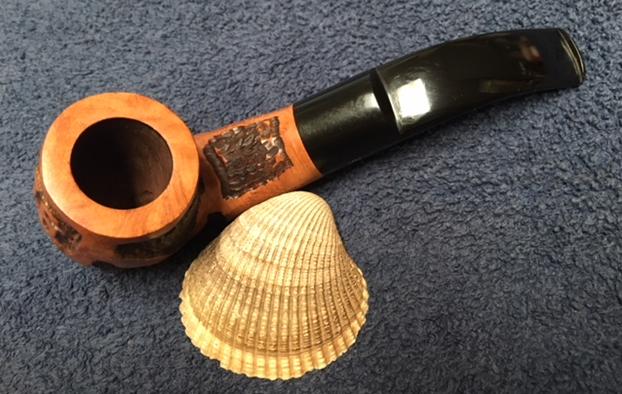
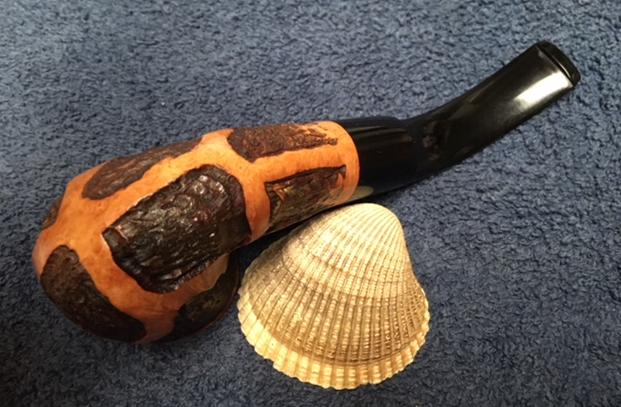
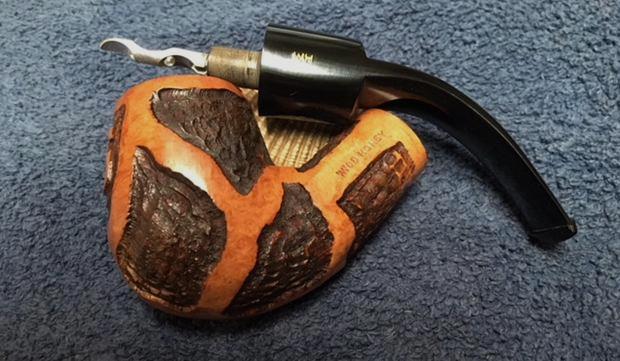
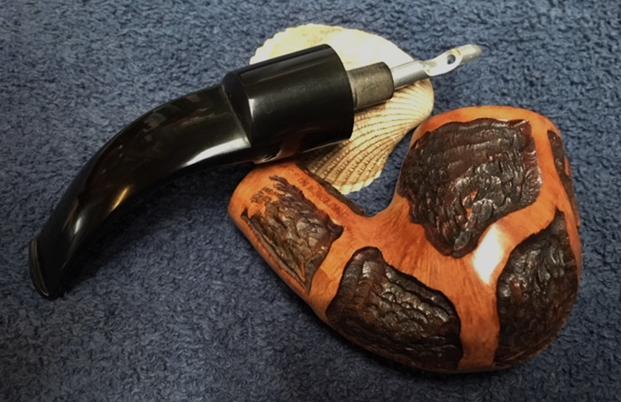
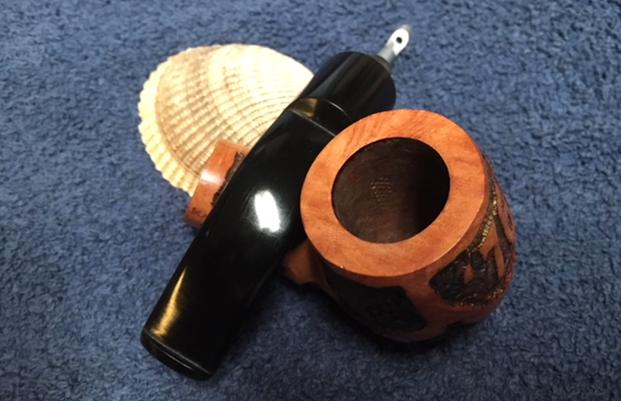
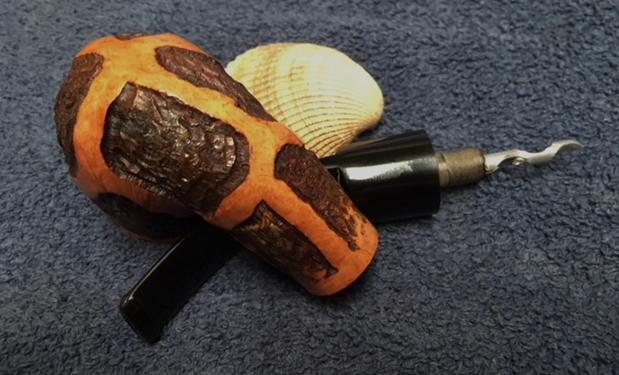
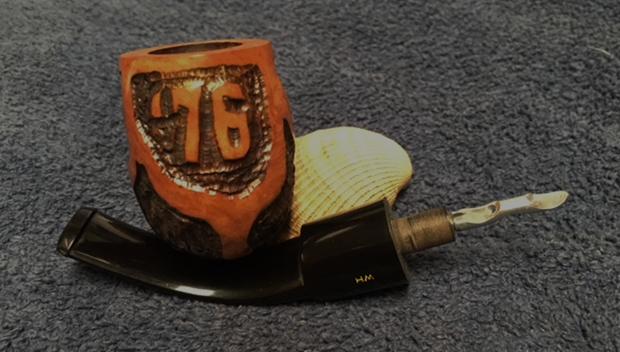
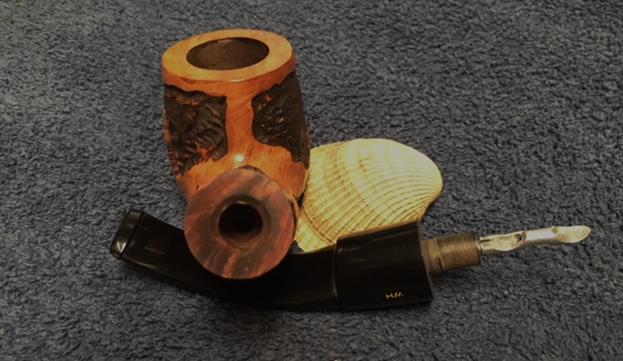
My brother found an older, unsmoked, NOS (New Old Stock) bent billiard with a chunky shank and an interesting rustication on the bowl and shank. It is stamped WILD HONEY on smooth band on the left side of the shank and has WH stamped in yellow on the left side of the saddle stem. It is stamped Made in England on the right side of the shank. This pipe is new and unsmoked – New Old Stock. The finish is in good condition and has a honey comb pattern on the bowl and shank. The rustication is stained with a dark brown stain and highlighted with gold sparkles… quite unique. The rest of the smooth bands around the bowl are light brown or tan stain. The saddle stem is in excellent condition with no oxidation and just needs a quick polish. There is an interesting stinger in the tenon that is removable and only fits the shank when aligned properly. I took some photos of the pipe before I did a quick refresh of the bowl and stem. I took some close up photos of the rim top, bowl and stem to show the new condition of the pipe. I also took some photos of the rustication pattern around the bowl and shank as well as the carved ’76 on the front of the bowl. Like noted in the title of this blog this would make a nice birth year pipe for one of you reading this blog. I took the stem off of the pipe and took a photo of the stem with the stinger in place. It is a push fit stinger and is easily removed should the new owner of this birth year pipe want to do so.The Wild Honey brand was not one that I had heard of before so I did a bit of digging on the web to see if I could find any information. I found on the Pipephil site that the brand was made by the Wild Honey Tobacco Co. in England. Here is the link and screen capture of the listing on the site http://www.pipephil.eu/logos/en/logo-w3.html.I also found a post card from So. Orange, New Jersey that had a picture of a cased set of the pipes as well as some of the tobacco made by the company. Here is a photo of the postcard that is from the WILD HONEY TOBACCO CO and it is Advertising Pipes. The card is from 1960s. https://www.pinterest.ca/pin/323344448220281038In the images search on Google, I found two photos of tins of the Wild Honey Tobacco. I include them for the help in setting the tone of the blog. Since it was an unsmoked pipe it did not need a lot of cleanup. I rubbed down the briar with Before & After Restoration Balm. I worked it into the rustication around the bowl as well as into the smooth briar on the bowl and shank. The Balm works to clean, enliven and protect the briar. I worked it into the briar with my fingertips and the help of a horsehair shoe brush. I let the balm sit for a little wall and then buffed with a cotton cloth to raise the shine. I took the following photos to give a picture of the pipe at this point in the process. Since the stem was unblemished and unused I did not need to do anything more than polish it. I put it back on the shank and polished the bowl and stem on the buffing wheel using Blue Diamond polish to raise the shine. I gave the bowl multiple coats of Conservator’s Wax by hand and the stem multiple coats of carnauba wax and buffed the entire pipe with a clean buffing pad to raise the shine. I hand buffed it with a microfiber cloth to deepen the shine. The pipe polished up pretty nicely. This not a bad looking pipe in terms of shape and finish. The finished pipe is shown in the photos below. The dimensions are Length: 6 inches, Height: 2 inches, Outside diameter of the bowl: 1 3/8 inches, Chamber diameter: 3/4 of an inch. Thanks for walking through the refreshing work on this one. If you are looking for an inexpensive birth year pipe and you were born in 1976, or an anniversary pipe same thing then this might be the pipe for you. I will be adding it to the rebornpipes store shortly so if you are interested in adding it to your collection send me an email or a message on Facebook. Thanks for looking. 


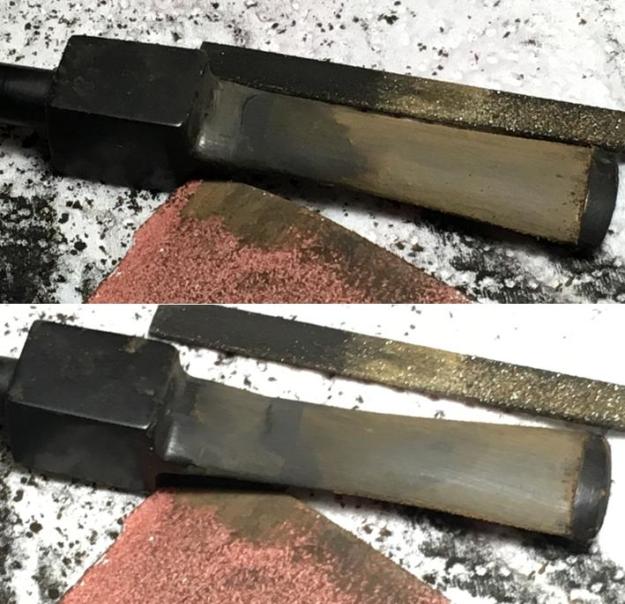
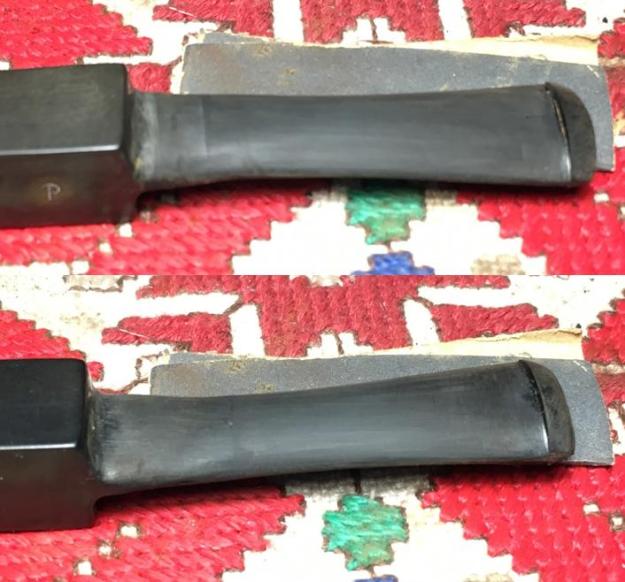
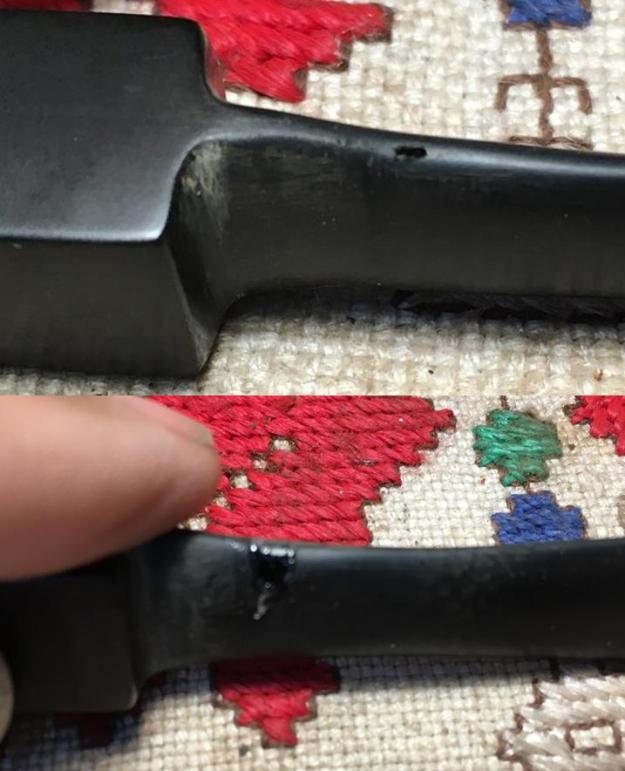
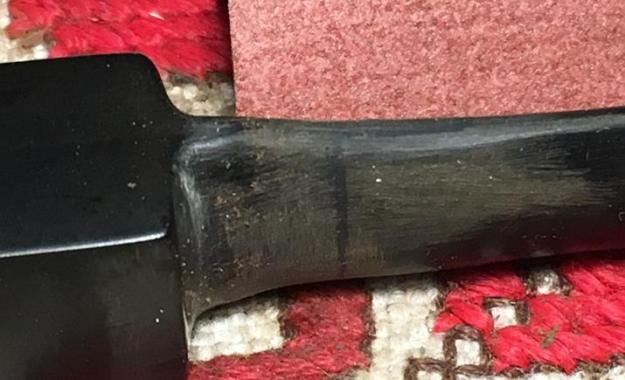
Repairing (again!) a Son’s Gift – an L. J. Peretti Stem Splice


Blog by Dal Stanton

We all have favorite ‘friends’ in our specially chosen, first string rotation of pipes that are ready when we call upon them.  For me, each of these pipes have names and associations with my life – memories of a person or a special event or both – that is stirred to life when I grab that pipe off the rack and spend time, usually packed with my favorite blend, Lane BCA.  In several blogs I have referenced my attraction to L. J. Peretti pipes of Boston – I’ve started a collection of Perettis and I have found they are hearty pipes and good smokers.  My fascination with Perettis started with a Christmas gift from my son, Josiah, a few years back in Denver.  He found this wounded warrior in the Armadillo Antique Mall in Denver and I found it under the Christmas tree with Josiah’s confidence that I could mend his wounded pride and broken stem!This hearty L. J. Peretti Square Shank Billiard became my first experience in the art of stem splicing.  I learned a lot and was proud when I published the write up of this achievement: A Christmas Gift in need of a stem splice – L J Peretti Squared Shank Billiard.  Josiah’s gift started my appreciation for Peretti pipes in Denver.  I have enjoyed this pipe and he was joined serendipitously by another Peretti, another square shank, but a Rhodesian (See: LINK for write up).  Jon, a friend and colleague working in Ukraine, gave me my second Peretti!  These two, together, I call the Peretti brothers.As life unfolds, things happen.  I was back in Denver from Bulgaria last February for the births of two brand new beautiful granddaughters and had grabbed the Peretti Brother Billiard and was heading up the stairs to go outside to enjoy a bowl and the view of the Rocky Mountains, when I fell (going up the stairs!) and the stem splice that had served faithfully was overcome by the impact of my body coming down on it.  The stem broke at the end of the ‘shelf’ created for gluing.  You can see this on the next picture.  I lost the remainder of the stem in the flight back to Bulgaria, but it wouldn’t have mattered because there wasn’t enough left of it to repair.  The picture below shows the remainder of the original cannibalized stem’s fashioned shelf remaining on the Peretti saddle stem – the junction line shows up in the shine on the stem.  I decided to do a write up simply of this repair, but I have an alternative motivation too.  My wife and I are leaving soon for the Black Sea coast for our annual R&R and I wanted to repair the Peretti Brother to take with me to the beach!  So, I took pictures of the repair process but am now doing the write-up on the beach, looking out over the Black Sea!Starting the repair, I find an adequate donor stem to cannibalize for the replacement.  I measure it and cut it with adequate length so that the cut is at the old seam that you see in the picture above.  I make the measurement then, using a flat needle file as a saw, I make the cut after placing the stem in a vice in such a way that I can use the edge of the vice as a guide during the cut.  In this way, I hope that the cut is straight and perpendicular to the stem!There is a little vulcanite spur left that I clean off easily with the file.Lining the donor stem up with the remaining original stem looks like the right length for a balanced feel and look.Next, carefully I cut an upper groove on the original stem essentially in the same place as the first shelf was, thus removing the old donor remnants.I use the tapered pieces of a clothespin to wedge the square shank saddle in the vice safely and securely.  I want the saddle stabilized in a horizontal plane for the filing/cutting process.  I also line up the old seam with the edge of the vice so that the vice’s edge helps as a guide.  I’m aiming for a cut that is perpendicular to the stem’s length as I create a new groove using the flat needle file. Patience is my best friend in this process. The pictures show the progress. As I draw close to the airway, my goal is to stop when the airway is exposed halfway while keeping the horizontal shelf and the inside vertical edge of the shelf at right angles.Satisfied that I’ve gone far enough, I trim off the end of the lower shelf – as close to right angles as possible!  I think it’s looking good. I eyeball the progress.  The truth is that not all stems are drilled with holes in the exact middle.  To get an idea of the best alignment of the new donor stem with the original, I put a pipe cleaner through both.  I flip the donor stem eyeballing the alignment to see if one position is better than the other.  The most important alignment consideration is the airway.  The external stem can be cosmetically improved, but a blocked airway cannot be easily removed. When one doesn’t have precision tools, which for the most part I don’t, one lives with the value of improvisation.  To cut the shelf in the donor stem now, I mount the donor stem in the vice and again, using the angled pieces of a clothespin, I fashion a stable filing platform!  I file conservatively.  That is, not to go for an exact measurement but leaving some excess stem to file down gradually, working up to a good fit.  I use the width of the flat needle file as the measure for the length of the shelf which leaves me a little ‘fat’ to work with.  The challenge will be keeping the shelf that is fashioned as much of a right angle as possible or, the two, shelf butt ends to be parallel!  As before, I use the side of the vice as a guide to keep the new edge straight.  I take pictures of the filing progress. At this point, after eyeballing the progress, I realize that as I’m filing the shelf, it is not horizontal but sloping downward toward the end of the shelf.  To address this, I use the short edge of the flat needle file and saw a straight line to open the airway.  In doing this, I now I have a built-in level – the top of the airway.  I continue to file the shelf to reveal uniformly the airway and this should be close to being level – I hope!  The progress is shown. At this point, I test the alignment even though there’s a long way to go on the donor stem.  To test, I put a pipe cleaner through the airway in both pieces.  The airway must line up in the finished repair.After more filing, another test.  Closer.As I file and test, I realize that the lower shelf extension on the original Peretti stem was still a bit fat, so more vulcanite is filed off.  The challenge is not taking off too much because it can’t be replaced easily!In time, another test – getting there.  You can see the pipe cleaner creating the alignment axis through the two pieces.  The gap that is showing on the top I address by taking off more vulcanite from the donor stem (second picture), after flipping over I file the vertical edge ‘back’.  This will close the gap on the top and spare the original Peretti stem from giving up more vulcanite.I decide I’ve filed and fitted enough.  The time has come to glue the two pieces of stem. I think its possible to fiddle too much seeking ‘Fit Nirvana’! I clean the shelves with alcohol, including the airway with a pipe cleaner.  The tricky part of the gluing is to avoid CA glue getting into the airway and sealing it – not a good situation!  The way to avoid this is by inserting a pipe cleaner that has petroleum jelly on it – the CA glue will not stick to it.  The challenge doing this is that when you press petroleum jelly into a closed space it squeezes out and can contaminate the area that needs maximum CA glue effectiveness!After cleaning the area and thinking about how I might maximize the bond between the spliced stem pieces, I remembered a technique that I had previously read in either one of Steve’s Rebornpipes blogs or Charles Lemon’s, Dad’s Pipes blogs, describing how drilling holes can enhance the glue’s penetration and bonding qualities.  To do this I mount a 1mm drill bit into the Dremel.  WARNING bells are going off in my mind: Do not drill through the vulcanite!  There’s not a large margin of error.  With the bells ringing, I drill a couple of holes on each side of the airway on both stems’ shelf.  It looks good and I’m glad I remembered this technique.I repeat the cleaning of the upper and lower shelves with alcohol and insert a pipe cleaner through the pieces with a bit of petroleum jelly on it.  I then apply thick CA glue to the shelves and draw the two pieces together while keeping the pipe cleaner taught assuring a straight airway. I use a thick CA glue so that the glue remains in place and doesn’t run spread over the stem.By keeping the pipe cleaner taut and the airway straight, I maneuver the two pieces to fit as well as possible which leaves the external appearance a bit ‘Frankenstemish’ but that’s OK and expected at this point in the process.  I can address that later.  In the pictures following you can see gaps and where the stem surface is not flush as the stem transitions through the splice. The primary bonding of the splice is successful with a clear and straight airway.  To address the gaps, I mix a batch of activated charcoal powder and regular CA glue to make a putty that acts as a filler for the imperfections of the fit.  I keep the putty a bit thinner than normal when I use this mixture repairing tooth dents and damage to the bit.  Keeping the CA and activated charcoal putty thinner, or wetter, allows a better penetration into the gaps around the split.  After I mix the putty, I apply it around the spliced area with a flat dental spatula and tamp the putty down into the gaps.  The pictures show the process. The result looks truly like a ‘Frankenstem’.  A give a full 24 hours for the putty to cure well and I then begin the filing and shaping process using a flat needle file.  The pictures show the gradual process of shaping the external appearance of the stem splice. Following the filing, I use 240 grit paper to further smooth and shape.  In the next pictures you can see that I sand the entire stem.  The entire stem must be tapered and sloped so that the spliced area disappears into one unified stem presentation.  The tapering is not only on the upper and lower stem, but also on the stem’s sides where the stem bows inwardly from the saddle to the button.Following the 240 grit paper, I smooth further with 600 grit paper.As the stem splice smooths during the sanding, I detect a hole where the putty failed to fill.  I dispatch this by spot dropping black CA glue in the hole to seal it.  After it cures, I continue sanding and smoothing the area. With the splice repair essentially finished, what I don’t show in pictures following is the normal, full sanding and buffing process.  I follow the 600 grit paper by buffing the stem with 0000 grade steel wool.  I then follow with 9 micromesh pads from 1500 to 12000 with a coat of Obsidian Oil between each set of 3 pads.  I then apply Blue Diamond compound with the Dremel, followed by the application of carnauba wax to both stem and stummel.  You can still see the seams of the splice, but the entire stem looks great.  The pictures show the finished spliced stem. The Peretti Brother Billiard joined me on the Black Sea and both of us have enjoyed a great reunion!  Thanks for joining me!