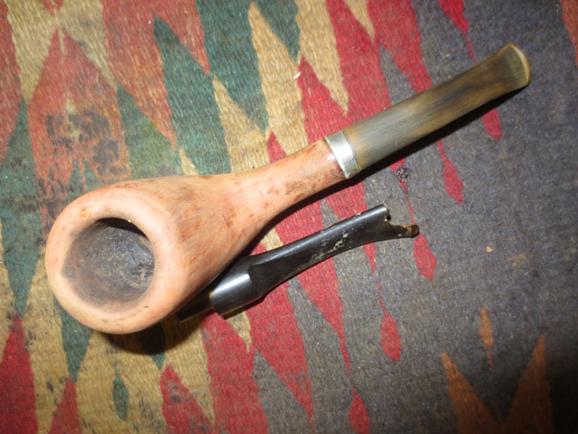
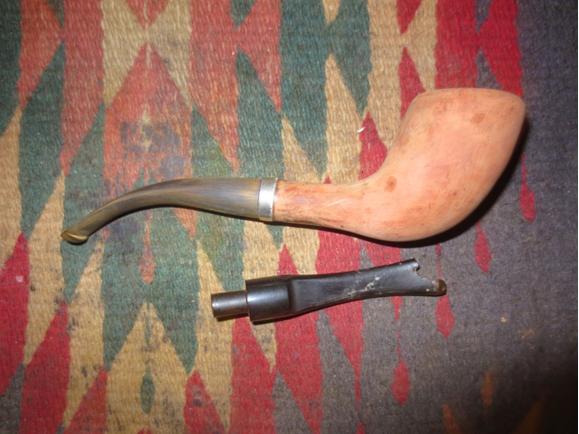
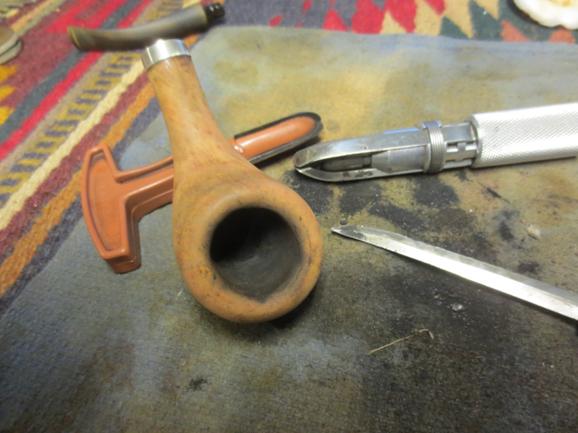
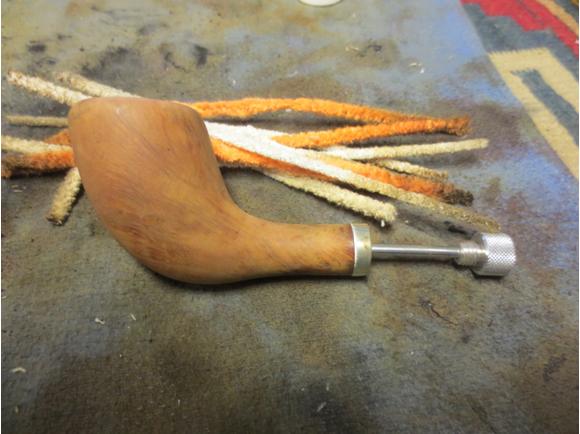
Monthly Archives: December 2015

Restemming a Beautiful Savinelli Classica 812 Canadian


Blog by Steve Laug
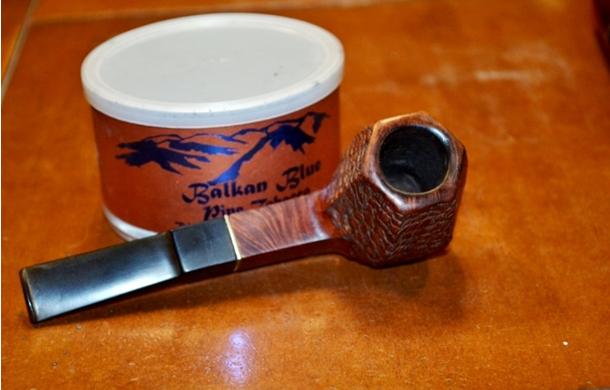
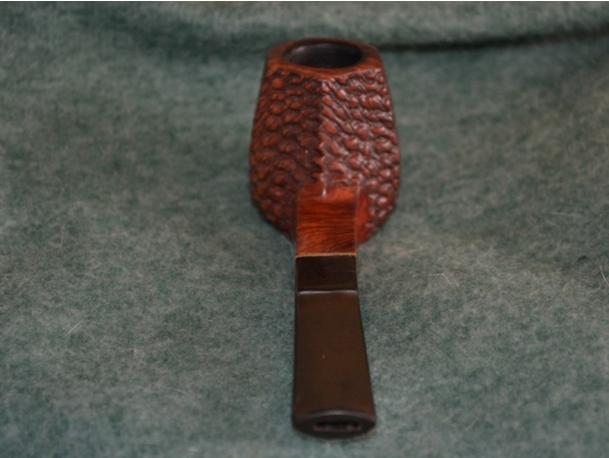
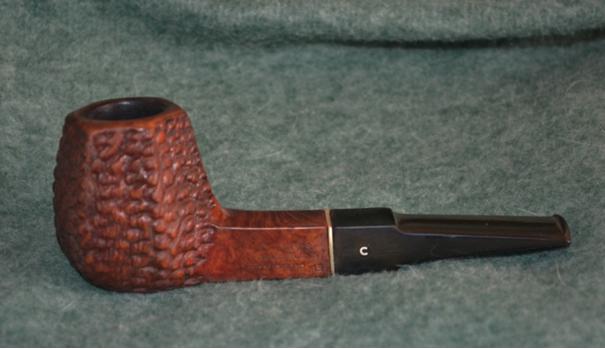
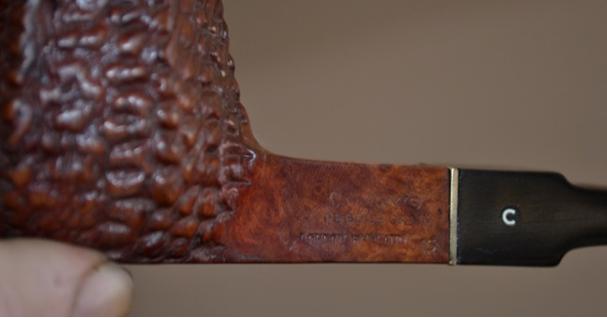
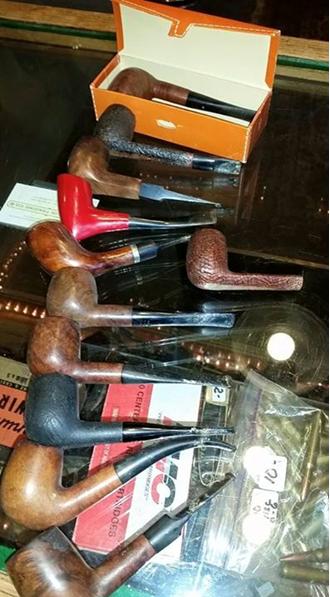
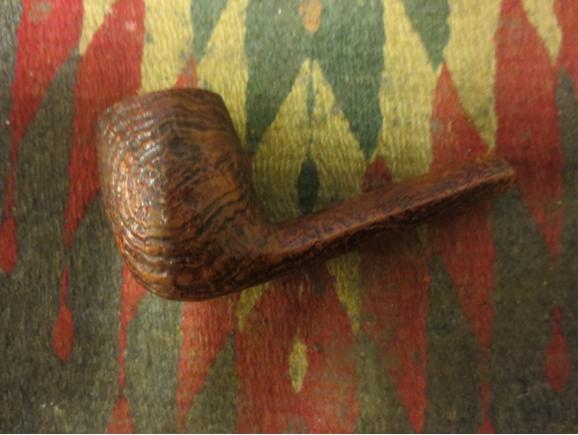
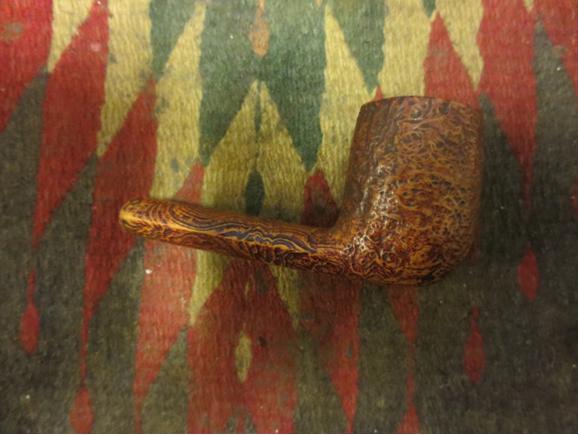
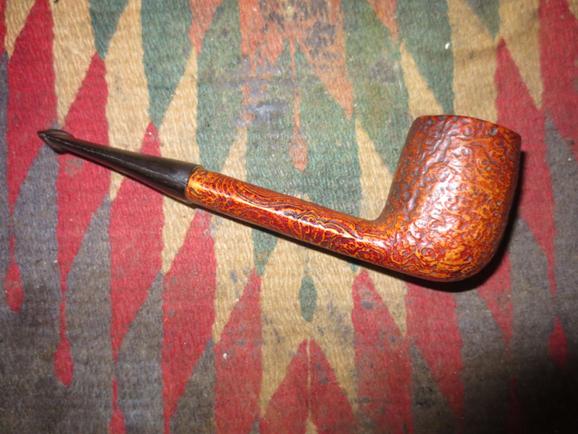
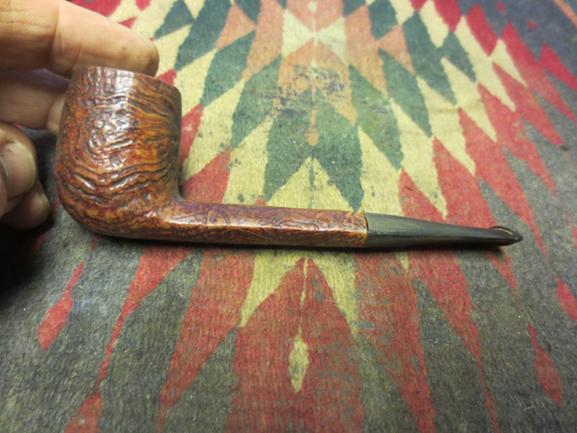
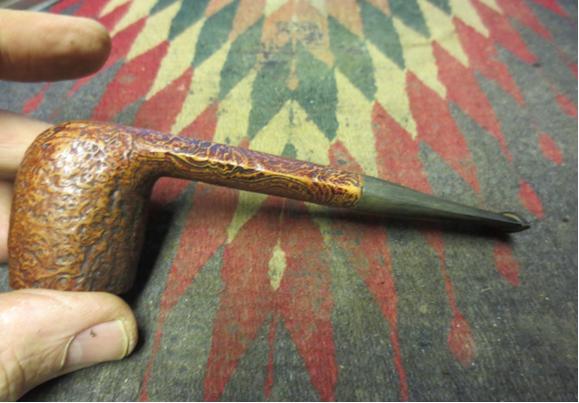
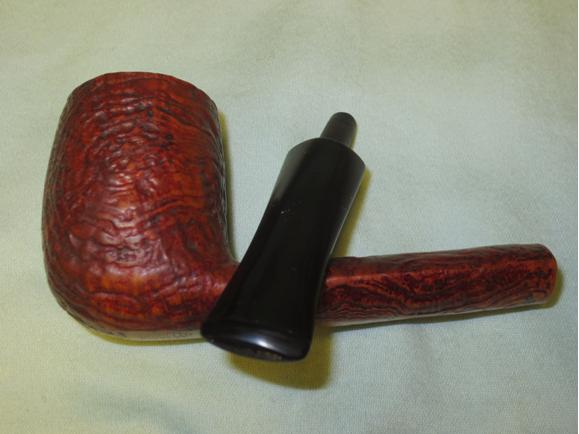
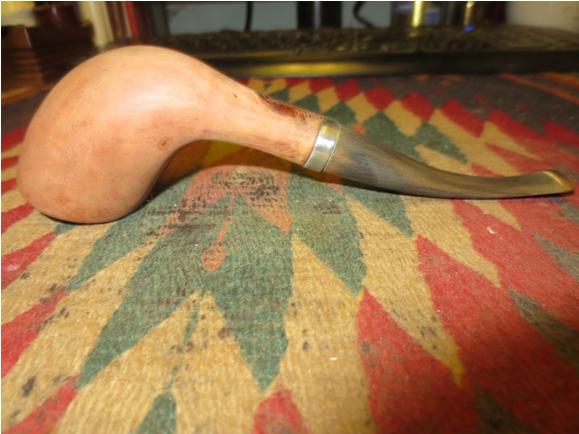
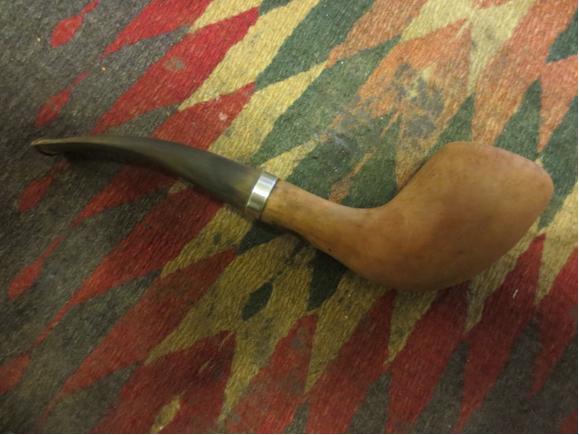
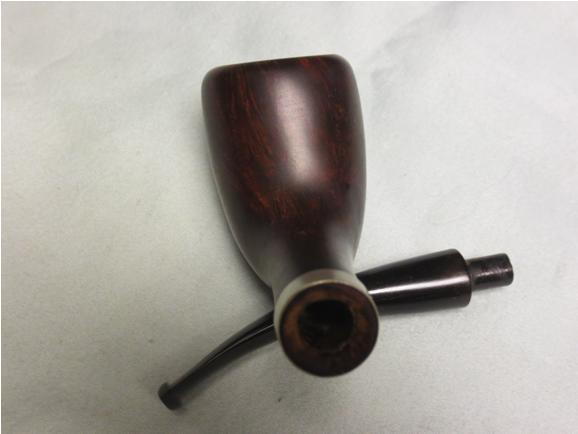
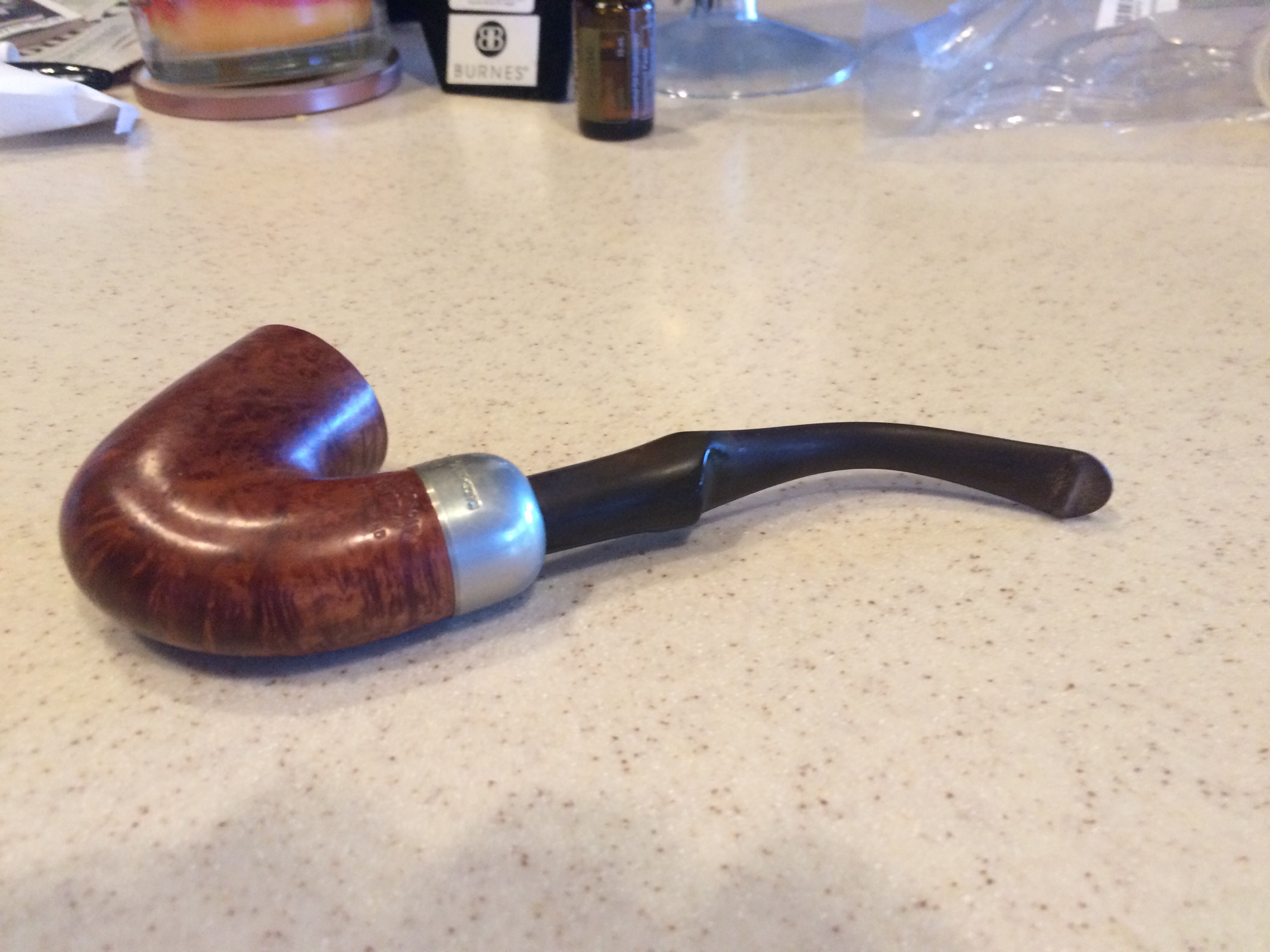
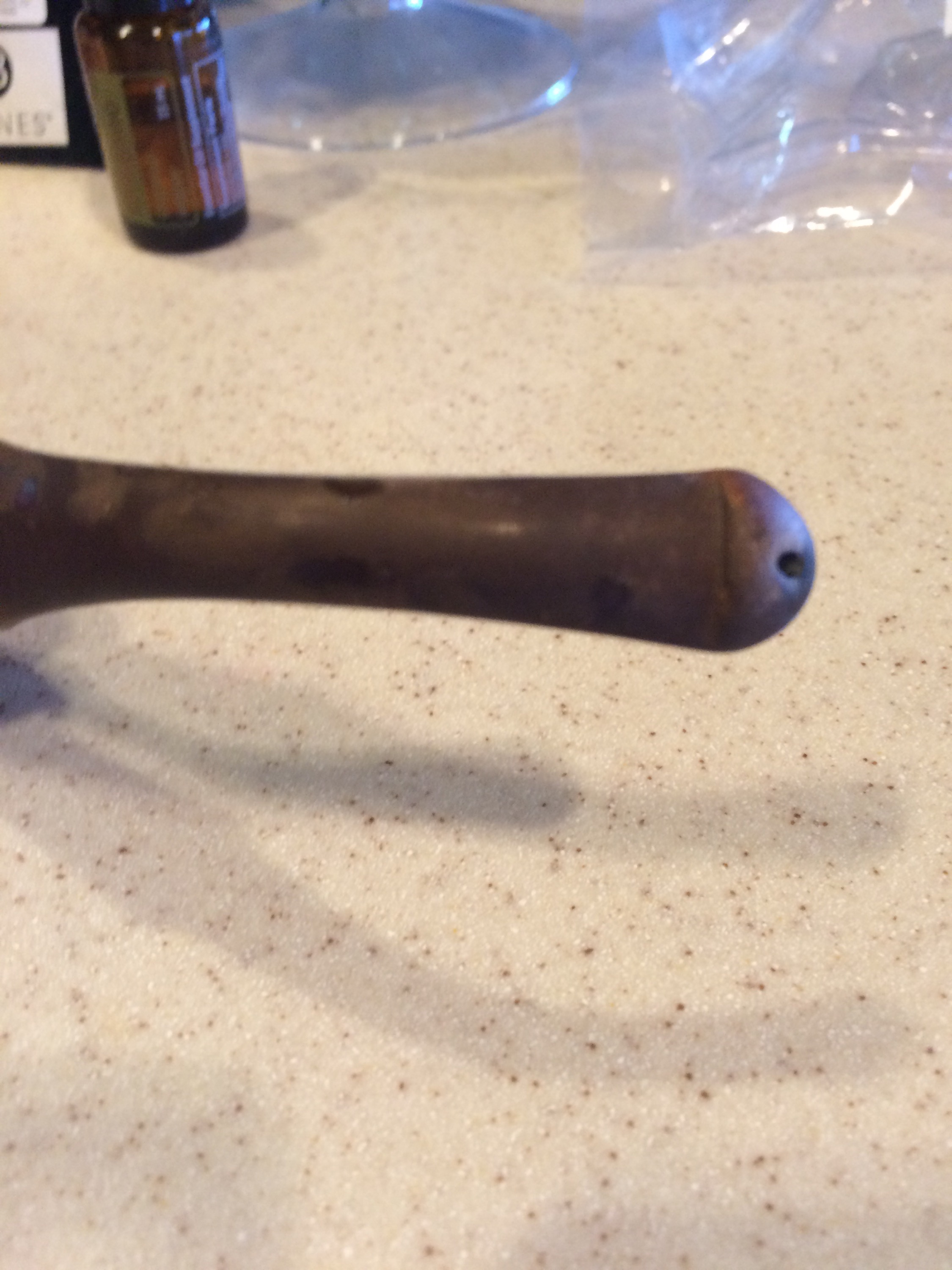
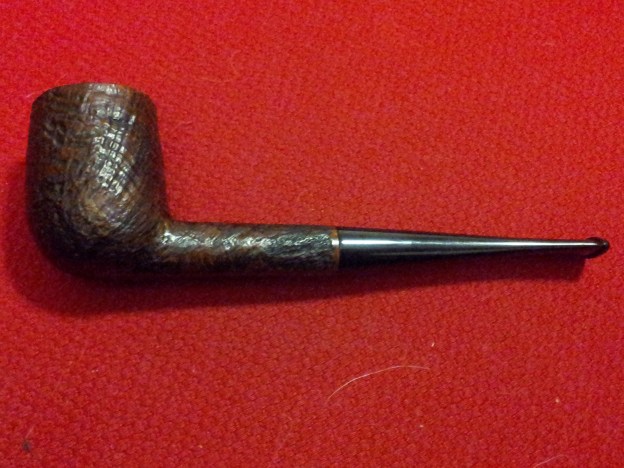
Class1In the pipes that my brother Jeff sent me from his Montana find was a pair of Savinelli made 812 shape pipes. The first is the second pipe down from the top in the picture to the left. That pipe is stamped Citation 812 and made in Italy on the underside of the shank. The stem is a refit and is poorly done. Fortunately it is beat up and missing a large chunk on the underside near the button. The second one is shown in the picture in the second column and is a sandblast without a stem. It is stamped Savinelli Classica with the Savinelli shield and 812 Italy on the underside of the shank. The first is a two toned dark brown and the second is a lighter two toned medium brown.

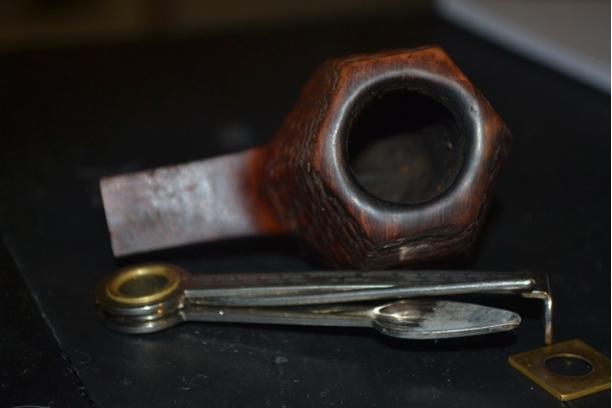
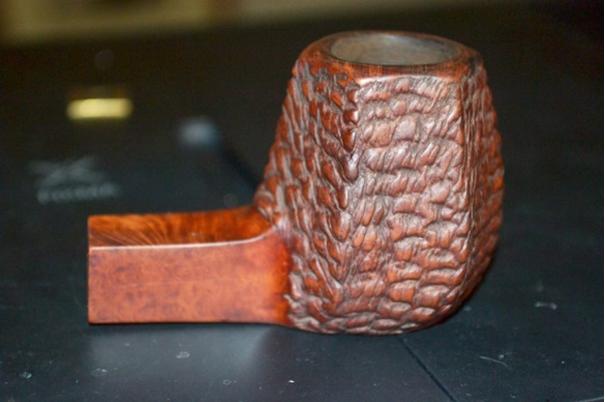
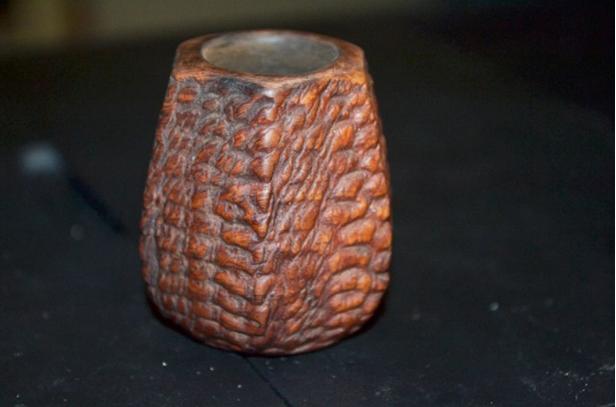
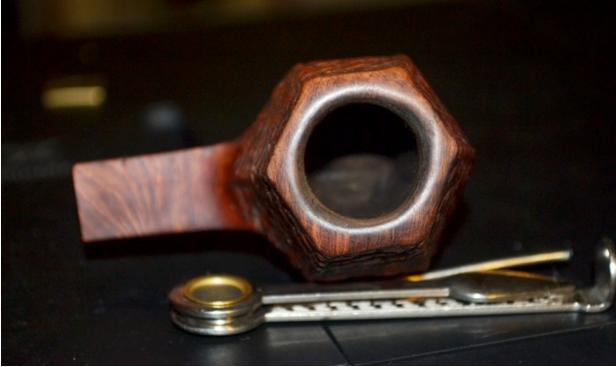
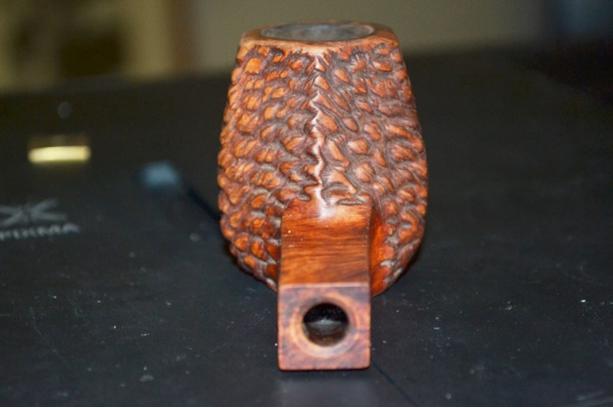
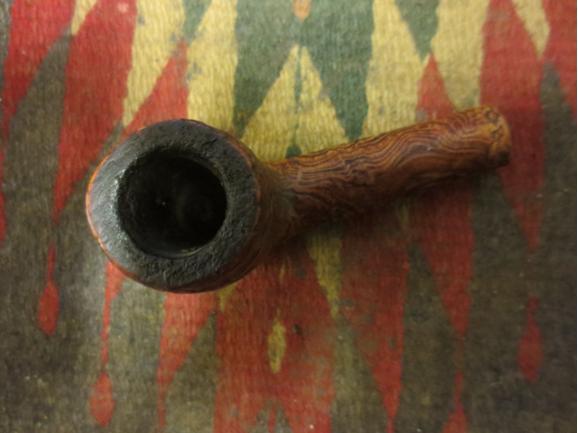
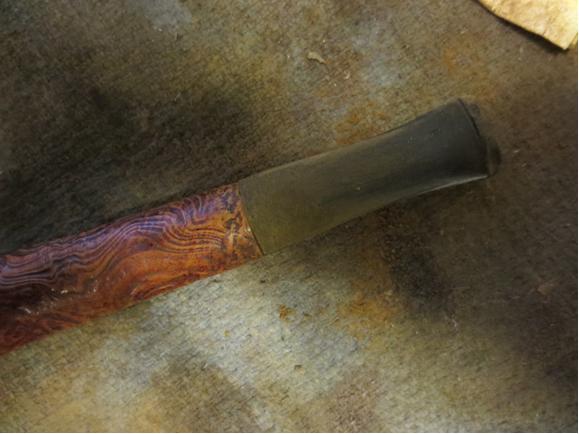
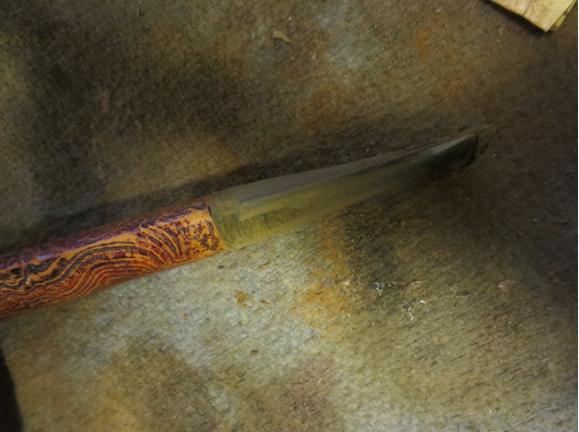
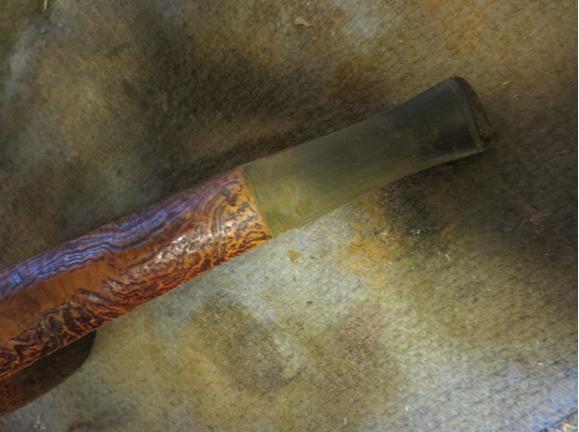
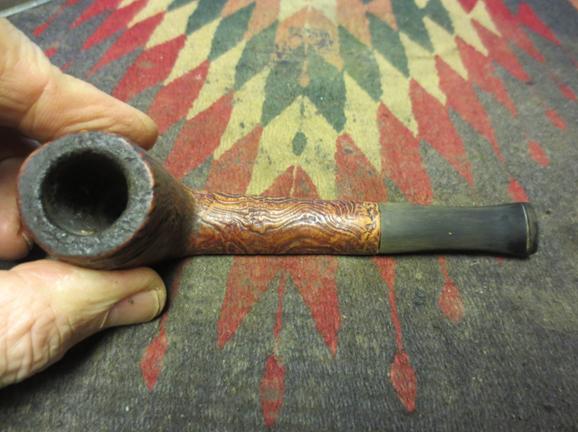
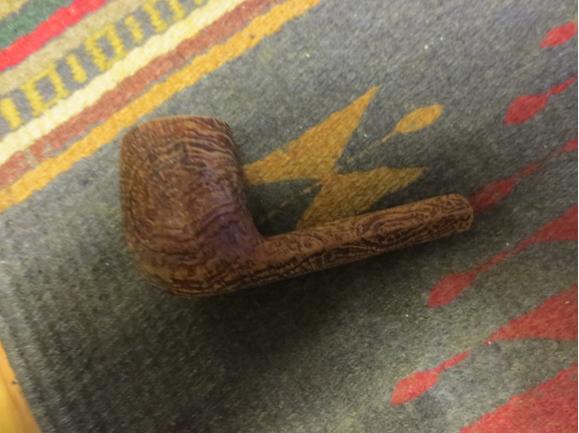
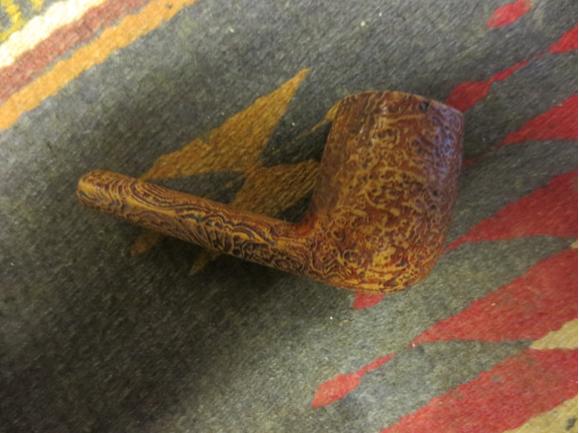
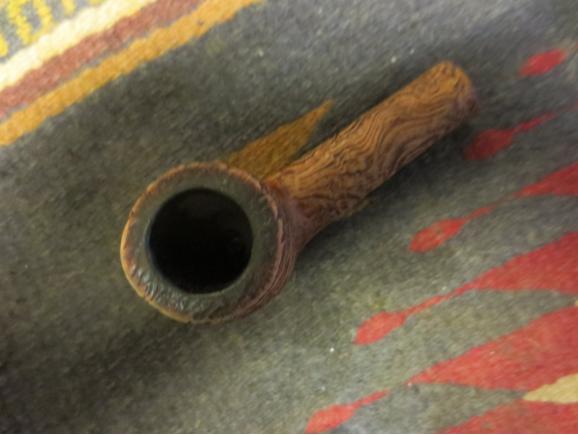
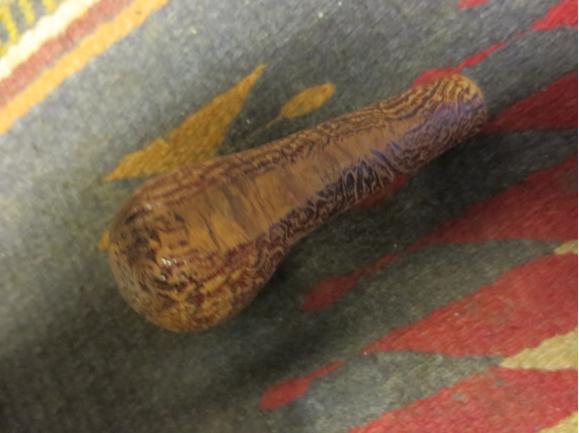
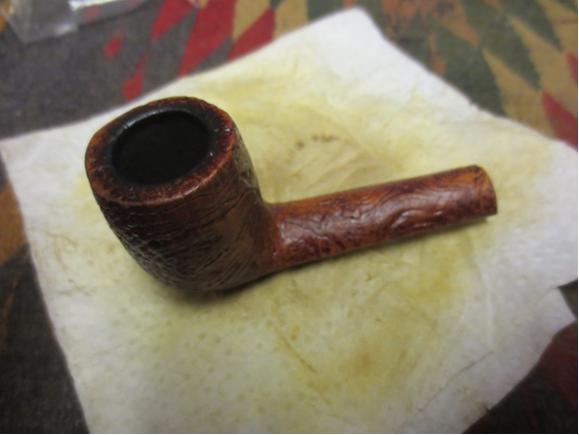
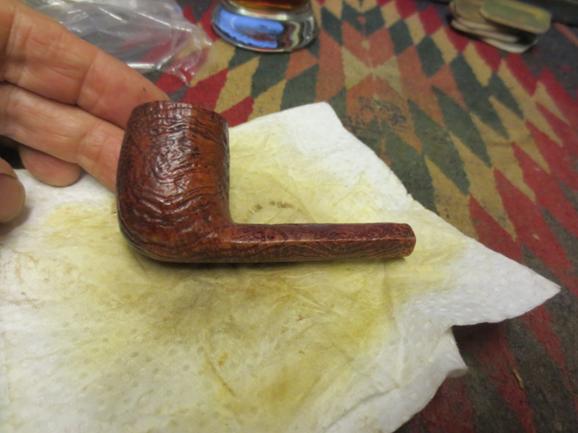
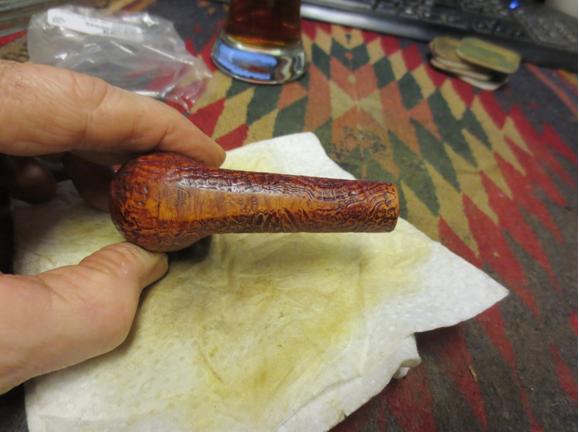
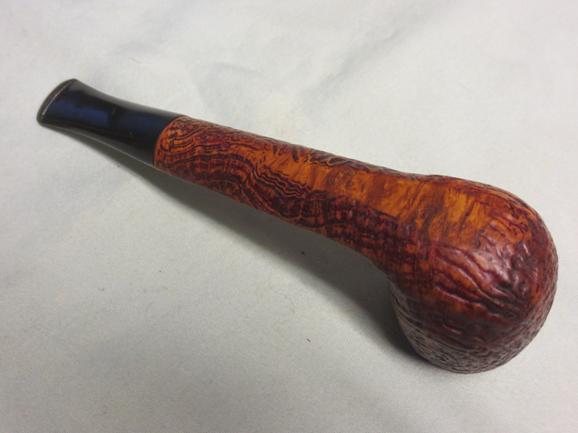
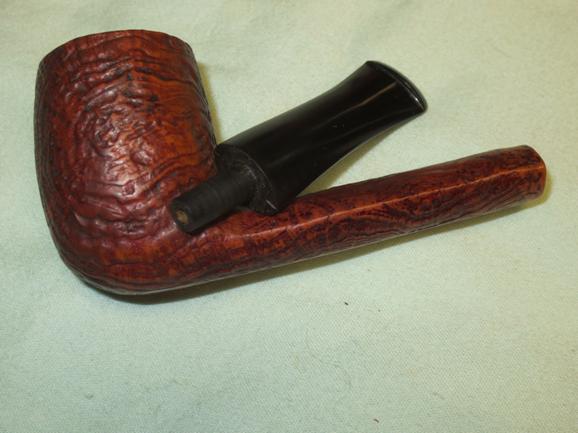
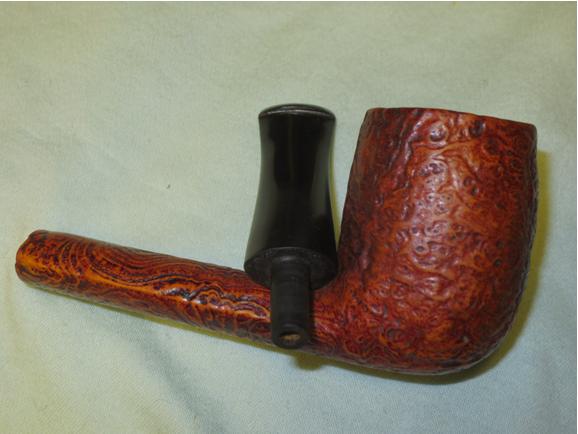
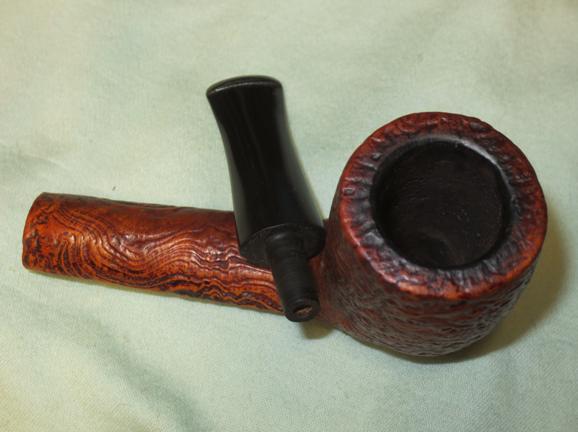
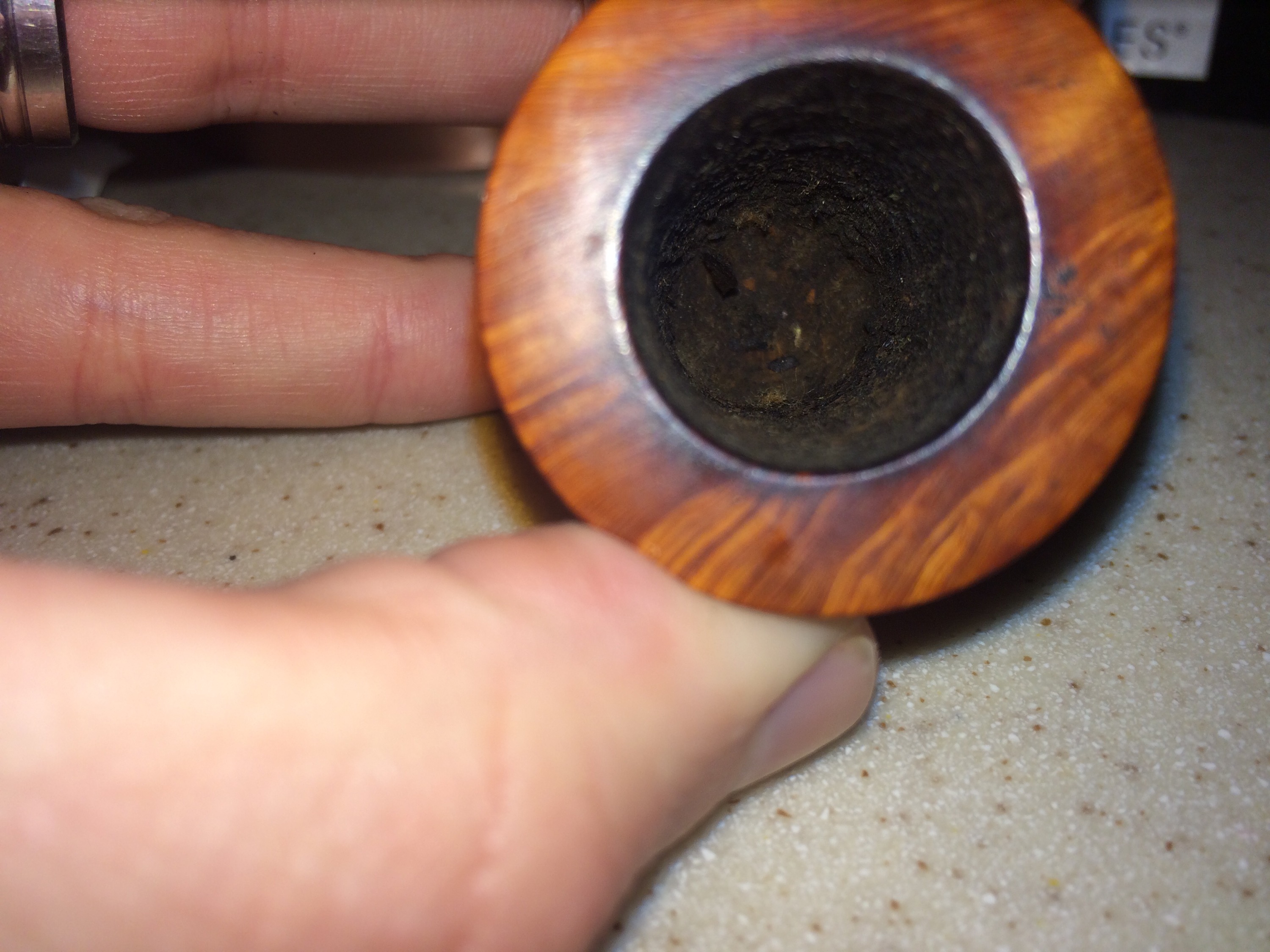
The pipe I chose to work on first was the Savinelli Classica – the stemless one. It was in pretty decent shape. The finish was dirty but was not worn. It had a great sandblast. The left side of the bowl had a circular grain pattern and the right side was blasted birdseye. The shank had long swirls on the top and sides. The rim had some build up on it and the bowl had a thick cake that plugged the airway and closed off the lower portion of the bowl.

I took a photo of the two pipes together to show the similarities and the differences. The Classica is a bit shorter in terms of shank length and the finish is much more distinctive. The Citation had a nice blast on it but when compared with the Classica it had nothing to compare. Both pipes were the same height. The bowls were the same diameter and the mortise of both held the broken stem with no trouble.

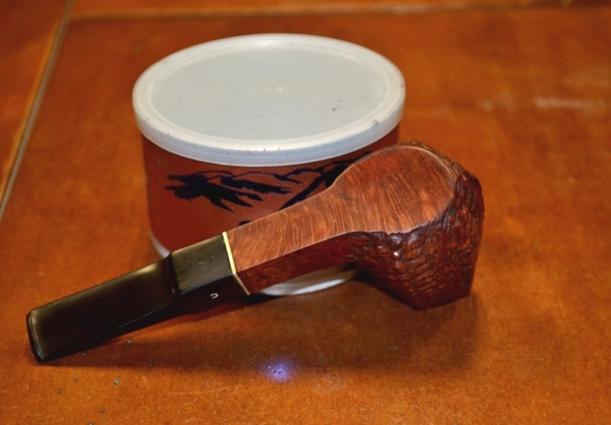
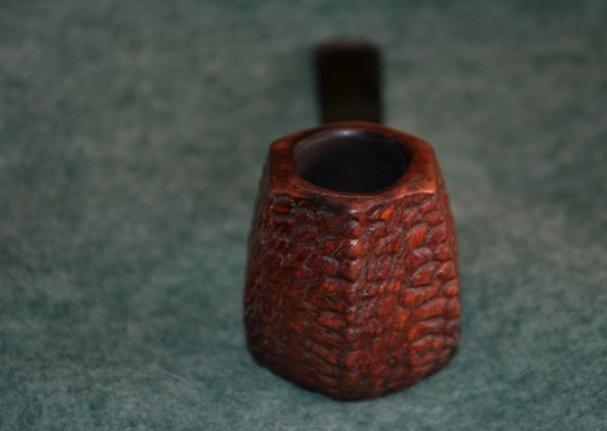
I looked up the Savinelli 812 shape online and found that it originally had a taper stem and that the stem had a slight bend in it at the button. I am not sure if I like the look of it on the Canadian but will think about it as I restore the Classica.Class2 I took the next photos of the bowl to show the distinctive sandblast on the bowl. It truly is a beautiful piece of work. The way the bowl was stain highlighted and emphasized the blast rather than muted it. Once I cleaned it up I would need to maintain that look.Class3

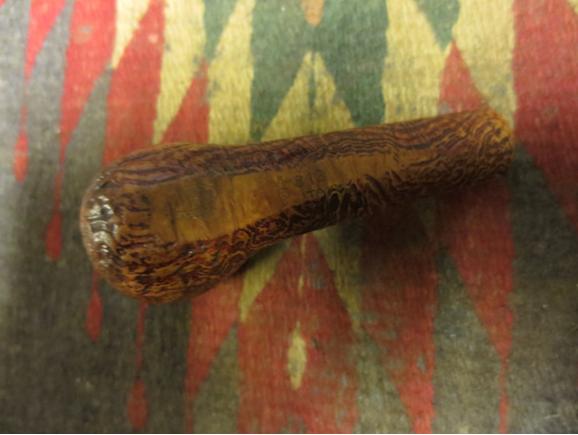
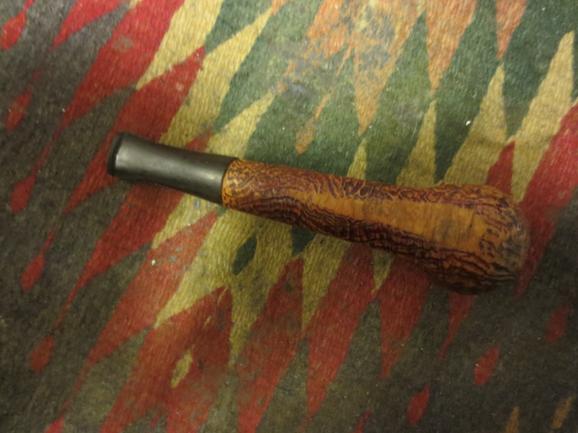
Class4 The next two photos show the grain on the shank and the tar buildup on the rim. I am pretty sure that the blast is underneath the tars and will look good once it is scraped off. The third photo shows the underside of the shank and the smooth portion that bears the stamping.Class5

Class6

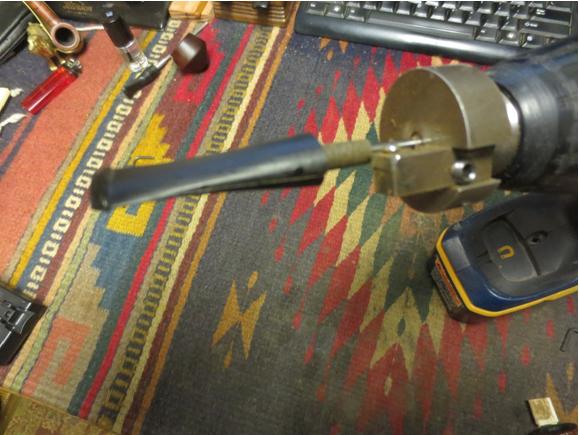
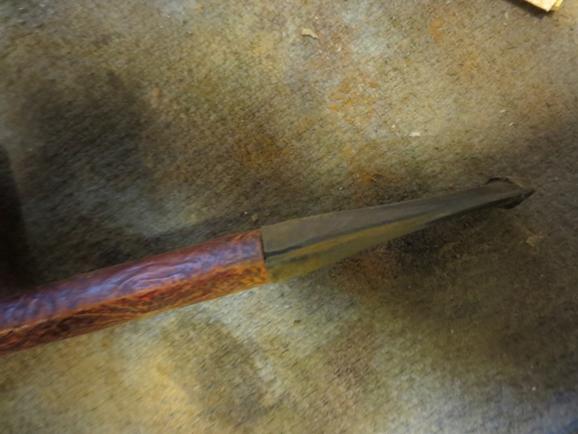
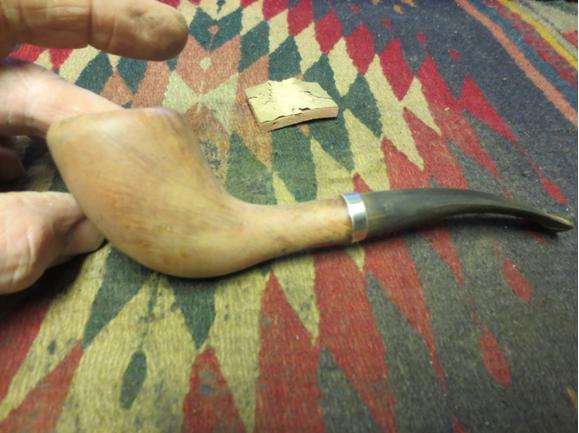
Class7 I went through my stem can and found the candidate for the tapered Canadian stem for this pipe. I used the PIMO tenon turning tool to take down the tenon to the point that it almost fit the shank. I hand sanded it with 220 grit sandpaper to bring it to the correct size. I did not want to crack the shank so I went slowly, checking for the fit often.Class8 Once the stem was in place I took some photos to show the excess in diameter on the top and sides and the shaping that would need to be done to get a good match to the shank.Class9

Class10 I rough shaped the stem fit with a sanding drum on a Dremel to get it close to the shape of the shank. I have found that if I move slowly and carefully with the Dremel it saves a ton of hand sanding on the stems. Once I had it rough shaped I did the rest of the shaping by hand.Class11

Class12

Class13

Class14 I fine tuned the shape with 220 grit sandpaper and brought it to a smooth transition between the shank and the stem all the way around. I worked on the button area and cleaned up the castings and marks on the slot and the button edges with the sandpaper.Class15

Class16

Class17

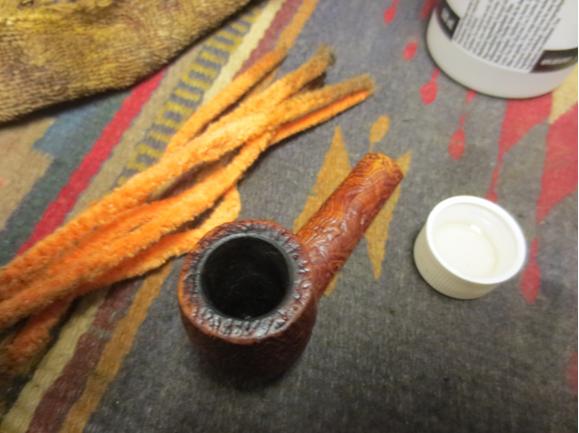
Class18 With the new stem fitting and only needing more fine tuning and polishing I decided to ream the bowl and work on the rim. I used a PipNet reamer and a KLEENREEM reamer and a pen knife to cut away the cake in the bowl. It was as hard as the cake in the other two bowls that my brother sent me.Class19

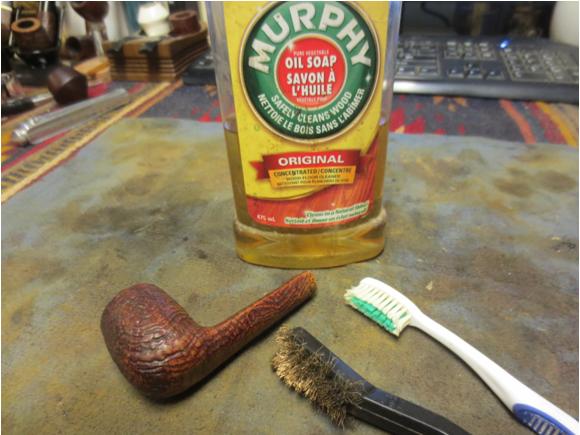
Class20 I scrubbed the sandblast with Murphy’s Oil Soap and a tooth brush and the caked rim with the soap and a brass bristle tire brush.Class21 Once the grime was scrubbed off I rinsed the bowl in warm running water and cleaned out the brushes. I dried off the bowl with a towel.Class22

Class23

Class24

Class25 I cleaned out the shank with pipe cleaners, alcohol and cotton swabs. It was plugged in the airway to the bowl so I used the drill bit on the KLEENREEM tool and was able to clear out the gunk in the airway and open it up all the way to the bowl.Class26 I wanted to keep the contrast stain on the pipe and not restain it so I gave it a light coat of olive oil to bring life back to the wood. I have found that dry briar absorbs the oil quite quickly and that the oil gives it some colour and life back without masking the original stain.Class27

Class28

Class29

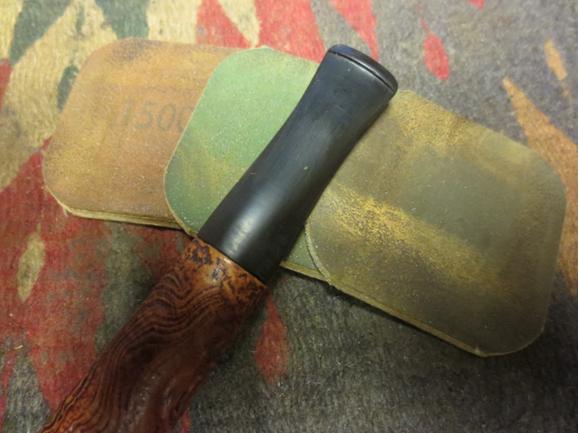
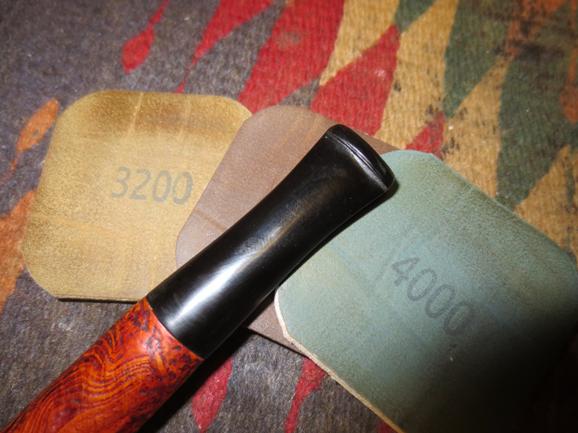
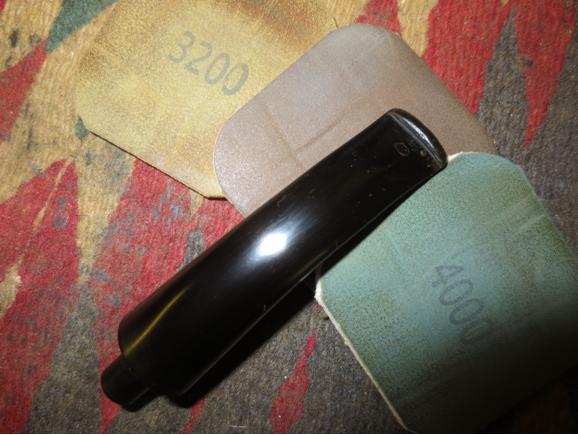
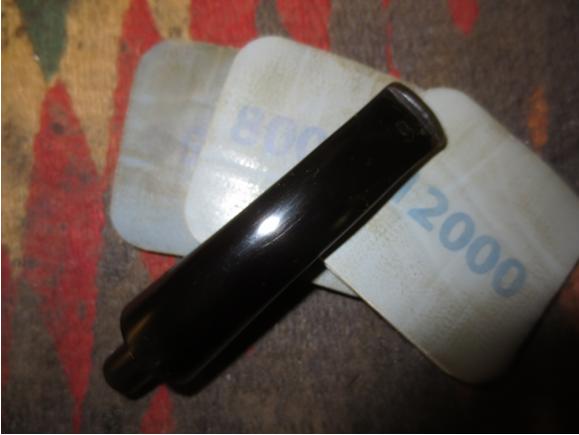
Class30 I wiped the bowl down and rubbed it vigorously with a clean soft towel to remove any of the surface oil and to give it an initial buff. I went to work fine tuning the stem fit. I used micromesh sanding pads – wet sanding with 1500-2400 grit pads and rubbing the stem down with Obsidian Oil. I dry sanded with 3200-400 grit pads. I gave it another coat of oil and finished sanding with 6000-12000 grit pads. I gave it a final coat of Obsidian Oil and let it dry.Class31

Class32

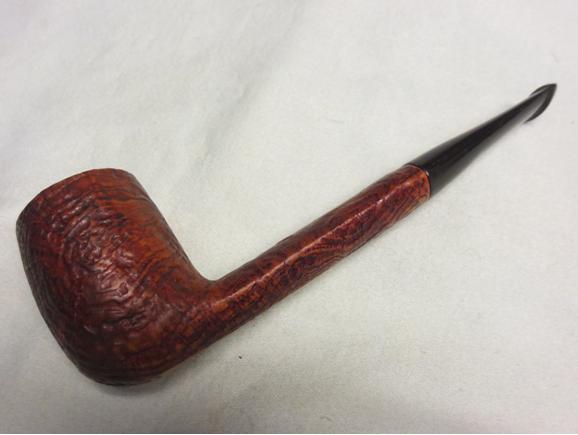
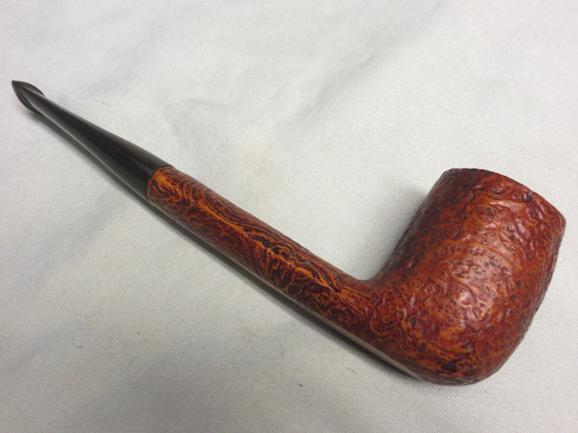
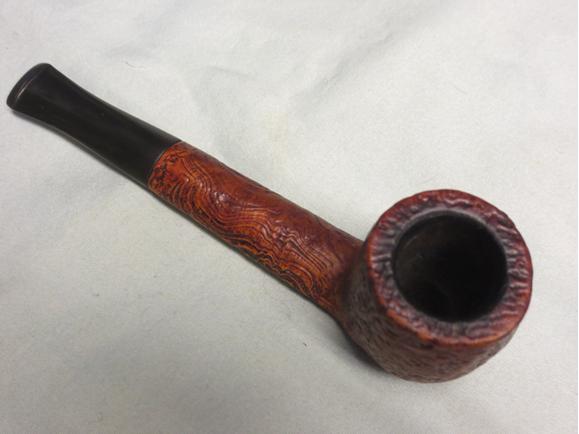
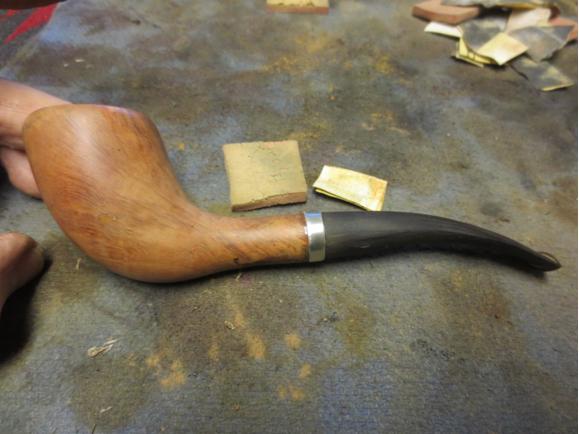
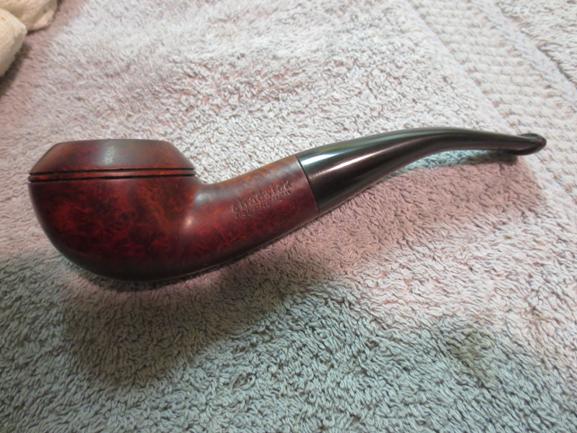
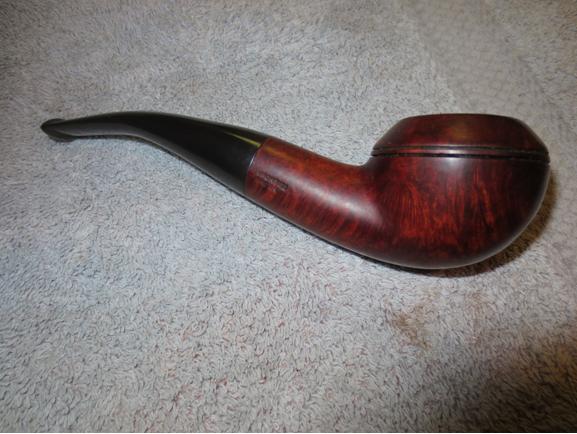
Class33 I buffed the stem and lightly buffed the bowl with Blue Diamond and then gave the stem multiple coats of carnauba wax. I hand buffed the bowl with Conservators Wax and a small shoe brush to bring out a shine to sand blast finish. The finished pipe is shown in the photos below. The straight new stem works for me. The pipe is once again a work of beauty. Thanks for looking.Class34

Class35

Class36

Class37

Class38

Class39

Class40

Class41

A Christmas Morning Pipe


Blog by Steve Laug

I want to take this opportunity to wish the contributors and the readers a very blessed Christmas season and a fruitful New Year in 2016. Thank you for your contributions and for your readership. It has been great to see that several of you have started your own refurbishing blogs. It is a privilege to follow them and to reblog your work here. Merry Christmas. I wrote this short Christmas story for your reading pleasure should you choose to read it!  – rebornpipes

He was up early on Christmas morning as usual. He never needed an alarm clock as his old body told him when it was time to move. He loaded a bowl of 10 year old Christmas Cheer in one of his favourite pipes, lit it and puffed on it while he went into the kitchen to put together the breakfast for the family. He savoured these early morning times when no one in the house was awake and active. It gave him some peaceful moments to himself. Over years of many Christmases this had been his habit. He went to the sink and rinsed out the coffee filter and the pot and prepared it for a new pot of coffee. He carried it to the coffeemaker and put the basket in place and poured the water in the reservoir. He scooped out some flavourful Ethiopia Yirgacheffe coffee that he had picked up especially for Christmas morning breakfast. While the coffee was brewing he puffed the pipe and gathered the ingredients for his traditional breakfast casserole that was on the menu.

His casserole was a baked egg dish that he had adapted over the years to fit his own tastes. He always managed to add one or two new ingredients each year to keep it interesting. In fact he wondered if anyone remembered the original edition. He preheated the oven and got out the bowls and the casserole dish that he would need for the mixing his concoction. He puttered around the kitchen until the coffee was finished, poured a cup, took his pipe out of his mouth and sipped on the fresh coffee. “This is the best way to start the morning” he said to himself and took another pull on his pipe. He cracked a dozen eggs over the bowl, poured in some milk added some fresh salsa and used mixer to whip them together. He paused to puff on his pipe and sip his coffee before he continued. He greased the baking dish with butter and then layered pieces of cheese bread on the bottom of the pan. He poured the bowl of beaten milk and eggs into the dish and they soaked into the bread. He added scallions, onions, mushrooms, red bell peppers that he had already prepared. He put in some crushed garlic, bacon and chorizo sausage that he had cooked the night before. Once the mixture was complete he stirred it a bit to disperse the ingredients evenly throughout the dish and added salt and pepper. All the preparation was done by the time the oven beeped to tell him it was ready. He opened the oven door and placed the dish on the rack, shut the door and set the timer.

It was time to relax with another coffee and finish the bowl of tobacco in the quiet of a sleeping house. He refilled his coffee cup added a dash of Irish cream and then tamped his pipe. He relit it and made his way to the living room to relax and enjoy the quiet morning with his coffee and pipe. One of the great things about having older kids was that they slept later on Christmas. He sat in his recliner, put his feet up and sipped the coffee and his pipe. He enjoyed mornings like this. The 10 year old Christmas Cheer was smooth and flavourful. He was lost in the pleasure of the moment. The flavour of the Virginia tobacco went very well with the Ethiopian Coffee. The flavours complemented each other and together they melded into a melange of wonderful taste. The crazy thing about smoking a pipe is that you cannot smell your own tobacco aroma but somehow the combination of coffee and tobacco gave him the impression of what it must have smelled like. His thoughts went around in his head like the swirls of smoke that wreathed him. He thought of years gone by when the kids were little, when his wife and he had waited quietly until the children were asleep and then put out the presents around the tree. He remembered how the excited little ones had pulled him out of bed on Christmas morning and then watched them as their faces displayed their awe at the wealth of presents around the tree. Warm Christmas

He knew that his quiet reverie would soon be over. As he was thinking that the timer went off on the stove telling him that the breakfast was ready. He could not believe how quickly the time had gone with pipe and coffee. It seemed only moments had gone by and now he would have to get up and go to work. He needed to set the table, mix the orange juice and make another pot of coffee before it was time to wake up the family. He took the casserole from the oven and tested it with a fork to make sure it was cooked all the way through. It was perfect so it only needed to cool a bit before he cut it. He poured himself another cup of coffee, poured one for his wife and started a second pot. He climbed the stairs to their bedroom and woke his wife with a hot cup of coffee. She sat up and sipped the coffee. He turned on the Christmas parade while she finished her first coffee. His youngest daughter was awake and already downstairs. She would wake the others. Breakfast would be ready and waiting when all of the sleepy heads made it to the dining room.

He went back to the living room and put his pipe on a rest next to his chair. He put the lid back on the tin of tobacco and went to the kitchen to set the table and bring the food to the table. He went to the dining room to set out the plates and cutlery around the table, placing coffee mugs and juice glasses at each place. And found that his daughter was already at work. He put each of his children’s Christmas coffee mugs at their place. He set out the hot pads on the table for the casserole and then put the hot casserole on them. His daughter mixed the juice and when he went back to the kitchen he found that she had already put some bread in toaster. As the bread was toasted he buttered it and put it in a basket for the family. He put jams and jellies on the table. He poured the juice in the glasses. Everything was ready for when they all came to the dining room – breakfast would be waiting.

He rang the breakfast bell and he could hear people coming. The doorbell rang and his daughter and son in law came through and into the kitchen. They brought hot muffins in and set them on the breakfast table. The others girls came into the dining room and his wife joined him with her coffee cup. Everyone was present so he read the Christmas story and said the breakfast prayer. With the amen still warm on his lips, the plates were passed so he could serve them. Soon they were tucked into the meal and drinking coffee. The conversation hummed around the table. Things had changed a lot since the girls were little – no more rush to the presents. They were happy to visit and relax together. The presents would come when they came.

He cleaned off his plate and sat back in anticipation. He sipped his coffee quietly in the noise of his daughters chatter around the table. He enjoyed every moment of their chatter and banter around the table. They laughed and told stories and devoured every bit of the breakfast he had made. They compared it to the previous breakfast casseroles and gave this one a vote of approval. It had become a ritual to rate the casserole each year. His wife looked at him and rolled her eyes knowingly at each daughter’s comment. His son in law had already learned how to navigate the breakfast table and sat quietly. Soon the breakfast would be over but no sense in rushing things now. He knew that these Christmas morning breakfasts were the things that added living memories to the family history. Once breakfast was over he could relight his pipe, the girls would take care of the dishes. His son in law and he would adjourn to the porch and enjoy a bowl of Christmas Cheer. That was one of the benefits of living on the west coast – even in December you could sit comfortably on the porch. He sipped his coffee and knew that it would not be long now before he could safely slip away to enjoy his pipe.

Rescuing a Tinderbox Monza Horn – Restemming and Refinishing


Blog by Steve Laug

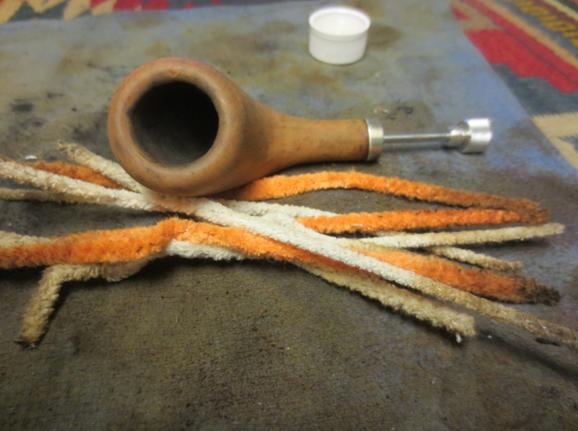
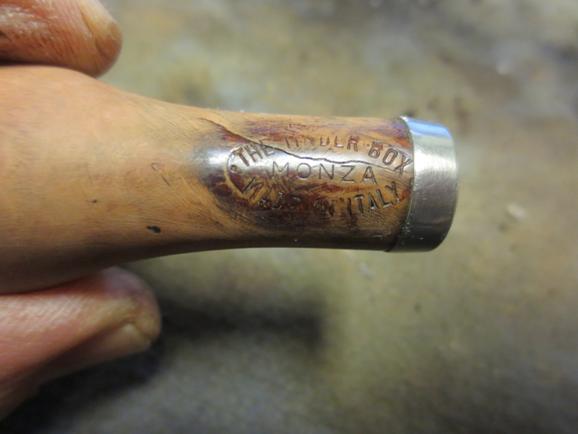
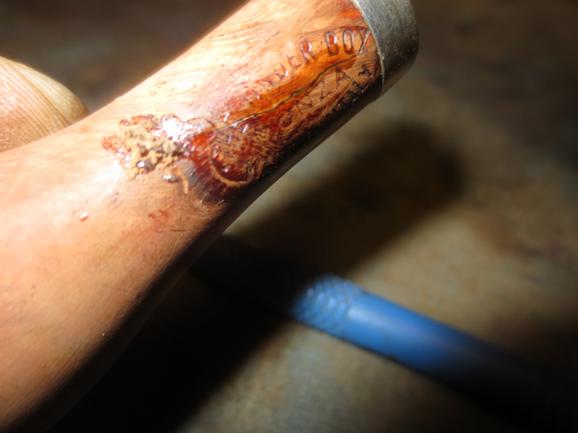
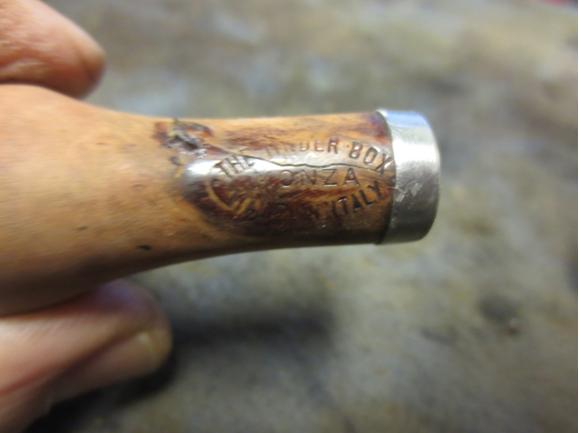
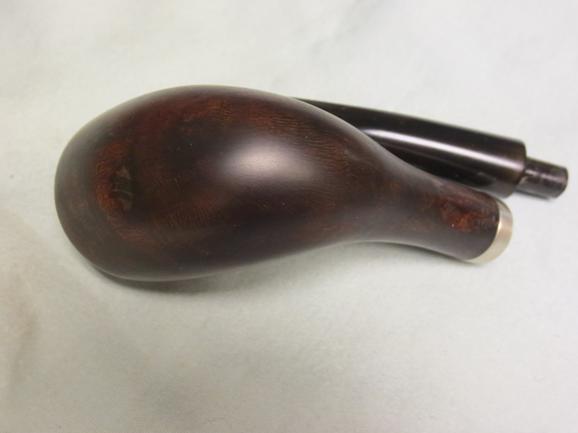
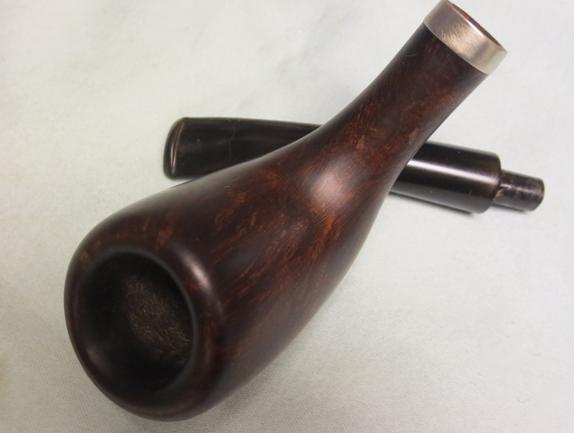
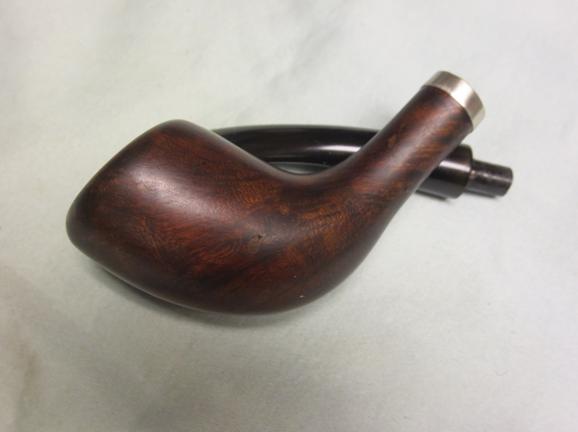
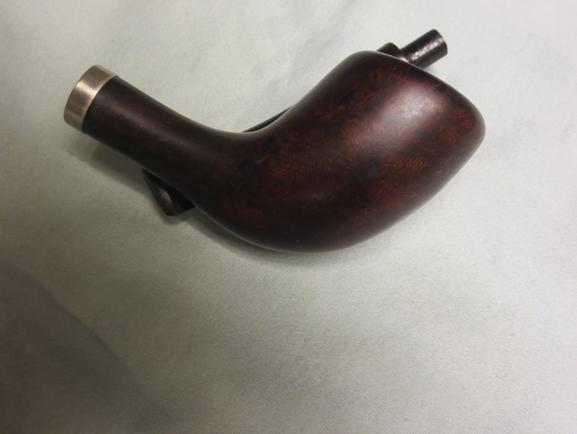
Monza1Another of the pipes that my brother Jeff sent me was a horn shaped pipe that was stamped Tinderbox Made in Italy in a circle with Monza in the centre of the circle. It is stamped on the underside of the shank. The shape is quite unique. The bowl had around 10-12 fills in it that went from tiny spots to huge plugs in the briar. The finish was a heavy urethane coat that made the pipe very shiny and really highlighted the fills around the bowl and the shank.

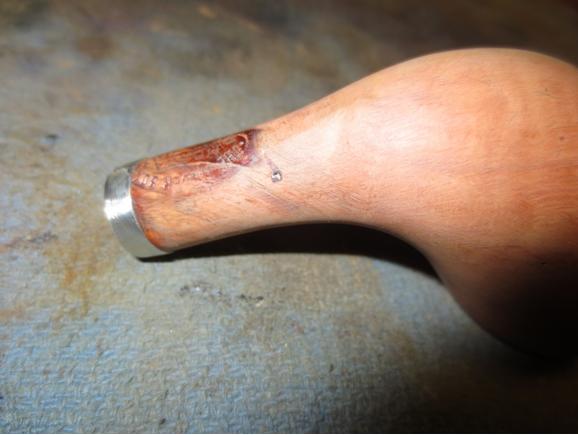
The shank had a split in the underside of the shank that went from under the band up the shank for one inch on the bottom side. It had just turned slightly upward and if left alone would have continued to the bowl. The rim was heavily damaged and there was a thick hard cake in the bowl that hurt my hand when I pushed the various reamers that I had trying to remove it. The bowl looked like it was conical in shape but was so thick that there was very little room in the bowl for tobacco. The stem was a replacement, like many of them in the pipes my brother sent me. It was a saddle stem and was missing a huge chunk on the left side of the button and up the stem about ½ inch. The person who had made the replacement had cut an angled end on the tenon which in my opinion was careless and not necessary. The airway into the bowl from the shank was plugged and when I blew into the end of the shank I could not get any air through it.

The next four photos show the pipe as it appeared when it arrived in the box from my brother.Monza2

Monza5

Monza4

Monza3 I took a close up photo of the bowl and rim to show the damage and the cake in the bowl. The second photo below shows the broken stem. The stem was pretty much a throw away as it is very narrow after the broken button.Monza6

Monza7 I started to ream the bowl with a PipNet reamer. I started with a small cutting head and soon gave up. I used the largest head that would fit the diameter of the bowl and still found the cake too hard to cut through with the reamer. I dropped it in an alcohol bath to soak to soften the cake and to soften the urethane coat on the bowl. After it had been soaking an hour I took it out of the bath.Monza8

Monza9 In my can of stems I had one with the same diameter as the shank and a tenon that would work with some adjustments. The tenon was too long so I would need to trim it back and also adjust the diameter to get a snug fit in the shank.Monza10 The alcohol bath did not even make a dent in the finish. As I expected the only way to remove a urethane finish is to sand it off. I did not mind as it was covering a lot of damage to the rounded rim and the sides of the bowl. I fit the new stem in the shank and took a few photos to get an idea of the look. The stem was a little too bent to my liking so that would need adjusting but the taper worked well with the horn shape. The last photo of the underside of the shank shows a dark area. That is where the stamping is present and also the crack in the shank.Monza11

Monza14

Monza13

Monza12 I put the stem aside and used a pen knife, a KleenReam and a PipNet reamer to work on the hard cake. It was still rock hard but I was able to chip away at it until I had removed it from the bowl.Monza15 I used the drill bit from the handle of the KleenReem to open up the airway into the bowl.Monza16

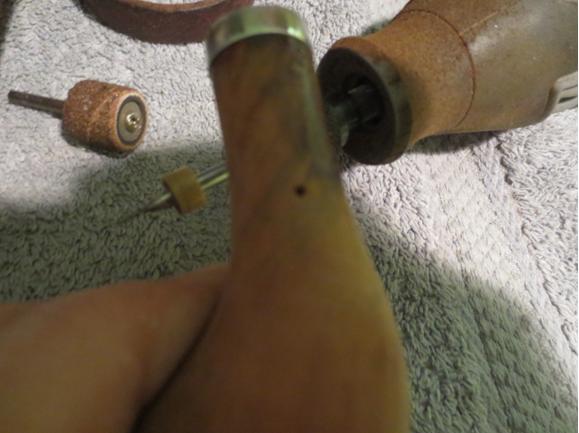
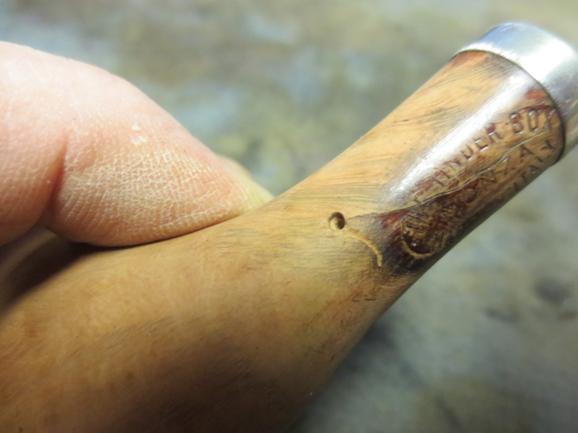
Monza17 I sanded the bowl some more with some medium and fine grit sanding sponges. I wanted to clean up the cracked area on the shank bottom so that I could repair it. I took the photo below to show the crack in the shank.Monza18 I used a micro drill bit on my Dremel to drill a small hole at the end of the crack to stop it from spreading further up the shank.MOnza19

Monza20 I packed some briar dust into the hole and then dripped super glue on top of that and then more briar dust and some more glue. I ran a dental pick along the crack to open it slightly and then put some glue along the crack to the band as to preserve that as well.Monza21

Monza22 I sanded the repair to smooth it out and blend it into the shank and avoided the area inside the stamping.Monza23 I heated the stem with a heat gun to take a bit of the bend out of it. Once it was pliable I bent it to match the flow of the curve of the horn. I wanted it to sit with the rim and the bend in the stem flat on the table when laid down. That angle would make it sit correctly in the mouth when it was smoked.Monza24

Monza25

Monza26

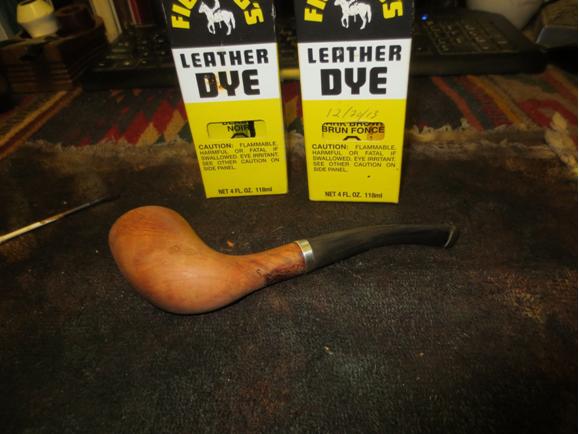
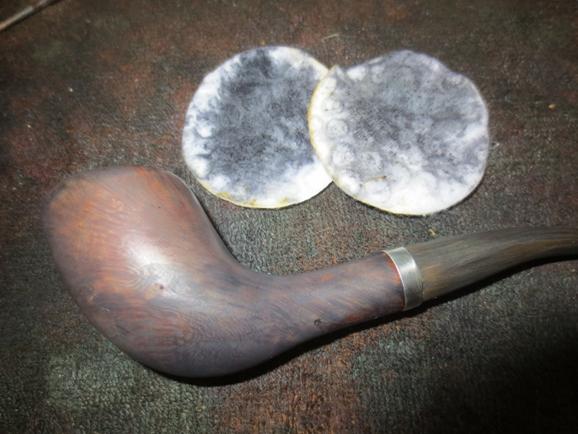
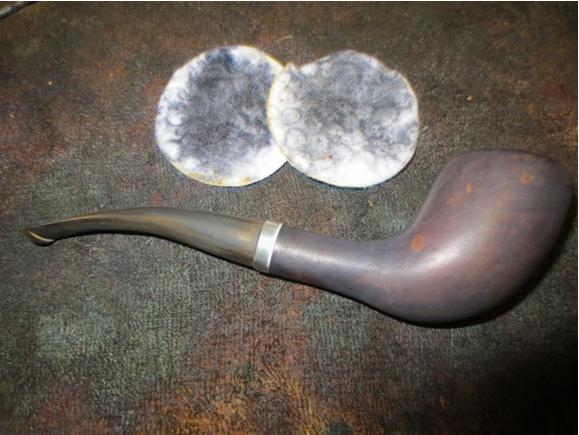
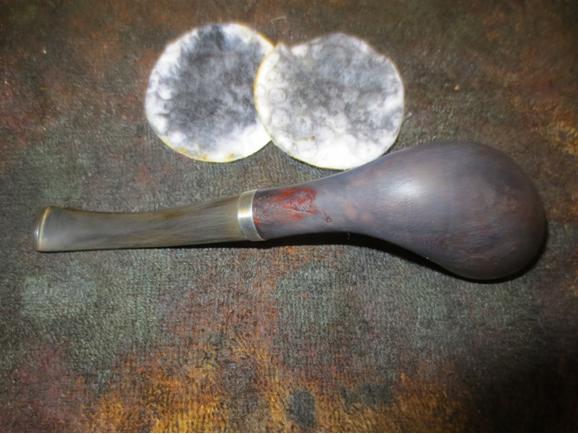
Monza27 I worked on the curve of the rim and top with sandpaper and sanding sponges to get the flow of the rolled rim even all the way around the bowl. I worked on the inner edge of the rim as well to make it flow into the bowl rather than be an abrupt edge.Monza28 I sanded the bowl with medium grit sanding sponges and fine grit sanding blocks to remove the scratches from the briar and to work on the oxidation on the stem. The grain was beginning to show through. I wiped it down with a tack cloth to remove the sanding dust in preparation for staining the bowl.Monza29 The bowl had a lot of fills so I decided to try a contrast stain to both hide the fills and to bring out the grain. I started with a black aniline stain and finished with a brown.Monza30 I stained the bowl with the black and flamed the stain to set it in the grain. I reapplied and reflamed it until the coverage was even.Monza31 I wiped the bowl down with alcohol and cotton pads to remove the excess black and leave it only in the grain of the briar. I wanted it to show the grain and highlight the beauty. I also wanted to mask the fills to some degree.MOnza32

Monza33

Monza34

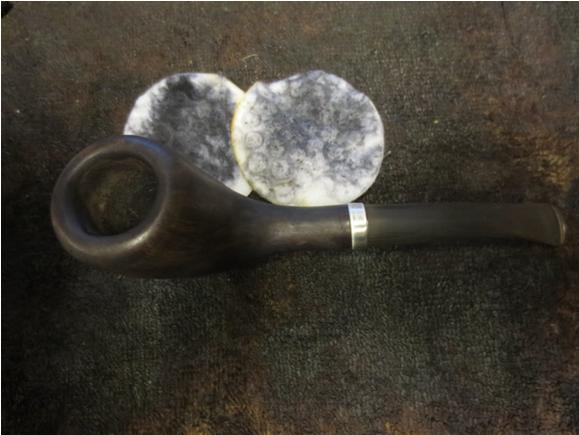
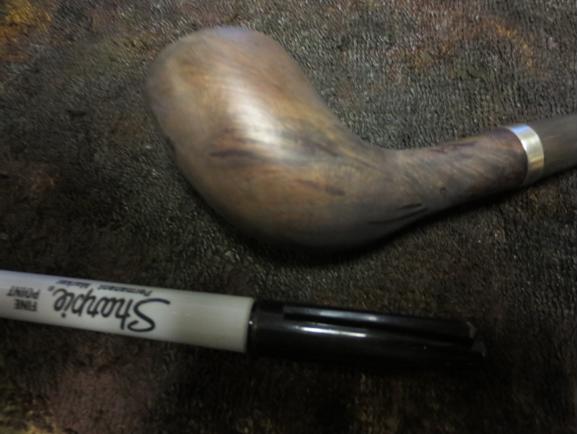
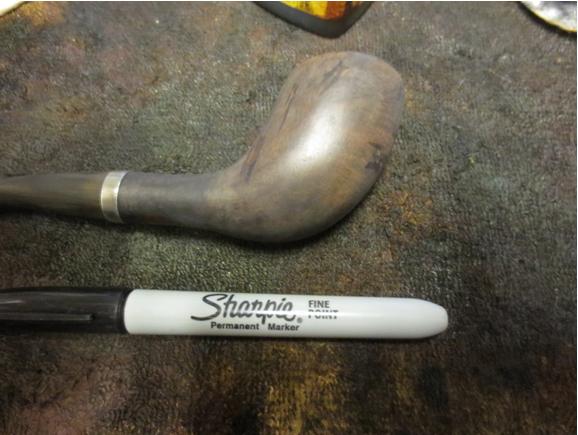
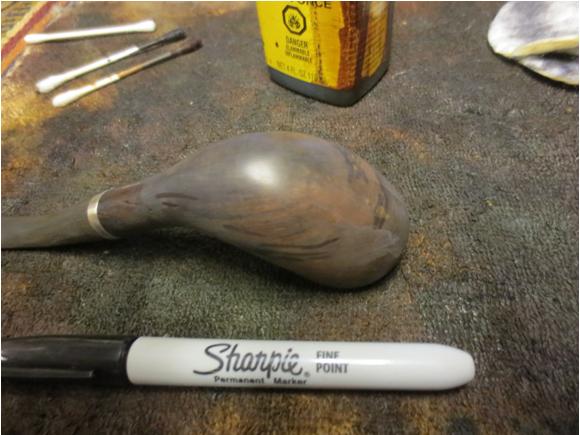
Monza35 I used a black Sharpie permanent marker to draw grain lines through the huge fills on the bowl to further blend them into the briar.Monza36

Monza37

Monza38 With that preparation done I gave it a top coat of dark brown aniline stain. I applied it and flamed it and repeated until I was happy with the coverage.Monza39

Monza40

MOnza41 I hand buffed the bowl to check out the coverage of the brown and the contrast of the black and the black Sharpie marks. By and large I liked what I saw. There were some spots that needed some more work but it was looking good.Monza42

Monza43

Monza44 I worked the stem over with micromesh sanding pads – wet sanding with 1500-2400 grit pads and then giving it a coat of Obsidian Oil. I dry sanded with 3200-4000 grit pads and gave it another coat of oil. I finished sanding with 6000-12000 grit pads and then gave it a final coat of Obsidian Oil and let it dry.Monza45

Monza46

Monza47 I buffed the pipe with Blue Diamond and then gave it multiple coats of carnauba wax. I buffed it with a clean flannel buff to raise the shine and then with a microfibre cloth to add depth to the shine. The finished pipe is shown in the photos below. It exceeds my expectations when I began the reclamation work on it. The fills on the sides, shank and back of the bowl have all but disappeared in the blend of stains and Sharpie pen. The large ones on the bowl front look better but are still somewhat visible. Overall I am happy with the results. Thanks for looking.Monza48

Monza49

MOnza50

Monza51

Monza52

Monza53

Monza54

Monza55

Monza56

Restoring a Peterson System Standard 309


I just became aware of Wandering Pop’s Blog site. I remember the pipe he speaks of that I cleaned up and sold him. It was a beauty! The pipe he worked on in this post is also a beauty. He did some great work on it so I thought I would give you all a heads up on the blog and on the work that Wandering Pop is doing! As he says Prost!

Chris's avatarWandering Pop

I first need give some acknowledgement to Rebornpipes for inspiring me to adventure into the art of restoring estate pipes. I recently bought a beautiful Peterson System Premier 307 that was revitalize by Steve that spiked my interested in this hobby. With all that said, let’s jump into my first restoration.


I have been searching eBay and other outlets for the last month or so for a nice pipe that would make for a simple “get my feet wet” restoration. I knew that my skills in the craft were pretty limited at this point. However, I was also on a fairly tight budget. So I spent a lot of time looking and jumped on this beauty when it became available.


   As you can tell by the pictures above, the Pete was in fairly good shape. The bowl had some discoloration around the rim, the nickle collar was in a…

View original post 373 more words

A Rescue Dog – Restoring a Chadwick “Supreme” Rhodesian


Blog by Steve Laug

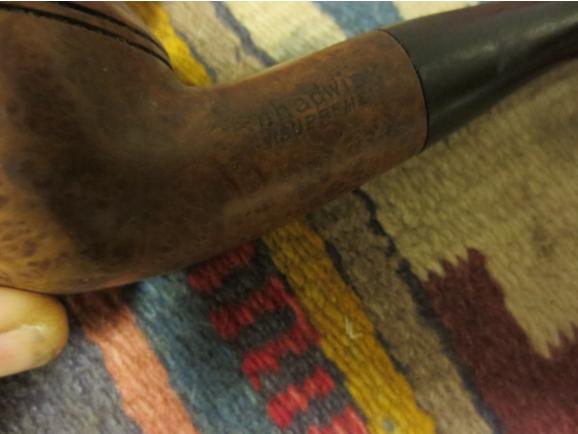
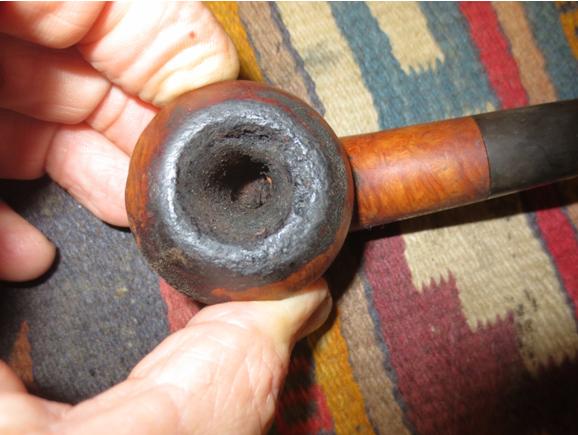
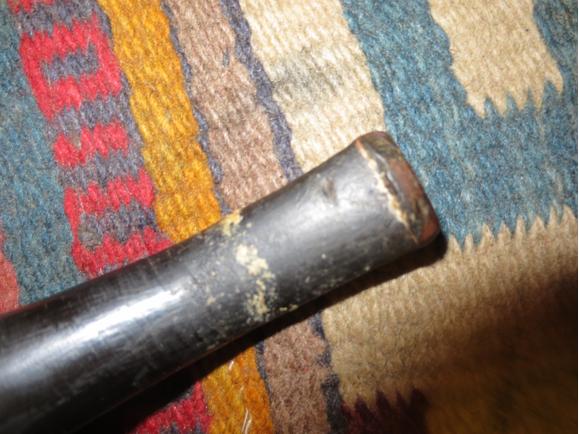
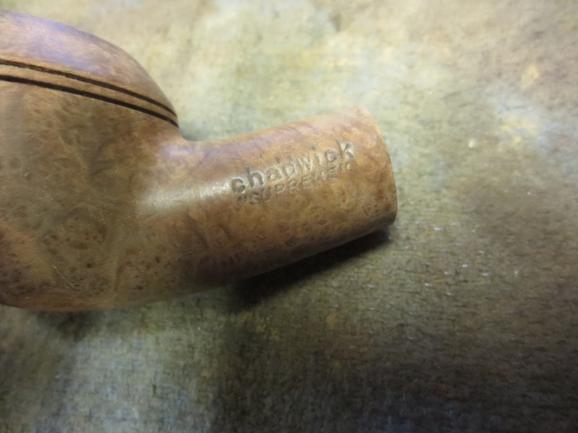
The third pipe my brother Jeff picked up in the lot from the Montana was one of my favourite shapes. In the photo below of the pipes at the seller’s antique shop it is the pipe on the far right of the picture. Looking at it in the photos I wondered if it was a Peterson 999 or a GBD 9438 two of my all time favourite pipe shapes. I was pretty excited to see what it was once he got the pipes. Everything about that pipe shape made me think that my guess was not far off. When the pipes arrived in Idaho my brother called and read me the stamping. The pipe was stamped on the left side of the shank Chadwick over “Supreme”. On the right side it was stamped Imported Briar. At that point I was scratching my head. It still looked like an English-made pipe to me but I had not heard of the Chadwick brand.Chadwick1 When the pipe arrived in Canada I looked it over and was still convinced it looked English-made. I looked in Who Made that Pipe and it was listed there as made by Wally Frank in the US and England. The next photos show what the pipe looked like when it arrived here. There is a lot of promise underneath all the grime. There was a thick cake in the bowl and the rim was covered with the overflow of tars and oils down the sides to the double ring. The finish was dirty and almost gone. I am not sure if the pipe had a natural finish or was stained but it was no longer clear what the original had been like. The double ring had a large chunk missing on the front of the bowl. There were two fills on the bowl front that were shrunken and looked like dents. The shank was dirty. The stem was chewed and gnawed on to the point that the button was virtually gone on the top side. There was a chunk missing from it on the top middle of the button. There were deep tooth marks on the top and bottom of the stem near the button. The stem was oxidized and scratched and had a build-up of calcification about an inch up the stem toward the shank. Inside the stem and shank was very dirty. The airway to the bowl was clogged and I was not able to blow air through it. It looked to me that there had originally been a stinger in the tenon but it was no longer present.Chadwick2

Chadwick3

Chadwick4

Chadwick5 I took some close up photos of the stamping and the condition of the bowl, rim and stem before I went to work on restoring it. You can clearly see the stamping on the left side of the shank – Chadwick Supreme. The rim is in nasty condition. I am not sure how the last pipe man had ever fit much tobacco in the bowl. All I know is that it must have smoked really well because it looked as if he had never laid it down. The stem condition is also clearly shown with tooth marks and gnawing on the button top and bottom.Chadwick6

Chadwick7

Chadwick8

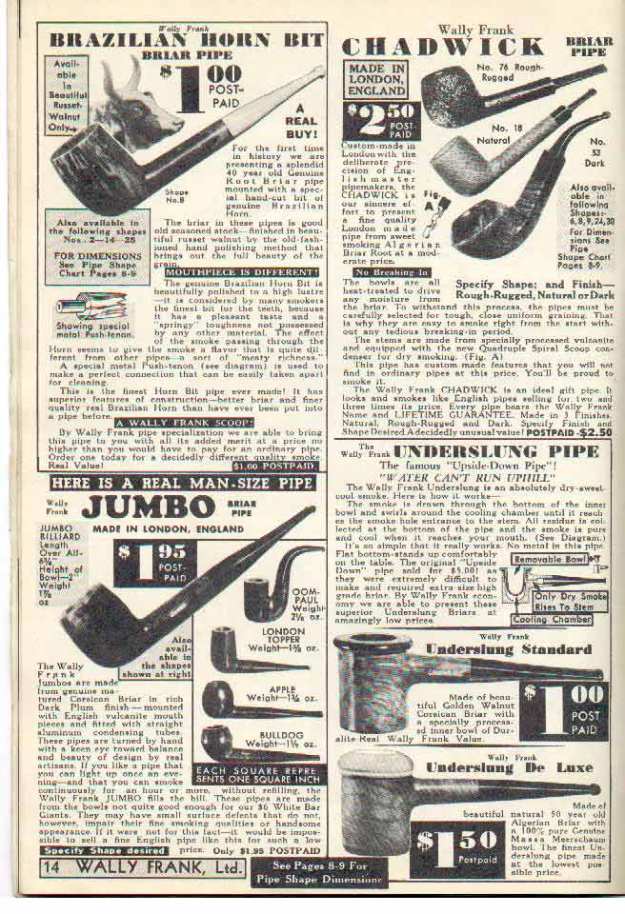
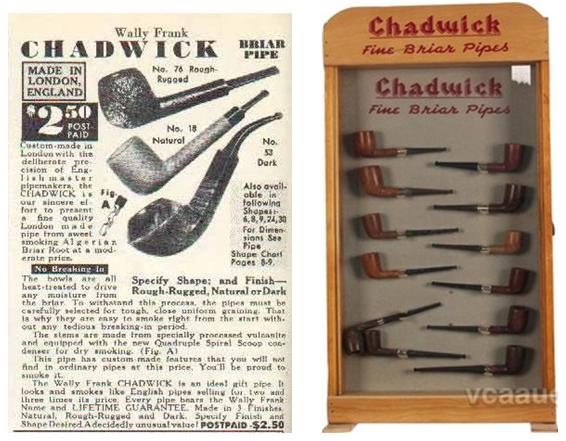
Chadwick8a Before I started cleaning it up I wanted to learn a bit more about the brand. I have cleaned and used quite a few Wally Frank pipes over the years and knew that other companies in Europe often made their pipes for them. It was highly likely that this was a British made pipe. I checked on Chris Keene’s Pipe Pages and found the Chadwick name in the Wally Frank Catalogue for 1939. None of the other catalogues would open but at least I had the information that I needed. The first photo below is of the whole page. The second is of the right top corner where the Chadwick line is mentioned. The third is of a Chadwick Display Cabinet that was provided to tobacconists and stores that sold the line.Chadwick9

Chadwick10 Now I knew that the Chadwick line was indeed made in England. My guess was correct and I would go one step further and guess that they were made by Comoy’s or GBD. The advertisement says that the pipe was “custom-made in London with the deliberate precision of English master pipemakers. The Chadwick is our sincere effort to present a fine quality London made pipe from sweet smoking Algerian Briar Root at a modest price.”

What interested me was that the pipe came in three different finishes – Rough-Rugged, Natural and Dark. I am pretty sure that the one I had was originally dark finished as the dark finish would hide the fills on the bowl and they would be blended into the briar. That gave me the direction that I would go in restaining the pipe once I got to that point in the restoration process.

I love reading these old catalogues and seeing the life time warrantee on the pipes and the fact that the pipe originally cost $2.50 with postage paid from the Wally Frank factory.

Armed with that confirmation of British origin for this old pipe I went to work to restore it to its former glory. I worked on the bowl first. I wanted to ream back the cake to bare wood to see what I was dealing with in the bowl. I set up the PipNet reamer with the smallest head first and found that the cake was incredibly hard. The cutting head barely made a dent in the cake. I took the largest sized cutting head – same diameter as the bowl and work on it and with a lot of force was able to begin to make a dent on the cake. It was just too hard to go too deep with the tool. I used a pen knife to try to cut back the lower portion of the cake but could not even cut into it because it was so hard.Chadwick11

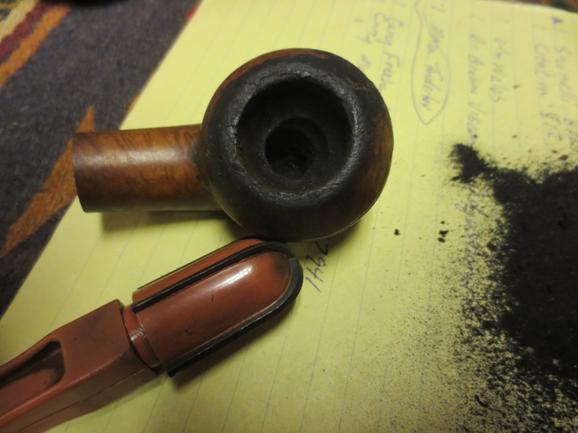
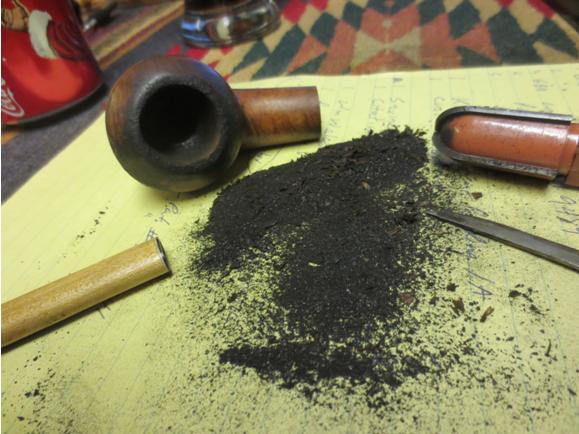
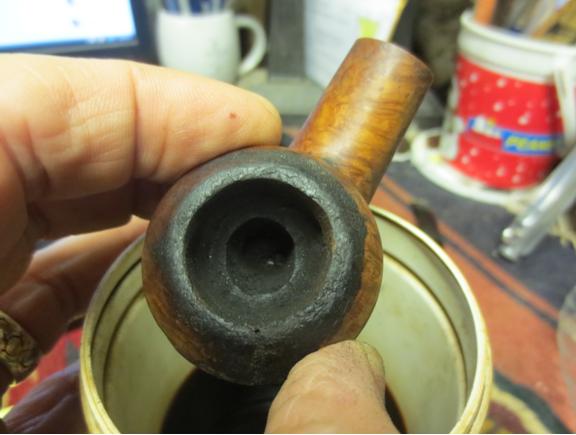
Chadwick12 I decided to soak the bowl and soften the cake in an alcohol bath. I dropped the bowl into the bath and left it overnight to soak and soften the cake.Chadwick13 In the morning I took it out of the bath and dried it off with a coarse cotton towel. The soak also had the effect of softening the lava on the rim and cap so that when I dried the bowl most of it came off in the process. I was able to ream it back to bare wood with the use of a PipNet reamer and a KLEENREEM reamer. I used the drill bit part of the KLEENREEM tool to open the airway into the bowl and remove the clog. With that gone I could freely blow air through the bowl. The final photo in this set shows the conical bowl on the reamed pipe.Chadwick14

Chadwick15

Chadwick16 I wiped the bowl down with acetone on a cotton pad to clean off the remaining finish and the grime left behind after the soak and the reaming process. The damaged rings on the front of the bowl are visible in the photos as is the damage to the rim top.Chadwick17

Chadwick18

Chadwick19

Chadwick20

Chadwick21 I lightly topped the bowl on a topping board using 220 grit sandpaper to flatten the rim top and to remove some of the rounding to the outer edge of the bowl.Chadwick22 I used a dental pick to remove the fills that had shrunk on the bottom front of the bowl in preparation for replacing them.Chadwick23 I packed briar dust into the holes and then dripped super glue onto the packed briar dust.Chadwick24 I packed briar dust into the missing section of the double rings on the front of the bowl. I put super glue on top of the briar dust fill to build up the repair. I added more briar dust on top of the fills on the bowl front and on the repair to the rings.Chadwick25 I sanded the patches on the bowl front with 220 grit sandpaper and smooth it out to match the surrounding briar.Chadwick26 I sanded the patch on the ring repair with 220 grit sandpaper to smooth it out. There were still some low spots on that repair so I refilled the area with some more super glue.Chadwick27

Chadwick28 I set the bowl aside to let the repair on the rings cure before I cut the new rings into the bowl front. While it was sitting I sanded the stem with 220 grit sandpaper to remove the oxidation and the calcification. I wanted to clean up the stem before I worked on repairing the tooth marks and gnawed button. I cleaned the stem with alcohol and pipe cleaners.Chadwick29

Chadwick30

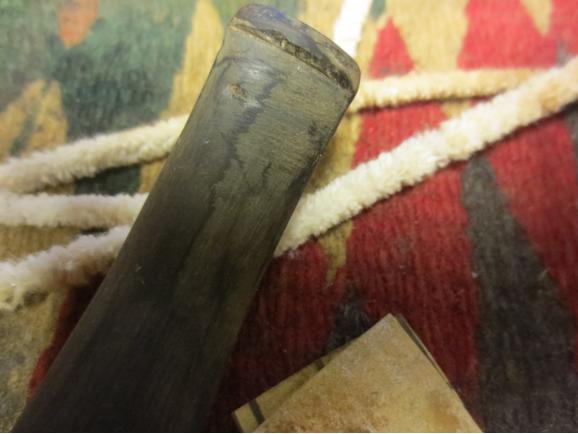
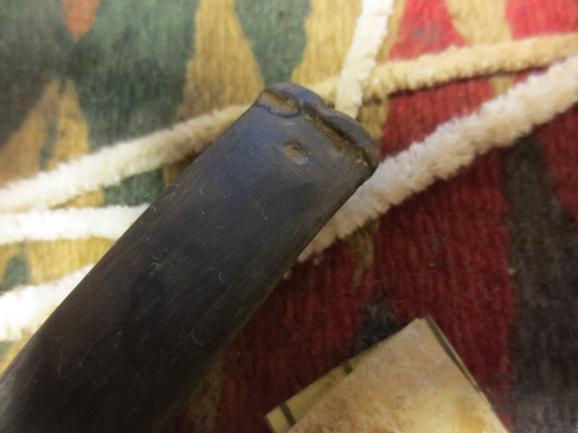
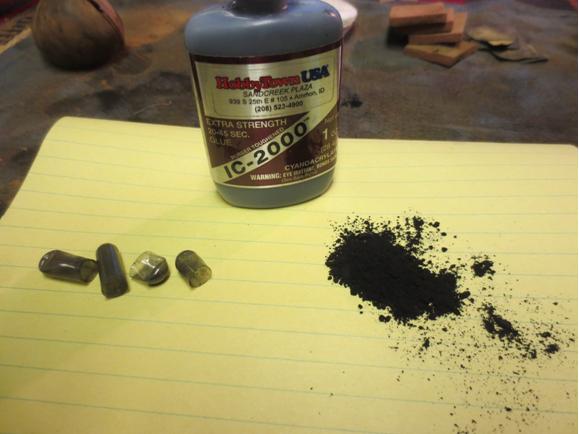
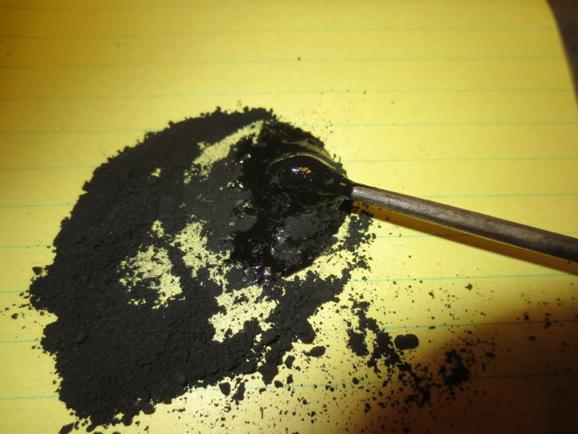
Chadwick31 I scrubbed out the tooth marks on the stem and the button with a cotton swab and alcohol in preparation for the repair I would do there. I mixed the patching material using finely crushed charcoal capsules and black super glue. I mixed the two to blend the materials. I use super glue that gives me 45 seconds of time before it hardens so I have to work quickly.Chadwick32

Chadwick33 When I had the paste mixed well I applied it to the tooth marks and built up the button with a dental pick and dental spatula. The repair is anything but beautiful at this point but the mixture adds strength to the repair that the glue by itself does not give with tooth marks and damage of this magnitude.Chadwick34

Chadwick35

Chadwick36 I set the stem aside to cure and went back to the bowl. I used a Buck Knife, a pen knife and a sharp-edged needle file to cut the lines in the patch on the bowl front. I wanted the new lines to connect seamlessly to the lines on either side of the repair. These three blades always have worked for me to get a good straight line match.Chadwick37 When I had finished cleaning up the lines on the bowl the stem repair had cured enough to begin to shape the button and clean up the tooth repairs. I sanded them with 220 grit sandpaper to begin to shape and smooth out the repairs.Chadwick38

Chadwick39

Chadwick40

Chadwick41

Chadwick42 When I had the basic shape of the button set up the surface was quite porous on the button surface and in one spot on the tooth repair on top of the stem so I gave them a top coat of clear super glue to fill in the pores left behind by the super glue/charcoal mixture. I set that aside to dry.Chadwick43

Chadwick44 I cleaned the bowl and shank with pipe cleaners, cotton swabs and alcohol. It was one dirty shank. It took a lot of scrubbing to clean out the grime. I scrubbed until the cleaners came out clean and white.Chadwick45 I wiped the bowl down with alcohol to remove any last dust or grime in preparation for staining the briar.Chadwick46

Chadwick47

Chadwick48 I decided to stain the bowl with a dark brown aniline stain that I had thinned by half to give it a medium brown colour. I wanted to aim for the dark stain that was noted in the Wally Frank Catalogue above. I figured it would give me good coverage on the fills and the repair to the rings.Chadwick49 I applied the stain with a cotton swab and then flamed it with a lighter to set the colour in the grain.Chadwick50 I wiped down the freshly stained bowl with alcohol on cotton pads to even out the stain and to give it more transparency so that the grain shows through. When I was through I was happy with the colour and with the way it hid the fills on the bowl and the repair to the ring on the front of the bowl.Chadwick51

Chadwick52

Chadwick53

Chadwick54

Chadwick55 By that time the stem repair had dried and I sanded it with 220 grit sandpaper to smooth out the stem patch and do more shaping on the button.Chadwick56

Chadwick57

Chadwick58 I filed the slot in the stem to smooth it out and shape it. I also sanded the stem with a medium and a fine grit sanding sponge to further shape the button. I wet sanded the stem and button with 1500-2400 grit micromesh sanding pads and rubbed the stem down with Obsidian Oil. I dry sanded with 3200-4000 grit micromesh pads and gave it another coat of oil. I finished by sanding it with 6000-12000 grit pads and gave it a final coat of Obsidian Oil. I set it aside for the oil to dry.Chadwick59

Chadwick60

Chadwick61 I sanded the bowl with the micromesh sanding pads – 1500-12000 grit to polish the briar – bowl, shank and rim, to bring out the grain. When the grain began to pop I buffed the bowl and the stem with Blue Diamond on the wheel and then gave both multiple coats of carnauba wax. I buffed it with a clean flannel buff and then with a microfibre cloth. The finished pipe is shown in the photos below. It is a far cry better looking than when I started. This one is a keeper. Thanks for looking.Chadwick62

Chadwick63

Chadwick64

Chadwick65

Chadwick66

Chadwick67

Chadwick68

Carey Magic Inch Freehand Briar Pipe


Blog by Steve Laug

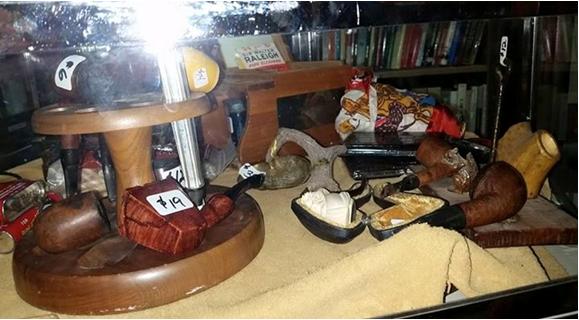
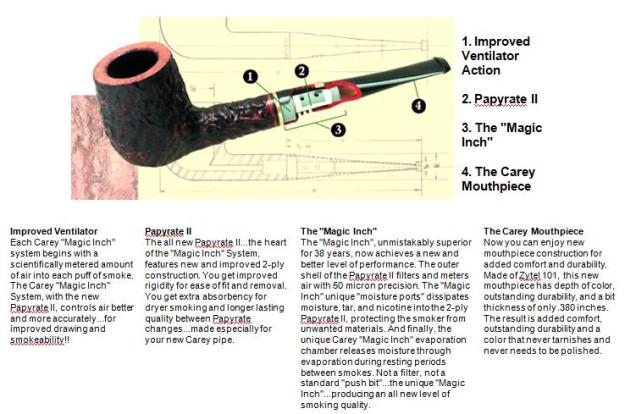
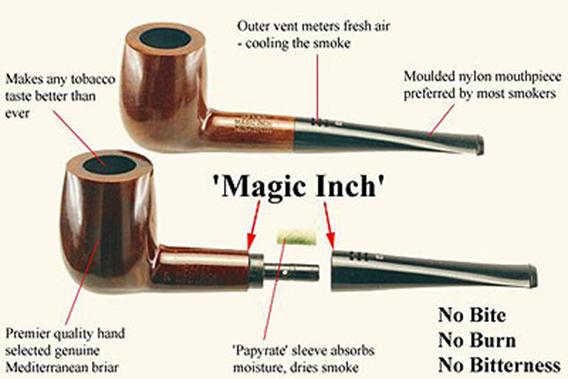
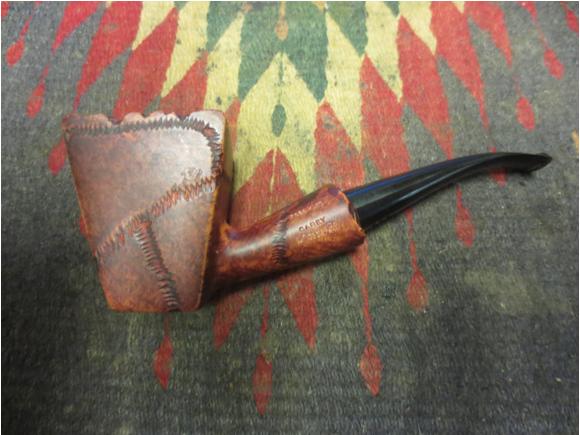
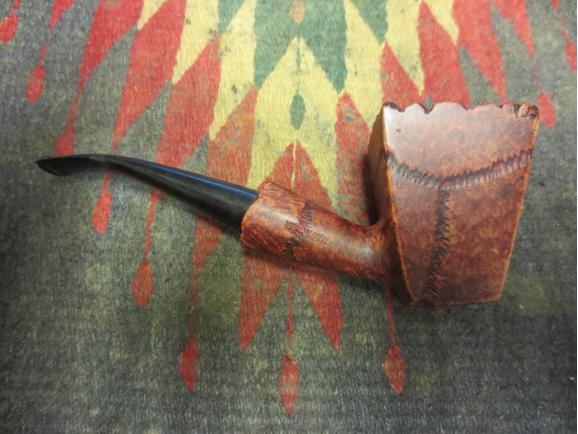
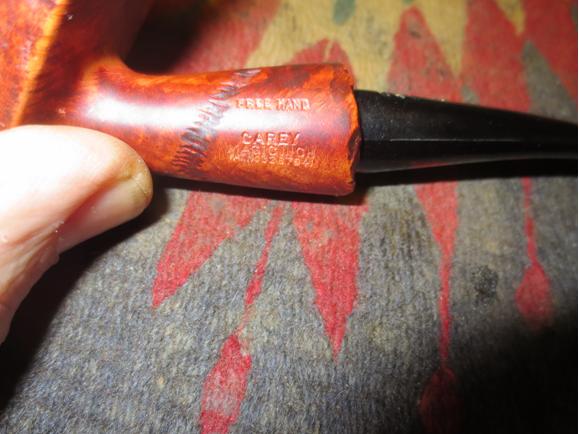
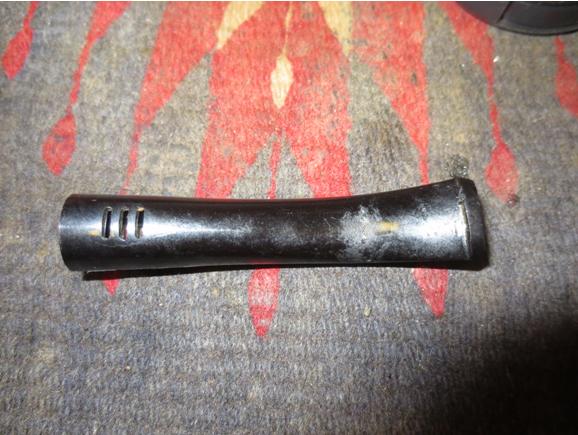
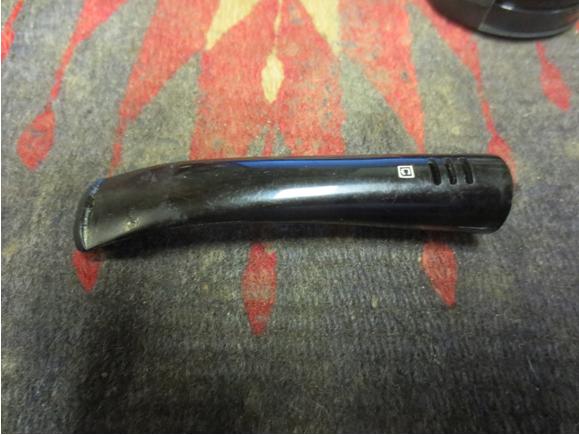
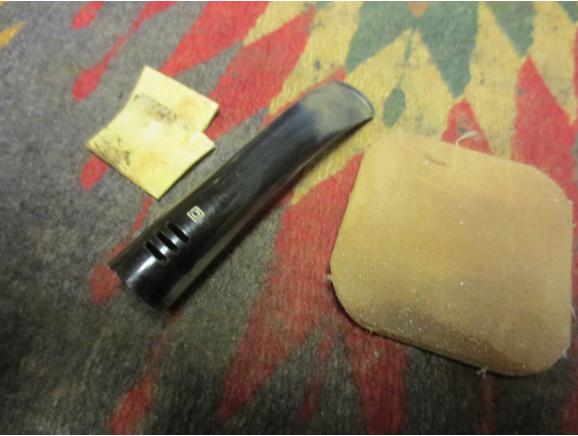
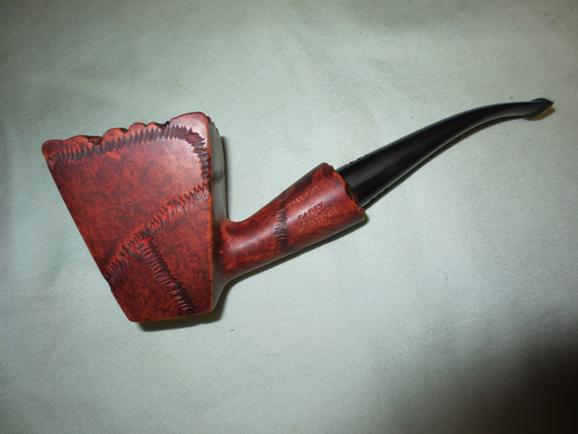
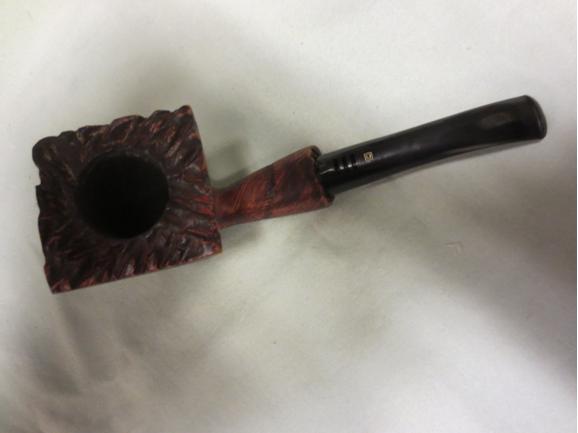
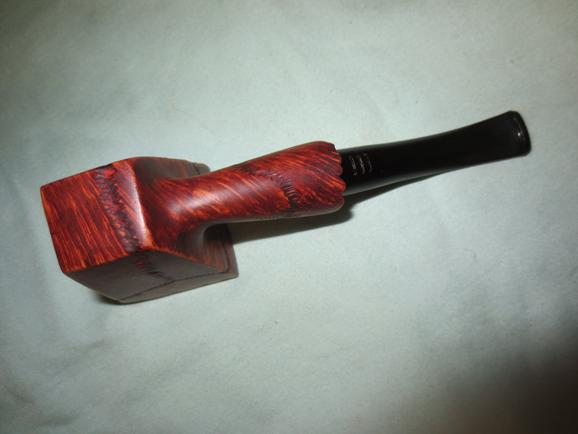
In the batch of pipes my brother purchased from an antique shop in Montana for me to clean up was the pipe pictured in the photo below – on its side on the pipe rack on the left of the photo bearing a $19 price tag. Turns out it is a Carey Magic Inch Freehand Pipe. It is stamped on the left side of the shank: Free Hand over Carey over Magic Inch. Underneath that is stamped a PAT. No. 3267941. On the right side it is stamped: Mediterranean over Briar Israel. The stem has three horizontal vents on the top and on the underside of the stem. There is a logo – a C in a box on the top of the stem behind the vents.Carey1 I did some research on the “Magic Inch” System and found out that it has been a Carey’s tradition for over 50 years. On their website they say that they have sold over 1,000,000 pipes. They describe the “Magic Inch” as: “an air chamber inserted between the imported briar bowl and the vented mouthpiece which allows cool outside air to enter and mix with the warm tobacco smoke inside the “Magic Inch” chamber. Tobacco tars, oils and moisture, are squeezed out of the smoke. The residue drops to the bottom of the chamber and is absorbed by the Papyrate sleeve.” http://www.eacarey.com/magicinchinfo.html

They provide the following diagram on their website and I have included it here to show the unique system.Carey2 I found a second diagram on the English Carey website. http://www.eacarey.co.uk/2010/10/the-carey-magic-inch/

I quote from their site as it gives some interesting history on the system: “A Carey pipe looks better and feels better than any ordinary pipe. It also smokes like no other pipe you’ve ever known, and that’s mostly thanks to the patented ‘Magic Inch’, an invention that revolutionised pipe smoking. Designed and patented by EA Carey in 1948 it was the result of a dedicated pipe smoker seeking a cooler, drier smoke whilst not detracting from the fulsome flavour of choice tobaccos. After years of research and the discarding of many ‘good ideas’ Carey settled on the basic design of the system and set about refining that design into the simple but highly effective device that is the basis of Carey Magic Inch pipes over 60 years later. Even today, more than 30 years after it was first introduced into Europe and particularly the UK, we have many seasoned pipesmokers who are still discovering the amazing difference and improvement in smoking pleasure they obtain from the Magic Inch system. It is not a trap or filter or other such sludge forming gadget. In fact, like all great discoveries and inventions, the secret is simple. By cooling, condensing and evaporating moisture with every puff, it prevents the tar, sludge, bite and bitterness that you may find in other pipes, ever reaching your mouth.”

They go on to describe the system in a classically English way: “The system has been designed to allow a precise amount of outside air into each puff of smoke. Unique moisture ports then dissipate wetness, tar and nicotine into the 2 ply Papyrate sleeve, protecting the smoker from unwanted materials. The Papyrate itself provides excellent absorbency for dryer smoking and increased durability. Subsequently the Magic Inch chamber releases moisture through evaporation during resting periods between smokes. Neither a filter nor a standard ‘push bit’, a true innovation.”Carey3 All Carey Magic Inch pipes are made from top quality Mediterranean briar designed, crafted and inspected by experts who take pride in their craft.

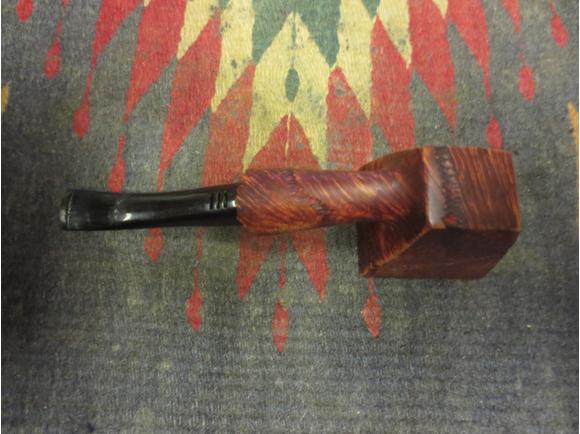
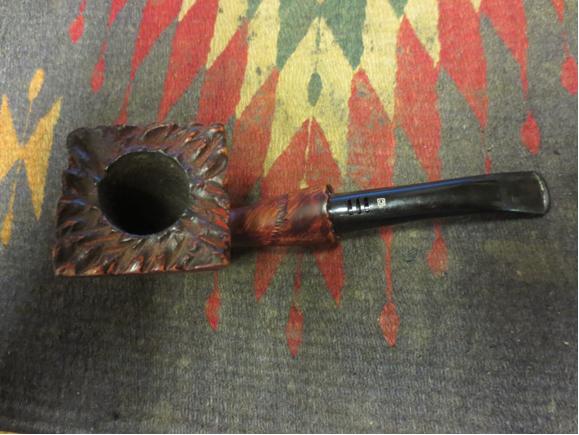
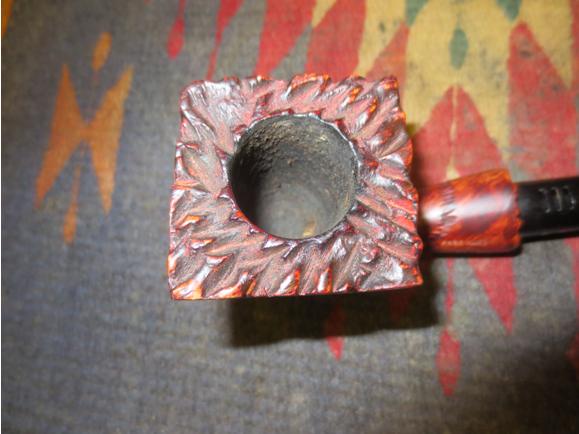
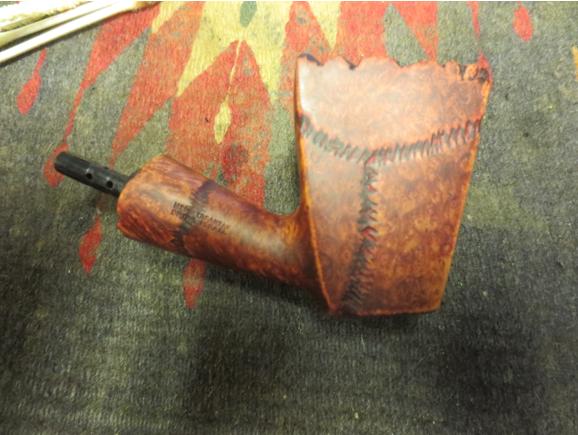
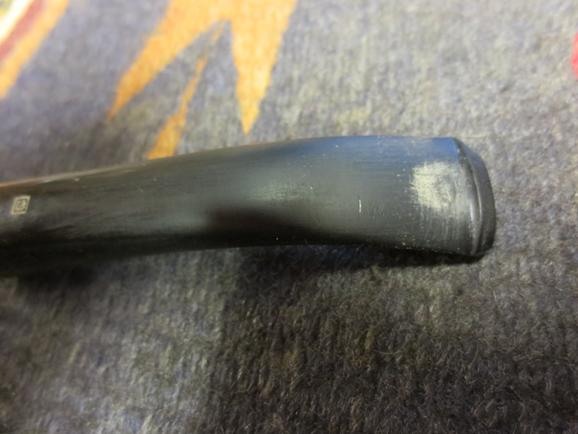
With this background information I started to work Carey Magic Inch Freehand that my brother had picked up for me. The bowl was quite clean on the inside – a light cake had formed. The rim had some darkening but was also very clean. The carved patterns on the pipe were very similar to some of the Alpha pipes that also had similar Frankenstein-like stitches on the worm trails carved into the sides and bottom of the bowl and shank. I would not be surprised if it was actually carved in the old Alpha Pipe Factory in Israel. The finish on the pipe was in very good shape and did not need to have anything done to it but clean it. The shank bears the stamping of Israel on the right side. The shape is a block/poker shape that never really was my cup of tea. I always look at them and feel like the carver stopped somewhere along the way and never finished carving the pipe. The rustication on the rim matched that on the shank end. The stem was typical Carey plastic and would be hard to work on. It had tooth chatter on the top and the bottom sides of the stem and some tooth marks that also went onto the button itself.Carey4

Carey5

Carey6

Carey7 The next close up photos show the rim and the cake in the bowl as well as the stamping on the sides of the shank.Carey8

Carey9

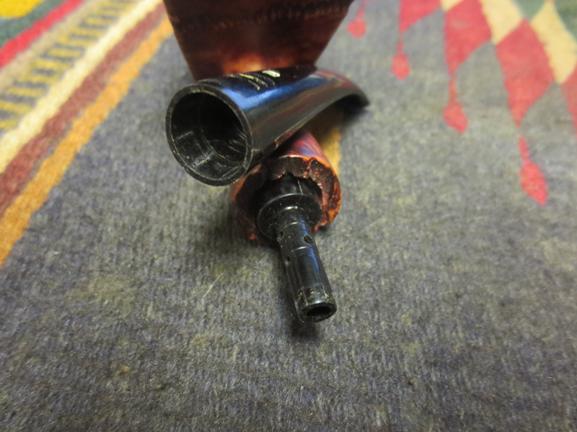
Carey10 I took the stem off the pipe to get a picture of the Carey Magic Inch system. The stem sits over a mortise insert with a one inch long perforated tube that extends into the stem when it is in place on the shank.Carey11 The stem was dirty on the inside and the tooth chatter and dents marred the top and bottom sides near the button.Carey13

Carey12 I scrubbed down the exterior of the bowl with a tooth brush and Murphy’s Oil Soap and rinsed it with lukewarm water. I dried off the bowl exterior with a soft cloth.Carey14

Carey15

Carey16

Carey17

Carey18 I scrubbed out the stem and the shank with cotton swabs, pipe cleaners and alcohol until the pipe cleaners and swabs came out clean.Carey19 I find the plastic material used on these stems to be a challenge to clean up and remove the damaged areas. Once it is sanded all of the polishing has to be done by hand. The heat of the buffer pads can seriously damage the stem by melting it. I sanded the tooth marks and chatter with 220 grit sandpaper to remove the damage. There was one spot on the top of the stem near the button that needed to be patched with clear super glue. It was a deep tooth mark that no amount of sanding would remove.Carey20

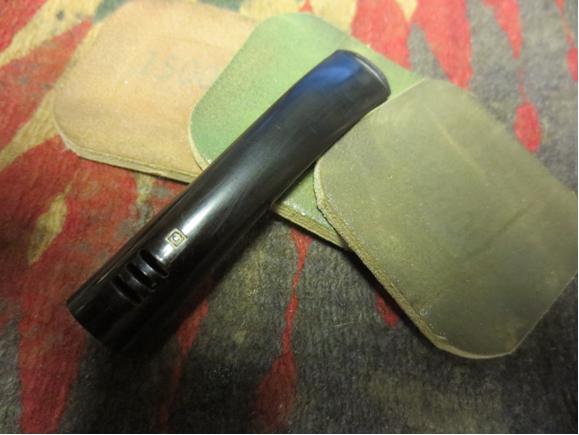
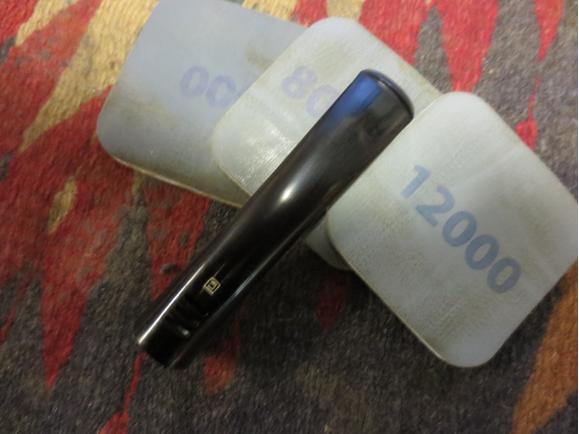
Carey21 When the patch cured I sanded it with the 220 grit sandpaper to smooth it out with the surface of the stem. I sanded it with a medium and a fine grit sanding sponge to remove the scratches.Carey22 Normally I wet sand the stem with 1500-2400 grit micromesh sanding pads but with this material it only gets muddy and makes a mess. I used some Obsidian Oil to rub down the stem between each pad and sanded it until the scratches began to disappear. I continue the process with 3200-4000 grit pads with the oil between each pad giving me some bite on the plastic stem. I forgot to take a picture of this step (I had already spent over 1 ½ hours on the stem at this point). I finished sanding it with 6000-12000 grit pads and the oil. When I had finished I rubbed it down with a final coat of Obsidian Oil and let it dry.Carey23

Carey24 I hand waxed the bowl and the stem with Conservators wax and buffed it with a shoe brush. I finished by buffing it with a microfibre cloth. The finished pipe is shown in the photos below. It is cleaned, restored and ready for whoever wishes to purchase it from me. It is not my style of pipe but I am sure it will make some pipe man very happy. Just email me if you are interested and make me an offer at slaug@uniserve.com Thanks for looking.Carey25

Carey26

Carey27

Carey28

My Courtship of a Comoy’s Pebble Grain Panel Brandy


Guest Blog by Robert M. Boughton
Member, International Society of Codgers
Member, North American Society of Pipe Collectors
http://www.naspc.org
http://www.roadrunnerpipes.biz (Coming soon)
http://about.me/boughtonrobert
Photos © the Author

For there are moments in life, when the heart is so full of emotion,
That if by chance it be shaken, or into its depths like a pebble
Drops some careless word, it overflows, and its secret,
Spilt on the ground like water, can never be gathered together.

― From “Priscilla” in The Courtship of Miles Standish (1858), by Henry Wadsworth Longfellow (1807-1882), U.S. poet and author

INTRODUCTION
I suppose I should consider myself fortunate to have had many such moments in life as Longfellow described, and can only hope to be blessed with frequent more, yet when each occurs, the awareness never fails to strike like a suffering pleasure. Call me a sentimentalist, or a romanticist as were the poets who influenced Longfellow, or make of it what you will.

Several years ago, when I first began buying up numerous fine examples of restored pipes by my friend and mentor, Chuck Richards, I fell in love with the beautiful Comoy’s Pebble Grain Panel featured in this exercise in refurbishing. As I might as well admit at this point, my reaction to the coloring and fine pebbles adorning the panels and the unusual shapeliness of the pipe itself was as the great American poet described. Many other works of art created for the enjoyment of pipe tobacco, some of which I have had the pleasure of acquiring and quite a few more remaining on my wish list, affected my sensibilities (in the philosophical sense) in a similar manner.

Still, the persistence of my attraction to this singular pipe has never lessened. Perhaps this reaction was a result of the fact that, in a moment of largess, I promised the special pipe to a friend who prefers cigars but was interested in taking up the fairer form of smoking – and on frequent occasions since then, I have been able to appreciate its allure, albeit in the hands of another man.

With that chemistry in mind, I have on a few occasions, with permission from my friend of course, again held the full-figured darling in my own appreciative embrace to ensure that she has been given the care and respect deserved. I am happy to report that the lovely creature has received excellent if frequent attention.

That said, and recognizing that when I first cleaned the Comoy’s a few years back for my friend, Mike Brasel, I knew even less about restoration and refurbishing than I do now, I knew I could make the lovely pipe better than when I gave it away. If anyone detects a touch of regret in those last words, it is only because… well, it’s the truth! There. I got that confession out of the way. I also had taken no photos of the pebble grain before I turned it over to the care of Mike, and concluded that one easy way to correct that mistake was to get it back in my hands long enough to give the pipe a little needed cleaning. Machiavellian? Somewhat. Sneaky? Definitely. Regrets? None.

My primary solace for the loss of the pebble grain is two-fold: other than getting to see it on a regular basis, I can observe its regular upkeep. I knew Mike was in the good habit of running bristly cleaners through it but had no idea he must do so after every smoke until I at last was able to convince Mike to entrust me with the Comoy’s a few days ago. He actually paid me for a sweet, vintage Kaywoodie Signet bent smooth billiard I restored about a year ago (my first experience cleaning a pipe properly with a retort). I believe it dates to the 1960s if not a little earlier. Mike therefore had a substitute to use in the other pipe’s absence.

The reason I chose the Comoy’s for Mike in the first place was his comment that he had been unable to find a big, thick, sturdy enough pipe that would never overheat at a price he could afford. I knew the pebble grain would be perfect for his needs and fit his personality at the same time. But based on his standards for appreciating the thick-skinned Comoy’s, I was surprised and more than a little concerned when he picked the Kaywoodie from my restores available for sale. Nevertheless, while enjoying his first bowl of McClellands 2015 Christmas Cheer in his new Signet, Mike told me it smokes great and is easier to control without holding. The photo below was snapped just as he was about to remove it from his mouth.

Mike trying out his Kaywoodie the first time
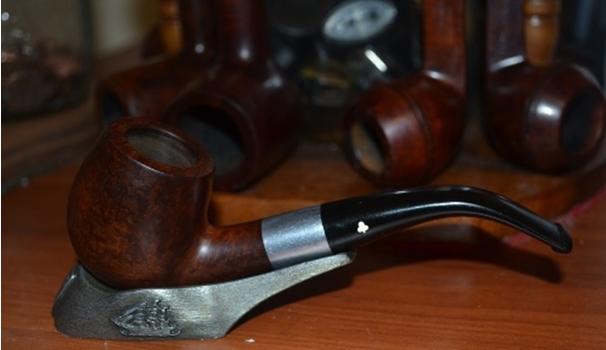
Mike trying out his Kaywoodie the first time

Mike’s new pipe
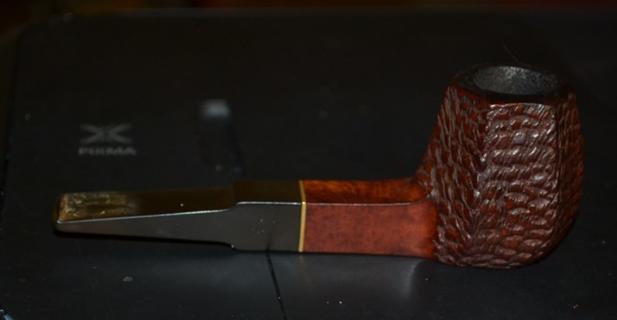
Mike’s new pipe


REFURBISH
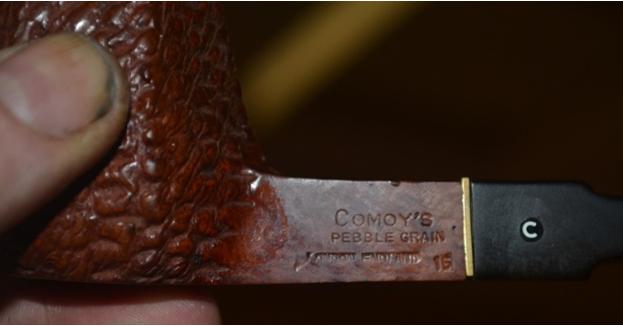
Comoys3

Comoys4

Comoys5

Comoys6

Comoys7

Comoys8

Comoys9 AN ASIDE
I see Mike at our local tobacconist almost every time I’m there, and for the most part he smokes the cigars he still loves. On occasion, I’ll even buy one and light it up myself. It’s true, I enjoy a good candela on special occasions, in particular when I can get my hands on a genuine Havana, which is a treat I have savored only five times: twice on trips to visit my mother when she lived in Cozumel, Mexico; once with another onto which I slipped a Nicaraguan band and smuggled back to the States (although the Customs agents at the border picked it right out from the little humidor box I handed them, which otherwise had legal varieties, and smiled at each other before letting me get away with my attempt at subterfuge); again with a gift from a former co-worker in grocery store deli merchandising, this one being, I was certain, a fake – until I held it and noted the unique paleness and skin-like suppleness of the green wrapper, and the last that I bought from a friend in England who was a true gentleman to mail to me along with three more I purchased for Mike and a couple of other cigar aficionados I know. All of the Cubans I’ve smoked required hours to finish and left me with an almost illicitly pleasant, light-headed giddiness.

BACK TO THE REFURBISH
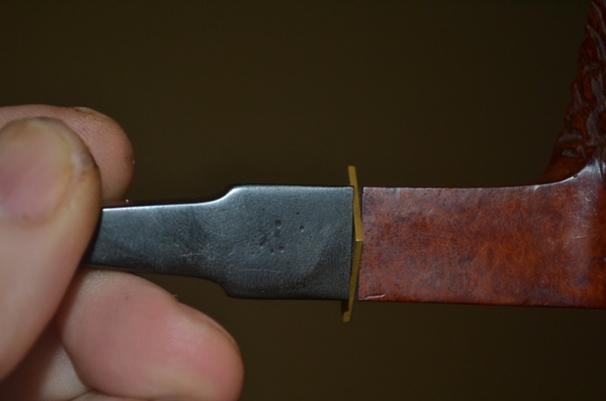
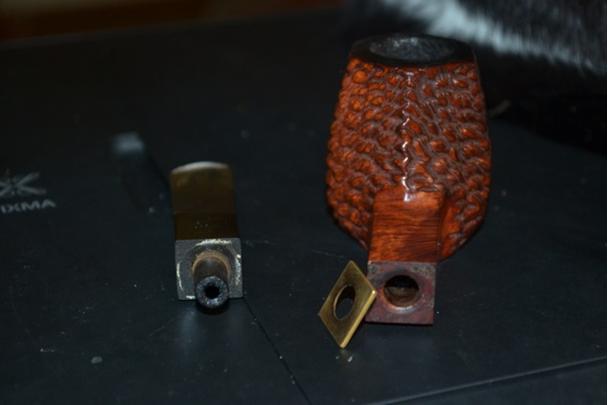
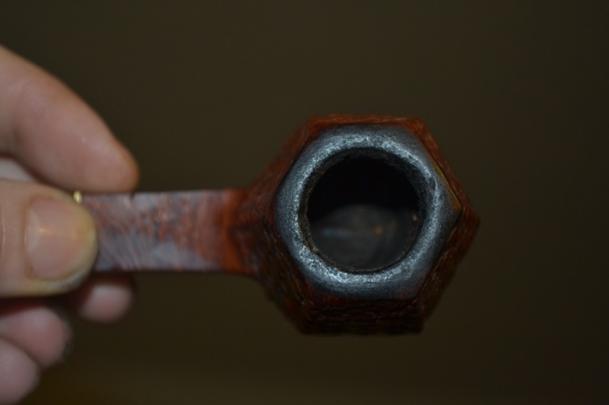
And so I was somewhat amazed to see from tell-tale signs on the Comoy’s that it had been used far more often than I suspected. The rim, of course, was the first hint, blackened as it was. Then there were the slight dents on both sides of the top of the shank, visible in the third photo above, and some minor scratches on the rest of the wood. However, the most revealing symptoms of frequent use were the general grime on the outer briar and the lip end of the bit. I also discovered, without even removing the bit from the shank, that the thin brass band that had been connected to the bit had come loose.Comoys10
Comoys11

Comoys12 That was a repair I never had to ponder before. Tossing the bit into an OxiClean solution for a nice long soak, I decided to tackle the rim first. I was able to remove the majority of the charring safely with superfine steel wool before shifting to micromesh, using 1800, 2400 and 3200. The rim as shown in the last shot below, I knew, was not finished, but more about that later, in its order.Comoys13
Comoys14

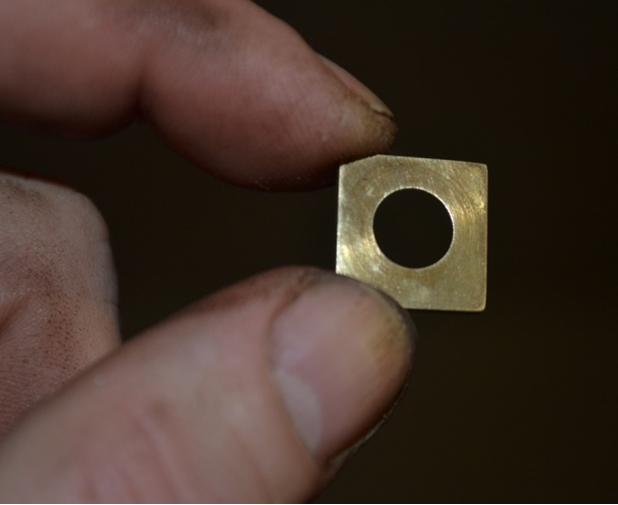
Comoys15 Removing the bit from the OxiClean wash, I rinsed it and with haste, while it was still wet, started micro-meshing, from 1500-12000. There was no need for sandpaper, other than the narrow edge around the tenon where the thin brass band still needed to be replaced. To eliminate the residue of the original adhesive, I made fast work of it with 150-grit paper followed by 320, then micro-meshed all the way through my pack of pads. Not having to sand any of the regular surface of the bit was such an extremely rare event that I was truly struck by Mike’s high degree of care for the Comoy’s. Here is the band before I cleaned it up easily with my steel wool, and after I reattached it with a small amount of Super Glue.Comoys16
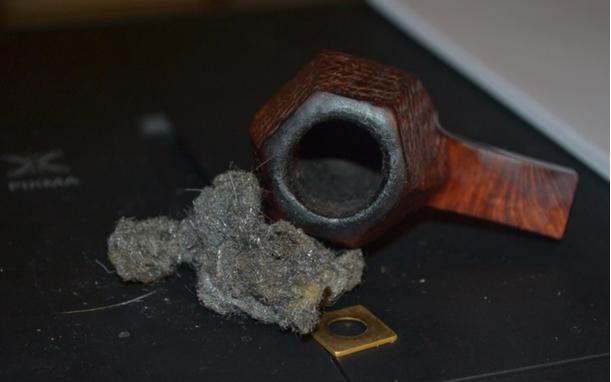
Comoys17 Less than a minute’s more work with the steel wool made the tenon opening like new.

I considered the bowl and shank and how to clean them. Six small, thin cotton squares, used two-ply and wetted with purified water, took off much of the dirt with serious scrubbing both vertically and horizontally to get around the pebbles as thoroughly as possible, but that was not enough. With the wood wet, I returned to the three micromesh pads and made more progress, but the task called for something else. After serious consideration, I opted to go all-out with a couple more two-plies using Everclear, again rubbing both directions. At last I found the exact lighter shade I sought.

At this point, I finished the rim, using 320-grit paper with two of the gentlest swipes possible, one around the top and the other covering the rounded inside where it borders with the beginning of the actual chamber. I finished that step with the same micromesh progression as before.

While I still had the 320-grit paper and micromesh pads out, I saw no reason not to tackle the two dings in the shank and the sundry scratches. Again, most of these blemishes were mended with the micromesh. Almost all of the very slight imperfections remaining came off with light, focused application of the 320-grit followed by – you probably guessed – the same three micromesh pads. With an uncommon sense of caution, given that this pipe already belonged to my friend Mike – someone I had reason to suspect I never want to see really mad – I settled for the results I had achieved, except for a quick turn or two of 150-grit paper followed by 320-grit on some excess cake buildup in the chamber, and to clean out the loose soot from the sanding, a wipe with another cotton cloth piece wet with purified water.Comoys18
Comoys19

Comoys20

Comoys21

Comoys22

Comoys23 I only needed a few seconds to consider a retort and dismiss the notion, realizing it would remove too much of the cake that I had promised Mike I would not ruin. But I did dip a bristly cleaner in Everclear and ran it through the shank, turning it briskly as I did so, and saw it came out filthy. After using a dry cleaner that brought out more grime, I repeated the process, still finding some unnecessary old smoke, tobacco and other accreted matter. The third cleaner soaked with Everclear was almost white.

I left the shank as it then was and proceeded to the bit’s air hole, at which point I was amazed to find that one alcohol-soaked cleaner came back with minimal blackness. One more dry cleaner paved the way for another dipped in Everclear, which was clean, ending that step.

The hard parts of the job complete, the time came to open my jar of Halcyon II wax and dip a finger in for a dab of the stuff. The single dab was enough to coat the bowl and shank until they shone with a wet brightness and set it aside for about 15 minutes while it soaked into the smooth rim, bottom of the bowl and shank, and every crevice of the pebbled area.

When I could stand the wait no longer, I carried the two pieces of the pipe into the spare bedroom of my new apartment that I will use as an office/shop when it is furnished. Of course, I had already set up my buffers on their sturdy stand and had only to plug them in for the first time in that setting. I buffed the bit with red Tripoli, white Tripoli and White Diamond, using the clean cloth wheel after each, and wiped it down with a big soft cotton cloth. Setting it aside and taking a deep breath, exhaling slowly, I stuck my left index finger in the chamber and, with complete calm and a firm grip on the precious briar, buffed the Halcyon II on the clean wheel. Rubbing it down with the cotton cloth, I concluded a final run with the carnauba wheel and then the clean buffer was in order.

Studying every angle of the briar while I rubbed it with the cloth, I was a tad disappointed that the waxing and buffing process had made it almost as dark as it started. I had wanted to finish with a lighter shade of wood and a high sheen of wax, but decided against another coat of Halcyon II.Comoys24
Comoys25

Comoys26

Comoys27

Comoys28

Comoys29

Comoys30 CONCLUSION
A few words about why the first three photos of the finished Comoy’s Pebble Grain have a different background: when I went to the tobacconist to see if Mike was there, he wasn’t, and I sat down to enjoy a bowl while I took the pipe out for what I thought would be a final quick exam. I was horrified to see what appeared to be bad blemishes on the right side of the bit and shank, and on the top and bottom of the bit. Fortunately, I had my cotton cloth with me and discovered that the problems were only smudges of excess wax. And so I wrapped the rag around the entire pipe and gently turned it round and round for five minutes or so, while I puffed away at one of the tobacco samples on hand.

When I at last stopped rubbing the pipe, I handled the pipe as I would if I were checking out a new purchase, and found no more smudges. Relieved, I wiped it quickly one last time before taking the pictures of the first three angles again.

Knowing I couldn’t take it home with me, I put it back in the leather pouch I included for Mike, so that he could carry it with him with added protection, and left the Comoy’s of which I remain so fond with Chuck at the counter.Comoys31 Cheers, then, old gal.
Refreshing an old Peterson’s X105P


Don’t know where Mark gets all these old Petes but he does lovely work.

Lone Star Briar Works's avatarLone Star Briar Works Blog

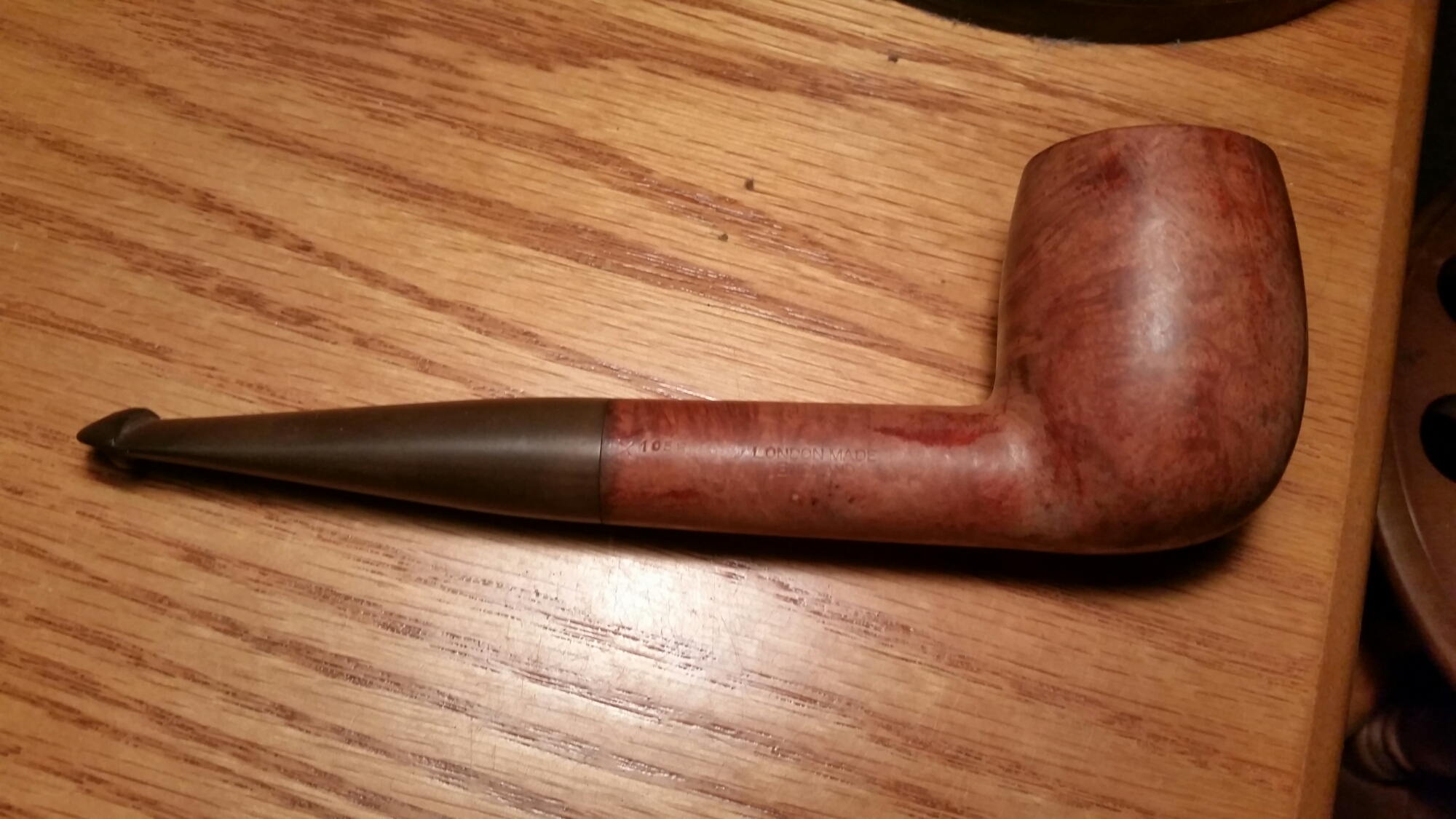
Up for your viewing pleasure is the rebirth of an old Peterson’s pipe. It’s marked Peterson’s London and Dublin and X105 London Made over England. I won’t try to estimate the age but it must have been lightly smoked and stored for many years, maybe in the sunlight. The stem was oxidized so badly that I wondered if vulcanite stems were maybe produced in brown! It looked like a new stem with no tooth chatter, just a medium brown color smooth to the touch. The stummel was fill free but it looked like the finish was totally gone except for a few spots. The rim had some scorch marks with light buildup. The chamber had a thin cake that I reamed a little bit more to smooth it out.

image

image

image

image

First order of business is always do the oxyclean soak on the stem while I do the alcohol/cotton ball soak in…

View original post 197 more words

Cleaning up a Dr. Grabow Cherry Red Viscount Adjustomatic


Blog by Steve Laug
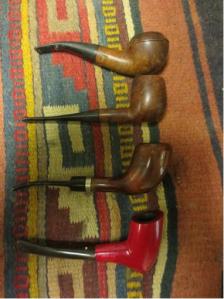
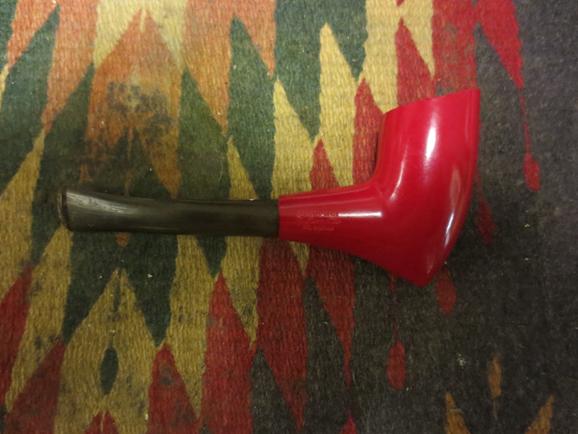
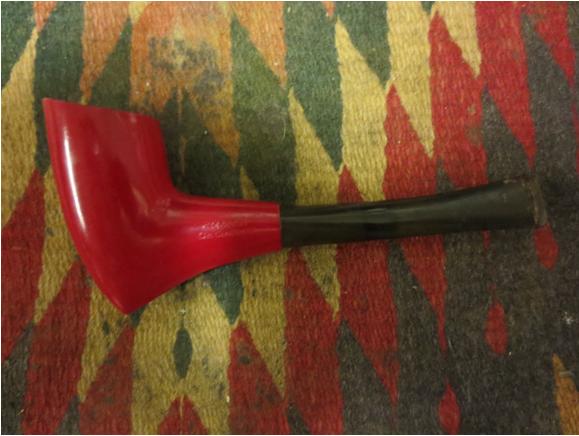
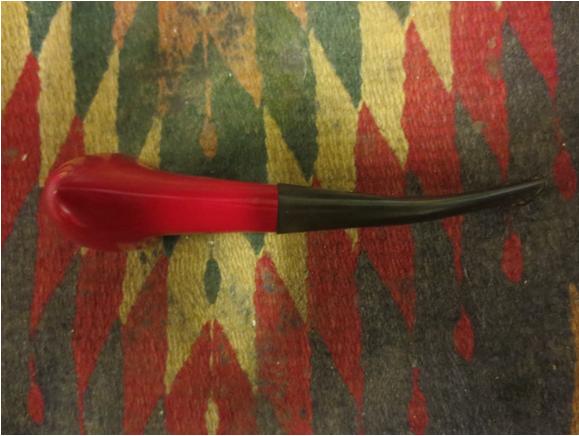
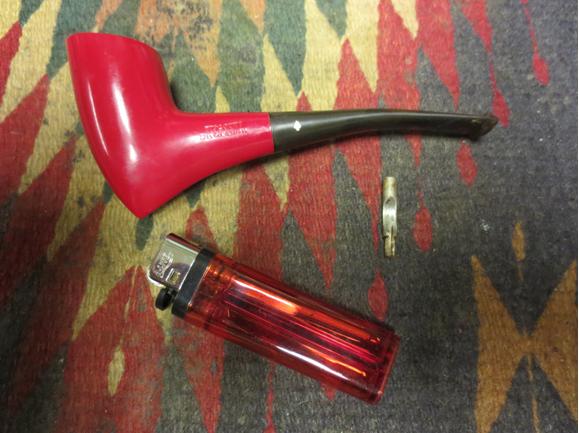
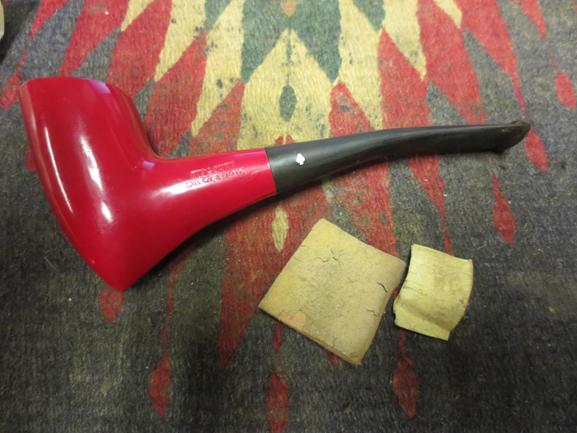
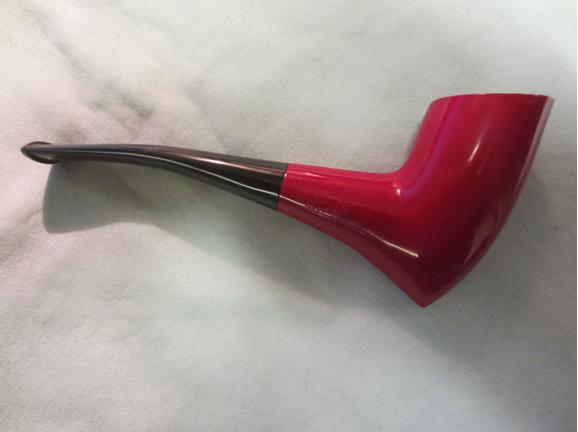
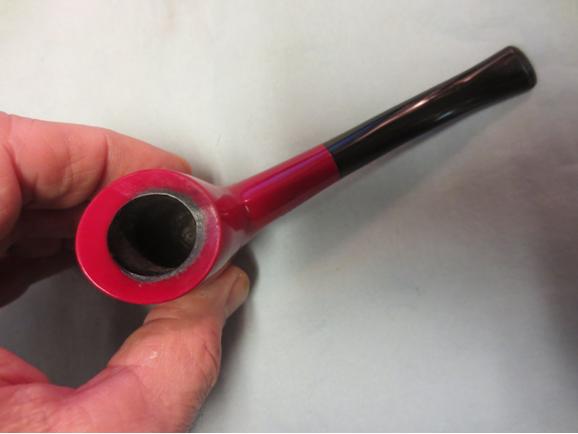
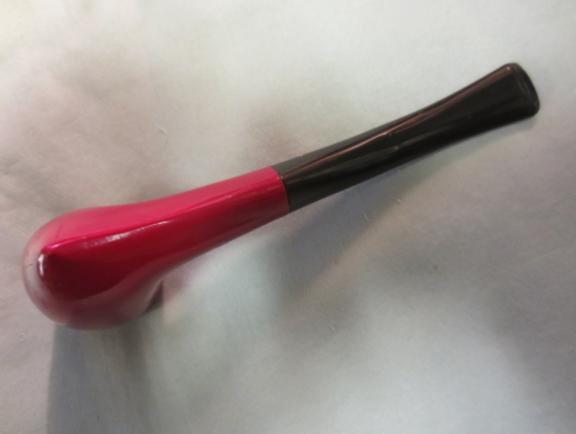
Cherry1My brother found a group of pipes for sale in a Montana antique shop and negotiated a deal for sixteen of them. They arrived here in Canada yesterday. The first one I tackled was a Dr. Grabow Viscount in the colour line – it is kind of a pick axe shape and it is painted a bright cherry red. It is stamped on the left side of the shank Viscount over Dr. Grabow and on the right side Imported Briar over Adjustomatic and the patent number 2461905. In the picture to the left it is the fourth pipe down. I knew from an earlier Viscount that I had restored that the shape number of this one was #39, a unique Dr. Grabow shape!

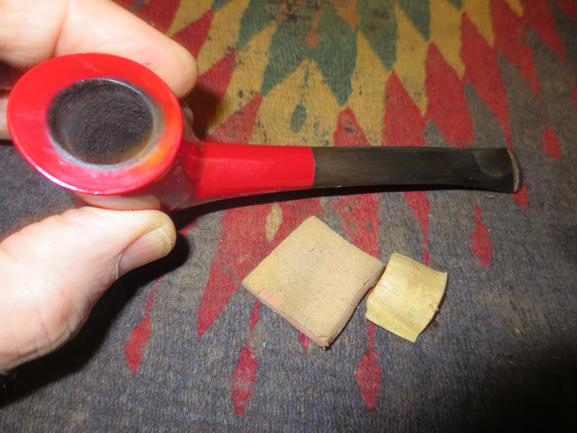
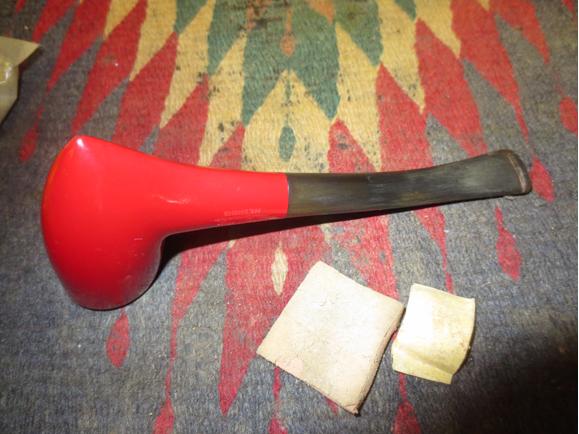
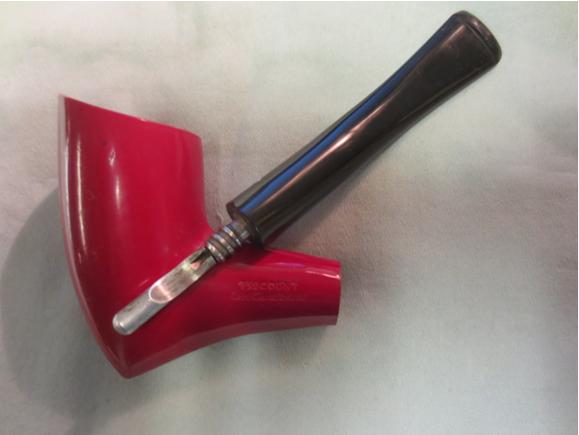
When it arrived the painted surface was in excellent shape. There were no chips or nicks in the paint which is what I normally find in these pipes. The rim was clean of damage though there were some tars on the back edge of the flat rim. There was no rim damage however and the paint, even on the rim was in great shape. The stem was overturned and the Adjustomatic feature did not work. It seemed to be stuck in the position in which it arrived. The stem was oxidized and there was some tooth chatter and tooth marks on both the top and the bottom of the stem. The spoon stinger was dirty and slightly corroded. It was a pressure fit in the tenon so I would be able to remove it from the stem to clean out the inside of the stem. The shank was dirty and there was a light cake in the bowl. The photos below show the condition of the pipe and the overturned stem.Cherry2

Cherry3

Cherry5 I did a quick Google search to get an idea of the era of this pipe. I knew I could ask on the Dr. Grabow Collectors Forum but thought I would see if I could hunt down some information. I found the following advertisement for a Christmas pipe. The advertisement comes from the 1970s so I am guessing that the pipe I have is also a 70’s era pipe.Cherry6 I heated the spoon stinger and was able to pull it out of the tenon. It was a pressure fit rather than threaded so it was quite simple once it was heated and the grit softened. I heated the metal tenon in the stem to try to loosen the build up that held it tight. Normally the Adjustomatic can be reclocked without resorting to heating the tenon. In this case it was stuck. I heated it with a lighter until it was loose again. I screwed it into the mortise and was able to move it freely and adjust the fit of the stem to the shank.Cherry7

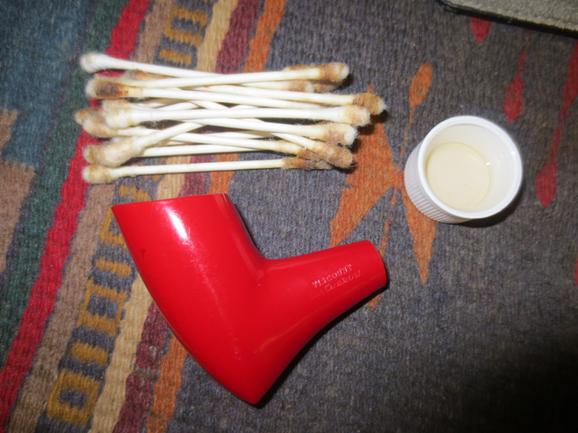
Cherry8 I cleaned out the stem and the shank with cotton swabs, pipe cleaners and alcohol. I scrubbed the stinger and tenon with 0000 steel wool and alcohol.Cherry9

Cherry10 I sanded the stem with 220 grit sandpaper to remove the tooth chatter and tooth marks and remove the oxidation. I followed that by sanding with a medium and a fine grit sanding sponge to remove the scratches. I scrubbed the rim with cotton pads and saliva to remove the tars without damaging the painted rim.Cherry11

Cherry12

Cherry13

Cherry14 I sanded the sponge with micromesh sanding pads – wet sanding with 1500-2400 grit pads and then rubbing the stem with Obsidian Oil. I dry sanded with 3200-4000 grit pads and gave it another coat of oil. I buffed the stem with White Diamond and then finished sanding with 6000-12000 grit pads. I gave it a final coat of the oil and let it dry.Cherry15

Cherry16

Cherry17 I lightly buffed the bowl and stem with Blue Diamond on the wheel and then gave the bowl and stem multiple coats of carnauba wax. I buffed the pipe with a clean flannel buffing pad and then hand buffed it with a microfibre cloth. The finished pipe is shown in the photos below. I was unable to remove all of the darkening on the back side of the rim but it is smooth to touch. Thanks for looking.Cherry18

Cherry19

Cherry20

Cherry21

Cherry22

Cherry23

Reviving a Family Era Hardcastle’s Jack O’London Blasted Billard


Charles is getting proficient at the stem rebuilds and this is another fine example of his craft. Well done.

Charles Lemon's avatar

I managed to squeeze one more restoration in before heading away for a bit of Christmas R & R with the family. The pipe was sent to me by a fellow member of the Brothers of Briar pipe forum. He had been given this old Hardcastle but needed the stem repaired before he could use it. I offered to help, and before too long, the pipe arrived in my mailbox. I took this series of pics to show the pipe’s original condition.

As you can see, it arrived in well-used vintage condition. The finish was worn and spotty, with much of the tan/natural undercoat exposed where the black topcoat had been rubbed off by years of handling. The rim was tarry but otherwise looked okay, with no major dings or dents to the sandblast finish. The bowl had a light layer of cake, with a thicker ring of carbon about two-thirds of…
View original post 890 more words