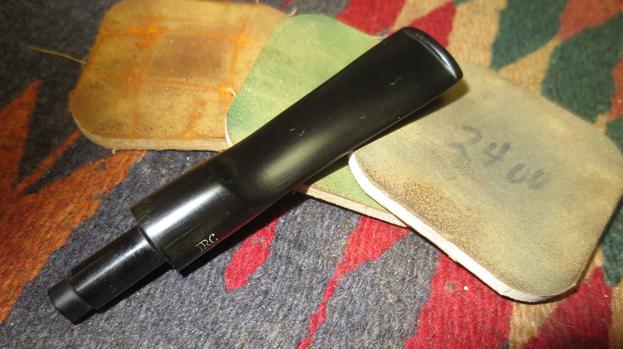
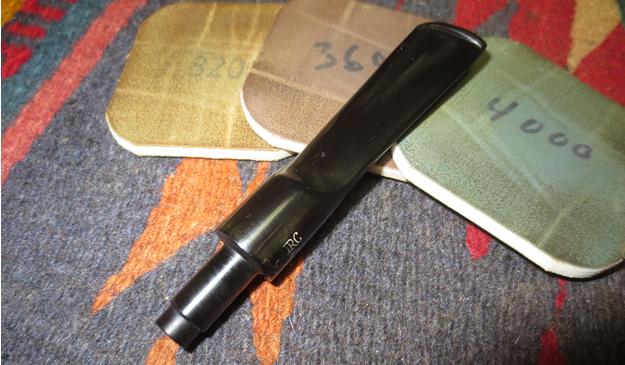
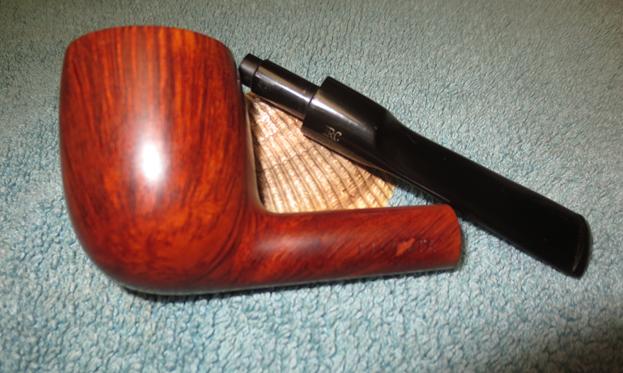
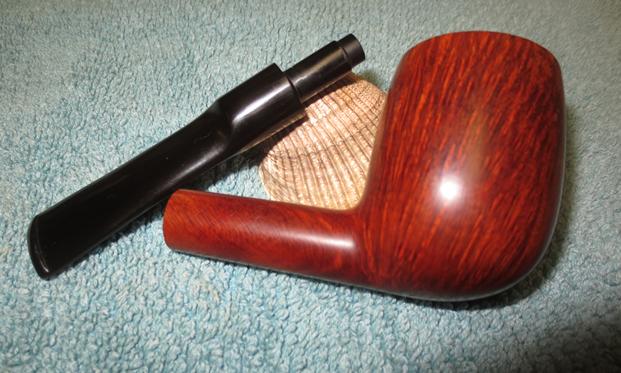
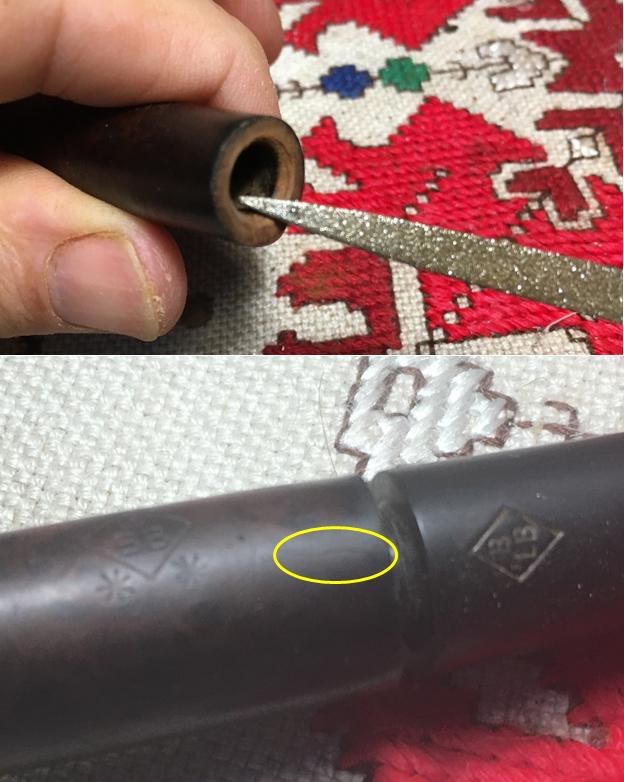
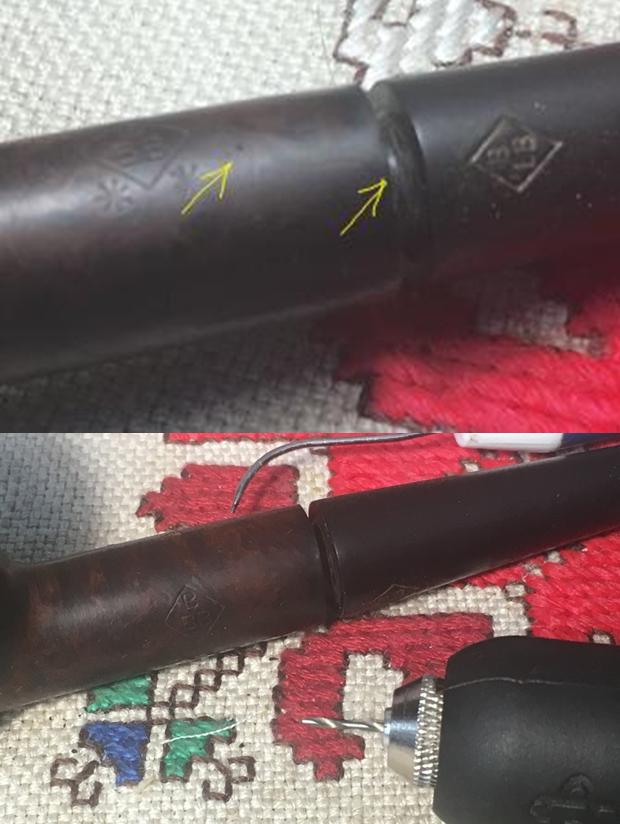
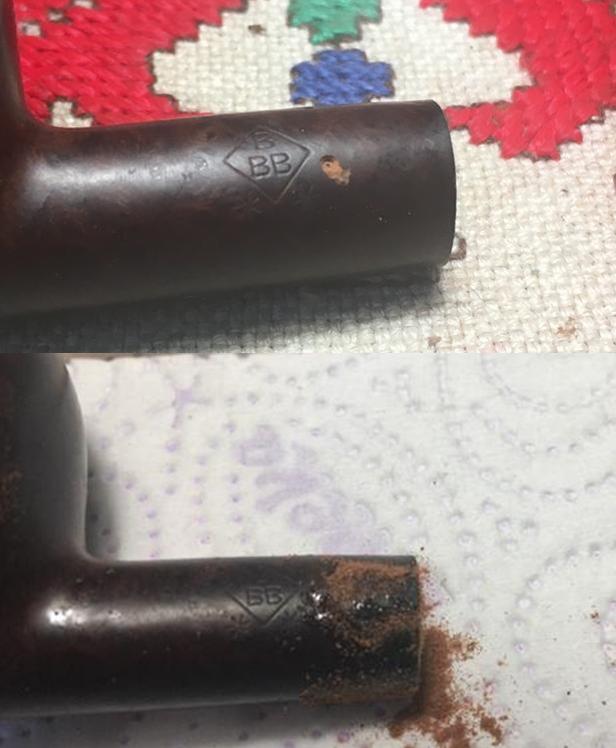
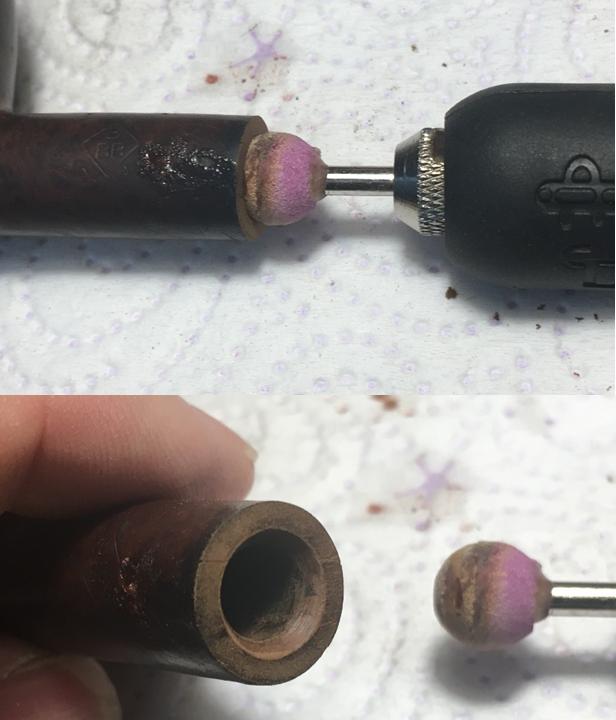
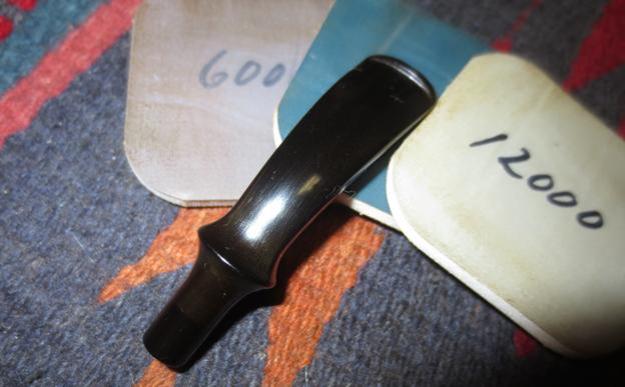
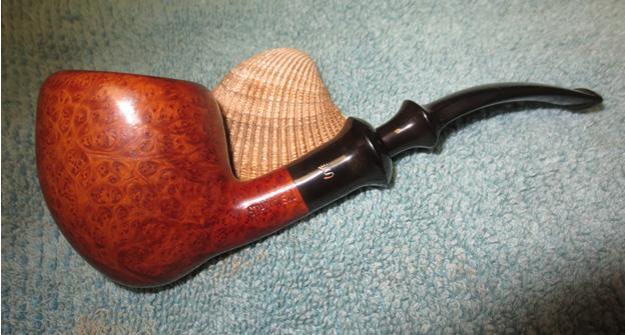
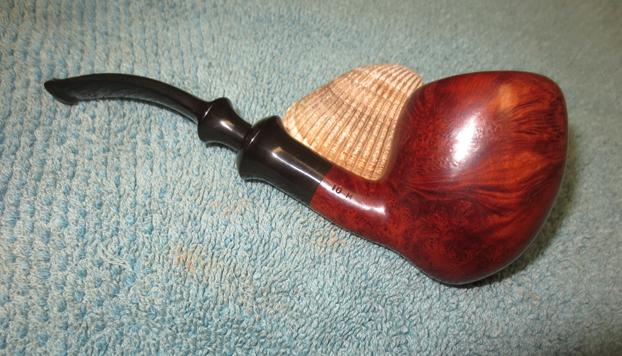
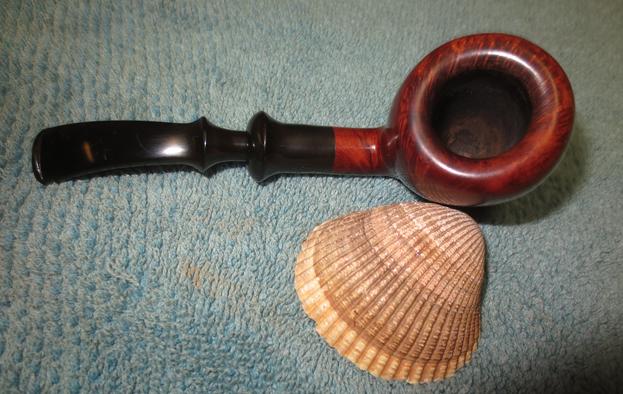
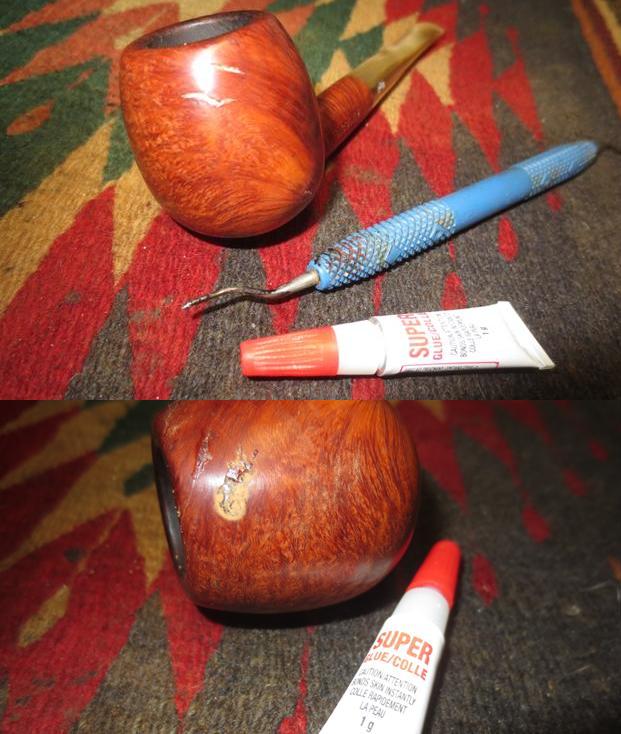
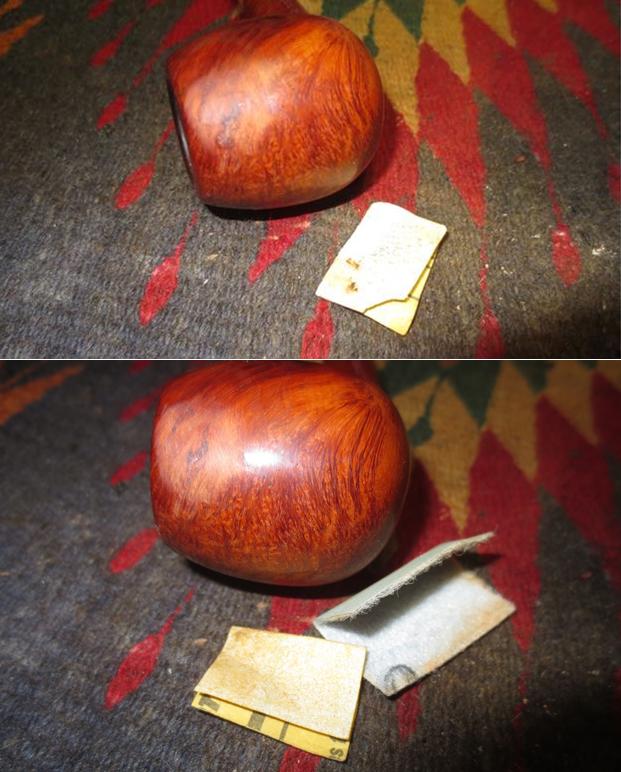
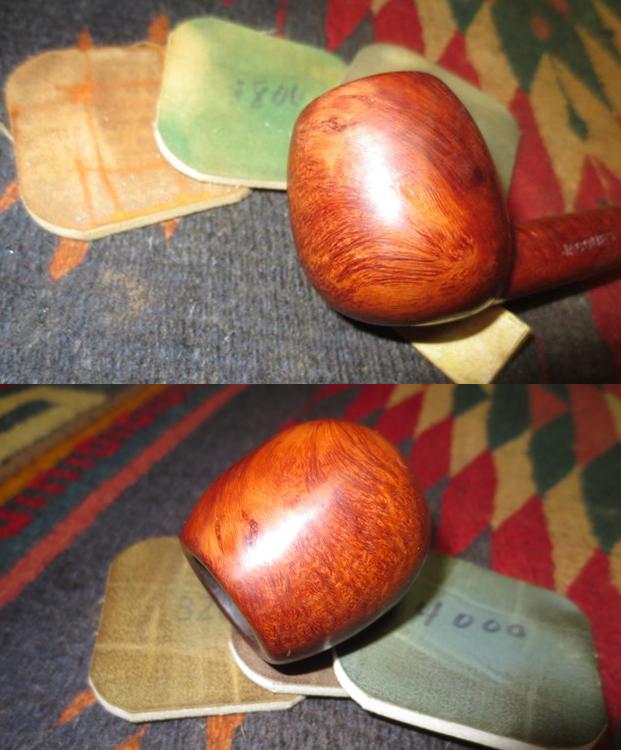
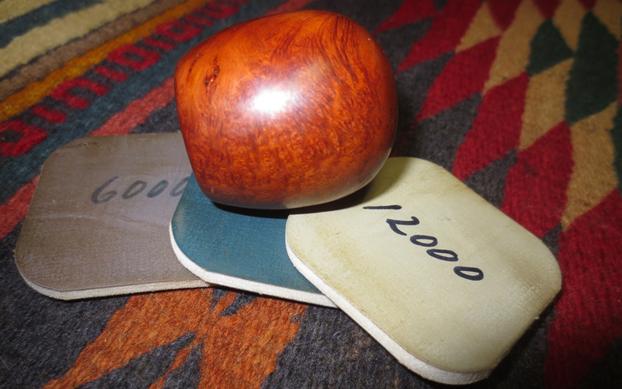
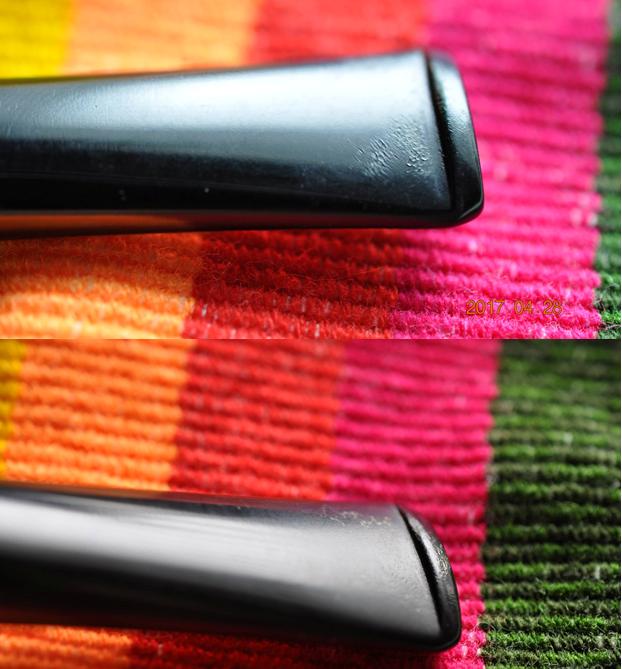
Tag Archives: waxing a stem

A Simple Refresh – a GBD New Standard 9438 Rhodesian


Blog by Steve Laug

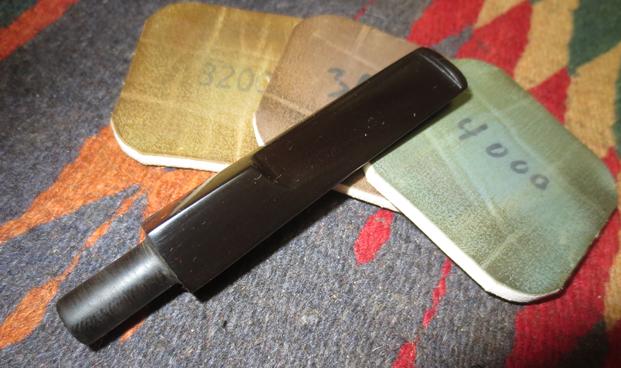
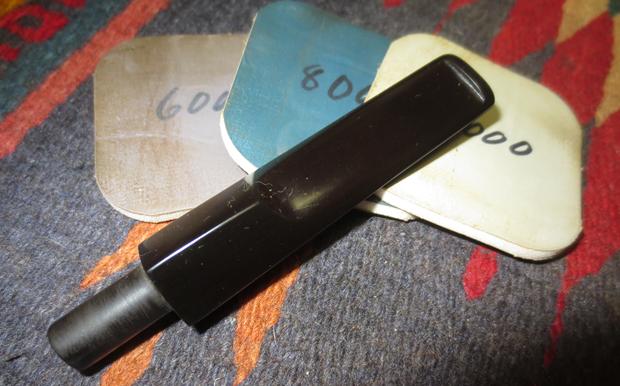
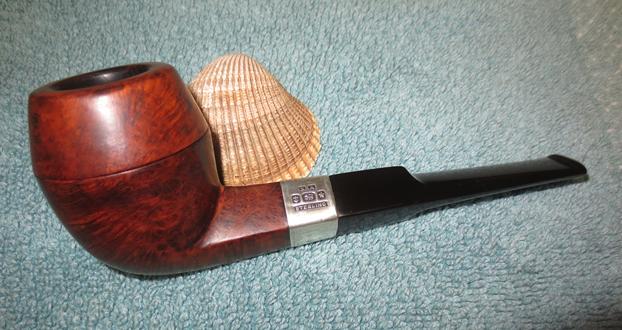
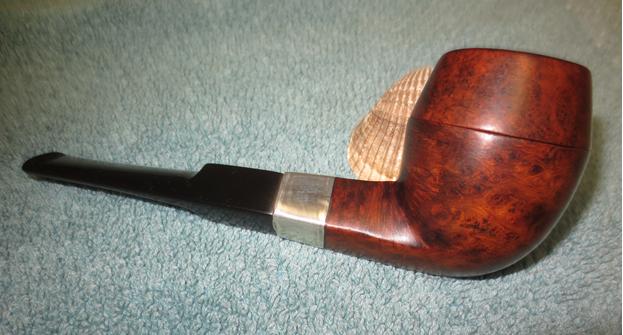
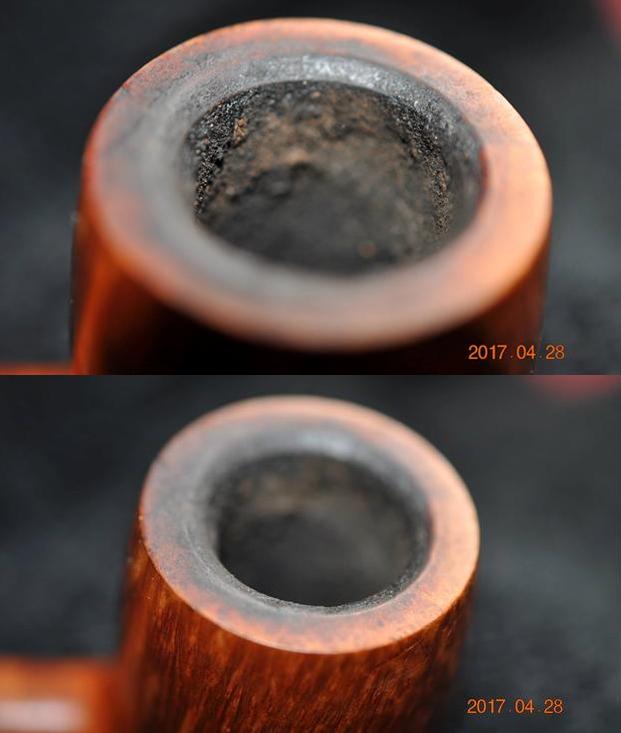
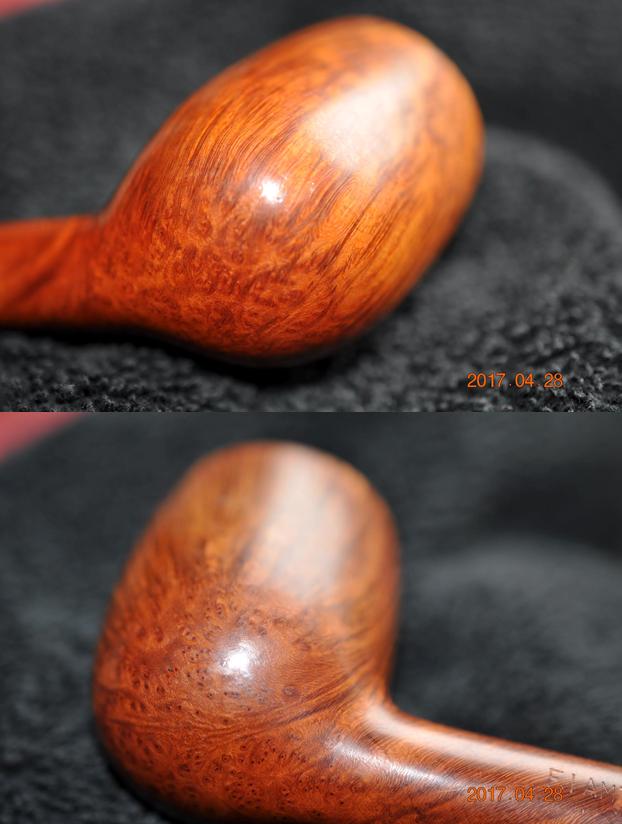
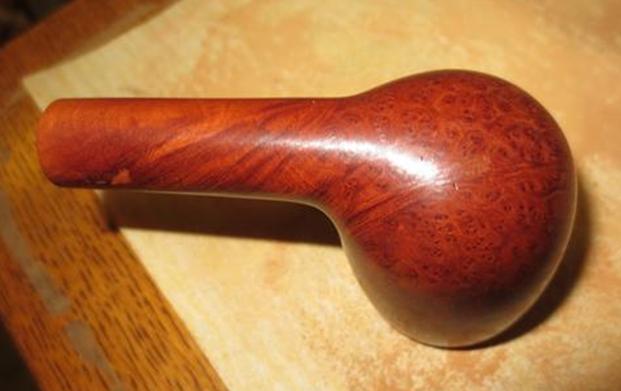
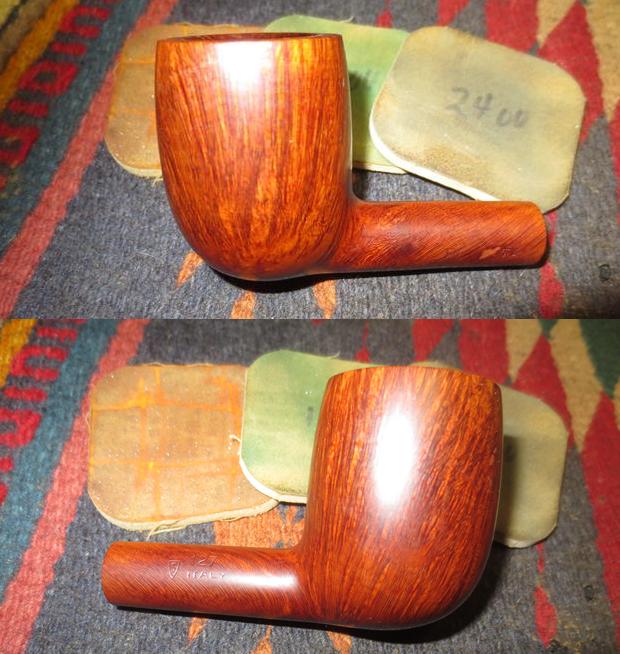
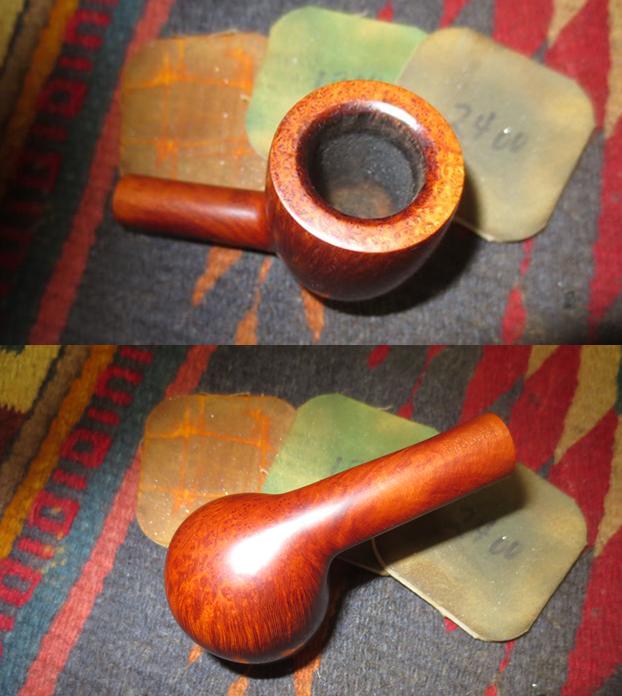
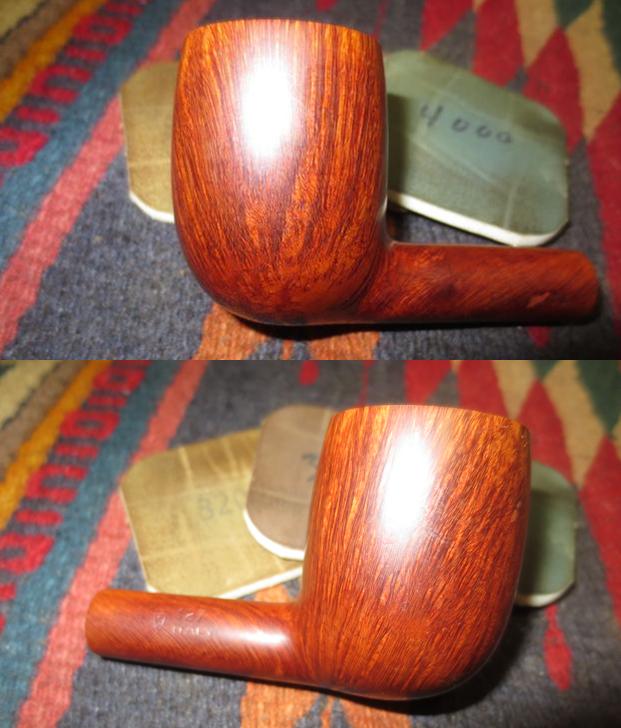
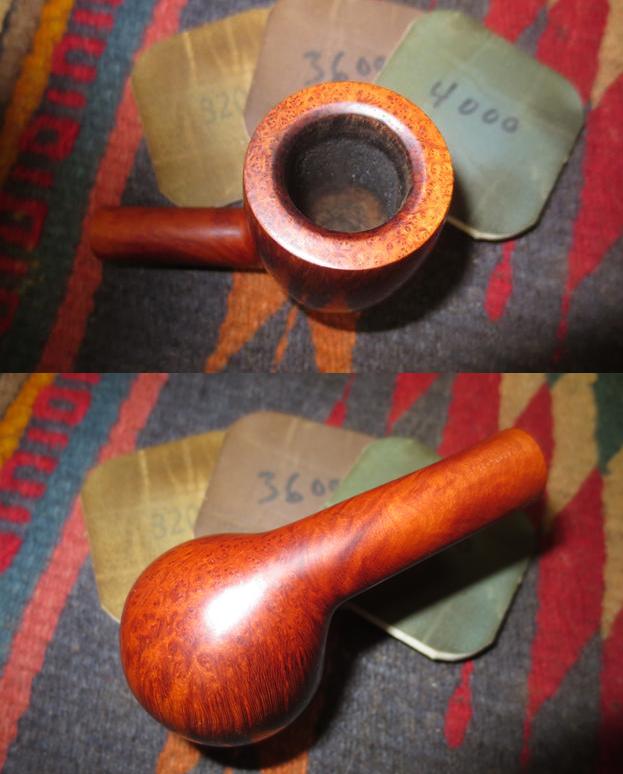
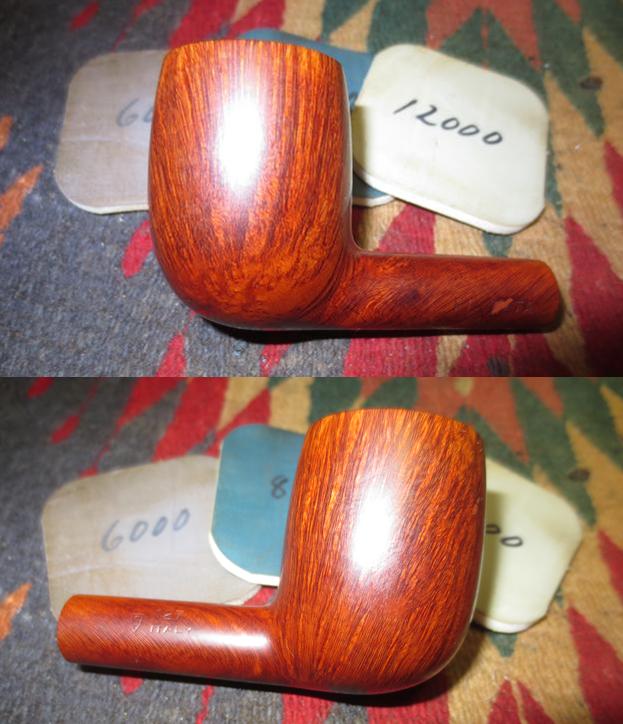
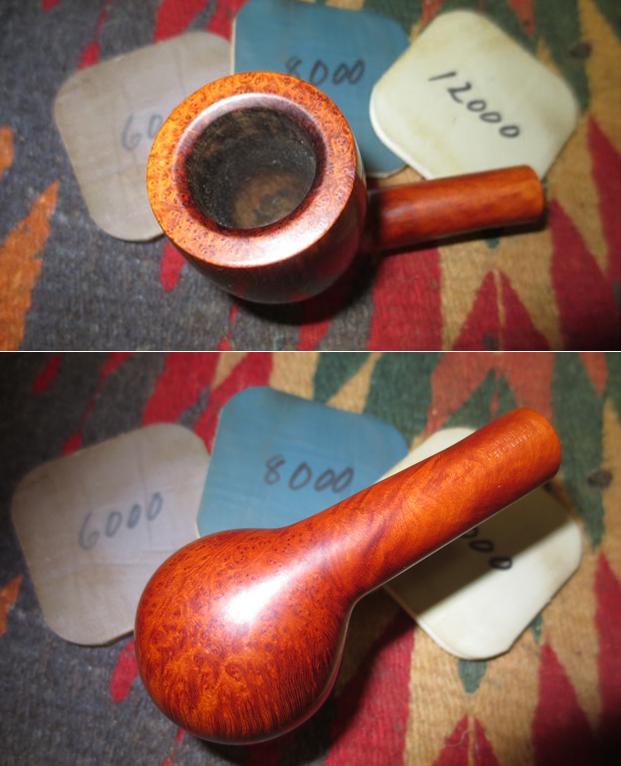
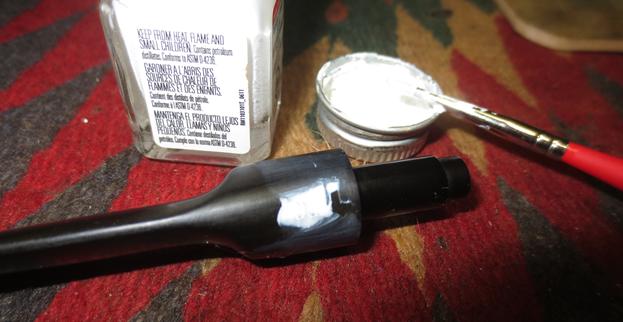
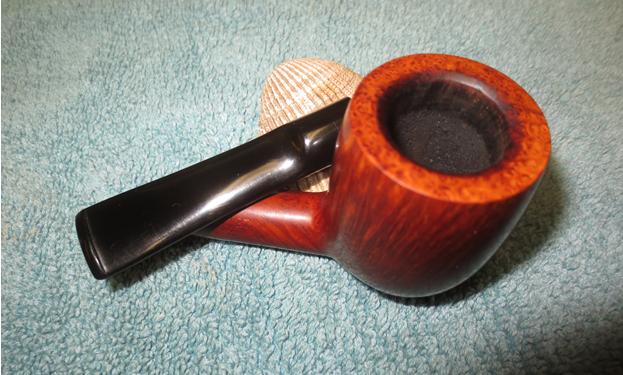
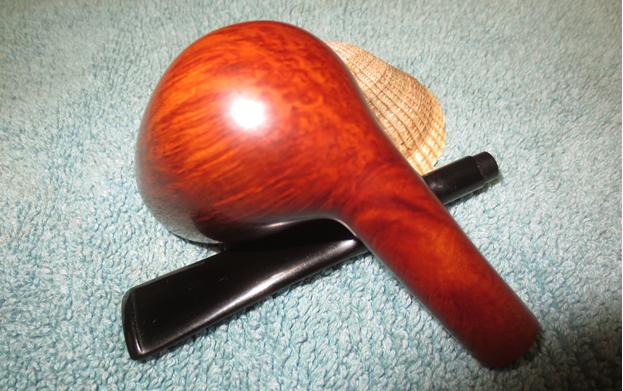
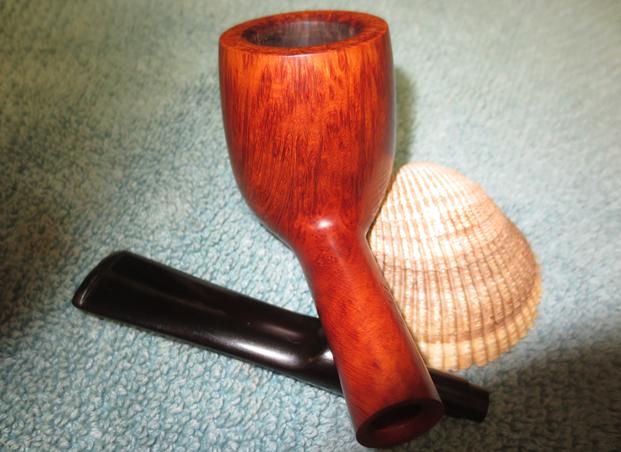
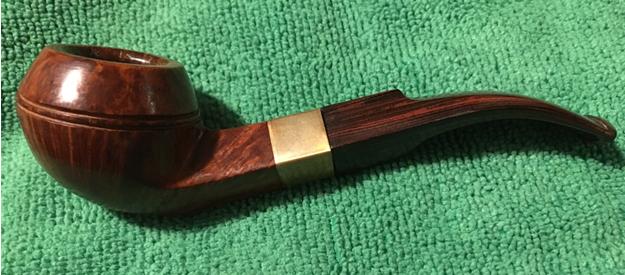
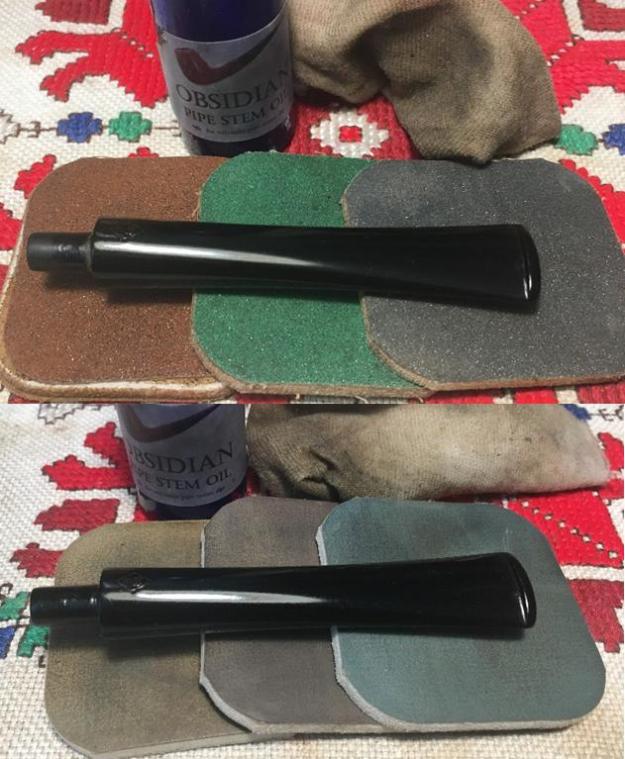
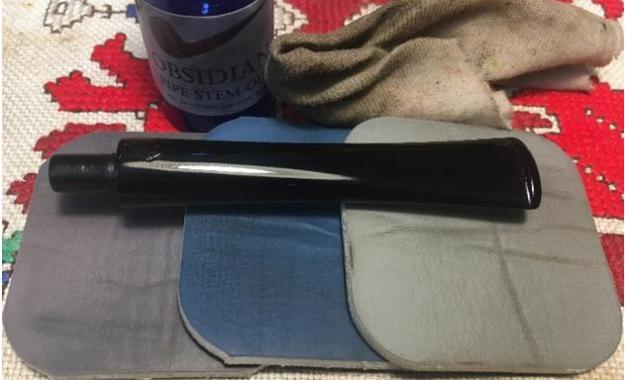
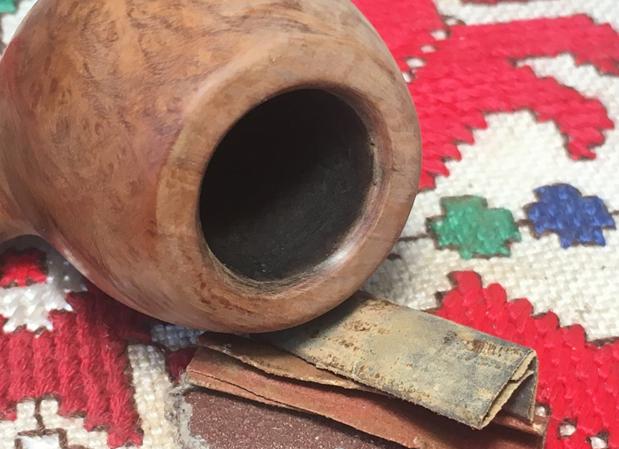
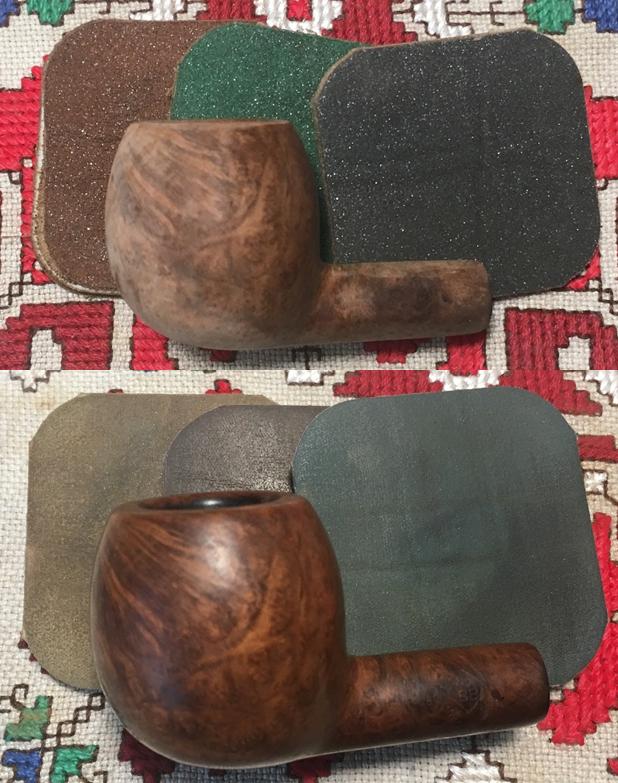
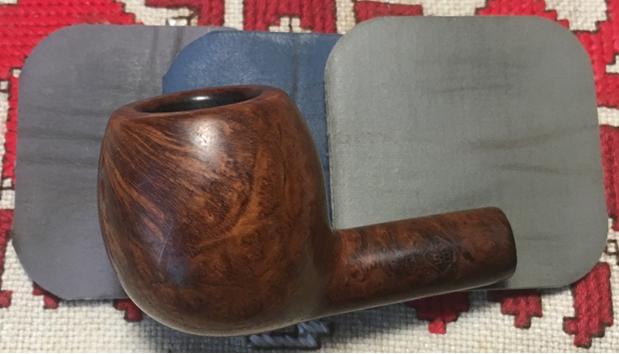
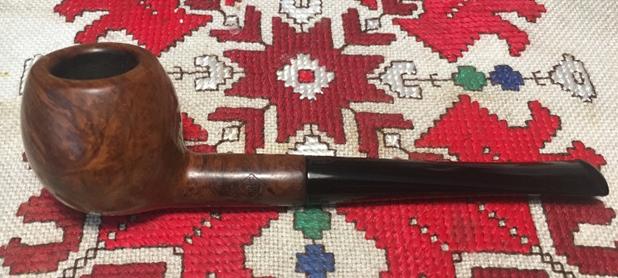
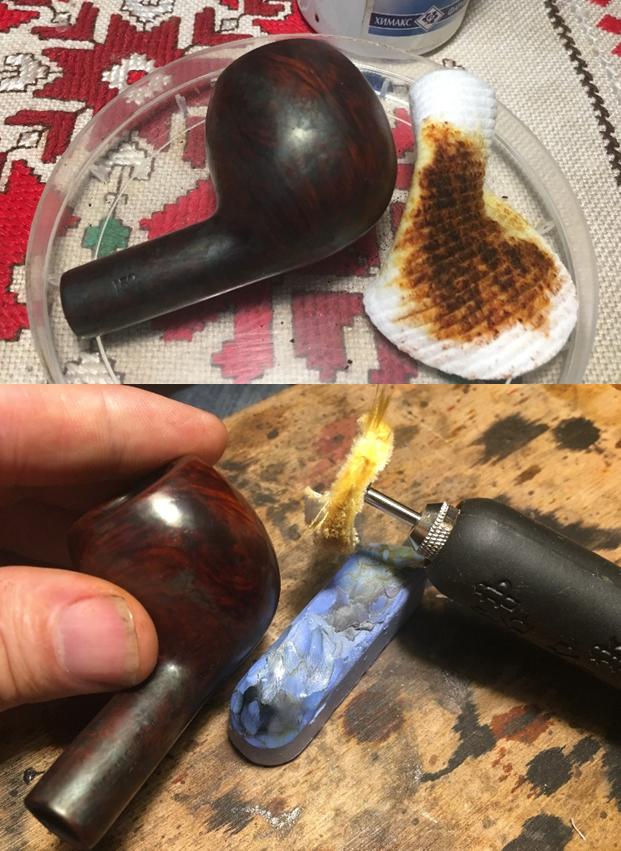
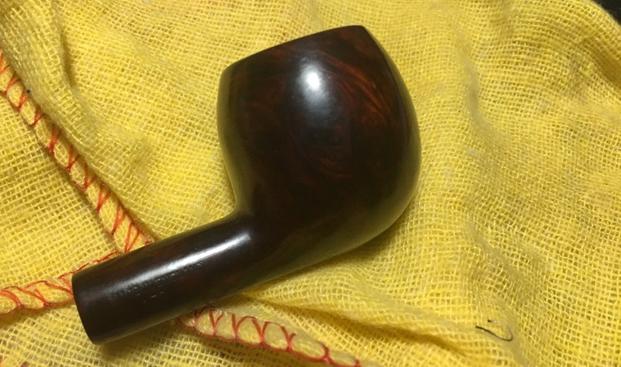
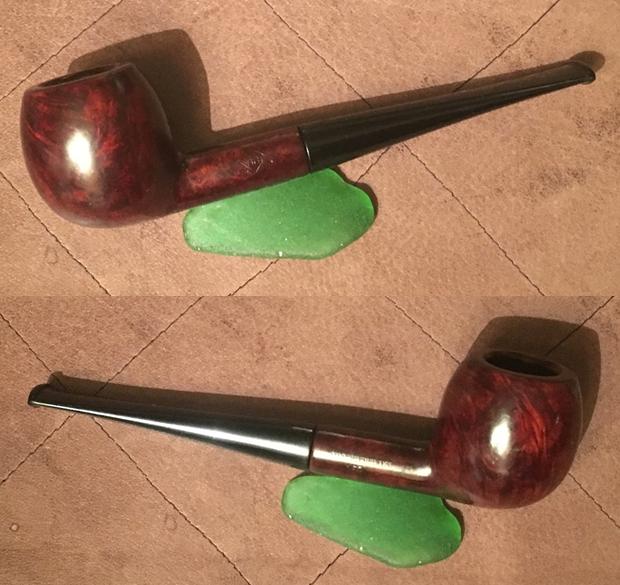
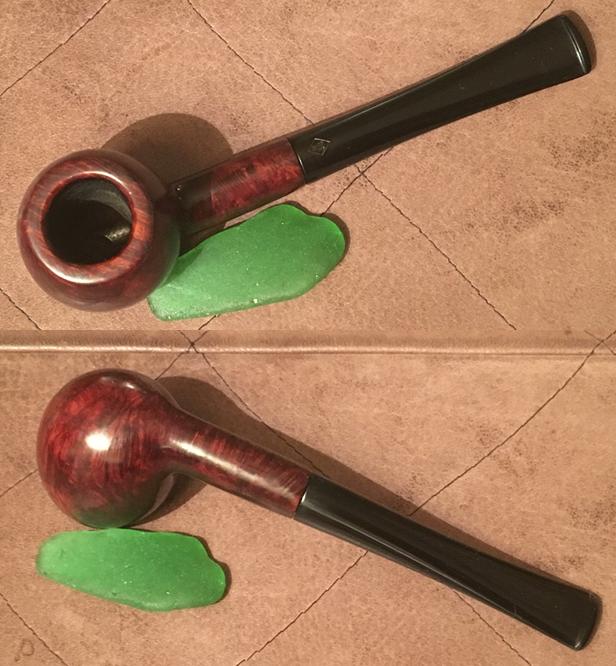
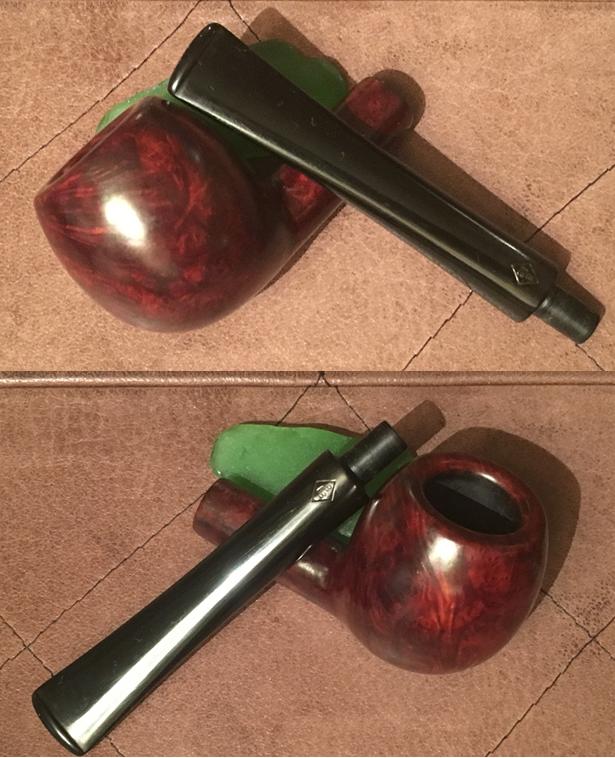
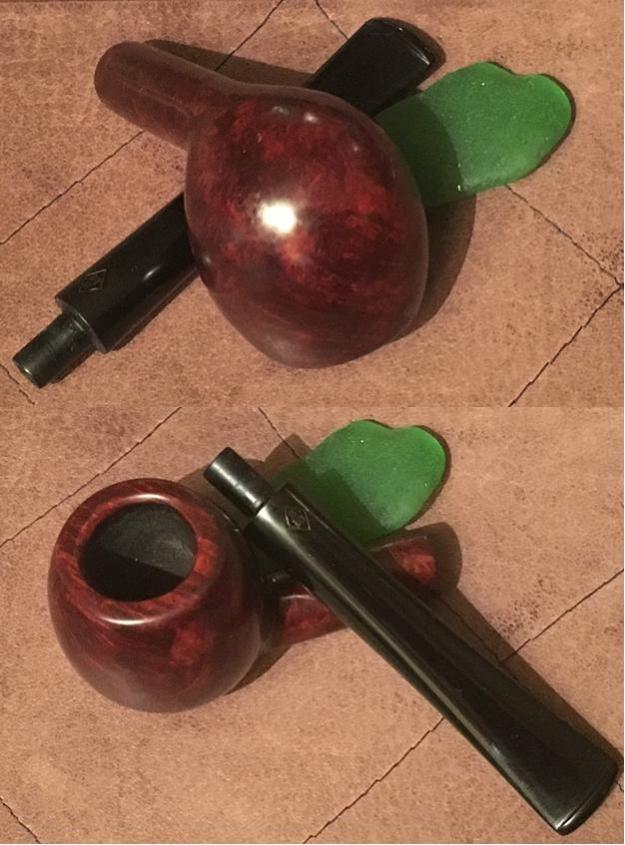
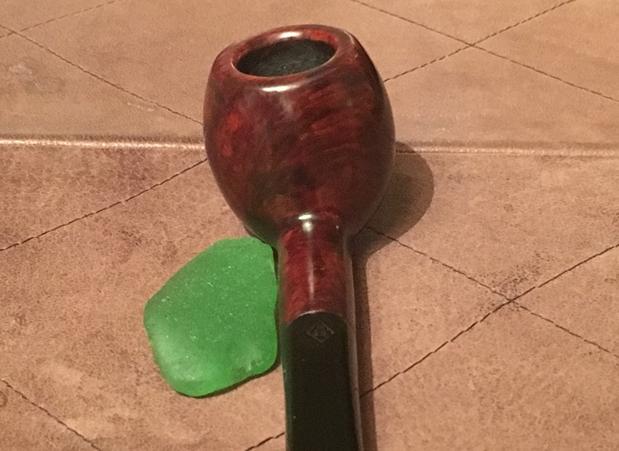
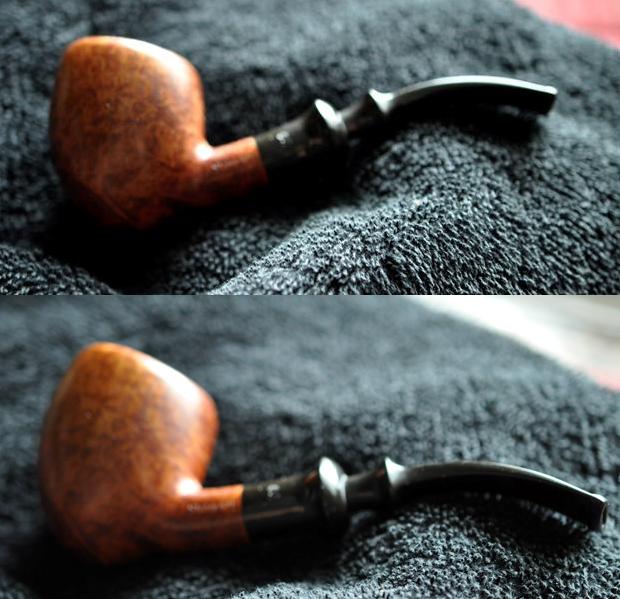
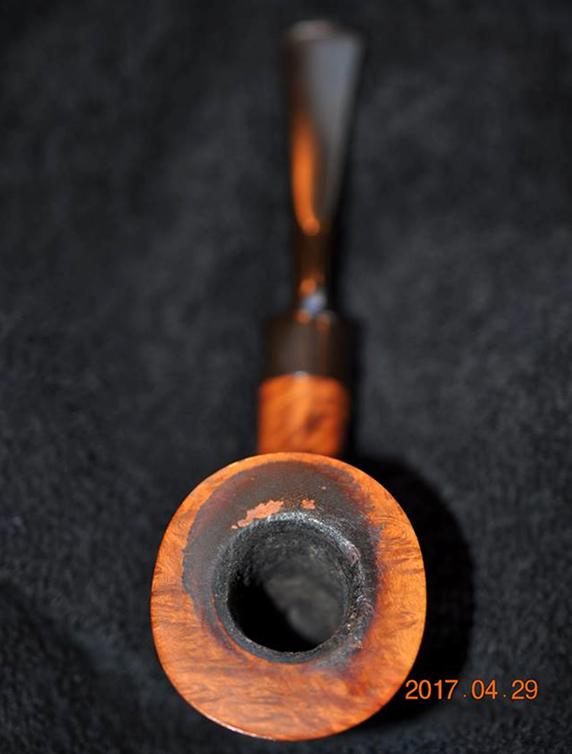
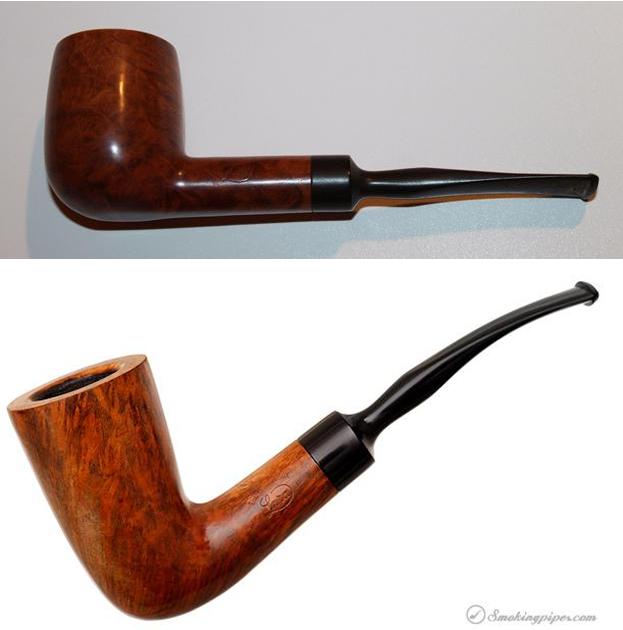
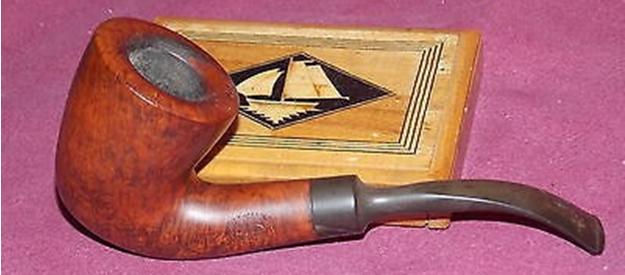
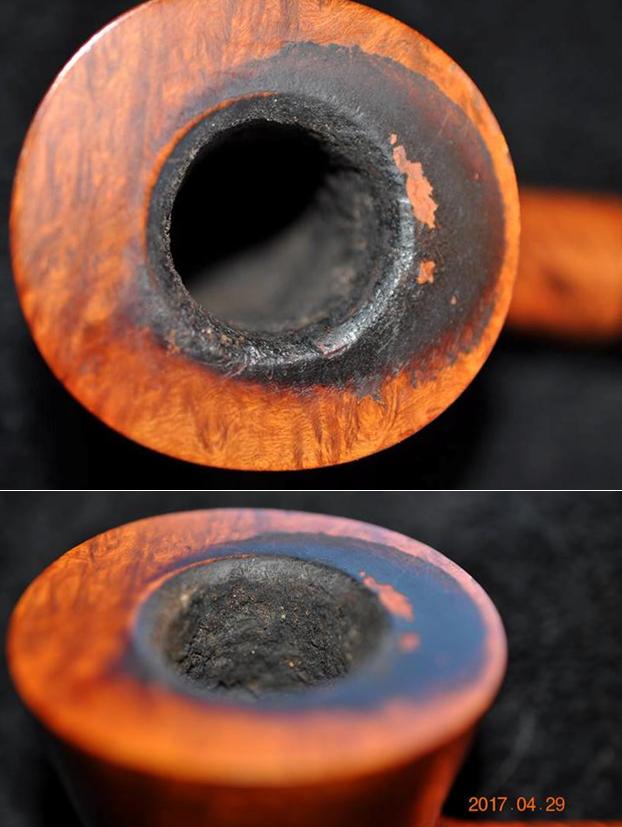
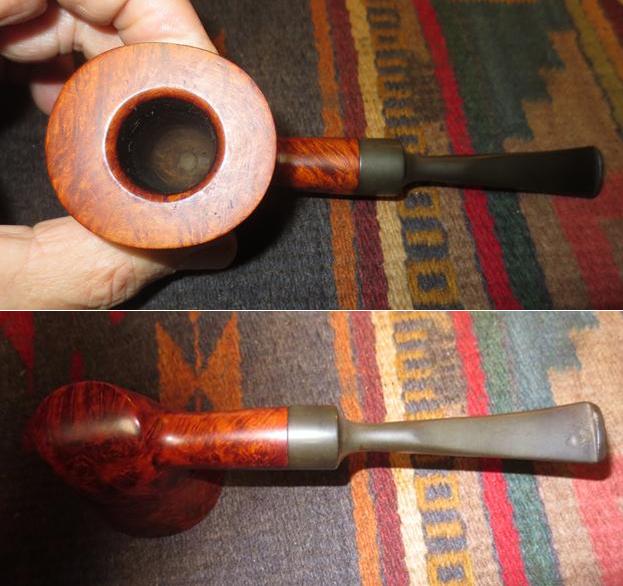
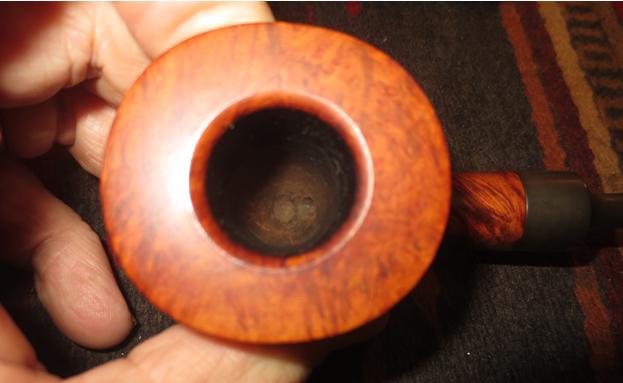
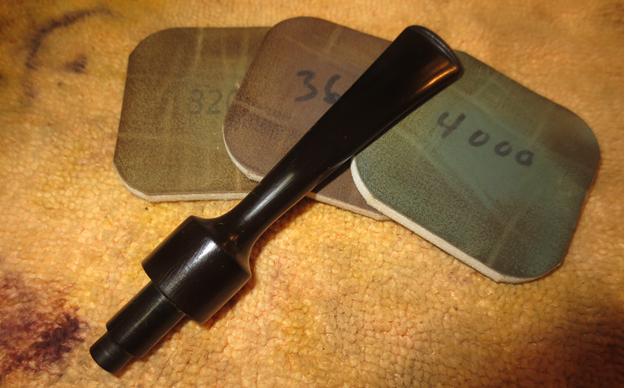
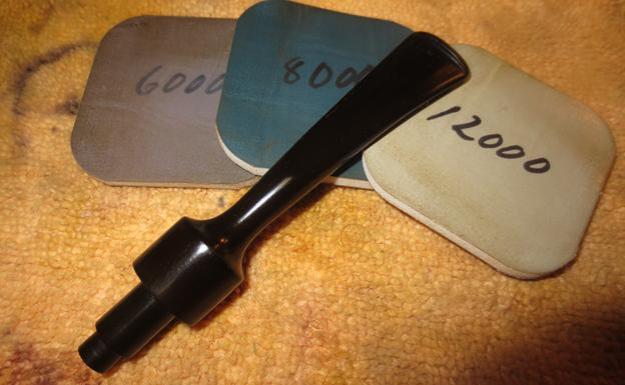
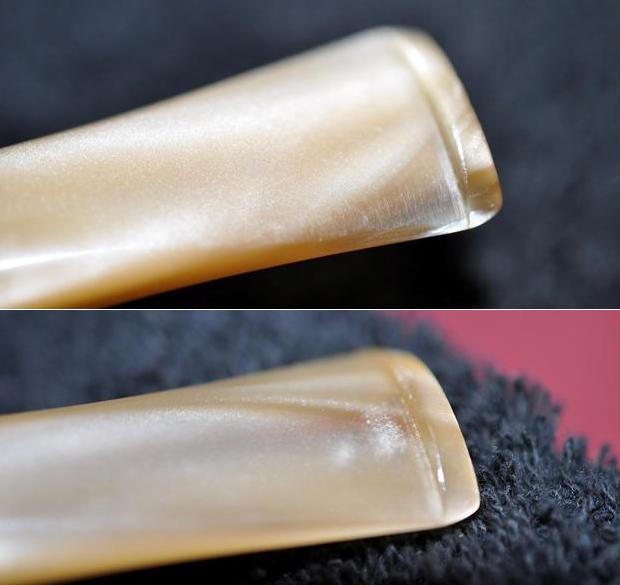
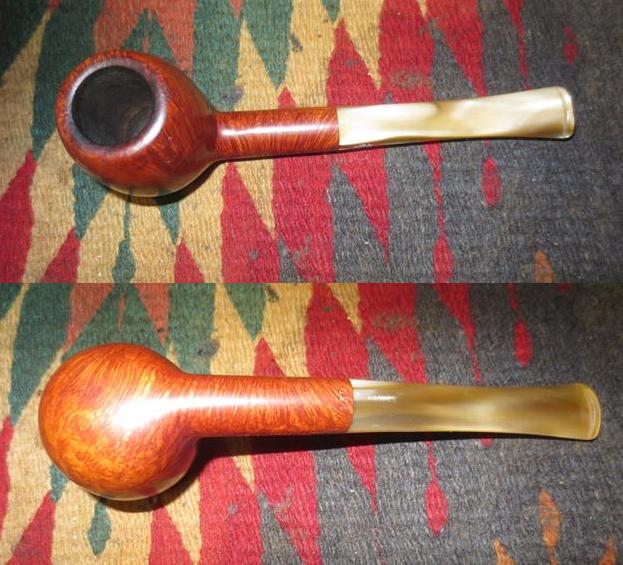
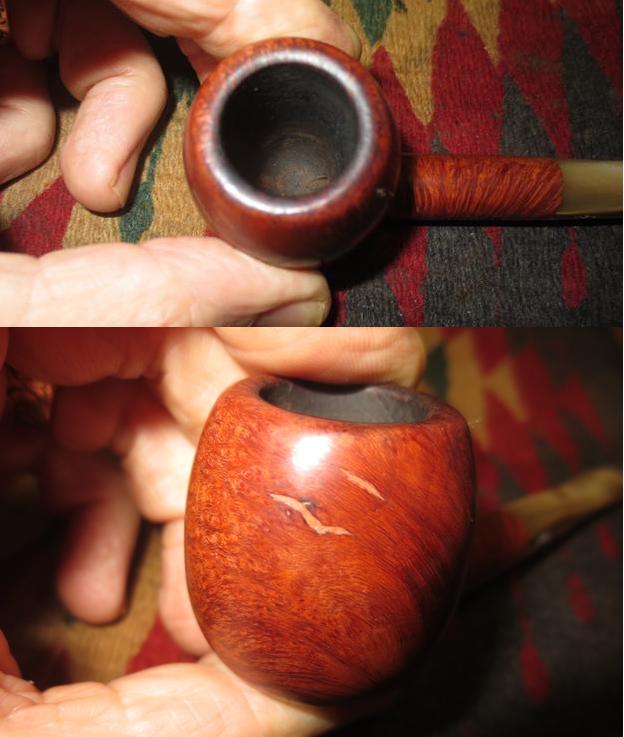
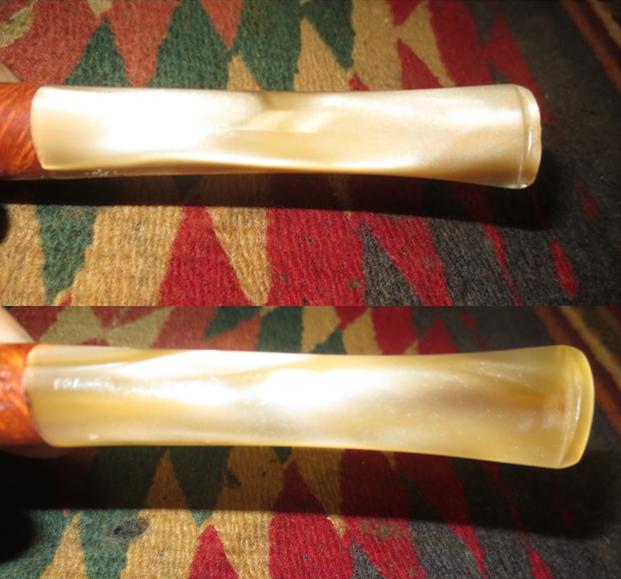
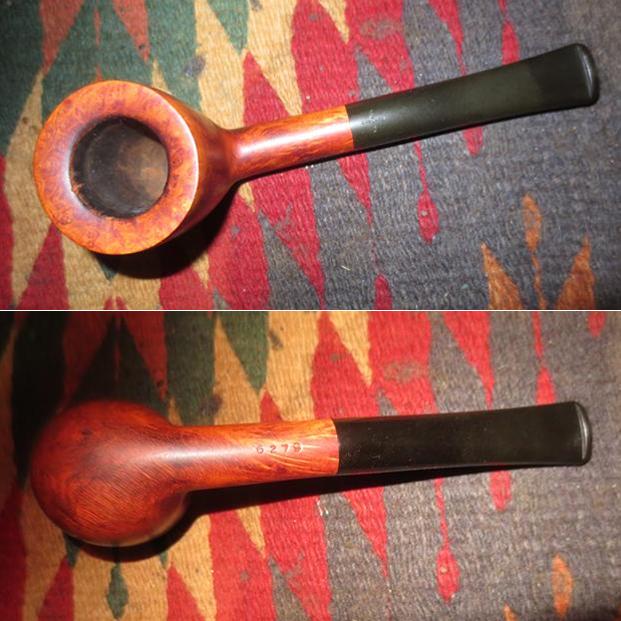
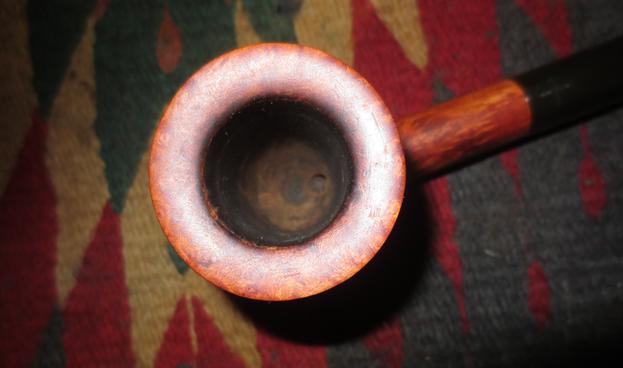
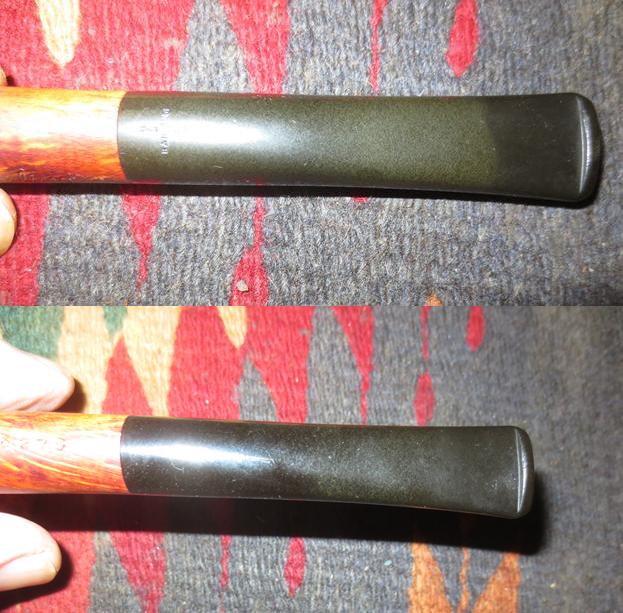
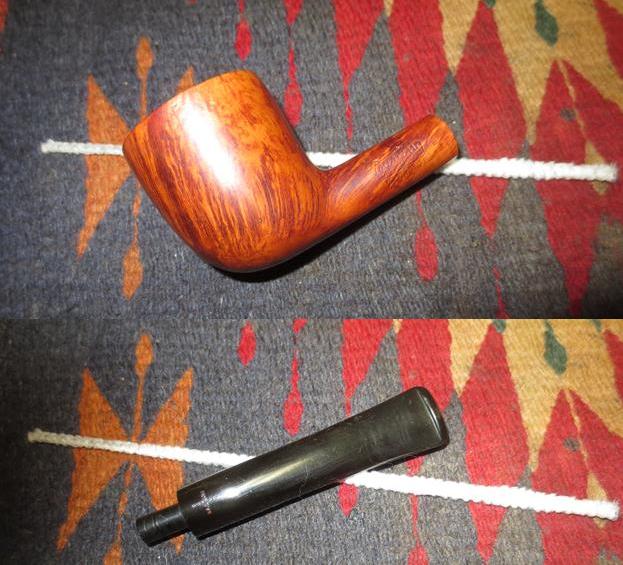
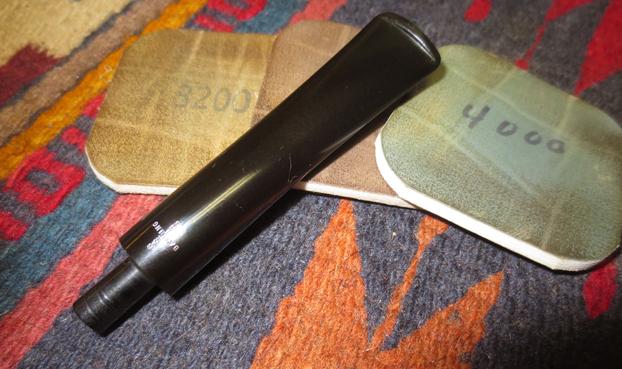
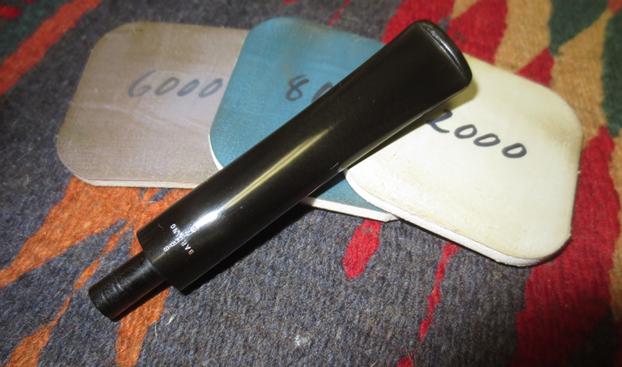
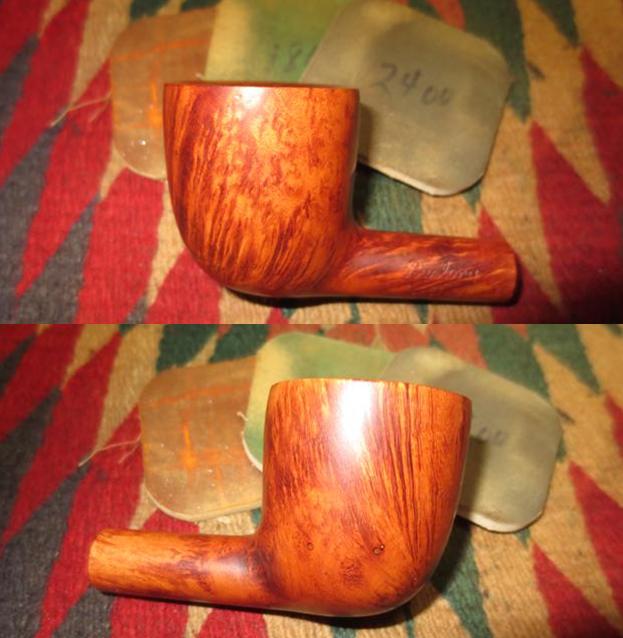
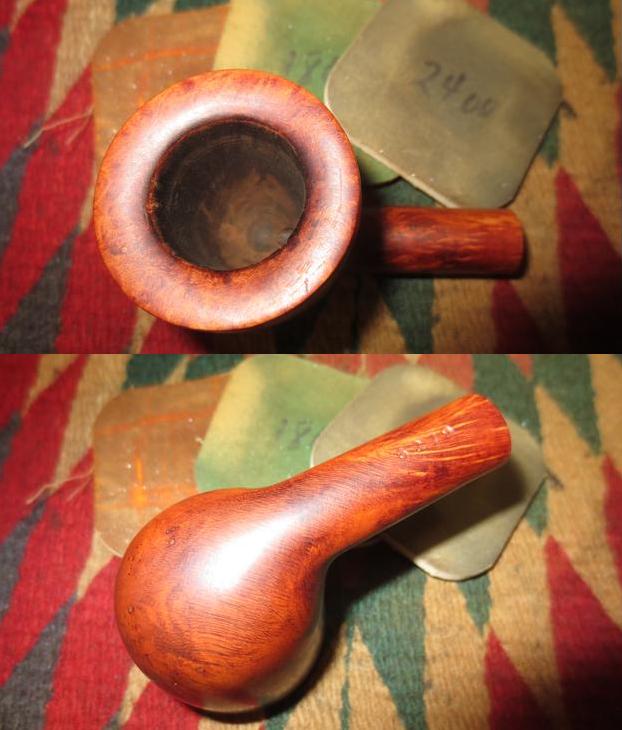
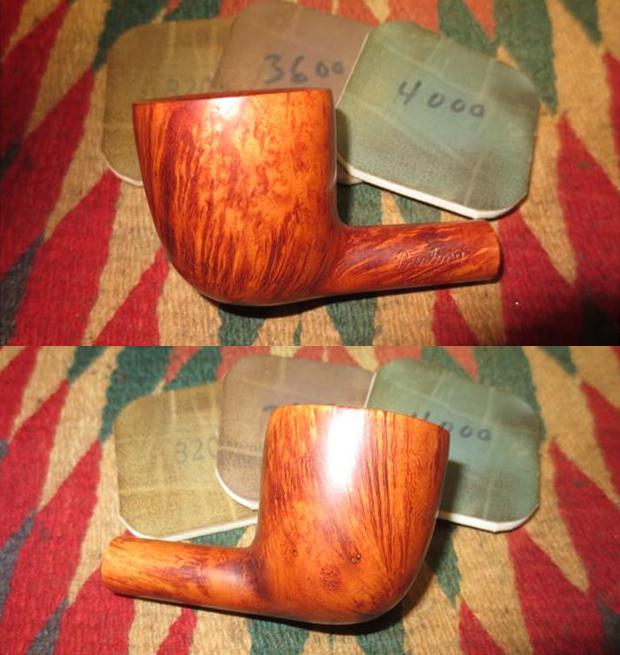
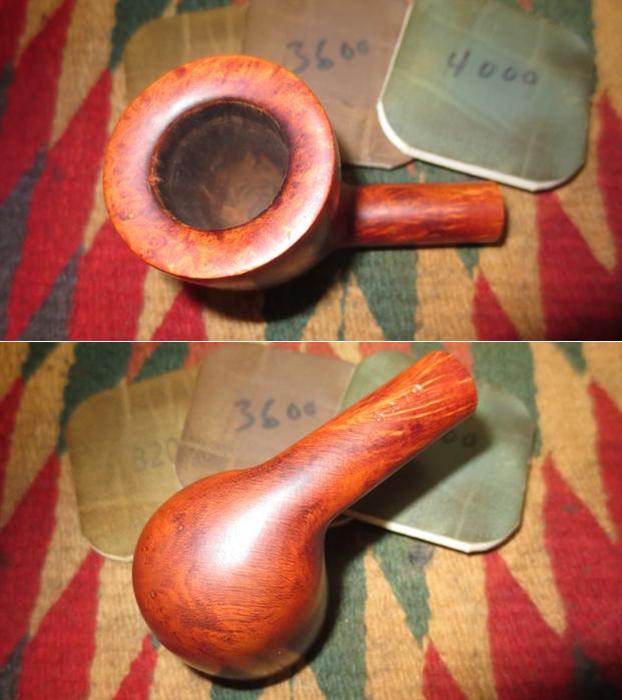
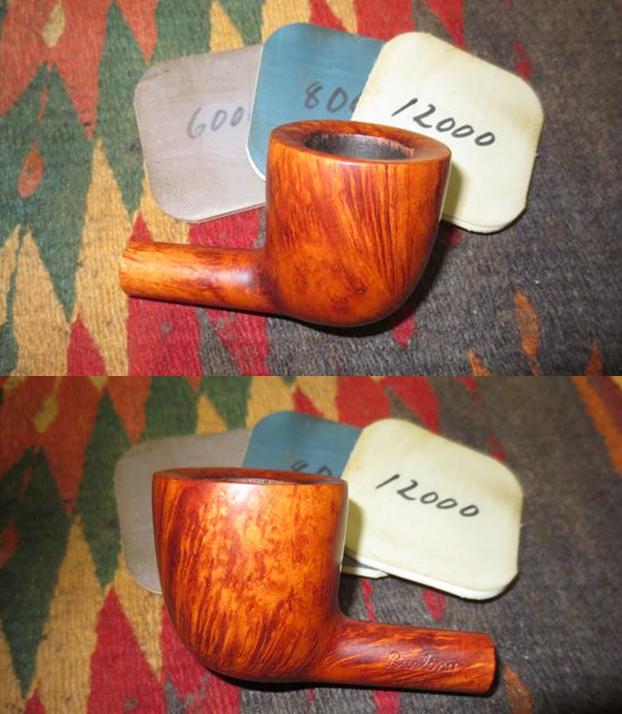
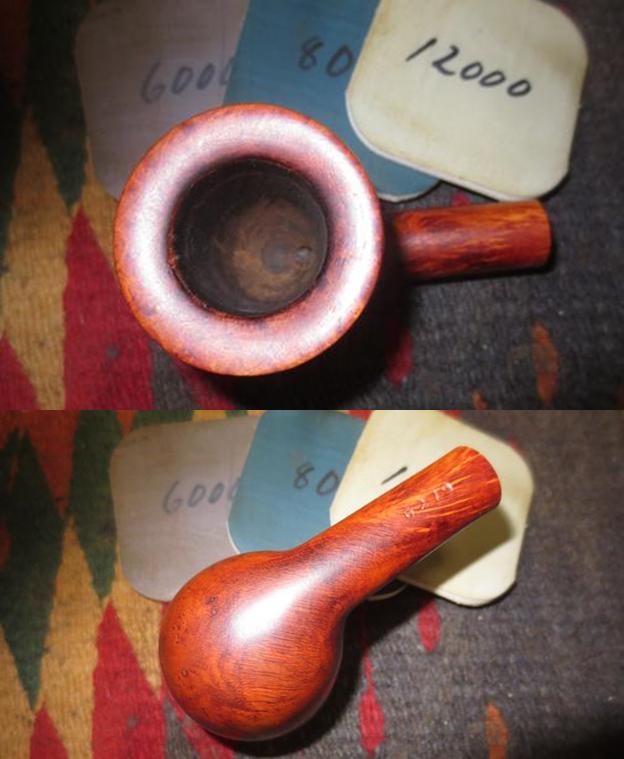
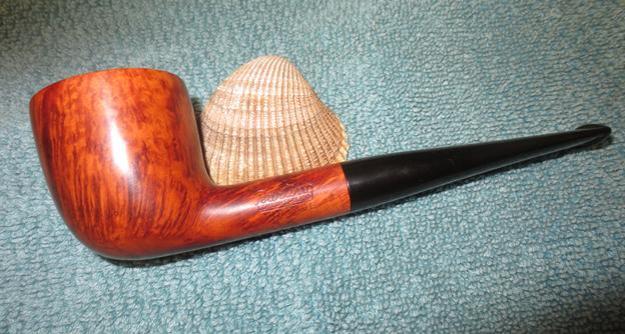
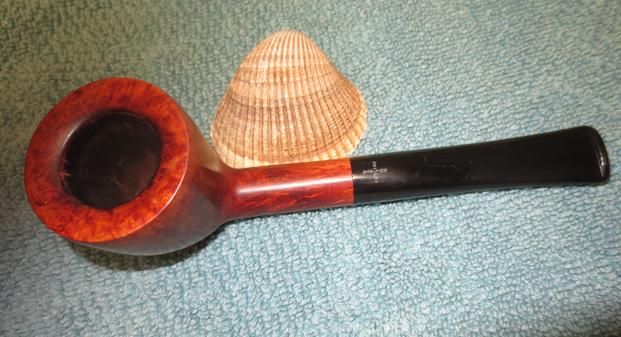
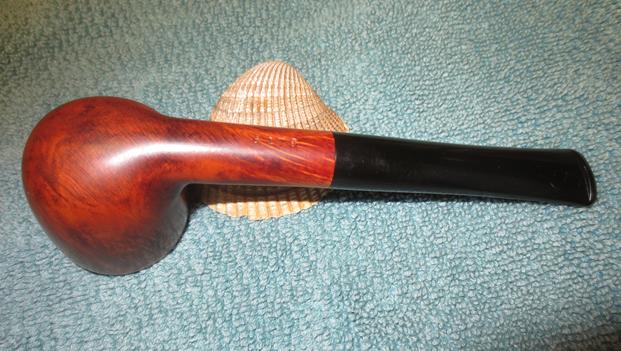
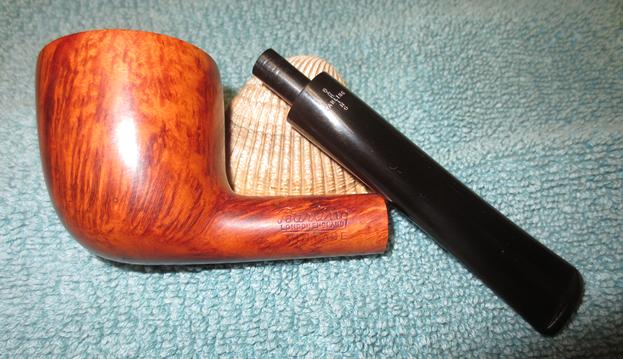
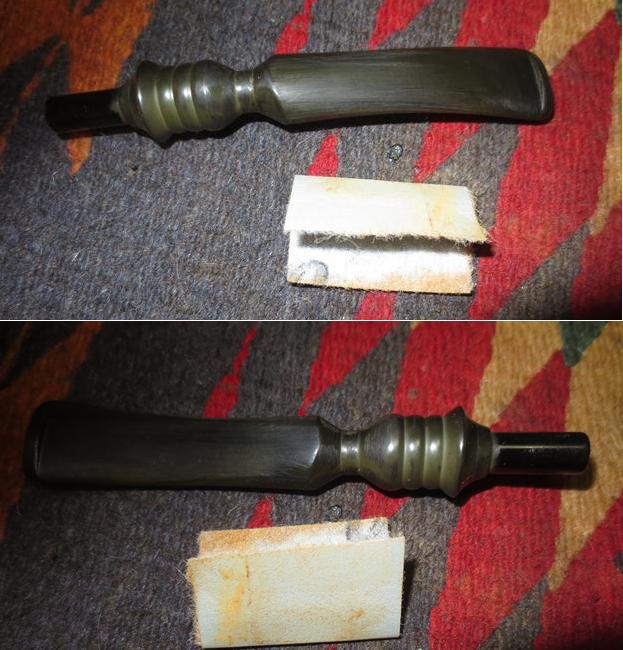
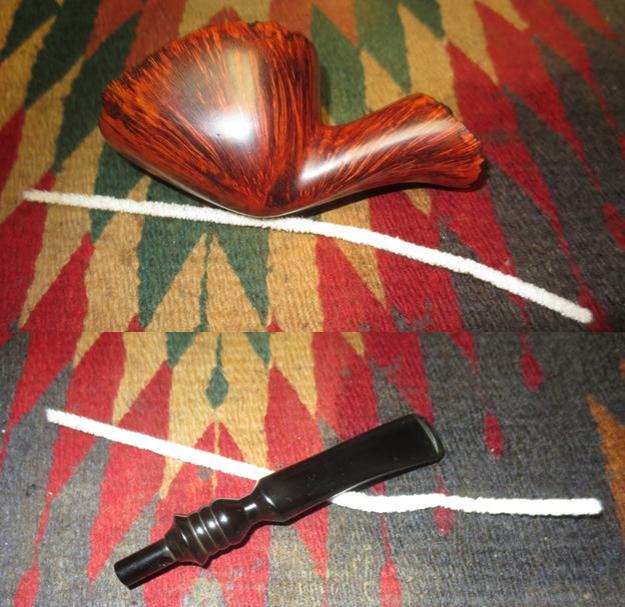
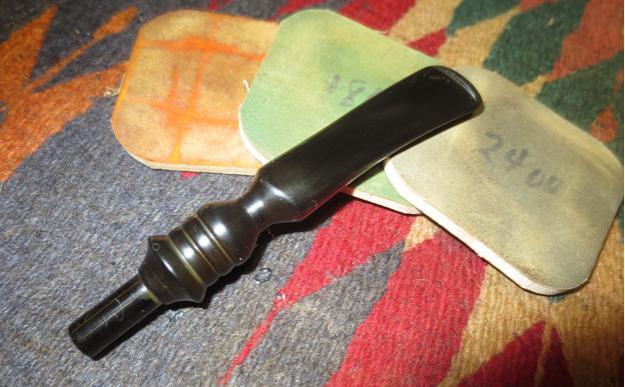
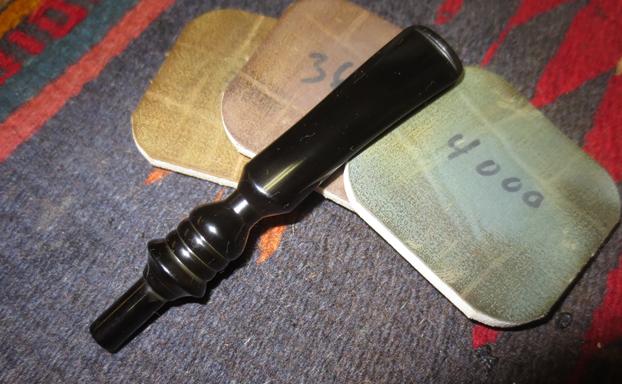
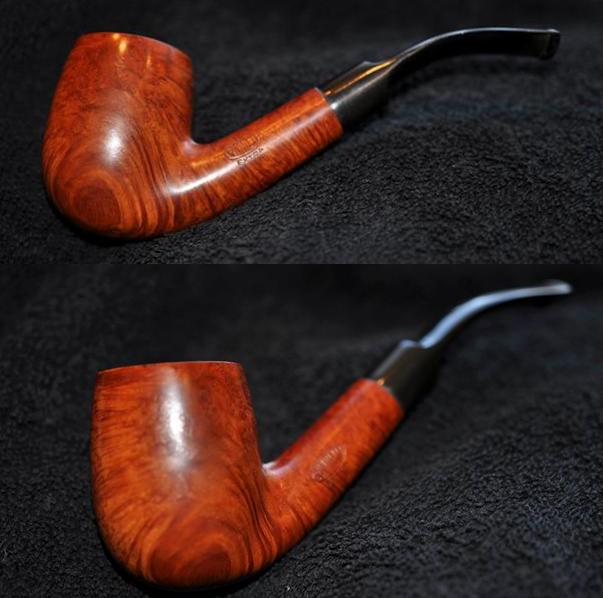
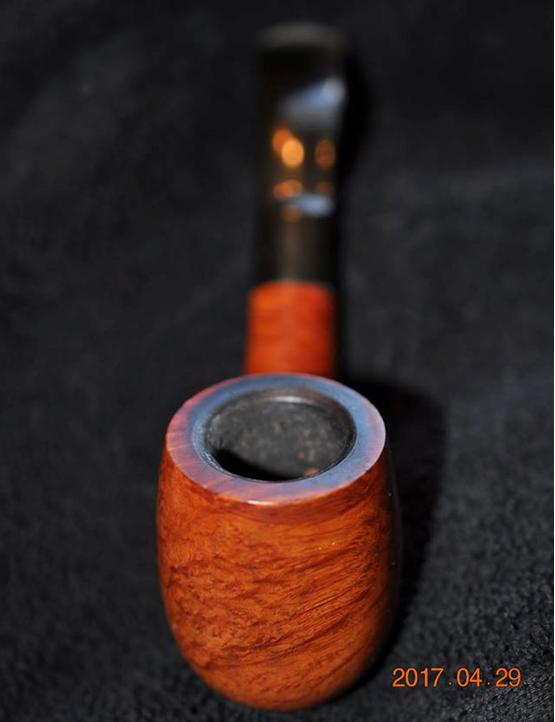
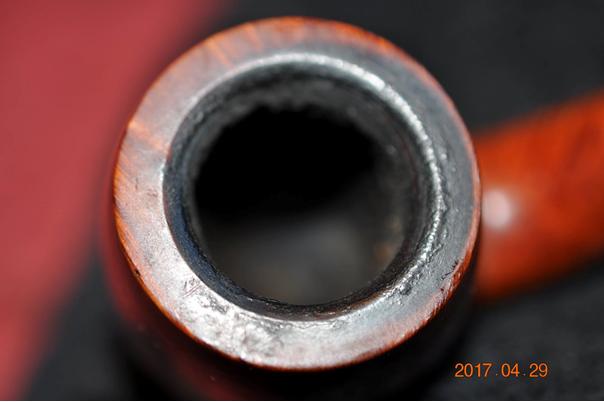
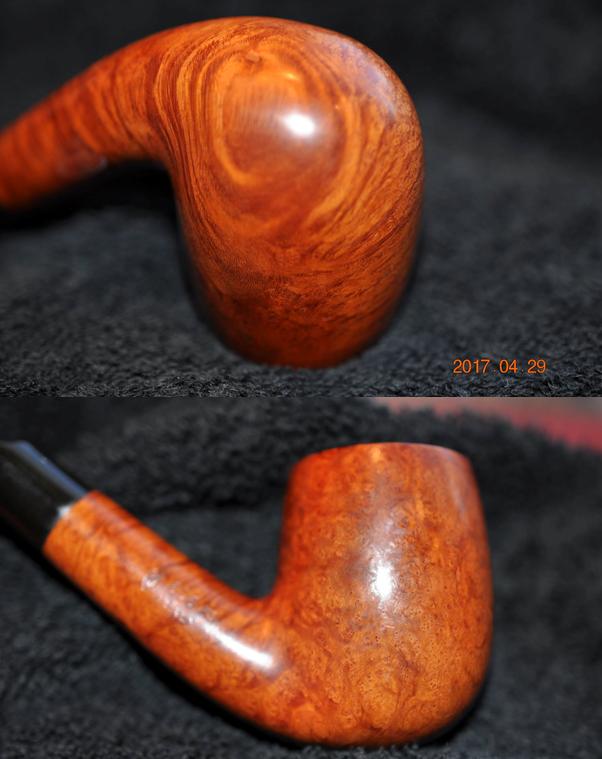
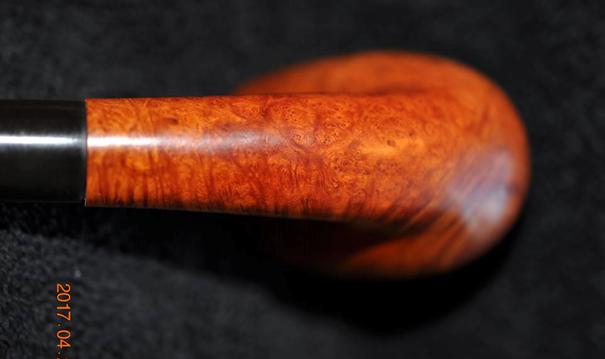
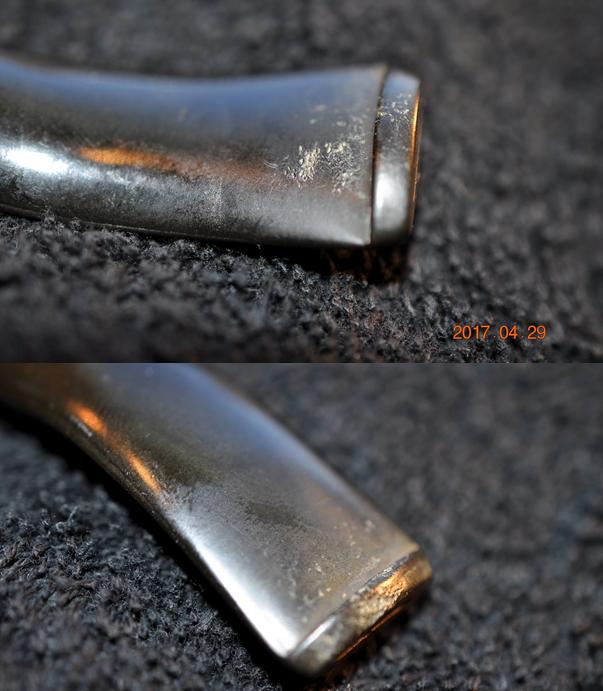
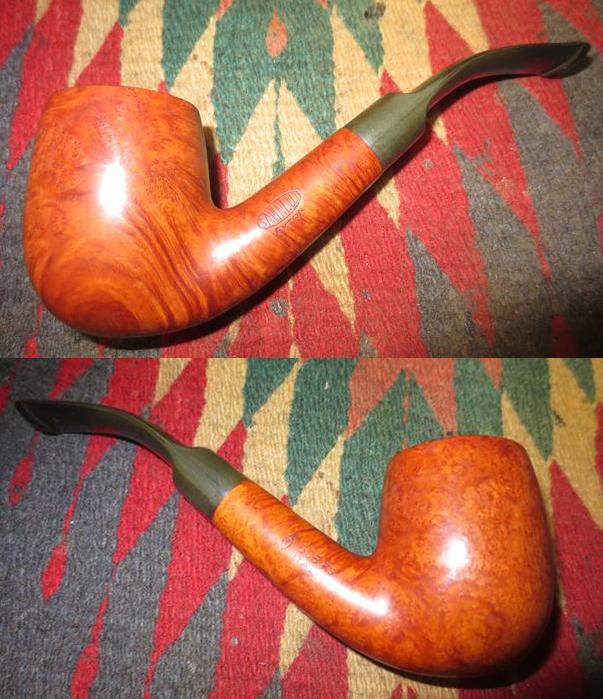
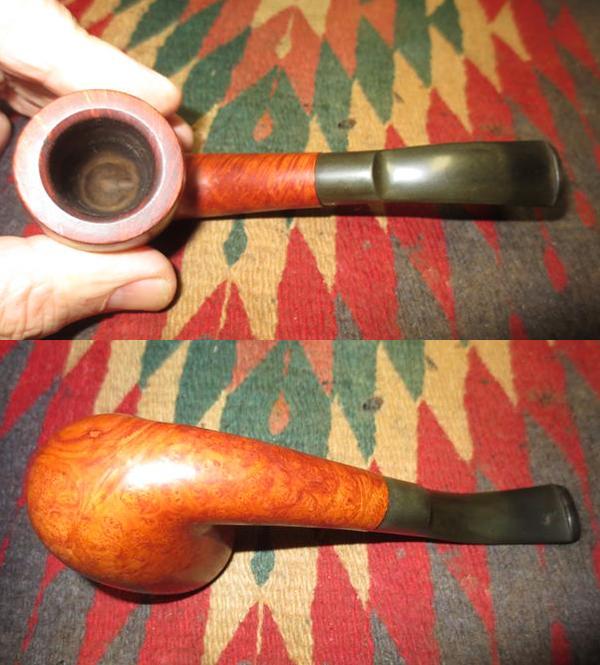
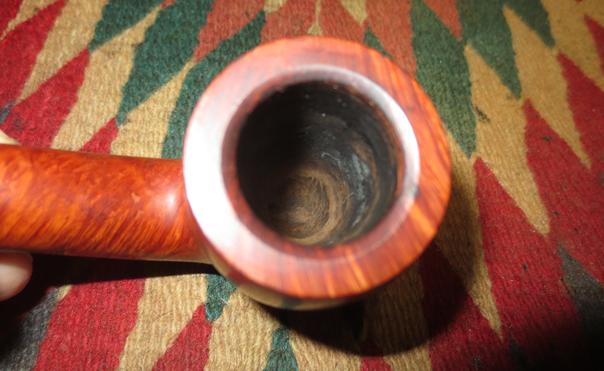
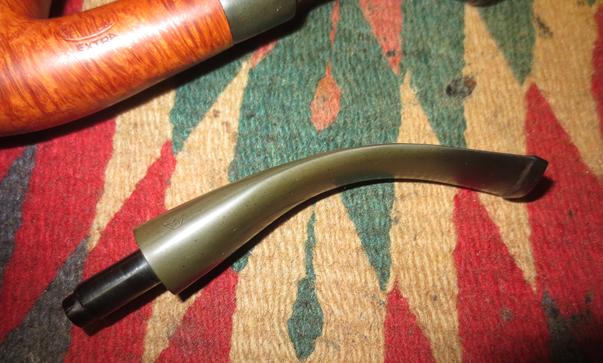
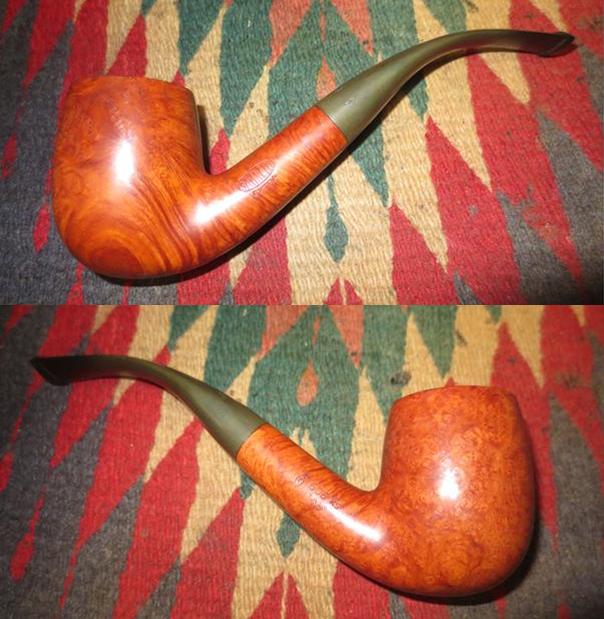
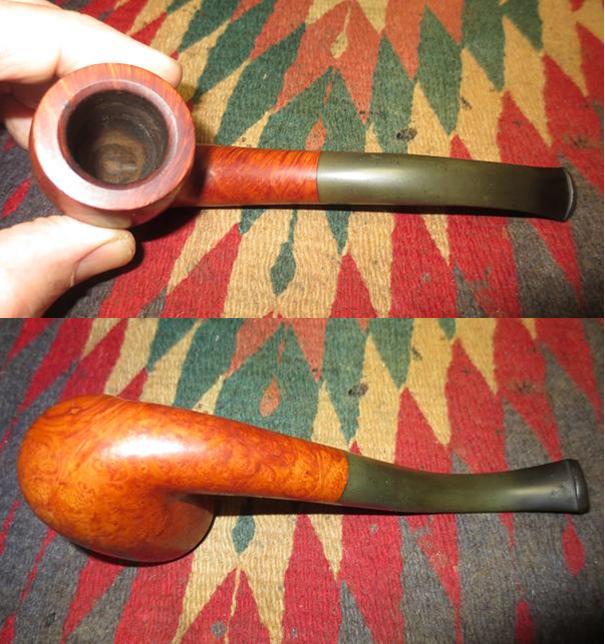
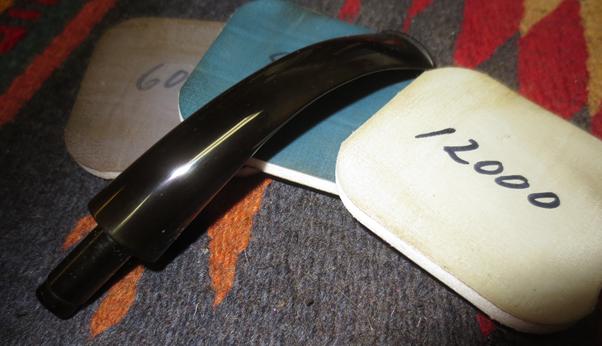
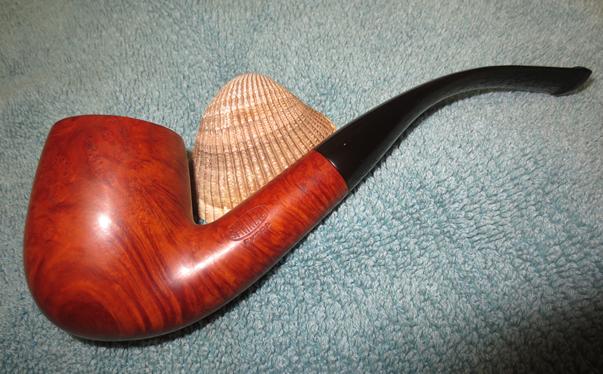
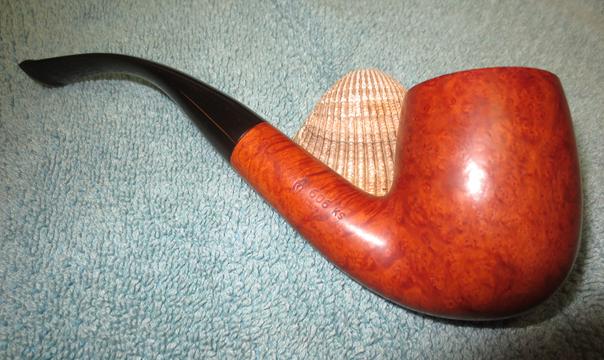
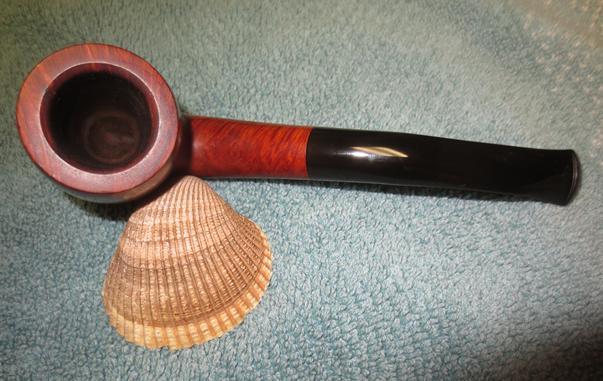
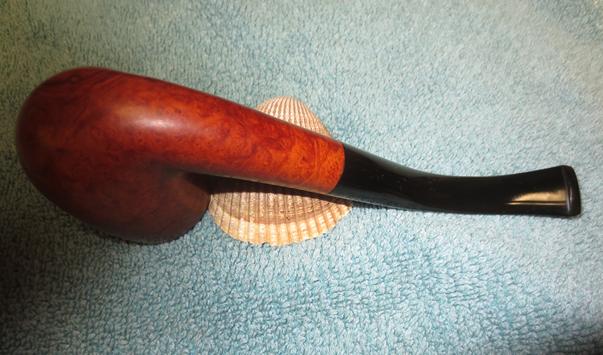
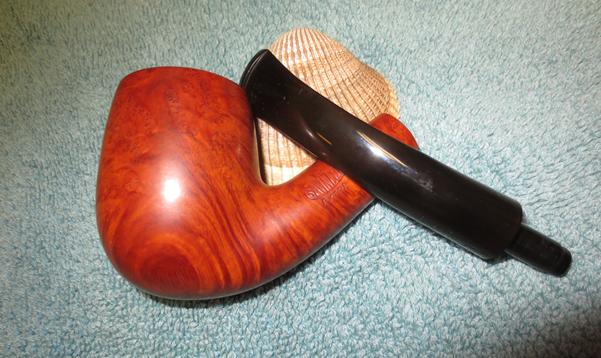
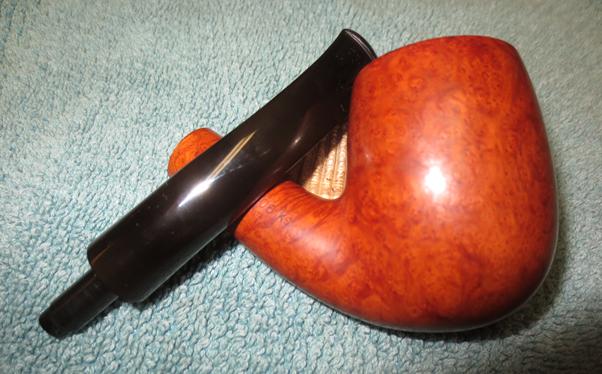
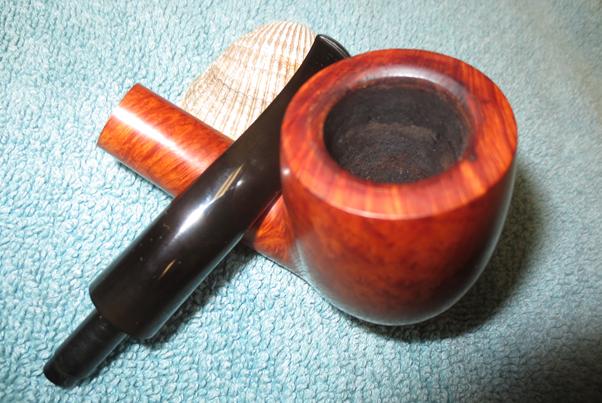
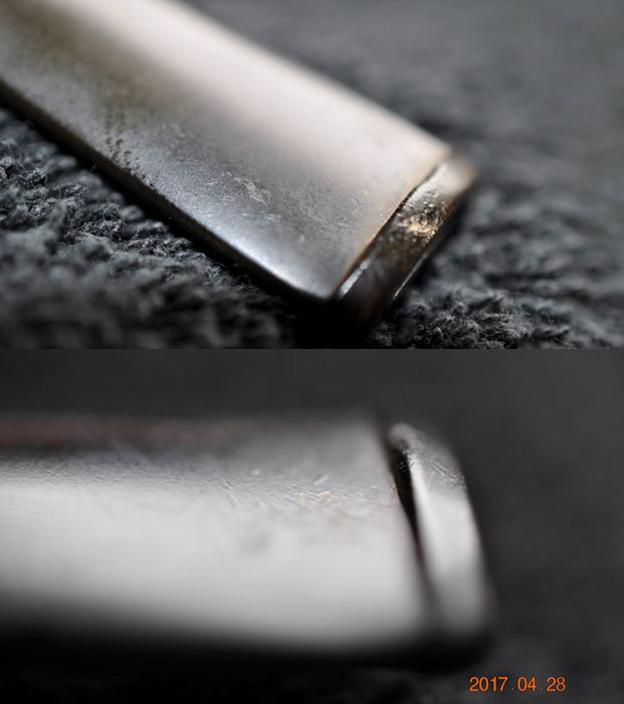
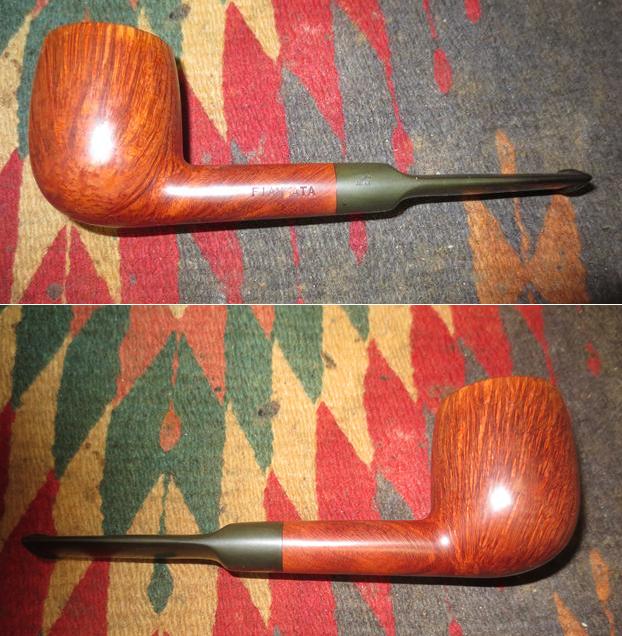
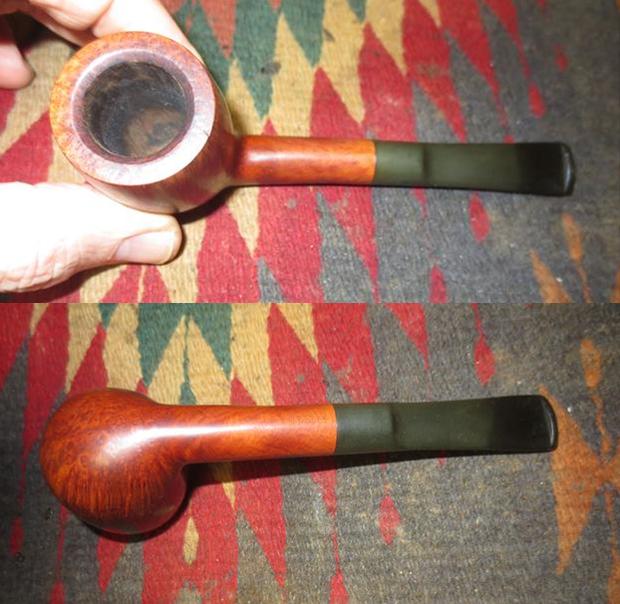
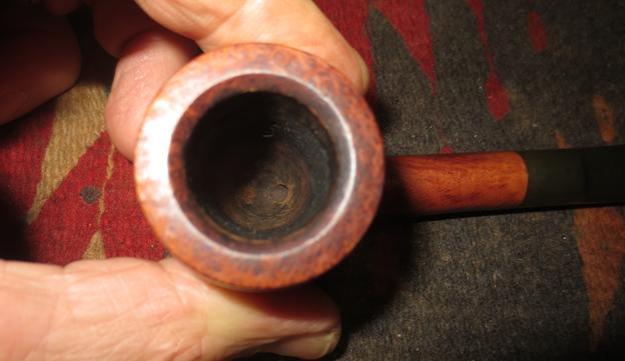
I chose a second easy pipe to work on – another of my favourite shapes, a GBD Rhodesian. It is stamped on the left side of the shank with GBD in an oval over the words New Standard in script. On the right side of the shank it is stamped London, England over 9438. The stamping is quite readable. The finish was in decent shape. There was a light cake in the bowl and overflowing onto the topside of the rim. There was a slight burn mark on the outer edge of the rim from repeated lighting in that spot. The stem has the brass roundel on the left side of the saddle. The stem was lightly oxidized and there was tooth chatter on both the top and underside near the button. The next series of photos show the pipe when my brother received it in Idaho. He sent along a few close up photos to show the rim top and cake in the bowl. It shows the thickness of the cake and the light build up on the top. The photos that follow show the stamping on the shank sides and the roundel on the stem side. The next two photos show the tooth chatter on the top and the underside of the stem at the button. There were a lot of tiny tooth marks that covered the first inch of the stem on each side.My brother did his usual exceptional job of cleaning the pipe on the inside and out before he sent it to me in Vancouver. I ran a pipe cleaner through it when it came and it was spotless. He was able to remove much of the grime from the finish and the tars from the rim top.In the next photo you can see the burn marks around inner edge of the rim and on the front left outer edge. These would take a bit of work to minimize.I took a close up photo of the rim top to focus in on the burn marks around the edges of the bowl and rim top. I also took some photos of the stem to show the oxidation and the tooth chatter. I worked on the rim top with 1500-2400 grit micromesh sanding pads to remove the burned areas. I was glad to see that they were only surface and did not go too deep. I was able to remove them for the most part. There is a small remnant of the mark on the front edge of the rim. I polished the entire bowl with the 1500-2400 grit micromesh while I worked on the rim to begin to bring a shine to the briar. I continued to polish the rim and the bowl with 3200-12000 grit micromesh sanding pads to deepen the shine and polish the briar. I buffed the bowl lightly with Blue Diamond on the buffing wheel and set it aside. I worked on the stem. I sanded the stem with 220 grit sandpaper to remove the tooth  chatter on both sides. They were not too deep so it did not take too much work to remove the marks in the vulcanite. I polished the stem with micromesh sanding pads – wet sanding with 1500-2400 grit pads and then buffed it with Red Tripoli on the buffing wheel to breakdown the oxidation further. I then dry sanded it with 3200-12000 grit pads. I rubbed the stem down with Obsidian Oil after each set of three pads to bring life to the rubber and to also give the micromesh something to bit in during the polishing. Once I finished with the 12000 grit pad I gave it a final coat of oil and set it aside to dry. I put the stem on the pipe and buffed the entire pipe with Blue Diamond on the buffing wheel to polish out the remaining scratches. I gave the pipe multiple coats of carnauba wax to protect it and buffed it with a clean buffing pad to raise the shine. I took it back to the work table and hand buffed it with a microfibre cloth to deepen the shine. The finished pipe is shown in the photos below. The grain is unique and a mix of grains – flame grain, cross grain and some straight grain. There is even birdseye on the bottom and on the rim. The stain that was on the bowl is a reddish-brown and it allows the grain to shine through. It is a beautiful example of the GBD 9438 shape Rhodesian and one that will grace the pipe rack. Thanks for walking through this simple refresher with me.  

Whew, finally a simple restore of an older Imported Briar Rhodesian


Blog by Steve Laug

After all the tough restoration jobs I have been doing lately I wanted to take a breather and do an easy restore. In the box of pipes, that my brother sent there was one that fit the need perfectly. It was one of my favorite shapes, had some interesting grain and needed minimal work. Thanks to my brother Jeff, it was astonishingly clean, and smelled the same! I have missed his help on the last batch I have been working on. When he does the cleanup, it cuts my work by 2/3’s and I have the pleasure of working on a clean pipe. This Rhodesian was very clean. The first set of photos is what the pipe looked like before he did his magic. When the pipe arrived in Vancouver I was really happy with what I found. The bowl was hardly darkened inside. The finish was gone, and though there were fills, they were not the ugly pink ones that I usually find in pipes of this era. There was some slight rim darkening on the rear left side of the rim. The stem was lightly oxidized and there were light tooth marks and chatter on both the top and underside of the stem near the button. The next photos show what the pipe looked like before I started my restoration. I took close up photos of the bowl and the rim top to show how clean it was. You can also see the fills on the front of the bowl. I actually started working on it this morning before I left for work. There was no dread attached to working on this one. There were no surprises under the grime or finish. There were no cracks of major issues with the bowl. It is a sweet pipe.The close up photos of the stem show the light oxidation and the tooth marks and chatter. They are not deep so they will not be hard to work on.I sanded the oxidation, tooth marks and chatter with 220 grit sandpaper until they were removed. It did not take too much sanding to smooth out the surface of the stem. There was a small nick on the top inner edge of the button that may need to be repaired.  I will look at that after I have polished the stem more.The nick in the button disappeared as I cleaned and reshaped the button. I polished the stem with micromesh sanding pads – wet sanding with 1500-2400 grit pads and dry sanding with 3200-12000 grit pads. After each set of three pads I rubbed the stem down with Obsidian Oil. After the 12000 grit pad I gave it a final coat of oil and set it aside to dry. I polished the briar with micromesh pads – wet sanding with 1500-2400 grit pads and dry sanding with 3200-12000 grit pads. The briar responded really well to the polishing and the fills began to disappear into the grain of the briar. They are still visible but they no longer stand out as they did when I started. At this point I think I will leave the finish natural and waxed instead of staining it. Just because it is a habit for me I did a cursory cleaning of the inside of the pipe and stem with alcohol, cotton swabs and pipe cleaners and it was as clean as I expected. There was nothing left to clean out. It was spotless.

Because the grain looked so good and I did not find the fills to be too distracting I decided to leave the pipe unstained. I liked the look of the briar and new it would colour with time and smoking. To give the bowl a little life I wiped it down with a light coat of olive oil and put the stem back on the shank.  I buffed the entire pipe with Blue Diamond polish on the buffing wheel to remove the last remnants of scratching. I gave it multiple coats of carnauba wax and buffed it with a clean buffing pad to raise the shine. I finished by hand buffing it with a microfibre cloth to deepen the shine. The pipe is shown in the photos below. I really like the way it looks. For a factory made pipe the way the shape follows the grain is pretty amazing. Thanks for looking.

Restemming and Restoring a Brigham Algonquin Dublin 247


Blog by Steve Laug

This pipe is the last of the nine that was dropped by my house for repairs. I was in rough shape for multiple reasons. The finish was dirty and spotty and the rim top was covered with overflow from the bowl. There was a thick cake in the bowl and there were some dark spots on the bowl sides toward the bottom of both sides at the bend. There were also some nicks in the heel of the bowl as well. The stem was missing a large chunk at the button on the right side. The Brigham hard rock maple filters come with an aluminum end and it had broken off deep in the shank near the entrance of the airway to the bowl. The mortise was very tarry and dirty. It would take some work to clean out enough to free the broken aluminum end piece. I took a close up photo of the rim and bowl to show the condition of the pipe when I started the cleanup. Underneath the grime on the bowl there was some nice cross grain and some birdseye on the front and back sides of the bowl.The stem was not salvageable as it stood. The missing chunk was large and the airway into the bowl was collapsed. I would need to fit a new stem on the shank. Fortunately for me the owner did not want a Brigham stem so I could use a regular push stem for the replacement.I went through my stem can, found a stem that was the same diameter, and close to the same length. I filed the diameter of the tenon with a file until it was close to fitting and finished with 220 grit sandpaper. I trimmed the edge of the tenon with my tenon turning tool by hand.When I finished smoothing out the tenon I inserted it in the mortise on the pipe bowl. The fit was snug. It looked good. I would need to do a few adjustments on the shank and stem as the shank was not perfectly round. I sanded the stem and the shank with 220 grit sandpaper to get a smooth transition between the two. I scrubbed the bowl with acetone on a cotton pad to remove the finish and the grime. I took photos of the cleaned exterior. I reamed the bowl with a PipNet reamer and the Savinelli Fitsall Knife. I removed the cake completely. I sanded the interior walls with sandpaper wrapped around my finger to smooth out the walls.I lightly topped the bowl with 220 grit sandpaper on the topping board to remove the rim damage and smooth out the nicks and scratches. I sanded it with 1500-2400 grit micromesh sanding pads to polish the surface.I stained the bowl with a dark brown aniline stain. I had found that once the finish was removed there were quite a few fills in the bowl sides and shank. I wanted to blend them into the surface of the briar and try to make them less visible. I flamed the stain and repeated the process until the coverage was even. I set the bowl aside for the day and went to work.When I returned from work that evening I wiped the bowl down with alcohol on cotton pads to make it more transparent. It was still too dark but I had plans to take care of that in a different way. In the photos below the fills are very visible against the dark brown stain. I cleaned up the face of the stem with the PIMO tenon turning tool at the tenon/stem angle so that the fit against the shank would be smooth. Sadly, my drill died so I had to turn the stem onto the tool by hand. It still worked well, just more slowly, and I was able to smooth out the surface.While the drill was out, I removed the tenon turning tool and put a drill bit in the chuck that was just slightly larger than the airway into the bowl. I wanted to be able to grab a hold of the broken aluminum filter tip with the drill bit and pull it out. Once again, I did it without the benefit of power. I just twisted the bowl onto the bit until the bit locked onto the aluminum end. I careful turned the bowl off the bit and the broken aluminum end came out stuck to the bit. Whew!I cleaned out the mortise and airway with alcohol, cotton swabs and pipe cleaners. I finally was able to get all of the tars and oils out of the extended mortise.I heated the new stem with a heat gun and bent it to match the broken stem. I took a photo of the two of them together. I took photos of the pipe with the new stem in place. Still a lot of work to do to polish both the bowl and stem but it is looking good. I set the stem aside and worked on polishing the bowl. I started by wet sanding it with 1500-2400 grit micromesh pads and dry sanding it with 3200-12000 grit pads. The photos below tell the story. I set the bowl aside and polished the stem. I wet sanded it with 1500-2400 grit sanding pads and rubbed it down with Obsidian Oil. I dry sanded it with 3200-12000 grit pads and rubbed it down after each set of three pads. After the last 12000 grit pad I gave it a final coat of oil and let it dry.I buffed the stem and bowl with Blue Diamond polish on the buffing wheel to polish out the last of the scratches on the stem. I gave the bowl and stem multiple coats of carnauba wax to protect the surface of both. I buffed it with a clean buffing pad to raise the shine and by hand with a microfiber cloth to deepen the shine. The finished pipe is shown in the photos below. I think the owner will be pleased with the finished stem and bowl. It looks like it was made to order. The contrasting stain on the bowl highlights the grain and hides the fills at the same time. Thanks for looking.
(function(i,s,o,g,r,a,m){i[‘GoogleAnalyticsObject’]=r;i[r]=i[r]||function(){
(i[r].q=i[r].q||[]).push(arguments)},i[r].l=1*new Date();a=s.createElement(o),
m=s.getElementsByTagName(o)[0];a.async=1;a.src=g;m.parentNode.insertBefore(a,m)
})(window,document,’script’,’https://www.google-analytics.com/analytics.js’,’ga’);

ga(‘create’, ‘UA-97027387-1’, ‘auto’);
ga(‘send’, ‘pageview’);

Refreshing a New Old Stock (NOS) Mastercraft De Luxe Chubby Billiard


Blog by Steve Laug

My brother found this pipe on one of his pipe hunts not long ago. It is a beautiful unsmoked, new old stock (NOS) chubby billiard. The briar is in great shape. The rim, the pristine bowl and the finish on the pipe all spoke of new pipe. I did a bit of reading on the brand to see if I could possibly date this pipe. I copied a section from Pipedia. It gives a flow of the history of the brand. Here is the link: https://pipedia.org/wiki/Mastercraft in it the text comes from a posting made by “Ted” on the Grabow Collectors Forum. He was the former Exec VP of Grabow/Mastercraft.

It doesn’t appear that Mastercraft was ever a manufacturer and bought pipes from multiple factories — mostly French and English. It survived briefly the post war recovery and then was acquired by Grabow. Ted writes:

“First a confession. From 1974 till 1984 I had several positions with Mastercraft including Executive Vice President. I also worked for Grabow from 66 till 74 and from 84 till I retired in 91. In 91, with retirement, I was President and COO for the corporation that was called “Sparta Industries”. I have seen both sides of the “fence”, and even though I never left the “employ” of Grabow, My loyalties for 10 years were with M/C.”

“United States Tobacco(UST)(Skoal and Copenhagen) bought Grabow in 69′ from the Lavietes family. In 74′ they bought M/C from Bernard Hochstein and moved it into the EXACT facility Grabow occupied. I was named “operations manager” and we were in the basement of a 4 story building in Sparta, NC.”

“M/C was STRICTLY an importer of pipes and pipe related merchandise. In 74′ when M/C moved from NYC to NC the inventory of finished goods was stored in a facility in Winston Salem, NC. Lentz Moving and Storage. Stacked 10 feet high the inventory covered 180,000 square feet….FINISHED. In my time at Grabow I had never seen that much finished stock, and the shapes, manufacturers,finishes. Heaven for a pipe smoker…..Damn right. You would have had to slap me really hard to get the grin off my face.”

“I’ll just list a few Manufacturers/names of the inventory. England:Parker/Hardcastle(Dunhill), Orlik…France: Jeantet…Jima…Cherrywoods. Italy: GIGI pipe…Radica….Rossi…Federico Rovera….Emilio Rovera….Santambrogio. Brebbia. Meerschaums from Austria: Strambach. Lighters from Japan….Pouches and accessories from Hong Kong…and the Israeli pipes from Mr. Hochstein’s sons. Trust me…This is only a small sample of the things M/C had, and bought into inventory.”

With that bit of history I know that the pipe was made prior to the buyout by Grabow in 1974. That makes the pipe at least 43 years old at this time. This one is French made probably by Jeantet. The stamping reads on the left: Mastercraft in the normal shield over De Luxe. The shield hangs from a branch like a sign. On the right side of the shank it is stamped Corsican Briar over France. I took a close up photo of the bowl and rim to show the unsmoked condition of it when I received it. The briar is quite beautiful though there are a few fills on the top and right side of the shank that are expertly blended into the finish. I also took a photo of the internals of the mortise and airway to show the raw briar that shines there.The stem showed signs of wear from sitting for the long years in a display case of cabinet. There were scratches, nicks and marks in the rubber that are shown in the photos below. There was a gummy substance from a label on the underside of the stem.The polished aluminum stinger apparatus in the tenon was unmarked and a shine of a new pipe.The finish on the pipe has a shiny topcoat of varnish. I took some photos of the stamping on the shank sides. The next two photos show what that looked like.I worked on the stem to polish out the scratches and nicks in the surface. I wet sanded it with 1500-2400 grit micromesh sanding pads and dry sanded it with 3200-12000 grit pads. I was able to polish out all of the nicks and scratches without resorting to more invasive methods. I buffed the stem with Blue Diamond on the buffing wheel to further polish out the scratches. I gave the stem multiple coats of carnauba wax and buffed it with a clean buffing pad to raise the shine back to the surface. I hand buffed it with a microfibre cloth to deepen the shine. The finished pipe is shown in the photos below. It is a great piece of pipe history and one that will be available on the rebornpipes store soon. If you want to beat the traffic and add it to your collection just send me an email and it can be yours. Thanks for looking.
Restemming and Reconditioning a Brigham Voyageur 165


Blog by Steve Laug

The eighth pipe from the lot of pipes that a pipesmoker dropped by for repair is a Brigham Voyageur. It is stamped on the left side of the shank with the Brigham name over Voyageur which is the model. The shape number is 165. It was rusticated in the classic Brigham style with a smooth rim, ring around the rim and the shank end and a smooth spot on the shank for the stamping. The pipe was dirty with dust and grime in the crevices of the finish on the bowl. The rim had a tarry buildup which had flowed from the cake in the bowl. The internals were very dirty with a lot of tar and grime. The overall condition of the bowl was good under the grime. The following photos show the pipe’s condition before I began to clean and restore it. I took a close up photo of the rim top and the bowl to show the condition of the cake and the overflow on to the rim top. I also took a photo of the stamping on the smooth left side of the shank. The pipe was a two dot Brigham. In talking with the owner he was not interested in preserving the Brigham system. He was only interested in having a pipe that he could fire up and enjoy. I would need to decide how I was going to fix this one but it was going to be another challenge for me.The stem was in rough shape. It had a split on the top side that ran from the edge of the button almost an inch up the stem toward the bowl. On the underside it had deep tooth marks and two cracks that ran through the button into the airway in the slot. The slot was compressed from the bit marks. There was a lot of oxidation on the surface and some calcification. The Brigham nylon tenon told me that the pipe is a newer one rather than those with the aluminum tenon. It was designed to hold the Brigham Hard Maple Filter tube that is specially designed for them. This one was clogged with tars. The end of the nylon tube was splitting and flared. It was ruined. The photos below show the damaged areas on the stem.I put the stem aside for a while and started on the bowl. I reamed the cake with a PipNet reamer and the Savinelli Fitsall pipe knife to scrape the cake back to bare briar. I rolled a piece of 220 grit sandpaper and wrapped it around my index finger to sand the walls of the bowl. The cake was so sticky and crumbling that I wanted a hard, clean surface so that the owner could build a new cake to protect the bowl.I scraped out the shank with a dental spatula to scrape away the hardened tars that were on the walls of the mortise and airway to the bowl. I scrubbed the surface with pipe cleaners, cotton swabs and alcohol until the shank and mortise was clean.To remove the hard buildup on the rim top and some of the damage to the front outer edge of the bowl I lightly topped it on the topping board using 220 grit sandpaper. I used a folded piece of 220 grit sandpaper to clean up the burn marks and damage on the inner edge of the rim. I finished by sanding the rim with a medium and a fine grit sanding sponge and 1500-4000 grit micromesh sanding pads to smooth out the rim and remove the scratches.I scrubbed the externals of the bowl with Murphy’s Oil Soap and a soft bristle tooth brush to clean out the crevices and grooves of the rustication. Once it was clean I wiped the bowl down with alcohol on a cotton pad to remove the dust on the finish to prepare it for a new coat of stain. I stained the bowl with a dark brown aniline stain and flamed it with a lighter. I repeated the process until the coverage on the bowl was even.Once the stain dried I wiped it down with a cotton pad and alcohol to make it more transparent. I wanted the grain to show through on the smooth portions and the ridges of the rustication. I lightly buffed the bowl with Blue Diamond on the buffing wheel. I gave it a light coat of Conservator’s Wax and hand buffed it with a shoe brush and a microfiber cloth. The buffed and restored bowl is shown in the photos that follow. The time between this picture and the next cannot be captured in photos as there were two days of work and time that went into trying various methods of repairing the original stem for the pipe. I cleaned out the split in the stem and roughened the surface with a file. I cleaned out the cracks on the button, the split on the top side and the tooth marks on the underside of the stem. It took a bunch of sanding and picking. I filled in the gaps with black super glue and charcoal powder to strengthen the repairs. I filed them smooth and sanded them to restore the finish. All was going well until I tried to slide a pipe cleaner into the airway. I pushed it through the airway and into the button only to have the repaired button fall off. The cracks gave way and the chunk fell free of the stem. No repairs would ever hold on this stem. It was finished. One day I may cut it off and use the shorter version for a different pipe but it is not worth a repair any longer.

That decision having been made for me I went through my stem can in search of a replacement. I knew the owner was fine with a non-Brigham stem so that was the way I was going to proceed. I found a stem that had the same dimensions as the original stem. It was a straight stem that I would need to clean up and bend the stem to match the original but it would look good on this old pipe.I sanded the stem with 220 grit sandpaper to clean off the oxidation and remove the light tooth chatter and tooth marks on the top and underside of the stem. I turned the tenon down with a Dremel and sanding drum and fine-tuned it with a file to reduce the tenon to fit the shank of the pipe. I heated the stem with a heat gun until I was able to bend it to match the original stem. I polished the stem with micromesh sanding pads. I wet sanded it with 1500-2400 grit pads and dry sanded it with 3200-12000 grit pads. I still had to work on the tenon to remove the file marks but the stem was beginning to shine. I polished the tenon with micromesh sanding pads to remove the majority of the file marks on the vulcanite. I buffed the tenon and then the stem and bowl with Blue Diamond polish on the buffing wheel to remove the final scratches on the stem. I gave the stem and the smooth portions of the briar several coats of carnauba wax on the wheel and then buffed it with a clean buffing pad to raise a shine. I hand buffed the bowl and stem with a microfiber cloth to deepen the shine. I think that the owner will really like the looks of his restored and restemmed Brigham. It looks really good to my eye. Thanks for looking.
Repairing and Restoring a Walnut Folk Art Russian Pipe


Blog by Steve Laug

I started cleaning up and repairing this Russian Folk Art Walnut pipe before taking photos of it. It was truly a mess. The shank had been cracked off at an angle behind the copper band and had been repaired by gluing the two pieces together without a lot of care to align the parts. As it was the crack was quite wide open all the way around the shank and had been sealed together with epoxy. I heated it to see if I could take it apart and align the parts and the glue definitely softened. I could rebreak it without further damaging the shank parts so I settled for heating it enough to realign the two parts. I realigned the parts and cooled the shank so the glue hardened. I filled in the deep crevices in the shank with briar dust and clear super glue putty. It hardened and bound the parts together. There was no movement in the shank at all at this point in the process. The photos below show the pipe with the stem in place. The repairs to the shank with the putty mix looked pretty decent in the photos. The rest of the pipe was a mess. The rim was thickly caked with over flow from the thick bowl cake. The finish on the bowl was dirty and sticky. The copper band on the shank was covered with a thick buildup of hardened “gunk” that would not come off with a simple wash. The airway in the shank was dirty and almost closed off. The mortise was also clogged. The tenon on the stem had a rubberized cement buildup around the angles at the stem. The stem itself was horn and had tooth marks on the top and underside near the button. The rounded button had an orific entrance into the stem. It was so plugged that I could not push a pipe cleaner through it. I took some close up photos of the repaired shank to show the flow of the two parts and how the realignment had worked. They also show the super glue/briar dust putty filling the crack that went all the way around the shank. There was some glue from the previous glue job that ran up the shank toward the bowl and actually ran around the copper band edge. The third photo shows the rim and the cake in the bowl. There was damage to the front edge of the bowl from someone knocking it out against a hard surface. I took photos of the stem to show the damage at the button end on both sides. The horn surface was worn and the shine was gone.I sanded the roughness of the repaired area on the shank with 180 grit sandpaper. I wanted to smooth out the surface of the repair so that it matched the shank. I continued to sand it further with 220 grit sandpaper. I smoothed out the repair and the shank began to look like it would have originally. You can see the coating on the copper band. It is like someone painted the surface with a glue coat or with varnish. That coat would need to be removed so that the patina of copper would shine through. The front of the bowl had a brass and copper insert in the wood. It was a mix of thorns and vines that was nailed to the front of the bowl. I reamed the bowl with a PipNet pipe reamer and with a Savinelli Fitsall Pipe Knife until the walls were bare and all of the cake was gone.I topped the bowl on a topping board with 220 grit sandpaper to remove the hard cake and the damage to the front of the bowl. It was a light topping that did not remove much of the rim top but it left it clean, smooth and even.I wiped down the exterior of the bowl with alcohol on cotton pads to remove the finish and the grime that was built up on it. Once it was clean the grain of the walnut shone through the stain on the wood. The next photos show the clean bowl and shank with the repaired area shown clearly in the photos. I used a sharp knife to flare the aluminum insert in the shank. I topped the shank end with the topping board to smooth out the face of the shank. I sanded the bowl, shank and copper band with micromesh sanding pads – wet sanding with 1500-2400 grit pads and dry sanding with 3200-12000 grit pads. The pads removed the material that was built up on the copper band and gave it a shine. I cleaned out the airway in the shank and the mortise with cotton swabs, pipe cleaners and alcohol until the airway was clean.I stained the bowl and shank with a dark brown aniline stain, flamed it and repeated the process until I was happy with the coverage.I took the following photos of the bowl once it had dried. The dark brown was a little dark to my liking so I would have to wipe it down to make it a little more transparent. I wiped the bowl down with alcohol on a cotton pad and then buffed the bowl with Blue Diamond on the buffing wheel. The photos below show the colour of the bowl once I had finished with the buffing. I was really happy with the colour and the coverage of the stain on the repaired area. The stem was fairly clogged with tars and oils. It took a lot of work to clean out the gunk in the stem. Pipe cleaners were really hard to push through the buildup so I picked at it with a piece of wire bent to the angle of the stem. I finally was able to break through so the pipe cleaners and alcohol finally did their job on the stem. I also cleaned off the rubber buildup on the tenon next to the stem with a sharp knife and used the alcohol to scrub that area as well.I polished the horn stem with micromesh sanding pads – wet sanding with 1500-2400 grit pads and dry sanding with 3200-12000 grit pads. I rubbed the stem down with Obsidian Oil after each set of three pads. After the final set of pads I gave it a last coat of the oil and set it aside to dry. I buffed the bowl and stem a final time with Blue Diamond on the buffing wheel and then gave the pipe several coats of carnauba wax. I buffed it with a clean buffing pad to raise a shine and hand buffed it with a microfiber cloth to deepen the shine. The finished pipe is shown in the photos below. It is looking far better than it did when it arrived. I think the owner will be happy about this piece of his own pipe history being brought back to life. It joins the others that are finished of the nine he sent me. Only two more pipes to go and I will be down with this lot. Thanks for looking.


A Very Tired, Very Dirty Stanwell Bent Volcano with a cracked bowl


Blog by Steve Laug

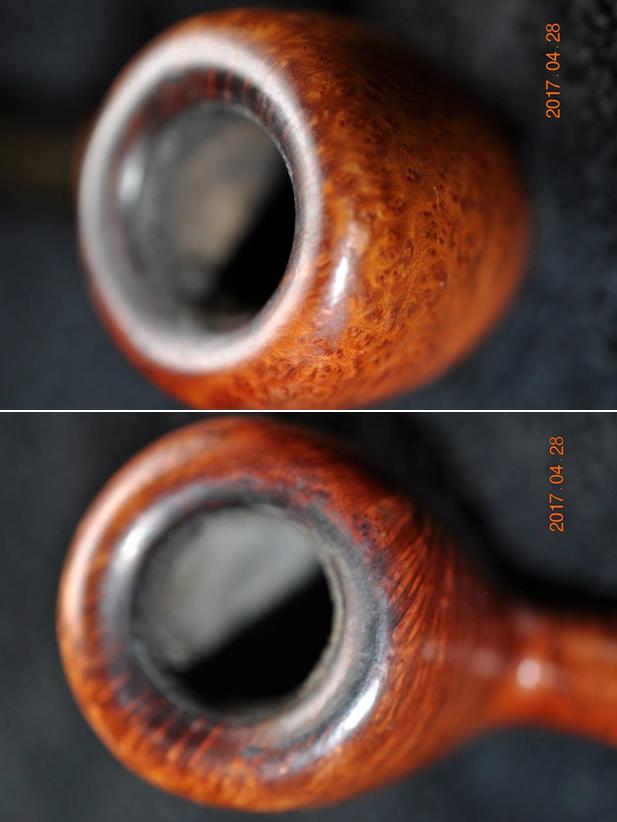
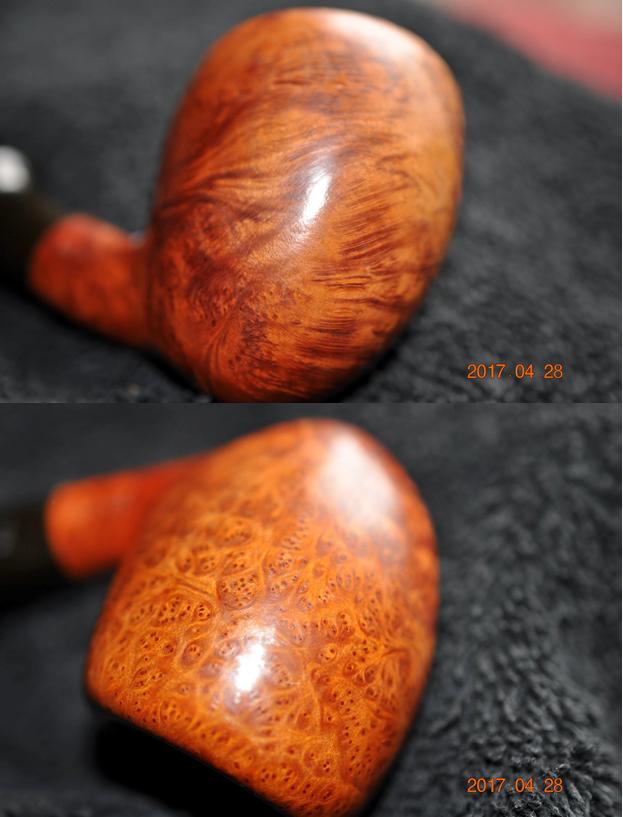
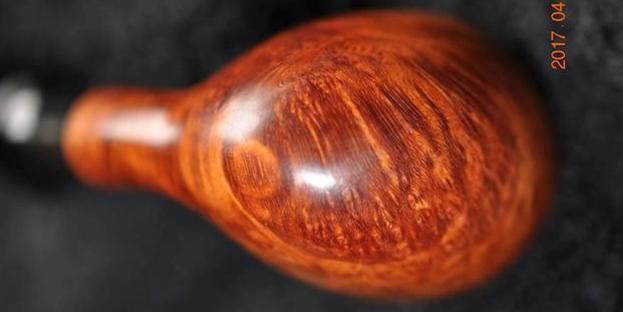
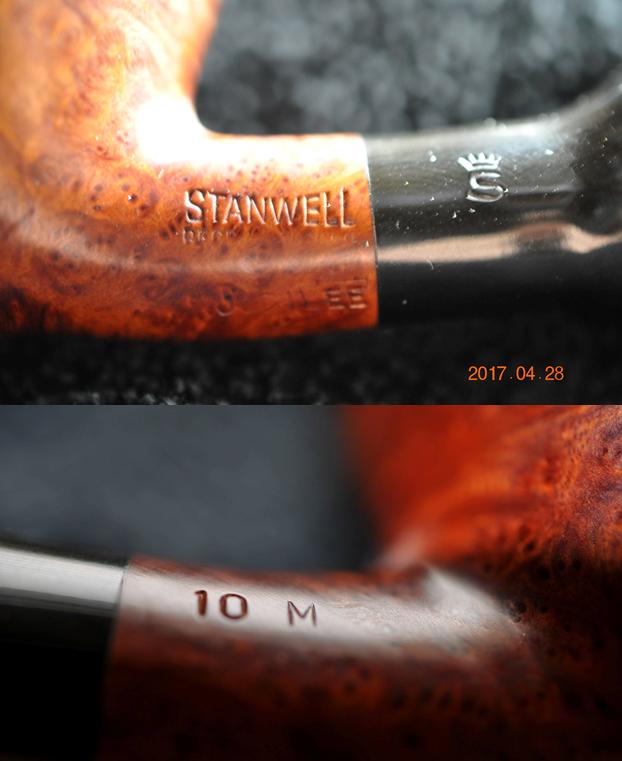
Sometimes when I take in pipes for repair and restoration I am pretty stunned by the condition. This one obviously was an old favourite of the pipesmoker who brought it to me with 8 others in need of some TLC. I sat with him in my living room and went over the repair list of what needed to be done to bring it back to life. It had been restemmed before and the stem was good and heavy so it did not need to be replaced. There were tooth marks near the button on both sides of the stem. It had some deep oxidation that needed attention. Sometime in its life it had been buffed to the point that the stamping was all but gone on the underside of the shank. With a lens I could read Stanwell over Made in Denmark but all but one number of the shape number (1) was buffed away. The finish was sticky to touch from all the waxes and oils on the bowl. The sand blast was pretty worn away and now was shallow. The angled, tapered bowl had a thick cake and it had been reamed into almost an hour-glass shape. The rim top had an overflow of the tars on it and the blast was smooth. There was some damage on the front of the bowl from knocking the pipe out on something hard. There was a small crack on the left side of the bowl from the rim down about a 1/8 of an inch that would need to be repaired. From memory I knew that the bowl was drilled to follow the angle of the exterior of the bowl.When I turned the bowl over the bottom side was covered with cracks. There were four cracks of various sizes that did not go into the interior but rather sat on the surface of heel. They were all different in terms of depth and tended to follow the blast and cut across the ring grain. They were filled with grime and wax. The bottom of the bowl was a real mess.I took a close up photo of the rim to show the damage that had been done to it by reaming it with a knife rather than with a reamer. The cake was sticky and soft and what appeared to be an hourglass shape actually was not it followed the angled bowl walls. I was concerned that the inside of the bowl would also have cracks once the cake was removed. I recommended that we remove entire cake to assess the interior of the bowl. I also took a close up photo of the heel of the bowl to show the cracks.The stem was a replacement that was thick and well made. The fit against the shank was not too bad and there was little gap between the two parts. The stem was oxidized and there was come calcium build up on the first inch on both sides. There were tooth marks and tooth chatter on both sides of the stem near the button.The shank end shows how thick the buildup was inside of the shank. The tars and oils overflow the shank and show up on the end and walls. There were also two small holes drilled to the left and right of the mortise.I reamed the bowl with the PipNet reamer using the largest cutting head. Notice the angle of the cutting head as it shows the angle of the drilling of the bowl. I cleaned up the walls with a Savinelli Fitsall reaming knife.  I sanded the bowl with 180 grit sandpaper wrapped around a piece of dowel. The third photo below shows the bowl after it has been sanded. I scrubbed the exterior of the bowl with acetone on cotton pads to remove the grime and the finish. The grime and oils came off the walls of the bowl and bowl sides and bottom to prepare the bowl for the repairs to the cracks. I drilled each end of all of the cracks with a microdrill bit on a Dremel. There were about 9 holes in the bottom of the bowl and two on the left side at the end of the shank.I put clear super glue into the cracks and pressed it down with a dental pick. I pressed briar dust into the glue and then put more dust in the glue and then more glue on top of the repair to seal it.I used a dental burr on the Dremel to rusticated the repaired areas on the bottom of the bowl and side to match them to the sand blast finish. I knocked off the rough areas of the rustication with 220 grit sandpaper to smooth it into the surrounding finish. The photos show the progress of this process. With the exterior cracks repaired and sealed I turned to work on the internals. The airway in the shank and the mortise was absolutely a mess. I used the drill bit from the KleenReem pipe reamer to clean out the airway into the bowl from the mortise. It was almost closed off with the tars and oils. I turned the bit into the airway until it was smooth. I used a dental spatula to scrape out the inside of the mortise. The scraped tars and oils can be seen in the photos below.There were two small drilled holes in the end of the shank on both sides of the mortise. I filled them in with super glue and briar dust. I cleaned out the inside the mortise and shank with alcohol, pipe cleaners and cotton swabs until they came out clean.The bowl smelled strongly of old tobacco and there were oils in the briar walls. I wanted to remove that smell as much as possible. I stuffed two cotton balls into the bowl, set it in the ice cube tray and used an ear syringe to fill it with alcohol. I left it standing overnight while it pulled the oils out of the briar bowl. In the morning the cotton was stained a yellow brown.I recleaned the mortise and airways after it had soaked using alcohol, cotton swabs and pipe cleaners.I stained the repaired areas on the bowl with a dark brown stain. I used a black Sharpie Pen to fill in some of the grooves in the briar and then restained it. I flamed it with a lighter to set the stain.I buffed the bowl with Blue Diamond on the buffing wheel to raise a shine on the bowl. The photos below show the repaired areas and the blending into the surrounding briar. I set the bowl aside and turned my attention to the stem. I cleaned out the slot with a dental pick and pulled a lot of built up tars from there. I used a sharp knife to bevel the end of the tenon to open the air flow to the slot. I sanded the stem with 220 grit sandpaper to break up the oxidation and to also remove the tooth chatter and some of the tooth marks. Some of them were too deep and they would need to be repaired later. I cleaned out the inside of the stem with alcohol and cotton swabs to remove the buildup in the airway. The slot was very narrow and it was hard to push pipe cleaners through the airway. I decided to open up the slot with needle files to facilitate easier cleaning with pipe cleaners. I did not want to change the shape of the slot, but merely wanted to make it wider and tapered smoothly into the airway. I used both large and small round, oval and flattened oval files to shape the slot. Once I had it large enough for a pipe cleaner to pass through easily I folded a piece of sandpaper and sanded the inside of the slot. I sanded the stem around the button with 220 grit sandpaper and filled in the remaining tooth marks with black super glue. I set the stem aside to dry overnight. In the morning I sanded the stem with more 220 grit sandpaper to smooth out the repairs and blend them into the surface of the stem. I also reshaped the button and smoothed out the repairs I had made there. I wiped the stem down with Obsidian Oil on a cloth to have a better look at where things were at. I noticed a small bubble in the patch on the underside of the stem once I had cleaned it so I put another drop of black superglue on it to fill it in. I polished the stem with micromesh sanding pads – wet sanding with 1500-2400 grit pads and dry sanding with 3200-12000 grit pads. I rubbed the stem down with Obsidian Oil after each set of three pads. After the final set of pads I set the stem aside and let the oil dry. I mixed up a batch of pipe mud – water and cigar ash – and applied it to the inside of the bowl to provide protection to the bare walls while a new cake is formed. When it dried I put the stem on the bowl and buffed it with Blue Diamond polish on the buffing wheel. Blue Diamond is a plastic polish that comes in a block. I load the buffing pad with it and polish the stem and the bowl. I use a light touch on the bowl so that I don’t load up the grooves and crevices with the polish. I gave the stem and bowl multiple coats of carnauba wax and buffed the pipe with a clean buffing pad to raise a shine to the finish. The finished pipe is shown in the photos below. The repairs on the bottom of the bowl blended in very well and those on the stem did also. This is the first of nine pipes that I am repairing for a guy who dropped them off at the house. It is ready for more years of service. Thanks for looking.


New Life for a KBB Yello-Bole Sandblast 2705 Billiard


Blog by Steve Laug

This is the second pipe that was sent to me by a fellow Canadian for a cleanup and restoration from the lot he had picked up in a local auction for a great price. This one is an older Yello-Bole sandblast billiard with the KBB cloverleaf on the underside of the shank. It has a great looking rugged sandblast on the bowl that highlights the grain. The overall finish appeared to be in good shape though the crevices in the blast were dirty. The bowl had been cleaned before the auction and there was some scratching on the bowl walls. There was still an overflow of tars in the finish that remained on to the rim in the parts that were not damaged. The outer edge of the rim had the look of a pipe that had been smoked hard and knocked out on anything close at hand no matter what it did to the pipe. There were nicks and dings all the way around the rim top and edges. The first five photos that I have included are ones that I received from the pipe’s owner when he emailed and asked me about repairing his find. The first is an overall view of the pipe. yb1The second and third photos are close up shots to clearly show the extent of the damage to the rim top and outer edges. As far as I could see from the photos the inner edge of the rim appeared to be in great shape. The outer edge was another story.yb2The last two photos he sent show the fit of the stem against the shank and the stamping on the underside of the shank. From the first photo it did not appear that the stem was properly seated in the shank. My experience has been that the stems on these older Yello-Bole pipes had an excellent fit but when tars collected around the walls of the shank surrounding the spade stinger the stem would not properly seat. I was hopeful this would be the case with this one. The second photo shows the clear stamping on the underside. It is stamped with the four digit shape number 2705 which is a billiard number and after the 5 is the letter u. The KBB cloverleaf is followed by the classic Yello-Bole stamp and under that it reads Algerian Bruyere.yb3When the pipe arrived I snapped some photos of the condition of the pipe before I started the cleanup. The stem had light oxidation and the yellow O logo was perfect. The inside of the shank was quite dirty so my assumption regarding the reason that the stem did not seat properly was correct. Unfortunately before I took the photos I had done some cleaning on the rim top and edges. I used a sanding block on the edges to knock off loose debris and a dental pick on the rim. I touched up the raw briar with a black Sharpie pen because I have learned that when it is mixed with a dark brown stain I can get a match to the colour of the stain on the bowl. blast1 blast2At this point in the process I used a brass bristle tire brush to scrub out the crevices and sandblast on the top surface. I did this to prepare the rim for restaining, to clean out the blast crevices and to smooth out some of the roughness I have found that this brush does a great job in lifting the dust and tar while not damaging the briar. The brass bristles are soft and do not scratch the briar but make easy work of the tars and build up on the rim of a blast. I scrubbed the inner beveled edge with the brush and it came out looking undamaged. The sandblast reappeared on the rim top as well.blast3I used the black Sharpie pen again to add a dark colour in the chips and nicks in the finish around the edges and the top of the bowl. When that was finished I stained the bowl with a dark brown aniline stain thinned 50/50 with isopropyl alcohol. I fired the stain with a lighter and repeated the process until I was satisfied with the coverage on the bowl. You can see that the nicks along the edges of the rim look very good. The rim top needs to be polished and it will look the same after I have waxed and buffed it.blast4 blast5I probably should have cleaned up the inside of the bowl earlier but as I worked on the rim first it almost escaped my notice. In the last photo above I could see the cake in the bowl and what appeared to be some damage to the inside wall of the left side. I used a Savinelli Fitsall Reaming knife to take the cake out of the bowl. I was able to ream back the walls and the apparent damage disappeared. I used a pen knife to scrape the hard tars that had collected in the shank and mortise. I was amazed at the amount of powder that came out of the shank. It was thick and black and proved my point made earlier about it keeping the stem from seating properly against the shank.blast6I scrubbed the mortise and the airways in the stem and the shank with 99% isopropyl alcohol, pipe cleaners and cotton swabs until I removed all of the grit and grime from those areas. I cleaned the spade stinger with alcohol and pipe cleaners and polished it with 0000 steel wool until it shone.blast7The pipe smelled of old aromatics and even with the bowl and shank clean the smell was present. I stuffed the bowl with cotton balls and used an eye dropper to fill it with isopropyl alcohol. I have found that cotton balls work as well as Kosher salt does and it is not as messy. I put a cotton swab in the shank up to the entrance of the airway into the bowl as it wicks alcohol into the shank and draws out the oils in that area. I put the pipe bowl upright in an ice-cube tray and let it sit over night to let it do its magic. The second photo shows the cotton balls, discoloured with the oils after sitting 8-9 hours. Once I removed the cotton balls I scrubbed out the shank and airway to remove any remnants of alcohol left behind and set the bowl aside to dry.

I have written about this alternative to the salt and alcohol treatment in an earlier blog that can be read here. https://rebornpipes.com/2013/02/10/sweetening-a-pipe-an-alternative-to-the-salt-and-alcohol-treatment/blast8I sanded the stem with 220 grit sandpaper to remove the light oxidation and the light tooth chatter at the button. It did not take too much sanding to remove those from the stem.blast9I polished the stem with micromesh sanding pads – wet sanding with 1500-2400 grit pads and dry sanding with 3200-12000 grit pads. This is my normal routine and if you have been following the blog for any length of time you know that I always follow this procedure with the stems. Between the 4000 grit pad and the 6000 grit pad I buffed the stem with White Diamond and then went on to use the final three grits of micromesh pads. I gave the stem a rubdown with Obsidian Oil after each set of three pads and after the last set put it aside to let the oil dry.blast10 blast11 blast12I hand waxed the bowl with Conservator’s Wax and buffed it with a shoe brush. I find that the wax does not clump in the crevices of a sandblast finish like carnauba does so I always hand wax this kind of finish. I buffed the stem with Blue Diamond on the buffing wheel and gave it multiple coats of carnauba wax. I buffed the bowl and stem with a clean buffing pad to raise the shine and then hand buffed it with a microfibre cloth to deepen the shine. The finished pipe is ready to go back across Canada to its owner. It is a beauty and I think he will enjoy it. Thanks for looking.blast13 blast14 blast15 blast16 blast17 blast18 blast19 blast20


Refreshing a Comoy’s Golden Grain 110 Billiard


Blog by Steve Laug

This is yet another from the old pipeman’s collection that came to me from the local pipe shop. It is a beautifully grained Comoy’s Billiard. The stamping on the pipe is very readable and clear. On the left side it reads Comoy’s over Golden Grain with a C on the side of the stem. On the right side of the shank it is stamped with COM (Country of Manufacture) circle Made in London over England and shape number 110. The finish is decent with a medium brown stain with great grain showing through. It is in good enough shape that I hope to not have to refinish it but rather just clean and renew the finish. There is thin cake in the bowl and rim darkening. The stem is oxidized and there is light tooth marks on top and bottom of the stem near the button. There is also some calcification from a Softee bit on the stem and button.gold1 gold2The photo to the left showgold3s the condition of the rim. The inner beveled edge of the rim is cake and dirty. There is a light lava overflow on the rim and some darkening as well. I am hoping that I will be able to scrub this off and also clean up the inner rim bevel in such a way that I can leave the original finish unaltered. It will take some slow and patient work to restore it and not just refinish it.

I reamed the bowl back to clean briar using a PipNet pipe reaming tool and a Savinelli Fitsall Reamer. I carefully worked the reamer over the beveled rim to remove the buildup on the edges of the rim.gold4I scraped the rim edge and bevel with a sharp pen knife to remove the carbon buildup that was there and scrubbed the rim and bowl with a small bit of Murphy’s Oil Soap to remove the darkening and grime left behind after the scraping. The photo below shows the rim after this work over. It is looking pretty good at this point.gold5I cleaned out the internals of the mortise and the airway in the shank and the stem with 99% isopropyl alcohol, pipe cleaners and cotton swabs.gold6I “painted” the tooth marks in the stem with the flame of a Bic lighter to raise the vulcanite. I am so thankful for the fact that vulcanite has memory and when heated will return to its original state if the tooth marks have not broken the edges. In this case it worked very well and I was able to minimize them with the flame and finish working on them with 220 grit sandpaper. I sanded the stem and removed the oxidation and the calcification on the button end.gold7I polished the cleaned stems with micromesh sanding pads – wetsanding with 1500-2400 grit pads and dry sanding with 3200-12000 grit pads. I buffed the stem with White Diamond after the 4000 grit pad and then finished with the remaining three pads. I rubbed the stem down with Obsidian Oil after each set of three pads and after the final rubdown set it aside to let the oil dry.gold8 gold9 gold10Once the oil dried I buffed the pipe and stem with Blue Diamond on the buffing wheel and gave it multiple coats of carnauba wax. I buffed it with a clean buffing wheel to raise a shine on the bowl and stem and then hand buffed it with a microfibre cloth to deepen the shine. The finished pipe is shown in the photos below. It is a beautiful grained Comoy’s made pipe that should provide years of good smoking to whoever adds it to their rack next. It will be available for purchase on the rebornpipes store later today if you wish to add it to your collection. Thanks for looking.gold11 gold12 gold13 gold14 gold15 gold16 gold17 gold18 gold19


Checkered History and Heritage of an East German Howal Old Briar Rustified Dublin


Blog by Dal Stanton

Finally, a ‘simple’ clean up!  Or, so I hope.  The Howal has been in my ‘Help Me!’ basket for some time.  I bought him from a vendor in an antique market, in the shadow of Nevski Cathedral in downtown Sofia, Bulgaria.  It was from the same young man I purchased, out of his bag of pipe parts, an orphaned stummel which became my maiden restoration project published on Reborn Pipes.  I titled it, A Newbie Restore of a Dr. Plumb 9456 Oom Paul – only it wasn’t an Oom Paul.  Al Jones’ (aka, Upshallfan) comment to my first blog observed correctly: “the 9456 is a classic GBD shape, although it is considered to be a Bent Billiard (rather than a Oom-Paul).”  I’m thankful for much ‘newbie’ grace I have received!  Though, the pipe’s name is still Chicho Pavel, Bulgarian for Uncle Paul!  He continues to be a favorite in my rotation and a special friend.  The Howal (over Old Briar) Rustified Dublin now before me is of interest to me partly because of its origins.  The pictures from my work table give an overview of the pipe itself.howal1 howal2 howal3 howal4 howal5 howal6The Howal name is of interest to me because it originated from behind the former ‘Iron Curtain’ in East Germany during a geopolitical climate rife with change and human tragedy.  My wife and I have spent over two decades living behind what was formerly the Iron Curtain and this is the second Howal I’ve found in the same Antique Market here in Bulgaria.  The question that comes to my mind is whether Howals are more commonly found in Eastern Europe where perhaps, they were circulated under the old USSR in an enforced socialist, command economy?  Pipedia’s article was both interesting and helpful in understanding the predecessor of and origins of the Howal name:

C.S. Reich howal7was founded by Carl Sebastian Reich in Schweina, Germany in 1887. By its 50th jubilee in 1937 C.S. Reich was the biggest pipe factory in Germany.  In 1952, however, the owners of the company were imprisoned and the company itself was nationalized as Howal, an abbreviation of the German words for “wood products Liebenstein” or “Holzwaren Liebenstein”.  By the 1970’s Howal, after acquiring many other smaller pipe making firms, was the sole maker of smoking pipes in East Germany. In 1990, with the fall of the Berlin Wall and reunification of the Germanys, the company was closed.

While helpful for a broad sweep, I discovered much missing from this summary and it raises more questions.  From another interesting source, Edith Raddatz’s lecture on tobacco pipe production in Schweina at the Tobacco Pipe Symposium in 2003, it describes a history of pipe production in this central German village that was reminiscent of my research into France’s pipe mecca, St. Claude.  A strong development of the pipe making industry can be traced in the 1800s to the apex of the C.S. Reich Co. being Germany’s largest pipe producer in 1937, but Raddatz’s lecture reveals that other producers of pipes were also based in the German village of Schweina.  Pipedia’s article above describes how the owners of the C.S. Reich Co. were arrested and imprisoned followed by the nationalization of the Reich Co. and becoming ‘Howal’, an acronym for “Wood Products Liebenstein” – Bad Liebenstein was the town that bordered and absorbed the village of Schweina. The question begs to be asked – which, unfortunately introduces the human tragedy wrapped around the name ‘Howal’ – Why were the owners arrested?  In an unlikely source, the website of the ‘Small Tools Museum’ adds the names of those imprisoned: shareholders Robert Hergert and Karl Reich.

Edith Raddatz’s lecture (referenced above) brings more light to the difficult geopolitical realities these people faced (Google translated from German – brackets my clarifications):

By 1945 the company, which had meanwhile [passed to] the next generation – Kurt Reich And Walter Malsch – [had] about 100 employees.   Among them were many women who mainly did the painting work.  At the beginning of the 1950s, an era ended in Schweina. The first [oldest] tobacco pipe factory in Schweina closed their doors. There were several reasons for this. Kurt Reich passed away in 1941, [and] Walter Malsch [in] 1954.  The political situation in the newly founded GDR made the conditions for private entrepreneurship difficult. The heirs of the company “AR Sons” [Reich family] partly moved to West Germany. The operation was nationalized and later toys were made there.

howal8In post WWII occupied Germany, the Soviet occupied section was declared to be a sovereign state and the German Democratic Republic (GDR) was established in 1949 (See link).  With a rudimentary understanding of Marxism and the economic philosophy undergirding it, it is not difficult to deduce what brought the demise of the C. S. Reich Co. and the formation of Howal.  Solidification of the FDR’s hold on power paralleled the necessity to nationalize private ownership and to institute a State-centered command economy.  These efforts gained momentum and forced companies/workers to work more with no additional pay.  In 1952, the year that the owners of C. S. Reich Co., were arrested, this edict was advanced (See link):

In July 1952 the second party conference of the Socialist Unity Party of Germany (SED) took place in East Berlin. In SED General Secretary Walter Ulbricht‘s words, there was to be the “systematic implementation of Socialism” (planmäßiger Aufbau des Sozialismus); it was decided that the process of  Sovietization should be intensified and the importance of the state expanded. The party was acting on demands made by Soviet premier Joseph Stalin.[2]

howal9As a result, Germany remembers the Uprising of 1953 which started in East Berlin, as factory workers revolted against the repression of the GDR, and spread to all East Germany.  Many lost their lives as Moscow responded to squelch the unrest with tanks on the streets.  In play also, was the mass exodus of people fleeing to West Germany, which included, per Edith Radditz’s lecture, the Reich family, who would have been heirs of the family’s legacy and company – pipe making.  Also in 1953, completing the State forced abolition of any Reich claim, the largest pipe making company of Germany was seized, nationalized, and changed from C. S. Reich Co. to Howal.  As ‘Howal’, pipes continued to be produced, undoubtedly with the same hands and sweat of the people of Schweina, along with other wooden products, such as toys.  In the Pipedia article I quoted above, it said:
By the 1970’s Howal, after acquiring many other smaller pipe making firms, was the sole maker of smoking pipes in East Germany. In 1990, with the fall of the Berlin Wall and reunification of the Germanys, the company was closed.

My curiosity piqued, what does it mean when it says that Howal acquired many other smaller pipe making firms?  Should we question whether these words can be understood in the normal free market enterprise way we are accustomed?  Doubtful.

As I now look at this Howal before me, it is with a greater connection to its checkered past, the people of Germany’s pipe making heritage, and specifically, to the hands that drilled, shaped and finished the pipe.  The possible dating of this Howal spans from 1953 to 1990, when the Howal factory was closed for good with the fall of the Berlin Wall and the old USSR (See link).  The Howal markings on the left side of the shank are in very good shape.  The rustification is very attractive in the Dublin style – definitely an ‘olde world’ feel.  There are some marks on the rim.  The bowl is totally free of cake – someone did some clean-up work before coming to me.  The dark color of the stummel appears to be paint or a black stain – I can see brown around the nomenclature on the shank.  I will clean the stummel with Murphy’s and see what happens.  There is no oxidation on the stem nor teeth chatter or dents.  So, could this Howal be only a simple cleaning and freshening?

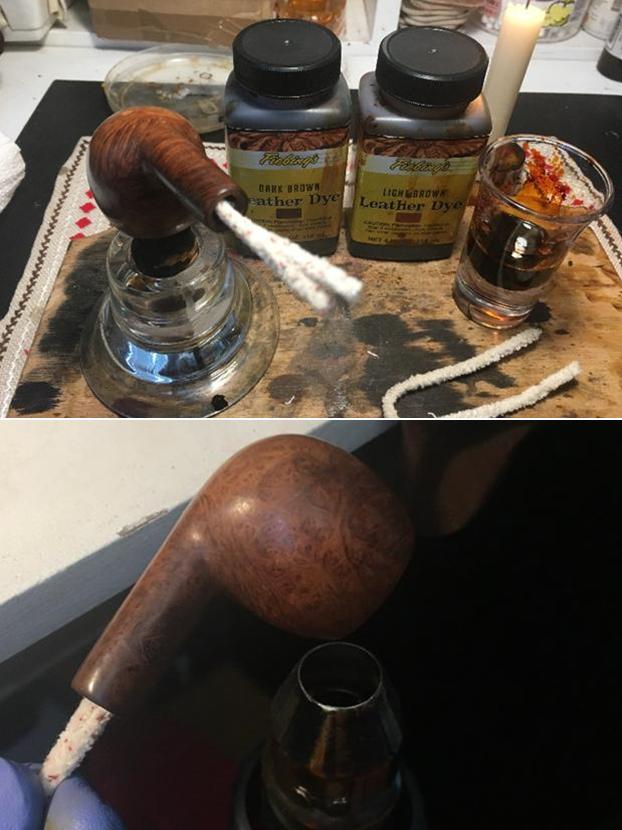
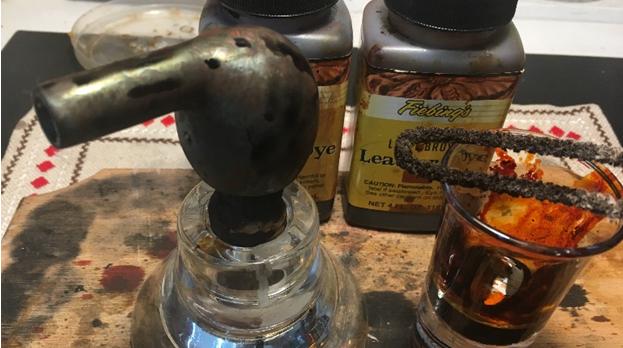
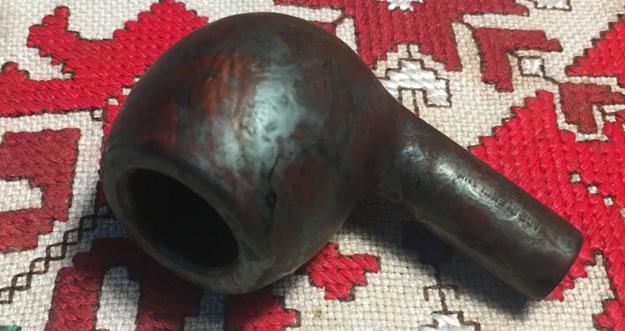
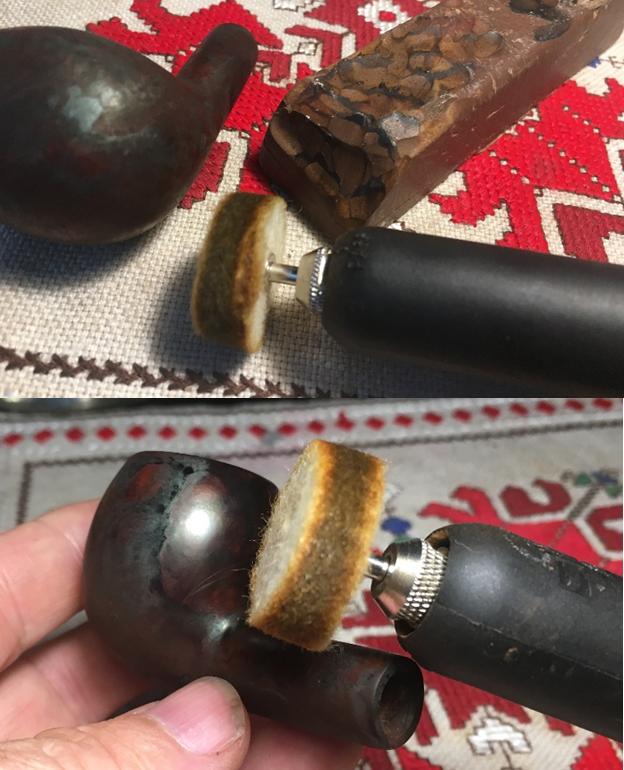
I start by taking a picture of the rim and markings to take a closer look at areas of question.  Then using Q-tips and pipe cleaners with isopropyl 95% I start cleaning the stummel internals.  After only one plunge of a Q-tip, I see that the mortise is full of the black finish that is also on the external surface.  I find no tobacco gunk in the mortise, only black dye – or whatever it is.  After several Q-tips and some pipe cleaners, I decide simple to fill the mortise with isopropyl and let it soak for a few hours.  This did the trick.  After pouring off the dirty isopropyl the Q-tips, after the soak, started coming out clean very quickly.  Stummel done.  The stem required very little effort.  The pictures show the progress.howal10 howal11 howal12 howal13 howal14 howal15I take undiluted Murphy’s Oil Soap and scrub the stummel surface with cotton pads and a bristled brush. I want to test the finish to see how solid it is as well as clean the grime out of the rustification ridges.  After a good scrub, I rinse the soap of the stummel with tap water, careful not to allow water inside. howal16After drying, I have two impressions of the black finish.  First, the splotched glossy areas left over from the Murphy’s scrub remind me of the acrylic finishes that I’ve seen on smooth briars.  Secondly, the finish now is speckled where the briar is coming through.  Decision time.  A plan starts formulating in my mind.  I like the rustification of the Howal Dublin and I very much like the feel of the Dublin in my hand – it has a good ‘meditation’ appeal, which is a good quality for a pipe J.  Yet, truth be known, I’m not a fan of the black finish.  To me it is plain and stark – it lacks depth and interplay with the tight, crisp rustification patterns.   I decide to continue scrubbing the surface with Murphy’s Soap to remove the remaining glossy spots but to leave the black hue in place.  After Murphy’s, I use some isopropyl 95% with a cotton pad and work on the glossy areas.  While not 100% gloss free, the last picture shows sufficient progress.  I will give more thought to the plan at this point.  The pictures tell the story.howal17 howal18 howal19With a night of rest now fueling the thoughts, I decide to use the dark stain on the stummel as a back coat for a subtle Oxblood over-coat.  My goal is to create more depth in the rustification by introducing another hue.  I begin preparation of the stummel by very lightly sanding the top peaks of the rustification ridges with a 1500 grade micromesh pad.  I do this to create entry points for the new dye in raw briar opened by the sanding.  I’m thinking of the restoration I did with the classic rustified Lorenzo Rialto for the basic approach I’m now employing.  I want the surface to be clean so I follow the sanding by wiping the surface with a cotton pad and isopropyl 95%. I use a black Sharpie pen to darken the worn ring of bare briar around the rim of the Dublin for better blending.  I included a picture of the Lorenzo Rialto to get an idea of where I’m hopefully heading!howal20 howal21 howal22 howal23In preparation to apply the stain, I cover the Howal gold lettering stamping with a bit of Petroleum Jelly to protect it. Using my wife’s hair dryer, I warm the stummel to open the briar to the new dye. Using a cork inserted in the bowl as a handle, I liberally apply Fiebing’s Oxblood Leather Dye to the surface of the stummel with a doubled pipe cleaner – careful to cover the entire stummel and rim.  After the initial application, I fire the aniline dye and the alcohol burns off quickly setting the hue in the briar.  After a few minutes, I repeat the process to assure an ample coverage and put the stummel aside to rest. The pictures show the progress.howal24 howal25With the newly dyed stummel resting, since the Howal’s stem came to me in good condition – no tooth chatter or dents, I start wet sanding the stem using micromesh pads 1500 to 2400.  I follow the wet sanding with an application of Obsidian Oil on the hungry vulcanite.  I then dry sand with micromesh pads 3200 to 4000 and then 6000 to 12000 – following each set with an application of Obsidian Oil.  The stem looks great – that newly polished vulcanite pop is very nice.  I put the stem aside to dry.  The pictures show the progress.howal26 howal27 howal28Time to ‘unwrap’ the fired, crusted Oxblood dye I applied to the dark stummel.  I mount a new felt polishing wheel on the Dremel and set the speed to the slowest setting and utilize the fine abrasion of Tripoli compound to take the crusted layer off.  Patiently, I move the wheel across the surface in a circular motion, allowing the RPMs of the Dremel and the compound to do the work – I apply little downward pressure on the briar.  As the results started to appear, I see the Oxblood speckling I was hoping to see, but not as much.  I decide to follow by lightly sanding the rustified surface with a 1500 micromesh pad.  This resulted in the direction I wanted to go, but I wanted the Oxblood hints, beginning to peek out, to be a few shades darker, richer.  Even though I had already put away the stain and cleaned up, I decide to repeat the staining as before – hopefully to realize the results I can envision in my mind.  The bottom picture in the set shows the stummel after the second staining with Frieberg’s Oxblood Leather Dye – not looking much different than before but simply to chronicle my procedure.  The first picture, after the Tripoli then after, the sanding show the developing motif with the Oxblood and the rustification. howal29 howal30 howal31After several hours, admittedly, I was a bit impatient to unwrap the fired crust the second time around.  In the time in between, I had some time to think about the next step. My usual approach is to use a felt polishing wheel with the application of Tripoli compound to smooth briars.  A felt wheel is flatter and firmer than a cotton cloth wheel and therefore, more abrasive than the cotton cloth wheel.  With use on a rustified surface, I’m thinking that the felt wheel might possibly ride more naturally on the peeks of the raised ridges and possible do its work unevenly – at least in theory.  My usual approach with the Dremel is to use a cotton cloth wheel when coming to the carnauba wax polishing stage.  I decide to mount a cotton cloth wheel for both compounds I employ, Tripoli and Blue Diamond, and see how it goes.  With the new cotton cloth wheel mounted on the Dremel, I’m ready to put theory into practice first with the Tripoli compound.  The only problem breaking in a new cotton cloth wheel is that loose fibers run amuck and I’m covered!  I continue to use the slowest speed the Dremel can offer for the compound.  After the Tripoli, again with a new cotton cloth wheel, I apply Blue Diamond compound.  I am truly amazed at the subtle Oxblood texturing that emerges – it is working!  I find that I spent more time with the Tripoli as the Tripoli was the abrasive that created the effects of the Oxblood speckles.  Where there were none or few Oxblood accents, I focused the Tripoli wheel at that area and the highlights would begin to appear.  With the Blue Diamond I spend much less time as it was shining what was already revealed not bringing out more.  I take a picture after the compound phase.howal32 After the compounds, I hand buff the stummel with a cotton cloth, not so much as to shine the stummel but to remove residue compound powders left over.  I do this before the application of carnauba wax, also with a cotton cloth wheel, but with the Dremel increased to number 2 of 5 (being the fastest).  After reuniting the stummel and stem, I give both several applications of carnauba wax.  The only difference in technique with the wax is that with a small, Dremel polishing wheel, I am able strategically to apply the wax so it doesn’t get gunked up in the ridges of the rustification.  I keep the wheel parallel with the grain and follow the ridges/valleys as I apply the carnauba.  With the compounds, you are still sanding and ‘taking off’ from the finish, even though it’s shining things.  With the wax, you’re not taking but leaving something behind – the wax has the purpose of polishing and protecting the finish. After applying the carnauba, I decide to do one more thing to recommission the rustified Dublin.  With Rub ‘n Buff European Gold Wax Metallic Finish, which I just acquired during my Christmas visit to the States, I spruced up the Howal nomenclature.  I applied the Rub ’n Buff with a pointed Q-tip and carefully wiped the excess.  After dried, again I spruced up the area with a few passes of the carnauba wax wheel.  A few pictures show the before and after.howal33 howal34To finish, I give the stummel and stem a rigorous hand buffing with a micromesh cloth to bring out and deepen the shine.
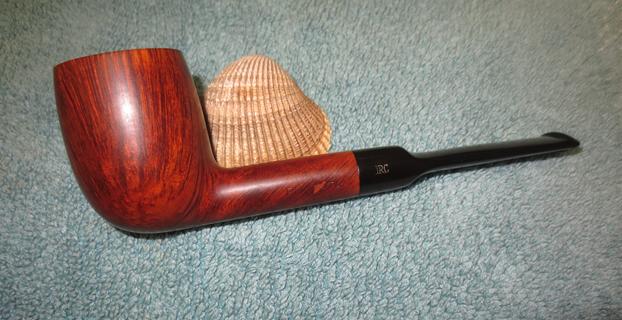
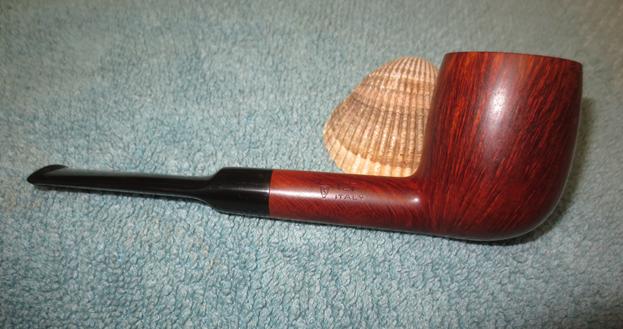
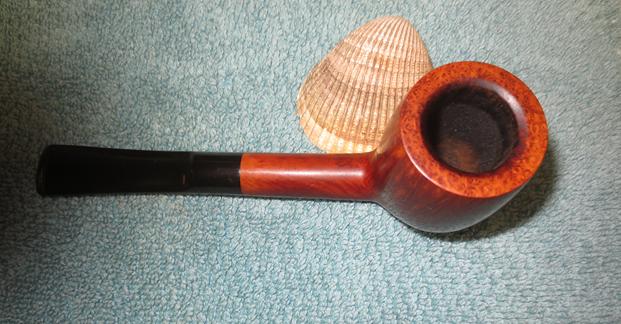
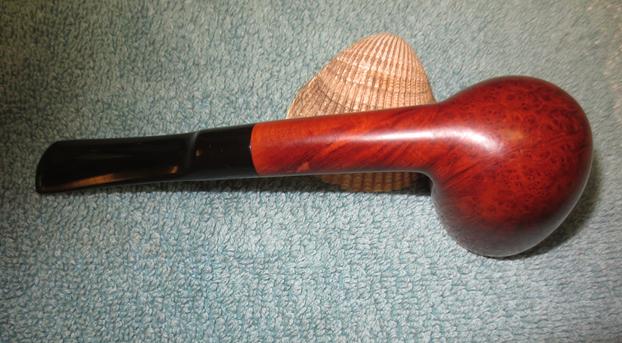
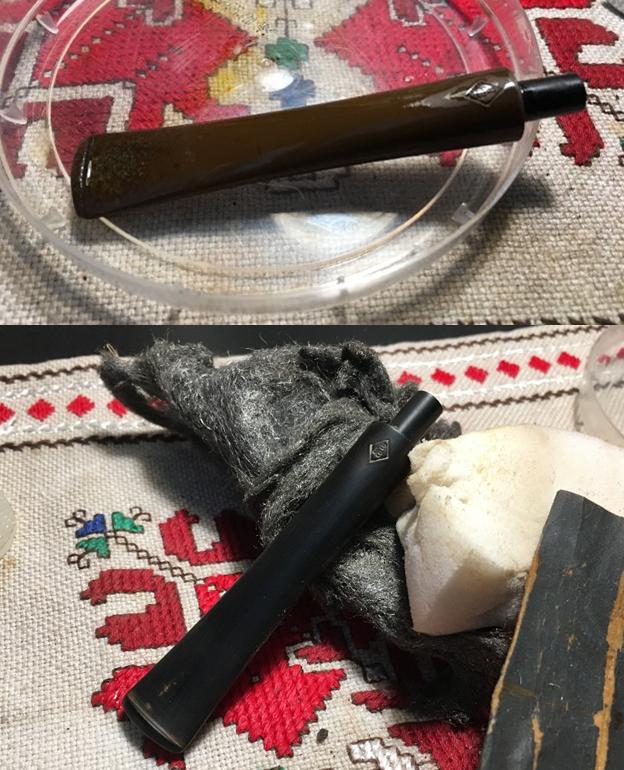
I have a deeper appreciation for the name this rustified Dublin carries.  Understanding the past helps us to stay rooted in the present.  I appreciate better the legacy of the Howal name and the journey of the Carl Sebastian Reich family beginning in Schweina, Germany in 1887.  I’m very pleased with the results of the Oxblood finish.  In the presentation pictures below, I had to take some unusually close shots to see the subtle Oxblood highlights hidden by the reflection of the light.  To me, the finish adds depth and texture to the attractive rustified Dublin.  If you would like to add this Howal Old Briar to your pipe collection and stories, see my blog at The Pipe Steward.  Thanks for joining me!howal35 howal36 howal37 howal38 howal39 howal40