Tag Archives: vulcanite

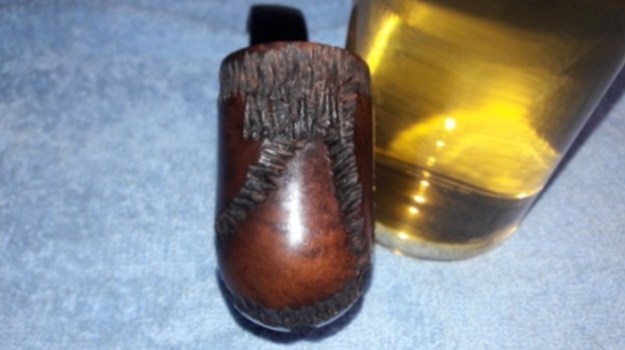
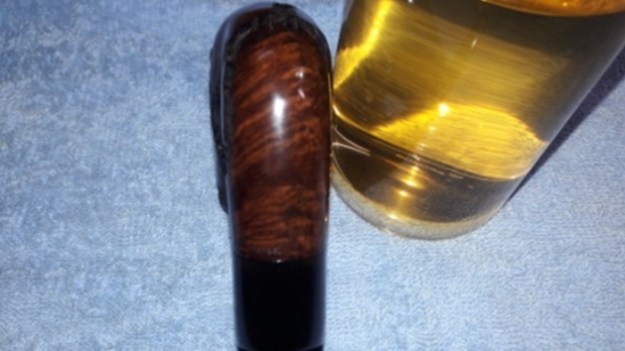
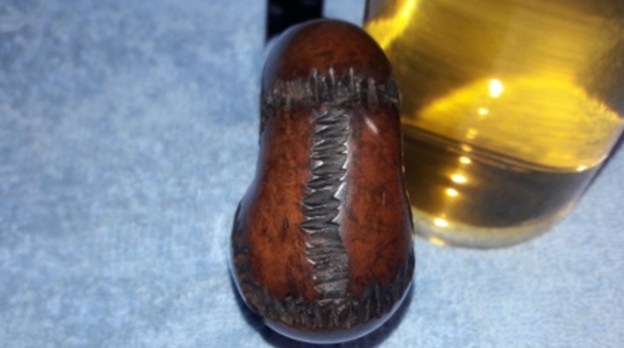
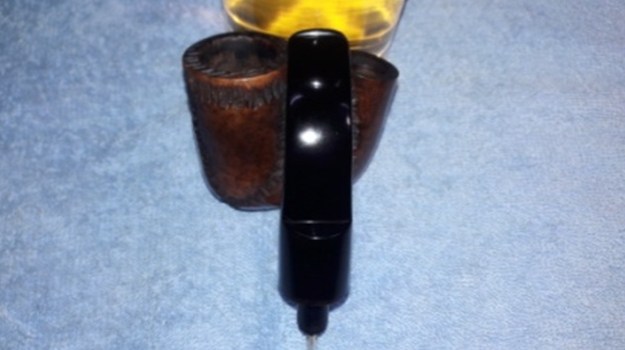
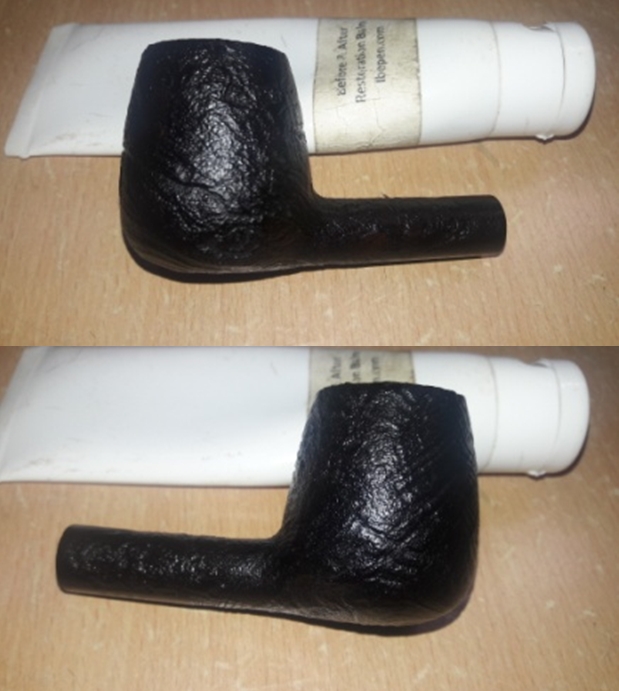
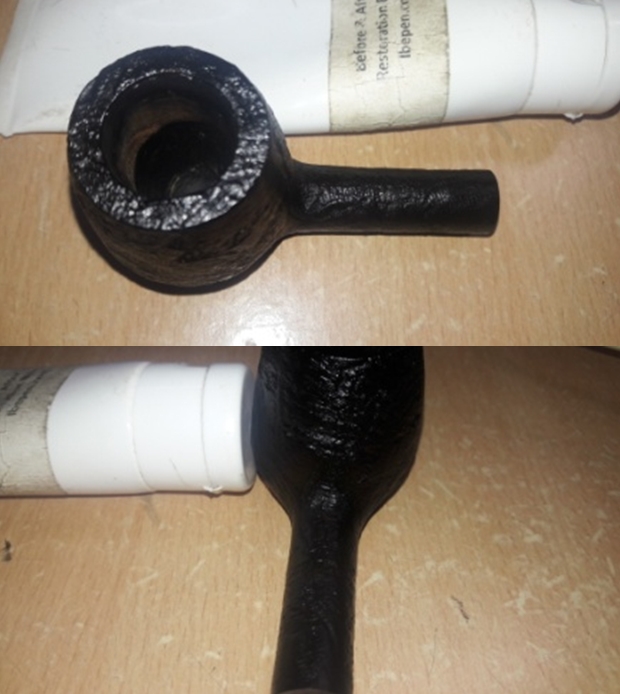
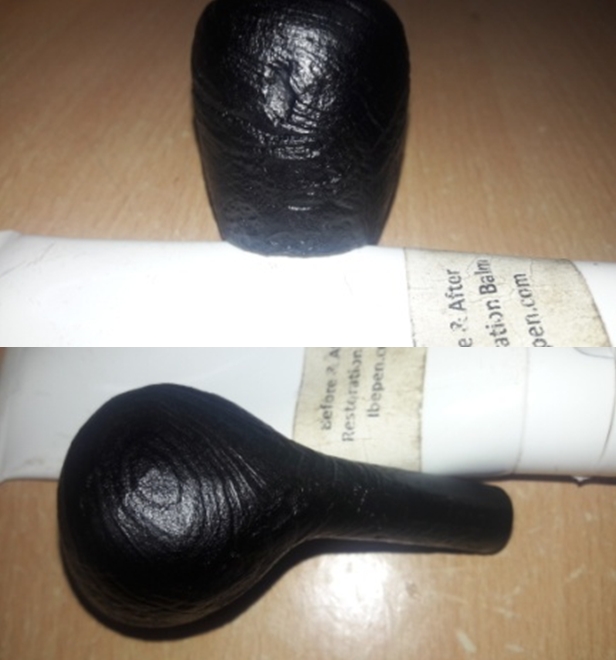
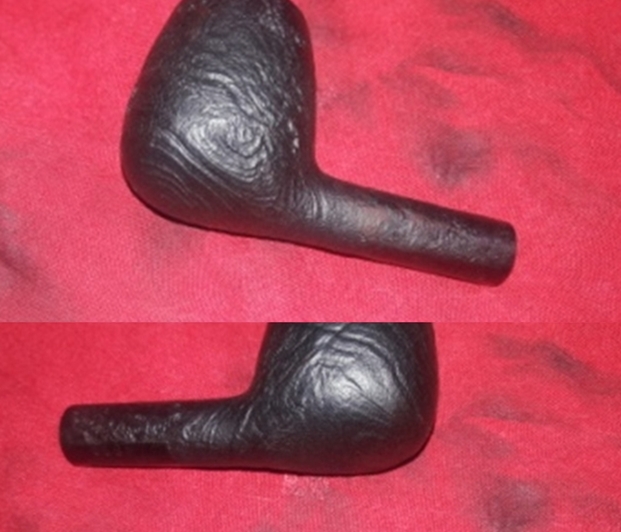
Restoring my Inherited Huge KBB Yello-bole “Imperial” # 68c


Blog by Paresh Deshpande

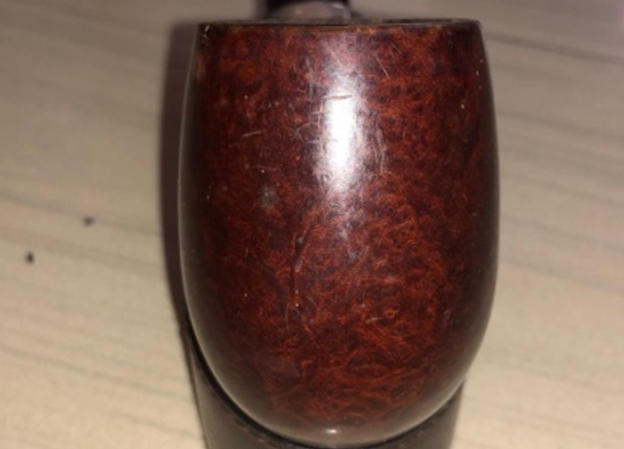
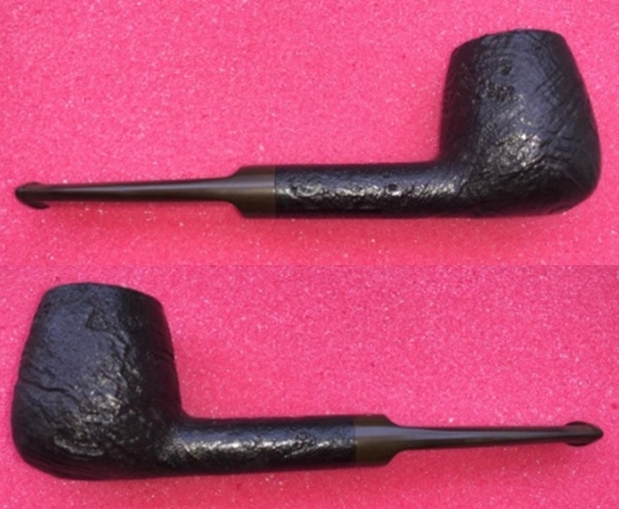
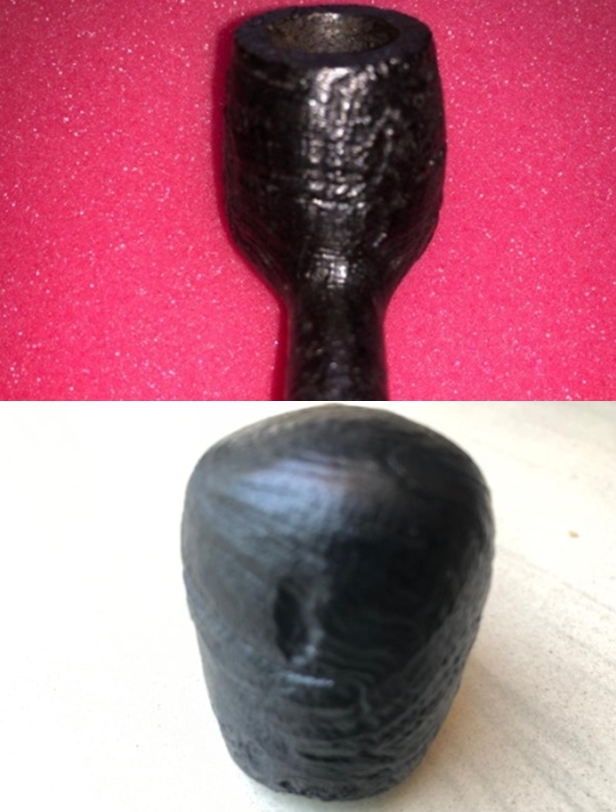
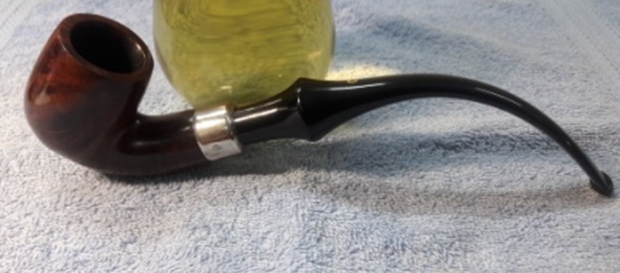
The next pipe on my work table had all the traits/ signs of it being used by my grand old man; it was huge, it was solid with a nice hand fill, it was heavily caked with severe signs of being knocked around the rim edges, blocked shank and stem airways and the likes!! From the number of pipes that I have inherited from him, it appears that regular pipe cleaning and maintenance was an alien concept to him and whence a pipe fouled up, he just chucked it and got a new one- a very simple concept, to say the least!

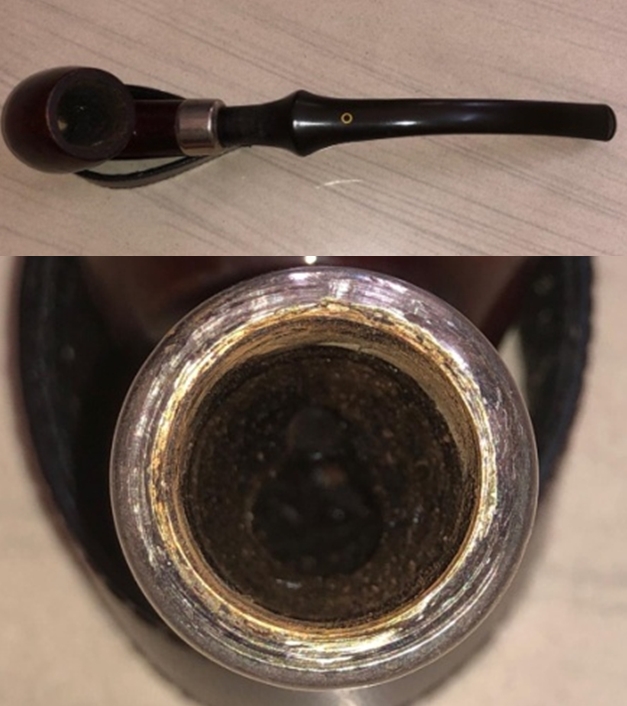
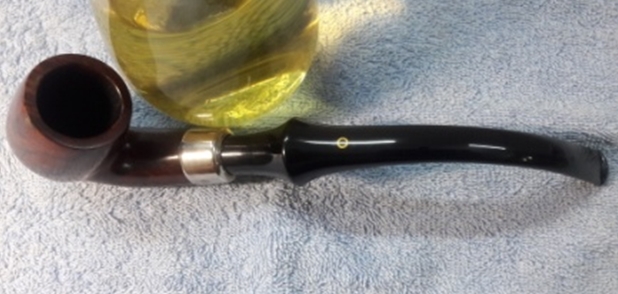
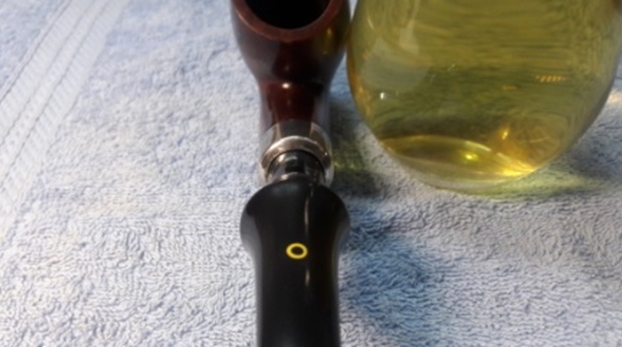
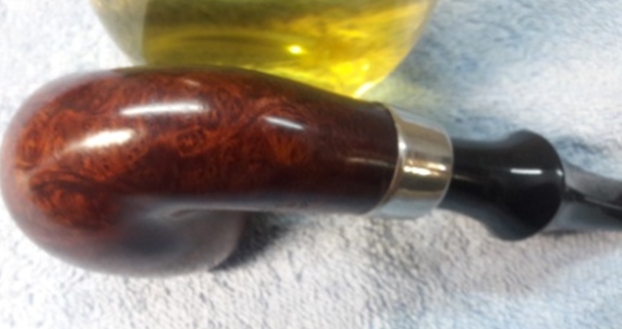
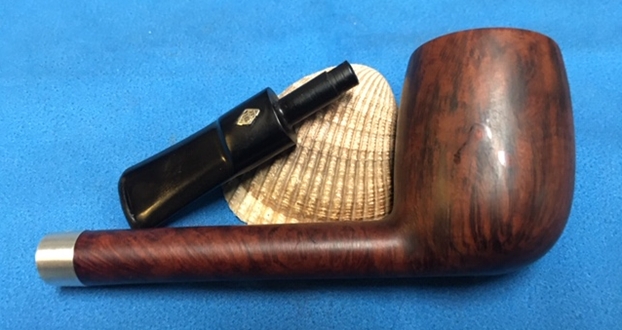
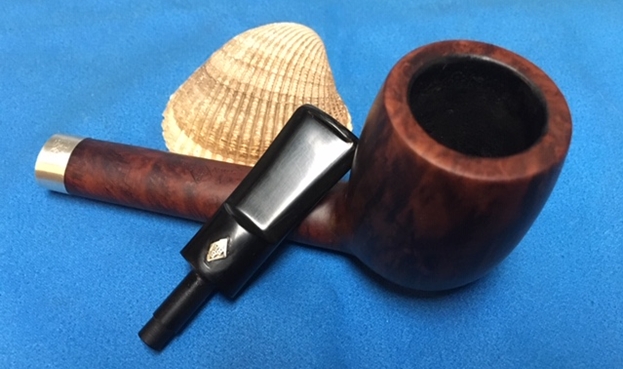
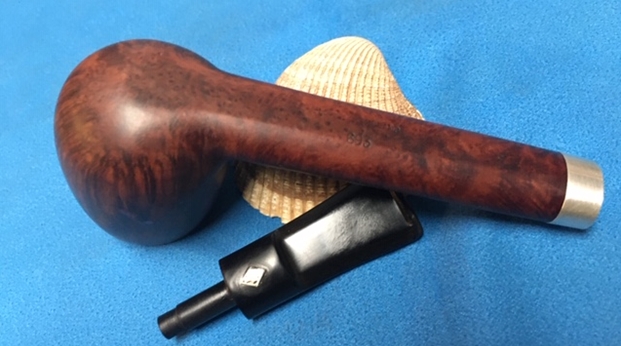
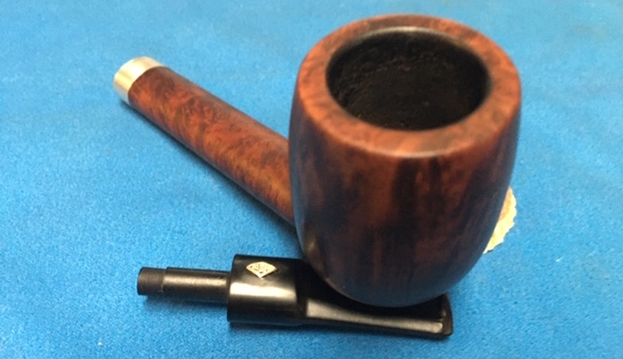
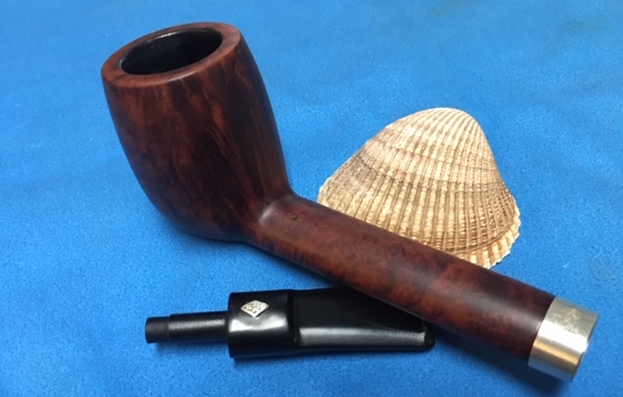
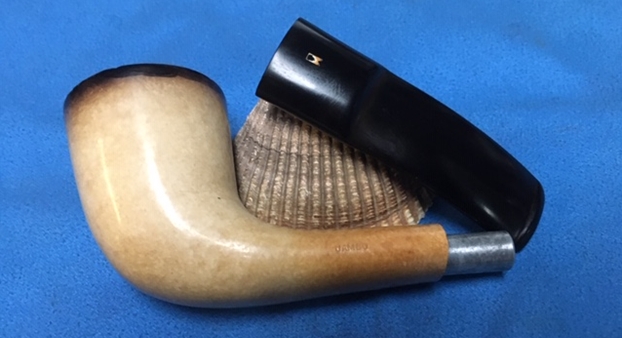
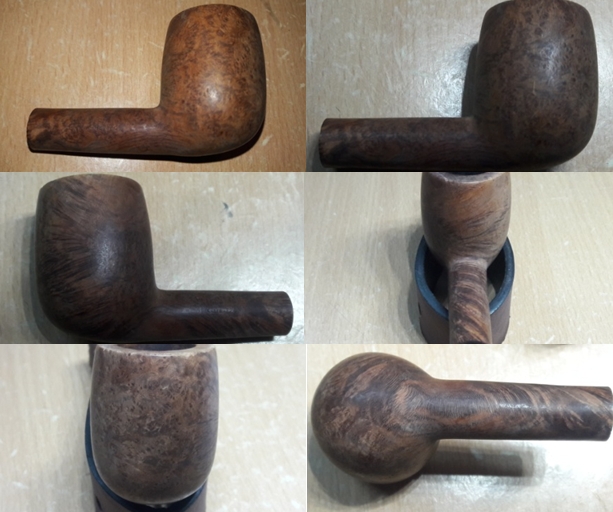
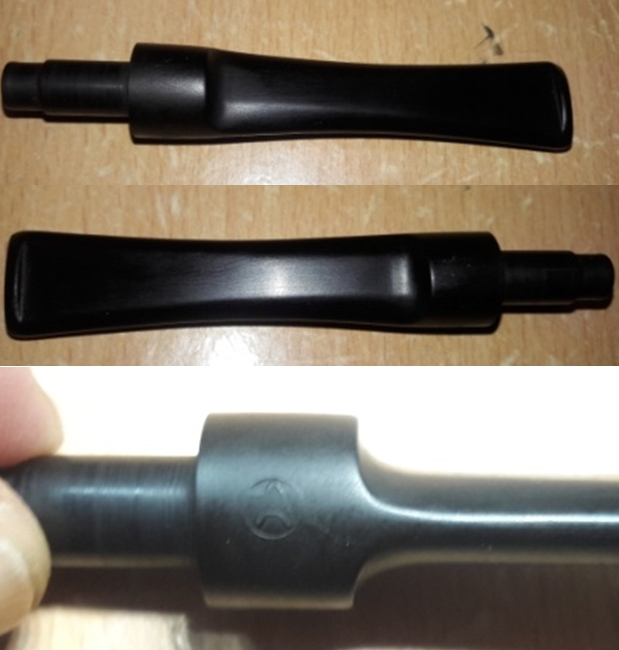
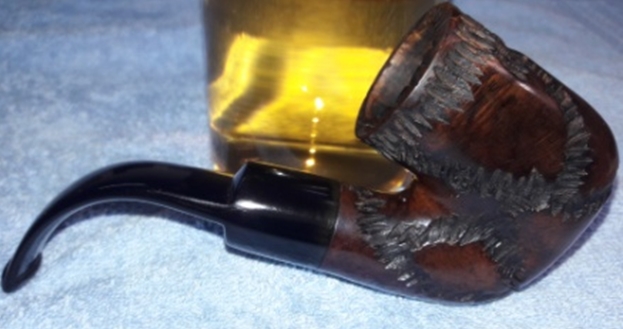
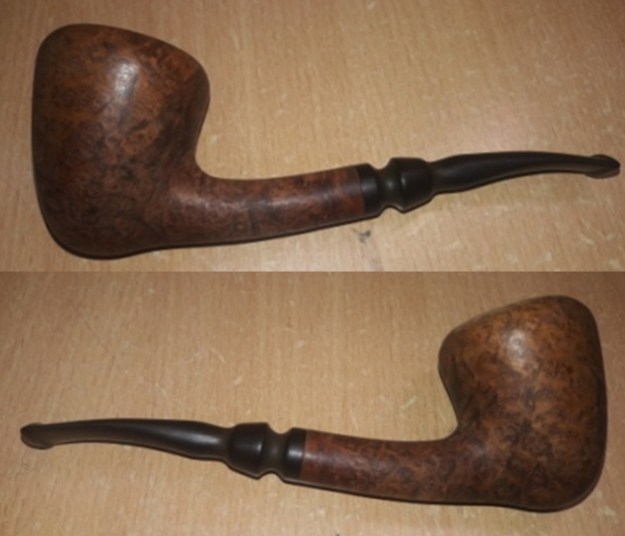
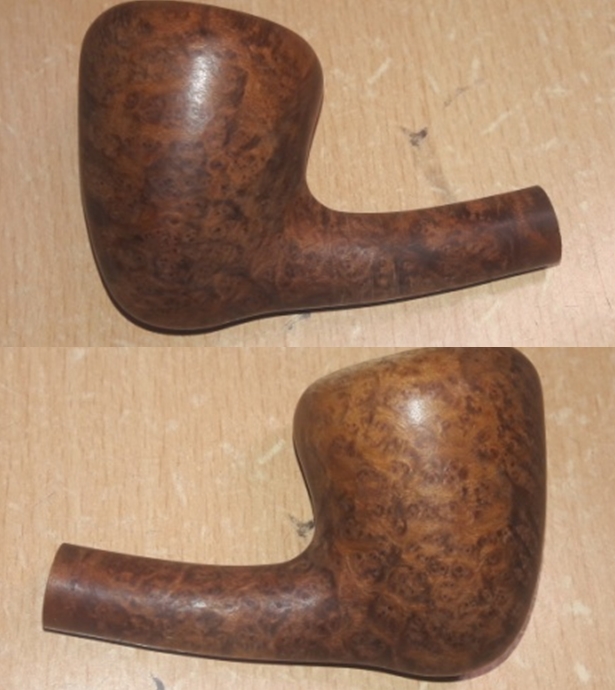
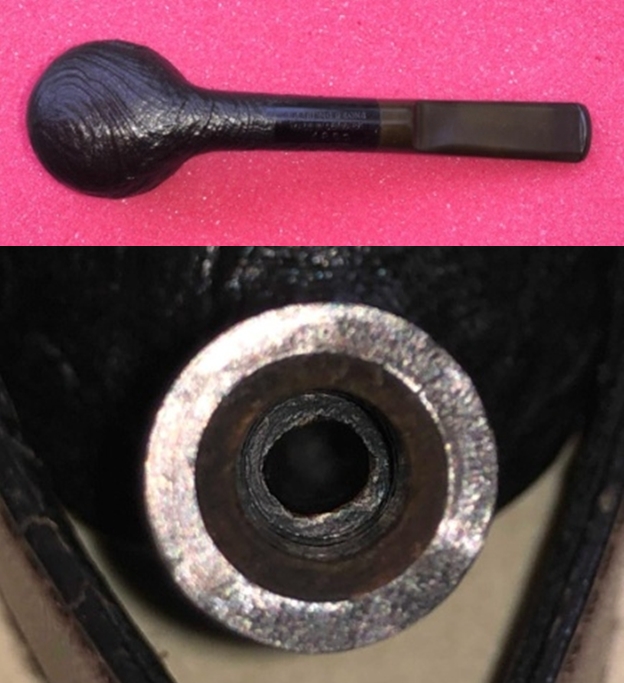
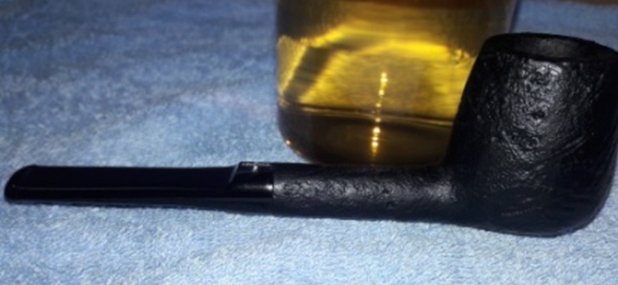
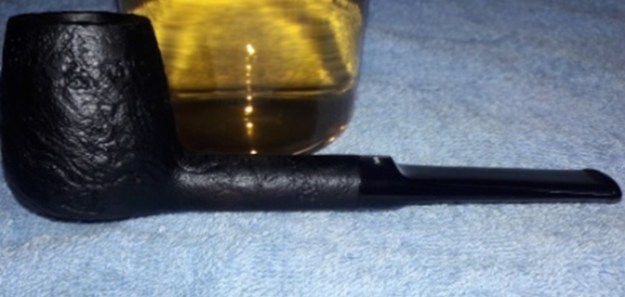
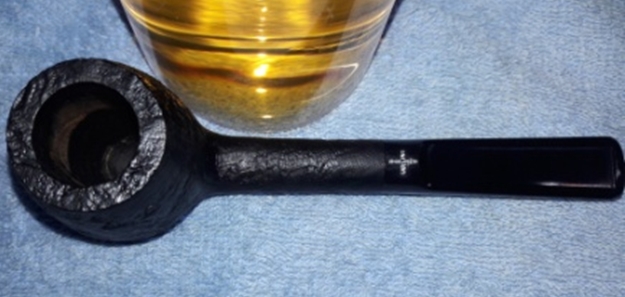
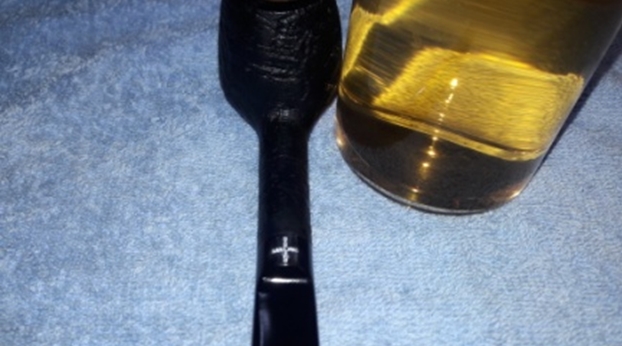
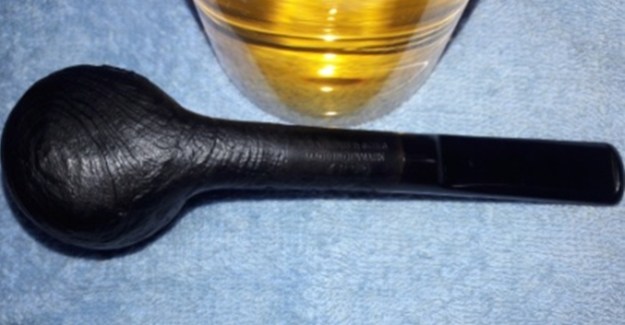
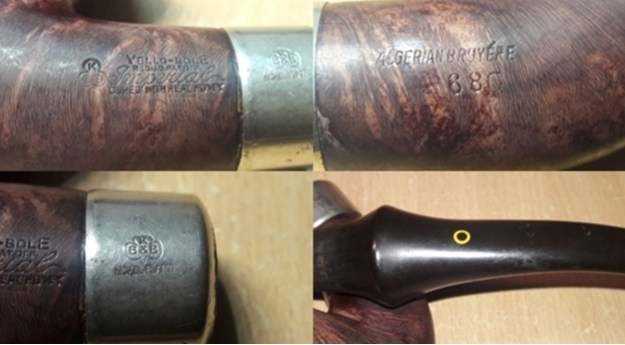
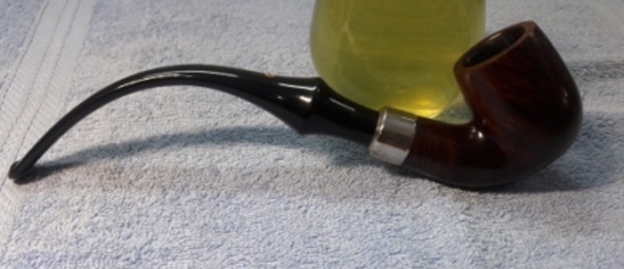
The pipe that I decided to work on is a large full bent billiards with a P-lip stem. It is stamped on the left side of the shank as “YELLO-BOLE” over “REG. U.S. PAT. OFF” (Registered U.S. Patent Office) in block capital letters over “Imperial” in cursive script over “CURED WITH REAL HONEY”. To the left of these stampings towards the bowl, KBB is stamped in the clover leaf. The right of the shank bears the stamp of “ALGERIAN BRUYERE” over shape code “68C”. The shank end is adorned with a ferrule that bears the stamping of K B & B in a clover leaf over “NICKLE PLATED”. The stem bears the Yello-Bole logo in bright yellow circle. All the stampings are crisp and clear and is definitely surprising that it has survived over all these years!! Researching a pipe is always an enriching learning and I look forward to the same on every pipe that I work. Having worked on a few Kaywoodies and also on Yello-Bole, I knew about the connection between the two. However, what intrigued me during the research is that both the brands also have shared the shape codes along the way, albeit at different points in time. Given below are extracts of the most relevant details from pipedia.com, specifically pertaining to this pipe on my work table, wherein I have highlighted information which merits attention:-
Tips for Dating Yello-Bole Pipes (https://pipedia.org/wiki/Yello-Bole#Tips_for_Dating_Yello-Bole_Pipes)

  • KBB stamped in the clover leaf indicates it was made in 1955 or earlier as they stopped this stamping after being acquired by M. Frank.
  • Pipes from 1933-1936 they were stamped “Honey Cured Briar”
  • Post 1936 pipes were stamped “Cured with Real Honey”
  • Pipe stems stamped with the propeller logo were made in the 1930’s or 1940’s – no propellers were used after the 1940’s.
  • Yello-Bole used a 4 digit code stamped on the pipe in the 1930’s.
  • Pipes with the Yello-Bole circle stamped on the shank it were made in the 1930’s, this stopped after 1939.
  • Pipes stamped BRUYERE rather than BRIAR it was made in the 1930’s.

Thus, from the above tips it is evident that I am dealing with a pipe from the 1930s. However, when I visited the pipedia.com page on Collector’s Guide on Kaywoodie (https://pipedia.org/wiki/Collector%27s_Guide_to_Kaywoodie_Pipes#HINTS_ON_COLLECTING.2C_DATING_AND_PRICING_KAYWOODIES), under the heading 1947 Kaywoodie Shape Numbers and Descriptions”, I found the shape # 68C with the description as Extra Large Billiard, Full Bent which perfectly matched with the size and shape of the pipe on my work table.

Also on the same page, there is a picture of an advertisement flyer for CHESTERFIELD KAYWOODIE from 1947. The similarities between this Kaywoodie (read P-lip stem, large sump, massive size and shape) and the Yello-Bole that I am working on is striking.

Thus, the pipe that I am working on is from 1930s, specifically after 1936 as per the stampings seen on the pipe, however, the shape number and description matches with the Kaywoodie catalogue from 1947. Thus it is an interesting conflict as Yello- Bole was designed as an outlet for lower grade briars not used in Kaywoodie production, but the shape code and Chesterfield similarities were incorporated in Yello-Bole earlier than its introduction in Kaywoodie pipes!! I would be happy if anyone reader can clarify this conflict.

INITIAL VISUAL INSPECTION
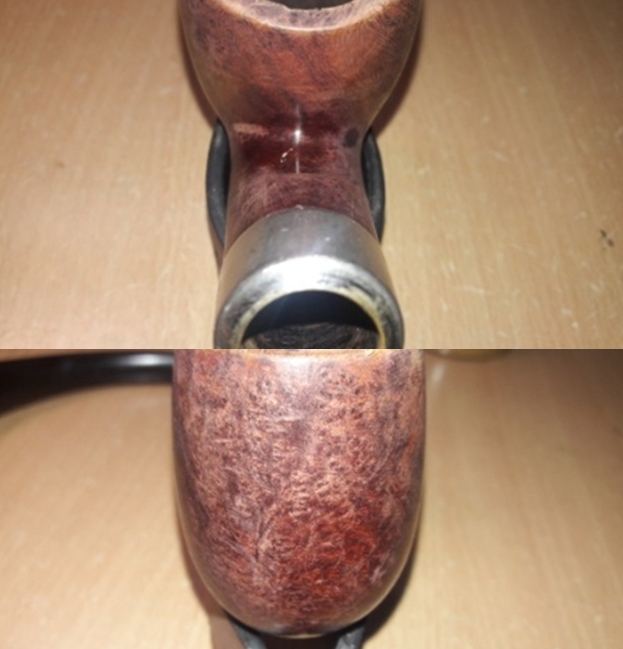
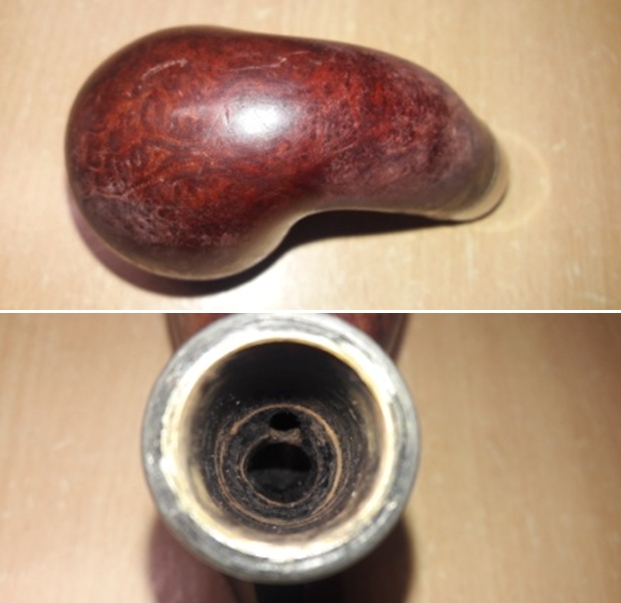
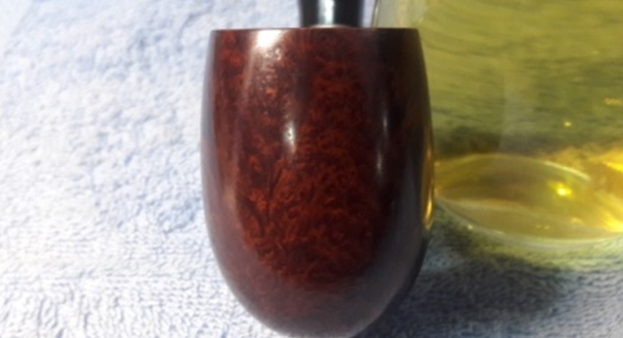
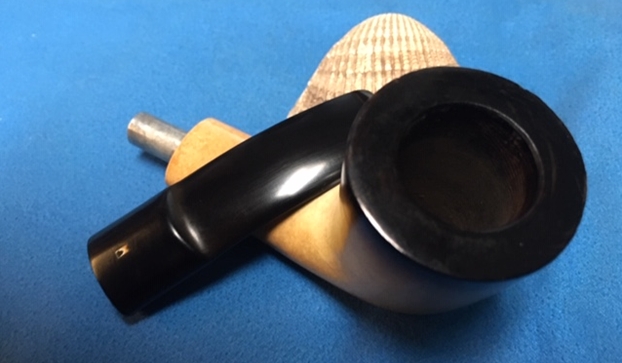
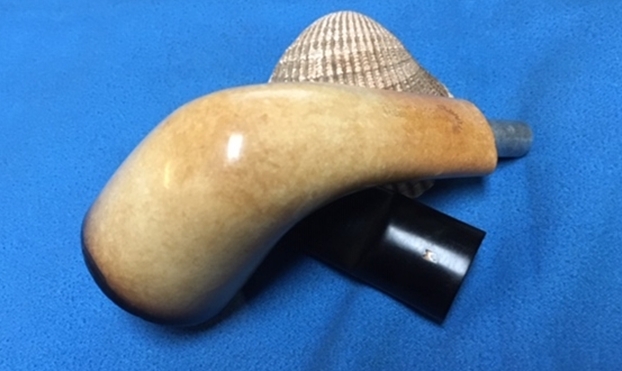
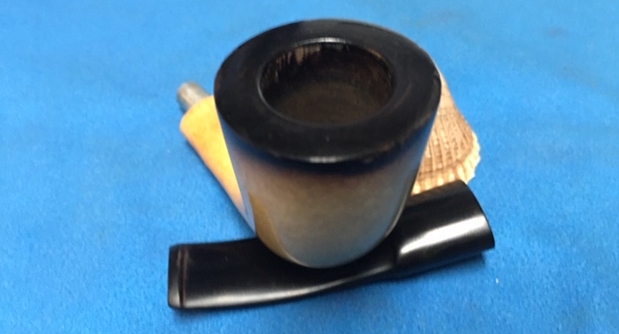
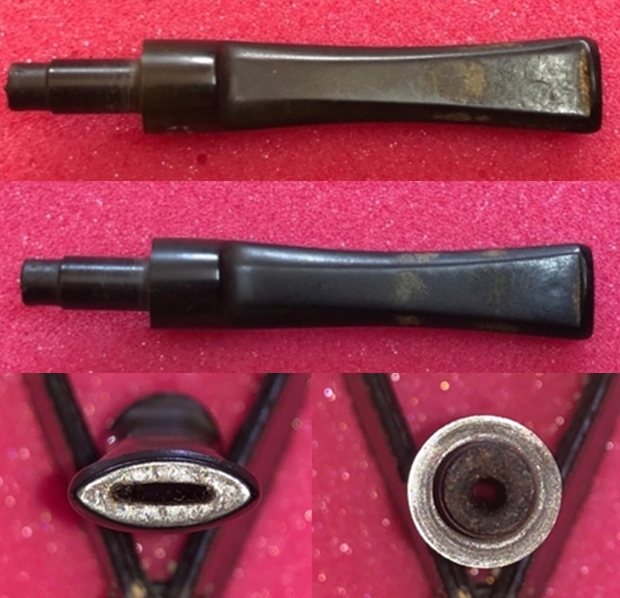
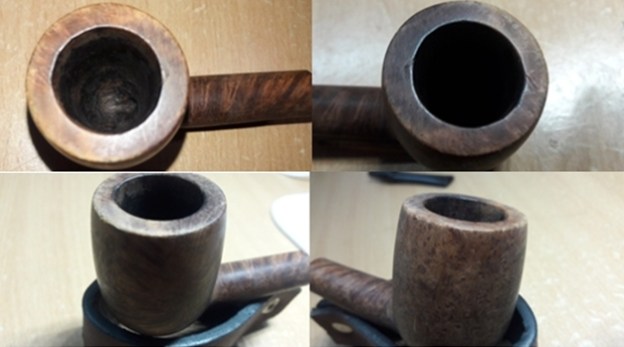
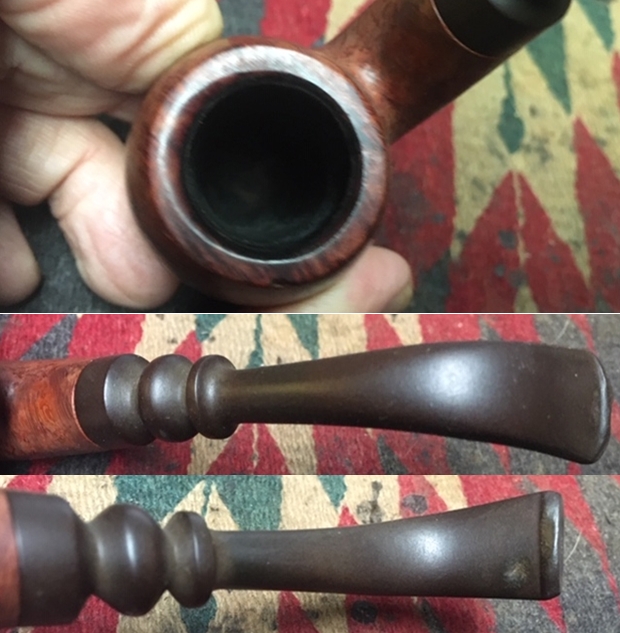
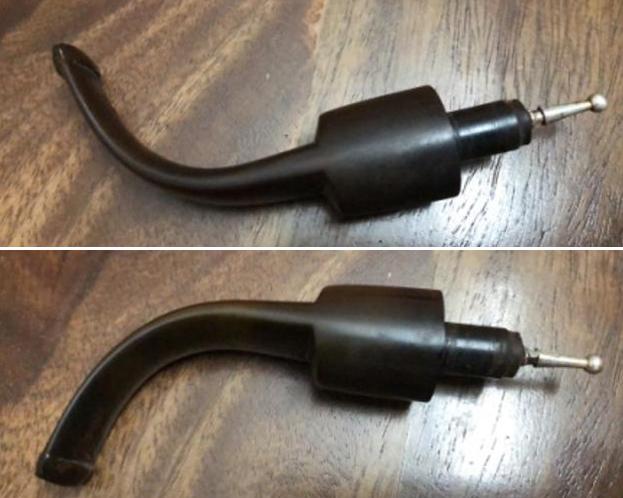
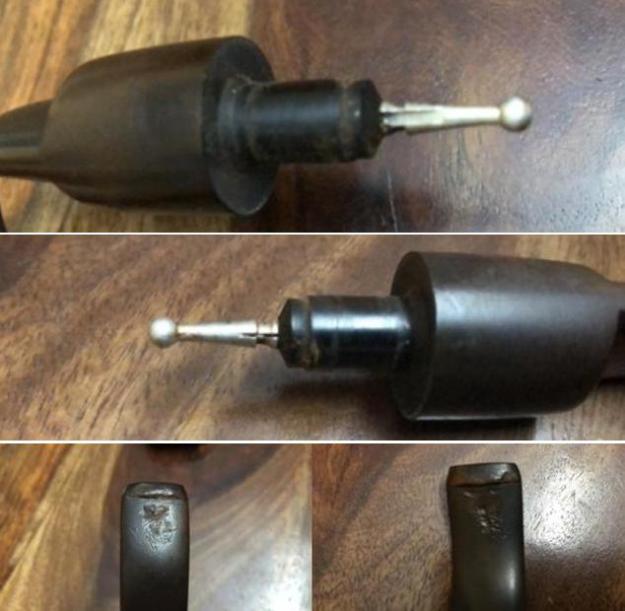
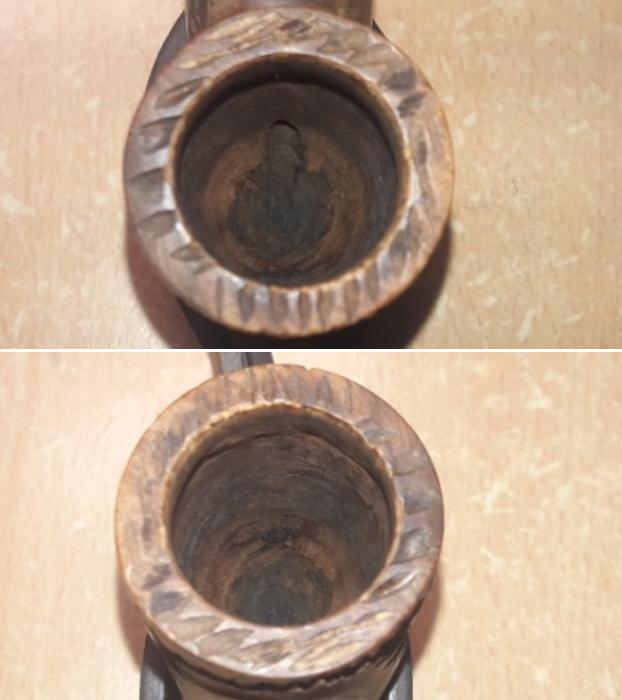
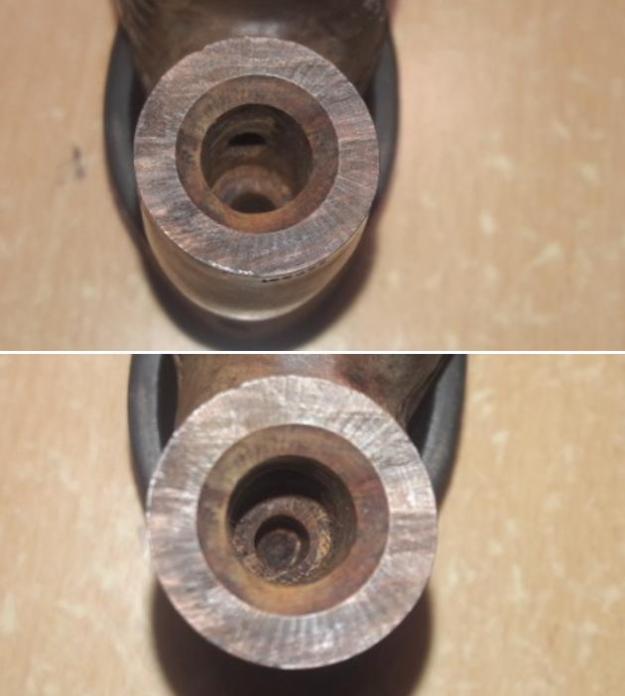
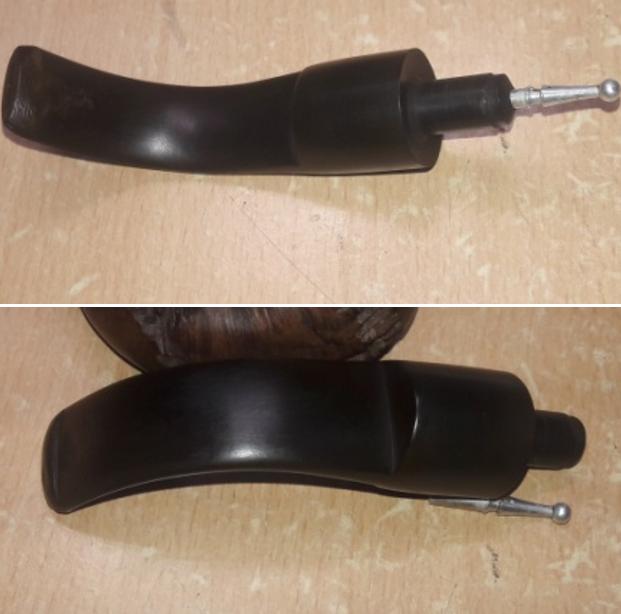
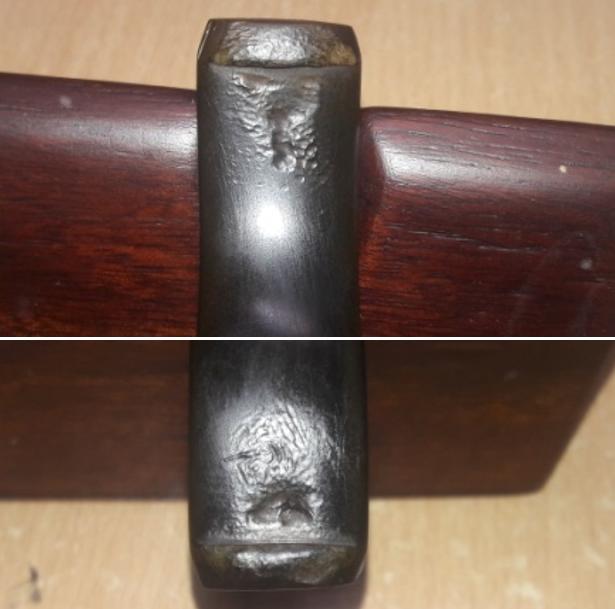
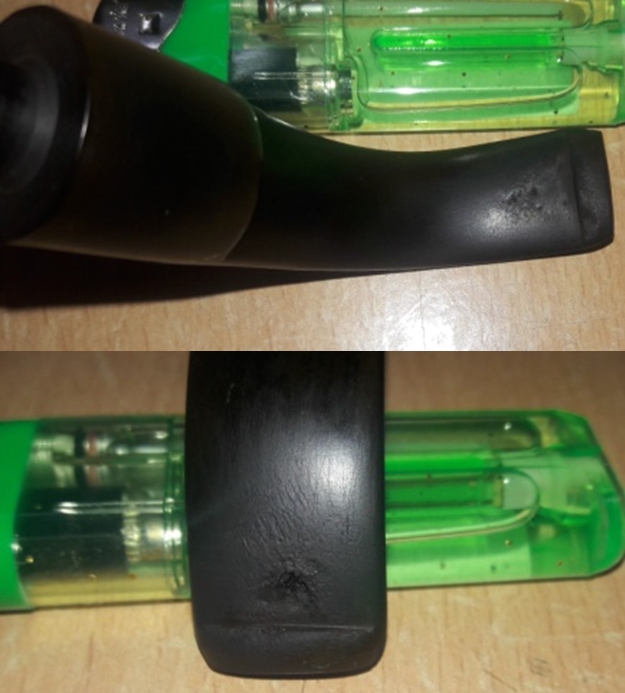
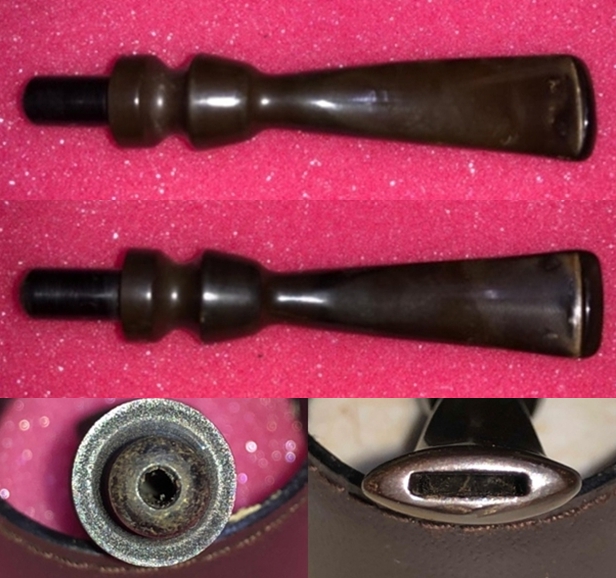
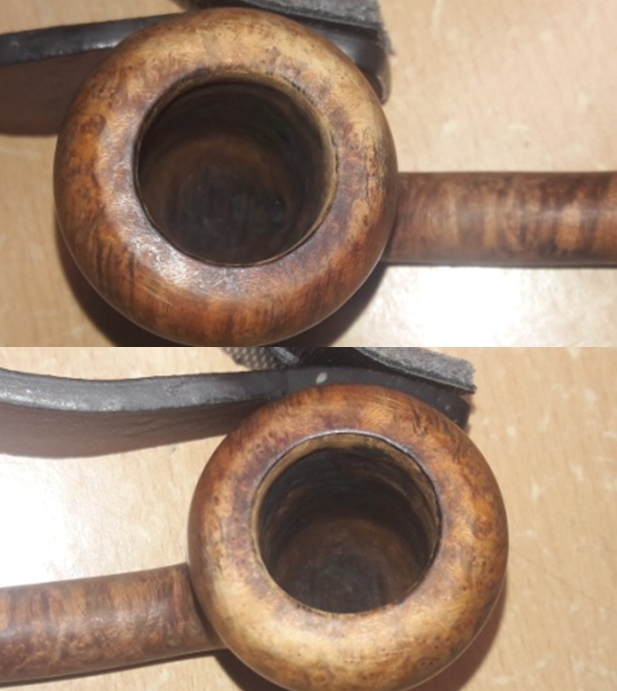
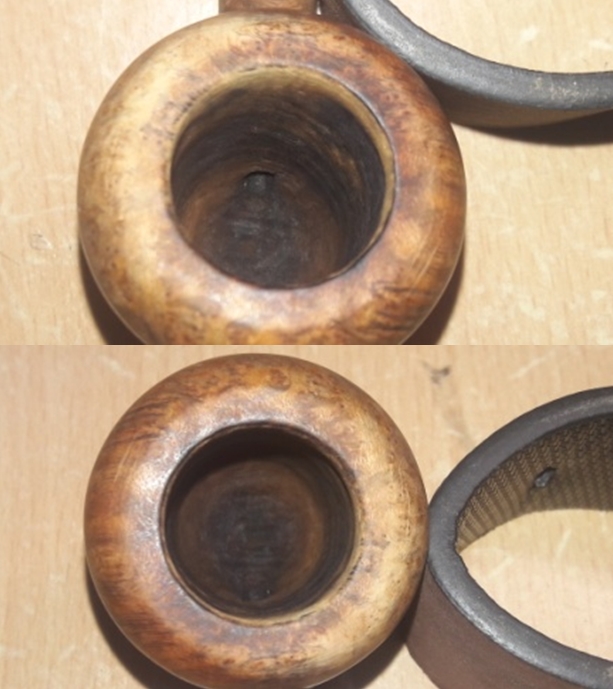
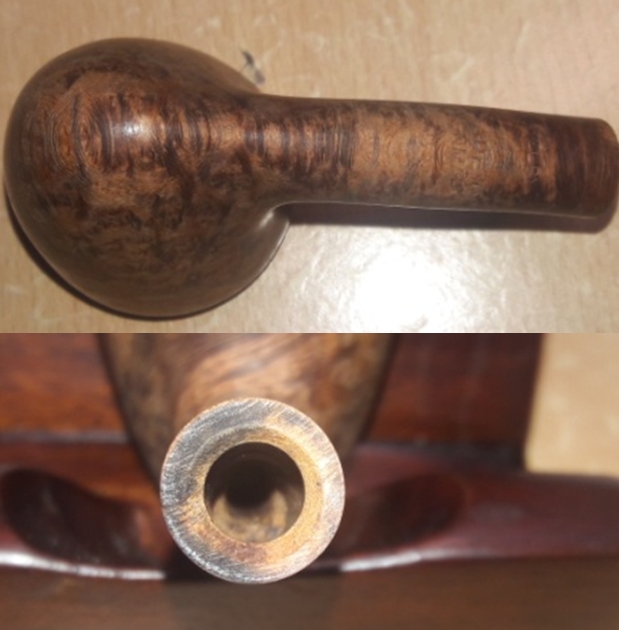
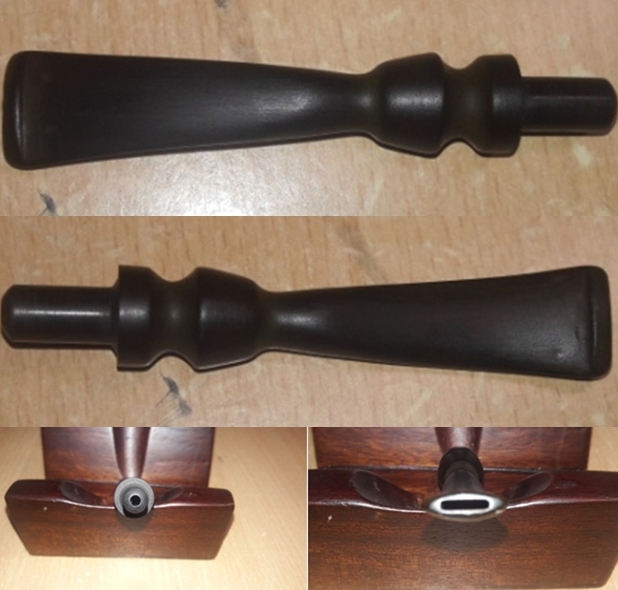
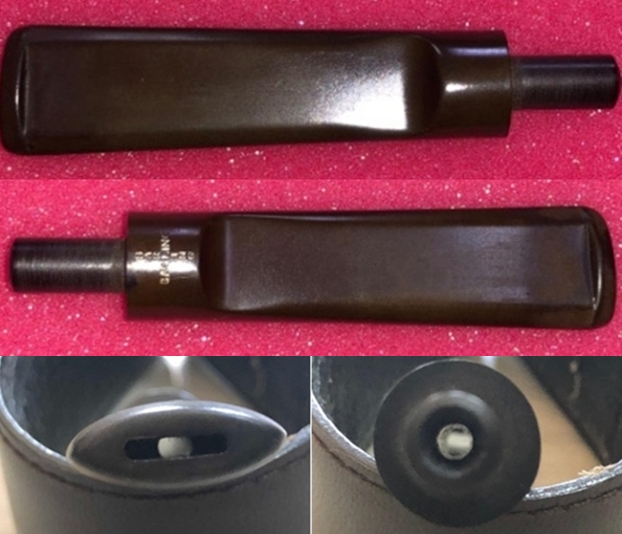
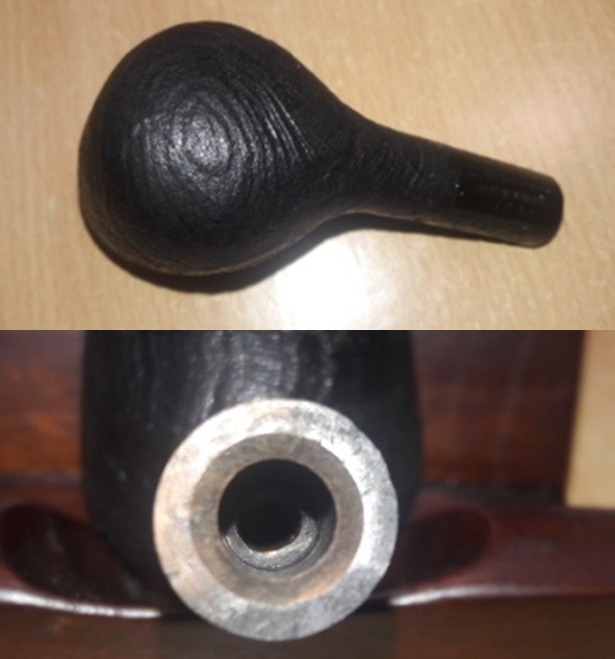
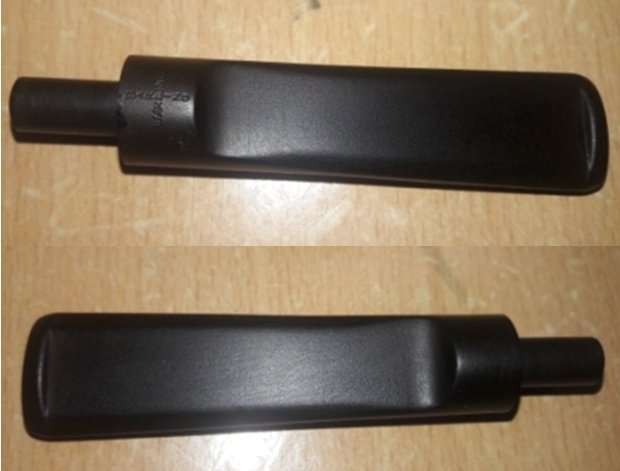
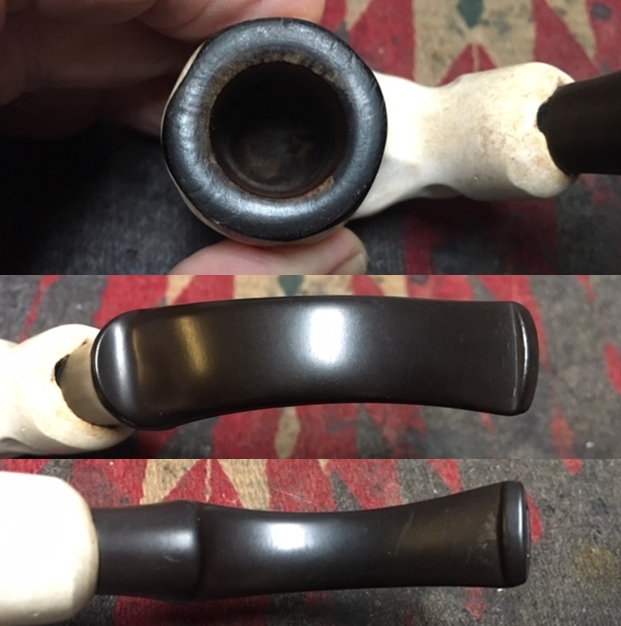
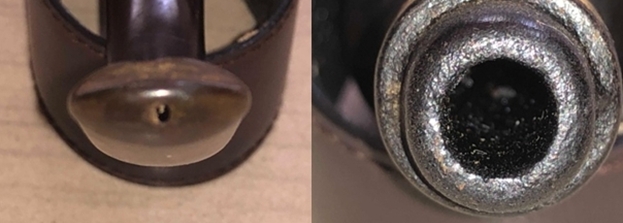
The chamber is heavily caked with lava overflow on the rim top surface. The inner edge of the rim is severely damaged. Nicks and dings are also seen along the outer rim edge and chamber appears out of round. Chamber has strong odors of sweet smelling tobaccos. The condition of the inner walls of the chamber can be commented upon once the cake has been reamed down to the bare briar, but going by the solid feel of the external surface, I do not foresee any serious issues/ surprises with the chamber walls. The stummel surface is covered in dust, dirt and grime of years of use and uncared for storage for the last 45 years when my grandfather quit smoking in the late 1970s. Oils and tars have overflowed over the stummel and have attracted dust giving a dull and lackluster appearance to the stummel. A number of minor dents and scratches are seen over the stummel, notably towards the front, foot and the bottom of the shank. Through all the dirt, some really stunning straight and bird’s eye grains are waiting to be exposed. The mortise is, well mildly put, clogged to hell and back!! That the sump is overflowing and overfilled with accumulated gunk is a fact that could be seen with the naked eyes. Believe you me readers, the pipe smells are too strong. The large bent vulcanite stem exudes high quality and is heavily oxidized. The tenon is covered in a very thick coat of dried gunk and blobs of accumulated dried tars are seen inside the wide tenon opening. This also indicates the extreme clogging that can be expected in the expanded portion of the stem and in the stem air way. The lower button edge has a deep tooth indentation and tooth chatter in the bite zone. The button edge on the upper surface has worn down and would need to be sharpened. The lower end of the stem at the tenon end which enters the mortise shows severe scratch marks and chipped surface, the result of rubbing against the sharp edges of the ferrule at the shank end. INITIAL CLEANING BY ABHA…
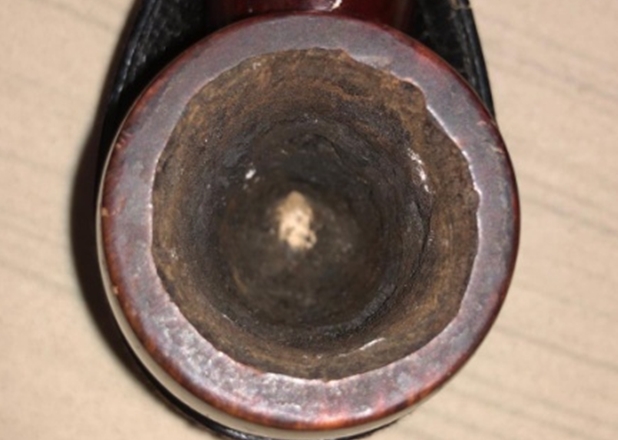
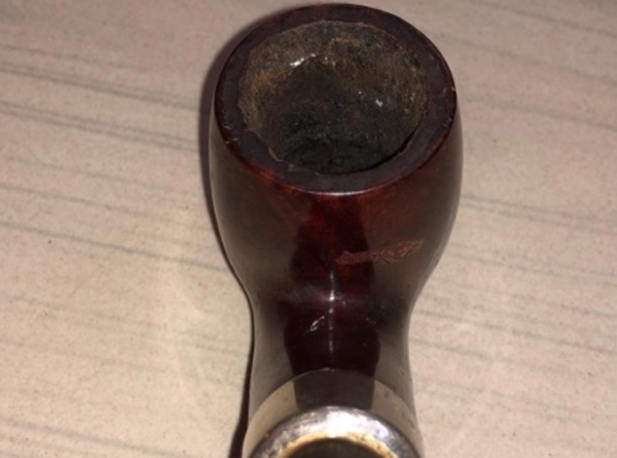
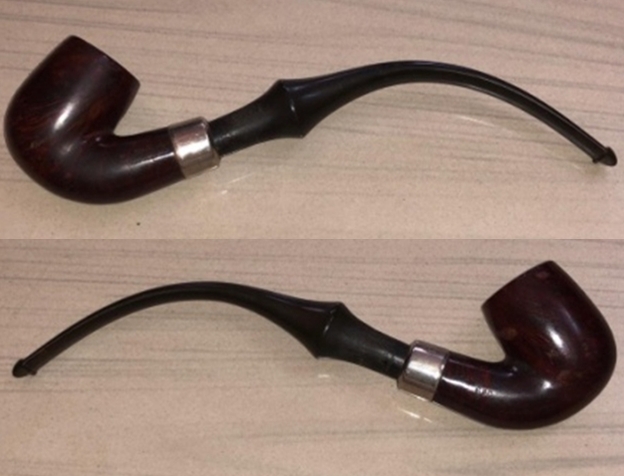
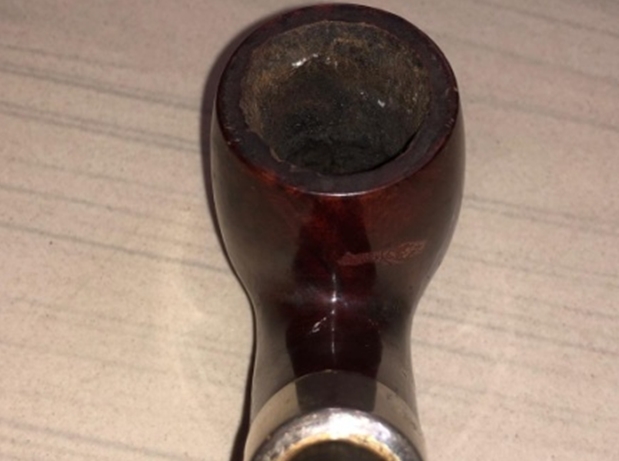
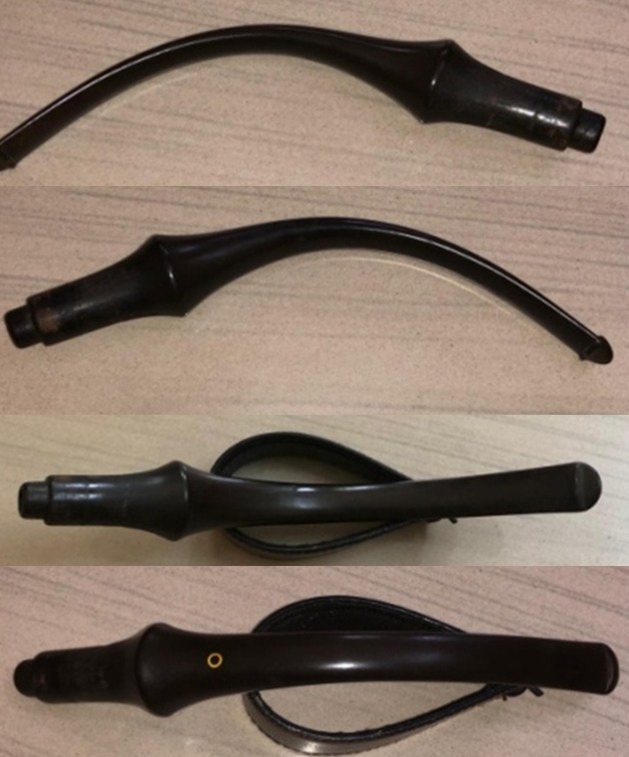
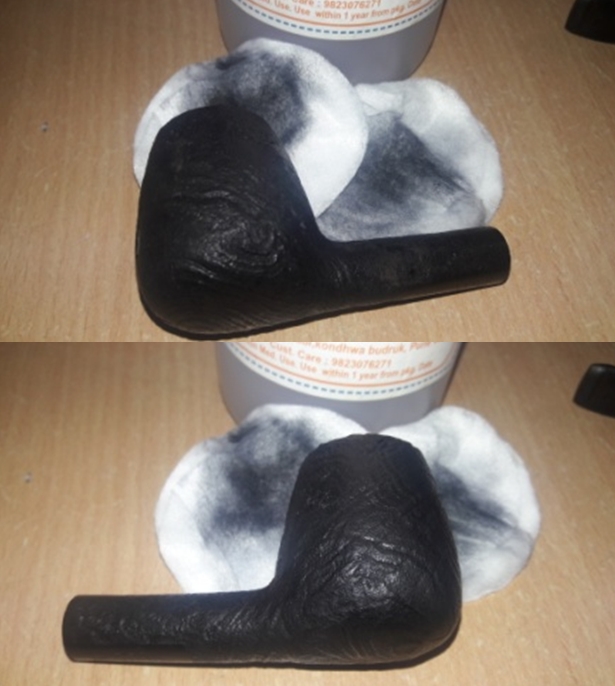
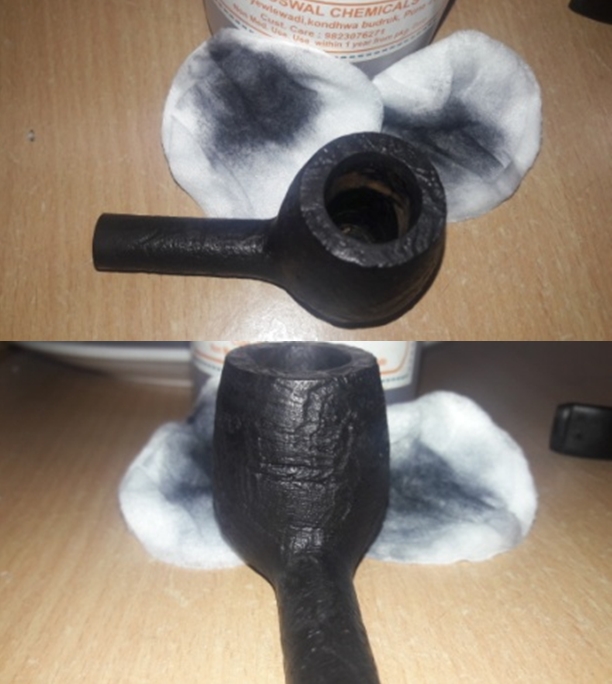
The initial cleaning on this pipe was done by Abha, my wife (she has cleaned up around 40-50 pipes and these have now reached me for further restoration). She reamed out the complete cake and further smoothed out the chamber walls with a folded piece of 220 grit sand paper. She further cleaned out the internals of the shank with pipe cleaners and alcohol and cotton buds. She followed the internal cleaning of the shank with external cleaning of the stummel using Murphy’s Oil soap and hard bristled tooth brush and dried it with paper napkins and cotton cloth.

Unfortunately, this time around, she could not clean the stem as it was too large to fit in to the container of the stem deoxidizer solution.

ONCE THE PIPE IS ON MY WORK TABLE…
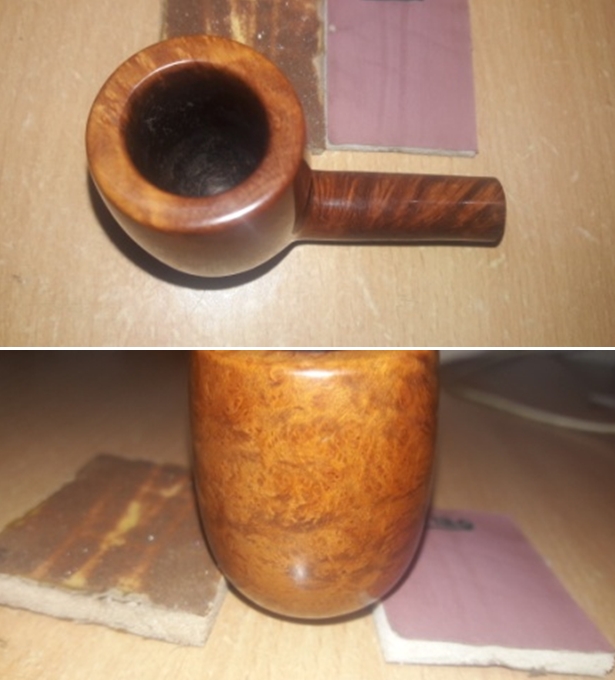
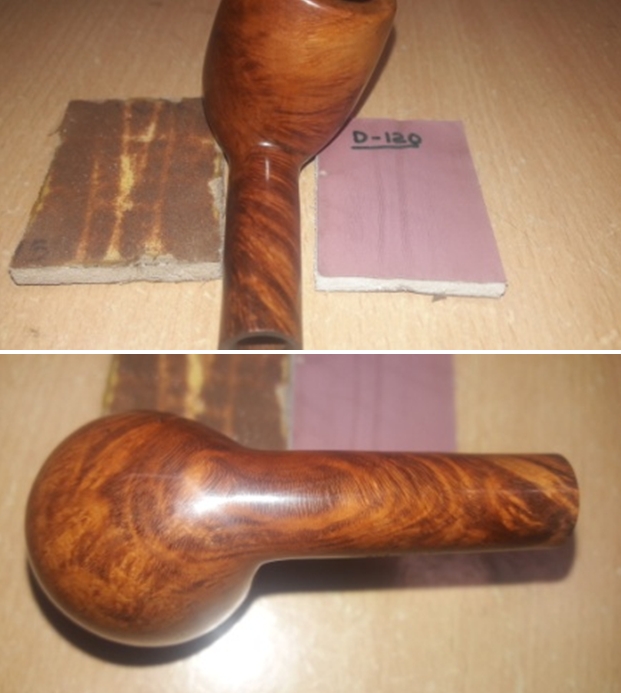
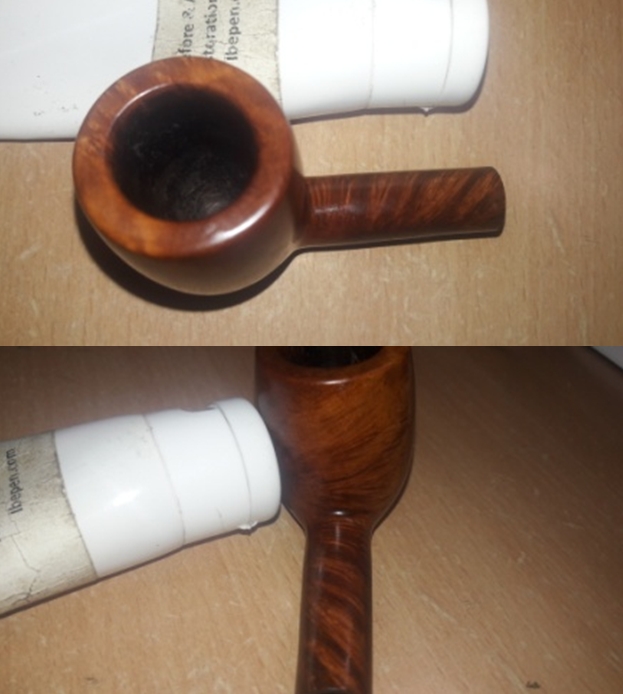
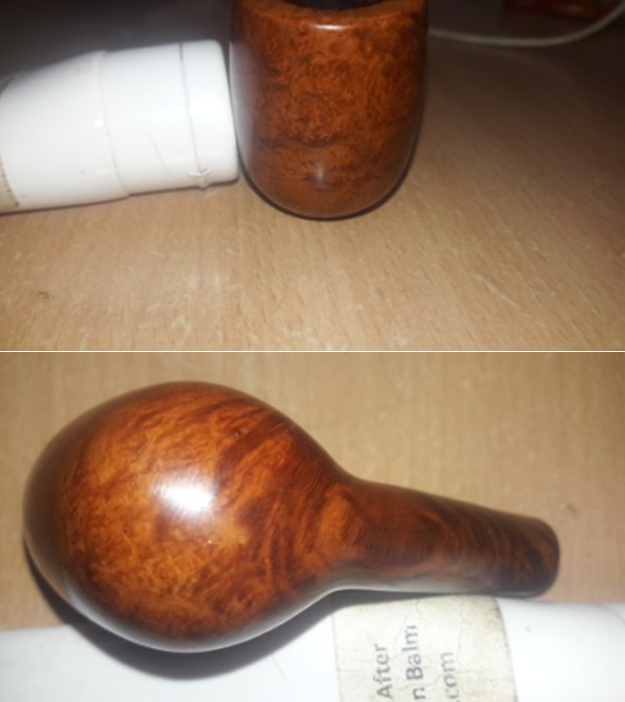
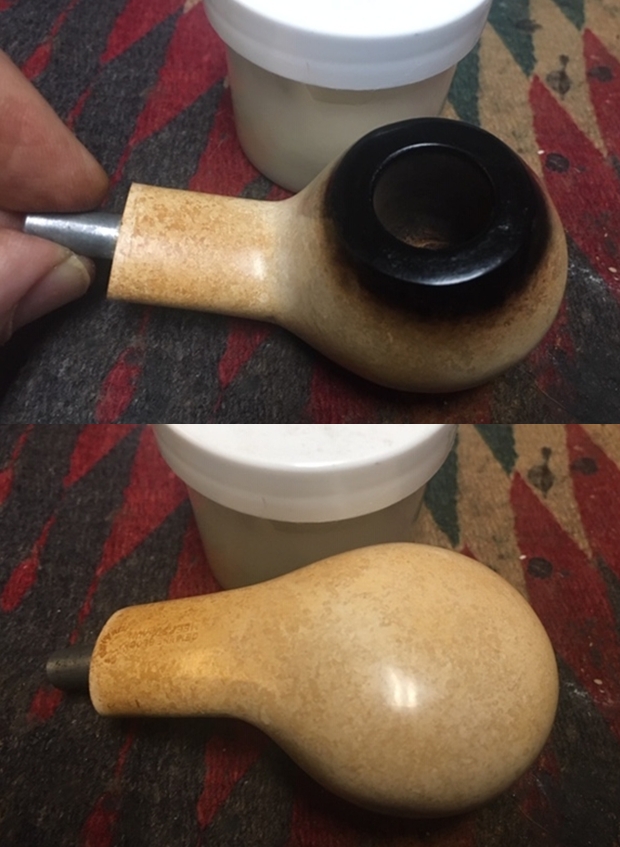
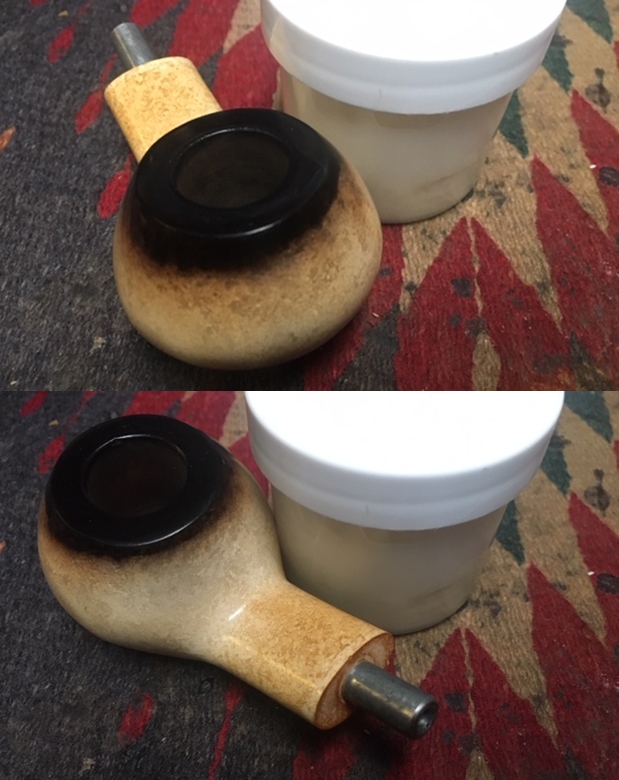
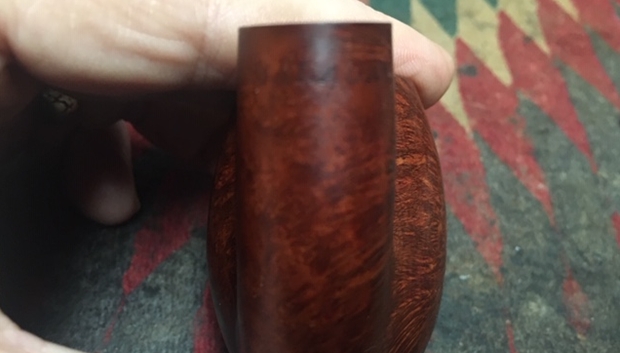
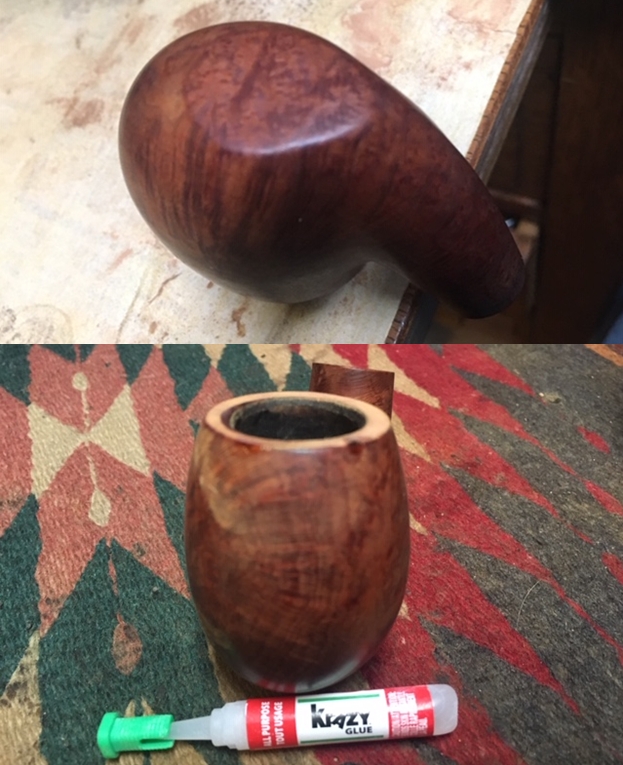
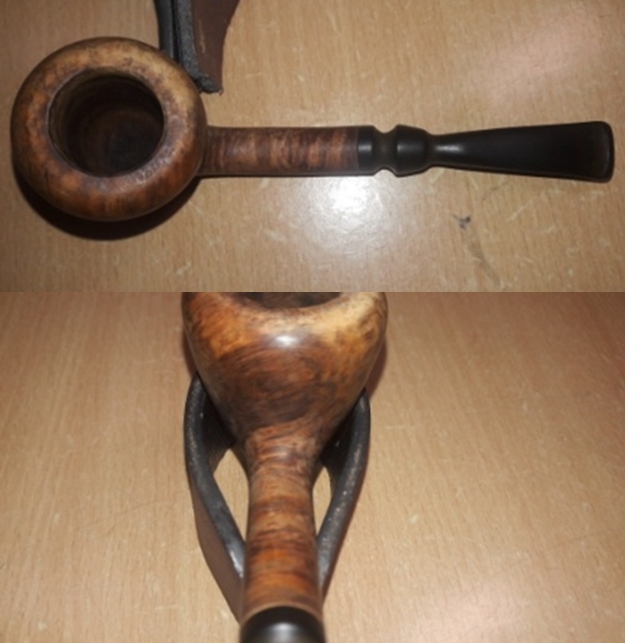
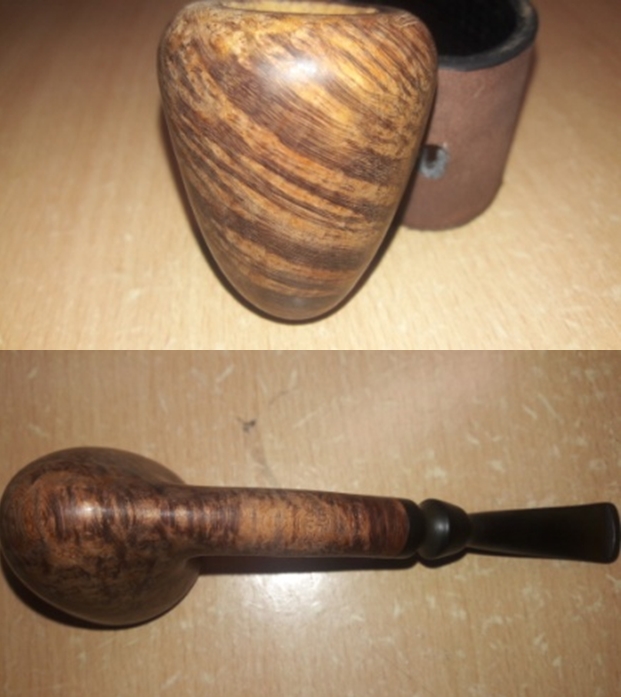
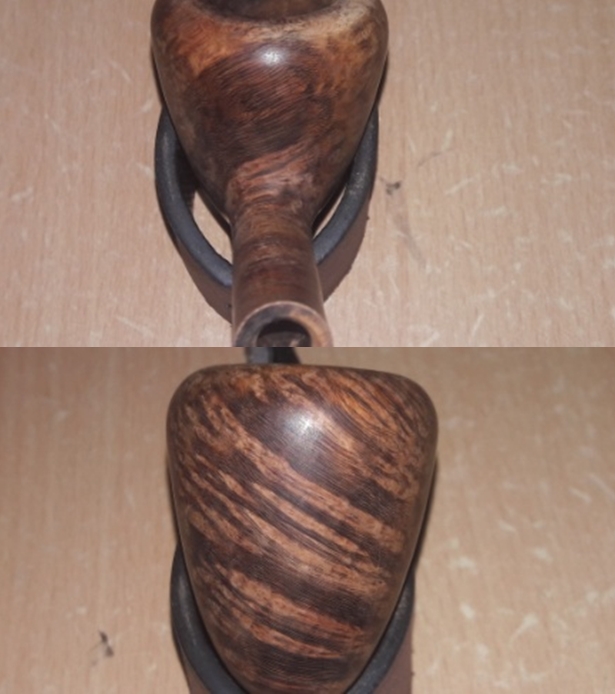
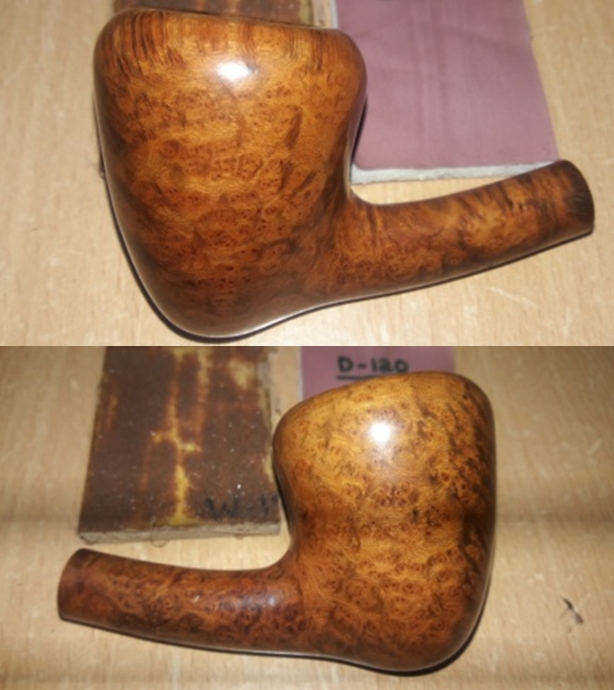
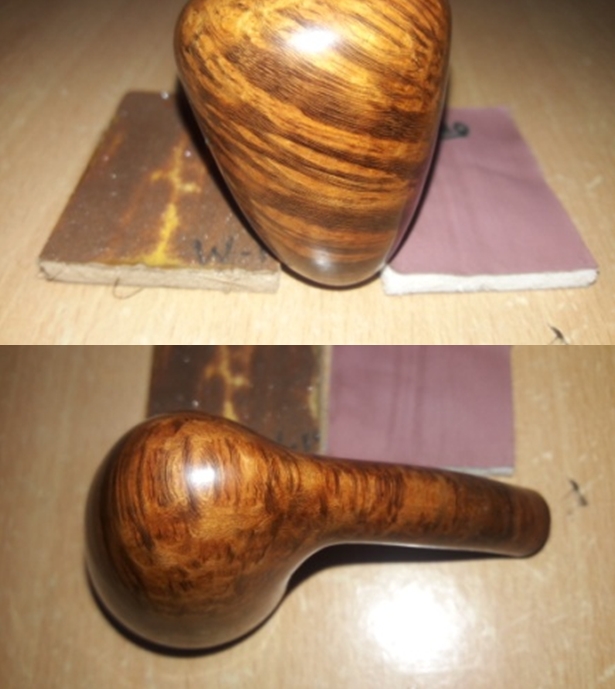
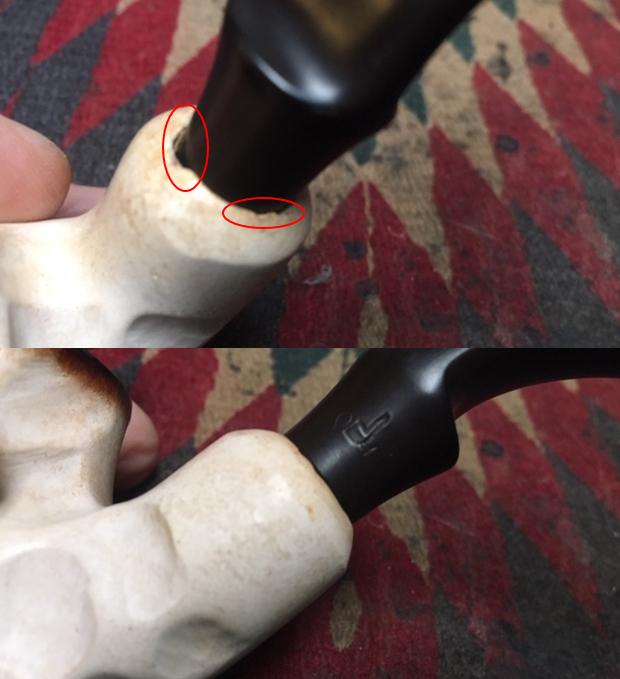
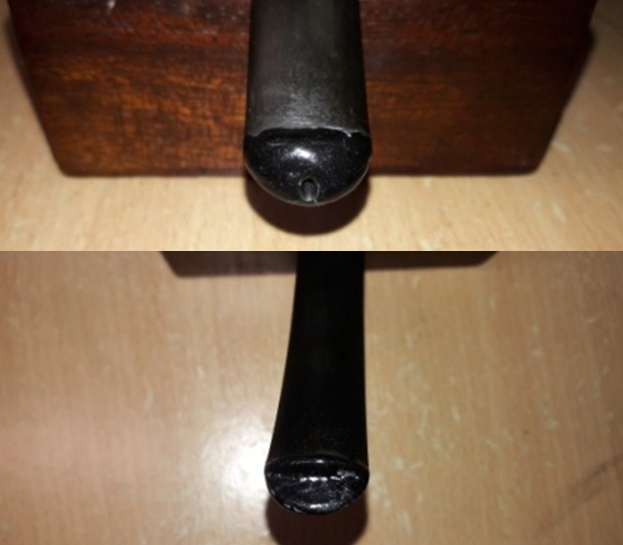
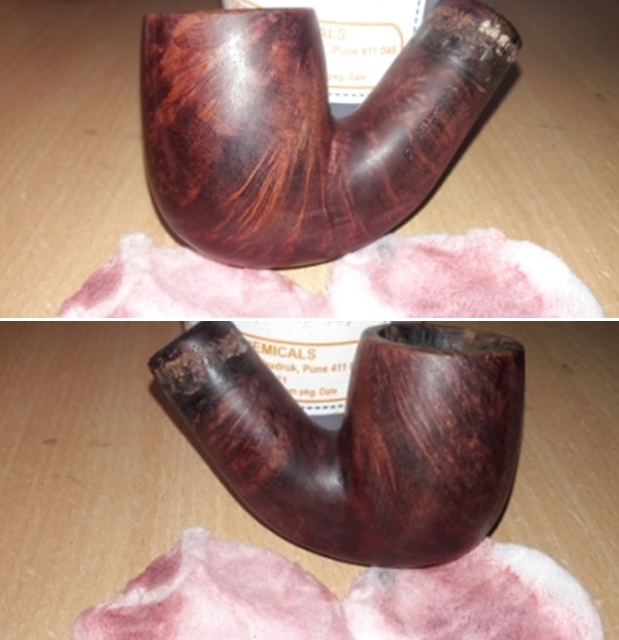
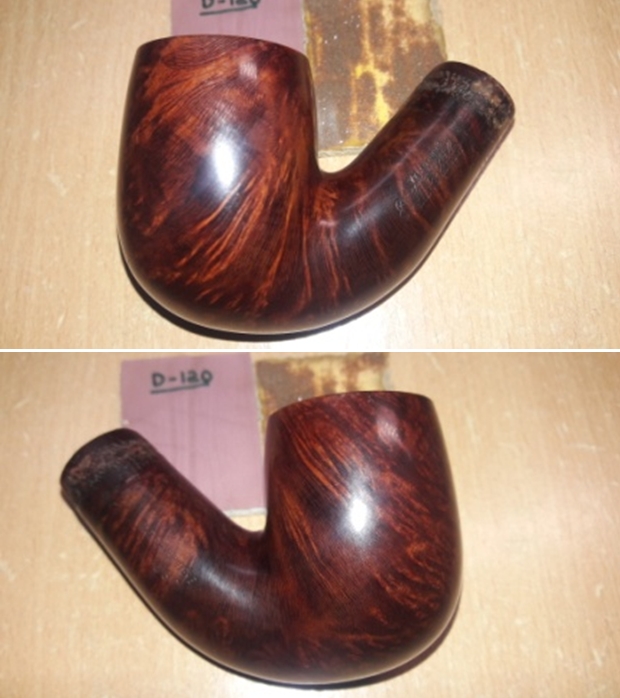
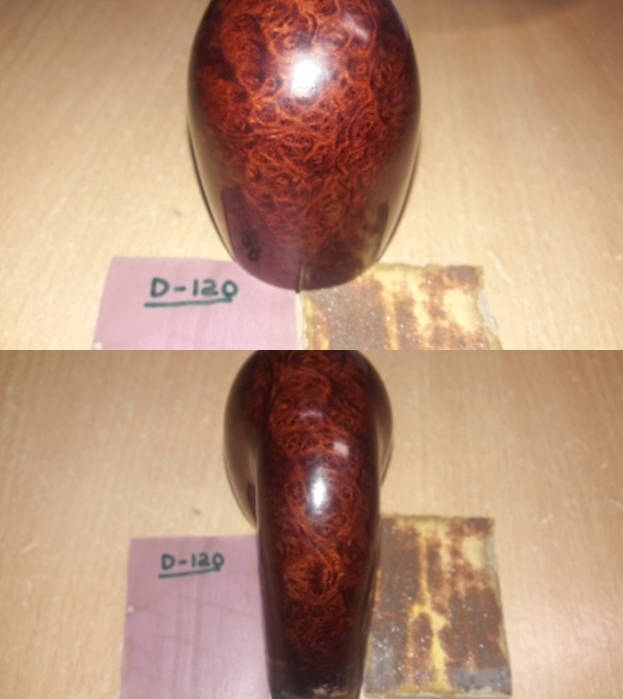
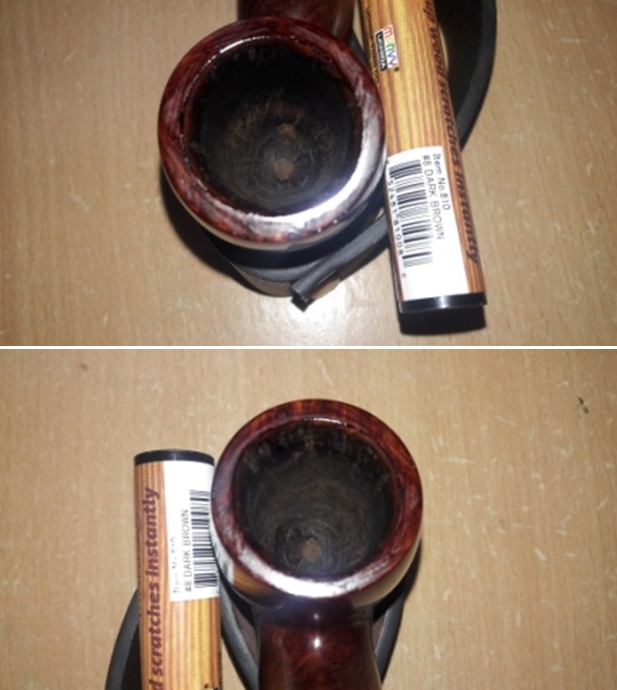
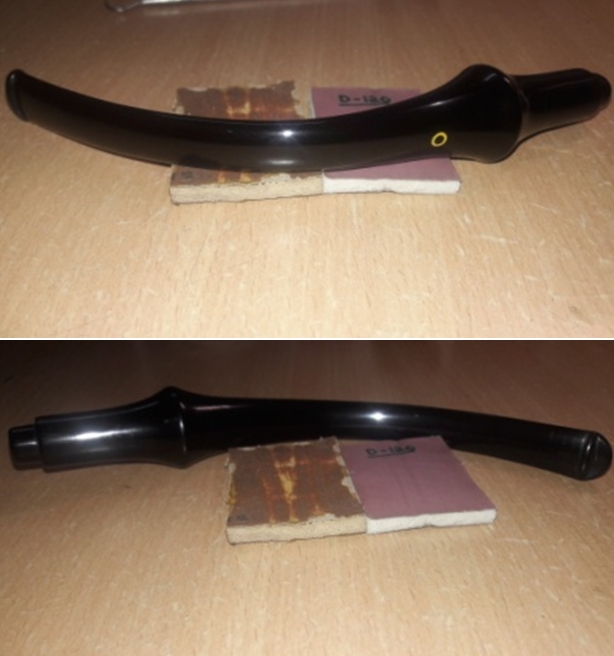
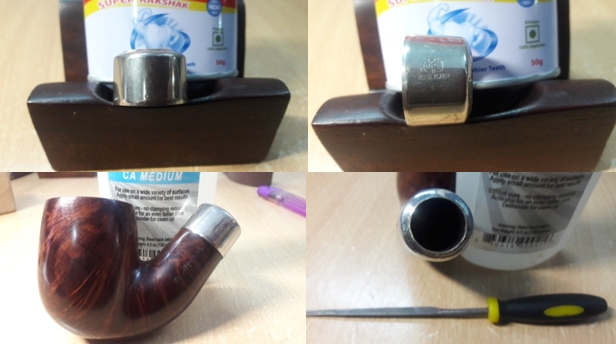
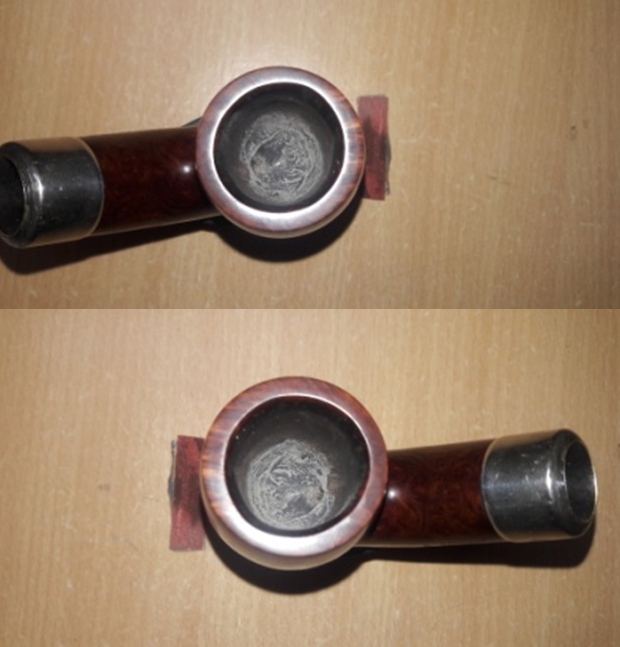
The chamber is massive, that is what I noticed first when I got the cleaned up pipe on my work table. The wall of the chamber shows insignificant beginnings of heat fissure on the left and back of the chamber walls. Though insignificant now, if not addressed at this stage, these heat fissures may further lead to burn outs. I need to address this issue. The rim top surface is uneven and pock marked with dents and dings. The inner edge is severely damaged with dents and dings, some of them quite large. The chamber is significantly out of round, most notably on the left side in 10 o’clock direction. The rim repairs required are extensive.The nicely cleaned stummel looks exciting with beautiful transverse flowing straight grains on the sides of the stummel and shank and bird’s eye on the front of the stummel and extending to the bottom of the shank. Patches of old lacquer coat can still be seen in the fold between the bowl and shank and also along the bottom of the stummel. The dents and scratches to the front and at the foot of the stummel are now clearly visible. I intend to let them be as they are part of the pipe’s past and also since I wish to preserve the patina. Abha has painstakingly cleaned out the mortise and the sump. However, I could still see remnants of the gunk in the sump and the still strong odor is a pointer to the requirement of further sanitizing the internals of the stummel. The ferrule at the end of the shank end came loose as I was inspecting the stummel. This gave me an opportunity to closely inspect the shank end for cracks or any damage. Lucky me, there are no such hidden gremlins here!! I did notice a fill at the base where the ferrule sat on the shank end (circled in yellow) that would need to be refreshed. The edges of the ferrule at the shank end have become very sharp (I did manage a nick during inspection) that had caused the damage observed on the tenon end of the stem. I need to address this issue. The unclean stem that came to me shows heavy scratches to the tenon end which seats in to the mortise and caused due to the sharp edges of the ferrule. I will address this issue by sanding the surface followed by a fill, if required. The upper surface and button edge of the P-lip shows damage and will have to sharpen the button while sanding and filling the surface. Similarly, the lower button edge has a deep tooth indentation and will need a fill to repair. The heavy oxidation will be a bear to get rid off given the size of the stem. The tenon is covered in a thick coat of dried gunk, not to mention the clogged the stem air way. THE PROCESS
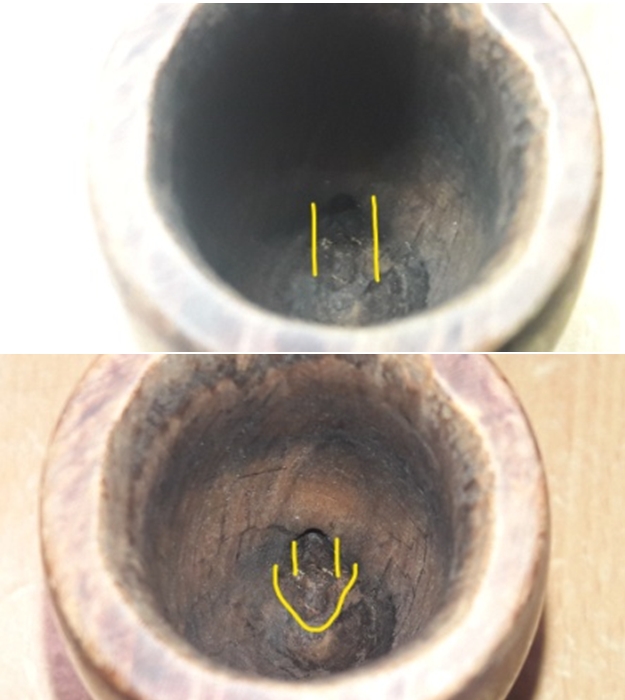
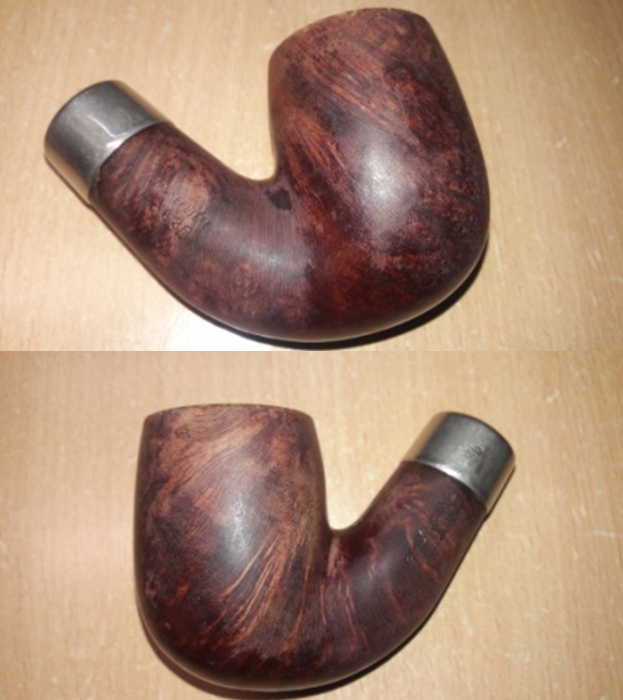
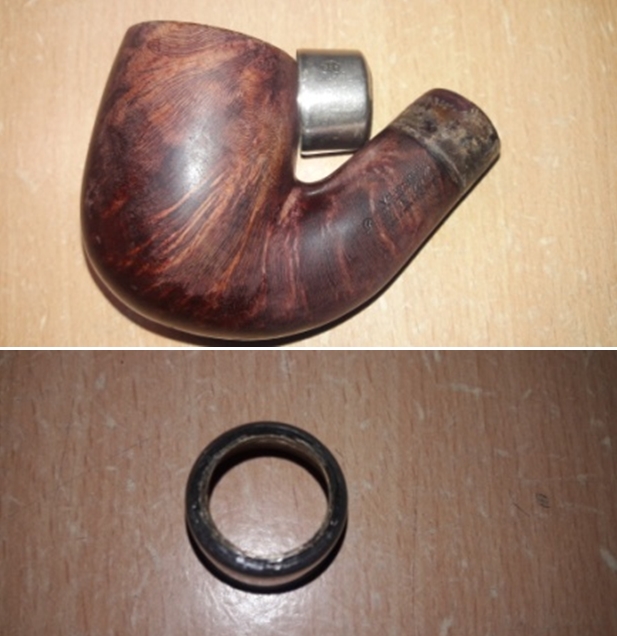
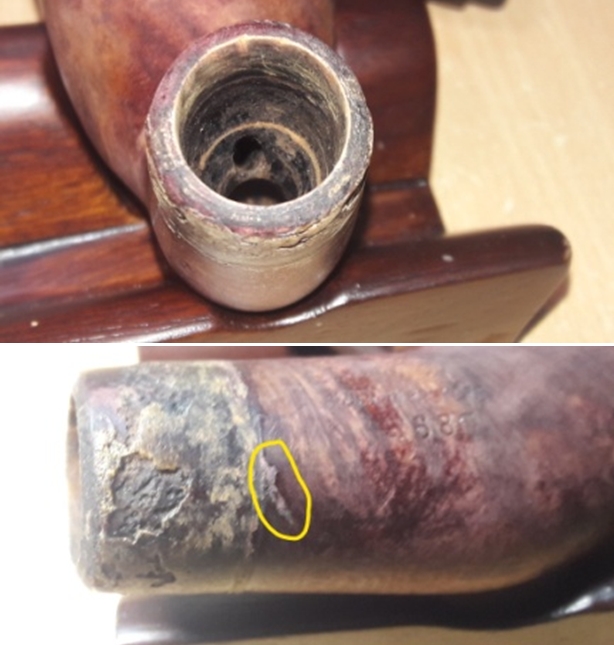
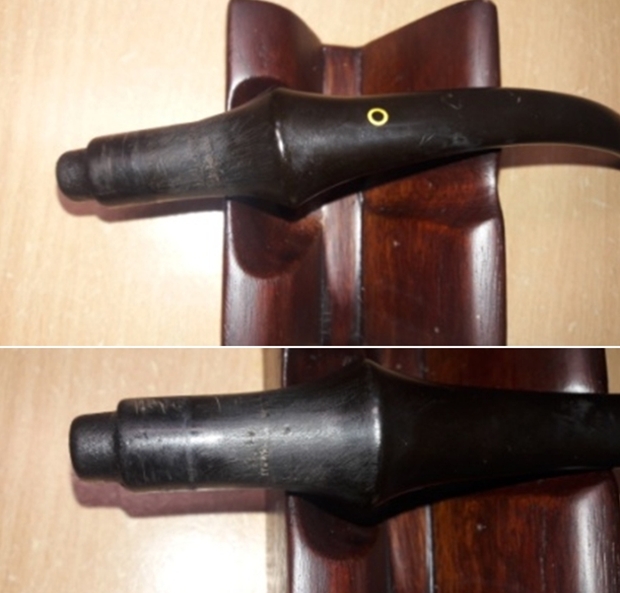
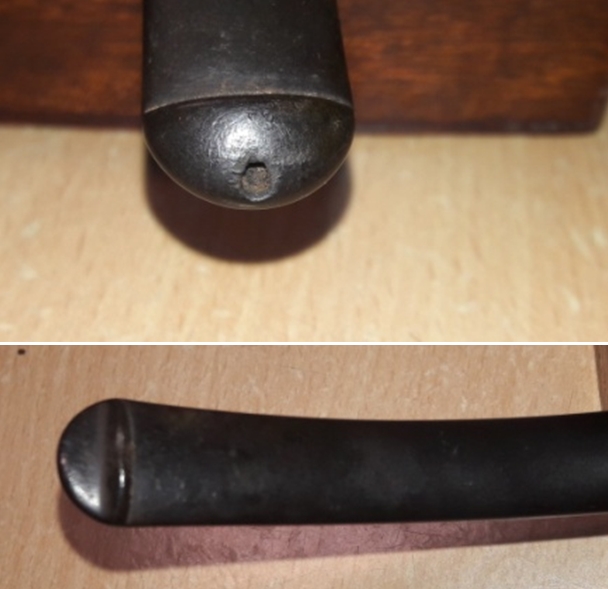
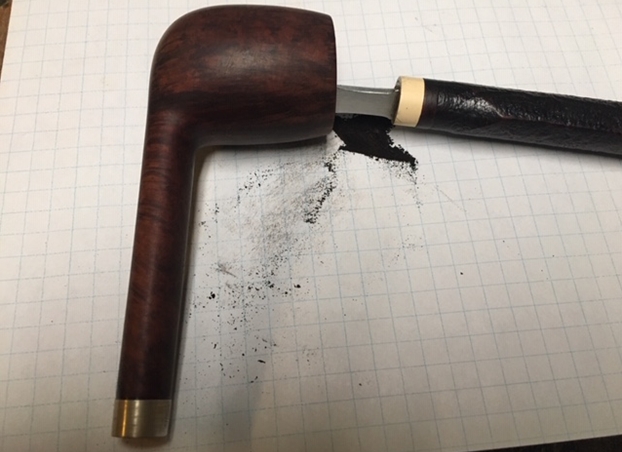
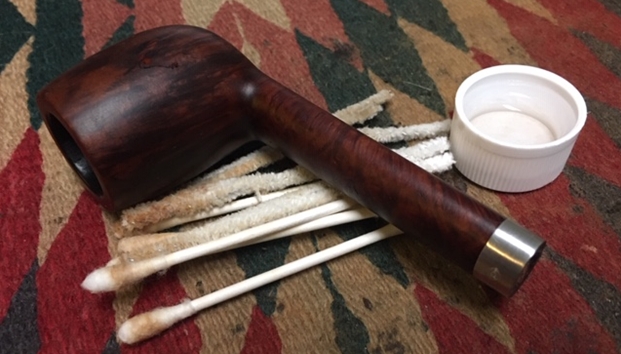
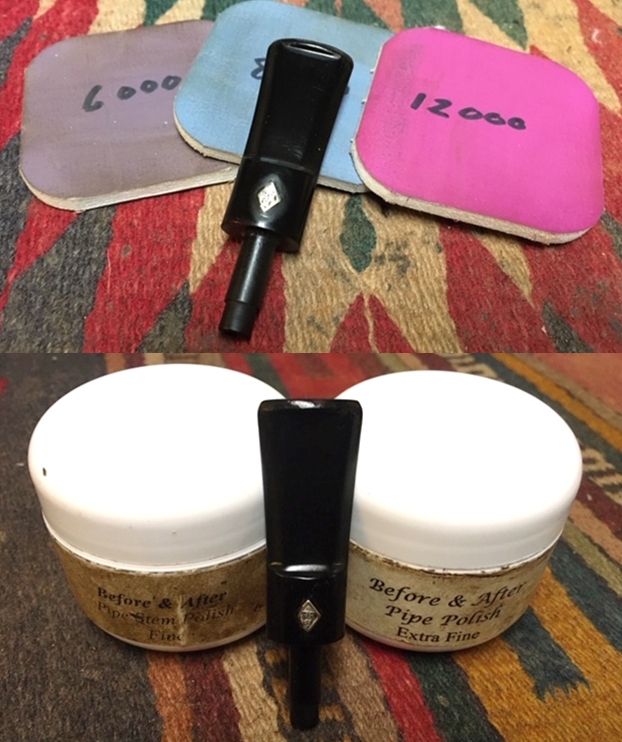
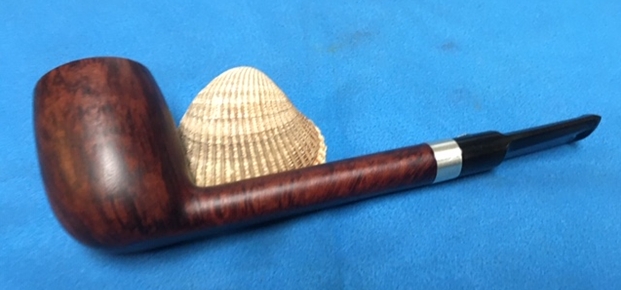
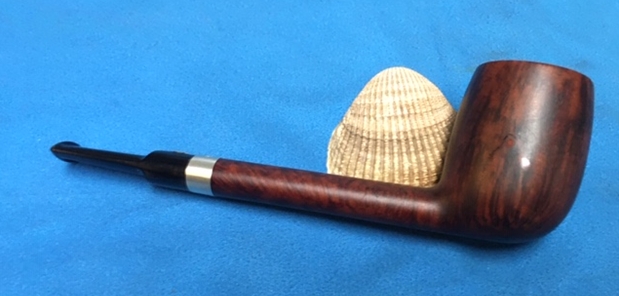
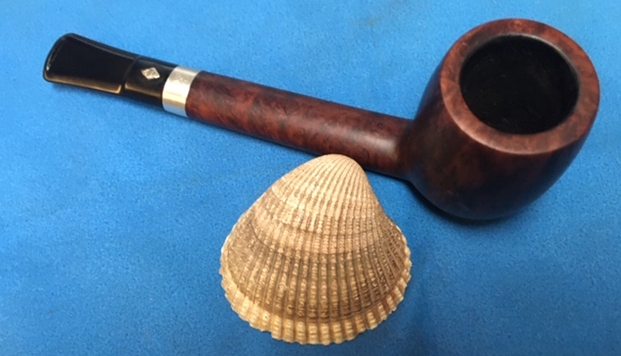
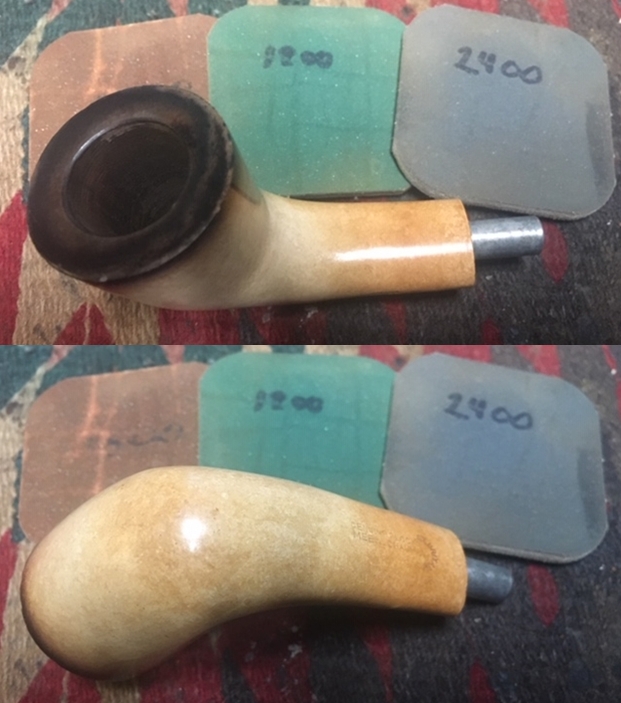
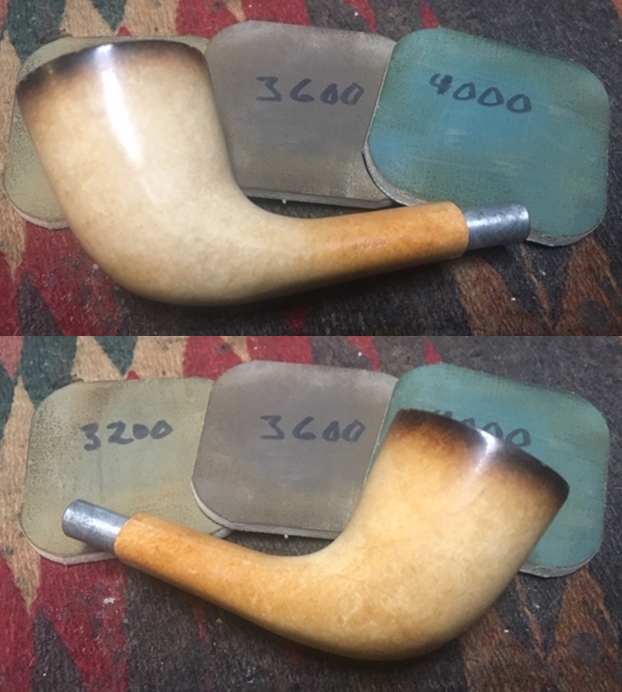
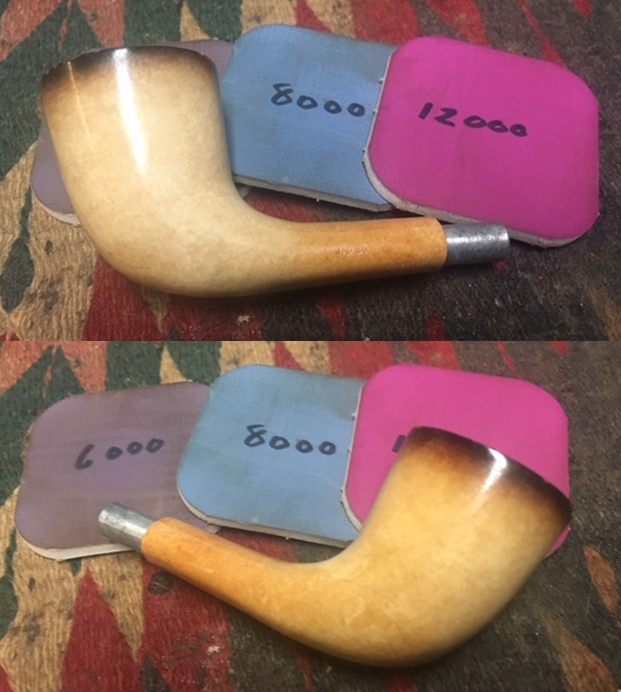
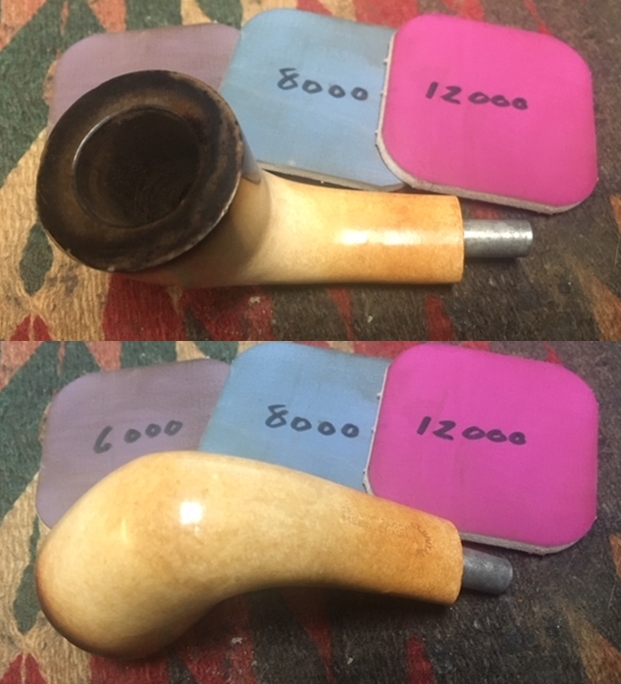
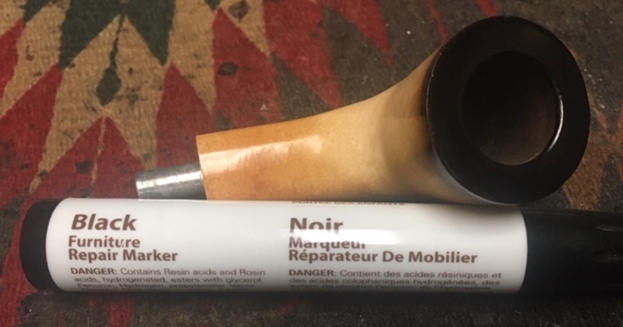
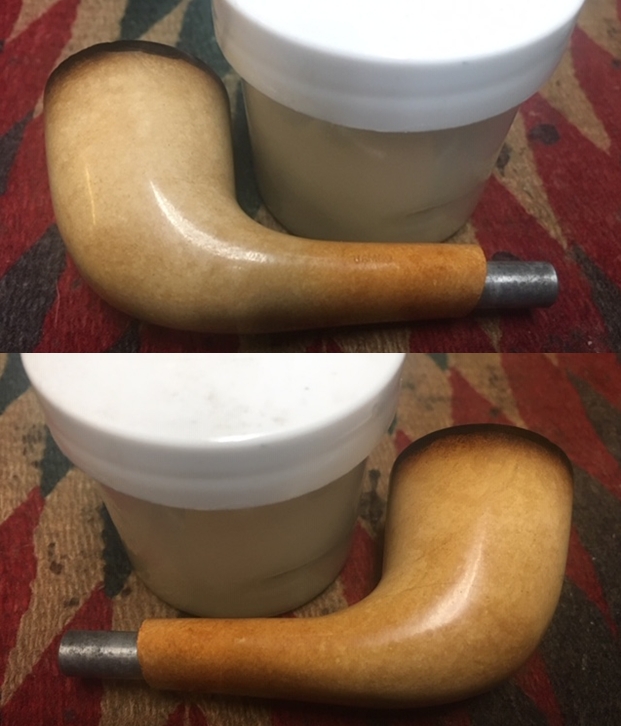
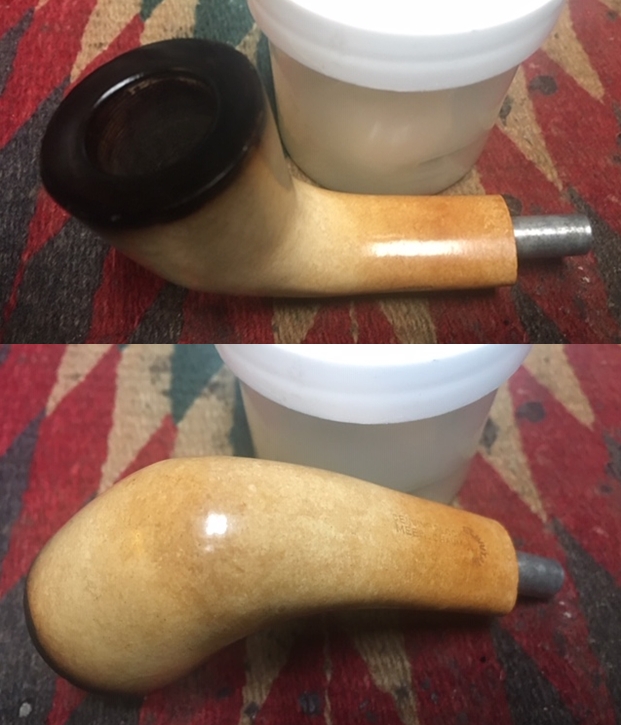
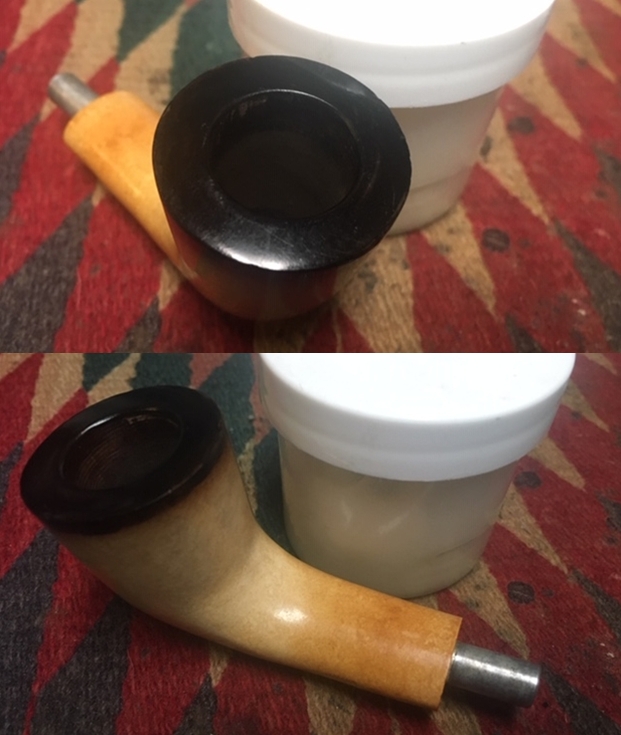
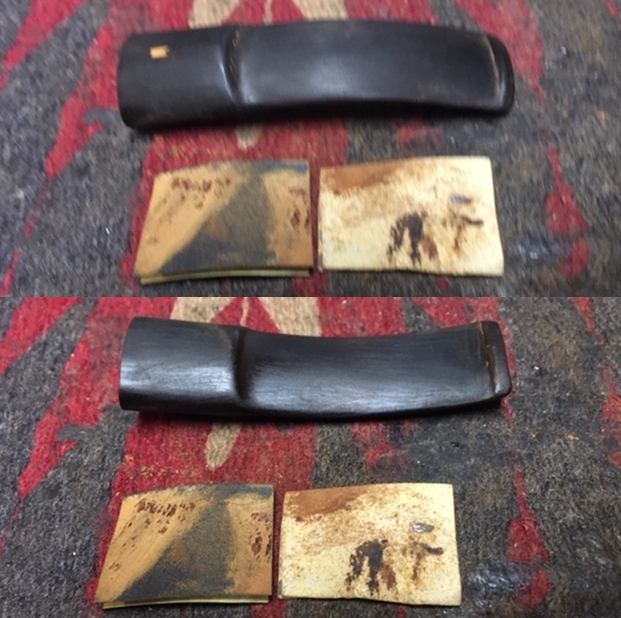
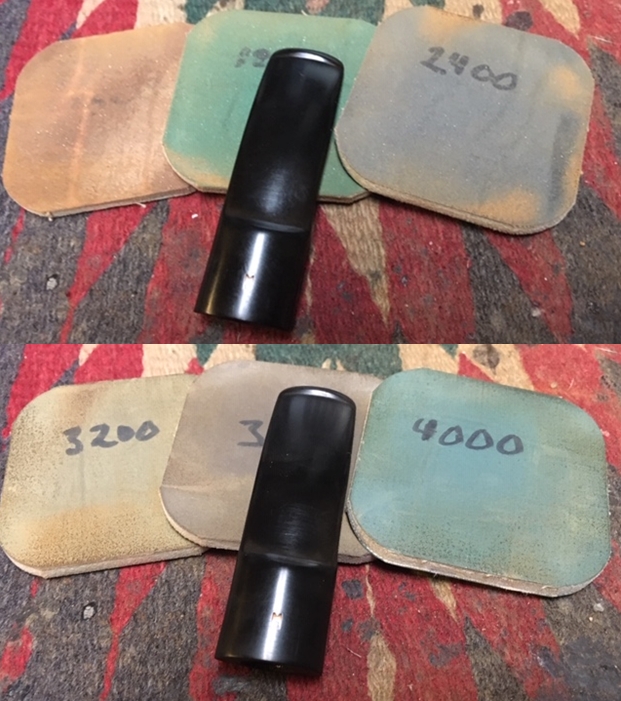
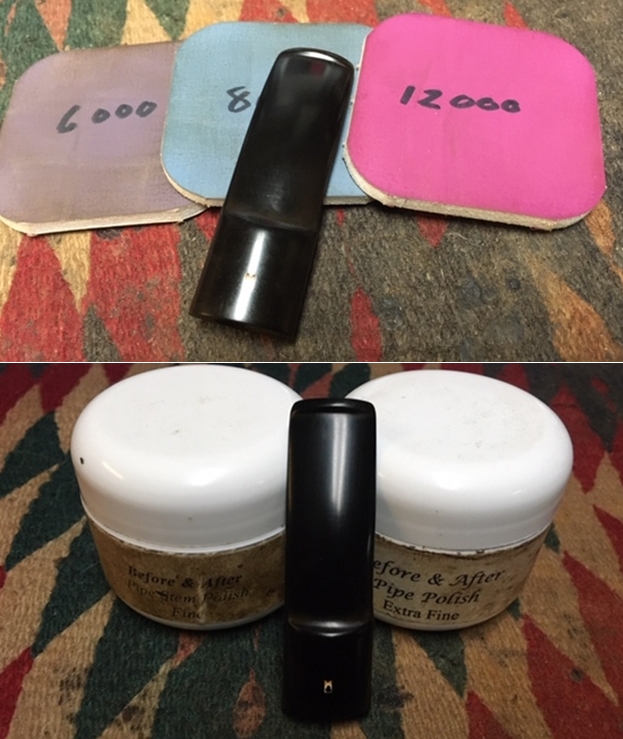
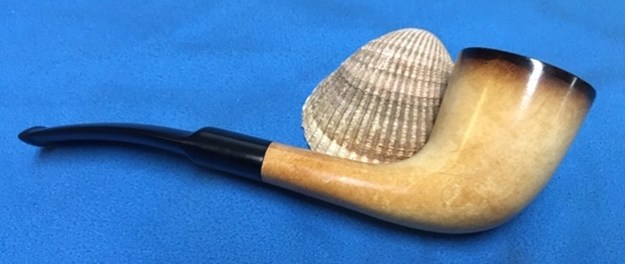
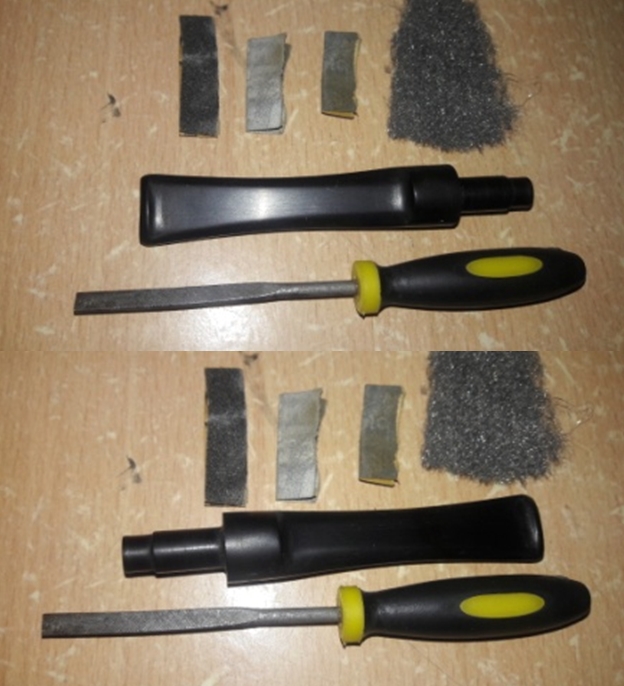
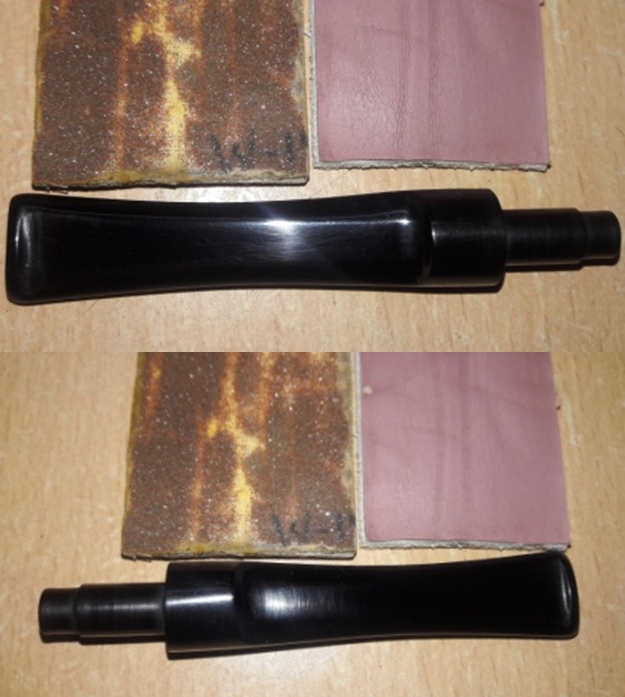
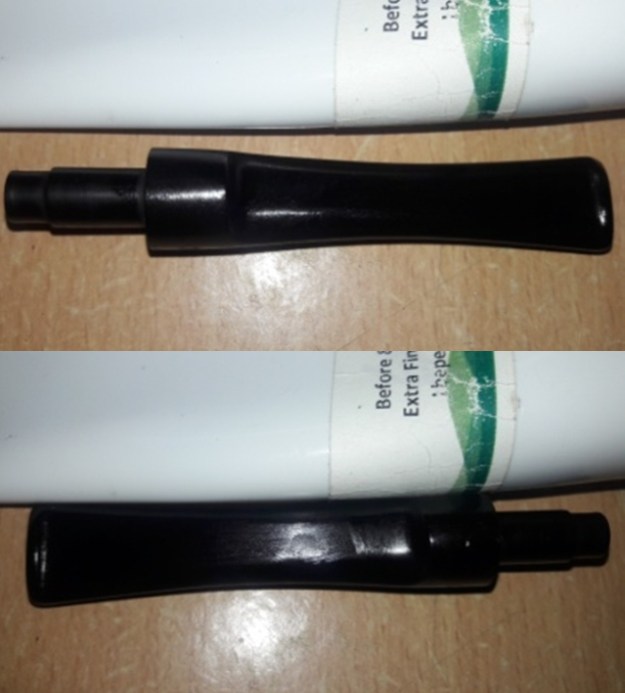
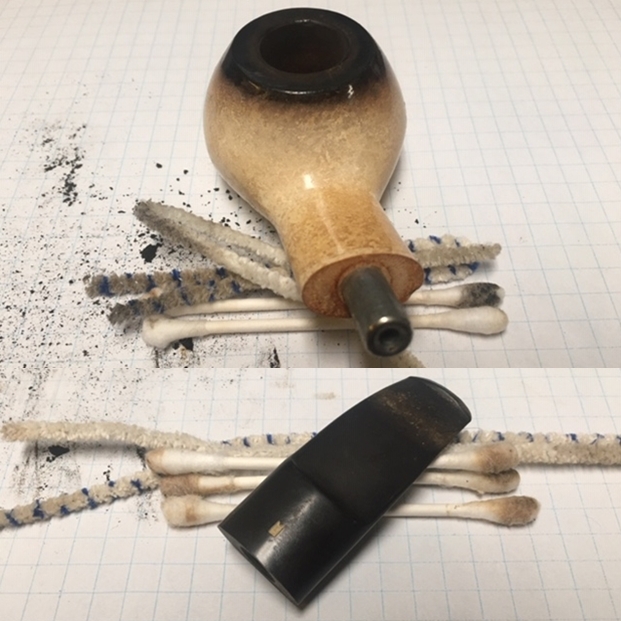
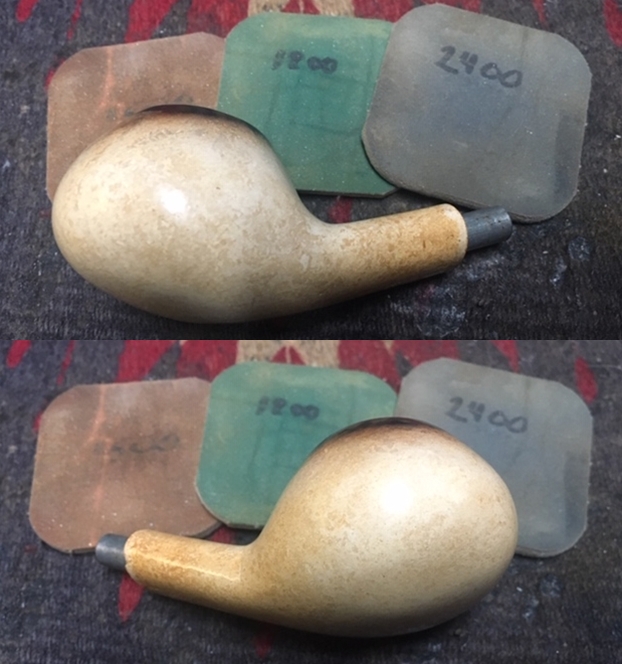
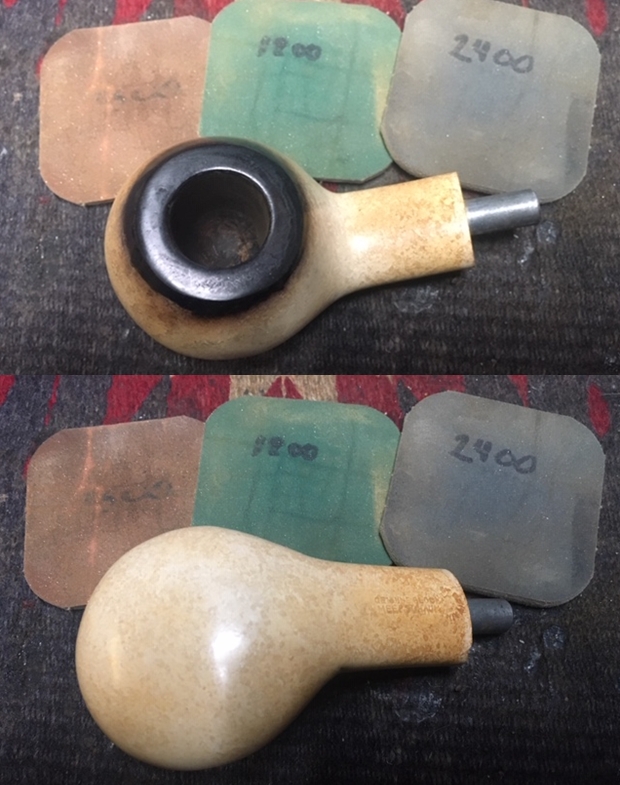
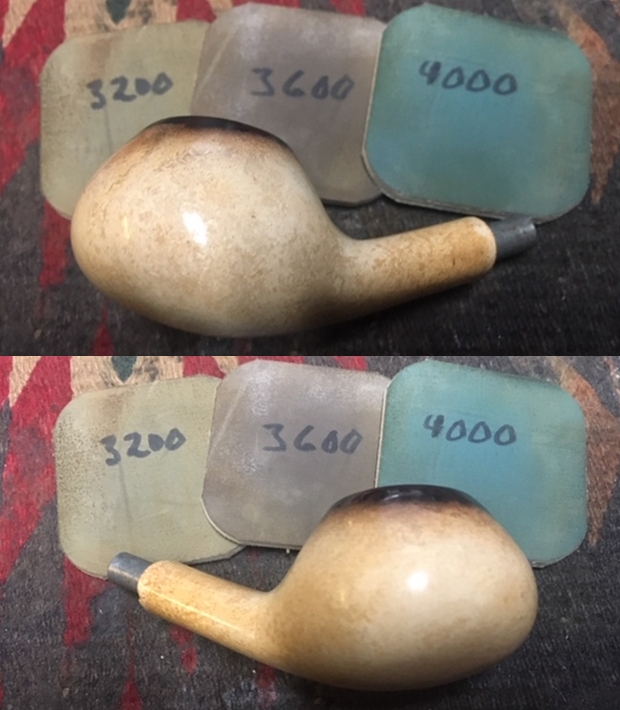
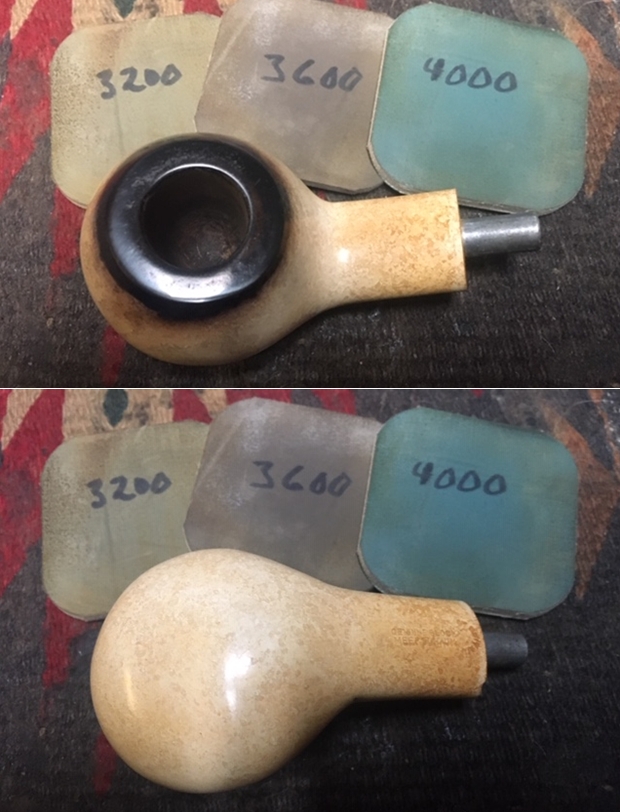
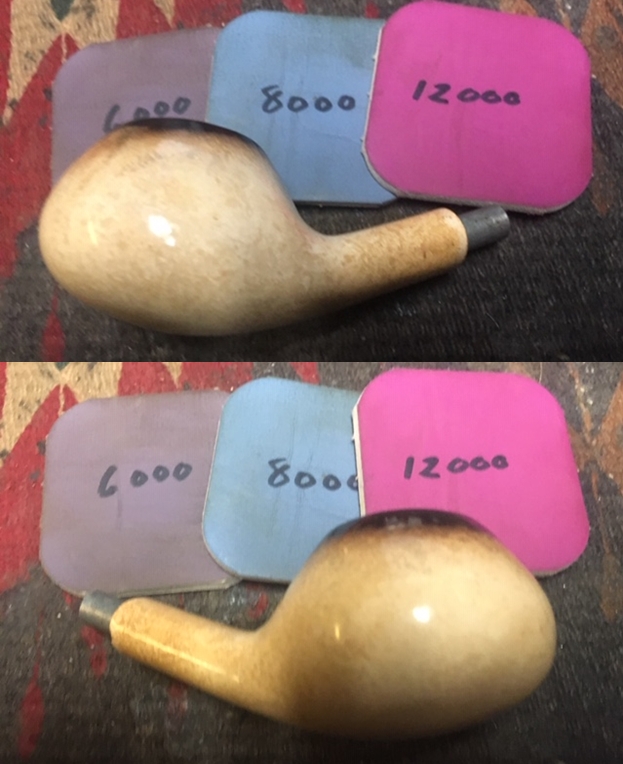
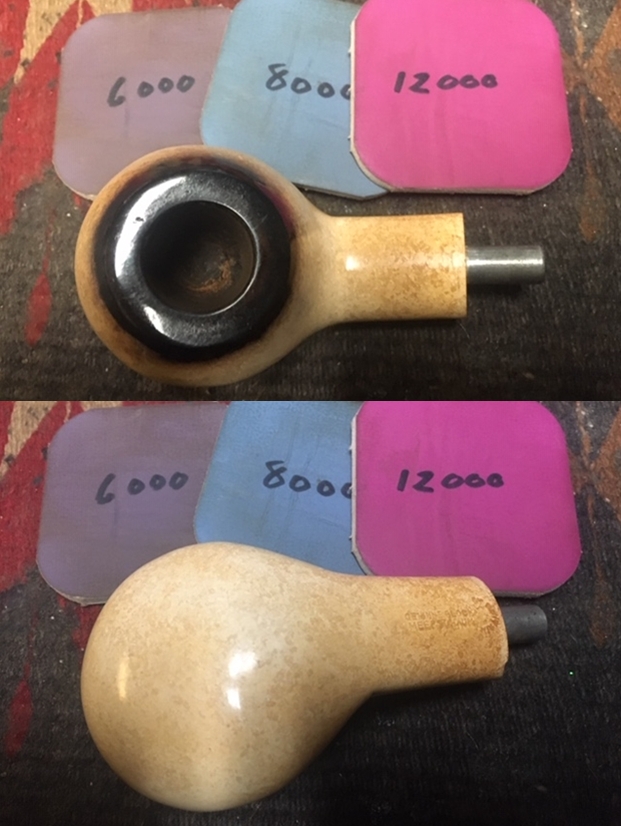
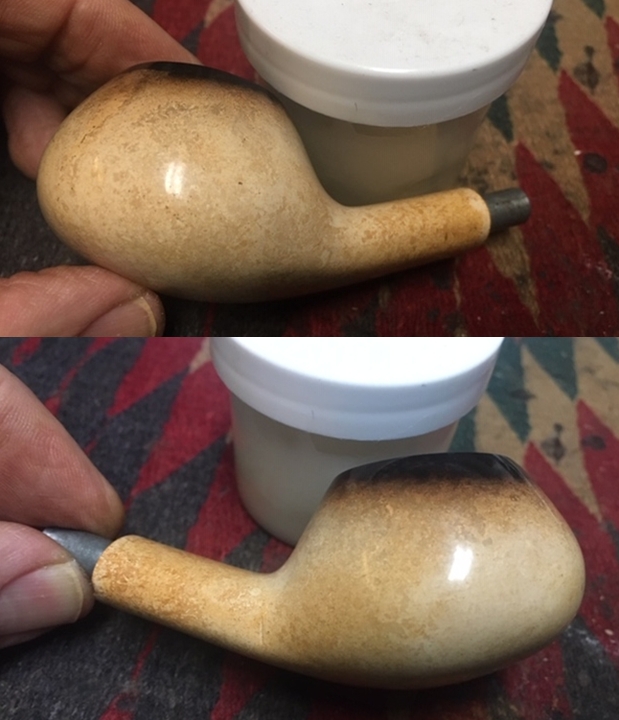
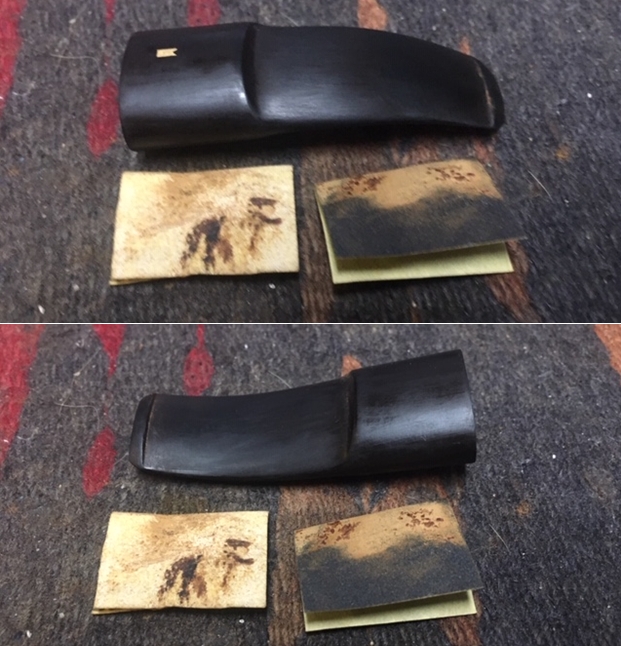
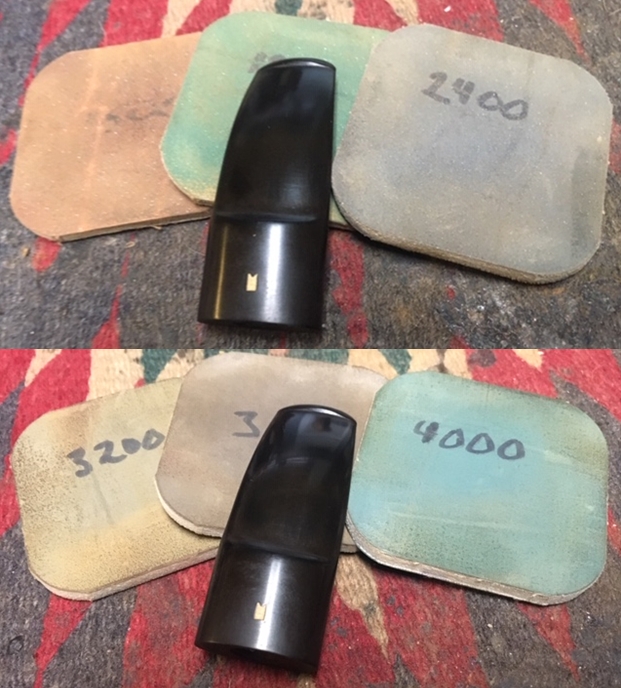
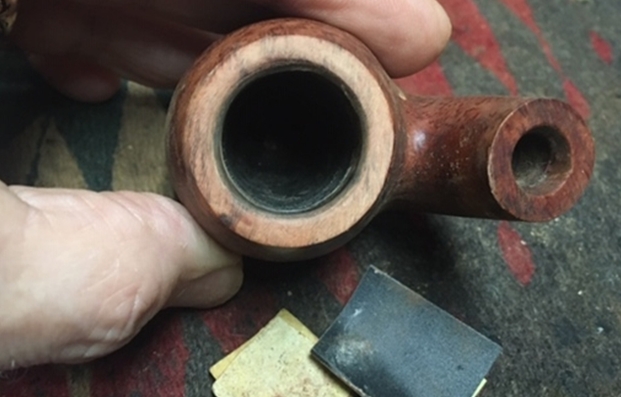
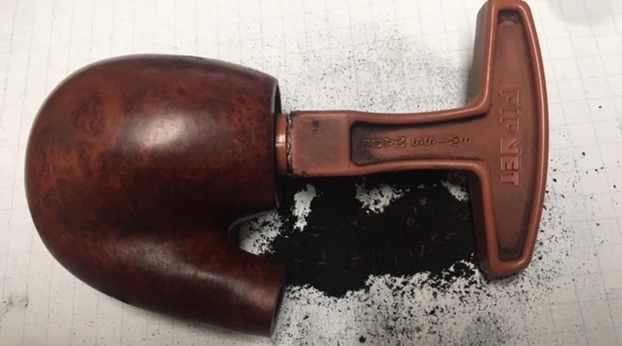
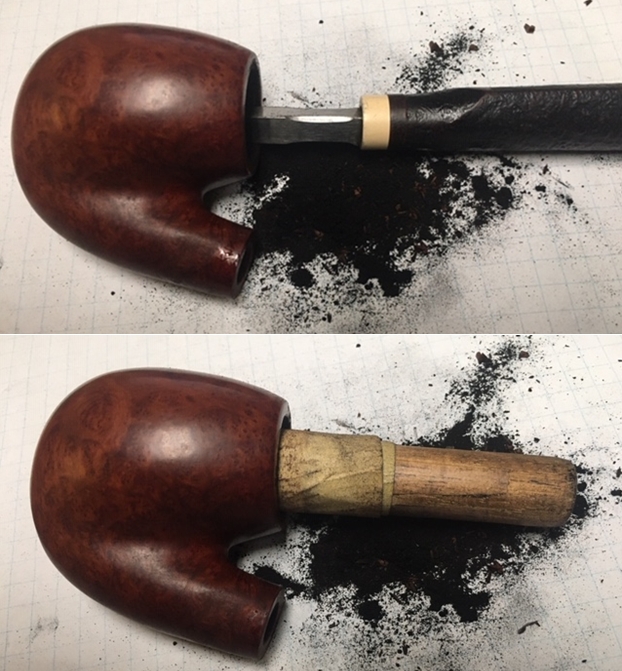
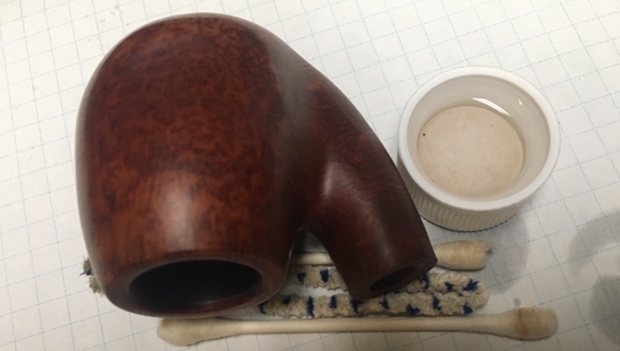
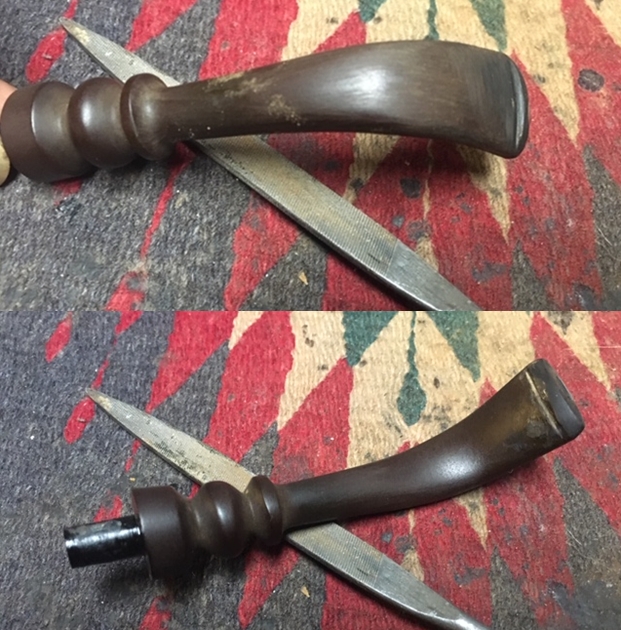
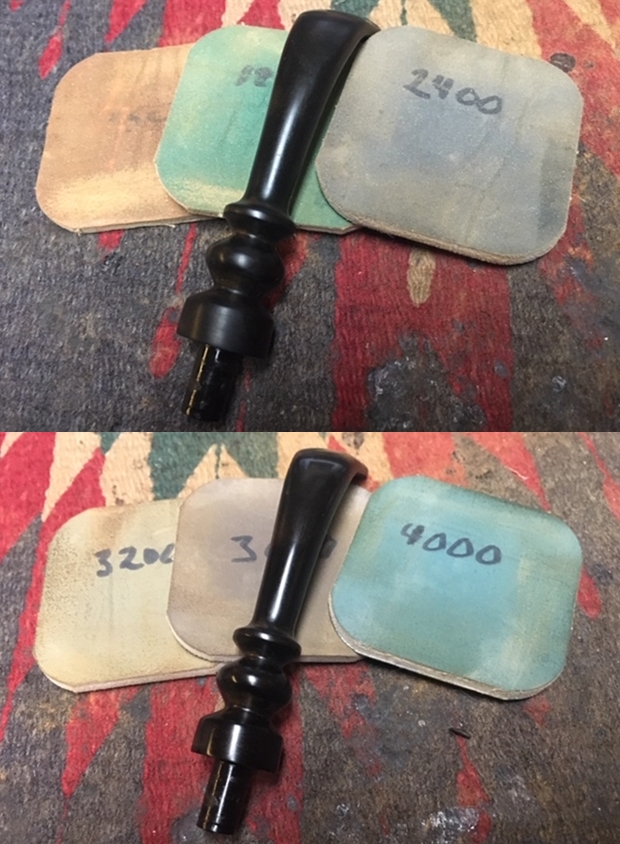
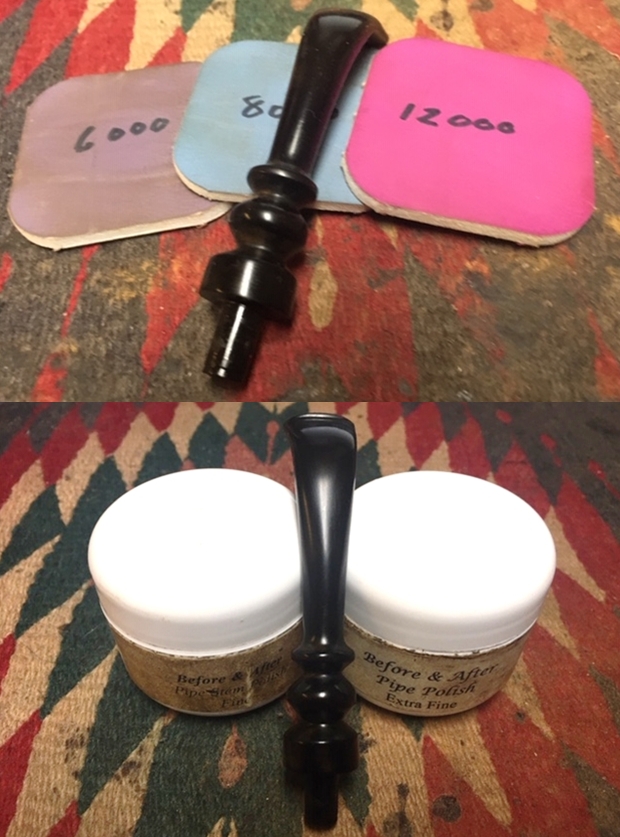
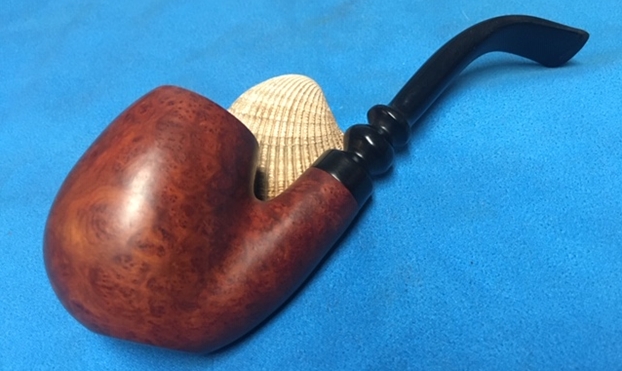
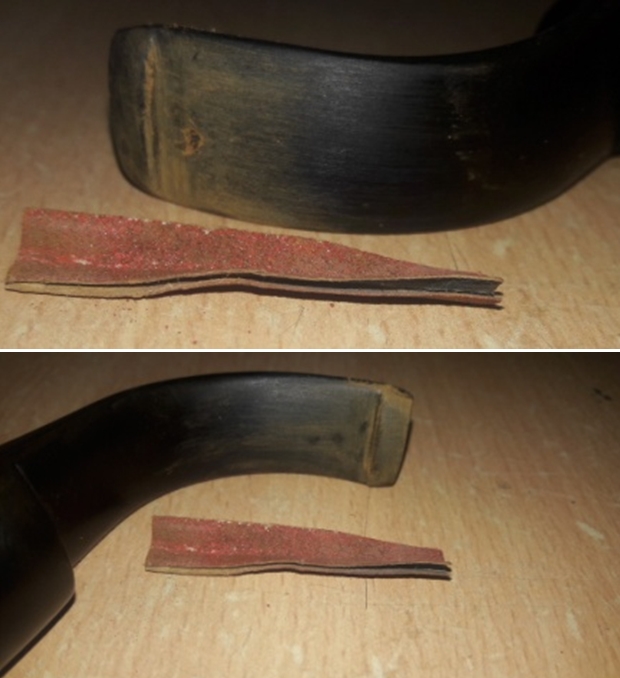
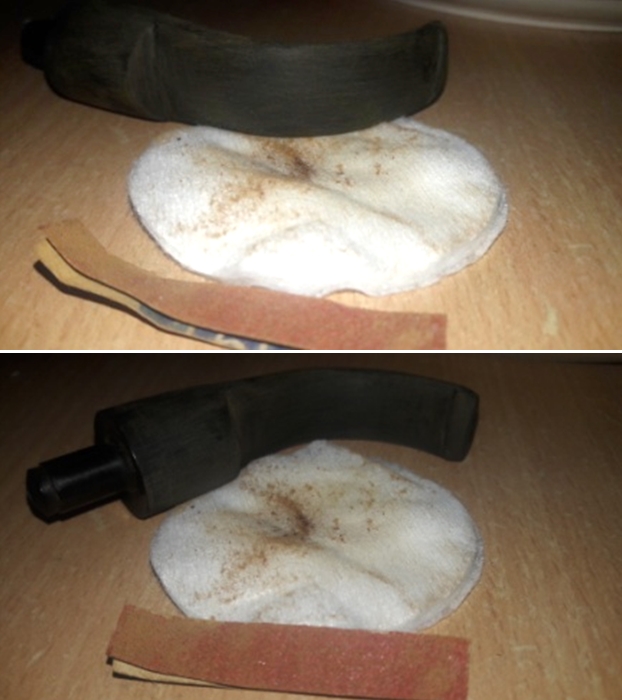
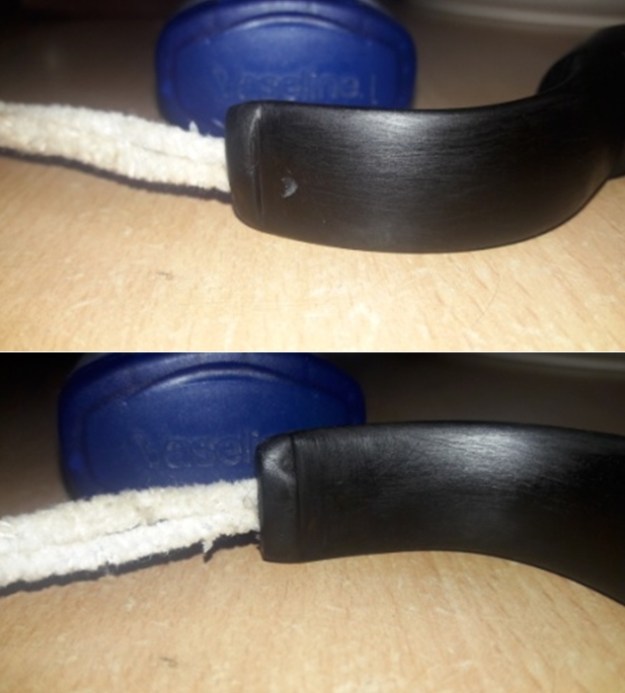
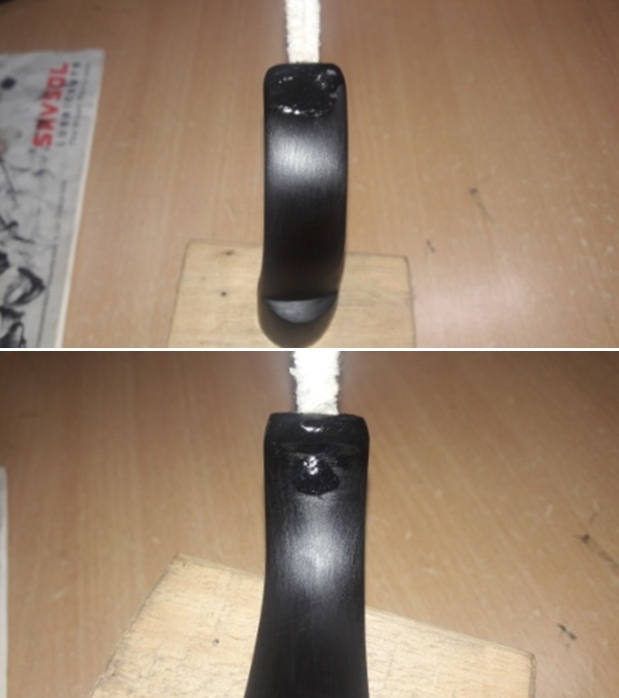
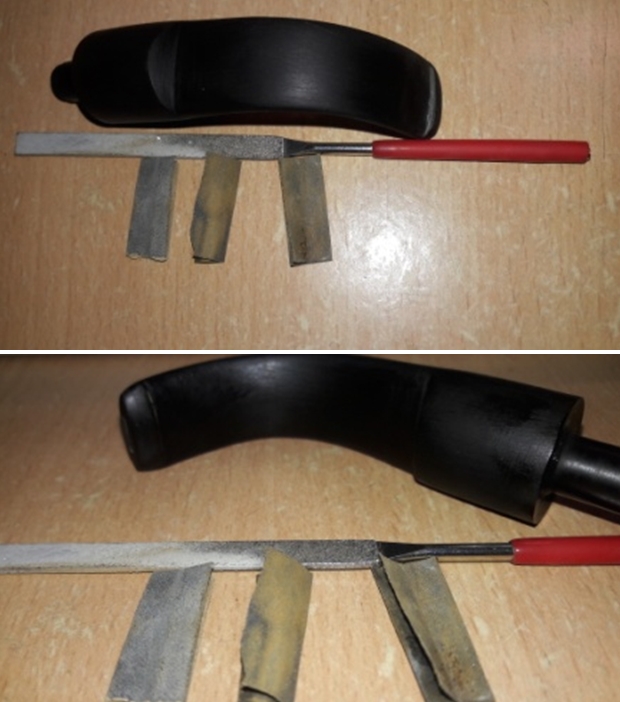
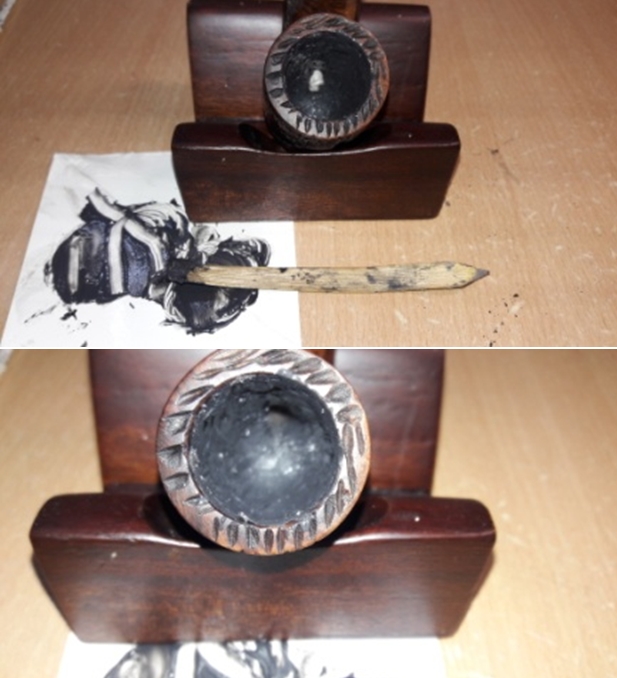
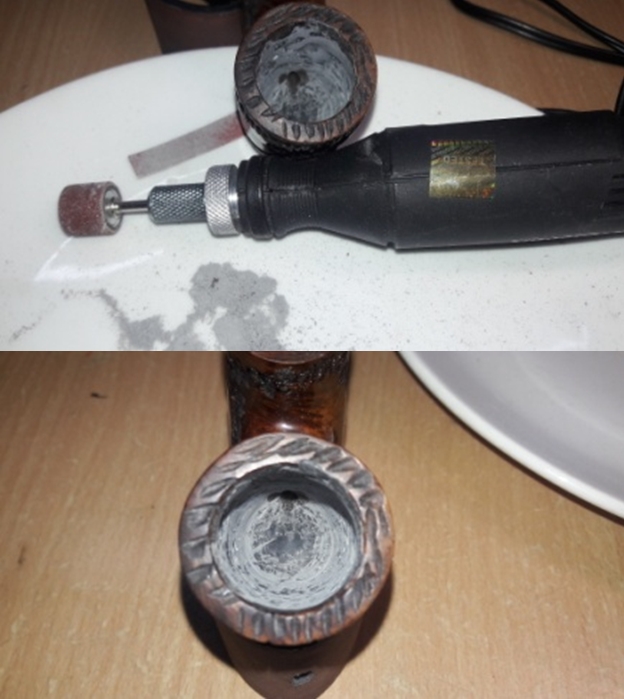
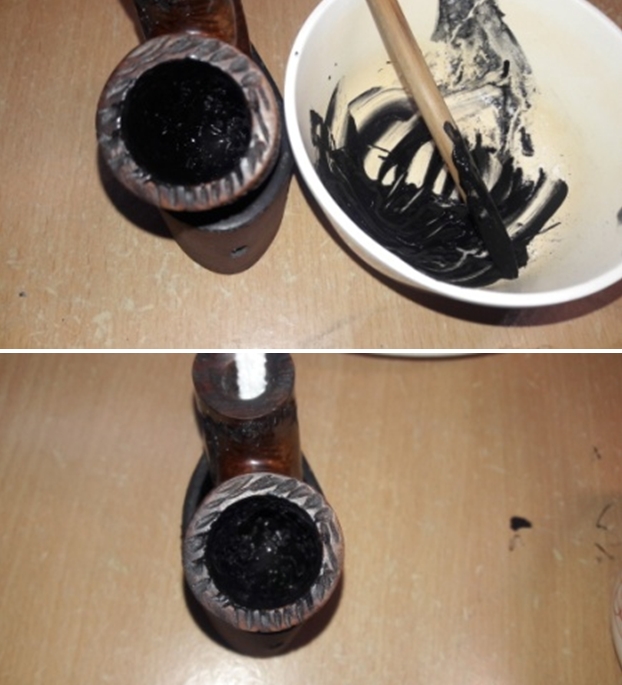
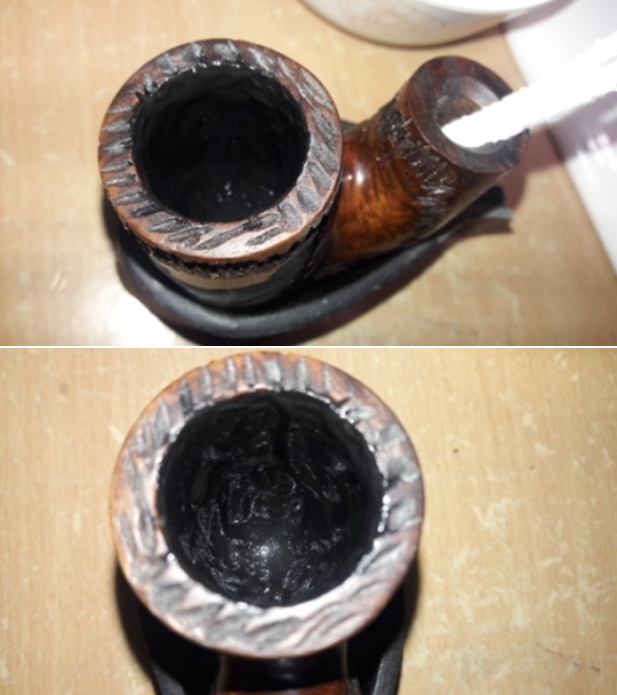
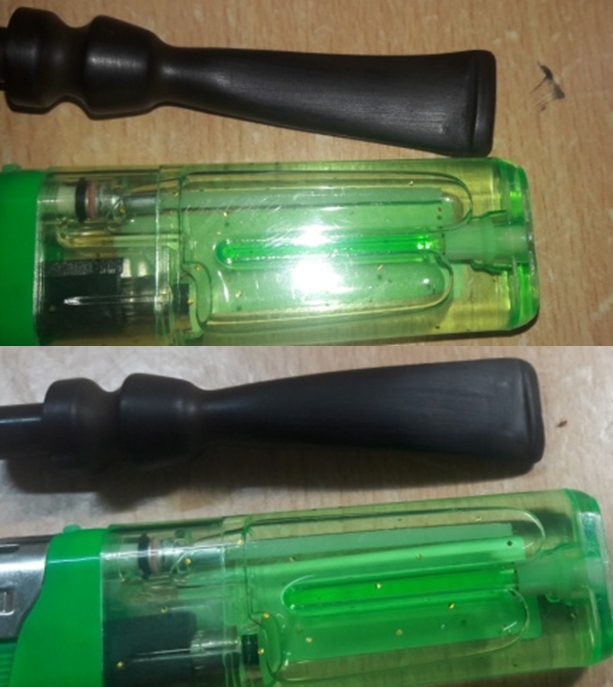
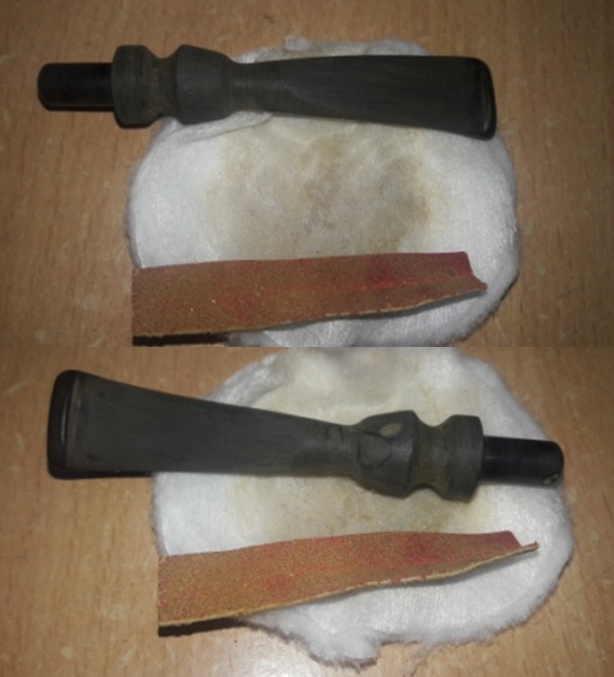
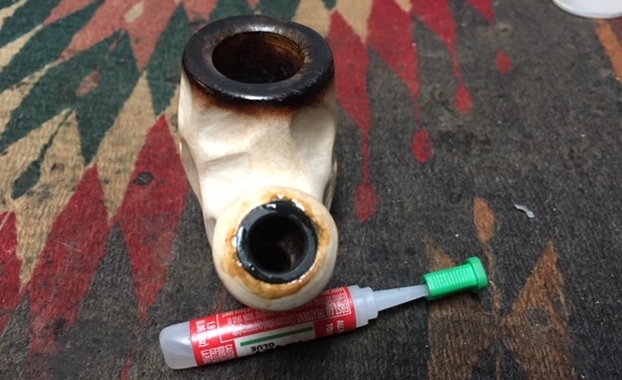
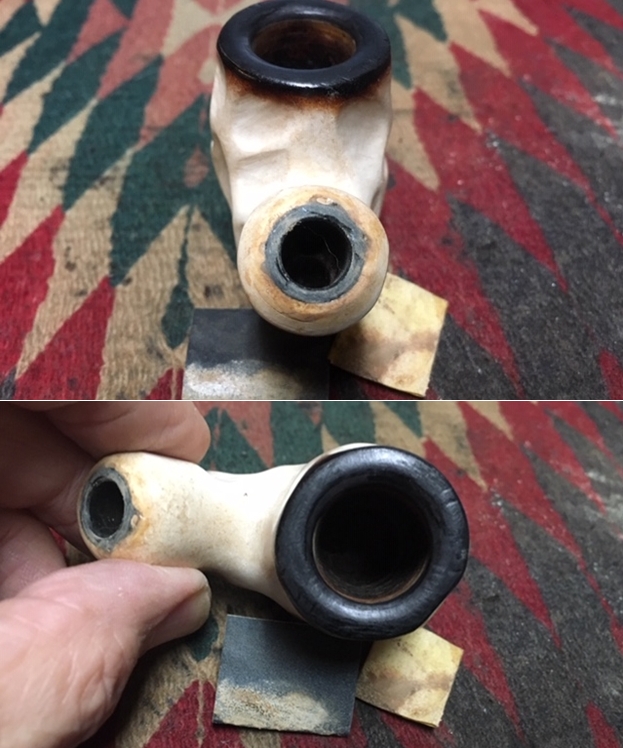
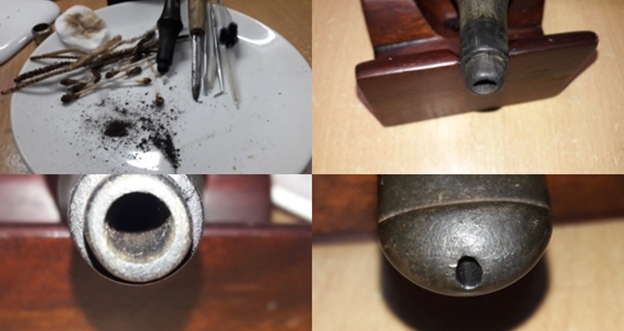
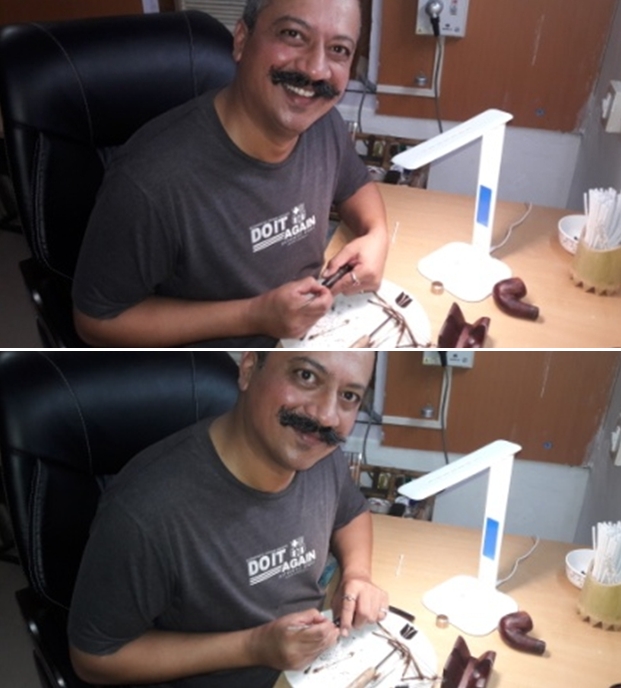
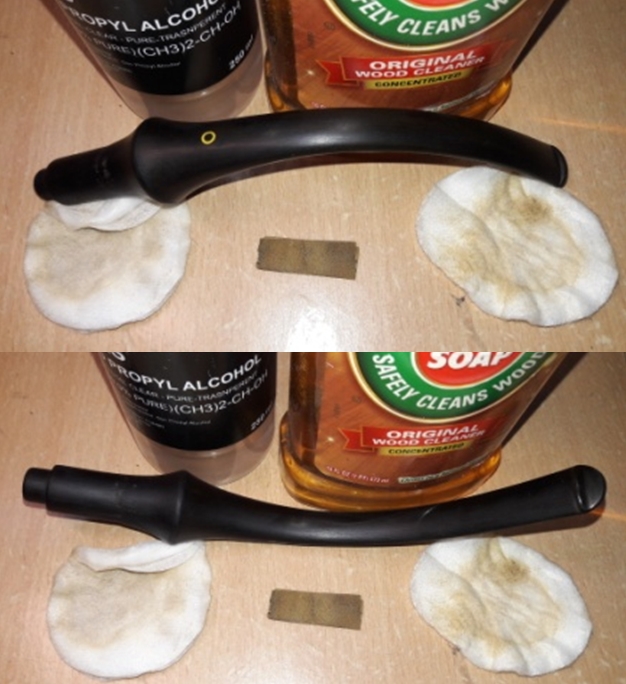
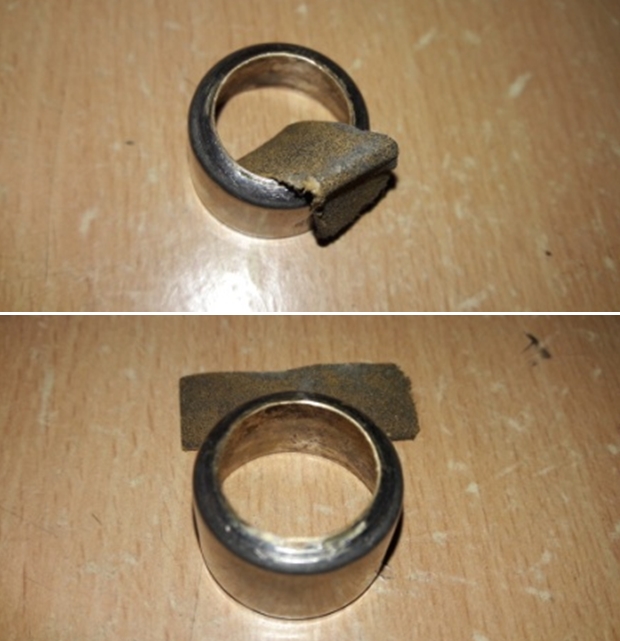
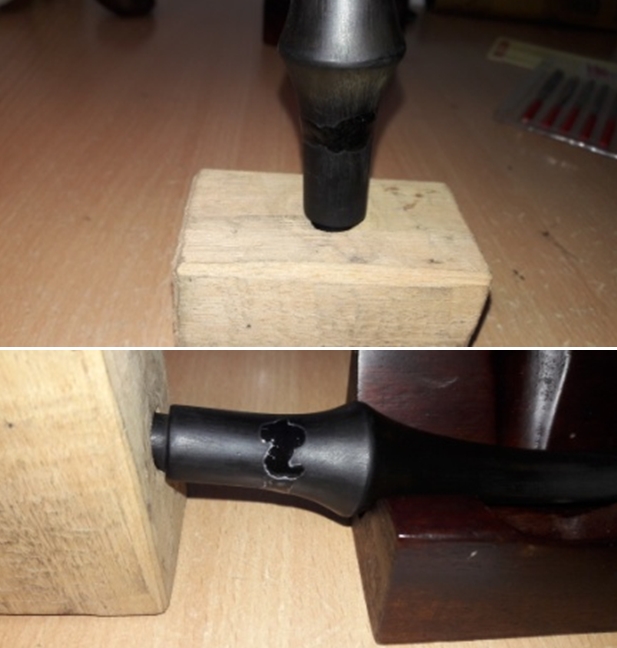
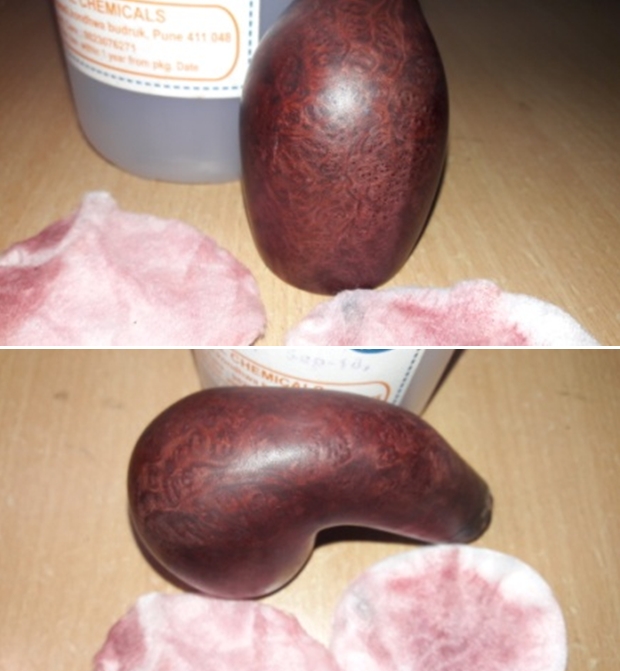
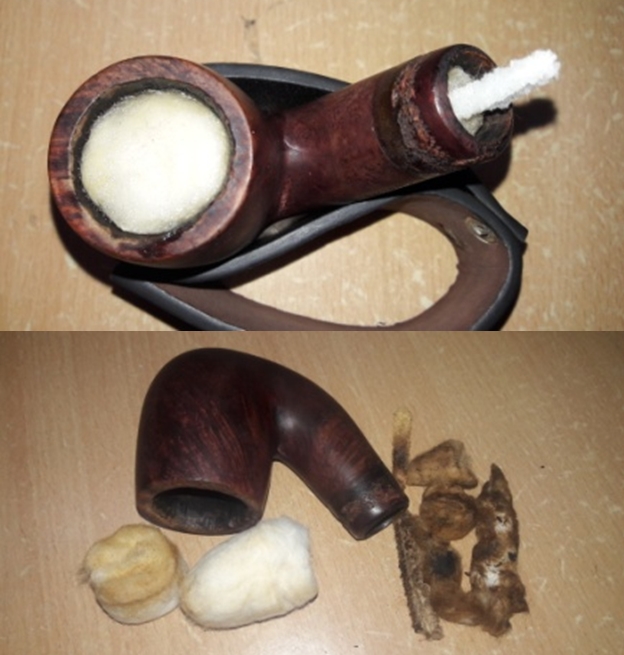
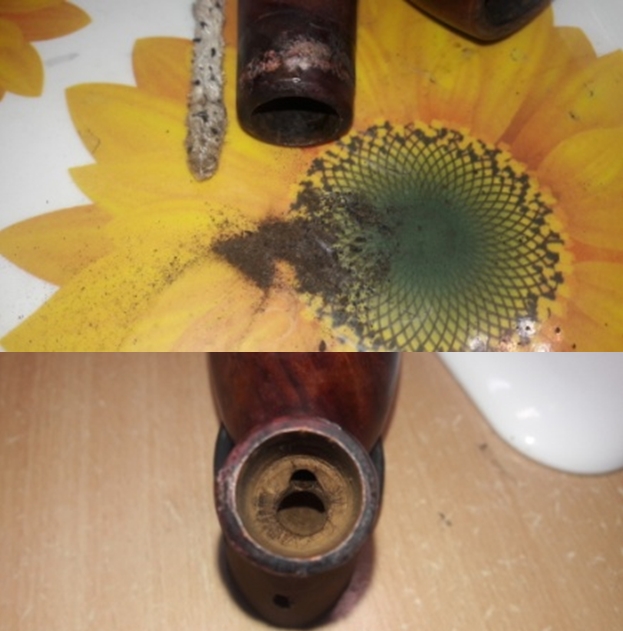
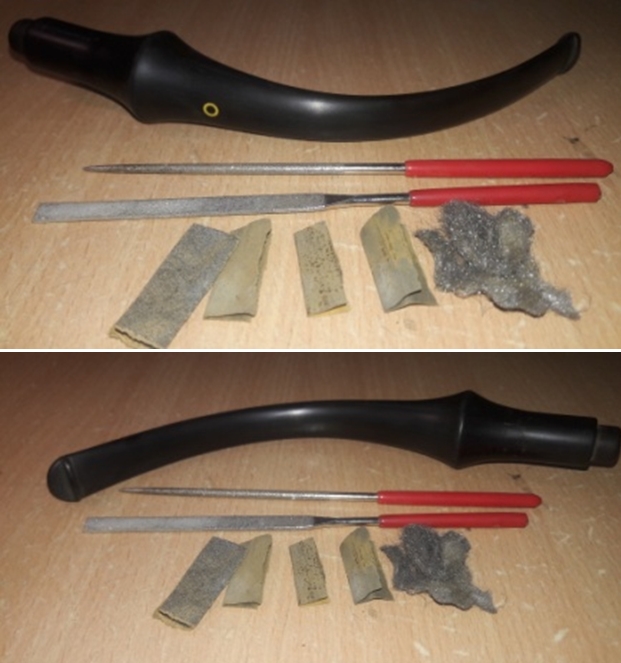
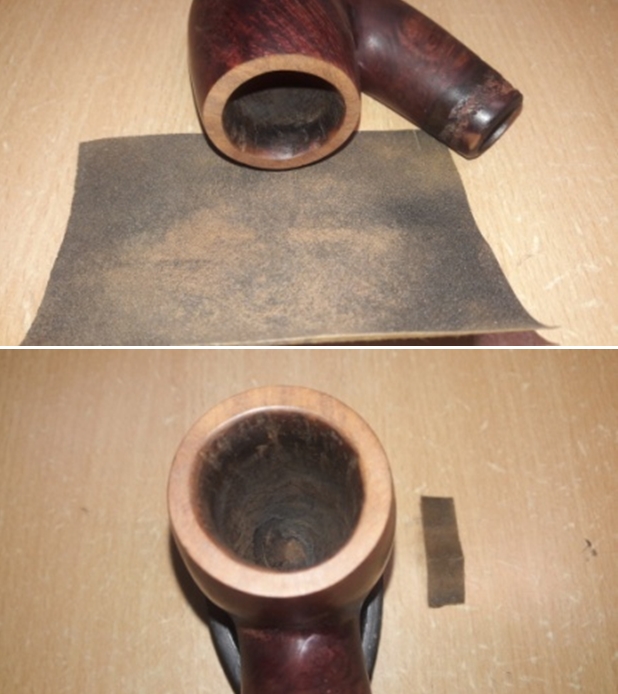
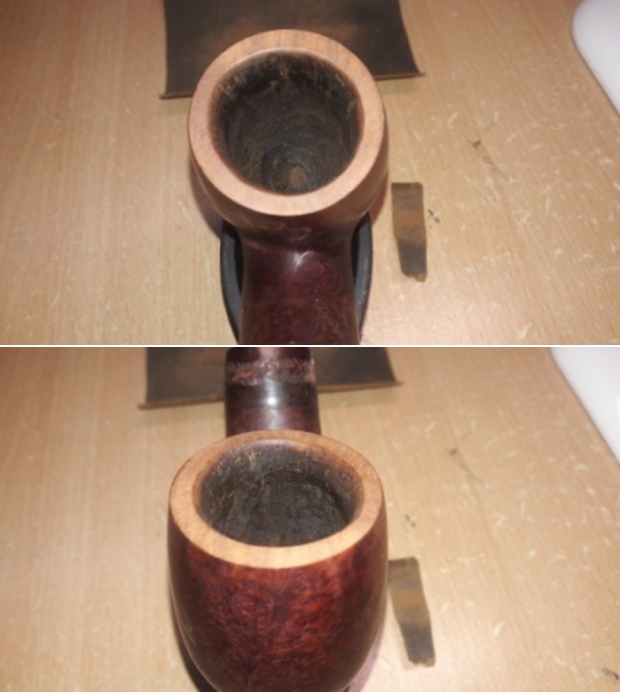
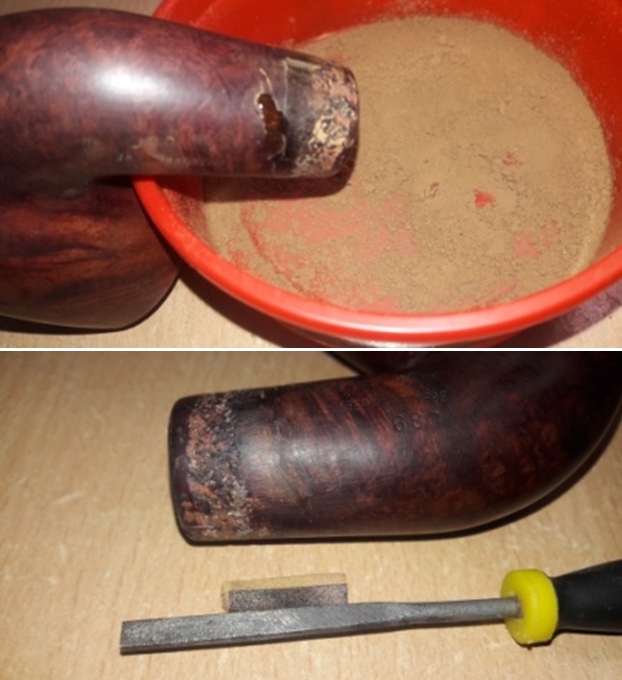
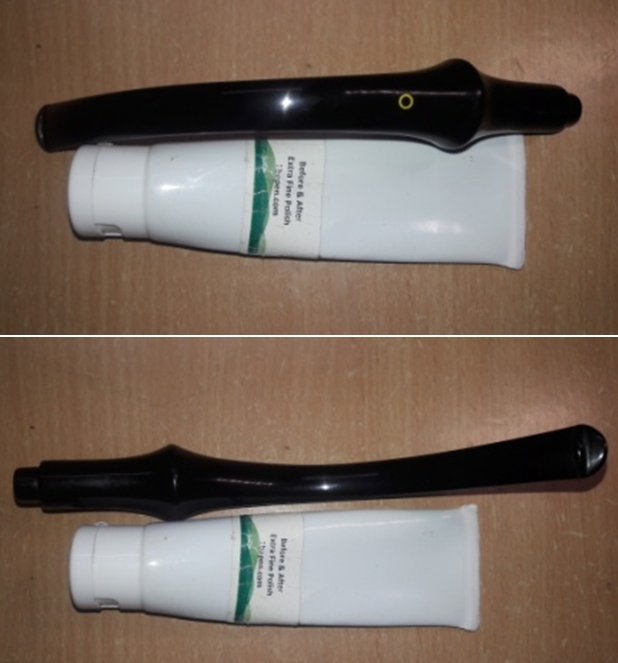
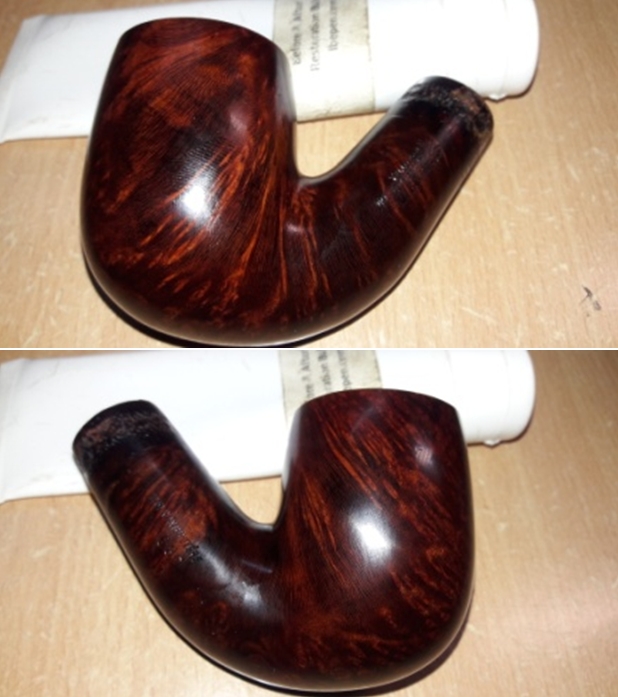
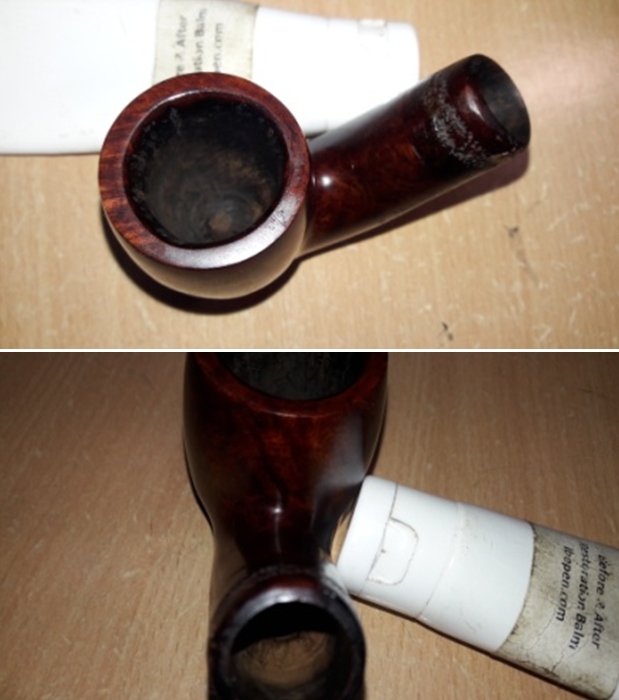
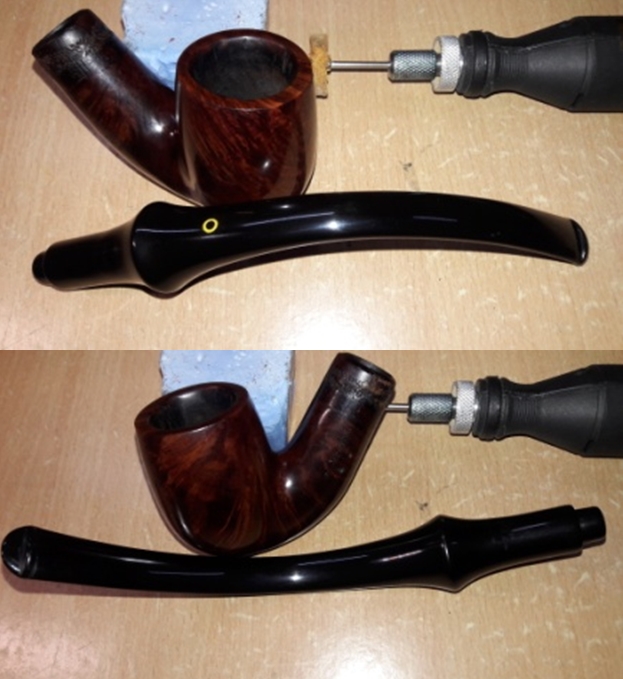
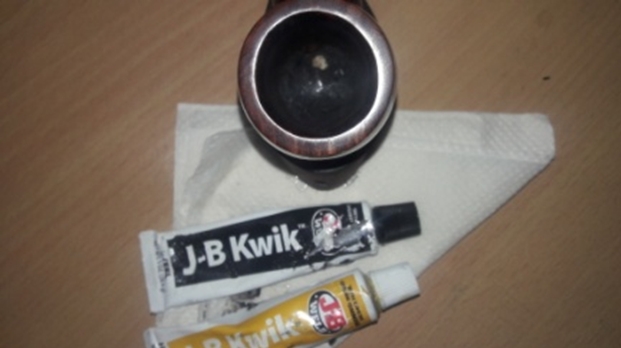
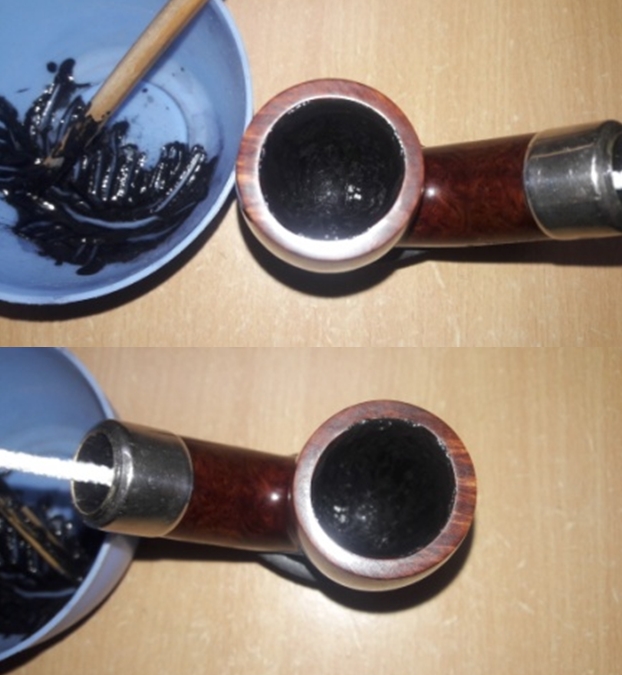
As is my norm, I started the process with stem cleaning and repairs. I cleaned the accumulated dried gunk from the insides of the tenon by scrapping it out with my dental tools followed by q-tips, pipe cleaners and isopropyl alcohol. I soon realized that no matter how many pipe cleaners and q-tips I used, the insides of the wide tenon will still keep throwing out dirty pipe cleaners. I would need to use a more invasive method. Using a shank brush and dish washing soap, I thoroughly cleaned out the gunk. I rinsed it under running warm water. Once satisfied with the internal cleaning, with my fabricated knife I scrapped off the dried oils and tars from the tenon surface. I wiped the tenon end with cotton swab and alcohol till clean. I also cleaned the stem air way and the slot end with pipe cleaners and alcohol.While I was working on the stem, a colleague had come visiting and was amazed at the patience and care being exhibited, traits which I am usually not associated with. He did crack a joke on this and clicked a couple of pictures which I have included here for posterity.I cleaned the stem surface with isopropyl alcohol on a cotton swab and followed it with a scrub using Murphy’s Oil soap and cotton swab. I also smooth the sharp edges of the ferrule with a folded piece of 150 grit sand paper. I mix clear superglue and activated charcoal and paint the damaged tenon end surface and also applied it over the both button edges, upper P-lip surface and lower surface of the P-lip. I set the stem aside for the fills to cure. I cleaned the stummel surface with acetone on a cotton swab to remove the patches of old lacquer. This cleaning further highlighted the beautiful grains on this pipe. This is sure going to be beautiful pipe in my collection. Next I decided to address the issue of strong odor in the chamber. To eliminate the ghost smells from the pipe, I decided to treat it with salt and alcohol. I do not use Kosher salt as it is not readily available here and if available, it’s very expensive. I use cotton balls which is an at par substitute as I have realized over a period of time. I pack the sump with cotton and draw out a wick from the cotton and along with a folded regular pipe cleaner; insert it in to the mortise and through the draught hole in the chamber. I pack cotton balls in to the remaining portion of the mortise. Thereafter, I pack the chamber with cotton balls to about quarter of an inch below the rim inner edge. I soak the cotton balls with isopropyl alcohol up to the brim. About half an hour later, the level of alcohol has gone down, having being absorbed by the cotton. I top it up once again and set it aside overnight. By next afternoon, the cotton and alcohol has drawn out all the remaining oils and tars from the chamber, sump and mortise and the cotton and alcohol had fulfilled its intended task. I removed the cotton balls and the dirt can be gauged by the appearance and coloration of the cotton balls. With my fabricated knife and dental tools, I spent the next hour scrapping out the entire loosened gunk. I ran pipe cleaners through the mortise to clean out all the loosened tars and gunk that had lodged when I cleaned the sump and mortise. The chamber now smells clean, fresh and looks it too. I set the stummel to dry out naturally. By this time the stem fills had cured and with a flat head needle file, I sand these fills to achieve a rough match. I further fine tuned the match by sanding the filled area with a folded piece of 220 grit sand paper pinched between my thumb and forefinger. I followed it up by sanding the entire stem surface using 400, 600, 800 grit sand papers and finally with a piece of 0000 grade steel wool. This serves to remove the deep seated oxidation and also reduces the sanding marks of the more abrasive sand papers. I also sharpened the button edges while sanding. I wiped the stem with a cotton swab and alcohol to remove all the oxidation and sanding dust from the surface. I applied a little Extra Virgin Olive oil over the stem and set it aside to be absorbed by the vulcanite.The next stummel issue to be addressed was that of the rim top surface damage. I topped the rim on a piece of 220 grit sand paper, checking frequently till I was satisfied that the charred surface was addressed to a great extent and the rim top surface is nice, smooth and even. The inner edge is still uneven, though much better than before topping, and shall be addressed next. With a folded piece of a 220 grit sand paper pinched between my thumb and forefinger, I created a slight bevel on the inner edge of the rim top surface. This helped to mask the out of round chamber and address the sever dents that had remained on the inner rim edge. It can never be perfect, it’s a repair after all, but the repairs sure looks great. I know I have scrapped the shank end while topping the rim, I should have been careful, but I noticed it early and will be under the ferrule, so no sweat!! The one fill which was seen and readied for a fresh fill was patched up with a mix of briar dust and superglue and set aside to cure. Once the fill had hardened, and it was very quick indeed, I matched the fill with the rest of the stummel surface by sanding the fill with a flat head needle file followed by sanding the fill with a folded piece of 220 grit sand paper.To preserve the patina and bring a deeper shine, I polished the stummel with micromesh pads, dry sanding with 1500 to 12000 pads. I wiped the surface with a soft cloth at the end of the micromesh cycle. The stummel looks amazing with a deep shine and beautiful grains popping over the stummel surface. The massive size of the stummel helps accentuate these grains further. The result of all the topping and subsequent micromesh polishing was that the rim top surface had a lighter hue as compared to the rest of the stummel surface. I matched the rim top surface with the rest of the stummel by staining the surface with a dark brown stain pen. I set it aside for the stain to cure.Turning my attention back to the stem, I decided to polish and shine up the stem surface. I wet sand the stem with 1500 to 12000 girt micromesh pads. Next I rub a small quantity of extra fine stem polish that I had got from Mark and set it aside to let the balm work its magic. After about 10 minutes, I hand buffed the stem with a microfiber cloth to a nice shine. I rub a small quantity of olive oil in to the stem surface to hydrate it and set it aside. After the rim top surface stain had cured for about 6 hours, I rub a small quantity of “Before and After Restoration Balm” in to the briar with my finger tips and let it rest for a few minutes. I applied the balm over the rim top surface also. The balm almost immediately works its magic and the briar now has a nice vibrant appearance with the beautiful darkened grain patterns on full display. I further buff it with a horse hair shoe brush. I wiped it with a microfiber cloth. The rim top is now perfectly matched with the rest of the stummel dark coloration. I am very pleased with the blend. I mount a cotton cloth buffing wheel on to my hand held rotary tool and apply a coat of Blue Diamond to the stummel and the stem to polish out the minor scratches. It was at this point in the process of restoration that I realized that I am yet to attach the ferrule at the shank end. I rub a small quantity of ‘Colgate’ toothpowder over the ferrule surface. Those who have not tried out this trick, you must try it out at least once, it works like magic and imparts a nice shine to the nickel plated (it works even better on Sterling Silver) ferrule. I apply superglue over the shank end, align the ferrule stamp with that on the shank and attach the ferrule over it. I press it down firmly for a couple of minutes to let the glue set. After the glue had completely cured, I tried the seating of the stem in to the mortise and realized that the stem surface still brushed against the sharp ferrule edge. With a needle file I sand the edges, frequently feeling for the sharpness with my fingers and checking the seating of the stem in to the mortise. Once the edges and seating were smooth, I applied a little petroleum jelly on the walls of the mortise as this reduces friction and moisturizes the briar and moved on to the home stretch.With a cotton buffing wheel that I use for carnauba wax, I apply a coat of carnauba wax and continue to work on it till the complete coat of wax had been polished out. I mount a clean cotton cloth buffing wheel and give the entire pipe a once over buff. I finished the restoration by giving the entire pipe a rigorous hand buffing using a microfiber cloth to raise the shine further. The finished pipe looks beautiful. Having addressed the cosmetic aspect of this pipe, I move on to address the functionality aspect by addressing the ridges and re-entrant formed at the draught hole as well as the minor/ insignificant heat fissures. I insert a petroleum jelly coated pipe cleaner in to the draught hole. I mix a small quantity of the contents from the two tubes of J B Weld in equal proportions and apply it evenly only over the damaged area near the draught hole with my fingers. I had to work deftly and fast as the compound starts to harden within 4 minutes. I set the stummel aside for the JB Weld coat to completely harden.The next day, the compound had completely hardened. With a folded piece of 220 grit sand paper, I sanded the fill to as thin a layer as I thought would be just sufficient to protect the heel and ensure a smooth even surface for the pipe mud coating.Next I mixed activated charcoal and yogurt to a thick consistency and evenly applied it over the chamber walls and set it aside to dry out naturally. Once the coating had dried I buffed the pipe again with a microfiber cloth to a nice deep shine. P.S. This was a fun project and I absolutely loved and enjoyed working on it. It has some stunning grains and beats me that even though Yello-Bole was designed as an outlet for lower grade briars not used in Kaywoodie production, this beauty is anything but lower grade!! This would be joining my collection and I shall get to admire the beauty whenever I so desire.
Thank you all for sparing your valuable time in reading thus far and I would be happy to hear comments on the conflict that I find between Yello-Bole and Kaywoodie.
Redemption of a BBB Own Make 693 Canadian with a Saddle Stem


Blog by Steve Laug

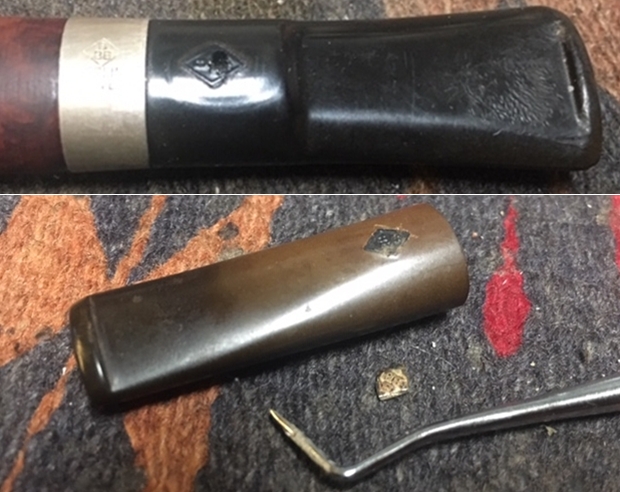
I recently rebuilt a stem for a friend, Stephen who has a similar love for BBB pipes as I do. It was a beautiful little Liverpool pipe and the stem had a large chunk out of the underside of the button. I am still working on my experiment of rebuilding chipped stems with black super glue and charcoal powder. I say experiment because I have found that though I can get the match to work well and the shape also easy to achieve, I am not sure of the durability of the repair. The flexibility of the repair vs. that of the reset of the vulcanite is very different so the jury is still out on the long term viability of the repair. Because of that we made a deal and Stephen joined the experimental pool with me. Here is the blog post on the restoration and repair of his BBB pipe (https://rebornpipes.com/2019/09/09/restoring-repairing-a-chipped-stem-on-a-bbb-own-make-607-liverpool/). He received the repaired pipe and was thrilled with it. He wanted to gift me a BBB Own Make pipe that he had that was just too big for his style of pipe smoking. It was missing the BBB brass diamond logo on the stem top but I was looking forward to restoring it and seeing if I could find a replacement for the brass emblem.
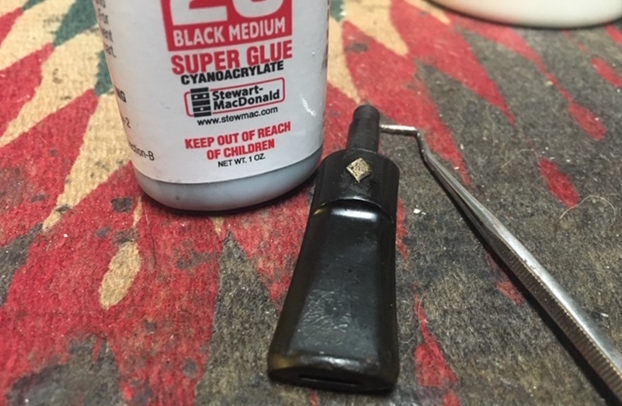
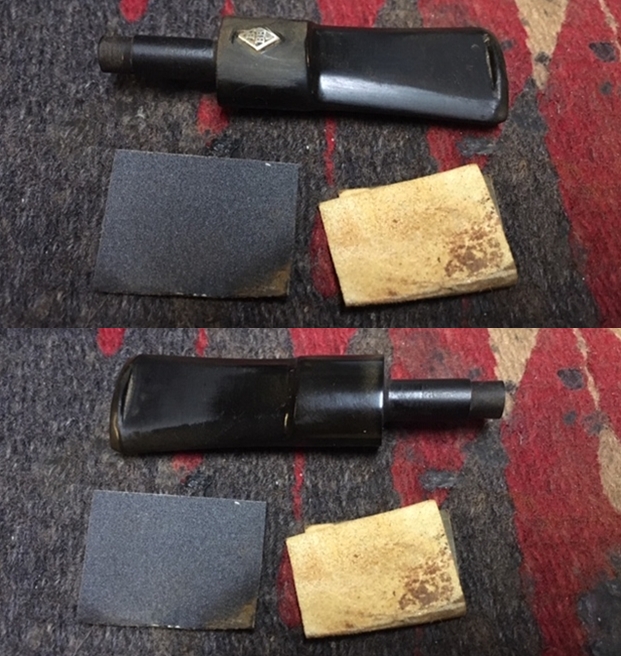
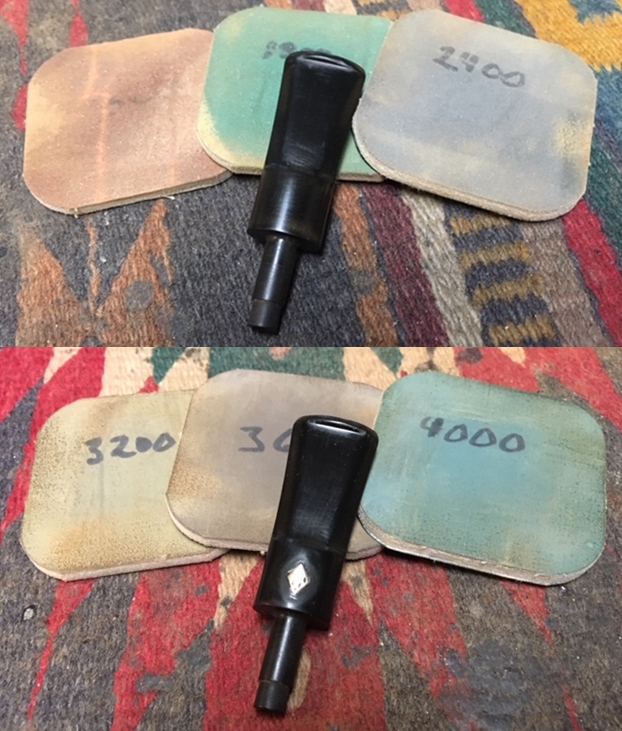
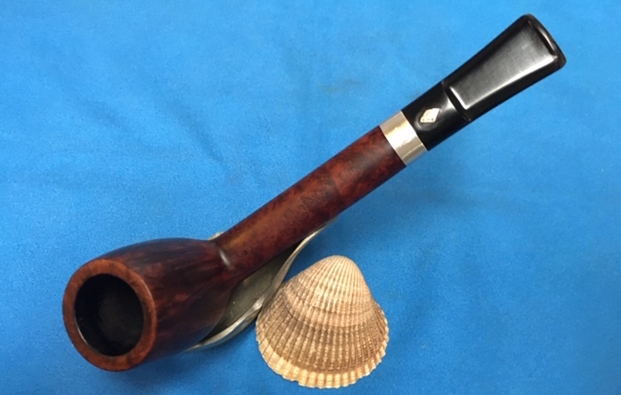
When I returned from my recent trip to Alberta the pipe was waiting for me. It had some beautiful grain around the bowl and shank. There were two fills on the right side of the bowl that were solid. The rim top had a bit of lava on the flat surface but the edges were in great condition. The bowl had a thin cake on the walls and the pipe was very dirty. The finish was dirty and dull. There was a thin silver band on the shank end that bore the BBB logo on the top with the words Sterling Silver engraved on the band so it was original and not a repair band. The stem was a vulcanite saddle stem with an inset area on the top side which had originally held brass logo that had been lost. The stem had some tooth marks and chatter on both sides just ahead of the button. The edges of the button were worn. I took a close up photo of the rim top and the stem to give a better picture of the issues that I needed to deal with in the restoration. You can see the darkening on the rear of the rim top and some damage on the inner edges of the back of the bowl. The cake on the sides of the bowl was not thick but it was hard and uneven. The stem was another story. The topside had a lot of scratches and marks around where the BBB brass diamond had been. The button was very thin on the top side both in terms of width and height. Both of the sides showed tooth marks and chatter quite prominently and would need work.I took photos of the stamping on the shank. I took a photo of the topside and you can see the BBB Diamond with Own Make flanking it on each side. The stamping on the underside read London, England over the shape number 693. You can see the nice grain on the bowl and shank sides. It is going to be a beautiful pipe once it is cleaned and restored.I reamed the thin cake in the bowl with a Savinelli Fitsall Pipe Knife to remove the buildup on the bowl walls. I sanded the inside of the bowl with a piece of 220 grit sandpaper wrapped around a piece of dowel.  Once the inside of the bowl was clean I was ready to clean out the airway in the stem, shank and mortise. I cleaned out the mortise and the airway in the shank and stem with alcohol, pipe cleaners, and cotton swabs. It did not take too long to clean out the debris in the airways and mortise.I decided to start my clean up on the bowl. I scrubbed the bowl down with Mark Hoover’s Before & After Briar Cleaner. I rubbed it into the surface of the briar, and as Mark wrote me it lifted the grime and dirt out of the briar. I rinsed the cleaner off the bowl with warm running water and dried it with a soft cloth. The photos below show the cleaned briar… Look at the grain on that pipe! I rubbed the bowl down with Before & After Restoration Balm. I worked it into the surface of the briar with my fingertips to clean, enliven and protect it. I let the balm sit for a little while and then buffed with a cotton cloth to raise the shine. I continue to use Mark Hoover’s Balm on every pipe I have been working on. The grain on the Own Make is quite stunning and it just pops now with the cleanup! It is a beauty. I polished the silver band with a jeweler’s cloth to remove the tarnish that had built up on the surface. It  polished up really well. The polished and cleaned pipe are beginning to look really good.With the cleaning and restoration of the bowl finished for now I set it aside and turned my attention to the stem. The photos below show the replacement of the Brass BBB Diamond on the top of the saddle stem. I had a broken BBB Canadian stem that had a Brass Diamond that would work well to replace the missing one on this stem. I used a dental pick to lift the brass piece off of the old stem.I used the dental pick to place some black super glue on the inset of the stem. I wiped it off the pick and then used it to place and align the brass diamond. I pressed it into the inset area with the flat edge of the pick. I set the stem aside to let the glue cure.I used a folded piece of sandpaper to smooth out the high spots of vulcanite that were there from the original pressing of the hot brass into the top of the saddle stem. I sanded out the tooth marks and chatter at the same time. I reshaped the button edges. I started the polishing of the stem with 400 grit wet dry sandpaper.I polished the stem with micromesh sanding pads – wet sanding with 1500-12000 grit pads. I wiped the stem down after each sanding pad with Obsidian Oil. I polished it with Before & After Pipe Stem Polish – both Fine and Extra Fine. Once I had finished the polishing I gave it final coat of oil and set it aside to dry.  Thanks to Stephen I have a beautiful BBB Own Make Canadian in my collection of BBB pipes today. I was able to replace the missing brass logo on the stem surface. I smoothed out the surface of the vulcanite around the insert logo and polished the stem. I put the bowl and stem back together. I polished the bowl and stem with Blue Diamond to polish out the minute scratches in the briar and the vulcanite. I gave the bowl and the stem multiple coats of carnauba wax. I buffed the pipe with a clean buffing pad to raise the shine. I hand buffed it with a microfiber cloth to deepen the shine. The pipe polished up pretty nicely. The grain on and around the bowl looked really good with the polished black vulcanite. This BBB Own Make 693 Canadian was another fun pipe to work on. It really has a look that I have come to expect from BBB pipes. It is really eye catching. The combination of various brown stains really makes the pipe look attractive. It is a comfortable pipe to hold in the hand. The finished pipe is shown in the photos below. The dimensions of the pipe are Length: 6 inches, Height: 2 inches, Outside diameter of the bowl: 1 ¼ inches, Chamber diameter: ¾ of an inch. I look forward to loading up a bowl in this one and enjoying it. I am also looking forward to what Stephen thinks of the finished pipe. Thanks for reading this blog and my reflections on the pipe while I worked on it. This is an interesting estate to bring back to life.
Redeeming an English Made Flumed Block Meerschaum Zulu


Blog by Steve Laug

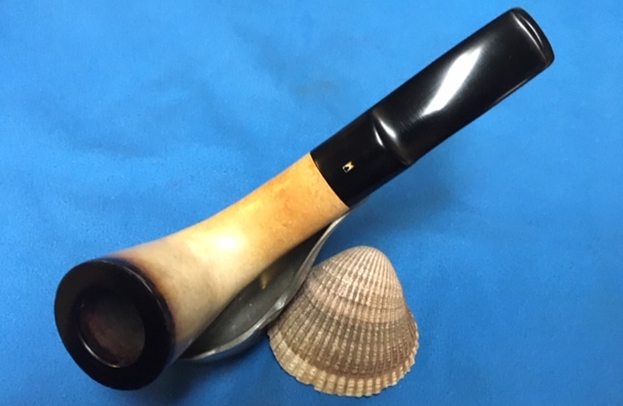
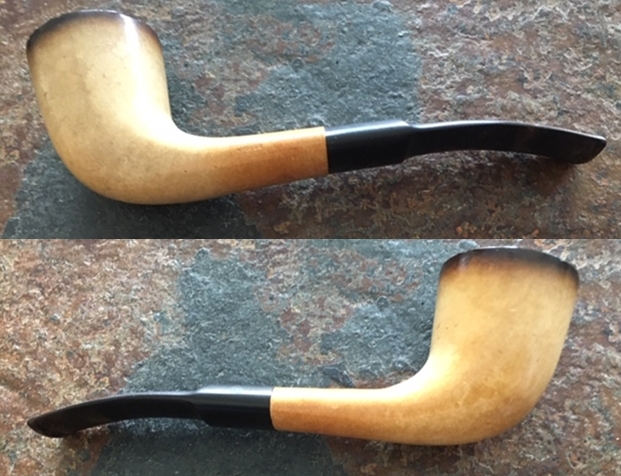
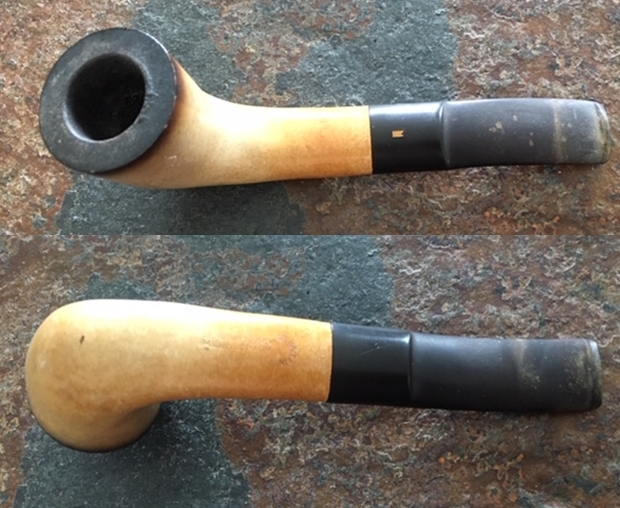
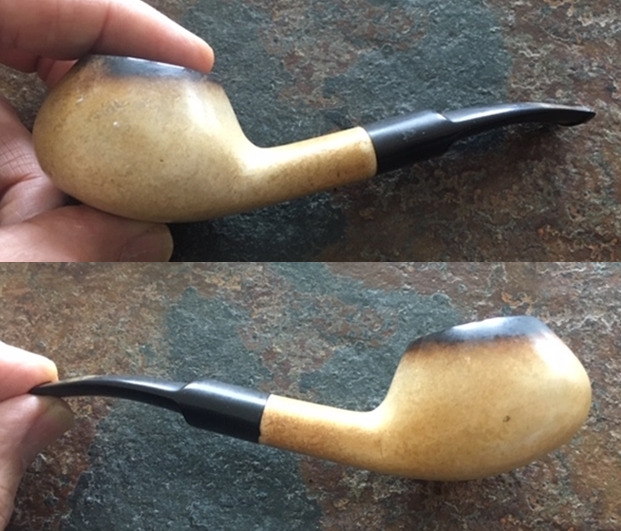
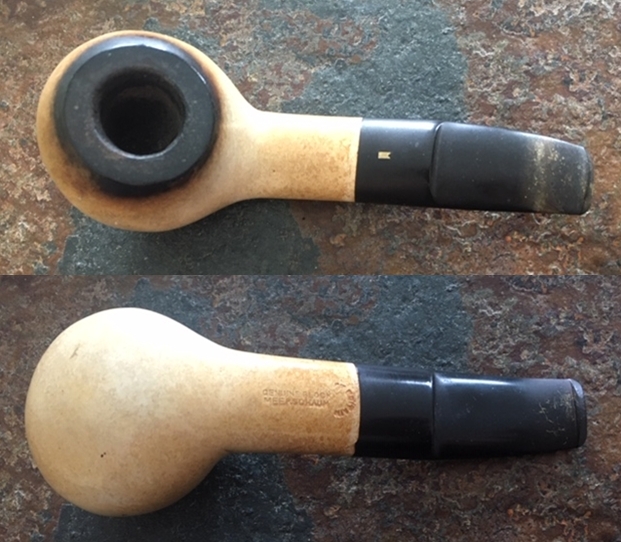
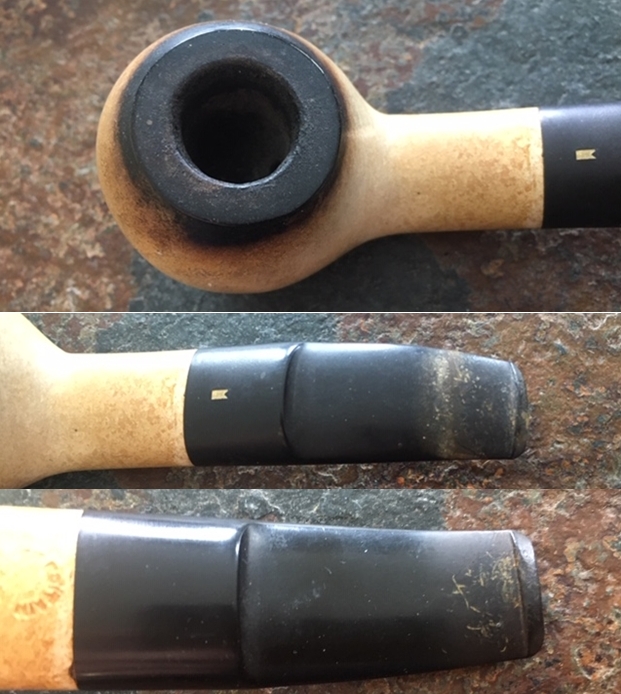
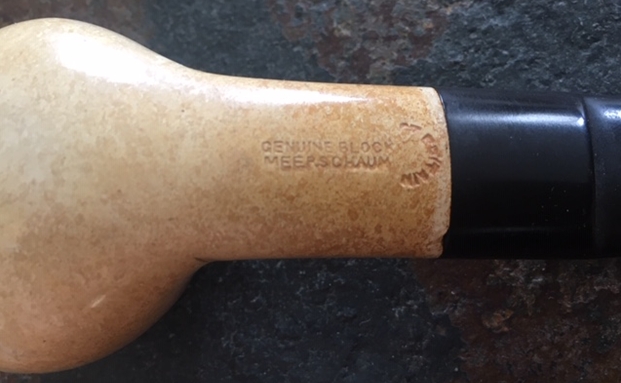
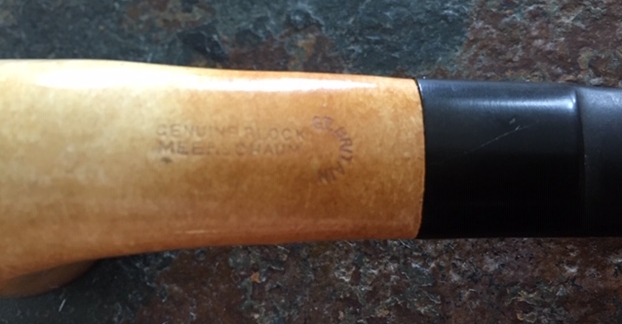
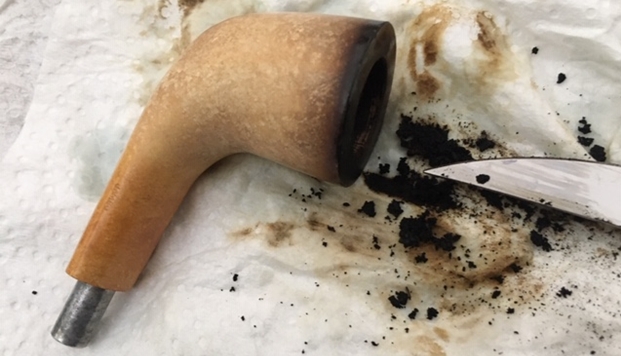
Over the past two weeks I was traveling in Alberta with my brother Jeff and his wife, Sherry. In between work appointments and presentations we took some time to visit local antique shops and malls. We found quite a few pipes. In a small Antique Shop in Lethbridge we found a few interesting pipes. The second of the ones that I am working from that find is an oval shank meerschaum Zulu. It has a flumed top and some colouring happening around the bowl and the shank. The saddle stem has a ribbon shaped/bookmark stamped logo on the top of the saddle. The pipe was dirty and caked when we picked it up. The rim top had a little lava and some small scratches in the edges of the bowl. The bowl had a thin cake in it that was hard and dense. The exterior of the bowl and shank are very dirty with grime and oils from prolonged use. The stamping on the underside of the shank below the shank/stem junction was faint but readable and read Genuine Block Meerschaum with an arched Gt. Britain at the stem shank joint. On the right side of the shank it is stamped JAMBO. The vulcanite stem was had tooth chatter on the top and the underside of the stem. There were tooth marks on both sides and on the button. I took photos of the pipe before I started the cleanup. I took close up photos of the bowl and rim to capture the condition of the pipe before I started my cleanup work. The rim top had some lava build up on the edge and there were some small nicks on the inner edge. Other than being so dirty it appeared to be in great condition. The stem was dirty and there was tooth chatter on the top and underside near the button and on the button surface itself. The stem was lightly oxidized.I took a photo to capture the stamping on the underside of the shank near the stem/shank joint. The photo shows the stamping Genuine Block over Meerschaum. Next to that there was an arched stamp that read GT BRITAIN. There was a small nick in the underside of the meerschaum next to the vulcanite stem. I also noted that there was a stamping on the left side of the shank – it read Jambo.While we were traveling I decided to do a bit of work on some of the pipes that we had found. This was the second one that I worked on. I scraped the inside of the bowl with a sharp knife. I scraped the tars and lava off the top of the rim with the same knife. I took the stem off and you can see the metal tenon set in the shank of the pipe. It is anchored firmly and the stem pressure fit over the top of the tenon.I scrubbed the exterior of the bowl with warm water and some Dawn Dish Soap to remove the buildup of grime around the bowl and on the rim top. I rinsed it well and wiped the bowl down with a clean paper towel to polish the finish on the bowl. I decided to follow up on my initial cleaning of the bowl and shank. I reamed the bowl with a Savinelli Fitsall pipe knife to remove the remnants of the cake in the bowl. I sanded the bowl with 220 grit sandpaper wrapped around a piece of dowel to smooth out the inside walls of the bowl.I scrubbed out the mortise and the airway in the shank, the metal mortise and the stem with alcohol, cotton swabs and pipe cleaners.I polished the meerschaum with micromesh sanding pads – wet sanding the bowl walls and rim top with 1500-12000 grit pads. I wiped the bowl down after each sanding pad with a damp cloth to wipe of the dust. I touched up the top of the rim and the edges of the bowl with a black stain pen to restored the colour to the edges and the top. I worked some Before & After Restoration Balm into the surface of the meerschaum with my fingertips to clean, enliven and protect it. I know that it was designed for briar but I used it for meerschaum and it works well. I let the balm sit for a little while and then buffed with a cotton cloth to raise the shine. The photos show the bowl at this point in the restoration process. I set the bowl aside and turned my attention to the stem. I sanded out the tooth chatter with 220 grit sand paper and started to polish it with a folded piece of 400 wet dry sandpaper. Once it was finished it began to shine.     I polished the stem with micromesh sanding pads – wet sanding with 1500-12000 grit sanding pads. I wiped it down after each sanding pad with a damp cloth. I polished it with Before & After Pipe Stem Polish – both Fine and Extra Fine and buffed it off with a cotton cloth. This is a beautiful Flumed top Block Meerschaum Oval Shank Zulu with a black saddle vulcanite stem. It has a great look and feel. The shape is very tactile and is a beauty. I polished stem and the bowl with Blue Diamond polish on the buffing wheel. I gave the bowl and the stem multiple coats of carnauba wax. I buffed the pipe with a clean buffing pad to raise the shine. I hand buffed it with a microfiber cloth to deepen the shine. The pipe polished up pretty nicely. The meerschaum had already begun to take on a patina and it came alive with the buffing. The rich mottled browns of the meerschaum colour works well with the polished vulcanite stem. The finished pipe has a rich look that is quite catching. Have a look at it with the photos below. The shape, finish and flow of the pipe and stem are very well done. The dimensions are Length: 5 ¼ inches, Height: 1 ¾ inches, Outside diameter of the bowl: 1 ¼ inches, Chamber diameter: ¾ of an inch. I will be adding the pipe to the rebornpipes store shortly. If you are interested in adding this Block Meerschaum, English made Zulu to your collection let me know. Thanks for walking through the restoration with me as I worked over the first of the finds of Jeff and my Alberta pipe hunt.

Restoring 16th Pipe from the Mumbai Bonanza Lot; an Amphora X-tra # 726


Blog by Paresh Deshpande

The next pipe that I had selected to work on was dictated by my desire to work on something that would be a simple and an easy project. I went through the lot that Abha, my wife, had sent me duly cleaned and selected one that came to us in a lot which I prefer to call as my Mumbai Bonanza!!

I was fortunate enough to have heeded the advice of my dear friend and mentor, Steve, and struck a deal with a junk collector from Mumbai. He did not know what he was selling and I did not know what I was buying as we reside in different cities!! The argument that Mr. Steve presented was that if not anything, I shall at least have some spares and this was logical. I struck a deal and here are pictures of the pipes that I received in this lot. This lot contains some very nice collectible pipes, a few well known brands and some mediocre brands. Overall, with seven Dunhill pipes, a Preben Holm #1 FH, a couple of “Made in England” Pete System pipes, a couple of  Charatan’s Belvedere, Custom-Bilt, Stanwell and other assorted pipes, I would say that I had struck a decent haul!! This is indeed my “Mumbai Bonanza”.

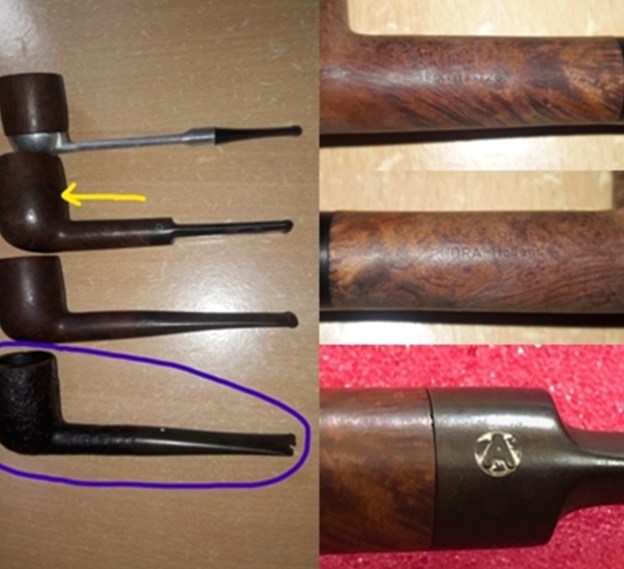
This 16th pipe that I decided to work on from this find is a medium sized straight billiards and is indicated in yellow color arrow. It has a very solid feel in the hand with top quality briar. The pipe in fact oozes of very high quality of craftsmanship with perfect proportions and classic design!! It is stamped on the left of the shank as “AMPHORA” in block capital letters over “X-tra – 726” in sentence form. The right side of the shank is stamped as “GENUINE BRIAR” over COM stamp “AMPHORA – Holland”. All the stampings are crisp and easily readable. The logo seen on this stem is letter ‘A’ embossed in a circle.Since this is the first Amphora pipe that I am working on, I was keen to know more about this brand and if possible, dating this pipe. I first turned to pipedia.org for information and the little information that I gained is reproduced below:-

Amphora pipes are made in Holland by the Jos. Gubbels organization, the same company which makes the very well known and loved Amphora Pipe Tobaccos. The pipes are produced in relatively small numbers to a high standard and not commonly found. They were used primarily in promotions and incentives for Amphora tobacco.

The Royal Dutch Pipe Factory Elbert Gubbels & Sons B.V. is the only manufacturer of briarroot tobacco pipes in the Benelux countries where pipes of high quality are made under the brands Big Ben, Hilson, Royal Dutch and Amphora. They also supply numerous smokers’ accessories of high quality.

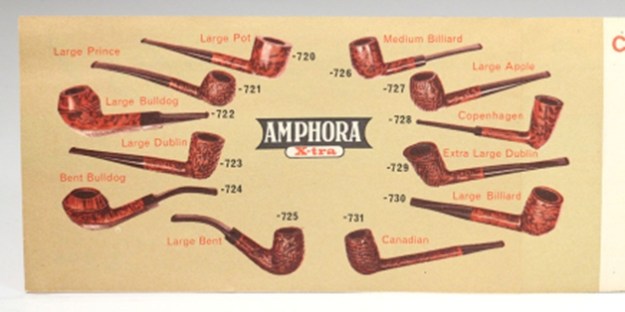
I came across this shape chart posted on this site courtesy Doug Valitchka, which shows the shape # 726 as being a medium billiard and similar to the one on my table.Next I turned to pipephil.eu and the only additional information I learned was that its mother company, The Royal Dutch Pipe Factory went bankrupt in 2012.

Still not satisfied with the information gained so far, I turned to rebornpipes.com and sure enough, I came across this addendum by Robert M. Boughton which points to a connection of Amphora pipes to Dr. Grabow!! This does make for a very interesting read and is highly recommended. Here is the link to the write up:-

https://rebornpipes.com/2016/08/24/about-the-winner-of-an-amphora-bent-billiard-and-more-information-on-the-brand/

INITIAL VISUAL INSPECTION
The pipe came to us in a very well smoked state and a thick layer of cake build up is observed in the chamber. The rim top surface is covered in the thick overflow of lava and several dents and dings to the inner and outer rim edges can be seen, probably caused due to tapping it must have received at the hands of the previous owner to remove the dottle. This will need to be addressed.The smooth stummel surface has beautiful grain patterns with a mix of Bird’s eye, cross grains and nice swirls. The stummel surface has dulled a bit and appears lifeless due to accumulation of dust and dirt. The mortise and the draught hole are clogged with accumulation of oils and tars making the draw laborious.The straight vulcanite saddle stem has a slight flair out towards the slot end and is deeply oxidized with bite marks and tooth chatter on either surface in the bite zone, more so on the upper surface of the stem. The insides of the slot and tenon have heavy accumulation of oils and tars. The stem has calcification deposits towards the button end. The button edges also have bite marks; in fact, they are worn out at places. The embossed logo of ‘A’ has faded a bit.INITIAL CLEANING BY ABHA…
The initial cleaning on this pipe was done by Abha, my wife (she has cleaned up around 40-50 pipes and these have now reached me for further restoration). She reamed out the complete cake and further smoothed out the chamber walls with a folded piece of 220 grit sand paper. She further cleaned out the internals of the shank with pipe cleaners and alcohol and cotton buds. She followed the internal cleaning of the shank with external cleaning of the stummel using Murphy’s Oil soap and hard bristled tooth brush and dried it with paper napkins and cotton cloth.

Next she cleaned out the internals of the stem air way and immersed it in “Before and After Deoxidizer” solution along with the stem of other pipes in line for restoration. Once the stem had soaked overnight, she cleaned the stem under running warm water and scrubbed the raised oxidation from the stem surface using Scotch Brite pad. She further removed the oxidation by scrubbing the stem with 0000 grade steel wool and applied a little olive oil to rehydrate the stem.

ONCE THE PIPE IS ON MY WORK TABLE…
The cleaned up pipes presents a very clear picture of what needs to be done to restore this pipe to a pristine and smokable condition. I really cannot thank Abha, my wife, enough for all the help and support that she extends me in my pursuance of this hobby. I proceed to carry out my appreciation of the work that needs to be done on this pipe to restore it.

The chamber is odorless and the walls are solid without any signs of damage. The smooth rim top surface with nicks and uneven surface is where all the action is on this pipe with an equally damaged inner and outer rim edge. This should be addressed to some extent when I top the rim surface.The stummel surface is without any fills or dents and dings. The only issue that I can figure is the dull and dry appearance of the stummel. This stummel will turn out beautiful and the grains will stand out once I have sanded and polished the surface. The mortise and shank internals are nice and clean.The oxidation on the vulcanite stem has been greatly reduced, thanks to all the efforts put in by Abha, clearly defining the deeper bite marks and the damage to the button edges on both surfaces of the stem. These tooth marks would be required to be filled with a mix of activated charcoal and superglue. A bit of sanding to match the fill and remove the deeper oxidation followed by micromesh polishing cycle should add a nice shine to the stem. The stem logo, unfortunately, appears to have worn out during the initial cleaning. I shall try and highlight it to the extent possible.THE PROCESS
The first issue I addressed was that of the stem repairs as this would take the maximum of my time to clean, repair and subsequently spruce up the stem. I flamed the damaged button edge and the tooth indentations with the flame of a lighter. This helps the vulcanite to rise to the surface as it has an inherent property to regain its original shape when heated. Once the vulcanite had risen to the surface, a few linear pits were observed right at the bottom of the button edge on both sides of the stem surface (marked in red semi circle). It appears as if the stem surface would break and cave in along these linear pits. To address this issue and also to sharpen the button edges, I mixed superglue and activated charcoal powder and diligently applied it over the pits in the bite zone on both upper and lower stem surface and over both the button edges and set it aside to cure.With the stem fill set aside to cure, I started with cleaning of the stummel surface. With a folded piece of 220 grit sand paper, I sand the entire stummel surface. This not only removes the stubborn dirt and grime that remained on the stummel but also evens out the minor dents and dings from the surface. I followed it up with sanding using a piece of 0000 grade steel wool. This helps reduce the sanding marks left behind by the coarser grit sand paper. These sanding marks will be completely eliminated once I am through with micromesh and Blue Diamond polish.Now that I had a fair idea of the extent of topping required to the rim surface, I top the rim on a piece of 220 grit sand paper to even out the rim surface dents and dings. I addressed the uneven inner edge by creating a light bevel to inner edge with a folded piece of 220 grit sand paper pinched between my thumb and index finger. To further smooth out the scratches left behind by the abrasive 220 girt sand paper, I top the rim surface on a piece of 400 grit sand paper. I had hoped that further sanding with a 400 grit paper will address the minor dings that remained on the outer edge, but that was not to be. Thus, with a folded piece of 220 grit sand paper pinched between my thumb and index finger, I created a light bevel over the outer edge. I am very happy at the way the chamber and rim top surface appears at this point in restoration.I subjected the stummel to a complete cycle of micromesh polish, wet sanding with 1500 to 12000 grit pads. I paid greater attention to polish the rim top surface and the bevels created on the inner and outer rim edges. I wiped the stummel with a moist cloth after every grit pad to remove the sanding dust left behind by the pads. This also helps in monitoring the progress being made and provides an opportunity to take early corrective action, if required. I am happy with the progress being made till now. Next, I rub a small quantity of “Before and After Restoration Balm” in to the briar with my finger tips and worked it deep in to the surface and let it rest for a few minutes. The balm almost immediately works its magic and the briar now has a nice vibrant appearance with the beautiful swirl grain patterns on full display. The contrast of the dark browns of the grain with the light hues of the rest of the stummel adds an interesting dimension to the appearance of the stummel. I further buffed it with a horse hair brush to further deepen the shine. Turning my attention to the stem repairs in my home stretch, using a flat head needle file, I reshaped the button and roughly matched the fills with the rest of the stem surface. I sand the fills with a piece of folded 220 grit sand paper and followed it up by further sanding the stem with 320, 600, 800 grit sand papers and finally with a piece of 0000 grade steel wool to achieve a perfect blending of the fills with the stem surface and a build a crisp button edge on either surface of the stem. The repairs look good and the stem should polish up nicely.I completed the polishing cycle of the stem by wet sanding the surface with 1500 to 12000 girt pads. The stem looks great with the fills nicely matched with the rest of the surface. I gave a final rub with “Before and After Extra Fine” stem polish compound from Mark to remove fine scratches from the stem surface. I rub a little quantity of Extra Virgin Olive oil in to the stem surface and set it aside to be absorbed by the vulcanite. The stem polished up nicely and appears as good as when new. To complete the restoration, I mount a cotton cloth buffing wheel on to my hand held rotary tool and applied a coat of Blue Diamond to the stummel and the stem to polish out the minor scratches. With a cotton buffing wheel that I use for carnauba wax, I apply a coat of carnauba wax and continue to work on it till the complete coat of wax had been polished out. I finished the restoration by giving the entire pipe a rigorous hand buffing using a microfiber cloth to raise the shine further. The finished pipe with a natural finish to the briar looks amazingly beautiful and is now ready for a change of guard with a new piper. The pipe feels really light in the hand and has such a perfect balance in the mouth if you like to smoke your pipe clenched. I really appreciate your valuable time spent in walking the distance with me on this restoration.

Redeeming an English Made Flumed Meerschaum Author


Blog by Steve Laug

Over the past two weeks I was traveling in Alberta with my brother Jeff and his wife, Sherry. In between work appointments and presentations we took some time to visit local antique shops and malls. We found quite a few pipes. In a small Antique Shop in Lethbridge we found a few interesting pipes. The first of the ones that I am working from that find is an oval shank meerschaum Author. It has a flumed top and some colouring happening around the bowl and the shank. The saddle stem has a ribbon shaped/bookmark stamped logo on the top of the saddle. The pipe was dirty and caked when we picked it up. The rim top had a little lava and some small scratches in the edges of the bowl. The bowl had a thin cake in it that was hard and dense. The exterior of the bowl and shank are very dirty with grime and oils from prolonged use. The stamping on the underside of the shank below the shank/stem junction was faint but readable and read Genuine Block Meerschaum with an arched Gt. Britain at the stem shank joint. The vulcanite stem was had tooth chatter on the top and the underside of the stem. There were tooth marks on both sides and on the button. I took photos of the pipe before I started the cleanup. I took close up photos of the bowl and rim to capture the condition of the pipe before I started my cleanup work. The rim top had some lava and a few nicks on the inner edge. Other than being so dirty it appeared to be in great condition. The stem was dirty and there was tooth chatter on the top and underside near the button and on the button surface itself. The stem was lightly oxidized.I took a photo to capture the stamping on the underside of the shank near the stem/shank joint. The photo shows the stamping Genuine Block over Meerschaum. Next to that there was an arched stamp that read GT BRITAIN. There was a small nick in the underside of the meerschaum next to the vulcanite stem.While we were traveling I decided to do a bit of work on some of the pipes that we had found. I scraped the inside of the bowl with a sharp knife. I scraped the tars and lava off the top of the rim with the same knife. I took the stem off and you can see the metal tenon set in the shank of the pipe. It is anchored firmly and the stem pressure fit over the top of the tenon.I scrubbed the exterior of the bowl with warm water and some Dawn Dish Soap to remove the buildup of grime around the bowl and on the rim top. I rinsed it well and wiped the bowl down with a clean paper towel to polish the finish on the bowl. I decided to follow up on my initial cleaning of the bowl and shank. I reamed the bowl with a Savinelli Fitsall pipe knife to remove the remnants of the cake in the bowl. I sanded the bowl with 220 grit sandpaper wrapped around a piece of dowel to smooth out the inside walls of the bowl.I scrubbed out the mortise and the airway in the shank, the metal mortise and the stem with alcohol, cotton swabs and pipe cleaners.I polished the meerschaum with micromesh sanding pads – wet sanding the bowl walls and rim top with 1500-12000 grit pads. I wiped the bowl down after each sanding pad with a damp cloth to wipe of the dust. I worked some Before & After Restoration Balm into the surface of the meerschaum with my fingertips to clean, enliven and protect it. I let the balm sit for a little while and then buffed with a cotton cloth to raise the shine. The photos show the bowl at this point in the restoration process. I set the bowl aside and turned my attention to the stem. I sanded out the tooth chatter with 220 grit sand paper and started to polish it with a folded piece of 400 wet dry sandpaper. Once it was finished it began to shine.I polished the stem with micromesh sanding pads – wet sanding with 1500-12000 grit sanding pads. I wiped it down after each sanding pad with a damp cloth. I polished it with Before & After Pipe Stem Polish – both Fine and Extra Fine and buffed it off with a cotton cloth. This is a beautiful Flumed top Block Meerschaum Oval Shank Author with a black saddle vulcanite stem. It has a great look and feel. The shape is very tactile and is a beauty. I polished stem and the bowl with Blue Diamond polish on the buffing wheel. I gave the bowl and the stem multiple coats of carnauba wax. I buffed the pipe with a clean buffing pad to raise the shine. I hand buffed it with a microfiber cloth to deepen the shine. The pipe polished up pretty nicely. The meerschaum had already begun to take on a patina and it came alive with the buffing. The rich mottled browns of the meerschaum colour works well with the polished vulcanite stem. The finished pipe has a rich look that is quite catching. Have a look at it with the photos below. The shape, finish and flow of the pipe and stem are very well done. The dimensions are Length: 5 ¼ inches, Height: 1 ½ inches, Outside diameter of the bowl: 1 ½ inches, Chamber diameter: ¾ of an inch. I will be adding the pipe to the rebornpipes store shortly. If you are interested in adding this block meerschaum, English made Author to your collection let me know. Thanks for walking through the restoration with me as I worked over the first of the finds of Jeff and my Alberta pipe hunt.

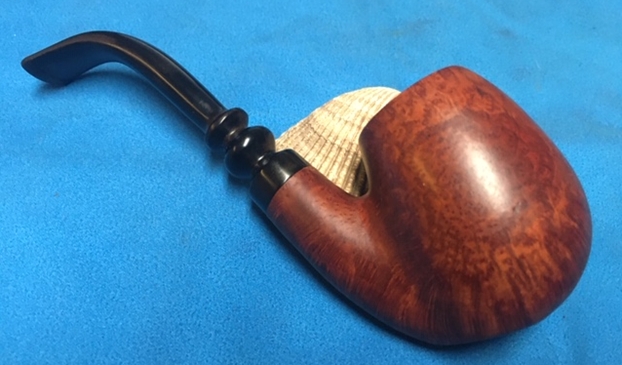
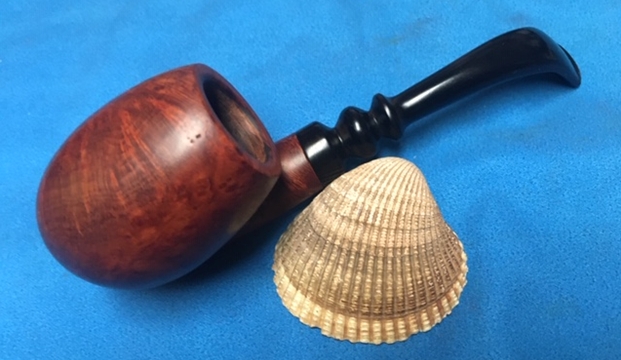
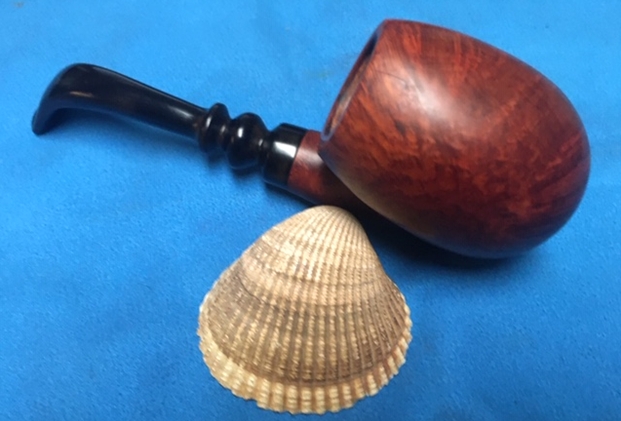
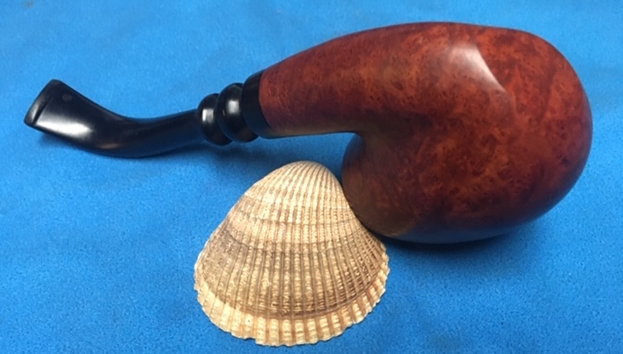
New Life for a Malaga Egg Shaped Oom Paul for Alex


Blog by Steve Laug

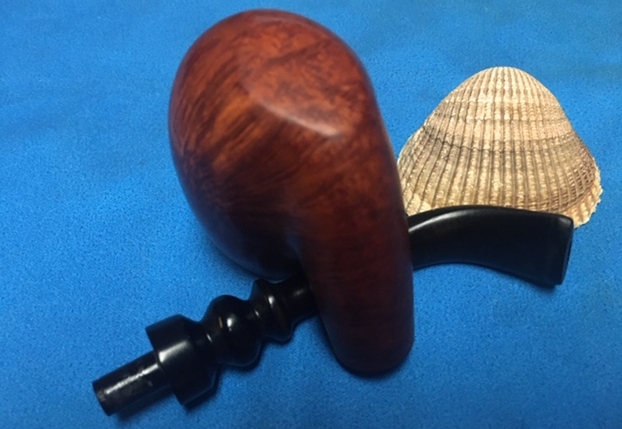
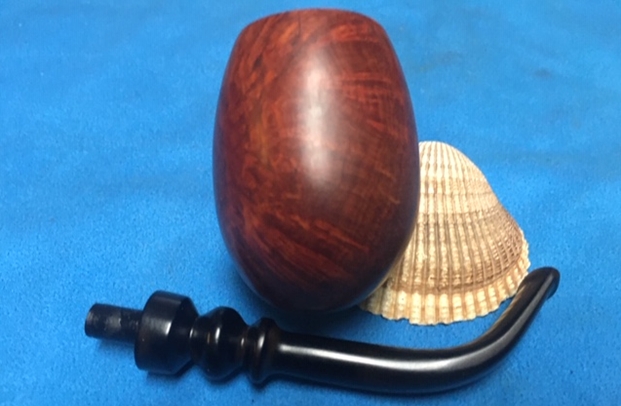
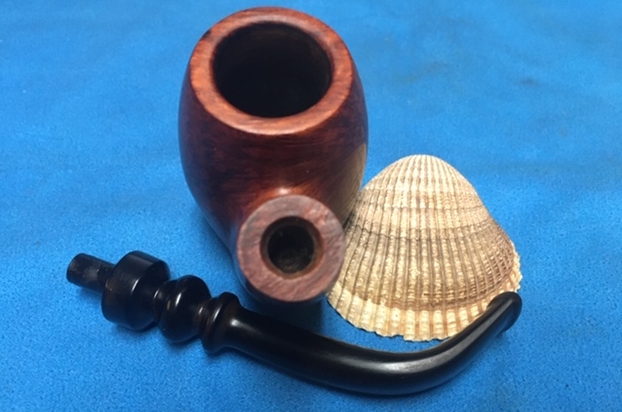
I have been working on a lot of different estate pipes and selling them for different families. I am continuing to work on the Malaga pipes that Alex put aside for restoration. He also brought other pipes to add to his box. I have a box of pipes from Alex that I am always working away at. He periodically drops more Malaga pipes into his box. There are quite a few of them to work on so I decided work on a few of them. The next one of these was another Malaga pipe. It is a beautiful Egg shaped Oom Paul that has a very tight grain pattern. It also has a fancy turned vulcanite stem. The pipe was dirty and caked when arrived. The rim top has a little lava and some small nicks on the left and front of the outer edge of the bowl. The bowl had a thin cake in it that was hard and dense. The exterior of the bowl and shank are very dirty with grime and oils from prolonged use. The stamping on the underside of the shank below the shank/stem junction was faint but readable and read MALAGA. The vulcanite stem was had tooth chatter on the top and the underside of the stem. There were tooth marks on both sides as well and the button was worn. I took photos of the pipe before I started the cleanup work. I took close up photos of the bowl and rim to capture the condition of the pipe before I started my cleanup work. The rim top had some lava and a few nicks on the outer front and left edge. The inner edge was slightly worn on the right inner edge where the rest of the inner edges was smooth and unbeveled. Other than being so dirty it was in great condition. The stem was dirty and there was tooth chatter on the top and underside near the button. There were tooth marks on the topside and underside ahead of the button and the sharp edge of the button was worn and damaged. The stem was also lightly oxidized.I took a photo to capture the stamping on a smooth panel on the underside of the shank near the stem/shank joint. The photo shows the stamping MALAGA on the underside of the shank is very readable.If this is the first of the Malaga restorations that you have read about then you should know the backstory of the brand. I am including the link to a blog that I wrote that gives some of the history of the Malaga brand and the Malaga Pipe Shop in Royal Oak, Michigan in the USA. I have written an earlier blog to give a little history of the Malaga Brand and the pipemaker, George Khoubesser. Here is the link – https://rebornpipes.com/tag/malaga-pipes/.That blog also includes links to a catalogue and the history of the pipemaker George Khoubesser. Follow the link to get a feel for the brand and the pipemaker.

I decided to start with the issues with the rim top first. I wiped down the rim top of the bowl with a damp cloth to remove the tars and lava. I topped the bowl with 220 grit sandpaper on a topping board to remove the damaged areas. Once the top was smoothed out I filled in the holes on the front and left outer edge with clear super glue. Once the repairs cured I sanded the top and edge smooth with a folded piece of 220 grit sandpaper and 400 grit wet dry sandpaper. I followed our regular regimen for cleaning estates. I reamed the bowl with a PipNet pipe reamer and followed up with a Savinelli Fitsall pipe knife to remove the cake. I sanded the bowl with 220 grit sandpaper wrapped around a piece of dowel to smooth out the inside walls of the bowl. I scrubbed out the mortise and the airway in the shank and the stem with alcohol, cotton swabs and pipe cleaners. I restained the top of the rim and inner edge with an oak coloured stain pen to match the colour of the rest of the bowl. Once it had dried the match was very good.I polished the briar with micromesh sanding pads – 1500-12000 grit pads. I wiped the bowl down after each sanding pad with a damp cloth to wipe of the dust. I scrubbed the briar with Before & After Briar Cleaner. I rubbed it into the surface of the briar with my finger tips and let it sit for about 10 minutes then rinsed it off with running water. I dried it off with a soft cloth. I worked some Before & After Restoration Balm into the surface of the briar with my fingertips and a horsehair shoe brush to clean, enliven and protect it. I let the balm sit for a little while and then buffed with a cotton cloth to raise the shine. The photos show the bowl at this point in the restoration process. I set the bowl aside and turned my attention to the stem. I wiped down the stem with alcohol and cleaned out the tooth marks and deep dents in the vulcanite. I filled them in with clear super glue and also built up the surface of the button on the top and underside. I set it aside and let the repair cure.Once the repairs had cured I used a needle file to cut button edge, reshape the button and also smooth out the repaired areas. I sanded out the tooth chatter with 220 grit sand paper and started to polish it with a folded piece of 400 wet dry sandpaper. Once it was finished it began to shine.I polished the stem with micromesh sanding pads – wet sanding with 1500-12000 grit sanding pads. I wiped it down after each sanding pad with a damp cloth. I polished it with Before & After Pipe Stem Polish – both Fine and Extra Fine and buffed it off with a cotton cloth. This is a beautiful Malaga Egg shaped Oom Paul with a fancy black vulcanite turned stem. It has a great look and feel. The shape is very tactile and is a beauty. I polished stem and the bowl with Blue Diamond polish on the buffing wheel. I gave the bowl and the stem multiple coats of carnauba wax. I buffed the pipe with a clean buffing pad to raise the shine. I hand buffed it with a microfiber cloth to deepen the shine. The pipe polished up pretty nicely. The rich oil cured briar took on life with the buffing. The rich brown colour of the briar works well with the polished vulcanite stem. The finished pipe has a rich look that is quite catching. Have a look at it with the photos below. The shape, finish and flow of the pipe and stem are very well done. The dimensions are Length: 6 ½ inches, Height: 2 1/8 inches, Outside diameter of the bowl: 1 ¼ inches, Chamber diameter: 3/4 of an inch. I will be adding the pipe to the finished Malaga pipes that I have set aside for Alex. This will be a great addition to his collection of Malaga pipe. Thanks for walking through the restoration with me as I worked over another Malaga.

Refurbishing a Tired Looking Oom Paul from Steve’s Grab Box


Blog by Paresh Deshpande

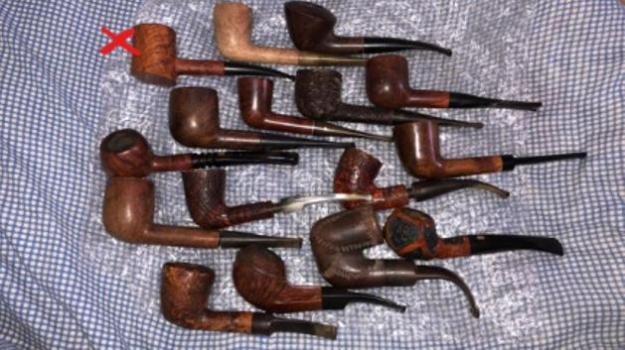
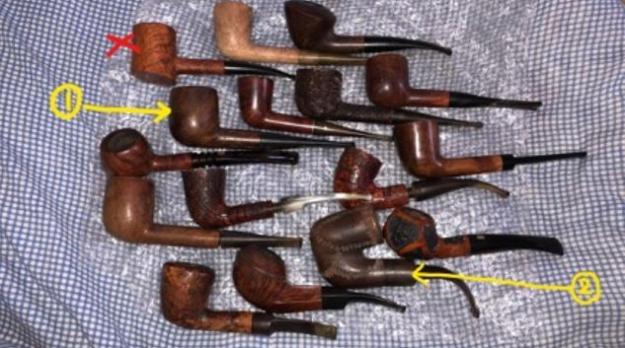
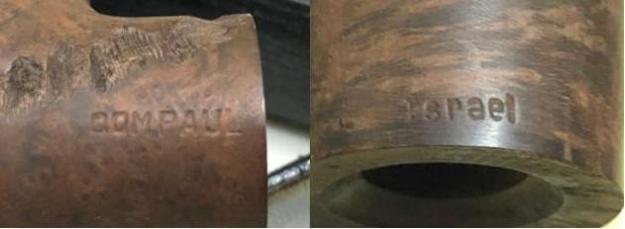
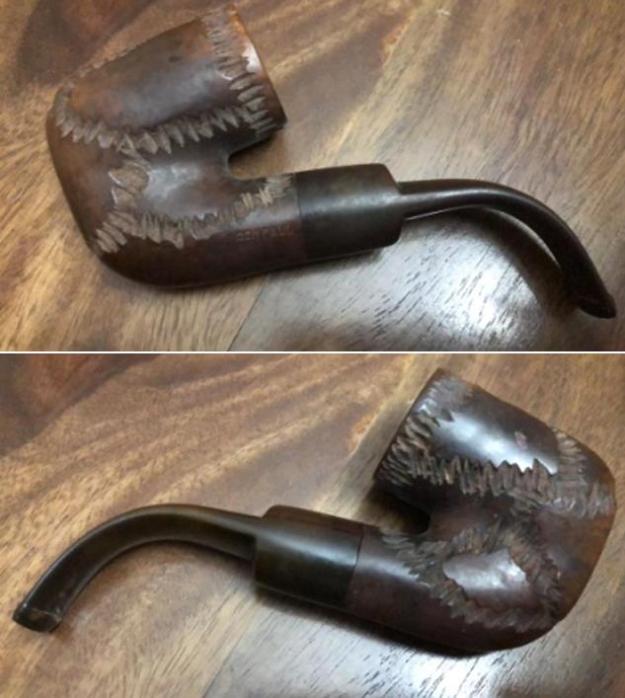
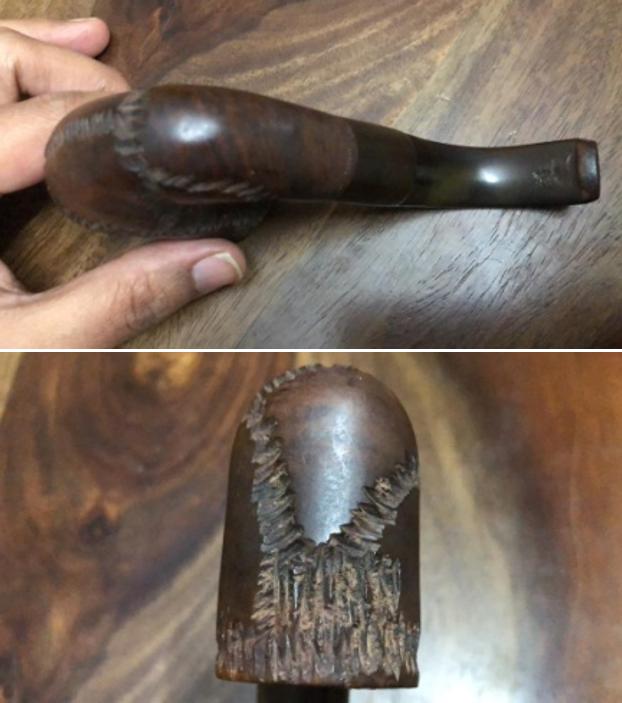
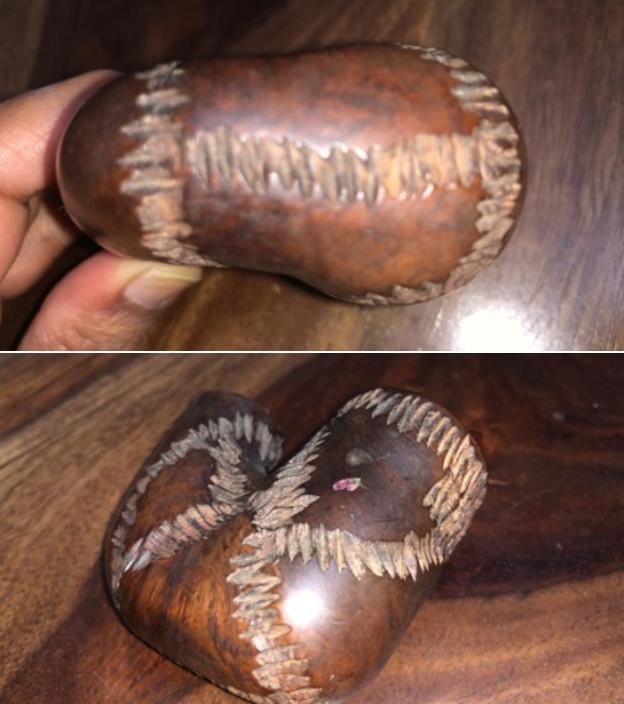
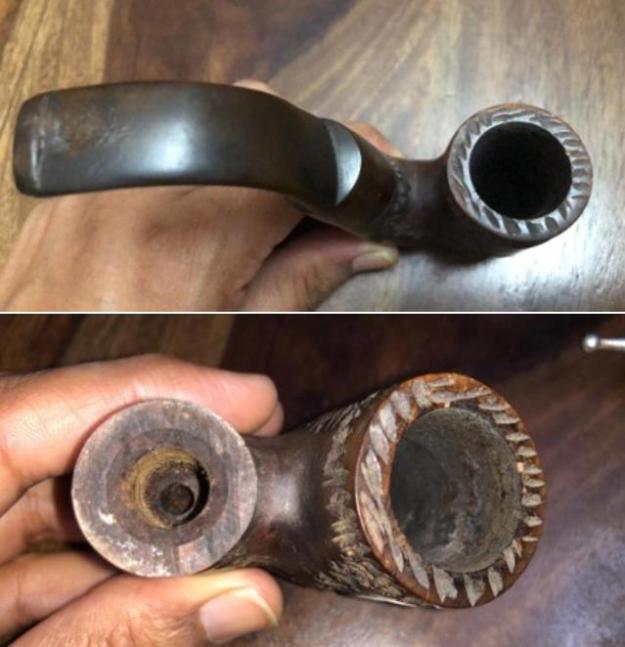
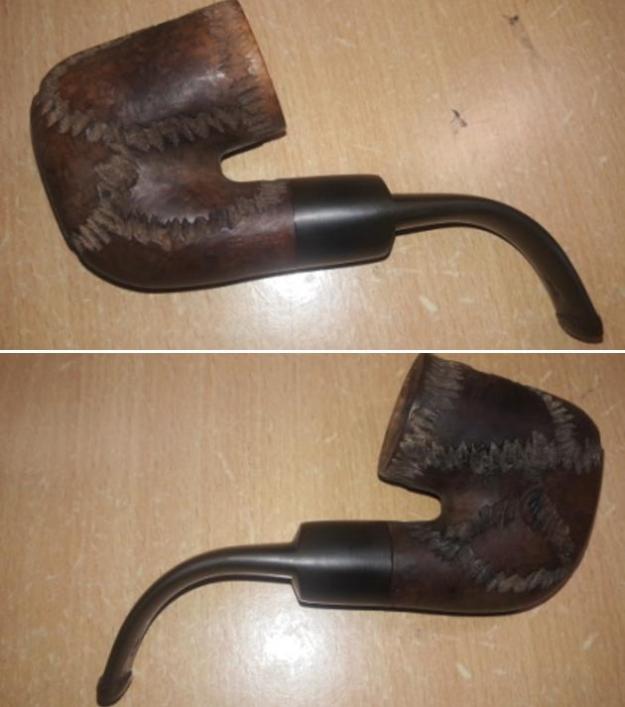
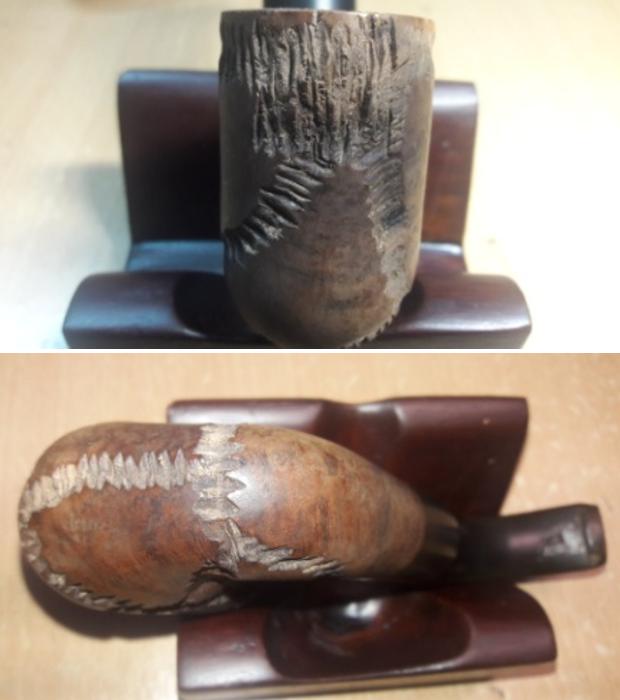
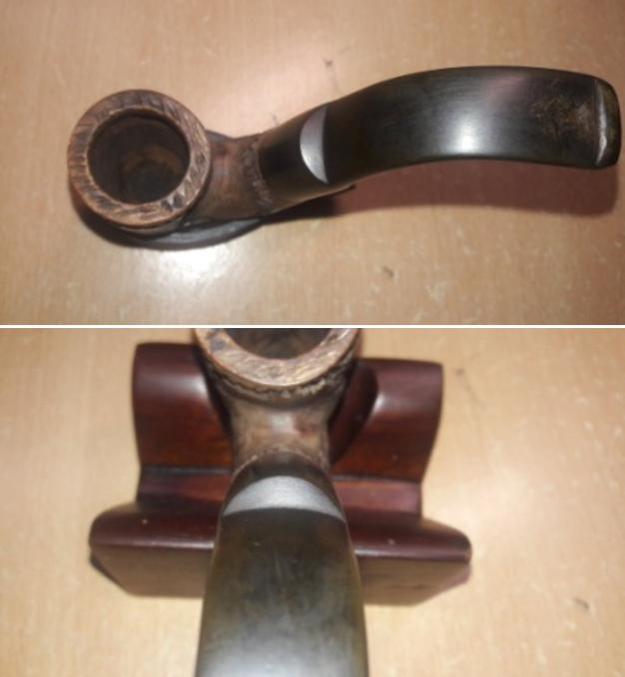
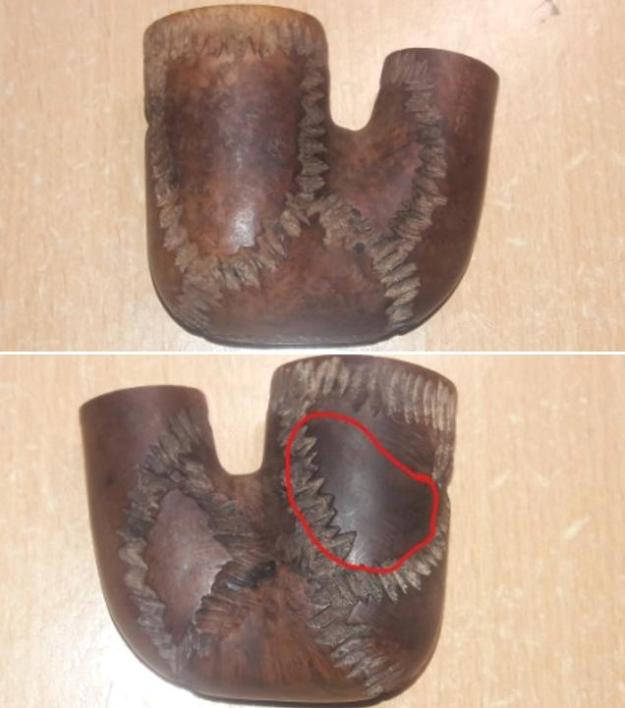
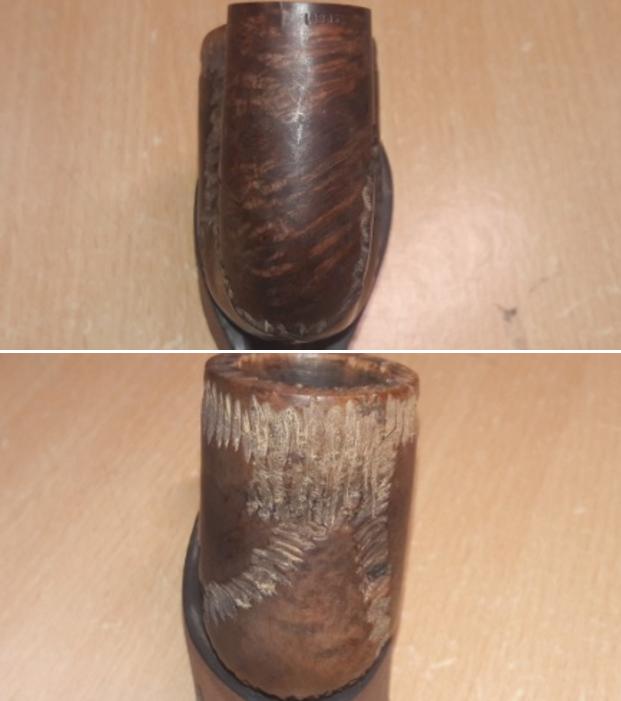
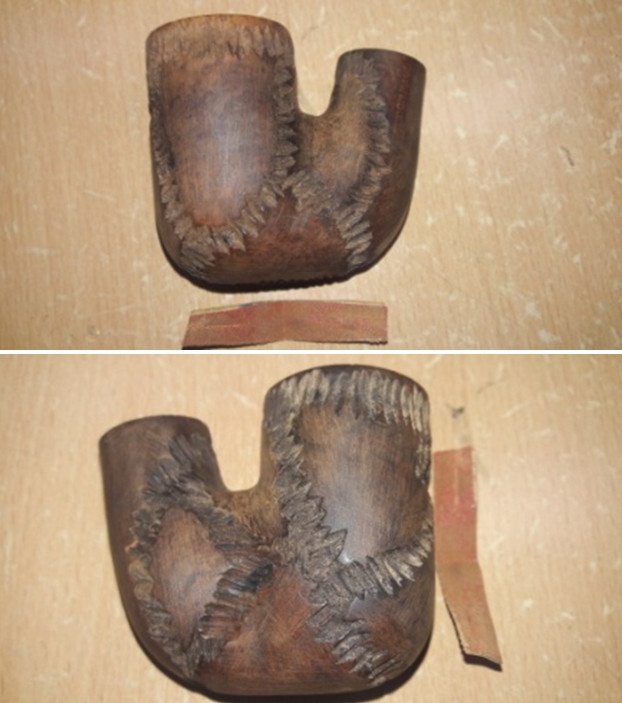
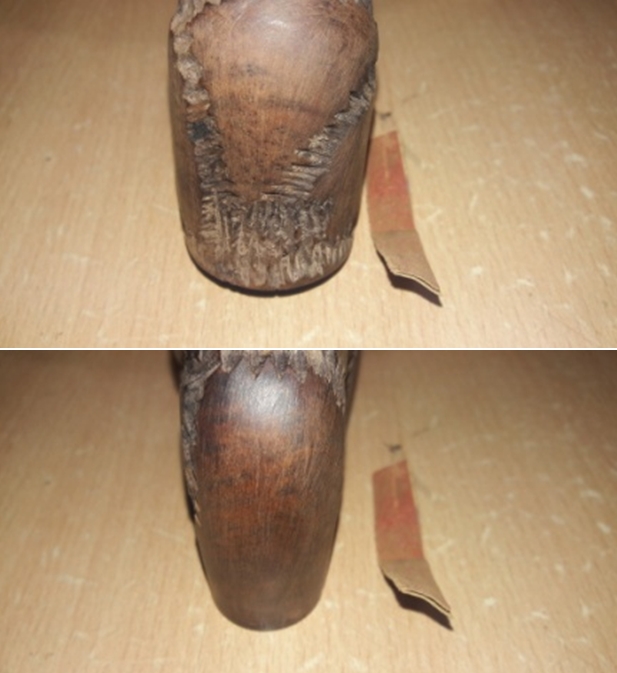
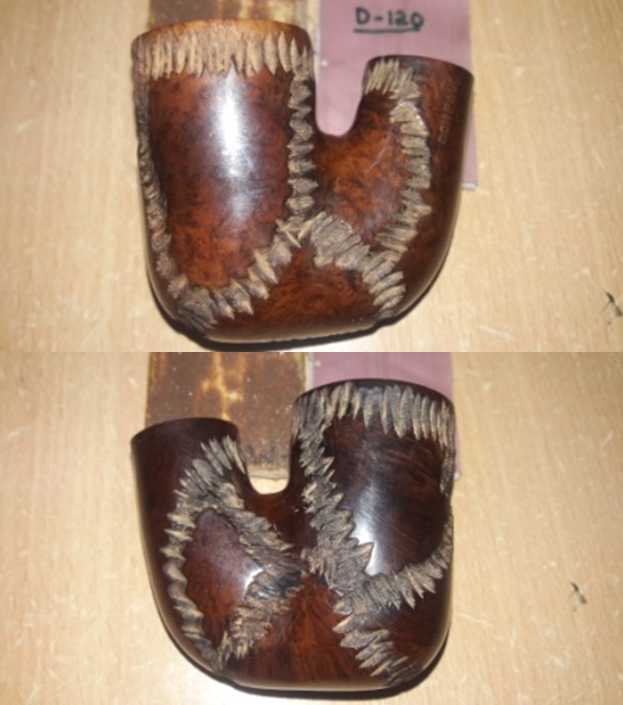
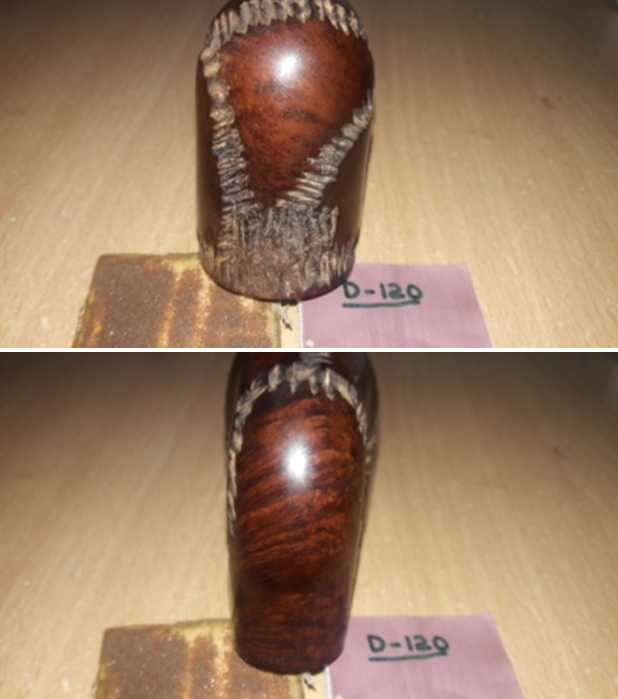
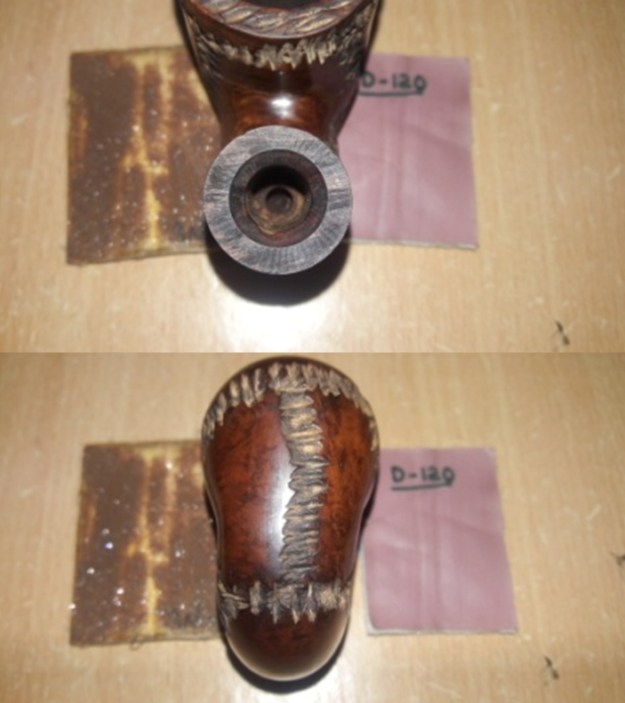
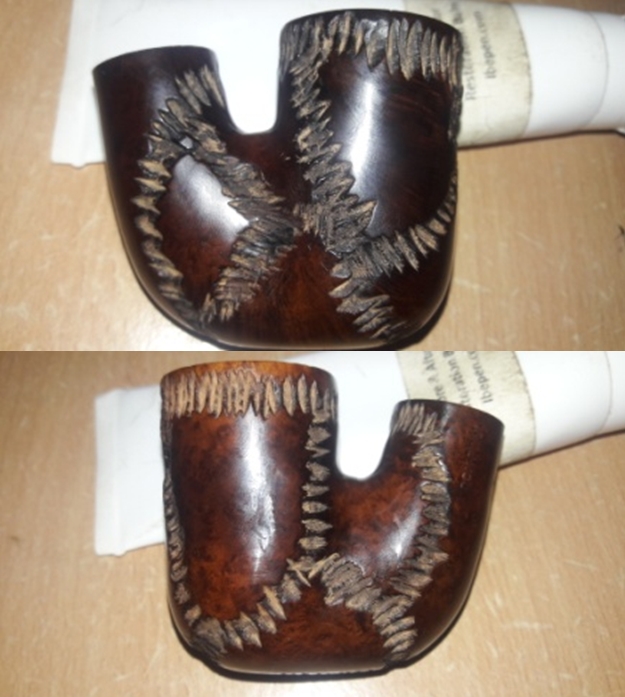
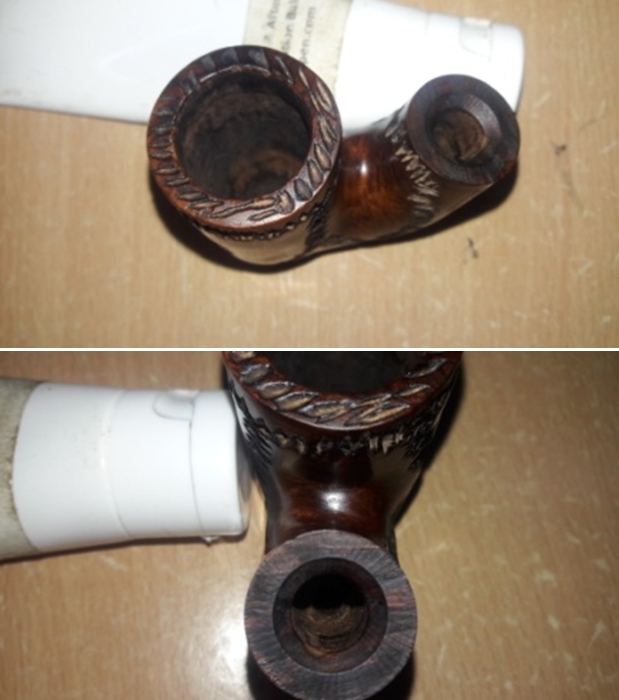
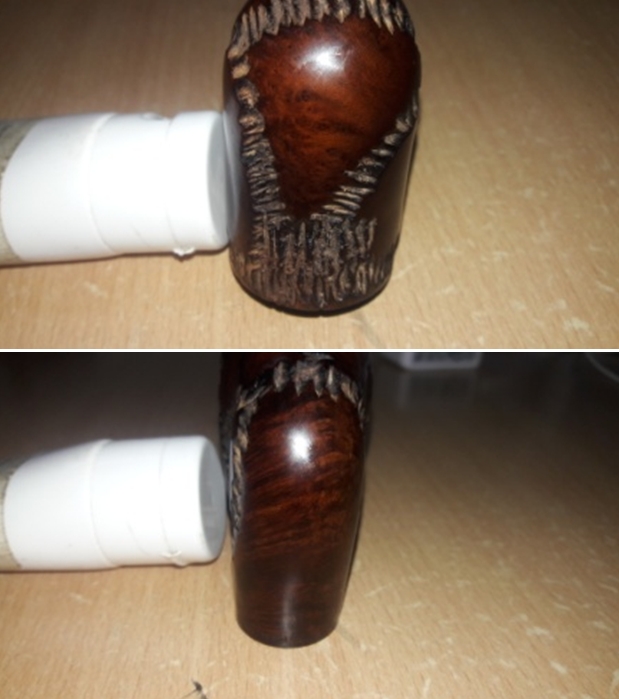
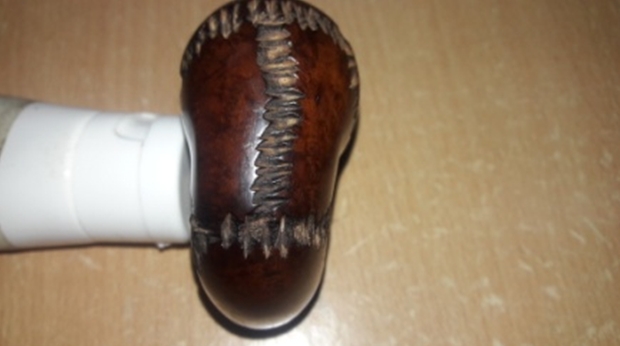
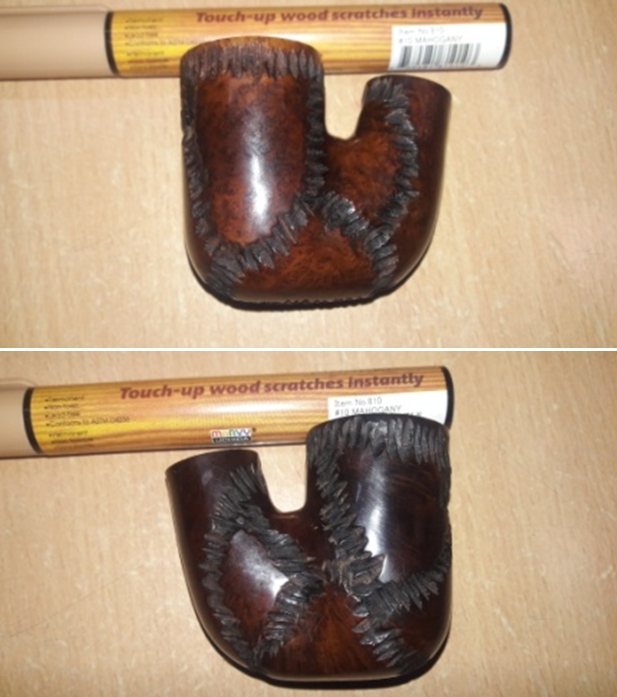
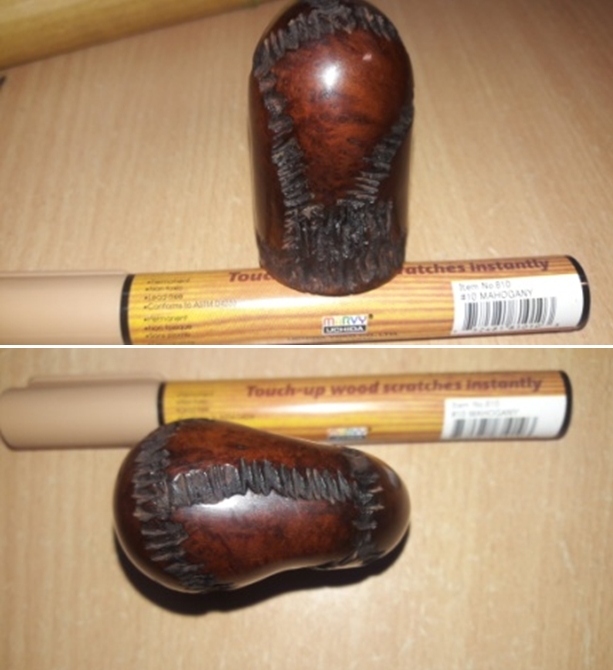
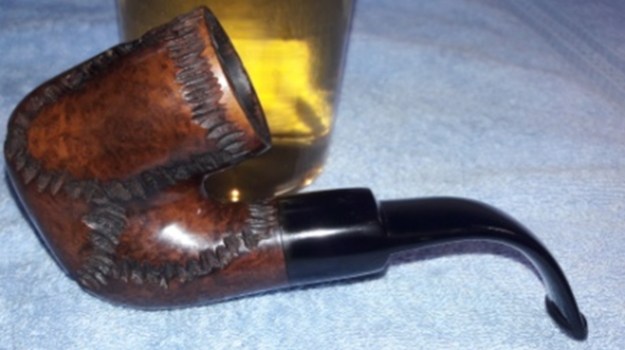
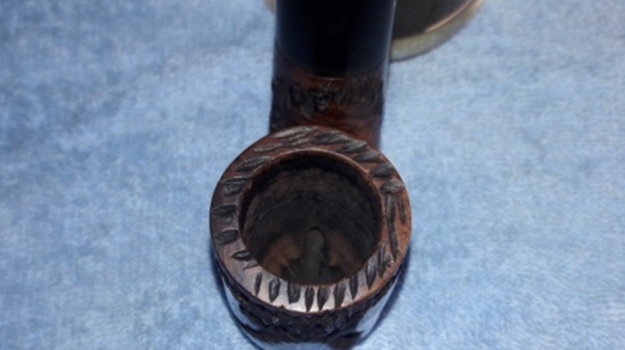
Steve, my friend and mentor, had sent me a pipe lot of 15 pipes for restoration. These assorted pipes were sent to me with an intent that these would provide me with an opportunity to further hone my skills and gain experience in tackling varied issues that one may come across during restoration. Each of these pipes has its own set of issues to address and I look forward to work on each one of this pipe lot. Here is the picture of the pipes as I received it, less the one marked with a cross in red which is a Dunhill Root and restored by Steve for my personal collection.I had worked on a no name straight billiard (marked number 1) from this lot and it turned out to be a beautiful pipe. The next pipe from this lot that I selected to work on is an Oom Paul and is marked with a yellow arrow and numeral 2.This pipe has a nice heft to it and the classic Oom Paul shape lends itself to be clenched comfortably while having your hands free. The stummel is combination of islands of smooth surface formed due to stitches-like rustications crisscrossing the length and breadth of the stummel. It is stamped on the left side of the shank as “Oom Paul” in block capital, increasing in letter size towards the shank end. On the bottom of the shank and very close to the shank end it is stamped as “Israel” in sentence case. There is no stamping on the vulcanite full bent stem.This is the first pipe that I am working on coming from Israel and so to learn more about it, I visited pipedia.org. I searched the link for Israel in Pipe Brands/ Makers and found that Israel has only one pipe factory, The Shalom Pipe factory. Thus it is highly probable that this pipe too came from this factory. No other information was available on the internet that I could research. It does appear to be an ol’ timer though.

INITIAL VISUAL INSPECTION
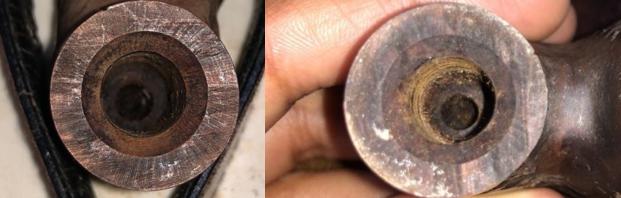
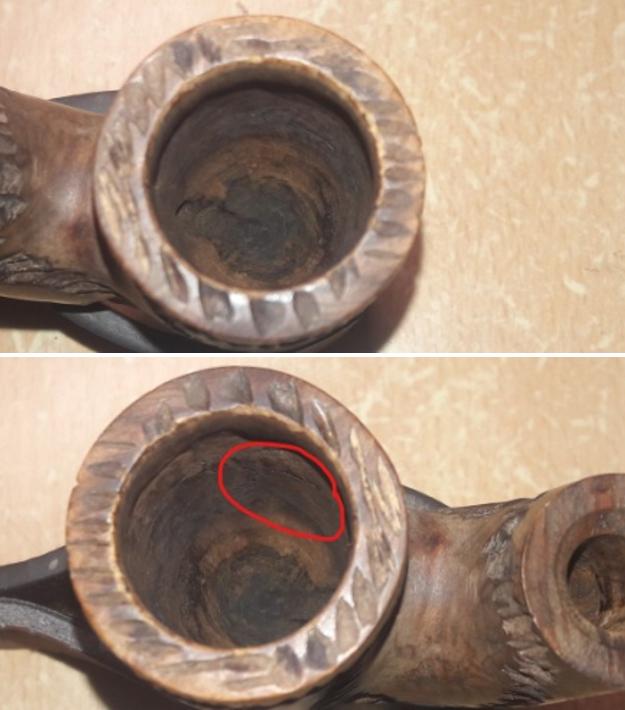
There is a thick layer of cake in the huge chamber pointing to the fact that this was the previous owner’s favorite pipe. The stitch-like rustications on the rim top surface are filled with dust and dirt and yes, surprisingly without overflowing lava accumulation. The inner and outer rim edges are in decent shape. The condition of the inner walls of the chamber can be only ascertained once the cake has been taken down to bare briar. Thankfully, the chamber has very mild odor which should be eliminated once the chamber and shank internals have been cleaned.The stummel is covered in dirt and grime that gives it a dull and tired appearance. The large smooth paneled surface on the right side of the stummel is considerably darker in appearance as compared to the right side. However, the entire stummel has a solid feel to it. The stitch-like rustications that crisscross the entire stummel are filled with dust and dirt and appear lighter than the smooth surfaces. There are patches of dried oils and grime which has attracted a lot of dust. Through all this dirt and grime, beautiful Bird’s eye and cross grains peek out from the smooth surface. Once the stummel is cleaned and polished, these grains will pop out in all their refined glory. All in all as it stands now, this is one dull and tired looking stummel that requires a lot of TLC!! The mortise has a sump at the bottom that is similar to the Peterson’s System pipes, with the opening for the draught hole well above this sump. The mortise and the sump are clogged with oils and tars. This will need to be thoroughly cleaned.The stem, to put it mildly, is a mess!! Apart from being heavily oxidized, it has deep bite marks on both upper and lower stem surface. Heavy tooth chatter is seen all over the bite zone on both sides of the stem surface. The button has been badly chewed with deep tooth indentations on both sides of the stem. The aluminum stinger is surrounded by a thick layer of accumulated dried oils and tars and could not be dislodged from the tenon end. The tenon end and slot shows heavy accumulation of gunk, making air flow very laborious. All these issues need to be addressed. INITIAL CLEANING BY ABHA……….
Ever since we had an on-the-job learning on initial cleaning and restoration when Jeff and Steve visited us, Abha is enjoying her part of work in restoring pipes (read that as initial cleaning) and is getting better and faster in her chosen field. She reamed out the complete cake and further smoothed out the chamber walls with a folded piece of 220 grit sand paper. She scrubbed out the dried oils, tars and gunk from the mortise with a fabricated dental spatula and further cleaned out the internals of the shank with pipe cleaners and alcohol and cotton buds. She followed the internal cleaning of the shank with external cleaning of the stummel using Murphy’s Oil soap and hard bristled tooth brush and dried it with paper napkins and cotton cloth.

Next she lightly heated the stinger, carefully pulled it out with nose pliers and cleaned out the internals of the stem air way and immersed it in “Before and After Deoxidizer” solution along with the stem of other pipes in line for restoration. Once the stem had soaked overnight, she cleaned the stem under running warm water and scrubbed the raised oxidation from the stem surface using Scotch Brite pad. She further removed the oxidation by scrubbing the stem with 0000 grade steel wool and applied a little olive oil to rehydrate the stem.

ONCE THE PIPE IS ON MY WORK TABLE……
The cleaned up pipes presents a very clear picture of what needs to be done to restore this pipe to a pristine and smokable condition. I really cannot thank Abha, my wife, enough for all the help and support that she extends me in my pursuance of this hobby. A clean pipe also helps in clearly identifying the work that would be required to restore a pipe. The pictures shows the condition of the pipe when it reached me after being cleaned. The stummel is nice and clean with the stitch-like rustications now appearing considerably lighter than the rest of the stummel surface. With the dirt and dust that covered the surface cleaned out, the smooth surfaces on the stummel presents an array of beautiful cross and Bird’s eye grains. The smooth surface on right side of the stummel is considerably darker (circled in red) than the left and will need to be examined closely. However, the stummel is solid to the touch, thereby ruling out a total burn out. I am sanguine that after a nice polish with micromesh pads followed by further wax polish, the stummel would look beautiful and stately. The large deep chamber is nice clean and odorless with minor heat fissures all around the walls. These fissures on the right side (marked in red circle) are likely to be more severe as the outer surface is considerably darkened than the left side of the stummel. I need to explore these heat fissures further to determine the extent of the depth of these fissures. However, I am certain that these are not an all out burn through, but mostly like the beginnings of one. The mortise and sump is spotlessly clean, thanks to a stupendous job done by Abha. As spelled out in my initial appreciation, prima facie it is the stem that has suffered the most damage at the hands of the previous owner. I say prima facie since at this stage, I am not sure about the hidden gremlins in the form of heat fissures which necessitates detailed exploration. The bite zone is peppered with tooth chatter and deep tooth indentations on both sides of the stem. The buttons on both the sides are badly deformed with deep bite marks and signs of presence of deep seated oxidation. I would need to sharpen the edges of the buttons also. I intend to first raise these indentations to the surface by heating and sanding followed by filling it with a mix of activated charcoal and superglue. By sanding to even out the stem fill and remove the deeper oxidation followed by micromesh polishing cycle should add a nice shine to the stem. The aluminum stinger, tenon and slot are nice and clean. THE PROCESS
Firstly, I heat the surface of the stem with the flame of a lighter to raise the tooth indentations to the surface and follow it up with a sanding with a folded piece of 220 grit sand paper. This helped to even out the raised surface, address the tooth chatter and also remove the deep seated oxidation to some extent. I wiped the stem with a cotton swab and alcohol to remove the raised oxidation and the resulting sanding dust. However, the tooth indentations are still prominent. A bite through on the top stem surface is reveled which extends in to the stem airway. I need to address this issue. After this abrasive sanding and alcohol wipe, the stem appears dried out and so I apply a small quantity of Extra Virgin Olive oil to hydrate it.To address the deep tooth marks in the bite zone, button surface and the bite through on the top stem surface, I decided to use a mix of activated charcoal and CA superglue and apply it over the damaged areas. But before that, I insert a regular pipe cleaner smeared in petroleum jelly in to the stem air way. This prevents the mix from seeping in to the air way and blocking it when hardened. I apply a generous coat of the above mix over the damaged surface, including the buttons on either sides of the stem and set it aside overnight to cure. Next, while the stem fills are curing, I sand the entire stummel surface with a piece of 220 grit sand paper. I also work the inner rim edge with the sandpaper to even out the rim edge. This sanding helps in addressing all the minor dents, if any, from the surface while providing a smooth surface for the next stage which is polishing cycle using complete set of micromesh pads. I was especially very careful while sanding the side and bottom of the shank around the stampings, as it is very easy to miss out the stamp and one swipe of the sand paper is enough to ruin/ damage the stampings and it is the stampings on any pipe that I always strive to preserve. The next afternoon, I work the stem as the fills had hardened nicely. With a flat head needle file, I sand these fills to achieve a rough match. I further fine tuned the match by sanding the filled area with a folded piece of 220 grit sand paper pinched between my thumb and forefinger. I followed it up by sanding the entire stem surface using 400, 600 and 800 grit sand papers. This serves to remove the deep seated oxidation and also reduces the sanding marks of the more abrasive sand papers. I also sharpened the button edges with a flat head needle file and the sand papers. I wiped the stem with a cotton swab and alcohol to remove all the oxidation and sanding dust from the surface. I applied a little Extra Virgin Olive oil over the stem and set it aside to be absorbed by the vulcanite.I followed up the sanding regime with micromesh polishing to bring a shine on the stem surface. Since my hand held rotary tool is out for repairs, I could not continue with my experimentation on use of Red Tripoli and White Diamond during the polishing regime. I wet sand the stem with 1500 to 12000 girt micromesh pads. I rub a small quantity of olive oil in to the stem surface to hydrate it and set it aside. The stem looks nice and shinning black.Now that the stem repairs are nearly complete save for final polish with Blue diamond and wax, I could now move ahead with polishing the stummel. To remove the sanding marks and bring a deeper shine, I polished the stummel with micromesh pads, wet sanding with 1500 to 12000 pads. I wiped the surface with a soft cloth at the end of the micromesh cycle. The stummel looks amazing with a deep dark maroon coloration and shine with beautiful grains popping over the stummel surface. The only aspect that stood out like a sore thumb was the light brown surfaces within the stitch-like rustications and the sand dust of micromesh pad has not helped, rather worsened the look. I carefully wipe the rustications with a moistened q-tip. Next, I rub a small quantity of “Before and After Restoration Balm” in to the briar with my finger tips and let it rest for a few minutes. I was diligent while applying the balm in to the stitch-like rustication as this may darken the inside of the rustications. The balm almost immediately works its magic and the briar now has a nice vibrant appearance with the beautiful darkened grain patterns on full display. I further buff it with a horse hair shoe brush. However, my attempt at darkening the insides of the rustications was met with limited success and a few sore spots still stand out. I decided to darken the insides of the stitch-like rustications by using a mahogany stain pen. I diligently ran the stain pen through each and every stitch-like rustication. It was a painstaking work but I am very happy with the results. Now, on to the home stretch!! I very excited to see the result of the final polishing cycle with Blue Diamond and carnauba wax.

To apply the finishing touches, I mount a cotton cloth buffing wheel on to my hand held rotary tool and apply a coat of Blue Diamond to the stummel and the stem to polish out the minor scratches. With a cotton buffing wheel that I use for carnauba wax, I apply a coat of carnauba wax and continue to work on it till the complete coat of wax had been polished out. I mount a clean cotton cloth buffing wheel and give the entire pipe a once over buff. I finished the restoration by giving the entire pipe a rigorous hand buffing using a microfiber cloth to raise the shine further. The finished pipe looks fantastic, the beauty of which is accentuated by its classic shape, size and feel in the mouth. This pipe is all set for a new home and will definitely provide the new owner pipe man/ lady hours of blissful smoke. P.S. At this point, I always share pictures of the completed pipe with Abha, my wife just so she can appreciate the end results of all her hard work put in during her initial cleaning. She loved the natural deep dark brown coloration taken by the stummel. However, she reminded me that I had not addressed the issue of heat fissures in the walls of the chamber which she had brought to my notice.

Hell!!! How did I miss out on this vital functional aspect of a pipe, but miss out, I did!! Thus, I set about addressing this issue.

First and foremost, I took some real close ups of the heat fissures on the right side of the walls. I could definitely see dried and burnt briar in these fissures even though they appeared insignificant. But the darkened stummel surface on the right side pointed to otherwise. To further determine the extent of depth and width of these heat fissures, with a sharp dental probe I scraped out the dead and burnt briar from within these fissures. As anticipated, these fissures were not very deep but deep enough to lead to a burn out sooner than later. Furthermore, my probing the left side fissures also revealed deeper than appearing fissures. This important functional aspect needs to be addressed. I decided to use a coat of JB Weld first followed by a bowl coat of activated charcoal and yogurt. The coat of JB Weld would protect the briar from coming in to direct contact with the burning tobacco while the charcoal and yogurt would insulate the JB Weld from direct contact with the lit tobacco while accelerating the formation of cake which subsequently adds a further protective layer. This was essential for furthering the briar life while providing a lifetime of contentment to the new pipe man/ lady. Now, JB Weld comes in two parts – the ‘Steel’ and the ‘Hardener’ in separate tubes.  As per the directions both are to be mixed in 1:1 ratio and that one has about 4 minutes before the mixture sets.  Before applying the mixture, I insert a petroleum jelly coated pipe cleaner through draught hole to prevent the draught from being smeared with the mix and blocking it when the mix is hardened. I mix JB Weld at 50/50 (eyeballing the quantities, of course) on an index card, mix it well, and apply it as evenly as possible over the complete chamber wall with a sliver of a bamboo frond – it was a bit messy, but mission accomplished successfully.  I set the stummel aside and let it cure overnight.The next afternoon, the mix had hardened and I realized how unevenly the mix was applied!! I did not want the layer of the mix to be too thick, but only as a thin layer. I mounted a 180 grit sanding drum on to my hand held rotary tool and carefully sand down the hardened mix to an acceptable thickness. To be honest, I do not know of any scientific method to determine the thickness and neither do I know of any instrument that would help me in doing so, it was just by touch and feel. Once satisfied, I cleaned the chamber of all the sanding dust and readied it for the next coat of activated charcoal and yogurt.Next, I mixed activated charcoal and yogurt to a thick consistency, neither too runny that it would run down the surface nor too thick that it would not spread out evenly. Again, this was all by feel!! Once I was satisfied with the consistency, I applied it evenly over the layer of JB Weld mixture and set it aside to dry out naturally. Once the bowl coat had dried out and hardened, I cleaned the rim top off all the dust and charcoal yogurt mix with a q-tip. I wiped the stummel with a clean soft cotton cloth and rubbed a small quantity of balm to enliven the briar and hand buffed the stummel with a microfiber cloth to deepen the shine.

The pipe is now truly ready for a long hiatus with a new piper, providing years of service in future. I cannot thank Abha enough for reminding me to address this most important functional aspect.

Thank you all for reading through this longish write up and for the valuable time you have invested in doing so. If any reader is interested in enjoying this pipe as his/ her rotation pipe, feel free to let us know.

Restoring a Beautiful Danish Pipe “MELBY” Acorn


Blog by Paresh Deshpande

This pipe had attracted my attention way back in 2017 when I first saw it on eBay and finally made it to me with a very small price tag, shipping included!! Subsequently as I started working on my inherited pipes under Steve’s guidance, the Barling’s, Dunhills, Peterson’s, Ben Wades, Nordings, Stanwells, Danish FH et al took center stage and the Melby got buried deeper and deeper down in the box. During his visit to India in May this year, Steve, Abha and I went through two of the three big cartons of pipes that I had inherited including a few pipes that I had purchased on eBay in earlier years. The aim of this exercise was to sort out pipes that could be sold and those that are to be added to personal collection. The Melby figured in the list of pipes “TO BE SOLD”!!

Well, after lying in wait for more than two years, the Melby has finally found its way on to my work table now.

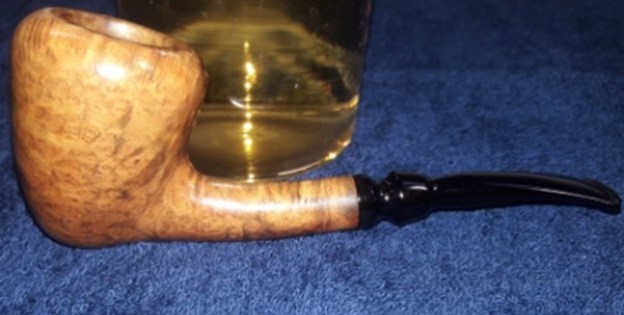
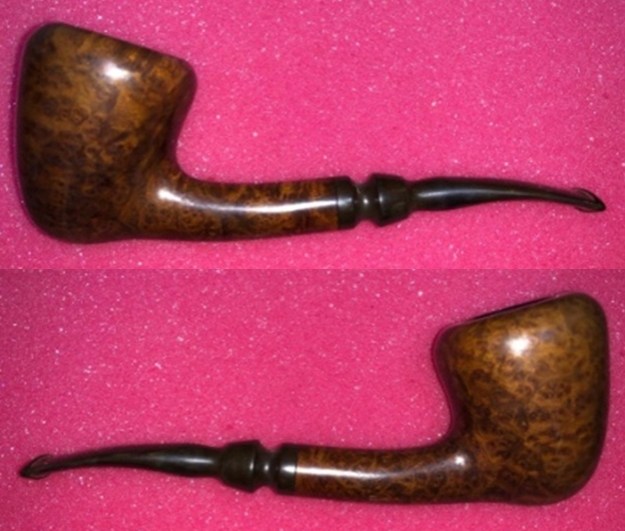
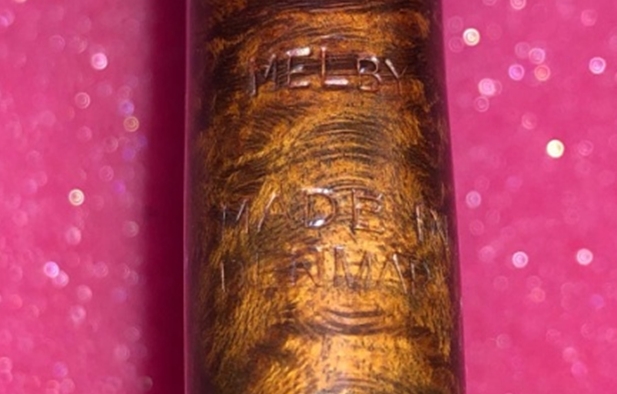
This is a beautiful Acorn shaped pipe with a very subtle and delicate upturned bend to an equally delicate and thin shank. The stummel narrows down towards the foot from a nice broad and wide rim top. The pipe ends with a thin fancy vulcanite stem that has a slight bend at the slot end that carries forward the overall delicate profile of the pipe as a whole. The second aspect that struck me was how light the pipe was!!The pipe is stamped vertically towards the shank end bottom as “MELBY” over “MADE IN” over “DENMARK”. There is no other stamping on the stummel. The stem is also devoid of any stampings.The top notch quality of the briar, beautiful shape and overall high quality of finish and design screamed that this pipe had to be work of some really gifted artisan. To know more about this pipe, I visited pipedia.org. Sure enough, there was a mention of this brand under Danish pipes, but sadly nothing more than a mere mention. In my quest to unravel this mysterious brand, I surf the internet and the only reference that I could find out was on an aptly named site “VERY KEEN ON PIPES”. Here is the link to this interesting site; https://vkpipes.com/

Within this site I searched for Melby and here is what I learned; https://vkpipes.com/pipeline/melby/

An extraordinary Danish work! As every proper Danish pipe it’s made of a good briar, shows nice grain and has skillfully designed freehand shape. But the most of all we’re absolutely amazed with its sense of equilibrium – the pipe can surely balance just on its heel (back side of its bottom). Some signs (such as kind of briar) hint it might be a Karl Erik pipe but we don’t have a 100% proof so far.

With this information, I move ahead with my initial visual inspection.

INITIAL VISUAL INSPECTION
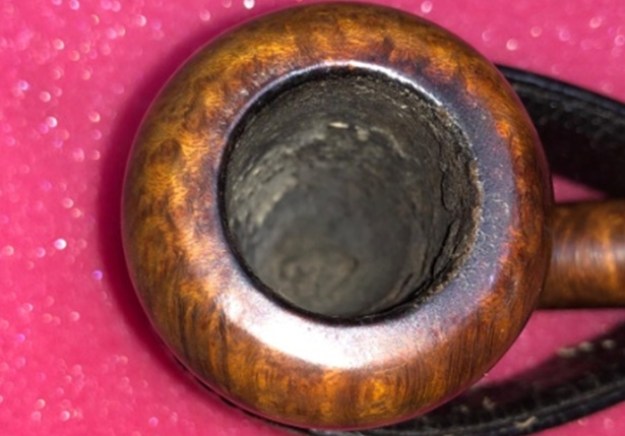
The pipe came to us in a very well smoked state, but, I have to admit that it was well taken care of by the previous owner. An even layer of heavy cake build up is observed in the chamber with overflow of lava on the rim top surface, notably at the back. Otherwise, the rim top surface and both inner and outer rim edges are in fairly good condition with slight darkening and unevenness to the inner rim edge. It is pretty strong sweet smelling pipe, I say!! I am not sure if by mere cleaning of the chamber and shank internals that these smells will be eliminated. The smooth stummel surface has beautiful Bird’s eye grain patterns on either sides of the stummel with beautiful densely packed cross grains on the front, back and the shank. The stummel surface has a dirty yellowish orange like stain to the briar that has darkened and dulled out due to accumulation of grime. Once it has been cleaned up, the grains should pop out after a nice polish. The mortise with shank internals is clogged and shows heavy accumulation of oils and tars. The chamber emanates a very strong sweet odor from previous usage. The draught hole is right at the bottom center and should be a great smoker!! The light weight and perfect shape make it a beautiful pipe to clench while you read your favorite book or while tending to your garden!! Reclaiming this piece of briar should be a fun project. The delicate fancy vulcanite stem is deeply oxidized, especially in the nooks and crannies. There are a few deep tooth indentations on either surface of the stem in the bite zone and over the upper button edge. The button edges would need to be sharpened and made crisp. The tenon and the slot show heavy accumulation of dried oils and gunk and the airflow through the stem is laborious.INITIAL CLEANING BY ABHA…
The initial cleaning on this pipe was done by Abha, my wife (she has cleaned up around 40-50 pipes and these have now reached me for further restoration). She reamed out the complete cake and further smoothed out the chamber walls with a folded piece of 220 grit sand paper. She scrubbed out the dried oils, tars and gunk from the mortise with a fabricated dental spatula and further cleaned out the internals of the shank with pipe cleaners and alcohol and cotton buds. She followed the internal cleaning of the shank with external cleaning of the stummel using Murphy’s Oil soap and hard bristled tooth brush and dried it with paper napkins and cotton cloth.

Next she cleaned out the internals of the stem air way and immersed it in “Before and After Deoxidizer” solution along with the stem of other pipes in line for restoration. Once the stem had soaked overnight, she cleaned the stem under running warm water and scrubbed the raised oxidation from the stem surface using Scotch Brite pad. She further removed the oxidation by scrubbing the stem with 0000 grade steel wool and applied a little olive oil to rehydrate the stem.

ONCE THE PIPE IS ON MY WORK TABLE…
The cleaned up pipes presents a very clear picture of what needs to be done to restore this pipe to a pristine and smokable condition. I really cannot thank Abha, my wife, enough for all the help and support that she extends me in my pursuance of this hobby. A clean pipe also helps in clearly identifying the work that would be required to restore a pipe. The pictures shows the condition of the pipe when it reached me after being cleaned. The chamber stills has the strong old odor and would need further intrusive methods to address this issue. The walls are solid without any signs of damage. The inward curving wide rim top surface has a flat smooth ring towards the chamber. The flat inner rim edge is slightly darkened towards the front and left of the stummel and would need to be addressed. The rounded outer rim surface is in perfect condition but shows signs of overzealous cleaning by Abha to remove the overflow of lava from the right and extending to the back side of the rim top. I am amazed at the cavernous size of the chamber. The stummel surface is sans any fills or flaws. A nice polish and the beautiful grains will pop out and will be on display in all their glory. The stummel has lost its old stain and further sanding followed with micromesh pad polishing will further bring out the natural finish of the bowl. Whether to stain it to accentuate the grains or to let it be, I shall decide once the micromesh cycle is complete. I think as the pipe is smoked, over a period of time, the briar will take on some nice dark coloration and patina. I am really looking forward to see the stummel after polish. The mortise and shank internals are also nice and clean now. The seating of the stem tenon in to the mortise is snug and flush with the shank end. The oxidation on the vulcanite stem has been removed, thanks to all the efforts put in by Abha. The slot and stem internals are all clean and fresh. The deeper tooth indentations on the upper and lower surface and on the upper button edge are now clearly visible. I intend to first raise these indentations to the surface by heating and sanding followed, if necessary, by filling it with a mix of activated charcoal and superglue. A bit of sanding to remove the deeper oxidation followed by micromesh polishing cycle should add a nice shine to the stem. THE PROCESS
Firstly, I heat the surface of the stem with the flame of a lighter to raise the tooth indentations to the surface and follow it up with a sanding with a piece of folded 220 grit sand paper. This helps to even out the raised surface, address minor tooth chatter and also remove the deep seated oxidation. I wiped the stem with a cotton swab and alcohol to remove the raised oxidation and the resulting sanding dust. The tooth indentations, though greatly reduced, are still prominent. I need to address this issue. I mix a small quantity of activated charcoal and CA superglue and spot apply it over the visible bite marks. I set the stem aside for the fill to cure overnight. If I had black CA superglue, that is what I would have used in this instance. Next, I start by sanding the entire stummel surface, including the rim top, with a piece of 220 grit sand paper. I also work the inner rim edge with the sandpaper to remove the darkened briar and even out the rim edge. This sanding helps in addressing all the minor dents, if any, from the surface while providing a smooth surface for the next stage which is polishing cycle using complete set of micromesh pads. I was especially very careful while sanding the bottom of the shank around the stampings, as it is very easy to miss out the stamp and one swipe of the sand paper is enough to ruin/ damage the stampings. Before I move to the next stage of polishing the stummel, I decided to address the issue of strong odor in the chamber. To eliminate the ghost smells from the pipe, I decided to treat it with salt and alcohol. I do not use Kosher salt as it is not readily available here and if available, it’s very expensive. I use cotton balls which is an at par substitute as I have realized over the last year or so. I draw out a wick from the cotton and along with a folded regular pipe cleaner; insert it in to the mortise and through the draught hole in the chamber. Thereafter, I pack the chamber with cotton balls to about quarter of an inch below the rim inner edge. I soak the cotton balls with isopropyl alcohol up to the brim. About half an hour later, the level of alcohol has gone down, having being absorbed by the cotton. I top it up once again and set it aside overnight. By next afternoon, the cotton and alcohol has drawn out all the remaining oils and tars from the chamber and mortise and the cotton and alcohol had fulfilled its intended task. I removed the cotton balls and ran pipe cleaners through the mortise to clean out all the loosened tars and gunk. The chamber now smells clean and fresh. I set the stummel to dry out naturally.While the chamber was soaking in the salt and alcohol bath, I worked the stem. The stem fills had cured and with a flat head needle file, I sand these fills to achieve a rough match. I further fine tuned the match by sanding the filled area with a folded piece of 220 grit sand paper pinched between my thumb and forefinger. I followed it up by sanding the entire stem surface using 400, 600, 800 grit sand papers and finally with a piece of 0000 grade steel wool. This serves to remove the deep seated oxidation and also reduces the sanding marks of the more abrasive sand papers. I also sharpened the button edges while sanding. I wiped the stem with a cotton swab and alcohol to remove all the oxidation and sanding dust from the surface. I applied a little Extra Virgin Olive oil over the stem and set it aside to be absorbed by the vulcanite. I followed up the sanding regime with micromesh polishing to bring a shine on the stem surface. Since my hand held rotary tool is out for repairs, I could not continue with my experimentation on use of Red Tripoli and White Diamond during the polishing regime. I wet sand the stem with 1500 to 12000 girt micromesh pads. I rub a small quantity of olive oil in to the stem surface to hydrate it and set it aside. The stem looks nice and shinning black.The stummel had dried out completely and I could now move ahead with polishing the stummel. To remove the sanding marks and bring a deeper shine, I polished the stummel with micromesh pads, wet sanding with 1500 to 12000 pads. I wiped the surface with a soft cloth at the end of the micromesh cycle. The stummel looks amazing with a deep shine and beautiful grains popping over the stummel surface. I shared pictures of the stummel at this stage in restoration with Abha for her opinion as to whether stain it in dark brown or otherwise. Prompt came the response to let it be. She really liked the patterns of grain and the look of the pipe. Also as the pipe is smoked, it will turn dark and develop a nice patina. So, natural finish to the stummel it is!! Next, I rub a small quantity of “Before and After Restoration Balm” in to the briar with my finger tips and let it rest for a few minutes. The balm almost immediately works its magic and the briar now has a nice vibrant appearance with the beautiful darkened grain patterns on full display. I further buff it with a horse hair shoe brush. Unfortunately I just missed out on taking pictures of the stummel at this point in restoration process. But it looks beautiful, I say!!

By the weekend, my rotary tool stabilizer came back after repairs and I could finally move ahead with finishing the pipe. To apply the finishing touches, I mount a cotton cloth buffing wheel on to my hand held rotary tool and apply a coat of Blue Diamond to the stummel and the stem to polish out the minor scratches. With a cotton buffing wheel that I use for carnauba wax, I apply a coat of carnauba wax and continue to work on it till the complete coat of wax had been polished out. I mount a clean cotton cloth buffing wheel and give the entire pipe a once over buff. I finished the restoration by giving the entire pipe a rigorous hand buffing using a microfiber cloth to raise the shine further. This is truly a beautifully crafted pipe with gorgeous grains all around and the feather weight coupled with a large bowl will surely provide a long and leisurely smoke allowing ample time to admire the construction and grains on this pipe. P.S. This pipe was earmarked not for addition to my personal collection but for sale. However, the beautiful grains, the exquisite carving and very light weight coupled with a large chamber for a long and peaceful smoke has me enticed to an extent that I have decided to add it to my rotation. Such is the beauty of this pipe. Now all that remains is to load this bowl with my favorite G.L. Pease Virginia blend and puff contentedly for some time!!

Thanks to all readers of Reborn pipes who have spared a moment of their invaluable time in reading through this write up and as is always, your suggestions and advice are always welcome as this would not only help me but  also help the new pursuers of this art.

Restoring a Barling & Sons # 4899, Made in Denmark


Blog by Paresh Deshpande

I had finished refurbishing a Barling Brandy bowl in a smooth finish and it has found a new piper to carry forward the legacy. The next pipe that I decided to work on is a lovely Brandy bowl shaped Barling pipe in a sandblast finish which was purchased together with the smooth finish that I have mentioned above. The pipe boasts of shallow blasts on the stummel with beautiful patterns. The pipe is stamped on the surface at the bottom of the shank as “B.BARLINGS & SONS” in block capitals over “MADE IN DENMARK” over shape code numeral “4899”. The top of the saddle stem has the trademark BARLING in a cross stem logo. The stampings are all deep and crisp.Having just recently worked on a Barling pipe that bore the COM stamp of Denmark, I was aware of the provenance of this pipe. I reproduce the relevant part of the information gleaned from pipedia.org.

In the late 1970’s production of Barling pipes was shifted to Denmark where Eric Nording manufactured Barling pipes for Imperial. There may have been other factories, but as of this writing, none has been identified. Nording stated that he made approximately 100.000 pipes for Imperial.

Despite these attempts to diversify the line, Barling lost its market. These pipes just weren’t equivalent to the family era pipes.
Finally, Imperial decided to close down the Barling operations entirely by 1980.

Thus from the above, it is safely concluded that the pipe currently on my work table is from the period between late 1970’s to 1980 and given the quality of sandblast, most likely manufactured by other factories in Denmark!!

INITIAL VISUAL INSPECTION
The pipe came to us in a very nice condition having being smoked maybe only a few times. It was lightly smoked and with a thin layer of cake build up in the chamber. The rim top is covered in a minimal overflow of lava with inner and outer rim edges in pristine condition. The chamber has minimum odor and should be addressed once the chamber and shank internals are cleaned up. A simple scrub with a brass bristled brush should suffice to clean the rim top surface.The sandblasted stummel surface has a shallow sandblast with beautiful patterns of mix of Bird’s eye, cross grains and nice swirls to the sides, front and bottom of the bowl respectively. The front of the stummel has a deep pit, likely caused during the sandblasting process where the soft briar was chipped off by the sand particles. The stummel surface is stained black and has a dark lacquer coat that has dulled a bit. The mortise is relatively clean with an easy draw. Running a few pipe cleaners dipped in alcohol should clean up the shank internals. The straight vulcanite saddle stem gradually flares out towards the slot end and is deeply oxidized. Thankfully the stem surface is free of any bite marks or tooth chatter on either surface in the bite zone. The insides of the slot and tenon have very little signs of accumulated gunk. The crossed Barling logo on the saddle top of the stem is crisp and deep.INITIAL CLEANING BY ABHA…
The initial cleaning on this pipe was done by Abha, my wife (she has cleaned up around 40-50 pipes and these have now reached me for further restoration). She reamed out the complete cake and further smoothed out the chamber walls with a folded piece of 220 grit sand paper. She further cleaned out the internals of the shank with pipe cleaners and alcohol and cotton buds. She followed the internal cleaning of the shank with external cleaning of the stummel using Murphy’s Oil soap and hard bristled tooth brush and dried it with paper napkins and cotton cloth.

Next she cleaned out the internals of the stem air way and immersed it in “Before and After Deoxidizer” solution along with the stem of other pipes in line for restoration. Once the stem had soaked overnight, she cleaned the stem under running warm water and scrubbed the raised oxidation from the stem surface using Scotch Brite pad. She further removed the oxidation by scrubbing the stem with 0000 grade steel wool and applied a little olive oil to rehydrate the stem.

ONCE THE PIPE IS ON MY WORK TABLE…
I cannot thank my wife, Abha, enough for all the help and support that she extends me in my pursuance of this hobby. With the initial pipe cleaning at her hands, allows me to move at a nice click with my restoration and repair work on the pipes.

The chamber is odorless and the walls are solid without any signs of damage. The sandblasted rim top surface is intact with an equally undamaged inner and outer rim edge. The chamber and rim top has been nicely cleaned up by Abha. With a draught hole right at the bottom and dead center, this should be a fantastic smoker!! Even though most of the lacquer coat was removed when the stummel was cleaned up by Abha, I could still see remnants of the peeling lacquer coat over some parts of the stummel and the stain has been washed away at a two places. I shall have to remove this coat and thereafter decide on my further course of action. The mortise and shank internals are clean and fresh. This should turn out to be an easy project requiring just a rub down with restoration balm followed by wax polish to bring life back in to the stummel. The oxidation on the vulcanite stem has been greatly reduced thanks to all the efforts put in by Abha. A bit of sanding to remove the deeper oxidation followed by micromesh polishing cycle should add a nice shine to the stem. The stem internals are nice and clean with a free airflow. I would need to refresh the stem logo to make it pop out on the shining black stem once done.THE PROCESS
The first thing I addressed was the lacquer coating that remained on the stummel surface. I wiped the stummel surface with cotton swabs and alcohol. However, the coating persisted. Next I decided to use a stronger solvent. With cotton swabs and acetone, I cleaned the stummel surface. I was able to remove the lacquer coating completely from the surface.Next, I rub a small quantity of “Before and After Restoration Balm” in to the briar with my finger tips and let it rest for a few minutes. The balm almost immediately works its magic and the briar now has a nice vibrant appearance. However, I noticed that my finger tips had blackened with stain which was coming off. I thought that I would let it rest and dry out and thereafter check again. A couple of hours later, I wiped the stummel with a soft cotton cloth and to my chagrin, I noticed that the cloth had blackened at the spots which had come in contact with the stummel surface and the stain had come off from the surface too. I decided to heat the stummel surface with a heat gun and reset the stain. Should this trick fail, I had made up my mind to go the “full Monty” way. I would completely remove the old stain and apply a fresh coat of stain and the works!! And this was supposed to be a simple restoration!!I heat the stummel surface with my heat gun and set it aside to cool down naturally. Half an hour later, the stummel had cooled and I reapplied the “Before and After Restoration Balm”. This time there were no blackened finger tips. What a relief this revelation was!! Now that the stummel was nearly complete, I turned my attention to the stem refurbishing. With a folded piece of a 220 grit sand paper, I sand down the stem surface. I followed it up by sanding it with 400, 600, 800 grit sand papers and finally with a piece of 0000 grade steel wool. This serves to remove the deep seated oxidation and also reduces the sanding marks of the more abrasive sand papers. I wiped the stem with a cotton swab and alcohol to remove all the oxidation and sanding dust from the surface. I applied a little Extra Virgin Olive oil over the stem and set it aside to be absorbed by the vulcanite.I followed up the sanding regime with micromesh polishing to bring a shine on the stem surface. I wet sand the stem with 1500 to 12000 girt micromesh pads. This time around I could not continue with my experimentation that I had spelled out in my previous posts, as due to voltage fluctuations, my hand held rotary tool stabilizer had a burn out and had to be sent for repairs. I rub a small quantity of olive oil in to the stem surface to hydrate it and set it aside.The stem looks nice and shinning black, however, the stem logo is yet to be refreshed and highlighted. With a white fine tipped correction pen, I filled the crossed Barling stamping and once it had dried a bit, with a toothpick, I scrapped off excess of the correction ink. The stamping is now completely refreshed and sits proudly on the top of the saddle.With three pipes on the home stretch and a week long wait later, my rotary tool came back from repairs. I was held up just for this piece of equipment!! To apply the finishing touches, I mount a cotton cloth buffing wheel on to my hand held rotary tool and apply a coat of Blue Diamond to the stummel and the stem to polish out the minor scratches. With a cotton buffing wheel that I use for carnauba wax, I apply a coat of carnauba wax and continue to work on it till the complete coat of wax had been polished out. I mount a clean cotton cloth buffing wheel and give the entire pipe a once over buff. I finished the restoration by giving the entire pipe a rigorous hand buffing using a microfiber cloth to raise the shine further. The finished pipe looks beautiful and is waiting for a new home!!

Restoring a Meerschaum Bent Billiard from Bob Kerr’s Estate


 Blog by Steve Laug

The next pipe I have chosen to work on from Bob Kerr’s estate is one of his unique meerschaum pipes. The family notes identified this as Peterson Meerschaum and the crater finish on the meer certainly is very similar to some of the Peterson’s Meers that I have worked on. However, there is no stamping or marking on the meerschaum and no nickel ferrule on the shank end. The shank is lined with a vulcanite or acrylic tube that strengthens the shank and that is not something I have seen on Petersons. The vulcanite stem is a fishtail rather than a Peterson’s  P-lip stem. There is an identifying stamp on the left side of the saddle. It is a logo stamp that looks like a walking pipe with a wisp of smoke curling out of the top of the bowl. The top of the bowl has a flumed black rim top that extends down the side of the bowl for about a ¼ inch. It is part of the estate that I am cleaning up for the family and moving them out into the hands of pipemen and women who will carry on the trust that began with their father, Bob. In the collection there were 19 Peterson’s pipes along with a bevy of Dunhills, some Comoy’s and Barlings as well as a lot of other pipes – a total of 125 pipes along with a box of parts. This is the largest estate that I have had the opportunity to work on. I put together a spread sheet of the pipes and stampings to create an invoice. I was taking on what would take me a fair amount of time to clean up. I could not pass up the opportunity to work on these pipes though. They were just too tempting.

I really am enjoying working on the Peterson’s in the estate. This meerschaum was interesting to me in that it is a bit of a mystery and has some patina and wear that tell a story. Even if it is not a Peterson, it is a nice meerschaum bent billiard. When I took it out of the box of cleaned up pipes that Jeff sent back I could see that it had of the typical crater finishes that some Peterson’s Meers had in the past.. It has some patina developing around the bowl and shank under the thick grime, chips and tarry spots. The shank is quite thick and the finish is dirty. There was a thick cake in the bowl with remnants of tobacco stuck on the walls. There was a lava overflow on the rim. The top and edges of the rim are dirty. The stem was oxidized and calcified toward the button end. Surprisingly it did not have the deep tooth marks that I have come to expect from Bob’s pipes and even the button edges were in decent condition. Jeff took photos of the pipe before he started his cleanup work on it.     Jeff took photos of the bowl and rim top to show the thick, hard cake in the bowl and the lava build up on the top of the rim and the edges of the bowl. There were some nicks on the outer edge of the bowl but it was hard to tell if there was any damage to the inner edge of the rim as it had a thick cake lining it. Hopefully it protected it.Jeff took photos of the sides and heel of the bowl to show the condition of the finish. You can see the scratches and pitting in the meerschaum finish in the craters and on the smooth surfaces of the bowl underneath the dirt and debris of the years. Jeff took photos of the shank showing the chips on the top edge and the stamping on the left side of the stem. The chips are around vulcanite or acrylic insert in the shank. The stamping on the stem was readable as you can see from the photos. Jeff took photos of the top and underside of the stem showing the tooth chatter, scratching and oxidation on the stem surface and wear on the edges of the button. I am pretty sure the pipe was made by the Laxey Pipe Ltd. on the Isle of Man for either another export company or for Peterson’s in Ireland (https://pipedia.org/wiki/Laxey_Pipes_Ltd). I quote from the Pipedia article in full:

Laxey Pipe Ltd. resided in a historical 19th century four-storey Man stone building at The Quay, Old Laxey, Isle of Man, which thankfully has been preserved. The company specialised in the production of Meerschaum Pipes using the Meerschaum mined by the Tanganyika Meerschaum Corporation in the Amboseli basin in Tanganyika (since 1964 part of the United Republic of Tanzania). Please note: you may often find names like “Manx Pipes Ltd.”, “Man Pipe Co.” and others more, but there is no indication of another Isle of Man pipe producer other than Laxey Pipe Ltd. at any time!

Laxey Pipe Ltd. marketed own brands like “Manxpipe”, “Manxman”, “Manxland” e.c. Names like “John Bull”, “White Knight” (unwaxed), “Domino” (black, or lined) indicated some shapes / colours of Laxey’s own series. The stems either showed the astronomical sign for “male” or “man” (circle + arrow), or the crest of the Isle of Man, the 3-legged X in a circle. Manxpipes and Laxey’s other brands were available through pipe retailers in general, but also were sold (mainly) to tourists through their own shop in Laxey.

Furthermore Laxey Pipe Ltd. manufactured the meer bowls for Peterson, Barling, Nørding and others from the later 1960’s until 2001. Man Pipe e.g. was a brand distributed by Comoy’s. The bowls usually showed no nomenclature indicating the orderer. “Genuine Block Meerschaum” was engraved frequently. Often, just the stems were different, while bowls were the same.

Supply of meer from East Africa run out (Kenya / Tanzania exhausted, Somalia inaccessible), and thus the last Laxey meers were supplied to trade in May, 2001. Laxey Pipe Ltd. tried to survive continuing with briar pipes – mainly in the Danish style -, but to no success. It closed down business in July, 2002.

I looked for the stem logo on Pipephil and online and was not able to find any verification for who made the pipe. I suppose that I will never know for sure but it appears that the pipe was made on the Isle of Man for export for another European pipe company. I am guessing that like Bob’s other pipes, this one came from the time period of the late 60s or early 70s. That was as much as I could figure out.

With over 125 pipes to clean from Bob’s estate I am very glad for Jeff’s help cleaning them. He cleaned this filthy pipe with his usual penchant for thoroughness that I really appreciate. This one was a real mess and I did not know what to expect when I unwrapped it from his box. He reamed it with a PipNet pipe reamer and cleaned up the reaming with a Savinelli Fitsall Pipe Knife. He scrubbed out the internals with alcohol, pipe cleaners and cotton swabs until the pipe was clean. He scrubbed the exterior of the bowl with Murphy’s Oil Soap and a tooth brush to remove the grime and grit on the briar and the lava on the rim top. The finish looks very good with great looking grain around the bowl and shank. Jeff soaked the stem in Before & After Deoxidizer to remove the oxidation on the rubber. When the pipe arrived here in Vancouver for the second stop of its restoration tour I was amazed it looked so good. I took photos before I started my part of the work.     I took some close up photos of the rim top and also of the stem surface. I wanted to show what an amazing job Jeff did in the cleanup of the rim top. I also wanted to show that the damage to the rim top was more extensive than I had originally thought. The rim top was worn and the flumed finish was rubbed off There were some small nicks and scratches around the top and outer edge. I also took close up photos of the stem to show the lack of tooth marks and the light oxidation on the stem surface. You can also see the wear to the button. I took some photos of the shank end to highlight some of the issues with this pipe and to show the stamping on the left side of the saddle stem. Where the vulcanite or acrylic insert was in the shank there were some chipped areas. There was one on the top right and two on the top left side. These chipped areas would need to be repaired. I circled the areas of concern with red on the first photo. The second photo shows the logo of the pipe with smoke curling out of the top on the left side of the stem.Since this is another pipe Bob’s estate I am sure that some of you have read at least some of the other restoration work that has been done on the previous pipes. You have also read what I have included about Bob Kerr, the pipeman who held these pipes in trust before I came to work on them (see photo to the left). Also, if you have followed the blog for long you will already know that I like to include background information on the pipeman whose pipes I am restoring. For me, when I am working on an estate I really like to have a sense of the person who held the pipes in trust before I worked on them. It gives me another dimension of the restoration work. I asked Brian if he or his wife would like to write a brief biographical tribute to her father, Bob. His daughter worked on it and I received the following short write up on him and some pictures to go along with the words including one of Bob’s carvings. Once again I thank you Brian and tell your wife thank you as well.

I am delighted to pass on these beloved pipes of my father’s. I hope each user gets many hours of contemplative pleasure as he did. I remember the aroma of tobacco in the rec room, as he put up his feet on his lazy boy. He’d be first at the paper then, no one could touch it before him. Maybe there would be a movie on with an actor smoking a pipe. He would have very definite opinions on whether the performer was a ‘real’ smoker or not, a distinction which I could never see but it would be very clear to him. He worked by day as a sales manager of a paper products company, a job he hated. What he longed for was the life of an artist, so on the weekends and sometimes mid-week evenings he would journey to his workshop and come out with wood sculptures, all of which he declared as crap but every one of them treasured by my sister and myself. Enjoy the pipes, and maybe a little of his creative spirit will enter you!

Now, on to the rest of the restoration of this Crater Finished Bent Billiard. It was great that I did not need to clean the pipe. I decided to start the process by addressing the damage area surrounding the insert in the shank. I filled in the areas around the shank insert with clear super glue until they were even with the top of the rounded shank end. I spread the glue around the edges of the shank insert. I let them cure and then refilled them until the surface was even. The photos show the process and the shank end after I had filled in to an acceptable point where the condition of the shank end was good.    I sanded the repair with 220 and 400 grit sandpaper until the end of the shank was smooth and the repairs were blended into the shank surface. I used the sandpaper to clean up the scratching and nicks in the rim top surface. I cleaned the meerschaum bowl with Mark Hoover’s Before & After Briar Cleaner to remove the debris left behind by the sanding of the rim top and to blend the repairs into the briar. I rubbed it into the surface of the briar and let it sit for 10 minutes. I rinsed the bowl off with warm running water to remove the product and the grime. The mottled finish really stood out. Once the bowl dried the finish looked really good. I polished the meerschaum rim top and shank end as well as the smooth high spots on the bowl sides with micromesh sanding pads. I wet sanded it with 1500-12000 grit pads and wiped it down with a damp cloth after each pad. I touched up the rim top and edges with a Black Stain pen to match the colour of the top and the flume down the sides of the bowl. Once it was polished with the Before & After Balm and buffed with a microfiber cloth the stain would blend perfectly. I rubbed the meerschaum down with Before & After Restoration Balm. I worked it into the surface of the meerschaum with my fingertips to clean, enliven and protect it. I let the balm sit for a little while and then buffed with a cotton cloth to raise the shine. Mark Hoover’s Balm is a product that I have come to appreciate and one I use on every pipe I have been working on. I decided to touch up the logo stamp on the left side of the shank. I use PaperMate liquid paper for doing this. I worked it into the stamp with a tooth pick. Once the material had hardened I used the tooth pick to scrape off the excess material.     I sanded the stem with 220 grit sandpaper to break up the remaining oxidation and smooth out the file marks. I started the polishing with 400 grit wet dry sandpaper to remove the scratching. It is starting to look good.   I polished the stem with micromesh sanding pads – wet sanding with 1500-12000 grit pads. I wiped the stem down after each sanding pad with Obsidian Oil. I polished it with Before & After Pipe Stem Polish – both Fine and Extra Fine. Once I had finished the polishing I gave it final coat of oil and set it aside to dry.   As usual at this point in the restoration process I am excited to be on the homestretch. I look forward to the final look when it is put back together, polished and waxed. I put the bowl and stem back together. I polished the bowl and stem with Blue Diamond to polish out the scratches in the meerschaum and the vulcanite. I gave the bowl multiple coats of Conservator’s Wax and the stem multiple coats of carnauba wax. I buffed the pipe with a clean buffing pad to raise the shine. I hand buffed it with a microfiber cloth to deepen the shine. The pipe polished up pretty nicely. The meerschaum has a rich glow with the wax and polish. The shiny black vulcanite stem is a beautiful contrast to the rich developing patina of the bowl. This Peterson’s style meerschaum is probably made by the Manx Pipe factory on the Isle of Mann. The crater style finish on this pipe made it another fun pipe to work. The repair on the inserted liner in the shank gives the shank a smooth finish. It really is a quite stunning pipe whose shape and finish make it stand out. The thick/chubby shank makes it a very comfortable pipe to hold in the hand. The finished pipe is shown in the photos below. The dimensions of the pipe are Length: 5 ½ inches, Height: 2 inches, Outside diameter of the bowl: 1 ¼ inches, Chamber diameter: ¾ of an inch. This beautiful pipe will be going on the rebornpipes store if you would like to add it to your collection and carry on Bob’s legacy. If not, I have a lot more of Bob’s estate to work on of various brands. Perhaps one of those will catch your attention. Thanks for reading this blog and my reflections on the pipe while I worked on it. This is an interesting estate to bring back to life.