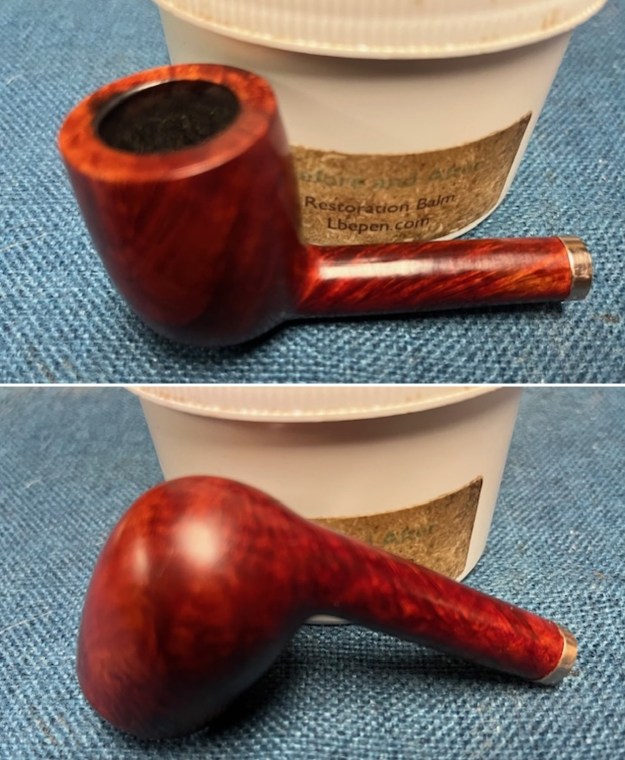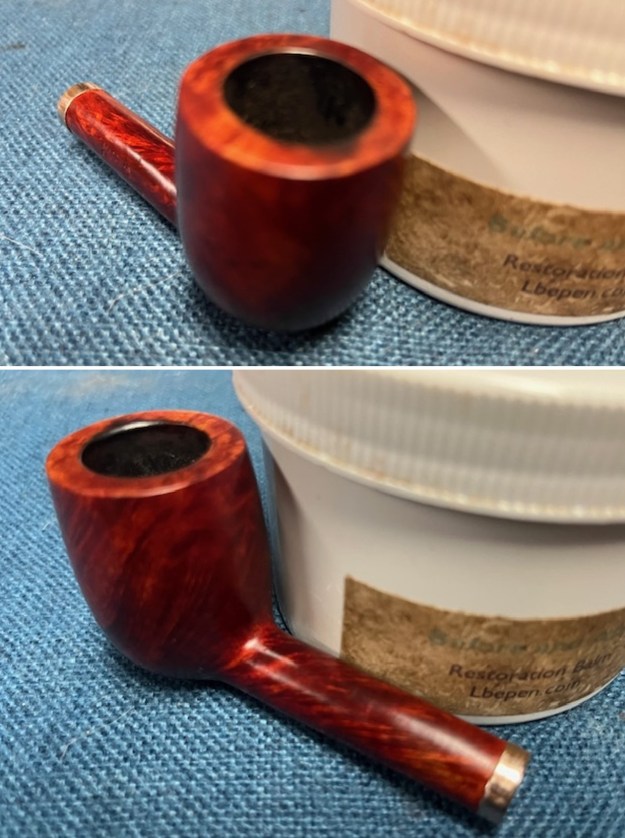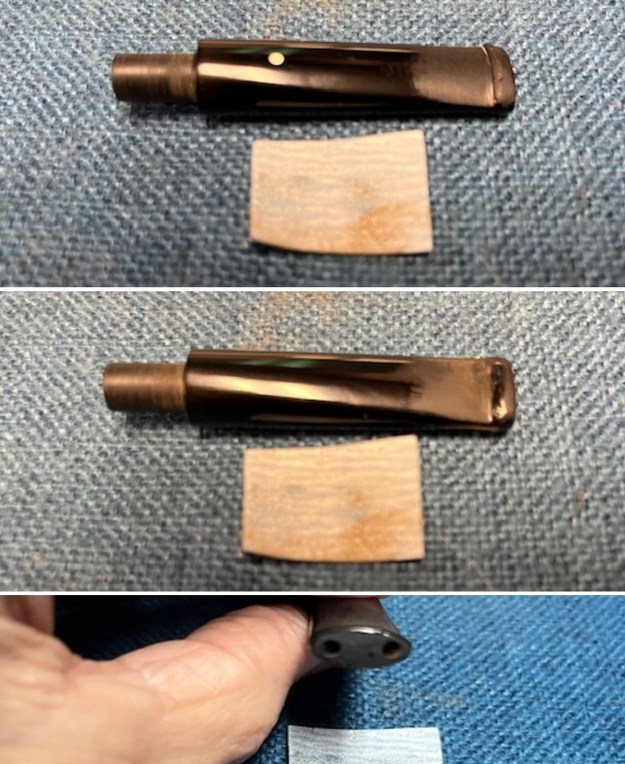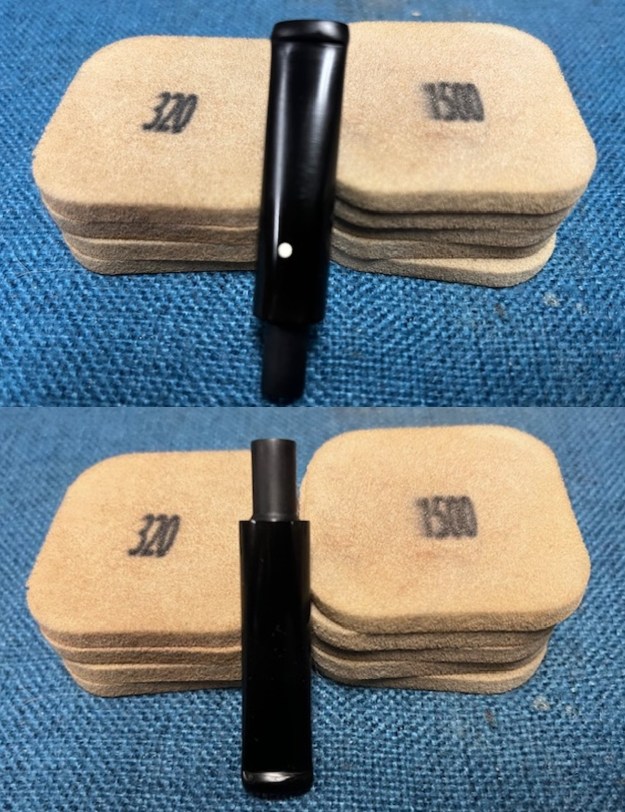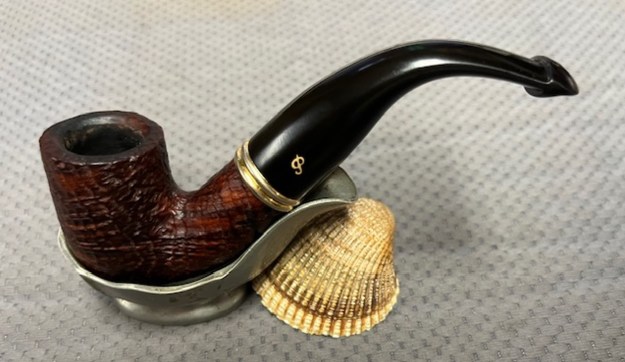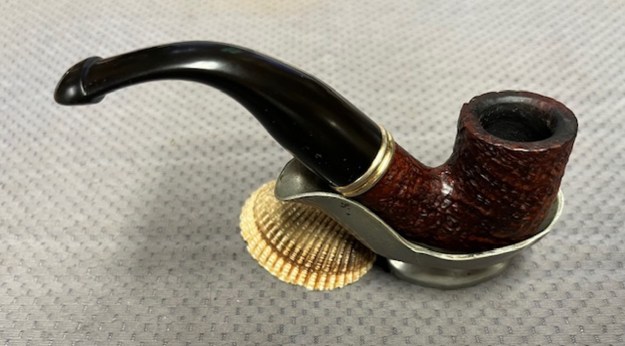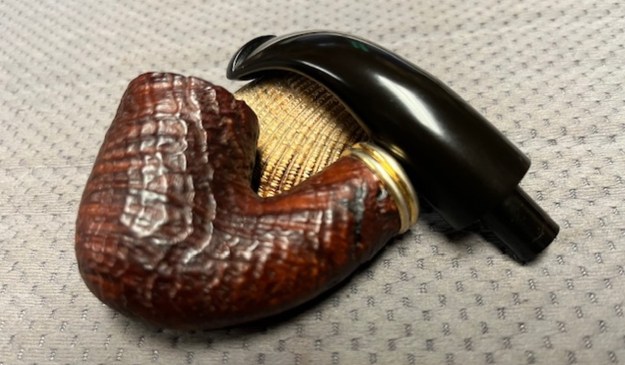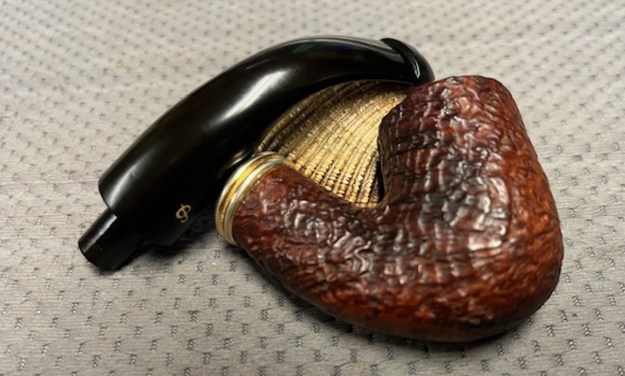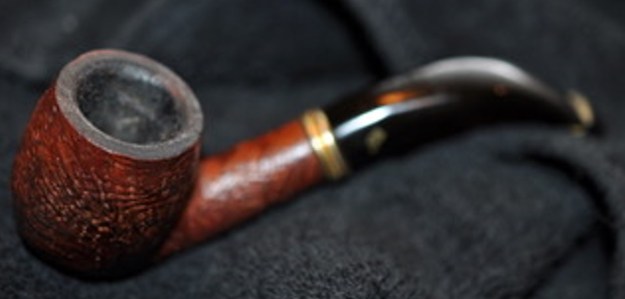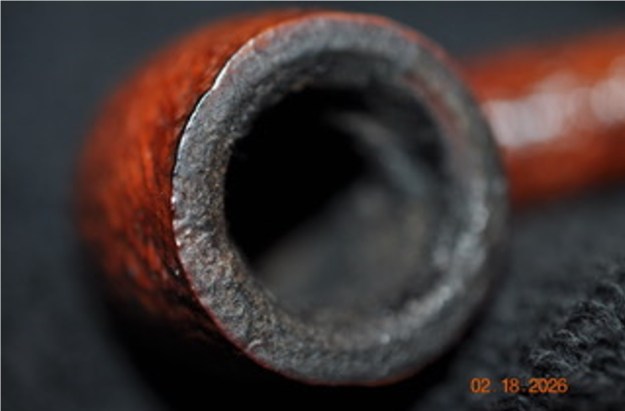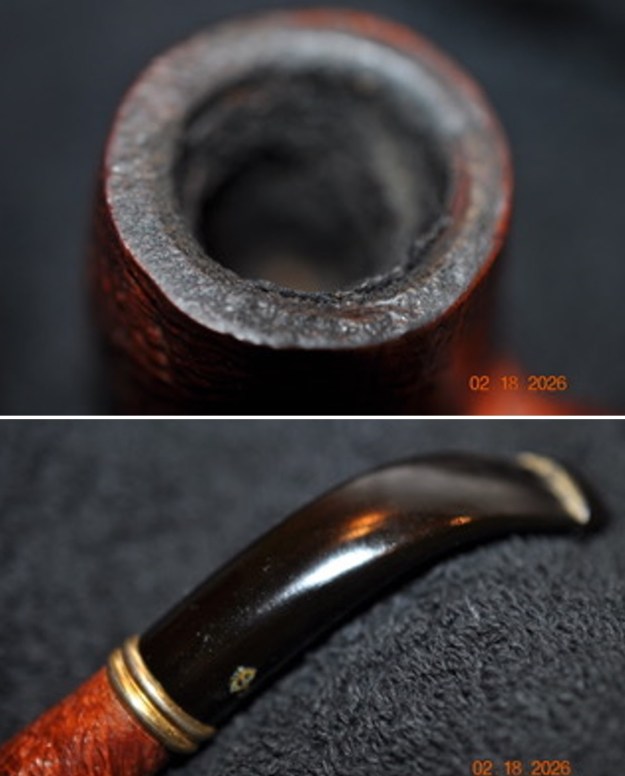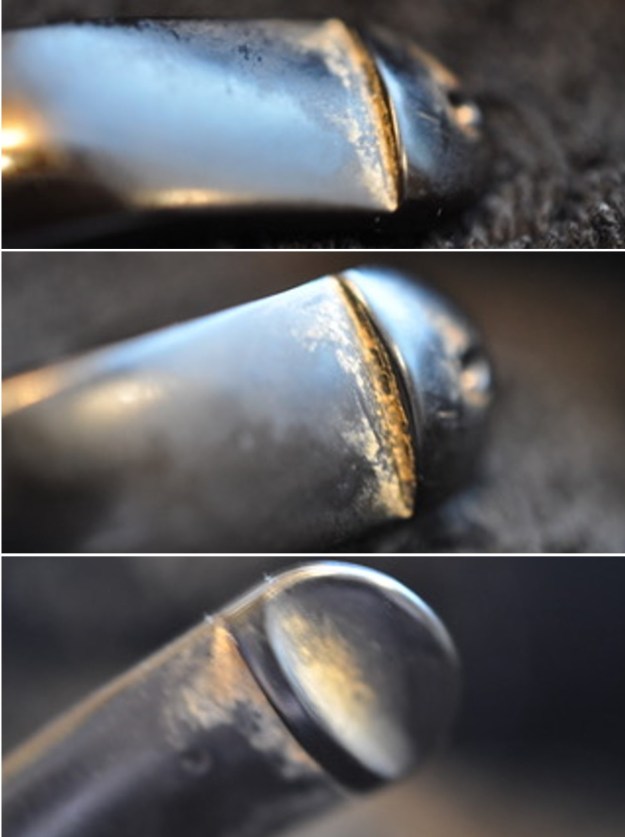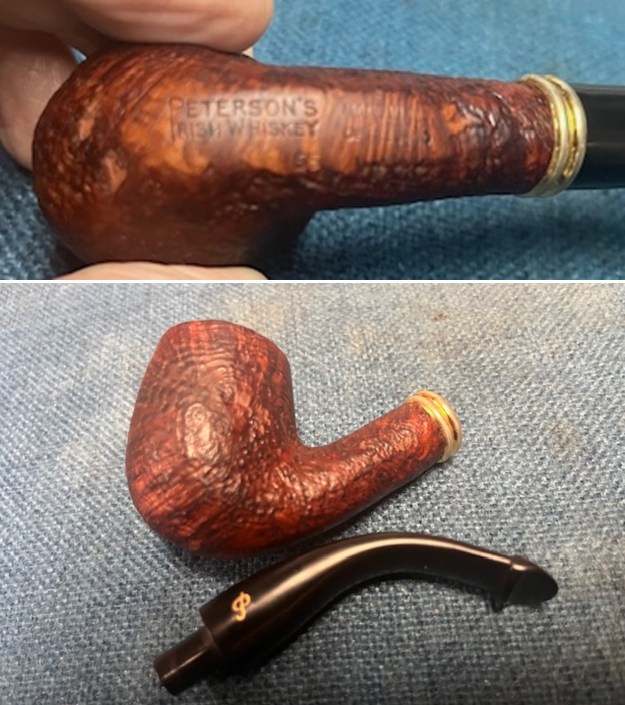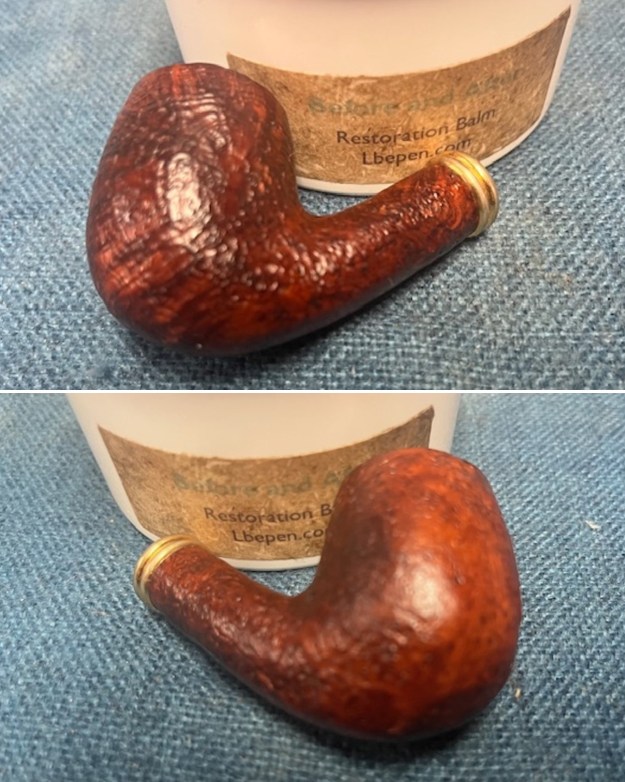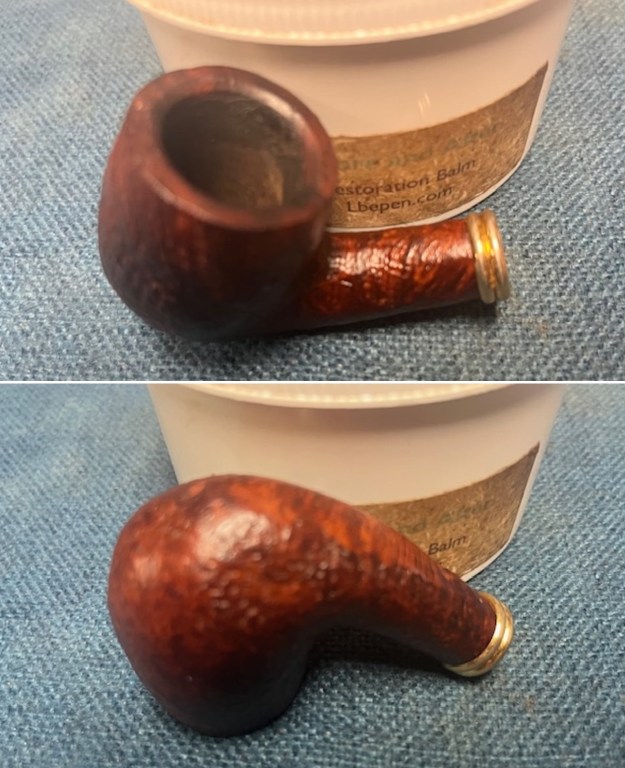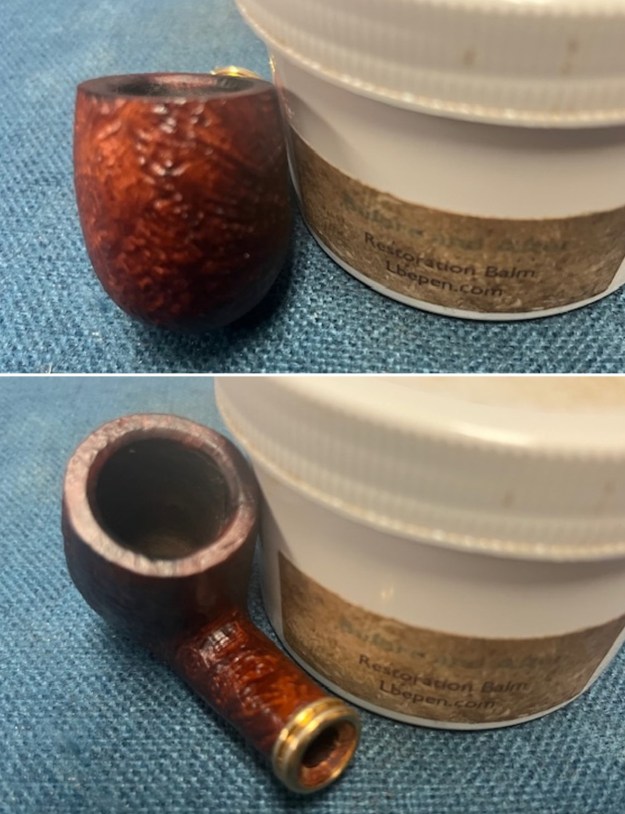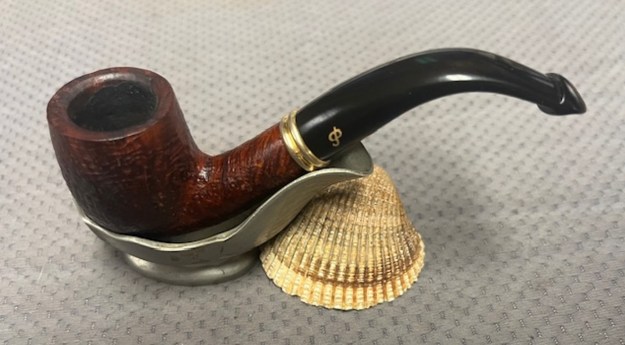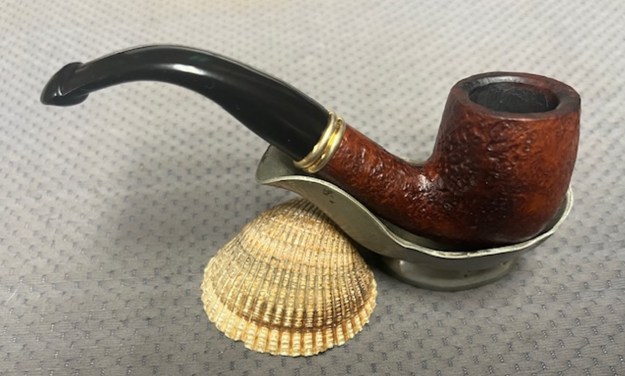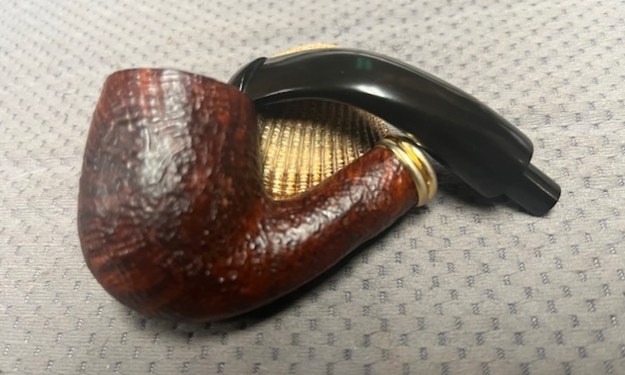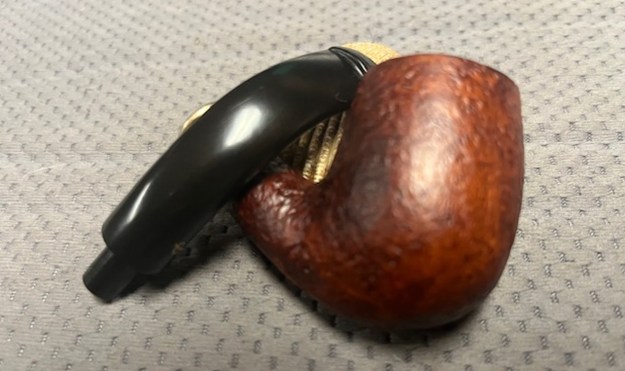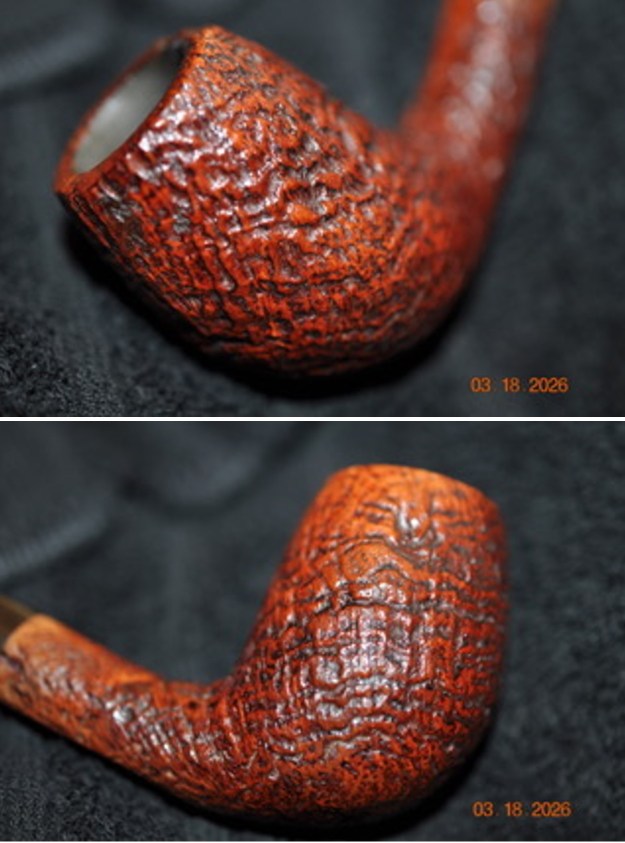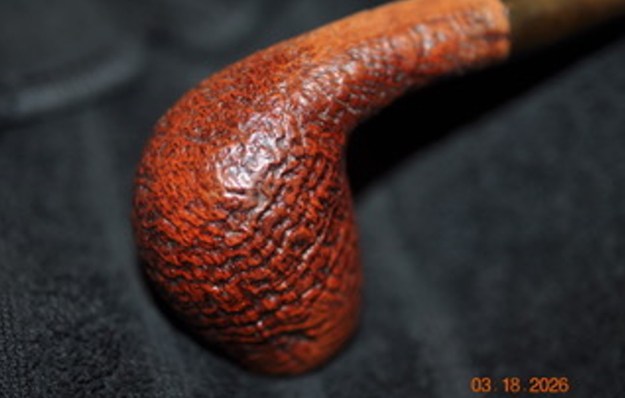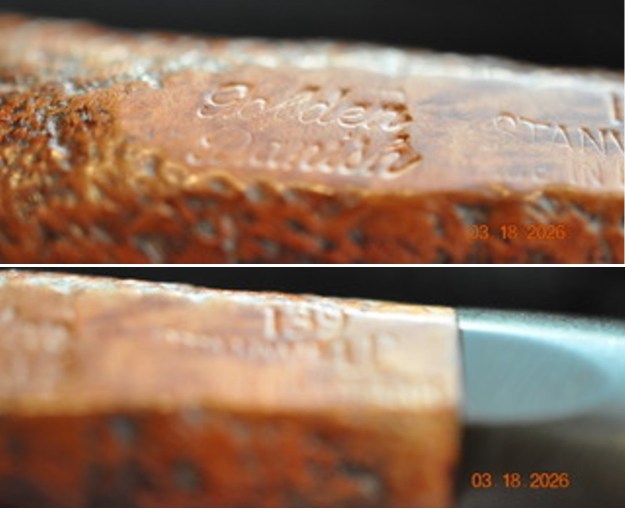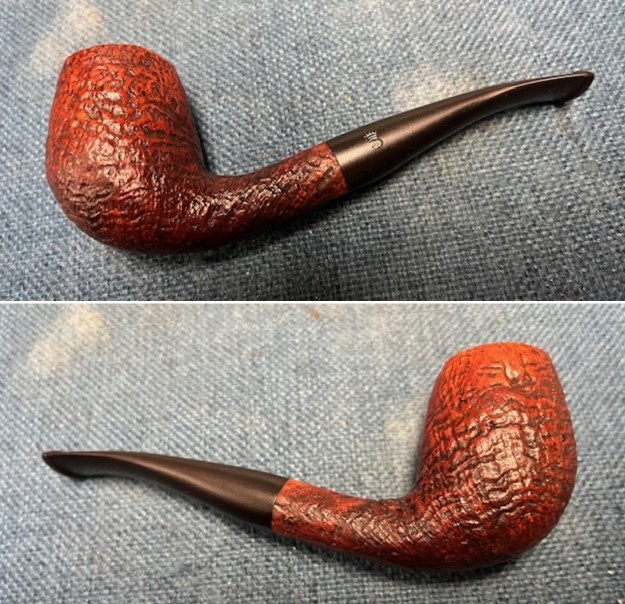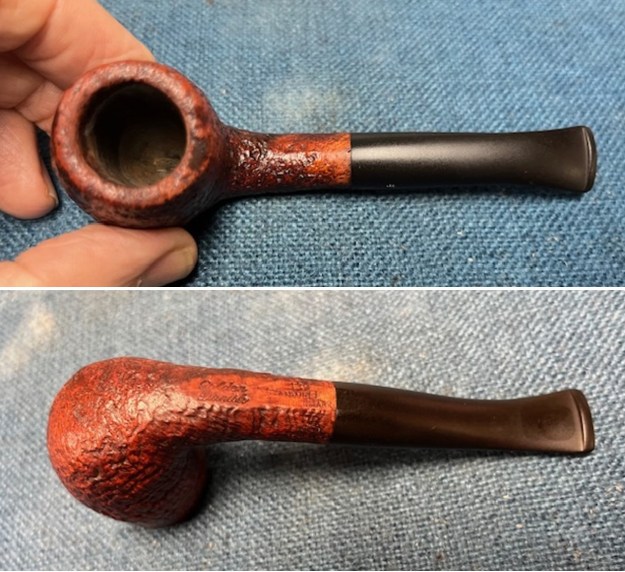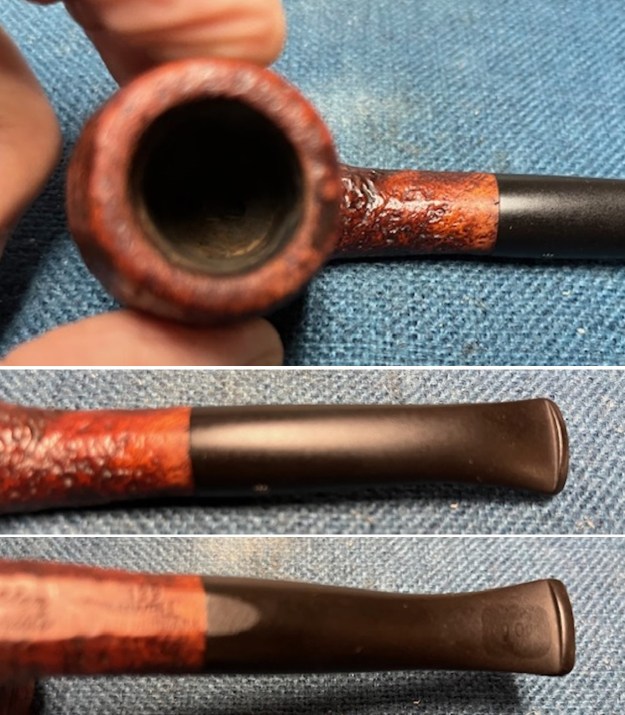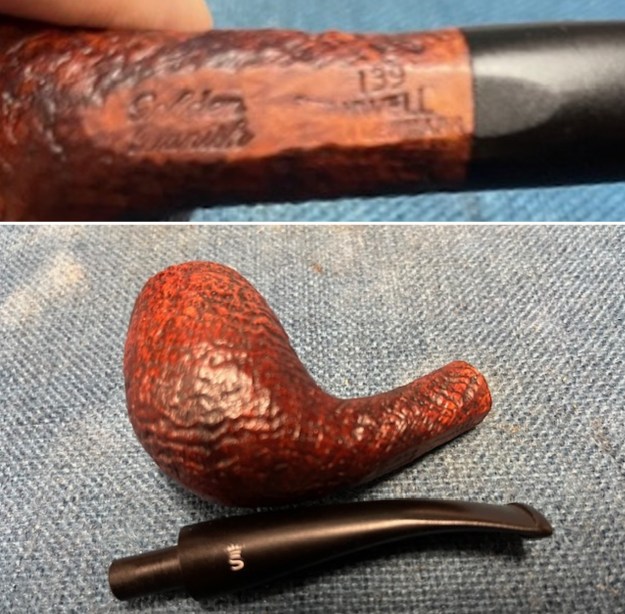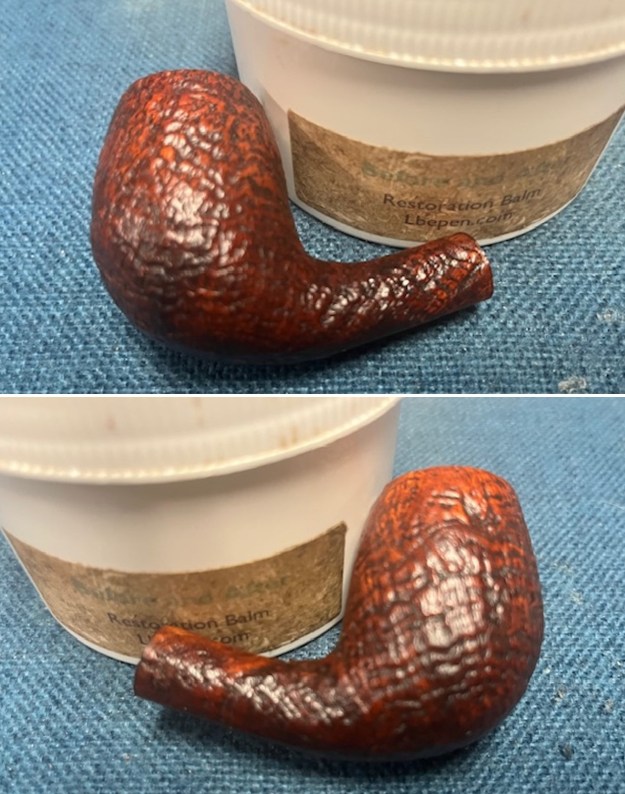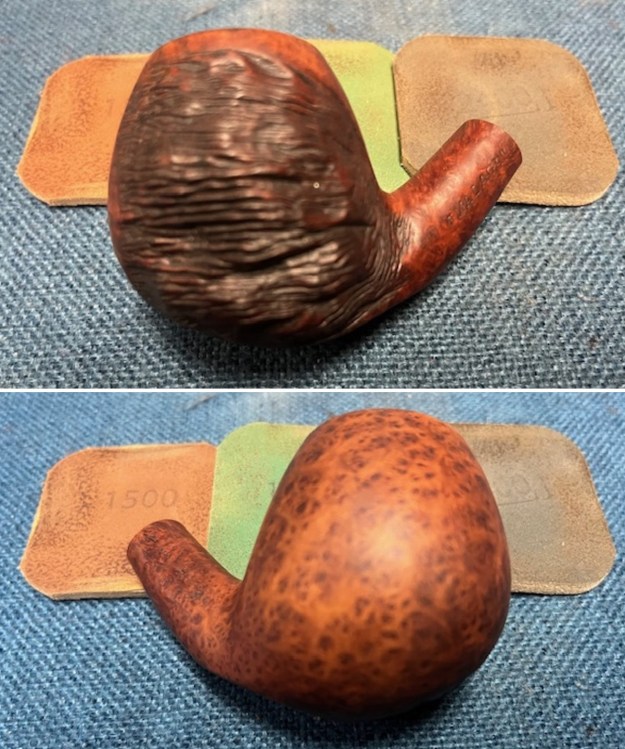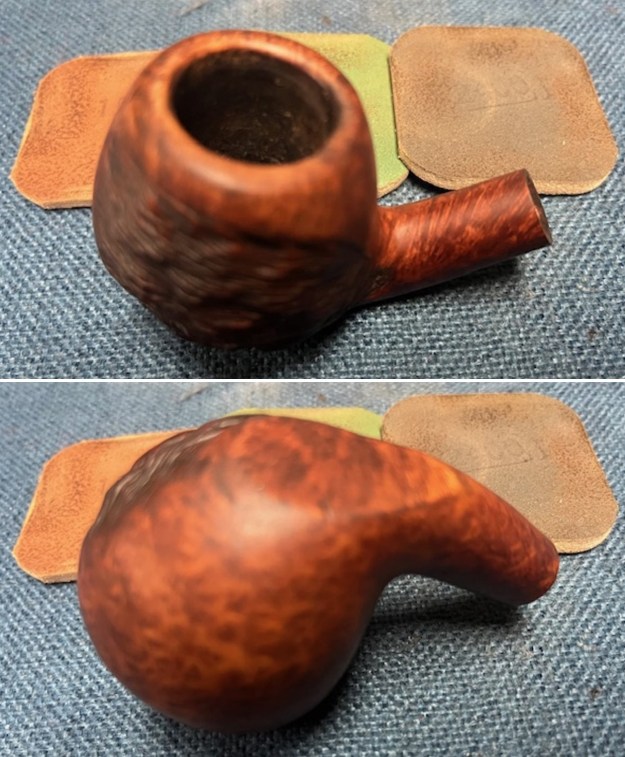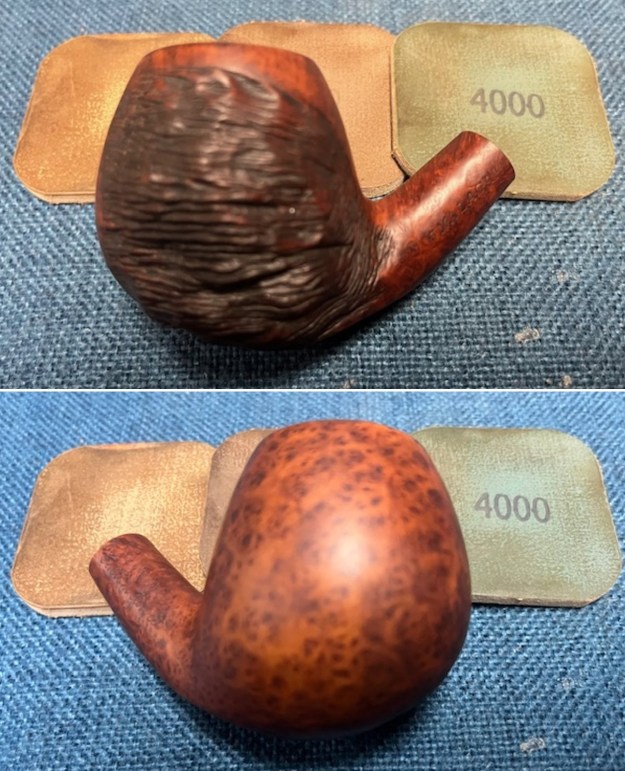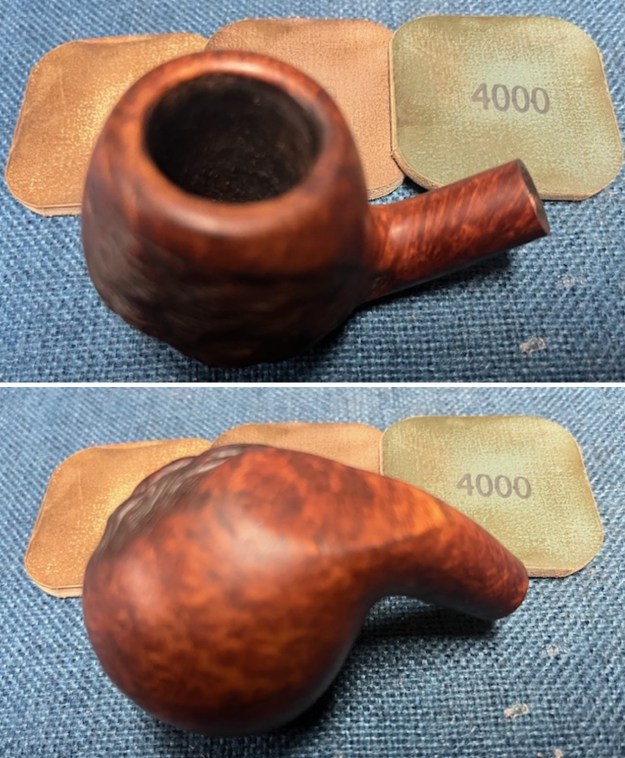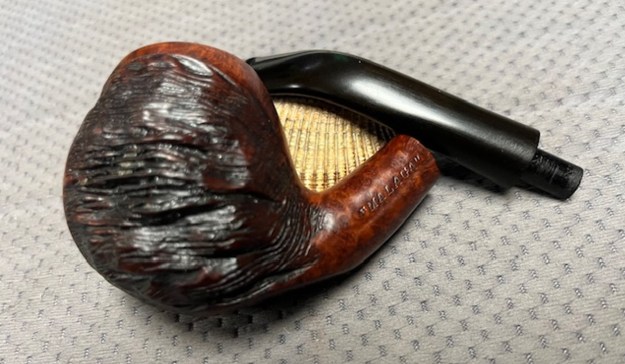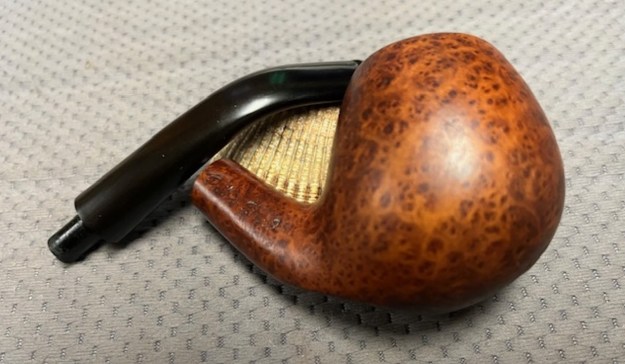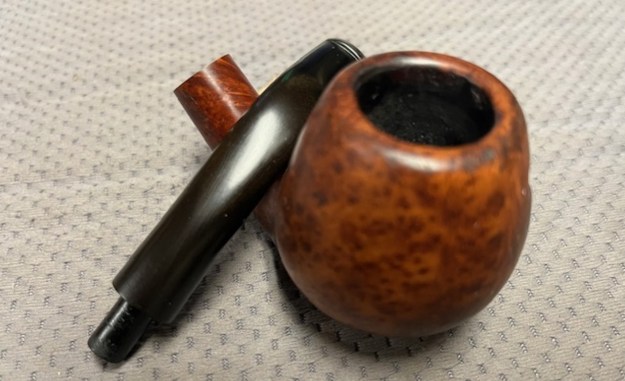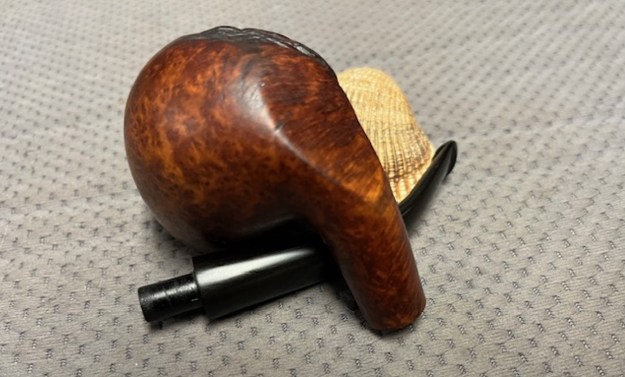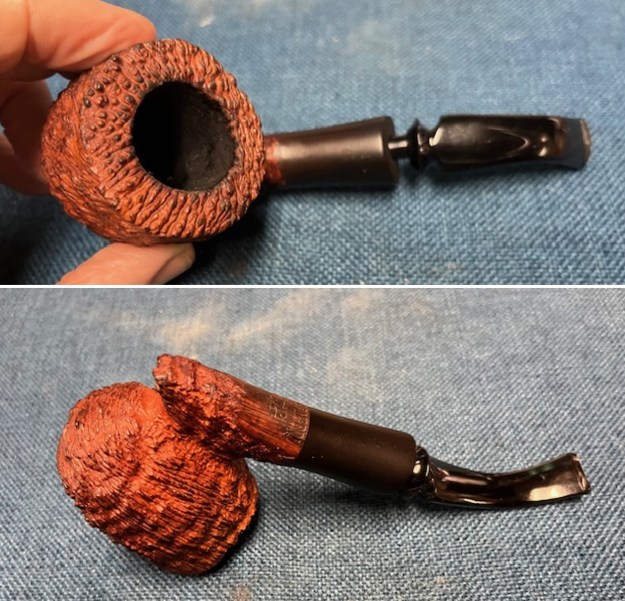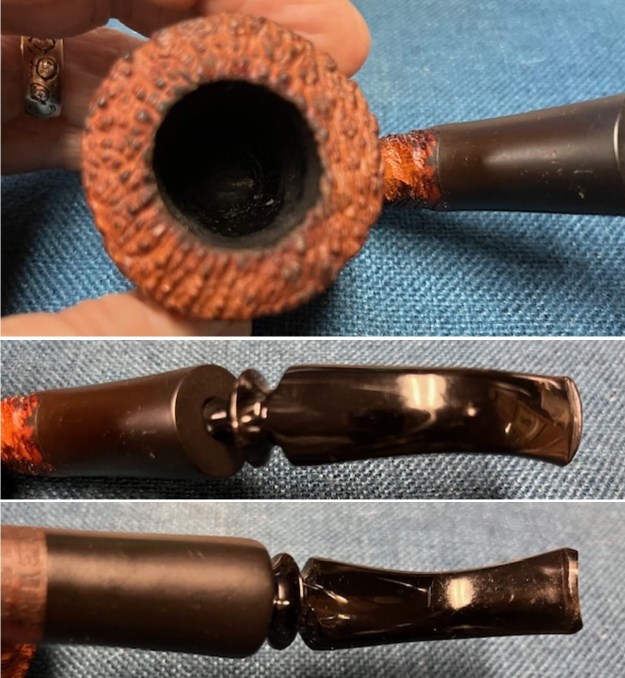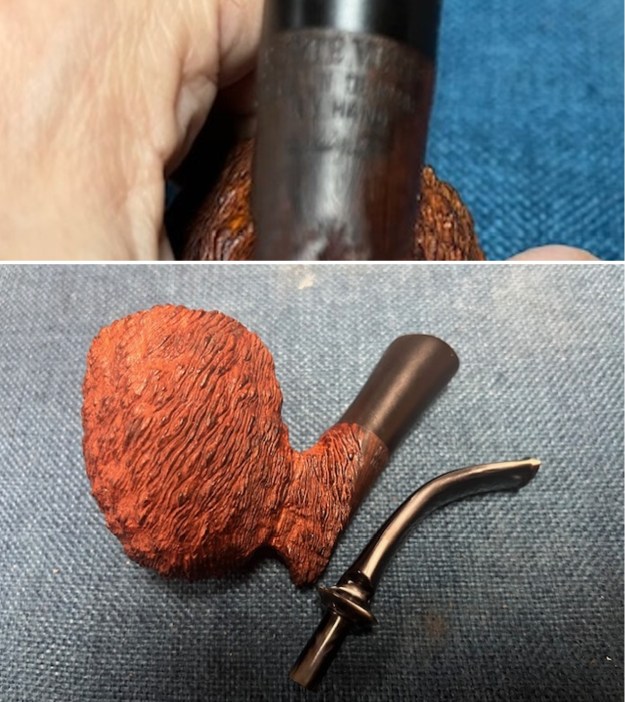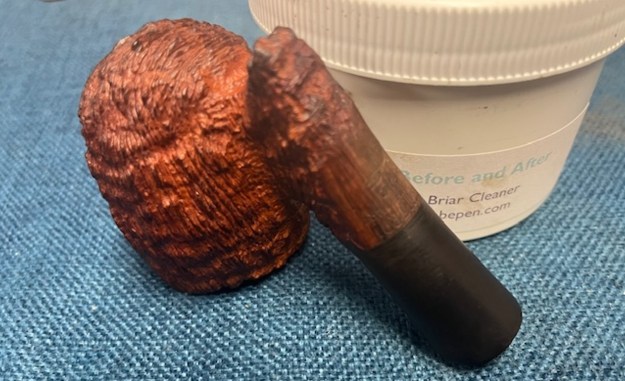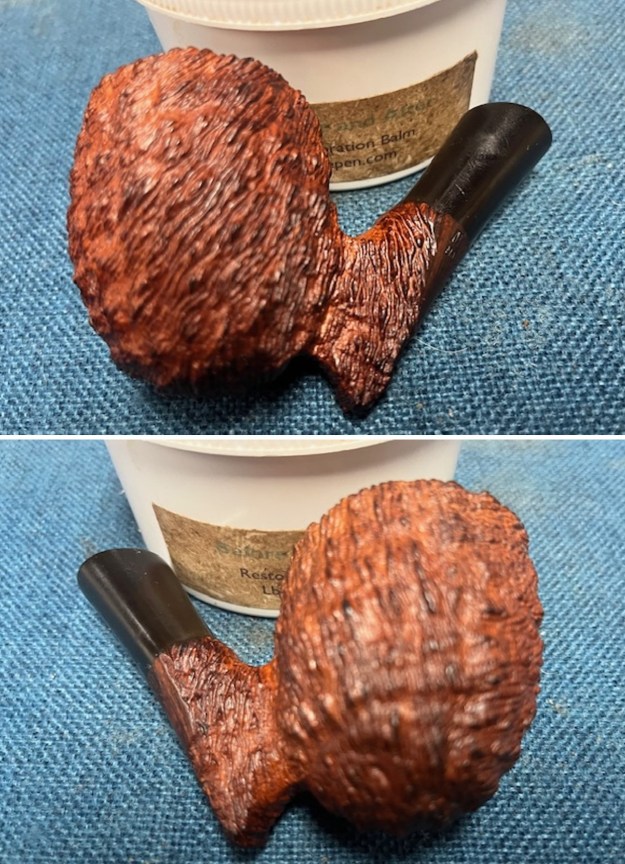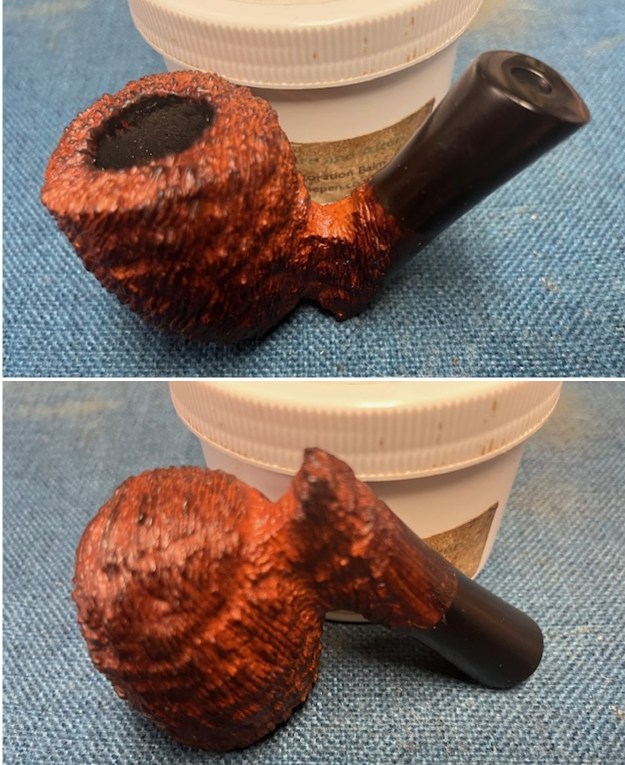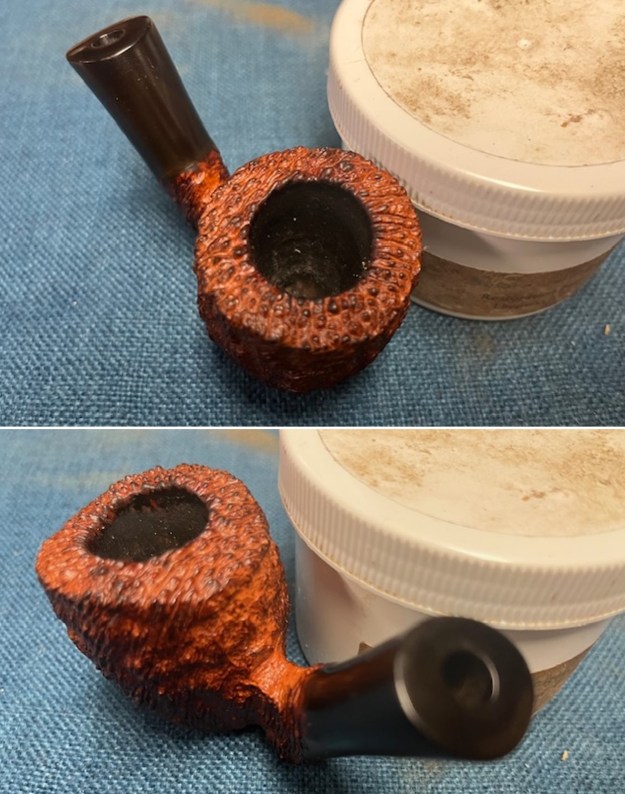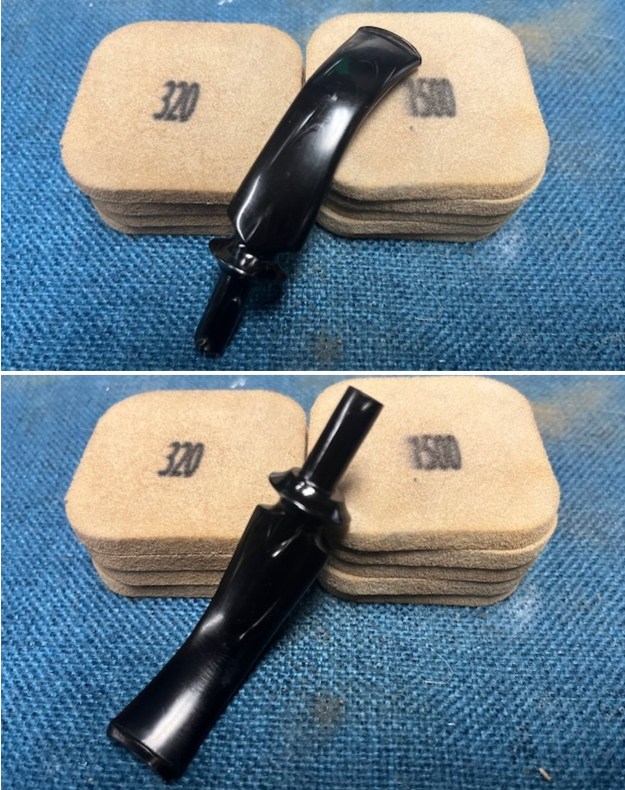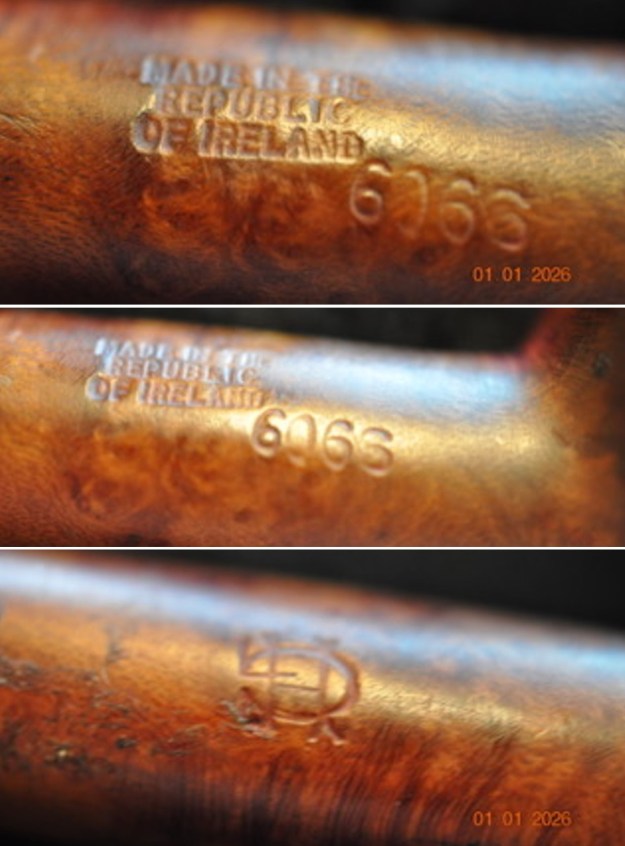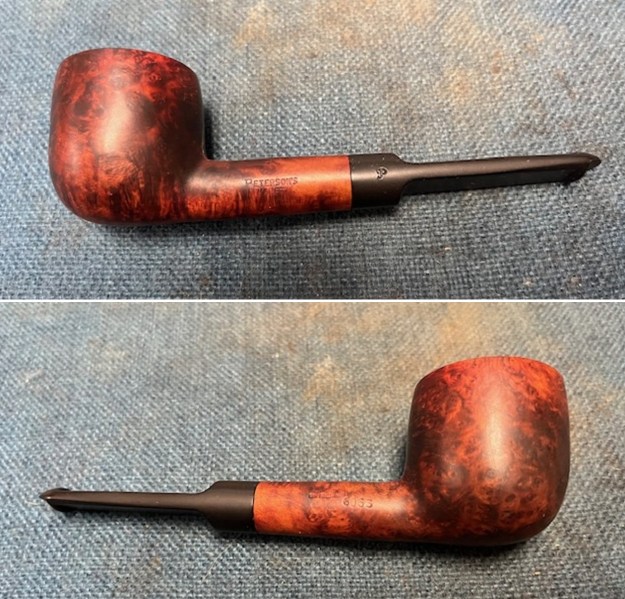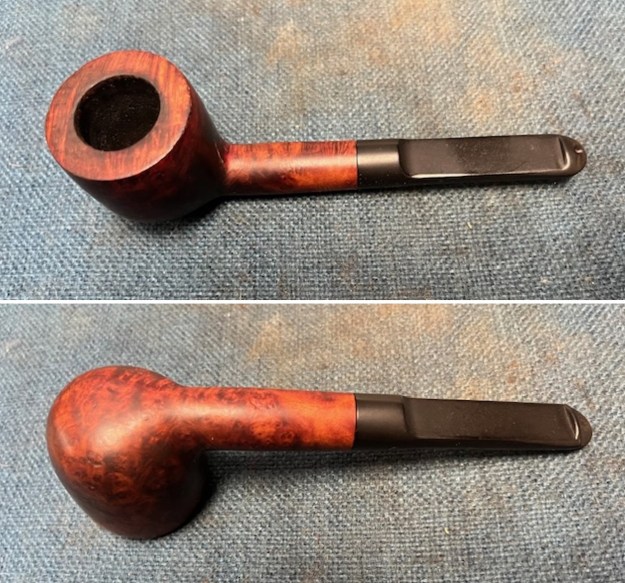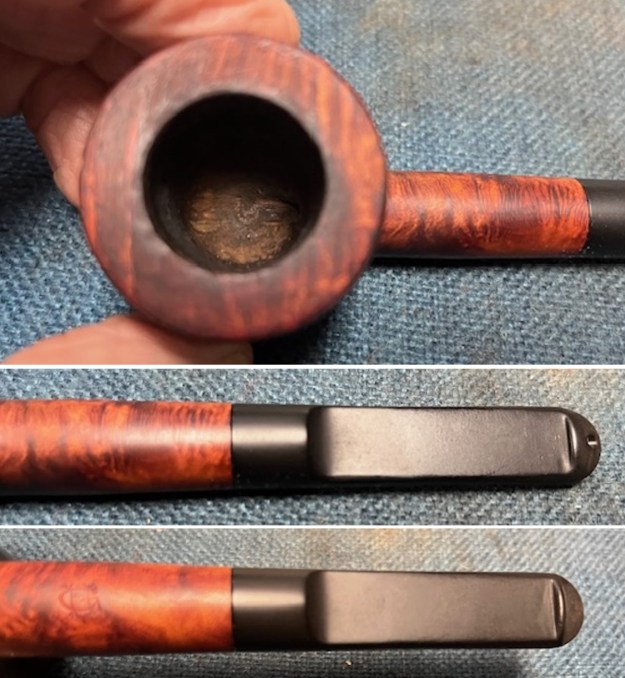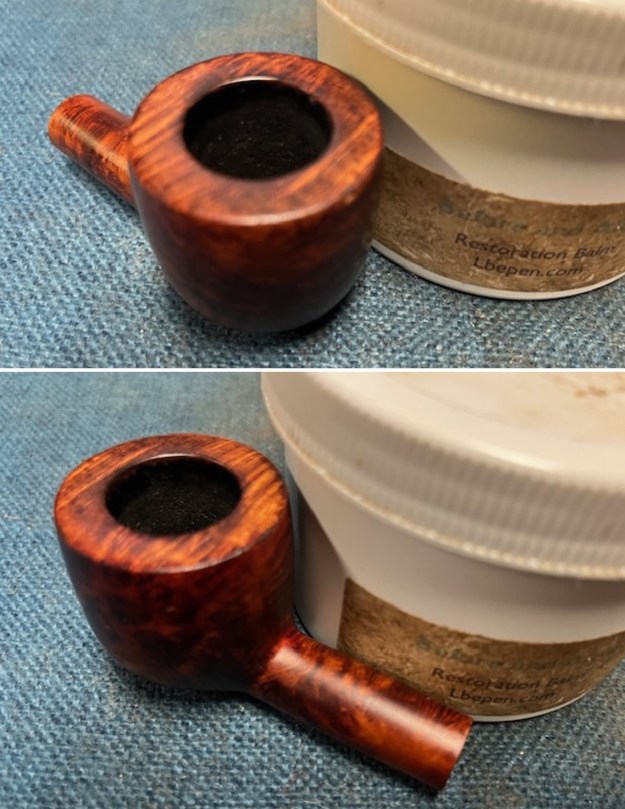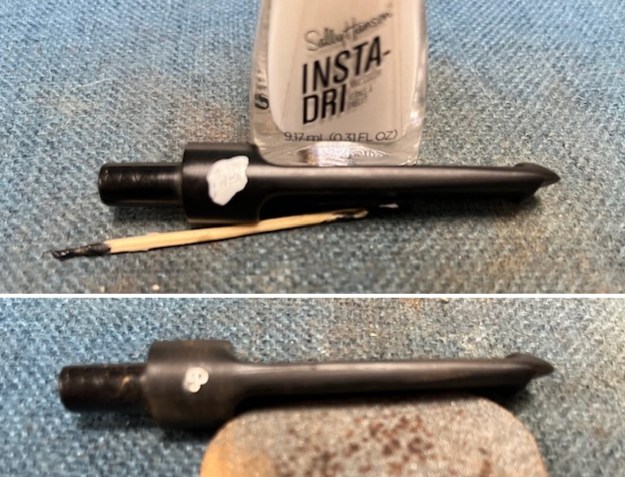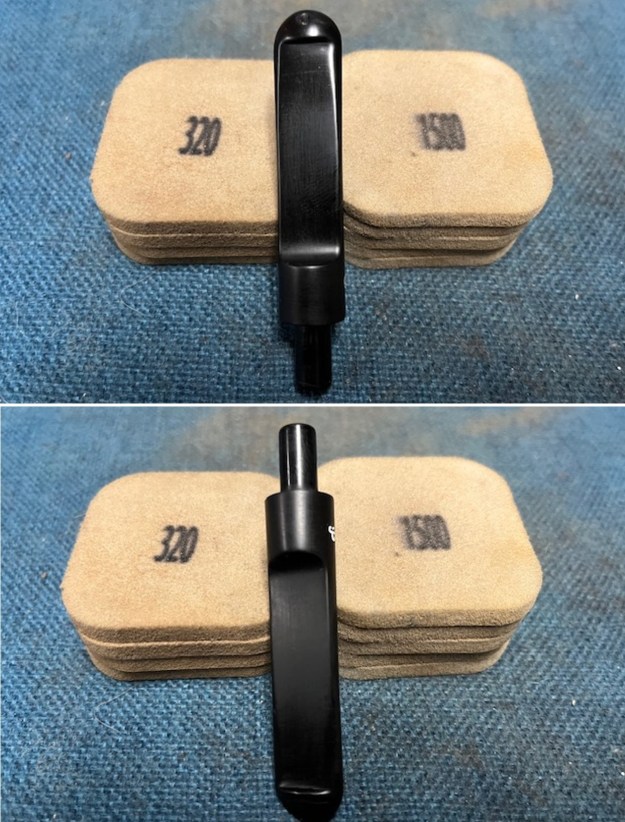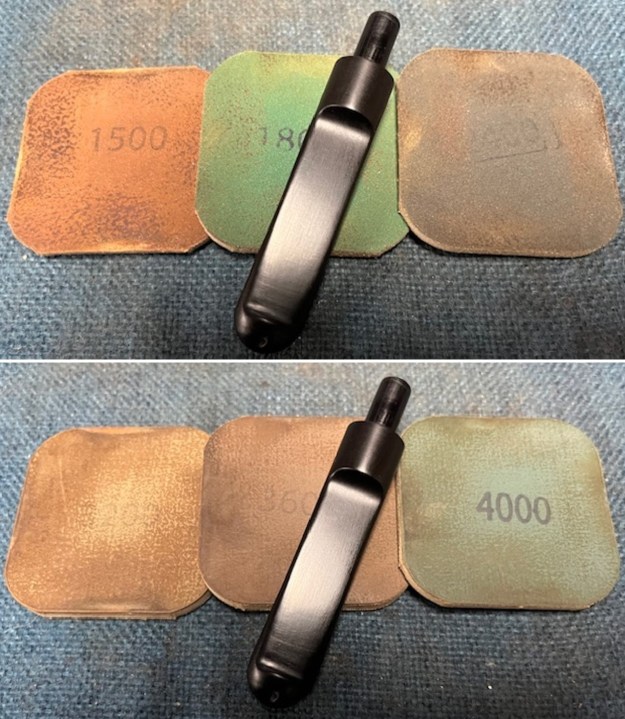
Tag Archives: vulcanite

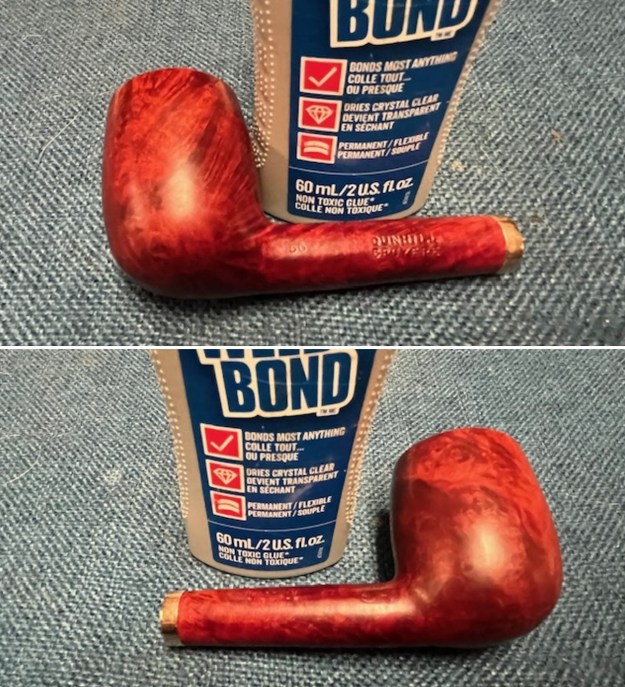
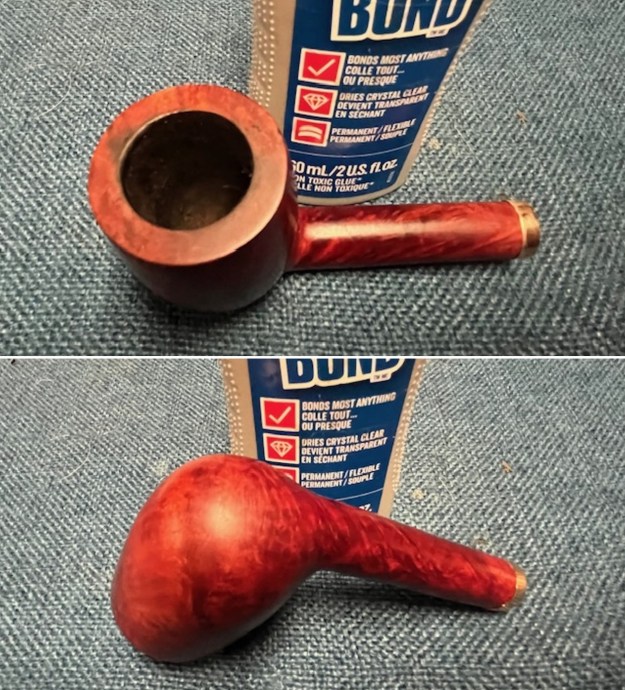
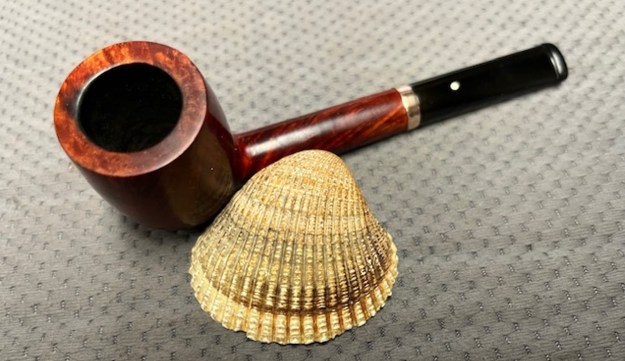
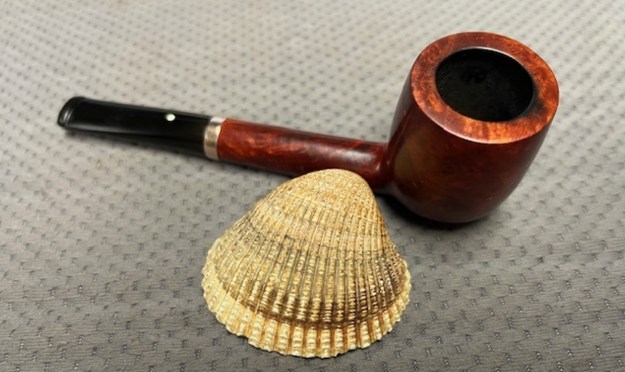
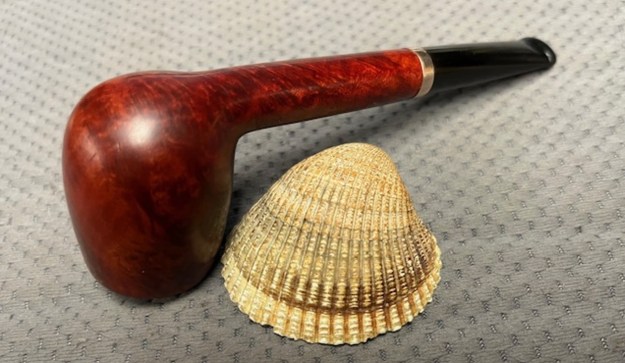
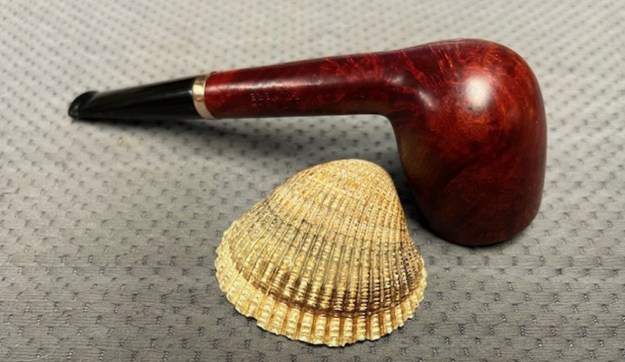
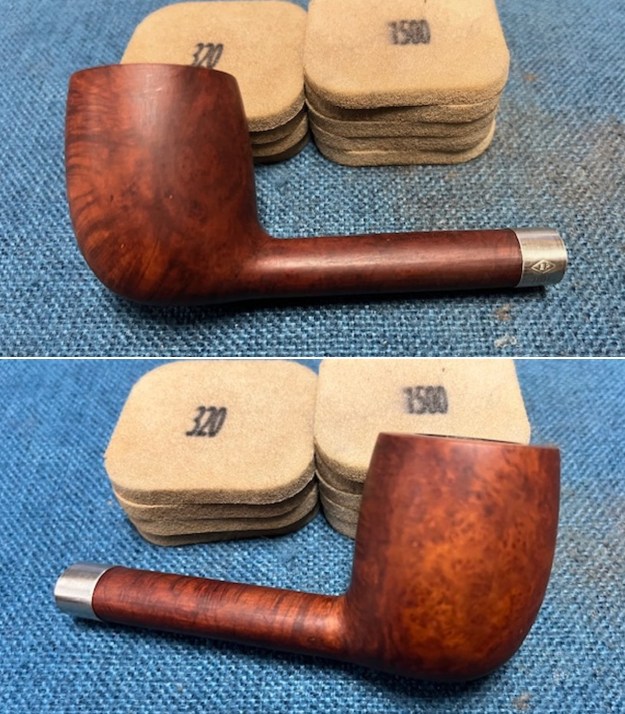
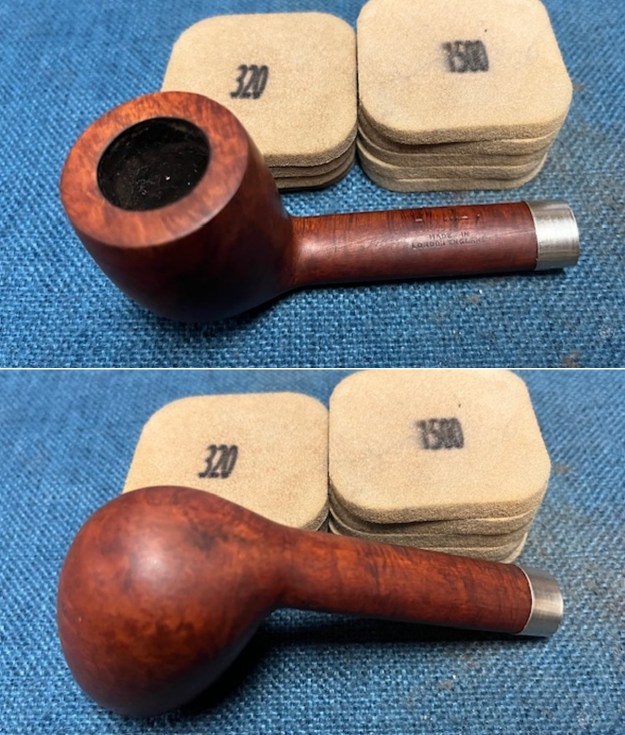
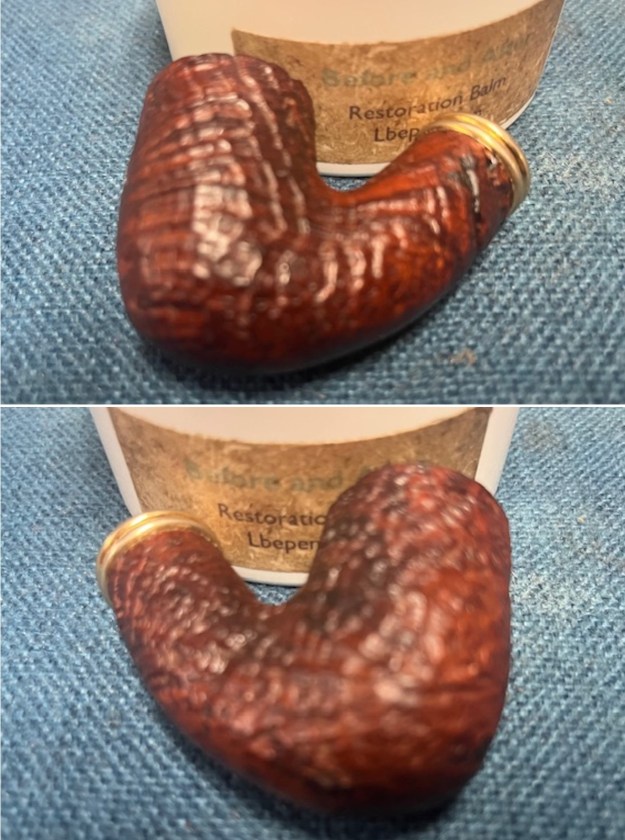
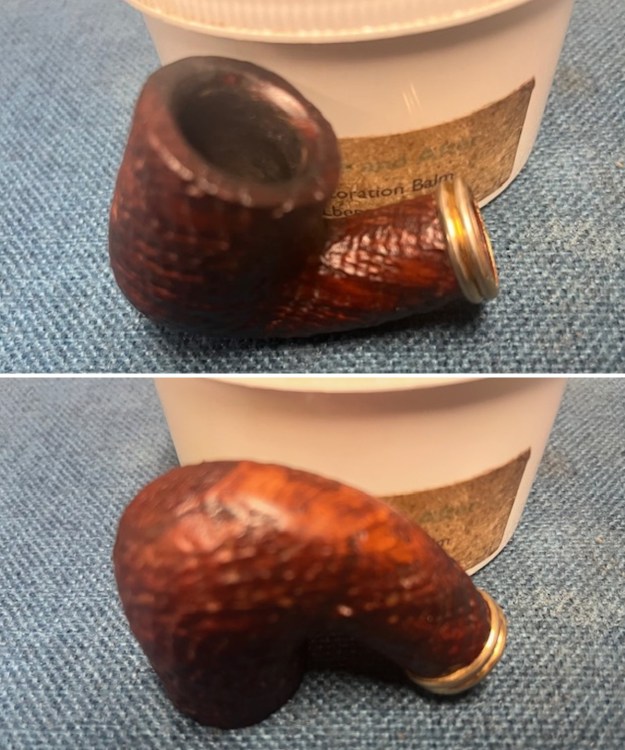
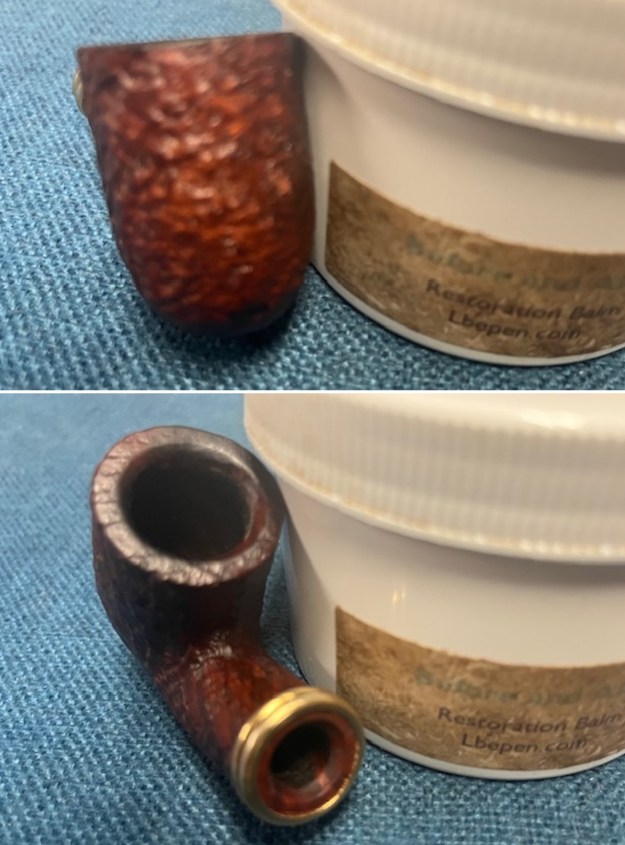
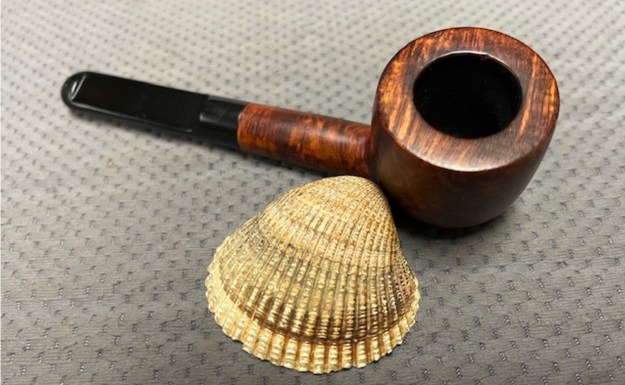
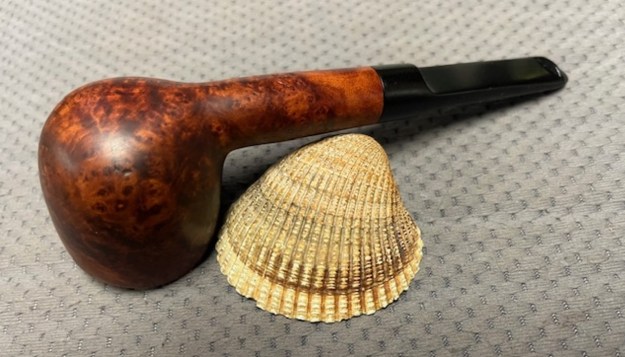
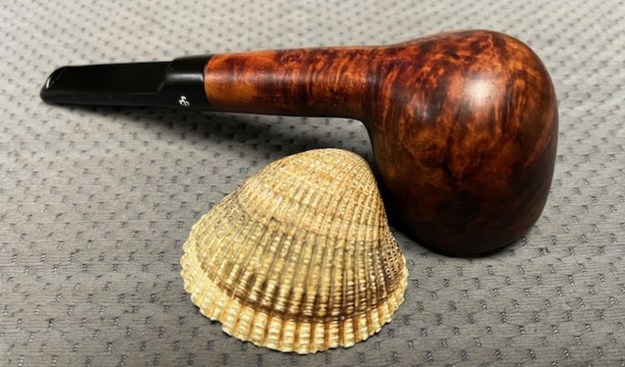
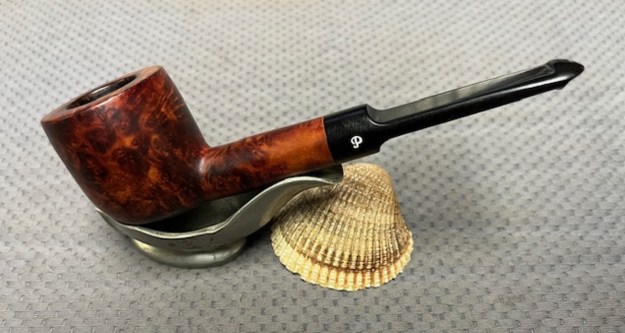
Repairing and Restoring a Marxman Selected Briar Algerian Briar France Apple


by Steve Laug

I received an email from a fellow a bit ago about two of his pipes that he wanted me to restore. I have included his email below.

Hey Steve,

It’s been a little while but I’d like to send in the Kaywoodie President for restoration. I also have a Marxman apple that I would like an assessment on–it’s a bit more of a challenge than a standard restoration. Can you let me know if you have an opening and if so, what address to send them to? Thanks!  – Devin
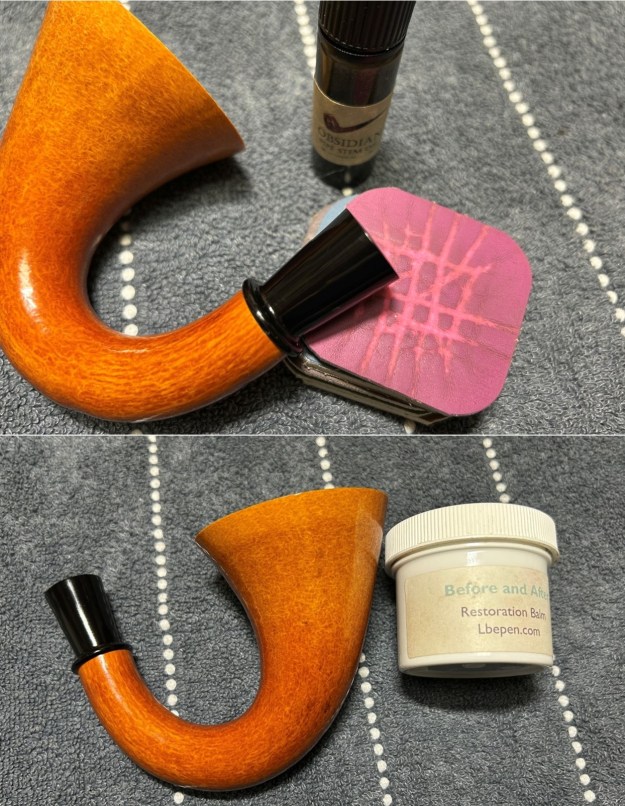
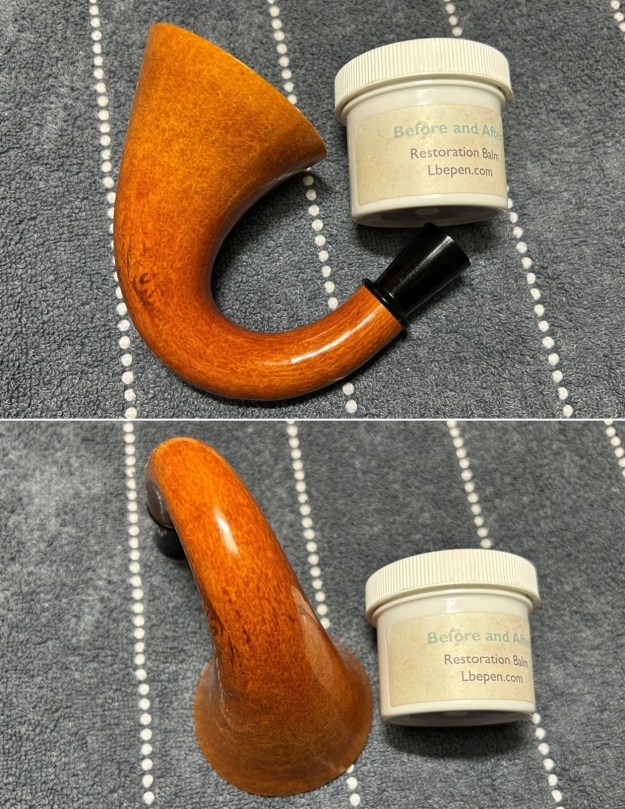
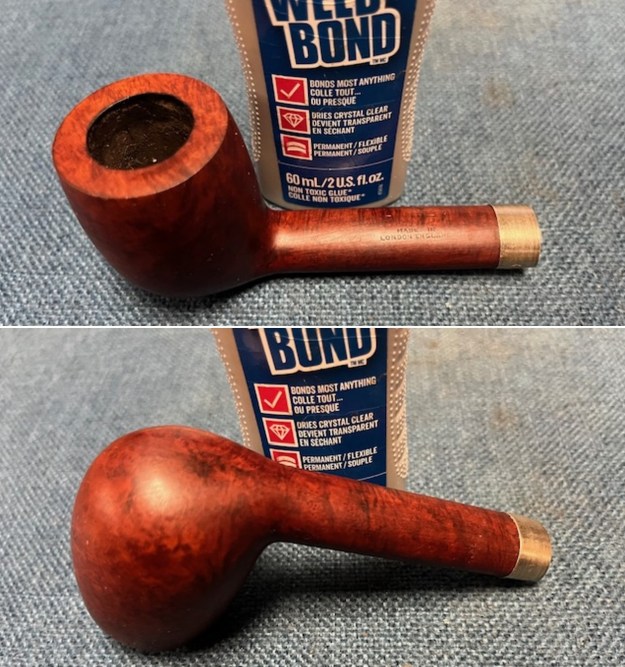
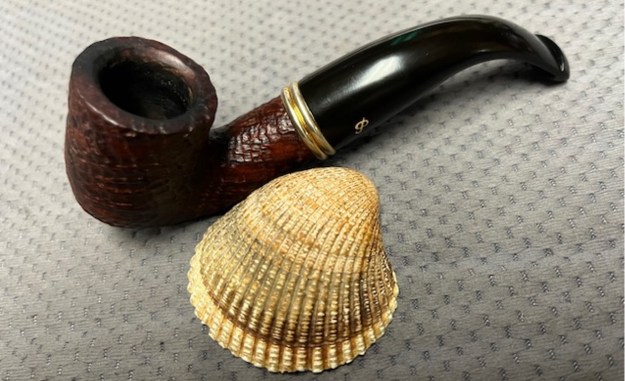
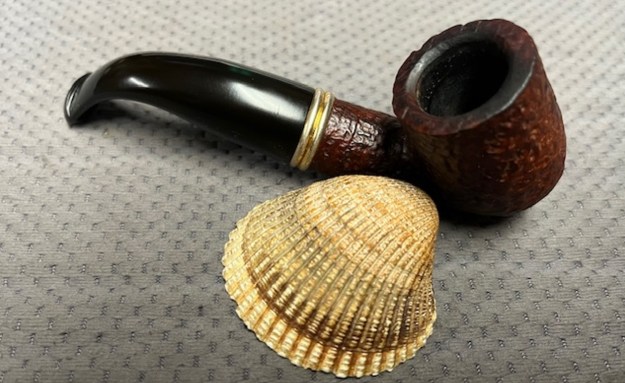
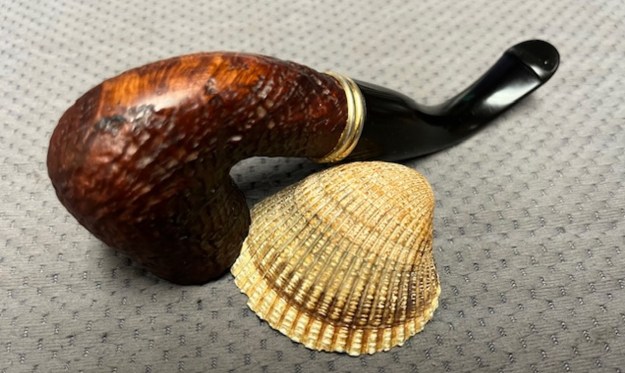
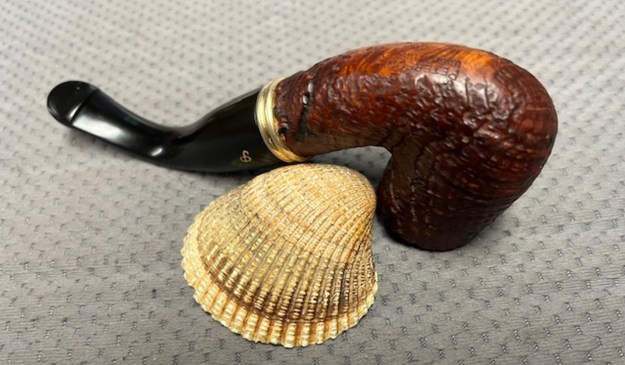
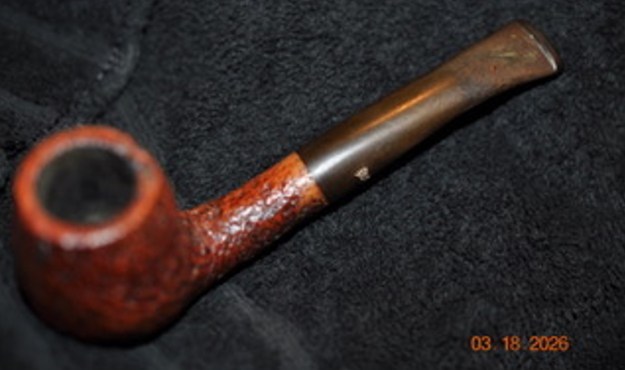
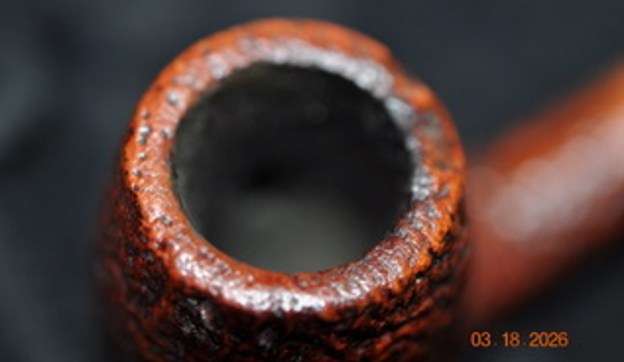
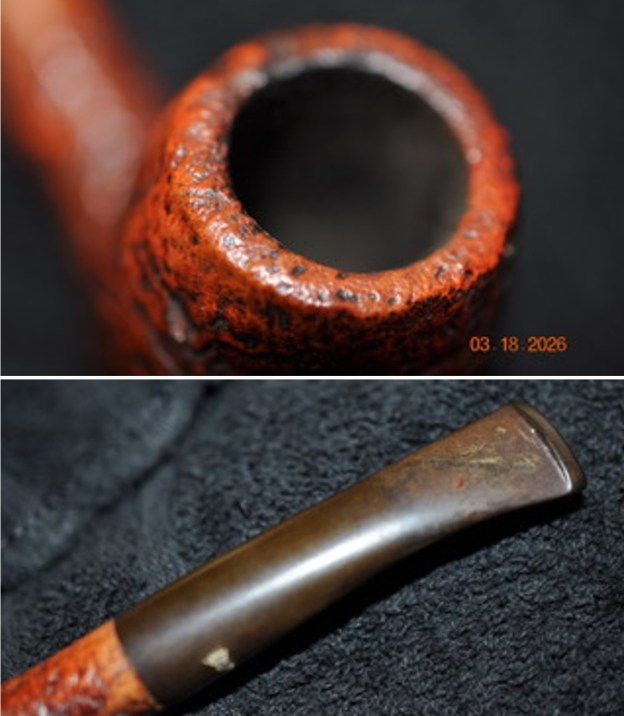
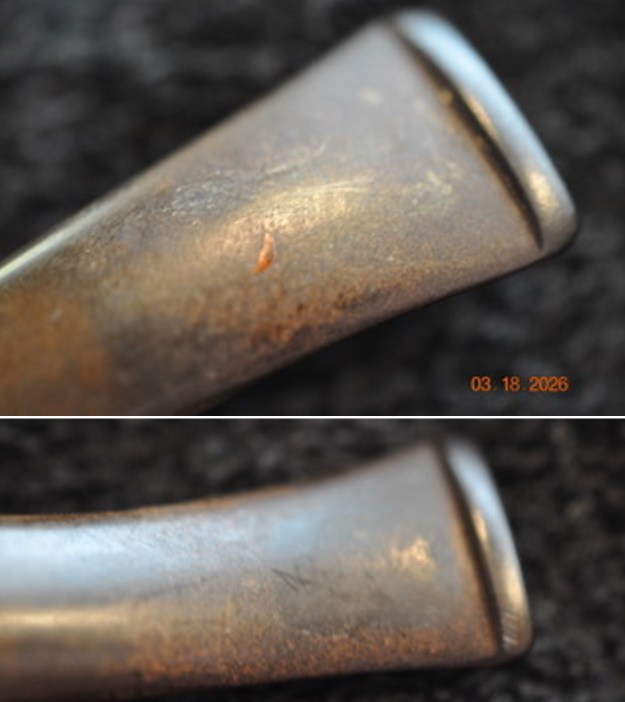
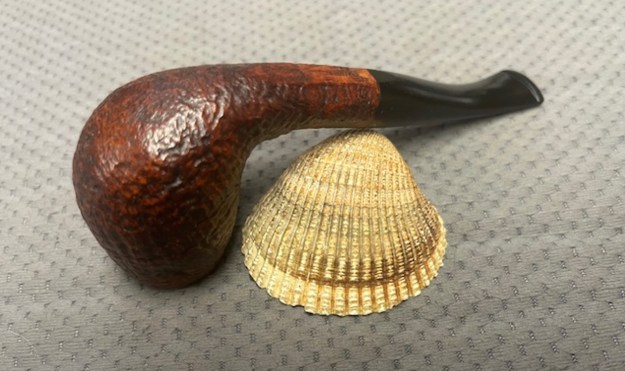
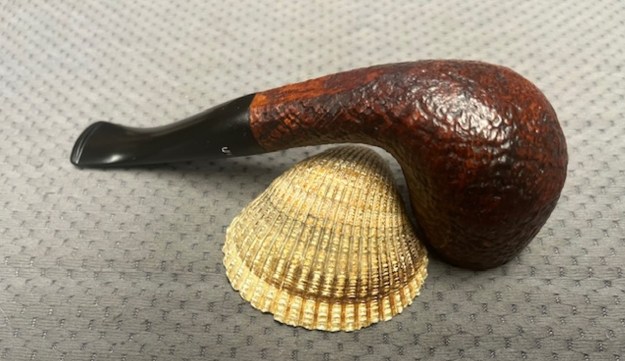
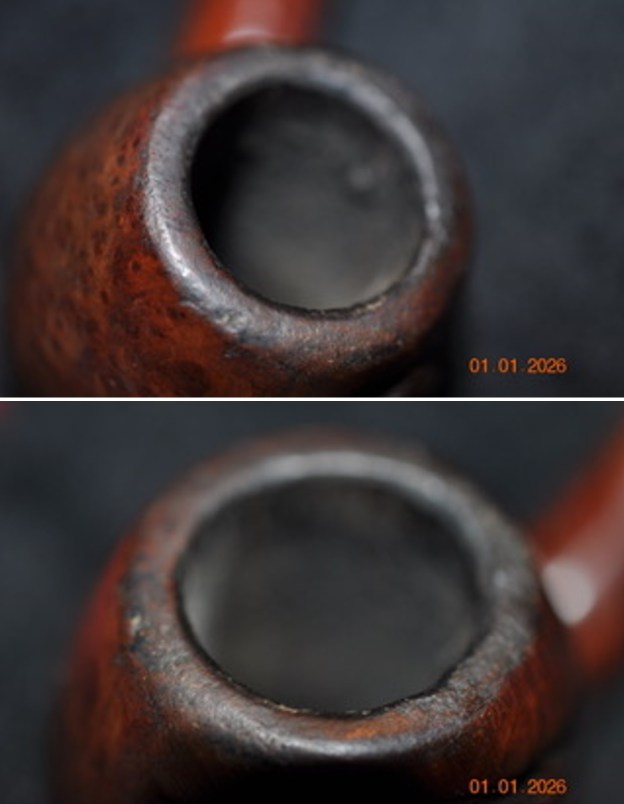
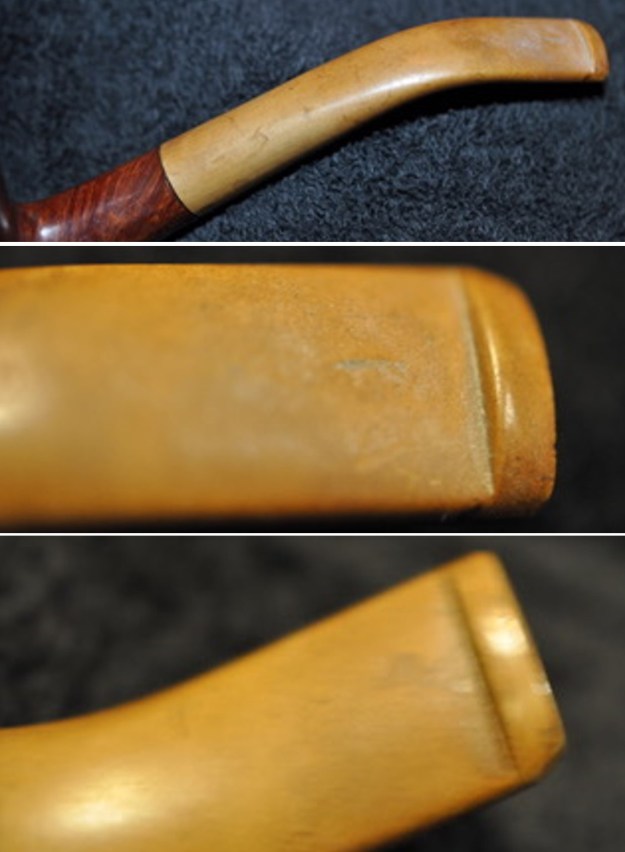
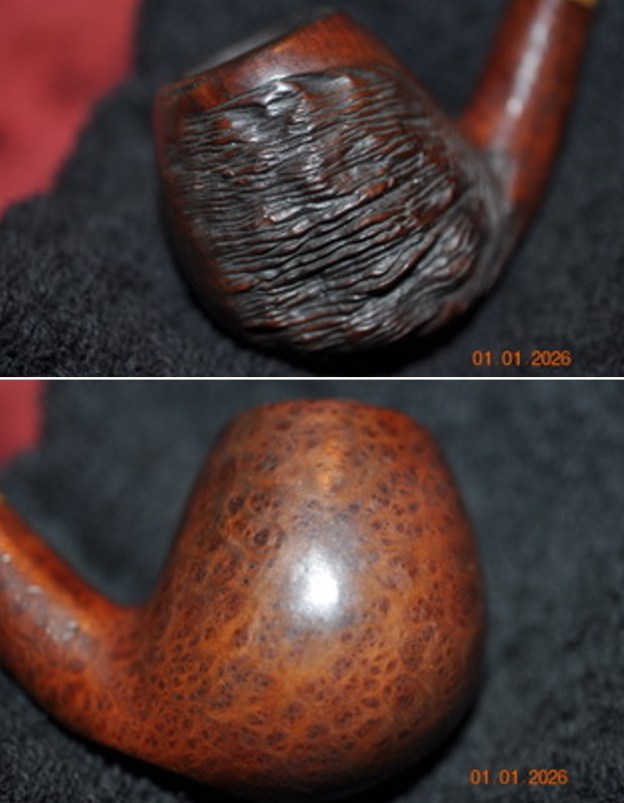
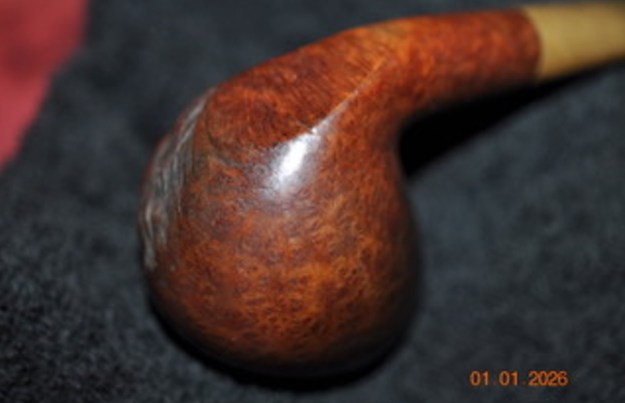
I asked him to send me some photos of the pipes before he shipped them to me. I gave my address and he shipped them to me. Here are the photos of the Marxman pipe that he sent.He included some close up photos of the bowl and shank to show the condition they were in. The shank had a lot of flaws in the briar on the heel and the shank. The flaws on the heel appeared to have lost the fills somewhere along the process. There were also some twisted flaws on the underside of the shank and the sides as well. The flaws and cracks ran through all the stamping on both sides. Some of them were deep as they leaked smoke when the pipe was smoked. The shank end had a lot of flaws following the grain on the shank from the shank end toward the bowl. It really was a flawed piece of briar that has opened up over time. The stem was in excellent condition. The bowl and shank had been reamed and cleaned by Devin before he sent it to me. He included photos of the stem. The pipes arrived here last evening. I took the Marxman to the table to look it over. It was very clean inside and out. The pipe was stamped on the left side of the shank read Marxman with the arrow through the letters (Marxman logo). On the right side it is stamped Algerian Briar [over] France. The shank is riddled with flaws running along the grain horizontally from the shank end forward through the stamping. There were also spots on the shank that spidered from the flaws in the shank and in spots left holes. Devin said that smoke came through some of the holes in the shank. It a mess in terms of the amount repairs that need to be done. The vulcanite stem has a Marxman arrow logo on the left side of the shank. I took a photo of the rim top to show the condition. You can see the clean bowl. The bowl is in excellent condition and the rim top looks very good. You can also see all the flaws in the briar on the top of the shank and around the shank end. The stem came out looking quite good. It only needed to be polished. I took photos of sides of the shank to show the stamping. The photos clearly show the stamping and is actually more readable in person. I removed the stem from the shank and took a photo of the pipe parts to show what I was working with. It is a nicely shaped apple.I turned to Pipephil’s site to look at the data that was available on Marxman pipes and see if there were any pipes like the bowl I had (http://www.pipephil.eu/logos/en/logo-m2.html). There was nothing in the photos there but the stamping and data available was helpful. I have included a screen capture and the sidebar information below the screen capture.Brand created in 1934 and merged with Mastercraft in 1953.
The article also included a shape chart that was helpful. It looked to me that the pipe was a Regular Apple (third pipe down in the first column below). It is the top pipe in the second column in the photo below.From the above information I knew that I was working on a Marxman Regular Apple and that it was made before the merger with Mastercraft in 1953.

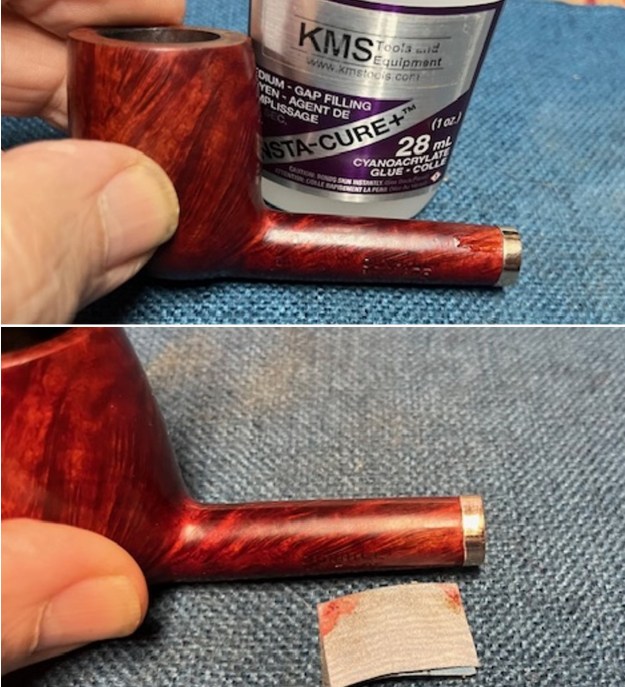
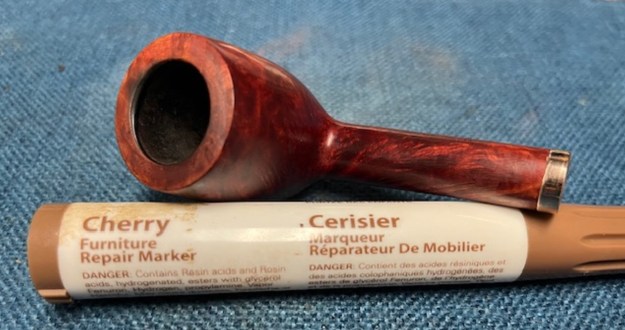
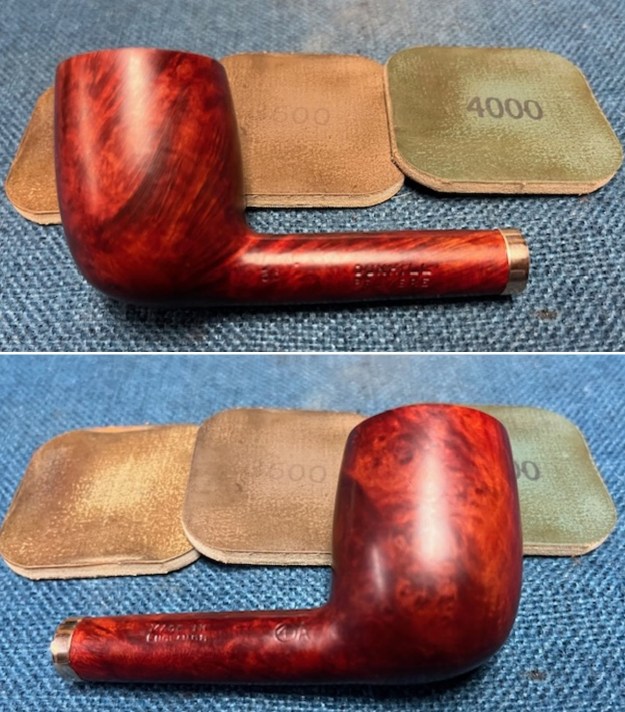
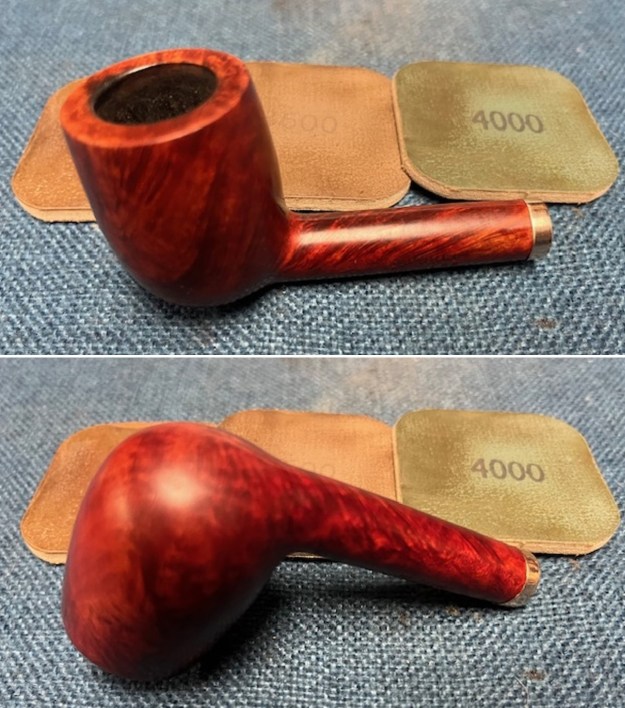
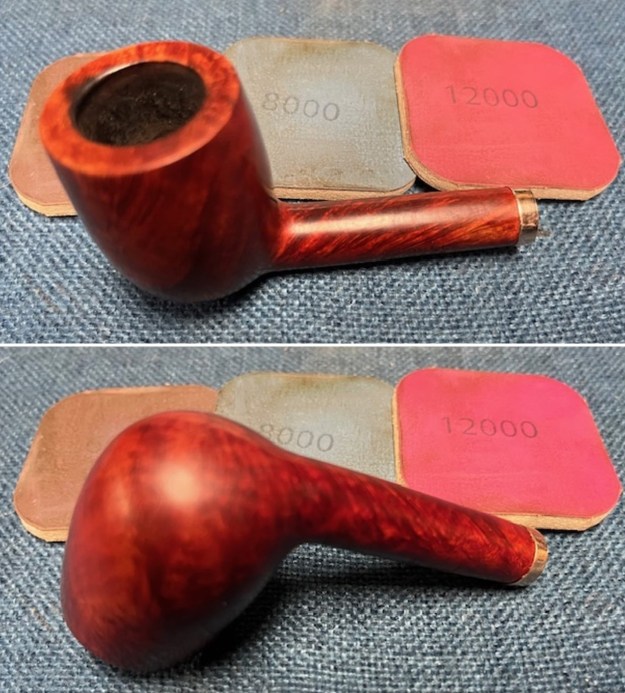
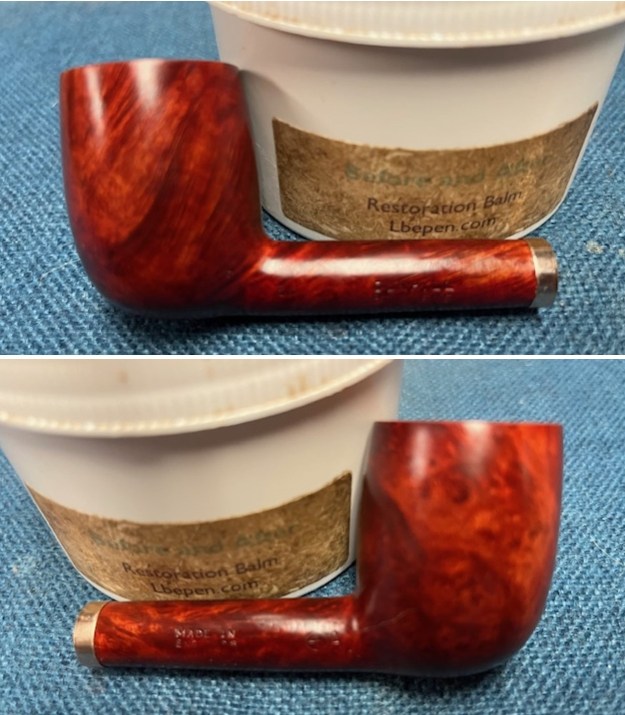
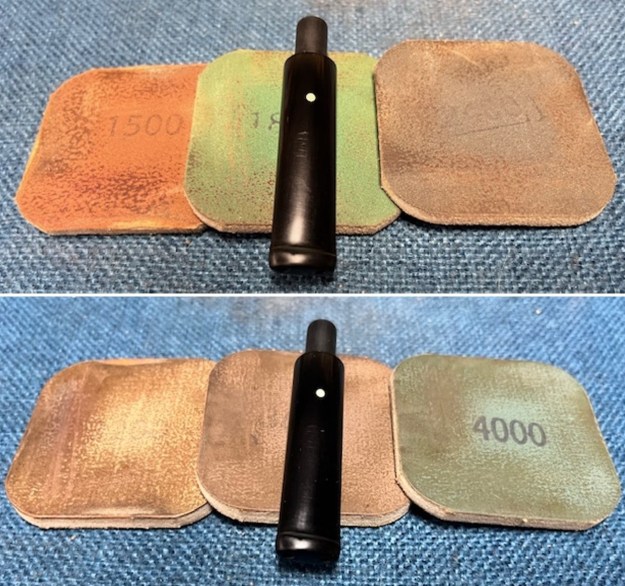
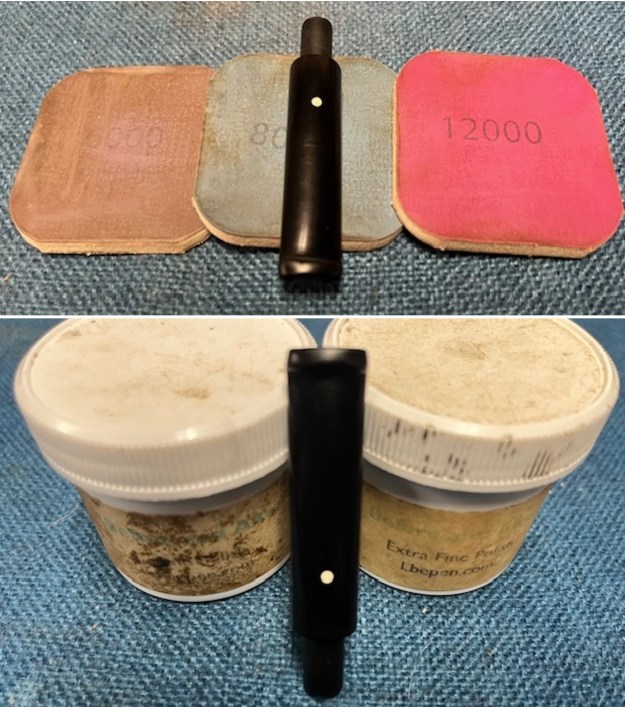
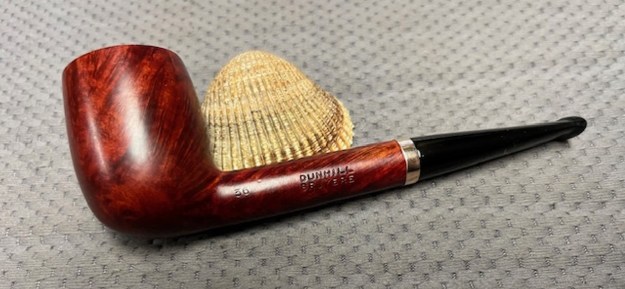
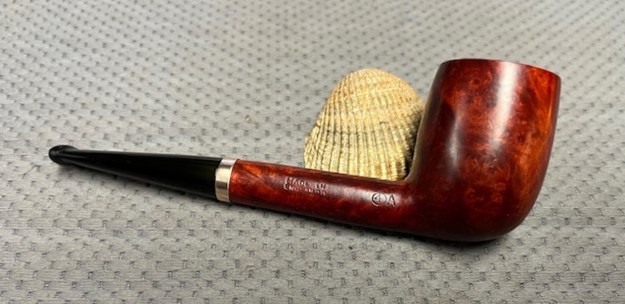
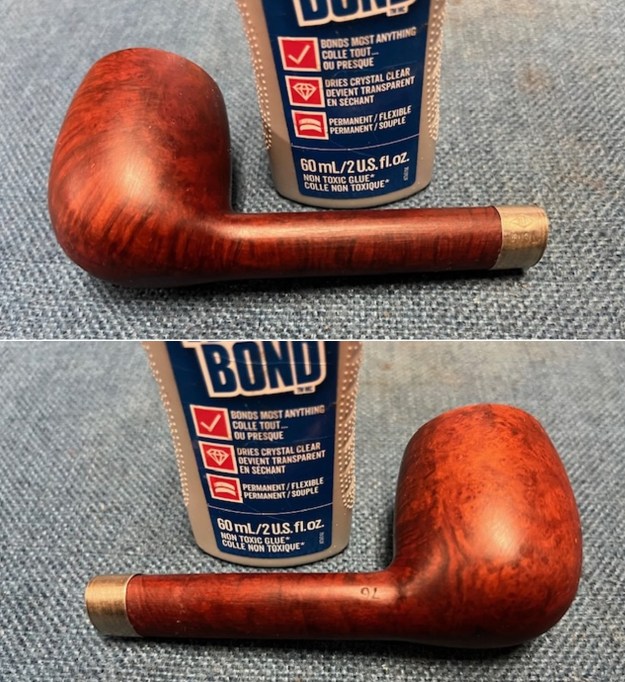
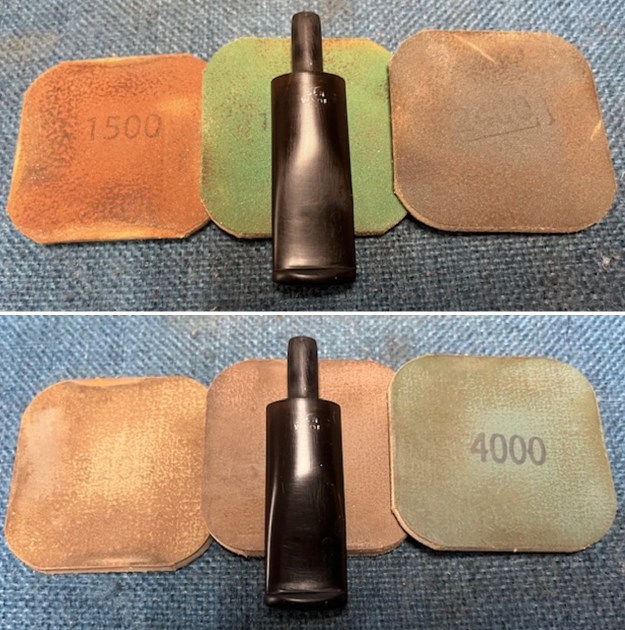
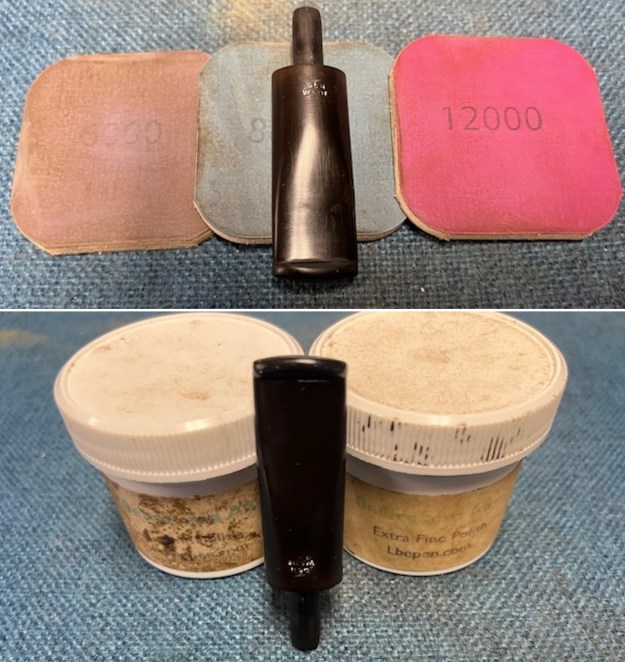
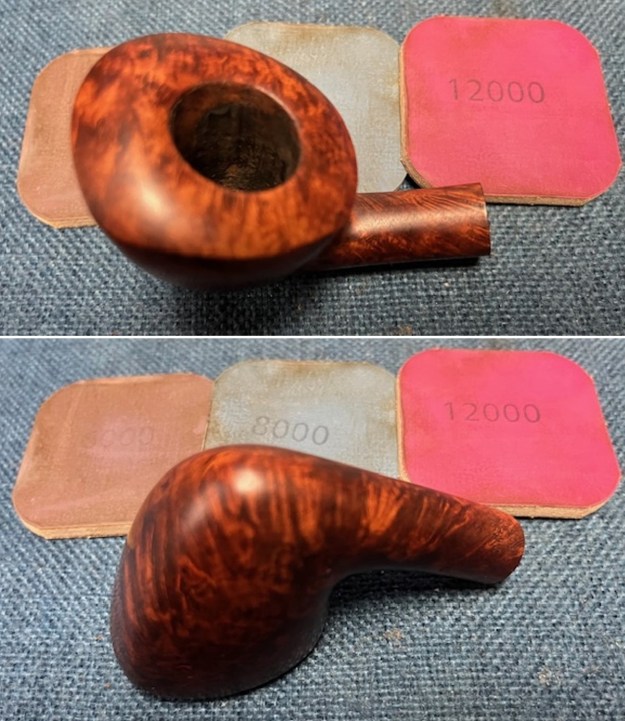
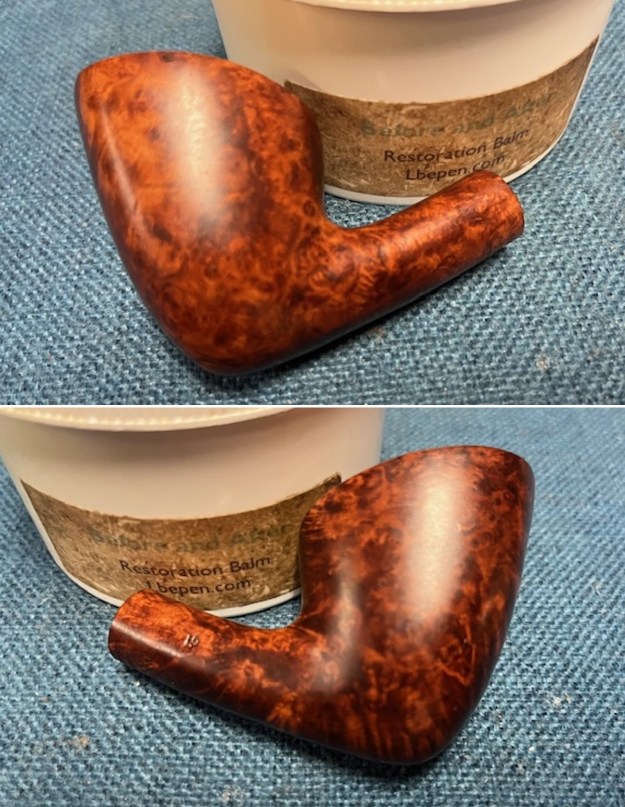
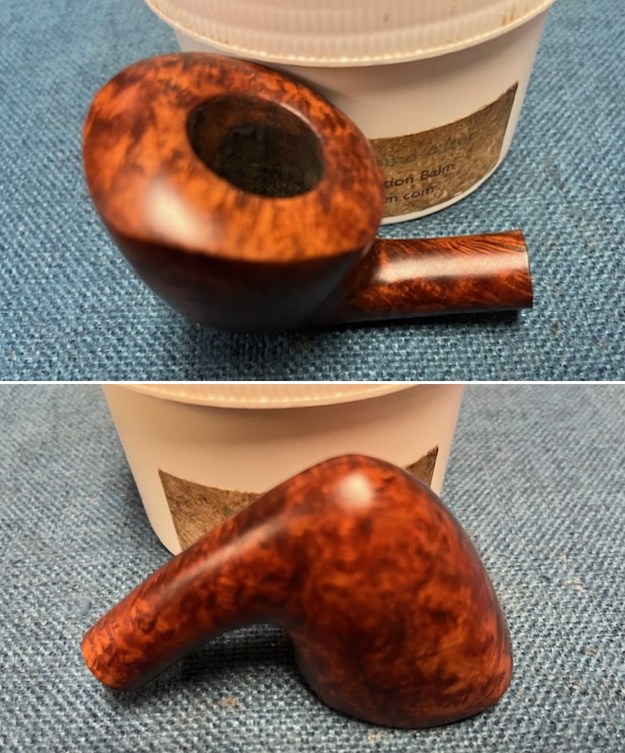
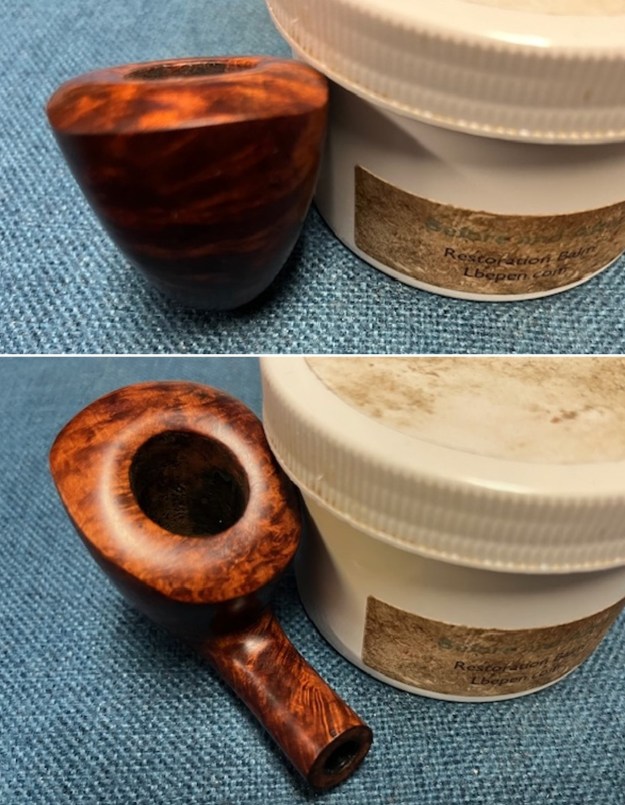
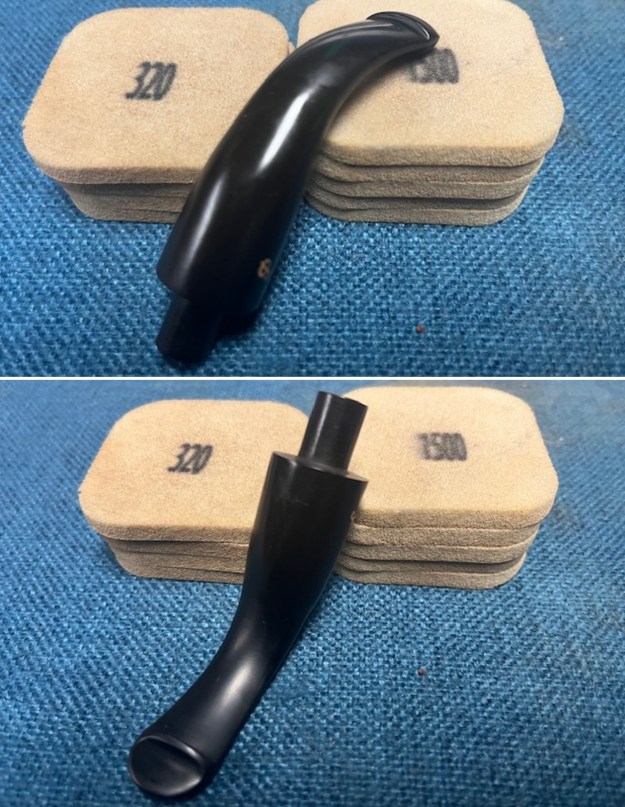
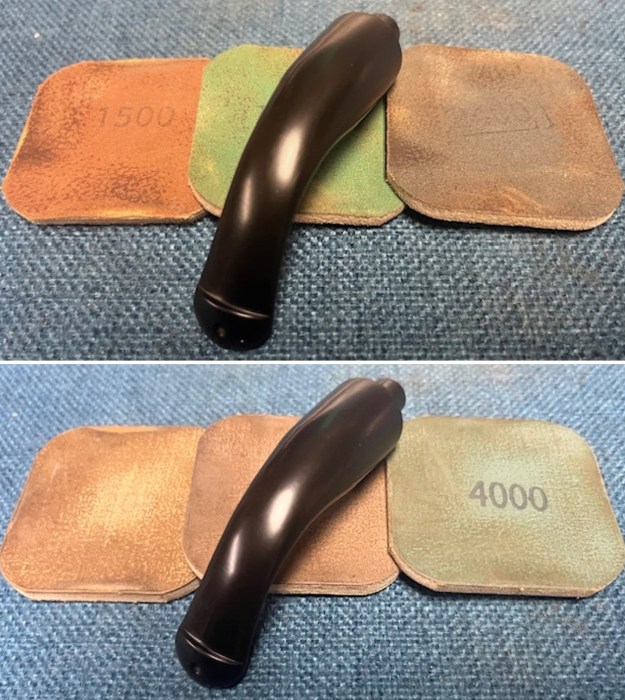
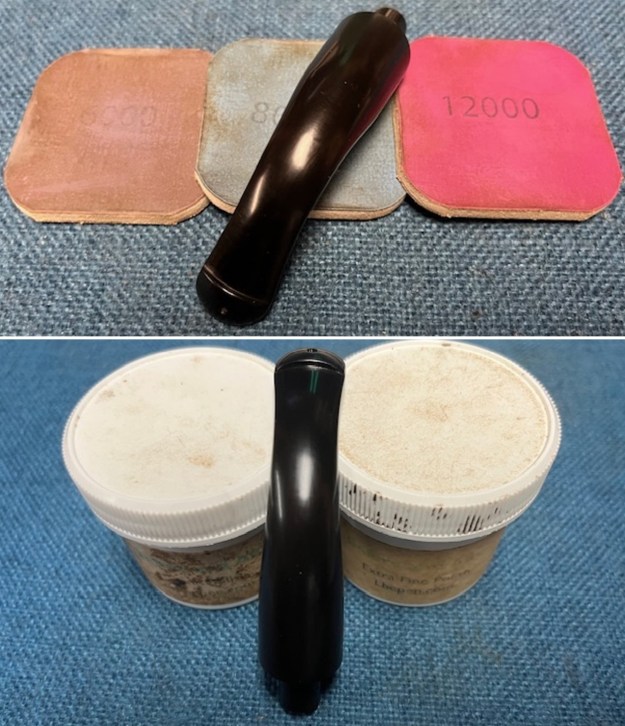
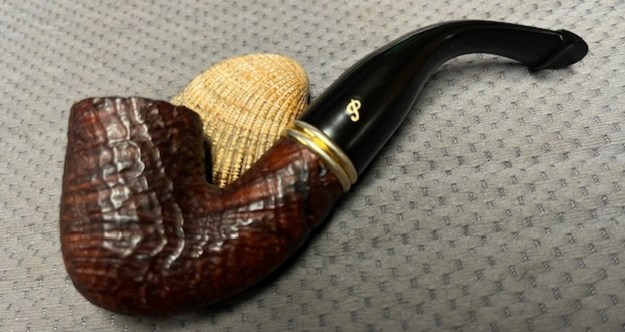
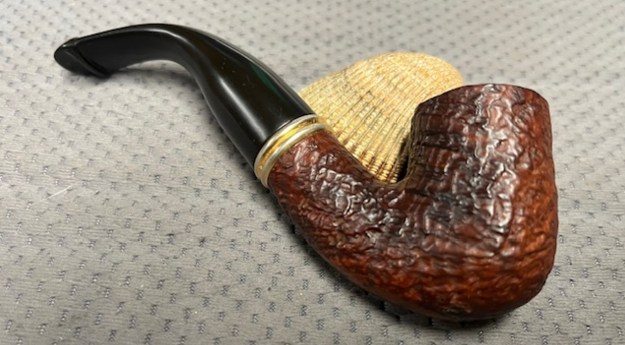
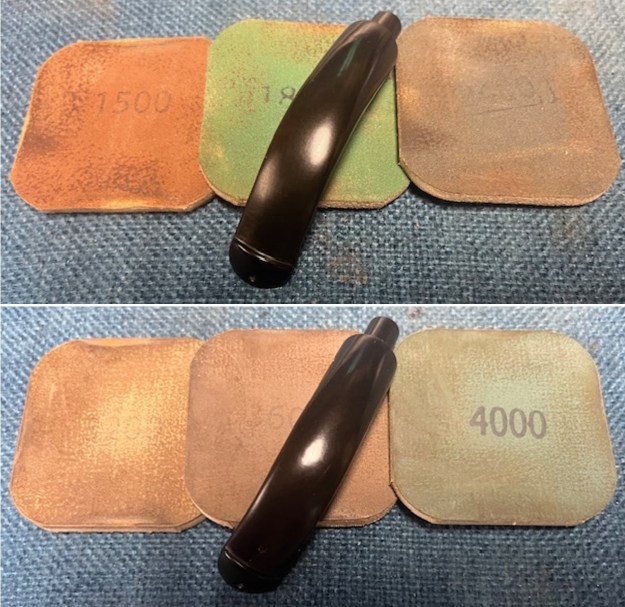
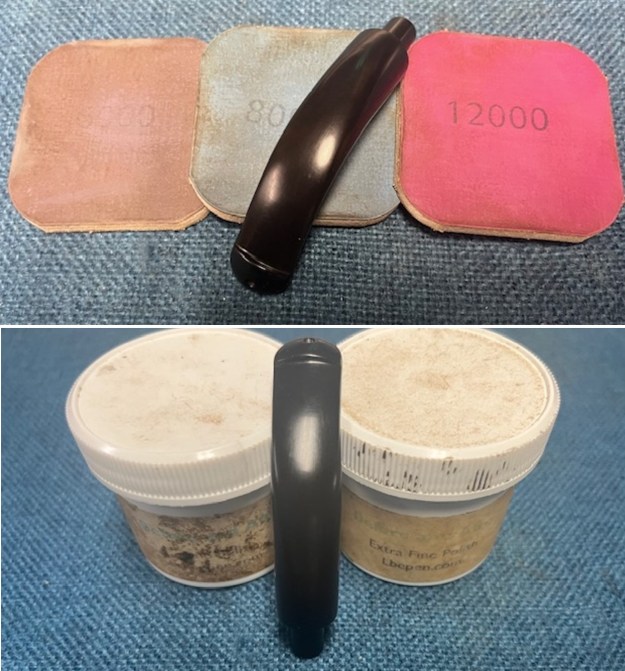
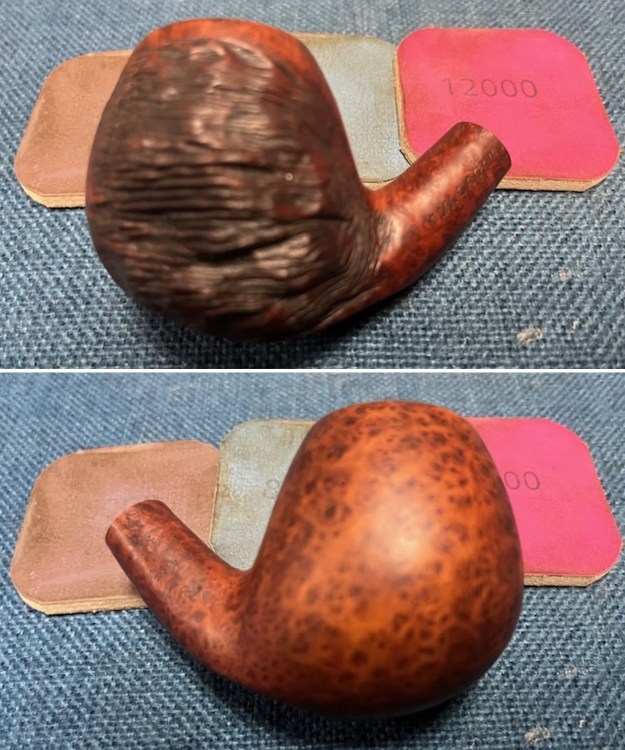
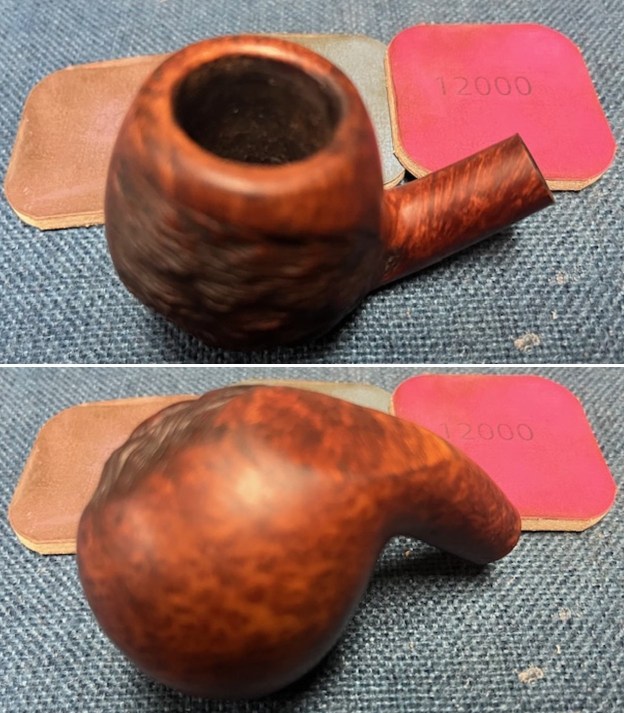
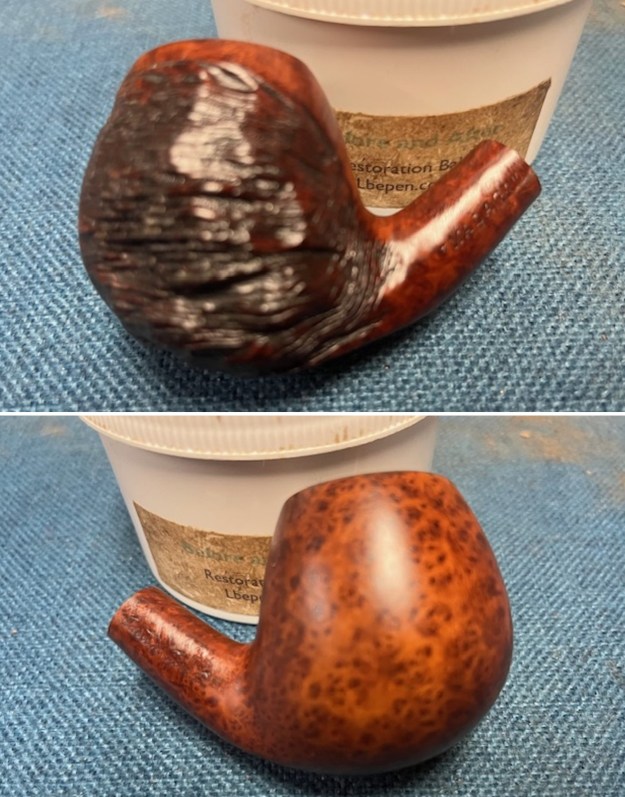
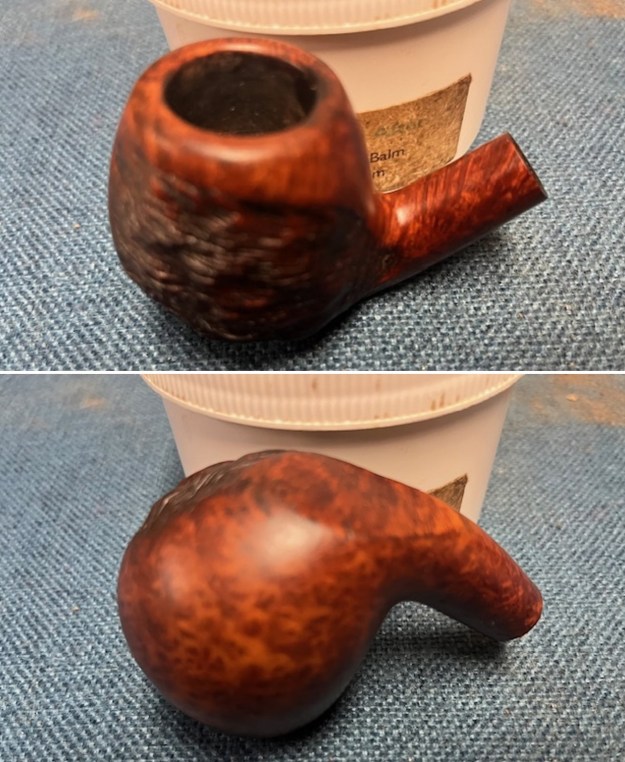
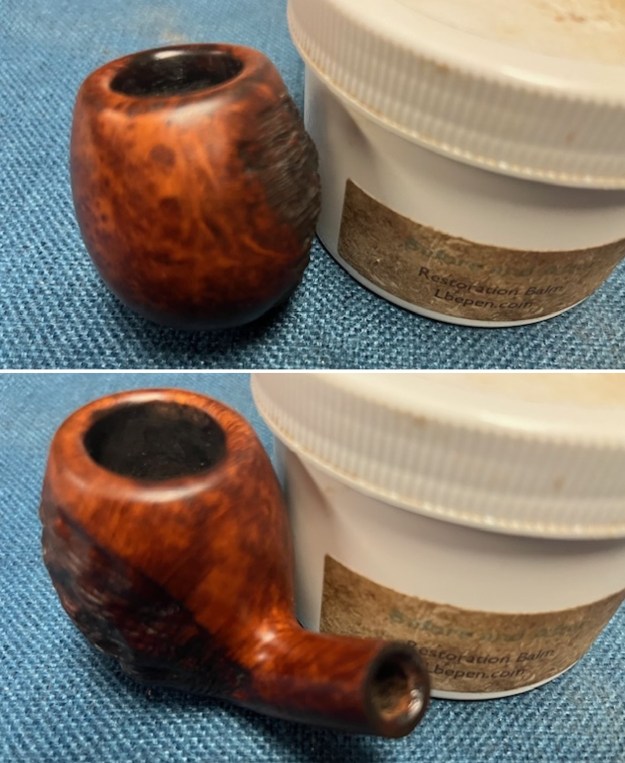
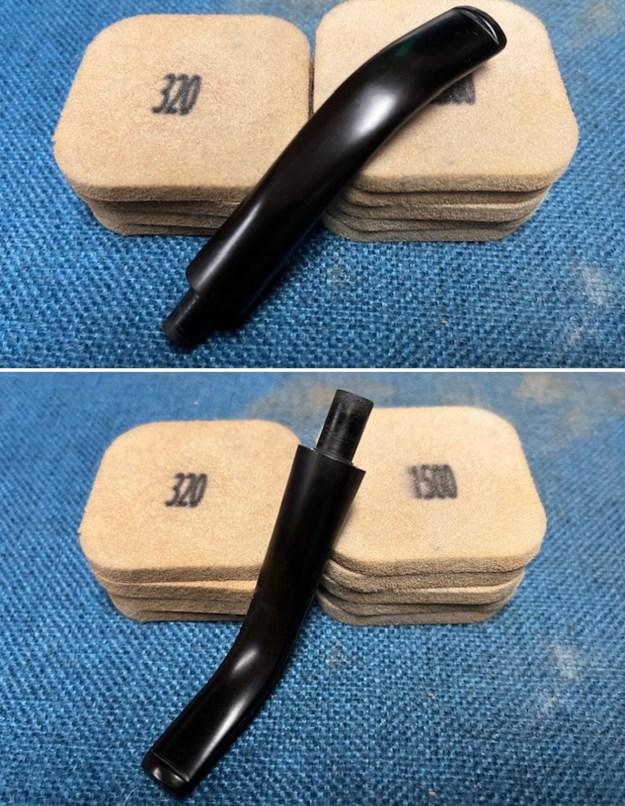
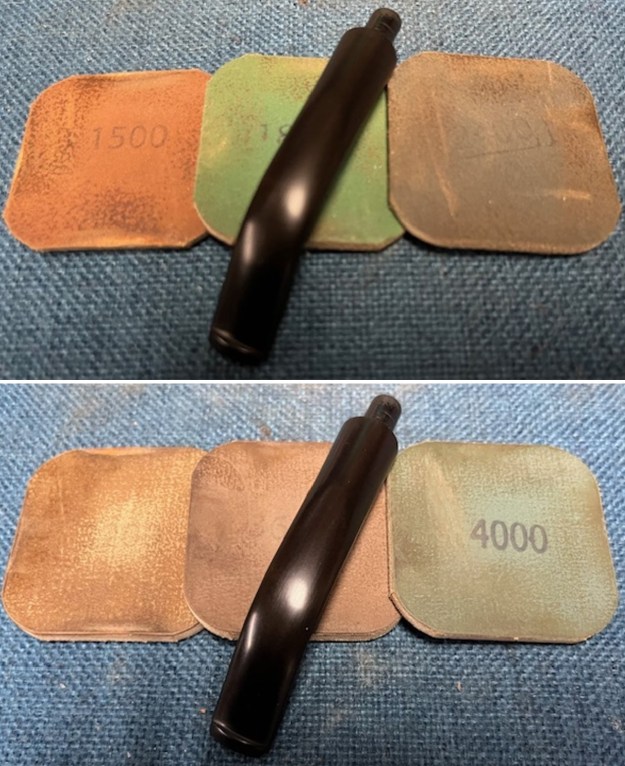
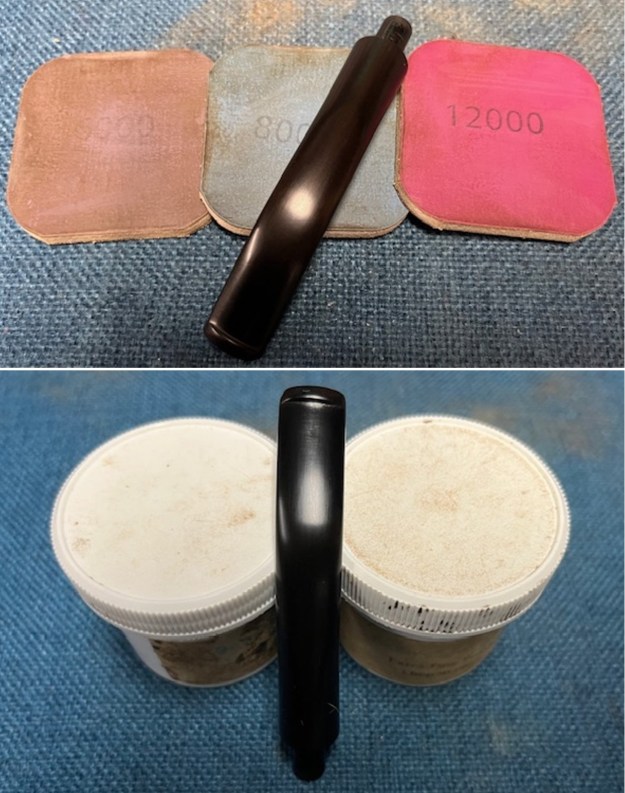
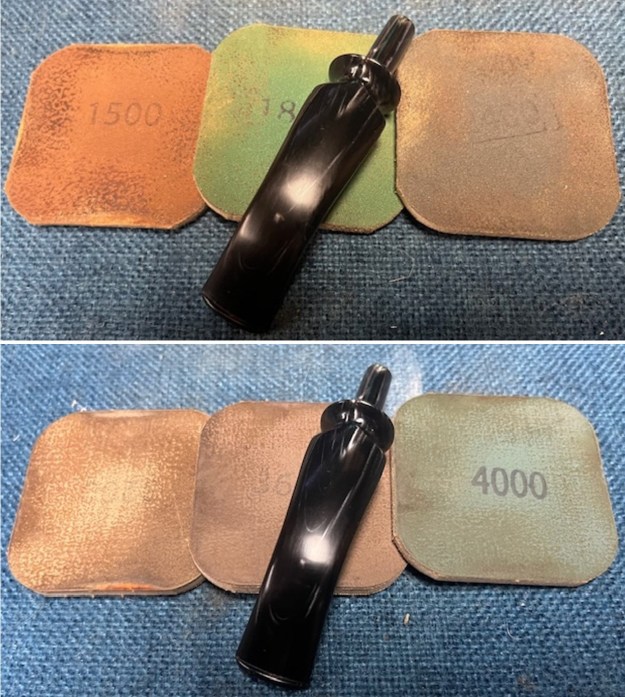
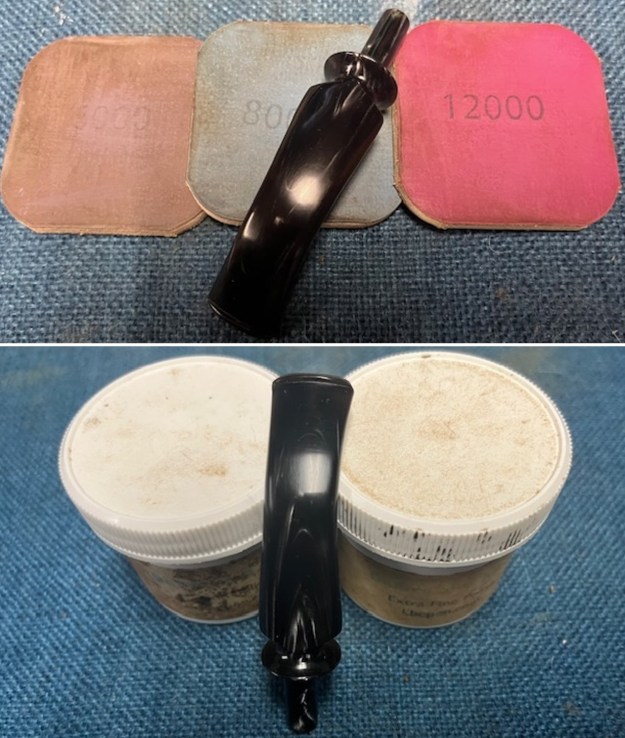
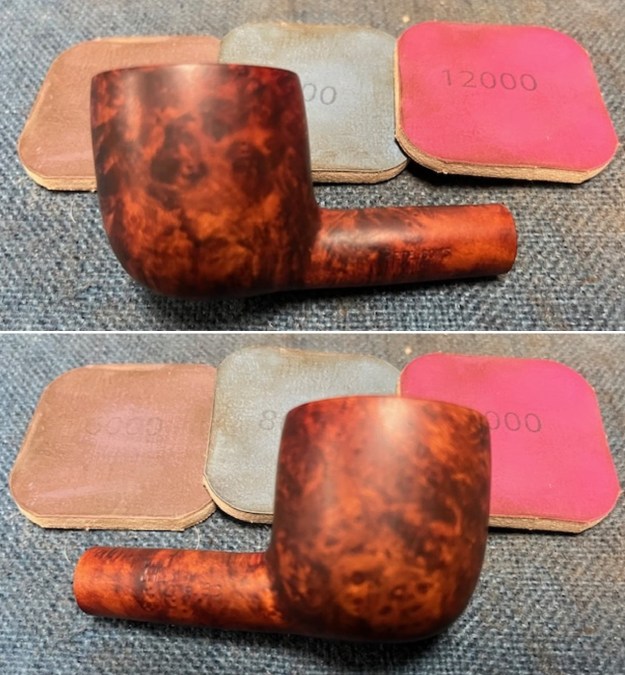
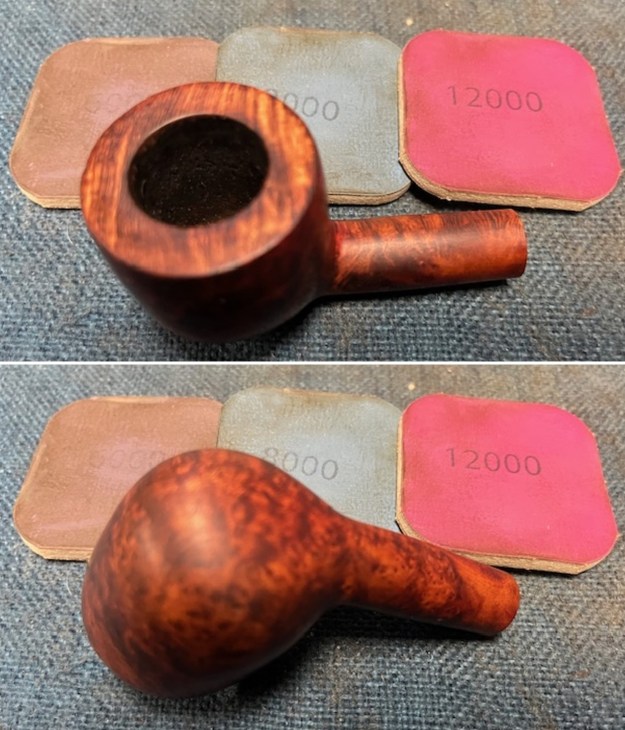
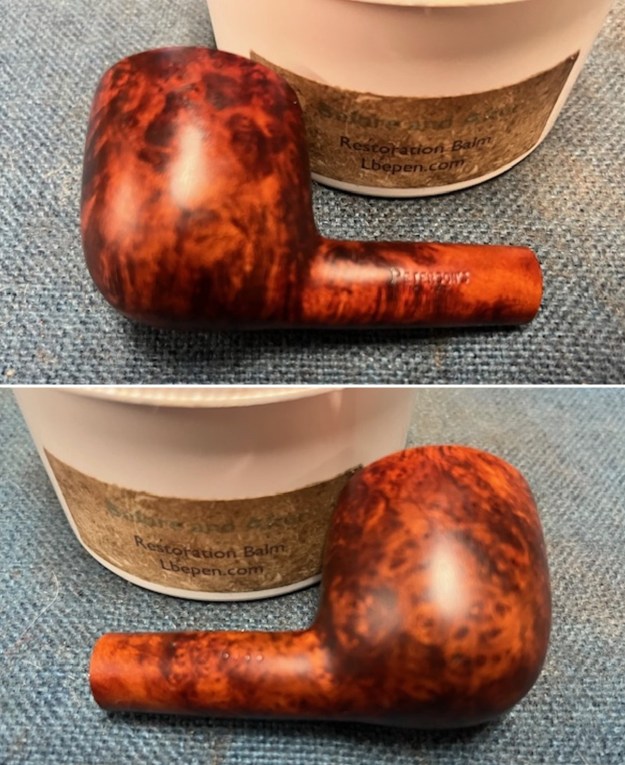
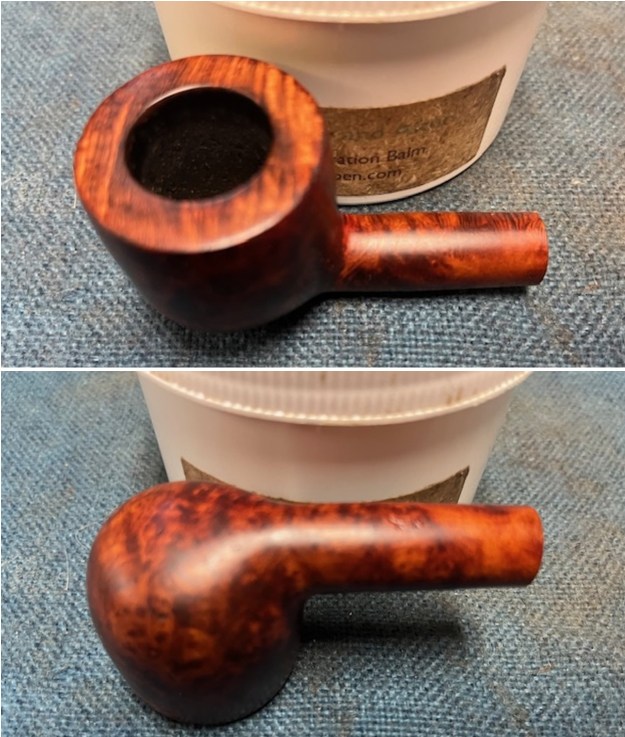
With that I was ready to begin working on the pipe. I decided to address the flaws in the briar. I pressed briar dust into the cracks and flaws with a dental spatula. Once the dust was in place I used a tooth pick to press clear CA glue into the flawed areas on the shank and the spots on the heel and bottom sides. To bind the shank end repairs and to keep the cracks and separations in the briar firm I went through my thin brass bands and fit one on the shank end. I heated it and pressed it on the end of the shank. It was a good tight fit and would serve its purpose well. You could see the repairs on the shank and bowl in the photos. I used a folded piece of 220 grit sandpaper to smooth out the repairs. I was able to carefully work my way around the stamping on the shank. It looked much better. I also smooth out some of the nicks in the inwardly bevelled rim top. The repairs began to blend in very well. I sanded the repairs a little more, then stained them with an Oak and Maple stain pen to blend them into the colour of the surrounding briar on the bowl and the shank. I sanded the surface of the bowl and the shank with 320-3500 grit 2×2 inch sanding pads to further blend in the repairs and to remove the scratches in the surface of the briar. The bowl and shank began to look very good. I polished the briar with 1500-12000 grit micromesh sanding pads – dry sanding the briar and wiping down the bowl after each sanding pad. It really began to take on a rich shine and the grain stood out beautifully. I rubbed the briar down with Before & After Restoration Balm and worked it into the briar and the repaired areas. The product works to clean, enliven and preserve the briar and give it a rich lustre. The briar came alive and the grain really pops. I set the bowl aside and turned my attention to the stem. I touched up the Marxman logo on the left side of the stem with Rub’n Buff Antique Gold. I pressed it into the logo with a tooth pick and then buffed it off with a soft cloth.I went over the work that Devin had done with micromesh sanding pads. I used 1500-12000 grit sanding pads. I wiped the stem down after each sanding pad with an Obsidian Oil Cloth. The stem looked very good. I put the Marxman Select Briar Algerian France Apple back together and buffed it on the buffing wheel with Blue Diamond. It raised a shine on the briar and the stem and gave some depth to the grain. I gave both the bowl and the stem multiple coats of carnauba wax on the wheel and buffed the pipe with a clean buffing pad to raise the shine. I hand buffed it with a microfiber cloth to deepen the shine. The pipe turned out to be a unique beauty in its own way. I really like the grain and the shape of this Marxman Select BriarApple. The thin brass band and the taper stem go well with the rich briar. The dimensions of the pipe are Length: 6 inches, Height: 1 ½ inches, Outer diameter of the bowl: 1 ¼ inches, Chamber diameter: ¾ of an inch. The weight of the pipe is 1.41 ounces/39 grams. It is a uniquely beautiful pipe. Once I finish Devin’s second pipe both will head back to him to enjoy!
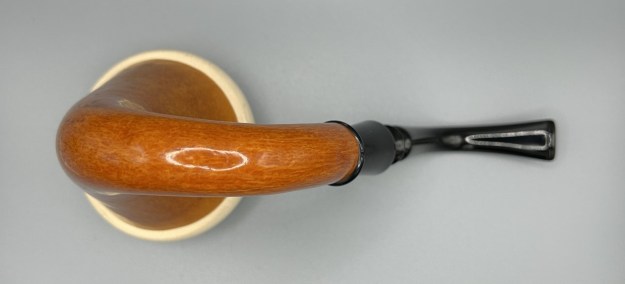
Another Pipe with a Potential Burn Out Issue from Michael


by Steve Laug

I finished repairing and restoring the four pipes that Michael sent to me for work on impending burnout and damage to the bowl walls on all four. I sent them back to him and gave him a call to let him know they were on their way back to him. On January 13 I received an email from Michael about another pipe that he sent to me. I have included the email below.

Hi Steve! I mailed a pipe to you today; the tracking (Customs)# is LH264469865US. I enclosed a note with it which mentions that I collect Willmer pipes and this one came to me with a sizable burnout. Willmers are somewhat difficult to find; I’ve got 16 of them and I probably won’t be getting any more. Their “high grades” were always smooth and a bit on the large size. This one is stamped “Hand Made”, which was the lowest of their high grade line. But- all Willmers were made of super good quality briar and are excellent smokers. Even though this one has a number of fills to cover up small, cosmetic deficiencies in the grain, it’s a great pipe and in this day and age it’s a fairly rare Willmer to find. When you look at it please let me know if you can fix it or not. Thank you! — As ever, Michael

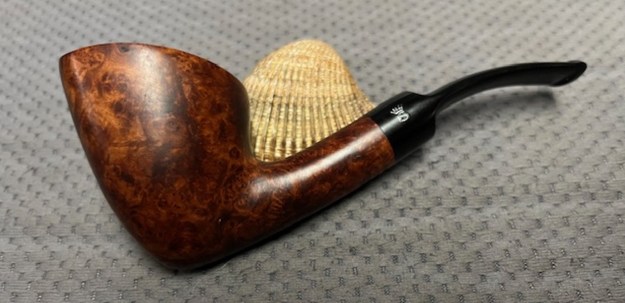
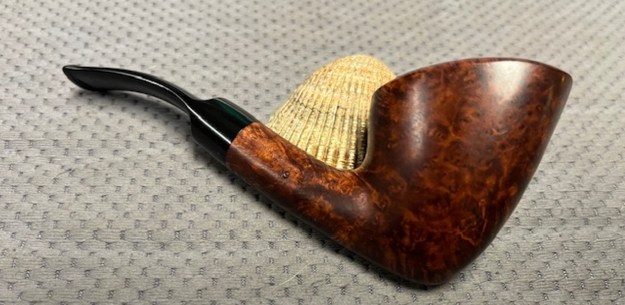
Yesterday, January 26, 2926 I received a package from Michael. I opened it to examine a beautifully grained Willmer. It is a Willmer Hand Made Egg with two fluted valleys on the front of the bowl. It has an acrylic saddle stem. It is in good condition as can be seen in the photos below. It is stamped on the left side of the shank and reads Willmer [over] Hand Made. On the right side it is stamped Made in England. The stamping is clear and readable. The pipe has rich finish with a blend of brown stains on a richly grained smooth finish that the shape follows well. The finish was quite clean and shiny. The bowl had a moderate cake and there appeared to be some damaged areas midbowl on the back, left side and the front. The rim top had some lava coat on the rim top and inner edge. The original saddle stem with the Willmer, “W” logo on the left side has some light tooth marks and chatter on both sides. I took photos of the pipe to show what it looked like before I started working on it. I took photos of the bowl and rim top to show the thickness of the cake and the lava coat on the rim top. The inner edge of the bowl has some lava and potential damage under the coat. It is hard to know until I clean it up. You can see the fluted troughs on the front of the bowl. The stem photos show the condition of the saddle stem ahead of the button.The stamping on the sides of the shank are clear and readable as noted above. I took a photo of the pipe with the stem removed to give a sense of the proportions of the pipe. Under the grime it is a real beauty. I turned to Pipephil to get a quick review of the Willmer Company before I started my work on this pipe (http://www.pipephil.eu/logos/en/logo-w3.html). I quote the side bar from the site below.

Willmer is a brand of H. Willmer & Son Ltd. The factory closed down about 2006-07 after more then 60 years activity and two generations of makers. Gradings until the 1980s (ascending): BA, A, AA, and AAA. After this date Willmer introduced the AAAA and AAAA PRESENTATION as top grades. The pipe I was working on no letter stamping on it which has stamping similar to the photo in the top photo.

I turned to Pipedia to get more information on the brand (https://pipedia.org/wiki/Willmer). The first paragraph dispelled of the belief that Willmer had been a carver for Charatan in his own words. I quote a portion of the article to give a sense of the history of the brand.

Willmer was founded in London. According to the website, which doesn’t exist anymore because the Willmer factory has been closed in 2006/07, the firm was in business “for more than 60 years” by 2003. Willmer was homed then in Southend-on-Sea, Essex, so not far from the Cadogan plant.

When Willmer first started, they definitely strived to compete with brands in the high-end market. Due to the excellent quality of the pipes Willmer was frequently asked to produce private label pipes for England’s best renowned pipe retailers. So many pipes are not easily recognized as Willmers for stamped under the name of the respective shop. Willmer’s own pipes were stamped “Willmer – Made in England” and showed a sweeping “W” in white or gold on top or left side of the stem. The earlier grading had AAA as top grade followed by AA, A, AB etc.

Sometime in the 1980’s, Willmer went through some major changes. The move to Essex was already mentioned above. They continued making highly respectable freehands – often copying some of the stunning Charatan shapes of days gone by. The grading was altered. What used to be an AAA now became the additional name “Presentation” and was stamped with AAAA. Funny enough, the fourth A was often larger than the three before. The other grades were changed accordingly.

Now I knew that I was working on a Willmer Hand Made Egg with an acrylic Saddle Stem.

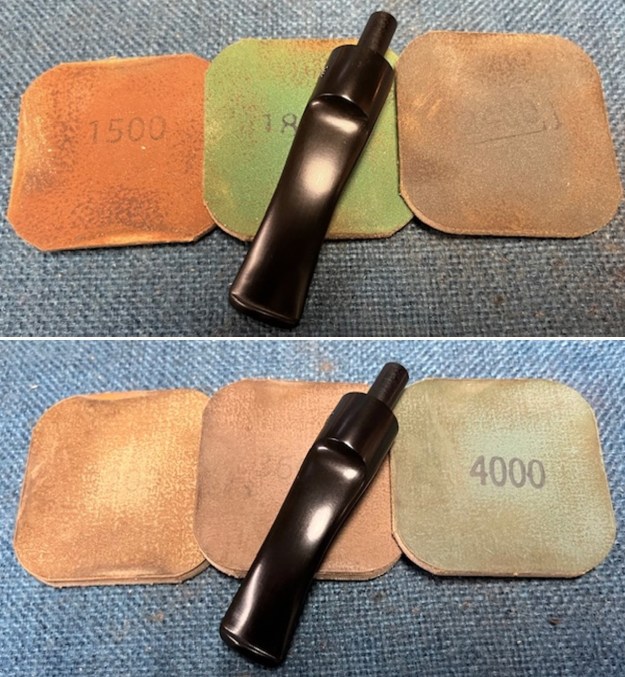
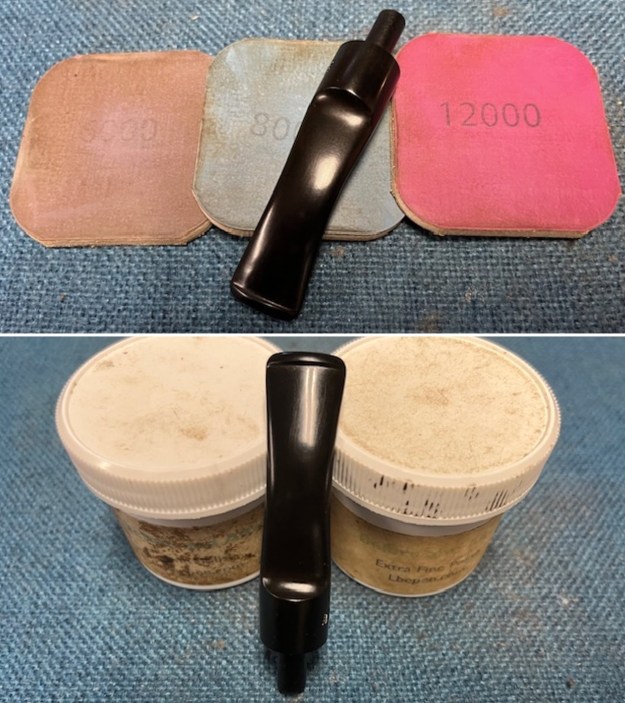
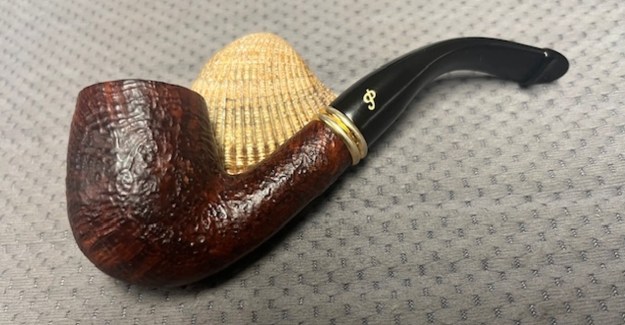
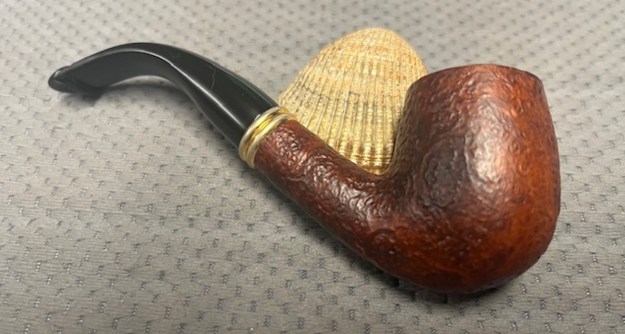
I turned to work on the pipe itself. I reamed the bowl with a PipNet pipe reamer using the cutting heads 2 and 3. I finished the reaming with a Savinelli Fitsall Pipe Knife. I sanded the walls of the bowl with 220 grit sandpaper wrapped around a piece of dowel. I cleaned out the inside of the shank and the airway in the stem with alcohol, cotton swabs and both bristle and regular pipe cleaners. I scrubbed the bowl and shank with a tooth brush and some undiluted Murphy’s Oil Soap. I rinsed it off with warm water to remove the dust and soap from the finish. I dried it off with a soft cloth and it looked much better. I sanded the exterior of the bowl with 320-3500 grit 2×2 inch sanding pads to remove the scratching in the finish. I wiped the bowl down with a damp cloth after each sanding pad. It really began to look much better. I polished the briar with 1500-12000 grit micromesh sanding pads to develop the shine. It began to look very good. It had a rich shine in the finish. To address the checking and the divot on the inner wall around the middle of the bowl. I wiped it clean with a cotton pad and alcohol to remove any debris on the surface. I mixed a batch of JB Weld to repair the divot and checking on the bowl walls. I pressed it into the damaged areas with a dental spatula. I set the bowl aside for the repair to cure. Once it cured I sanded it smooth with a piece of 220 grit sandpaper wrapped around a piece of dowel to smooth out the repair. I wiped it down with a damp pad to remove the sanding debris. I mixed a batch of bowl coating composed of sour cream and activated charcoal powder to give the bowl a thin coat of the mixture. I used a folded pipe cleaner to paint the walls and heel of the bowl with the mixture. I set it aside to cure. I rubbed the briar down with Before & After Restoration Balm. I worked it into the briar with my fingertips to work it into the finish. The product works to clean, enliven and preserve the briar. I let it sit for 10 minutes then I buffed it with a cotton cloth to deepen the shine. The briar really comes alive with the balm. I sanded the tooth marks and chatter on the top and underside of the stem with a folded piece of 220 grit sandpaper. I continued sanding it with 320-3500 grit 2×2 inch pads. I wiped the stem down with an Obsidian Oil cloth after each sanding pad.I polished the acrylic with micromesh sanding pads – 1500-12000 grit pads. I wiped it down with Obsidian Oil after each sanding pad. I used Before & After Pipe Polish – both Fine and Extra Fine to further polish the stem. This is a unique Willmer Hand Made Egg with a saddle stem I have worked. It is a beauty. I put the bowl and stem back together again and buffed the bowl and the stem with Blue Diamond on the buffing wheel. I gave the bowl and the stem several coats of carnauba wax. I carefully buffed the entire pipe with a clean buffing pad to raise the shine. I finished buffing with a microfiber cloth to deepen the shine. The finished pipe looks very good. The grain is quite beautiful a mix of straight and flame around the bowl sides and birdseye on the rim top and heel. The pipe feels great in the hand. The two fluted valleys on the front of the bowl makes this interesting shape fit well in either the right or left hand. The finished Willmer Hand Made Egg is shown in the photos below. The dimensions of the pipe are Length: 6 inches, Height: 1 ¾ inches, Outside diameter of the bowl: 1 ½ inches, Chamber diameter: ¾ of an inch. The weight of the pipe is 1.20 ounces/35grams. This great looking Briar turned out very well. It should be a great pipe Thanks for walking through the restoration with me as I worked this beautiful Willmer Egg. This one will soon be heading back to Michael. Thanks for reading this blog and my reflections on the pipe while I worked on it.

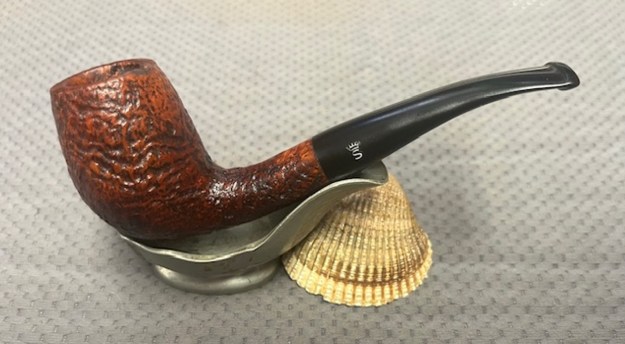
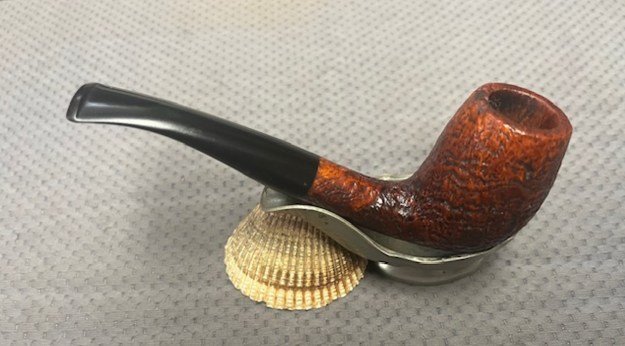
Breathing New Life into a Stanwell Straight Grain 50 Oval Shank Billiard


by Steve Laug

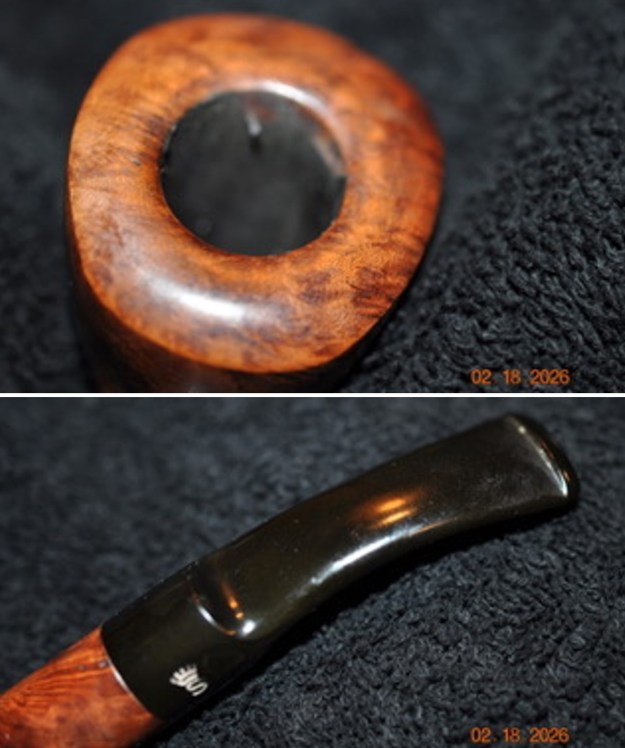
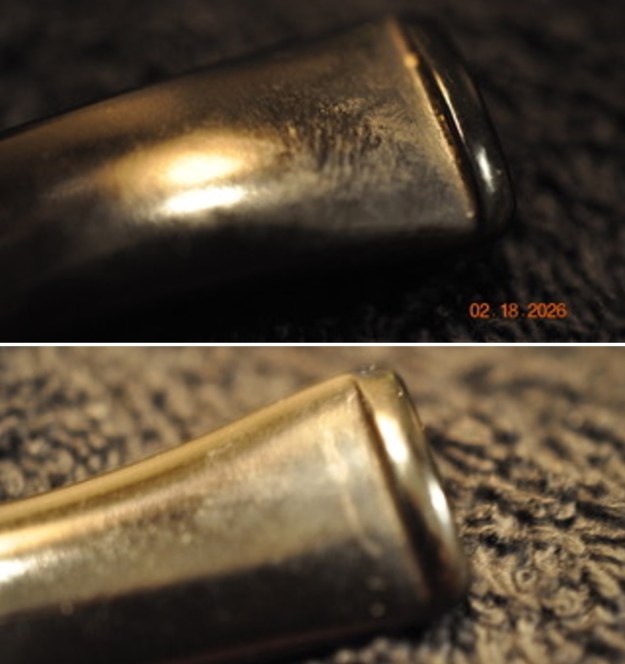
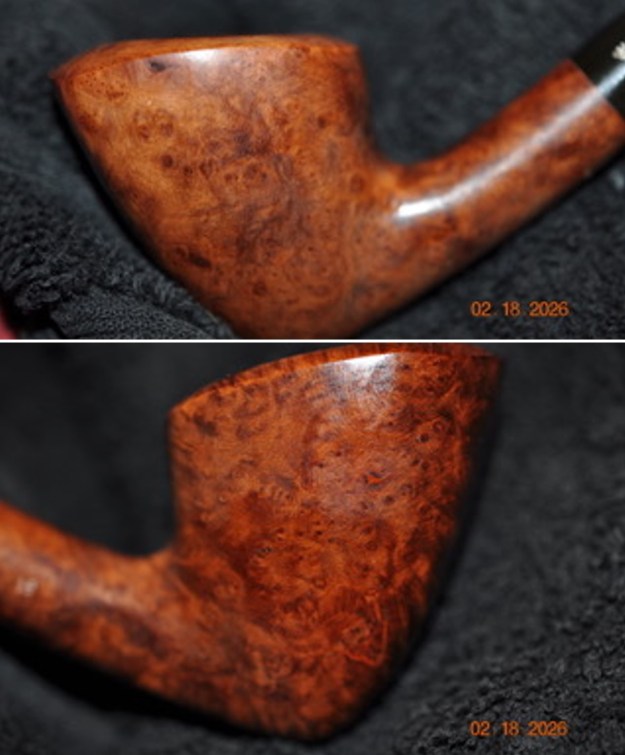
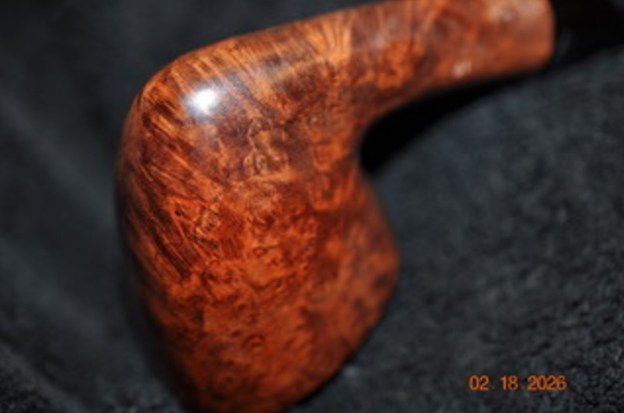
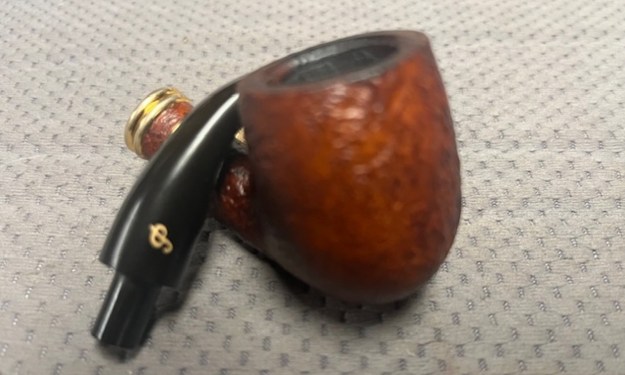
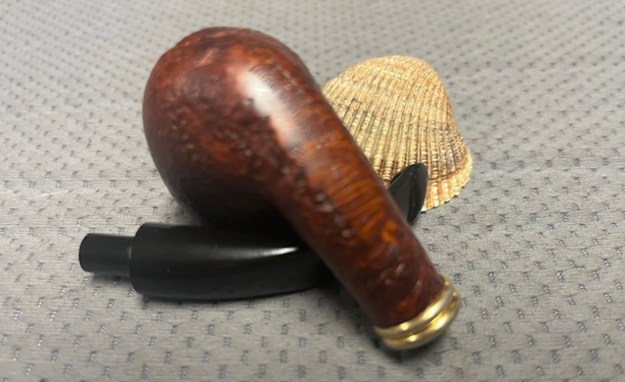
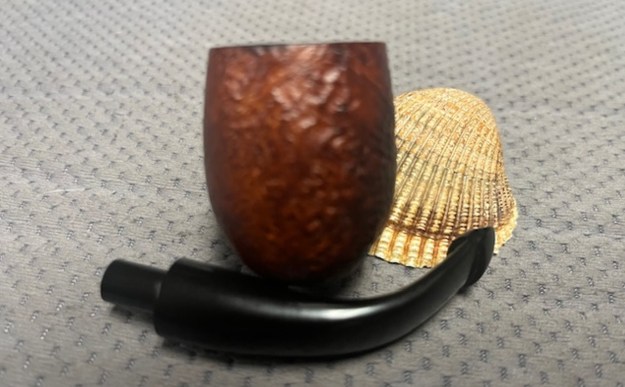
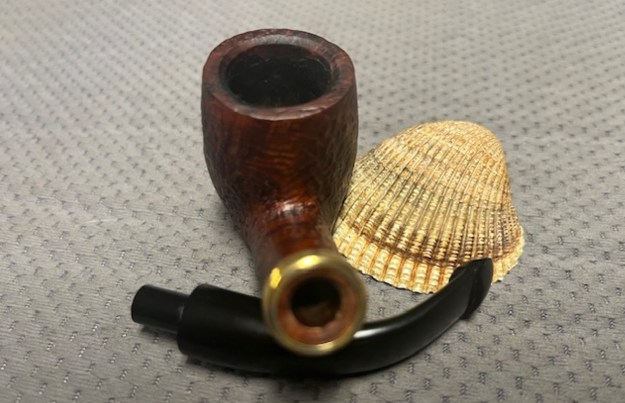
It is a beautiful chilly day in Vancouver yesterday an no rain so I decided to go to the basement and work on another pipe that was purchased on 02/16/2023 in a lot of pipes that came to us from a seller in Copenhagen, Denmark. It was part of a group of Danish Made Stanwell pipes that are quite beautiful. The grain around the bowl and shank of this oval shank Billiard has a mix of birdseye, straight and flame grain. The pipe is stamped on the topside of the shank and reads STANWELL [over] Straight [over] Grain. On the underside of the shank it is stamped with the shape number 50 [over] Made in Denmark. The pipe was dirty when Jeff received it. There was dust and grime ground into the finish. It is finished in the warm brown stains that highlights some nice grain around the bowl and shank. The bowl was heavily caked and there was some darkening and lava on the rim top. The inner edge shows some damage and darkening around the bowl. The stem is vulcanite and is dirty with light tooth marks and chatter on both sides ahead of the button and on the button itself. There is a Crown S logo in bras inlaid on the topside of the taper stem. Jeff took photos of the pipe before he started his clean up work on it. Jeff took photos of the bowl and rim top to show what they looked like before the clean up. You can see the thick cake in the bowl and the darkening and lava on the inner edge and top of the rim. The acrylic stem was in decent condition with light tooth chatter and marks that are visible in the photos below.
The photos of the sides and heel of the bowl show the grain around the bowl and shank. The stain adds depth finish on the pipe. Even under the grime it is a real beauty. The stamping on the sides of the shank are shown in the photos below. It is clear and readable as noted above. I turned to Pipephil’s site to see if I could find any information on the Diplomat line of Stanwell pipes (http://www.pipephil.eu/logos/en/logo-stanwell.html). There was nothing specific on the line but the summary of Stanwell History is quite helpful. I quote it below.

Brand & factory were established in 1942 by Poul Nielsen. The company has been owned since 2000 by Nordisk Tobaks Kompagni A/S.

The factory in Borup crafted all Stanwell pipes from 1965 until 2009. From 2010 on the pipes are crafted by Barontini (Italy) exept for the limited editions.

Production (2007): 115 000 Pipes/year – Denmark

I turned to Pipedia to an article that originally was posted here on rebornpipes and written by my late friend Bas Stevens (https://pipedia.org/wiki/Stanwell_Shape_Numbers_and_Designers). The list did not clarify who designed the shape so that was still a bit of a mystery. Whoever did so, created a beauty. I now knew that the shape 50 was made in two versions: a) Bent Dublin with an ovular rim and a saddle stem (late 1950s – see catalog), b) Straight billiard with an oval stem and a trapezoidal saddle, or tapered, stem (1960s – see catalog).

The pipe I am working on is a shape 50 as noted above. It was the shape 50b as noted above. It is a Straight Billiard with an oval stem and a tapered stem. There was no other information. Now it was time to work on the pipe.

Jeff had cleaned up the pipe with his usual penchant for thoroughness. He reamed the pipe with a PipNet Pipe Reamer and cleaned up the remnants with a Savinelli Fitsall Pipe Knife.  He scrubbed the bowl with undiluted Murphy’s Oil Soap with a tooth brush. He rinsed it under running warm water to remove the soap and grime. He cleaned out the inside of the shank and the airway in the stem with alcohol, cotton swabs and pipe cleaners. He soaked the stem in Before & After Deoxidizer and rinsed it off with warm water. It came in Stanwell Box with Pipe Sock. I removed it from the sock and took photos of the pipe once I received it. I took close up photos of both the rim top and the stem. Jeff had been able to get the grime and lava off of the rim top and it looked pretty incredible. Even the darkening and marks on the rim top on the right side and the back of the bowl are very obvious now that it is clean. The stem looked very clean. The tooth marks and chatter were minimal and should be easy to remove.The stamping on the shank side was readable as noted above. I also took a photo with the stem removed to give an idea of the perspective and design of the pipe. I started my work on the pipe by addressing the damage on the inner edge of the bowl with a piece of 220 grit sandpaper and a sphere to remove the damage. I then used a half sphere to further shape the rim top to bring the edge back into round and it looked much better. Over all the rim top and edges looked much better.I sanded the outside of the bowl and rim with 320-3500 grit sanding pads to remove the scratching and marks on the briar. I wiped the bowl down between pads with a damp cloth to remove the sanding debris. I polished the smooth bowl and rim top with micromesh sanding pads using 1500-12000 grit sanding pads and wiping it down after each sanding pad with a damp cloth to remove the sanding dust and debris. I worked some Before & After Restoration Balm into the finish of the bowl and shank with my fingers. I want the product to go deep into the finish because it works to clean, enliven and protect the briar. Once I was confident that it was deeply worked into the finish I wiped it off and buffed it with a soft cloth to polish it. The pipe really began to have a rich shine. I took some photos of the bowl at this point to mark the progress in the restoration. The grain really stands out on the pipe in the photos below. I set the bowl aside and turned my attention to the vulcanite stem. I sanded the tooth marks and chatter with 220 grit sandpaper to smooth them out and blend them in. I wiped it down with an Obsidian cloth to remove the debris. I sanded the stem with 320-1500 grit sanding pads to further blend the sanding marks into the surface of the vulcanite. I wiped the stem down after each sanding pad with an Obsidian cloth to remove the debris from the sanding.I polished the vulcanite stem with micromesh sanding pads – wet sanding it with 1500-12000 grit pads. I wiped it down with Obsidian Oil after each sanding pad. I polished it with Before & After Pipe Polish – both the Fine and Extra Fine polishes. I gave it a final coat of oil and set it aside to dry. This Stanwell Made in Denmark Straight Grain 50 Oval Shank Billiard with a vulcanite taper stem is a great looking pipe now that it has been restored. The beautiful finish really highlights the straight grain and the polished finish is stunning. I put the stem back on the bowl and carefully buffed the pipe with Blue Diamond on the buffing wheel. I gave the bowl and the stem multiple coats of carnauba wax on the buffing wheel and followed that by buffing the entire pipe with a clean buffing pad. I hand buffed the pipe with a microfiber cloth to deepen the shine. The finished Stanwell Straight Grain 50 Billiard with an oval shank fits nicely in the hand and feels great. Give the finished pipe a look in the photos below. The dimensions of the pipe are Length: 5 ½ inches, Height: 1 ¾ inches, Outside diameter of the bowl: 1 ¼ inches, Chamber diameter: ¾ of an inch. The weight of the pipe is 48 grams /1.69 ounces. I will be adding the pipe to the Danish Pipe Makers Section of the rebornpipes store. If you are interested in purchasing this pipe send me a message or an email.
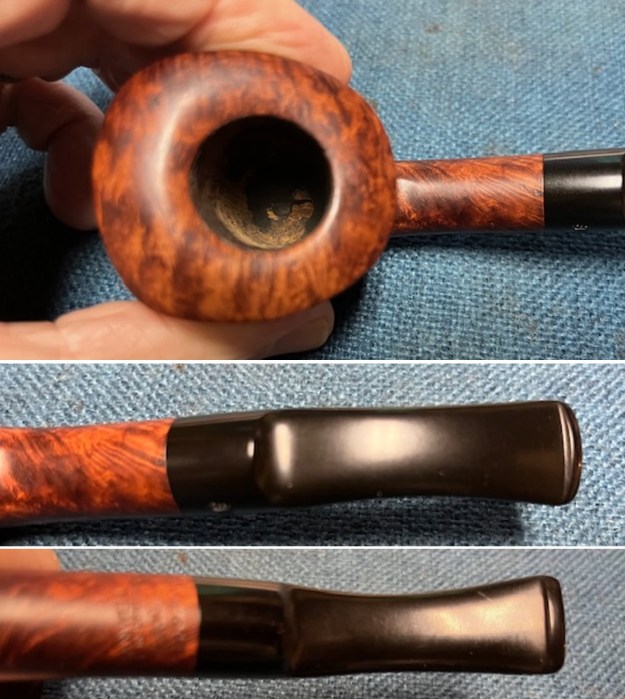
As always, I encourage your questions and comments as you read the blog. Thanks to each of you who are reading this blog. Remember we are not pipe owners; we are pipe men and women who hold our pipes in trust until they pass on into the trust of those who follow us.

What an Elegant Charatan’s Make London England Authentic 373X Acorn


by Steve Laug

The next pipe on the table is another one that came to us from the seller in Caldwell, Idaho, USA on 07/12/2025. It has an Acorn shaped smooth bowl. It is in dirty but in good condition other than that as can be seen in the photos below. The sides of the shank are clearly stamped, faint in spots but still readable. The left side is stamped Charatan’s Make [over] London.England [over] Authentic. To the left of the stamping it had a cursive L in a circle that tells me that the pipe is a Lane era pipe. On the right side it is stamped with the shape number 373X. That helps to date this to the time after the patent was filed in 1970. The shape works very well with the great grain around the bowl. The finish was dusty and dirty with grime deep in the finish but grain really stands out. The bowl had a thick cake and there was tobacco debris in the bowl. The rim top had a thick lava coat on the rim top and edges. The fish tail vulcanite stem is calcified, oxidized and has tooth marks and dents on the top and underside of the stem and button. There is no stamping on the stem. I took photos of the pipe to show what it looked like before I started working on it. I took a closer photo of the rim top and bowl to show the condition of the bowl and rim. You can see the cake in the bowl and the darkening and lava on the top and inner edge. The stamping on the sides of the shank is faint in spots but still readable as noted above. I took a photo of the pipe with the stem removed to give a sense of the proportions of the pipe. To try and figure out the era of the Charatan’s pipe I was working on I turned to the pipephil website on Logos and Stampings. There is some really helpful information on each of the lines of Charatan’s Make pipes that entered the market. Here is the link to the section of the site that I turned to, http://www.pipephil.eu/logos/en/logo-charatan.html. The Authentic line is not shown on the site but it does give a short history of the brand. I quote the portion that is most pertinent. The brand was founded in 1863 by Frederik Charatan. When his father retired in 1910, Reuben Charatan took over the family business. All the pipes were handmade until 1973. The brand name has been overtaken by Dunhill in 1978 and sold in 1988 to James B. Russell Inc. (NJ, USA). During the period 1988-2002 Charatans were crafted by Butz Choquin in St Claude (France). Dunhill re-purchased Charatan brand name in 2002 and Colin Fromm (Invicta Briars, Castleford) followed up on freehand production.

I turned to Pipedia to see if I could find more information on the brand and possibly a link to the Executive line (https://pipedia.org/wiki/Charatan) but once again in the general article it was not listed.  It did give a little more historical information and is worth reading. I am including a few sections from the site.

In 1863 Frederick Charatan, a Russian/Jewish immigrant, opened a shop in Mansell Street, located in the borough of Tower Hamlets, London E1, where he began to carve Meerschaum pipes. These pipes got very popular soon, and thus Charatan moved to a bigger workshop in Prescot Street, just around the corner. Here he began to make briar pipes which should make the name famous the world over. Charatan was the first brand to make entirely hand-made briars from the rough block to the finished pipe including the stems. The nomenclature “Charatan’s Make” refers to this method of production and was meant to differ Charatan from other brands who “assembled” pipes from pre-drilled bowls and delivered mouthpieces.

Being the undisputed No. 1 in English pipemaking, Charatan was approached by Alfred Dunhill who was unsatisfied with the quality of the pipes he imported from France. During 1908 – 1910 Dunhill bought pipes from Charatan paying exorbitant prices to ensure he had some of the very best pipes for sale in England. In 1910 he lured away Joel Sasieni, one of Charatan’s best carvers, and opened his own small pipe workshop on 28 Duke Street. On the retirement of his father in 1910 Reuben Charatan took over the family business…

…The pre-Lane period (prior to 1955) and the Lane era pipes (1955 to until sometime between 1979 – 1984) are of primary interest the collector. The Lane era is often quoted as beginning about 1950… Charatan records are almost non-existent before Lane due to a factory fire, making it difficult to date pre-Lane pipes. Charatan used 4 basic grades prior to 1950: Supreme, Selected, Executive, and Belvedere. After 1950 Herman Lane’s influence began, and the grades started to expand. In 1955 Lane took over sole distributorship of Charatan in the US. In 1957 he introduced the Supreme S. Most of his other introductions were from the 60’s and early 70’s…

The section called Miscellaneous Notes had some interesting information.
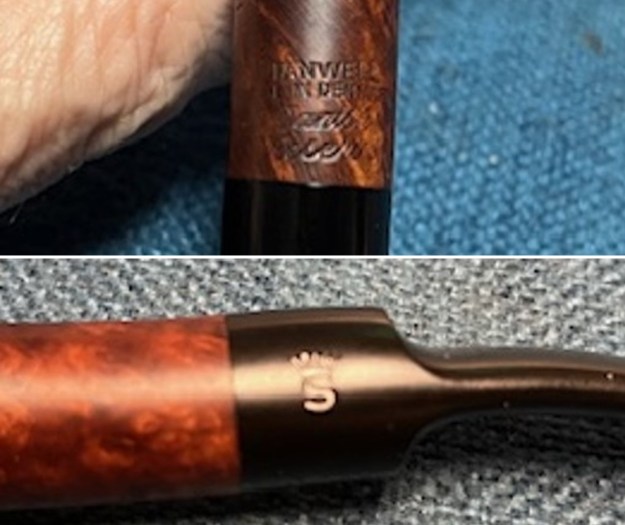
Charatan records indicate the DC (Double Comfort) bit was introduced in the 50’s, but some report seeing them in earlier production. Still others indicate they were introduced by Lane in 1960. Regardless, the DC bit is not an accurate way to date a pipe because many Charatan’s were made with regular and saddle type bits throughout the “Lane Era”…
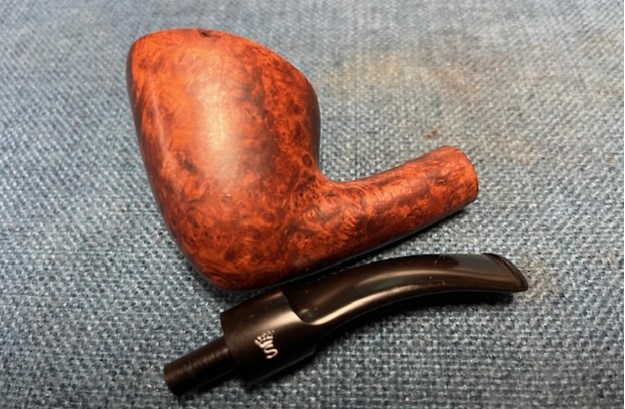
…The Lane Trademark serif and circled L indicates the pipe is from the “Lane Era” (approx. 1955 to 1979 -1984?), however it appears that both the English factory or Lane themselves sometimes, or perhaps even often forget to stamp the L on a pipe. The Charatan factory was known for inconsistencies, especially in stampings. Therefore, although an L on the pipe definitely defines it as a Lane Era pipe, the lack of it could simply mean the pipe missed receiving the stamp from the factory. The lack of the trademark could also mean the pipe was destined for the European market.

…The total script nomenclature “Made by Hand in City of London” evolved over this period of time, so many pipes had variants, such as Made By Hand in block letters and City of London in script, or some other variation of the terms or stampings. The Charatan Logo (CP) on the pipe bit was changed over the years.

From all of the historical data I could work through this Charatan’s Make Authentic was a bit of a mystery pipe from the mid 1970’s Lane era. I continued digging further into the dating of the pipe, but what I had found was a good start for me. If some of you would like to try your hand at dating it more accurately as to the time period it came out you might want to check out the article on Pipedia on Dating Charatans (https://pipedia.org/wiki/Dating_of_Charatans). I had enough for me to start working on the pipe itself and see what lay beneath the heavy tars and oils.

I reamed the bowl with a PipNet reamer. I used the third and fourth cutting heads to clean out the cake. I cleaned up what remained in the bowl with a Savinelli Fitsall Pipe Knife and scraped it back to bare briar. I finished by sanding the inside of the bowl with a dowel wrapped in sandpaper. The inside walls are free of burn damage or checking. I scraped the lava on the rim top with a Savinelli Pipe Knife. I worked over the inner edge and rim top with a folded piece of 220 grit sandpaper.I cleaned out the inside of the shank and the airway in the stem with alcohol, cotton swabs and both bristle and regular pipe cleaners.I scrubbed the bowl and shank with a tooth brush and some undiluted Murphy’s Oil Soap. I rinsed it off with warm water to remove the dust and soap from the finish. I dried it off with a soft cloth and it looked much better. I sanded the bowl with 320 – 3500 grit 2×2 inch sanding pads and wiped it down after each sanding pad with a damp cloth to remove the sanding debris. I polished the bowl with 1500-12000 grit micromesh sanding pads. I wiped the bowl down with a damp cloth to remove the dust and debris. The pipe began to look very good. The gouge in the bowl was repaired and looked better. I rubbed the briar down with Before & After Restoration Balm. I worked it into the briar with my fingertips to work it into the finish. The product works to clean, enliven and preserve the briar. I let it sit for 10 minutes then I buffed it with a cotton cloth to deepen the shine. The briar really comes alive with the balm. I set the bowl aside and turned my attention to the stem. I scrubbed the vulcanite stem with some Soft Scrub and cotton pads to remove as much of the oxidation as I could, especially around the tooth marks. I wiped the tooth marks down with isopropyl alcohol and a cotton swab and then filled in the tooth marks with black CA glue. Once the repairs cured I used a small flat needle to smooth out the repaired areas on both sides of the stem. I sanded them with a folded piece of 220 grit sandpaper to blend them into the surface of the vulcanite. I sanded the stem with 320-3500 grit 2×2 inch pads to further adjust the fit of the stem to the shank. I wiped the stem down with an Obsidian Oil cloth after each sanding pad.I polished the vulcanite with micromesh sanding pads – 1500-12000 grit pads. I wiped it down with Obsidian Oil after each sanding pad. I used Before & After Pipe Polish – both Fine and Extra Fine to further polish the stem. With the stem polished I put it back on the Charatan’s Make London England Authentic 373X Acorn and lightly buffed the bowl with Blue Diamond. I buffed the stem with a more aggressive buff of Blue Diamond. I gave the bowl several coats of Conservator’s Wax and the stem several coats of carnauba wax and buffed the pipe with a clean buffing pad to raise the shine. I hand buffed it with a microfiber cloth to deepen the shine. The pipe polished up pretty nicely. The finished pipe is shown in the photos below. This Charatan’s Make Authentic Acorn 373X will soon be on the rebornpipes store in the British Pipe Makers Section if you want to add it to your rack. The dimensions are Length: 6 inches, Height: 1 ¾ inches, Outside diameter of the bowl: 1 ½ inches, Chamber diameter: ¾ of an inch. The weight of the pipe is 1.52 ounces/44 grams. Thanks for walking through the restoration with me as I worked over this Charatan’s Make.

Restoring a Charatan’s Make Freehand Relief Extra Large Sandblast Dublin


by Steve Laug

The next pipe on the table is another one that came to us from the seller in Caldwell, Idaho, USA on 07/12/2025. It is a large, tall Dublin bowl with a sandblast finish. It is in dirty but in good condition other than that as can be seen in the photos below. The underside of the shank is stamped and readable. It reads Charatan’s Make [over] London.England [over] Freehand Relief [over] Extra Large in script. There is also a cursive L in a circle that connects it to the Lane Era. It has rugged sandblast finish that is very tactile on both the shank and the bowl. The shape works very well with the sandblast grain. The finish was dusty and dirty with grime deep in the finish that is darkened heavily mid bowl from hand oils. However, the grain really stands out. The bowl had a moderate cake and there was tobacco debris in the bowl. The rim top had a lava coat on the top and edges. The Double Comfort vulcanite stem is oxidized and has tooth marks and dents on the top and underside of the stem. There is a faint and damaged CP stamping on the left side of the stem. I took photos of the pipe to show what it looked like before I started working on it. I took a closer photo of the rim top and bowl to show the condition of the bowl and rim. You can see the light cake in the bowl and the darkening and lava on the top and the inner edge.The stamping on the smooth panel of the underside of the shank is clear and readable as noted above. I took a photo of the pipe with the stem removed to give a sense of the proportions of the pipe. To try and figure out the era of the Charatan’s pipe I was working on I turned to the pipephil website on Logos and Stampings. There is some really helpful information on each of the lines of Charatan’s Make pipes that entered the market. Here is the link to the section of the site that I turned to, http://www.pipephil.eu/logos/en/logo-charatan.html. There is an alphabetical listing of the lines but nothing on the Freehand Relief Line. The site did give a short history of the brand. I quote the portion that is most pertinent.

The brand was founded in 1863 by Frederik Charatan. When his father retired in 1910, Reuben Charatan took over the family business. All the pipes were handmade until 1973. The brand name has been overtaken by Dunhill in 1978 and sold in 1988 to James B. Russell Inc. (NJ, USA). During the period 1988-2002 Charatans were crafted by Butz Choquin in St Claude (France). Dunhill re-purchased Charatan brand name in 2002 and Colin Fromm (Invicta Briars, Castleford) followed up on freehand production.
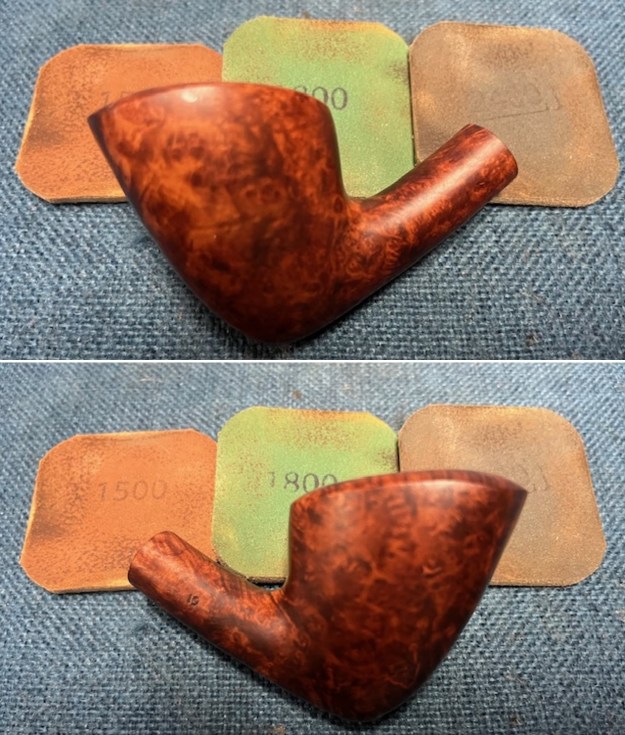
I turned to Pipedia to see if I could find more information on the brand and possibly a link to the Freehand Relief line (https://pipedia.org/wiki/Charatan) but once again in the general article it was not listed.  It did give a little more historical information and is worth reading. I am including a few sections from the site.

In 1863 Frederick Charatan, a Russian/Jewish immigrant, opened a shop in Mansell Street, located in the borough of Tower Hamlets, London E1, where he began to carve Meerschaum pipes. These pipes got very popular soon, and thus Charatan moved to a bigger workshop in Prescot Street, just around the corner. Here he began to make briar pipes which should make the name famous the world over. Charatan was the first brand to make entirely hand-made briars from the rough block to the finished pipe including the stems. The nomenclature “Charatan’s Make” refers to this method of production and was meant to differ Charatan from other brands who “assembled” pipes from pre-drilled bowls and delivered mouthpieces.

Being the undisputed No. 1 in English pipemaking, Charatan was approached by Alfred Dunhill who was unsatisfied with the quality of the pipes he imported from France. During 1908 – 1910 Dunhill bought pipes from Charatan paying exorbitant prices to ensure he had some of the very best pipes for sale in England. In 1910 he lured away Joel Sasieni, one of Charatan’s best carvers, and opened his own small pipe workshop on 28 Duke Street. On the retirement of his father in 1910 Reuben Charatan took over the family business…

…The pre-Lane period (prior to 1955) and the Lane era pipes (1955 to until sometime between 1979 – 1984) are of primary interest the collector. The Lane era is often quoted as beginning about 1950… Charatan records are almost non-existent before Lane due to a factory fire, making it difficult to date pre-Lane pipes. Charatan used 4 basic grades prior to 1950: Supreme, Selected, Executive, and Belvedere. After 1950 Herman Lane’s influence began, and the grades started to expand. In 1955 Lane took over sole distributorship of Charatan in the US. In 1957 he introduced the Supreme S. Most of his other introductions were from the 60’s and early 70’s…

The section called Miscellaneous Notes had some interesting information.
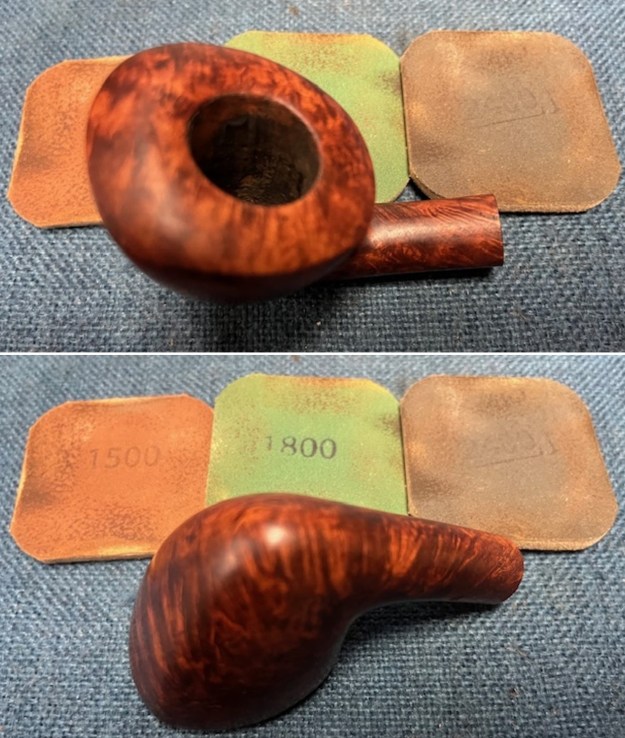
Charatan records indicate the DC (Double Comfort) bit was introduced in the 50’s, but some report seeing them in earlier production. Still others indicate they were introduced by Lane in 1960. Regardless, the DC bit is not an accurate way to date a pipe because many Charatan’s were made with regular and saddle type bits throughout the “Lane Era”…
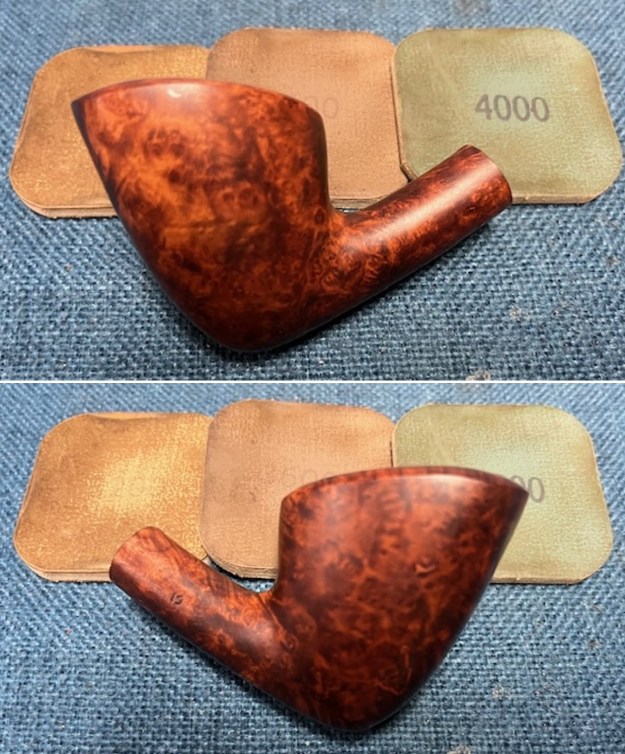
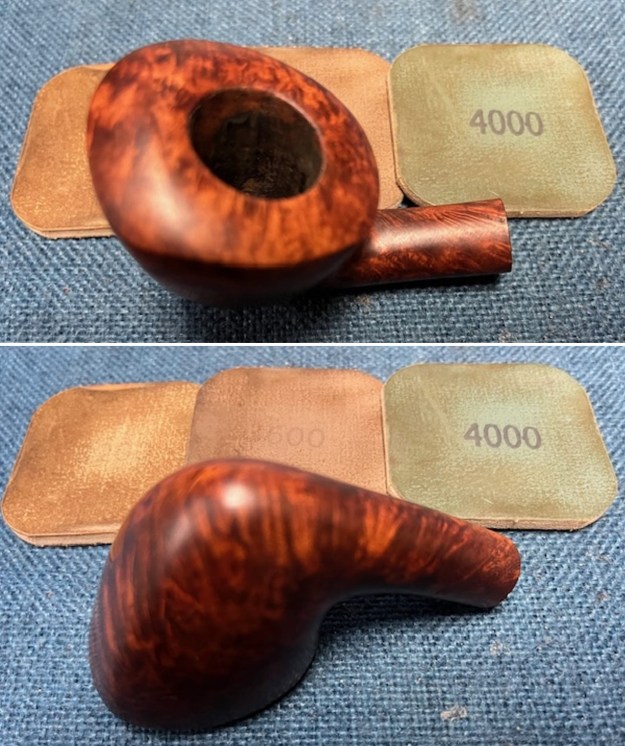
…The Lane Trademark serif and circled L indicates the pipe is from the “Lane Era” (approx. 1955 to 1979 -1984?), however it appears that both the English factory or Lane themselves sometimes, or perhaps even often forget to stamp the L on a pipe. The Charatan factory was known for inconsistencies, especially in stampings. Therefore, although an L on the pipe definitely defines it as a Lane Era pipe, the lack of it could simply mean the pipe missed receiving the stamp from the factory. The lack of the trademark could also mean the pipe was destined for the European market.

Generally, block letters “MADE BY HAND” and some of the other nomenclature in script (i.e. City of London or Extra Large next to the MADE BY HAND) means the pipe was made sometime between 1965 and the mid 1970’s. The total script nomenclature “Made by Hand in City of London” evolved over this period of time, so many pipes had variants, such as Made By Hand in block letters and City of London in script, or some other variation of the terms or stampings. The Charatan Logo (CP) on the pipe bit was changed over the years.

From all of the historical data I could work through this Charatan’s Make Relief Grain was a sand blast finished pipe from the mid 1970’s Lane era. I continued digging further into the dating of the pipe, but what I had found was a good start for me. If some of you would like to try your hand at dating it more accurately as to the time period it came out you might want to check out the article on Pipedia on Dating Charatans (https://pipedia.org/wiki/Dating_of_Charatans). I had enough for me to start working on the pipe itself and see what lay beneath the heavy tars and oils.

I began working on the pipe by reaming the bowl with a PipNet reamer. I used the third and fourth cutting heads to clean out the cake. I cleaned up what remained in the bowl with a Savinelli Fitsall Pipe Knife and scraped it back to bare briar. I finished by sanding the inside of the bowl with a dowel wrapped in sandpaper. The inside walls are free of burn damage or checking so the gouge does not go all the way through. I cleaned out the inside of the shank and the airway in the stem with alcohol, cotton swabs and both bristle and regular pipe cleaners.I worked the sandblast rim top with a brass bristle wire brush to remove the debris in the finish. While there was some darkening it looked much better,I scrubbed the bowl and shank with a tooth brush and some undiluted Murphy’s Oil Soap. I rinsed it off with warm water to remove the dust and soap from the finish. I dried it off with a soft cloth and it looked much better. I rubbed the briar down with Before & After Restoration Balm. I worked it into the briar with my fingertips to work it into the finish. The product works to clean, enliven and preserve the briar. I let it sit for 10 minutes then I buffed it with a cotton cloth to deepen the shine. The briar really comes alive with the balm. I set the bowl aside and turned my attention to the stem. I ‘painted’ the surface of the stem with the flame of a lighter to lift the tooth marks. I was able to lift almost all of them. What was left I sanded the surface of the stem with a folded piece of 220 grit sandpaper to clean up the oxidation and tooth chatter on both sides. I scrubbed the stem surface with some Soft Scrub cleanser on cotton pads to remove more of the oxidation. It worked quite well.I sanded the stem with 320-3500 grit 2×2 inch pads to further adjust the fit of the stem to the shank. I wiped the stem down with an Obsidian Oil cloth after each sanding pad.I polished the vulcanite with micromesh sanding pads – 1500-12000 grit pads. I wiped it down with Obsidian Oil after each sanding pad. I used Before & After Pipe Polish – both Fine and Extra Fine to further polish the stem. With the stem polished I put it back on the Charatan’s Make Freehand Relief Extra Large Lane Era Dublin and lightly buffed the bowl with Blue Diamond. I buffed the stem with a more aggressive buff of Blue Diamond. I gave the bowl several coats of Conservator’s Wax and the stem several coats of carnauba wax and buffed the pipe with a clean buffing pad to raise the shine. I hand buffed it with a microfiber cloth to deepen the shine. The pipe polished up pretty nicely. The finished pipe is shown in the photos below. This Charatan’s Make Relief Freehand Extra Large Dublin will soon be on the rebornpipes store in the British Pipe Makers Section if you want to add it to your rack. The dimensions are Length: 6 inches, Height: 2 ½ inches, Outside diameter of the bowl: 1 ¼ inches, Chamber diameter: ¾ of an inch. The weight of the pipe is 1.16 ounces/34 grams. Thanks for walking through the restoration with me as I worked over this Charatan’s Make.

Restoring a Dunhill Shell Briar 127 F/T Chunky Billiard with a replacement taper stem


by Steve Laug

The next pipe on the table is another one that came to us from the seller in Caldwell, Idaho, USA on 07/12/2025. It is a thick shank Dunhill Dark Sandblast bowl with a replacement stem. It is in dirty but in good condition other than that as can be seen in the photos below. The underside of the shank is stamped and readable. It reads 127 F/T on the heel of the bowl followed by Dunhill [over] Shell Briar [followed by] Made In [over] England followed by a superscript 0. That is followed by a circle 4 S identifying the bowl size as a Group 4 and the finish as a Shell Briar. It has rugged sandblast finish that is very tactile on both the shank and the bowl. The shape works very well with the sandblast grain. The finish was dusty and dirty with grime deep in the finish that is darkened. However, the grain really stands out. The bowl had a moderate cake and there was tobacco debris in the bowl. The rim top had a lava coat on the top and edges. The replacement vulcanite stem is dirty, lightly oxidized and has light tooth marks and dents on the top and underside of the stem. I took photos of the pipe to show what it looked like before I started working on it. I took a closer photo of the rim top and bowl to show the condition of the bowl and rim. You can see the light cake in the bowl and the darkening and lava on the top and the inner edge.The stamping on the smooth panel of the underside of the shank is clear and readable as noted above. I took a photo of the pipe with the stem removed to give a sense of the proportions of the pipe. Even with the deep gouge in the left side of the bowl it is a real beauty.I wanted to unpack the Dunhill stamping on the shank and work to understand each element of the stamp. I generally use the Pipephil site to gather as much initial information as possible (http://pipephil.eu/logos/en/dunhill/shell-briar1.html). The stamping is interpreted as follows: The number 127 is the shape number for a taper stem Billiard and the F/T is the stamp for the original Fish Tail stem. The Shell Briar stamp refers to the finish. The underlined, superscript number 0 following the D of England would give the date the pipe. The circle 4S tells me that the pipe is a group 4 sized pipe and the S is for the Shell finish. The photo below is of the stamping on a Don shape but the stamping is similar on this one.Pipephil also has some helpful dating keys on the site that are basically flow charts that you can walk through to date your pipe (http://pipephil.eu/logos/en/dunhill/cledat-en1.html). I turned to Part 1 of the Dating Key and followed the chart. This pipe has 0 following the D in England. There was no patent number so that took me to the section on the chart below (column one) which instructed me that the pipe could be dated as being made “posterior to 1954”.I followed the link under “Your pipe is posterior to 1954. Narrow down your dating”. That took me to Page 2 of the dating key (http://pipephil.eu/logos/en/dunhill/cledat-en1a.html). The first column – suffix [0] led me to the next section. Since the 0 after the D in England is raised, the date of the pipe is 1960.I then turned to Pipedia’s section on Dunhill Shell Briar to get a bit of background on the Dunhill finishes (https://pipedia.org/wiki/Dunhill#Root_Briar). I quote:

Shell

A deep craggy sandblast with a black stain finish (usually made using Algerian briar) – the color of the stain used has varied over the years. Although there is some doubt as to them being the first to sandblast pipes, Dunhill’s Shell pipes, and the sandblasting techniques developed to create them are considered one of Dunhill’s greatest and most lasting contributions to the art of pipe making.

The documented history of Dunhill’s inception of the Shell is largely limited to patent applications — there are no catalogue pages or advertisements promoting blasted pipes at the time. The preliminary work on the English patent (No. 1484/17) was submitted on October 13, 1917. The patent submission was completed half a year later, on April 12, 1918, followed by the granting of the English patent on October 14, 1918. This was less than a month before the end of The Great War on November 11th.

In 1986 Dunhill released a line of premium Shell finish pipes – “RING GRAIN”. These are high-quality straight grain pipes which are sandblasted. Initially only Ring Grain, but now in two different finishes. In 1995 the “Shilling” was introduced with Cumberland finish – it is an extremely rare series. These pipes exhibit a deeper blast characteristic of that of the 1930’s – mid-1960’s (and the limited ‘deep blast’ pipes of the early 1980s) and show a fine graining pattern. These are considered the best new Dunhills by many enthusiasts today and are very rare. The finish is sometimes described as tasting like vanilla at first, with the taste becoming more normal or good as the pipe breaks in.

I began working on the pipe by reaming the bowl with a PipNet reamer. I used the third and fourth cutting heads to clean out the cake. I cleaned up what remained in the bowl with a Savinelli Fitsall Pipe Knife and scraped it back to bare briar. I finished by sanding the inside of the bowl with a dowel wrapped in sandpaper. The inside walls are free of burn damage or checking so the gouge does not go all the way through. I worked over the sandblast rim top with a brass bristle wire brush to remove the debris in the finish. While there was some darkening it looked much better. I cleaned out the inside of the shank and the airway in the stem with alcohol, cotton swabs and both bristle and regular pipe cleaners.I scrubbed the bowl and shank with a tooth brush and some undiluted Murphy’s Oil Soap. I rinsed it off with warm water to remove the dust and soap from the finish. I dried it off with a soft cloth and it looked much better. I rubbed the briar down with Before & After Restoration Balm. I worked it into the briar with my fingertips to work it into the finish. The product works to clean, enliven and preserve the briar. I let it sit for 10 minutes then I buffed it with a cotton cloth to deepen the shine. The briar really comes alive with the balm. I set the bowl aside and turned my attention to the stem. I sanded the surface of the stem with a folded piece of 220 grit sandpaper to clean up the oxidation and tooth chatter on both sides. I sanded the stem with 320-3500 grit 2×2 inch pads to further adjust the fit of the stem to the shank. I wiped the stem down with an Obsidian Oil cloth after each sanding pad.I polished the vulcanite with micromesh sanding pads – 1500-12000 grit pads. I wiped it down with Obsidian Oil after each sanding pad. I used Before & After Pipe Polish – both Fine and Extra Fine to further polish the stem. This 1960 Dunhill Shell Briar 127 F/T Billiard with a replacement vulcanite taper stem has a beautiful, unique Dunhill Sandblast finish that is very deep and craggy. The Shell Briar mixed brown finish highlights some great grain around the bowl and shank. It has a unique sandblast that Dunhill specialized in making. The polished vulcanite taper stem adds to the mix. I put the stem back on the bowl and buffed the pipe with Blue Diamond on the buffing wheel being careful to not buff the stamping. I gave the bowl multiple coats of Conservator’s Wax and the stem multiple coats of carnauba wax on the buffing wheel and followed that by buffing it with a clean buffing pad. I hand buffed the pipe with a microfiber cloth to deepen the shine. The finished Dunhill Shell Briar 127 F/T Billiard is quite nice and feels great in the hand. Give the finished pipe a look in the photos below. The dimensions of the pipe are Length: 5 ¼ inches, Height: 1 ¾ inches, Outside diameter of the bowl: 1 ¼ inches, Chamber diameter: ¾ of an inch. The weight of the pipe is 1.48 ounces/42 grams. Thanks for walking through the restoration with me as I worked over another beautiful pipe. This one will be going on the rebornpipes store in the English Pipe Makers Section. Thanks for your time.

Rejuvenating another Royal Comoy – a 298 Saddle Stem Lumberman


by Steve Laug

The next pipe on the table is another one that came to us from the seller in Caldwell, Idaho, USA on 07/12/2025. It is another beautiful Comoy Royal – a Lumberman with a vulcanite saddle stem. It is in dirty but in good condition as can be seen in the photos below. It is stamped on the top side of the shank and reads Royal [over] Comoy. On the underside it is stamped with the Comoy COM stamp – in this case Made in London in a circle over England [followed by] the shape number 298 next to the bowl shank union. The stamping is clear and readable. It has rich finish with a blend of brown stains that highlight the grain around the bowl and shank that the shape follows well. The finish was dusty and dirty with grime ground into the finish. The bowl had a moderate cake and there was tobacco debris in the bowl. The rim top had a thick lava on the top and edges. The stem was quite dirty and oxidized. The stem was quite dirty and oxidized. It had a three part C on the left side of the saddle stem. I took photos of the pipe to show what it looked like before I started working on it. I took photos of the bowl and rim top to show their condition and of the stem to show the condition of both sides of the stem.The stamping on the top and underside of the shank are shown in the photos below. It looks very good and is readable. It reads as noted and explained above. I captured the detail in the photos below. I removed the stem from the shank and took a photo of the pipe to give a sense of the proportion and look of the pipe. Al Jones, upshallfan has worked on several Royal Comoy pipes in the past and had some write ups on rebornpipes. I have included the link and the pertinent information below.

https://rebornpipes.com/2015/01/28/royal-comoy-603/

I couldn’t find much about the Royal grade and this one was particularly unusual in that it was only stamped “Comoy” versus “Comoys”.  The only reference point I could find was an old Ebay ad from Tony Soderman see below and the accompanying picture.  He describes the grade as below.  I find very few use of the singular “Comoy” stamping.  This pipe doesn’t feel like a Blue Riband quality grade and my selling price definitely didn’t reflect that either.  Tony uses “Comoy” and “Comoys” in his ad titles which makes the designation a little less clear.  At any rate, it is a Comoy not often seen.

Old timers know that the ROYAL COMOY was the predecessor to the fabled “Blue Riband”!!! The name is from the “old” Comoy’s Nomenclature (like “Prima,” “Grand Slam,” “Old Bruyere,” “Lions Head” and so on). Those pre-date the more familiar modern grading (like “Selected Straight Grain,” “Blue Riband,” “Specimen Straight Grain” and so forth). While the Blue Riband was NEVER Comoy’s highest grade, the ROYAL COMOY originally appeared as the absolute top-of-the-line Comoy in the late 1930’s! (ALL pre-World War II Royal Comoy’s were top-of-the-line pipes!) The Royal was “downgraded” only though the addition of higher grades (much like Charatan did indirectly downgrading their top-of-the-line “Supreme” through the addition of higher grades)! Shortly before World War II, Comoy replaced the ROYAL COMOY with the Blue Riband (at the same time as they introduced the Specimen Straight Grain). The ROYAL COMOY reappeared after World War II and was always a HIGH GRADE Comoy – – – either at or near the TOP-OF-THE-LINE!!! From there I turned to Pipephil’s site (http://www.pipephil.eu/logos/en/logo-comoy.html). I have included a screen capture of the listing for Royal Comoy that was there. It is interesting to me in that the Royal Comoy that I am working on is the same shape number as the one shown in the photo. I also have included the side bar information.Three pieces (two black, one white) inlaid “C” logo. This marking/inlay method was canceled in the early 80s.

I thought Pipedia was worth checking on the Royal Comoy and it took some digging but I did find it buried in a list of brands. It was just two lines but had some interesting information (https://pipedia.org/wiki/A_History_Of_Comoy%27s_and_A_Guide_Toward_Dating_the_Pipes). I quote from there below.

Royal. The Royal has always been a high-grade Comoy, and, pre-WW II, it was the highest standard grade after the Prima was dropped. Priced at $7.50 in 1936.

I wanted to know when the line was dropped so I googled (https://vkpipes.com/pipeline/comoys-royal-185/) for further information. I found some helpful information on the vkpipes site. I quote that below.

The Comoy’s Royal grade is both one of the oldest and one of the rarest to date. Royal Comoy pipes appeared in the late 1930s and were then considered the absolute highest grade. However, very soon, the Royal pipes were replaced by the Blue Ribband series. After the Second World War the Royal series reappeared as one of the top lines until it was discontinued in the early 1980s. In any case, all our sources agree that “The Royal has always been a high-grade Comoy.”

From what I can find the brand was displaced as top of the line when the Blue Riband came out in 1936. It seemed to have been dropped shortly after that and then reappeared after WWII as a top line until it was discontinued in the early 1980s. Now it was time to start working on the pipe.

I reamed the bowl with a PipNet reamer using the second and third cutting head. I took the cake back to bare briar. I cleaned up the reaming with a Savinelli Fitsall Pipe Knife and then sanded the bowl walls with a piece of dowel wrapped with 220 grit sandpaper. The bowl looked very good at this point there were no burn marks and only light checking on the walls. I cleaned out the inside of the shank and the airway in the stem with alcohol, cotton swabs and both bristle and regular pipe cleaners.I scrubbed the bowl and shank with a tooth brush and some undiluted Murphy’s Oil Soap. I rinsed it off with warm water to remove the dust and soap from the finish. I dried it off with a soft cloth and it looked much better. I used a folded piece of 220 grit sandpaper to clean up the rim top and inner bevel of the rim. Once it was finished it looked significantly better.I sanded the bowl and shank with 320-3500 grit 2×2 inch sanding pads. I wiped the briar down with a damp cloth after each sanding pad to remove the sanding debris. It was beginning to look very good. I polished the briar with micromesh sanding pads – dry sanding with 1500-12000 grit sanding pads. I wiped the bowl down with a damp cloth after each sanding pad. The pipe began to take on a rich finish. I rubbed the briar down with Before & After Restoration Balm. I worked it into the rusticated rim top and the smooth briar with my fingertips to work it into the finish. The product works to clean, enliven and preserve the briar. I let it sit for 10 minutes then I buffed it with a cotton cloth to deepen the shine. The briar really comes alive with the balm. I set the bowl aside and worked on the stem. I sanded the surface of the stem with a folded piece of 220 grit sandpaper to remove the oxidation and clean up the tooth marks and chatter on both sides of the stem ahead of the button.I sanded the stem with 320-3500 grit 2×2 inch pads. I wiped the stem down with an Obsidian Oil cloth after each sanding pad.I polished the vulcanite with micromesh sanding pads – 1500-12000 grit pads. I wiped it down with Obsidian Oil after each sanding pad. I used Before & After Pipe Polish – both Fine and Extra Fine to further polish the stem. This interestingly stamped Royal Comoy 298 Saddle Stem Lumberman with a vulcanite saddle stem is a great looking pipe now that it has been restored. The rich browns and blacks of the contrasting stains came alive with the polishing and waxing. I put the stem back on the bowl and carefully buffed the pipe with Blue Diamond on the buffing wheel using a light touch on the briar. I gave the bowl and the stem multiple coats of carnauba wax on the buffing wheel and followed that by buffing the entire pipe with a clean buffing pad. I hand buffed the pipe with a microfiber cloth to deepen the shine. The finished Royal Comoy 298 Lumberman is a beauty and fits nicely in the hand and looks very good. Give the finished pipe a look in the photos below. The dimensions of the pipe are Length: 6 inches, Height: 1 ¾ inches, Outside diameter of the bowl: 1 ¼ inches, Chamber diameter: ¾ of an inch. The weight of the pipe is 35 grams/1.20 ounces. If you are interested in adding this pipe to your collection send me a message or an email. Thanks for reading this blog and my reflections on the pipe while I worked on it. There are many more to come!

Rejuvenating a Royal Comoy 480 Saddle Stem Dublin


by Steve Laug

The next pipe on the table is another one that came to us from the seller in Caldwell, Idaho, USA on 07/12/2025. It is a beautiful Comoy Royal Dublin with a straight vulcanite saddle stem. It is in dirty but in good condition as can be seen in the photos below. It is stamped on the left side of the shank and reads Royal [over] Comoy. On the right side it is stamped with the Comoy COM stamp – in this case Made in London in a circle over England [followed by] the shape number 480 next to the bowl shank union. The stamping is clear and readable. It has rich finish with a blend of brown stains that highlight the grain around the bowl and shank that the shape follows well. The finish was dusty and dirty with grime ground into the finish. The bowl had a moderate cake and there was tobacco debris in the bowl. The rim top had a thick lava on the top and edges. The stem was quite dirty and oxidized. It had a three part C on the left side of the saddle stem. I took photos of the pipe to show what it looked like before I started working on it. I took photos of the bowl and rim top to show their condition and of the stem to show the condition of both sides of the stem.The stamping on the sides of the shank is shown in the photos below. It looks very good and is readable. It reads as noted and explained above. I captured the detail in the photos below. I removed the stem from the shank and took a photo of the pipe to give a sense of the proportion and look of the pipe. Al Jones, upshallfan has worked on several Royal Comoy pipes in the past and had some write ups on rebornpipes. I have included the link and the pertinent information below.

https://rebornpipes.com/2015/01/28/royal-comoy-603/

I couldn’t find much about the Royal grade and this one was particularly unusual in that it was only stamped “Comoy” versus “Comoys”.  The only reference point I could find was an old Ebay ad from Tony Soderman see below and the accompanying picture.  He describes the grade as below.  I find very few use of the singular “Comoy” stamping.  This pipe doesn’t feel like a Blue Riband quality grade and my selling price definitely didn’t reflect that either.  Tony uses “Comoy” and “Comoys” in his ad titles which makes the designation a little less clear.  At any rate, it is a Comoy not often seen.

Old timers know that the ROYAL COMOY was the predecessor to the fabled “Blue Riband”!!! The name is from the “old” Comoy’s Nomenclature (like “Prima,” “Grand Slam,” “Old Bruyere,” “Lions Head” and so on). Those pre-date the more familiar modern grading (like “Selected Straight Grain,” “Blue Riband,” “Specimen Straight Grain” and so forth). While the Blue Riband was NEVER Comoy’s highest grade, the ROYAL COMOY originally appeared as the absolute top-of-the-line Comoy in the late 1930’s! (ALL pre-World War II Royal Comoy’s were top-of-the-line pipes!) The Royal was “downgraded” only though the addition of higher grades (much like Charatan did indirectly downgrading their top-of-the-line “Supreme” through the addition of higher grades)! Shortly before World War II, Comoy replaced the ROYAL COMOY with the Blue Riband (at the same time as they introduced the Specimen Straight Grain). The ROYAL COMOY reappeared after World War II and was always a HIGH GRADE Comoy – – – either at or near the TOP-OF-THE-LINE!!! From there I turned to Pipephil’s site (http://www.pipephil.eu/logos/en/logo-comoy.html). I have included a screen capture of the listing for Royal Comoy that was there. It is interesting to me in that I have a second Royal Comoy that is the same shape number. I also have included the side bar information. There are three pieces (two black, one white) inlaid “C” logo. This marking/inlay method was canceled in the early 80s.

I thought Pipedia was worth checking on the Royal Comoy and it took some digging but I did find it buried in a list of brands. It was just two lines but had some interesting information (https://pipedia.org/wiki/A_History_Of_Comoy%27s_and_A_Guide_Toward_Dating_the_Pipes). I quote from there below.

Royal. The Royal has always been a high-grade Comoy, and, pre-WW II, it was the highest standard grade after the Prima was dropped. Priced at $7.50 in 1936.

I wanted to know when the line was dropped so I googled (https://vkpipes.com/pipeline/comoys-royal-185/) for further information. I found some helpful information on the vkpipes site. I quote that below.

The Comoy’s Royal grade is both one of the oldest and one of the rarest to date. Royal Comoy pipes appeared in the late 1930s and were then considered the absolute highest grade. However, very soon, the Royal pipes were replaced by the Blue Ribband series. After the Second World War the Royal series reappeared as one of the top lines until it was discontinued in the early 1980s. In any case, all our sources agree that “The Royal has always been a high-grade Comoy.”

From what I can find the brand was displaced as top of the line when the Blue Riband came out in 1936. It seemed to have been dropped shortly after that and then reappeared after WWII as a top line until it was discontinued in the early 1980s. Now it was time to start working on the pipe.

I reamed the bowl with a PipNet reamer using the second and third cutting head. I took the cake back to bare briar. I cleaned up the reaming with a Savinelli Fitsall Pipe Knife and then sanded the bowl walls with a piece of dowel wrapped with 220 grit sandpaper. The bowl looked very good at this point there were no burn marks and only light checking on the walls. I cleaned out the inside of the shank and the airway in the stem with alcohol, cotton swabs and both bristle and regular pipe cleaners. I scrubbed the bowl and shank with a tooth brush and some undiluted Murphy’s Oil Soap. I rinsed it off with warm water to remove the dust and soap from the finish. I dried it off with a soft cloth and it looked much better. I used a folded piece of 220 grit sandpaper to clean up the rim top and inner bevel of the rim. Once it was finished it looked significantly better.I sanded the bowl and shank with 320-3500 grit 2×2 inch sanding pads. I wiped the briar down with a damp cloth after each sanding pad to remove the sanding debris. It was beginning to look very good. I polished the briar with micromesh sanding pads – dry sanding with 1500-12000 grit sanding pads. I wiped the bowl down with a damp cloth after each sanding pad. The pipe began to take on a rich finish. I rubbed the briar down with Before & After Restoration Balm. I worked it into the rusticated rim top and the smooth briar with my fingertips to work it into the finish. The product works to clean, enliven and preserve the briar. I let it sit for 10 minutes then I buffed it with a cotton cloth to deepen the shine. The briar really comes alive with the balm. I set the bowl aside and worked on the stem. I sanded the surface of the stem with a folded piece of 220 grit sandpaper to remove the oxidation and clean up the tooth marks and chatter on both sides of the stem ahead of the button.I sanded the stem with 320-3500 grit 2×2 inch pads. I wiped the stem down with an Obsidian Oil cloth after each sanding pad.I polished the vulcanite with micromesh sanding pads – 1500-12000 grit pads. I wiped it down with Obsidian Oil after each sanding pad. I used Before & After Pipe Polish – both Fine and Extra Fine to further polish the stem. This interestingly stamped Royal Comoy 480 Saddle Stem Dublin with a vulcanite saddle stem is a great looking pipe now that it has been restored. The rich browns and blacks of the contrasting stains came alive with the polishing and waxing. I put the stem back on the bowl and carefully buffed the pipe with Blue Diamond on the buffing wheel using a light touch on the briar. I gave the bowl and the stem multiple coats of carnauba wax on the buffing wheel and followed that by buffing the entire pipe with a clean buffing pad. I hand buffed the pipe with a microfiber cloth to deepen the shine. The finished Royal Comoy 480 Dublin is a beauty and fits nicely in the hand and looks very good. Give the finished pipe a look in the photos below. The dimensions of the pipe are Length: 5 ½ inches, Height: 1 ¾ inches, Outside diameter of the bowl: 1 ¼ inches, Chamber diameter: ¾ of an inch. The weight of the pipe is 29 grams/1.02 ounces. If you are interested in adding this pipe to your collection send me a message or an email. Thanks for reading this blog and my reflections on the pipe while I worked on it. There are many more to come!

Restemming and Breathing Life into a Dunhill Tanshell 59 Billiard


by Steve Laug

The next pipe on the table is another one that came to us from the seller in Caldwell, Idaho, USA on 07/12/2025. It is a beautiful Dunhill Tanshell Billiard with a straight vulcanite saddle stem. It is in dirty but in good condition as can be seen in the photos below. It is stamped on the underside of the shank and reads 59 on the heel of the bowl followed by Dunhill [over] Tanshell. Following that it is stamped Made in [over] England with the number 8 underlined and in superscript after the D. Below the 8 there is a superscript underlined 9. The stamping is clear and readable. It has rich finish with a blend of brown stains that highlight the depths of the sandblast around the bowl and shank that the shape follows well. The finish was dusty and dirty with grime ground into the finish. The bowl had a moderate cake and there was tobacco debris in the bowl. The rim top had a thick lava on the top and edges. The stem was quite dirty and oxidized. It was the wrong stem for the pipe as it was a Charatan Double Comfort Stem rather than a white spot stem. It will need to be replaced with a Dunhill stem. I took photos of the pipe to show what it looked like before I started working on it.   I took photos of the bowl and rim top to show their condition and of the stem to show the condition of both sides of the stem.The stamping on the underside of the shank is shown in the photo below. It looks very good and is readable. It reads as noted and explained above. I captured the detail in the photos below. I need to fit the bowl with a new stem and will take photos then.One of the first things I like to do is to unpack the stamping and understand each element in it. I turned to Pipephil helpful site (http://pipephil.eu/logos/en/dunhill/tanshell1.html). The stamping is interpreted as follows: The number 59 is the shape number for a Billiard. The Tanshell stamp refers to the finish which is corroborated the T at the end of the stamping. The size of the pipe 4 in a circle is a Group 4. The 8 following the D of England gives the date the pipe. There is also a 9 down and to the right of the 8. The second number is typically stamped to show the date the pipe sold to a retailer.Pipephil also has some helpful dating keys on the site that are basically flow charts that you can walk through to date your pipe (http://pipephil.eu/logos/en/dunhill/cledat-en1.html). I turned to Part 1 of the Dating Key and followed the chart. This pipe has 8 following the D in England. That is followed by 9.

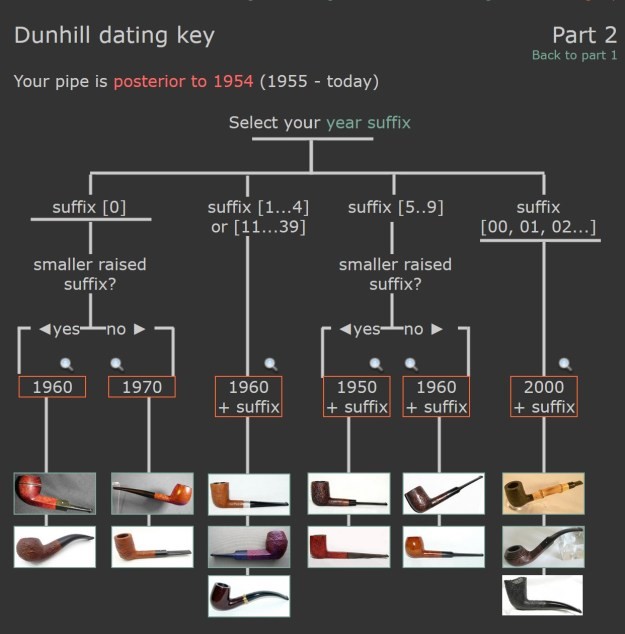
I followed the link following the “Your pipe is posterior to 1954. Narrow down your dating”. That took me to Page 2 of the dating key (http://pipephil.eu/logos/en/dunhill/cledat-en1a.html). The third column (suffix 5…9) led me to the section with an 8 after the D in England that a superscript. It is followed by a superscript 9. There was a directive for dating the pipe spelled out as follows: 1950 + suffix which gives the pipe a date of 1958. The superscript 9 is the date it went to the retailers – 1959.I then turned to Pipedia’s section on Dunhill Root Briar to get a bit of background on the Dunhill finishes (https://pipedia.org/wiki/Dunhill#Root_Briar). I quote:

Tanshell

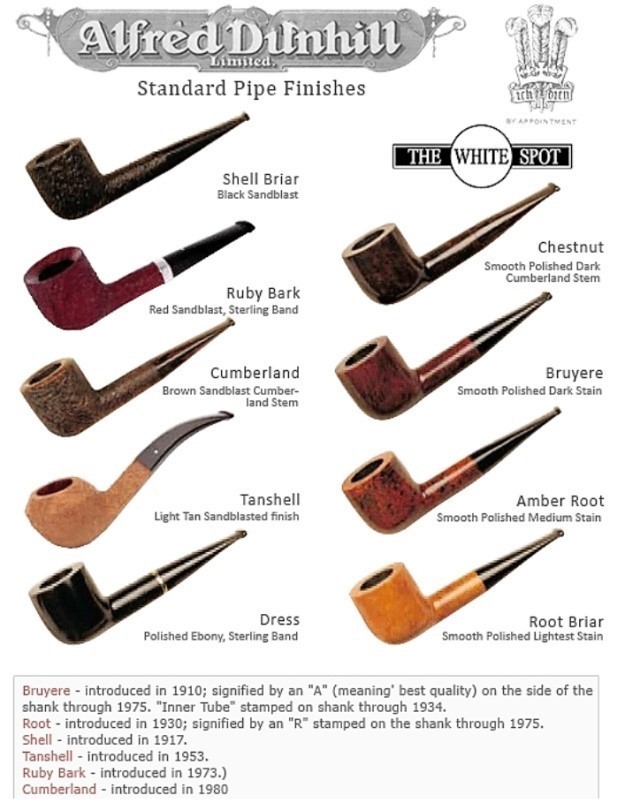
The first lot was distributed in 1952 (usually made using Sardinian briar). The prototype was called “Root Shell “, produced in 1951. The Tanshell is a light tan sandblast. Sardinian briar was used for this sandblast. There is a distinct contrast in the sandblasts using Sardinian as opposed to Algerian briar. The Sardinian is much denser and much harder. The resulting pattern, when blasted, is far more even and regular both in terms of the surface texture and the finish.

The TanShell was Dunhill’s fourth finish and its first major post-war line addition. Introduced in 1951/1952 the TanShell was a naturally stained sandblasted pipe made exclusively from Sardinian briar through the 1960s. The TanShell apparently was not simply a light stained Shell but rather was also the product of “certain processes [unrevealed] not previously employed.” Initially, it appears that the pipe was to be named the Root Shell and a stamp to that effect was ordered and received by Dunhill in May 1951. Ultimately, however, the name TanShell was settled upon but the stamp for the TanShell name was not received by Dunhill until the beginning of December. Thus while the Tanshell was in production in 1951 it appears that most if not all TanShells made in that year did not enter into retail distribution until 1952 and were given a 1952 date code. Loring, J. C., The Dunhill Briar Pipe, The Patent Years and After (self-published, Chicago, 1998).

I have also included a chart from the site from Dunhill spelling out the Standard Pipe Finishes and giving short information and a timeline.Before I started working on the bowl I decided to see if I could restem it with an original Dunhill stem. I went through the boxes of pipes Jeff sent me and low and behold there was a Sasieni London Made 17 Billiard and it had a Dunhill White Spot taper stem. It looked like it would fit quite well. I removed the stem and checked it on the Tanshell. The tenon was a little large for the shank. I used a flat file and 220 grit sandpaper to reduce the diameter of the tenon to fit the shank.With that finished I inserted it in the shank and took photos of the fit. The diameter of the stem was very slightly wider than the shank. The flat bottom on the stem matched the flat portion of the shank. There were also some tooth marks on the top and underside of the stem ahead of the button. I filled in the tooth marks with black CA glue and set the stem aside to let the repairs cure on the surface. It took about 20 minutes to harden. Once it hardened I flattened it with a folded piece of 220 grit sandpaper. I was able to blend it into the vulcanite. I also worked on the diameter of the stem to reduce it to match diameter of the shank. I used the Dremel and sanding drum to further reduce the diameter of the stem. I worked it over further with 220 grit sandpaper to smooth out the scratches and blend in the marks to the surface of the vulcanite. I also wanted to really adjust the fit to the shank.I sanded the stem further with 320-3500 grit 2×2 inch sanding pads and wiped it down with a damp cloth after each sanding pad. It started to look very good.I polished the stem with micromesh sanding pads – dry sanding with 1500-12000 grit pads. I wiped the stem down after each sanding pad with Obsidian Oil. I polished it with Before & After Pipe Stem Polish – both Fine and Extra Fine. Once I had finished the polishing I gave it final coat of Obsidian Oil and set it aside to dry. I set the stem aside and turned to work on the bowl. I reamed the bowl with a PipNet reamer using the second and third cutting head. I took the cake back to bare briar. I cleaned up the reaming with a Savinelli Fitsall Pipe Knife and then sanded the bowl walls with a piece of dowel wrapped with 220 grit sandpaper. The bowl looked very good at this point there were no burn marks and only light checking on the walls. I worked over the sandblast rim top with a brass bristle wire brush to clean up the debris in the valleys of the blast. It looked better.I cleaned out the inside of the shank and the airway in the stem with alcohol, cotton swabs and both bristle and regular pipe cleaners. I scrubbed the bowl and shank with a tooth brush and some undiluted Murphy’s Oil Soap. I rinsed it off with warm water to remove the dust and soap from the finish. I dried it off with a soft cloth and it looked much better. I continued scrubbing the bowl and rim top with Before & After Extra Strong Briar Cleaner. I scrubbed it with a brass bristle wire brush to clean out the rim top and the darkening on the backside of the bowl. I rubbed the briar down with Before & After Restoration Balm. I worked it into the rusticated rim top and the smooth briar with my fingertips to work it into the finish. The product works to clean, enliven and preserve the briar. I let it sit for 10 minutes then I buffed it with a cotton cloth to deepen the shine. The briar really comes alive with the balm. I put the stem back on the bowl of this 1958 Dunhill Tanshell 59 Group 4 Billiard with a newly fitted Dunhill Taper Stem has a beautiful, unique Dunhill Sandblast finish that was deep and craggy and crisp. The Tanshell finish highlights a classic Dunhill rugged sandblast around the bowl and shank. The polished black vulcanite taper stem adds to the mix. I put the stem back on the bowl and buffed the pipe with Blue Diamond on the buffing wheel being careful to not buff the stamping. I gave the bowl multiple coats of Conservator’s Wax and the stem multiple coats of carnauba wax on the buffing wheel and followed that by buffing it with a clean buffing pad. I hand buffed the pipe with a microfiber cloth to deepen the shine. The finished lightweight Dunhill Tanshell 59 Billiard is quite nice and feels great in the hand. Give the finished pipe a look in the photos below. The dimensions of the pipe are Length: 5 ½ inches, Height: 1 ¾ inches, Outside diameter of the bowl: 1 ¼ inches, Chamber diameter: ¾ of an inch. The weight of the pipe is 1.09 ounces/32 grams. Thanks for walking through the restoration with me as I worked over another beautiful pipe. I appreciate you taking time to read the writeup.

As always, I encourage your questions and comments as you read the blog. Remember we are not pipe owners; we are pipe men and women who hold our pipes in trust until they pass on into the trust of those who follow us.

Breathing Life into a GDB International London Made 357 Prince


by Steve Laug

The next pipe on the table is another one that came to us from the seller in Caldwell, Idaho, USA on 07/12/2025. It is a beautiful GBD Prince with a slight bend to the vulcanite taper stem. It is in dirty but in good condition as can be seen in the photos below. It is stamped on the left side of the shank and reads GBD in an oval [over] International [over] London Made. On the right side it is stamped London. England [over] the shape number 357. The stamping is clear and readable. It has rich finish with a blend of black and brown stains that highlight the grain around the bowl and shank that the shape follows well. The finish was dusty and dirty with grime ground into the finish. The bowl had a moderate cake and there was tobacco debris in the bowl. The International rusticated rim top had a thick lava coat on the top and edges. The stem was quite dirty and oxidized. It has a GBD brass logo on the left side and light tooth marks and chatter on both sides. I took photos of the pipe to show what it looked like before I started working on it. I took photos of the bowl and rim top to show the thickness of the cake and the lava coat on the rim top. There was some tobacco debris in the bottom of the bowl. The stem photos show the condition of the taper stem ahead of the button.The stamping on the sides of the shank is clear and readable as noted above. I took a photo of the pipe with the stem removed to give a sense of the proportions of the pipe. It is a real beauty. I looked on Pipephil’s site for information on the particular International Line and found the following screen capture listed (http://www.pipephil.eu/logos/en/logo-gbd.html). It is interesting in that the second pipe pictured below is the same as the one I am working on. I also went to the GBD article on Pipedia and found nothing in the great historical article that was pertinent. I did follow a link to the GBD Model Information article to see if there was some help there (https://pipedia.org/wiki/GBD_Model_Information). The article listed the following information on the line.

International — France, unknown if also made in England: medium brown smooth, carved top rim, rim stained black. -TH: Matte take off finish “with just a hint of surface waxing” – catalog (1976)

That article gave me some helpful information. I knew that the pipe line often had a carved rim top stained black. The one I was working on was smooth and stained the same at the rest of the pipe. I also knew that the 357 shape number tied back to a classic GBD Prince. Now to work on the pipe.

I turned to work on the pipe itself. I reamed the bowl with a PipNet pipe reamer using the cutting heads 2 and 3. I finished the reaming with a Savinelli Fitsall Pipe Knife. I sanded the walls of the bowl with 220 grit sandpaper wrapped around a piece of dowel. I worked over the sandblast rim top with a brass bristle wire brush to clean up the debris in the valleys of the blast. It looked better.I cleaned out the inside of the shank and the airway in the stem with alcohol, cotton swabs and both bristle and regular pipe cleaners. I scrubbed the bowl and shank with a tooth brush and some undiluted Murphy’s Oil Soap. I rinsed it off with warm water to remove the dust and soap from the finish. I dried it off with a soft cloth and it looked much better. I restained the black rusticated/carved rim top with a black stain pen. I wanted it to match the original International Line stain. The rim top was originally black. Once stained it looked very good once the stain was complete.I sanded the bowl and shank with 320-3500 grit 2×2 inch sanding pads. I wiped the briar down with a damp cloth after each sanding pad to remove the sanding debris. It was beginning to look very good. I polished the briar with micromesh sanding pads – dry sanding with 1500-12000 grit sanding pads. I wiped the bowl down with a damp cloth after each sanding pad. The pipe began to take on a rich finish. I rubbed the briar down with Before & After Restoration Balm. I worked it into the rusticated rim top and the smooth briar with my fingertips to work it into the finish. The product works to clean, enliven and preserve the briar. I let it sit for 10 minutes then I buffed it with a cotton cloth to deepen the shine. The briar really comes alive with the balm. I set the bowl aside and worked on the stem. I sanded the surface of the stem with a folded piece of 220 grit sandpaper to remove the oxidation and clean up the tooth marks and chatter on both sides of the stem ahead of the button.I sanded the stem with 320-3500 grit 2×2 inch pads. I wiped the stem down with an Obsidian Oil cloth after each sanding pad.I polished the vulcanite with micromesh sanding pads – 1500-12000 grit pads. I wiped it down with Obsidian Oil after each sanding pad. I used Before & After Pipe Polish – both Fine and Extra Fine to further polish the stem. This interestingly stamped GBD International London Made 357 Prince with a carved, rustic rim top and a vulcanite taper stem is a great looking pipe now that it has been restored. The rich browns and blacks of the contrasting stains came alive with the polishing and waxing. I put the stem back on the bowl and carefully buffed the pipe with Blue Diamond on the buffing wheel using a light touch on the briar. I gave the bowl and the stem multiple coats of carnauba wax on the buffing wheel and followed that by buffing the entire pipe with a clean buffing pad. I hand buffed the pipe with a microfiber cloth to deepen the shine. The finished GBD International 357 Prince is a beauty and fits nicely in the hand and looks very good. Give the finished pipe a look in the photos below. The dimensions of the pipe are Length: 6 inches, Height: 1 ½ inches, Outside diameter of the bowl: 1 ¼ inches, Chamber diameter: ¾ of an inch. The weight of the pipe is 33 grams/1.16 ounces. If you are interested in adding this pipe to your collection send me a message or an email. Thanks for reading this blog and my reflections on the pipe while I worked on it. There are many more to come!