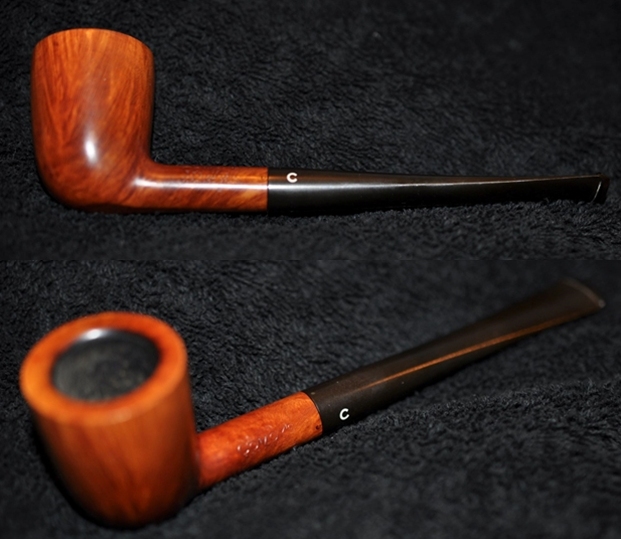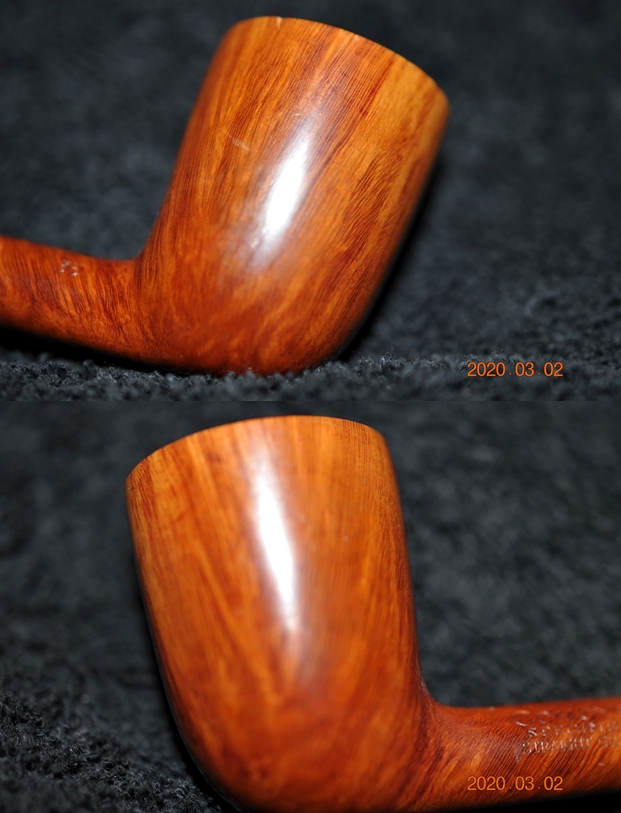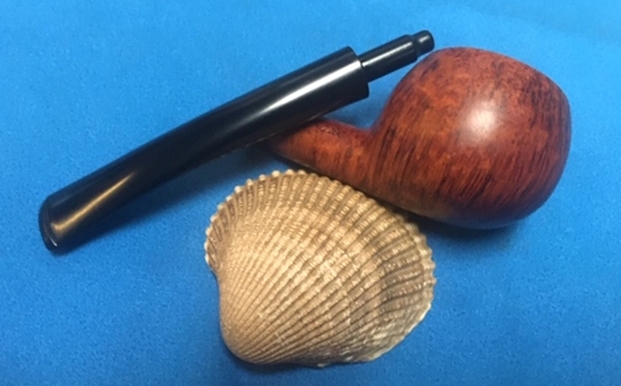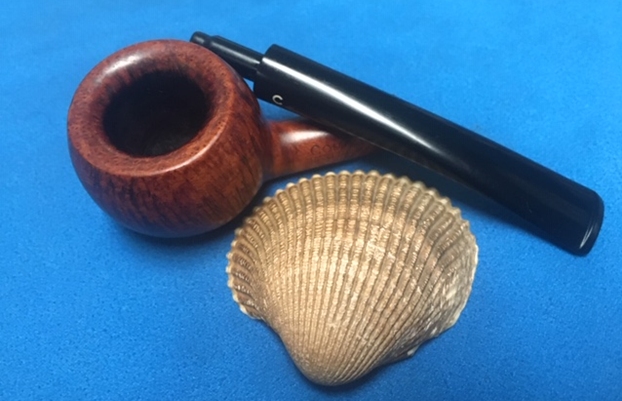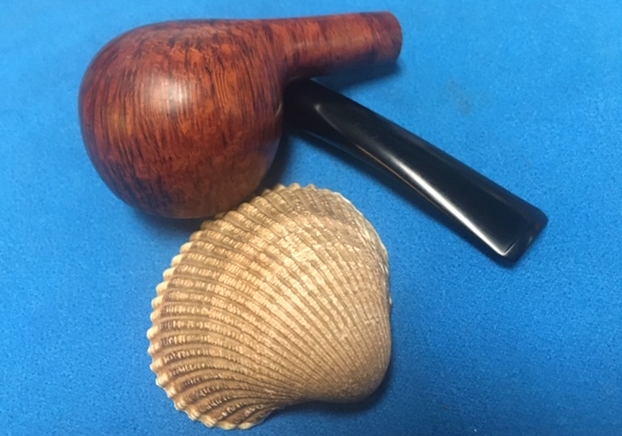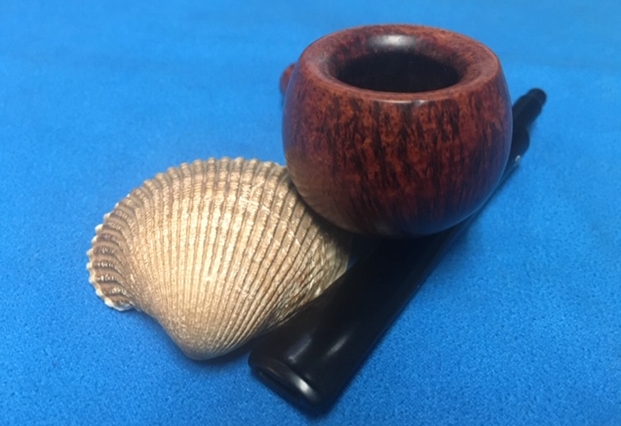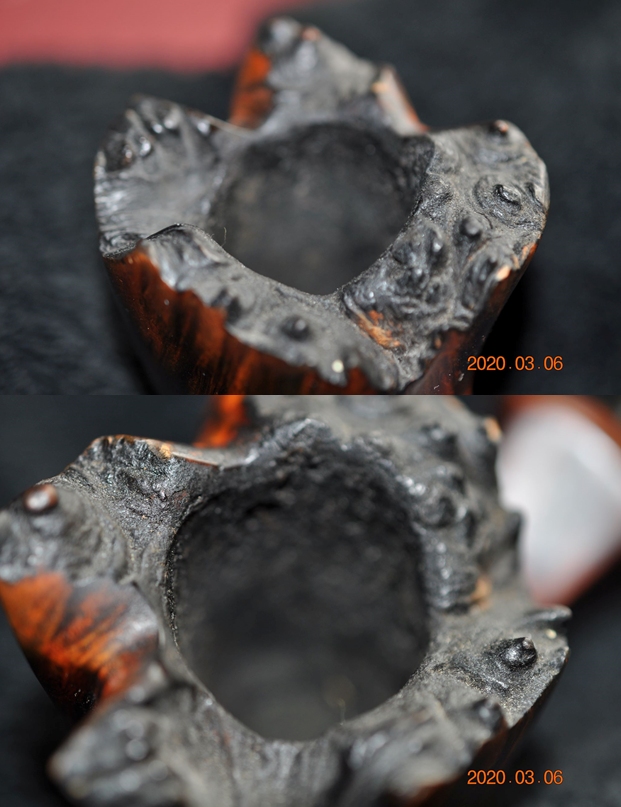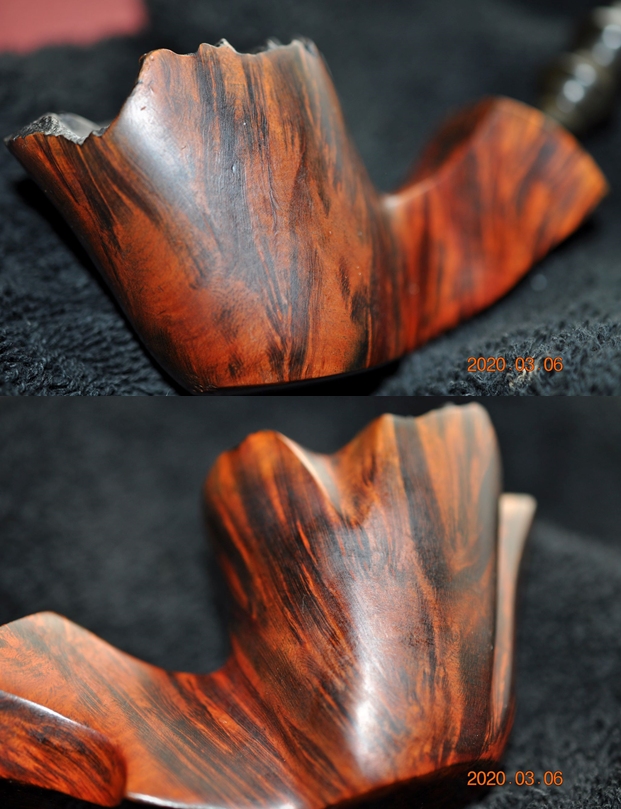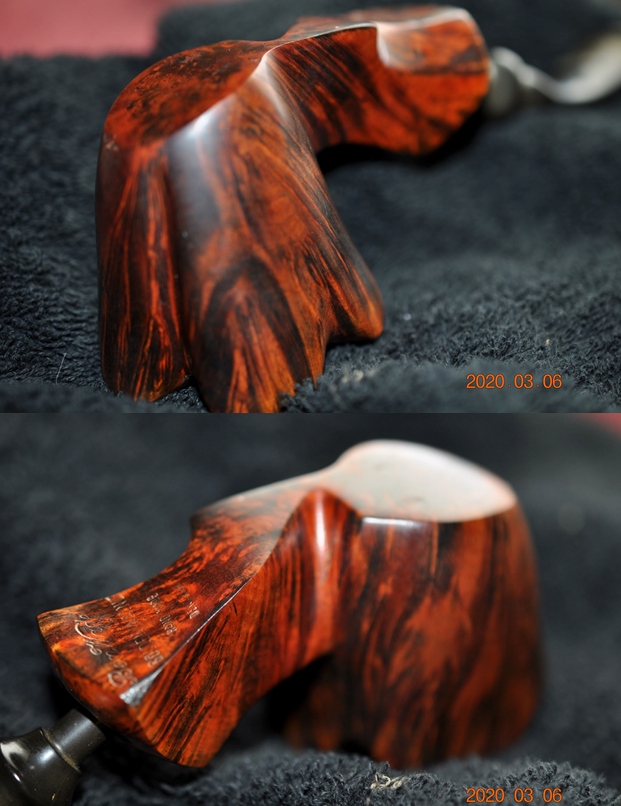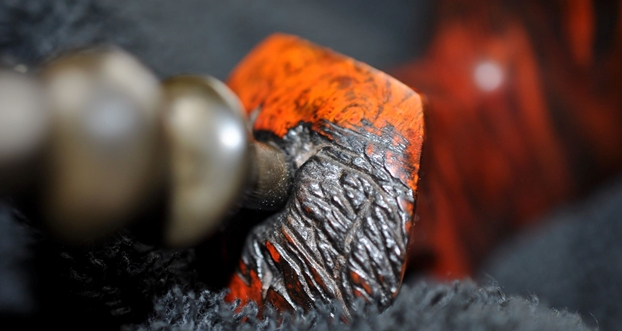
Tag Archives: vulcanite

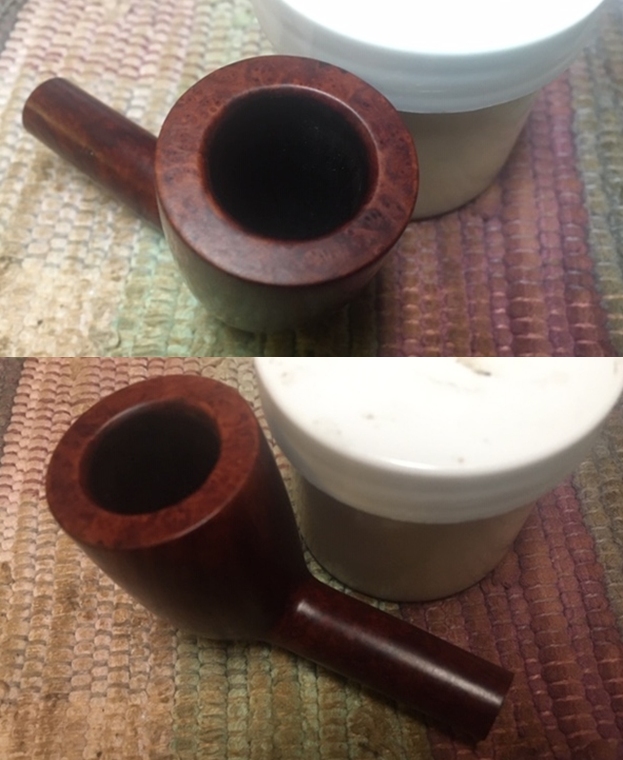
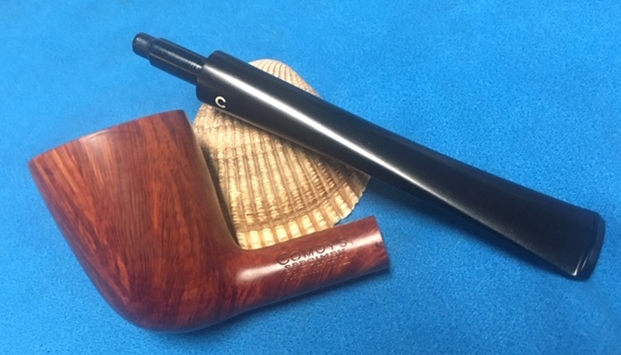
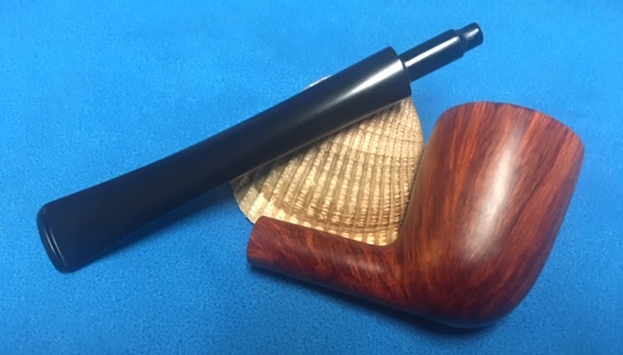
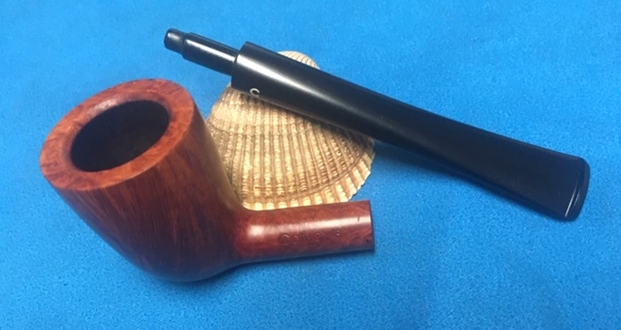
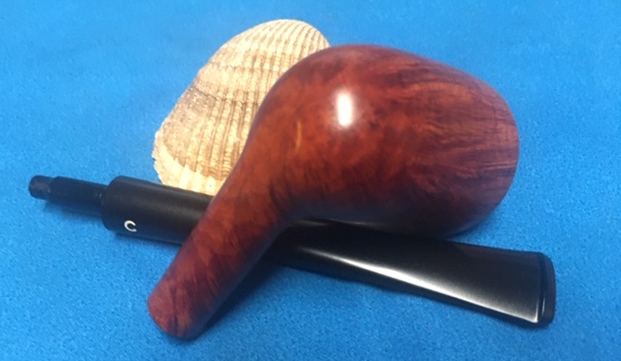
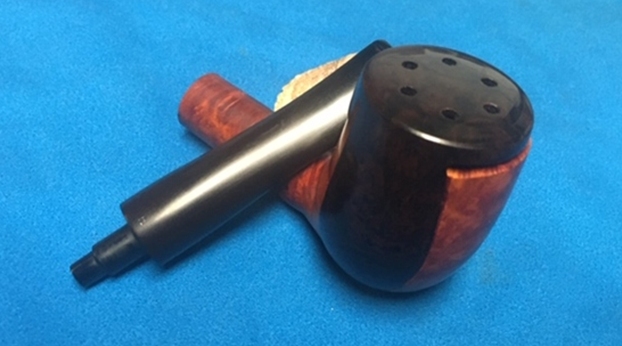
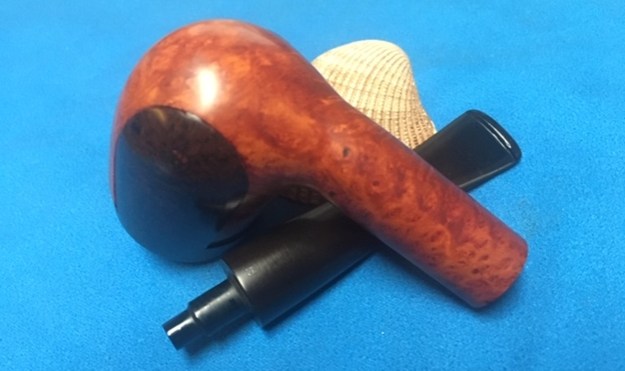
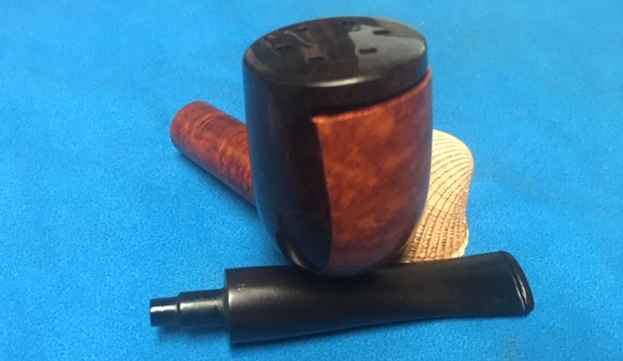
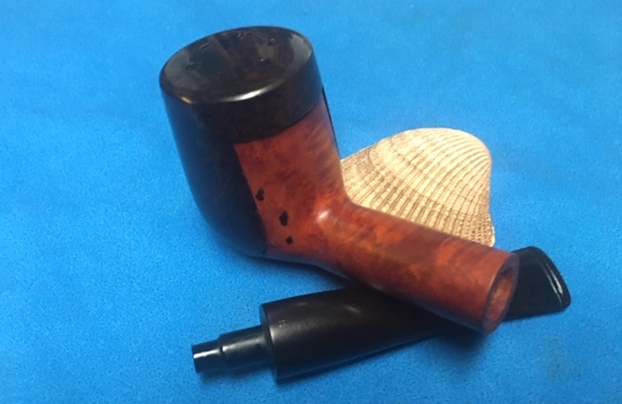
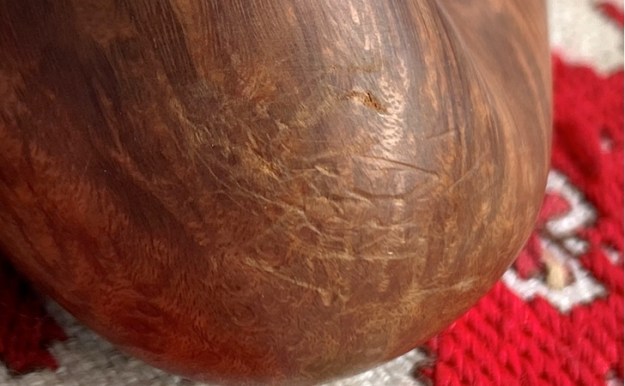
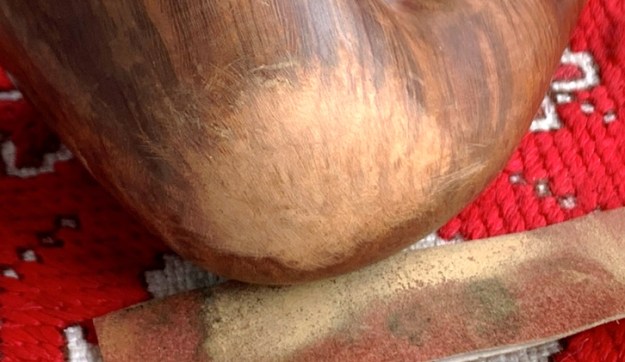
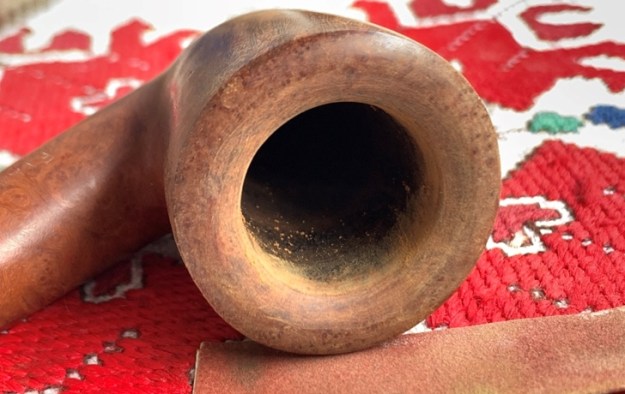
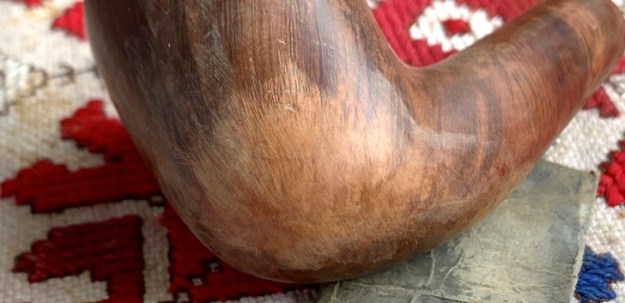
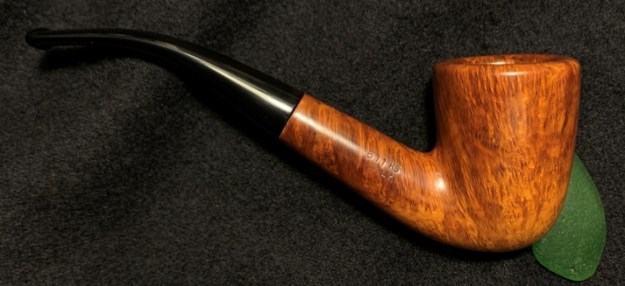
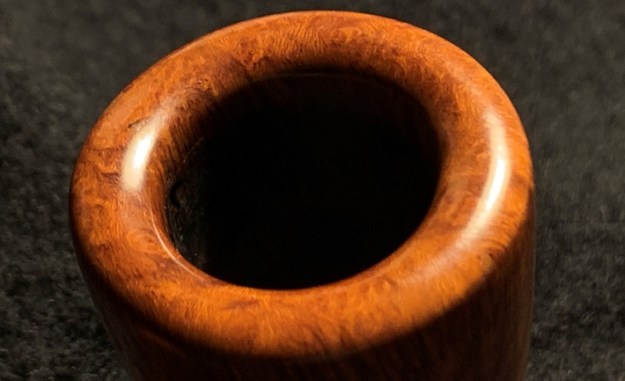
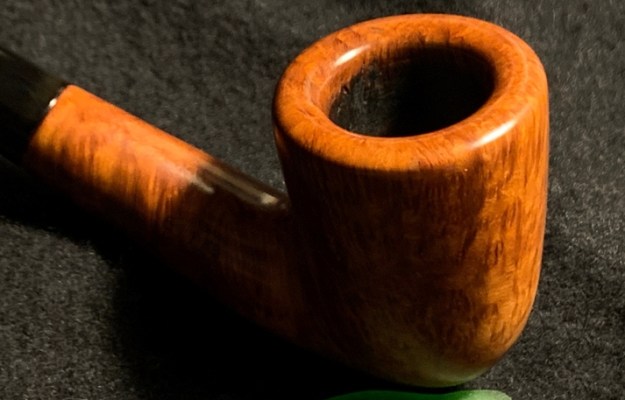
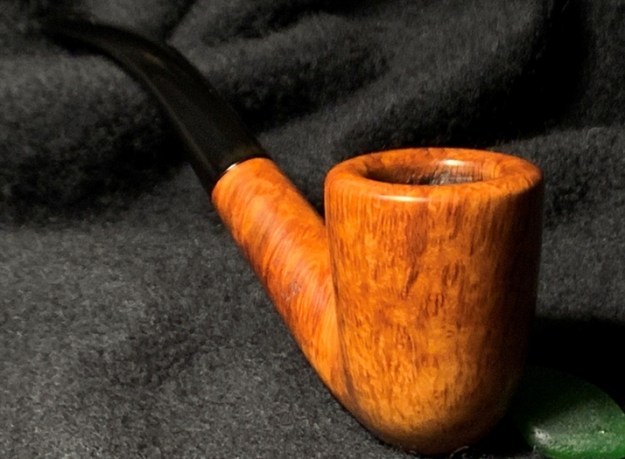
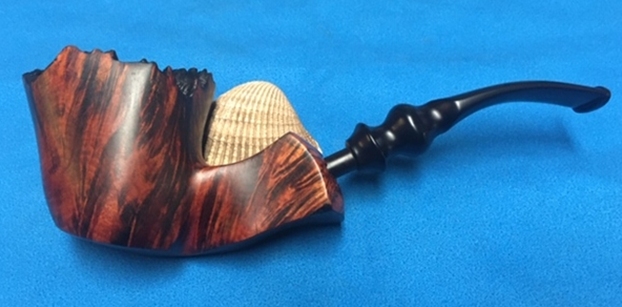
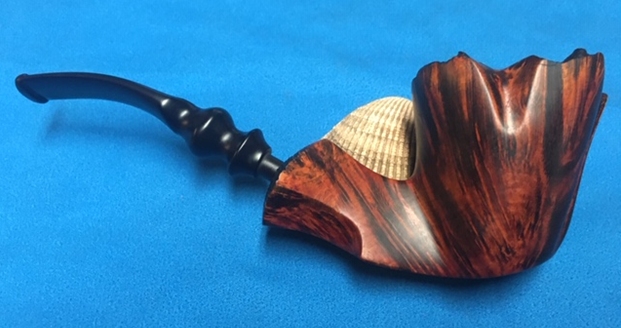
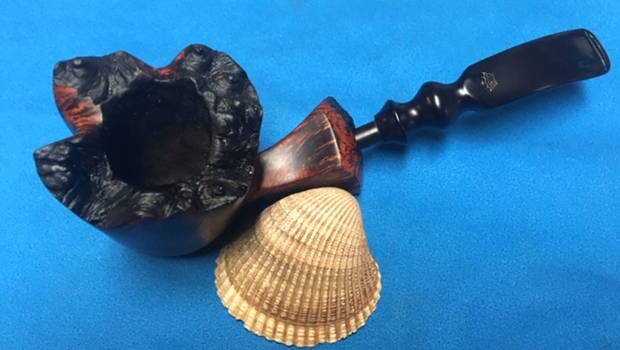
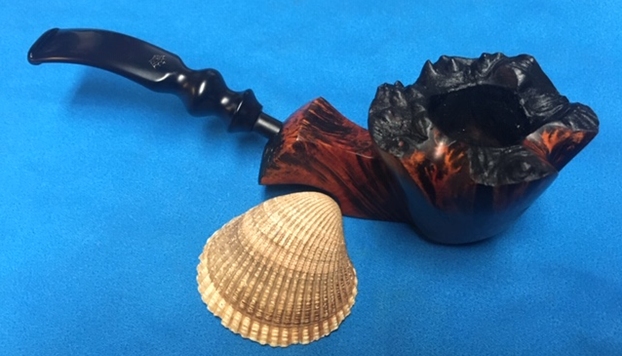
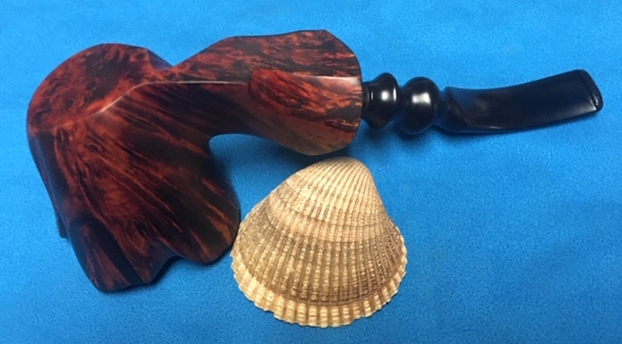
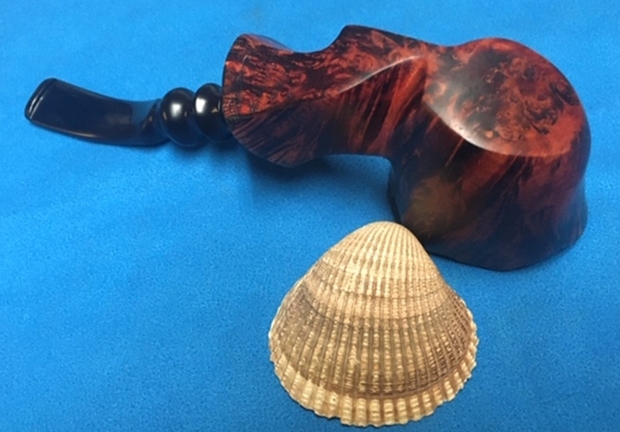
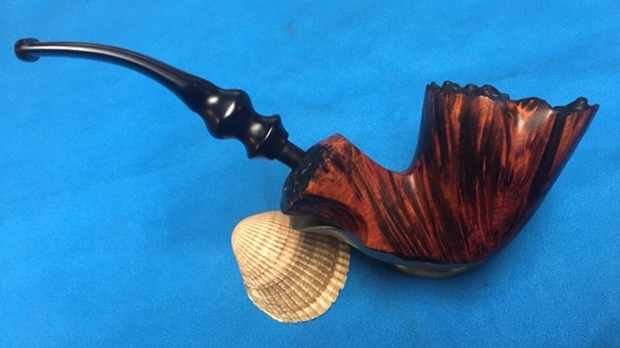
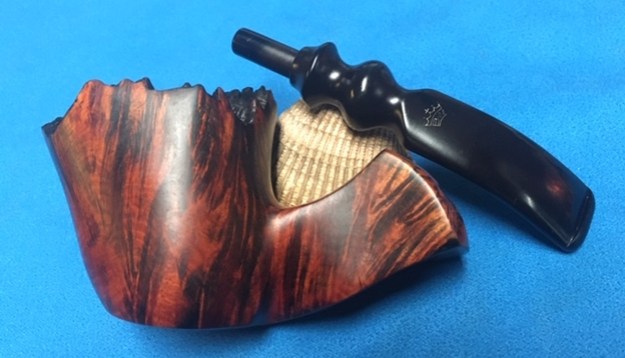
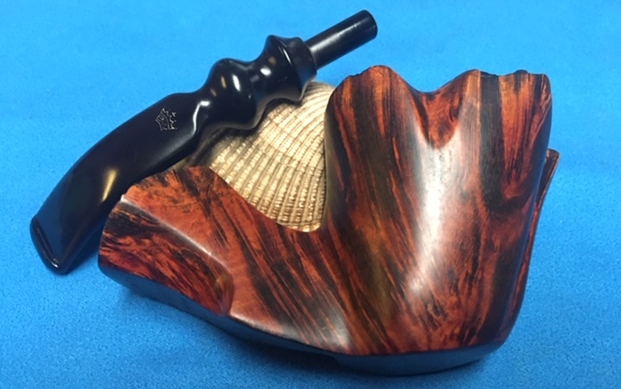
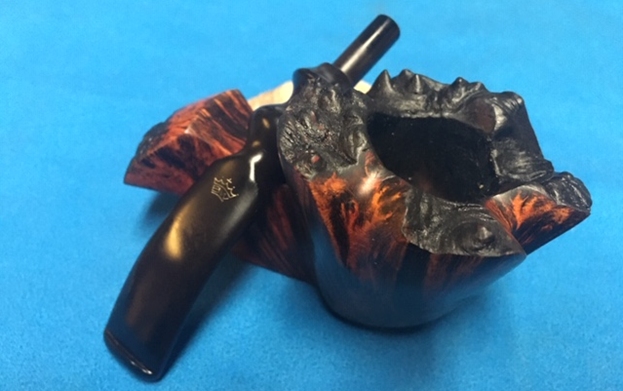
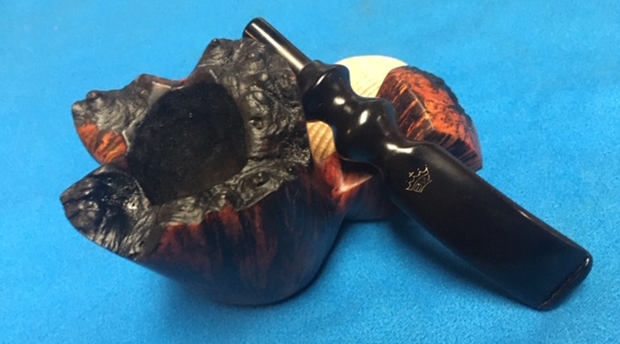
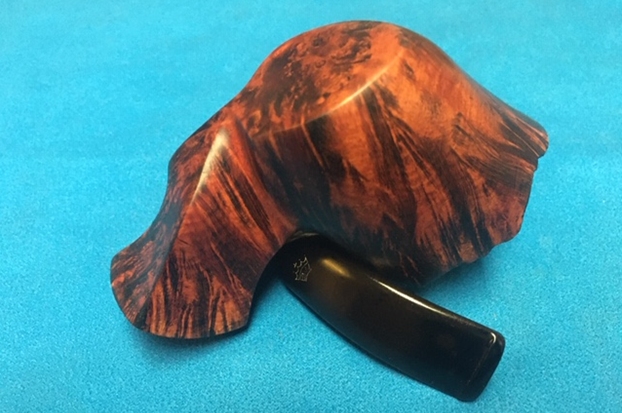
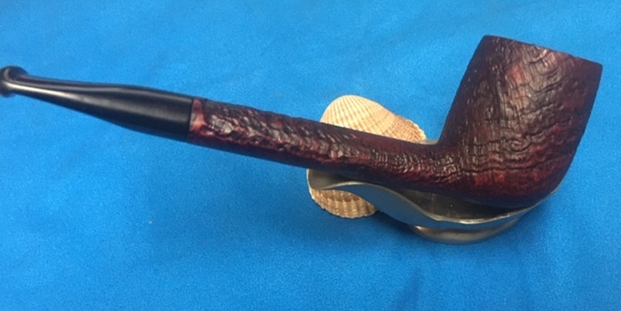
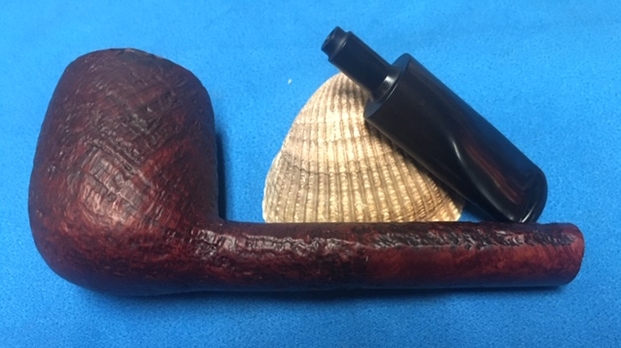
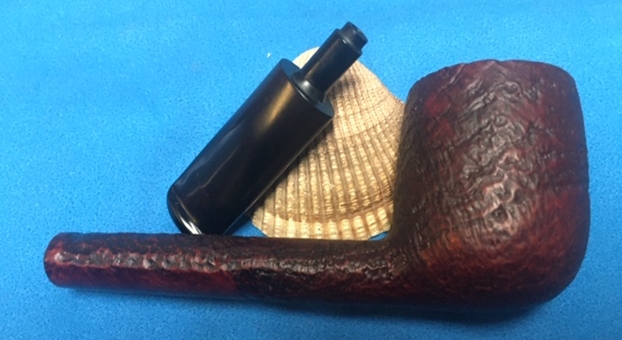
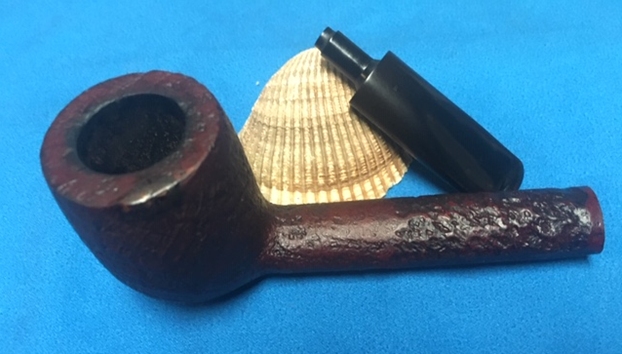
Fashioning a Churchwarden from a Blasted French Dr. Geo Deposée Bowl


Blog by Dal Stanton

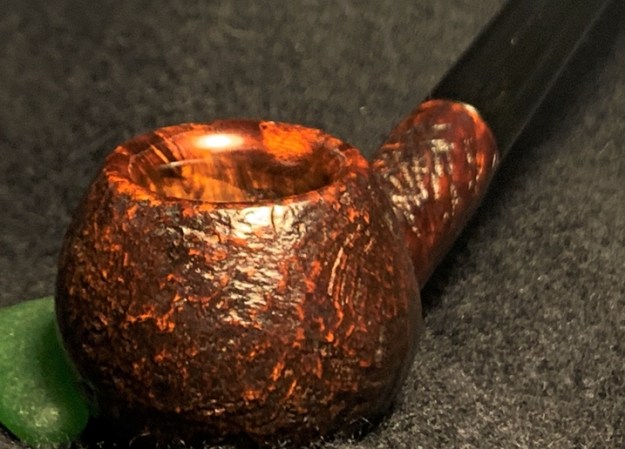
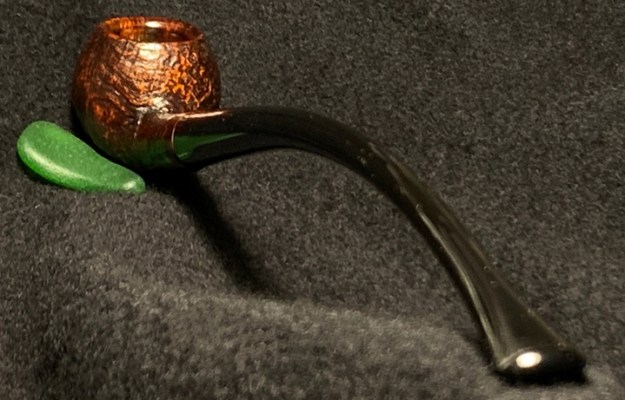
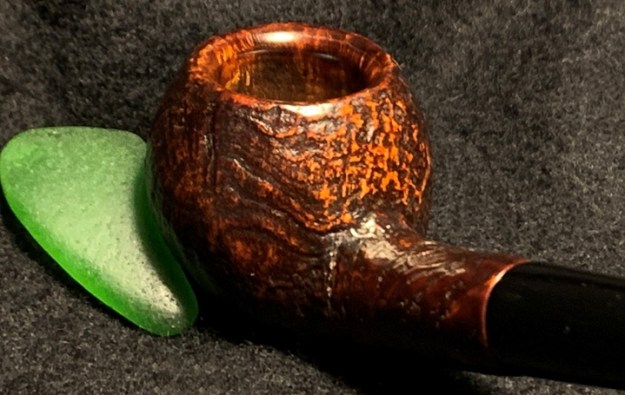
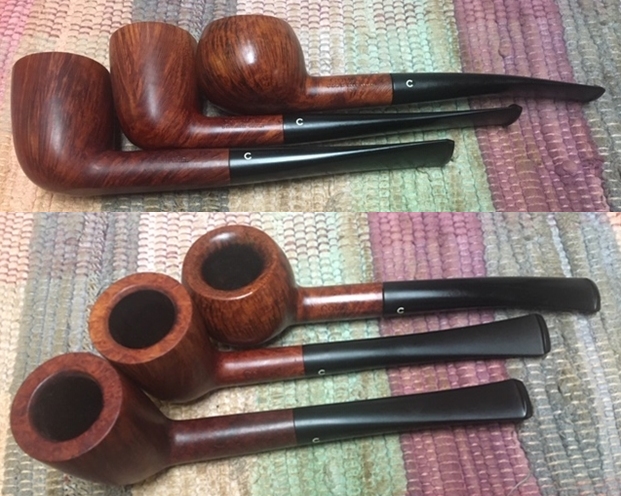
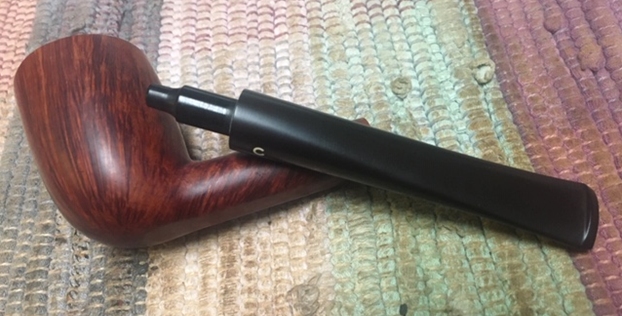
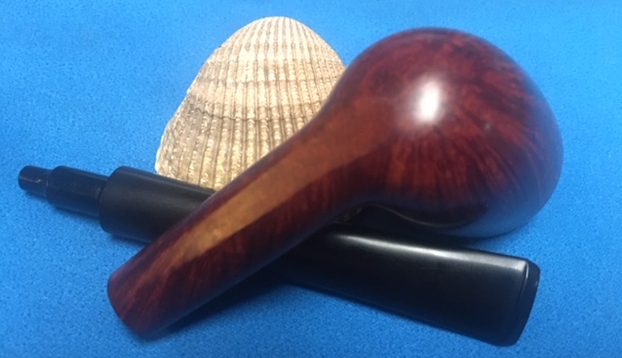
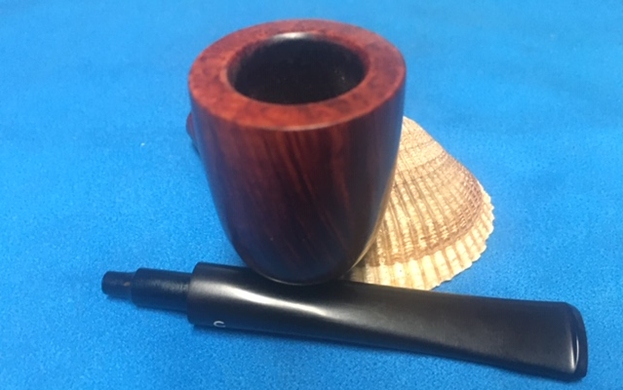
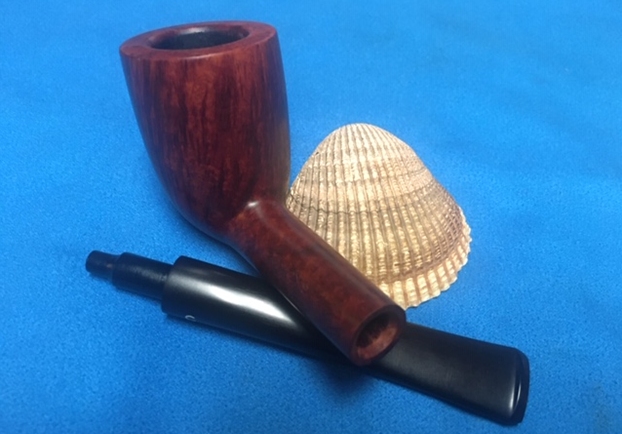
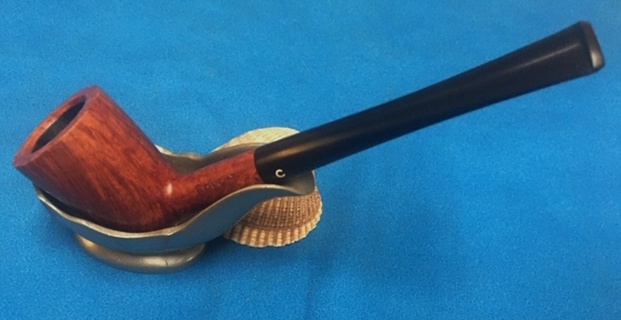
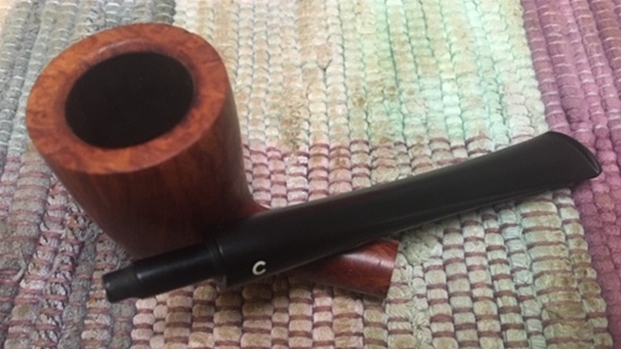
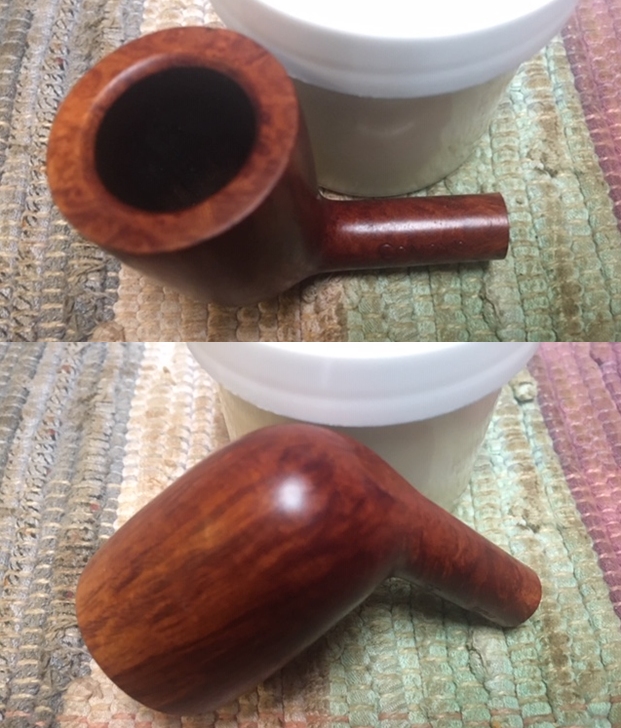
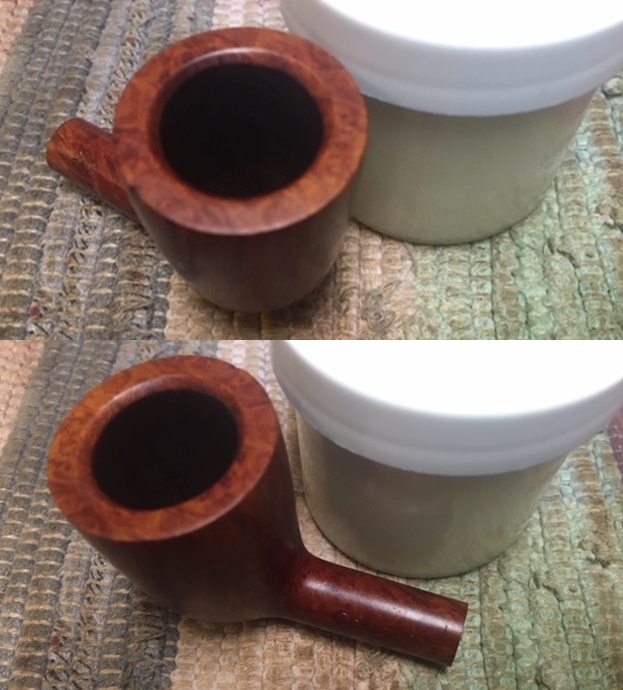
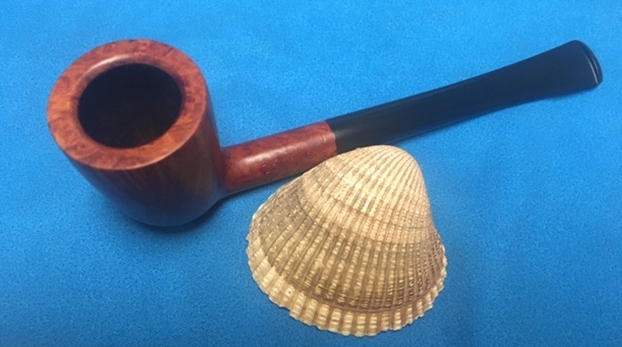
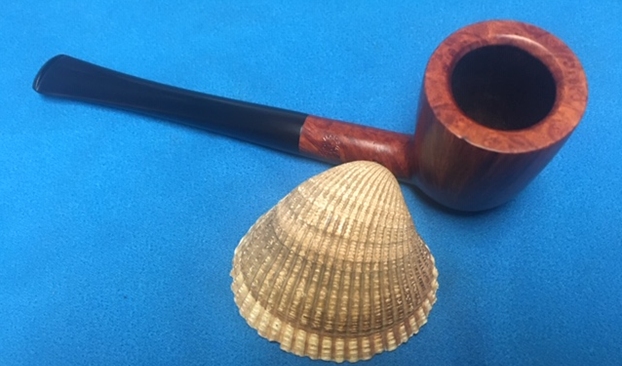
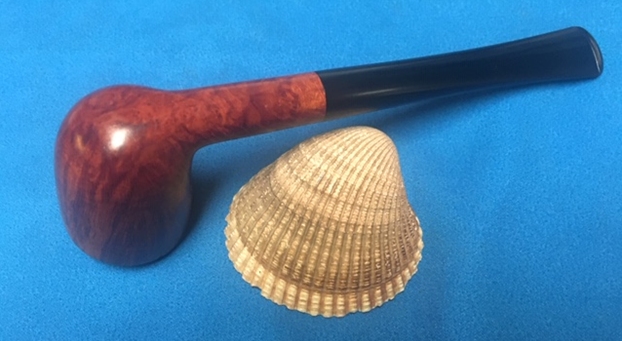
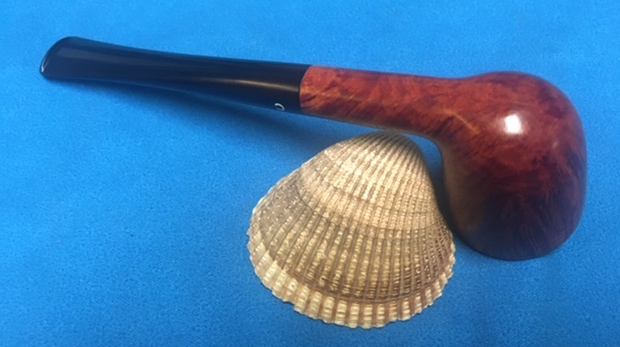
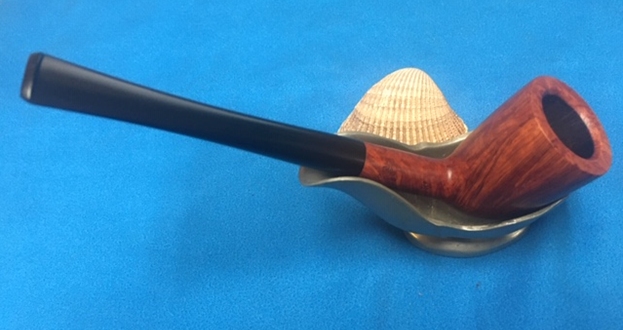
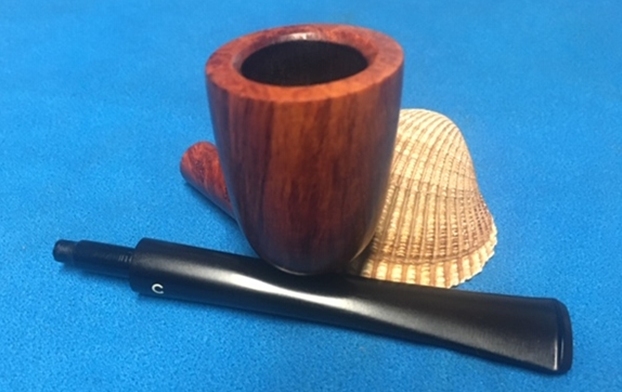
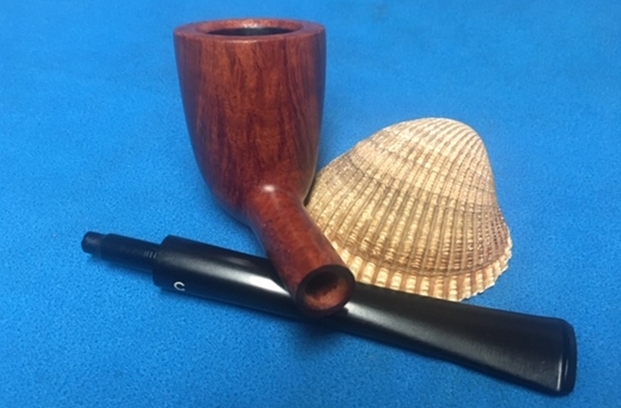
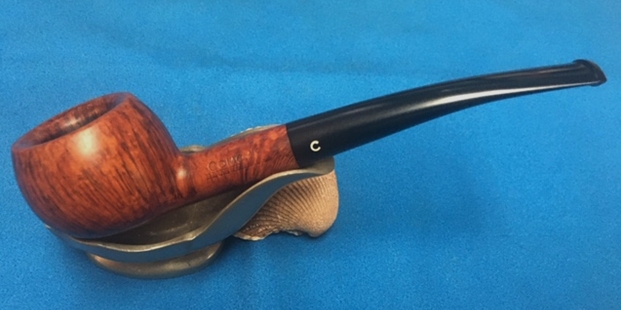
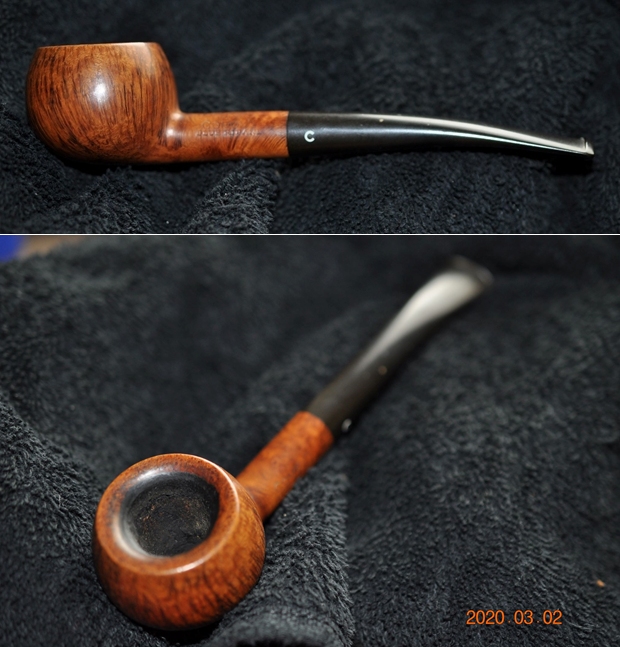
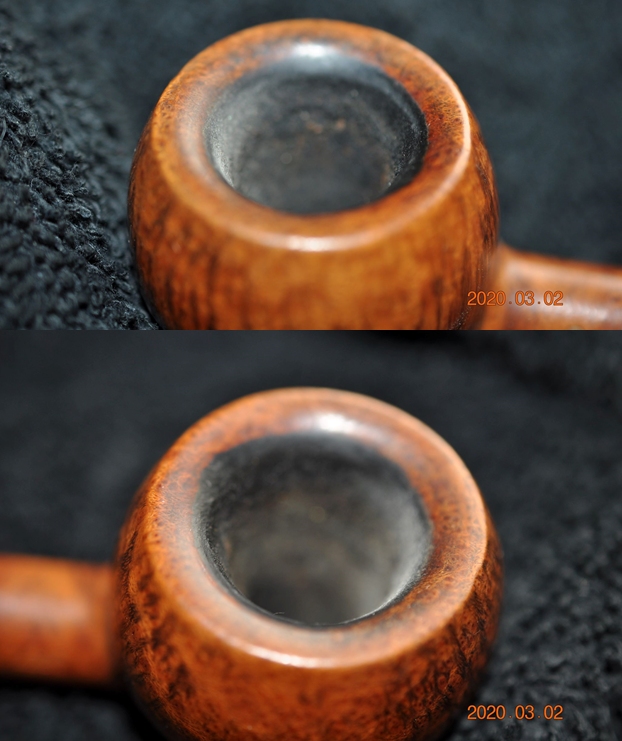
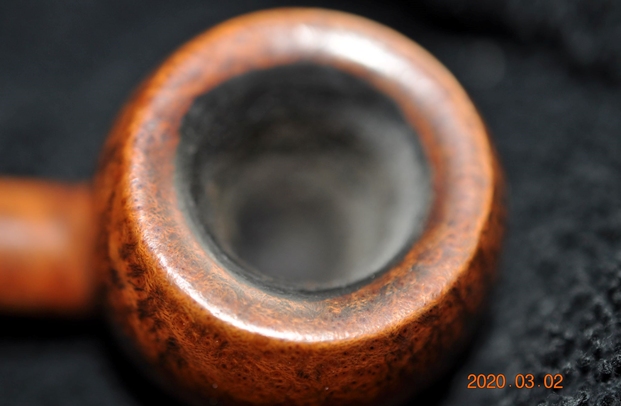
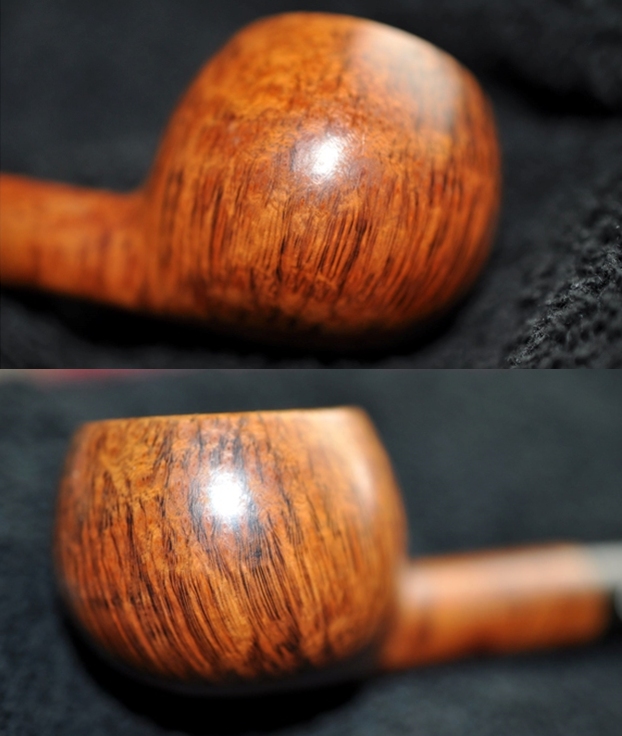
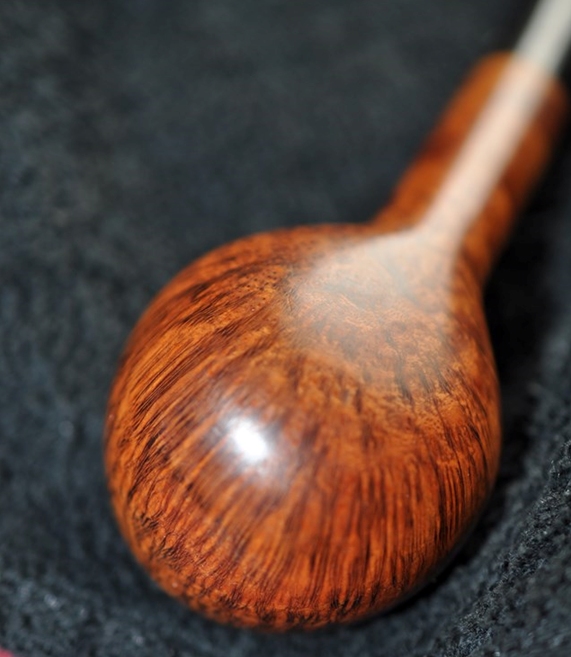
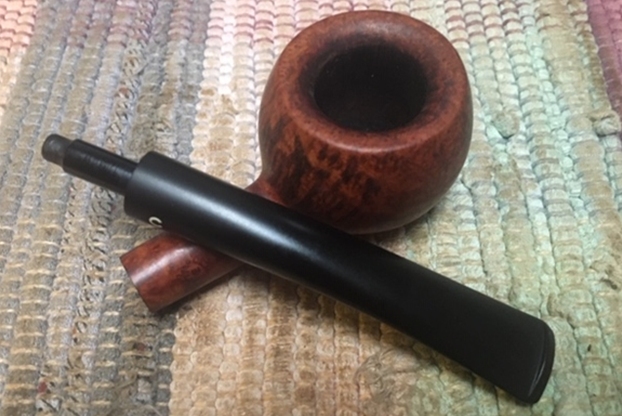
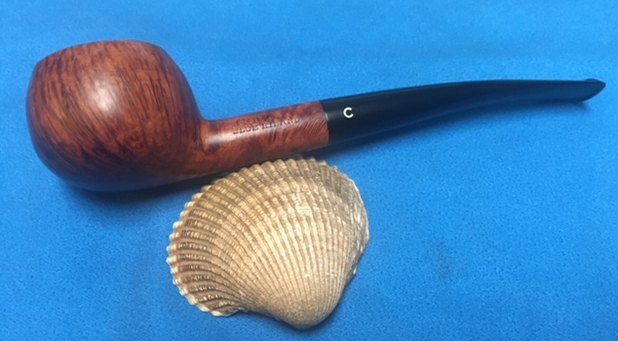
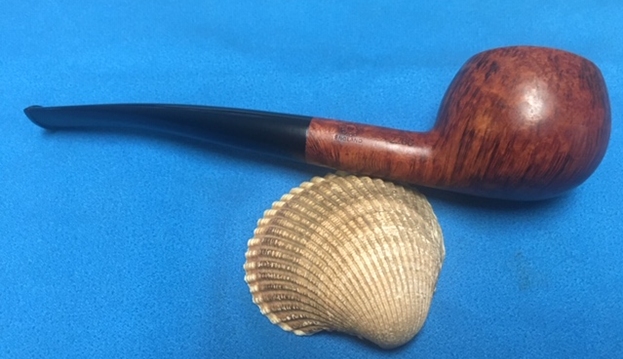
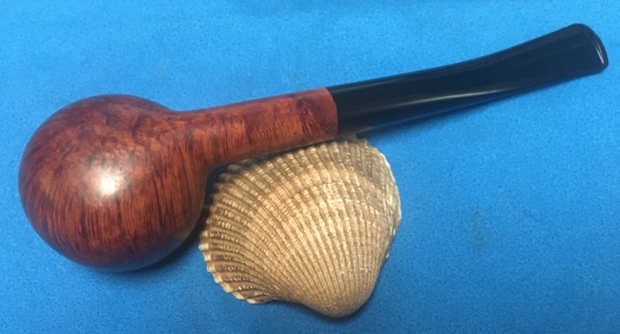
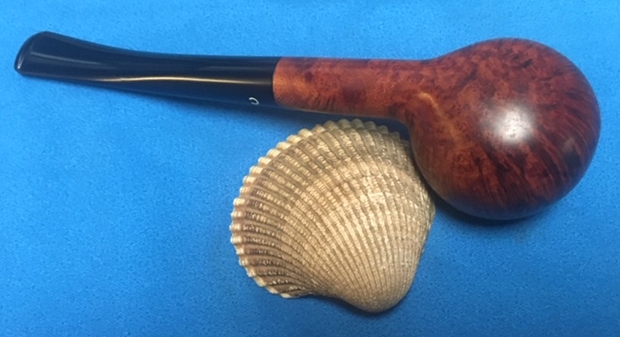
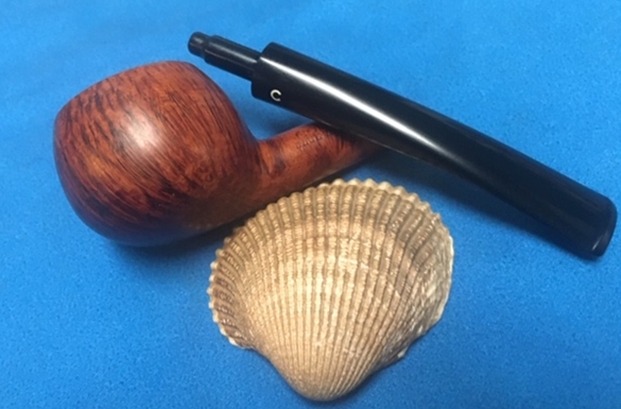
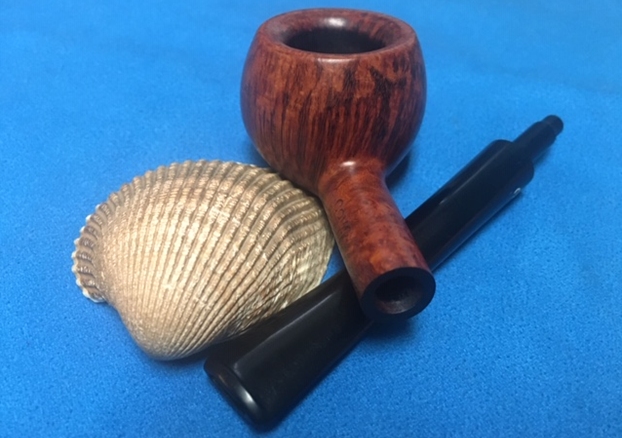
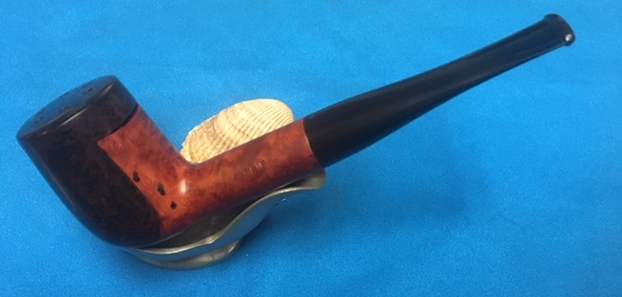
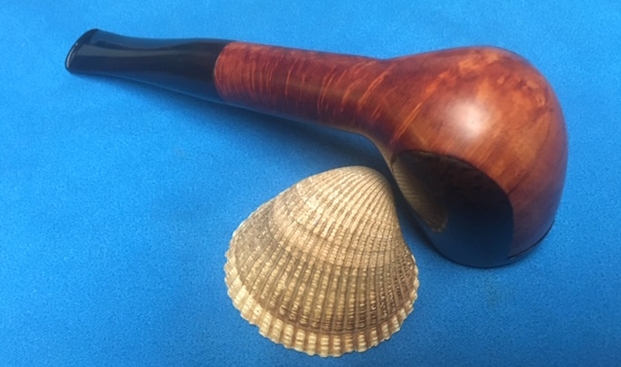
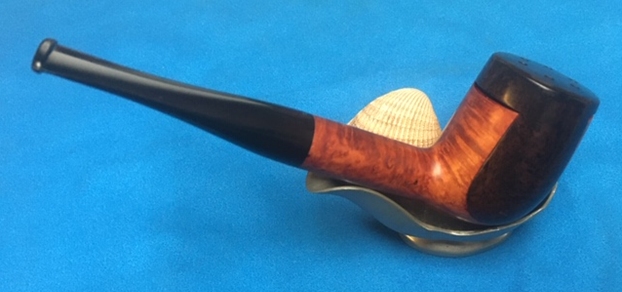
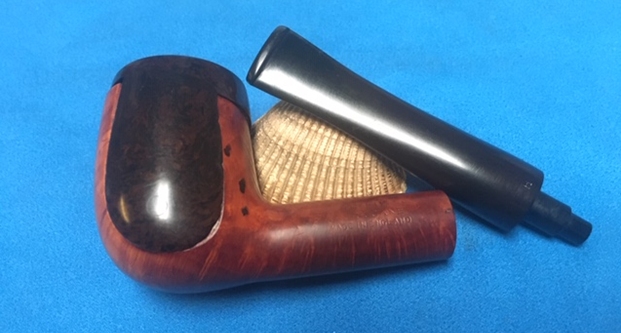
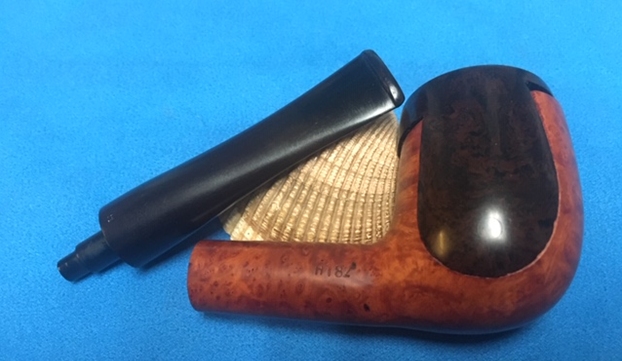
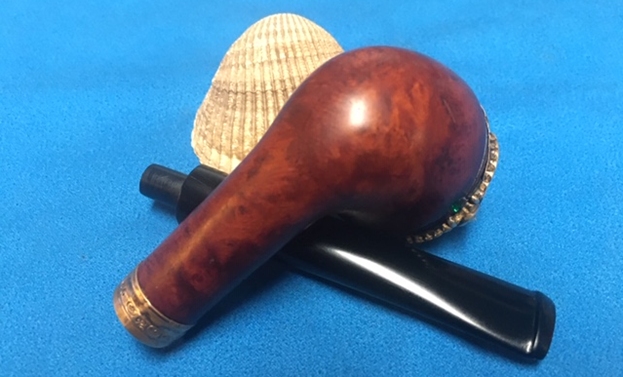
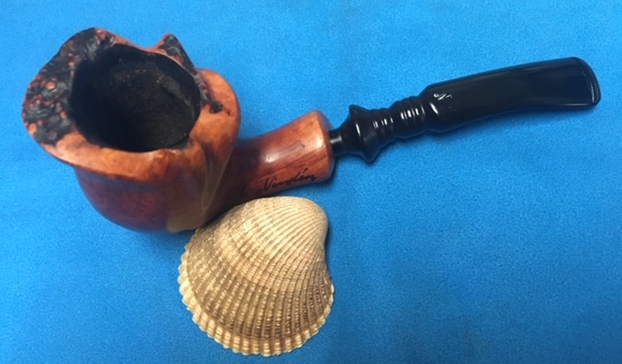
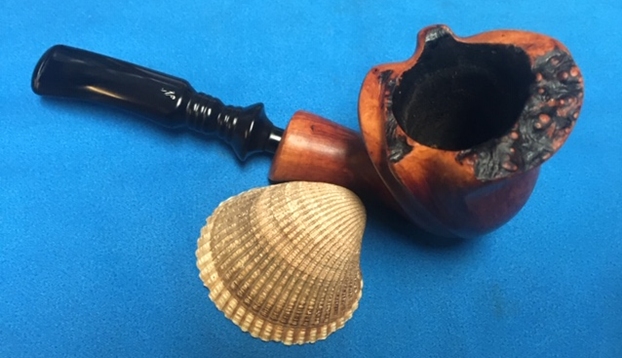
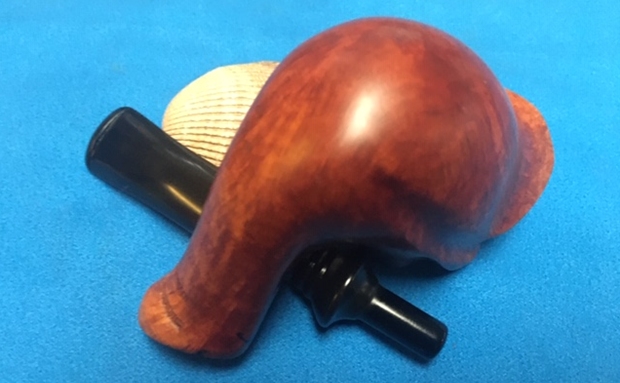
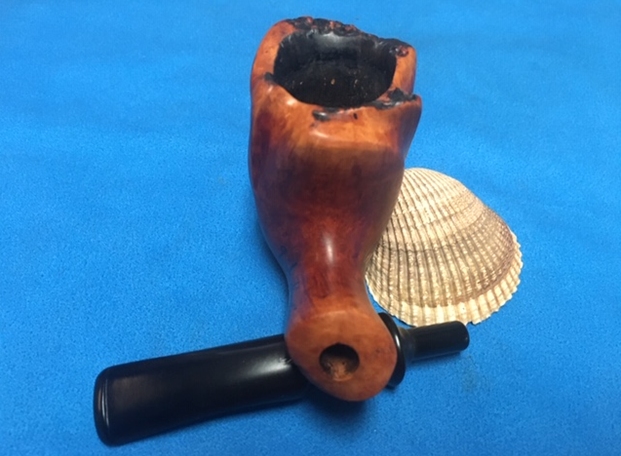
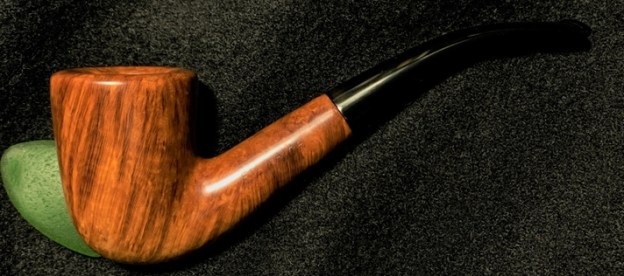
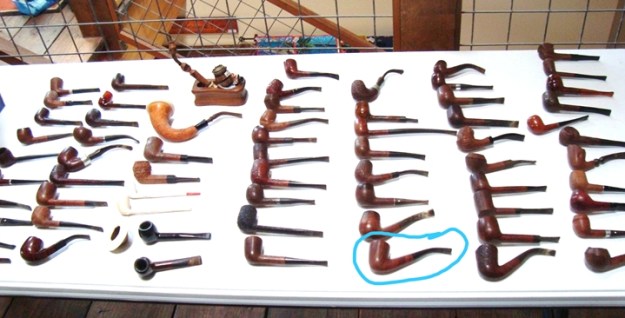
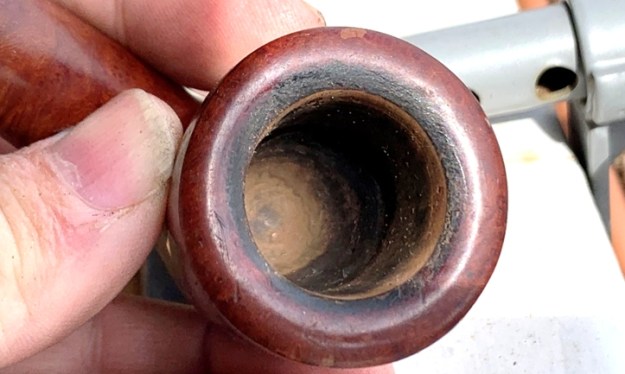
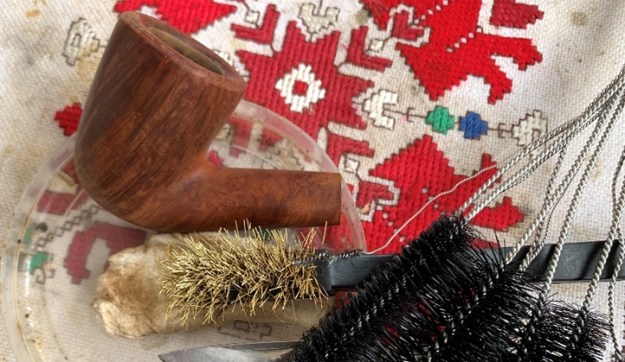
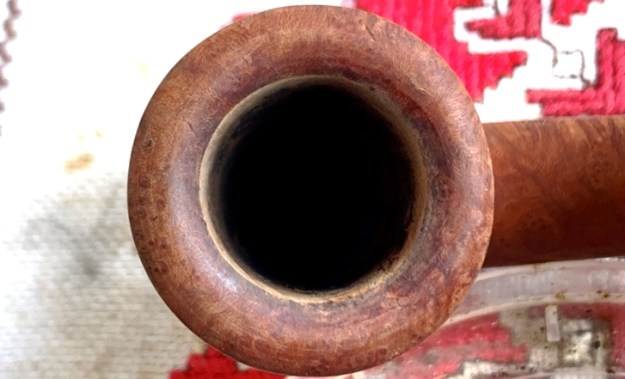
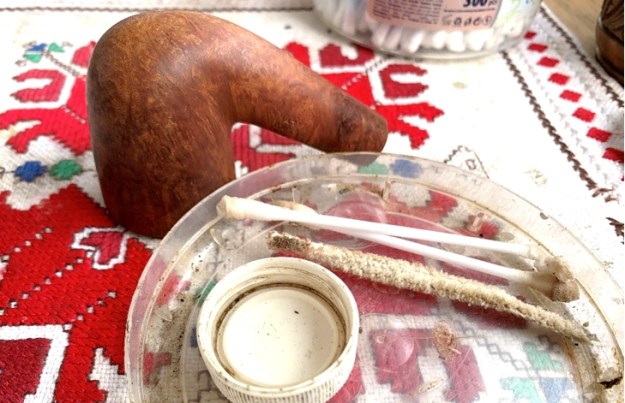
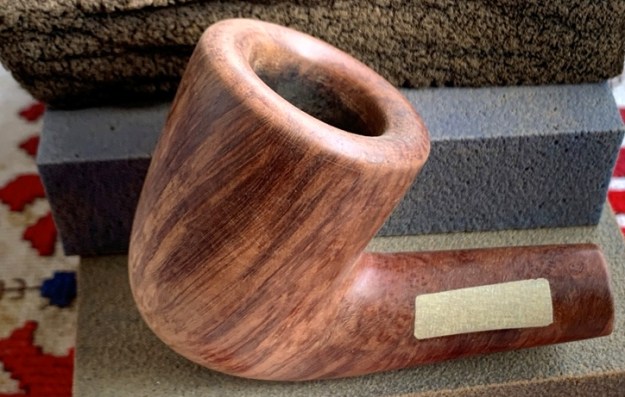
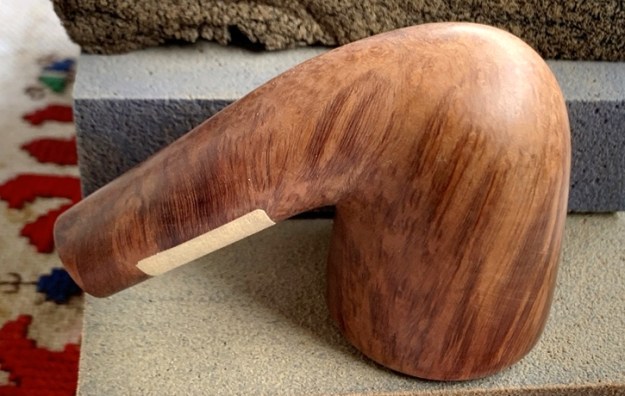
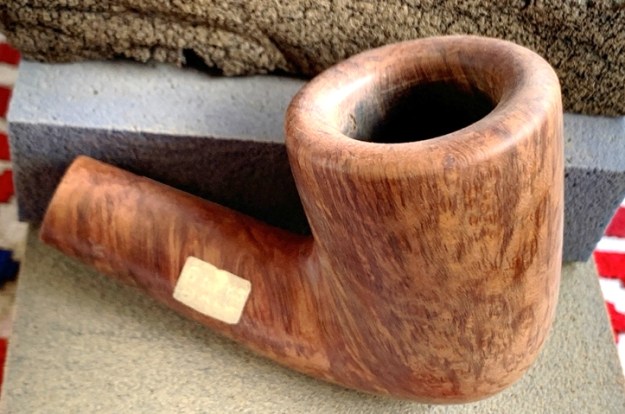
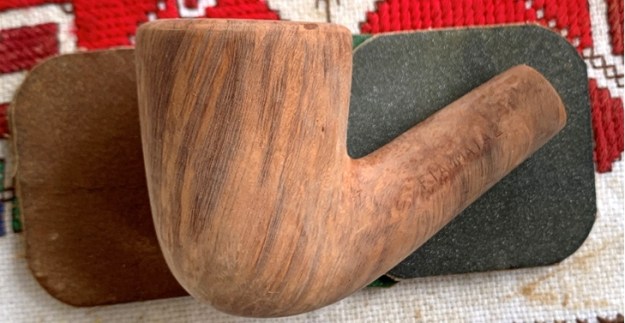
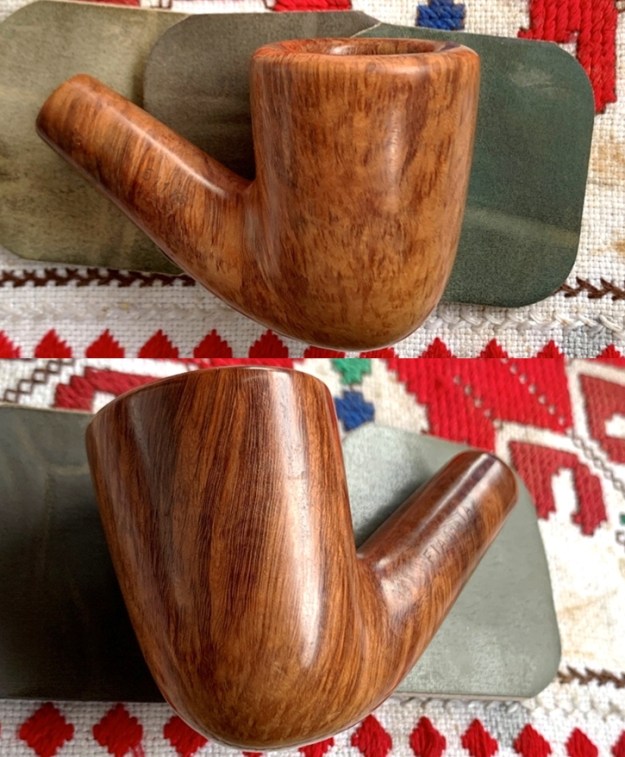
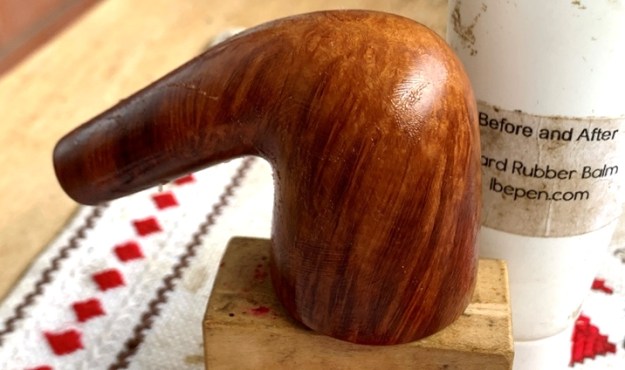
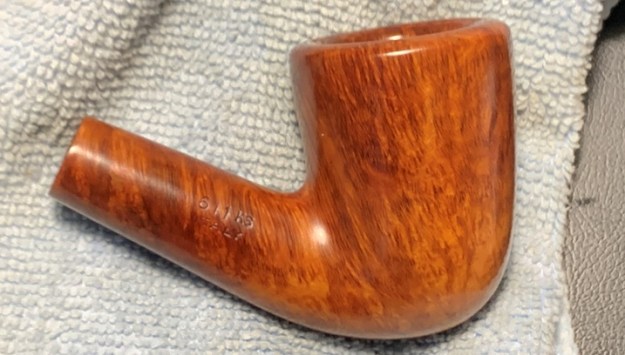
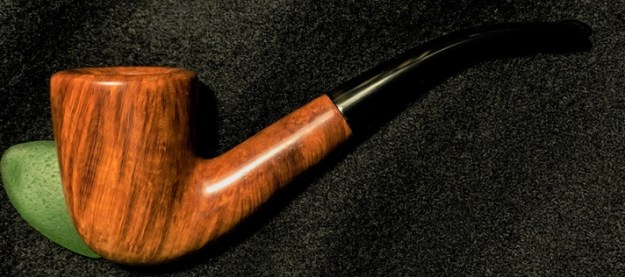
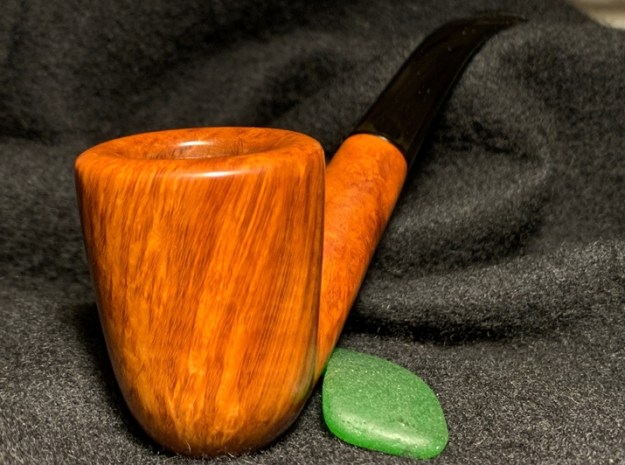
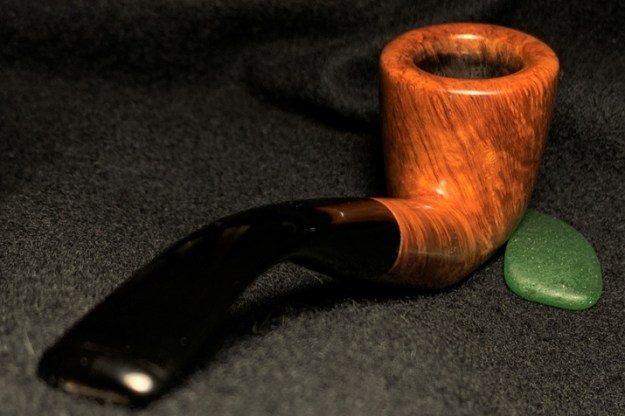
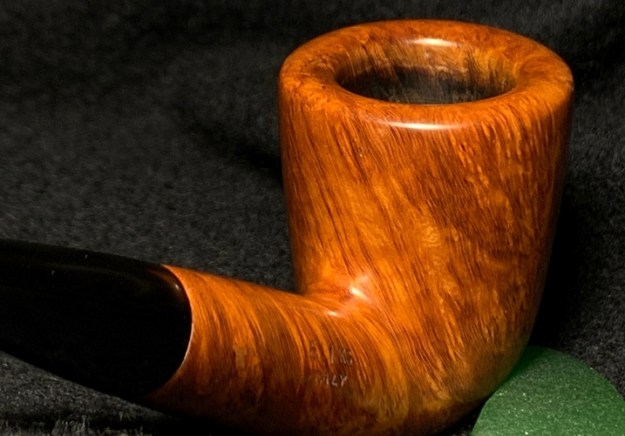
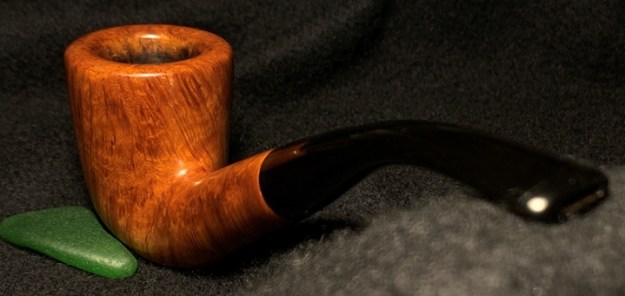
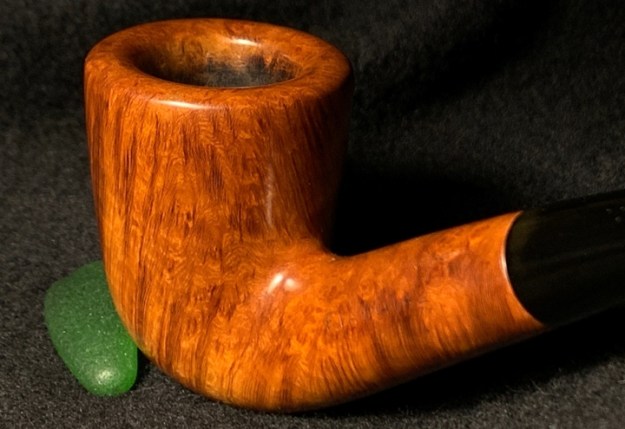
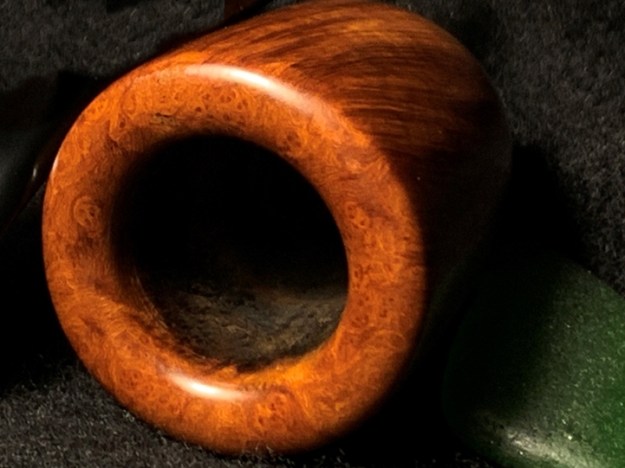
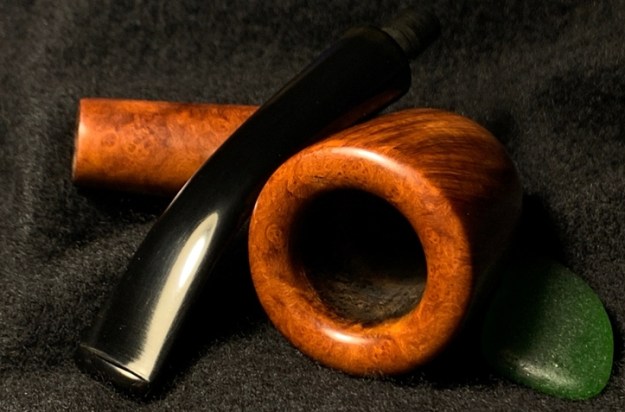
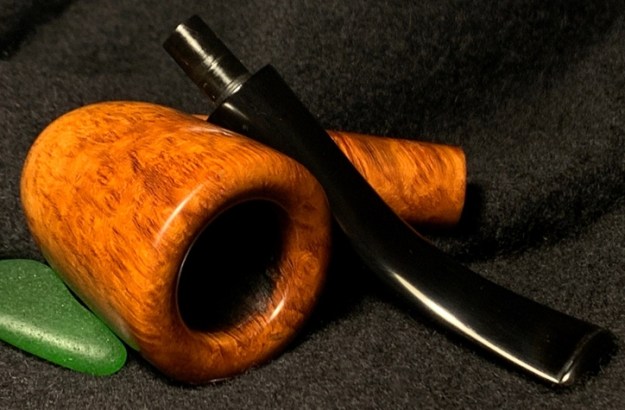
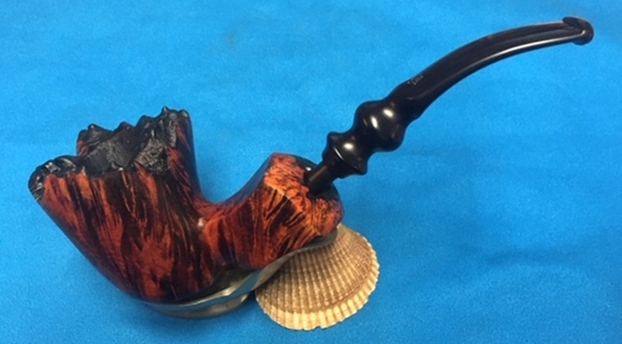
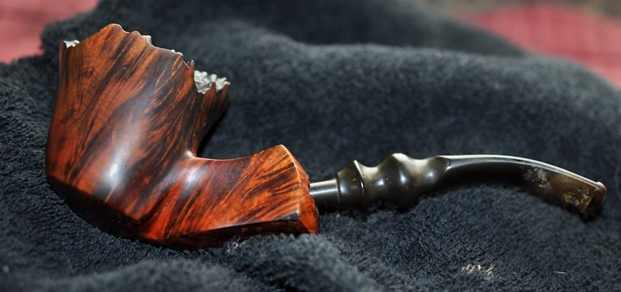
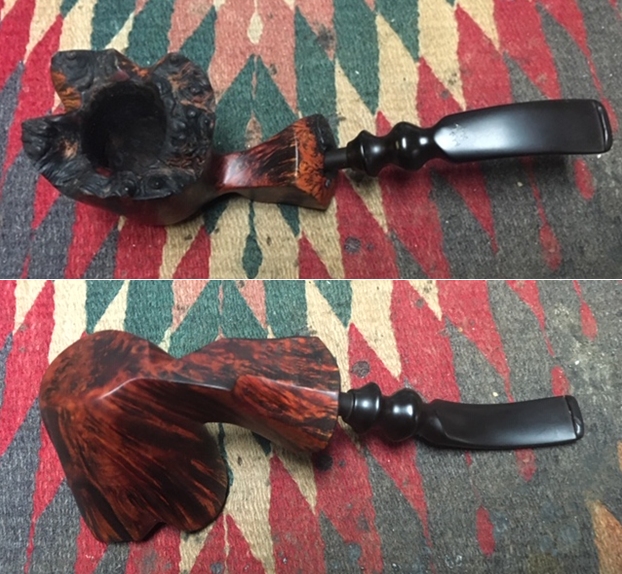
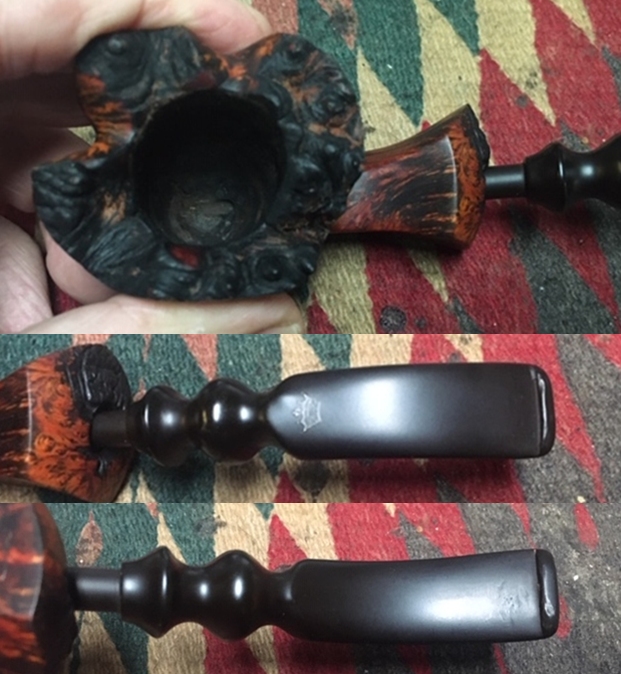
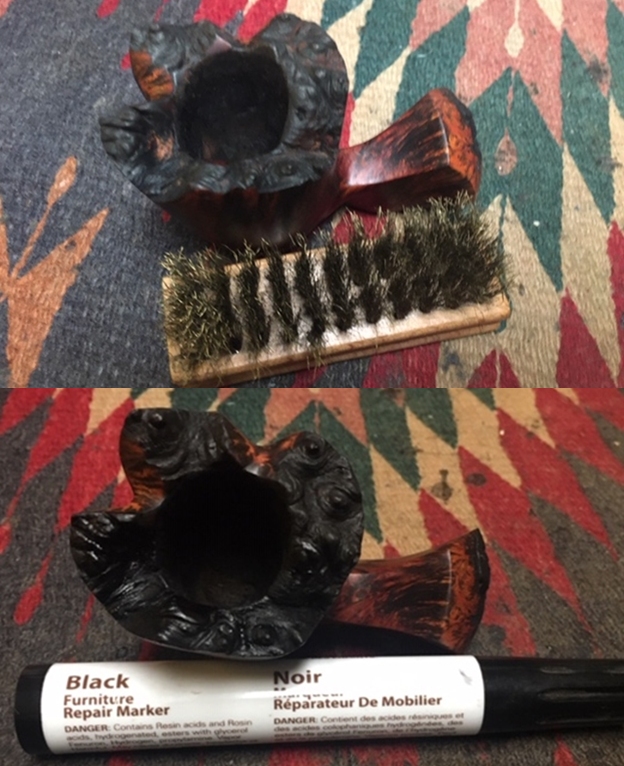
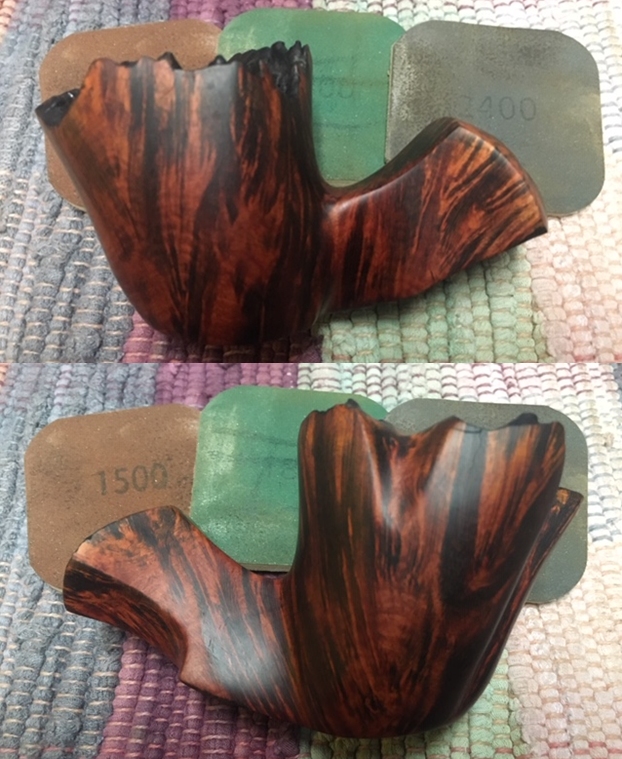
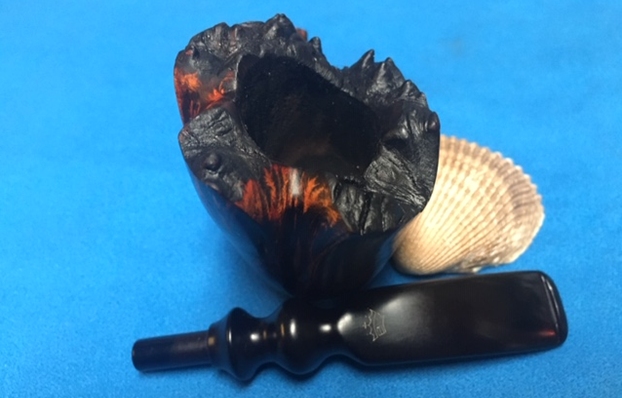
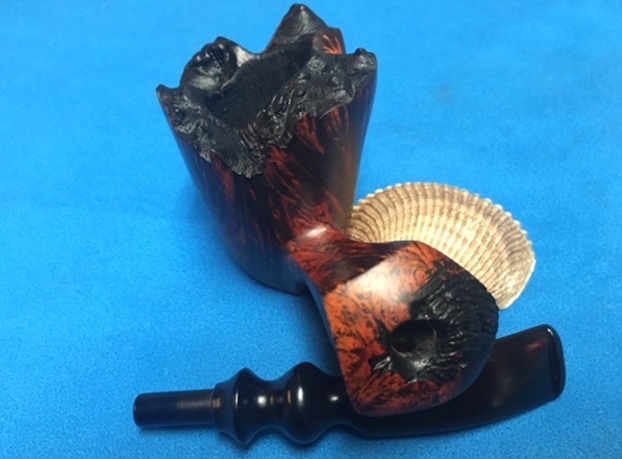
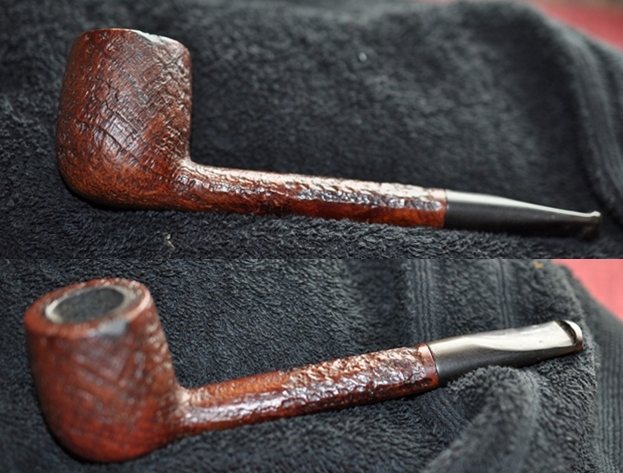
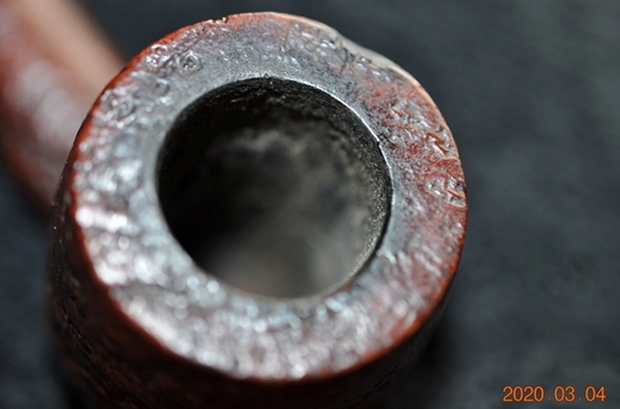
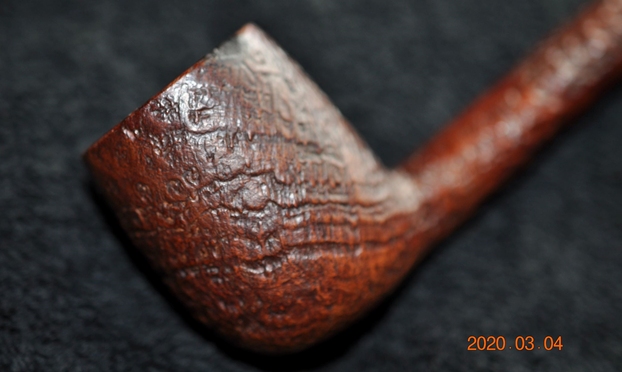
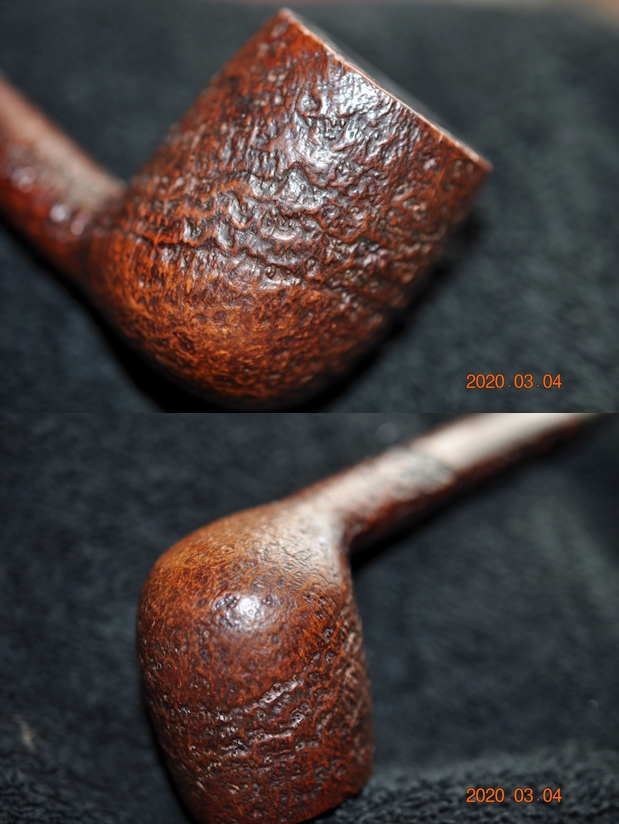
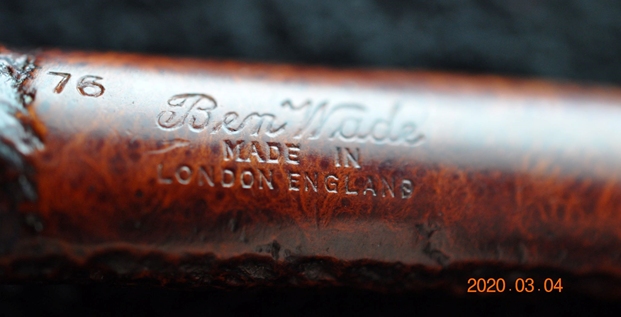
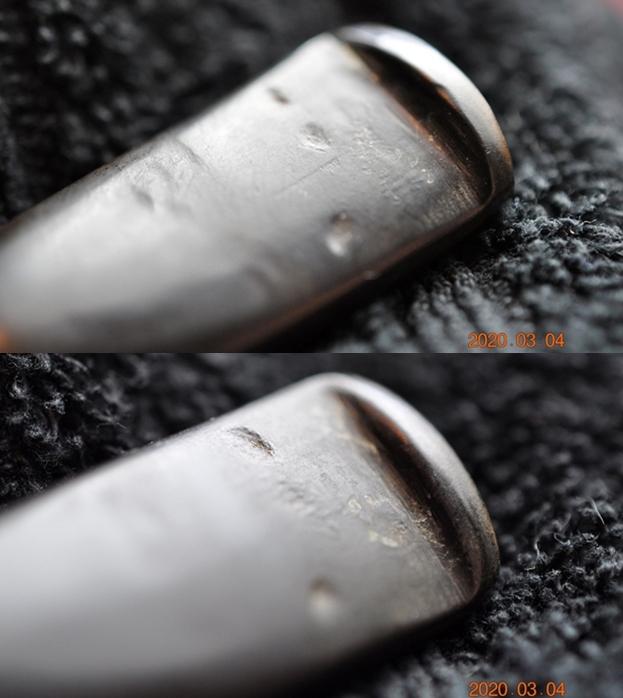
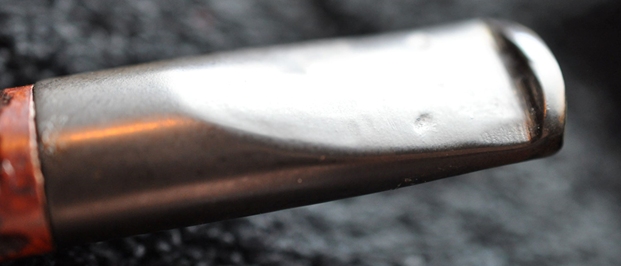
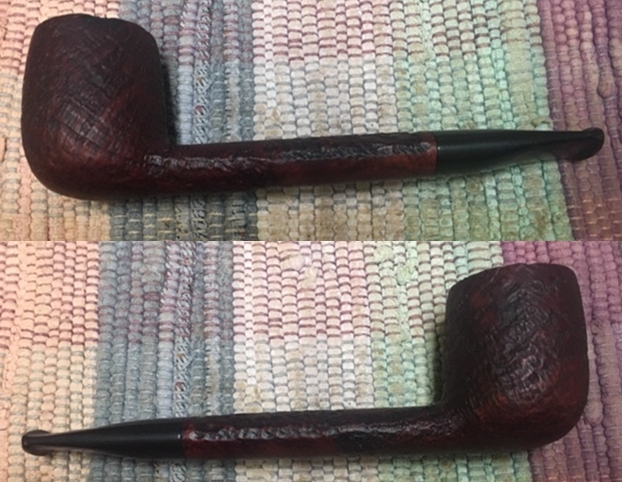
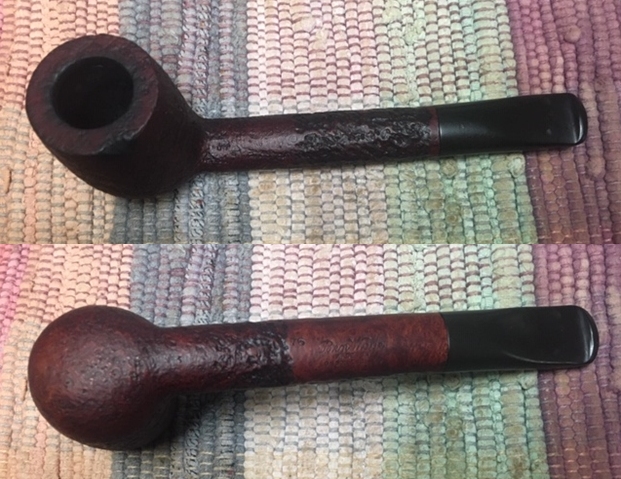
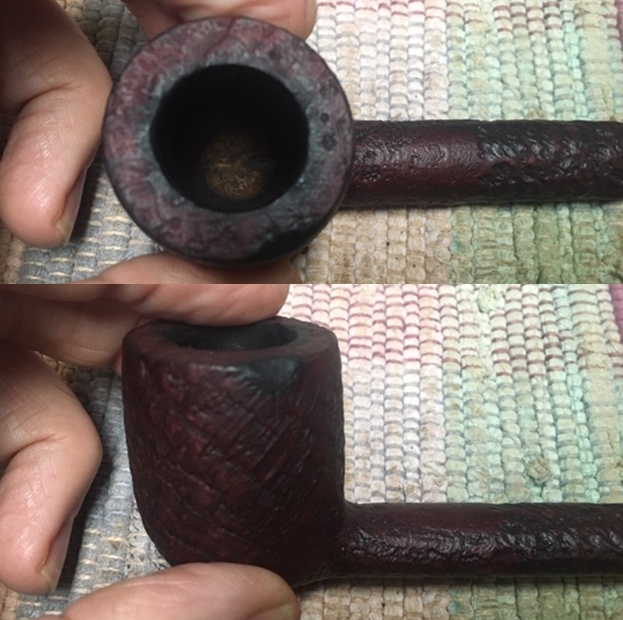
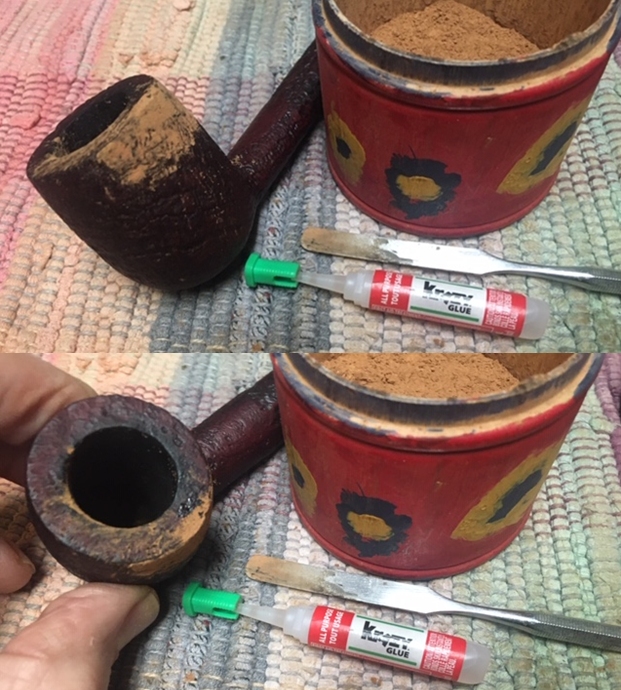
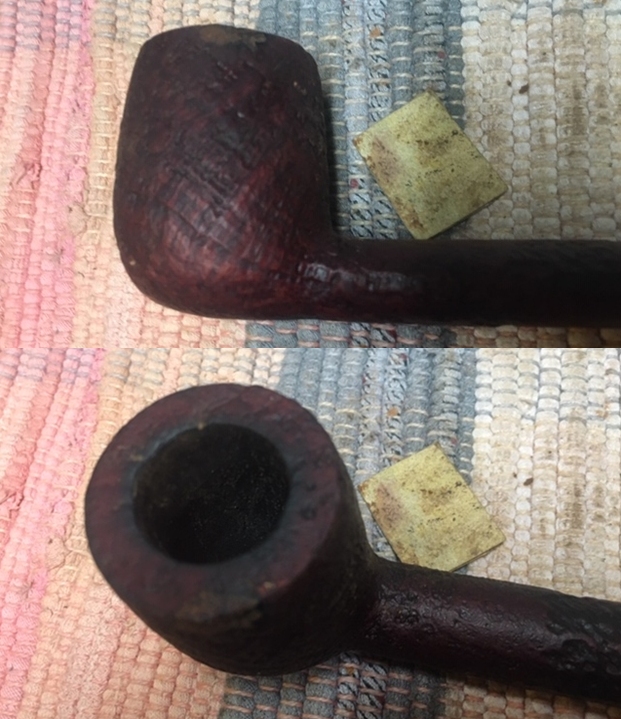
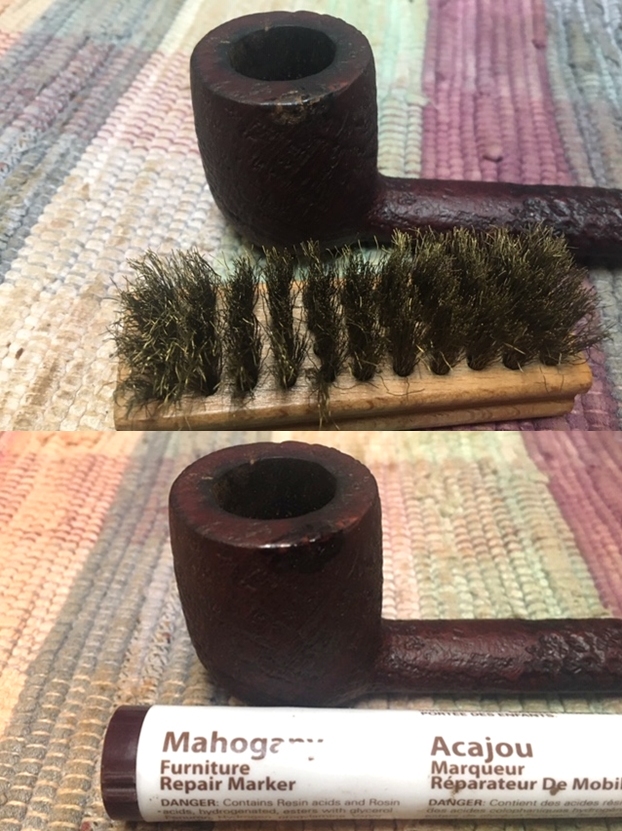
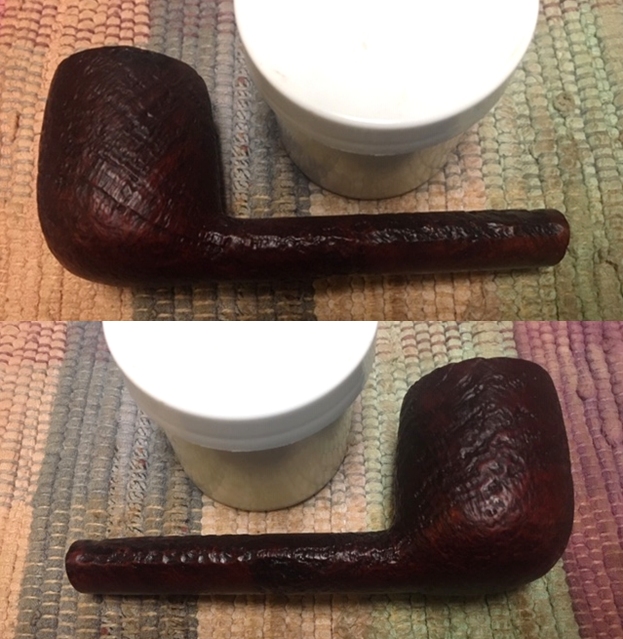
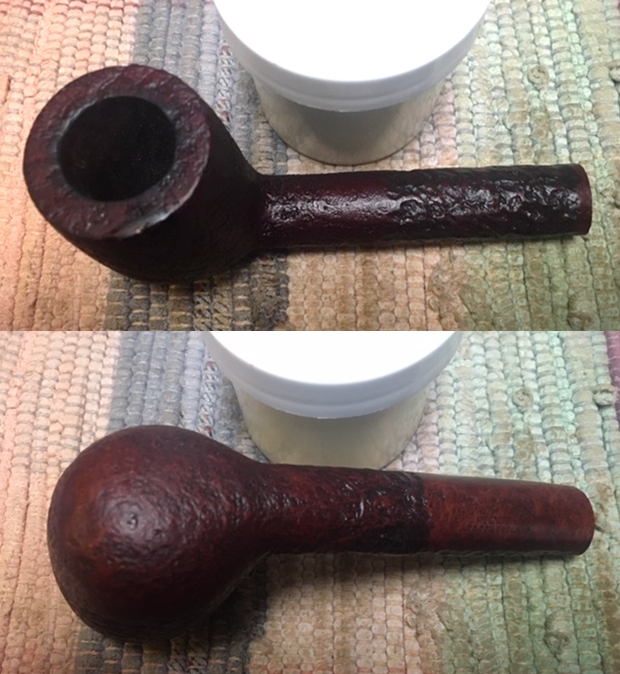
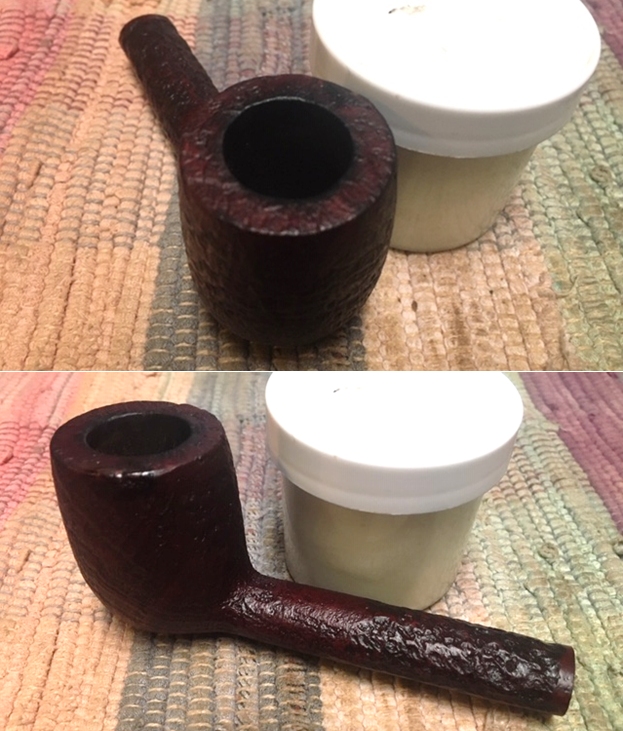
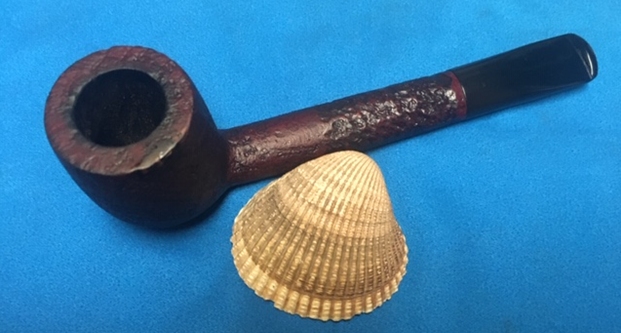
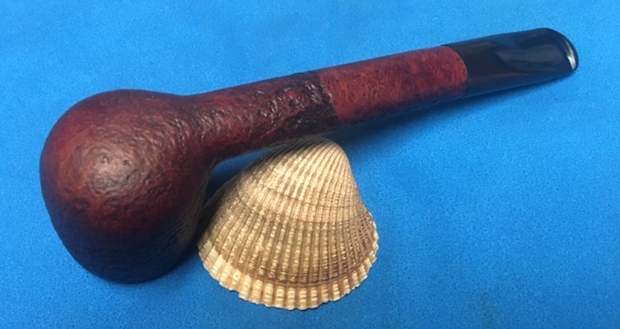
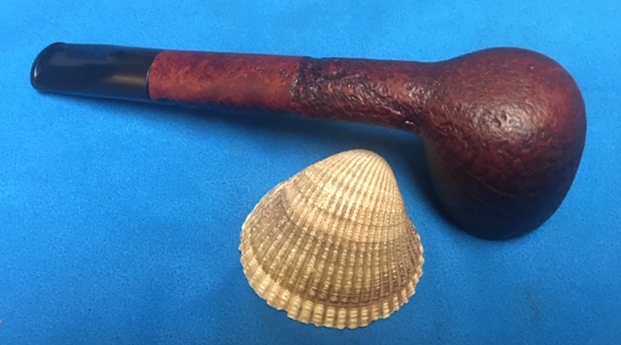
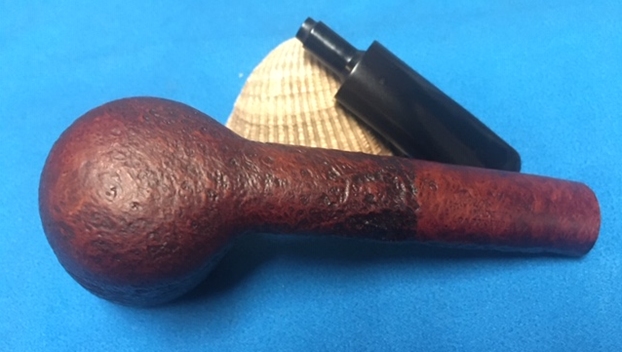
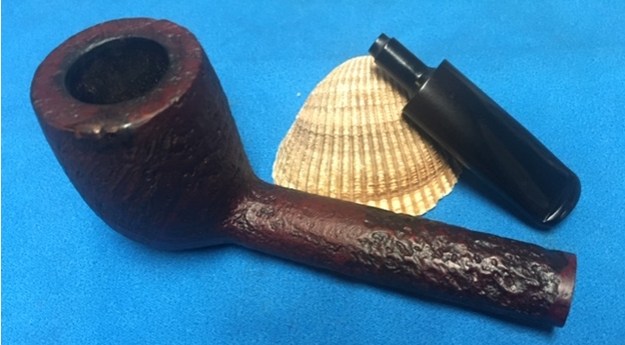
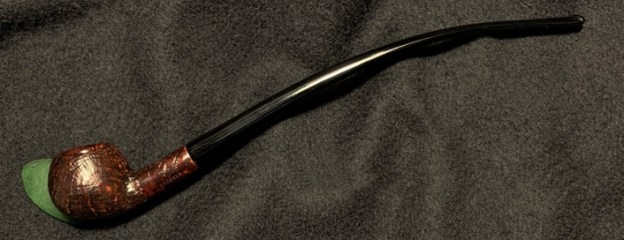
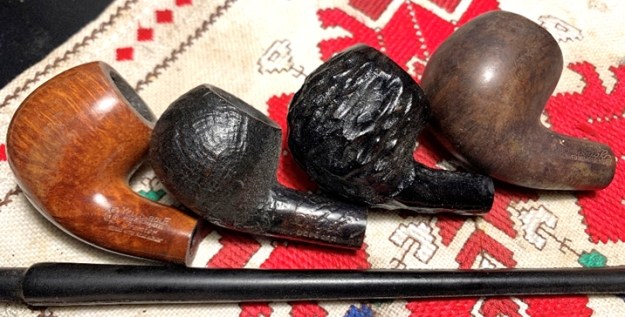
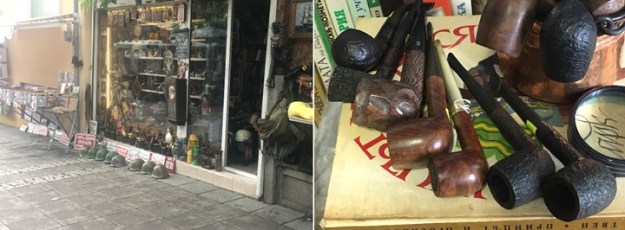
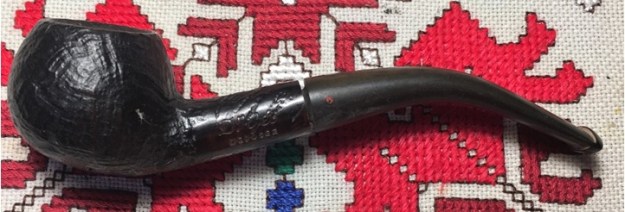
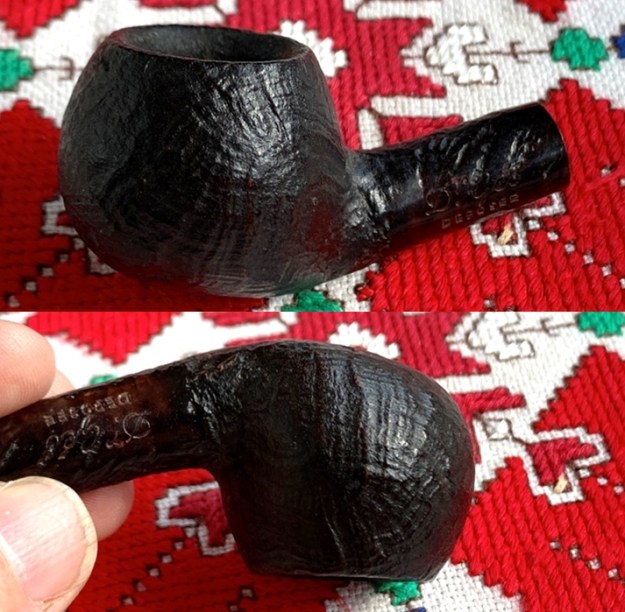
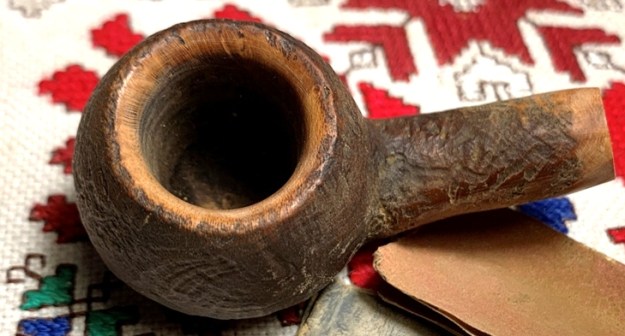
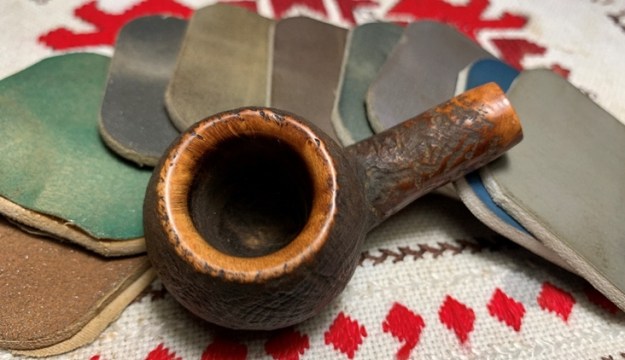
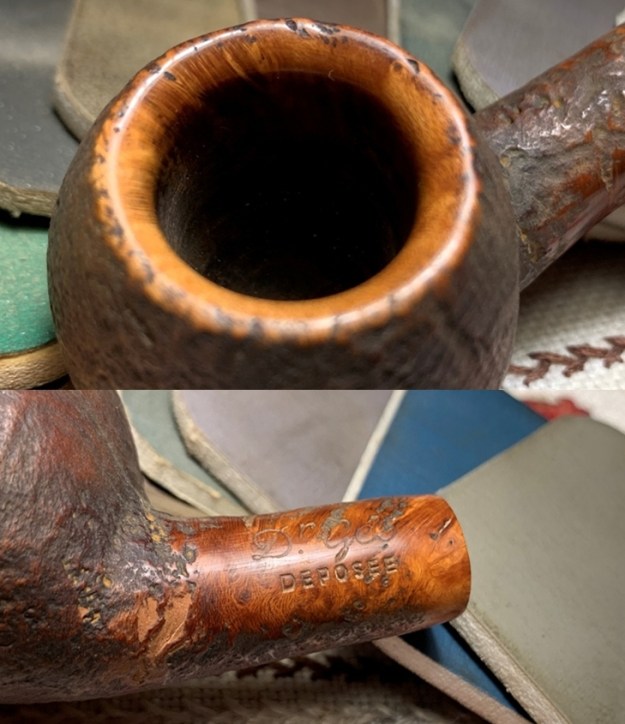
This is the second commissioning project for the pipe man, clam man, Jon, from South Florida.  His first commissioning (see: A Striking Savinelli Fiammata 2 Briar Calabash for a Clam Man Pipe Man) turned out to be a diamond in the rough!  He had commissioned this pipe not from the usual perusal of my online ‘Help Me!’ baskets in the For “Pipe Dreamers” Only! collection, but he had visited us here in Sofia, Bulgaria, along with a team of folks from his church.  During this visit, Jon went through the boxes and baskets of the inventory and found the Savinelli Fiammata and pulled him aside to commission.  During this visit, Jon also saw my personal collection of Churchwardens and offered to give one of them a new home!  In the end, Jon also commissioned a CW project which also benefits the Daughters of Bulgaria, our work here in Bulgaria working among women and girls who have been trafficked and sexually exploited.  This was also important to Jon, who as a father, had brought his daughter with him to Bulgaria.  My goal in fashioning Churchwardens from bowls that were either orphaned or in their current states had little hope of being put in service again.  I liken it to Santa’s mythical island of misfit toys.  Repurposed bowls mounted on CW stems can rise from ash heap, as it were, to live and serve again.  I sent Jon a picture of different bowls to see which would speak to him as his new Churchwarden.  He had told me he preferred a bent shank – here were the candidates with differing characteristics.Our emailing back and forth between South Florida and Bulgaria to identify the bowl speaking Jon’s name, resulted in the French Blasted Dr. Geo Deposée, the second pipe pictured above.  I acquired the Dr. Geo during one of our summer vacations on a pipe picking expedition to the Bulgarian coastal city of Burgas on the Black Sea.  I found the ‘Burgas Lot of 9’, at a secondhand shop on the main walking street.  The Dr. Geo is at the end of the line of 7 pipes pictured below which were part of the haul – 2 others were added to these that were eventually posted in the For “Pipe Dreamers” Only! collection from which pipe men and women can choose and commission.The Dr. Geo I acquired I called a Prince shape.  I knew nothing about a Dr. Geo line, but what attracted me to the pipe was the blasted bowl – it was tired and dull, but had potential, though the pipe itself was unimpressive and attracted no attention when it had its time in the Dreamers collection.With the bowl now on my worktable to transform into a Churchwarden, I found some information online about the origins of Dr. Geo Deposée.  Pipephil.eu’s panel gave some information confirming that it was of French origins from the Gichard & Cie Company.Pipedia adds some additional information in its list of French made brands.  It lists that Dr. Geo was produced in the 1940s from Guichard & Cie, and later sold by M. Marmet Regge, with Ebonite stems.  Interesting to me is that my guess is that The Dr. Geo I’m looking at was from the later, M. Marment Regge ownership with the specific reference to the use of Ebonite stems.  I have another Dr. Geo in my Dreamers inventory from another Lot I purchased from France, it has a horn stem, which most likely places it in the earlier dating when rubber was in short supply during WW2.  The listing for Marmet in Pipedia, called M. Marmet-Regge, also sold the Dr. Geo brand which were produced in Saint-Claude. The meaning of the French, “Deposée”, attached to Dr. Geo is a bit cryptic, at least to one who is relegated to Google Translate to make sense of the meaning.  The direct primary English translation provided is “deposited” which is a past tense rendering.  Looking at other definitions provided by Google Translate, the possible meaning could be tied to the idea that “Dr. Geo” attests to or is behind the goodness of this pipe brand like Dr. Grabow!  It seemed like I was grasping at straws until I see the ‘info link’ on the Dr. Geo panel provided by the Pipephil.  The link goes to a French site called  ‘Ces pipes pas comme les autres’ (These pipes like no other) to a May 2006 listing selling ‘Two Doctors’ pipes with information about each.  A ‘Dr. Geo’ is described as one of the doctors with the possible clue pointing to a rational for the sub-name of ‘Deposée’:


Many pipe brands have earned the doctoral title. This makes smokers smile during these times of heightened hunting.

During the post-war years this title was more a guarantee of seriousness or of a search for perfection rather than the sign of a healthy practice. We did not allow ourselves to be disturbed by medical considerations. Everyone knew that smoking was not very healthy and took responsibility. But that has changed a lot today with the new globalized MacCarthyism.

José Manuel Lopes (1) counts seventeen brands of pipes that bear the famous title! I would like to introduce you to an 18th: Dr Arthur recognizable by his “A” circled on the pipe. No further information on this doctor there Maybe you thought I was going to present you with a leather-wrapped pipe, stamped with the most famous of these doctors? It would be bad to know me. But fear not: in this section you will not escape the famous Franco-English doctor whom I have already mentioned in the section of Cavalier pipes.

The pipes of Dr Géo – French brand of Gichard & Cie which is no longer produced – do not have an exceptional notoriety but sufficient to be cited here and there.

(1) José Manuel Lopes (President of Pipe Club of Portugal), Pipes, Artisans and Trademarks. Quimera Editores, 2005

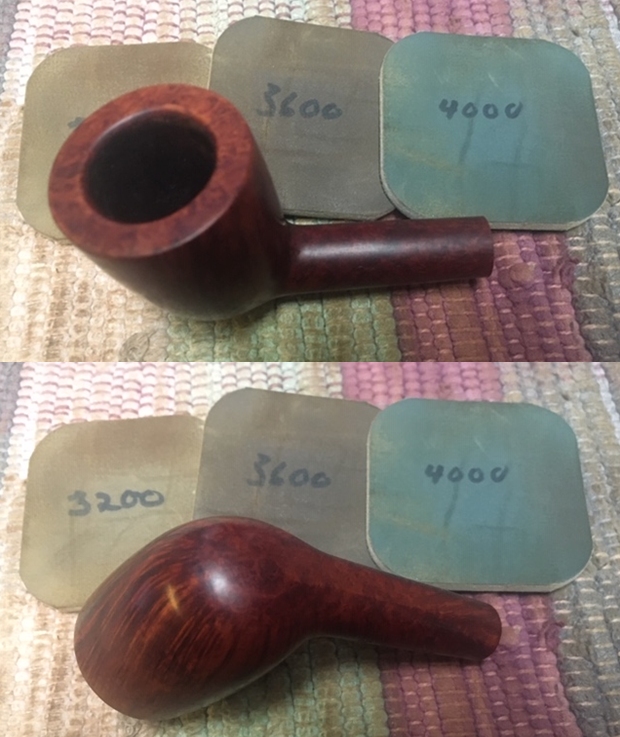
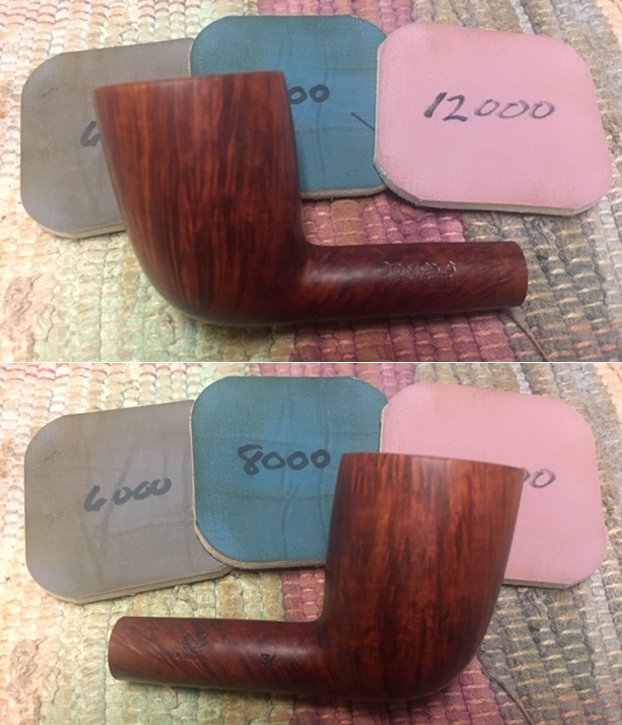
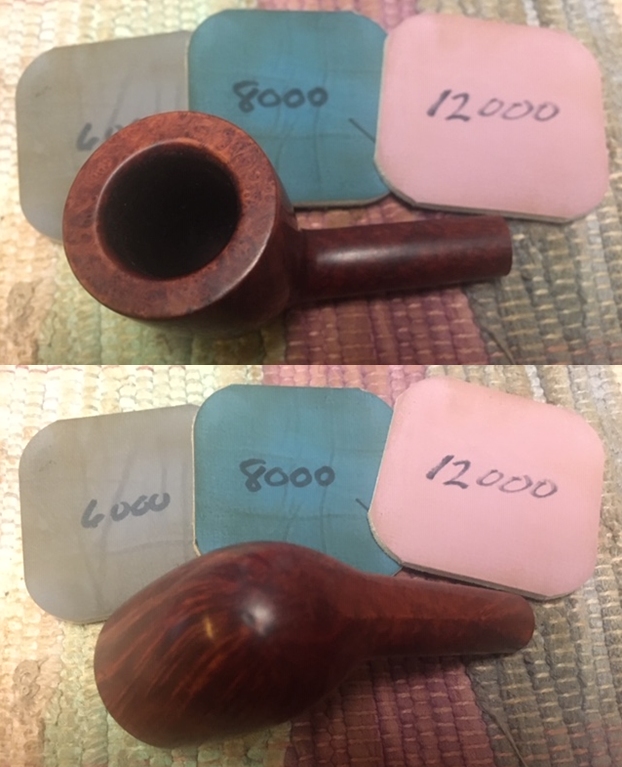
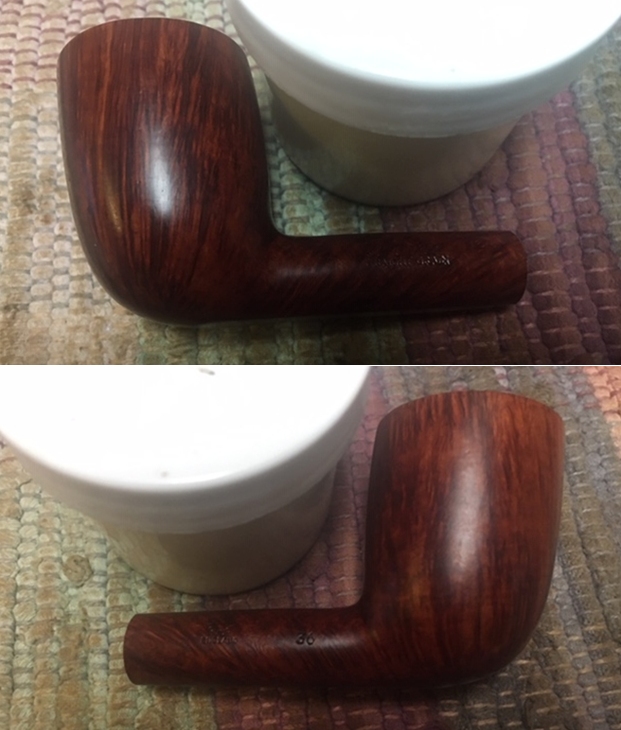
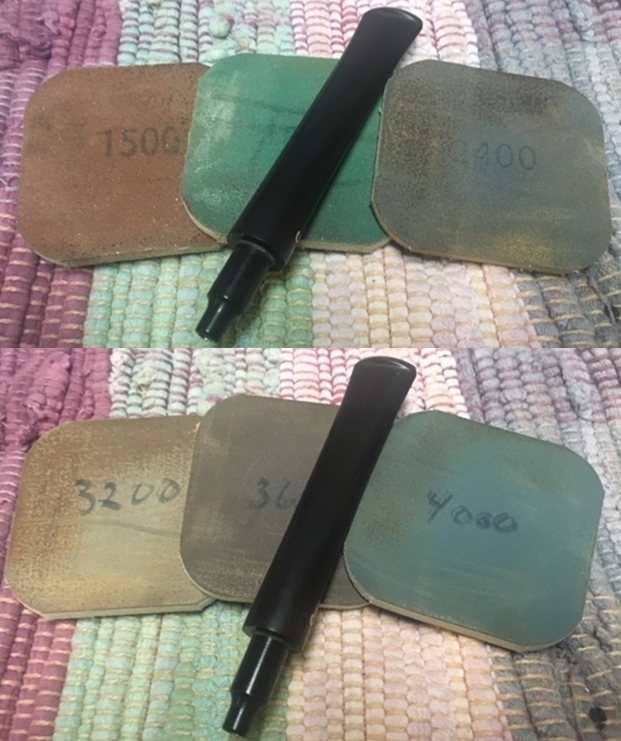
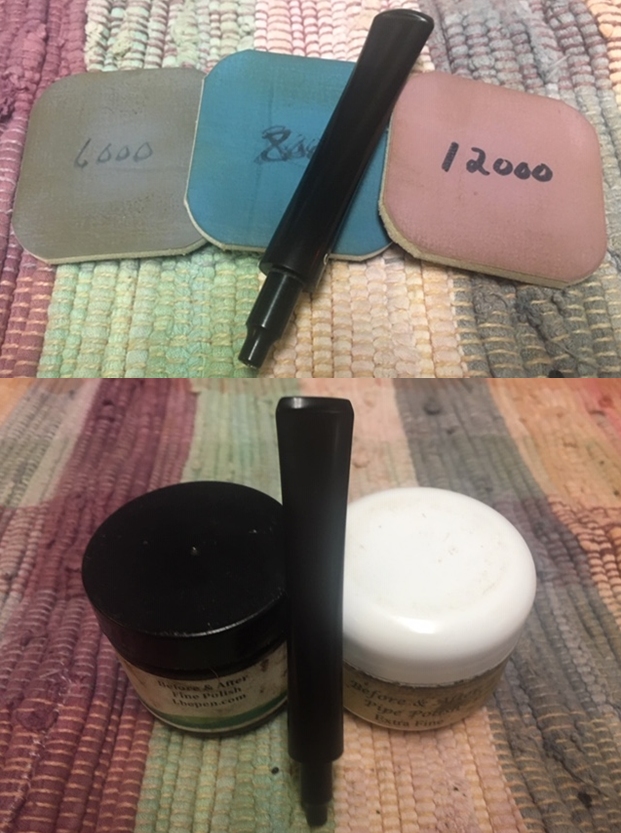
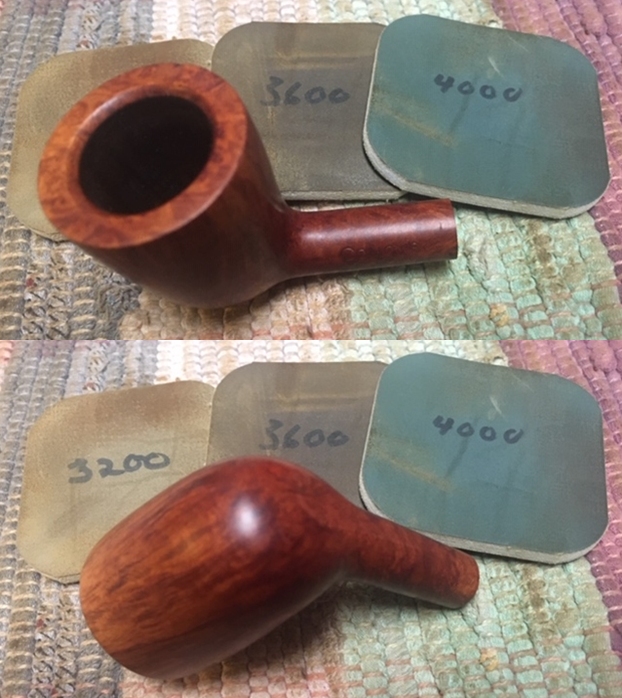
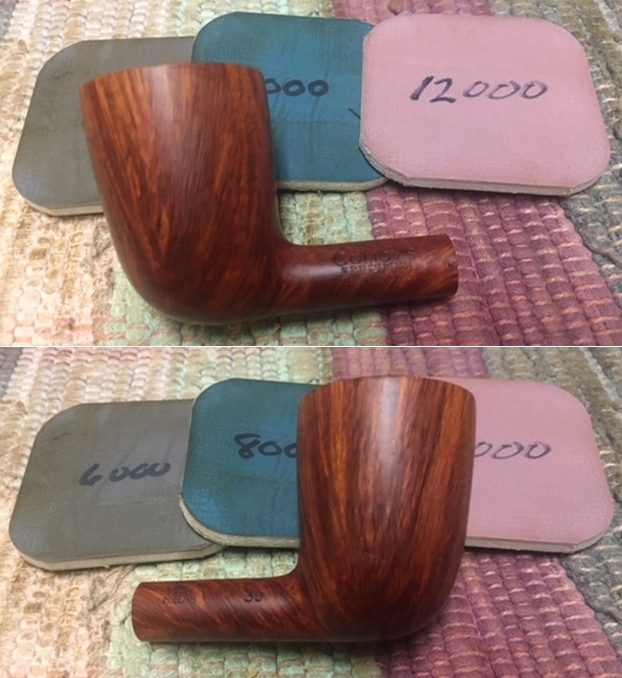
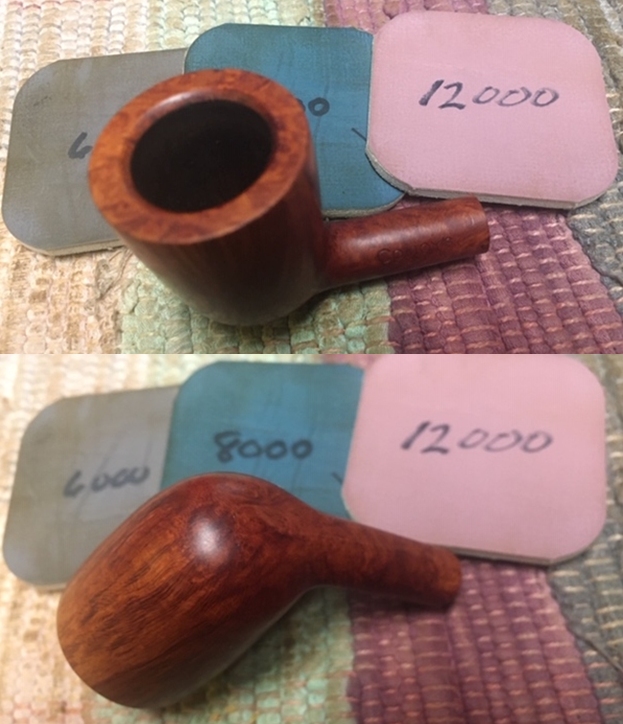
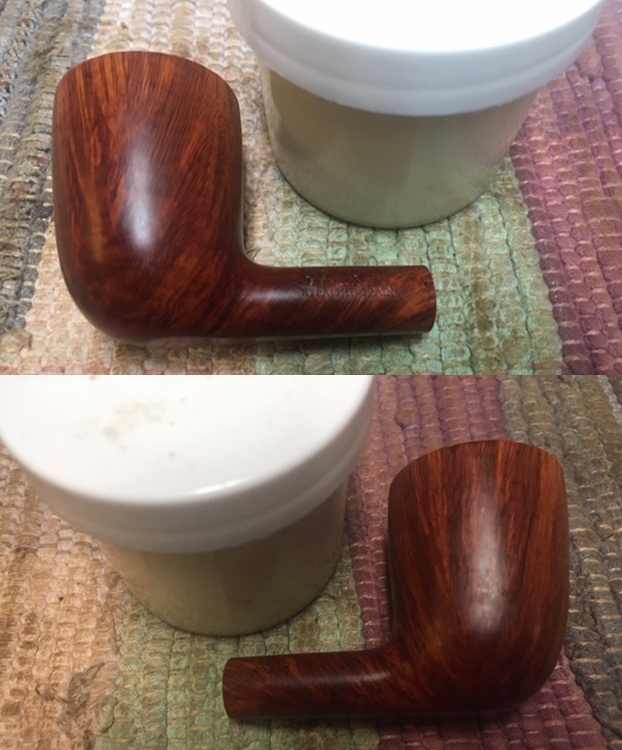
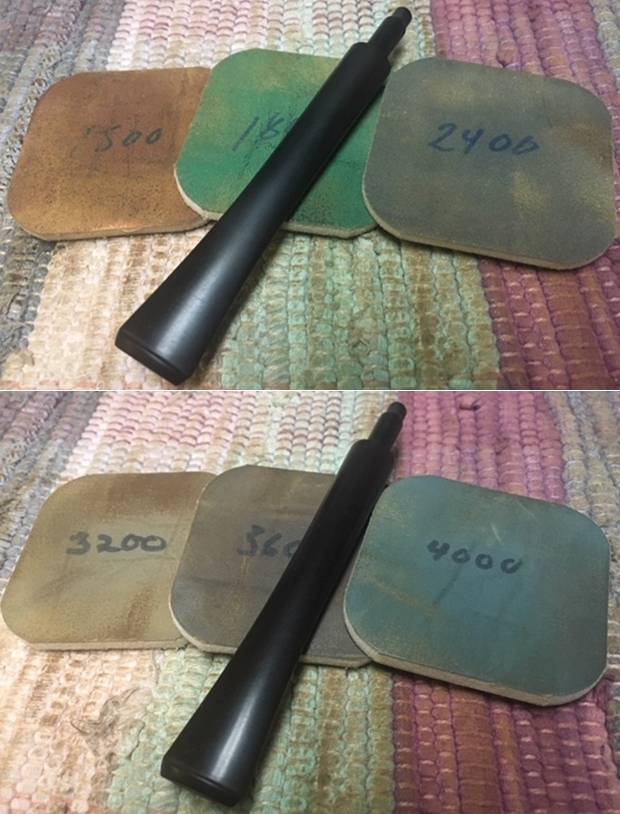
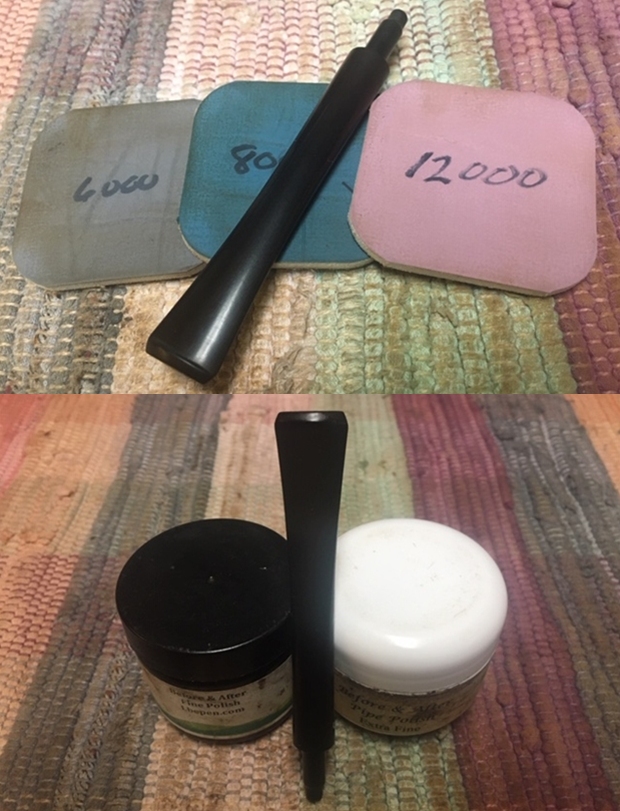
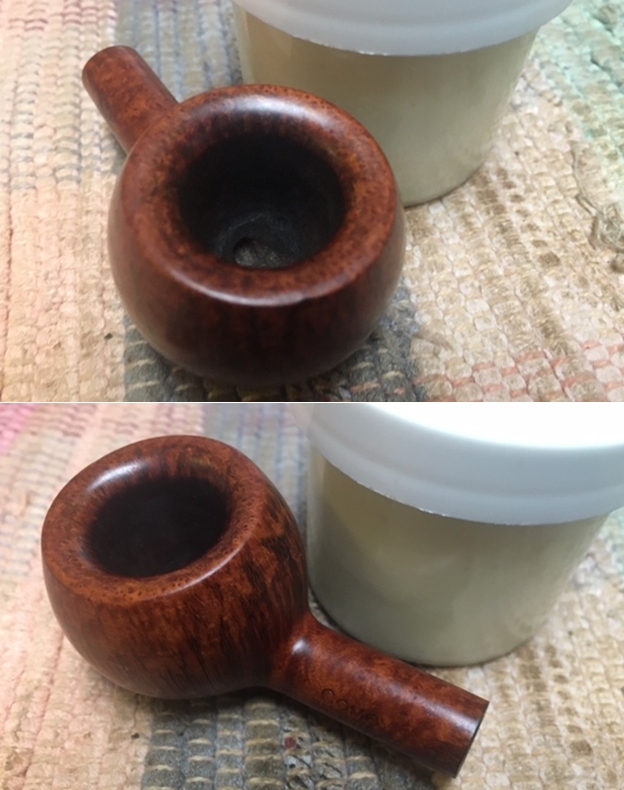
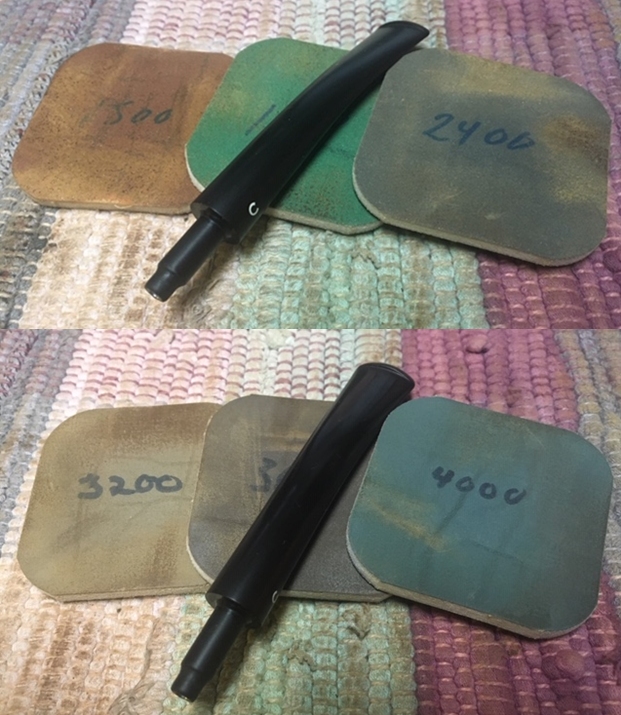
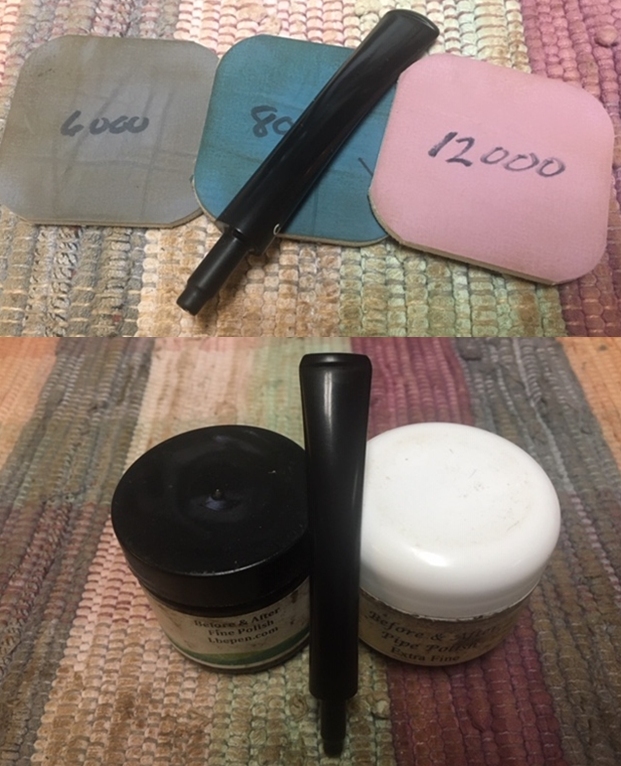
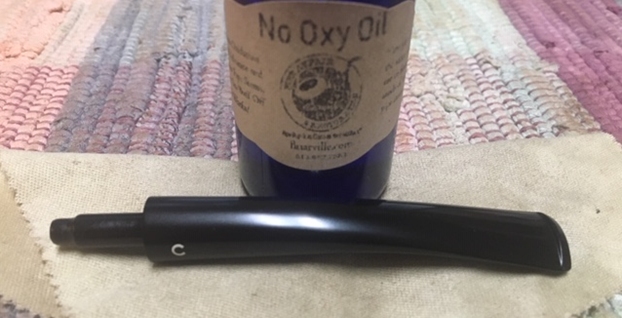
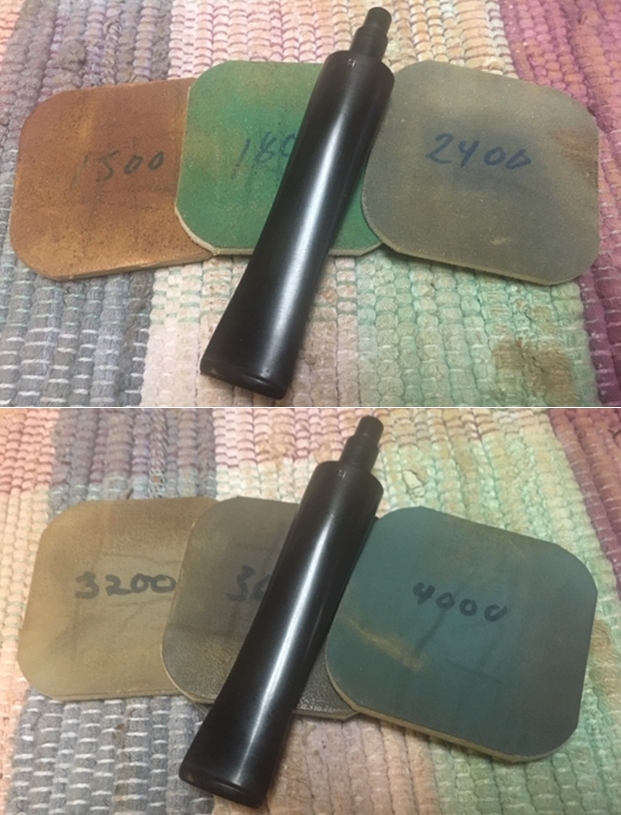
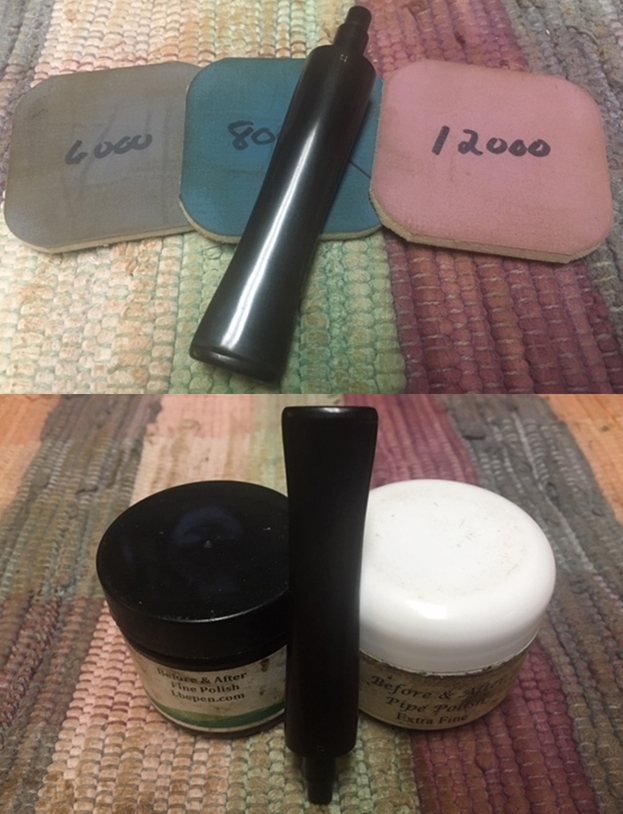
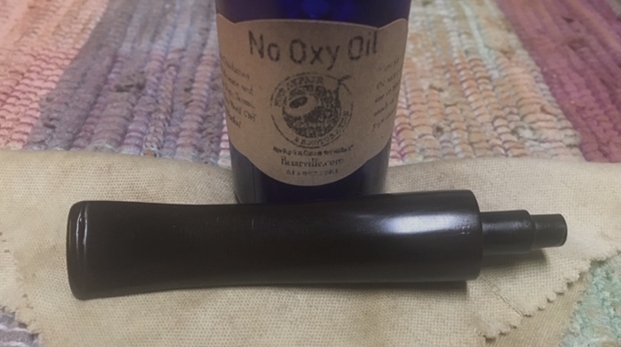
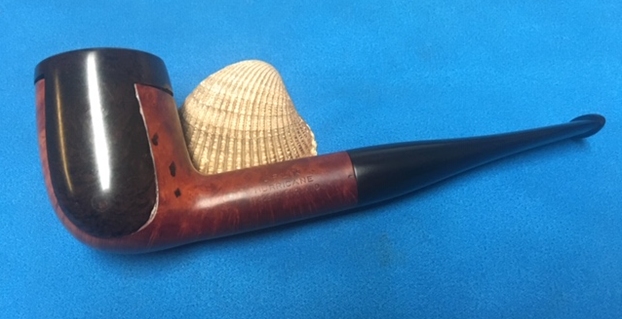
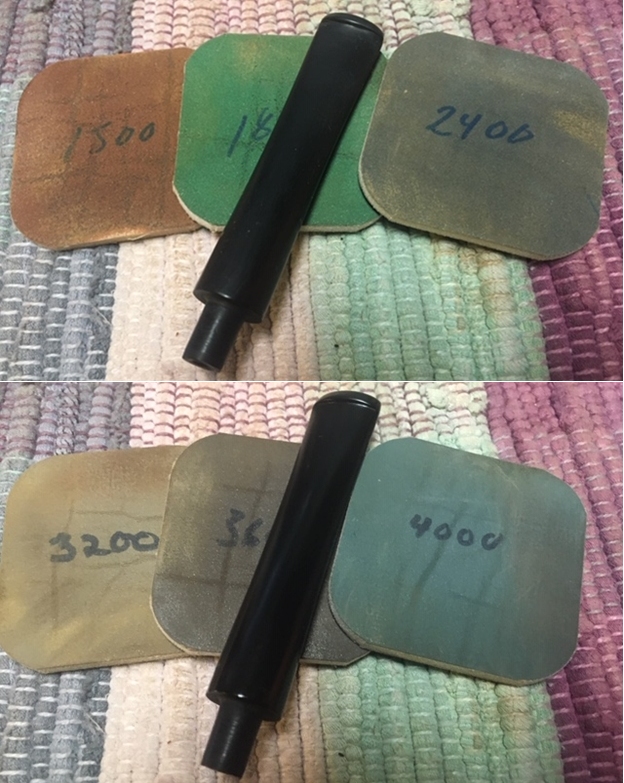
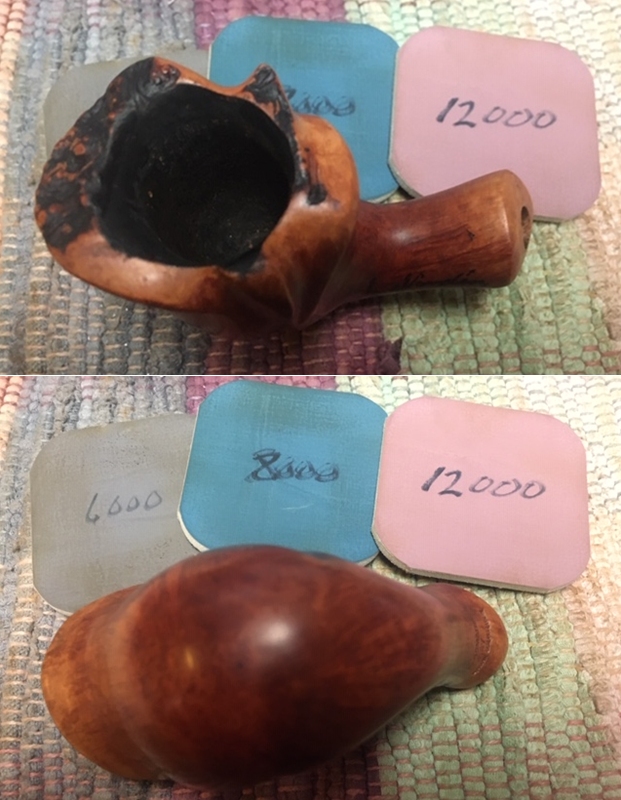
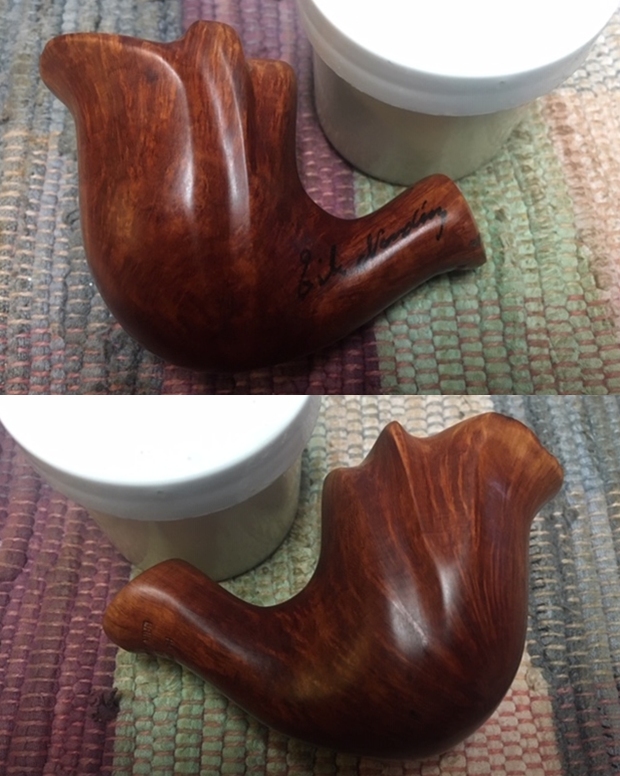
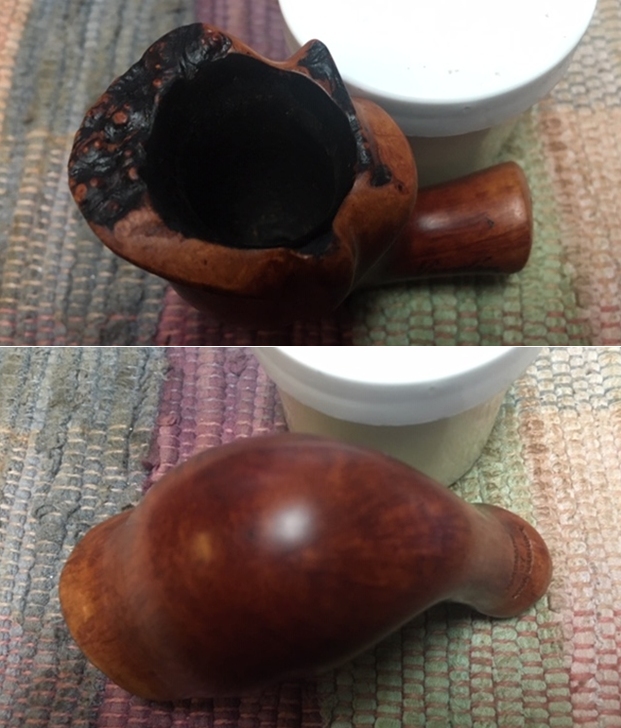
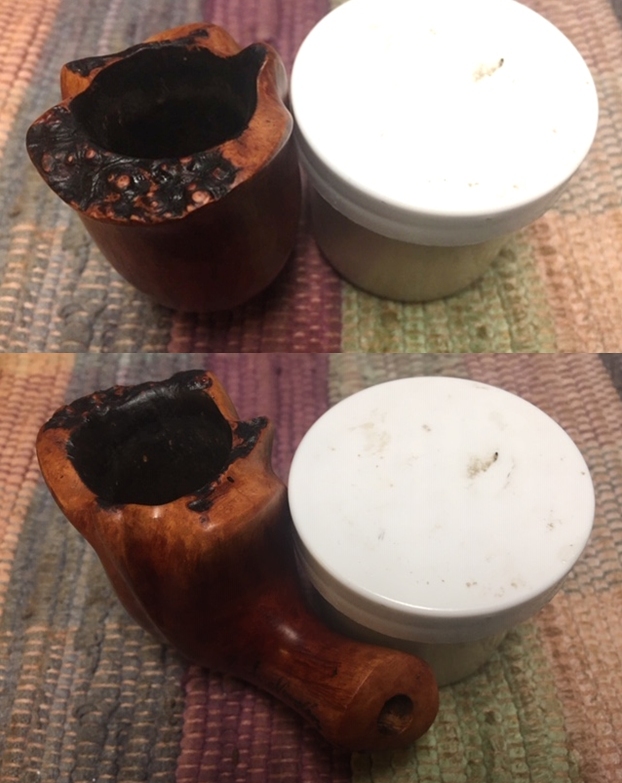
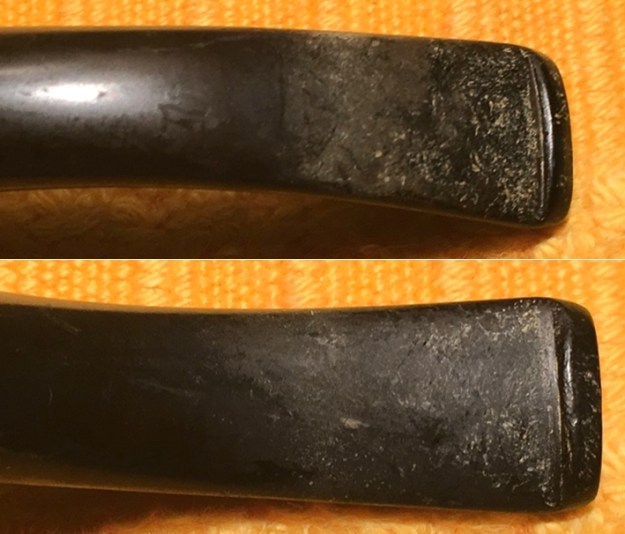
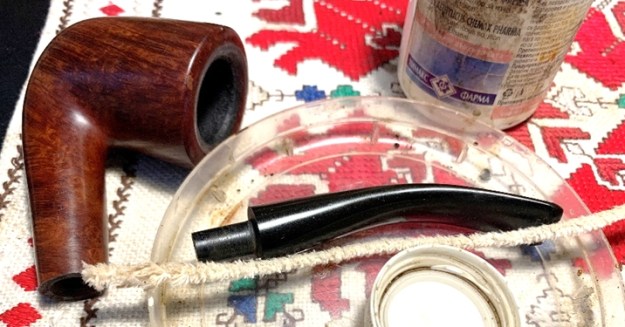
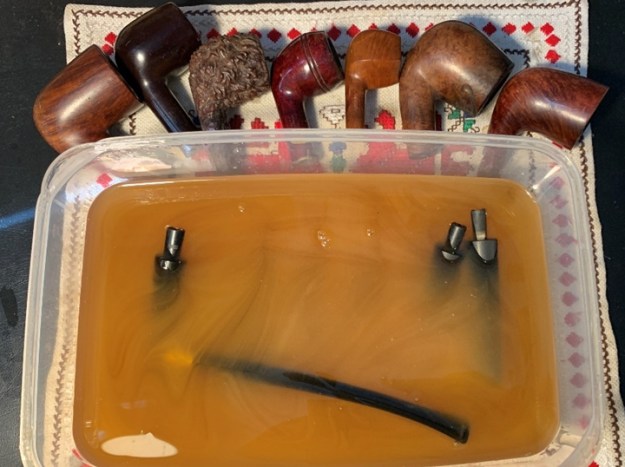
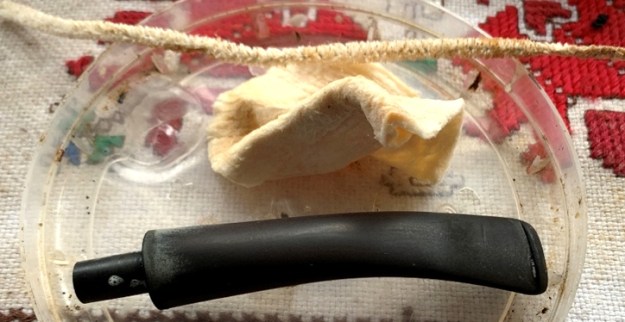
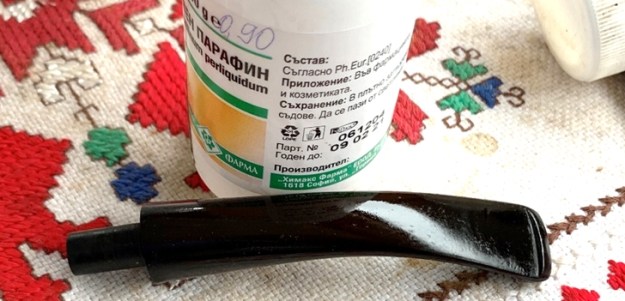
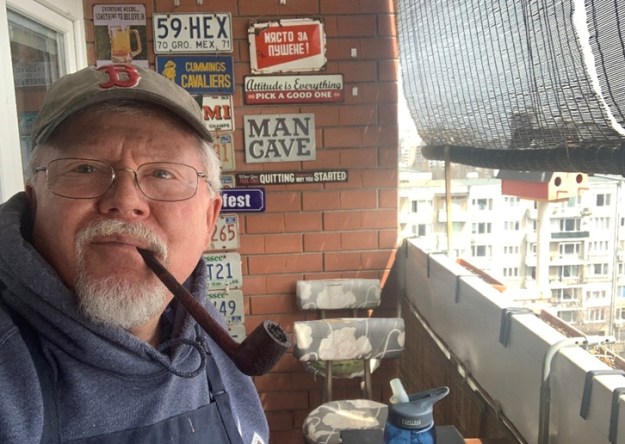
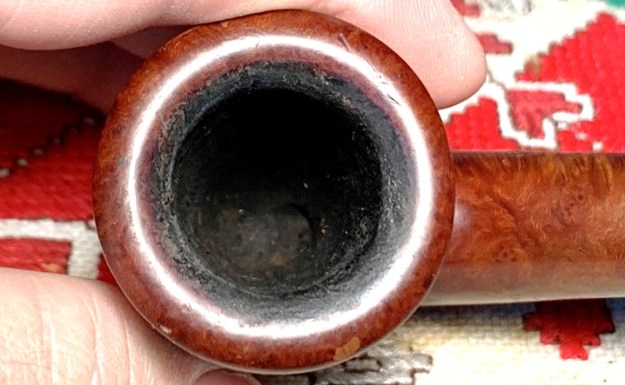
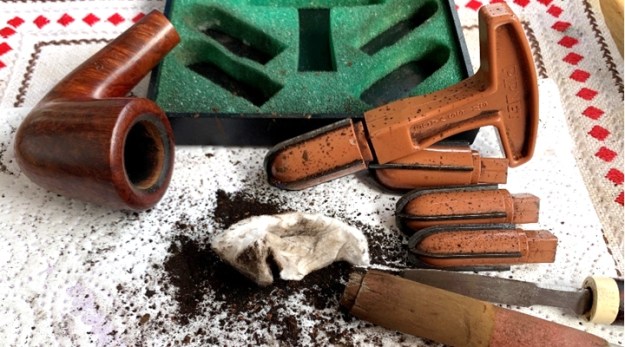
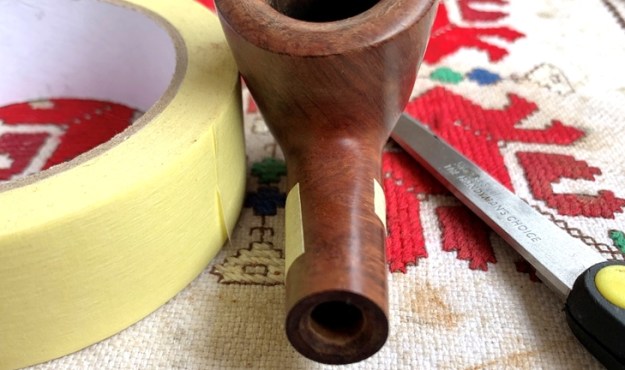
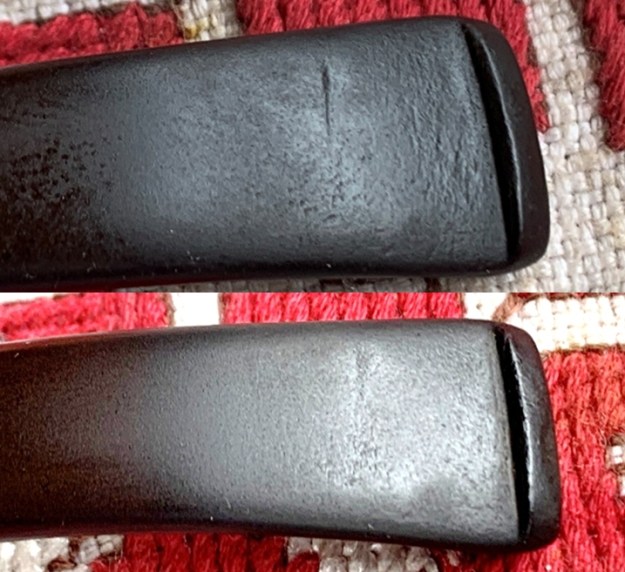
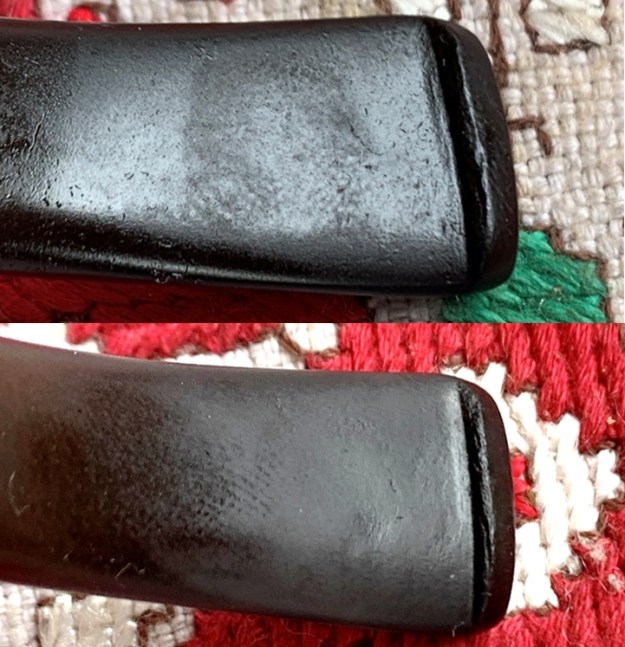
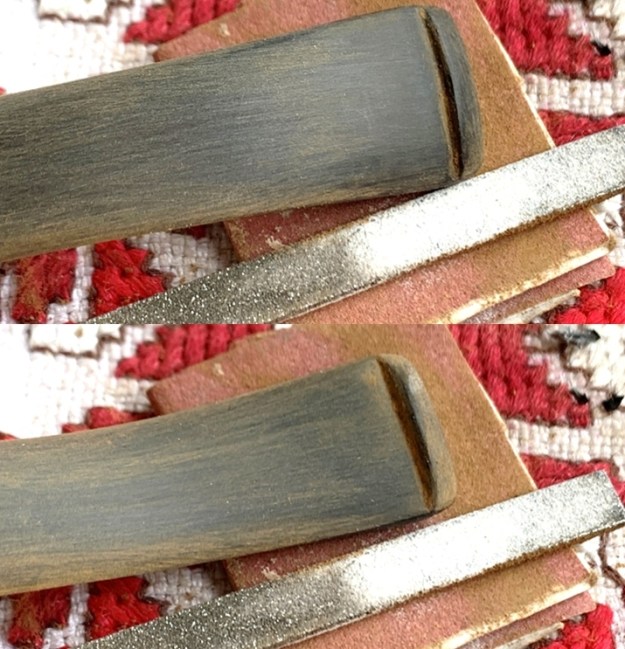
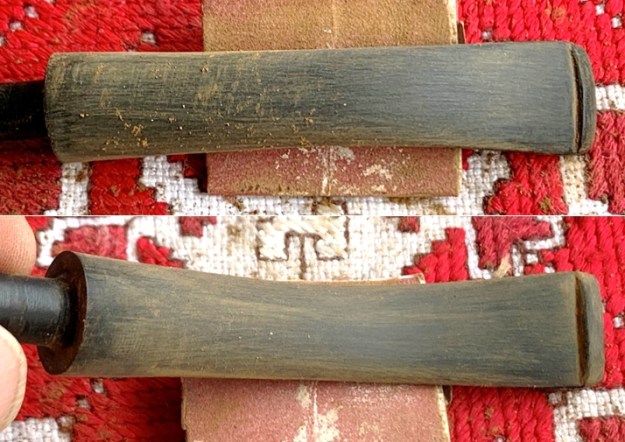
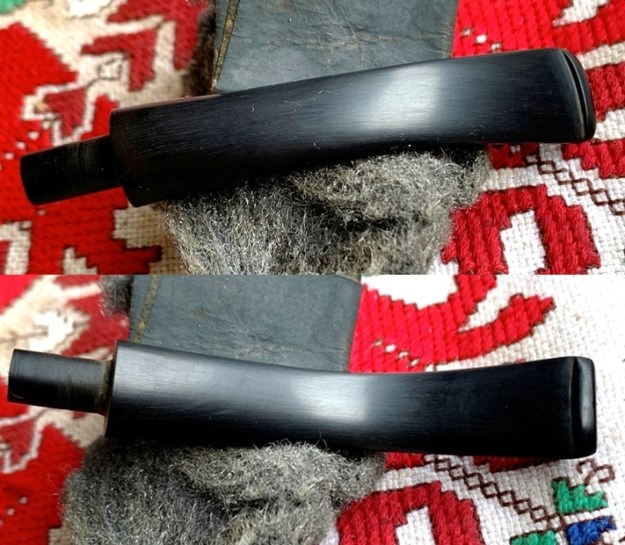
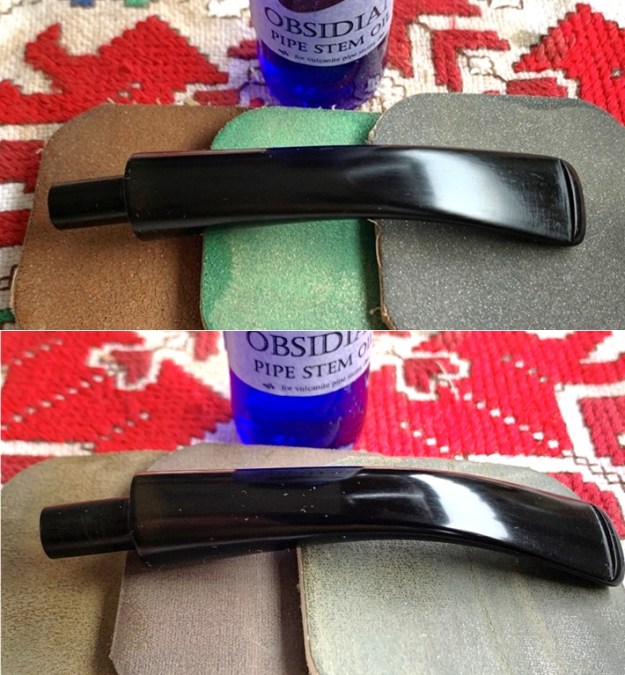
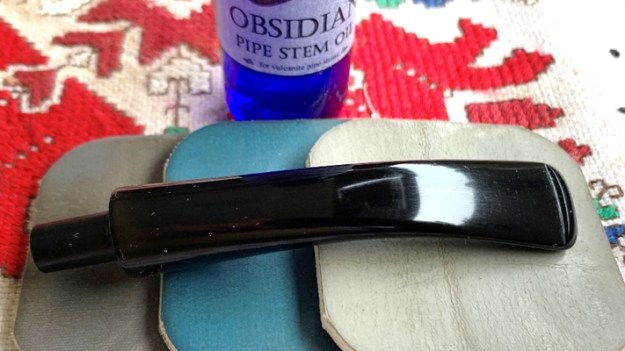
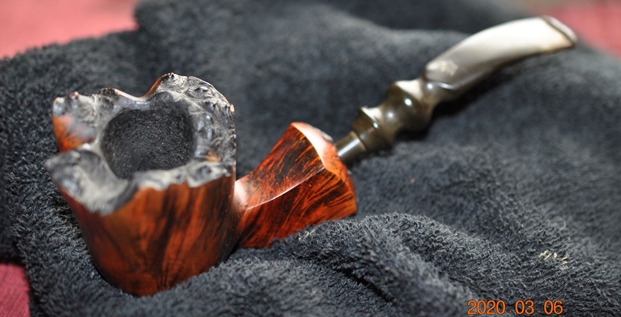
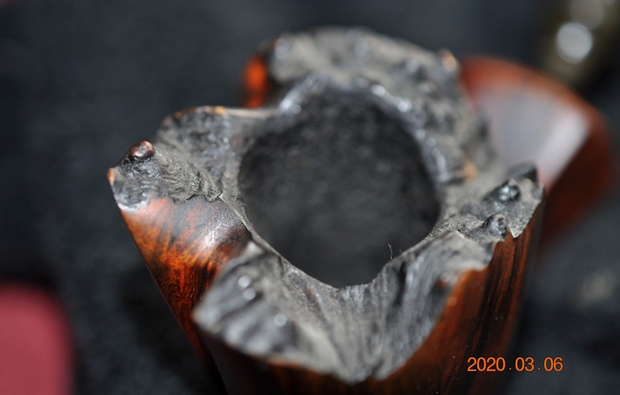
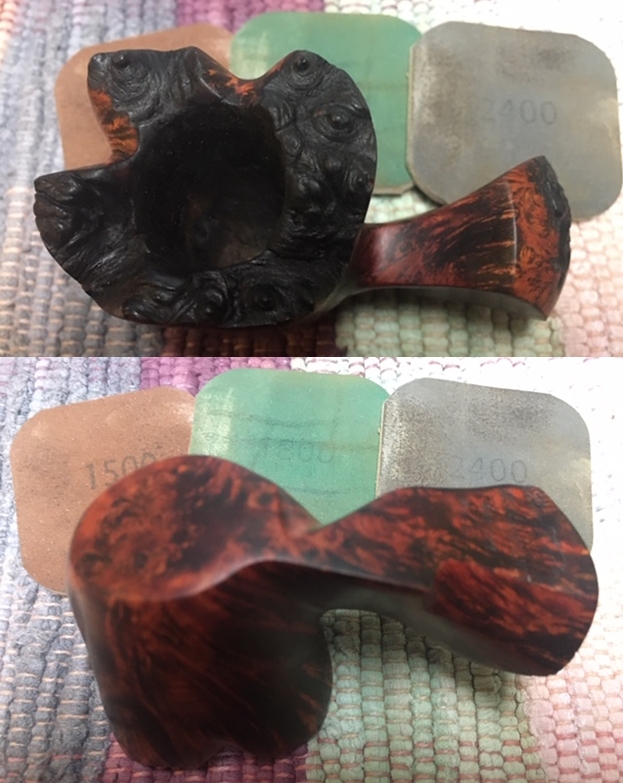
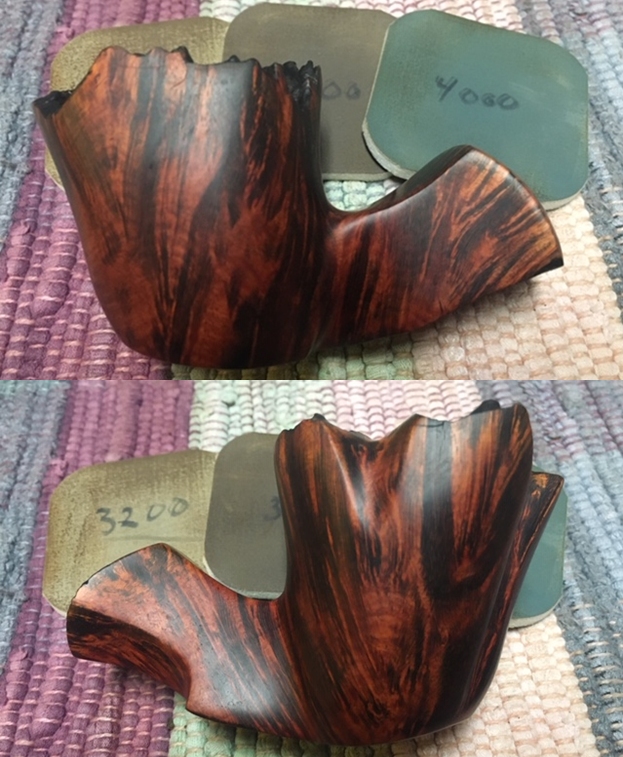
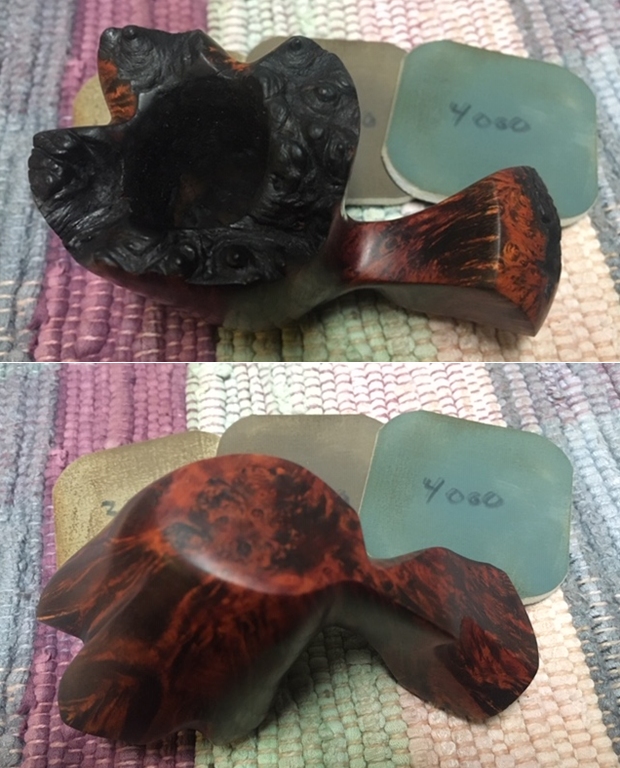
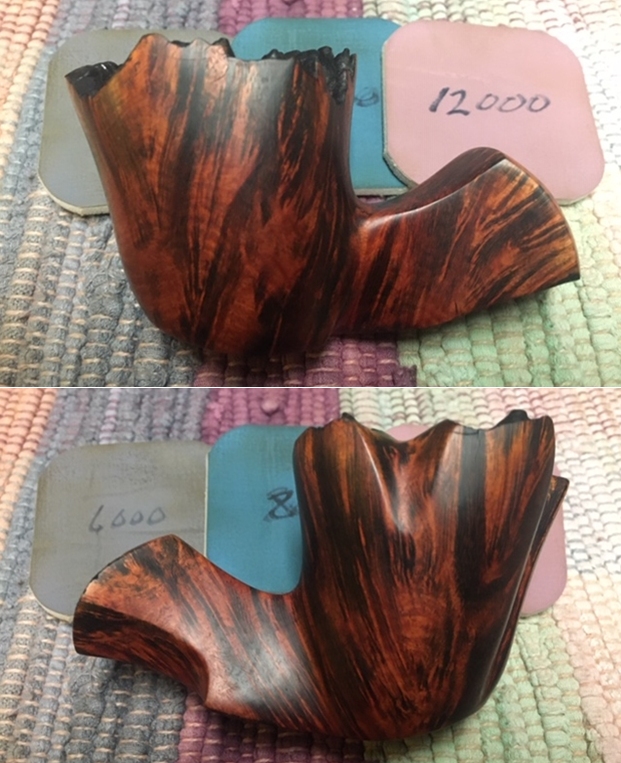
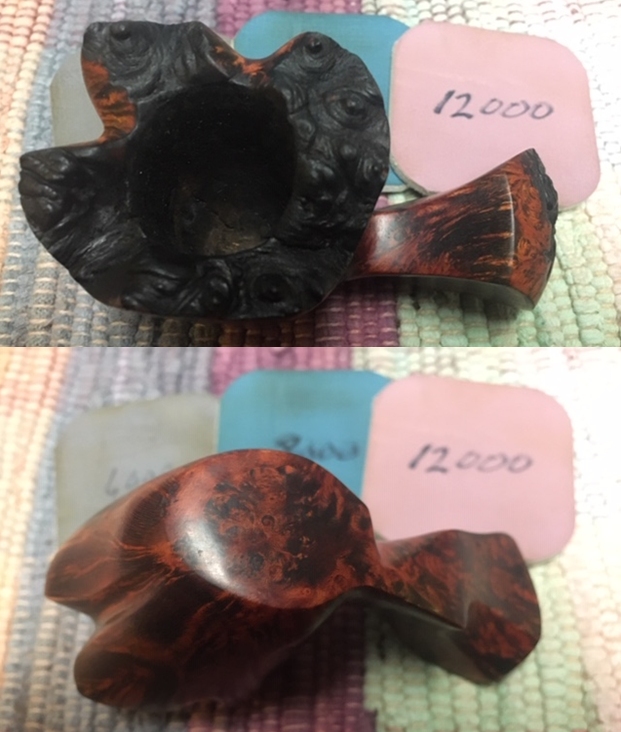
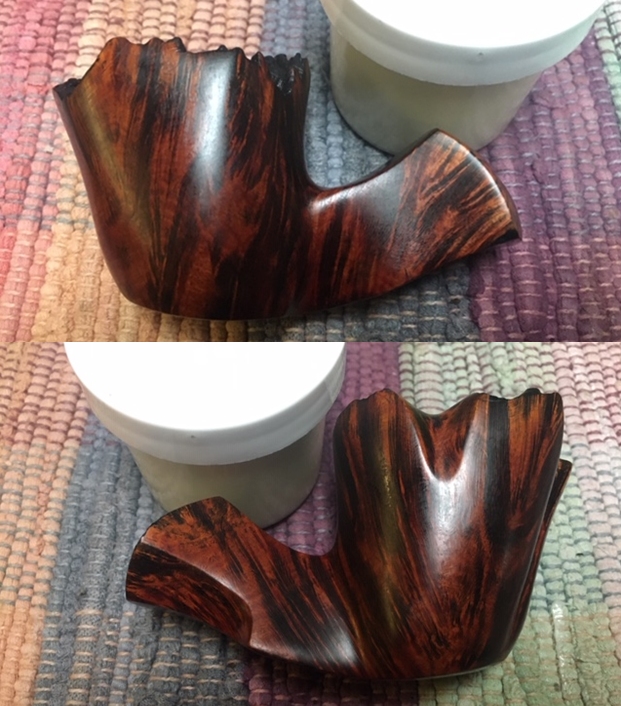
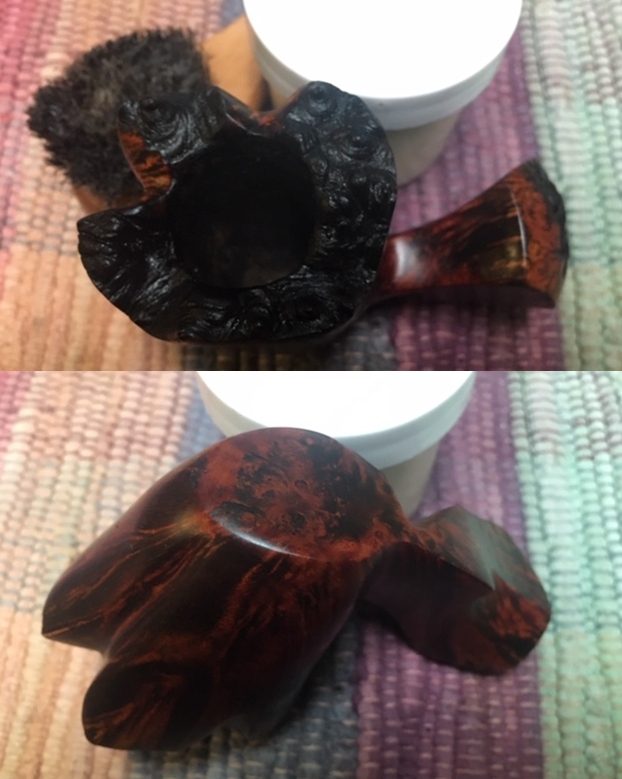
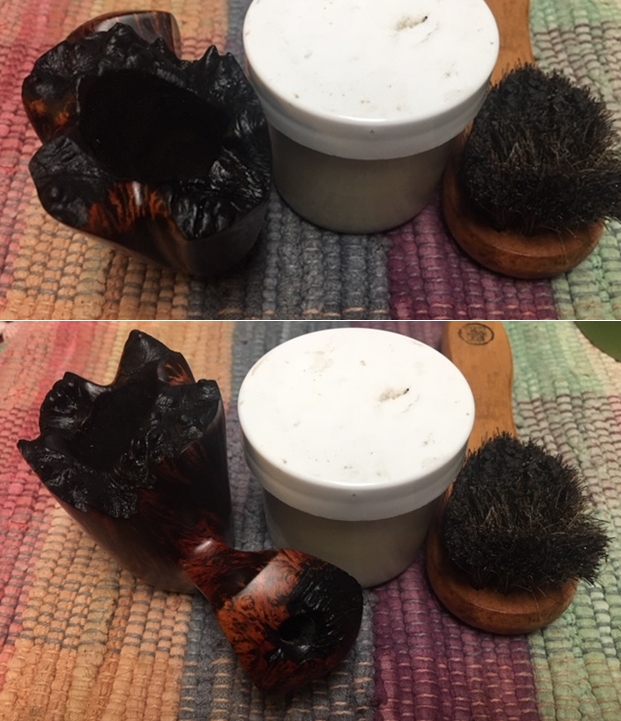
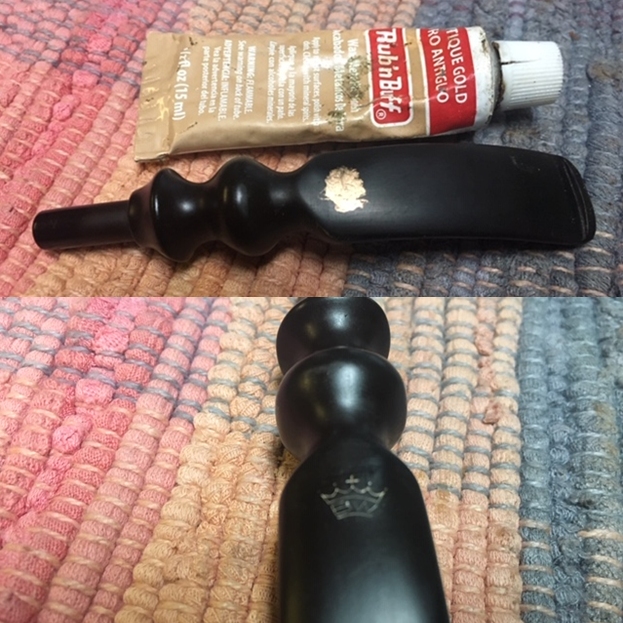
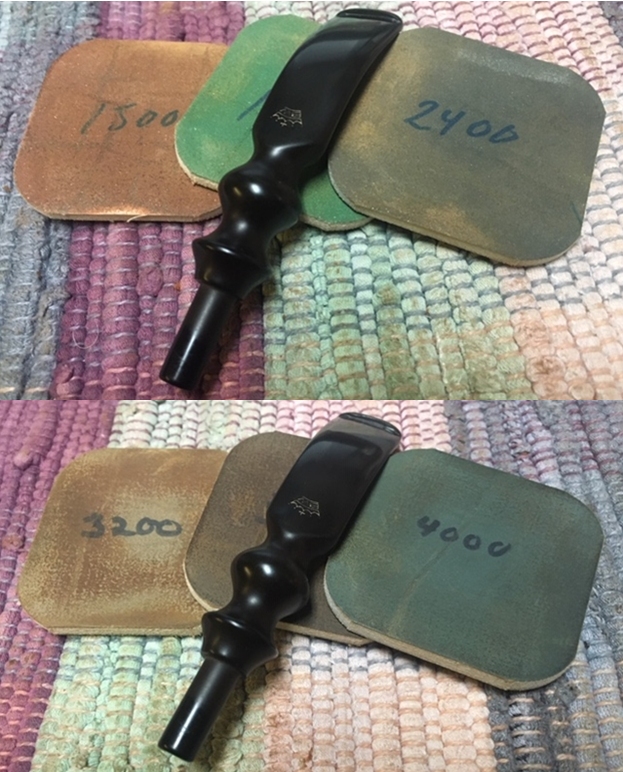
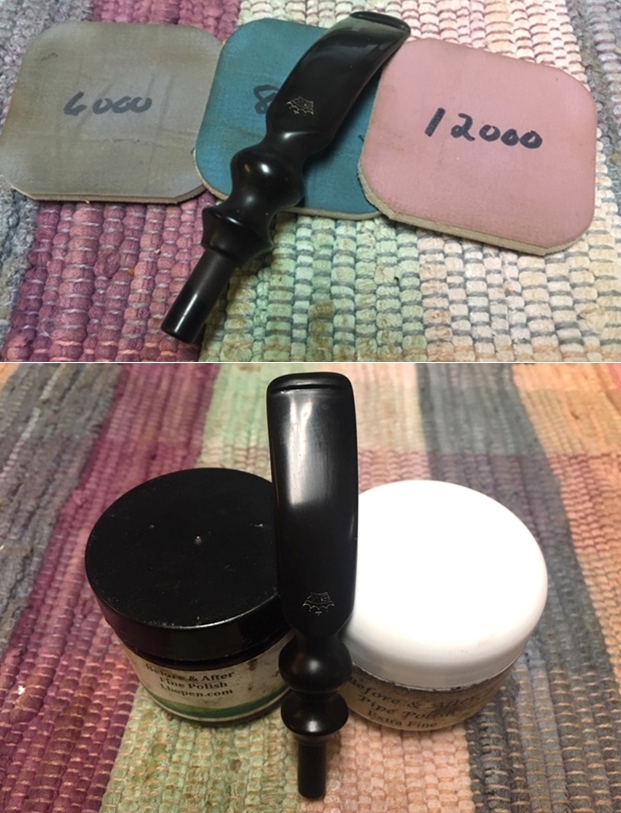
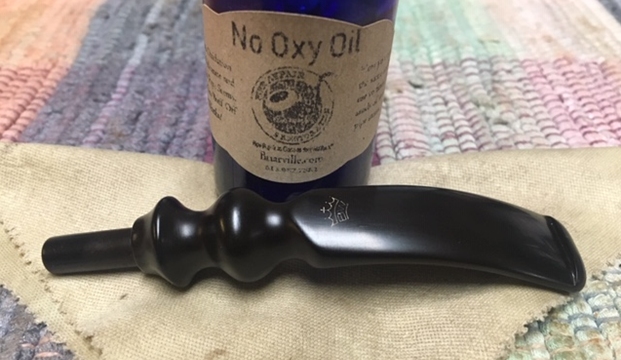
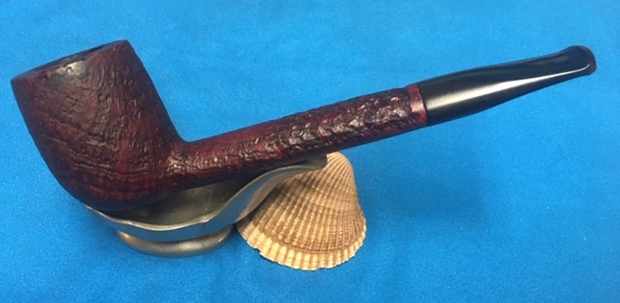
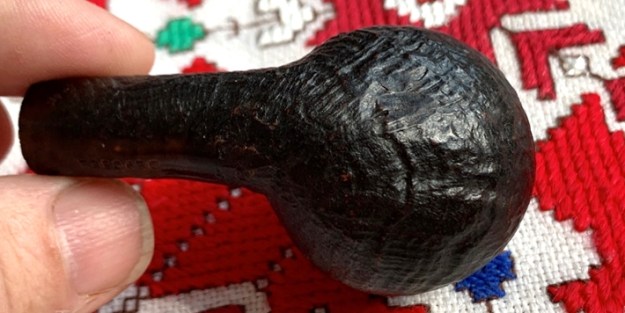
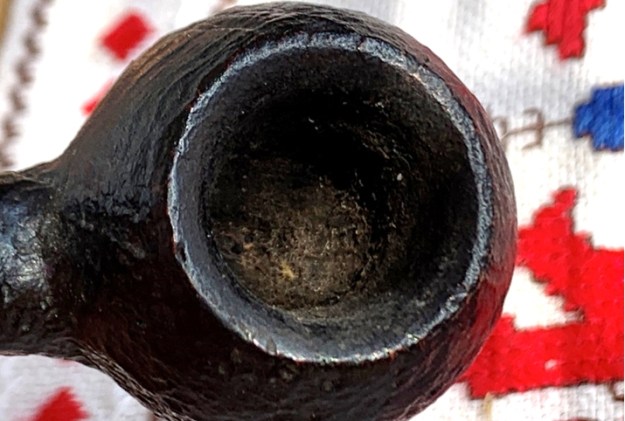
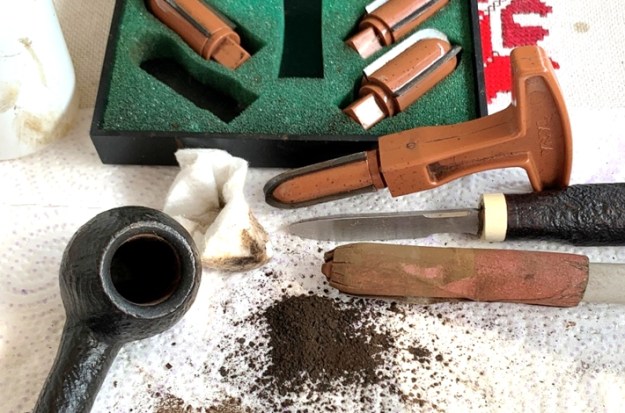
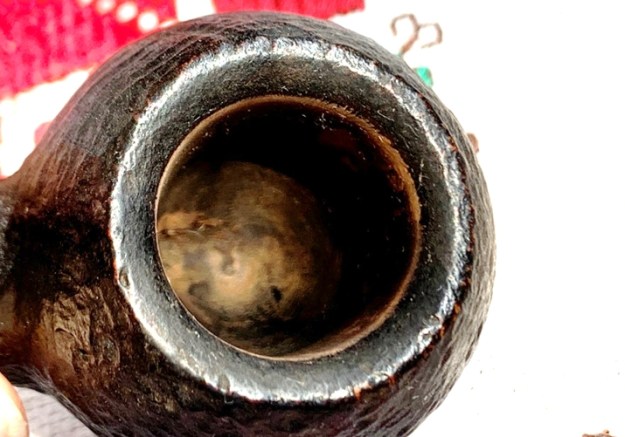
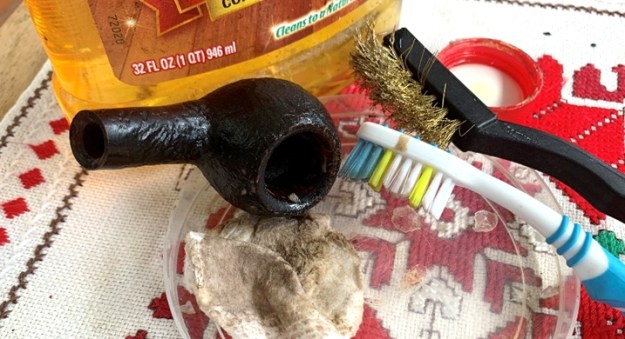
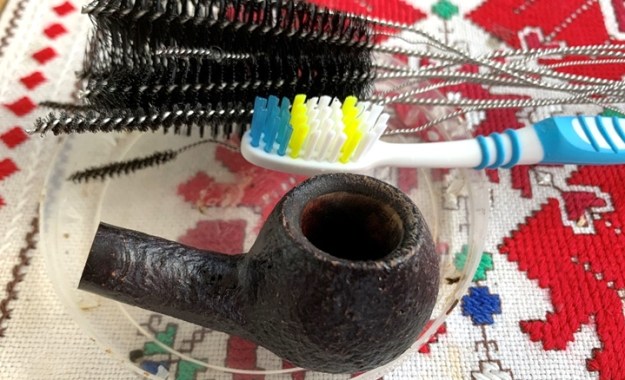
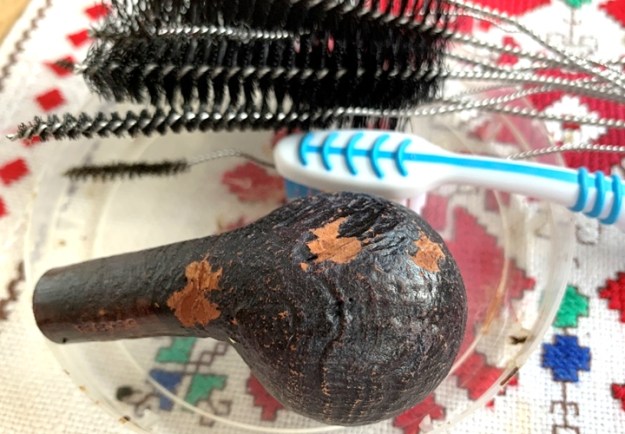
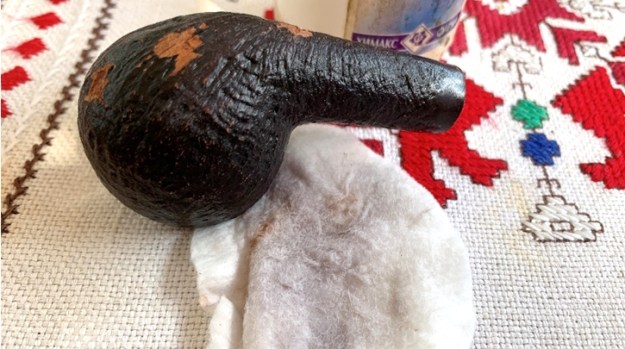
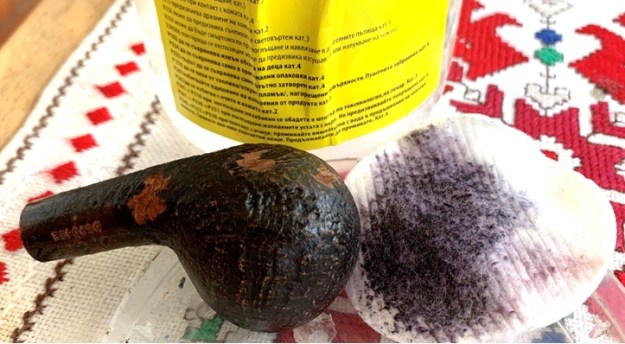
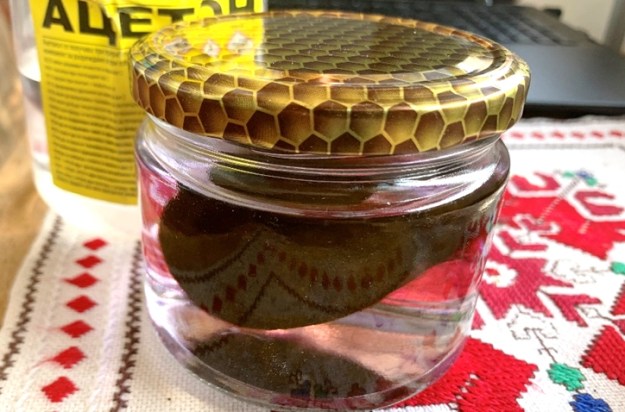
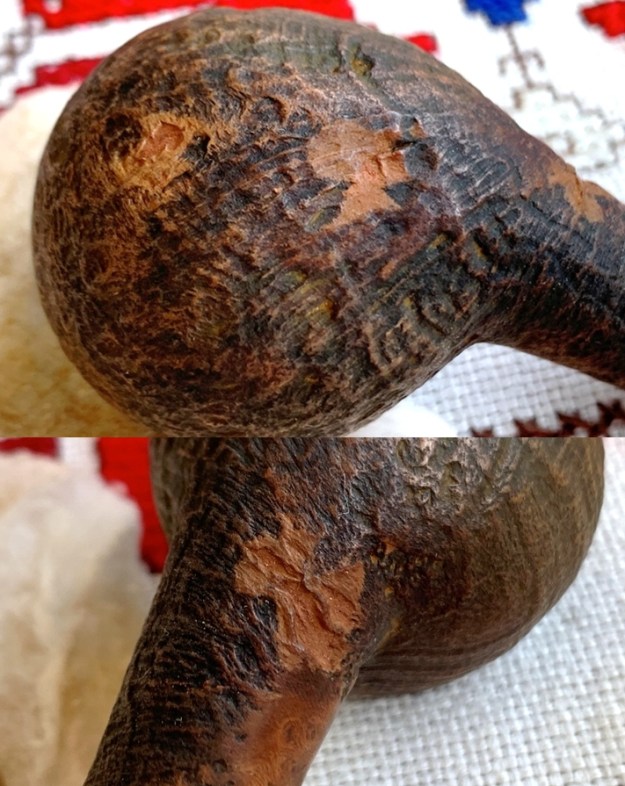
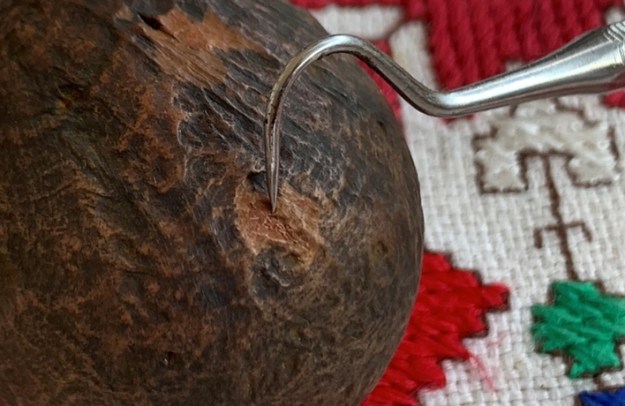
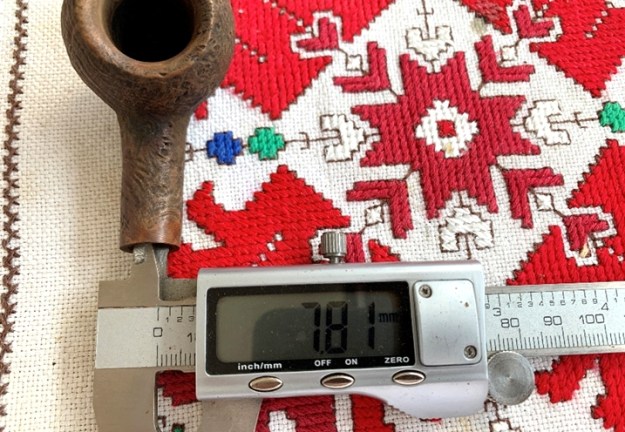
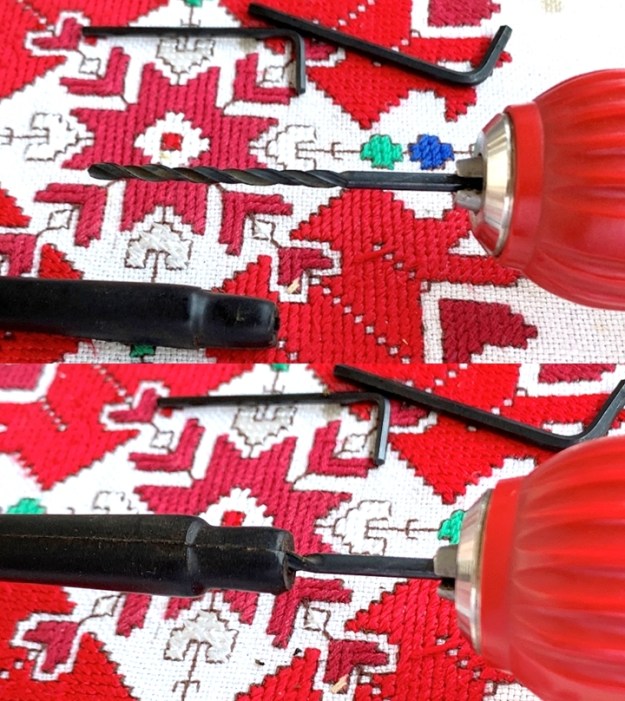
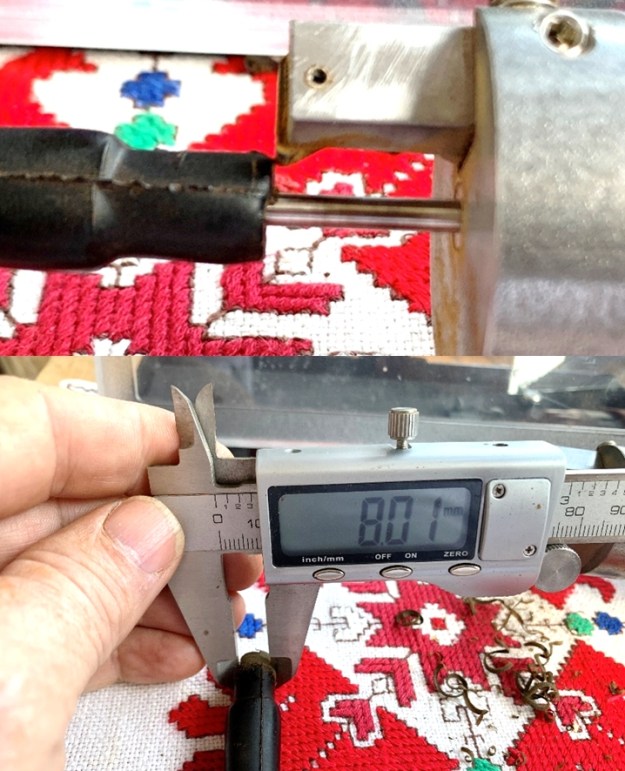
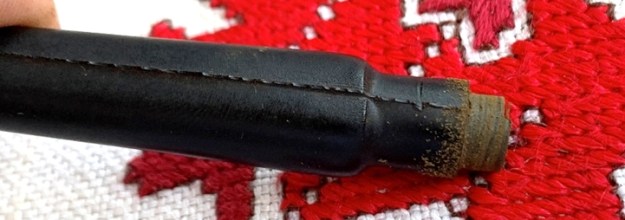
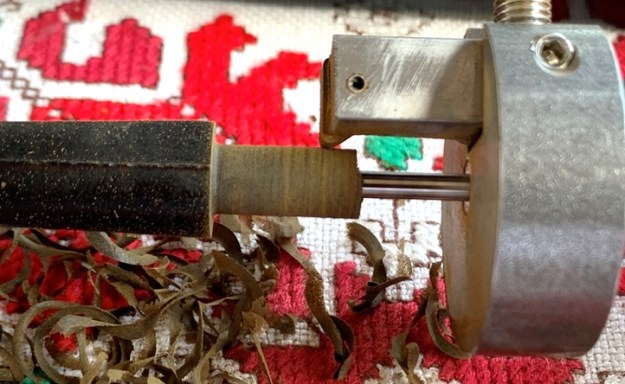
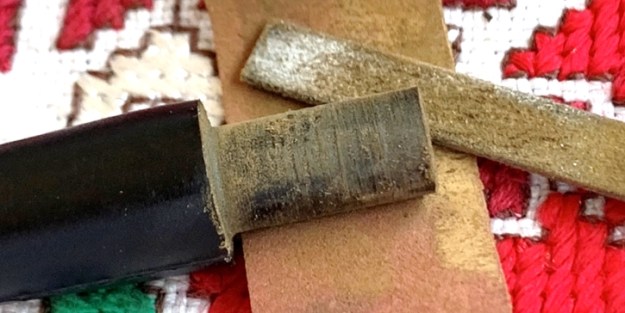
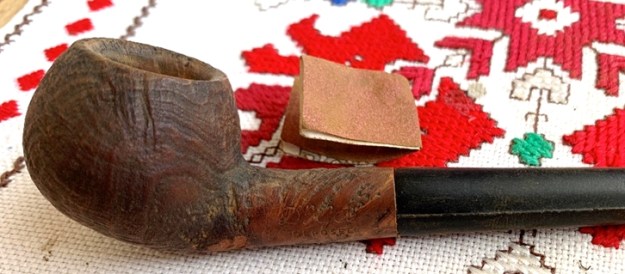
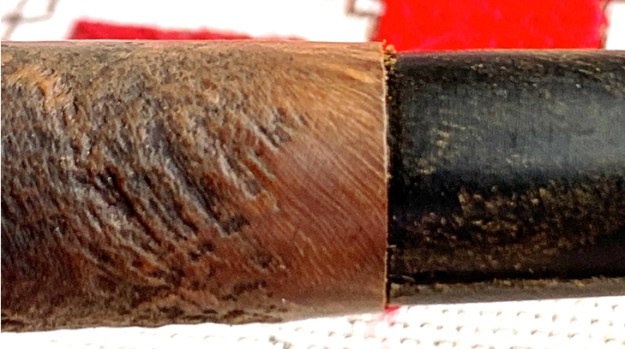
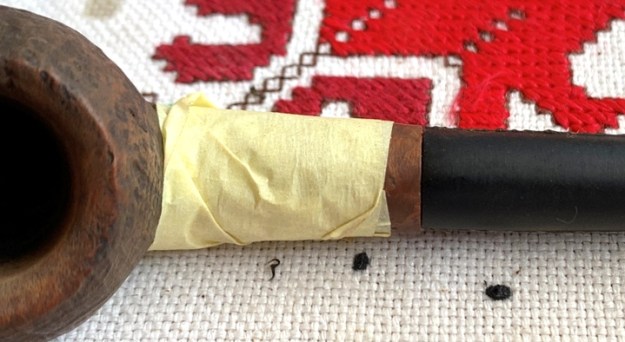
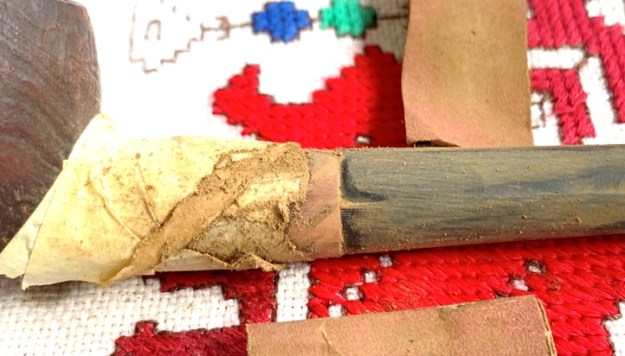
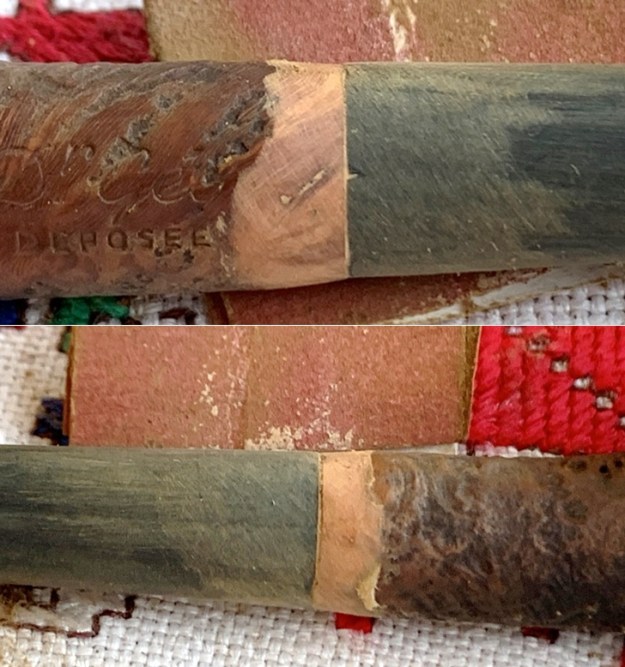
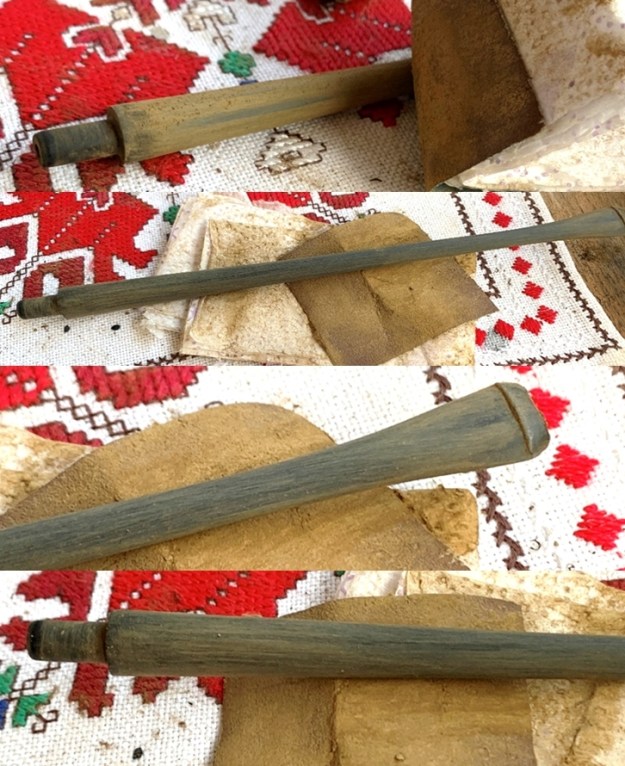
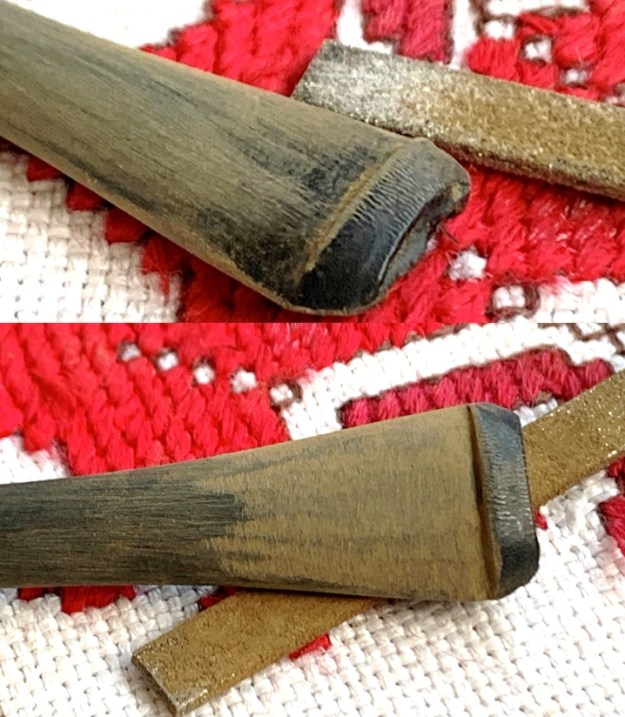
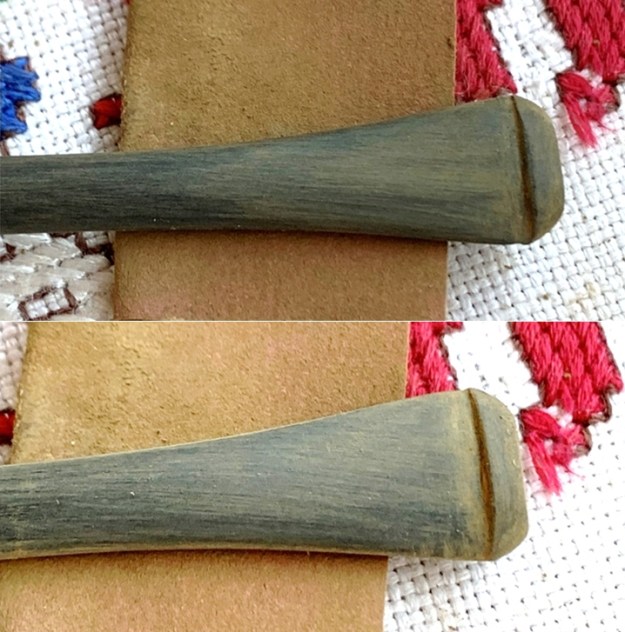
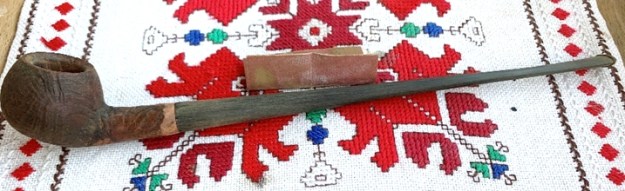
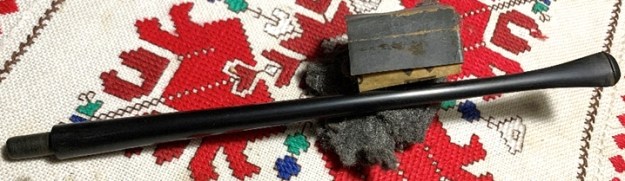
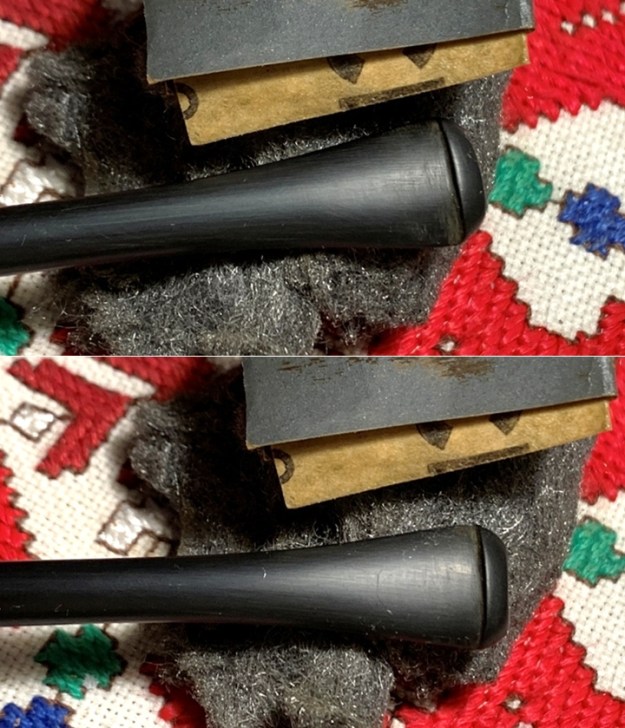
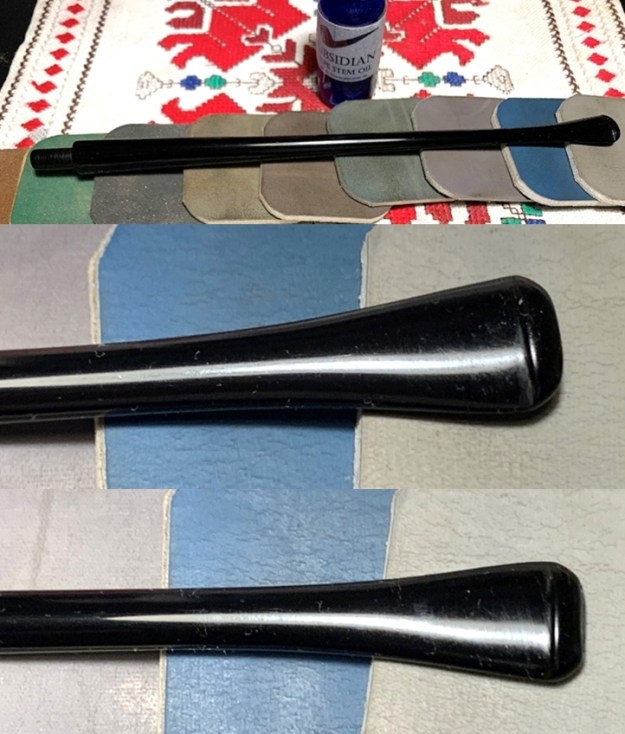
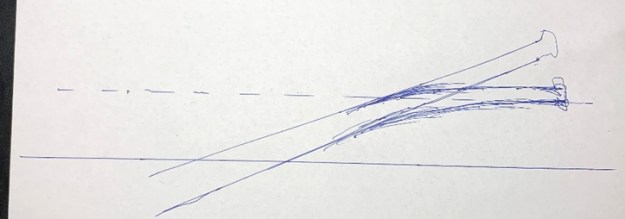
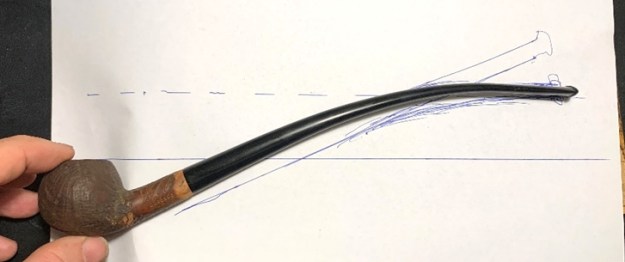
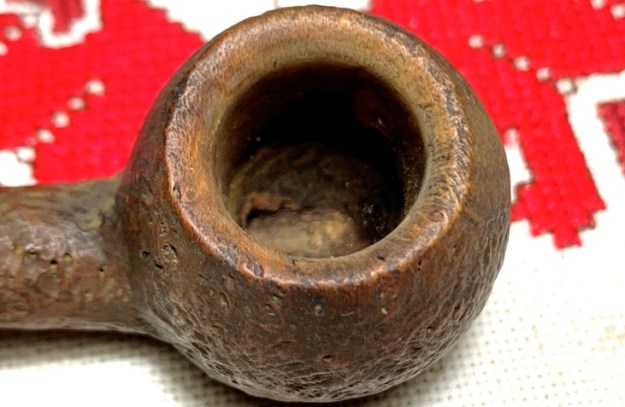
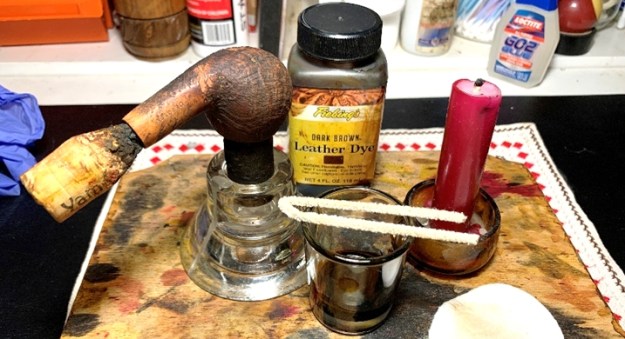
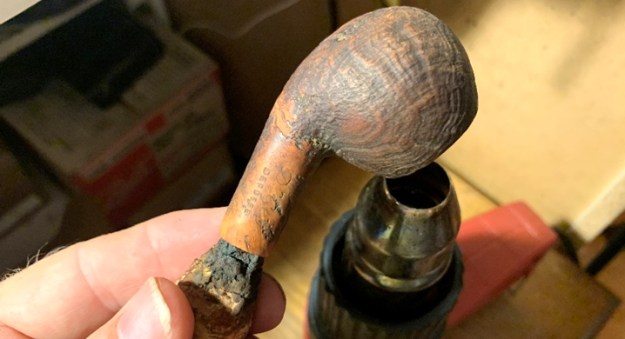
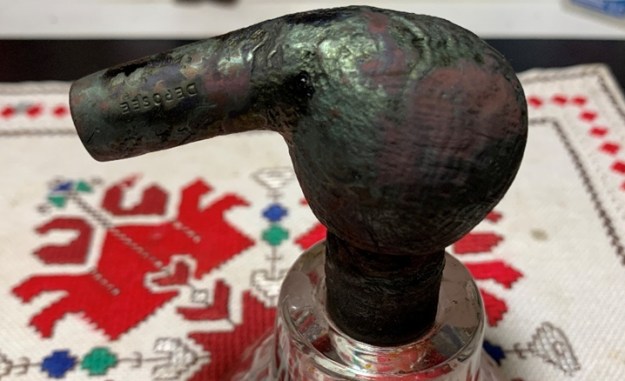
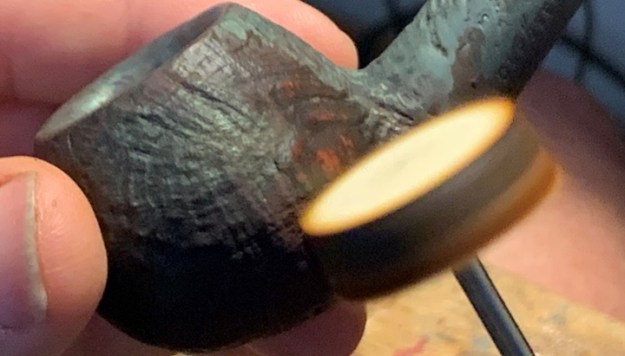
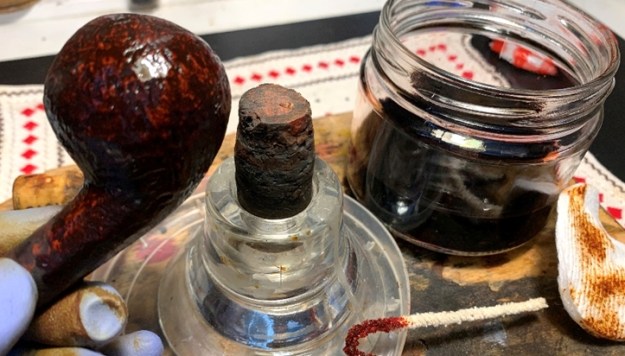
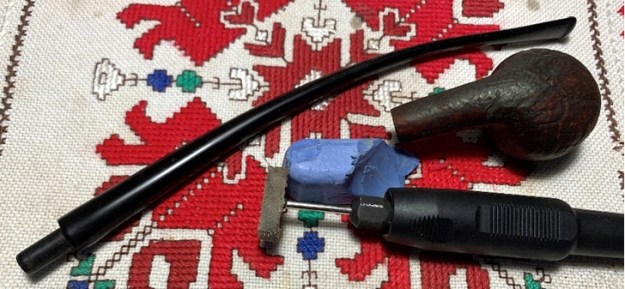
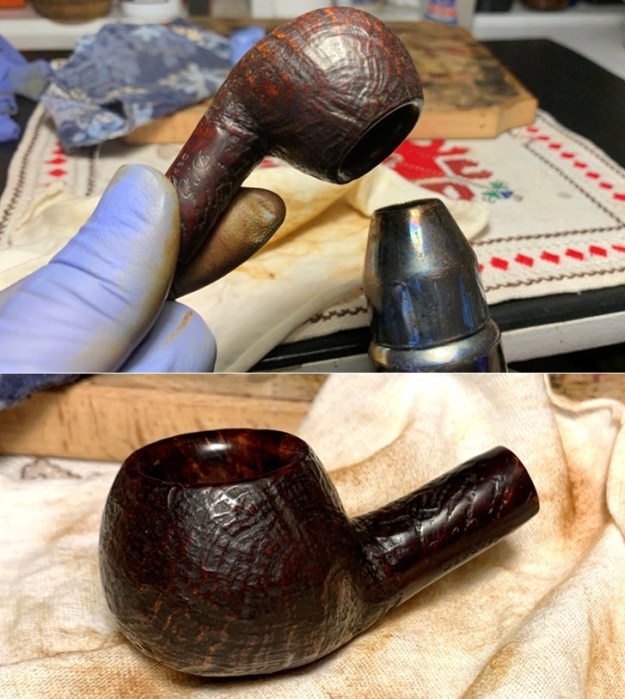
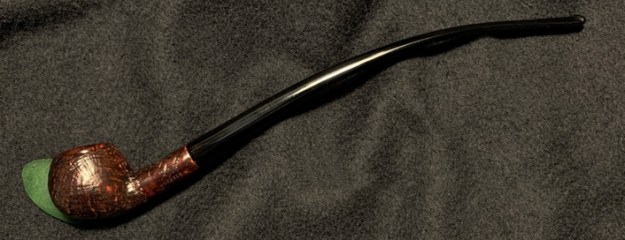
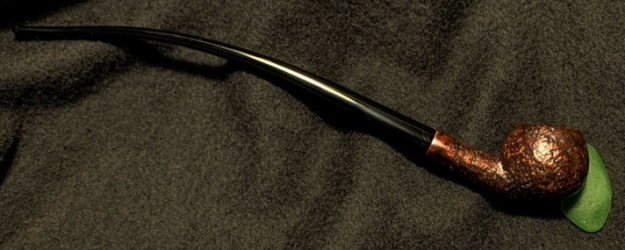
The listing shows a picture of each Doctor cited with dimensions and a pricing.  I find interesting the dismissive gesture for the listing for the Dr. Geo: “…no longer produced – do not have an exceptional notoriety but sufficient to be cited here and there”.  My hope is to change the demeanor of the Dr. Geo Blasted Prince bowl on my worktable transforming him into a Churchwarden. Churchwardens as a classic pipe shape are unique among pipes.  Bill Burney’s description of Churchwardens on his great Pipedia shapes page, describes why they are unique among pipes:Working on my Man Cave 10th floor balcony, I take a few more pictures to get a closer look at the Doctor Geo Prince bowl, which is essentially an Apple shape without the Prince stem – hmmm, an exception to the CW stem principle? The blasted finish is nice – the smooth 3-D picture of the bowl’s grain structure is nice. The finish on the stummel appears to be a very dark brown.  There are minuscule red flecks visible through the cloudiness of the old finish.  At this point, my thinking is to refresh the finish seeking to apply the ‘Dunhill’ finish that I learned from fellow-restorer and rebornpipes contributor, Paresh.  First, after applying all the paces in cleaning the stummel, I’ll assess the condition of the stummel and how to proceed.  Following this, fashioning the CW stem will come.  To start, the Dr. Geo chamber is moderately caked. To address this, I employ the Pipnet Reaming Kit using only the smallest of the 4 blade heads available in the kit.  I follow by scraping the chamber walls with the Savinelli Fitsall Tool and complete the carbon cake removal by sanding the chamber walls with 240 grade paper wrapped around a Sharpie Pen. After wiping the chamber with a cotton pad to remove the carbon dust, an inspection reveals a healthy chamber.Transitioning to cleaning the exterior surface, using undiluted Murphy’s Oil Soap, I go to work using a cotton pad and a bristled toothbrush. The brass bristled brush also works on the rim.Next, I take the bowl to the kitchen sink to continue the cleaning with shank brushes and anti-oil liquid dishwashing soap to clean the internal mortise and airway.  After giving the bowl a thorough rinsing with warm water, I transfer it back to the worktable.Through the cleaning, the finish has started to come off.  This is an indicator that a fresh start is needed. The finish is old and unstable.I decide to remove the old finish to get to the fresh briar beneath.  Isopropyl 95% is the first agent I try scrubbing the blasted finish with a cotton pad.  It is not effective.Transition next to using acetone is much more effect.  The cotton pad is evidence of the old stain which appears black and purple.  I decide to put the entire stummel into an acetone soak to fully remove the finish.  I leave it in the soak for a few hours. After a couple hours the jar containing the stummel soaking in acetone is clouded with leeched finish.  After taking the stummel out, I use a cotton pad to continue rubbing the finish off as well as employing a little steel wool. The light spots that appeared first are areas that were filled, at least partially, with wood putty which have weakened due to the cleaning.  I use a sharp dental probe to test the fills and they are solid. With the rough texture of the blasted surface, these areas will not be visible after applying new dye to the stummel. Before doing more work on the stummel, I switch the focus to fashioning the CW stem.  The first thing I do is to bring out the electronic caliper and measure the diameter of the mortise which gives me the target size of the tenon that needs to be shaped. This measurement is 7.81mm.  I add about 40mm to this to form my ‘fat target’ – the size I’ll cut the tenon and then follow by sanding to form a customized fit to the mortise.  The fat target is about 8.20mm. Next, with the drill bit provided by the PIMO Tenon Turning Tool, I predrill the airway to accommodate the guide pin of the TTT. Next, after mounting the PIMO tool on the hand drill, I do a test cut on the raw tenon of the precast CW stem and measure it – 8.01mm on the button. Whoops – that is 20mm less than I was aiming for as the ‘fat target’ but I decide to cut the tenon at this size and then sand.  This gives less margin of error, but I’m not too concerned. Keeping the same adjustment of the PIMO tool, I continue the test cutting to form a I have made several Churchwardens and one of the mistakes I have learned is to cut the tenon all the way through the precast uneven molding to create a true stem facing.  Not to do this will leave what appears to be shouldering over the edge of the stem facing.  The picture below shows a sharp 45-degree angle which is the goal.Next, using 240 sanding paper, I sand the newly cut tenon to bring it closer to the target mortise size – 7.81mm.  The rough end of the precast tenon is flattened and smoothed using the flat needle file.After a short time of sanding and fitting, the tenon seats into the mortise.Looking closer, there is a small gapping on the right side which I can close during the fine-tuning sanding.What is also the case is that there is a small overhang of the shank over the seated stem.  This will need to be sanded so that the transition between stummel and stem is smooth.I use masking tape to protect the nomenclature as well as to give a sanding boundary around the shank.I start the sanding on the shank/stem transition.  What is helpful shown in the picture below is that it shows what the ‘low-spot’ is in the pre-cast stem in the darker area passed over by the sanding indicating where sanding continues to be needed. As often is the case with the pre-cast CW stems I purchase, the shank facing along the casting seam has a dimple.  This is a pain because these dimples simply mean more sanding required at those points.Progression with the dimple – I don’t want to take off more than needed.  Note, the darkened area has disappeared on the stem indicating that the sanding paper is making seamless contact between shank and stem.With the shank/stem transition sanding completed, I move to sanding the entire pre-cast CW stem.  To start, I use a coarse 120 grade paper to do the initial sanding.  The casting seams along both sides of the stem need to be erased.  The following picture again shows the differences in the surface of the pre-cast stem.  The pre-cast stem has ripples – unevenness, even though it is new.  The dark stretch below shows a ‘valley’ in the rippling that means I sand more there to bring the edges of the valley flush with the valley floor.  The following pictures show the progression in the 120 sanding.With the CW stem smoothed after the 120 grade sanding, I switch to fine-tuning the button.  As with the stem, the button is rough. The bit needs filing to flatten it and to bring more definition to the button edges.  The slot facing on these CW stems is curved and the upper button extends out a bit more than the lower. This helps in identifying the up/down orientation of the stem.  The pictures show the progression with upper and lower bit.  Upper first:Lower :After the main filing is completed, 240 grade paper is employed to fine-tune the bit and button as well as to sand the entire stem after the 120 sanding.  Upper and lower first: Next, to continue the smoothing, 600 grade paper is used to wet sand the entire stem.  This is followed by applying 000 grade steel wool.A closeup of the button area shows the nice progression!Next, the full regimen of 9 micromesh pads is applied from 1500 to 12000. Between each set of 3 pads, Obsidian Oil is applied to condition and protect the vulcanite from future oxidation.  I only show one orbital view and a couple closeups of the finished process focusing on the upper and lower bit. With the CW stem’s sanding completed, its time to bend the stem.  The general principle I follow in stem bending is that the mouthpiece at the end of the stem, should be generally on the same horizontal plane as the rim.  It’s helpful for me to draw templates to visualize the finished stem.Where the original stem template starts with and estimation of where the bend should take place.I use the hot air gun to focus the heat on the lower side of the stem first – the thicker part.  I want it to become supple before heating the upper, thinner area of the stem which heats faster and wants to be the first place the bend begins.  I want the bend to start in the thicker part of the stem then followed by the thinner.As the stem warms over the hot air gun, I gently coax the bend as the stem softens.  After bending to a point that looks good, I bring the stem to the template holding it there for some minutes for the orientation to take hold.  I then take the stem to the kitchen sink and run cool water over it to solidify the bend.  The first try works well.  I like the look and feel of the pipe in my hand.With the stem sanding and bending completed, focus is again transitioned to the Dr. Geo blasted bowl.  Before moving to the staining process, the stummel needs some preparatory work.  One of the things I really like about working with a combination of blasted and smooth briar surfaces is the contrast that this produces.  I love to see both presentations of the grain – the smooth 2-D viewpoint as well as the rough, blasted 3-D viewpoint of the grain.  This bowl provides an opportunity for the striking contrasting. The rim is angled in a beveled slope from the external rim’s edge downward toward the chamber to the internal rim’s edge.  This rim, I believe, will look great after it is sanded to bring out the smooth briar contrast.The other sanding will bring out smooth grain over the nomenclature panel on the left shank flank as well as the newly sanded area transitioning to the stem.  To begin, 240 grade paper is used on these smooth briar patches followed by dry sanding with 600 grade paper. The full regimen of 9 micromesh pads, from 1500 to 12000, is applied to the smooth briar patches next.I’m loving what I’m seeing!  That grain contrast is great.  In the second picture, the rough area from the old fill is still visible and looks shaky, but it should disappear as it blends with the surrounding briar after the staining process.The staining process is next.  I assemble my desktop staining module with all the component parts.  I recently used the method I learned from my fellow restorer from India, Paresh, of creating the rich Dunhill look.  With this bowl being originally darker, I thought that this approach would be good.  It starts with an undercoat of Fiebing’s Dark Brown Leather Dye that is followed with the washing with red dye. After wiping the bowl with a cotton pad wetted with alcohol to clean it, I warm it with the hot air gun to open the briar helping it to be more receptive to the dye which is applied using a folded over pipe cleaner.  Using the pipe cleaner, I paint sections of the bowl with the Dark Brown Dye and then immediately ‘flame’ it with a lit candle.  This combusts the aniline dye burning away the alcohol leaving the dye pigment embedded in the briar.  After applying the dye, the stummel is set aside for several hours – through the night, for the dye to ‘rest’ and settle in.  This helps the dye to take hold in the briar.The next morning, it’s time to ‘unwrap’ the flamed stummel.  To do this, a felt cloth buffing pad is mounted onto the Dremel set at the slowest speed, and Tripoli compound is applied to help remove the crusted shell exposing the dyed briar beneath.After the Tripoli compound removes the flamed crust, I wipe the bowl to rid it of the compound dust.  When this is completed, I apply a wash of red overcoat to the briar surface and lightly wipe it with a cotton cloth.  I apply and wipe until I’m satisfied with the hue.  I like what I see.  The rich red tones give a depth to the blasted finish.Next, since it’s easier to handle the stem and stummel separately, after mounting a cotton cloth buffing wheel to the Dremel set at about 40% full power, Blue Diamond compound is applied to the long Churchwarden stem and Dr. Geo bowl.  One more step to guard against dye leeching.  Often, bowls that have been newly stained, dye will come off on the steward’s hand the first times the bowl is heated up and put into service. To emulate this, I heat the bowl with the hot air gun and then wipe it with a cotton cloth to pick up leeched dye.  Hopefully, this will keep the bowl from leeching later!I complete the fashioning of the Dr. Geo Churchwarden by giving the reunited stem and bowl a vigorous hand buffing bringing out the shine.  I’m very pleased with the results of the ‘Dunhill’ approach to finishing the bowl that I learned from Paresh.  The Dr. Geo Prince bowl serves well mounted on a long, flowing Churchwarden stem. The contrasting with the smooth and blasted briar surfaces also work very nicely. This was Jon’s second commissioned pipe and he will have the first opportunity to claim this French Dr. Geo Churchwarden from The Pipe Steward Store benefitting the Daughters of Bulgaria – women and girls who have been trafficked and sexually exploited.  Thanks for joining me!
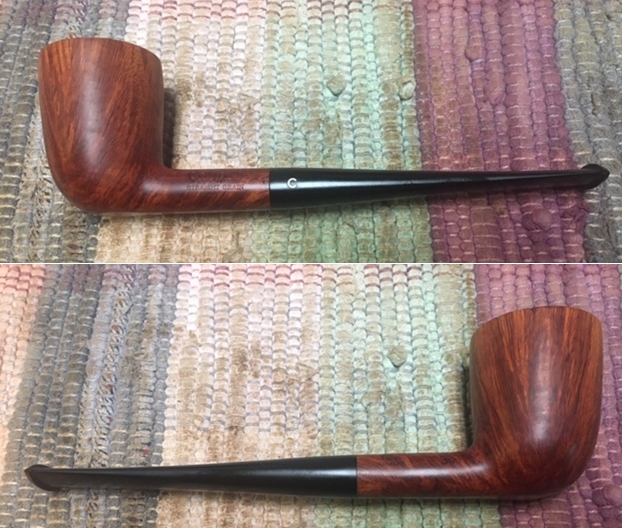
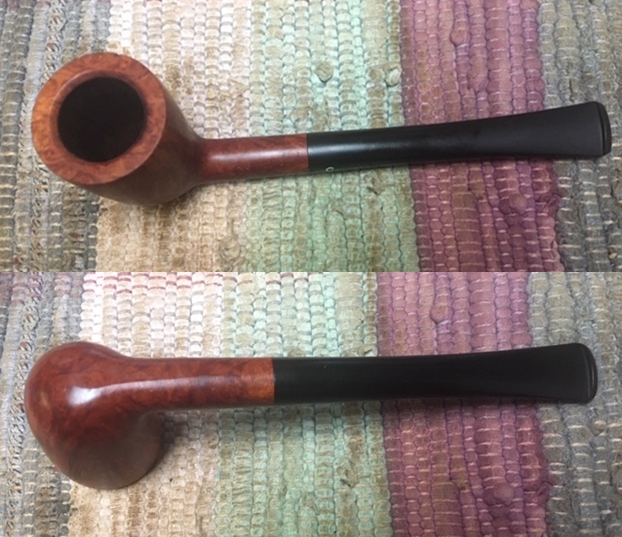
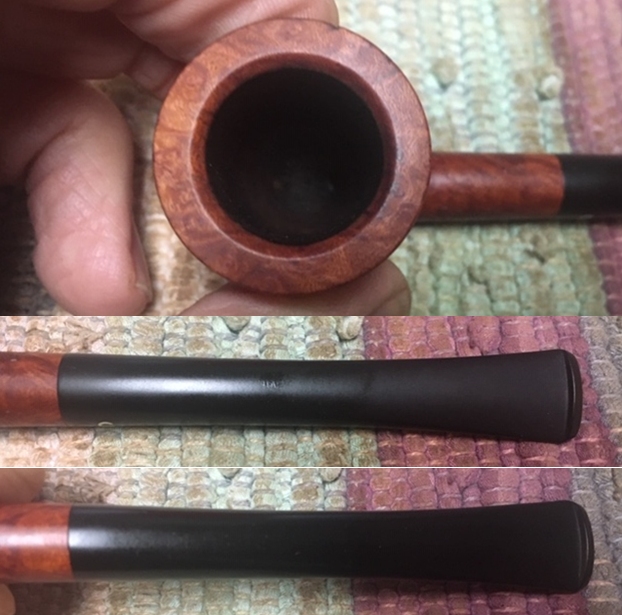
More stunning grain – Cleaning up a Second Comoy’s Specimen Straight Grain


Blog by Steve Laug

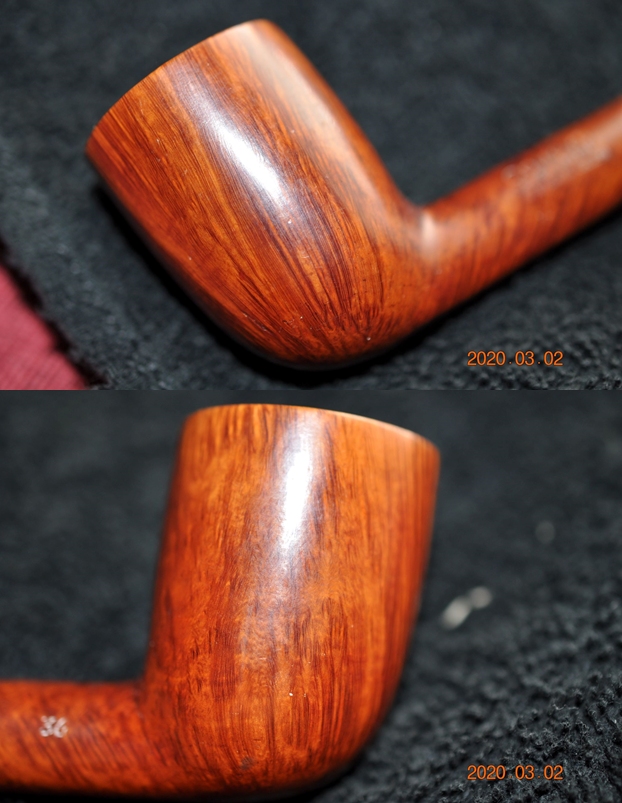
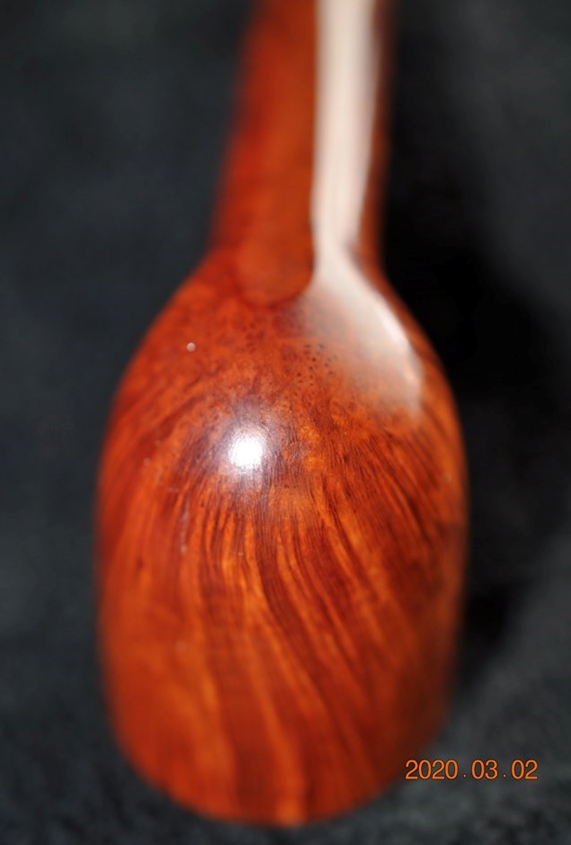
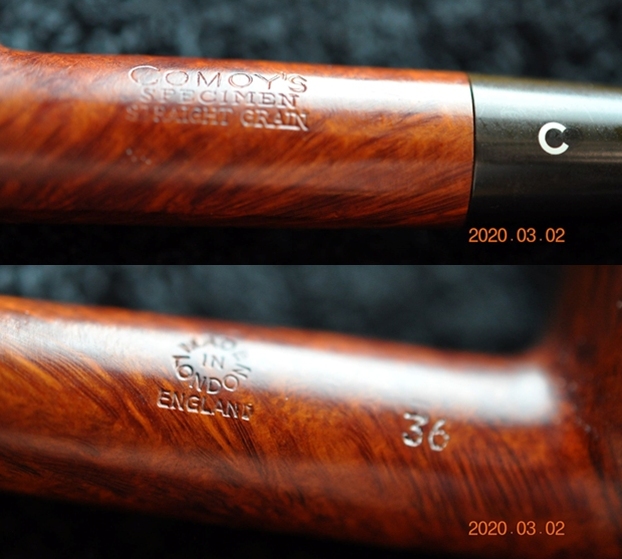
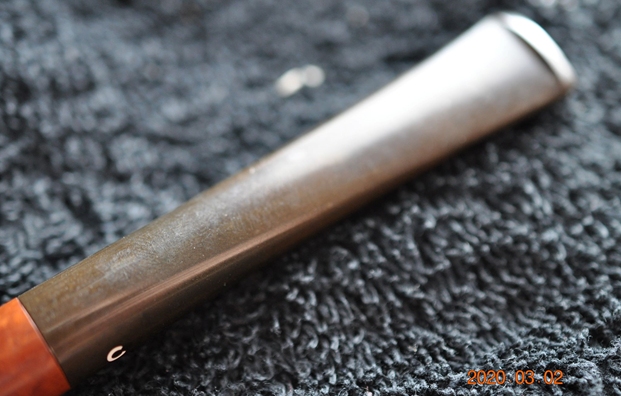
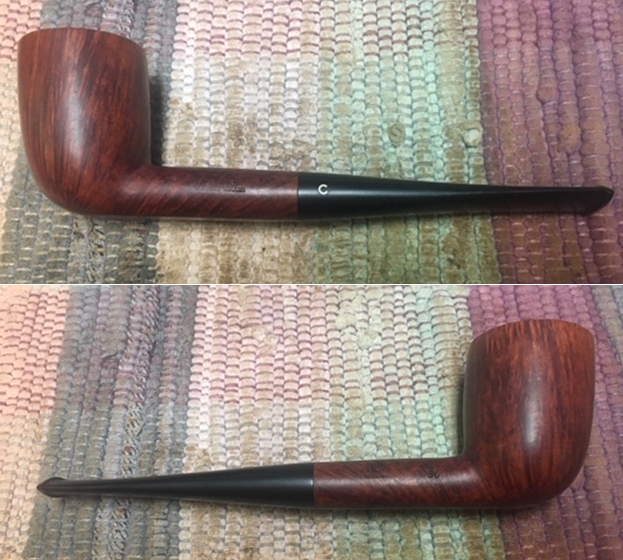
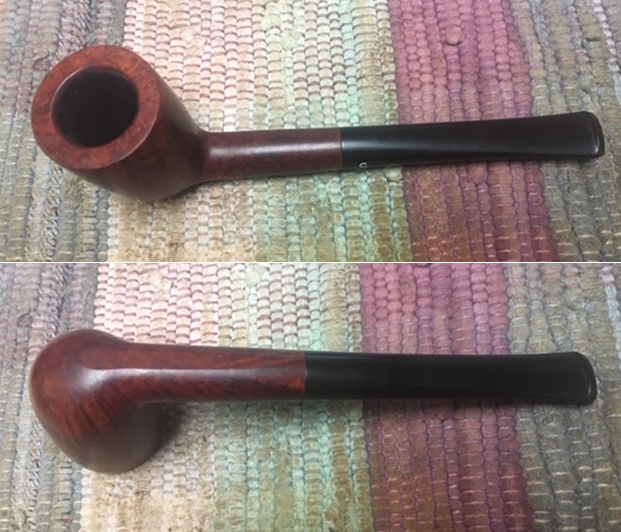
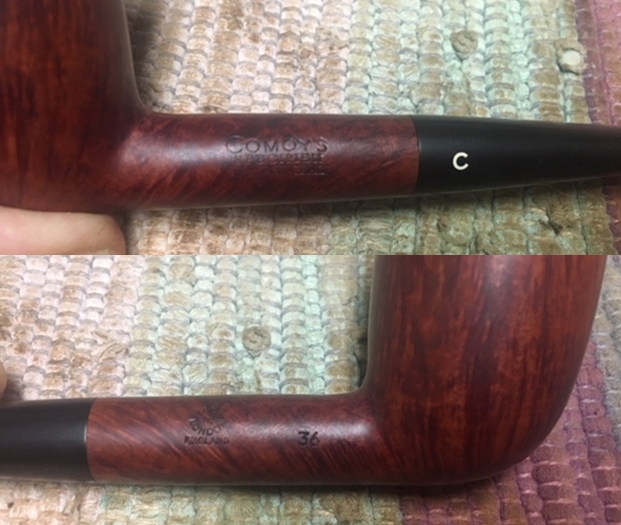
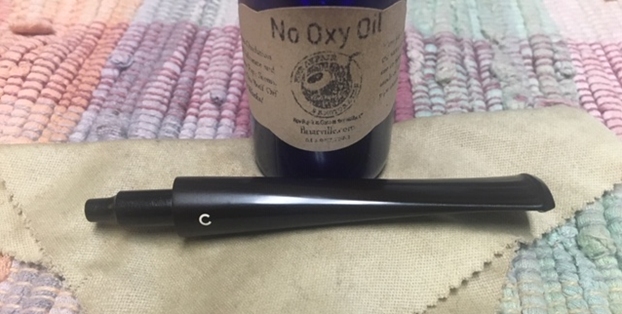
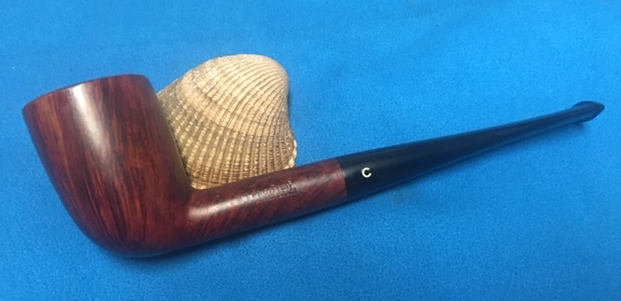
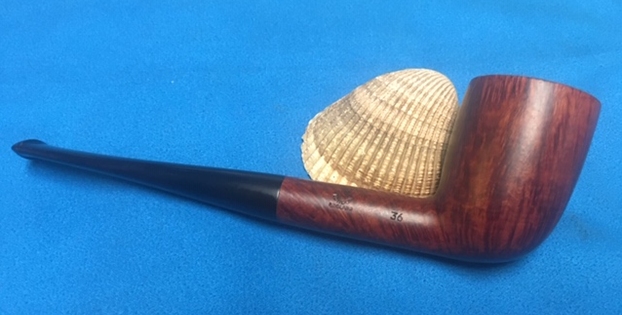
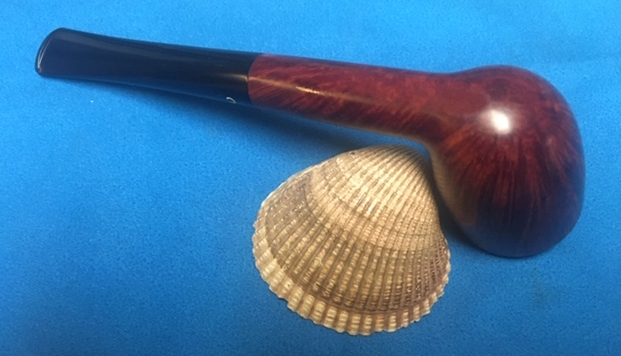
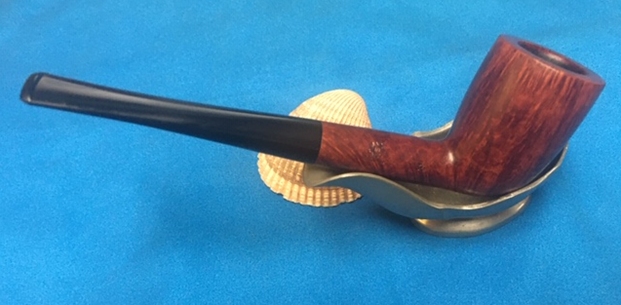
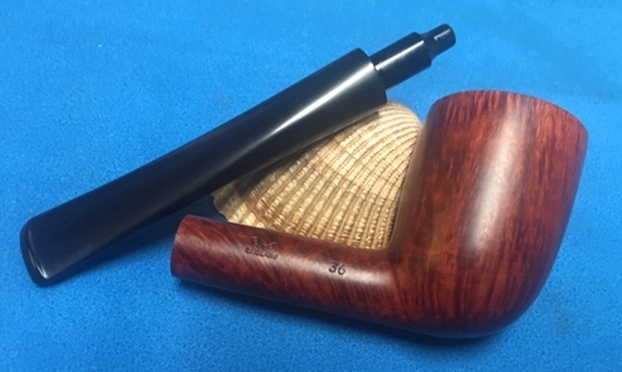
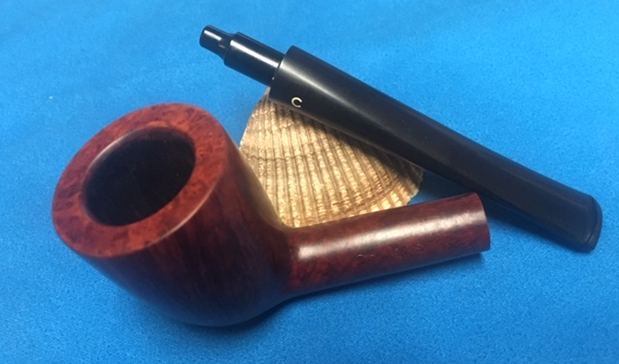
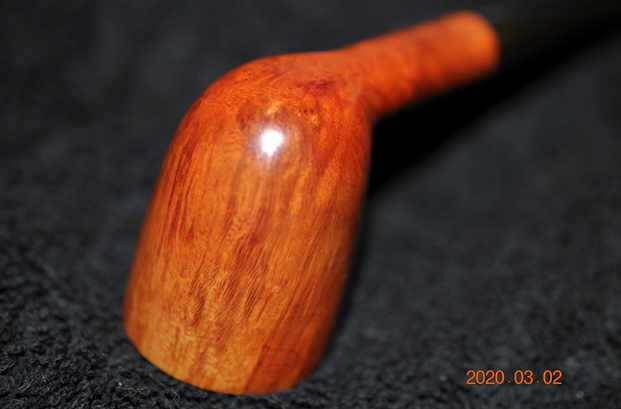
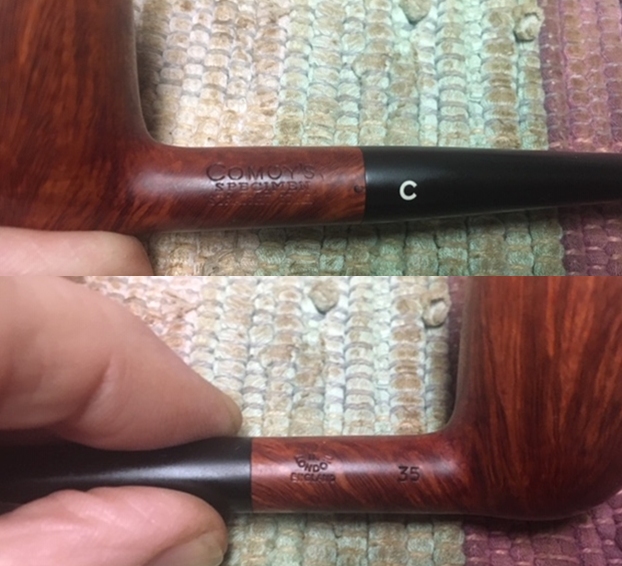
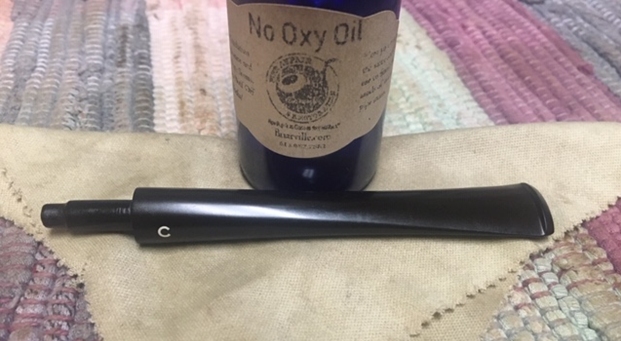
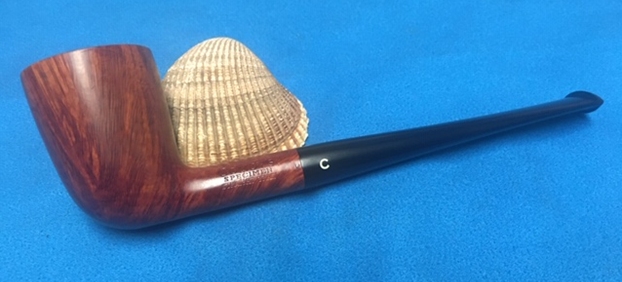
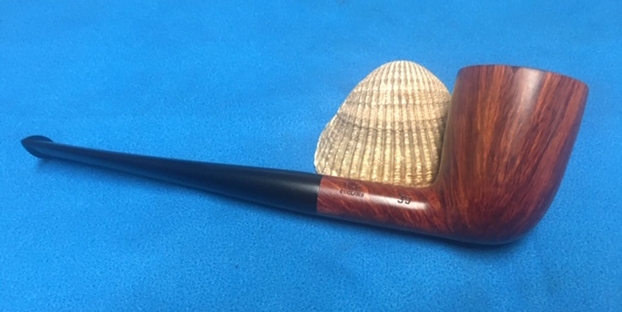
In the last box of pipes Jeff sent me there were three pipes that I left to the end to give my attention too. These were all Comoy’s pipes. The first is the one on the table now – a Comoy’s Blue Riband Prince 228C with stunning grain. The second and third were both Comoy’s Specimen Straight Grain Dublins – the second was a 35 and the third was a little larger, a 36. All of these pipes were drop dead gorgeous.  I have them all on the desk top now looking them over and I am quite honestly stunned by their beauty.The final one of those stunning pipes I chose to work on is the pipe at the bottom of the two photos above. It is 36 Specimen Straight Grain. Comoy’s Specimen Straight Grain pipes are really a special grade of pipe. This is another beautiful piece of pipe maker craftsmanship and in my mind have Comoy’s has never been surpassed. It is stamped on the left side of the shank Comoy’s Specimen Straight Grain and on the right side it bears the 36 shape number near the bowl shank junction and the circular COM stamp that reads Made In London in a circle over England. The “In” is in the centre of the circle. Jeff took some photos of the pipe before he started his cleanup work.He took photos of the bowl and rim top to show their general condition. You can see the tars on the inner edge of the beveled top. The cake in the bowl is quite thick and there is tobacco debris on the walls of the bowl. The finish on the bowl is dull but still very stunning. Jeff took some photos of the sides and heel of the bowl to give an idea of the grain on this particular piece of briar. It is amazing and I cannot wait to see what it looks like once it is polished and waxed. He took photos of the stamping on both sides of the shank to capture it for me. The first photo shows the left side of the shank and the stamping as noted above it shows the inset three part C inlaid on the side of the stem. The second shows the right side of the shank with the COM stamp and shape number. This pipe also has a slender stem but it is straight and has a great fishtail blade. Once again the surface of the top and underside of the stem is oxidized and dirty but it is quite free of tooth marks and only has a minimum of chatter. I turned to Pipephil’s site to get a quick overview of the Comoy’s Specimen Straight Grain line (http://www.pipephil.eu/logos/en/logo-comoy.html). I have included a screen capture of the pertinent section from the site. The summary to the right of the photos is always succinct and quite pointed. In this case it quotes the Comoy’s 1965 catalogue in saying the Specimen Straight Grain grade: “The rarest and finest of all Comoy pipes.”I turned to Pipedia and reread the history of the Comoy’s brand and focused on the Specimen Straight Grain. Here is the link to the article by the late Derek Green. It is worth a read. (https://pipedia.org/wiki/A_History_Of_Comoy%27s_and_A_Guide_Toward_Dating_the_Pipes). I quote from that article below:

Specimen Straight Grain. I am not sure when this grade was first produced, but it probably appeared just before the Second World War. This certainly was the top grade from its introduction. It is described in my 1965 catalogue as “The rarest and finest of all Comoy pipes. It is so unusual to find a completely perfect straight grain that shapes and quantities are strictly limited.” It was priced at $50 in 1943 and 1965. Jacques Cole recalls that, in the 1950s, there was a very large bent that was reckoned to be about the “perfect” Straight Grain. It was not for sale but used as an exhibition piece and valued then at £500.

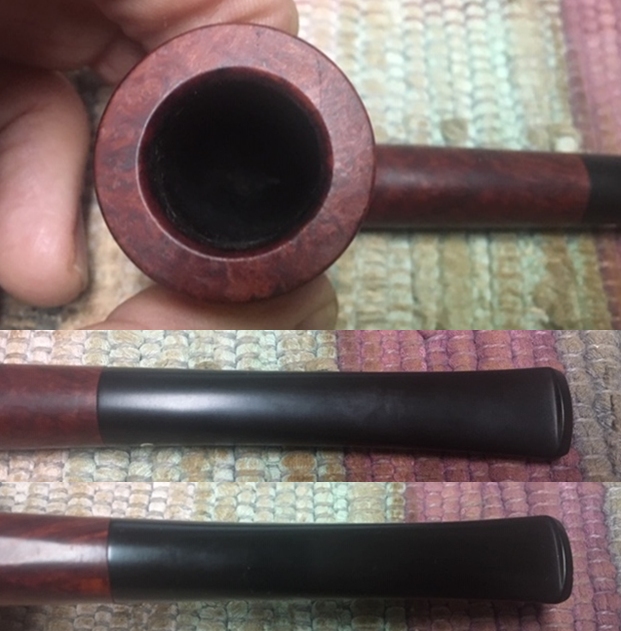
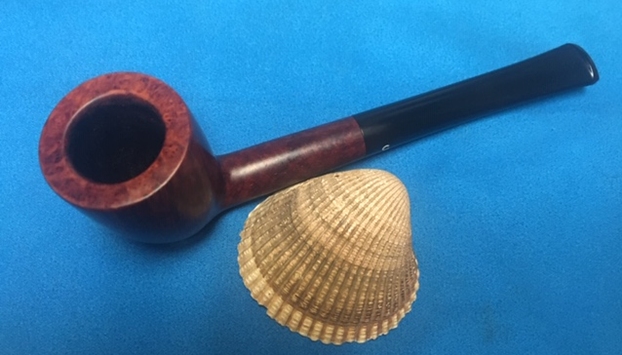
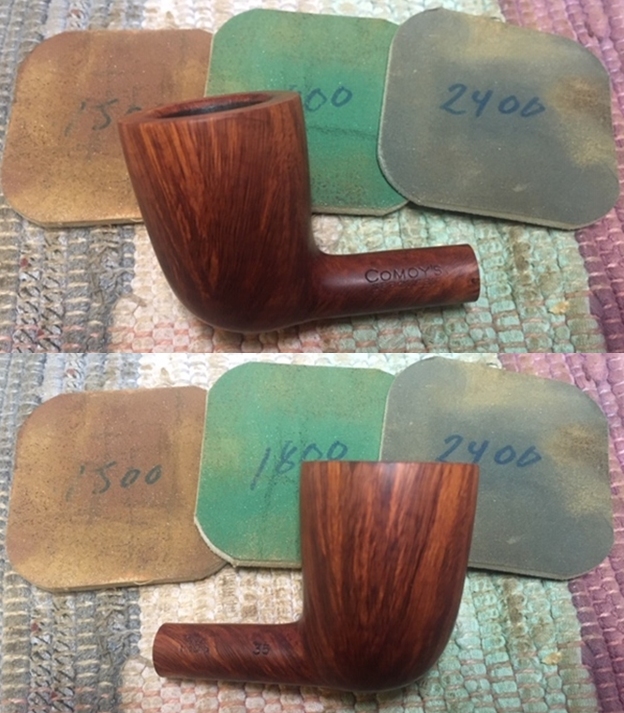
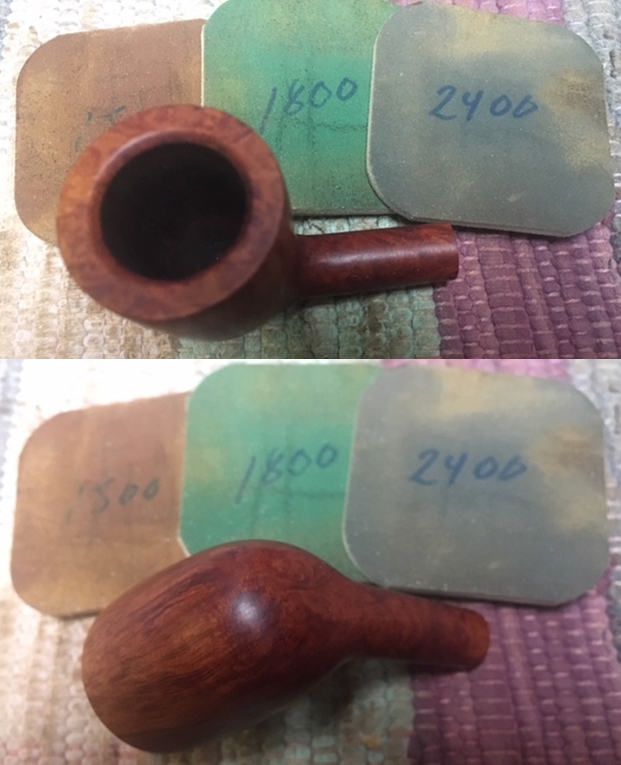
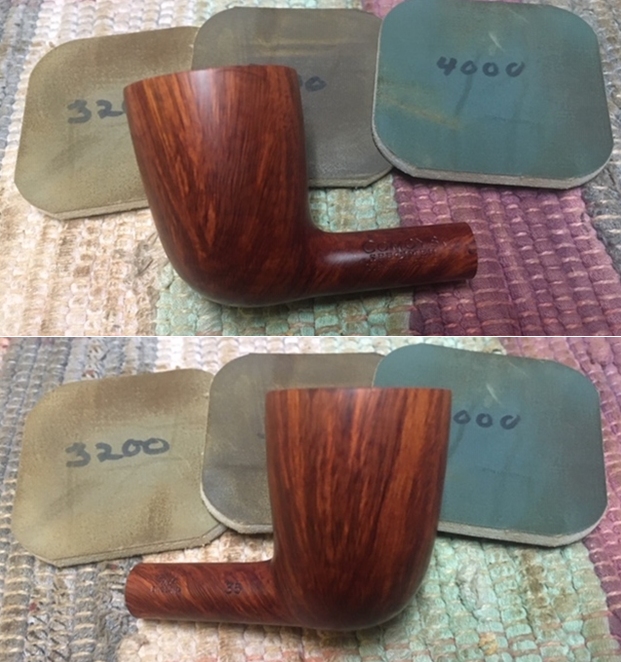
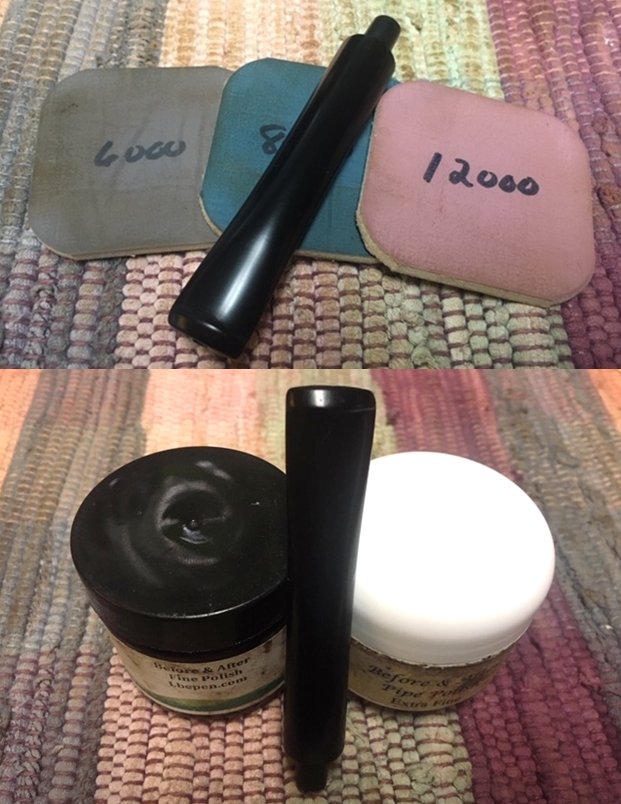
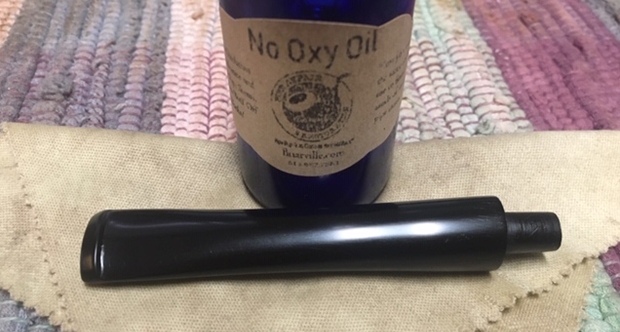
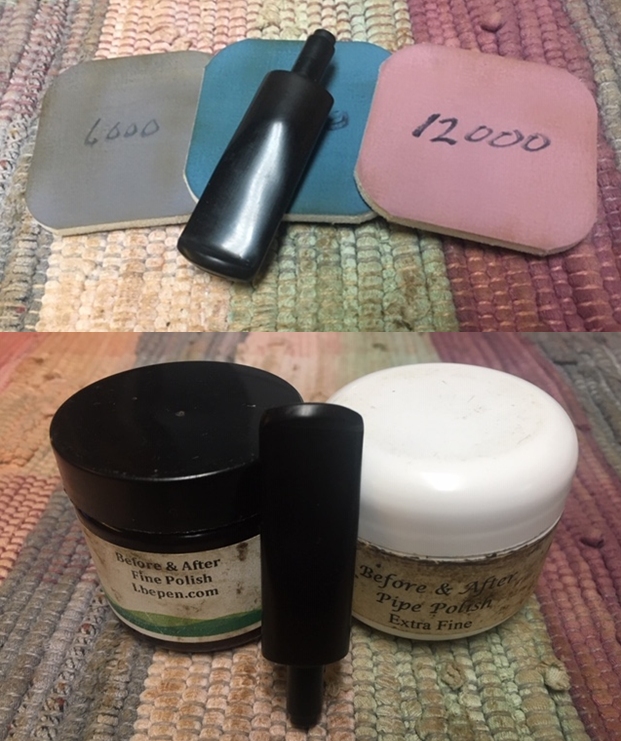
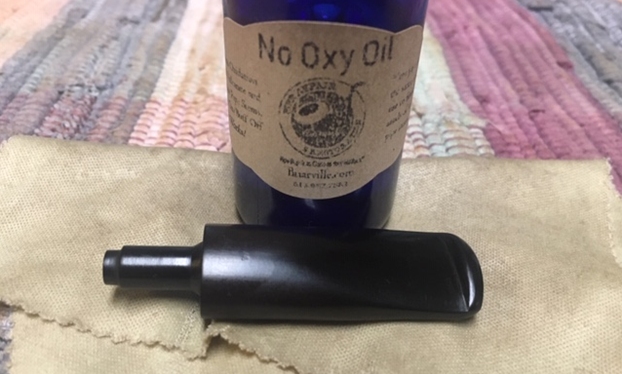
I moved forward to work on the pipe itself and see what I had to do with it. It had come back looking amazingly clean. Even the stem looked like new, with most of the tooth chatter gone. I was impressed. Jeff had done his normal thorough clean up – reaming, scrubbing, soaking and the result was evident in the pipe when I unpacked it. I took photos of the pipe before I started my work on it. Just look at the grain on this delicate pipe. Stunning! I took some photos of the rim top and stem. The rim top and bowl looked very good. The cake and lava overflow were gone and the inward beveled rim was very clean. Jeff had been able to get rid of the darkening, lava and tars and left behind a smooth rim top. Even the slight nick on the outside right edge of the rim top looked better. The close up photos of the stem shows that it is a much cleaner and better looking stem. The light tooth chatter was gone and the stem looked really good.I took some photos of the stamping on the shank sides to show the condition after the cleanup. Often the stamping takes a hit with the cleaning and is lessened in it clarity. Jeff does a great job in leaving the stamping looking very good.I removed the stem from the shank and took a photo of the pipe at this point. Like other Comoy’s I have worked on this stem had a metal tube in the tenon to strengthen it in what is often a weak point on a pipe.Since the pipe was also in such great condition at this point I started my polishing regimen. I used nine worn micromesh sanding pads and dry sanded the bowl with 1500-12000 grit pads. I wiped the bowl down with a damp cloth after each pad. The bowl really shines by the final three pads. I worked some Before & After Restoration Balm into the surface of the briar with my fingertips to clean, enliven and protect it. I let the balm sit for a little while and then buffed with a cotton cloth to raise the shine. The photos show the bowl at this point in the restoration process. Because the stem was in such great condition I moved direct to polishing it with micromesh sanding pads – dry sanding with 1500-12000 grit sanding pads. I wiped it down after each sanding pad with a cloth containing some Obsidian Oil. I finished polishing it with Before & After Pipe Stem Polish – both Fine and Extra Fine and buffed it off with a cotton cloth. I gave it a coat of Briarville’s No Oxy Oil to preserve and protect the stem. I don’t know how many times I have said this but I love it when I come to the end of a restoration and all of the parts come together and the pipe looks better than when we started the cleanup process. I put the stem back on the bowl and buffed the pipe with Blue Diamond on the buffing wheel. I carefully avoided the stamping on the shank sides during the process. I gave the bowl and stem multiple coats of carnauba wax on the buffing wheel and followed that by buffing it with a clean buffing pad on the buffer. I hand buffed the pipe with a microfiber cloth to deepen the shine. The finished pipe is a real stunning example of Comoy’s Dublin shape. Once again the grain and the way the shape follows the grain is amazing. Give the finish pipe a look in the photos below. I can only tell you that it is much prettier in person than the photos capture. The dimensions of the pipe are Length: 5 ¾ inches, Height: 1 ¾ inches, Outside diameter of the bowl: 1 ¼ inches, Chamber diameter: ¾ of an inch. This English made Comoy’s Specimen Straight Grain Dublin 36 pipe is the pipe of the amazing threesome I have been working on today. Thanks for walking through the restoration with me as I worked over another beautiful pipe. This one will be staying in my collection for now while I think about what to do with it. Thanks for your time.

More stunning grain – Cleaning up a Comoy’s Specimen Straight Grain 35 Dublin


Blog by Steve Laug

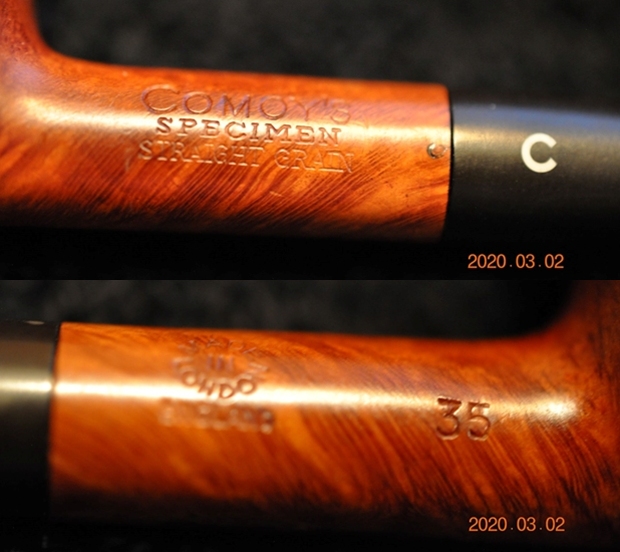
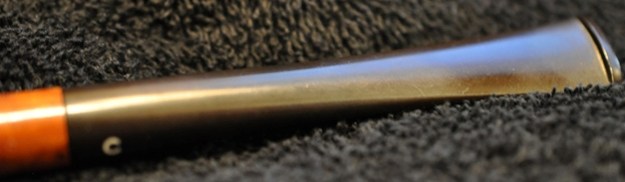
In the last box of pipes Jeff sent me there were three pipes that I left to the end to give my attention too. These were all Comoy’s pipes. The first is the one on the table now – a Comoy’s Blue Riband Prince 228C with stunning grain. The second and third were both Comoy’s Specimen Straight Grain Dublins – the second was a 35 and the third was a little larger, a 36. All of these pipes were drop dead gorgeous.  I have them all on the desk top now looking them over and I am quite honestly stunned by their beauty.The next of those stunning pipe I chose to work on is the pipe in the center of the two photos above. It is 35 Specimen Straight Grain. Comoy’s Specimen Straight Grain pipes are really a special grade of pipe. This is another beautiful piece of pipe maker craftsmanship and in my mind have Comoy’s has never been surpassed. It is stamped on the left side of the shank Comoy’s Specimen Straight Grain and on the right side it bears the 35 shape number near the bowl shank junction and the circular COM stamp that reads Made In London in a circle over England. The “In” is in the centre of the circle. Jeff took some photos of the pipe before he started his cleanup work.He took photos of the bowl and rim top to show their general condition. You can see the tars on the inner edge of the beveled top and a small nick in the outer rim on the right side toward the back. The cake in the bowl is quite thick and there is tobacco debris on the walls of the bowl. The finish on the bowl is dull but still very stunning. Jeff took some photos of the sides and heel of the bowl to give an idea of the grain on this particular piece of briar. It is amazing and I cannot wait to see what it looks like once it is polished and waxed. He took photos of the stamping on both sides of the shank to capture it for me. The first photo shows the left side of the shank and the stamping as noted above it shows the inset three part C inlaid on the side of the stem. The second shows the right side of the shank with the COM stamp and shape number.This pipe also has a slender stem but it is straight and has a great fishtail blade. Once again the surface of the top and underside of the stem is oxidized and dirty but it is quite free of tooth marks and only has a minimum of chatter. I turned to Pipephil’s site to get a quick overview of the Comoy’s Specimen Straight Grain line (http://www.pipephil.eu/logos/en/logo-comoy.html). I have included a screen capture of the pertinent section from the site. The summary to the right of the photos is always succinct and quite pointed. In this case it quotes the Comoy’s 1965 catalogue in saying the Specimen Straight Grain grade: “The rarest and finest of all Comoy pipes.”I turned to Pipedia and reread the history of the Comoy’s brand and focused on the Specimen Straight Grain. Here is the link to the article by the late Derek Green. It is worth a read. (https://pipedia.org/wiki/A_History_Of_Comoy%27s_and_A_Guide_Toward_Dating_the_Pipes). I quote from that article below:

Specimen Straight Grain. I am not sure when this grade was first produced, but it probably appeared just before the Second World War. This certainly was the top grade from its introduction. It is described in my 1965 catalogue as “The rarest and finest of all Comoy pipes. It is so unusual to find a completely perfect straight grain that shapes and quantities are strictly limited.” It was priced at $50 in 1943 and 1965. Jacques Cole recalls that, in the 1950s, there was a very large bent that was reckoned to be about the “perfect” Straight Grain. It was not for sale but used as an exhibition piece and valued then at £500.

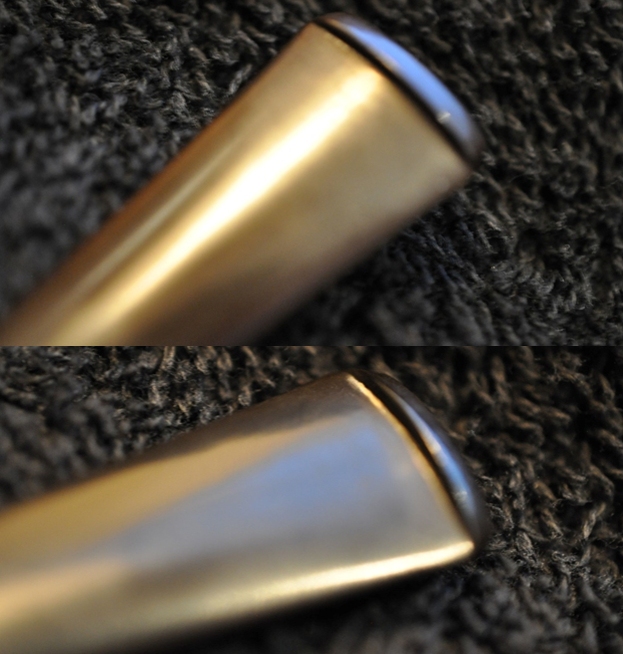
I moved forward to work on the pipe itself and see what I had to do with it. It had come back looking amazingly clean. Even the stem looked like new, with most of the tooth chatter gone. I was impressed. Jeff had done his normal thorough clean up – reaming, scrubbing, soaking and the result was evident in the pipe when I unpacked it. I took photos of the pipe before I started my work on it. Just look at the grain on this delicate pipe. Stunning! I took some photos of the rim top and stem. The rim top and bowl looked very good. The cake and lava overflow were gone and the inward beveled rim was very clean. Jeff had been able to get rid of the darkening, lava and tars and left behind a smooth rim top. Even the slight nick on the outside right edge of the rim top looked better. The close up photos of the stem shows that it is a much cleaner and better looking stem. The light tooth chatter was gone and the stem looked really good.I took photos of the stamping on the shank sides to show the condition after the cleanup. Often the stamping takes a hit with the cleaning and is lessened in it clarity. Jeff does a great job in leaving the stamping looking very good.I removed the stem from the shank and took a photo of the pipe at this point. Like other Comoy’s I have worked on this stem had a metal tube in the tenon to strengthen it in what is often a weak point on a pipe.Since the pipe was also in such great condition at this point I started my polishing regimen. I used nine worn micromesh sanding pads and dry sanded the bowl with 1500-12000 grit pads. I wiped the bowl down with a damp cloth after each pad. The bowl really shines by the final three pads. I worked some Before & After Restoration Balm into the surface of the briar with my fingertips to clean, enliven and protect it. I let the balm sit for a little while and then buffed with a cotton cloth to raise the shine. The photos show the bowl at this point in the restoration process. Because the stem was in such great condition I moved direct to polishing it with micromesh sanding pads – dry sanding with 1500-12000 grit sanding pads. I wiped it down after each sanding pad with a cloth containing some Obsidian Oil. I finished polishing it with Before & After Pipe Stem Polish – both Fine and Extra Fine and buffed it off with a cotton cloth. I gave it a coat of Briarville’s No Oxy Oil to preserve and protect the stem. I don’t know how many times I have said this but I love it when I come to the end of a restoration and all of the parts come together and the pipe looks better than when we started the cleanup process. I put the stem back on the bowl and buffed the pipe with Blue Diamond on the buffing wheel. I carefully avoided the stamping on the shank sides during the process. I gave the bowl and stem multiple coats of carnauba wax on the buffing wheel and followed that by buffing it with a clean buffing pad on the buffer. I hand buffed the pipe with a microfiber cloth to deepen the shine. The finished pipe is a real stunning example of Comoy’s Dublin shape. Once again the grain and the way the shape follows the grain is amazing. Give the finish pipe a look in the photos below. I can only tell you that it is much prettier in person than the photos capture. The dimensions of the pipe are Length: 5 ½ inches, Height: 1 ¾ inches, Outside diameter of the bowl: 1 ¼ inches, Chamber diameter: ¾ of an inch. This English made Comoy’s Specimen Straight Grain Dublin 35 pipe is another unique piece of pipe history. Thanks for walking through the restoration with me as I worked over another beautiful pipe. This one will be staying in my collection for now while I think about what to do with it. Thanks for your time.

Wow just look at that grain – Cleaning up a Comoy’s Blue Riband 228C Prince


Blog by Steve Laug

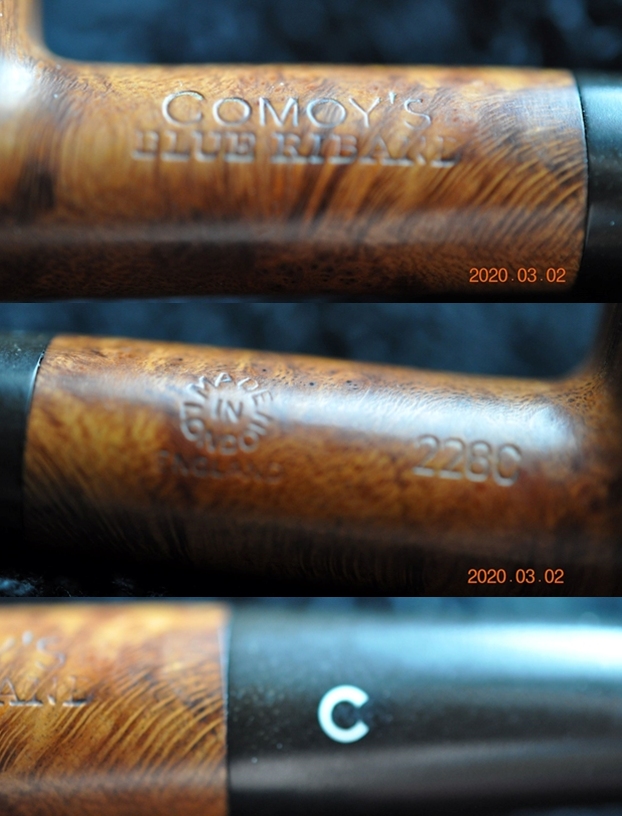
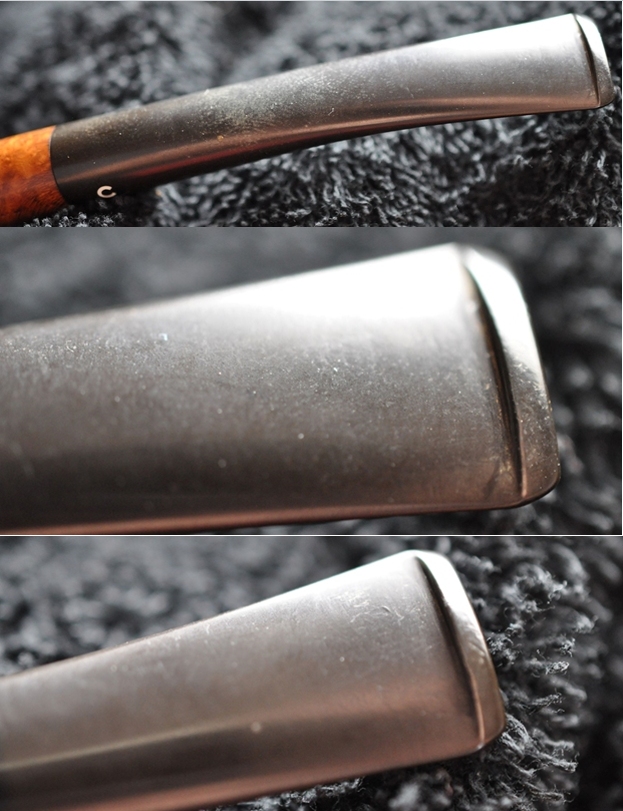
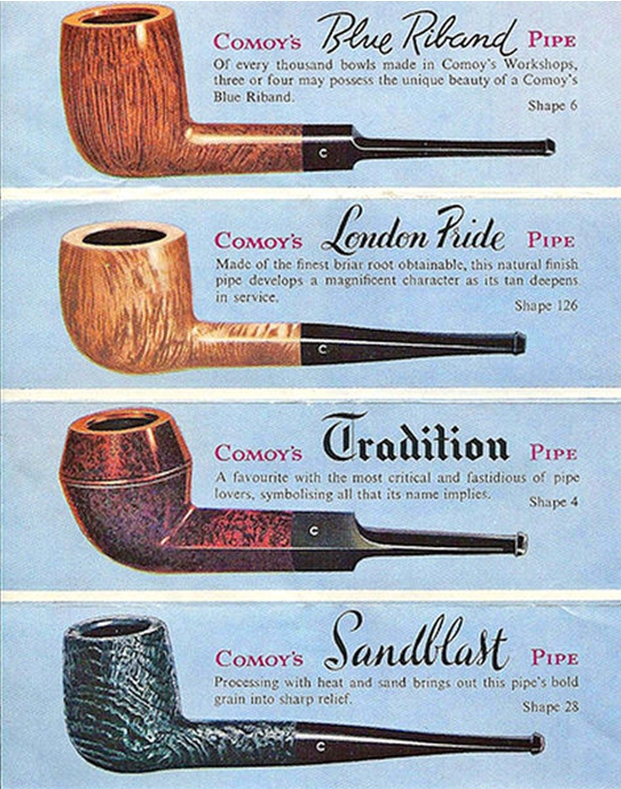
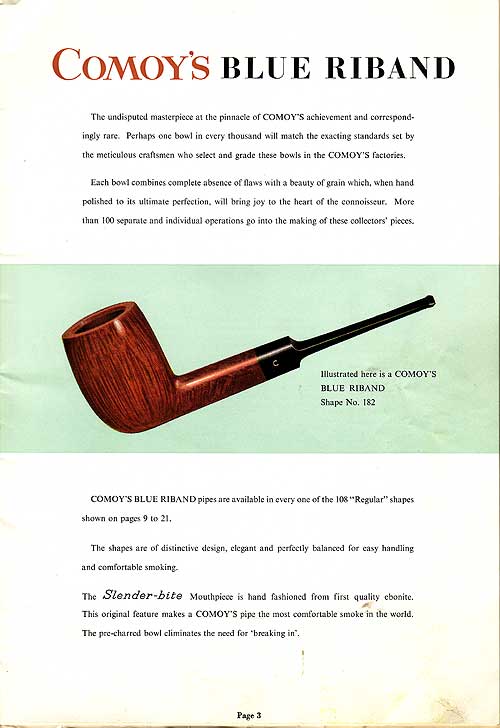
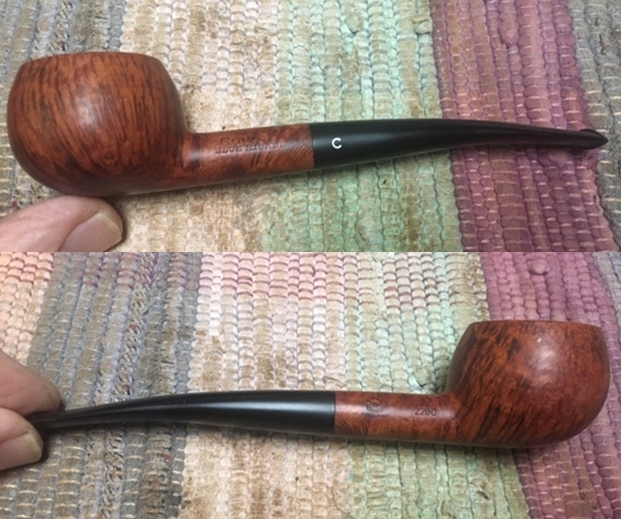
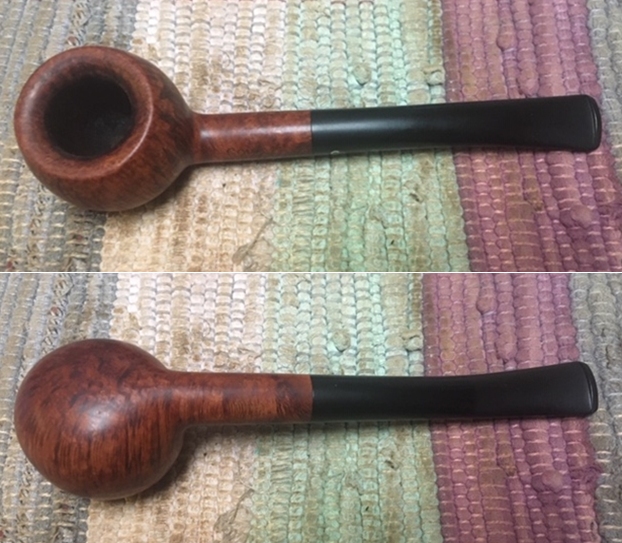
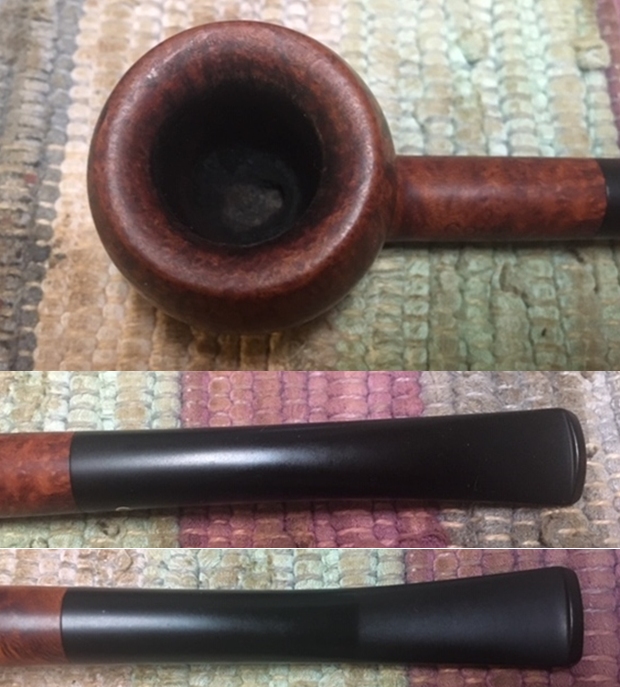
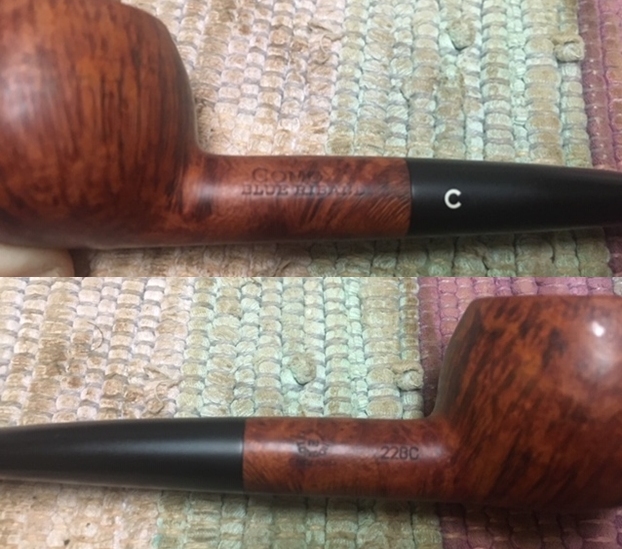
In the last box of pipes Jeff sent me there were three pipes that I left to the end to give my attention too. These were all Comoy’s pipes. The first is the one on the table now – a Comoy’s Blue Riband Prince 228C with stunning grain. The second and third were both Comoy’s Specimen Straight Grain Dublins – the second was a 35 and the third was a little larger, a 36. All of these pipes were drop dead gorgeous.  I have them all on the desk top now looking them over and I am quite honestly stunned by their beauty.Finally I made a decision and chose to work on the 228C Blue Riband Prince first. Comoy’s Blue Riband pipes are really beautiful piece of pipe maker craftsmanship and in my mind have never been surpassed. Neill Archer Roan did a great book of photos on the Comoy’s Blue Riband pipes in his large collection and since that time I am always on the lookout for nice specimens of the brand. I believe that this Prince is just such a pipe. It is stamped on the left side of the shank Comoy’s over Blue Riband and on the right side it bears the 228C shape number near the bowl shank junction and the circular COM stamp that reads Made In London in a circle over England. The “In” is in the centre of the circle. Jeff took some photos of the pipe before he started his cleanup work.He took photos of the bowl and rim top to show their general condition. You can see the tars on the inner edge of the beveled top and a light bit of lava higher up on the right front bevel. The cake in the bowl is quite thick and there is tobacco debris on the walls of the bowl. The finish on the bowl is dull but still very stunning. Jeff took some photos of the sides and heel of the bowl to give an idea of the grain on this particular piece of briar. It is amazing and I cannot wait to see what it looks like once it is polished and waxed. He took photos of the stamping on both sides of the shank to capture it for me. The first photo shows the left side of the shank and the stamping as noted above. The second shows the right side of the shank with the COM stamp and shape number. The final photo in this set shows the three part inlaid C on the left side of the taper stem.The slender stem sets a jaunty profile for the pipe with its slight bend. The surface of the top and underside of the stem is oxidized and dirty but it is quite free of tooth marks and only has a minimum of chatter.I turned to Pipephil’s site to get a quick overview of the Comoy’s Blue Riband line (http://www.pipephil.eu/logos/en/logo-comoy.html). I have included a screen capture of the pertinent section from the site. The summary to the right of the photos is always succinct and quite pointed. In this case also talking about the 3 part inlaid logo on the stem.I turned to Pipedia and reread the history of the Comoy’s brand and a bit about the various lines of the brand (https://pipedia.org/wiki/Comoy%27s). I have included two catalogue pages from the site for easy reference on the Blue Riband line. The information given in both of them is quite interesting to note. I moved forward to work on the pipe itself and see what I had to do with it. It had come back looking amazingly clean. Even the stem looked like new, with most of the tooth chatter gone. I was impressed. Jeff had done his normal thorough clean up – reaming, scrubbing, soaking and the result was evident in the pipe when I unpacked it. I took photos of the pipe before I started my work on it.  I took some photos of the rim top and stem. The rim top and bowl looked very good. The cake and lava overflow were gone and the inward beveled rim was very clean. Jeff had been able to get rid of the lava and tars and left behind a smooth rim top. The close up photos of the stem show that it is a much cleaner and better looking stem. The light tooth chatter was gone and the stem looked really good.I took some photos of the stamping on the shank sides to show the condition after the cleanup. Often the stamping takes a hit with the cleaning and is lessened in it clarity. Jeff does a great job in leaving the stamping looking very good.I removed the stem from the shank and took a photo of the pipe at this point. Like other Comoy’s I have worked on this stem had a metal tube in the tenon to strengthen it in what is often a weak point on a pipe.Since the pipe was in such great condition at this point I started my polishing regimen. I used nine worn micromesh sanding pads and dry sanded the bowl with 1500-12000 grit pads. I wiped the bowl down with a damp cloth after each pad. The bowl really shines by the final three pads. I worked some Before & After Restoration Balm into the surface of the briar with my fingertips to clean, enliven and protect it. I let the balm sit for a little while and then buffed with a cotton cloth to raise the shine. The photos show the bowl at this point in the restoration process. Because the stem was in such great condition I moved direct to polishing it with micromesh sanding pads – dry sanding with 1500-12000 grit sanding pads. I wiped it down after each sanding pad with a cloth containing some Obsidian Oil. I finished polishing it with Before & After Pipe Stem Polish – both Fine and Extra Fine and buffed it off with a cotton cloth. I gave it a coat of Briarville’s No Oxy Oil to preserve and protect the stem. I love it when I come to the end of a restoration and all of the parts come together and the pipe looks better than when we started the cleanup process. I put the stem back on the bowl and buffed the pipe with Blue Diamond on the buffing wheel. I carefully avoided the stamping on the shank sides during the process. I gave the bowl and stem multiple coats of carnauba wax on the buffing wheel and followed that by buffing it with a clean buffing pad on the buffer. I hand buffed the pipe with a microfiber cloth to deepen the shine. The finished pipe is a real stunning example of Comoy’s mastery of the Prince shape. The grain and the way the shape follows the grain is amazing. Give the finish pipe a look in the photos below. I can only tell you that it is much prettier in person than the photos capture. The dimensions of the pipe are Length: 5 ¾ inches, Height: 1 ¼ inches, Outside diameter of the bowl: 1 ¼ inches, Chamber diameter: ¾ of an inch. This English made Comoy’s Blue Riband pipe is a unique piece of pipe history. Thanks for walking through the restoration with me as I worked over another beautiful pipe. This one will be staying in my collection for now as I have nothing like it. Thanks for your time.

Restoring an Orlik H182 Hurricane Billiard


Blog by Steve Laug

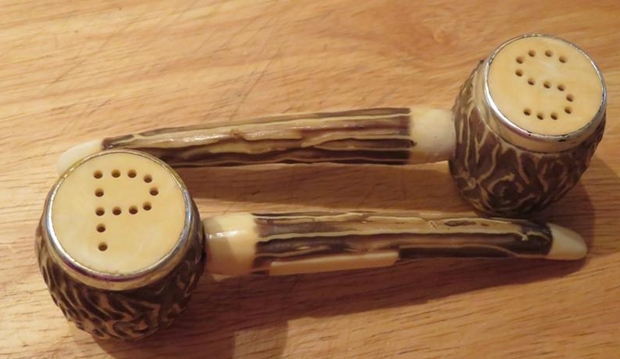
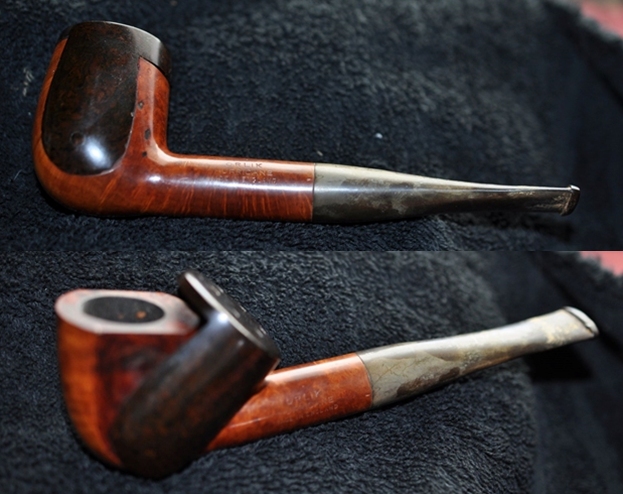
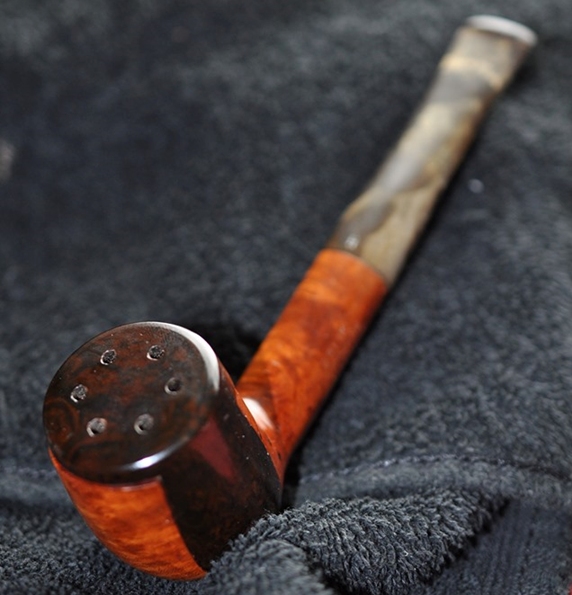
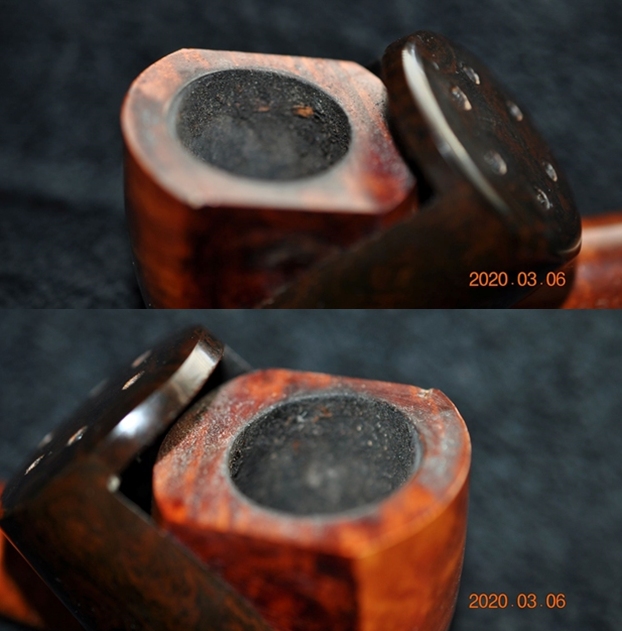
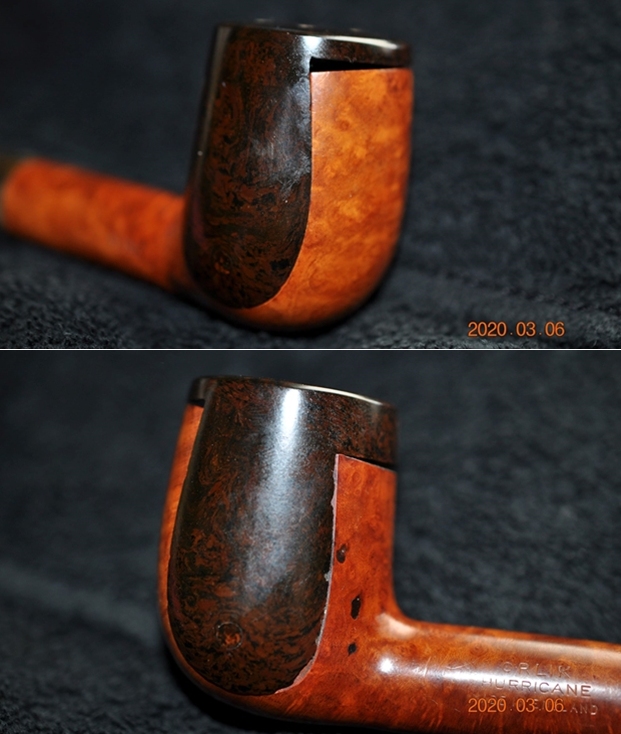
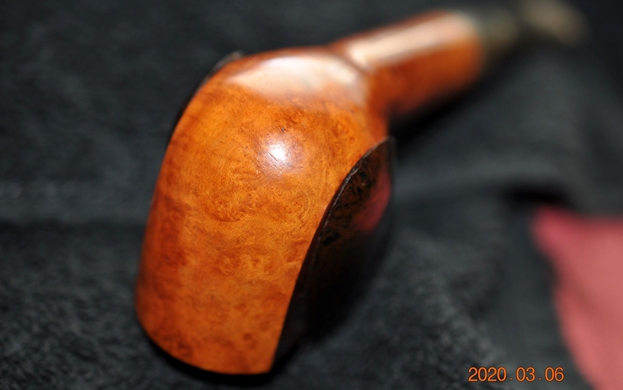
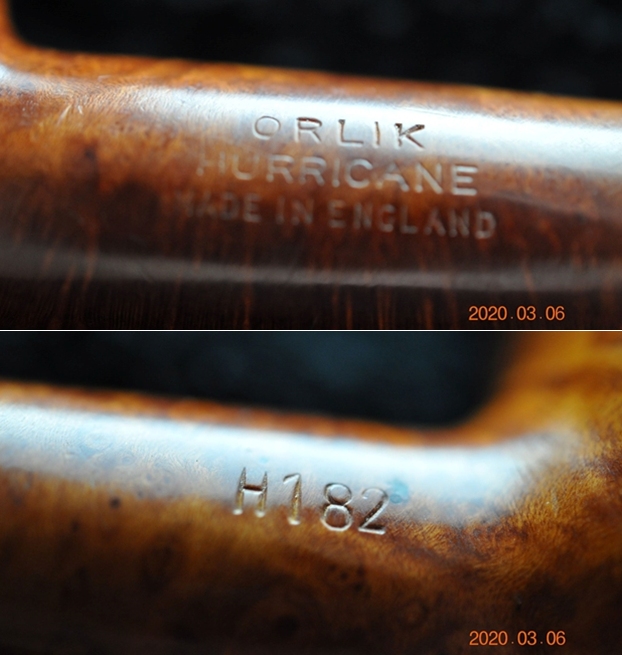
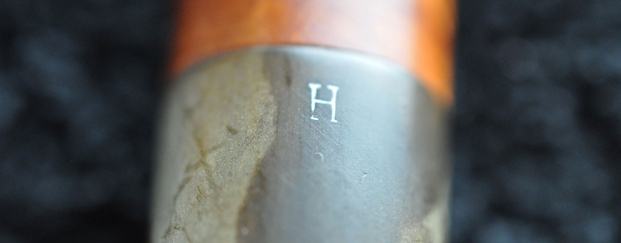
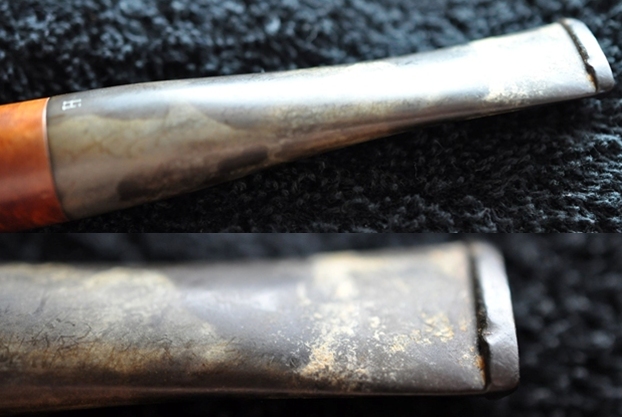
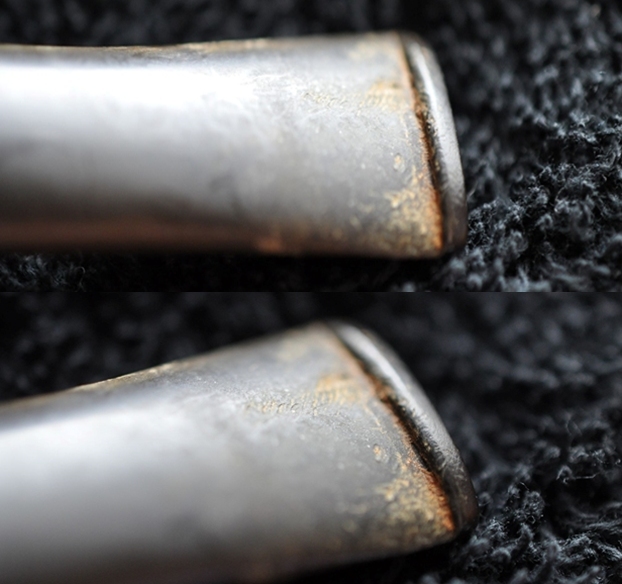
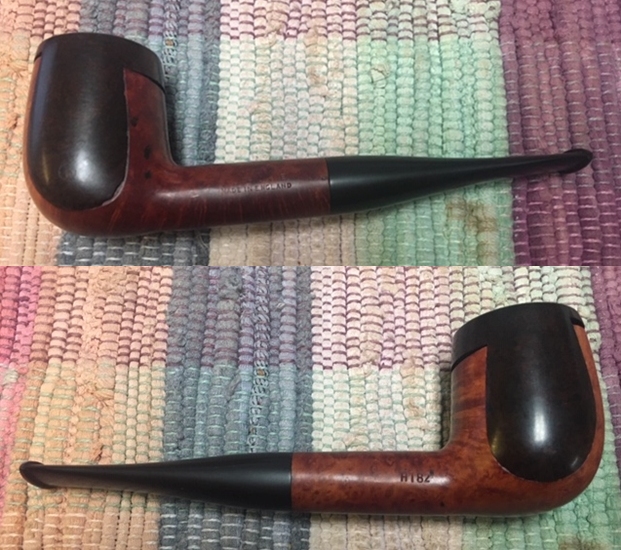
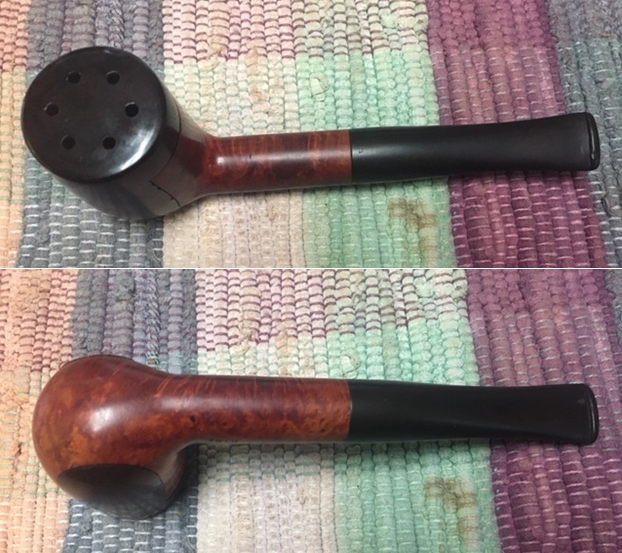
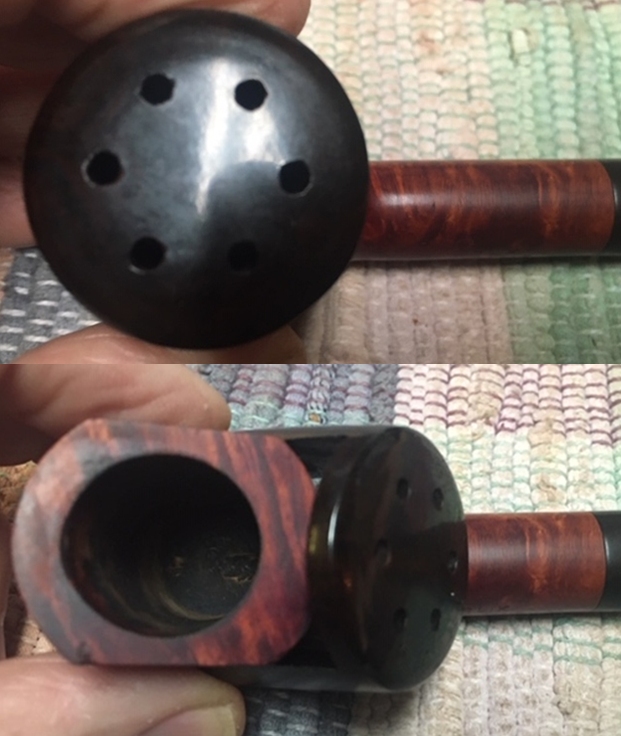
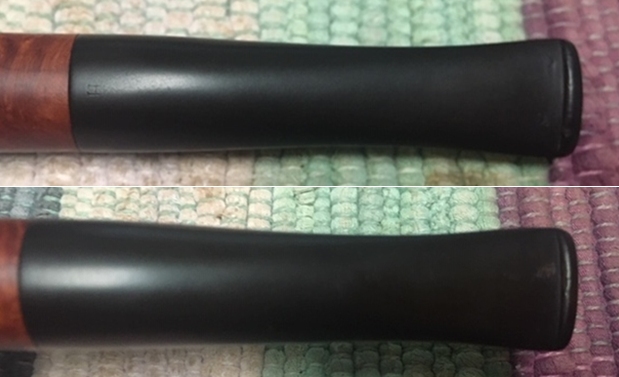
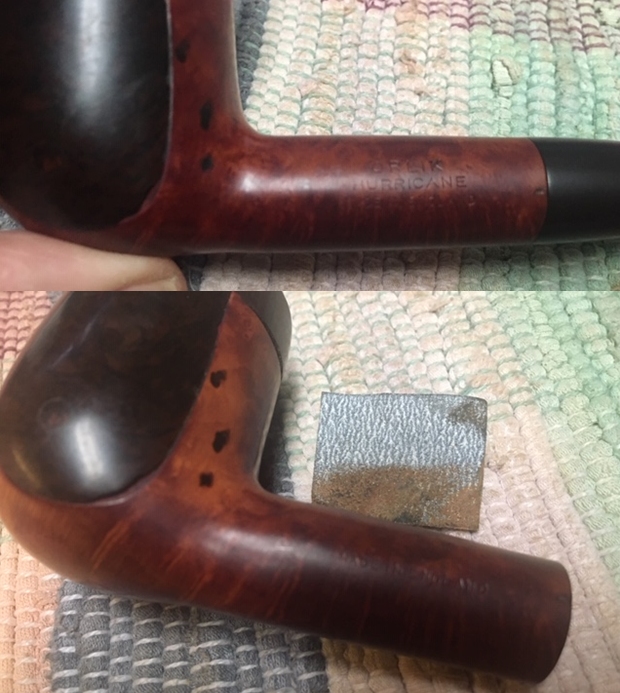
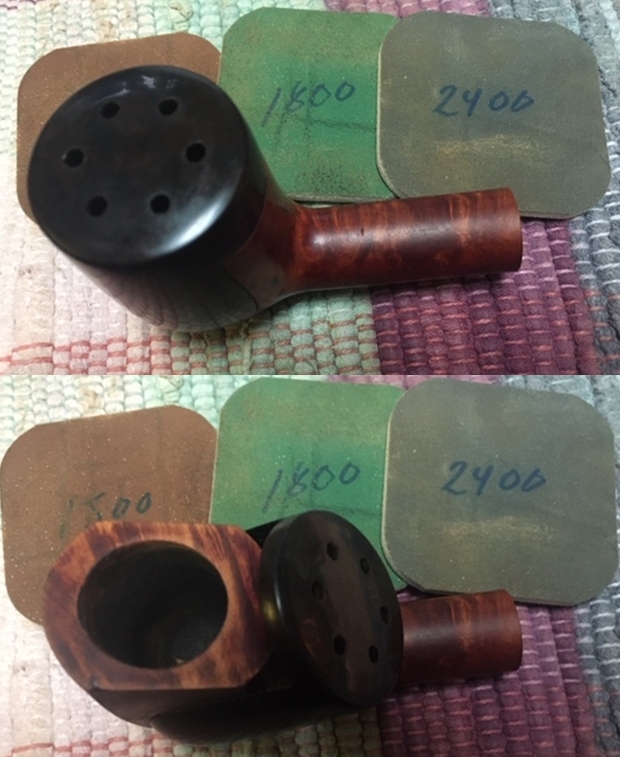
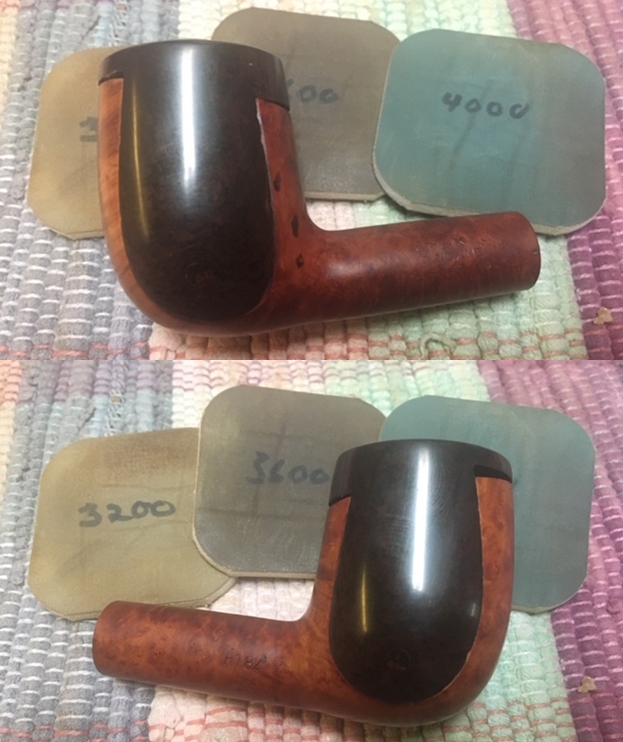
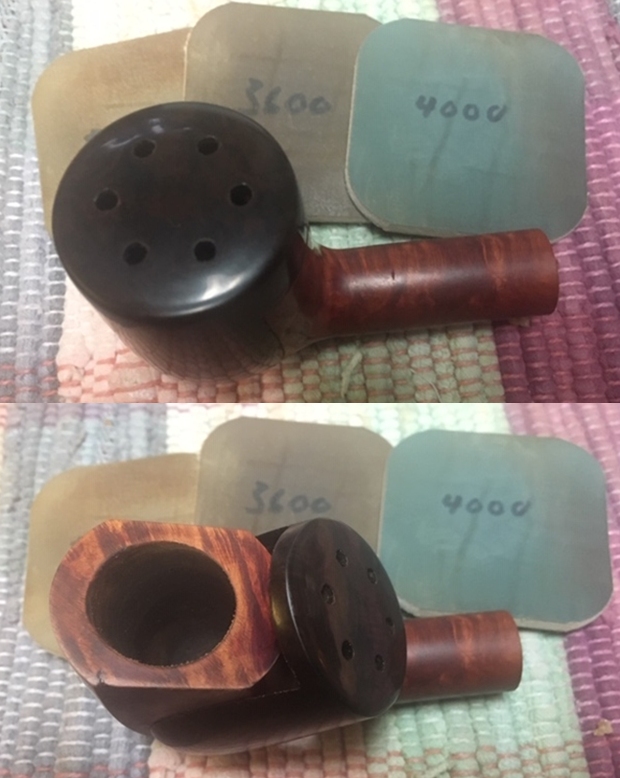
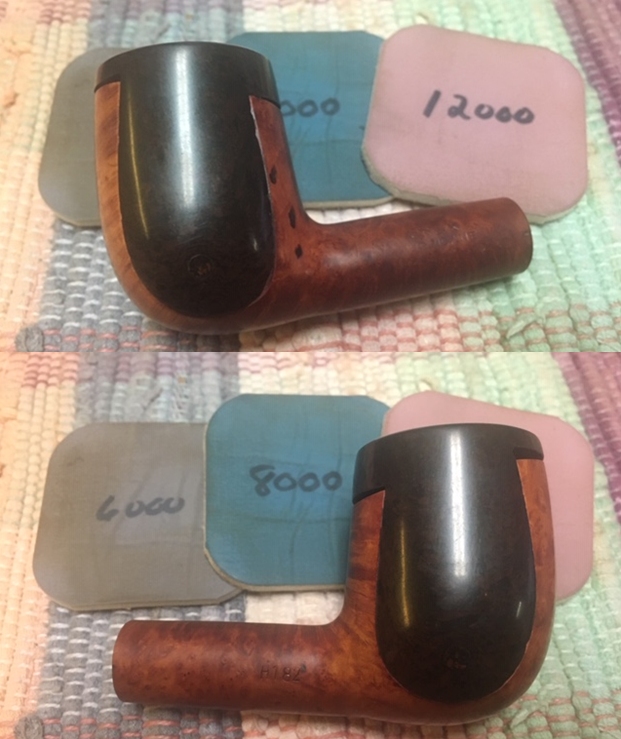
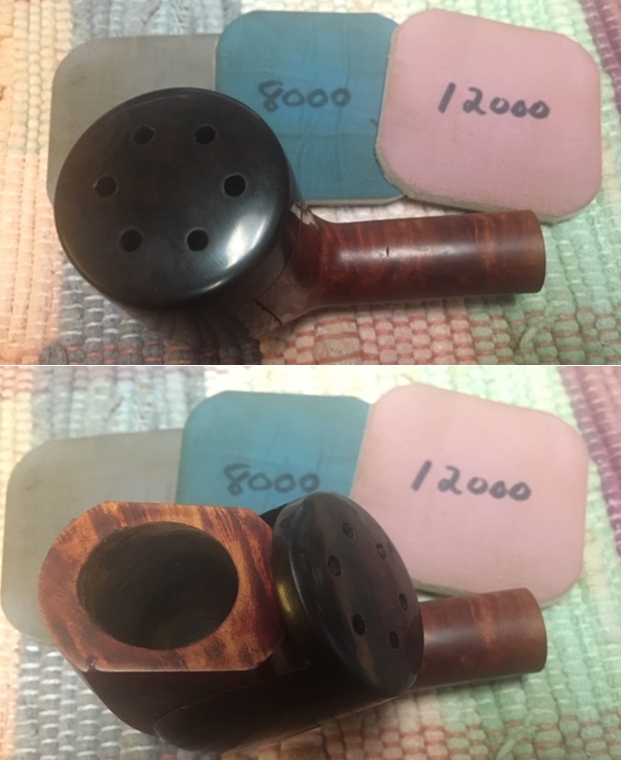
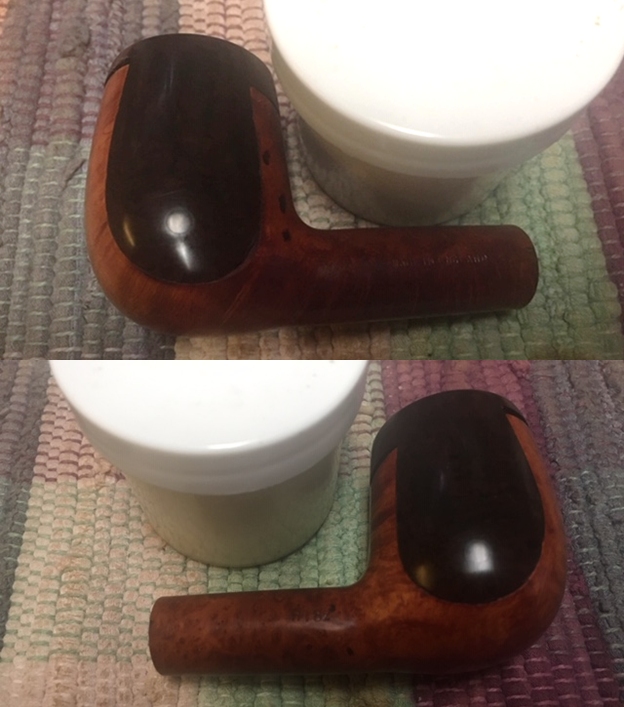
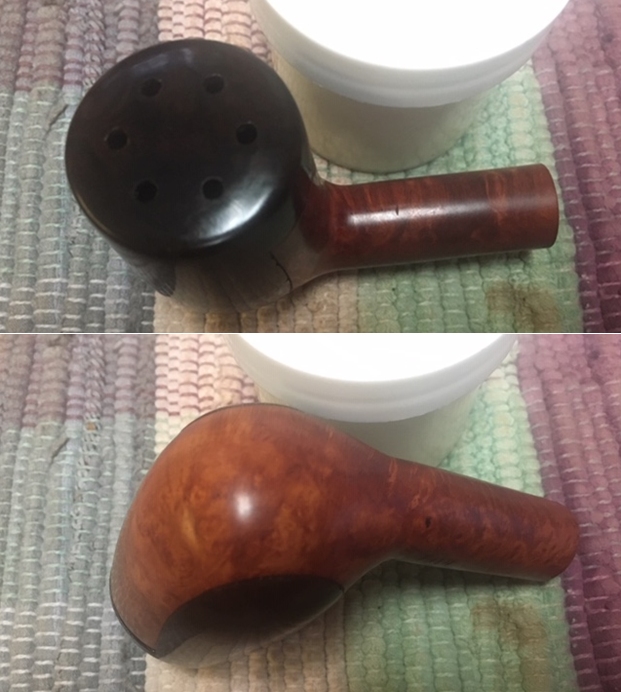
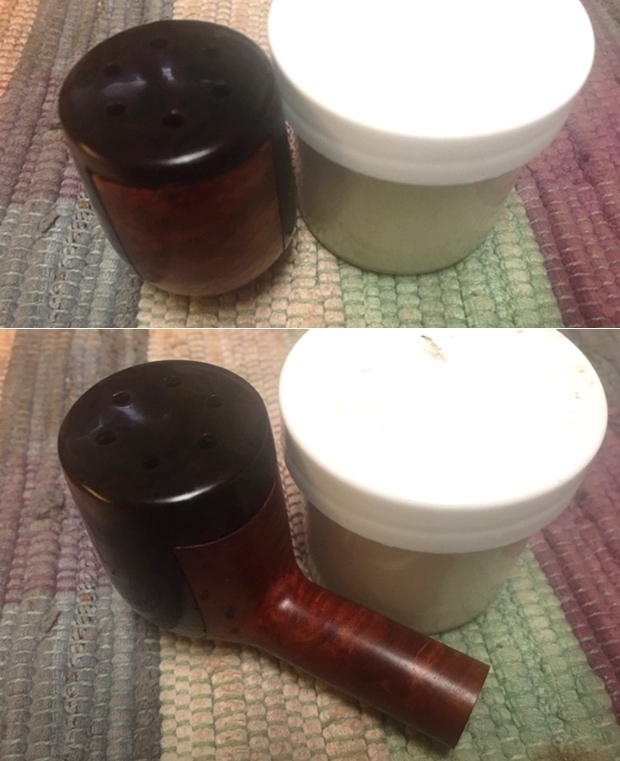
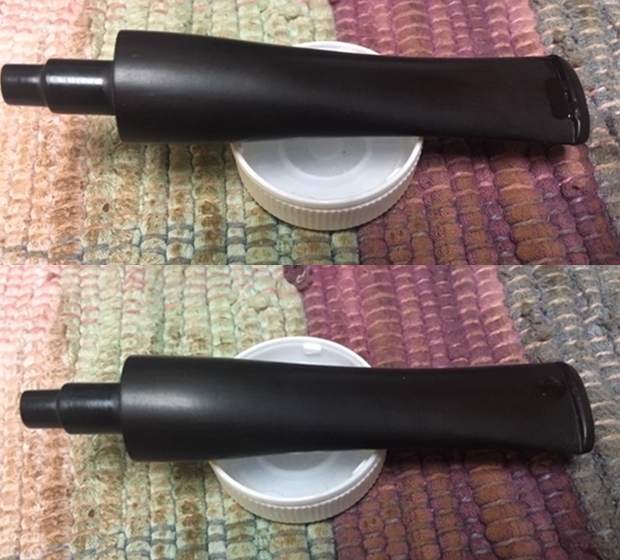
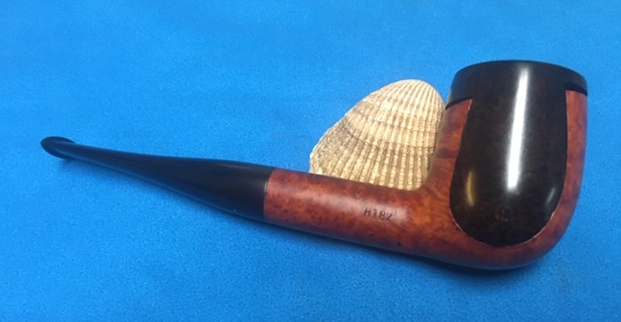
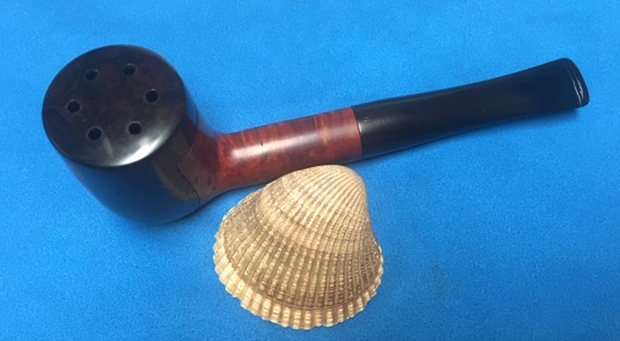
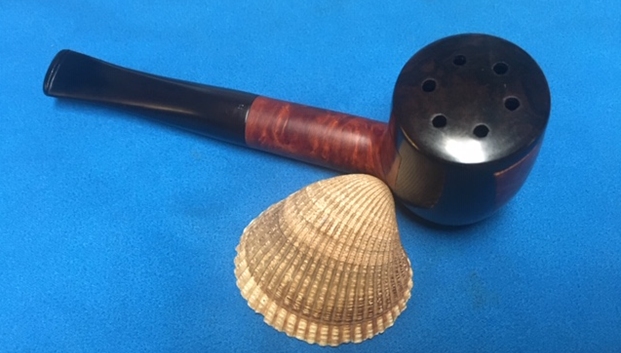
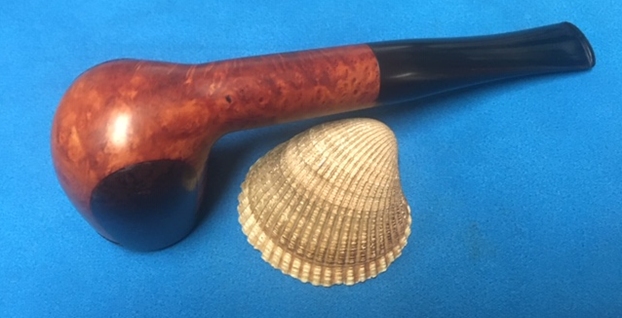
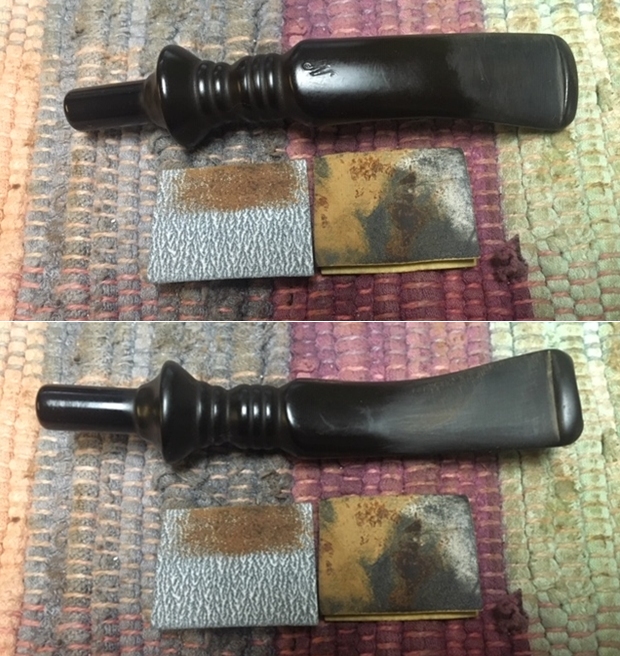
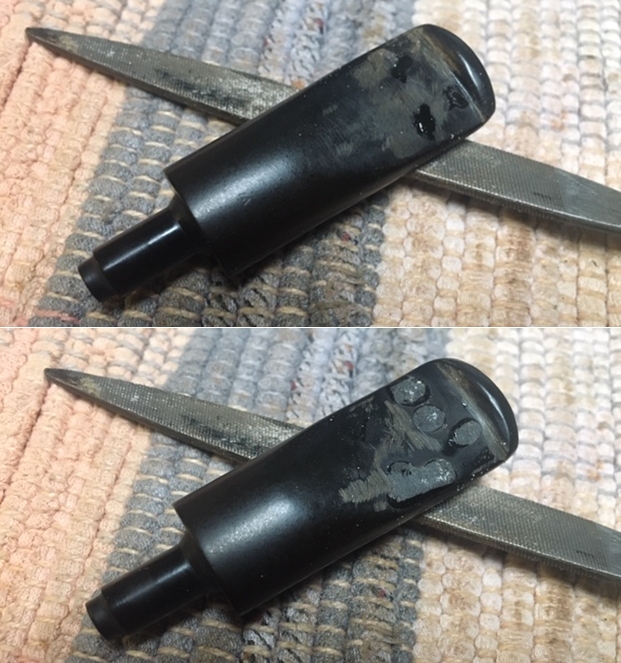
I have worked on a few Hurricane pipes in the past so I was familiar with the brand on the work table next. This one is stamped Orlik Hurricane over Made in England on the left side of the shank and the shape number H182 is stamped on the right side of the shank. The one I did most recently was a Hurricane Lovat (https://rebornpipes.com/2019/07/13/new-life-for-a-hurricane-standard-lovat/). This one was different in that it was a smooth finished pipe. I also was stamped Orlik. There was some great grain around the bowl but there were also some fills on the left of the bowl near the flip cap. The Hurricane pipes always remind me of these Salt and Pepper shaker pipes that were the bread and butter of most tourist spots in the US. In the recesses of my memory it seems like we had a set from Yellowstone National Park…but Jeff may correct my memory. Whatever the case this is what comes to my mind when I see the Hurricane pipes.Now to the pipe at hand. The rim top under the cap was very dirty with lava overflow and there was a thick cake in the bowl. The finish was dirty with sticky spots on the bowl sides and shank. The Bakelite cover on the bowl had some small chips along the edges. With the cap opened the sides of the bowl were also very dirty. The airholes in the top of the cap were also filled in with tars and oils. The stem was heavily oxidized and there were tooth marks on both sides near the button. It was a dirty pipe. Jeff took photos of the pipe before he started to clean it. He took some photos of the rim top with the cover tip back and with it in place to show the general condition of the pipe. You can see the cake in the bowl and the lava on the rim in the photos. He followed those with photos of the cap in place. You can see the fills on the left side of the bowl along the cap edge. The final photo of this set shows the heel of the bowl and the grain that is visible there. He also took some photos of the stamping on both sides of the shank. They are clear and readable. There was also an H on the stem top that is faint but hopefully salvageable. The next series of photos give a clearer picture of the condition of the stem. The first photo below shows the full length and profile of the heavily oxidized and stained vulcanite stem. The second photos shows the calcification on the stem ahead of the button. The next two photos show the surface of the top and underside of the stem. You can see the light tooth marks and chatter both on the button surface and on the blade itself.

I am including the link to the last Hurricane pipe I worked on. Give the blog a read if you are interested (https://rebornpipes.com/2019/07/13/new-life-for-a-hurricane-standard-lovat/). I am quoting from the background information to the brand that I included in that blog. I also darkened a portion of the quote that pertains to the Orlik pipe I am working on now.

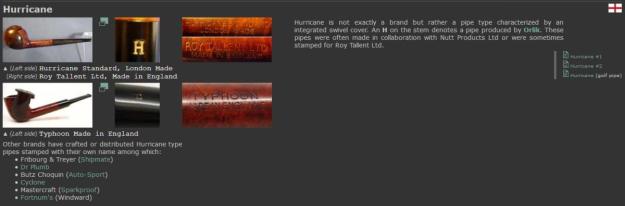
I looked up the Hurricane Standard pipe on the Pipephil Site to see what I could find out about the maker (http://www.pipephil.eu/logos/en/logo-h4.html). I quote in full the information included in the sidebar of the listing.

Hurricane is not exactly a brand but rather a pipe type characterized by an integrated swivel cover. An H on the stem denotes a pipe produced by Orlik. These pipes were often made in collaboration with Nutt Products Ltd or were sometimes stamped for Roy Tallent Ltd.

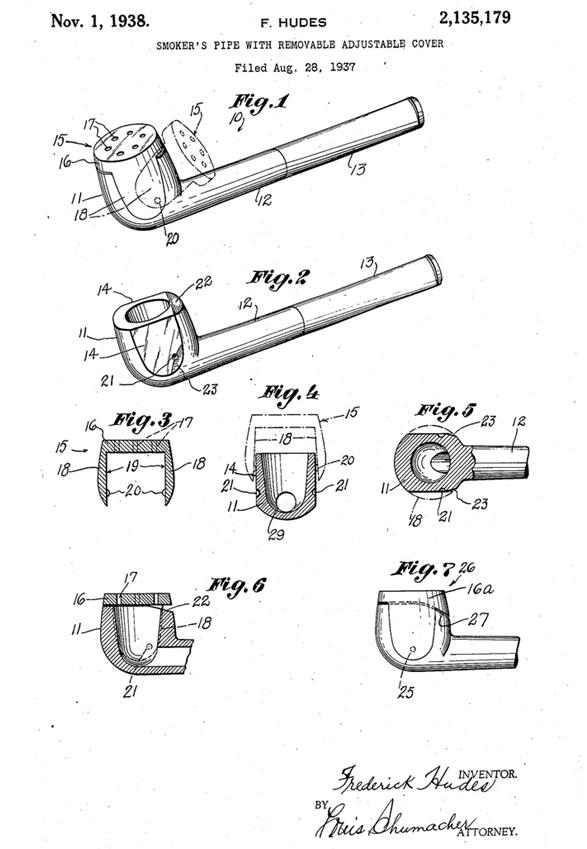
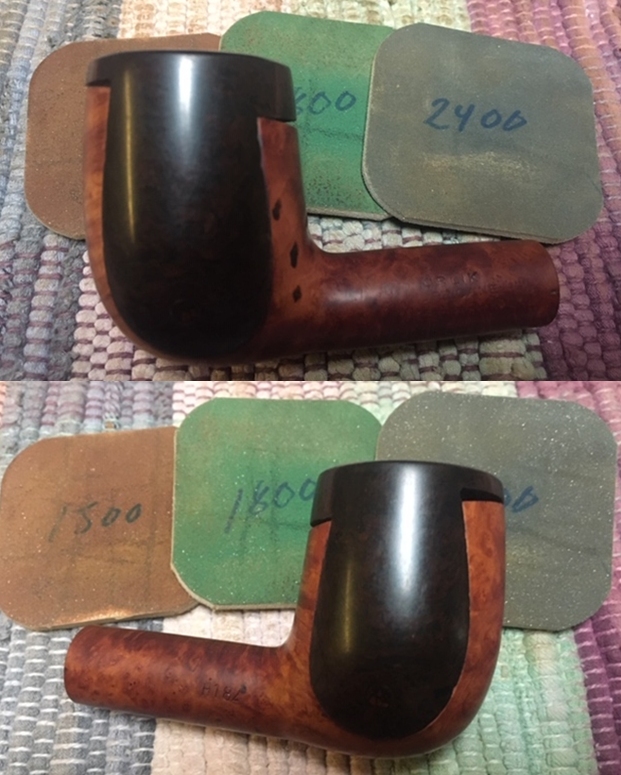
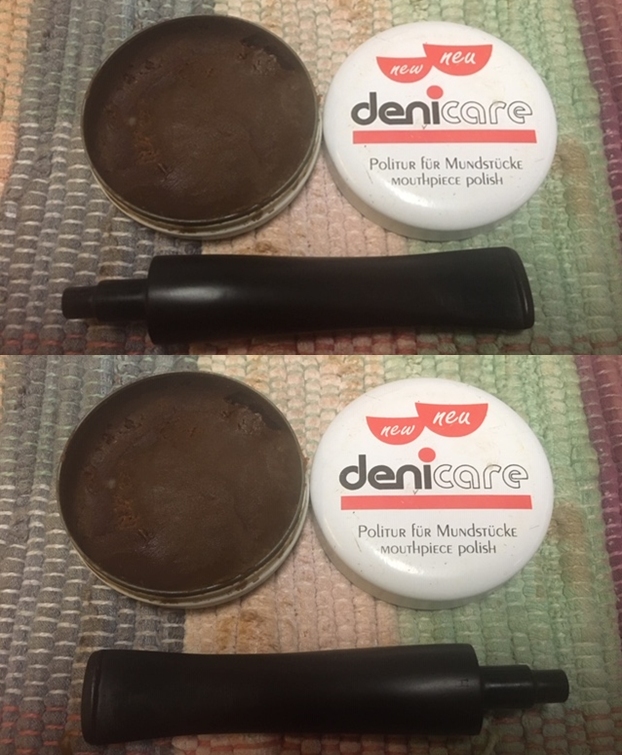
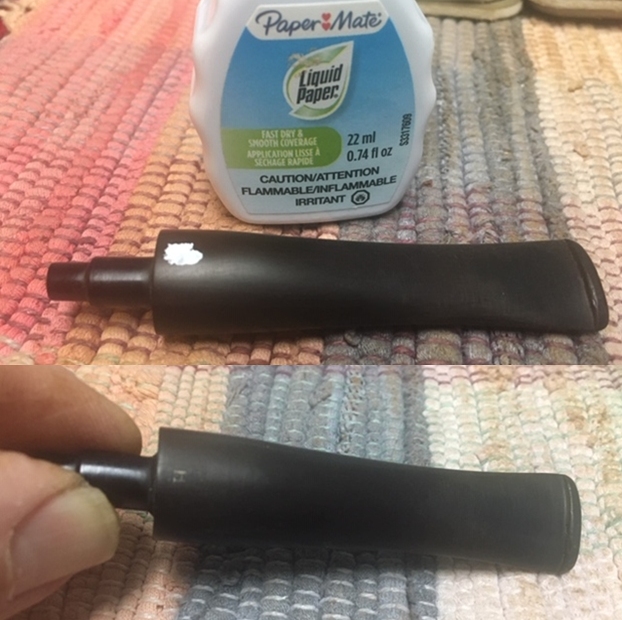
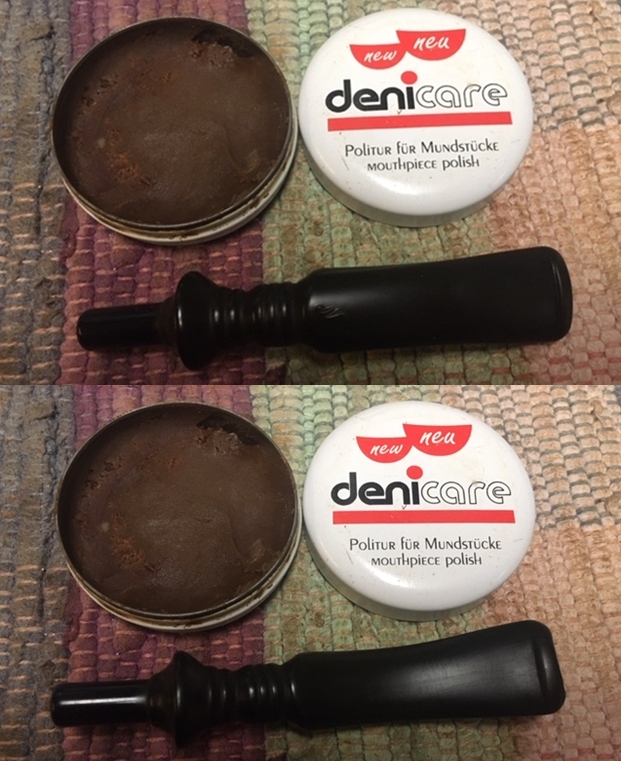
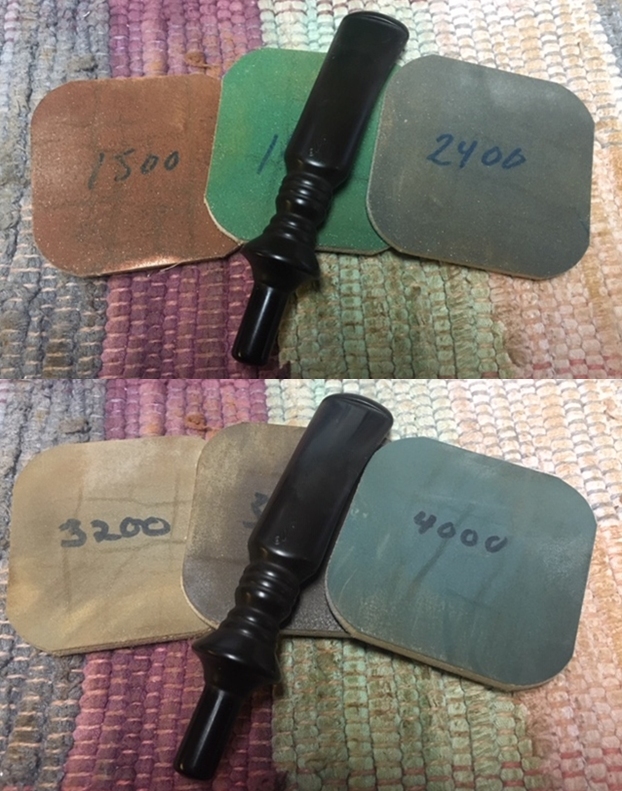
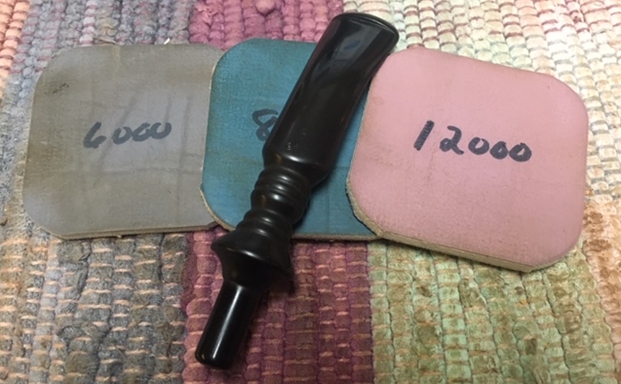
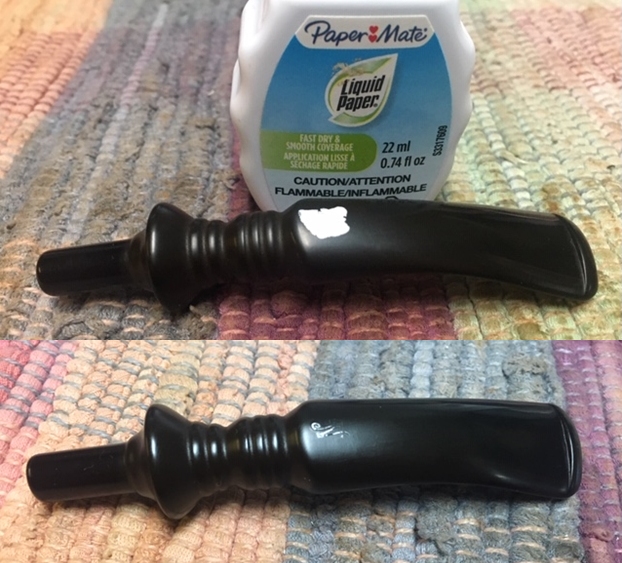
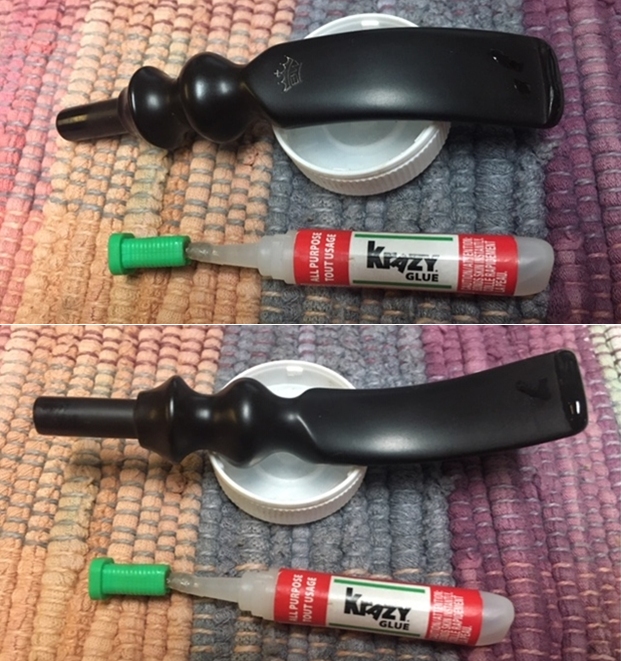
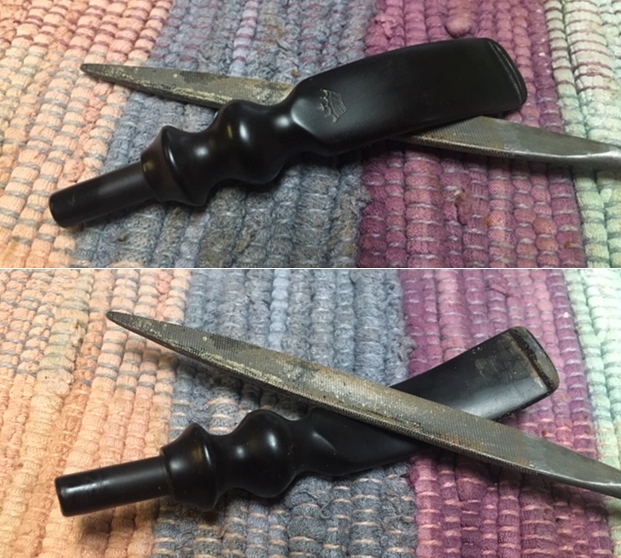
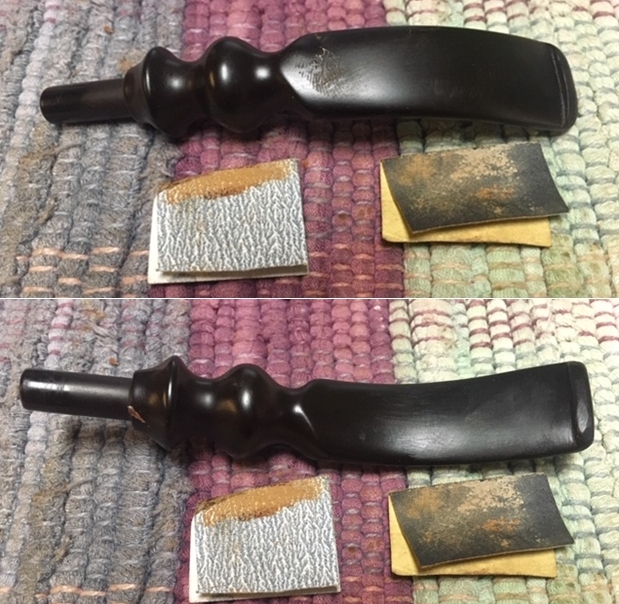
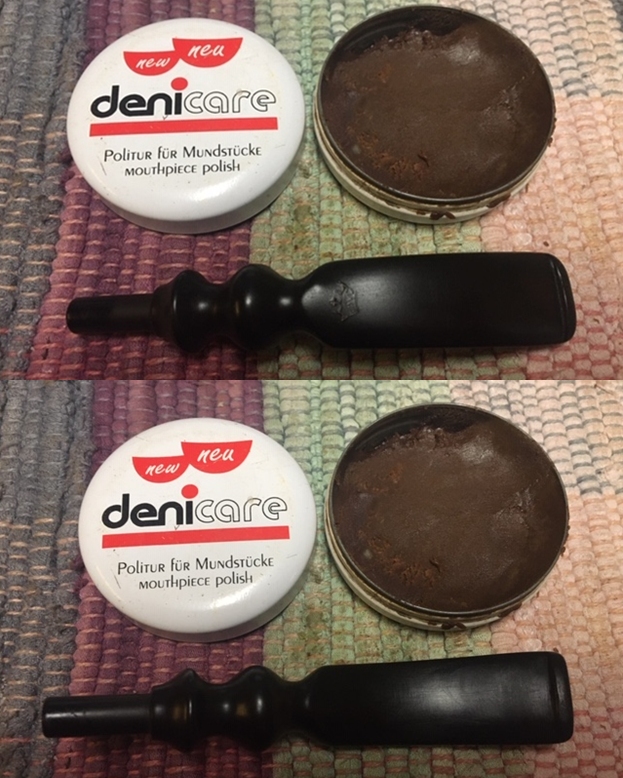
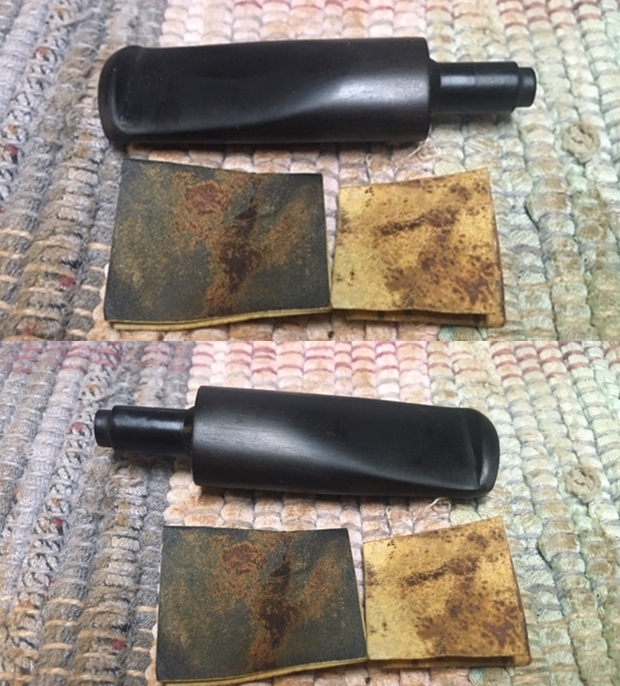
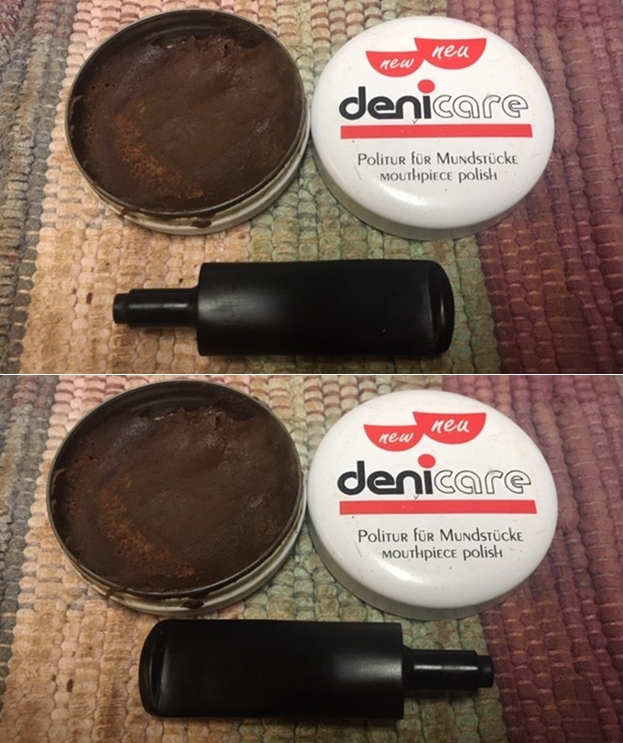
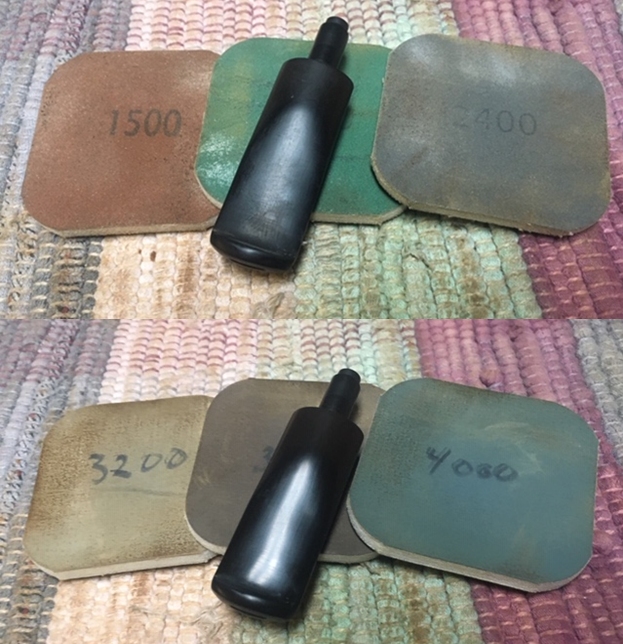
I include a screen capture of the listing from Pipephil as well. Note the various brands that made a Hurricane pipe with the same style or similar style wind cap. Note also that the one I have is made by Roy Tallent Ltd. of Old Bond Street. It bears the same H stamp on the top of the saddle stem as the pipes in the photo below.From that link I did a bit of search for the Fortnum brand. I found a listing for the brand on Pipedia. It said: Fortnum & Mason, the famed London department store in operation since 1707, has among countless other products sold its own line of pipes. One of the most notable was Fortnum’s Windward, a “Hurricane” type pipe with a built in swiveling windcap. The pipe was made following the design of Frederick Hudes, who received a patent for the pipe in the U.S. numbered 2135179 in 1938 (https://pipedia.org/wiki/Fortnum_%26_Mason). I have included the Patent drawings below. Armed with that information I moved forward to work on the pipe itself and see what I had to do with it. It had come back looking amazingly clean. Even the stem looked like new other than a few deep tooth marks. The Bakelite rim cap looked very good. I was impressed. Jeff had done his normal thorough clean up – reaming, scrubbing, soaking and the result was evident in the pipe when I unpacked it. I took photos of the pipe before I started my work on it. I took some photos of the rim top with the cap in place and with it tipped back. The rim top and bowl looked very good. The cake and lava overflow were gone and the Bakelite was very clean. The close up photos of the stem show that it is a much cleaner and better looking stem. There are some small deep tooth marks on both sides just ahead of the button and one mark on the top side of the button itself. To begin my part of the restoration work I decided to smooth out the three fills on the left side of the bowl near the edge of the flip cap. They are shown in the first photo below as three blackened dots running vertically along the cap. There rough to the touch and bumpy feeling. I sanded them smooth with a folded piece of 220 grit sandpaper and blended them into the surface. They still stick out but at least they are smooth!I decided to polish the briar and the Bakelite flip cap with micromesh sanding pads – wet sanding with 1500-12000 grit pads. I wiped the bowl and cape down after each pad with a damp cloth. The bowl begins to shine with the transition to each new pad. After the final polishing pad it looks great. I worked some Before & After Restoration Balm into the surface of the briar with my fingertips to clean, enliven and protect it. I also rubbed it into the Bakelite cap. I let the balm sit for a little while and then buffed with a cotton cloth to raise the shine. The photos show the bowl at this point in the restoration process. I set the bowl aside and turned my attention to the stem. The stem was very clean so I filled in the tooth marks and built up the button with clear super glue and set it aside to cure. Once it had cured I flattened out the repairs and sharpened the edge of the button with a needle file. I sanded out the tooth chatter and blended in the repairs with 220 grit sandpaper and started to polish it with a folded piece of 400 wet dry sandpaper. Once it was finished it was smooth.I used some Denicare Mouthpiece Polish that I have in my kit to start polishing out some of the scratches and remaining oxidation on the stem. I rubbed it in with a cotton pad and my finger tip and buffed it off with a cotton pad.The H stamp on the stem was quite faint but I thought that I might be able to get a bit of it to show. I put some Liquid Paper in the faint marks on the top of the stem and let them dry. I scraped off the excess and you can see the faint H in the second photo. While it is not perfect it is at least visible.I polished the stem with micromesh sanding pads – wet sanding with 1500-12000 grit sanding pads. I wiped it down after each sanding pad with some Obsidian Oil. I finished polishing it with Before & After Pipe Stem Polish – both Fine and Extra Fine and buffed it off with a cotton cloth. I gave it a coat of Briarville’s No Oxy Oil to preserve and protect the stem. This is a Hurricane Billiard with the Orlik stamp on the shank is a real beauty with a tapered black vulcanite stem. It has a great look and feel. I polished stem and the bowl with Blue Diamond polish on the buffing wheel. I gave the bowl, the Bakelite flip cap and the stem multiple coats of carnauba wax. I buffed the pipe with a clean buffing pad to raise the shine. I hand buffed it with a microfiber cloth to deepen the shine. The pipe polished up pretty nicely. The rich combination of browns of the briar and dark brown of the Bakelite took on life with the buffing. The rich colour of the briar works well with the polished vulcanite stem. I like the grain and finished look of this Hurricane pipe. Have a look at it with the photos below. The shape, finish and flow of the pipe and stem are very well done. The dimensions are Length: 6 inches, Height: 2 inches, Outside diameter of the bowl: 1 ¼ inches, Chamber diameter: ¾ of an inch. This English made Hurricane pipe is a unique piece of pipe history. Thanks for walking through the restoration with me as I worked over another beautiful pipe. This one will be going on the rebornpipes store in the English Pipe Making Companies section shortly if you would like to add it to your collection. Thanks for your time.

Cleanup and restoration of an Art Deco Yello-Bole Rhodesian


Blog by Steve Laug

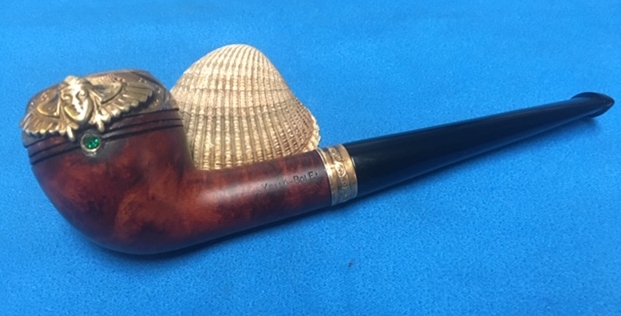
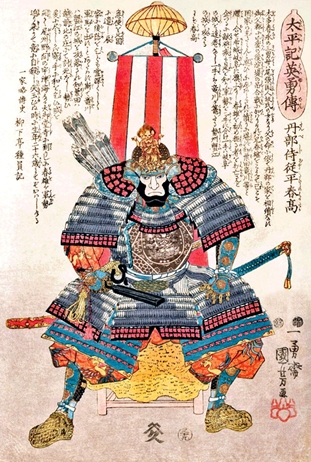
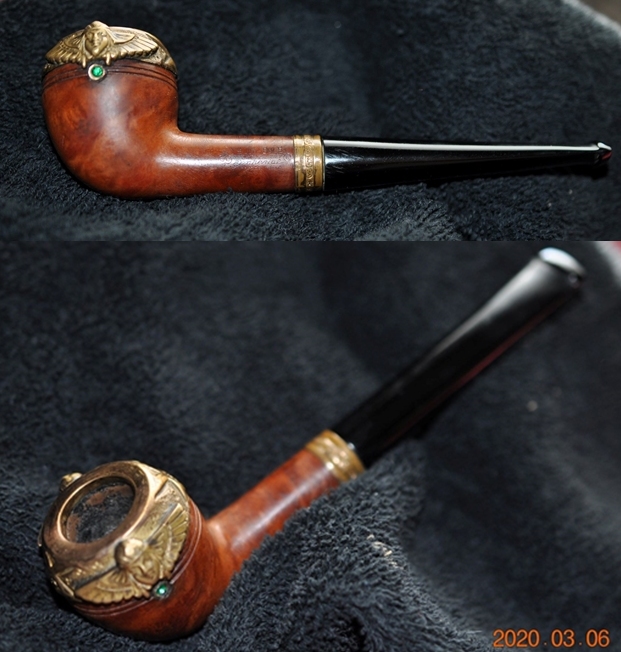
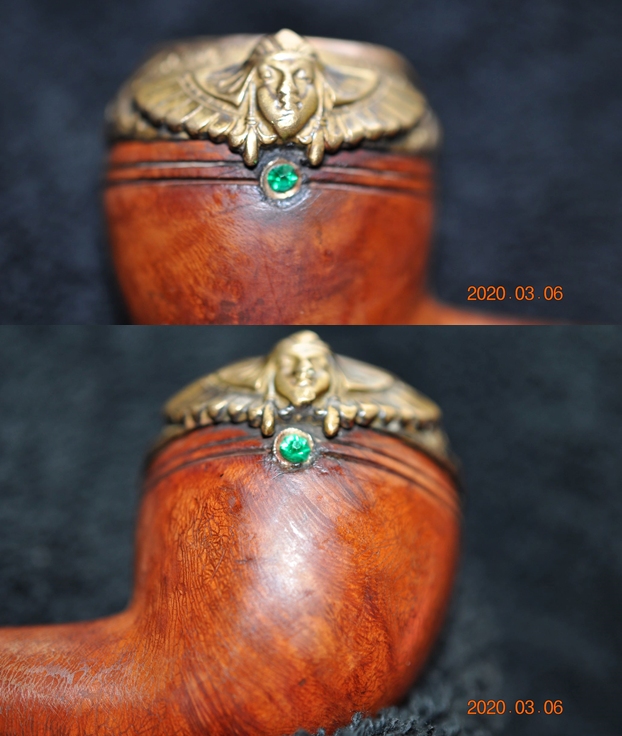
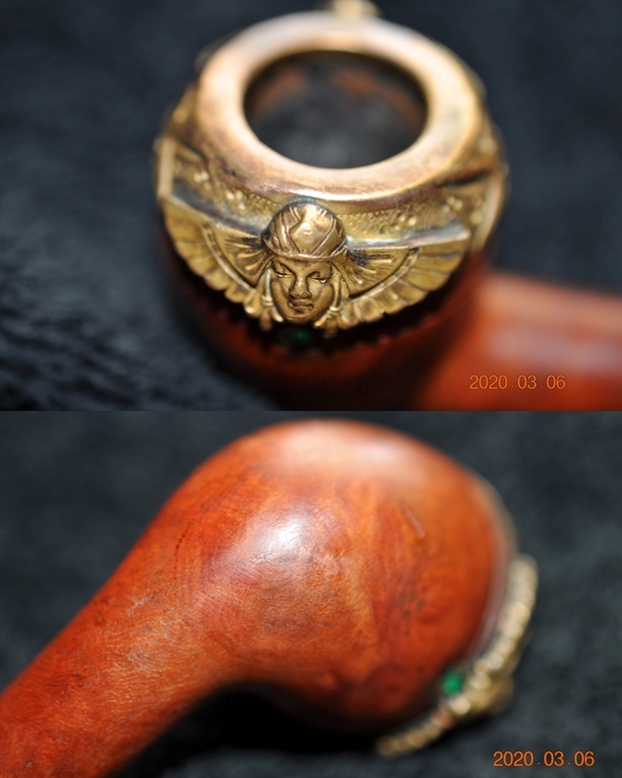
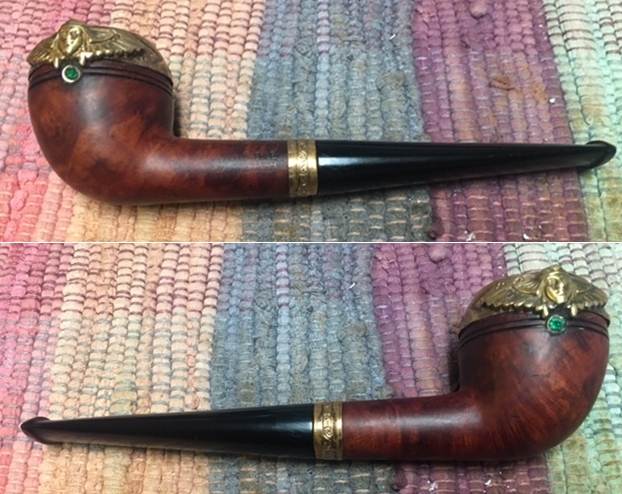
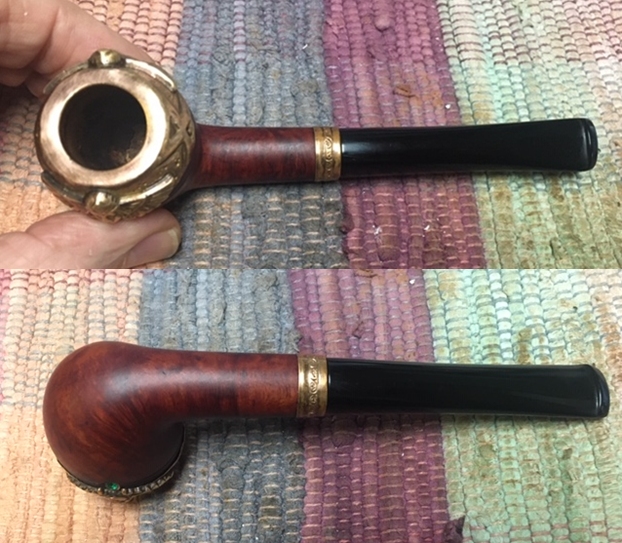
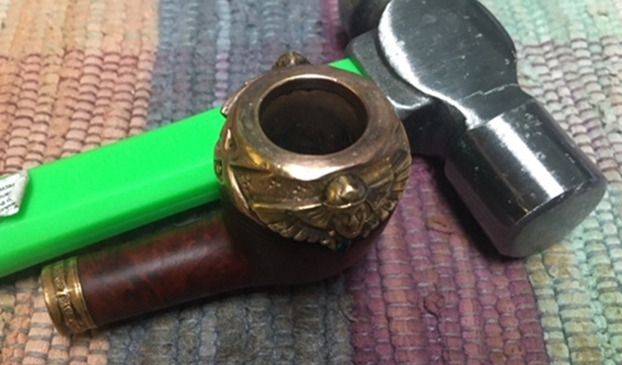
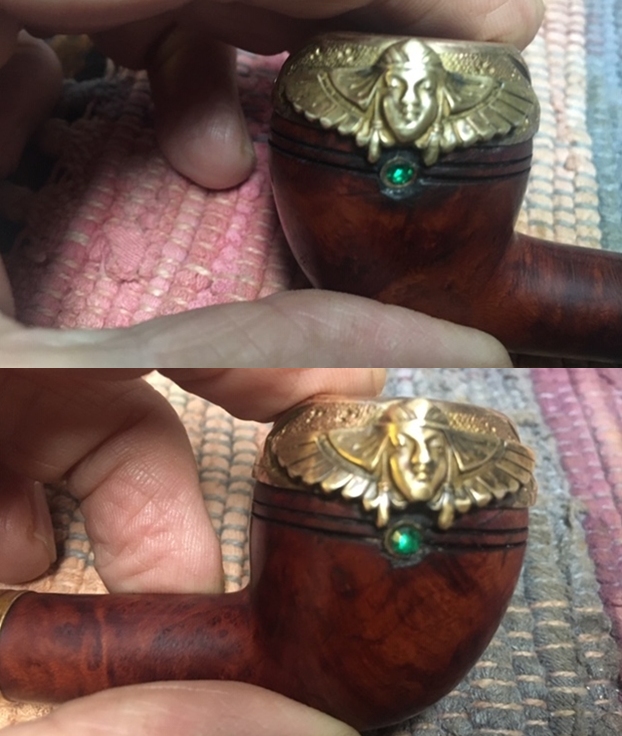
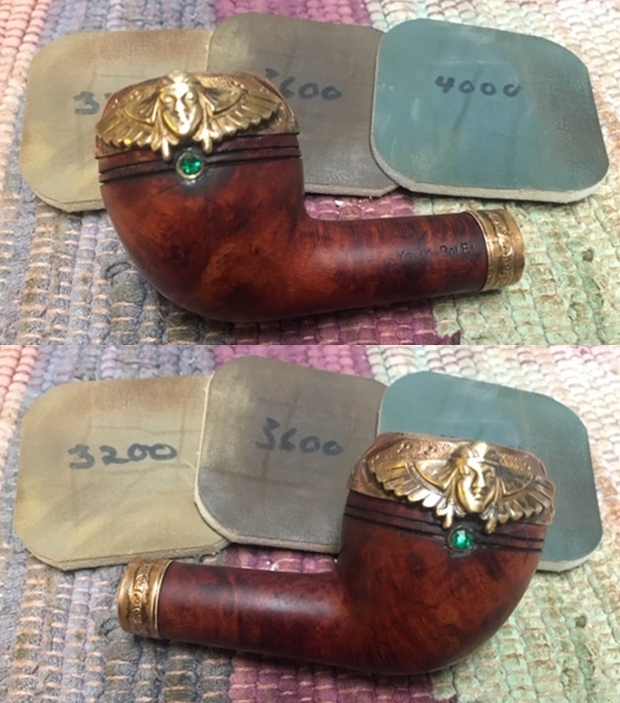
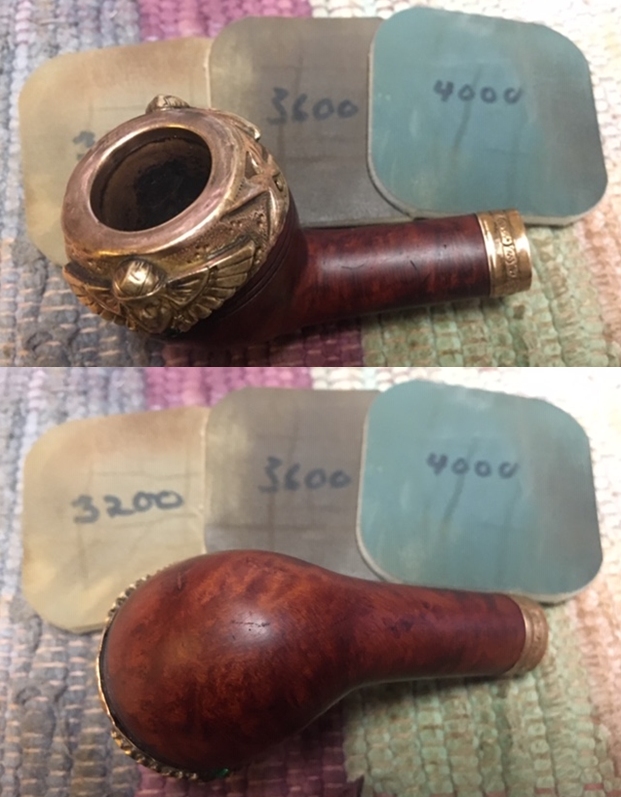
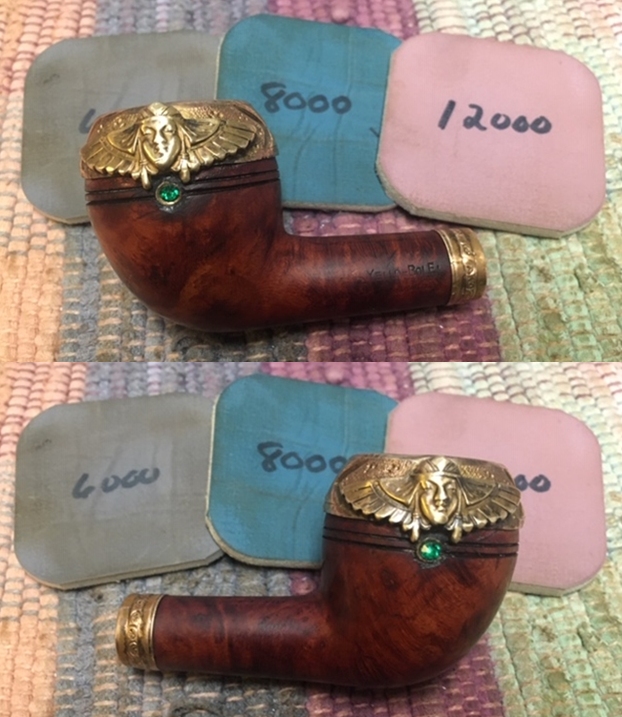
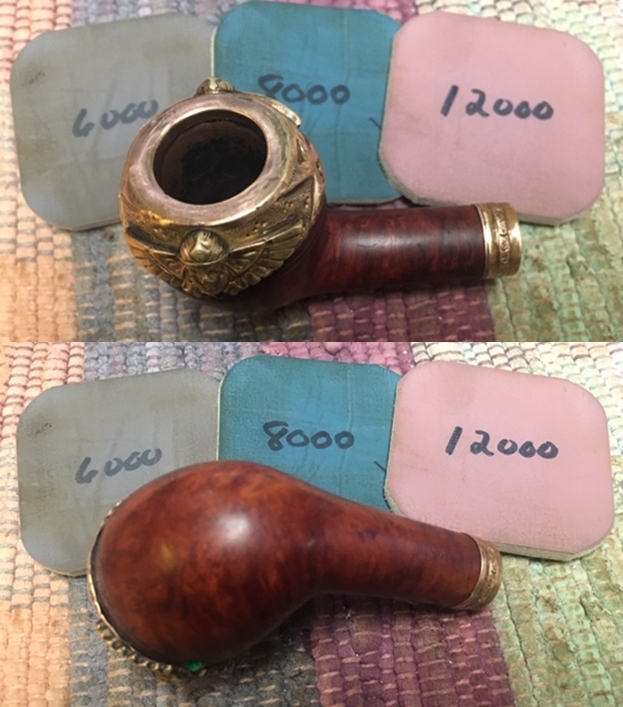
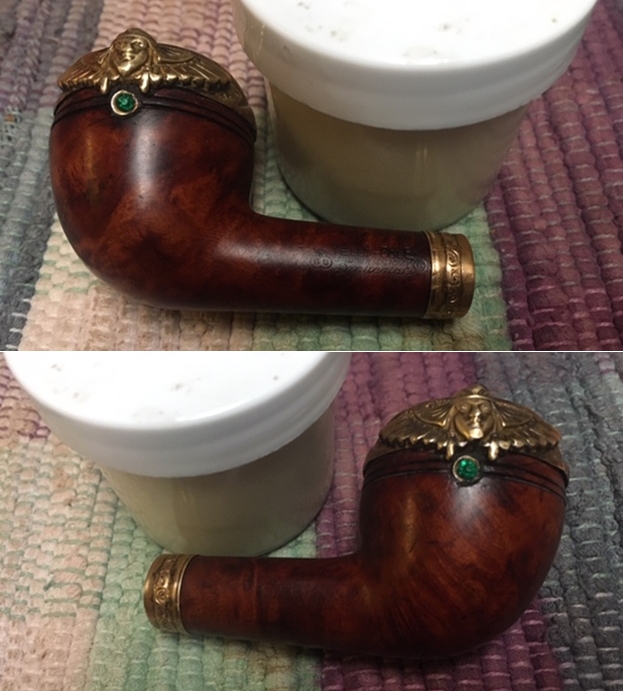
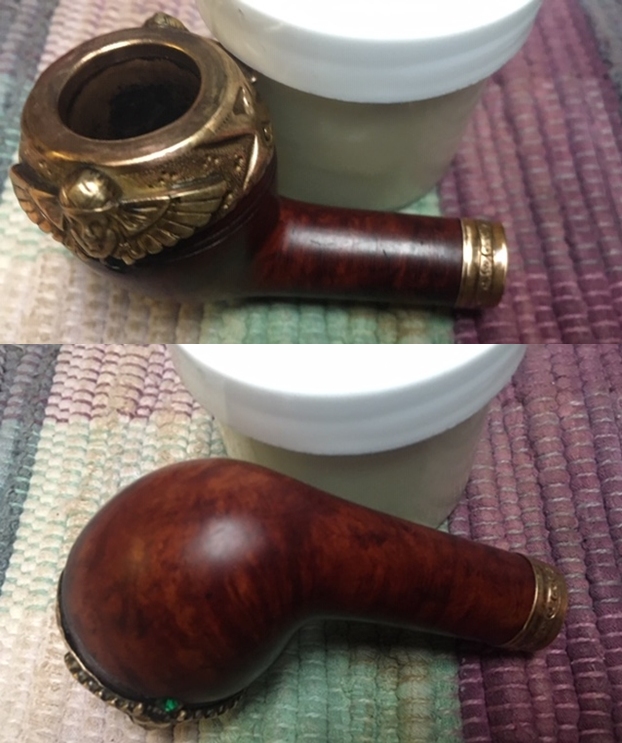
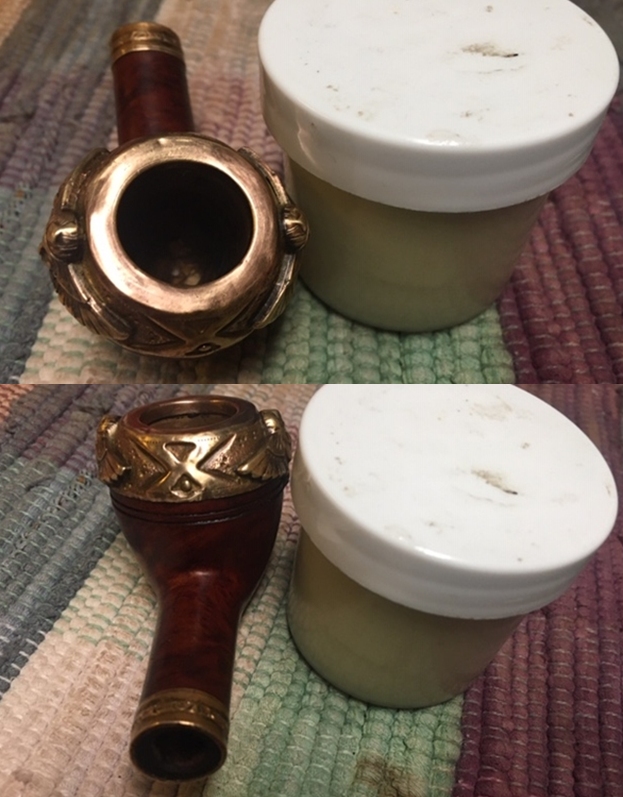
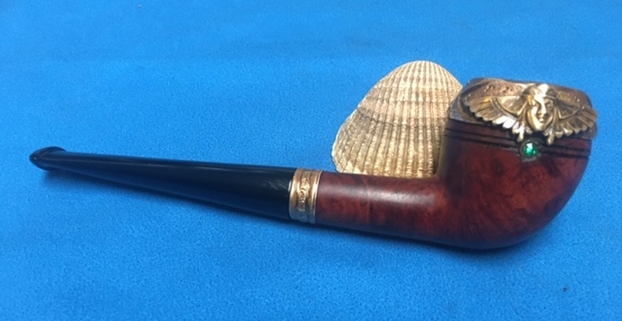
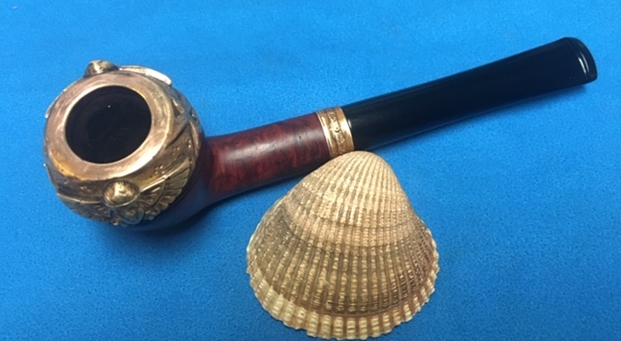
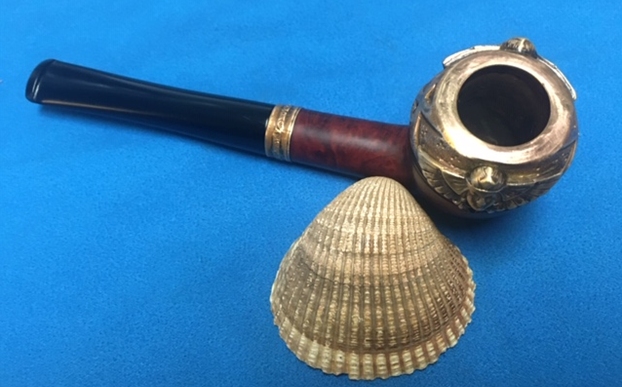
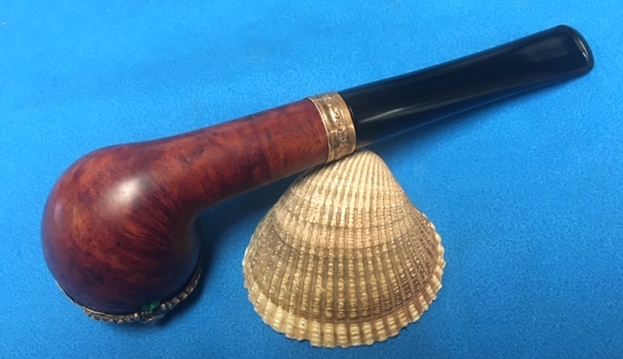
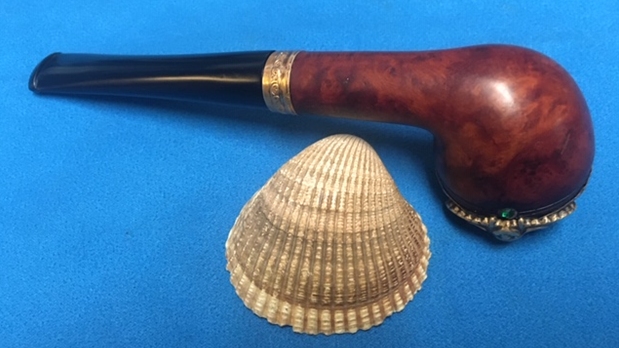
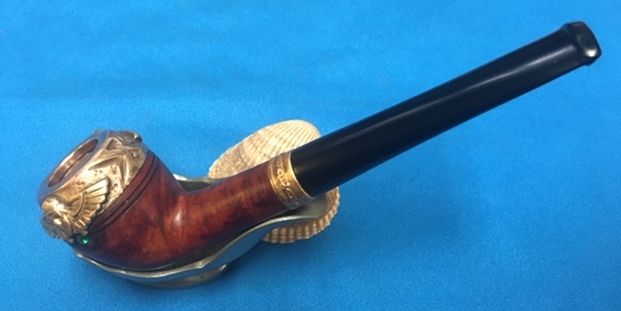
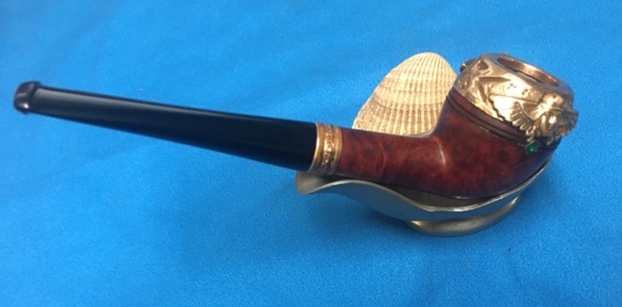
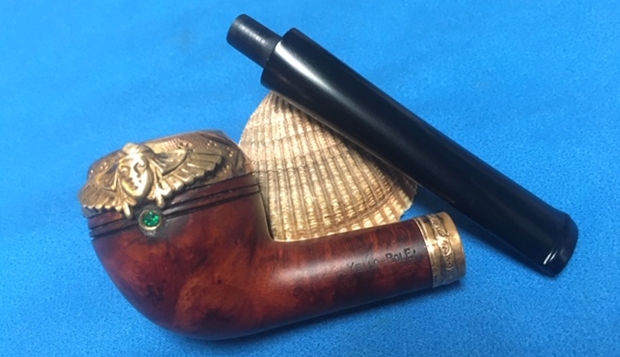
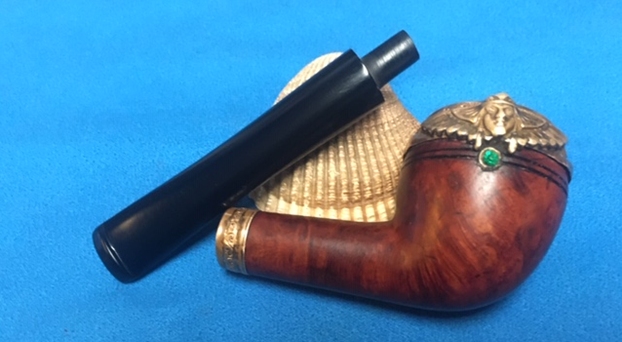
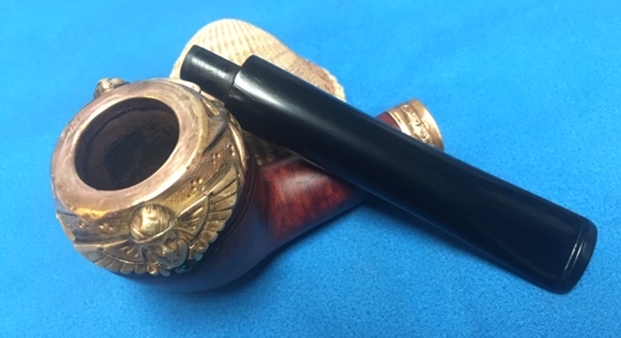
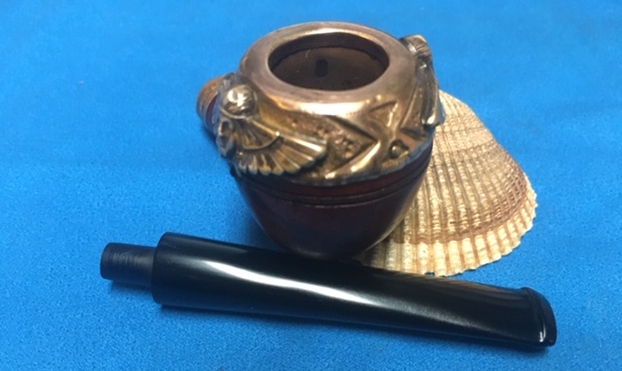
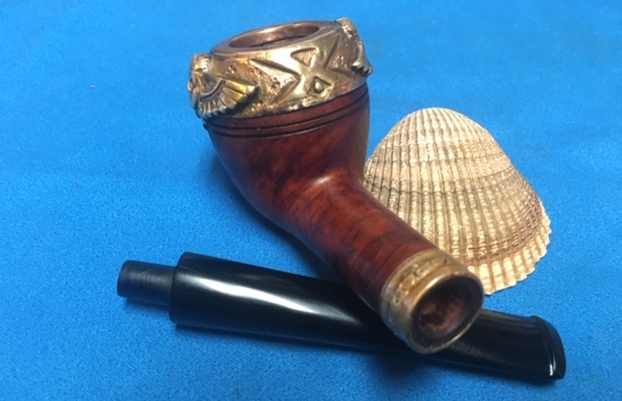
Jeff picked this one up because of our mutual love of older late 19th– early 20th Century. Even in its sorry state when he found it there was a stunning quality about the pipe. The shape and design of the bling make me think it is an Art Deco period pipe 1920s and 1930s. The briar is quite nice and the rim cap is well sculpted. It has a cast head on each side of the cap. The helmeted head looks like a Samurai warrior like the picture to the left. The helmet flares to the left and right like feathers like that. Under the chin of the head is green “gem” or glass inset in a “gold” ring and inlaid in the bowl. There is a matching band around the shank. Those two decorative pieces on the pipe add a touch of unique style to the pipe.

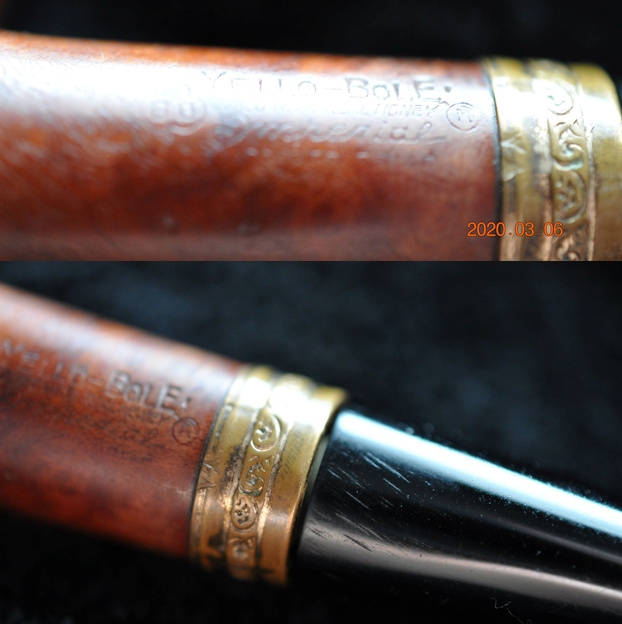
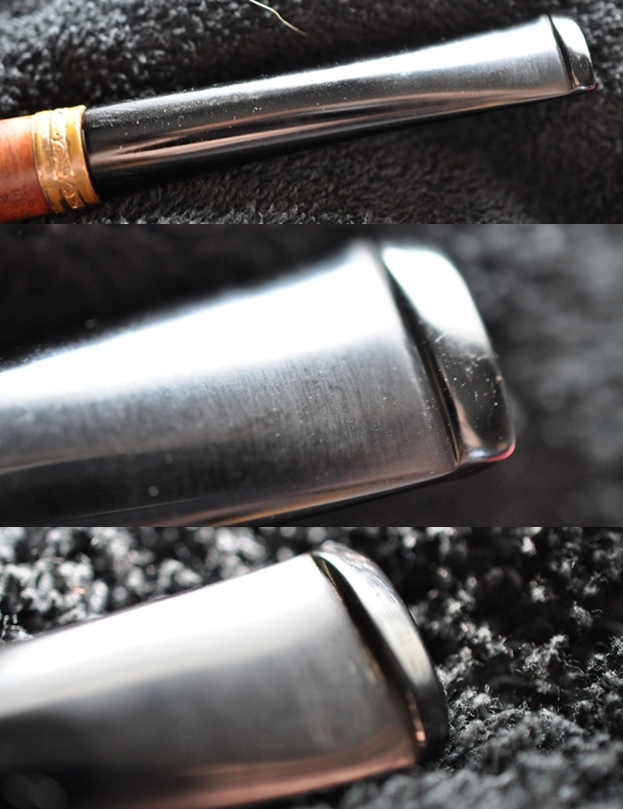
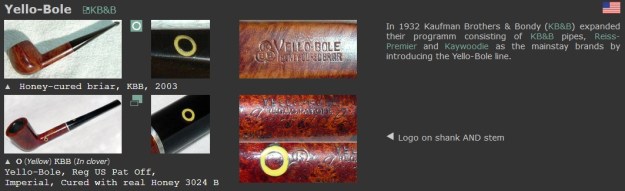
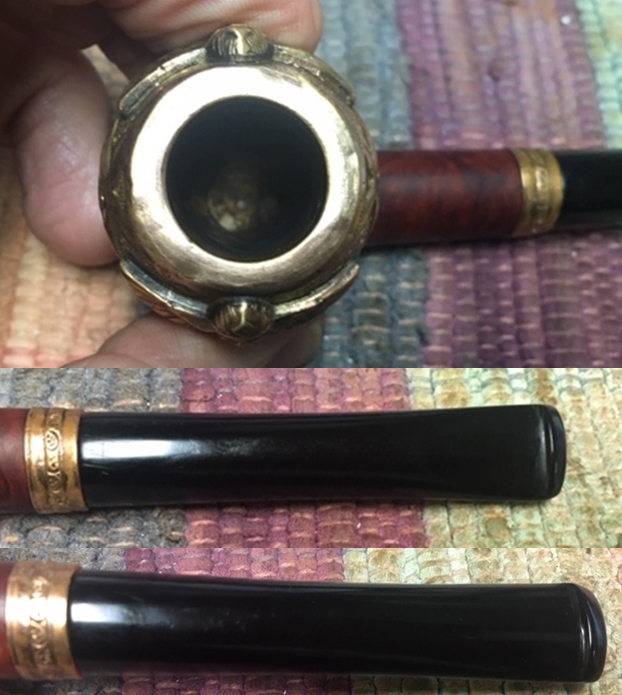
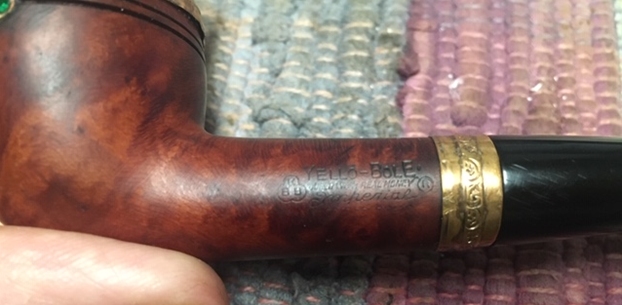
The pipe is stamped on the left side of the shank and read: KBB in a cloverleaf followed by Yello-Bole. Under that it is stamped Cured with Real Honey and an R in a circle. Under that it is stamped Imperial in script. The bottom line of the stamping reads Imported Briar. The finish on this pipe was dirty with dust and a light lava coat on the edge of the rim cap. The bowl was lined with a thick cake and the metal edge of the bowl cap is thickly caked. The smooth finish was also dirty and dull looking. The finish looks good under the grime and dust. The stem is a tapered vulcanite stem with an orific button on the end. The fit of the stem to the shank was snug. There were light tooth marks and chatter on both sides of the stem at the button. Otherwise it was a very clean stem. Jeff took of the pipe to show the overall condition of the bowl and stem.Jeff took some close-up photos of the bowl sides and heel. You can see the cast Samurai head and the inset “gems”. It is dirty and tarnished with a lot of oily tars inserted in the twin rings around the bowl and around the inset gems. Jeff took photos of the stamping on the left side of the shank. It is clear and readable but hard to capture in the photos. You can also see the filigree on the band and the scratching on the stem.The first photo below shows the full length and profile of the vulcanite stem. The next two photos show the surface of the top and underside of the stem. You can see the light tooth marks and chatter both on the button surface and on the blade itself.I turned to Pipephil’s site (http://www.pipephil.eu/logos/en/logo-y.html) and captured the following screen. In it the key point is that KBB (Kaufman Brothers & Bondy) expanded their lines by adding the Yello-Bole line in 1932. That helps to date this pipe a bit. From this I knew that the pipe was issued after 1932. It also shows the stamping Cured with Real Honey.I turned then to Pipedia (https://pipedia.org/wiki/Yello-Bole) to see if I could pin down the date with a little more clarity. I quote two pertinent parts of the article below:

In 1932 Kaufman Brothers & Bondy (KB&B), est. 1851, expanded their program consisting of KB&B pipes, Reiss-Premier and Kaywoodie as the mainstay brand by introducing the Yello-Bole line. Yello-Bole was designed as an outlet for lower grade briar not used in Kaywoodie production…

Tips for Dating Yello-Bole Pipes

  • KBB stamped in the clover leaf indicates it was made in 1955 or earlier as they stopped this stamping after being acquired by S.M. Frank.
  • Pipes from 1933-1936 they were stamped “Honey Cured Briar”
  • Post 1936 pipes were stamped “Cured with Real Honey”
  • Pipe stems stamped with the propeller logo were made in the 1930’s or 1940’s – no propellers were used after the 1940’s.
  • Yello Bole used a 4 digit code stamped on the pipe in the 1930’s.
  • Pipes with the Yello-Bole circle stamped on the shank it were made in the 1930’s, this stopped after 1939.
  • Pipes stamped BRUYERE rather than BRIAR it was made in the 1930’s.

I have highlighted the two lines in the dating article that help narrow down the date for me. The first tells me that pipes stamped with the KBB in the cloverleaf indicate that the pipe was made prior to 1955. Now I had both a starting and ending date to work with 1932-1955. The second red highlighted text tells me that pipes stamped Cured with Real Honey came out after 1936. This took it a bit further for me. I knew that the pipe I have is made after 1936. The fact that it is an Art Deco piece sets the end date a bit closer. I now knew that the pipe was made between 1936-1939. I was definitely honing in on the date.

I did some more research online to establish the ending date of the Art Deco period and found this interesting site:

In 1937 came the Exposition Internationale des Arts et Techniques dans la Vie Moderne. Its emphasis on science and technology decisively, if unintentionally, marked the end of the Art Deco period (https://theculturetrip.com/europe/france/paris/articles/a-history-of-art-deco-in-1-minute/).

With the additional information I can with some certainty say that this pipe was made sometime in the period of 1936-1937.

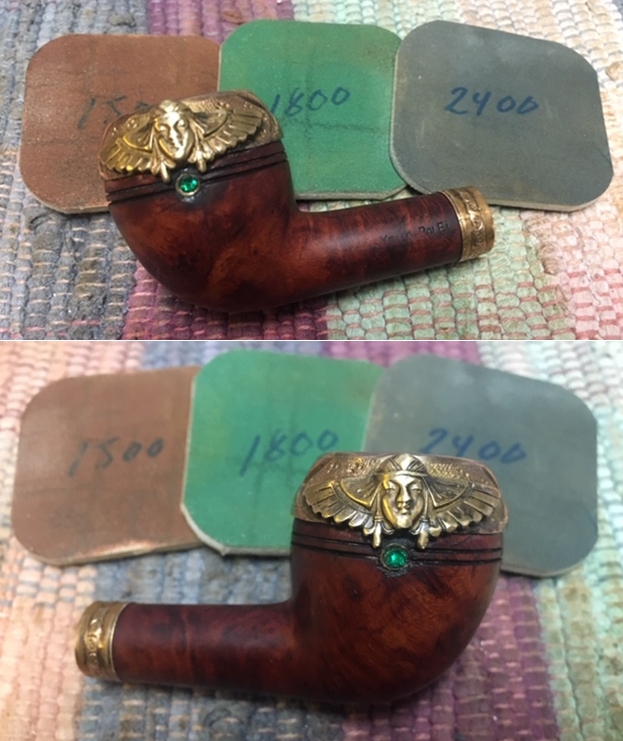
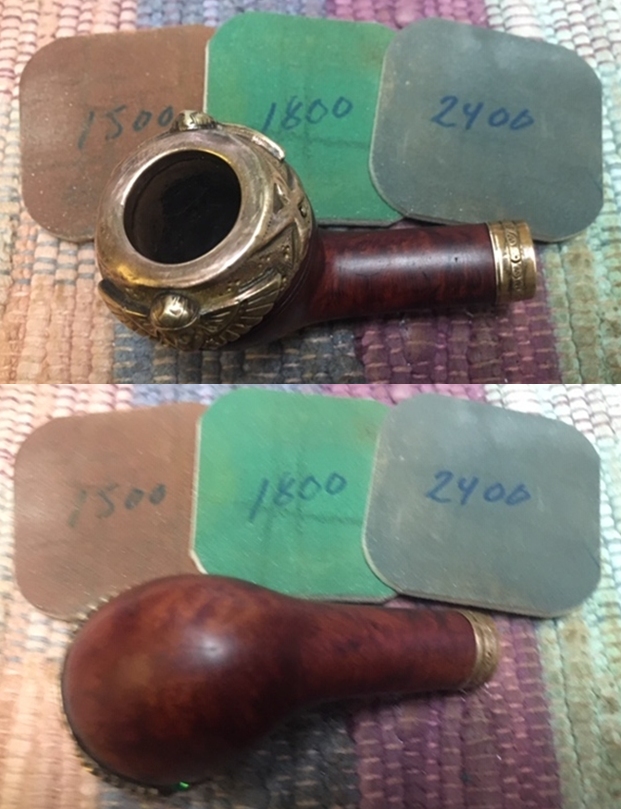
Armed with that information I moved forward to work on the pipe itself and see what I had to do with it. It had come back looking amazingly clean. Even the stem looked like new. The brass bling just shone. I was impressed. Jeff had done his normal thorough clean up – reaming, scrubbing, soaking and the result was evident in the pipe when I unpacked it. I took photos of the pipe before I started my work on it. I took some photos of the rim top and stem to show the condition of them both when it arrived. Overall it looked good. The rim top was very clean. The stem looked amazingly good. The chatter on the stem surfaces was gone and the surface was clean.I took a photo of the stamping on the left side of the shank. It was in very good condition and was readable and clear.To begin my part of the restoration work I decided to tap out the dings on the rim cap as much as possible without removing the cap. It appeared to me that the dings were on the surface of the cap. I used a ball peen hammer to gently tap the surface of the rim. It worked to smooth out the surface significantly.With that finished the work on the bowl was quite minimal. There were no fills to repair and no damage to deal with. I took two photos of side of the cap to show their condition. The bling was quite shiny and looked good. I did not need to clean it or polish it.I decided to polish the briar with micromesh sanding pads – wet sanding with 1500-12000 grit pads. I wiped the briar down after each pad with a damp cloth. The briar bowl begins to shine with the transition to each new pad. After the final polishing pad it looks great. I worked some Before & After Restoration Balm into the surface of the briar with my fingertips and into the plateau rim top and shank end with a horsehair shoe brush to clean, enliven and protect it. I let the balm sit for a little while and then buffed with a cotton cloth to raise the shine. The photos show the bowl at this point in the restoration process. The stem looked really good so I skipped the sanding and Denicare steps and went directly to polishing it with micromesh sanding pads – wet sanding with 1500-12000 grit sanding pads. I wiped it down after each sanding pad with some Obsidian Oil. I finished polishing it with Before & After Pipe Stem Polish – both Fine and Extra Fine and buffed it off with a cotton cloth. I wiped the stem down with Briarville’s No Oxy Oil to protect and preserve the stem. This is a great piece of pipe history and one that I can at least give a reasonable date for it making. It is a fancy KBB Yello-Bole Cured with Real Honey Rhodesian with a unique rim cap and band on the shank. The figures on the sides of the cap could easily be a fanciful samurai or some other figure but that is my best guess. The stem is a polished hard rubber that really shines with the buffing. The briar is also quite nice with just a few well-hidden fills. The brass, the briar and the hard rubber all combine well for a unique looking pipe. I polished stem and the bowl with Blue Diamond polish on the buffing wheel carefully avoiding the brass. I gave the bowl and the stem multiple coats of carnauba wax. I buffed the pipe with a clean buffing pad to raise the shine. I hand buffed it with a microfiber cloth to deepen the shine. The pipe polished up pretty nicely. The rich combination of brass, browns and black of the bowl and stem came alive with the buffing. Have a look at it with the photos below. The shape, finish and flow of the pipe and stem are very well done. The dimensions are Length: 5 ¾ inches, Height: 1 ¾ inches, Outside diameter of the bowl: 1 ¼ inches, Chamber diameter: 5/8 of an inch. This older American made Art Deco era pipe is a real beauty. Thanks for walking through the restoration with me as I worked over another beautiful pipe. This one will be joining my collection of older American made pipes. Thanks for your time.

Restoring a Lovely Cala Lily Shaped Erik Nording Signed Freehand


Blog by Steve Laug

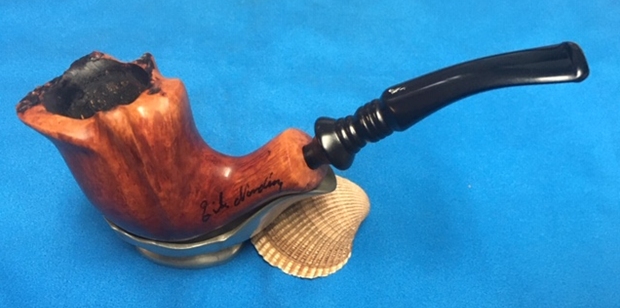
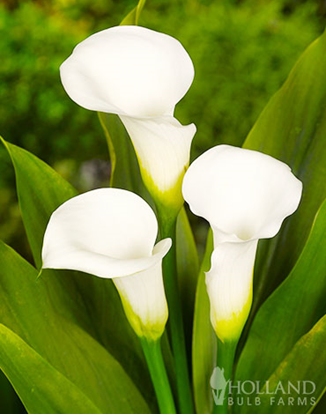
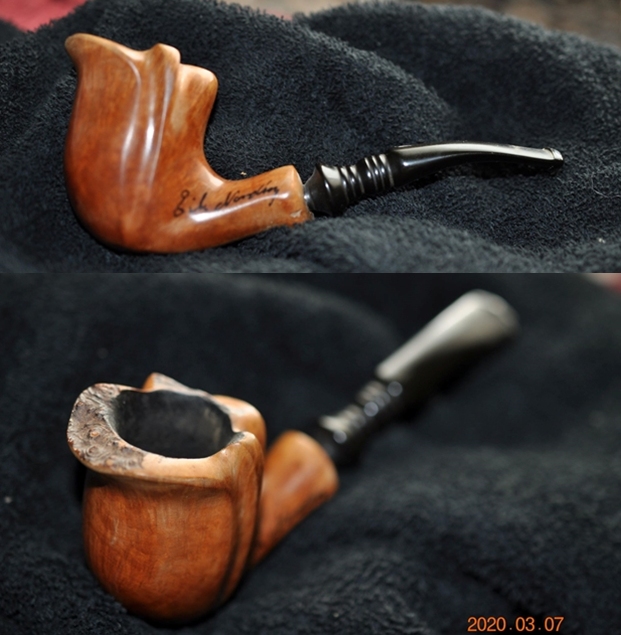
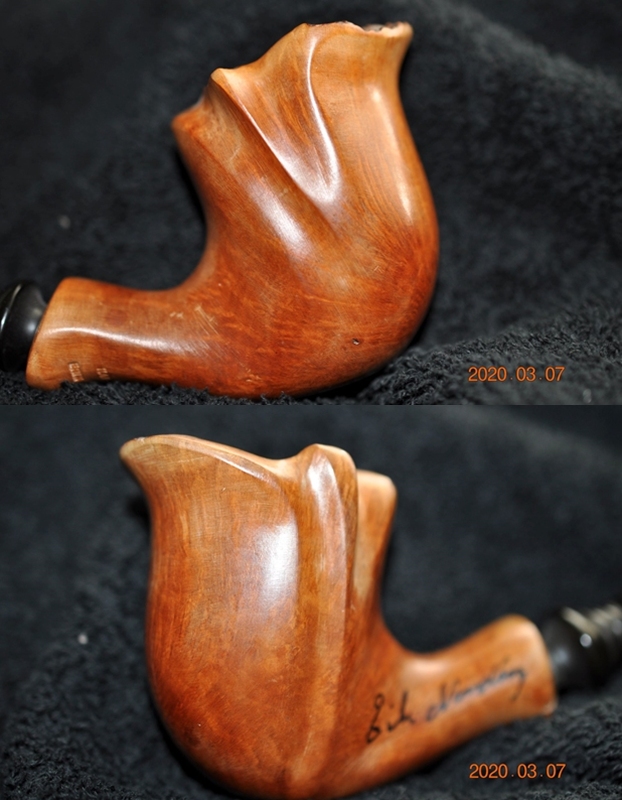
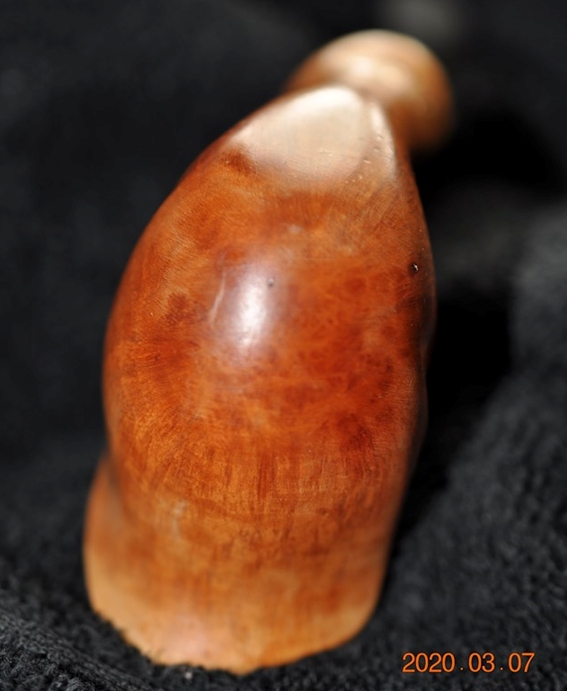
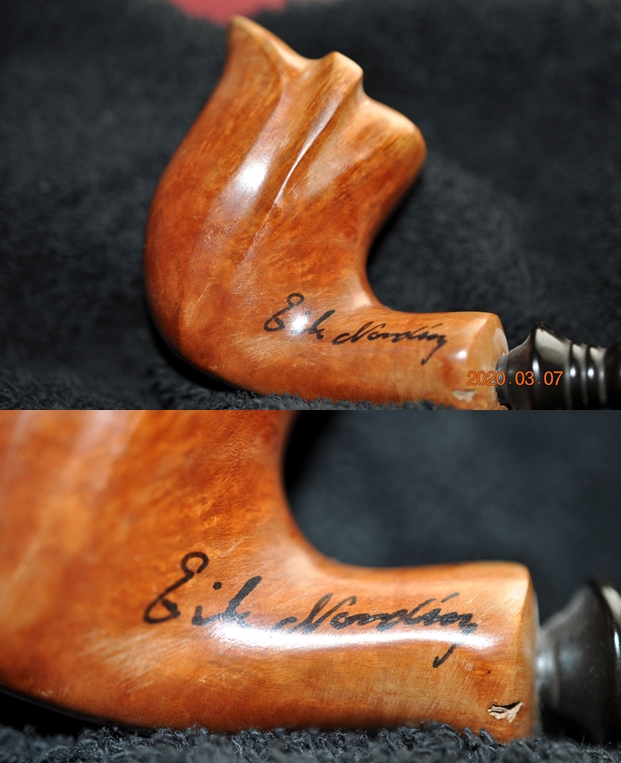
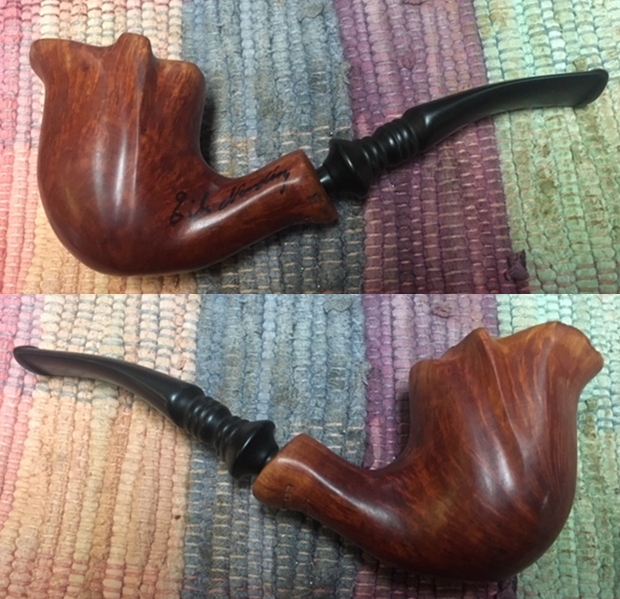
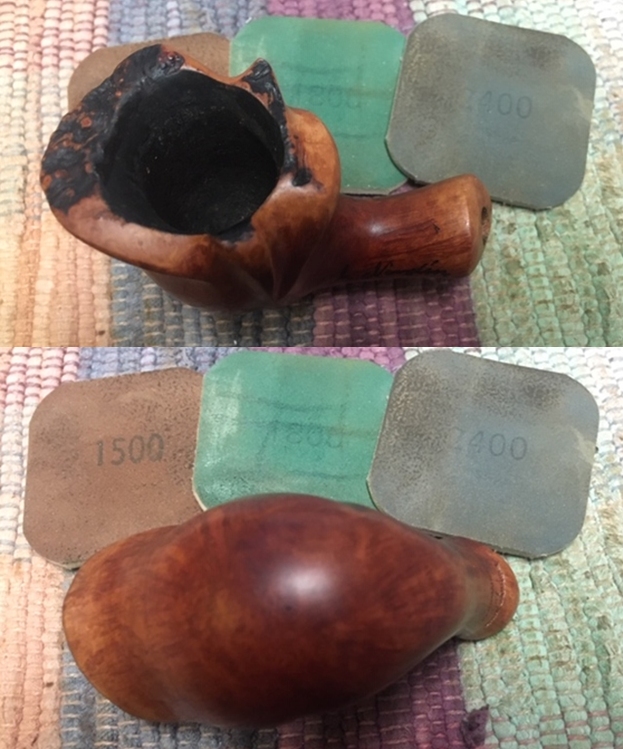
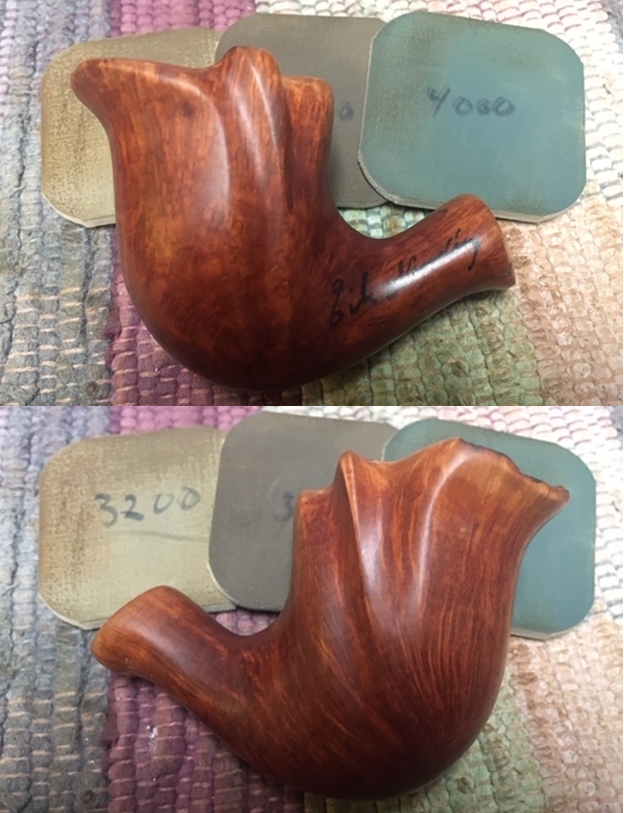
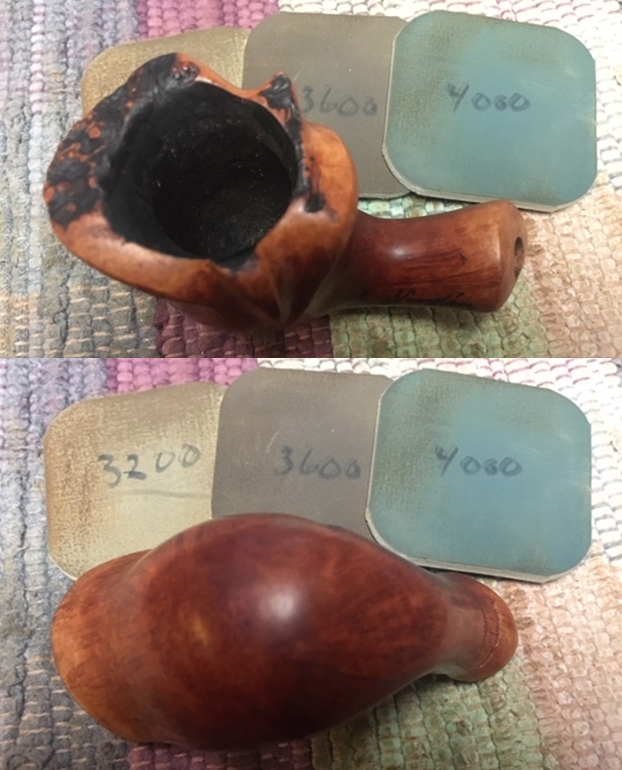
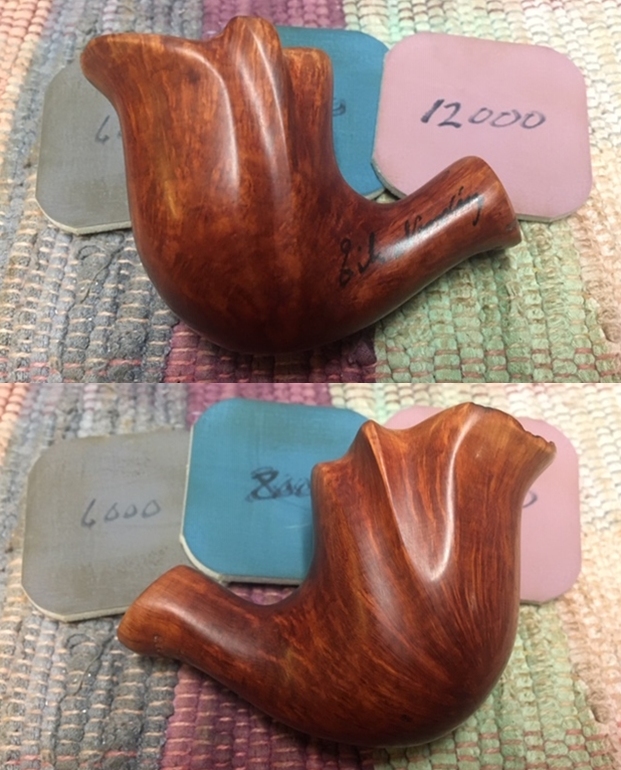
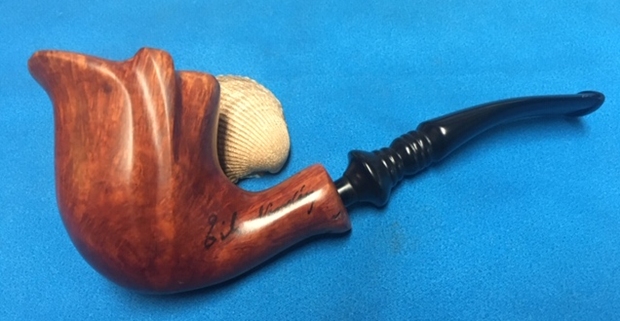
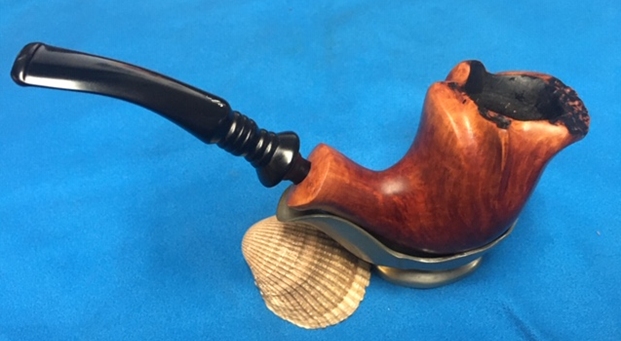
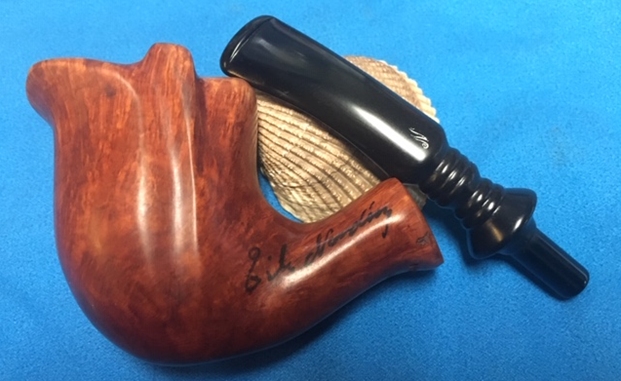
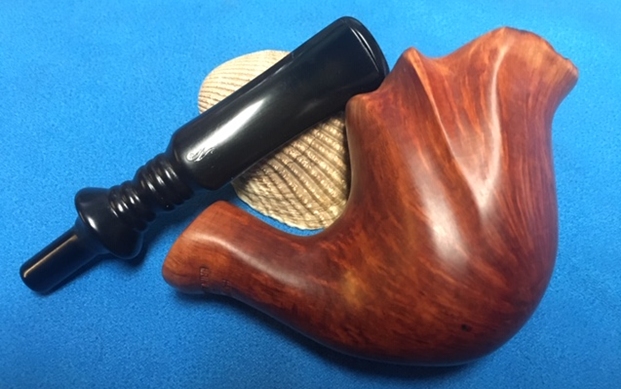
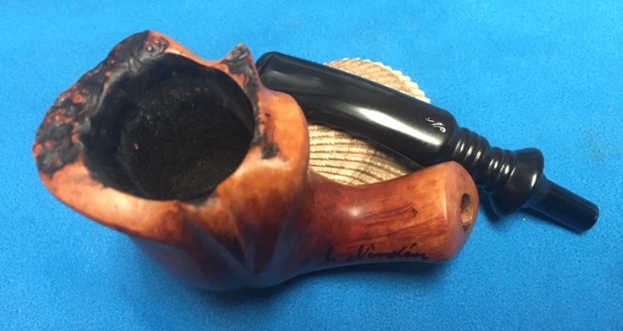
My brother Jeff picked up this interesting looking freehand pipe on one of his adventures pipe hunting. It had really nice grain and remnants of plateau on the top of the rim and one spot on the left side end of the shank. There was something familiar about the shape of carving that reminded me of a flower that I have grown. It dawned on me this morning while I worked on it that it reminded me of a Cala Lily (pictured to the left). The flow of the shape of the bowl with the extended lip on the front and the grooves flowing up the side and back of the bowl look a lot like the shape of this lily. It is a beautiful pipe that is signed on the left side of the shank with Erik Nording’s signature.

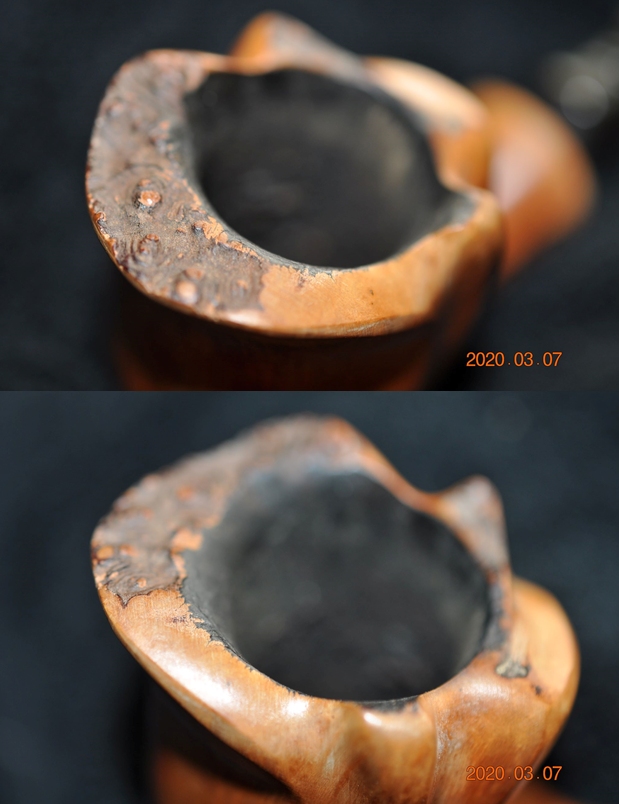
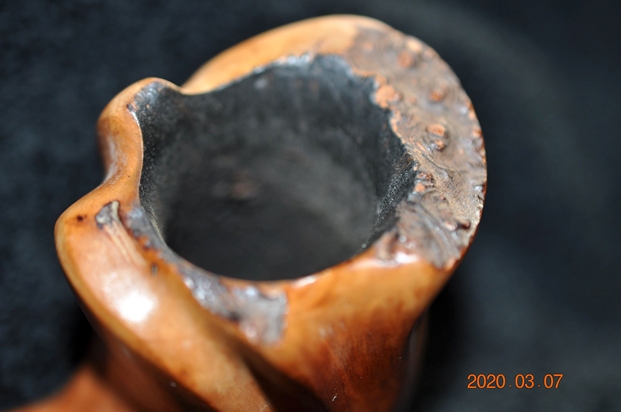
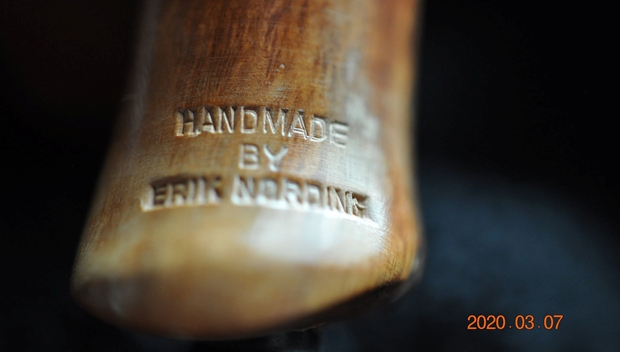
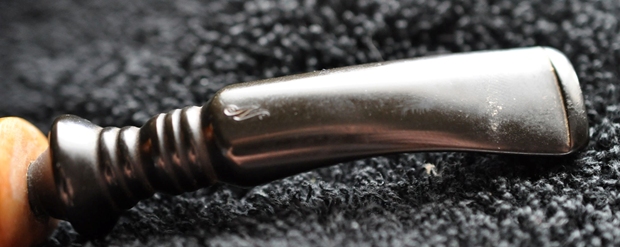
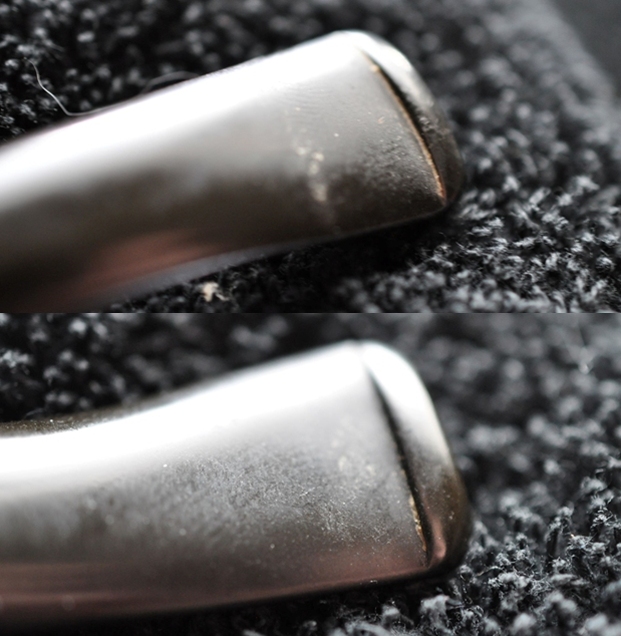
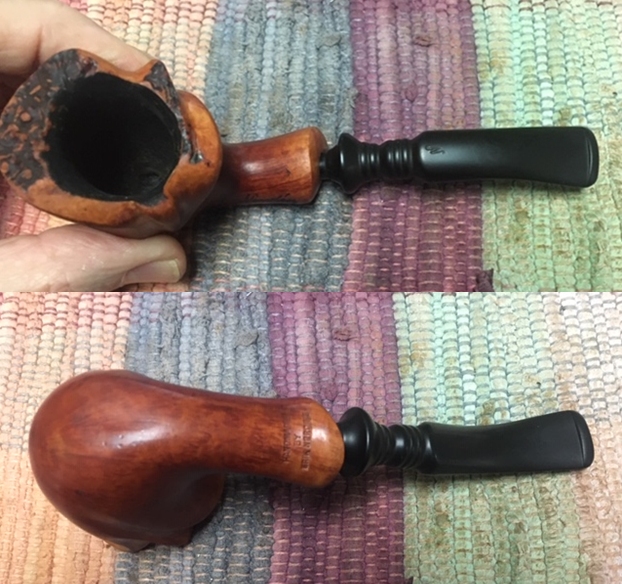
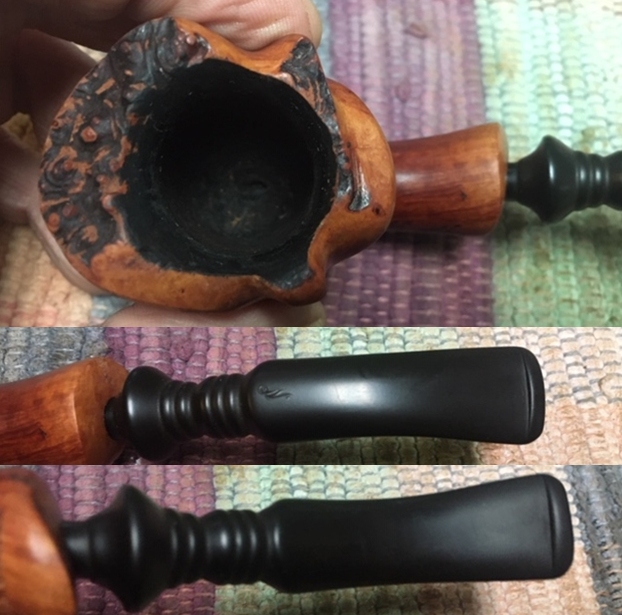
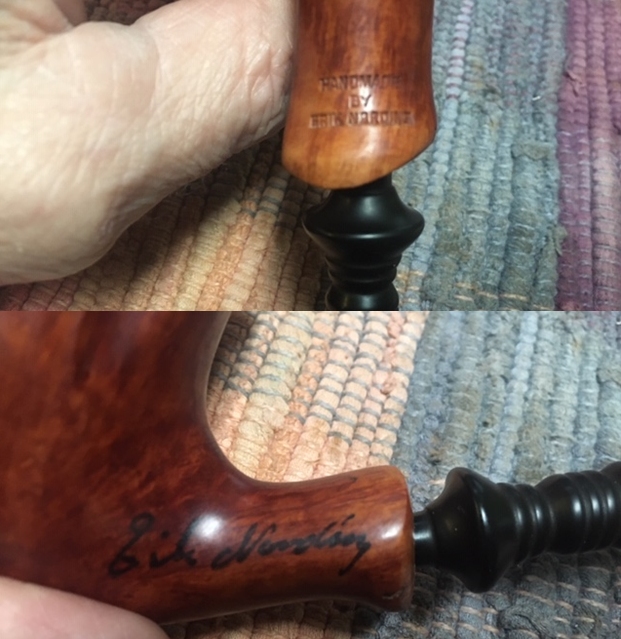
The pipe has the signature as noted above but it was also stamped on the underside of the shank and read: Handmade by Erik Nording. The finish on this pipe was dirty with dust and a light lava coat on the edge of the plateau top. The bowl was lined with a thick cake. The smooth finish was also dirty and dull looking. The finish looks good under the grime and dust. The bits of plateau should clean up well. The stem is a turned fancy turned vulcanite stem with the stylized N of the Nording logo on the top of the saddle. The fit of the stem to the shank was snug. There were light tooth marks and chatter on both sides of the stem at the button. Otherwise it was a very clean stem. Jeff took of the pipe to show the overall condition of the bowl and stem. You can also see why I was reminded of the Cala Lily.He took close up photos of the bowl and rim top from different angles to show the condition of the rim top and the plateau finish. You can see the lava and build up on the rim top and the lava flowing over the inner edge of the bowl onto the plateau. It is hard to know if there is damage or if the lava protected it. The bowl has a thick cake that lining the walls and overflowing into lava. He took photos of the sides and heel of the bowl to show the lay of the grain and the carvings around the pipe. It is a nice piece of briar. The top of the bowl is floral looking. Unique! The shank end is smooth with one small piece of plateau on the left side of the shank toward the end. Jeff took a photo of Erik Nording’s signature on the left side of the shank. It appears to have been done with Black permanent marker. He also took a photo of the stamping on the underside of the shank which read Handmade by Erik Nording. The first photo below shows the full length and profile of the fancy turned vulcanite stem. The next two photos show the surface of the top and underside of the stem. You can see the light tooth marks and chatter both on the button surface and on the blade itself. Erik Nording is a living pipe carver from Denmark. He is still carving and the information on Pipedia and Pipephil is helpful to get a feel for the brand. Give those articles a look if you want a good summary of the information. I have included the links to both of those articles for easy access.

https://pipedia.org/wiki/N%C3%B8rding

http://www.pipephil.eu/logos/en/logo-n2.html

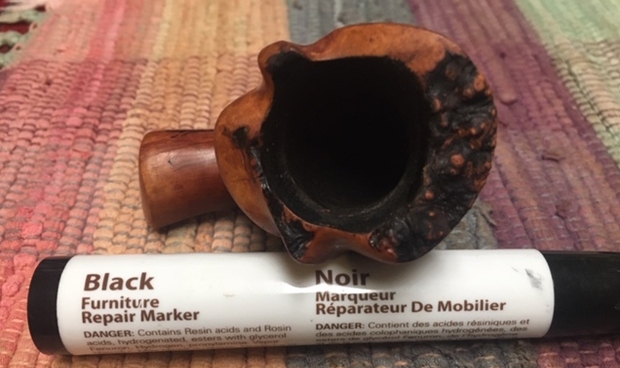
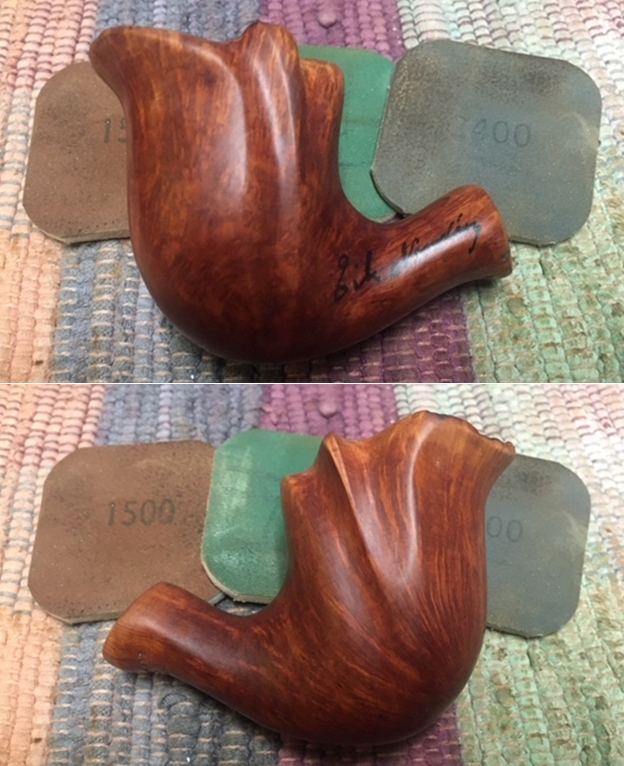
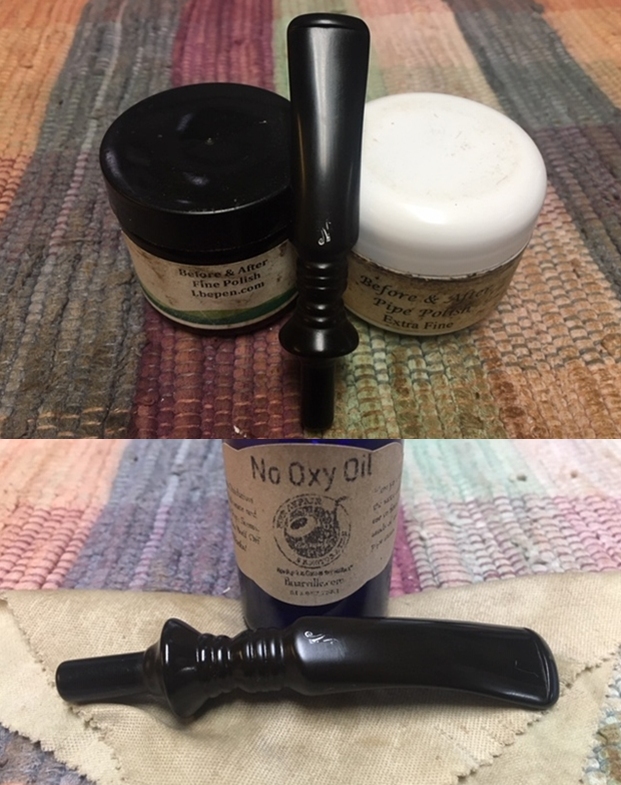
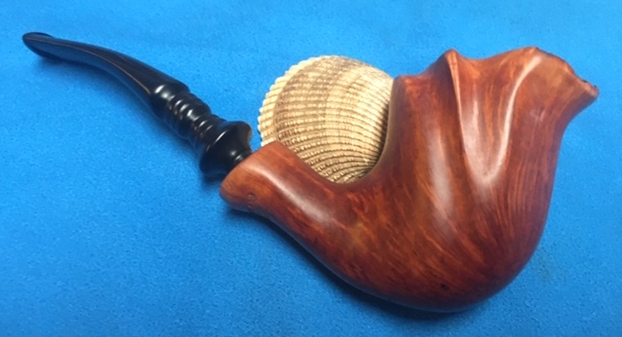
I moved forward to work on the pipe itself and see what I had to do with it. It had come back amazingly clean. Jeff had done his normal thorough clean up – reaming, scrubbing, soaking and the result was evident in the pipe when I unpacked it. I took photos of the pipe before I started my work on it. I took some photos of the rim top and stem to show the condition of them both when it arrived. Overall it looked good. The valleys of the plateau were finished in black but they were worn. The rim top was very clean. The stem looked amazingly good. The chatter on the stem surfaces was gone and the surface was clean.I took photos of the stamping on the underside of the shank and the signature on the left side. Both look to be in very good condition.To begin my part of the restoration work I decided to use a Black stain pen to fill in the crevices of the plateau top and give some contrast to the smooth high spots. I like this look as it give depth to the surface of the rim top.I polished the bowl with micromesh sanding pads – wet sanding with 1500-12000 grit pads. I wiped the briar down after each pad with a damp cloth. The bowl is starting to look very good. I worked some Before & After Restoration Balm into the surface of the briar with my fingertips and into the plateau rim top and shank end with a horsehair shoe brush to clean, enliven and protect it. I let the balm sit for a little while and then buffed with a cotton cloth to raise the shine. The photos show the bowl at this point in the restoration process. I set the bowl aside and turned my attention to the stem. I sanded out the tooth chatter and blended in the repairs with 220 grit sandpaper and started to polish it with a folded piece of 400 wet dry sandpaper. Once it was finished it began to shine.I used some Denicare Mouthpiece Polish that I have in my kit to start polishing out some of the scratches and remaining oxidation on the stem. I rubbed it in with a cotton pad and my finger tip and buffed it off with a cotton pad.I polished the stem with micromesh sanding pads – wet sanding with 1500-12000 grit sanding pads. I wiped it down after each sanding pad with some Obsidian Oil. I touched up the N stamp on the top of the stem with some Paper Mate Liquid Paper. I applied it with a tooth pick on the surface of the stem. Once it had dried I scraped off the excess Liquid Paper off the stem with the tooth pick. I finished polishing it with Before & After Pipe Stem Polish – both Fine and Extra Fine and buffed it off with a cotton cloth.This is another beautiful Freehand pipe. It is an Erik Nording Handmade with a fancy, turned, black acrylic stem. To me it has the look of a Cala Lily with the flared top edges and carved valleys in the sides of the bowl. It looks a lot like the photo I posted at the top of this blog. Once again the shape fits well in my hand with the curve of the bowl and shank junction a perfect fit for the thumb around the bowl when held. I polished stem and the bowl with Blue Diamond polish on the buffing wheel. I gave the plateau on the rim top multiple coats of Conservator’s Wax. I gave the bowl and the stem multiple coats of carnauba wax. I buffed the pipe with a clean buffing pad to raise the shine. I hand buffed it with a microfiber cloth to deepen the shine. The pipe polished up pretty nicely. The rich combination of browns and black in the smooth finishes and the plateau areas took on life with the buffing. The rich colour of the briar works well with the polished vulcanite stem. I like the grain and finished look of this Nording pipe. Have a look at it with the photos below. The shape, finish and flow of the pipe and stem are very well done. The dimensions are Length: 6 inches, Height: 2 ½ inches, Outside diameter of the bowl: 1 ½  wide x 2 inches long, Chamber diameter: 1 inch. This Danish Freehand is a real beauty. Thanks for walking through the restoration with me as I worked over another beautiful pipe. This one will be going on the rebornpipes store in the Danish Pipe Making Section shortly if you would like to add it to your collection. Thanks for your time.

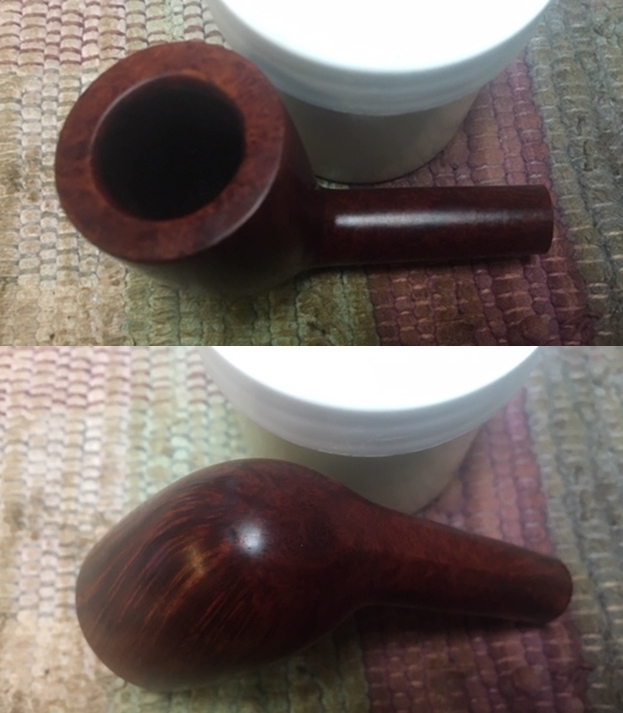
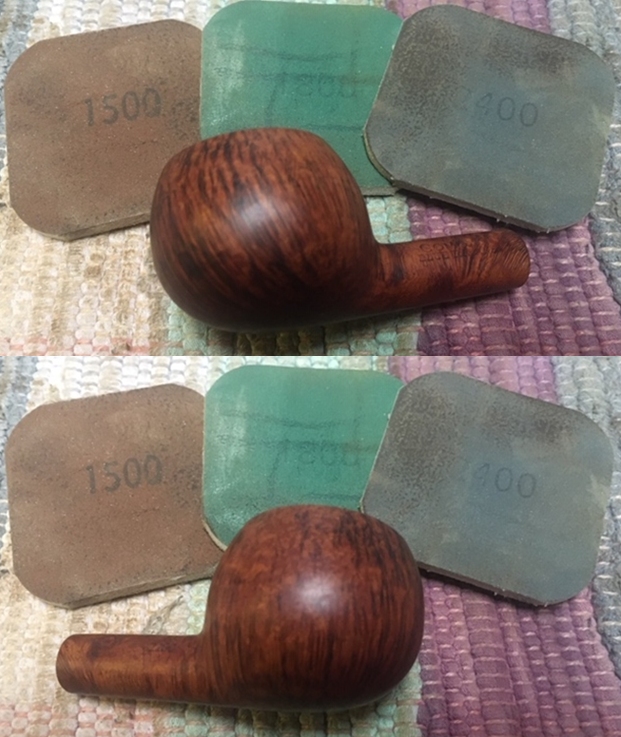
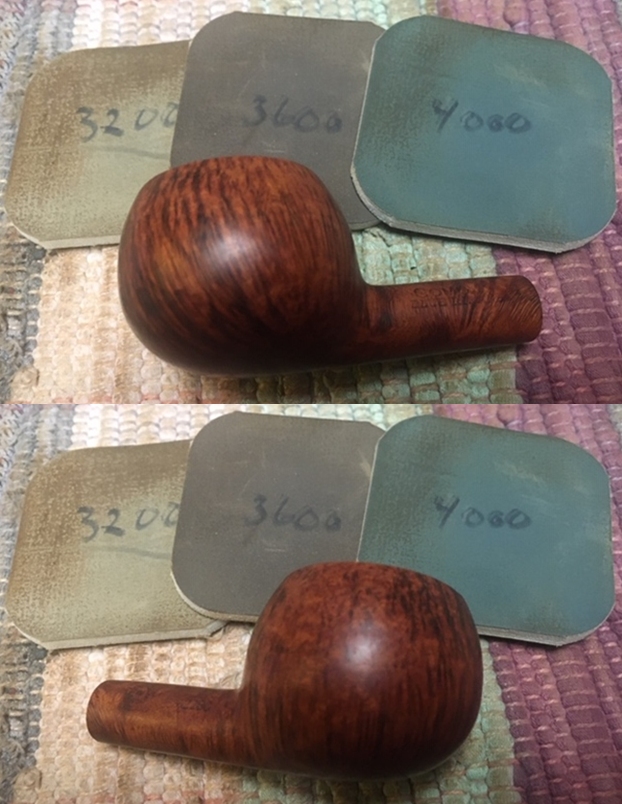
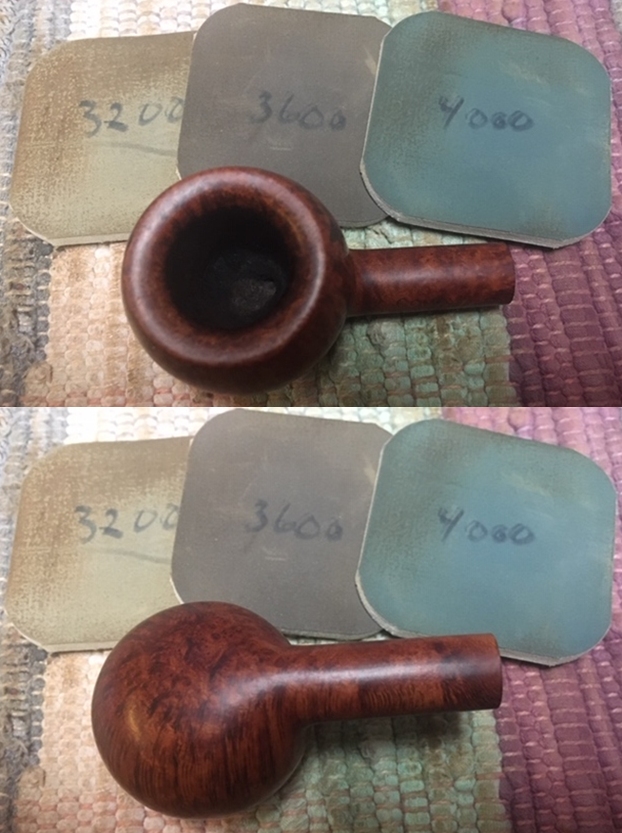
A Striking Savinelli Fiammata 2 Briar Calabash for a Clam Man Pipe Man


Blog by Dal Stanton

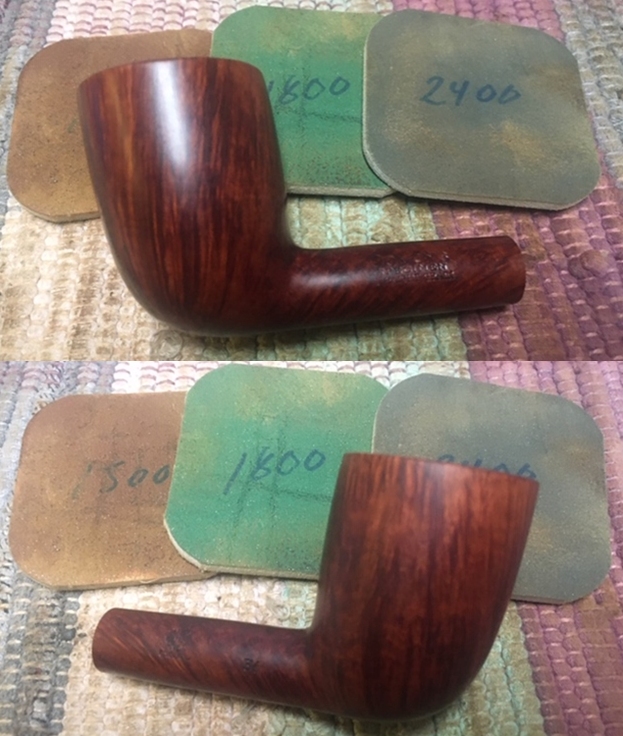
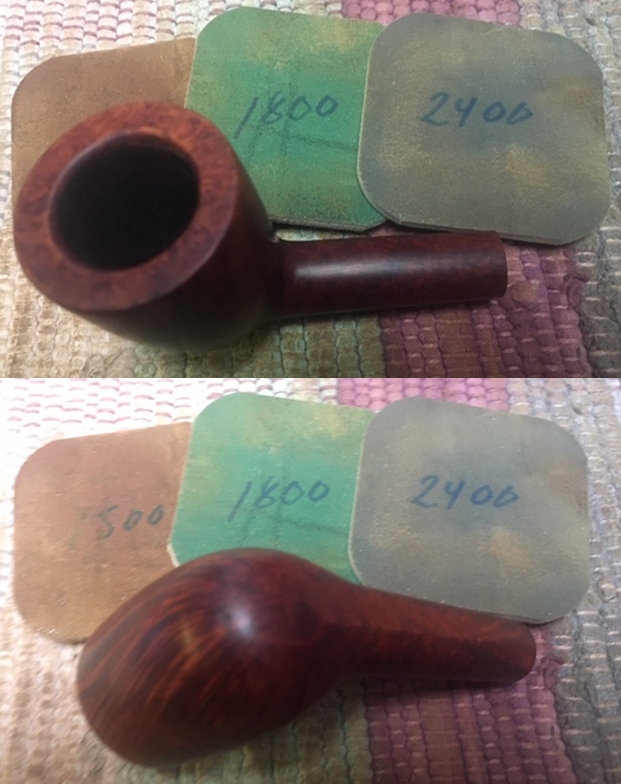
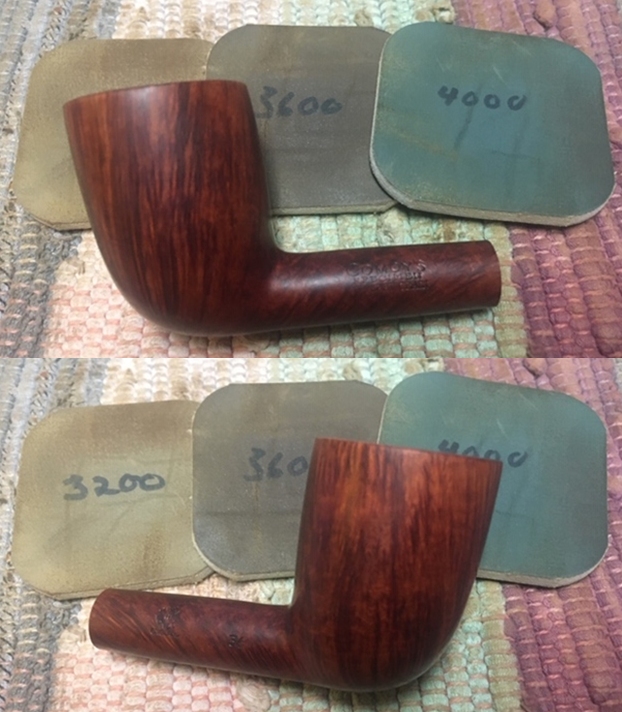
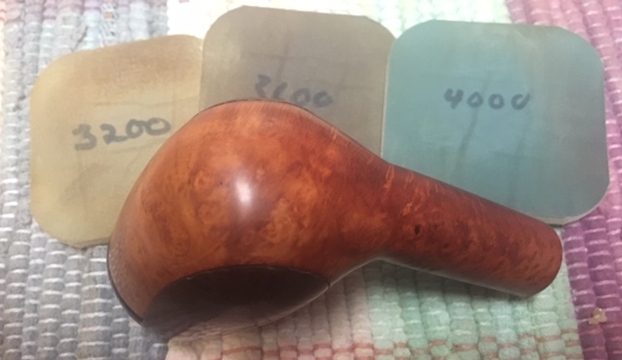
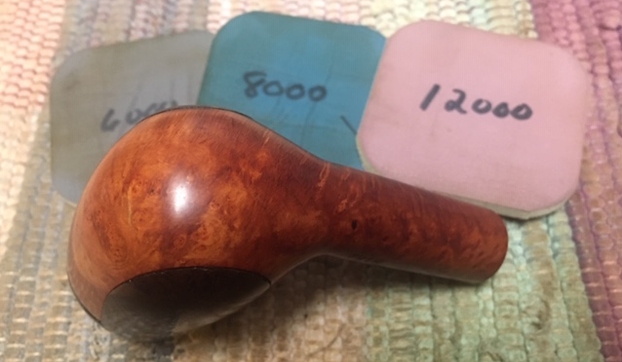
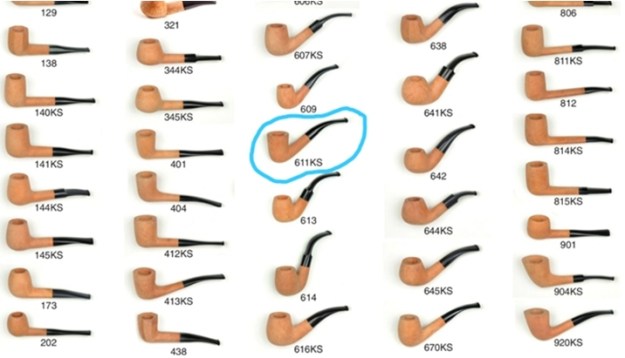
The Lot of 66 is a gift that simply put, keeps on giving.  It was the first time I stuck my neck out to buy a lot of pipes on eBay’s auction block.  I’m thankful that I did – it has produced many treasures that are now in the possession of new stewards from a good cause called the “Caring Place” in Georgetown, Texas.  The description of the Lot of 66 was “Huge Lot Of 66 Smoking Pipes Pre-Owned Pre-Smoked and Deeply Loved” followed by information that this was one person’s collection that had been donated to benefit the Caring Place helping the community in Georgetown.  This Lot of 66 benefiting the community there has also continued to benefit the work of the Daughters of Bulgaria – women and girls who have been trafficked and sexually exploited.  Here is the picture I saw and the Savinelli Fiammata Briar Calabash now on my table is circled.Most people commission pipes from my online ‘Help Me!’ baskets in the For “Pipe Dreamers” Only collection where pipes in need of adoption may be commissioned by pipe men and women benefiting the Daughters of Bulgaria.  Jon commissioned two pipes but as a visitor to Bulgaria he was able to peruse the actual boxes and buckets and chose a pipe.  Jon was part of a church team from South Florida exploring the work we do in Bulgaria.  Of course, if guests are in my home, they find out about The Pipe Steward and receive a tour of the work room and the Man Cave on my 10th floor balcony!  Jon brought along his daughter as well, but what was unique to me was that Jon is a farmer – of sorts.  His farm is under water as he grows and commercially sells clams as well as other various sea foods which I absolutely love!  His farm is called Southern Cross Sea Farms.  Next time I’m in South Florida I hope to visit Jon, share a bowl with him and hopefully a few clams!

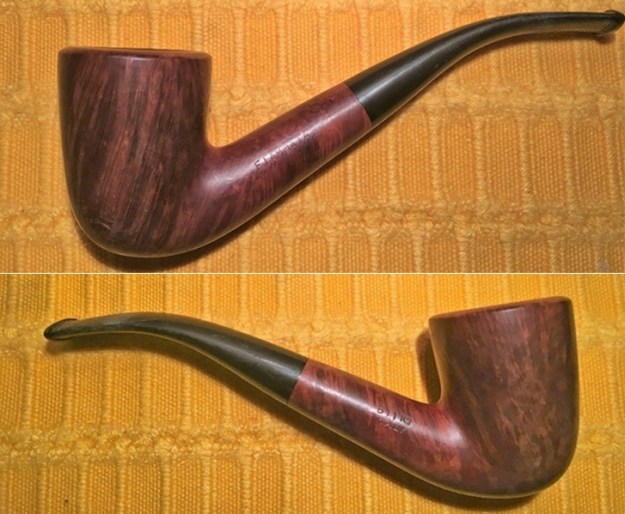
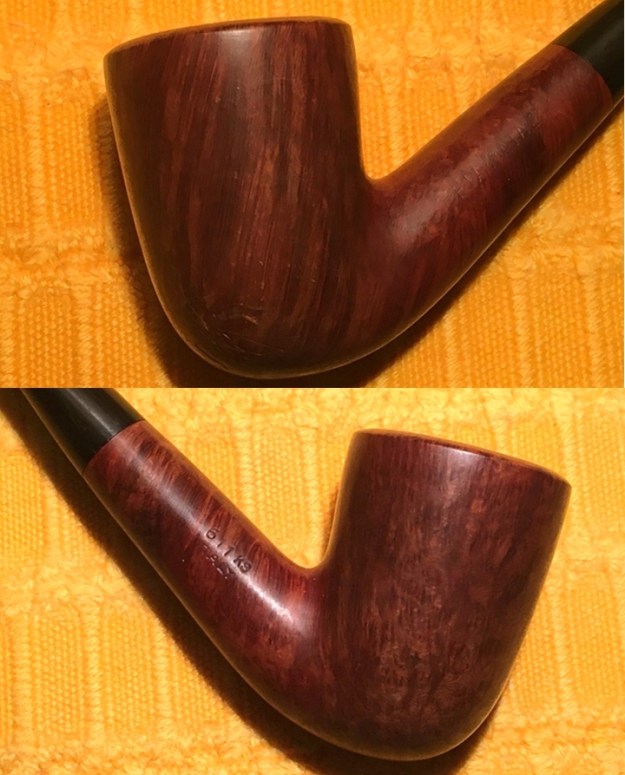
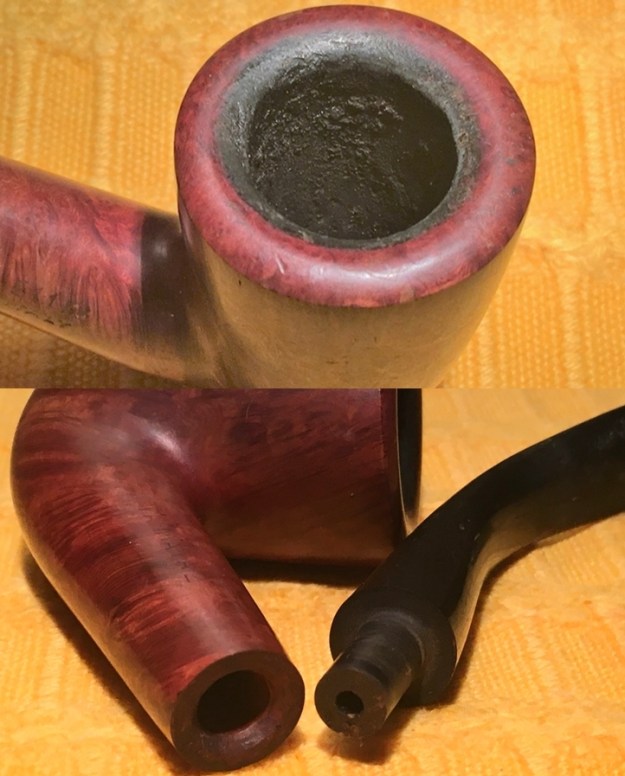
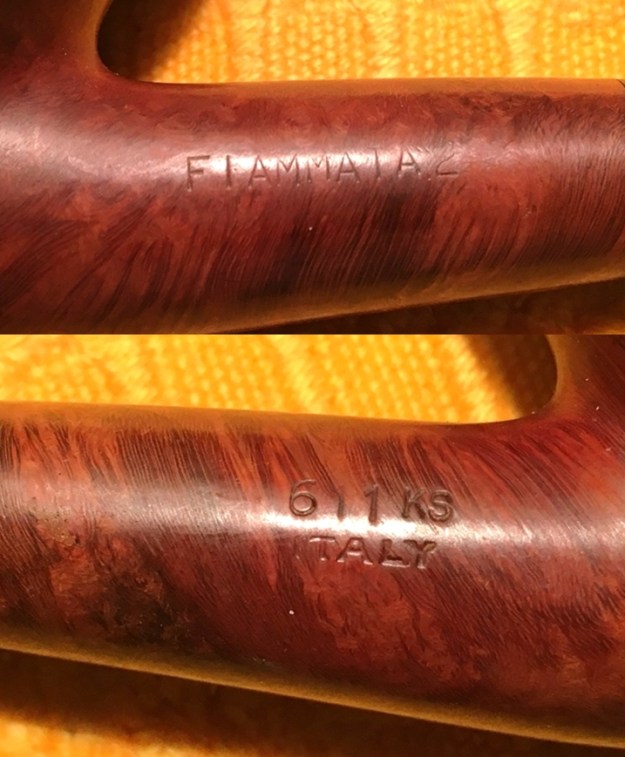
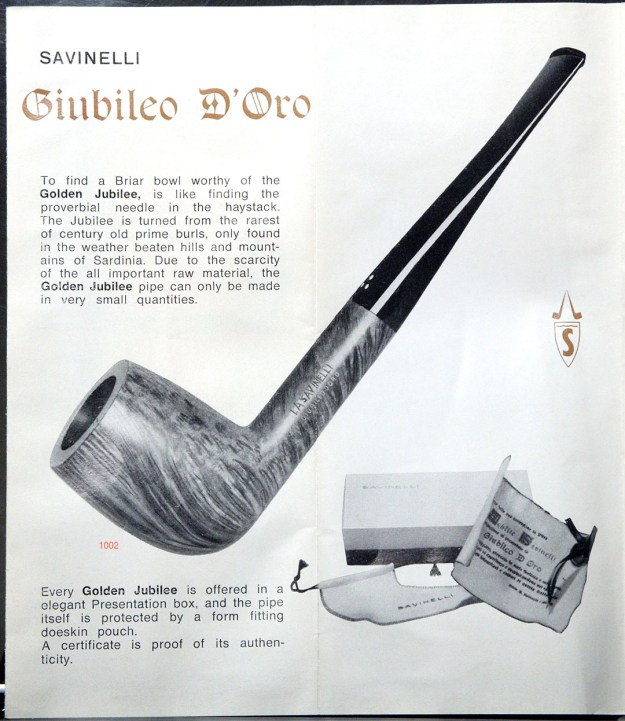
Not only did Jon commission the Savinelli Fiammata 2, but he also drooled over my collection of Churchwardens and when I would not relent in allowing mine to find a new home in South Florida’s clam country, he commissioned a Churchwarden project along with the Fiammata.  To benefit the Daughters of Bulgaria, I also fashion CWs with re-purposed bowls that most likely, would have never again be put into service – castaways to be used a forgotten.  Again, so many analogies to the work we do here with the Daughters!  Here are pictures of the Briar Calabash that got Jon’s attention. The nomenclature that is stamped on the left flank of the shank is ‘FIAMMATA 2’.  On the right flank is stamped 611KS – the Savinelli shape number [over] ITALY, the COM.  There are no stampings on the stem that I can detect.I’m calling the Fiammata 2 a ‘Briar Calabash’.  The 611KS is a Savinelli shape number and it is depicted in the familiar shapes chart provided on the PipePedia discussion of Savinelli.  In the same article, Fiammata is listed as a second of the well-known Italian name, Savinelli. The interesting factoid related by Pipedia is that this second, ‘Fiammata’ was a special line of pipes that did not make the prized Savinelli line, “Giubileo D’Oro” (“Gold Jubilee”) – a Straight Grain line.  What this means is that a Fiammata marked pipe was of an initial assessed quality that destined it as a ‘Top Shelf’ Savinelli pipe offering, but because it didn’t meet that standard along the way, it was put in the ‘first runner up’ Fiammata line.  So, in no way would this line be considered a sub-quality line, but an upper shelf to be sure.  Fiammata means ‘Flame’ in Italian.  Pictures of the Gold Jubilee offerings in Pipedia’s Savinelli article bare this out. The Fiammata I’m looking at looks strikingly similar.

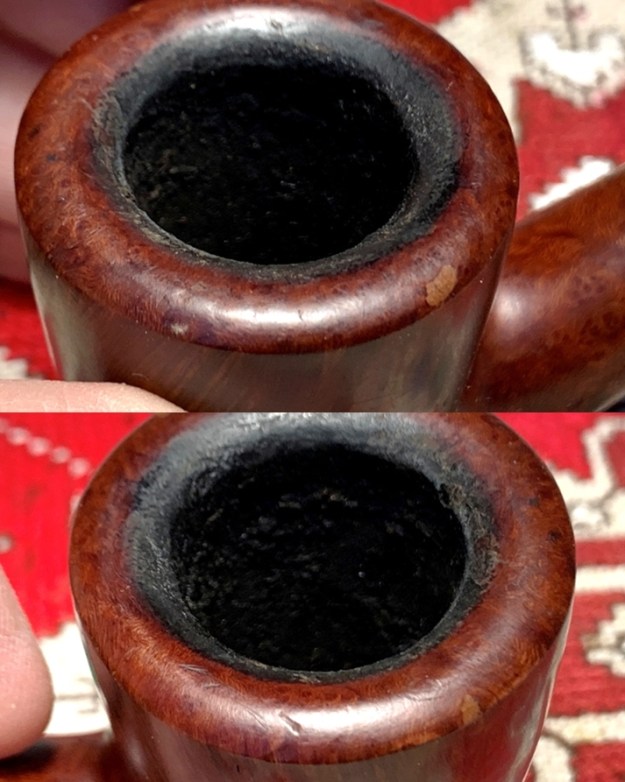
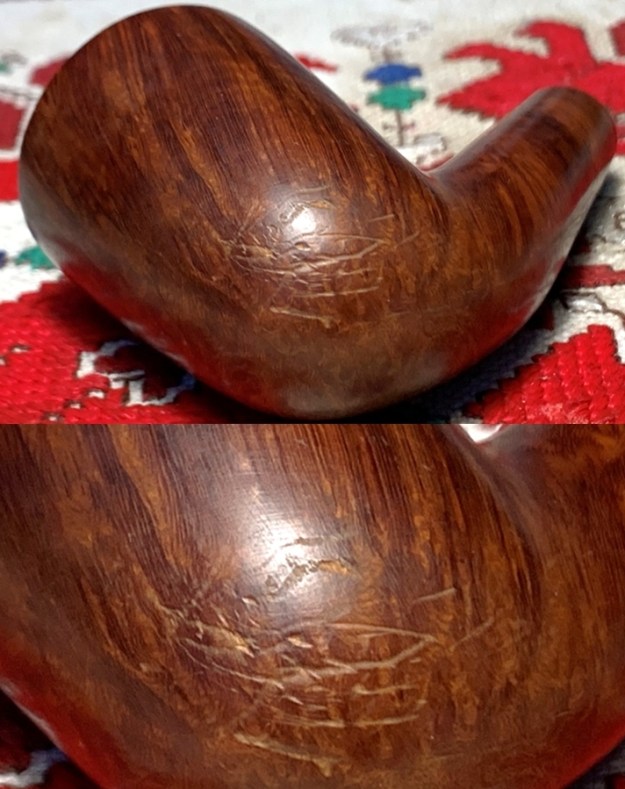
The Savinelli Pipedia article also included some catalog page examples (courtesy Doug Vliatchka) of this top shelf line, “Giubileo D’Oro” which describe the line of pipes that the Fiammata seems to have fallen short in achieving!.  I find the page clipping below interesting because of the information it provides, but also the similarity of the grains depicted like the Fiammata on my worktable – long straight grain, fire grain.So, the Savinelli Fiammata 2 on my worktable started with great aspirations, and the grain it has is very appealing.  The condition of the Briar Calabash is generally good, but with some issues.  The chamber has a light cake on the walls.  The rim has a dark ring around the inner rim edge which should clean up.  It also has what appears to be a large fill on the rear, left hand side.  The right side of the rim also has some dings. There is a major scratching event on the lower left heel – ugh!  It appears that it was in a bucket of nails or something – the scratching is deep and will need to be sanded out. The stem has minor oxidation but there is tooth chatter on the upper and lower bit in need of sanding out.To begin the restoration of the Savinelli Fiammata 2 Briar Calabash, I first use only a pipe cleaner dipped in isopropyl 95% to clean the airway of the stem.With the airway clean, the Fiammata stem joins several other stems in a soak of Mark Hoover’s product (www.ibepen.com) Before & After Deoxidizer.  This is the only part of the restoration process that I try to mass produce!  The Fiammata is on the far left, next in the queue, and it joins several other pipes that are also in the queue along with their stems in the soak as well.  The stems were just put in the Deoxidizer and are in the process of sinking into the interesting mixture.  I leave the stems in the soak for a few hours.After a few hours, I fish out the Fiammata’s stem and after using my fingers to squeegee the Deoxidizer off, I run some pipe cleaners wetted with isopropyl 95% through the airway to clear out the fluid.  I then use a cotton pad wetted with alcohol to wipe down the stem to remove raised oxidation from the stem.To enhance the rejuvenation of the vulcanite, paraffin oil is applied with a cotton pad and the stem is set aside to soak in the oil.Turning now to the stummel cleanup, I begin by reaming the chamber with the Pipnet Reaming Kit.  With the day a bit warmer during this time of self-quarantine because of the virus concerns, I’m trying to work out on the Man Cave as much as possible.  My ‘Man Cave’, where I’m allowed to smoke my pipes is located on the 10th floor of our apartment blok built during the days when Communism was still up and functioning in Bulgaria.   I take my tools to the Man Cave and go to work.  I’m enjoying a bowl of Black Stoker in a Made in London England Canadian.The cake is not bad, but the long, conical chamber of the Savinelli Fiammata 2 is a challenge.  The shape of the chamber tapers down so that is it narrower at the floor of the chamber. I use all 4 of the blade heads available to me in the Pipnet reaming kit, which speaks to the size of the chamber as it expands upwardly.  I am careful not to bore ridges into the side of the chamber with the different blade heads starting at different points.   I transition after the blades to the Savinelli Fitsall Tool to fine-tune the chamber wall scraping reaching down to the floor and to the more difficult areas of the conical chamber.  To rid the final vestiges of carbon, I then wrap 240 grade paper around a Sharpie Pen and sand the chamber. After wiping the chamber with a wetted cotton pad to clear the carbon dust, I inspect the wall and find a healthy chamber.  I move on! Transitioning to cleaning the external surface, I use cotton pads wetted with undiluted Murphy’s Oil Soap.  I patiently focus on the blackened ring on the internal edge of the rim.  My thumbnail proves to be helpful as well as a gentle scraping with my Buck pocketknife.  A brass wired brush also helps.  Transferring the pipe to the kitchen sink, I also employ shank brushes with anti-oil liquid dish soap to clean the internal mortise and airway.  After a thorough rinsing, the stummel returns to the worktable.  The cleaning did a fantastic job on the rim.  What I thought to be fills on the rim, held very firmly and have all but disappeared.  To make sure the internals are clean, a few pipe cleaners and cotton buds dipped in isopropyl 95% confirm this!  I move on!The disaster area on the front left side of the heel of the Fiammata Calabash stummel is now my focus. The sharp cuts in the briar are most likely from metal.  It’s sad…First using 240 grade sanding paper I sand the impacted area.  I do not go beyond the damaged area because heavy sanding changes the composition of the surface drastically.  It creates a lightened patch that needs again to be darkened in order to re-blend it with the surrounding briar complexion.  While the 240 paper is in play, I also lightly sand the rim’s internal edge to remove fully the darkening that remains after the cleaning.  There’s a lot of forgiveness in a rounded rim presentation!After the 240 grade paper, I sand with a dry 600 grade paper to the lightened area.  You can see how the sanding process gradually coaxes the briar grain to darken moving toward blending the sanded area.  Not pictured is that I do the same with the rim area that I had sanded with 240 paper.The blending continues by sanding the bowl with sanding sponges.  Before doing this, I cover each of the stampings of the Savinelli nomenclature with masking tape on both sides of the shank.  I try not to contribute to the demise of this pipe’s history and story!I start with a coarse sponge and follow with medium and light grade sponges.  The sanding sponges, unlike the 240 grade paper, are a gentler form of sanding that is less invasive.  Sanding sponges address the minor nicks and cuts that come through the normal life of a pipe in service.  They also help with the darkening and re-blending of the damaged sanded area (second picture).  I like the results and the fire grain of this Fiammata Briar Calabash is starting to get my attention – wow!  This is a quality piece of briar block! Loving the briar grain that is emerging through the sanding processes, I transition next to applying the full regimen of 9 micromesh pads from grades 1500 to 12000.  First, wet sanding is with pads 1500 to 2400 followed by dry sanding with pads 3200 to 4000 and 6000 to 12000.  I’m loving the show of the grain on this stummel gradually emerging!  The damaged area has been fully reintegrated into the briar environment. The next step is to apply Mark Hoover’s Restoration Balm (www.ibepen.com) which works well to bring out the rich deeper hues of the natural briar grains.  After placing a small amount of the Balm on my finger, I work it into the briar surface.  It begins with a cream-like consistency and then thickens to a waxiness that covers the entire surface.  After a thorough application of the Balm, I set the stummel aside to absorb the Balm for about 20 minutes (pictured below).  After the 20 minutes, I use a dedicated microfiber cloth to wipe the stummel removing the excess balm and to buff the stummel somewhat.  I also use this ‘balm saturated’ cloth to wipe other pipes in my collection for regular Balm maintenance – they enjoy this very much!  I follow with another microfiber cloth to buff further.  My, oh my….The Calabash’s bent stem is waiting for my attention.  It’s the next day and continuing to work on the Man Cave with another beautiful day, I take another close look at the stem.  The Before & After Deoxidizer has done a good job dealing with the oxidation.  The upper and lower bit has tooth chatter, but not severely.  The button is in pretty good shape.  To help to minimize the chatter and one evident scissor bite mark I see on the upper side, I first use the heating method.  Using a Bic lighter, I ‘paint’ the chatter with the flame.  The flame heats the vulcanite and it expands to reclaim its original disposition – or at least closer to it.  This then allows sanding out the remaining marks easier.  Before and after pictures comparing the effects of the heating approach are below – a definite improvement.  First, the upper bit comparison – note the minimization of the vertical scissor bite compression:Next, the lower bit comparison – the chatter disappears:Next, I use the flat needle file to refresh the button and 240 sanding paper to erase what remains of the tooth chatter.Even though the stem showed no signs of oxidation after use of the deoxidizer soak, I expand the sanding to the entire stem with the 240 paper.  I want to make sure no vestiges of oxidation show up in the latter stages of polishing which is when deeper oxidation usually shows up!Next, I wet sand using grade 600 paper and follow by applying 000 grade steel wool.The sanding preparatory work is completed and now the fine tune sanding with the full regimen of micromesh pads follows.  First, I wet sand with pads 1500 to 2400 and follow by dry sanding with pads from 3200 to 4000 and 6000 to 12000.  Between each set of 3 pads, Obsidian Oil is applied to rejuvenate and to protect against future oxidation.  I love the ‘pop’ of newly micromeshed stems! Now, the home stretch.  After rejoining stem and stummel and after mounting a cotton cloth buffing wheel to the Dremel setting it at 40% of full power, the fine abrasive compound, Blue Diamond, is applied to the entire pipe.  Following the compound, after wiping the pipe with a felt cloth to clear the compound dust, another cotton cloth buffing wheel is mounted and at the same speed carnauba wax is applied.  The restoration is completed after giving the pipe a rigorous hand buffing with a microfiber cloth to raise the shine.

If this pipe is a normative example of the “Giubileo D’Oro” (“Gold Jubilee”) reject line, keep the rejects coming!  What can I say?  This is one of those restorations that discovered gold in hiding. The grain presentation on this ample Briar Calabash bowl is reminiscent to me of Preben Holm’s moniker, ‘Follow the grain.’  The straight, fire grain reaches toward the rim and the rim’s rounded shape provides a view of delicate bird’s eye, a 3-D perspective of the tips of the fire grain’s release into the air.  The heel presentation is equally expressive of larger, more chaotic patterns – for me, characteristic of the origins of the fire.  The Briar Calabash shape also contributes to the ensemble with its sweeping curves and lines moving toward the gently bending stem.  Is it obvious that I’m impressed with this line of Savinelli, Fiammata?  Clam man Jon commissioned this pipe and has the first opportunity to adopt him from The Pipe Steward Store benefitting the Daughters of Bulgaria.  Thanks for joining me!
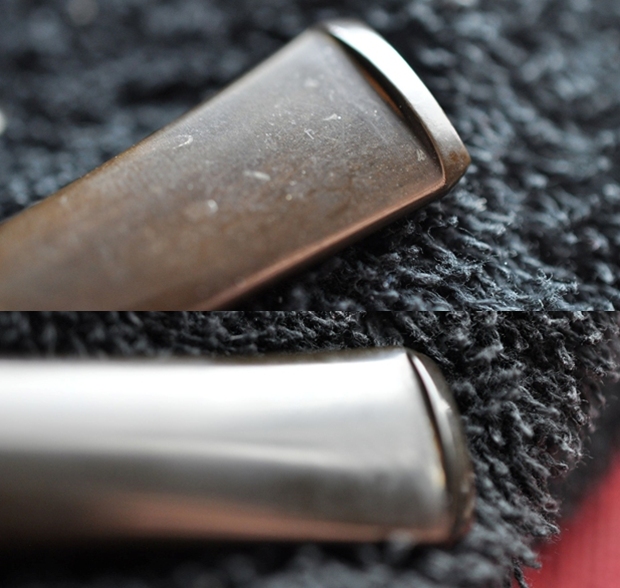
Breathing Life into a Danish Hand Made Ben Wade Golden Walnut


Blog by Steve Laug

There is some almost electric about handling and working on a pipe designed and carved by Preben Holm. I can’t describe adequately the feeling I have when I turn the bowl and stem over in my hands even before I start working on the pipe. There is an energy that flows through the way he carved and shaped the pipes of his making. This second Ben Wade pipe was no exception. When Jeff showed me the photos of several of the Ben Wade pipes by Preben Holm that he had picked up I was excited to be able to work on them. This one has twists and turns in the carving and valleys carved into the sides of the bowl. It is very unique. The combination of dark and medium stains highlights grain that runs like flames across both sides of the bowl culminating at the flat heel of the bowl. The rim top is plateau but also cut across it are also valleys coming up from the sides of the bowl. The shank end combines smooth and plateau for a unique look.

This is another well-loved pipe as you can see from the thick cake in the bowl and the lava on the rim top. It is hard to know the condition of the inner edge of the bowl due to the lava on the edges. The outside of the bowl and plateau portions are dirty and dusty but the grain pops through. The vulcanite stem still had the BW Cross and Crown logo on the top sides just past the fancy turnings. The stem as a whole was oxidized, dirty and dusty with deep tooth marks on the button surface and lighter ones on the blade just ahead of the button on both sides. Jeff took these photos before he started his part of the restoration. He took close up photos of the bowl and rim top from different angles to show the condition of both the smooth and plateau finish. It is truly a uniquely carved rim top maximizing the plateau and the smooth parts flowing up from the bowl sides.You can see the lava and build up on the rim top and the lava flowing over the inner edge of the bowl onto the plateau. It is hard to know if there is damage or if the lava protected it. The bowl has a thick cake that lining the walls and overflowing into lava. He took photos of the sides and heel of the bowl to show the lay of the grain around the pipe. It is a beautiful piece of briar. The top of the bowl is craggy and rugged looking. Unique! The shank end is also a unique mix of plateau and smooth. Jeff took several photos of the stamping on the underside of the shank to capture all of the stamping. It was clear and read Ben Wade in script at the top. Under that it read Golden Walnut. Under that was stamped Hand Made in Denmark.The next two photos show the surface of the top and underside of the vulcanite stem. You can see the tooth marks and damage both on the button surface and on the blade itself. The third photo shows the unique Cross and Crown BW logo on the stem top near the turnings.I am including the background history that I included on the previous blog. It includes the idea that the Preben Holm pipes were marketed under the Ben Wade label in the US and imported through Lane Ltd. I turned to Pipedia and read the listing on the brand to refresh my memory and flesh out the knowledge of the brand (https://pipedia.org/wiki/Ben_Wade). I have included a photo from that site that was taken from a Tinderbox advertisement.
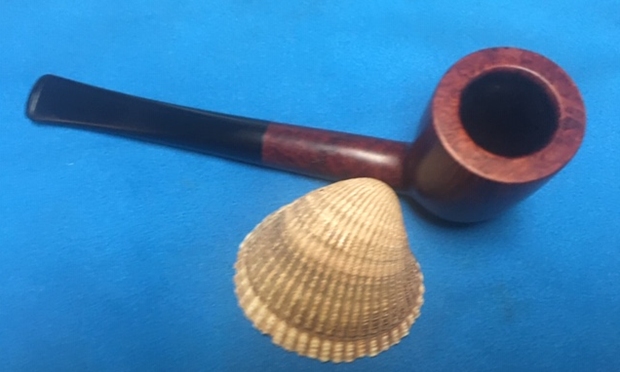
Ben Wade Ad in a Tinder Box catalog, courtesy Doug Valitchka

I quote the portion of the article that summarizes the history of the brand.

Young Copenhagen master pipemaker Preben Holm had made a meteoric career heading a pipe manufacture employing 45 people at the age of 22! But around the turn of 1970/71 he was in major financial difficulties. His US distributor, Snug Harbour Ltd. in New York City, left him in the lurch. Holm had three unpaid invoices on his desk and another large shipment was ready for the USA, when Snug Harbour’s manager told him on the phone that there was no money at all on the account to pay him.
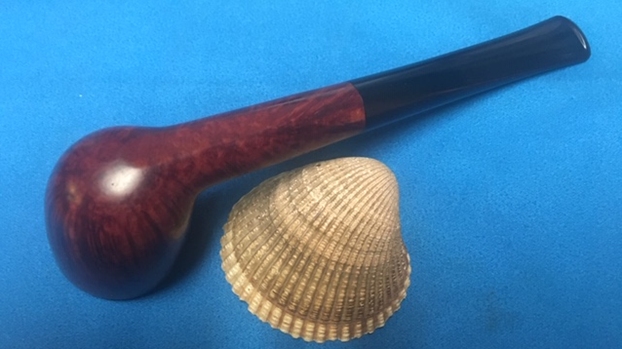
So the Dane went to New York for an almost desperate search for a new distribution partner. He made contacts with Lane Ltd. and met Herman G. Lane in February 1971. Lane Ltd. had no interest in Holm’s serial pipes produced at that time but so much the more in the hand-carved freehands because the hype for Danish freehands and fancies in the States was still on its way to the climax then. The meeting resulted in an agreement to start a cooperation. Lane insisted to improve the quality considerably and in return he assured to be able to sell essentially larger quantities.

Holm went back home to work on new samples with all-new designs and altered finishes for Lane. Both, Lane and Holm, agreed that it would be unwise to sell the pipes under Preben Holm’s name as long as Snug Harbour had a considerable stock of Preben Holm pipes and might sell them pipes at very low prices just to bring in some money.

So on Mr. Lane’s proposal it was determined to use the name Ben Wade belonging to Lane Ltd. Lane spent considerable amounts of money for advertising the new brand in the big magazines– the centerpiece being whole-page ads showing a very exclusive Seven Day’s Set.

The cooperation with Lane Ltd. proved to be an eminent business success for both partners. Within a very short time Ben Wade Handmade Denmark sold in much larger quantities and at higher prices than they had ever dreamed of. And the hype these freehands and fancy pipes caused went on unbroken long after Herman G. Lane deceased. Preben Holm – obviously much more brilliant in pipe making than in pipe business – was in major troubles again in 1986 and had to sack most of his staff. The Ben Wade production was significantly lowered but continued until his untimely death in June of 1989.

Up to now Preben Holm made Ben Wade pipes are cult and highly sought for on the estate markets.

With that information my initial thoughts were confirmed. This pipe was another Preben Holm made Freehand distributed in the US by Lane Ltd under the name Ben Wade. The freehand rage occurred in the late 70s and the pipes were made until Preben’s death in 1989. My guess would be that this pipe was made sometime during that time period and potentially in the late 70s.

Armed with that information I moved forward to work on the pipe itself and see what I had to do with it. It had come back amazingly clean. Jeff had done his normal thorough clean up – reaming, scrubbing, soaking and the result was evident in the pipe when I unpacked it. I took photos of the pipe before I started my work on it. I took some photos of the rim top and stem to show the condition of them both when it arrived. It looked good. There is some darkening and damage to the inner edge of the bowl. The stem had some deep tooth marks ahead of the button and on the button surface on both sides.To begin my part of the restoration work I decided to clean out some more of the grooves in the plateau with a brass bristle wire brush. Once I had it cleaned out I restained the plateau top with black stain. It is amazing how good the plateau looks once it is cleaned and stained.I polished the bowl with micromesh sanding pads – wet sanding with 1500-12000 grit pads. I wiped the briar down after each pad with a damp cloth. The bowl is starting to look very good. I worked some Before & After Restoration Balm into the surface of the briar with my fingertips and into the plateau rim top and shank end with a horsehair shoe brush to clean, enliven and protect it. I let the balm sit for a little while and then buffed with a cotton cloth to raise the shine. The photos show the bowl at this point in the restoration process. I set the bowl aside and turned my attention to the stem. The stem was very clean so I filled in the tooth marks with clear super glue and set it aside to cure. Once it had cured I flattened out the repairs and sharpened the edge of the button with a needle file. I sanded out the tooth chatter with 220 grit sandpaper and started to polish it with a folded piece of 400 wet dry sandpaper. Once it was finished it began to shine.I used some Denicare Mouthpiece Polish that I have in my kit to start polishing out some of the scratches and remaining oxidation on the stem. I rubbed it in with a cotton pad and my finger tip and buffed it off with a cotton pad.I touched up the stamping on the stem top with Rub’n Buff Antique Gold. It looked like it had previously been stamped with gold so I filled in the stamping once again and buffed the product off the stem.I polished the stem with micromesh sanding pads – wet sanding with 1500-12000 grit sanding pads. I wiped it down after each sanding pad with some Obsidian Oil. I finished polishing it with Before & After Pipe Stem Polish – both Fine and Extra Fine and buffed it off with a cotton cloth. I wiped it down with Briarville’s No Oxy Oil to protect the stem and slow down the oxidation. This is a beautiful Preben Holm made Ben Wade Golden Walnut with a fancy, turned, black vulcanite stem. It has a great look and feel. The shape fits well in the hand with the curve of the bowl and shank junction a perfect fit for the thumb around the bowl when held. I polished stem and the bowl with Blue Diamond polish on the buffing wheel. I gave the plateau on the rim top and shank end multiple coats of Conservator’s Wax. I gave the bowl and the stem multiple coats of carnauba wax. I buffed the pipe with a clean buffing pad to raise the shine. I hand buffed it with a microfiber cloth to deepen the shine. The pipe polished up pretty nicely. The rich combination of browns and black in the smooth finishes and the plateau areas took on life with the buffing. The rich colour of the briar works well with the polished vulcanite stem. I like the grain and finished look of this Preben Holm Ben Wade Golden Walnut pipe. Have a look at it with the photos below. The shape, finish and flow of the pipe and stem are very well done. The dimensions are Length: 6 ½ inches, Height: 2 ¼ inches, Outside diameter of the bowl: 2 wide x 2 ¼ inches long, Chamber diameter: 7/8 of an inch. This Danish Freehand is a real beauty. Thanks for walking through the restoration with me as I worked over another beautiful pipe. This one will be going on the rebornpipes store shortly if you would like to add it to your collection. Thanks for your time.


Repairing a Burned Rim Edge and Chewed Stem on an English Ben Wade 76 Canadian


Blog by Steve Laug

The next pipe on my table is nice sandblast thick shank Canadian. It is stamped on the underside of the shank with the Ben Wade over Made in London England. It also has the shape number 76 just ahead of the Ben Wade stamping. It has a nice sandblast finish that is in good shape under the dirt and even the rim top looks good. The inner edge of the rim is darkened but the bowl is in good shape. There was burn damage on the left outer edge and darkening on the inner edge of the bowl. There is a thick cake in the bowl and light lava build up on the rim top and inner edge. The taper vulcanite stem was oxidized and had some deep tooth marks and chatter on both sides ahead of the button. Jeff took these photos before he cleaned the pipe.He took photos of the rim top from various angles to give a clear picture of the condition of the bowl and rim. It is dirty but there is a light lava coat on the top and the rim edges have some darkening and buildup. There is also a deep burn mark on the left out edge toward the rear of the bowl. Jeff also took a closer photo of the burned area on the outer edge of the rim. It is visible in the photo below.The sandblast finish around the sides and heel of the bowl is quite interesting and reveals some different underlying grain. The stamping on the underside of the shank is very readable as can be seen in the next photo.The next two photos show the deep tooth marks on the surface of the stem. They are actually quite high up the stem from the button. This pipeman had been a bit of a chomper. There is some wear on the edge of the button as well. The stem shows a great profile. I moved forward to work on the pipe itself and see what I had to do with it. It had come back amazingly clean. Jeff had done his normal thorough clean up – reaming, scrubbing, soaking and the result was evident in the pipe when I unpacked it. I took photos of the pipe before I started my work on it. I took some photos of the rim top to show the condition of the edges and the bowl. It looked very good. There is some darkening to the inner edge of the bowl. The second photo shows the damage from the burn on the left side of the rim top and side of the bowl. The stem had some deep tooth marks ahead of the button on both sides. The bowl was going to be straightforward to work on so I started with it. The burned spot on the left side of the bowl edge needed to be addressed. Since the bowl was clean I wiped off the damaged spot with alcohol on a cotton pad. I dried it of with a cloth. I then filled it in with layers of super glue and briar dust – repeating the process until the surface of the rim top and the side of the bowl were even. When the repair had cured I sanded it with a folded piece of 220 grit sandpaper to blend it into the surrounding briar. I used a brass bristle brush to roughen up the surface of the rim top and side of the bowl. I worked it over to achieve a similar pattern to the surround sandblast. I stained the repaired area with a Mahogany stain pen and blended it into the surrounding stained briar. I am pretty happy with the match. At this point in the process the bowl definitely looks better.I worked some Before & After Restoration Balm into the briar with my fingertips. I let the balm sit on the briar for 10 minutes the buffed it off with a soft cloth. The balm enlivens, enriches and protects the briar while giving it a deep glow. I set the bowl aside and turned my attention to the stem. The stem was very clean so I filled in the tooth marks with clear super glue and set it aside to cure. Once it had cured I flattened out the repairs and sharpened the edge of the button with a needle file. I sanded the stem with 220 grit sandpaper to blend in the repairs with the rest of the stem surface.  I started the polishing with 400 grit wet dry sandpaper.I polished the stem with Denicare Mouthpiece Polish. It is a gritty red paste (similar in grit to red Tripoli) that I rub on with my finger tips and work it into the surface of the stem and button and buff it off with a cotton pad. It gives me a bit of a head start on the polishing work.I polished the stem with micromesh sanding pads – wet sanding with 1500-12000 grit sanding pads. I wiped it down after each sanding pad with Obsidian Oil. I polished it with Before & After Pipe Stem Polish – both Fine and Extra Fine. I buffed the stem with a soft cloth to raise the shine. I wiped the stem down with Briarville’s No Oxy Oil to preserve and protect the stem surface. Ahhhh…once again I am at my favourite part of a restoration – finishing up a pipe! This Ben Wade English made Canadian 76 came out really well considering the issues with the burned area on the side of the bowl and rim when I started. I put the pipe back together and buffed it with Blue Diamond polish on the buffing wheel. I polished the bowl with multiple coats of Conservator’s Wax and the stem with multiple coats of carnauba wax. I buffed it with a clean buffing pad and with a hand buff with a microfibre cloth. The mix of colours and the buffing made the sandblast stand out when it was waxed. The mixed grain is quite stunning. Thick oval shank and taper stem stands out in great contrast to the briar. It is a nice looking pipe. Have a look at the photos below of the finished pipe. Its dimensions are Length: 6 ¼ inches, Height: 2 inches, Outside Diameter of the Bowl: 1 3/8 inches, Diameter of the Chamber: ¾ of an inch. The long shank Canadian feels great in the hand. This one will be going on the rebornpipes store later today. You can add it to your collection and carry on the trust. Let me know if you are interested in adding it. Thanks for your time.