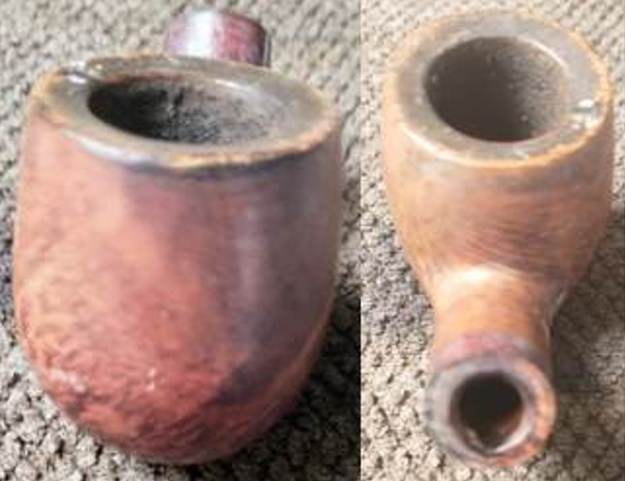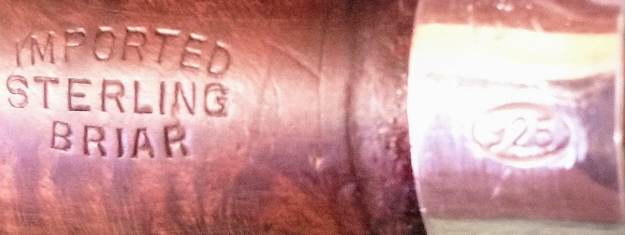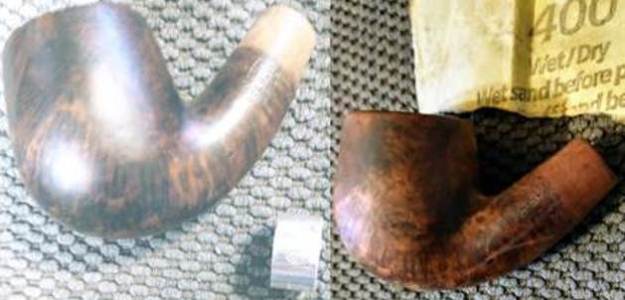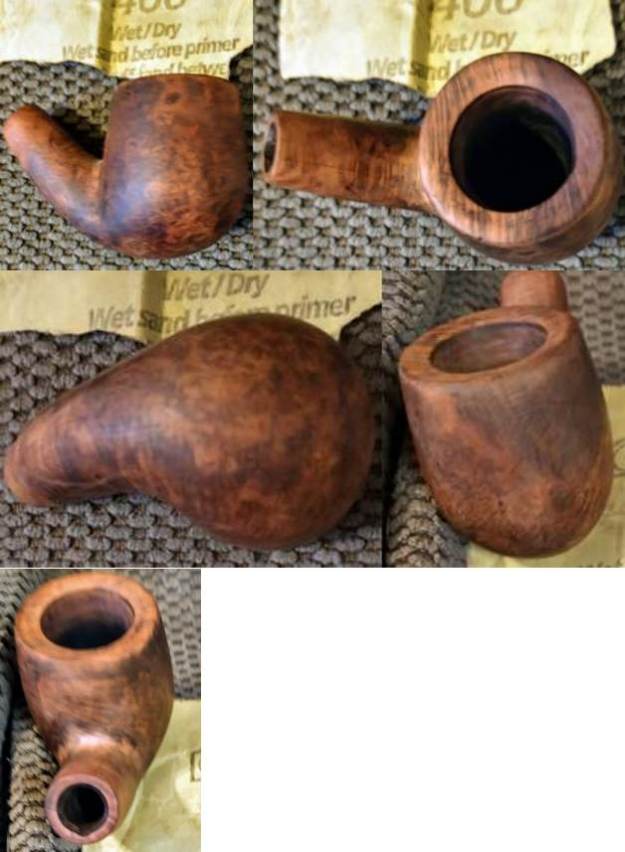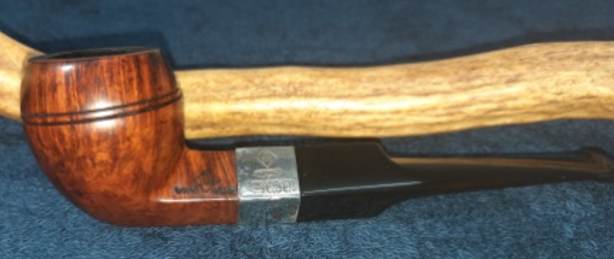
Tag Archives: vulcanite

A Pipe of Distinction


Blog by Kenneth Lieblich

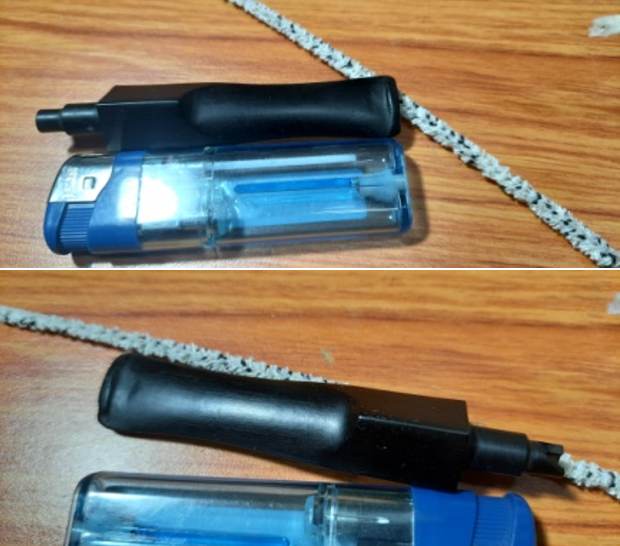
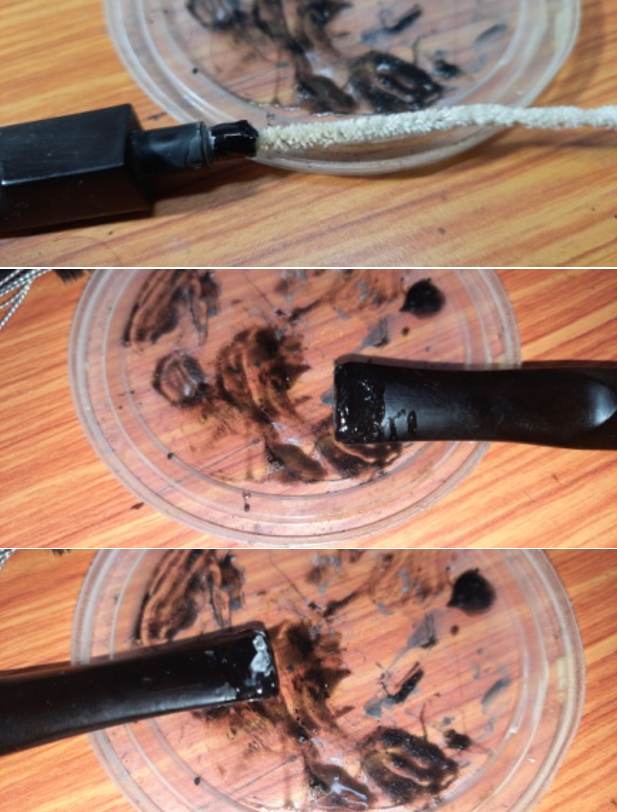
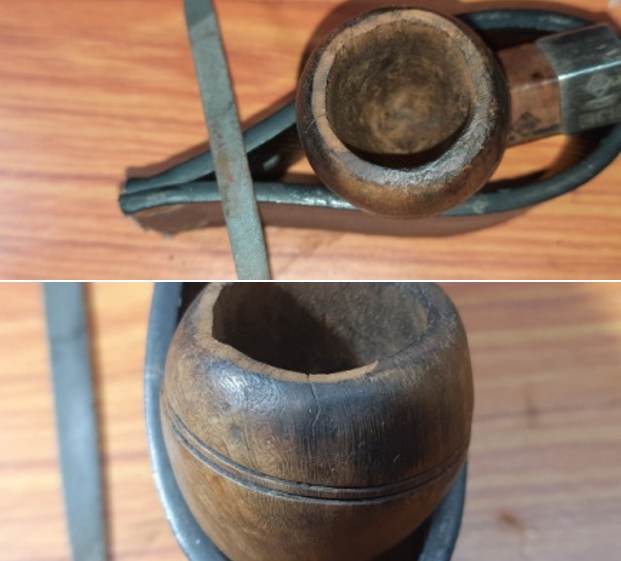
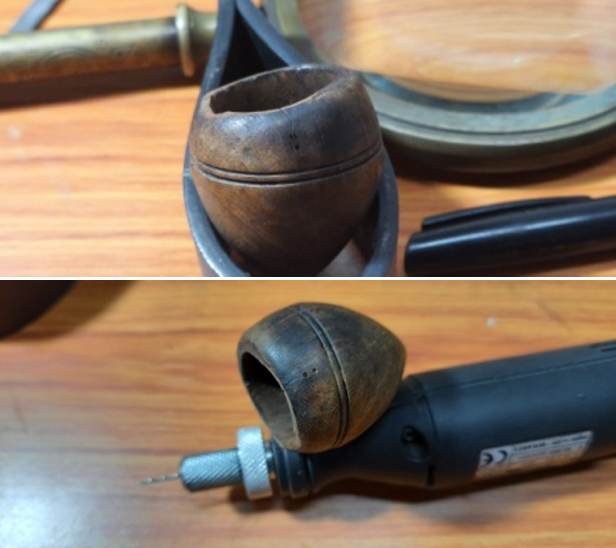
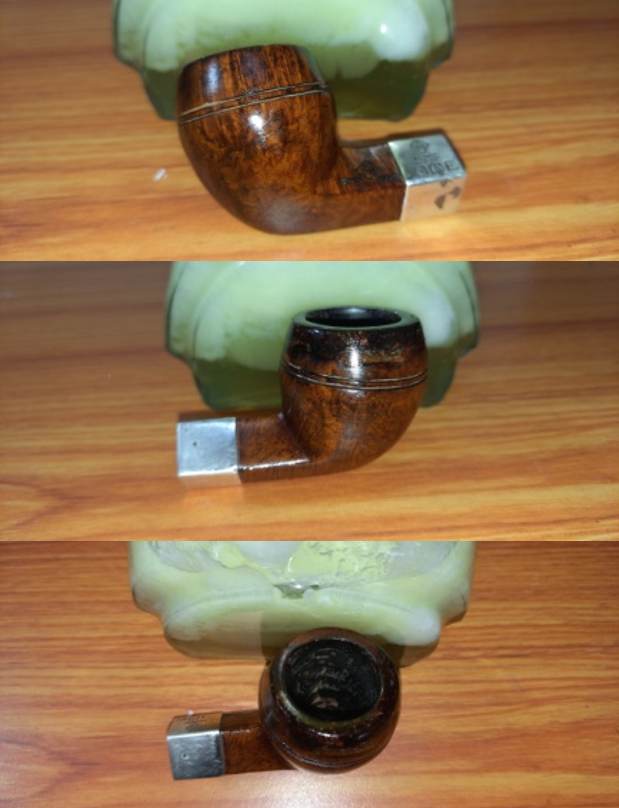
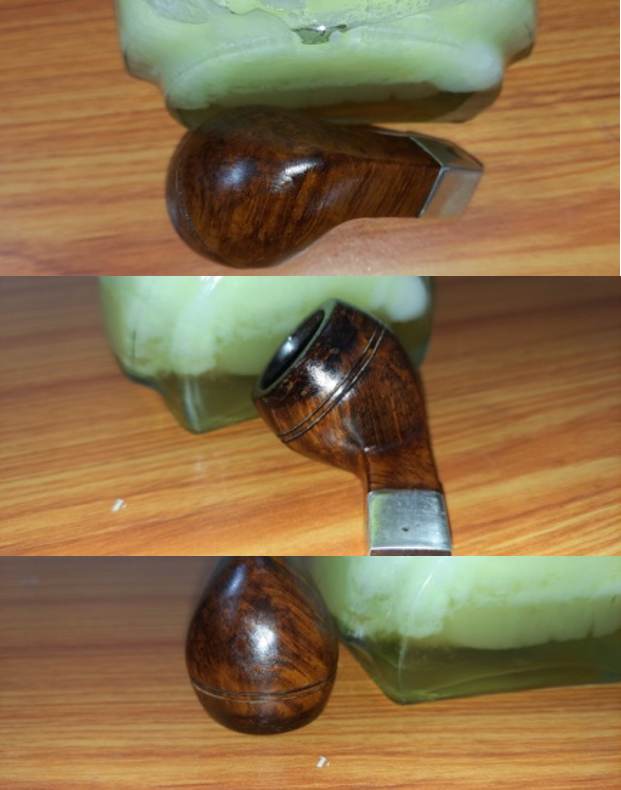
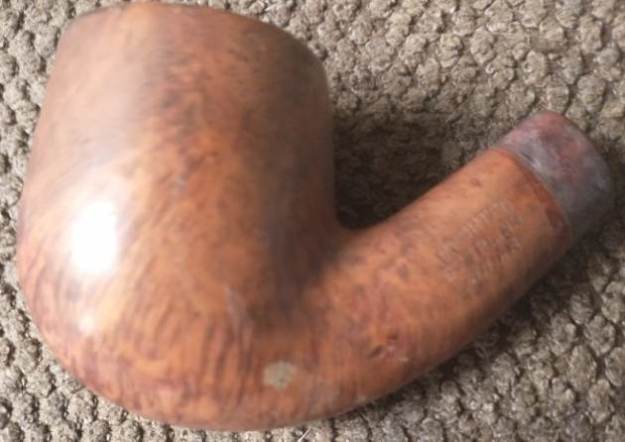
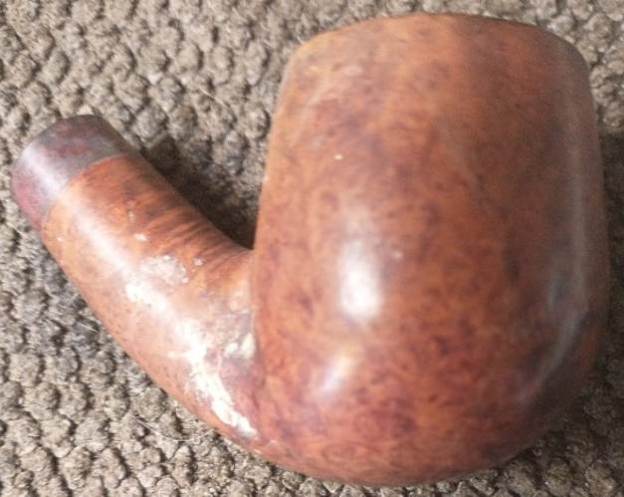
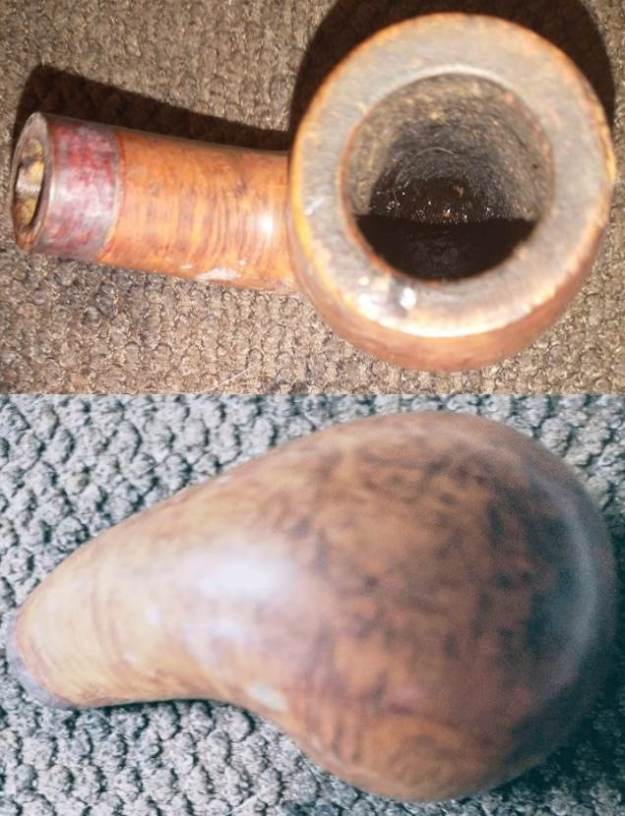
Next on the chopping block is a very personal pipe – and one that is staying in my collection. The photo you see below is of my late grandfather, in the early 1970s, smoking a charming Bewlay Canadian pipe. It is this pipe’s restoration that I am recounting today. I do not know where my grandfather acquired it (or under what circumstances), but I suppose it does not ultimately matter. My grandfather was an enthusiastic pipe smoker and he clearly enjoyed this one. I am definitely looking forward to cleaning this one up. It has a value well beyond dollars.The pipe is from The House of Bewlay and is a Canadian shape. What a charming and elegant pipe! In order to read the markings correctly, I used my old trick of rubbing chalk over them (like a gravestone) and that helped a lot. The pipe’s markings read Bewlay [over] Twenty. The other side of the pipe shows the shape number, 003 [over] London Made. This sort-of corresponds with a Bewlay catalogue from the late 60s, as you can see in the photos. I say, “sort-of”, because the brochure shows shape numbers 001 and 002. I do not know the exact date of the pipe, but it is likely from the late-1960s or early-1970s. Let us read a bit more about Bewlay from the Pipedia article:

The English brand of Bewlay & Co. Ltd. (formerly Salmon & Gluckstein Ltd.), was in business from the early 20th century until the 1950s. The brand ended up being sold and taken over by Imperial Tobacco Co. The shop chain closed in the 1980s but there seems to be one shop still in business on Carr Lane in the city of Hull. Bewlay pipes were made by prestigious firms. Notably Barling, Charatan, Loewe & Co., Sasieni, Huybrecht, and Orlik. So understandably, the English considered a Bewlay pipe a quality pipe.

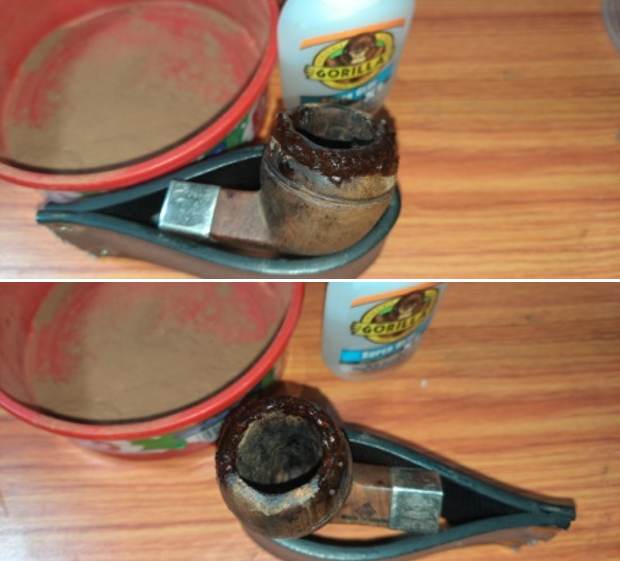
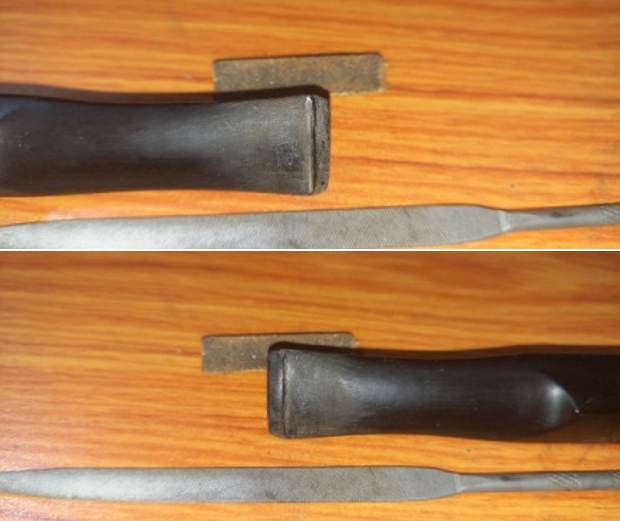
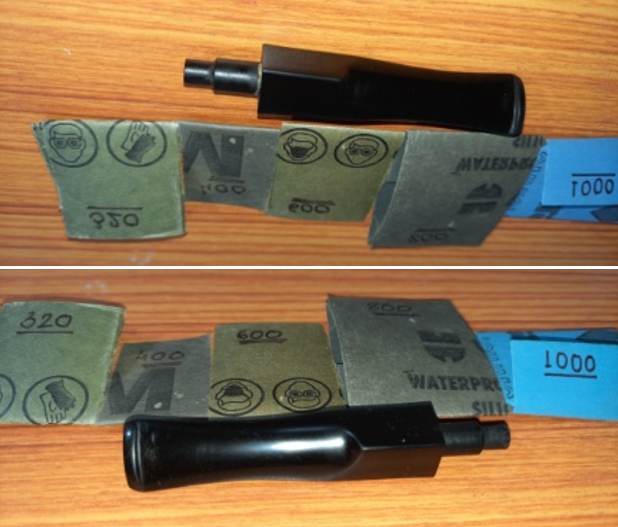
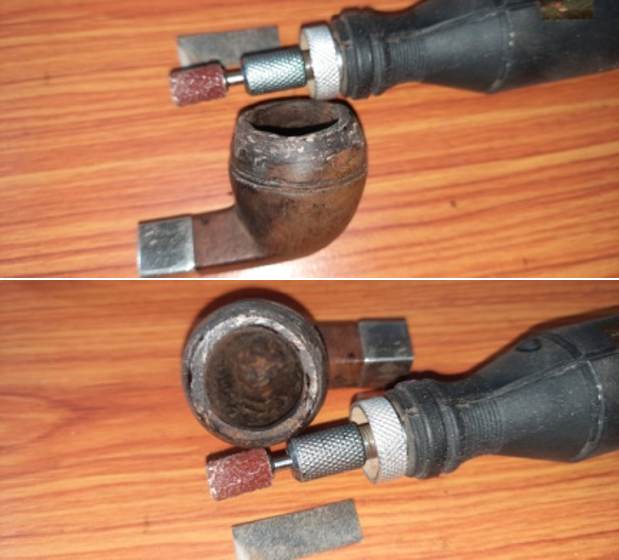
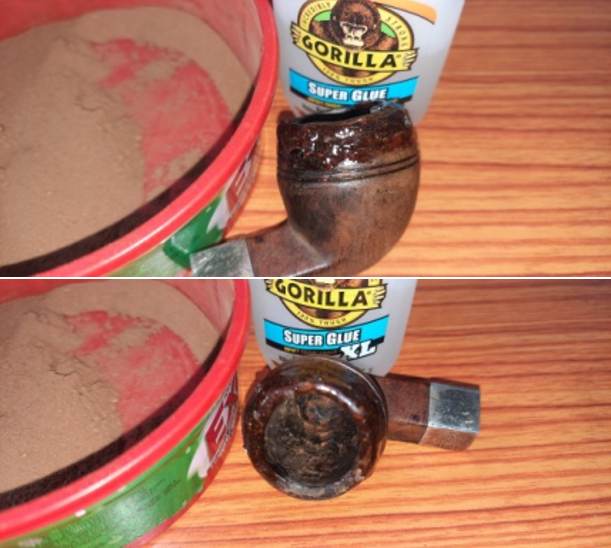
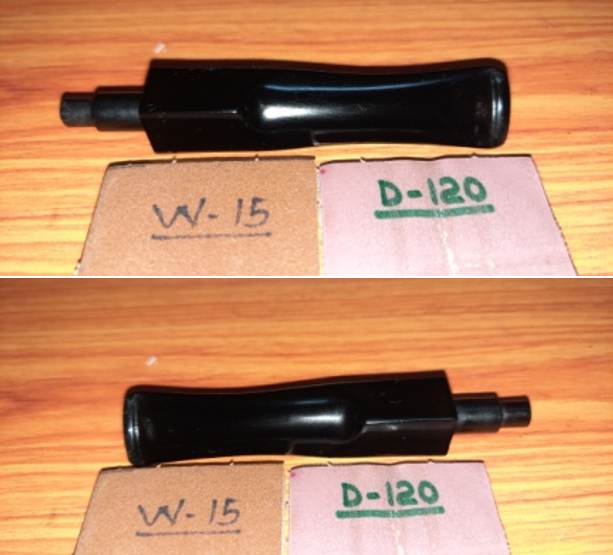
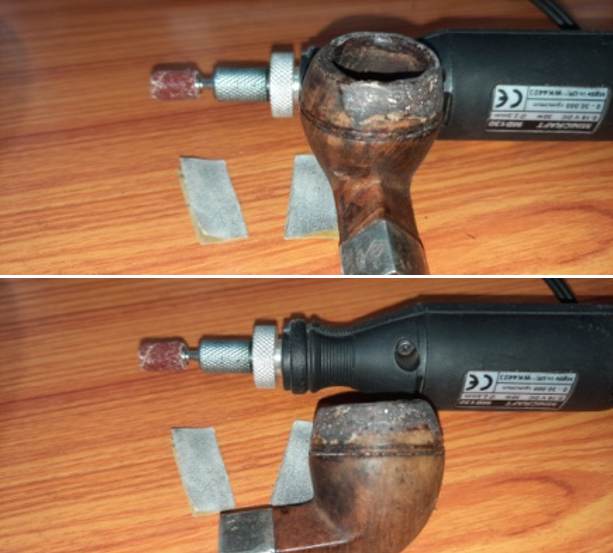
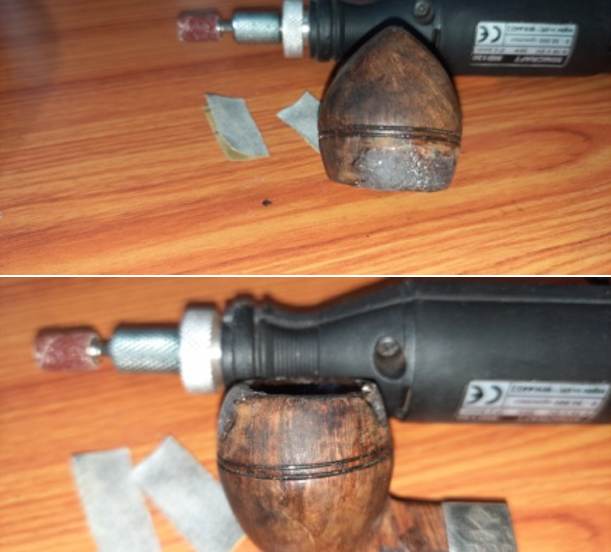
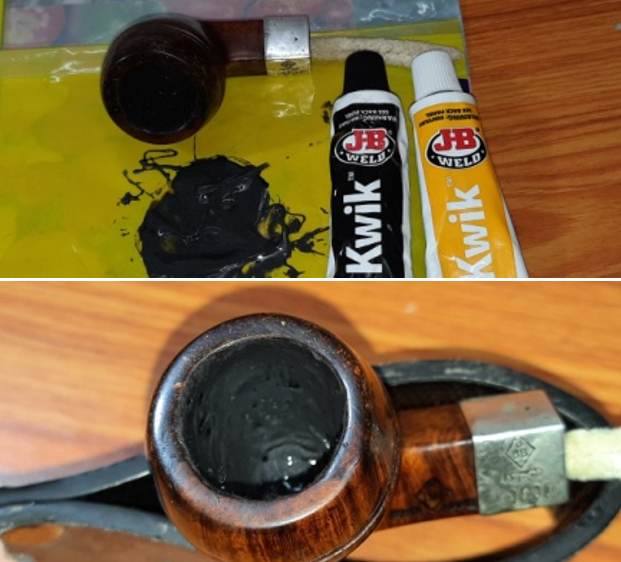
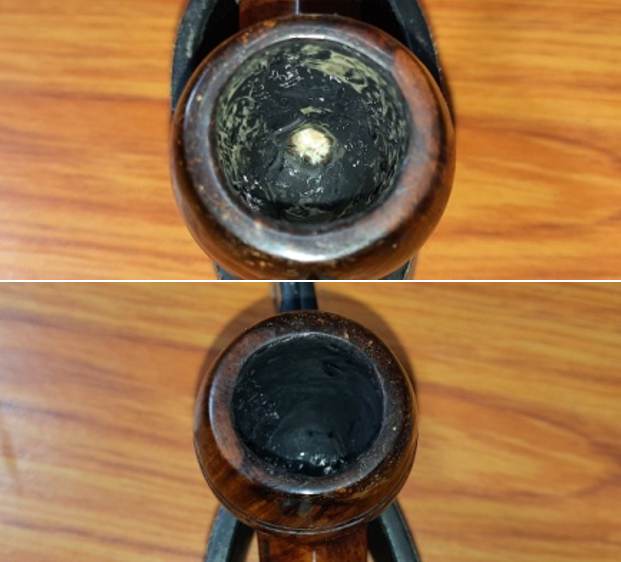
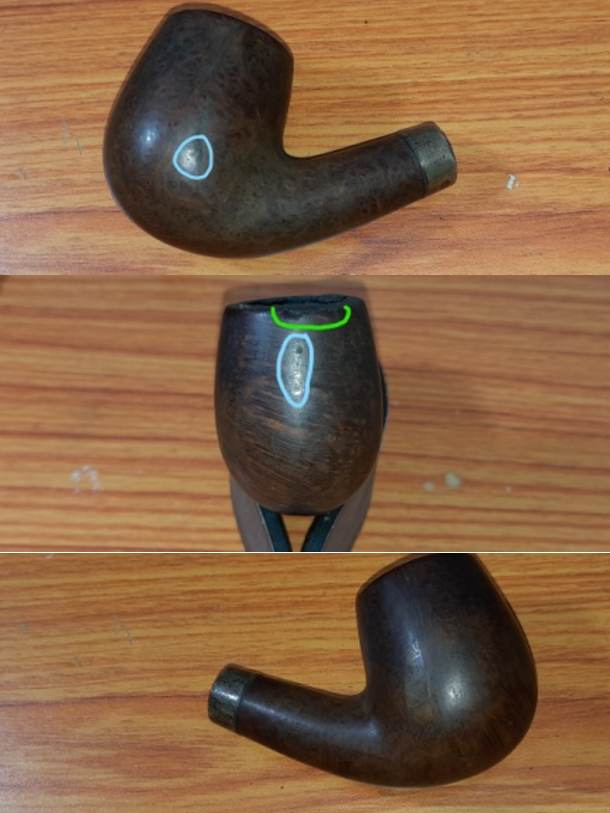
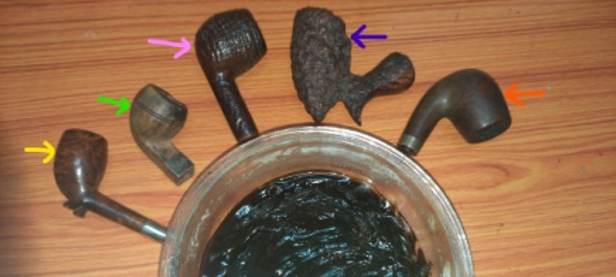
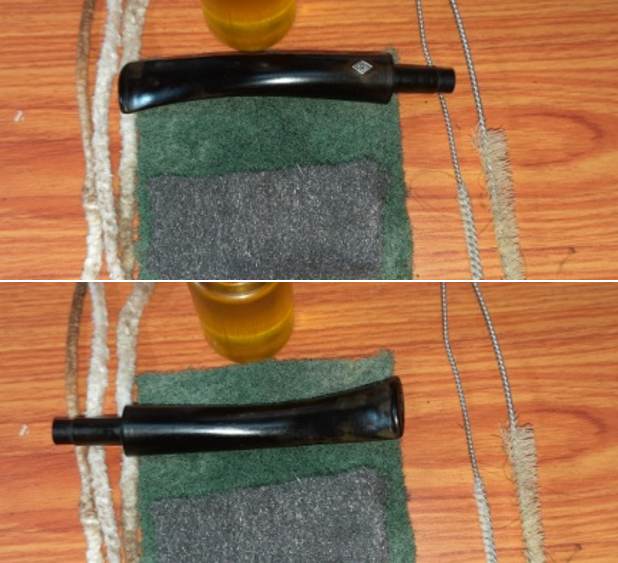
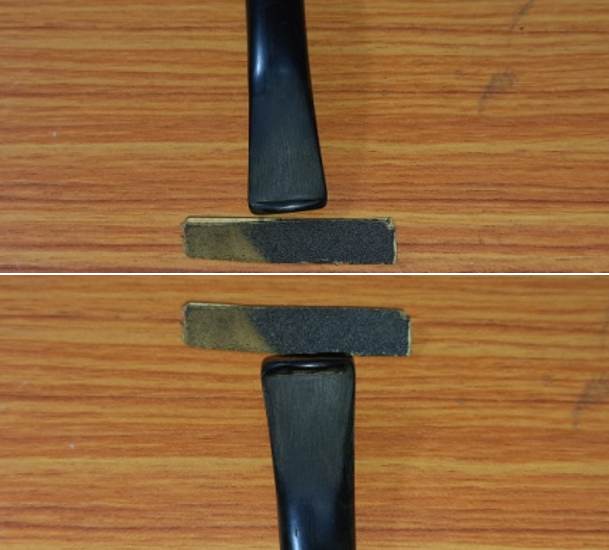
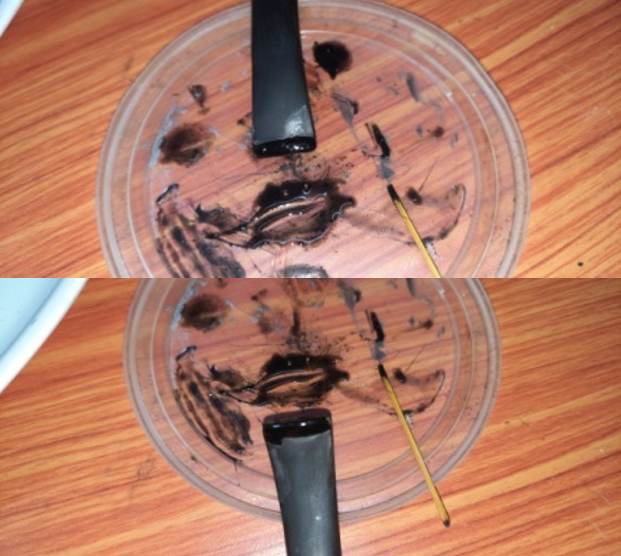
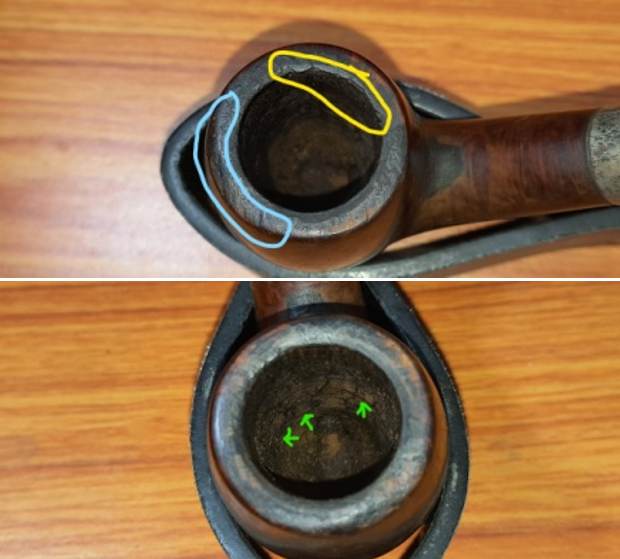
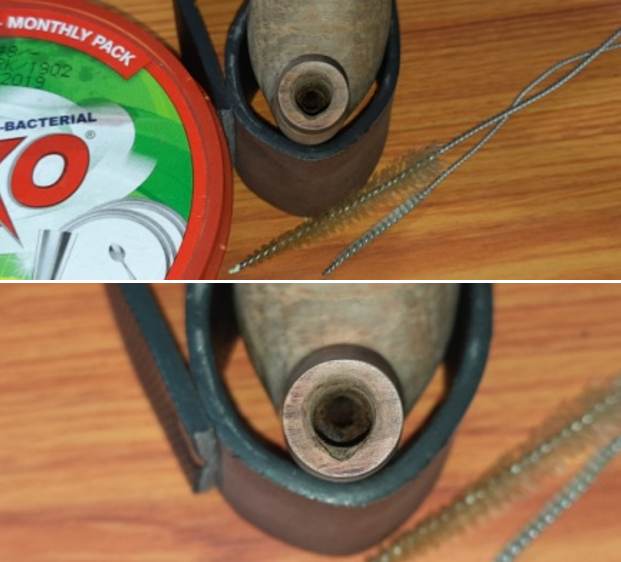
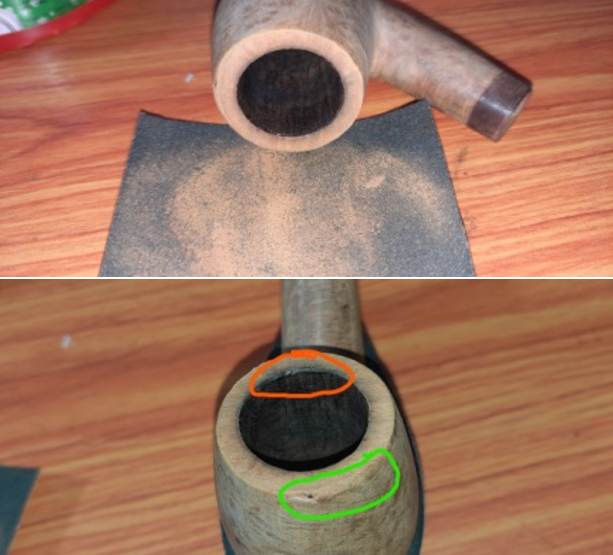
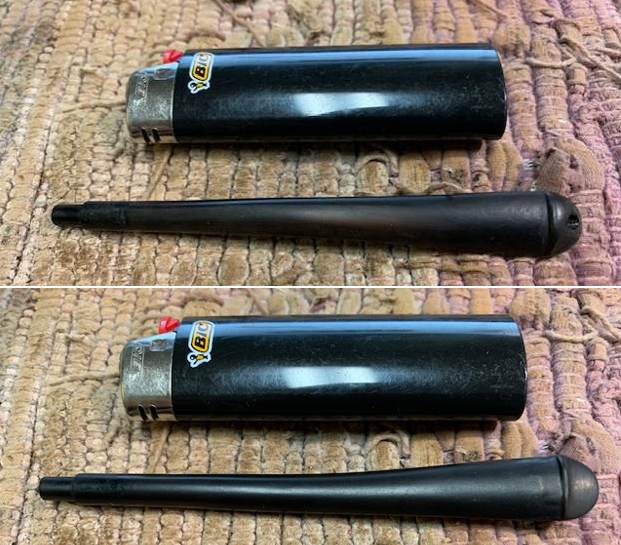
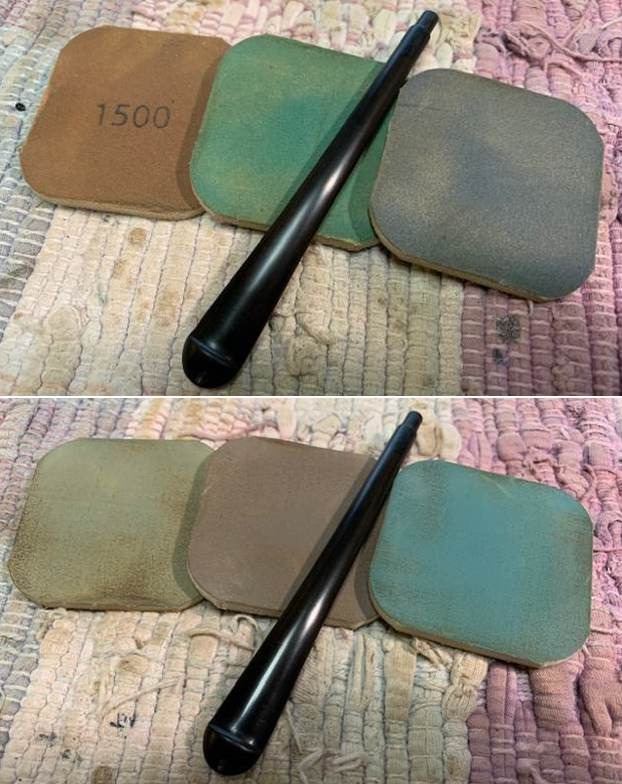
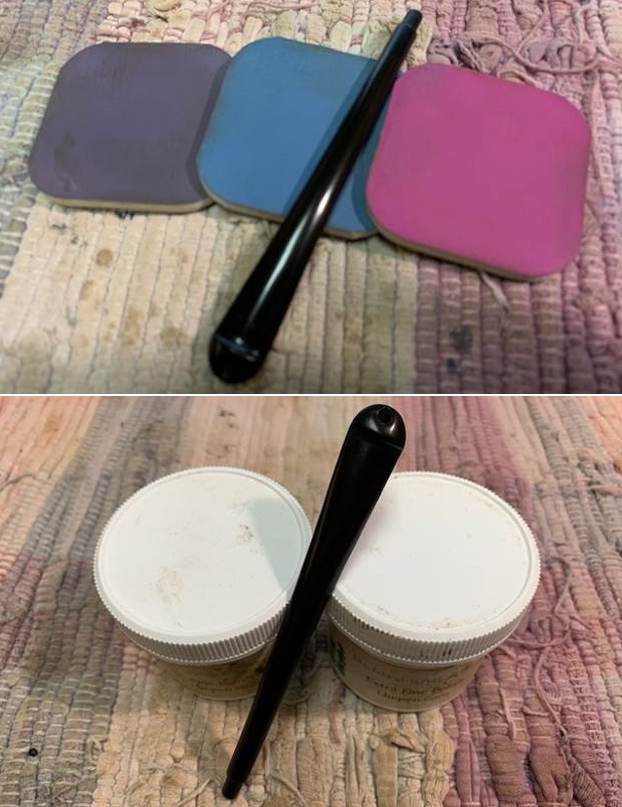
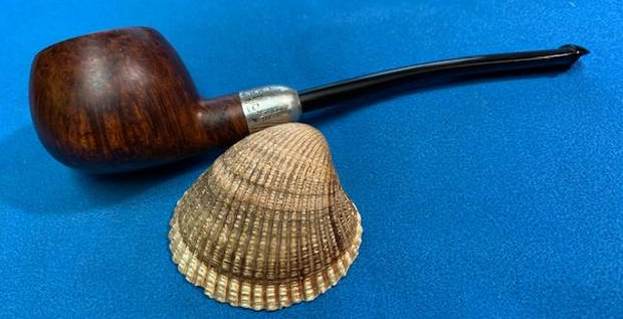
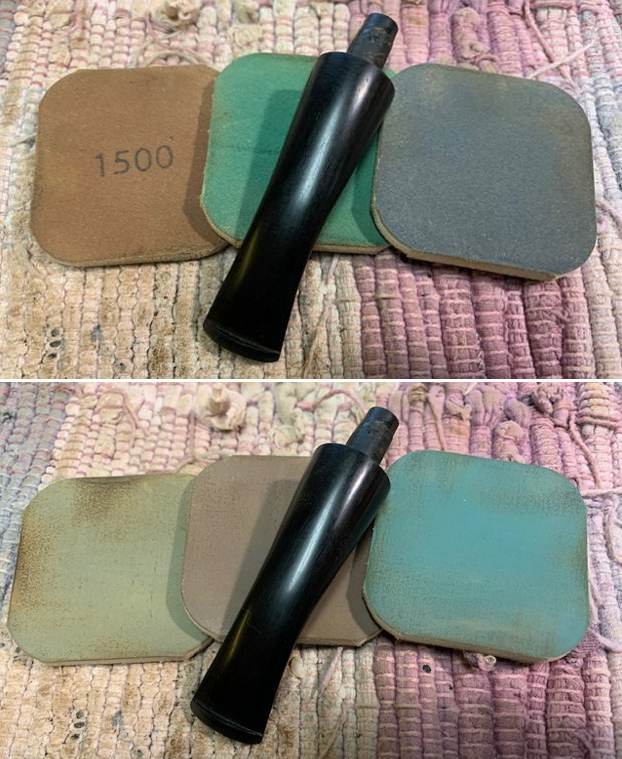
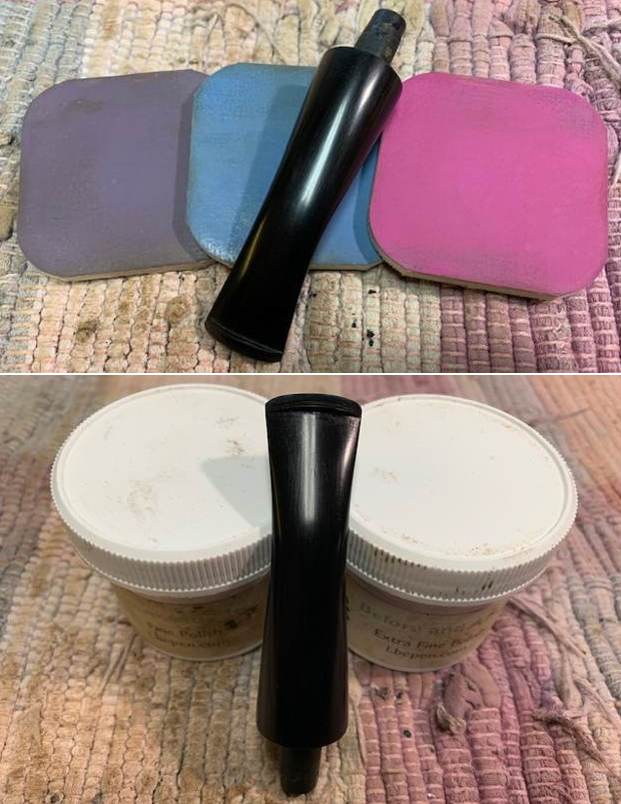
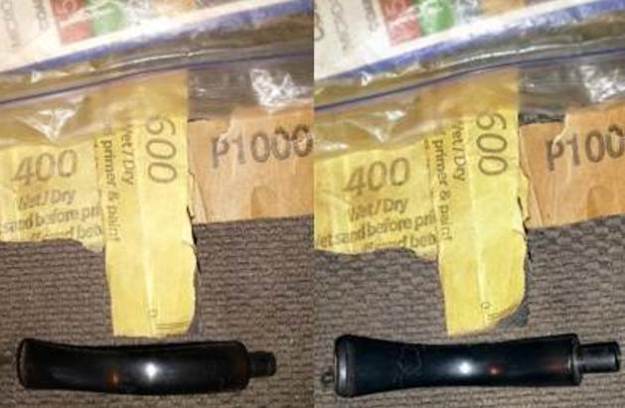
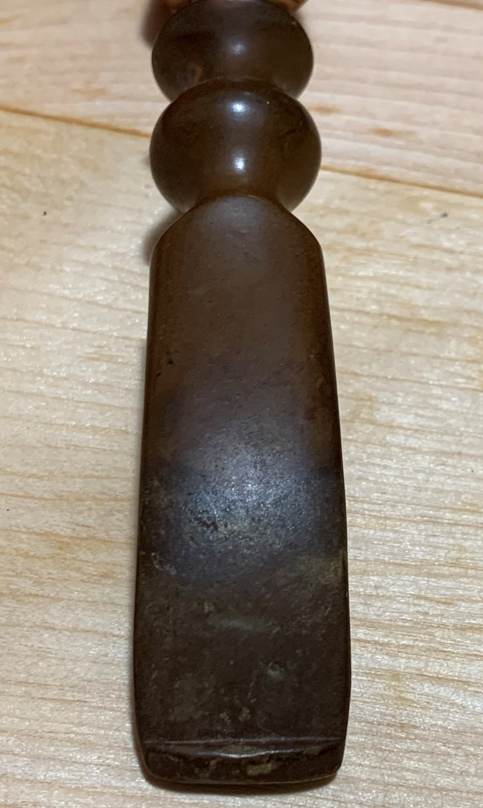
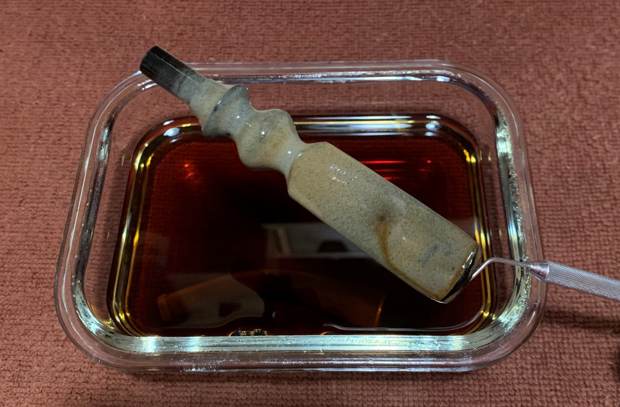
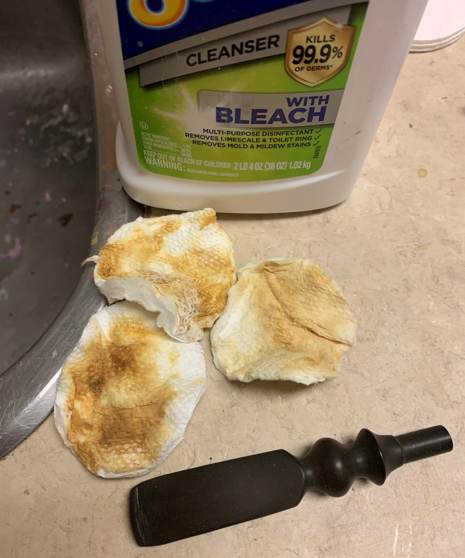
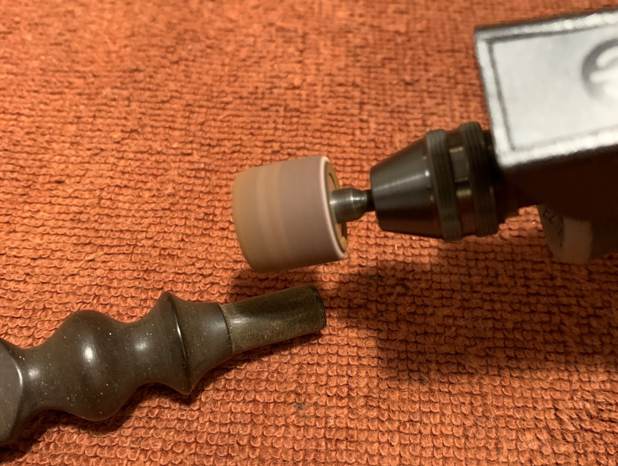
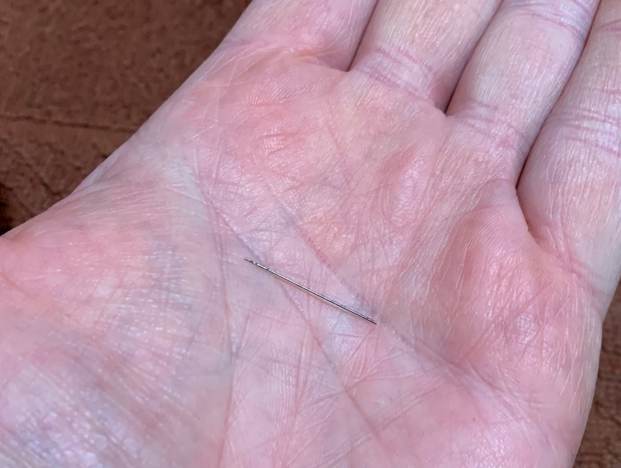
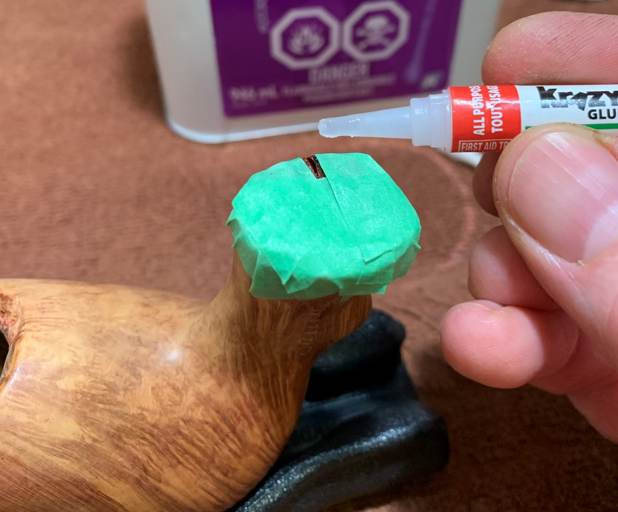
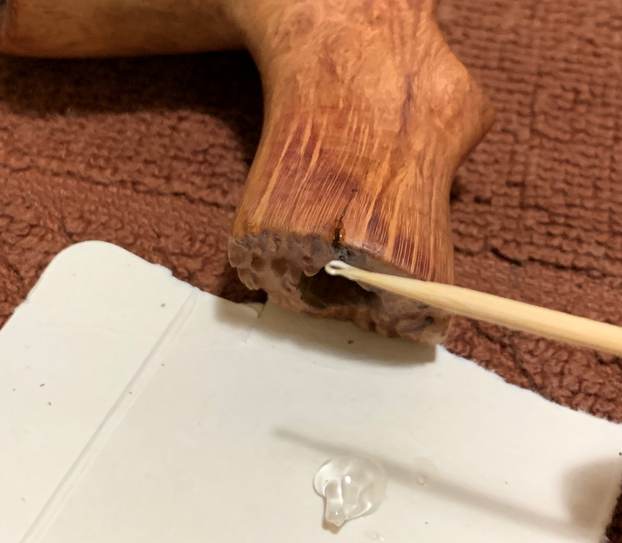
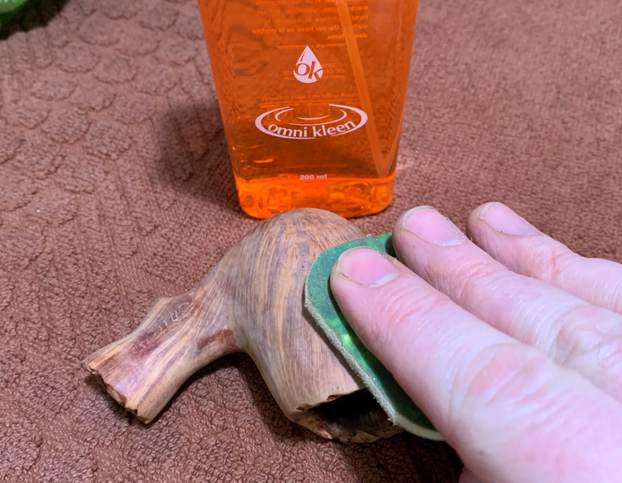
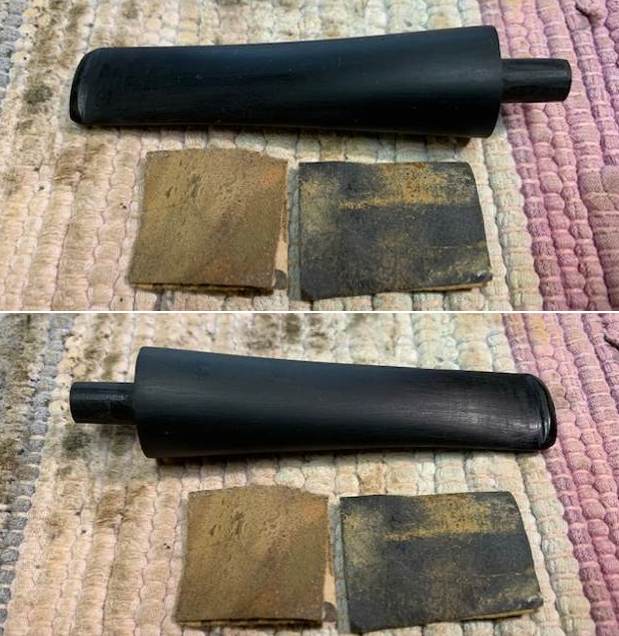
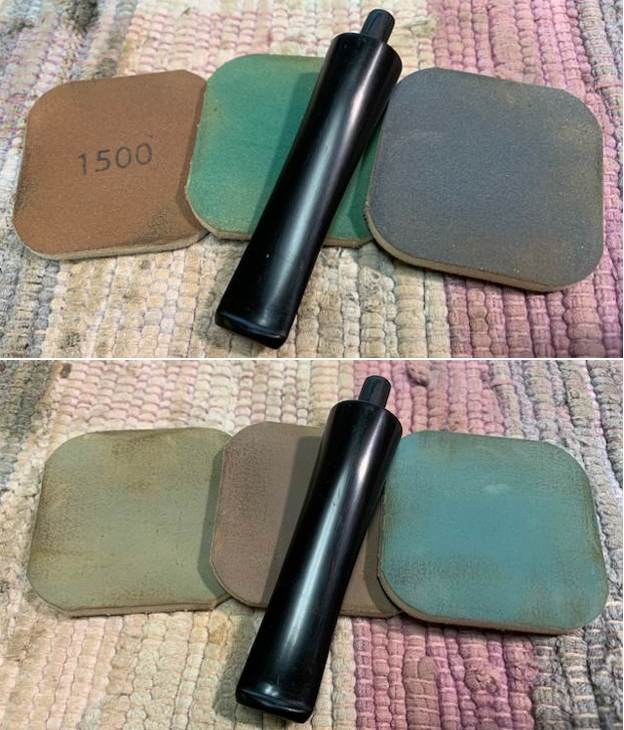
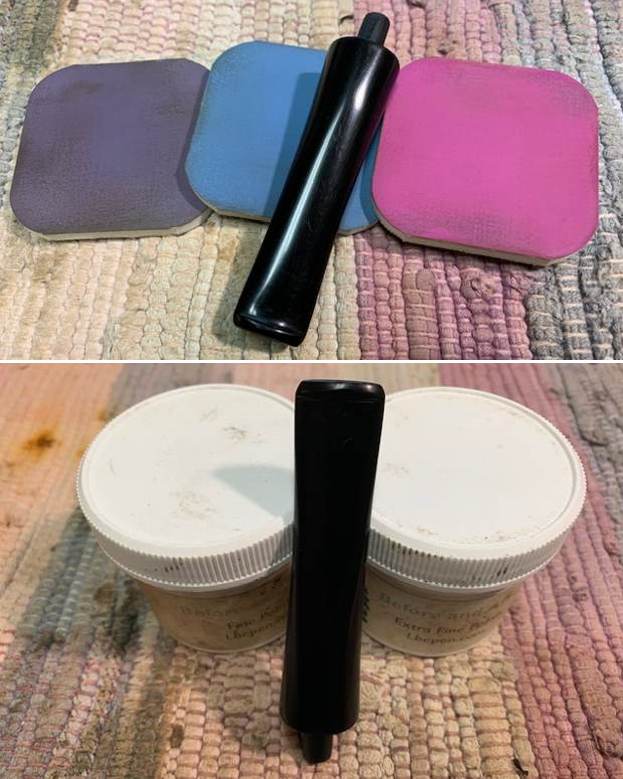
Anyway, on to the pipe – and what a beauty it was. However, it was not without its issues. The stummel had the following problems: lava on the rim, a notable burn to the rim, plenty of cake in the bowl, a couple of nicks to the bowl, and a tired, worn-out colour of wood. By the way, the strange “stains” to the bowl are, in fact, old bits of newspaper. After my grandfather died, the pipes were wrapped in newspaper and stuck in a box. The newspaper got wet at some point in the intervening years. Meanwhile, the stem had its own set of problems: some oxidation and calcification, minor tooth marks and dents, a filthy stinger, the ‘B’ logo was a bit worn, and (worst of all) a large chunk of vulcanite missing from the bit! This pipe was going to be a bit tricky, and I needed to be especially careful to ensure the missing vulcanite would be repaired properly – so it could be used for many years to come. The stem was first on my list. This stem has a stinger in it – and it was being quite stubborn about coming out of the tenon! I opted to warm the stem and stinger with a hair dryer and this provided just enough softening of the internal goo to allow me to pull it out. The stinger then went for a soak in some lemon-infused isopropyl alcohol. I let it set for several hours and then cleaned it off and it looked much improved. I then finished it with some metal polish and moved on. I wiped down the outside of the stem with Murphy’s Oil Soap on some cotton pads. I also took a BIC lighter and ‘painted’ the stem with its flame in order to lift the bite marks and dents. This was fairly successful in raising the damage. Then, I cleaned out the insides with pipe cleaners and isopropyl alcohol. Once this process was done, the stem went for an overnight soak in the Before & After Hard Rubber Deoxidizer. The following day, I cleaned all of the de-oxidizing sludge off with alcohol, pipe cleaners, et cetera. The oxidation had migrated to the surface and would be fairly straightforward to remove. I scrubbed vigorously with SoftScrub on cotton pads to remove the leftover oxidation. I also built up some tiny dents on the stem with cyanoacrylate adhesive and let it fully cure.Now it was time to make a patch for the missing chunk of vulcanite. This patch was made with a mixture of cyanoacrylate glue and activated charcoal powder. This created a black, resilient mush that would be very hard-wearing when cured and would work perfectly for this repair. Thanks to Steve’s instruction, I first plugged up the stem’s draught hole with a pipe cleaners coated in petroleum jelly. This ensured that any of the cyanoacrylate and charcoal mush would not accidentally plug up the air passage in the stem. This was a tricky business and it took some real patience and effort to make it work. As the photos show, after I applied the cyanoacrylate and charcoal mush, it looked pretty darn ugly, but I was expecting that. I also managed to get some of the bits of pipe cleaner bristles into the repair! No big deal – those were quickly excised. After the curing, I pulled out the Dremel rotary tool and began to remove the excess material. This was also the preliminary step in shaping the button. To carry this process on, after the Dremel, I used a miniature file to further shape the button and make it suitable for sanding. I used another file on the inside to ensure there were no rough edges in the bore. I then sanded the stem down with 220-, 400-, and 600-grit sandpapers to meld seamlessly into the stem. This ensures that it keeps its shape and looks like it should. I then used all nine Micromesh pads (1,500 through 12,000 grit) to bring out the lovely black lustre on the stem. I also used Obsidian Pipe Stem Oil in between each pad scrubbing. It is worth noting that a repair this big on a stem will never be completely invisible, but I was very pleased with how I managed to make the stem of my grandfather’s pipe look so good. Just before finishing with the Micromesh pads, I took the opportunity to repair the “B” logo on the stem. It had faded – both by loss of paint and also by fingers inadvertently smoothing out the “B” over time. So, I added some acrylic paint with a paint brush, let it dry, and buffed it to make it look good. The “B” is back, but, as later photos reveal, a little bit has disappeared into history.On to the stummel, and the usual cleaning procedures were in order for this pipe. I used both the PipNet Reamer and the KleenReem to remove the built-up cake, and followed that with 220-grit sandpaper to remove as much as I could. I wanted to take the bowl down to bare briar to ensure there were no hidden flaws in the walls of the bowl. Fortunately, there were none. I then proceeded to clean out the insides of the shank with cotton swabs, pipe cleaners, and isopropyl alcohol. There was quite a bit of filth inside this stummel – it took many pipe cleaners et cetera to clean it out.I followed that up by cleaning the insides with some dish soap and tube brushes. I then moved on to cleaning the outside of the stummel with Murphy’s Oil Soap and some cotton pads. That removed the bits of aforementioned newspaper and any remaining dirt. I also soaked the rim in Murphy’s for a while just to loosen up the lava. In order to remove the lingering bits of lava and fix any nicks on the rim, I “topped” the pipe – that is to say, I gently and evenly sanded down the rim on a piece of 220-grit sandpaper. This effectively removed the lava, without altering the look of the pipe. After that, a light application of Before & After Restoration Balm brought out the best in the stummel’s grain. What a difference that made! There is some beautiful wood under the grime! Having completed that, I was able to address the small nicks on the stummel. I dug out my iron and a damp cloth to try and raise the nicks. The hot and moist steam can often cause the wood to swell slightly and return to shape. There was some movement – not a lot, but it was better than doing nothing. I filled the remaining divots with cyanoacrylate adhesive and let it cure. Now, with the nicks filled, it was time to sand down the stummel. I used all nine Micromesh pads (1,500 through 12,000 grit) to wet/dry sand everything smooth. Then I added a bit more Before & After Restoration Balm. Then it was off for a trip to the buffer. A dose of White Diamond and a few coats of carnauba wax were just what this pipe needed. The lovely shine made the wood look absolutely beautiful. This is a wonderfully crafted pipe and has a very elegant feel to it. It took a lot of work, but I am proud of it and the final product is (hopefully) worthy of my beloved grandfather’s memory. Obviously, this is one pipe that I am keeping for myself and adding to my collection. I am sure that I will be enjoying this one for many years to come. I hope you enjoyed reading the story of this pipe as much I as I did restoring it. If you are interested in more of my work, please follow me here on Steve’s website or email me directly at kenneth@knightsofthepipe.com. Thank you very much for reading and, as always, I welcome and encourage your comments.

A Rare Find – a CPF (Colossus Pipe Factory) Panel Dublin


Blog by Steve Laug

The next pipe on the worktable is another interesting piece of pipe history that comes from the bag of old pipes that I have been working on intermittently. This one is an interesting panel Dublin with a round shank. The bowl was a mess both inside and out. It must have been a great smoking pipe. The bowl had a thick cake with a thick overflow of lava on the rim top and edges. The finish on the briar was a mess. The front of the bowl had a lot of flaws that ran along the cross grain on the bowl. The fills in the flaws had fallen out and the grain was open. The band was stamped in gold and read Genuine French Briar in an oval with French in the centre of the stamp. The shank was banded with a silver plated band that was stamped C.P.F. in an oval with three false hallmarks above that stamp. The stem was vulcanite that had oxidized and had tooth marks on the top and underside near the button. It has a push tenon and an orific button on the end. The fit in the shank was very tight and it did not fit tightly against the band face. Jeff took photos of the pipe before he started his clean up. He took photos of the rim top and the stem to show the condition of both. The rim top and bowl had a thick cake and overflowing lava coat. The stem showed the oxidation that was deep in the vulcanite and the tooth marks and chatter on both sides ahead of the button.Jeff took some photos of the flaws in the front panel of the bowl. You can see that they follow the grain across the bowl. They go across the bowl and evenly spaced down the bowl front. There are also some paint spots on the front of the bowl.He took photos of the stamping on the left side of the shank and the band on the shank end. It is clear and readable on both of them.A short description would be that it is a heavily smoked Panel Dublin with a silver plated band and vulcanite push stem. It is stamped on the left side of the shank and reads Genuine [arched over] French [arched over] Briar all in an ovals shape. The band on the shank end is stamped with three faux hallmarks that I have seen on many C.P.F. pipes [over] C.P.F. in an oval. I have a collection of C.P.F. pipes here that I have worked to build up over the years in all different sizes and shapes as well as a variety of materials. This old Panel pipe will fit well into that collection. I wrote a blog a few years ago on the brand that gives a clear history and defines the meaning of the C.P.F. stamp. Here is the link to the blog and a pertinent quote that I am including below.

(https://rebornpipes.com/2013/04/14/some-reflection-on-the-historical-background-on-cpf-pipes/).

From my research I believe that we can definitively assert that the C.P.F. logo stands for Colossus Pipe Factory. The brand was purchased by KB & B sometime between 1884 and 1898 and that it continued until 1915. That time frame gives help in dating some of the older CPF pipes you or I might find. It can be said that prior to the dual stamping it is fairly certain that the pipe is pre-1884 to 1898. After the dual stamping it can be placed post 1898 until the closure of the brand line in 1915. CPF made beautiful pipes. I believe Sam Goldberger was correct in his assertion of the potential carvers that made the pipes being of European training and the classic shapes and well aged briar. That coincides with all the CPF pipes that I have come across.

This well shaped hard smoked C.P.F. is a real beauty. The rim top is worn but clean now that Jeff has done his magic clean up. He reamed the bowl with a PipNet pipe reamer and cleaned up the reaming with a Savinelli Fitsall Pipe Knife. He scrubbed the outside of the bowl with undiluted Murphy’s Oil Soap and rinsed it off. He scrubbed out the inside of the shank and the airway in the shank and stem with alcohol, cotton swabs, and pipe cleaners. The finish is dull and lifeless but there is some great grain poking through the dry briar. The gold stamping is faint but readable. The silver plated band is lightly corroded on the left side near the stem. The marking on the band is readable. The stem is vulcanite. There are some faint tooth marks and chatter. It has an orific button (round airhole) on the end of the button. I took some photos of the pipe to show the condition when we received it. It was dusty, dirty and had some grime worked into the surface of the briar from sitting unused in someone’s collection. I took close up photos of the bowl and rim top and the stem to show their condition. You can see the clean bowl and the heavily damaged inner edge of the rim. The rim top has a lot of scratches and marks in it. The stem has some oxidation remaining as well as a misfit of the tenon against shank band.I took a photo of the stamping on the left side of the shank. You can see that it is faint but still was readable.I removed the stem from the shank and took a photo of the parts to give a sense of the beautiful proportions of this nice little pipe. I think it will be quite stunning once it is restored.I took a photo of the flaws in the surface of the bowl front. I filled them in with clear CA glue to smooth out the surface. Once the repairs cured I sanded them smooth with a folded piece of 220 grit sandpaper. The surface looked much better once the repair was blended in. With the flaws repaired I addressed the faded stamping on the shank side. I worked in some Rub’n Buff Antique Gold into the stamping with a tooth pick. I buffed off the excess gold with a soft cloth.I polished the briar with micromesh sanding pads and dry sanded with 1500-12000 grit pads. I wiped the bowl down with a damp cloth after each pad to remove the sanding debris and dust. By the end the bowl was taking on a natural shine and the grain really stood out. I rubbed the bowl and shank down with Before & After Restoration Balm. I worked it into the surface of the bowl sides and shank with my fingertips to clean, enliven and protect the briar. I let the balm sit for 10 minutes, then buffed with a cotton cloth to raise the shine. The Balm did its magic and the grain stood out on the briar. I set the bowl aside and turned to deal with the stem. I scrubbed it with Soft Scrub to break down the oxidation that was deep in the vulcanite. I was able to remove a large portion of it that way. I then sanded it with 220 grit sandpaper to remove more. I started polishing it with 400 grit wet dry sandpaper. I polished out the scratches and more of the oxidation in the surface of the vulcanite with micromesh sanding pads – 1500-12000 grit pads. I wiped it down with Obsidian Oil after each pad. I used Before & After Pipe Polish – both Fine and Extra Fine to further polish the stem. I gave it a final coat of Obsidian Oil and set it aside to dry. I really enjoyed refurbishing this old C.P.F. French Briar Panel Dublin because I love the final touches that make it sing. I put the bowl and stem back together to have a look at the whole with all it of it polished. I carefully buffed the bowl and stem with Blue Diamond on the wheel. I gave it several coats of carnauba wax and buffed the pipe with a clean buffing pad to raise the shine. I hand buffed it with a microfiber cloth to deepen the shine. It is fun to see what the polished bowl looks like with the silver plated band and the polished black vulcanite stem. This richly finished C.P.F. Dublin is light weight and it is clean and ready load up with my favourite tobacco. Have a look at it in the photos below. As noted above, Its measurements are Length: 5 ½ inches, Height: 1 ¾ inches, Outside diameter of the bowl: 1 ¼ inch x 1 ¼ inch, Diameter of the chamber: ¾ of an inch. The weight of the pipe is 36 grams/1.27 oz. This is one will be joining other C.P.F. pipes in my personal collection of the brand as it is a unique addition. Thanks to each of you who are reading this blog. Remember we are not pipe owners; we are pipemen and women who hold our pipes in trust until they pass on into the trust of the next generation.
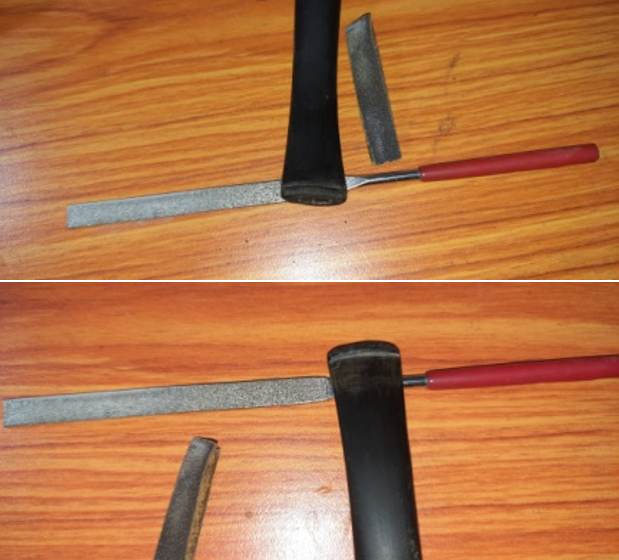
Breath of Life for a Republic Era Peterson’s System Standard 314 Bent Billiard


Blog by Steve Laug

The next pipe I have chosen is another Peterson’s System Standard pipe. This one is a nice smaller size It has a saddle style Peterson’s stem on the shank end. It came to us from the estate of Anglican minister that was a great friend of mine here in Canada. I was in the airport in Hong Kong when his daughter contacted me to tell me of his death and asked if I wanted to take on his pipes. I told her that I was sad to hear of his death but would gladly take on his pipes to restore and sell. This pipe was obviously a favourite of his. It had been well smoked and there was a thick cake in the bowl and lava overflowing onto the rim top. The briar was dirty with grime and dirt ground into the finish and some of the lava flowing down the bowl sides. The nickel ferrule was oxidized but undamaged. There were oils oozing out under the ferrule and also out of the top of the ferrule onto the stem. The pipe was stamped on the left side and read Peterson’s System Standard. On the right side it had the three line Republic of Ireland stamp [over] the shape number 314. The ferrule was stamped K& P over Peterson’s on the left side. The stem was oxidized, calcified and had tooth marks on both sides ahead of the button. The P logo stamp on the left side was also filled with grime. Jeff took photos of the pipe before he started his clean up work on it. Jeff captured the thick cake in the bowl and the heavy lava overflow onto the rim top in his photos. There really was no way of knowing what the edges looked like under the thick cake. You can also see the lava flowing down the sides of the bowl in the photos. The stem surface had a lot of tooth chatter and marks and was heavily oxidized and calcified. He took photos of the sides and the heel of the bowl to show the interesting grain patterns in the briar. It was quite beautiful.He took photos of the stamping on the sides of the shank and on the ferrule and stem. It is readable but faint in places.I remembered that Paresh had restored a Peterson’s System Standard 314 earlier this year and as usual had done good work on the research. I turned to his blog and read through his work on the pipe (https://rebornpipes.com/2021/07/24/helping-a-fellow-piper-with-his-dream-pipea-petersons-system-pipe/). I quote below from the section on his blog regarding the dating of the pipe.
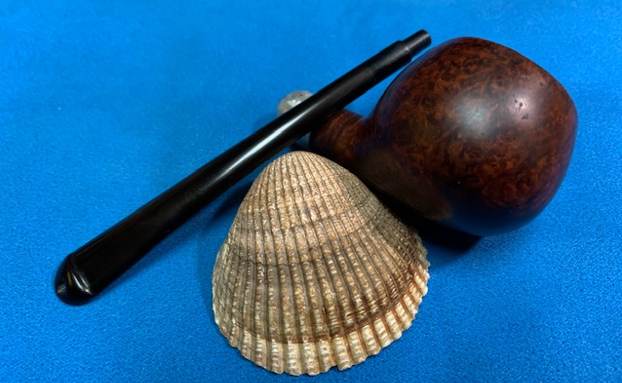
While dating a Peterson’s pipe, I always fall back to my under mentioned favorite site; http://thepetersonpipeproject.blogspot.com/2007/07/dating-peterons-pipes.html

I quote from the above site.

Stamping of Bowl:

During the years of Kapp and Peterson’s business operations, the country of Ireland has undergone several name changes and K&P’s stamping on their pipes reflects these changes. Knowing these changes, a Peterson pipe can be roughly dated and placed in “eras.”

  • The Republic Era is from 1949 until the present. The Republic of Ireland was formed on 17 April 1949. From 1949 to present the stamp for this era is “Made in the Republic of Ireland” in a block format generally in three lines but two lines have been used with or without Republic being abbreviated.

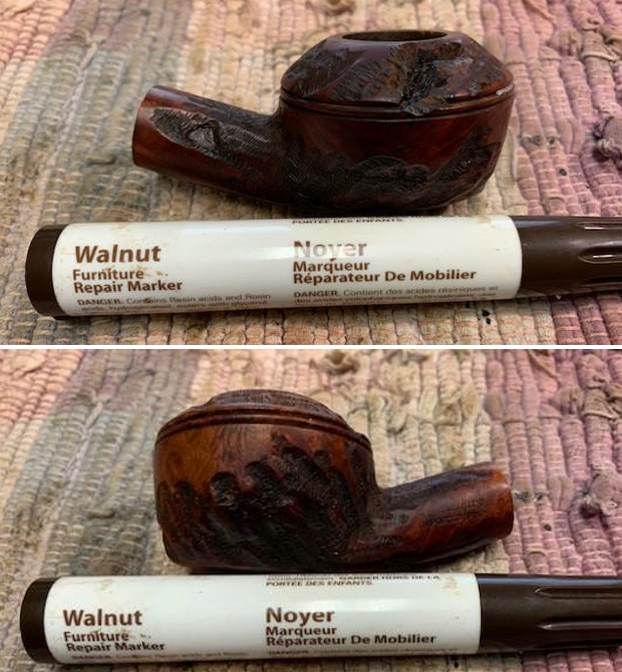
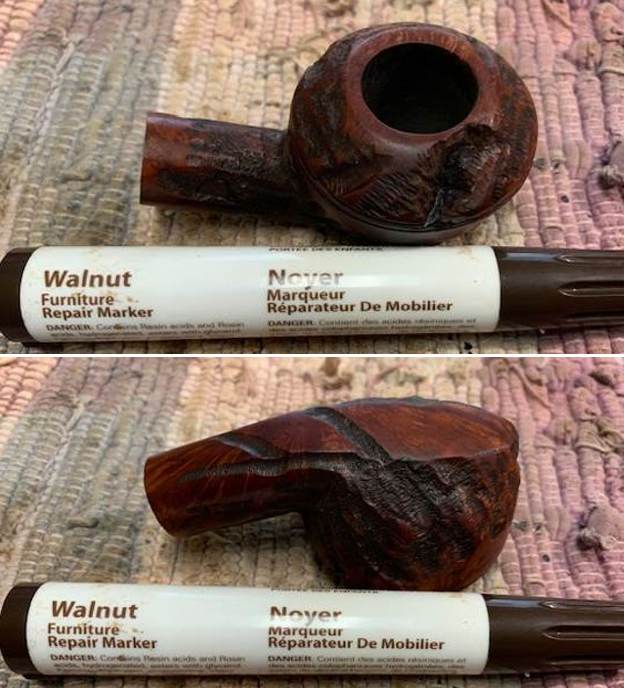
With that information at hand I turned to work on the pipe itself. Jeff had thoroughly cleaned up the pipe. He reamed the pipe with a PipNet Pipe Reamer and cleaned up the remnants with a Savinelli Fitsall Pipe Knife.  He scrubbed the bowl with undiluted Murphy’s Oil Soap with a tooth brush. He rinsed it under running warm water to remove the soap and grime. He cleaned out the inside of the shank and the airway in the stem with alcohol, cotton swabs and pipe cleaners. He scrubbed the exterior of the stem with Soft Scrubb to remove as much of the oxidation as possible. He soaked the stem in Before & After Deoxidizer and rinsed it off with warm water. I took photos of the pipe once I received it. I took photos of the rim top and bowl as well as the stem to give a sense of the condition of both. The rim top looked had some scratching on the top and some damage to the inner edge but over all it was in much better condition than I thought. The stem cleaned up well and the tooth marks on the top and underside ahead of the button are visible in the photos.I took photos of the stamping on the shank sides. The are clear and readable as noted above. There is some faintness on parts of the stamping but it is still readable.I took the stem out of the shank and took a photo of the overall look of the pipe.I decided to start my work on the pipe by addressing the damage on the inside edge of the bowl and the rim top. I used a folded piece of 220 grit sandpaper to smooth out the edge. I topped the bowl with 220 grit sandpaper on a topping board. I wiped it down with a damp cloth and the rim top damage and burn marks on the outer edges were gone. I polished the briar with micromesh sanding pads – dry sanding with 1500-12000 grit pads. I wiped the bowl down after each pad with a damp cloth. I restained the rim top and inner edges with a Walnut Stain Pen to blend it into the rest of the surrounding briar. The match was good.I rubbed the bowl down with Before & After Restoration Balm. I worked it into the surface of the bowl sides and shank with my fingertips. The product works to clean, enliven and protect the briar. I let the balm sit for a little while and then buffed with a cotton cloth to raise the shine. I set the bowl aside and turned my attention to the stem. I “painted” the tooth marks on the surface with the flame of a lighter to lift them as much as possible. I was able to lift many of them but a few still remained. I filled in the remaining tooth marks with clear CA glue and set it aside to cure. I sanded the repairs smooth with a folded piece of 220 grit sandpaper to begin blending them into the stem surface. I started the polishing with some 400 grit wet dry sandpaper.I touched up the “P” logo on the stem with white acrylic fingernail polish. I worked it into the tails on the “P” with a tooth pick and scraped off the excess with my fingernail and then buffed it with a soft cloth.I set the bowl aside and turned to work on the stem. I polished the stem with micromesh sanding pads – 1500-12000 grit pads. I wiped it down with Obsidian Oil after each sanding pad. I used Before & After Pipe Polish – both Fine and Extra Fine to further polish the stem. This Republic Era Peterson’s System Standard 314 Bent Billiard with a vulcanite stem is a great looking pipe now that it has been restored. The beautiful grain that shines through the polished finish is stunning. As the pipe is smoked the patina should develop and look even better. I put the stem back on the bowl and carefully buffed the pipe with Blue Diamond on the buffing wheel. I gave the bowl and the stem multiple coats of carnauba wax on the buffing wheel and followed that by buffing the entire pipe with a clean buffing pad. I hand buffed the pipe with a microfiber cloth to deepen the shine. The finished Peterson’s System Standard 314 fits nicely in the hand and feels great. Give the finished pipe a look in the photos below. The dimensions of the pipe are Length: 5 inches, Height: 1 ½ inches, Outside diameter of the bowl: 1 1/8 inches, Chamber diameter: ¾ of an inch. The weight of the pipe is 45grams/1.59oz. This one has been reserved for first refusal. If you are interested in being in the queue for this pipe send me a message or an email. Thanks for reading this blog and my reflections on the pipe while I worked on it. There are many more to come!
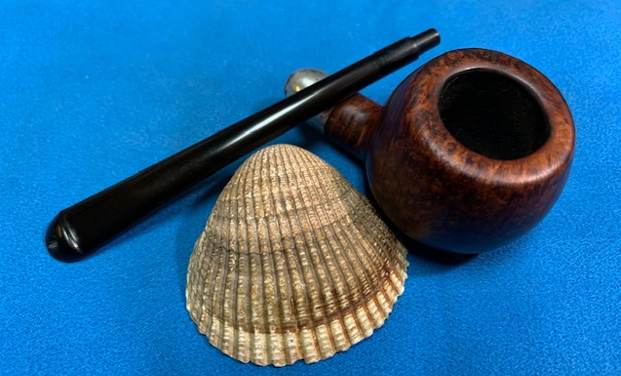
Replacing a Broken Tenon on an Italian Made Capri Gozzo Billiard


Blog by Steve Laug

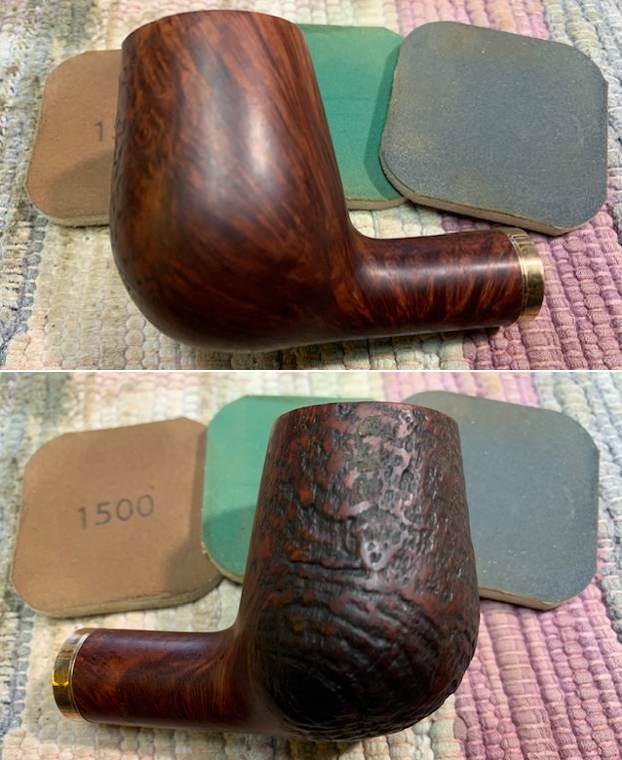
Yesterday I received an unexpected package from a fellow living in Port Clements, British Columbia. I say unexpected because I had not spoken to anyone from there about a repair. But here it was so I opened it to find a pipe with a broken tenon and a cheque for the work. There was a note in the package with a return address but no phone number or email. The pipe had the tenon broken off cleanly and stuck in the shank.The edges of the shank had some nicks in the edges and face on the left side. The stem face had some remnants but otherwise the break had been clean. The pipe was stamped on the left side of the shank and read Capri [over] Gozzo. On the right side of the shank it was stamped and read Made in Italy. The finish was dirty and there was a moderate cake in the bowl and lava overflowing on the rim top. It looked like he had dropped it somewhere along the way and snapped the stem off. The stem was lightly oxidized and had some chatter and tooth marks on both side ahead of the button but nothing to deep. I took some photos of the bowl and stem when I received it to show what it looked like when I received it here in Vancouver. I took photos of the rim top to show the condition of the bowl and the damage to the inner edge and the top of the rim. I also took photos of the stem to show the oxidation and tooth chatter on both sides at the button.I took a photo of the stamping on the left side of the shank. It was clear and readable as noted above.I took some photos of the shank end and stem end to show the broken tenon and the remnant on the face of the stem.I decided to start my work on the pipe by pulling the tenon from the shank. Usually I use a dry wall screw and twisted it into the airway. On this pipe it was stuck tight. I put it in the freezer for about 30 minutes and it was still stuck. I decided to drill it out and move on. I went through my tenons and found that I was missing the black Delrin one that I needed for the size of the shank. I did find a threaded white Delrin one that would fit the shank with a few minor adjustments. I used a Dremel and sanding drum to remove the shoulder ahead of the threads and it fit perfectly in the shank. I am hoping that the fellow will return my calls so I can chat with him about the tenon. No luck on many phone calls so the tenon was glued in place this morning.Now it was time to work on replacing the broken tenon. I drilled out the face of the stem with a cordless drill and a bit roughly the size of the airway in the stem. I find that this helps to center the drilling. I worked my way through drill bits up to 15/64s which is approximately the size of the threaded portion of the tenon.I turned the threaded portion of the tenon into the drilled airway and the fit was perfect. I used a dental pick to spread some black CA glue on the threads of the tenon and turned it in place in the stem. I set it aside to wait for the glue to cure.While the glue cured on the new tenon I turned my attention to the bowl. I reamed the bowl with a Savinelli Fitsall Pipe Knife and then sanded it with 220 grit sandpaper wrapped around a piece of dowel.I used a piece of folded 220 grit sandpaper to clean up the inner edge of the bowl and smooth out the nicks there. I also sanded the rim top at the same time to remove the lava and darkening there. I stained the rim top with an oak stain pen to blend it into the surrounding briar.I polished the briar with micromesh sanding pads – dry sanding with 1500-12000 grit pads and wiping the briar down with a damp cloth after each pad. The briar began to take on a shine as the pads progressed. I worked some Before & After Restoration Balm into the surface of the briar with my fingertips to clean, enliven and protect the briar. I let the balm sit for 15 minutes and then buffed with a cotton cloth to raise the shine. The photos show the bowl at this point in the restoration process. I pressed a thin brass band on the shank end to take care of the nicks and chips there. It also gave a smooth surface for the face of the stem to sit. I like the addition of the bling. I set the bowl aside and turned my attention to the stem. It was in such great condition that I polished it with micromesh sanding pads – wet sanding with 1500-12000 grit sanding pads. I wiped it down after each sanding pad with Obsidian Oil. I polished it with Before & After Pipe Stem Polish – both Fine and Extra Fine. This Capri Gozzo Fancy Saddle Stem Billiard turned out to be a more beautiful pipe than I had expected when I took it out of the package. The finish on the briar is nice and the grain really stands out. I put the pipe back together and buffed it lightly with Blue Diamond on the buffing wheel. I gave the bowl and the stem multiple coats of carnauba wax. I hand buffed the pipe with a clean buffing pad to raise the shine and hand buffed it with a microfibre cloth to deepen the shine. It is fun to see what the polished bowl looks like with the polished black vulcanite stem. This classic looking Capri Gozzo Billiard feels great in my hand. It is light and well balanced. Have a look at it with the photos below. The dimensions are Length: 6 inches, Height: 1 ½ inches, Outside diameter of the bowl: 1 ½ inches, Chamber diameter: 7/8 of an inch. The weight of the pipe is 63 grams/2.22 oz. The pipe definitely looks better than when it arrived. It will be heading back to pipeman who sent it to me later this week. Thanks for walking through the repair and restoration with me as I worked over this pipe. Thanks to each of you who are reading this blog.

A Lot of Work…But it is a Beautiful Republic Era Peterson’s System Standard 312


Blog by Steve Laug

The next pipe on the table was purchased on eBay on October 3, 2016 from Des Moines, Iowa, USA. It was a very dirty Peterson’s System Standard 312. The finish is quite nice with a classic Peterson’s shape and smooth finish. The pipe had a lot of grime ground into the smooth finish with oils and tars in the grain. The bowl had a thick cake with a lot of lava overflow on the rim top and edges. The pipe is stamped on the left side of the shank and reads Peterson’s [over] System [over] Standard. On the right side is stamped Made in the Republic of Ireland [three lines] with the shape number 312 under that. On the oxidized nickel shank cap (ferrule) it is stamped K&P [over] Peterson. The stamping is clear and readable on the pipe and band. The ferrule has a lot of tars and oils oozing out of the end where the stem fits. The stem was dirty, oxidized and calcified with tooth marks and chatter on the stem near the button on both sides and some on the surface of the button as well. There was no Peterson’s “P” on the left side of the P-lip stem. Jeff took photos of the pipe before he worked on it. He took photos of the rim top to show the thick cake in the bowl and the thick overflow of lava on rim top and edge. It is very hard to know what the inner and outer edges look like under the lava. The stem looked rough – there was oxidation, calcification and some deep tooth marks on both sides. He took a photo of the side and heel of the bowl to show the amazing grain that was shining through the grime and oils there. It would definitely look really good once it was cleaned up.The stamping on the sides of the shank read as noted above. The photos show that they are very clear and readable. The stamping on the nickel ferrule is also readable. I am including the information from Pipedia’s article on Peterson pipes. It is a great read in terms of the history of the brand (https://pipedia.org/wiki/Peterson). I have included a bit of the pertinent history here.

1950 – 1989 The Republic Era – From 1950 to the present time, the stamp for this era is “Made in the Republic of Ireland” in a block format generally in three lines but two lines have been used with or without Republic being abbreviated.

I knew that I was dealing with a Republic Era pipe made between 1950-1989. It was a smooth Peterson’s System Standard 312 Billiard with nice grain. The finish was stained with a combination of brown stains. Now it was time to work on the pipe.

Jeff had cleaned it thoroughly. He had reamed it with a PipNet reamer and cleaned that up with a Savinelli Fitsall Pipe Knife. He had scrubbed the exterior of the briar with undiluted Murphy’s Oil Soap. He cleaned out the interior of the shank, sump and airway in the shank and stem with alcohol, pipe cleaners and cotton swabs. He scrubbed the stem with Soft Scrub to remove the oxidation and calcification on the surface. He soaked it in Before & After Deoxidizer to remove the oxidation. He removed it from the Deoxidizer and rinsed it off with warm water. I took some photos of the pipe before I started my part of the work. The rim top had some scratches and darkening on the surface. The outer and inner edges of the rim was okay but there was some burn damage on the front outer edge and on the back inner edge. The stem surface looked better with some tooth marks and chatter on both sides near the button. There was still some light oxidation that would need to be dealt with on the shank end and around the P-lip. I took photos of the stamping on the shank sides. It is clear and readable as noted above.   I removed the stem and took a photo of the pipe to give a sense of the whole. The stem is a typical Peterson’s System stem.I started my work on the pipe by working over the rim top and the inner edge of the bowl to clean up the damage. I topped the bowl lightly on a topping board with 220 grit sandpaper. I used a folded piece of 220 grit sandpaper to rework the inner bevel on the bowl. It worked well and the finished rim top looked significantly better. I polished the briar with micomesh sanding pads – dry sanding with 1500-12000 grit pads. I wiped the bowl down after each pad with a damp cloth. I rubbed the bowl down with Before & After Restoration Balm. I worked it into the surface of the bowl sides and shank with my fingertips. The product works to clean, enliven and protect the briar. I let the balm sit for 15 minutes and then buffed with a cotton cloth to raise the shine. I set the bowl aside and turned to work on the stem. I polished the stem with micromesh sanding pads – 1500-12000 grit pads. I wiped it down with Obsidian Oil after each sanding pad. I used Before & After Pipe Polish – both Fine and Extra Fine to further polish the stem. This Peterson’s System Standard 312 Bent Billiard with a vulcanite stem is a great looking pipe now that it has been restored. The beautiful grain that shines through the polished finish is stunning. As the pipe is smoked the patina should develop and look even better. I put the stem back on the bowl and carefully buffed the pipe with Blue Diamond on the buffing wheel. I gave the bowl and the stem multiple coats of carnauba wax on the buffing wheel and followed that by buffing the entire pipe with a clean buffing pad. I hand buffed the pipe with a microfiber cloth to deepen the shine. The finished Peterson’s System Standard 312 fits nicely in the hand and feels great. Give the finished pipe a look in the photos below. The dimensions of the pipe are Length: 6 inches, Height: 1 ¾ inches, Outside diameter of the bowl: 1 ¼ inches, Chamber diameter: ¾ of an inch. The weight of the pipe is 61grams/2.15oz. This one has been reserved for first refusal. If you are interested in being in the queue for this pipe send me a message or an email. Thanks for reading this blog and my reflections on the pipe while I worked on it. There are many more to come!

Next Up An LH Stern Certified Purex 71 Oom Paul


Blog by Steve Laug

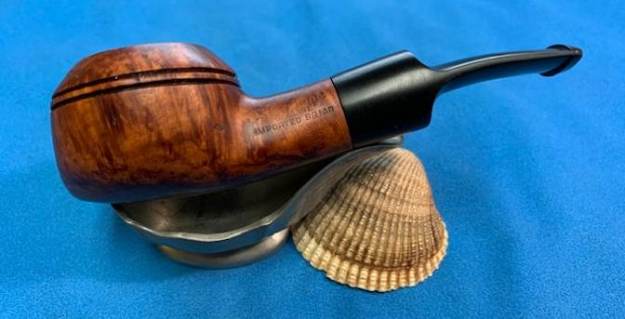
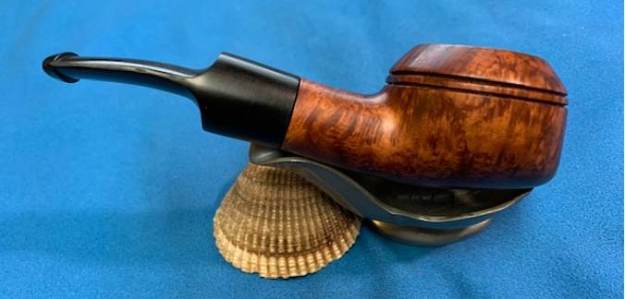
The next pipe I have chosen to work on was purchased from an online auction on June 10, 2019 in Romney, West Virginia, USA. I have worked on a lot of LHS pipes through the years and many of them had the LHS Certified Purex stamp on the shank. This Oom Paul is very nice with great grain around the bowl. It is stamped on the left side of the shank and reads CERTIFIED PUREX arched over a diamond the LHS in the centre. Underneath that is stamped Imported Briar. On the right side of the pipe it is stamped with the shape number 71. The stamping is clear and readable. The saddle stem also bears the silver (inlaid) diamond logo on the left side. The bowl had a thick cake and there was a lava overflow on the rim top filling. The inner edge of the rim thickly covered with lava so it was hard to know the damage at this point. The outer edge and rim top showed nicks and light damage. The stem is oxidized, calcified and has tooth marks and chatter on both sides at the button. Jeff took photos of the pipe before he started his clean up. Jeff took photos of the bowl, rim top to show the thickness of the cake in the bowl and the lava on the rim top. The bowl had a thick cake that overflowed in lava on the inner edge and rim top of the bowl. I am hoping that the thick lava coat protected things underneath it from damage to the edges and top. He took photos of the top and underside of the stem showing the tooth chatter, scratching, calcification and oxidation on the stem surface and wear on the edges of the button. Jeff took photos of the sides and heel of the bowl to show the condition of the briar. You can see the beautiful shape of the bowl even through the dirt and debris of many years.Jeff took photos of the stamping on the sides of the shank. You can see that it is clear and readable as noted above. I turned first to Pipephil’s site (http://pipephil.eu/logos/en/logo-lhs.html) and found a pipe with the same stamping as the one that I am working on. There was a brief history of the brand at the top of the page. It read as follows:

The L&H Stern Inc. was established by Ludwig Stern (1877-1942) in 1911. His brother Hugo (1872-?) acted as vice-president & secretary. The firm moved to 56 Pearl St. Brooklyn in 1920. It closed down in the 1960s. LHS was one of the main pipe supplier for US soldiers during WWII.

I turned to Pipedia to try and place this pipe in the timeline of the brand and was able find some helpful information which I have included below (https://pipedia.org/wiki/LHS). Again it had a brief history. It read as follows:

Ludwig Stern, a successful pipe manufacturer since 1893 and closing around 1960, reorganized his company along with his brother Hugo Stern, opening a factory in 1911. They named the company L&H Stern Smoking Pipes & Holders. The newly formed company was moved into a six story building on the corner of Pearl and Waters street Brooklyn, NY…

There were also Notes from Geyer’s Stationer on the page below this. It read as follows:

Thoroughly organized in all departments, and housed in a well-lighted and ventilated modern office and manufacturing building, the firm of L&H Stern Inc. is located near the first arch of the Manhattan bridge, near the river and convenient to the Brooklyn bridge, which makes it accessible from all the hotels in the metropolis for visiting buyers. The structure is six stories with a seventeen-foot basement, with light on three sides through prismatic glass windows, the first floor being seven feet above the sidewalk. Light enters the upper floors from all four sides.

L&H Stern is known to every important wholesaler and jobber in the country. LHS manufactures a complete line of briar pipes. Ginmetto wood pipes are also made, as well as Redmanol goods, the man-made amber. The first substitute for amber. Everything, even down to the sterling silver and other metal trimmings are made under one roof.

LH Stern was a fascinating company that literally covered the manufacture of all the pipe parts. I was not able to pin down the date on it with the information but it was a nice piece of briar. Now on to the pipe.

Jeff carefully cleaned the pipe. He reamed it with a PipNet pipe reamer and then cleaned up the reaming with a Savinelli Fitsall Pipe Knife. He scrubbed out the internals of the shank, stem and shank extension with alcohol, pipe cleaners and cotton swabs until the pipe was clean. He scrubbed the exterior of the bowl with Murphy’s Oil Soap and a tooth brush to remove the grime and grit on the briar and lava on the rim top. The finish looks much better and has a deep richness in the colour that highlights grain of the briar. The rim top had some darkening and there was some damage to the inner edge of the bowl. The aluminum on the shank end and on the stem were slightly oxidized but clean. Jeff soaked the stem in bath of Before & After Pipe Stem Deoxidizer to remove the oxidation on the rubber. He worked it over with Soft Scrub All Purpose Cleaner to remove any remnants of oxidation. When the pipe arrived here in Vancouver and I finally started my work on it I was amazed it looked so good. Here are some photos of what I saw. I took some close up photos of the rim top and the stem surface. The inner edge of the rim was nicked around the back right side. The outer rim showed some damage as well and was not ever truly round. The rim top was nicked and damaged as well. I took close up photos of the stem to show the condition of the surface and button. There was some remaining oxidation near the shank and the tooth marks and chatter were evident near the button on both sides.I took a picture of the stamping on the shank sides and it was all clear and readable as noted above.I took the pipe apart and took a photo of the pipe with the stem. It is a good looking pipe and very unique. The stinger apparatus and integrated tenon were a single unit. It was clean but slightly oxidized.I started my work on the pipe by addressing the damage on the inner edges of the bowl. I used a folded piece of 220 grit sandpaper to work over the inner edge to clean up the damage. I also worked over the rim top and outer edges at the same time.I polished the briar with micromesh sanding pads – dry sanding with 1500-12000 grit pads. I wiped the bowl down a damp cloth to remove the sanding debris. The bowl began to take on a shine. I worked some Before & After Restoration Balm into the surface of the bowl and shank with my fingertips to clean, enliven and protect the briar. I let the balm sit for 15 minutes and then buffed with a cotton cloth to raise the shine. The photos show the bowl at this point in the restoration process. I set the bowl aside and turned my attention to the stem. I “painted” it with the flame of a Bic lighter to lift the tooth dents in the surface of the vulcanite. I was able to lift all of them. I scrubbed the stinger with a brass bristle wire brush to remove the darkening. I sanded out the remaining chatter with 220 grit sandpaper and started polishing with 400 grit wet dry sandpaper. I polished the stem with micromesh sanding pads – dry sanding with 1500-12000 grit sanding pads. I wiped it down after each sanding pad with Obsidian Oil. I polished it with Before & After Pipe Stem Polish – both Fine and Extra Fine. I gave it a final coat of Obsidian Oil. With the bowl and the stem finished I put the LHS Certified Purex 71 Oom Paul back together and buffed it on the wheel using Blue Diamond to give it a shine. I gave the bowl and stem multiple coats of carnauba wax on the wheel and then buffed it with a clean buffing pad to raise the shine. I hand buffed it with a microfiber cloth to deepen the shine. It really a nice looking sandblast. The dimensions of the pipe are – Length: 5 inches, Height: 2 inches, Outside diameter of the bowl: 1 ¼ inches, Chamber diameter: 7/8 of an inch. The weight of this large pipe is 2.08 ounces /59 grams. This LHS Certified Purex Oom Paul was a great find. I will be putting it on the rebornpipes store in the American Pipe Makers section soon. If you would like to add it to your collection let me know. This is another pipe that has the possibility of transporting the pipe man or woman back to a slower paced time in history where you can enjoy a respite. Thanks for walking through the restoration with me.

Working on Hardcastle’s Special Quality Sandblast Billiard


Blog by Steve Laug

The next pipe I have chosen to work on was purchased from an antique dealer on 02/23/18 in Naples, Florida, USA. I have worked on a lot of Hardcastle’s over the years but most of them have been Jack’ O London and other lower end ones. This is a Sandblast Billiard that is quite nice. It is stamped on the underside of the shank and reads SPECIAL QUALITY [over] BY HARDCASTLE. That is followed by the stamping Made in London [over] England. The stamping is clear and readable and there is no shape number evident. The taper stem also bears the Hardcastle’s “H” logo on the left side. The bowl had a thick cake and there was a lava overflow on the rim top filling in the sandblast. The inner edge of the rim was damaged and slightly out of round. The stem is oxidized, calcified and has tooth marks and chatter on both sides at the button. Jeff took photos of the pipe before he started his clean up. Jeff took photos of the bowl, rim top to show the thickness of the cake in the bowl and the lava on the rim top. The bowl had a thick cake that overflowed in lava on the inner edge and rim top of the bowl. I am hoping that the thick lava coat protected things underneath it from damage to the edges and top. He took photos of the top and underside of the stem showing the tooth chatter, scratching, calcification and oxidation on the stem surface and wear on the edges of the button. Jeff took a photo of the sides and heel of the bowl to show the condition of the briar. You can see the beautiful shape and the deep sandblast on the bowl even through the dirt and debris of many years.Jeff took photos of the stamping on the sides of the shank. You can see that it is clear and readable as noted above. I turned first to Pipephil’s site (http://pipephil.eu/logos/en/logo-hardcastle.html) and found a pipe with the same stamping as the one that I am working on. There was no extra information in the side bars but it was good to see the same stamping.I turned to Pipedia to try and place this pipe in the timeline of the brand and was able find some helpful information which I have included below (https://pipedia.org/wiki/Hardcastle).

Hardcastle was founded in 1908 by Edmund Hardcastle and built itself a good reputation among the numerous British mid-graders. In 1935 Dunhill started to build a factory next door to Hardcastle in Forest Road, Walthamstow, London E17. The family owned Hardcastle Pipes Limited sold 49% of its equity to Dunhill In 1936.

Along with closing down its pipe factory in Notting Hill in 1946 Dunhill bought the remaining shares, turning Hardcastle into a 100% Dunhill subsidiary. As members of the Hardcastle family continued as executives in the company’s management Hardcastle retained a certain independence.

This ended in 1967. Dunhill merged Hardcastle with Parker (100% Dunhill as well). The new Parker Hardcastle Limited also absorbed the former Masta Patent Pipe Company. Hardcastle’s Forest Road plant was immediately given up and the production of Hardcastle pipes was shifted to Parker’s nearby St. Andrews Road factory – now consequently called Parker-Hardcastle factory.

In fact this put a definite end to Hardcastle as an own-standing pipe brand, and none other than Edwin Hardcastle, the last of the family executives, spoke frankly and loudly of Hardcastle pipes being degenerated to an inferior Dunhill second.

Today Hardcastle pipes use funneled down bowls that are not deemed suitable to bear the Dunhill or even the Parker name (as well as obtaining briar from other sources).

Timeline

  • 1903: Edmund Hardcastle establishes the brand
  • 1936: Family sells 49% of the Hardcastle Pipes Limited shares to Dunhill
  • 1946: Dunhill buys the remaining shares, but the family continues to manage the company
  • 1967: Dunhill merges Hardcastle with Parker. The new Parker-Hardcastle Limited company absorbs the Masta Patent Pipe Company also.
  • After 1967 it is speculated that Hardcastle became the brand for “Parker Seconds”

John Loring states in “The Dunhill Briar Pipe – ‘the patent years and after'” that in the absence of sales receipts, or other items of provenance, Hardcastles cannot be accurately dated. Loring further states that he knows of no way to distinguish the briar source when looking at Hardcastle, Parker, or Parker-Hardcastle pipes. We should not expect to find any actual Dunhill production in these lines, and while one might be there, it is doubtful we will ever be able to determine it…

With the information from Pipedia I knew that I was working on a Family Period Pipe and one that was stamped Special Quality. It appears that it can be dated between 1903-1946 when the company was sold in full to Dunhill. Now it was time to work on the pipe.

Jeff carefully cleaned the pipe. He reamed it with a PipNet pipe reamer and then cleaned up the reaming with a Savinelli Fitsall Pipe Knife. He scrubbed out the internals of the shank, stem and shank extension with alcohol, pipe cleaners and cotton swabs until the pipe was clean. He scrubbed the exterior of the bowl with Murphy’s Oil Soap and a tooth brush to remove the grime and grit on the briar and lava on the rim top. The finish looks much better and has a deep richness in the colour that highlights grain of the briar. The rim top looked good with some damage to the inner edge of the bowl and some colour loss to the outer edge. Jeff soaked the stem in bath of Briarville’s Pipe Stem Deoxidizer to remove the oxidation on the rubber. He worked it over with Soft Scrub All Purpose Cleaner to remove any remnants of oxidation. When the pipe arrived here in Vancouver and I finally started my work on it I was amazed it looked so good. Here are some photos of what I saw.  I took some close up photos of the rim top and the stem surface. The inner edge of the rim was out of round on the back right side. The outer rim showed some colour loss during the clean up. I took close up photos of the stem to show the condition of the surface and button. There was some remaining oxidation near the shank and the tooth marks and chatter were evident near the button on both sides.I took a picture of the stamping on the shank sides and it was all clear and readable as noted above. I took the pipe apart and took a photo of the pipe with the stem. It is a good looking pipe and very unique. The stinger apparatus is damaged and fell out when I removed the stem.I started my work on the pipe by addressing the damage on the inner edges of the bowl. I used a folded piece of 220 grit sandpaper to work over the inner edge to bring it back into round and clean up the damage. I restained the outer and inner edge with a Walnut stain pen to match the surrounding briar.I worked some Before & After Restoration Balm into the surface of the bowl and shank with my fingertips and a horsehair shoe brush to clean, enliven and protect the briar. I let the balm sit for 15 minutes and then buffed with a cotton cloth to raise the shine. The photos show the bowl at this point in the restoration process. I set the bowl aside and turned my attention to the stem. I “painted” it with the flame of a Bic lighter to lift the tooth dents in the surface of the vulcanite. I was able to lift all of them. The rest would polish out with micromesh pads. I used some white acrylic fingernail polish to touch up the white stamped “H” on the left side of the stem. I rubbed it into the stamp with a tooth pick. I scraped off the excess and buffed it with a cotton pad and a 1500 grit micromesh pad. There was still oxidation that was quite deep and the stem was dull. I scrubbed it with Soft Scrub Cleanser on a cotton pad and was able to remove the remaining oxidation. It looked much better at this point. I polished the stem with micromesh sanding pads – dry sanding with 1500-12000 grit sanding pads. I wiped it down after each sanding pad with Obsidian Oil. I polished it with Before & After Pipe Stem Polish – both Fine and Extra Fine. I gave it a final coat of Obsidian Oil. With the bowl and the stem finished I put the Special Quality By Hardcastle’s Billiard back together and buffed it on the wheel using Blue Diamond to give it a shine. I gave the bowl multiple coats of Conservator’s Wax and stem multiple coats of carnauba wax on the wheel and then buffed it with a clean buffing pad to raise the shine. I hand buffed it with a microfiber cloth to deepen the shine. It really a nice looking sandblast highlighted by the combination of walnut and mahogany stains. The dimensions of the pipe are – Length: 5 ½ inches, Height: 2 inches, Outside diameter of the bowl: 1 ¼ inches, Chamber diameter: ¾ of an inch. The weight of this large pipe is 1.34 ounces /38 grams. This Special Quality By Hardcastle’s Billiard was a great find. I will be putting it on the rebornpipes store in the British Pipe Makers section soon. If you would like to add it to your collection let me know. This is another pipe that has the possibility of transporting the pipe man or woman back to a slower paced time in history where you can enjoy a respite. Thanks for walking through the restoration with me.

What a Challenge – A Once Beautiful Pipeworks Unique by Elliot Nachwalter


Blog by Steve Laug

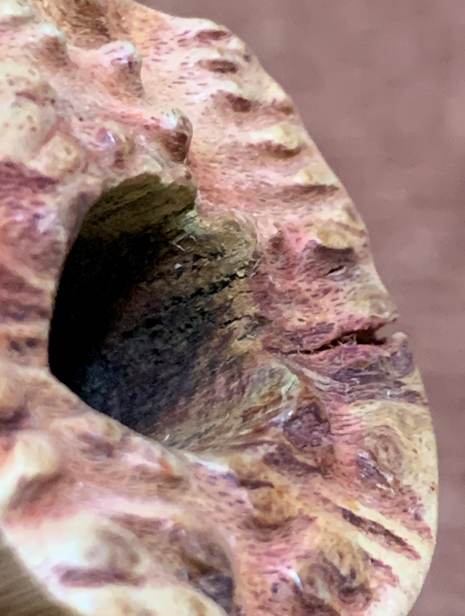
This next pipe was a gift from a friend. He contacted me about a  pipe he wanted to give me. He sent some photos of the pipe. It was a beautiful shaped Pipeworks creation, hand made by Elliot Nachwalter. The stamping on the left side of the shank read Pipeworks [over] New York City [over] USA. On the right side of the shank it read Made by Hand [over] Elliot Nachwalter. Near the stem is stamped a number that I assume is the date/shape stamp. It reads 6 81 which could easily be 6th pipe of 1981 or a pipe made in June of 1981. The pipe has some issues that really don’t show up to well except in the second photo below. There were really just a few of them but they were big ones. The pipe had what looked to be a trough like groove with a crack in the bottom around at least the left side and front of the bowl judging from his photos. It was probably even worse in person than it appeared in the photos. I thought it would be a challenge for me to deal with during some time off over Christmas so he put it in the mail for me. He told me that he had originally purchased it to restore but when it arrived he figured it was beyond his capabilities. That always scares me a bit when someone says that as I am not sure I am all that capable either sometimes. Once it arrives I will know more for sure.The next photo shows some of the crack/trough mid bowl extending from the back of the bowl across the side and around to the front. All around the damaged area the briar had darkened as well. It is a shame as it is a really beautiful pipe. I am guessing that it was smoked very hot but I would have a better idea once I had in hand and cleaned out the bowl.The rim top and edges looked very good and the stem was surprisingly in good shape. There were some light tooth marks next to the button that really were not an issue.Yesterday when I came home from work the pipe was waiting for me. I was excited to see it in person so I took it to the basement worktable and opened the box. I took photos of the pipe as I examined the crack/trough and was not surprised to see that they went all the way around the bowl – left, right, front and rear of the bowl. Other than that the finish looked good. The rim top was in good condition. The bowl had a thin cake that would need to go so I could check out the inner walls to see if the cracks had come through. The stem looked good and sure enough there were some tooth marks and chatter on the stem as noted above – a little heavier on the underside than the topside. This would be a fun challenge as it was a beautiful pipe and one made by a favourite pipe maker of mine – Elliot Nachwalter. I took a close up photo of the rim top and bowl so you can see how they look. I captured the stem as well to try to show the tooth marks and chatter near the button.I took photos of the stamping on both sides of the shank. It was clear and readable as noted above (They are far more readable than can be seen in the photos below). There was also the classic Nachwalter snowflake (star) logo on the left side of the saddle stem.I took a series of photos of the trough around the bowl sides. It was a complete loop that had one small trail splitting off down the left front side of the bowl. There was a hairline crack in bottom of the groove that would need to be dealt with. I removed the stem from the shank to give a sense of the unique elegance of the shape of the pipe. I really like the look of it.I turned to Pipephil’s site to look up information on the brand to identify the period of time when Nachwalter made the pipe. I turned first to the section on Elliot Nachwalter’s name (http://pipephil.eu/logos/en/logo-e2.html#elliotnachwalter) to see what it said. It is interesting in that I shows a pipe made in Vermont whereas the one I have says New York City USA.I turned then to the section of the site on Pipeworks as that is also stamped on the pipe I am working on (http://pipephil.eu/logos/en/logo-p3.html#pipeworks). Sure enough the site showed a pipe that was stamped the same way as the one I have. It is shown in the screen capture below. The stem logo looks more like the pipe above than the one below.I also learned that the pipe was crafted during the period (1980-1995) when Elliot Nachwalter and his ex-wife Carol Burns owned the Wilke Pipeshop in NYC. So now I had a time period for the pipe. I wonder if the stamping on my pipe 6 81 helps to date it to 1981?

From there I turned to Pipedia for a bit more information (https://pipedia.org/wiki/Nachwalter). The site quoted from both Lopes book and from Nachwalter’s website and had a lot of great historical information. I quote portions of it below.

From Pipes, Artisans and Trademarks, by Jose Manuel Lopés’

Elliott Nachwalter studied the History of Art and Photography, but passionate about pipes, decided to go into pipe making. With a few tools and some machinery, he started his workshop some 25 years ago (that would be 35 years ago now, as of 2015), in Stowe, Vermont, where he shared a warehouse with Andrew Marks. He later created Briar Workshop with Jorg Jemelka, and was joined by the Danish designer Finn Meyan Andersen. They also collaborated with various artisans, such as Brad Pohlmann, J.T. Cooke, and Carol Burns.

Between 1980 and 1983, Elliot had a shop in New York where he would make and sell his pipes There then followed an interregnum — “For three years I was away from my craft, not knowing if I would ever make pipes again” –, after which he returned to Vermont and built Pipestudio. Aim: “to create sensual pipes, beautifully grained that are pleasing to the eye” and which would be “the creation of sculpted smoking instruments that are functional pieces of art”.

He uses Briar from Italy and Greece; and vulcanite, acrylic, or Cumberland stems. Symbol: a kind of six-pointed star…

…In 1980 I opened a store in New York City and designed and made pipes in the back of the store for pipe smokers that visited me from around the world. I worked late into the night. There came a time when I felt the need to stop making pipes. For three years I was away from my craft, not knowing if I would ever make pipes again. Something was missing. Perhaps I was missing the struggle of the creative process and the pure joy that one feels when you make something turn out exactly as imagined in your mind’s eye. I suppose I needed to make pipes; I needed to work late into the night.

In the autumn of ’96 as the falling leaves mixed with the early snowfall, I built a small studio overlooking the Battenkill and surrounded by the Taconic and Green mountains.

It is my desire to create sensual pipes, beautifully grained that are pleasing to the eye. I work with only the rarest of briar burls that are seasoned in a manner that allows for a minimal break in period and a very smooth smoking pipe. The briar grows in the wild and there is a remarkable difference in grain between each block . This variance of grain together with the myriad of designs in my mind and the nature of the work, makes for truly one of a kind pipes. The essence of my work is in the creation of sculpted smoking instruments that are functional pieces of art.

So once again the time period for the pipe that I have was confirmed as being made between 1980 when Elliot was in New York City and 1996 when he left to build a workshop in Vermont. I love it when the information comes together.

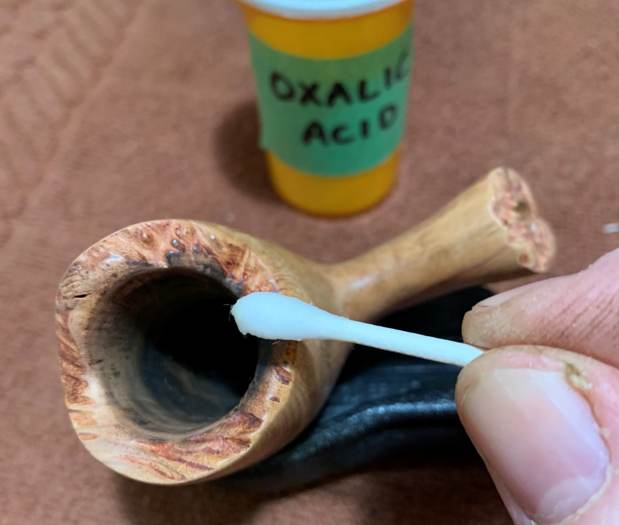
Now it was time to work on this old timer. I started my work by highlighting the crack and groove around the bowl sides. I sanded the entire groove all around the bowl with a folded piece of 220 grit sandpaper. In the photos that follow you can see the cracked area very clearly. I left the sanding dust in place on the bowl and filled in the crack with clear CA glue. I was not too concerned with further cracking around the bowl as it was complete circle – the ends of the crack were joined. I was more concerned with heat from smoking forcing the cracking deeper into the interior of the bowl. The photos tell the story of the repair. Once the glue cured I sanded it smooth to blend it into the surrounding briar. I refilled any spots that still showed damage with more CA glue. I sanded them smooth as well. The bowl was starting to look quite good. I sanded it further with a medium and fine grit sanding sponge to blend the repairs into the surrounding briar. The grain really began to stand out. With that done I called it a night and when I woke early this morning I made a mixture of Oxalic Acid and water. I wiped down the darkened areas on the sides of the bowl to lighten them as much as possible. The mixture worked wonders and the pipe looked much better. There was one small spot on the crack shown in the second photo that I needed to touch up with the CA glue.With the externals repaired I turned my attention to the bowl. I reamed it with a PipNet reamer and took the cake back to bare briar. I cleaned that up with a Savinelli Fitsall Pipe Knife. I wanted the cake removed so I could check out the inside walls. I finished reaming process by sanding the bowl with 220 grit sandpaper wrapped around a dowel. I cleaned out the airway in the stem and shank with alcohol, cotton swabs and pipe cleaners. I scrubbed the walls of the bowl with alcohol at the same time. I examined the walls and bottom of the bowl with a bright light. There were not cracks on the internal walls that matched those around the bowl sides and front. There was however some checking on the back wall directly behind the cracks on the back of the bowl. I cleaned those carefully to remove all the debris. I am pretty certain that the heat followed the checking out to the exterior and during repeated hot smoking followed the path of least resistance all the way around the bowl. I think I found the internal source. I would need to do an internal repair to the bowl to stop further cracking from the inside.I polished the bowl and the rim top, sides and shank with micromesh sanding pads – dry sanding with 1500-2400 grit pads in preparation for staining the pipe. I stained the bowl with a light brown aniline stain. I applied it with a dauber and then flamed it with a lighter to set it in the grain. I repeated the process until I was happy with the coverage.I went upstairs and had lunch with my wife. The stain cured for an hour while I dined. I wiped the bowl down with cotton pads and isopropyl alcohol to make the finish more transparent and show the grain around the bowl and shank. I was liking the colour and the coverage at this point. I then polished the bowl and the rim top, sides and shank with micromesh sanding pads once again this time to make it even more transparent – dry sanding with 1500-12000 grit pads and wiping it down after each pad with a damp cloth. The grain stood out nicely and the repairs were well hidden at this point! It was looking very good. I rubbed the bowl and shank down with Before & After Restoration Balm. I worked it into the surface of the bowl sides and shank with my fingertips to clean, enliven and protect the briar. I let the balm sit for a little while and then buffed with a cotton cloth to raise the shine. I really like what I was seeing!I mixed a batch of JB Weld to line the interior of the bowl. I blended the two parts of the product together with a dental spatula and applied it to the walls of the bowl with a folded pipe cleaner. Before I started that though I inserted a pipe cleaner in the shank to keep the airway open in the bottom of the bowl. JB Weld cures neutral and does not gas off when heated. Once it cures I sand it smooth leaving it in the checking and cracks of the bowl walls. I give it a bowl coating of sour cream and activated charcoal powder to further protect the walls until a cake is formed. I set the bowl aside to let the wall repairs cure overnight. I turned my attention to the stem. I removed the tooth chatter and marks with the polishing process with the micromesh sanding pads – 1500-12000 grit pads. I wiped it down with a cloth impregnated with Obsidian Oil after each sanding pad. I used Before & After Pipe Polish – both Fine and Extra Fine to further polish the stem. I gave it a final coat of Obsidian Oil and let it dry. I touched up the stamping on the side of the saddle stem with acrylic fingernail polish. I let it dry and scraped off the excess. The snowflake (or star?) is quite visible and looks good.This Pipeworks NYC Elliot Nachwalter Hand Made with a vulcanite saddle stem is really an elegant looking pipe. It was a lot of work to bring it back but I think it was worth the effort. I put the stem back on the bowl and carefully buffed the pipe with Blue Diamond on the buffing wheel. I gave the bowl and the stem multiple coats of carnauba wax on the buffing wheel and followed that by buffing the entire pipe with a clean buffing pad. I hand buffed the pipe with a microfiber cloth to deepen the shine. The finished Nachwalter feels as great in the hand as it looks to the eye. Give the finished pipe a look in the photos below. The dimensions of the pipe are Length: 5 ¾ inches, Height: 2 ¼ inches, Outside diameter of the bowl: 1 ¼ inches, Chamber diameter: ¾ of an inch. The weight of this pipe is 35 grams/1.23 ounces. I will keep the pipe (for a while anyway) and enjoy it with a favourite tobacco. Thanks for reading this blog and my reflections on the pipe while I worked on it.

Beautification of a Bertram Washington DC Grade 30 Square Shank Pot


Blog by Steve Laug

The next pipe on the work table is another on that came to me from one of our estate purchases. Between us we pick up quite a few pipes for restoration. I try to work them into the restoration queue so that I can keep them moving. We picked up over 120+ Bertram pipes from an estate that a fellow on the east coast of the US was selling. This next one is from that estate – a beautifully horizontal (cross)grained  Bertram Square Shank Pot Grade 30 with a vulcanite taper stem. The pipe is stamped on the left side of the shank and reads 30 (though it is unclear as the 3 is faint). Next to that it is stamped on the left side of the square shank Bertram [over] a faintly stamped Washington D.C. centered on the shank. The finish is dull and has a lot of grime ground into the smooth finish on the bowl and some darkening around the sides of the bowl. There are also some nicks on the outer edge on the backside of the bowl. The bowl was caked with an overflowing lava coat on the top of the rim, heavier toward the back of the bowl. The edges looked okay other than some potential burn damage on the back inner edge. The stem was lightly oxidized, dirty and had light tooth chatter and marks on the top and underside near the button. There were not markings or a logo on the taper stem. Like the rest of the Bertrams in this lot the pipe had promise but it was very dirty. Jeff took photos of the pipe before he started his cleanup work. He took photos of the rim top and bowl to give a clear picture of the thickness of the cake and the lava on the rim top. There was a nick on back outer edge of the bowl. The lava was thicker toward rear of the rim top and there were remnants of tobacco on the walls of the thickly caked bowl. He also took photos of the top and underside of the stem to show the chatter and tooth marks. Otherwise the stem is quite clean. Jeff took photos of the sides and heel of the bowl to give a picture of what the briar around the pipe looked like. There is some stunning grain under the grime.   He took photos of the stamping on the shank. It reads as noted above and is clear and readable. The grade number is on the left side near the bowl and reads 30 (I think that is what it reads).   As I have worked on Bertrams I have written on the brand and have included the following information. If you have read it in past blogs, you can skip over it. If you have not, I have included the link to Bertram history and information. I would recommend that if you don’t know much about them take some time to read the background. I include a link to the write up on Pipedia (http://pipedia.org/wiki/Bertram). Bertram pipes were based out of Washington DC. They were popular among famous politicians and celebrities of the time. They made many products for them from FDR’s cigarette holders to Joseph Stalin’s favorite pipe. They were considered some of the best America had to offer till they finally closed their doors in the 70s. Bertram graded their pipes by 10s and sometimes with a 5 added (15, 25, 55 etc.), the higher the grade the better. Above 60s are uncommon and 80-90s are quite rare. I have worked on one 120 Grade billiard. I have several blogs that I have written on rebornpipes that give some history and background to Bertram pipes. (https://rebornpipes.com/2015/06/16/an-easy-restoration-of-a-bertram-grade-60-217-poker/). I have included the following link to give a bit of historical information on the pipe company. It is a well written article that gives a glimpse of the heart of the company. http://www.streetsofwashington.com/2012/01/bertrams-pipe-shop-on-14th-street.html#

From this information I learned that all of these Bertrams were made before the closure of the shop in the 1970s. This Bertram Square Shank Pot has horizontal (cross) grain on the bowl sides and shank sides. The front and back of the bowl has birdseye grain. This pipe has a 30 Grade stamp on it which I am sure explains the quality of the briar. But like many of these Bertrams the Grading system is a mystery to me.

Jeff had reamed the pipe with a PipNet Pipe Reamer and cleaned up the remnants with a Savinelli Fitsall Pipe Knife. He scrubbed the bowl with undiluted Murphy’s Oil Soap with a tooth brush. He rinsed it under running warm water to remove the soap and grime. He cleaned out the inside of the shank and the airway in the stem with alcohol, cotton swabs and pipe cleaners. He soaked the stem in Before & After Deoxidizer and rinsed it off with warm water. I took photos of the pipe once I got around to working on it.     The rim top had some slight darkening on the back of the bowl and some damage to the inner edge. There were also some sand pits on the rim top at the back of the bowl. The stem surface had some light oxidation and a few tooth marks and chatter on both sides near the button. I took a photo of the stamping on the shank. The Grade Stamp 30 is followed by the brand stamp Bertram Washington DC (faint but readable) is on the top of the left side mid shank. I removed the stem and took a photo of the pipe to give a sense of the whole. The stem is tapered. I started my work on the pipe by cleaning up the inner edge and the rim top with 220 grit sandpaper. I was able to minimize the damage and darkening. I filled in the pits with clear CA glue and once it cured sanded it smooth with 220 grit sandpaper.    I polished the bowl and the rim top, sides and shank with micromesh sanding pads – dry sanding with 1500-12000 grit pads and wiping it down after each pad with a damp cloth.  I rubbed the bowl and shank down with Before & After Restoration Balm. I worked it into the surface of the bowl sides and shank with my fingertips to clean, enliven and protect the briar. I let the balm sit for a little while and then buffed with a cotton cloth to raise the shine. I set the bowl aside and turned to work on the stem. I “painted” the surface of the stem with the flame of a light to lift the marks. I was able to lift many of them. I sanded the ones that remained with a folded piece of 220 grit sandpaper to blend them into the surrounding vulcanite. I started polishing with 400 grit wet dry sand paper.     I polished the vulcanite stem with micromesh sanding pads – 1500-12000 grit pads. I wiped it down with a damp cloth after each sanding pad. I used Before & After Pipe Polish – both Fine and Extra Fine to further polish the stem. I gave it a final coat of Obsidian Oil and let it dry.  This square shank Bertram Washington DC Grade 30 Pot with a vulcanite taper stem is a great looking pipe now that it has been restored. I put the stem back on the bowl and carefully buffed the pipe with Blue Diamond on the buffing wheel using a light touch on the briar. I gave the bowl and the stem multiple coats of carnauba wax on the buffing wheel and followed that by buffing the entire pipe with a clean buffing pad. I hand buffed the pipe with a microfiber cloth to deepen the shine. The finished Bertram 30 Pot is another one that is comfortable in the hand and feels great. Give the finished pipe a look in the photos below. The dimensions of the pipe are Length: 5 ½ inches, Height: 1 ½ inches, Outside diameter of the bowl: 1 ¼ inches, Chamber diameter: 7/8 of an inch. The weight of this pipe is 34 grams/1.20 ounces. If you are interested in adding this pipe to your collection I will be adding it to the rebornpipes store in the American Pipemakers section. Send me a message or an email. Thanks for reading this blog and my reflections on the pipe while I worked on it. There are many more to come!

A Labour of Love


Blog by Kenneth Lieblich

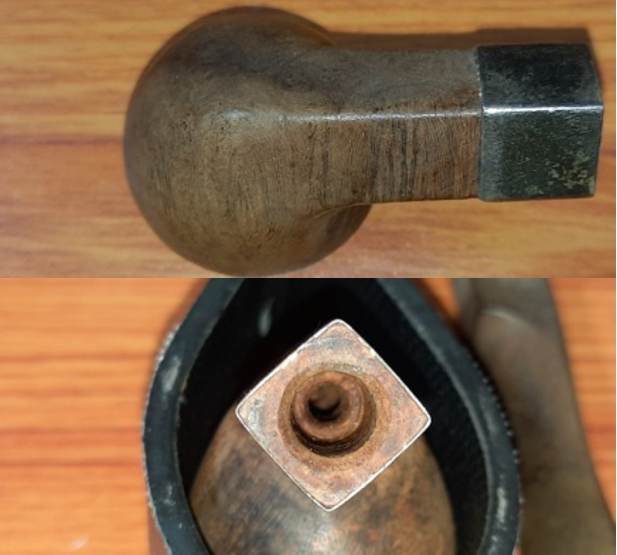
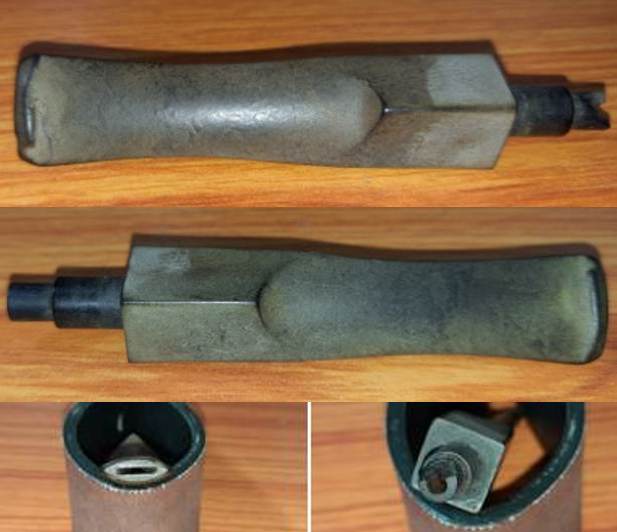
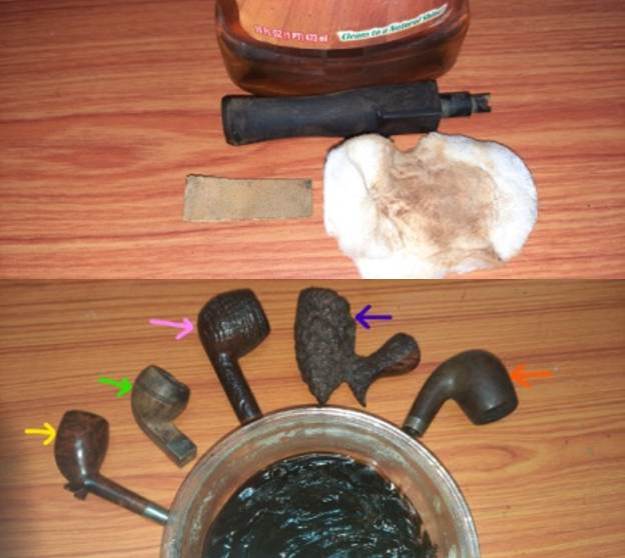
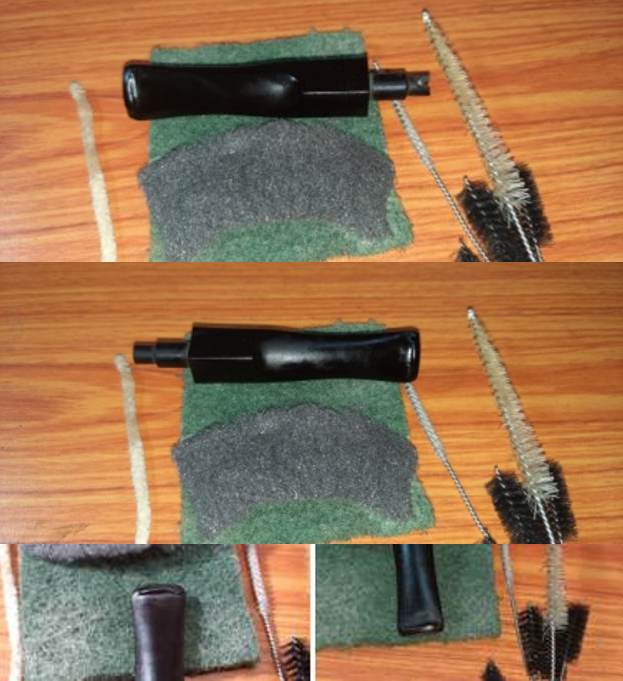
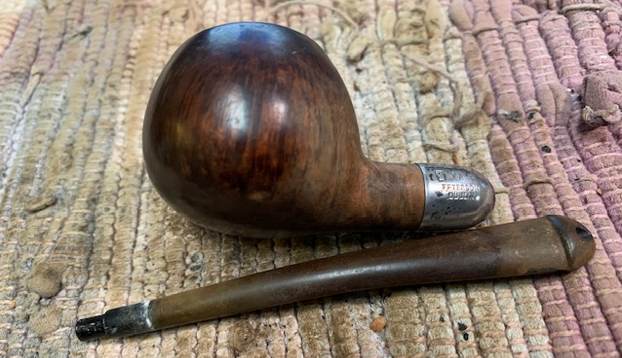
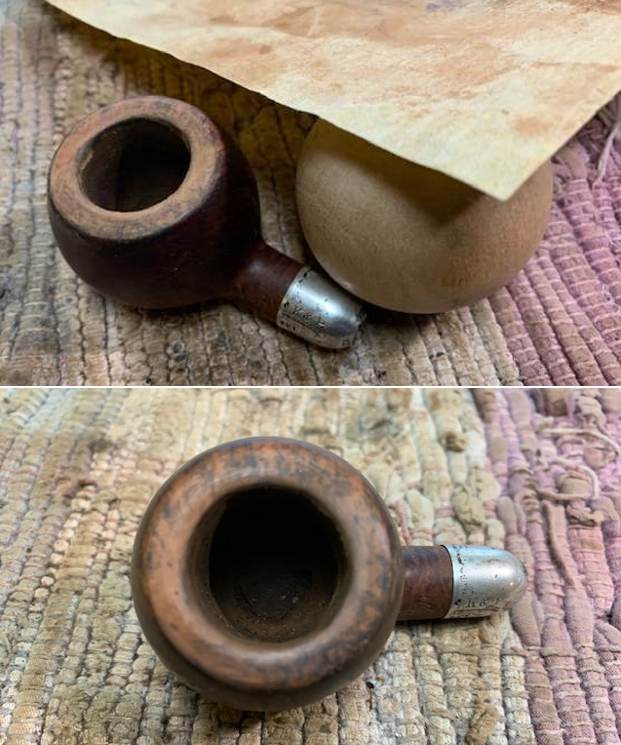
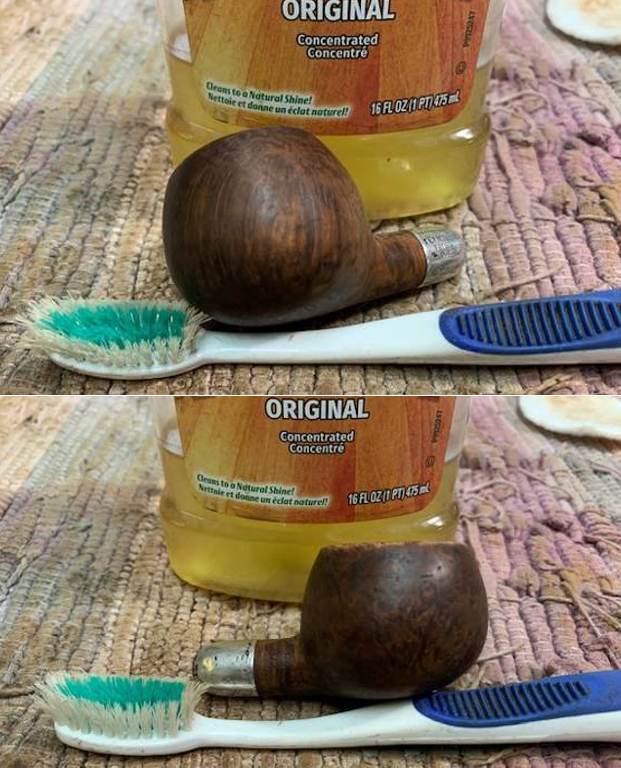
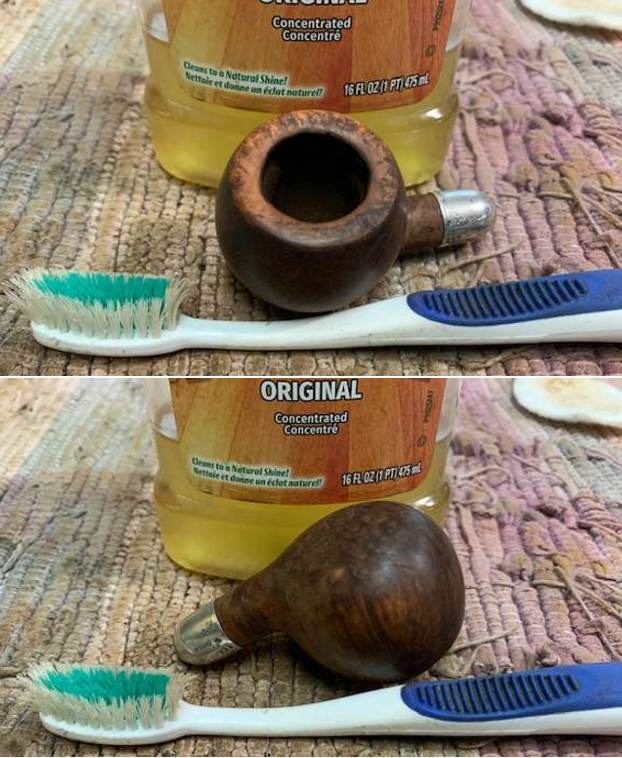
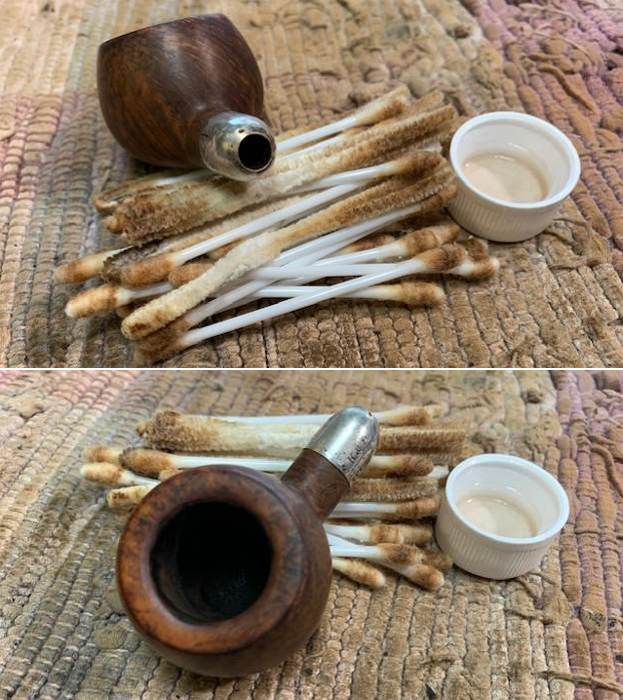
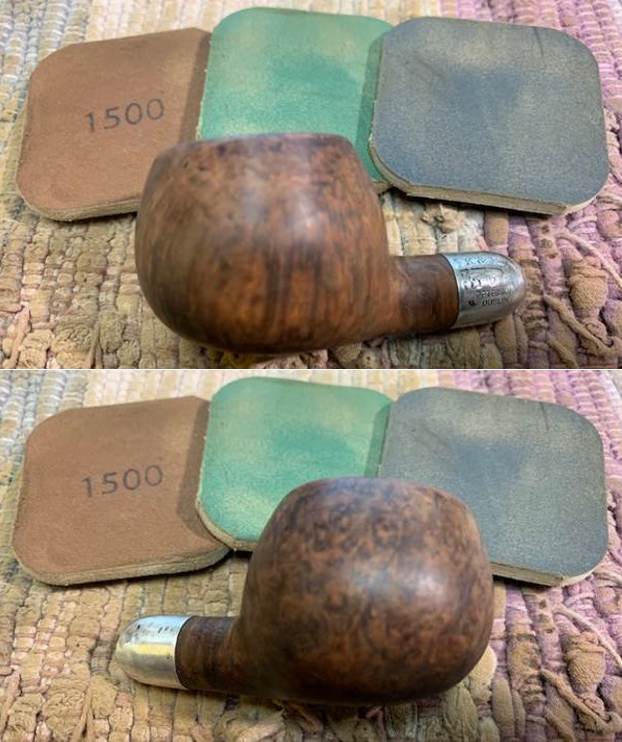
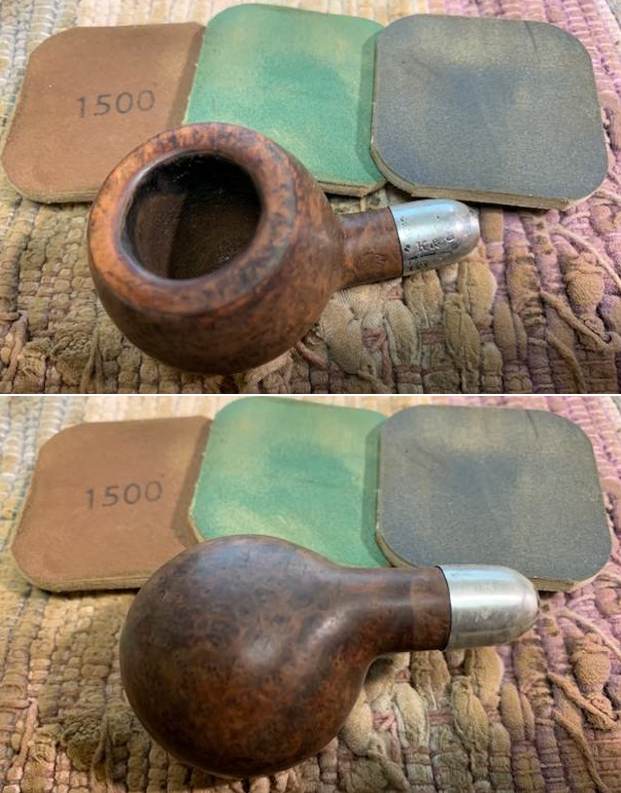
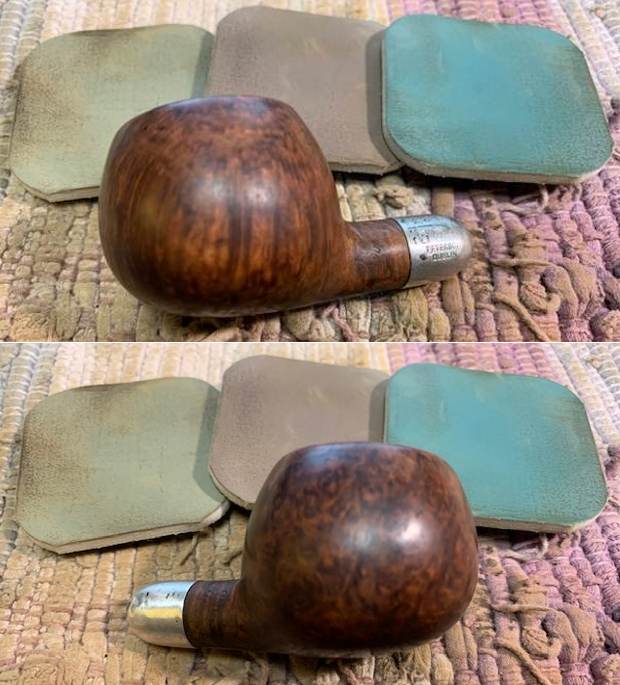
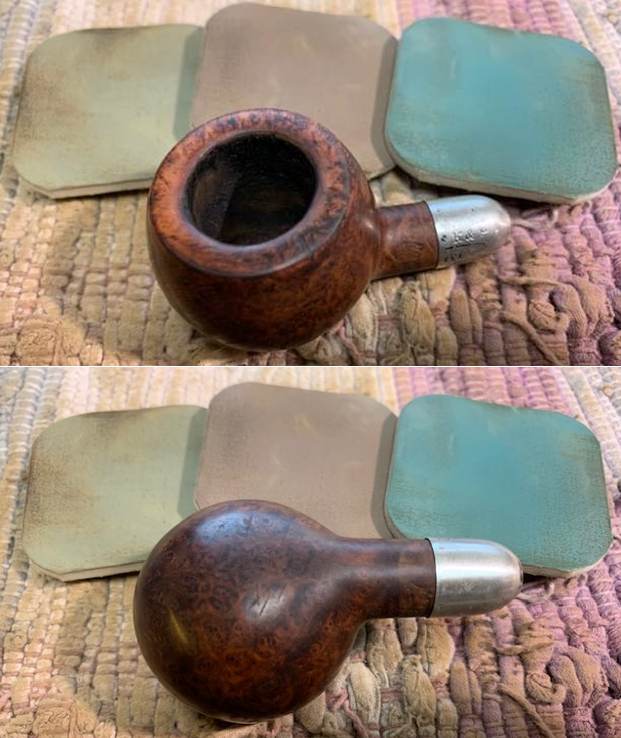
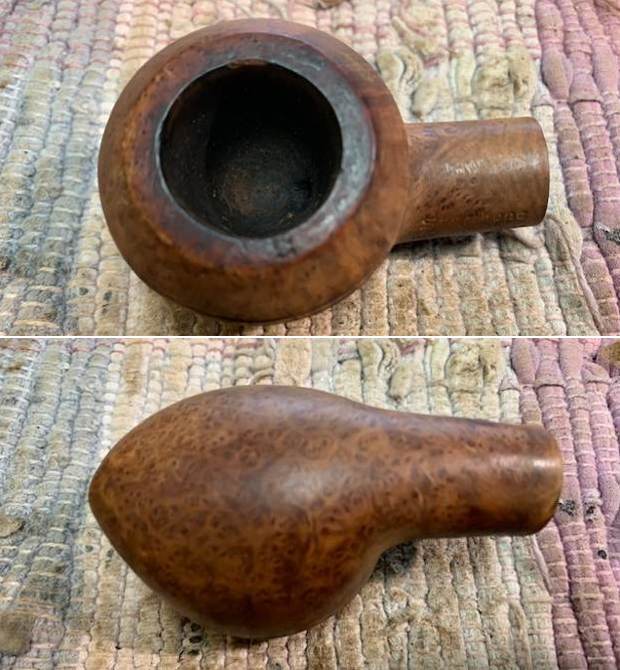
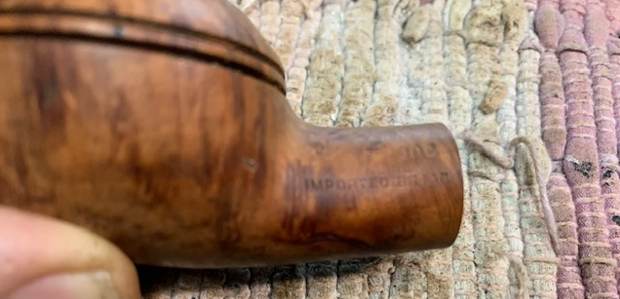
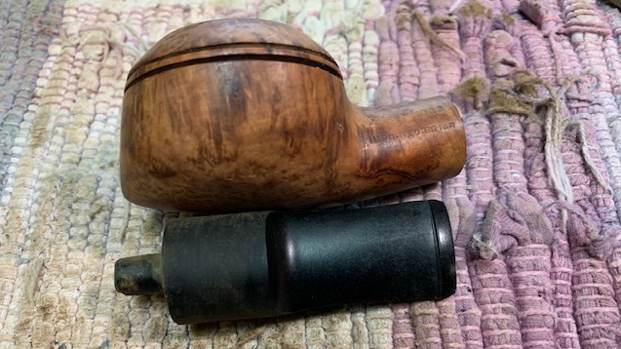
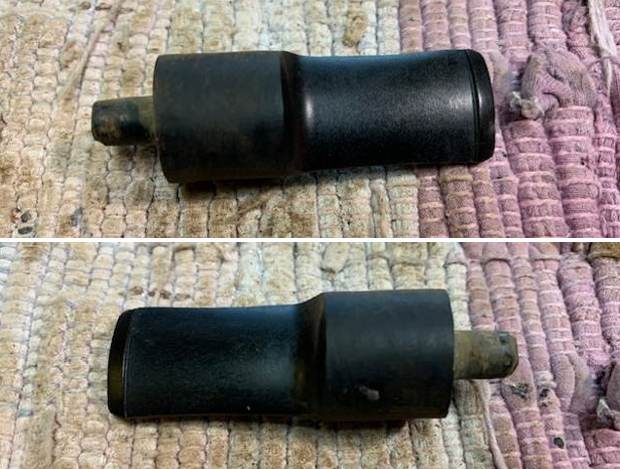
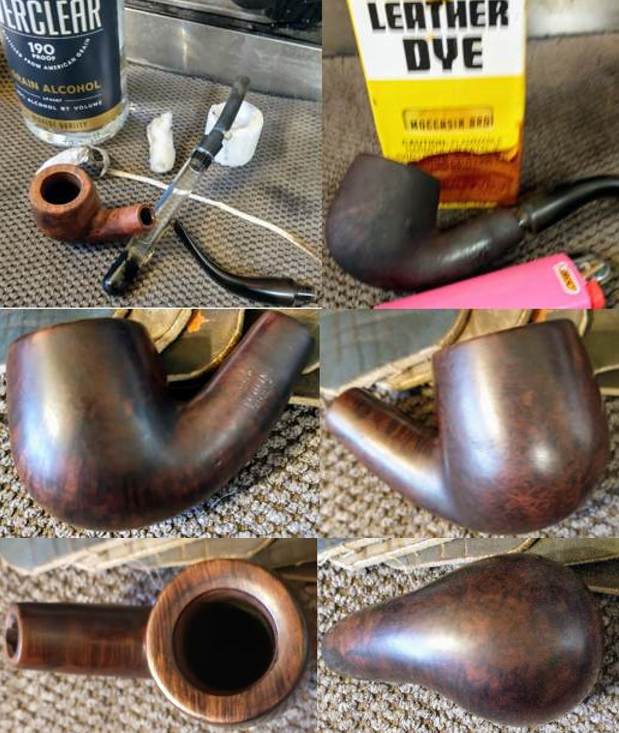
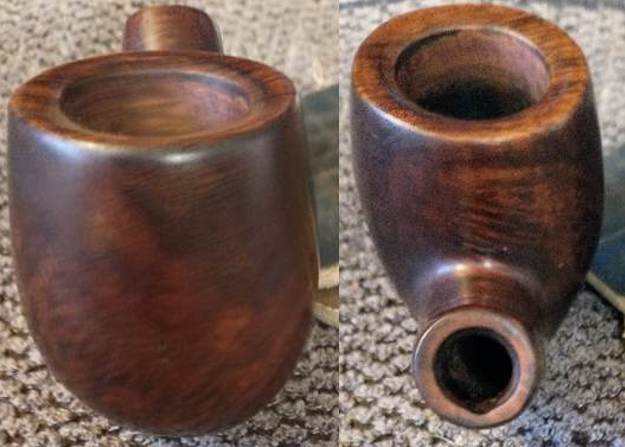
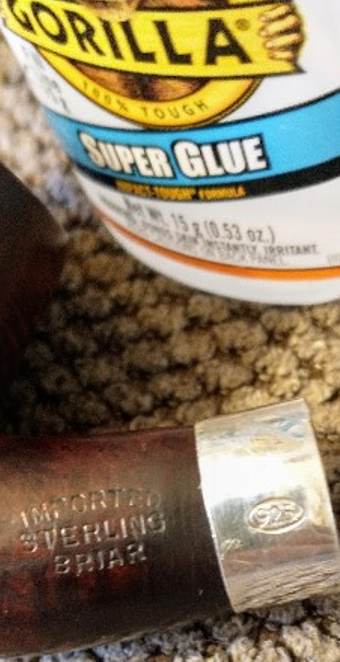
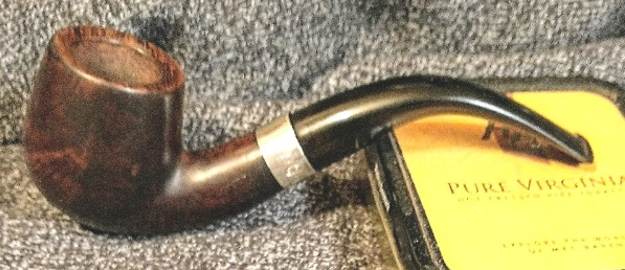
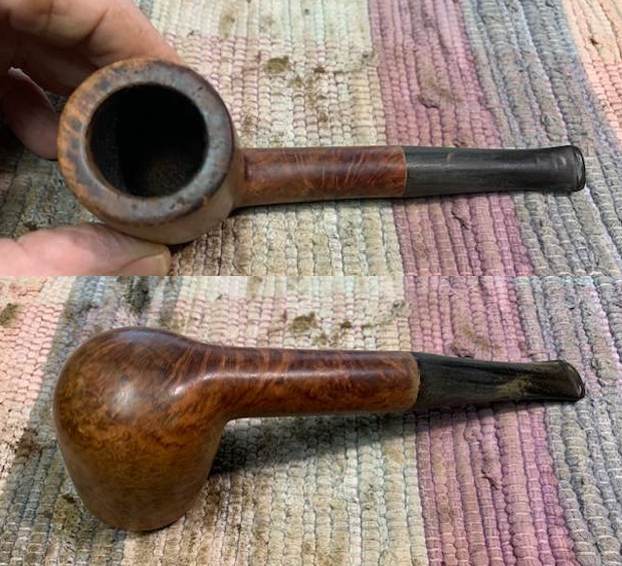
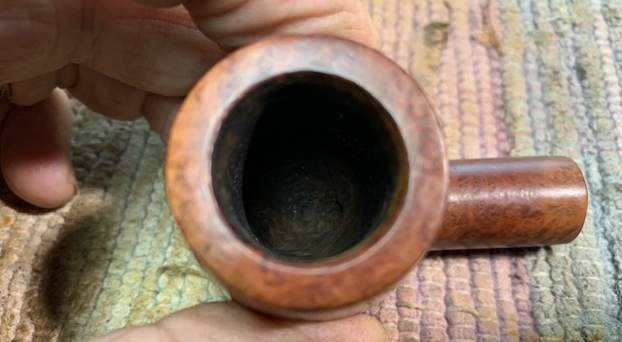
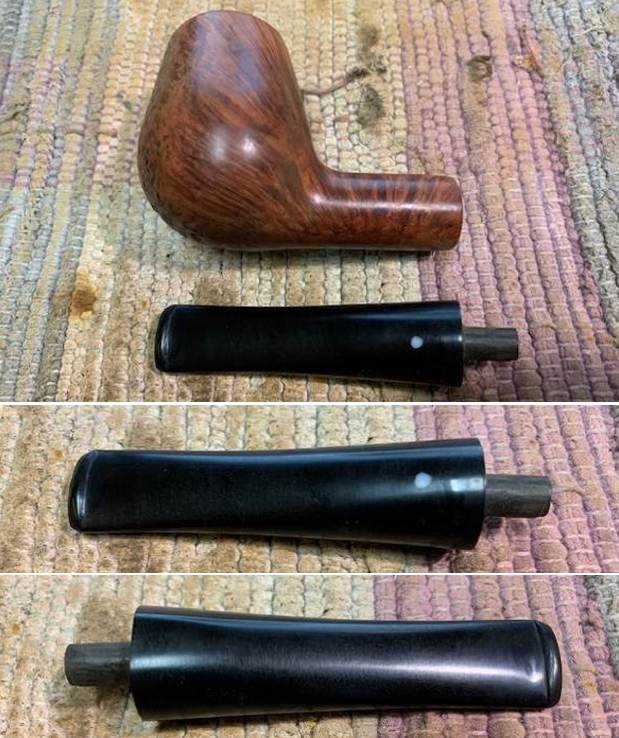
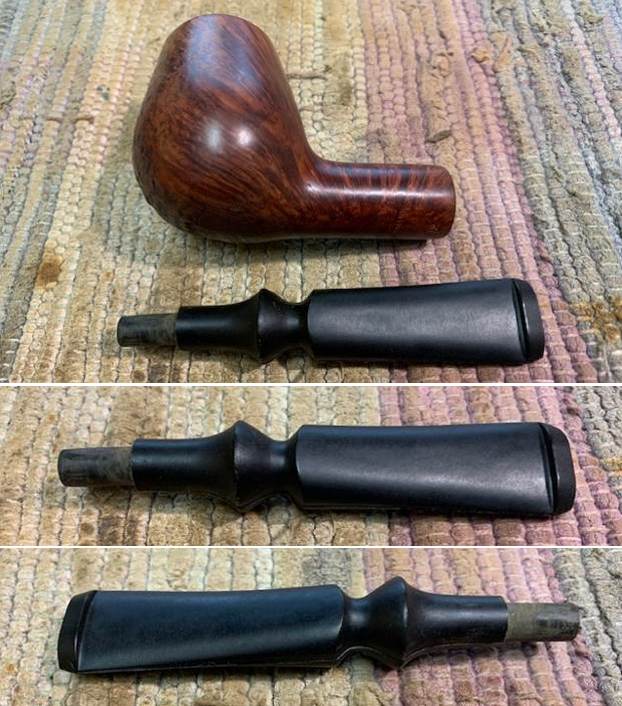
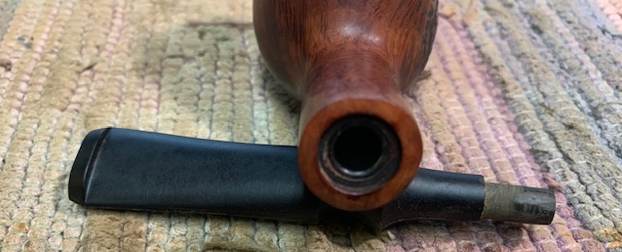
Next on the chopping block is the very first GBD I have had the pleasure of restoring. I titled this story A Labour of Love because the work involved was far more than I could have imagined for such a beautiful pipe. The pipe is a GBD Colossus and I acquired it in a group of pipes I purchased from a fellow in the Eastern US. It was definitely a mixed bag of very good and very bad. Some pipes were destroyed beyond repair, some pipes were filthy but repairable, some stems were missing their stummels, and some stummels were missing their stems. This was one of those – a stummel without a stem. Makes it a bit tricky to smoke, methinks. This pipe is a calabash-shaped GBD Colossus. As the photos show, it is stamped on the left side of the shank with GBD [over] International [over] London Made [over] Colossus. On the right side it is stamped Made in London [over] England [next to] 9552 – this, of course, is the shape number. There is quite a bit of information on GBD on the Internet – they have a long and storied history in pipemaking. In this case, I was curious about International and Colossus. The main Pipepedia article on GBD tells us about their origins:

In 1850 three gentlemen got together in Paris to establish a firm dedicated to the fabrication of Meerschaum pipes – a courageous step in politically restless times. Ganneval probably came from the area of Saint-Claude where he had learned making wooden pipes. Bondier’s family obviously came from Paris and had emigrated in 1789 to Geneva. He himself had worked as a wood turner in the clay and china pipe industry in and around Saint-Claude making stem extensions etc. Donninger was an Austrian or Swiss and had worked in Vienna, the world’s center of the Meerschaum pipe. They agreed on the acronym GBD selecting the initials of their surnames.

The Pipedia article provides a lot more information on their interesting history. I would encourage you to read on here. The shape number 9552 corresponds correctly with GBD’s identification of this pipe as a calabash. The page on GBD models states the following concerning the International line and the Colossus size:

International – France and England made: medium brown smooth, carved top rim, rim stained black. In addition to the pipe line and shape information stamped on the pipe, GBD also had codes for plus sized pipes. These codes in ascending order of size were Conquest, Collector, Colossus.

I also took this screenshot from Pipephil:Anyway, on to the pipe – and what a gorgeous pipe it was (and such a big bowl)! However, it was absolutely filthy and had a few issues. The stummel had the following problems: tons of lava on the rim, notable greasy/sticky stains to the bowl and shank, plenty of cake in the bowl, a few scratches here-and-there, and a few small burns on the rim. Meanwhile, the stem had a few problems of its own. Oh wait. No stem. Umm, yeah, that is going to be an issue. This pipe was going to require some considerable work, but I was really looking forward to restoring this one. Well, suffice it to say that first on my list of tasks was to find a stem for this beauty. However, GBD stems are not just lying around, sad to say. In this case, Superman Steve came to my rescue. He had a spare GBD stem that suited my pipe very well. I was (and still am) deeply grateful to him for getting that stem for me. I will come back to the story of how I fit the stem a bit later. By the way, here is a photo of Superman Steve:This stummel was quite a mess. I first decided to ream out the bowl. I used both the PipNet Reamer (which I broke in the process) and the KleenReem to remove the built-up cake and followed that with 220-grit sandpaper to eliminate as much as I could. I took it down to bare briar, as I wanted to ensure there were no hidden flaws in the walls of the bowl. Fortunately, there were none. I then proceeded to clean out the insides of the shank with cotton swabs, pipe cleaners, and lemon isopropyl alcohol. There was a lot of nastiness inside this stummel and – boy-oh-boy – it took a lot of cotton to get this thing clean! As I mentioned earlier, the rim of the stummel was pretty ugly and also needed to be addressed. A combination of techniques was used to sort this out. In order to remove the lingering bits of lava and fix the nicks, I “topped” the pipe – that is to say, I gently and evenly sanded down the rim on a piece of 220-grit sandpaper. This effectively removed the lava and the damage, without altering the look of the pipe. I then took a solid wooden sphere, wrapped sandpaper around it, and sanded the inner bevel thoroughly. This was to achieve on the inner part of the rim the same thing that I achieved by “topping” the rim on sandpaper. A de-ghosting session seemed in order, so I thrust cotton balls in the bowl and the shank, and saturated them with 99% isopropyl alcohol. I let the stummel sit for 24 hours. This caused the oils, tars and smells to leech out into the cotton. Finally, a relatively clean and fresh-smelling bowl emerged. I followed that up by cleaning the insides with some dish soap and tube brushes. I then moved on to cleaning the outside of the stummel with Murphy’s Oil Soap and some cotton pads. Some stains were pretty stubborn and I had to scrub hard, but this did eventually remove the remaining dirt. After that, a light application of Before & After Restoration Balm brought out the best in the stummel’s grain. Having completed that, I was able to address a small nick on the shank. I dug out my iron and a damp cloth to try and raise the nicks. The hot and moist steam created can often cause the wood to swell slightly and return to shape. There was some movement – not a lot, but it was better than doing nothing. I filled the remaining divot with cyanoacrylate adhesive and let it cure. Now, with the nick filled, it was time to sand down the stummel. I used all nine Micromesh pads (1,500 through 12,000 grit) to wet/dry sand everything smooth. Then I added a bit more Before & After Restoration Balm. On to the stem, and what a trial it was. As mentioned, Superman Steve got me a GBD stem and that was terrific: the stem was clean and in nice shape. So what is the problem? Well, its width did not quite match the width of the shank. The stem was slightly wider. So, with 200-grit sandpaper in hand, I began removing the excess vulcanite. As silly as it sounds, this took a couple of hours of work to get this right. The photos below detail the lengthy process to both remove the excess and ensure evenness all around the stem face. At long last, I managed to get the size and shape just right, but the faces of both the shank and stem were not matching in the way that one would want. I took the decision that this pipe would benefit from a thin – emphasis on thin – band around the end of the shank. My jar of bands proffered a lovely, thin band that perfectly suited this pipe. With a quick application of glue, the band was on and things were looking much improved. I used some of my Micromesh pads to give that extra shine. In order to finish up the stem, I took a BIC lighter and ‘painted’ it with its flame in order to lift the slight tooth marks. This was reasonably successful in raising the dents. Before I moved on to the Micromesh pads, I built up the small dents on the stem with cyanoacrylate adhesive and let them fully cure. I then sanded it down with 220-, 400-, and 600-grit sandpapers to meld the repair seamlessly into the stem. This ensures that it keeps its shape and looks like it should. I then used all nine Micromesh pads (1,500 through 12,000 grit) to bring out the lovely black lustre on the stem. I also used Obsidian Pipe Stem Oil in between each pad scrubbing. Of course, since the stem was straight, it did not suit the pipe and needed to be bent. The end of the stem needed to be parallel with the rim of the bowl. I did not have a heat gun at the time, so I brought out a hair drier and heated the vulcanite stem in order to make it malleable. After heating it for 90 minutes (yes, you read that correctly), it became obvious that the hair drier just did not generate enough heat to bend the stem. I then realized that I was going to have to use the nuclear option: dipping the stem in boiling hot water. This is a nuclear option because the water added an horrific oxidation to the stem – the worst I have ever seen. When it was finally soft, I gently curved the stem over a wooden dowel. The dowel provided a firm surface and a proper curve. Once I had the bend I wanted, I left the stem to cool and set itself in place. I then had to go back and use all nine Micromesh pads (and the Obsidian Pipe Stem Oil) again to restore the black lustre. A few four-letter words might have been silently uttered in the process, but I digress… Then it was off for a trip to the buffer. A dose of White Diamond and a few coats of carnauba wax were just what this pipe needed. The lovely shine made the wood look absolutely beautiful.

This is a wonderfully crafted pipe and has a very elegant feel to it. Steve told me from the beginning that this was a pipe I should keep for myself. So, this one is being added to my collection – and I am pleased to say that it smokes beautifully. I am sure that I will be enjoying this one for many years to come. I hope you enjoyed reading the story of these pipes as much I as I did restoring them. If you are interested in more of my work, please follow me here on Steve’s website or email me directly at kenneth@knightsofthepipe.com. Thank you very much for reading and, as always, I welcome and encourage your comments.