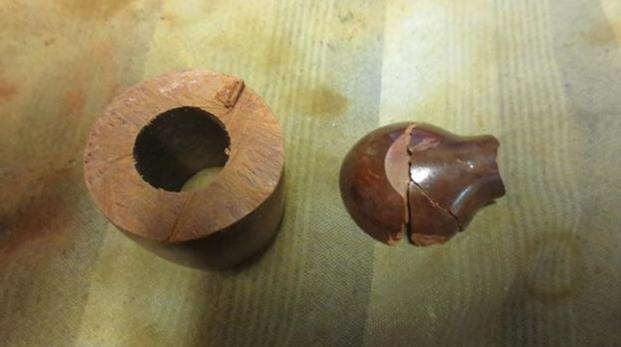
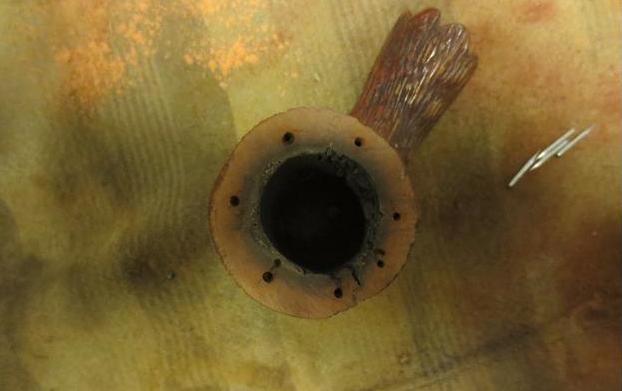
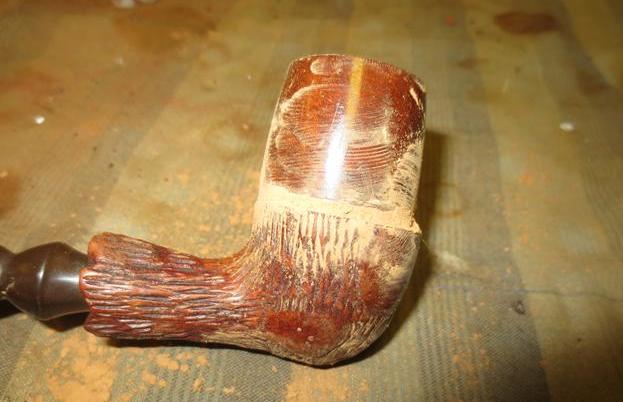
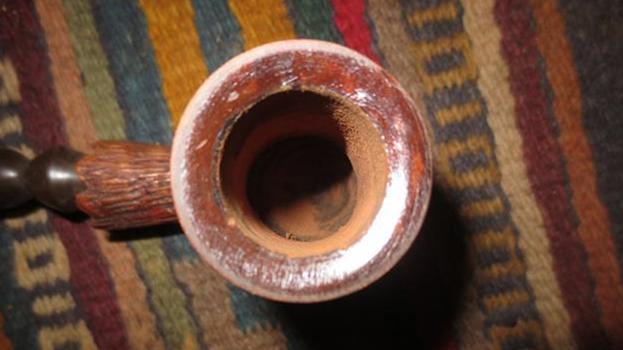
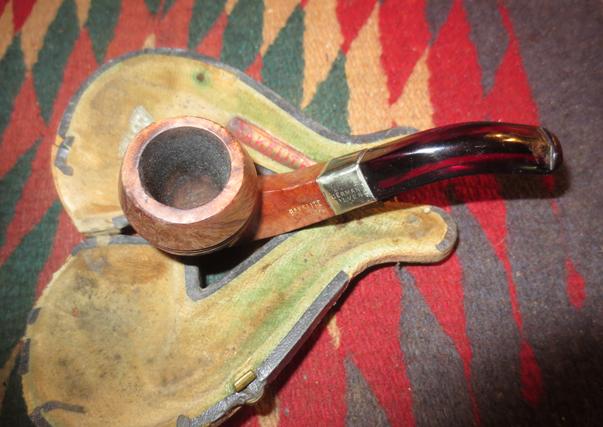
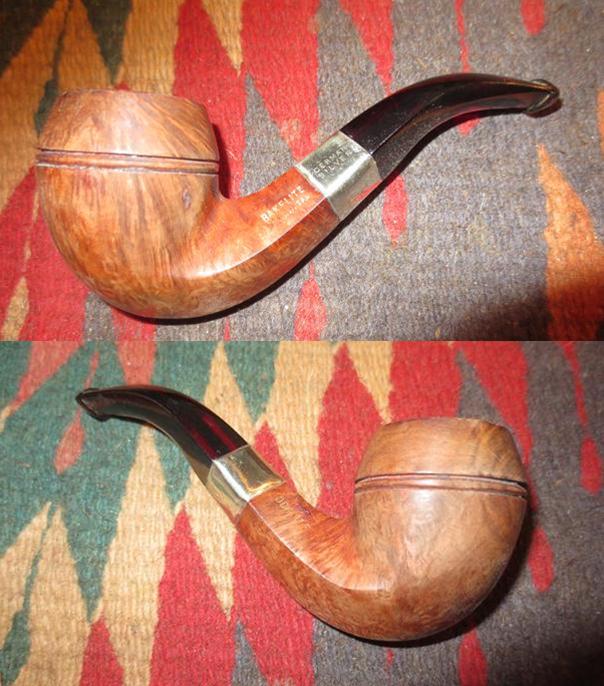
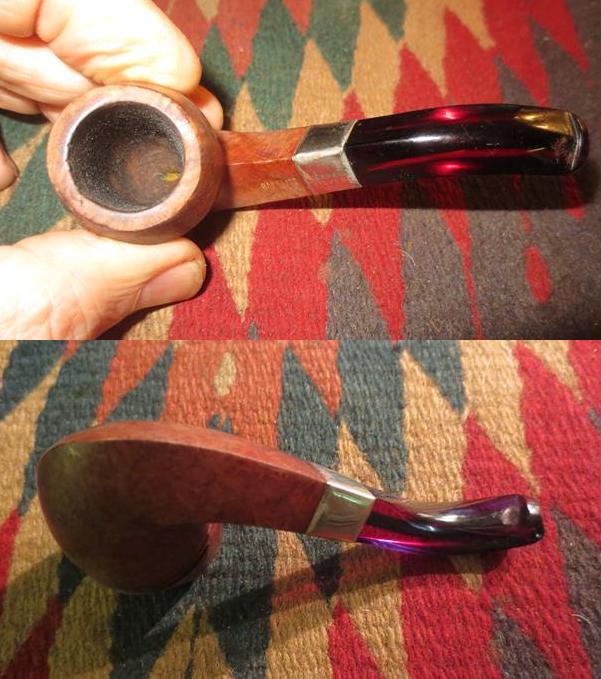
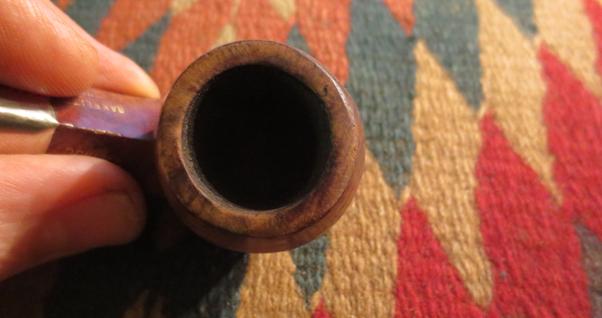
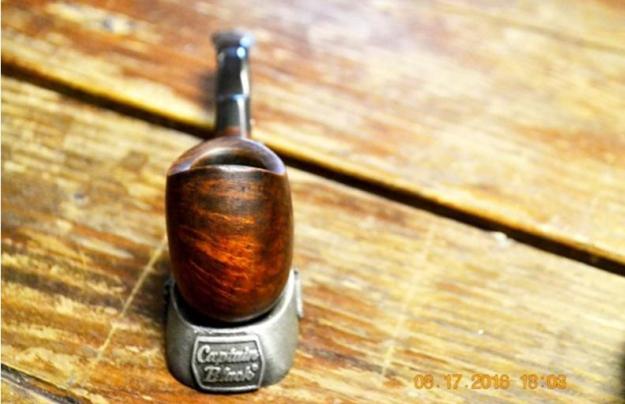
Tag Archives: topping a bowl

Bewitched, Bothered and Bewildered by a Mastersen


Robert M. Boughton
Member, International Society of Codgers
Member, North American Society of Pipe Collectors
Member, Facebook Gentlemen’s Pipe Smoking Society
http://www.roadrunnerpipes21.biz (under construction)
http://about.me/boughtonrobert
Photos © the Author except as noted

I’m wild again, beguiled again
a simpering, whimpering child again
bewitched, bothered and bewildered am I.
I couldn’t sleep and wouldn’t sleep
when love came and told me, I shouldn’t sleep
bewitched, bothered and bewildered am I.
— “Bewitched (Bothered and Bewildered,” 1940), lyrics by Lorenz Hart (1895-1943), music by Richard Rodgers (1902-1979), a great American musical team

INTRODUCTION
Since the song “Bewitched” was introduced by Vivienne Segal in the 1940 Broadway musical “Pal Joey,” there have been many covers. Written for a woman, quite a few have made it “their” song, from Ella Fitzgerald to Lady Gaga. Men have taken their shots, also, from Frank Sinatra to Rod Stewart. But when I was a teenager, I had the enduring privilege of seeing Lena Horne at the Mark Taper Forum in Los Angeles, and she did it, as the Chairman of the Board would say, her way. She sang some parts like a choir mistress in Heaven and spoke others in the husky asides of a barfly, keeping the audience enthralled and on the befuddling edge of tears and laughter. And so to hear the song in my mind is to relive the gruff silkiness of the lady’s inimitable voice.

My mother has always been a devotee of Freudian psychology. Being more agnostic regarding the Austrian neurologist who pioneered psychotherapy, my father tended toward dismissing all of the man’s work despite the lasting innovations. Therefore, in general, I began to take my mother’s view of the matter, until I was older and found a balance between my parents that they, alas, did not.

Now, bear with me, there’s a point coming. My dad told me one day that the songs people whistle or hum, without even thinking about it, reveal their subconscious moods. He was in the frequent habit of popping out such tidbits of knowledge, and for that I am forever grateful. I realized I had stopped listening to anything else he said maybe a half-hour earlier, having dissociated deep into myself, as far away from my dad as I could get. In fact, at least on a conscious level, I forgot my dad was there until he made the casual comment, and I stopped humming. I had to stop everything, including the gardening and general cleanup work we were doing on the patio, to figure out what was the tune, and I still remember now: “Cat’s in the Cradle,” by the late great Harry Chapin.

That’s right, I was humming about a father and son who never take the time to sit down together and have serious talks. I was not aware I even knew the story of the lyrics that well, but liked the tune. My dad and I had both heard it countless times, no doubt, as the spring afternoon I’m describing was in 1978, when I was 16, and the song came out in 1974 and won the Grammy for Best Male Pop Performance. Snatches of the words came to me: “I’m gonna be like you, Dad, you know I’m gonna be like you,” and “But we’ll get together then, you know we’ll have a good time then,” and “He’d grown up just like me, my boy was just like me.” The smirk on my dad’s face, with its annoying and condescending twist of the lips, said everything. He knew he had figured me out at last, although not his own contribution, and he was right, so I grinned, my own expression of false pride I learned from my father. I could see it stung my dad, and I’m now sad to say I was happy.

Thinking back on that encounter with my dad, as I began to find my own twisted path in the world, I consider it odd that he so berated basic Freudian theory of deep subconscious conflicts influencing our conscious actions. After all, humming a Harry Chapin tune that summed up my subconscious feelings at the time seems to me nothing less than proof of a simple variation on what we still refer to as a Freudian slip. Had my conscious mind picked the song, it would have been “”Don’t Think Twice, It’s Alright,” by Bob Dylan.

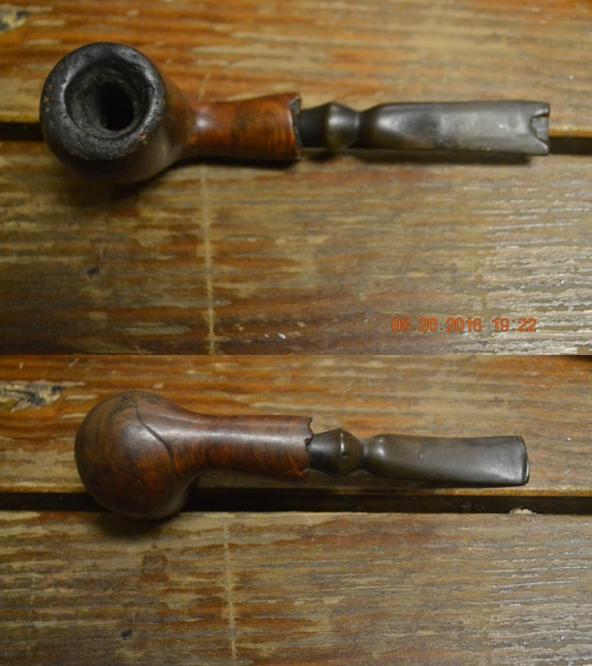
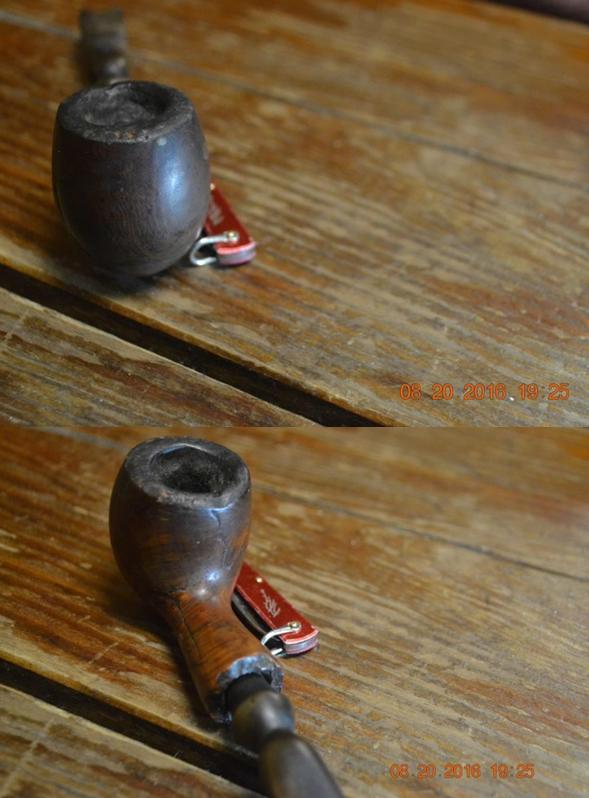
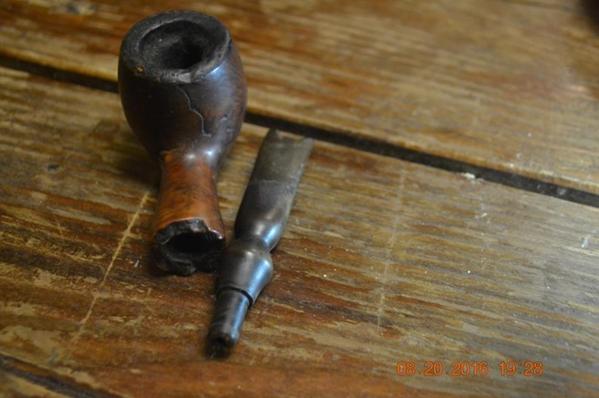
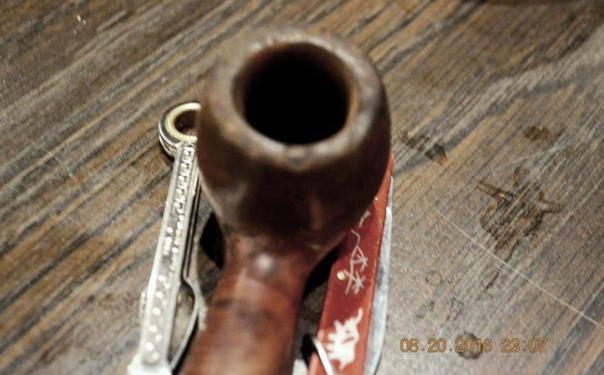
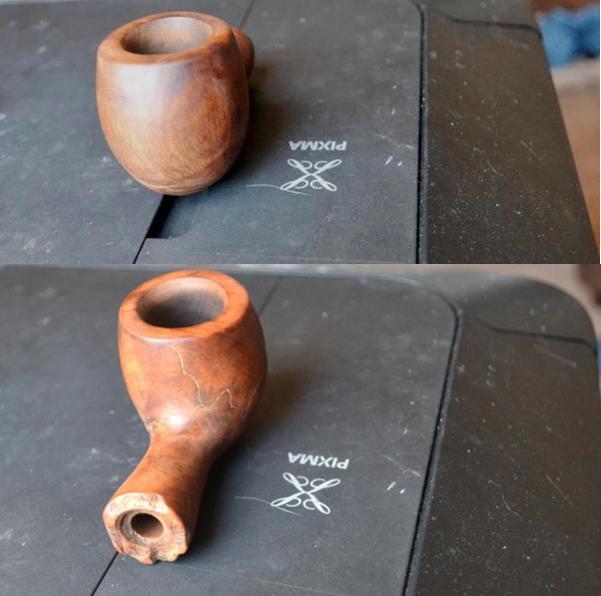
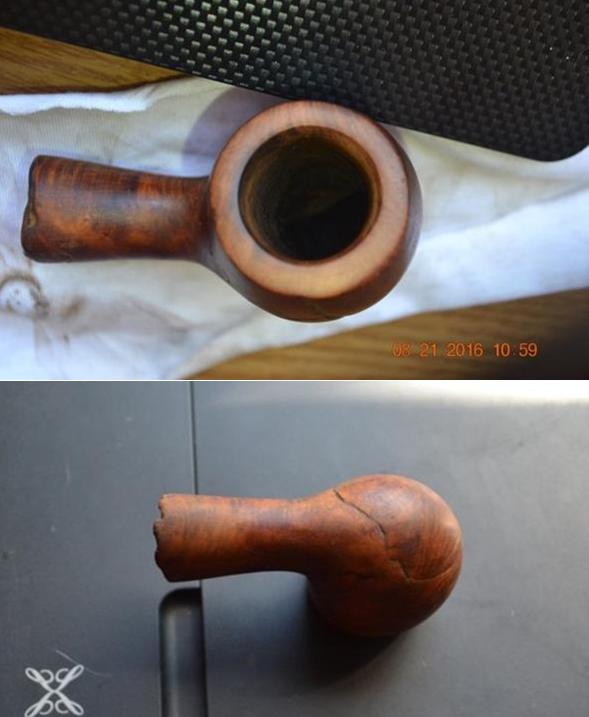
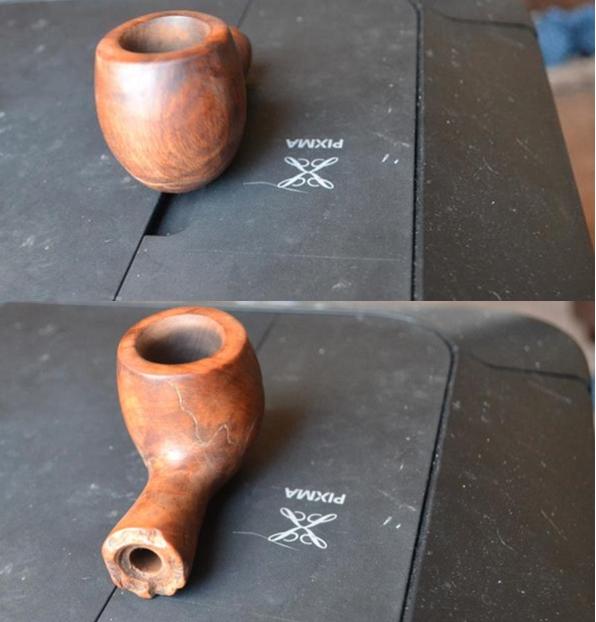
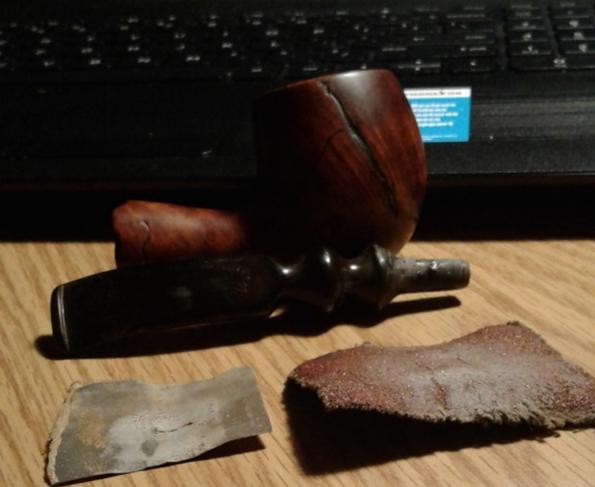
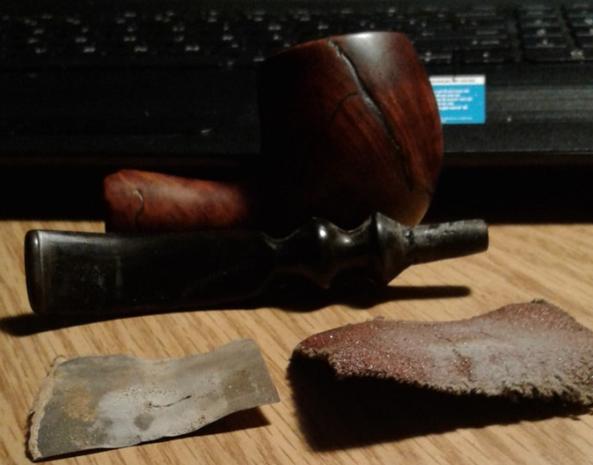
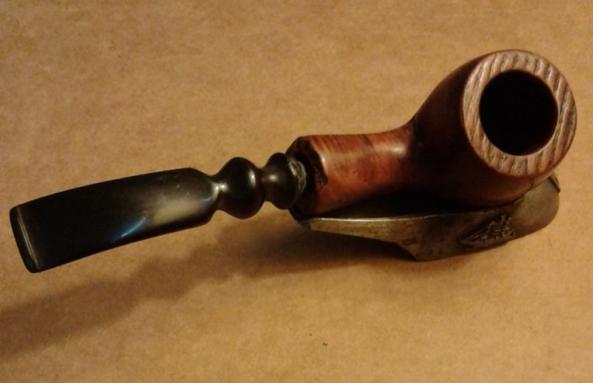
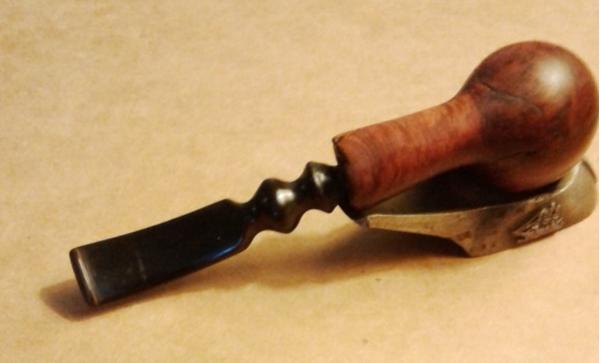
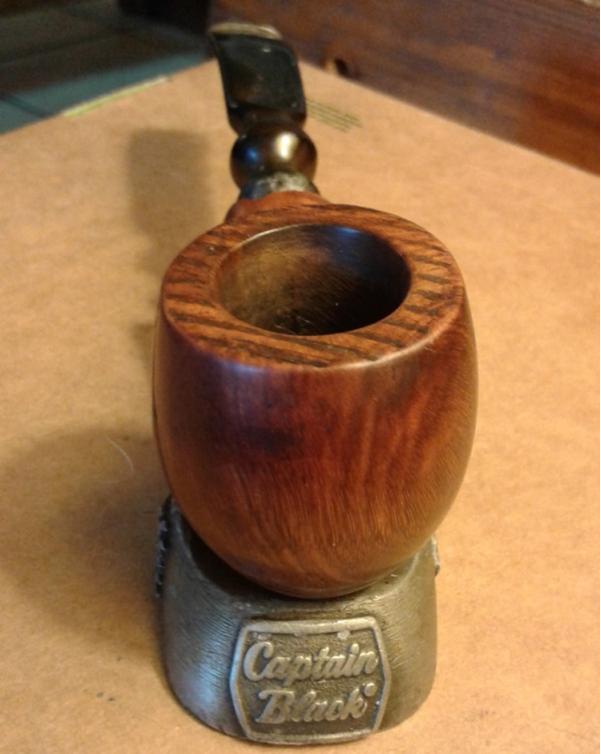
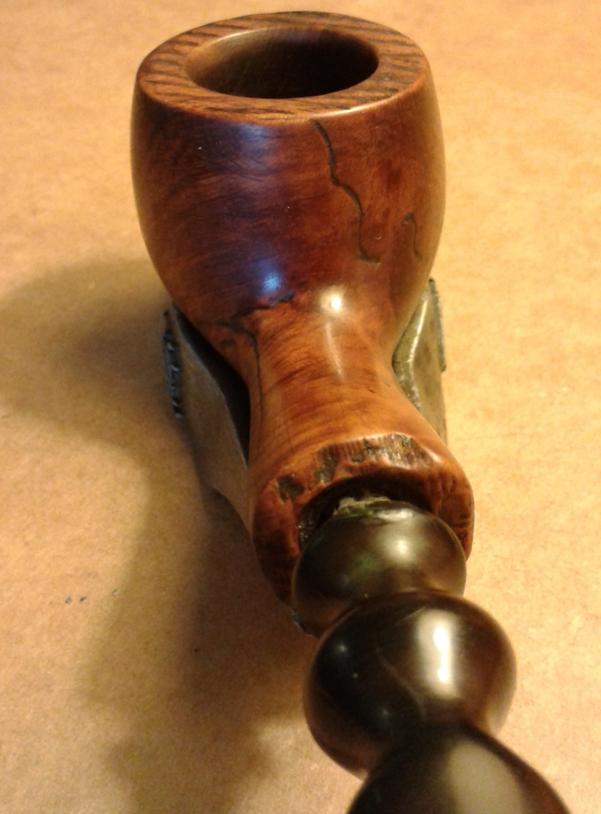
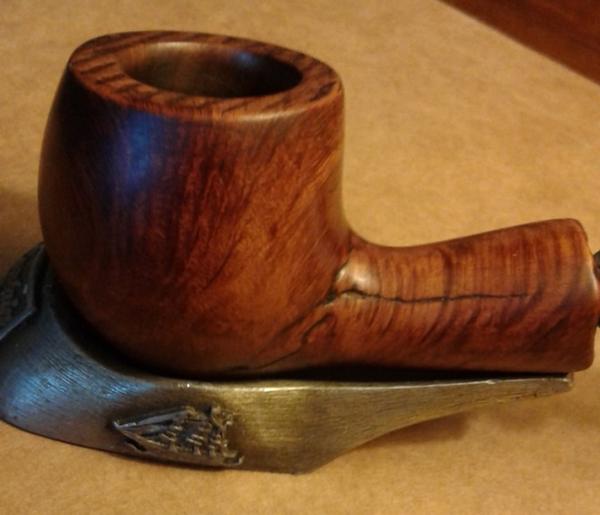
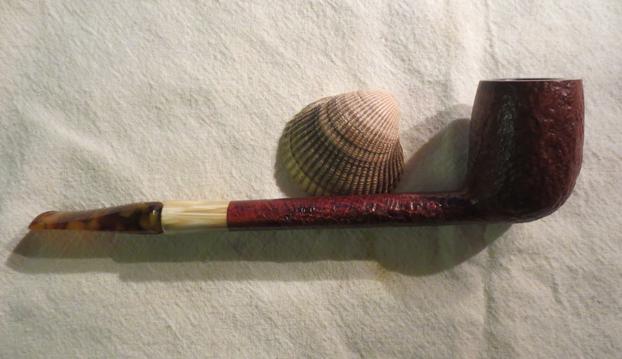
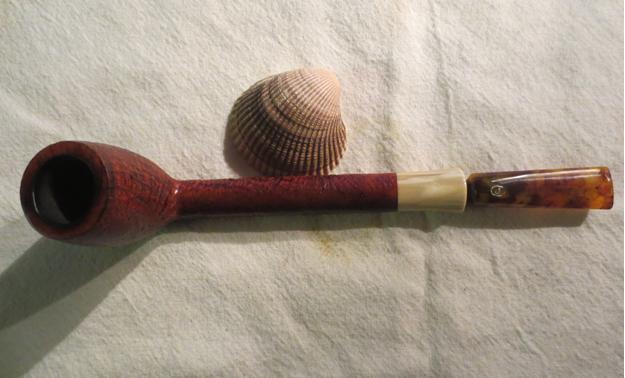
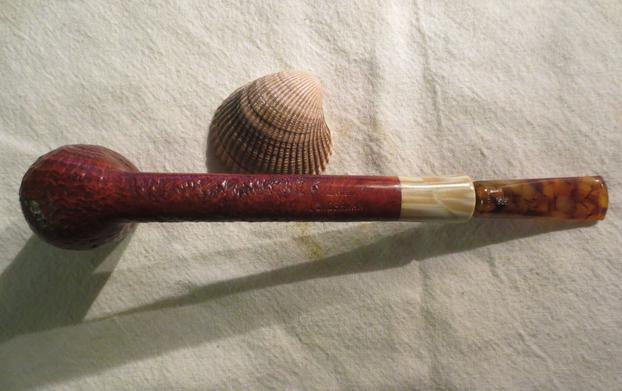
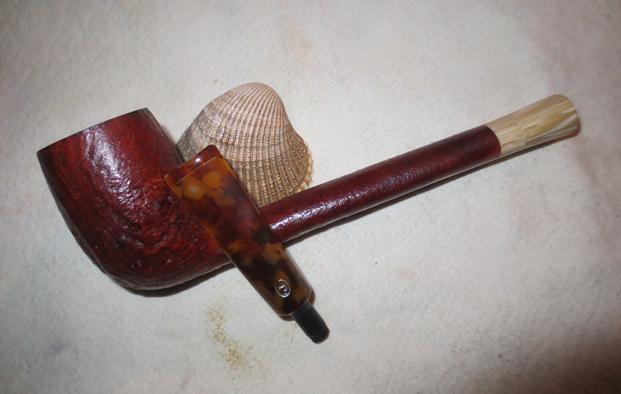
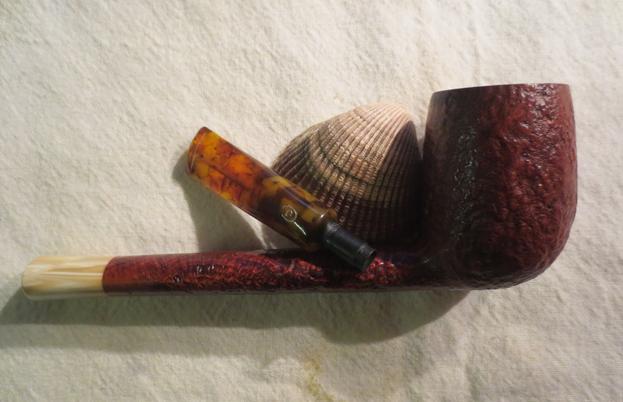
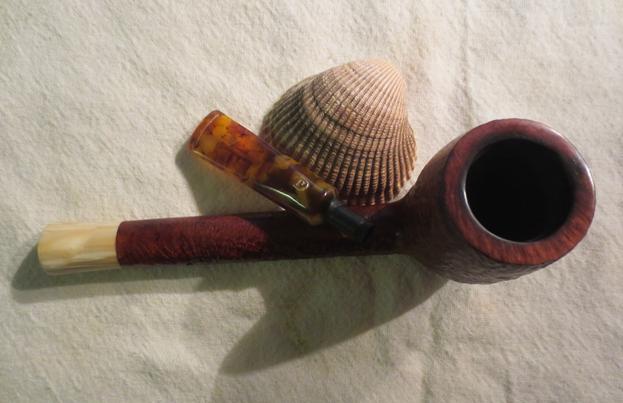
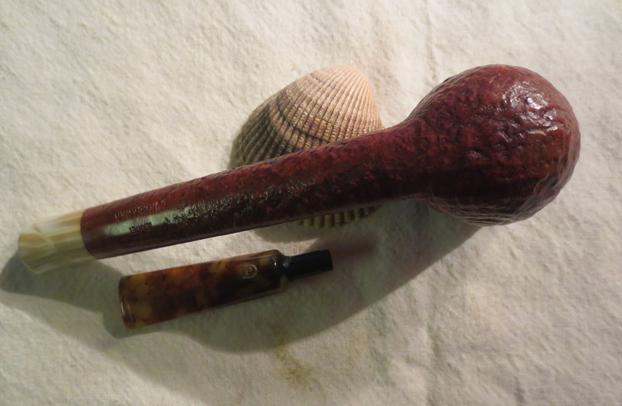
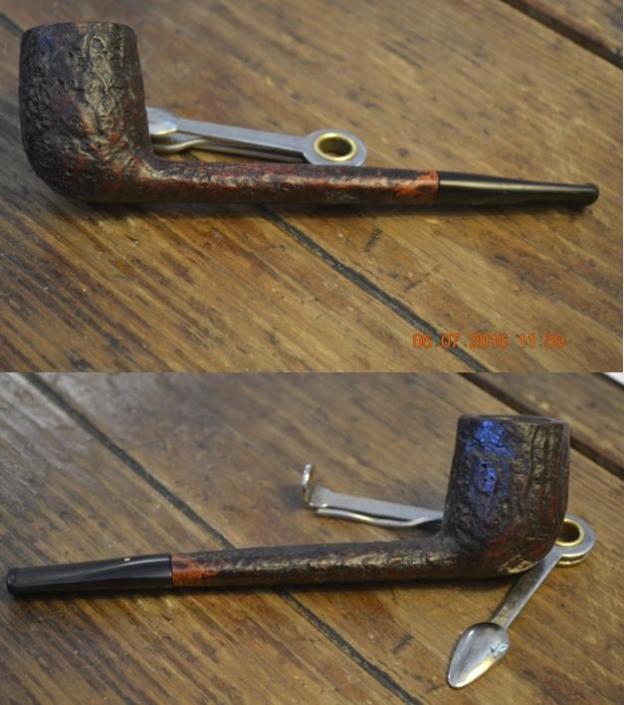
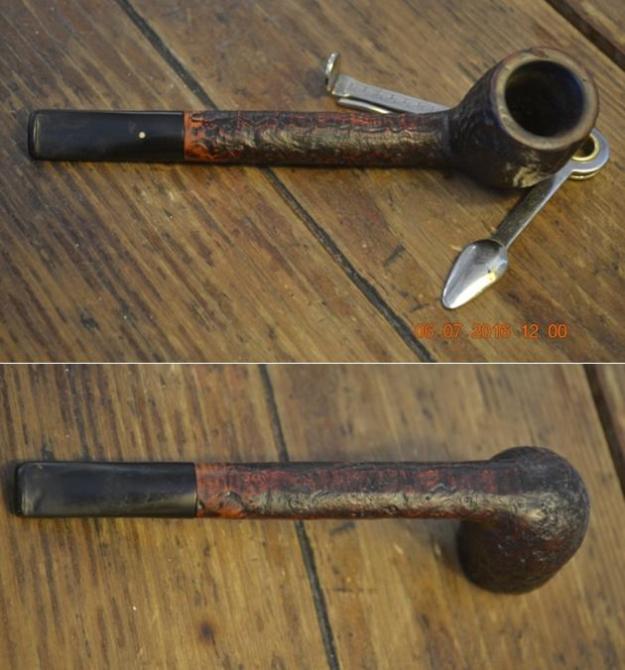
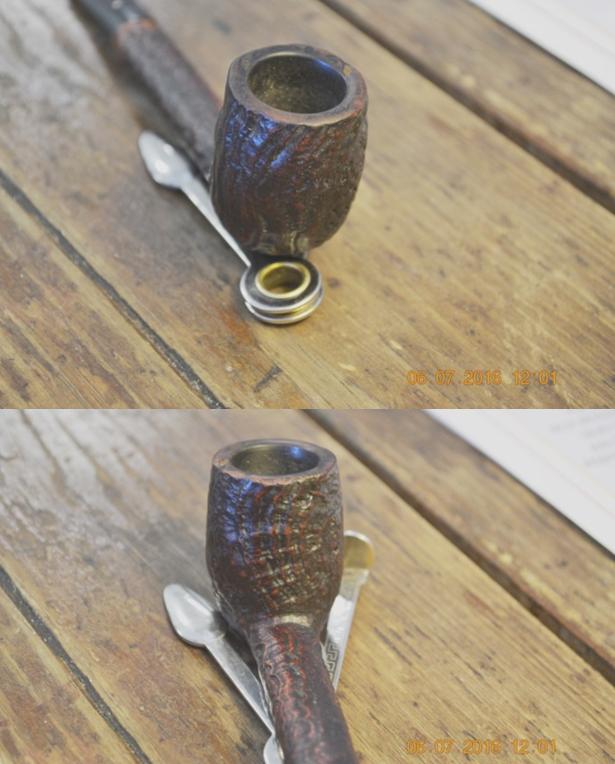
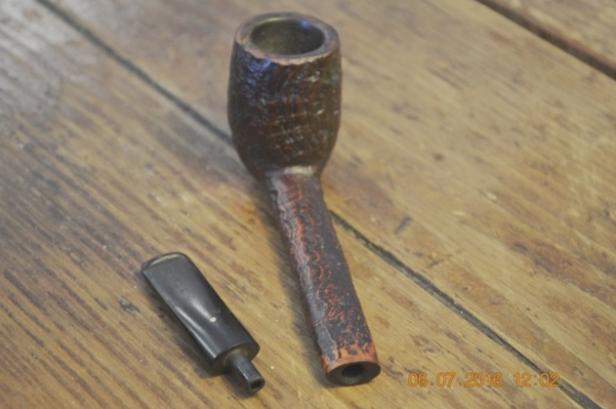
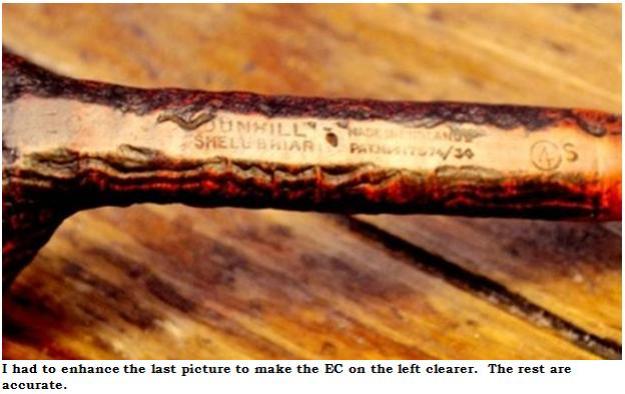
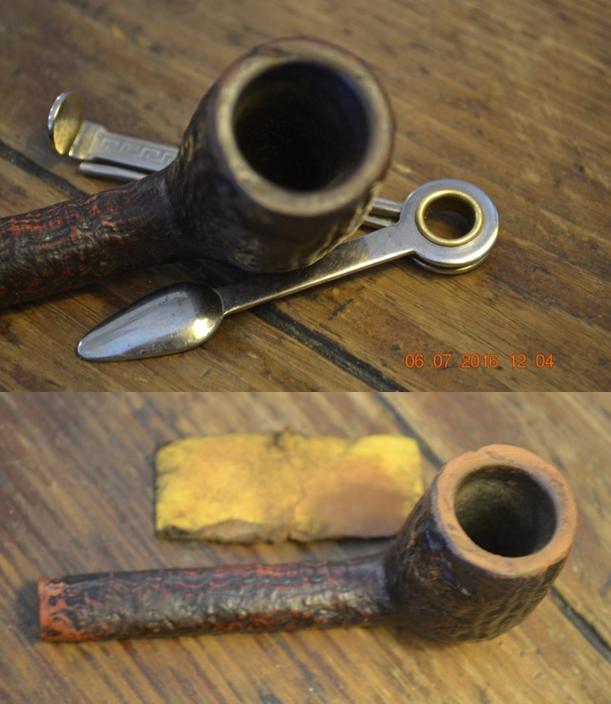
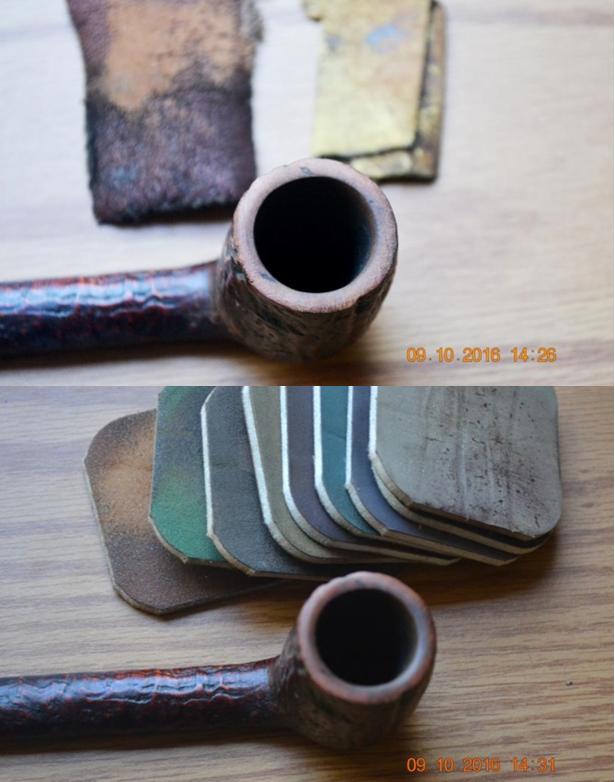
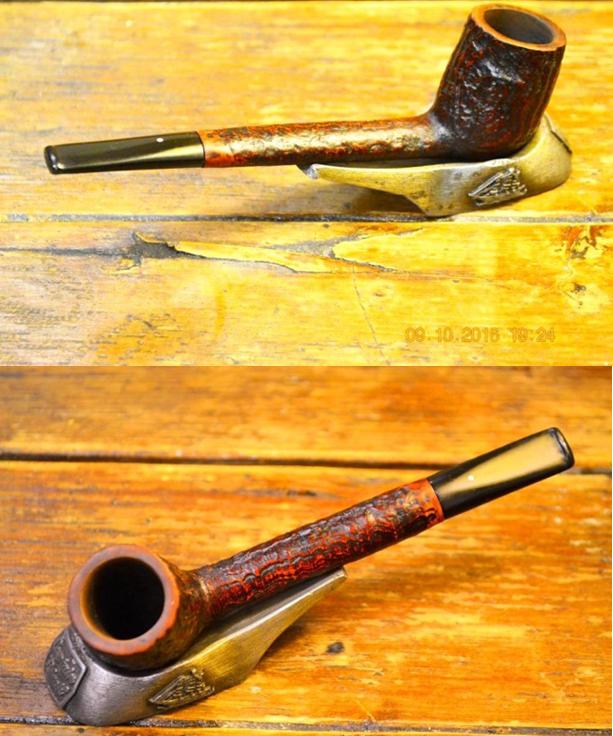
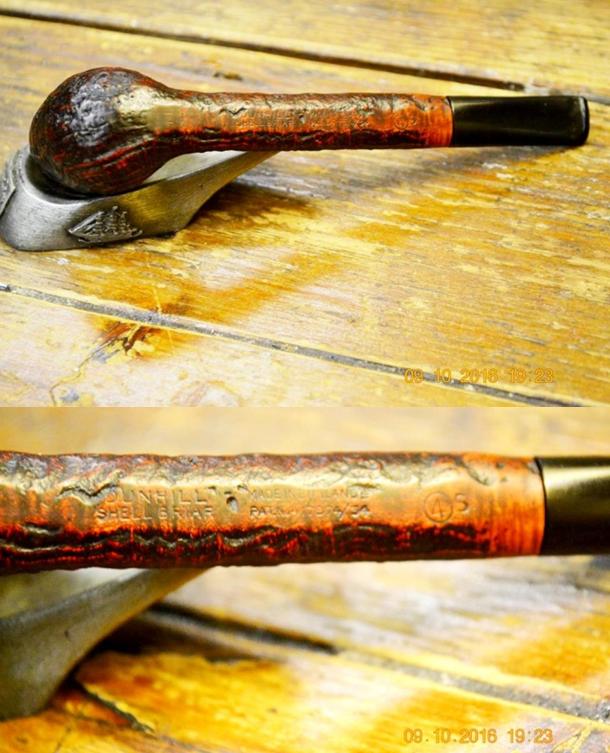
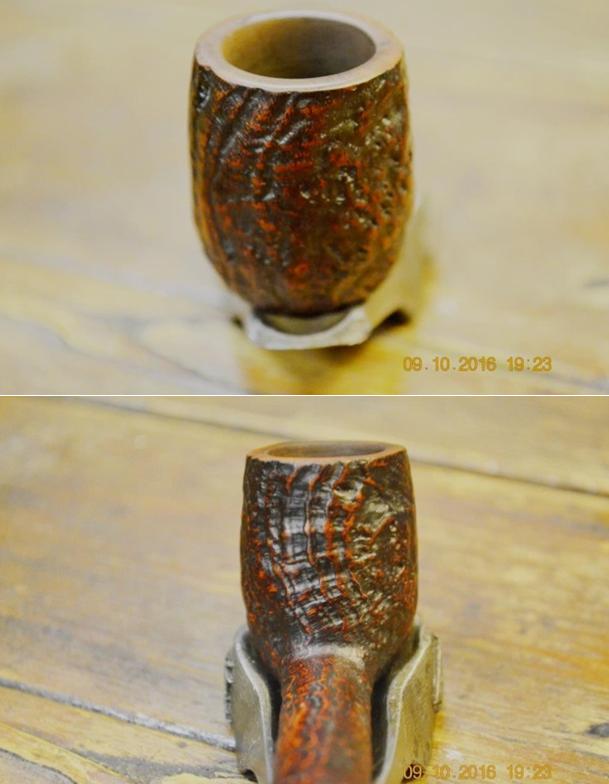
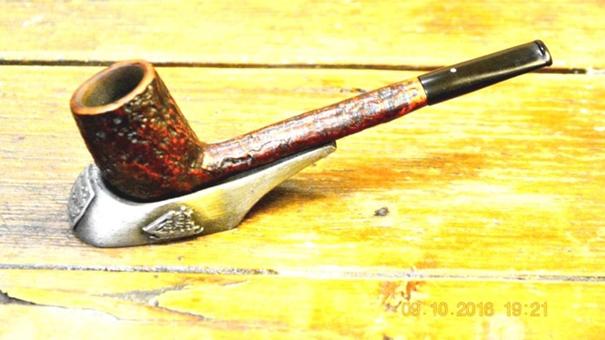
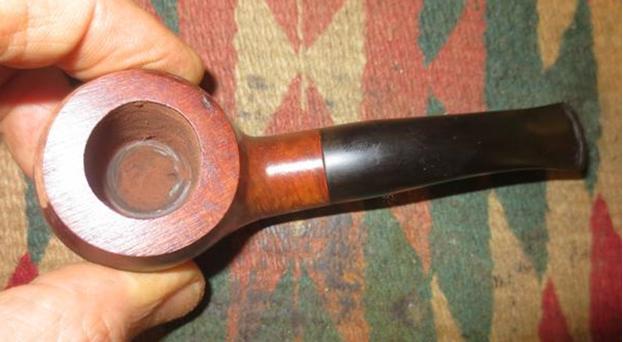
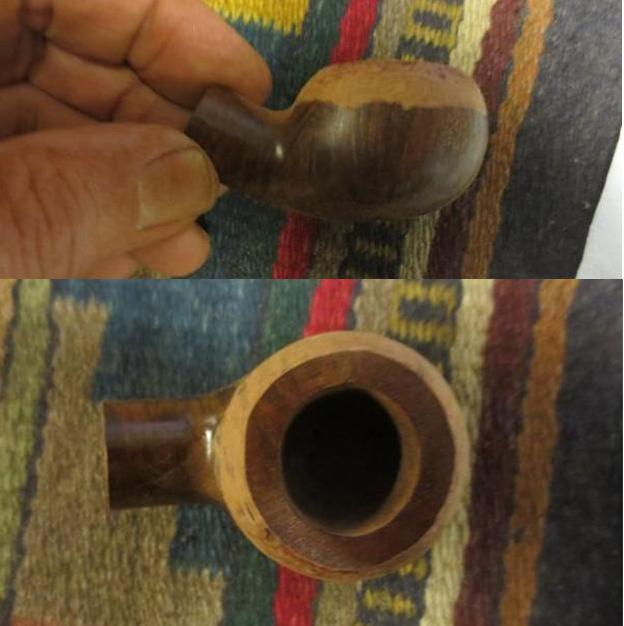
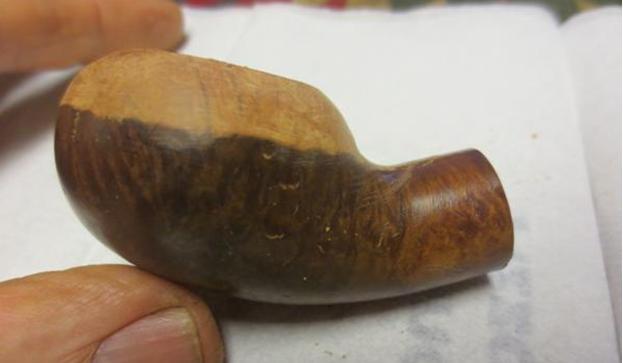
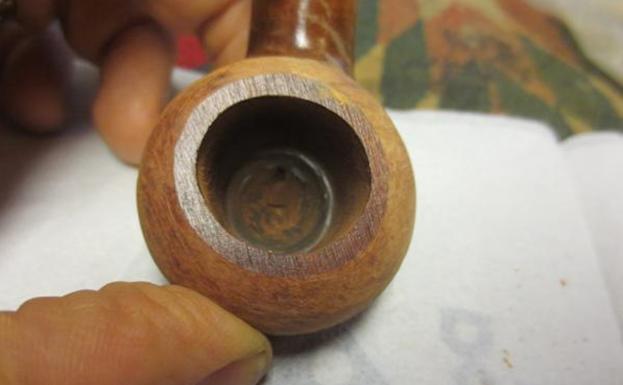
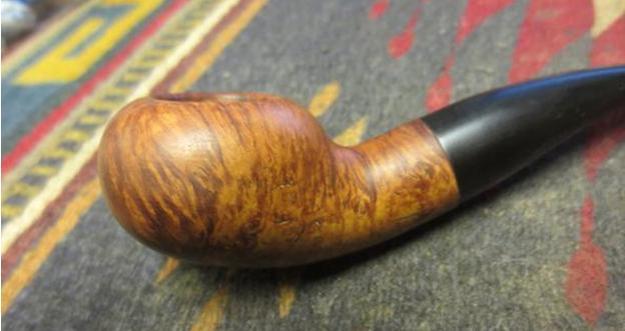
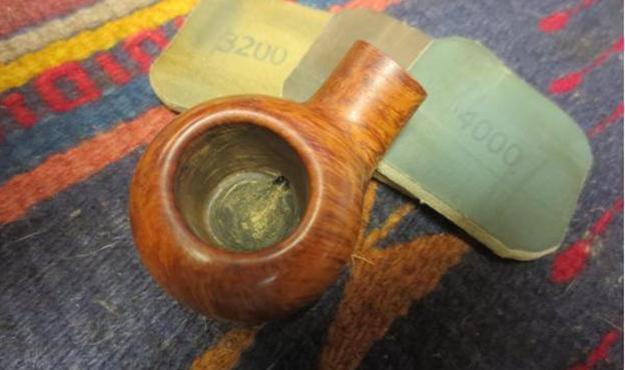
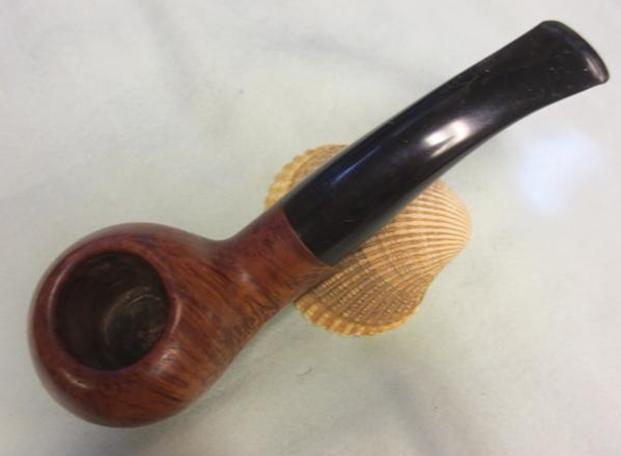
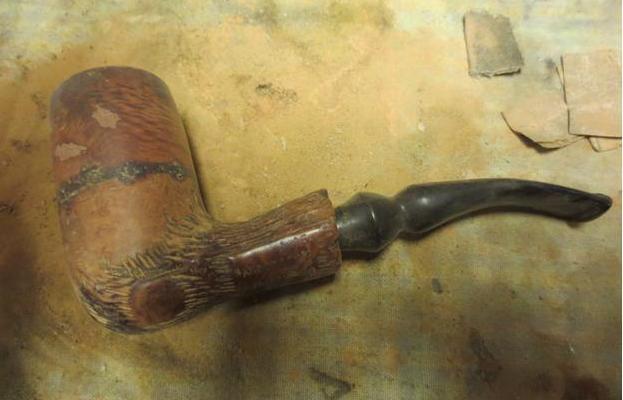
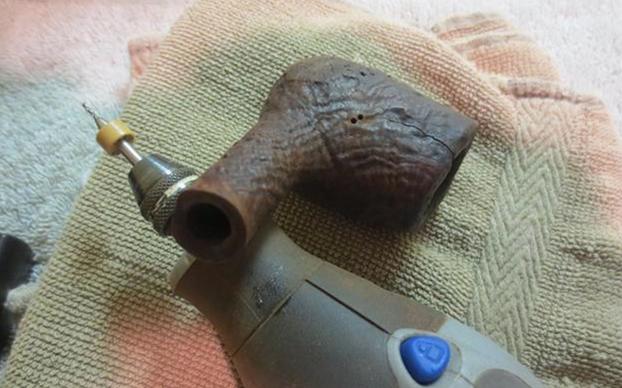
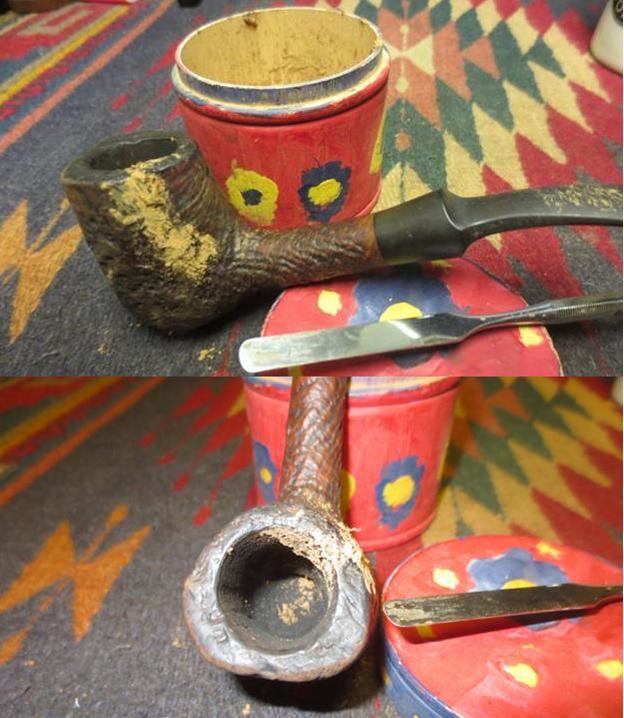
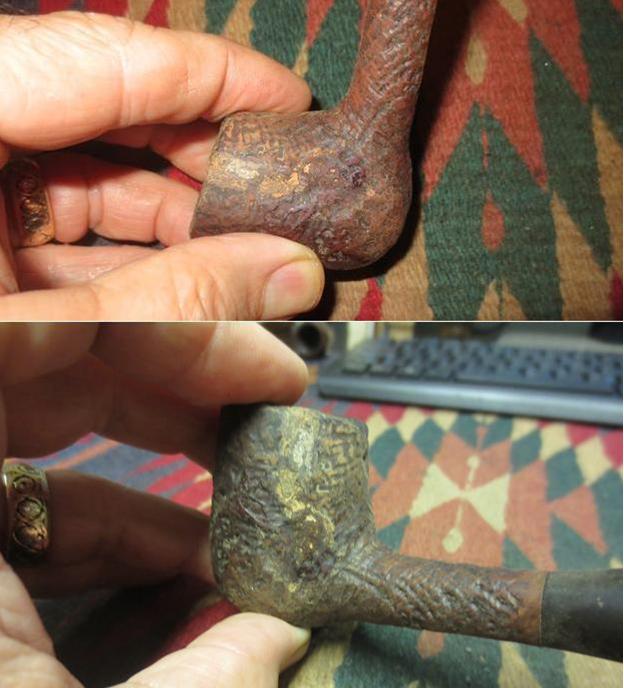
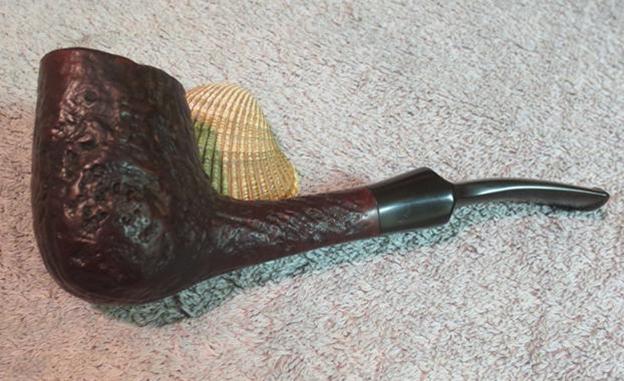
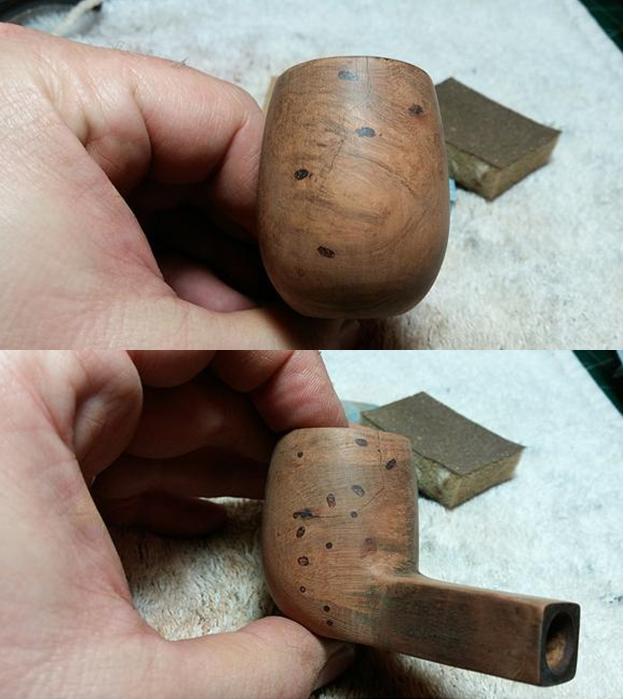
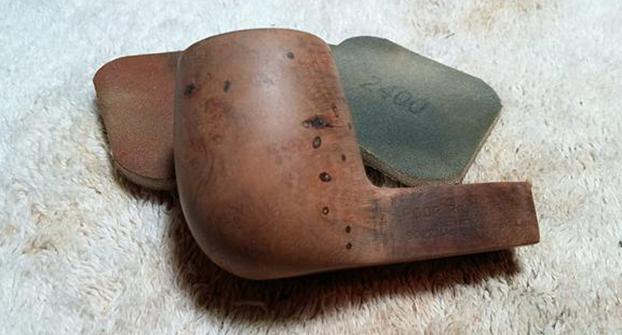
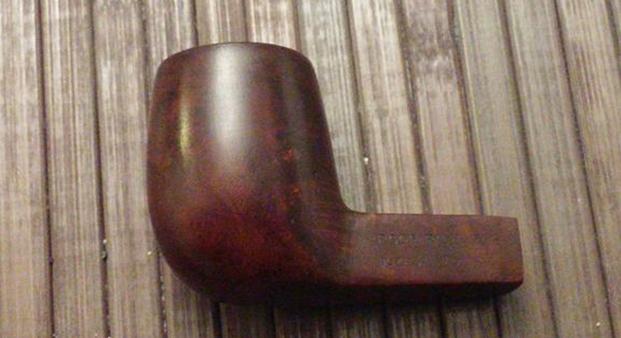
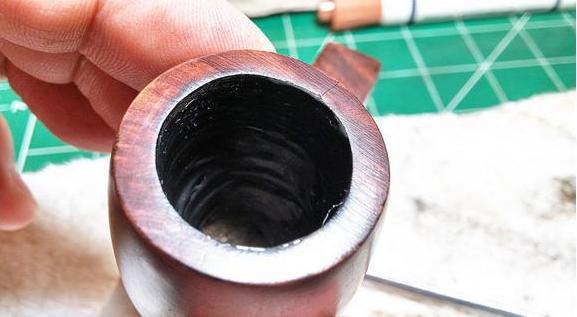
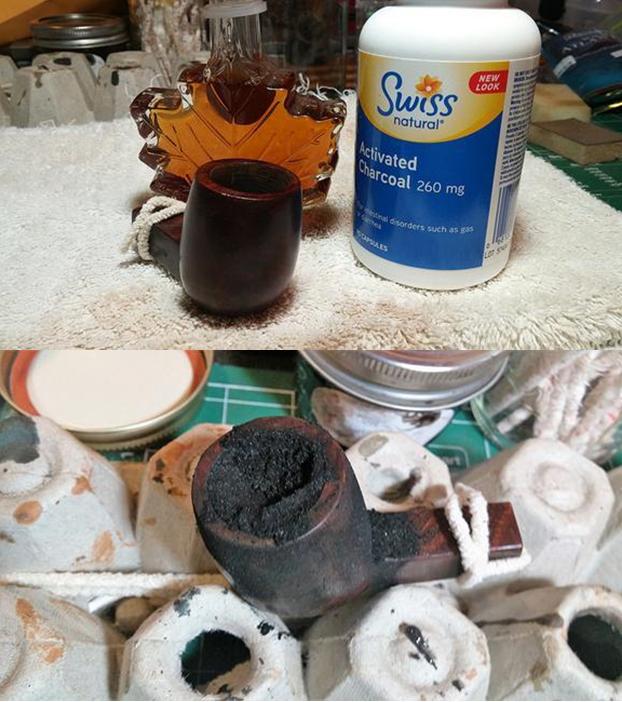
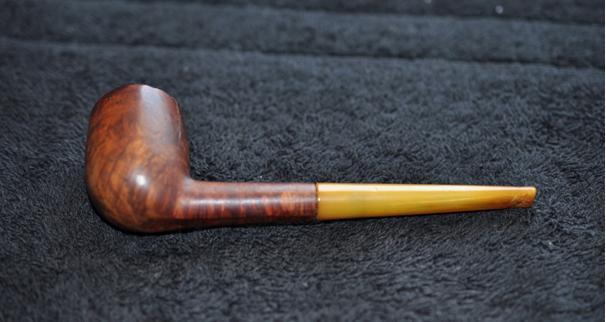
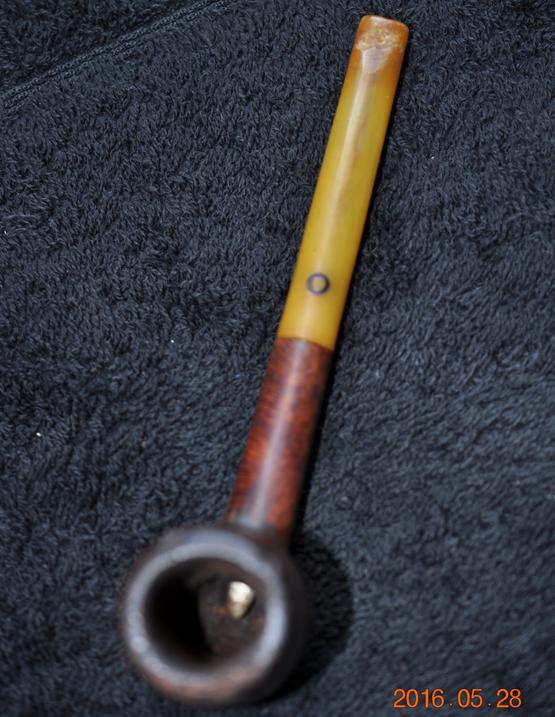
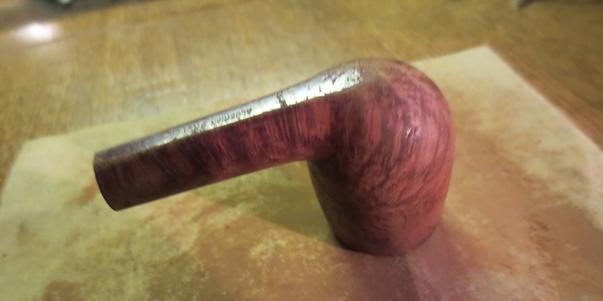
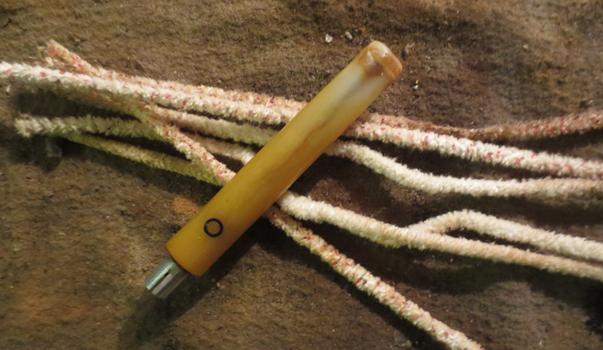
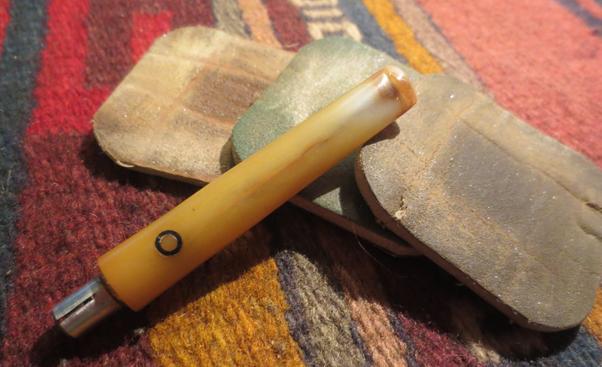
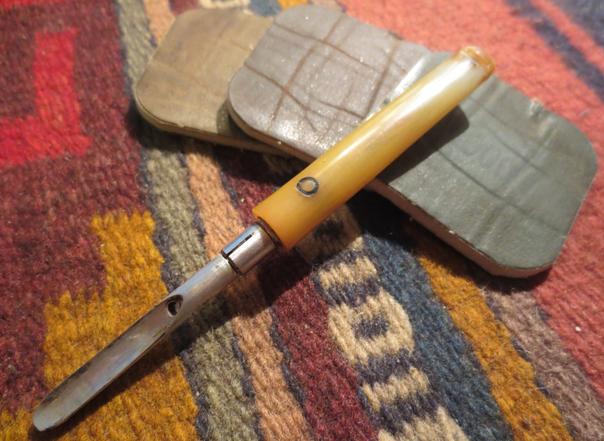
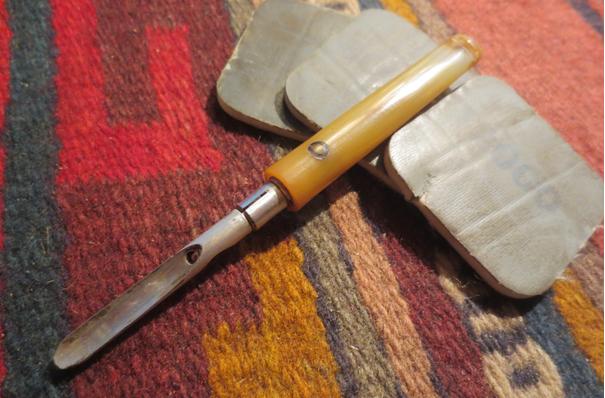
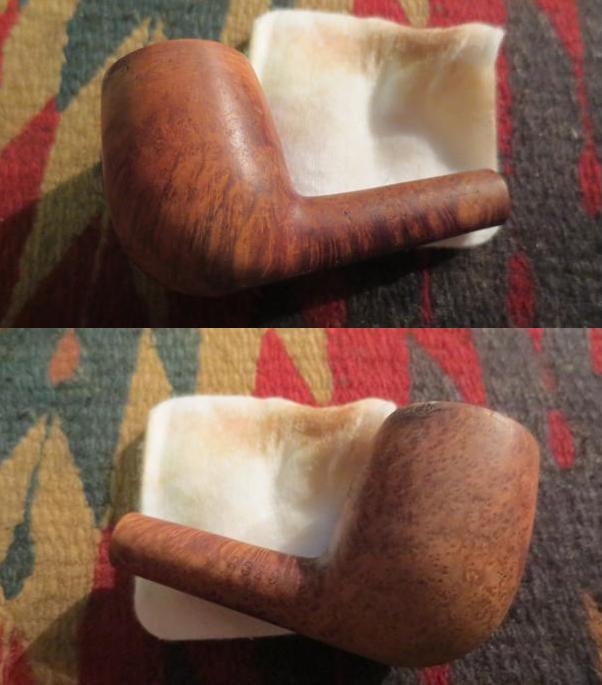
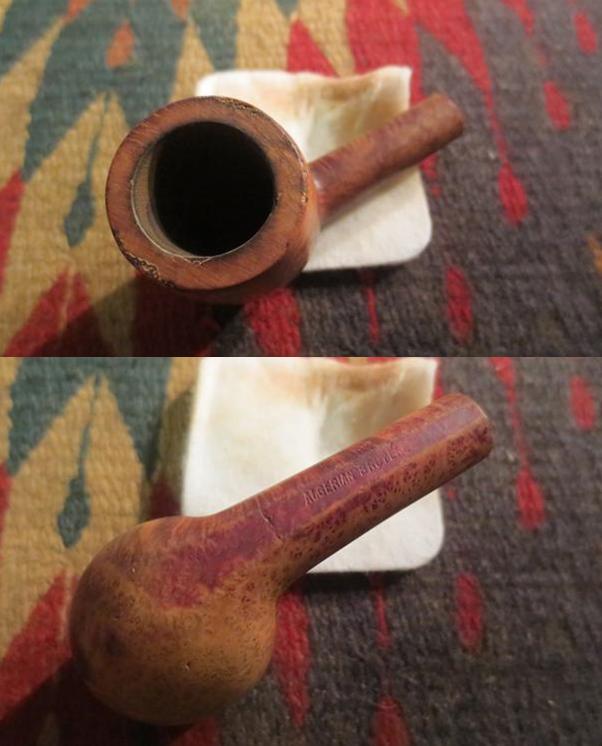
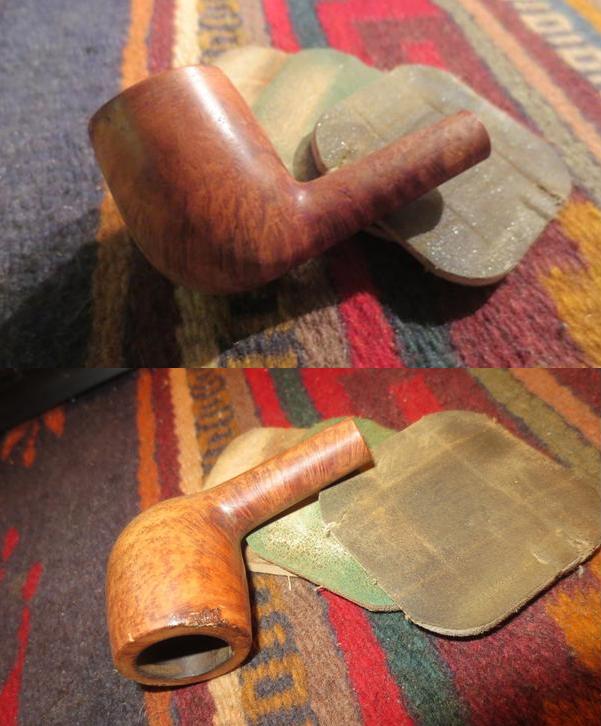
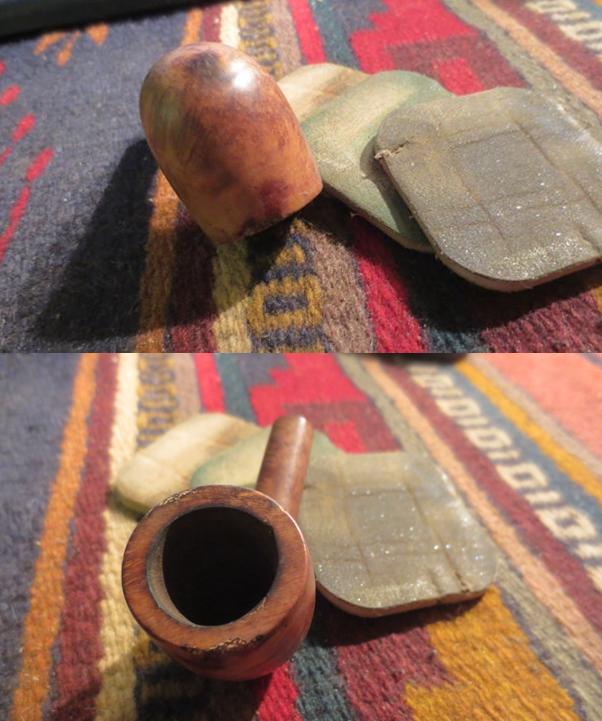
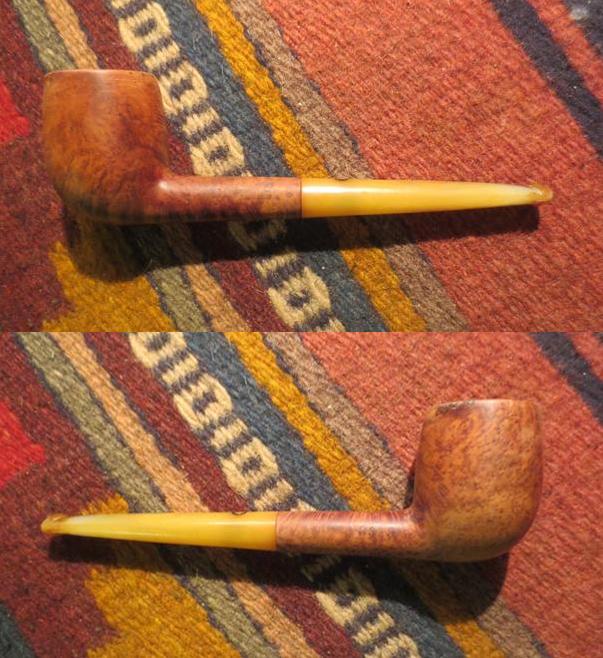
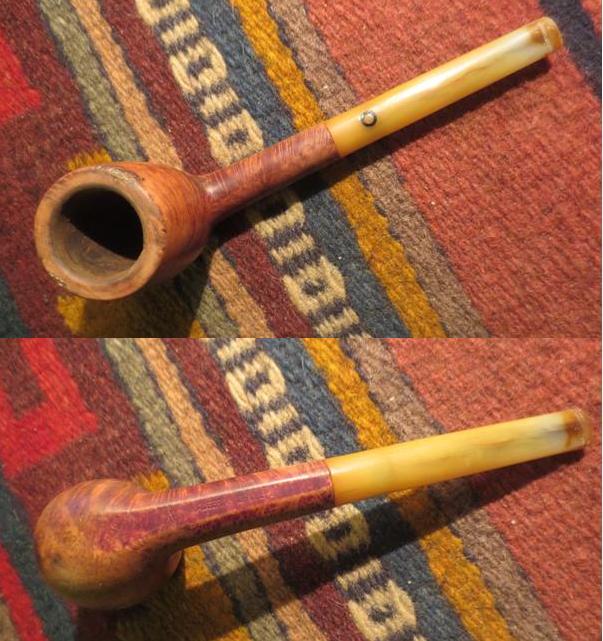
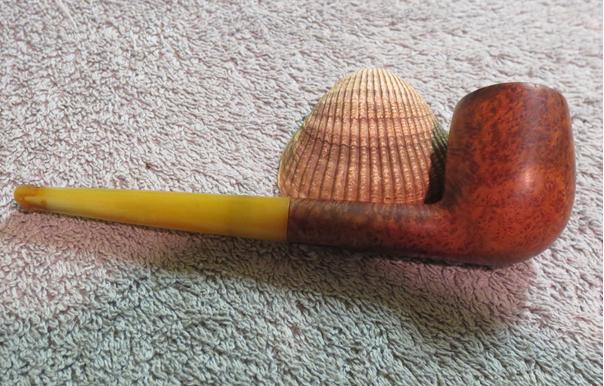
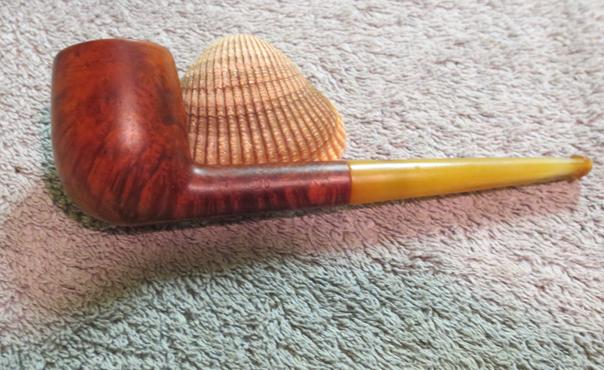
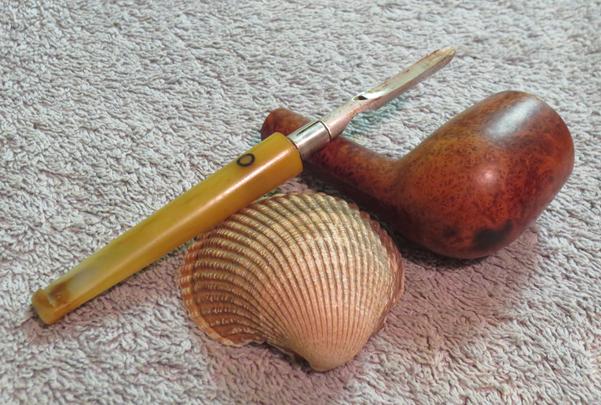
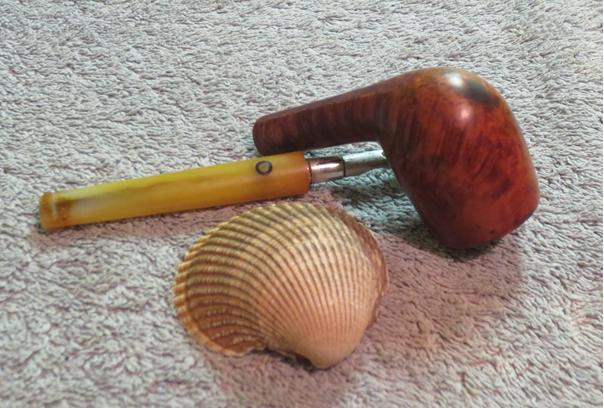
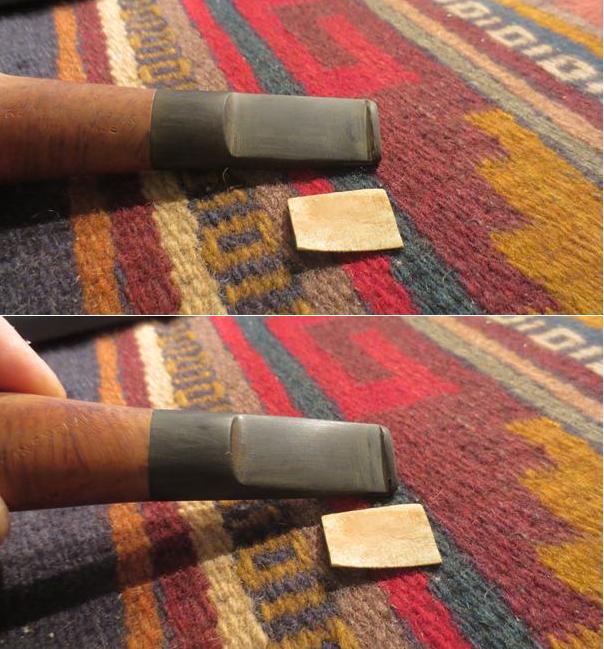
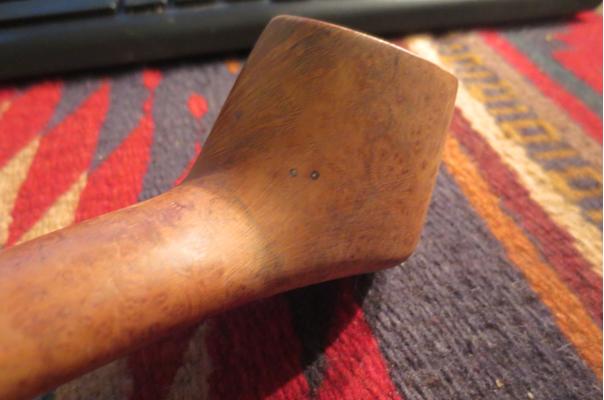
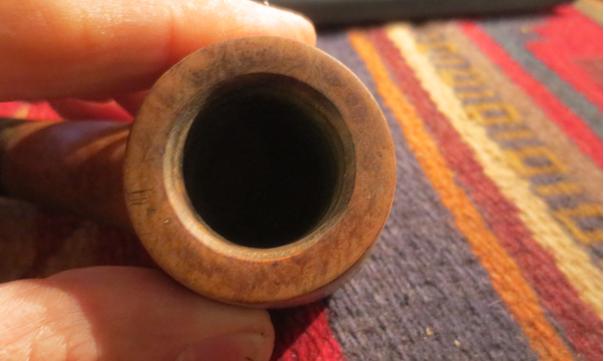
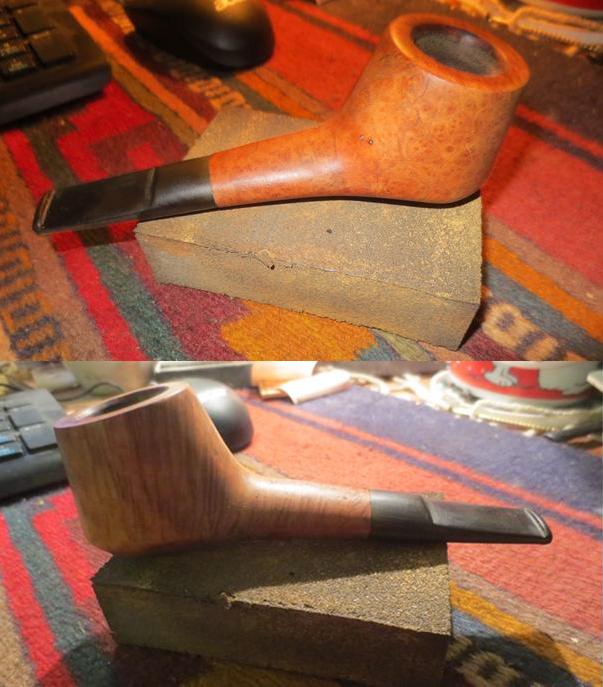
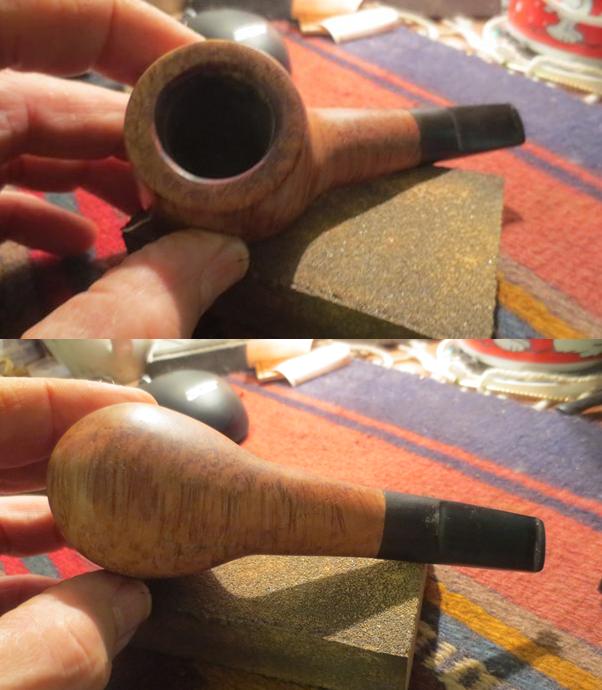
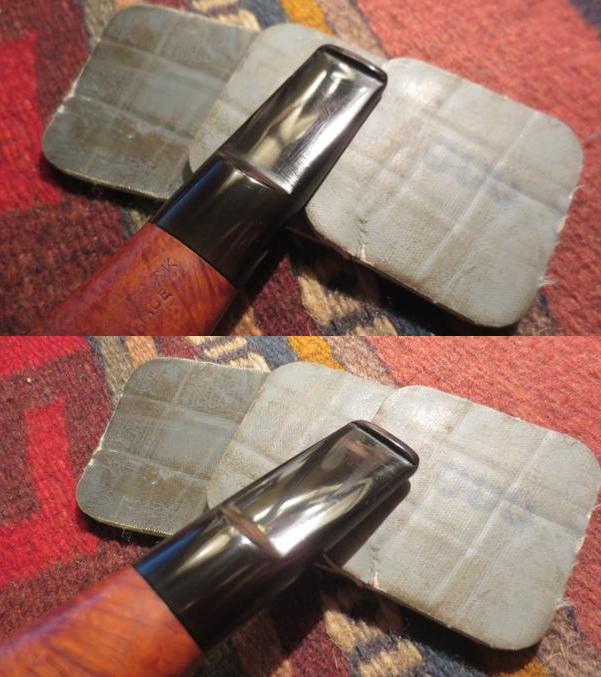
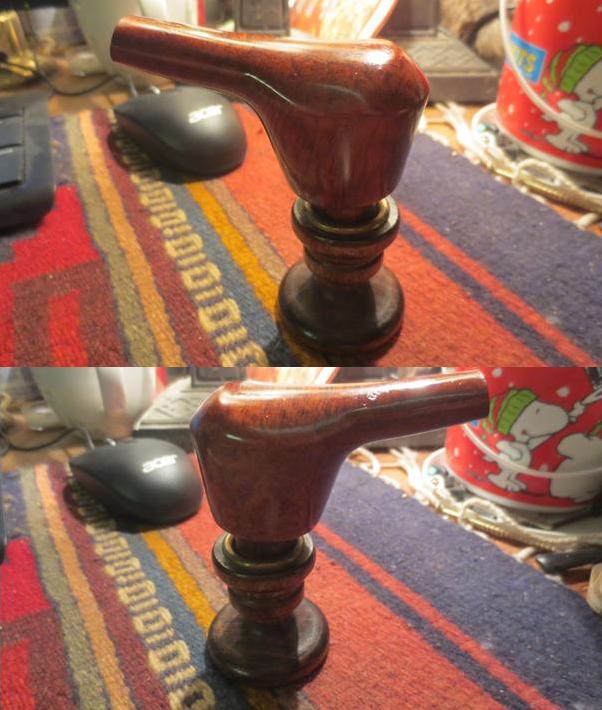
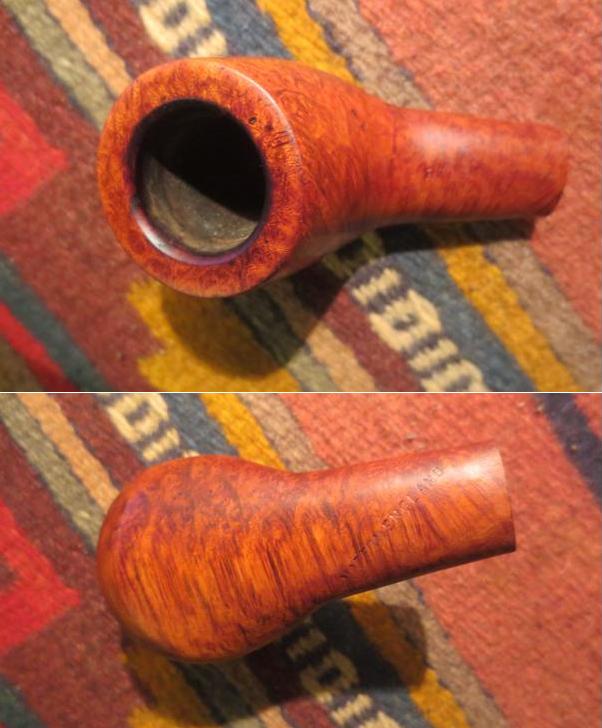
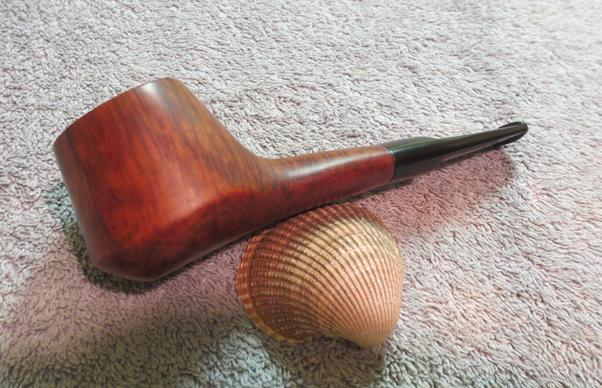
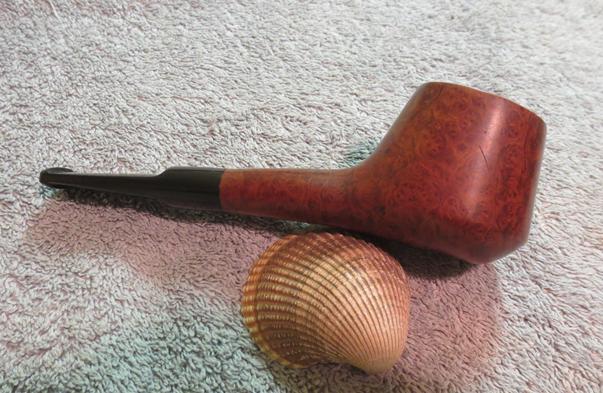
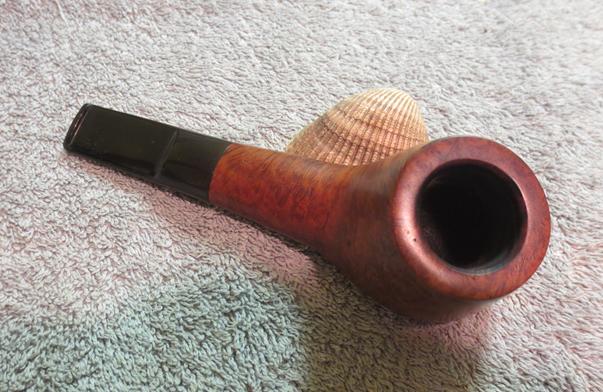
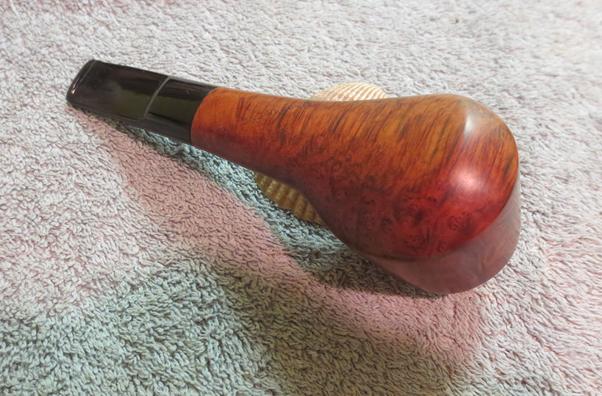
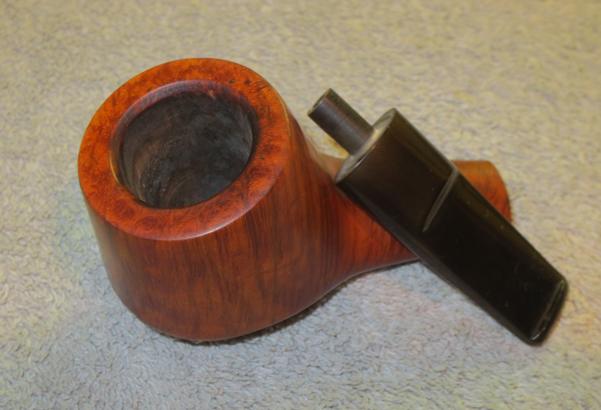
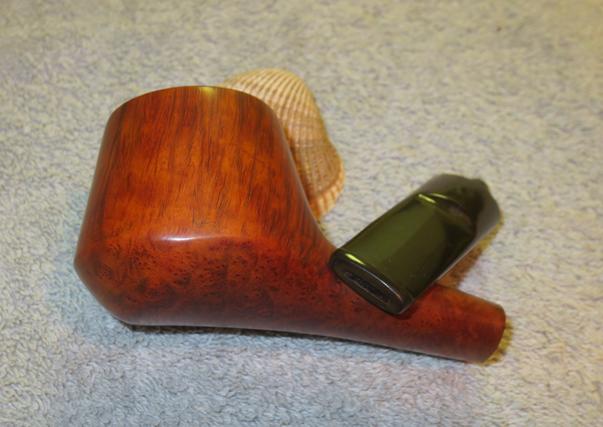
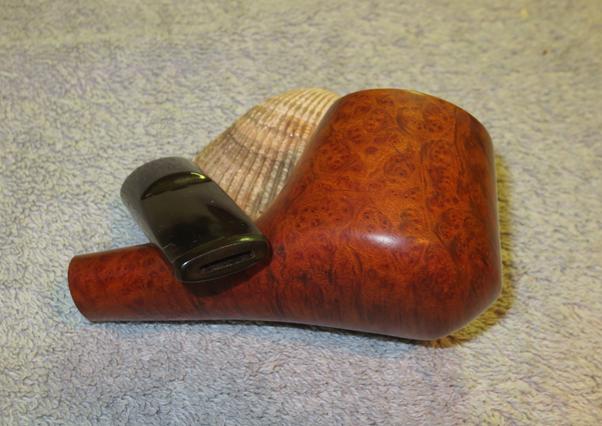
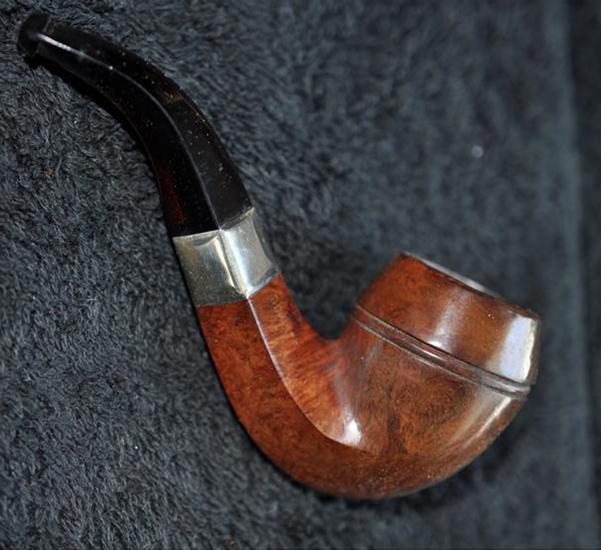
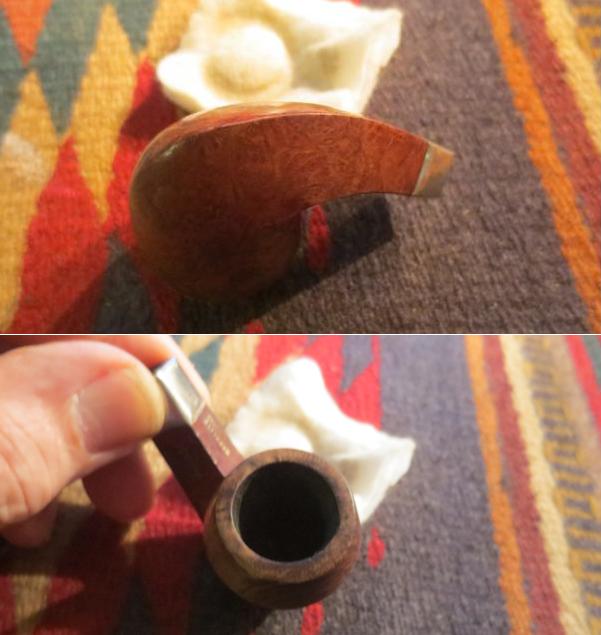
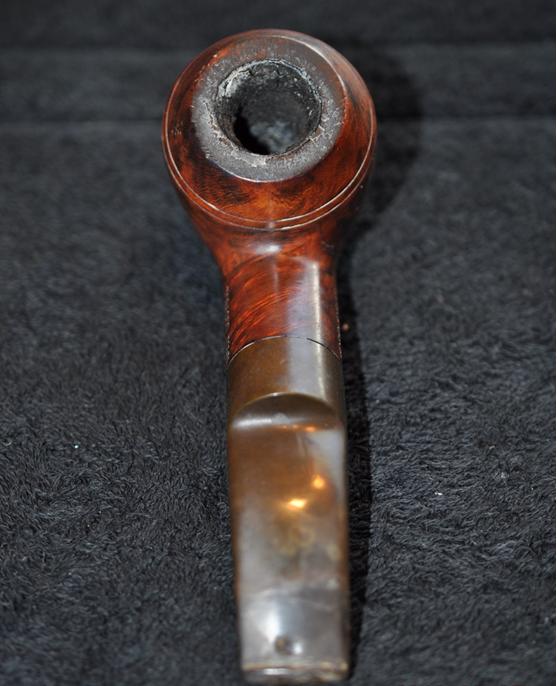
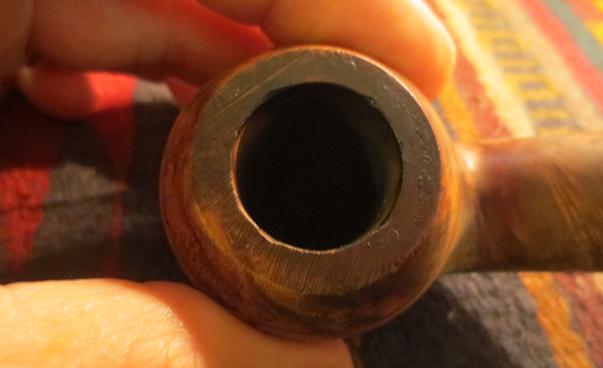
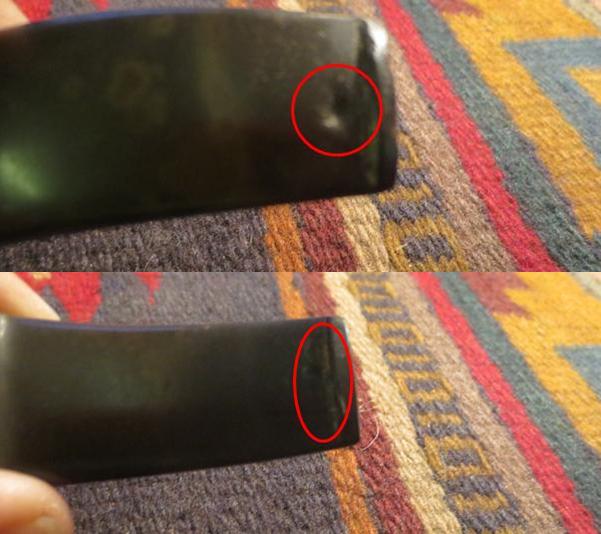
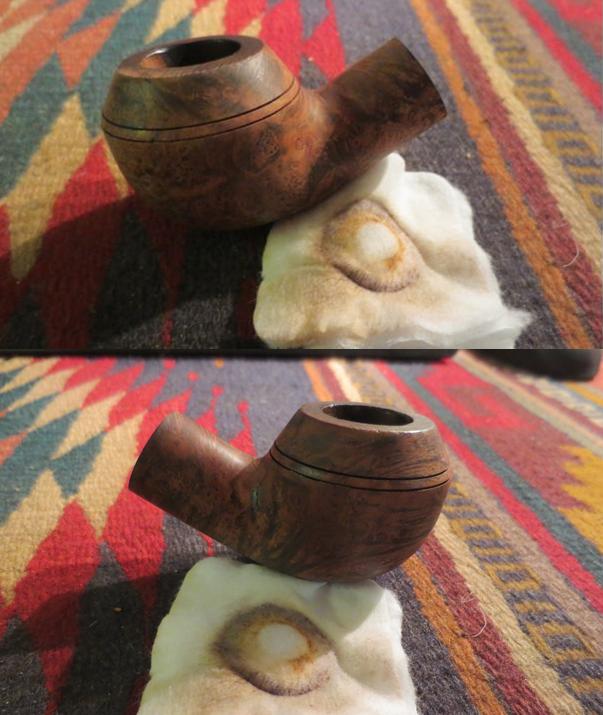
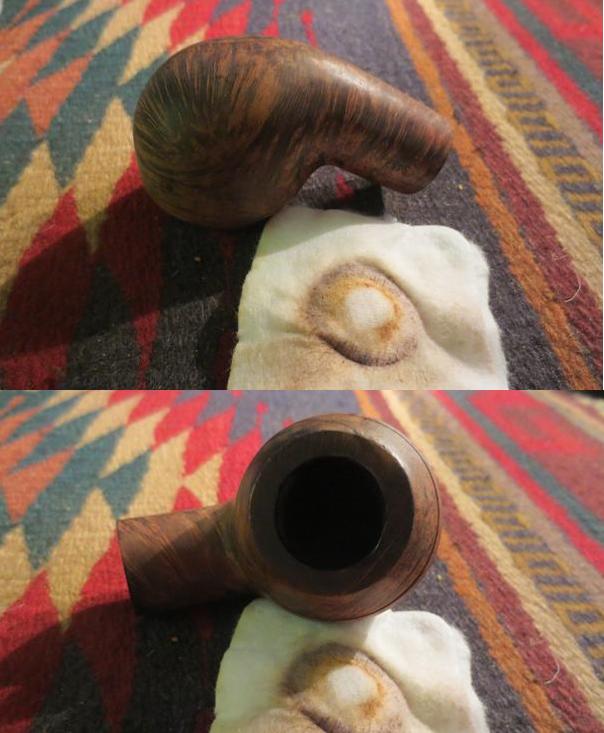
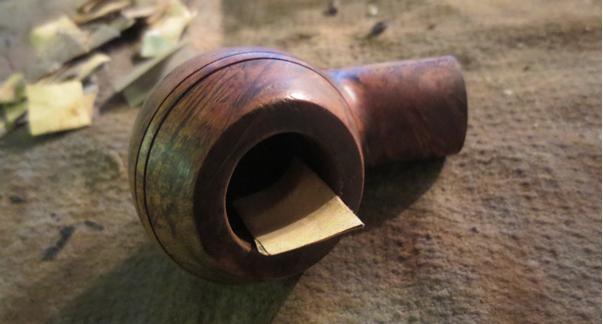
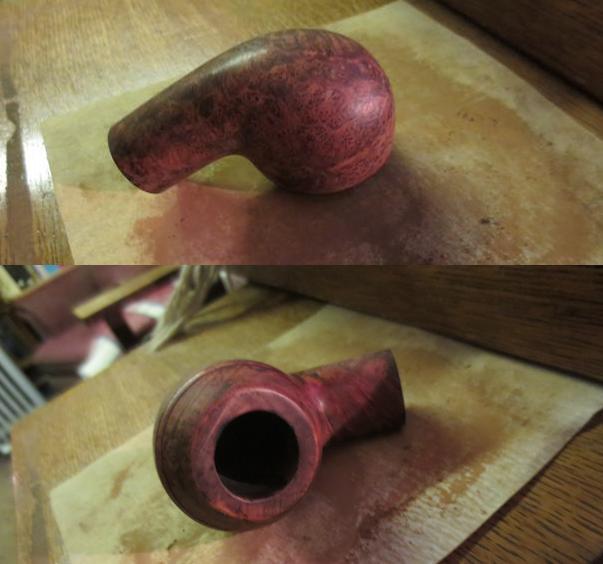
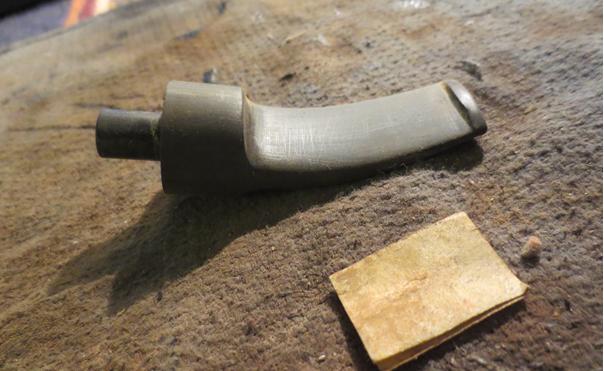
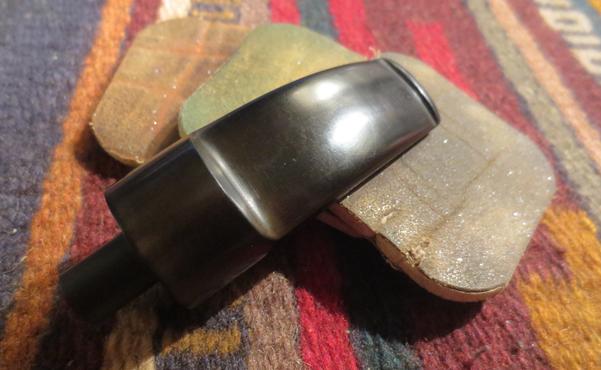
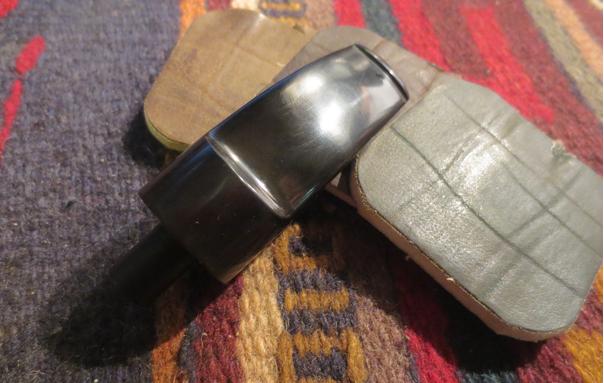
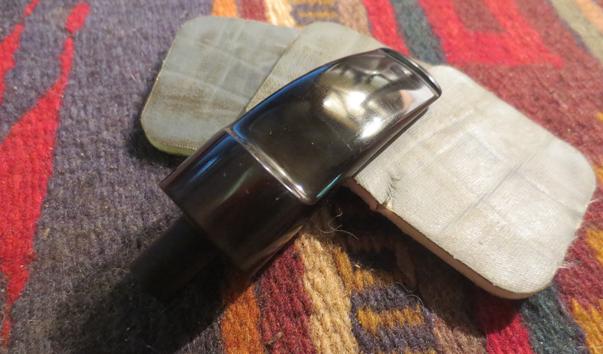
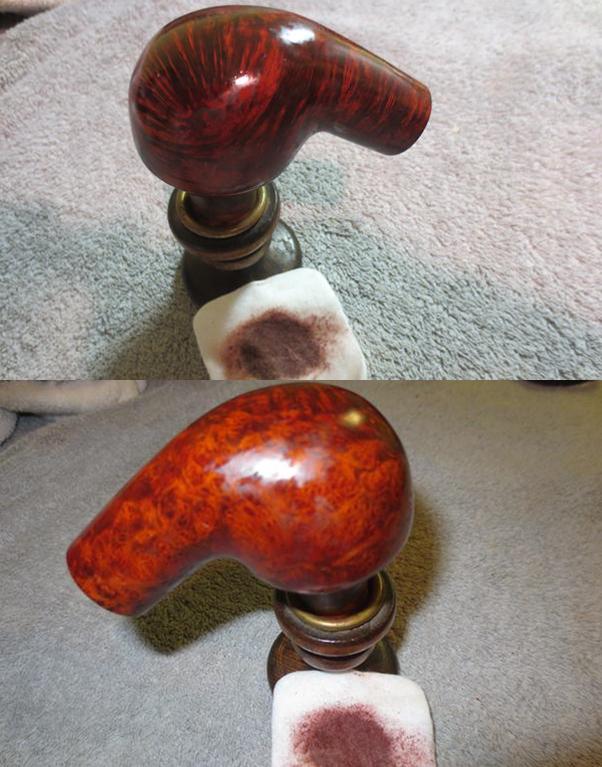
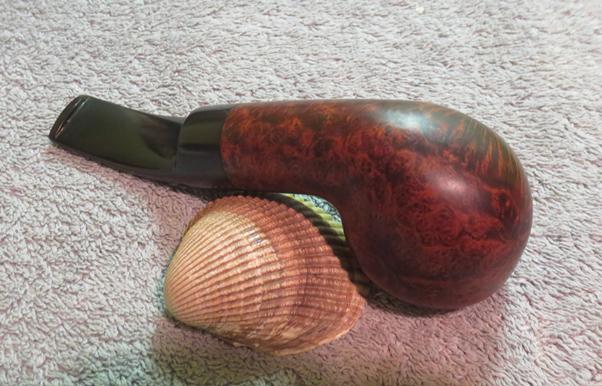
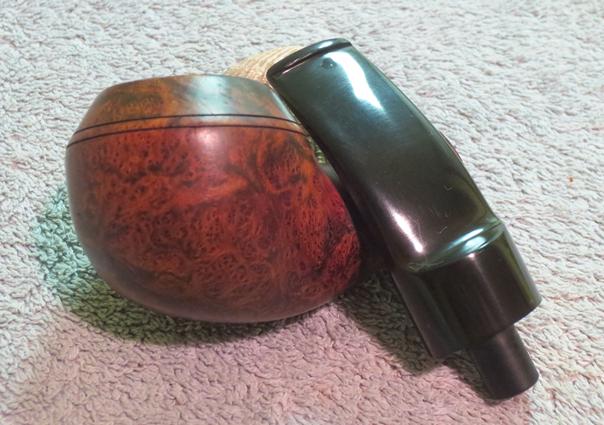
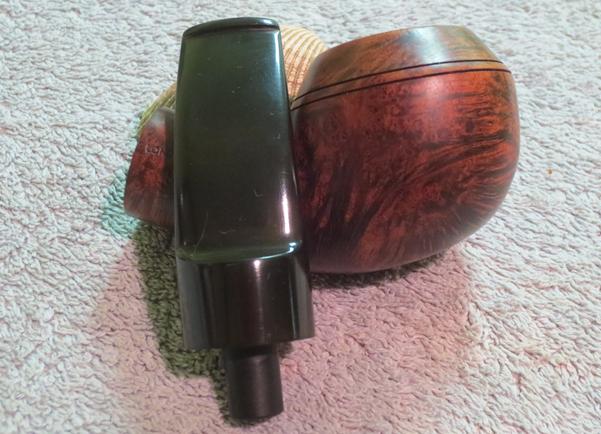
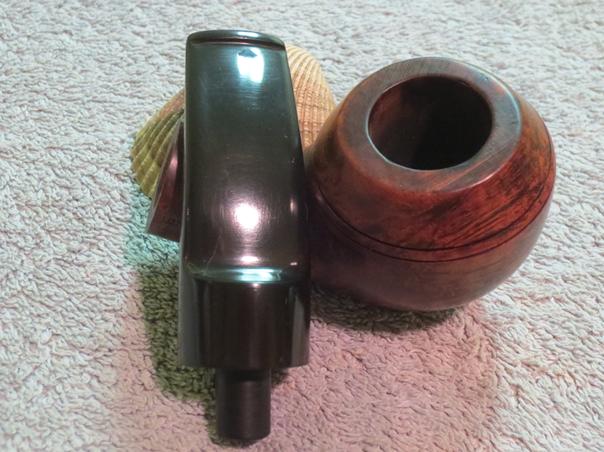
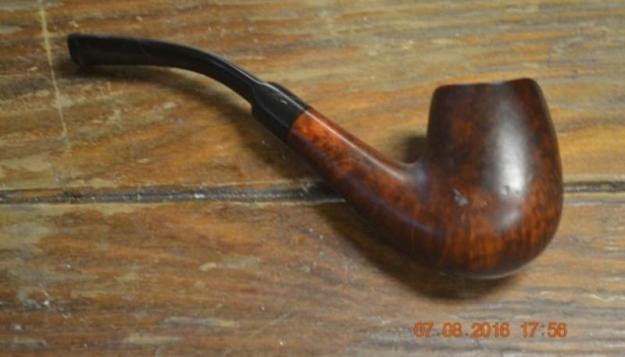
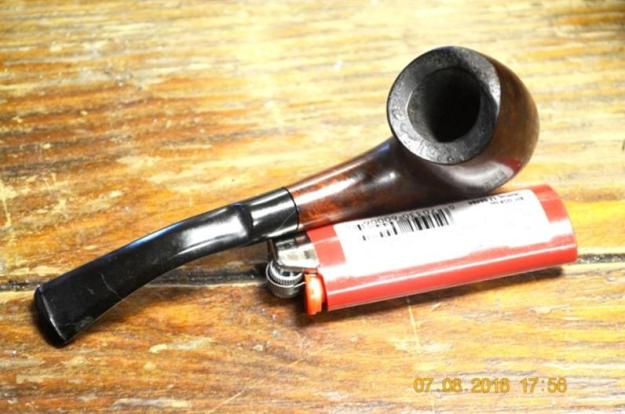
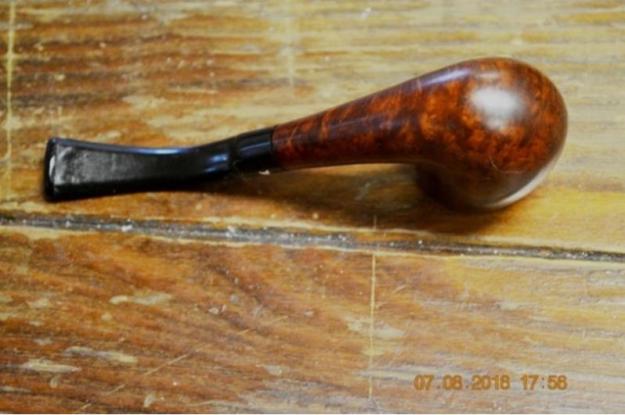
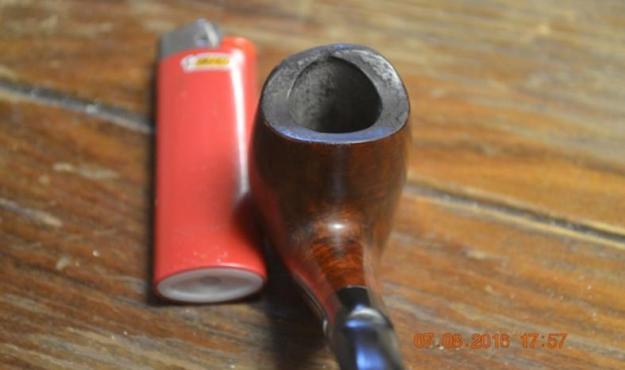
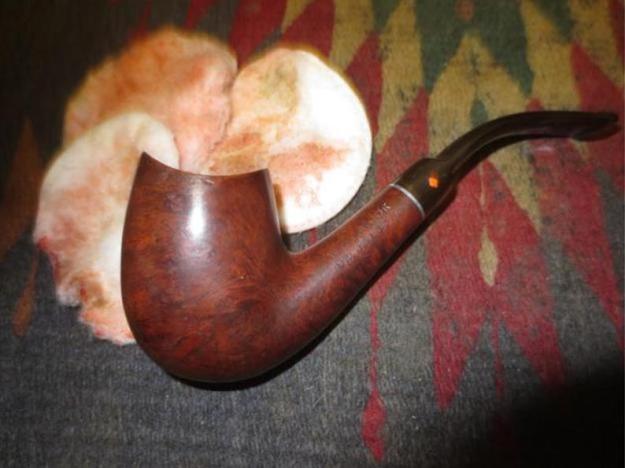
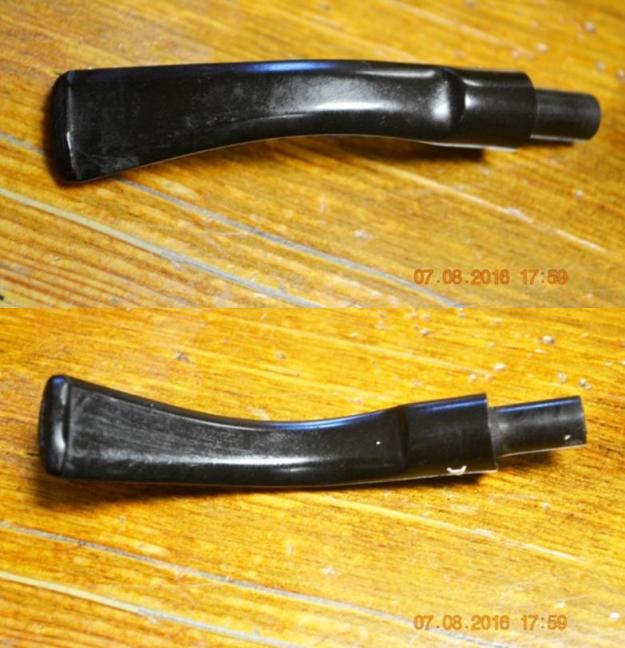
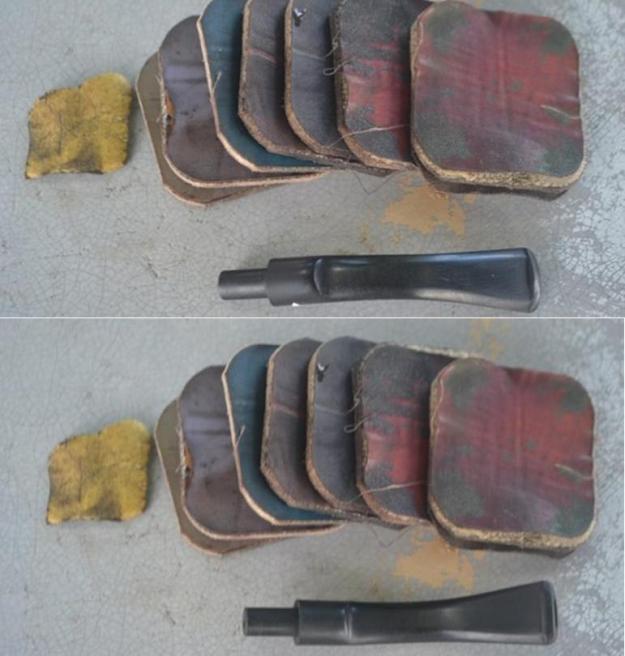
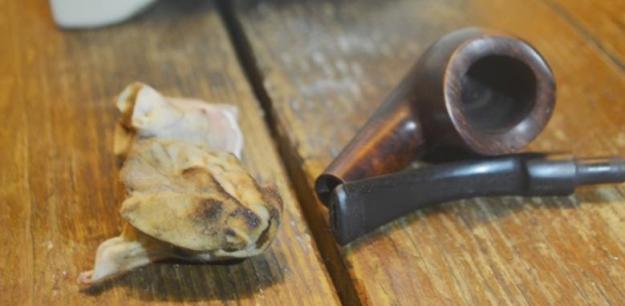
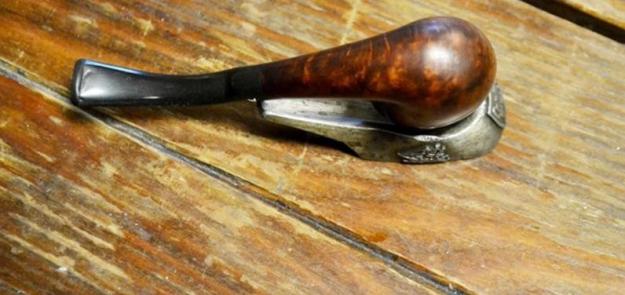
As I began work on this ornery, perplexing pipe 16 days ago, and continuing through to its completion, I found that I was humming the refrain from “Bewitched.” Sometimes I even broke out into the repetition of words that came back to me. And so I understood I was making a musical Freudian slip of sorts. The Mastersen freehand had many flaws to overcome, and I was indeed bewitched, bothered and bewildered at the challenge of removing them. I had also come to love the pipe without ever having tried it and, like the story of “Bewitched,” despite its presenting difficulties.mas1 mas2 mas3 mas4So blackened and grungy was its bowl, so almost thorough the filling of the chamber with cake, so worn and grimy the shank, and so ruined the once typical Danish freehand plateau style rim as well as the reparable-but-not-worth-the-work bit, I did not even know what brand of pipe I had.

That is, until a happy coincidence that occurred at the monthly Moose Lodge meeting of my pipe club on the third Thursday of last month, August 18. One of my fellow pipers, Daryl (for whom I cleaned up an antique KB&B Redmanol socket pipe not long ago), showed me a beautiful Mastersen of which I snapped a photo with my Nikon. Due to the increasing instability of that camera, which is cheaper to replace than repair, the photo is nowhere to be found. At any rate, I handed my dingy and as yet unknown pipe to Daryl, who said, “Ah, another Mastersen!”

That was how I learned what I had. I ask you, what are the odds? Bestowed with a vision of the potential for a real beauty if restored with the necessary attention and care, I experienced a sudden sense of urgency to fast-track my Mastersen. I still did not even know how it was spelled, thinking it was the same as Bat Masterson, the famous TV dandy, gambler and lawman played by Gene Barry, who preferred his wits and cane to his gun for four seasons from 1958-1961. The same error by other pipe collectors and sellers accounts for the reason more examples can be found online using the spelling of Bat’s last name.

I did, however, pick up a few pieces of information along the way about Mastersen pipes. According to pipephil.com, and suggesting the brand is still in production, “Mastersen is [emphasis added] a brand of the former Shalom Pipe Co. [of Israel] which was later bought by Mastercraft.” Mastercraft, in turn, was taken over by Lane Ltd. A contributor to the Dr. Grabow Collector’s Forum (DGCF) noted the Shalom connection but added that Mastersen pipes were manufactured from the late 1960s to the mid-1970s as redemptions for Brown and Williamson’s Sir Walter Raleigh tobaccos. In this case, I suspect Pipephil was correct but meant to make clear that Mastersen was made by Shalom only, and the DGCF man had it right about the time period and redemption points.

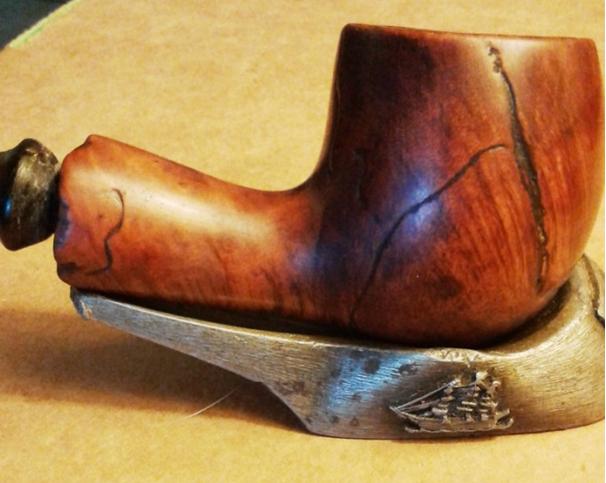
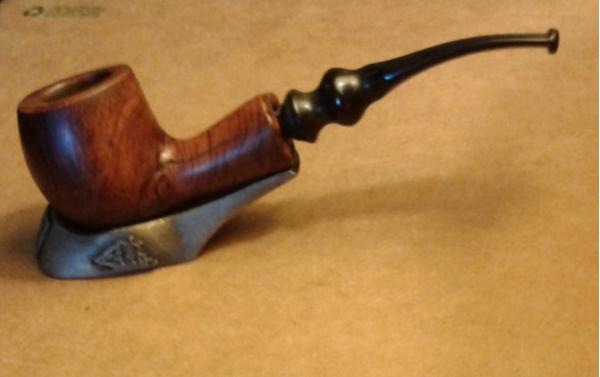
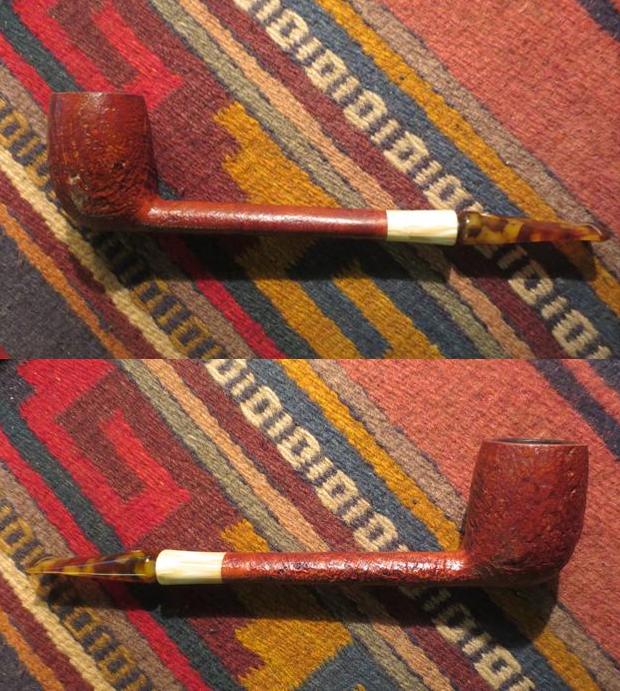
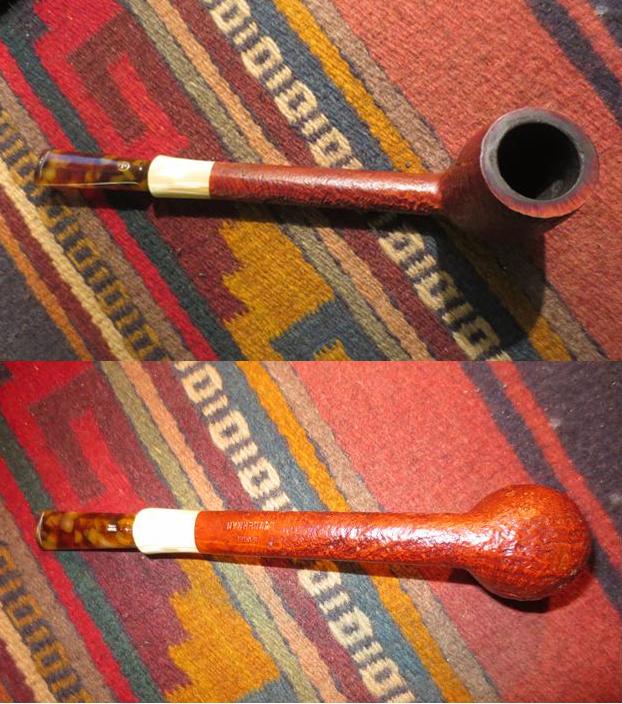
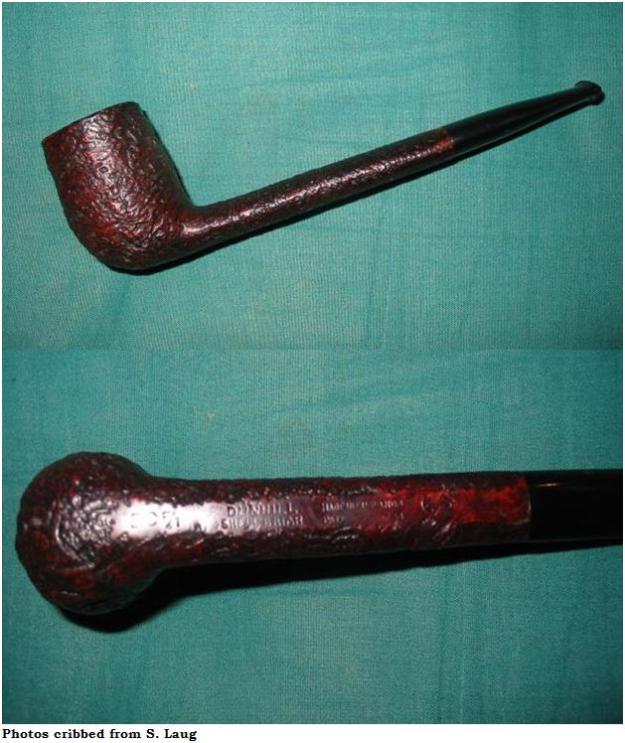
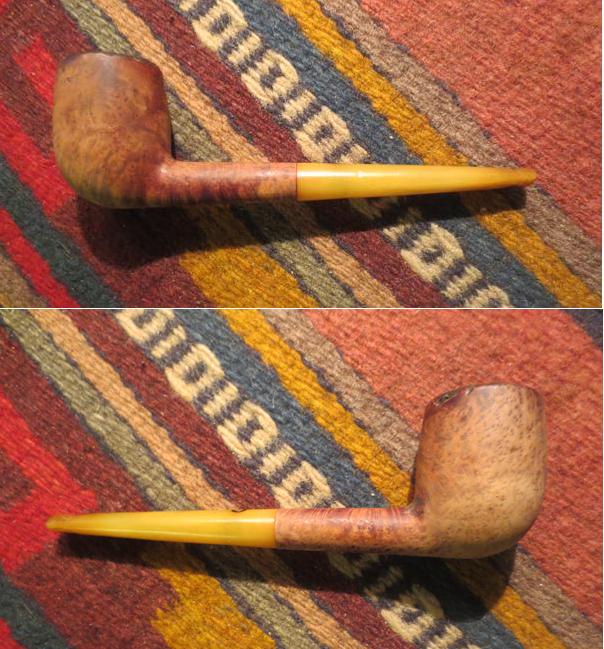
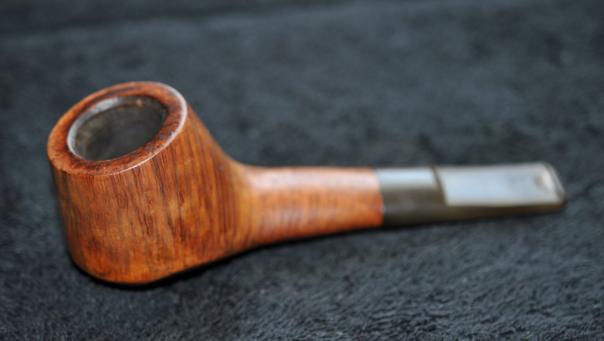
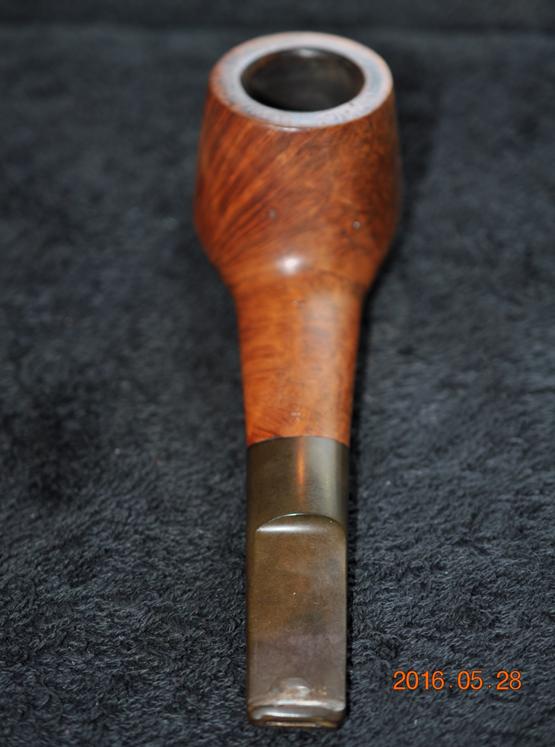
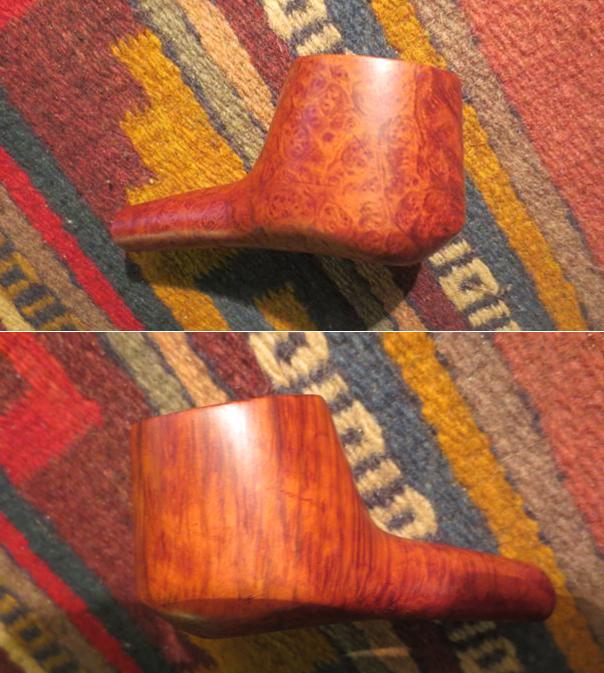
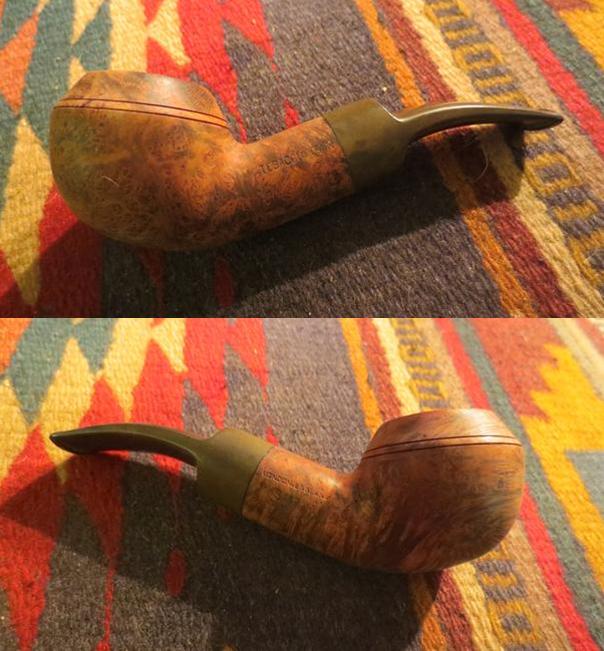
Here are two shots of Mastersens I found online, the first with nice vertical grain, and the second showing the plateau rim type natural to the brand’s freehand pipes. Neither is anywhere near the quality of the specimen Daryl is so lucky to own, with its exquisite, perfect, vertical grain and strawberry blonde shade.mas5RESTORATION
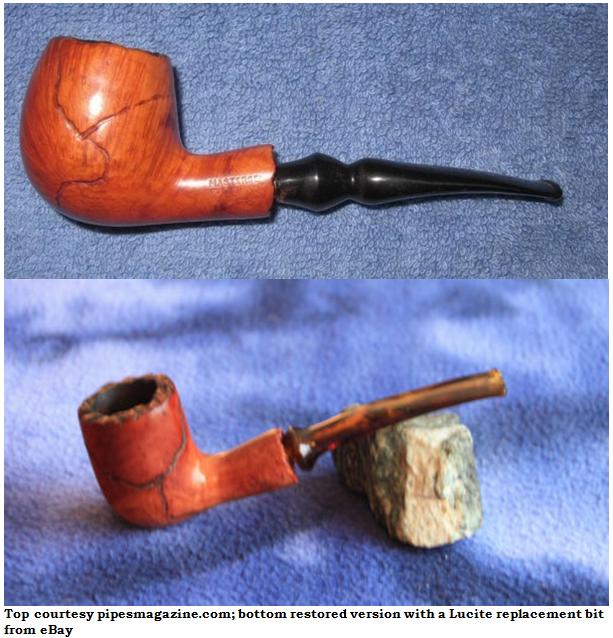
Daryl’s beautiful example of what a Mastersen freehand could look like served as a wondrous counter-spell to the initial bewitchment that froze my thoughts of starting the job. Still, I was bothered by the apparent lack of any plateau remaining on the rim and the resulting need to do something about that dilemma. And of course the stem bewildered me more than a bit. (Ha-ha.)

Setting the bit aside for the time being, I began my assault on the stummel by soaking it in Everclear and then giving the still-caked chamber a 40-minute preliminary reaming, as that single good, long one proved insufficient to mend the old ways of the small space. The next pictures show before, during and after. mas6 mas7 mas8I continued the corrective measures with both my Senior Reamer and a new “one size fits all” type I found online. The little thing was so inexpensive I couldn’t help getting one to see if it worked. I have to say it has its uses, which are limited, but this chamber of horrors was one of them. I suppose the best way to describe the only function I’ve found for the less powerful reamer is by comparison to micro meshing after sanding. The small reamer has a certain precision that smooths away some of the rough edges left by its Senior counterpart. Maybe for those of you who have seen real combat on the battlefield, it would be like sending in the Army Corps of Engineers to clean up the devastating work of Marines.
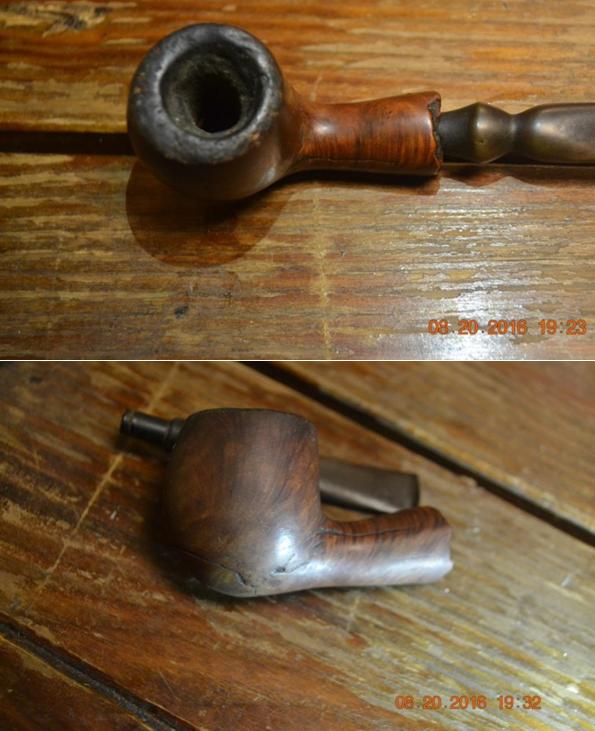
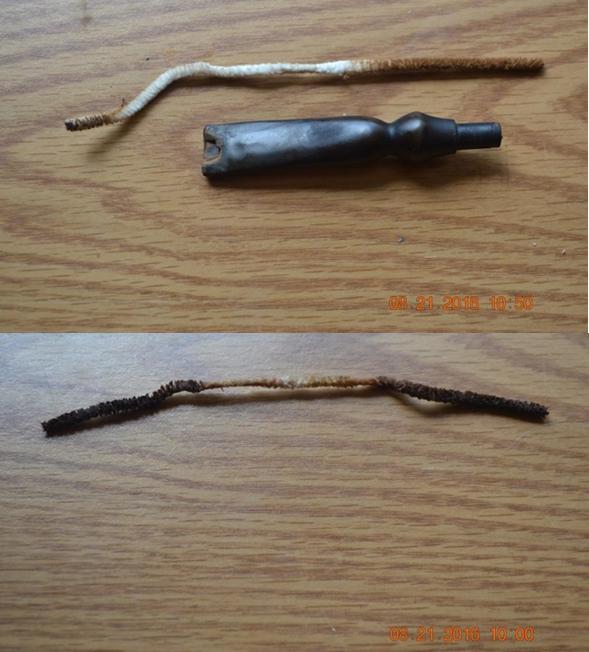
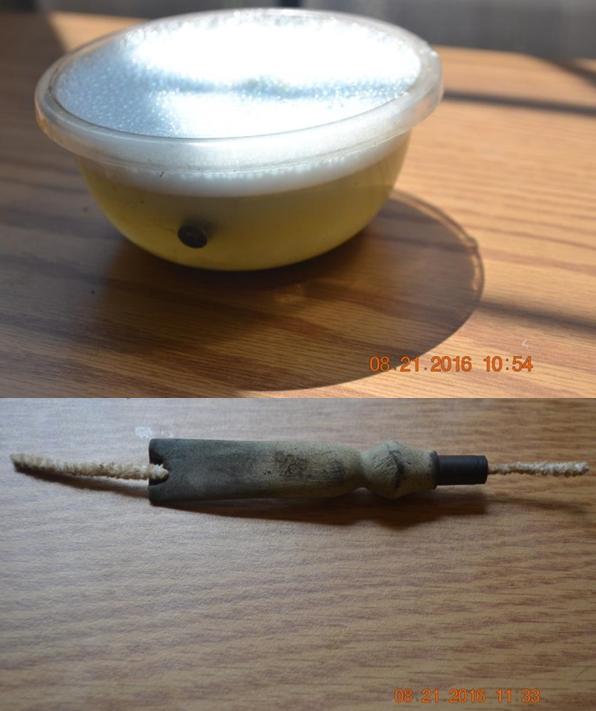
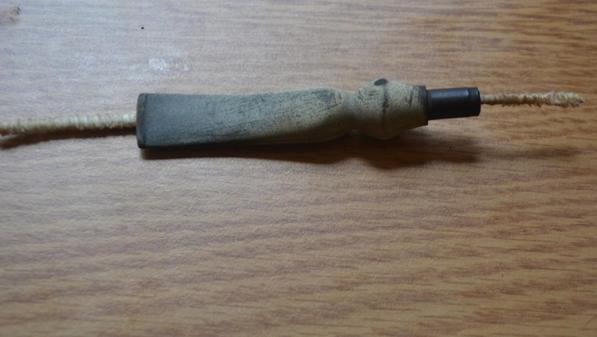
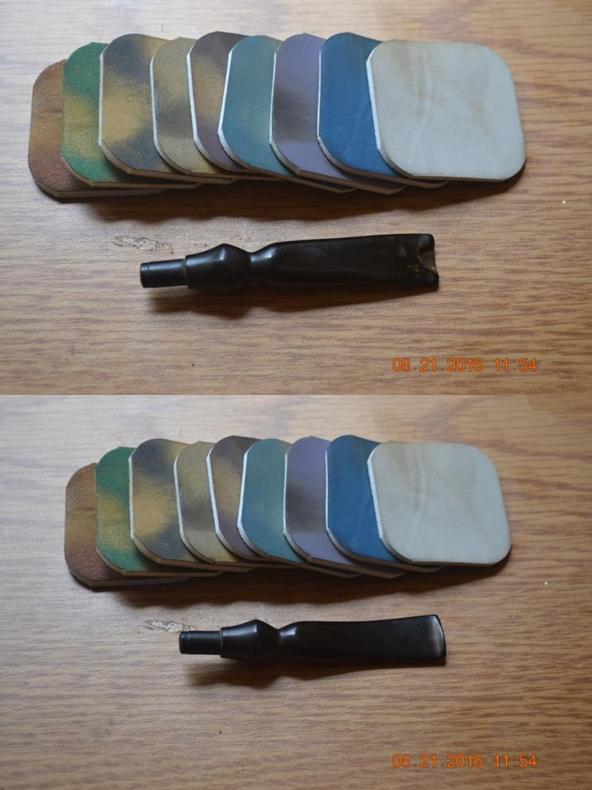
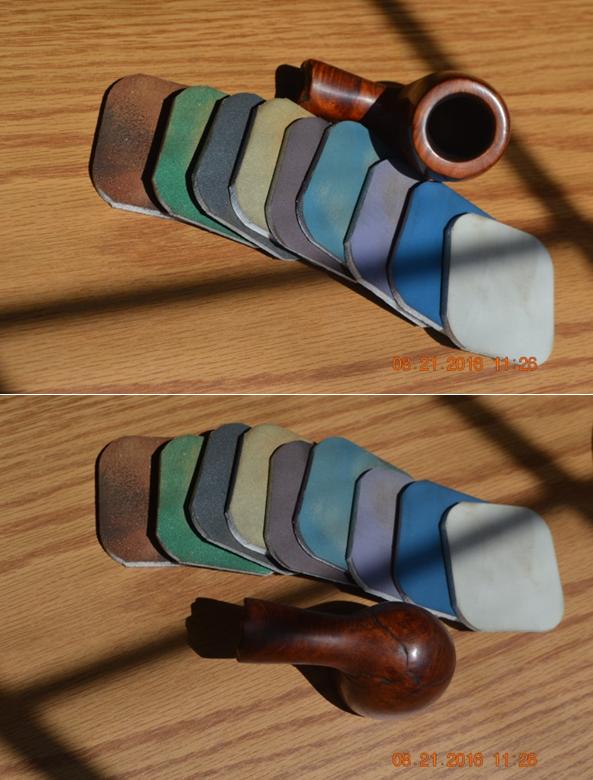
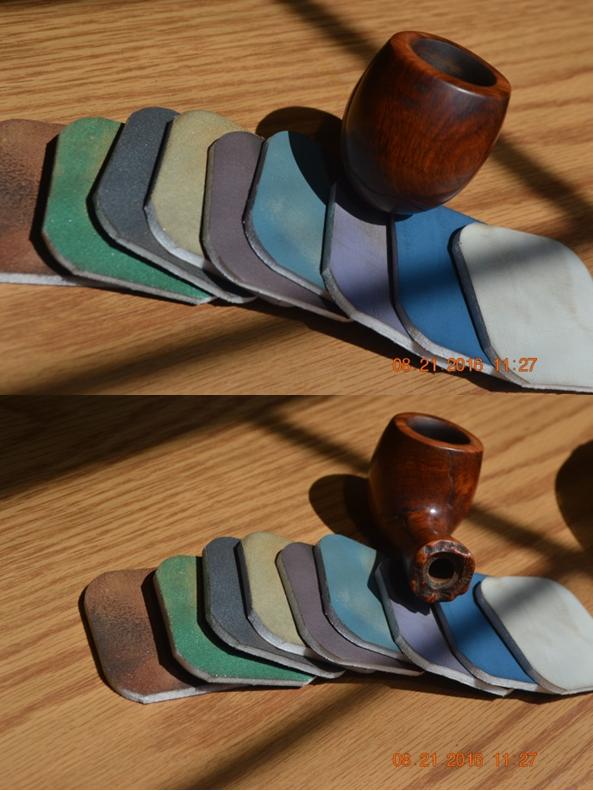
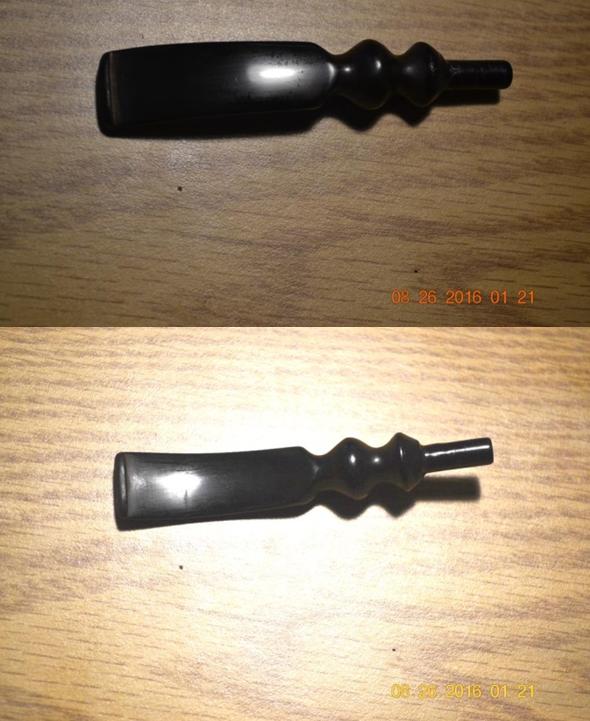
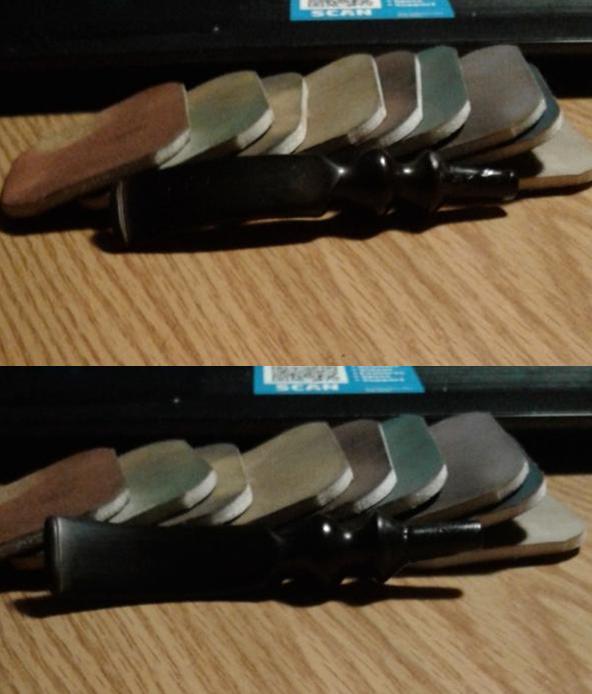
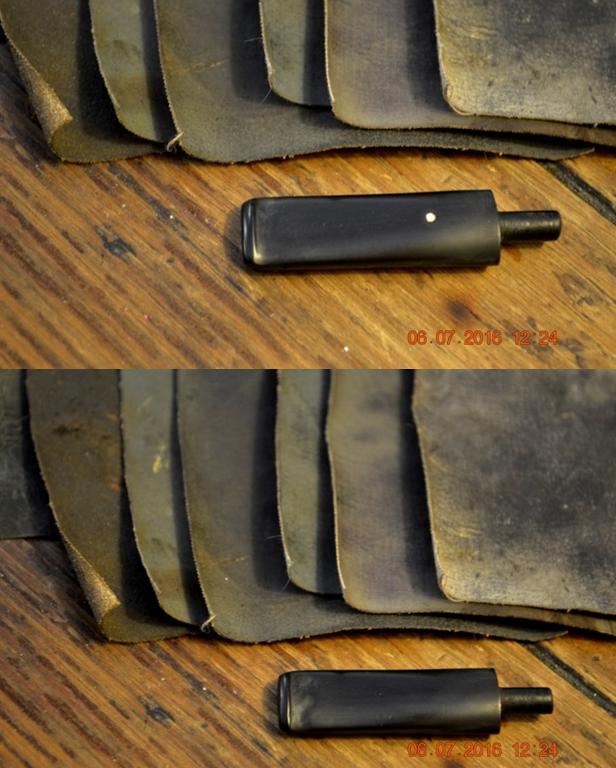
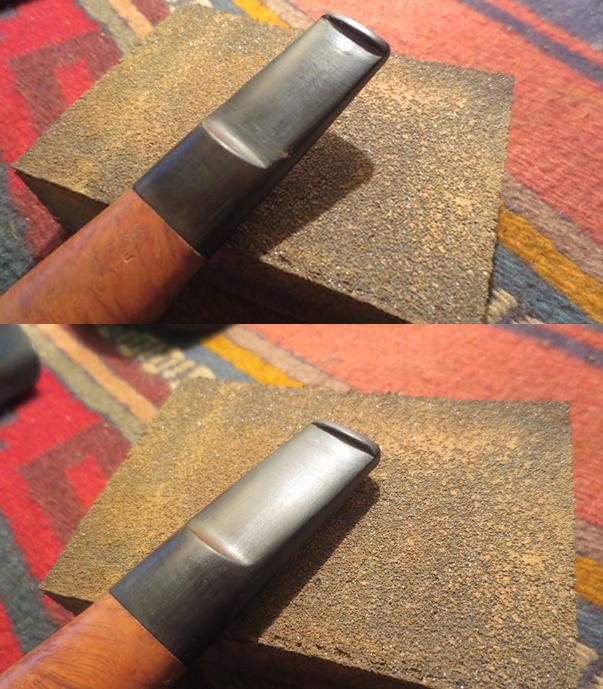
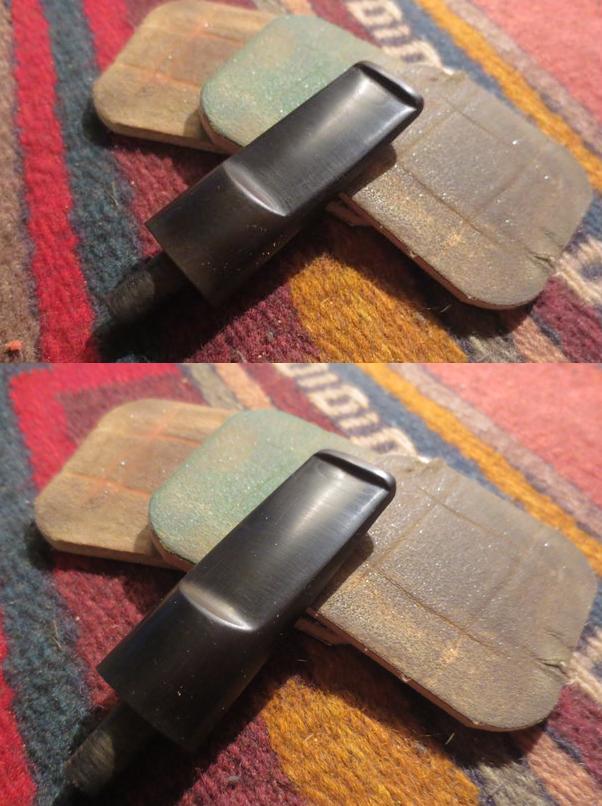
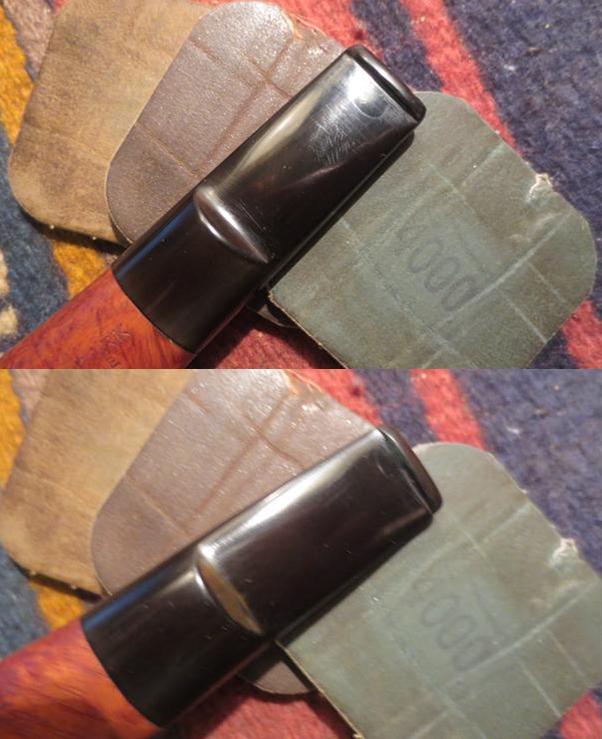
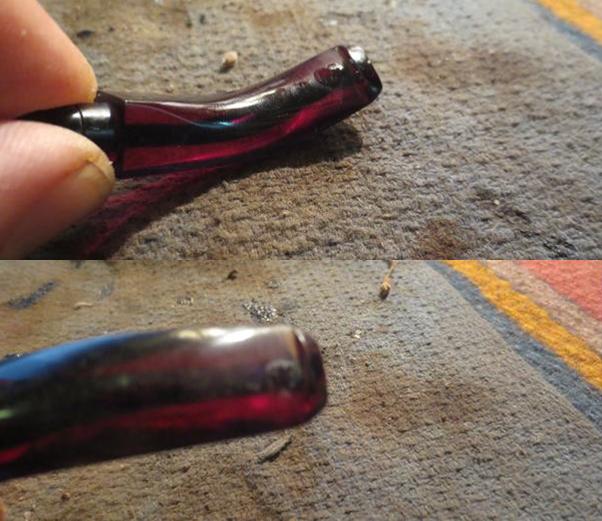
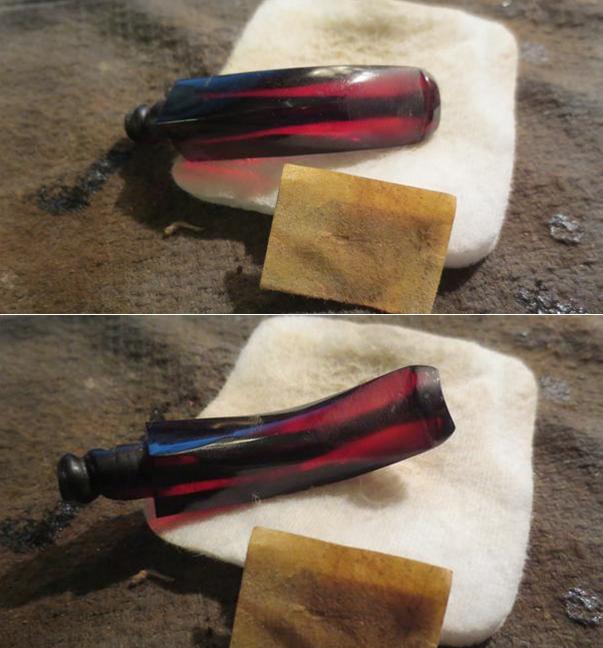
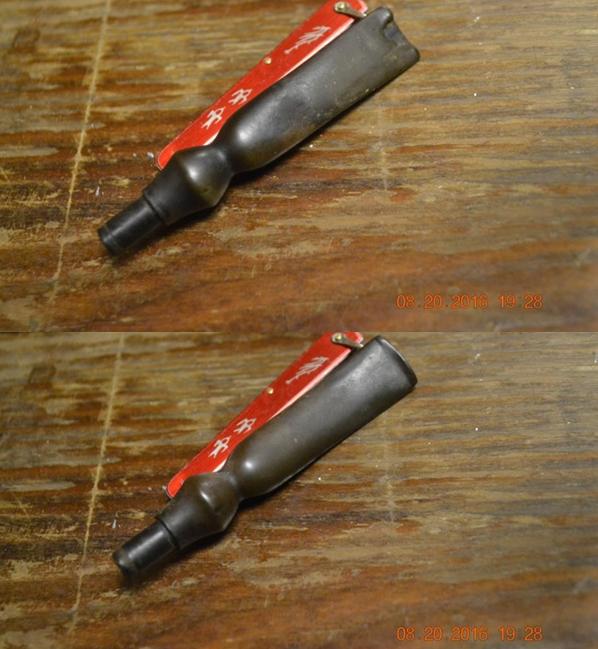
The reaming complete, I turned to sandpaper, first on the rim and chamber with 150-grit, then working up the fine line to 180, 220 and 320.mas9I used the same progression of paper, minus the 150-grit, on the bowl and shank. That was enough for the first night.mas10 mas11 mas12The next day, Saturday, I slept late, meaning 9 or so in the morning, for the only time my cerebral RAM can access. I arose in an excellent mood made better by starting my first giant mug of strong, rich French Market coffee mellowed with chicory. Since I was in such a clear, positive frame of mind, I savored the moment more by turning to the bit that was wrecked by the havoc of some poor soul who must have suffered from a sort of waking temporomandibular joint disorder, even though there is no such malady since the real thing occurs while one sleeps. It’s called everyday teeth grinding when one is cognizant, and if a pipe smoker is that angry he ought to give up the best known form of relief from stress altogether. I ran a couple of cleaners through the air hole, first a dry run and then soaked with Everclear, and used the last of my supply of OxiClean to give the bit a bath. And now I’m gonna show you some 8×10 color glossies of that ordeal. You see, I was still of the mind that I might take the time to salvage the heinous wound to the mouthpiece of this bit.mas13 mas14 mas15 mas16By this time I already knew I was going to find a replacement somewhere, but once I start something I have to see it through. Therefore, I used more of the fine steel wool and then micro meshed from 1500-12000, just for the sake of it. Be all you can be (for now), mighty bit!mas17 mas18I did find a replacement in a bag from my recent move to better digs that I’ll show you later, because I’m sick of the entire idea of bits for now and it’s out of order, and I did keep the original for some unknown pipe I will restore for my own use rather than to sell to a trusting and hapless buyer.
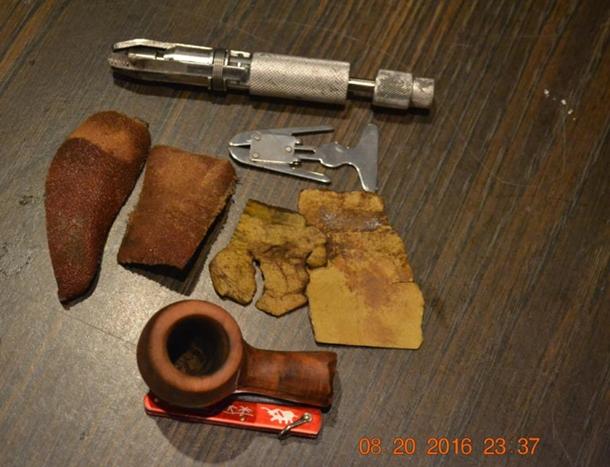
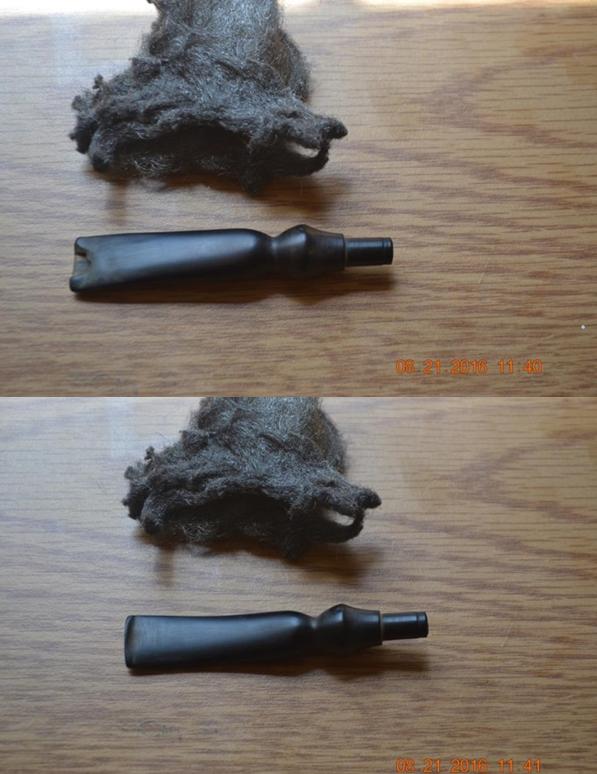
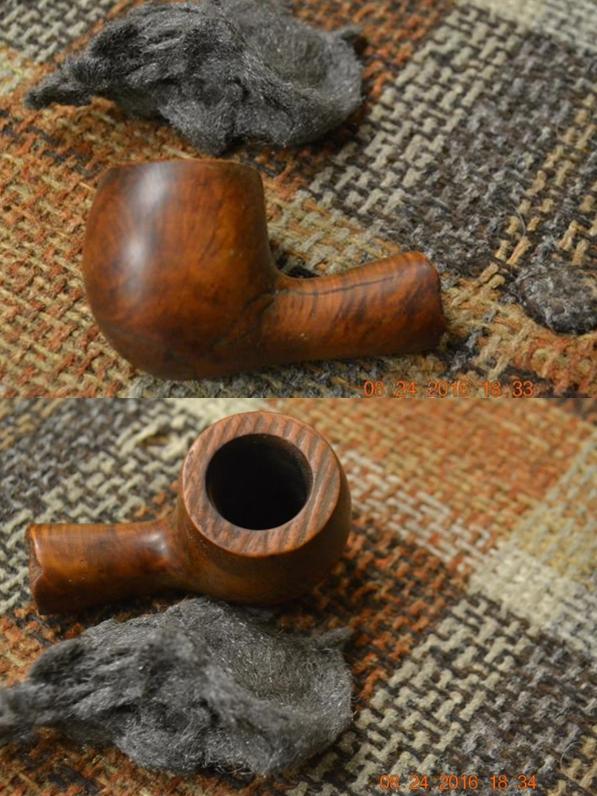
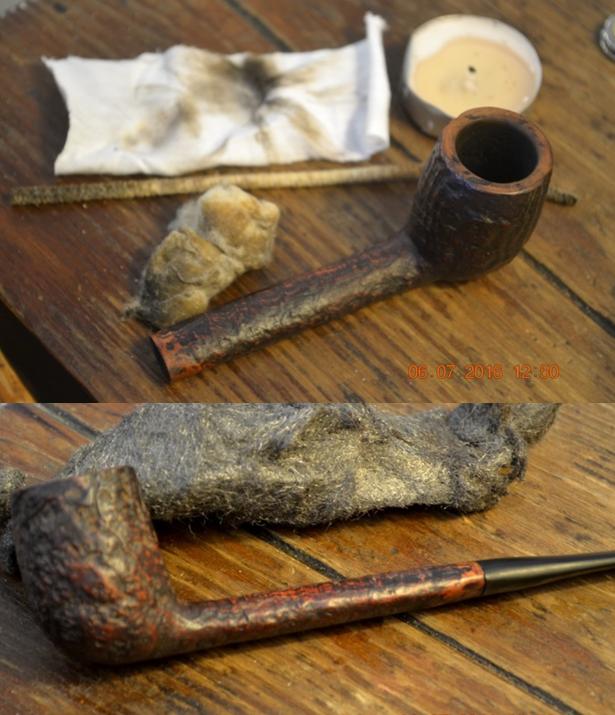
Grabbing the steel wool again, I put it to better use on the stummel, with gentle rubbing.mas19 mas20 mas21Lo! How a simple micro mesh progression from 1500-12000 will change the hue of briar!mas22 mas23 mas24Three days almost to the hour after I began this project, there was no more putting off the inevitable: doing something to make the rim rough rather than the usual desired velvety smooth. Part of me that had no trouble adapting to the rule “If it isn’t broken, don’t fix it,” one of my dad’s many maxims, hated the notion of touching a rim that was “perfect” the way it was.
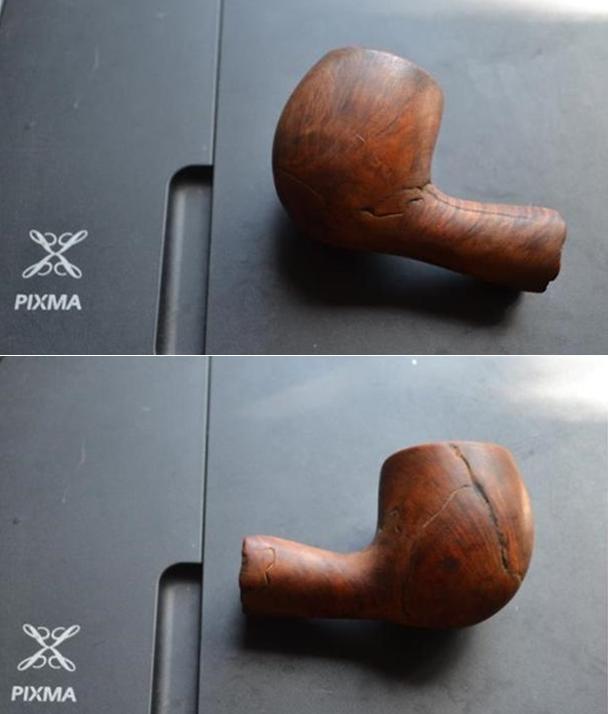
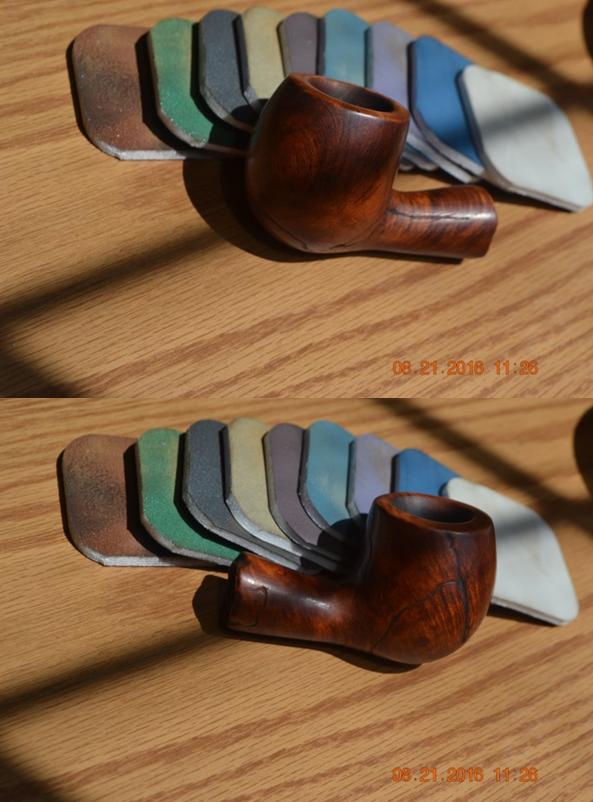
In the end, I knew that a smooth rim on a Danish freehand style pipe was anything but perfect, and I considered my options, which seemed to me to number three. 1) I could rusticate the circular top, but the Mastersen freehand is not a rustic pipe. 2) I could reshape the top and try to roughen it up, but I’ve never done that before, to be honest. 3) I could leave it flat but give it some sort of texture.

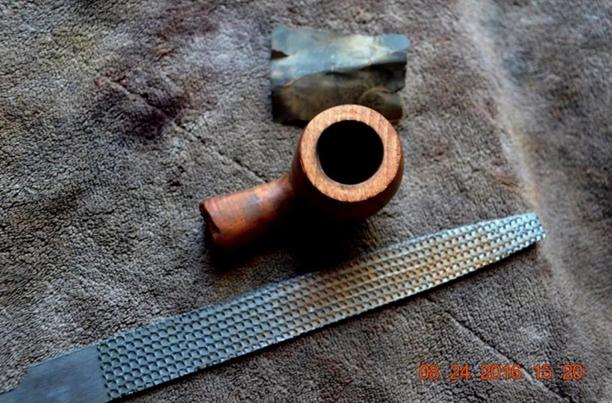
The last choice seemed the best way to go, and that’s what I did. Starting out with a couple of level but tentative strokes of a wood file, I succeeded in making the following beginning, which I later gave more depth. mas25I came across a surprising number of other Mastersen freehand restorations, and two of them recounted the same obliteration of the rim and chamber stuffed with carbon char. The common rim problem suggests to me a straight, shallow plateau that lends itself to being burned away by the average pipe enjoyer. I don’t know what to make of the mystery of the overflowing chambers. The two reviews of these pipes’ level of smoking quality are very high, one coming from a regular participant in an online pipe forum and the other from my friend Daryl. Given my run on inexplicable coincidences, maybe both Mastersens were smoked close to death by the same perp.
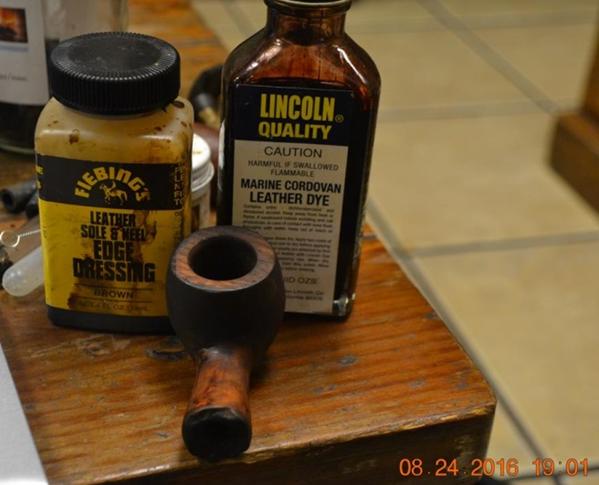
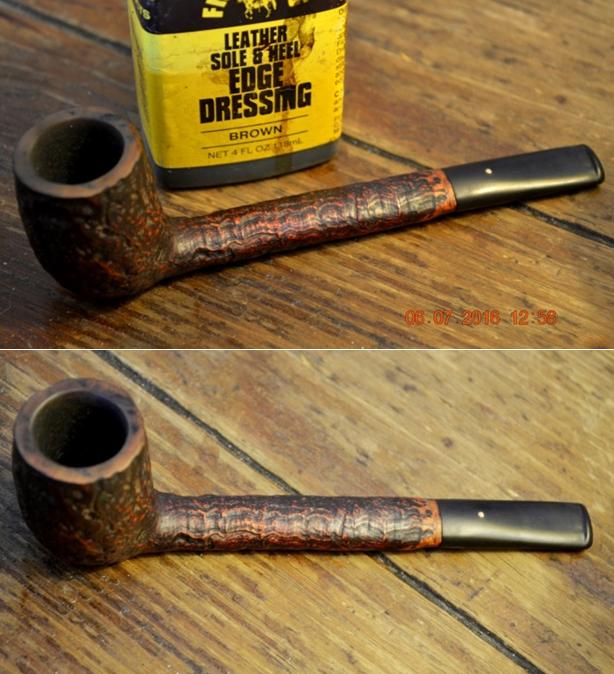
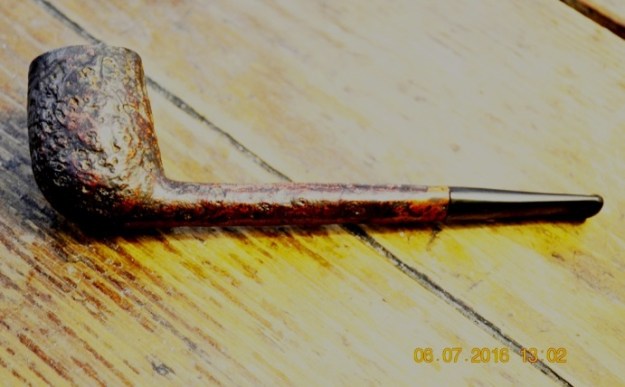
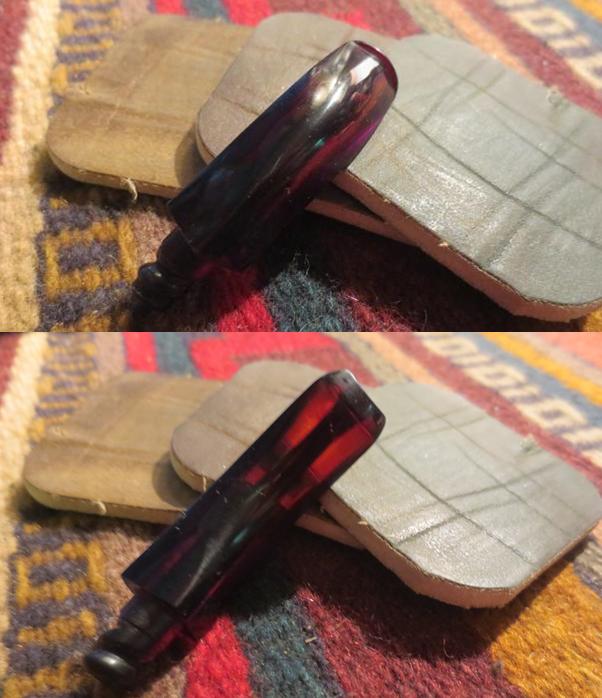
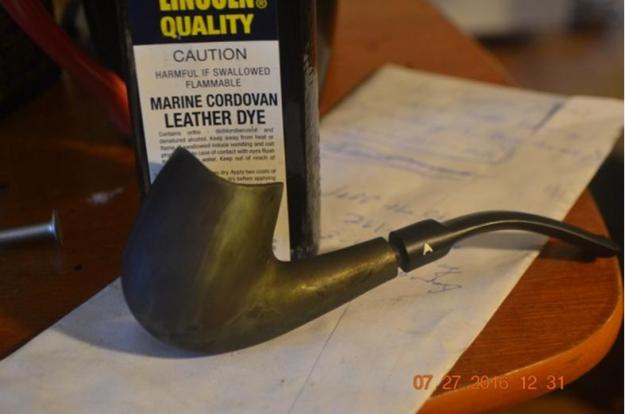
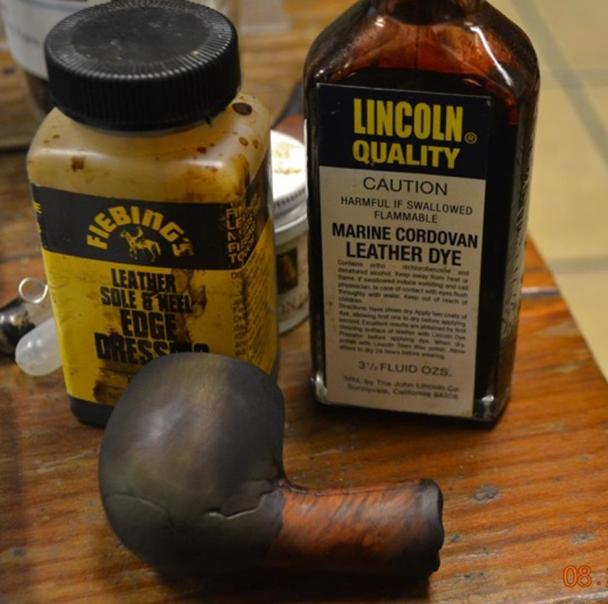
But on with the restore I must go. The beautiful briar needed a light stain, and I didn’t want to overdo that part of the task. The only problem was that I wanted the bowl to be a tad darker than the shank, and the darker stain I had was very dark, Lincoln Marine Cordovan (deep maroon) alcohol-based leather conditioner. Taking a wild chance, I used that on the bowl and rim and Fiebing’s Brown on the shank. I was surer than the first people to test the A-Bomb were with the risk they took that I could remove enough of the excess darkness from the bowl without scratching it. The scheme still must sound plain crazy. Anyway, after flaming out the alcohol with a Bic, I set it aside for 10 minutes. mas26 mas27The father of my best friend in high school used to wake up or snap out of a reverie, stretch, yawn and say, “Well, hell!” Those are the words that came to my very conscious mind as I chose 500-grit paper to begin eliminating the ash-like residue and over-darkness from the stain. mas29I applied Halcyon II wax and let it sit for 20 minutes before rubbing the stummel with the same soft cotton cloth shown above.mas30The next photos don’t quite show the subtle difference, but it is there, as I think the final shots will reveal. I was almost done, I thought. All that was left with the stummel was to make the color still lighter. Using the finest third of my micro mesh pads, I gave it a strong buff with 4000, 8000 and 12000, and even then resorted once more to the super fine steel wool. My rim work is clear here.mas31 mas32The stummel finished, I looked for the bit and remembered I had not yet built up the tenon that was too narrow to fit the Mastersen shank. With other more pressing business to tend, I did not begin that stage for another two days. When the other matters were caught up for the time being, I considered the discolored replacement bit and gave it an OxiClean bath with a scoopful from a new tub of the powdered detergent and bleach and removed the resulting crud that was leeched out of the Vulcanite/Ebonite with 320- and 220-grit paper. I also buffed with the full range of micro mesh. As a point of interest, did you know if you Google Ebonite, almost all of the links are to bowling balls? It seems that is now the primary material for the balls used by serious participants in that sport, as it can be given color. mas33 mas34I started the process of building up the tenon with Black Super Glue. This part took several more days. After the first layer, I added fine scrapings of Vulcanite from an old bit thrashed beyond hope of repair.mas35 mas36 mas37 mas38At last the two pieces of the puzzle fit together, and I connected them.mas39 mas40 mas41 mas42 mas43 mas44 mas45 mas46CONCLUSION
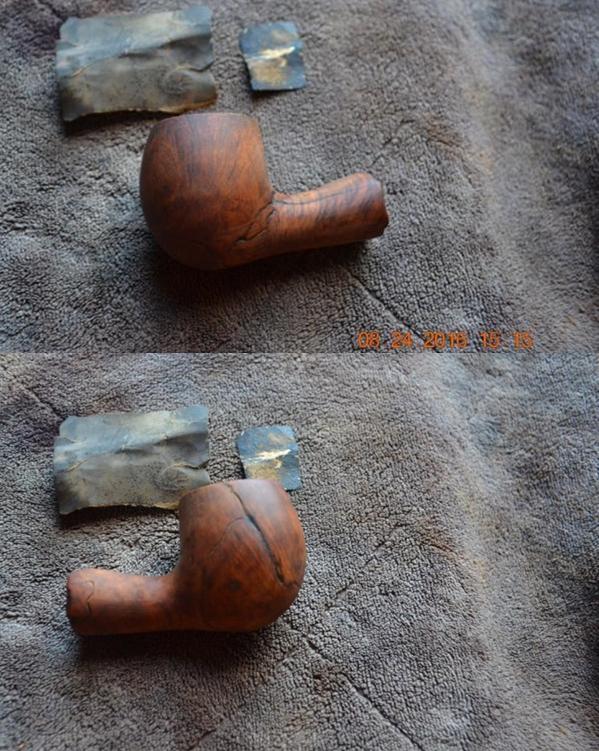
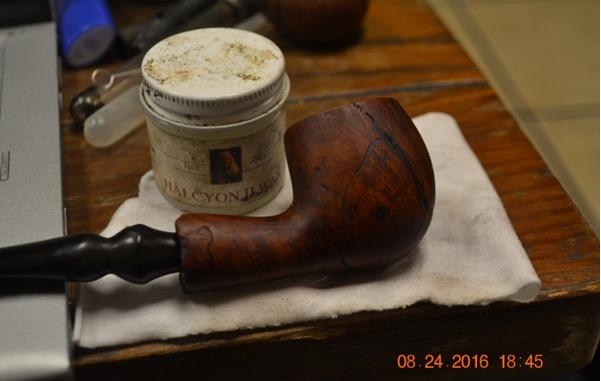
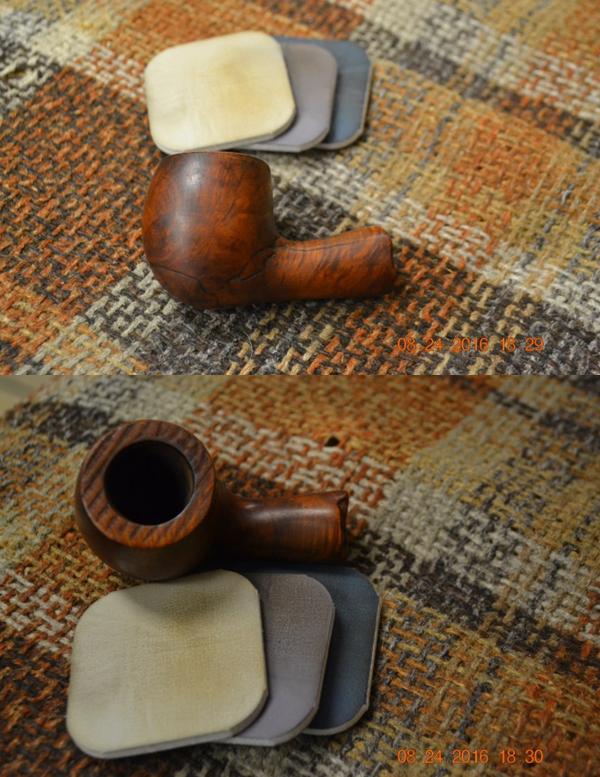
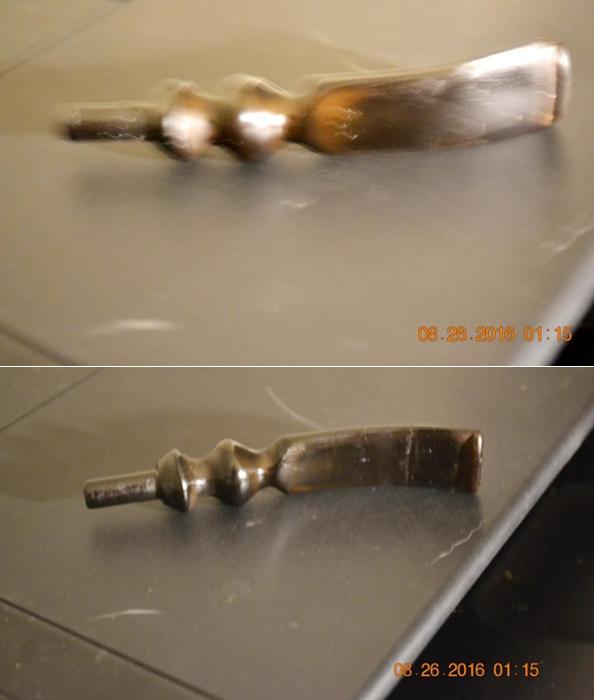
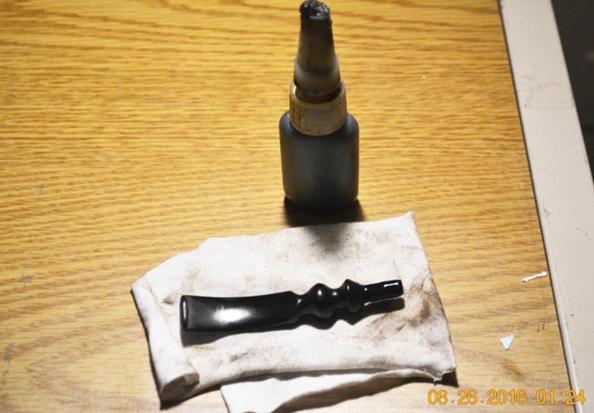
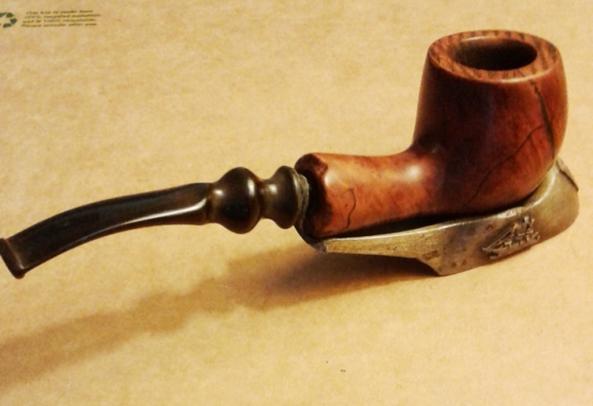
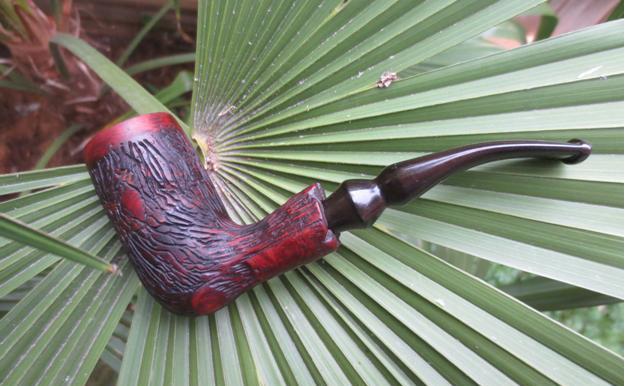
Although the grain does not have the same uniform, vertical tightness and the color is not as light as I hoped to achieve, I can say without hesitation the task was worth every bit of bewitchment, bother and bewilderment I encountered. But this seems like the perfect way to celebrate Labor Day, although this was a labor of love, not work.

But in all honesty I should add that Daryl’s recent fine acquisitions are beginning to get on my nerves.

SOURCES
http://articles.latimes.com/1991-04-17/news/vw-125_1_head-music
http://drgrabows.myfreeforum.org/archive/mastersen__o_t__t_502.html
http://www.pipephil.eu/logos/en/logo-m3.html
http://drgrabows.myfreeforum.org/viewtopic.php?t=502&start=0
http://piperestorer.com/home/318-masterson-freehand-made-in-israel.html
http://pipesmagazine.com/forums/topic/by-request-the-restoration-of-my-masterson-freehand
https://www.bowling.com/shopping/ebonite/bowling-balls?gclid=Cj0KEQjwr7S-BRD96_uw9JK8uNABEiQAujbffJTXbPGJnkV_ebKRiCbi6AG7xKzy_Nd0Q5G2OeTLs3gaAoV-8P8HAQ#all

What to do with a cracked bowl – Options for their repair


Blog by Steve Laug

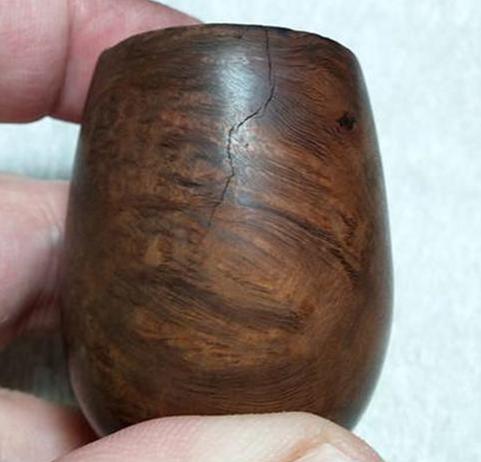
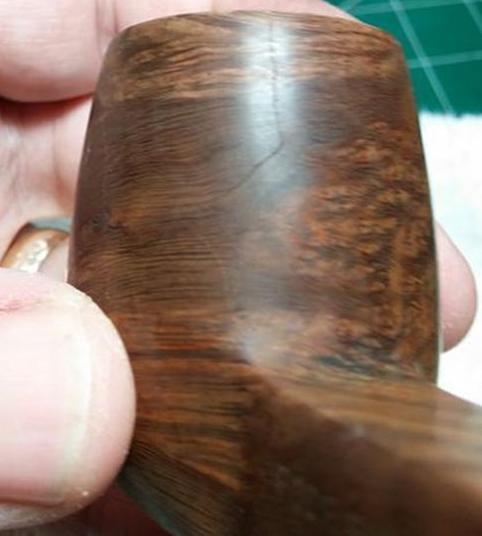
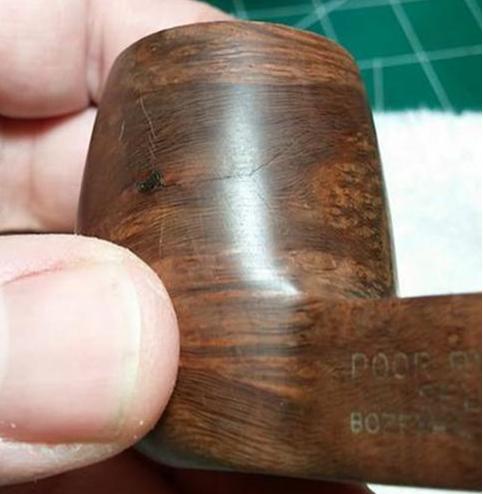
Often a pipe crosses my work table that has a dual attraction – it had obviously been someone’s favourite pipe or it was one that belonged to a loved one and it was severely damaged with a cracked bowl that provides a challenge. No one wants to throw away a pipe that is part of a family history and has deep personal stories attached. The cracked bowl can make that appear to be the only choice. However, it is not the only choice as there are other options. Each of these options has been used repeatedly by me or by one of the other writers on rebornpipes. They do work well and provide more years of service from a cracked pipe.

Method #1 The bowl can be shortened if the cracked portion is high enough on the bowl.

Method #2 A cracked bowl can be shortened and a new section can be spliced on top of the remaining bowl. The original height can be restored.

Method #3 The crack can be filled in and repaired with a mixture of briar dust and super glue that is used like putty. Others have used chimney repair/mortar repair mix or JB Weld to repair the cracks.

Method #4 The cracks can be stitched together with small pieces of wire set at angles to pull the crack back together.

In this blog I will explain each of these methods of dealing with cracked bowls. I will talk through the process of each of the four options and provide photos to illustrate the work. Each of the photos come from previous blog posts on rebornpipes.

Method #1 Shortening a cracked bowl. This is by far the easiest method of repairing a cracked bowl. I only use this method in cases where the crack is not long and the look of the bowl once I have removed the offending portion is still pleasing to the eye. I have received bowls that were cut off this way and were just too ugly to leave. (The photos that I am using on this repair came from a pipe purchased on eBay from the Dutchman. It was a Rhodesian that he had cut off and then sold the pipe as fully restored. It was not! I reshaped the pipe and reclaimed it.) My methodology is basic and straightforward.

1. Use a microdrill bit on a Dremel to drill a pin hole at the end of the crack. This stops the crack from spreading further.

2. Cut off the cracked portion of the bowl using a coping saw, table saw or band saw. I have even used a Dremel and sanding drum to bring it reasonably close to the finished height.
crack13. Top the newly cut off bowl to ensure that it is straight and smooth. Check it often in the process to make sure that things are straight.

4. Reshape the new top of the bowl either by hand or with the Dremel to give it a finished look that tapers upward from the bulging sides of the bowl. (This pipe took a lot of shaping work. The next three photos give different angles of the progress along the way.crack2crack35.  Sand out the scratches left behind by the Dremel sanding drum and fine tune the shaping of the bowl and rim with 220 grit sandpaper. I have found that this grit of sandpaper is very effective for shaping and leaves behind scratches that are easier to sand out than 180 grit or coarser grits. It still cuts away the excess but does not leave a lot of damage to the finish to repair.crack46. Sand the bowl with a medium and a fine grit sanding sponge. This will polish the briar and when you have finished with it you will see the scratches that have been left behind that require further attention.Crack57. Wipe the entire bowl and shank down with acetone to remove the finish on the lower portion of the bowl. It will also remove a lot of the stain that is present in that portion so that blending in the two areas of the bowl is easier to achieve.

8. I finish sanding the bowl with micromesh sanding pads – wet sanding it with 1500-2400 grit pads and dry sanding it with 3200-12000 grit pads. Each successive grit of micromesh sanding pad polishes the bowl more. The bowl is ultimately very smooth and the scratches that remain stand out and can be addressed by repeating the process noted in 5 and 6 above.crack69. Heat the bowl with a heat gun or blow dryer and stain it with an aniline based stain. The heated briar opens the pores so that the stain is taken in. I light the stain on fire with a lighter and it sets it in the grain.

10. If the stain is too dark, wipe it down with a cotton pad and alcohol.

11. Buff it with Blue Diamond and give it several coats of carnauba wax. Buff it with a clean buffing pad to raise the shine.Crack712. If you have done a good job reshaping the bowl it will look natural. Examples of this are a billiard that with shortening become a pot, an apple that with shortening becomes a prince… etc.

Method #2 Splicing two bowls together. A cracked bowl can be shortened and a new section can be spliced on top of the remaining bowl. The original height can be restored. This method is labor intensive and involves cutting the bowl off of a donor pipe that is junk and then working to fit it to the cut off base of a cracked bowl.

1. Cut of the cracked portion of the bowl and flatten the remaining base and shank on a topping board.

2. Cut off the donor bowl the same height as the cracked portion you removed from the other bowl. Don’t worry about diameter or finish at this point.crack83. Drill a series of microdrill holes in the base. These will go around the bowl centered in the briar that remains of the bowl walls.crack94. Cut off pieces of stiff metal or a paper clip. In this case I used small brads. These pieces need to be about 3/4 to 1 inch tall.

5. Set the wires in the drilled holes in the base of the pipe. They should stand straight up all around the bowl.

6. Set the cut off bowl on top of the wires and line up the front, back and sides. Push down on the bowl hard enough to mark the holes that need to be drilled on the cut off bowl but not too hard as you will bend the wires.

7. Remove the cut off bowl and microdrill the holes in that portion to match the bottom.

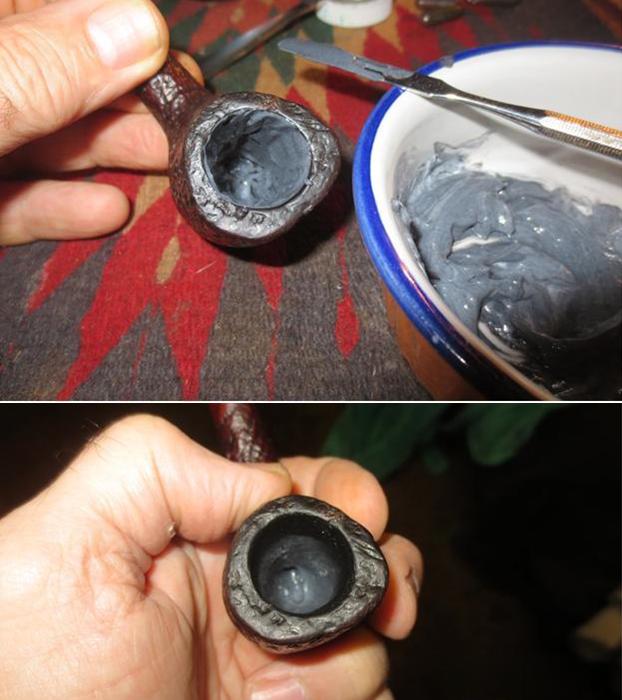
8. Super glue the pins or wires in place in the base. Once the glue sets put the top portion of the bowl on the pins. Do not push it into place at this point.crack109. Paint the surfaces of the both pieces of the bowl with a two-part epoxy and slowly press the top portion of the bowl onto the pins. Maneuver it until the bowl lines up on the bottom portion.crack1110. Let the epoxy cure. Then use a Dremel and sanding drum or a spade drill bit to even out the inside of the bowl. You want a clean fit of the bowl sides so that there is no ledge or shelf between to two halves.crack1211. Use a Dremel and sanding drum to reshape the bowl so that the parts align and the transition is smooth and the bowl looks natural. Fill in any gaps in the joint with super glue and briar dust.crack1312. At this point you have a choice. You can either rusticate the entire bowl or you can rusticate the joint of the two bowls.

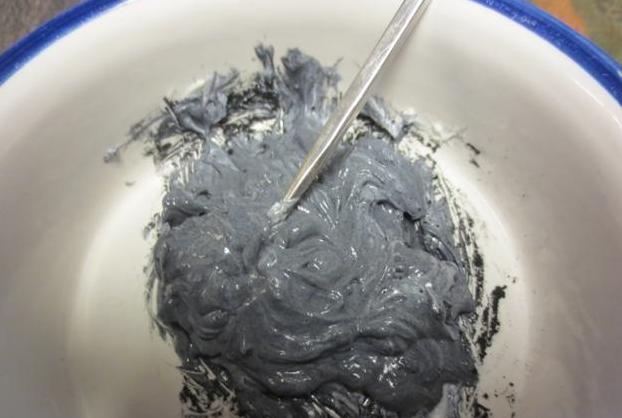
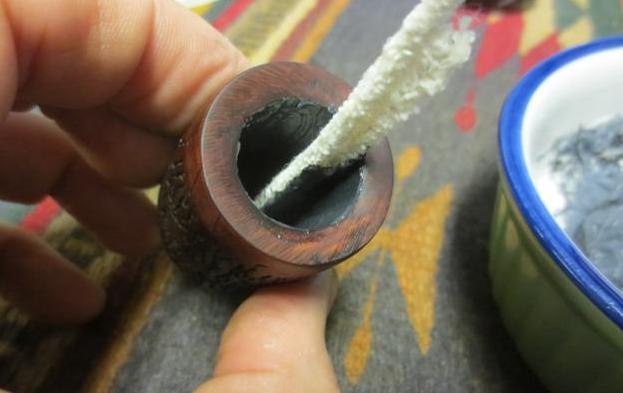
13. Mix a batch of bowl coating using charcoal powder and sour cream or plain yogurt. Stir them together until you get a charcoal grey paste. Paint the inside of the bowl with the mixture using a folded pipe cleaner. Make sure to smooth it out. Set the bowl aside to dry. Once it cures the inside is complete.crack14crack1514. Stain the bowl and rim to your own taste. If you rusticate it you can do a contrast between black and brown or even different browns to accentuate the grooves and smooth portions.crack16

Method #3 Filling the crack. The crack can be filled in and repaired with a mixture of briar dust and super glue that is used like putty. Others have used chimney repair/mortar repair mix or JB Weld to repair the cracks.

1. Drill a pin hole at the end of the crack to stop it from spreading further down the bowl or across the bowl.crack172. Clean out the crack in the bowl with a dental pick to remove the debris and any dust from the crack.

3. Press briar dust into the crack with a flat blade or a dental spatula. I use the dental pick to make sure that there are no air pockets in the dust.crack184. Some folks vary the slightly and mix the slow curing super glue and briar dust on a small jar lid and press the mixture into the crack. Personally I use the method I explained above and put the glue in afterwards. Both methods or variations will work.

5. Fill in the crack over the briar dust with clear super glue. I have found that this takes time and should be done slowly so as not to overdo.

6. Press more briar dust into the super glue to ensure that the crack is filled in.

7. Once the repair is cured I sand the patch with either a folded piece of 180 grit sandpaper or a Dremel and sanding drum. I sand it until it is even with the bowl sides. I love using this method on sandblast pipes as it is easy to blend the repair into the finish.crack198. Smooth out the sanded area with 220 grit sandpaper and then with micromesh sanding pads.

9. I use a stain pen or a black sharpie to stain the repair and then restain the entire bowl to blend in the patch with the bowl colour.crack20crack2110. Mix a batch of bowl coating using charcoal powder and sour cream or plain yogurt. Stir them together until you get a charcoal grey paste. Paint the inside of the bowl with the mixture using a folded pipe cleaner. Make sure to smooth it out. Set the bowl aside to dry. Once it cures the inside is complete.crack22
Method #4 Stitching the Cracks. The cracks can be stitched together with small pieces of wire set at angles to pull the crack back together. This method was used by Charles Lemon on a pipe we worked on together. The pipe traveled back and forth across Canada. Charles stitched the bowl together with brass wire. Here is his methodology. With this method I am giving more detail to explain the process.

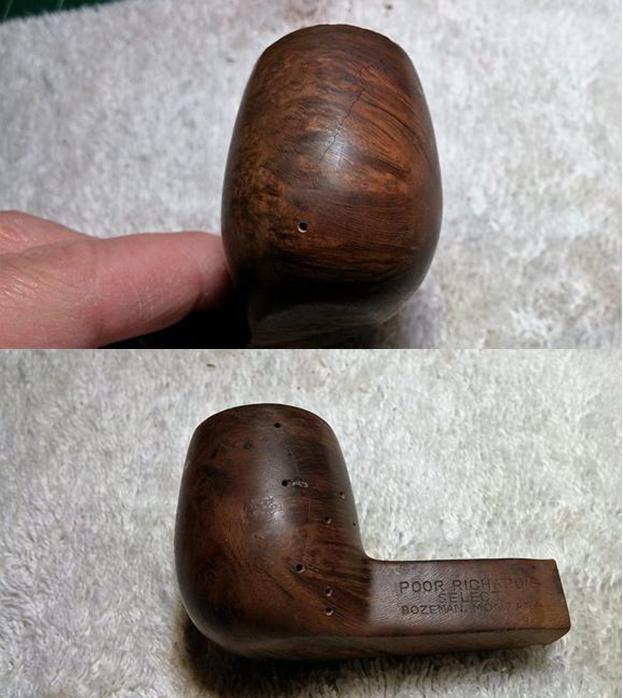
1. There were two major cracked areas at the front and back of the bowl. Both cut all the way through the chamber walls, all but slicing the bowl in half lengthwise. The front crack looked like a clean break running from the rim down the face of the bowl to the bottom of the tobacco chamber. The rear crack wasn’t as straightforward. Instead of a single linear crack, the damage at the rear started at the rim, dropped down to roughly the centre of the bowl, and took a sharp left as it sought out an old fill – a natural weak spot in the briar. From the fill the crack had “spidered”, with thinner cracks running up, down and across the bowl. The cracks could be visibly moved by squeezing and releasing the bowl. Without some way to lock the briar in position, the bowl would have to be retired.crack23crack24crack252. Drill a pin hole at the end of each of the cracks to ensure that the existing spider cracks did not run further into the briar. Be careful not to drill through to the tobacco chamber. These “end cap” holes would stop the cracks.crack263. In a bowl as seriously damaged as this one glue alone would not provide sufficient holding power to keep the cracks tight and immobile. There would need to be some sort of physical reinforcement of some kind to ensure that the bowl stayed in one piece after being placed back in service.

Charles and I took on this pipe as a challenge to a conversation we had had earlier regarding when or if a bowl was irreparable.

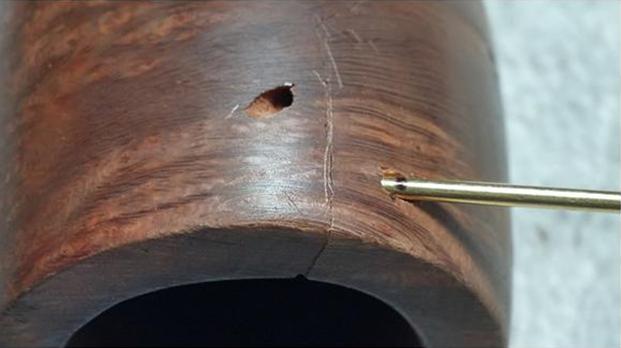
4. The cracks would have to be pinned using metal wire. In this case a length of 1.2mm brass rod did the trick. Match the diameter of the rod to a micro drill bit and drill pin shafts across the crack, through the curved walls of the bowl, without drilling into the chamber. These shafts only had one end and the pin would be inserted across the cracks.

5. The next close-up picture shows the flat angle of the drilling. A brass rod is in position to show how the process will work. The rod length was marked and then cut shorter so that when fully seated in the shaft, the outer end of the rod would be below the outer surface of the briar. The brass pin was roughened with 220-grit sandpaper to give the glue more gripping surface. Super glue was dripped into the shaft before pushing the pin home.crack276. The second shaft was at an angle relative to the first one – in the photo it is clear that it’s not even close to parallel. This is deliberate. Each pin was drilled at an opposing angle to its neighbours. Doing this assured that any movement of the briar as it heats and cools will be blocked by one or more pins. If the pins were parallel, pressure in the wrong direction could push the crack open again.

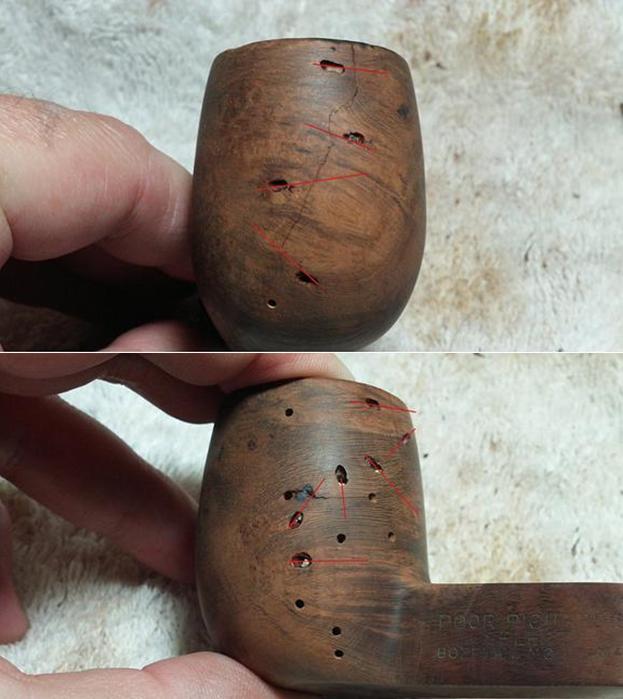
7. In all ten brass pins were installed – four in front and six in back – and seven end cap holes were drilled to stop the cracks (all but one of these in the back). The red lines in the photos below show the direction of the pin shafts. You can see how the pins work to stitch the crack shut. The front repair doesn’t look too bad, but the rear of the bowl looks like it was attacked by termites!crack288. With the pins in place the crack no longer moved. The lack of movement shows that the bowl was acting as a single piece of briar instead of several bits of loosely connected wood.

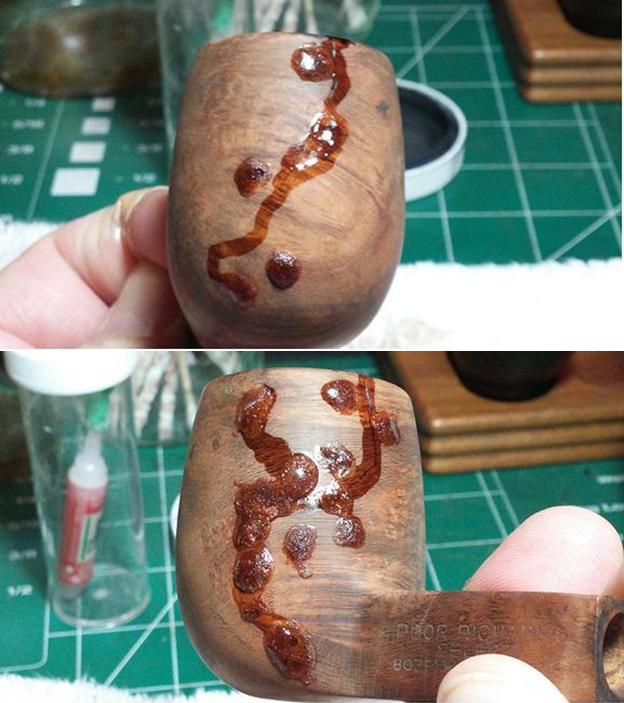
9. Patch the 17 end cap and the pin holes with super glue and briar dust as shown in the photos below.Crack2910. When the glue has cured in the fills, file and sand the patches until they are flush with the surface of the briar.crack3011. Sand the entire bowl with micromesh sanding pads to remove the scratches in the briar and further blend the repairs into the briar. The photo below shows the filled end cap and rod holes. They are smooth and flush with the briar.crack3112. At this point the bowl is ready to stain. The large number of repairs required a darker finish than would have originally been used on this pipe. In this case the stain undercoat was Fiebing’s Black water-based leather dye. This was used to bring out the grain. When that coat had dried the bowl was polished with 0000 steel wool and water. This left the grain stained black while the rest of the wood remained lighter. The second stain coat was a wash of Fiebing’s Dark Brown stain diluted about 50% with alcohol that was used as a wash over the briar repeatedly until the coverage was good. After that coat had dried a medium stain pen was used over the repaired fills to help push them to the background without obliterating the grain altogether.

13. Buff the pipe with White Diamond on the buffing wheel and give it multiple coats of carnauba wax. Buff lightly with a clean buffing pad to give the pipe a shine. In the photo below you will note that the fills and cracks have disappeared almost completely. The stain is translucent enough to allow the grain to shine through. The cracks across the rim are hard to find. The repairs are still visible under strong light, but the repair passes the casual inspection test.crack3214. To further stabilize the repair JB Weld was pressed into the cracks on the inside of the bowl. After the JB Weld had cured sand out the excess. The idea is to only leave the JB Weld in cracks themselves and leave behind smooth chamber walls.crack3315. Mix a bowl coating of either the kind described in the other methods above or the one that Charles used on this pipe. He mixed activated charcoal powder and maple syrup. He coated the walls with the syrup and then packed the bowl with charcoal powder. Once dry dump out the excess powder. The coating provides an extra layer of protection for the repairs as well as a consistent surface upon which to build a new layer of cake.crack3416. Wipe down the bowl exterior and let the interior cure.

17. The photo below shows the repaired rim and the repaired interior with the bowl coating. The pipe was finished.crack35crack36
In all of the methods used the repaired pipes have been repeatedly smoked since the repair was made and there is no sign of cracking continuing or spreading. Each bowl has begun to build up cake and the pipes are serving well in delivering a cool dry smoke. The old battered and repaired pipe has a restored dignity and will last for more years to come.

A Reborn KBB Yello-Bole 2329 Billiard


Blog by Steve Laug

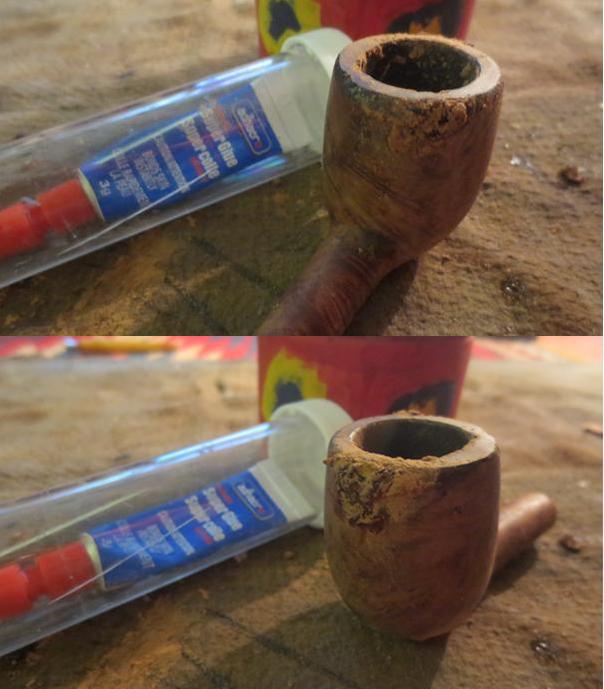
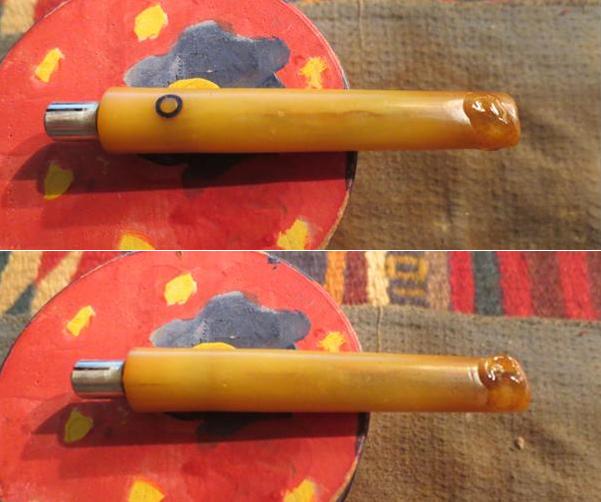
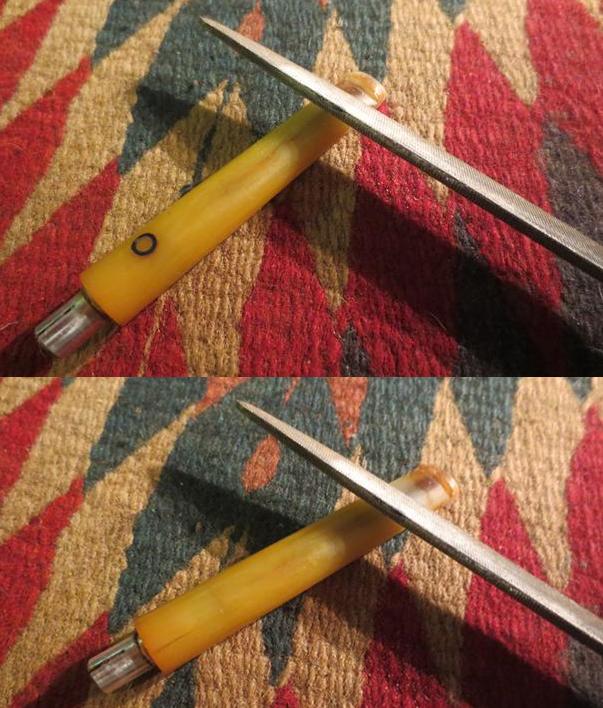
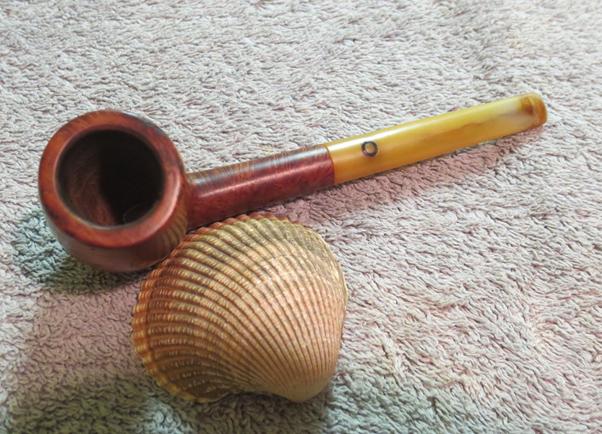
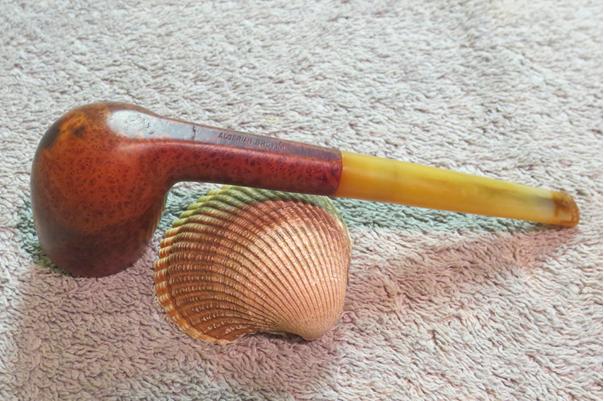
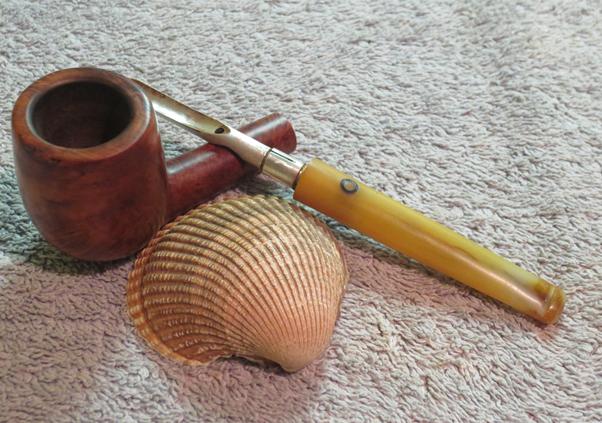
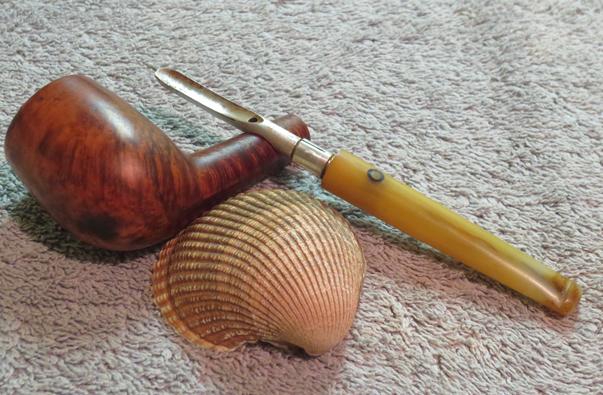
I really like older KBB Yello-Bole pipes. The initial look of this one as it is seen in the first two photos confirms that. There is something about the grain, the briar that is used and the natural patina that comes with years of use that draw me to them. The yellow stem with the inset circle is attractive as well. The Yello-Bole spade stinger that extends into the bowl bottom does not restrict the draw. I had hopes that this one would be in decent shape when my brother sent me the photos below. He had mentioned that the rim was in rough shape and the stem had a lot of bite and tooth marks but the photos did not clearly show that to me.Bowl Bowl1He did his usual stellar job in cleaning up the bowl and stem. The briar and the internals were clean when it arrived. Only then did I see the extent of the rim damage to this one. If you look carefully at the photos you can see how rough the rim top and sides are. You can also see the deep tooth marks on the yellow stem. The stamping on the pipe read KBB in the usual cloverleaf on the left side of the shank with Yello-Bole next to that. The shape number 2329 was on the right side of the shank. All stamping was faint but legible with a lens.Bowl2 Bowl3I took the stem off the bowl and found that the stinger was stuck in the tenon. On these older Yello-Boles the stinger is often threaded rather than pressure fit. I heated the stinger with a lighter and soon I was able to unscrew it from the tenon using some needle nose pliers.Bowl4I took close up photos of the rim and the tooth marks on both sides of the stem. The first photo below shows the extensive damage to the top of the rim. It looked as if the pipe had been used as a hammer. The rough spot on the front of the bowl went down quite far down the outside edge of the bowl. On the back right side of the bowl there was also a deep nick down the side of the bowl. The bowl would need to be topped but the depth of the gouges made it necessary to think of other options along with topping.Bowl5The top and bottom sides of the stem next to the button were imposing. The stem had been deeply gnawed on by the previous pipe smoker. The dents were deep and extensive across both sides of the stem almost obliterating the button from view.Bowl6This was one of those hard ones. The stamping is faint and the amount of work necessary to bring it back to life was questionable. But I decided I liked the look of it enough to go for it. I topped the bowl on the topping board to smooth out the top surface of the rim. This still left a lot of work to do on the gouges down the front and back sides of the bowl. I pressed briar dust into the gouges on the side and top of the bowl and put some clear super glue on top of the briar dust. I put more briar dust on top of the glue to fill in the gouges.Bowl7 Bowl8I filled in the deep tooth marks on both sides of the stem and set it on a small wooden lid to dry. I knew that in sanding the stem after the repairs I would lose some of the rich golden colour but the stem would actually be very usable.Bowl10Once the repair dry I used a needle file to recut the button and flatten the repairs to the surface of the stem.Bowl11I cleaned out the airway in the stem and in the shank with pipe cleaners, cotton swabs and alcohol. You can also see the lightning of the yellow stem at the repair.Bowl12I polished the stem with micromesh sanding pads – wet sanding with 1500-2400 grit pads and dry sanding with 3200-12000 grit pads. I rubbed the stem down with Obsidian Oil after each set of three pads. With the final rub down with oil I set the stem aside to dry.Bowl13 Bowl14 Bowl15I wiped the bowl down with acetone on cotton pads to clean off the remnants of the finish. There was still some finish and varnish on the underside of the shank that needed to be removed. I was careful to not wash off the repairs as the acetone will dissolve the super glue patches.Bowl16Interestingly the bottom of the shank is stamped Algerian Briar. There appears to be a crack or repair on the underside of the shank but it is not it is merely a large scratch that I was able to sand out.Bowl17I polished the briar bowl with micromesh sanding pads – wet sanding it with 1500-2400 and dry sanding it with 3200-12000. Each successive grit of micromesh pads raised the level of shine on the bowl.Bowl18 Bowl19After polishing it with the micromesh pads I took some photos to show the state of the bowl.Bowl20 Bowl21I touched up the stain with a medium brown stain pen on the repaired areas on the rim to blend them into the surface of the briar. I buffed the pipe and stem with Blue Diamond on the buffing wheel and then gave the pipe multiple coats of carnauba wax. I buffed it with a clean buffing pad and then buffed it by hand with a microfibre cloth to deepen the shine. The finished pipe is shown in the photos below. I chose to leave the darkened spot on the bottom of the bowl. I sanded it and found that it was more of stain than a burn mark. The wood is solid in that spot and there is no sign of burn through inside the bowl. Thanks for looking.Bowl22 Bowl23 Bowl24 Bowl25 Bowl26 Bowl27 Bowl28 Bowl29

I love the shape of this Comoy’s Regent’s Park London Made Canted Volcano


Blog by Steve Laug

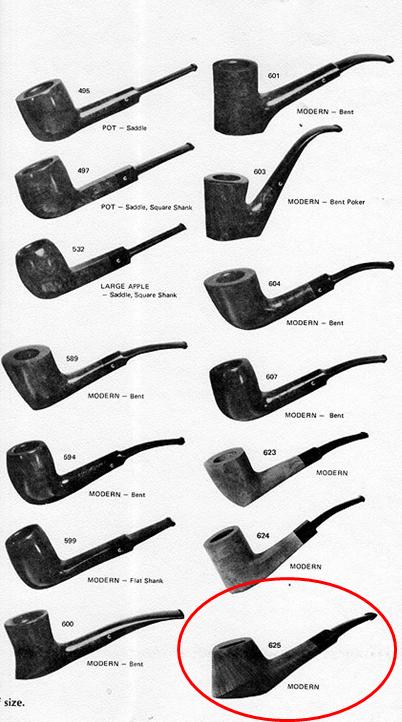
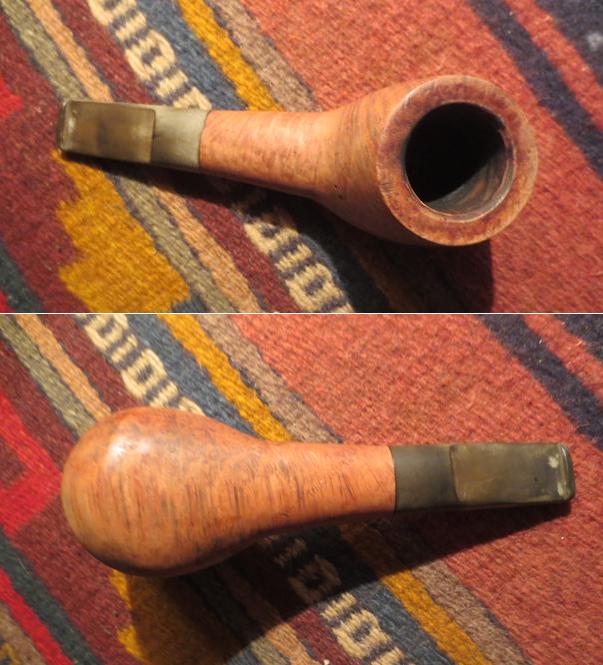
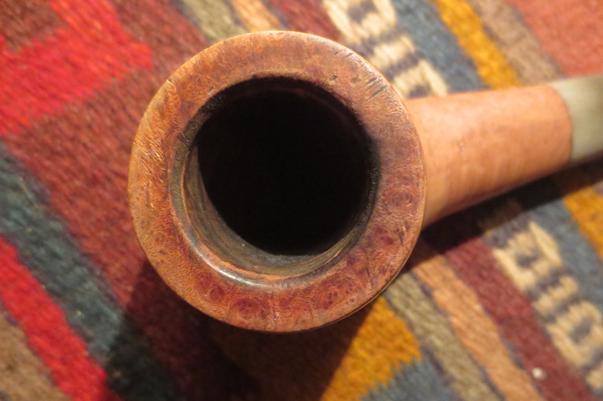
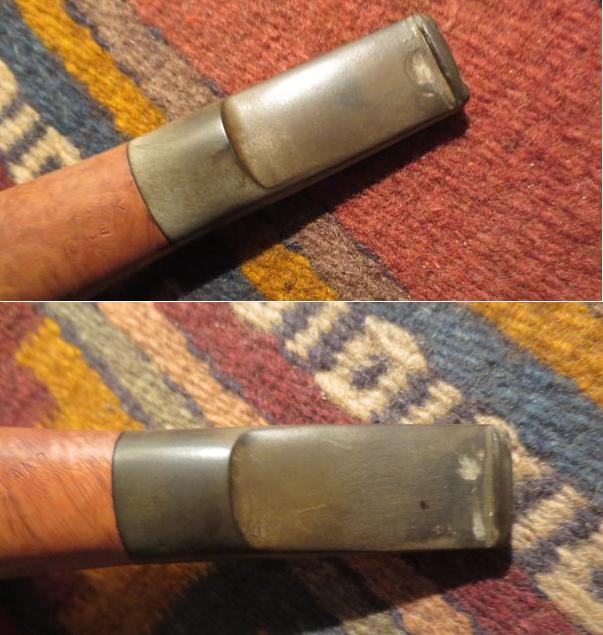
This pipe takes advantage of the grain to the maximum. The shape has flame, mixed and stunning birdseye on the sides, top and bottom of both the bowl and the shank. This is another of the pipes that my brother Jeff found. The stamping is faint but readable with a lens. It is stamped on top of the shank with the words Regent’s Park over London Made. On the underside of the shank stamped diagonally from front to back it reads Made in England. From the photos that Jeff set me the pipe was in decent shape. The finish was spotty and dirty. The rim was clean and undamaged with a light and spotty lava coat. Comoy1The stem was lightly oxidized and there was a deep and large tooth mark on the top side near the button. I have learned that there is usually a match to that on the underside of the stem. The canted volcano shape is very nice. In the photo below it appears that there were some small pin prick fills on the back side of the bowl just above the shank.Comoy2From what I can find online the pipe is made by Comoy’s. They made the Hyde Park brand and it appears they also made the Regent’s Park brand – both which are Comoy’s seconds and are named after London Parks. I found this Comoy’s Shape Chart on-line which shows the pipe as a Modern 625. I have circled it in red – it is shown on the bottom of the right column, last pipe.Comoy3As usual now, my brother did a stellar job cleaning up the pipe before he sent it to me. He reamed it and scrubbed the exterior with Murphy’s Oil Soap so the finish was very clean. He cleaned out the internals as well. The pipe was ready for me to work on the finish and stem repairs when I received it. The next four photos show what the pipe looked like when it arrived to my work table.Comoy4 Comoy5I took a close up photo of the rim to show the slight damage – almost cut marks on the top of the rim surface. The inner and outer edge of the rim is fairly undamaged though so it will not take much to clean up this rim. I also took close up photos of the stem to show the large bite/tooth marks on the top and bottom sides near the button.Comoy6 Comoy7I cleaned up the tooth marks with sandpaper, a dental pick and alcohol. I filled in the deep dents with black super glue and let it cure. I forgot to take photos of the repairs before I sanded them out. Once the glue had cured I sanded both sides of the stem with 220 grit sandpaper to smooth out the repair to match the surface of the rest of the stem.Comoy8I also filled the pin holes in the back side of the bowl with clear super glue and briar dust. Again I forgot to take a photo of the glue and dust mixture. Once it dried I sanded the bowl with 220 grit sandpaper and blended the repairs into the surface of the briar. The surface was smooth to touch .Comoy9I sanded the slash marks on the rim with 220 grit sandpaper to minimize them. It did not take too much sanding to remove them. I also sanded the inner beveled edge of the rim to clean it up and remove the darkening.Comoy10I sanded the bowl and rim with a medium and a fine grit sanding block. I worked to remove the scratching left behind by the 220 grit sandpaper. I carefully avoided the areas on the shank that held the already faint stamping.Comoy11 Comoy12I sanded the stem with the sanding block as well.Comoy13I wet sanded the stem with 1500-2400 grit micromesh sanding pads and rubbed it down with Obsidian Oil. I dry sanded it with 3200-4000 grit pads and gave it another coat of oil. I finished sanding it with 6000-12000 grit pads, gave it a final coat of Obsidian Oil and set it aside to dry.Comoy14There were some scratches on the top of the stem. I would need to work on them some more at this point.Comoy14a Comoy14bOnce I buffed the stem with Blue Diamond the scratches would be blended into the stem surface. I gave the bowl a coat of Danish Oil and Cherry Stain to highlight the red of the briar. I set it aside to dry for about twenty minutes.Comoy15I wiped the bowl off with a soft cloth and hand buffed it lightly to get a clear picture of the finish and the grain on the bowl.Comoy16 Comoy17I polished the bowl and stem with Blue Diamond on the buffing wheel. I buffed out the scratches in the stem and the briar. I gave the bowl and stem multiple coats of carnauba wax to protect it. I buffed it with a clean buffing wheel to raise the shine. I hand buffed the pipe with a microfibre cloth to deepen the shine. The finished pipe is shown in the photos below.Comoy19 Comoy20 Comoy21 Comoy22 Comoy23 Comoy24 Comoy25

A Cased Bakelite Manhattan with a Lockrite Stem


Blog by Steve Laug

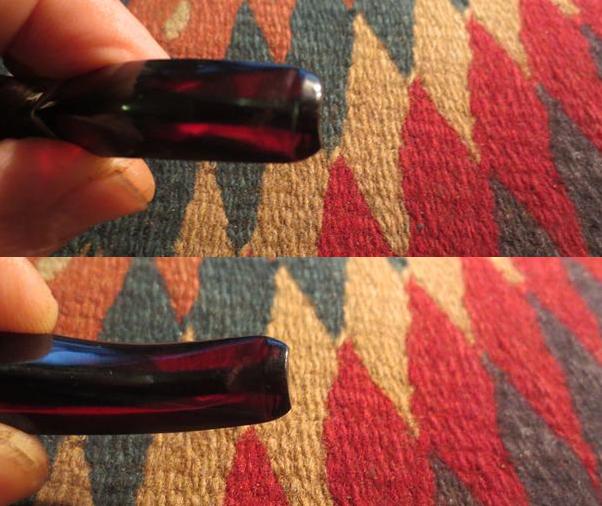
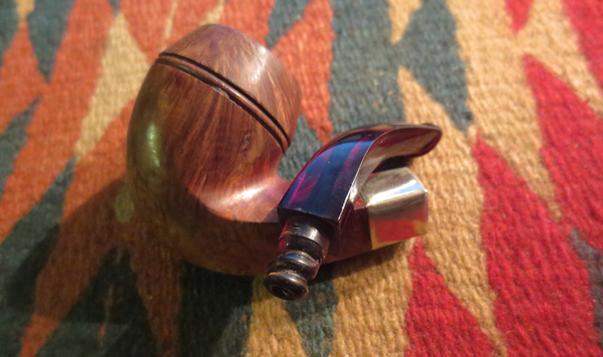
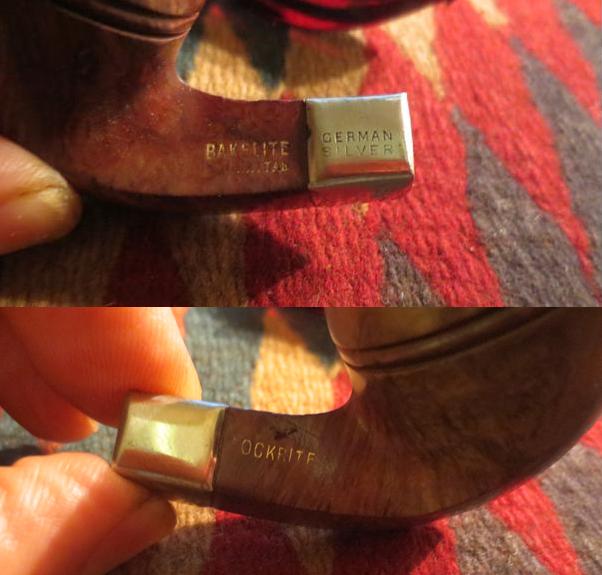
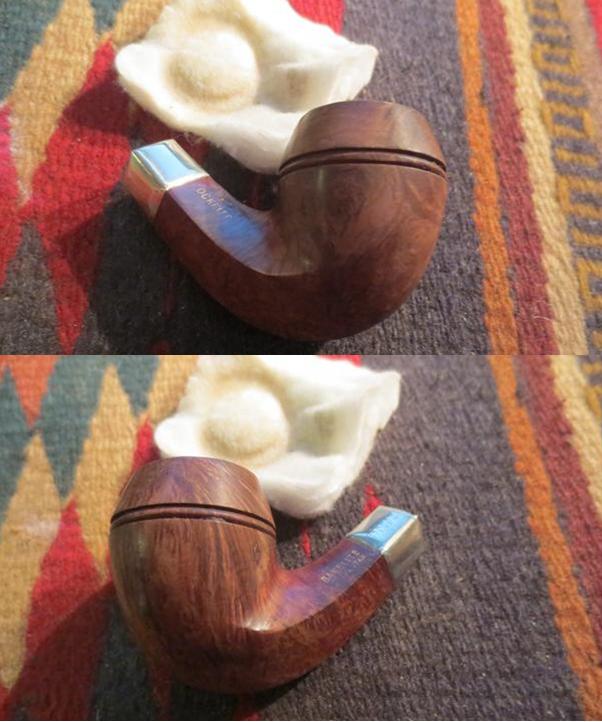
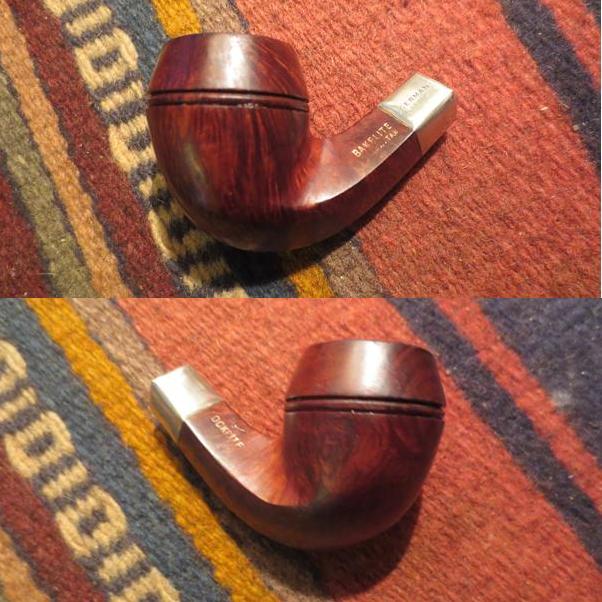
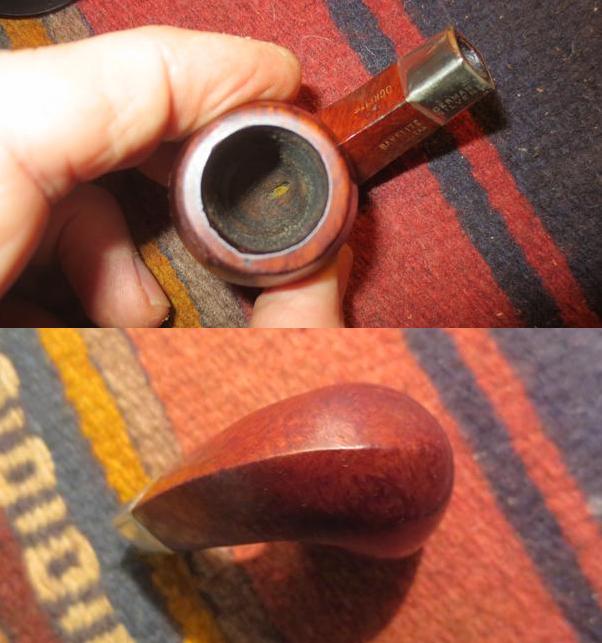
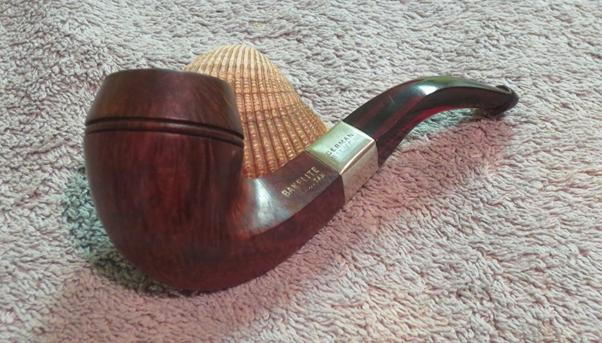
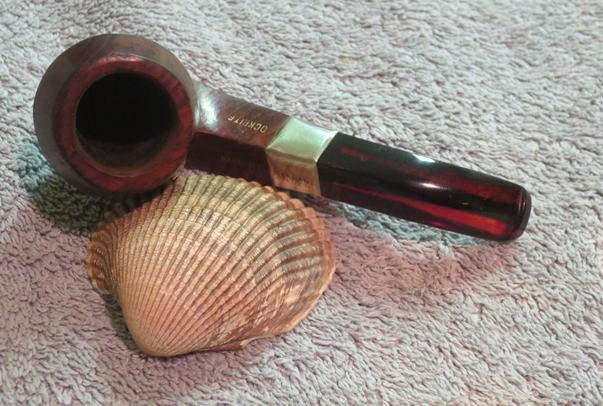
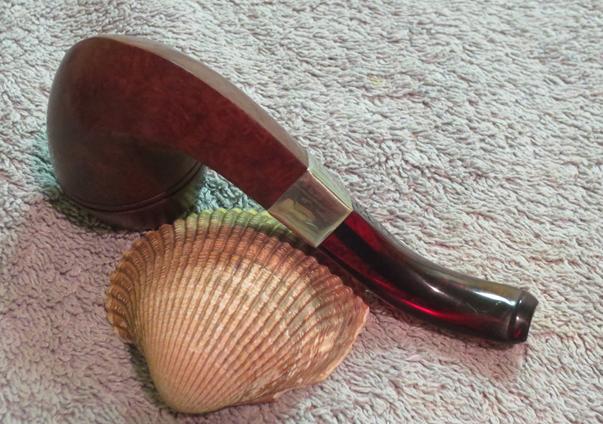
I am always on the lookout for older CPF or WDC cased pipes. I bid on them when I get the chance and I used to win many more of them than I do now. They seem to have not only become more popular than they used to be but are also commanding higher prices. I was showing my brother some of them and asked him to keep an eye for them as well. He came across this little cased pipe. It looks like both the CPF and the WDC pipes and probably comes from the same era. The case has a label that reads Bakelite on it and it sits in the lid of the case over the stem. The pipe itself is stamped BAKELITE over MANHATTAN on the left side of the shank and is filled with a gold foil or paint. The right side of the stem also has a gold foil stamp that reads LOCKRITE. The band on the shank is stamped GERMAN SILVER.Bake1The pipe appeared to be barely used. There was some darkening on the rim and some light cake on the top part of the bowl. The bottom of the bowl was like new. The finish was dirty and the varnish coat had some wear and tear. The gold leaf stamping on the shank was worn on the second line on the left side. The German Silver band was lightly tarnished and had some scratches. The Bakelite stem had deep tooth marks on the top and underside of the stem at the button. The Lockrite stamping on the right side of the shank referred to the newly designed tenon system that took care of the perpetual over clocking that occurred with a bone tenon.Bake2My brother Jeff scrubbed the surface of bowl being careful around the gold stamping on the shank. He cleaned out the bowl and the mortise areas and the airway in the stem. When he sent it to me it was very clean. I took photos of the pipe when it arrived to my work table. The first two photos show the case and the first view of the pipe when I opened it.Bake3I lifted it from the case and took a photo of the pipe looking down at it from the top. The rim looks excellent from this view.Bake4The next four photos show the pipe apart from the case. The finish is clean but the twin rings around the bowl cap are dirty. The silver is lightly tarnished and the gold stamping is light on the left and the right sides. You can see the tooth mark on the stem in the last photo of the underside of the pipe and stem.Bake5 Bake6I took a close up photos of the rim and the stem to show the state of both. The rim looked very good though there was some scratching. The stem had deep tooth marks on both sides though it was hard to capture them with the deep red of the Bakelite stem.Bake7 Bake8I took a photo of the newly designed Lockrite tenon on this pipe. It is extremely well designed and worked well to keep the stem aligned with the shank.Bake9The next two photos show the stamping on the shank. The left side reads BAKELITE over MANHATTAN as mentioned above and the right side reads LOCKRITE.Bake10I wiped down the bowl and shank with acetone and cotton pads to remove the remnants of varnish. I was careful to not damage the gold stamping.Bake11 Bake12I used the dental pick to clean out the tooth marks and wiped the stem down with an alcohol dampened cotton pad. I filled the tooth marks with clear super glue.Bake13Once the glue dried I sanded the surface of the repairs with 220 grit sandpaper to smooth out the repairs to match the surface of the Bakelite stem.Bake14With the tooth marks repaired and smoothed out it was time to polish the stem with micromesh sanding pads. I wet sanded the stem with 1500-2400 grit sanding pads and rubbed it down with Obsidian Oil. I dry sanded with 3200-4000 grit pads and gave it another coat of oil. I finished sanding it with 6000-12000 grit pads and gave it a final coat of Obsidian Oil. I set the stem aside to dry.Bake15 Bake16 Bake17I stained the bowl with a Danish Oil and Cherry stain. I let it dry for about 20 minutes before rubbing the bowl down with a soft cloth.Bake18After rubbing it down with a soft cloth I took the following photos of the bowl. The grain on this one is also very pretty. Some of these older pipes were made of really nice briar.Bake19 Bake20I waxed the bowl twice with Conservator’s Wax and hand buffed it once it had dried. I polished the German Silver band with 6000-12000 grit micromesh sanding pads and also with a jeweler’s silver polishing cloth.Bake21I lightly buffed the bowl and stem with Blue Diamond on the wheel. You have to be careful buffing the Bakelite as the heat of the buffer will melt the stem and make more work for you. I gave the bowl and stem several coats of carnauba wax and lightly buffed it with a clean buffing pad to raise the shine. I hand buffed it with a microfibre cloth to deepen the shine. The finished pipe is shown in the photos below. It is really a beauty. Thanks for looking.Bake22 Bake23 Bake24 Bake25 Bake26 Bake27 Bake28

A 9438 Rhodesian Stamped Tobacco Town


Blog by Steve Laug

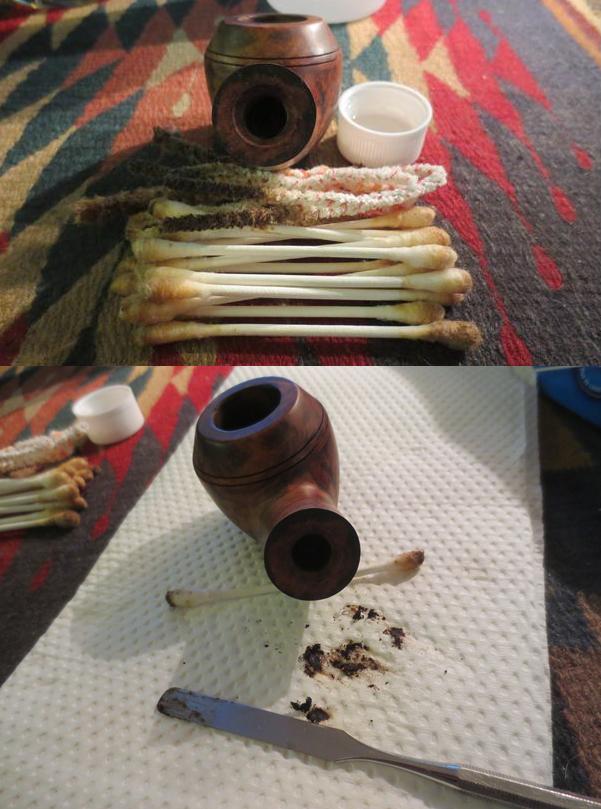
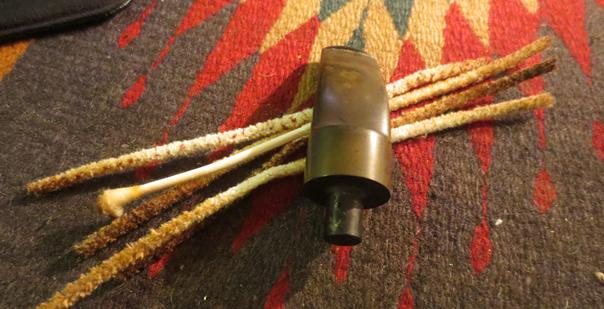
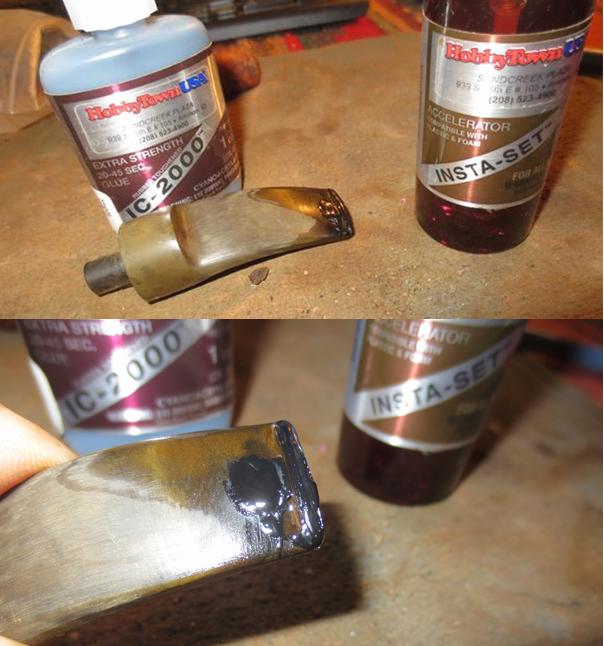
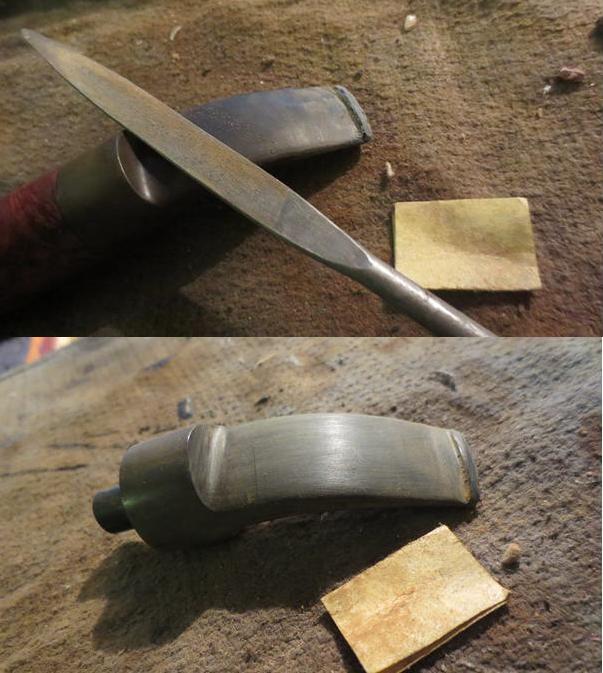
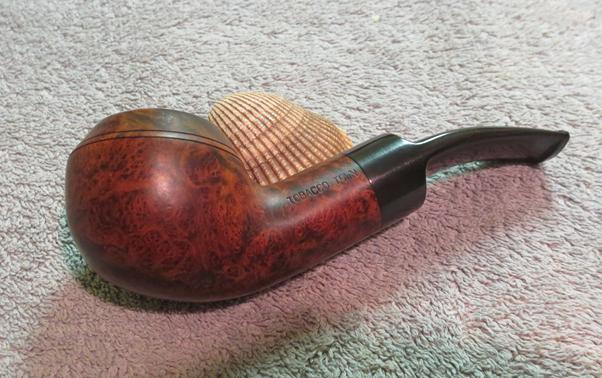
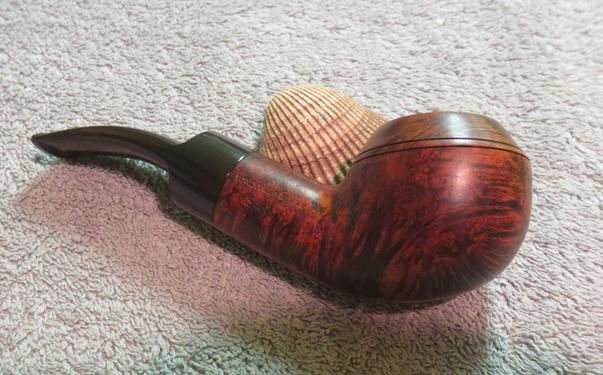
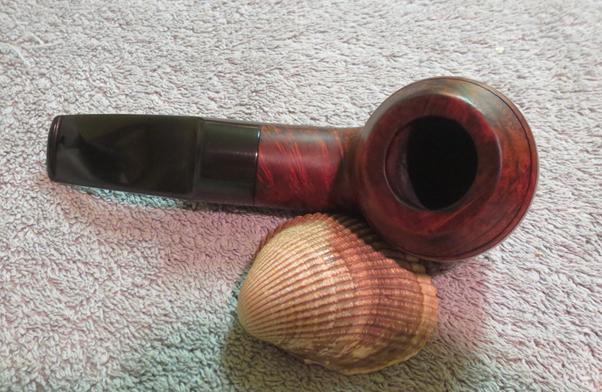
This is one of my favourite pipe shapes – the classic GBD 9438. There is just something about the way the lines flow and the way the pipe sits in the hand that make this an all-time favourite from me. This one is somewhat unique in that though it bears the London England over 9438 stamp on the right side of the shank on the left side it is stamped Tobacco Town. The stem bears no GBD roundel but it is definitely the original stem. The finish is dark and the briar has some amazing grain. Tobacco Town is a chain of tobacco shops in the Northwestern United States and it also is the name of a few shops across the Southwest and the Midwest. Here is a link to the shops in Portland, Oregon:  http://tobaccotown.com/. I think that because of the wide use of the name that identifying the shop that had this line of pipes made for them by GBD will not be possible. The two photos below show the pipe as it was when my brother received it.GBD1The rim had a heavy tar buildup with the cake overflowing the bowl onto the rim top. The twin rings around the cap on the bowl also were filled with dust and debris. The stem was oxidized and there were some deep tooth marks on the top and underside near the button. The topside of the button was worn thinner than the underside and there were some tooth marks on it as well.GBD2My brother Jeff has developed his own cleaning regimen that really delivers a clean pipe to me. By the time I receive it the bowl has been reamed and the finish scrubbed clean with no dirt or debris in the rings. The stem was clean and the damaged areas very visible. The rim top was free of the lava overflow but still was slightly darkened. The next set of four photos show what the pipe looked like when I started working on it.GBD3 GBD4Before I began my work I took a close up photo of the rim top and the bite marks on the top and bottom of the stem near the button. The rim had the majority of the tars removed but under the bright light I could see some residual stubborn bits. The inner edge of the rim also had some damage from what looked like someone’s reaming the bowl with a knife. I have circled the bite marks in the photos of the stem surfaces with a red circle to clearly identify the issues there.GBD5 GBD6I scrubbed the exterior of the bowl and the rim with acetone on cotton pads to try to remove more of the residue on the rim and to remove some of the darker spots of stain on the bowl. I wanted the grain to really stand out.GBD7 GBD8I worked on minimizing the damage to the inner edge of the rim by sanding it with a folded piece of 220 grit sandpaper.GBD9I decided to lightly top the bowl to remove the stubborn residue that remained and to lighten the smoke darkened rim at the back of the bowl.GBD10I noticed that the inside of the shank had been stained with the same brown stain as the exterior of the bowl so I scrubbed it out with cotton swabs, pipe cleaners and alcohol. I was able to remove the stain. As I scrubbed it I notice that against the end of the mortise there were still some tars that kept coming out with the cotton swabs. I used a dental spatula to scrape the end of the mortise to remove these hardened tars. They are visible on the paper towel in the second photo below. I followed that up by swabbing out the mortise with cotton swabs and alcohol. I also scrubbed the airway in the stem. There was some debris trapped in the slot in the button that I worked out with a dental pick.GBD11 GBD12I wiped the exterior of the stem down with alcohol on a cotton pad and worked on the tooth dents to make sure the surface was clean. I used a dental pick to apply the black super glue to the dents on both sides of the stem and sprayed the glue with accelerator. I followed up with applying a second layer of the glue to fill in the air bubbles on the surface that seem to always follow using the accelerator and set the stem aside to dry.GBD13When the glue had cured I used a flat blade needle file to smooth out the patch to the surface of the stem and to recut and reshape the button. I sanded the repair with 220 grit sandpaper and then refiled it with the needle file.GBD14 GBD16I polished the stem with micromesh sanding pads using my normal routine – wet sanding with 1500-2400 grit pads and dry sanding with 3200-12000 grit pads. I rubbed the stem down between each set of three pads with Obsidian Oil. I gave the stem a final coat of oil and set it aside to dry.GBD17 GBD18 GBD19I rubbed the bowl down with Watco Danish Oil with Cherry stain and let it dry for about 30 minutes. After 30 minutes I rubbed the bowl down with a soft flannel cloth.GBD20I buffed the bowl and the stem with Blue Diamond on the buffing wheel and then gave the pipe multiple coats of carnauba wax. I buffed it with a clean buffing pad to raise the shine. I hand buffed it with a microfibre cloth to deepen the shine. This is one of my favourite shaped both in terms of the shape and the hand feel of the bowl. The red colours that are highlighted by the cherry stain show the grain beautifully. Thanks for looking.GBD22 GBD23 GBD24 GBD25 GBD26 GBD27 GBD28


The Big Sleeplessness


Guest Blog by Robert M. Boughton

Member, International Society of Codgers
Member, North American Society of Pipe Collectors
http://www.naspc.org
http://www.roadrunnerpipes21.biz  under construction
http://about.me/boughtonrobert
Photos © the Author except as noted

NOTE: ALL BUT ONE TITLE OF RAYMOND CHANDLER’S NOVELS ARE INCLUDED WITHIN THE TEXT OF THIS BLOG, THE MISSING ONE BEING IN NO WAY VIABLE WITHOUT BECOMING RIDICULOUS.  I HAVE ALSO ADDED CERTAIN LESS OBVIOUS REFERENCES FROM THE GREAT NOVEL.  I WANT TO BE THE FIRST TO POINT OUT THAT THIS SINCERE HOMAGE IS NEVERTHELESS WANTING.  AS PARTIAL COMPENSATION, I OFFER THE PIPE THAT IS THE SUBJECT OF THE RESTORATION – FREE, NO GIMMICKS OR POSTAGE – TO THE FIRST READER WHO IDENTIFIES THE MOST TITLES AND OTHER ASSOCIATIONS.  IN ORDER NOT TO MAKE THE TASK TOO EASY, I WILL LET THE READERS SOLVE THE MYSTERY OF THE SPECIAL CONNECTIONS.  ONE HINT – THE 1940S SLANG USED IS A DEAD END.  POST ANSWERS IN THE COMMENTS SECTION.  GOOD LUCK!

From thirty feet away she looked like a lot of class.  From ten feet away she looked like something made up to be seen from thirty feet away.

— Raymond Thornton Chandler (1888-1959), British-American writer of poems, essays, literary reviews, screenplays and hard-boiled detective tales, through his great character Philip Marlowe in “The High Window,” 1942

I was wearing my powder blue boxers.  I was unkempt, dirty, unshaven and sober, and I couldn’t care less who knew any of it.  The sun was a big dark orange rooster mute with nothing left to crow about other than another shot at a life filled with danger, which reminded me I had not slept going on five days.  The freshness of the Sandia foothills was fooling no one who has blown the kind of time I have in this high desert burg, even if that steady, sandy ascent into the mountains was too formless to see yet.

The temperature during the longer shifts of light than dark grew hotter with each twenty-four-hour trudge that dragged on that miserable stretch, late July into August.  The dog days neared their end with no such luck appearing on the horizon for the solar blaze.  The sultriness outside was the kind that had nothing to do with dryness or humidity.  The oppressiveness that hung over the entire overblown town was all about the barometer.  At night the blood red color of the fourth planet from the sun, and the fact that it was closer to our little world than it had been in eleven years, only made the air outside seem hotter.

The weather fat-heads kept predicting rain but I hadn’t seen any since the part of the year I liked best, what the locals called the monsoon season with the kind of cock-eyed, soppy buzz that got under my skin, right after the mere sound of a Christmas carol.  Last I heard, a monsoon was driven by large bodies of surrounding water.  The whole forsaken state was landlocked.  While I’m on the subject of things I dislike, I might as well mention I’m not a big fan of opera – excuse me, the opera.  I’ve had to scratch under the collar through my share of these shows and would be none the poorer if I never sat through another.  Carmen was okay, come to think of it.  At least you could say that little tease got what she had coming.

The torridness was part of the reason I didn’t bother to put on one of my suits.  All of them were the same straight cut, most black or gray but a few with some color to them, like a rumor about me that was going around.  Not that any of those stories played a part in my trouble sleeping  The other excuse for not making myself more decent was that every one of my flannel uniforms was at Owen’s, my tailor, being taken in because of the weight that was sapped out of me.  I was everything the well-dressed pipe restorer who lived alone ought to be.  I was waiting on an eight thousand dollar check to clear the bank, and until that happened I wasn’t going anywhere.

The case I was working was a tough nut to crack.  Sometimes a gig was all aces, but this was bad news that made a big part of me not even want to cool down.  My biz was to fix the brodie, only in this case the charge sheet of senseless brutalities was full with counts.  I’ve never hung it up unless the pipe was done for, as in ready to stoke the fireplace or campfire.  Briar is a stern wood, though, and I had to take a shot.  In the crowd she came from, the little sister looked plenty ritzy.  Away from the crowd made her more into something any group would give a wide berth.

Some creep did a real number on this one.  She still had a swell figure and I could tell she was a dish back in the day, but that was long ago and far away, as the kid from Hoboken crooned.  In my book, a nice body is the important thing anyway.  Whatever genius plugged this dame had to be whacky or a twit.  As I saw it, the heartless S.O.B. deserved the hotsquat.  I’m not one to lash out unless I’m threatened to my face, but if I had nabbed him, he wouldn’t have known I had a beef until I put the kibosh on him.  Not that I had any idea to dog the numbskull.  It’s not like I had a Geiger counter tuned to a man’s sweat, and murder is about as simple as common sense is common.  Besides, by then he was long gone.

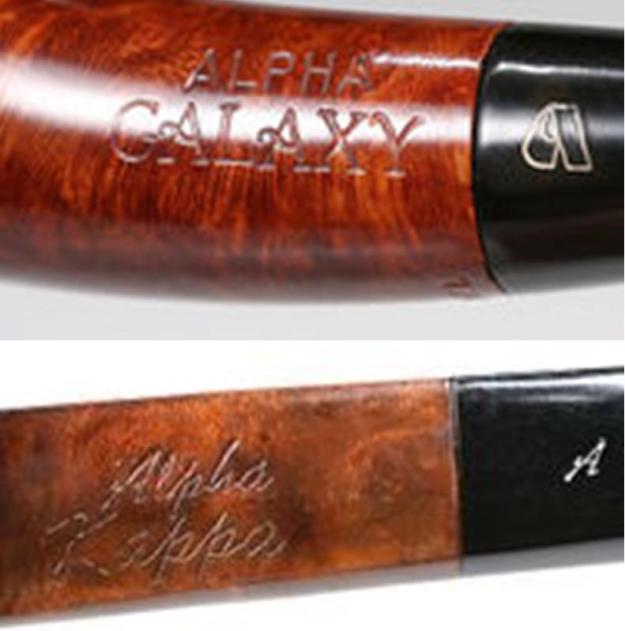
I picked the broad up for a five spot, but not for anything sappy, just to save her from the meat wagon.  I kept her wrapped up like I found her and got her safe and sound to my office on Agnes Avenue.  That’s also my cave, which makes it my castle.  My heater is the only insurance policy I carry.Amp1 Amp2 Amp3 Amp4 Amp5 Amp6 Amp7I’ll give you the dope, straight up.  She was worked over pretty good if that word can be used in this scenario.  Her kisser and most of the rest looked like a body that was dragged along a stretch of old road strewn with potholes and broken liquor bottles.  Maybe she took a dive from the high window, but that would have spelled farewell my lovely for this client.  Then there was the forehead that looked to have been pistol-whipped.Amp8This little gal, no big surprise, had a bad dose of amnesia.  The little bit of I.D. I found on her was all but eroded by years of grime on top of all the pushing around.  All of my local pipe gumshoes were sure they recognized her as Alpha, an Israeli, on account of a distinctive birthmark forming a curious A.  I’d known a couple of the type, and something about this A didn’t jibe.

I brought my friend Steve Laug, a fellow pipe investigator north-northwest of here in Canada, up to speed with my progress.  Laug was the best P.I. in the biz and had profiled more pipes than I had ever dreamed of in my humble philosophy, to crib from one okay yarn spinner.  I don’t buy a word of the stories that some fellow named Marlowe wrote any play credited to another Brit.  Anyway, Laug also had more skill patching up the abused and maimed than anyone else I knew.

He was the one who spotted the resemblance of my victim to one of the classic models from the Dr. Grabow stable, the 42 number.  Laug shot me the profile he did on one going by the name of Westbrook about a year before.  One mugshot in particular that Laug snapped of the Westbrook gal after he started cleaning her up showed the unmistakable genetic marker of my girl.  So they were related, but how?  That was for me to uncover.

Courtesy of S. Laug, P.I.

Courtesy of S. Laug, P.I.

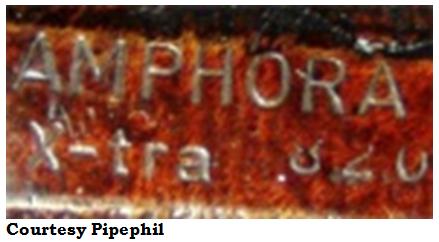
No man could miss the hot curves on Laug’s Westbrook knockout compared to those of my Jane Doe, even after someone put the screws to her.  I followed Laug’s tip to another lead that took me to a real treasure trove, including a group shot of Doc Grabow’s X Series Continental Line, class of ’81.  Letting my eyes move over the lines and curves of these gorgeous creatures clued me into why the doc rated them X, if you get my drift.aMP10Oh, so many beauties in this world, and so little time.  Still not being able to put a name to my little darling was driving me bat nuts, so I gritted my teeth and went to the archives, as I like to call the place.  It’s a reputable joint run by a Frenchman known on the streets as Pipephil.  First I inquired about Alpha and was introduced to a couple of sweet numbers that showed two styles of that outfit’s A, both about as similar as Laurel and Hardy.Amp11Roaming still deeper into the organized labyrinths of Pipephil’s place, I came across an A type that was a virtual twin of my Jane Doe, belonging to a swell called Douwe Egbert, a Dane no less.  That was when I got my big break and hit the jackpot with a connection to another part of the same clan, a blue blood great Dane from the house of Elbert Gubbels & Sons of the Royal Dutch Pipe Family.  They went belly up a few years back, but not before conceiving a certain new acquaintance of mine, even if they adopted her out and didn’t give her their own name, as if it was too good for her.  All that digging paid off.  Amphora was her name, and a beautiful one at that, from the Greek for a double-handled thingy used back in ancient times to hold wines and oils and whatnot.  I looked at the facial big boned structure on Amphora and got it right off.Amp12Relieved to have put a name to my innocent friend, I started saying it out loud, over and over, as I began the tasks of cleansing, mending and restoring Amphora to health.  It was a dirty job, as some guys liked to put it in those days, but that was my specialty.  After the initial wipe with soft cotton cloth strips soaked with purified water, I made the first definite visual confirmation.  The words were legible only because I knew what I was looking for from a gander at one very crisp tattoo on the left hip of one of Pipephil’s collection.Amp13 Amp14I never could get my Amphora’s number, maybe because she was too classy to let a man of my position become so familiar.

All I can say about the next step, when I finished washing her body and went to work on that wrecked forehead, is that I was glad she was still out cold.  I had to get rough, see.  There was nothing plastic about the surgery I had to perform, but it was cosmetic, alright.  The job started out gritty and got worse, about as low as I ever go, with 80 paper followed by 150 to clear away the char alone.  I’ve seen my share of bad burns, but this was as close to a crispy critter where the victim was still alive as I hope I ever see.

The harsh part was what followed.  I had no choice but to put a file to her scalp, behind the forehead that was caved in, to fix the mess the best I could.  After that part I took a deep breath and let it out, like a tea kettle giving off steam right before it hits full boil.  I stepped back to look over my handiwork so far.  The job wasn’t perfect, but that kind of work is above my paygrade.

I did most of the mop-up of that scene of the unfolding drama with what seemed like endless paperwork.  Let’s face it, this job runs on paperwork.  Fine tuning with the full scale of micro mesh was a pleasure.Amp15Maybe I took a liberty at that point, but I could not control the impulse.  Besides, I told myself, Amphora might very well awaken from her ordeal of the long goodbye, which she was lucky to survive. and not even notice the patchwork I did.  That last part was if Lady Luck shined on me, but who was I kidding?  I don’t place my faith in luck and never met a dame, not the type I liked to be seen with in public anyway, who didn’t know the instant a single strand of hair went amiss.  The best I could hope for was that she would keep quiet about it.

To give Amphora a healthy tone more like her old self, at least as I imagined she once was, I gave her a thick coat of high fashion skin colorizer called Lincoln, a burgundy color that I knew I could lighten to a more natural auburn.  I applied some heat to fix the solution so it wouldn’t run and with a patience that was anything but natural to my usual personality used a three-stage, six-pad micro mesh conditioner process.  I finished that part with a light rub of four-ought steel wool.Amp16 Amp17 Amp18 Amp19I saved the most slender part of Amphora for the last.  There were scratches along both sides, but no evident mayhem.Amp20This called for more paperwork, forms 180, 220 and 320 to start.Amp21I followed up with form 400 and the full treatment of micro mesh conditioner.Amp22The conditioner was old, and I could see it was out of date.  I checked my mail and found the new supply was in the box.  There’s a saying in billiards that the cue is only as good as the player, but a cue that’s an inch off from warping is plain bad news.  I would never carry a heater with a barrel that’s off, or one that’s not nice and tight all over.  I don’t even care for the 1911 .45 that’s designed that way for tactical reasons.  I had a playback, you could call it, to other times in my career when I re-stocked my supplies.

Repeating the full process with the new pads, I found that even an old dog can learn a new trick, in this case to keep your heater clean and well-oiled, if you get my meaning.Amp23Amphora was waking up and starting to squawk.  My only retort was that medicine never tastes good, and I gave it to her.Amp24 Amp25She was lucky her insides were cleaner than she had been outside, and I only had to give her the one dose.

While Amphora was still coming around, I found the makeup any lady of quality won’t leave home without putting on, just the usual compounds and waxes, and buffed her up.Amp26 Amp27 Amp28 Amp29 Amp30 Amp31My insomnia and other personal stresses had made me ready to go for the big sleep, but I was over all that and was just about to take a seat on the new recliner I bought for my new digs in a more genteel part of town, and relax with a long, full-bodied, folksy Ukrainian tiger I came across at one of those new places a man can now find such pleasures.  I even sat down with the broad in my hands, feeling her fearful symmetry that only the Master Craftsman Himself could dare frame, and was about to light her fire for a quickie before taking a nice long snooze.

That was when Amphora woke up and started to yap.

SOURCES
http://www.gutenberg.ca/ebooks/chandlerr-bigsleep/chandlerr-bigsleep-00-h.html

http://www.cultureify.com/1940s-slang-lingo-phrases/

http://graphics.latimes.com/finding-marlowe/

http://www.dailymail.co.uk/news/article-2836745/How-two-Hollywood-s-famous-detectives-Sam-Spade-Philip-Marlowe-named-inspired-black-private-eye.html

https://1fa1282d-a-62cb3a1a-s-sites.googlegroups.com/site/seanspipes/home/dr-grabow-shape-charts/1981SpartaShapeChart-continental.jpg?attachauth=ANoY7crnrqZwyaoMF6HNKflSv6JrH2Q7_rP-H_6Xxq1Sa06aylrImgtGNsFeVu_T_bqhD5Y6hzREmZd4gNHMqg8hnJsZvY1OOZ_YEhyY89J1hl6hxkkPDpByhf4a8lRCcpVWOhT8jl0dm1h8VzGTZsmNyXP2hkyYUh2qNPjvWbTB_Oe2ICpBIQvJIeuZRyXhXwUU9mg0Y7kKKFJRTa_wNVG6RMzhB5mZ1mQfDOblMM0GZrGp11FRY1RsH3x40zSzsxnvXA6ipj8iBYH4SPiuD8GaKDySNG2Fcw%3D%3D&attredirects=0

https://rebornpipes.com/2015/08/29/restoring-a-dr-grabow-westbrook-42/

https://sites.google.com/site/seanspipes/home/dr-grabow-shape-charts

https://pipedia.org/wiki/Shalom_Pipe_Factory

https://pipedia.org/wiki/Alpha

http://www.pipephil.eu/logos/en/logo-d7.html

http://www.pipephil.eu/logos/en/logo-a5.html#amphora

A First Horn Stem on a Throw Away Pipe


Blog by Dal Stanton

On a recent pipe foraging expedition at the Antique Market near Nevski Cathedral in the heart of downtown Sofia, Bulgaria, I saw this pipe on one of the tables I was methodically scanning.  It was a sad scene but a survivor.  It was a petite (5.25”) hexagonal paneled shape pipe with a diamond shank banded and it was beat up.  What got my attention through the sorry state of affairs was the stem.  The vendor made sure I knew that the stem was bone – at least that’s what I thought he said as he hyped the great deal before me in Bulgarian.  I have yet to collect a ‘bone’ stem pipe, if that is indeed what it is, of any variety so I decided to start the bargaining dance.  He also said it was from Greece, which I could not determine by looking at the faint markings stamped in the right side of the shank, Extra over Bruyere.  Five euros was the opening volley – about 10BGN or $5.70 – not high stakes.  After getting permission from the vendor to take the stem off to get a better look I tried a few gentle twists and it wouldn’t budge.  Without pause, I handed it back to the vendor not wanting to break it and sealing the deal by default, “You broke it, you own it.”  After twisting and pulling and pouring water on it, he also could not remove the stem –  which was to my favor.  We struck a deal at 7 BGN ($4) and I gave him a 10 Leva bill.  Without proper change he asked nearby vendors for help and received none.  I dug further in my pockets and produced two 2BGN bills – 4 Leva total small stuff.  I held the 10 and the pair of 2s in each hand and shrugging my shoulders and he took the pair of 2s and the deal was sealed – about $2.30 for the ‘bone’ stem pipe.  I thanked him for the discount, but made a mental note to pay the vendor the additional 3BGN on a future visit – a good vendor friend can be achieved!  At home I took pictures of my $2.30 acquisition and promptly dropped the pipe into an alcohol bath to decontaminate it and hopefully loosen the stem.  I wasn’t sure if the stem was simply inserted with a straight tenon or if the stem screwed into the mortise.  Hopefully, this would all become clear after the bath got a chance to soften the cemented crud – which was in great supply.  The pictures I took when I was home tell the story.Horn1 Horn2 Horn3 Horn4 Horn5 HORN6 Horn7 Horn8 Horn9The alcohol bath did the trick and I was able to remove the stem and get a look at the internals.  Looking down the mortise, there was a solid wall of hardened tar muck that closed access to the bowl.  The airway of the stem was also blocked by crud.  The rim still showed lava flow and tar caked on the top, but I could see the rim and the damage done to it as well as to the bowl.  I decide to have a second alcohol bath to loosen things up further and to clean up the rim to better assess how to proceed.

With question in my mind about the true nature of the stem, I sent some pictures of the stem to Steve with the question, “Horn or Bone?”  His guess was that it is horn because of the tooth chatter on it.  He also referenced his recent post, A Ropp La Montagnarde Deposee 298 Horn-Cherrywood-Briar and a helpful essay (My Process for Repairing and Polishing Horn Stems) to give me input on working with horn stems.  He did say that he had never seen a horn stem spliced like this one.  I’ve included that picture (4th) he referenced below – interesting factoid.  While the pipe got its second alcohol bath I read the essay on repairing and polishing horn stems.Horn10 Horn11 Horn12 Horn13Well, that was gross.  The second bath finished, I take the stem and start to push bristled pipe cleaners dipped in isopropyl 95% through the airway from the tenon toward the button.  As I push, from the button air hole oozed what looked like a seal brown loaf of lava gunk toothpaste – nasty, nasty stuff.  But I guess, the ooze of magna putridum was good news as the airway was in the process of being reconquered.  After many pipe cleaners, bristled and smooth, the stem starts coming clean.  I put the stem aside and I grab the stummel from the bath and work on the mortise attacking the tar gunk blockage.  After many Q-tips and pipe cleaners dipped in alcohol, it too is reclaimed.  I’m thankful that Q-tips are plentiful in Bulgaria.  Taking a brass bristle brush which will not scratch the wood surface further, I work on the rim to remove the lava and thick oil/gunk buildup.  I finish by working the stummel surface with a toothbrush and cotton pads.  The pictures show the progress (I’m on the 10th floor balcony and notice that the sun goes down on my labors!) and I take a close up of the rim to assess how to tackle it.Horn14 Horn15 Horn16 Horn17 Horn18

Before working on the rim, I need to ream the bowl to bring it down to the briar.  The cake is very light.  After I get my Pipnet reaming kit out and ready the smallest blade, I realize that the bowl is too small and the blade would only impact the very top area of the chamber.  Then I think of the Savinelli Pipe Knife that I snagged on eBay a week ago that my son-in-law will be bringing to Bulgaria in a few weeks when he and our daughter visit from Denver!  My Winchester pocket knife will have to do the job.  To avoid cutting into the chamber wall I reverse the blade angle to scrape it over the wall.  It works pretty well as I work the blade down into the bowl which is more conical coming to a point at the bottom than oval shaped.  I follow the Winchester by sanding the chamber wall with 120 grit sanding paper rolled up then finishing with 240 grit.  I want the bowl to be as clean and smooth as I can get it.Horn19 Horn20 Horn21Returning to the work table the next day after work, I’ve had some time to think about the rim repair.  I take another close up shot after finishing the reaming and sanding the bowl to see where I am.  The stummel reminds me a bit of a bulldog shape with the cap of the bowl rising from the panels.  The challenge is that the rim is pretty chewed up and there isn’t a whole lot of wood to work with on the cap!  I decide to establish a thin rim by topping the bowl, just enough to establish a ring, then fudge on the inside by cutting a bevel to remove the damage and on the outside sand to round up to the rim’s ring hopefully removing the damage and leaving a balanced stummel.  This is the plan. I use 240 grit sanding paper on a chop block as a topping table.  I rotate the stummel on the table very conservatively, checking the progress after every few rotations.  I’m careful to keep the rim level!  The pictures show the progress.  The last picture below shows the result.  I do not want to take more briar off at this point.  A rim is established but with significant incursions on the inside of the rim at 2, 7 and 11 o’clock with smaller cuts at 8 and 10.  An inside bevel should take care of the 8 and 10 o’clock damage but will not fully eradicate the larger injuries to this rim. Horn22 Horn23 Horn24 Horn25In order to fill in the deep crevices I decide to mix a thick putty of briar dust and super glue. I prepare the rim by first cleaning it thoroughly with alcohol and a cotton pad getting rid of residue left over from the topping and using the dental pick to clean out any loose stuff stuck in crevices.  I want a good bond to form to fill crevices but also to form an even resistance on the inner rim when I cut the bevel later.  I use toothpicks to apply the briar dust putty to the cuts and bruises.  I decide to apply it to the small wounds too and then put the stummel aside to allow the putty to cure overnight.  I hope this approach works!Horn26 Horn27 Horn28With the super glue on the work table, I take the horn stem and look at it more closely.  I read the essay Steve wrote especially for working with horn stems and understand that the approach is not as aggressive as working with vulcanite or Lucite stems.  The goal is to repair surface areas that are broken and can splinter and become porous and treat the entire stem surface with polish and waxes to harden and smooth the surface.  There is tooth chatter above and below the bit, with some opening of the horn surface.  I also identify minuscule holes on the edge of the bit.  There was also a crack that ran between the two ‘bonded’ parts of the stem.  I have no idea whether cracks in horn stems will ‘creep’ but following the general principle of closing up the surface area, I decide to apply some super glue to the crack at least to seal it.  I start with 240 grit sanding paper by mildly sanding above and below the bit addressing the chatter and open, porous area.  I sand lightly not trying to totally remove the open areas but preparing it for a super glue patch to fill it in and close it.  After sanding, I apply super glue to the bit area making sure to fill the porous, softer surface.  Super glue was also applied to the small holes on the edge of the stem as well as to the crack.  The pictures show the progress.HORN29 Horn30 Horn31 Horn32 Horn33 Horn34With the super glue cured after sitting overnight, I use 240 grit sanding paper to bring the bump of the super glue patch down to the stem surface level. I gingerly use the flat square corner of the needle file to cut into the super glue to redefine the button lip.  My goal is to blend the patch with the horn stem so I feather the sanding outward toward the stem.  You can still see the darker patch but it should blend more as I polish the horn stem.  While I smooth out the super glue patch to fill in the crack on the splice line I also detect a small ridge along one side of the stem where the bonding between the two horn pieces come together.  I sand that down with 240 grit paper as well.  My goal is a smooth hardened horn surface.  Pictures show patches on the top and bottom.Horn35 Horn36With Steve’s essay on horn stem repair informing my steps, I use medium and fine grit sanding sponges on the entire stem.  I want to feather the patches with the rest of the stem surface with the goal that transitions from super glue patches to the horn surface are not detected either by touch or with the tongue on the button area. I’m pleased with the blending I see as the marks from the 240 grit paper disappear – even the crack (first picture center bottom) at the horn splice point is less visible.Horn37 Horn38Now I polishing the horn stem with the normal cycles of micromesh sanding pads. I wet sand using 1500 to 2400 pads and follow with a hearty application of Obsidian Oil.  The horn absorbs the oil readily.  After the first micromesh cycle, I noticed that what I had been calling a ‘crack’ at the splice joint had almost disappeared.  Perhaps the wound was not a crack but a sharp cut into the horn.  Either way, the polishing process was going well.  I also polish the metal tennon with the 1500-2400 pads to clean and shine it.  Next I dry sand using 3200 to 4000 and again apply Obsidian Oil.  Again, using 6000 to 24000 micromesh pads I dry sand and then apply a final coating of Obsidian Oil and put the stem aside to dry.  The blending looks good – even though the patch areas are visible, with the blending and polishing the patches now have more of a natural horn look.  The pictures show the micromesh progress.Horn39 Horn40 Horn41The stummel has had ample time for the briar dust super glue putty patches to the rim to cure.  I take a close up of the cured rim patches to mark the progress and then use 240 grit sanding paper to strategically take the briar dust patches down to the rim surface level.  I want to remove the mounds before returning the stummel to the topping table outside on the balcony for a few more rotations on 240 grit paper just to make sure the plateau is flat.Horn42 Horn43 Horn44Now I cut a bevel inside the rim to address the rim damage and to finish smoothing out the briar dust super glue patches.  I use a tightly rolled piece of 120 grit sanding paper to establish the bevel by gradually rotating the bowl in my hand while sanding to achieve a gradual uniform bevel.  Then, with the bevel cut, I use 240 grit paper, again tightly rolled to present a harder surface to the wood, to finish it.  The rim repair looks good.  The three main patched areas are barely visible and blending well.Horn45Now to the external surface of the stummel.  I remove the metal band and apply Murphy’s Wood Soap with a cotton pad to see to remove any leftover tars and oils on the surface.  The cap of the bowl shows the most damage.  At the top of the picture above you can see pitting in the briar.  I use medium and fine grade sanding sponges to work the pitting out of the cap around the circumference of the rim.  Satisfied, I decide not to stain but to restore the original stained surface – I like the color and the grain is promising.  I begin working on the stummel with micromesh sanding pads beginning by wet sanding using 1500 to 2400. Following this, dry sanding 3200 to 6000, then 6000 to 12000.  This little pipe is starting to pop.Horn46 Horn47 Horn48 Horn49 Horn50After remounting the metal band and attaching the horn stem, I complete the polishing with the Dremel wheels by applying Blue Diamond to stem and stummel with a felt Dremel buffing wheel.  I’m careful to work the horn stem lightly so I don’t overheat the surface and cause splintering or an opening of the surface.  Following the Blue Diamond, stem and stubble receive several coats of carnauba wax with a cotton cloth wheel.  Finally, I give a Dremel wheel buff with a clean cotton cloth wheel.  To raise the shine of the horn and briar, I give the pipe a vigorous buffing with a microfiber cloth.

I’m very surprised how well this little pipe cleaned and polished up.  The rim repair was daunting but amazingly the briar dust patches are practically invisible and blend well with the natural grain movement.  My first horn stem repair looks good from where I sit.  I’m not sure who smokes a pipe this small but someone did before I received it and I’m happy to return it to service.  I couldn’t resist a ‘before and after’ shot to start things.  Thanks for joining me!Horn51 Horn52 Horn53 Horn54 Horn55 Horn56 Horn57 Horn58 Horn59


Rejuvenating a Don Roberto Cherrywood 1344


Blog by Steve Laug

When Jeff and his wife took a trip to Southern California he could not stay away from the antique shops and looking for pipes. He found quite a few that will over the months show up on the blog after refurbishing. The one I chose to work on next came in a box with the Don Roberto logo and name on it. It is labeled a Lancelot pipe. On the end of the box it reads Don Roberto Lancelot over 9489 which immediately made me think of the GBD numbering system and Italy which threw me off from my GBD assumption. I had looked at the pipe a few months back when he sent it to me for restoring but had put in the refurbishing bin and forgotten what was in the box.Don1I took the box out of the bin of pipes awaiting restoration and brought it to my work table. I opened the box and found myself looking at a Cherrywood or a Poker shaped pipe. It was sitting on top of a pipe sock that did not look original.Don2I took the pipe out of the box to have a look at it. The finish originally must have been virgin or oil finished. The stamping on the pipe was interesting – on the left side of the shank it was stamped with the logo like the one on the box, Don Roberto separated by at sword over Lancelot. On the right side of the shank it was stamped 1344 over Italy. There was something familiar to me about the shape and the shape number so I looked it up and found it on my GBD shape chart. 1344 was the number for a GBD Poker so the number and shape matched. The mystery to me was the Italy stamp. How does that fit into the picture? The stem also had a worn Don Roberto and sword logo on the left side of the saddle.Don3The rim was in bad shape. It looked as if it had been knocked out on concrete. The entire crowned surface of the rim was covered with road rash – stippling left behind from the concrete. There was also some tars and oil on top of the damage. The inner edge of the bowl looked to be in round and undamaged and the inner bevel looked to be in good condition. There was a groove carved on the bottom of the bowl and part way up the front side. Probably it was cause by aggressive cleaning with pipe cleaners over the years but I cannot be sure. The stem had a heavy coat of calcification on the end and the button hiding quite a bit of tooth damage and tooth marks.Don4I took a close up photo of the rim top to more adequately show the damage to the crowned surface. The light cake in the bowl is also visible in the photo.Don5I sanded the crowned rim with a folded piece of 220 grit sandpaper to preserve the crown and not flatten it on a topping board. Care must be taken to keep the angle of the curve and the line around the top of the bowl sides equal. I sanded until I removed damage to the bowl top. I wiped down the bowl with acetone to remove the grime and the wax on the briar. The photo below shows the bowl top before I sanded out the scratches.Don6The next photos show the bowl after the scrubbing with acetone.Don7 Don8I sanded the rim some more with the folded 220 grit sandpaper and also worked on removing the calcification on the stem. It took a lot of sanding to get the rim smoothed out and also to remove the buildup on the stem.Don9 Don10There were a lot of tars and oils lining the walls of the mortise. I used a dental spatula to scrape the walls before scrubbing the mortise with pipe cleaners, cotton swabs and alcohol.Don11I scrubbed the airway in the stem with pipe cleaners and alcohol. As I cleaned it a small reducing ring popped out of the tenon. I have never figured out why people put these constrictors inside o the tenon but this one had one. It is shown in the second photo below. I used the spatula to scrape away the buildup on the stepped down area on the end of the tenon.Don12I used a drop of black super glue to repair a deep tooth mark on the underside of the stem near the button and also to repair a tooth mark in the surface of the top side of the button. I sanded the patch with 220 grit sandpaper to smooth it out and blend it into the surface of the stem.Don13I wet sanded the stem with 1500-2400 grit micromesh sanding pads and gave the stem a rubdown with Obsidian Oil. I dry sanded with 3200-4000 and 6000-12000 grit pads and gave the stem a coat of oil between each set of three. I gave it a final rubdown of Obsidian Oil and set the stem aside to dry.Don14 Don15 Don16I wet sanded the bowl and crowned rim with 1500-2400 grit micromesh sanding pads and dry sanded it with 3200-12000 grit pads. The polishing with the micromesh really made the grain stand out. The pipe is well laid out to follow the grain. The sides of the bowl are covered with birdseye grain that wraps around to the front and back to perfectly aligned cross grain. The top and bottom of the bowl as well as the shank all have cross grain as well. I cannot find a fill in the briar – it is one great looking piece of briar.Don17I buffed the bowl and stem with Blue Diamond on the wheel and then gave it multiple coats of carnauba wax. I buffed it with a clean buffing pad and then by hand with a microfibre cloth. The finished pipe is shown in the photos below. The layout of the grain with the shape of the pipe is exceptionally well done. Look at the stunning grain around the bowl. Thanks for looking. Don18 Don19 Don20 Don21 Don22 Don23 Don24 Don25
Restemming and Restoring a Tiny KBB Rocky Briar 1540B Salesman’s Pipe


Blog by Steve Laug

In the box of pipes my brother sent me was a beat up leather pipe and tobacco pouch. I pushed it aside and cleaned up the rest of the pipes in that particular part of the box. The other evening I was doing a bit of sorting and I took out the pouch and looked it over. It had a large tear on the bottom edge. The zipper was worn and hard to work and the leather was brittle. I almost tossed it in the bin but felt something inside of the pouch. I looked at the inside of the underside of the pouch and there was nothing there. I open the broken zipper on the top of the pipe and inside was a very small – tiny if you will – pipe. The tenon was broken and the stem and bowl sat in the pouch.  I took it out of the pouch to have a look. KBB1It was a KBB that was stamped Rocky Briar. Why it bore that stamp I have no idea as it is a smooth briar. There is no rustication or and carving on the bowl at all – just very smooth. Underneath the KBB in a cloverleaf stamp and the Rocky Briar on the left side of the shank it read Reg. Pat. No. 298978. On the right side of the shank it reads 1540B which it was the shape number. All of that seems very normal but did I say that this pipe is tiny? It is only 4 ¾ inches long, 1 1/8 inches tall. The diameter of the bowl is 5/8 inches and the chamber is 7/16 inches in diameter. All is proportional and well laid out. It makes me wonder if it was not a salesman’s pipe.KBB2The tenon was snapped in the shank but no damage had been done to the shank itself. Really the pipe looked quite good other than the broken tenon.KBB3Obviously the pipe had been smoked and quite often. There was a fairly thick soft cake in the bowl and the rim top had a coating of tars and oils. The back left side of the rim had a burn mark on it that was quite large.KBB4I took a photo of the pipe before I began to work on it. The finish was very shiny – like it had been given a coat of varnish. The rim was obviously rough as you can see from the photos but the rest of the pipe looked good. The stem had tooth chatter on the top and the bottom of the stem near the button. The logo on the shank was a clearly stamped circle within a circle. The broken tenon would need to be pulled and if possible the stem given a new tenon.KBB5I used a drywall screw to pull the broken tenon. I screwed it into the broken tenon in the shank and wiggled it free. Before I pulled it out of the shank I took the following photos.KBB5a KBB5bI pulled the piece of tenon out of the shank and reamed the bowl with the only reamer that would fit in the tiny opening – a Savinelli Pipe Knife. I scraped back the cake to bare briar.KBB6The burned area on the top of the bowl made it necessary to top the bowl on the topping board using 220 grit sandpaper.KBB7I scrubbed off the briar with acetone on a cotton pad. I wanted to clean off the sanded rim and the shiny coat on the bowl so that it would be easier to stain the bowl and rim to match.KBB8I used the Dremel and sanding drum to flatten the face on the stem and then set up my cordless drill to drill out the end of the stem. I hand twisted the stem onto the drill bit. I started with a bit slightly larger than the airway in the stem and worked my way up until I had opened up the airway large enough to hold the tenon in place.KBB9I decided rather than trying to turn a small tenon that would fit in the shank I would clean up and use the existing broken tenon. Fortunately on these old pipes the tenon was quite long. I glued the broken tenon piece into the newly drilled opening in the stem with black super glue. I filled in around the tenon piece with the super glue using a dental pick and a piece of paper clip. I smoothed out the glue and aligned the tenon in the shank and set the stem aside to let the glue cure. Once it hardened, I sanded the new tenon with 220 grit sandpaper to remove the excess glue and make the fit in the shank smoother.KBB10I put the stem in the shank and sanded the shank and stem to make the transition smooth. Once I had the stem fit adjusted I sanded the shank and stem with a 1500 grit micromesh sanding pad to remove the scratches.KBB12 KBB13I wet sanded the stem with 1500-2400 grit micromesh sanding pads. I rubbed it down with Obsidian Oil. I dry sanded it with 3200-4000 grit pads and gave it a second coat of oil. I finished sanding it with 6000-12000 grit pads and gave it a final coat of Obsidian Oil. I set the stem aside to dry.KBB15 KBB16 KBB17I gave the bowl a first coat of Medium Brown Stain with a staining pen to serve as an undercoat. KBB18I realize that for many of us who read about pipe restoration the measurements of this pipe really do not give a clear picture of the true size of the pipe. To give more of a sense of perspective to the diminutive size of the pipe I decided to take two photos of the tiny bowl with a regular sized Comoy’s long shank billiard. The first photo shows the pipe above the larger one. The second photo shows the bowl fitting inside of the regular sized bowl. Hopefully that helps give you a clear idea of the tiny nature of the pipe.KBB19I gave the bowl a second coat of stain using a Danish Oil Cherry stain. I wanted a bit of contrast to the brown and also to enhance the reds in the briar.KBB20 KBB21I rubbed the bowl down with a soft cotton cloth to spread the stain coat out and rub it into the briar. The next photos show the look of the pipe after a quick hand buff.KBB22I buffed the bowl with Blue Diamond on the buffing wheel to polish it. I gave the bowl several coats of carnauba wax and buffed it with a clean buffing pad. I hand buffed it with a microfibre cloth.KBB23KBB24I gave the bowl and stem another coat of carnauba wax and lightly buffed it with a clean buffing pad. I hand buffed the entire pipe with a microfibre cloth. The finished pipe is shown in the photos below. It came out really nicely. Looking at the pipe is hard to tell from the photos the tininess of the pipe as all is proportional. The seashell in the photo is the same one that I use in all of the final photos and with this pipe it seems quite large. Thanks for looking.KBB26 KBB27 KBB28 KBB29 KBB30 KBB31 KBB32 KBB33