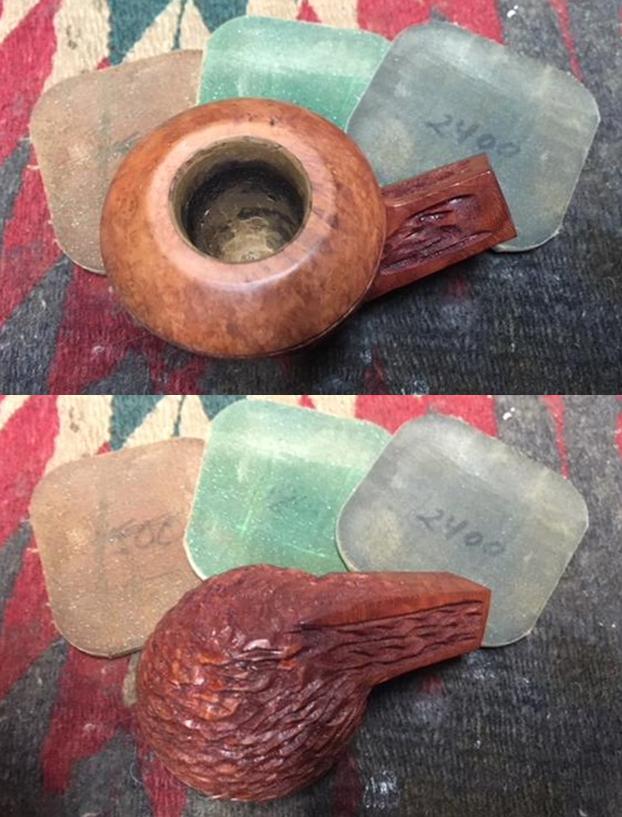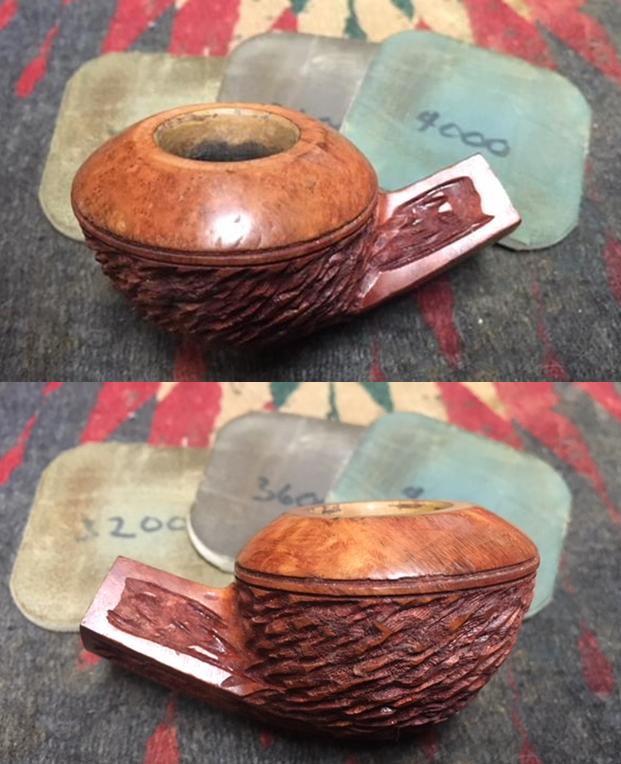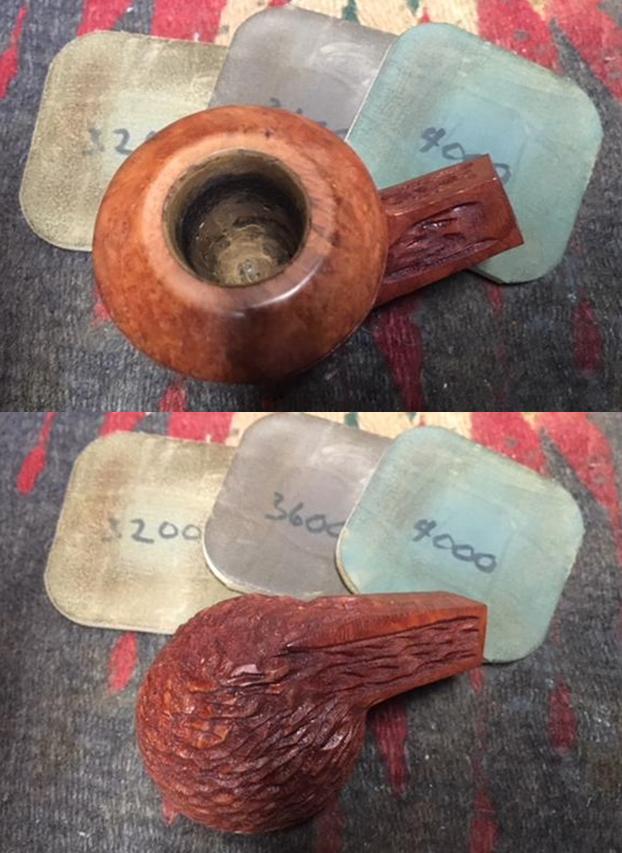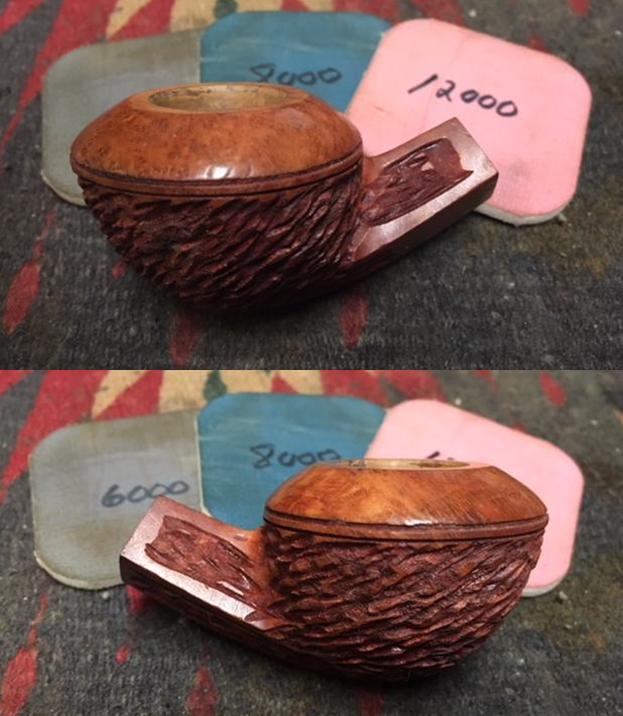
Tag Archives: topping a bowl

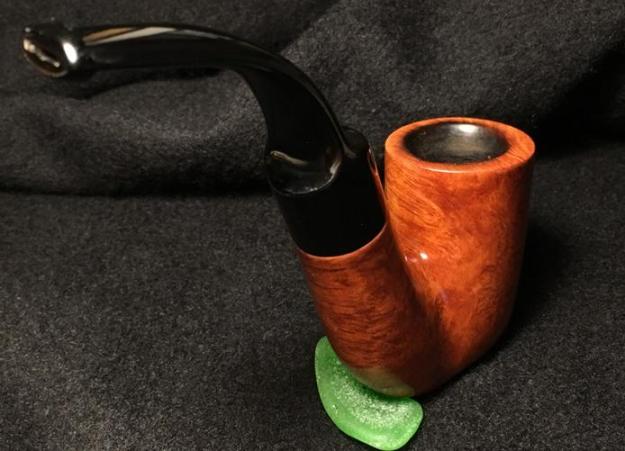
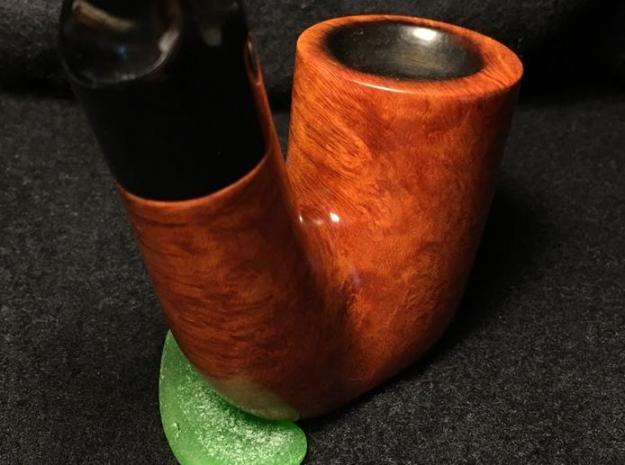
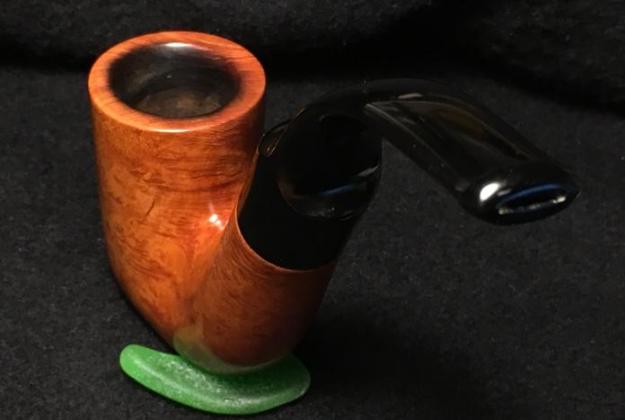
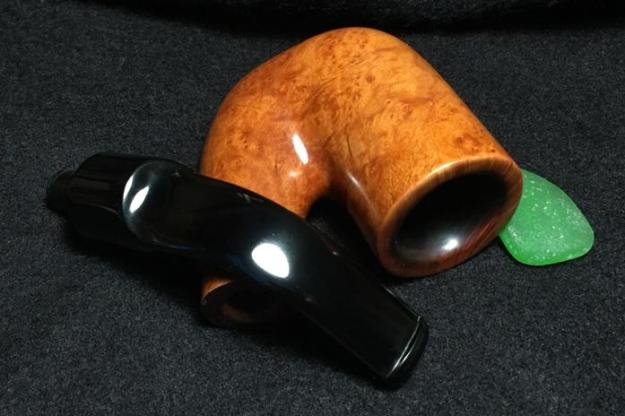
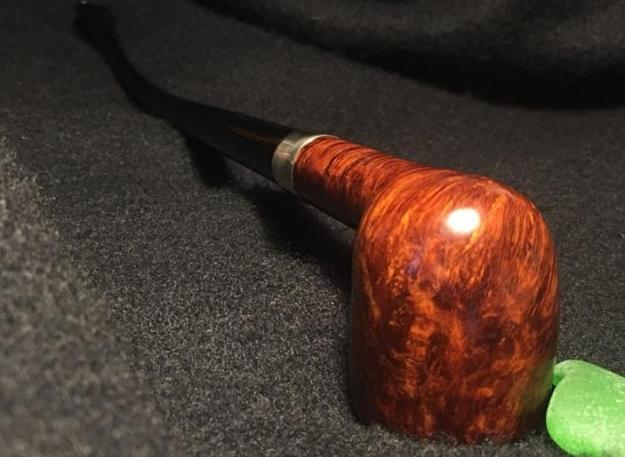
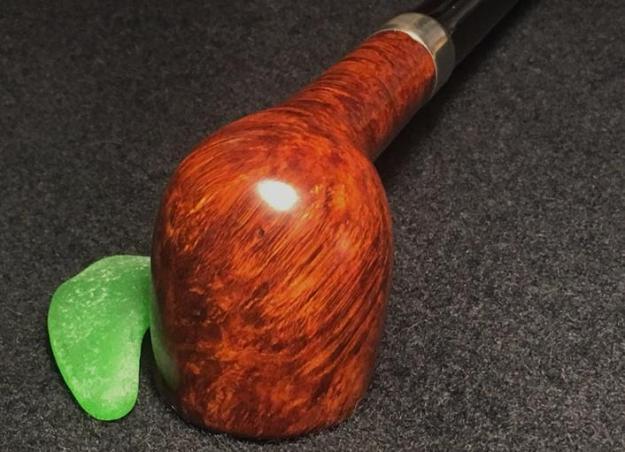
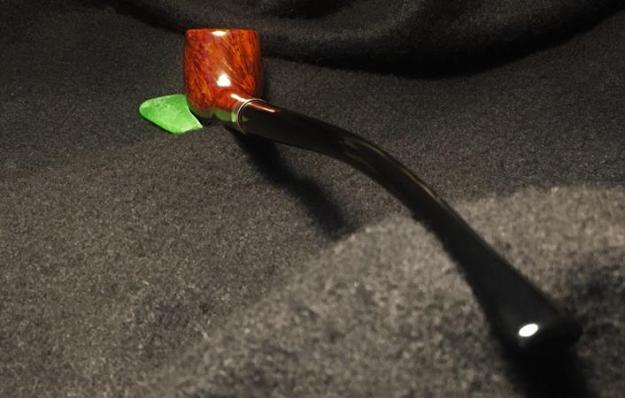
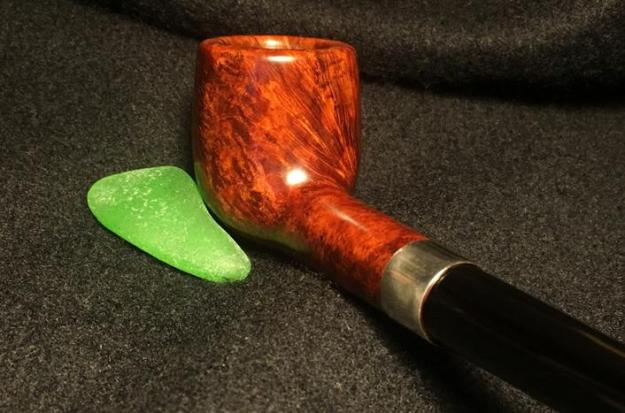
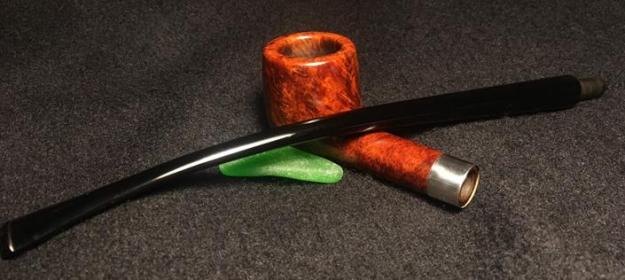
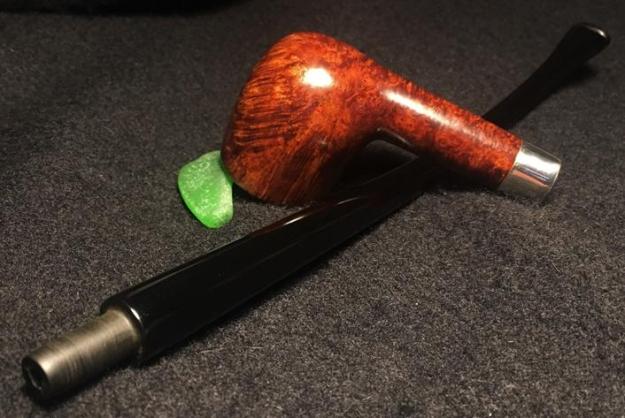
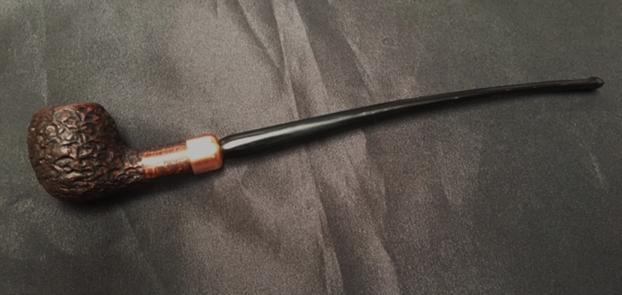
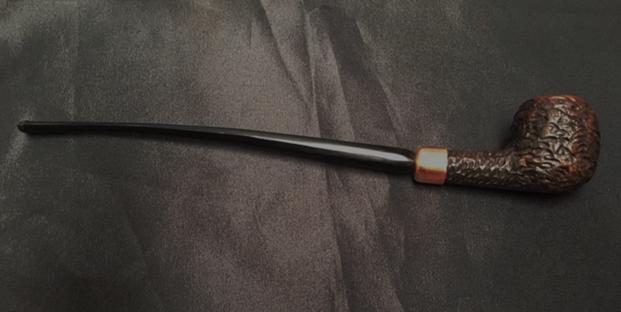
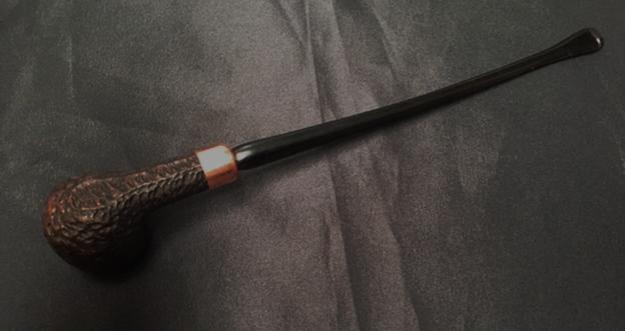
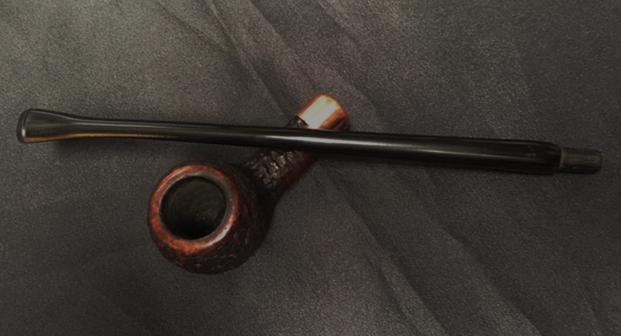
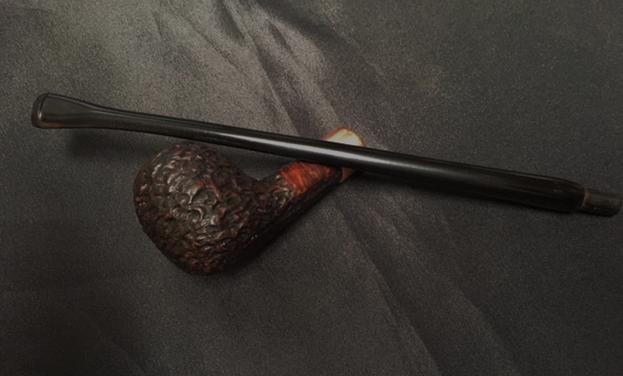
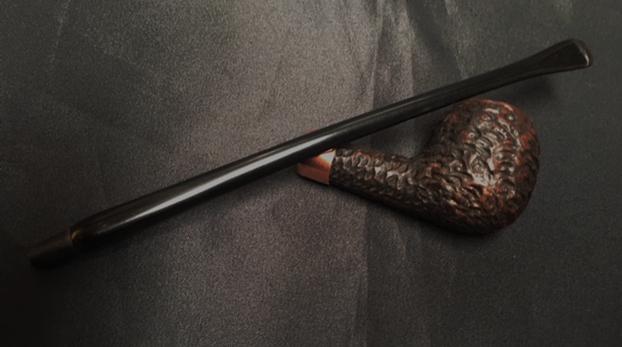
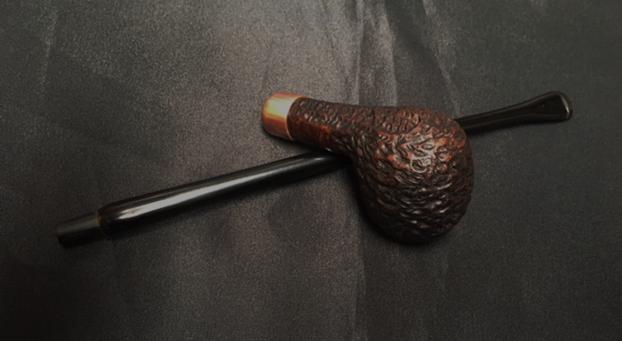
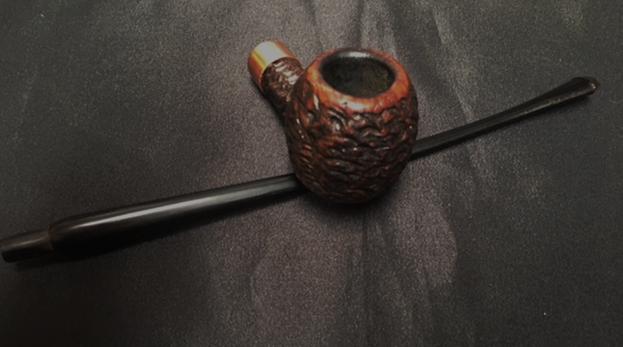
Fashioning a Churchwarden from a Forlorn, Throw away Billiard – a story of the Phoenix


Blog by Dal Stanton

The Greek mythological Phoenix is a long-lived bird that cyclically regenerates or is otherwise born again, according to Wikipedia.  It is regenerated out of its own demise, from its own ashes.  The images that come to mind are Harry Potter-esque – the Phoenix’s name is Fawkes and “as stated by Dumbledore, they are extremely loyal creatures, and are capable of arriving to the aid of beings who share a similar devotion. This was how Fawkes arrived to assist Harry in slaying the Basilisk in the Chamber of Secrets during his second year at Hogwarts” (LINK).  The tear of the Phoenix could also bring healing and recovery from near death.

What does the Phoenix have to do with pipes and Billiards?  True confession: I enjoy immensely working on vintage pipes with well-known and sought names like Dunhill, Savinelli, Comoy’s, Stanwell, GBD, Jeantet and BBB.  But truth be known, I LOVE taking the throwaways, the discarded, the ‘only good for the waste heap’ pipes – that make most people cringe and reach for latex gloves – to take these pipes and see what I can do to help.  There is a satisfaction at the end of such projects that translates into, ‘Wow! Who could have imagined…!”  The discovery of hidden beauty that was always there, but no one took the time to help it emerge.   I guess, at the core of it is the sense that sometimes people are treated in such a way or may view themselves in such a way that does not reflect the often hidden value that people intrinsically have.  Helping is seeking to bring new life out of the ashes of the past.

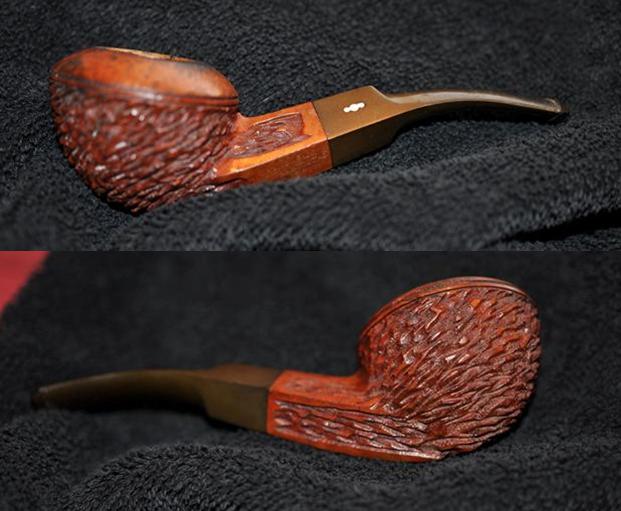
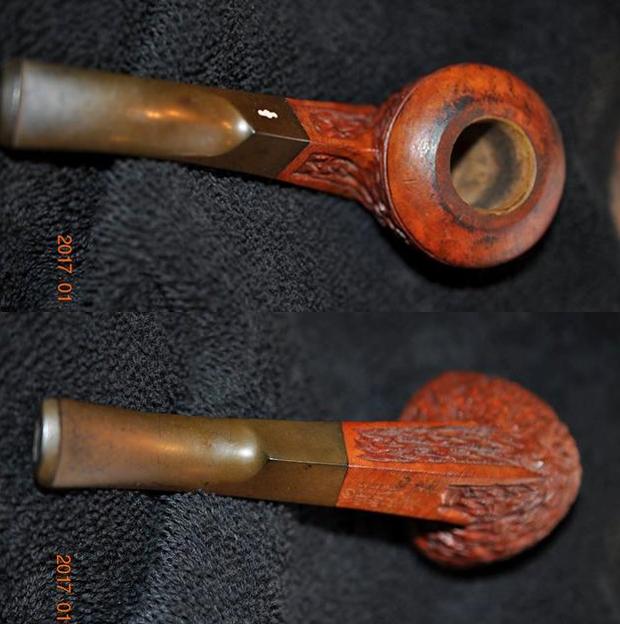
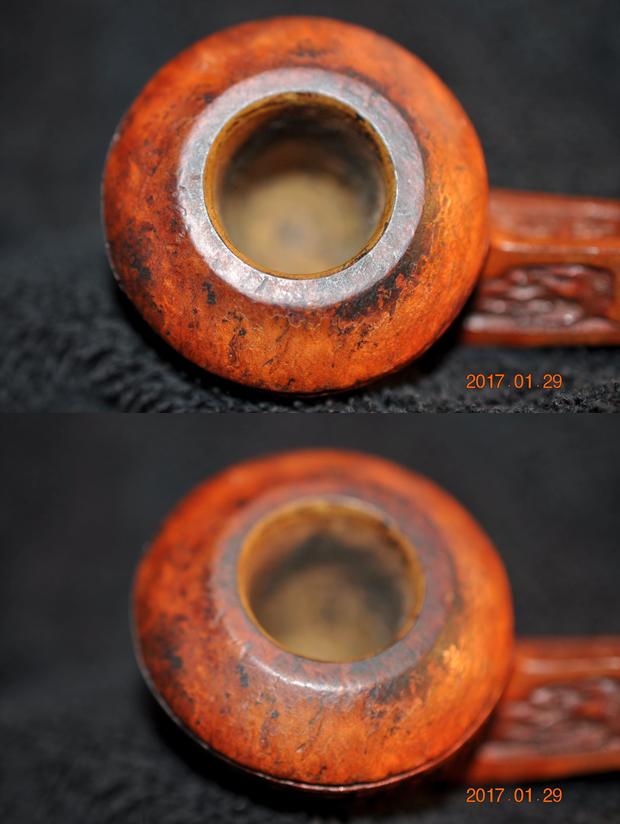
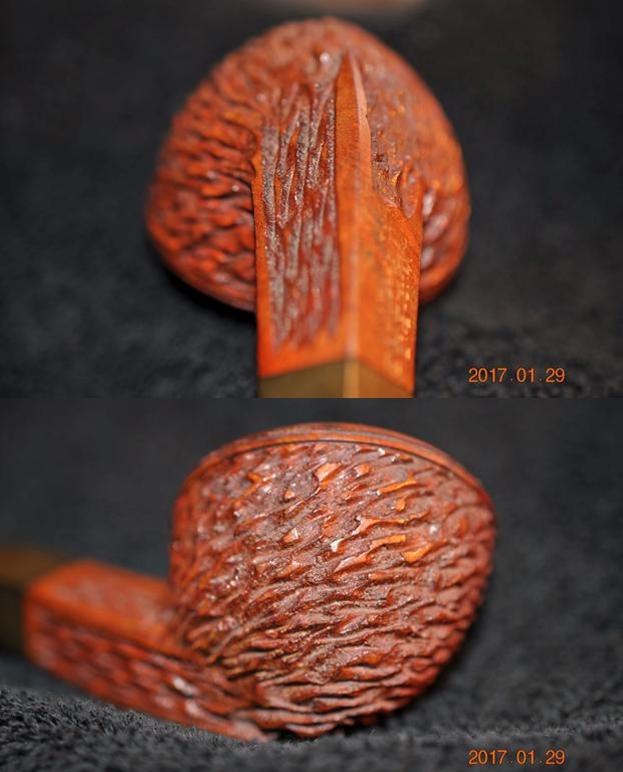
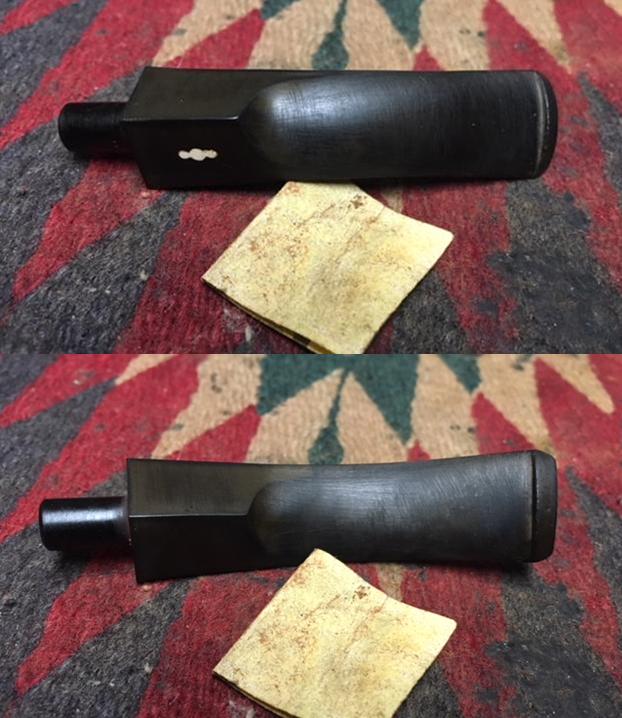
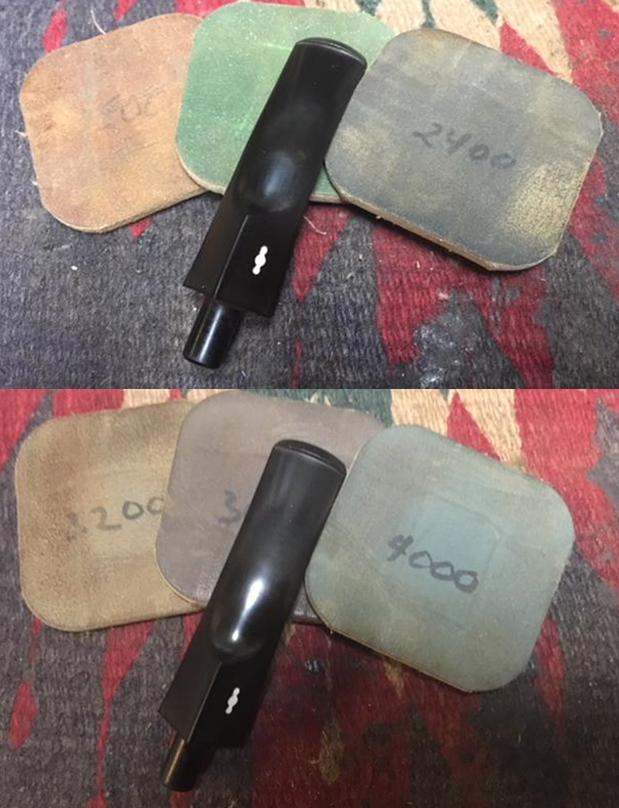
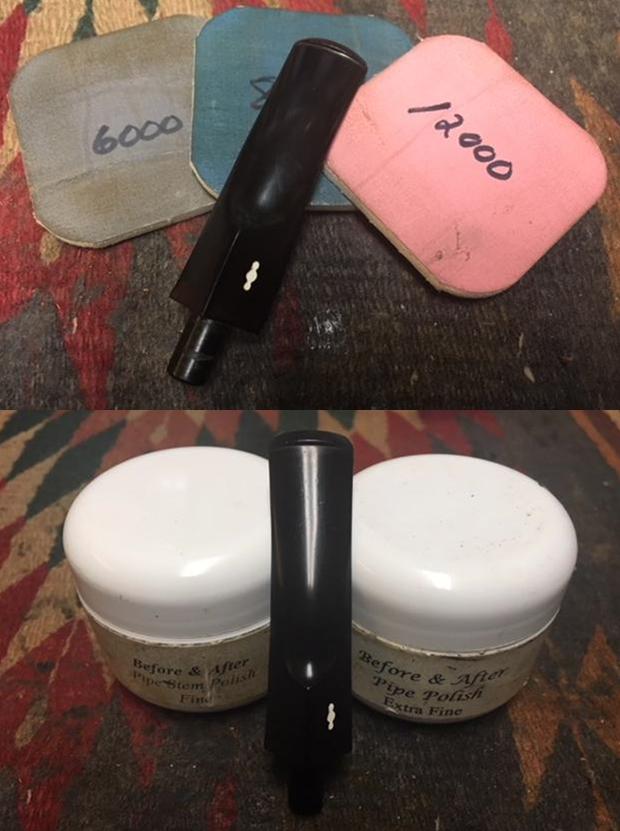
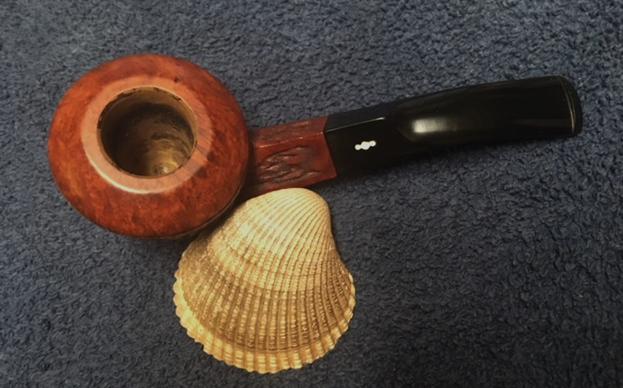
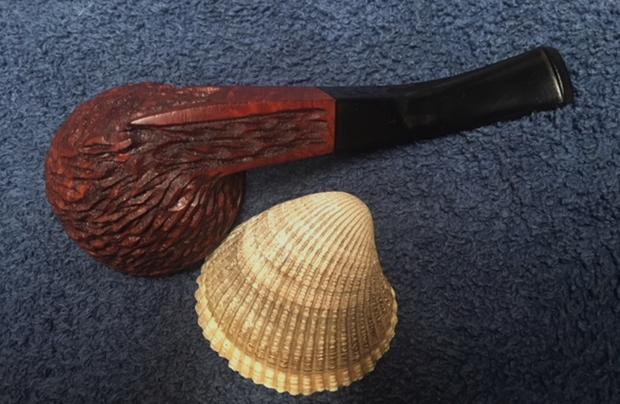
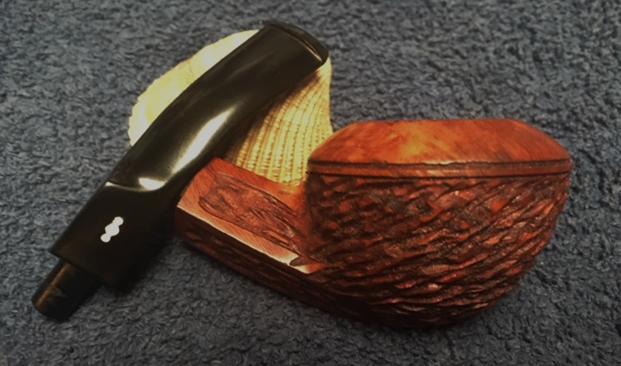
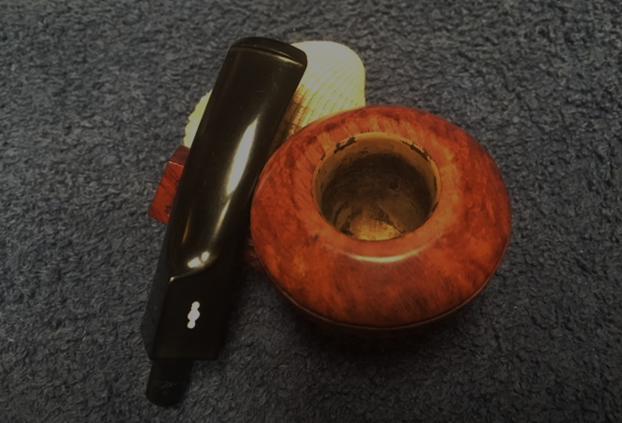
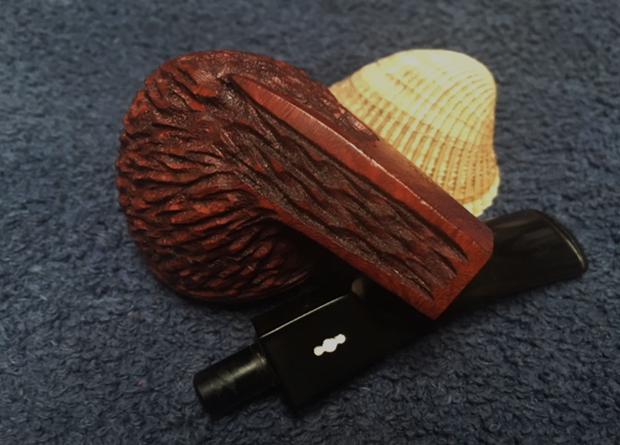
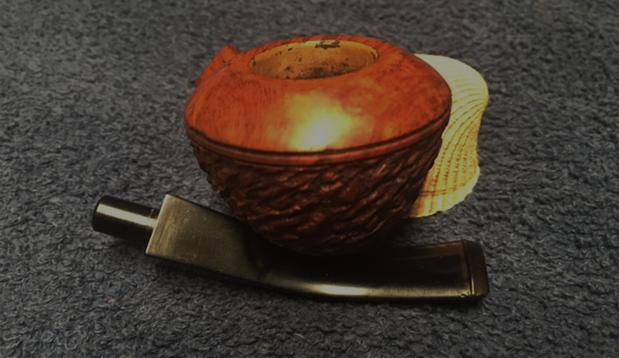
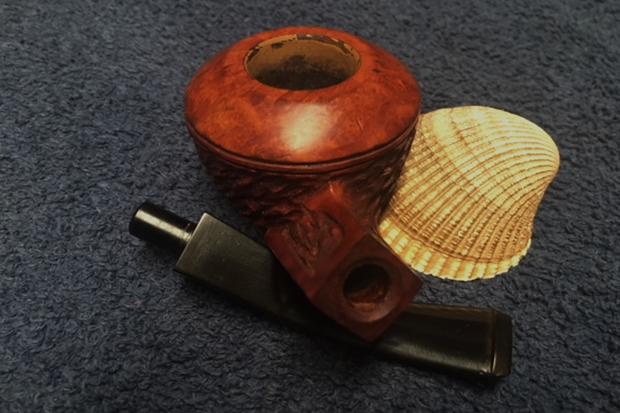
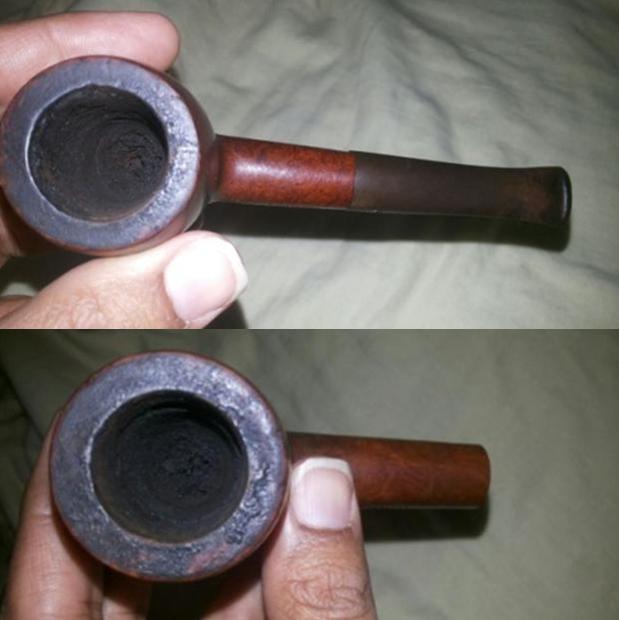
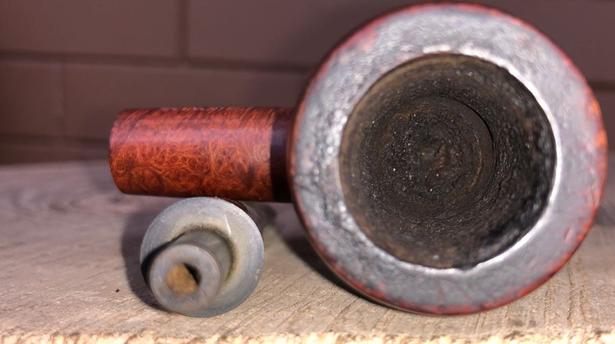
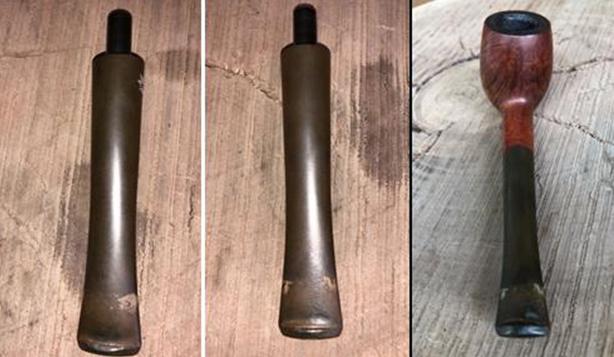
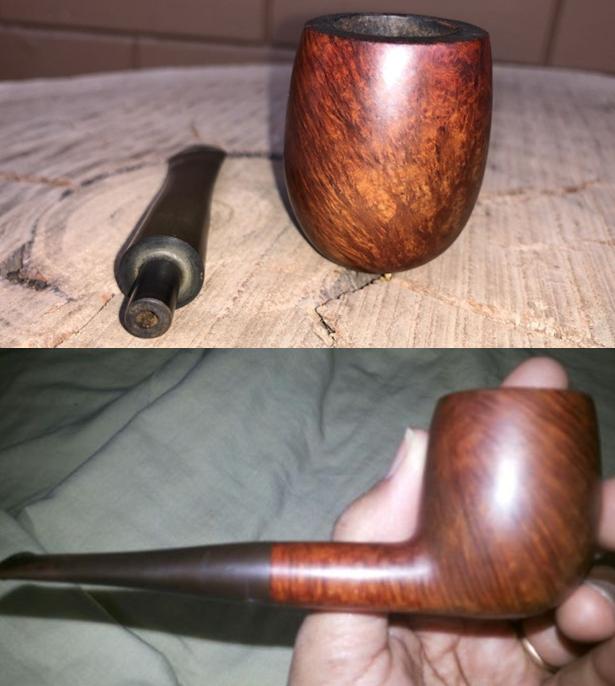
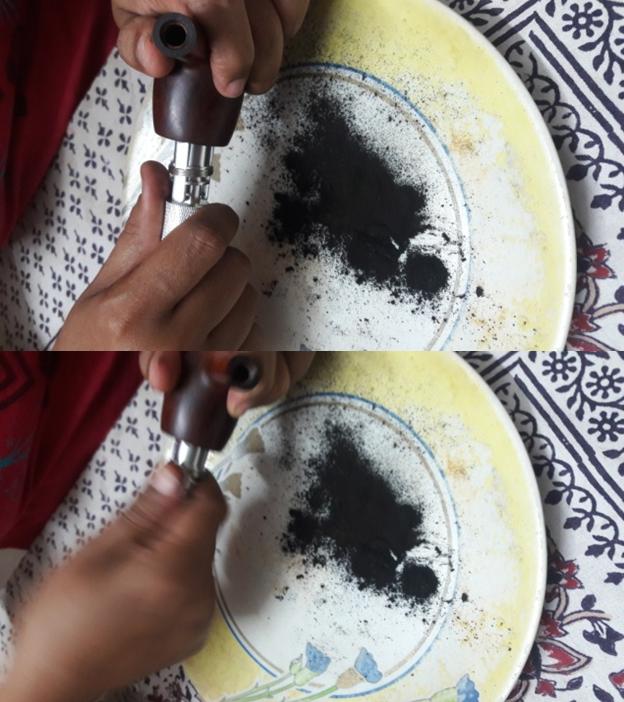
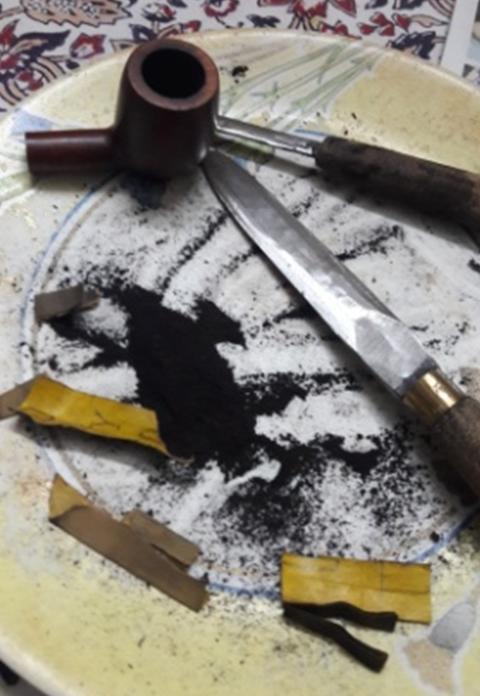
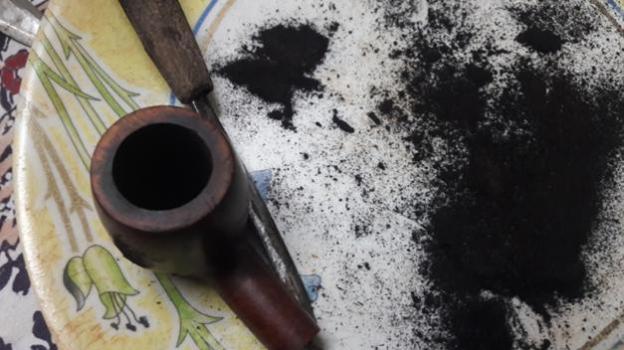
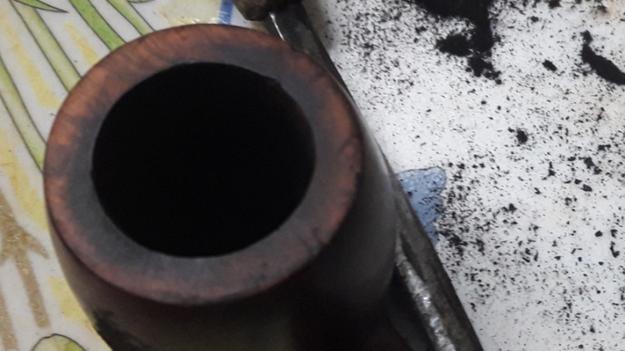
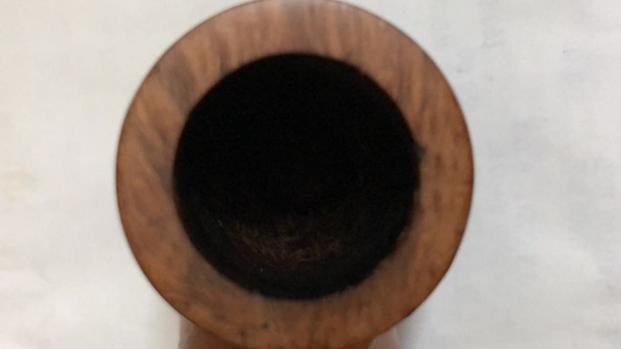
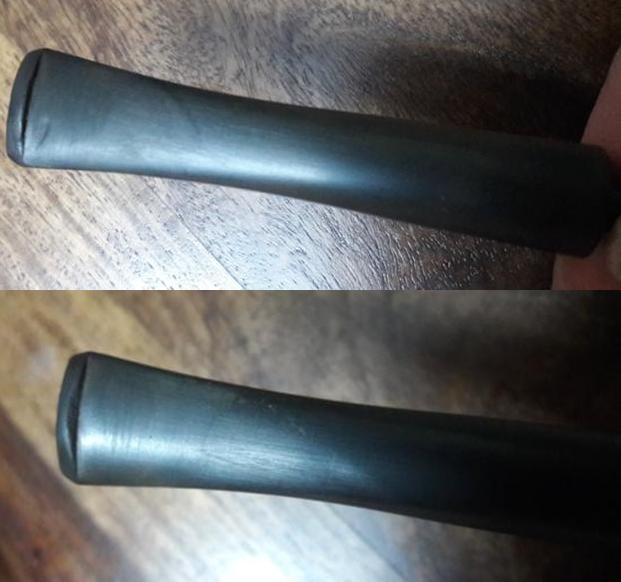
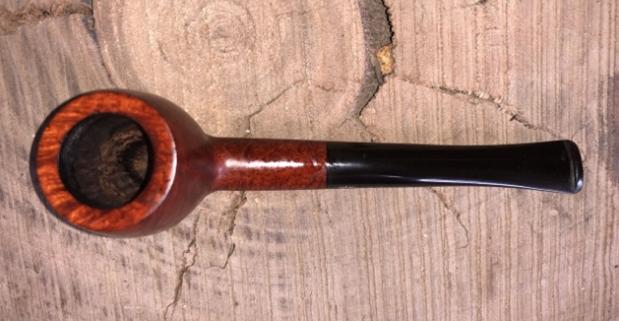
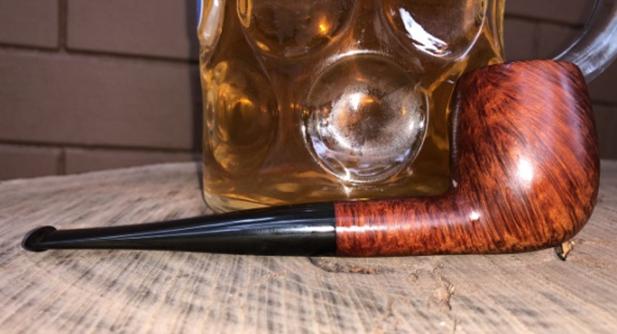
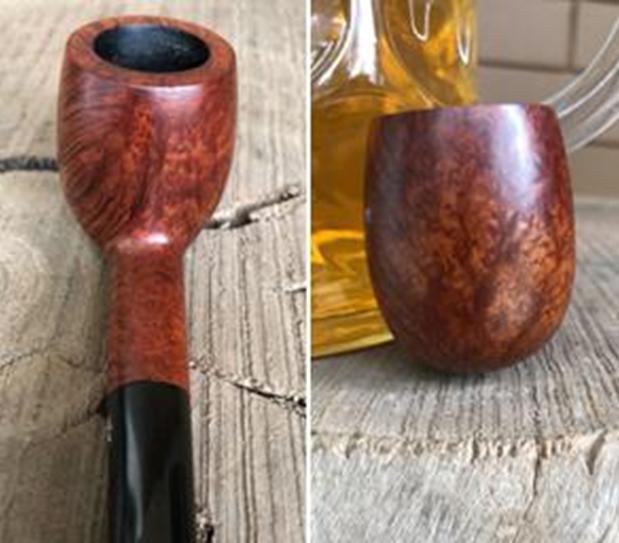
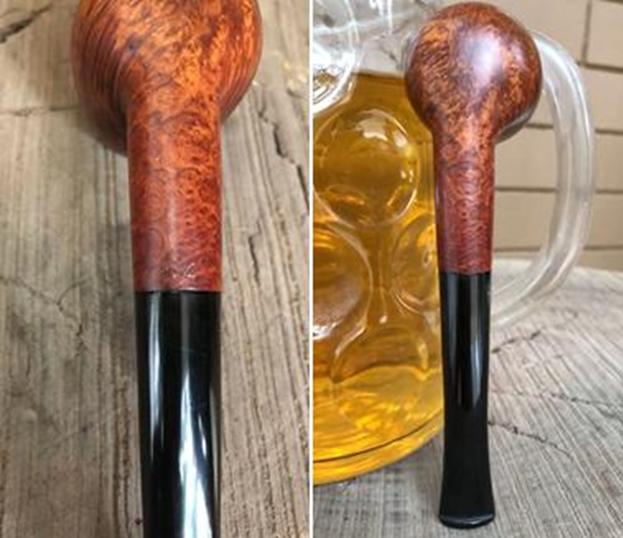
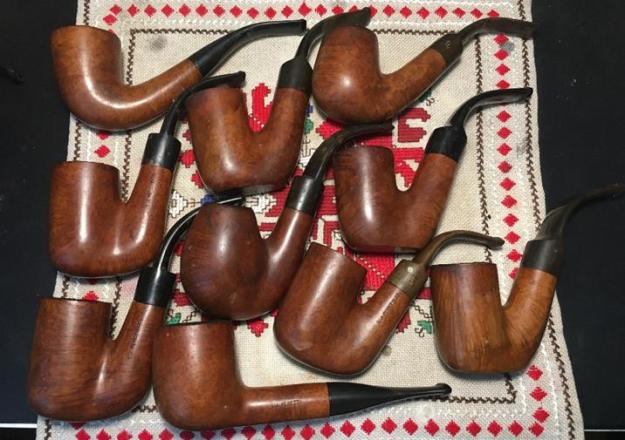
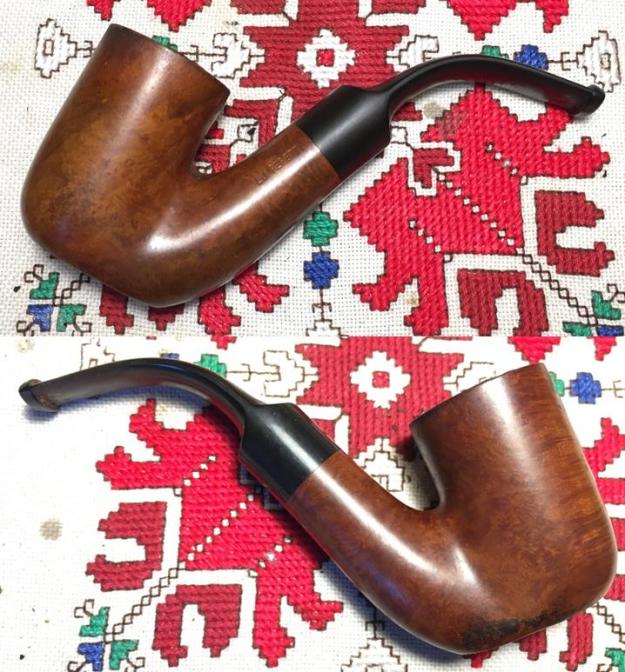
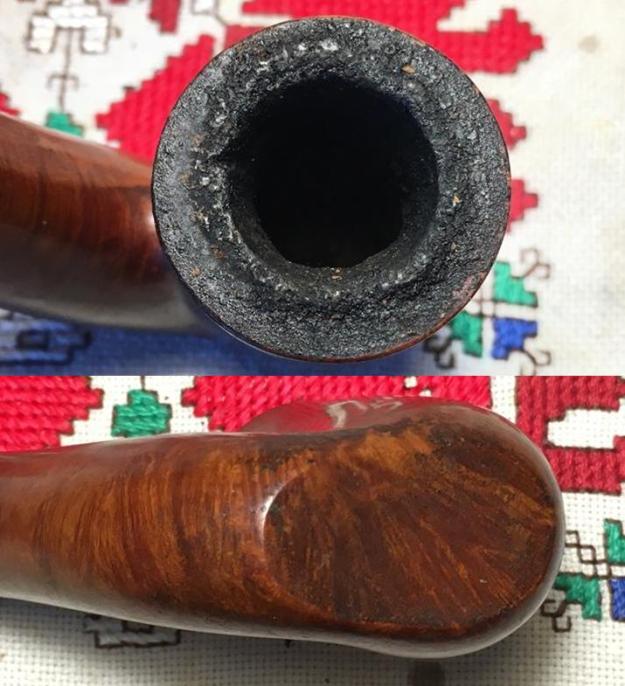
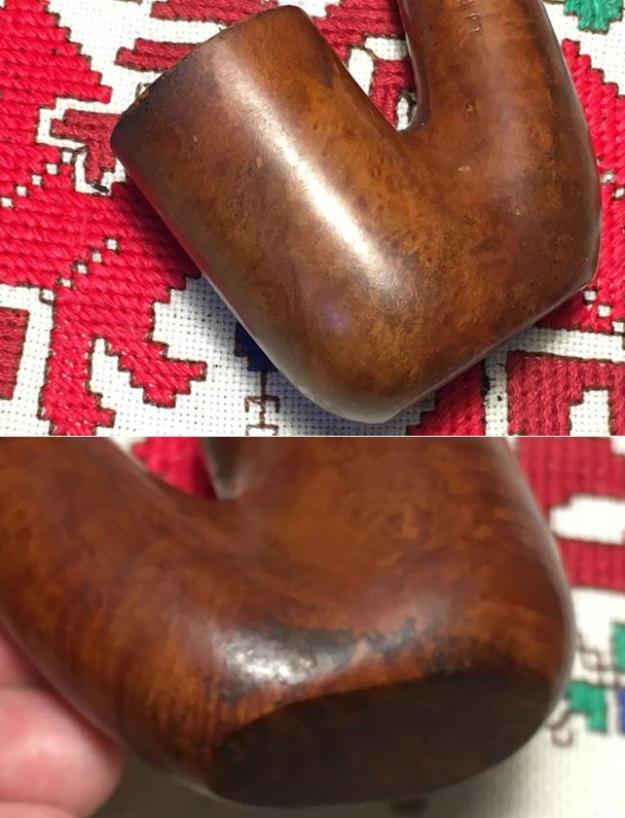
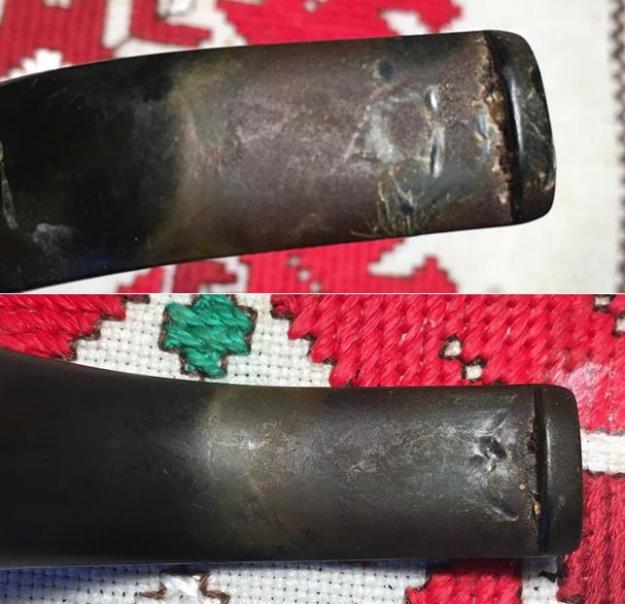
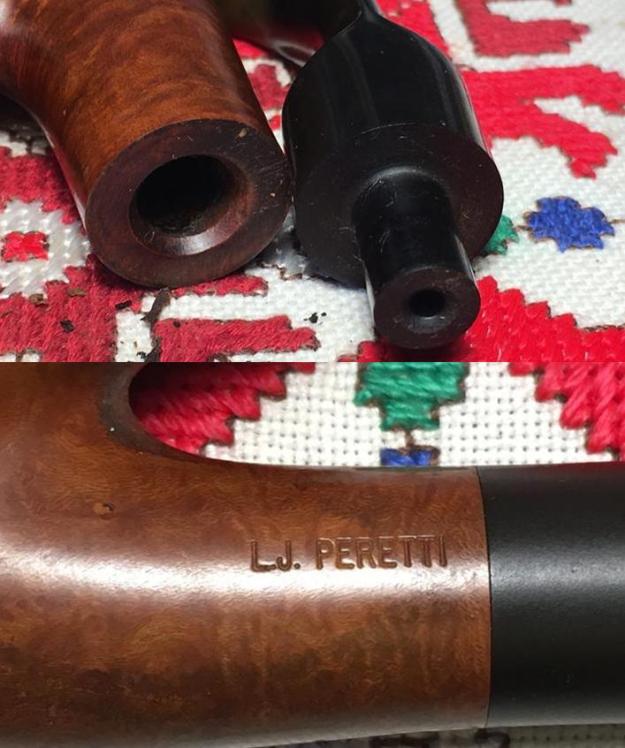
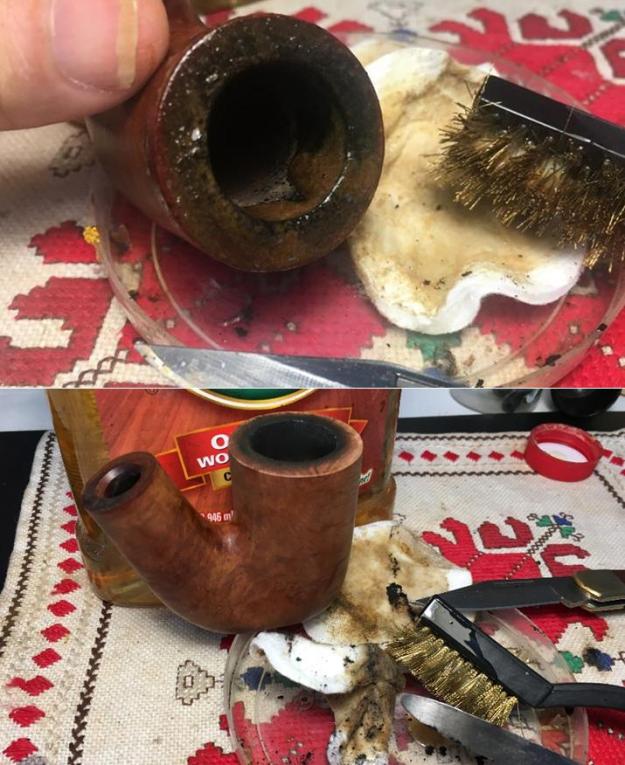
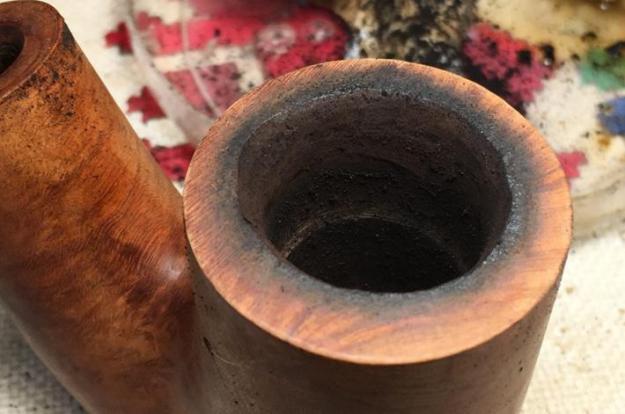
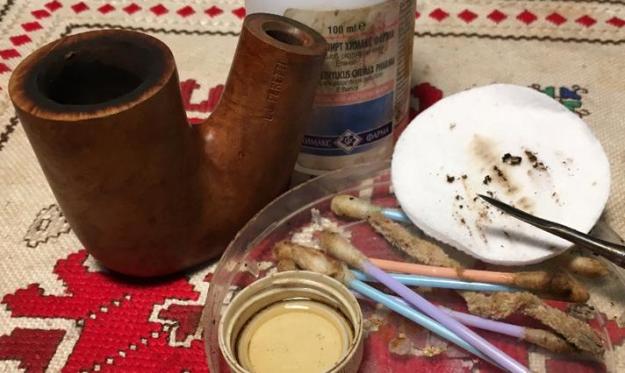
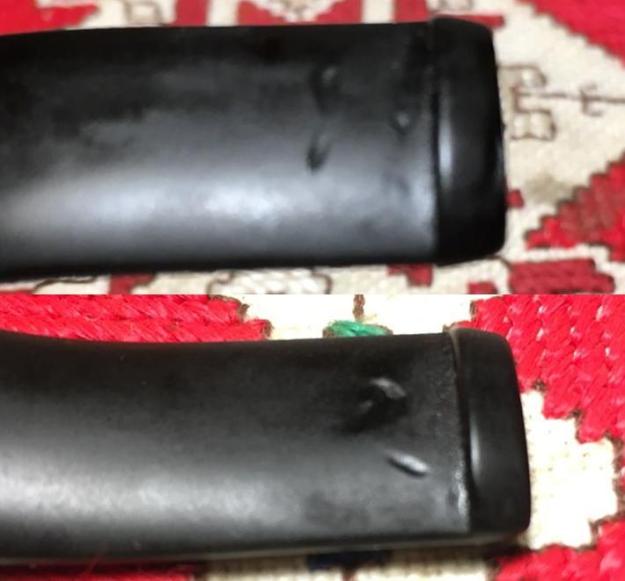
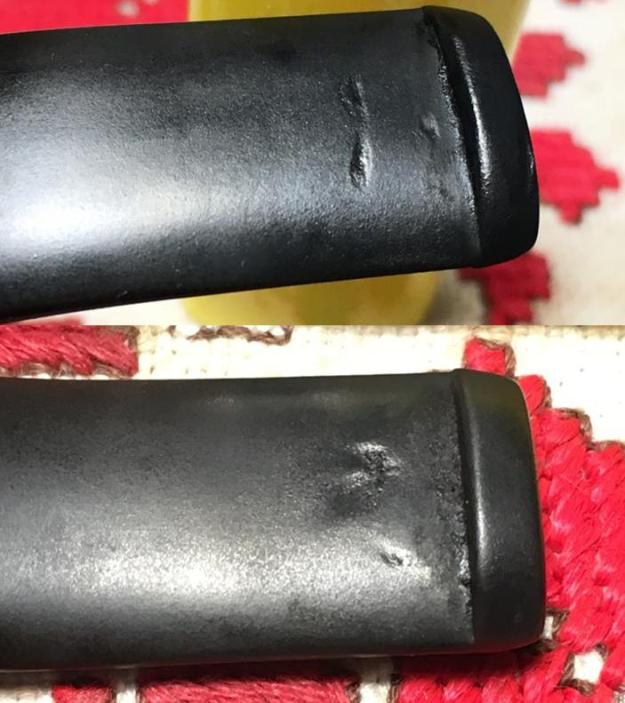
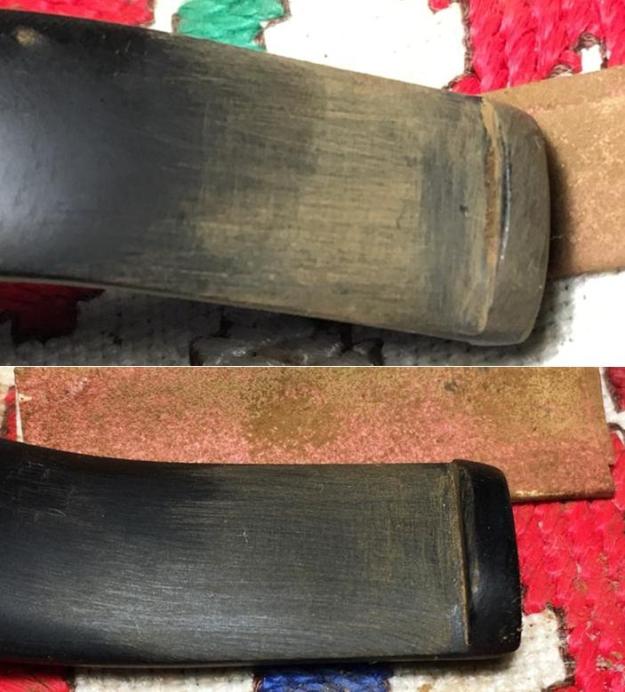
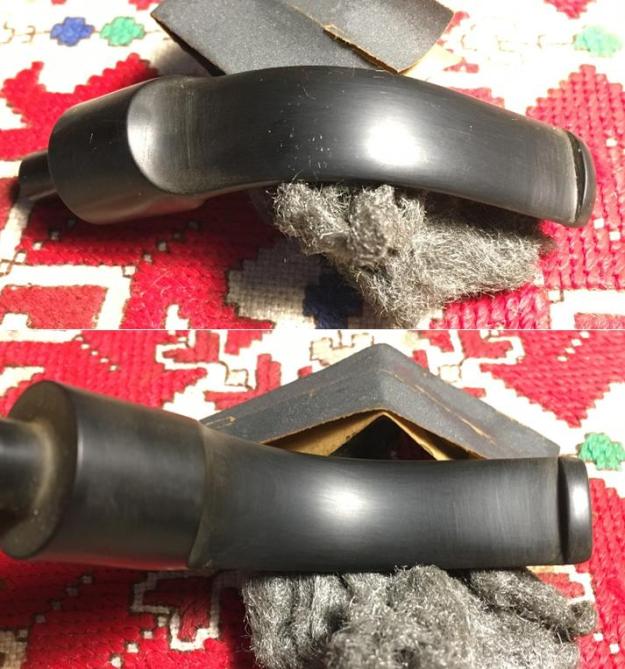
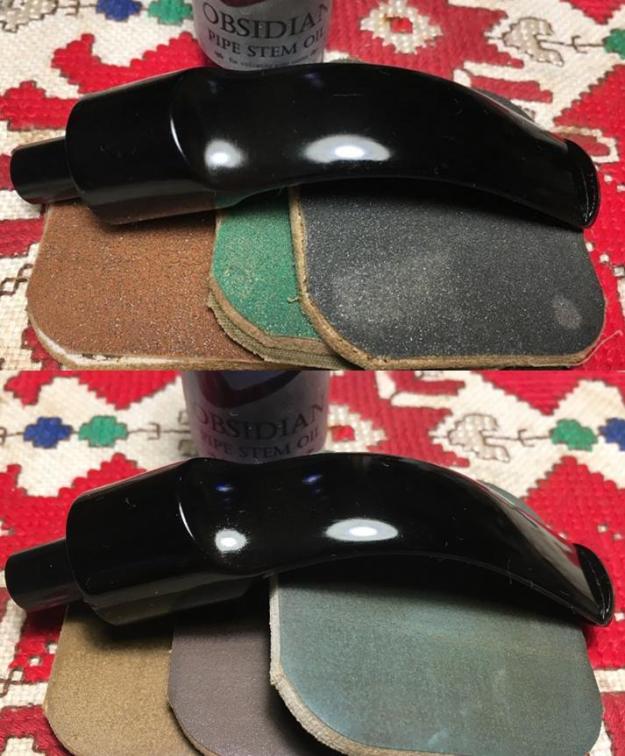
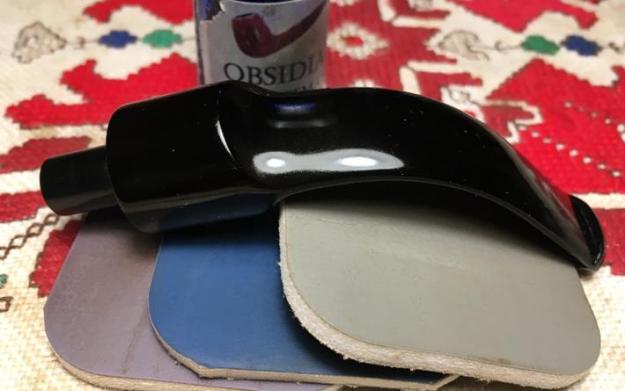
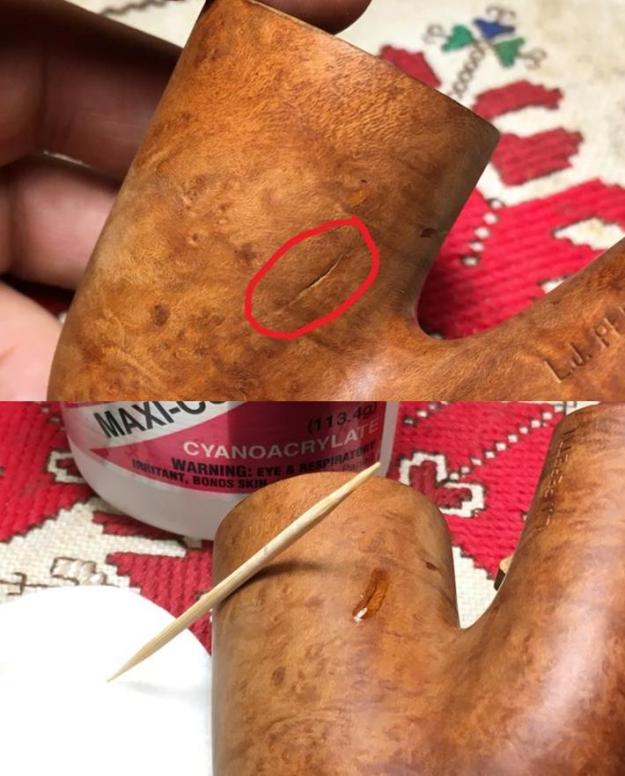
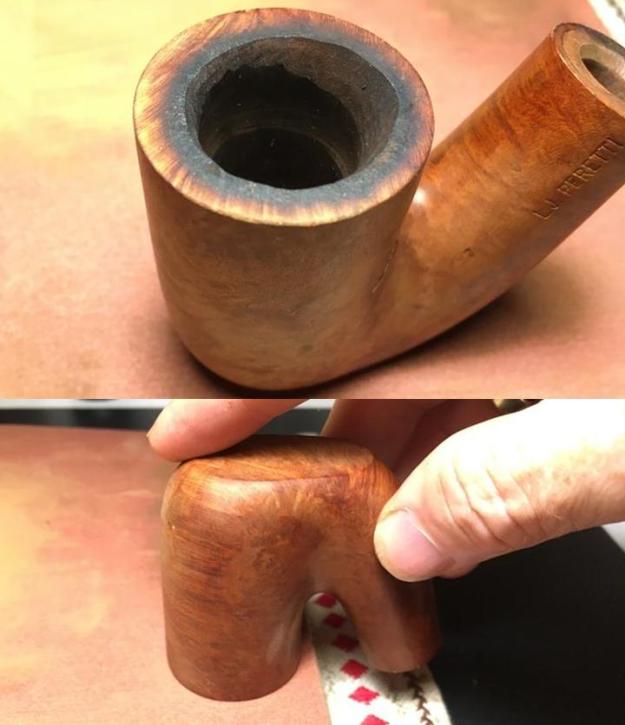
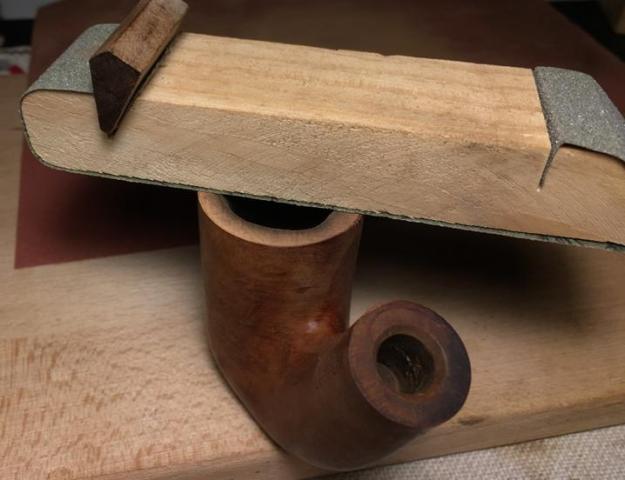
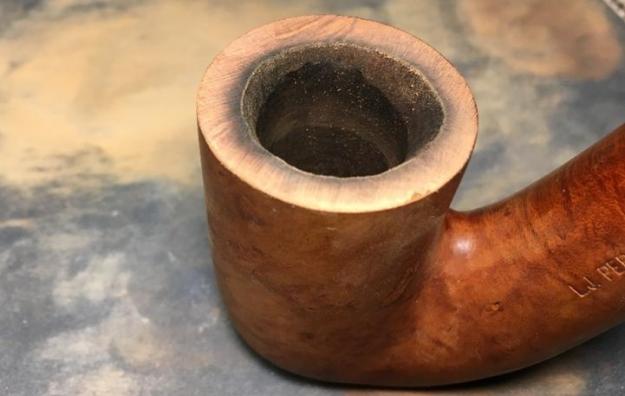
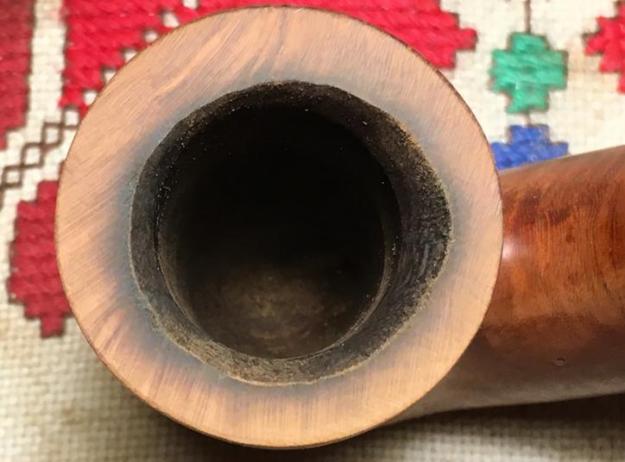
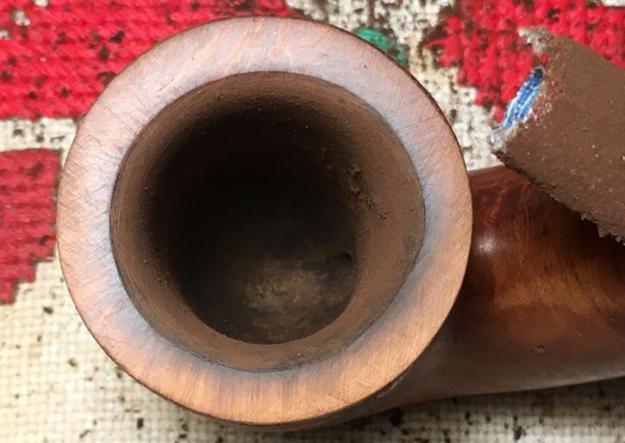
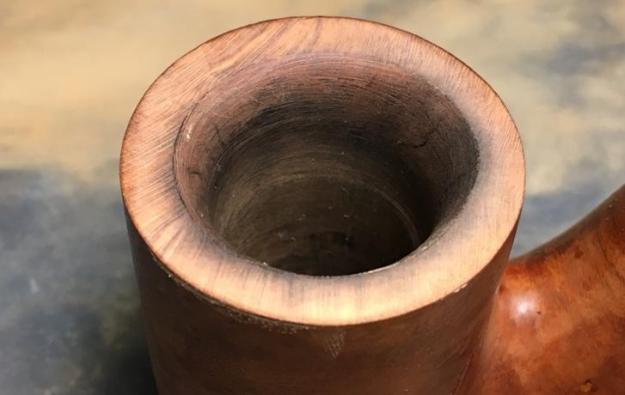
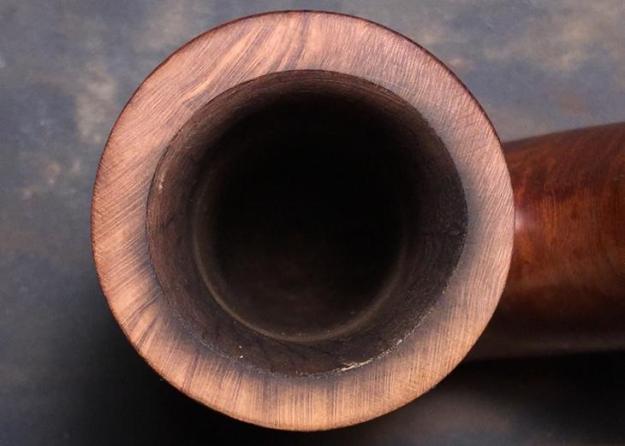
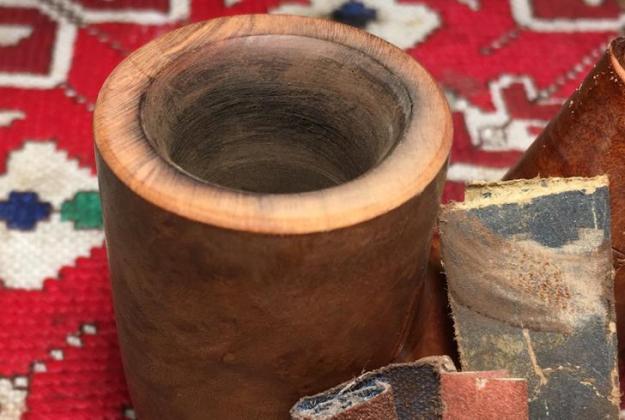
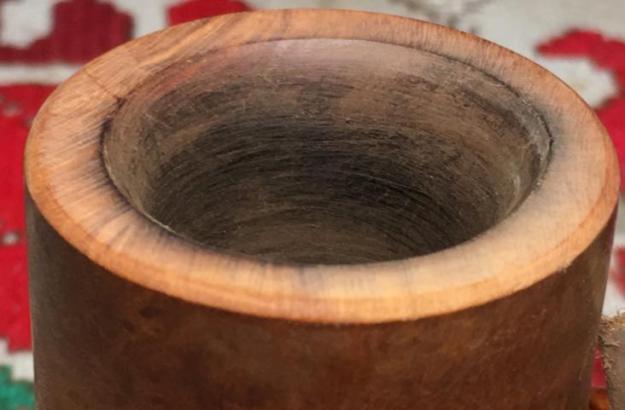
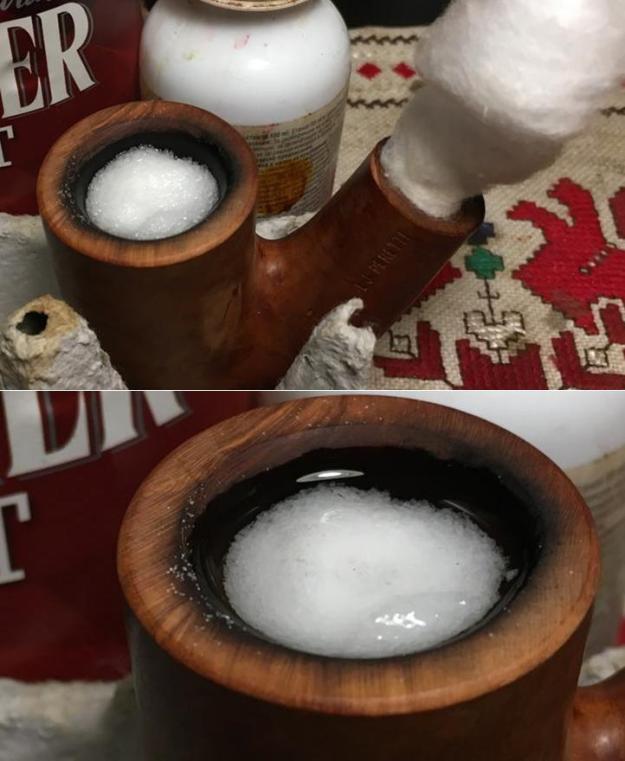
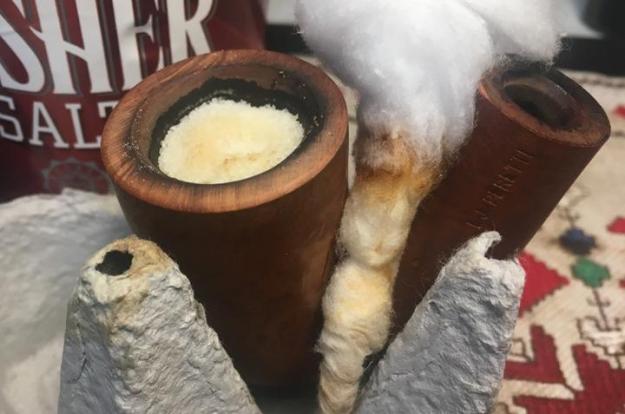
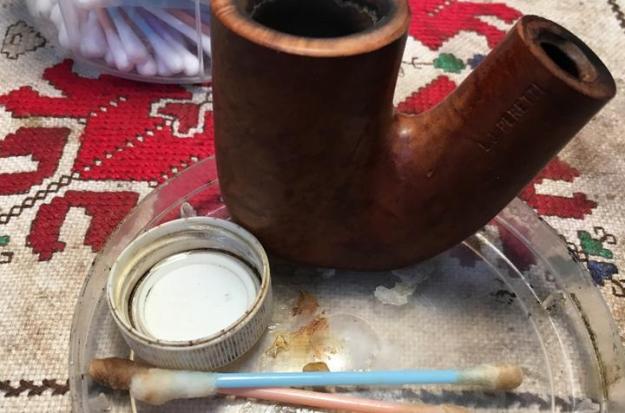
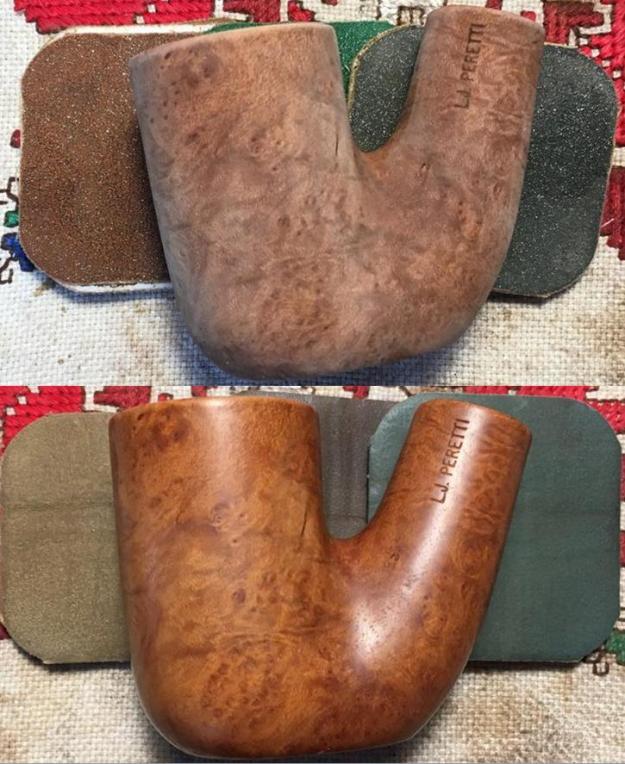
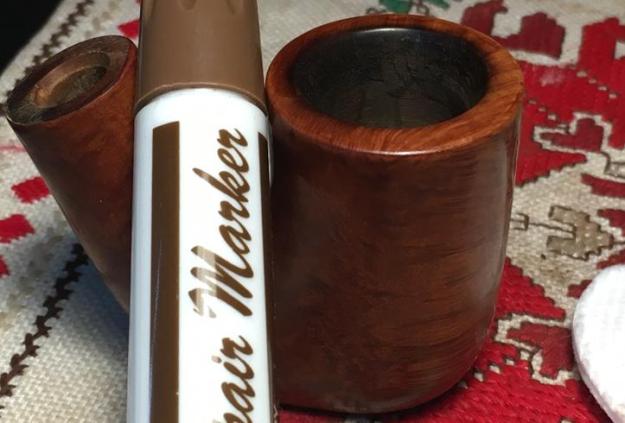
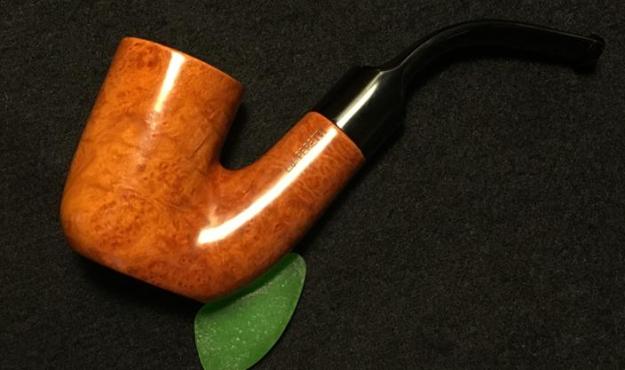
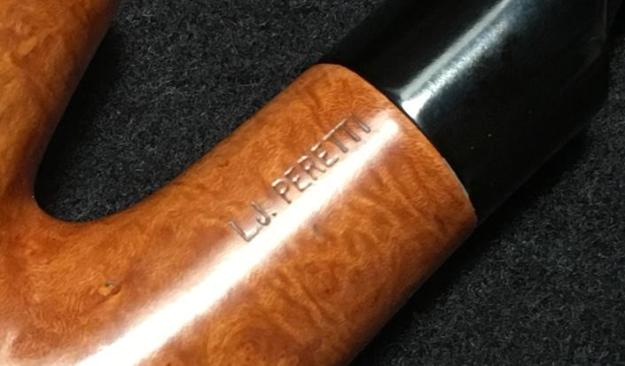
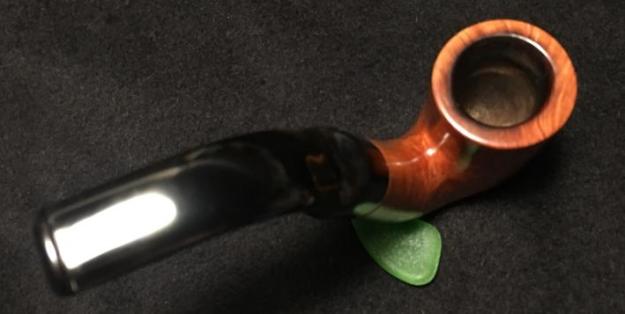
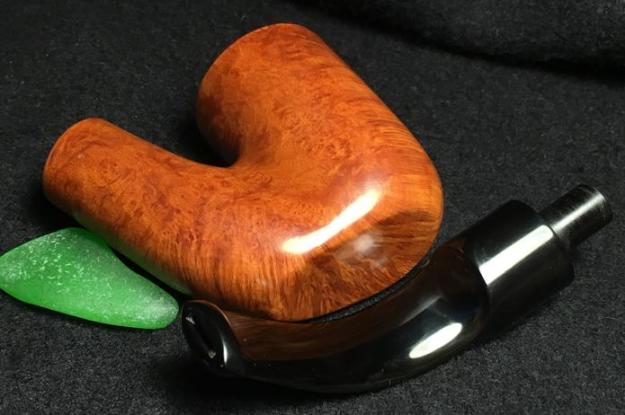
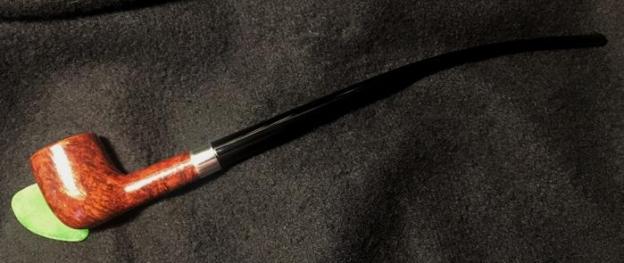
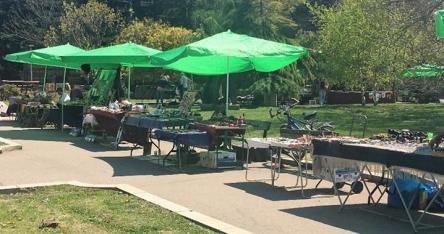
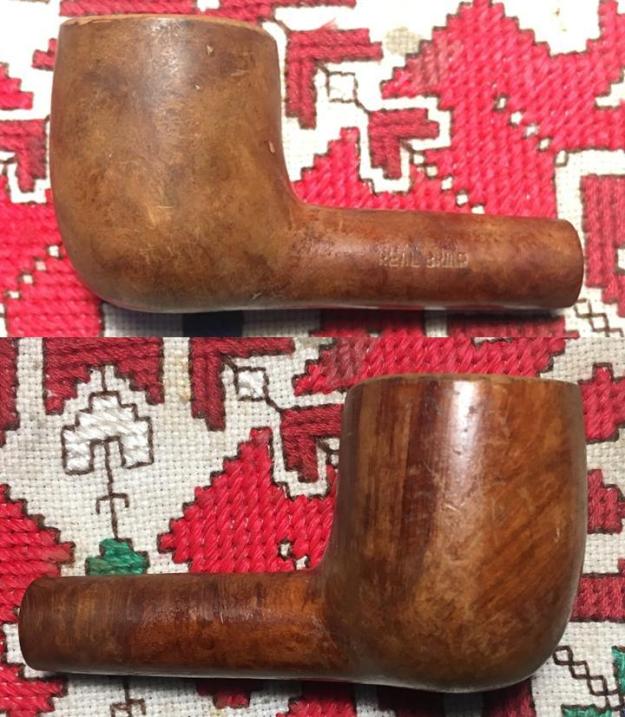
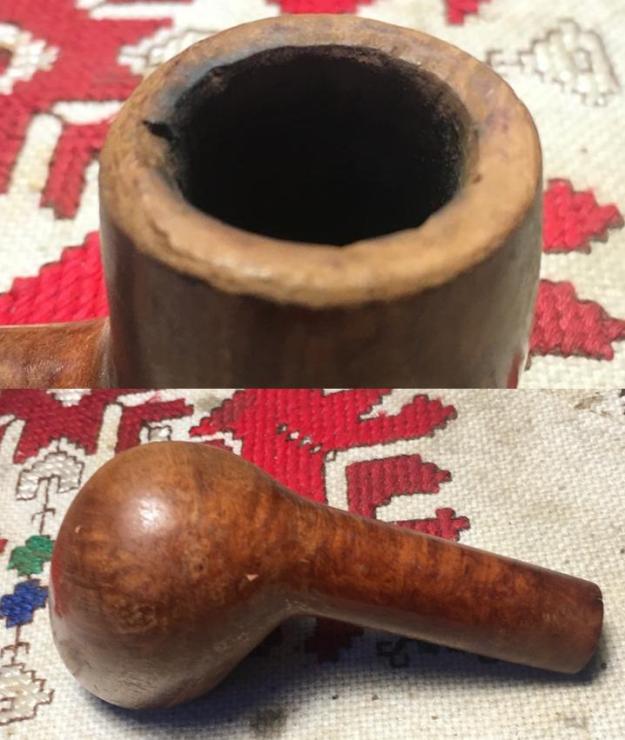
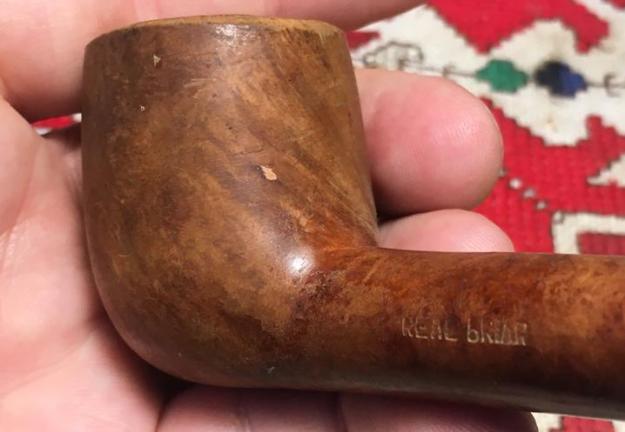
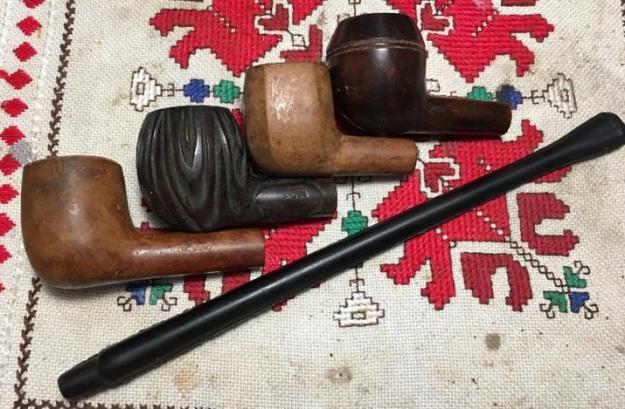
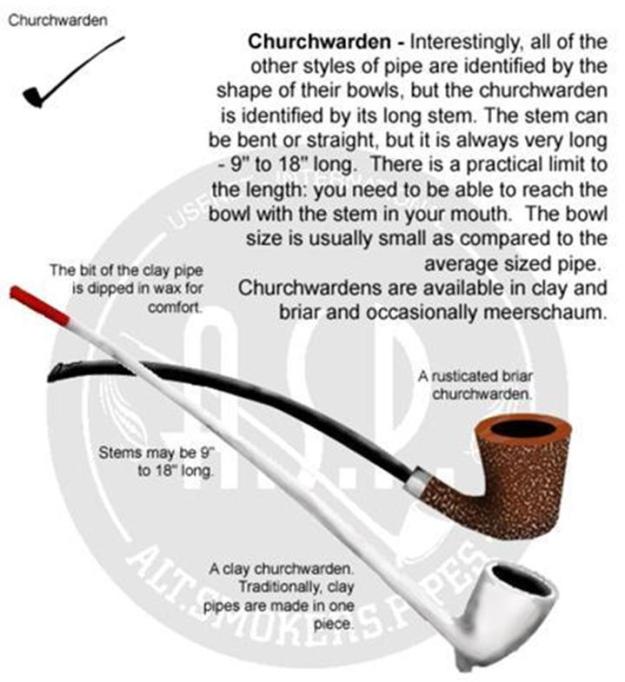
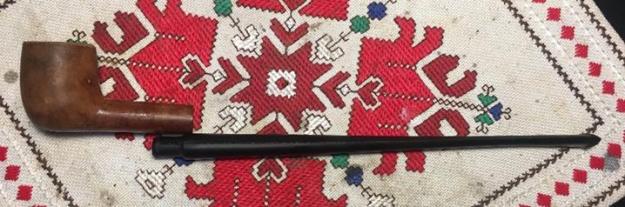
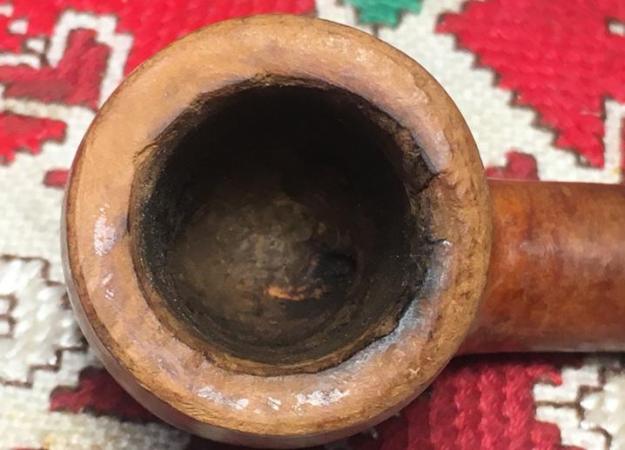
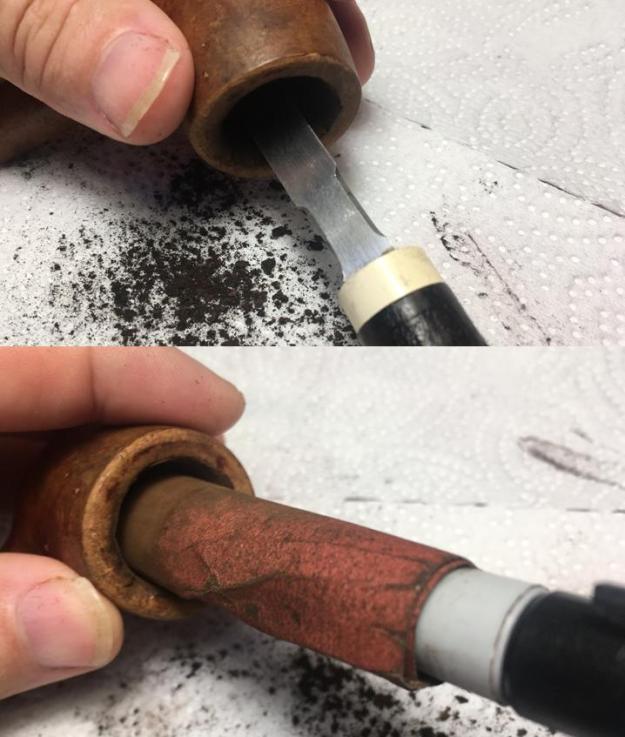
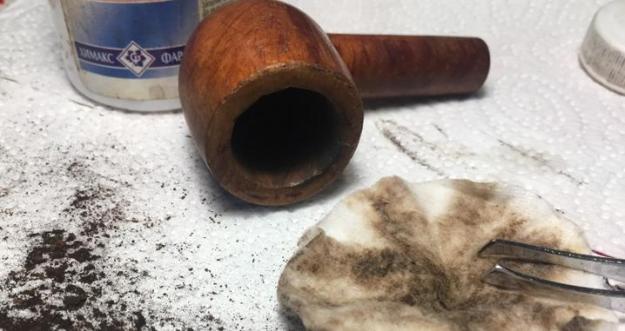
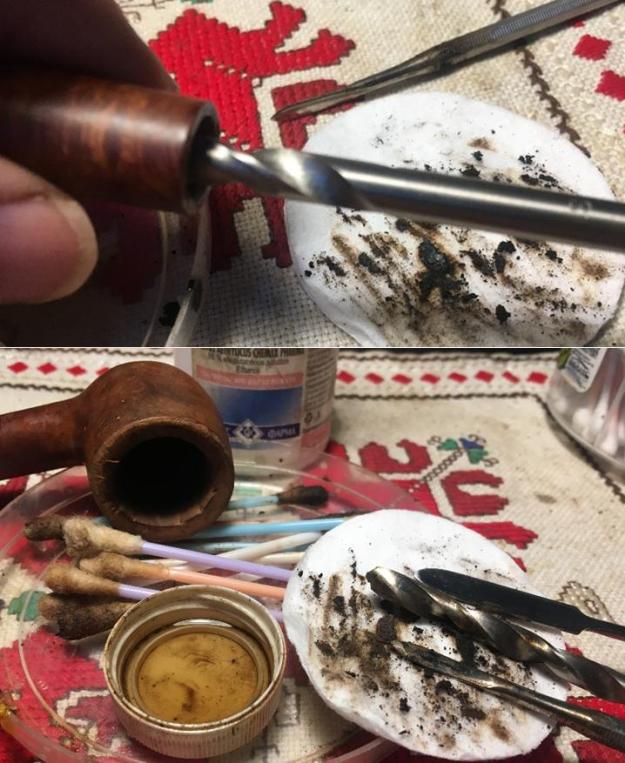
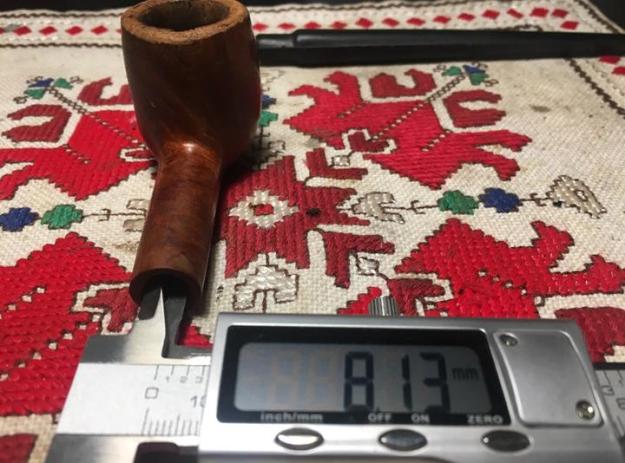
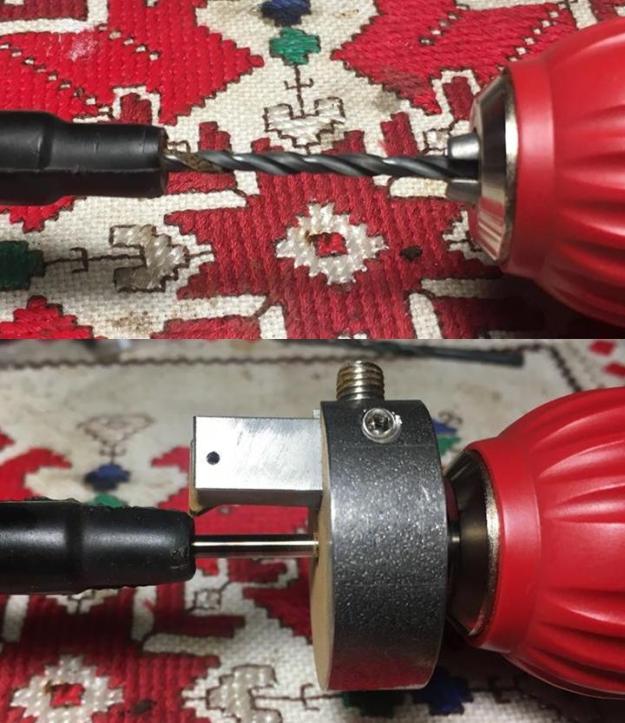
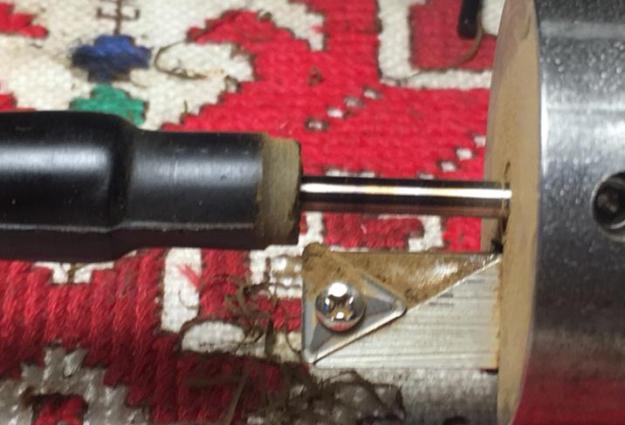
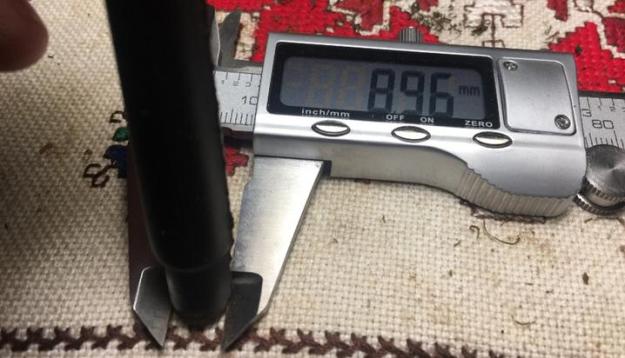
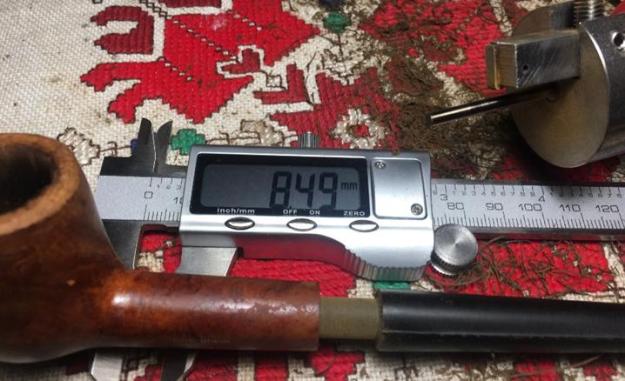
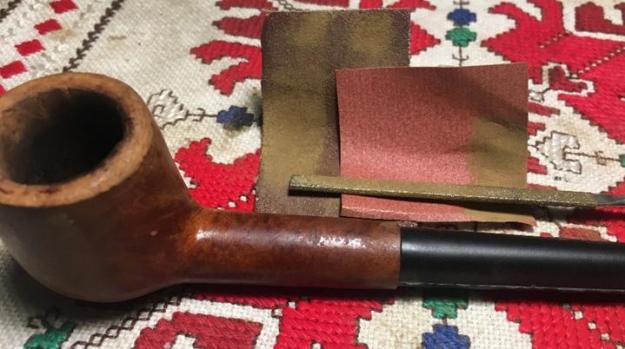
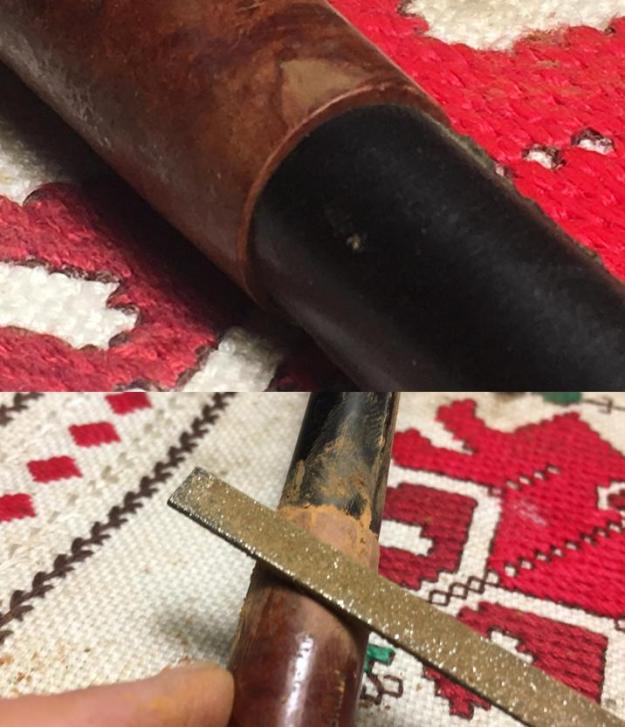
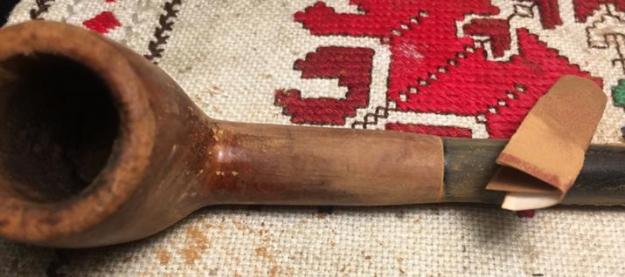
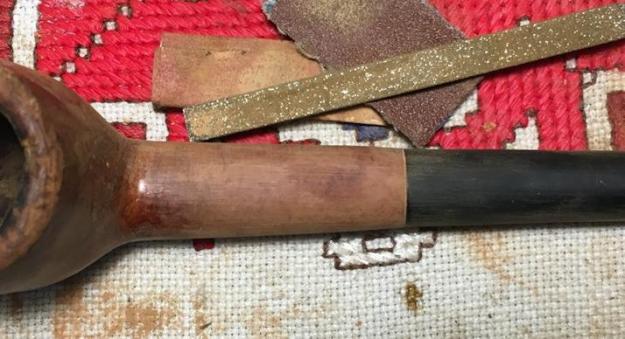
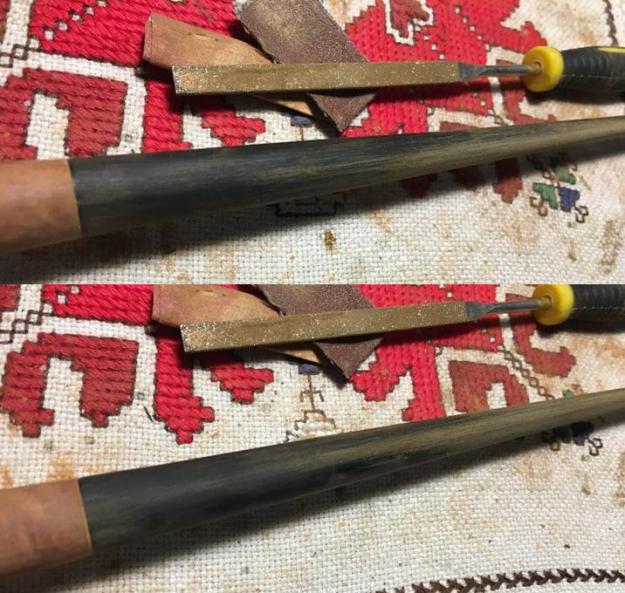
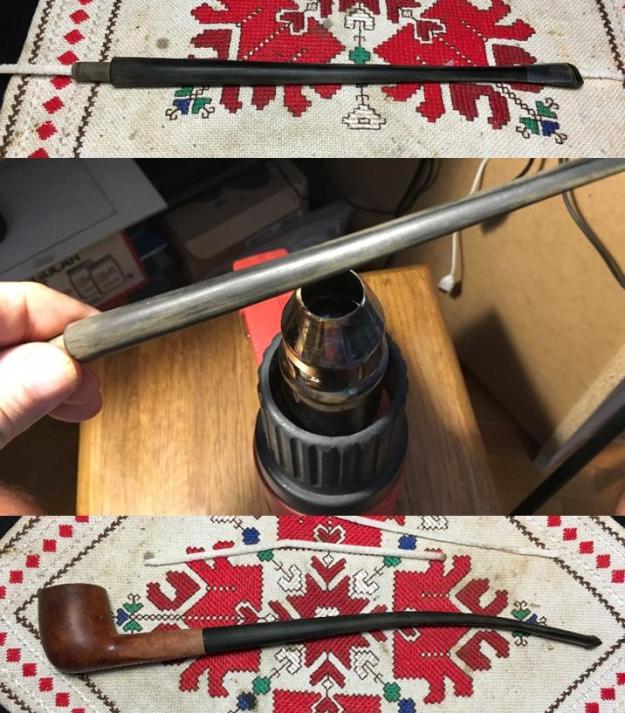
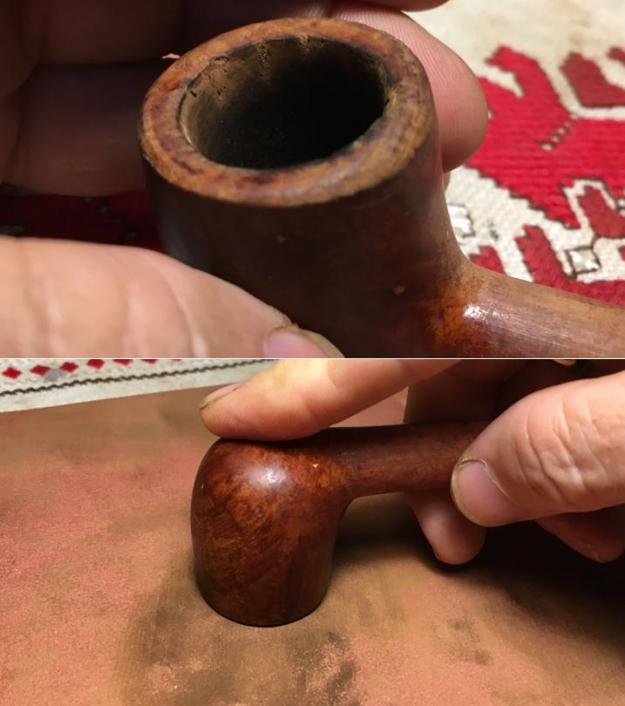
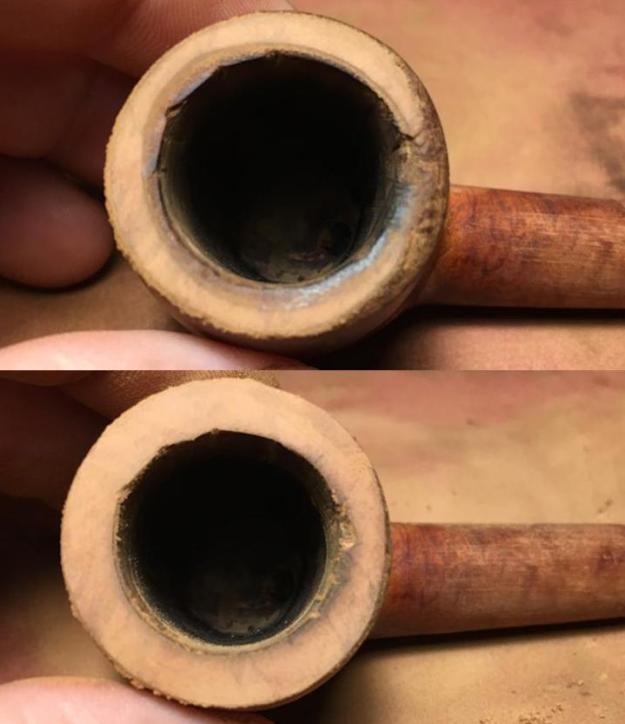
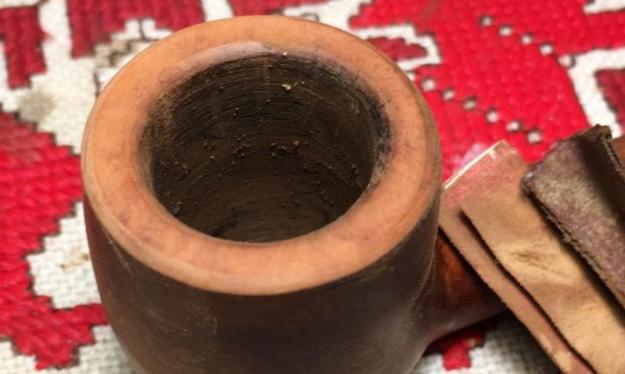
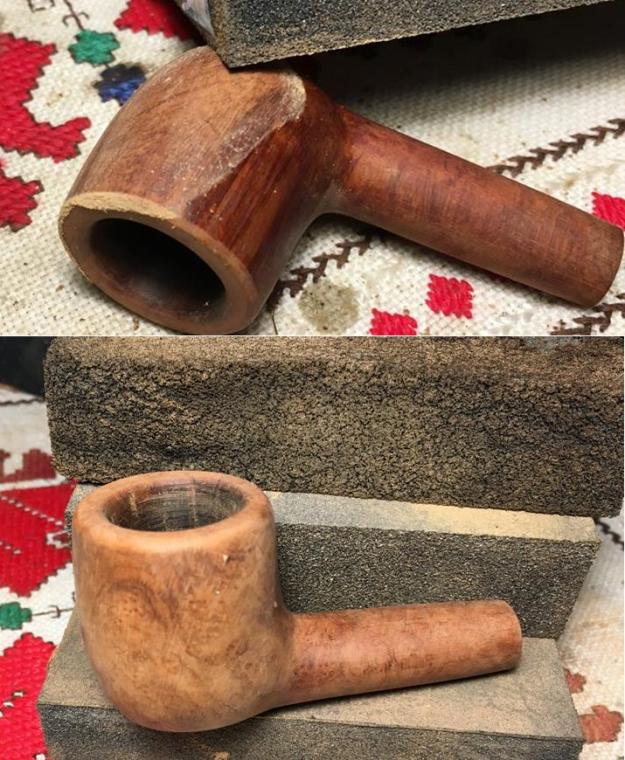
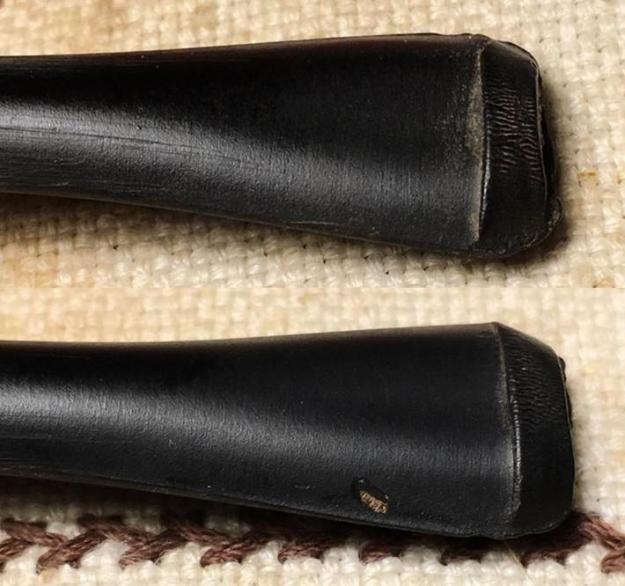
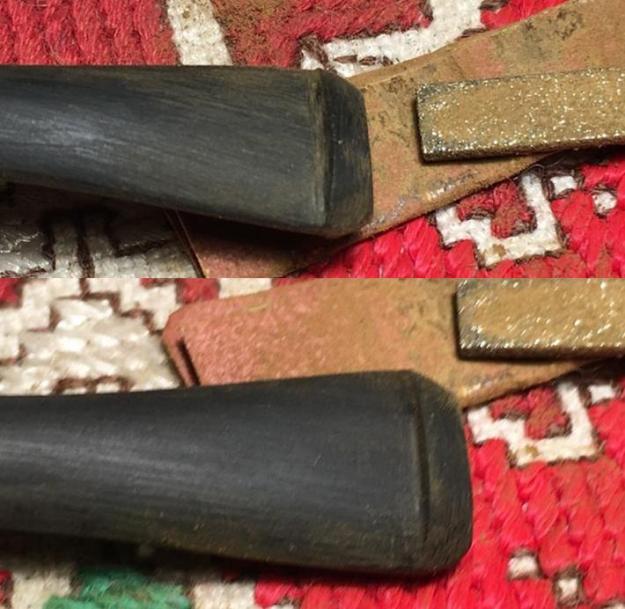
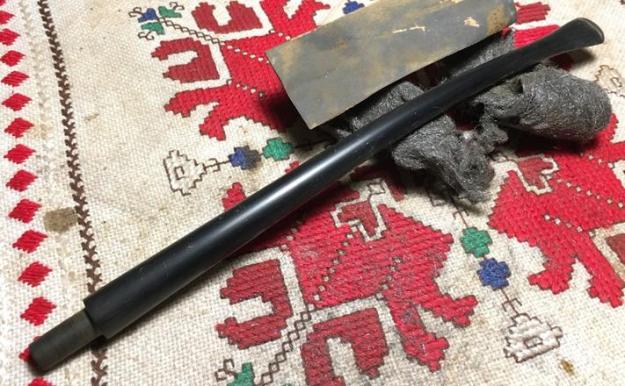
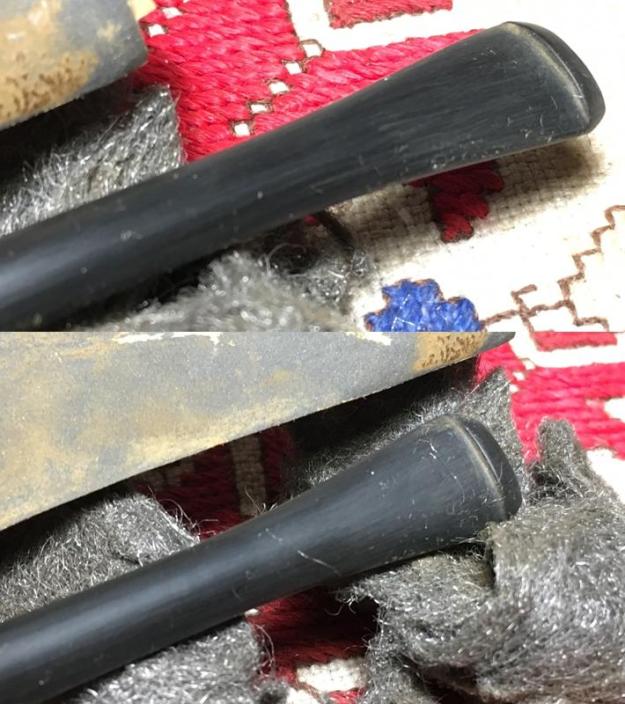
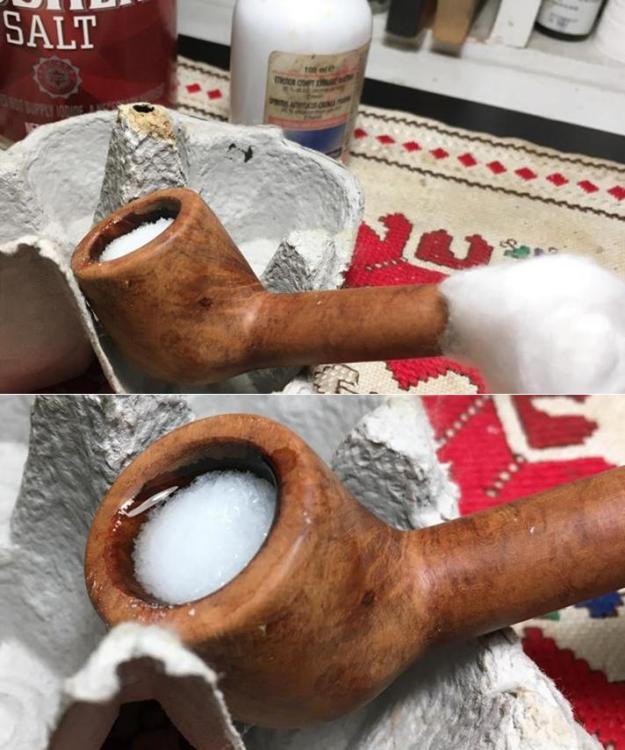
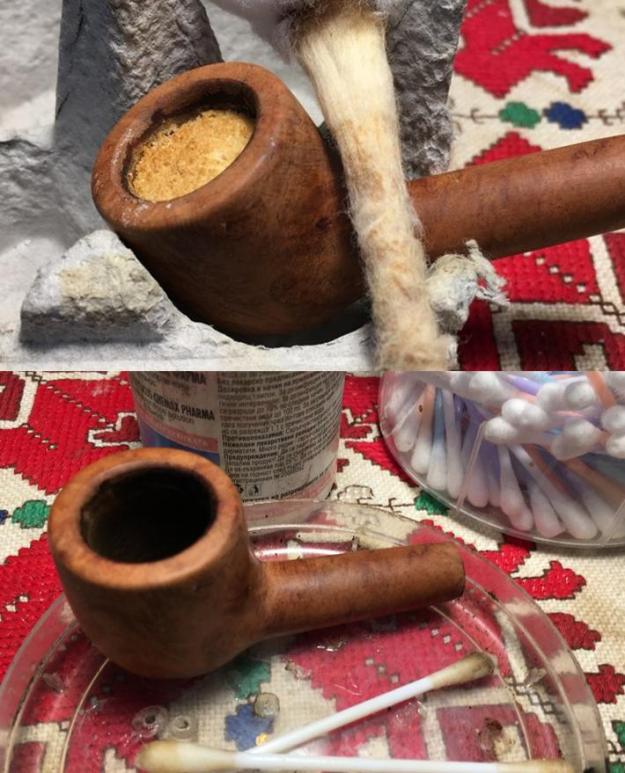
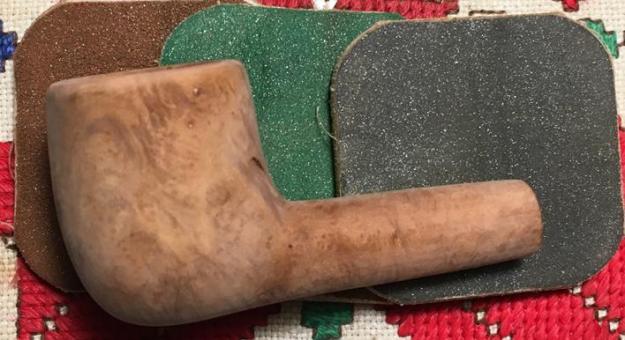
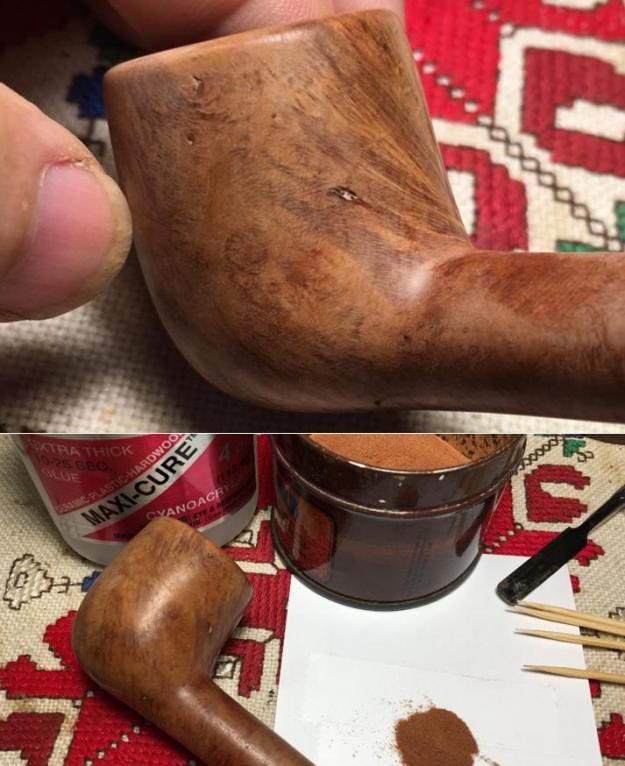
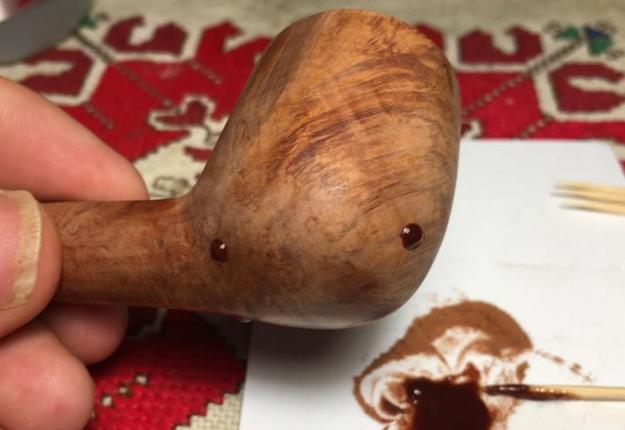
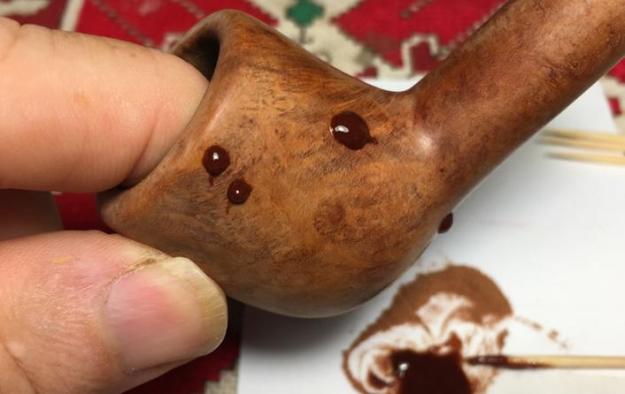
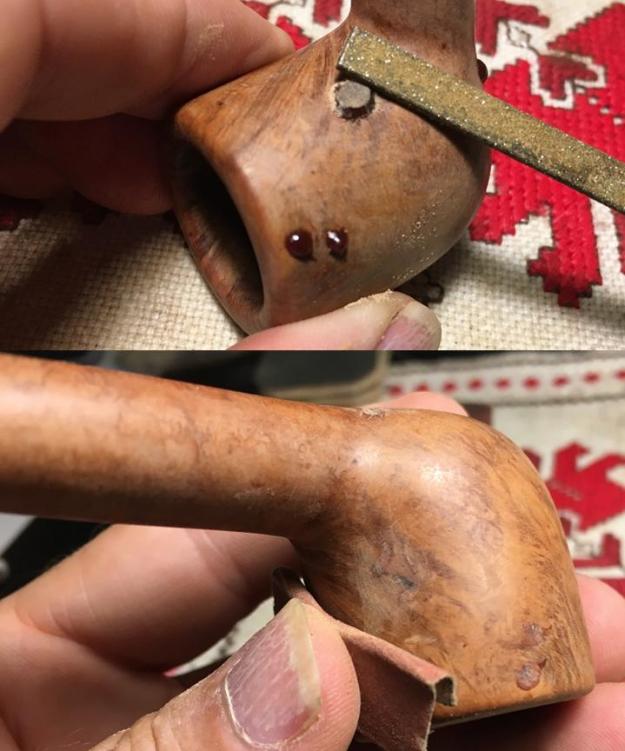
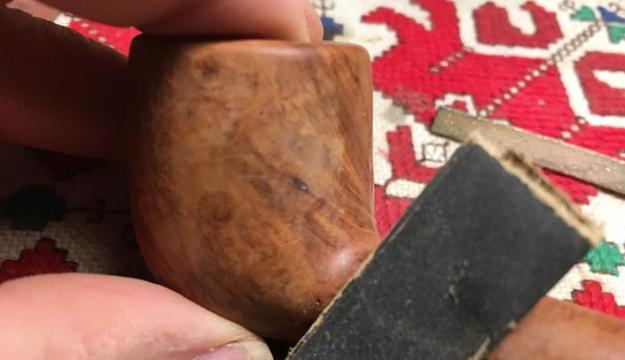
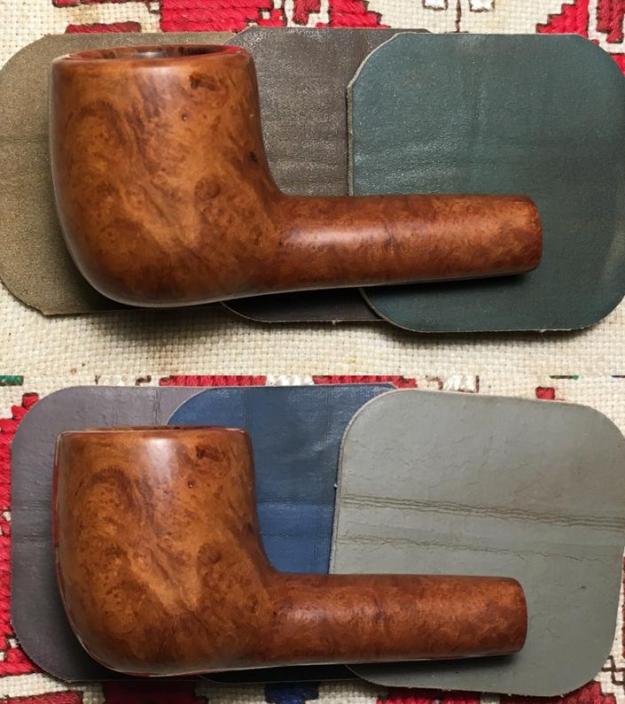
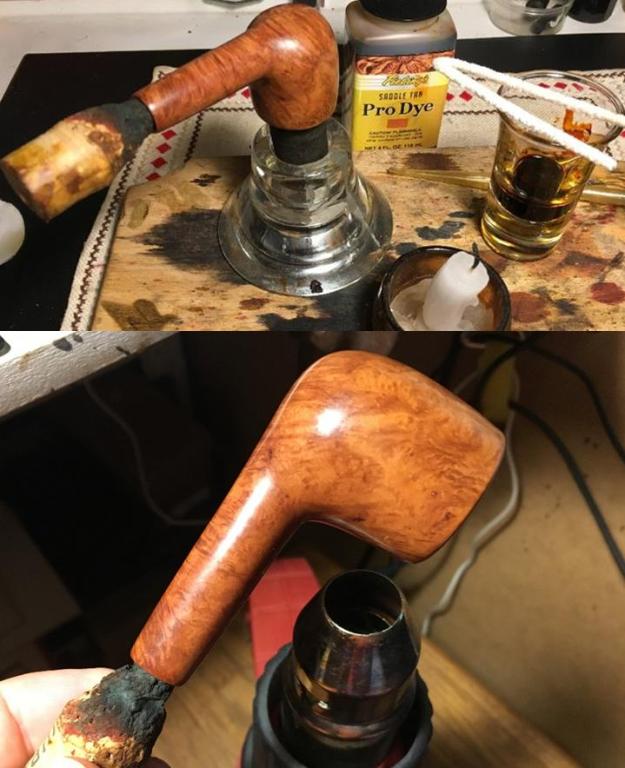
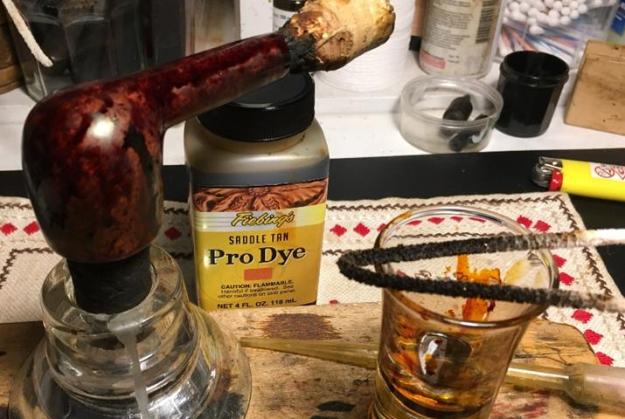
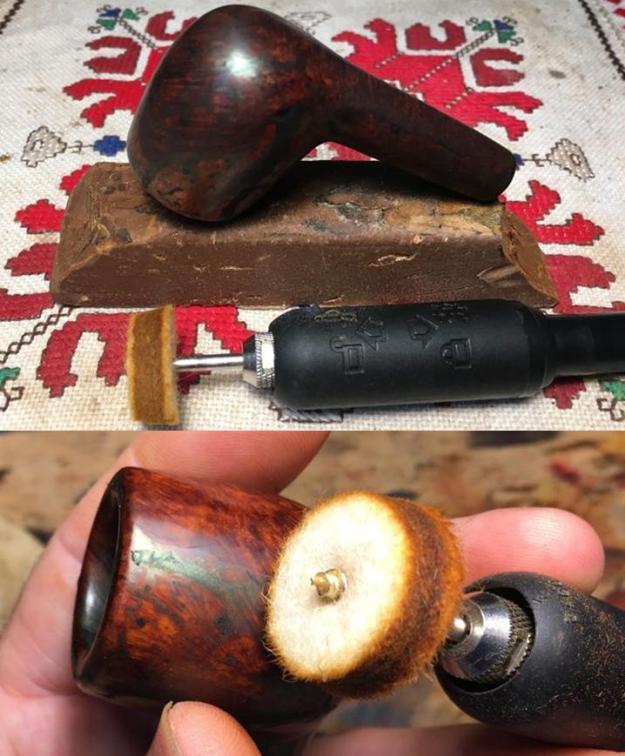
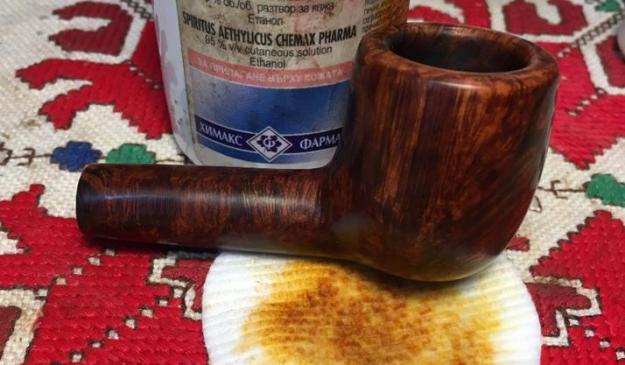
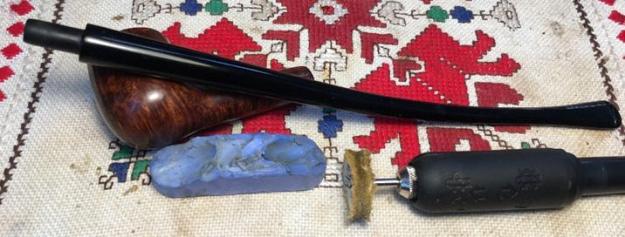
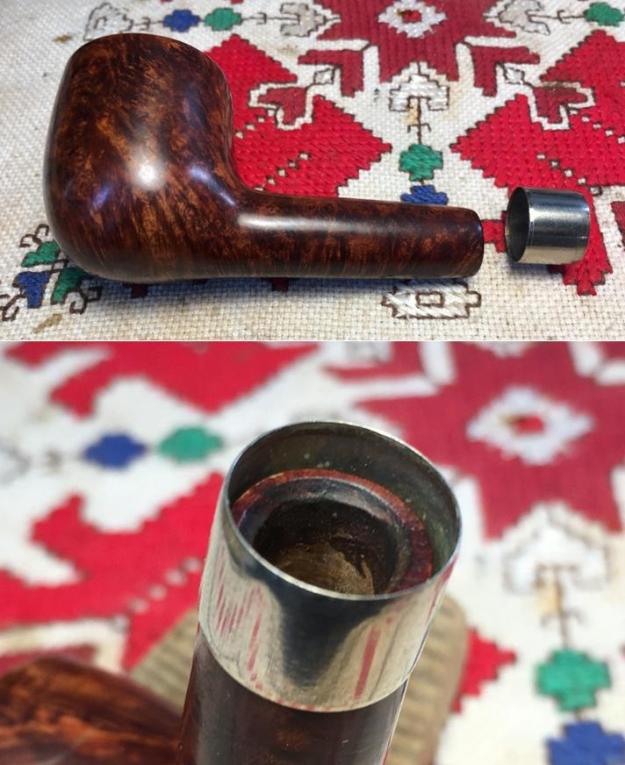
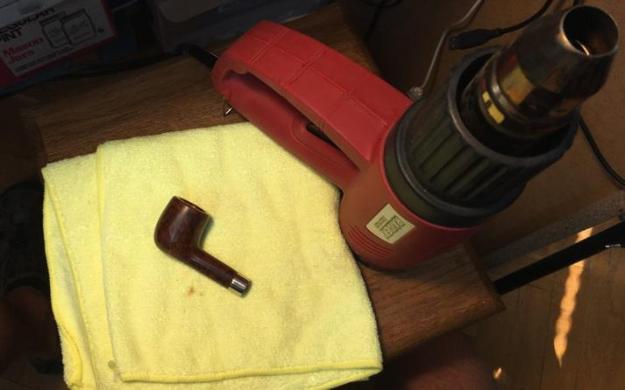
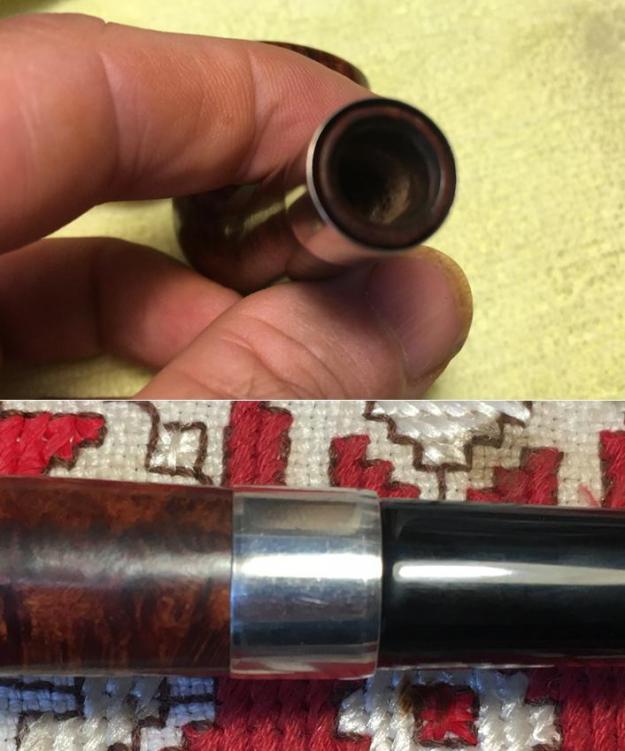
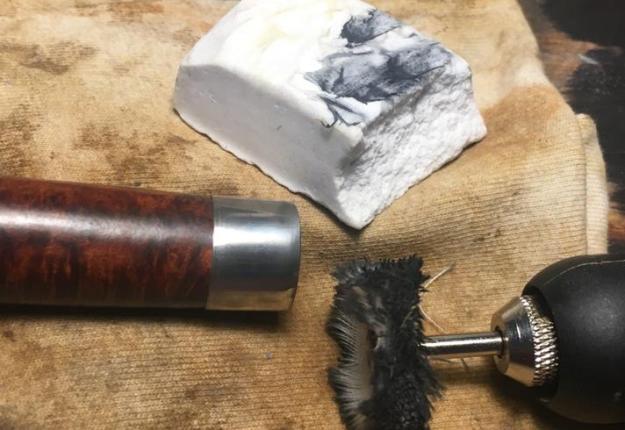
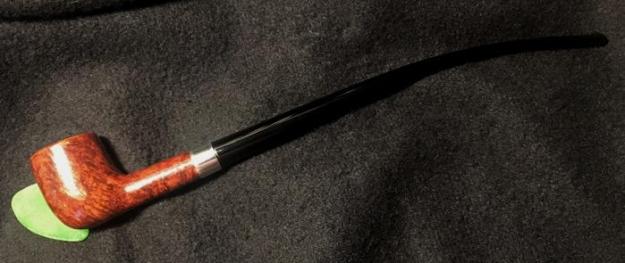
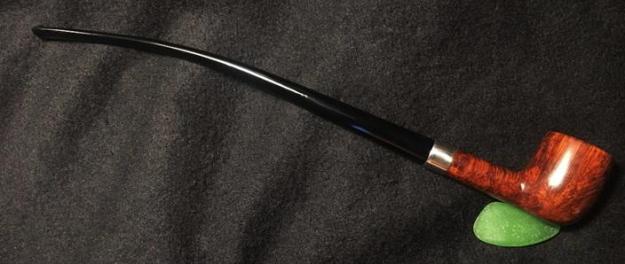
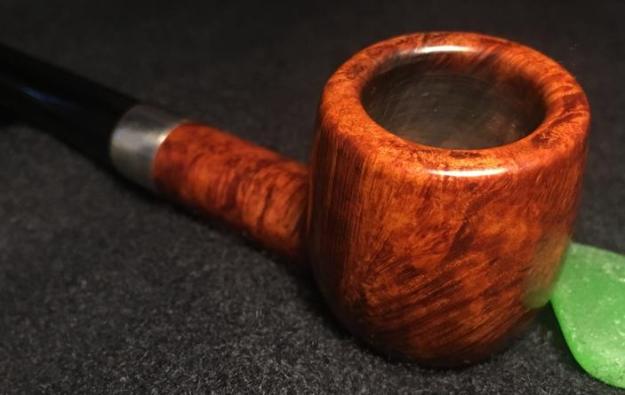
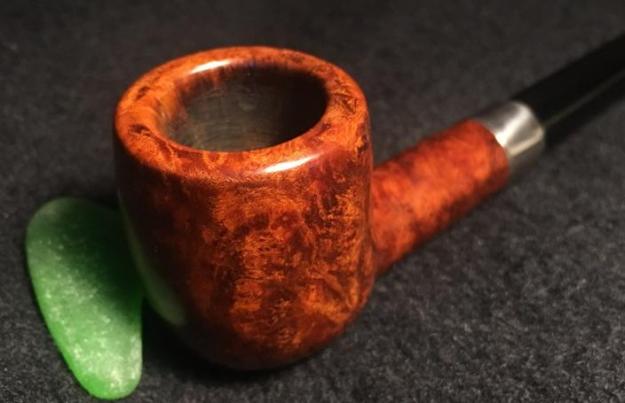
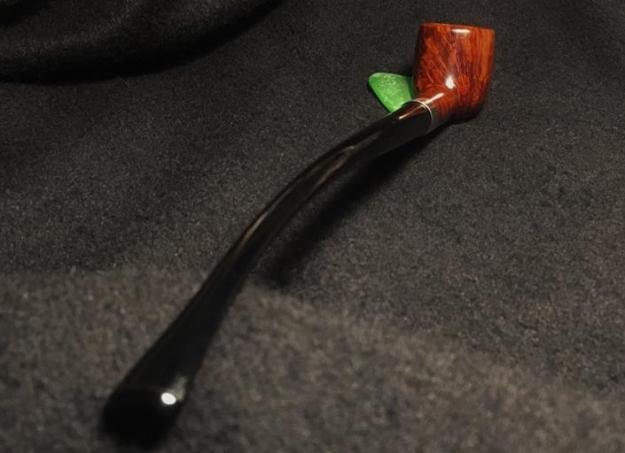
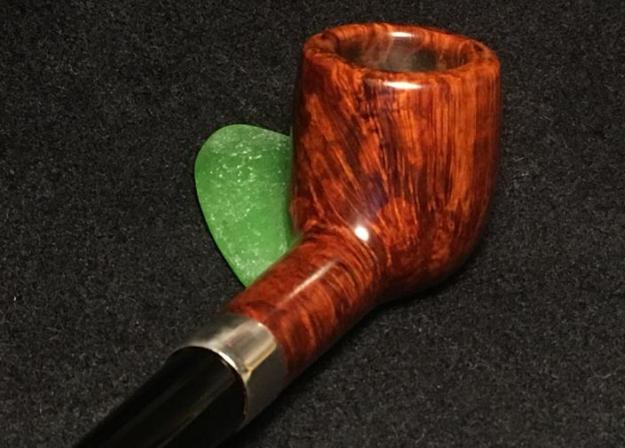
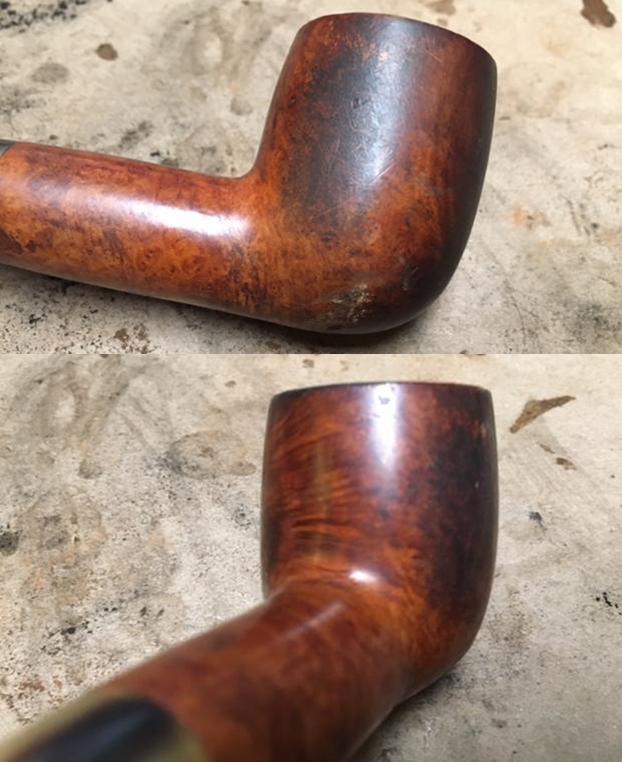
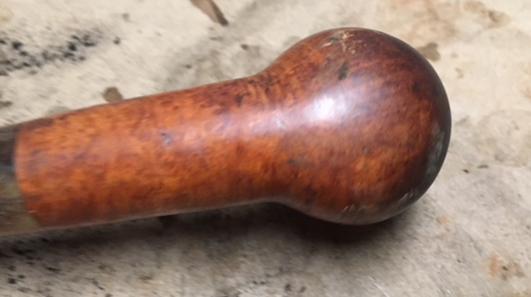
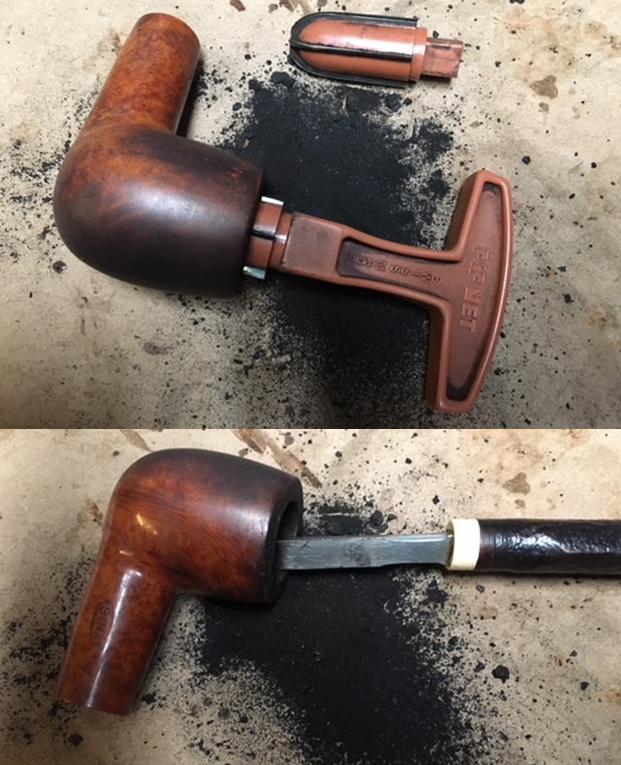
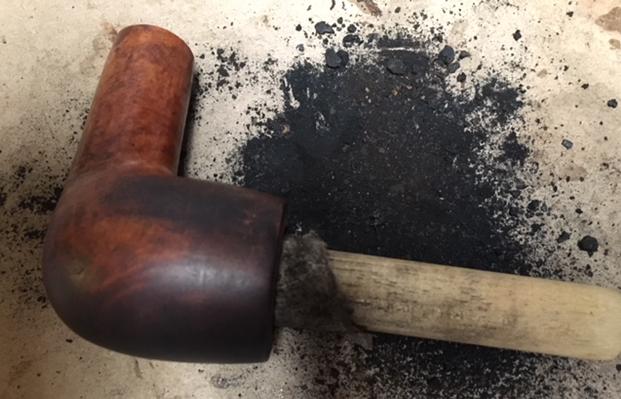
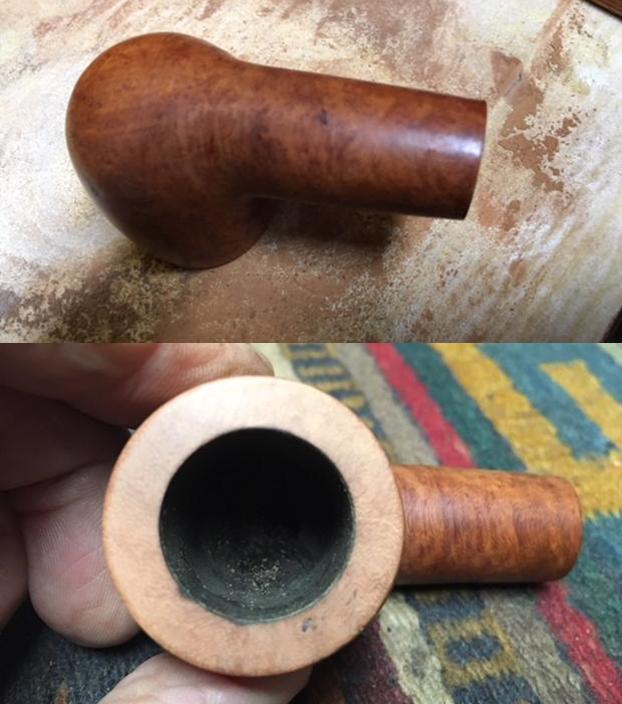
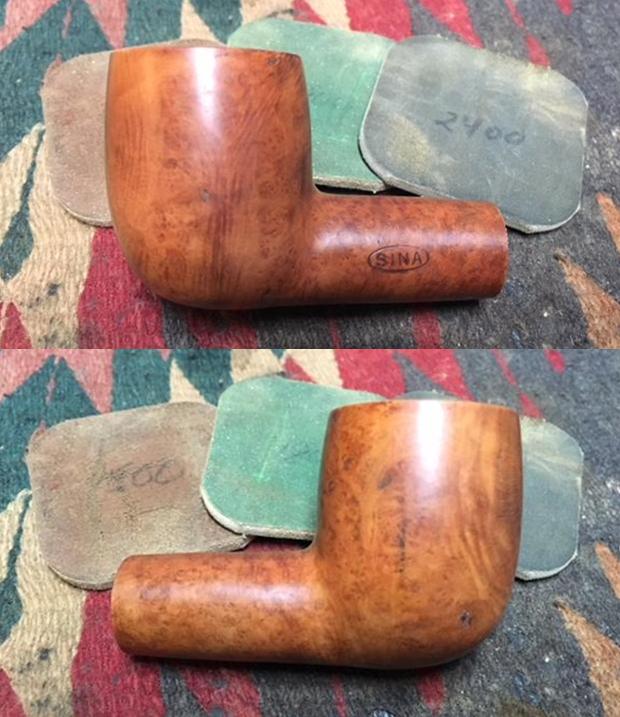
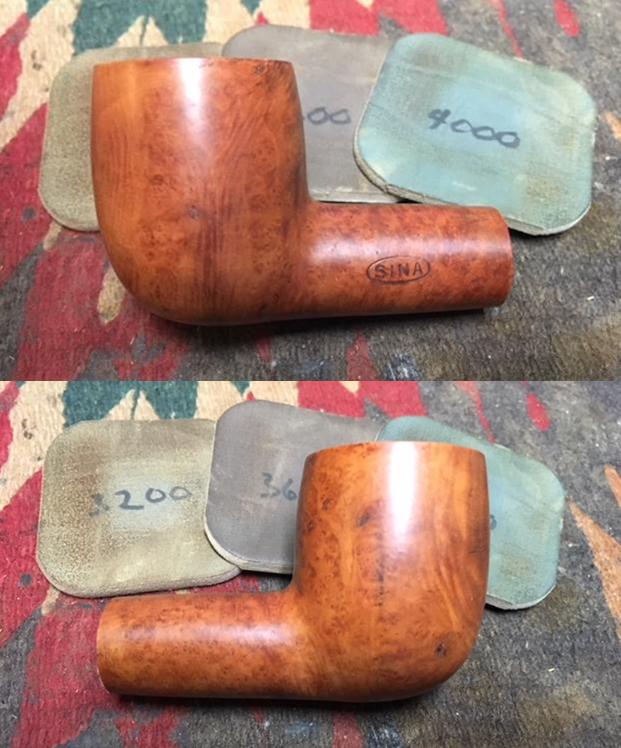
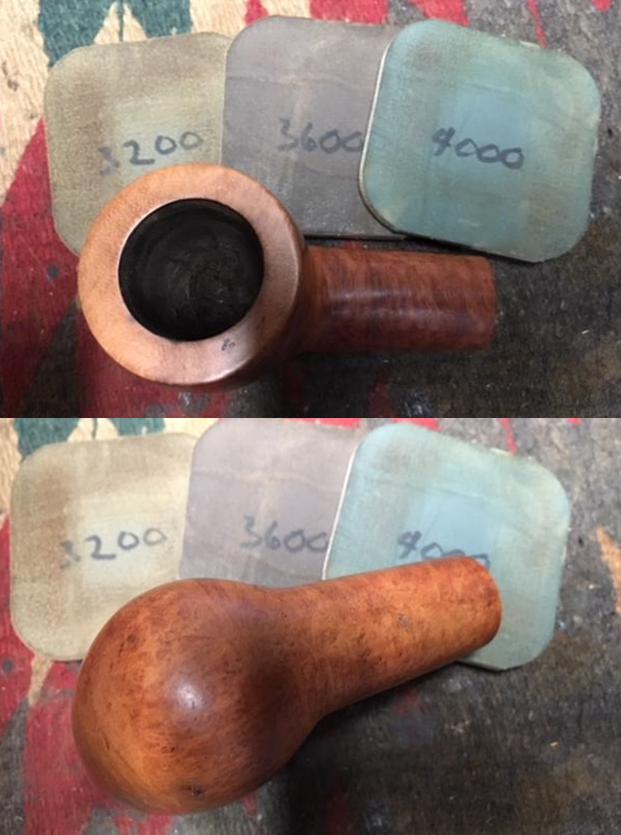
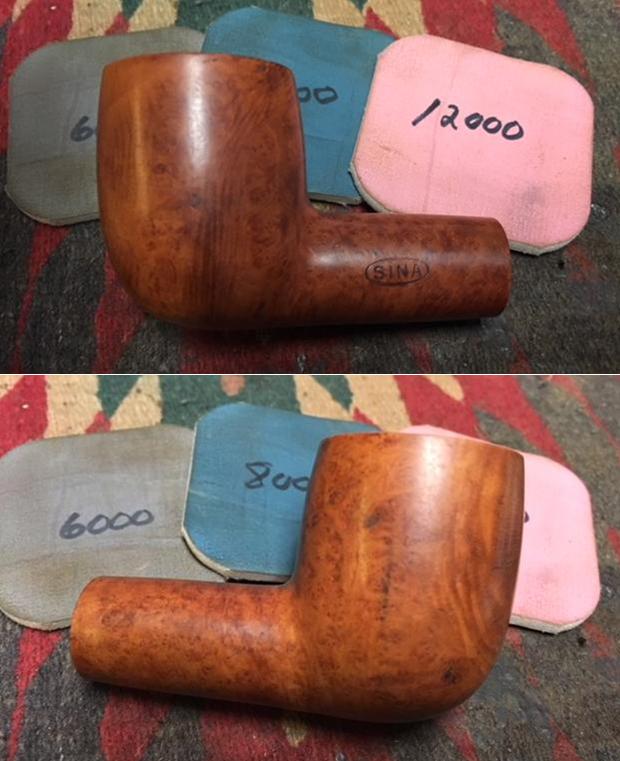
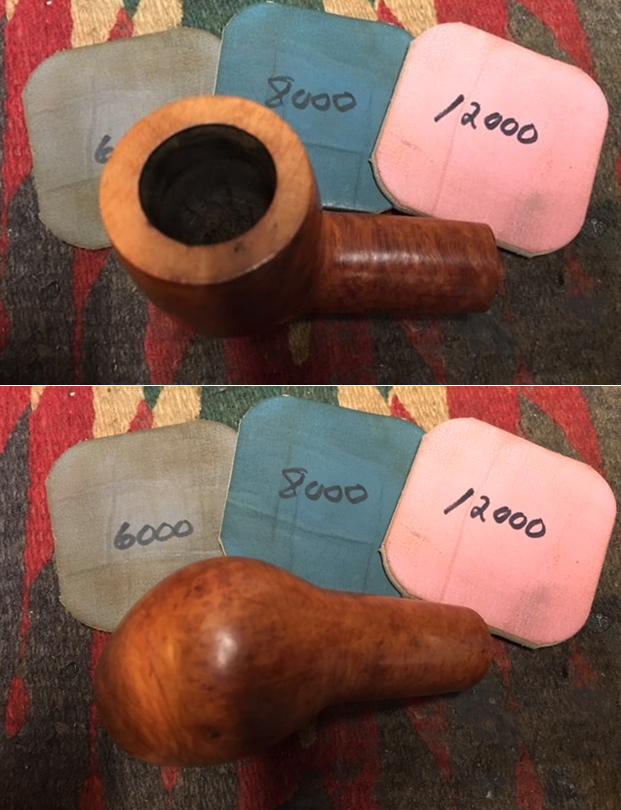
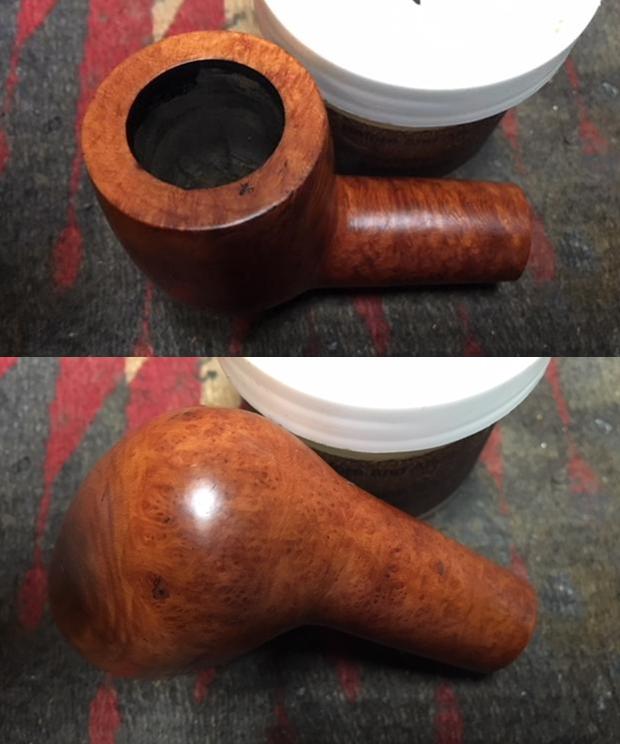
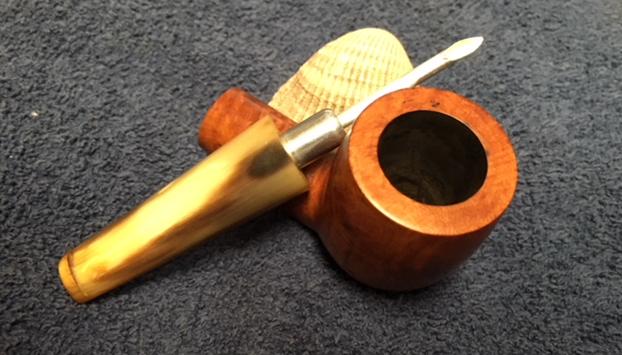
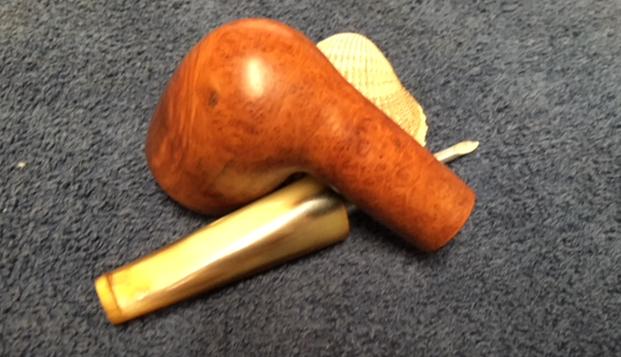
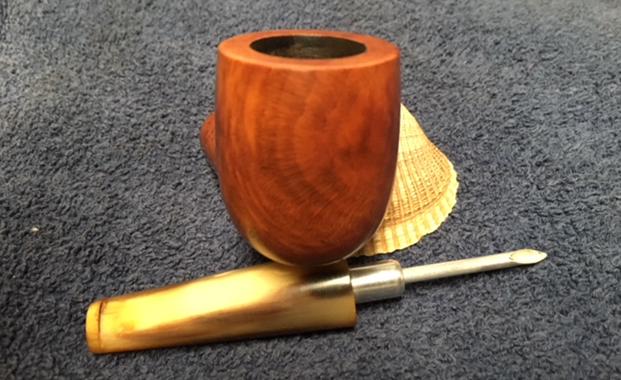
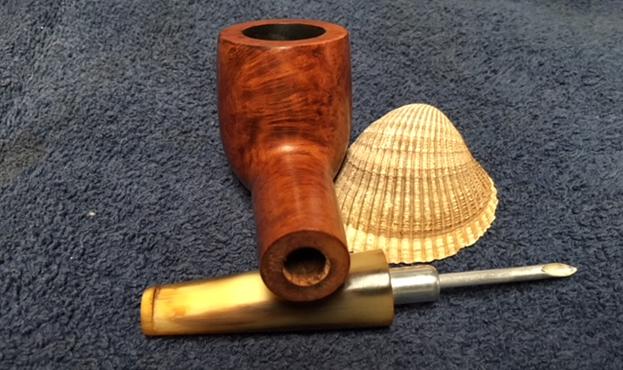
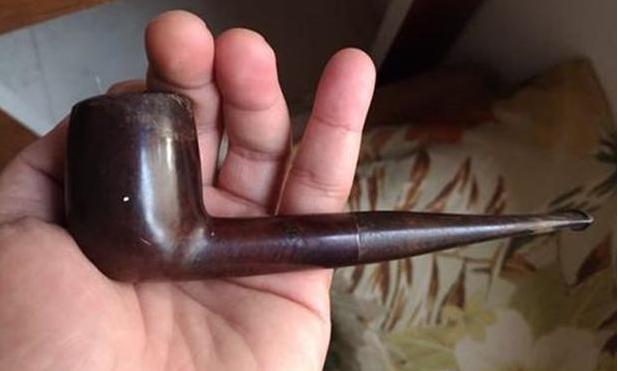
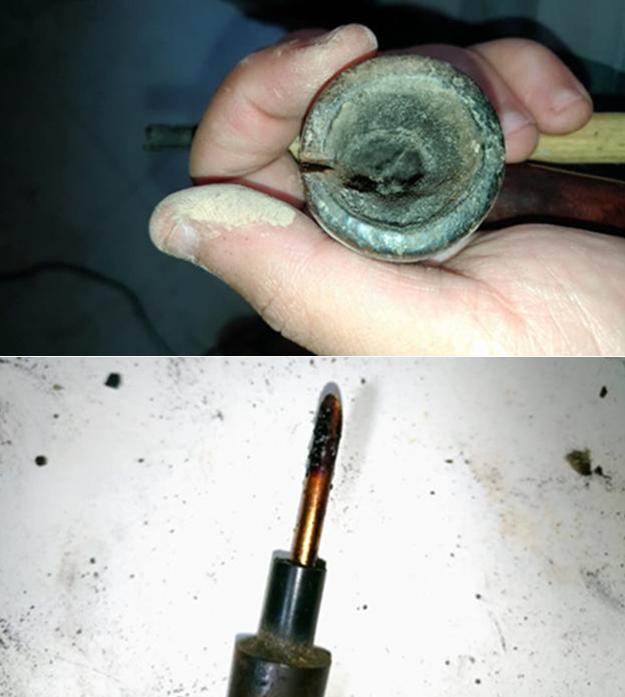
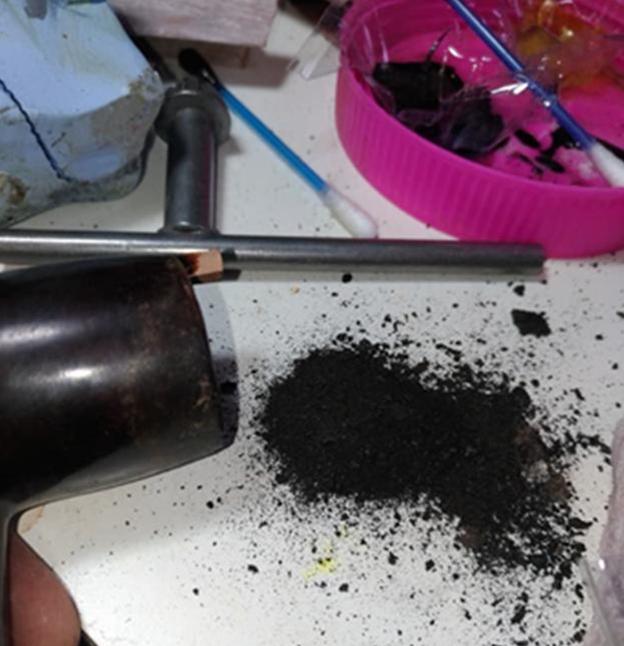
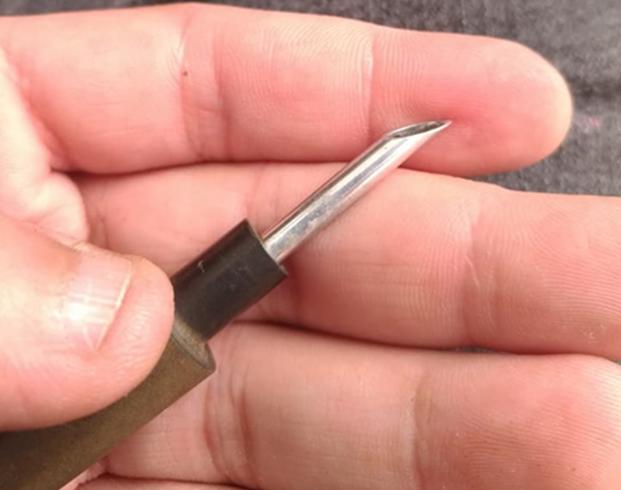
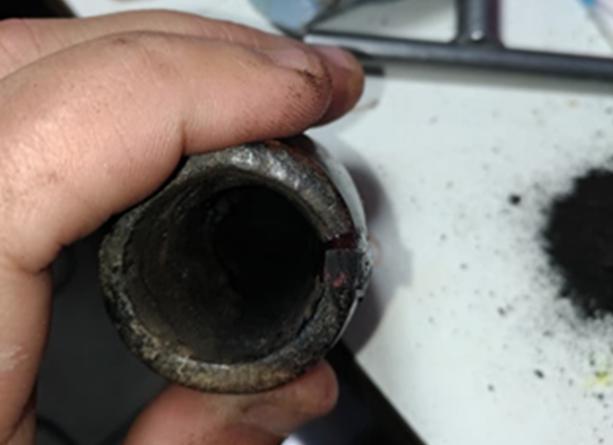
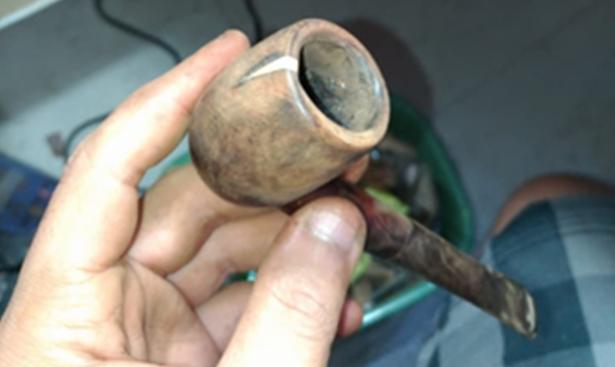
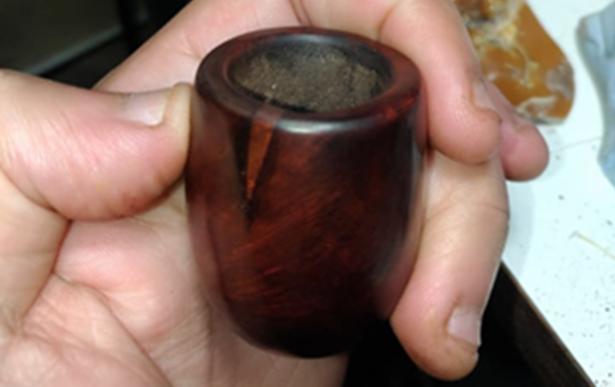
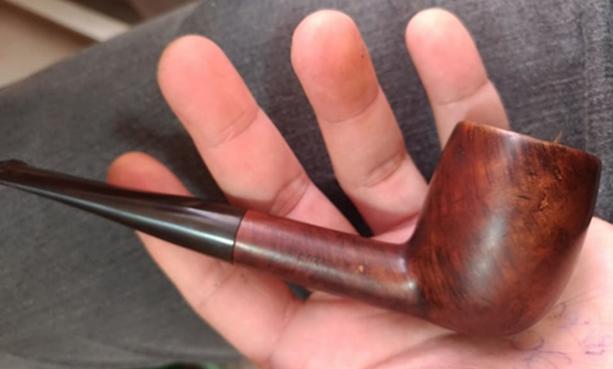
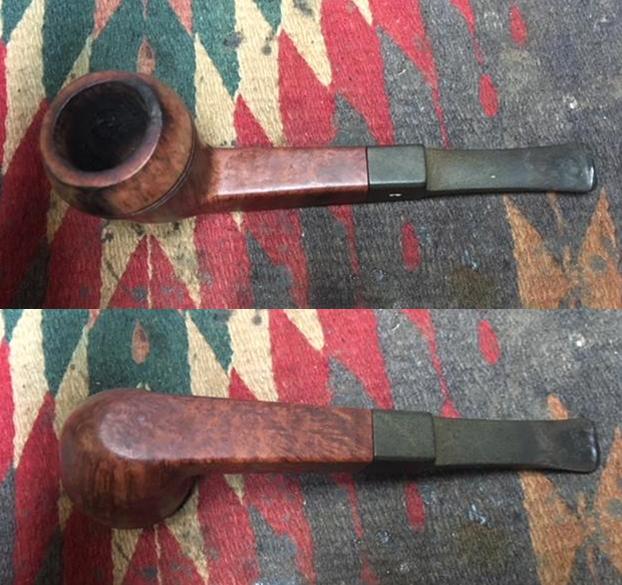
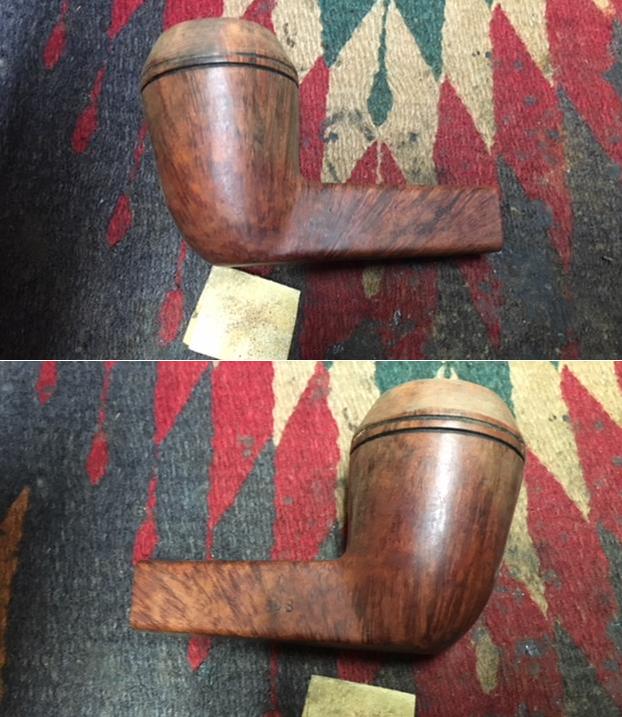
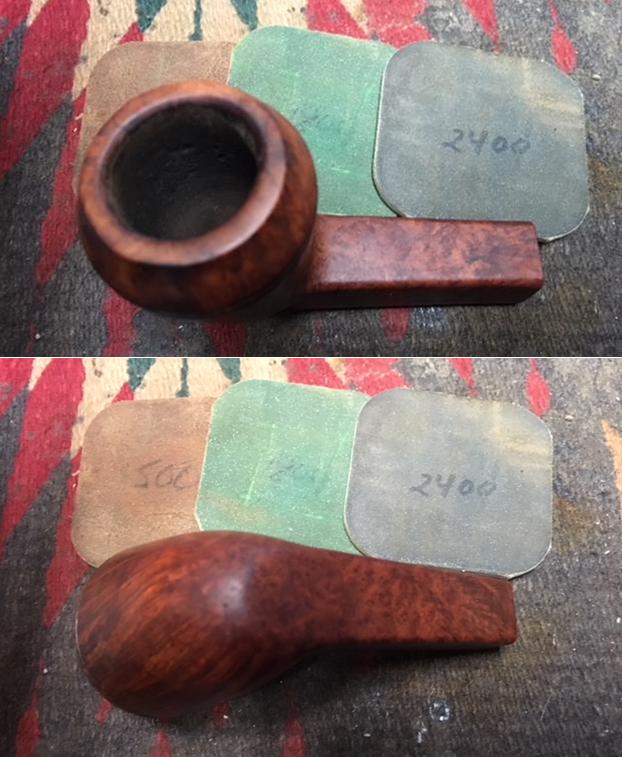
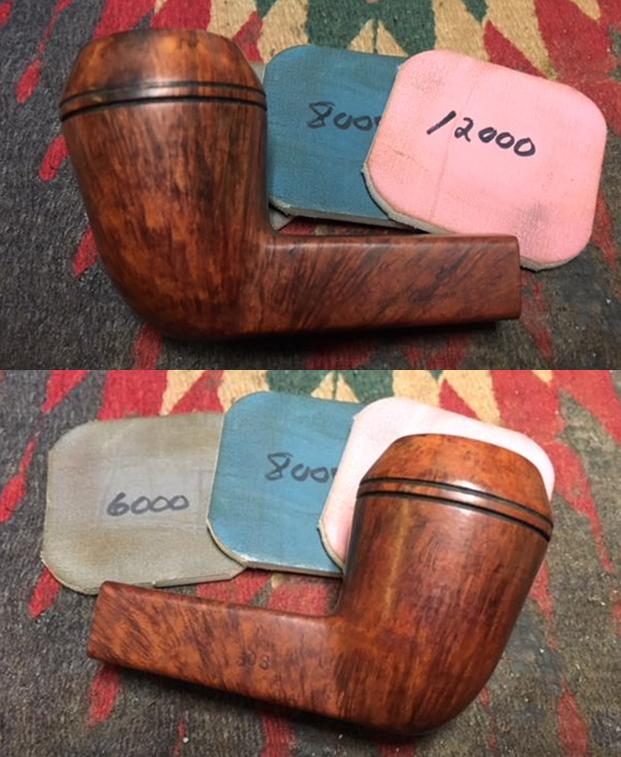
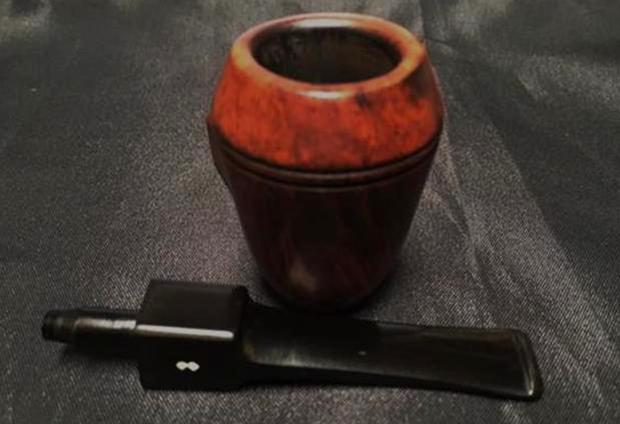
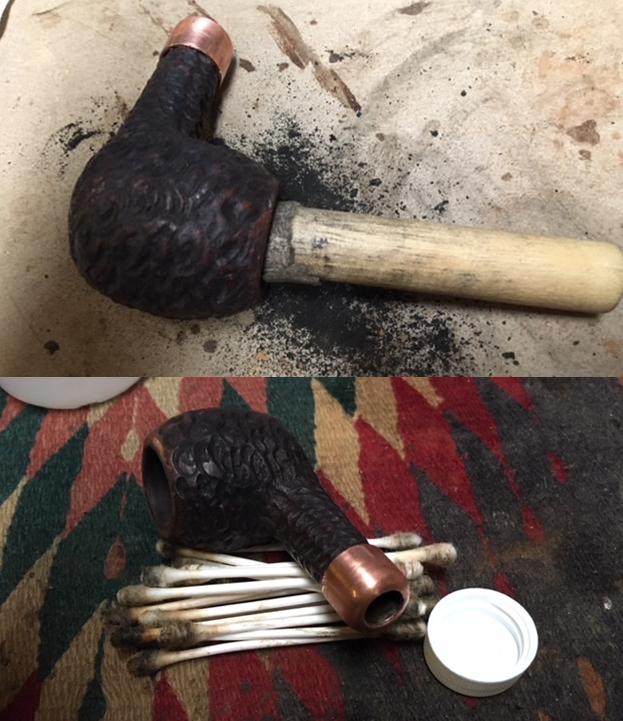
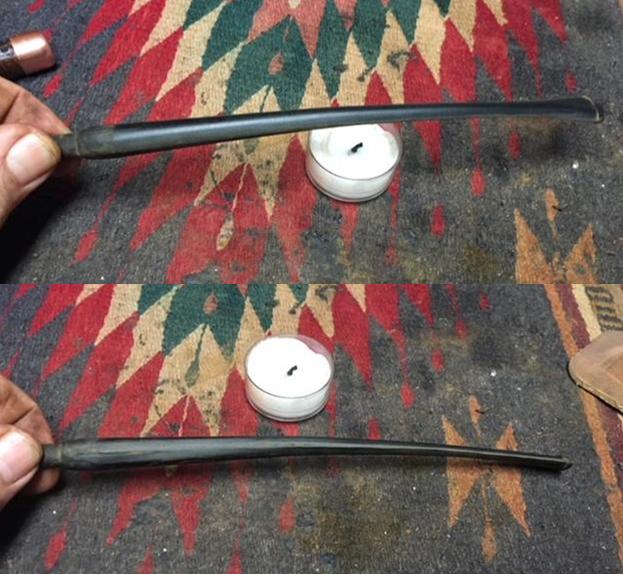
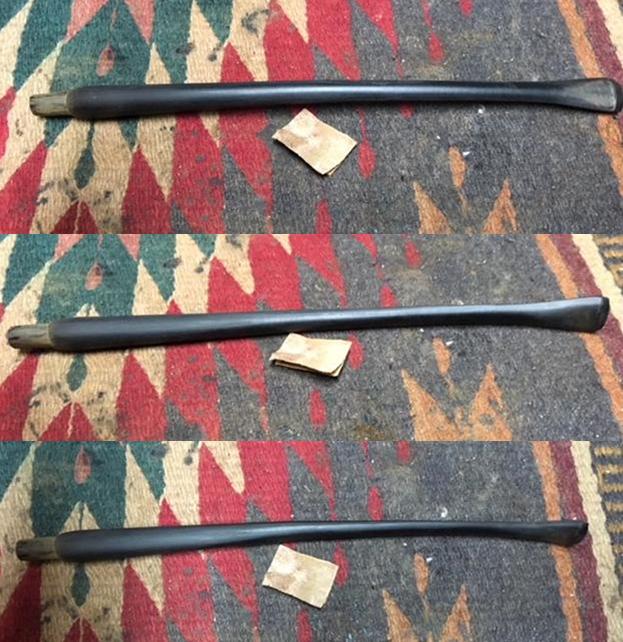
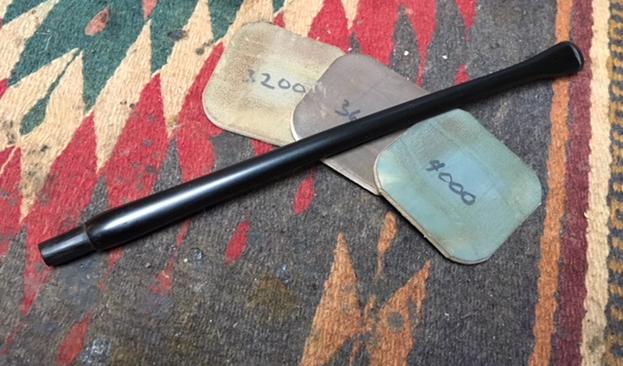
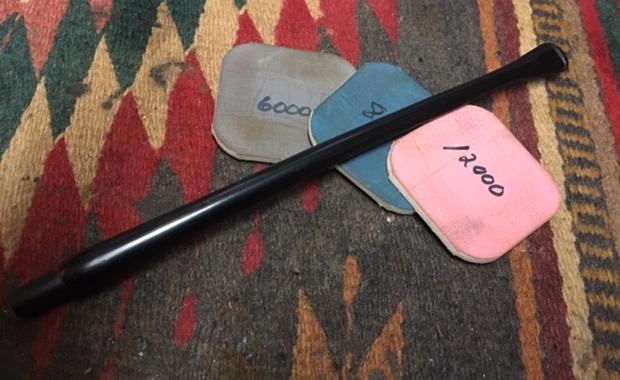
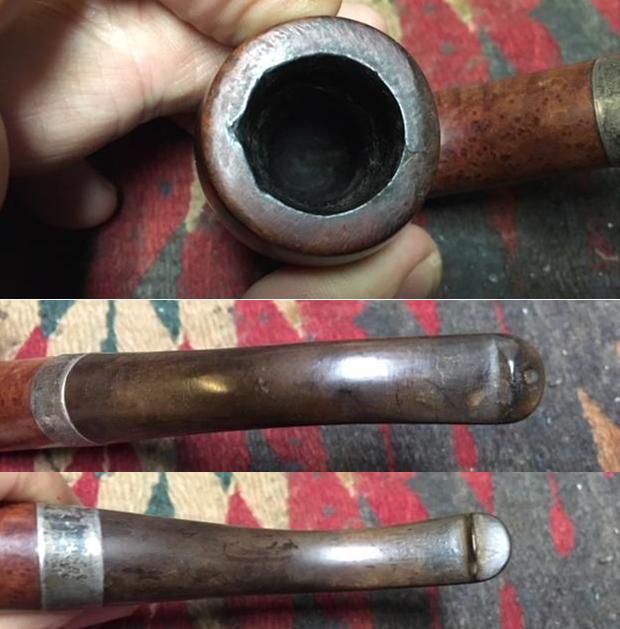
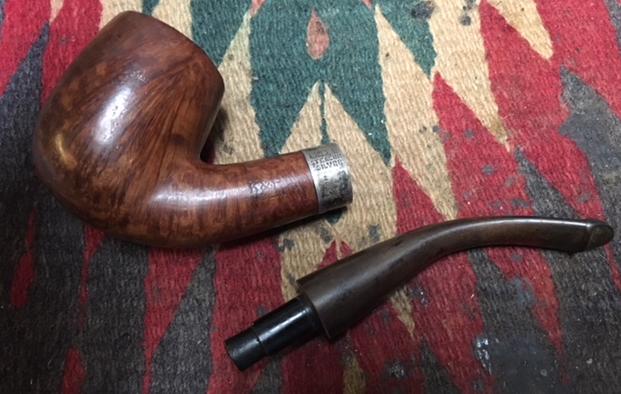
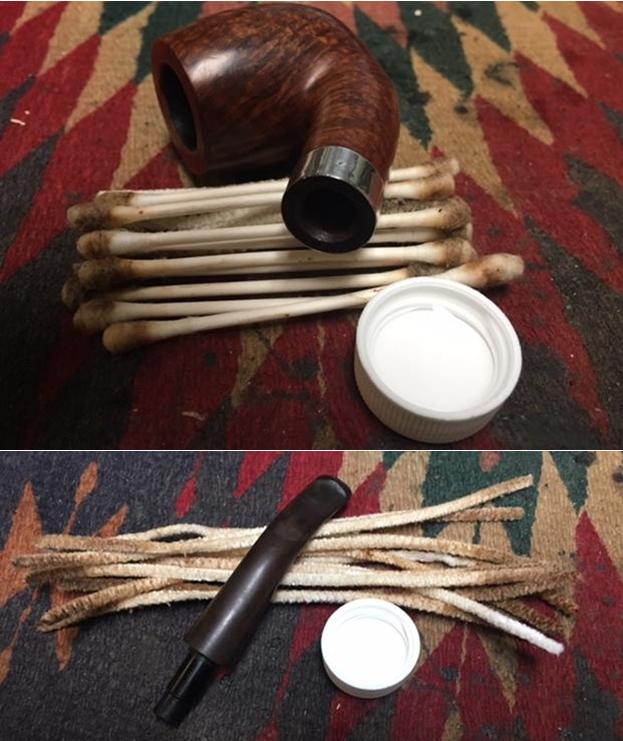
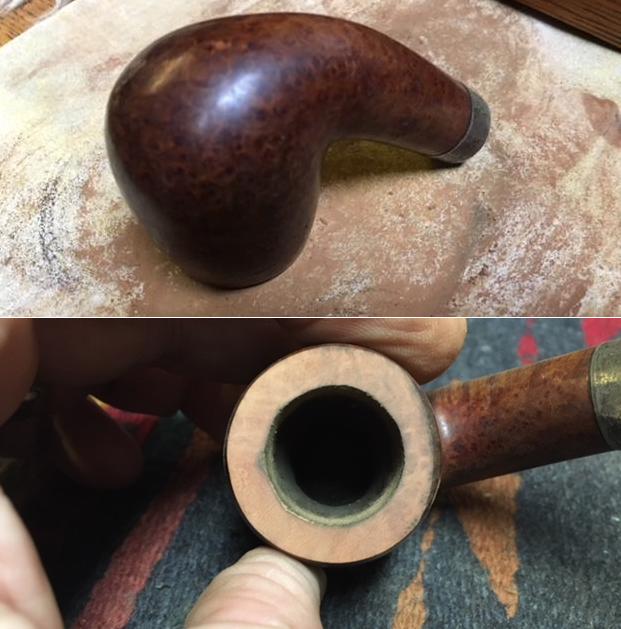
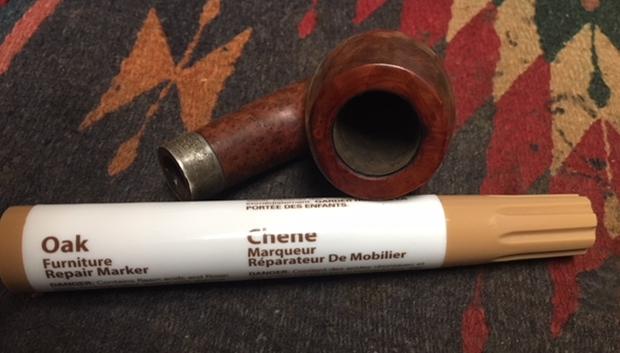
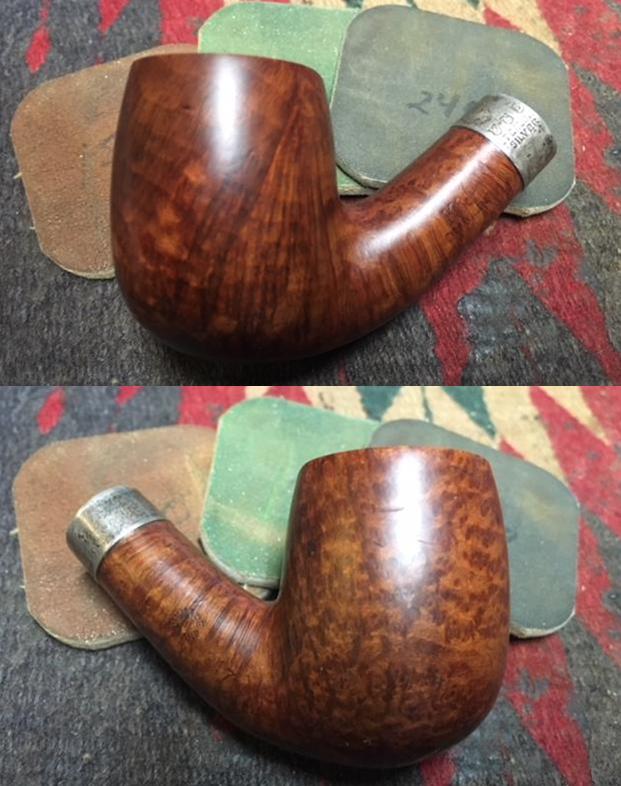
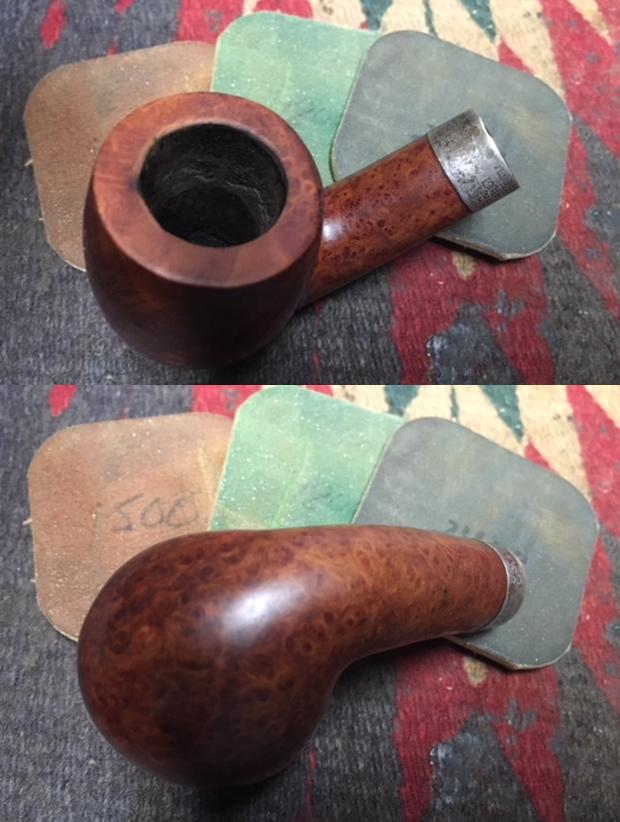
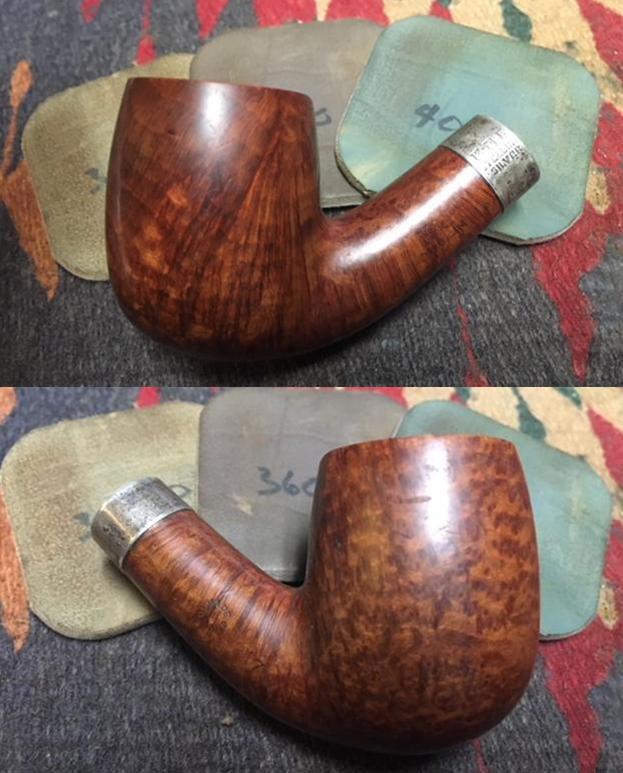
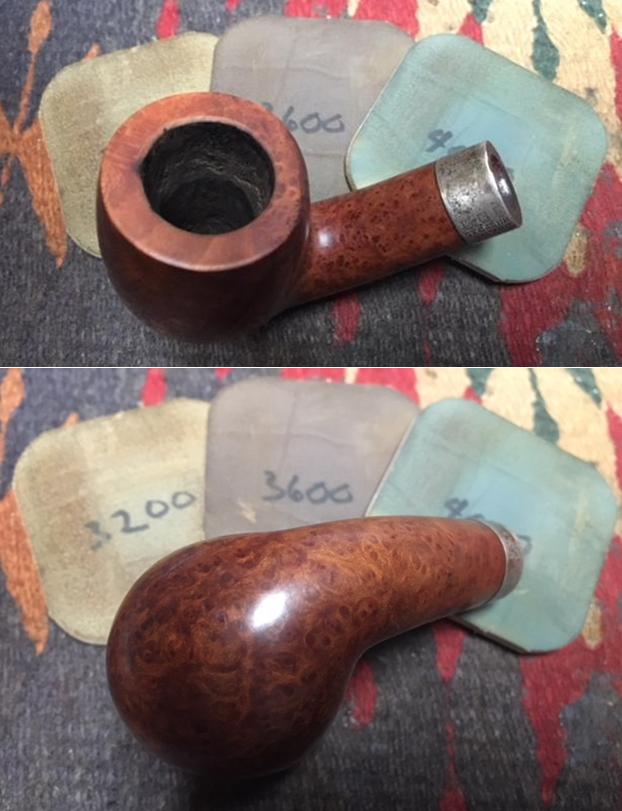
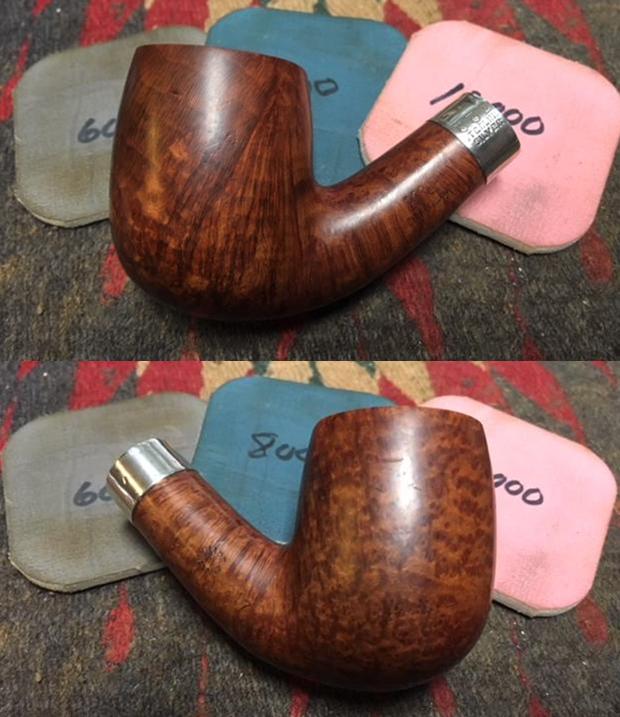
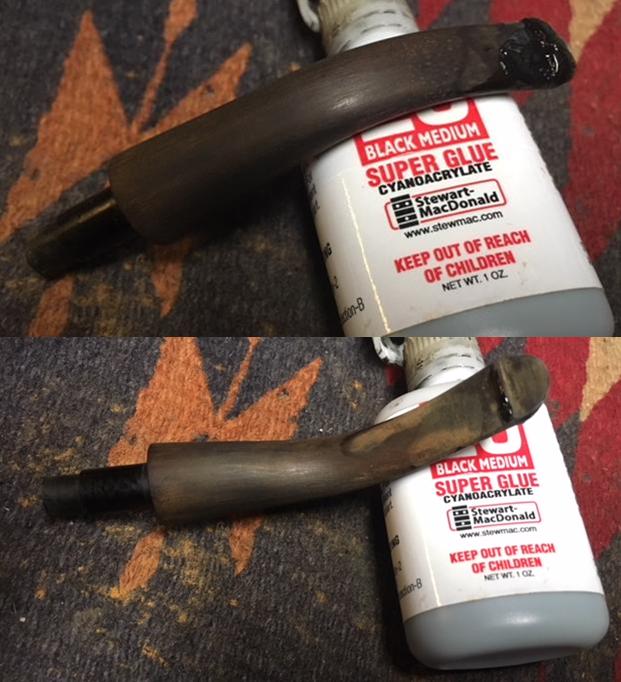
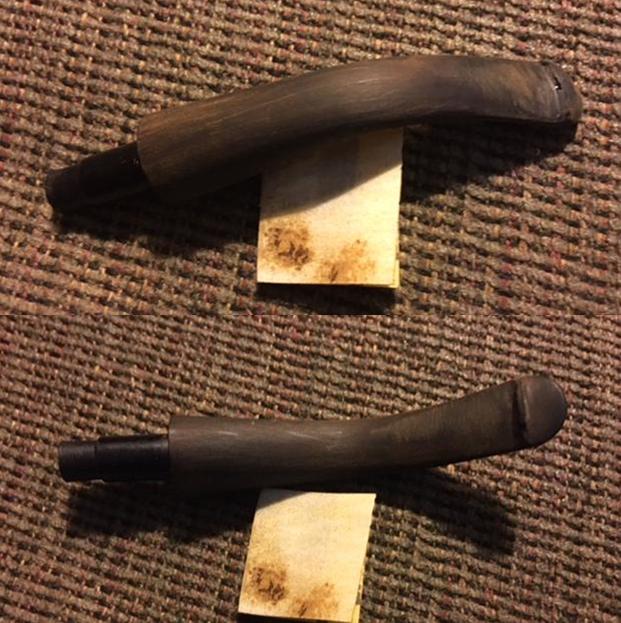
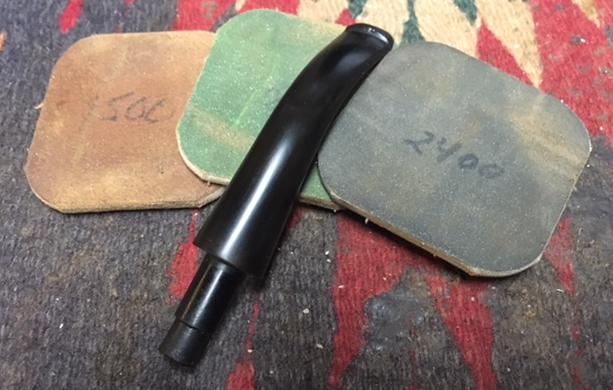
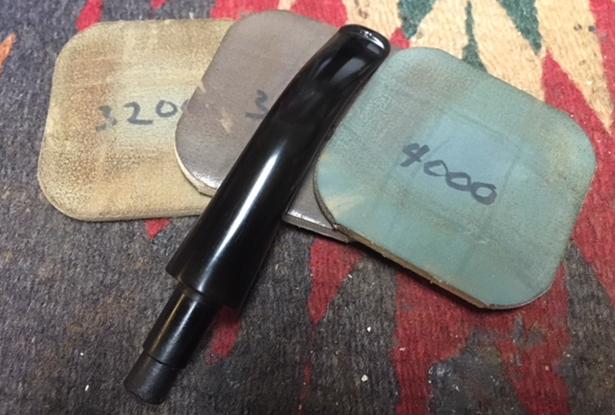
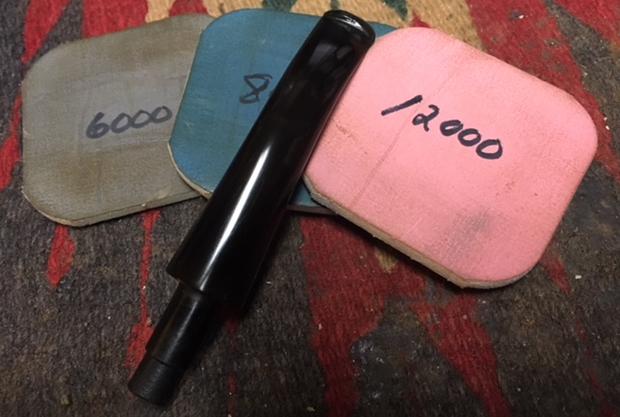
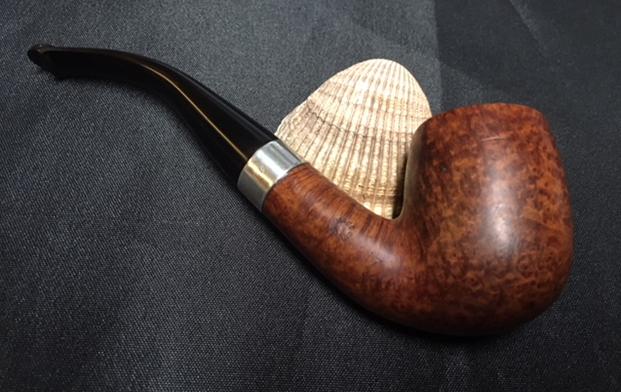
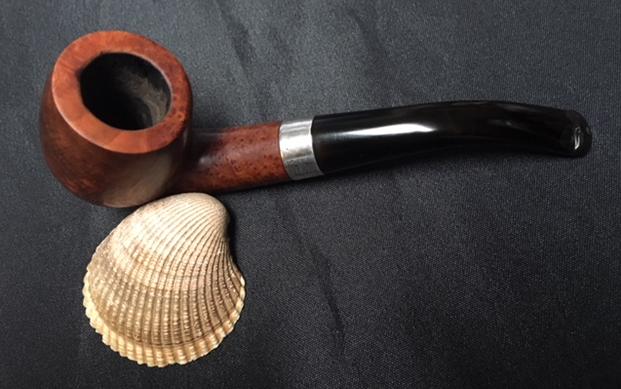
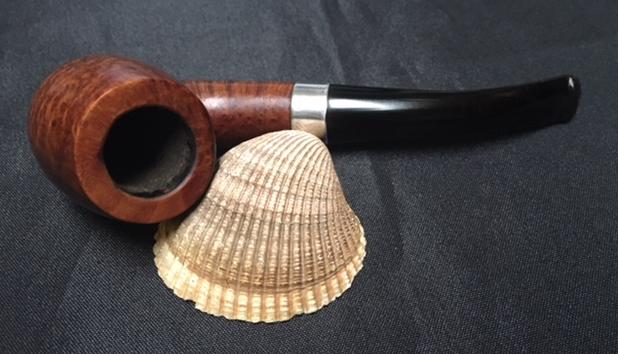
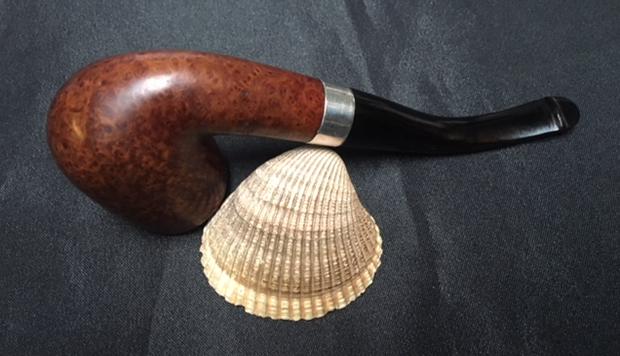
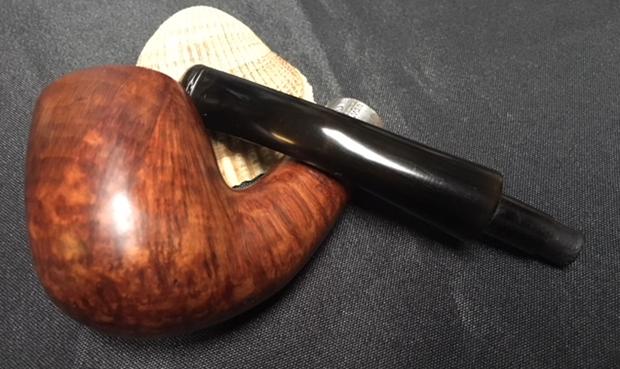
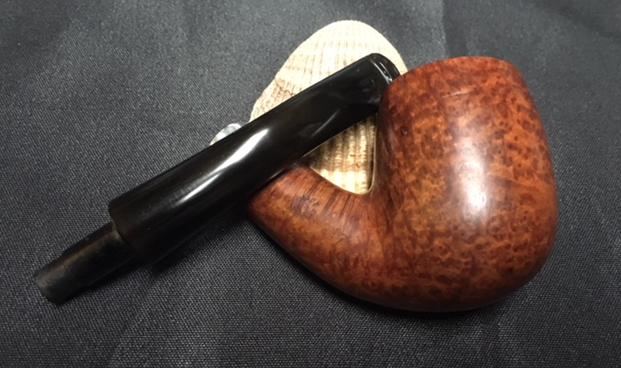
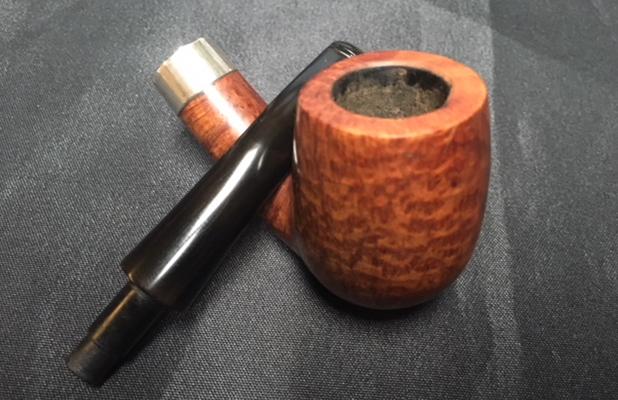
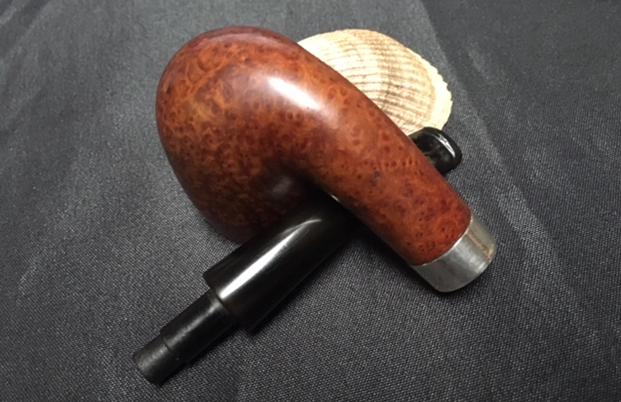
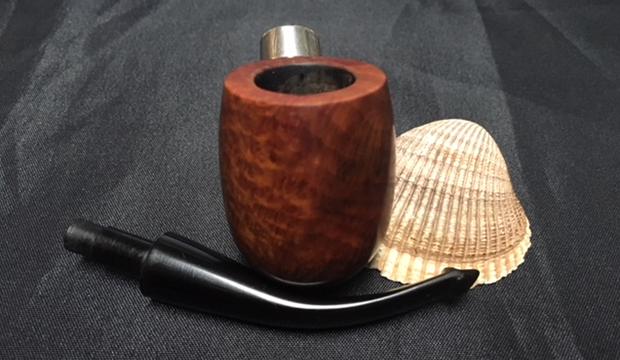
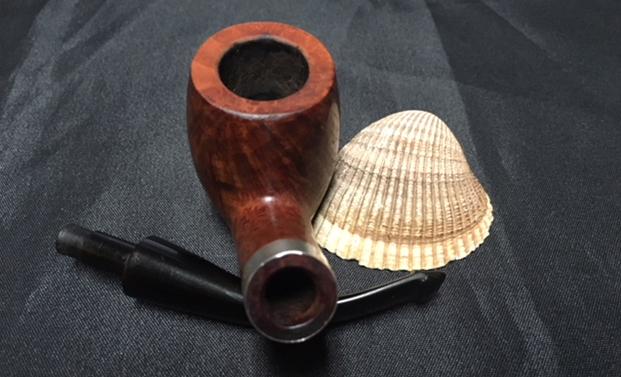
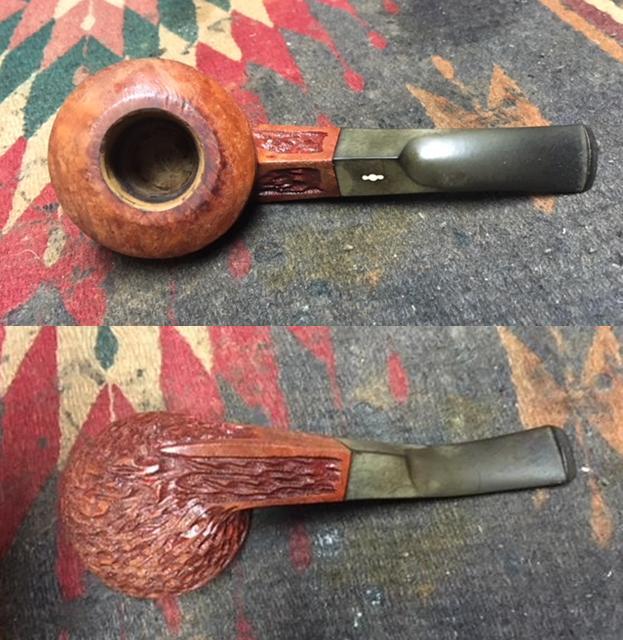
I want you to meet my forlorn Billiard stummel.  I’m sure that one past day he enjoyed the attention of a steward.  He proudly was settled on the rack with other proud pipes of The Rotation.  One day something happened, and he lost that favored position, and everything changed.  I found him in a bag of a second-hand/antique vendor in Sofia, Bulgaria’s ‘Antique Market’ in the city-center.  The bag was full of broken and discarded stems, stummels and other things unrecognizable.  He had no stem.  I plucked him out of the bag along with a few other pieces, paid the vendor a very small sum for what had no value to the vendor or to anyone else.  The small Billiard stummel was marked with the most generic of all markings, ‘Real Briar’.  Absolutely nothing special.  Here are pictures of the redeemed Billiard on my worktable. I just completed the restoration of a Monarch Pat. 1989069 – 1074H Bent Ball  for Andy, a pipe man living in Maryland, who attends the church where I was formerly the pastor on the Eastern Shore – the peninsula created by the Chesapeake Bay and Atlantic Ocean east of Washington DC.  Andy commissioned the Monarch from the ‘For Pipe Dreamers Only!’ section on my blog.  He told me he was also hoping to land a Peretti Oom Paul and a Churchwarden someday.  He had seen several of the Peretti Lot of Oom Pauls that I had already restored and recommissioned for new stewards and was hopeful.  I had no more Perettis to share, but I proposed that I could fashion a Churchwarden from repurposed stummels.  I also had one 8-inch Warden stem left in my stores.  Not long ago, I completed a fun restoration I called ‘A Tale of 3 Church Wardens’ – where I fashioned 3 Churchwardens that all found new stewards in Germany.  I directed Andy to check out the post to decide what he wanted to do.  It didn’t take long and he decided to add a Churchwarden to his Monarch Bent Ball – each of these pipes benefit the work we do here in Bulgaria with the Daughters of Bulgaria – helping women and girls who have been trafficked and sexually exploited to find a new life and hope.  The next question for Andy was what stummel would mast the Warden stem and rise from the ashes like the Phoenix?  Here were the options I sent to Andy with a warning not to be distracted by the color or condition – to look only at the shape.  Here’s what he saw.From the top, his choices were a Rhodesian, a Panel, a carved Apple and the forlorn Billiard.  Andy chose the classic Billiard shape, influenced mainly by the longer shank which will add a bit of flow to the Churchwarden he would become when transformed.  The interesting factoid that I reported before, in my writeup of the 3 Churchwardens, was from Bill Burney’s Pipedia Pipe Chart. It provides the framework for forlorn bowls to rise as the Phoenixes.  What brings this power?  A Churchwarden stem:As you would expect, our Billiard that Andy chose has many challenges.  The worst of his obvious problems is the rim which has been chewed and gnarled! It has a large divot on the internal lip over the shank.  Also, on the shank side, the rim slopes away having endured a ‘skinned knee’ experience.   The old finish is totally old and the stummel has some small fills that need checking.  Yet, underneath the grime and tired finish – where there is finish, is briar grain with potential.  I begin the story of this Billiard hoping to rise as a Phoenix by doing the basic cleaning of the stummel before fashioning the precast Churchwarden stem.  To mark the beginning of the restoration, I take a picture of the Billiard stummel with the Warden stem – the place where Pipe Dreamers begin!I take a picture of the chamber and see that there is very little cake build up, but I also see that it appears someone took a pocket knife to the chamber in the past – with little care.  I take the Savinelli Fitsall Tool and I ream the bowl of residue carbon.  Following this, I sand the chamber with 240 grit paper by wrapping the paper around a Sharpie Pen seeking to clean it but also to smooth the top of the chamber where knife marks were.  I then clean the chamber with a cotton pad wetted with isopropyl to rid it of carbon dust.  The chamber wall seems to be in good shape – no cracks or heat fissures are visible, but I will need to do a bit more sanding – I’ll wait to do this along with the rim repair. Now I turn to internal cleaning of the stummel.  Using cotton buds dipped in isopropyl 95%, I realize very quickly that the grunge in this mortise and airway was thick.  I put the cotton buds down for a time and start scraping the mortise walls with dental spatulas.  I also insert a drill bit the size of the airway and hand turn it to excavate the tar and oil buildup.  In time the cotton buds started coming out less soiled.  I plan to give the stummel a kosher salt and alcohol soak through the night to clean the internals further and freshen the stummel for the new steward.  The pictures show the grunge warfare!With the stummel cleaned, I now turn to the precast Churchwarden stem.  I begin by pulling out my new electronic caliper that I acquired when I fashioned the 3 Churchwarden stems before.  I take an internal measurement of the Billiard’s mortise, which is the target.  The reading is 8.13 mm.  For a conservative target in shaping the new tenon on the precast Warden stem, I add .40 mm to the 8.13 which gives me a conservative target of 8.53 mm.  I now mount the drill bit to drill the tenon’s airway enlarging it to receive the guide pin for the Pimo Tenon Turning Tool, which I also just added to my tools.  I mount the Pimp Tenon Turning Tool into the drill chuck and cut a conservative practice cut on the tenon to get an initial measurement.  The practice cut measurement is 8.96 mm which means I need to remove around .43 mm to arrive at the conservative target of 8.53 mm.  The purpose of the conservative target is to get close to the exact size of the mortise, but not quite.  This leaves room to sand the tenon to fashion the custom size because every mortise is different.  The fit between the newly fashioned tenon and the mortise must be snug but not too tight. I crank down the blade on the Tenon Turning Tool a bit and make another practice cut and remeasure.  Now, I have a perfect example of why doing practice cuts is a good idea!  The next measurement was 8.23 – only .10 mm off the actual mortise size – too close for comfort.  I don’t want to risk taking off too much.  I back the blade off a little and recut.  I come to an 8.49 mm which is good.  Using a flat needle file, 120 and 240 grit papers I gradually bring the size of the tenon down.  After MANY filings/sanding and testing the fit in the mortise, I can seat the tenon snugly into the mortise.  The shank is slightly larger than the diameter of the stem when the stem is inserted into the mortise.  The picture below shows how the briar is extending at this point, but as I look around the shank, the amount of overhand is not the same.  I use the flat needle file to start bringing the briar overhang flush with the Warden stem. The picture below shows the shank having that ‘stuff pants look’ as the taper of the shank to the stem is not gradual.  To address this, I file and sand around the shank to create a more gradual tapering from the bowl through the shank to the Warden stem.  Most of the briar bulging was on the shank sides not on the upper and lower areas which look pretty good. After a lot of sanding with a flat needle file, 120 and 240 papers, I arrive at a nicer tapering from shank to stem.  I sacrificed the ‘Real Briar’ stamping on the left side of the shank for the more balanced look on both sides of the shank.  I thought about it for a few minutes, and sanded away in favor of a reborn Phoenix!  The shank overhang has been sanded out and the shank/stem junction is flush.  I like the flow from bowl, through the shank, and into the stem.  Before bending the stem, while still in the same customized position, I also file and sand down the sides of the precast stem to remove the seams created by the casting halves.  I aim for rounding the stem. With the Billiard’s straight shank, the bend will be very small and subtle.  Last time I fashioned Churchwarden stems I found that I was consistently overbending the stem and then I would need to back off the bend for the best look.  I place pipe cleaners in the stem at both ends to maintain the integrity of the airway during the heating and bending process.  I use a hot air gun and warm the vulcanite in the area where I make the bend.  As it warms, the vulcanite, a rubber compound, becomes supple and is fashioned easily.  After making the bend, by simply eyeballing it, I take the heated stem to the sink and cool it with tap water to set the bend.  I remount the bent stem and I like it.  It has a gentle bend, not too much.  The Phoenix is coming to life!Looking now to the stummel, I use a sharp dental probe to test the very small fills on the stummel.  They seem to be solid.  I then look at the gnarly rim.  The next step is to remove the damage by utilizing the topping board.  Using a chopping block, I place a sheet of 240 grade paper on it.  After inverting the stummel on the board, I begin to rotate the stummel over the paper.  I’m thankful for the fact that Churchwardens typically have smaller bowls.  That’s good news because I’m taking a bit of briar off the top.  After a while, there is still a divot on the inside of the rim over the shank which I will address by creating a bevel.  After the 240 grade rotation, I then use 600 for a bit and finish the topping. Using 120 grit paper, I start carving a bevel on the inside lip of the rim.  I follow by moving to the outside edge of the rim.  I create the bevel by pinching the rolled piece of sanding paper under my thumb and then methodically move it around the rim putting pressure on the paper.  The continuous movement is what keeps the bevel consistent.  I then follow with 240 paper for both the inside and outside edges of the rim.  I think it looks good – what an improvement!To address the stummel surface to remove the top surface and scratches and old finish, I start by using a coarse sanding sponge on the entire stummel.  I follow the coarse sponge with medium and then light sanding sponges.I decide now to continue working on the stem.  Using a flat needle file and 240 grit sanding paper I continue smoothing and shaping the stem.  I work on the rough button with the file to shape it with the file.  I sand the entire stem with 240 grit because, even though the stem is new, the vulcanite contains ripples and ribs from the casting process.  I work the stem with sand paper so that it’s smooth and the stem is rounded.  From filing and 240 grit, I sand the entire stem with 600 grade paper.  I finish this sanding phase by sanding/buffing the stem with 0000 grade steel wool.  The pictures show the progress. My day is ending and I finish at the worktable with a kosher salt and alcohol soak to further clean and refresh the stummel.  I create a wick from a cotton ball by stretching and twisting the cotton.  I then insert/stuff the wick in the mortise and airway.  I then put the stummel in an egg crate to stabilize it and fill the bowl with kosher salt which leaves no after taste as does iodized salt.  I then use a large eye dropper to fill the bowl with alcohol until it surfaces over the salt.  After a few minutes I top off the alcohol.  I set the stummel aside and turn out the lights.The next morning the kosher salt and alcohol soak did the job – the salt and wick are soiled by drawing out more tars and oils from the mortise and airway.  After dumping the expended salt, I wipe the chamber with paper towel to remove the old salt.  I blow through the stummel as well to clear out the left overs. To make sure all is clean, I run a few more cotton buds dipped in isopropyl 95% through mortise.  Moving on.Time to micromesh the Churchwarden stem.  Using pads 1500 to 2400 I wet sand the stem.  Following this, I dry sand using pads 3200 to 4000 and then, 6000 to 12000.  After each set of 3 pads, I apply Obsidian Oil to the stem to enrich the new precast Warden stem.  I take only one picture at the end because it’s difficult enough to see the detail of black vulcanite with regular sized stems, with the Churchwarden stem, the picture is from orbit!With the stem drying, it’s time to begin the micromesh sanding of the stummel.  Using micromesh pads 1500 to 2400 I wet sand the stummel.  As has happened on previous restorations, the wetting of the stummel during the wet sanding process spelled the end of the once solid fills that I saw before.  The fill material must be made of a water-soluble material – not sure what it is, but it isn’t anymore! The fills fully disintegrated.The detour means that I need to apply patches to the pits – I mix briar dust and thick CA glue to form a putty that I apply to the holes.  I first use a sharp dental probe to make sure the pits are free of debris.  I use an index card to do the mixing by placing some dust in a pile. I then place some of the CA glue next to the briar dust.  Using a toothpick, I gradually draw a bit of the dust into the glue while mixing it with the toothpick.  I continue to do this until the putty reaches a molasses-like consistency. I then apply the putty to the places needed – there are a few. After applying the briar dust putty, I spray the patches with an accelerator to cure the patches more rapidly.  Then, using a flat needle file, I begin filing down the patches to near the briar surface.  Then I use 240 grit paper to remove the remaining excess patch material bringing the fill flush with the briar surface.  Following the 240 paper, I use 600 grit paper on each of the patch areas.  Finally, I return to the initial micromesh pads and sand the patches with 1500 to 2400 grade pads.  The detour is complete, back on track.  The pictures show the patch repairs.  These patches will blend very well. I pick up again by dry sanding using pads 3200 to 4000 and then 6000 to 12000.  The pictures show the finished result.  I enjoy so much watching the grain emerge during the micromesh process.  This lonely stummel just may be a Phoenix after all!At this point, aiming for the color preferences Andy described when he commissioned the Billiard, I will stain the stummel using the base as Fiebing’s Saddle Tan Pro Dye but add to it just a bit of Fiebing’s Dark Brown Leather Dye to darken it a bit.  I believe this will add more depth to the grain contrast – or I hope!  After mixing the dyes in a shot glass, and inserting a cork into the shank to act as a handle, I then warm the stummel using a hot air gun.  This expands the briar making the wood more receptive to the dye.  After warmed I apply the stain using a folded pipe cleaner.  After the stummel is completely covered, I flame the aniline stain using a candle.  The alcohol in the dye immediately combusts leaving the dye set in the grain.  After a few minutes, I repeat the same regimen including flaming.  I then set the stummel aside to rest and settle through the night.  The next morning, after an early 5AM trip to the Sofia Airport to drop off a summer intern who was returning to the US, I returned to the worktable ready to ‘unwrap’ the Billiard that had been dyed the night before.  I enjoy this a lot!  I mount a felt wheel on the Dremel, set to the lowest speed, and begin removing the flamed crust encasing the stummel.  I use the coarser Tripoli compound to do this.  As I work the buffing wheel methodically over the surface, I avoid applying too much downward pressure but allow the felt wheel, speed and compound to do the work. During the process, I purge the wheel often to clean it and keep it soft. After finishing with the felt wheel, I switch to a cotton cloth wheel and apply Tripoli to the crook between shank and stummel which the felt wheel is unable to reach.  After the Tripoli, I wet a cotton pad with alcohol and wipe down the stummel to blend the new stain and to lighten it a bit.In the same manner as the Tripoli compound, I apply Blue Diamond, a finer compound.  I mount another cotton cloth wheel on the Dremel, increase the speed to about 40% of full power.  I apply the compound to both stem and stummel.  After I finish, I wipe down both stem and stummel with a felt cloth to remove compound dust in preparation for applying the carnauba wax.  Before applying the wax, I want to add a special touch to this reborn Phoenix Billiard Churchwarden.  I decide to band the shank – always a nice touch.  I pull out my collection nickel bands and find one that fits over the shank but leaves about a 1/4 inch slack between the end of the shank and the end of the band.  To slide the band safely up the shank I heat the band with a hot air gun while on the shank at the tension point.  As the band heats, it will expand microscopically.  After a time of heating, I turn the shank downward and gently but firmly press down against a thick cloth on the hard wood surface.  This pressure moves the band up the shank a few millimeters and the cloth cushions the end of the band so it doesn’t bend with the pressure.  If one presses too hard and tries to expand the band too quickly, the nickel can rip – that is not good.  I got through the heating and pressing cycle a few times and the band is seated well.  I remount the stem and eyeball the band placement.  It looks good and I think the new steward will like this touch of class a lot for this Phoenix Billiard Churchwarden. Before I wax the pipe, I mount a cotton cloth buffing wheel on the Dremel that I use exclusively on nickel.  I want to shine the band up before applying wax.  I set the speed at 40% and apply White Diamond compound to the band.  I’m careful not to run the buffing wheel over the band to the briar as it can discolor the wood. I learned this the hard way in the past.  I’m not sure what the chemical process is, but when polished at high speed, a dark residue is produced.  You can see it on the White Diamond bar as well as on the wheel.  This is another reason why each compound and use have a dedicated wheel.  After finishing with the White Diamond buffing, I buff the band with a microfiber cloth and, oh my!  How it shines!Now, the home stretch.  Time to wax the pipe.  Again, I change to another cotton cloth wheel dedicated to carnauba, maintain a 40% speed on the Dremel, and apply a few applications of the wax to the stem and stummel.  I finish the polishing by hand buffing the Churchwarden with a microfiber cloth to raise the shine.

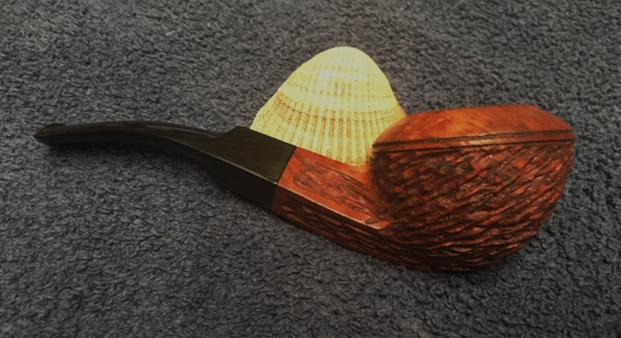
Few words describe the transformation of this lonely Billiard into a Phoenix.  Again, I’m amazed at the beauty in what God has created, even that which we often pass by with the shrug of the shoulders.  The gain revealed in the Billiard is beautiful.  The rim, gnarled as it was, looks great and is not diminished by the briar I was forced to take off.  As I look at it, the slightly squatter bowl works very well as the mast of the long, flowing Churchwarden stem.  The band mounted on the shank simply rocks, what can I say.  Andy commissioned this Billiard now Phoenix Churchwarden and he will have the first opportunity to acquire it in The Pipe Steward Store.  This pipe benefits the Daughters of Bulgaria – women and girls trafficked and sexually exploited.  Thank you for joining me in the telling of the story of the Phoenix!

An email from France brought me another SINA pipe – a Horn Stemmed Chubby Billiard


Blog by Steve Laug

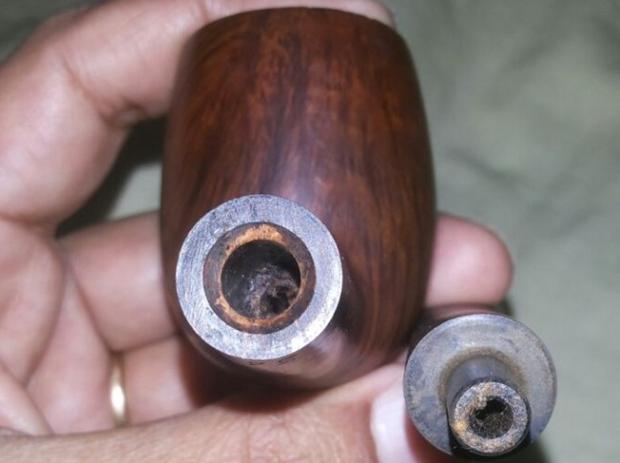
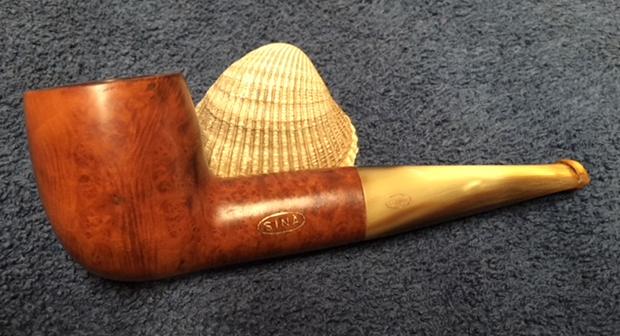
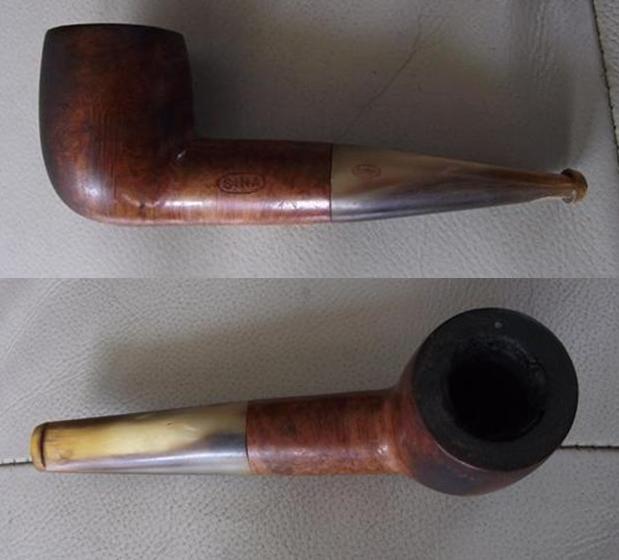
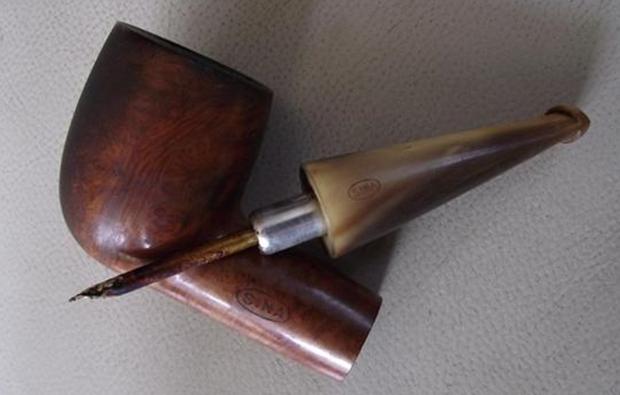
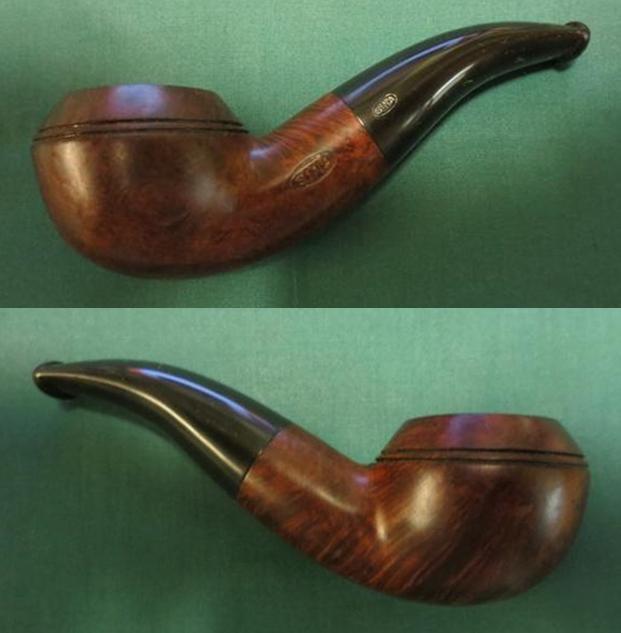
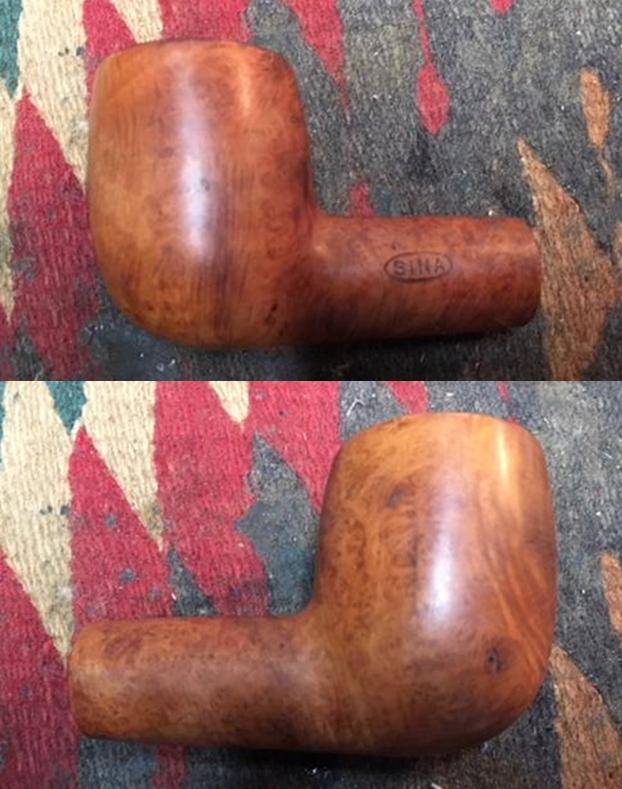
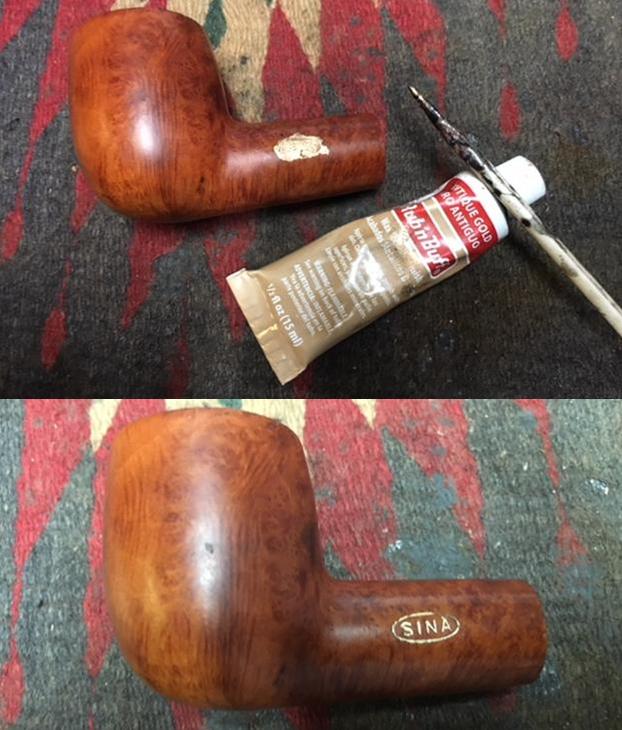
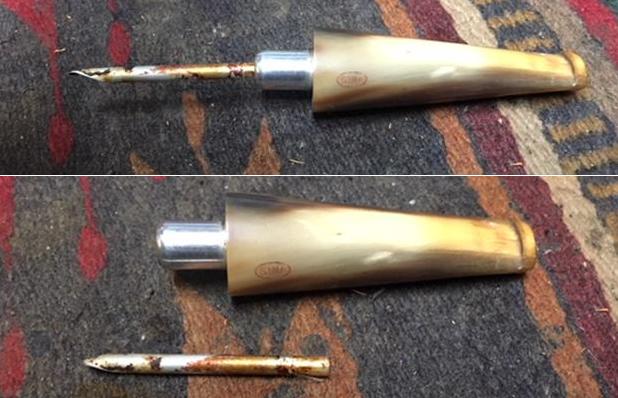
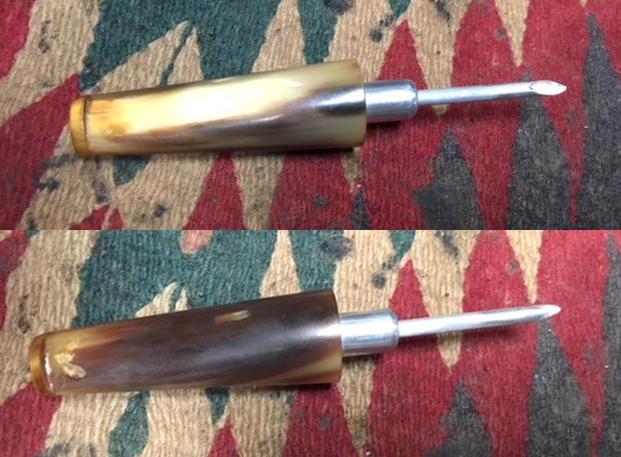
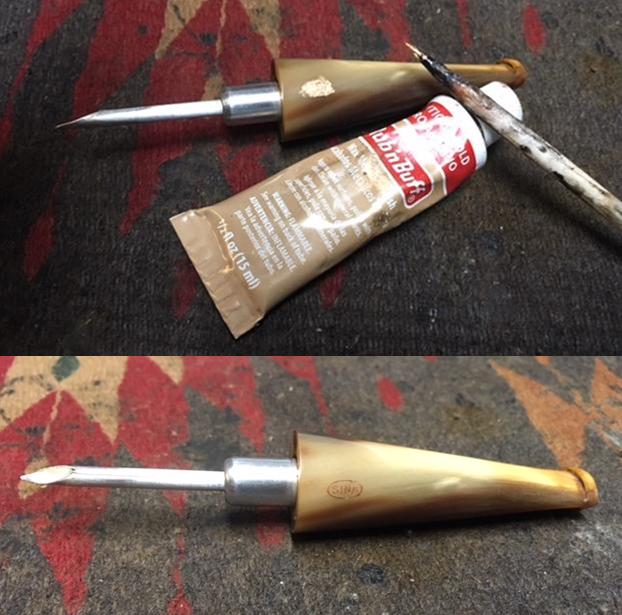
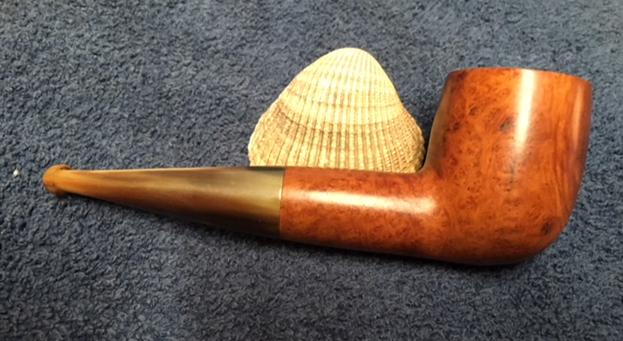
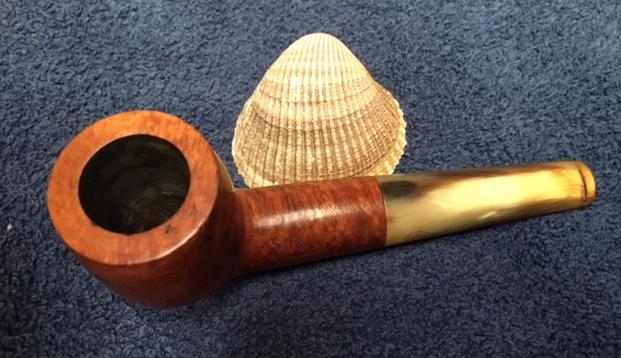
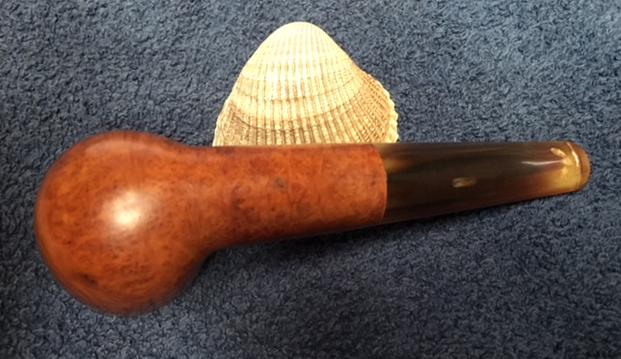
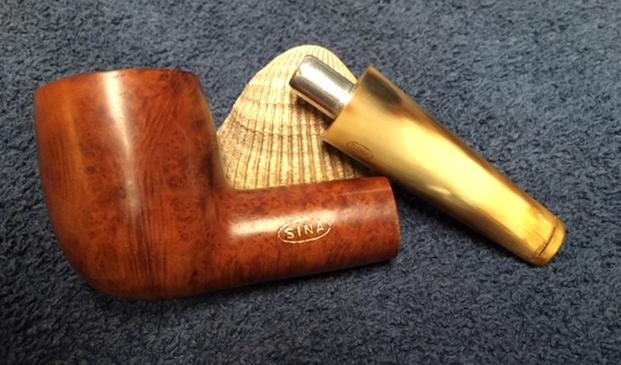
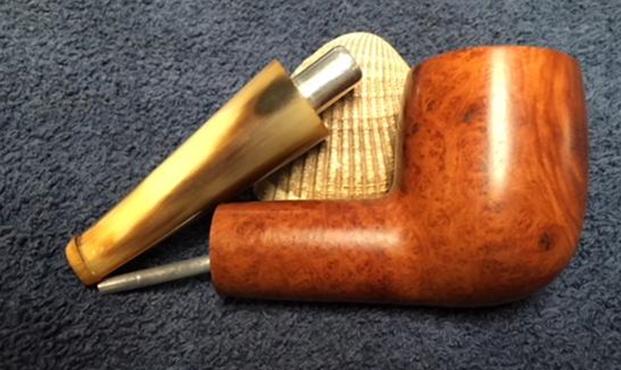
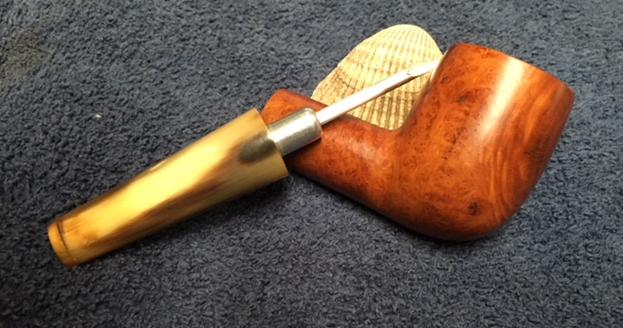
A couple of weeks ago I received an email from Jean Paul in France asking if I was interested in purchasing an old pipe he had. It was stamped SINA on the left side of the shank and on the stem. I asked him to send me some photos of the pipe to show me what he was offering. He sent me the following photos – a left side view, a top view and a photo of the pipe taken apart. The pipe was definitely an old one. The stamping on the left side of the thick shank and on the horn stem had remnants of gold stamping and reads SINA. The rim top was dirty and had a thick looking overflow but it was hard to see what the cake looked like. The inner and outer edges of the bowl looked to be in good condition. The horn stem was in excellent condition with some light tooth chatter on both sides of the stem at the button. There was an inner tube that ran from the tenon end into the bowl. It was heavily lacquered with tobacco oils and tars but otherwise in good condition. I sent another email and a payment via Paypal and the pipe was mine. The pipe was soon on its way across the Atlantic. The SINA brand was not uncommon to me as I have previously worked on another older SINA – a Rhodesian with a hard rubber stem. If you are interested in reading about the restoration of that old pipe the link will take you to the blog (https://rebornpipes.com/2014/08/28/giving-new-life-to-a-sina-rhodesian/). I have included two photos of the other SINA pipe in my collection. It is also an old timer from the same time period. When I worked on that pipe I did a bit of research to find out about the maker of the SINA pipe. I have included the information I found for that blog below. I figured it would be good to have it here as well as in the earlier blog. I quote:

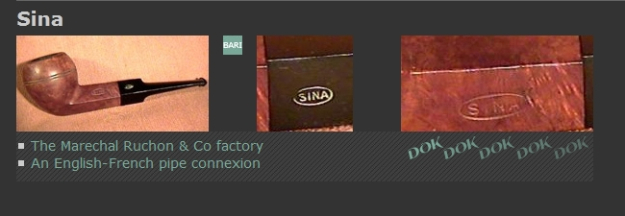
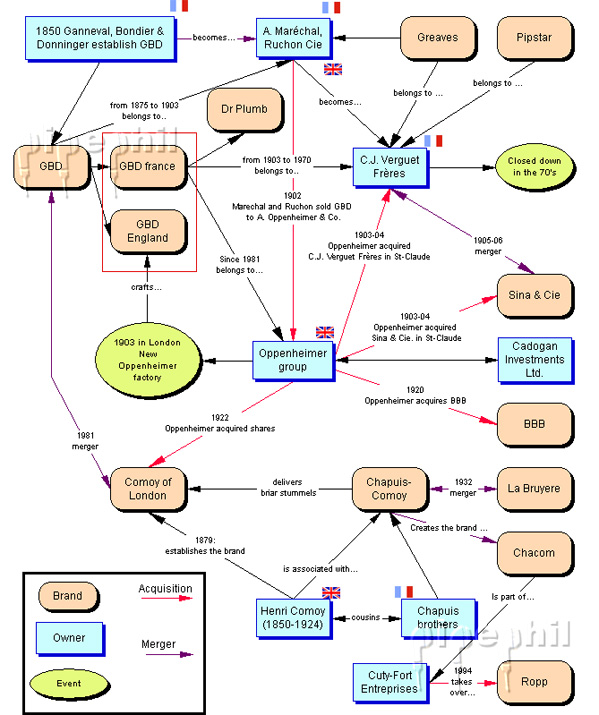
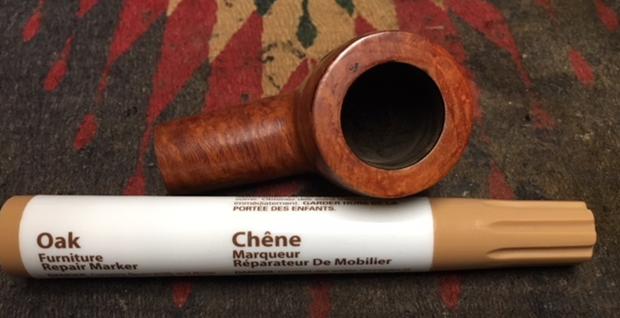
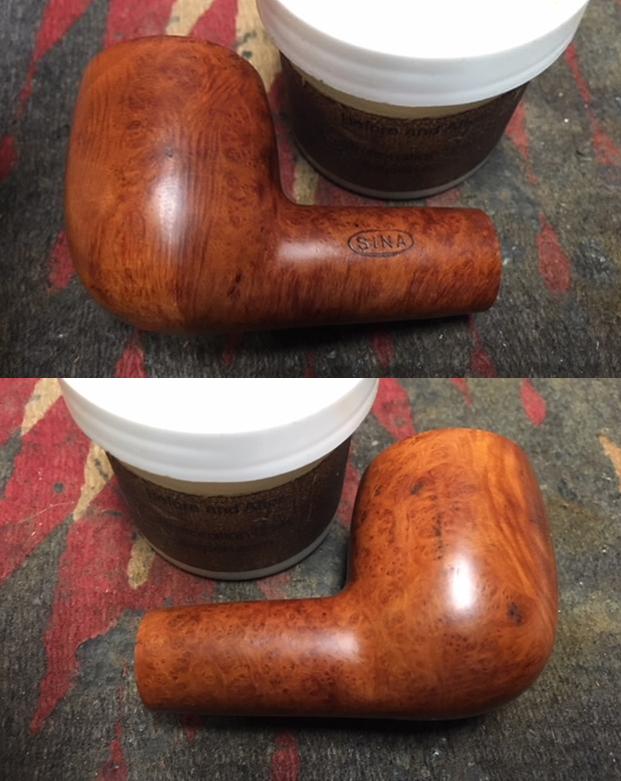
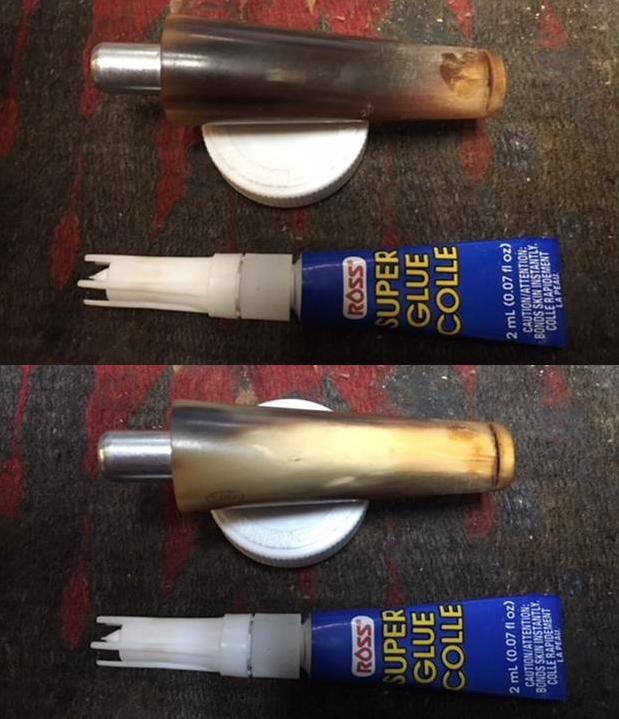
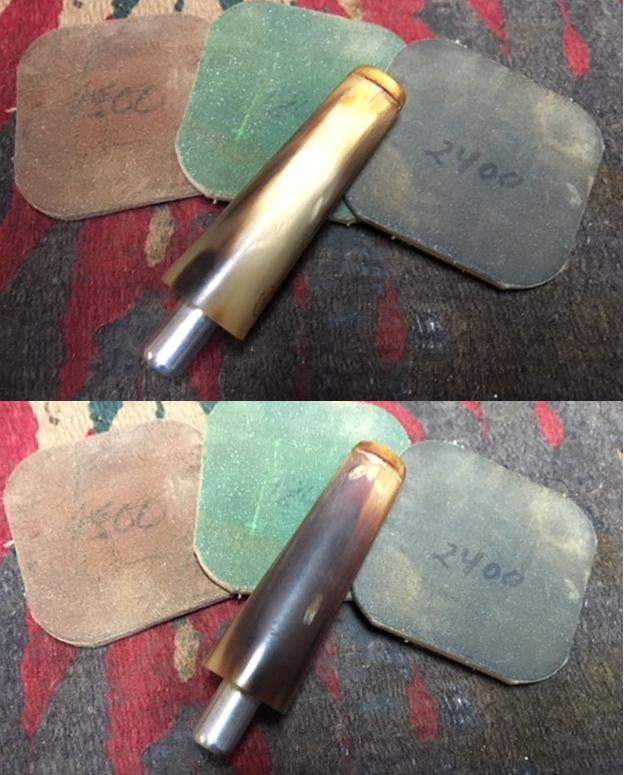
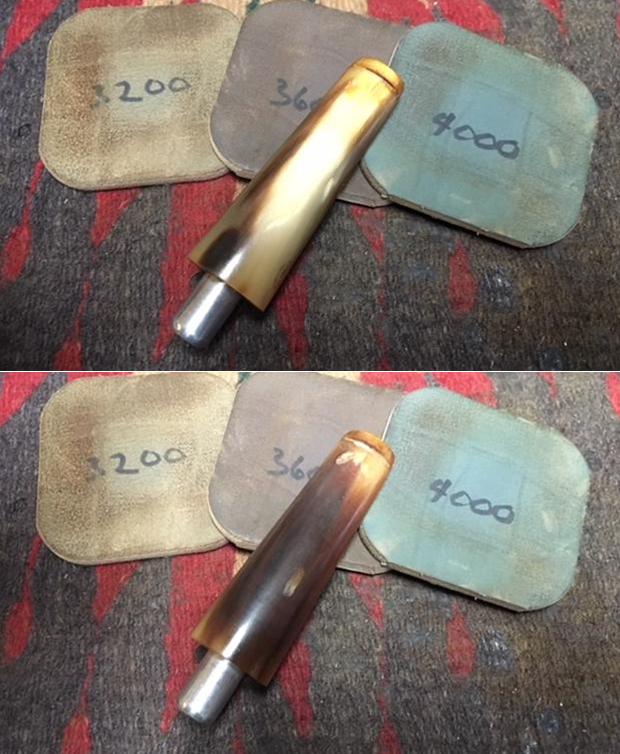
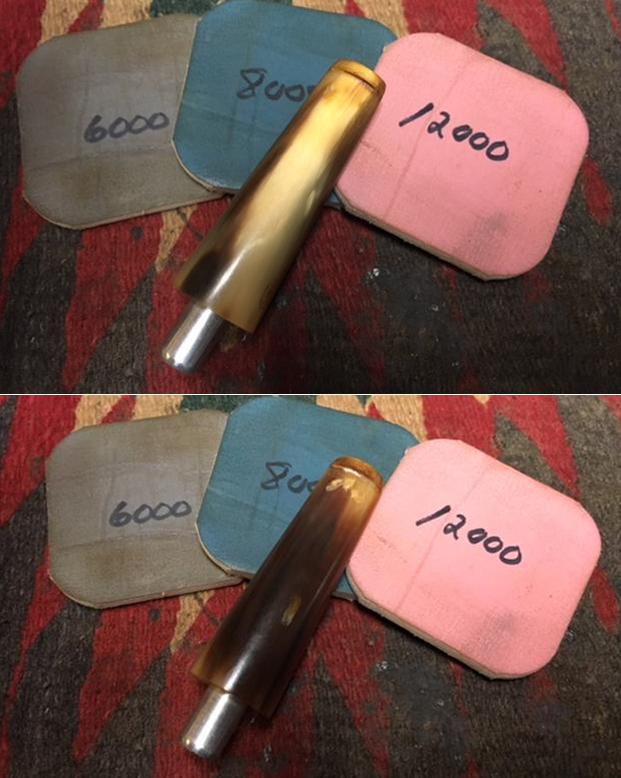
I looked on Pipephil’s site and was able to find out that there was indeed a connection to GBD. The connection was with the French branch of GBD.From the screen capture above you can see the two links under the photo on the left. The first connects the pipe to the Marechal Ruchon & Co. factory that made GBD pipes. They eventually sold out to the Oppenheimer group. The French brand was also connected to C.J. Verguet Freres and to Sina & Cie which were sold to Oppenheimer in 1903-1904. In 1905-1906 Oppenheimer merged the two companies. The accompanying chart gives an overview of the twisted trail of the GBD brand and its mergers and sales. The chart also comes from the Pipephil site and was the second link under the above photo. Once I had refreshed my memory on the SINA brand I knew that this second pipe was made before the 1905-1906 mergers as well. It fits well with the thick horn stem and the shape of the button and narrow slot opening. The thick shank also fits well with the period. I really like the shape and style of this era of pipe history so this one would be a pleasure to clean up. I took the following photos of the pipe when I took it out of the box. It was really dirty as I had guessed from the presale photos. It was in good condition underneath it looked like but it was a mess. The outside of the bowl was very dirty grime and tars covering the front and right side of the bowl. The rim top had a thick coat of lava and tars and there was a thick cake in the bowl. The stem looked pretty decent other than tooth marks on the top and underside near the button. I took close up photos of the rim top and both sides of the stem to show its condition. You can see from the photo the thick cake in the bowl and the overflow on the rim top. The second and third photos show the tooth marks chatter on both sides of the stem at the button. The final photo shows the SINA in a logo stamped on the left side of the shank.I took photos of the bowl from a variety of angles to show the ground in grime and dirt in the briar on the exterior. I reamed the bowl with a PipNet pipe reamer starting with the smallest cutting head and working up to the third cutting head. I took the cake back to the walls of the bowl. I cleaned it up with a Savinelli Fitsall Pipe Knife to remove the cake that remained behind on the walls and on the bottom of the bowl. I sanded the inside of the bowl smooth with 180 grit sandpaper wrapped around a piece of dowel. I scraped the rim top with the Savinelli Fitsall Knife to remove the thick lava that had overflowed onto the rim. I wiped it down with acetone on cotton pads to remove the residual grime on the rim and around the bowl and shank.I took photos of the bowl after I had wiped it down with the acetone. The bowl looked quite good. There was some deep pits and nicks on the rim top and bowl edges as well as some burn marks toward the front of the bowl. I lightly topped the bowl with 220 grit sandpaper on a topping board. I worked over the inner edge of the bowl with a folded piece of 220 grit sandpaper.I polished the rim top and the rest of the bowl with micromesh sanding pads – wet sanding with 1500-2400 grit pads and dry sanding with 3200-12000 grit pads. I wiped the bowl down after each sanding pad with a damp cloth. I touched up the stain on the rim top with an Oak coloured stain pen to match the rest of the bowl. I would blend in the stain later in the process.I rubbed some Before & After Restoration Balm into the surface of the briar to enliven, clean and preserve it. I rubbed it in with my fingertips working it into the briar. I set it aside for a little while to let the balm do its work. I buffed it off with a cotton cloth and then buffed it with a microfiber cloth. The photos below show the pipe at this point in the restoration process. I touched up the gold leaf in the oval SINA logo on the left side of the shank using Rub’n Buff Antique Gold. I rubbed it into the stamping on the shank side and pressed it into the stamp with the sharp point of a sanding stick. Once the gold had dried I buffed it off with a cotton cloth. The second photo shows the stamp after the touch up. It does not look too bad for a pipe made before 1905-06.I scraped out the inside of the shank with a dental spatula to remove the lacquered tars and oils that had hardened in the mortise. I don’t think this pipe had been cleaned since it was first smoked in the early 1900’s.I turned the inner tube in the metal tenon in the stem to remove it. It was pressure fit and the tars and oils had it held tightly in place. With it removed and the shank scraped clean the pipe was ready to be cleaned up.I cleaned out the inside of the mortise and the airway in the shank and stem with pipe cleaners, cotton swabs and alcohol.I used clear super glue to repair the tooth marks on the stem. I sanded the stem surface with 220 grit sandpaper to smooth out the chatter and wiped it down with alcohol on a cotton swab. I filled in the tooth marks with clear glue and set it aside to cure.When the repair had cured, I sanded the surface of the repairs on the stem with 220 grit sandpaper to smooth out the repairs and blend them into the surface of the horn stem. I forgot to take photos of this part of the process as I was anxious to see what the stem looked like polished. I quickly move on to polish the stem with micromesh sanding pads – wet sanding with 1500-2400 grit pads and dry sanding with 3200-12000 grit pads. I wiped the stem down after each sanding pad with Obsidian Oil and after the final sanding pad I gave it a final coat of oil and set it aside to dry. The horn stem was beginning to look really good for a pipe of this age. I put the cleaned inner tube in the tenon and aligned the angle of the spear end so that it would sit on the bottom of the bowl when inserted in the shank. I took photos of stem at this point to show the inner tube.I used the sharp point of a sanding stick to apply Rub’n Buff Antique Gold to the stamping on the left side of the stem. I worked it into the grooves. I let the gold dry and then buffed it off with a soft cloth.This SINA, GBD predecessor is a beautiful pipe with mixed grain all around the bowl sides, top and bottom. The grain really is quite stunning. The rim top looks much better. The horn stem repaired easily and shined up well. I buffed the bowl and the stem with Blue Diamond polish to raise the shine on the briar and the vulcanite. I was careful to not buff the stamping and damage it. I gave the bowl and stem multiple coats of carnauba wax. I buffed the entire pipe with a clean buffing pad to raise the shine. I hand buffed it with a microfiber cloth to deepen the shine. The finished pipe is shown in the photos below. The rich patina of the original finish allows the grain to really stand out on this pipe and it works well with the rich lustre of the polished horn stem. The dimensions of the pipe are: Length: 5 1/4 inches, Height: 2 inches, Outside Diameter: 1 3/8 inches, Diameter of the chamber: 3/4 of an inch. This old and beautiful SINA Chubby Billiard will sit next to the other SINA pipe in my personal collection. I am looking forward to enjoying my first bowl in it soon. Thanks for walking through the restoration with me.

Resurrecting a Badly Damaged BBB ** Billiard


Blog by Victor C. Naddeo

I have been following the Pipe Club of Brasil Group on Facebook for quite a while now and have enjoyed the posted that Victor Naddeo has made about his restoration work. He is the administrator of the Facebook Group and we have chatted back and forth. When he posted this restoration I was intrigued by his solution to the crack in the bowl. He sent me photos on Messenger and we talked about the repair and BBB pipes in general. Seems we are both devotees to BBB pipes. I asked him to write up this repair on an old BBB ** that was in very rough shape before he started. He gladly did so. I am hoping this is just the first of many blogs on rebornpipes by Victor. Welcome to rebornpipes! Now in Victor’s own words.

A few years ago i had my first experience with restorations. As a young man just into adulthood, I had little money to invest in good pipes, and on one fateful day I met an old Bent Apple BBB ** for sale at an antique dealer. The pipe had a very rusty stem, there were beat marks all over the edge of the bowl, and a cake that looked more like the shell of a turtle. Already for some time I followed the blog rebornpipes and the work of Steve, and inspired by him I decided to get involved in this project. Two months later (and after many mistakes made) I finally managed to bring the old warrior back into action. On that day I gained two new passions: Restoration and old BBB’s. This restoration I will show you below began months ago when in an auction I bought this BBB billiard from a not very honest auctioneer who had not reported that the bowl was cracked. After some time waiting in a drawer, I finally decided to do something to bring another warrior to this army of BBBs, I hope you like it!

As you can see, looking from the side he was just an old billiard that needed a bit of polishing and cleaning. Good shapes, harmonious proportions, these are typical features of an old BBB and the main reasons that made me fall in love with the brand. What I did not expect was that his former owner somehow managed to create a large crack in the front of the bowl with about 3cm.The interior of the ducts was also completely clogged with a mass of tar residues derived from years of non-cleaning use. The cake was also quite thick, which led me to believe that the pipe had never been reamed, and if it was, that was many decades ago. To remove the cake, I had to use some chisels first, because as the passage was very narrow, it was impossible to insert my Senior Reamer into the chamber. It took me some time (and I also got some blisters on my hand). In the picture you can see the amount of carbonized material being removed from inside the bowl. After using the chisels and also the senior reamer, I also use a series of sandpaper inside the bowl, starting from grit 220 through 400, 600 and ending with 800, so that the inside of the bowl has a uniform surface.After a 30 minute bath in a solution of Oxyclean and water, I washed the inside of the stem using bristle pipe cleaners and running water. With a Dremel and felt disks, used blue polishing compound to polish the inner tube. I finished cleaning the inside of the stem using cotton pipe cleaner soaked in grain alcohol, removing what was left of residues and possible bacteria. The Oxyclean bath brings the oxidation back to the surface of the stem, which facilitates the polishing and removal of the oxidized material. Returning to the subject of the dreaded crack in the bowl. I decided to use a briar insert to cover it. To prevent cracking from increasing over time and to facilitate insertion of the insert, I used a cutting blade attached to the Dremel to cut the broken part and make a V shape instead of the crack. I used this same disk to also cut out a briar block, an insert of a similar size and I used sanding paper to leave it the perfect size to fit into space. To glue the insert, I used a mixture of briar dust, pigments and super glue. I settled the insert and held it for a few minutes until the glue dried. I waited a few hours to make sure that all the glue was dry and insert was firmly in place. I cut the burrs and used sandpaper to level the insert with the rest of the bowl. I also used brown and black dye to match the colors. I used 220, 400, 600, 800, 1000 and 1200 grit sanding sticks to remake the shapes of the bowl edge that were completely destroyed by the beat marks. As you can see, after reshaping the top of the bowl, you can already see the ancient times of glory of this pipe that once was the faithful companion of some gentlemen.

After dying, it was time for the first polish. I used two different compounds, red and brown, on denim disks and jeans disks, such as a high spin, to remove sediments and dirt that were stuck to the outside of the bowl and excess dyeing of the insert and the new bowl top . I used the same process on the stem to remove the oxidized material, but finalizing with flannel discs using the blue compound and white diamond to give a mirrored sheen.


This is a Beautiful Heritage Heirloom Square Shank Tall Bulldog 50S


Blog by Steve Laug

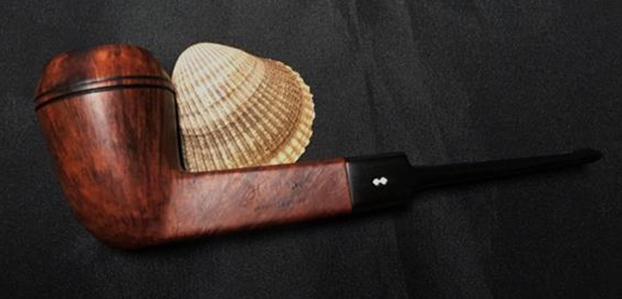
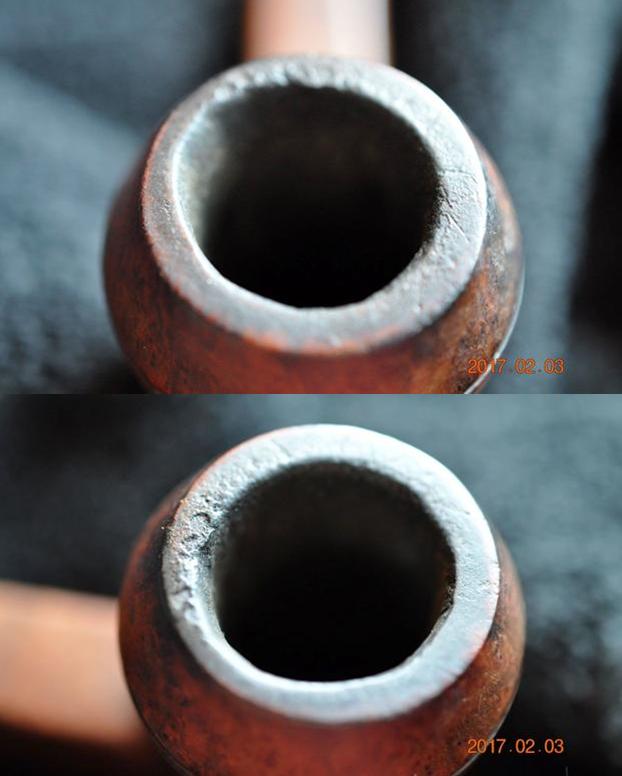
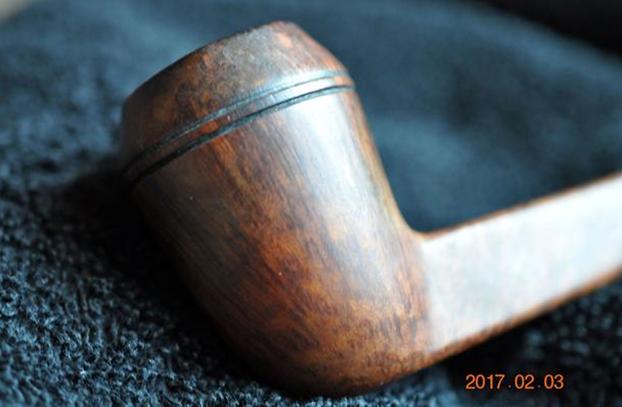
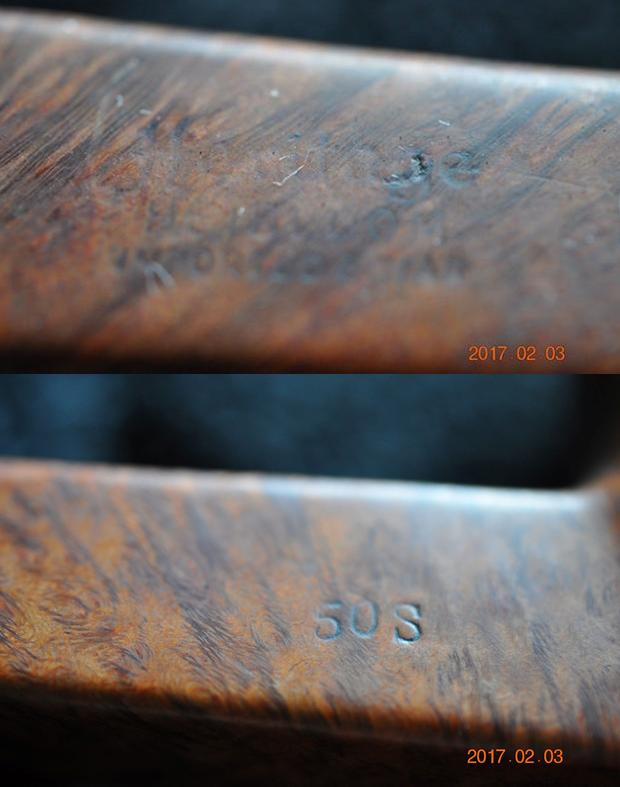
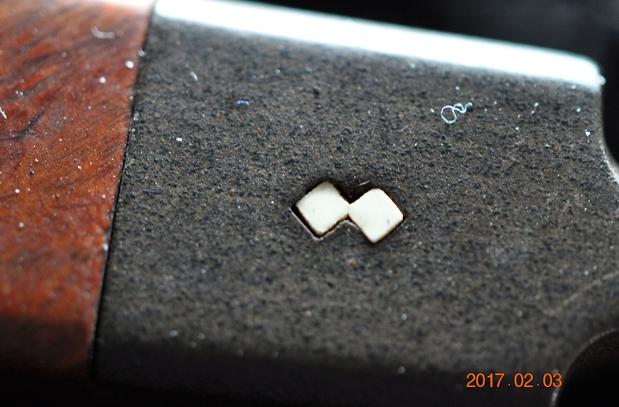
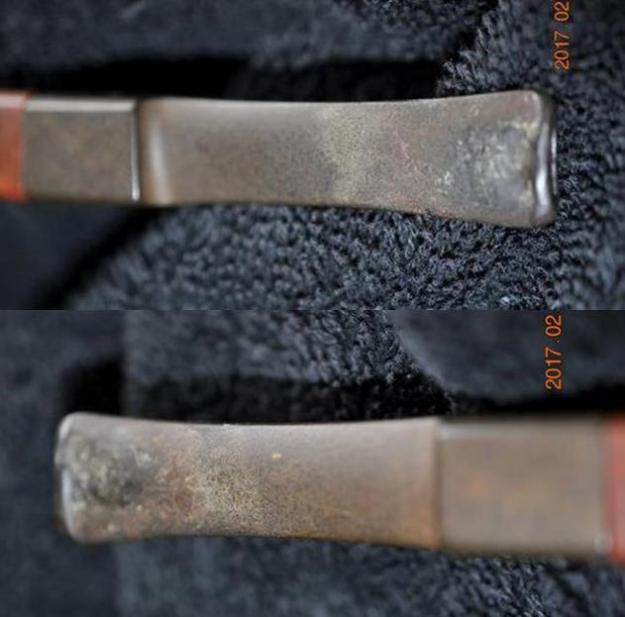
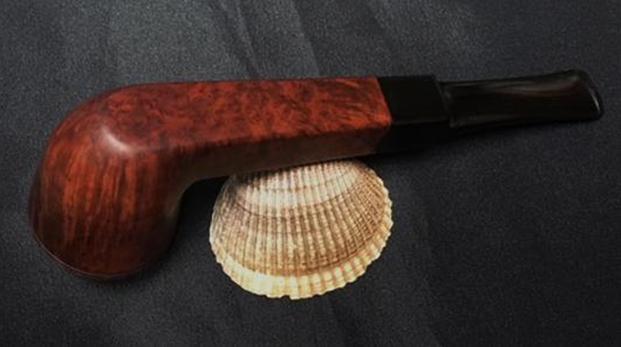
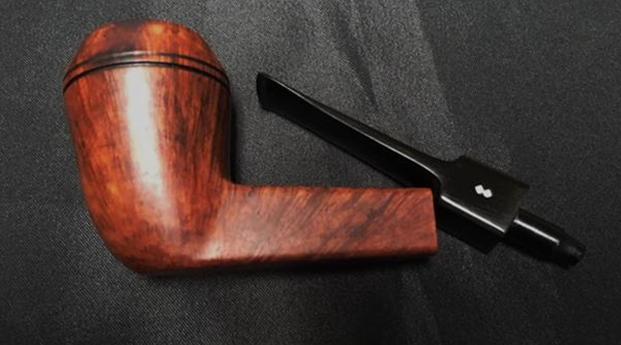
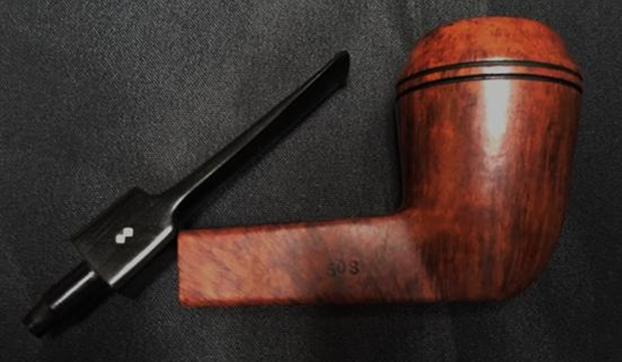
Jeff picked up the latest pipe that I am working from an antique shop in Freeland, Washington, USA in February of 2017. Once again he has proved to have an eye for the unique and unusual. The shape and the look of the pipe caught my eye when I was looking for a pipe to work on next. Jeff took photos of the pipe before he did his cleanup work. The 50S square shank Tall Bulldog pipe was in good condition. There was a thick cake in the bowl and a light overflow of lava on the rim. The inner edge of the rim appeared to have some reaming damage and perhaps some burn damage. The grain on the sides of the bowl is quite stunning and is straight and flame grain on bowl and shank with birdseye on the top and underside of the shank and bowl. The finish was dirty but appeared to be in good condition under the grime and grit the years. The exterior of the bowl and square shank were clean and undamaged. It was stamped Heritage over Heirloom over Imported Briar on the left side of the shank and has the shape number 50S on the right side of the shank. The stem had light oxidation, some tooth chatter and some deeper tooth marks on both sides of the stem just ahead of the button. The double diamond logo on the left side of the stem was in good condition. The quality vulcanite had held up well through the years. Jeff took some photos of the rim top to show the tarry buildup on the flat surface and the potential damage to the inner edge of the bowl. There appears to be some damage on the inner edge at the back side of the bowl.Jeff also took some photos of the sides and bottom of the bowl and shank to show the condition of the pipe and the lovely grain all around. The next photos show the stamping on the shank – both the left and right sides. The stamping is dirty and faint but readable. The left side reads Heritage over Heirloom over Imported Briar. The right side reads 50S which is the shape number. The double white diamond insert on the left side of the saddle stem appears rough under magnification. He took photos to show the condition of the stem – the tooth marks and the worn edge of the button on both sides is very clear in the photos. The stem was also oxidized.I went back and read previous blogs I have written and others have written for rebornpipes on the Heritage brand of pipes. Andrew Selking did a great bit of research on the brand and did several blogs. I quote from his work at this link, https://rebornpipes.com/2014/12/23/refurbishing-a-heritage-heirloom/.

These pipes were made in the Kaywoodie factory, but on a completely separate line. Heritage pipes were Kaywoodie’s answer to Dunhill. According to one of their brochures, Heritage pipes were made from “briar burls seasoned and cured for up to 8 months,” with only “one briar bowl in over 300 selected to bear the Heritage name.” “Heritage stems are custom fitted with the finest hand finished Para Rubber stems. Mouthpieces are wafer thin and concave.”

The Heritage line began in the early 1960’s, with the trademark issued in 1964. The line was started at the request of Stephen Ogden, (who worked for Kaywoodie in 1962). Mr. Ogden had previous experience working for Dunhill, either running the New York store or working for Dunhill North America. Mr. Ogden was made President of Heritage Pi pes, Inc., Kaywoodie Tobacco Co. Inc. and Kaywoodie Products Inc. as well as a Vice President of S.M. Frank & Co. Heritage Pipes were produced from 1964 until 1970 (Source Kaywoodie.myfreeforum.org).

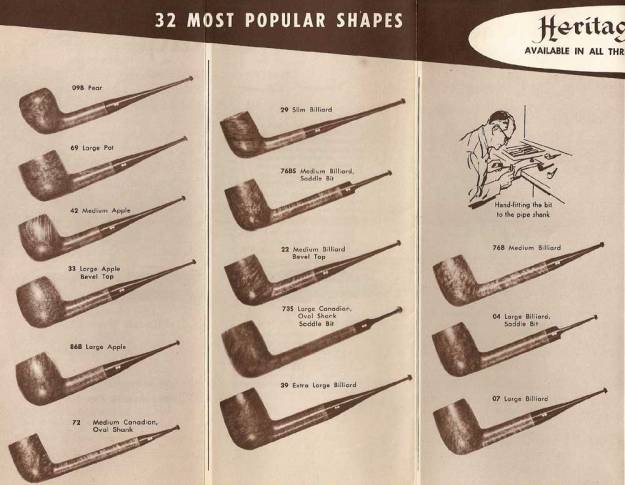
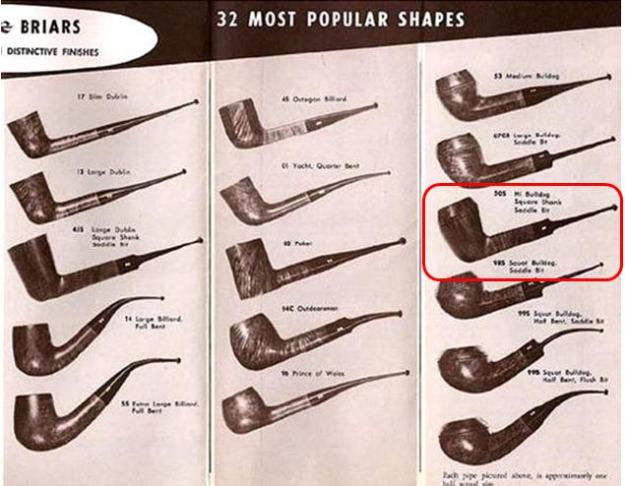
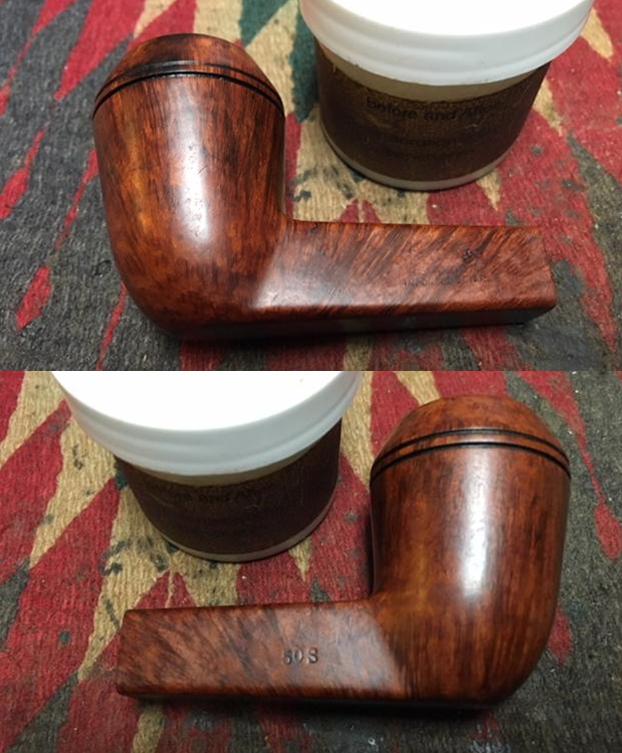
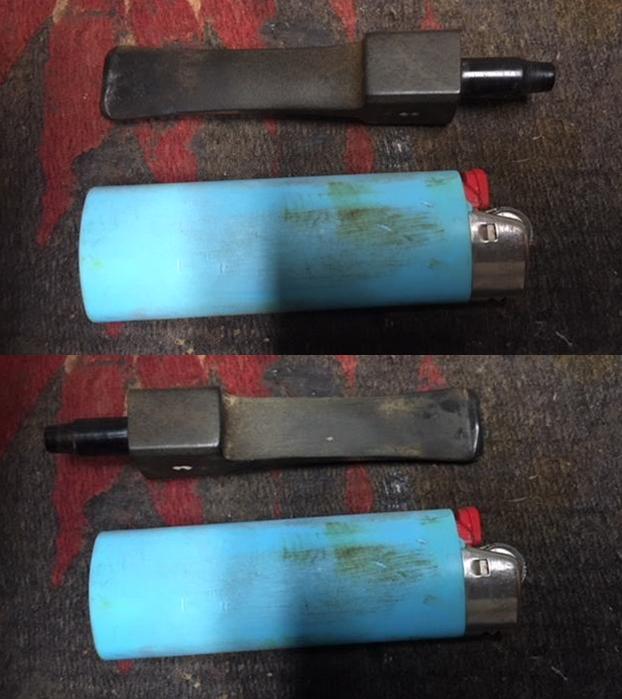
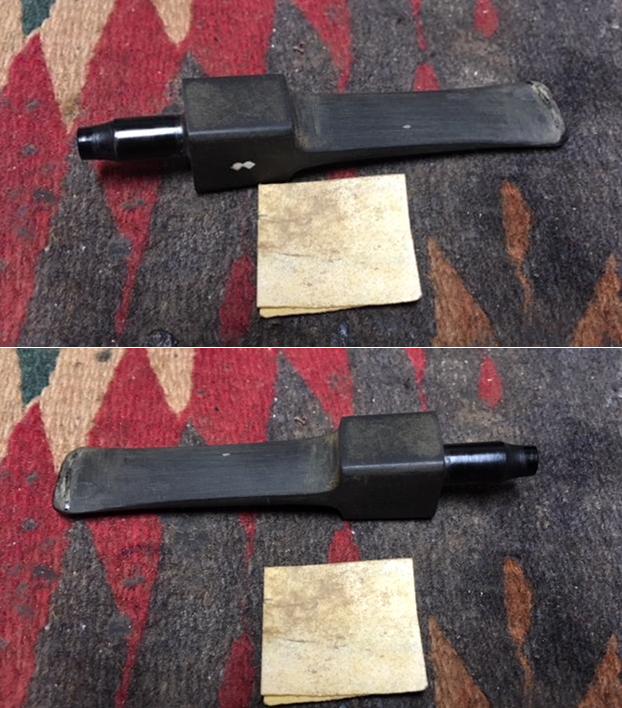
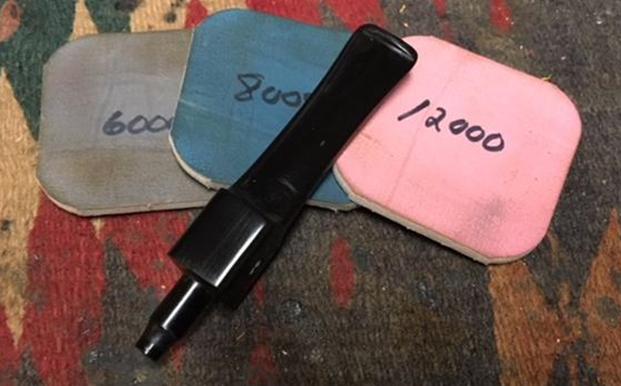
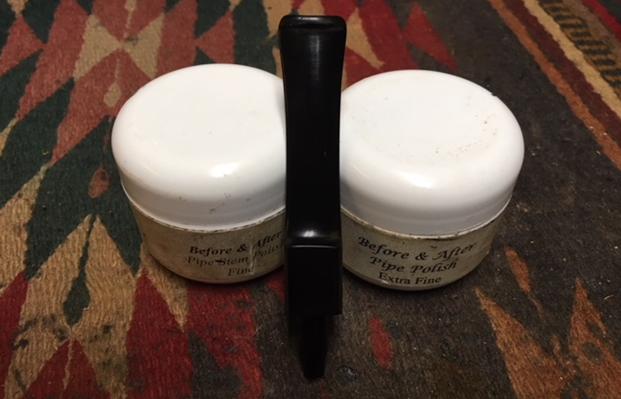
Andrew also included a copy of the Heritage brochure that I am also including below (Courtesy Kaywoodiemyfreeforum). On the fourth page I circled the 50S shaped pipe. This is the one that I am working on. Jeff had worked his magic in cleaning up this pipe. It is nice to work on pipes that he has cleaned up for a change. He reamed it with a PipNet reamer and smoothed the walls of the bowl with a Savinelli Fitsall pipe knife. He scrubbed out the mortise and the airway in the shank and the stem with alcohol, cotton swabs and pipe cleaners. He scrubbed the exterior of the bowl, rim and shank with a tooth brush and Murphy’s Oil Soap to the oils and tars on the bowl, rim and shank. He rinsed it under running water. He dried it off with a soft cloth. Once the grime was removed the finish underneath was in good condition. The rich patina of the older briar and the straight grain around the bowl and shank and the birdseye grain on the top and underside of the shank were beautiful. There were some dark spots on the left side of the cap and at a few spots around the edges. There was some damage to the rim top on the right rear. They appear to be burn marks or at least burn damage though the briar is solid. The cleaning of the stem left a light oxidation in the vulcanite. The tooth marks were clean but visible. I took photos of the pipe to show its condition before I started my work on it. I took some close up photos of the bowl, rim top and stem to show the condition of the pipe before I started to do the restoration work on it.I took close up photos of the burn damage to the left side of the bowl on the cap and double ring around the bowl. Fortunately the burn damage is not deep into the briar. The wood in the darkened portions is solid and not charcoal.To remove the damaged areas on the rim top I topped the bowl on a topping board with 220 grit sandpaper. You can see from the second photo that the damaged area on the right rear of the surface had been removed.  I scraped out the remnants of cake on the walls of the bowl using my Savinelli Fits all Pipe Knife. I sanded the walls of the bowl with sandpaper wrapped around a piece of dowel.I used a folded piece of 220 grit sandpaper to smooth out the inner edge of the rim and give it a light bevel inward to deal with the damage on the edge. I sanded the burned areas on the left side of the bowl cap to try to minimize them and blend them into the surrounding briar. I polished the exterior of the bowl and shank with micromesh sanding pads, carefully avoiding the stamping on the sides of the shank. I wet sanded the bowl with 1500-2400 grit pads and dry sanded it with 3200-12000 grit pads. I wiped the bowl down after each sanding pad with a damp cloth to remove the sanding dust. I rubbed some Before & After Restoration Balm into the surface of the briar to enliven, clean and preserve it. I rubbed it in with my fingertips working it into the briar. I set it aside for a little while to let the balm do its work. I buffed it off with a cotton cloth and then buffed it with a microfiber cloth. The photos below show the pipe at this point in the restoration process. I set the bowl aside to address the issues with the stem. I painted the surface of the stem with the flame of a Bic lighter to lift the tooth dents in the surface of the vulcanite. I was able to lift them quite a bit and then filled in the dents with black super glue. When the repair had cured I recut the edge of the button with a needle file and flattened out the surface of the repair to match the rest of the vulcanite. I sanded the surface of the repairs and the oxidation on the stem with 220 grit sandpaper to smooth out the repairs and shape the button. It also removed the surface oxidation that was on the stem. I polished the stem with micromesh sanding pads – wet sanding with 1500-2400 grit pads and dry sanding with 3200-12000 grit pads. I wiped the stem down after each sanding pad with Obsidian Oil and after the final sanding pad I gave it a final coat of oil and set it aside to dry. I polished it with Before & After Pipe Stem Polish – both Fine and Extra Fine. I used it to polish out some of the remaining scratches. I gave it another coat of Oil and set it aside. This Heritage Heirloom Square Shank Tall Bulldog is a real beauty with straight and flame grain all around the sides of the bowl and shank. It also has some beautiful birdseye on the top and underside of the bowl and shank. The grain really is quite stunning. The rim top looks much better. The Heritage high quality vulcanite stem repaired easily and shined up well. I buffed the bowl and the stem with Blue Diamond polish to raise the shine on the briar and the vulcanite. I was careful to not buff the stamping and damage it. I gave the bowl and stem multiple coats of carnauba wax. I buffed the entire pipe with a clean buffing pad to raise the shine. I hand buffed it with a microfiber cloth to deepen the shine. The finished pipe is shown in the photos below. The rich patina of the original finish allows the grain to really stand out on this pipe and it works well with the rich black of the polished vulcanite stem. The dimensions of the pipe are: Length: 6 inches, Height: 2 1/4 inches, Outside Diameter: 1 1/4 inches, Diameter of the chamber: 7/8 of an inch. In my years of refurbishing pipes I have not seen one quite this shape. I have worked on quite a few Heritage pipes since Andrew brought them to my attention but none have caught my eye like this one. So, this beautiful Heritage Heirloom 50S will fit really nicely into my personal collection for now. I am looking forward to enjoying my first bowl in it soon. Thanks for walking through the restoration with me.
Converting a Brigham Voyageur 109 into a Churchwarden


Blog by Steve Laug

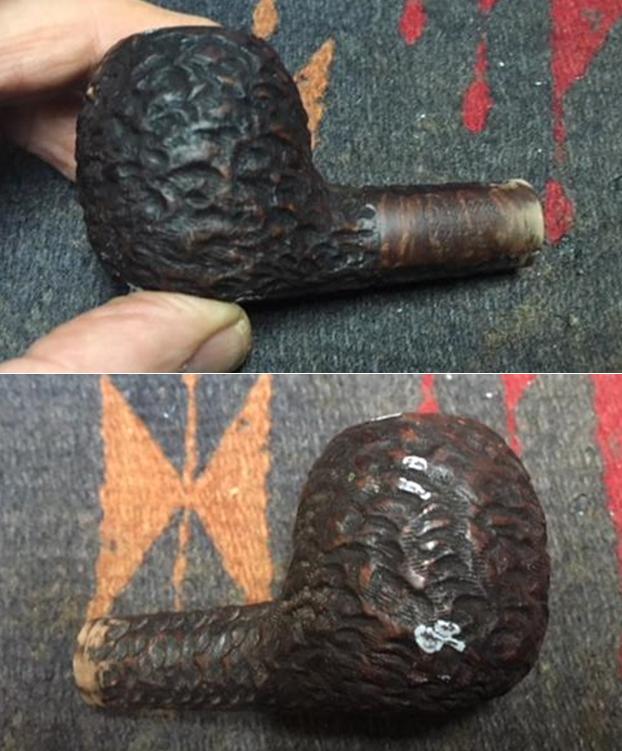
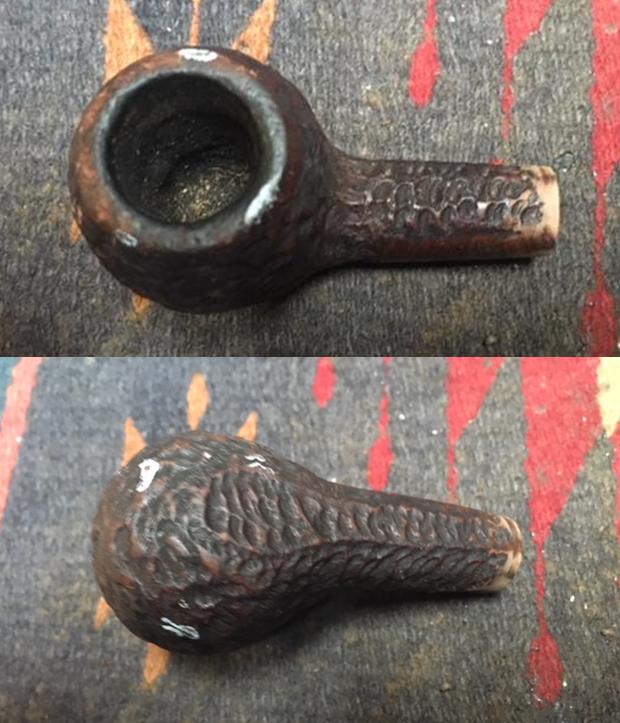
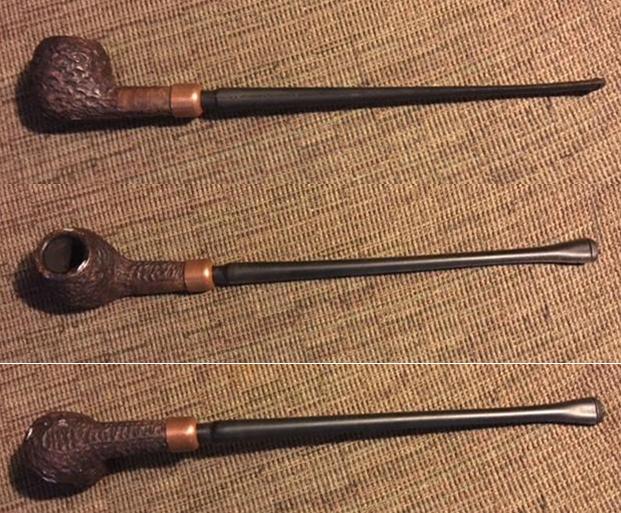
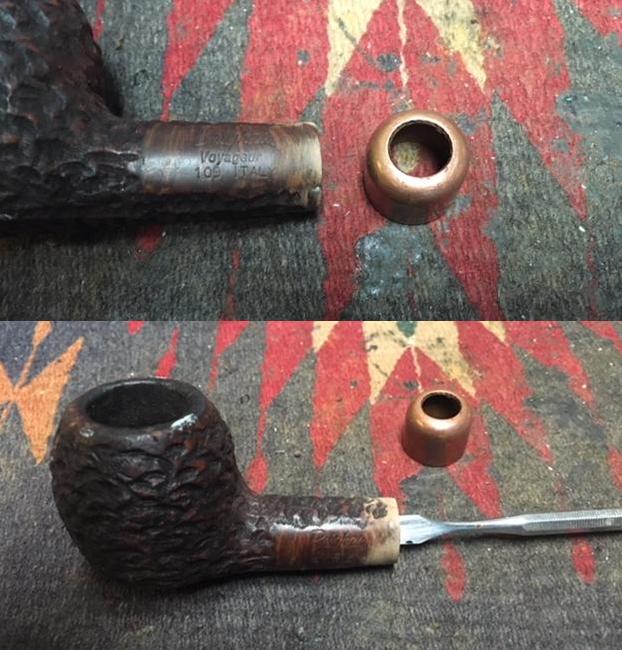
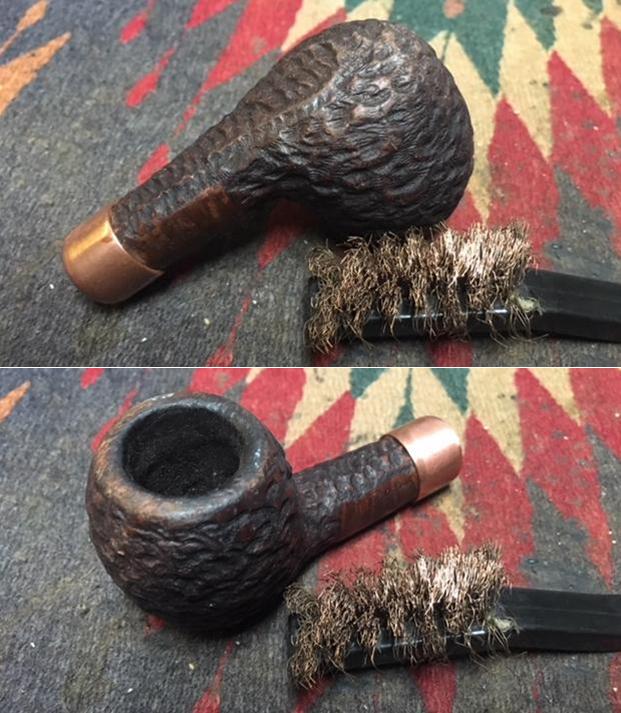
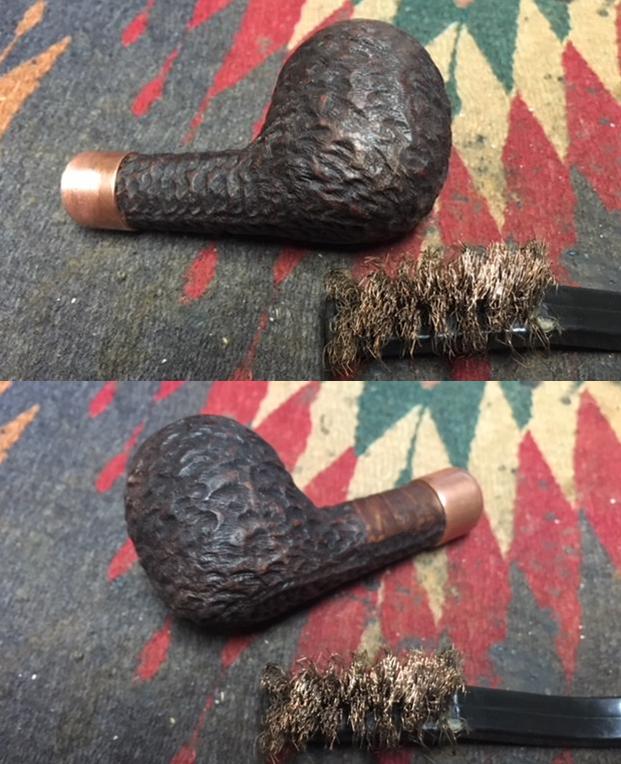
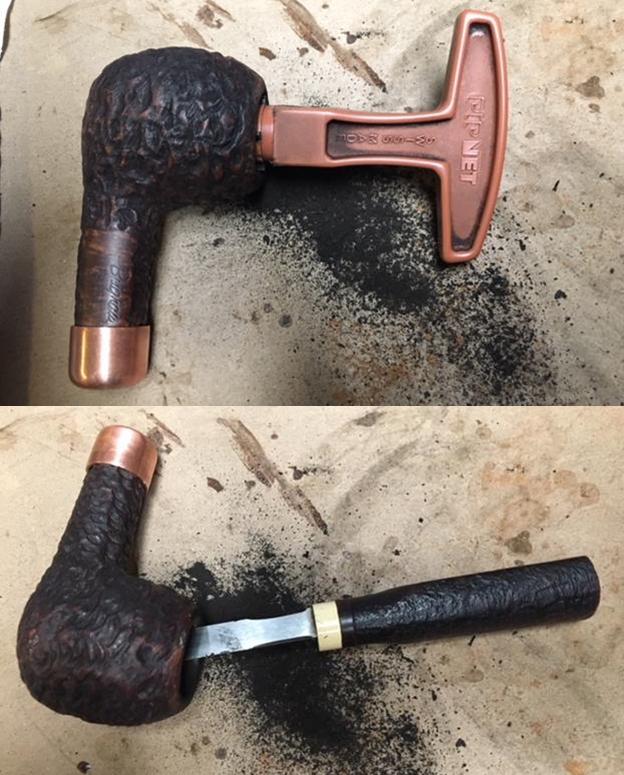
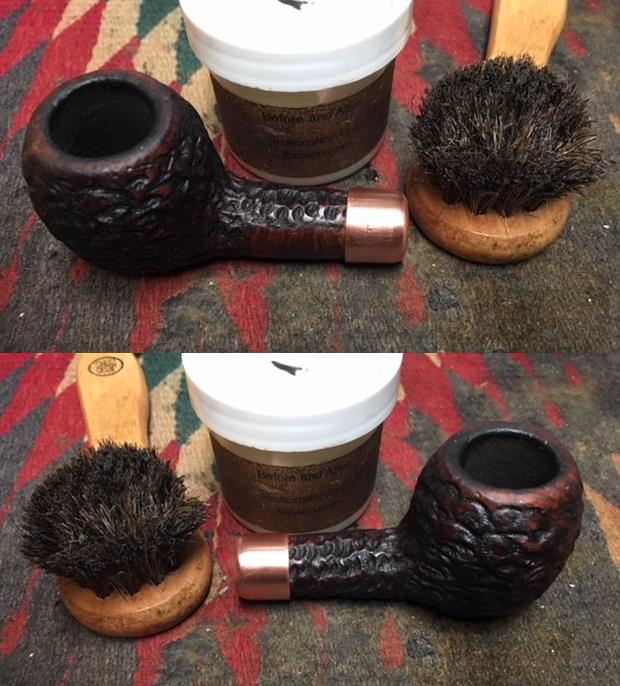
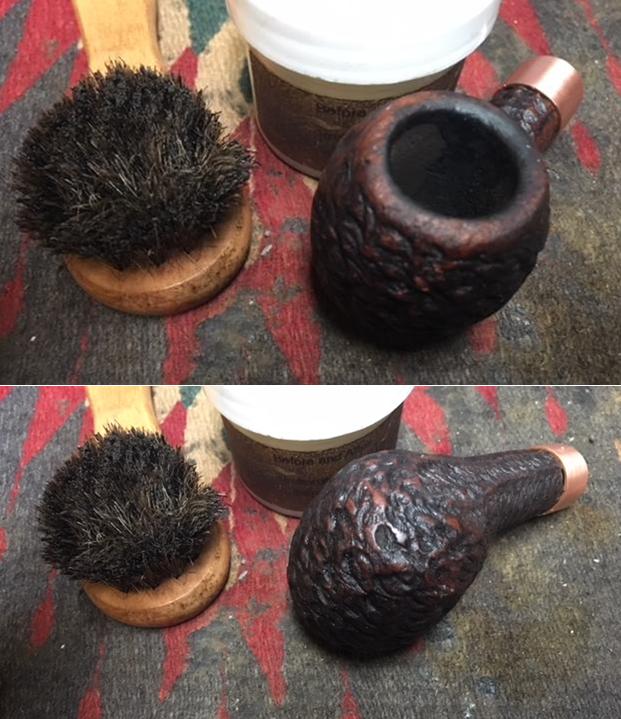
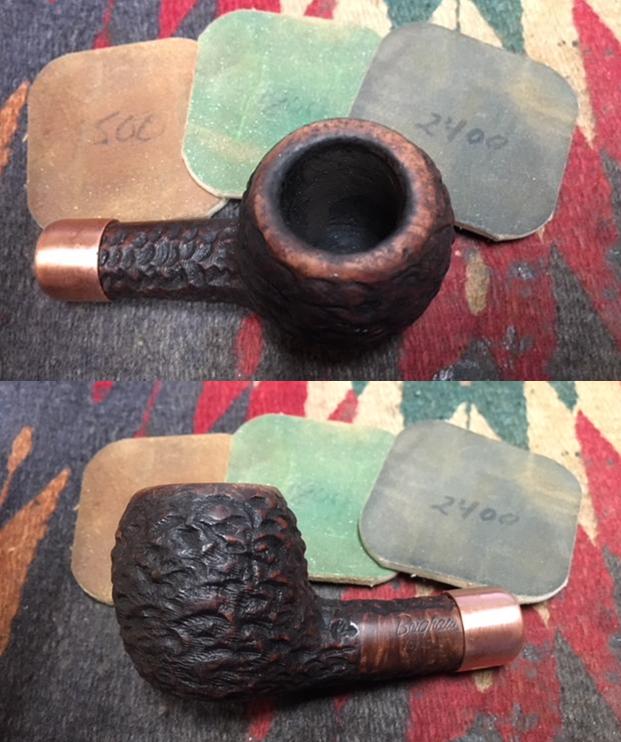
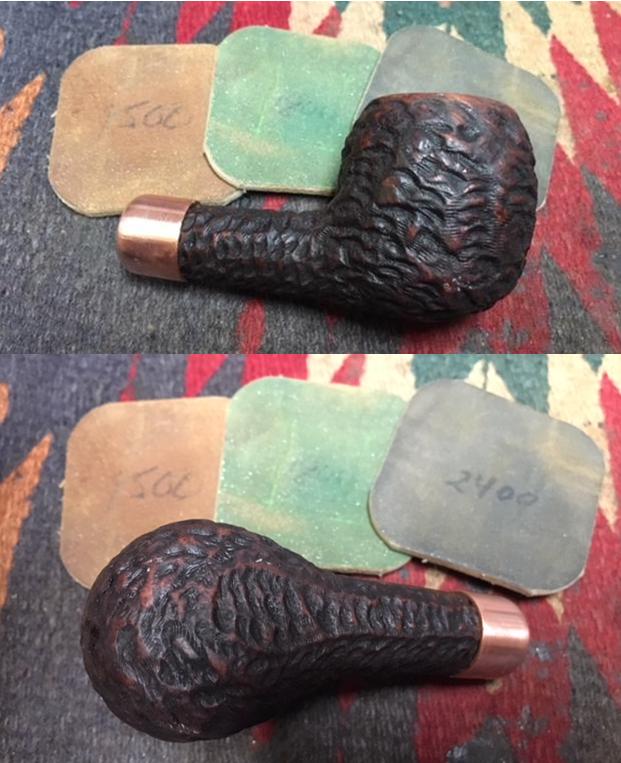
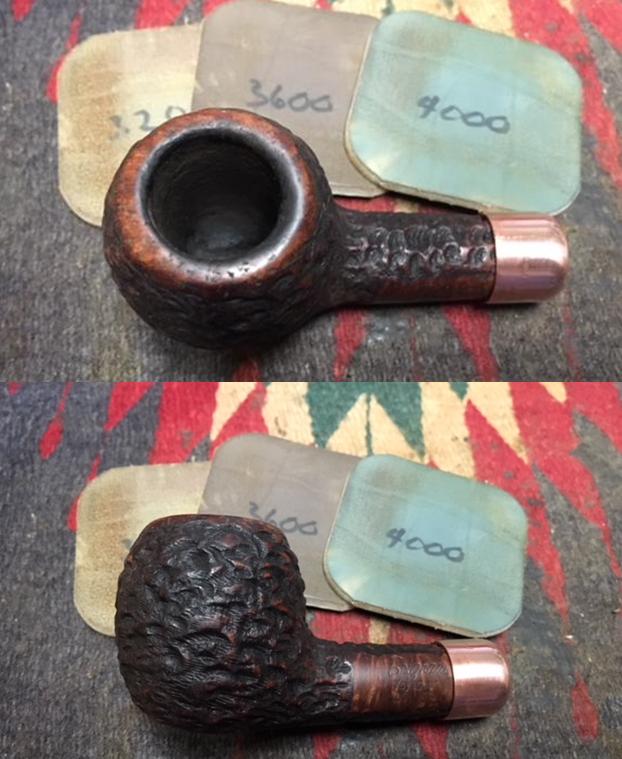
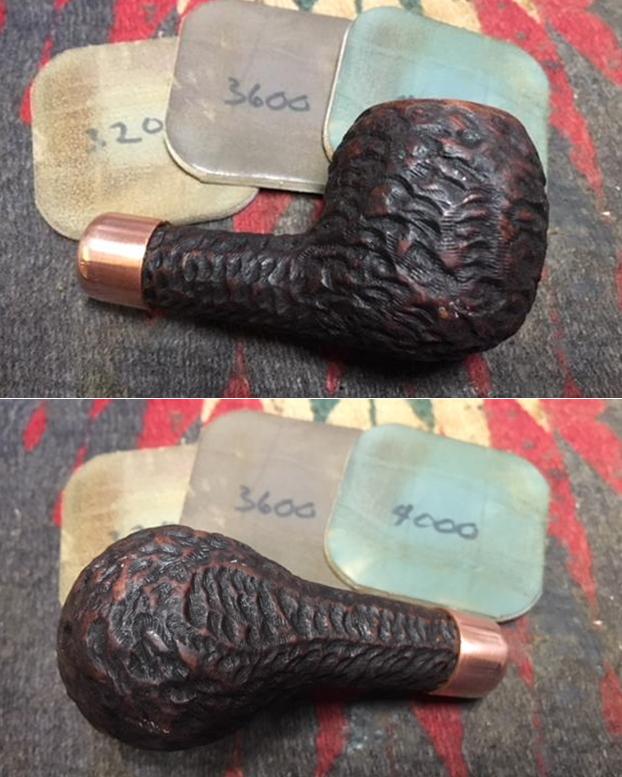
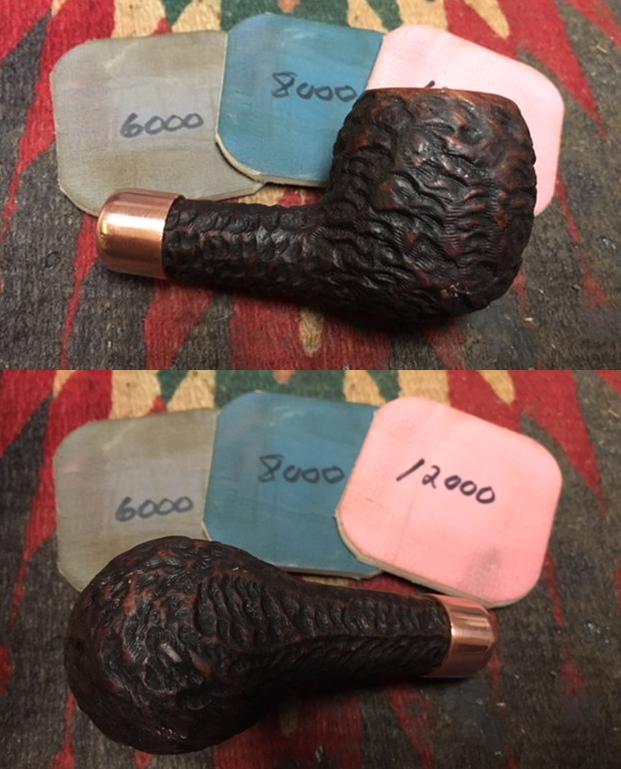
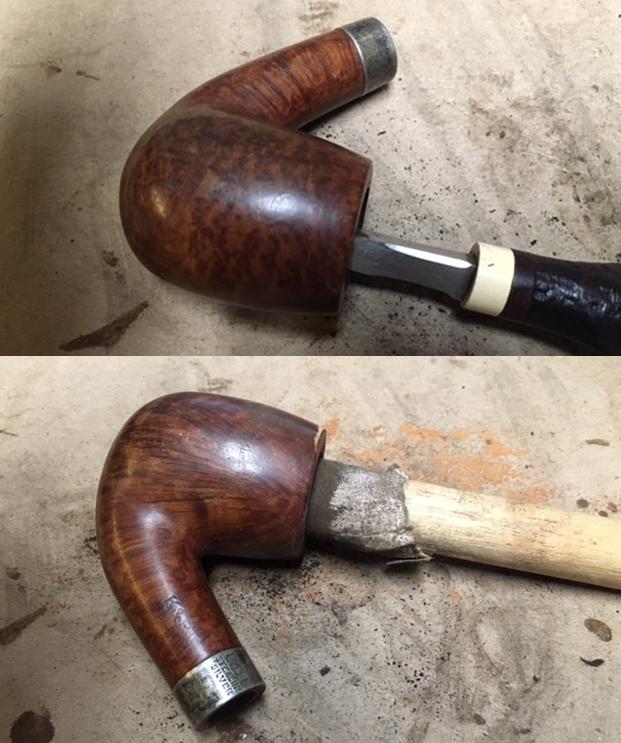
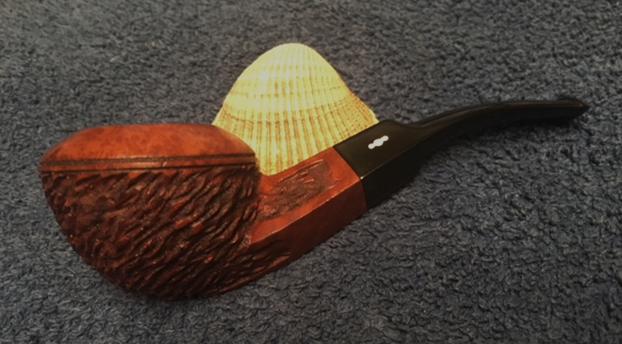
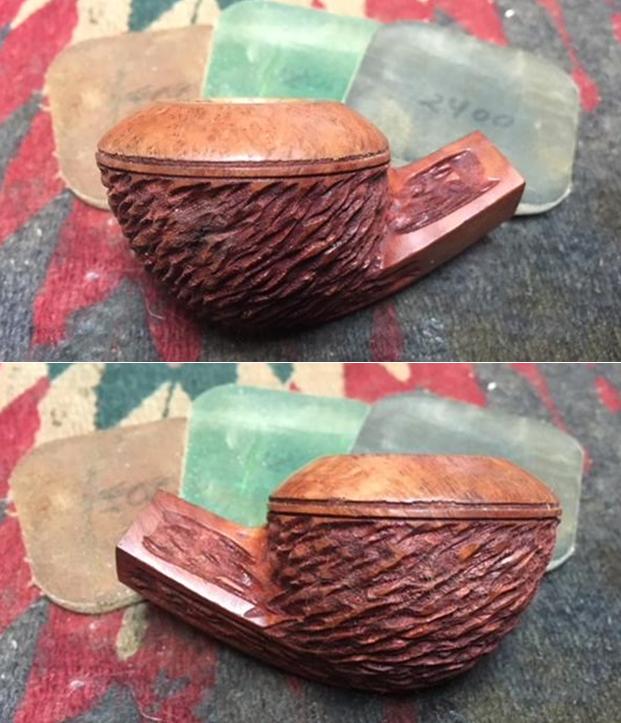
This is the last pipe I am working on from the fellow here in Vancouver that he dropped off. There were 8 pipes in the lot – I have all eight of them now. This one is a Brigham bowl without the stem or other parts. The pipe is an apple shaped bowl that is stamped on the left side of the shank and reads Brigham over Voyageur over 109 Italy in a smooth panel on the rusticated bowl. The shank end had nicks and chips but was in fair condition. There was no stem with the bowl. The stem would have had the lighter weight nylon system tenon since the pipe is one of the Italian made Brighams. It was another one of his pipe finds on a recent pipe hunt in Vancouver. The rusticated finish had almost a scale like rustication pattern with flecks of paint in the finish. The rim top was damaged and was darkened toward the back of the bowl. The finish was very dirty and there was a thick cake in the bowl.  When we had first spoken about this pipe we had talked about replacing the stem with a Brigham stem. I talked with Charles Lemon and he sent me a stem blank and an aluminum system shank for the Brigham. When it arrived I talked with the Vancouver fellow about that and together we came to the conclusion that a churchwarden stem might look good on it. I ordered some from JH Lowe and found that they only have one diameter size stem. I ordered it and when it arrived it was significantly smaller in diameter than the shank. I had an interesting copper ferrule that I thought might work to provide a different look to the pipe and provide a way of using the smaller diameter churchwarden stem. I slipped the ferrule on the shank and put the stem partially in place in the mortise and took the following photos to send to the fellow to see what he thought. He liked it so I moved forward.I slipped the ferrule off the shank and took a photo of the stamping on the left side of the shank. It is very clear and readable. I sanded the outside of the shank to provide a smooth seat for the ferrule. I cleaned out the inside of the shank with a dental spatula to remove the heavy tar buildup on the shank walls. I heated the metal ferrule with a heat gun and pressed it onto the shank against a solid board.I heated the copper ferrule over a heat gun and pressed the ferrule onto the shank end. I repeated the process until it was set on the shank as far as I wanted it to be. To remove the paint flecks on the rusticated finish on the bowl I scrubbed it with a brass bristle wire brush and used a dental pick to remove the flecks. I wiped down the bowl with alcohol on a cotton pad to remove the dust and debris from the finish. I reamed the bowl with a PipNet Piper Reamer using the first two cutting heads to remove the majority of the cake. I cleaned up the remnants on the walls of the bowl with a Savinelli Fitsall Pipe Knife. I used a dowel wrapped with sandpaper to sand down the walls on the bowl. I cleaned out the airway in both the bowl and stem with alcohol (99% isopropyl), pipe cleaners and cotton swabs until they were clean on the inside. I rubbed down the briar with Before & After Restoration Balm. I worked it into the finish with my fingertips and finished working it in with a shoe brush. The balm worked to clean, preserve and enliven the surface of the finish on the small bowl. The briar was coming alive so I took some photos of the pipe at this point. I polished the rim top with micromesh sanding pads – wet sanding with 1500-2400 grit pads and dry sanding with 3200-12000 grit pads. I also polished the smooth portions of the rustication with the micromesh pads at the same time. I wiped the rim top down after each sanding pad with a damp cloth. I gave the bowl multiple coats of Conservator’s Wax and buffed the bowl with a shoe brush. I buffed it with a clean buffing pad and took the photos that follow. I set the bowl aside and worked on the stem. I turned the tenon down on the churchwarden stem with a PIMO tenon turning tool. I took it down to about the diameter it needed to be for the shank. I used a Dremel and sanding drum to round down the edges of the stem above the tenon and also the casting marks on the stem. I wanted to make the stem more like a military mount stem.  I heated the vulcanite with a votive candle until it was flexible and put a slight bend in it that fit the look I was going for with the pipe.  I sanded the Dremel marks out of the tapered end of the stem and shaped the tenon some more with 220 grit sandpaper. I worked on the casting marks on the stem sides and around the button. I worked over the end of the stem to smooth out the area around the slot.I polished the stem with micromesh sanding pads – wet sanding with 1500-2400 grit pads and dry sanding with 3200-12000 grit pads. I wiped the stem down with Obsidian Oil after each sanding pad. After the final pad I gave it a final coat of Obsidian Oil and set the stem aside to dry. I put the stem back on the bowl and buffed the pipe with Blue Diamond polish on the buffing wheel. I used a light touch to keep the polishing compound from filling in the grooves in the rustication. I carefully avoided the stamping on the left side of the shank. I gave both the bowl multiple coats of Conservator’s Wax and the stem multiple coats of carnauba wax and buffed the pipe with a clean buffing pad to raise the shine. I hand buffed it with a microfiber cloth to deepen the shine. The finished pipe is shown in the photos below. This is the last of his pipes that I have to work on. This has been a fun bunch of pipes to work on. Thanks for looking. 

Recommissioning a Monarch Pat. 1989069 – 1074H Bent Ball


Blog by Dal Stanton

This nice-looking Monarch Bent Ball shape came to me along with 65 pipes in an eBay acquisition which I’ve called the Lot of 66.  The Bowl shape has a very nice feel in the palm with the dimensions an adequate: Length: 6 1/4 inches, Height: 1 1/4 inches, Bowl width: 1 3/4 inches, Bowl depth: 1 3/8 inches, Chamber width: 15/16 inches.  This pipe got Andy’s attention in the special section on my blog site called “For ‘Pipe Dreamers’ Only!” where pipe men and women (and their significant others looking for special gifts!) can commission pipes.  Andy is from the state of Maryland in the US and he and his wife attend church where I used to be the pastor – in a former life many, many years ago!  Andy reached out to me via Facebook Messenger:

I really enjoy your posts with the restored pipes, and I’m wondering what might be available now and what the costs are. I really like the Oom Paul’s (and some of the other Peretti’s), and the Savinelli from May 29. Many years ago, I had a small collection which included a Comoy, and, if I recall correctly, a Peretti and a Savinelli. Sadly, they were lost somewhere along the way. Thanks for reigniting my interest (no pun intended). I looked at your website and found the answers I needed. What can you tell me about the Monarch Pat. 1989069 – 1074H Bent Ball shape on the Pipedreamer’s page? It looks very similar to one I had many years ago, and I might be interested in commissioning it if it’s still available. Thanks!

It’s amazing how pipes become so much a part of memories and associations in our lives!  Andy and I dialogued, and he commissioned the Monarch and will have the first opportunity to acquire the Bent Ball when it is restored and placed in The Pipe Steward Store, benefiting the Daughters of Bulgaria.  Here are the pictures that caught Andy’s attention. The stampings on the pipe are distinctive: on the left side of the shank is stamped ‘Monarch’ in cursive script with swirly tail, over ‘PAT. 1989069’.  The right side of the shank has ‘1074H’ stamped which I assume is a shape number.  The stem has a dot marked on the top which I notice actually appears to be a vent – the black center of the dot is not solid but a hole.  Interesting. A quick trip to Pipedia in search of ‘Monarch’ turns up useful information.

Monarch Pipe Co. was established in Hartford Con, most likely in the late 1930 by Fred Warnke, who obtained a patent on the system pipe on January 22 1935. The company moved to Tulsa Oklahoma at some point in the 1950s, after which Monarch Pipe Co was moved to Bristow, Oklahoma. The Monarch Pipe Co. also makes E.A.Carey Magic Inch and Duncan Hill Aerosphere Pipes.

So, the question in my mind was, are pipes still being produced by the Monarch Pipe Co. in Bristow, Oklahoma?  After searching the internet, I found an interesting newspaper article from the The Oklahoman, published January 15, 1995, entitled, ‘Bristow Manufacturer Lives on Pipe Dreams Pipe Fitting As Fragile as a Smoke Ring, The Art Still Burns in Bristow’ (LINK).   Excerpts from the article are enlightening and interesting:

Monarch has manufactured pipes in Bristow for 32 years. Once it employed 12 workers and produced 5,000 pipes a month; now the workforce is four, including Austin (a manager mentioned earlier).

Monarch was founded in 1929 in Connecticut. In 1962, a Tulsa businessman who ordered his pipes from Monarch discovered his source might close down, so he bought it. He and his partners moved it to Bristow…. Some 15 years ago, Carey bought the little enterprise.

This excerpt mentions Monarch’s parent company was the E.A. Carey of Ohio, company most well known for the ‘Carey Magic Inch’ pipes which boasts of a system that produces a drier, cooler smoke.  Still wondering if Monarch currently was producing pipes, I search again, “Monarch Pipe Co.” and found an old business link from Buzzfile.com that gave information and a ,mailing address – no email or website.  I plugged the Bristow, OK, mailing address in Google Maps and found this picture of the Monarch Pipe Co.  The date of the photograph from Google is July 2012 – now six years ago. Still desiring to know if Monarch pipes were being manufactured, I decided to try one more angle.  The 1995 Oklahoman Newspaper article above said that E. A. Carey bought out the small Monarch enterprise 15 years earlier, in 1980.  I searched for the Magic Inch E. A. Carey of Ohio name and found a website: http://www.eacarey.com.  As I’ve successfully done many times in the past, I went to the sites ‘Contact Us’ page and used the email provided to see if anyone there knew anything about the Monarch Pipe Company?  I received a reply from Danielle: 

Thank you for the email.  We are sorry, but the Monarch pipe company closed a few years ago.  The woman who ran it has retired.  We do still sell magic inch pipes, they can all be found on our website: www.eacarey.com   Any pipes she made for us, we no longer have.

In reply, I went out on a limb asking if they had a Monarch Shapes Chart…. We’ll see what happens! (Addendum: Danielle responded in a few days to say that they had no information on Monarch pipes.  Oh well!)

The closing lines in the 1995 Oklahoman article proved to be prophetic.  The former manager of Monarch Pipe Co., Francis Austin was quoted:

Still, he said, Carey “realizes the stability of the smoking industry” is as fragile as a smoke ring, and is diversifying into such areas as children’s safety toys and goose down products.

Someday, concedes Austin, who’s 60, his artful pipes will be collectors’ items.

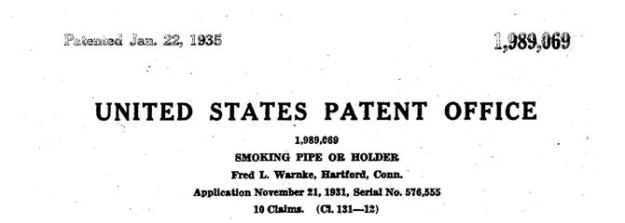
This Monarch Bent Ball is now a collectible!  The other interesting aspect of the Monarch nomenclature is the patent number given: ‘PAT. 1989069’ which is for the system evident in the fittings of the Monarch ‘System’ pipe.  I took the patent number to the United States Patent and Trademark Office site searched the patent number.  I found that the patent was approved January 22, 1935 and a diagram that is also referenced by Pipedia, showing a cutout of a pipe with the system that remains in the Monarch on my worktable. I was also intrigued by reading the full patent document submitted by Fred L. Warnke in 1931.  I clipped the header from that document and placed it below.  The first several paragraphs describes how the system would provide the holy grail of pipe technology – a cooler and dryer smoke! One last interesting item to note which I referenced earlier.  The dot on the top of the stem is a hole or a vent air regulator which is labeled #25 in the Fig. 1 1931 patent diagram.  I found this caption that I clipped from the patent document interesting as it describes the purpose of the vent and how it contributes to a ‘dryer and cooler’ smoking experience as it regulates the introduction of fresh air to the to the smoke.  I really wish I could try out some of the pipes I restore to experience these inventions in practice!As I take a close look at the Monarch Bent Ball, the chamber has light cake buildup with some lava flow on the rim, but light.  The stummel looks to be in good shape. I see no fills and only the normal grime that builds on the surface.  I’m not quite sure how the internals of this system pipe work, I’ll have to experiment to see how to clean it.  The stem has mild oxidation and some tooth chatter.  So, with a better understanding of the provenance of this Monarch Bent Ball and the technology of the patent, I begin the restoration by cleaning the internal airway and air chamber of the stem with pipe cleaners and cotton buds then I add the Monarch stem to Before & After Deoxidizer along with five other pipes’ stems to address the oxidation.After some hours, I fish the stem out of the Deoxidizer and wipe off the Deoxidizer and oxidation with a cotton pad and light paraffin oil (mineral oil).  I also clear the airway of Deoxidizer using a pipe cleaner dipped in isopropyl 95%.  The Before & After Deoxidizer did a good job – the stem’s oxidation is removed.Turning to the stummel, I begin to clear the light cake using the Pipnet Reaming Kit.  I take a picture to mark the start and spread paper towel to minimize cleaning. I jump over the smallest blade head with this large chamber and use the next blade to the largest blade head.  I then use the Savinelli Fitsall Pipe Tool to fine tune the reaming by scraping the chamber walls where the blade heads missed.  To get down to fresher briar, I then sand the chamber by wrapping a piece of 240 grade paper around a Sharpie Pen.  Finally, to clean the chamber removing the carbon dust, I wet a cotton pad and wipe the chamber.  Looking at the chamber wall – I see no problems.  The pictures chronicle the progress. Turning to the external surface, I use undiluted Murphy’s Oil Soap to scrub with cotton pads and I also utilize a brass brush on the rim.  After cleaning I rinse the bowl under tap water.  The rim came out well with most of the lava removed.

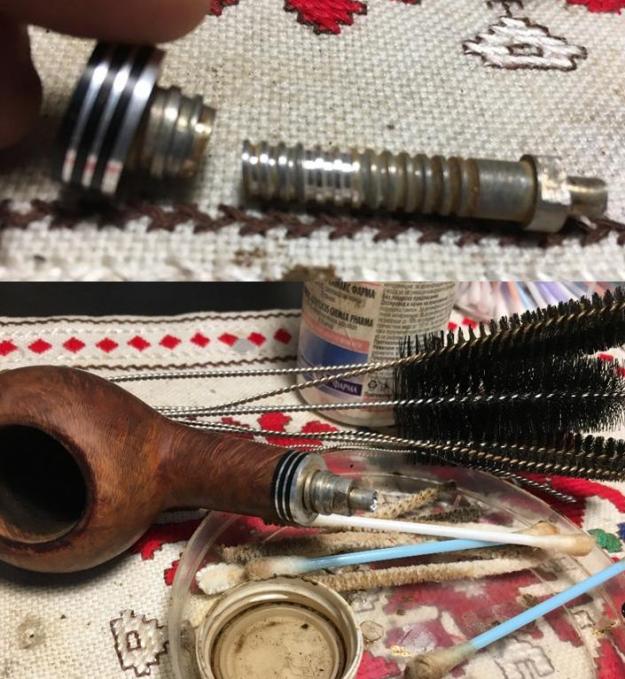
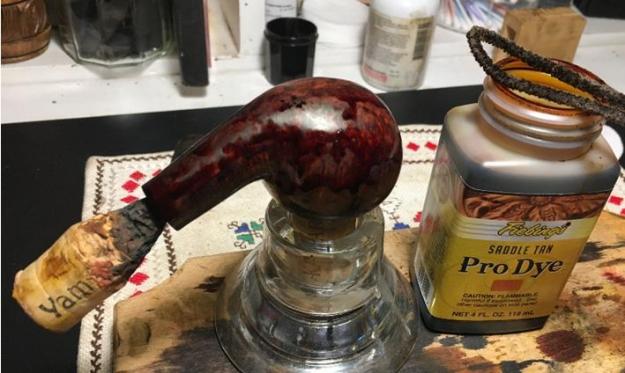
I decide to explore the internals of the Monarch’s mortise.  I first clean the nickel mortise airway tube with pipe cleaners and shank brushes.  The tube was easily cleaned.  After looking at the patent diagram again, mainly at figure five which shows the mortise fitting, I decide to see if it will come out.  The base appears to be threaded.  Carefully, I clamp down on the flat sided flange shown as #26, and gently rotate the stummel holding the mortise fitting stationary.  It starts a bit sticky but then gradually loosens up until it is removed.  What I’m looking at looks close to the 1935 patent diagram.  I find that #15 is loose and comes off of the main threaded insert.  I read in the patent document that this hardware was designed to enable an exact adjustment to position the stem with the stummel.  We’ll see after I clean everything and reassemble how this works.  I wanted to see if there was a crud trap at the end of the tubing near the draft hole.  I am pleased to see that there wasn’t after plunging a few cotton buds down through the opened mortise.  After cleaning and reassembling the mortise insert, it did take a bit to figure out how to work the adjustment mechanism. It was a combination of rotating the threaded insert (#14) so that the flange (#15) was loosened and could rotate a degree or so and tightened to change the alignment of the stem that would then be screwed on….  After a few tightenings and loosenings, I was able to align the stem as it should be!  The new steward will have to figure this out!  I take a picture to show the alignment. To address the stem’s tooth chatter, I first use the heating method to expand the vulcanite, thus reducing the severity of the indentations.  I use a Bic lighter and paint both the upper and lower bit.  I follow that by using a flat needle file to re-shape the button lips, both upper and lower, then I sand using 240 grit paper to erase the file scratches and to sand out the tooth chatter.  Following the 240 grit paper, I use 600 grit paper to erase the scratches of the 240.  Then, over the entire stem, I sand/buff using 0000 grade steel wool.  The tooth chatter is removed, and the button’s new lines look good. The stem is ready for the micromesh process.  Using micromesh pads 1500 to 2400, I wet sand the stem.  Following this, I dry sand using pads 3200 to 4000 and 6000 to 12000.  After each set of 3 pads, I apply a coat of Obsidian Oil to rejuvenate the vulcanite.  The stem looks good – the glossy pop is what we aim for! The stem is waiting in the wings and I now look to the stummel.  To begin, I decide to do a very light topping using 600 grade paper on the chopping board to refresh the rim lines and to remove the remaining lava traces. Inverting the stummel onto the board I only go a few rotations and I’m satisfied with the results. To remove the minor cuts and nicks on the stummel from normal wear, I use micromesh pads 1500 to 2400 and wet sand the stummel.  Following this, I dry sand using pads 3200 to 4000 then 6000 to 12000.  Well, at the beginning of the second set of micromesh pads while sanding, I spied a blemish in the briar that I hadn’t seen before (second picture below).  It was a bit too large for me to be happy with the finished restoration, so I take a little detour.  I apply a drop of clear CA glue on the spot.  I spray it with an accelerator to instantly cure the patch.  I keep the drop as small as possible so not to impact the surrounding briar.  Surgically, I file and sand the patch down with a flat needle file, then use 240 and 600 grade papers and then play catchup with the spot with the first 3 micromesh pads.  Finally, I then complete the micromesh process with the final six pads.  The grain is looking good on this Monarch Bent Ball! At this point I decide to add a stain to darken the stummel, but to give it a nudge in a reddish direction. I decide to use Fiebing’s Saddle Tan Pro Dye to do this.  For the staining process, I remove the Monarch System insert in the mortise.  I then wipe the stummel with a cotton pad and alcohol to clean the surface.  Using a hot air gun, I warm the bowl causing the briar to expand.  This helps the grain be more receptive to the dye.  After the bowl is heated, I use a folded pipe cleaner to apply the Saddle Tan dye to the briar.  After I coat the stummel thoroughly, I flame the stain with a lit candle.  This causes the alcohol in the dye to combust and to set the pigment in the briar.  After a few minutes, I repeat the process of applying dye and flaming.  I set the stummel aside to rest through the night.  It’s a good idea, and I turn out the lights. The next morning has arrived and I’m anxious to ‘unwrap’ the flamed Saddle Tan crust encasing the stummel.  I mount a felt buffing wheel on the Dremel and set the speed at the slowest and I use Tripoli compound to remove the layer.  The felt wheel, coupled with the Tripoli, a coarser compound, removes the leftover stain as well as finely buffs the briar surface.  I work the Tripoli compound methodically ‘sweeping’ the briar surface revealing the grain beneath.  With my wife’s help, I include a picture of the process.  At the end of the application of Tripoli compound, I give the stummel a light wipe with a cotton cloth wetted with isopropyl 95% to blend the new stain. Next, I rejoin stem and stummel and I mount a cotton cloth buffing wheel on the Dremel, turn up the speed to about 40% and apply Blue Diamond compound, a less abrasive compound.  Completing this, I use a felt cloth and wipe the pipe removing the compound dust in preparation for applying wax.  I mount another cotton cloth wheel to the Dremel, maintain the 40% speed and apply a few applications of carnauba wax to both stem and stummel.  I complete the waxing with a rigorous hand buffing using a microfiber cloth.

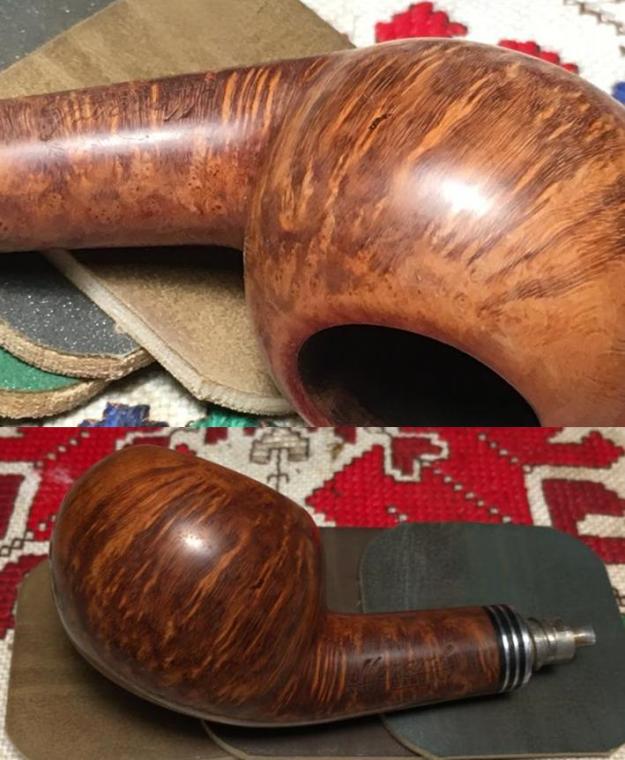
My goodness!  The grain on this Monarch Bent Ball just stands up and shouts!  As one traces the patterns around the Ball’s bowl, there’s flame grain, some bird’s eye and a rippled stream of grain that reminds me tiger fur – a landscape of grain pleasing to the eye.  The Monarch Ball shape fits naturally in the palm.  Andy from Maryland commissioned this Monarch Bent Ball and he will have first dibs on it when it’s placed in The Pipe Steward Store.  This pipe benefits the Daughters of Bulgaria – helping women and girls who have been trafficked and sexually exploited.  Thanks for joining me!

Restoring a Beautiful K&P Dublin Bent Billiard


Blog by Steve Laug

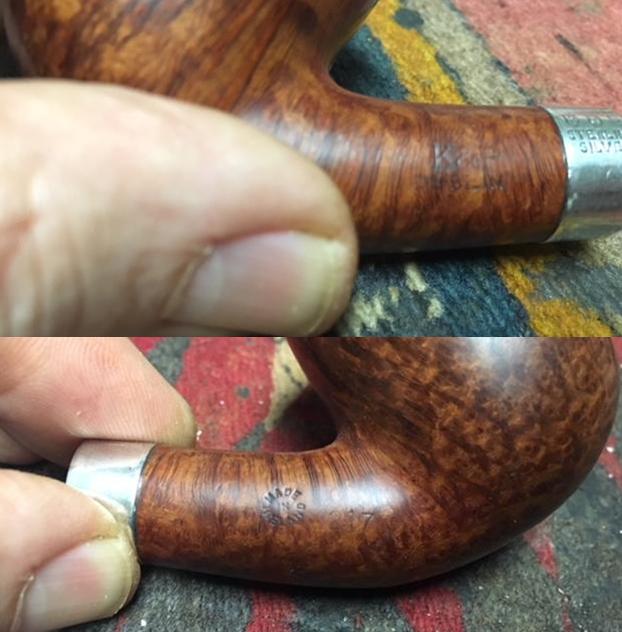
This is another pipe from the fellow here in Vancouver that he dropped off for me to work on. There were 8 pipes in the lot – I have finished six and this is the seventh. It is a bent billiard shaped bowl that is stamped on the left side of the shank and reads K&P over DUBLIN. On the right side of the shank is the COM stamp Made in Ireland in a circle with the “in” in the centre of the circle. Next to that is the shape number 217. The silver band is marked K&P over Sterling Silver. The stem was the original and was in fair condition. It was another one of his pipe finds on a recent pipe hunt in Vancouver. There was some really nice grain showing through the dirt and debris of the tired pipe. The rim top was damaged with a burn mark on the front right and the back outer edge was rounded over. The finish was very dirty and there was a thick cake in the bowl. The stem was oxidized and had tooth marks on the top side near the P-lip and on the underside near the shelf. I took close up photos of the rim top and the stem to show the condition they were in when I received the pipe. The first photo shows the damage to the rim top – there is a nick out of the front inner edge of the bowl and a few other nicks and chips that make it appear to be out of round. The back outer edge on the shank end is worn down at an angle but it is not rough. The inside of the bowl has some uneven cake around the bowl and some tar and oil on the top of the rim. The sterling silver band – with K&P  and Sterling Silver stamped on it is oxidized and tarnished but otherwise in good condition. The photos of the stem show the tooth damage on the top and underside of near the P-lip button. There is a deep tooth mark on the top side ahead of the button and some wearing down of the button edge on the left and right. The underside of the stem also has tooth chatter and some wear on the sharp ledge. The airway on the top of the stem is still in good condition. I took a photo of the pipe with the stem removed to give an idea of the style of the tenon on the stem and the look of the pipe sans stem.I took a photo of the stamping on the both the right and left side of the shank. It is very clear and readable. The stamping left reads K&P over Dublin and the stamping on the right reads shape number 217 and the COM stamp as mentioned above – Made in Ireland in a circle.I started my clean up on the bowl with reaming and then cleaning out the airway to the bowl and the inside of the mortise as well as the airway in the stem. I reamed the bowl with a Savinelli Fitsall Pipe Knife to remove the cake on the walls. I used a dowel wrapped with sandpaper to sand down the walls on the bowl. I cleaned out the airway in both the bowl and stem with alcohol (99% isopropyl), pipe cleaners and cotton swabs until they were clean on the inside. To remove the damage from the rim top I lightly topped the bowl with 220 grit sandpaper on the topping board. I checked it repeatedly as I did the topping to make sure I had removed just enough to suffice to remove the damage. The second photo shows the topped bowl. You will note that I left a little of the damage on the rear outer edge so as not to top too much of the briar.I wiped the rim top down with alcohol on a cotton pad to remove the dust then stained it with an Oak coloured stain pen. I buffed it lightly with a soft cloth to even out the stain.I wiped down the bowl alcohol on a cotton pad to remove the dust and grime on the surface of the bowl. I polished the briar finish with micromesh sanding pads – wet sanding with 1500-2400 grit micromesh pads and dry sanding with 3200-12000 grit pads. I wiped it down after each pad with a damp cloth. The grain began to shine through with both flame and birdseye showing up on the sides of the bowl. I rubbed down the briar with Before & After Restoration Balm. I worked it into the finish with my fingertips and finished working it in with a shoe brush. The balm worked to clean, preserve and enliven the surface of the finish on the small bowl. The briar was coming alive so I took some photos of the pipe at this point. I polished the silver band with Hagerty’s Silver Polish to remove the tarnish. It is a soft scrub that is put on the band and buffed off with a cloth afterwards. I used a cotton pad to remove the tarnish. I polished it further with a jeweler’s cloth to protect and give it a shine. I set the bowl aside and began to work on the dents in the stem surface. I “painted” the vulcanite with a Bic lighter flame to try to raise the dents. I was able to get those on the underside completely removed. The deep one on the top surface of the stem and sides of the button needed to be addressed differently. I cleaned the areas around the button and filled in the dents with black super glue. When the repair cured I sanded the repairs and the oxidation with 220 grit sandpaper. I folded the paper and worked in the edges of the button. I polished the stem with micromesh sanding pads – wet sanding with 1500-2400 grit pads and dry sanding with 3200-12000 grit pads. I wiped the stem down with Obsidian Oil between each sanding pad. I put the stem back on the bowl and buffed the pipe with Blue Diamond polish on the buffing wheel. I carefully avoided the stamping on the both sides of the shank. I gave both the bowl and the stem multiple coats of carnauba wax and buffed the pipe with a clean buffing pad to raise the shine. I hand buffed it with a microfiber cloth to deepen the shine. The finished pipe is shown in the photos below. I have one more pipe to finish for him – it is the last of the pipes he found while pipe hunting. This has been a fun bunch of pipes to work on. I look forward to moving through the rest of them. Thanks for looking. 
 

Refurbishing a Lane Era Charatan’s Make “Special” # 260 DC


Blog by Paresh Deshpande

The next pipe that caught my attention was a CHARATAN’S which was in the box of pipes which I had received from my Uncle. This Dublin has beautiful birdseye on the sides and beautiful densely packed cross grains on the front and back of the bowl and also along the shank. The bowl delicately flares up towards the rim top and together with a subtle bend to the double step saddle stem, lends this pipe a lovely Dublin shape with a charm and grace that can be seen on a well crafted pipe from this quality brand!!!The pipe is stamped “CHARATAN’S MAKE” over “LONDON ENGLAND” over “SPECIAL” in block capital letters on the left side of the shank. Further towards the bowl on the same side, it is stamped with the letter “L” inside a circle in cursive letter. The right side of the shank is stamped as “260DC”. The left side of the stem is stamped on the saddle with “CP” logo, with the lower half of the “C” embedded within the letter “P”. The right side on the saddle is stamped with “REGD NO” over “203573” I searched Pipedia for more information about the brand and also to try to accurately date this pipe. I have reproduced the details which I could glean from this website:

“In 1863 Frederick Charatan, a Russian / Jewish immigrant, opened a shop in Mansell Street, located in the borough of Tower Hamlets, London E1, where he began to carve Meerschaum pipes.

Charatan was the first brand to make entirely hand-made briars from the rough block to the finished pipe including the stems. The nomenclature “Charatan’s make” refers to this method of production and was meant to differ Charatan from other brands who “assembled” pipes from pre-drilled bowls and delivered mouthpieces.

On the retirement of his father in 1910 Reuben Charatan took over the family business.

In 1950 Herman G. Lane, striving to expand his business in Great Britain, made contacts with the Charatan family. Apparently Lane got a certain influence soon, but it was not until 1955 that Lane Ltd. became the sole distributor for Charatan’s in the United States superseding Wally Frank. This can be documented in a “biography” written for Herman G. Lane titled “Leaves from a Tobaccoman’s Log”.

Thanks to Herman G. Lane’s dedicated labor Charatan became hugely popular in the States. As reported by Ken Barnes in an interview with Rick Newcombe, Reuben Charatan passed away in 1962, and his widow sold the firm to Herman Lane 1 or 2 years after his death [1]. In the early 1960’s Charatan pipes were the first to overstep the $100 Dollar line in US pipe sales. In 1978 Lane’s heirs sold the Charatan company to Dunhill. The Prescot Street factory was closed in March 1982. Thereafter the fame and quality of the make declined.

The pre-Lane period (prior to 1955) and the Lane era pipes (1955 to until sometime between 1979 – 1984) are of primary interest the collector. The Lane era is often quoted as beginning about 1950. Charatan records indicate the DC (Double Comfort) bit was introduced in the 50’s, but some report seeing them in earlier production. Still others indicate they were introduced by Lane in 1960. Regardless, the DC bit is not an accurate way to date a pipe because many Charatan’s were made with regular and saddle type bits throughout the “Lane Era”.

 An excellent article, Dating of Charatans has been translated for Pipedia by Mathias Acciai. This study by Fabio Ferrara of Monterubbiano – Italy is based on more than 2000 old Charatan pipes he studied from the “Basciano stock” purchased by Mario Lubinski – Fermo. This fantastic addition to the Charatan knowledge base is now in English here on Pipedia.

The first step on dating a Charatan is to carefully look to some details:

  1. a) Shape of the mouthpiece
  2. b) marking on the mouthpiece
  3. c) engraving on the shank
  4. d)shape and position of shank engraving/writing

This is because you can make the following conclusions:

a) From 1863 to 1960 the mouthpieces have a normal shape, saddle or tapered. From 1961 they use the ‘Double Comfort’ style still used today. By the way there are some saddle bits (without the double comfort) used in pipes that date after 1960 but these models are always characterized by a X (in the place of the DC) engraved after the shape number on the shank. This means that if a pipe has a tapered mouthpiece instead of a double comfort one, it is definitely a pre-Lane pipe before 1960. While if a pipe has a normal saddle bit stem, it could belong to every era. Nevertheless the pipe is pre 1961 if the shape code does not include an X, and is a pipe from after 1960 if the X is engraved.
Finally any pipe with the double comfort stem is definitely after 1960.

b) The CP logo on the stem is stamped in a different shape according the era it was used. Some differences are less obvious than others, however the glaring differences are detectable in 4 phases. The CP till the 1960 is very fine, the C penetrates the P.
From 1961 to 1977 the CP logo is more pronounced and the C penetrates the P.
From 1980 (approx.) the C does not penetrate the P any more, even though the two letters are joined.
The CP of Dunhill era has a different shape than the one of the French Russell era.

c) Pipes that belong to eras till the 1960 have the engraving ‘CHARATAN’S MAKE LONDON ENGLAND’ in two lines, the shape code is composed by numbers only. The X and the DC appear only on pipes after 1960.

The engraving ‘MADE BY HAND (in caps) -IN-City of London’ in three lines identifies pipes made between 1965 and 1966. The engraving in script font ‘Made by Hand -In-City of London’ on three lines identifies pipes made between 1966 and 1979. The circled £ (Lane) characterizes pipes produced from 1955 to 1980 (approx.)

d) engravings are different in both size and shape, depending on eras.

Identification of a third era pipe (First Lane era, 1961-1965)

Pipes of this period are quite common.

1) The mouthpiece is frequently double comfort, rarely saddle without the double comfort, never tapered. If the stem is not a double comfort but a saddle one, it is characterized by the letter X on the right of the shape code (e.g. 2502X), naturally in this case the letters DC are not displayed.

2) In the CP logo, the C enters the P

3) Presence of £ on the shank (note that from 1955 all the pipe imported in the USA by Lane has it, however that stamping is not synonymous of the Lane era)

4) Presence of the letter DC just after the shape number (e.g. 2502 DC) or of the letter X only if the stem is not a double comfort one

5) Presence in some models of the stamp “MADE BY HAND” on the shank (introduced for the first time in 1958)

6) Presence of the writing “CHARATAN’S MAKE LONDON ENGLAND” in 2 lines

7) The CP logo is thicker than in previous eras. 

From the above information, it can be safely assumed that this particular piece dates from somewhere from 1960 to 1965, that is the first Lane Era, which coincides with the period of the other pipes that belonged to my grandfather. With this information in mind, I moved ahead to the next process in the restoration.

INITIAL VISUAL INSPECTION
I always follow the advice of Mr. Steve given out in his blog on restoration process for novices like me and carry out initial visual inspection of the pipe. This helps a lot in formulating your POA for the restoration.

The bowl is heavily caked with an equally heavy overflow of lava on to the rim top. The outer edge of the rim appears to be intact save for the light charring on the left side in 9 ‘O’ clock direction. However, the inner edge of the rim is a totally different story!!!! Deep extensive charring can be seen on the inner edge in 1 ‘O’ clock direction on the right side and in 8 ‘O’ clock direction on the left side. The internal condition of the bowl and the exact extent of the char can only be ascertained after the process of reaming is completed. The stummel and the shank are covered in grime and dust of these years of use and subsequent storage, giving it a dull and lackluster appearance. This will need to be addressed. Air does not flow easily through the pipe and requires some lung power to do so. The airway in the stem and/ or in the shank is restricted and needs to be cleaned out. The stem is a Double Comfort stem which is correct for the period. Heavy calcification can be seen on the lower half of the DC stem with a few deep bite marks and lot of tooth chatter on both the lower and upper surface. The lip/ button is deformed and will need to be worked upon. All said and done, the major cause of concern which will require maximum attention and work is the rim top, rim inner edge and the extensive charring seen on the right and left inner edge!!!!

THE PROCESS
As usual, Abha, my wife took upon herself the task of reaming the bowl to get rid of all the grime, tars and oils accumulated in the chamber. Using a Kleen Reem pipe tool made short work of reaming and she was able to get rid of the thick cake. She gently removed all the remaining cake crust till she reached the briar using my fabricated knife set and thereafter sanding the chamber with a 220 grit sand paper. Thereafter, using the fabricated knife, I gently scraped and removed all the overflow of lava, tars and oil from the rim top. With hope in my heart and prayer on my lips, I gently scraped the charred wood from the inner edge on both sides till I reached solid briar. The picture below will tell the story of its condition!!!The char marks to the inner edge of the rim on the right side in 1 o’clock direction is the widest followed by the one on left side in 8 o’clock direction. The char on the outer left edge at 8 o’clock direction is not very severe. I decided to top the bowl and create a bevel on the inner edge to address these issues. I Facetimed with Mr. Steve and he too concurred with my POA.

I started by topping the bowl with a 220 grit sand paper till the charred surface on the inner as well as outer edge of the rim was reduced. Using a folded piece of 180 grit sand paper, I gave a slight bevel to the inner edge. However, I was not very pleased to see the results. The charred surfaces stood out like sore thumbs on either sides of the rim.To further mask the charred inner edges, Abha suggested creating a deeper bevel and attempt to conceal the damaged inner edge within this bevel. After viewing the pictures, Mr. Steve also approved of this plan. Thus, I created a deep bevel making sure that the charred surfaces are within this bevel. The inner edge is looking much better and presentable as can be seen in the pictures below. It took me considerable time to complete this stage since I had to frequently check the progress so that I did not end up losing too much surface off the rim top. I, thereafter, cleaned the exteriors of the stummel, rim top and shank with undiluted Murphy’s Oil soap and a toothbrush, taking care that water does not enter into the chamber and the shank. I wiped it down with a soft cotton cloth and kept it aside to dry out. Turning my attention to the stem, I started by masking the “CP” logo and the Regd No. with whitener (pics…..). I painted both the surfaces of the stem with a Bic lighter to raise the tooth chatter and bite marks to the surface. Sanding the stem with 220 grit sand paper, I evened out the surface of the stem. The deeper tooth marks were spot filled with clear CA super glue and set aside to cure overnight. Back to the stummel, I dry sanded the exteriors of the bowl, rim top and the shank with 1500 to 2400 grit micromesh pads and wet sanding with 3200 to 12000 grit micromesh pads. The beautiful birdseye and the cross grains really popped out at this stage!!!!!(PICTUREs…..). Though the darkened areas of the inner edge caused due to charring were very much visible in pictures, in reality it does not look as bad. There is an option to further cover up the darkened areas by staining the complete bowl with a dark stain, I decided not to do so for two reasons, firstly, the pipe looked beautiful in this lighter hues with lovely grains in plain sight and secondly, I DO NOT HAVE THE MATERIAL AND EQUIPMENT FOR THE SAME and also have never tried this technique (this aspect WILL be my agenda during next leave!!!). With that decision made, I rubbed a small quantity of “BEFORE AND AFTER RESTORATION” balm into the briar surface and let it rest for 2-3 minutes for the balm to work its magic. I really feel that this is one product which every pipe smoker should have for routine maintenance of his/ her pipe. This balm infuses fresh breath of life into the briar while forming a protective layer over the briar surface. Using a soft cotton cloth and undiluted (LOL!!!) muscle power, I buffed it to a nice shine. Have a look at the bowl for yourself. With the stummel completed, save for a final polish with PARAGON WAX, I turned back towards working on the stem again. Using a flat head needle file, I sanded the fills to match the stem’s surface. I also worked on the button edge and created a crisp edge. Once I was satisfied, using micromesh sanding pads, I dry sanded the stem with 1500 to 2400 grit pads and wet sanding with 3200 to 12000 grit pads. I wiped the stem with moist cotton swab after every pad and rubbed in Extra Virgin Olive oil after ever three pads (Pictures….). Although I tried to take all care and precautions to preserve the stampings on the stem, I HAVE MANAGED TO OBLITERATE IT!!!!  Can anyone suggest an easy method to restore it???? Indentations are visible though, which is a saving grace!!!!Once I was finished with the stem, I cleaned out the internals of the stem and shank using Isopropyl alcohol, cue-tips, shank brush, regular and bristle pipe cleaners till air flow was open and free. Thereafter, I gave a final polish to the bowl with Paragon wax, rubbing and buffing it with a soft cloth and muscle power till cows came home!!!!!!!! The finished pipe can be seen in the pictures below. Thank you for walking with me on this journey of learning and resurrection of fond memories of my Old Man!!!!!

Restoring a Cased Set of Pipes – 2 JBV and 1 M&T Bent Military Mount Billiards – Part 3


Blog by Steve Laug

I have already introduced this set of pipes for you in Part 1 of this blog. It is an old cased set of three pipes. Two of them were stamped JBV in an oval and one was stamped M&T Best Briar & Bands. The set was missing the third JBV pipe which I would bet was a smooth meerschaum bent billiard bowl and a second stem. The second stem in the case was for the M&T pipe and was smaller in diameter than the stem for the JBV pipes. As I mentioned in Part 1 the silver was dirty and the bowls caked on all of the pipes but there was something about them that really attracted me. Here is the link to the first part of the blog – the restoration of the most damaged of the JBV pipes: https://rebornpipes.com/2018/07/22/restoring-a-cased-set-of-pipes-2-jbv-and-1-mt-bent-military-mount-billiards-part-1/.
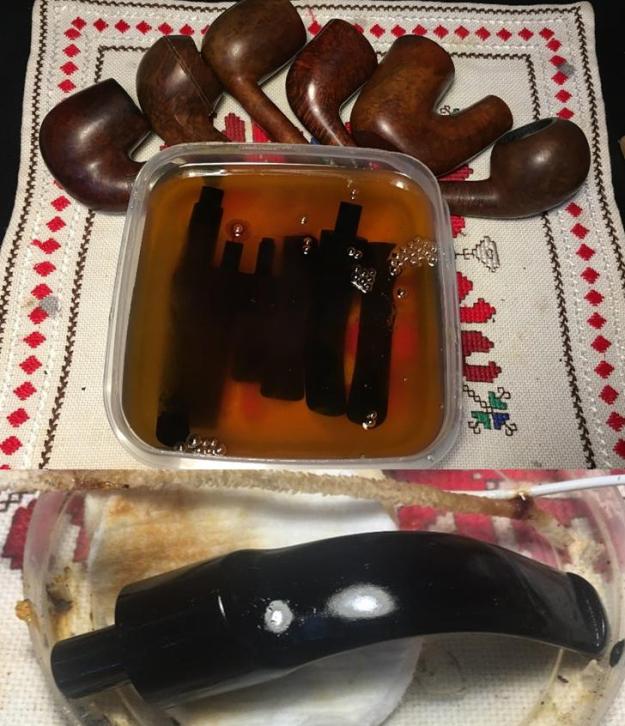
I am including a photo of the opened case showing the pipes and the stamping on the inside of the lid. It reads J.B. Vinche over “Au Nabab” over Bruxelles as far as I can interpret the blurred stamping on the felt lining. You can also see that the case has spots for what looks like a tamper tool and possibly a cigarette holder that are also missing.The next pipe that I chose to work on is the one on center of the case in the photo above. It is stamped M&T on the right side of the shank and Best Briar & Bands on the left side of the shank. The silver ferrule is also stamped BBB in three vertical boxes and the M&T is in an oval with pointed ends over three hallmarks that are hard to read. The pipe is in rough shape, but I am not sure I want to call it that after my experience with the first JBV splitting when I cleaned it. The finish on this one is also shot; there is silver polish on the shank ahead of the ferrule. The rim top is in the best condition of the three pipes and there are no deep nicks on the shank top or underside. There is a thick cake in the bowl and the rim top has some light dents. The inner edge is slightly out of round and there is a crack in the back of the bowl extending from the rim halfway down the bowl side. Like the rest of the pipes in this set the pipe is very dirty.   Throughout the process of  the restoration of the three pipes I have been hunting for information on the brand. I looked and found nothing searching for the M&T brand assuming that the pipe was also Belgian made. Today however I looked more broadly for M&T pipes and found one on Ebay that being sold. It tied the M&T stamping to a company called Müllenbach & Thewald.

Armed with this new information I looked on Pipedia and found a writeup on Müllenbach & Thewald (M&T). Here is the link: https://pipedia.org/wiki/M%C3%BCllenbach_%26_Thewald

I quote from that article in full. The company Müllenbach & Thewald was established in 1830 by Jakob Müllenbach (* 19/10/1800, † 29/03/1876) and Wilhelm Thewald (* 31/05/1807, † 11/06/1888) in Höhr (later named Höhr-Grenzhausen) in the Westerwald area. Having married two sisters, Maria Magdalena and Catharina Friesehahn, the brothers in law joined forces to start a business dedicated to manufacture and trade clay pipes and other pottery goods the Westerwald has been famous for throughout centuries.

After 1848 M&T, as the pipes were stamped later, began manufacturing pipes from different Germany homed woods and as early as 1860 the fabrication of briar pipes started. Previously completely turned by hand, machine fabrication was taken up in 1864. Shortly after the turn of the century a workshop in nearby Vallendar specialising in briar pipes was opened. M&T didn’t make it to the top ranks in German pipe industry but was acknowledgded as a well reputated brand even though.

On 05/01/1945 Höhr was vastly destroyed by a bombing raid including the buildings of the company’s administration and the pipe workshop among other things. But as soon as 01/05/1945 the re-construction began and on 15/01/1947 the pipe factory re-started it’s production. The new and bigger facilities in Höhr-Grenzhausen led to the closure of the older briar workshop in Vallendar. At the end of 1949 47 persons were busy in Müller & Thewald’s pipe production department, where still pipes from other woods than briar were made. As old pictures from the middle of the 1950’s show the share of women workers amounted to more than 35%.

Around 1970 M&T got into serious trouble. Especially M&T’s mainstay, the budget pipe segment, was swamped with pipes from Italy and France, who could produce cheap pipes even cheaper than German brands for they possessed the desired raw material briar in their own countries and in addition wages were substantially lower there. As well the bulk of M&T’s models was fairly old-fashioned and therefore even the better lines of the fabrication couldn’t compete with those of Oldenkott and VAUEN anymore on the most important German market.

So Müllenbach & Thewald ceased pipe production after more than 140 years in 1972. Norbert Gerharz, the last foreman of the workshop, continued as a pipemaker on his own. Müllenbach & Thewald company today is one of Germany’s biggest firms in clay mining.

Given the new information on the brand I was able to decipher the hallmarks on the silver band. The first mark on the left appears to be a crown, the middle one is 933 and the one on the right has a year letter – perhaps a J. From what I can find online using a German Hallmarks Website to try to read the hallmarks (http://www.925-1000.com/Fgerman_marks_a1884_7.html) and a Dutch Museum Catalogue (http://pipemuseum.nl/index.php?hm=4&dbm=1&dc1=1&datering_start=1875&datering_eind=1925&q=1&wmod=lijst&sortby=datering_kruis&startnum=240&id=23843) it appears the pipe was made between 1900-1920.

Now I knew what I was working on. Quite a journey from thinking was a BBB originally to recognizing that was wrong and thinking it was Belgian Made like the JB Vinche brand to finally identifying it as a German made pipe. It also helped to potentially identify a time period for the JBV pipes in the case as well. The make, shape and case all fit the time period.

I had reamed the bowl on the M&T pipe when I did the other pipes in this case. I wrote about it in Part 1 of this blog. I used a PipNet pipe reamer, starting with the first cutting head and working my way up to the second. I took the cake back to bare briar to check out the interior of the bowl. I followed up by cleaning it up with a Savinelli Fitsall Pipe knife and finally sanding the bowl with 180 grit sandpaper wrapped around a piece of dowel. I took the pipe out of the case and took photos of its condition before I started working on it. I put the original stem in the shank to give an idea of the overall look of things. I really like the shape of all three of the pipes in this case. The M&T pipe was more delicate than the JBV pipe with a smaller diameter mortise and stem. It was a nice piece of briar other than the crack in the back side of the bowl. The flow and bend of the briar and the layout of the grain is nicely done. I took a close up photo of the rim top to show the extent of the damage. The rim top is dented and nicked and there is damage on the inner and outer edge of the rim. There is a small crack on the bowl rim on the back right side extending half way down the side of the bowl. I also took photos of the stem to show its condition. It was dirty and oxidized. There was some chatter on the top and underside near the button but there was no serious damage. I took a photo of the back of the bowl to show the crack that was there that would need to be addressed.I also took close up photos of the stamping on both sides of the shank and ferrule. It is clear but not clear enough to read the hallmarks on the silver.I started the process of refurbishing this old German made pipe by lightly topping the rim to remove the damage to the inner and outer edge.Once I had the bowl topped I drilled small microdrill holes along the ends of the crack as under light it went all the way down to the shank bowl junction. I wiped the bowl down with alcohol and filled in the crack and the pilot holes with super glue and briar dust. When the repair had cured I sanded the repair on the rim top, down inside the bowl for about a ¼ inch and down the back side of the bowl with a folded piece of 220 grit sandpaper. I blended the surface of the repair into the rest of the rim top and bowl. I sanded the outer edge of the bowl and the surface of the bowl itself with 220 grit sandpaper. There were many nicks and scratches in the finish as well as the areas that I had repaired. The bowl is beginning to look good at this point. I sanded the rest of the bowl with 220 grit sandpaper and wiped the bowl down with a damp cloth. When sanding, I carefully avoided the stamping on the shank so as not to damage that area. I took some photos of the bowl at this point in the process. Things were looking very good. I rubbed the bowl down with a light coat of olive oil and worked it into the briar. I find that a little oil at this point makes the nicks and scratches stand out clearly on the finish and show me what still needs to be sanded. I cleaned out the inside of the mortise and shank as well as the airway into the bowl and stem with alcohol, pipe cleaners and cotton swabs. The airway was open on this one so pipe cleaners worked to quickly clean it up. The mortise on this pipe did not have a Peterson’s style sump but was still quite dirty. It took a lot of work to clean it out. The stem on the other hand was quite clean on the inside.I polished the ferrule with Hagerty’s Silver Polish to remove the tarnish on the silver. I rubbed it on with a cotton pad and polished it with the same pad.I polished the briar with micromesh sanding pads – wet sanding with 1500-2400 grit pads and dry sanding with 3200-12000 grit pads. I wiped it down with a damp cloth after each sanding pad to remove the dust.  The grain was really beginning to stand out nicely. I decided to leave this one with the original stain and not darken or change it. I rubbed the bowl down with Before & After Restoration Balm. It cleans, enlivens and protects the briar. In this case I also found that it blended the stain well on the surface of the briar.   I reapplied the gold to the stamping on both sides of the shank using Rub’n Buff Antique Gold. I applied it in the stamping using the tip of a sanding stick. I let the stamping sit for a few minutes then buffed off the excess product with a cotton pad. When I buffed the bowl the excess gold would be removed around the stamping. Once it cured it would come off easily. I set the bowl aside and turned my attention to the stem. This was the original JBV stem and was made out vulcanite. I sanded out the tooth chatter on both sides of the stem near the button with 220 grit sandpaper. I polished the stem with micromesh sanding pads – wet sanding with 1500-2400 grit pads and dry sanding with 3200-12000 grit pads. I wiped the stem down after each pad with Obsidian Oil to wipe away the sanding dust and bring some life to the vulcanite. With the stem and bowl completed, the third and final installment of this blog – Part 3, is also complete. It is time to reconnect things and take some final photos. I buffed the bowl and stem with Blue Diamond on the buffing wheel. I gave the entire pipe multiple coats of carnauba wax to protect. I buffed it with a clean buffing pad to raise the shine. I hand buffed it with a microfibre cloth to deepen the shine. The repaired crack on the back side of the bowl and the rim top looked pretty good. The repairs blend in nicely with the original colour of the briar. The repairs are visible up close but they look natural. Thanks for walking with me as I continue on the threesome. With this one the three pipes that came in the case are finished. They presented some interesting challenges in terms of the repairs on each of them. They were interesting to work on and all are in smoking condition. Thanks for reading.

Restoring a Cased Set of Pipes – 2 JBV and 1 M&T Bent Military Mount Billiards – Part 2


Blog by Steve Laug

I have already introduced this set of pipes for you in Part 1 of this blog. It is an old cased set of three pipes. Two of them were stamped JBV in an oval and one was stamped M&T Best Briar & Bands. The set was missing the third JBV pipe which I would bet was a smooth meerschaum bent billiard bowl and a second stem. The second stem in the case was for the M&T pipe and was smaller in diameter than the shank of the JBV pipes. As I mentioned in Part 1 the silver was dirty and the bowls caked on all of the pipes but there was something about them that really attracted me. Here is the link to the first part of the blog – the restoration of the most damaged of the JBV pipes: https://rebornpipes.com/2018/07/22/restoring-a-cased-set-of-pipes-2-jbv-and-1-mt-bent-military-mount-billiards-part-1/.
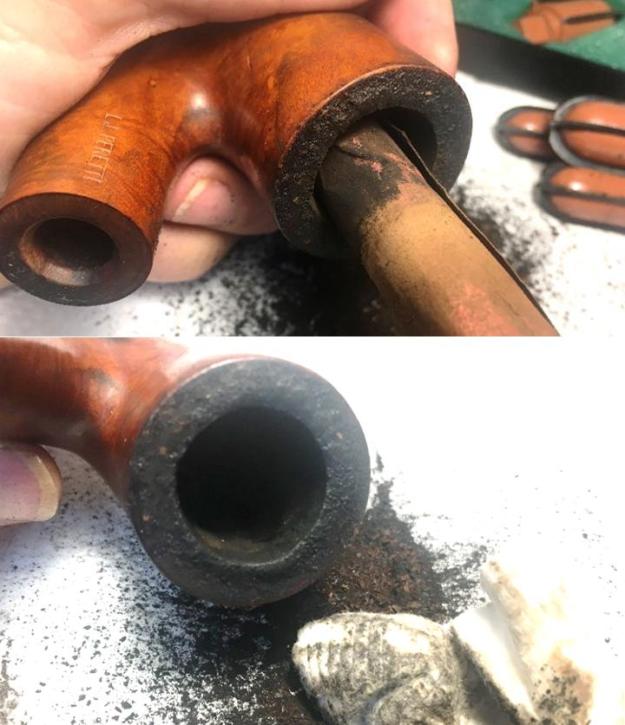
I am including a photo of the opened case showing the pipes and the stamping on the inside of the lid. It reads J.B. Vinche over “Au Nabab” over Bruxelles as far as I can interpret the blurred stamping on the felt lining. You can also see that the case has spots for what looks like a tamper tool and possibly a cigarette holder that are also missing.The next pipe that I chose to work on is the one on the right side of the case in the photo above. It is stamped JBV in an oval on the left side of the shank. The silver ferrule is also stamped JBV in an oval over BRUX over three hallmarks that are hard to read. The first appears to be a flower, the second a person and the third is ARG over 900. The pipe is in rough shape, but I am not sure I want to call it that after my experience with the first JBV splitting when I cleaned it. The finish on this one is shot; there is silver polish on the shank ahead of the ferrule. There are some gouges in the top and underside of the shank. There is a thick cake in the bowl and the rim top is beat up. There are big chunks of briar missing around the outer edge of the rim. The rim top is chipped and damaged and the inner edge is in rough condition. The JBV Oval was originally gold leaf. There looked like there could be a crack in the bowl down the left side. Like the rest of the pipes in this set the pipe is very dirty. I have included that research in Part 1 of this blog. I also included an old catalogue and some information from Pipephil’s site and Pipedia (https://rebornpipes.com/2018/07/22/restoring-a-cased-set-of-pipes-2-jbv-and-1-mt-bent-military-mount-billiards-part-1/).

I had reamed the bowl on the second JBV pipe and wrote about it in Part 1. I used a PipNet pipe reamer starting with the first cutting head and working my way up to the second and lightly working on it with the third one. I took the cake back to bare briar to check out the interior of the bowl. I followed up by reaming it with a Savinelli Fitsall Pipe knife and finally sanding the bowl with 180 grit sandpaper wrapped around a piece of dowel. I took the pipe out of the case and took photos of its condition before I started working on it. I put the original stem in the shank to give an idea of the overall look of things. I really like the shape of the JBV pipes in this case. The flow and bend of the briar and the layout of the grain is nicely done. It is a shame that the previous owner beat them to death. But one thing I know for certain is that the pipes must be great smokers to have been smoked to the condition they are in when I received them here. I took a close up photo of the rim top to show the extent of the damage. It affects the top and the inner and outer edge of the rim. There are huge chunks of briar missing from the surface and the edges of the bowl. The damage to the outer edge extends down the sides of the bowl. There is also a small crack on the bowl rim on the back right side. I also took photos of the stem to show its condition. It was dirty and had some chatter on the top and underside near the button but there was no serious damage. It is interesting to work on pipes with bowls in this horrible condition and have stems that are not gnawed to the point of no return.I also took a close up photo of the stamping on the shank and ferrule. It is clear but the hallmarks are too worn to read.I started the process of repairing the rim by topping the bowl. I want to even out the high spots on the back and left side of the bowl. Topping part of the bowl is a precarious operation because if you are not careful you can give the bowl a slant. My idea was that those areas had less damage than the rest of the rim and could provide a stable base to work from to address the damage that was on the front and the right side.Once I had the bowl topped I was ready to begin the rebuilding process on the damaged areas on the front and right side. I built those areas up with briar dust and clear super glue. I filled in the large chipped areas on the side and front of the bowl. I repaired the small crack on the right back side of the bowl rim.When the repair had cured I sanded the top by hand with a folded piece of 180 grit sandpaper to flatten the high spots in the repairs. I check the bowl against a hard surface to make sure that it sat firmly in place and did not rock. Once it sat well I topped the entire bowl on the topping board with 220 grit sandpaper to smooth out the repairs and make the top of the bowl flat.I sanded the outer edge of the bowl and the surface of the bowl itself with 220 grit sandpaper. There were many nicks and scratches in the finish as well as the areas that I had repaired. The bowl is beginning to look good at this point. I sanded the rest of the bowl with 220 grit sandpaper and wiped the bowl down with a damp cloth. When sanding, I carefully avoided the stamping on the shank so as not to damage that area. I took some photos of the bowl at this point in the process. Things were looking very good. I steamed out the dents on the underside of the bowl with a hot iron and a wet towel. The heat from the iron created steam and the heat and moisture lifted the dents in the briar until they were smooth.I rubbed the bowl down with a light coat of olive oil and worked it into the briar. I find that a little oil at this point makes the nicks and scratches stand out clearly on the finish and show me what still needs to be sanded.I took a few photos with my computer at work while I was on my lunch hour. The pipe is beginning to look very good. The dents on the underside of the shank and bottom of the bowl are no longer visible. I cleaned out the inside of the mortise and shank as well as the airway into the bowl and stem with alcohol, pipe cleaners and cotton swabs. The airway was clogged so I pushed a pipe cleaner through into the bowl. The mortise was like a Peterson’s sump and it was filthy. It took a lot of work to clean it out. The stem was quite clean on the inside.I polished the briar with micromesh sanding pads – wet sanding with 1500-2400 grit pads and dry sanding with 3200-12000 grit pads. I wiped it down with a damp cloth after each sanding pad to remove the dust.  (You can see a small dark spot on the right side toward the front.) I stained the bowl with a Tan aniline stain. I had found that the stain was probably mislabeled as it had a definite red cast to it. I applied it with the dauber and flamed it with a lighter to set the stain in the finish.Once the stain cured I rubbed the bowl down with Before & After Restoration Balm. It cleans, enlivens and protects the briar. In this case I also found that it blended the stain well on the surface of the briar. I polished the silver with a jeweler’s cloth to polish and remove the tarnish. I reapplied the gold to the stamping on the shank using Rub’n Buff Antique Gold. I applied it in the stamping using the tip of a sanding stick. I let the stamping sit for a few minutes then buffed off the excess product with a cotton pad.I set the bowl aside and turned my attention to the stem. This was the original JBV stem and was made out vulcanite. I sanded out the tooth chatter on both sides of the stem near the button with 220 grit sandpaper.I polished the stem with micromesh sanding pads – wet sanding with 1500-2400 grit pads and dry sanding with 3200-12000 grit pads. I wiped the stem down after each pad with Obsidian Oil to wipe away the sanding dust and bring some life to the vulcanite. With the stem and bowl completed, the second installment of this blog – Part 2, is also complete. It is time to reconnect things and take some final photos. I buffed the bowl and stem with Blue Diamond on the buffing wheel. I gave the entire pipe multiple coats of carnauba wax to protect. I buffed it with a clean buffing pad to raise the shine. I hand buffed it with a microfibre cloth to deepen the shine. The badly damaged rim on the pipe came together really well. The repairs blend in nicely with the stain colour. The repairs are visible up close but they look natural. Thanks for walking with me as I continue on the threesome. Part 3 will address the third pipe in the cased set. With this one both of the original JBV pipes are finished. Thanks for reading.